
Imagine, for a moment, if performance cars were athletes.
A Lotus Elise, for example, would be AFL wizard Cyril Rioli, light with superb agility, while a Porsche 911 GT3 would be Usain Bolt, lithe and unbeatable on-track. An HSV GTS? Perhaps NBA phenom Lebron James, large and powerful but surprisingly athletic.
So where does this analogy leave the likes of the BMW X5 M and Mercedes-AMG GLE 63? Well, these hulking brutes are the automotive equivalent of Hafthór Júlíus Björnsson; the 206cm/190kg Icelandic giant who plays The Mountain in TV show Game of Thrones. This modern-day viking is one of the world’s strongest men, but if there was ever a World’s Strongest Car competition, the X5 M and GLE 63 would likely be facing off in the final.
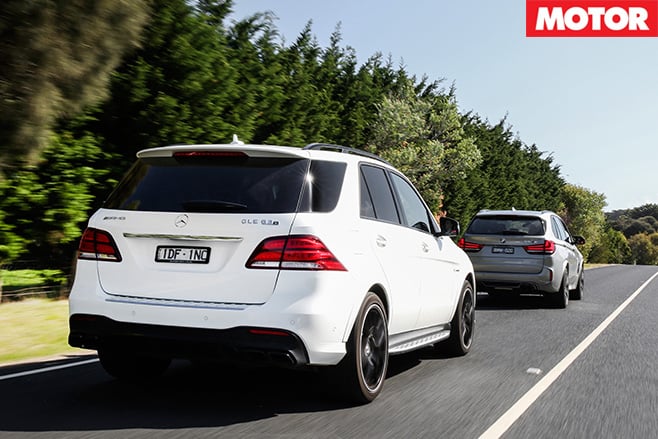
Certainly their sprinting ability is world class. The new BMW X5 M musters 423kW/750Nm from its 4.4-litre twin-turbo V8, an increase of 15kW/70Nm over its predecessor, sent to all four wheels through an eight-speed ZF torque-converter automatic.
BMW claims this 2275kg monster can hit 100km/h in just 4.2sec – a claim it matches on the strip. Rudimentary launch control builds a few revs against the brakes, catapulting the Beemer off the line. There’s so much grunt that a short-shift to second doesn’t cost it any time and it hurtles over the quarter mile in a scarcely believable 12.38sec at 182.91km/h.
But the Mercedes is even faster, though given its 5.5-litre twin-turbo V8 now packs 430kW/760Nm in updated ‘S’ guise, perhaps that isn’t so surprising. It requires some cute timing to build boost quickly against the brakes without bogging down off the line, but get it right and the GLE fires to 100km/h in 4.18sec, dispatching 400m in 12.30sec at 183.77km/h.
Under full acceleration the nose rises like a speedboat, the most ferocious noise bellowing out of its AMG-branded quad tailpipes. The soundtrack is straight out of 1960s Detroit, with a crack like snapping timber on full-throttle upshifts – you could easily buy a GLE 63 for the noise alone. It’s not long for this world, the M157 engine, but years of development have made it smooth and supremely powerful – it’s the heart and soul of the car.
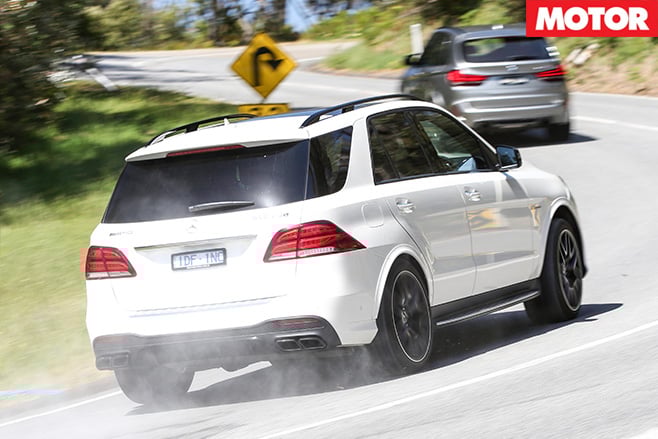
There are hints of diesel and highly tuned four-cylinder, a dollop of in-line six and very occasionally something that approaches a traditional V8. The thunderclaps from the exhaust on upshifts are a nice touch, though.
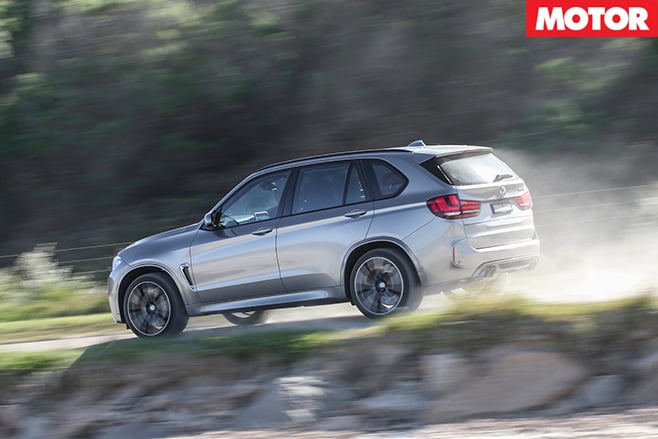
The transmission is similarly confused. M Division engineers have done a remarkable job in making the X5’s eight-speed auto mimic the behaviour of the seven-speed dual-clutch ’box found in other M cars, but it’s debatable whether there’s been any benefit in doing so.
It is, however, leagues ahead of the Mercedes ’box. The seven-speed wet-clutch MCT auto feels a generation behind, though the latest C63 shows what it’s capable of. It’s smoother from rest than the BMW’s, but low-speed stumbles aren’t what you expect from a $190K car, and it’s slow to respond to shift requests via the paddles, if it responds at all.
For day-to-day use it’s best left to its own devices in Sport mode, but Sport+ is well calibrated to more spirited driving, holding gears to redline under acceleration and downshifting super-aggressively under brakes.
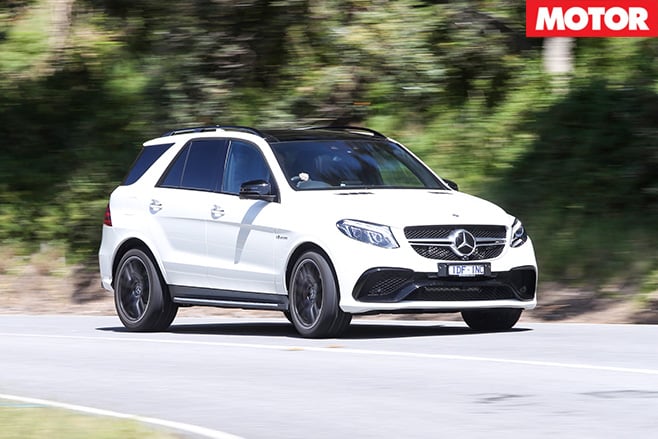
The electronics are quick to intervene if you overstep the threshold, but work within the parameters and the softness makes the GLE quite entertaining to drive. It takes little effort to rotate the car on the brakes in slower corners and you’re always busy behind the wheel making inputs or corrections to keep everything pointed in roughly the right direction.
Push too hard, though, and it’ll start to misbehave. The steering, while well-weighted and linear, refuses to change under load, the brakes soften, and despite a 40:60 front/rear torque split, the inside-front wheel spins up on corner exit before the ESP dramatically kills momentum.
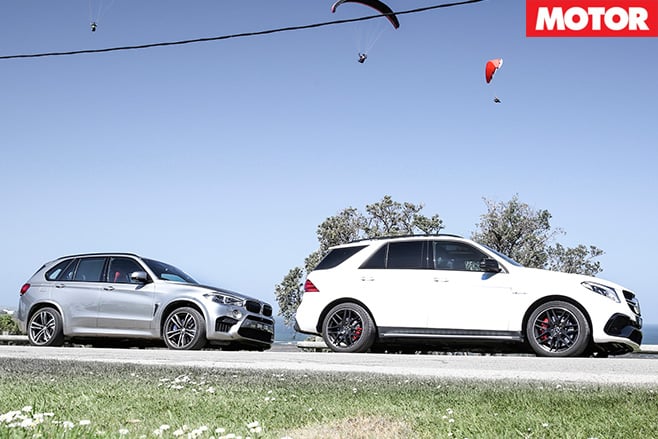
It’s not helped by wearing Michelin Latitude Sports tyres, which while enormous (295/35 ZR21 all ’round) offer nothing like the grip of the X5 M’s Michelin Pilot Super Sports; the same tyres, incidentally, fitted to the M3 and Ferrari 488. Measuring 285/35 ZR21 up front and a whopping 325/30 ZR21 at the rear, the sticky Michelins give the BMW far higher lateral grip levels. To be fair, though, the rubber is merely making the most of a very talented chassis.
If you really want to know how good M Division’s engineers are, drive an X5 M. How they manage to make this 2275kg leviathan handle like an oversized hot hatch is remarkable, except no hot hatch feels this rear-driven, and only the likes of the Audi RS3 or Mercedes-AMG A45 could match the X5 M’s monstrous punch out of corners. The diff set-up is magic; nail the throttle early and it’ll briefly power oversteer, even in the dry, but more often than not power is quickly and efficiently shuffled to the wheel that needs it most.
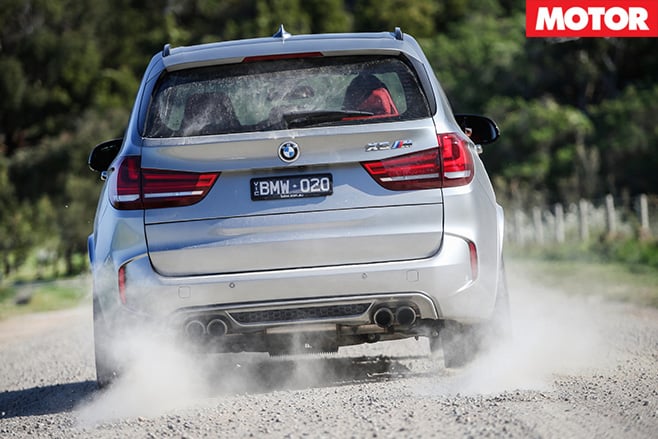
Few, however, will ever reach that limit. Most will be happy chasing down sportscars while the kids in the back giggle in delight (or scream in terror). The only real blot on the X5 M’s dynamic copybook is, sadly in typical BMW fashion these days, the steering. M Division has managed to CPR some life into the standard X5’s flatlining tiller, but none of the three steering settings feel right in terms of weighting, nor do any offer any real communication.
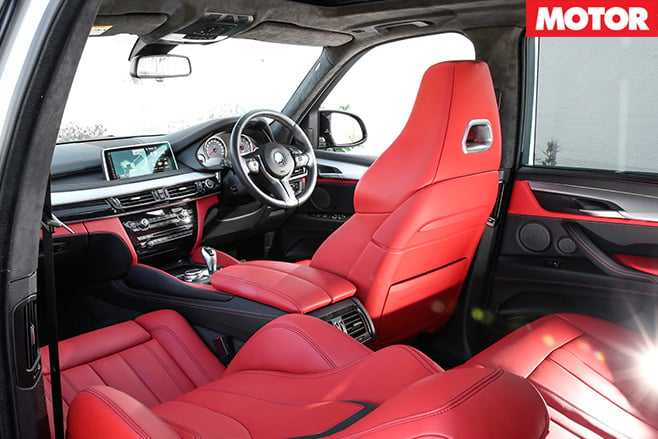
The BMW wins more points on a more prosaic level, though. It’s not a pretty car, with few visual cues as to its potency, but then there’s always the X6 M for those wanting to be noticed.
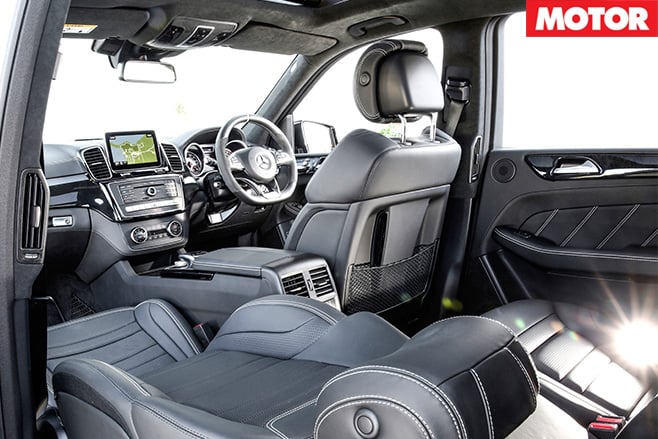
Despite the shift in name from ML to GLE, Merc’s recent mid-size SUV update was more of a facelift than an overhaul and its interior lags behind the BMW and Audi competition.
It’s probably clear by now that the Merc comes second in this comparison. Straight-line pace aside, the GLE 63 is neither as capable nor as rewarding to drive as the X5 M, its interior doesn’t feel as special, it’s more expensive (before options, anyway) and less fuel efficient, though the BMW won’t be winning any ‘green car’ awards any time soon, either. But that’s also not the whole story, as it turns out this is a comparison between a flawed car that’s very likeable and an incredibly competent one that isn’t.
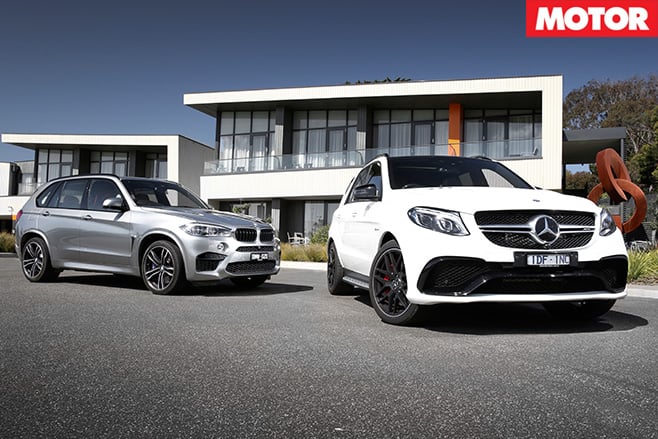
Conversely, if you’re not driving like your hair’s on fire, the BMW is a little, well, dull. Admittedly, that is a highly subjective assessment – if the BMW’s understated looks and unusual engine note strike a chord then it’s a slam dunk, as it’s objectively the better car.
But we could equally understand why some will choose the AMG without hesitation. Think of it as the difference between the MVP and the fan favourite.
| u00a0 | BMW X5 M | MERCEDES-AMG GLE 63 S |
| Body | 4-door, 5-seat SUV | 4-door, 5-seat SUV |
| Drive | all-wheel | all-wheel |
| Engine | 4395cc V8, DOHC, 32v, twin-turbo | 5461cc V8, DOHC, 32v, twin-turbo |
| Bore/stroke | 89.0 x 88.3mm | 98.0 x 90.5mm |
| Compression | 10.0:1 | 10.0:1 |
| Power | 423kW @ 6000rpm | 430kW @ 5500rpm |
| Torque | 750Nm @ 2200-5000rpm | 760Nm @ 1750-5250rpm |
| Power/weight | 186kW/tonne | 189kW/tonne |
| Transmission | 8-speed automatic | 7-speed automatic |
| Weight | 2275kg | 2270kg |
| Suspension(F) | A-arms, coil springs, dampers, anti-roll bar | A-arms, air springs, dampers, torsion bar |
| Suspension(R) | multi-links, air springs, dampers, anti-roll bar | multi-links, air springs, dampers, torsion bar |
| L/W/H | 4880/1985/1717mm | 4852/1971/1762mm |
| Wheelbase | 2933mm | 2915mm |
| Tracks | 1666/1667mm (f/r) | 1648/1663mm (f/r) |
| Steering | electrically-assisted rack-and-pinion | electro-mechanic rack-and-pinion |
| Brakes(F) | 395mm ventilated discs, 6-piston calipers | 390mm ventilated discs, 6-piston calipers |
| Brakes(R) | 385mm ventilated discs, single-piston calipers | 345mm ventilated discs, single-piston calipers |
| Wheels | 21.0 x 10.0-inch (f); 21 x 11.5-inch (r) | 21.0 x 10.0-inch (f/r) |
| Tyre Sizes | 285/35 R21 (f); 325/30 R21 (r)u00a0 | 295/35 ZR21 (f/r)u00a0 |
| Tyre | Michelin Pilot Super Sports | Michelin Latitude Sports |
| Price as tested | $195,100 | $193,900 |
| Pros | Incredible dynamics; lovely interior; value | Amazing engine; feel-good factor |
| Cons | Anodyne engine; sub-par steering | Infotainment needs a refresh; thirst |
| Star Rating | 4/5 | 3.5/5 |
BMW has released details of a new, higher-energy battery that stretches the five-door hatchback’s official range from 190 to 300km – or from 130-160km to 200km in more realistic motoring when air-con or heating is required.
The improvement comes from the battery’s lithium-ion cells, which now have increased storage density.
The battery will also be available with the Range Extender variant, which continues to use a two-cylinder petrol engine to extend the i3’s driving distance capability by another 150km.
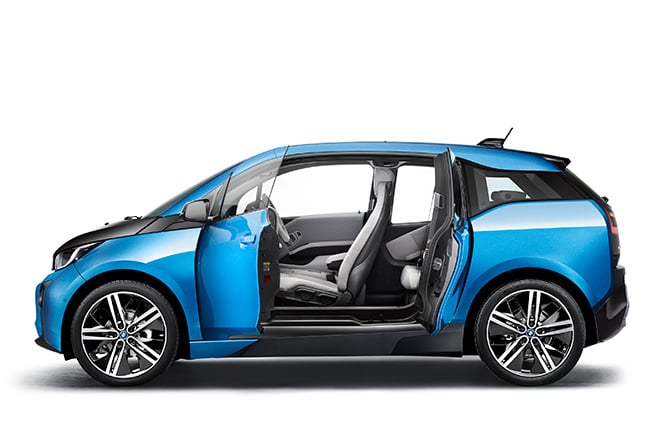
Performance slips slightly owing to the battery’s increased weight, which nudges the BMW i3 up from 1195kg to 1245kg. The 0-100km/h sprint takes a tenth longer at 7.3 seconds, and 80-120km/h in-gear acceleration takes 5.1 rather than 4.9 seconds.
Recharging time on a domestic power socket will also take a bit longer – closer to 10 hours than the eight hours of the original.
However, BMW is introducing a new i Wallbox, which can be installed in garages, for example, and charge the i3 in 2 hours 45 minutes.
The advanced-battery i3 – labelled the 90Ah (with Ah standing for ampere hours) – will also recharge 50 per cent faster than the current, 60Ah version at a typical public recharging station.
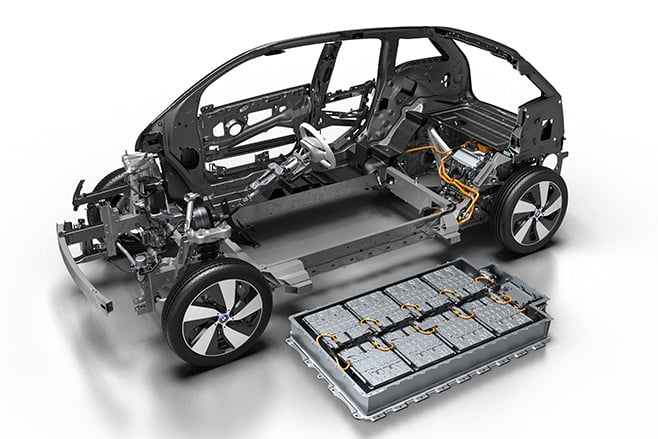
BMW says owners of the 60Ah version can have their i3s retrofitted with the new battery as the dimensions of the battery remain unchanged.
The 90Ah and 60Ah versions will be sold concurrently in Europe, though BMW Australia will swap original for update due to the niche sales volume of the vehicle here.
The updated BMW i3 is due here by the end of 2016. Pricing may increase from the current $63,900 ($69,900 Range Extender), though some compensation in the form of additional features is equally likely.
The BMW i3 was launched locally in 2014, going on to win that year’s Car of the Year award from WhichCar’s sister title, Wheels magazine.
AS HE arrived in Sochi for the 2016 Russian Grand Prix, Sebastian Vettel managed a deft piece of diplomacy, suggesting the first-corner clash in China was not so much an arch piece of dodgy driving from Daniil Kvyat but a mere result of solid racing.
- Nico nails the Grand Slam in Russian GP – pole, race win and fastest lap
- And Daniil Kvyat delivers his own grand slam of sorts, taking out Sebastian Vettel and ruining Daniel Ricciardo’s race. And his own. And Sergio Perez’s…
There is also a strong possibility that Vettel merely looked at the video of the incident and concluded – as so many others did – that Kvyat was simply reacting the way any opportunistic race driver would, and that was plant his Red Bull’s nose into a rather inviting hole.
No, not quite.
While Nico Rosberg romped away with a crushing seventh straight victory to consolidate his lead in the world championship, there was plenty going on in his wake, with local hero Kvyat the villain of the piece.
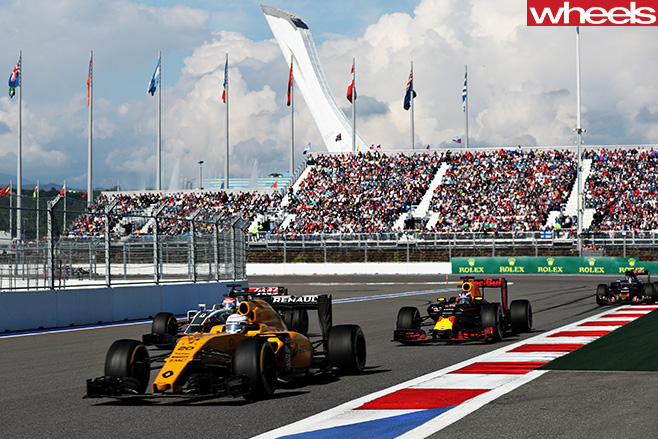
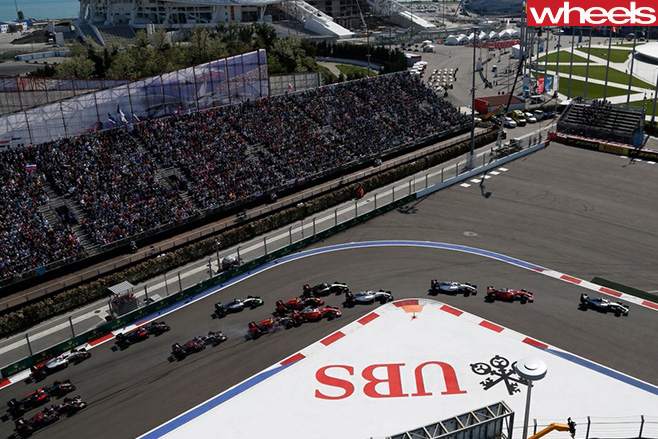
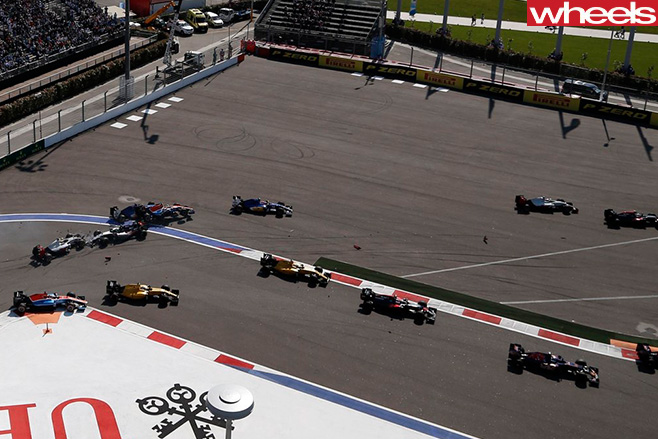
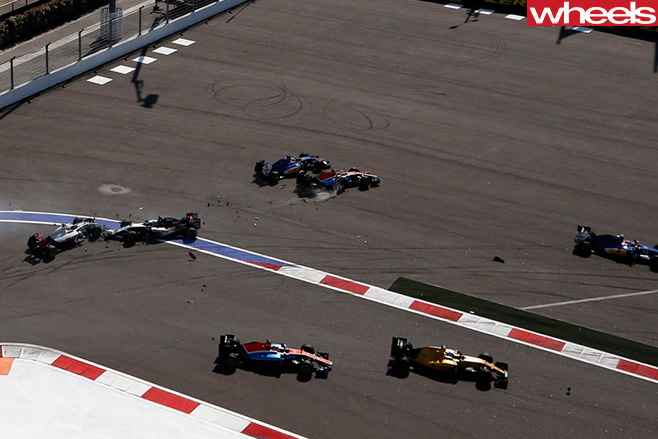
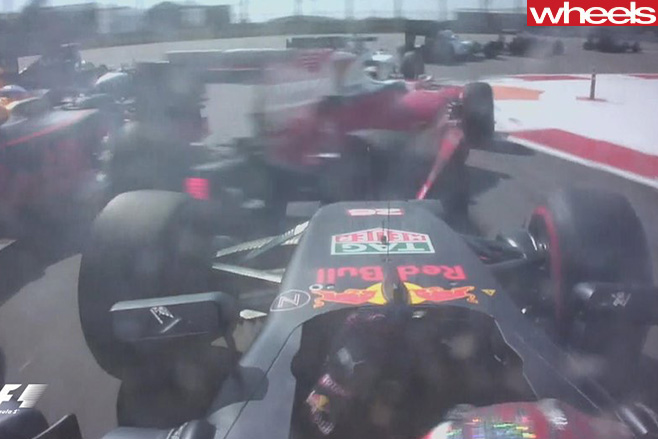
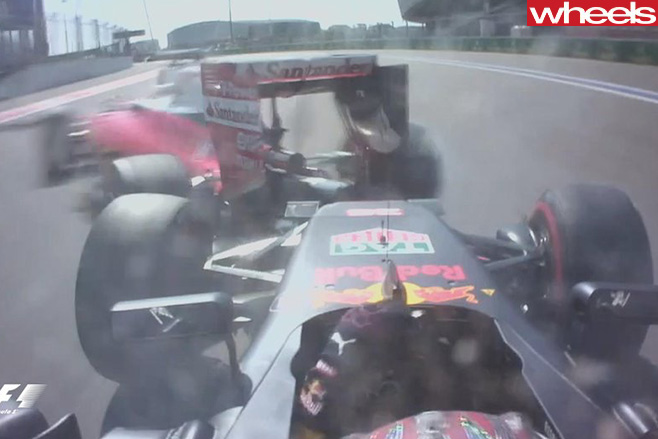
Heading into the first real braking and overtaking zone, turn two, the Russian driver locked his rear wheels and slammed hard into the rear of Vettel’s Ferrari which then cannoned into Ricciardo’s car, inflicting plenty of damage. The Aussie in turn hit the Force India of Sergio Perez, puncturing a tyre.
In the run to the next corner, Kvyat revisited the rear of the Ferrari, this time firing the hapless four-times world champ into the wall and out of the grand prix.
A string of expletives over the radio reflected Vettel’s reaction to being target practice not once, but twice.
Ricciardo followed Kvyat into the pits for repairs, both drivers dropping to the back of the field. Declared Ricciardo diplomatically: “It’s frustrating and a shame to be out of the race more or less from the first lap onwards but I think these things happen with racing.
“Unfortunately the damage was so much that we didn’t really learn anything from today’s race and we don’t know what our pace was.”
Struggling with a damaged sidepod and floor (and a poor tyre choice), Ricciardo finished 11th.
Kvyat, who was ultimately 15th, delivered a mild apology for his epic Maldonado-like performance (video top): “There was a lot going on at the start and I didn’t expect to slow down as much, I locked the rear wheels and the car was a bit out of control which caused the contact with Sebastian.
“On Turn Three, I couldn’t see what was happening ahead, Sebastian seemed to slow down and unfortunately I didn’t have time to react and this caused the second contact. I’m sorry for Sebastian and also to the team as we gave away a lot of points today from both my side and Daniel’s.
“It doesn’t feel great; this is probably the messiest first lap of my career.”
Rosberg enjoyed a cruisy weekend, claiming pole position comfortably, as another power unit issue again sidelined Lewis Hamilton from the Q3 qualifying battle.
Hamilton was to start 10th, while Rosberg easily took pole, outrunning beating Vettel’s Ferrari by more than seven tenths of a second.
But Vettel was relegated to seventh on the grid due to a penalty for changing his gearbox after Friday practice.
The reshuffled grid meant Williams driver Valtteri Bottas, relishing Mercedes power, was on the front row after outpacing the second Ferrari of fellow Finn Kimi Raikkonen by 0.127s.
Felipe Massa in the second Williams was fifth fastest, while Daniel Ricciardo’s Red Bull rounded out the top six, both men moving up one place for the race.
Rosberg joins Albert Ascari, Michael Schumacher and Vettel as the only drivers in F1 history to win seven GPs consecutively – three at the end of last season and the first four of this year.
Hamilton drove brilliantly to scythe through from 10th to help post yet another Mercedes one-two.
The Silver Arrows were not without their problems, though. Hamilton had to deal with a water leak, while there was an issue with the MGU in Rosberg’s car. Even the Mercs are having reliability problems as they push to stay ahead of the pack.
“Thank you so much to everybody at the factories for building such an amazing car. If you have a car like this, you are really able to push to the limits and that’s an awesome feeling. Lewis drove really well to come back up to second so quickly, so well done to him too.
“The only down side to the weekend was to see that reliability is becoming a bit of a concern, as Lewis obviously has a problem yesterday and both cars had issues during the race today. But we have a great team behind us and I’m fully confident that we will sort this out.
“It´s unbelievable to go into the European races with four wins and I really look forward to Barcelona now.”
Bottas and Felipe Massa took fourth and fifth. Encouragingly, both McLaren Honda’s finished in the points, though one lap down.
Fernando Alonso was sixth; Jenson Button 10th and so missed out on a cringeworthy meeting with Vladimir Putin afterwards.
Making stilted small talk through an interpreter, Putin was heard to say to Rosberg, “You and your colleagues, sincere thanks to you. Different segments, different sections of this sport have started to develop in Russia and people take pleasure in watching you do your job, if you can call it a job.”
Some in Russia might say a proper job is making people disappear.
It’s an art that Vettel would love to apply to Kvyat.
STRENGTHS
- Speed, oh my, the speed. The 488’s 3.9-litre V8 has two turbochargers which help it produce a staggeringly powerful 492kW/760Nm. Ferrari claims it can jet from 0-200km/h – yes 200km/h! – in 8.3sec and we have no reason to doubt it.
- Handling. You might expect a Ferrari to be brilliant to drive, but it hasn’t always historically been the case. These days, thankfully, it is, and the Ferrari 488 is one of the best. Apart from its crazy acceleration, it’s not at all intimidating to drive and has very clever electronics to keep everything pointed in the right direction.
- It’s easy to drive. While the 488’s width has to be taken into account, vision is reasonable and the dual-clutch gearbox makes this Ferrari a doddle to drive in traffic. Having all the controls – indicators, wipers, lights etc. – located on the steering wheel does take some getting used to, but it’s actually a very neat solution.
- Looks. In the metal the 488 has serious supercar presence; photographs don’t really do it justice. It can quite literally stop traffic and attracts smartphone paparazzi like moths to a flame.
- It’s practical. Well, by supercar standards at least. There’s a ‘boot’ in the nose large enough for a few squishy bags or a small suitcase or two and there’s more space behind the seats. Press the ‘Bumpy Road’ button the steering wheel and the suspension is even reasonably comfortable, absorbing bumps that would bother plenty of other super sporty machinery.
- Maintenance. Every new Ferrari comes with seven years complimentary scheduled maintenance. Yes, we’re serious. Buy a Ferrari and you won’t pay for a service for the first seven years of its life.
- Build quality. Ferraris have come a very long way in the quality stakes, but the passenger seat rattled in our test car and there was a persistent buzzing in the dash that became very irritating. It could’ve been – and probably was – an isolated case, but for this amount of money probably shouldn’t be.
- Options pricing. The base price of the 488 is $469,988 but it’s all too easy to swell that figure by $100,000 or more by delving into Ferrari’s extensive options list, and that’s before exploring Maranello’s almost limitless personalisation options. Granted, prospective buyers are likely to care little but some of the gear could (and should) be standard.
- Availability. If you’re keen on adding the 488 to your collection, the bad news is you’ll be waiting a while, as the current queue is in excess of 18 months. Ferrari is eager to keep its exclusive status, and that means only building so many cars.
Lamborghini Huracan, Audi R8 V10 Plus, Porsche 911 Turbo S, McLaren 650S
The ultra-luxury car manufacturer is quoting a rest-of-the-world price tag of US$42,606 (approximately AU$56,000) for its specially crafted set, making it considerably more expensive than even a similar collection from haute-couture bag hero Louis Vuitton.
The Wraith Luggage Collection was created by Rolls-Royce’s Bespoke Design team, and incorporates three Long Weekender bags, two Grand Tourer roller bags, and a Garment Carrier.
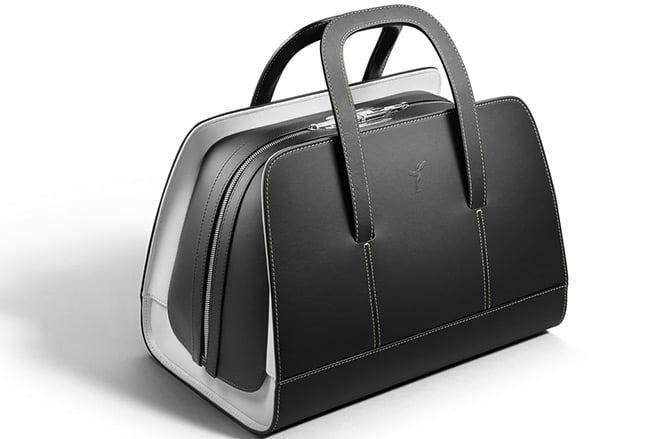
It was manufactured by craftspeople who even wore white gloves to avoid blemishes on the expensive leather.
Ergonomics were as much a priority as the high-quality materials used. The handles of the Long Weekender bags were designed to be effortless to carry, with even weight distribution and an invisible stitch (as applied to the Wraith’s steering wheel) for a smooth grip.
They also feature machine-polished aluminium zips that mimic the shape of the Wraith and can be fastened to the bags magnetically.
The frame of the Rolls roller bag incorporates carbon fibre to reduce weight, while the wheels feature a widened track to aid stability. The wheels also feature the company’s famous ‘RR’ logo.
The slimline design of the Garment Carrier, which holds dresses or suits and shirts, allows it to be placed above the other luggage inside the Wraith’s boot.

Each item of luggage is embossed with Rolls-Royce’s famous flying-lady logo – the Spirit of Ecstasy – and can be purchased individually.
However, you will need another $645,000 (plus on-road costs) to buy the Wraith coupe to go with your fancy, high-end luggage.
Want to see more extravagance? Check out the top 10 most expensive cars.
WHAT STANDS OUT?
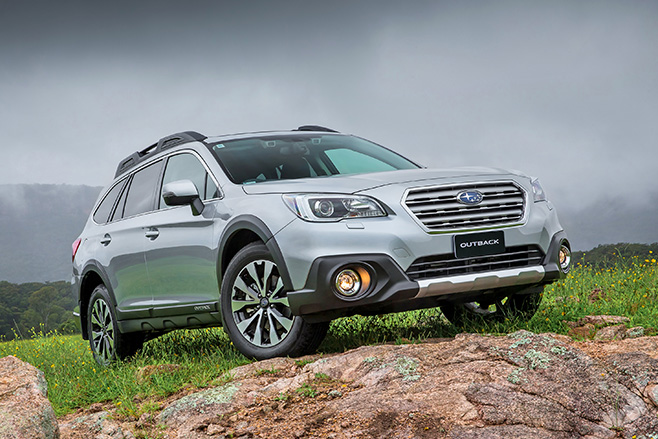
The Outback may not look like other SUVs, but that’s part of its appeal. It is based on a passenger wagon and means the Outback takes to windy roads better than its taller, bulkier competitors.
Outback’s all-wheel drive system also puts it a step ahead for those who like a bit more adventure. Unlike other all-wheel drive vehicles which only send power to the rear wheels when they can’t get grip, the system in this Subaru ensures all four tyres are receiving even amounts of power aligning it closer to a 4WD. It’s referred to as a light-duty off-roader, meaning it’s not about to get you up a muddy, rutted mountain, but it’ll cope comfortably on gravel and snow.
But value is the biggest winner when it comes to the Outback. And the key to that is what’s inside…
SO, WHAT’S INSIDE?
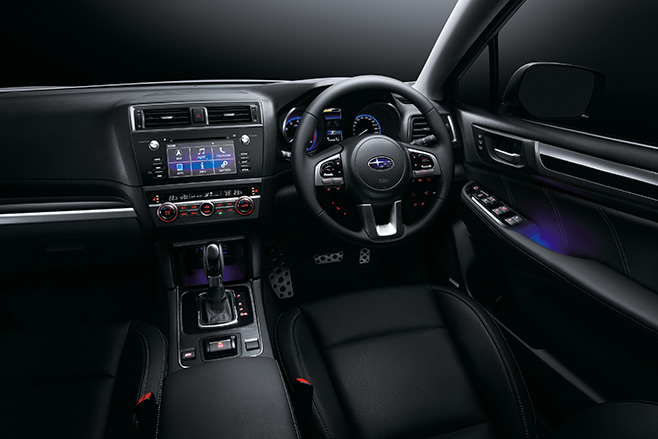
There’s no shortage of standard gear in the SUV, but perhaps its biggest difference is in Subaru’s decision to include its advanced active safety system – EyeSight – on all automatic models. That means adaptive cruise control and emergency braking are standard.
The Outback comes with three different engine options in the three variants – 2.0D, 2.5i and 3.6R. The 2.0D and 2.5i variants also have a Premium upgrade option which will cost a few thousand more for some extra luxuries like smart key entry, heated front seats and additional safety features.
If its power you want, then you’ll get it with the 3.6R’s 6-cylinder petrol engine.
Then there’s the space and accommodating back seats. The Outback excels in this area, even for a wagon-based SUV. Then again, an SUV without space is like a Nutella donut without the Nutella.
CHOOSE YOURS
We’re going to play middle ground here and say the 2.5i is best value for your money. It’s got the performance, it’s got the class-leading safety technology and it’s got the features. If you want to pay extra for a little bit more luxury, like leather seats, then the Premium model upgrade is available.
SUMMING UP
The newest 2016 update doesn’t see any drastic changes in the Outback and it’s not a car that prides itself on dynamic ability, but it comes with better safety, more technology with some marginal upgrades to the driving experience putting it toward the front of the race for best value SUV.
Click here to read our full review on the Subaru Outback range.
TESLA is already looking to improve its much-hyped Model 3, yet it has only just been revealed and is two years from going on sale in Australia.
The first of two planned reveals for the car show a futuristic-looking four-door sedan with a hatch-like profile.
Within days of the cheering-and-chanting reveal, Tesla CEO Elon Musk took to Twitter to say there is “some tweaking underway” when quizzed about the nose of the car, also adding that “edge and contour refinement are ongoing”.
Musk also hinted there could be interior design updates: “Wait until you see the real steering controls and system for the Model 3. It feels like a spaceship.”
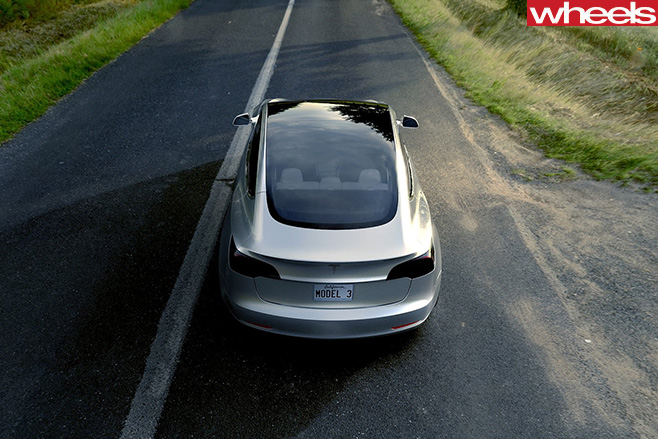
It is aimed squarely at the sweet spot of the luxury market – the BMW 3 Series, Mercedes-Benz C-Class, Audi A4, Lexus IS and Jaguar XE – with a comparable starting price of $US35,000.
As with other Teslas, the Model 3’s floorpan is a mass of lithium-ion batteries that power at least one electric motor.
Details of what’s beneath the skin are scant, but it’s claimed to have a coefficient of drag of just 0.21 and will accelerate to 100km/h in less than six seconds.
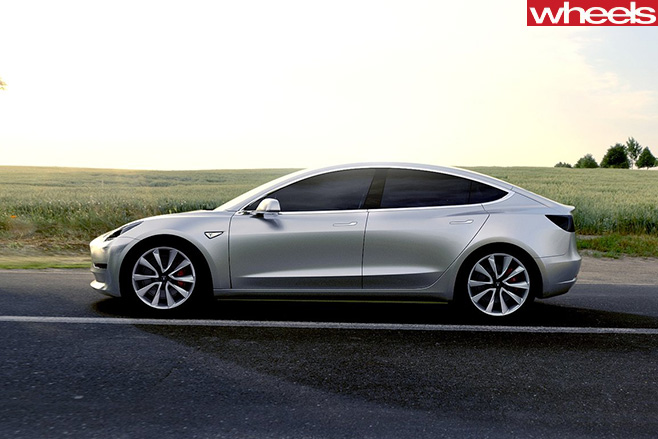
Musk later confirmed there would be rear-drive single-motor versions as well as faster dual-motor models. Expect the latter ones to reduce that 0-100km/h sprint to closer to 3.0sec.
Tesla claims the Model 3 can comfortably fit five adults, partially because the front seats have been moved forward, with the legs of those sitting up front encroaching on the space usually occupied by an engine in a car with an internal combustion engine.
What about Australia?
A local source told Wheels people started queuing outside Tesla’s Sydney and Melbourne offices after the reveal, and that thousands of Australian fanatics have handed over $1500 deposits.
However, Model 3 deliveries are not expected here until 2018. Tesla CEO Elon Musk said those in California will have priority on early 3s, something he defended on Twitter by saying it allowed “rapid turnaround on early issues”. In other words, there’s likely to be problems with the tech and we want to jump on it before we send cars all over the world.
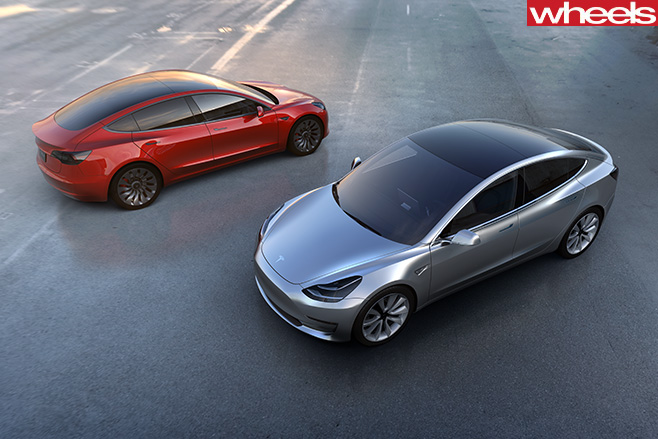
Keeping it real
Tesla claims 200,000 people placed deposits of about $1500 each within 24 hours of the reveal – and the number kept growing in the days after the unveiling. These are remarkable figures for a small company that could do with the $300 million injection into the coffers.
Tesla encourages fanatical and loyal owners to queue for the privilege of getting one of the first cars in order to create an Apple-like hype and mystique.
The challenge for Tesla is producing so many cars. It currently produces about 50,000 cars annually, but Musk wants to ramp that up to 500,000 by 2020.
In the meantime, there’s plenty of work to be done, including keeping so many would-be owners content – and just as fanatical as ever.
Wheels review
More power, more poise, and more panache turns the already appealing Audi TT into an even more attractive sporting proposition.
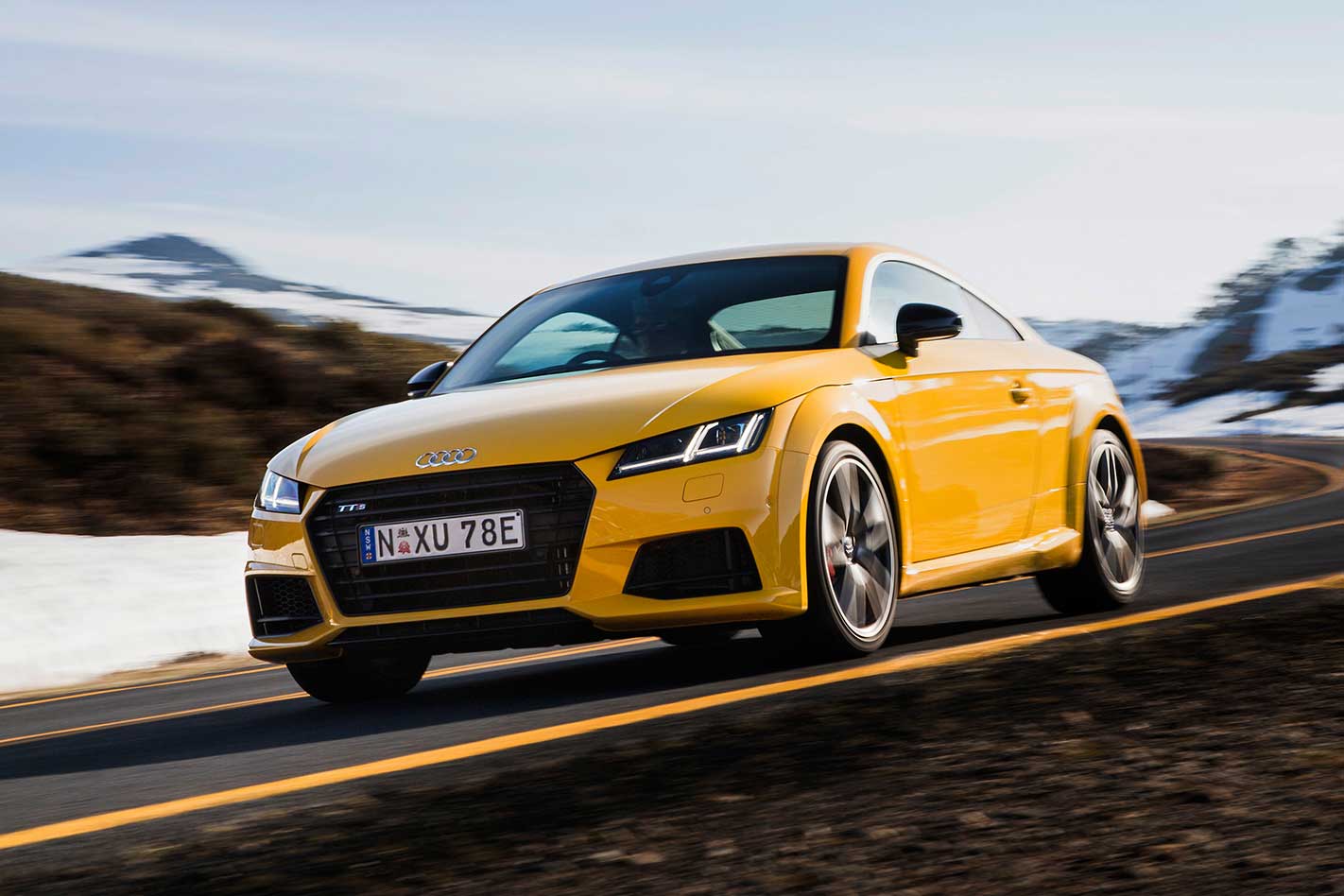
WHAT IS IT? This is the third generation of the Audi TT, but only the second time Audi has released a sportier TTS variant. It gets a more powerful engine tune, firmer suspension and extra equipment inside and out to suit its more dynamic nature. The Audi TTS is available in both coupe and roadster body styles.
WHY WE’RE TESTING IT The TTS has arrived in Australia, and we’re keen to see if the third-gen TT’s sharper, more driver-oriented focus has allowed the TTS to become an exciting model in its own right.
MAIN RIVALS Realistically, the Audi TT has no rivals. BMW persists with the Z4, but it’s only a two-seater, as is the Mercedes-Benz SLK roadster.
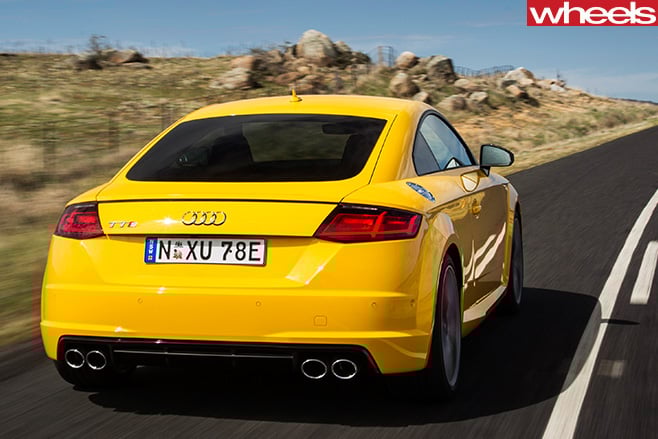
PLUS: Sharp styling; sharp handling; rorty engine; loads of traction; ride MINUS: Steering is quick, but numb
THE WHEELS REVIEW I CAN’T make up my mind how I feel about these Hankook Ventus tyres. My first reaction is the Audi TTS sports coupe deserves better.
The TTS, as Wheels readers would know, is a sportier version of the TT. This is the third-generation TT, but only the second to get the S treatment, which costs an extra $15K over the TT quattro S-Line. There’s a roadster model, too, which we’ll test in due course.
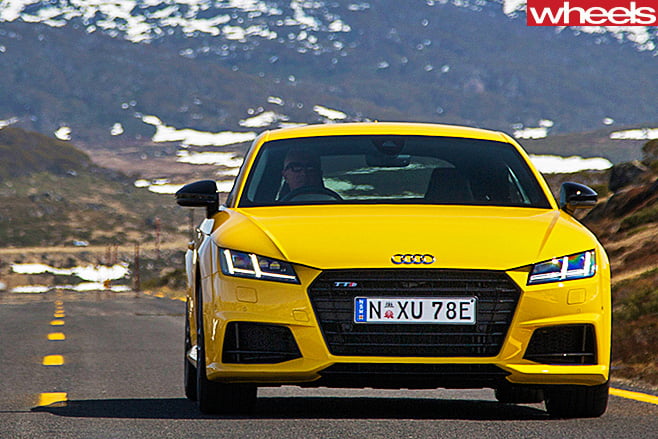
But these tyres… They’re giving up at the front, letting the nose run wide, scrubbing away precious cornering momentum.
Then I look at the speedo and realise we’re going quicker than I thought. But it just doesn’t feel that quick. The TTS feels so calm, so composed, so comfortable at this velocity. Surely there’s more to be had out of this little sports car.
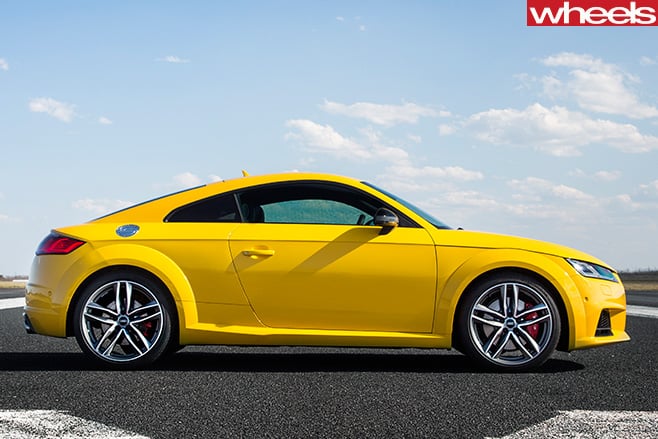
The tyres do a great job getting the 2.0-litre turbo four’s 210kW and 380Nm to the road. And the all-wheel-drive TT S fairly bursts out of corners, as its 0-100km/h time of 4.7 seconds would suggest, engine singing, machine guns firing with every deliciously quick gear change – provided you keep your throttle eagerness below the threshold of the traction-control fun police. In fact it’s better to engage ESC Sport mode, which allows the driver to overstep a little, and to have first option of correcting that exuberance, before the electronics step in and take over.
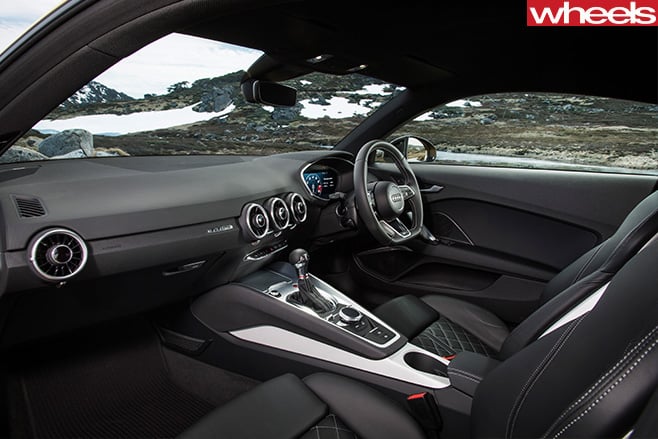
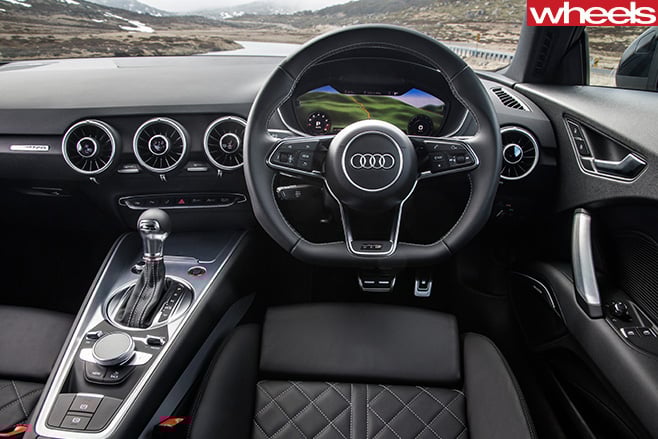
The tyres also do a great job communicating grip levels back through the TTS’s suspension and chassis to the driver. The steering wheel, too, provides some feedback, though the weighting itself doesn’t convey the stress the tyres are under.
No, I think this imbalance is the car’s fault. There’s a disconnect here between how stressed the tyres are, and how stressed the TTS is.
This is one stoically composed yet ballistically quick little coupe. Simply put, it refuses to become ruffled or rushed no matter the speed. There’s a Germanic efficiency to everything it does that suggests it cannot be surprised, nor be upset by the unexpected.
Previous TTs have been dynamically decent, but really they’ve been more about styling and show. This one has the chops of a proper sports coupe. It has the dynamic composure to more than match the sharp styling’s promise.
Which means it’ll provide a fantastic platform for the unconfirmed − but surely gonna happen − TT RS. Wonder if it’ll get the RS3’s full 270kW tune? I reckon this chassis could handle it.
SPECS Model: Audi TTS Engine: 1984cc 4cyl, dohc, 16v, turbo Max power: 210kW @ 5300-6200rpm Max torque: 380Nm @ 1800-5200rpm Transmission: 6-speed dual-clutch Weight: 1385kg 0-100km/h: 4.7sec (claimed) Fuel economy: 6.8L/100km Price: $99,000 On sale: Now
Second opinion: MOTOR review

Motor focuses exclusively on high-performance cars, offering a heart-stopping, hair-raising blast into the world of prestige and performance culture.
Range-topping sportster trades comfort for speed By: Jez Spinks
TTS isn’t a chemical abbreviation for testosterone, though it would be an apt one for the more steroidal version of Audi’s sharply handsome coupe.
We’ve already learned the third-generation TT is the most dynamically capable version yet, and with the Golf R/S3 drivetrain under the bonnet… Well, excuse us if we approach the new S-badged version with some anticipation.
If the TTS can serve up the Golf R’s fun in a sexier, two-door body we’ll be laughing, though not necessarily all the way to the bank. The TTS costs almost double, starting at $99,900 for the coupe (or from $103,900 for the drop-top). Equipment levels have increased, but it also drops it right into Porsche Cayman territory.
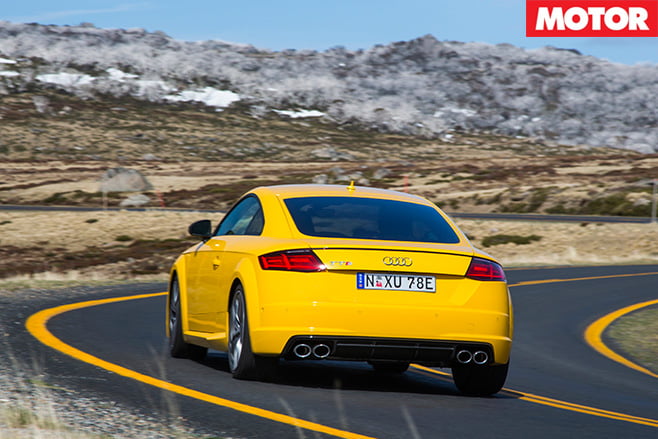
You’ll need a Cayman S that costs $40K more and still needs the optional Chrono Pack to match that 4.7-second pace. The TTS’s dual-clutch auto certainly wastes no time snapping through its six ratios – at its quickest in Dynamic mode, where flat-out upshifts are also accompanied by delicious exhaust pops.
Using the paddles still brings the best response from the drivetrain, though third and fourth gear almost become exclusive on a driver’s road – trading on the engine’s tenacious torque that peaks from 1800rpm to just 100rpm shy of where peak power of 210kW sets off at 5300rpm.
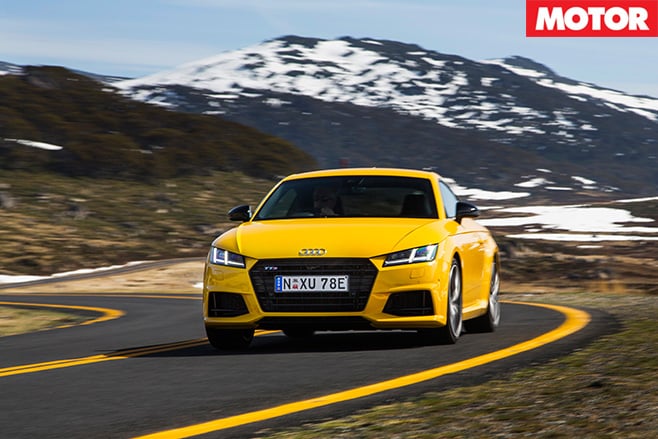
That adjustment can go in either direction, but don’t expect power oversteer despite the latest-generation Haldex system’s ability to pre-emptively load extra torque to the rear wheels when it detects sharp turn-in. The TTS’s quick steering also helps direct the coupe into corners with more immediacy, and you can also carry speed confidently into corners under trailing brakes.
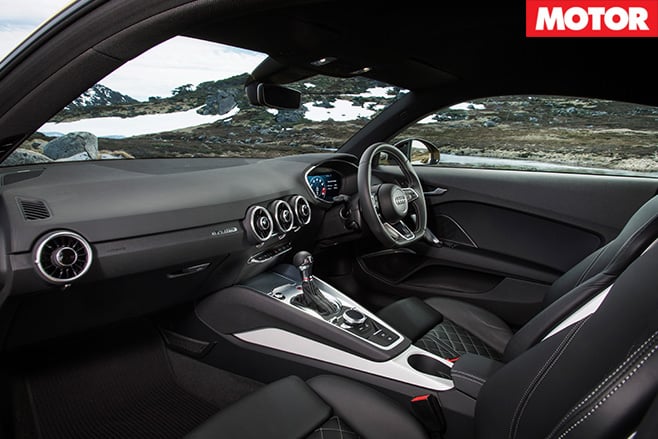
There’d be greater involvement if the steering wasn’t so introverted, though the helm scores well for consistency and accuracy. There’s no need to wait for a twin test to determine where the TTS sits dynamically in relation to the Cayman, though the Audi can still claim some high ground with its sharply cut exterior, quick pace and a stunning cabin that marries high quality with high tech.
4 OUT OF 5 STARS
SPECS
Engine: 1984cc inline-4, DOHC, 16v, turbo Power: 210kW @ 6200rpm Torque: 380Nm @ 1800rpm Weight: 1385kg 0-100km/h: 4.7sec (claimed) Price: $99,900 Like: Punchy performance; sharper handling; brilliant interior Dislike: Base TT rides far better; Cayman much more involving
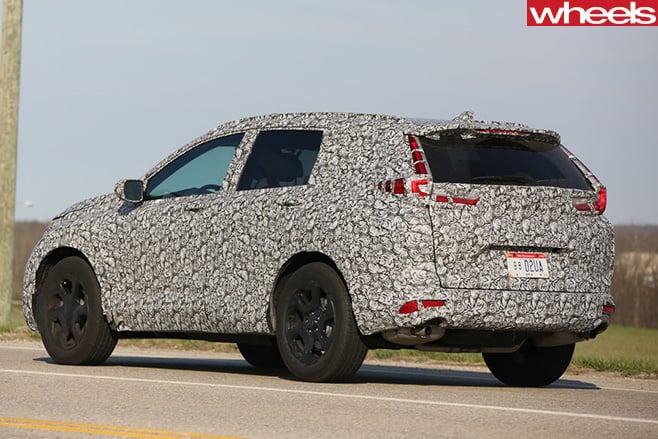
IT’S ALL CHANGE for the next-generation Honda CR-V, which is set to gain a completely fresh set of clothes, interior, chassis, and engine choices when it debuts late this year or early in 2017, ahead of an Australian launch sometime not long after that.
Pitched, of course, against age-old foes like the Toyota RAV4 and Subaru Forester, as well as the Hyundai Tucson, Nissan X-Trail, and Mazda CX-5, CR-V number five seems like it might finally score a bit more style, judging by the aggressive nose, sculptured sides, and Volvo XC60-esque look of the tail-lights.
As the North American spy shots suggest, the 2018 Honda CR-V will be the largest yet, growing half a size to help make space for the super-successful Honda HR-V to blossom below it.
Consequently, the newcomer will offer the option of third-row seating, boosting the medium SUV’s appeal against similarly-configured competitors such as the X-Trail and Mitsubishi Outlander.
That’s been made possible by an all-new platform underneath, based on the soon-to-be-released Honda Civic’s transverse modular architecture.
Lighter, far stronger, and much quieter than the item found in the existing RM-series CR-V launched in 2012, this state-of-the-art platform will include redesigned suspension (including, we hope, the Civic’s impressively silent yet effective five-link rear end) and electric power steering system, to finally give the long-running medium SUV some much-needed steering, handling, and ride finesse.
Believed to be aiding the latter is new box-section chassis welding for increased rigidity and noise-path suppression, as well as triple door seals, thicker front glass, and an acoustic windscreen – advances all found in the related Civic Sedan.
Nevertheless, don’t be surprised to see a variation of the Euro-focussed 1.6-litre i-DTEC turbo-diesel mated to a nine-speed torque-converter automatic if fuel prices rise as predicted. Whichever engines make it to Australia, the choice of front or all-wheel drive will continue.
Progressive driver-assist technology like Autonomous Emergency Braking, lane-change warning, adaptive cruise control, and Rear Cross Traffic Alert systems are bound to be on the options list, matching more developed rivals like the CX-5 and Ford Kuga in offering state-of-the-art safety for a five-star crash-test result. As a result, the most expensive CR-V AWD variants will most probably nudge $50,000.
A one-time trailblazer in the medium SUV sphere, the CR-V cannot undergo its metamorphosis fast enough for Honda Australia, as sales are 5.5 percent down in the first three months of this year in a medium SUV segment that’s rocketed by over 15%. Coming in with just 6.1% market share, it trails the class-leading CX-5 (18%), Tucson (15.1%), X-Trail (14.2%), RAV4 (12.9%), Forester (10%), Kia Sportage (7.6%), and Outlander (7.4%).
Have spy pics of your own? We’d love to see them. Just email them to [email protected]
It wasn’t always about sports cars for Ferruccio Lamborghini. He made a career building far more rudimentary items before he ever dreamt about ‘the perfect car’. In 1948 Ferruccio started Lamborghini Trattori, a tractor business. Then in 1959 he opened Lamborghini Bruciatori, an oil heater factory that went on to make air conditioners.
It wasn’t until 1963 that Ferruccio birthed Automobili Lamborghini. Ferruccio was successful in his own right by this stage, and was frustrated by the shortcomings of the Ferraris he had bought. He took his complaints all the way to Enzo Ferrari. Enzo was less than entertained by Ferruccio’s grievances, and the episode kicked off a fierce rivalry between the two men. Ferruccio started his own sports car business to beat Enzo at his own game.
The 10 vehicles listed here are the Lamborghinis we consider to be the most intriguing. Some are famous, some are not so well-known. Regardless of how each model was received at the time, they have all contributed to the Lamborghini legend. Ferruccio and the company he founded will forever be remembered for their role in shaping the motoring world today.
1964 LAMBORGHINI 350 GT
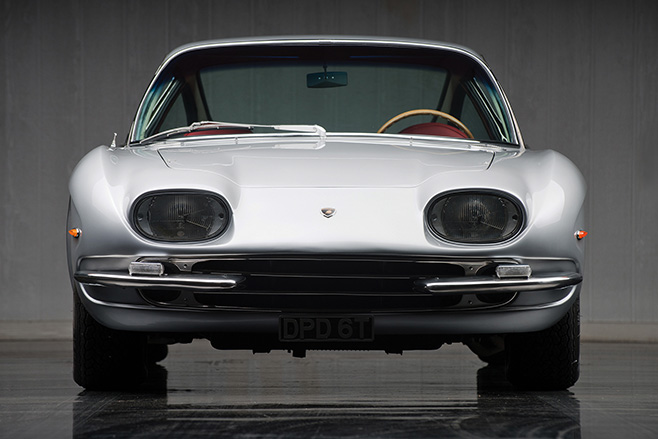
This is the first production Lamborghini road car. The 350 GT featured a 3.5-litre V12 engine in the front, producing 209kW. It later grew to 3.9-litres and 239kW to become the 400 GT in 1965. Lamborghini built 344 of them.
1966 LAMBORGHINI MIURA
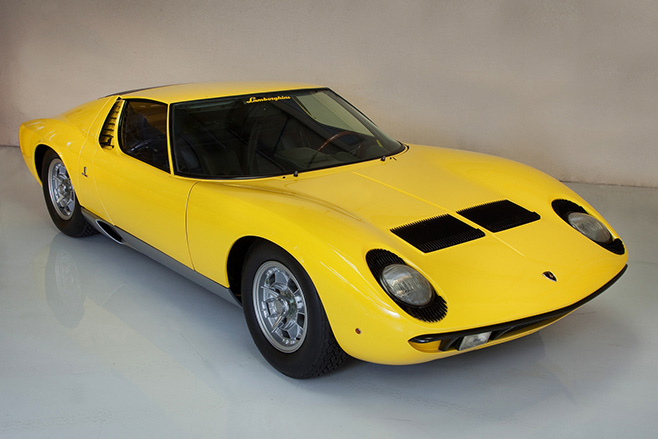
The Lamborghini Miura is one of the most famous Lamborghinis, and arguably the most beautiful car ever. It is often hailed as the original supercar. The Miura was released in a number of variants, the most desirable being the Muira SV which had wider tyres and the most power – 287kW – from the 4.0-litre V12 mounted in the middle of the car.
1974 LAMBORGHINI COUNTACH
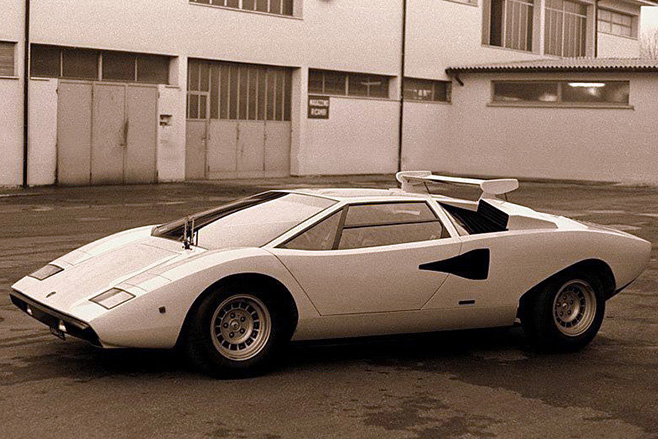
It’s hard to imagine another car that has adorned more bedroom and garage walls than the Lamborghini Countach. Its early form was the prettiest, but the outrageously dramatic styling of the 1980s models was what made the Countach so unforgettable. Almost 2000 were built, with the monstrous 339kW 5.2-litre QV the king of the castle.
1986 LAMBORGHINI LM002
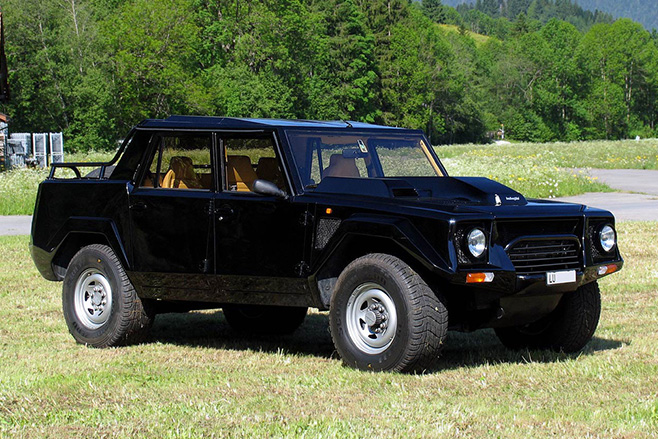
The LM002 was what Lamborghini built from the leftovers of an abandoned plan to make military off-roaders. It has been named as one of the worst cars in the world, though that is probably too harsh. It had the same V12 engine as the Countach, and earned the nickname ‘Rambo Lambo’ after Sylvester Stallone bought one. Mike Tyson had one, too.
1951 LAMBORGHINI L 33
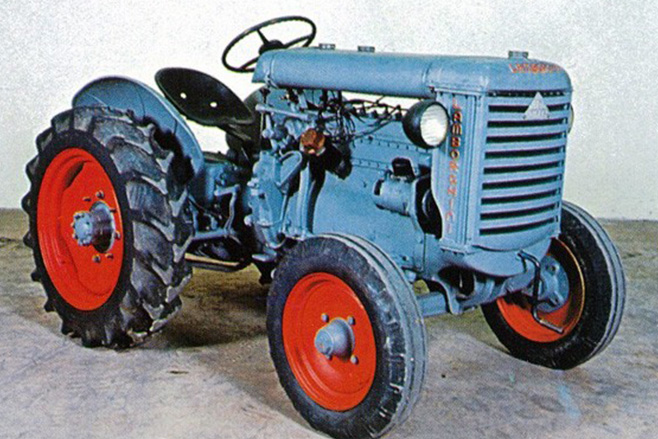
Ferruccio was very proud of his tractors. He was born into a family of grape farmers, and after the Second World War he took advantage of the need for agriculture supplies, even building tractors by repurposing military machines. The L 33 was the first production tractor made entirely by Lamborghini, with the exception of the 3.5-litre six-cylinder engine supplied by Morris. Ferruccio’s tractor business was very successful.
1990 LAMBORGHINI DIABLO
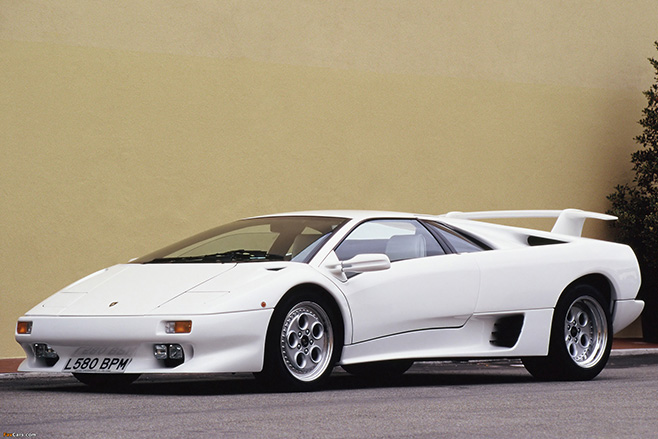
Diablo was the Countach for the ‘90s. It took Lamborghini a long time to replace the iconic Countach, but when it finally launched the Diablo it really made its mark. Early cars had a reputation for torturing drivers with extremely heavy steering and clutch action. The more refined all-wheel drive VT models were better.
1968 LAMBORGHINI ESPADA
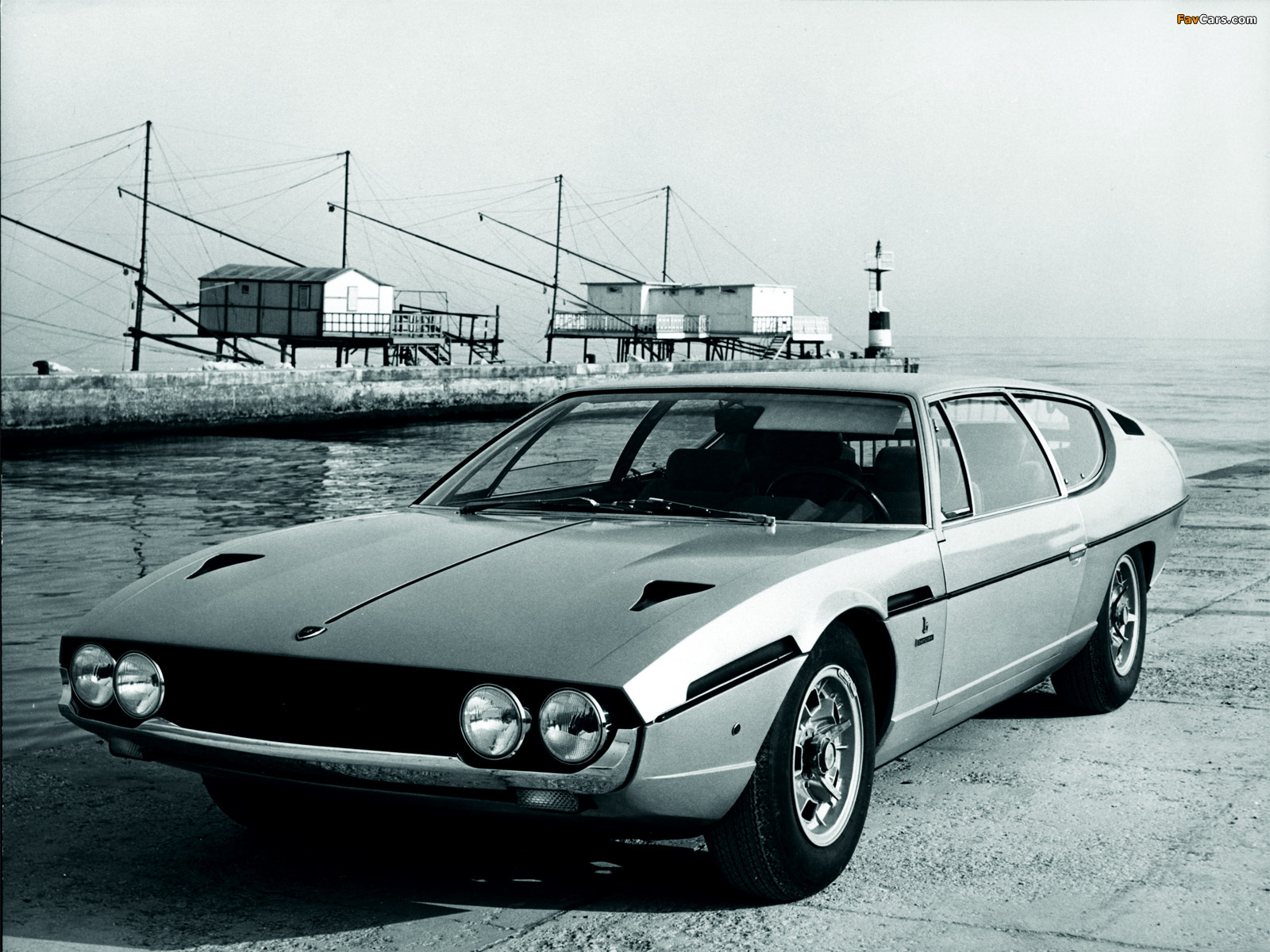
Espada was the original four-seater supercar. Despite its landmark status and strong sales when new, it remains one of the lesser-known cars on this list. Espada stayed in the Lamborghini line-up for 10 years, a total of 1217 were built during that time. Lamborghini has only revisited the four-seater sports car idea in concept form since.
2003 LAMBORGHINI GALLARDO
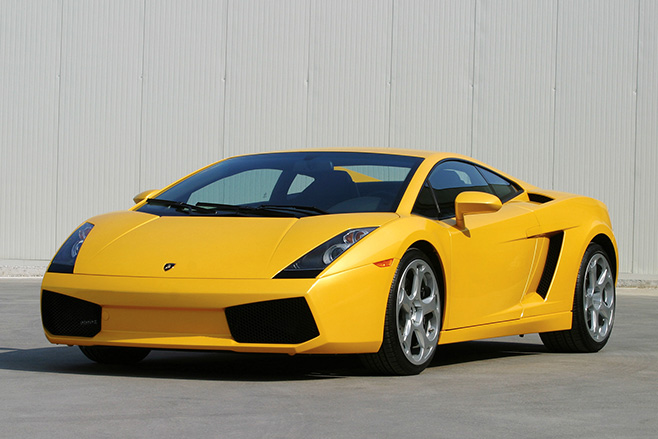
The closest Lamborghini has ever come to a car for the masses. Gallardo sold in huge numbers during its lifetime, more than 14,000 of them were made. It featured a 5.0-litre V10 engine behind the two front seats that made 368kW and an almighty soundtrack. Power went up towards the end of its life and across several special editions and formed the basis for the first Audi supercar, the R8.
1986 LAMBORGHINI MOTORCYCLE
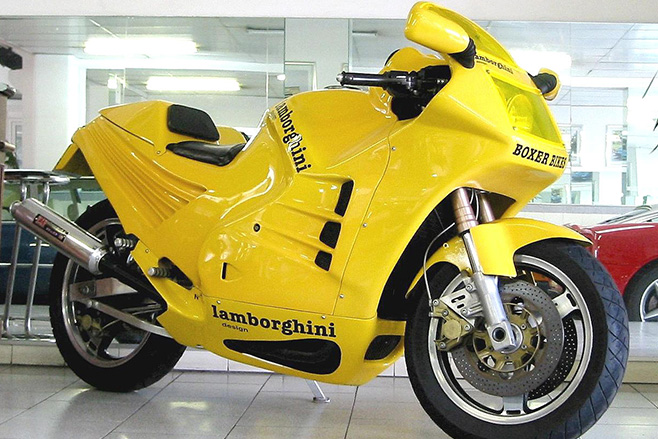
The Lamborghini motorcycle is one of the most unique pieces of the company’s history. Ferruccio was still alive when it launched, though it was not a project he was involved with. Lamborghini was bought in 1978 by Patrick Mimran who set about putting the Lamborghini name on other products. Lambo V12 engines went into speedboats with great success. In the mid-80s a motorcycle was styled by the Lamborghini design team, and then built in France using a Kawasaki engine. Orders were accepted for 50 bikes, but only six were built.
2011 LAMBORGHINI AVENTADOR
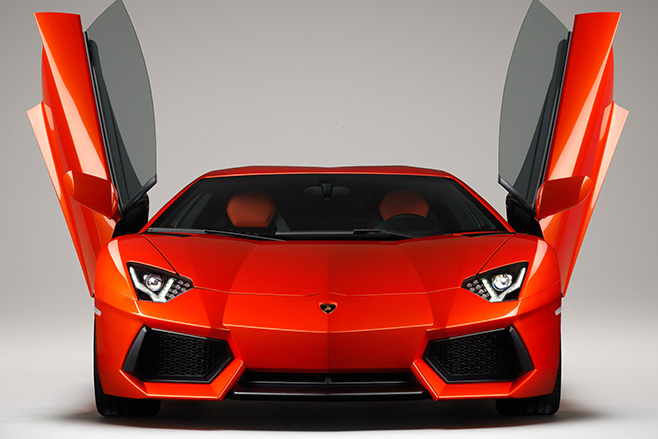
The Aventador is the Lamborghini of the moment. In some ways it is a styling evolution of the Murcielago it replaced, though under the skin it is radically different. A brand-new V12 was introduced with Aventador and remains one of the most awe-inspiring engines ever built. In standard form the revvy 6.5-litre V12 produces 515kW at 8250rpm.
