
When car makers grace us with something ‘all new’, more often than not there’s a lot of carry over, whether it’s the drivetrain or even the platform.
The 2016 Chevrolet Camaro, however, really is all new, right from the ground up, which makes it a remarkable departure from the outgoing fifth-gen model which had its roots grounded in the 2006 Holden VE Commodore.
Starting with the state-of-the-art platform that underpins the upscale Cadillac ATS and CTS models, including their formidable V-branded performance variants, this new Camaro has got the fundamentals right. Suspension is MacPherson struts up front with a sophisticated five-link setup at the rear. Ford has made plenty of noise about the new Mustang’s independent rear-end, but the Camaro has had such an arrangement since 2010.
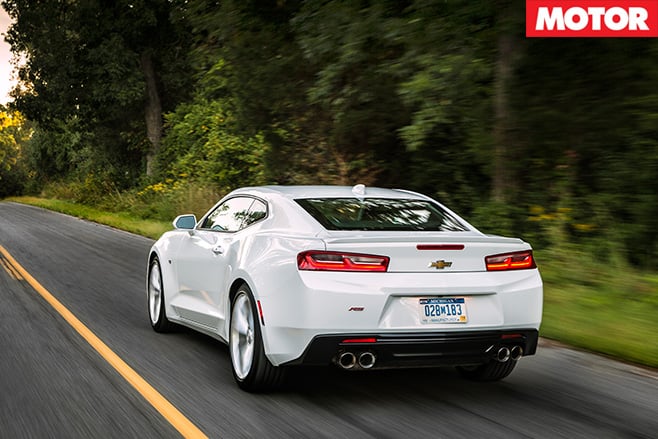
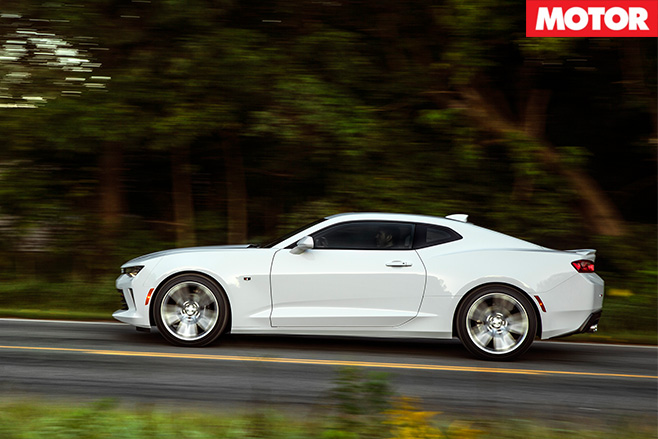
This Camaro is smaller in every dimension – height by 28mm, width by 20mm, and length by 57mm – and looks comparably more athletic and lithe, like a 15/16ths scale version of its former self. In addition, the chassis is 28 per cent stiffer than the old car, according to Chevrolet. Perhaps its design is not as iconic as the new Mustang’s styling, but the look is unmistakably Camaro.
Its smaller proportions, combined with an aggressive mass-cutting program, result in a much lighter car than before. In RS trim, the overall package is 133kg lighter than the old car, and in SS trim with the monstrous V8, the Camaro rolls over the scales at 101kg less.
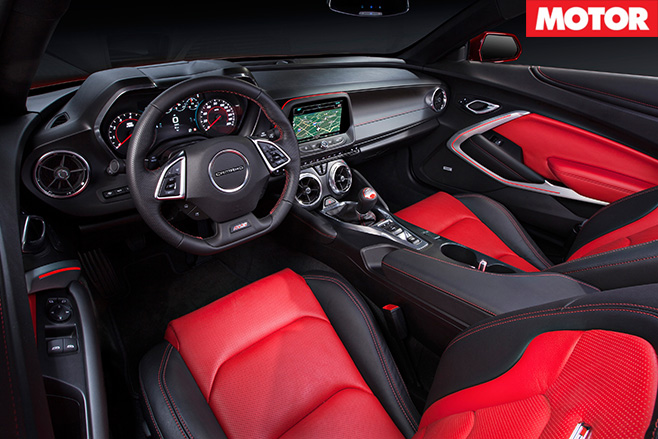
The smaller dimensions take their toll on the interior, however, as front seat occupants now sit closer to one another, and the rear seats have changed from barely usable to accommodating shopping bags only.
The three engine and two transmission choices are all brand new, too. The base powerplant in the LT model is a 205kW/400Nm 2.0-litre turbocharged four cylinder, while the volume RS model is the most high-tech of the lot – a 250kW/385Nm 3.6-litre V6 which is an excellent all-’round mill. The show stopper of the range is the 6.2-litre LT1 small-block V8 that makes a stonking 339kW and 617Nm, fitted exclusively to the SS.
Best of all, the shifter feels precise and durable, in stark contrast to the fragile feel of the Mustang’s gear lever.
Large 345mm front and 338mm rear brake rotors, clamped by four-piston Brembo calipers, are optionally available on LT and RS models and standard on SS. Brake feel is exceptional for a pony car, lending absolute confidence and control to the driver. Steering assist is electric, of course, and while both turn-in response and control are excellent, feel and feedback are slightly muted.
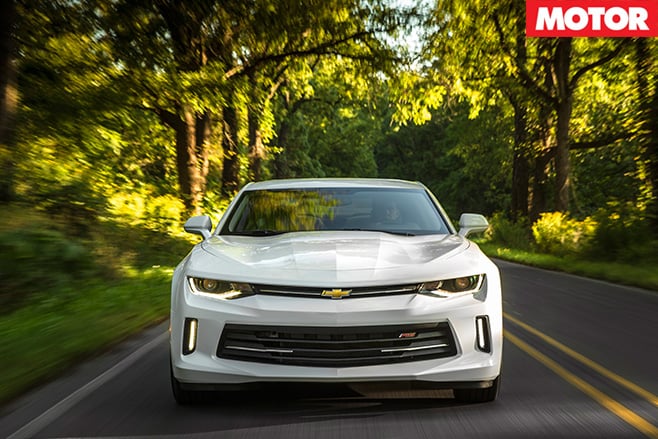
Grip is remarkably high and the chassis does an excellent job of communicating the finer details of each contact patch. Clearly this chassis is the reason that the new SS is faster around a circuit than the outgoing, factory-tuned track special 1LE variant.
Unfortunately, Chevrolet has categorically denied any plans for a right-hand drive Camaro, despite the fact the platform is being converted for Cadillac exports. We can only hope that Holden’s promised new V8 sportscar offers the same dynamic talent and muscle appeal on its release in 2017.
4.5 OUT OF 5 STARS
SPECS
Engine: 6162cc V8, OHV, 32v Power: 339kW @ 6000rpm Torque: 617Nm @ 4400rpm Weight: 1645kg / 0-97km/h 4.0sec (auto, claimed) Price: US$37,295 (manual) Like: Lovely V8; excellent auto; much improved dynamics Dislike: Terrible vision; cramped interior; not coming to Oz
TELL ME ABOUT THIS CAR
Previously known as the GL, this new version of Mercedes-Benz’s full-size, seven-seat SUV is now called Mercedes-Benz GLS. It boasts updated styling for a more aggressive appearance, a more powerful V8 engine and is genuinely vast inside.
STRENGTHS
- Space is the number one strength of the GLS. In the world of luxury seven-seat SUVs the GLS is one of the biggest and it makes full use of its room. The luxurious interior is open and comfortable, and the third row is big enough to fit adults. All of the seats fold electrically too.
- Its V8 engine is refined, powerful and sounds great
- It mightn’t be beautiful, but the GLS is certainly striking to look at. And it looks and feels expensive
- The interior feels old. Mercedes has added a new steering wheel, new instrument cluster and a larger 8.0-inch touch screen, but the basic structure of the GLS’s cabin is dated. This is especially obvious against newer rivals like the Audi Q7 and Volvo XC90 which trump the Mercedes for interior design and quality.
- It feels enormous to drive. Obviously the GLS isn’t going to handle like a sportscar, but you’re constantly aware of its substantial size and weight
- It’s expensive. A starting price of $161,900 for this V8 powered GLS 500 means affordability isn’t a strong suit
If you’re looking for a large luxury SUV that can carry seven people in comfort, then the Audi Q7 and Volvo XC 90 are both better to drive and significantly cheaper. You should also consider a Range Rover, which has a brilliant interior and is more capable off road.
NISSAN has handed small car buyers a showroom edge after announcing its plans to drop the Micra and Pulsar hatch from its Australian line-up.
The carmaker announced last week that the Micra small city runabout, and the hatch version of the Nissan Pulsar small car, would both be withdrawn from the Australian market late this year.
It means Nissan dealers will be under pressure to sell both models for at least another six months – placing bargaining chips directly into buyers’ hands.
The decision to cull the Nissan Micra – a Wheels Car of the Year top three finalist in 2010 – rests on the car’s seven-year-old platform, and Nissan’s struggle to keep it competitive in a class that has moved the goalposts out of reach.
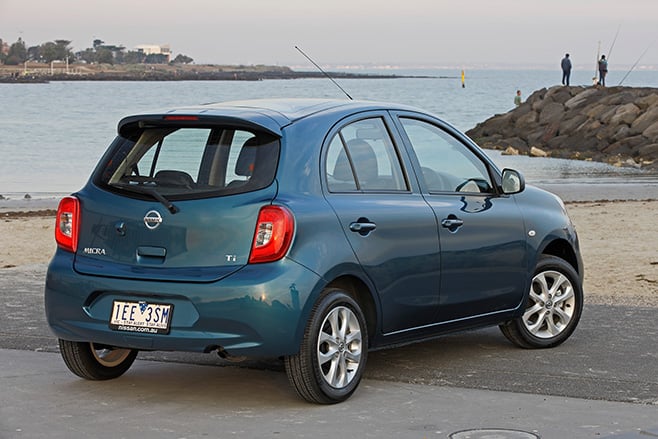
“Micra’s platform is quite old, so from a technology and specification point of view it is quite restricted compared with cars in that segment now,” said Nissan Australia chief executive Richard Emery. “Plus add Euro 5 investment – if you add all those things together, plus the competitive nature of that business, it was the right time to make the call.”
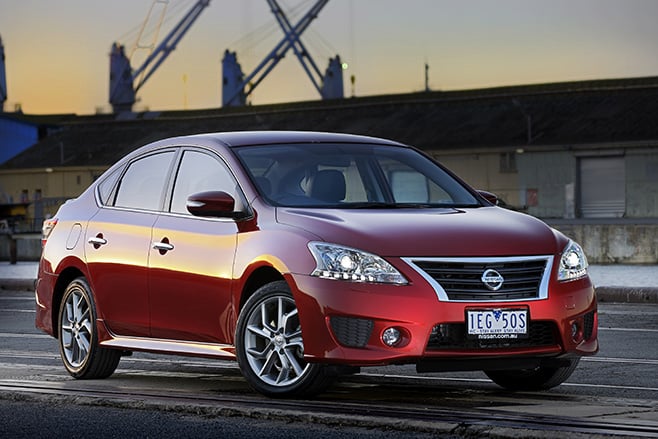
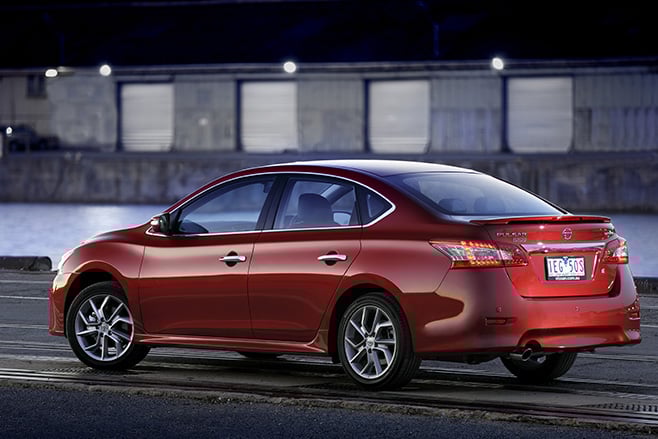
The Pulsar, meanwhile, will fall back to a single sedan body shape, with the hatch – accounting for almost half of Pulsar sales – falling to the wayside as Nissan consolidates its model line-up to focus on fleets rather than mum and dad buyers.
Emery admitted that the only bargaining chip the $13,490 Micra had on its side was price, with the platform’s ageing architecture preventing the carmaker from adding features such as full smartphone interactivity – a strong selling point of the new $13,990 Holden Spark launched earlier this month – and extra driver assist features to help improve its lacklustre four-star crash rating.
The Micra’s engine, too, would need a significant overhaul to meet tougher emissions regulations being introduced to Australia in November that have forced Nissan to cull yet another model from its range – diesel versions of the Patrol large SUV that will live on in newer petrol form.
Emery said the decision would allow the carmaker to better focus on other areas of its business in Australia, such as its strong-selling lineup of SUVs, including the compact Juke and mid-size Nissan X-Trail.
“We could split out focus by trying to make Micra and Pulsar work in a challenging environment, or we can walk away and concentrate on the cars that we know work for us, sustain our presence and then get back in the game in a couple of years’ time,” he said.
And that’s exactly Nissan’s plan. According to other sources within the organisation, Nissan intends to replace the Micra but we anticipate a two-year wait before we get a city-car replacement.
Nissan’s decision to axe the Micra and Pulsar hatch follows a similar decision made in 2014 to drop the slow-selling Almera sedan – basically a Micra with a boot – from its local showrooms to help improve the carmaker’s bottom line.
It also opted to pass on a new-generation Murano, as Nissan Australia’s management believed the business case for bringing the large SUV here would not be profitable.
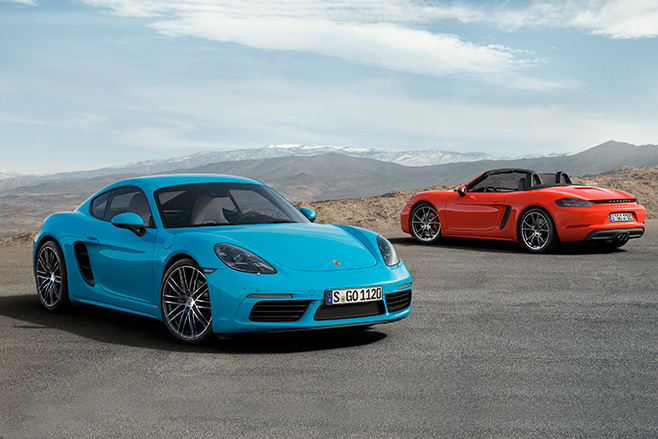
Revealed at the 2016 Beijing motor show, the updated Porsche Cayman coupe will start at $110,300 making it cheaper than the entry-level $113,100 Porsche Boxster convertible that until this update was priced above the coupe (pictured together below). This makes the 2016 Cayman the most affordable Porsche sports car in Australian showrooms, despite an increase in price over the existing model’s $106,200 start.
Designated the ‘718 Cayman’, the new four-cylinder turbocharged engines replace six-cylinder units as part of a mid-life update for the Porsche Cayman. There are new front and rear bumpers, head- and tail-light designs as well as an updated interior that includes a new steering wheel design. Porsche Communication Management (PCM) is now standard, and includes sat-nav and a 150W stereo.
The biggest news is the new engine range. The four-cylinder turbocharged units bring not only greater performance, but improved fuel economy. The entry-level Cayman’s 6.9L/100km fuel economy claim means it sits brings below the 7.0L/100km Luxury Car Tax threshold for ‘fuel efficient vehicles’, effectively reducing the $4999 cost of optioning the automatic Cayman to only $1333.
The two-tier line-up starts with the Cayman, and the higher-spec Cayman S. At $110,300 the entry-level Cayman will use a mid-mounted 2.0-litre turbocharged four-cylinder with 220kW and 380Nm. That’s considerably more than the 202kW/290Nm of the current car, despite it using a larger 2.7-litre six-cylinder. As well as improved efficiency, the four-cylinder Cayman accelerates from 0-100km/h 4.9sec – 0.7 quicker than the current model.
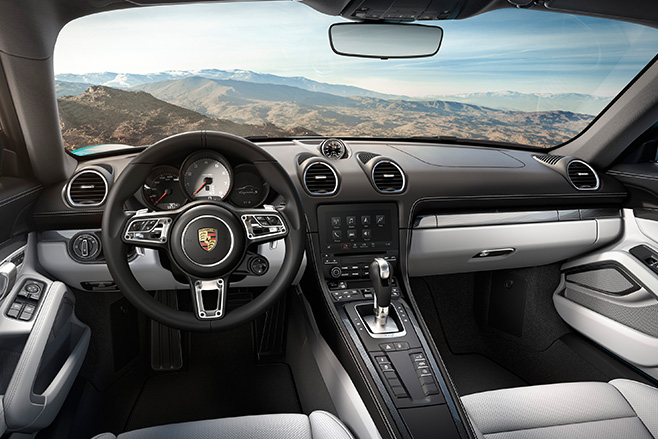
For $140,000 the Cayman S has a more powerful 2.5-litre four-cylinder turbo engine, which replaces the 3.4-litre six-cylinder in the current Cayman S. It too has considerably more power, quicker acceleration claims and improved fuel economy. With the optional PDK (dual-clutch automatic) transmission and optional Sports Chrono pack, Porsche claims it will accelerate from 0-100km/h in a scant 4.2 seconds, all while recording a 0.7L/100km improvement in fuel efficiency to 7.3L/100km.
The 718 Porsche Cayman arrives in showrooms in late 2016 from $110,300.
The new generation Convertible replaces both the Mini Cabriolet and the Mini Roadster in the brand’s line-up as its exclusive open-top model. Its $37,900 starting price is $100 less than when the Mini Cooper Cabriolet arrived here 11 years ago.
More than a decade later, customers will pay less for the latest model, despite significant improvements in safety, as well as an increase in size, fuel efficiency and performance. Buyers no longer have to pay extra for an automatic transmission, now a no-cost option.
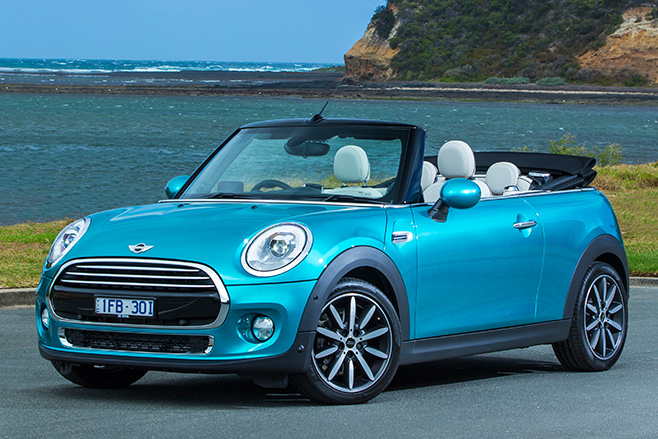
“When the last model launched in 2009, we didn’t even have Instagram!” said Mini Convertible product manager, Daniel Silverwood, at the Convertible’s media launch.
The Cooper’s considerable price drop is mirrored in the new Mini Cooper S, which starts at $45,400 to make it cheaper than the 2005 Mini Cooper S Cabriolet automatic’s $47,100. It’s also cheaper than the outgoing Cooper S Cabriolet automatic, which was $51,150.
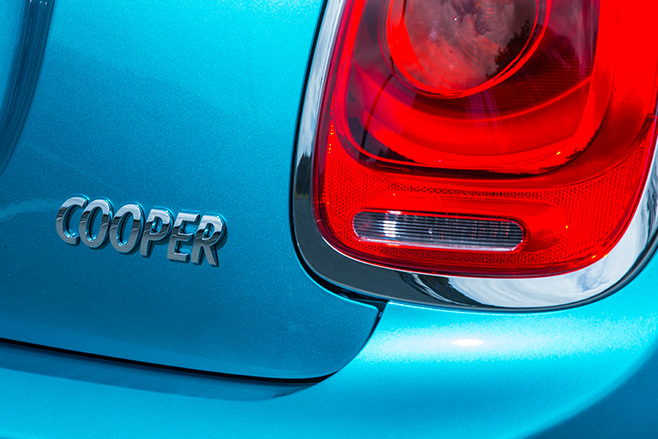
A high-performance version of the Convertible, the Mini Cooper S John Cooper Works, will go on sale in the third-quarter from $54,900 to undercut the current automatic model’s $60,850 price.
Mini sales in Australia have increased so far in 2016 following a record result in 2015. The company expects this to improve with the arrival of the Mini Clubman and Mini Convertible in local showrooms.
Read our review on the Mini Cooper Convertible here.
The early unveiling using images of a Chevrolet-badged version from Brazil is an indicator of the ute’s crucial importance in an Australian market where ute sales continue to grow.
There’s a significant overhaul to the exterior and interior of the current-generation Holden Colorado, which went on sale in 2012.
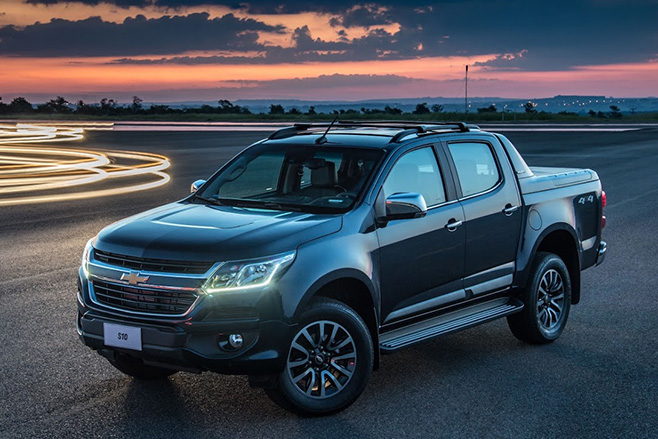
The front end was largely previewed by the Colorado Xtreme concept that Holden built for last month’s Bangkok motor show. Reprofiled headlights with LED daytime running lights merge more harmoniously with the two-piece grille that has been widened.
To complete a more aggressive face for the Colorado, the bonnet adopts a rectangular indent, while the revised lower bumper now features curved foglight sections.
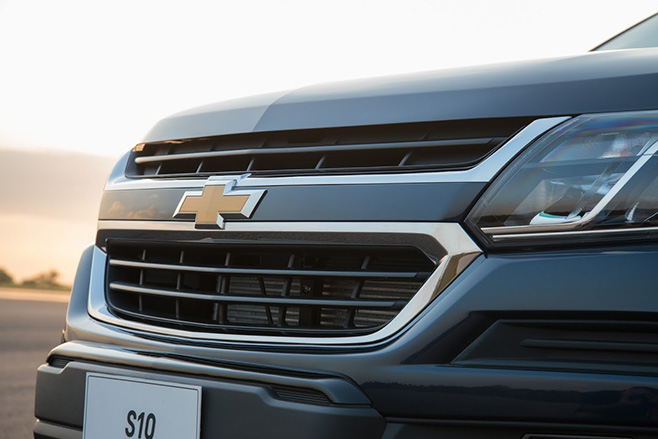
New accessories also promised by the Xtreme include a safari bar (for the front end) and sports bar (for the tray).
The Colorado’s interior also adopts a more truck-like experience with a redesigned dash that eliminates curves in favour of straighter lines, while Holden and parent company General Motors have also set out to address quality criticisms of the current model with greater use of soft-touch materials.
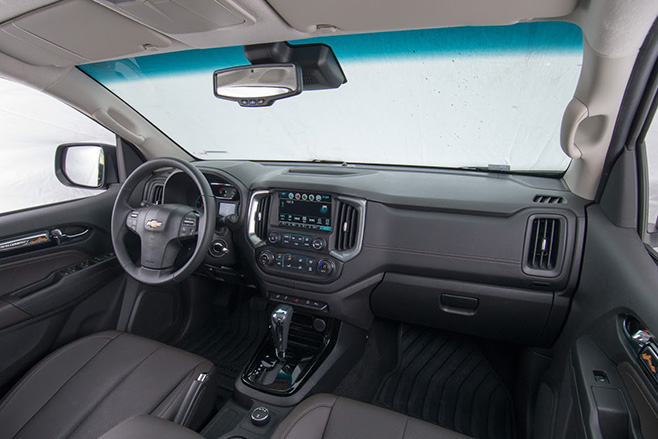
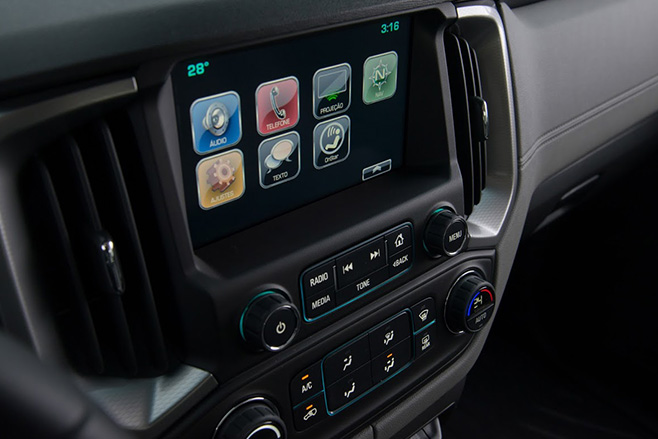
A new 8-inch touchscreen takes centre stage on the dash. The outgoing model’s circular heating and ventilation controls are ditched for a more conventional grouping of controls on the centre stack.
The new Mylink infotainment system now incorporates Apple CarPlay and Android Auto for enhanced integration with smartphones.
Holden engineers have been more heavily involved with the Colorado’s suspension set-up this time. They are confident they have improved the model’s ride and handling, which has trailed the driving experience of key rivals such as the Volkswagen Amarok, Ford Ranger and Mazda BT50.
With increasing media coverage around perceived safety concerns of non-genuine OE alloy wheels, TSW Alloy Wheels Australia’s Managing Director Mitch Crosher dispels some key myths on replacement alloy wheels.
The message being driven by the ‘Genuine is Best’ campaign, spearheaded by some key automotive manufacturers, is that all non-genuine original equipment (OE) alloy wheels are dangerously unsafe. Is this the case?
Not at all. Not all aftermarket alloy wheels are made equal. There is a big difference between cheaply made counterfeit wheels, designed to exactly replicate those of a prestige European vehicle, and quality aftermarket alloy wheels that are built to the appropriate safety standards, and that in some instances deliver a performance benefit over the OE factory alloy wheels. Alloy wheel manufacturers employ a number of different production techniques. Some wheels are cast, some are forged from a single piece of aluminium and other multi-piece wheels combine different methods. Like any automotive product, aftermarket alloy wheels are built to a broad spectrum of performance standards, from budget wheels to ultra-high performance alloys. It is just not reasonable to lump all replacement alloy wheels in the same category.
What are the safety standards for alloy wheels in Australia?
Aftermarket alloy wheels sold in Australia must comply with Australian AS1638 standards or equivalent international regulatory standards such as DOT (USA) or German TUV standards. Many reputable alloy wheel manufacturers provide quality aftermarket alloy wheels that comply with or exceed these standards, but black market counterfeit OE wheels that are not built to the same standards are infiltrating the market, causing safety concerns and violating automotive manufacturer trademarks.
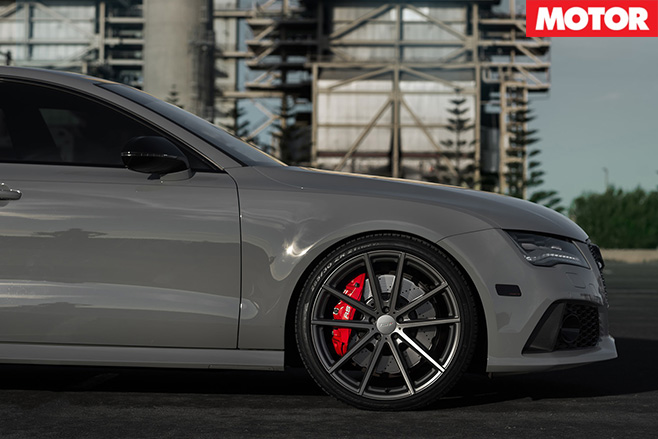
The number of counterfeit wheels on Australian roads has increased sharply partly due to the exorbitant cost to replace a factory alloy wheel that has sustained cosmetic or structural damage with a genuine OE wheel. While a counterfeit wheel can be purchased for as little as $250, a genuine replacement alloy wheel from a prestige European car manufacturer can easily cost $2,500, or $10,000 for a new set. This excessive cost becomes even more unreasonable when you consider that many consumers seeking replacement wheels have a five or ten year old car. Overpriced genuine replacement wheels are not just limited to prestige vehicle makes. Replacement 14 inch OE wheels for a compact, entry-level hatch can cost more than $500 per wheel. On the other hand, for a fraction of this price consumers can purchase quality aftermarket alloy wheels, built to far superior safety and performance standards than counterfeit wheels. Aftermarket alloy wheels are available in an array of styles and finishes and most car owners will be able to find a set of aftermarket wheels that resembles the original equipment style or a style of their choice. In some instances the aftermarket wheels will even accommodate the factory centre cap.
You mentioned that some aftermarket alloy wheels can deliver increased performance over factory wheels. How is this so?
In addition to improving appearance, a set of lightweight aftermarket alloy wheels may provide improvements in handling and performance. For example a set of 18 inch TSW Rotary Forged alloy wheels weigh approximately 10% less than factory 18 inch HSV wheels. Importantly, the bulk of the weight is contained to the centre of the wheel, reducing rotational mass and therefore aiding acceleration and braking.
To get in contact with the team at TSW Alloy Wheels Australia and view their full product range visit www.tswalloywheels.com or TSW Alloy Wheels Australia on Facebook.
A supercharged V8 ute is as Australian as a kangaroo eating a meat pie, but mixing work and play to this extent hasn’t traditionally been very successful.
FPV’s Miami-powered utes were barely guided missiles and HSV’s Maloo GTS had all the power but little of the poise of the sedan.
The Gen-F2 Maloo R8 LSA is a Maloo GTS in all but name, though there are a few slight differences. A different intake and ECU tune restricts the Maloo LSA to 400kW/671Nm rather than the full 430kW/740Nm, and it also lacks the GTS’s huge six-piston brakes, though with 367/372mm (front/rear) rotors and four-piston calipers all ‘round the Maloo LSA still stops better than most.
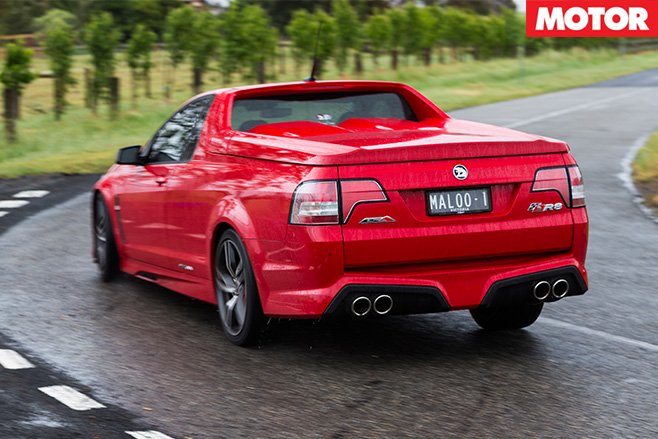
The hard-working six-speed auto is reasonably smooth and responsive in its behaviour, though it occasionally gets confused and slurs changes – particularly the two-three shift – like it’s seven pints in on a night out. Speaking of drinking, the 6.2-litre supercharged LSA V8 has a bigger thirst than Boony. It’s okay while cruising, but on a country road burn you’ll be looking at about 25L/100km. Going to a track? Bring a fuel tanker.
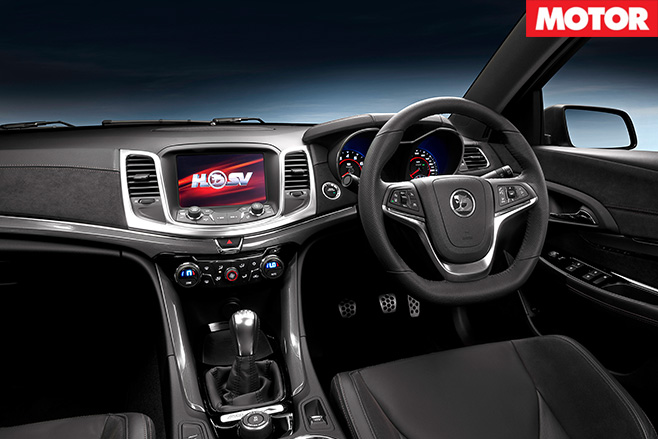
Grip levels are impressive. Enter a corner too hot and understeer progressively builds but back off and the front quickly bites again, then the angle at which you exit depends on how much throttle you’ve applied.
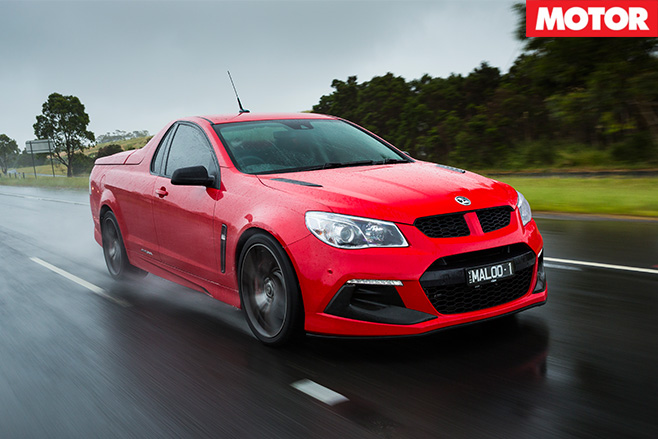
If driving is your thing, then the Maloo is more fun than its Clubsport sibling. Then again, $80K is a lot of coin for a ute with only two seats and a 400kg load rating. Still, no-one is buying a 400kW ute because they need one, and the fact the Maloo R8 LSA is so good to drive is merely an excuse to work less and play more. That’s the Australian thing to do.
4 OUT OF 5 STARS
SPECS Engine: 6162cc V8, OHV, 16v, supercharger Power: 400kW @ 6150rpm Torque: 671Nm @ 4200rpm Weight: 1887kg 0-100km/h: 4.6sec (claimed) Price: $79,490 Like: So much power; playful chassis; cheapest LSA Dislike: Appalling rear vision; thirst for fuel and tyres
Real drivers do it sideways.
My little dirt road jaunt was nothing compared to the insanity Mazda unleashed on willing media in 2013. Mazda closed a 6km stretch of dirt road used on Rally Canberra and invited us to race the clock. Recipe for disaster, yes? The only damage was to rims (rocks) and ruptured tyres, and a couple of bumpers, despite the treacherous forest route. Yours truly logged the third-fastest time, behind former Wheels contributor James Stanford (1st) and present contributor Toby Hagon.
We’ve heard it all since the Mazda RX-8 made its debut in 2003. From rumours suggesting Mazda’s rotary engine R&D is in full swing, to the company denying it’ll ever build a Wankel engine or a rotary sportscar again.
Only 12 months ago, Mazda president and CEO Masamichi Kogai told US site Automotive News, “We don’t have that kind of vehicle in our future product plan,” when asked about a new RX-badged hero.
The Tokyo Motor Show RX-Vision concept, then, represents yet another backflip from the Hiroshima brand, and brings new hope Mazda will give us a reborn rotary sportscar to follow on from the RX-8, which was discontinued in 2012.
“One day rotary will make a comeback,” said Kogai at the 2015 Tokyo Motor Show. “This gives form to our brand’s vision of the future. It expresses our intention to make rotary. There are many issues to overcome but we will continue our efforts. We’re working steadily. Keep your eyes on Mazda.”
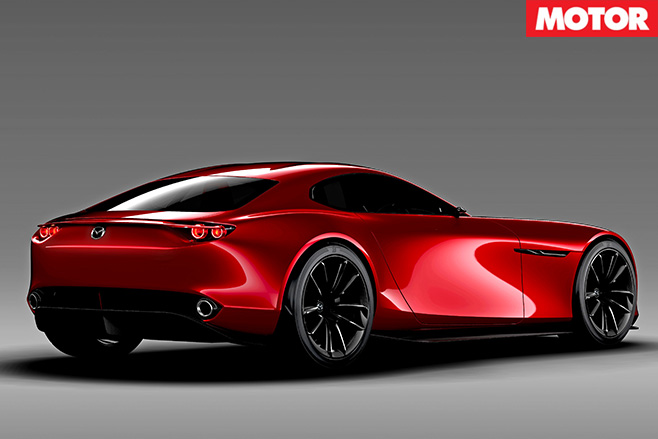
This, remember, is an engine with a high profile international motorsport legacy, headlined by Mazda’s quad-rotor-powered 1991 Le Mans 24-hour victory with the 787B sports prototype.
An engine that proved its giant-killing potential at the hands of Allan Moffat in Group C first-generation RX-7 form, in which he put the Mazda rotary firmly on the map by wrestling the 1983 Australian Touring Car Championship from the V8 establishment.
The same engine that, with a twin-turbocharger in the Mazda Motorsport RX-7 SP, shaded Porsche to sweep the Bathurst and later Eastern Creek 12-hour events for production cars from 1992-1995.

This disproportionately raucous little engine made a big impression in Oz over the course of four decades, and we’d love to have it back. Having been bitten once by the concept car hype, however, we’ll keep our excitement in check until we see spy shots of a forthcoming Mazda sportscar.
Looking at the long, low, cab-rearward RX concept, what’s clear is that it previews a focused sportscar, rather than a sporty RX-8 family-car replacement. The RX-8 was not all bad, but it wasn’t exactly a sales success – and it was no RX-7.
An RX-7? We’d place bets on that being the badge worn by a new Mazda sportscar, just as Nissan has stuck with GT-R and Honda with NSX for their latest halo products. There’s decades of marketing and enthusiast sentiment wrapped up with these nameplates and, in the case of the RX-7, it’s a model with a 24-year history (1978-2002).

The SkyActiv-R differs from almost every Mazda rotary produced in that its twin rotors sweep a larger epitrochoidal path to provide the capacity increase. All except the rare 13A engine utilised wider rotors and housings to deliver their extra capacity, including the 10A, 12A, 13B and triple-rotor 20B, in order from smallest to largest.
Mazda’s biggest challenge in bringing the rotary back is meeting today’s ever-tightening fuel consumption and emissions regulations. For a nominally small capacity engine, the Wankel rotary has a lot of combustion chamber area through which heat is wasted, which means its thermodynamic efficiency – and therefore its fuel efficiency – is inherently low.
Last we heard on the grapevine, the rotary R&D department was struggling with both making the new ‘long stroke’ rotary rev and with oil sealing, which, historically, is not a new problem. Company president Kogai admits to the challenges: “Rotary engines have lots of issues, and we need to solve each of them.”

It’s possible that homogeneous charge compression ignition (HCCI) could feature in the new rotary, just as it will in Mazda’s next-gen SkyActiv petrol piston engines. This could dictate that the aluminium end/intermediate plates used in the 16X engine would revert to cast iron construction, as per earlier rotaries.
Thankfully, early suggestions that the twin-rotor will be augmented with an electric motor in a parallel hybrid system have been denied. The first and last RX-7s – not so much the second-gen – were renowned for their purity; the latter eschewing all-wheel-drive, and active four-wheel steering (big at the time) to deliver undiluted rear-wheel-drive involvement.
And the next RX-7 looks set to be a pure sports coupe, though there are hints a semi-automatic or dual-clutch gearbox could be part of the package.
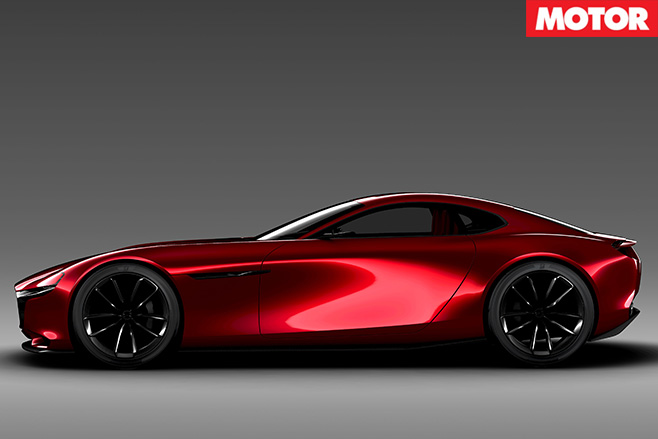
A turbo rotary doesn’t need to spin as hard as a non-turbo, which is good for engine longevity and viability – remember, the RX-8 made peak power at 8200rpm, and the Renesis is not known for longevity. The design concept suggests a two-seater and it draws obvious inspiration from some of Europe’s best-known high-performance cars.
Few brands are in the position to deliver a relatively affordable, lightweight high-performance coupe with a V12-smooth, high-revving hand-built engine. In fact, we can’t think of any. The car landscape would be richer for having another rotary-engined Mazda in it.
So, will Mazda put the RX-Vision into production and, if so, when will we see it? We’d certainly like to think so, and 2017 could make sense given that it marks 50 years since the Mazda rotary was born in the Cosmo Sport. What is certain is that if Mazda builds another RX-7, we’ll be in a spin.
Wankel wrangling
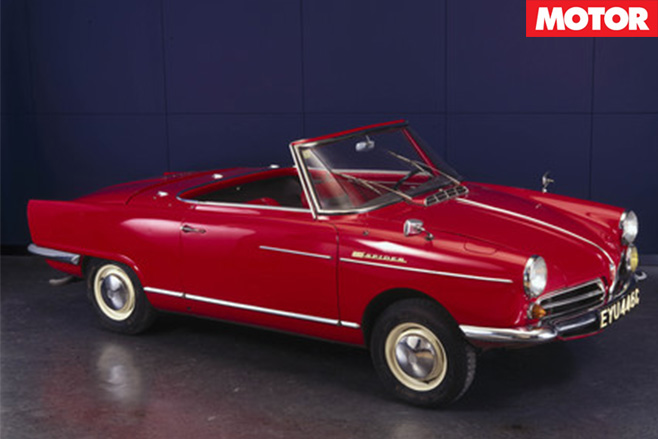
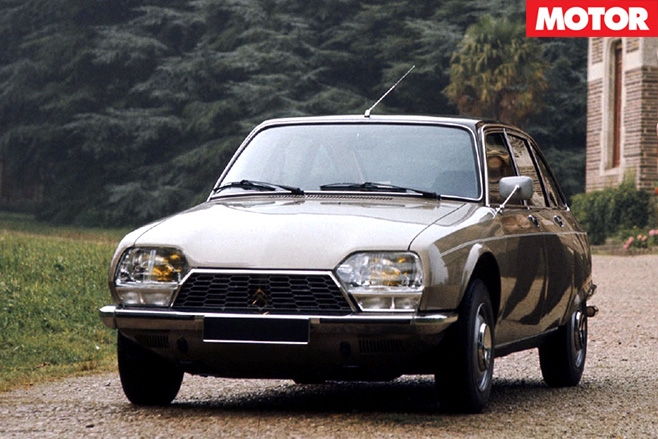
4 non-Mazda rotary attempts
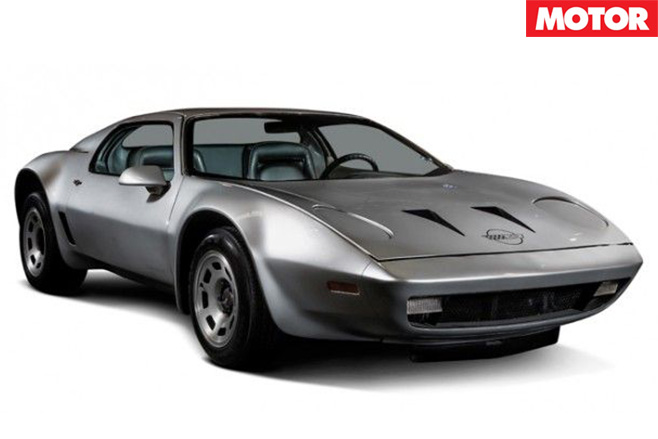
John DeLorean commissioned this stillborn Corvette concept, the Chevy XP-895; a 310kW, mid-engined, quad-rotor coupe.

