
A concept version of the keenly anticipated Genesis G70 is on its way to a public debut at the New York Auto Show later this week. Simply dubbed ‘New York Concept’ it will display the company’s design direction for G70 and other future models.
G70 joins the Genesis stable as a premium, four-door sedan with a sporty bent. It’s the first attempt by Genesis to take on established mid-size model lines from Europe like BMW 3-Series, Audi A4, Mercedes-Benz C-Class and Jaguar XE.
With the production car still some time away, detailed information about the G70’s drivetrains and equipment is yet to be seen.
Genesis currently offers just one model in Australia – the G80 sedan. Late last year Genesis revealed its long-wheelbase G90 limo for overseas markets. The company plans to add two SUVs and a coupe to its line-up by 2020.
The Genesis brand is led by former Lamborghini executive Manfred Fitzgerald. He was director of brand and design at the Italian company for 12 years.
In a statement released with a single teaser image Fitzgerald said, “The New York Concept is a progressive concept car that showcases the design quality of the brand. With its expressive volumes and refined design, the New York Concept truly embodies the athletic elegance, which characterizes Genesis products.”
It was 2014 when plans were first brought to light about the introduction of a BMW X7. Now the premium people mover has a 2018 release date, when it will sit at the top of BMW’s SUV range in terms of size and price.
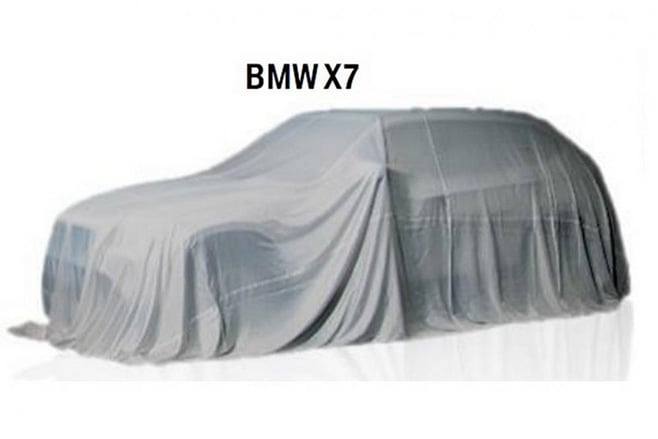
Perhaps recently launched high-end SUVs like the Bentley Bentayga and Maserati Levante prompted BMW to remind us about the X7. The company has issued a video presentation where the luxury high-roller can be seen hidden under a veil – the first official image of the X7.
BMW Chairman, Harold Kruger, said, “After leading the premium segment for more than ten consecutive years … we will be broadening our model range with the BMW X7.”
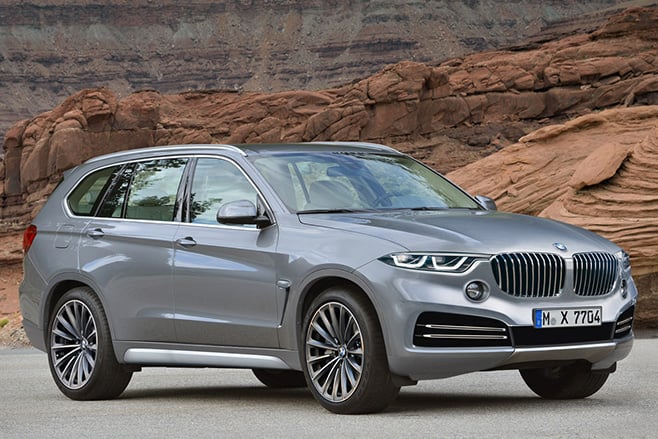
We don’t need to see the whole car to know the BMW X7 will be a properly luxurious vehicle. BMW’s cutting edge technology is typically debuted in its BMW 7 Series limousines, with which the X7 is likely to share much of its equipment.
Specific details are hard to come by this far from release, though a range of six-cylinder and V8 engines is probable. The availability of a V12 engine is also rumoured.
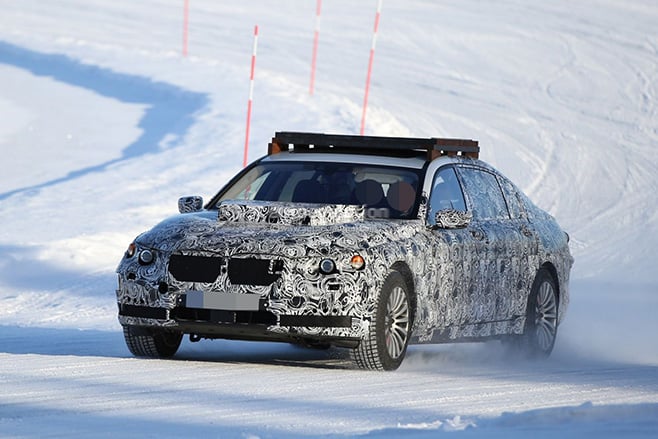
Development of the X7 is well underway. A BMW 7-Series sedan has been spied cold weather testing with weight added to its roof, mimicking the load of the X7 body (pictured above).
It’s reasonable to expect a concept version of the X7 will appear at a motor show in the near future and offer suggestions about design direction. The production version will be built in the United States.
You might remember Toyota introduced a thing called the Camry RZ last year. If you don’t remember the car, you might recall the corny ‘dad to the bone’ television ads Toyota used to promote it.
Essentially this car was an ordinary Camry with black wheels, a lip spoiler and a few stickers – just the stuff that’ll get you muttering “Bad to the Bone” lyrics on the school run.
This month we’re dreaming up a Toyota 86 RZ, but this isn’t a half-arsed sticker job like the other ‘RZ’ badged models. This is a proper track-focused variant of the 86, derived from the race cars that’ll be used in the Toyota 86 Pro-Am race series that’s launching next year to follow the V8 Supercars circus. It also uses bits from the bonkers 980kg TRD 86 Griffon concept which lapped Tsukuba in less than a minute in January of 2014.
The idea behind the 86 RZ is to take the already fantastic rear-drive sportscar and turn it into a track-day warrior in the mould of the Renault Sport Megane 275 Trophy-R. To keep costs down the modifications will focus primarily on weight reduction, while the 2.0-litre boxer four will remain mostly unchanged.
We’re definitely not accountants, but it’s difficult to imagine a scenario where a business case for our 86 RZ couldn’t be made. Get on with it, Toyota.
CAGED UP The 86 RZ boasts a half-cage that adds stiffness to the 86’s base structure, while also allowing for race harnesses and a slick set of TRD bucket seats. The rear seats need to be removed to fit the ’cage, but unless your passengers are three-feet tall, or lacking limbs, you won’t mind.
CARBON REVOLUTION The RZ uses parts originally designed for the TRD 86 Griffon concept, including a carbonfibre roof, trick adjustable carbon rear spoiler and reshaped wheel arches and side skirts. These changes help bring the 86’s kerb weight below 1200kg.
STOP IT Brakes are also borrowed from the Griffon concept and feature massive six-piston calipers up front. The low rolling resistance eco tyres of the standard car have also been swapped for some more serious road-legal semi-slicks.
LOW RIDIN’ The RZ is fitted with the same adjustable coil-over suspension as the Pro-Am race series cars, which will lower the 86’s centre of gravity, while thicker anti-roll bars are fitted at both ends.
FREE BREATHING We know you want more power, but, to keep costs down, the RZ’s engine is mostly unchanged from the standard naturally aspirated 147kW 2.0-litre flat-four. It features a less restrictive TRD intake and exhaust system to free up a few ponies.
If you had asked me 18 months ago who Daniel Ricciardo was, I wouldn’t have been able to respond with anything other than “a driver”. What kind of driver, I had no idea.
Fast forward to March 20, 2016 and you have yourself a woman, standing in a friend’s living room, yelling at a TV screen, supporting that very same Formula 1 driver.
In fact, even as recently as two weeks ago, I never would have thought I’d send my heart into marathon-mode watching a bunch of cars race around a racetrack. But apparently F1 fever is a very real thing and it’s more contagious than a gastric bug on an aeroplane – in a good way.
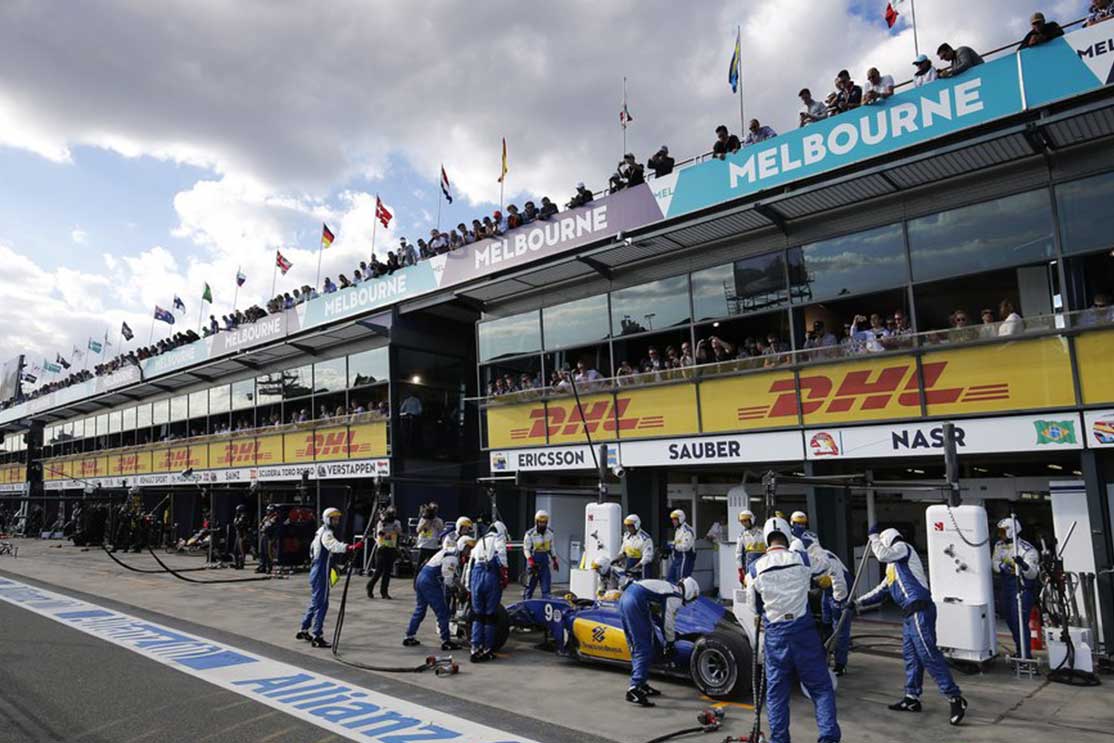
Maybe the enthusiasm of some of my colleagues was rubbing off, or perhaps it was just a matter of diving deep into the F1 circus that sparked this new ardour. Either way, it was certainly not love at first sight, but it was still the beginning of something great.
It all started with a little bit of research, and ended with the offer of a corporate ticket to Saturday’s qualifying sessions at the Australian Grand Prix. Such was my disinterest, I almost turned it down – “give it to someone who loves it,” I said. But I’m not one to shy away from new experiences, and I guess the Grand Prix is one of those things anyone living in Melbourne has to do at least once. I’m so glad I made the choice to go.
A lazy Saturday morning, I was in no rush to get to the mayhem of Albert Park. Actually, come midday, I was dreading it. Public transport seemed too difficult – to get the 5km from my house to the gate involved two buses, and three trams – walking in my boots was out of the question, and everyone else I knew was already there. Luckily I lived close enough for it to be a relatively short taxi ride.
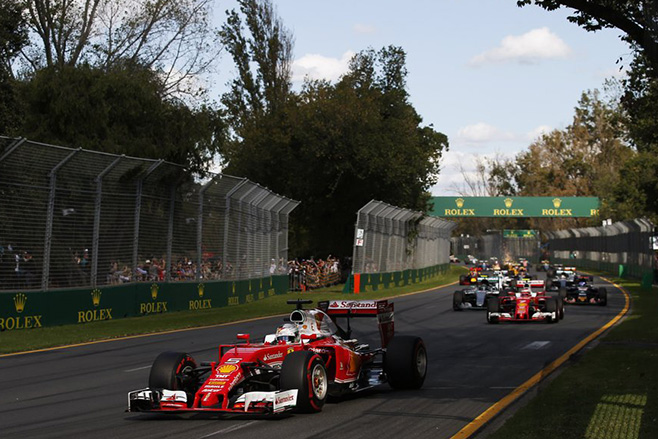
Once I’d got my ticket, it was in through gate one, across the pedestrian bridge and over to Formula One Paddock Club. It’s at this point I should mention that my ticket gave me access to part of the more luxurious area of the F1 circus. I certainly wasn’t slumming it and it’s easy to fall in love when you’re handed free champagne and Masterchef worthy food.
But the atmosphere was different to anything I had imagined. Being an Adelaide girl, I went in with expectations that the F1 would be somewhere between the Clipsal 500 and a day at the races. I couldn’t have been more wrong.
For the most part, the patrons at the Australian F1 Grand Prix are better behaved than some of the other events I’ve been to. Families are in abundance, there’s plenty to do aside from watching the F1 and everyone is genuinely there to have a good time. Sure, there’s plenty of drinking involved – it’d be un-Australian otherwise – but there were very few reports of misconduct.
But that’s not the reason I left Albert Park on Saturday to spend my Sunday watching the GP on the telly and listening to it on the radio while in transit.
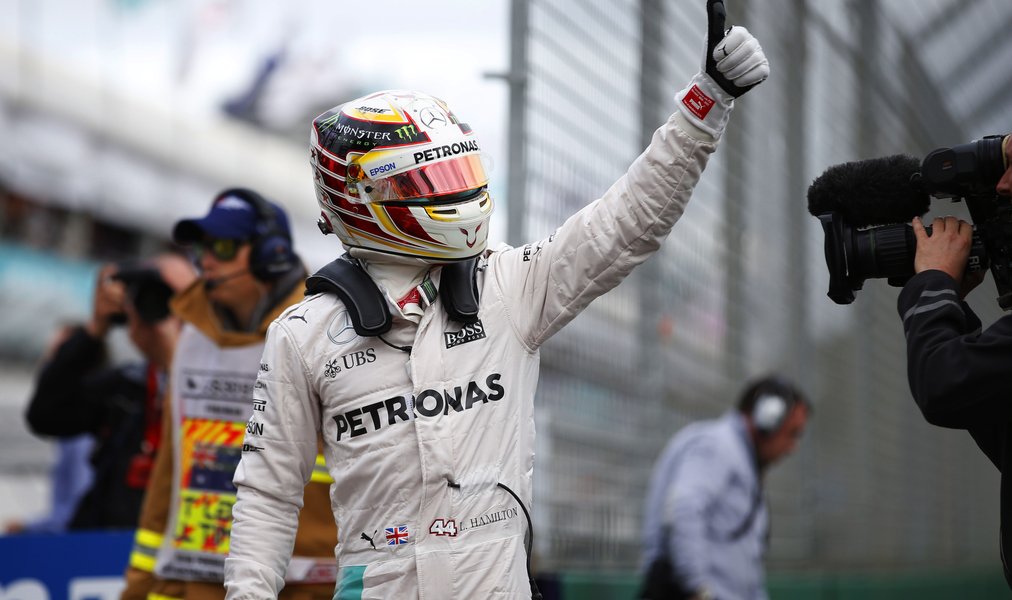
It’s hard not to be wrapped up in the behind the scenes action of F1. Sure, watching cars drive in circles is great for people who really, really love the sport, but without the characters of the F1 – from retired drivers to those currently donning the helmet – the attraction just wouldn’t be the same.
Once you have a basic understanding of the rules, and the regulation changes (here’s a beginner’s guide to the F1) and then you start to follow the lives of the drivers (here’s a bit of background on a few F1 drivers) it’s hard not to get involved.
I built such a fantasy rapport with some of the drivers that I walked straight past the opportunity for a ‘celebrity selfie’ to watch DRiccy drive out from the pits. True story.
The sportsmanship of the drivers, the international community of the F1, the excitement, the noise, the money and the next-level mechanics are all hard factors to ignore.
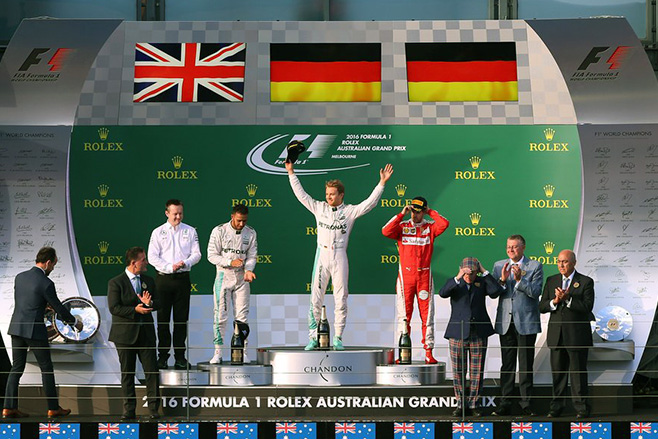
Here are five reasons to fall in love with the Grand Prix.
1. TECHNOLOGY
Even if you don’t give two hoots about mechanics, you’ve got to admire the machinery of F1. When you take into account that a lot of the technology used in Formula One vehicles end up in our consumer cars, you start to take notice. Currently, the regulators behind Formula 1 are working out ways to make these cars ‘greener’ – much to the dismay of enthusiasts. There’s a big long debate about the new engine regulations enforced in the sport, but ultimately, we, as consumers, may benefit.
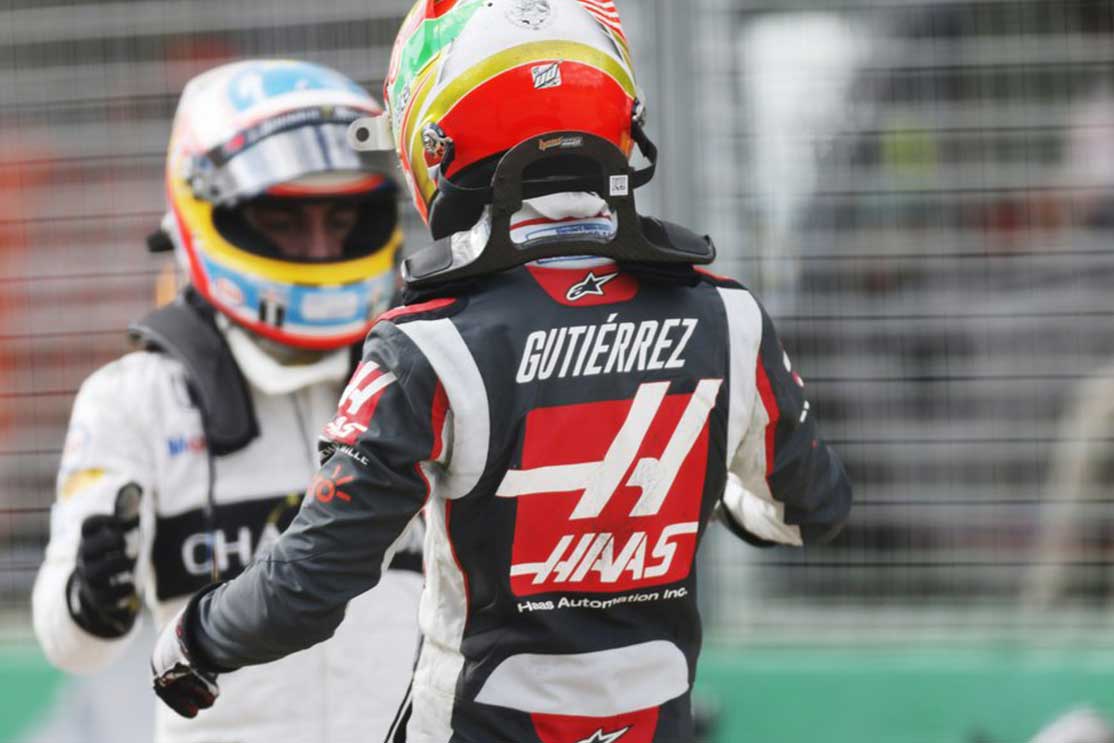
Then there’s the safety side. It’s no secret that Formula 1 drivers aren’t afraid to put their lives on the line, and the event is no stranger to tragedy in years gone by. But when we consider how far the safety of these vehicles has come, and then expect this technology to be in our own cars, we start to realise just how important Formula 1 is. Take the Fernando Alonso and Esteban Guiterrez crash for example. A horrifying crash that left people holding their breath for the safety of the Spaniard saw him walk away from the disintegrated vehicle virtually unscathed. Such is the advancement of these cars.
2. SPORTSMANSHIP
If we take another look at Saturday’s red-flag moment, the moment Alonso and Guiterrez embrace after the crash sent my skin into goosebump overdrive. As you’d expect, there’s competition and feuds, but it’s hard not to have respect for sportsmen (and women) who put their competitiveness aside when it’s all said and done.
3. ENTERTAINMENT
I mean, take the sportsmanship out of the equation and you have yourself some entertaining, off-track feuds that make watching the sport a little more enjoyable. Whether you’re team Hamilton or team Rosberg, you’re almost certainly in for an entertaining chase.
4. BANTER
Sport wouldn’t be sport in Australia if we didn’t have some supporter banter. With the Federation Internationale de I’Automobile regularly changing the rules, you hear some brilliantly heated conversations over the office water cooler.
5. HOLLYWOOD STATUS
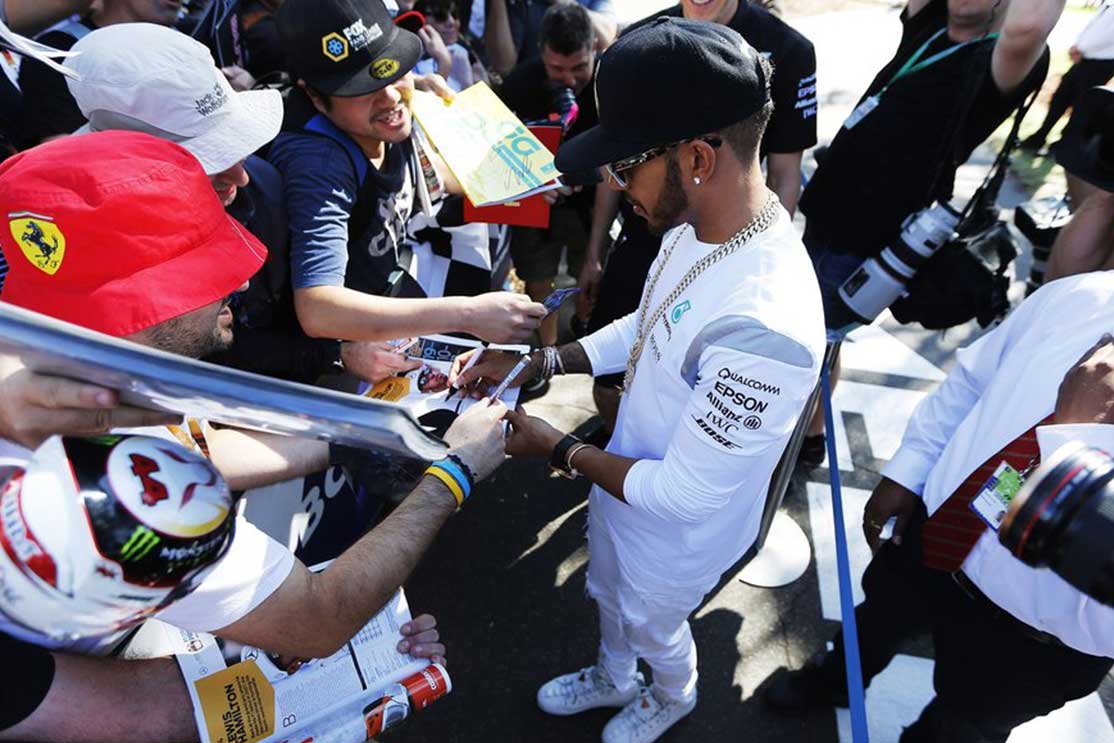
It’s big business. Lewis Hamilton, Fernando Alonso and Sebastian Vettel are amongst the highest paid athletes in the world, and they’re not afraid to show it. A large proportion of drivers live in Monaco, a country that is said to only accept residents by Royal Invitation, hang out with the celebrities of the world and date supermodels. That doesn’t make them worth supporting; it just makes for an interesting read in the tabloids. So for those who like to keep up with the Kardashians and fly with the Victoria Secrets’ angels, knowing the names of these athletes will not go astray in your regular gossip fix.
Merc’s GLC model line-up just got a little spicier with a range-topping (for now) AMG variant added to the mix. The announcement comes days ahead of its first public outing at the New York Auto Show this week.
The hopped-up Mercedes-AMG GLC43 features a 3.0-litre twin-turbo petrol V6, matching outputs of the C43 AMG model revealed at Geneva with 270kW and 520Nm.
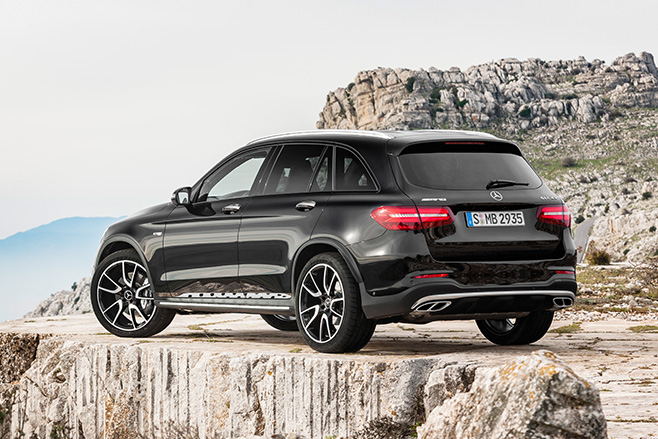
A new nine-speed automatic gearbox is also part of the GLC43 package, coupled to Mercedes’ 4MATIC all-wheel drive system. Mercedes-Benz claims a time of 4.9 seconds for the 0-100km/h sprint. European testing of the 1855kg GLC43 lists fuel consumption at 8.3L/100km.
Exterior styling gets the usual AMG treatment including 19-inch wheels, front grille, body-kit and AMG exhaust tips.
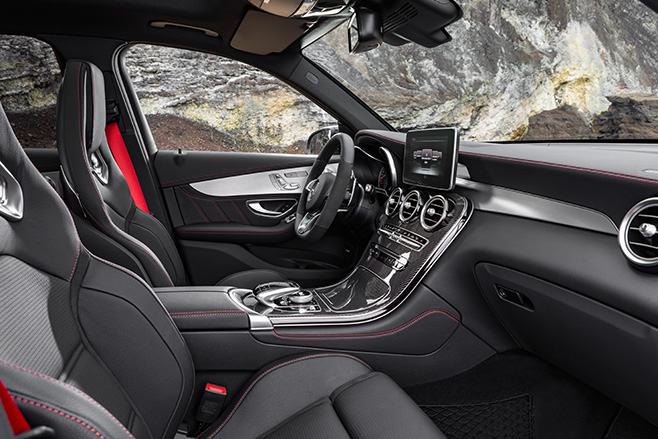
Added to the interior trim is red stitching across the dashboard and sports seat, a flat-bottomed sports steering wheel and AMG instrument panel.
Australian delivery is expected at the end of 2016. Pricing and local specification will be made available closer to that time.
A more powerful GLC63 model is on the cards, using the 350kW/650Nm 4.0-litre twin-turbo V8 petrol engine from the C63 AMG, and would push the GLC43 to second tier on the GLC ladder. At this stage a GLC63 is expected, though officially unconfirmed.
Click here to read the full review on the Mercedes-Benz GLC range.
WE’VE been extremely impressed with the second-gen Audi Q7 in the form in which it arrived, the 200kW 3.0 TDI quattro from just over $100,000.
Now there’s a cheaper version with just 160kW. How does it stack up?
WHAT IS IT? A less powerful, and less expensive, version of Audi’s Q7 large SUV. This one has a detuned, 160kW variant of the 200kW 3.0L diesel with which the redesigned Q7 has already hit the ground running. The 200kW Audi Q7 3.0 TDI quattro has exceeded sales forecasts and wooed sceptics (including Wheels) with its civilised designer ambience, spacious interior, ultra-smooth performance, and superior ride comfort on optional air suspension.
WHY WE’RE TESTING IT We’ve only tested heavily optioned, up-spec Audi Q7s in the past, with a suitably lofty price tag, incredibly cushy air suspension, and massively torquey 200kW 3.0 TDI V6 turbo-diesel. How does the ‘base’ detuned 160kW version fare, with standard steel-sprung suspension and poverty vinyl-y leather upholstery? Does it soar like the rest or crash to the ground?
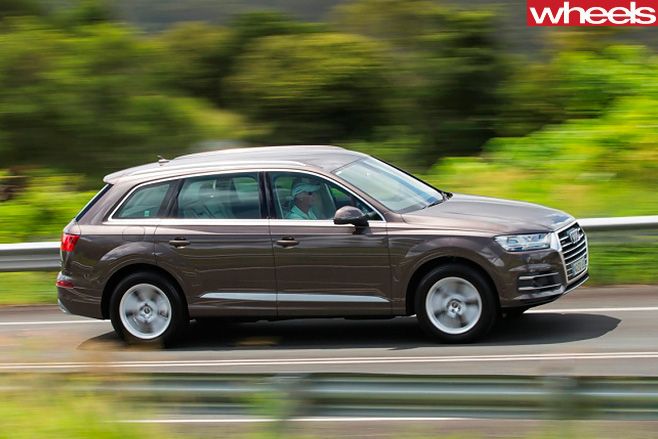
THE WHEELS VERDICT Audi’s best car – step forward please. The Q7, currently available only in 3.0-litre V6 turbo-diesel quattro all-wheel drive guise – encapsulates all of the brand’s core values – exquisite quality, exceptional design, high-tech engineering, excellent efficiency, and effortless smooth power – into a large seven-seater SUV that you might think would be incompatible with some of those philosophies. But, with significant advances in packaging, lightness, safety, ride comfort (especially with the $5K optional air suspension – do it!), and functionality, the one-time overweight under-performer now stands tall as a high-tech showcase of the company’s prowess. Better still, we haven’t driven a better vehicle of this configuration. It’s not perfect, and never cheap, but the latest Q7 at last breaks away from the monotonous mediocrity of most other competitor equivalents. So, at least until the all-new Land Rover Discovery surfaces later this year, this is the way to go.
PLUS: Cabin detailing, exterior design, packaging efficiency, strong performance, car-like handling, options galore MINUS: Entry price is still high, expensive options, awkward ‘P’ button on gear lever
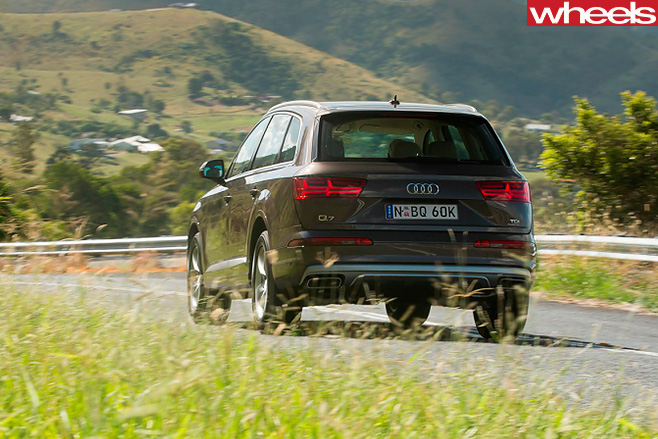
We’ve harped on the virtues of choosing the wagon alternative instead for aeons, but the SUV’s burgeoning popularity means the market has spoken rather than listened. Until recently, only the homegrown Ford Territory managed to hit the mark, mixing value and verve.
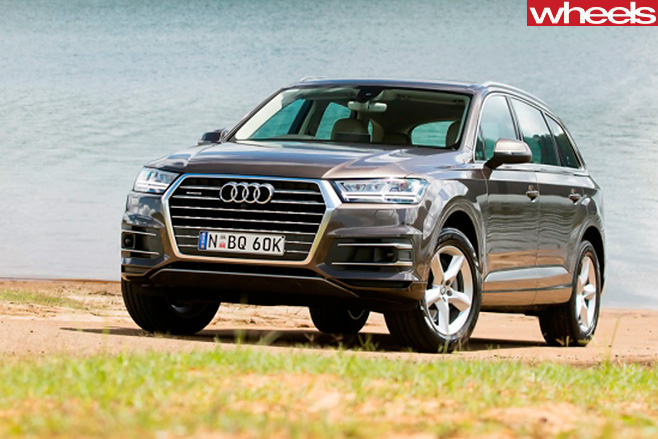
Questions lingered though, over a $103,900-plus luxury SUV’s value, particularly when reasonable options like that heavenly ride upgrade, trick Virtual Cockpit instrumentation, proper leather, a sunroof, better audio, bigger wheels, adaptive LED headlights, and the full driver-assist tech could see the price rocket past $120K.
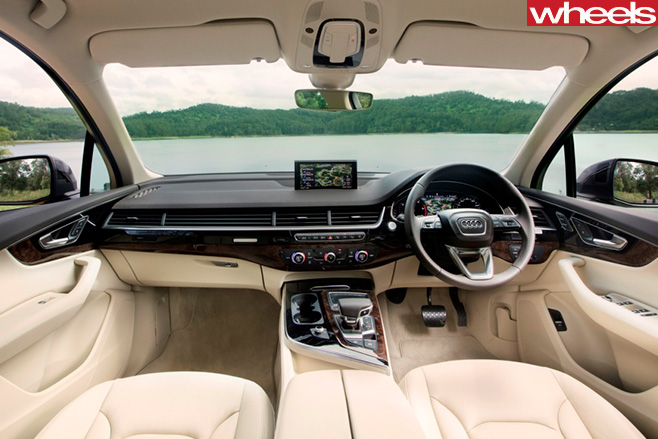
Here’s the deal. Brandishing 160kW and 500Nm, the detuned 3.0 TDI quattro could hardly be called slow or sluggish. In fact, in isolation, it would be difficult to pick the differences against the 200kW/600Nm powerhouse, such is the effortless oomph, combined with the slick-shifting ZF eight-speed auto’s seamlessness.
Meanwhile the steel-sprung suspension clearly lacks the cosseting isolation of the magic air set-up, with smaller bumps and some firmness detectable (though not annoyingly so). But the 160kW 3.0 TDI quattro’s responsive handling seems tauter than ever, since it steers and corners with a composure and finesse alien to most rival SUVs.
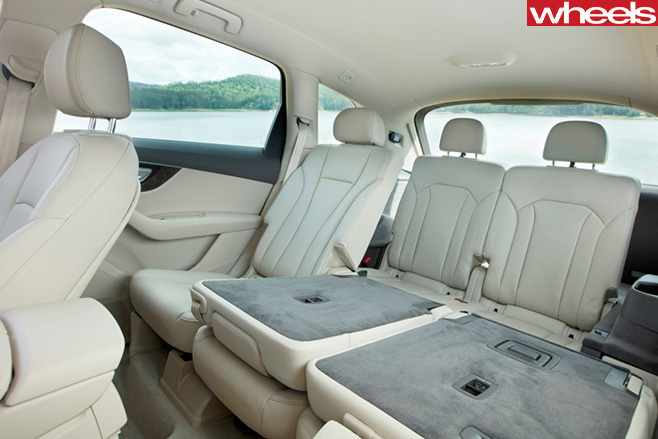
Yet… if you’re already spending $96,300, another $7K to score the storming 200kW version won’t hurt. And that’s the crux of the newest Q7: spend up, get what you want, and enjoy.
SPECS Model: Audi Q7 160kW 3.0 TDI quattro Engine: 2967cc 6cyl, dohc, 24v turbo-diesel Max power: 160kW @ 3250-4750rpm Max torque: 500Nm @ 1250-3000rpm Transmission: 8-speed auto Weight: 2070kg 0-100km/h: 7.1s Fuel economy: 5.8L/100km Price: $96,300 On sale: Now
McLaren’s in a hurry to give Porsche’s 911 Turbo a bloody nose in the sportscar segment.
The problem’s been, though, its stuff’s been a bit too hardcore for the discerning German sportscar buyer.
The newly revealed 570GT is here to change that. Using a 570S as the starting base, McLaren’s added sensible things like leather, a panoramic glass roof, and more boot space to the 3.8-litre twin-turbo missile.
With one of the two 570GT prototypes in Melbourne over the F1 Grand Prix weekend, we had the chance to talk Robert Melville, McLaren’s Chief Designer, about the car.
Here are five cool things we learned about the 570GT’s design.
The 570GT, like every McLaren, is inspired by the original F1
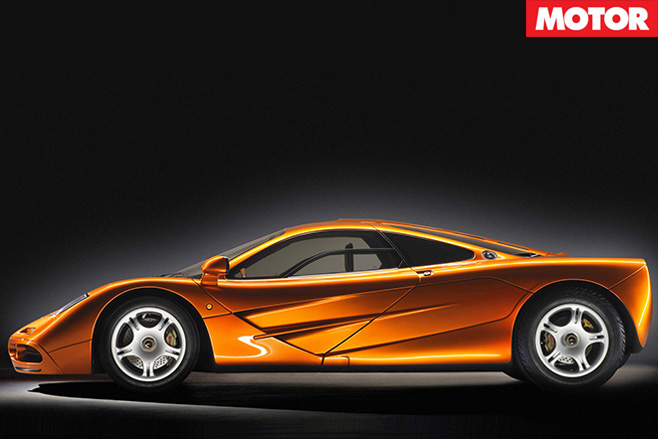
“Why have we done that? Does it make the car look better? Does it improve the functionality or performance? It’s never ‘it just looks cool’, it can never be this. You have to have the integrity, that’s what the original F1 had. Everything for a reason.”
The 570GT’s nose has a crosshair

Those blades don’t just help it look angry
Rob bends down and points at one of the black diagonal blades either side of the number plate. “This blade here is floating, so you can put your arm behind it and your fingers pop out either side. It really acts as a fence like on a rear wing, it cleans up the airflow in to the radiators. That allowed us to make the radiators smaller which allowed us to drop the ramps down, which allowed us to make the car look sleeker.”
Proportions are important, and he’s most proud of the car’s rear haunches

“I really love, as a piece of surfacing, my favourite panel, would be the rear fender. When you feel the section, it’s crowned, very nicely blended in, it has a little bit of 1960s GT about it, the old Alfas. So I’m really really pleased about the clean look, a very fluid look.
The 570GT’s doors have things named after connective tissue
We ask him about his favourite detail. He’s quick to single out the floating ‘beam’ which sits bridges the rear and front fender. “In terms of details the door tendon, the mini tendon right here, and the door release underneath. It creates a really unique interesting feature and people go wow, this is incredible.
“No one else has done a door like this. And yet it allows us to cool the car really well. Creates a talking point and it looks good and functions well.”
Okay, so most of these features are shared with its Sports Series siblings, the 540C and the 570S. But we’d find it hard to notice them without the man in charge of the each car’s staggering design letting us know where to look.
You can see for yourself when the 570GT lands this year, in the fourth quarter, at $406,800 or $438,000 driveaway.
DUAL-CAB utes loom as the next battlefield in performance vehicles as manufacturers capitalise on increased demand for something above the load-lugger norm.
Already, local sales of upmarket utes such as the Ford Ranger Wildtrak, Toyota Hilux SR5 and Volkswagen Amarok Ultimate account for 40 percent of a market segment that now snares almost one in six sales. Buyers are clearly hungry for more sporting, visually aggressive pick-ups, especially with the imminent demise of the Falcon and Commodore-based utes.
The prospect of paying $60K for a dressed-up work ute hasn’t frightened buyers, and carmakers are keen to cater with more visual fruit and – in some cases – upgraded performance.
Leading the hi-po ute onslaught will be HSV, a brand best known for 400kW-plus Commodores.
“We have an interest in this area, and have been watching the segment develop in recent years,” HSV boss Tim Jackson told Wheels.
Jackson said any Holden Colorado-based ute would need to live up to the HSV promise: “The primary caveat on any program from HSV is the execution we pursue would need to meet the expectations of the brand: performance, bold styling and a strong technology story.”
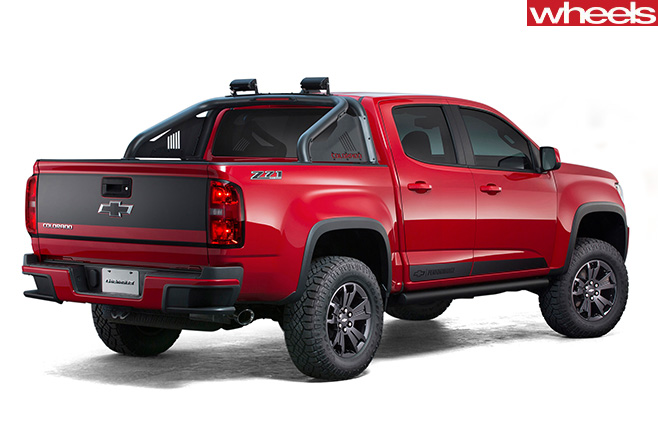
“The execution also has to meet the on-road and off-road needs of the customer. Therefore the versatility of the powertrain and chassis become real focal points,” Jackson said, hinting that the thirstier petrol engine may be best for HSV buyers.
“At some point you need to decide on which attributes your vehicle will compete with most strongly, and be comfortable you will deliver better than the competition,” he said.
Ford also has big hopes for Ranger. It has trademarked ‘Ranger Raptor’ (pictured top) in readiness for the flagship ute. As with the F150 Raptor sold in the US, the Ranger version will get power upgrades and extensive bodywork changes – at a price. Expect to pay upwards of $80K.
Raptor details are scant. It’s not known whether Ford will use the 3.2-litre five-cylinder diesel or one of the latest petrols, such as the 242kW 2.7-litre turbo in the F150.
It’s also likely to be a product of the all-new Ranger, due about 2019.
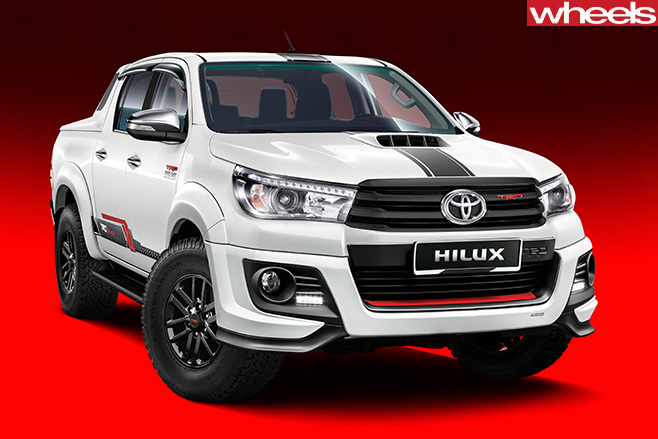
“There’s clearly scope for something like that,” said Toyota sales and marketing chief Tony Cramb, adding it would focus on styling and likely use the standard 2.8-litre four-cylinder diesel.
Hilux chief engineer Masahiko Maeda is cautious about higher outputs: “If customers require such kind of high performance with high-price vehicles, we will start to study, but based on my experience with the previous-generation Hilux, I don’t think so.”
Cramb noted that “TRD has a good name here in Australia” and could be used “if we were to do something like that”. However, Toyota insiders tell us a Hilux TRD (pictured above) is unlikely before 2018.
Holden is keen to expand Colorado when the update arrives in August and is working on a new flagship likely to reuse the Z71 moniker applied to a limited-edition model last year. “It’s a growing segment of the market and models like our Z71 proved popular, so there’s certainly an appetite for those kinds of vehicles,” said Holden spokesman Sean Poppitt.
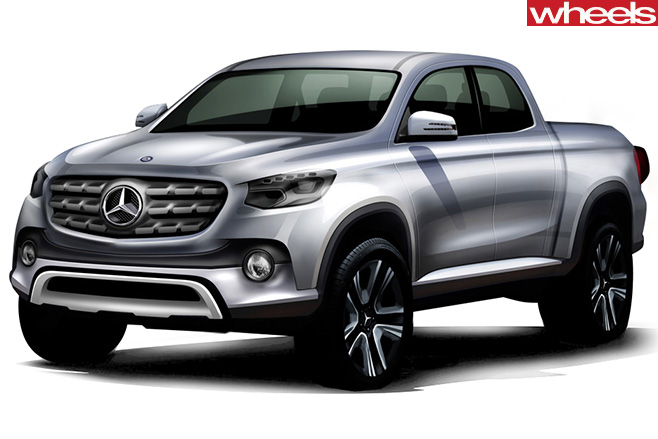
Due in 2018, Merc will offer four-cylinder versions of the Nissan Navara-based Mercedes-Benz GLT as well as a V6 diesel with outputs of around 200kW and 600Nm, making it one of the most potent utes available.
Benz is also considering an AMG version, though not a V8. AMG boss Tobias Moers told Wheels the brand was exploring the potential for an AMG ute, but that it wouldn’t be “the full Monty”.
“Is there going to be an AMG-line, which will have unique bumpers and wheels? Maybe,” said Moers. “But there’ll be no 4.0-litre twin-turbo V8 model, so it won’t be a proper AMG car.”
Hyundai hauler?
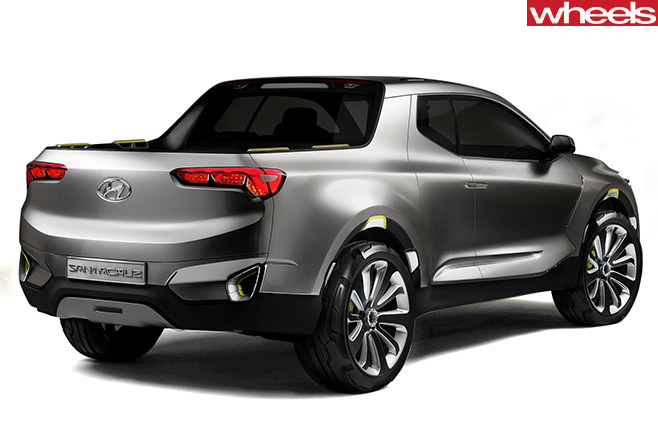
Heat seeker
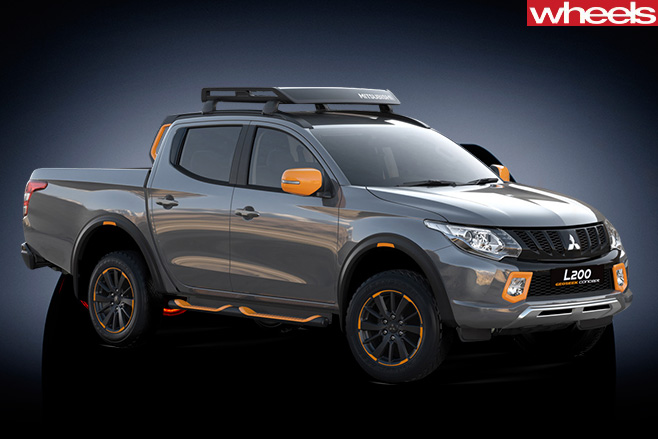
Cool as ice
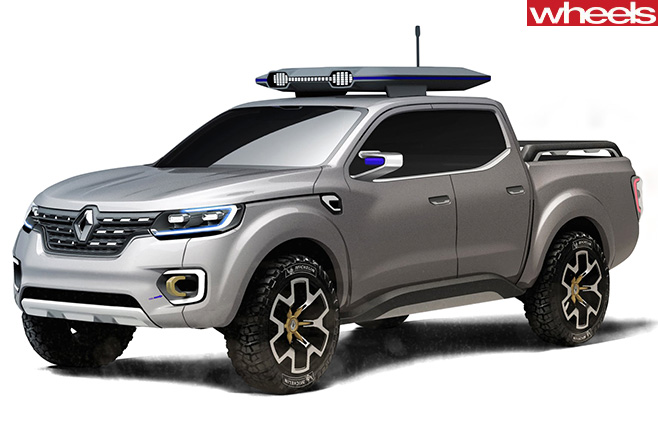
Aussie TOP 10
Sales figures* reveal that four utes made the Australian top 10 list in January. Sales of 4×2 and 4×4 utes accounted for 15.1 percent of the market.
1. Mazda 3 2. Toyota Corolla 3. Ford Ranger 4. Toyota Hilux 5. Hyundai Tucson 6. Hyundai i30 7. Mazda CX-5 8. Holden Colorado 9. Nissan Navara 10. Volkswagen Golf
*Source: VFACTS, Jan 2016.
It’s a fast-moving game this performance car caper, if you’ll pardon the pun.
Not too long ago, a model offering 150kW and 265Nm – outputs very similar to the VW Mk VI GTI, let’s not forget – for around $30K would have found itself at the pointy end of any bang-for-your-buck equation.
These days, however, there is a plethora of machinery available that offers a hitherto unprecedented level of performance for your dollar. As such, cars like the Hyundai Veloster Turbo find that no sooner have they established a presence in the market that suddenly the goalposts have shifted.
Hyundai’s quirky coupe/hatch has received a few choice tweaks in order to keep pace in the fiercely competitive warm-hatch segment. The range is now split into two, Hyundai pulling out some kit to drop the entry price just below $30,000, with the six-speed manual SR Turbo now $29,990.
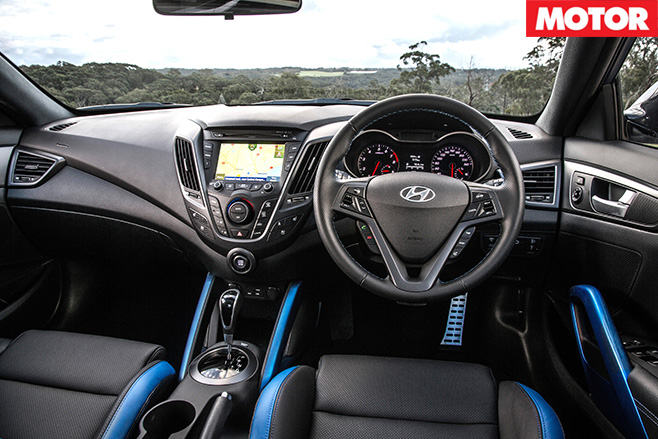
The 1.6-litre turbo four pulls strongly from low revs, though the noise it makes in the process is merely that, a noise, and not a particularly refined one. Regarding the new gearbox, Hyundai has done a great job of making a dual-clutch feel like a torque converter auto, which is both good (take-off is relatively smooth) and bad (downshifts take some time).
An extra 10mm of tyre width (now 225/40 all ’round) has increased the Turbo’s grip levels, but then outright speed has never been its problem. Instead, its one-dimensional handling meant driving it hard was simply a question of how much understeer do you want to deal with, with the rear resolutely refusing to budge.
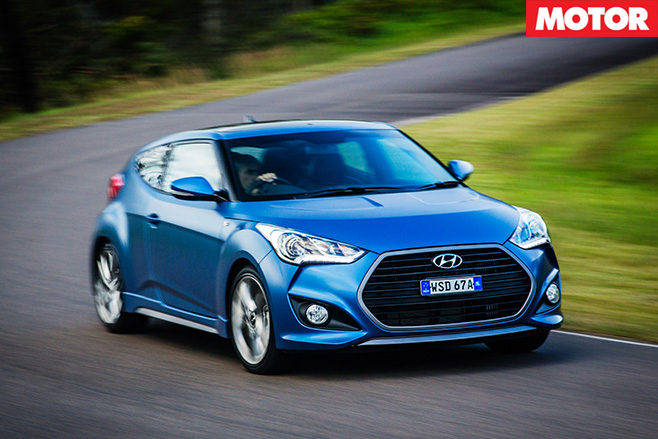
And it’s worked, to a point. All four tyres feel like they are being worked harder, and in the right corner you can feel the rear shift slightly, though it requires provocation to do so.
Still, it’s a step in the right direction, if nothing like as playful as something like Ford’s Focus ST. The trouble is, the Veloster Turbo is a good car in a segment full of excellent ones, and if we’re honest we’d choose a Kia ProCeed GT to fulfil our warm hatch needs.
What Hyundai really needs to do is let the Veloster Turbo off its leash and inject some extra aggression to make it stand out from the pack – watch this space.
3 out of 5 stars
Specs Engine: 1591cc inline-4, DOHC, 16v, turbo Power: 150kW @ 6000rpm Torque: 265Nm @ 1750-4500rpm Weight: 1330kg 0-100km/h: 7.5sec (estimated) Price: $36,490
One newton metre – piffling, but enough for the new Falcon XR6 Sprint to pip its XR8 sibling for the title of Australia’s torquiest engine ever, 576 v 575Nm.
It’s fun to imagine this was deliberate. Ever since the XR6 Turbo arrived with the BA in 2002, Blue Oval powerbrokers have kept the V8 Falcons on their pedestal, protected from any threat externally – and internally.
The 4.0-litre, much-loved, venerable ‘Barra’ inline-six has always played second fiddle to the V8s for power and performance.
And in doing so they might’ve chanced upon an awkward truth, that if you’re going to make the best performance Falcon ever, the turbocharged six-pot might be the donk for the job.
But we don’t know this. Having driven both cars only on the launch in Tasmania, on fast-flowing roads picked by Ford, we want to push both Sprints through some tighter stuff before making a call on which might be the best (forgive us for wanting to be certain).
But of all the fast Falcons, we know enough to say the best is indeed one of these, Ford inadvertently creating a bit of sibling rivalry, it seems.
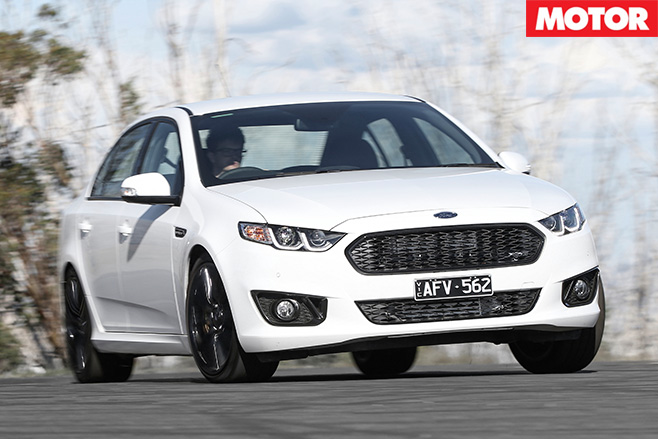
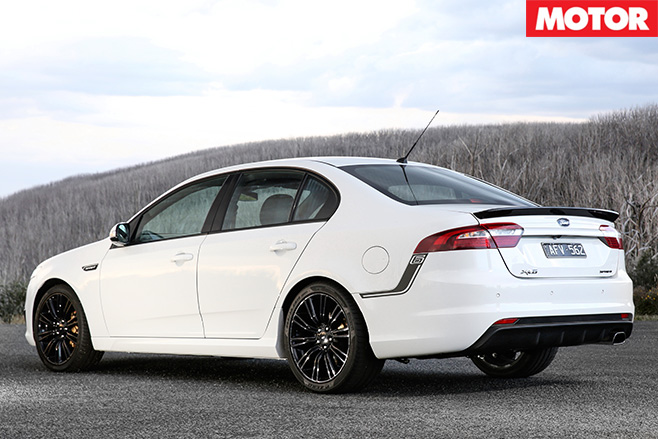
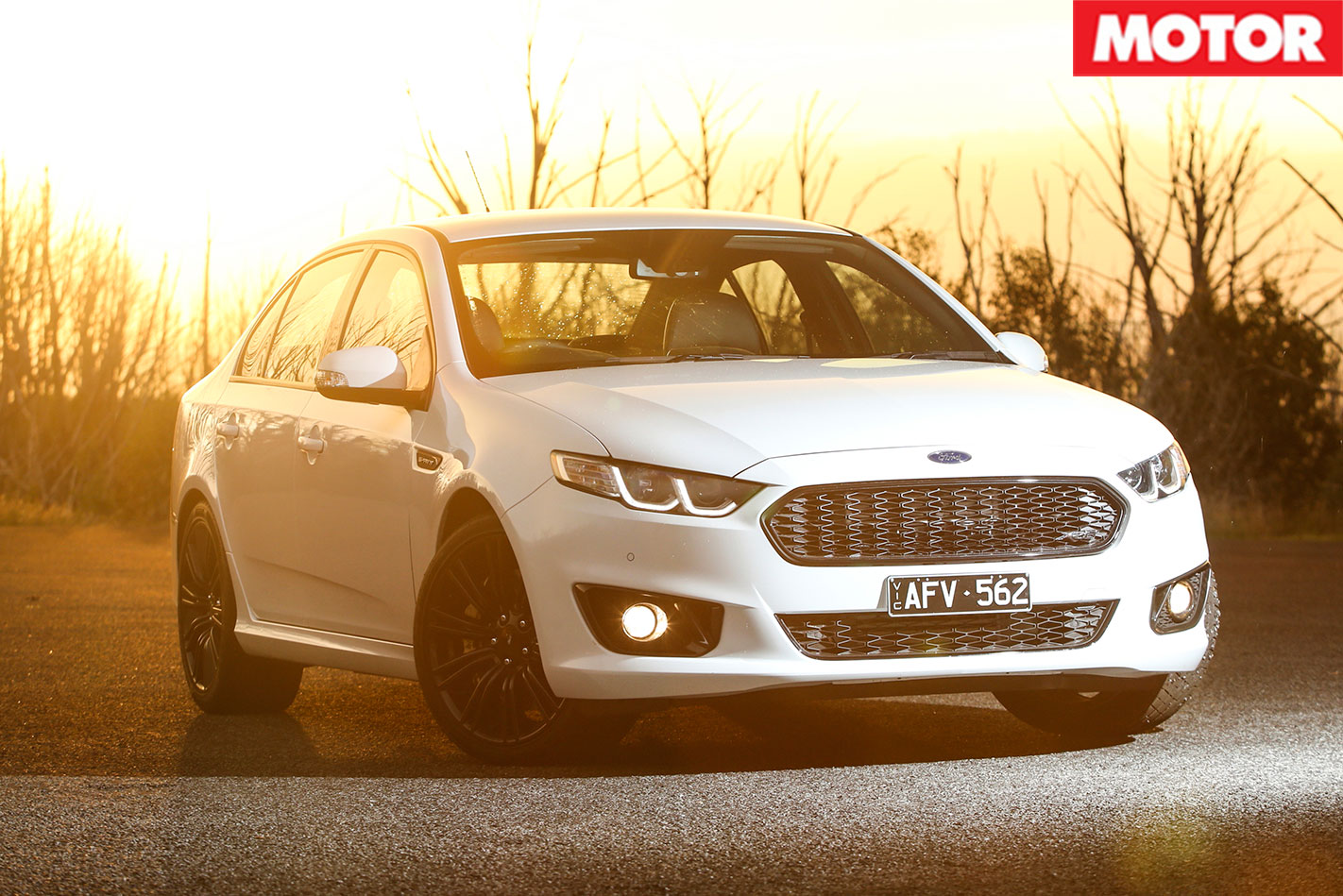
Ford’s sleeper-ish XR6 Sprint is certainly more subtle than the XR8, missing the bonnet bulge for obvious reasons but scoring the same rear lip spoiler, 19-inch wheels first seen at FPV, plus a hockey-stick decal making the rear-three-quarter its toughest angle.
From the front, in white you’d get clobbered over the head by a Ford fan to say it looks like a taxi; it could have used a little chin spoiler under the front bar, but its subtlety will only serve to fool those not paying attention.
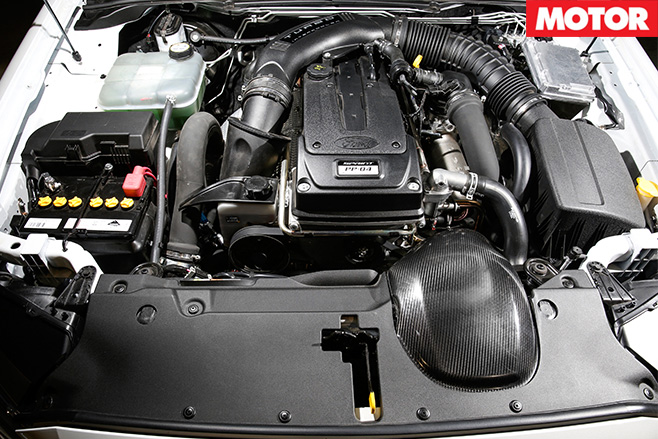
The end result is 325kW and 576Nm but as is also the case with the XR8, these are best thought of as minimum outputs. What you’re really signing up for is 370kW and 650Nm, available thanks to a “transient overboost” feature which lasts for up to 10 seconds, then resets, Ford pointing out you’re unlikely to spend more than 10 seconds at full throttle in any gear.
The power, like the XR8, decreases from maximum to minimum as engine temperatures increase. But for the vast majority of the time, the 370kW and 650Nm are yours for the taking. As such the turbocharged Sprint is a torque-billowing straight line monster, surely the closest a Falcon has come to, dare we say it, supercar acceleration.
In what could be the first time a humble Falcon can be closely compared to a Ferrari, Ford employs a torque-stepping strategy much like the new California T and 488, whereby torque is restricted in lower gears and unleashed incrementally to the full-fat 650Nm as you go from first to sixth. Ford doesn’t provide any 0-100km/h claims but we’re hearing 4.6sec is about right, which is lineball with the XR8.
The six-cylinder Sprint bellows a subdued straight-six growl, the turbo also hissing away under power. Shut the throttle under load and there’s even a hilarious blow-off valve flutter at just the right volume.
Stay full throttle and grab another gear and, same as the XR8, there’s a spark-cut brap on the upchange. We’ve not met a Barra with as big a personality as that in the Sprint.
The supple, poised suspension has turned the XR6 Sprint into a high-speed cornering missile. You can barrel into third or fourth gear corners carrying speed you wouldn’t dare in an XR6 Turbo, the Sprint keeping its composure no matter what bump is thrown at it. And letting you explore the grip of those new Pirellis, of which there’s much more than a base Turbo.
Despite not being able to attack many corners in anything less than third gear on the launch, our experience so far seems to back this up, but we will reserve judgement until we drive them more comprehensively.
Much like the XR8 Sprint, our reservations lie with the front end – an FG X weak point. Based on our Tassie driving it feels to have improved but, as we’ve said, let us through a bunch of slower corners first.
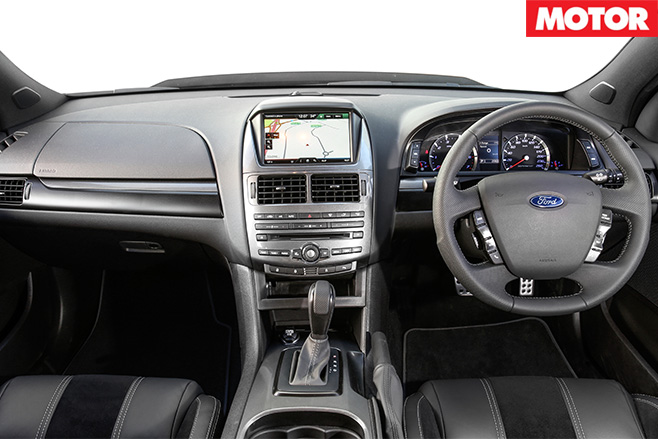
Downsides? The interior is literally straight out of 2008, and the cruise control buttons, wiper and indicator stalks look terrifying similar to that in the BA Falcon launched in 2002. Fortunately you’ve got Ford’s new SYNC software on the centre screen to remind you it’s 2016.
It could be the Aussie performance car bargain of the century, but we’re afraid the torque train has left the station, all 550 automatic-only XR6 Sprints already accounted for. Yep, sold out.
Lucky owners have nabbed themselves the best six-cylinder performance Falcon ever, and since the days of BA we’ve wondered just what the XR6 Turbo is capable of. A lot, it seems.
The XR6 Sprint pips the XR8 not just by one token newton metre, but also by price – and it seems performance, the six-pot Falcon as fast in a straight line but the sweeter handler.
It’s an awkward truth we’ll look to confirm in a future issue of the mag before the Falcons are gone forever, but while both Sprints will go down as greats, the best performance Falcon ever could be a six.
4 out of 5 stars
Specifications
Engine: 3983cc inline-6, DOHC, 24v, turbocharger Power: 325kW @ 6000rpm (370kW on overboost) Torque: 576Nm @ 2750rpm (650Nm on overboost) Weight: 1818kg 0-100km/h: 4.6sec (estimated) Price: $54,990
