
Advancing the auto industry is often tasked to the Mercedes-Benz S-Classes of this world with technology left to trickle down to mere mortals. But change comes in many forms.
The real champions of the automotive world are those that revolutionise the mass market. The original Volkswagen Golf is a perfect example of this, and the 2024 MG4 Essence? Well, for Australians, it may be the car that makes electric motoring truly accessible.
Tesla’s Model 3 and Model Y have already changed the semi-premium landscape, arriving loaded with technology in huge numbers at tempting prices. The Model Y even outsells Toyota’s RAV4, proving price isn’t as much of a barrier as you might expect.
An MG4, though, with its $38,990 starting price (before on-road costs and incentives) is a car that an even larger slice of the population can afford.
Like the Model Y, it might be able to outsell Toyota’s incumbent in the small car segment, the Corolla hatch.
Although the official forecast was for 3000-or-so MG4 sales by the end of 2023, typically bullish MG Motor Australia CEO Peter Ciao reckons this figure could climb as high as 2000 each month – if there’s enough demand. For reference, Toyota sold 2145 Corollas last month.
The MG4 will be vying for sales supremacy in a trio of affordable Chinese rivals with the BYD Dolphin and GWM Ora set to launch imminently. We’ll be sure to have a comparison test between the three, but right from the off MG’s effort oozes maturity and sensibility that the others trade for bright colours and cabin gimmicks.
1
JUMP AHEAD
- How much is it, and what do you get?
- How do rivals compare on value?
- Interior comfort, space, and storage
- What is it like to drive?
- What’s the MG4’s driving range and charging?
- How safe is it?
- Warranty and running costs
- VERDICT
- Specifications
How much is it, and what do you get?
We nabbed an MG4 fitted with the medium 64kWh (gross, 61.7kWh usable) ternary lithium-ion battery pack for 435km of WLTP driving range in Essence trim – the top spec in Australia until the XPower hot hatch arrives.
It costs $47,990 before on-road costs and government incentives, so splits the difference between price leader and more premium rivals such as the Tesla Model 3 sedan.
Underpinning the MG4 is the brand’s new ‘MSP’ scalable architecture. Developed in collaboration with IDIADA, a Spanish company that provides design, testing, engineering, and homologation services for automotive companies, it boasts a ‘perfect’ 50:50 weight distribution paired with front struts and five-link independent rear suspension.
1
You also get sheet metal designed with input from MG’s Longbridge design centre in the British Midlands.
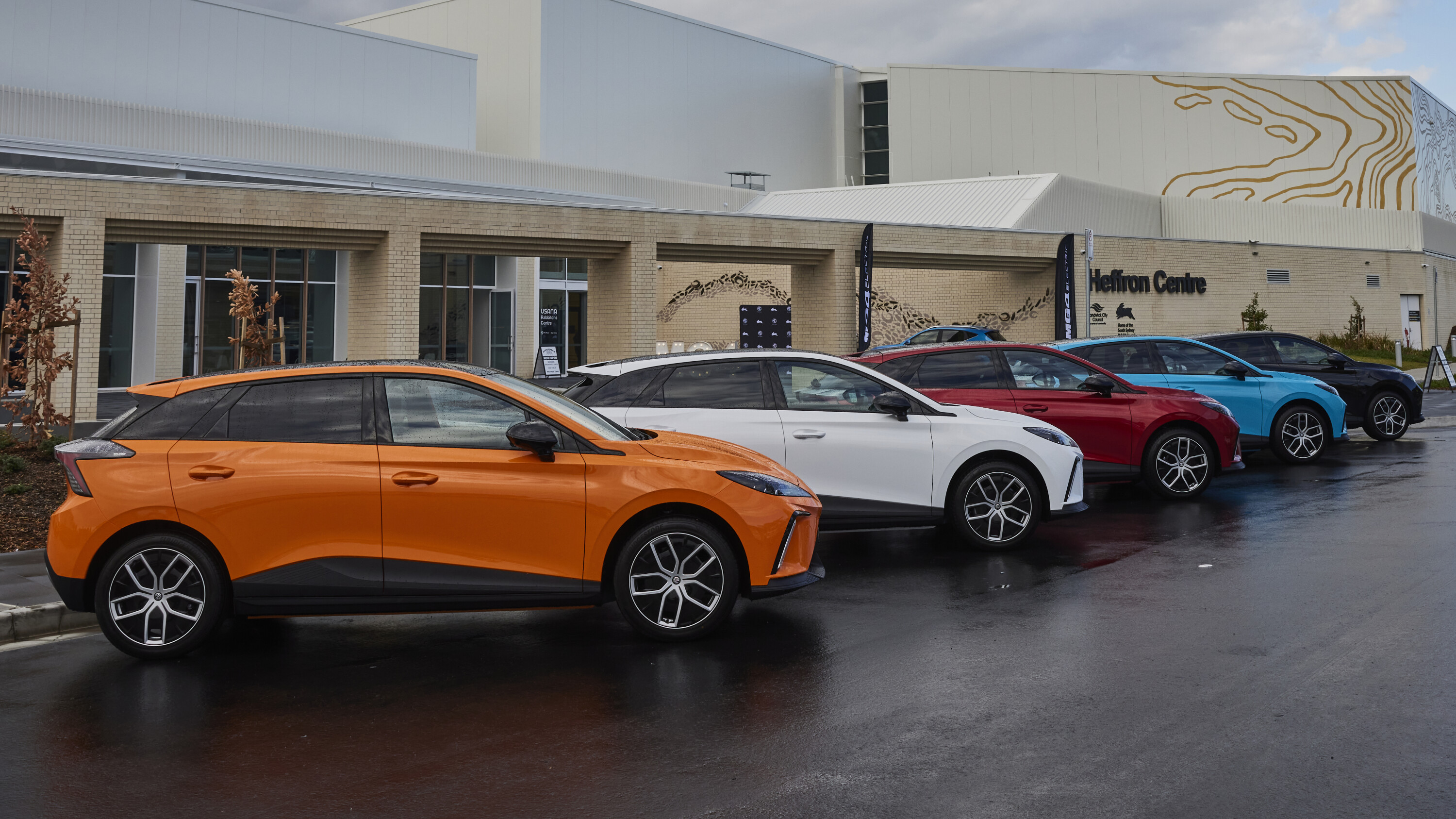
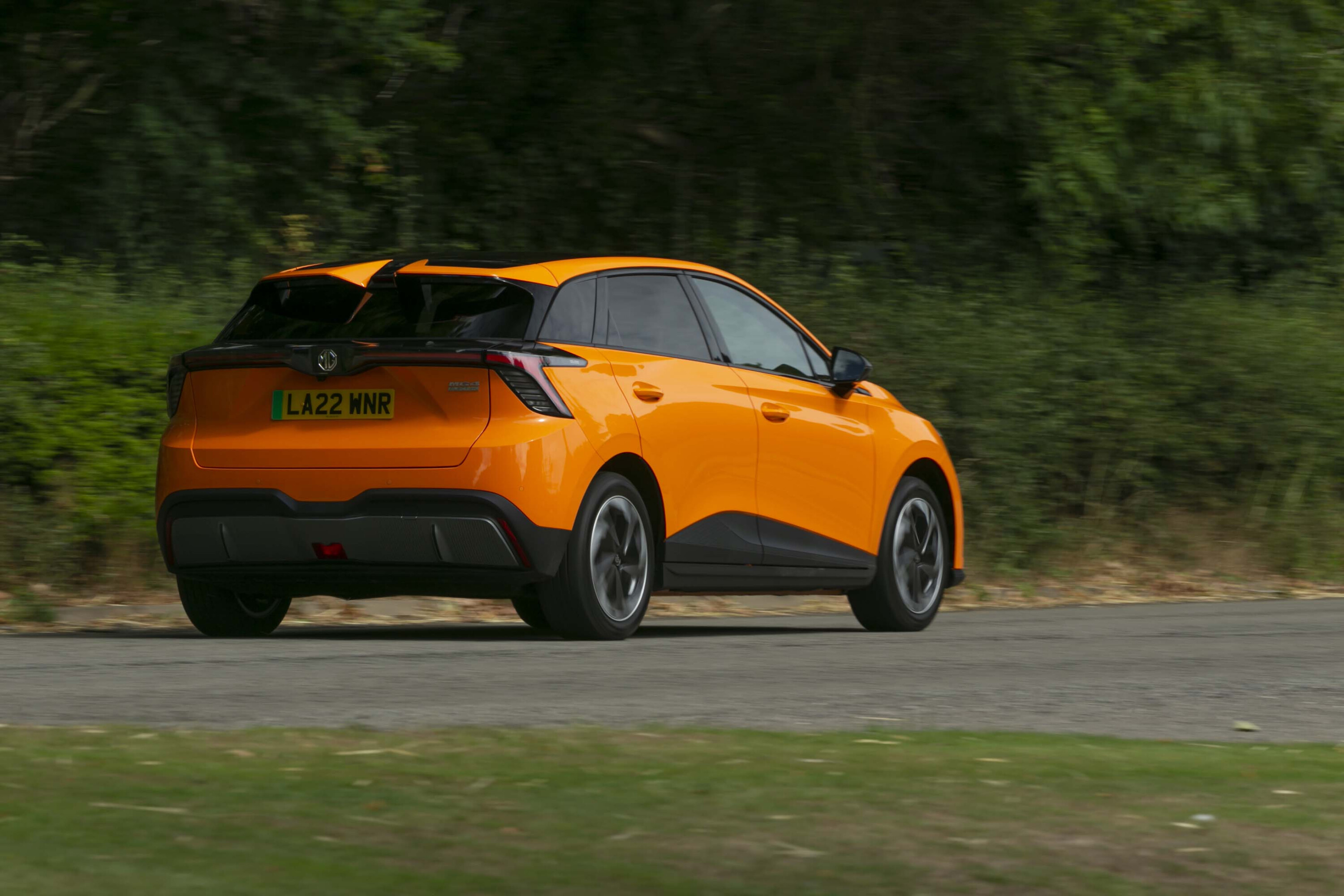
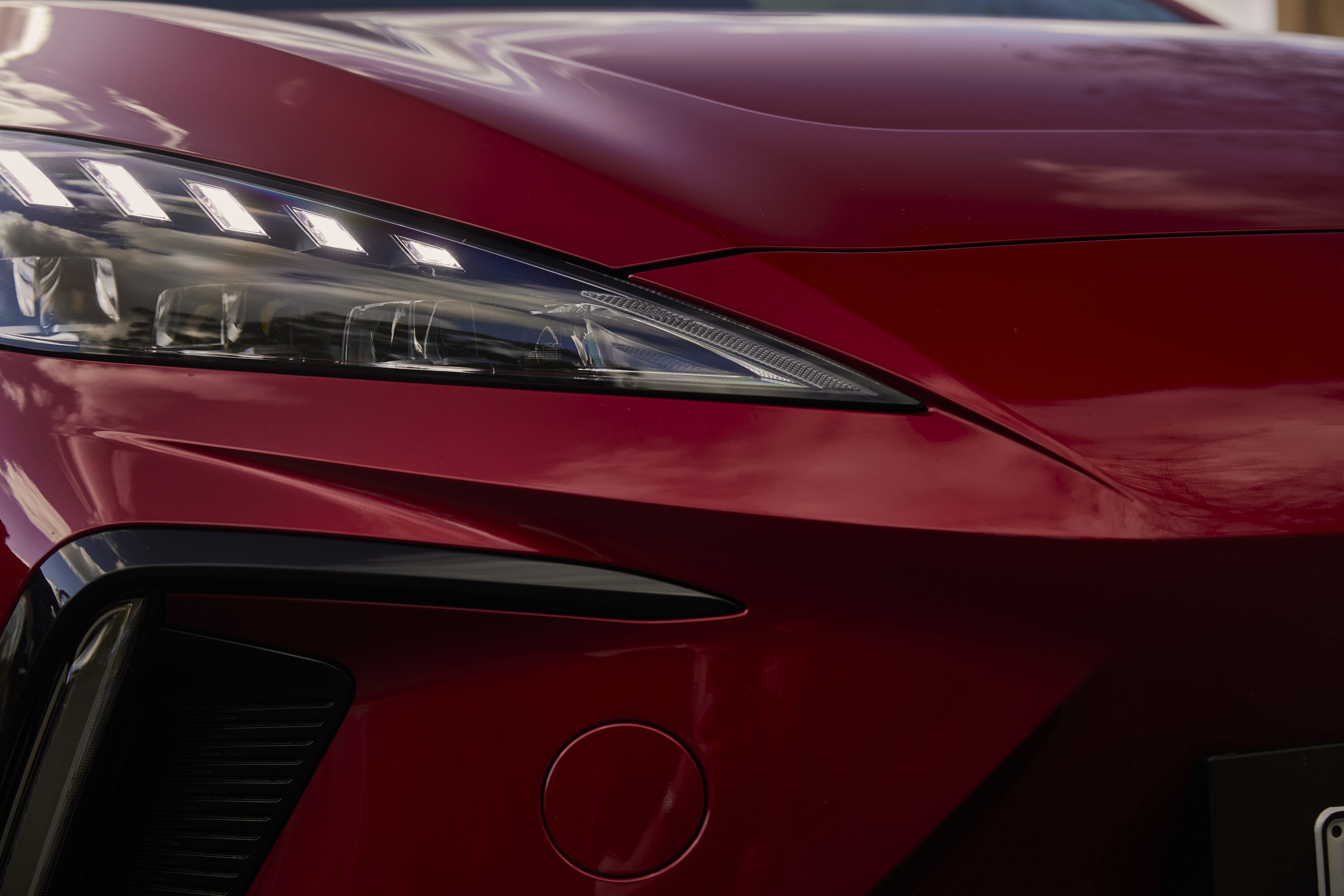
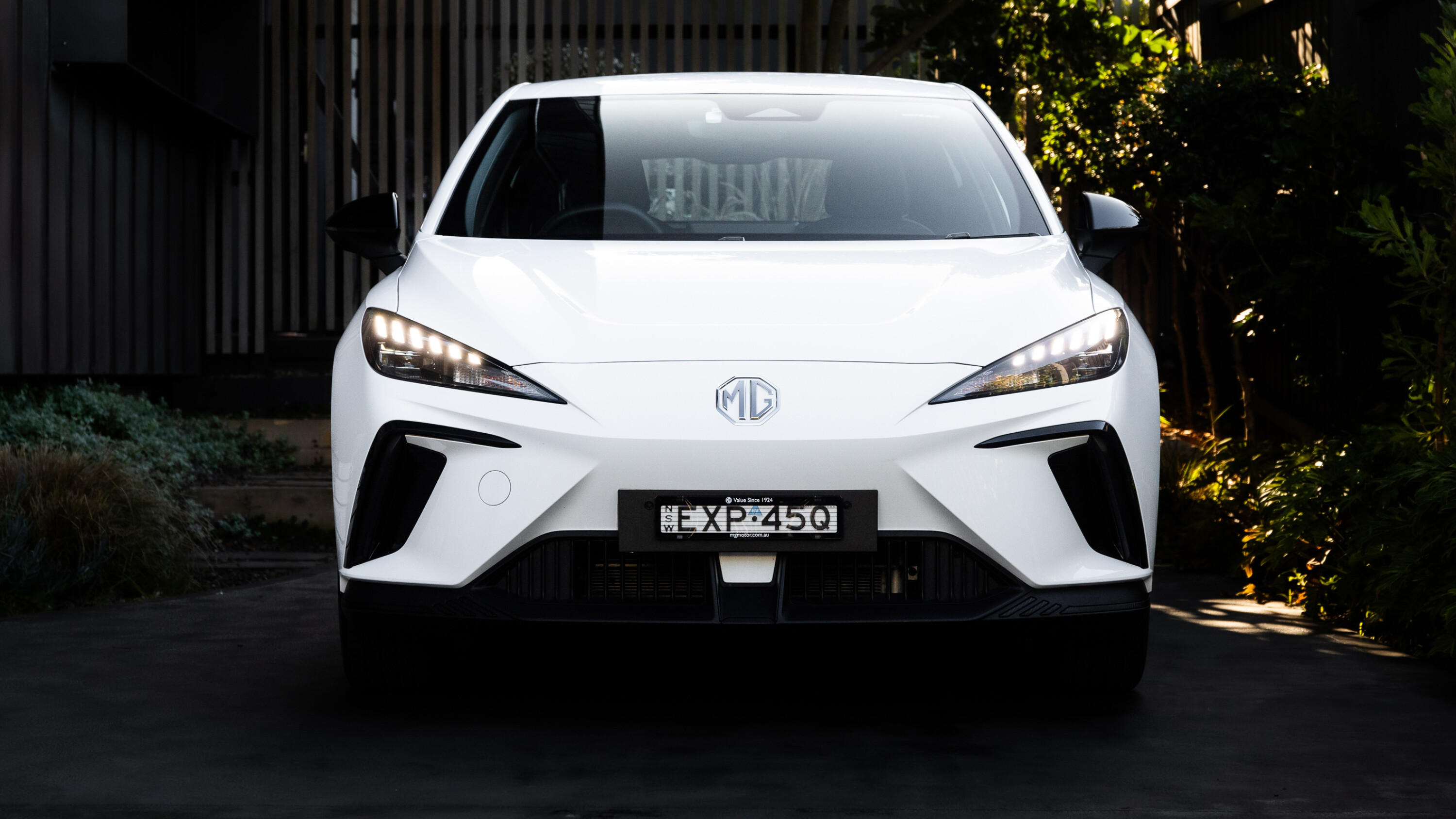
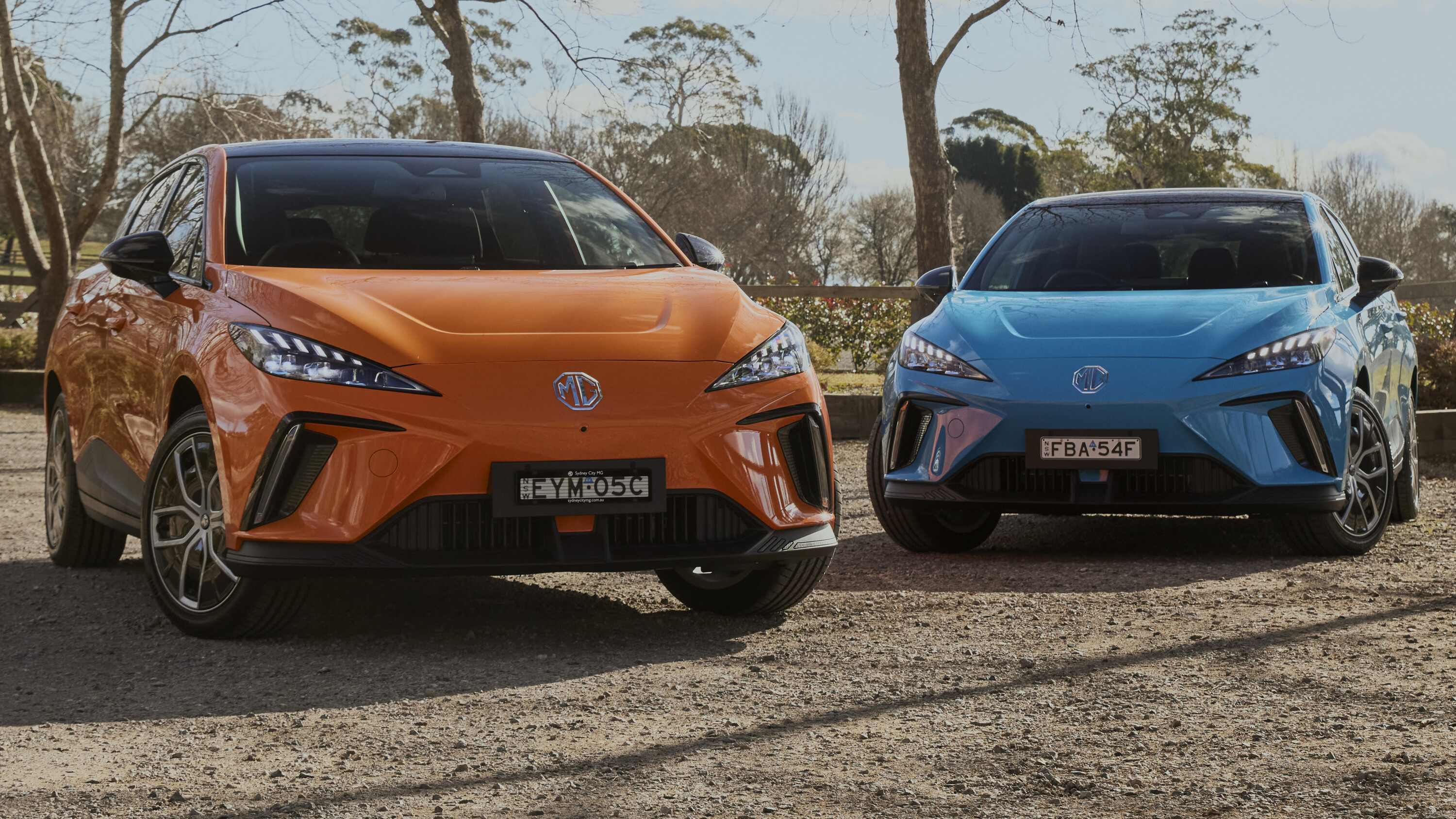
Although some of the detailing is a little fussy and the car’s appearance is not entirely conventional, in bright colours such as Volcano Orange and Brixton Blue, the MG4 cuts an attractive and memorable silhouette.
Compared to the base car, the Essence features more technology as detailed below.
| 2023 MG 4 Essence features | |
|---|---|
| 18-inch alloy wheels | 7.0-inch digital instrument cluster |
| 10.25-inch infotainment system | Door open warning |
| Wired Apple CarPlay and Android Auto | Satellite navigation |
| Voice control | u2018iSmartu2019 connected-car service. |
| Wireless phone charging | Cloth/synthetic leather upholstery |
| Rotary gear selector | 360-degree camera system |
| Six-speaker audio system | Two-tone roof |
| Roof spoiler | Auto-dimming rear-view mirror |
The Essence also brings driver assistance technology such as blind-spot monitoring, rear cross-traffic alert, and an excellent 360-degree camera.
MG said it sees the Essence being bought by fleets, but we reckon this ‘Goldilocks’ combination of decent driving range and extra creature comforts that remains under $50K is the MG4 sweet spot.
1
How do rivals compare on value?
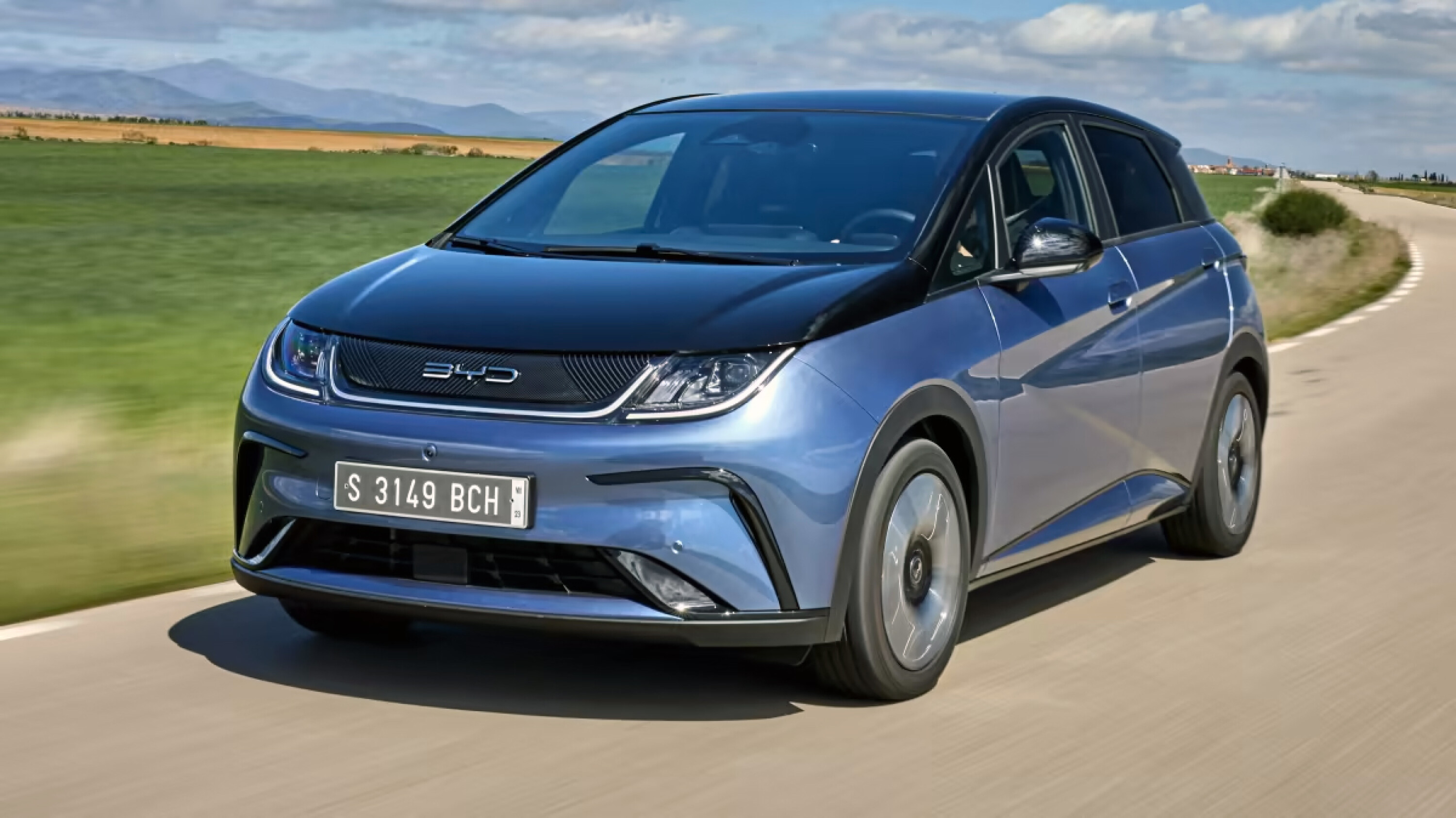
The MG4 is not the cheapest brand-new electric vehicle on sale right now – that accolade goes to the BYD Dolphin ($38,890 before on-road costs), though $100 here goes a lot further than a regular green bill would.
Compared to the BYD Dolphin, it’s 4.6 seconds faster to 100km/h with 11km more driving range.
We aren’t driving the base MG4 today, and the Essence measures up well against its EV price-mates. It’s rated with a greater driving range than the equivalently priced Dolphin and Ora, and has comparable levels of cabin technology.
Given the MG4’s more conventional design and presentation than a Tesla, it’s also likely to be cross-shopped with typical family hatches. A Volkswagen Golf 110TSI R-Line has comparable straight-line performance and similar levels of interior technology but is $7500 more affordable to purchase before incentives.
1
Interior comfort, space and storage
The MG4’s dimensions line up with the conventional family hatch, measuring 4287mm long (identical to a Mark 8 Golf) and 1836mm wide.
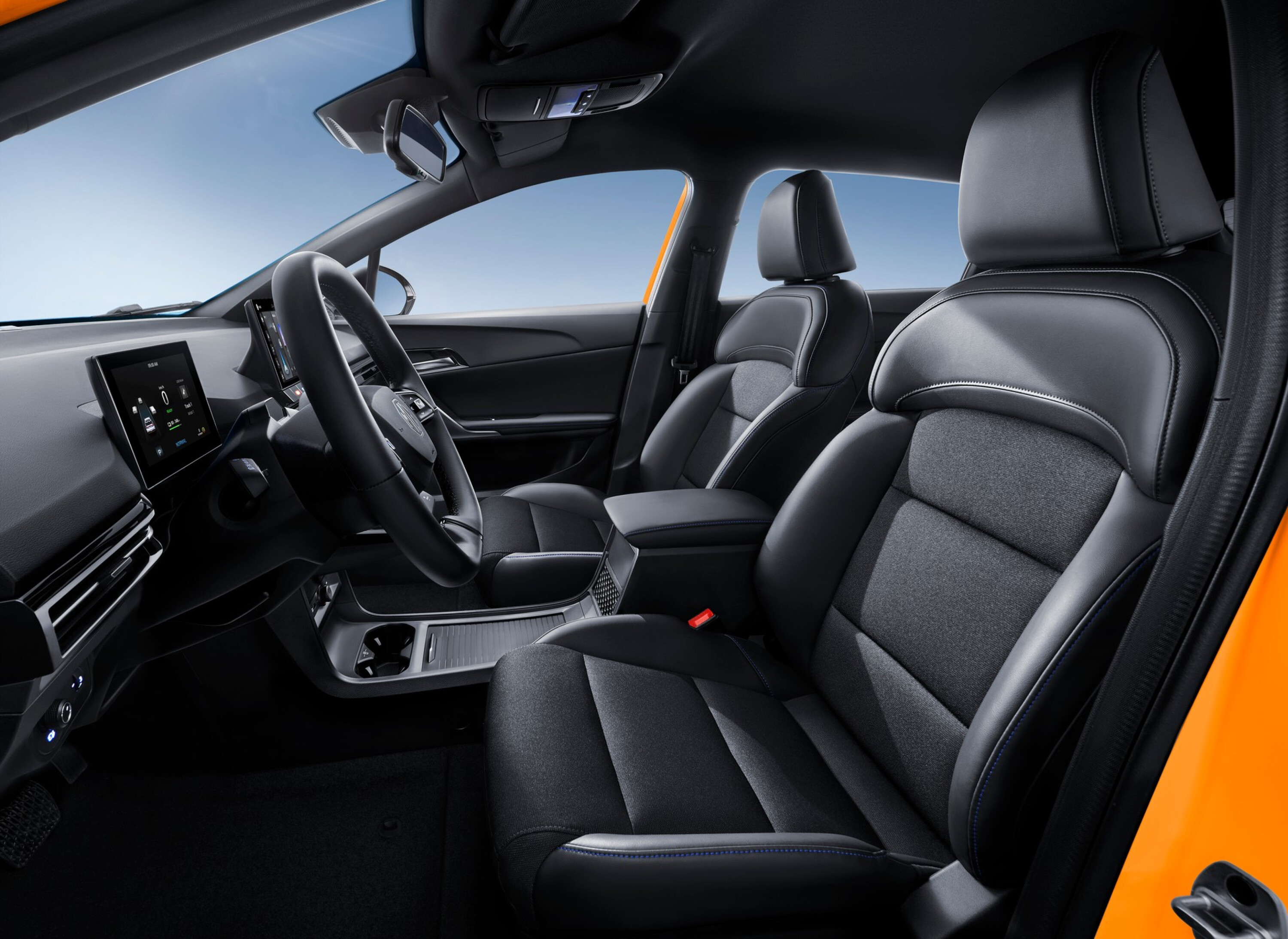
Its party trick, though, is a 2705mm wheelbase (70mm longer than a Golf). With the added benefit of no combustion engine to package up front, the MG4 offers stacks of cabin space.
The central seating position of the MG4’s rear bench sits proud and there’s a small hump in the middle of the floor. Although five will fit, four passengers will be very comfortable thanks to plenty of headroom, a supportive, well-cushioned bench, and plenty of knee room.
1
Beneath the floor are some battery gubbins so there’s no provision for a spare tyre.
It isn’t perfect – behind the power-adjustable driver’s seat there’s limited toe-room (the front passenger seat has fixed height; great for foot room but not ideal for taller occupants) and although there’s a USB charge point, the MG4 lacks vents and a fold-out armrest in the rear seat.
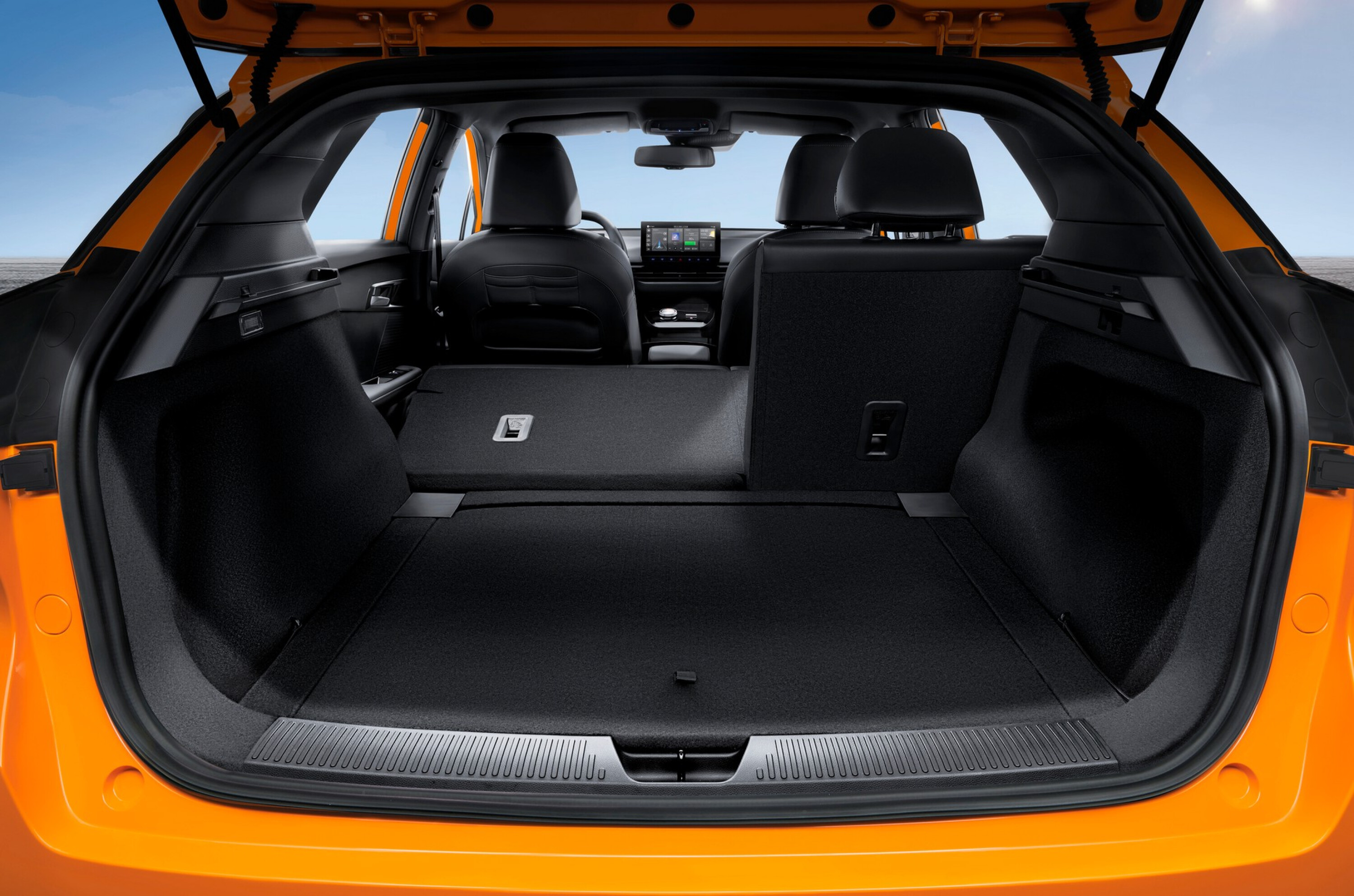
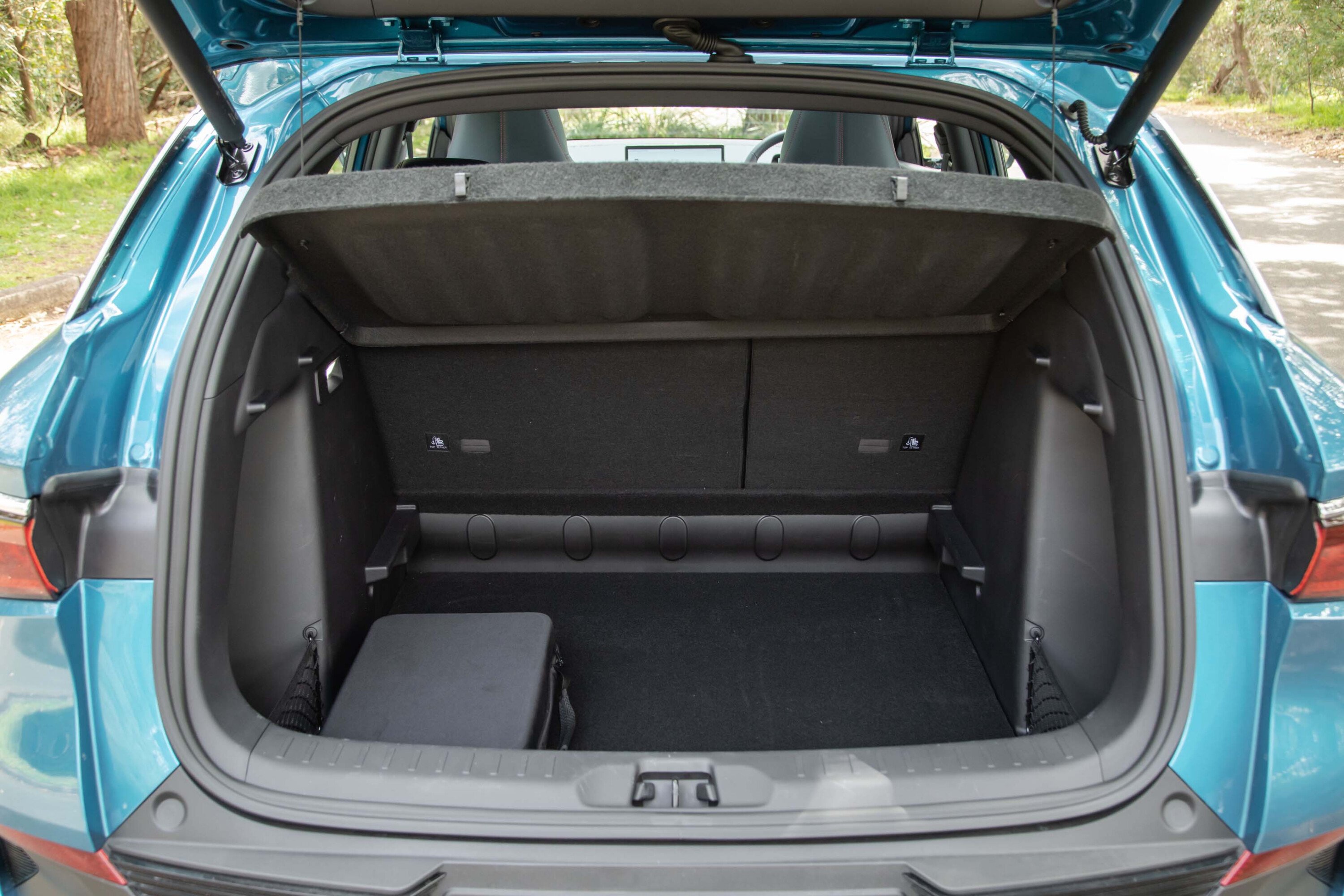
The 350-litre boot with adjustable height floor is of reasonable size. The MG4 doesn’t come with a cargo net, but there are cordoned-off cubbies to the side and some shopping bag hooks. Beneath the floor are some battery gubbins so there’s no provision for a spare tyre.
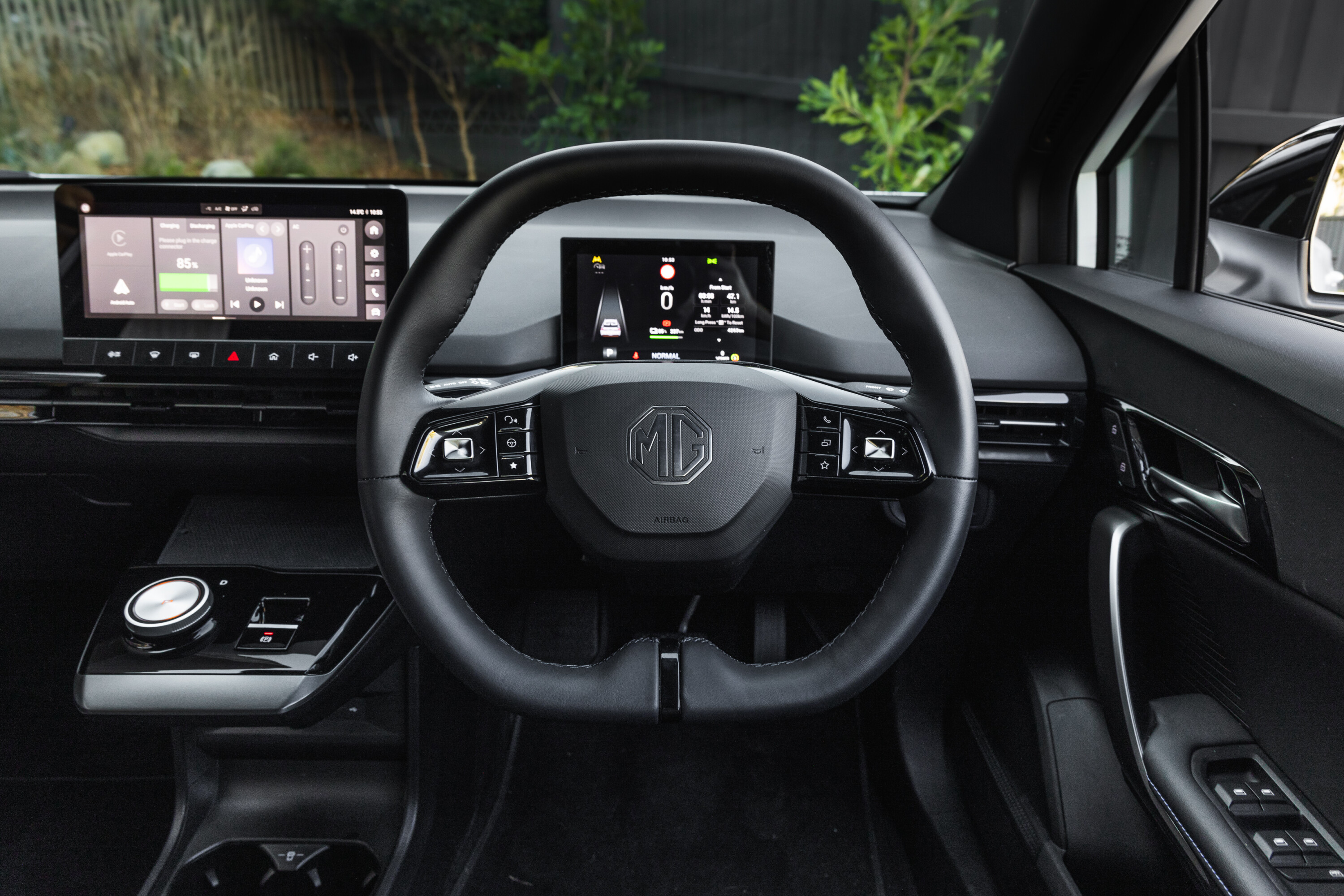
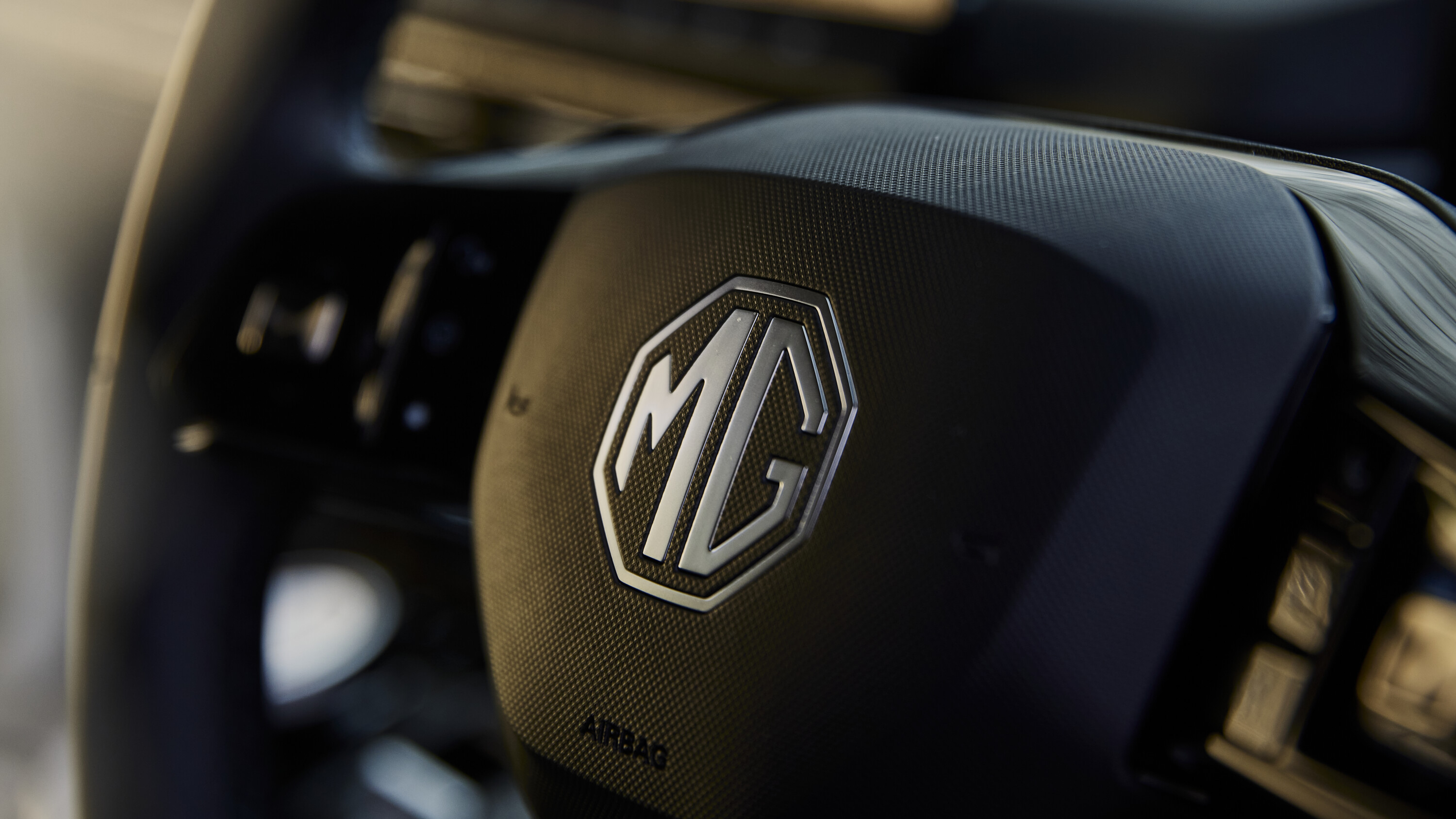
Front seats are very comfortable and – the driver’s seat at least – can be set low in the car for an excellent driving position. The not-round two-spoke steering wheel wears leatherette upholstery with real stitching.
1
Although unconventional in shape (and a little bit Lotus Emira-ey) it proved ergonomic while driving.
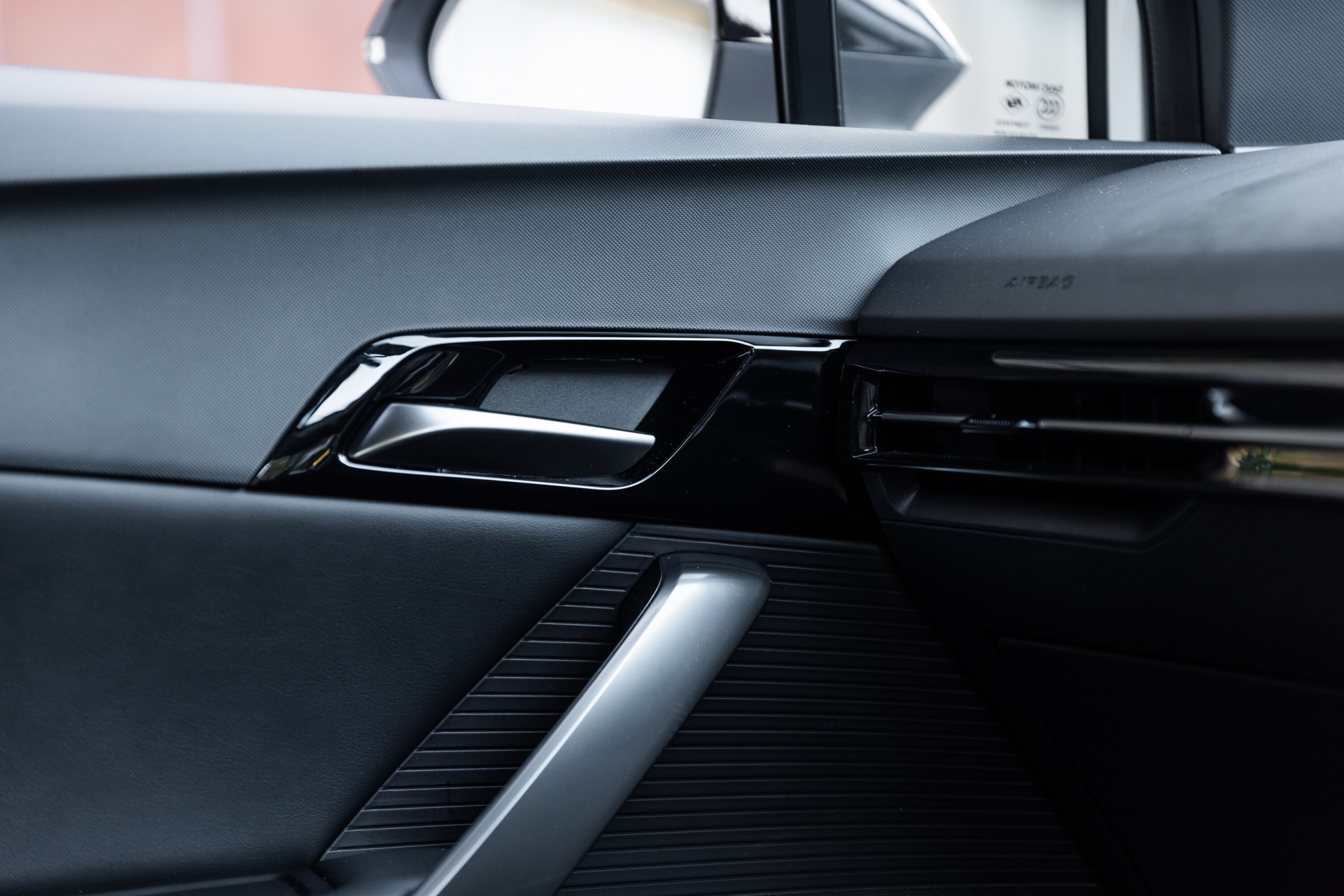
MG’s done a good job of material selection, not cheaping out on the flat, broad dashtop with soft material to minimise reflections and noise. The door cards are hard to the touch, but pleasant patterning and moulding choices make them feel more high quality than those you’d find in a dearer Kia Niro.
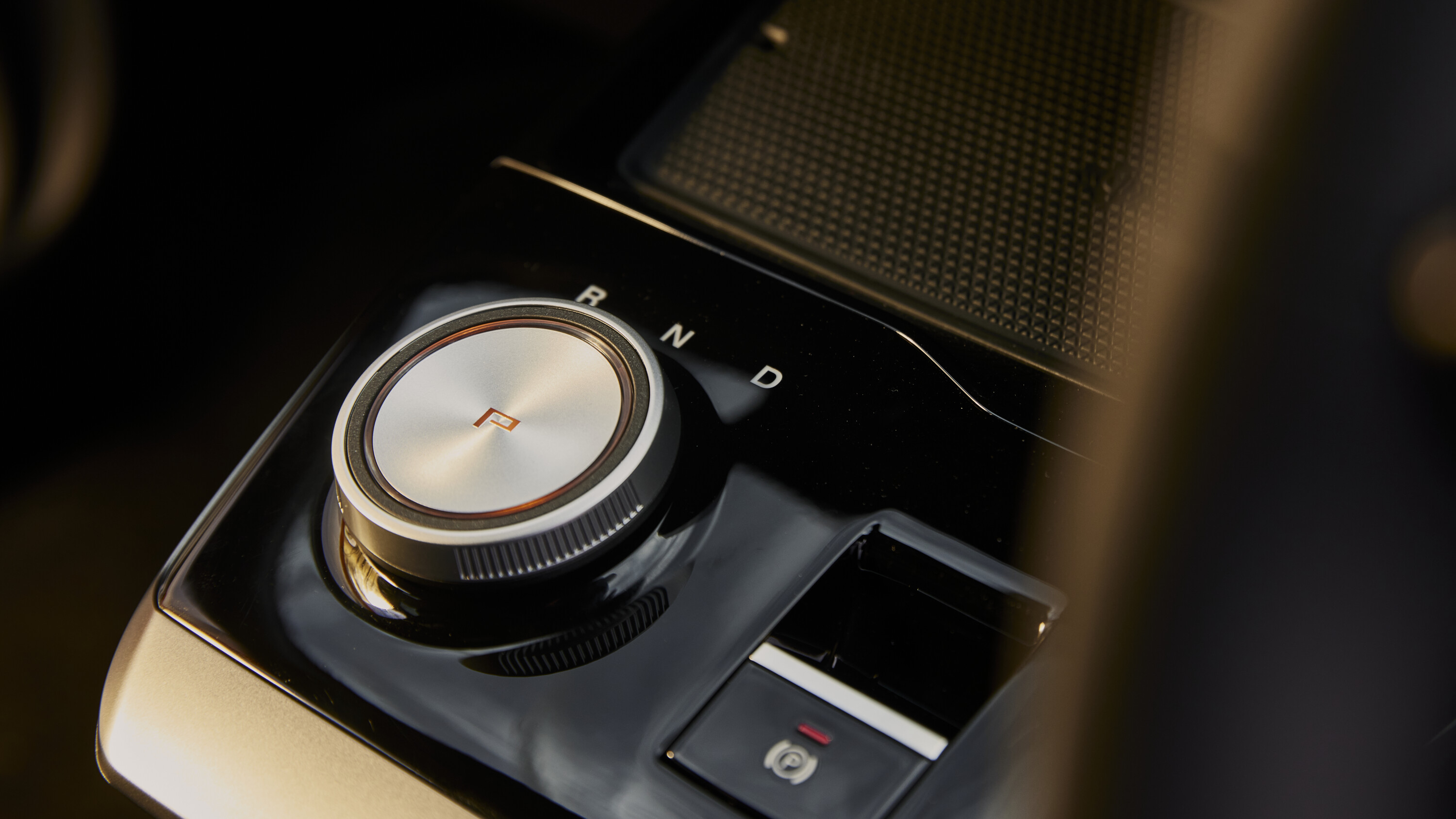
The Essence’s rotary gear selector is proudly presented atop a piano black console. Its action is well-damped, and the knurled edges add to the high-quality feel.
1
The cabin design is simple but in no way boring with elements of VW in the air vent that sweeps across the dash, and the shapely indicator stalks remind me of an Audi A4‘s.
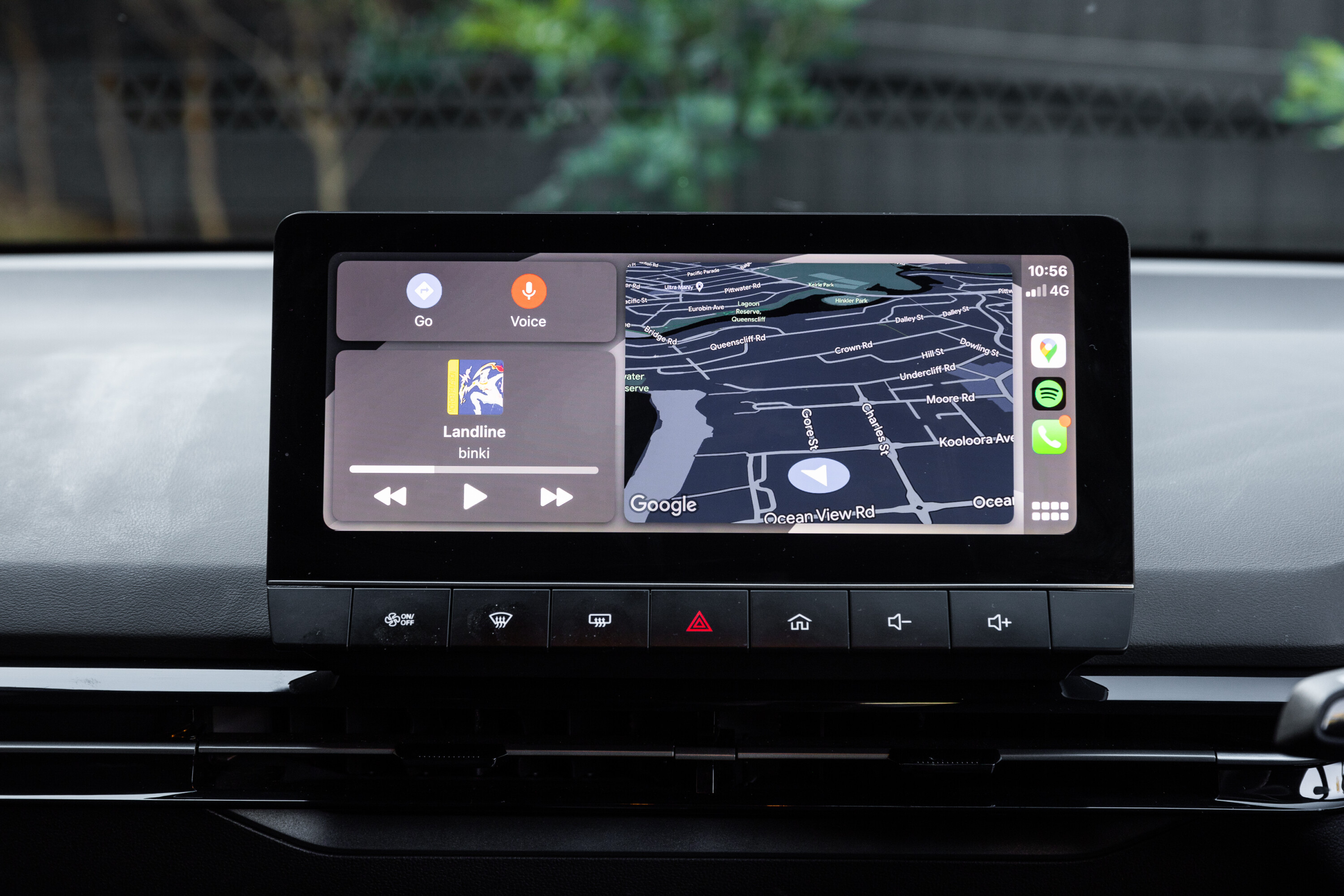
Technology is taken care of by a 10.25-inch central touchscreen and a 7.0-inch digital driver’s display. It features wired Apple CarPlay and Android Auto, while the Essence gets live traffic navigation, a wireless charging pad, and an average six-speaker sound system. The steering wheel buttons and software are unfamiliar at first, though it’s likely you’ll get used to interacting with the MG’s tech over time.
Beneath the touchscreen is a row of shortcut buttons that aid menu navigation, but the choice of front and rear demister shortcuts and an air-con off button is baffling. The physical controls would be better assigned to air recirculate and either fan speed or temperature up/down.
1
At least the up-spec Essence has a responsive voice control system that allows you to adjust fan speed, temperature, and other settings without touching the screen.
Cabin storage is another win for MG, and is clearly influenced by the expectations of UK buyers. The airy centre stack has a large area for odds and ends storage, with a roller cover to hide valuables.
There are two cup holders, another deep cubby under a squishy centre armrest and a neat elastic netted pocket perfect for a pack of chewing gum or the car’s key.
1
What is it like to drive?
MG’s first attempt at an electric car, the original ZS EV, had an absence of body control that was unnerving and borderline dangerous. The MG4, though, is a different story.
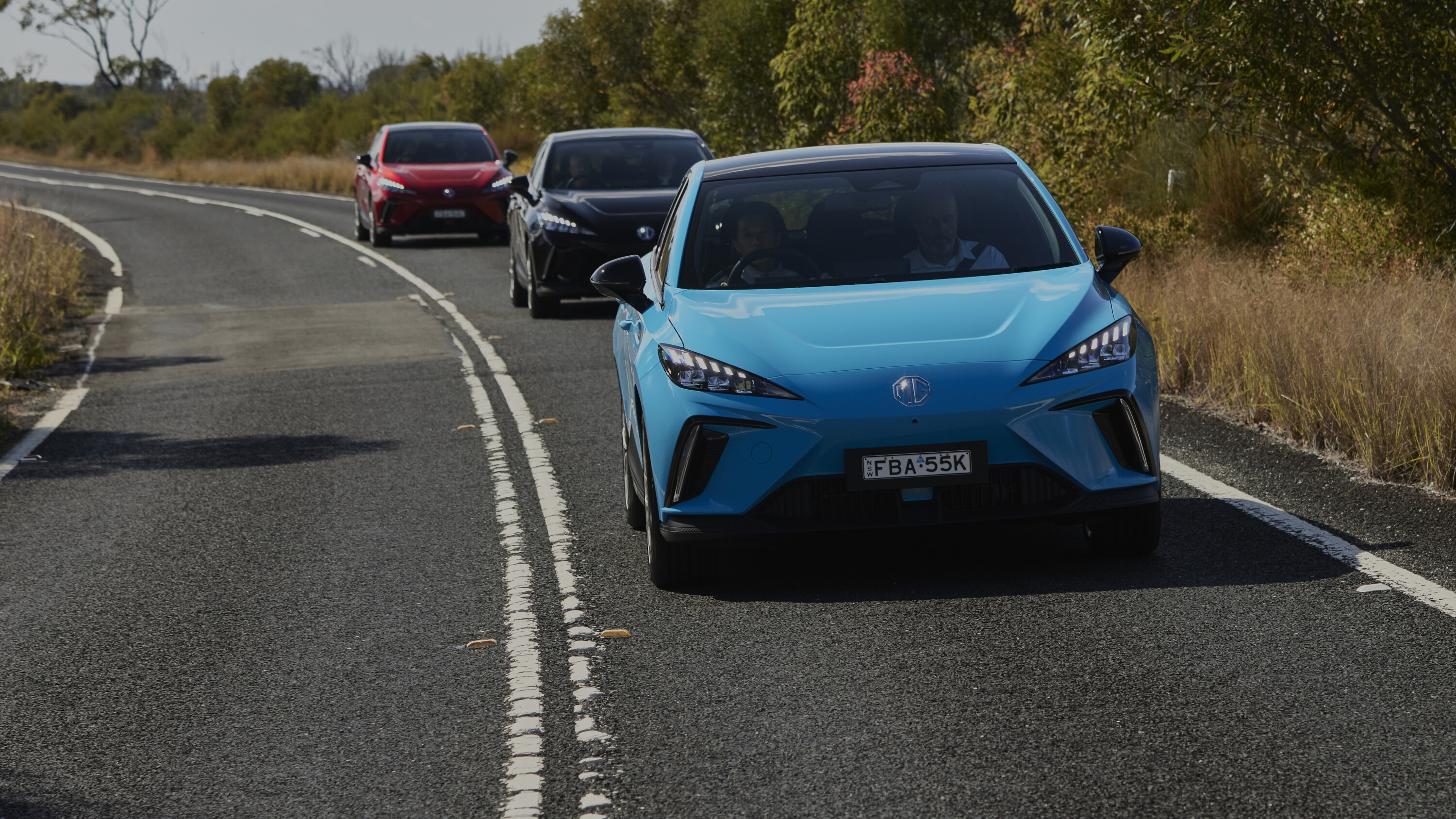
The ground-up MSP architecture underpins a hatch that rides and handles admirably. The MG4’s dampers run smoothly through their travel and round out sharp-edged hits around town, yet hit an offset spoon drain or speed hump a little too fast and the body remains entirely in control.
There’s a sporty edge to the MG4’s ride that limits lean mid-corner. It feels as though MG benchmarked the Peugeot 308 and Volkswagen Golf, and the team has done a good job getting close with a great balance of chassis feedback and control.
1
Aside from a rear axle that could do with a little more rebound control to settle it on big mid-corner bumps and lifeless steering (that, to be fair, is accurate and easy to turn in town), the MG4’s chassis is excellent.
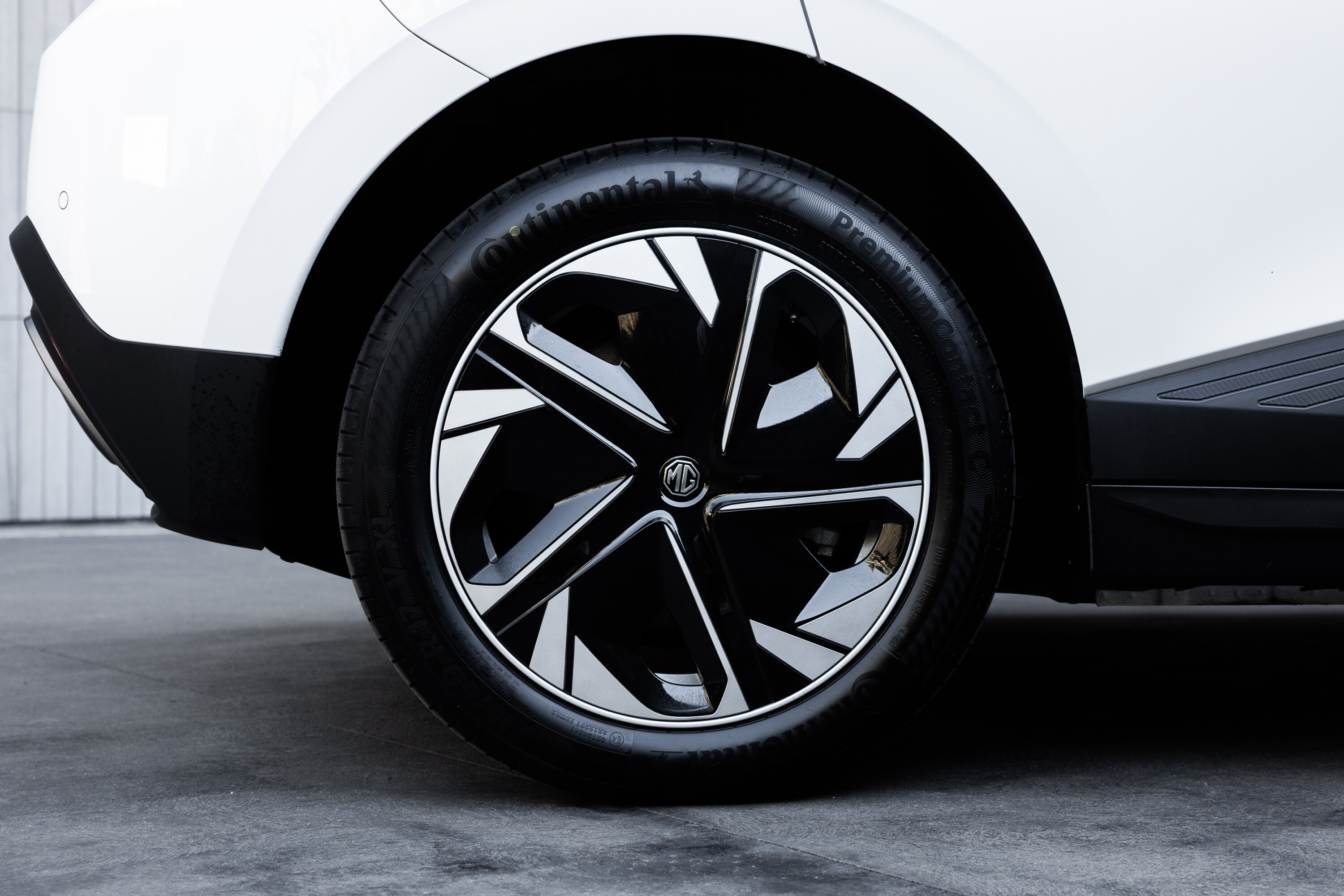
The 235/45 R18 Bridgestone Turanza T005 EV tyres don’t introduce any undue harshness so there’s no need to limit yourself to the 17-inch alloyed base model. The compound is grippy enough and, because they’re EV-specific, the tyres are quiet on open roads and during freeway driving.
In fact – aside from some wind whistle from the driver’s side mirror above 100km/h – the MG has excellent NVH insulation, something that not all EVs can boast.
1
Only on particularly craggy coarse chip bitumen can you hear resonant frequencies, but cruising at 110km/h on the Hume – even in the back seat – it’s easy to hold a conversation.
Starting the MG4 is a little unconventional for those used to combustion cars; you simply hop in with the proximity key (after pressing a little button on the door handles to unlock), twist the gear selector to Drive, and you’re off.
With the Essence 64kWh able to hit 100km/h in 7.2 seconds it’s plenty brisk on the move. The 1672kg Essence’s 61.7kWh battery is paired with a 150kW/250Nm eight-layer hairpin permanent magnet synchronous motor and a single-speed reduction gear; top speed is limited to 160km/h.
You can choose from three levels of regenerative braking and a true one-pedal drive mode.
None feels quite as natural as Polestar and Tesla’s integration, and the brake pedal requires quite a push to bring the car to a stop as the motor regen blends out and the physical brake calipers bite.
As well as five drive modes from Eco and Snow to Sport, there is a Custom setting. Normal and Sport have the most natural blend of response from the steering and throttle, with Eco being a little too dull.
The Long Range’s 77kWh battery is paired with a 180kW/350Nm motor that shoots the MG hatch to 100km/h in a Cupra Born-beating 6.5 seconds. Worth it if you want a warmed-through hatch, but for most buyers the 150kW power unit will be plenty – those after a hotter version should wait for the 320kW AWD MG4 XPower that’s confirmed for Australian release.
1
- What is a Powertrain or Drivetrain?
- Power vs torque
- Car suspension explained
- Automatic transmissions (‘gearboxes’) explained
- Chassis control systems explained
- Car vs Ute vs SUV: How the vehicle you buy should guide the way you drive
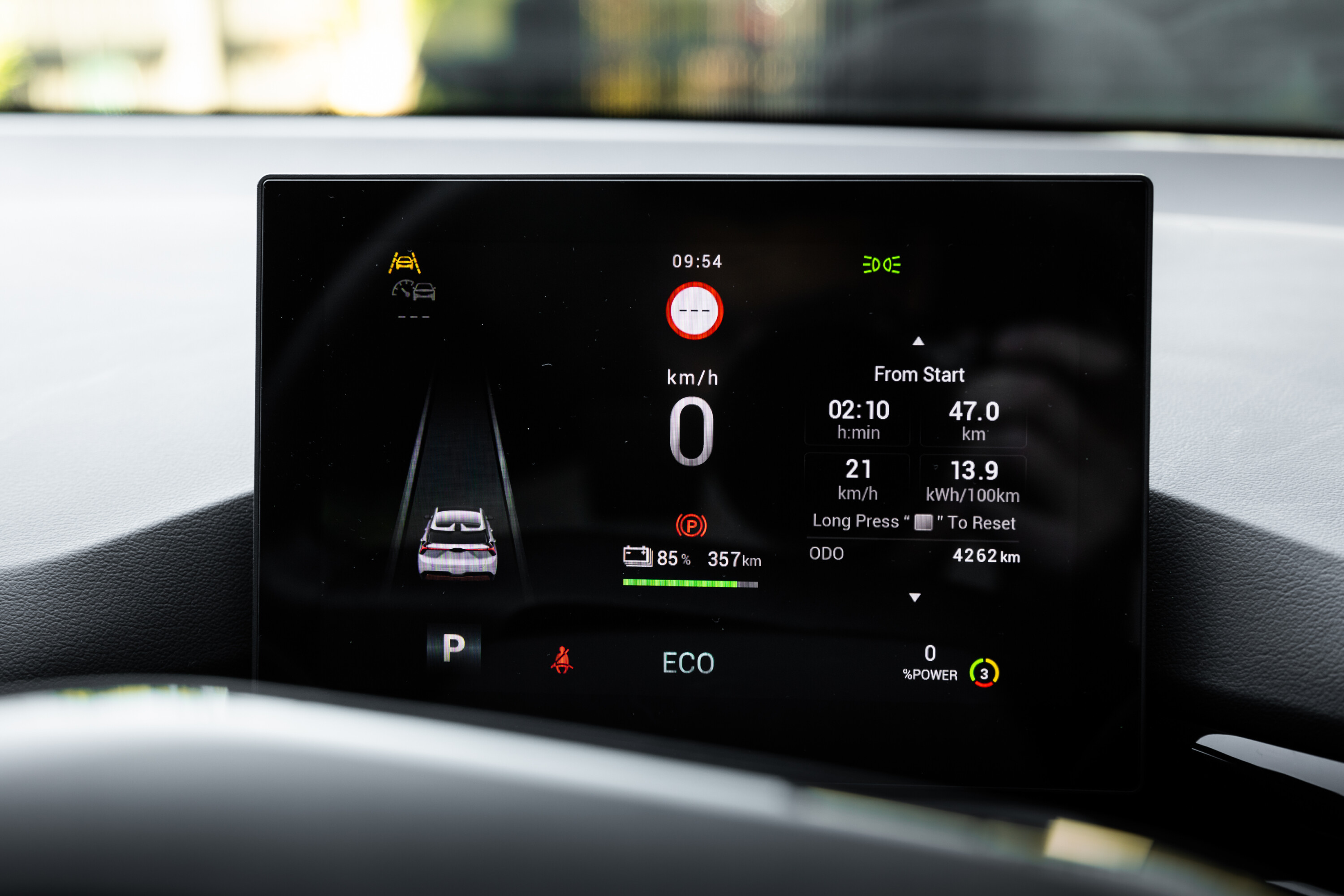
Across the MG4 line-up, the WLTP driving range fluctuates between 351km-530km. The Essence we drove is rated at 435km in the combined WLTP cycle from a full charge of its 110mm-thick 61.7kWh battery.
On the MG4’s national media launch south of Sydney, we averaged 19.7kWh/100km over 160km of brisk driving. That equates to 313km of range, though the route wasn’t representative of an everyday driving scenario.
With the higher output battery, the MG4 can fast-charge at up to 140kW on public DC infrastructure, rejuvenating battery percentage from 10-80 in 26 minutes.
1
For home charging, the MG4 takes AC electricity on at a rate of 6.6kW for a 0-100 per cent charge of around 10 hours.
MG recommends only charging the 61.7kWh battery to 80 per cent to preserve its life, and not letting it fall below 20 per cent where possible.
Using MG’s ‘iSmart’ telematics app, owners can schedule charge times to take advantage of cheaper electricity prices, or best utilise their home solar power – this can also be done using the MG4’s on-board infotainment system.
The iSmart app can also pre-condition the climate control and lock/unlock the vehicle but the physical key is still needed to drive off. A 12-month subscription is included in the purchase, and afterward, MG will offer customers the ability to continue paying for the features. Pricing is yet to be confirmed.
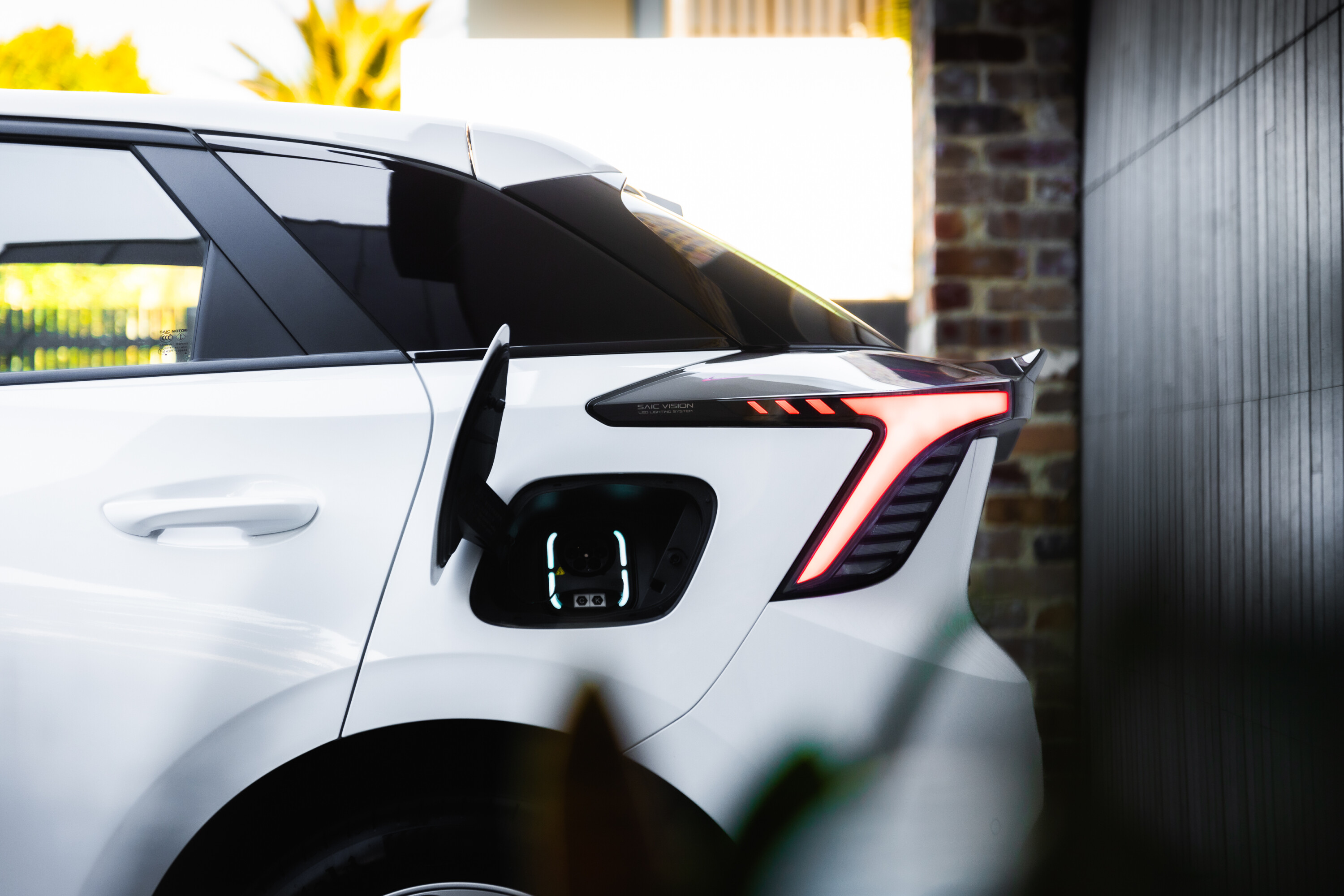
The MG4 is also capable of vehicle-to-load (V2L) functions. Using the onboard cable and 10-amp controller, you can plug into the front charge port and dish out 2.5kW of electricity.
1
How safe is it?
The 2024 MG4 was awarded five stars in ANCAP testing under the 2020-2022 criteria.
ANCAP’s scoring was promising across the board, with good scores for adult occupant (83 per cent) and child occupant (86 per cent) protection, as well as solid vulnerable road user protection (75 per cent) and decent safety assist (81 per cent).
The car does miss out on a centre airbag, bringing its total to six, though is fitted with driver assistance systems such as AEB, adaptive cruise control and lane-keep assist. The MG4’s calibration is better than we’ve experienced from other Chinese brands, such as GWM/Haval and Chery, as well as MG’s previous efforts.
1
Warranty and running costs
The MG4 is backed by a seven-year, unlimited-kilometre warranty and an equal period of capped-price servicing.
The MG4 can travel 24 months or 40,000km between visits to the dealer. Over six years/120,000km, servicing will cost $1478. Twelve months of roadside assistance is included.
1
VERDICT
If Tesla’s Model Y has become the must-have electric automotive accessory, the MG4 electric hatchback is an egalitarian electric car.
The MG 4 brings electric car ownership to the Australian masses in a complete and pragmatic package – the same sort of revolution the Volkswagen Golf ushered in at its 1974 launch, or more recently, Hyundai’s transformative FD-gen i30 did in 2006.
1
There are a few gripes – the lack of rear air vents and fold-down armrest are two we’d love to see addressed.
A petrol car still gives you more bang for buck on a spec sheet, too, but this electric hatch exudes maturity and completeness in a way its EV price rivals don’t.
The MG4 is a normal car with an electric powertrain, and it’s all the better for it. This mid-spec Essence 64kWh is our pick of the bunch, with all the technology, safety, and creature comforts you need for under $50K.
MORE
Everything MG
More EV stories to help you choose the best car for your needs
- ? EV news, reviews, advice & guides
- ❓ Short & sweet: Your EV questions answered
- ⚡ New EVs: Everything coming to Australia
- ? Australia’s EVs with the longest driving range
- ⚖️ Best-value EVs by driving range
- ? How much do EVs cost in Australia?
- ? How much more expensive are EVs?
- ⚖️ Number crunching: Is it time to switch to an EV?
- ♻ Should you buy a used EV?
- ?️ Are EVs more expensive to insure?
- ? Costs compared: Charging an EV vs fueling a car
- ? EV charging guide
- ? Are there enough EV chargers in Oz?
- ?? EV servicing explained
- ? EV battery types explained
- ? When do EV batteries need replacing?
- ? Hydrogen v EVs: What’s best for Oz?
- ✋? Mind your manners! EV charging etiquette tips
- ? How sustainable are EVs, really?
MORE advice stories to help you with buying and owning a car
| 2023 MG 4 Essence 64kWh specifications | |
|---|---|
| Price | $47,990 + on-road costs |
| Layout | single motor, rear-wheel drive |
| System power | 150kW |
| System torque | 250Nm |
| Gearbox | single-speed reduction gear |
| Body | 5-door, 5-seat small hatch |
| L/W/H | 4287/1836/1516mm |
| WB | 2705mm |
| Weight | 1672kg |
| Boot | 350L |
| Battery usable (gross) | 61.7kWh (64kWh) |
| Driving range | 435km (WLTP) |
| Charging (AC/0-100%) | 6.6kW/9h 45m |
| Charging (DC/10-80%) | 140kW/26m |
| Suspension | Front: struts, coil springs / Rear: five-link independent, coil springs |
| Steering | electric rack-and-pinion |
| Tyres | Bridgestone Turanza T005 EV |
| Tyre size | 235/45R18 |
| ANCAP rating | five stars (2022) |
| 0-100km/h | 7.2sec (claimed) |
December: MG 5 slammed with zero-star safety rating
The criteria for a five-star result might be “ridiculous”, but a three- or a four-star rating shouldn’t have been this hard…
August: MG Australia boss claims five-star ANCAP requirements are “so high it’s ridiculous”
China’s MG has defended the lack of more advanced active safety technology in its most affordable vehicles.
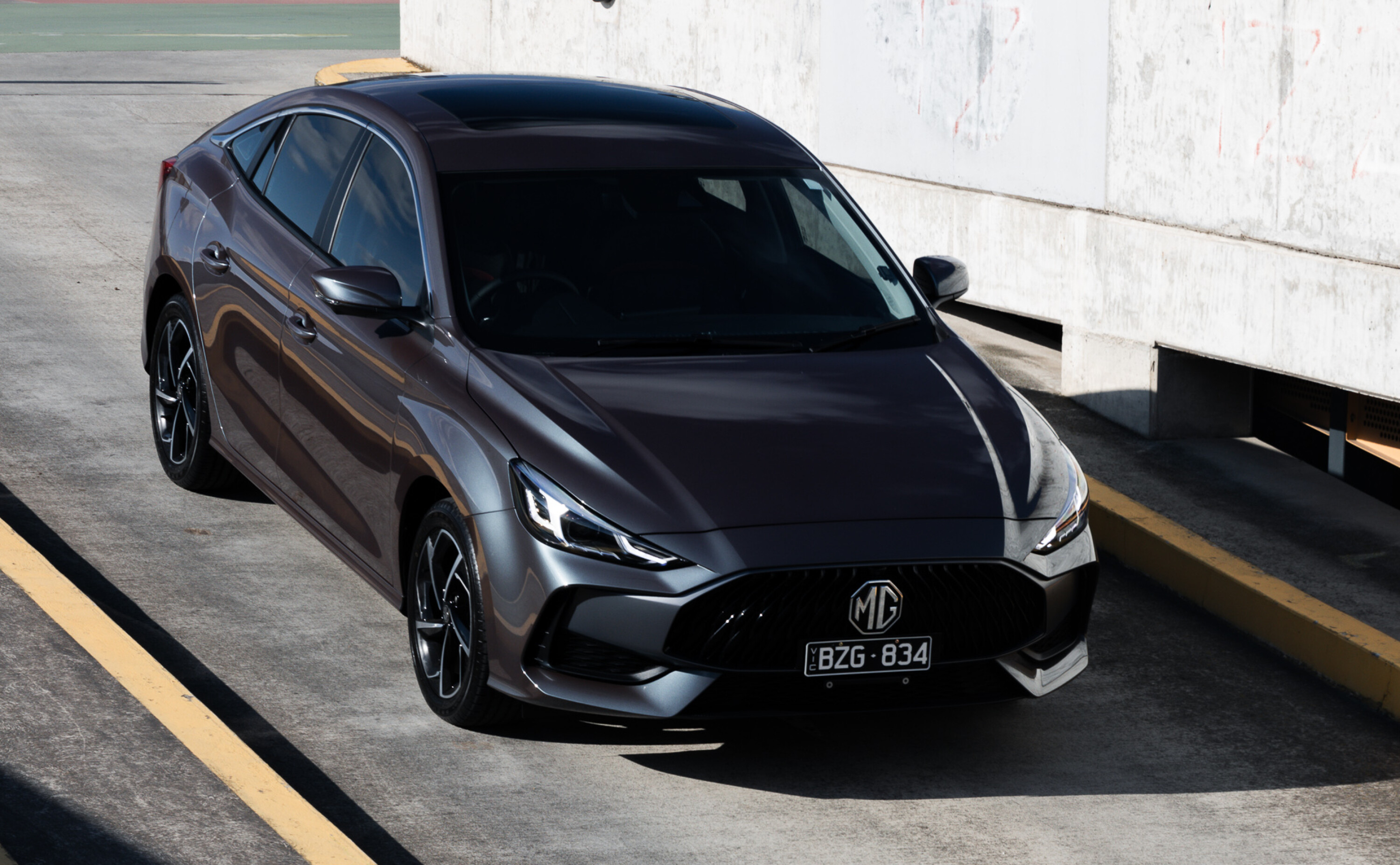
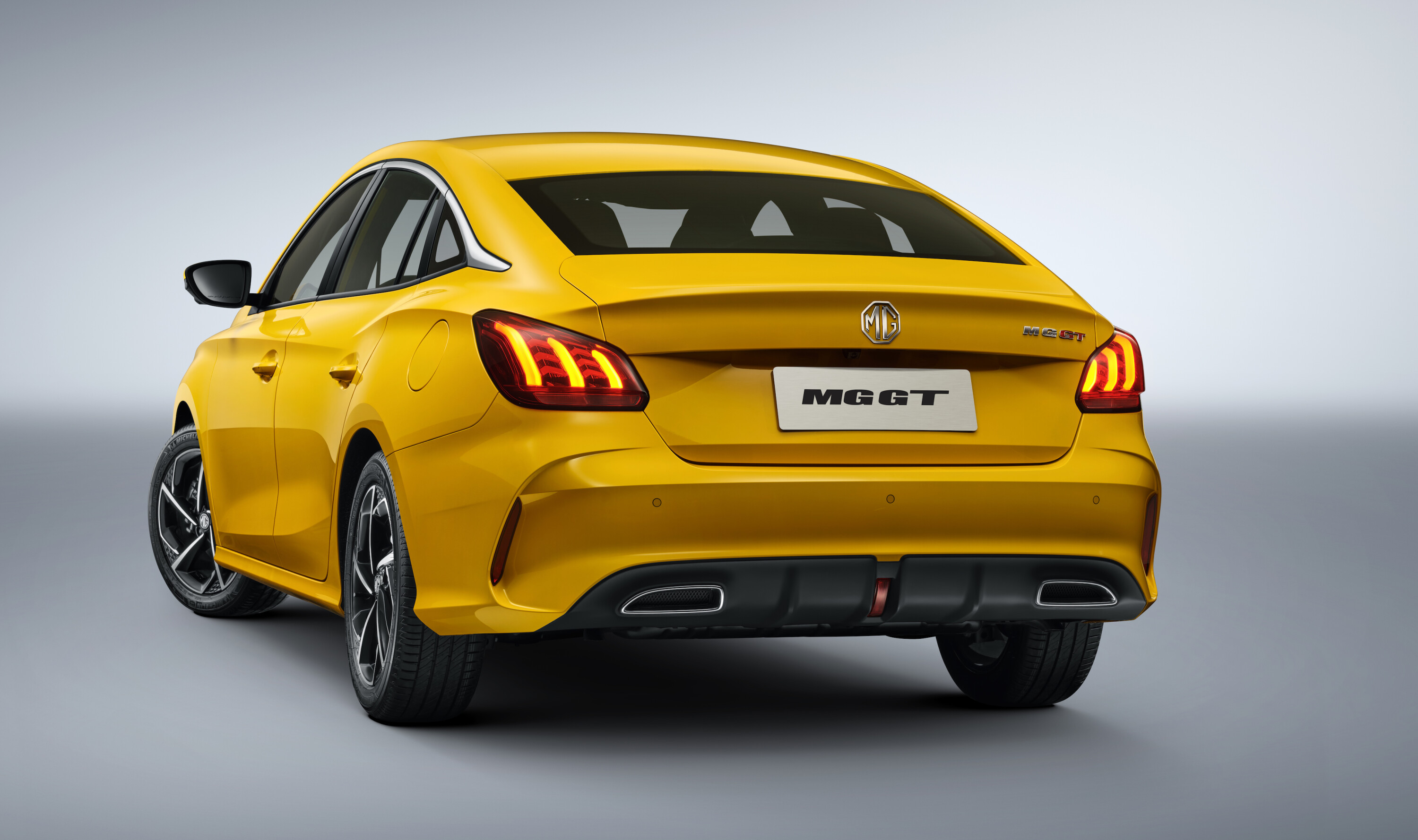
Launched in recent weeks, the four-door 2023 MG 5 is priced from $24,990 drive-away. By undercutting the Hyundai i30, Kia Cerato, Toyota Corolla and Mazda 3 – and even the one-size-smaller Mazda 2 sedan – it becomes Australia’s cheapest sedan.
We can provide any model with five-star [credentials], but that costs money.
Not without cost, however. While its rivals are dearer, they’re more richly equipped when it comes to safety features. The MG 5‘s suite is limited to low-speed autonomous emergency braking – a requirement for all brand-new vehicles introduced in Australia since March 1, 2023.
Missing active safety features that are assessed by safety organisation ANCAP include lane-keep assist, lane departure warning, and speed recognition and driver monitoring systems.
1
The entry-level MG 5 Vibe is also not fitted with rear seatbelt reminders, while all variants lack blind-spot and rear cross-traffic alerts.
ANCAP assesses active safety equipment in its ‘safety assist’ and ‘vulnerable road user’ categories – with minimum scores of 70 per cent required to achieve a five-star rating or 60 per cent for a four-star rating.
MG Australia chief executive officer Peter Ciao said the brand has no plans to provide MG 5 vehicles to ANCAP. If the safety organisation plans to assess the MG 5, it would need to purchase the test vehicles.
1
This is a similar move to Hyundai Australia, which decided not to provide the i30 Sedan to ANCAP. Like the MG 5, it lacks a front-centre airbag but has a full safety suite. It remains untested.
When asked if an ANCAP rating below five stars could affect MG 5 sales, Ciao said the brand made a choice between lower prices or more-advanced safety features.
“With each model, what [a five-star safety rating] really is, is a business decision, not a technical one. Because when we develop each model, we will decide, we will make a choice: How much? And what kind of technology to provide?” he said.
1
“We can provide any model with five-star [credentials] but that costs money, you know, and now in Australia this safety requirement is now so high it’s ridiculous.”
Speaking previously with Wheels Media, ANCAP CEO Carla Hoorweg said that “safety-related costs are undoubtedly a factor in vehicle pricing, but only one relatively small component,” something that MG and other brands don’t necessarily agree on.
“We do not apologise for encouraging increasing levels of safety when too many lives are lost, and serious injuries are still occurring on our roads,” added Hoorweg.
“The technology is available and becomes even more important for purchasers of smaller cars given the fundamental mass differences between them and larger vehicles they mix with on our roads today.”
1
Without a five-star ANCAP rating, the MG 5 would be excluded from some government and business fleets, and popular ride-share service Uber, if an exemption isn’t provided.
The MG 3 light hatch – which dates back to 2011 – is not fitted with any form of active safety technology, and neither is the four-star-rated ZS small SUV.
Both vehicles are the cheapest in each segment – and highest-selling – with the MG 3 light hatch priced at $19,990 drive-away and ZS small SUV at $23,990 drive-away.
A new MG 3 is expected here in mid-2024. It will require autonomous emergency braking to be sold in Australia.
“[MG] launched in Australia six years ago but the business decision is survival first, so we focus on affordably priced [cars] under $20K and under $30K,” added Ciao.
MORE
Everything MG
Getting your international driver’s licence, also known as an International Driving Permit (IDP), takes a few simple steps here in Australia.
Before embarking on your next trip, make sure to not forget this important item on your checklist if you plan on driving whilst overseas.
If however, you are planning on travelling for an extended period of time, or rather moving overseas you may need to apply for a local driver’s licence.

1
What is an International Driving Permit?
An International Driving Permit (IDP) serves as a translated version of a driver’s license, meaning it doesn’t hold validity on its own.
It must be paired together with a valid driver’s licence to allow you to drive a vehicle overseas.
When travelling it is common for rental car companies and local authorities to require you to hold an IDP to rent or drive a vehicle.
That being said, while in some countries it’s not always a requirement it’s always better for peace of mind to have one. For example, different states in the US operate under different regulations, so you don’t want to be caught out if you’re travelling between regions.
1
How to apply for an International Driving Permit
All Australian IDPs are processed through the Australian Automobile Association (AAA) and can be purchased through a local state or territory motoring club, such as the RACV or NRMA.
To avoid purchasing counterfeit permits or licenses, it’s best to apply through the AAA or the motoring club retail stores, as they are the only authorised provider of international licences in Australia.
The licence itself is valid for 12 months from the date of issue and is recognised in over 150 countries.
1
What will you need to apply for the permit?
To apply for an International Driving Permit (either online or at a motoring club branch) you’ll require the following:
- A recent headshot that meets the requirements of the Australian Passport office [↗]
- Your Australian driver licence
- Payment method – either card for online payment or to pay in store
1
How much will it cost?
The current fee via the Australian Automobile Association [↗] website is $49 plus postage.
The in-store fees are the same when visiting a retail premises such as your local NRMA branch.
Will I still need to carry my driver licence?
Since the IDP on its own isn’t a licence, you will still need to have your state-issued driver’s licence with you when travelling.
It will need to be your physical card as Australian digital identification is not currently recognised in most overseas locations.
More guides to help you choose the best car & tyres for your needs
- All tyre news & reviews
- Longest warranties & capped-price servicing period
- Buy new or used?
- Best cars for your teenager
- Must-have features for new drivers
- Active safety tech explained
- Australian road rules explained
- Does driving slower save fuel?
- Does my car need the pricier fuel?
- Help, I’ve used the wrong fuel!
- What is a hybrid car?
- How long do tyres last?
- What shoes should I wear to drive?
- What to do after buying a new car
- How much does LCT add to a car’s price?
- The ‘check engine’ light just came on…
- Is it illegal to drive too slowly in Oz?
- FWD v RWD v AWD – which is safer?
- How much can my large SUV tow?
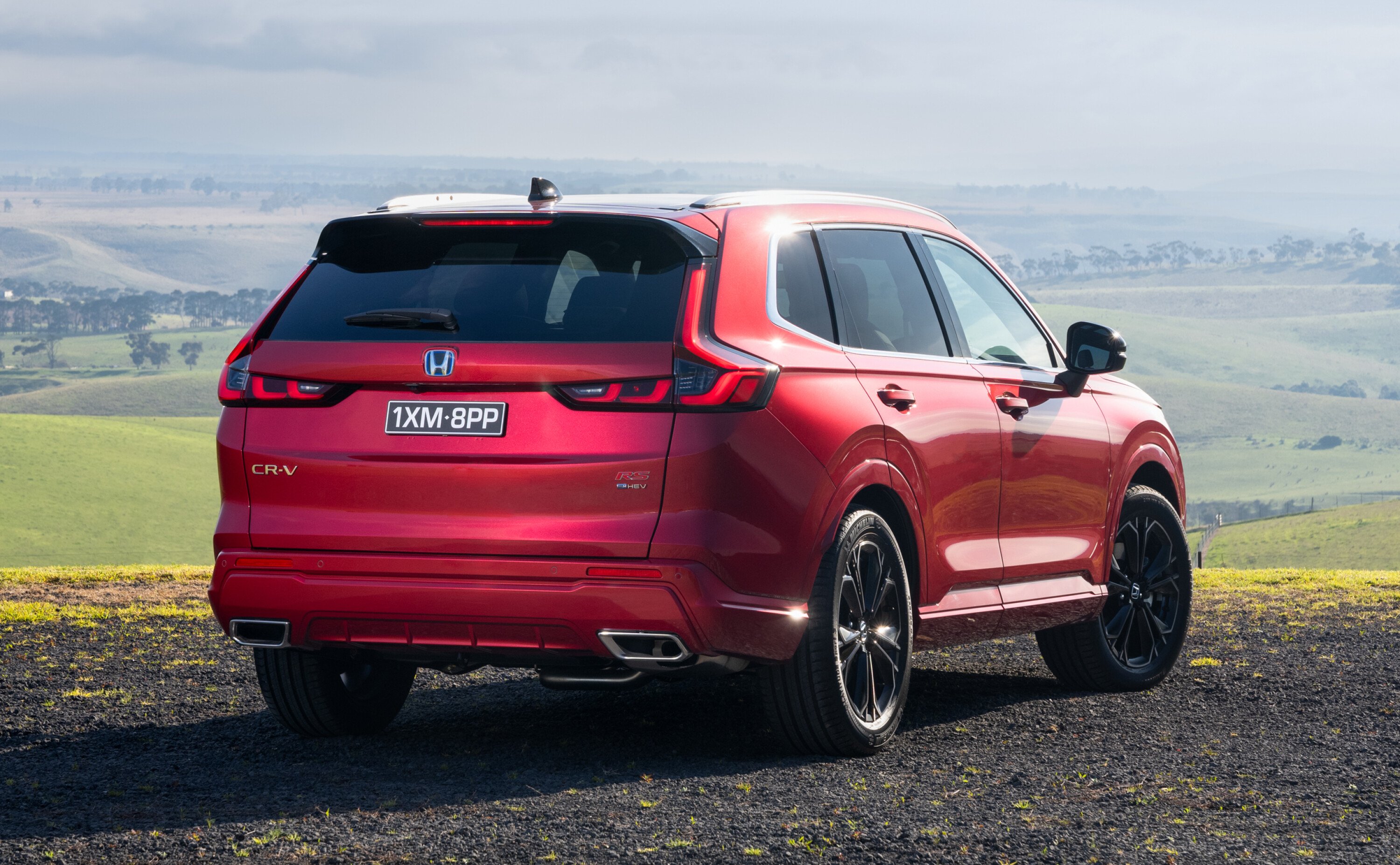
More local details for the 2024 Honda CR-V mid-size SUV have emerged.
Snapshot
- 2024 Honda CR-V features announced
- Combined fuel consumption figures released
- Sixth-gen mid-size SUV due here later this year
A document published by Honda Australia has confirmed equipment and fuel consumption details for the entire CR-V line-up, after the brand confirmed pricing last week.
As detailed here, the seven-grade, Thai-built CR-V range starts from $44,500 drive-away – up $6000 over the previous base turbo model – and tops out with a new-for-Australia hybrid variant, the $59,900 drive-away E:HEV RS.
Under the bonnet, all ‘VTi’ variants have an unchanged 140kW/240Nm 1.5-litre four-cylinder turbo-petrol engine, matched to a CVT automatic transmission and front- or all-wheel drive.
Front-drive five-seat variants carry a combined ADR consumption figure of 7.1L/100km – down 0.3L/100km – while the FWD seven-seat and VTi L AWD variants are unchanged at 7.3L/100km and 7.4L/100km, respectively.
The flagship turbo-petrol VTi LX AWD now consumes 7.7L/100km on the combined cycle – up 0.3L/100km.
1
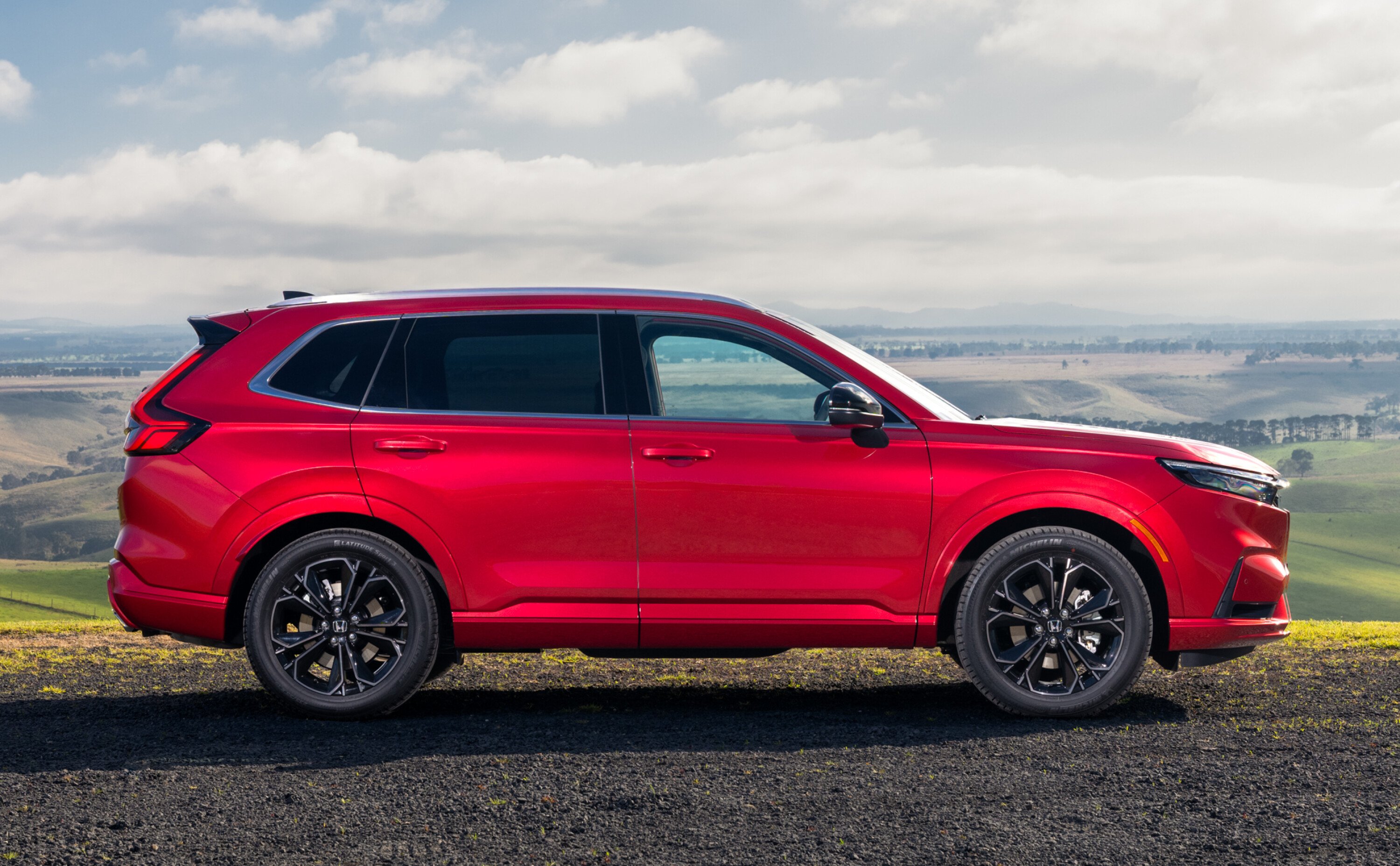
As with the Civic, Accord and ZR-V hybrids, the CR-V E:HEV RS combines a 2.0-litre naturally-aspirated four-cylinder petrol with an electric motor, for a 135kW and 335Nm total system output.
It is matched to an ‘E-CVT’ automatic transmission, and while an all-wheel-drive hybrid is available in the United States and South-East Asia, the Australian-spec model will be FWD-only at launch.
Fuel consumption is listed at 5.5L/100km for the CR-V E:HEV RS hybrid.
1
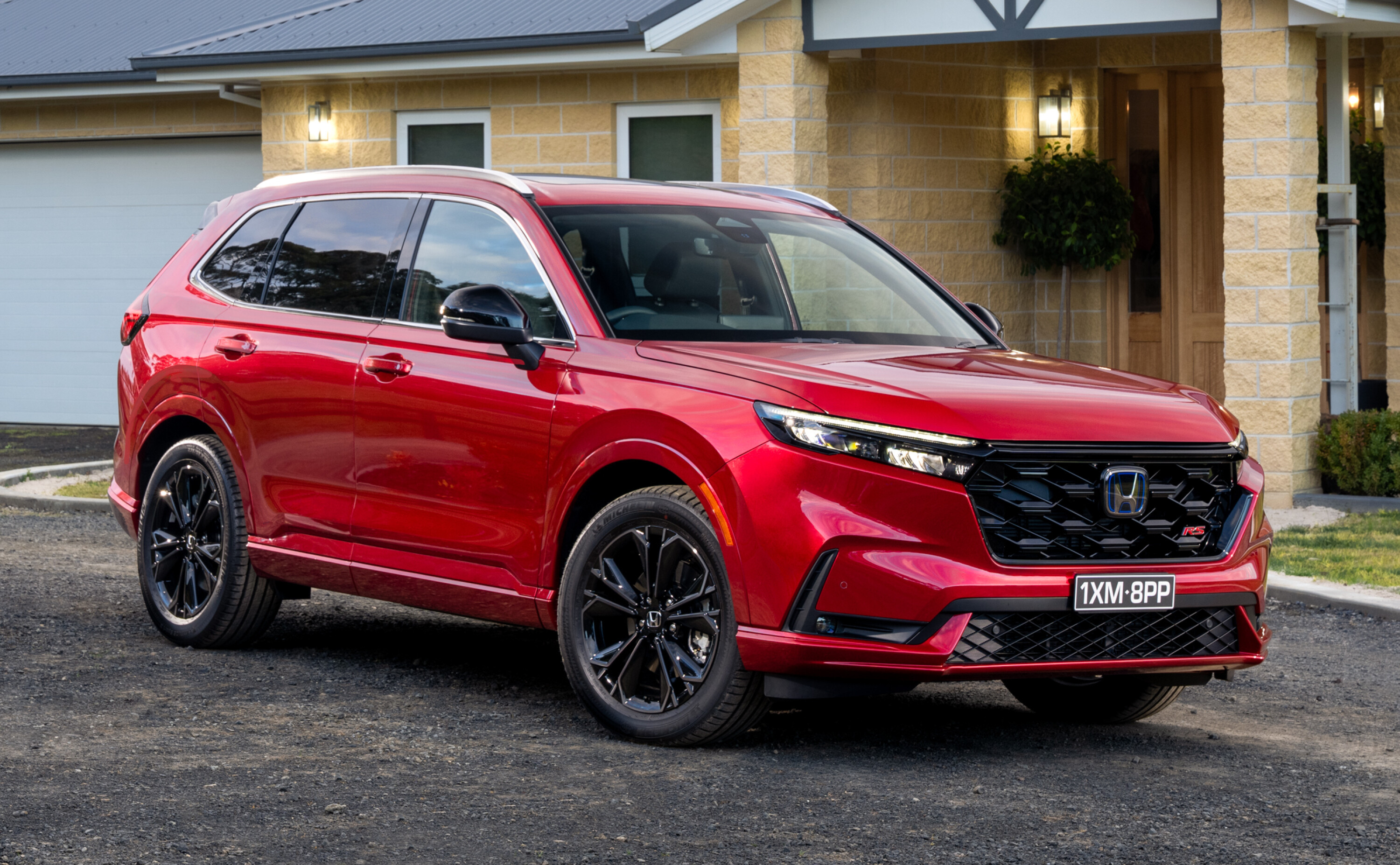
Autonomous emergency braking, lane-keep assist, lane departure warning, road departure mitigation, adaptive cruise control with low-speed follow, traffic jam assist, traffic sign recognition and automatic high beam are standard across the range.
Radar-based blind-spot and rear cross-traffic alerts – replacing the ‘LaneWatch’ camera system – are fitted to most variants, but the base five-seat VTi X misses out on this technology.
Eleven airbags (dual front, knee, front and rear side, curtain, and front-centre) are fitted across the CR-V range, up from six in the previous model.
1
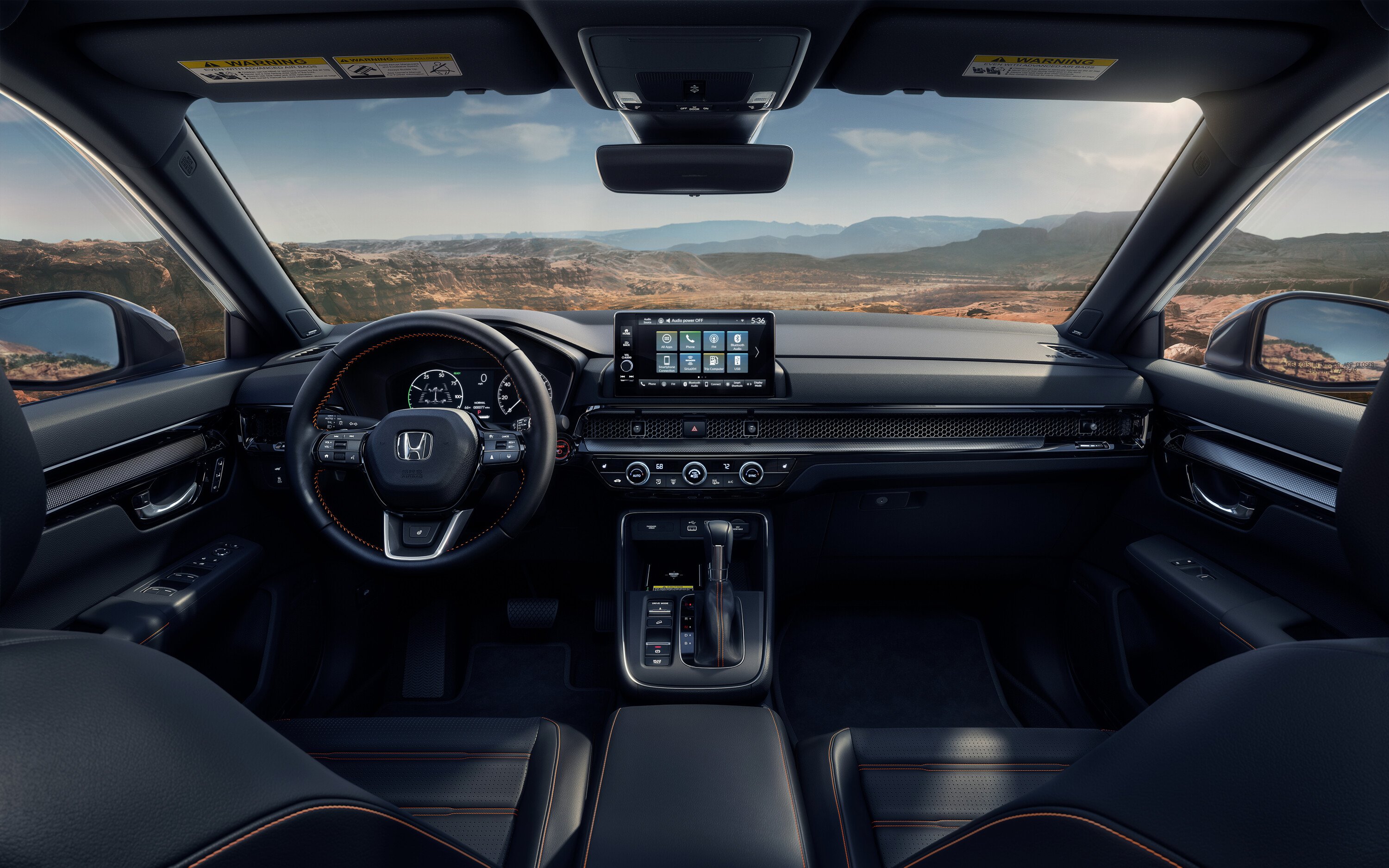
A full run-down of the 2024 Honda CR-V’s pricing and features is available below.
Honda Australia said customer orders for the new CR-V are due to commence in September ahead of local arrivals before the end of this year, with more details to be announced soon.
2024 Honda CR-V pricing
All prices are drive-away.
| Model | Pricing | Change |
|---|---|---|
| VTi X FWD five-seat | $44,500 | up $6000 (vs 2023 VTi) |
| VTi X7 FWD seven-seat | $46,800 | up $6000 (vs 2023 VTi 7) |
| VTi L FWD five-seat | $48,800 | up $6900 (vs 2023 VTi X) |
| VTi L AWD five-seat | $51,300 | up $5100 (vs 2023 VTi L AWD) |
| VTi L7 FWD seven-seat | $53,000 | up $3500 (vs 2023 VTi L7) |
| VTi LX AWD five-seat | $57,000 | up $3400 (vs 2023 VTi LX AWD) |
| E:HEV RS FWD five-seat | $59,900 | new |
1
2024 Honda CR-V features
| 2024 Honda CR-V VTi X features | |
|---|---|
| 17-inch alloy wheels | Hands-free electric tailgate with walk-away close |
| Full-size alloy spare wheel | Cloth upholstery |
| 9-inch infotainment system | Plastic steering wheel and gear shifter |
| Wireless Apple CarPlay and wired Android Auto | Dual-zone climate control |
| Honda Connect connected-car service | Conversation mirror |
| Eight-speaker audio system | Eight-way power-adjustable driveru2019s seat |
| Wireless phone charger | LED headlights |
| 7-inch semi-digital instrument cluster | Front and rear parking sensors. |
2024 Honda CR-V VTi X7 features
| In addition to VTi X | |
|---|---|
| Blind-spot alert | Tri-zone climate control |
| Rear cross-traffic alert | Space-saver spare wheel (in lieu of full-size). |
| Third-row seating | |
2024 Honda CR-V VTi L features
| In addition to VTi X | |
|---|---|
| 18-inch alloy wheels | Heated front seats |
| Blind-spot alert | Two-position driveru2019s seat memory function |
| Rear cross-traffic alert | Four-way power-adjustable passenger seat |
| Satellite navigation | Leather-wrapped steering wheel and gear shifter |
| Smart key card | Auto-dimming rear-view mirror |
| Rear privacy glass | u2018iu2019-Dual-zone climate control |
| Roof rails | Rain-sensing wipers. |
| Black leather-appointed upholstery | |
2024 Honda CR-V VTi L7 features
| In addition to VTi L | |
|---|---|
| Panoramic sunroof | Tri-zone climate control |
| Third-row seating | Space-saver spare wheel (in lieu of full-size). |
2024 Honda CR-V VTi LX features
| In addition to VTi L | |
|---|---|
| 19-inch alloy wheels | u2018Sportu2019 front and rear bumpers |
| 12-speaker Bose audio system | Auto-tilting side mirrors in reverse |
| 10.2-inch digital instrument cluster | Ambient interior lighting. |
| Panoramic sunroof | |
2024 Honda CR-V E:HEV RS features
| In addition to VTi LX | |
|---|---|
| 19-inch alloy wheels (dark finish) | Black rear spoiler |
| u2018Sportu2019 drive mode | Black leather upholstery with red stitching |
| Steering wheel-mounted deceleration paddle | Colour-matched wheel arches |
| Adaptive LED headlights with active cornering | Red steering wheel and gear shifter stitching |
| Tyre repair kit (in lieu of full-size alloy spare wheel) | Black headlining |
| Black exterior trim | Deleted: All-wheel drive. |
MORE
Everything Honda
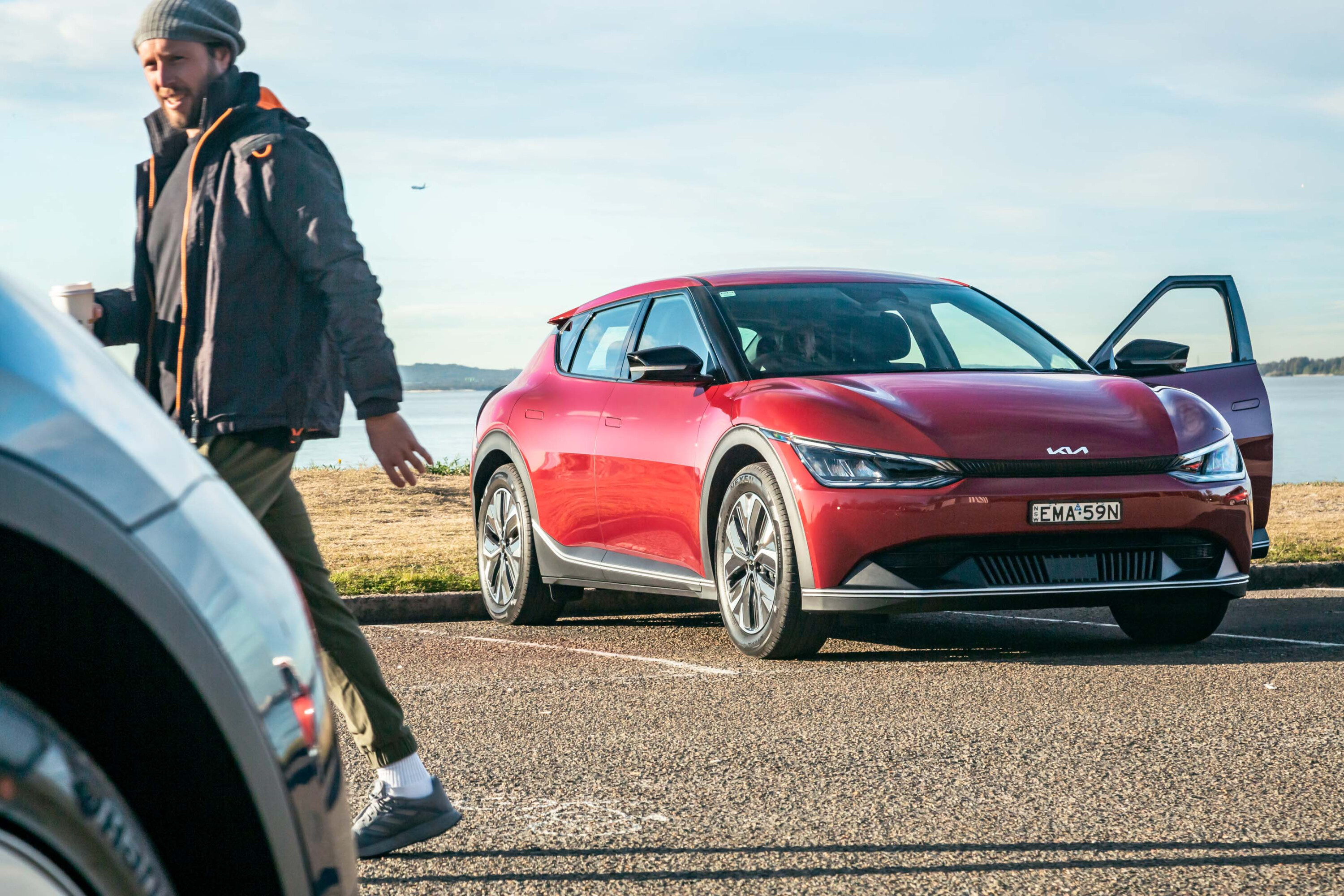
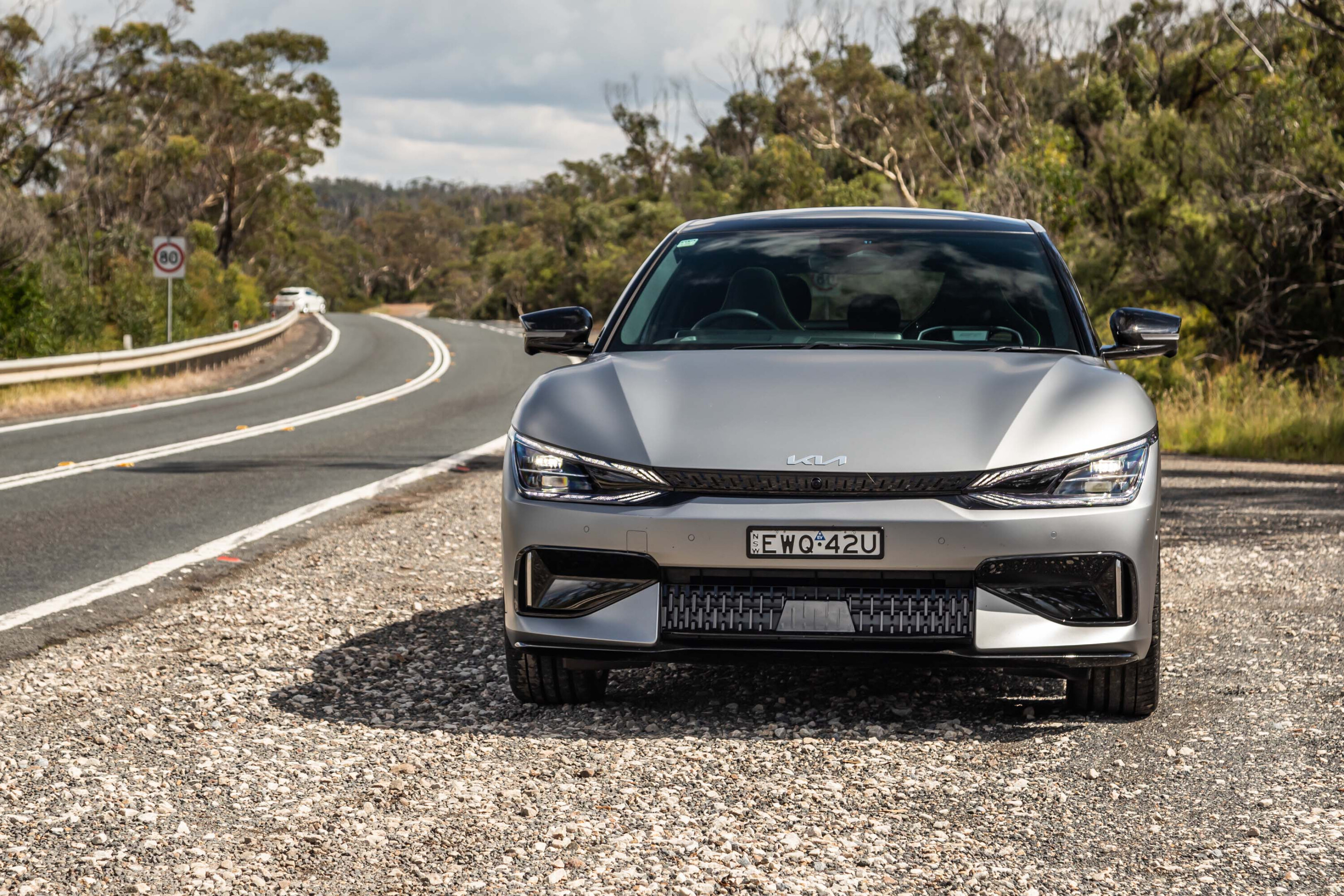
The Kia EV6 is a sporty medium electric crossover SUV that represents the automaker’s first ground-up EV and spiritual successor to the short-lived Stinger liftback.
It launched in Australia in early 2022 with three variants, including Air and GT-Line rear-wheel drive (RWD) and GT-Line all-wheel drive (AWD), while the high-powered GT flagship joined the line-up a year later. All models utilise the same battery pack size.
The EV6 adopts the Hyundai Motor Group’s Electric Global Modular Platform (E-GMP), which is shared with the retro-inspired Hyundai Ioniq 5 and upmarket Genesis GV60.
JUMP AHEAD
- Pricing
- What body styles are available for the Kia EV6?
- What features are standard in every Kia EV6?
- What features do I get if I spend more?
- How safe is the Kia EV6?
- How comfortable and practical is the Kia EV6?
- How much boot space does the Kia EV6 offered?
- I enjoy driving – will I enjoy this car?
- Which version of the Kia EV6 provides the longest range?
- What is the Kia EV6’s towing capacity?
- How long is the warranty and What are the Kia EV6’s servicing costs?
- Which version of the Kia EV6 does Wheels recommend?
- What are the Kia EV6’s key rivals?
- What might annoy me?
- Does any upgrade have a down side?
- What might I miss that similar cars have?
- What’s the infotainment system like?
- Where does Kia make the EV6?
- Are there plans to update the Kia EV6 soon?
Pricing
Prices below exclude on-road costs, dealer delivery fees and the Luxury Car Tax (LCT) where applicable.
| 2023 Kia EV6 variant | Price |
|---|---|
| Air | $72,590 |
| GT-Line RWD | $79,590 |
| GT-Line AWD | $87,590 |
| GT | $99,590 |
1
What body styles are available for the Kia EV6?
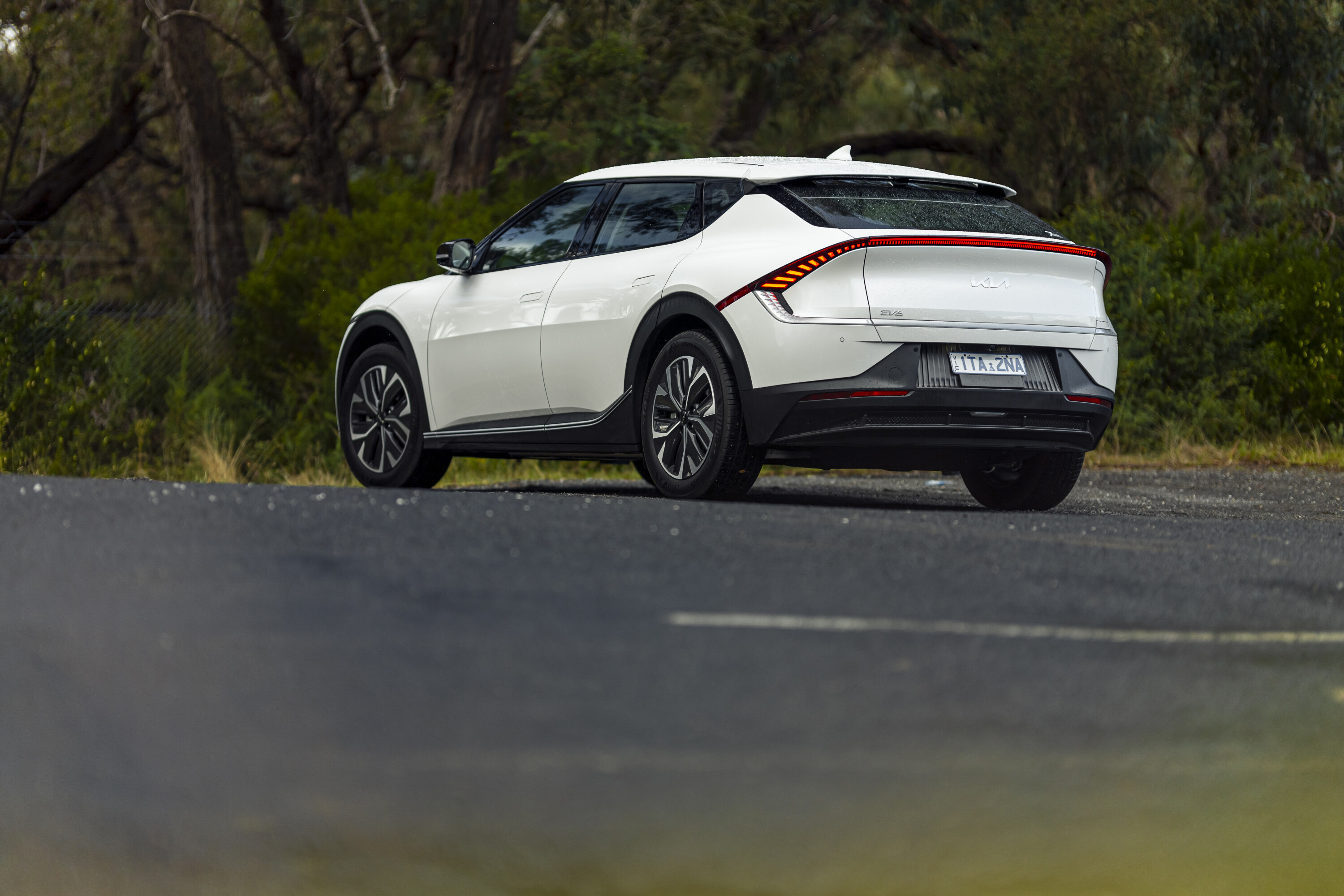
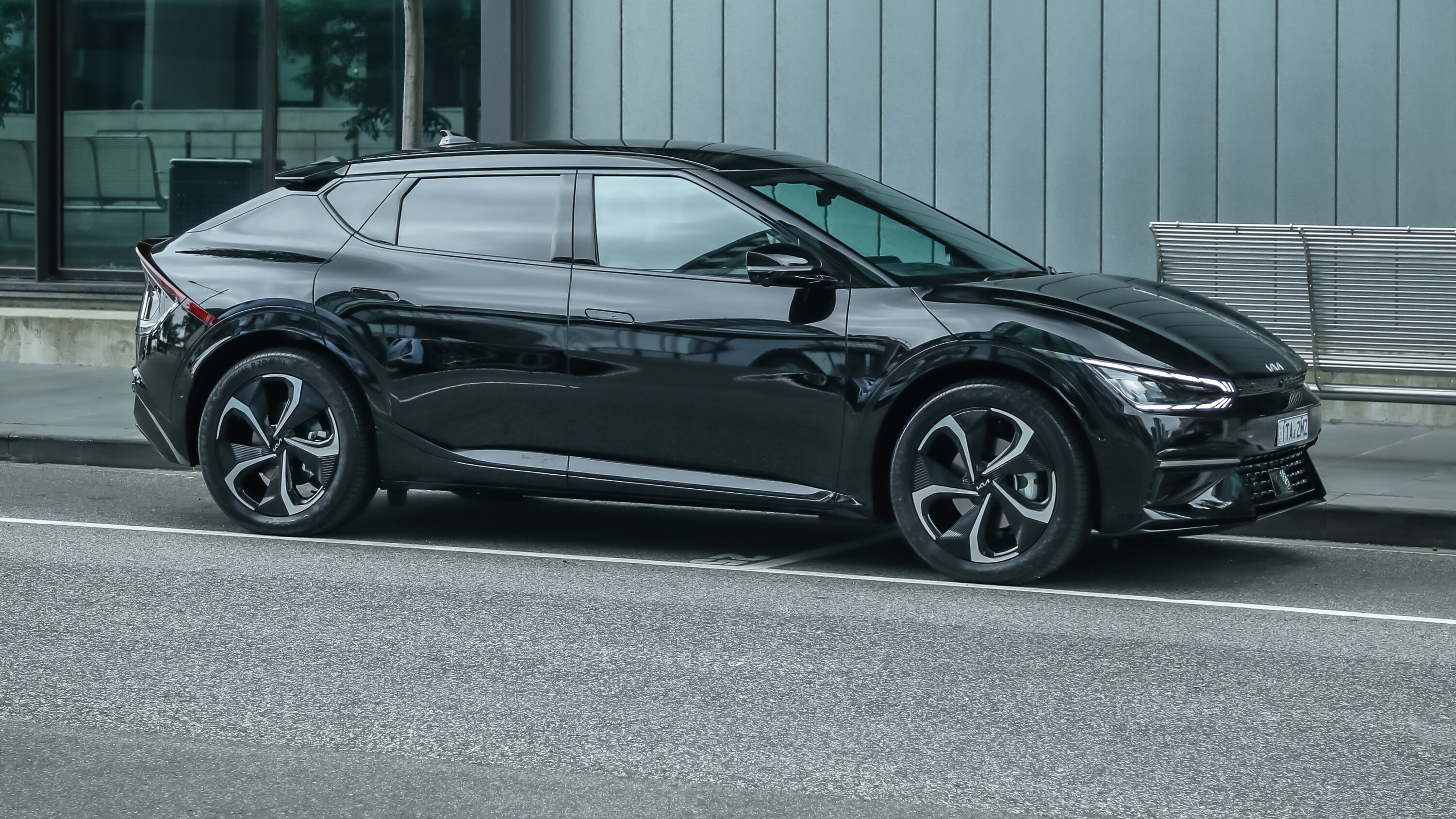
The Kia EV6 is classed as a five-seater medium SUV.
However, in reality, it appears to be more of a large hatchback (or shorter wagon) with a lower overall height and ground clearance than the petrol- and diesel-powered equivalent Kia Sportage SUV.
| Air | GT-Line RWD | GT-Line AWD | GT | |
|---|---|---|---|---|
| Length | 4680mm | 4695mm | 4695mm | 4695mm |
| Width | 1880mm | 1890mm | 1890mm | 1890mm |
| Height | 1550mm | 1550mm | 1550mm | 1545mm |
| Wheelbase | 2900mm | 2900mm | 2900mm | 2900mm |
| Ground Clearance | 160mm | 160mm | 160mm | 155mm |
| Boot (minimum / rear seats folded) | 490 / 1270-litres | 480 / 1260-litres | 480 / 1260-litres | 480 / 1260-litres |
| Frunk | 52-litres | 52-litres | 20-litres | 20-litres |
| Tare weight | 2000kg | 2000kg | 2105kg | 2185kg |
Table scrolls horizontally to reveal more columns
1
What features are standard in every Kia EV6?
Things we like
- Good standard kit
- Air doesnu2019t have gloss black centre console and door trims
Not so much
- Lower-spec, smaller battery version would help bring down the price
The base Kia EV6 Air is well-featured, with a single electric motor, rear-wheel drive and a 74kWh usable lithium-ion battery.
| 2023 Kia EV6 Air standard features | |
|---|---|
| 19-inch alloy wheels | Cloth and artificial leather seats |
| Full LED head- and tail-lights | Fabric look dashboard with silver metallic interior trim |
| Dual curved 12.3-inch touchscreen and driver instrument displays | Light grey cloth headliner |
| Wired Apple CarPlay and wired Android Auto | Six-way manually adjustable front seats with two-way electric lumbar |
| Built-in maps, AM/FM/DAB radio | Two-spoke artificial leather steering wheel |
| Six-speaker audio | Flush exterior door handles |
| Qi wireless charging pad | Matte plastic wheel arches |
| Interior vehicle-to-load (V2L) plug | Gloss black wing mirrors, pillars and window surrounds |
| 1x USB-A, 4x USB-C, 2x 12-volt charging ports | Acoustic film windscreen, solar glass on windscreen and doors |
| Proximity key with push button start | Dual-zone climate control with rear air vents |
| Interior LED lighting | Manual rear child door locks |
1
What key features do I get if I spend more?
Things we like
- GT-Line RWD already achieves high spec level
Not so much
- GT-Line AWD doesnu2019t get much for $8K spend over RWD
- GT omits some comfort and convenience features
The mid GT-Line RWD has the same powertrain, but adds more comfort and convenience features.
| GT-Line RWD adds | |
|---|---|
| 20-inch alloy wheels | Artificial black suede/white leather seats |
| GT-Line exterior body design with body-coloured wheel arches | GT-Line pattern dashboard with gloss black interior trim |
| Augmented reality head-up display | Black cloth headliner |
| 64-colour ambient interior lighting | Eight-way electrically adjustable front seats |
| 14-speaker Meridian Premium branded audio system | Heated and ventilated front seats with relaxation mode |
| Exterior V2L (via included Type 2 adapter) | Two-position driveru2019s seat memory |
| Active Sound Design driving noises | Heated steering wheel |
| Remote smart parking assist | Manually reclining rear seats (60:40 split) |
| Auto pop in/out flush door handles | Laminated front door windows |
| Hands-free electric tailgate | Tinted rear privacy glass |
| Luggage net | Alloy pedals and metal scuff plates |
1
The GT-Line AWD gets a more powerful dual-motor setup for all-wheel drive, plus one additional feature.
| GT-Line AWD adds | |
|---|---|
| u2018Wideu2019 sunroof |
The flagship GT gets a hyper dual electric motor tune, but removes on some equipment.
| GT adds | ||
|---|---|---|
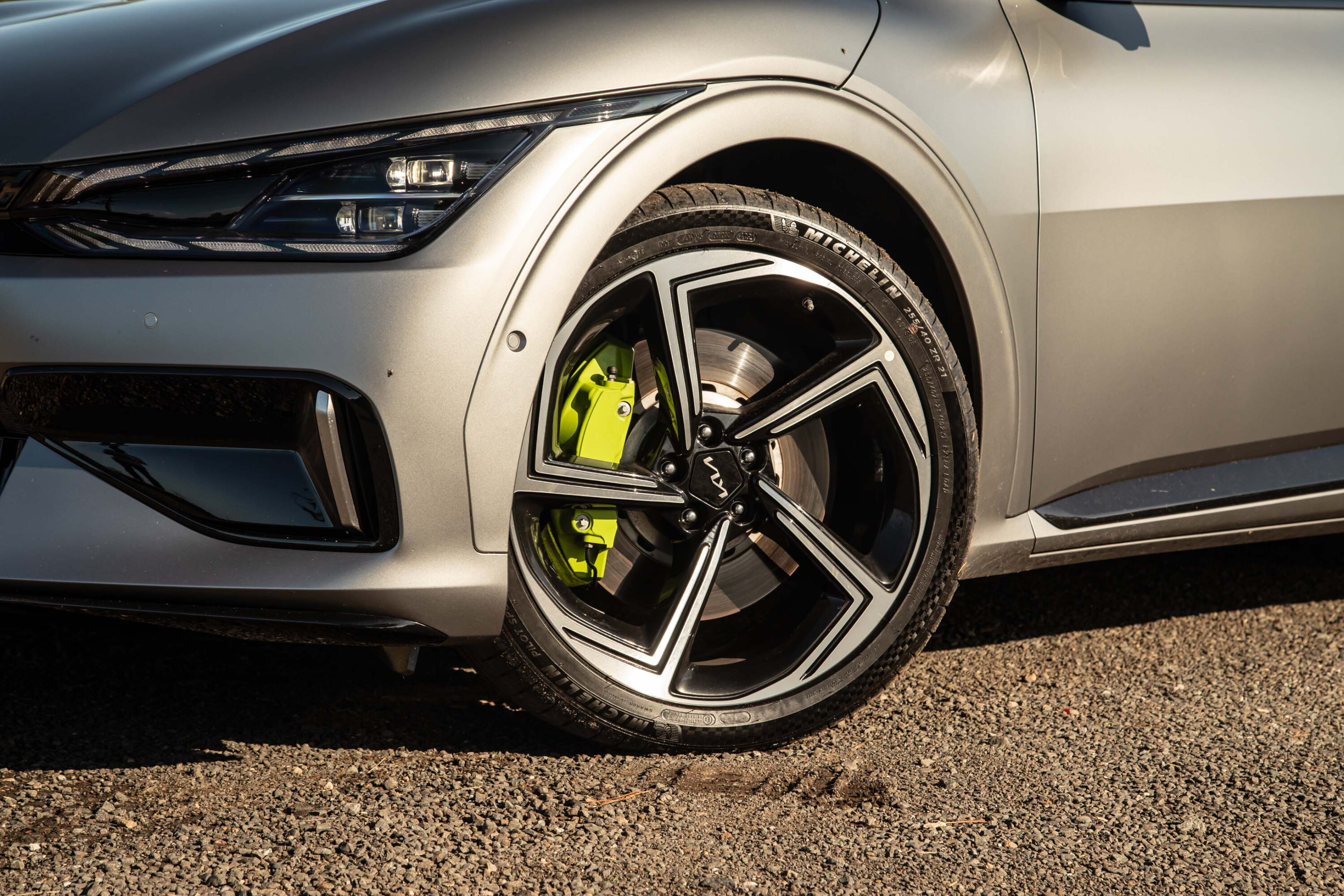
| 21-inch alloy wheels with Michelin Pilot Sport 4S tyres | Artificial suede and leather front bucket seats* | |
| Neon green painted brake callipers | Six-way manually adjustable heated front seats* | |
| GT exterior body design | Neon green stitched and piped seats with artificial suede door trim | |
| GT driving mode | Heated rear outer seats | |
| Electrically-limited slip differential | Adaptive matrix LED high beam headlights | |
| Electrically controlled suspension | Sequential front and rear turn indicators | |
| 380mm front and 360mm rear ventilated disc brakes | ||
| *Compared to the GT-Line, the EV6 GT removes front seat electric adjustment, lumbar support, ventilation, relaxation mode, and driveru2019s seat memory. | ||
1
2023 Kia EV6 options
| 2023 Kia EV6 exterior colours | |
|---|---|
| Runway Red | Standard |
| Yacht Blue | $520 |
| Snow White Pearl | $520 |
| Aurora Black Pearl | $520 |
| Glacier (Air only) | $520 |
| Steel Grey (Air only) | $520 |
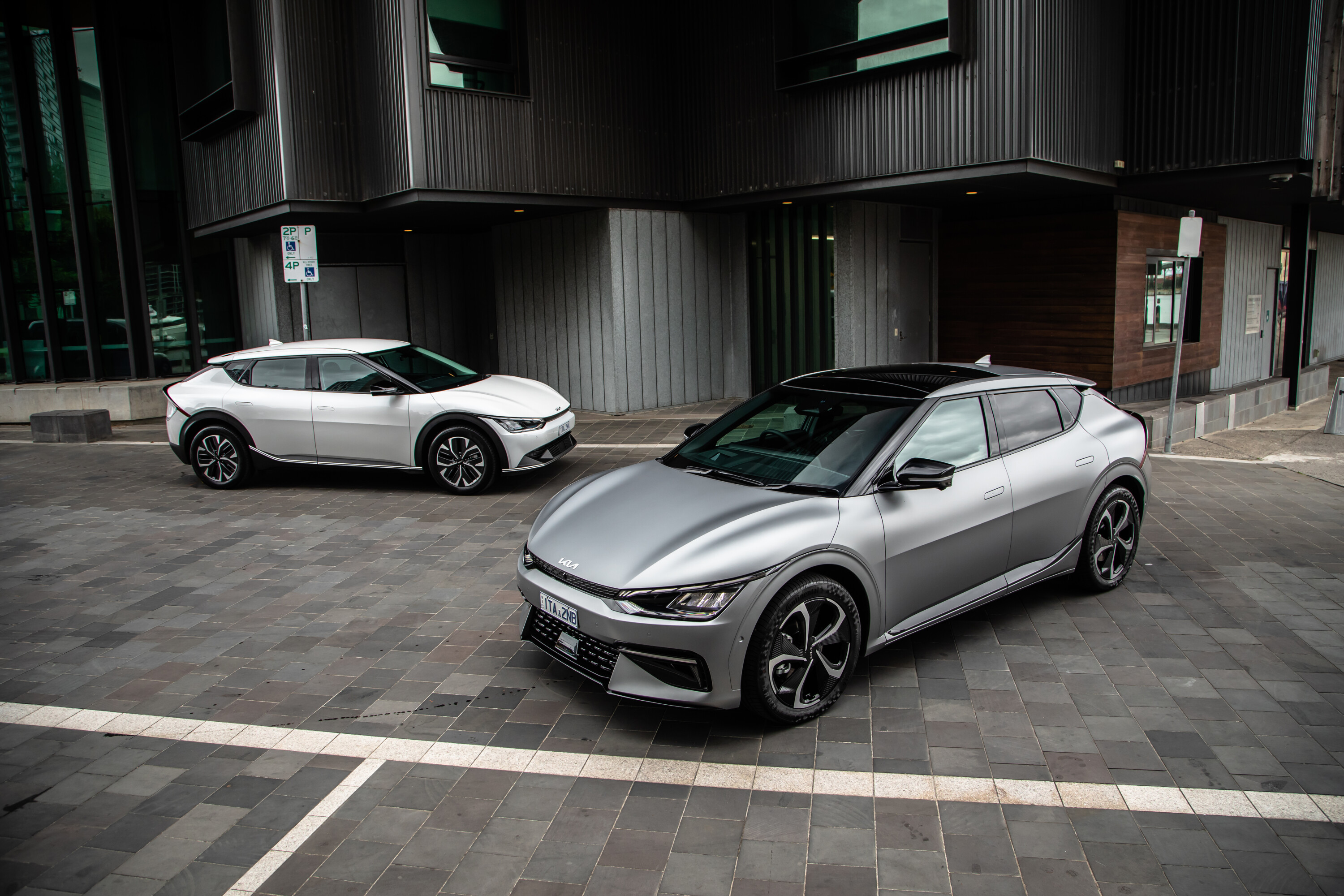
| Moonscape Grey Matte (GT-Line and GT only) | $3295 |
1
How safe is the Kia EV6?
Things we like
- Full 2022 ANCAP rating
- Most safety assist tech standard
Not so much
- Only $100K GT has adaptive matrix headlights
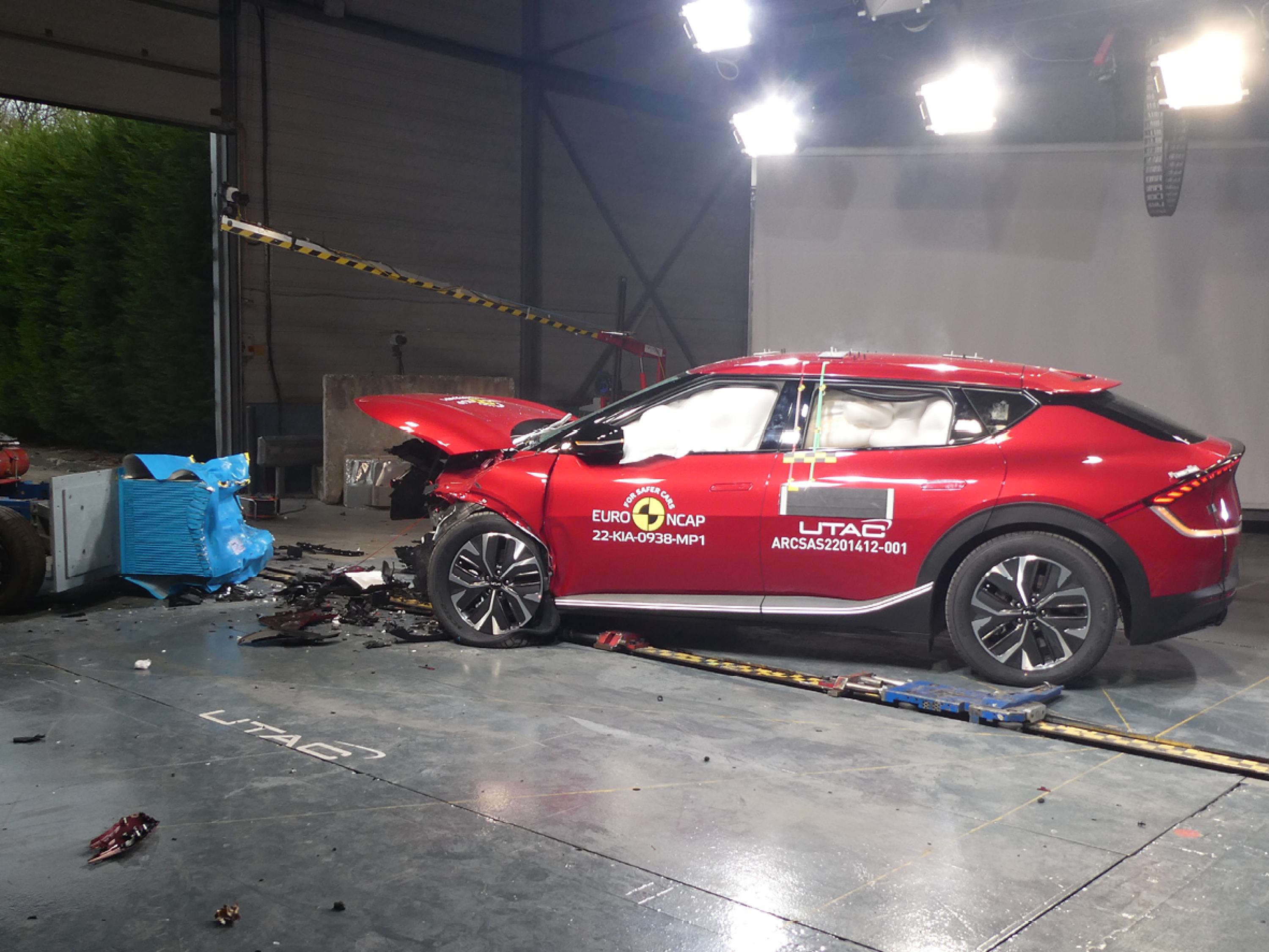
The Kia EV6 achieved the full five-star safety rating by the Australasian New Car Assessment Program (ANCAP) [↗] under the 2022 testing criteria. However, the flagship GT is unrated.
Individual assessment scores included: 90 per cent adult occupant protection, 87 per cent child occupant protection, 64 per cent vulnerable road user protection, and 88 per cent for safety assist systems.
All EV6 models feature eight airbags, including a centre airbag, plus two ISOFIX and three top-tether child seat anchor points at the rear row.
1
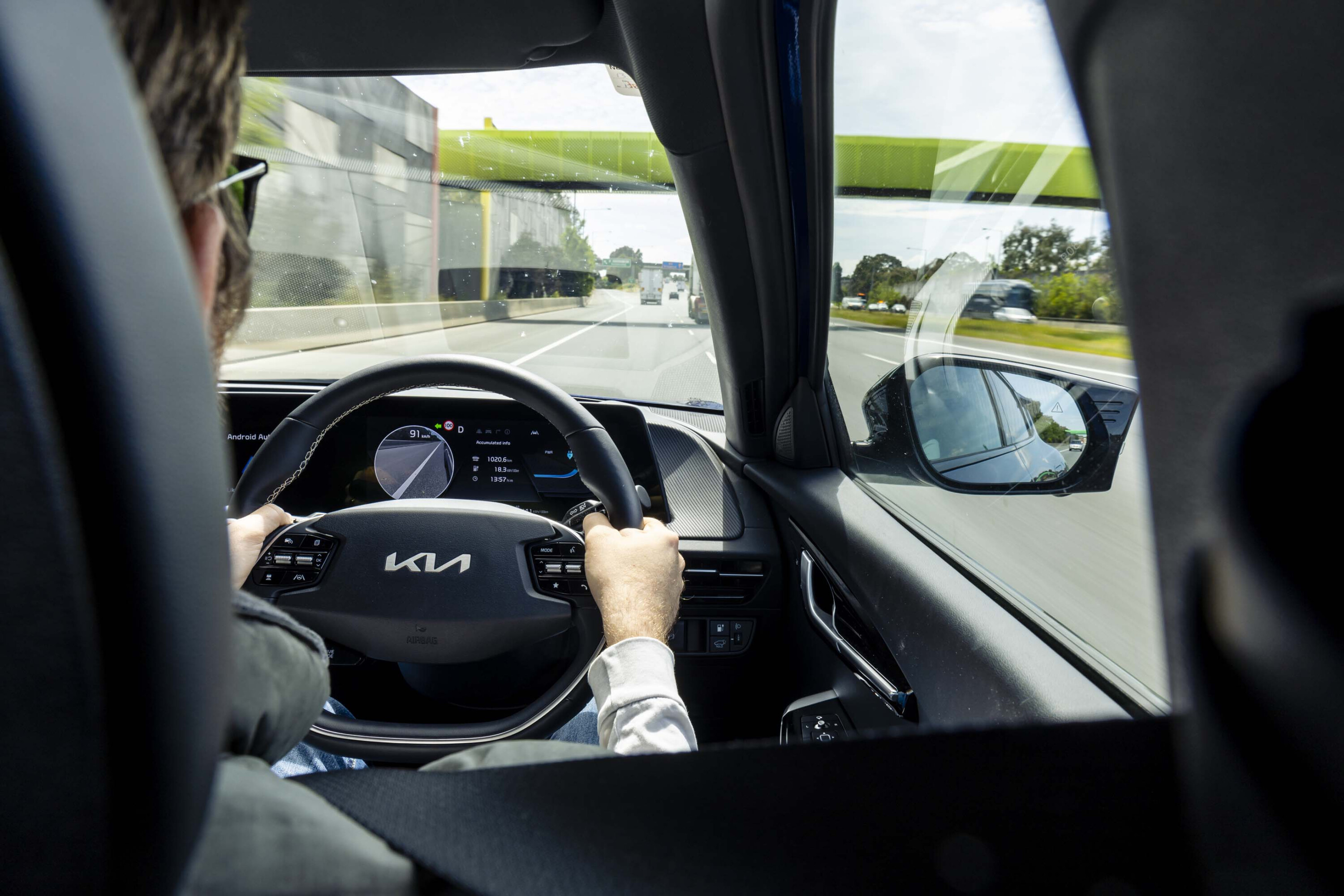
The entry-level EV6 Air, which comes standard with most active safety assistance technologies, uses a combination of camera and radar sensors.
| 2023 Kia EV6 Air standard safety assist features | |
|---|---|
| Front auto emergency braking (AEB) with vehicle/pedestrian/cyclist/intersection turning detection | Reversing camera |
| Lane-keep and lane-centring assist | Front and rear parking sensors |
| Blind-spot assist | Rear occupant alert |
| Rear cross-traffic assist | Safe exit door warning |
| Adaptive cruise control | Driver attention monitoring |
| Lead vehicle departure alert | Auto high beam LED headlights |
| Speed limit assist (based on built-in map data) | Manual rear child door locks |
1
GT-Line variants add more safety assist tech.
| GT-Line RWD/AWD adds | |
|---|---|
| Rear AEB | Safe exit assist |
| 360-degree camera system | Electric rear child door locks |
| Blind-spot view cameras | |
The top-spec GT exclusively includes a useful feature for night-time driving.
| GT adds | |
|---|---|
| Adaptive matrix LED headlights |
1
How comfortable and practical is the Kia EV6?
Things we like
- Spacious interior thanks to EV platform
- Comfy seats, especially on GT-Line
Not so much
- Limited headroom due to lower roof
- GT removes seat comfort and convenience features
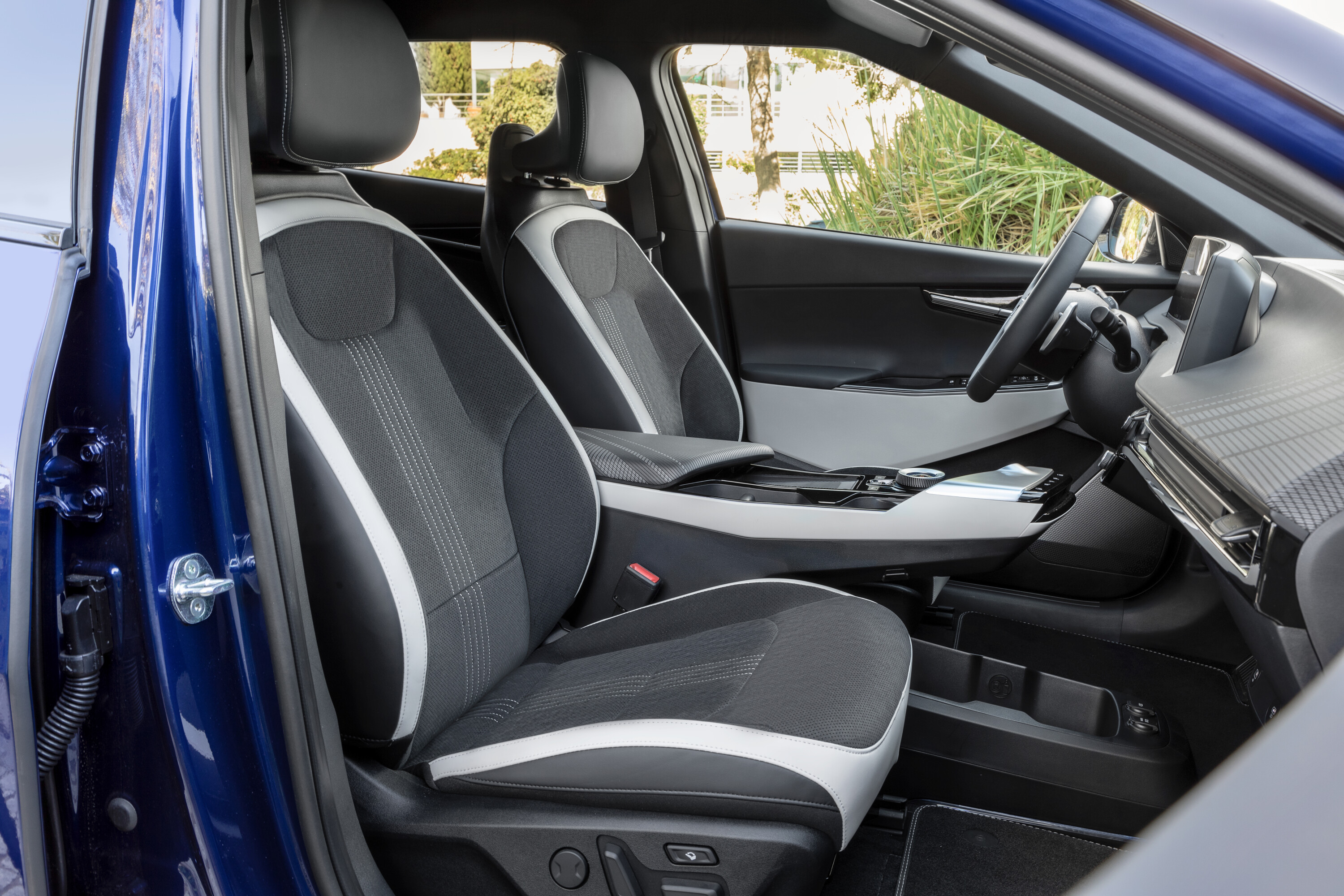
The Kia EV6’s five-seat interior is generally comfortable thanks to the well-packaged ground-up E-GMP underpinnings, but the sporty design emphasis has some compromises.
We found that the GT-Line’s animal-free suede and leather seats were most supportive, with the front seats benefiting from full electric adjustment, heating and ventilation functionality.
Meanwhile, the entry-level Air’s cloth and artificial leather combo was harder than desirable. The flagship GT, while it has heated rear outer seats, only has manually-adjustable front bucket seats that are firmer, but still supportive.
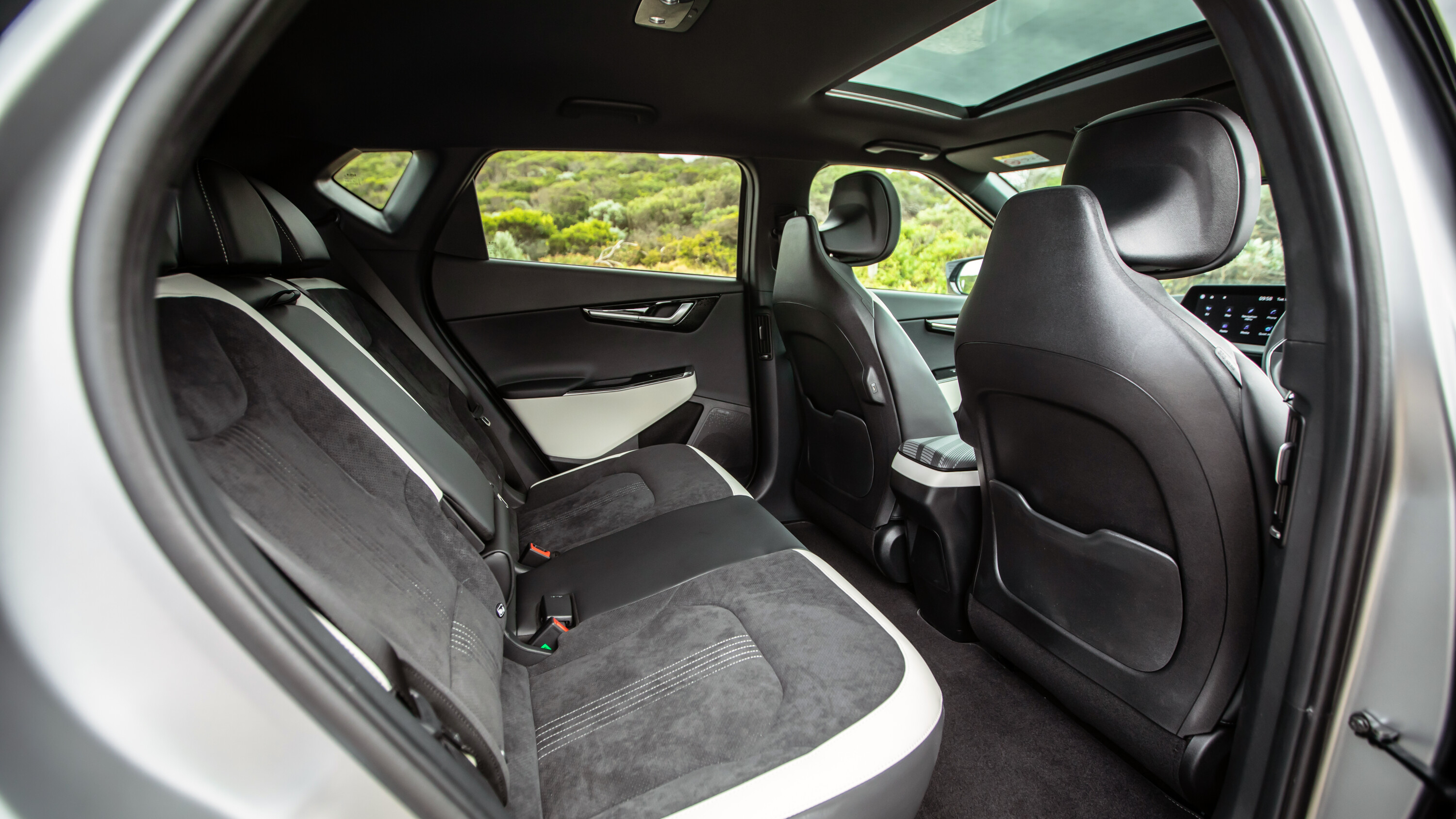
There is good legroom for rear passengers, well-positioned B-pillar air vents, and a flat floor, though there’s less space to stretch your feet underneath the front seats.
The lower roof and higher seating position also means front occupants feel particularly closer to the ceiling
For families, the EV6 offers two ISOFIX and three top-tether child seat anchors at the rear row. But, it would be uncomfortable to fit two adults plus a child’s car seat for more than a short journey.
The lower roof and higher seating position also means front occupants feel particularly closer to the ceiling and sun visors. GT-Line and GT models also have a darker headliner, the sunroof doesn’t extend to the rear row, and no model has built-in rear sunshades.
Fortunately, there are sizable felt-lined door bottle pockets, a large undertray and armrest storage at the centre console, and a deep glovebox.
1
How much boot space does the Kia EV6 offer?
Things we like
- Decent boot volume
- Light manual tailgate on Air
- Remote fold-down seat toggles
Not so much
- Restricted usable boot due to lower roof
- Limited underfloor storage
- Tiny frunk on AWD versions
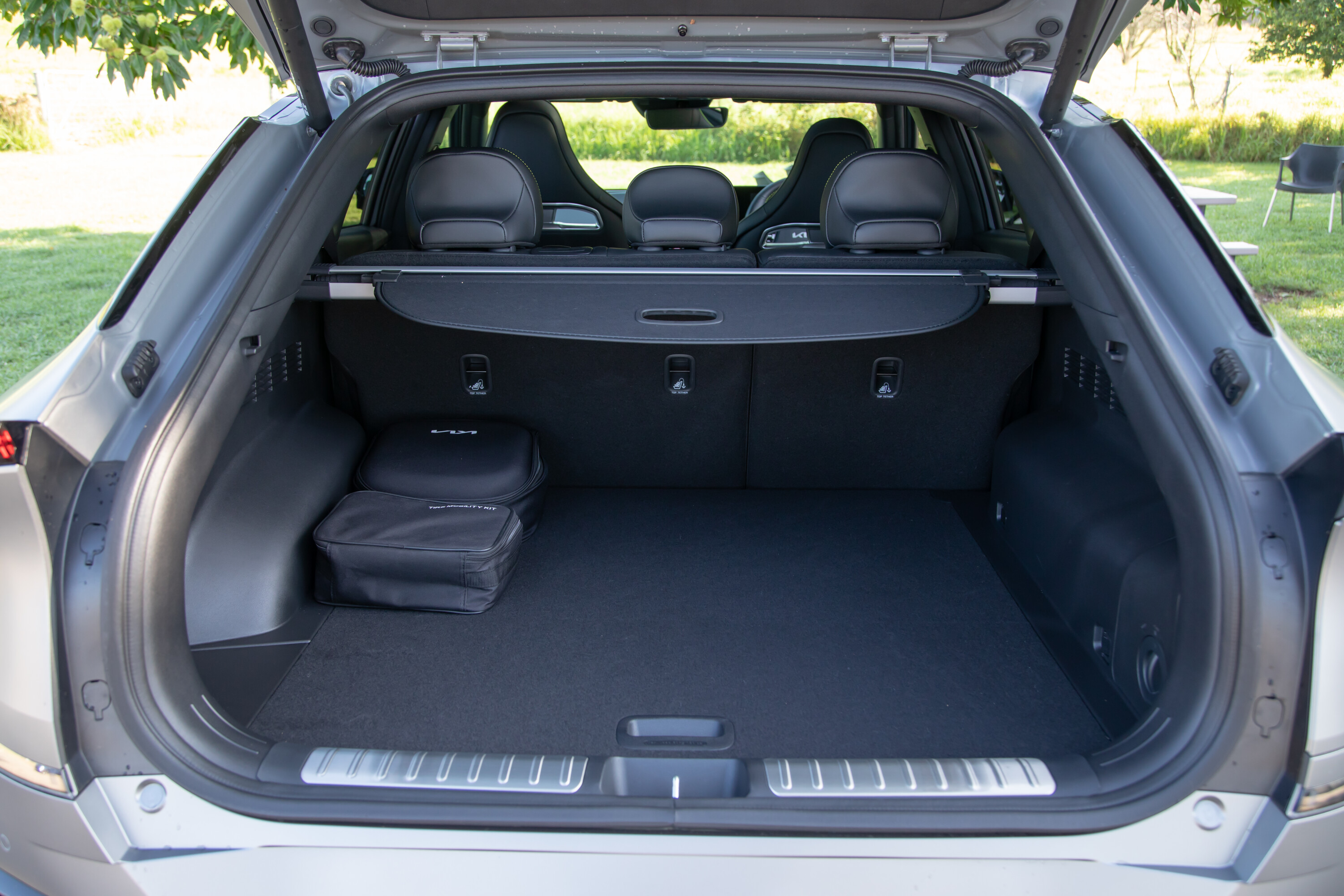
The Kia EV6 Air’s boot measures in at 490-litres, while GT-Line and GT models have 10-litres less volume due to the added hardware of the Meridian-branded speakers.
For context, the combustion-engine equivalent Sportage offers 543-litres with all seats in place.
The EV6’s rear seats can be folded in a 60:40 split using remote release levers, yielding a maximum cargo volume of 1270 litres for the Air model, or 1260 litres for all other variants.
1
Unfortunately, the sloping rear roofline means the boot volume is less usable in practice with limited underfloor space (especially on AWD versions), a small luggage net (included on GT-Line and GT), and no bag hooks.
Only the GT-Line and GT trims come with a hands-free electric tailgate, which opens after you stand behind the boot for a few seconds. This is instead of a kick sensor. But the door is light enough to easily pull down on the base Air.
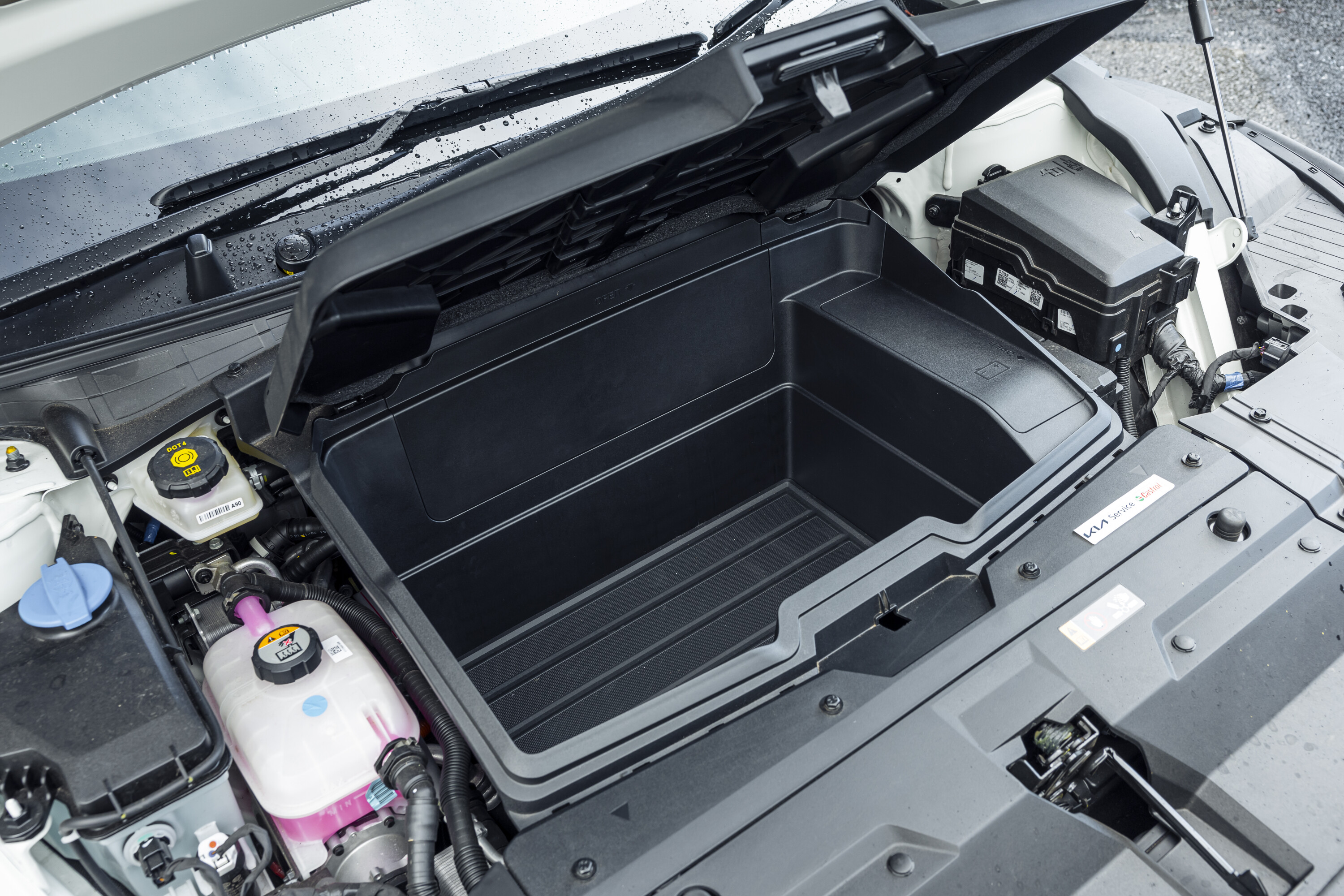
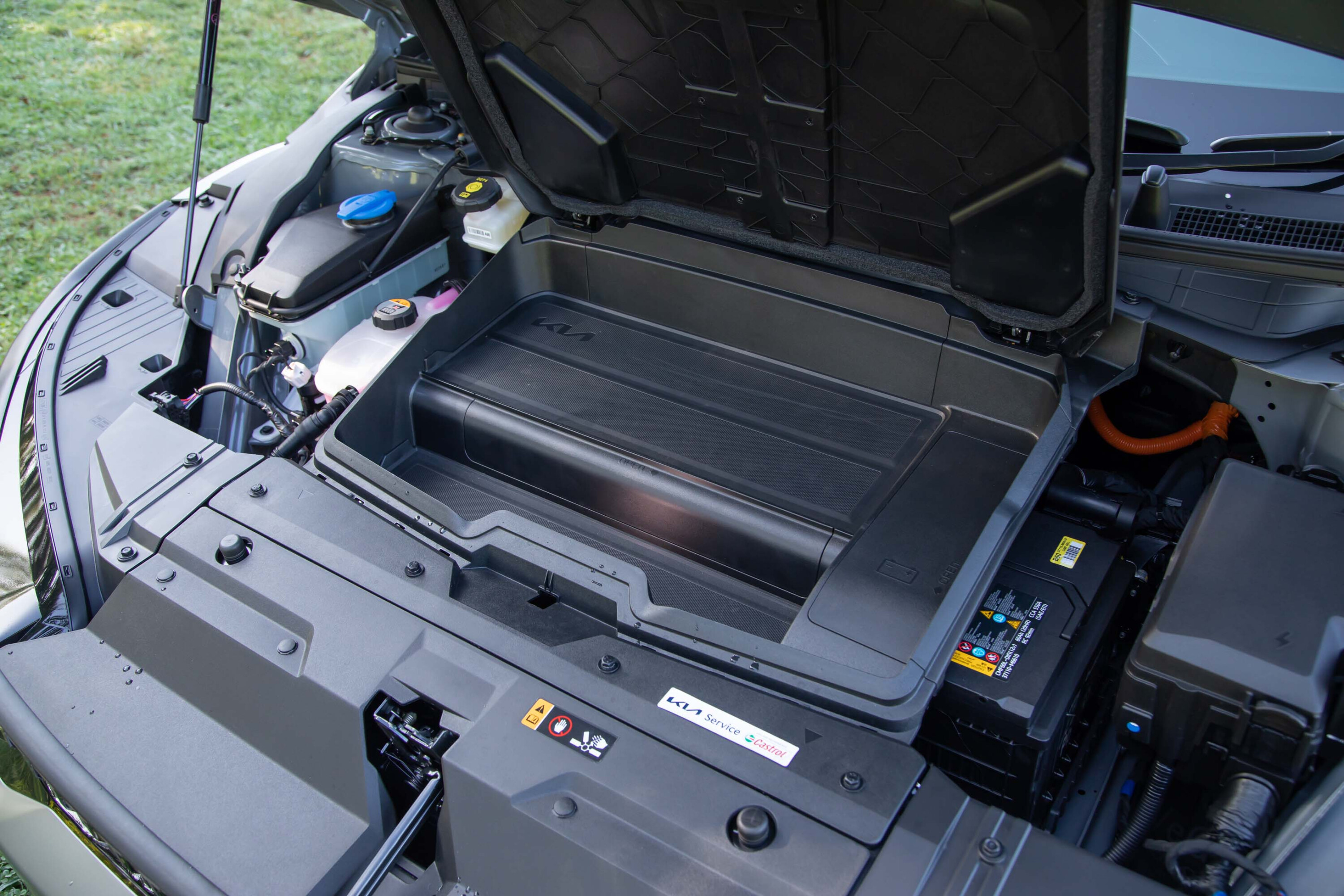
The single-motor Air and GT-Line RWD provide a 52-litre frunk storage compartment under the bonnet, which can handily store charging cables or dirty items, while the dual-motor GT-Line AWD and GT are restricted to a shallower 20-litre frunk.
1
I like driving – will I enjoy this car?
Things we like
- Good performance, NVH across the range
- Fantastic locally-tuned ride and handling
- Selectable regen braking modes
Not so much
- GTu2019s power difficult to truly exploit on public roads
- i-Pedal doesnu2019t keep the brake lights on itself
The entire EV6 range will suit drivers with sharp handling, spritely performance, and a comfortable ride.
Unlike most other new EVs, the EV6 benefits from a bespoke Australian ride and handling tune, featuring ZF Sachs adaptive dampers across the line-up, while the hi-po GT gains an electronic rear limited-slip differential, electronic controlled suspension, and larger ventilated disc brakes.
The electric crossover masks its circa-2000kg weight mostly well in daily driving, with minimal body lean, grippy handling, and a refined ride that soaks up Australia’s rough roads, bumps and undulations well.
Even on the GT with its 21-inch rims and low-profile sports tyres, the ride is firm – but not crashy – and still provides good noise and vibration isolation.
| Air | GT-Line RWD | GT-Line AWD | GT | |
|---|---|---|---|---|
| Power | 168kW | 168kW | 239kW | 430kW |
| Torque | 350Nm | 350Nm | 605Nm | 740Nm |
| 0-100km/h time | 7.3 seconds | 7.3 seconds | 5.2 seconds | 3.5 seconds |
| Drive | RWD | RWD | AWD | AWD |
Table scrolls horizontally to reveal more columns
Even on the entry-level single-motor powertrain on the Air and GT-Line RWD, it’s spritely enough for everyday commuting with requisite instant electric torque at any speed.
Stepping up to the dual-motor GT-Line AWD provides the neck-breaking thrust feel, while having all-wheel drive traction to keep things in check – at the expense of increased energy consumption.
The flagship GT ups the ante of the twin motor outputs to be heart-inducing. But unfortunately, you’ll rarely utilise its full potential legally on most public roads.
1
Be aware that the brake lights don’t stay illuminated once at a complete stop
The battery also needs to be above 80 per cent (considered unhealthy if left in extended periods) and in an optimum temperature range to extract maximum power. A preconditioning toggle is offered, but only available if the battery is higher than 70 per cent.
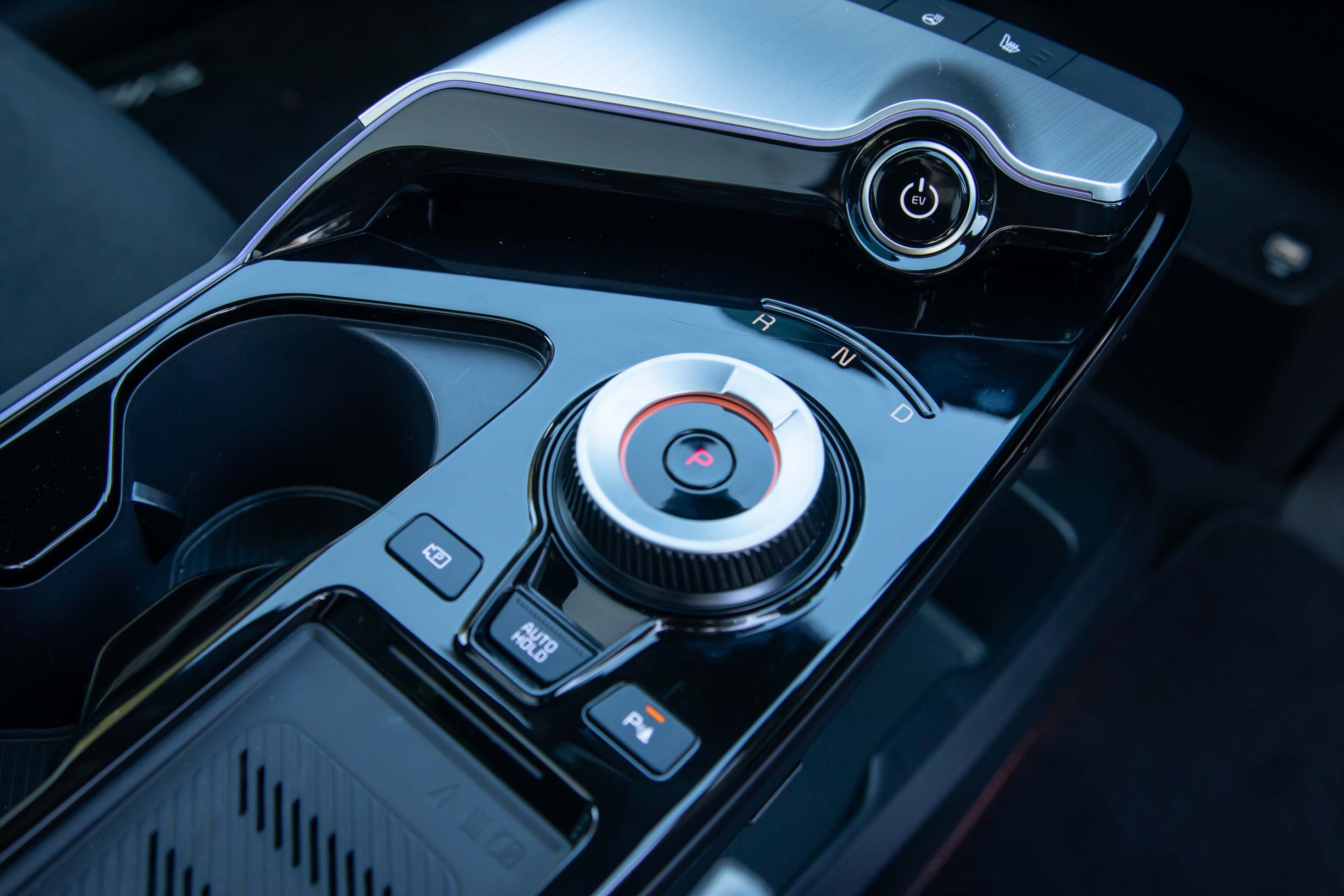
All EV6’s come with four-stage regenerative braking intensities that’s changeable via the steering wheel paddles.
This includes automatic modes and the maximum ‘i-Pedal’ for one-pedal driving. However, please be aware that the brake lights don’t stay illuminated once at a complete stop, so drivers still need to press the brake pedal.
1
Which version of the Kia EV6 provides the longest range?
Things we like
- Base model is the longest range
- Ultra-rapid DC charging capability standard
Not so much
- AWD models donu2019t get a larger battery to compensate for increased energy consumption
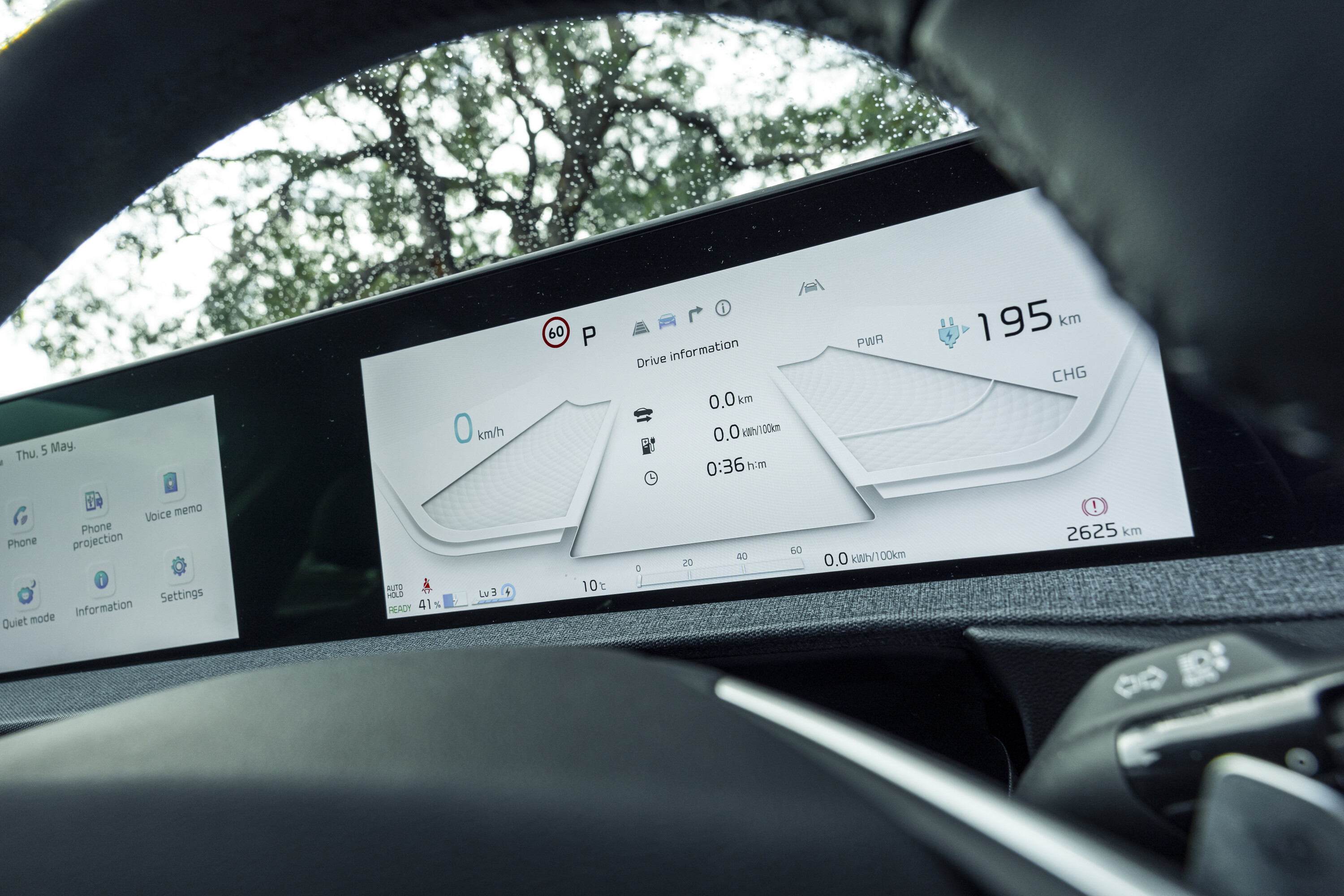
The entry-level Kia EV6 Air provides the longest driving range, with up to 528 kilometres claimed from a full charge and 16.5kWh/100km energy efficiency on the combined WLTP cycle.
We found the Air’s real-world range to be closer to 480km instead with a 16.8kWh/100km tested consumption figure.
The higher up the EV6 rankings, the lower the driving range – with all sharing the same 74kWh usable lithium-ion battery pack.
1
| Air | GT-Line RWD | GT-Line AWD | GT | |
|---|---|---|---|---|
| Claimed driving range (WLTP combined) | 528km | 504km | 484km | 424km |
| Claimed energy efficiency (WLTP combined) | 16.5kWh/100km | 17.2kWh/100km | 18.0kWh/100km | 20.6kWh/100km |
| Usable battery size (net) | 74kWh | 74kWh | 74kWh | 74kWh |
| Max AC slow charging speed | 10.5kW | 10.5kW | 10.5kW | 10.5kW |
| Max DC fast charging speed | 350kW | 350kW | 350kW | 350kW |
| Recommended charging limit | 80% | 80% | 80% | 80% |
Table scrolls horizontally to reveal more columns
While the GT-Line RWD shares the same powertrain as the Air, its larger wheels mean it increases energy consumption and delivers less total range.
Similarly, the dual-motor GT-Line AWD is another step down in efficiency, with the hi-po GT naturally being the lowest-range EV6 model.
In our experience of more spirited Sunday driving with the EV6 GT, we achieved about 350km real-world range by consuming 21.1kWh/100km.
Thankfully, all Kia EV6 models can recharge at up to 10.5kW AC and 350kW DC speeds – the latter tends to peak around 240kW in reality when connected to a compatible 800-volt class ultra-rapid charging station under optimum temperatures.
What’s the charging limit?
While Kia doesn’t explicitly state a charging limit recommendation, generally, the lithium-ion battery type means everyday recharging should be capped at 80 per cent to maintain good health – unless fully recharging is necessary, such as when on a road trip where you’ll quickly use up the energy.
Keeping the battery in a too high or low battery percentage for extended periods shortens its lifespan, along with frequent DC fast charging.
In this case, the South Korean carmaker claims it can replenish from 10 to 80 per cent in about 18 minutes.
However, keep in mind that most public fast chargers in Australia are limited to 50kW DC, which means the same recharge would take around 73 minutes.
Of course, charging at home is most ideal – a standard AC home plug at around 2kW can take about three full nights to go up to 80 per cent, while using an installed 7kW single-phase or 11kW three-phase AC wall box guarantees it in one night.
1
What is the Kia EV6’s towing capacity?
Things we like
- Decent towing capabilities
Not so much
- Limited payload
- Expect a noticeable range hit
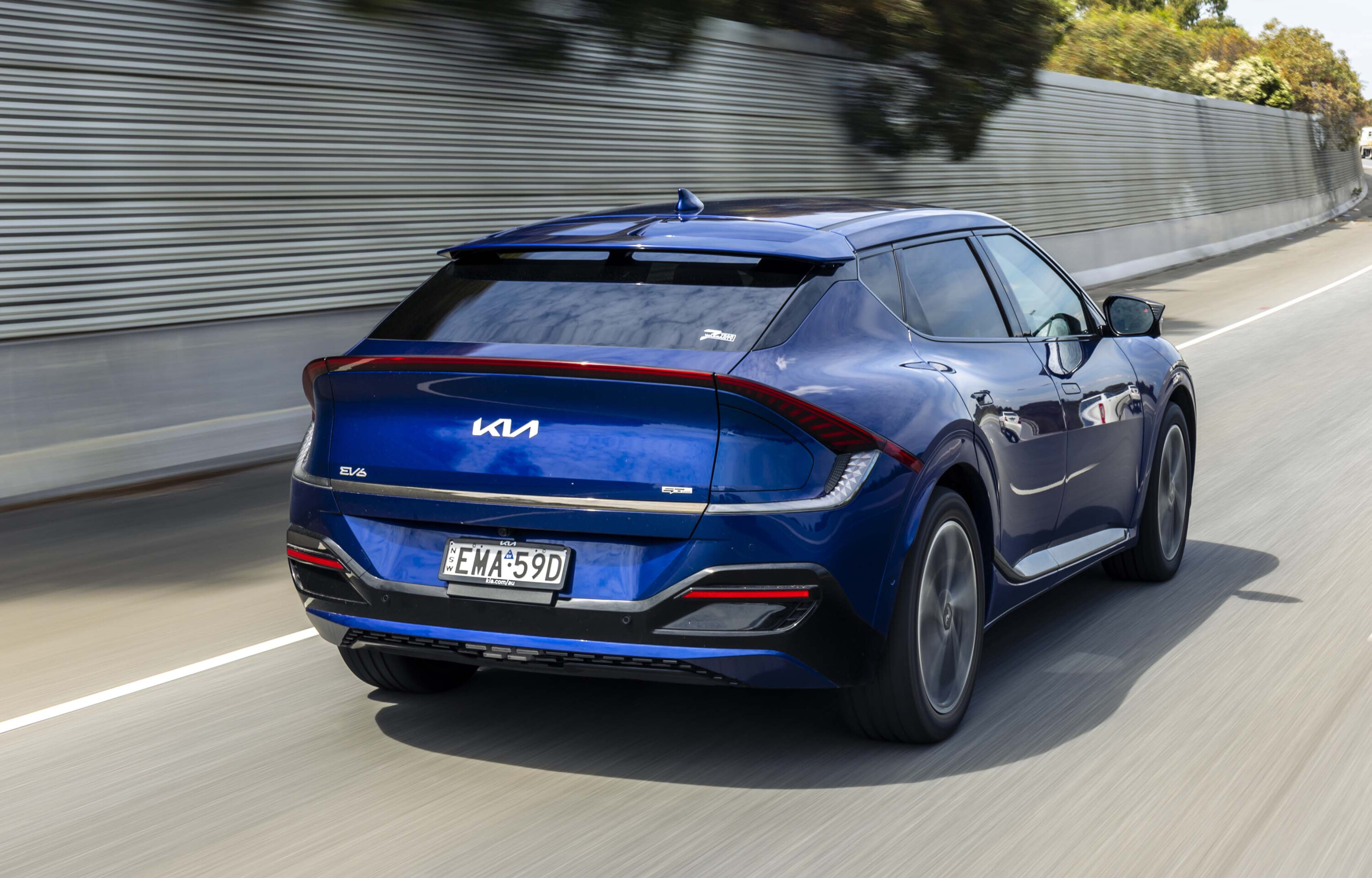
All Kia EV6 models are rated to tow up to 750kg with an unbraked trailer. Air and GT-Line variants can lug 1600kg, whereas the GT is capable of 1800kg on a braked trailer.
However, the maximum payload is limited to 435kg on all models. That the figure doesn’t account for the maximum 100kg tow ball download weight.
1
Kia sells a genuine towbar kit accessory for $1418.23, including fitment costs.
As per all EVs, the payload is restricted due to the heavy battery underneath – and expect a significant driving range drop of up to 50 per cent when towing at maximum capacity.
1
How long is the warranty and what are the Kia EV6’s servicing costs?
Things we like
- Long vehicle warranty
- Servicing costs cheaper than comparable combustion engine SUV
Not so much
- Sub-par battery warranty coverage
- Typical servicing intervals
- Pre-paid servicing doesnu2019t save money
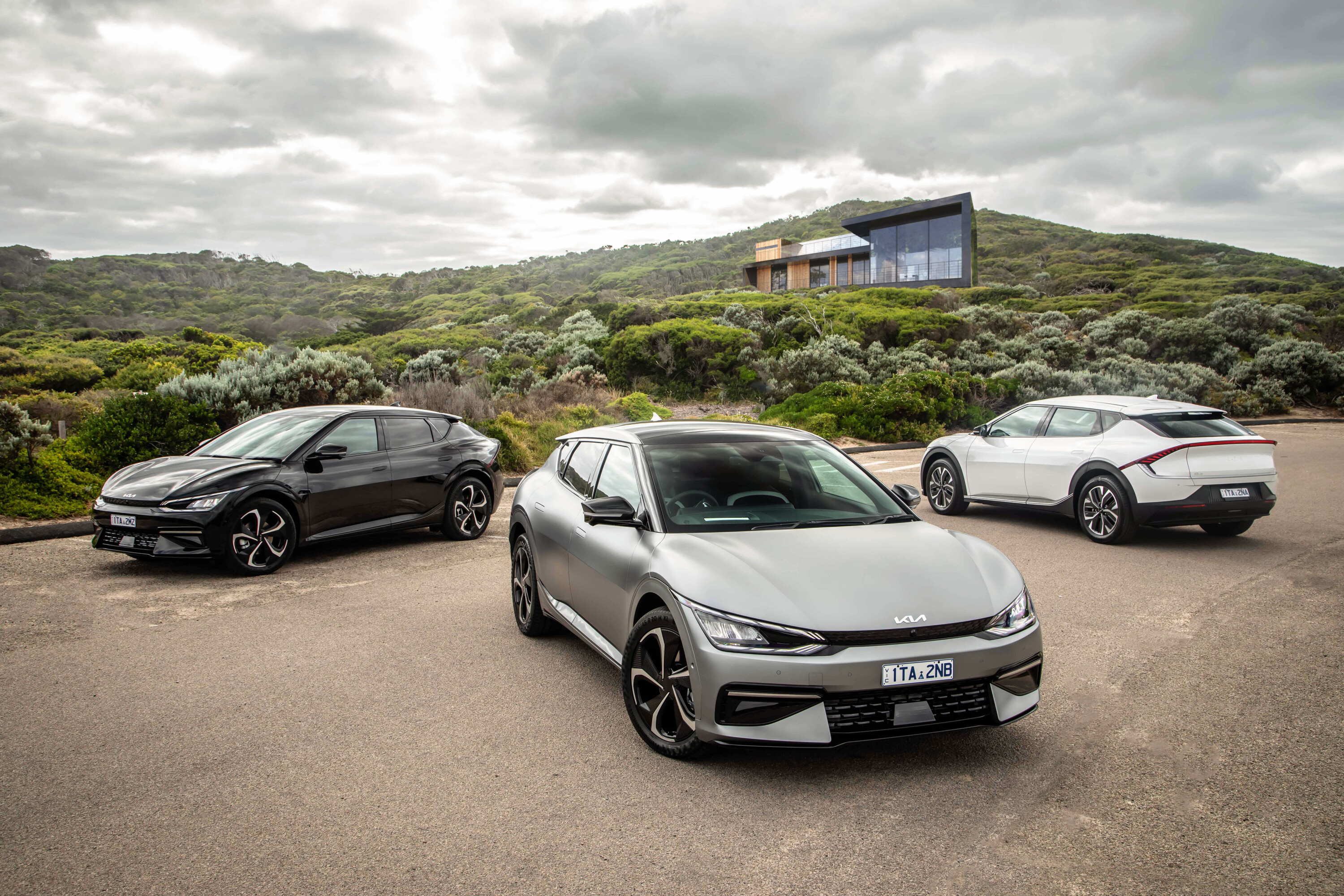
The Kia EV6 is backed by a seven-year/unlimited kilometre vehicle warranty and a seven-year/150,000km battery warranty.
The dedicated battery warranty covers for manufacturing defects and promises to retain at least 70 per cent health during the coverage period.
Servicing is required every 12 months or every 15,000km, with capped prices applicable for the first seven visits only. Roadside assistance is included for up to eight years, provided you service it with Kia on time.
1
While the company doesn’t officially list capped-price servicing costs for pure EVs on its website, Kia Australia confirmed the following to Wheels.
| 2023 Kia EV6 capped-price servicing costs | Air, GT-Line RWD/AWD | GT |
|---|---|---|
| 1 year/15,000km | $129 | $129 |
| 2 years/30,000km | $333 | $472 |
| 3 years/45,000km | $132 | $132 |
| 4 years/60,000km | $358 | $501 |
| 5 years/75,000km | $136 | $136 |
| 6 years/90,000km | $354 | $501 |
| 7 years/105,000km | $141 | $141 |
It’s not exactly cheaper to opt for pre-paid servicing – unless a $1 saving counts
Additionally, Kia also offers three-, five- and seven-year pre-paid servicing plans priced at $594, $1089 and $1584 respectively. For the GT, it’s pricier at $733, $1371 and $2013 respectively.
Strangely, it’s not exactly cheaper to opt for pre-paid servicing – unless a $1 saving counts by opting for five- or seven-year pre-paid servicing.
1
Which version of the Kia EV6 does Wheels recommend?
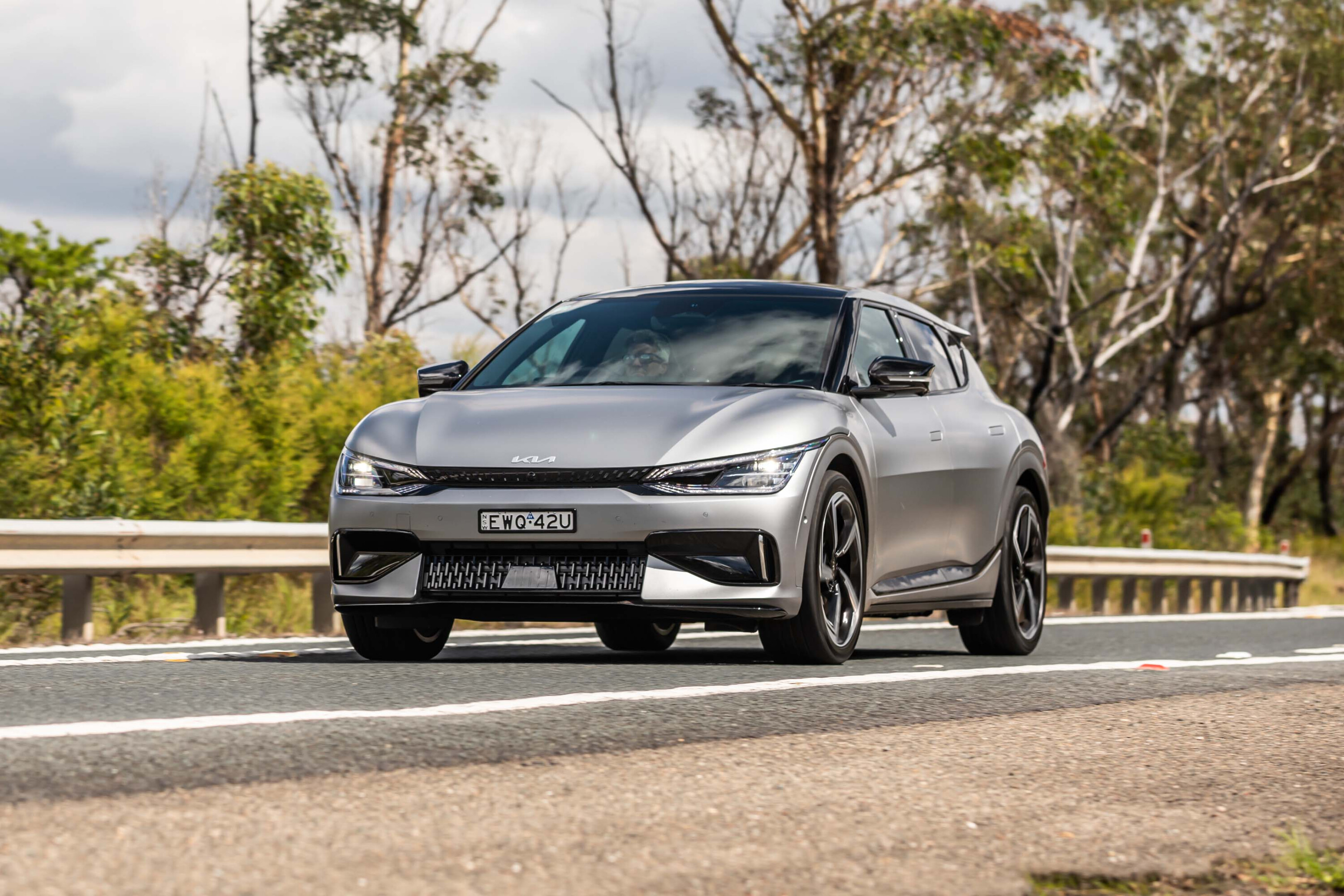
Our pick is the EV6 GT-Line RWD as it includes most comfort and convenience features, supportive seats, and enough power without compromising too much on driving range.
The base EV6 Air is also commendable as the model with the longest range and pricing closer-ish to the popular Tesla Model Y RWD. But, it has harder seats, loses out on niceties and more accessible auto pop out door handles.
Critically, the $8000 jump from the GT-Line RWD to the AWD is quite steep for the added power, traction, and inclusion of a sunroof.
Then, the GT electric supercar is a headline-grabber. Yet, for six-figures drive-away, it’s cosmetically similar to the GT-Line, omits some features, and is best suited to the closed-circuit track – if you truly want to exploit its capabilities safely and legally.
1
What are the Kia EV6’s key rivals?
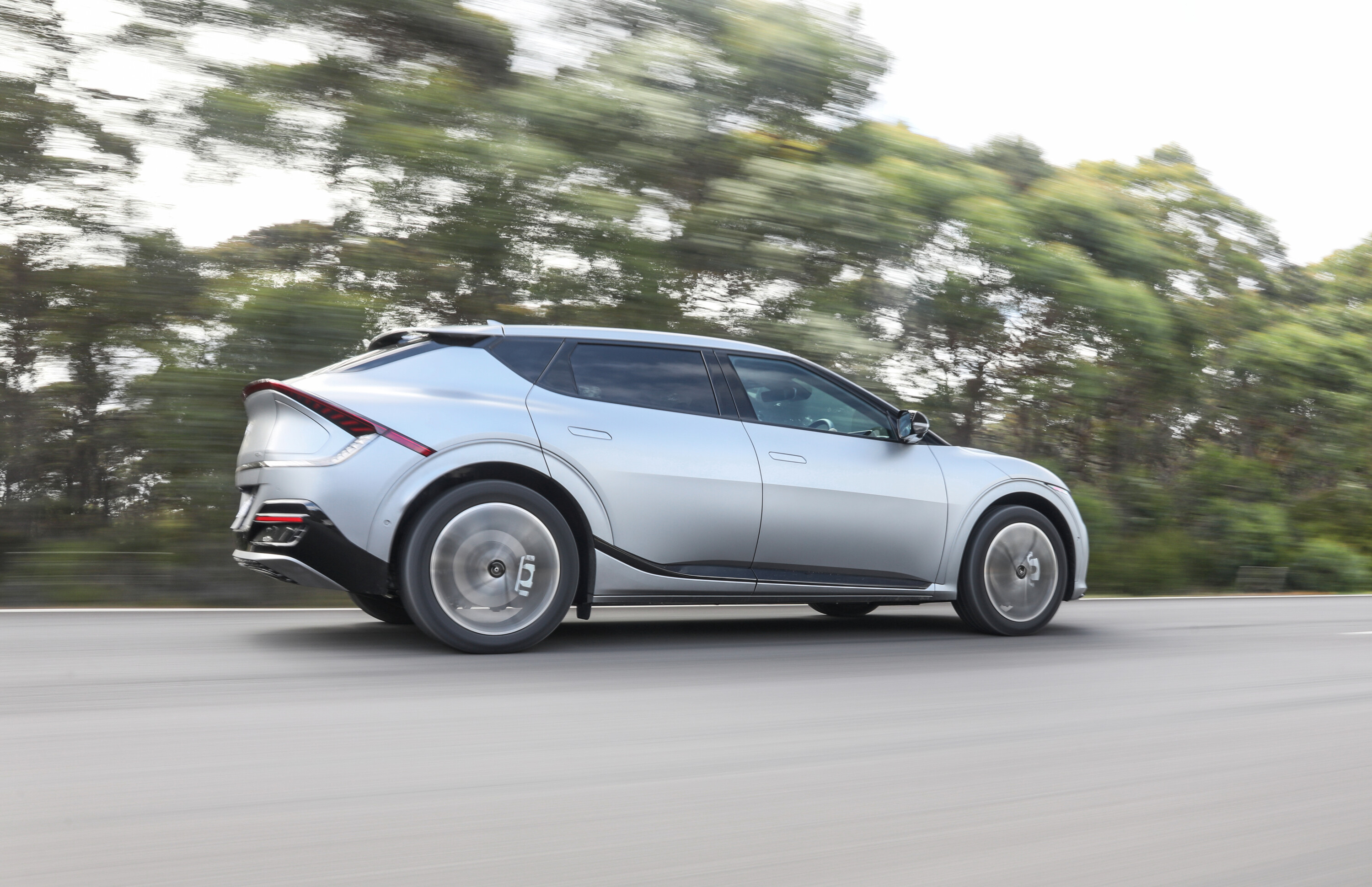
The Kia EV6 competes in a highly contested segment of electric medium SUVs, including:
- Tesla Model Y
- Hyundai Ioniq 5
- Volvo C40 Recharge
- Ford Mustang Mach-E (coming soon)
- Toyota BZ4x (coming soon)
- Subaru Solterra (coming soon)
- Renault Megane E-Tech (coming soon)
1
What might annoy me?
In addition to compromising the boot, the Kia EV6’s lower roof means front occupants may feel closer to the ceiling than in other electric SUVs, such as the related Hyundai Ioniq 5.
The higher floor to accommodate the battery also means rear passengers’ knees are higher up than typical engine-powered family SUVs, although this is a trait found on many other EVs.
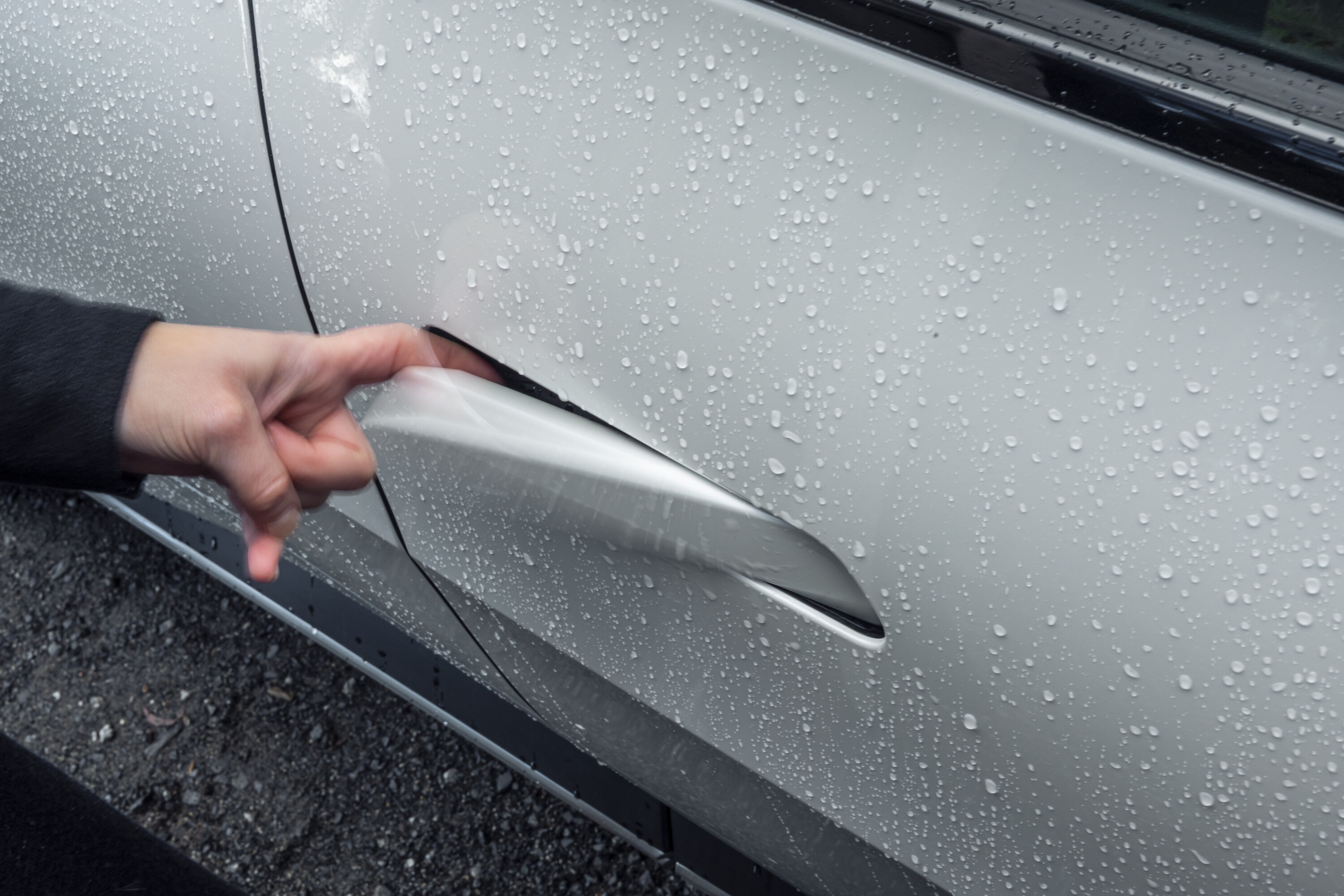
Additionally, the flush door handles of the base Air model don’t automatically pop out as they do in the Tesla Model Y, which could pose an accessibility issue.”
1
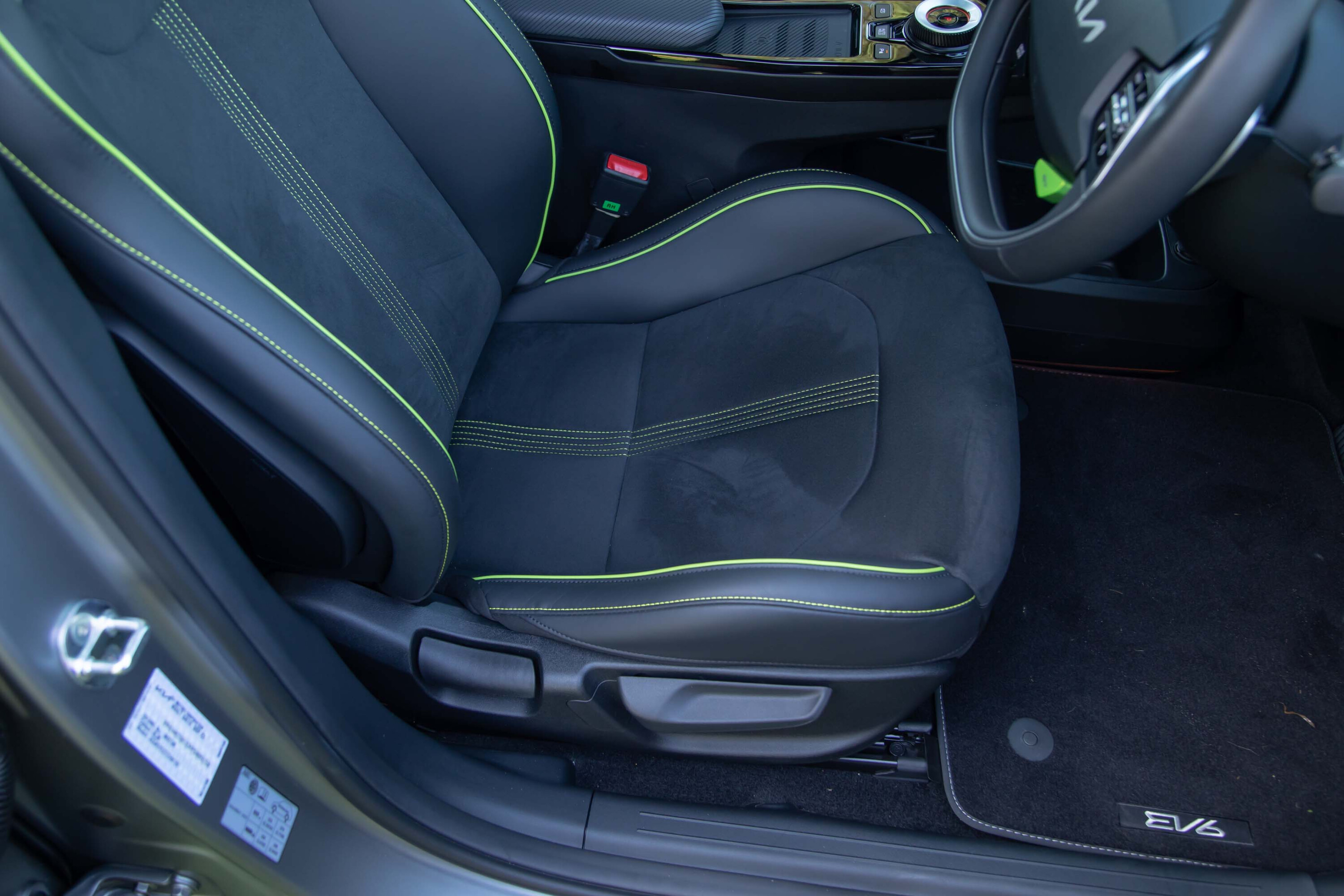
Meanwhile, the GT-Line and GT’s use of prominent gloss black surfaces on the centre console and interior door grab is fingerprint-prone and easy to scuff with minor scratches over time.
The Hyundai group’s lane-keep assist system may also annoy some driver’s as it tends to tug the wheel when travelling above 60km/h. This is easy to turn off at the steering wheel, though.
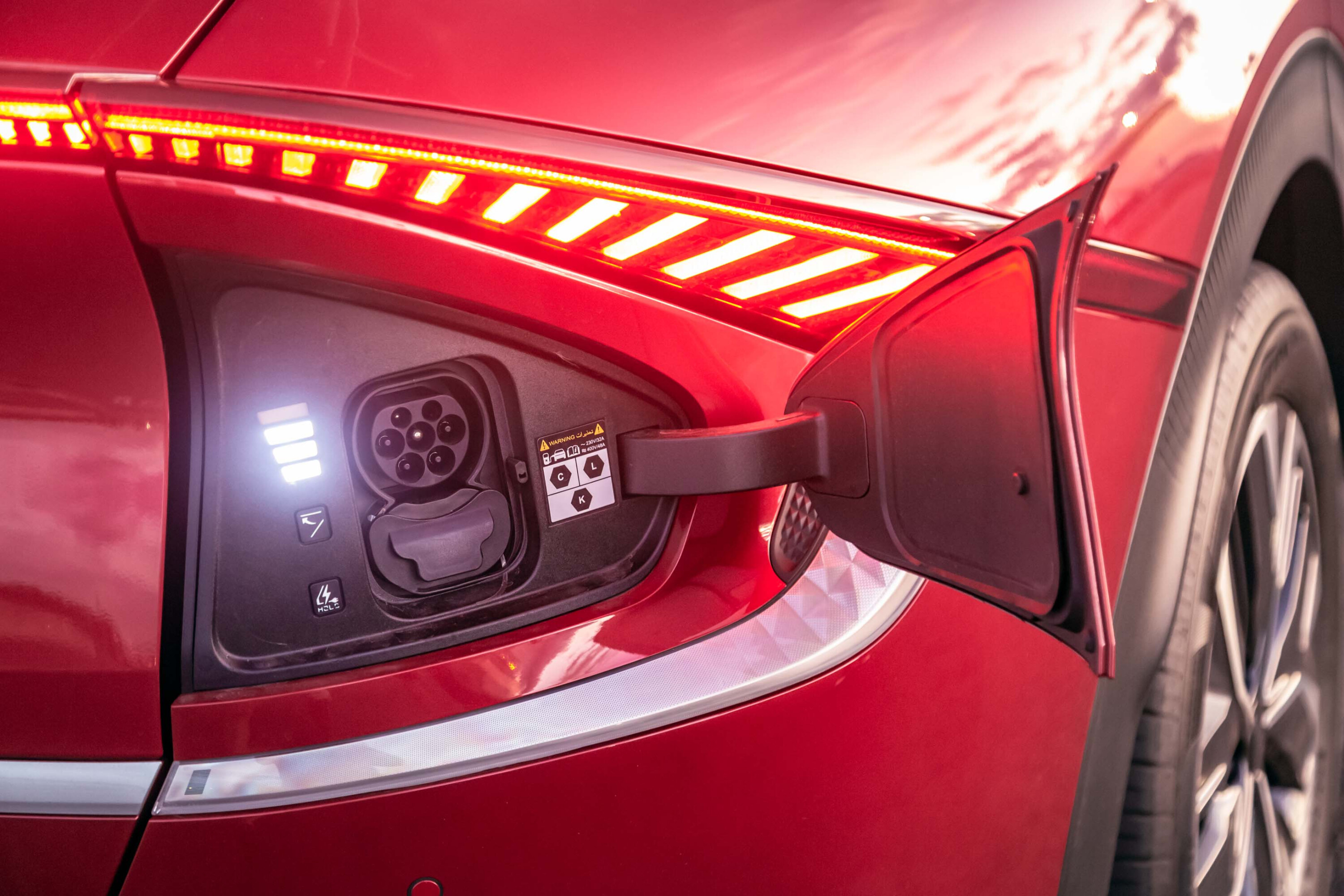
The charging port is also uniquely positioned beside the right of the tailgate, which can be tricky for some cables to reach at some side-positioned public charging stations.
1
Does any upgrade have a down side?
The higher up you go in the EV6 line-up, the less driving range you get. Larger wheels and more power all demand more energy.
Opting for the hero GT model loses out on some features due to the sporty front bucket seats, including; electric adjustment, lumbar support, ventilation functionality, the reclining relaxation mode, and driver’s seat memory with auto dip-down wing mirrors when reversing.
All AWD drivetrains have restricted frunk storage – 32-litres less than RWD versions due to the added motor up front.
1
What might I miss that similar cars have?
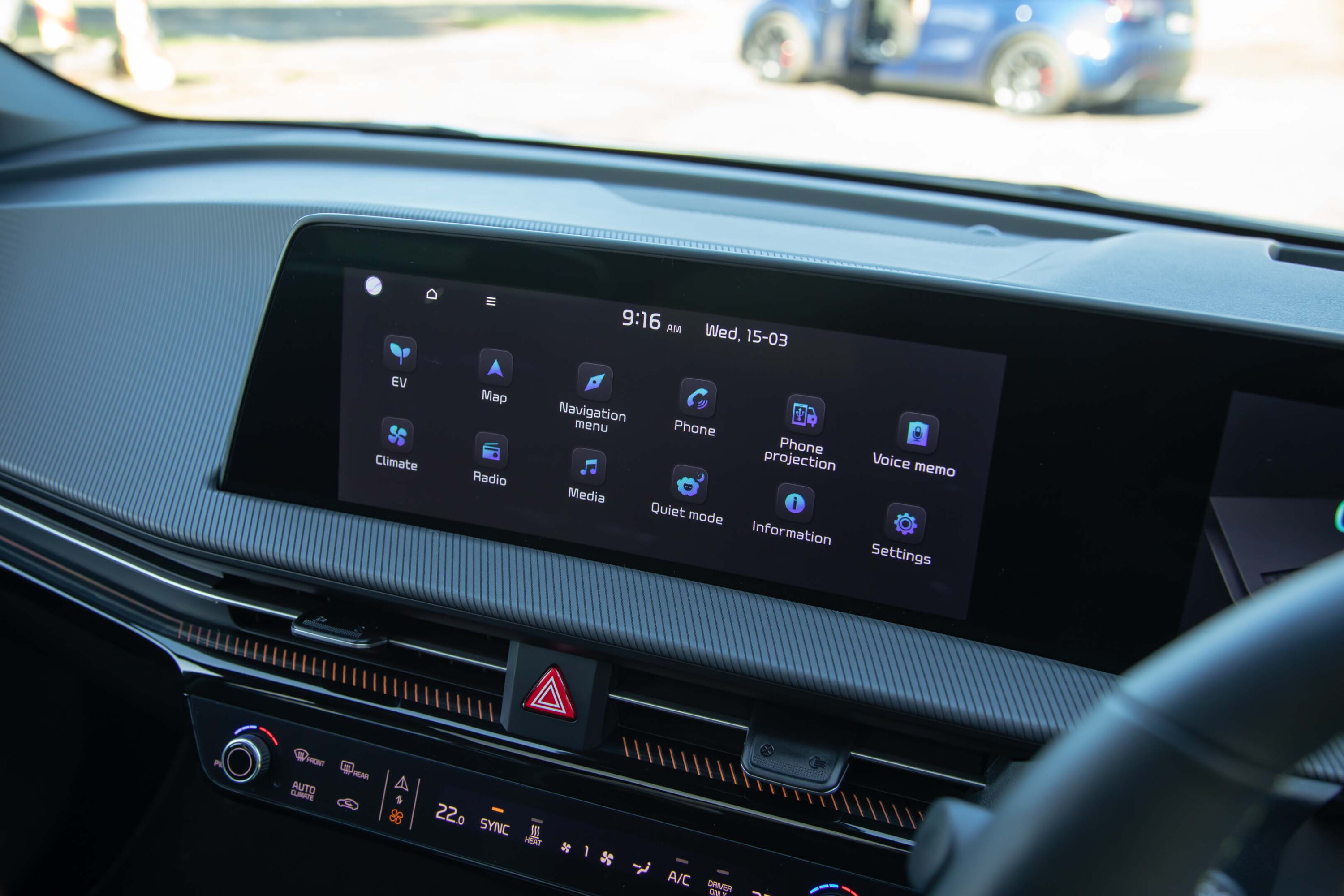
Unlike the Tesla Model Y, the EV6 doesn’t offer built-in cellular connectivity for connected services and a smartphone app.
Kia Connect – which is standard on the cheaper Niro EV – offers automatic emergency services calling, built-in voice control, and the remote mobile app can handily monitor the EV’s battery percentage state and pre-start the climate control.
As a result, the EV6’s touchscreen isn’t capable of over-the-air (OTA) software updates. It also lacks wireless smartphone projection.
1
What’s the infotainment system like?
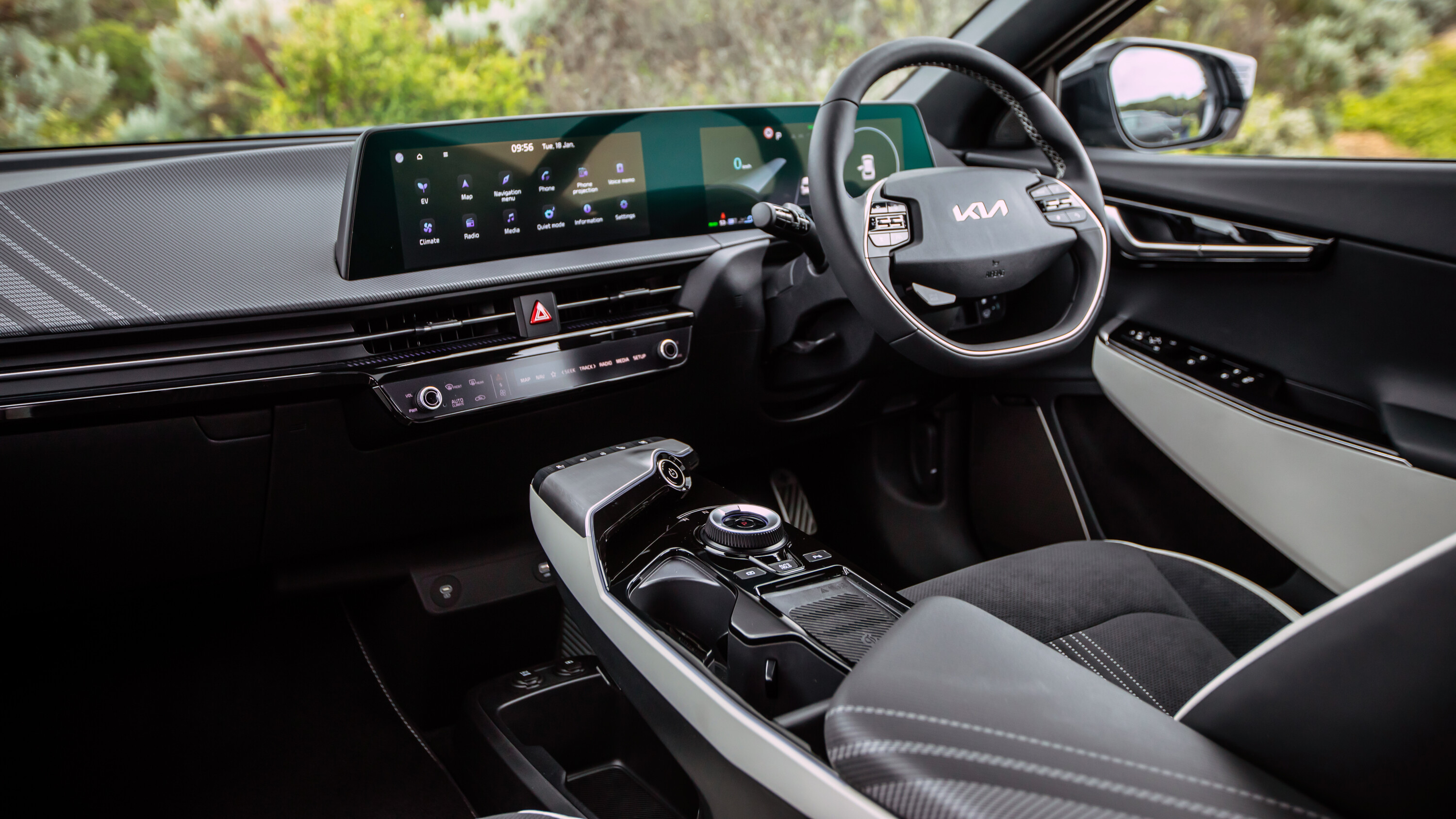
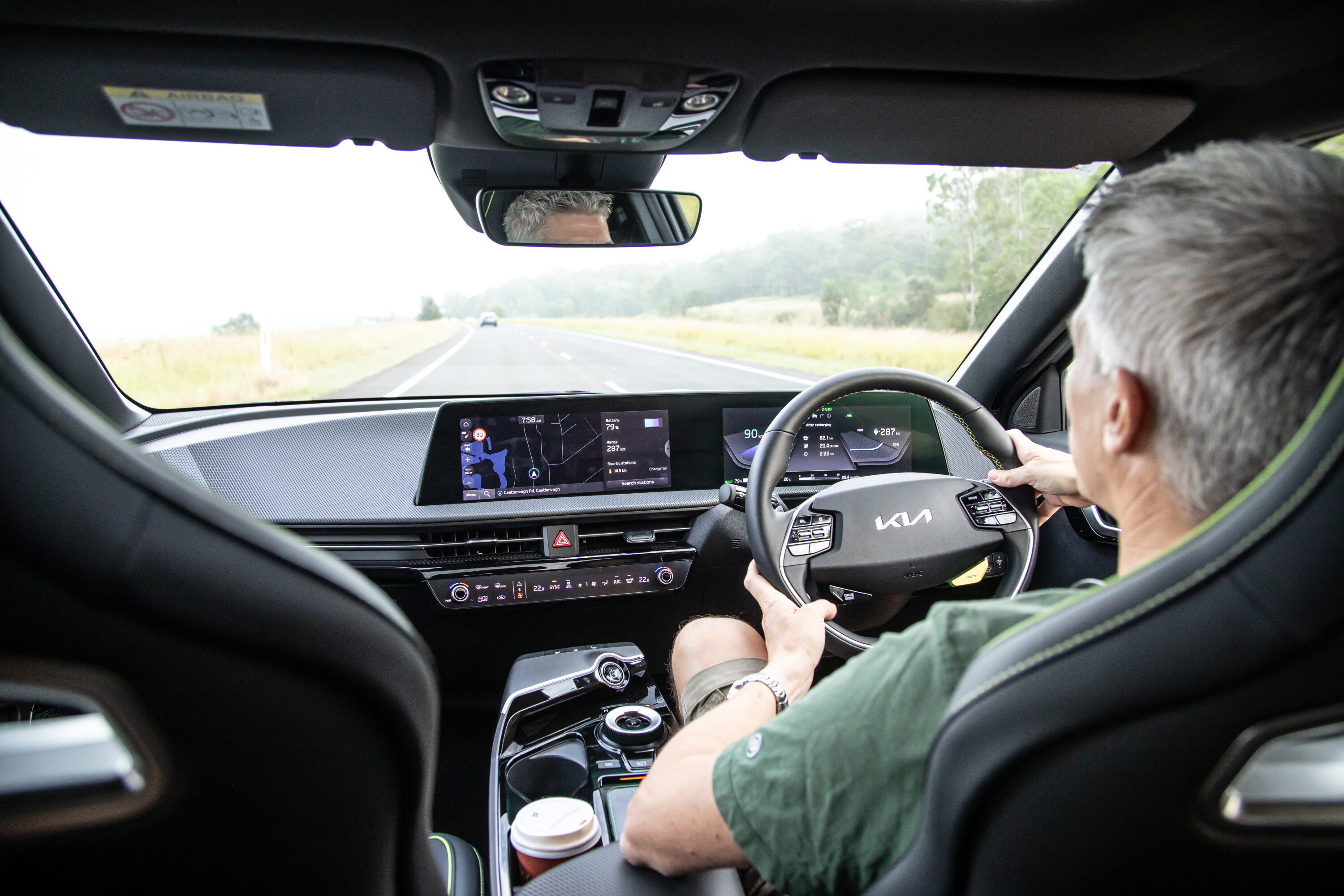
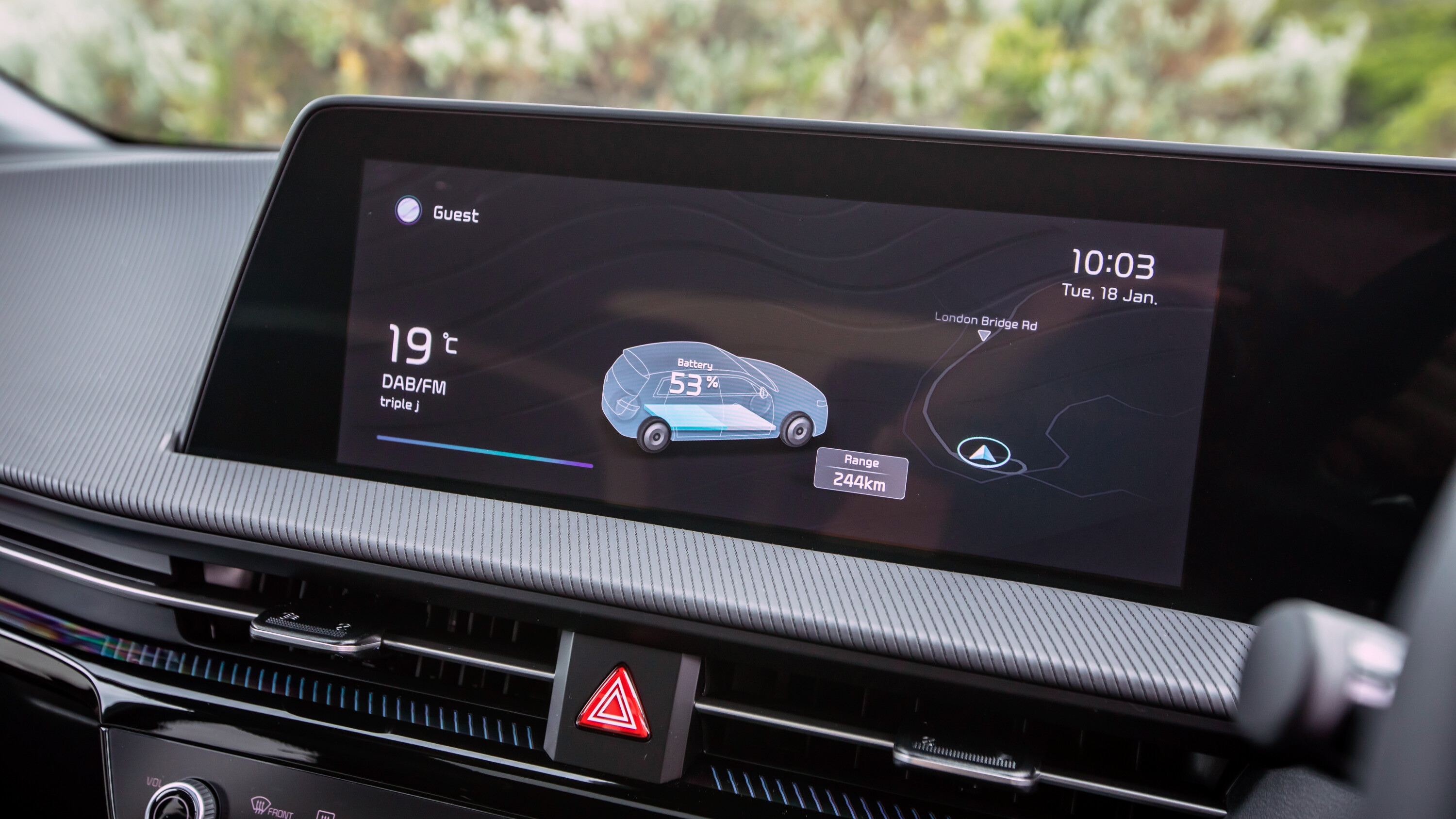
The Kia EV6’s 12.3-inch wide curved touchscreen looks modern and performs well.
It’s mostly easy to use, except for the clunky built-in maps which makes finding destinations tricky. Light and dark modes are available, alongside a blue light filter.
The current model only features wired Apple CarPlay and wired Android Auto via the single USB-A port in front of the centre console.
1
However, the latest operating system from the Hyundai group – which will soon debut in the Kia EV9 large electric SUV – has a more modern revamped user interface and, importantly, wireless smartphone projection.
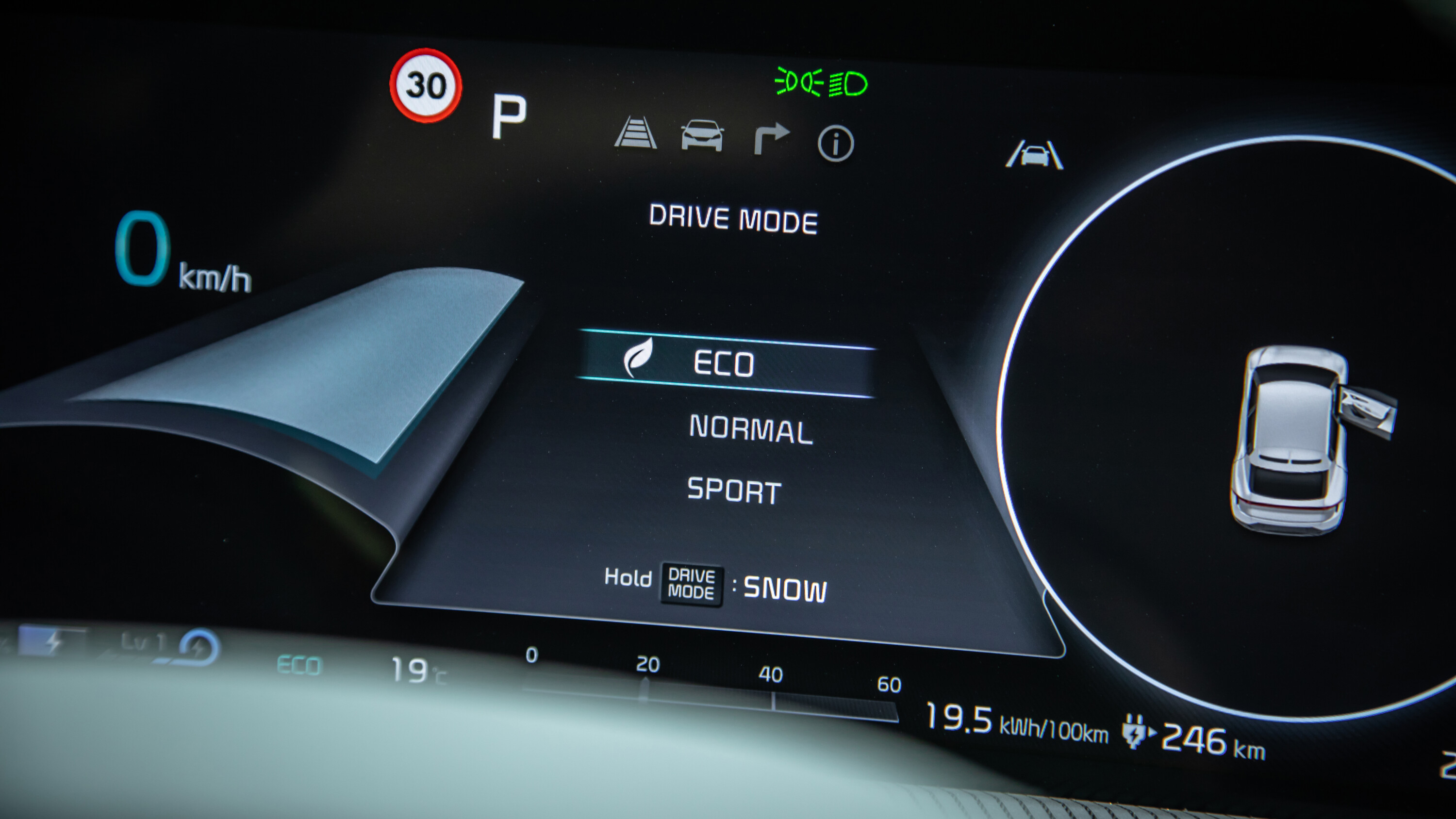
Meanwhile, the driver’s instrument display is clear and legible, although it doesn’t offer much customisation besides changing between menus and colours when switching drive modes. An augmented reality head-up display is standard on GT-Line and up.
A touchscreen strip doubles up as both the climate control and media controls. It’s better than pushing functions into the infotainment, but the touch buttons and dials are on the smaller side, and switching between the two control functions can be tedious while driving.
1
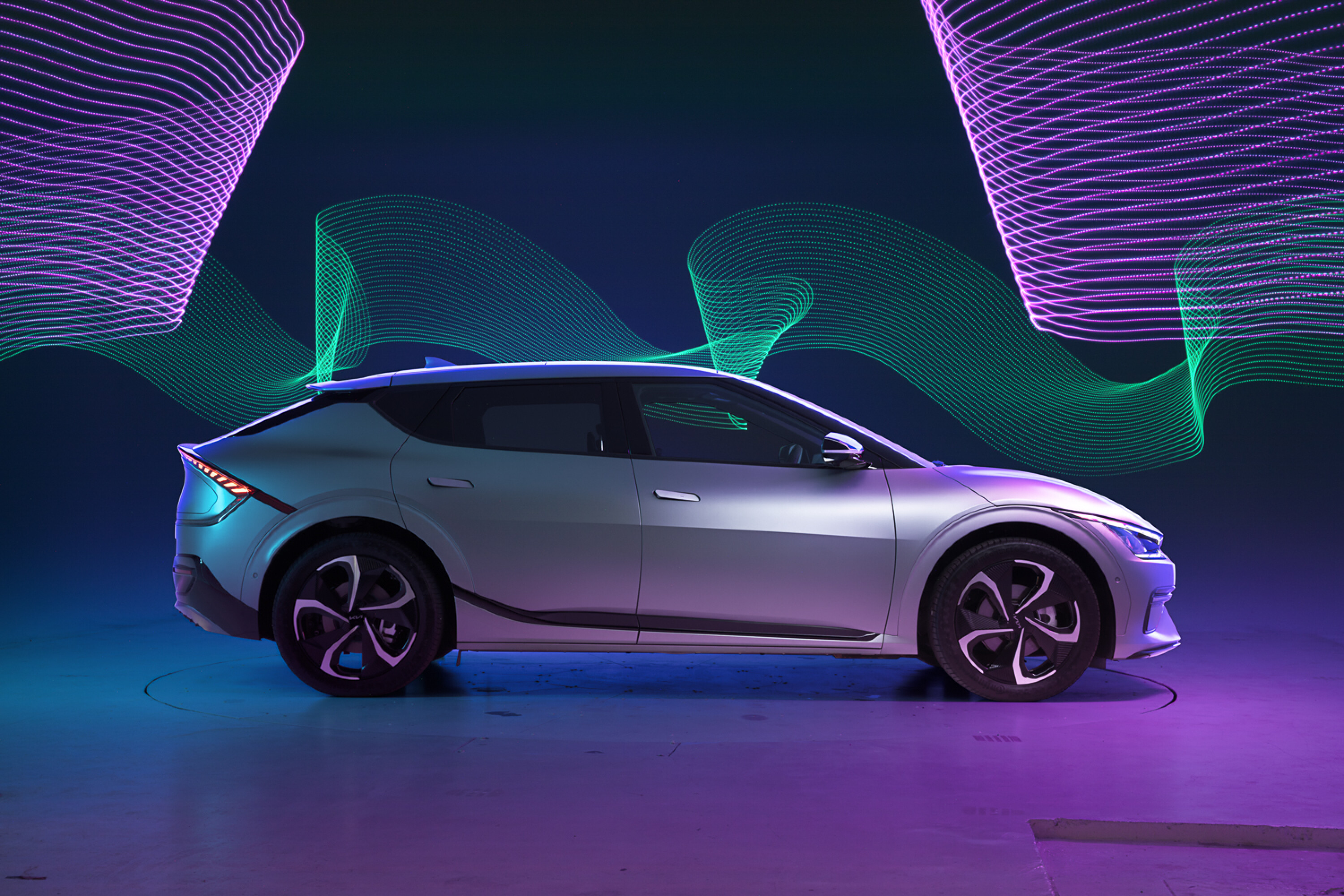
Where does Kia make the EV6?
The Kia EV6 is manufactured in Hwasung, South Korea.
1
Are there plans to update the Kia EV6 soon?
The Kia EV6 launched in 2021. Judging by typical product life cycles, it could be due for a mid-life facelift in 2024 or 2025.
A camouflaged EV6 has been spotted testing in South Korea, so an update is likely in the works.
It’s likely to bring Kia Connect to Australian models and, if the high performance Hyundai Ioniq 5 N is anything to go by, the EV6 update may also introduce the automaker’s latest Connected Car Navigation Cockpit (ccNC) touchscreen software with wireless smartphone projection.
Additionally, it could also carry the Ioniq 5 N’s larger fourth-generation 84kWh gross battery pack (up from the current 77kWh gross) to extend driving range.
MORE
Everything KIA
MORE
Electric SUVs
More EV stories to help you choose the best car for your needs
- ? EV news, reviews, advice & guides
- ❓ Short & sweet: Your EV questions answered
- ⚡ New EVs: Everything coming to Australia
- ? Australia’s EVs with the longest driving range
- ⚖️ Best-value EVs by driving range
- ? How much do EVs cost in Australia?
- ? How much more expensive are EVs?
- ⚖️ Number crunching: Is it time to switch to an EV?
- ♻ Should you buy a used EV?
- ?️ Are EVs more expensive to insure?
- ? Costs compared: Charging an EV vs fueling a car
- ? EV charging guide
- ? Are there enough EV chargers in Oz?
- ?? EV servicing explained
- ? EV battery types explained
- ? When do EV batteries need replacing?
- ? Hydrogen v EVs: What’s best for Oz?
- ? How sustainable are EVs, really?
MORE advice stories to help you with buying and owning a car
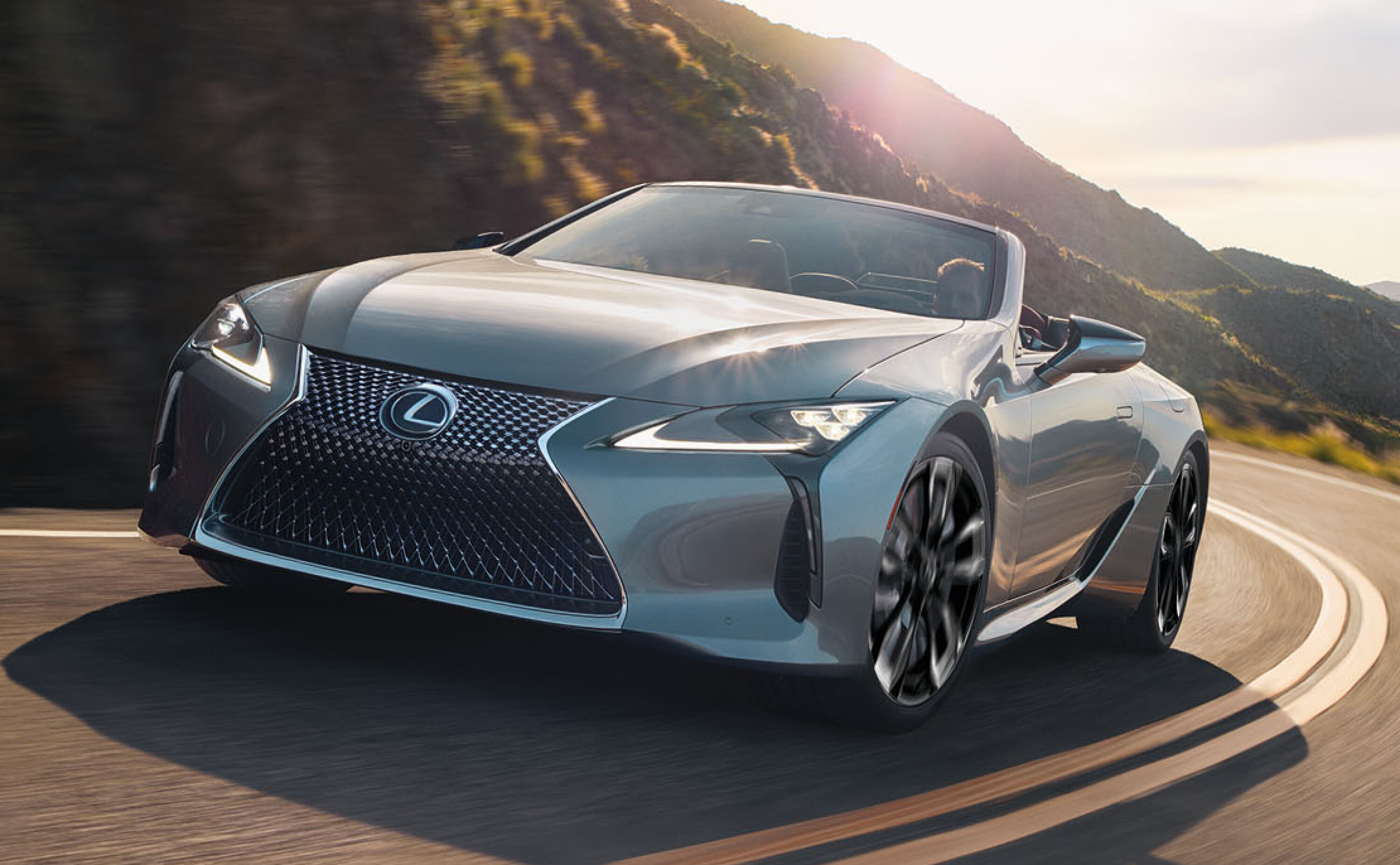
The updated 2023 Lexus LC has completed the roll-out of the brand’s Connected Services in Australia.
Snapshot
- 2023 Lexus LC pricing announced
- New infotainment system, connected services and more safety kit
- Now available to order; price rises of up to $18,380
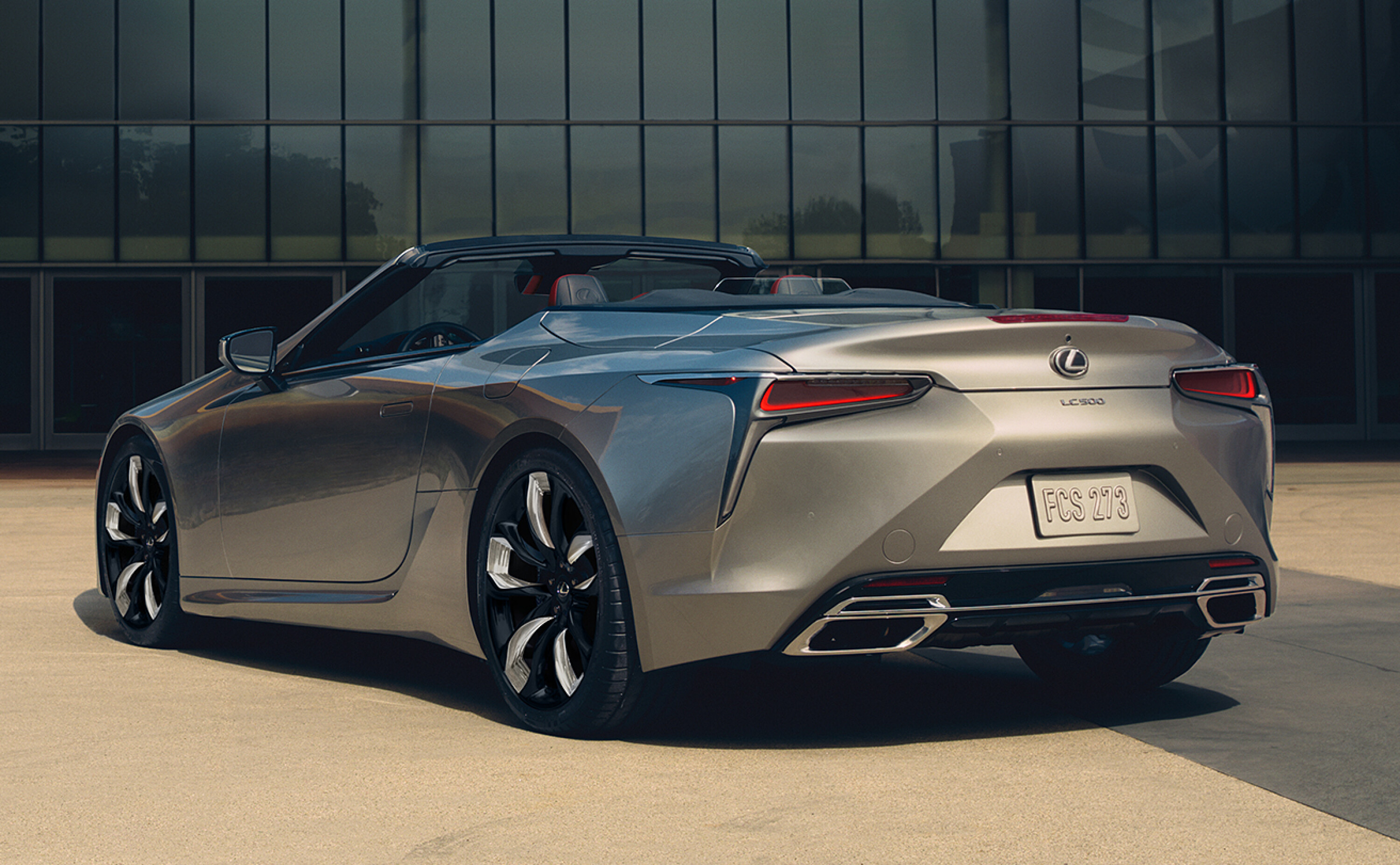
Lexus Australia has confirmed its connected-car service is now fitted to the flagship LC coupe and convertible as part of an update for 2023.
The service – complimentary for three years – features an inbuilt data communication module to connect to a smartphone application, allowing owners to check vehicle information, lock and unlock the doors, remotely start the engine, and connect to authorities in an emergency or if the vehicle is stolen, with tracking.
1
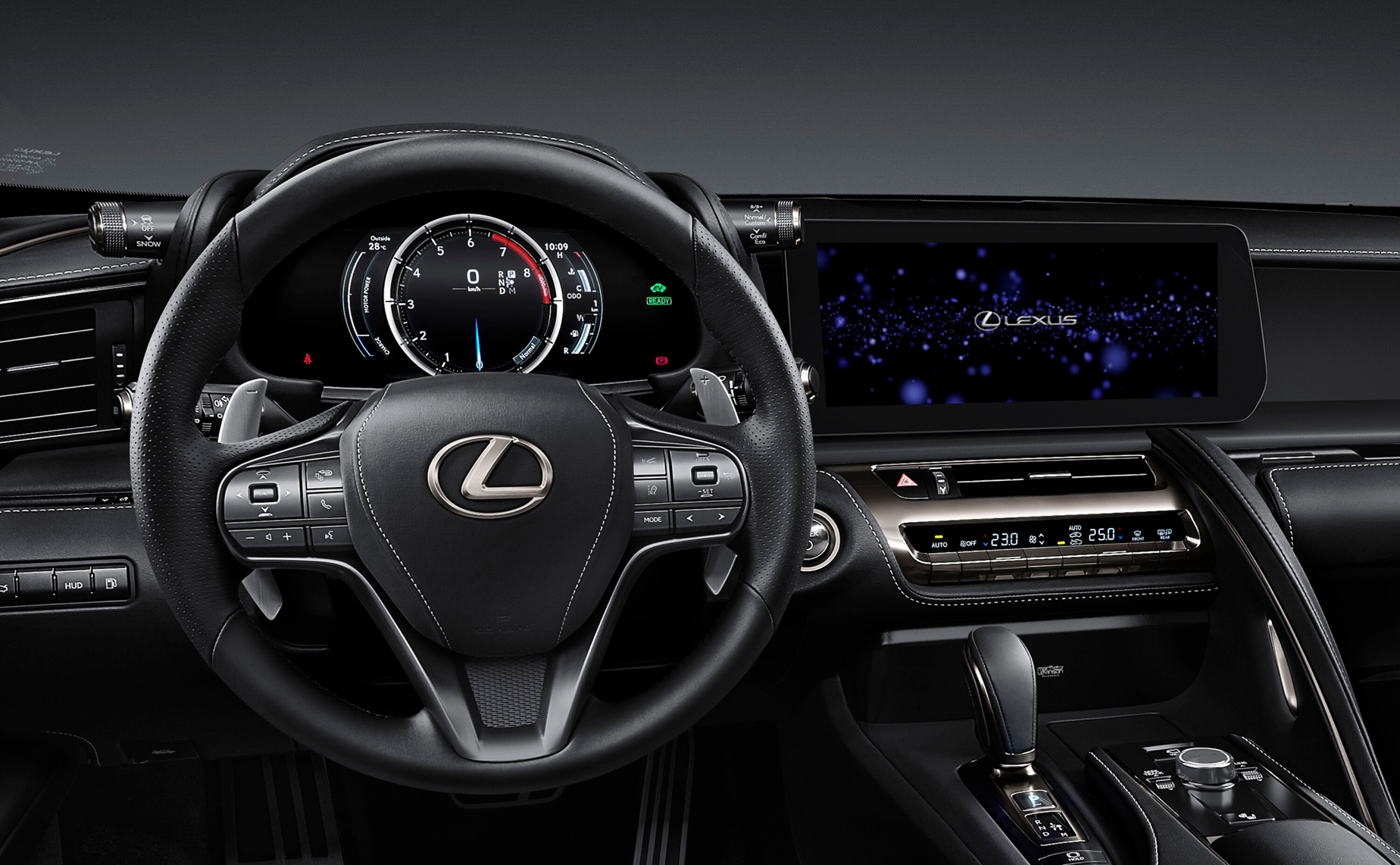
Other technology revisions applied to the LC include a larger 12.3-inch infotainment system – up from 10.3 inches –running Lexus’s latest software, wireless Apple CarPlay and Android Auto, and connected built-in satellite navigation.
As with other recent Lexus vehicles, it sees the trackpad controller replaced by full touchscreen functionality, along with ‘Hey, Lexus’ voice control.
Lexus said the 13-speaker Mark Levinson audio system has been updated to “allow playback of high-resolution sound sources,” and the speakers have switched to a “low-voltage type”.
The brand’s latest active safety suite is now fitted to the LC, with cyclist, intersection and night-time pedestrian detection added to its autonomous emergency braking system.
1
In addition, it adds emergency steering assist, traffic sign recognition, curve speed reduction, lane tracing assist, rear cross-traffic alert, a 360-degree camera system, and “greater detection capability” for the adaptive cruise control system.
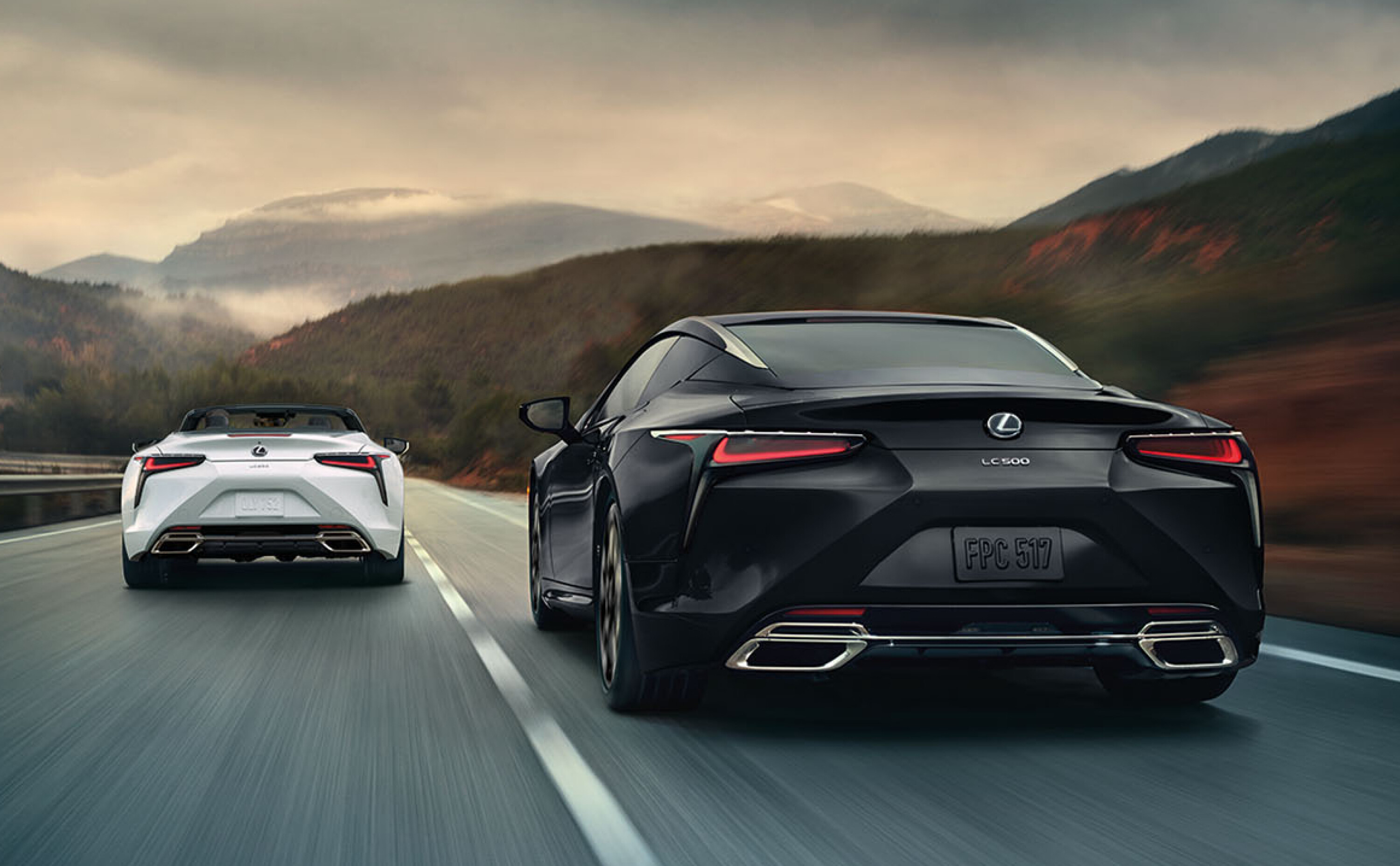
Prices for the LC500 coupe and convertible have risen by $3175, now priced from $204,365 before on-road costs for the coupe or $218,243 plus on-roads for the convertible.
The previously-optional enhancement pack is now standard-fit for the electrified LC500h coupe, joining the LC500 convertible – but it remains optional for the LC500 coupe.
1
As such, pricing for the LC500h has risen by $18,380, with new features including dynamic rear steering and variable gear ratio steering, an active rear spoiler, carbon fibre roof, 10-way power-adjustable front seats, Alcantara and leather-accented upholstery, and carbon-fibre scuff plates – plus a Torsen limited-slip differential and high-grade brake discs.
New colours for the Lexus LC range include sonic copper and cobalt mica, joining white nova, sonic chrome, sonic iridium, titanium grey, graphite black, infrared, zinnia yellow and khaki metal.
Inside, an available dark rose finish replaces flare red, while manhattan orange is discontinued.
1
2023 Lexus LC pricing
All prices exclude on-road costs
| Model | Pricing | Change |
|---|---|---|
| LC500 coupe | $204,635 | up $3174 |
| LC500h coupe | $212,727 | up $18,380 |
| LC500 convertible | $218,243 | up $3175 |
MORE
Everything Lexus
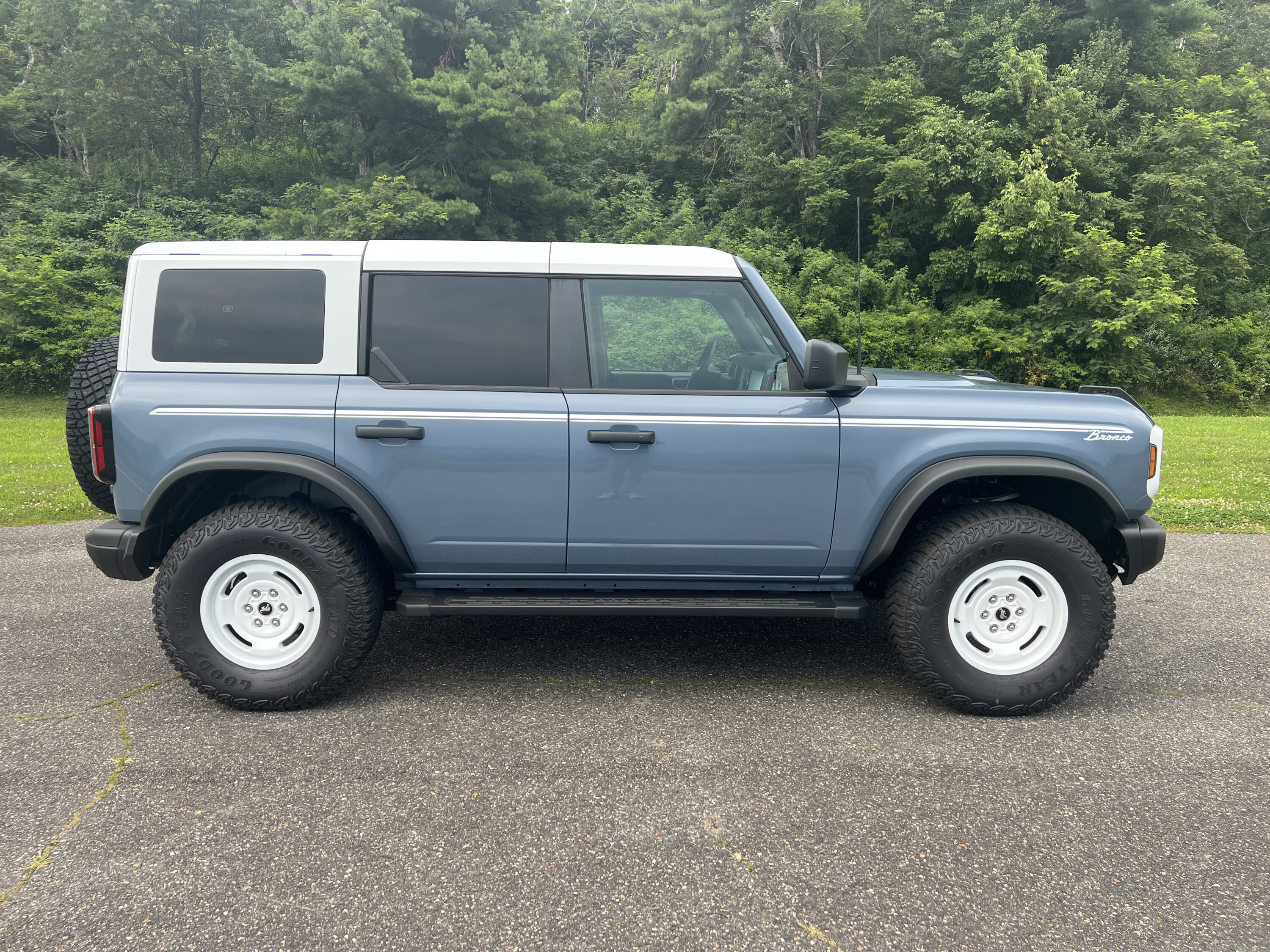
This isn’t the Ford Bronco’s first rodeo. The American off-roader has been around since 1965, the same year another wild horse – the Mustang – hit the production line for the first time.
The latest, sixth-generation was introduced in 2020 after a 14-year hiatus and featuring a retro design with cues from the original.
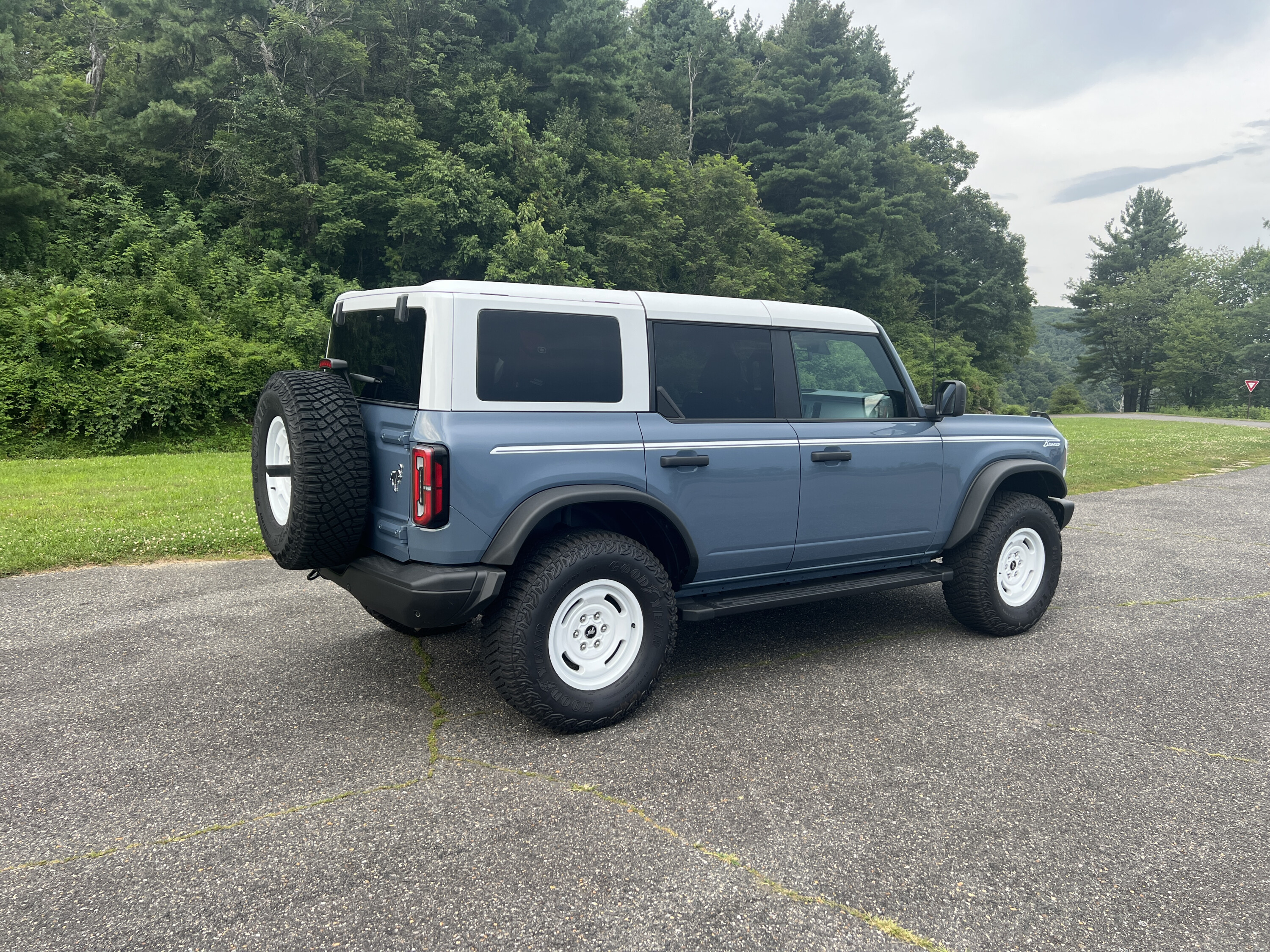
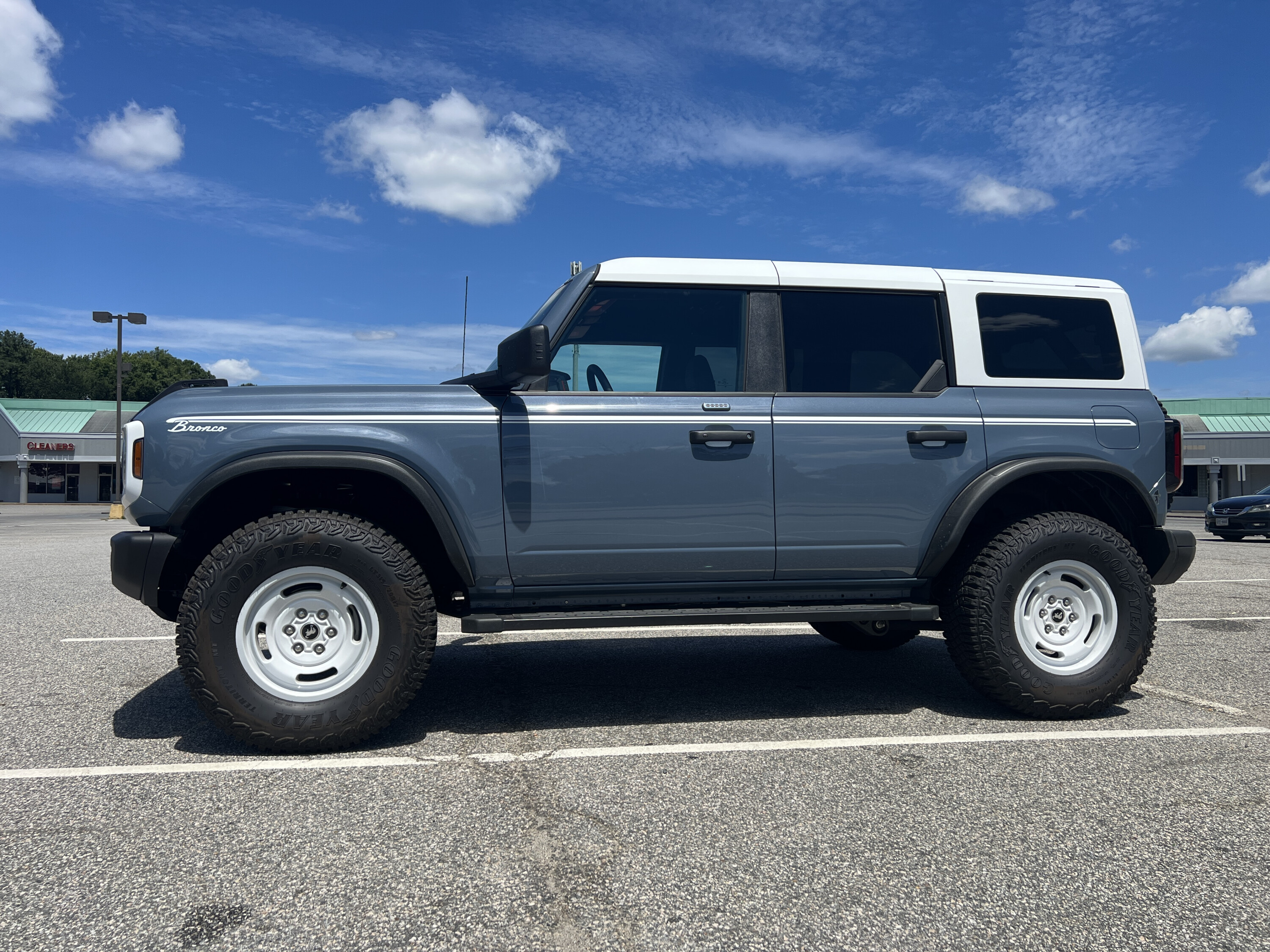
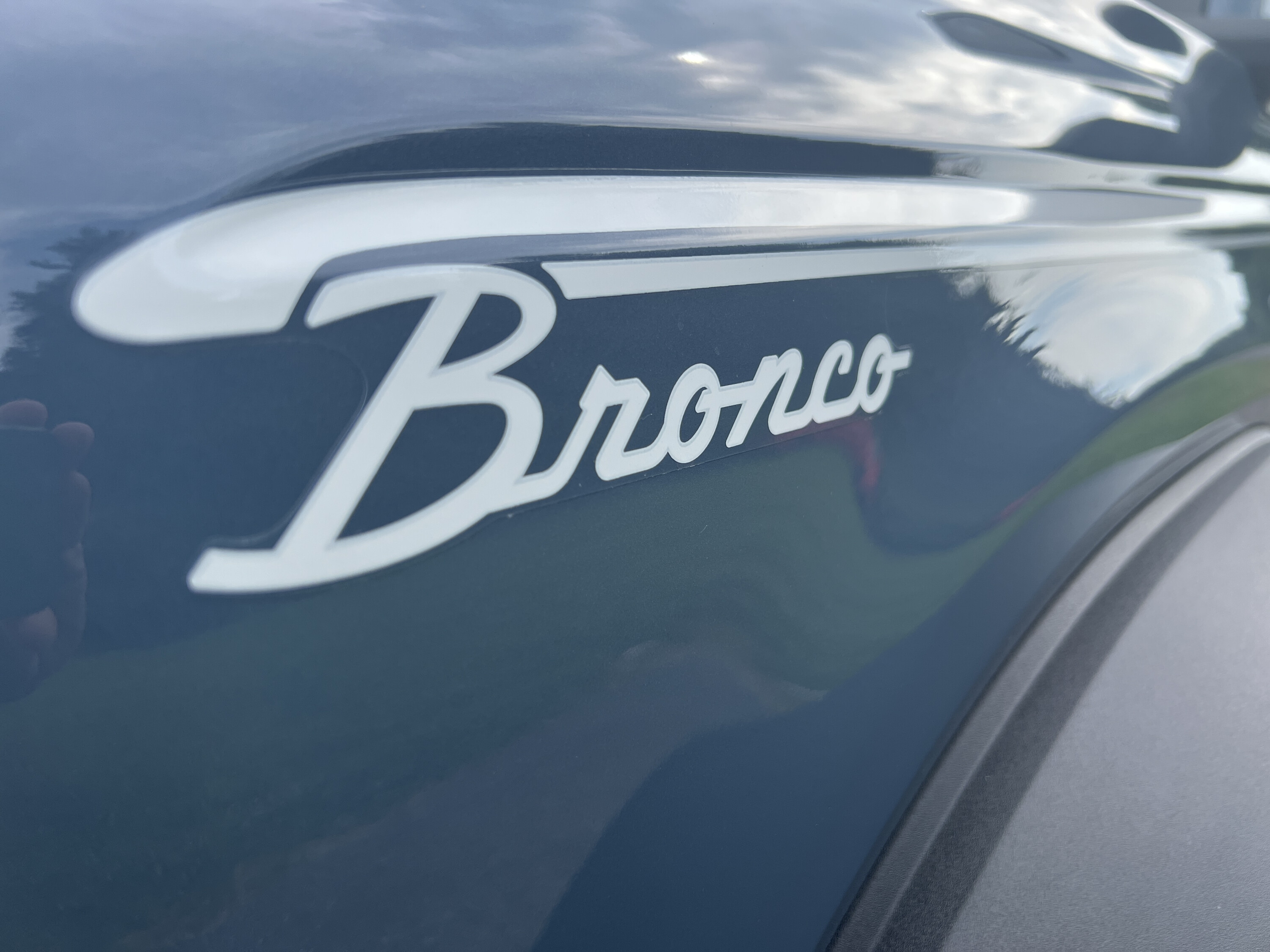
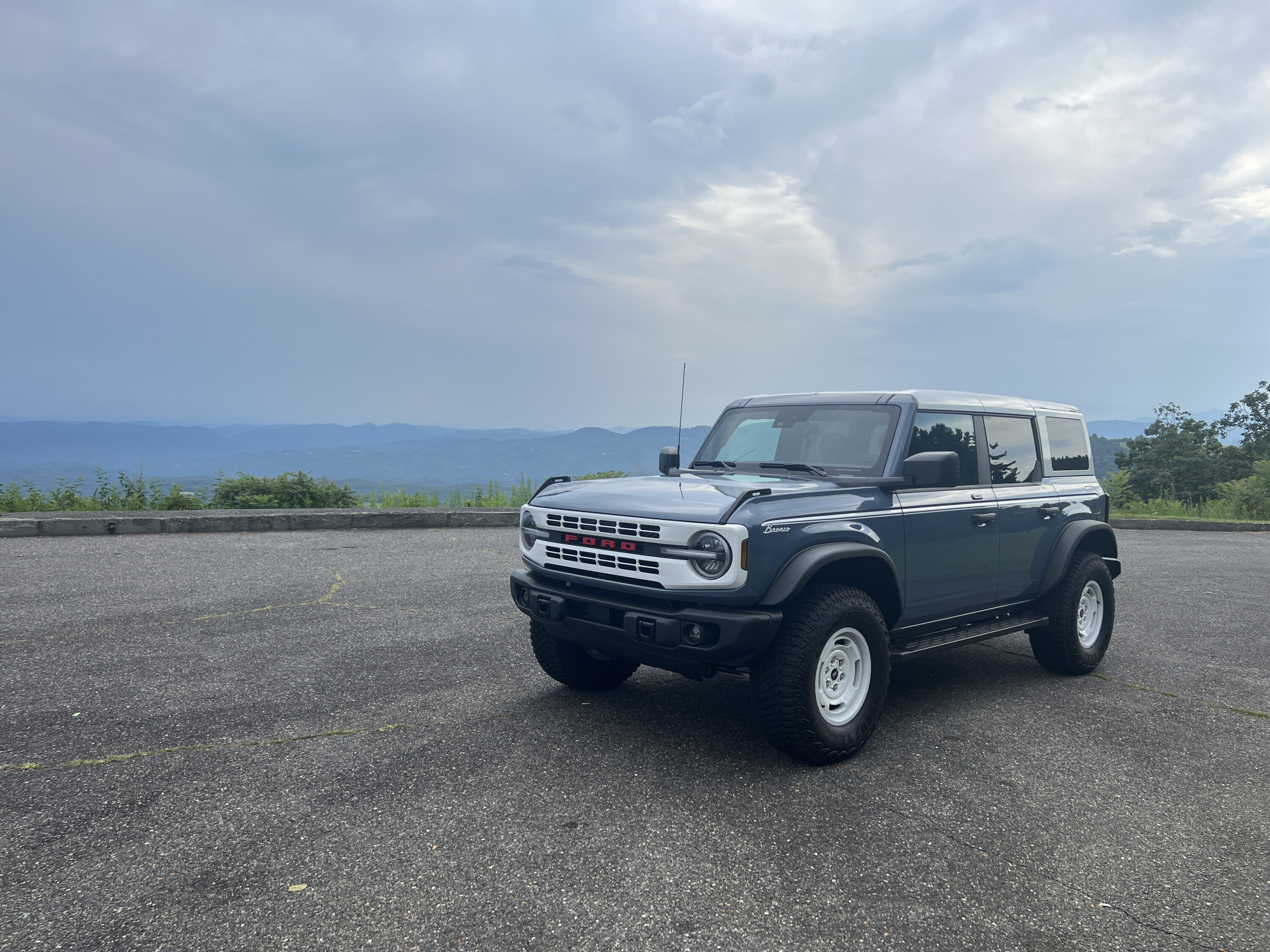
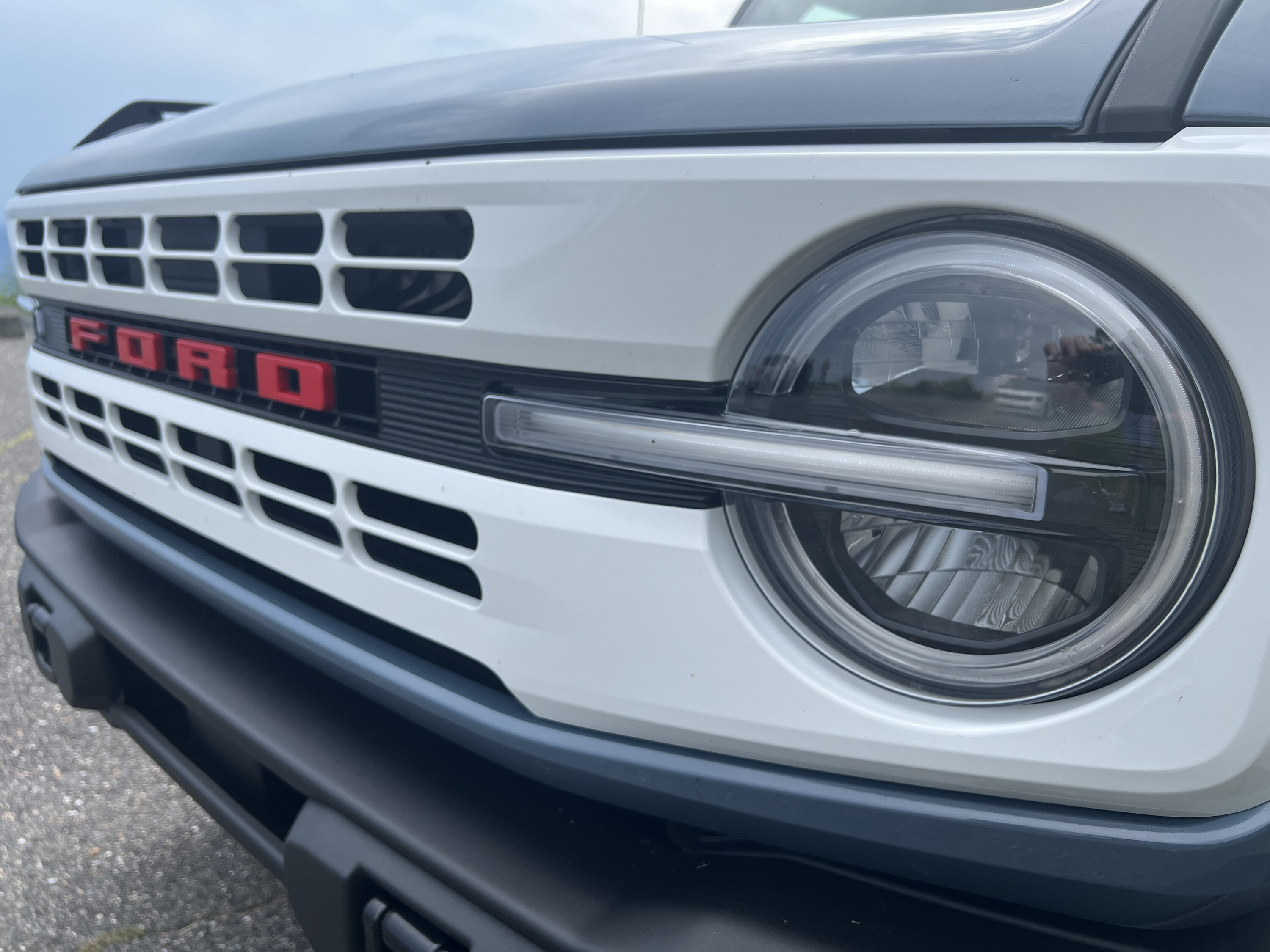
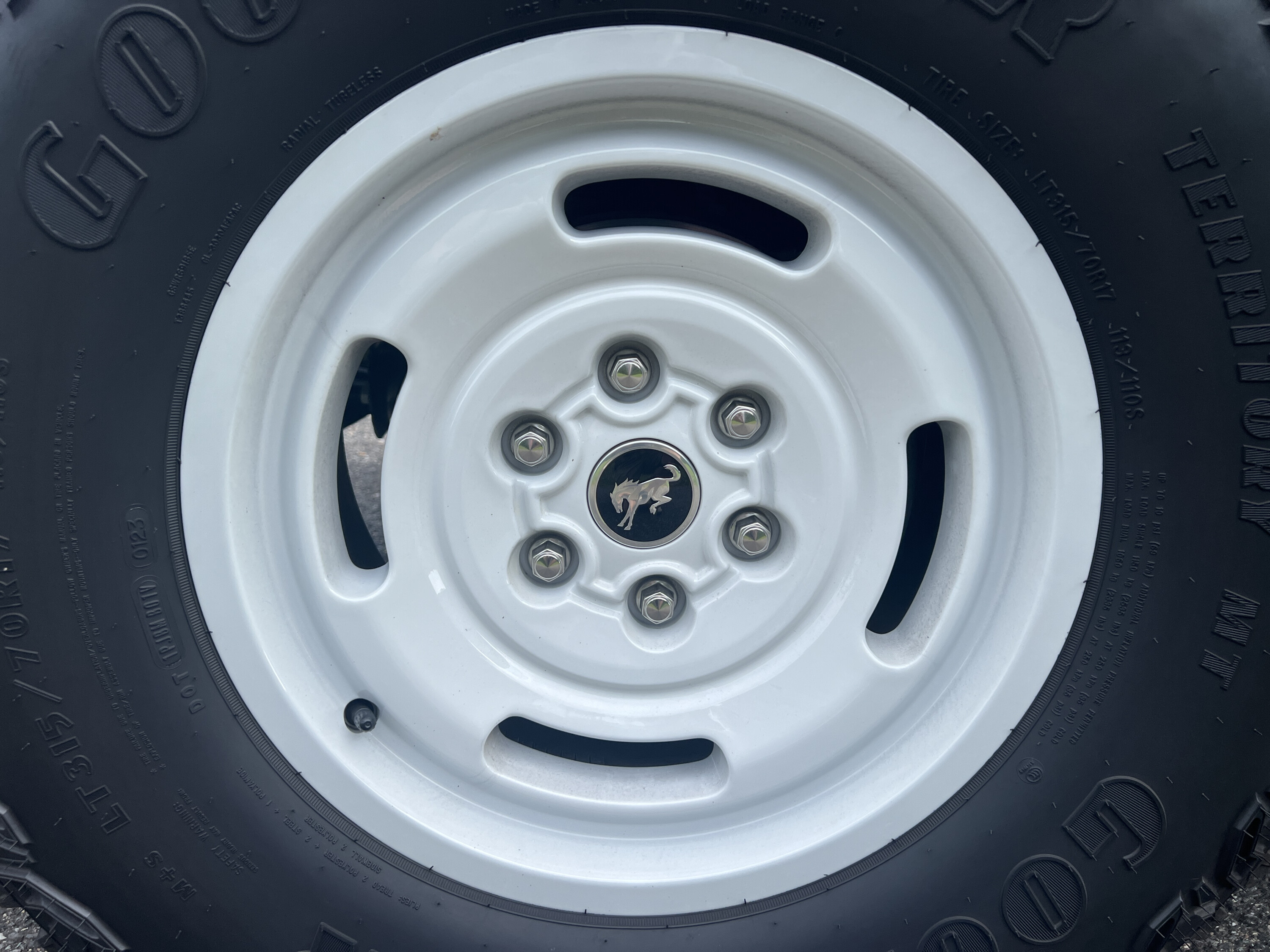
And we’re testing the Heritage edition that takes historical links further, including 1960s-style ‘Bronco’ scripting on the front guards, a white grated grille, white wheels, and ‘F-O-R-D’ spelled out on the front grille instead of ‘BRONCO’.
1
The Bronco shares its T6 platform with the locally developed Ranger and Everest.
Let’s avoid any teasing, though. We got the opportunity to drive a Bronco as part of a US media trip for the launch drive of the 2024 Ford Mustang, but the retro off-roader isn’t currently planned for the Australian market as it remains strictly left-hand drive.
It would have made a natural addition to Ford Australia’s fleet: the Bronco shares its T6 platform with the locally developed Ranger and Everest.
The Bronco is about 10cm shorter than an Everest but with a slightly longer wheelbase.
JUMP AHEAD
- So, it’s a rival to the Jeep Wrangler?
- Is the Bronco’s interior modern and practical?
- What’s it like to drive?
- Should Ford bother making the Bronco in RDH?
So, it’s a rival to the Jeep Wrangler?
Exactly. The original Bronco was even inspired by the Wrangler’s ancestor, as Ford wanted to tap into America’s growing band of 4WD adventurists who, in the 1950s, were buying the Willys off-roader (as well as the International Harvester Scout).
And the Bronco also comes with removable doors and roof.
The Ford is available as a (short-wheelbase) two-door or four-door where the Wrangler is a five-door only these days. Pricing is similar in the US – both start from about US$35,000 and stretch beyond US$80,000. The flagship Bronco Raptor costs $132,000 when converted directly to Aussie dollars.
1
Is the Bronco’s interior modern and practical?
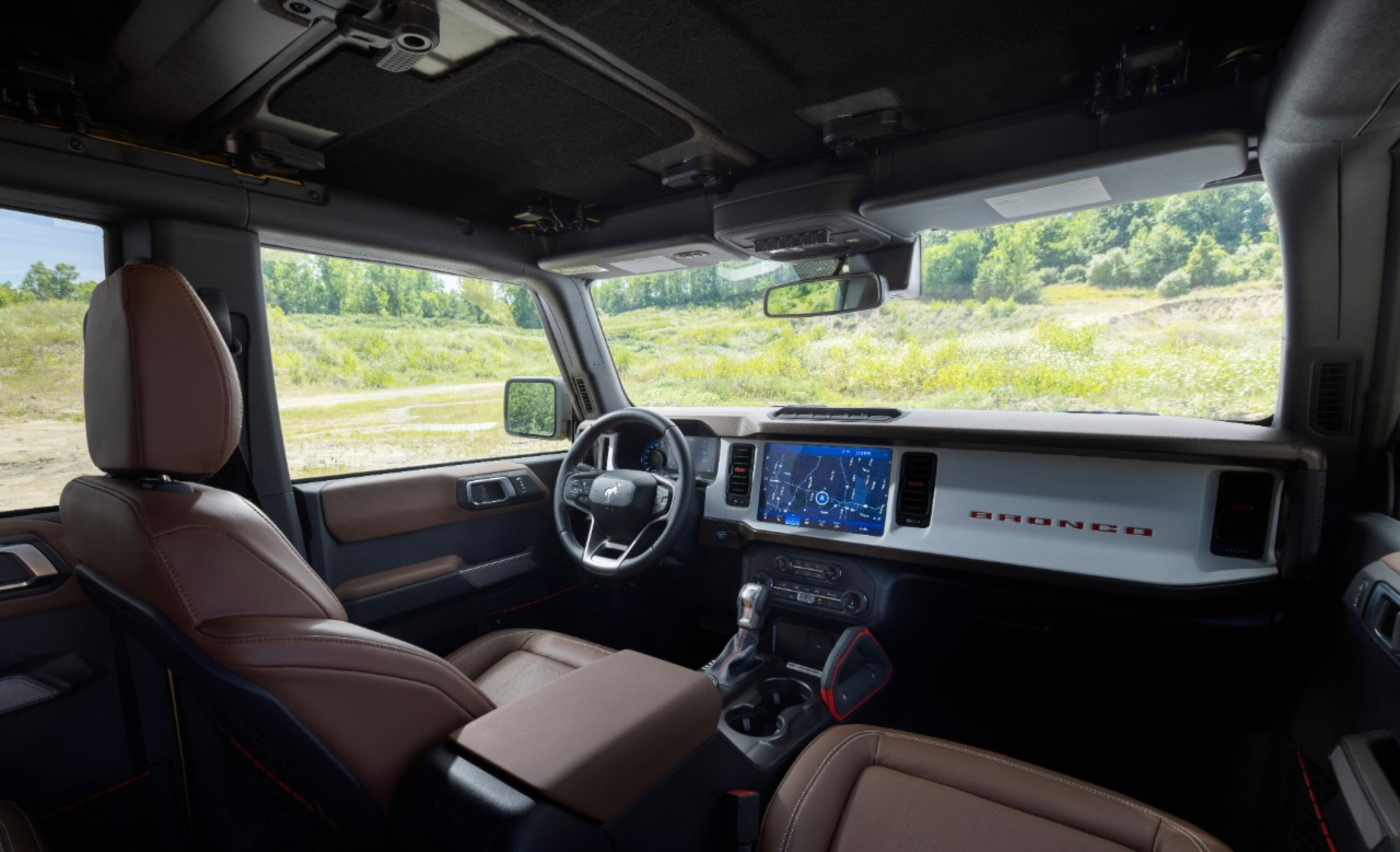
The Bronco’s cabin is ruggedly retro, with a high and chunky dash, hand grips galore, some biggish physical dials, and diff lock switches on the dash top.
Digital driver and infotainment displays add the 2023 flavour, though the graphical cluster lacks sharpness and configurability, and looks more like an oversized trip computer.
At least the infotainment is Ford’s solidly executed Sync 4 operating system, which is simple to use.
There’s a slot in the centre console for a smartphone but charging is via lead only unless you tick an option box.
1
Storage options include a decent-size console bin, twin cupholders, and the removable doors employ net pockets that save helpful weight but are happy to bulge with a couple of small drinks bottles and a wallet.
The removable doors, however, also result in the window and mirror switches being placed awkwardly on the front of the centre console bin. Jeep does this better by placing its window switches on the Wrangler’s dash.
For a vehicle with a 2.9-metre wheelbase, adults don’t enjoy as much rear-seat legroom as you might expect, though there’s plenty of headroom even with the roof in place.
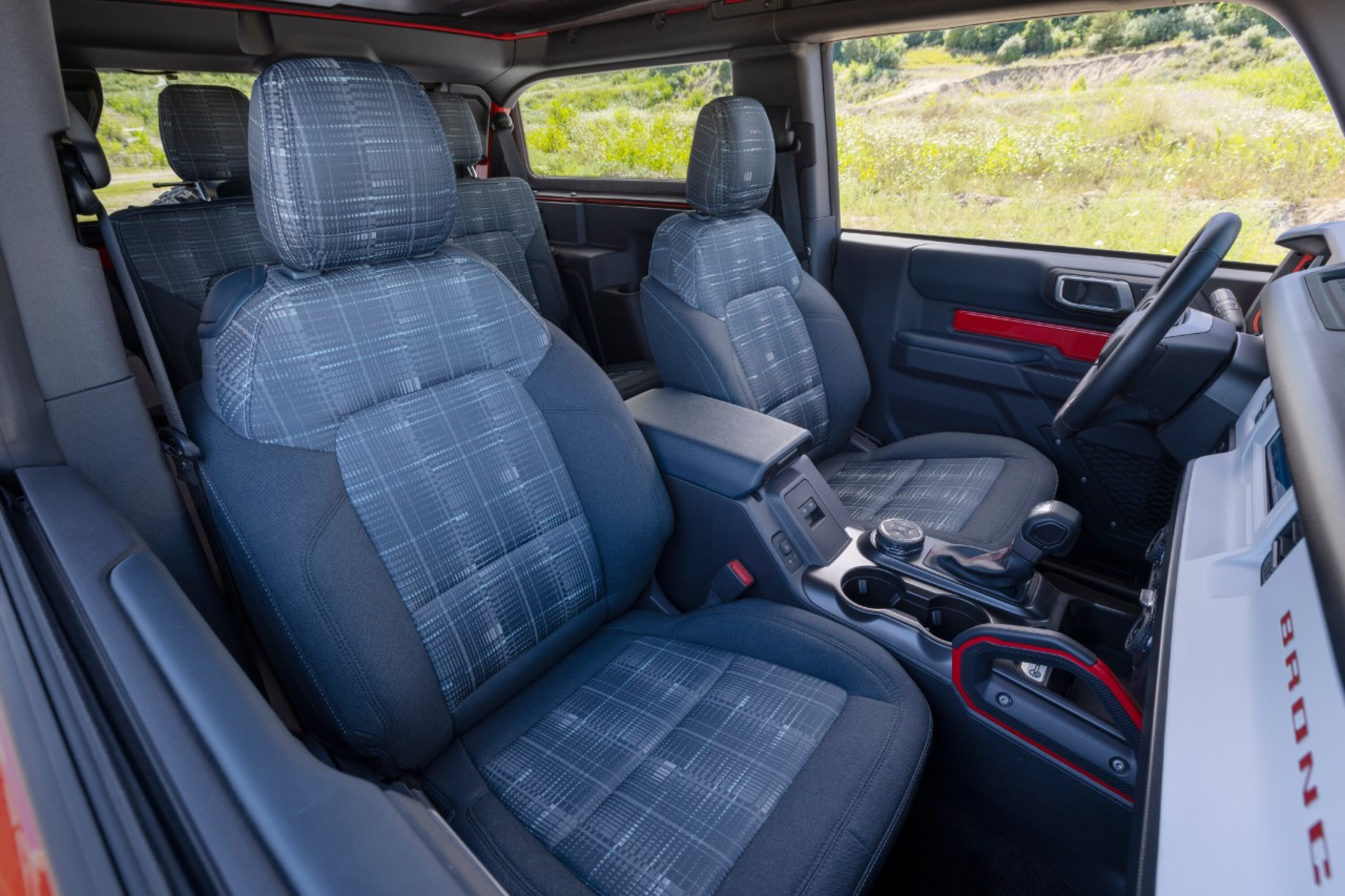
The Bronco Heritage’s seats are finished in a cloth plaid pattern and are comfortable to sit on, though have little in the way of lateral support.
1
Rubber mats front and rear mean owners will be less stressed about passengers jumping in with muddy/wet shoes.
Rear seat cushions, and headrests, collapse forward cleverly via separate buttons to create a not-quite-flat extended cargo bay.
The boot is usefully sized, however, with generous width and height. It’s accessed by a horizontally split tailgate combining lower, side-hinged tailgate and top-hinged glass window.
The one miss here is that, owing to the external spare-wheel mount, the upper glass section can’t open separately – as with a Ford Territory – so items could be thrown in quickly and conveniently; the tailgate must be opened first.
1
What’s it like to drive?
In quite a few ways, better than a Wrangler.
That starts with steering that is noticeably more precise than the Jeep’s, not only making the Bronco more enjoyable to guide around corners but also easier to keep it straight on a freeway.
Big, chunky and square side mirrors contribute to good all-round vision, while ride quality is decent if occasionally flawed. Bigger, sharper bumps tend to send mild, temporary tremors through the cabin.
Road noise is better than expected on the 35-inch mud tyres that are part of a Sasquatch off-road pack standard on Heritage Broncos.
Cabin ambience is far from calm at speed, however, as wind and engine noise are both noticeable.
1
Our Bronco was an EcoBoost variant, meaning 220kW and 400Nm from a 2.3-litre turbocharged four-cylinder rather than the optional 242kW/562Nm V6 petrol.
A 10-speed auto is optional for both engines; our test car featured the standard seven-speed manual. There’s a lightness to both the clutch pedal and gearshift action, the lever nudging into its gates without fuss if not much satisfaction for a keen driver.
The turbo four isn’t bereft of torque down low but the engine’s best performance is found in its mid-range once the turbocharger is on boost.
It’s a thirsty motor based on our US drive experience, with the trip computer indicating average consumption of 17.7 miles per gallon (about 13 litres per 100km).
1
A full-time AWD system is operable via a centre console dial similar to that found in V6 versions of the Ranger and Everest – featuring 2WD High, 4WD Low, 4WD High, and Auto 4WD modes.
There are also seven GOAT (Goes Over Any Terrain) modes, though a tight schedule and a need to cycle though other road-trip vehicles including a 2024 Mustang and F-150 meant we didn’t get a chance to go off road.
We’d doubt its mud-plugging credentials, though. Not only is the Bronco related to the Ranger and Everest but the Heritage variant also gains electronic locking front and rear axles, the aforementioned mud-terrain tyres, and higher-clearance suspension and wheel-arches.
1
Should Ford bother making the Bronco in RDH?
100 per cent. Australia loves 4WDs, and that includes retro-inspired off-roaders – as the widely loved Prado-based FJ Cruiser proved.
Our US-drive impressions also suggest the Bronco would cause the Jeep Wrangler plenty of bother in a head-to-head comparison.
There’s also a Bronco Sport in the US that is based on the same platform as the Ford Focus small car and Escape SUV – a monocoque alternative that would seem like a great replacement for the Escape that will be discontinued locally.
It’s all about sufficient demand from right-hand-drive markets convincing Ford to change its mind, and executives have previously not ruled the chance out completely.
1
MORE
Everything Ford
MORE
Large SUVs
The Mercedes-AMG community is not amused.
Snapshot
- Twin-turbo V8 reportedly set to return to C63 and E63 later this decade
- Matched to plug-in hybrid system to meet strict EU7 emissions standards
- Latest performance models switched to downsized PHEV powertrains
The most-powerful C-Class traded its V8 for a hybridised four last year, and the next top-of-the-line E-Class – due in 2024 – must make do with a PHEV straight-six.
That’s not good enough vis-à-vis the BMW M3 (inline six) and the future M5 (V8 with battery assist), let alone the upcoming Audi RS5 and RS7 powered by a V6 hybrid good for up to 477kW.
Two independent sources say that the only escape route out of this dilemma is the reinstitution of the M177 Evo 4.0-litre V8 engine, which will return to the C- and E-Classes in 2026.
The eight-cylinder, which delivers 629kW in the AMG GT 63 S E-Performance 4-Door and 590kW in the not-for-Australia S63 E-Performance, is currently being modified to meet the strict new EU7 emission norm set to be enforced in 2025.
According to senior engineers directly involved in the matter, both models need only minor bodywork changes to accommodate the twin-turbo V8 powerplant, plus the battery pack, the electric motor, and auxiliary equipment.
Since the latest C- and E-Class are both under evaluation for a life-cycle extension beyond 2028, the hardcore AMG versions may remain in production well into the next decade.
Watch Alex Inwood’s review of the new 2023 Mercedes-Benz C63 S below, or check out the written review here.
A nearly completed example of the next 2025 Mercedes-Benz CLA will debut at the Munich motor show next month.
Snapshot
- 2025 Mercedes-Benz CLA to have petrol or electric power
- Growth spurt and higher prices for new entry model, as A-Class is axed
- Near-production concept to debut at 2023 Munich auto show next month
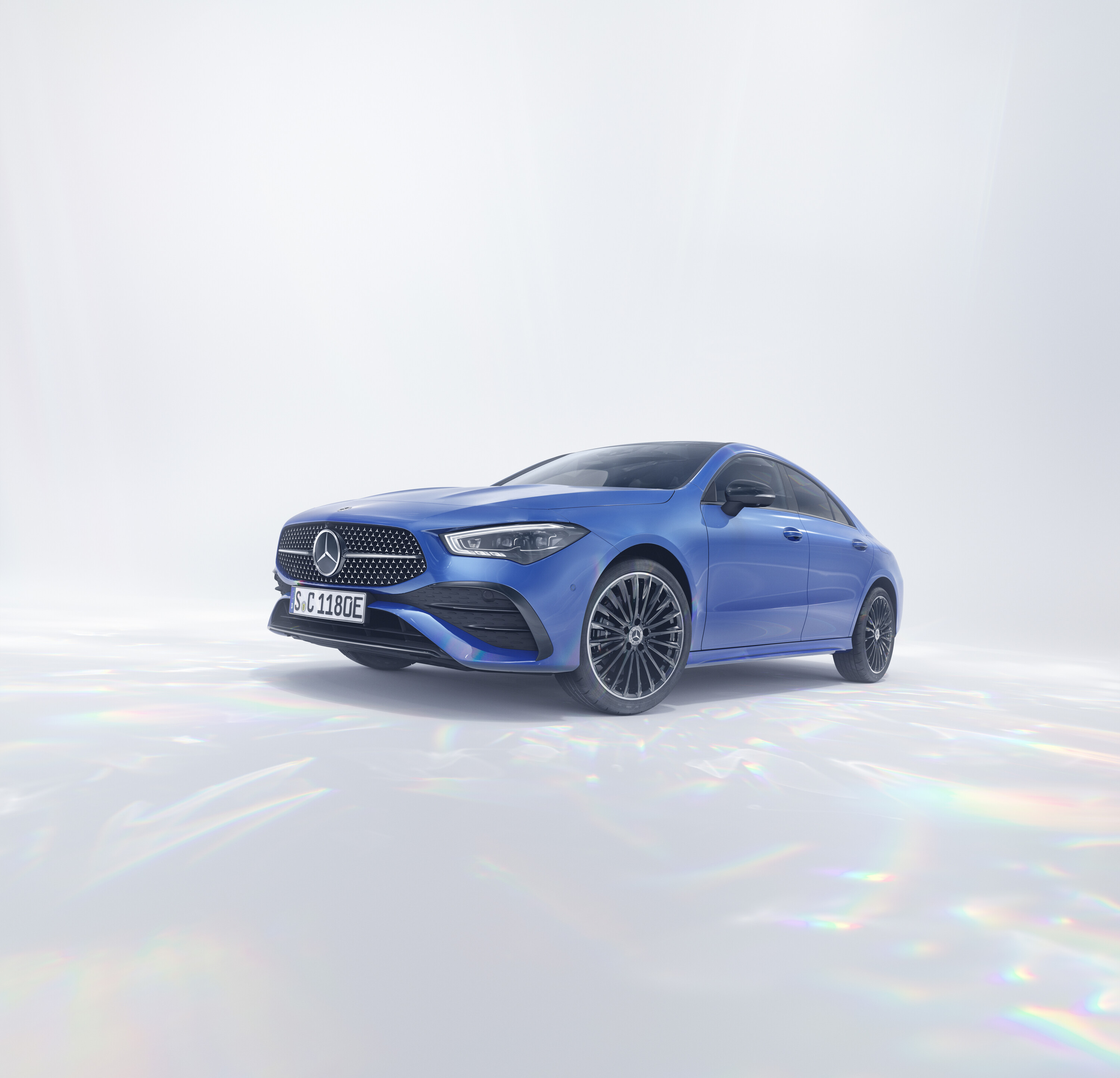
Based on the new MMA platform, short for Mercedes Modular Architecture, the next CLA will be available in liftback, shooting brake and China-only long-wheelbase form, joining the next GLA and GLB SUVs.
Also due to join the line-up is the new GLG off-road-focused small-to-medium SUV, which could mimic the angular shoebox design of the full-size G-Wagen and cost up to €80,000 fully optioned (AU$134,000).
The barely-profitable Mercedes-Benz A-Class hatch and sedan will be axed at the end of the current lifecycle, with the new CLA to act as the brand’s new entry model as it pursues higher margins.
1
The next CLA reportedly costs €10K more (AU$18,000) than the outgoing five-door in base trim and will grow 100 millimetres to around 4800mm, more than a C-Class.
A similar price rise is expected to hit the even more popular GLA small SUV.
What happens to the EQ prefix?
We’ve omitted it here for clarity because, at the end of the day, EVs will take over and the traditional nomenclature is bound to return.
1
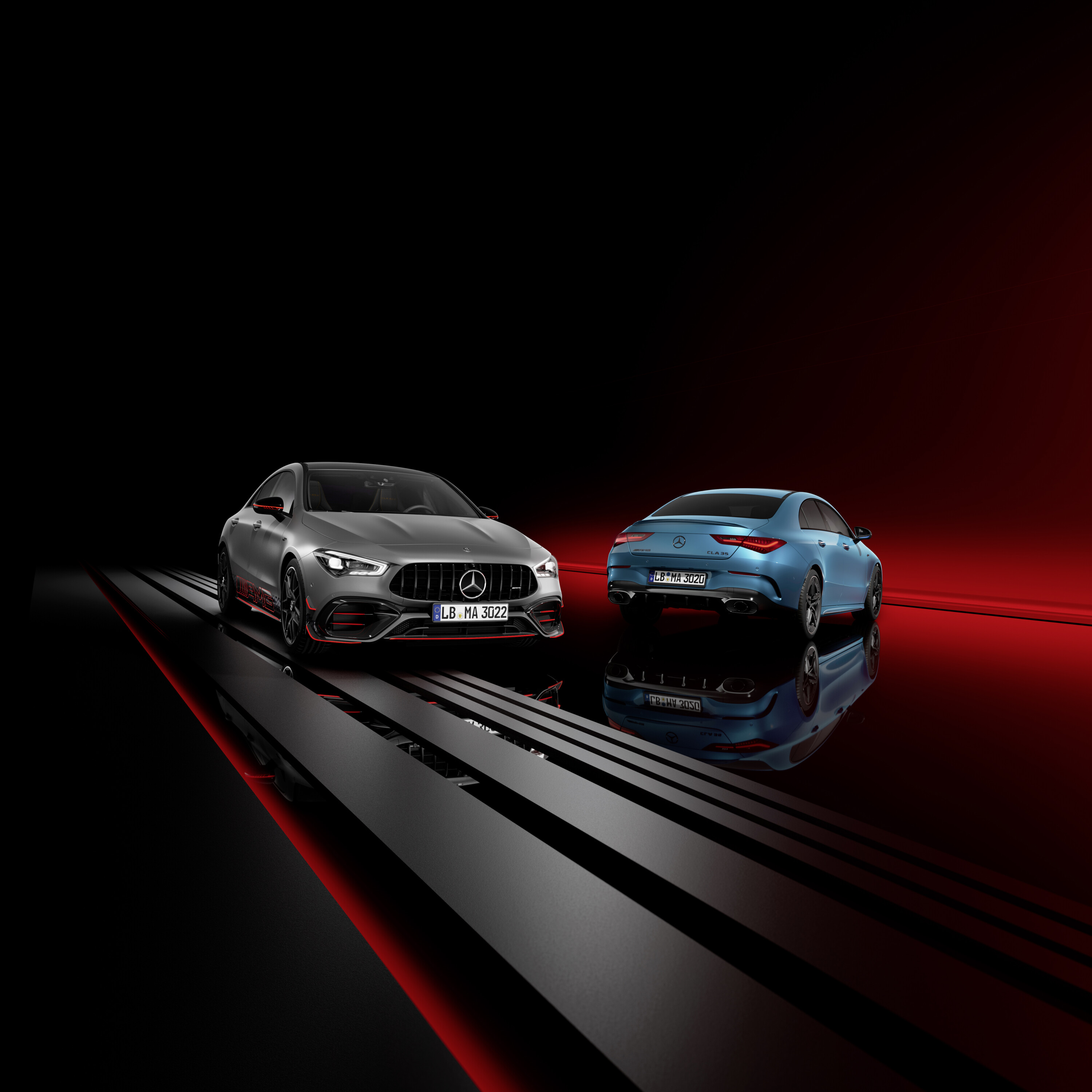
As an interim solution, MMA denotes electric first, not electric only, like the five standalone EA architectures for the EQA, EQB, EQE and EQS line-ups and the soon-to-be-discontinued EQC mid-size SUV (to be replaced by an MMA-based EQC SUV, with the EQC badge for a C-Class-size electric sedan).
For MMA-based vehicles, including the new CLA and GLA, ‘electric first’ is another way of saying that the petrol-fed M254 four-cylinder and its high-performance M188 counterpart will prevail – but diesel bites the dust.
In terms of power output, battery-fed small Mercedes will be good for up to 400kW, the electric C-Class range stretches to 500kW, the EV-only E-Class plateaus at 600kW, and the next S-Class has a ceiling of 700kW (make that 780kW for the AMG edition).
– with additional reporting by Jordan Hickey.
The BYD Atto 3 was the first model introduced into Australia by Chinese manufacturer Build Your Dreams, one of still only a few electric-only brands operating here.
More to the point, the Atto 3 compact SUV is one of the the few ‘affordable’ options in Australia’s electric car market.
BYD uses its patented Blade Battery technology in its cars, and supplies them to other car-makers such as Tesla – claiming they are stronger and more reliable than traditional batteries.
Pricing and features
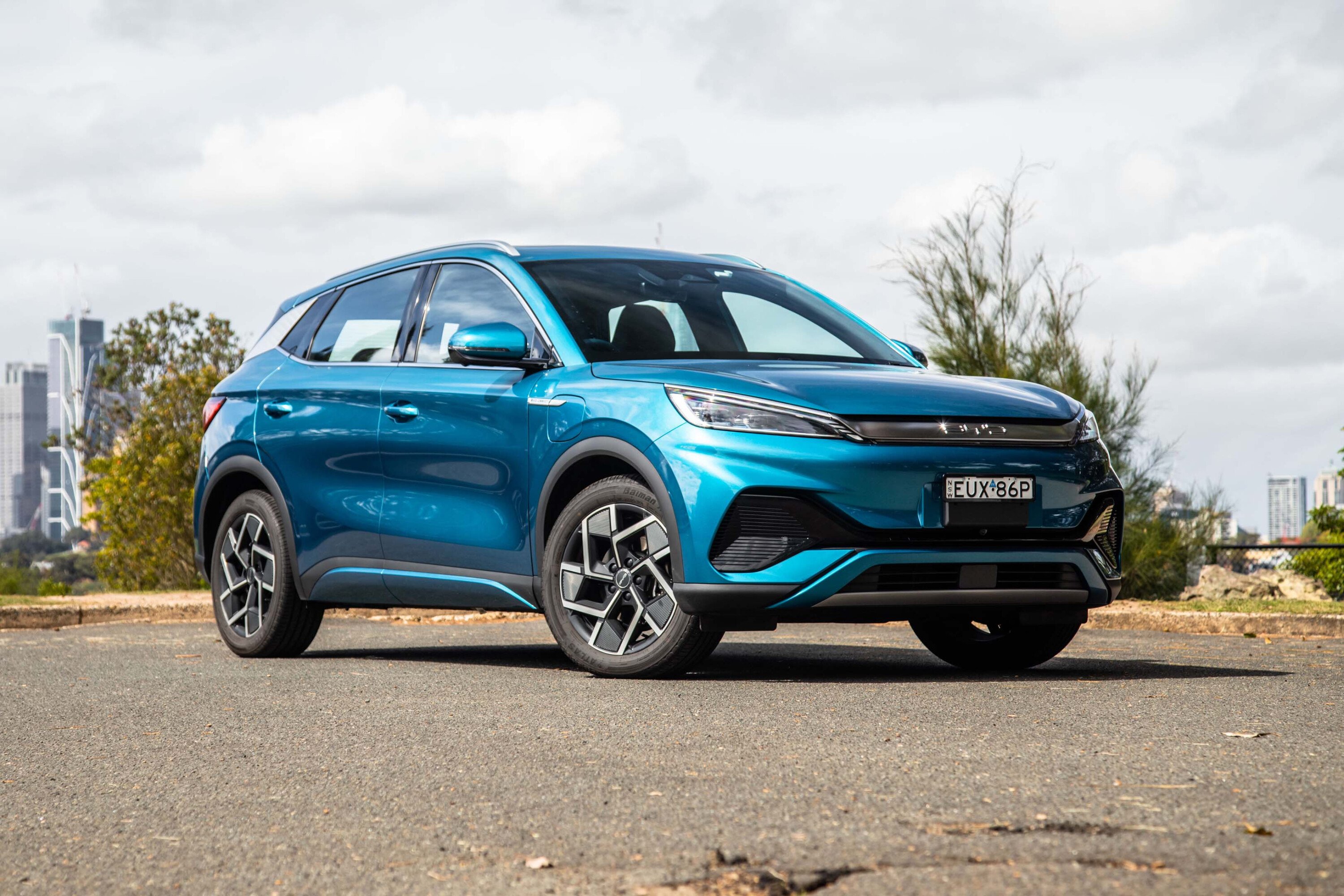
Priced at $48,011 before on-road costs, the Atto 3 is gaining quick momentum in Australia, finding a home in more than 6000 driveways during the first half of this year.
Both variants of the Atto 3 are front-wheel drive and produce a solid 150kW of power and 310Nm of torque out of a single electric motor.
1
For an extra $3000 you can jump up into the Extended variant with a larger 60kWh battery, up from the Standard’s 50kW battery.
This will extend your range by 75km over the WLTP claimed range of 345km for the Standard.
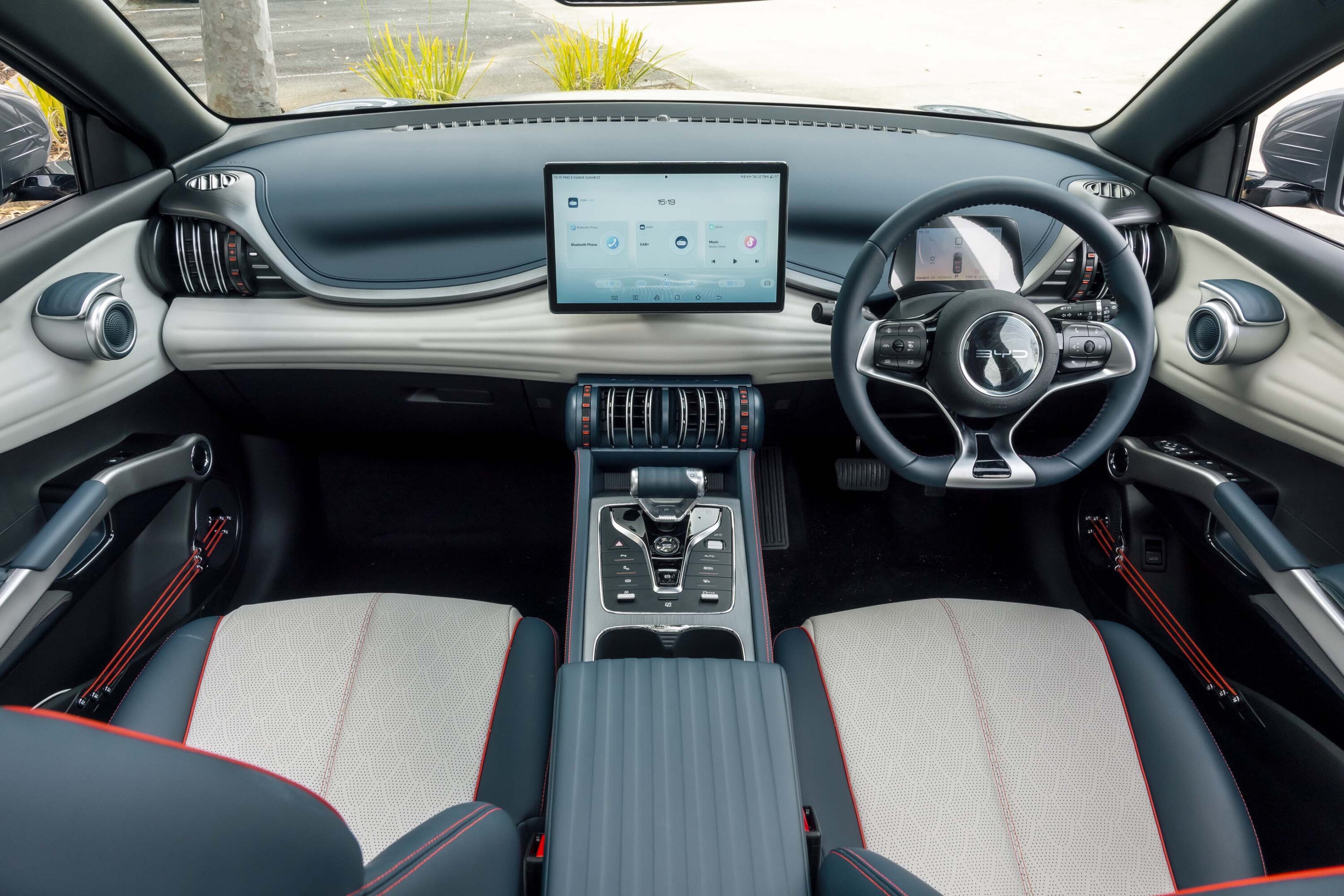
Available across the Atto 3 range you’ll get 18-inch alloys, a 12.8-inch display (which you can rotate between landscape or portrait layouts), a wireless phone charger, synthetic leather seats, power-adjustable heated front seats, and keyless entry and start.
The Atto 3 is available in five colours, all carrying a $700 premium over the standard Ski White colour.
| Make/Model | BYD Atto 3 | |
|---|---|---|
| Variant | Standard Range | Extended Range |
| Price (MSRP) | $48,011.00 | $51,011.00 |
| Power | 150kW | 150kW |
| Torque | 310Nm | 310Nm |
| Battery Size | 49.92kWh | 60.48kWh |
| Range | 345km | 420km |
4
Safety
The 2023 BYD Atto 3 has achieved a five-star ANCAP rating thanks in part to its high level of standard safety features including seven airbags, a 360-degree surround-view camera, rear cross-traffic alert, adaptive cruise control with stop-and-go function, and parking sensors (two front, four rear).
Key rivals
Rivals are creeping up slowly for electric and budget-friendly cars, but key competitors (across varying segments) include the following.
1
Should I put the Atto 3 on my shortlist?
Whether you’re contemplating a transition to electric vehicles or simply curious about them, the Atto 3 is a compelling option worth exploring.
BYD has skilfully packed this compact SUV with features usually found in top-tier competitors while maintaining a competitive price.
MORE
Everything BYD
MORE
All Electric SUVs
