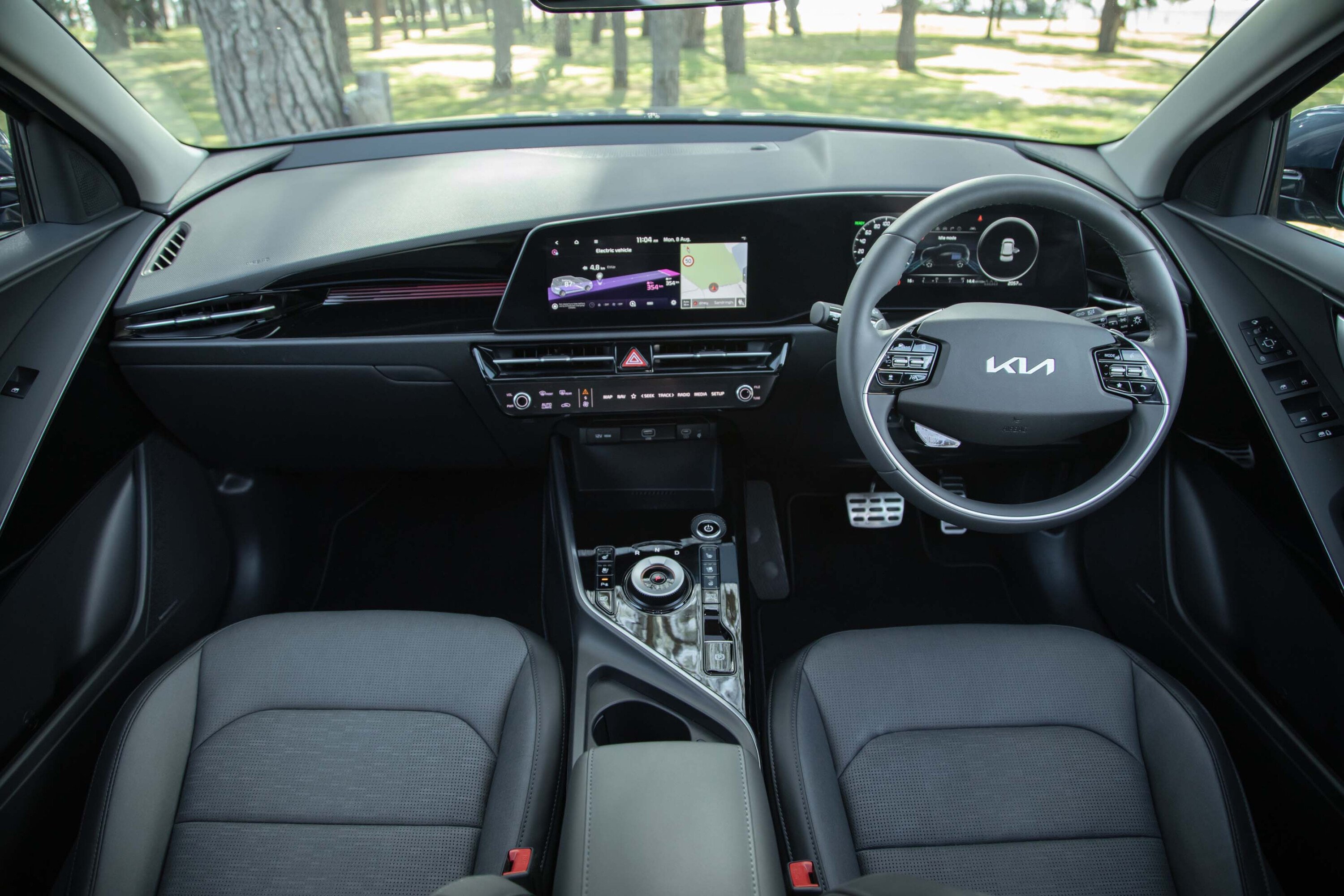
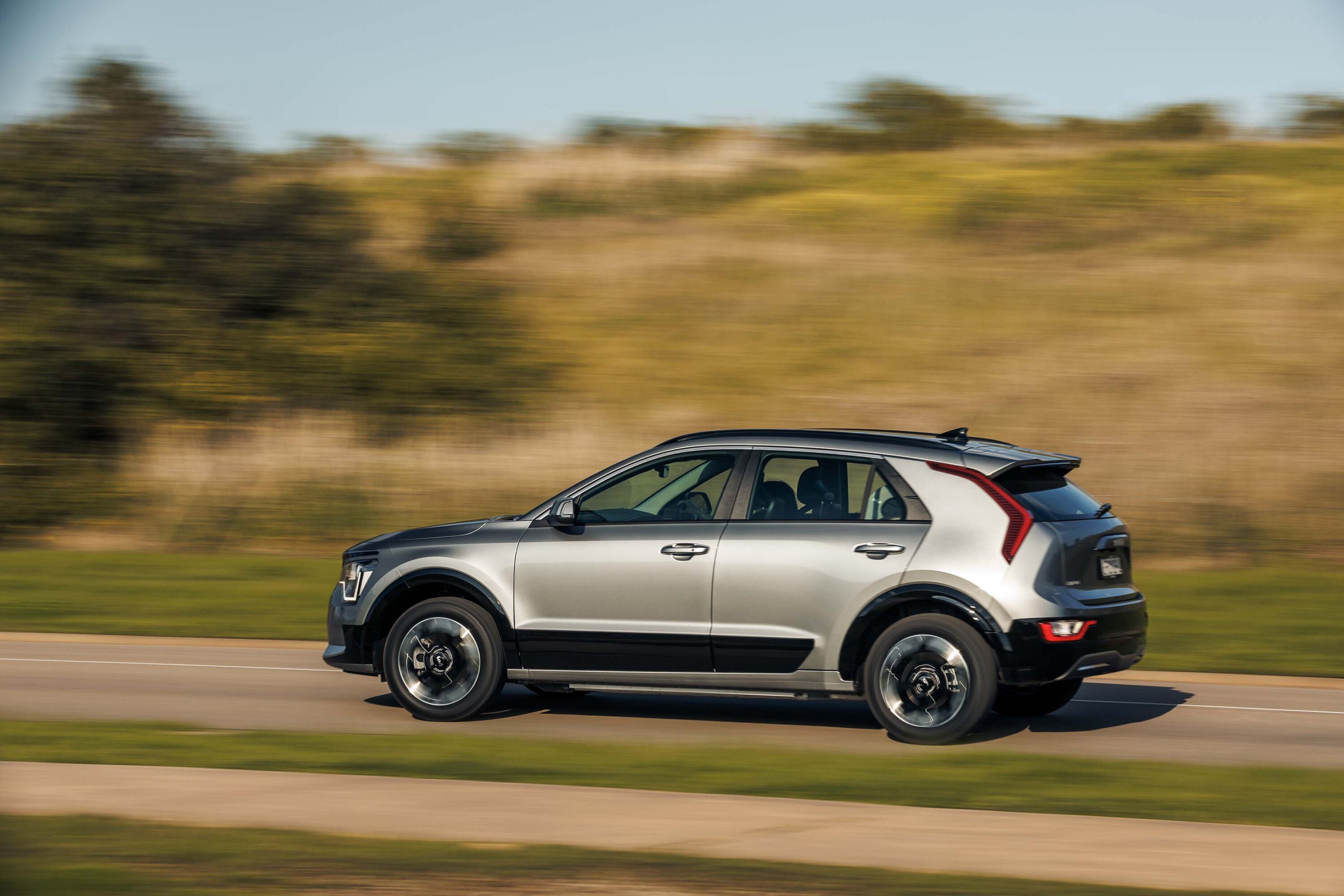
Pricing for the 2024 Kia Niro small SUV has increased for the new model year.
Snapshot
2024 Kia Niro pricing increased
Price rises between $260 and $1290
EV S gains 10.25-inch touchscreen, sat-nav & connected-car tech
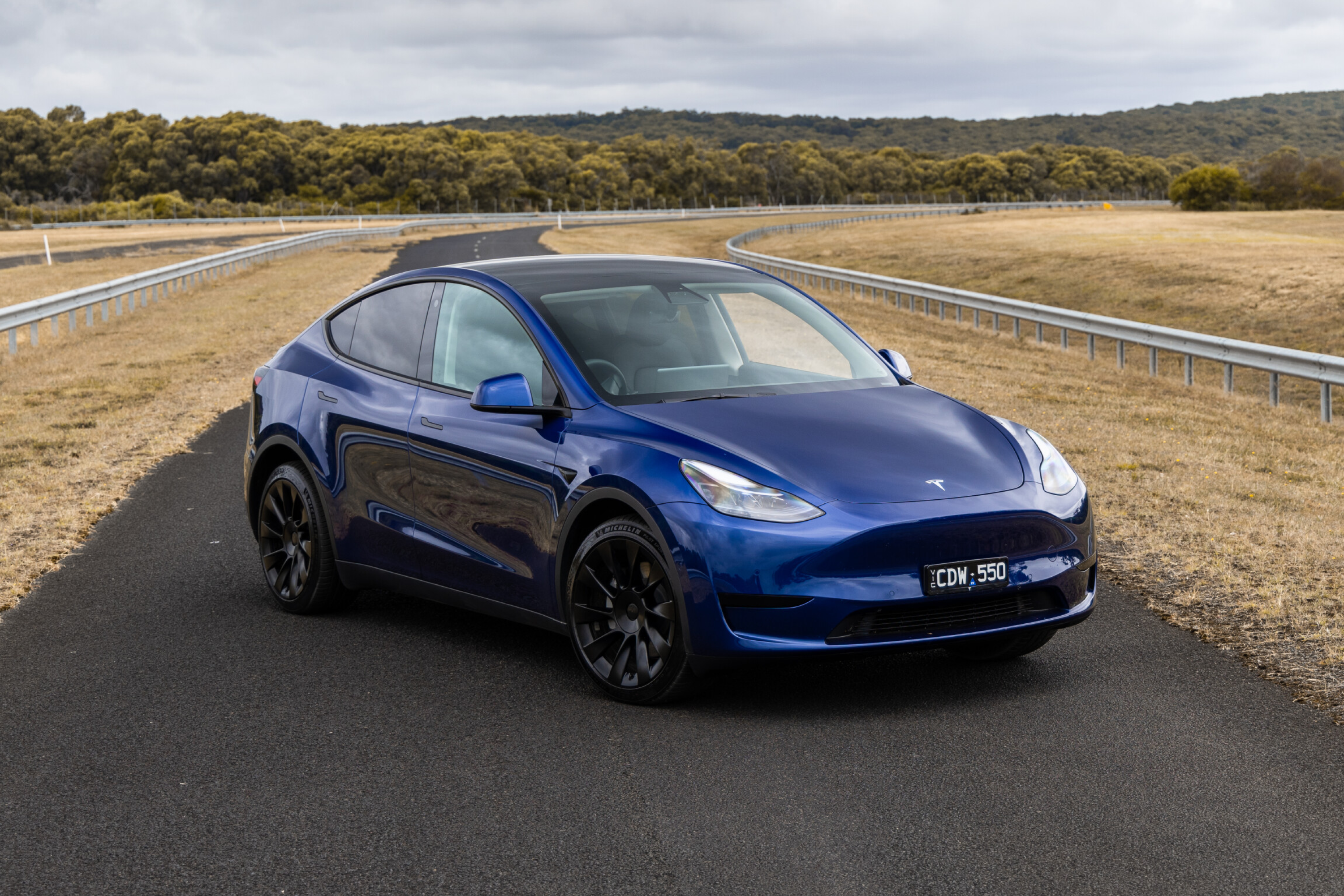
The Niro S and GT-Line Hybrids are up $500, while the flagship GT-Line EV has increased by $260 to $72,360 before on-road costs – slotting between the larger Tesla Model Y Rear-Wheel Drive and Long Range AWD.
The largest $1290 increase is for the entry-level S EV variant – now more than a base Model Y at $66,590 plus on-roads – as it is now equipped with a larger 10.25-inch infotainment system, satellite navigation, and Kia Connect connected-car technology.
With the larger screen, the S EV reverts to wired connectivity for Apple CarPlay and Android Auto smartphone mirroring, in line with the GT-Line variants.
For electric variants, Kia Connect adds automatic collision notification, SOS emergency call, stolen vehicle tracking, valet mode, remote climate control, remote door control, connected navigation, built-in voice control, and an EV charging station locator.
There are no other specification changes for the second-generation Kia Niro, which launched in Australia in July 2022.
Meanwhile, the Kia Niro Plus – an elongated first-generation Niro designed for rideshare and taxi buyers – is sold out in Australia, with bespoke ‘purpose-built vehicles’ due to launch around 2025.
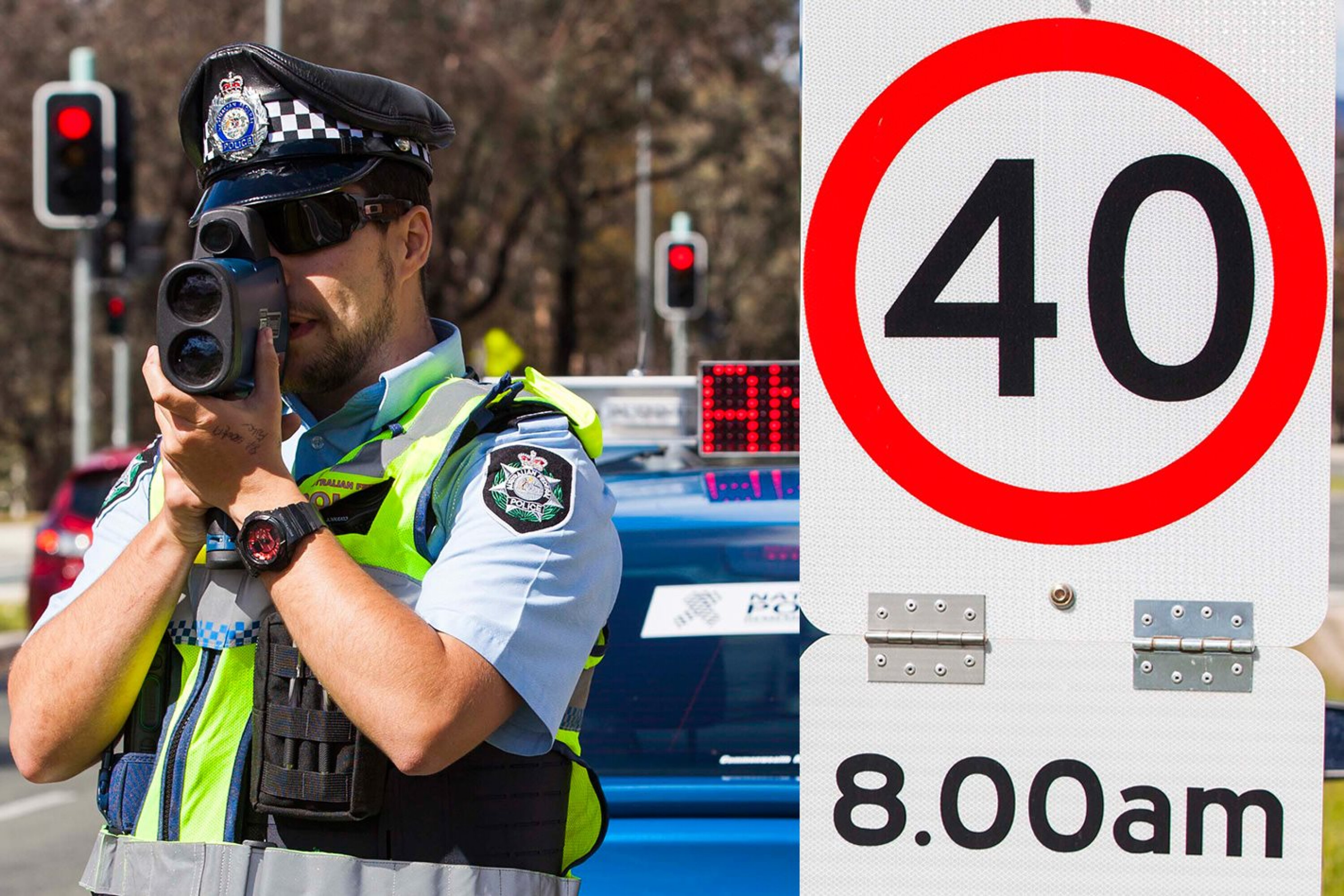
Motorists who are frequently exposed to content promoting or encouraging speeding – either on social media or in television shows, movies, or video games – are more likely to speed on the road, according to an Australian survey.
Key Points
A study links exposure to fast-car content with a higher likelihood of speeding
Half of surveyed motorists confessed to frequently exceeding the speed limit
Further research is needed to discern if media content encourages speeding, or if speeders are more attuned to such content
The study, published in the Traffic Injury Prevention journal, found that ‘self-reported’ exposure to fast-car content was notably higher among individuals who admitted to speeding, compared to those who did not.
The implications of these findings could be significant for lawmakers, considering speeding is considered a major contributor to road accidents, injuries, and fatalities in Australia.
It also highlights the need to explore what influences make speeding seem socially acceptable.
The study surveyed 628 Queensland motorists (considered a statistically valid number), ranging in age from 17 to 88 years old.
Half of the participants confessed to exceeding the speed limit by more than 10 km/h at least 10% of the time while driving.
On average, participants estimated that they encountered content encouraging speeding in 29% of their social media usage, and 40% of mass media consumption.
In addition, participants believed their friends exceeded the speed limit 39% of the time.
Strikingly, self-reported exposure to speeding-related content across all these sources was significantly higher among speeding drivers than who regularly observe the speed limit.
The study’s results suggest a correlation between exposure to speeding-promoting content and actual speeding behavior. Of course, correlation is not causation, and the research acknowledged the need for further exploration.
It remains to be seen whether exposure to pro-speeding content actively stimulates a tendency to speed, or whether those prone to speeding are simply more inclined to seek out, notice, or remember such content.
A critical point the study highlighted was the need to evaluate the accuracy of individuals’ perceptions about how often they encounter pro-speeding content. The high levels of self-reported exposure raise questions about whether individuals with a predisposition for speeding are more sensitive to content that reinforces their existing attitudes or behaviors.
The study underscores the need for future research to explore the influence of online and mass media messaging on driving behavior. This could provide valuable insights into how our media consumption, social interactions, and exposure to certain attitudes or behaviors might influence real-world driving habits.
Like most countries, traffic offences in Australia are managed by each individual state, from demerit points to paying your fine.
Snapshot
Depending on where you are, you’ll receive your fine in anywhere from 4 to 28 days
If you don’t have an infringement number, you might need to make a phone call…
Most states have an app or website you can pay your fine on
As noted above, each state and territory in Australia has its own online portal for checking, paying, or appealing traffic penalties. See our list of links below.
Where to check and pay your speeding or red-light fines
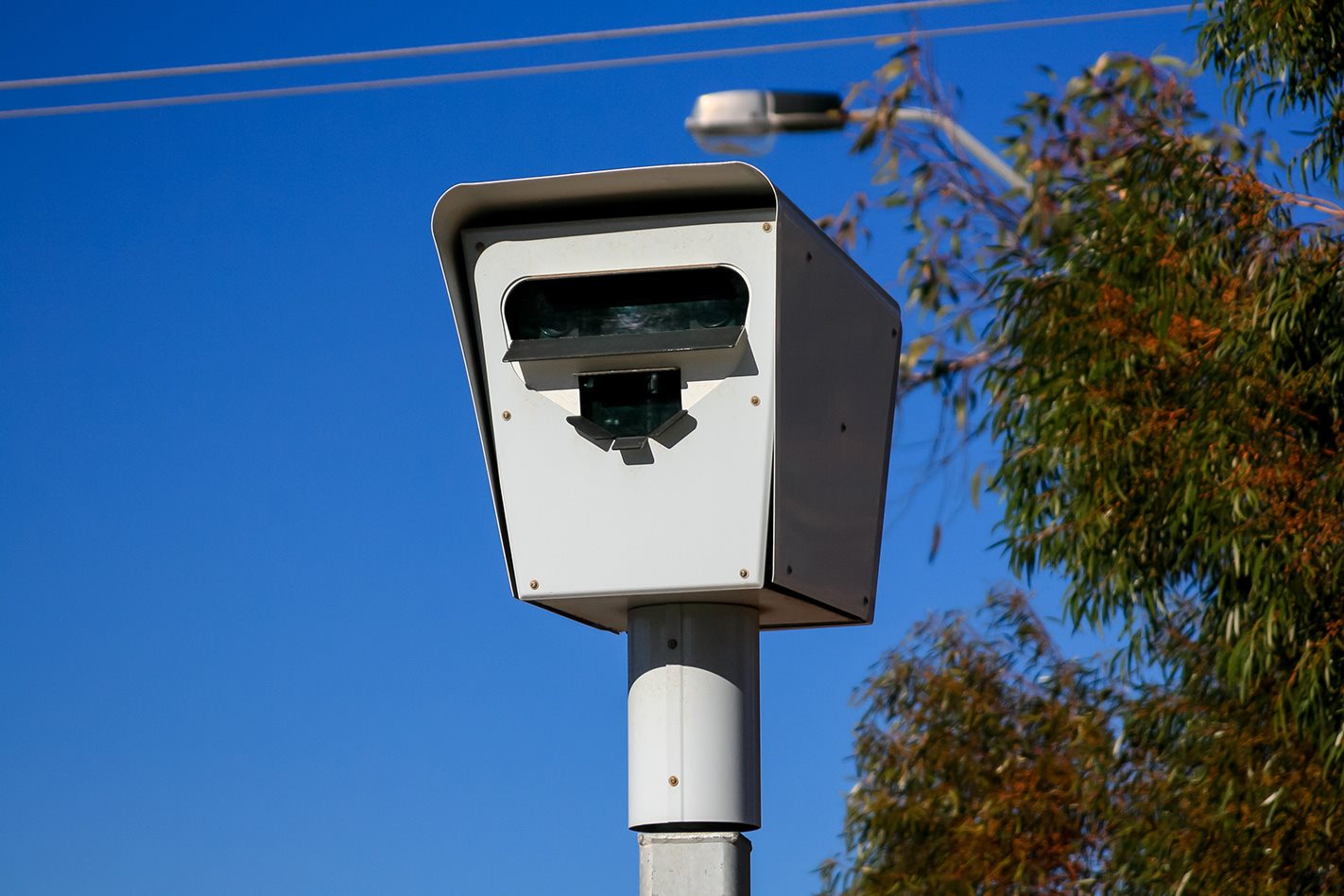
In most Australian states, if you’ve been caught speeding or running a red light, you can expect to receive a fine within approximately two weeks – the average processing time.
But! If you’re in New South Wales, you’ll need to exercise a bit more patience, as it can take up to 28 days.
Surprisingly, in Tasmania, the digital age works wonders, as you could potentially receive an electronically issued fine in a mere four days.
1
Not sure if you’ve been caught?
If you find yourself worried that you may have fallen victim to a speed camera, take heart: some states offer ways to check for any outstanding fines in your name.
For instance, in NSW, the Service NSW app is at your disposal for such inquiries, while in Victoria, fines.vic.gov.au serves as a portal to access this information.
Keep in mind that if you don’t possess an infringement reference number, you may need to phone the relevant department for assistance.
More guides to help you choose the best car & tyres for your needs
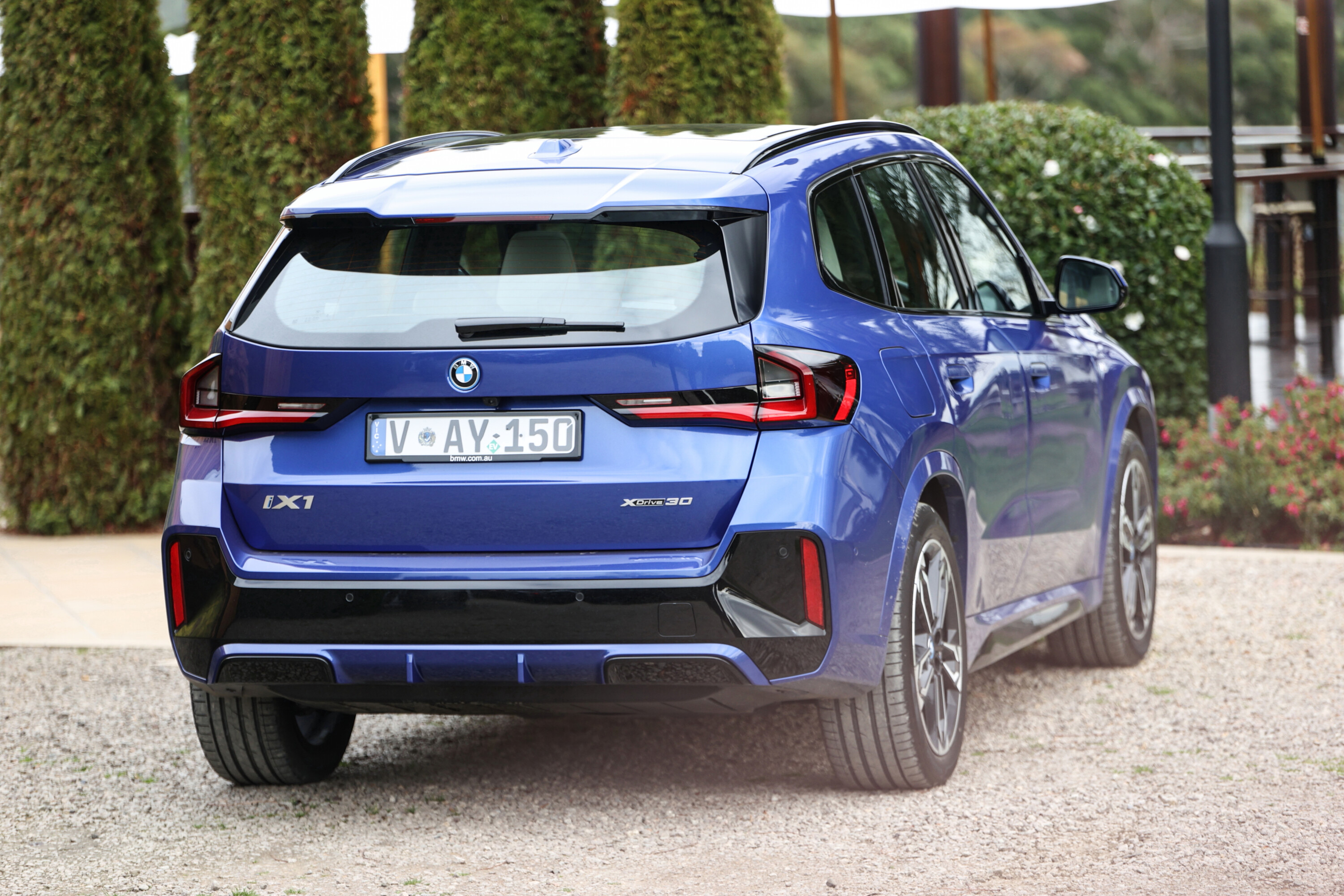
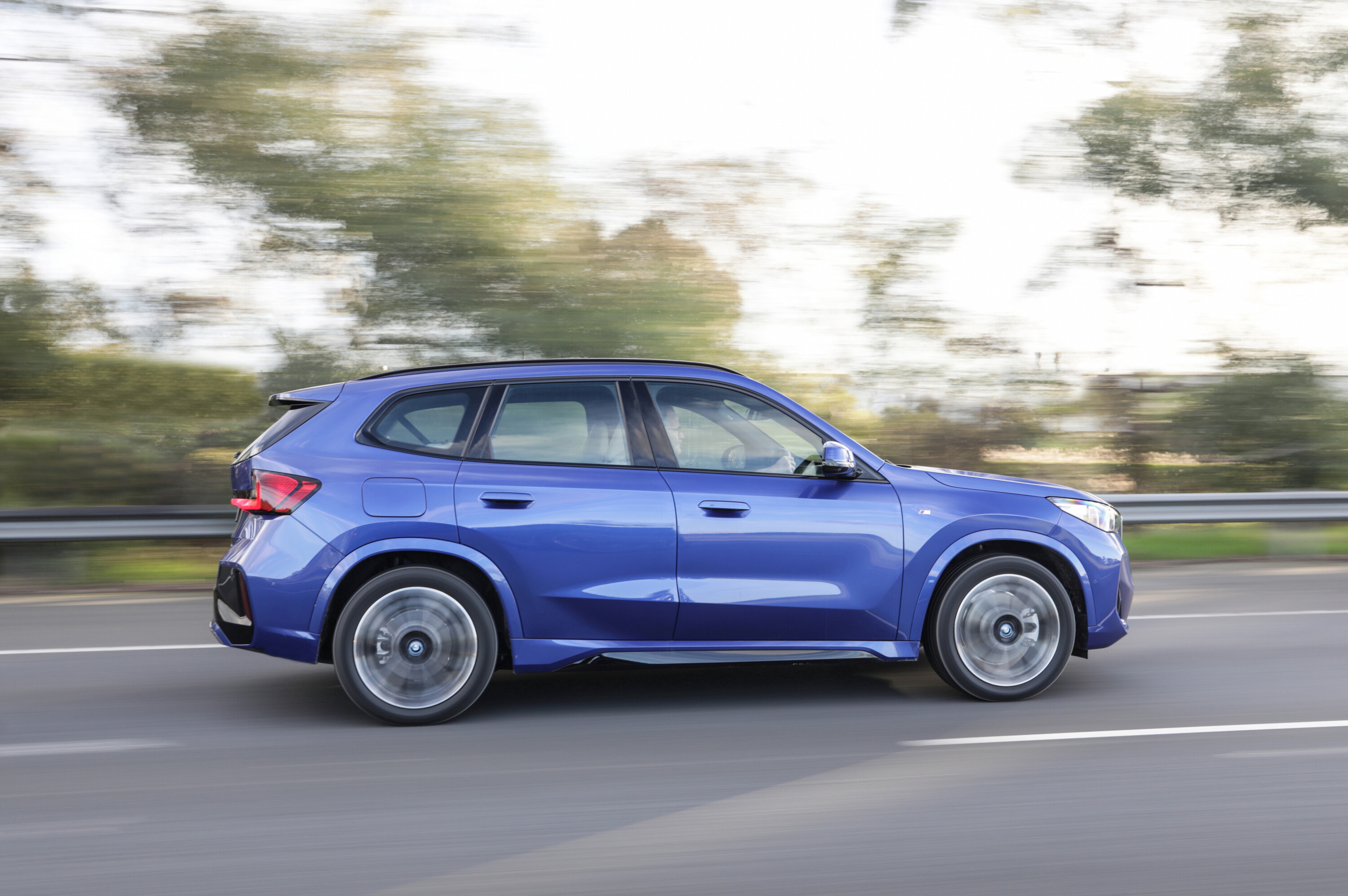
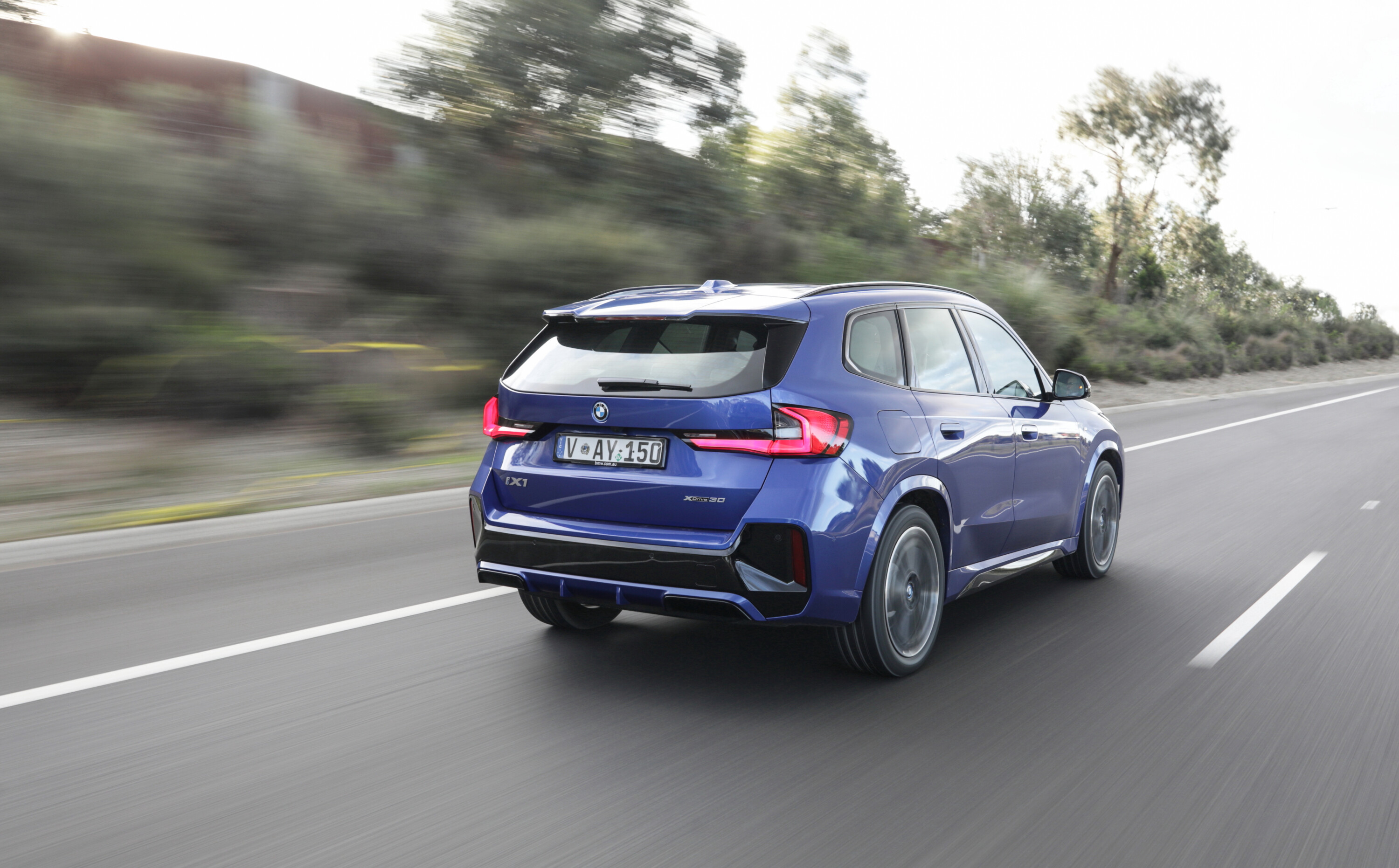
Award for biggest improver of 2022? That probably goes to BMW’s X1 which, in third-generation guise, really seemed to find its feet. But as much as we approved of the petrol versions of the X1, the electric iX1 xDrive 30 was always going to be the most intriguing addition to the range.
We’ve driven the iX1 overseas, but much was clearly going to hinge on how this low-key but high-featured EV would tackle the very specific challenges of Australian roads. With the demise of the wholly lovely i3, the iX1 now finds itself – for the time being at least – as the entry point to BMW’s fully electric range.
That entry point will demand $84,900 before on-road costs and offers a choice between identically-priced xLine and M Sport versions. Fully 80 per cent of Australian customers have ticked the box for the M Sport car, which probably won’t surprise you.
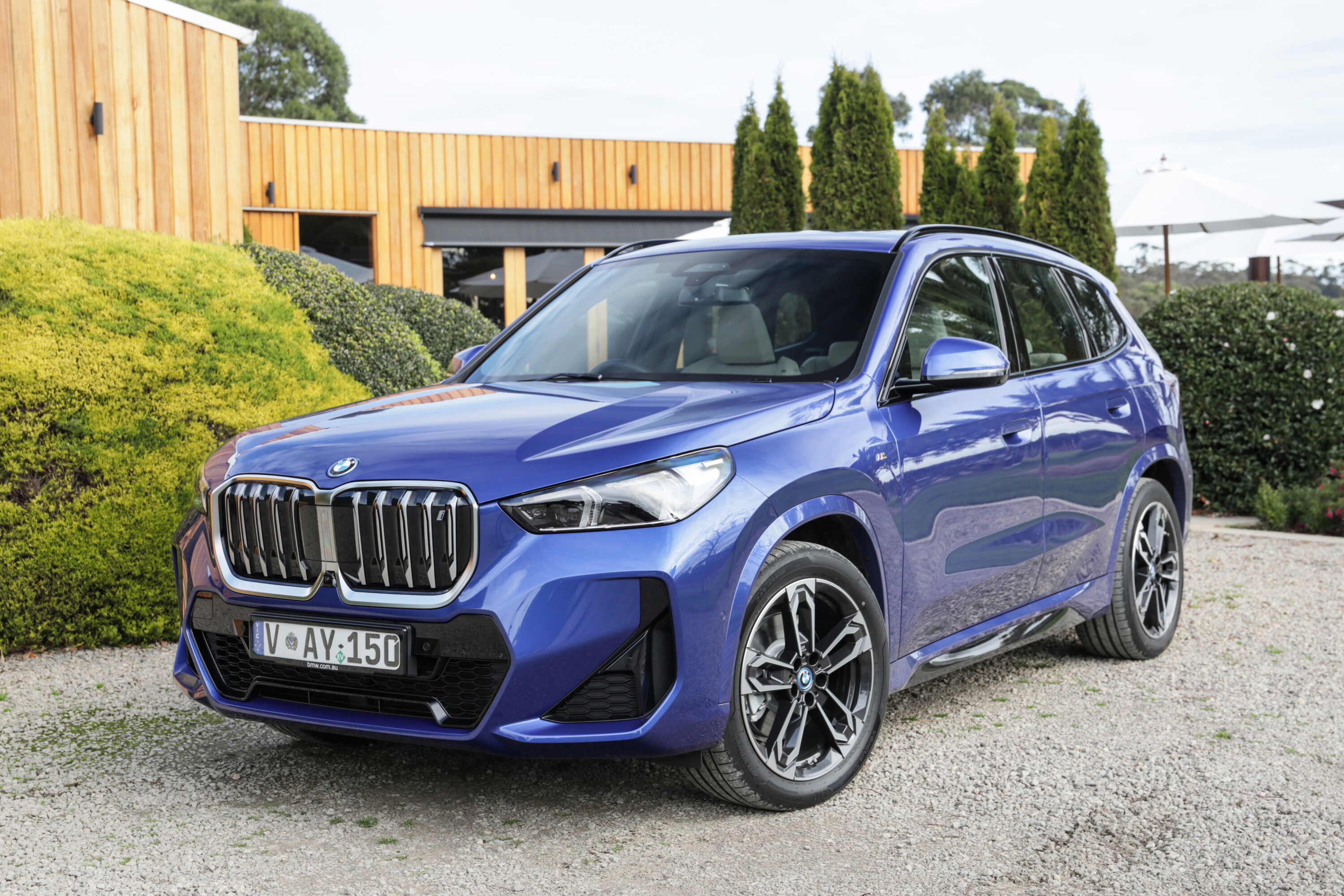
What’s the difference between the two? In truth, not a huge amount. Each gets a different design of 19-inch alloy wheels and, beyond that, the xLine features aluminium roof rails and window sills, a pearl chrome effect for the (non-functional) BMW kidney grille and Glacier Silver caps for the door mirrors.
The M Sport model differentiates itself with fewer silver trim bits, offering instead a more aggressive-looking front end with larger cooling ducts and a more strident rear diffuser. A ‘satinated’ kidney grille, aluminium door sills, body-coloured mirror caps and high-gloss shadow line roof rails are also standard fit items.
1
Befitting its position at the top of the X1 range, at least until the X1 M35i xDrive flagship arrives at the tail end of 2023, the iX1 benefits from a number of specification upgrades over the X1 xDrive20i.
These include a tyre pressure monitoring system, BMW Iconic Sounds Electric (by Hans Zimmer no less) and adaptive M suspension but there’s also an Enhancement Pack available for another $4700 which bundles a bunch of desirable options.
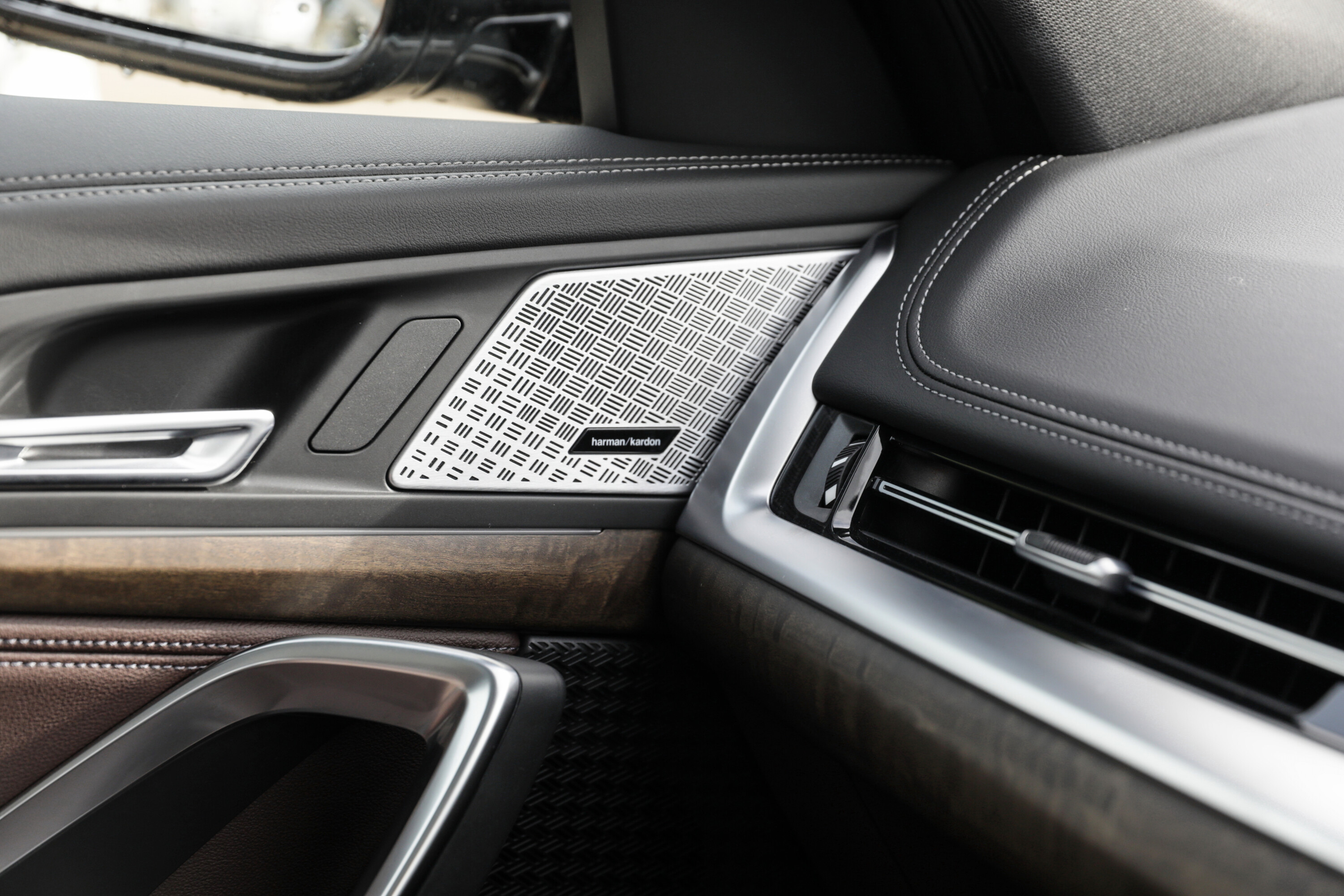
Among these are metallic paint (a standalone $1385 option otherwise), a panoramic sunroof, a Harman Kardon audio system, front-seat lumbar support with an active massaging function and a choice of interior surfaces.
1
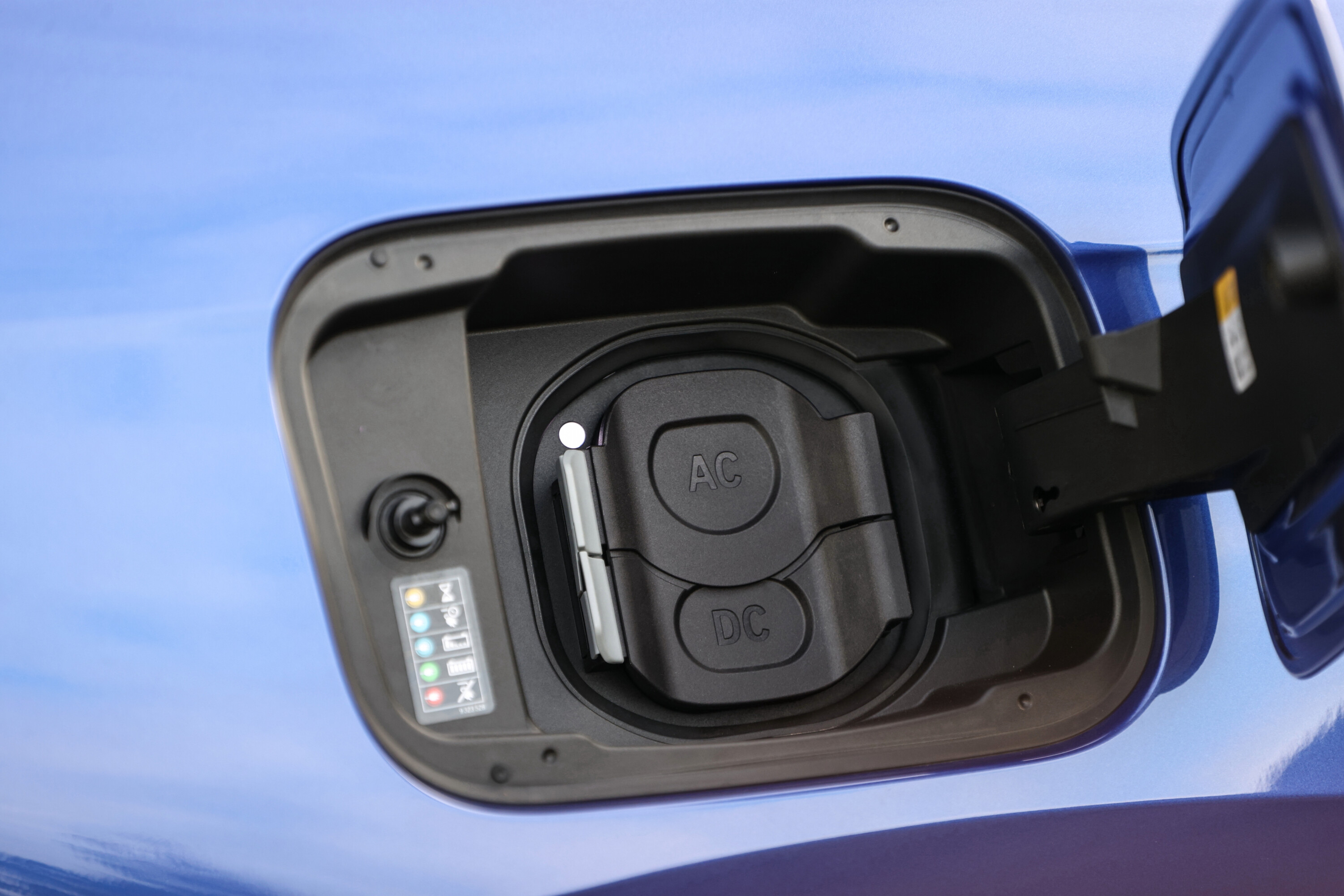
There’s also a Mode 2 flexible fast charge cable included, alongside a Mode 3 public charging cable, as well as a three-year subscription to the Chargefox network.
Alpine White is the only non-metallic paint finish available, but the metallic finishes Mineral White, Black Sapphire, M Portimao Blue, Space Silver and Cape York Green are also offered. Phytonic Blue, San Remo Green and Utah Orange are also available solely on xLine.
Should you really want to push the boat out and develop an irrational fear of perching birds, Frozen Pure Grey is a $3847 option.
There are two direct rivals to consider and a few other more asymmetrical threats to the BMW iX1. Ace in the hole is the Volvo XC40 Recharge AWD. This is priced at $79,490 before on-road costs and delivers significantly more power and torque than the iX1.
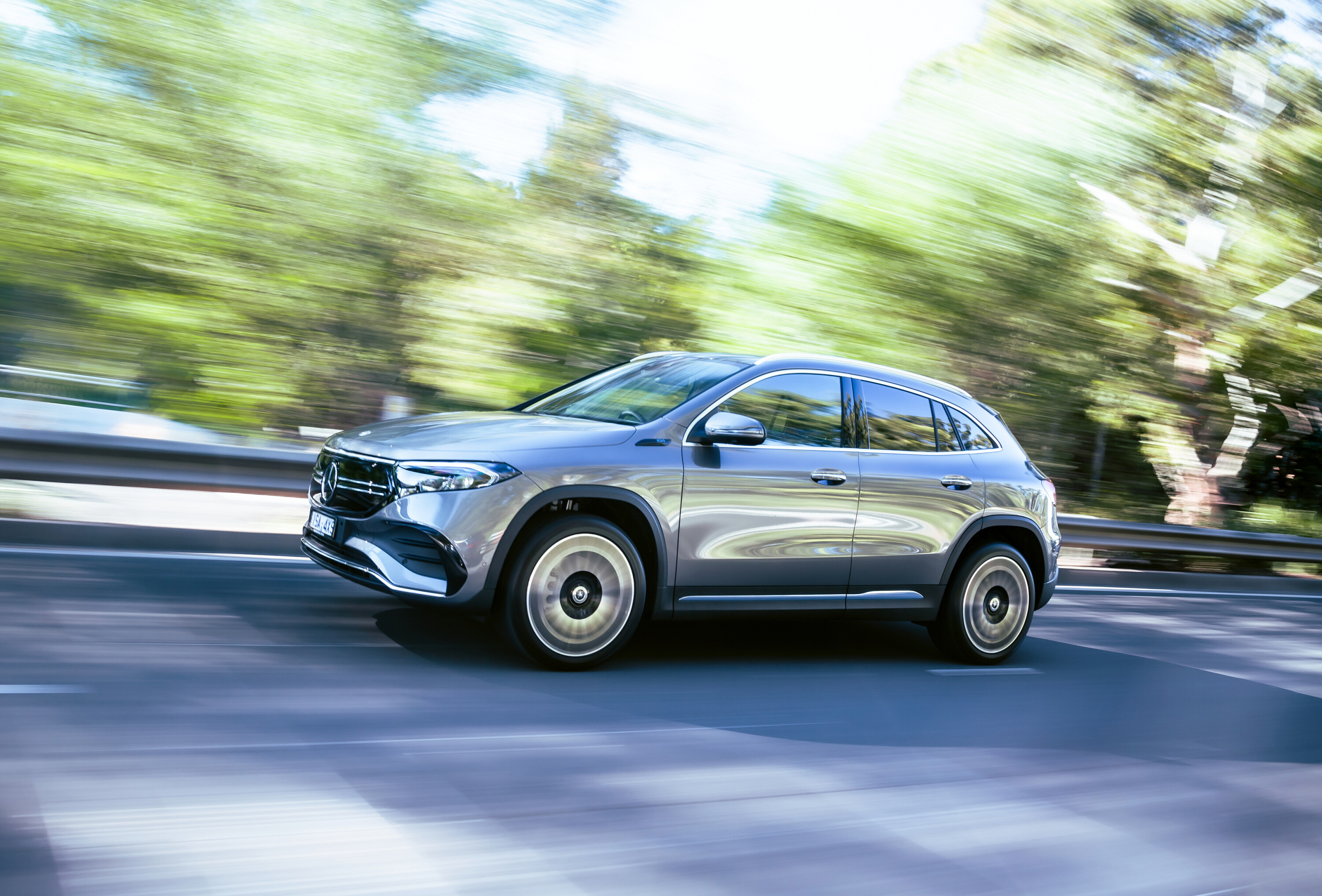
Given that the base XC40 won Wheels Car of the Year back in 2019 and it’s only become stronger since, you can rest assured that it’s a very solid proposition indeed.The other obvious alternative hails from the crew over in Stuttgart. This time the value pendulum swings the other way, with the Mercedes-Benz EQA 350 4Matic offering less space and less power for an asking price of $101,800 excluding on-road costs.
1
This would have won Wheels Car of the Year award back in 2022…
And then there are two intriguing peripheral attractions to consider. The range-topping version of the Hyundai Ioniq 5 is the Epiq AWD and this is pitched at $85,000 before on-road costs, delivers nigh-on identical power output, a bit more torque and a whole lot more interior space than the BMW. This would have won Wheels Car of the Year award back in 2022 had it not been for the other vehicle to consider.
The Kia EV6 GT-Line AWD presents a fierce challenge, offering the same powertrain as the Hyundai at $87,590 before on-road costs. Both Korean cars can sprint to 100km/h in 5.2 seconds, so buyers are certainly not getting short-changed when it comes to performance.
Of course, there’s also the Tesla Model Y, a vehicle that needs very little in the way of introduction. It’s now a reasonable $78,400 before on-road costs to land one with all-wheel drive, so even though the BMW looks like decent value among the Euro premium set, start talking powertrains and it’s hard to see the American brand as anything but a compelling option.
Remember when a BMW X1’s cabin just reminded you of what sacrifices you’d made to land a premium badge?
We do, but thankfully that’s far from the case with this third-generation model. In fact, it’s now so good that it’d have iX1 buyers wondering why you’d choose to sit in, say, a Kia EV6 or a Tesla Model Y rather than this. The BMW feels a class or two superior in terms of fit and finish.
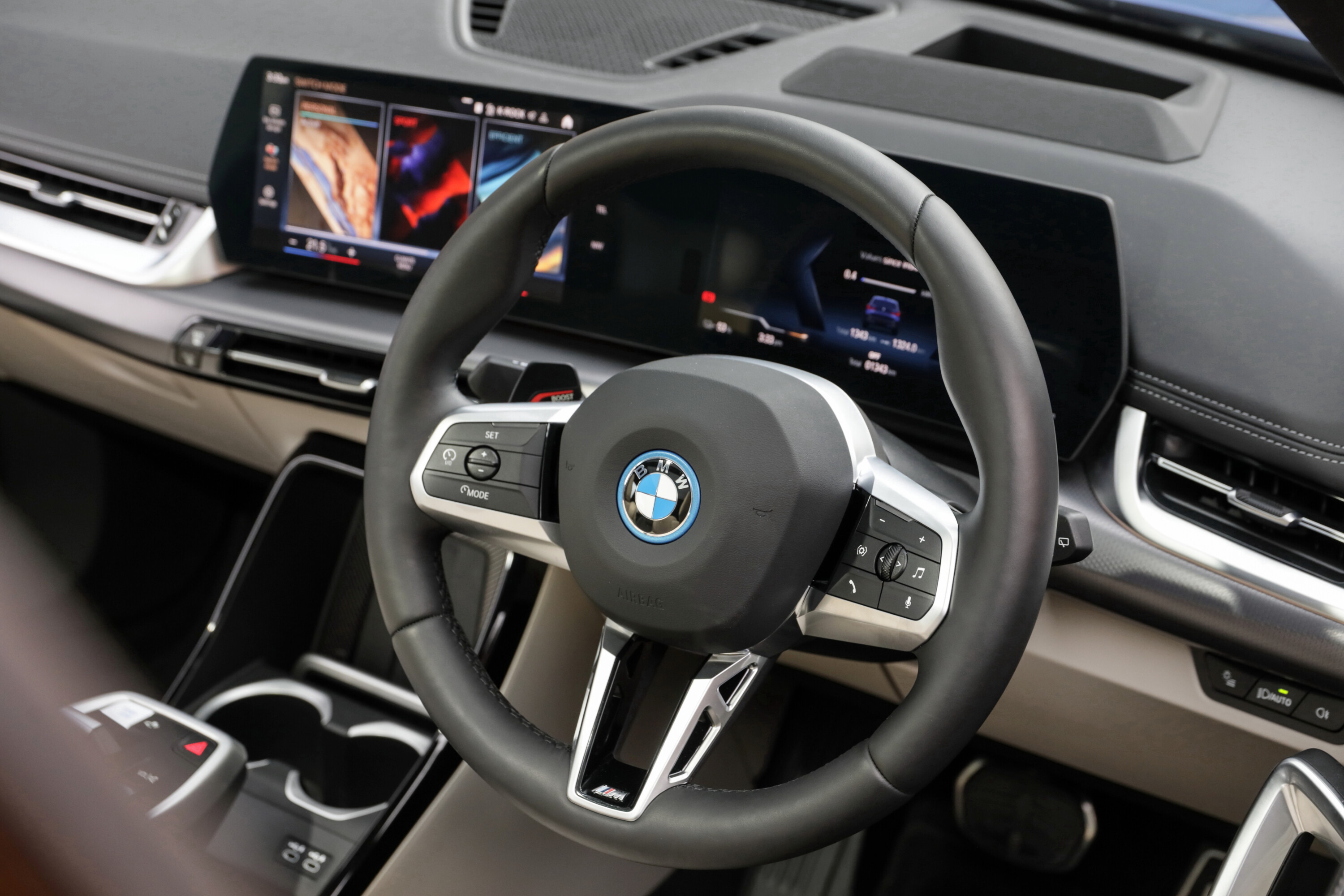
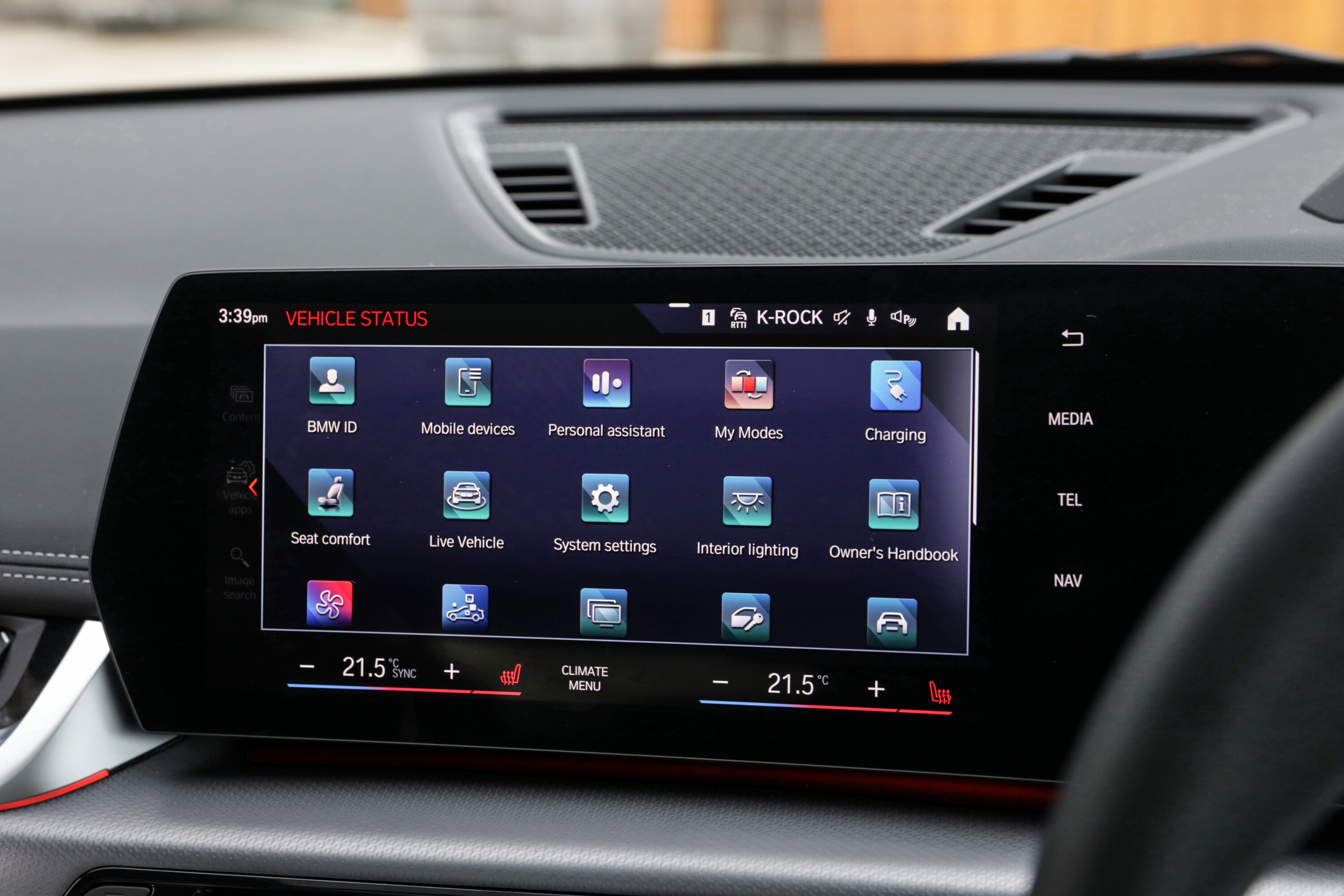
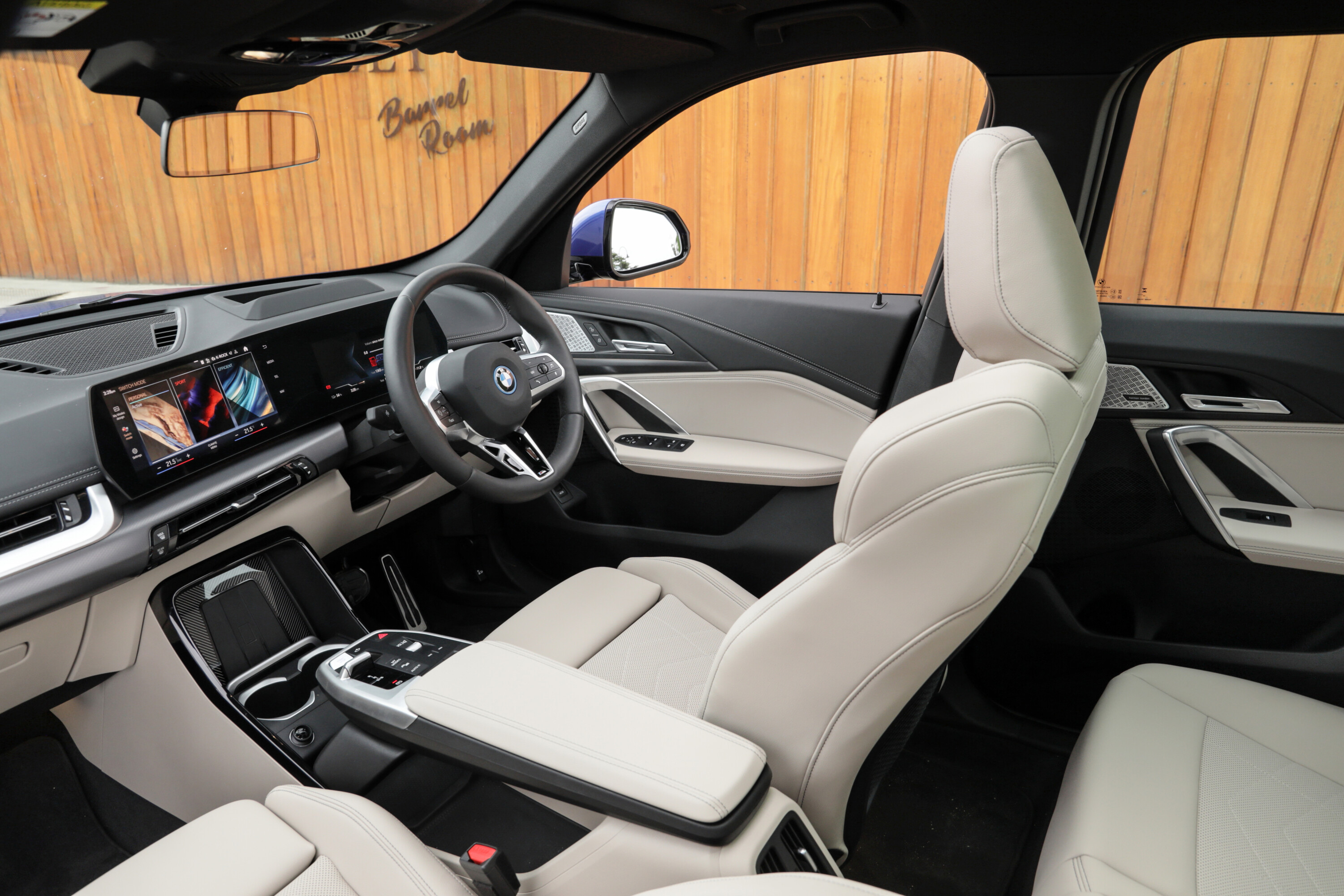
BMW has leaned heavily into digital interaction with this generation, the most obvious difference being the large curved digital display that dominates the dash. Housing BMW’s latest Operating System 8, the screens comprise a 10.7-inch Control Display that melds with the 10.25-inch instrument cluster ahead of the drive, augmented by additional information fed via a standard head-up display.
There’s no iDrive controller and BMW’s gesture control system has also been quietly consigned to the bin of history, the iX1 instead relying on touchscreens and voice controls via the ‘Hey BMW’ prompt.
2
The operating system is swift, but the basic functionality is tricky to navigate at first with some fairly rudimentary features, such as switching on recirc for the air-conditioning, requiring a number of button presses.
Wireless Android Auto installation was quick to boot up, held connection peerlessly and was pretty easy to switch in and out of phone mirroring when we needed to access other vehicle functions.
Beyond this, the iX1 moves the game on a bit. The BMW Digital Key Plus system on the X1 would originally only speak to Google Pixel phones. Now it’s been extended to include popular Samsung Galaxy handsets too – and is standard on the iX1.
The screen features augmented nav details, superimposing directions onto the forward-facing camera feed, but such is the clarity of the head-up display that you’ll tend to rely on that rather than glancing down at the screen as you approach a junction.
2
An additional 22mm of wheelbase serves to help knee room.
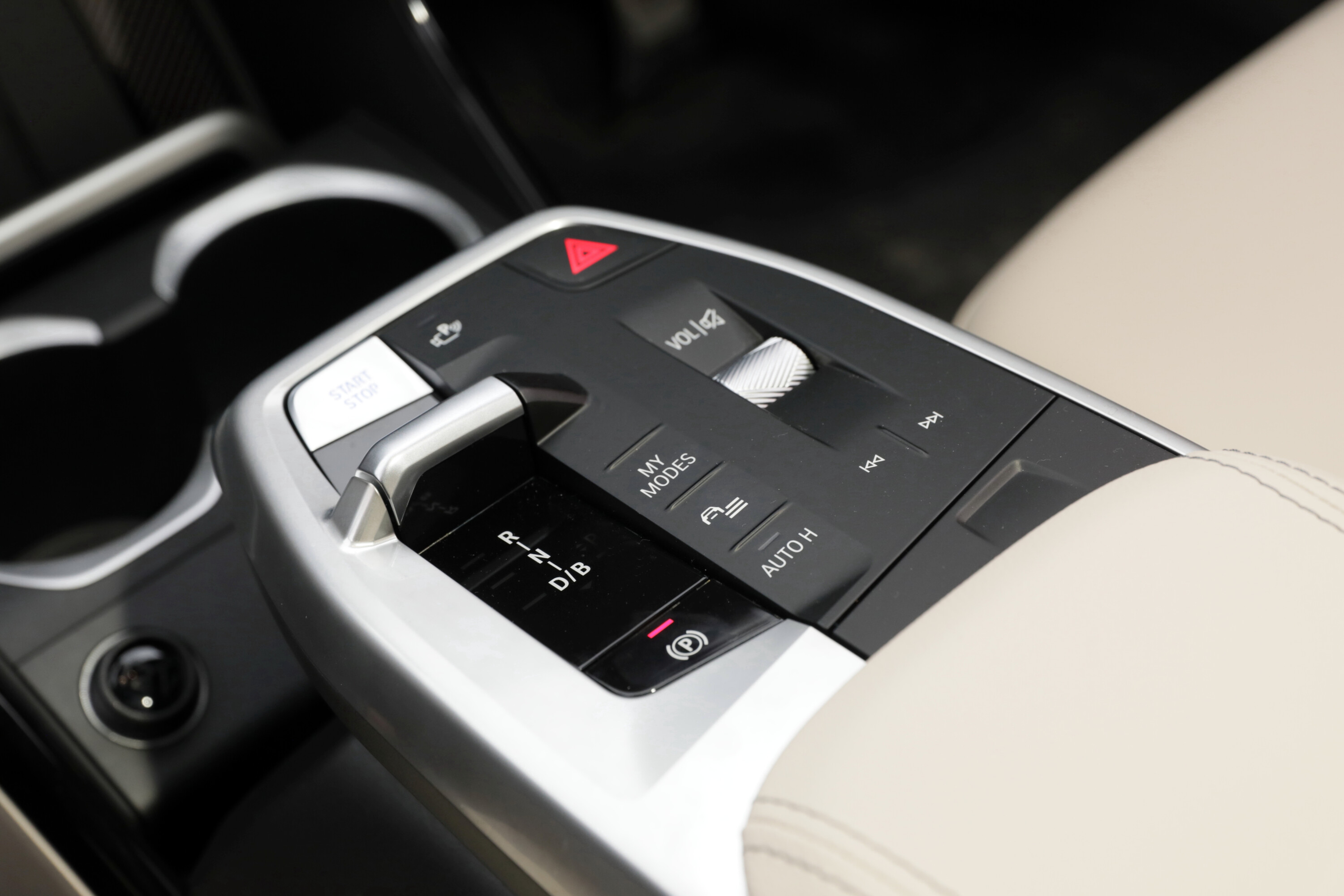
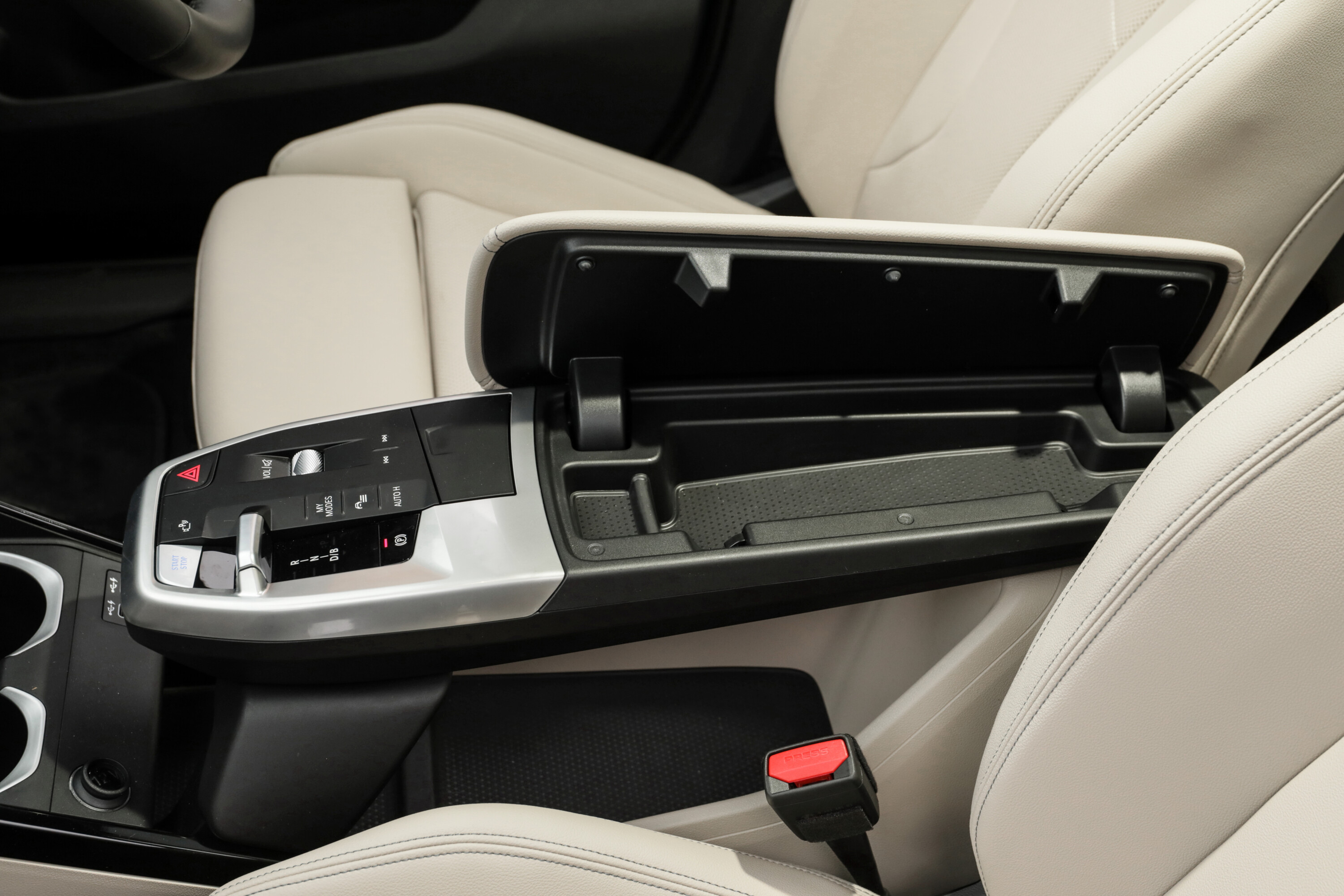
Integrating many of the supplementary functions into the screen, for better and for worse, has allowed for a genuinely clean cabin design that features a floating armrest, with a couple of cup holders, dual USB-C ports, two 12-volt power sockets and a vertical wireless charging pad.
BMW has also made a dedicated effort in creating slim trim panels and air vents to free up space and create the impression of airiness. The driving position is good, with plenty of adjustability to the steering wheel and seats. An additional 22mm of wheelbase serves to help knee room.
Rather annoyingly, the slightly clumsy-feeling lumbar massage function switches on automatically when you switch the iX1 into ‘Expressive’ mode, but then doesn’t quit when you switch back out of it. A change for the facelift, maybe.
1
Despite the fact that the iX1 rides some 26mm lower than the ICE versions of the X1, interior space is unaffected.
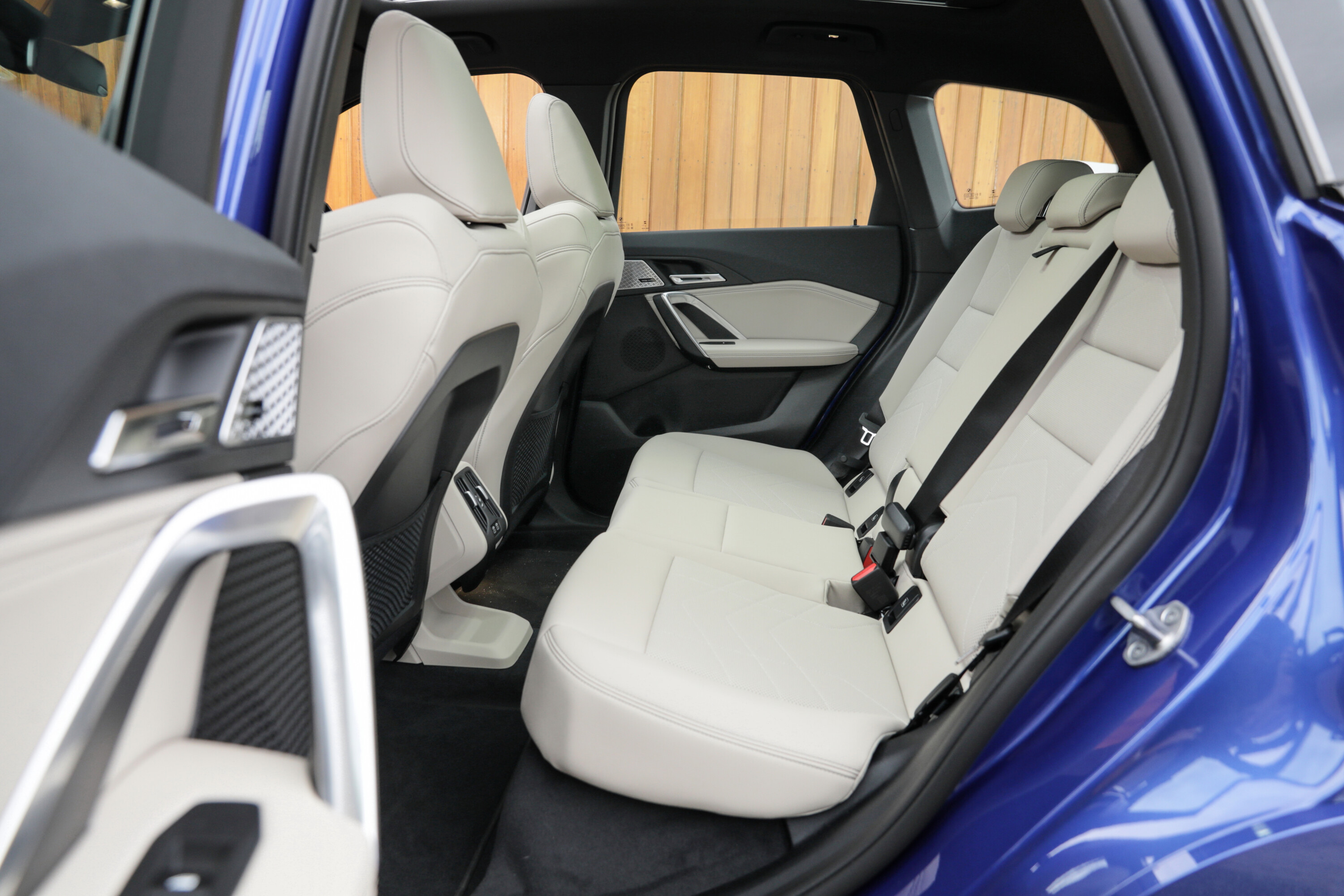
This means that headroom up front is good for taller drivers, even with the fitment of the dual-pane panoramic glass roof. In the rear, there’s plenty of room for two decently-sized adults, although the seating position is a bit higher. Anyone much over 180cm tall may find their hair brushing the surround of the sunroof as a result.
While both outboard seating positions of the 40:20:40 split rear bench are fine, the middle seat is definitely the non-preferred option, being higher, narrower and harder.
1
Rear passengers do get air vents and a pair of USB-C ports and there’s also the added benefit that the window line doesn’t kick up too sharply, allowing smaller kids a view out.
The door bins could be a bit bigger for large bottles, but the central storage bin is relatively generous and there’s additional oddments space beneath the floating armrest.
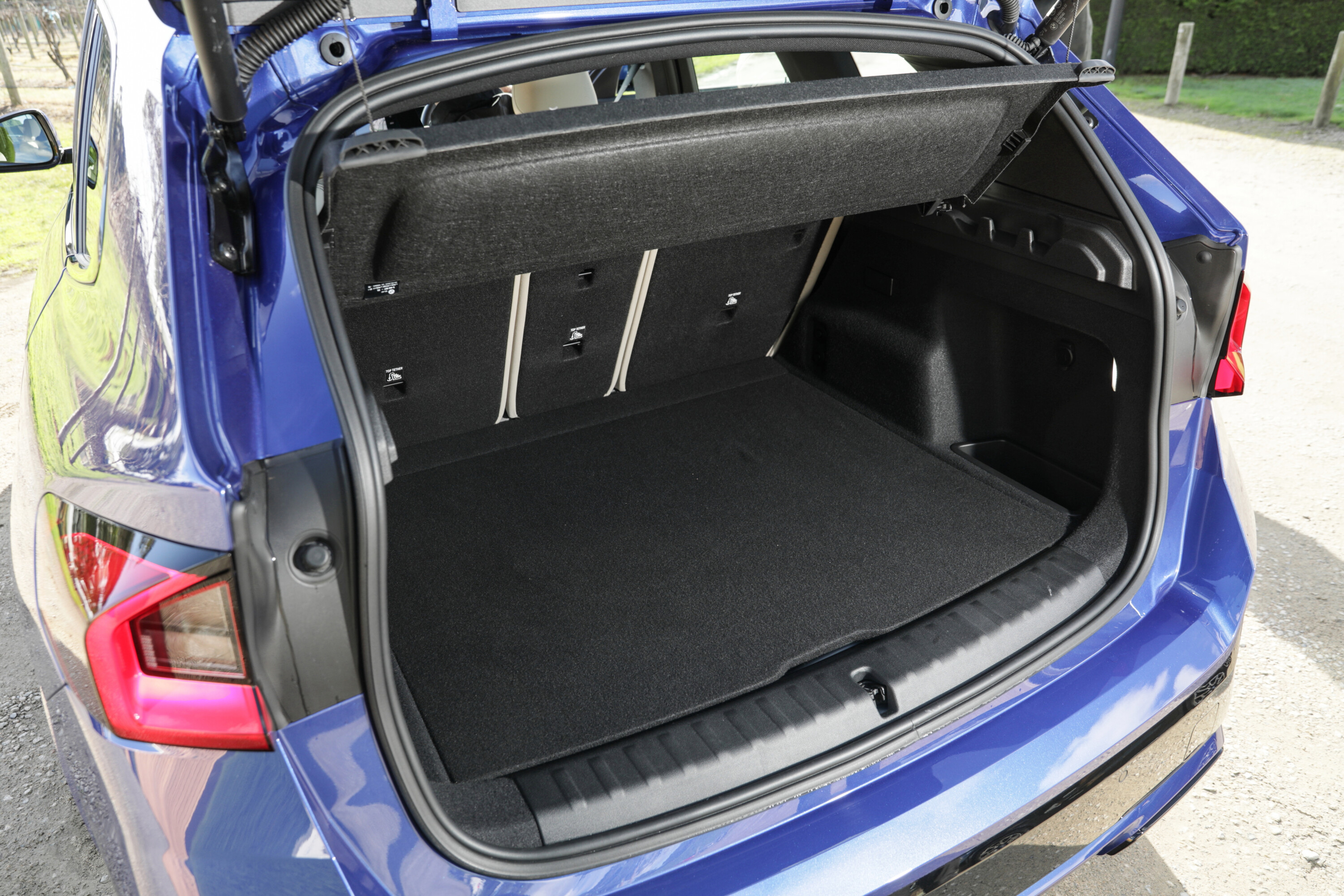
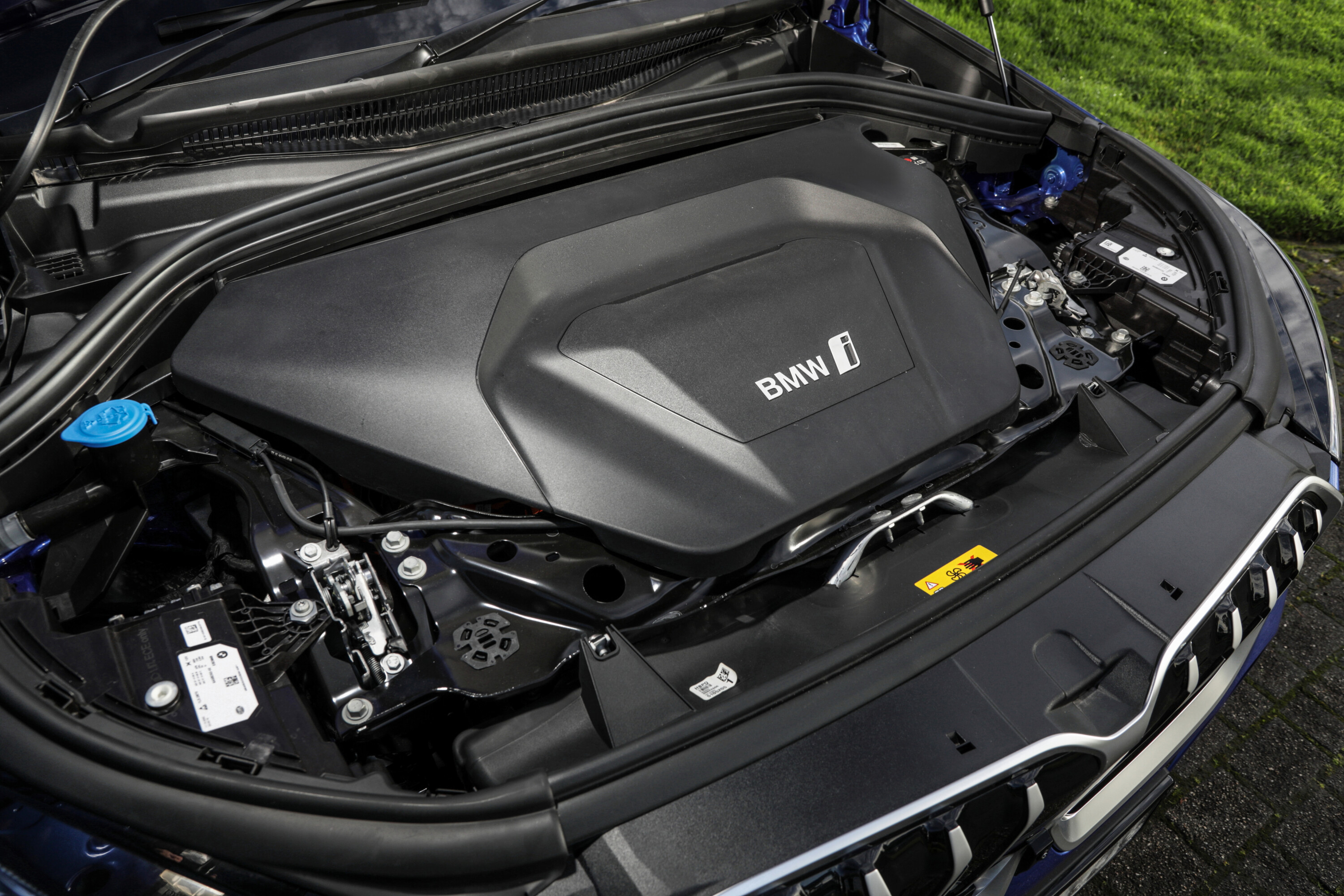
Move around to the back and the somewhat leisurely electrically-operated tailgate lifts to reveal 490 litres of boot space with the rear seats in place, which is down from the X1’s 540 litres but still a respectable size. That story repeats when all seats are folded, the iX1 netting 1495 litres of fresh air versus the X1’s 1600. Annoyingly, there’s no frunk up front, all charging cables being stored in a shallow compartment beneath the boot floor.
Can we talk about a suspension condition called ‘heave’ for a moment? Bear with me. It’s important. Basically, it’s the vertical motion of a car over large bumps or crests in the road. Electric cars, with their added masses, are particularly prone to unedifying heave responses.
In order to tie this so-called ‘primary ride’ condition down, it often means that they then ride poorly over small road imperfections – the high-frequency stuff that road testers refer to as ‘secondary ride’.
Jump into an early Hyundai Ioniq 5 and it’s a case in point. It feels composed over major humps and bumps but nervous and jittery almost all of the time otherwise. Hyundai fixed that with the clever shock absorbers it introduced for the Ioniq 6.
Well BMW didn’t need to go through that process of fail and fix. Its very smart move with the iX1 was to equip it as standard with adaptive suspension, which manages to deliver both a sorted primary ride and a plush secondary response too.
1
The iX1 doesn’t have that glassy, brittle feel of most electric cars as a result. It feels grown up.
Some may sniff that the 230kW/494Nm dual-motor set-up isn’t about to set anybody’s trousers on fire, but can we please have a little perspective back there? The iX1 will accelerate to 100km/h in 5.6 seconds. The first time Wheels ever tested a Nissan Skyline R33 GT-R we managed an identical time and this was a sub-eight-minute car at the ‘Ring. So the iX1 is plenty quick enough.
The kerb weight is listed as a relatively big-boned 2085kg, but as long as you’re not overly aggressive with the steering, the iX1 manages its mass well. Weight distribution is extremely close to BMW’s favoured 50:50, with 50.5 per cent of weight forward and 49.5 per cent aft.
Although the iX1’s kerb weight is around 415kg more than the X1 xDrive20, it features a number of weight-saving measures including extensive use of high-tensile steels in the body and an aluminium bonnet.
1
Both the xLine and M Sport models were shod with decent Hankook Ventus Evo rubber measuring 245/45 R19 all round.
Grip was good but this isn’t the quietest tyre in its class, with some roar entering the passenger cell on coarse-chip surfaces. The various artificial soundscapes you can choose help to distract from that.
One notably good aspect of the iX1’s dynamics is the way the vehicle manages its brakes, shuffling virtually imperceptibly between its various levels of regenerative and friction braking. It is possible to amp up the regen to offer true one-pedal driving and at the maximum level of regen, the system replenishes 130kW back into the battery, identical to its top level of DC charging.
The drive logic is similarly sophisticated and relatively transparent with 100 per cent of drive going to the 140kW front motor in normal conditions and the rear motor only brought into play on demand.
BMW claims a fuel economy figure of 18.3kWh/100km for the iX1 and we weren’t too far off that, registering 18.5kWh/100km, despite some fairly spirited country driving. The iX1’s battery offers a usable capacity of 64.7kWh, while DC charging operates at a top rate of 130kW.
This equates to 10 minutes on a DC charger adding 120km with the car lifting from 10 per cent to an 80 per cent state of charge in 29 minutes.
You can pair the onboard 22kW AC charge with BMW’s new Wallbox 2.0 for three-phase charging to deliver a full charge in 3.5 hours (at 32A). The wallbox retails at $1199 including GST but excluding installation.
1
BMW quotes an ADR homologated range of 400km for the iX1.
The My BMW App can schedule and start charging, monitor the state of charge and activate the climate control remotely. In addition, if the iX1 detects that your sat-nav destination has been set to a DC charger, it can pre-condition the battery pack for faster charging.
The third-generation BMW X1 range is yet to be ANCAP tested. Both of its predecessors scored the full five-star rating and though we can’t presume a five-star rating, it would be a major surprise were this model to fall short of that mark.
Although there have been some lengthy waiting periods for X1 models, BMW predicts that improved supply will mean that a typical iX1 lead time from order to fulfilment currently stands at around six months.
The BMW iX1 builds on the quiet achievements of the X1 ICE range.
Although there may be some buyers who feel that BMW has hedged its bets on a platform that isn’t electric-exclusive, there are equally those who don’t feel the need to be so strident in proclaiming their EV adoption.
The iX1’s low-key maturity will doubtless appeal, as will its beautifully judged ride quality and general depth of engineering. It instantly becomes the go-to pick of the X1 range and while it can’t compete on space and potency with the likes of the Kia EV6 or the Tesla Model Y, there’s a reassured personality to the iX1 whereby it never feels as if it’s having to shout to impress.
In summary, your $85K buys you a good-looking electric SUV that drives well, delivers a 400km range and comes stacked with gear. The iX1 might not be the first EV that comes to mind in this price bracket, but it deserves to be on the shortlists of anyone shopping in this sector. It’s a class act.
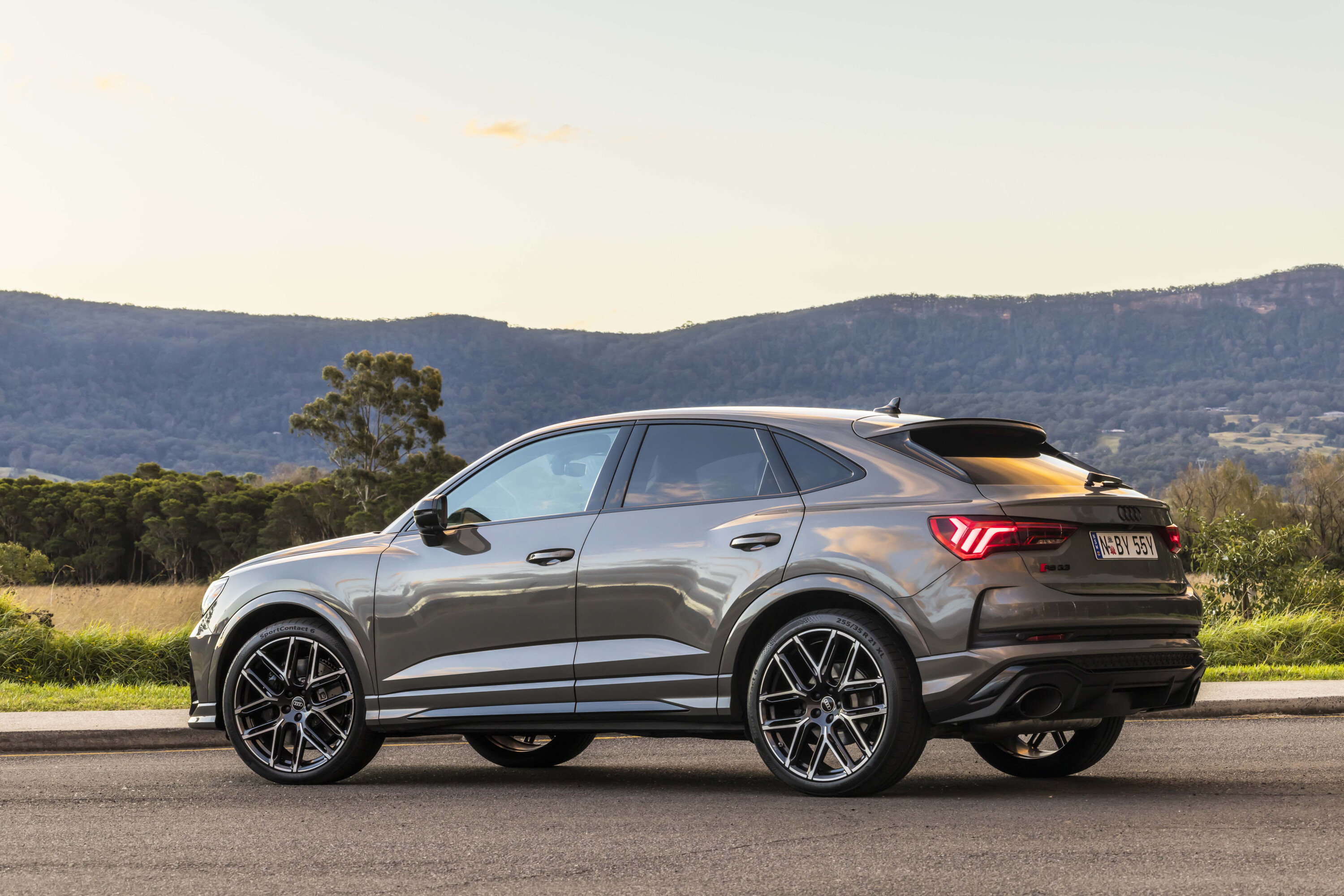
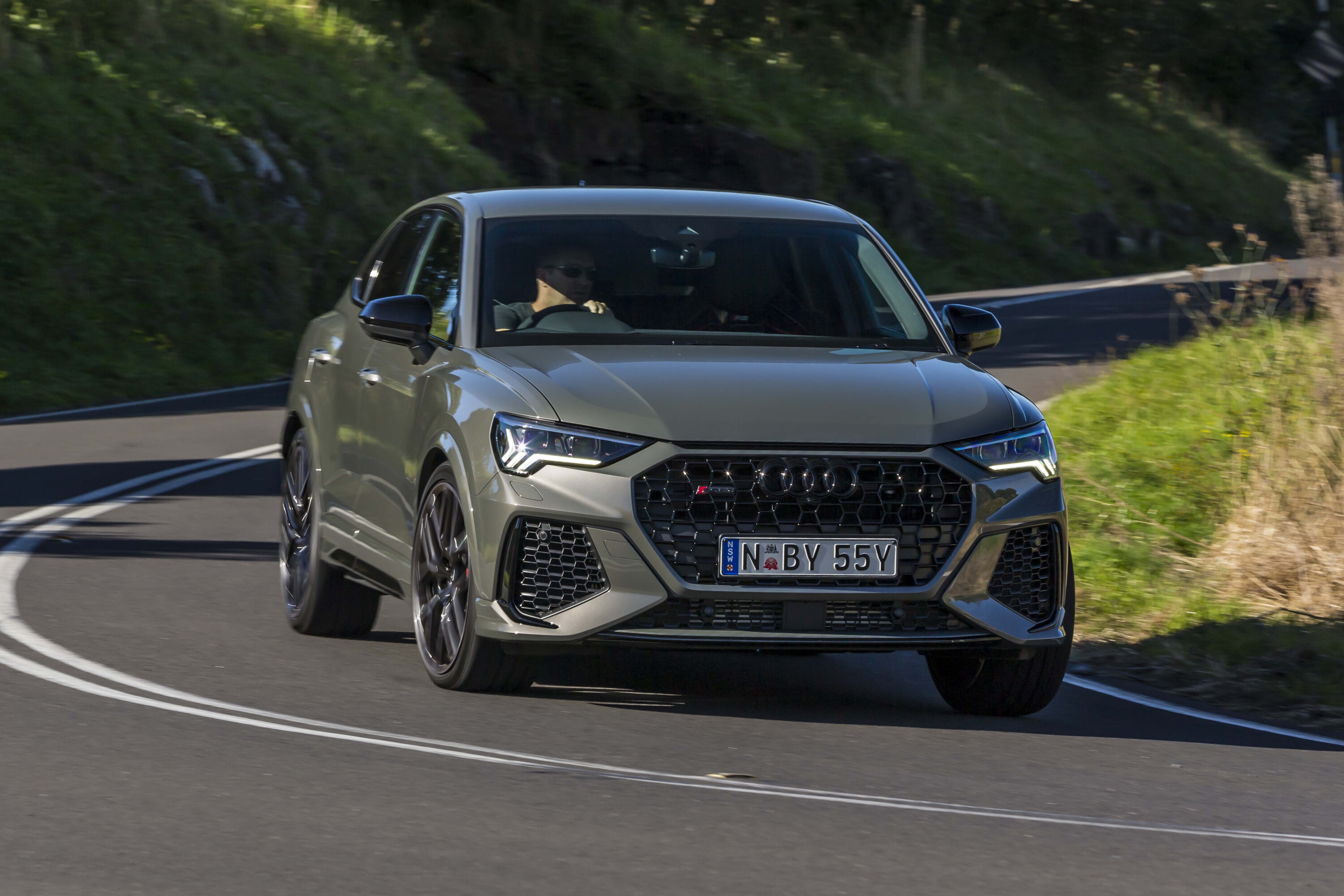
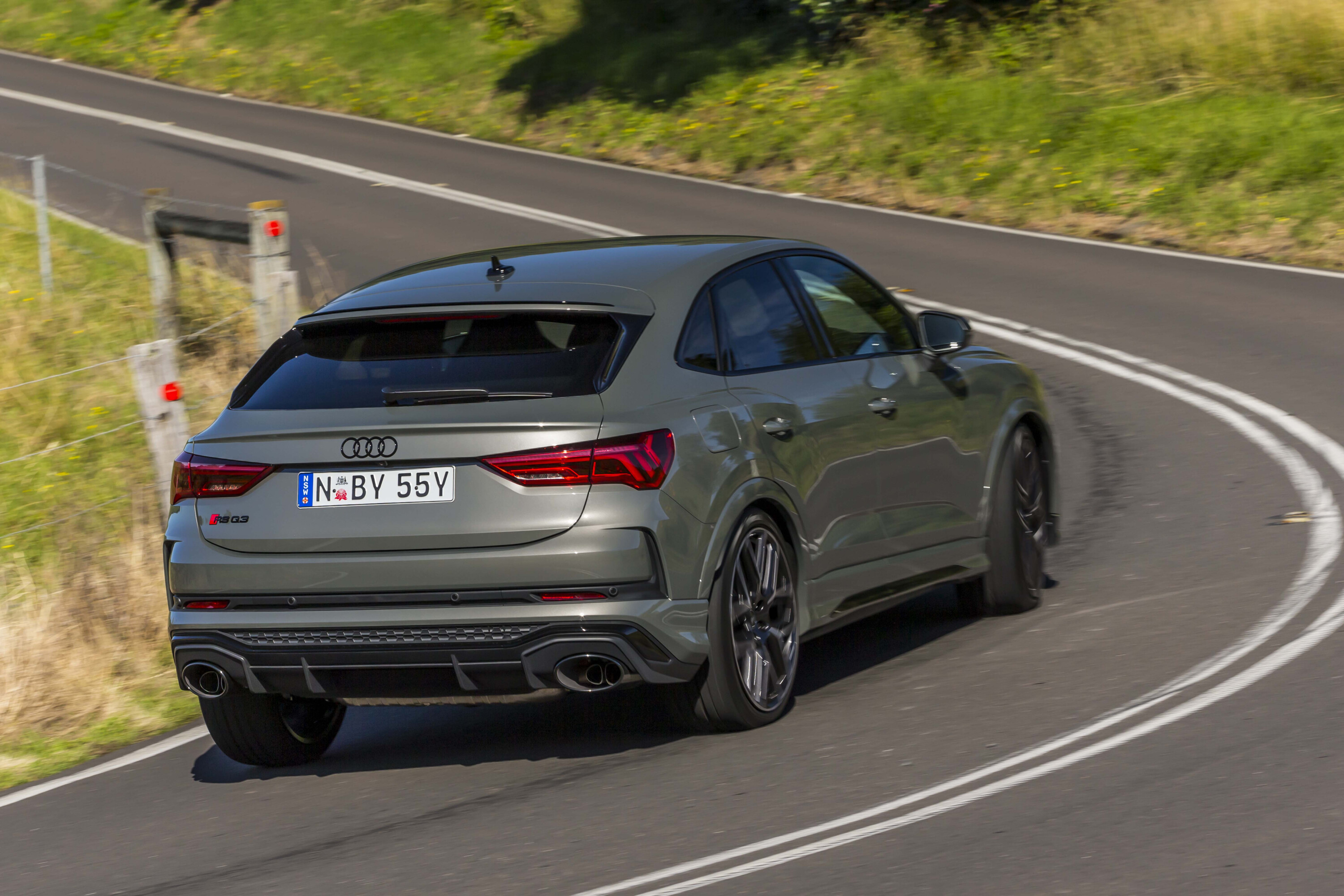
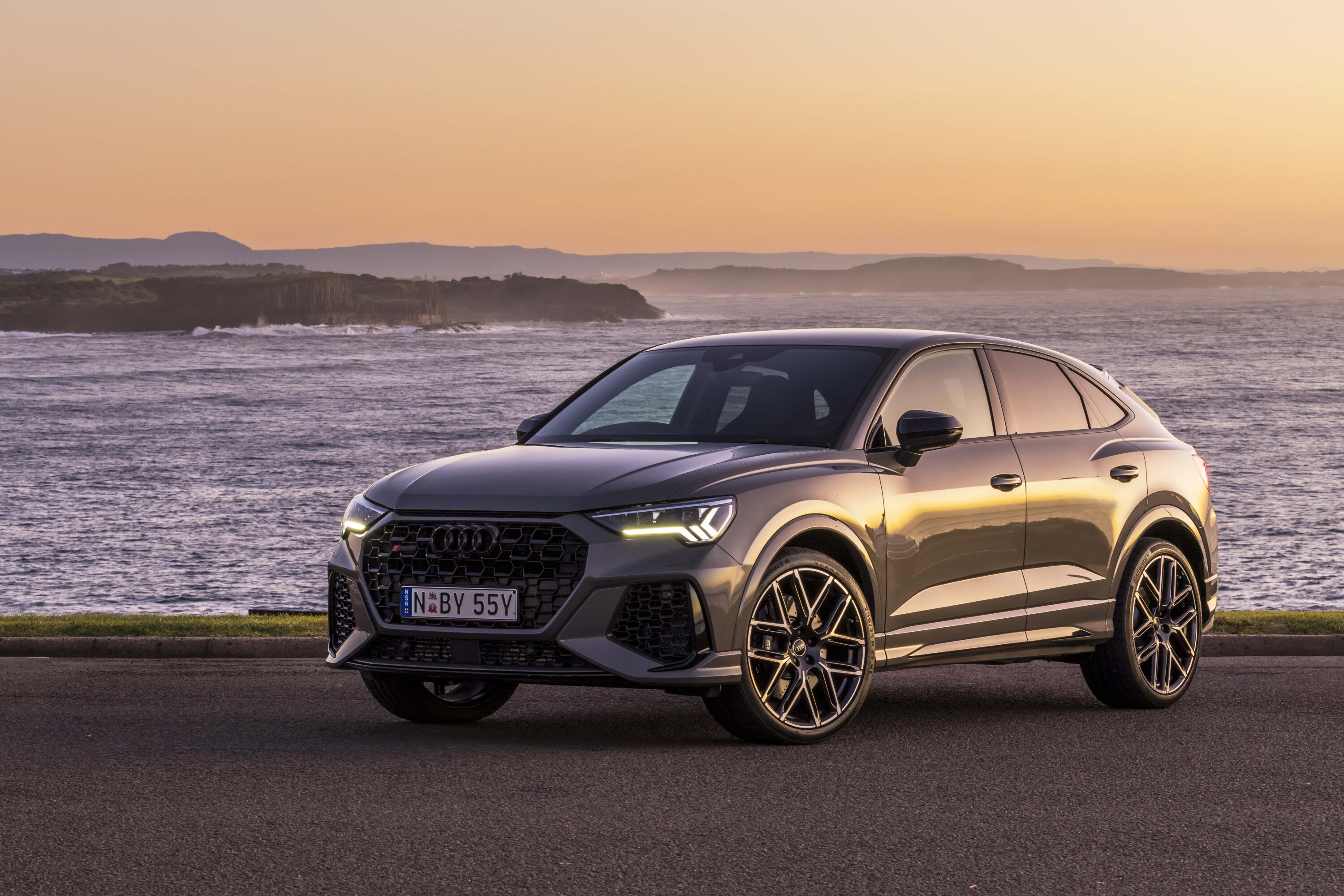
The Audi RS Q3 badge is two generations and ten years old.
When Audi launched the first RS Q3 a decade ago, it was a hilarious car. Far too powerful, gloriously and obnoxiously loud, it went way quicker than its chassis could really cope with – but it had me hootin’ and hollerin’ every time I drove it.
The ‘RS Q3 Edition 10 Years’ is here to celebrate, costing about five grand more than the standard car with some stylish additions, new front seats and guaranteed scarcity from its limited run.
Audi says there are just 555 of these cars available worldwide.
So that’s one reason they’ll be scarce; the second being that they’re $102,900 before on-road costs, which isn’t messing about. Then again, neither is the lengthy specification list.
2023 Audi RS Q3 Edition 10 Years standard features
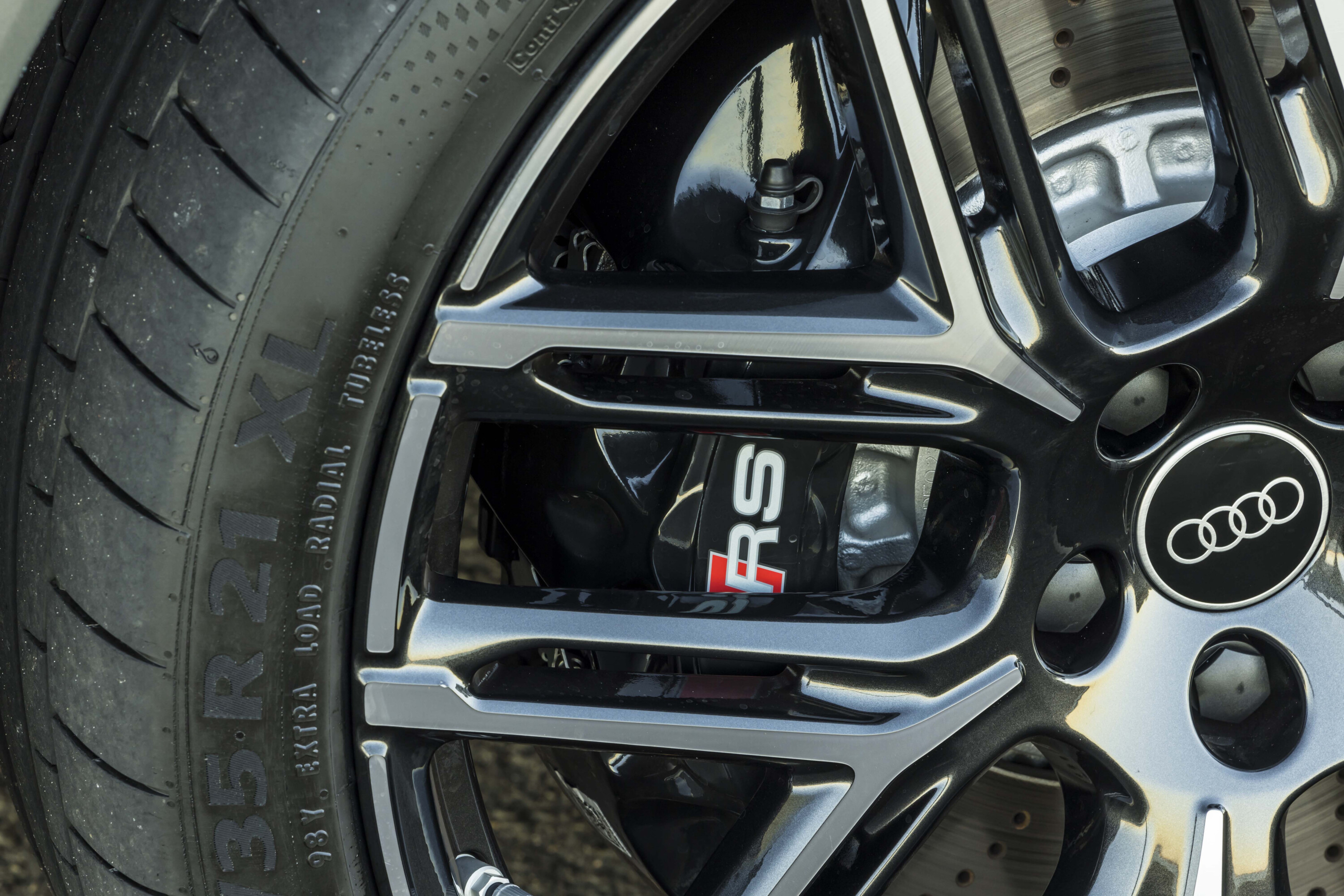
21-inch alloy wheels
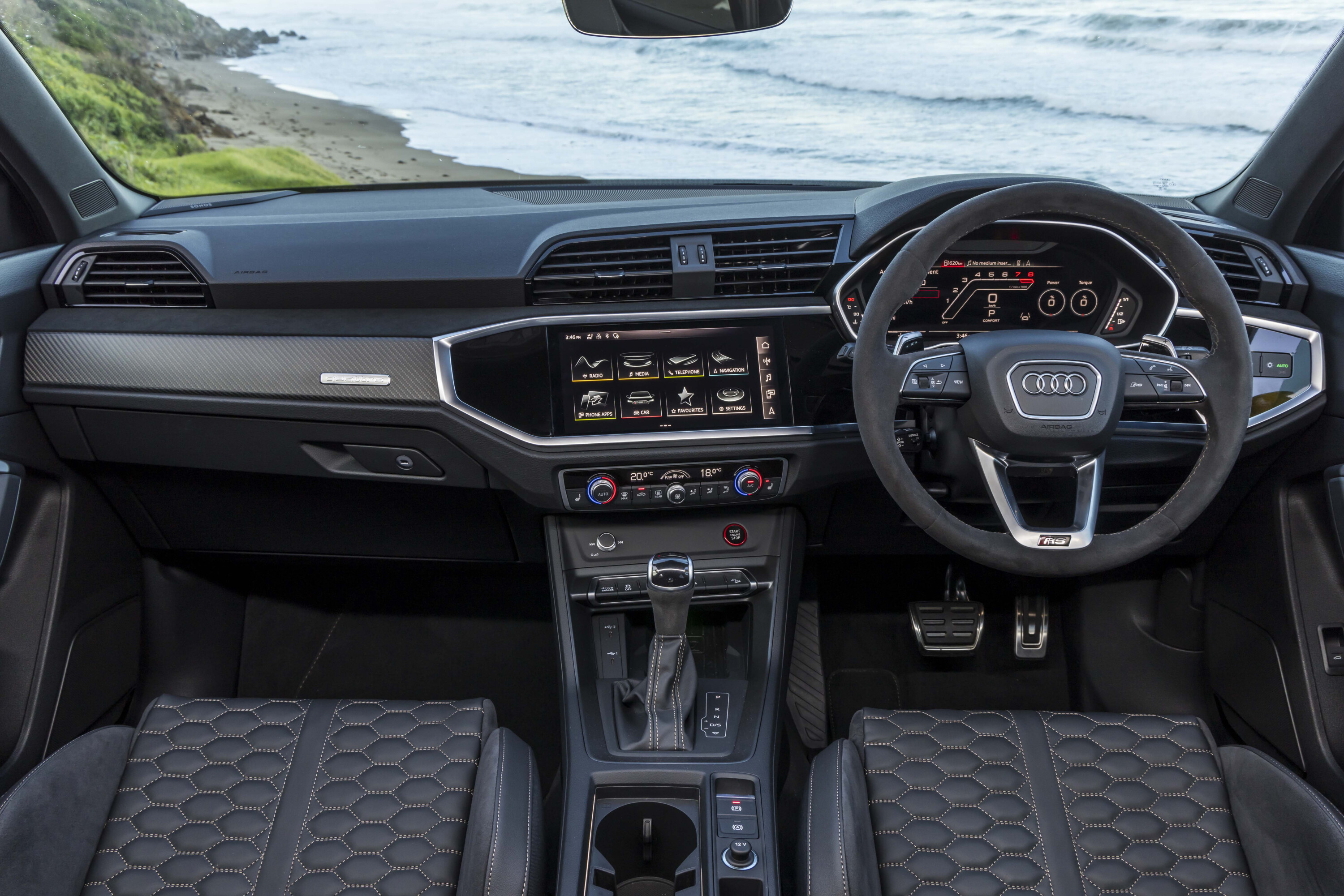
10.1-inch touchscreen
12.3-inch digital dashboard
Alcantara steering wheel
Dinamica upholstery
Black pack (exterior)
RS sport exhaust
Adaptive damping
Powered tailgate with gesture control
Keyless entry and start
Ambient LED lighting
Satellite navigation and Audi Connect Plus
Adaptive cruise control
Auto LED Matrix headlights
Auto wipers
360u00ba around-view cameras
Front and rear parking sensors
Reversing camera
Heated front seats
Wireless Apple CarPlay
Wireless Android Auto
Wireless charging
15-speaker stereo
Multi-zone climate control
Adaptive damping
Tyre repair kit
This all results in a rather comfortable thing, which is nice because there aren’t any optional extras available for this special.
Of note are the thumping 15-speaker stereo and the Matrix LED headlights which are incredible on dark country roads. I may have briefly blinded some airliner pilots…
Most of the RS Q3’s rivals come from within the broader VW Group family.
The most obvious is the VW Tiguan R. Well, I say most obvious but it’s not a direct competitor given it has one fewer cylinder. It does, however, give the RS Q3 a run for its money at $63,990 for the R Grid and $70,490 for the full-fat R (both before on-road costs). They’re a lot of fun but can’t match the Audi’s five-cylinder power delivery.
On the other side is Porsche’s Macan S. Priced from $119,000 before on-road costs, you get an extra cylinder and that Porsche badge as well as one of the sweeter chassis in the segment. You can spend even more on the GTS.
Mercedes offers the GLA45 for $121,900 before on-road costs, which is an extraordinary amount of money for a small SUV, no matter how fast it is. Luckily it’s a cracker of a car, with even more power than the Audi five-cylinder but in my personal opinion is a bit dumpy-looking next to the sharpness of the RS Q3.
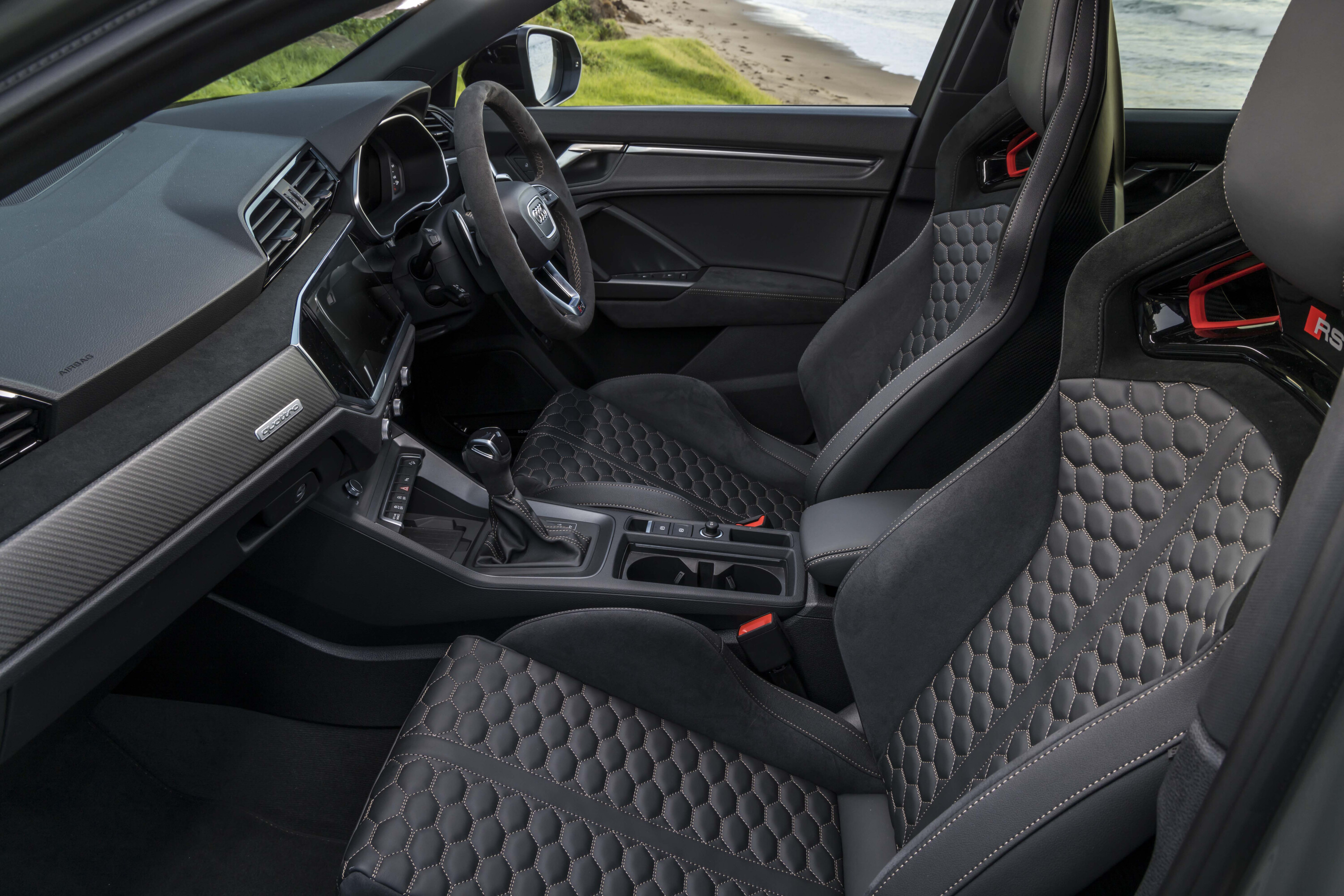
The Edition 10 Years includes a few bits and pieces in the interior, with some rather fetching copper honeycomb stitching.
An absolute spec highlight of the Edition 10 Years is the RS bucket seats. For the moment they’re exclusive to this car and boy howdy are they comfortable while also holding you in. They’re also heated but manually adjustable if that bothers you.
They do need a little bit of climbing over to get in, but once there you’ll be very comfortable. The Alcantara wheel is a lovely touch too and, hopefully, it wears well.
1
As with any other RS Q3, you get a pair of cup holders, bottle holders and a wireless charging pad for your phone.
The Audi MMI system is as easy to use as ever, with a clear 10.1-inch screen and simple-to-use menus.
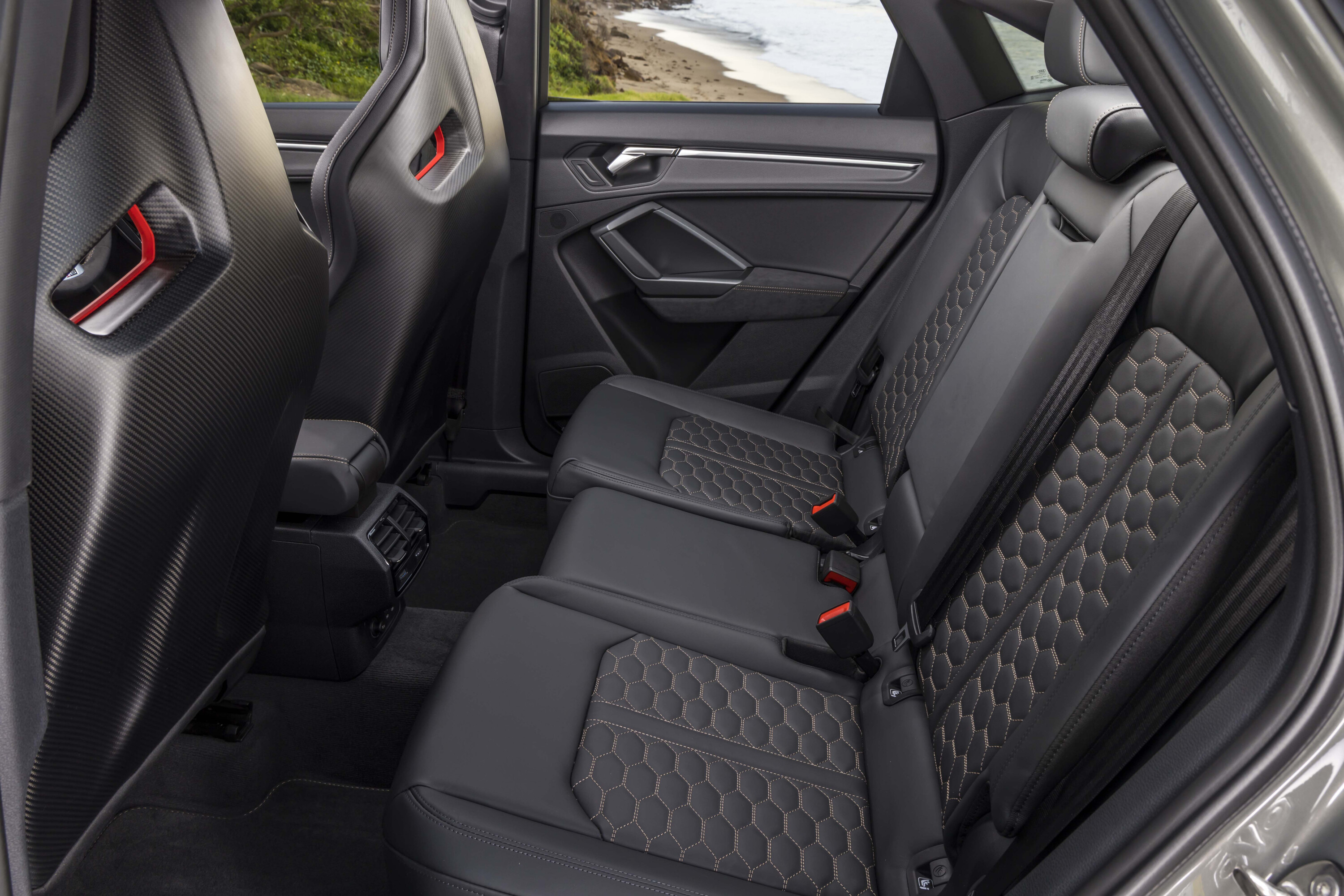
The back seats are sculpted, meaning a middle-seat passenger isn’t going to enjoy the experience very much, so maybe stick with two. The fold-down armrest has cup holders, the doors (small) bottle holders and you get two USB ports and air vents to keep your temperature even. It’s comfortable back there, even with the Sportback’s falling roofline.
Boot capacity of the Sportback is a pretty useful 520 litres and with all three sections of the 40:20:40 split-fold seats down, you’ll have 1400 litres to fill.
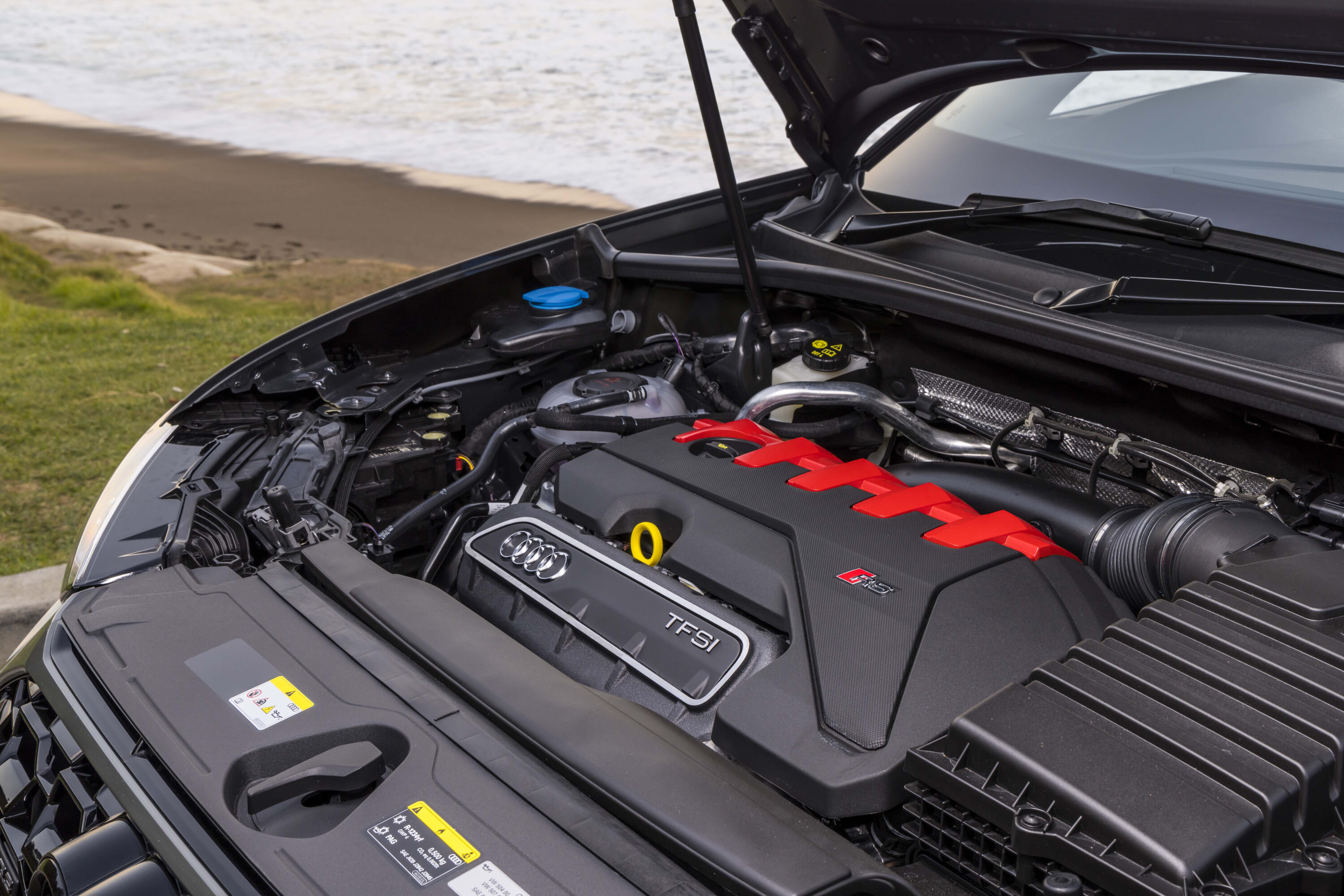
As with the first-gen RS Q3, the 2.5-litre five-cylinder takes centre stage – and well it should.
2023 Audi RS Q3 Edition 10 Years drivetrain
Engine
2.5-litre five-cylinder turbo-petrol
Transmission
7-speed dual-clutch
Power
294kW @ 5850-7000rpm
Torque
480Nm @ 1950-5850rpm
0-100km/h
4.5 seconds
Bettered only by AMG’s 2.0-litre four in the power stakes, 294kW translates to just over 400 horses. That’s quite a lot.
What’s even more impressive is the wide torque band, with full twist on offer between 1950rpm and 5850rpm; probably the widest performance torque band in this type of vehicle, at least as well as I can remember.
1
When you’re on it, it always feels like the rear is calling the shots…
Once you’re moving and you’ve flicked into RS mode, you’re never out of the torque band which means you’ve got a mildly terrifying amount of thrust out of corners. You can pile into bends at quite a clip, mash the brakes – which feel great and haul you down from big numbers without fuss – then feed in the power.
Go in too fast and you can adjust the car on the throttle or the brakes, the Quattro all-wheel-drive system shuffling the power around but never making it feel like it will understeer unless you’ve really got it wrong. When you’re on it, it always feels like the rear is calling the shots, which is as it should be.
And once you’ve gathered it up, it’s ready to sling you to the next apex with a little pop and parp from the petrol particulate filter-strangled five. This engine may not have the theatrics it did before pollution reduction tech was added but the chassis more than makes up for it in this generation. It can handle it.
2
The transmission is mostly able to work with you but will sometimes step out of line, refusing a downshift or taking a little while longer than expected for it and the engine to spool up from a dead stop.
And when you’re just doing the boring daily commute, the RS Q3 is more than happy to settle into Comfort mode and get on with it. Despite the huge wheels and grippy tyres, it’s not too noisy and the adaptive damping is nicely calibrated to maintain a firm but compliant ride.
It always felt ready to go, but just soft enough to be more than bearable in the boring bits.
Audi claims 8.9L/100km on the combined cycle – for a sub-five-second SUV!
2023 Audi RS Q3 edition 10 years fuel economy
Fuel consumption (claimed)
8.9L/100km
Fuel type
98 RON
Fuel tank capacity
63 litres
Theoretical range
700km
My time with the RS Q3 was limited to about 36 hours so most of that time was spent, er, enjoying its talents, so perhaps a more representative test over a week or so is in order. Having said that, it probably won’t be a heck of a lot less than the 12.4L/100km I got.
The RS Q3 does not have an ANCAP safety rating, the safety body specifically excluding the hottest Q3 version from its results.
All other Q3 variants scored five stars in 2019 but this would not necessarily be repeated if tested again under the latest ANCAP protocols given the lack of front-centre airbag and a few other bits and pieces.
2023 Audi RS Q3 edition 10 years safety features
Six airbags
stability and traction controls
Lane assist
lane departure warning
Driver attention detection
blind spot monitoring
Forward collision warning
Forward AEB
Side-exit warning
At this price point, I’d want to see a bit more, particularly reverse AEB.
The forward auto emergency braking system detects pedestrians at up to 85km/h and other vehicles at up to 250km/h.
Kids are looked after with two lots of ISOFIX attachments and three top-tether anchors.
Audi offers a five-year / unlimited-kilometre warranty across the range, and that includes high-performance RS cars.
Servicing comes around every 12 months/15,000km and you can pre-pay for five years. For $3580 – a not inconsiderable sum – you’ll have the first five services covered, averaging out at $716 per interval.
A Mercedes GLA45 will cost you $5150 over the same period, so the Audi looks like a relative bargain. A Tiguan R costs $3200 to maintain for five years.
Do you want to spend an extra few grand on a few cosmetic changes, a cracking pair of front seats and some stitching?
Well, you’ve probably gathered that the seats alone are worth it. The RS Q3 could – and should – be better value, anniversary edition or not, with a bit more safety gear to earn its keep.
It is, however, a tremendous amount of fun while also fulfilling the day-to-day without any drama or fuss. The Edition 10 Years version is an attractive proposition but so is the base car. So you can’t really lose.
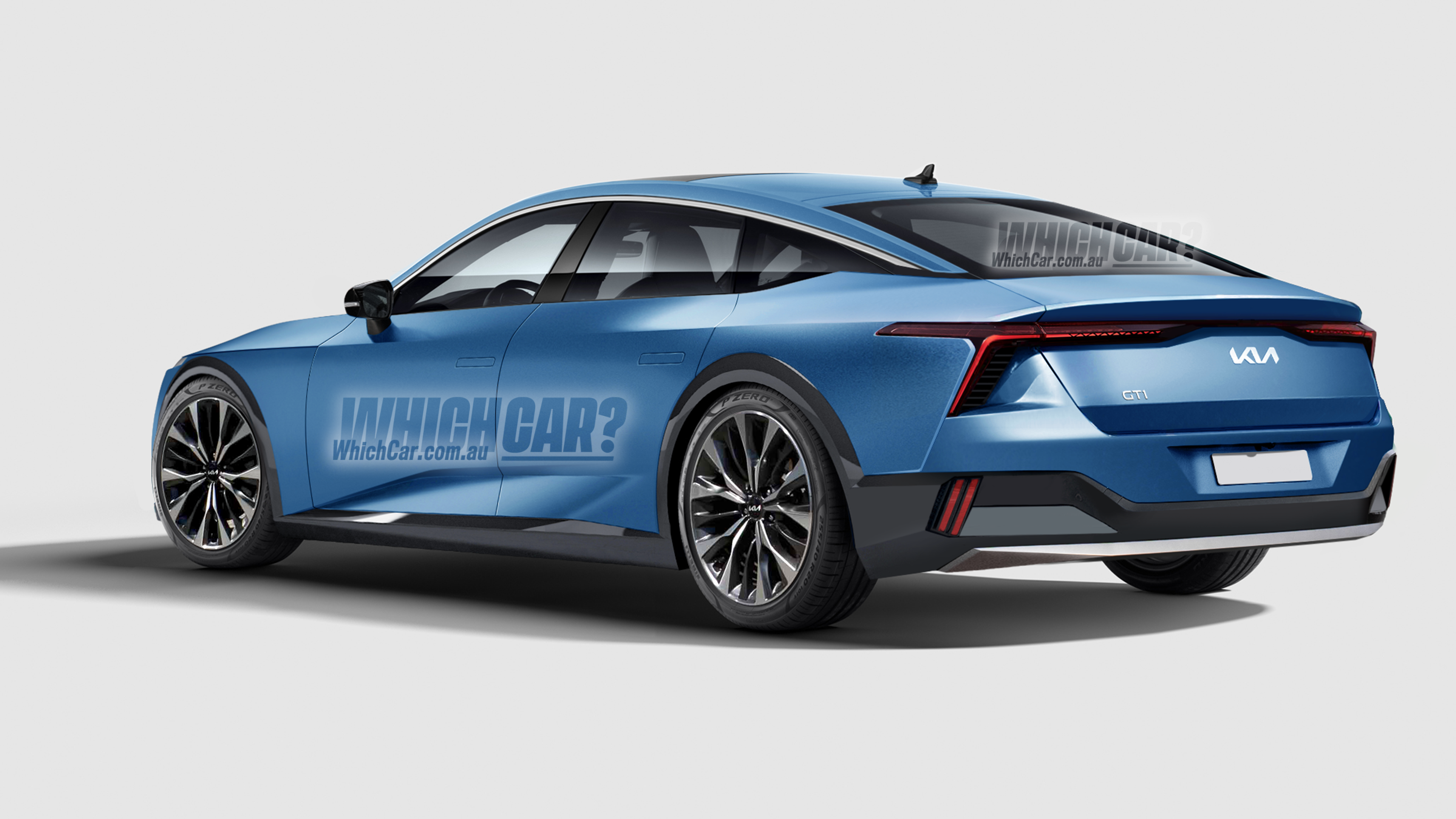
It’s not official yet, but with Kia reported to be planning a 450kW flagship sedan, we couldn’t resist rendering it into existence.
Inspired by the recent EV5 SUV concept and all the best characteristics of a low-slung, style-focused ‘four-door coupe’, this take on the GT1 was crafted for us by the brilliant Theottle.
You’ll see there’s also more than a little next-gen Cerato in the roofline and tail lights, too.
What do you think of this look?
As a rival – in concept if not in price – to models like the upcoming Polestar 5, would you be interested in the Kia GT1? Tell us in the comments below!
1
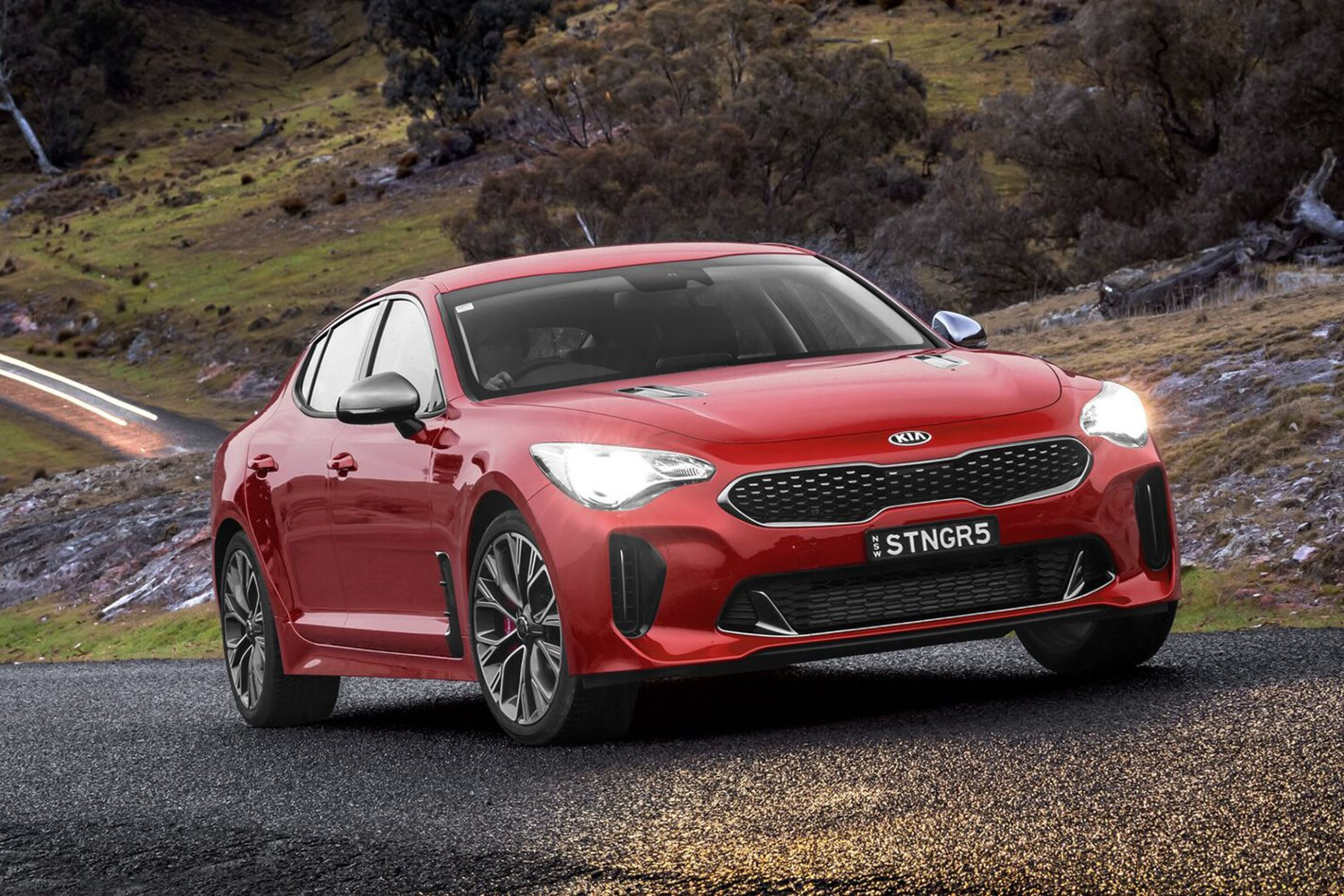
June 2023: Kia’s hero Stinger could have an all-electric successor
The Kia Stinger liftback might be near its end, but a new leak suggests it could make a comeback in 2026 – as an all-electric, 450kW grand tourer.
Snapshot
u2018Kia GT1u2019 specs leaked, hinting at electric Stinger successor
Produces 450kW, AWD, and has up to 800km range
Coming in 2026, the new car will adopt new eM platform
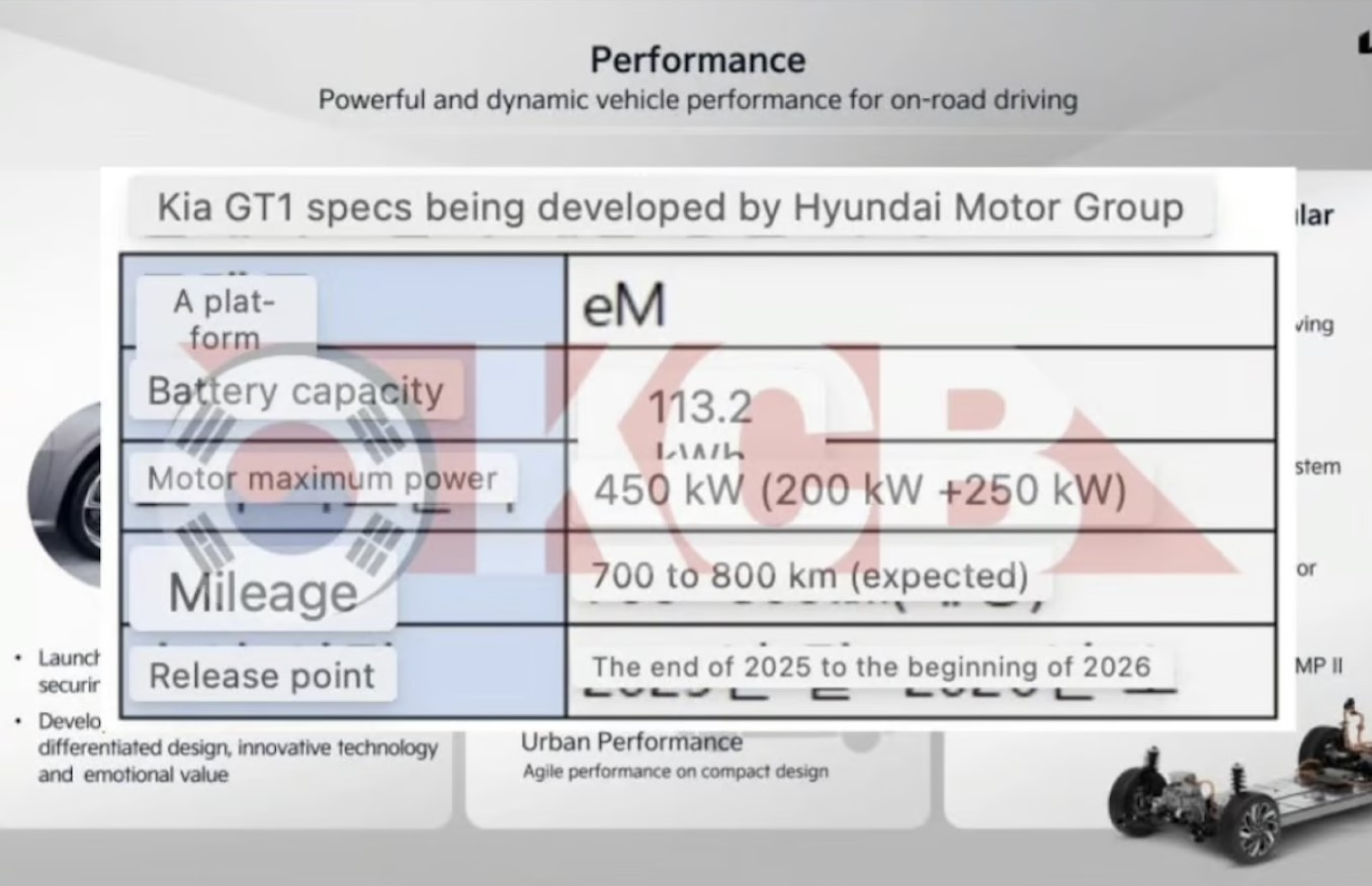
Codenamed internally as the Kia GT1, it will feature dual electric motors producing a combined 450kW of power (split between a 200kW front and a 250kW rear) – indicating that it’ll also be all-wheel drive.
1
The ‘GT1’ will adopt the carmaker’s new eM dedicated electric vehicle platform, the successor to the Electric Global Modular Platform (E-GMP) used in the Kia EV6 electric crossover.
This would enable an expected 700 to 800 kilometre driving range from a 113.2kWh (presumably gross) battery pack. That’s larger than the 105kWh gross unit found in the forthcoming Kia EV9 large SUV.
The purported leak confirms a previous report from the Auto Times stating that a “next-generation coupe-type electric sedan” would be launched as the successor to the Stinger.
1
Kia Australia is no longer taking new orders for the rear-driven petrol-engined Stinger liftback, with only backorders currently being fulfilled.
Instead, the automaker is marketing the Kia EV6 GT as the spiritual successor to the Stinger.
The electric crossover, priced at $99,590 before on-roads, delivers 430kW of power and 740Nm of torque with a claimed WLTP driving range of 424 kilometres.
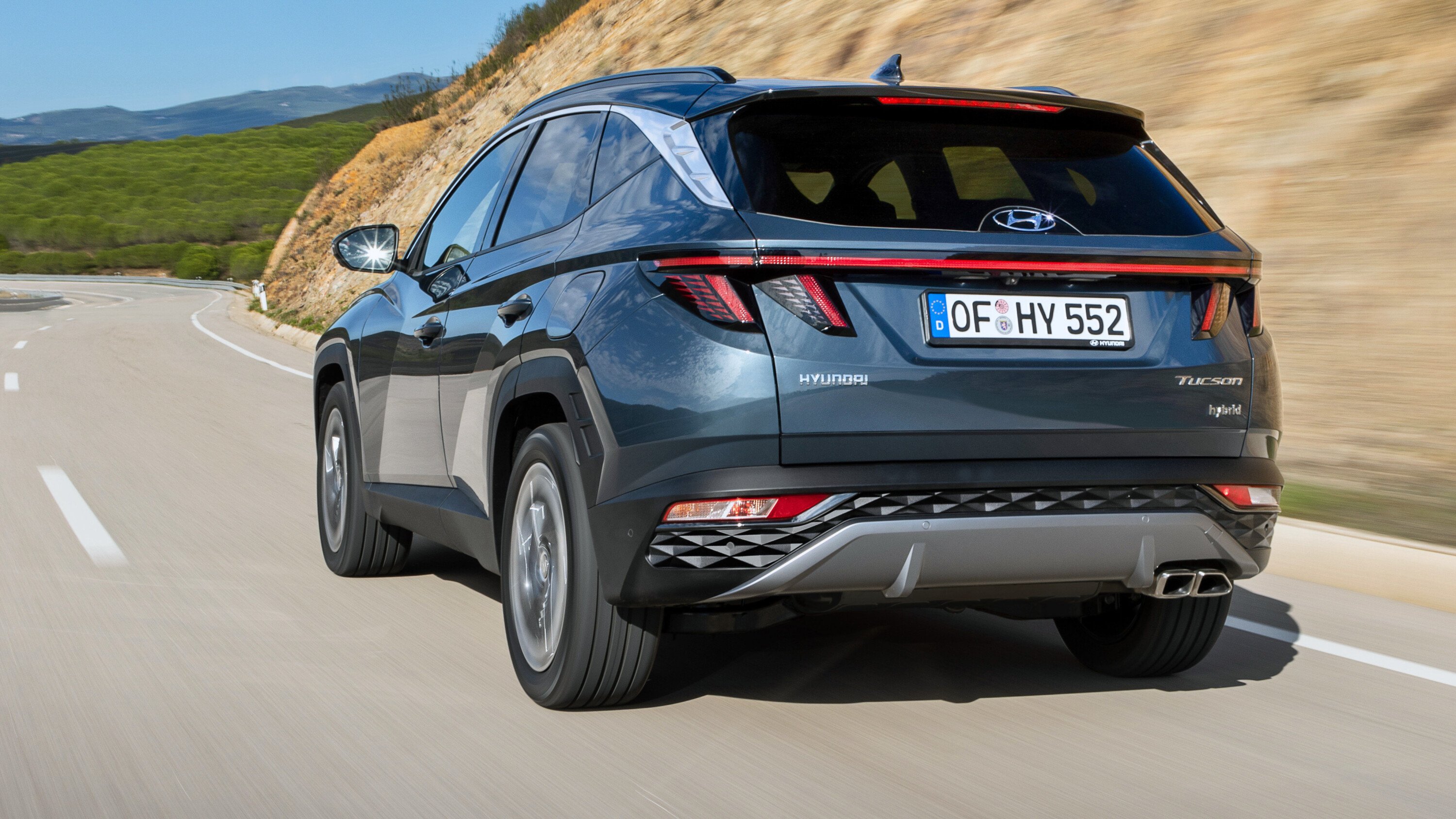
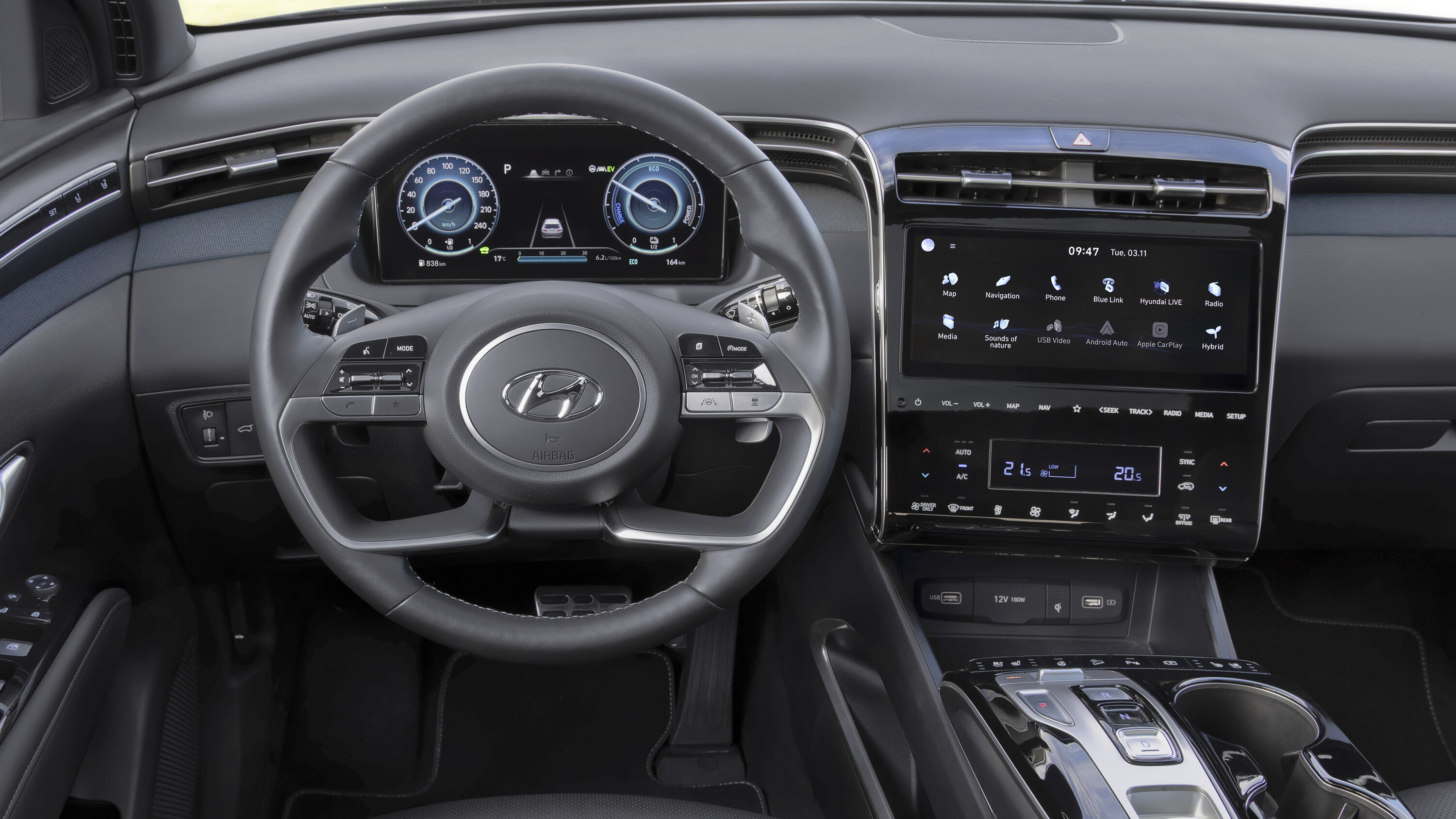
Granted, with a year-to-date market share of 10.1 percent against the RAV4’s 13.3 percent, one could argue the Tucson is managing just fine without a hybrid – but for Hyundai, “just fine” doesn’t cut it.
Luckily for them, the company is finally adding a hybrid option to the local Tucson line-up.
1
A hybrid-electric vehicle (HEV) variant will arrive sometime in the first half of 2024
At last week’s new-gen Kona launch (stay tuned for our first drive story on July 7), Hyundai confirmed reports that a hybrid-electric vehicle (HEV) variant will arrive sometime in the first half of 2024, alongside the already-confirmed Ioniq 5 N and Ioniq 7 electric cars – as well as three other yet-to-be-announced new models.
Pricing and specifications have yet to be announced, but the company has indicated that its strategy with the Santa Fe Hybrid – which arrived late last year as a top-spec Highlander-only proposition – provides some clues about how it will position the Tucson Hybrid.
With the Tucson Highlander occupying the $47-55K bracket across its six sub-variants, expect the Tucson Hybrid to land somewhere in that region.
2
Why the wait?
A hybrid Tucson has been available overseas since the current model entered production, with conventional hybrid and plug-in hybrid variants available in Europe and the United States.
The catch, as always: a lack of right-hand-drive availability, coupled with Australia being deemed a low priority due to an absence of emissions targets at the time of the Tucson’s launch, meant Hyundai’s headquarters kept a hybrid Tucson off the table for Australia.
Both of those situations have changed, and while the plug-in hybrid Tucson and its 45km electric-only range won’t be coming our way, the Tucson Hybrid’s 171kW/350Nm powertrain will offer significantly more power than any other Tucson variant – and combined fuel economy figures of 5.9L/100km on the WLTP cycle for the front-wheel-drive model, and 6.6L/100km for the all-wheel-drive.
Will it make a difference to the sales sheet?
If it’s positioned as an expensive top-spec offering, it could dampen uptake.
But, if Hyundai Australia can secure a stable supply, there’s a good chance it could win buyers frustrated by long delivery times for Toyota’s RAV4 hybrid.
Whether that enables it to take the top position in the segment is harder to guess, but there’s a realistic chance that the Tucson could overtake both the Mitsubishi Outlander – which holds 12.1 percent market share and already benefits from a plug-in hybrid option – and the Mazda 3, which is currently in second place to the RAV4 with a 12.2 percent share of the medium SUV segment.
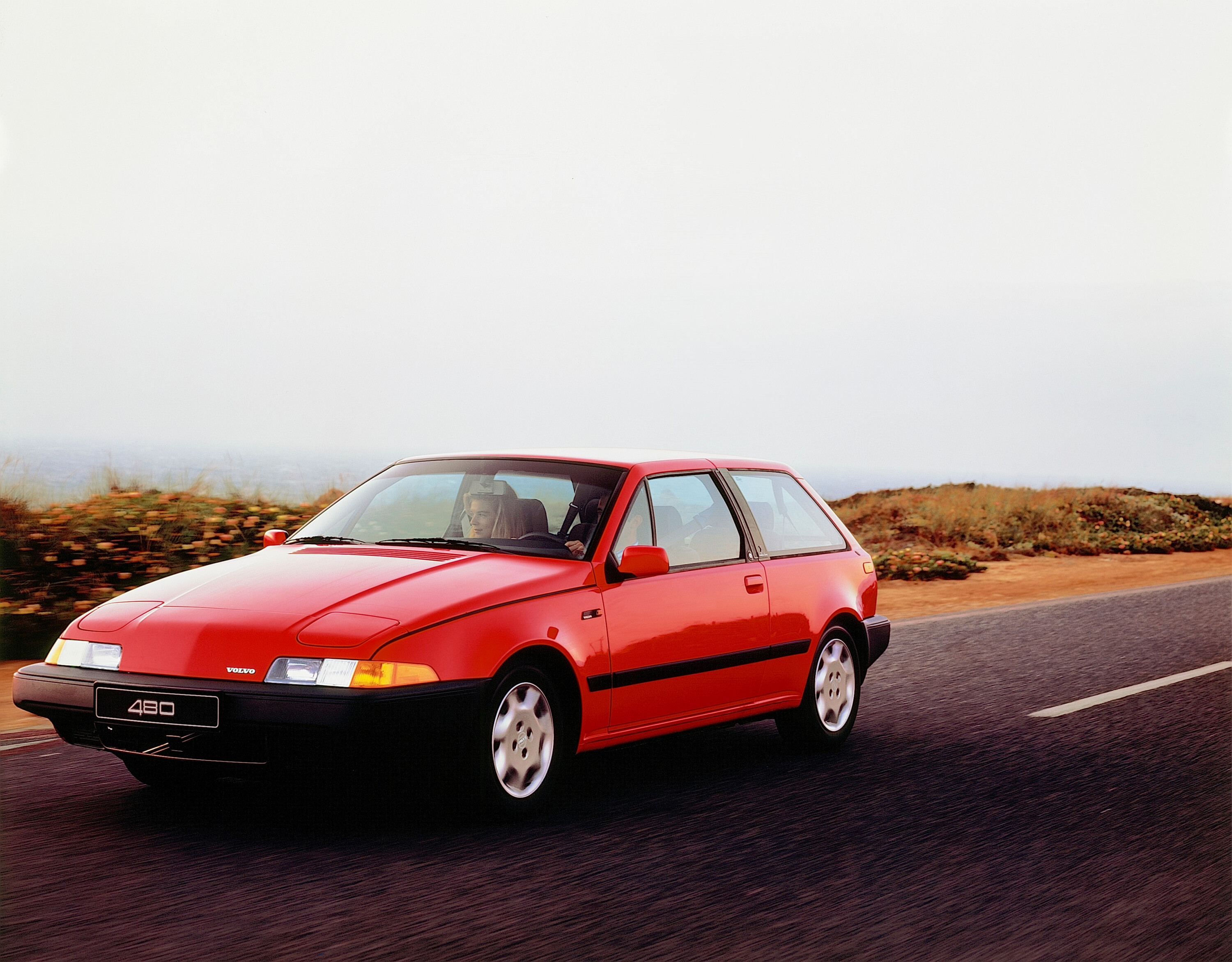
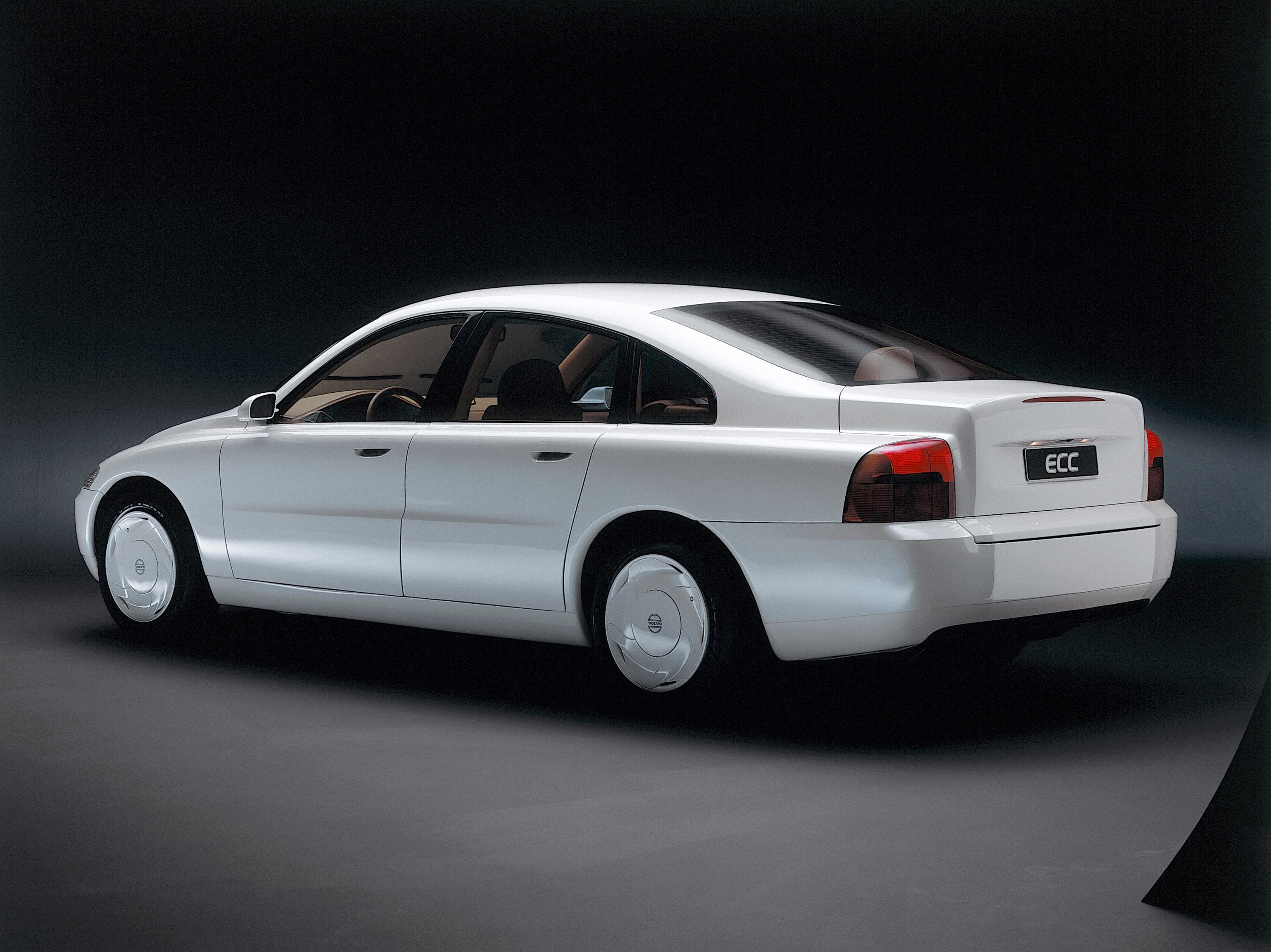
Peter Horbury, the British automotive designer who reinvented Volvo’s image in the ’90s, passed away aged 73 on July 2, 2023.
In a statement, Horbury’s previous employer Volvo said he “was instrumental in creating the company’s design language in the 1990s… Peter was an immensely important person for Volvo Cars, both as a designer and as a person. He will be missed by all of us. Our thoughts are with his family.”
Horbury’s skills were fostered at an early age, his Northumbrian father taught Peter simple perspective, transforming his two-dimensional sketches into 3D imaginations.
“When I was about nine or ten, I started looking at vehicles and imagining the next one. I’d take the latest Ford Anglia, Triumph TR3 or whatever was current in the late 50s, pick out features that were characteristic of those models and draw future versions. It just seemed to be what a car designer must do,” Horbury told Car Design News [↗] in a 2020 interview.
This early imagination of future cars pervaded Horbury’s work; a designer who was sympathetic to brand image without being stuck in the past. Horbury’s career started in earnest in 1974, and his first credited design success was the Talbot/Chrysler Horizon’s (1978) front end.
During his time at the Royal College of London, Horbury had Peter Stevens (of McLaren F1 fame) as one of his tutors.
“Peter’s natural charm, great sense of humor and modesty were far from the brash, ego-driven characters who now populate many automotive boardrooms… He had an ability to understand the culture of all the makes that he worked on, from Chrysler to Ford, Volvo, Lotus and others, which manifested itself in guiding the long-term design language of those brands”, Stevens told Automotive News Europe [↗].
6
Horbury spent the middle of his career as a full-timer first at Ford and freelancing for BMW, Bentley, Mercedes-Benz, and Triumph’s design departments. His first major brand-wide overhaul came at Volvo, where he started in 1991, driving the rebirth from boxy and boring to broad-shouldered Swedish chic exemplified by the S60, V70, and XC90.
He then moved back to Ford for a few years leading the brand’s premium operations – including Volvo – as well as Jaguar and Aston Martin. Horbury hopped to Detroit in 2004 where he penned the 12th-gen F-150 pick-up and several Ford and Lincoln concepts.
In 2009 Horbury would come back to Volvo just a year before the brand was acquired by Chinese giant Geely, in 2010, where he would move into designing vehicles for various marques under the umbrella.
1
His later work included launching Lynk & Co and Zeekr electric brands, the fantastic new London Taxi, and much more. In 2021, Horbury stepped away from full-time work but continued to consult and guide the design language at Lotus Cars.
“Peter’s timeless design is his legacy, and it can be found on roads across the world today, enjoyed by millions of drivers”, said Lotus CEO, Feng Qingfeng, in a statement
“His many friends, colleagues and admirers at Lotus, across the wider Geely business, and in the global automotive industry will all miss him greatly.”
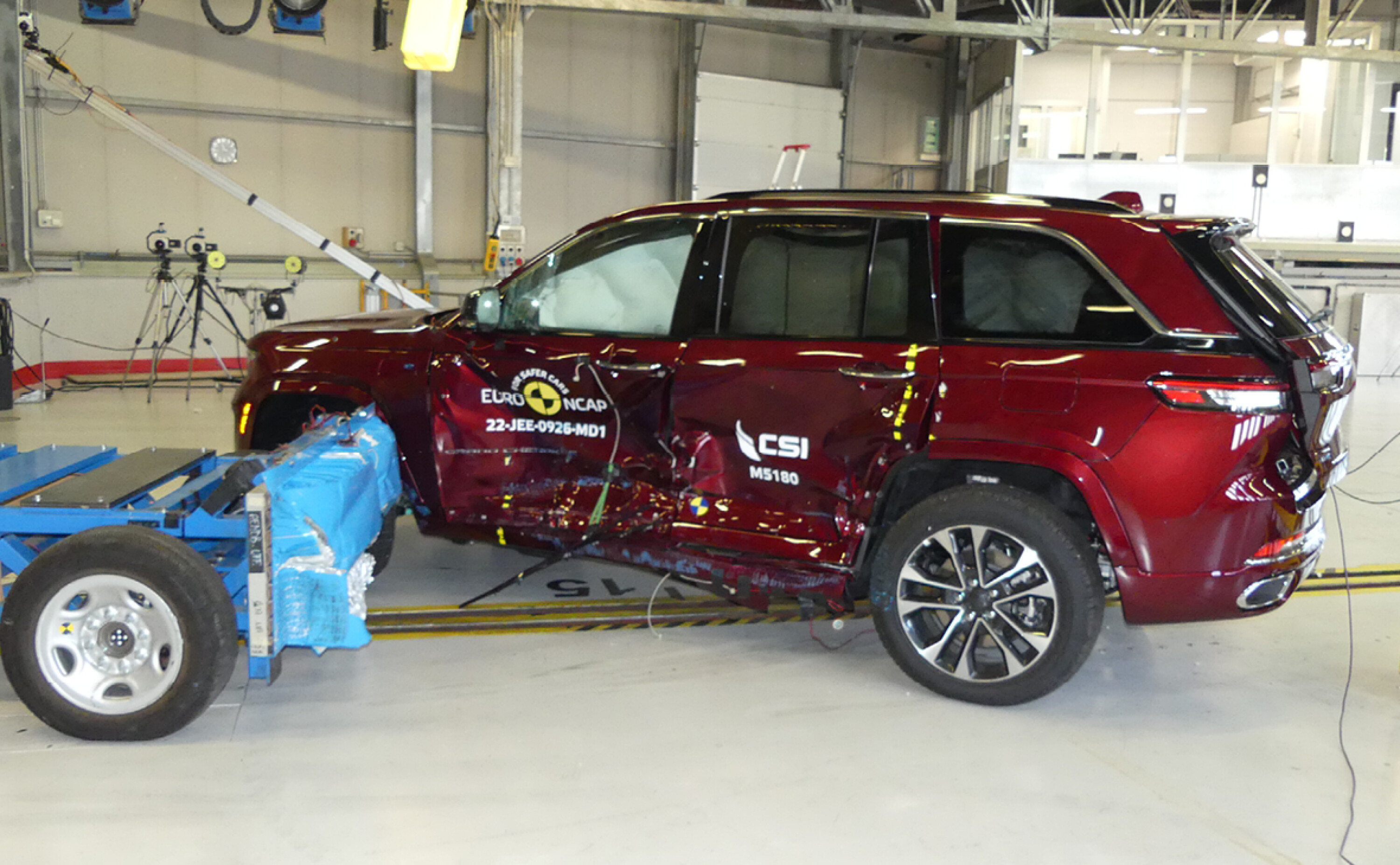
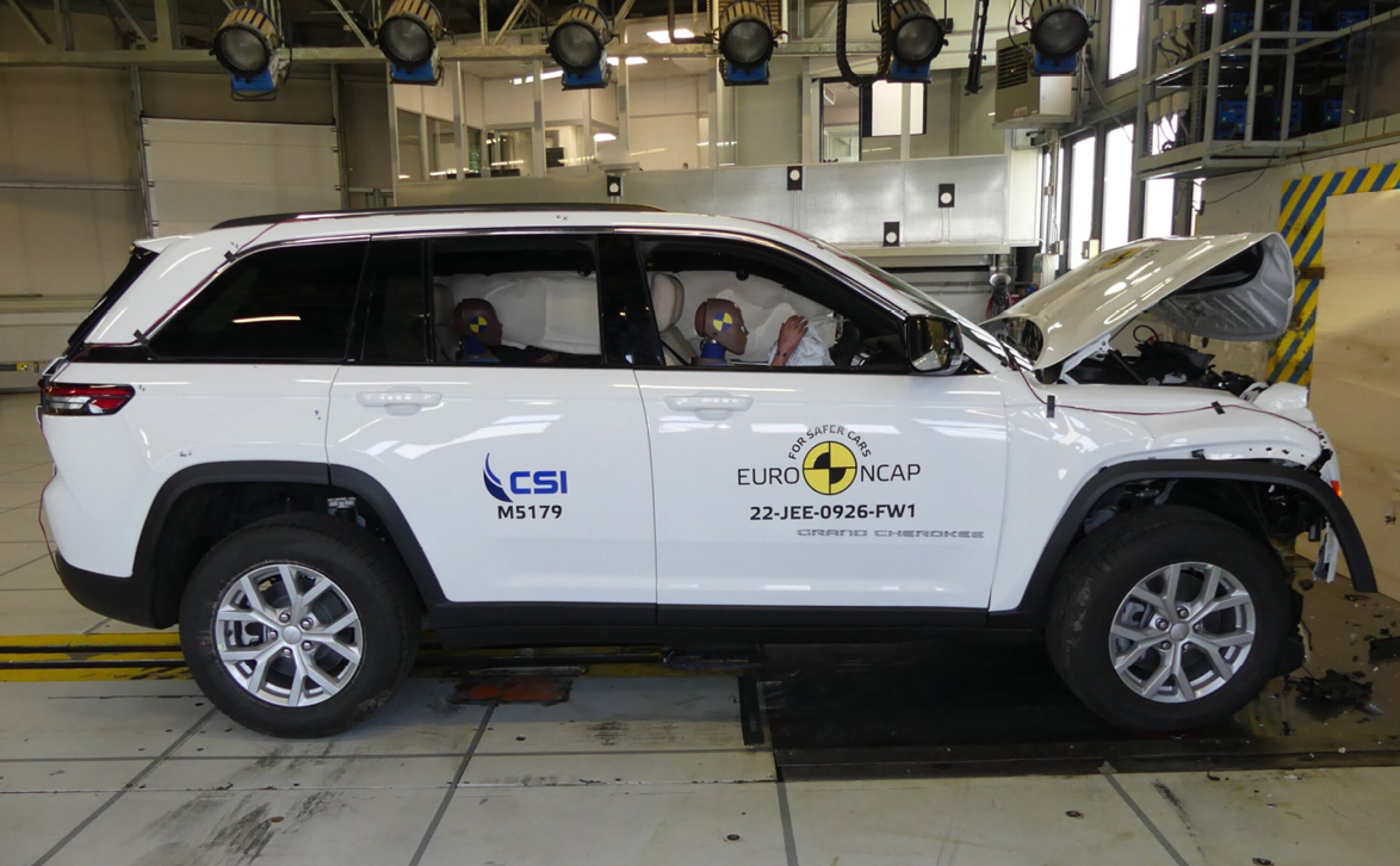
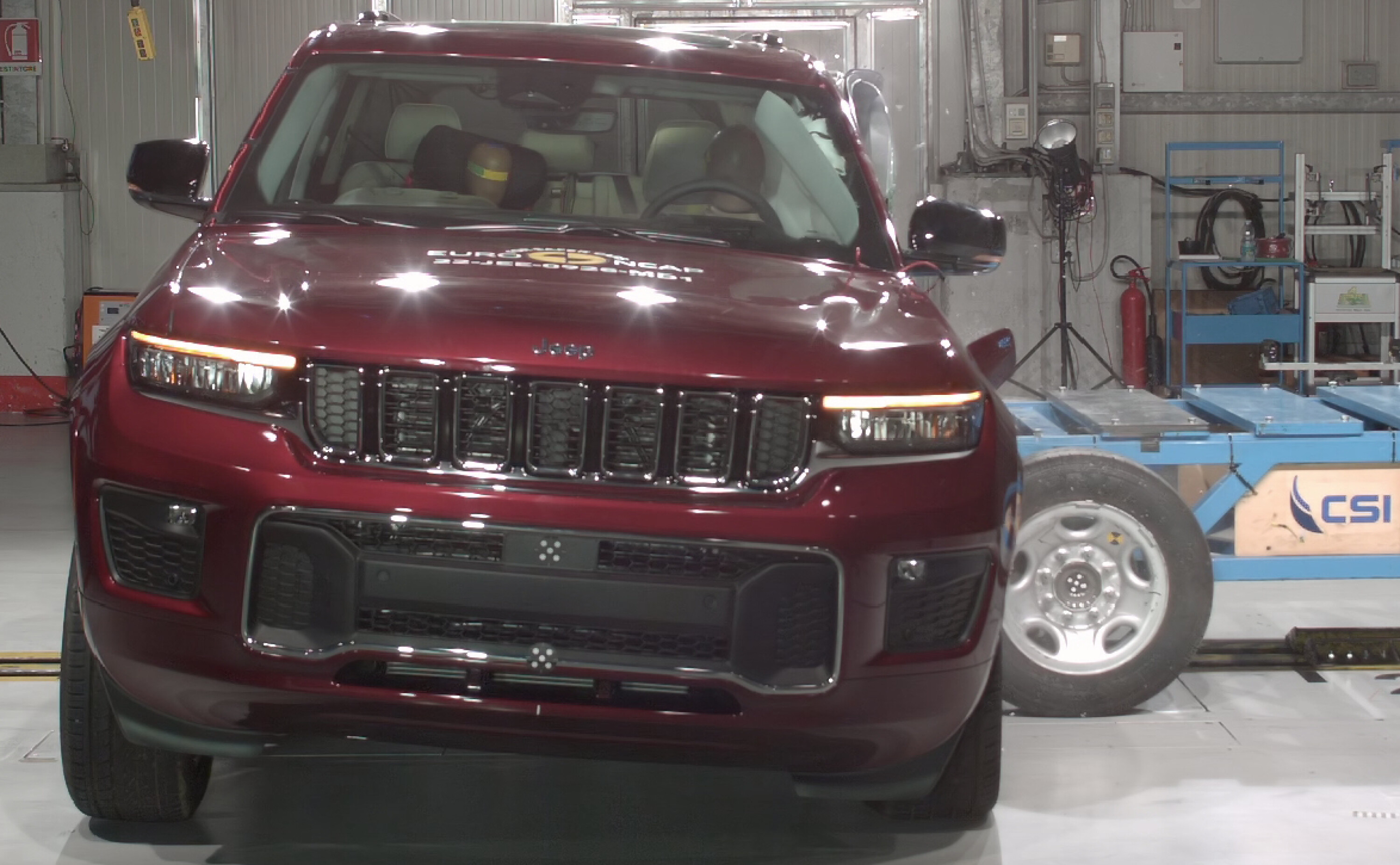
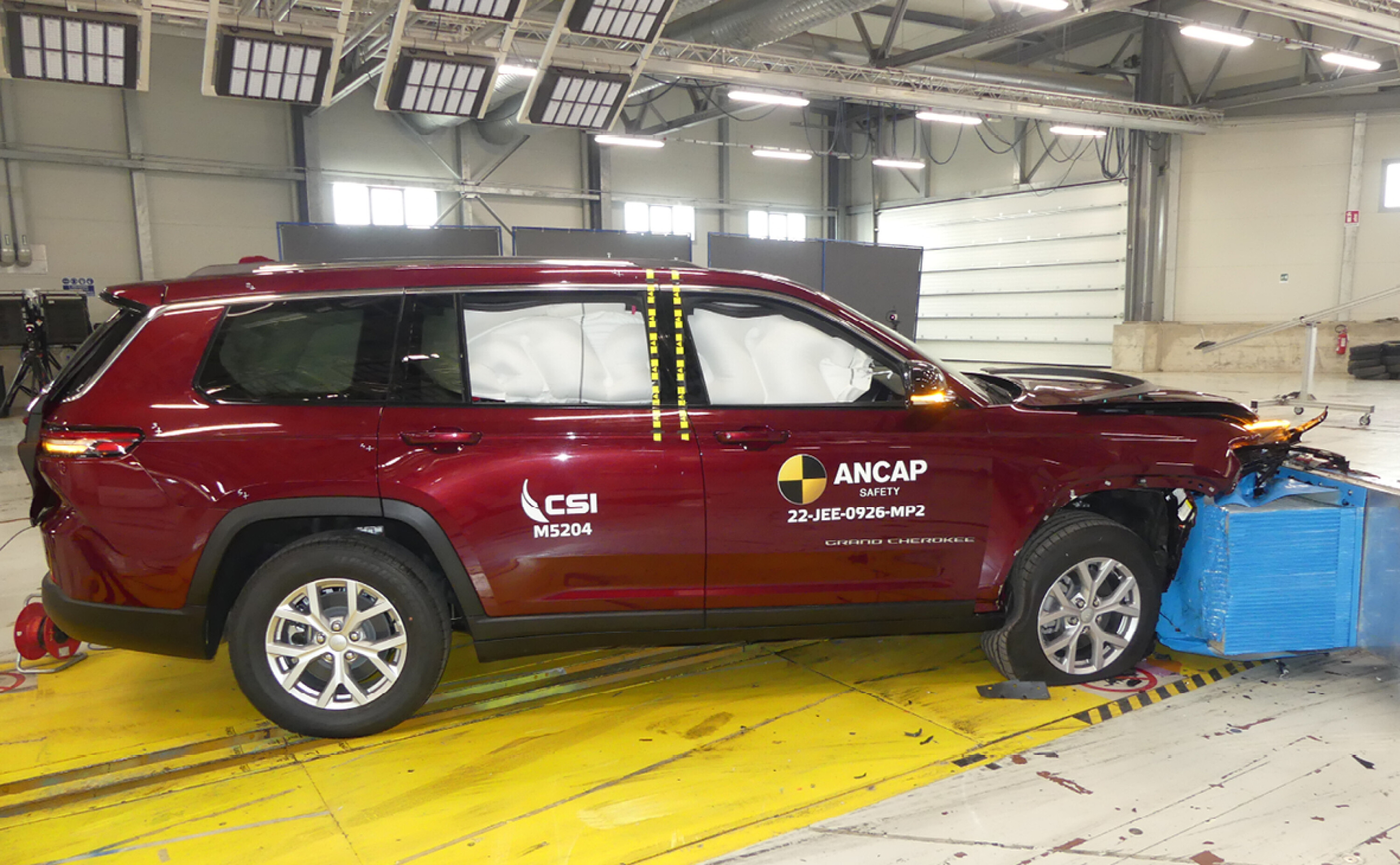
The latest 2023 Jeep Grand Cherokee large SUV has received a split ANCAP safety rating.
Snapshot
2023 Jeep Grand Cherokee receives split ANCAP safety rating
Five-seat petrol variants lose star due to rear seatbelt differences
All other models score top marks under 2020-22 criteria
While all 7-seat Grand Cherokee L variants – and the short-wheelbase Summit Reserve plug-in hybrid – have scored a five-star rating, the five-seat Grand Cherokee petrol V6 lost a star due to rear seatbelt differences.
All testing was conducted under the older 2020-22 criteria, with the ratings applied to Grand Cherokee vehicles built from September 2022.
ANCAP or Euro NCAP have yet to publish vehicle results under more-stringent protocols introduced in 2023.
ANCAP said it found “a difference in the performance of the seatbelts fitted to second row outboard seats” compared to SWB PHEV and LWD 7-seat models, with a nil score applied for rear passenger chest protection.
While the results for the petrol five-seat are identical to the five-star Grand Cherokees in all other testing, ANCAP said a ‘poor’ result for a critical body region “limits a vehicle’s overall star rating to four stars”.
This is irrespective of its adult occupant protection score, which is above the 80 per cent threshold for a five-star rating.
The technical report states the belt load limiter – also known as a seatbelt pretensioner – in five-seat petrol variants had a ‘high load’, with four points deducted compared to Grand Cherokee models with a five-star rating.
1
ANCAP chief executive officer, Carla Hoorweg, said it encourages Jeep to “implement a production change to improve the safety performance of the rear outboard seatbelts” for the affected variants.
“This result highlights the importance and rigor [sic] applied through independent vehicle safety testing to ensure Australian and New Zealand consumers are provided with information relevant to the vehicles supplied into these markets.”
A score of 81 per cent for adult occupant protection (31.06 out of 38 points) applies to four-star Grand Cherokees, while five-star variants have an 83 per cent score (31.83 points).
1
Overall, all models scored 93 per cent for child occupation protection (45.89 out of 49 points), 81 per cent for vulnerable road user protection (43.79 out of 54 points), and 84 per cent for safety assist (13.60 out of 16 points).
“The long-wheelbase Jeep Grand Cherokee L and short-wheelbase PHEV achieved sound results across all areas of testing and assessment, seeing them eligible for the five-star rating,” added Hoorweg.
As with other larger SUVs and utility vehicles, ANCAP noted increased risk to occupants of oncoming vehicles in a crash, with a full 4.00 point ‘vehicle-to-vehicle compatibility’ penalty applied.
1
The latest Jeep Grand Cherokee has eight airbags: dual frontal, side chest, side head, curtain, and driver and passenger knee.
Standard safety equipment includes; autonomous emergency braking (AEB), lane departure warning, lane-keep assist, adaptive cruise control, traffic sign recognition, and intelligent speed limit assist.
It is not fitted with a front-centre airbag to prevent head clashes between the driver and front passenger in a side-impact collision, or junction-turning detection for its AEB system.
It’s clear that Hyundai’s new Kona range is broadly a more expensive thing, with pricing details released last week showing an increase of $1200 at a minimum – and a $5100 jump in the cost of entry for the base model Kona.
But while the price tag for the flagship Kona is still to be determined ahead of its late-Q4 2023 introduction to the Australian market, the general upward thrust of Kona pricing suggests it will arrive somewhere above the $64,000 RRP of the previous-generation Kona Electric.
From Hyundai Australia’s perspective, it’s entirely uninterested in fighting its Chinese rivals at the lower end of the EV market.
If you were hoping that Hyundai’s next electron-powered small SUV would provide an alternative to the BYD Atto3 and MG ZS (not to mention the sub-$40K BYD Dolphin and MG4), you may be disappointed. Yet from Hyundai Australia’s perspective, it’s entirely uninterested in fighting its Chinese rivals at the lower end of the EV market.
“To think that we’ll have a car that will be competitive with the Chinese in terms of absolute price is not right, because we’ve been there before and we’ve seen what happens to us,” said Hyundai Motor Company Australia chief operating officer John Kett, referencing the days of Hyundai savagely discounting vehicles to wafer-thin margins in order to achieve six-figure sales numbers.
Rather, Kett said that future Hyundais EVs will not only be competitive in their own space, but would deliver on the company’s growing premium image.
1
But a bigger force in that area will be the Kona Hybrid.
For older Australians it may seem odd to think that the Korean automaker that built its reputation largely on bargain-bin pricing is now trading on high-end aspirations, but the metrics back Kett up: right now, 63 percent of Hyundai customers are opting for model grades at the Elite, N-Line and Highlander level. Base-model buyers are a minority.
Accordingly, the Kona Electric is likely to be pitched as a Tesla Model Y rival (which, for Australia, is built in China), rather than as an opponent for cheaper Chinese EV product.
It will also play a small part in pushing up the sales numbers of electrified product for Hyundai Australia – a figure which right now is around 5 percent of its year-to-date total – but a bigger force in that area will be the Kona Hybrid.
1
Due here later this year, the Kona Hybrid will be offered in a four-variant range that mirrors that of its combustion cousins, with pricing starting at $36,000 and topping out at $46,500.
Powered by a 77kW/104Nm 1.6 litre four-cylinder and a 32kW/170Nm electric drive motor, the Kona Hybrid makes a combined output of 104kW and 265Nm and sips just 3.9L/100km on the combined cycle – a competitive number against the 4.3L/100km of its main rival, the Toyota Corolla Cross.
1
The Kona Electric may not be as cheap – or even as small – as Hyundai EVs will get.
The Hyundai Casper, a pint-sized city car primarily aimed at the Korean and Indian markets, is rumoured to have a battery-powered variant on the way, and it’s thought to have a strong chance of coming to Australia.
Will it dip beneath the current title-holder of “Australia’s cheapest EV”, the $38,890 BYD Dolphin?
We’ll have to wait until sometime next year at the earliest to find out, but if the sentiment from Hyundai’s bigwigs are any indication, it’s clear that chasing bottom-dollar is not a competition they’re keen on winning.