
UPDATE: BMW M3 Touring price revealed for Australia
Australian pricing for the new and hotly anticipated 2023 BMW M3 Touring has been announced today, with the new hero wagon to enter from $177,500 before on-road costs.
As detailed in our original reveal story below, the M3 Touring is powered by a 3.0-litre six-cylinder turbo engine producing 375kW and 650Nm, sending power to the xDrive AWD system through an eight-speed auto.
BMW M claims a 0-100km/h time for its new longroof of 3.6 seconds, powering on to 200km/h from standstill in 12.9 seconds.
M Sport seats and leather ‘Merino’ upholstery is fitted as standard, while M Carbon bucket seats can be had as part of the new $17,500 M Carbon Experience package.
That pack also boasts a 9.6kg weight reduction, “visible carbon sections” to the exterior, and a removable headrest cover for “additional helmet space” and Vmax unlocked from 250km/h to 280km/h – making the M Carbon package’s purpose clear.
If the pricing for that pack still sounds excessive, buyers will be happy to know it also includes a voucher for the BMW M Driving Experience Advance 1 and Advance 2 courses at BMW Driving Experience.
Buyers looking at that package might also be wise to consider the M Carbon ceramic brakes, priced at $16,500.
Get the full pricing and equipment breakdown at the link below, and check out our walkaround review video below that!
The story to here
June 22: BMW M3 Touring revealed
Snapshot
- M3 Touring revealed with 1510 litre boot capacity
- Australian examples to be sold in Competition xDrive trim
- Local launch set for the first quarter of 2023
The 2023 BMW M3 Touring has officially been revealed – and it’s locked in for Australia next year.
After a long campaign of BMW teasers and spy shots, the covers are finally off the long-roof M3, with the high-performance Touring variant scoring equipment upgrades over its sedan and M4 coupe counterparts.
Following on from last month’s standard 3 Series facelift, the M3 Touring will feature BMW’s latest iDrive system and new curved display screen as standard equipment, merging the 12.3-inch digital dash with a 14.9-inch infotainment screen.
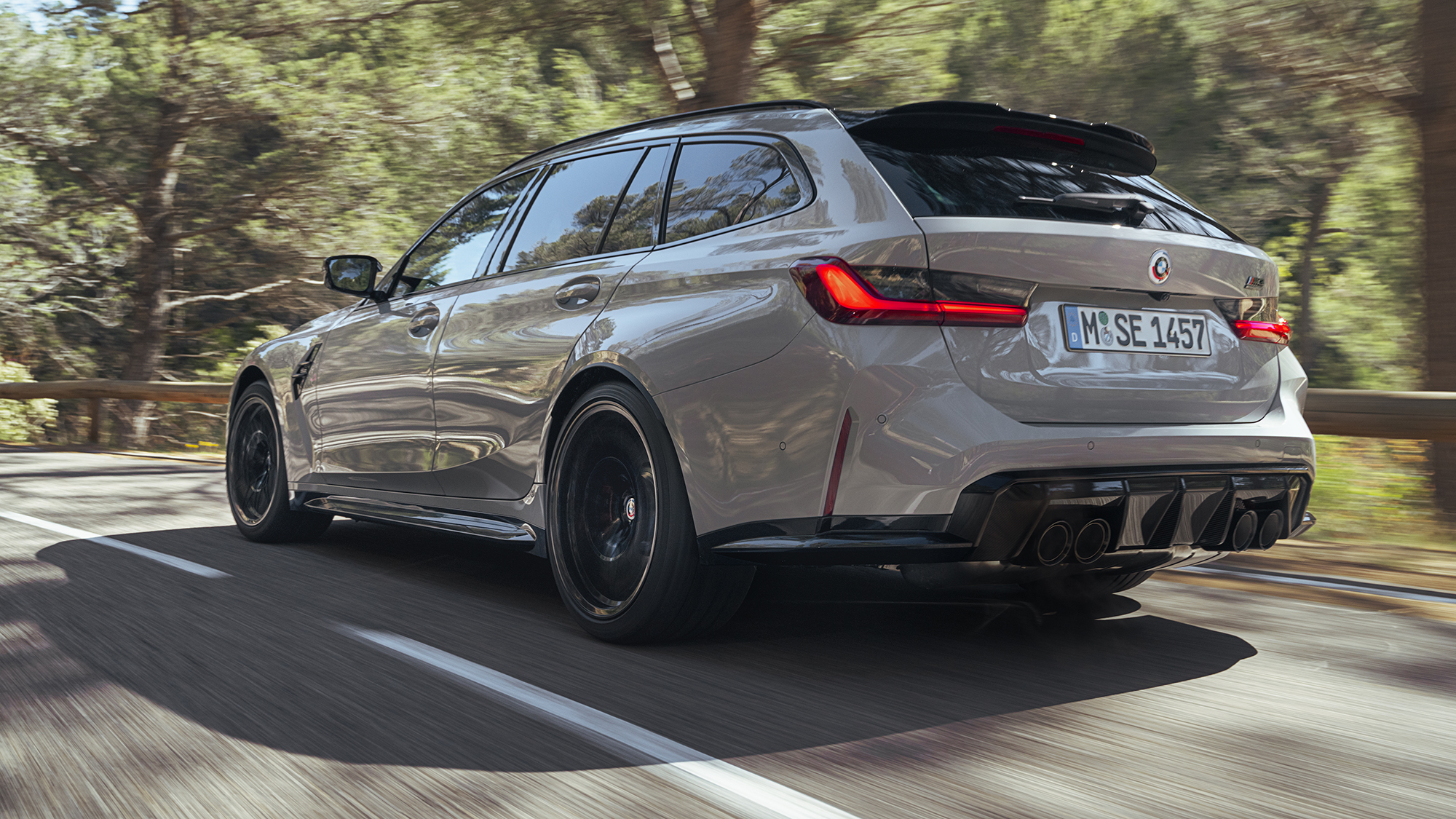
Available in just one spec, the Touring will come to Australia in Competition guise, with its 3.0-litre, twin-turbo straight-six engine producing 375kW of power and 650Nm of torque, mated to an eight-speed torque-converter automatic gearbox.
Unlike the existing M3 and M4, locally delivered Tourings will be exclusively sold with BMW’s xDrive all-wheel-drive system, allowing the wagon to complete the 0-100km/h sprint in a time of just 3.6 seconds – roughly 0.3 seconds faster than its rear-wheel-drive siblings.
Pushing on to 200km/h from a standing start in 12.9 seconds, the Touring will go on to a top speed of 250km/h in standard guise while those who opt for the M Driver’s Package can have this increased to 280km/h.
Just like the rear-wheel-drive offerings, the M3 Touring’s 2WD mode allows drivers to adjust how much wheel slip should be allowed by the traction and stability control systems, with 10 stages of adjustability giving experienced hands the means to perform the perfect drift.
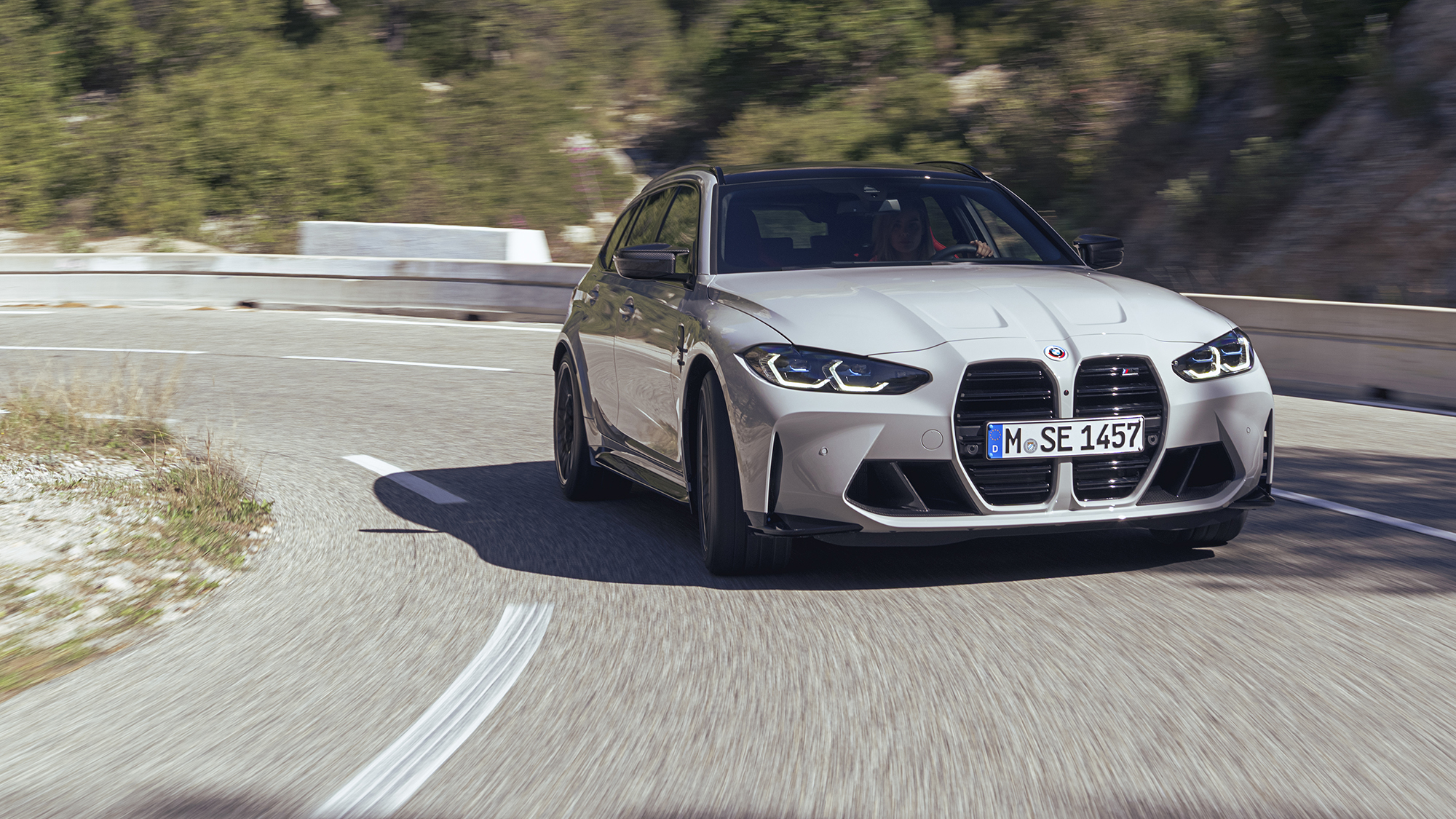
On the outside, the M3’s aggressive bodykit lends well to the Touring, with its frameless kidney grille, side air intakes, pumped out wheel arches and prominent side skirts all setting it apart from the regular 3er.
Although it’s hard to see on darker models, every M3 Touring features a high-gloss black roof, roof rails and Gurney flap on its rear spoiler – a unique addition over the sedan.
Forged light-alloy wheels fill the guards, measuring up at 19-inches up front with 20-inch units on the back.
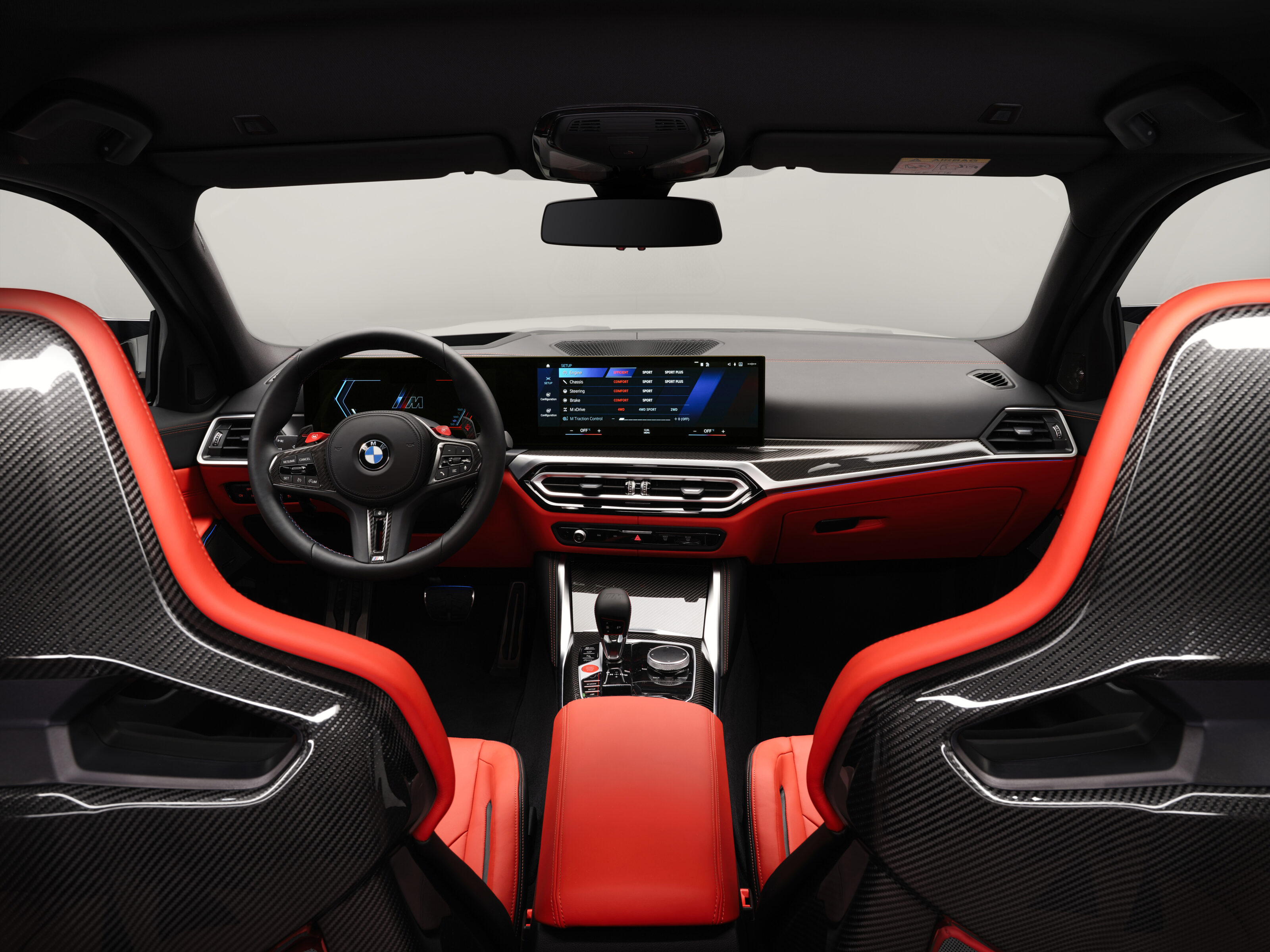
Heading back inside the cabin, electrically adjustable sports seats greet occupants, with Merino leather trim and feating functions fitted as standard.
Those with more of a track-focused approach can option carbon bucket seats, not only giving a firmer hold on the circuit but saving 9.6 kilograms over the standard units.
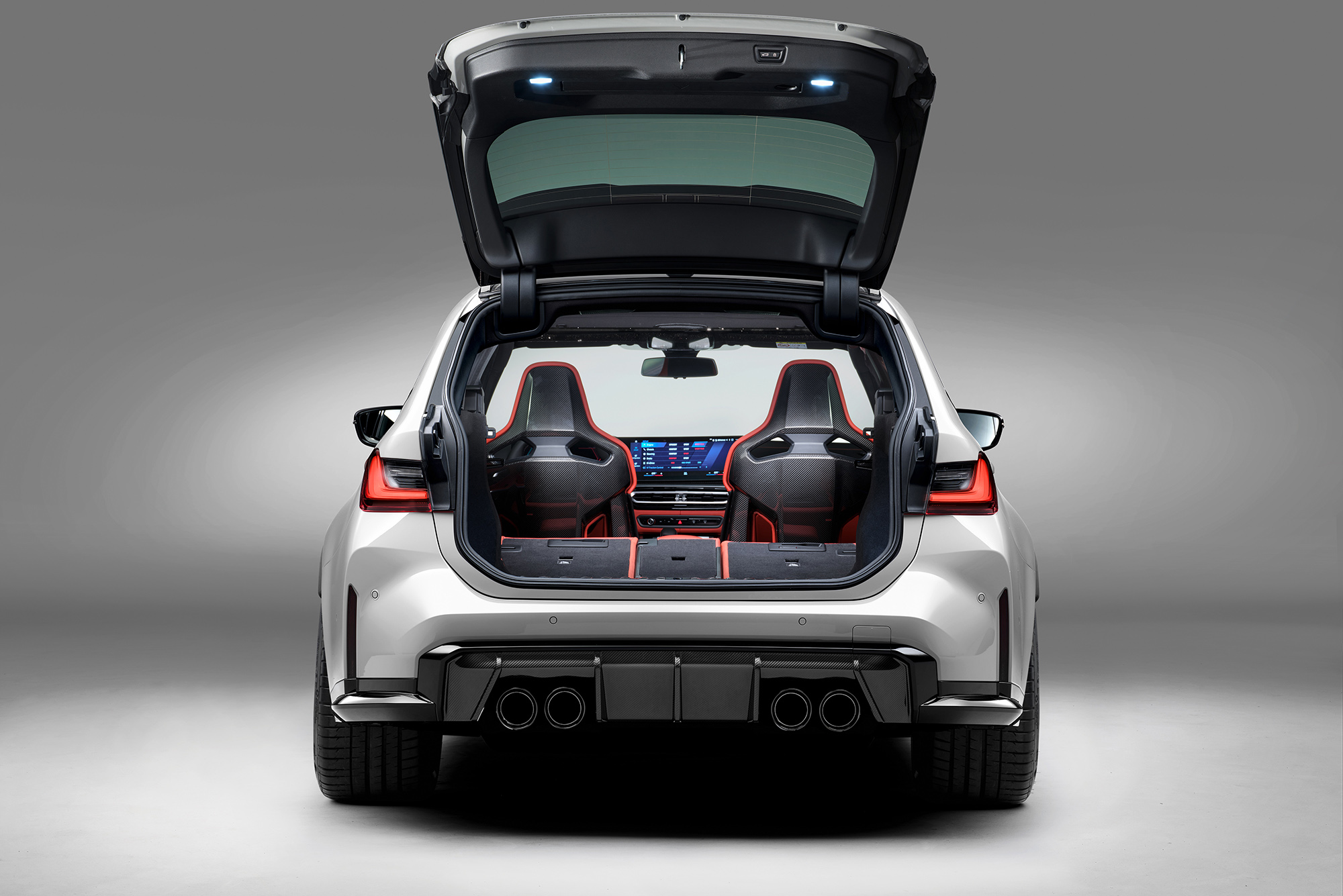
Where the M3 Touring shines is with its boot capacity. With the rear seats up, its 500 litre rear storage space provides a 20 litre increase over the sedan, but with the 40:20:40 split second row folded down, this goes up to a total of 1510 litres – identical to the Audi RS4 Avant, arguably its most direct rival.
Other equipment such as three-zone climate control, BMW Live Cockpit Plus, ambient lighting, a hi-fi speaker system and a head-up display are fitted as standard.
The M3 Touring is also loaded with safety technology, including; driving assistant professional (with steering and lane control assistant), active cruise control (with stop and go function), traffic light detection, active navigation, parking assistant reversing assistant, front collision warning, speed limit display (with no-overtaking indicator), lane departure warning and park distance control.
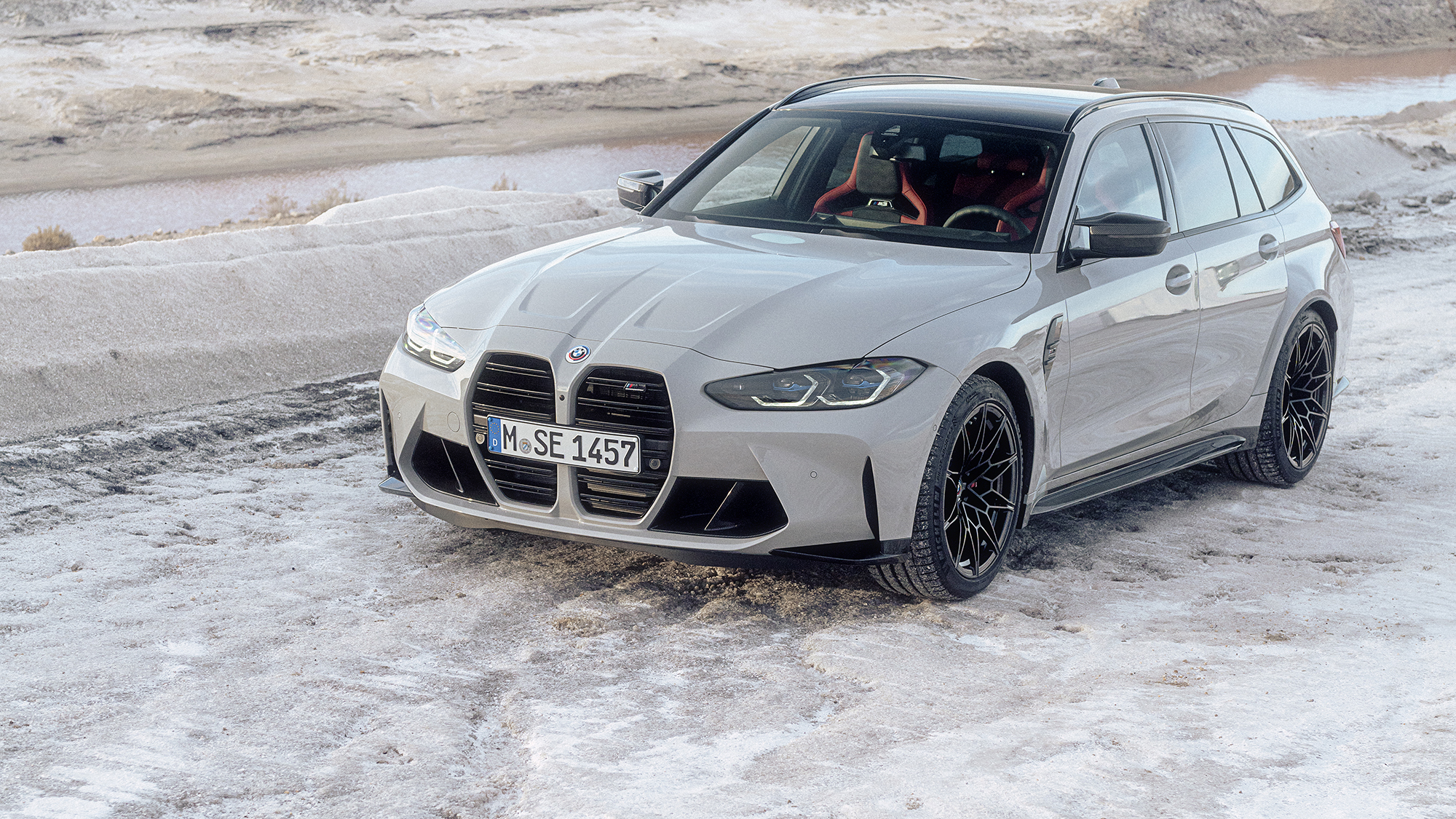
BMW Australia expects the first arrivals of the M3 Touring to land in Australia during the first quarter of 2023, with pricing and local specs to be announced closer to its launch.
The M3 sedan currently retails for $144,990 in standard guise with the Competition spec setting buyers back $154,900 before on-road costs.
“We’re going to keep investing, keep our ICE products really exciting”
Snapshot
- Mustang sedan render based on official sketches
- Ford says ICE not dead yet
- Could a four-door Mustang succeed?
The 2023 Ford Mustang was unveiled at the North American International Auto Show in Detroit last week. Following the coupe’s debut, Ford showed some official ‘Stang sedan and SUV sketches.
You can check out the SUV render here, but pictured is digital artist Theottle’s impression of a four-door Mustang.
It’s unlikely Ford will ever build a Mustang sedan, but were it to become a reality we’d finally have a replacement for the Falcon XR8 that tragically bit the dust in 2016.
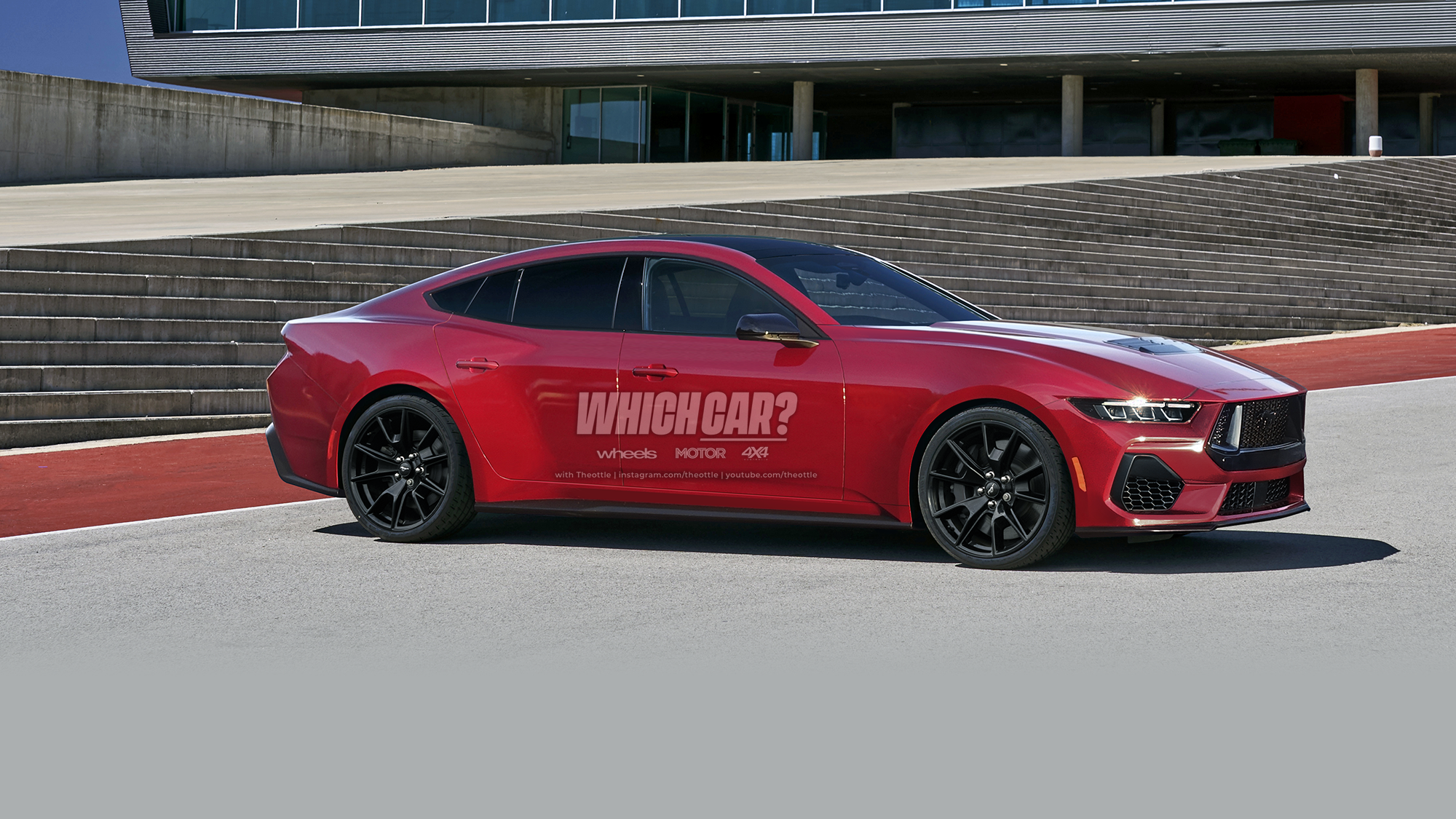
Ford of America CEO Jim Farley confirmed that Mustang will live on beyond the seventh-generation, even with the onslaught of electrification. So a Mustang sedan isn’t entirely out of the question.
“We’re going to keep investing, keep our ICE products really exciting, but make them more opinionated. We want to be opinionated about our products,” said Farley.
Is a Mustang sedan viable?
A practical but performance-oriented four-door Mustang packing the coupe’s 5.0-litre Coyote V8 – perhaps even a manual transmission – sounds pretty appealing to us.
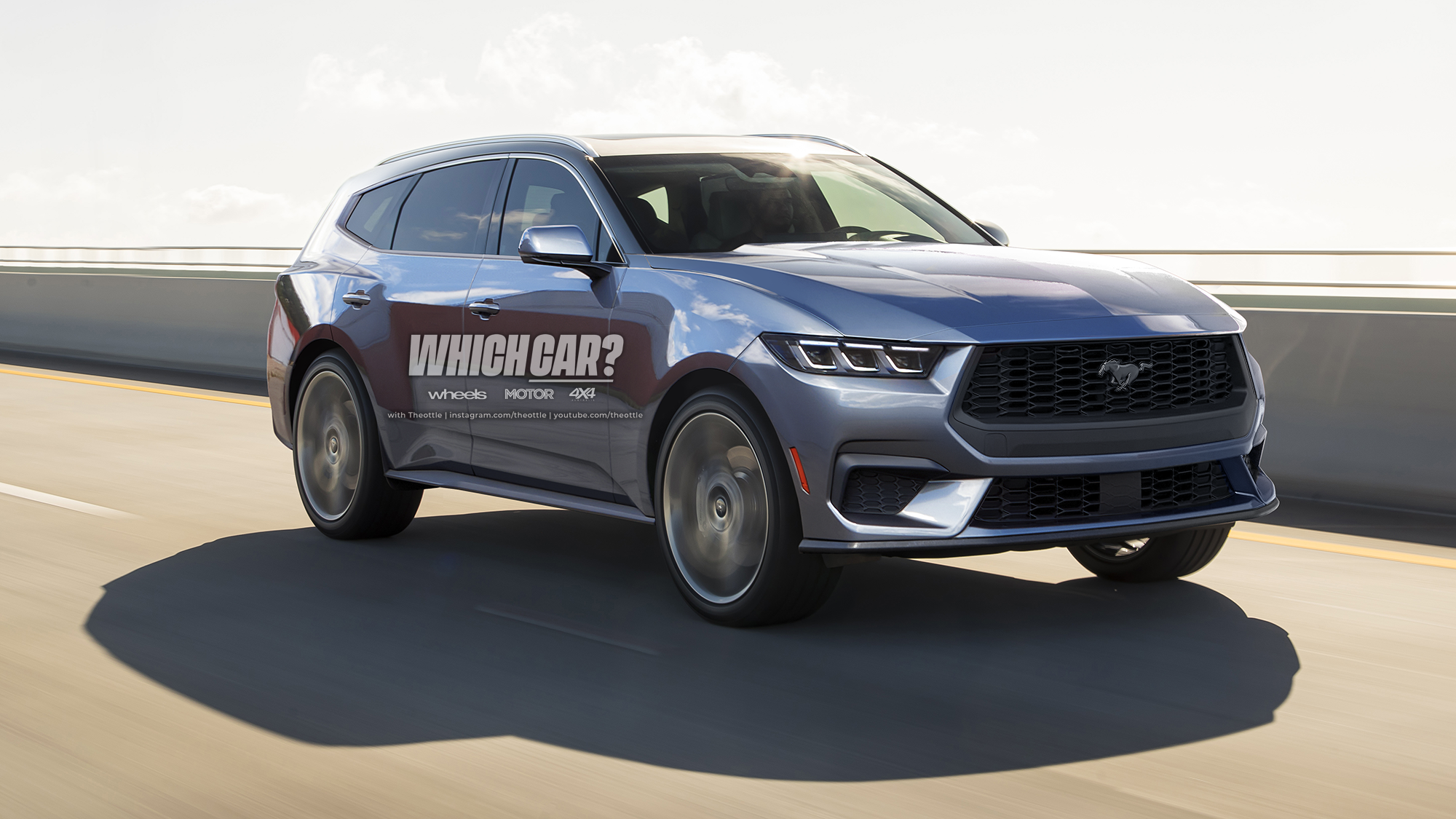
Of course, a sporty Mustang SUV to rival the Porsche Cayenne and BMW X5 M at an affordable price has more sales potential in this day and age, though even that sounds like a pipe dream.
This hasn’t stopped traditional fast-sedan manufacturers yet. BMW’s twin-turbo V8 M5 CS was built in very limited numbers, but they sold almost immediately. There’s also a new Mercedes-AMG C63 on the horizon, though that’s a plug-in hybrid.
The sixth-gen Mustang sells strongly in Australia, though. Ford sold 2827 two-door Mustangs in 2021, almost identical to the number of C-Class sedans/wagons Mercedes-Benz sold in the same time (2832).
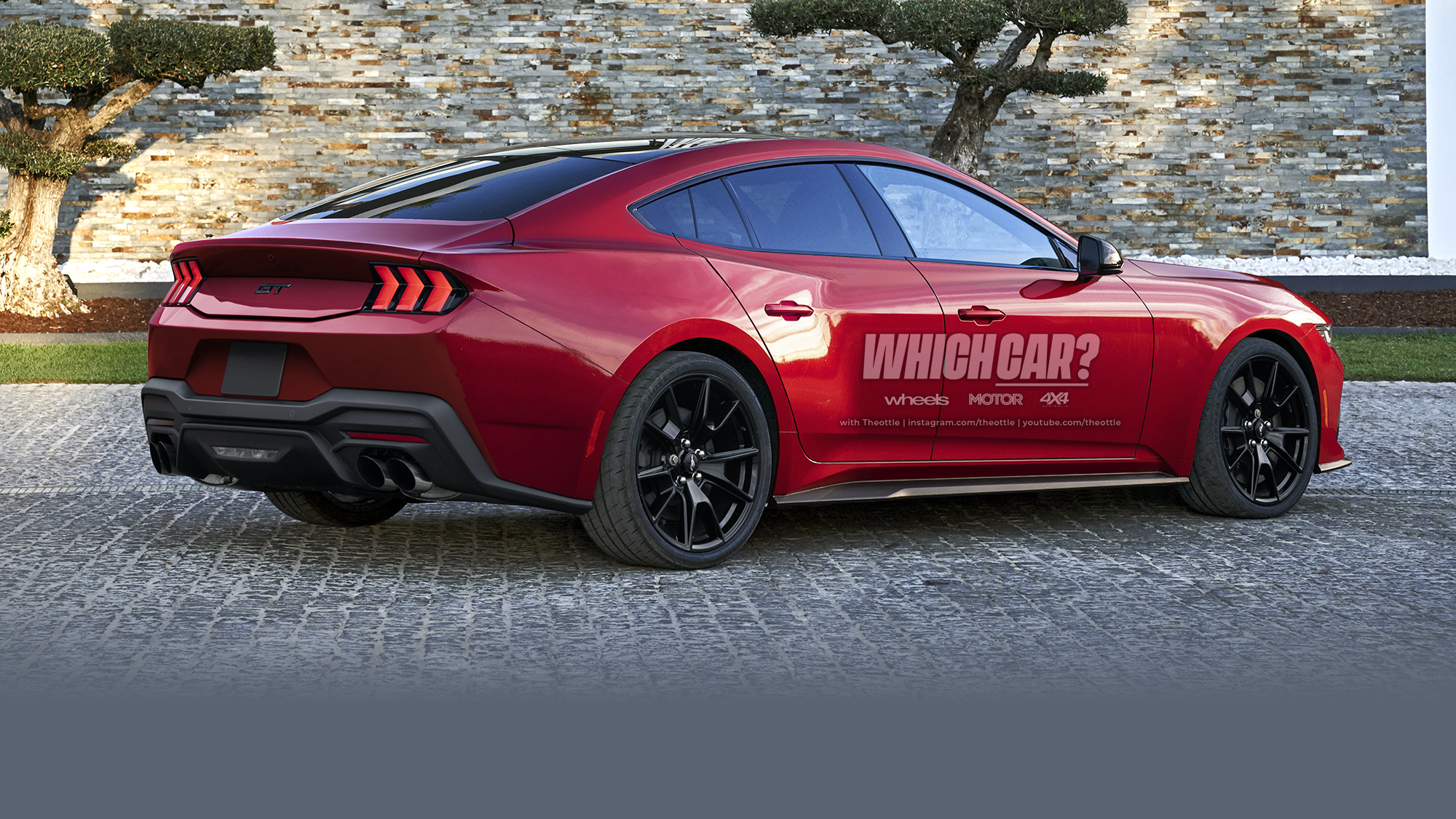
A four-door Mustang could also take a leaf out of the Kia Stinger’s book and use a practical liftback rather than more traditional booted rear end.
Is a whole family of V8-powered, Mustang-badged vehicles on the way?
There is the possibility that, were a Mustang sedan to exist, it would employ a V8. But with emission mandates closing in it’s more likely a hybrid or even the Mustang Mach-E’s electric powertrain would power a four-door ’Stang. But never say never.
Would you consider a practical eight-cylinder Mustang sedan? Let us know in the comments below.
It’s getting easier – and cheaper – to join the electric vehicle revolution. The entry point for a new electric car in Australia is now $45K, and the competition for a spot in your driveway is intensifying thanks to the intriguing new, and very cheap, BYD Atto 3 electric SUV.
Fresh off the boat from China, BYD – short for Build Your Dreams – is one of the many upcoming Chinese car brands either eyeing off or just arrived in Australia. A small SUV built on a dedicated electric vehicle architecture, the Atto 3 is the first BYD model on general sale in Australia.
It seeks to steal market share from the also Chinese-made MG ZS EV that has been on sale in Australia since late 2020. Recently facelifted, it remains Australia’s cheapest electric vehicle – but that’s only after a $2000 price drop, to keep below its new $44,381 (before on-road costs) BYD foe.
Both of these high-tech small SUVs offer cut-price electric motoring for about the same price, but they’re far from equal.
We drove them back-to-back to find which is the best value way to go greener on the road.

Pricing and features
The BYD Atto 3 Extended Range we have on test is $47,381 before on-road costs. It uses a 60.4kWh battery pack powering a front motor with front-wheel drive.
There’s a Standard Range Atto 3 with a 49.9kWh battery that is $44,381 before on-road costs.
Our MG ZS EV Excite test vehicle also uses a front-mounted motor powering the front wheels and features a 50.3kWh battery. It costs $44,990 drive-away.
Both cars also benefit from electric vehicle incentives depending on your state – so be sure to do your own research as you can save thousands of dollars.
2023 BYD Atto 3 vs MG ZS EV: The basics
| BYD Atto 3 ER | MG ZS EV Excite | |
|---|---|---|
| Battery: | 60.48kWh | 50.3kWh |
| Motor: | Permanent magnet synchronous | Permanent magnet synchronous |
| Power: | 150kW | 130kW |
| Torque: | 310Nm | 280Nm |
| L/W/H: | 4455/1875/1615mm | 4323/1809/1625mm |
| Wheelbase: | 2720mm | 2585mm |
| Weight: | 1750kg | 1570kg |
| Range: | 420km (WLTP, claimed) | 320km (WLTP, claimed) |
| Max AC charge-rate: | 7kW (approx 8.5 hours from 0-100% charge) | 11kW (approx 5 hours 0-100% charge) |
| Max DC charge-rate: | 80kW (approx 45 minutes to 100% charge) | 50kW (54 minutes from 10-80% charge) |
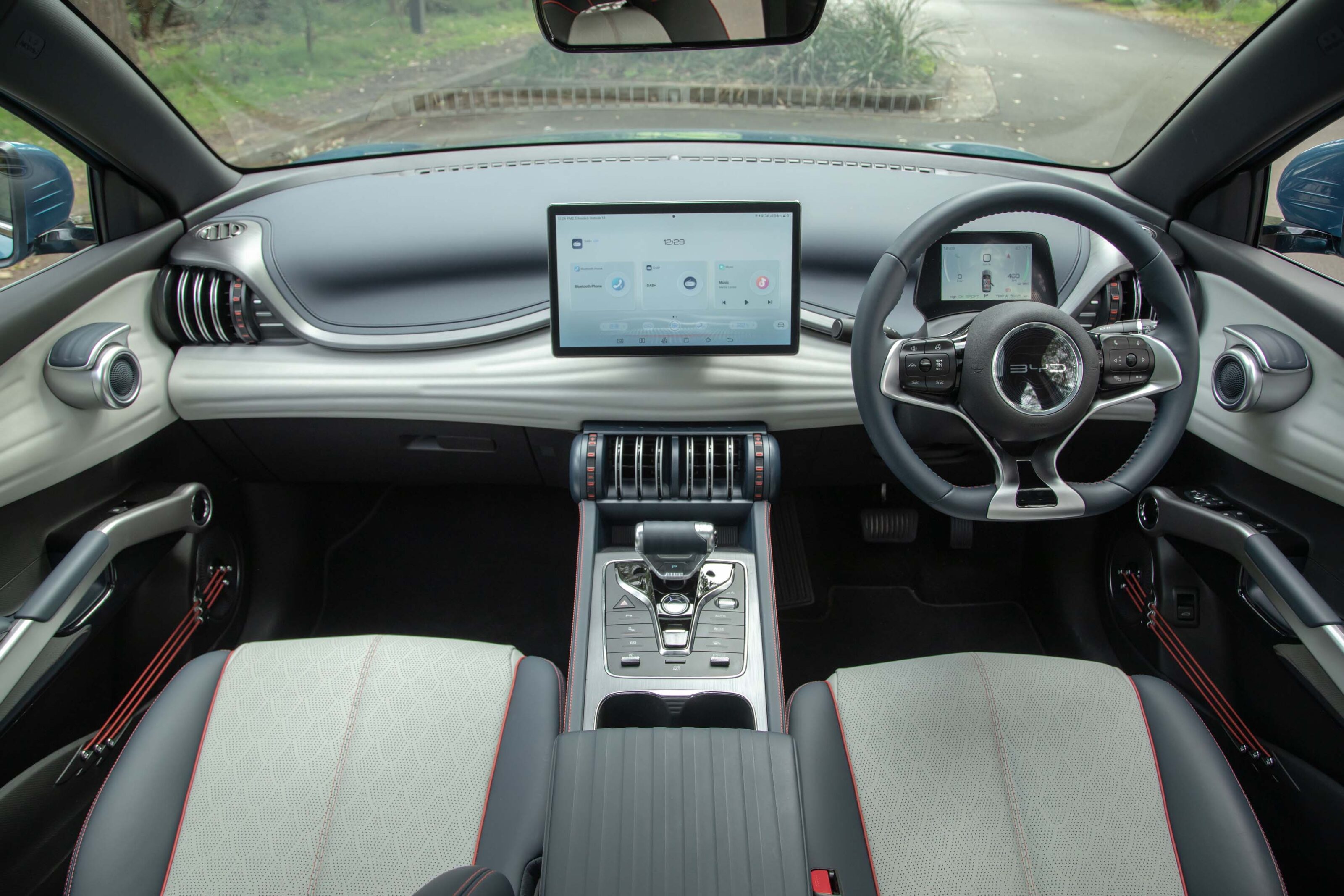
Each offers a long list of standard equipment with no notable omissions, although our Atto 3 test lacked Apple CarPlay or Android Auto. BYD says smartphone mirroring will be available later this year. Of course, the MG ZS EV offers both.
But that aside, it’s the BYD Atto 3 that offers more standard equipment for the price and is the better deal on paper.
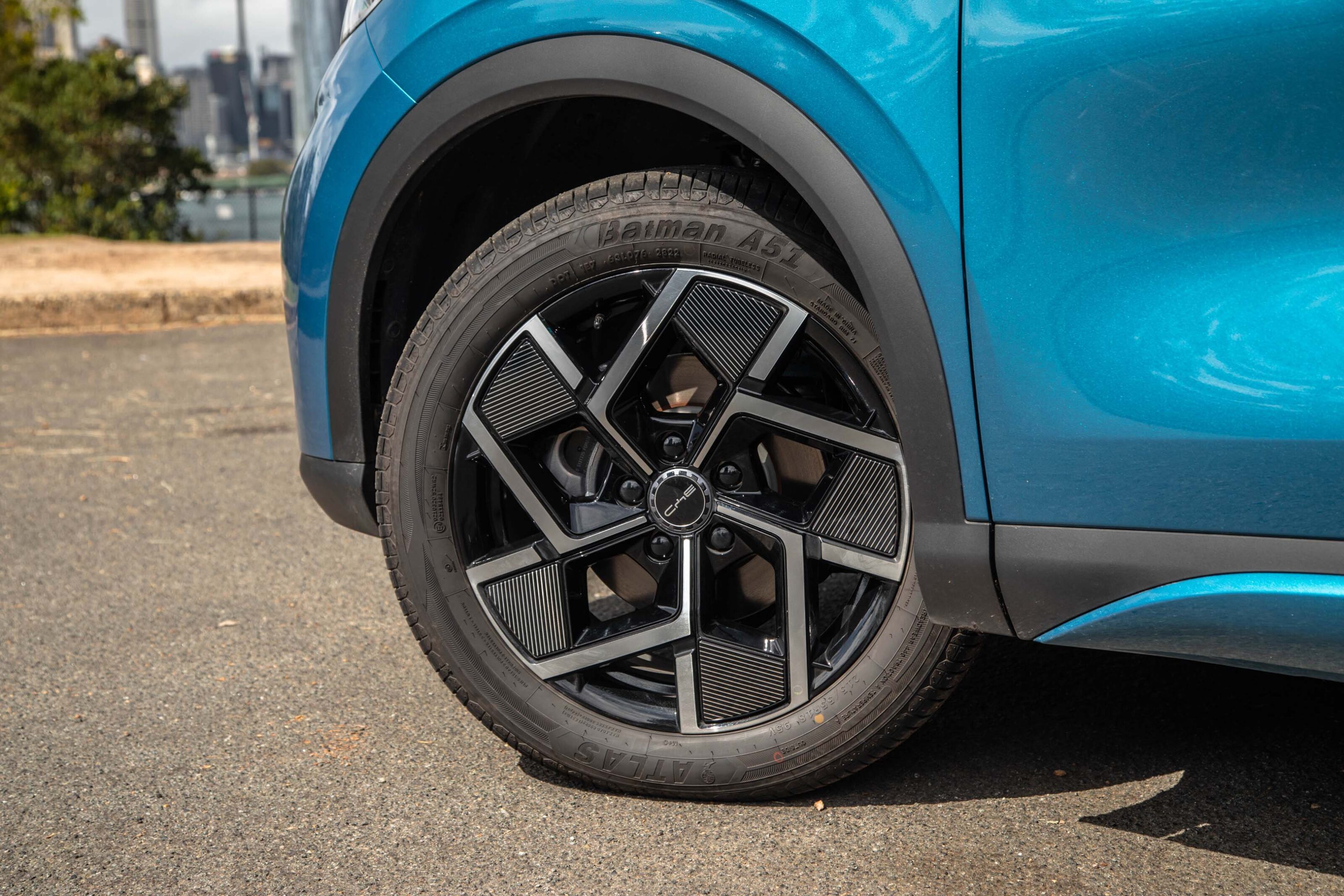
You can read our detailed features comparison here, but the BYD offers equipment that the MG Excite does not, including faux-leather interior trim (to the MG’s cloth); electric front seat adjustment; an electric opening/closing tailgate; massive sunroof; blind-spot monitoring and semi-autonomous cruise control. It also gets 18-inch wheels to the MG’s 17s.
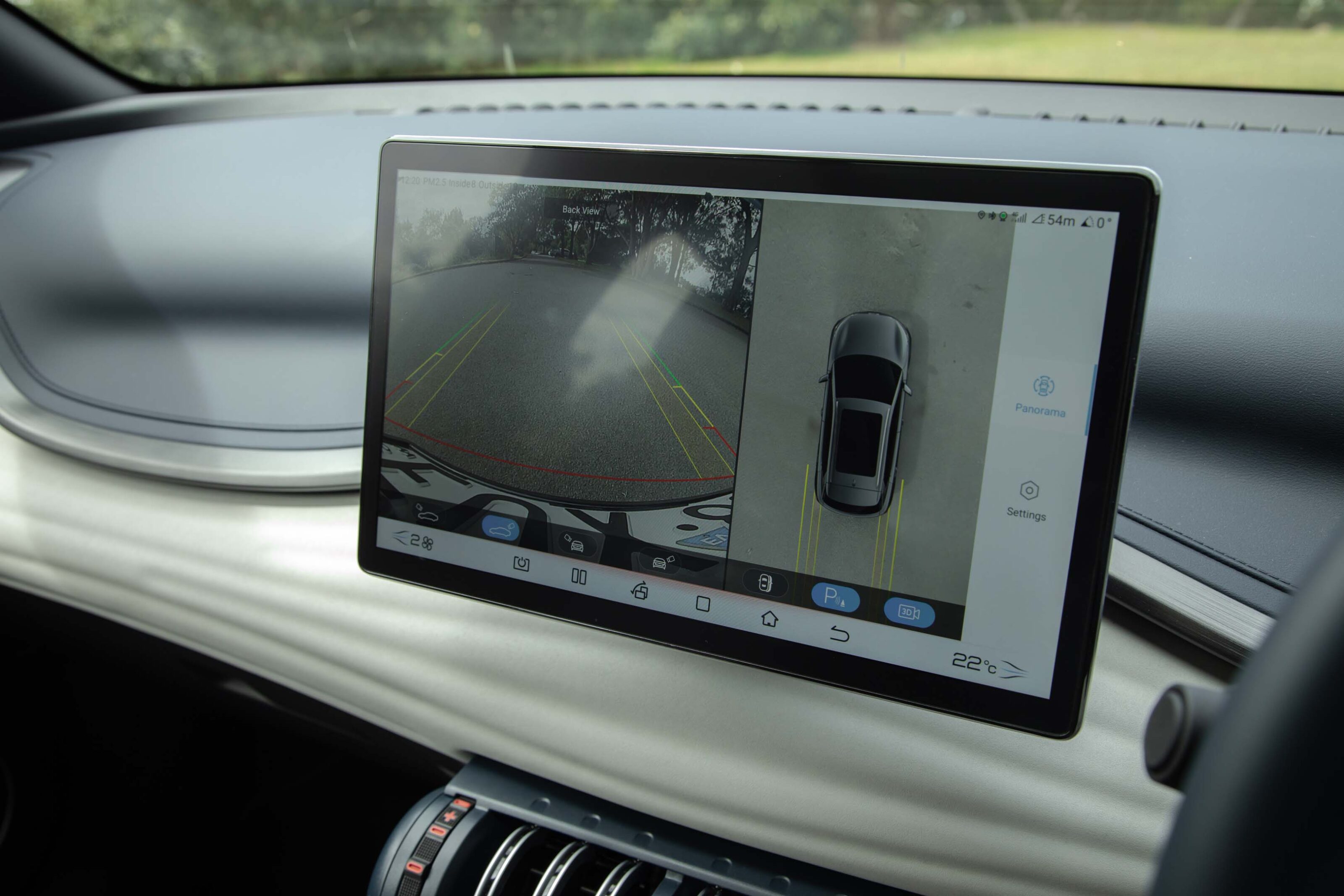
Both cars excel with four parking cameras each, but the BYD’s are displayed on the central screen in much better resolution.
They are also both crammed full of safety equipment, but the BYD has seven airbags to the MG’s six. The MG received a five-star ANCAP rating in 2019 but the BYD is yet to be crash-tested.
UPDATE, November 21: Following a resolution on a critical child-seat tethering issue, the Atto 3 now has a five-star ANCAP rating. Read about it here. |
BYD goes further with an in-built dashcam. Both vehicles support V2L (vehicle-to-load), which means that using an included adaptor, you can plug in and power 240V appliances using the car’s battery. Very cool.
The Atto 3 is only available in four colours – red, blue, grey or white. The white is standard, but the blue, red or grey is $700 extra. You can only get red on the Extended Range variant. And only one interior trim is available, which is a slightly daring/gaudy blue and grey (possibly not to everybody’s taste).
Standard paintwork on the MG ZS is white or black. For $700, you can have yours in blue, red or silver metallic.
With eight speakers versus the MG’s four, the BYD has the better audio system both on paper and in practice.
Best Electric Cars Under $65k: Affordable EVs Rated
Welcome to part one of three price-based EV buying guides, this one focused on the most affordable electric cars available in Australia today
A little more MG for a little more moolah
It’s worth mentioning that while this ZS EV Excite was the car we could get our hands on at short notice, another $4000 will get you the higher-grade ZS EV Essence.
Its $48,990 drive-away price is close to the BYD Atto 3 Extended Range’s $47,381 (before on-road costs), and helps the MG match the BYD for front seat heaters, panoramic sunroof, electric folding side mirrors, blind-spot monitors, rain-sensing wipers, wireless phone charging, synthetic leather trim and an electrically adjustable driver’s seat.
However, the BYD remains the better deal with its larger 18-inch wheels, electric opening/closing tailgate and superior, more advanced semi-autonomous cruise control. The BYD’s audio system also has eight speakers to the ZS EV Essence’s six.
Comfort and space
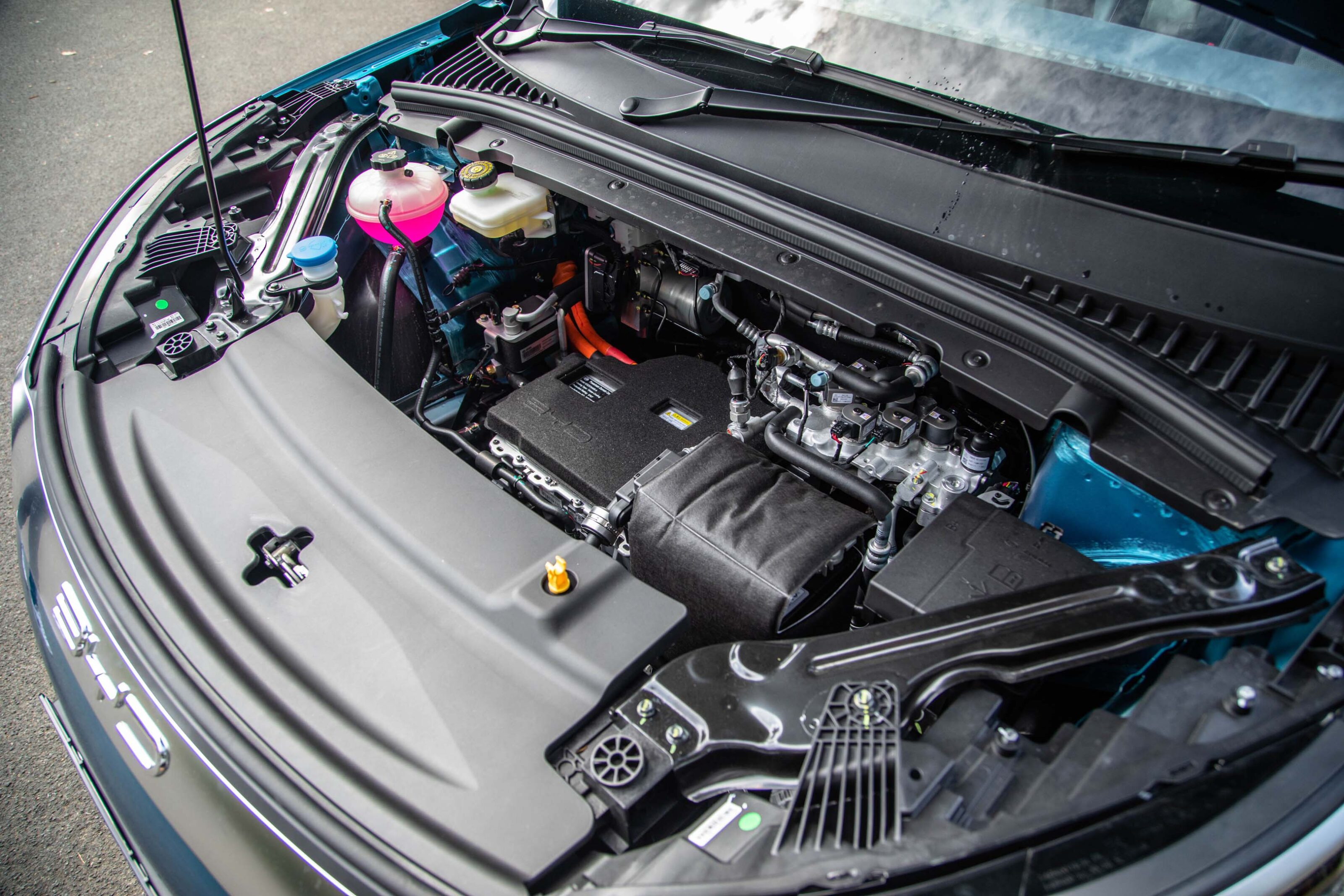
Both cars offer plenty of space, but get inside and the BYD feels roomier thanks to larger dimensions and its 135mm-longer wheelbase.
The Atto 3’s interior is airier and more light-filled, due in part to its large (standard) sunroof.
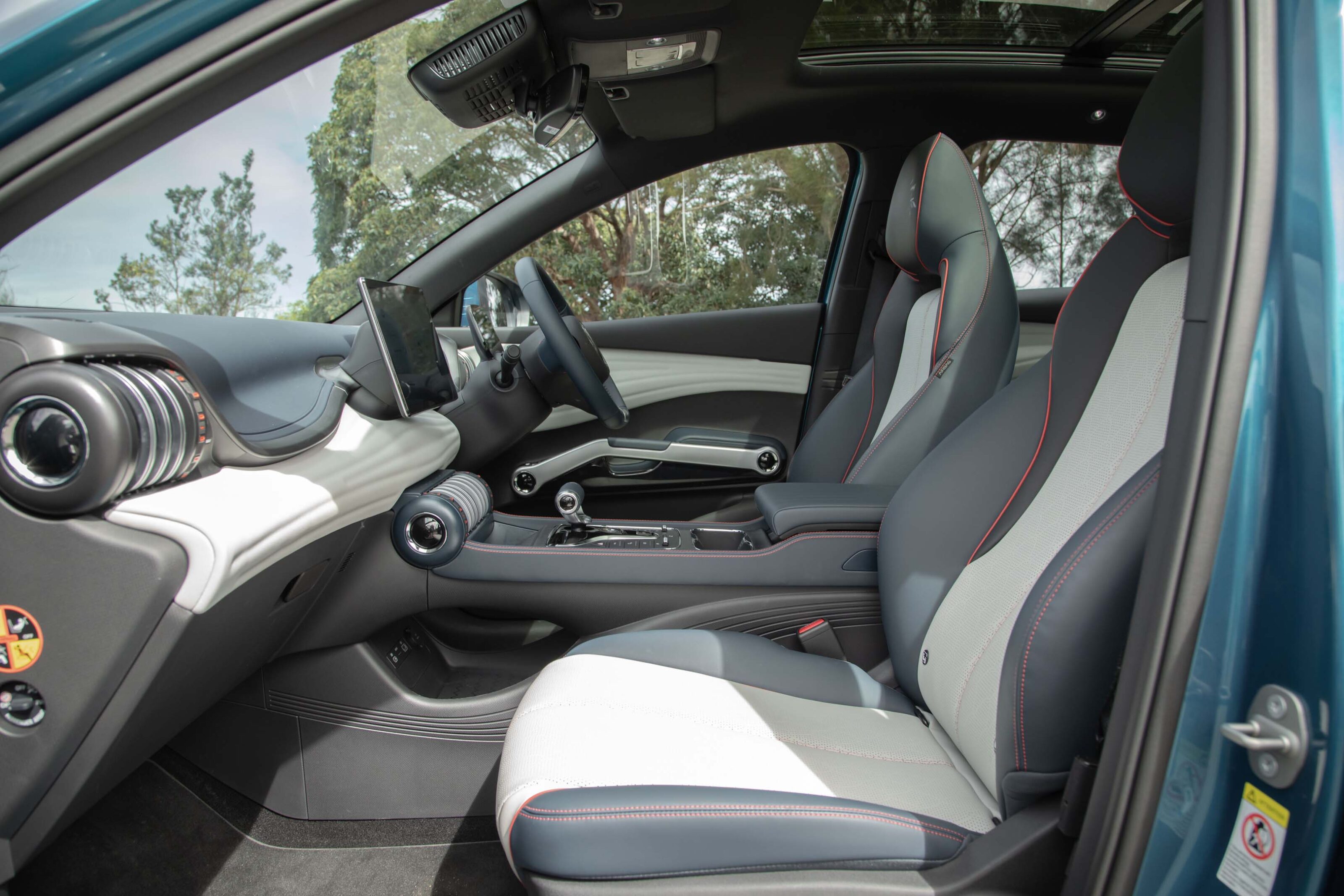
While its exterior styling is somewhat conventional, the eccentrically-styled interior is unlike any other car on the market and a veritable salad of concepts and ideas.
Quirks include styling supposedly informed by ‘gym culture’ with a shift lever inspired by a dumbbell; a centre 12.8-inch infotainment display that swivels electrically between portrait and landscape modes (sort of pointlessly, we might add).
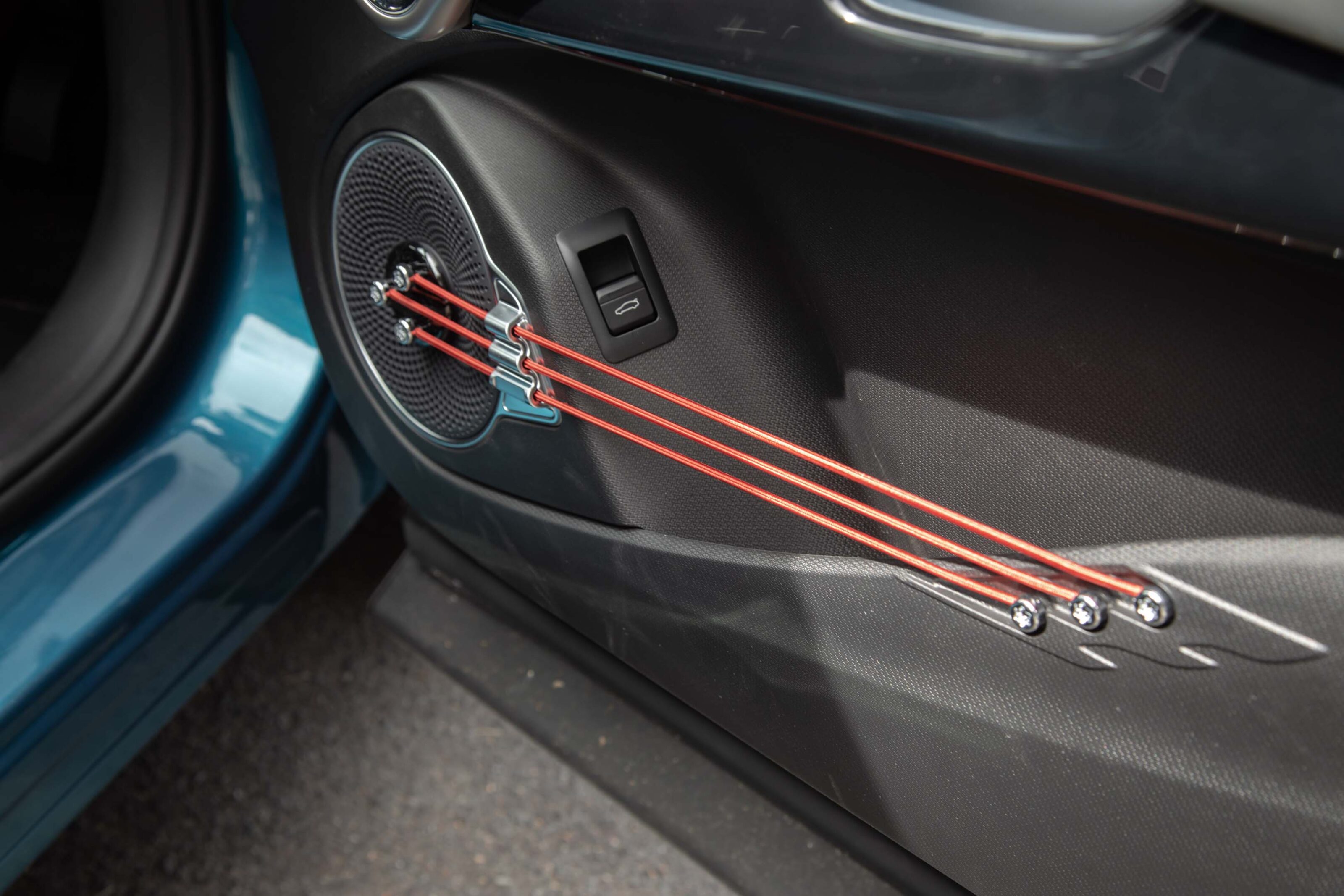
There’s a small 5.0-inch digital instrument display behind the steering wheel that reminds us of a motorbike; then there are very unusual interior door handles and, helping retain items in the lower door bins, strings of elastic drawn tautly so they can be played like a guitar. They’re on the back doors too but for readers with small children there’s good news: it appears with some basic tools they can be easily removed.
Although the BYD interior bristles with novelty, everything works. The BYD’s cabin is nicely finished in leather-like materials and, overall, is a pleasant place to sit.
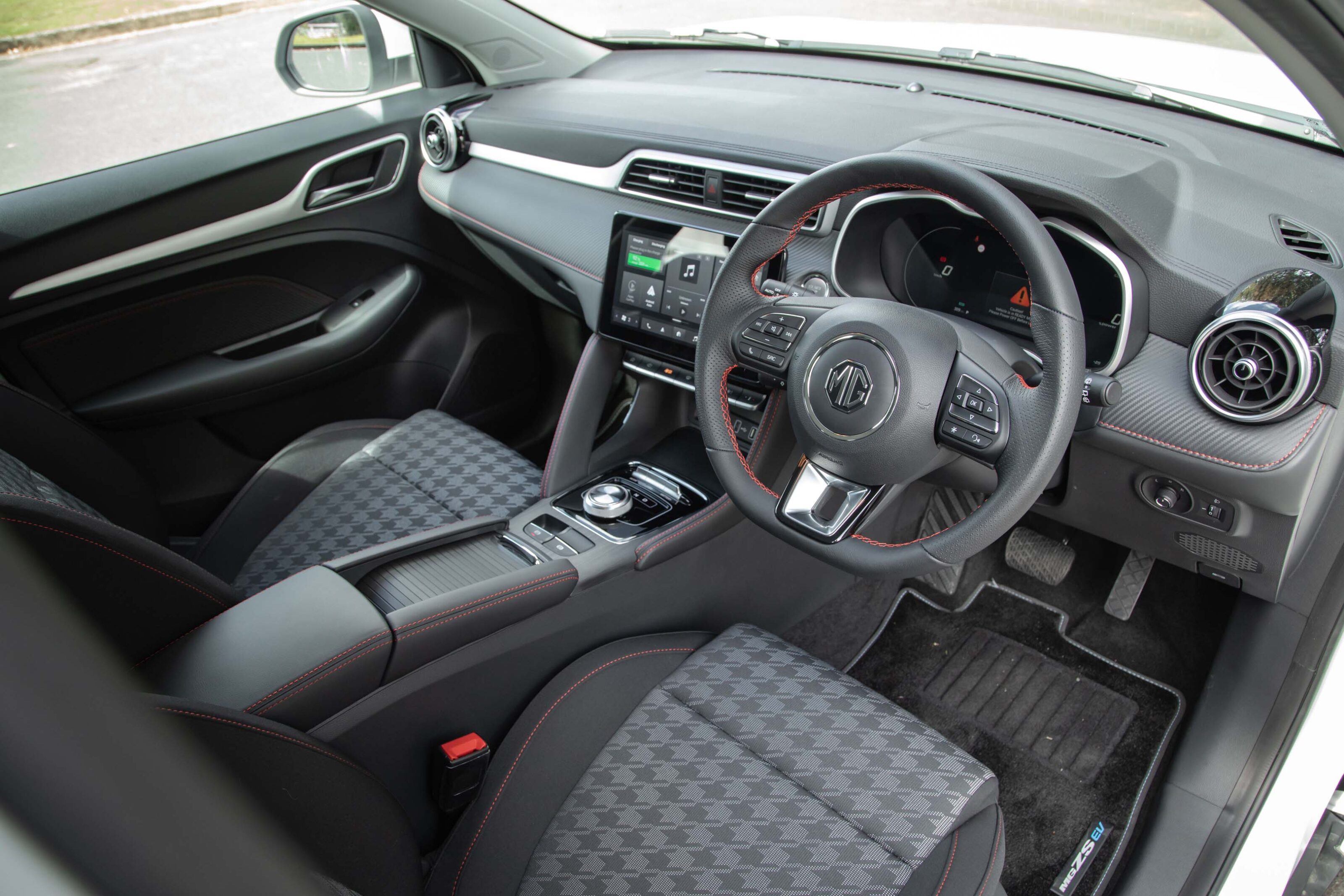
By comparison, the MG interior is smaller, feels more conventional and is easier to familiarise yourself with quickly. The car also feels narrower and taller than the BYD.
Many will like that they can just plug in their phone and up pops Apple CarPlay or Android Auto nice and clearly, large and fuss-free on the central 10.1-inch touchscreen. The MG also gets extra points for its generous door bins that easily accommodate a 1.5-litre bottle.
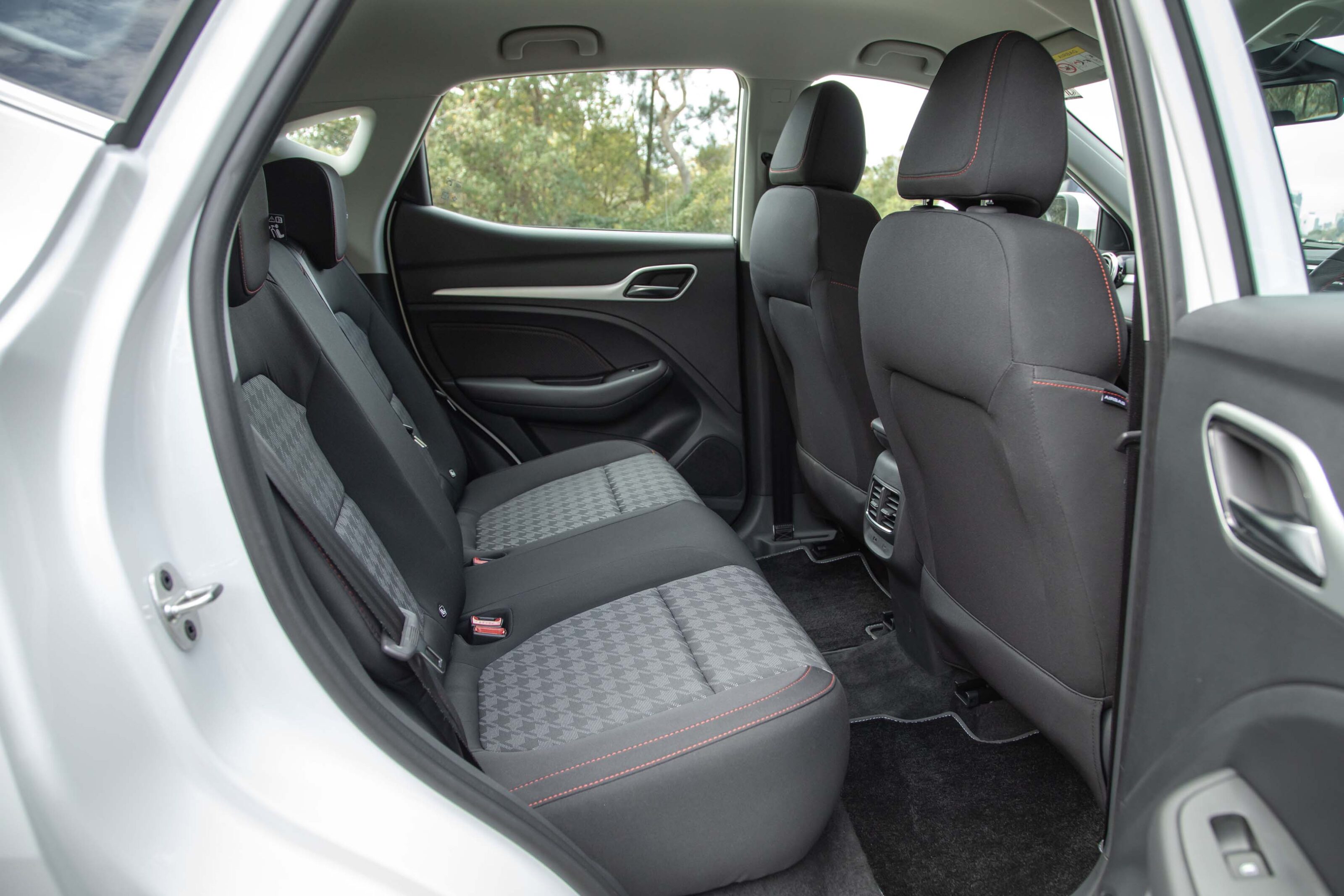
By comparison, the MG interior is smaller, feels more conventional and is easier to familiarise yourself with quickly. The car also feels narrower and taller than the BYD.
Elsewhere the finishes are pleasant – it feels like an imitation Volkswagen Golf interior – but not as nice as the BYD. This tester also disliked the seats; you felt like you sit ‘on’ the bottom bolsters, instead of ‘in’ them. And the lack of steering wheel reach adjustment made it trickier to get comfortable compared to the BYD.
There’s also a large passenger-side rear blind spot that affects confidence during lane-changing in heavy traffic – and, unlike the BYD, our MG test car had no blind-spot monitoring.
Both touchscreen infotainment systems were responsive and easy to use, but we preferred the Apple iOS-inspired software of the BYD. Both cars put some of the air-conditioning controls within a menu on the touchscreen, which is a bit annoying.
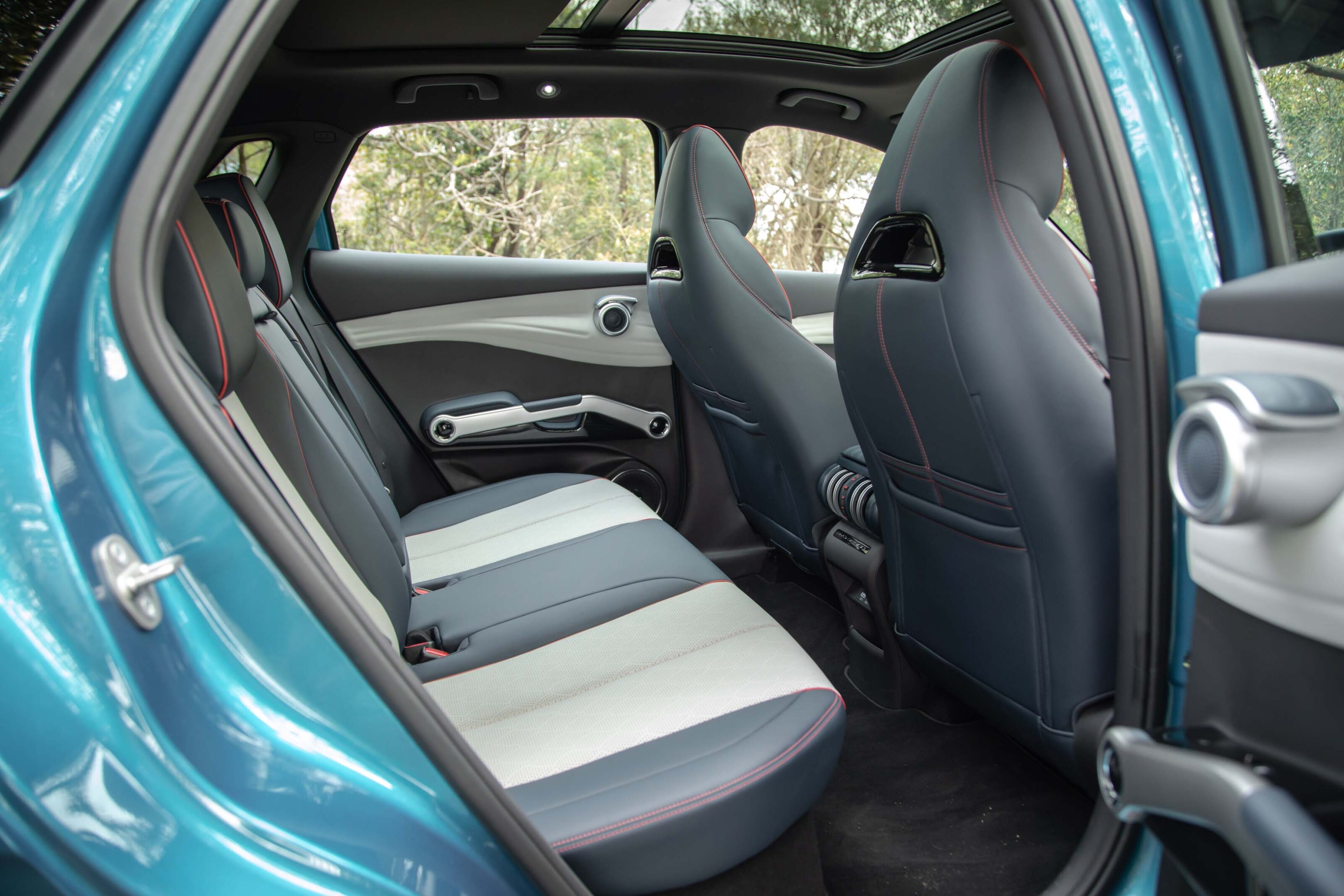
The BYD is much kinder to rear seat occupants. The MG has plenty of knee and foot space for adult rear-seat passengers, but the BYD takes it a step further. Rear-seat passengers in the MG get two central AC vents as well as USB-A and USB-C outlets, but unlike the BYD miss out on a centre armrest with cup holders and rear reading lights.
You also get map pockets in the back of the BYD’s front seats (the MG has none). The BYD feels roomier in the back thanks to the giant sunroof and fully flat floor, where the MG has a little transmission tunnel. Overall, the BYD’s rear seat is just better.
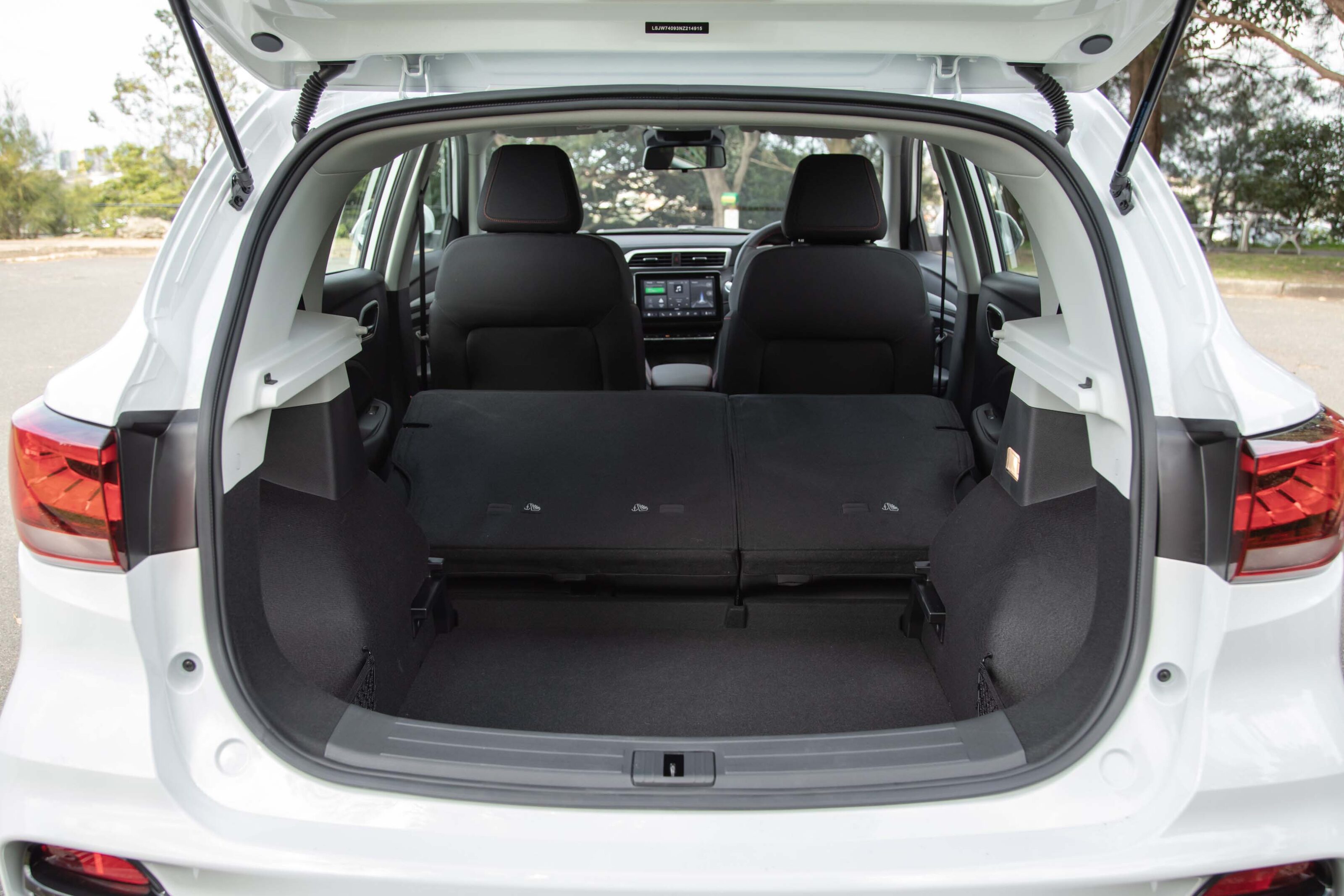
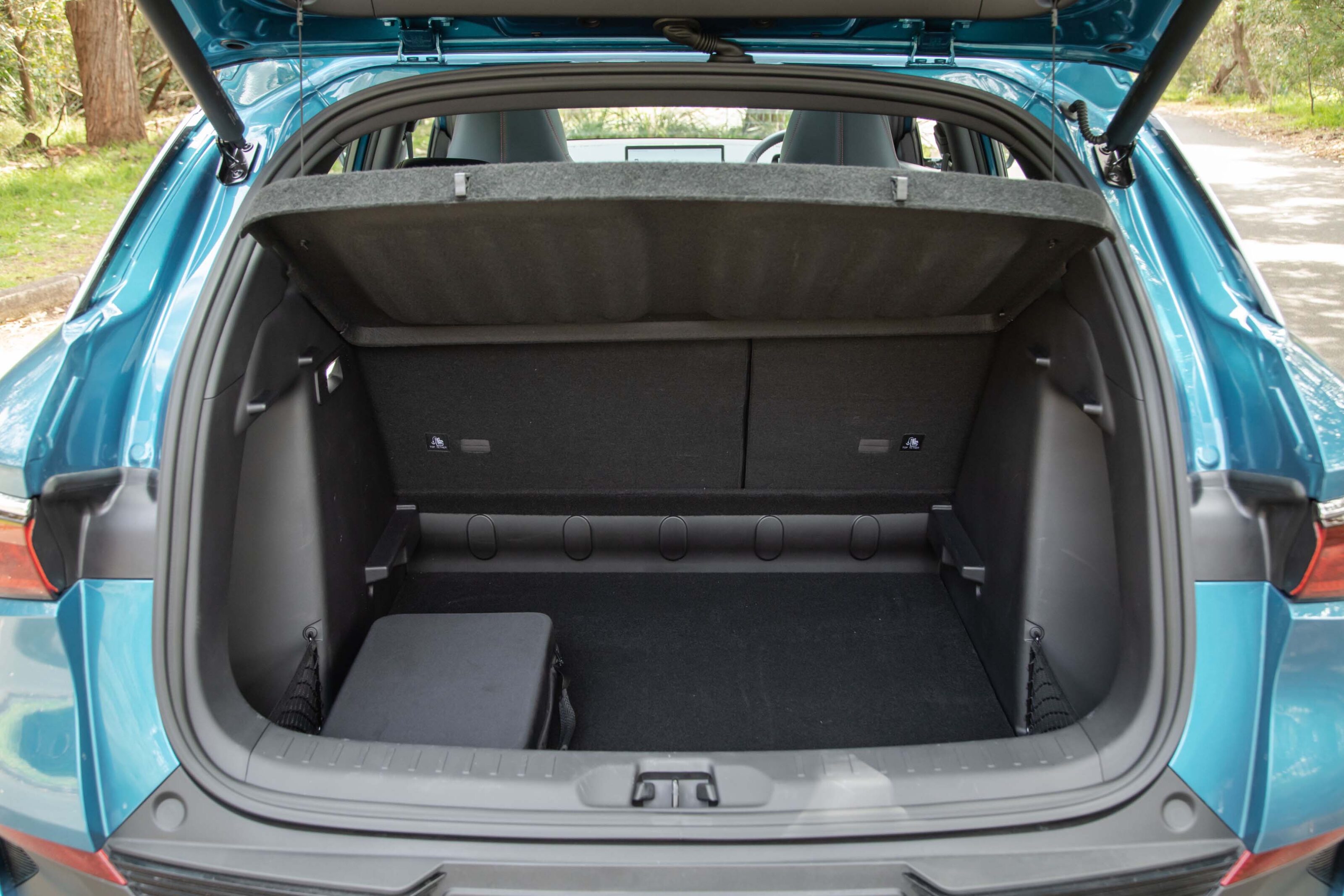
Of these two EVs, the MG has the better boot. On paper, the BYD’s is bigger at 440 litres, versus the MG’s 359 litres.
In practice, the MG’s boot, with its slightly lower floor, could hold more gear more easily.
BYD claws back points for its (standard) electric opening/closing tailgate and once you’ve had one of these on your car, it’s hard to go back to an old ‘manual’ set-up with gas struts as you’ll find on the MG ZS.
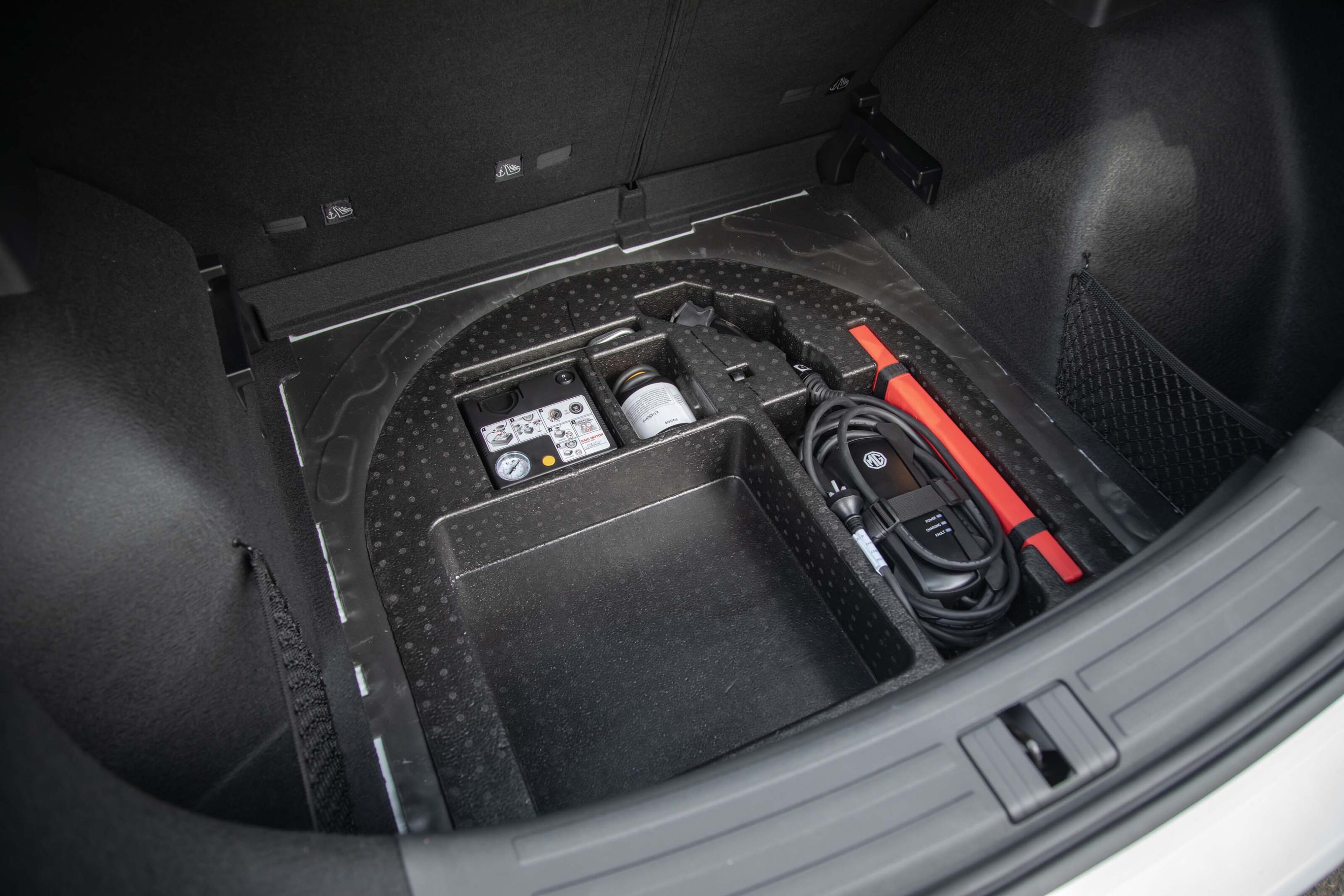
Neither car offers a front boot under the bonnet. Both have ‘cans of goo’ puncture repair kits instead of space-saver or full-size spare wheels.
Both the MG and BYD have ISOFIX child seat anchors in the outer rear seats.
On the road
In almost every situation, the BYD Atto 3 is much nicer to drive than the MG ZS EV.
The ride quality is more comfortable, it’s quieter and feels more stable at higher speeds.
Pushing their dashboard-mounted ‘on’ buttons, both cars start silently or with an audible bong or chime, and after selecting ‘D’ move away smoothly and quietly as we’ve come to like from electric motoring.
Both cars are very easy to drive, with light steering – but the MG has the tighter turning circle, making three-point turns and car park dawdling breezier.
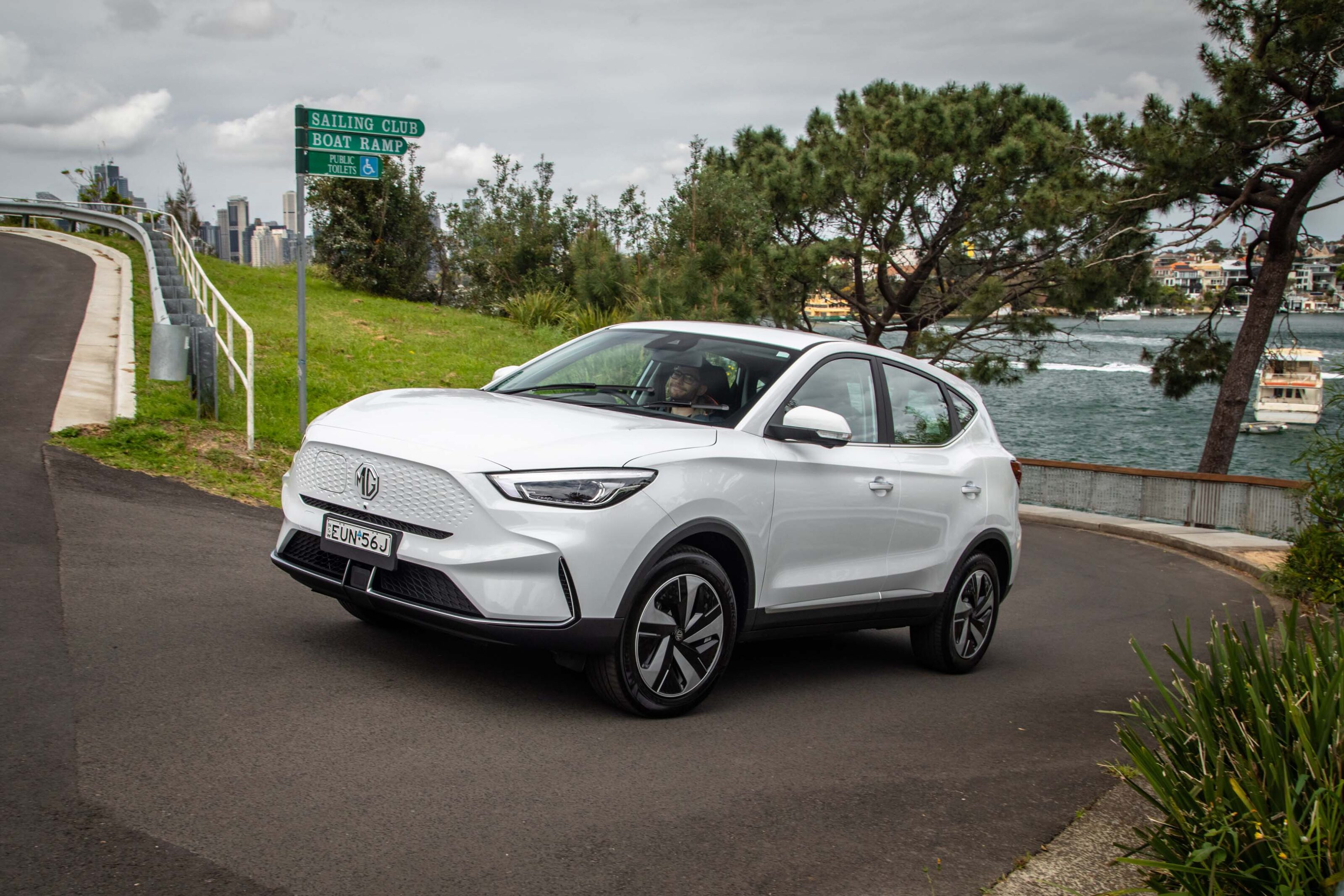
The controls in both cars are pleasant, but the BYD’s feel a bit nicer, better engineered and more modern.
Slightly more mechanical noise emanates from the MG’s electric motor under acceleration and regeneration, and you can hear the suspension more than in the BYD.
Up to 25km/h, the BYD uses an external speaker to warn pedestrians with a loud drone that this tester found a bit odd, like holding down all the wrong keys on a piano at once. You get used to it, but it can’t be turned off.
Both cars are fun in the way electric cars are, offering near-silent, brisk acceleration thanks to the instant torque of their electric motors. The BYD, being heavy and soft, squats noticeably under acceleration, unweighting the front tyres and causing easy front wheelspin, triggering the traction control – which is sort of fun.
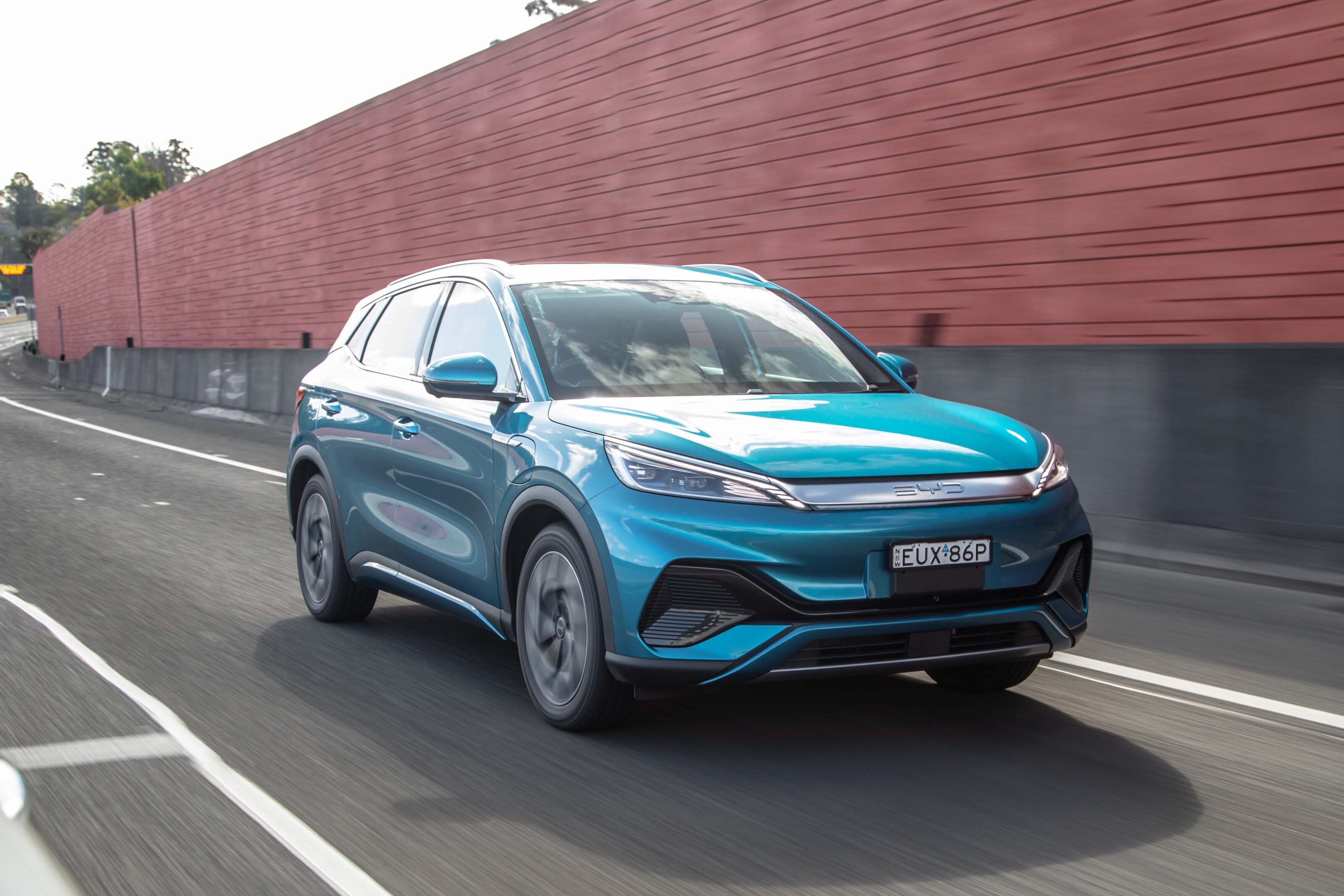
Both cars are fun in the way electric cars are, offering near-silent, brisk acceleration thanks to the instant torque of their electric motors
It would have actual traction issues in the wet, especially, we guess, on the standard 215/55 R18 Atlas Batman A51 tyres which aren’t great even in the dry. We’ve never heard of this brand and would replace them as quickly as possible.
The MG also spins up the front wheels in the dry – and both cars build speed gradually rather than explosively. There’s just enough power to punch into gaps in traffic or get the jump on a boofhead in a dual-cab ute at the lights.
With a 150kW/310Nm motor and 1750kg kerb weight, the BYD has a power-to-weight ratio of 86kW/tonne, versus the MG’s 83kW/tonne. The 130kW/280Nm motor of the ZS only has to shift 1570kg – quite light for an electric car.
BYD claims the Atto 3 can do 0-100km/h in 7.3 seconds to the MG’s claimed 8.6 seconds. Until we do our own testing, the BYD’s claim seems a bit optimistic.
Neither will wow you on a winding road either, but the BYD comes closer than the MG. The weight is relatively low in the car, but it’s still heavy, softly sprung and quickly ‘folds over’ its outside front tyres during hard cornering.
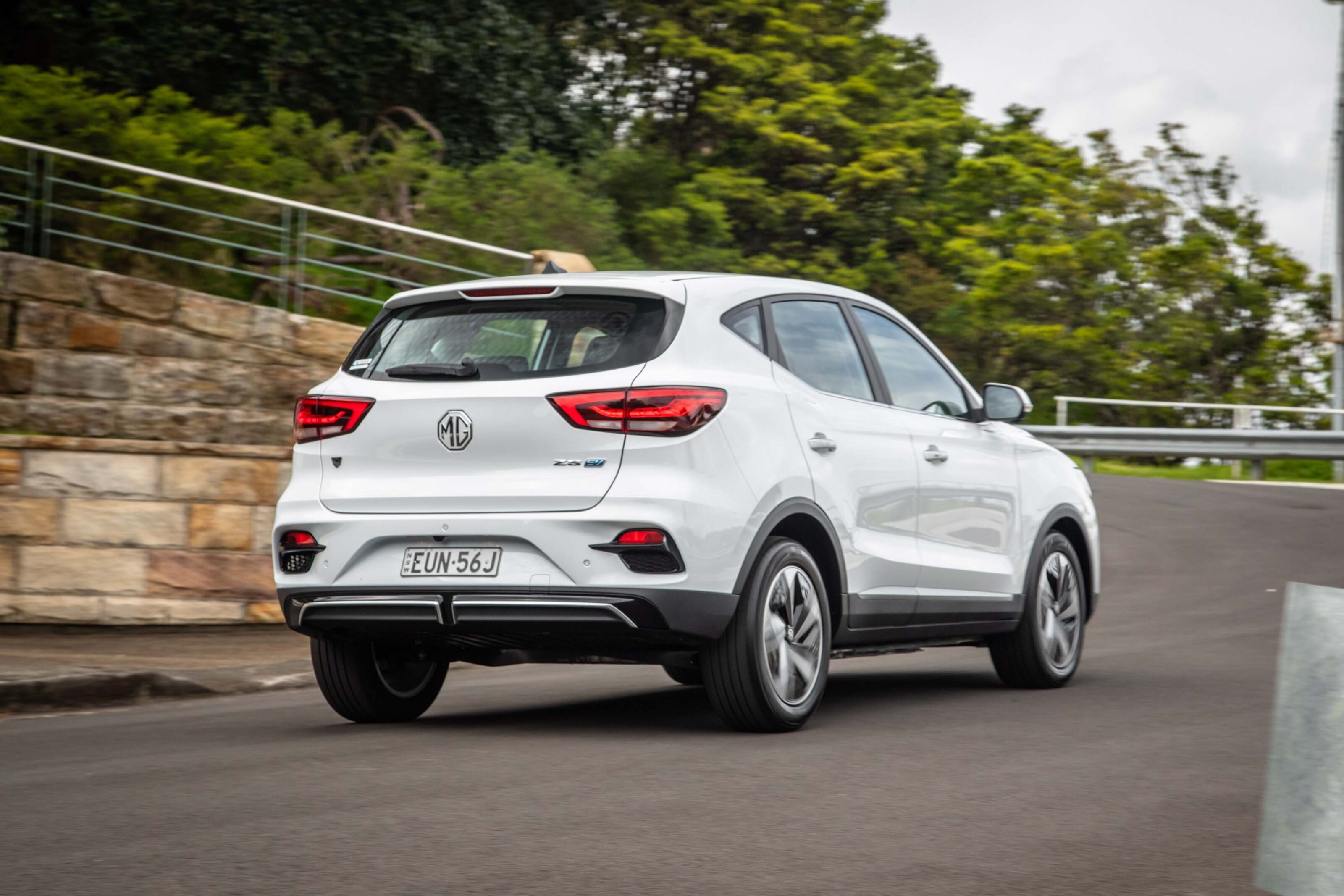
The MG ZS uses much better standard Michelin Primacy 3ST tyres in 215/55 R17 format but is even further from any semblance of sportiness owing partly to its simpler Torsion beam rear suspension set-up versus the BYD’s more modern independent arrangement. The MG’s suspension also feels less advanced, with a tendency to pogo over some bumps.
Surprisingly, neither car offers a ‘one-pedal’ driving feel sought after by many EV owners (where braking recuperation can be wound up so strong you only need to ease off the accelerator to slow down). Both cars, however, offer varying levels of recuperation – the MG has three and the BYD two. Neither car has steering wheel paddles to adjust said levels, using console buttons instead.
While the MG has radar cruise control, the BYD offers next-generation semi-autonomous cruise that can steer itself down the freeway for a short period with no hands on the steering wheel (before it bongs at you to put your hands back on).
Ownership
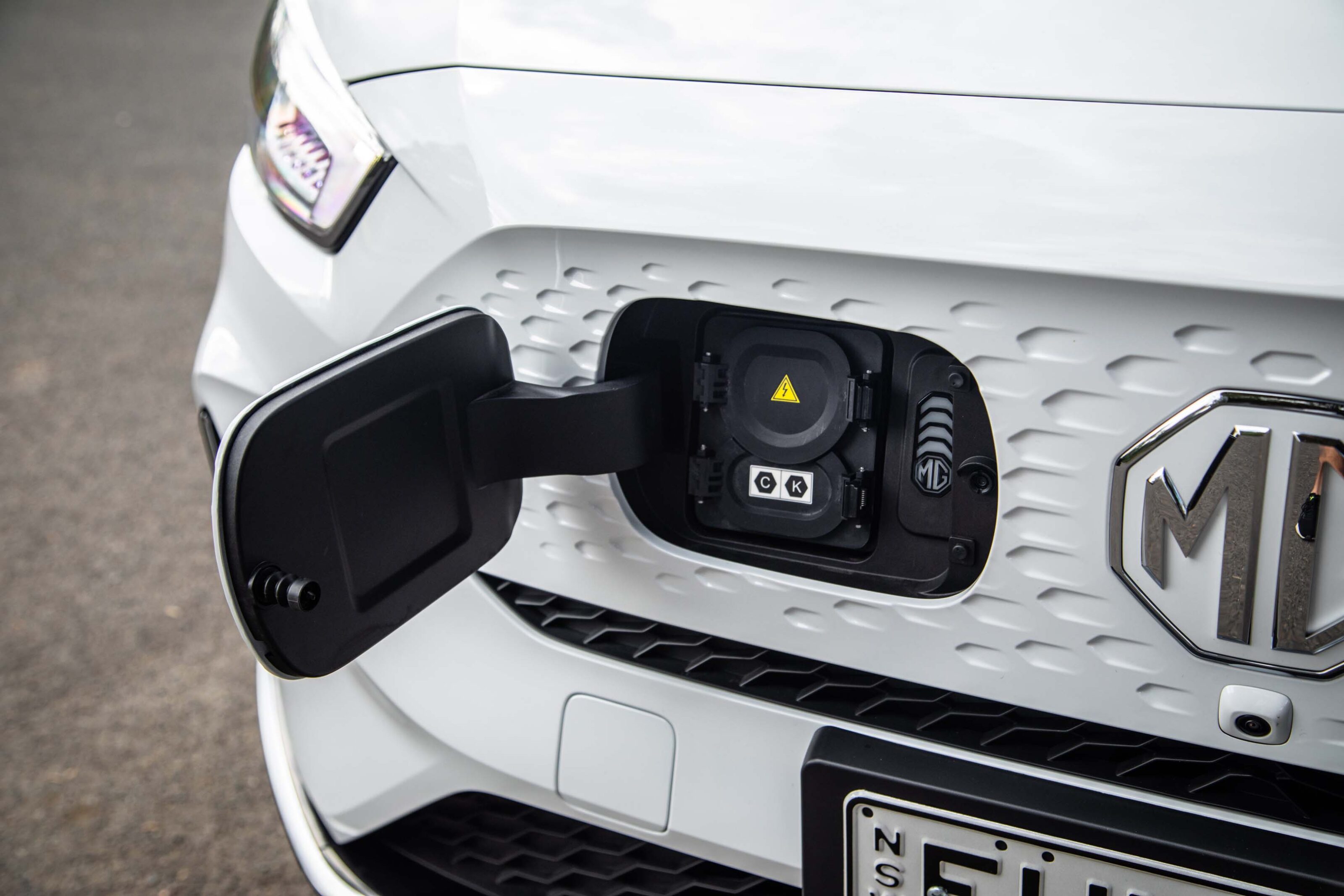
The BYD claims a range advantage over the MG ZS but takes longer to recharge. Both cars use the common Type 2/CCS2 charge port.
BYD claims 345km for the 50kWh base Atto 3 and 420km for the 60kWh Extended Range version, which costs $3000 more.
When we first jumped in, our Extended Range test car was displaying 98 per cent battery and 474km of available range. The BYD’s maximum at-home AC charge rate is 7kW, replenishing the battery in 8.5 hours.
For the ZS EV with its smaller battery, MG claims a 320km range and, thanks to a higher 11kW maximum at-home AC charge rate, can go from zero to 100 per cent in just five hours when hooked up to the right kind of equipment.
Our test car initially displayed 97 per cent battery and 337km of range. Obviously, the range goes down much more quickly if you hoon around in either car.
The BYD supports up to 70kW DC fast charging in Standard Range guise or 80kW in Extended Range – which can top the battery to 100 per cent in just 50 minutes. The MG can take up to 50kW DC and get to 80 per cent charge in 54 minutes.
Build quality on the MG and BYD seemed good, although go looking and you can find things that look ‘hand made’ like the uneven row of HVAC buttons in the MG’s centre stack; or how some of the trim on the cushions of the BYD’s split-fold rear seat don’t quite line up.
The MG has the better warranty at seven years and unlimited kilometres for both battery and vehicle.
BYD’s warranty is currently the subject of some controversy. Initially announced as seven years and unlimited kilometres, it was revised to six years or 150,000km for the car and eight years or 160,000km for the battery.
It gets worse: in the fine print, BYD controversially warrants certain items for shorter periods – for example, the charging cable is only covered for a year and the infotainment system, three years or 60,000km. Several owners cancelled their orders because of the change in warranty policy.
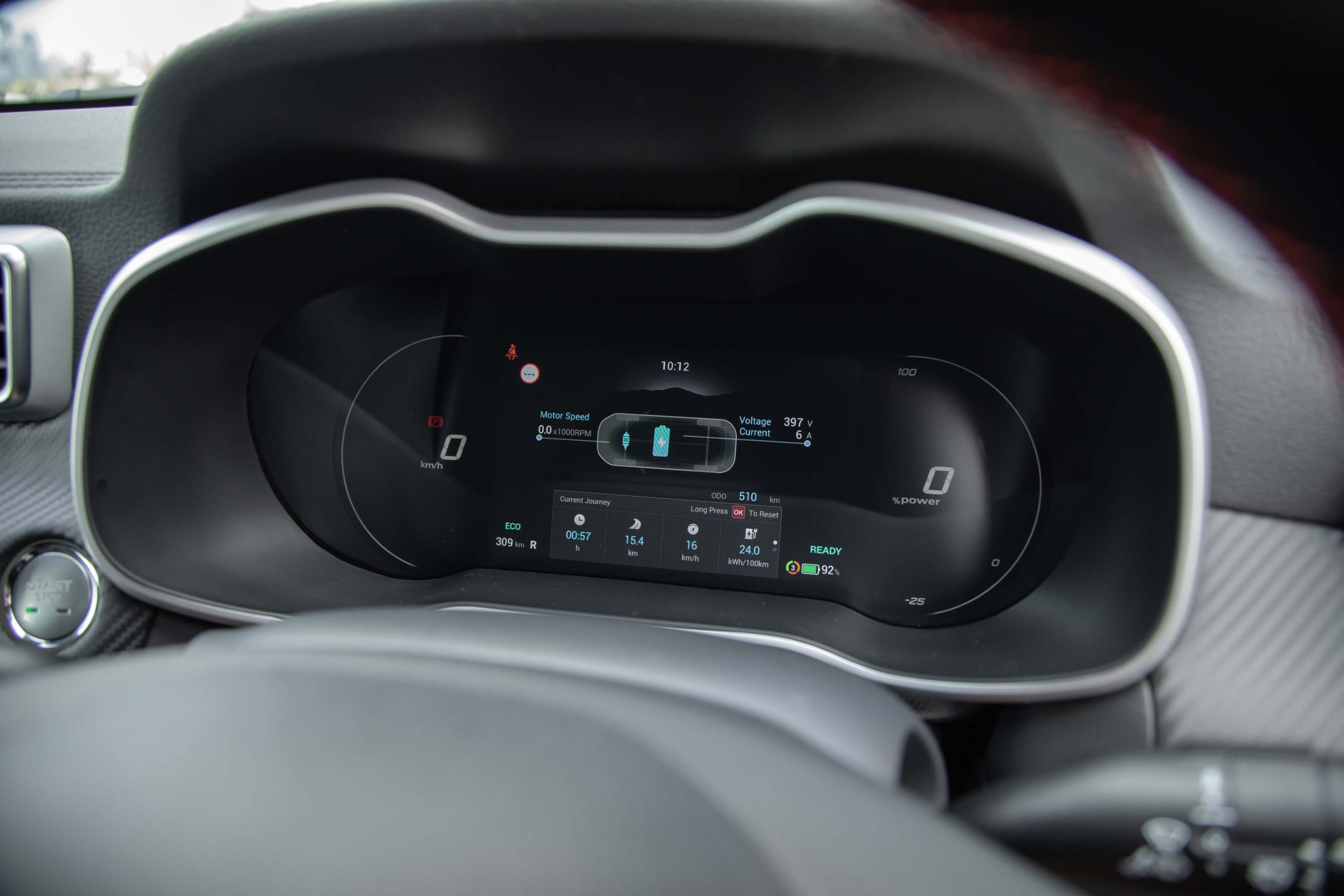
In terms of servicing costs, the MG also wins out over the BYD. It’s $268 per service for the first six years with two-year/24,000km intervals.
For the first five years of ownership, BYD offers capped price annual servicing at $189 each visit, provided the vehicle doesn’t go over 60,000km during that period.
Otherwise, service intervals are every 12 months or 20,000km, with the Atto 3 costing $2390 to service over eight years. In the same period, it would cost $1611 to service the ZS EV at today’s prices.
VERDICT
To drive, and for standard equipment, the BYD Atto 3 is superior to the MG ZS EV. It feels a generation newer, is much nicer to drive and it clearly was engineered from the ground up to be an electric vehicle.
A likeable simplicity permeates the MG but by comparison to the BYD, it feels like an old car that’s been retrofitted with a battery and electric motor, garnished by some interior digital displays.
The BYD’s unusual interior styling might be a deal-breaker for some, who will relish the conventional and familiar cabin styling of the MG. But most will at least get used to the BYDs quirks, and then find themselves in a surprisingly accomplished electric vehicle.
Another deal-breaker might be the wait. As of September 2022, the wait for a BYD Atto 3 was five to six months whereas if you were flexible on colour and happy to call around dealers hunting vehicles in stock, you could have a ZS EV – and be part of that electric vehicle revolution – in a matter of weeks, if not days.

BYD Atto 3: 7.5/10
Things we like
- Outstanding value
- Quirky interior vibe
- Drives surprisingly well
Not so much
- Brand still unproven
- Longer wait time
- Warranty uncertainty
MG ZS EV: 6.5/10
Things we like
- Also very cheap for an EV
- Better availability
- Quiet, smooth electric motoring
Not so much
- Handling nothing special
- Slightly basic interior
- Not as many goodies as BYD
BYD Atto 3 vs MG ZS EV specifications
| BYD Atto 3 Extended Range | MG ZS EV Excite | |
|---|---|---|
| Body: | 5-door, 5-seat small SUV | 5-door, 5-seat small SUV |
| Drive: | front-wheel | front-wheel |
| Battery: | 60.48kWh | 50.3kWh |
| Motor: | Permanent magnet synchronous | Permanent magnet synchronous |
| Power: | 150kW | 130kW |
| Torque: | 310Nm | 280Nm |
| L/W/H: | 4455/1875/1615mm | 4323/1809/1625mm |
| Wheelbase: | 2720mm | 2585mm |
| Weight: | 1750kg | 1570kg |
| 0-100km/h: | 7.3sec (claimed) | 8.2sec (claimed) |
| Range: | 420km (WLTP, claimed) | 320km (WLTP, claimed) |
| Max AC charge-rate: | 7kW (approx 8.5 hours from 0-100% charge) | 11kW (approx 5 hours 0-100% charge) |
| Max DC charge-rate: | 80kW (approx 45 minutes to 100% charge) | 50kW (54 minutes from 10-80% charge) |
| Plug type: | Type 2 / CCS 2 | Type 2 / CCS 2 |
| Boot size: | 440L | 359L |
| Suspension: | MacPherson strut (f), multi-link (r) | MacPherson strut (f), Torsion beam (r) |
| Brakes: | Ventilated disc (f), solid disc (r) | Ventilated disc (f), solid disc (r) |
| Tyres: | 215/55 Atlas Batman A51 | 215/55 Michelin Primacy 3ST |
| Wheels: | 18-inch alloy (puncture repair kit for spare) | 17-inch alloy (puncture repair kit for spare) |
| Price: | $47,381 before on-road costs | $44,990 drive-away |
“A work of art with exaggerated lines, inspired by the videogame universe”
Snapshot
- Renault debuts electric drift car concept
- 280kW, huge wing, 50u00ba steering angle
- A testbed for Renaultu2019s electric, digital future
Renault is celebrating 50 years of the 5 model this year using the 5 Diamant concept car to show off its electric future, and now this drift-inspired Renault 5 Turbo 3E.
The wild Renault 5 Turbo 3E carries on the lineage of the iconic, mid-engined Renault 5 Turbo and Turbo 2 (1980-1986).
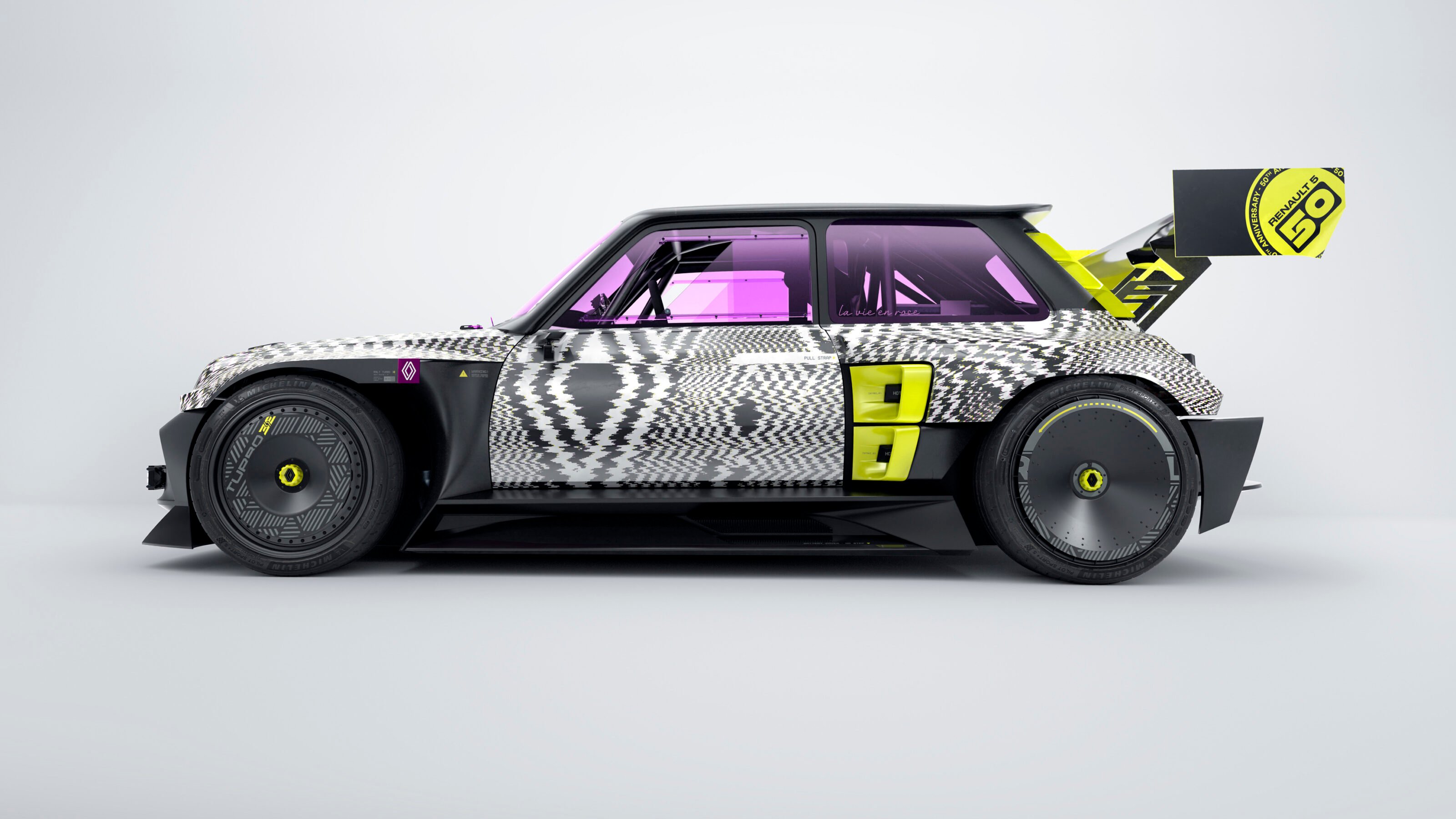
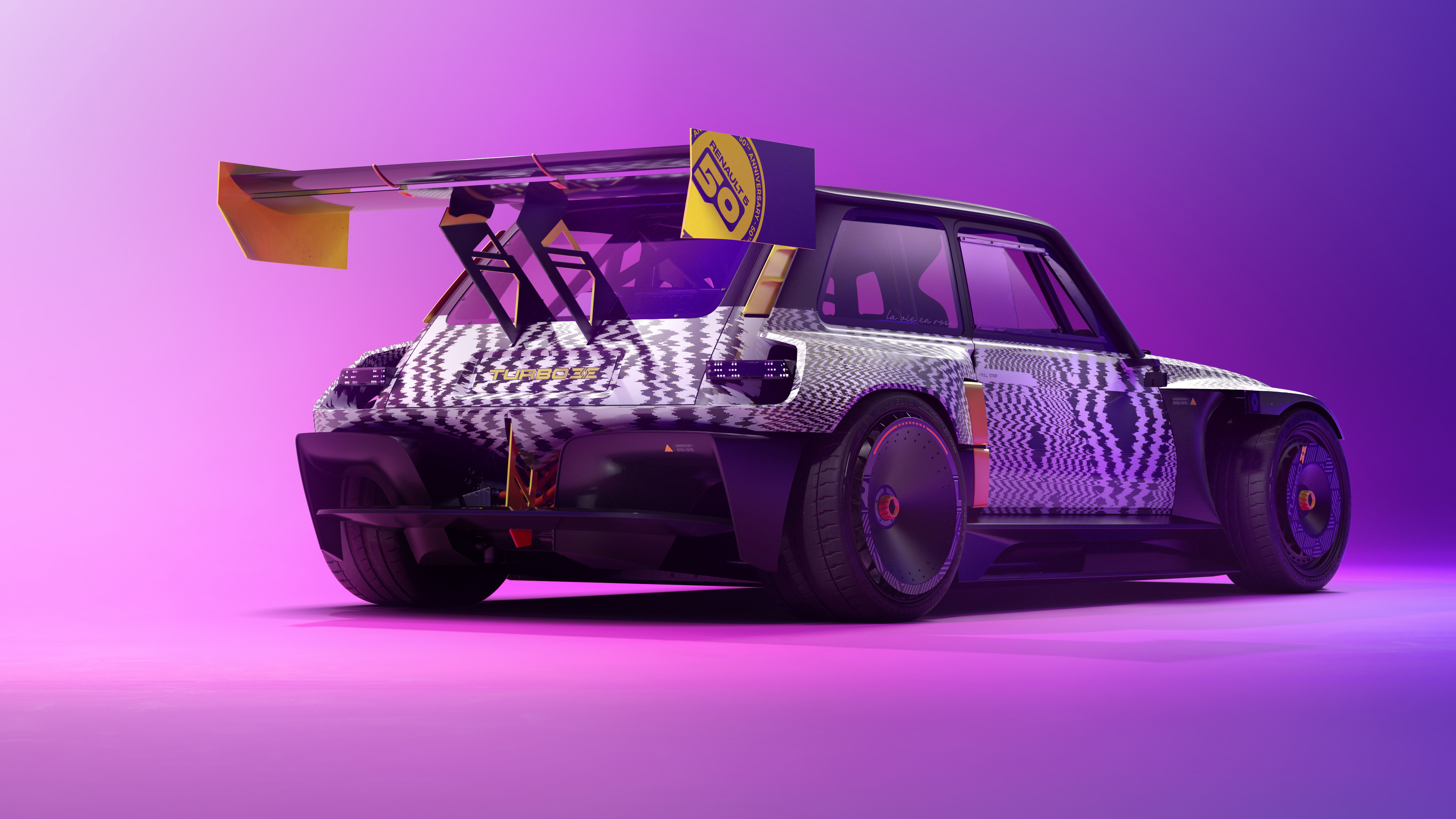
Renault’s Turbo 3E concept takes inspiration from those fierce mid-engined vehicles in rally trim with huge boxed flares, turbo-fan wheels, enormous rear wing and wide stance.
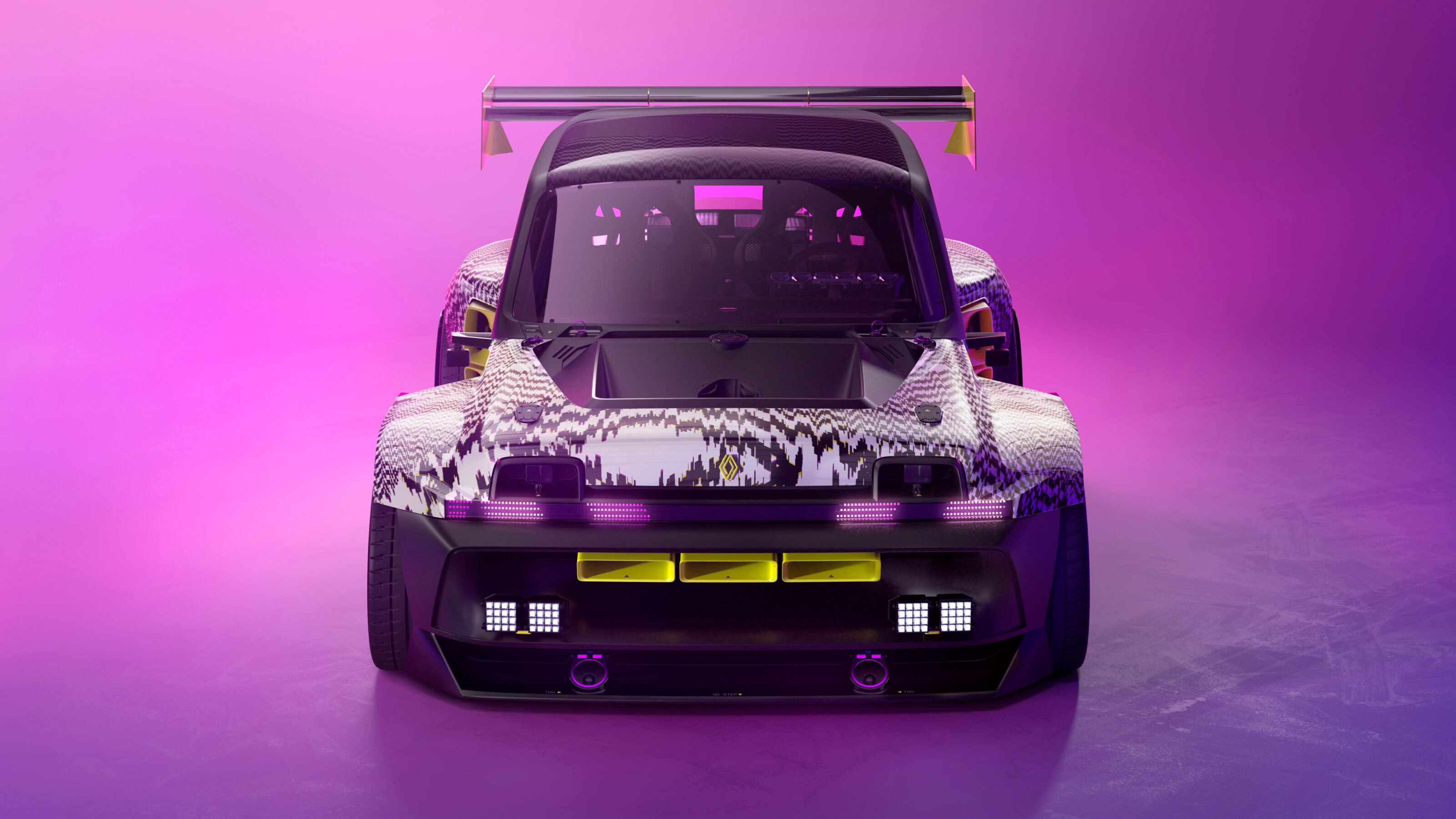
Unlike the originals, the Turbo 3E uses a pair of rear-mounted electric motors producing 280kW/700Nm – more than twice the ICE-powered Turbos.
So far we’ve just seen images, but Renault will show its new carbon-bodied plaything off to the public at Chantilly Arts and Elegance contest on September 25, followed by the Paris Motor Show starting October 17.
Despite Renault’s push for Alpine to become the new performance arm (rather than Renault Sport), this motorsports-inspired concept wears the Renault diamond for now.
What does the concept tell us about ‘new Renault’?
It’s certainly a pivot for Renault, the French brand known as a front-wheel-drive brand with little drift history – although that never stopped tarmac superstar Jean Ragnotti having a crack with the handbrake.
Under the skin, the R5 Turbo 3E rocks a tubular spaceframe chassis, FIA-approved roll cage and twin rear-mounted motors. It won’t have much to do with a future production car.
Instead this concept car is likely a showpiece for Renault’s next generation of styling and motor design. The rear-mounted power unit makes ‘only’ 280kW of power, but with 700Nm of instantly-accessible torque the claimed 0-100km/h sprint is a brisk 3.5 seconds.
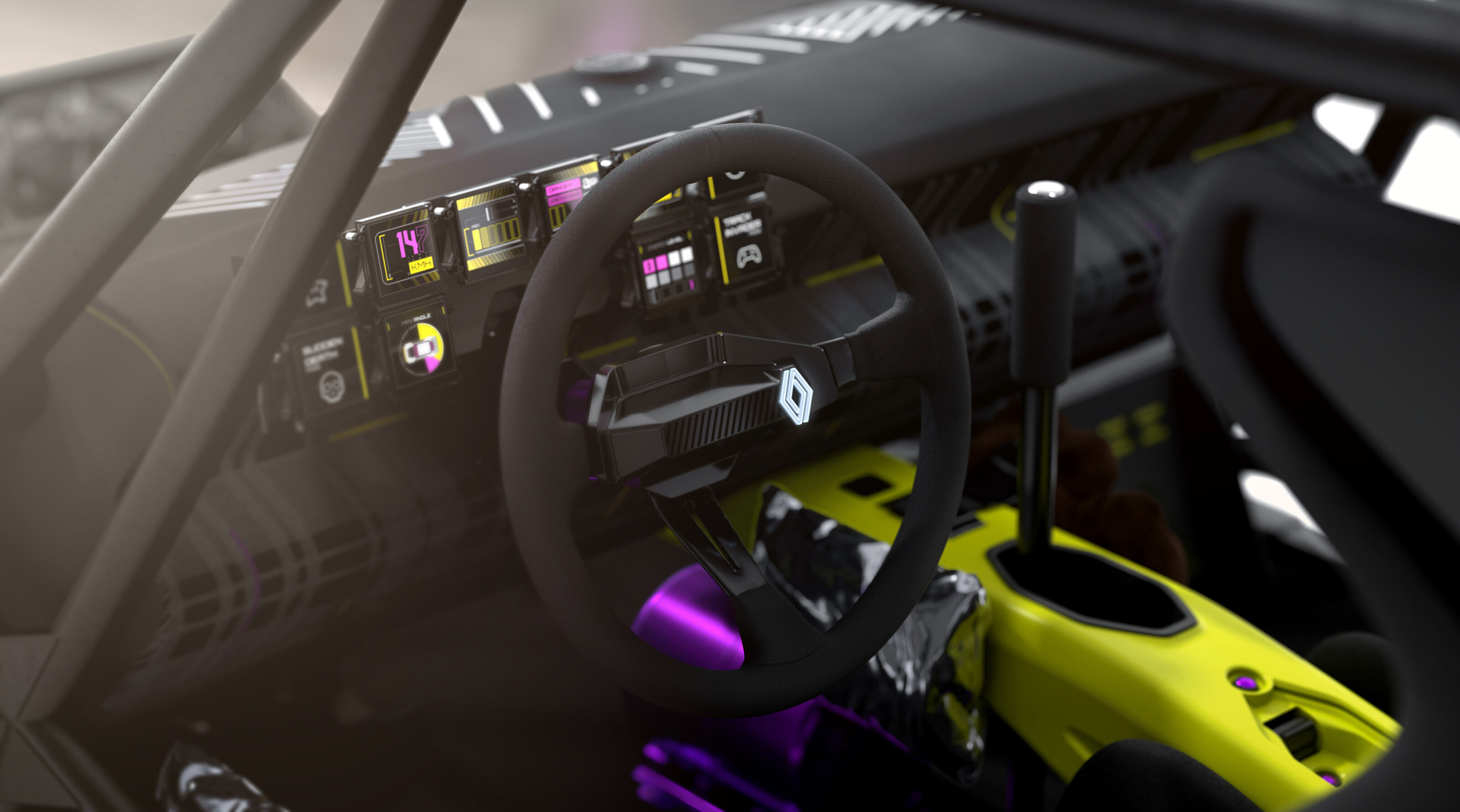
The 42kWh battery is smallish, but – as Renault puts it – plenty for ‘several laps of a raging Gymkhana’ and a 200km/h top speed.
Naturally, there’s a prominent handbrake lever in the bare cabin for drivers to initiate drifts with ease, while a 50º steering angle means the Turbo 3E will be able to get into all sorts of lurid slides.
The Renault 5 Turbo 3E is compact in length, measuring only 4000mm. And, at a whopping 2020mm wide (250mm wider than a Turbo 2), this little car will have an imposing stance. Those rear vents are real too, providing cooling for the electric motors.
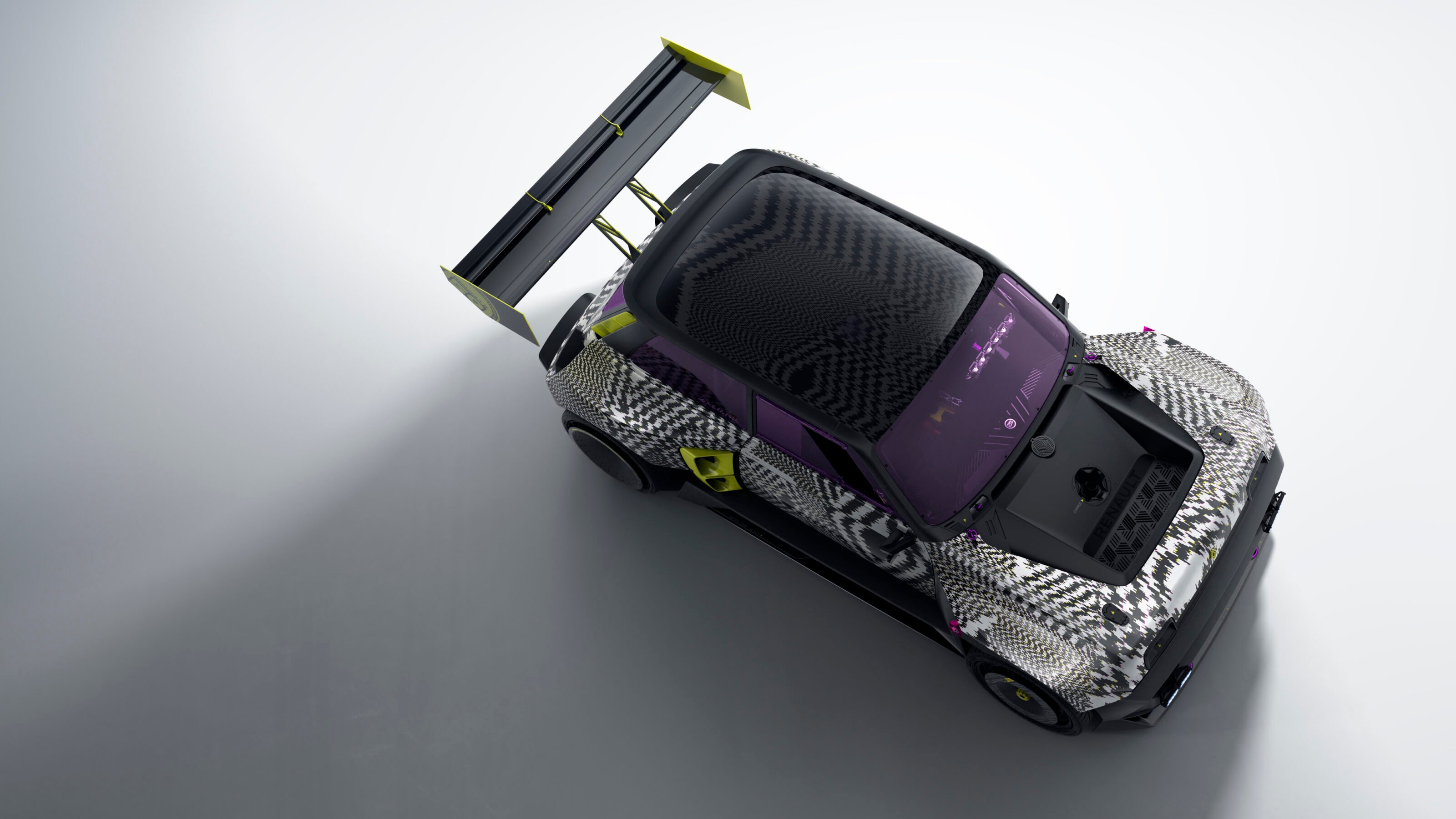
Charging the Turbo 3E concept from 0-100 per cent will take two hours using a three-phase 22kW AC charger at 380V/32A.
A digital testbed for Renault
Outside are ‘neon-chic’ LED lighting strips in blue, pink and yellow that respond to the car drifting. The foglight design is an homage to the original Turbo 2, but each has 14 LEDs now rather than a single bulb.
Chief designer for Renault concept cars, Sandeep Bhambra, said the Turbo 3E is “a work of art with exaggerated lines, inspired by the videogame universe, with hints at the Renault 5 and Renault 5 Turbo inside as much as out.”
The Turbo 3E will emerge as an NFT alongside the physical reveal of the car and takes influence from video games in its drive mode selection. ‘Turbo’ (drift mode), ‘Donut’, ‘Track Invader’ are the three, and starting the Turbo 3E is done by pressing a ‘Free Play’ button.
There are also 10 in-built action camera mounts in, the idea being you can capture your drifts in all their glory and upload straight to your social media.
Australia loved the Toyota 86. In nearly a decade on sale here, the lightweight coupe shifted 21,823 units, making Australia its third-biggest market behind Japan and the United States.
Those who worked on Wheels magazine back in June 2012 will recall the ‘Toyota Beats Porsche‘ screamer cover – and will also remember a rather uncomfortable phone call from Porsche’s press officer, who’d sourced a Cayman in Japan for us to drive with the 86 on the proviso that they wouldn’t see anything silly like ‘Toyota beats Porsche’ on the cover. Erk.
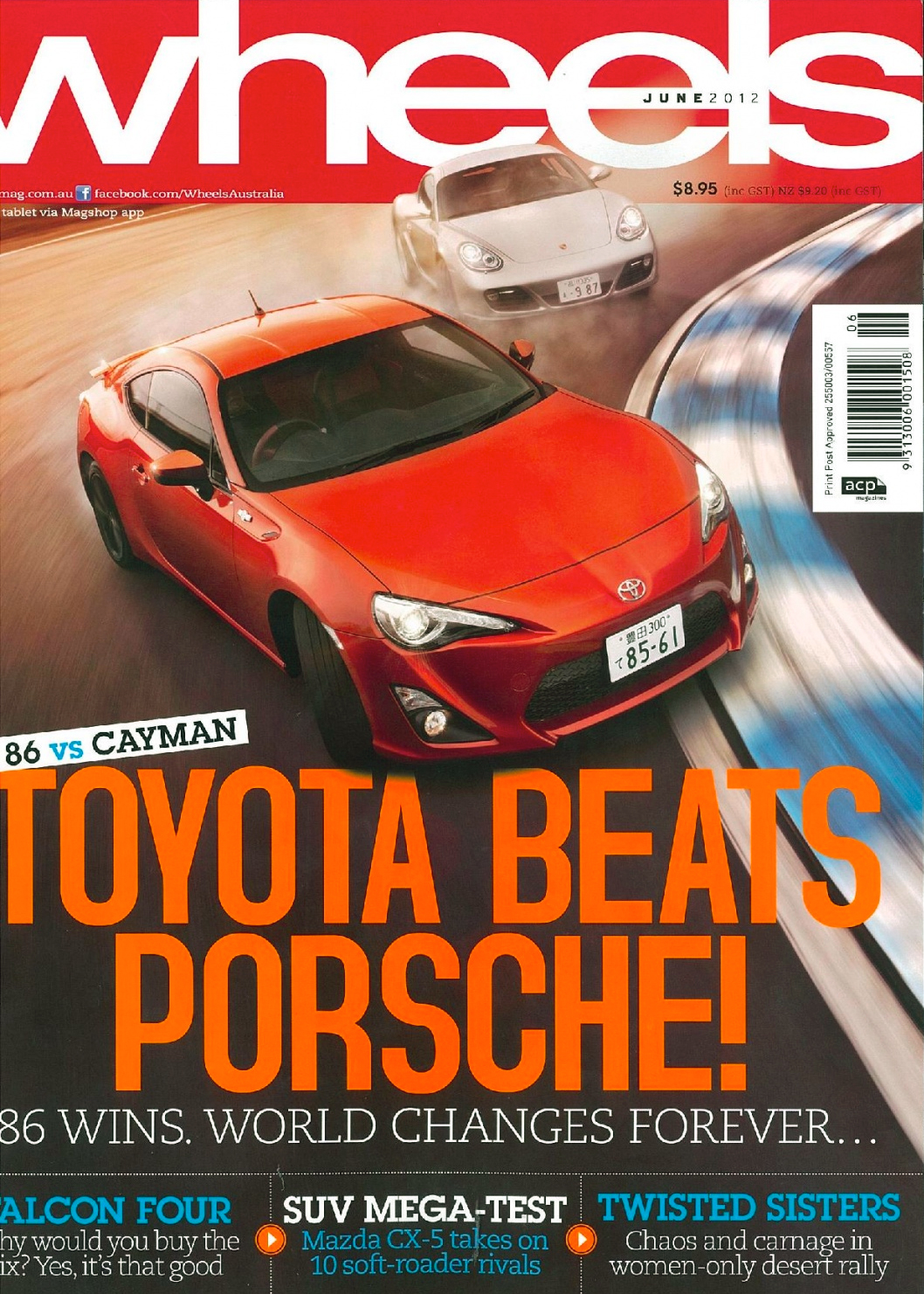
Suffice to say, we thought the old 86 was something special, to the extent that the Toyota and its Subaru BRZ sibling went on to claim the 2012 Wheels Car of the Year crown.
But while the 86 was a good car, it came with some caveats.
The engine had a hole in the middle of the torque curve that meant that the Toyota felt about as muscular as an Alloytec running on one bank. The cabin felt ruthlessly built down to a price and the standard fit tyres were, well, let’s just call them an interesting choice.
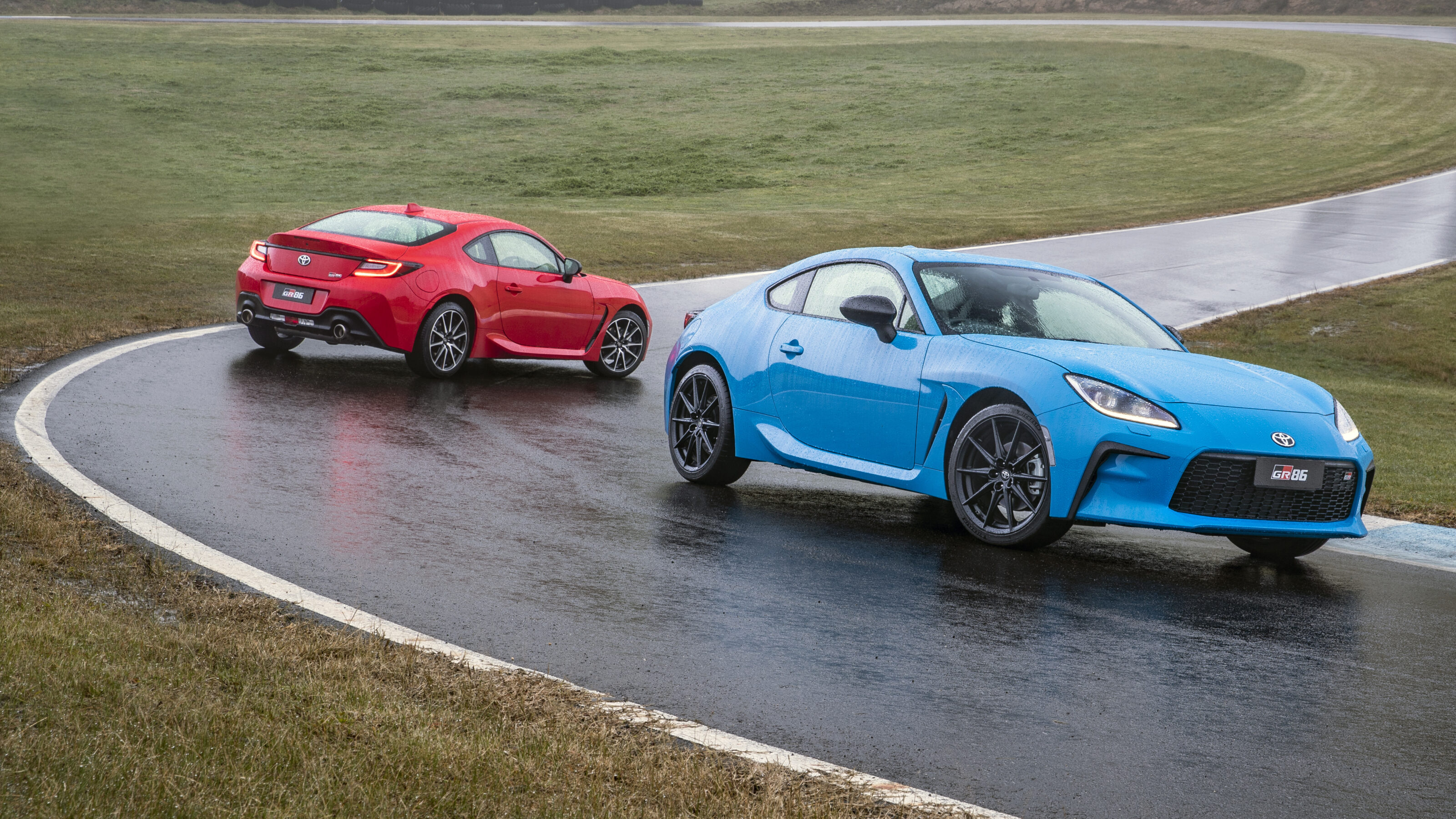
But unless you’ve been living under a rock for the past year, you’ll know that a second-generation version has been in the works. Named the GR86 after the involvement of Gazoo Racing, Toyota’s go-faster arm, the new car sits alongside GR versions of the Yaris, the Corolla and the Supra. That’s quite some company to keep.
We’ve been primed on what to expect with the Subaru BRZ which, not to mince words, is about as good as you can reasonably expect an affordable sports coupe to be. Toyota claims that Gazoo Racing has given the GR86 a subtly different flavour to the BRZ. How does that claim stack up?
Jump ahead
- How much is it, and what do you get?
- How do rivals compare on value?
- Interior comfort, space and storage
- What is it like to drive?
- How is it on fuel?
- How safe is it?
- Warranty and running costs
- VERDICT
How much is it and what do you get?
Are you sitting down? If you’ve become comfortable with the idea that a Subaru BRZ opens at $40,290 for a manual car with the BRZ S priced from $41,590 (both before on-road costs), then Toyota GR86 pricing might come as a bit of a shock.
For a start, the manual and automatic cars carry identical price tags. So you’ll pay $43,240 for a 2023 Toyota GR86 GT trim and $45,390 for a GTS version (both before on-road costs).
Like the BRZ, manual models do without an integrated suite of safety tech that includes features such as adaptive cruise, lane departure warning, auto high beam and pre-collision braking. So if you want the manual model – and you should – we can understand if you feel you’ve had a rough rub of the green.
“We think it’s suitable and appropriate for the marketplace,” said Justin Hood, Toyota Australia’s senior manager of product planning and pricing. “We’ve adopted the same policy with the Supra.”
Indeed, there are other manufacturers, such as Ford with its Mustang, which price manual cars identically to automatics. In this case, however, the fact that the auto versions get so much more standard kit renders that argument moot.
Toyota points to the fact that the original 86 opened at $29,995 which, adjusted for inflation…
…would be beyond $38k today – before you factor in improvements to equipment, quality, power and so on.
Although there are no mechanical differences between the GT and the GTS, the biggest change is that the GT rides on smaller 17-inch alloys shod with 215/45 Michelin Primacy rubber. Yes, much the same ‘Prius tyres’ that the old 86 wore. It also features fabric seats and a utilitarian rubber-shod pedal set.
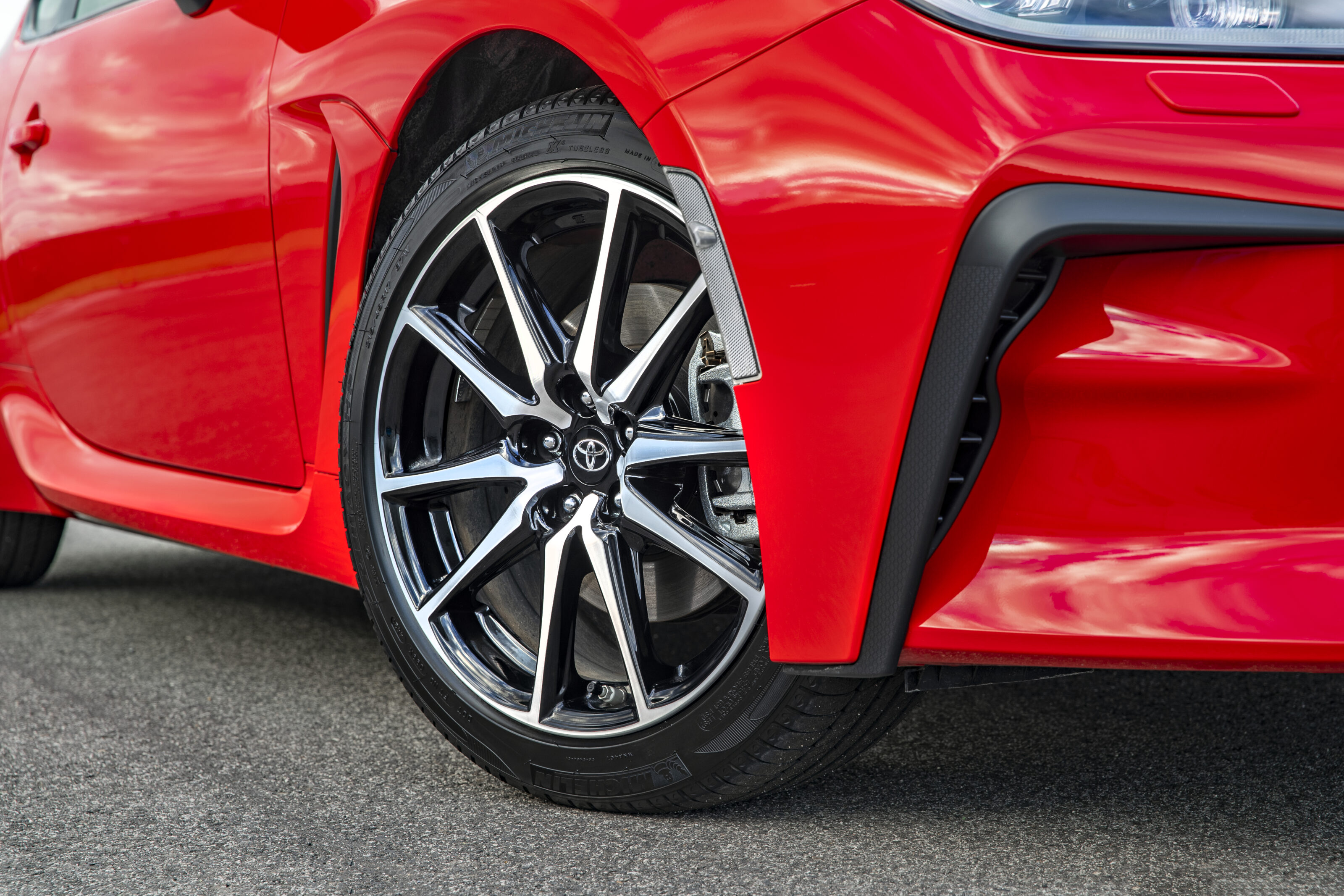
Pay the additional $2150 for the GTS and you get 18-inch wheels wearing far superior 215/40 Michelin Pilot Sport 4 boots as well as an interior trimmed in grey or red accented Ultrasuede, seat heating, decorative side sills and a set of aluminium pedals.
If you really want to exploit the handling subtlety of the new GR86, pay the extra for the GTS. The tyres alone unlock a whole new level of delicacy and feel.
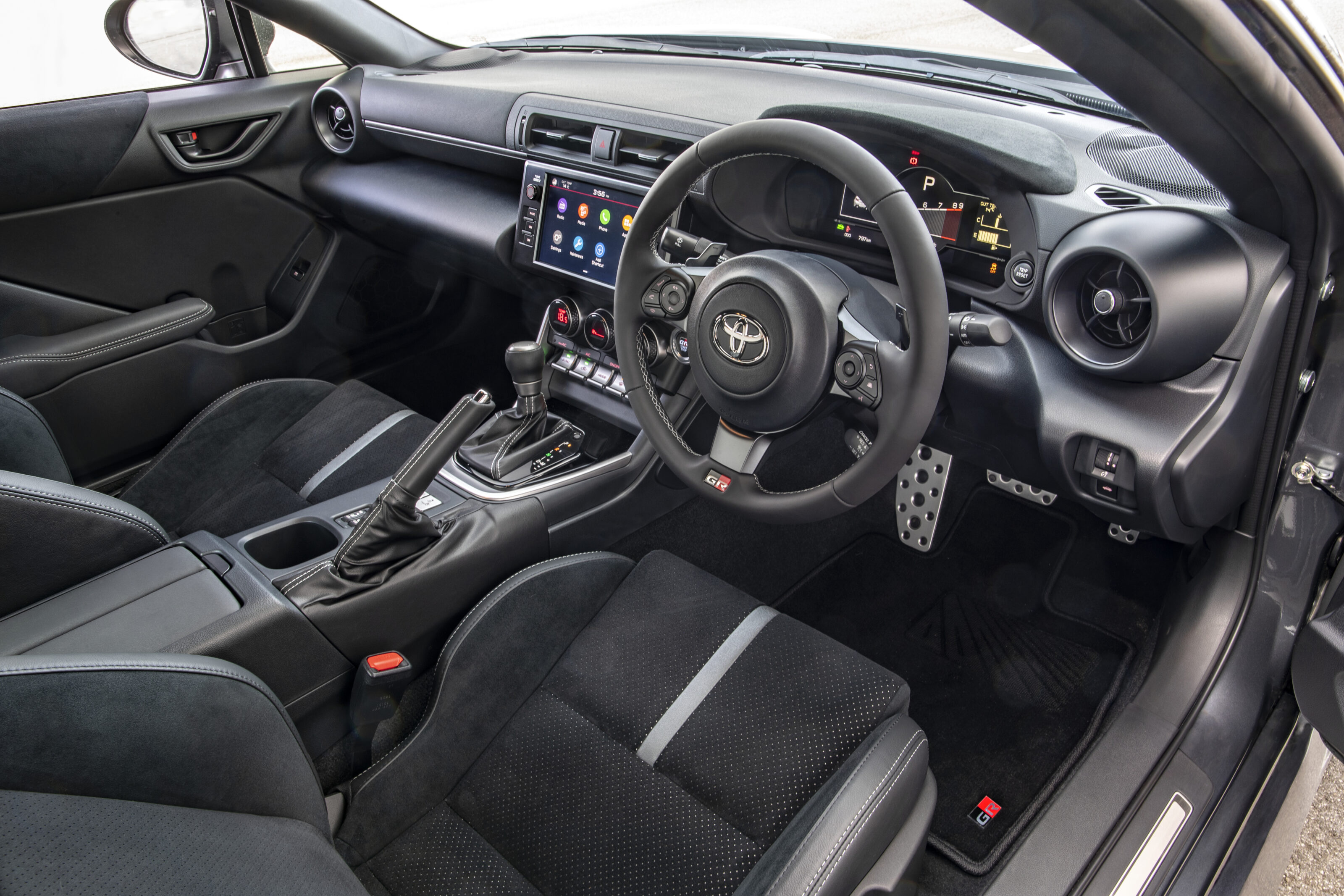
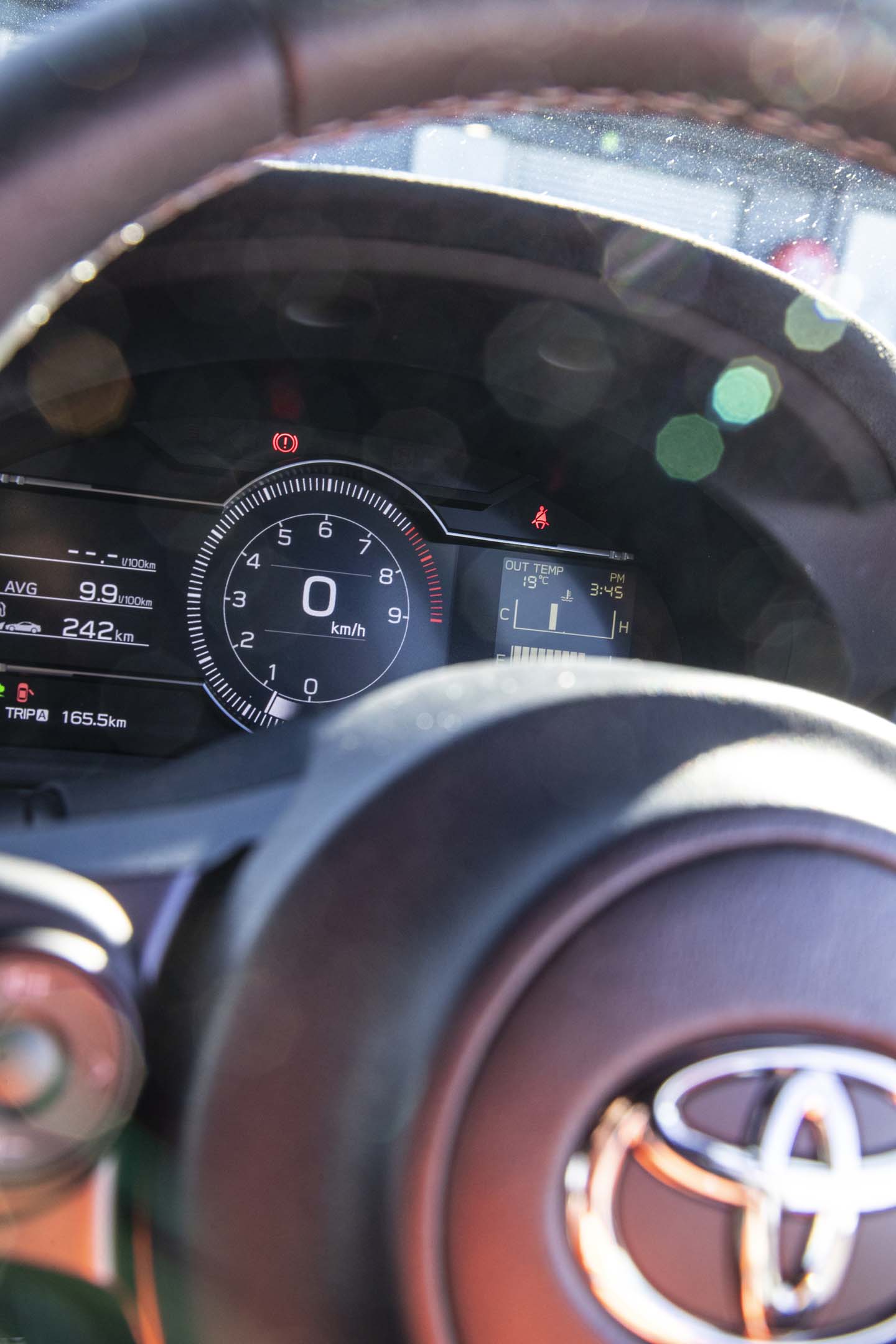
All GR86s otherwise feature wired Apple CarPlay and Android Auto, playing on an 8.0-inch central touch screen. There is a dedicated Track ESC mode, a reversing camera, a six-speaker stereo, dual-zone climate control, tyre pressure monitoring and a pair of USB ports in the centre console storage compartment.
How do rivals compare on value?
Subaru BRZ aside, show me another rear-wheel drive coupe that comes with a manual gearbox for under $50K and we can discuss the finer points of the value proposition. The fact is, there isn’t one.
You’ll need to pony up $52,590 before on-road costs to get yourself into a base Mustang 2.3 HP coupe, and given it packs a 236kW wallop, is not bad value for money.
But it’s a direct rival for the GR86 in the same way Tyson Fury is a direct rival for Floyd Mayweather. One is not like the other.
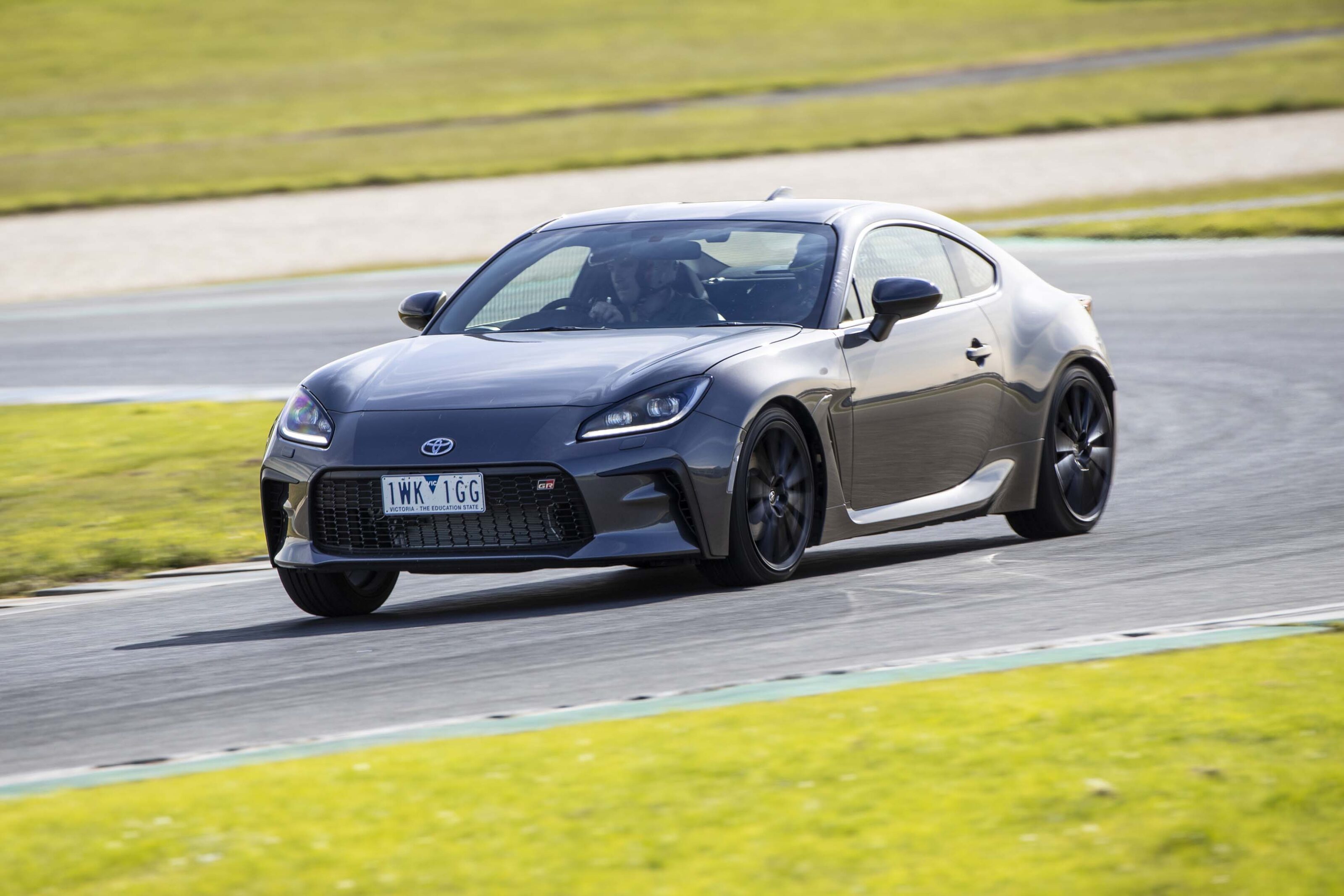
The closest in concept is the Mazda MX-5 RF GT RS which, before on-road costs, starts at $51,100. This goes the other way, ceding a tall stack of both power and torque to the Toyota, but countering with one of the very finest manual transmissions in the business and a delicacy of response all of its own.
However, we can only leave the BRZ out of the question for so long. Were we paying our own money and opting for a top-spec manual car, saving $3800 on a BRZ and ploughing those funds into tyres and track days is a hard argument to counter.
Another thing to note is that while the BRZ is supplied with a full-sized alloy spare wheel and tyre in the boot, the GR86 is only sold with a compressor and a can of mobility foam.
What’s the Toyota GR86 like inside?
The short answer? As good as it needs to be.
Nobody pays just over $40K for a sports coupe and expects the interior to feel like it’s been put together like a Bentley but by the same token, the GR86 marks a welcome step forward in terms of perceived quality over its predecessor.
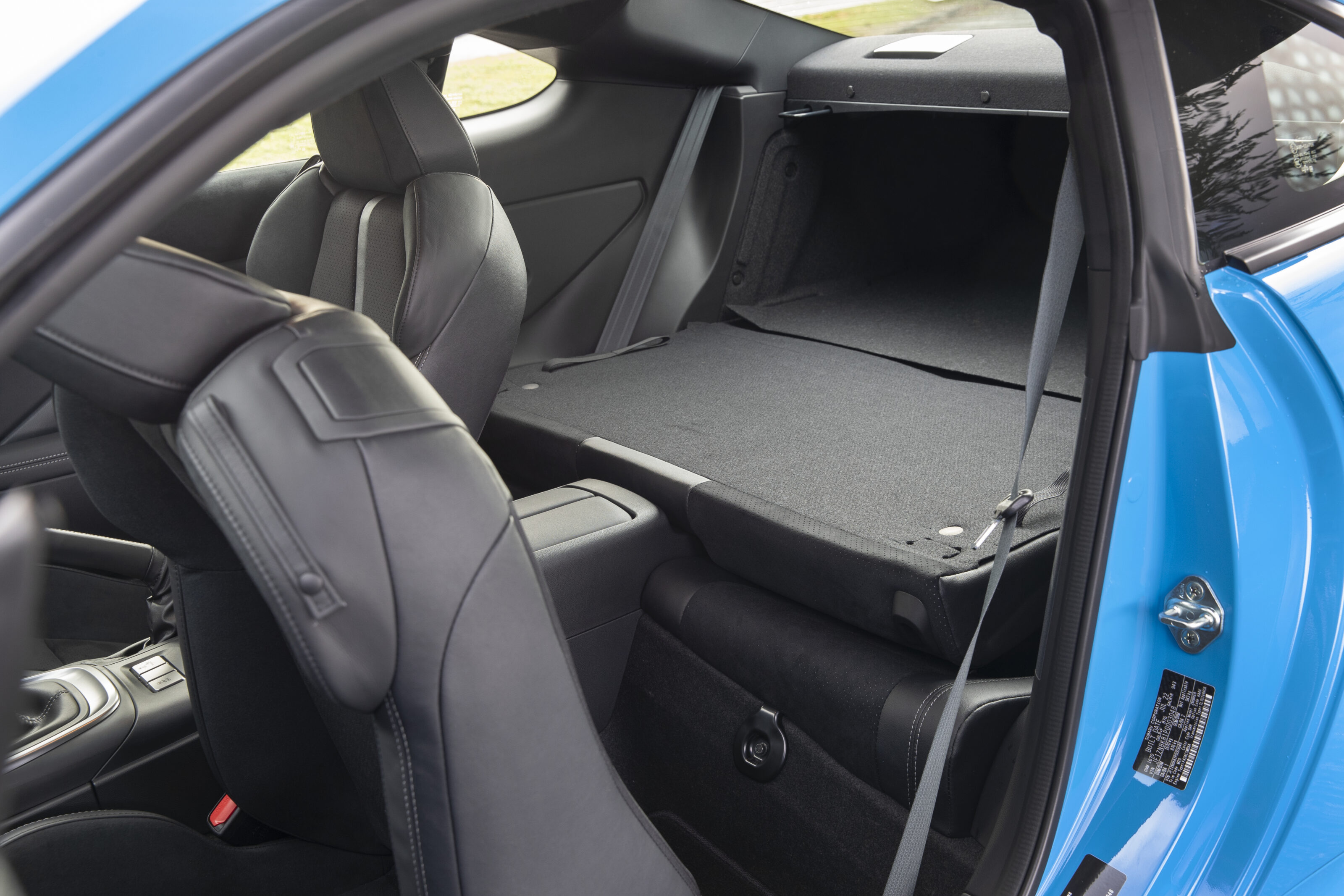
It’s certainly a better option for larger drivers than an MX-5. The seating position allows for a degree of recline, with the hip point 5mm lower than before. Access to the rear seats has also been improved with a better folding mechanism allowing a larger aperture.
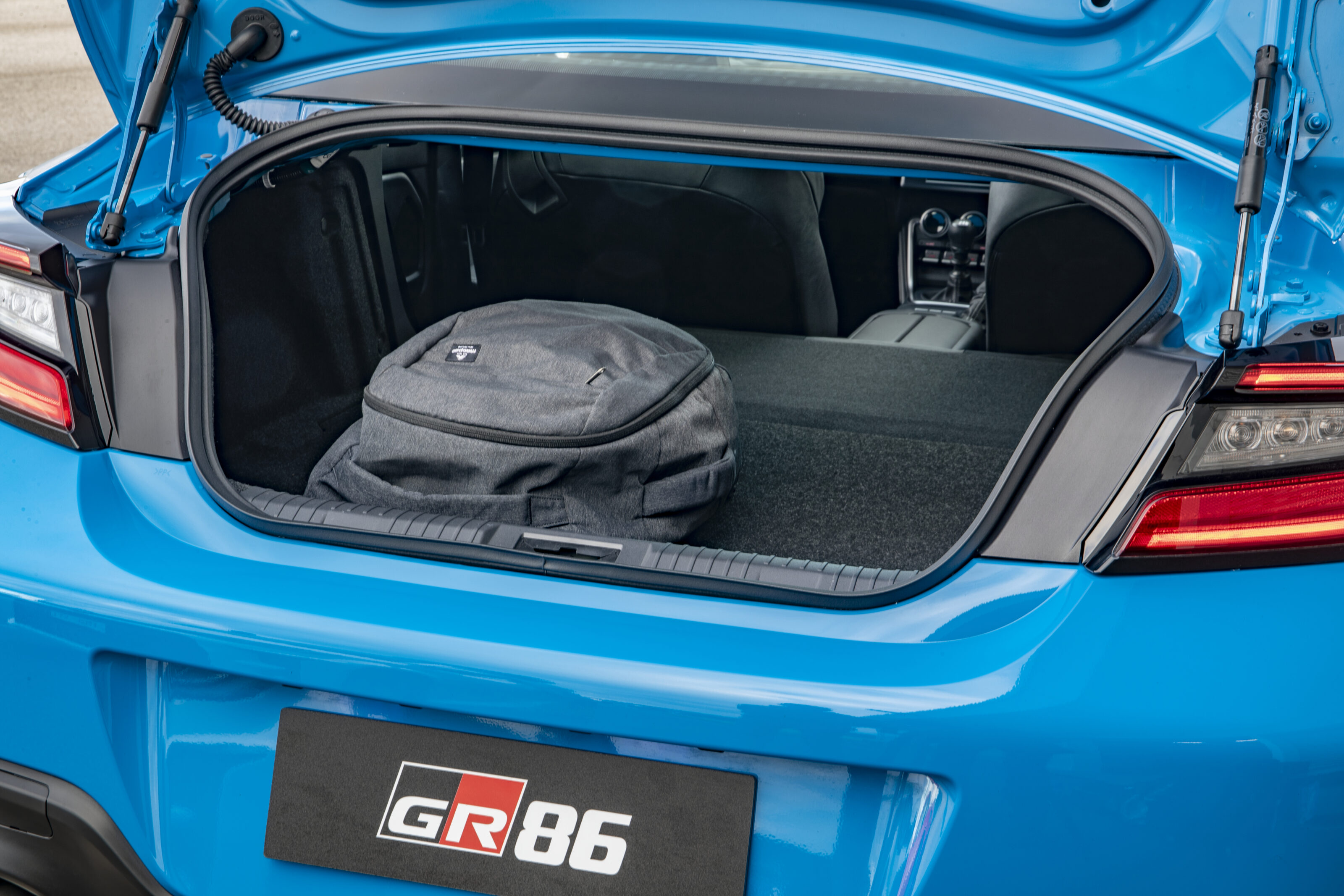
Additional practicality bonuses include a 25 per cent larger glove box, decently sized door bins and a boot that in the new 2023 Toyota GR86 now measures 226 litres. Fold down the rear bench and Toyota even claims you can take four tyres to a track day.
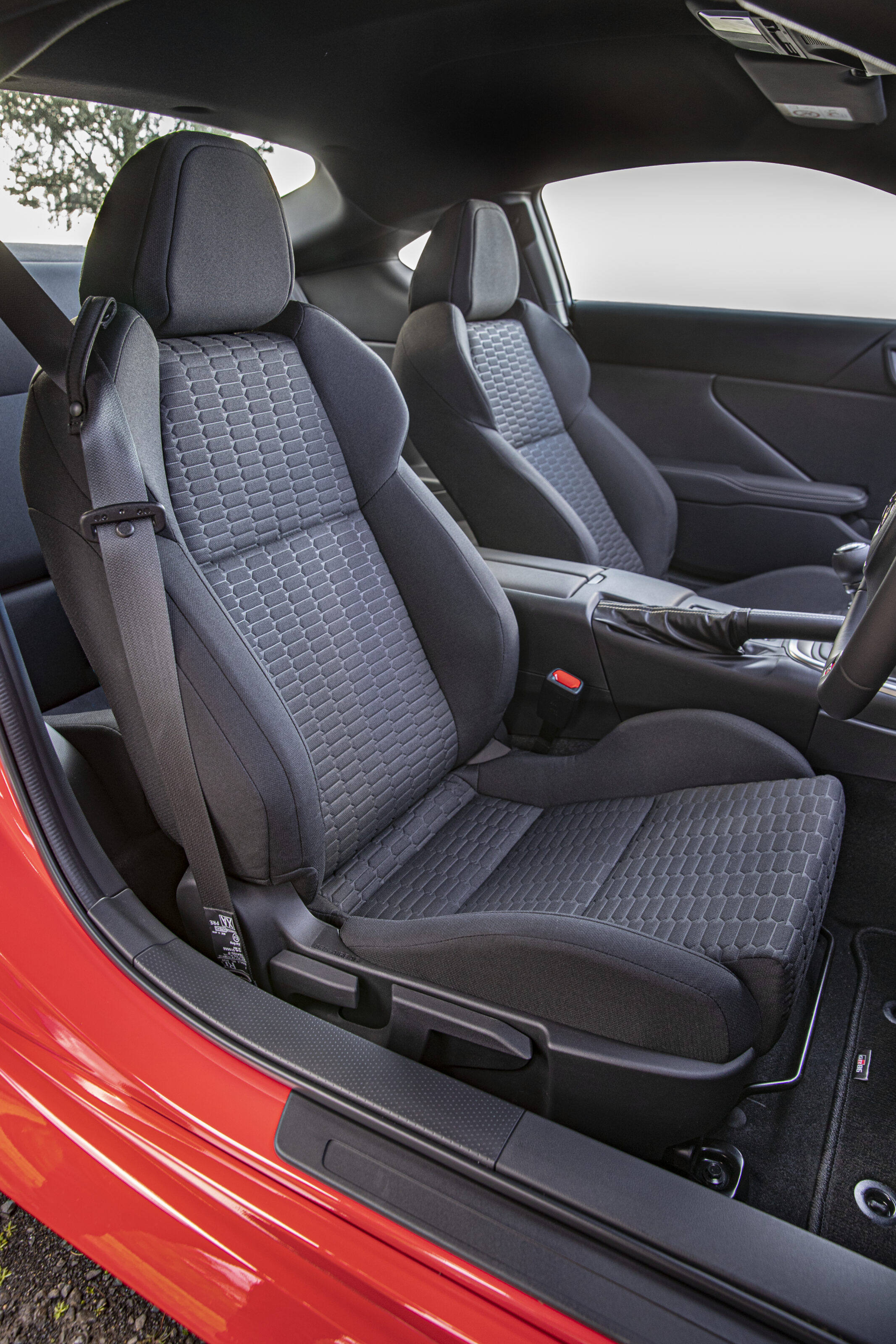
Some soft-touch materials are used and the standard seats offer decent support, whether you’ve opted for the GT’s fabric or the GTS’s Ultrasuede finish.
The infotainment system is far from the most sophisticated we’ve come across and there’s no facility for wireless Android Auto or Apple CarPlay, and no wireless charging pad, which isn’t an unreasonable expectation in a new car at this price point.
Basic ergonomics are very good, with nothing coming as much of a surprise. Some may find the lack of a rear wiper a bit of a miss, especially if their day involves driving on dusty roads but other than that, the spec list and the cabin inclusions are, for the most part, well-judged.
The steering wheel is decently sized without too thick a rim and Toyota has fitted audio controls to one side and a multi-function selector to the other spoke.
Heating, ventilation and air conditioning controls have thankfully not been buried in an infotainment menu, instead operated by big rubberised controls that are easy to adjust without diverting your eyes from the road.
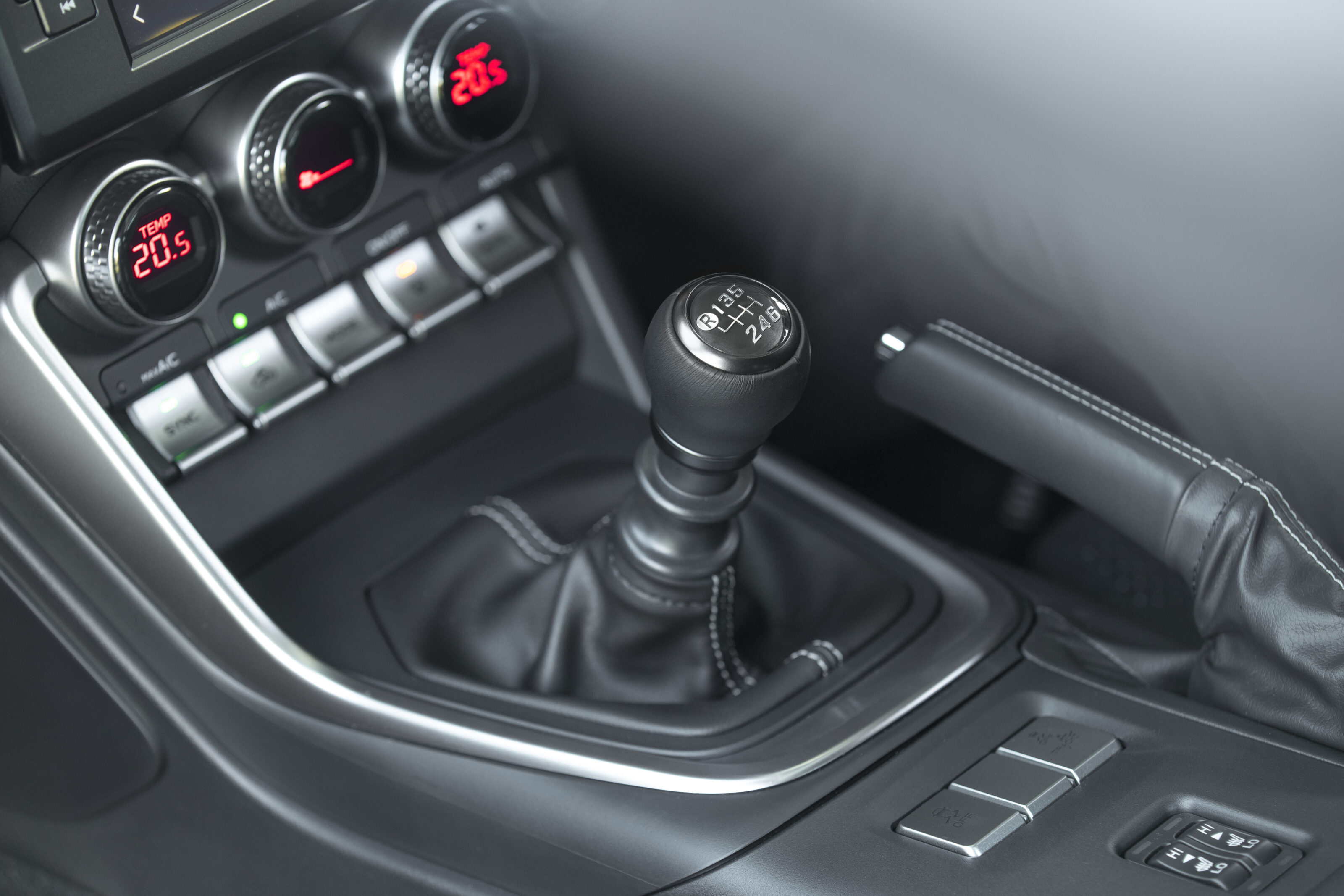
Likewise, the stability control settings are conveniently positioned as large buttons right next to the gear shifter, which means that these are easy to manipulate on the fly.
What is it like to drive?
Brilliant. Job done. Next.
At this point, you might well be wondering what Toyota has done to the Subaru BRZ other than slap some different badges on it. Chief engineer Yasunori Suezawa was wheeled out for the drive event at Phillip Island GP circuit, but given that he’d been in the role for less than two years – replacing the legendary Tetsuya Tada – he’s still playing catch-up with the GR program.
Suezawa pointed to three factors where the GR86 deviated materially from the BRZ and they are suspension, engine and steering. All fairly fundamental stuff. The accelerator response and the electrically-assisted power steering have also had their software modified.
On the circuit, it felt as if the maps for both steering and throttle pedal had been ‘front-loaded’ to give more in the first few radians of travel, which in turn delivers a sharper response albeit at the expense of overall linearity.
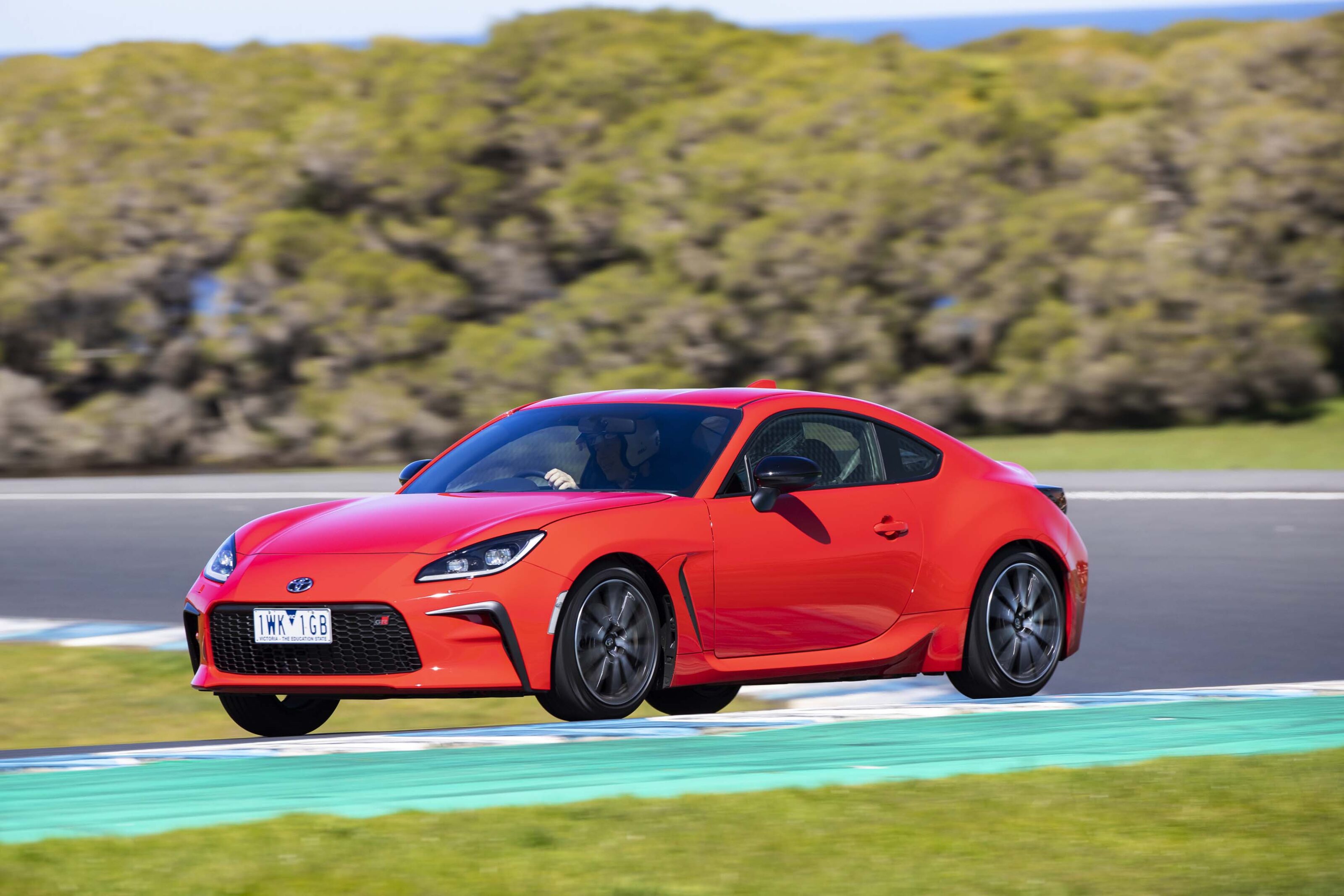
The suspension is actually different when compared to the BRZ, but not in the ways you might imagine.
Rather than altering the GR86 to suit that Gazoo Racing badge, it’s as if Toyota instead regressed. It’s the BRZ that sees the biggest changes when compared to its predecessor, with seven per cent stiffer front springs and 11 per cent softer rears.
By contrast, Toyota retained the subframe-mounted anti-roll bar, whereas Subaru leaned its sway bar out and mounted it directly to the body, along with developing a hollow front bar and aluminium knuckles.
The net effect is that the BRZ is marginally more precise, delivers better outright grip and is a better track-day car. The GR86, by contrast, is a more playful companion and just loves to hang its tail out at any opportunity.
The 2.4-litre engine doesn’t exactly sing an aria, but it’s certainly effective.
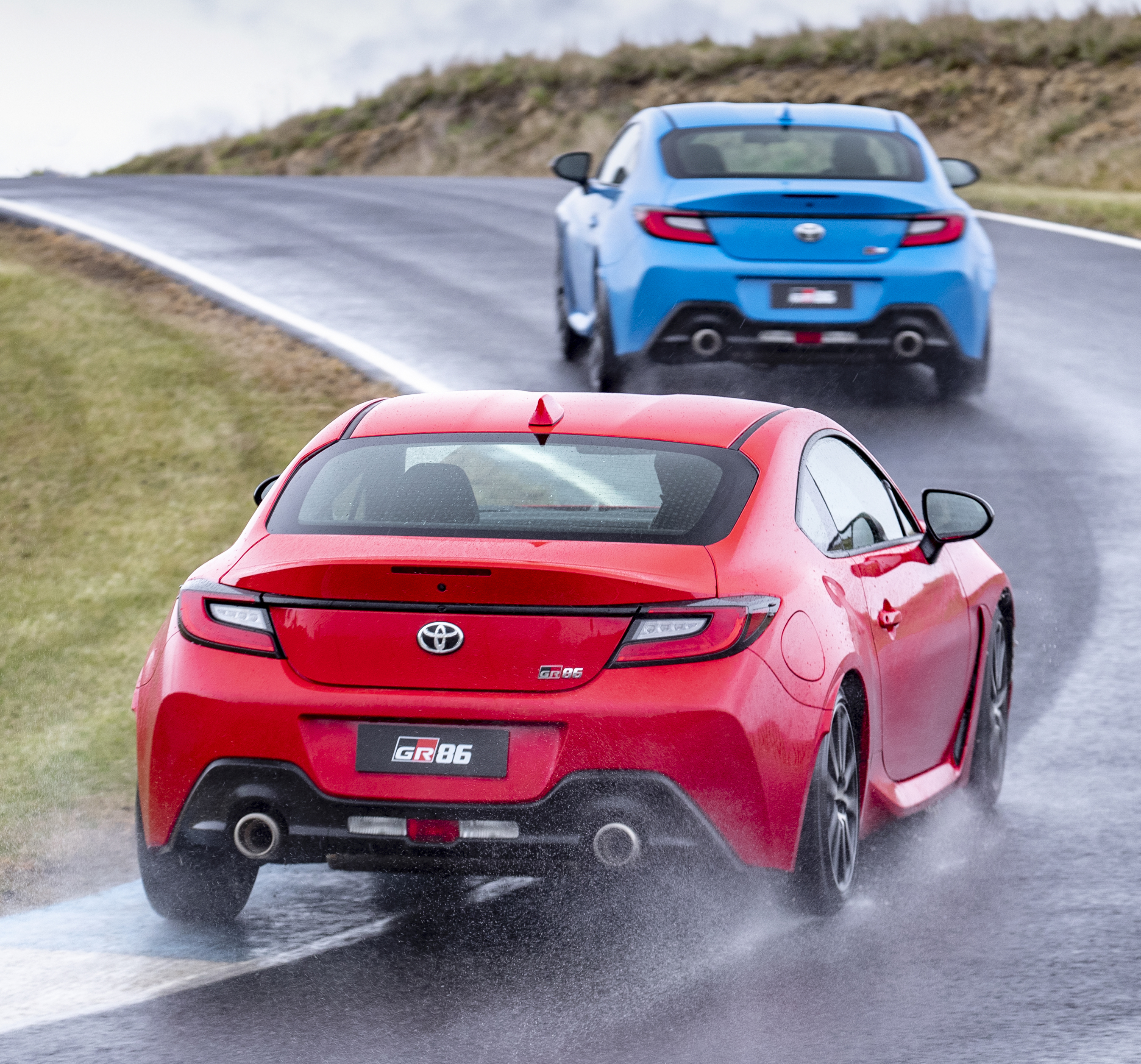
Higher-grip Michelin Pilot Sport 4 tyres fitted to the GTS actually make drifting the GR86 a more malleable business, smearing in and out of slides compared to the more binary feel of the GT’s Primacy rubber.
The 2.4-litre engine doesn’t exactly sing an aria, but it’s certainly effective. It generates 174kW and 250Nm which, to save you the maths, is 18 per cent more power and a massive 22 per cent more torque than before. Peak torque arrives at 3700rpm this time round, rather than the nosebleed 6400rpm of the old car.
Where that version retained peak torque across a mere 200rpm band, this time round you get the full serving of the good stuff at 3700rpm and a healthy – albeit still dipped – plateau right through to 5200rpm.
Toyota claims 6.3 seconds to 100km/h for the manual car, which sounds reasonable for a vehicle fronting up with 135kW/tonne.
Ah yes, weight. The kerb weight for the manual is 1287kg in GT trim and 1291kg in GTS guise. The GR86 keeps weight down with an aluminium bonnet, roof and front fenders.
Lightweight seat frames also help, as do a lighter tailshaft, muffler, resin rocker cover and pared-back engine mounts. The centre of gravity drops by 1.6mm thanks largely to the lower hip point and lighter roof, but despite the lightweighting, torsional rigidity increases by 50 per cent and longitudinal rigidity by 60 per cent.
The brakes are 294mm ventilated discs up front, with twin-piston calipers while there’s a 290mm rotor and a single-pot caliper at the back. The stoppers are more than adequate for street use, but on track we found the pedal getting a little long into the big braking zones like Honda curve after a couple of flying laps.
If you’re a real track-day fiend, uprating the pads and fluid (or introducing more cooling) may be job number one followed by swapping the standard Torsen differential out for a clutch-type version.
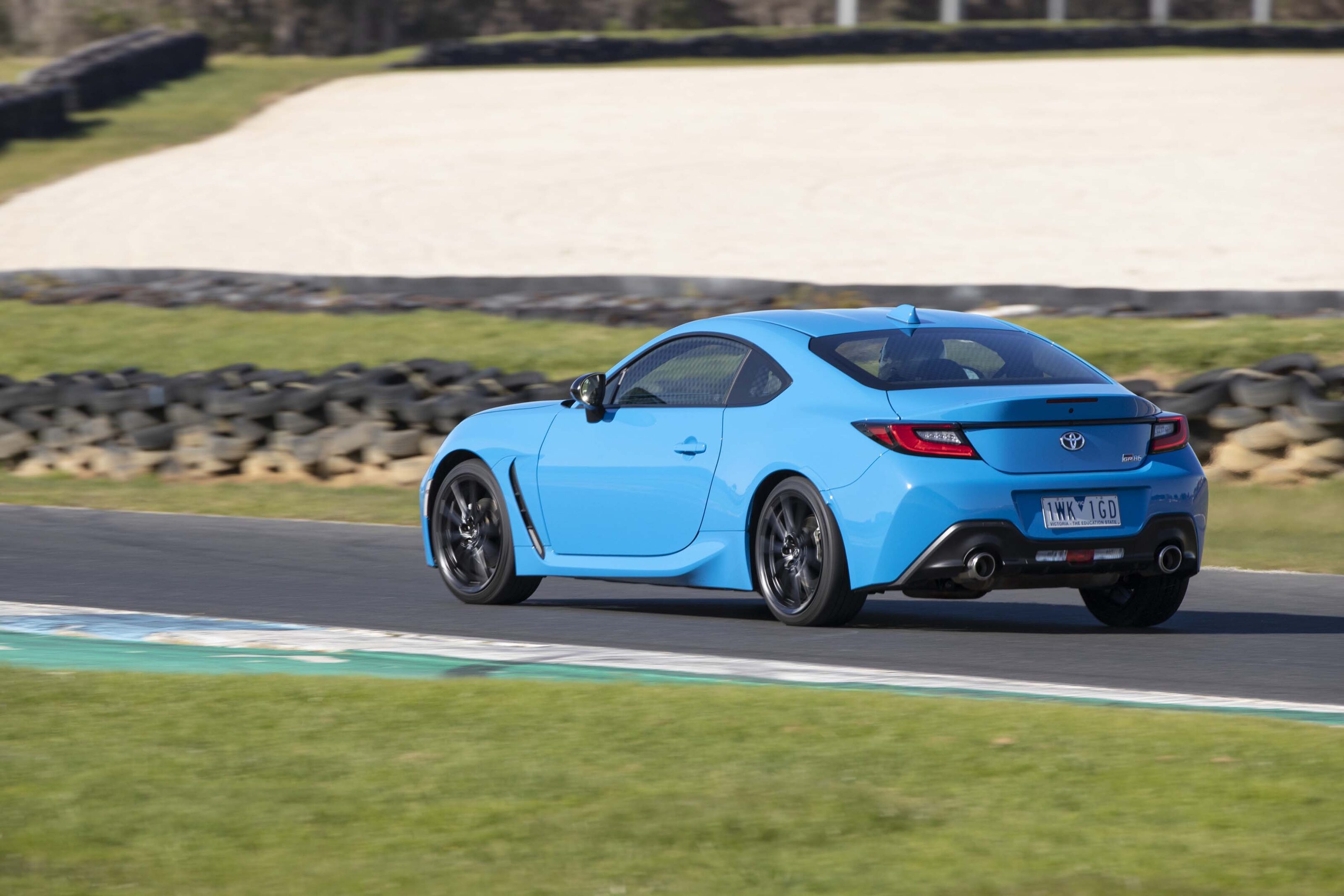
The manual gear shift is good, but not great. The shift action isn’t particularly slick, but the pedal positioning and clutch action are great for heel and toe down-changes. At 4.1:1 the manual ‘box has a shorter final drive than the 3.909:1 of the automatic.
We found that the auto seemed to cope very well when left to its own devices at Phillip Island but, curiously, when switched into manual mode, it became a little neurotic about protecting itself from early downchanges. Downshifts that it would happily grant itself were denied with a plaintive beep when attempted manually, to the extent that we often found ourselves in a gear higher than was ideal.
On road, the GR86 sounds a little louder in the cabin than the BRZ, which is counterintuitive, given the noise pathways created by the rear suspension mounts, but there it is. Ride quality is very good, the steering is excellent and that FA24 engine has enough about it that you rarely if ever feel short-changed.
The standard stability control calibration is pretty languid and a long press on the Track ESC buttons loosens it off still further. Be aware that in the wet Track ESC won’t necessarily save you from a spin if you’re really ham-fisted, so approach with the requisite caution.
The shift action isn’t particularly slick, but the pedal positioning and clutch action are great for heel and toe down-changes.
How is it on fuel?
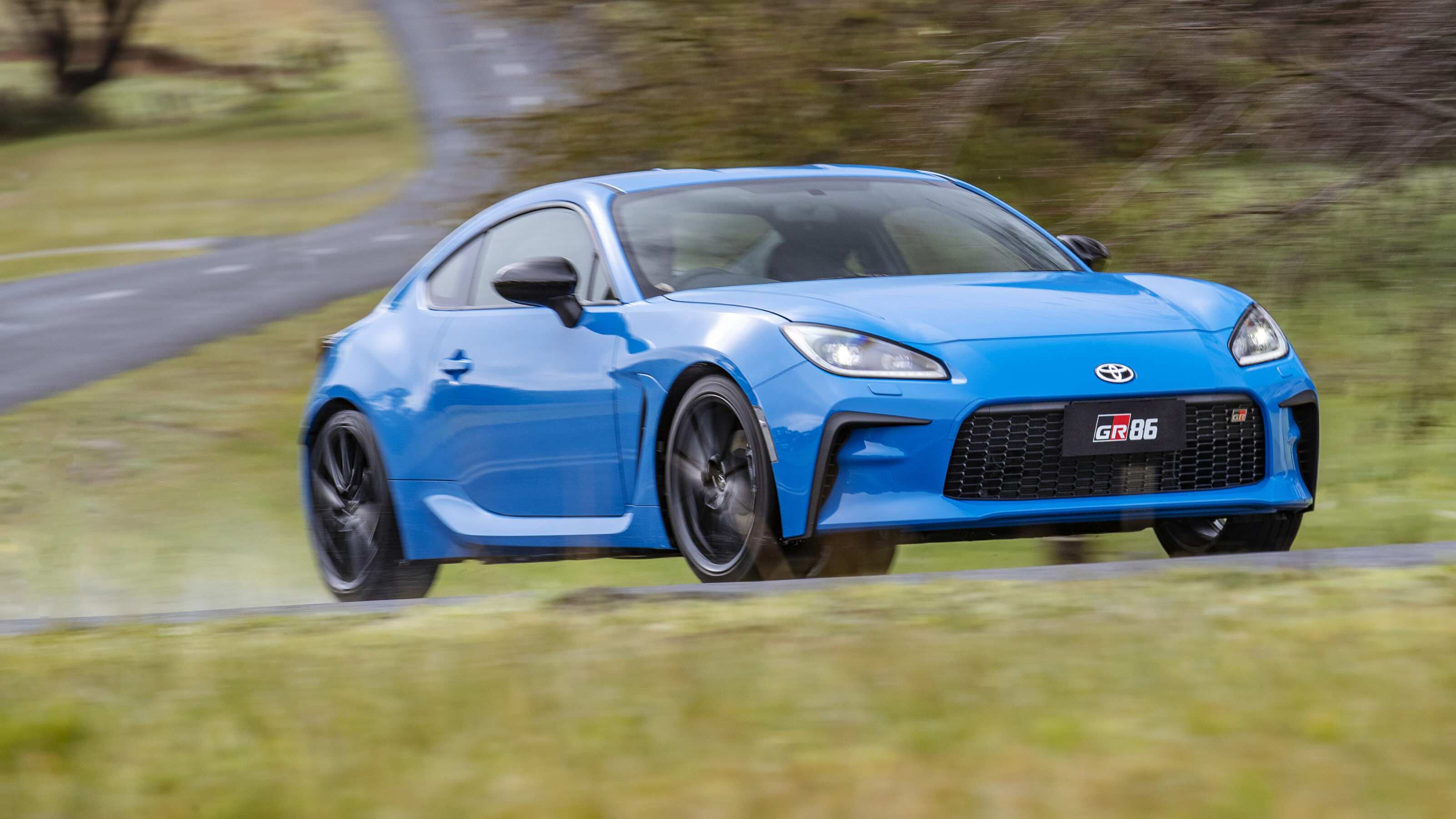
In the 2023 Toyota GR86, the company claims a combined figure of 9.4L/100km for the manual version of the GR86 and 8.7 and 8.8L/100km respectively for GT and GTS versions with the automatic transmission.
What’s more, the GR86 is one of the few cars where it’s possible to approach or beat the published figures in day-to-day driving. That’s a good thing because the fuel tank is a relatively dinky 50 litres and it’ll want 98 RON fuel too.
Light weight helps with fuel economy as does a super-slippery drag coefficient of just 0.276.
How safe is it?
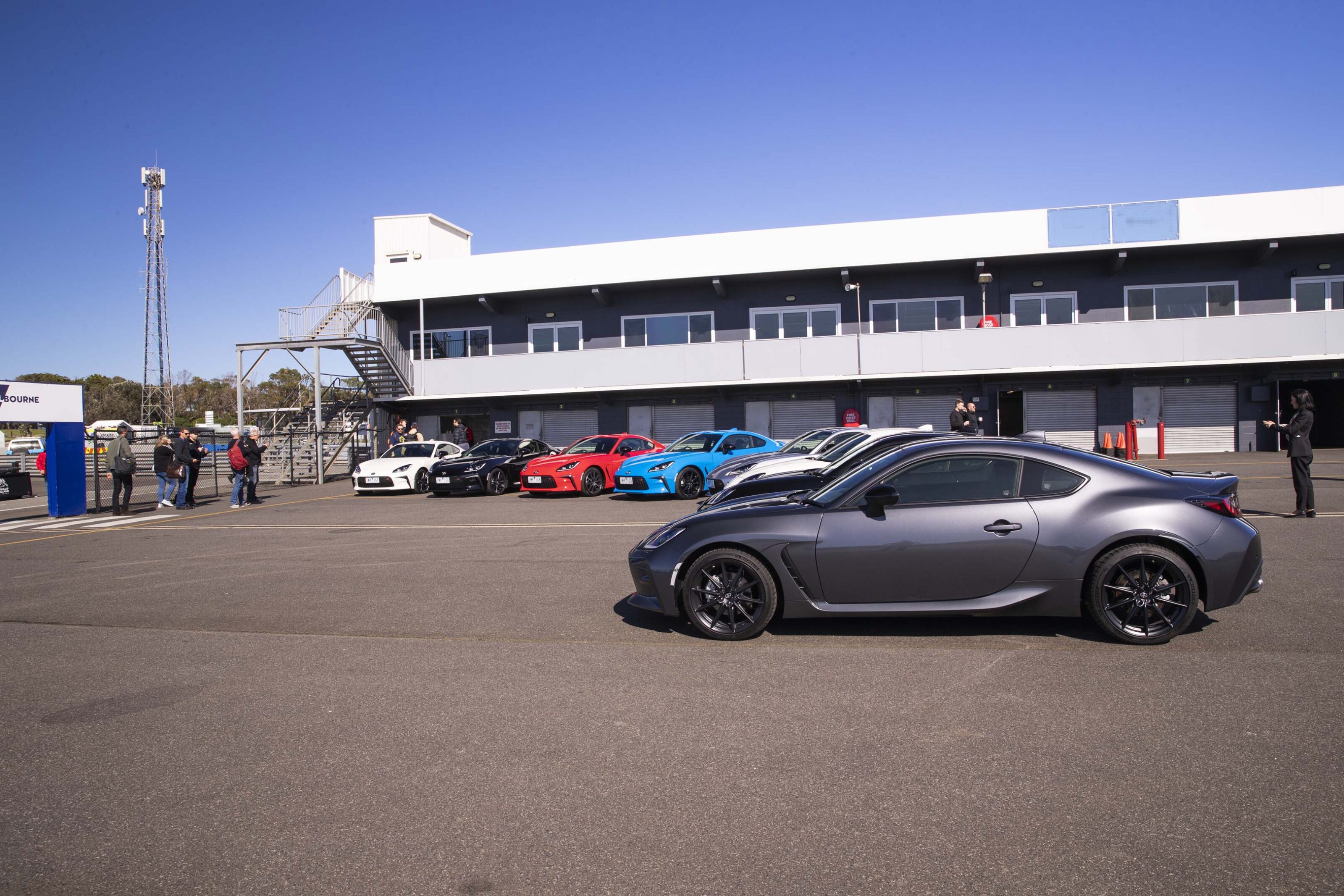
The 2023 Toyota GR86 has yet to be tested by ANCAP.
What’s more, there are currently no plans in place to subject the GR86 to a crash test. That may well change, but it’s far from a foregone conclusion that the vehicle would achieve a five-star rating.
Its predecessor was a five-star rated vehicle, but that was a test result ‘grandfathered’ from 2012. Since that time, ANCAP testing has become a lot more stringent and has outpaced development of the 86 line.
The GR86 would be unlikely to rate highly in the Safety Assist technology category, as it lacks both lane-keep assist and intelligent speed limiting with a speed sign recognition function.
These contribute to a significant share of the scoring in this category. The manual models lack Toyota’s Active Safety Suite and therefore aren’t supplied with autonomous emergency braking, meaning they’ll come up short on current ANCAP criteria.
Indeed, the reason why the GR86 has sold its entire allocation in the UK is that it’s being withdrawn from sale due to the fact that it can’t comply with new European safety regulations.
From 2024, the EU’s General Safety Regulation 2 standards will come into force and these rules also apply to existing unregistered stock held by vehicle manufacturers, closing a stockpiling loophole.
In order to satisfy this legislation, the GR86 would need to have been completely re-engineered and, as is clear when looking at the underpinnings of the car, this second generation model of the 86 line is a heavy reworking of the original rather than a ground-up clean-sheet design.
Comparatively small sales volumes mean Toyota has had to accept some compromises.
That’s not to say the GR86 is an intrinsically unsafe car. It just means that if you put a priority on the very latest and most comprehensive safety technology, it may not be the car for you.
Standard safety features
| 7 airbags |
| Adaptive cruise control* |
| Anti-lock braking |
| Automatic emergency braking* |
| Automatic high beam* |
| Blind-spot monitoring** |
| Hill descent control |
| Hill-start assist |
| Hill-start assist |
| Lane departure alert* |
| Parking support brake and rear parking sensors* |
| Rear cross-traffic alert** |
| Reversing camera |
| Seat belt warning |
| Traffic jam assist* |
| Vehicle stability control |
| * automatic only |
| ** GTS only |
How long is the warranty and what are the running costs like?
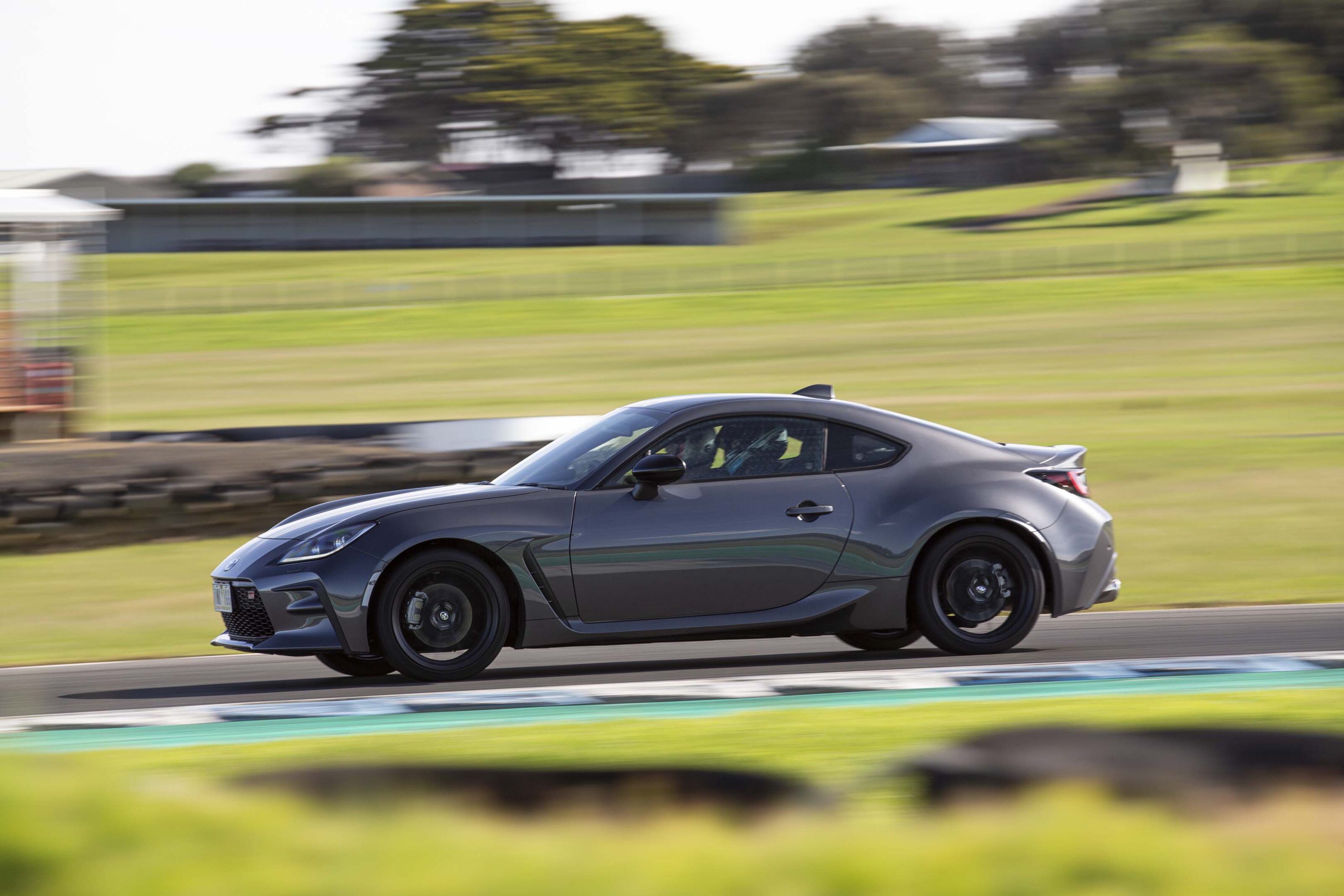
The warranty for the Toyota GR86 is five years with unlimited kilometres.
Under the Toyota Service Advantage capped-price servicing scheme, each maintenance visit will cost you $280. This applies to standard scheduled logbook servicing (normal operating conditions) for five years or 75,000km (whichever occurs first) up to a maximum of five services.
That price applies to both manual and automatic versions of the GT86 and undercuts Subaru.
VERDICT
Would we recommend it?
Absolutely, but with certain caveats.
Toyota is undoubtedly being opportunistic around pricing of the GR86. On the one hand, we’re happy to call this out, but on the other, it’s perhaps unreasonable for the laws of supply and demand not to apply in this instance.
Should you find the pricing not to your taste, follow the lead of quite a few who did have GR86 orders and who have now cancelled in order to buy a Subaru BRZ. You’ll end up with a brilliant car, eventually. Stick or twist? That’s the dilemma.
Like the BRZ, the GR86 goes straight to the top of the affordable sportscar class. There’s really nothing to touch it. The added torque and power of the 2.4-litre engine and the modest uptick in interior quality and comfort address the big criticisms of the old 86 and, as much as anything, the GR86 program has been an exercise in knowing what to leave well alone.
It’s now a far more rewarding and liveable car than before, without dulling any of the original’s sheen.
The GR86 feels considerably more alive in your hands and offers the enthusiast driver a stack more options than the old 86 ever did, enough to make even the best hot hatches seem a little two-dimensional in terms of chassis dynamics.
The days of pure internal combustion engined, lightweight, rear-drive coupes offered with a manual gearbox at what remains a strong price have to be numbered. Whether you think technology will change this class of car for the better or not, it pays to have sampled the benchmark.
And, along with its Subaru sibling, the GR86 is the benchmark. That’s something that will live on long after squabbles over the price have been forgotten.
Frequently Asked Questions
2023 Toyota GR86 specifications
| EXTERIOR | ||
|---|---|---|
| Overall length | 4265mm | |
| Overall width | 1775mm | |
| Overall height | 1310mm | |
| Wheelbase | 2575mm | |
| Front track | 1520mm | |
| Rear track | 1550mm | |
| Running ground clearance | 130mm | |
| Front overhang | 860mm | |
| Rear overhang | 830mm | |
| INTERIOR | ||
| Length | 1625mm | |
| Width | 1480mm | |
| Height | 1060mm | |
| Luggage volume (VDA) | 237 litres | |
| WEIGHTS AND CAPACITIES | ||
| Kerb weight | GT Manual: 1287kg, GT Automatic: 1308kg, GTS Manual: 1291kg, GTS Automatic: 1312kg | |
| Gross vehicle mass | GT/GTS Manual: 1670kg, GT/GTS Automatic: 1700kg | |
| Coefficient of Drag | 0.276 | |
| Fuel tank capacity | 50 litres | |
| Seating | 4 people | |
| POWERTRAIN | ||
| Model code | FA24 | |
| Type | horizontally opposed four cylinder | |
| Valve mechanism | 16-valve, DOHC | |
| Capacity | 2387cc | |
| Bore x stroke | 94.0mm x 86.0mm | |
| Compression ratio | 12.5:1 | |
| Power | 174kW @ 7000rpm | |
| Torque | 250Nm @ 3700rpm | |
| Fuel system | D-4S fuel injection | |
| Min octane rating | 98 | |
| Emissions | Euro 6B | |
| TRANSMISSION | ||
| Type | 6-speed manual | 6-speed automatic |
| Transmission Model Code | TL70 | TX6A |
| Ratios | ||
| 1st | 3.626 | 3.538 |
| 2nd | 2.189 | 2.06 |
| 3rd | 1.541 | 1.405 |
| 4th | 1.213 | 1 |
| 5th | 1 | 0.713 |
| 6th | 0.767 | 0.582 |
| Reverse | 3.438 | 3.168 |
| Final drive | 4.1 | 3.909 |
| FUEL ECONOMY & CO2 EMISSIONS | ||
| Combined fuel economy | GT Manual: 9.4L/100km, GT Automatic: 8.7L/100km, GTS Manual: 9.5L/100km, GTS Automatic: 8.8L/100km | |
| Extra-urban fuel economy | GT Manual: 7.2L/100km, GT Automatic: 6.3L/100km, GTS Manual: 7.3L/100km, GTS Automatic: 6.4L/100km | |
| Urban fuel economy | GT Manual: 13.2L/100km, GT Automatic: 12.7L/100km, GTS Manual: 13.3L/100km, GTS Automatic: 13L/100km | |
| Combined CO2 emissions | GT Manual: 215 g/km, GT Automatic: 199 g/km, GTS Manual: 217 g/km, GTS Automatic: 201 g/km | |
| Extra urban CO2 emissions | GT Manual: 165 g/km, GT Automatic: 144 g/km, GTS Manual: 166 g/km, GTS Automatic: 145 g/km | |
| Urban CO2 emissions | GT Manual: 300 g/km, GT Automatic: 290 g/km, GTS Manual: 302 g/km, GTS Automatic: 295 g/km | |
| PERFORMANCE | ||
| Maximum Speed | GT/GTS Manual: 226km/h, GT/GTS Automatic: 216km/h | |
| 0-100km/h | GT/GTS Manual: 6.3 seconds, GT/GTS Automatic: 6.8 seconds | |
| CHASSIS | ||
| SUSPENSION | ||
| Front | MacPherson strut, 18mm stabiliser bar | |
| Rear | multi-link, 15mm stabiliser bar | |
| STEERING | ||
| Type | rack and pinion with electric power steering | |
| Turning circle diameter | 10.8m (tyre), 11.4m (body) | |
| Turns lock to lock | 2.5 | |
| BRAKES | ||
| Front | 294mm ventilated discs, 2 piston callipers | |
| Rear | 290mm ventilated discs, single piston calliper | |
| Parking brake | mechanical | |
| Brake systems | vehicle stability control, traction control, hill-start assist control, ABS with brake assist and electric brake force distribution, emergency brake signal system | |
| WHEELS & TYRES | ||
| Size, construction | GT: 17×7.5 J alloy, 215/45R17, GTS: 18×7.5 J alloy, 215/40R18 | |
| Spare | repair kit | |
UPDATE, March 29 2023: Australian timing confirmed for ID models
Volkswagen Australia has today confirmed local launch timing for its ID.3, ID.4, ID.5 and ID.Buzz models – get all the details at the links below.
November 2022: ID.4 driven in Australia!
We’ve now had a chance to drive an overseas ID.4 car in Australia. Get our full story at the link below.
The story to here
Volkswagen Australia’s first electric cars, the ID.4 and ID.5, will cost about the same as an equivalent Tiguan mid-size SUV when they arrive next year.
Set to launch towards the end of 2023, the ID.4 is tipped to be specced and priced similarly to the Tiguan R-Line – which currently retails for $57,690.
The swoopier ID.5, meanwhile, will carry a similar price to the performance-focused Tiguan R meaning a starting price around $68,990.
“We aren’t interpreting this EV journey as a niche thing,” said VW Australia’s managing director for passenger vehicles, Michal Szaniecki. “Already in five years over half our portfolio will be EVs so we talk mainstream here.
“That means this car here [the ID.4] will more or less be in the range of Tiguan R-Line. ID.5 maybe Tiguan R.”
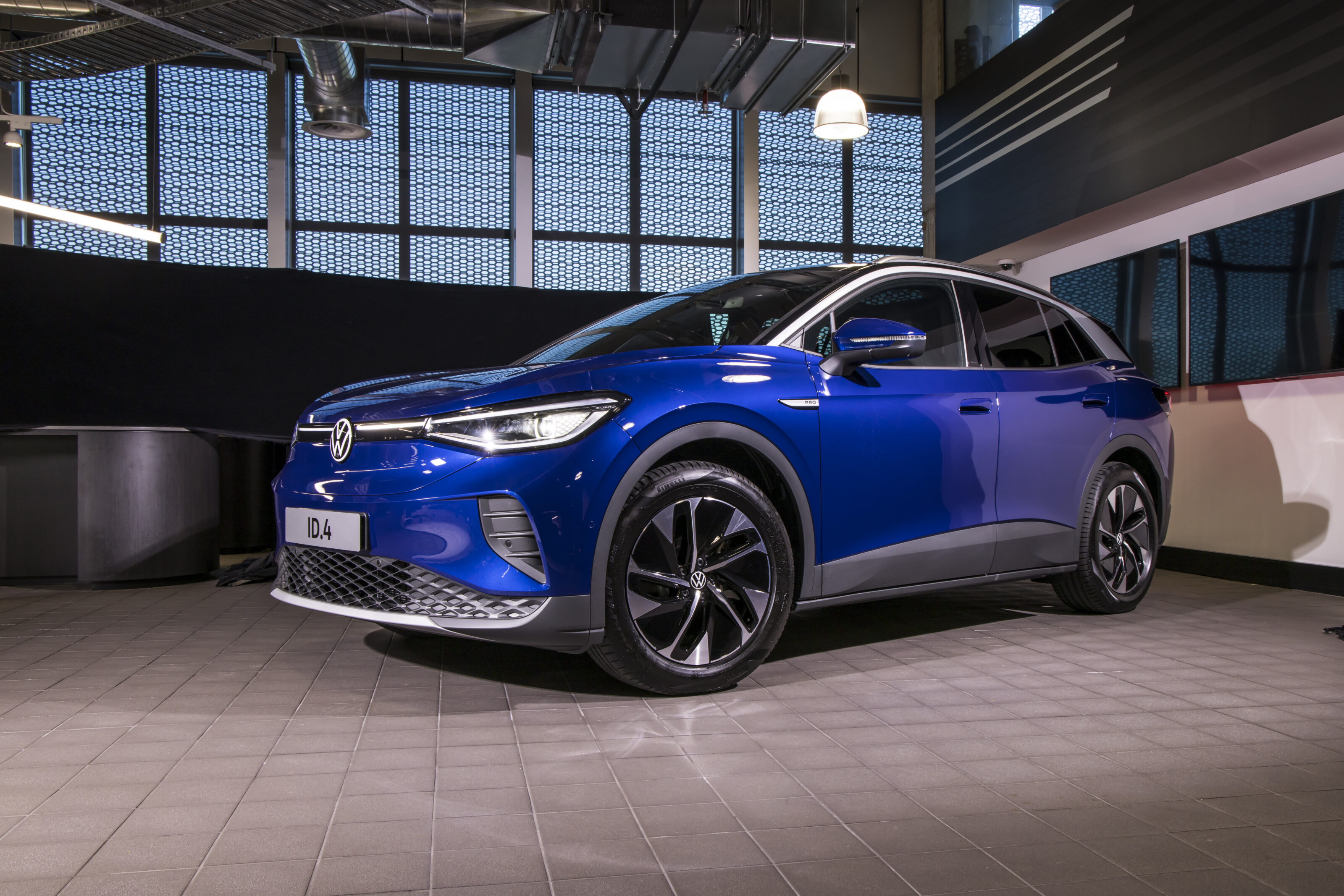
Built on VW’s dedicated electric MEB architecture, the ID.4 and ID.5 are 4.6 metres long and roughly the same size as the existing Tiguan mid-size SUV.
“So very similar exteriors for a very similar price point, but with interiors that are much larger and much more comfortable, not to mention the car is simply better,” added Szaniecki. “There’s less noise, they’re very safe and it’s just a different experience for a very similar price for Tiguan R-Line or Tiguan R.”
If VW can achieve the desired price positioning, the ID.4 and ID.5 will be more affordable than their key rivals. A Tesla Model Y starts at $72,300 and the Hyundai Ioniq 5 and Kia EV6 cost $69,990 and $72,590 respectively for their cheapest variants.
Australian spec of ID.4 and ID.5 is still being locked in, but it’s likely the first batch will be richly equipped and be based on the Pro Performance trim level sold in Europe. The Pro Performance has a 77kWh battery pack, produces 150kW/310Nm and has a claimed WLTP range of around 520 kilometres.
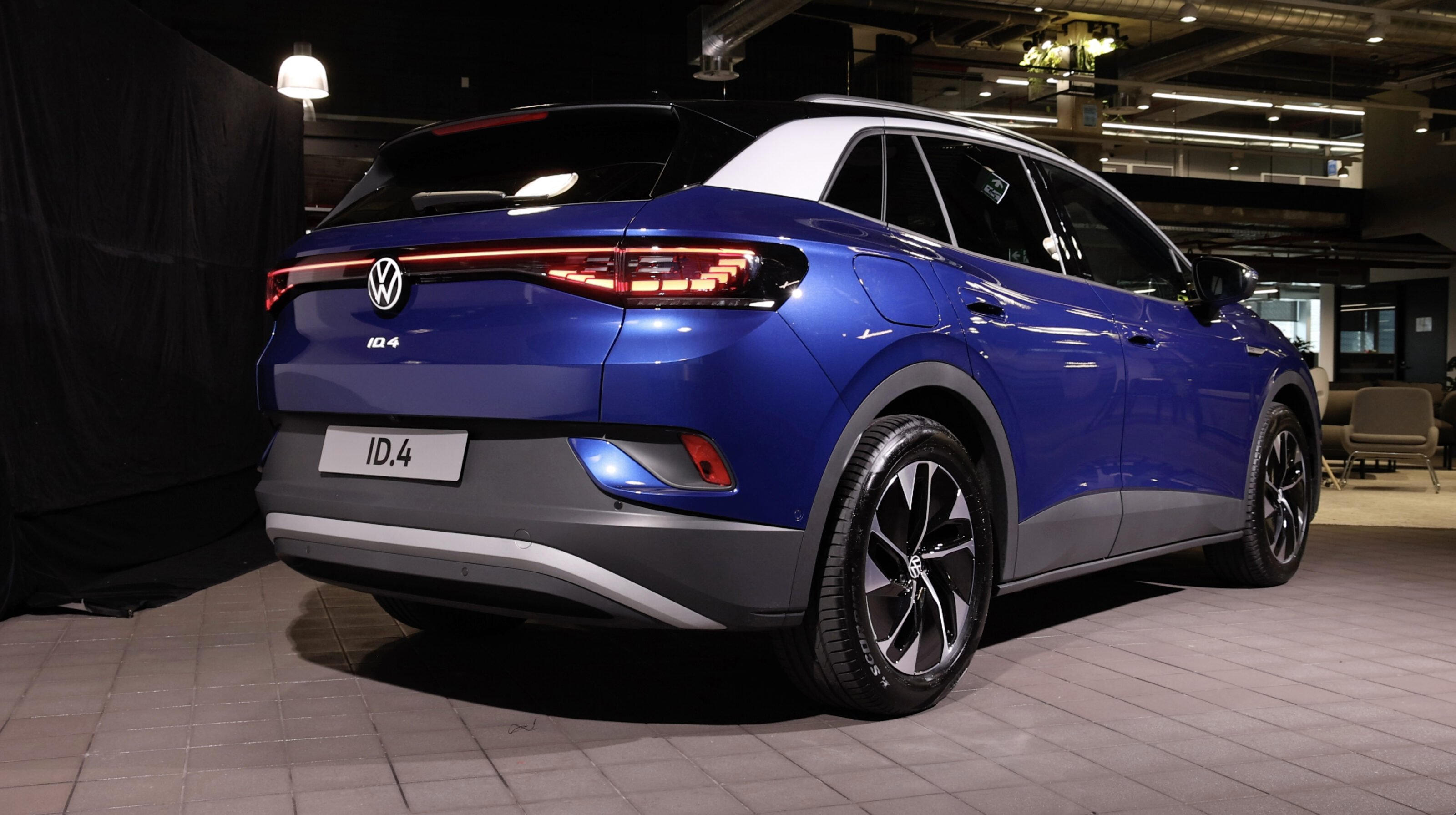
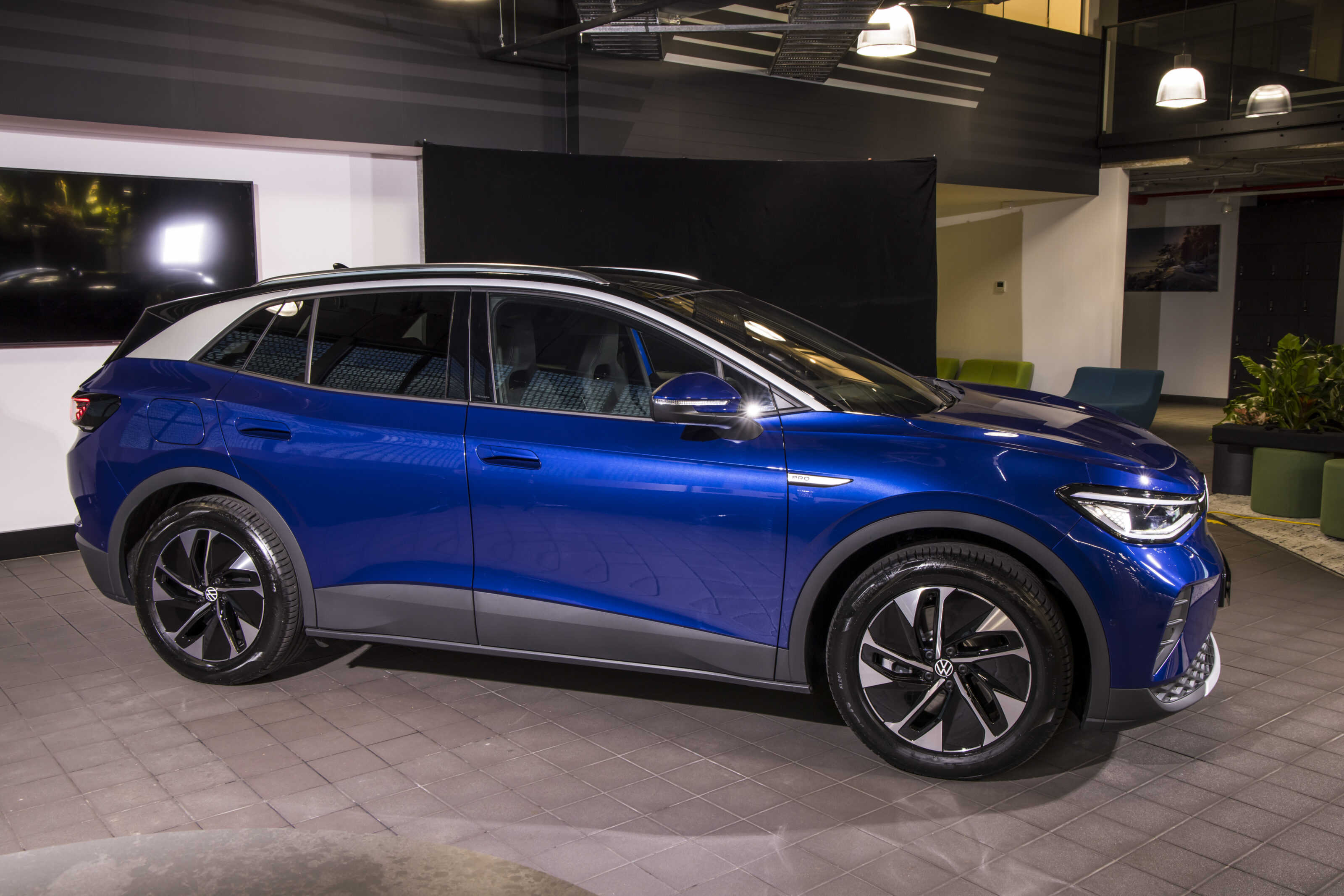
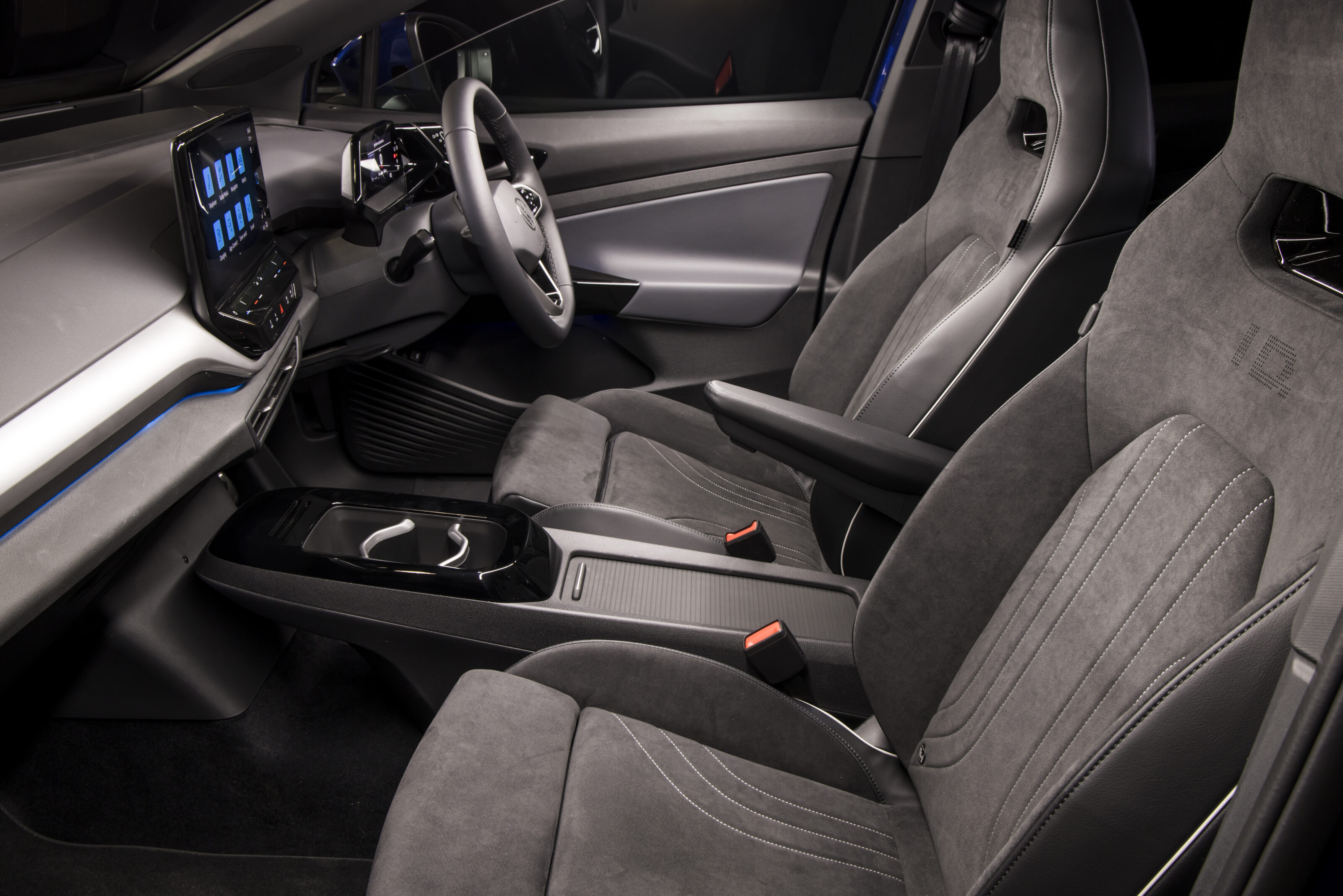
VW has two British-spec ID.4s in Australia currently, and Szaniecki confirmed Aussie cars will mostly mirror their equipment levels – which includes a panoramic roof, bolstered sports seats and an electric tailgate.
“Here in Australia we like our top trims, and the car you see here is probably the most loved one, so we’re starting with this one,” said Szaniecki. “We want to make sure our range and choice is very simple. The current customer journey for ICE [internal combustion] is very complicated, but for EV it will be very simple.
“That may mean we don’t need so many variants. Within the models [ID.4 and ID.5] one version is 100 per cent, two is very likely and three/four/five is TBC.”
Szaniecki did add, however, that even cheaper versions of the ID.4 and ID.5 are possible once the initial batch of cars are launched. VW sells versions with smaller batteries and less equipment in Europe, meaning a lower spec ID.4 could land in the mid-$50K bracket here in Australia.
“We’re now completing the whole portfolio of ID.4 and one of them will be a level cheaper, yes,” he said. “I can’t confirm exactly how much because those discussions are now being held with HQ, but yeah, logically, it will be less expensive given the performance and [driving] range it will offer.”
A quicker, dual motor version of both SUVs, dubbed GTX, is also confirmed for Australia and earmarked for an early 2024 arrival. The ID.4 GTX produces 220kW from a larger 80kWh battery pack and has a claimed driving range of more than 500km.
“It’s on our agenda for sure to make sure GTX is joining our portfolio as soon as possible,” said Szaniecki. “It’s not likely [to be part of the initial launch] but it won’t be late after that. We’re making sure it’s coming very soon.”
The ID.4 and ID.5 will spearhead an influx of new electric models from VW that will also include the ID.3 hatchback and possibly the ID.Buzz van – the latter a modern interpretation of the iconic Kombi.
The German brand has ambitious targets for local EV sales and hopes its aggressive pricing strategy will see it match or even eclipse Tesla in the near future.
“Our plan is infinity,” replied Szaniecki when asked about VW’s volume aspirations. “The car and performance is really, really great. It’s well positioned in pricing, so I think it can be really high. We’re going to start with a couple of thousand and reach maybe 10-12,000 cars a year. The sky is the limit here.”
VW Australia’s Product and PR communications manager, Daniel DeGasperi, added VW’s pricing strategy gives it a unique advantage over it competitors.
“People are asking when are EVs going to have price parity with ICE? And here we are saying ID.4 and Tiguan are going to sit side-by-side and I don’t think there’s another car or EV that can claim that,” he said. “Each EV will do different things, an EV6 or Ioniq 5 are very stylised, but the gap between their medium SUV and those cars will be much wider than what we will have.”
There are all manner of reasons to mourn the passing of Queen Elizabeth II.
Even if you’re not that much of a royalist, it’s hard not to be moved by the stoicism, commitment to service, good grace and humour with which the Queen ran ‘The Firm’, as she would occasionally refer to the royal household.
Millions of words have been written this past week, paying tribute to her seven decades of service, most by people better qualified to comment on the Queen’s life than us.
But, back on her 91st birthday, I wrote a story that perhaps speaks to Wheels readers a little more eloquently on why we treasured our late head of state.
Her passions were well documented: her family, her horses, her beloved corgis and the quiet of Sandringham and Balmoral. But she also loved a good V8 and that’s something that can still make us smile on this saddest of days. She’ll be missed, but for now, God Save The King.
Andy Enright, Editor, Wheels
In honour of her exceptional and patriotic taste in vehicles, and to respect the time and tone of the original piece, the story below continues unedited.
2017: Her Majesty the Queen’s car collection
SHE’S 91 years old, has a birthday that’s not a birthday and, like The Empire Strikes Back, is one of those rare instances where the sequel is better than the original.
Here at Wheels we respect the Queen, largely due to the fact that there are no 91-year-old ladies we can think of who clearly enjoy driving so much and have such a fantastic collection of cars.

It started in 1944, when she joined the war effort as an 18-year-old princess. Second Subaltern Elizabeth Windsor was part of the Women’s Auxiliary Territorial Service where she donned a set of baggy coveralls and trained in London as a mechanic and military truck driver.
She’s the only living head of state who served in World War II. She’s also the first head of state to ever send an email (in 1976). That’s not really relevant to this in any regard, but we thought it was cool.
Anyway, back to the script. Although Buckingham Palace is her official seat, she spends most of her time at Sandringham House, an elegantly sprawling pile on 8,100 hectares in Norfolk. It’s here that her collection of cars is kept, and it’s quite a fleet.
Pride of place goes to the very first royal car, a Daimler Phaeton from 1900, and there are numerous other Rolls-Royce and Bentley vehicles that have been gifted to her.
The Queen’s State Fleet which comprises three Rolls-Royces, three Daimlers and two Bentleys, is kept at Buck House, alongside a few Volkswagen support cars (keeping the Saxe-Coburg and Gotha family values up).
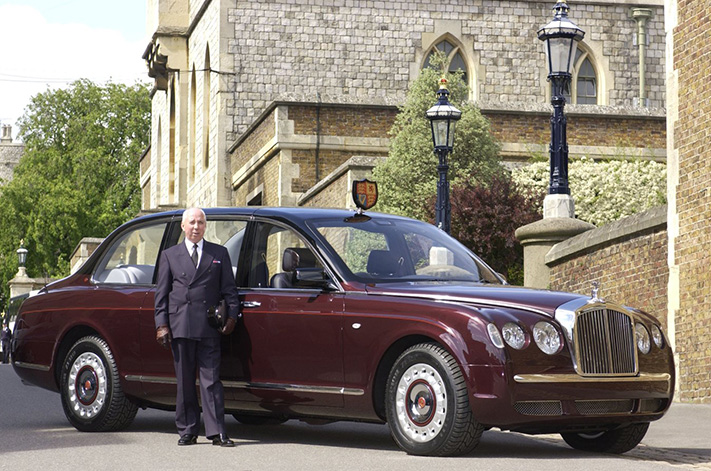
The pair of Bentleys are handbuilt from scratch and at 6.22 metres long, are almost a metre longer than a standard Bentley Mulsanne, so legroom isn’t a problem for someone who stands 1.63m tall. The doors are rear-hinged to allow for elegant entry and egress, the roofline being high enough for the Queen to be able to stand up as she leaves the vehicle.
Power comes courtesy of the doughty 6.75-litre V8 but the cars rarely exceed 15km/h on official duty. The back seats are trimmed in Hield Lambswool Sateen cloth, while the rest of the interior is finished in light grey Connolly leather.
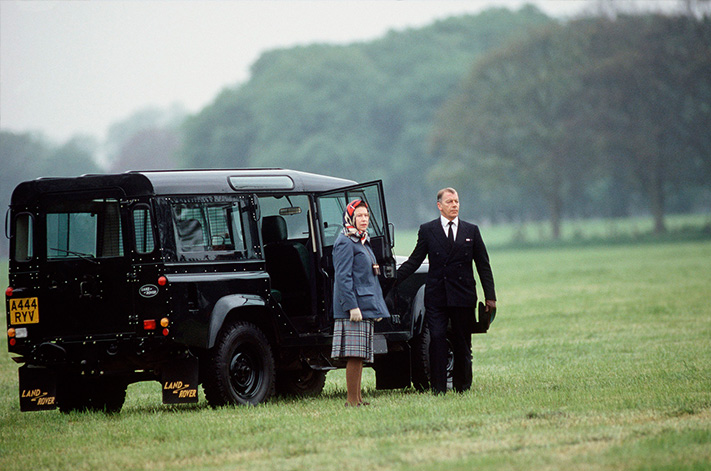
If forced to nominate the car that was the Queen’s favourite, it would probably be her 2002 Land Rover Defender. She put a few miles on her latest one, and it doubles as a shooting brake for when the Glorious Twelfth rolls around and she needs to thin the numbers of grouse on the estate.
She had owned around thirty Defenders over the years, but in 2002 Land Rover built her a custom edition. It was fitted with Range Rover bits such as heated seats and electric windows and also benefited from a suspension lift which made it easier to get to the remoter parts of the estate.
The 4.2-litre V8 workhorse was eventually sold at Brooklands for £30,240, complete with a few unused shotgun cartridges in the glovebox.
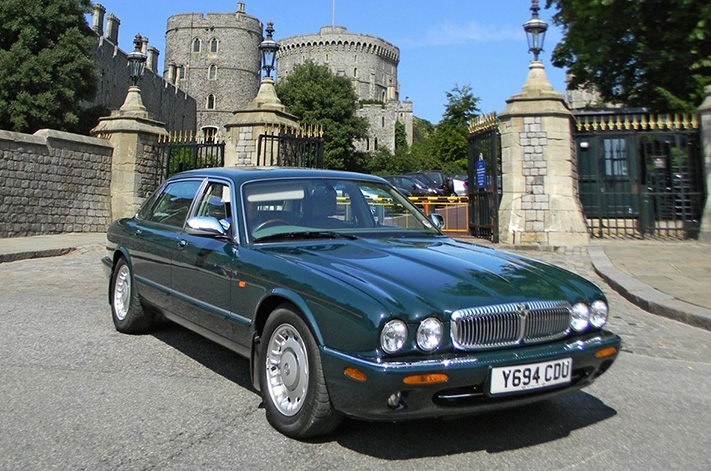
This Jaguar Daimler V8 Super LWB was delivered to Buckingham Palace in 2001 and was used as the Queen’s personal transport for the next three years.
The plan was for her to perambulate around in the back, enjoying the custom handbag holder and custom air con system, but the lure of a 4.0-litre supercharged V8 donk and the prospect of a 13.6s quarter was clearly too strong, and the Queen actually spent more time driving this one herself. It was fitted with a host of Q-branch gadgets, including secret buttons to activate high-intensity neon lights and a boot-mounted radio to contact the Home Office and Downing Street.
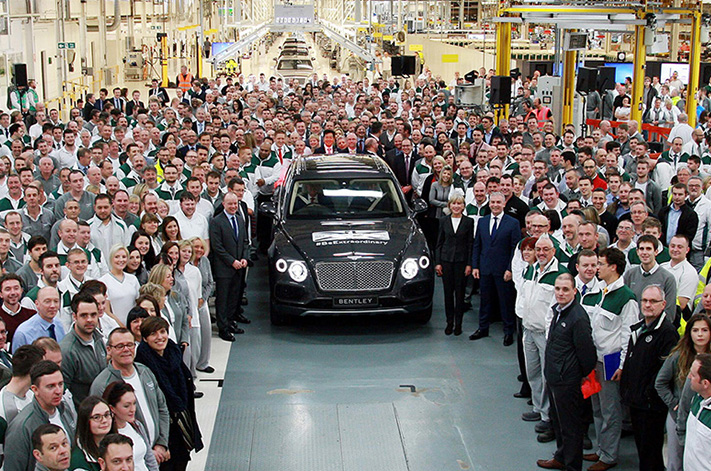
Bentley’s boss Wolfgang Durheimer confirmed in 2015 that the very first production Bentayga to roll off its lines would go to Queen Elizabeth. You’d expect nothing less for the most expensive luxury SUV on the market.
Since Land Rover Defender production has ceased, the Bentayga has some big boots to fill. She was invited to test drive a prototype long before the press got near the 300km/h beast, and uses the production model on her property in Balmoral for stalking deer and hunting grouse.
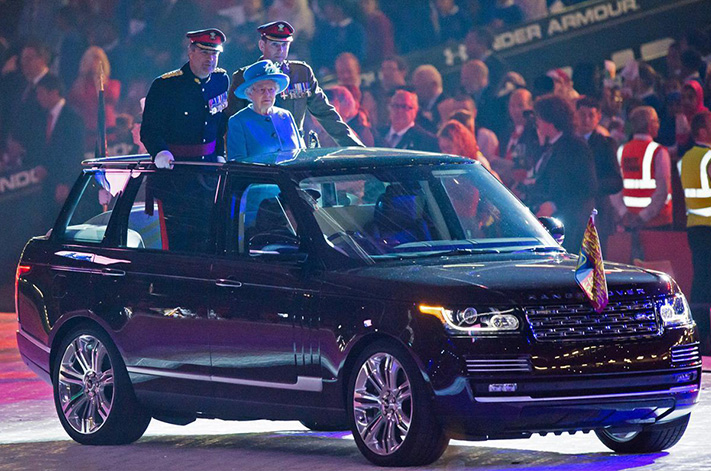
One of the Queen’s civic duties is greeting her subjects. Whereas many heads of state cloister themselves away, rarely seen by their public, part of QEII’s enduring popularity is that she makes herself relatively accessible.
Clearly the number of public engagements a nonagenarian can undertake is tapering off, it helps to do them in style and that’s where this 2015 Range Rover LWB Landaulet comes in.
This turbodiesel hybrid is finished in elegant maroon, with a mount for the Royal Standard on the bonnet. There’s an elevated position for three in the back of this open car, Her Maj being flanked by two bodyguards. JLR’s SVO (Special Vehicle Operations) had a tough job creating a whole new supporting structure for the rear end, but it did a great job. It would’ve been easier to have built a plexiglass bubble like the Popemobile. Here’s something a bit more elegant and it can even travel on pure electric power if required, albeit only for 1.6km.
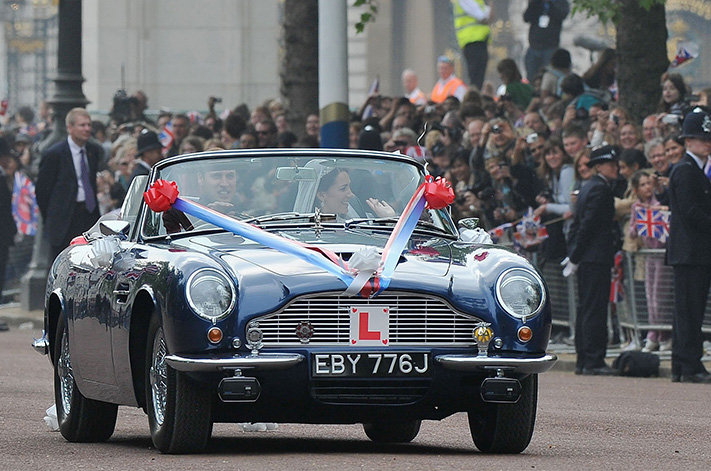
Okay, so it’s not a car that the Queen drives, but she bought it, so we’ve got to credit her with excellent taste. Generosity too. If my mum bought me an Aston Martin DB6 Volante for my 21st birthday, I’d probably make a bit more of an effort when she phones and tells me that she can’t print.
This was Prince Charles’ birthday gift, and it’s one that he grew to see as a bit of an environmental millstone, eventually converting it to run on a bioethanol fuel made from wine. It’s kept at Highgrove House and only clocks up about 300 miles per year, most famously being used for William and Kate’s wedding in 2011.
The iconic Ford Mustang two-door will live on beyond its latest seventh-generation despite an electrification push, according to the brand’s top brass.
For the most part, this is the result of Ford’s electric models, such as the Mustang Mach-E crossover, which bring down its corporate fleet emissions – allowing for internal-combustion vehicles to continue for the foreseeable future.
“That’s what we’re doing with our ICE business, we’re going to keep investing, keep our ICE products really exciting, but make them more opinionated. We want to be opinionated about our products,” said Ford CEO Jim Farley.
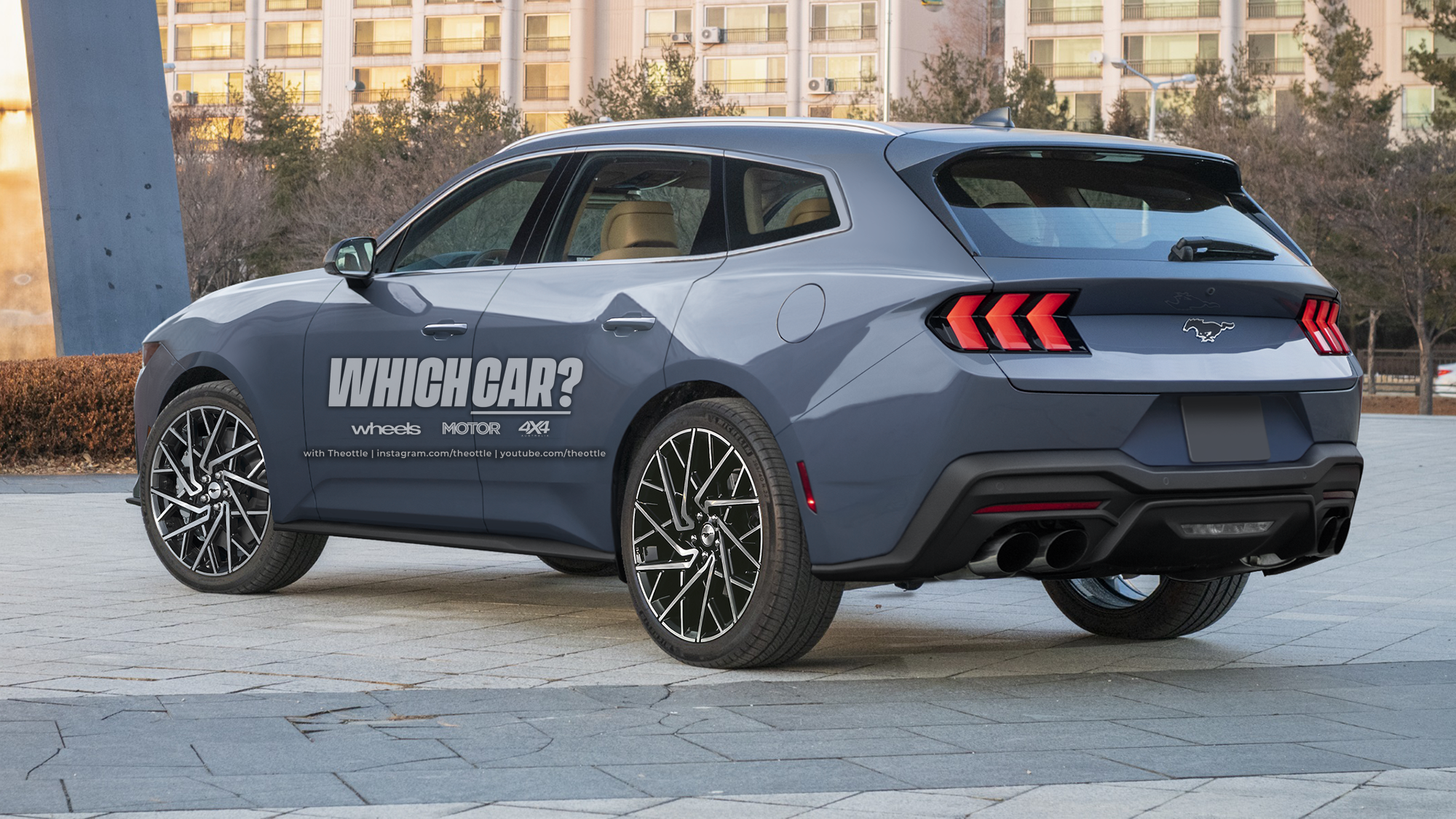
So, what if Ford blended the popularity of a large SUV shape with the performance of the Mustang GT to rival the BMW X5 M, Mercedes-AMG GLE 63 and Jaguar F-Pace SVR at a lower price?
Despite the expansion of the Mustang brand for the electric Mach-E, a beastly Mustang SUV is extremely unlikely, but that hasn’t stopped digital artist Theottle from imagining one.
The idea of an SUV version of the Mustang seems trivial, but this has allowed brands like Porsche and, just this month, Ferrari to produce top-selling models to continue making less-popular sportscars.
Of course, neither a Porsche 911 or Ferrari 296 GTB sells as well as the Mustang, so the justification for an SUV version is further dampened.
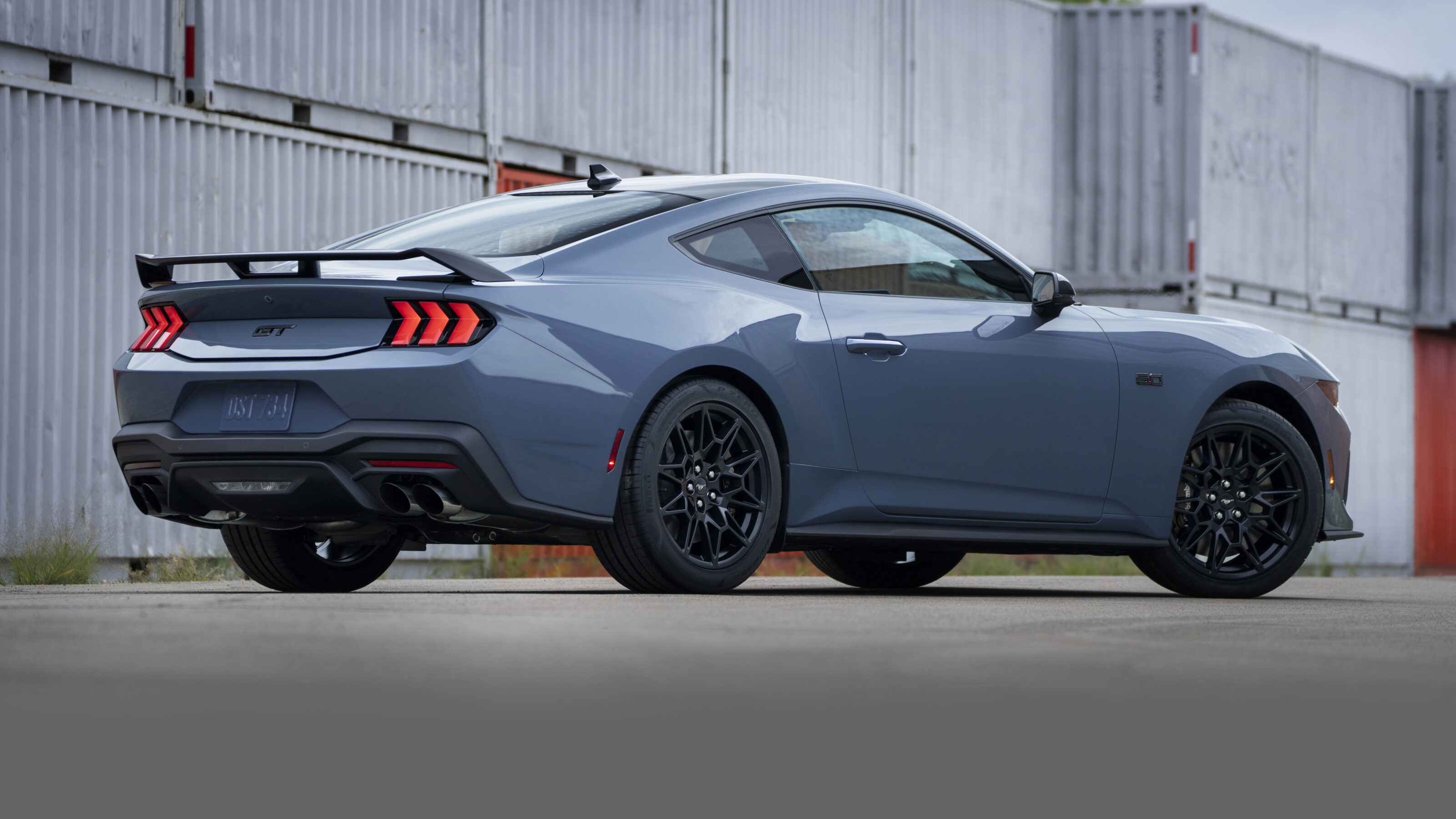
In addition, Ford also sells the rear-drive Explorer ST in the United States with a 298kW 3.0-litre twin-turbocharged V6, as found in the Ranger Raptor.
Nevertheless, taking design cues from the seventh-generation Mustang revealed last week, the high-riding V8-powered model would be a spiritual successor to Australia’s own Territory, which was once available with Ford’s locally-developed turbocharged ‘Barra’ six. Fuel guzzlers unite.
We’d also add the 2.3-litre turbo-four to the mix, alongside the rejigged flagship 5.0-litre V8, which produces more than the current 339kW and 556Nm.
A hybrid version could have potential, as well.
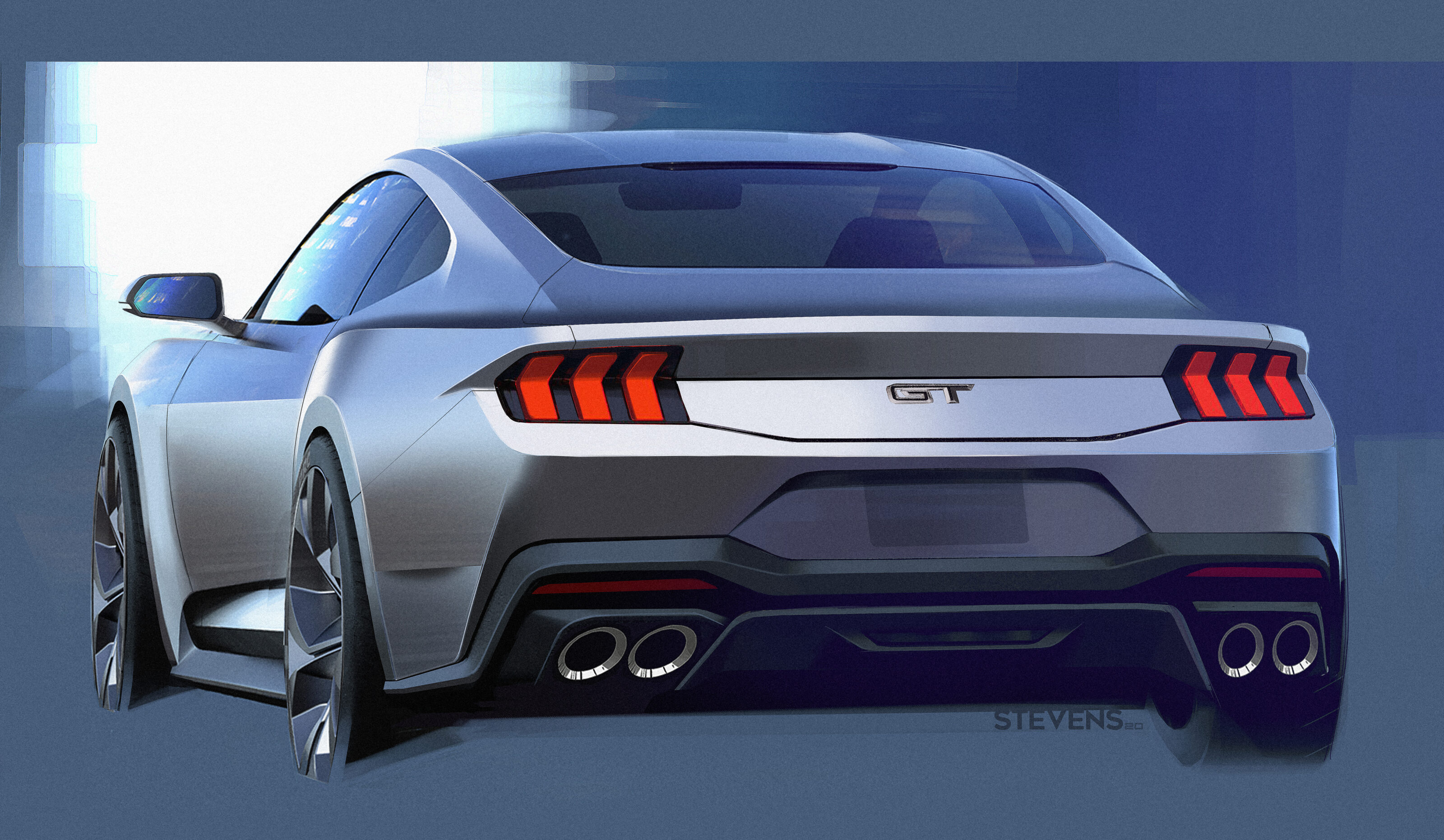
With a five-door body, the Mustang SUV would be perfect for families by offering room for up to five or seven occupants – and a much-larger glasshouse for added comfort.
During the reveal of the new-generation Mustang, Ford released several design sketches with alternative looks, including a Falcon-like four-door sedan drawing.
So, could Ford be considering a family of Mustang-badged vehicles?
It’s not probable at this point, but never say never – although electrification, rather than a big naturally-aspirated V8, is far more likely.
Would you consider a practical eight-cylinder Mustang SUV? Let us know in the comments below.
“Our customers are still really excited about current-gen ASX, and we do look at bringing the right product to the right market at the right time”
Snapshot
- New ASX shares parts with Renault Captur
- Plug-in and self-charging hybrid powertrains
- No immediate plans to introduce new ASX in Australia
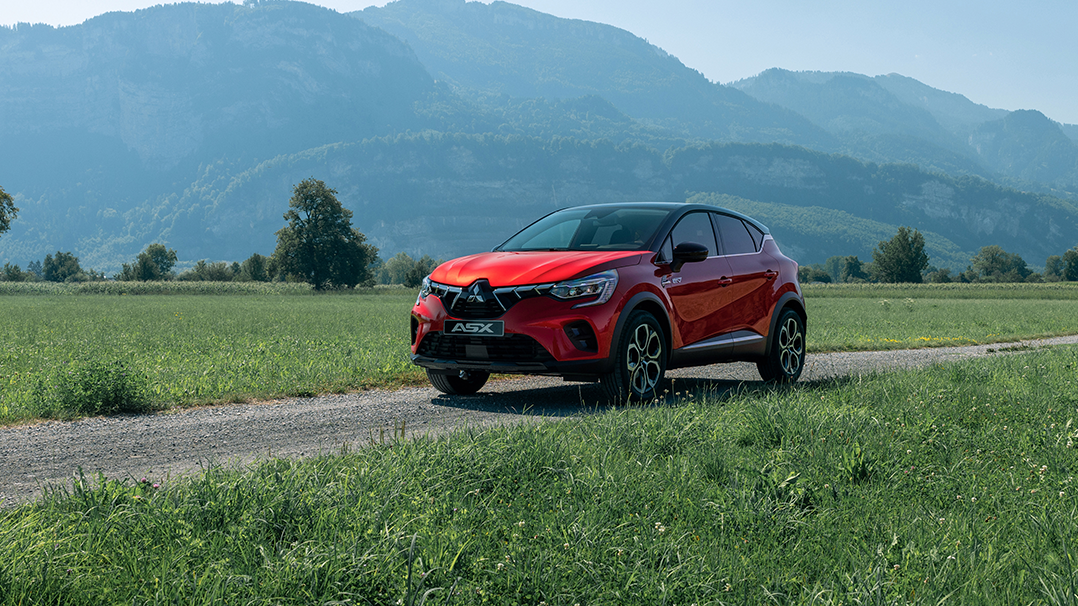
The new-generation 2023 Mitsubishi ASX has been revealed for Europe, packing the option of plug-in, self-charging and mild-hybrid powertrains.
Regular readers will recognise the new ASX as a re-badged version of the Renault Captur, using the same Alliance CMF-B platform and styling.
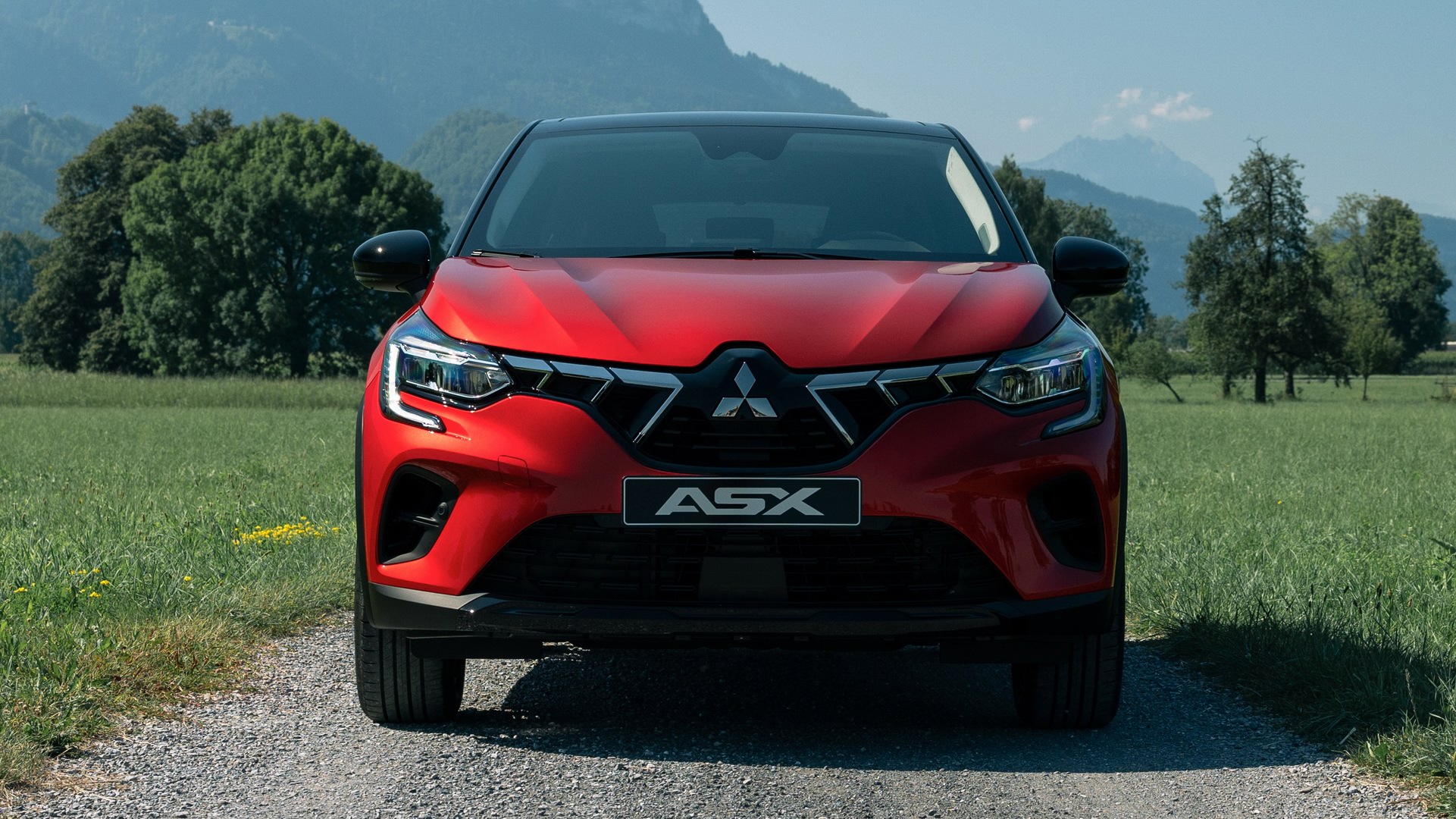
Mitsubishi has tweaked the ASX’s fascia with a subtle nod to the brand’s ‘Dynamic Shield’ grille design, but the similarities between ASX and Captur are hard to miss.
In a rare twist, the 2023 ASX is smaller in every dimension than the 12-year-old car it replaces, measuring 4228mm long, 1797m wide and 1573mm tall against the older model’s 4365mm, 1810mm and 1640mm.
The new ASX will be produced exclusively in left-hand drive – at least initially – so it won’t come to Australia.
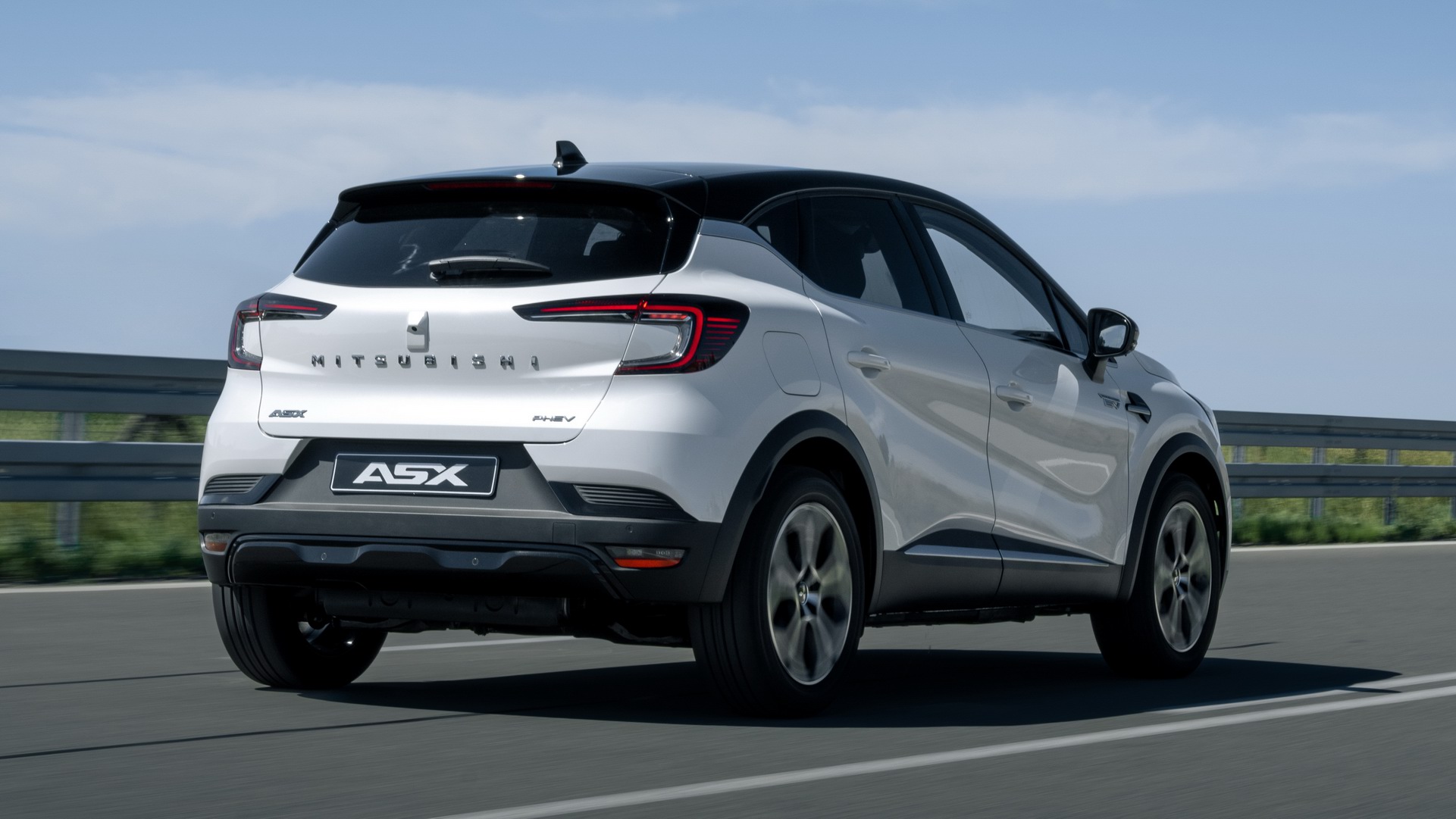
Mitsubishi has been hinting at a new-gen ASX for nearly a year, but the Australian arm will continue with the existing model.
An Australian-market MY23 update for the strong-selling ASX is expected soon.
Speaking to media at the Outlander PHEV launch in August 2022, Mitsubishi Australia CEO, Shaun Westcott, said: “our customers are still really excited about current-gen ASX, and we do look at bringing the right product to the right market at the right time.”
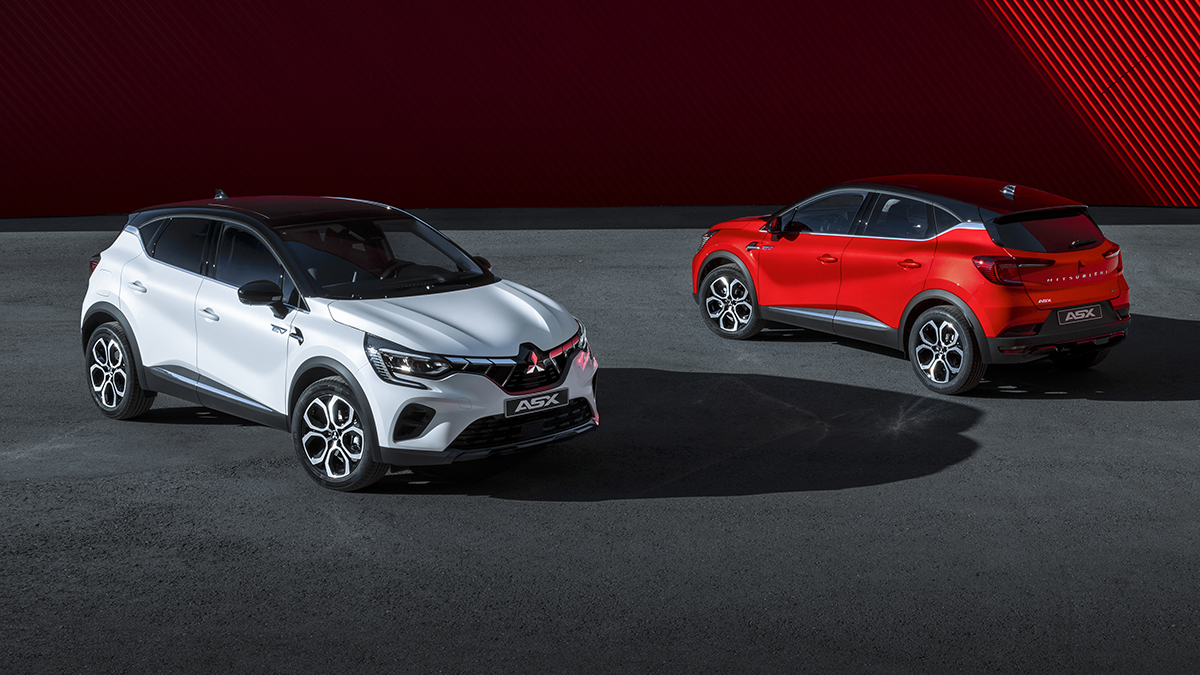
2023 Mitsubishi ASX powertrains
The 2023 Mitsubishi ASX offers a trio of hybridised engines. The flagship plug-in teams a 1.6-litre petrol four-cylinder with two electric motors and a 10.5kWh battery for 117kW of power and about 49km of electric-only driving range.
Below the PHEV sits a traditional hybrid using the same petrol engine, again with two electric motors, though this time with a lower 105kW output and 1.3kWh battery with a ‘multi-mode’ automatic transmission.
Mitsubishi is yet to report detailed fuel economy figures for the ASX hybrids. For context, the Renault Captur E-Tech hybrid is rated at 4.2L/100km in WLTP testing, indicating an ASX hybrid would come very close to a Toyota Yaris Cross hybrid (4.0L/100km ADR 81/02).
The new ASX can be had with two more powertrains in Europe: a 12V mild-hybrid 1.3-litre turbo-petrol four-cylinder with 103kW and a 1.0-litre turbo-petrol three-cylinder with 67kW.
Inside Europe’s new ASX
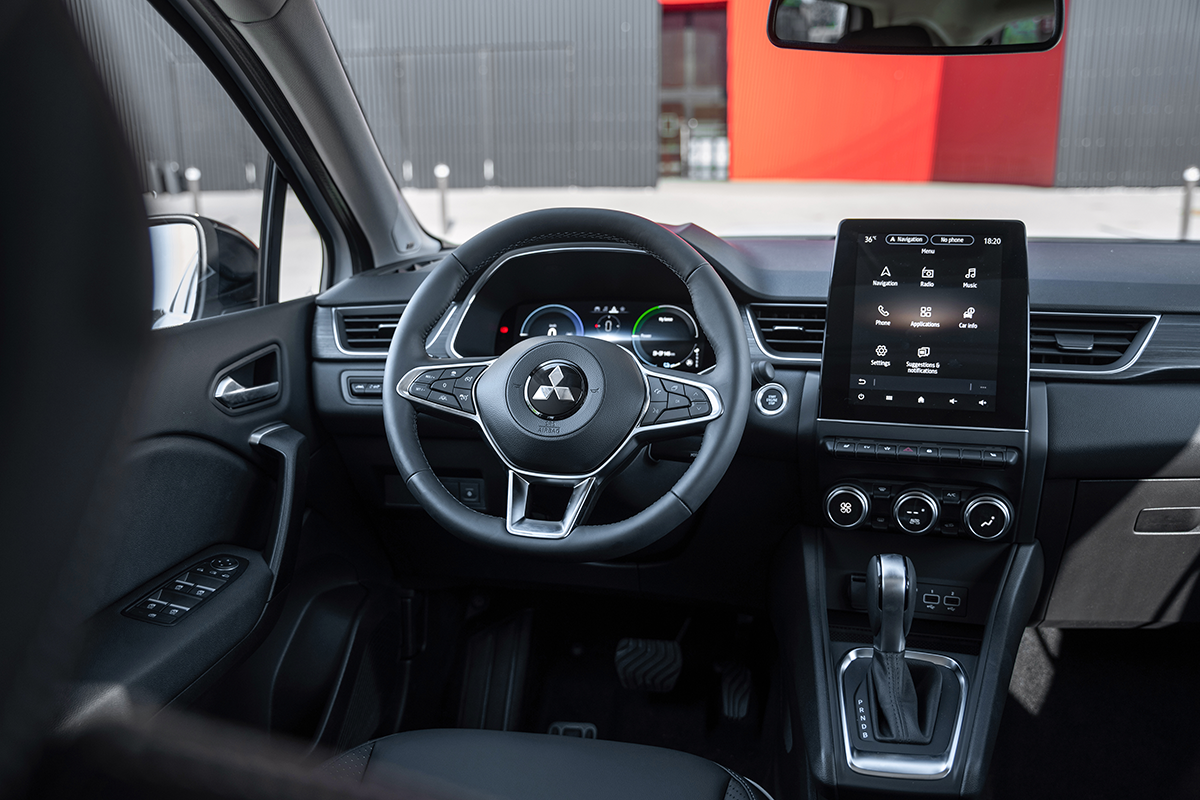
Directly lifted from a Captur, the European ASX’s up to 9.3-inch portrait-oriented touchscreen looks a lot crisper than the current car’s 8.0-inch screen. The 2023 ASX also features wireless Apple CarPlay and Android Auto.
Further niceties include customisable ambient lighting and selectable drive modes.
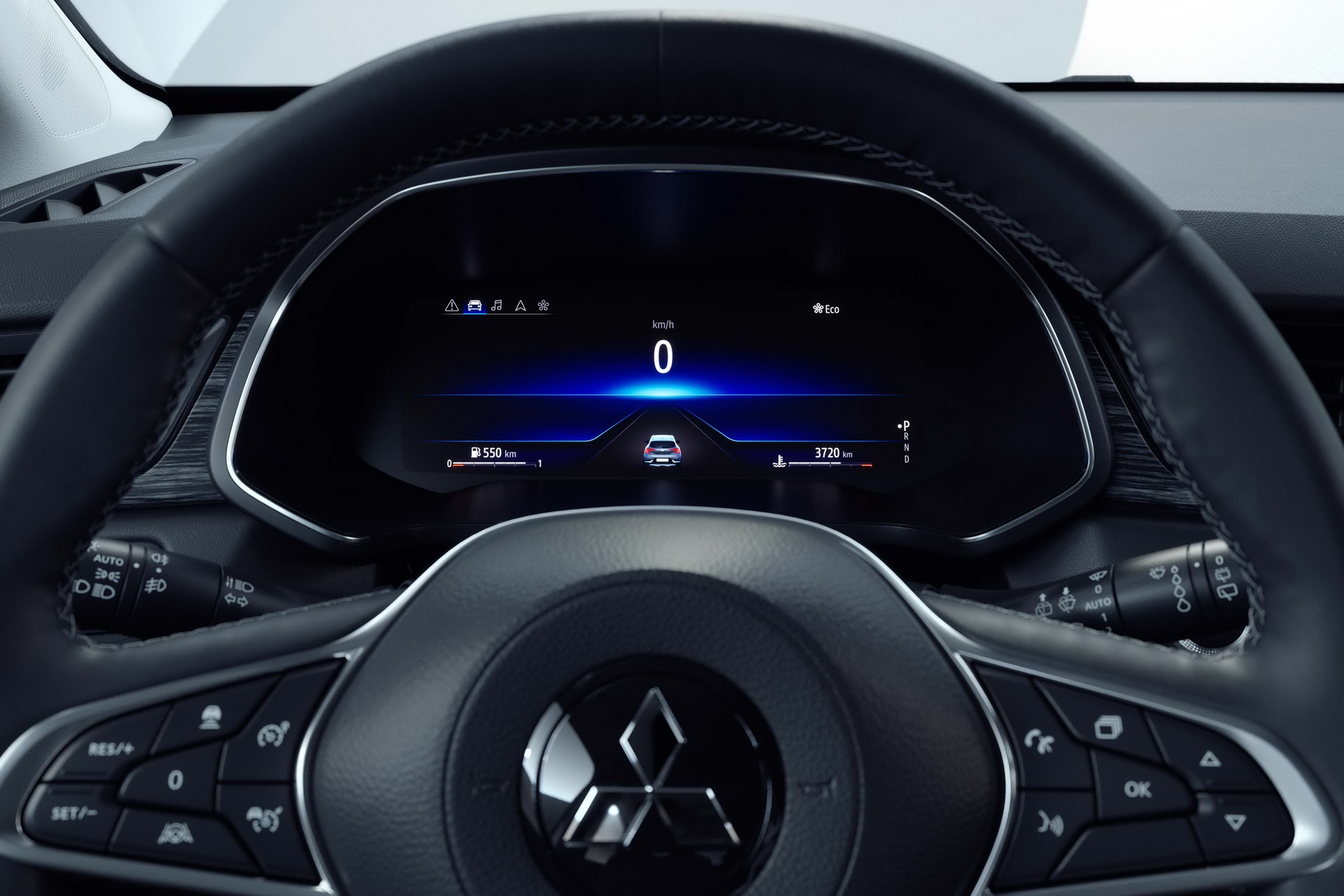
Built-in navigation features on upper trims of ASX, with 3D functionality, and can display on a 10.25-inch digital driver’s display. Lower trims will feature analogue dials and a 4.2-inch TFT screen between.
The rear seat can slide fore-and-aft to preference occupant or cargo space. Boot space in the Euro-market 2023 Mitsubishi ASX is rated between 332L-401L depending on the position – better than the current car’s 392L.
How safe is the new ASX?
Mitsubishi Australia invested in upgrading the current ASX’s side intrusion bars to meet ADR crash requirements from November 1, 2021.
The new Europe-bound car features more advanced safety assist programs, including front AEB with pedestrian, cyclist and cross-traffic detection, reverse AEB, and lane-keep assist across the range.
Higher-trim ASX variants will feature blind-spot monitoring, rear cross-traffic alert, adaptive cruise control, lane-tracing and automatic high beams.
Will the new 2023 Mitsubishi ASX come to Australia?
The 2023 ASX will go on-sale in Europe in the second quarter of 2023. It is unlikely the new SUV will come to Australia immediately, with Mitsubishi Australia not confirming plans for the new ASX.
The current model continues to sell well in Australia, with a value-focused approach bringing it to 7797 sales year-to-date. That number makes the ASX the second-best selling small SUV in Australia, after the runaway success that is the MG ZS – with 13,072 sales year-to-date.
Small SUV sales in Australia
| SUV Small | 2022 YTD | 2021 YTD |
|---|---|---|
| Citroen C4 | 79 | 0 |
| GWM Haval H2 | 3 | 1,965 |
| GWM Haval Jolion | 4,614 | 1,786 |
| Honda HR-V | 3,419 | 4,282 |
| Hyundai Kona | 8,355 | 9,459 |
| Jeep Compass | 1,259 | 645 |
| Kia Niro | 789 | 282 |
| Kia Seltos | 6,267 | 6,323 |
| Mazda CX-30 | 11,036 | 9,347 |
| Mazda MX-30 | 542 | 688 |
| MG ZS | 13,072 | 12,579 |
| Mitsubishi ASX | 7,797 | 9,134 |
| Mitsubishi Eclipse Cross | 4,746 | 4,059 |
| Nissan Qashqai | 9 | 5,451 |
| Peugeot 2008 | 257 | 364 |
| Renault Arkana | 943 | 52 |
| Skoda Kamiq | 1,029 | 1,612 |
| Subaru XV | 5,688 | 6,799 |
| Suzuki S-Cross | 152 | 234 |
| Suzuki Vitara | 1,789 | 2,579 |
| Toyota C-HR | 5,555 | 5,187 |
| Volkswagen T-Roc | 1,648 | 3,483 |
Almost half of Australians are in favour of banning petrol and diesel cars by 2035, according to a new survey.
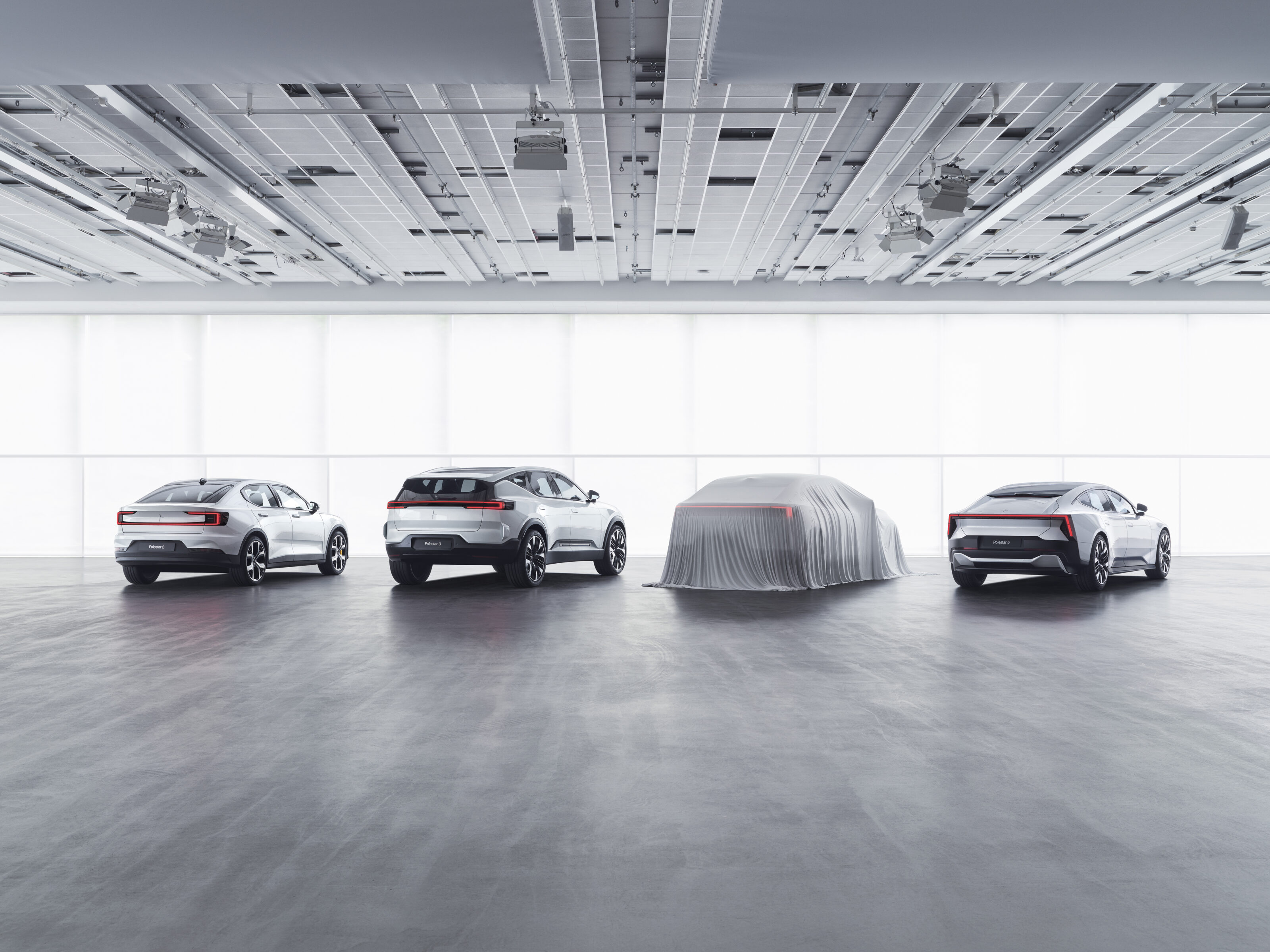
Surveyed for EV brand Polestar, a global study of 18,000 people took in responses from buyers across Australia (1000 people, considered a statistically valid sample size) as well as Europe, Asia Pacific and North America, found that 34 per cent of consumers support an internal combustion engine ban (ICE) by the end of the decade.
That number rises to 47 per cent by the slightly later date of 2035, and 48 per cent in Australia specifically.
Polestar doesn’t specify the lifestyles of its Australian respondents, but the results suggest a mostly urban spread.
Could Australia ever really consider any sort of ban on combustion-engined vehicle sales?
At present, Australia doesn’t have a timeframe in mind for stopping ICE sales, though the ACT has set its own goal of 2035.
Following Labor’s election in May, Australia committed to a 43 per cent reduction of greenhouse gas emissions by 2030 below 2005 levels, but as year does not have a legalised fuel-efficiency standard for cars – this month it has launched a consultation to rectify that.
Head of Polestar Australia, Samantha Johnson, acknowledged Australia has a long way to go to meet its target of achieving net-zero by 2050, but the Government’s recent passing of the Climate Change Bill signals a new direction.
“With the introduction of the Bill, Australia will have more certainty, more transparency, and a clearer path to emissions reduction,” she said. “A low emission vehicle strategy is the obvious next step, and we welcome the opportunity to help shape that strategy with the release of the Government’s discussion paper later this month.”
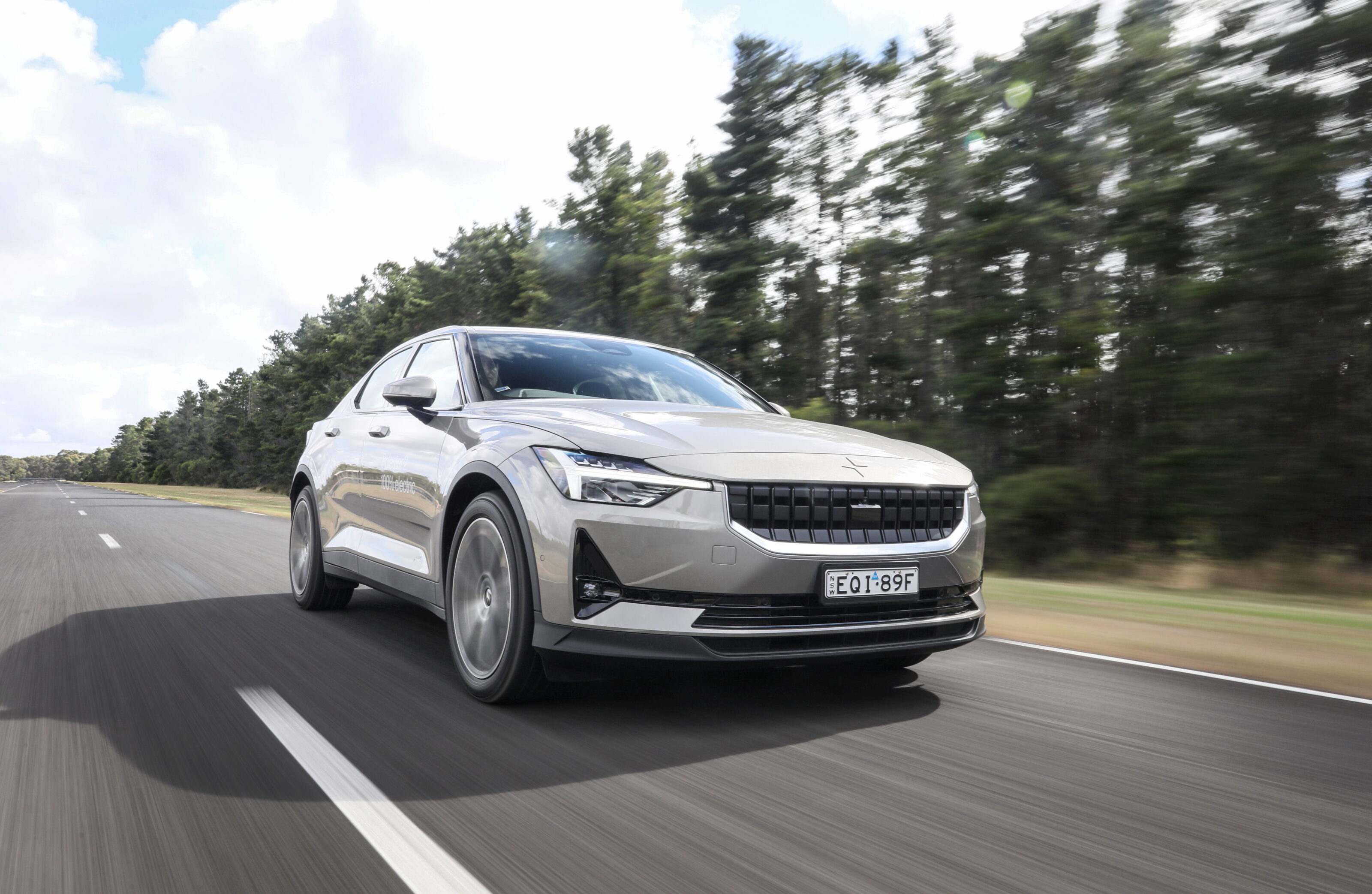
In June, the European Council of Environmental Ministers agreed that by 2035, new cars placed on the EU’s market must be zero-emission vehicles.
Similarly, at COP26 late last year a number of automakers joined the ‘Glasgow Declaration on Zero Emission Cars and Vans’ – a commitment to phase out fossil fuel vehicles between 2035 and 2040.
But Polestar CEO Thomas Ingenlath argues that a global ban on ICE vehicles must come sooner.
“With just 1.5 per cent of the vehicles on the road being electric today, it is clear we are living in an EV bubble, not an EV boom,” he said.
“This decade is the most critical we have ever faced when it comes to not overshooting the Paris agreement. We need governments to lead the charge with robust policies, both on infrastructure and addressing electricity prices so that drivers can confidently go electric, but more importantly, carmakers must act now and not wait for policy changes.”

The new study also found that three-quarters of those surveyed believe society needs to consume differently to preserve the climate and the environment for future generations.
“As climate leaders meet this week in New York, and with COP27 around the corner, it is clear there is climate meeting fatigue,” added Ingenlath.
“Companies and consumers can become the antidote to that. While we don’t write the policies, we have the power to act now and drive real change. We have a responsibility, and it is up to us to send a signal and show we’re ready.”
The forgotten buyers
Unlike many overseas markets, particularly Europe and the many heavily-populated urban areas of North America, Australia is a massive island content with a much smaller population spread across distant, smaller capitals – and an even more sparsely populated set of regional cities and towns.
For Australia to entertain the notion of a ban on combustion-engined cars, a federal government brave enough to set a date would likely also need to pour billions into renewable energy and high-speed charging infrastructure along the nation’s many regional roads that most urbanites can barely visualise.
It would also need to pour billions into incentives to make larger EVs more affordable, given most options suited to family needs are currently priced upwards of $60,000.
Any sales ban would likely also need to include a number of caveats to support buyers and businesses in regions until that investment is complete, allowing sales of new combustion-engined models to continue in some areas.
