
Introduction: New Old Stock
Enright on the joys of being a late adopter
By my reckoning, McLaren has launched 25 cars since 2013. That’s some going, Woking whipping the hanky off something brand-spankers every three-and-a-bit months.
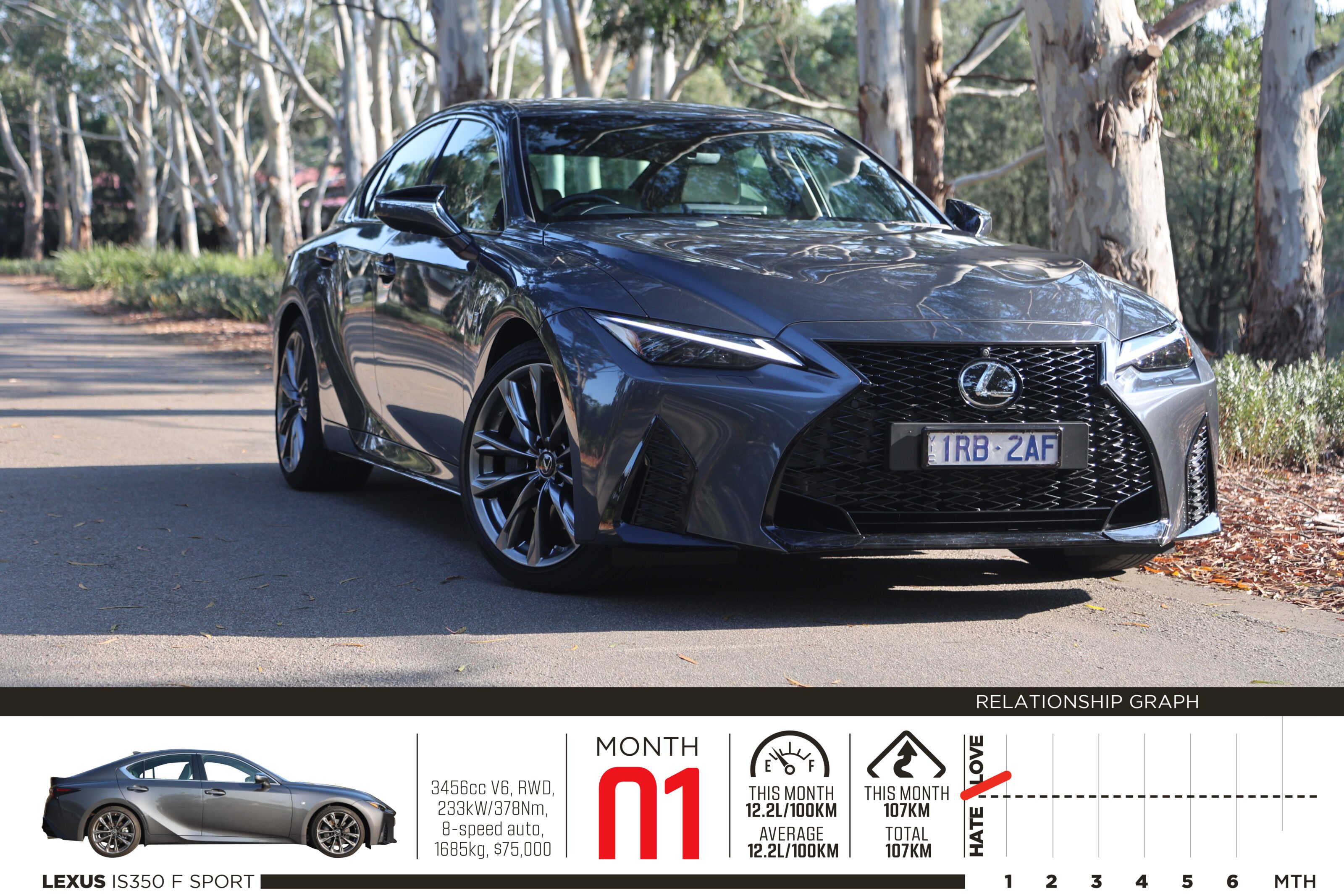
I only mention that because that’s how long this new long termer in MOTOR’s garage, the Lexus IS has been on sale. Not this specific model, the IS350 F Sport, but this twice-facelifted XE30 generation of IS. It’s not Nissan GT-R (2007), Nissan 370Z (2009) or Lotus Elise (a 2010 facelift of a 2000 model year design) ancient, but be under no illusions that this admittedly very handsome sedan is hardly the acme of modernity.
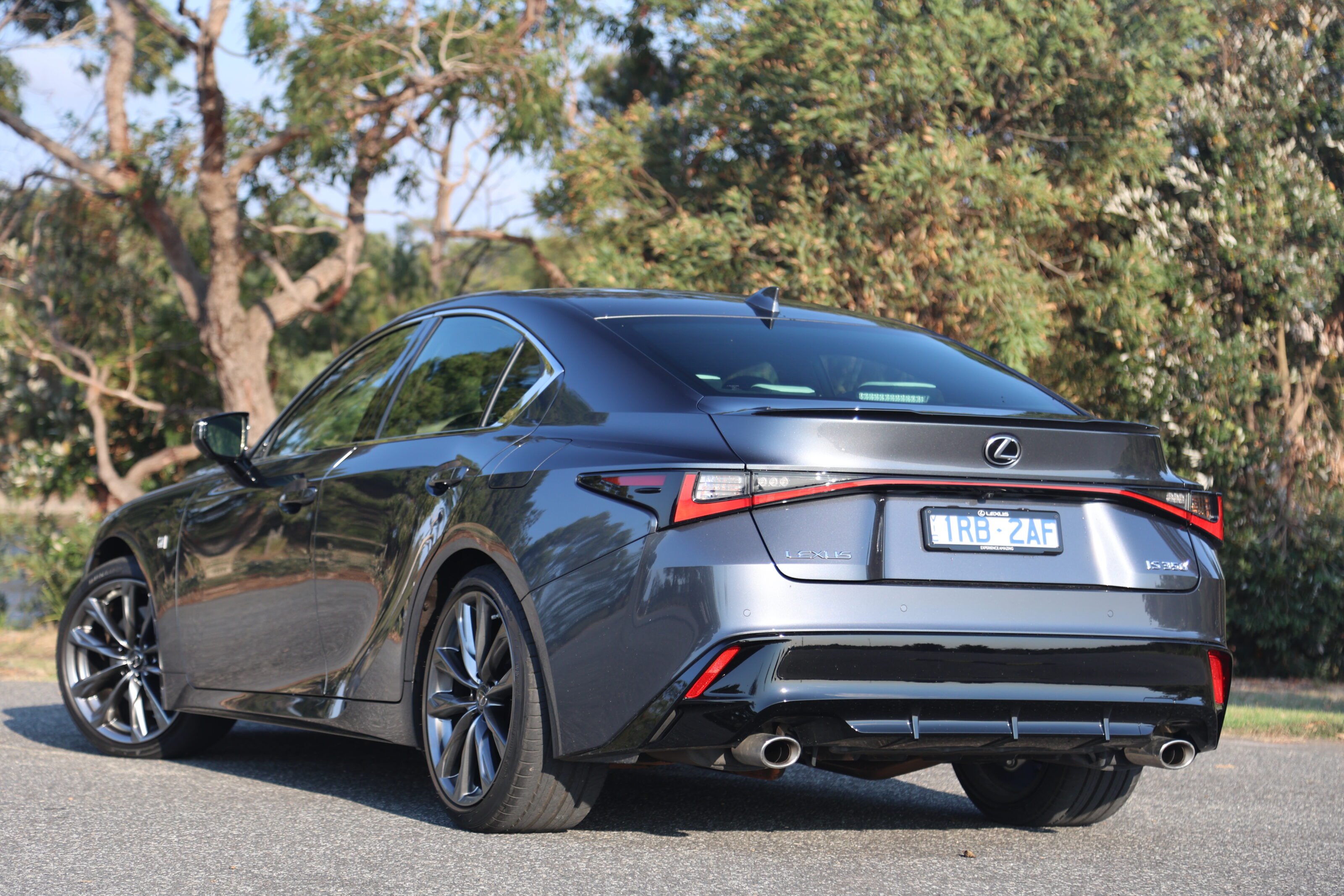
And you know what? Many won’t care a jot. In fact, they’ll love it all the more for the fact. I’m confident there’s a significant constituency of new car buyers who don’t actually care for most new cars. They don’t want a car with a chassis that feels compromised because it needs to share that platform with 15 other models.
They don’t want multitudes of driver aids or infotainment systems where the manual’s thicker than a wrestler’s neck. I guess what I’m saying in a roundabout way is that they might be slightly older customers who don’t feel that juiced about buying into bleeding edge tech and desire something that looks plush, rides well, is beautifully screwed together and which offers solid aftersales care.
Worried about the penalty in residual values in buying an older new car like this? Seems there really isn’t too much to worry about there. Three-year residuals for the IS350 F Sport are within one percentage point of rivals from BMW, Audi and Mercedes-Benz, although it still baffles me as to why you get a five-year unlimited-kilometre warranty on a Toyota Camry, while the luxury arm, Lexus, gives customers a four-year, 100,000km deal. Go figure.
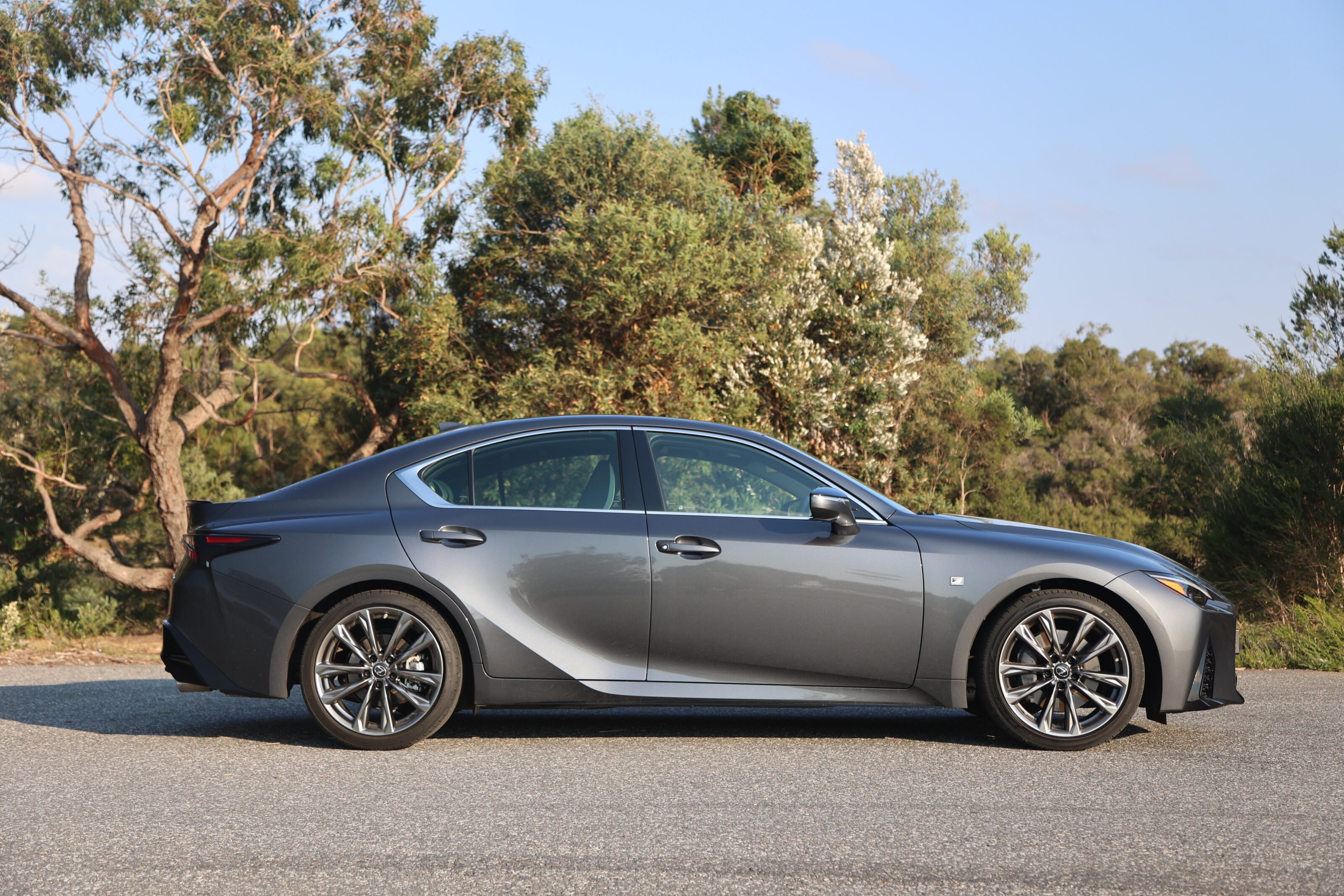
“0-100 in 5.9 seconds and 233kW is going to be perfectly adequate for fast road use”
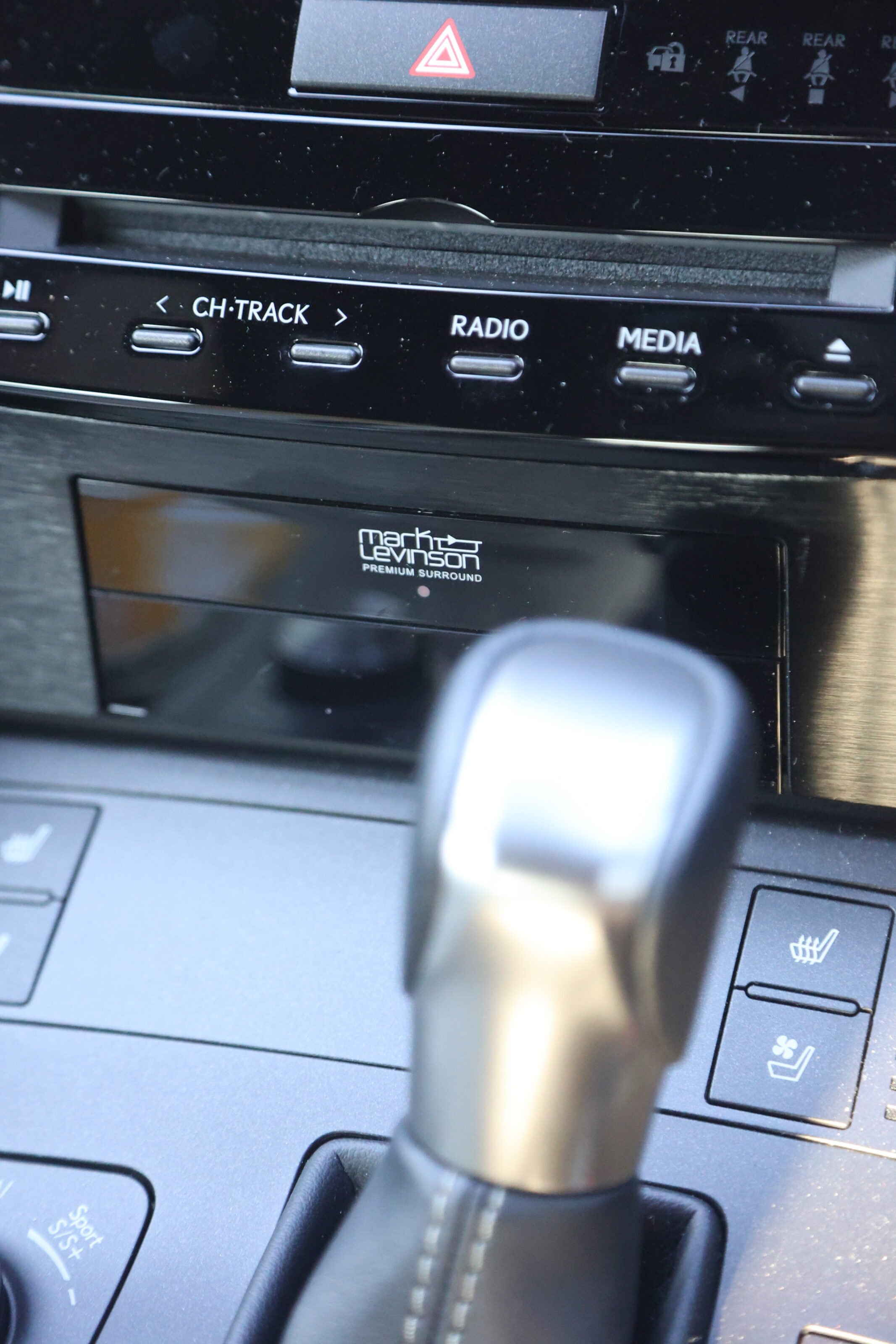
With the IS350 F Sport you don’t get a turbocharger either and you don’t get all-wheel drive. There’s no head-up display or USB-C connections. You’ll search in vain for a wireless phone charger. Thankfully the foot-operated parking brake has been ditched but you do get a slot in the dashboard for a CD/DVD which is entirely apt, as the Lexus SC430 was, by my reckoning at least, the very last car on sale with a cassette slot. Clinging on to outdated media is certainly in the company DNA. The last disc I handled came with an old 4×4 magazine so perhaps I can find that and listen to a gripping travel rug shootout on the drive home tonight. Maybe I’ll get a few bearded blokes seized up over a hexy burner talking winch porn.
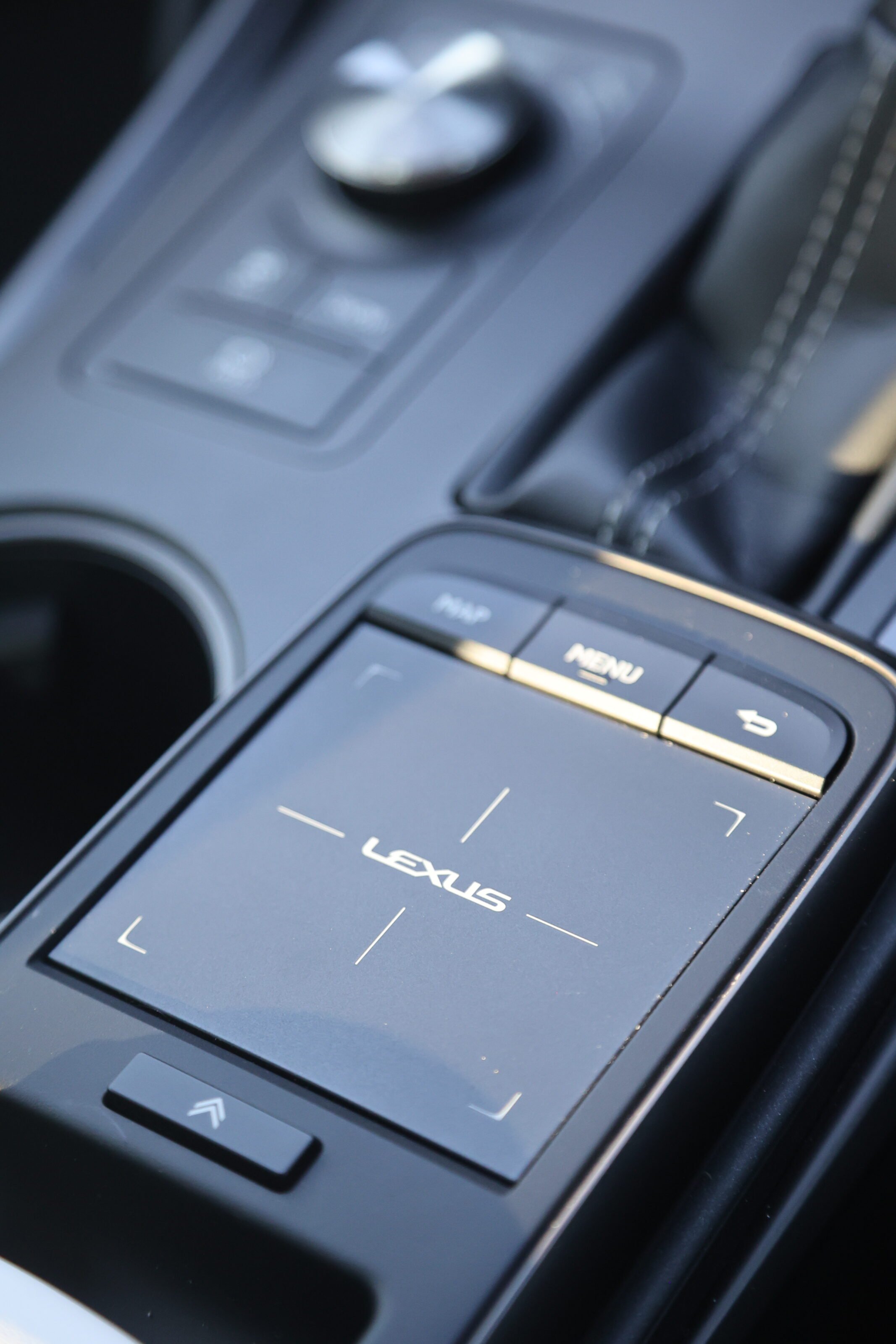
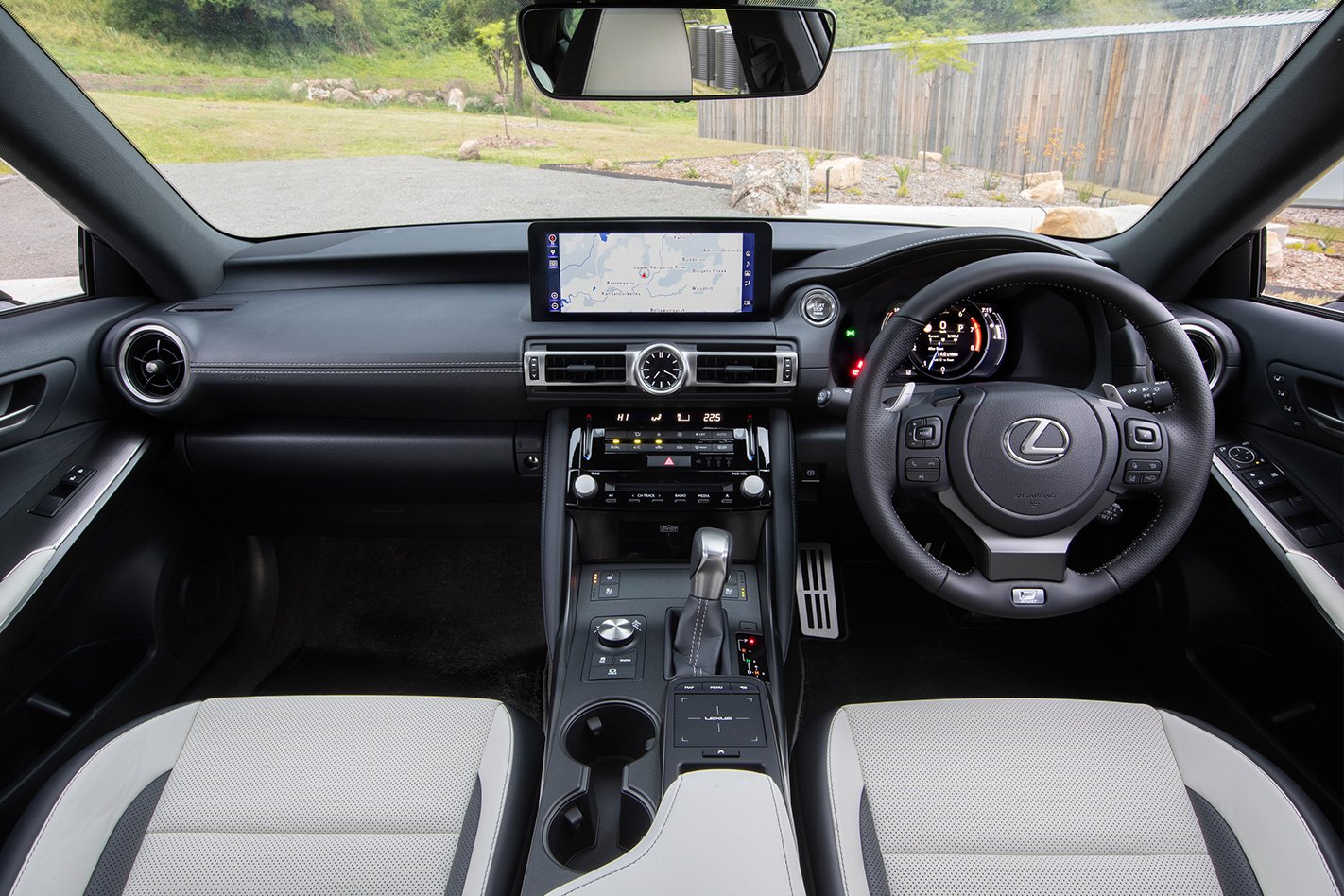
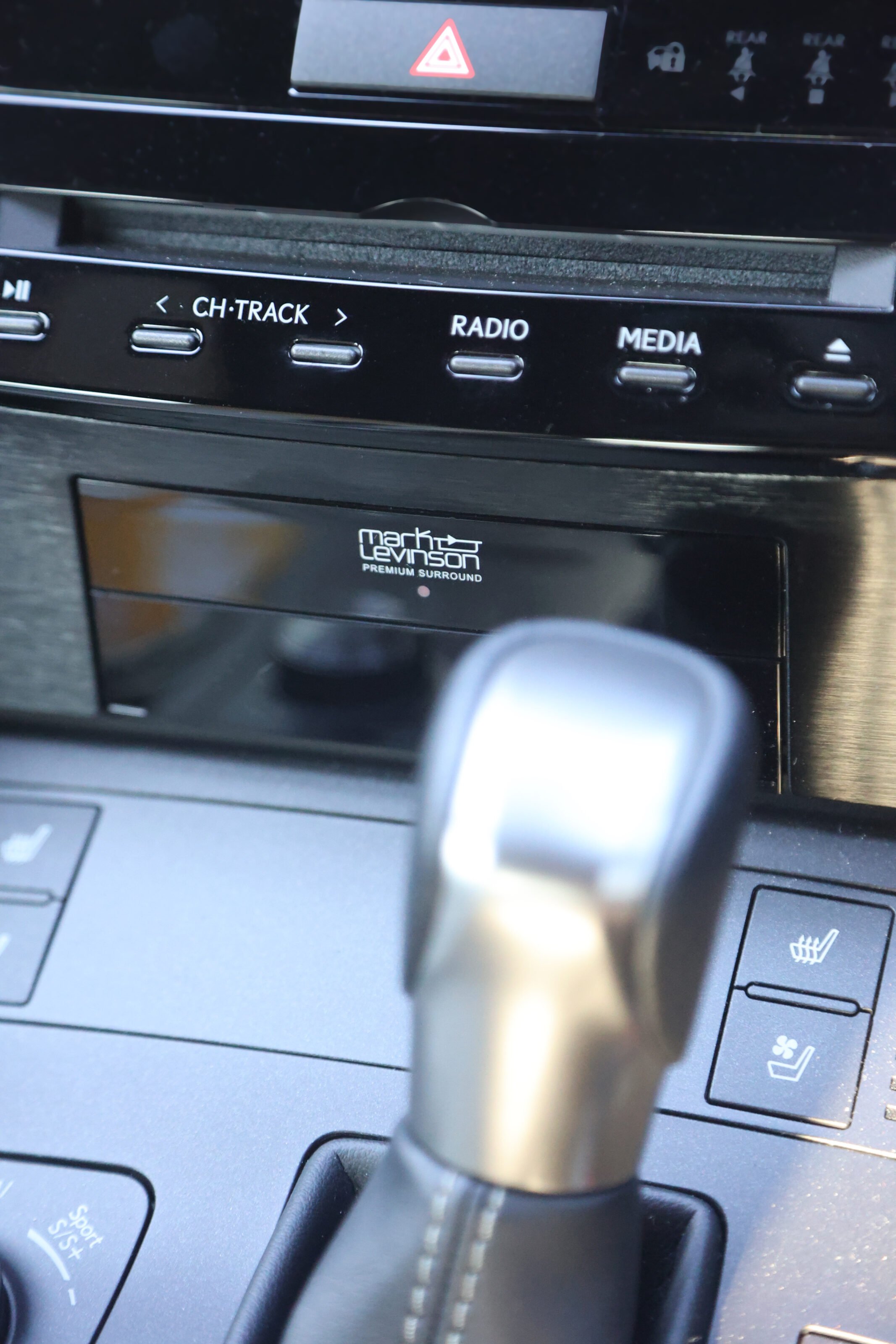
The 1700-watt Mark Levinson stereo might be a modicum of overkill for that purpose, but combine that with heated and cooled seats, an excellent driving position set low in the car, and a 10.3-inch screen that offers Android Auto and Apple CarPlay and you have a recipe for a car that promises to be a joy to rack up some kilometres in. Bringing the touchscreen closer to the driver also means you don’t need to use Lexus’ infernal touchpad mounted on the centre console. That’s a major plus.
I pored over Alex Affat’s first drive review of the IS350 F Sport for MOTOR and can’t really take issue with his dynamic assessments. In its default mode, the accelerator has the response of a darted sloth but is fine for anything that doesn’t involve insant and zesty acceleration.
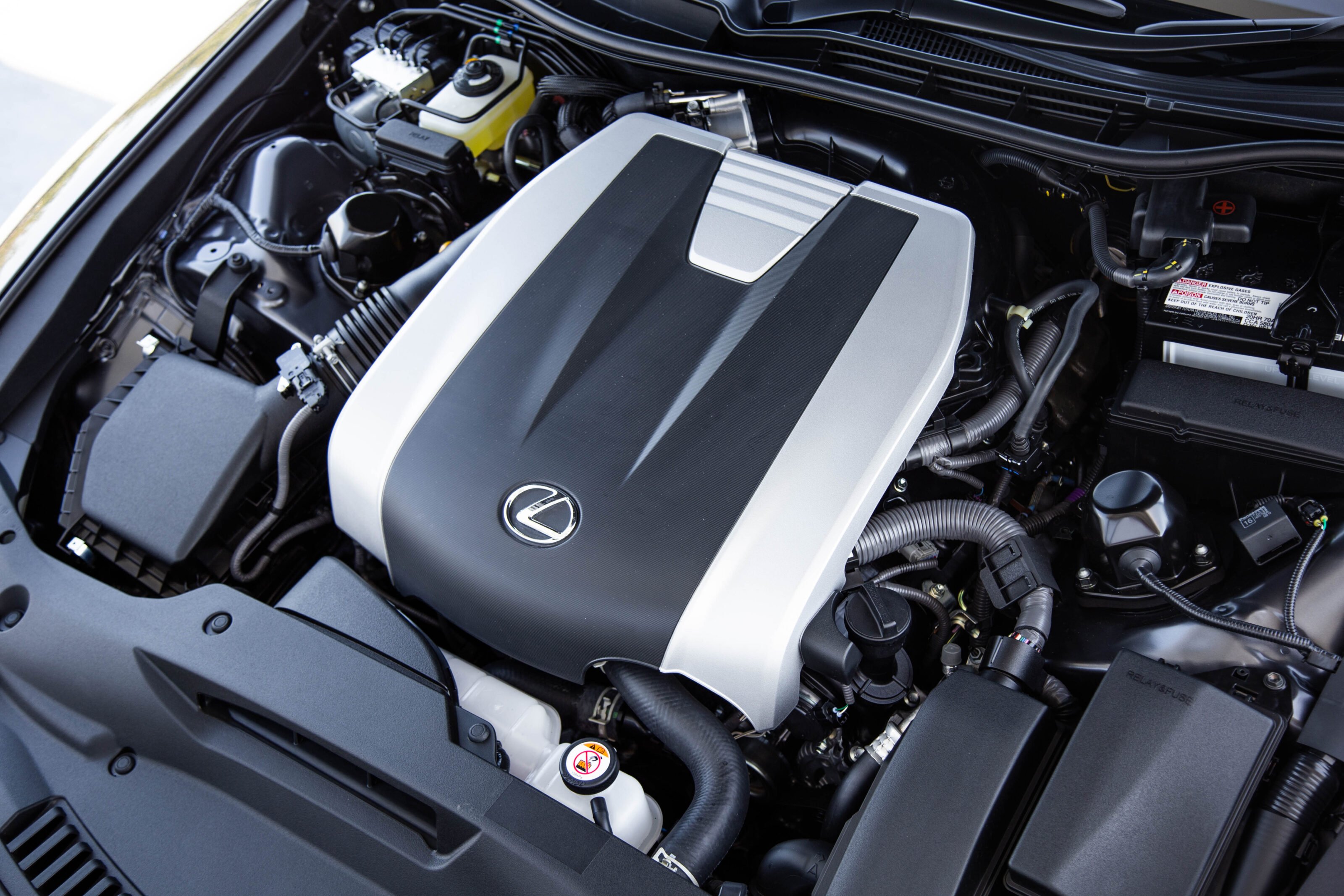
Wick it up into the sportier modes and it’s a lot crisper, with a delicious metallic zing to the upper reaches of the rev range. Mat the pedal and the dial pack turns a hot orange as if it’s beseeching you to reconsider your reckless course of action. I figure 0-100 in 5.9 seconds and 233kW is going to be perfectly adequate for fast road use, especially since I’m coming out of a run of five SUV long termers on the bounce.
The Lexus does seem to like a drop of juice though, which is entirely understandable given that it’s an atmo V6 that enjoys a few revs on the board. So far I’ve averaged 12.2L/100km, which is an appetite some 36 per cent heartier than the even quicker Mercedes-AMG GLA 35 that’s just been returned to sender.
Perhaps that’ll ease down a bit with a few more kilometres on the clock and when the novelty of painting the dials orange dims somewhat. Lexus quotes a figure of 9.7L/100km, which could prove a bit of a stretch to replicate.
One thing I have noticed early on is the F Sport’s propensity to lay a single-pegger on corner exit. American versions of the IS350 F Sport feature an optional Dynamic Handling Package, most features of which are built into Aussie cars as standard. Most but not all. There’s no option here of the Torsen limited-slip rear differential. How much will that matter? We’ve got three months to find out. – AE
Things we love
- Sonic Chrome hue
- Ride quality
- Sharp styling
- Interior storage
- Bit thirsty
- Blunt default mode
Update One: Dynamic Issue
Go, stop and steer is under the microscope
Answer me this. What’s the point of having two dedicated sports modes if even the most focused one is about as sporting as dynamiting fish in a barrel?
After a spirited cross-country drive in the Lexus IS350 F Sport, I have to wonder. Even in the lairiest Sport S+ mode, you’ll brake for a corner and when you get back onto the throttle, the tacho will, almost without fail, be reading 1950rpm. This in a car that makes its peak torque at 4800rpm. Shift paddles it is, then.
This sort of dull-witted calibration somewhat dents the IS350 F Sport’s overall appeal as a cohesive sports sedan. That’s a shame, because there’s so much potential there. I love the way the engine finds its voice at 5500rpm, soaking the cabin in a surprisingly exotic vibe and timbre. The steering is beautifully judged, the damping and body control subtly considered through its various drive modes, the pedal efforts near-perfect and the key ergonomic interfaces are, for the most part, excellent.
The half-witted gearbox logic paired with the lack of a limited-slip differential means that the IS350 will always be a car that ultimately frustrates when pushed beyond eight-tenths, but let’s root this back into reality. This is a road car and the target buyer is only ever going to use it on road.
You probably shouldn’t push a vehicle car beyond eight-tenths anyway on the public highway, so in terms of that constraint, it works and works very well. Yes, you’ll need to get busy with the paddles if you’re pressing on, but since when was a little more interaction and the chance to wind that sonorous V6 to its redline once in a while such a chore?
One thing that is proving tedious is the approach angle of the F Sport. No, I’m not going to get all 4×4 Australia on you, but it’s a fact that the slinky LC500 coupe will climb my sharply angled driveway and the jutting jaw of the IS350 won’t. So, to my considerable chagrin, it remains street parked and I’ve had to gently suggest to my partner, who’s otherwise all-in for buying one, that we might do better exploring other options.
The obvious answer would be a Lexus SUV that rides like the IS350 but, frustratingly, that vehicle doesn’t exist. None of the UX, NX and RX models offer the same glossy ride as the IS, which is a brand consistency issue that Lexus probably needs to address.
The IS350 F Sport’s damping is subtle, relaxed yet beautifully calibrated. In its softest mode, the IS350 glides along, but can bounce and lose a little composure in both compression and rebound over speed humps. Click into a sportier mode and you gain a steelier resolve without the ride becoming terse.
I had the opportunity to drive the GR Yaris Rallye featured in this issue and getting back into the Lexus felt like settling into a brand-new pillow-top mattress. It’s just a joyous place to cover big kilometres.
I have realised that I’m way too impatient for the IS350’s somewhat leisurely starter motor. On a few occasions I’ve pressed the starter button, heard it starting to chunter into life and then pulled the gear lever back into Drive before it’s had a chance to fire up.
The car doesn’t like this and I need to breathe a deliberate one-pause-two when I jump in and fire the IS up. Thankfully there’s no idle-stop feature fitted, which means that your interactions with the starter motor are refreshingly sparse.
On the plus side of the ledger, the initially eye-widening 12.2L/100km fuel consumption figure has settled back to a far more reasonable 9.8L/100km average with the last couple of tanks being consumed at 9.4L/100km, which is even better than the factory’s 9.7L claim. I’ve also managed to belatedly establish which options this car is wearing.
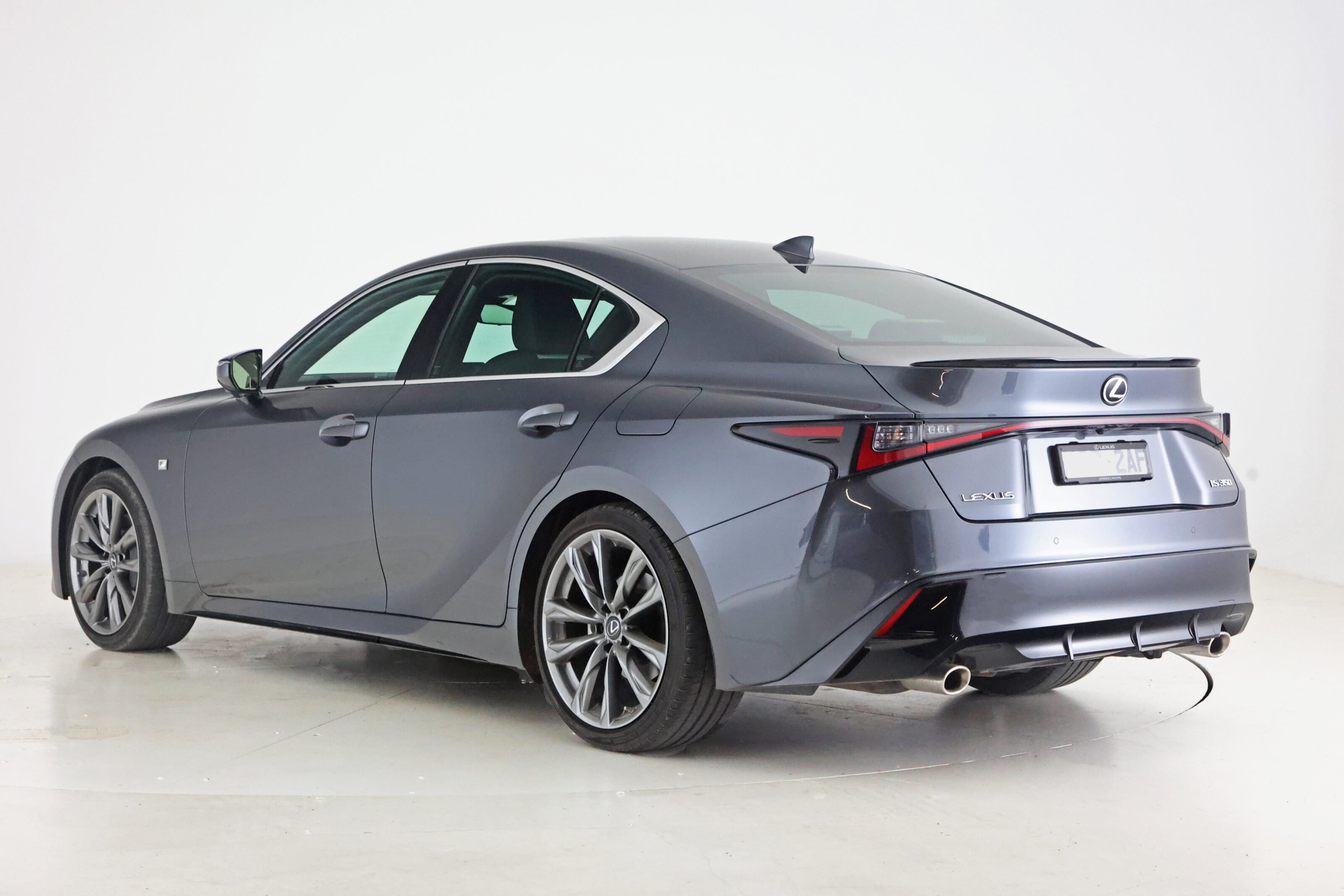
The box for Enhancement Pack ($3100) has been ticked and this includes the phenomenal 17-speaker Mark Levinson stereo, a glass moonroof and an electric rear sunshade. The Sonic Chrome paint also carries a $1500 price tag.
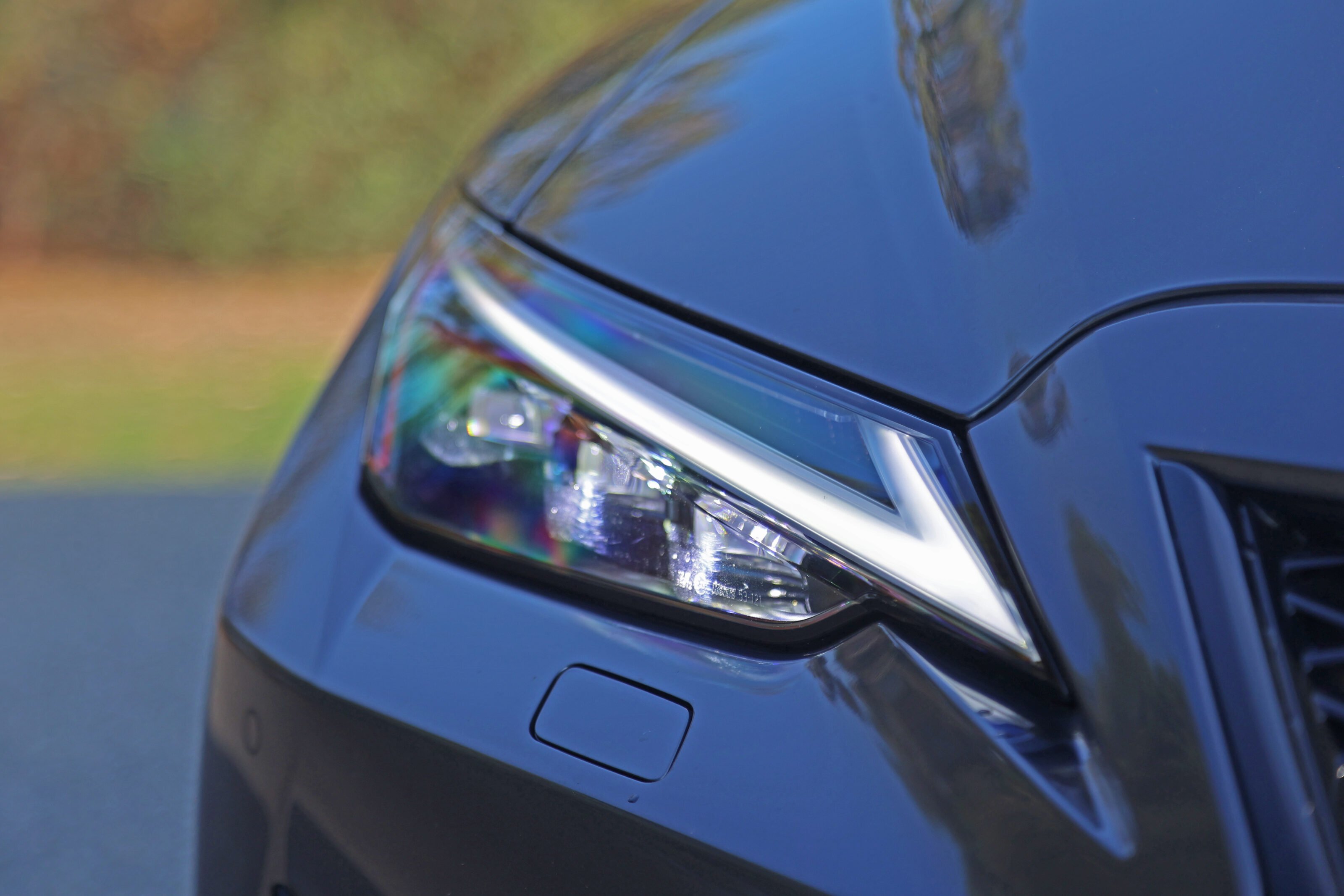
I reckon it suits the car’s lines well, but it does seem to show up every mote of dust that settles on the vehicle. That becomes an issue when your route home includes a section of gravel. The piano black interior trim also shows fingerprints and dust, which can get annoying.
These petty personal frustrations are enough to take the edge off my experience with the car, but it’s worth acknowledging that not everybody lives up a dirt road or has a steep driveway.
For most of the target market, most of the time, the IS350 fulfils an interesting and worthy niche. I could see it fitting the requirements of quite a large section of MOTOR’s readership who desire something swift, discreet, deftly engineered and distinctly easy on the eye. – AE
Things we love
- Build integrity
- Slick steering
- Monster stereo
- White leather
- Jutting chin
- Shows dirt
Update Three: Short Circuit
Will a track session sour Enright’s regard for the IS?
I feel a bit self-conscious. Ahead of me, queueing to get on track is a Lotus Exige Sport 350, a Lamborghini Huracán and a Porsche 911 GTS. Behind me a Tickford Mustang, a gaggle of BMW M2s and an Audi TT RS wearing a light bar.
They’re warming fluids, checking tyre pressures and adjusting HANS devices. I’m sitting on plush white leather, tickling up the seat coolers and listening to a podcast. If anything was going to take the Lexus out of its very comfortable comfort zone, this is it.
If you’ve ever been to Haunted Hills, you’ll know that it’s tight. Corners, crests and compressions assault you seemingly in fast forward and putting anything seriously quick onto the circuit feels like hosting the Collingwood versus Essendon Anzac Day match in your en-suite.
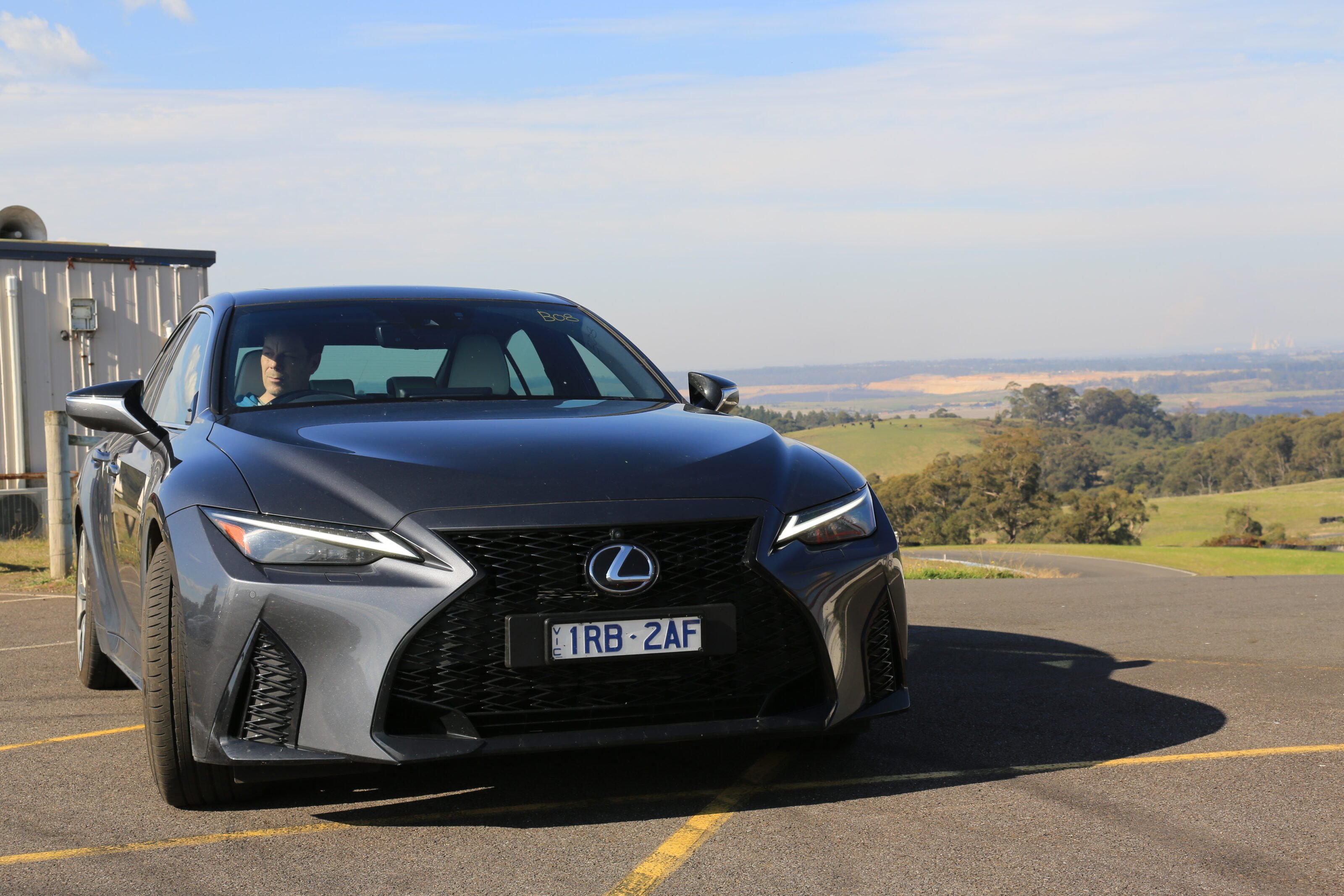
Air-con off, Sport S+ on, manual transmission mode engaged, I headed out. I disabled the traction control but left the stability control on for the first lap on cold tyres. I’ve said some pretty ripe things about Dunlop SportMaxx rubber in the past as a performance choice and, true to form, they howled round the circuit offering a decidedly modest degree of lateral grip. Bigger picture? I’m fine with them.
They’re relatively quiet on road and are great on dirt tracks, so unless you’re doing something like battering them at Haunted Hills, their reputation has been rehabilitated somewhat, with me anyway.
With the tyre sidewalls respectably warmed to something approaching the temperature of a McDonald’s pie filling, I disengaged the stability control system. Despite its F Sport badging, there’s no limited-slip diff at the back and sure enough, trying to rotate the car under power just sees the unweighted inside rear screech like a banshee.
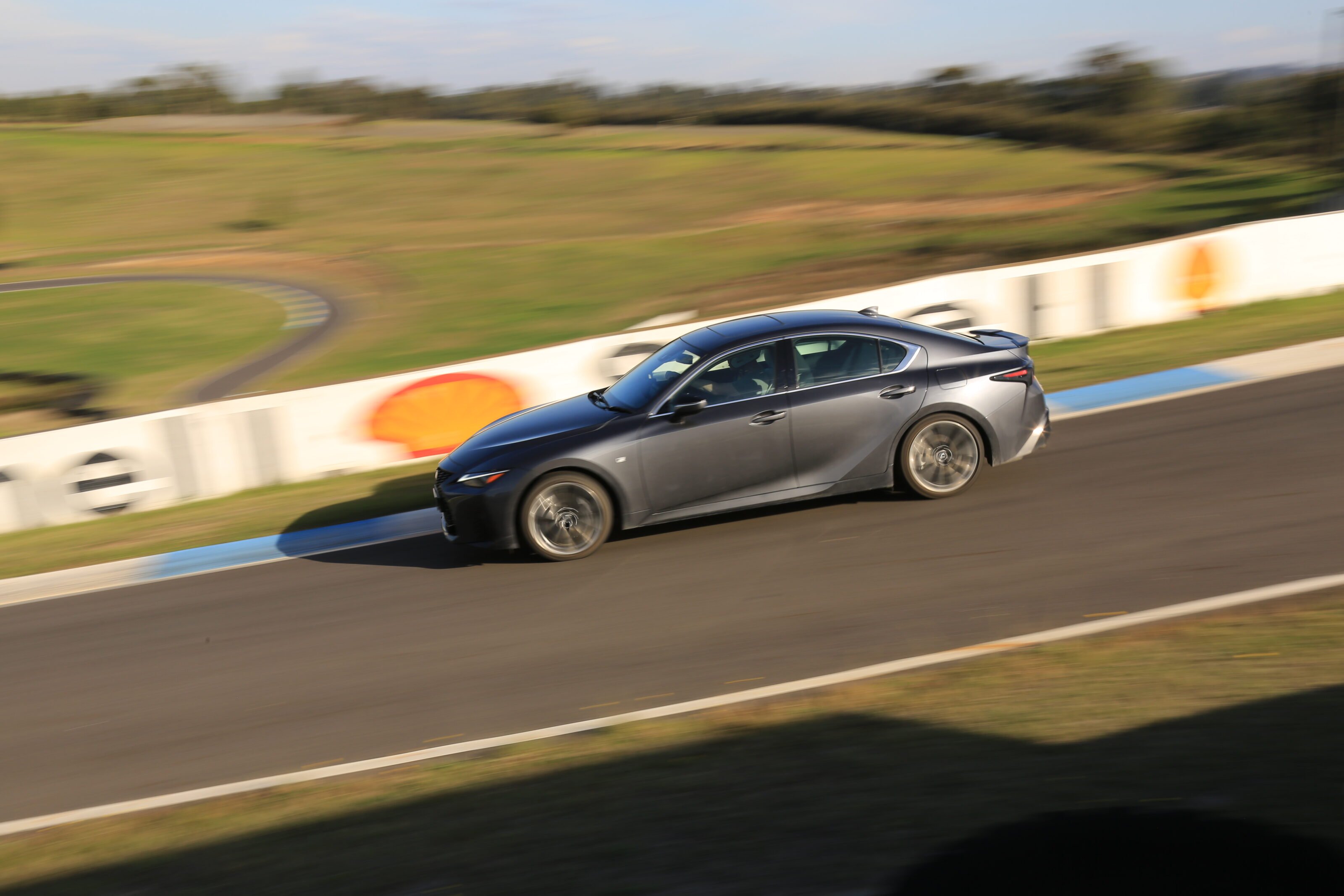
Get a little more imaginative with weight transfers and you can slide the car about a little. Curiosity sated, I settled back to think of the typical use-case for the car, wondering whether many typical Lexus IS350 buyers would be tempted to play in this way. I suspect not.
As the car pinged and ticked cool in the paddock, I realised that I’d had a really great time. The engine sounds metallic and zingy in the upper registers, the paddle shifts keep you engaged and planning ahead through corners, the fundamental chassis balance is sweetly benign and the steering and brakes were up to the task. No, I didn’t break any lap records, but sometimes three laps is enough to tell you what you need to know and plaster a big grin on your face.
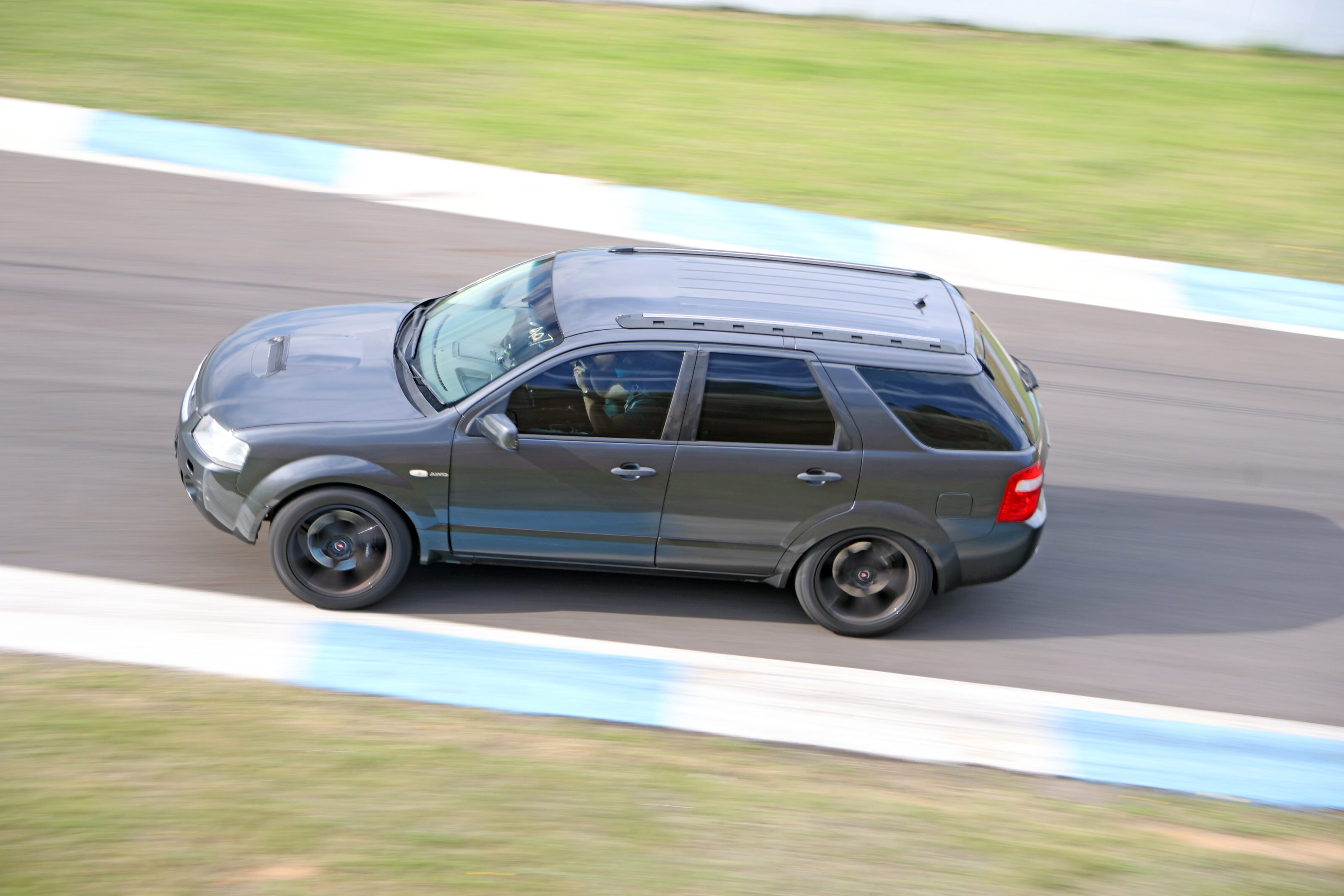
Nobody exemplified that better on the day than the guy beating round Haunted Hills in a 290kW Ford Territory Turbo who was having the time of his life playing chase with the Mustangs in the event’s spicy two-car touge format.
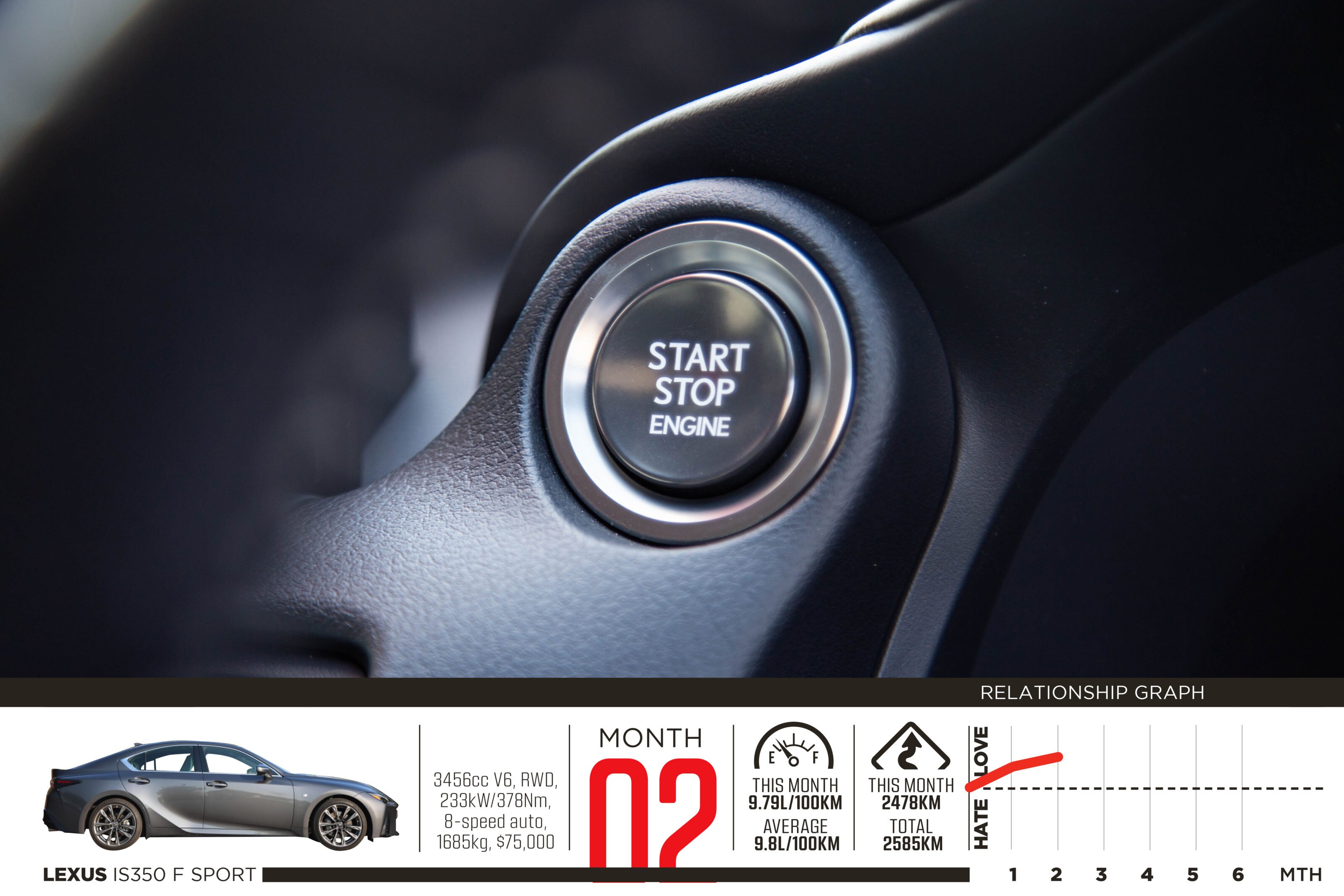
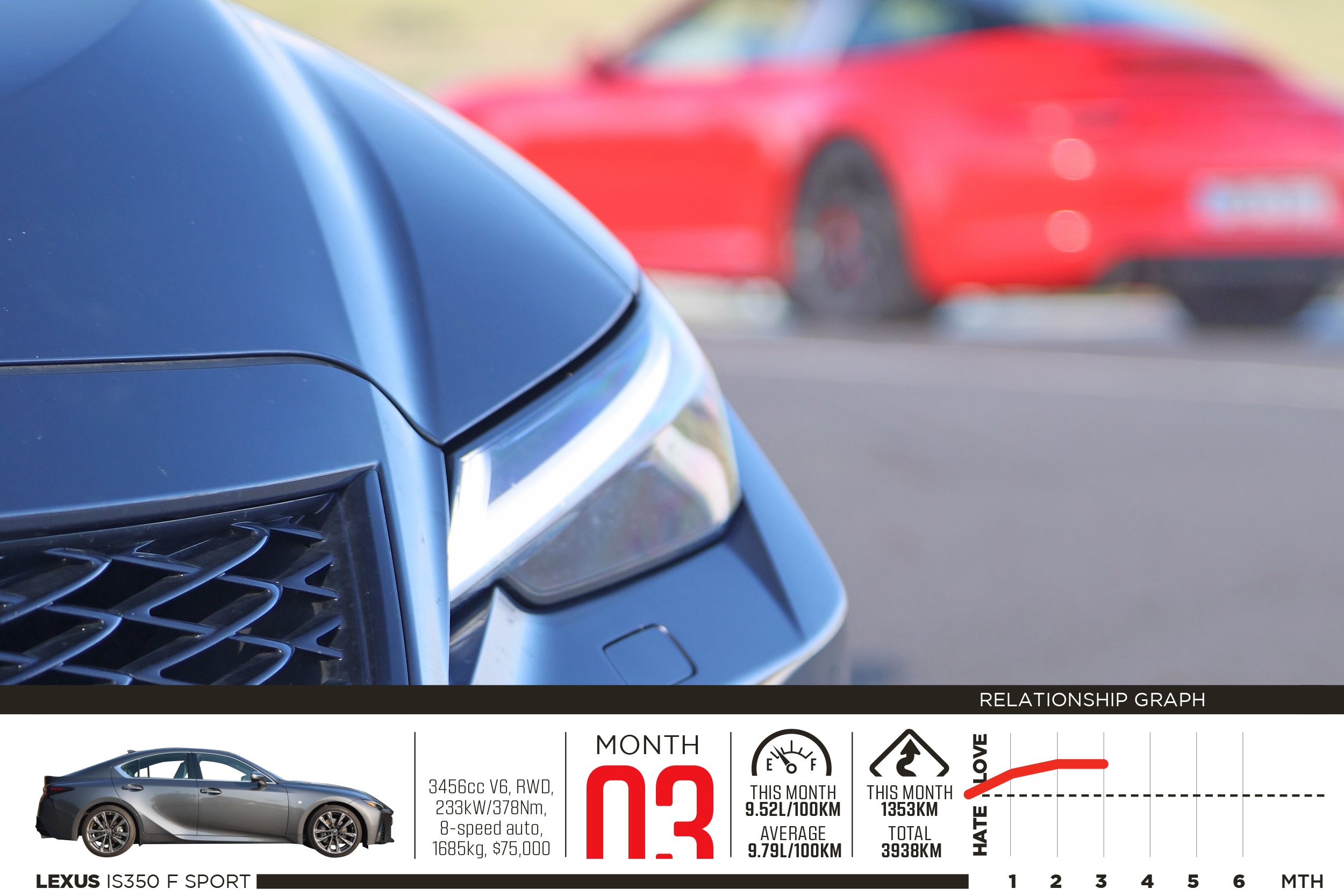
The IS350 F Sport goes back to Lexus next week, whereupon I’ll swap for another vehicle that you’re probably going to like a lot. I’ll miss the 350’s easy-going charm, supreme comfort and more than reasonable fuel economy which, despite some determined driving, saw an average consumption of 9.79L/100km over nearly 4000km, almost on par with the factory’s 9.7L/100km claim.
I’ll miss the Mark Levinson stereo that seems powerful enough to tear a hole in the space-time continuum and that moment when you snap the car out of its genial torpor and paint the tacho orange as you wind the V6 to its redline. As a multifaceted ownership proposition, the IS350 F Sport is a honey. As a focused sports sedan it has its idiosyncrasies.
Would I recommend one? Most certainly. Would I recommend one to a MOTOR reader? Yes, but with caveats. It’s a cerebral undertaking and one that forces you to take stock of where and how you derive your joy in driving, reminding us that there’s light and shade to the latter. A performance car that gets you thinking? Treasure that. – AE
Things we love:
- Character/Charm
- Comfort
- Sound system
- Can feel lazy
- Missing some tech
- Not a track car
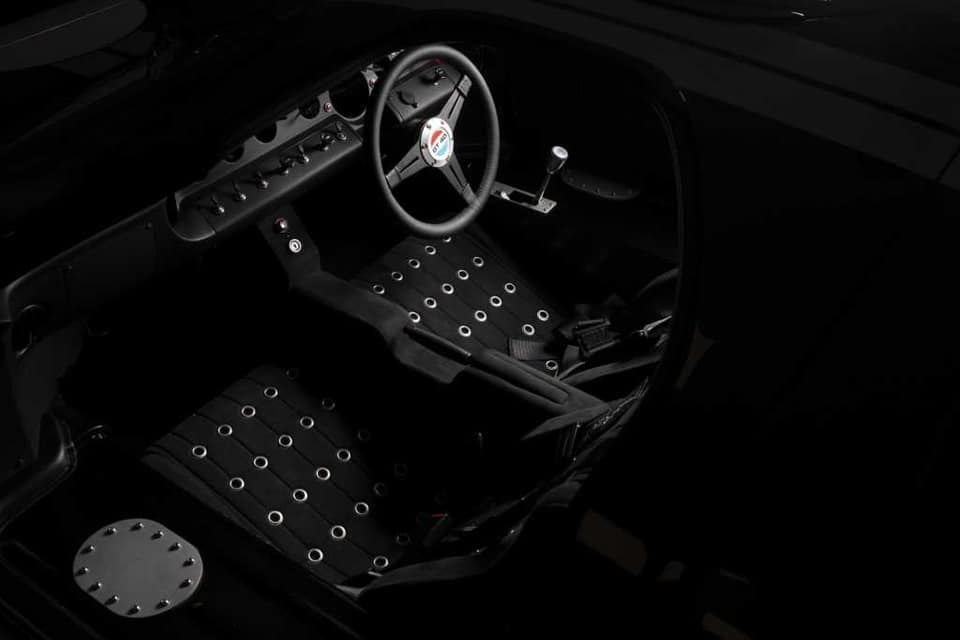
Classic car converter Everrati has turned its focus away from dropping electric motors into old Porsche 911s, instead teaming up with Superformance to develop an all-electric GT40 tribute.
The first vehicle to come out of the partnership, Superformance provided the GT40 shell while Everrati has been giving its undivided attention to the powertrain, an all-electric unit which is in the final stages of development to replace the internal combustion engine usually found mounted in the middle of the classic sportscar.
While a prototype is currently in the works, Everatti is tight-lipped on details surrounding the motor, battery pack and all other functional aspects of the vehicle, with founder and CEO Justin Lunny saying: “marrying these chassis with our advanced EV powertrains and precision engineering will enhance performance while keeping the essence and soul of the original.”
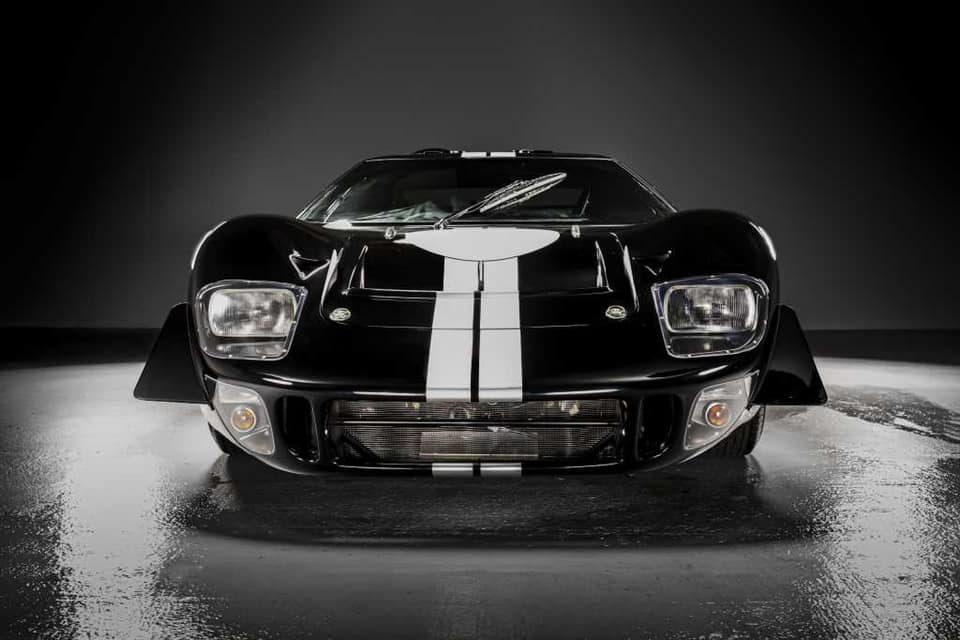
Lunny touched on the Anglo-American heritage of the original Ford GT40 which led to its motorsport success, particularly its four straight wins at the 24 Hours of Le Mans between 1966 and 1969.
“So many legendary cars were created by Anglo American partnerships during the 1960s,” said Lunny.
“In fact, the very first GT40 was brought to life in the early 1960s by a UK-based team led by expat British engineer, Roy Lunn, at Ford Advanced Vehicles in Slough. Its body was even made by Abbey Panels in Coventry, before the finished car was shipped to the US for its unveiling the day before the New York Auto Show, in April 1964.”
“So, it feels highly appropriate for Everrati to be partnering with Superformance, furthering not only the legacy of automotive icons but the partnership between the UK and US.”
Superformance CEO, Lance Stander, said the partnership comes from his appreciation of Everrati’s previous work with vehicles like electric Porsche 911s, a Mercedes-Benz SL and Series II Land Rovers.
“While I will always love a V8-powered vehicle, there is no doubting the ultra-high performance of Everrati’s advanced EV powertrains,” said Stander.
“I am genuinely impressed with the lengths to which Everrati goes to maintain the weight distribution and character of the original car. Electrification is the future in so many ways, and adds another option for those who love classic sports cars.”
- Prototype ride in Ineos startup’s Defender/G-Class rival
- Back-to-basics 4×4 goes on sale next year
- BMW diesel or petrol power
At Goodwood’s Festival of Speed, the interest levels in new cars are clear to see. Hype and demand switch from being nebulous to being very obvious, and physical – if there’s a scrum to get onto your stand, chances are the great buying public’s hot for your machine.
Take Lotus, for example. It pulled the covers off the Emira sports car earlier in the week, and at Goodwood the crowds couldn’t get enough of the new two-seater. Better still, deposits flew in.
It was the same story at Ineos, with the Grenadier 4×4. The crowd on the stand was five-deep all day; the love for this desirable new utility SUV clear to see.
To see how the project’s shaping up ahead of the car’s 2022 debut, we took a ride up the hill.
What’s it like in the flesh?
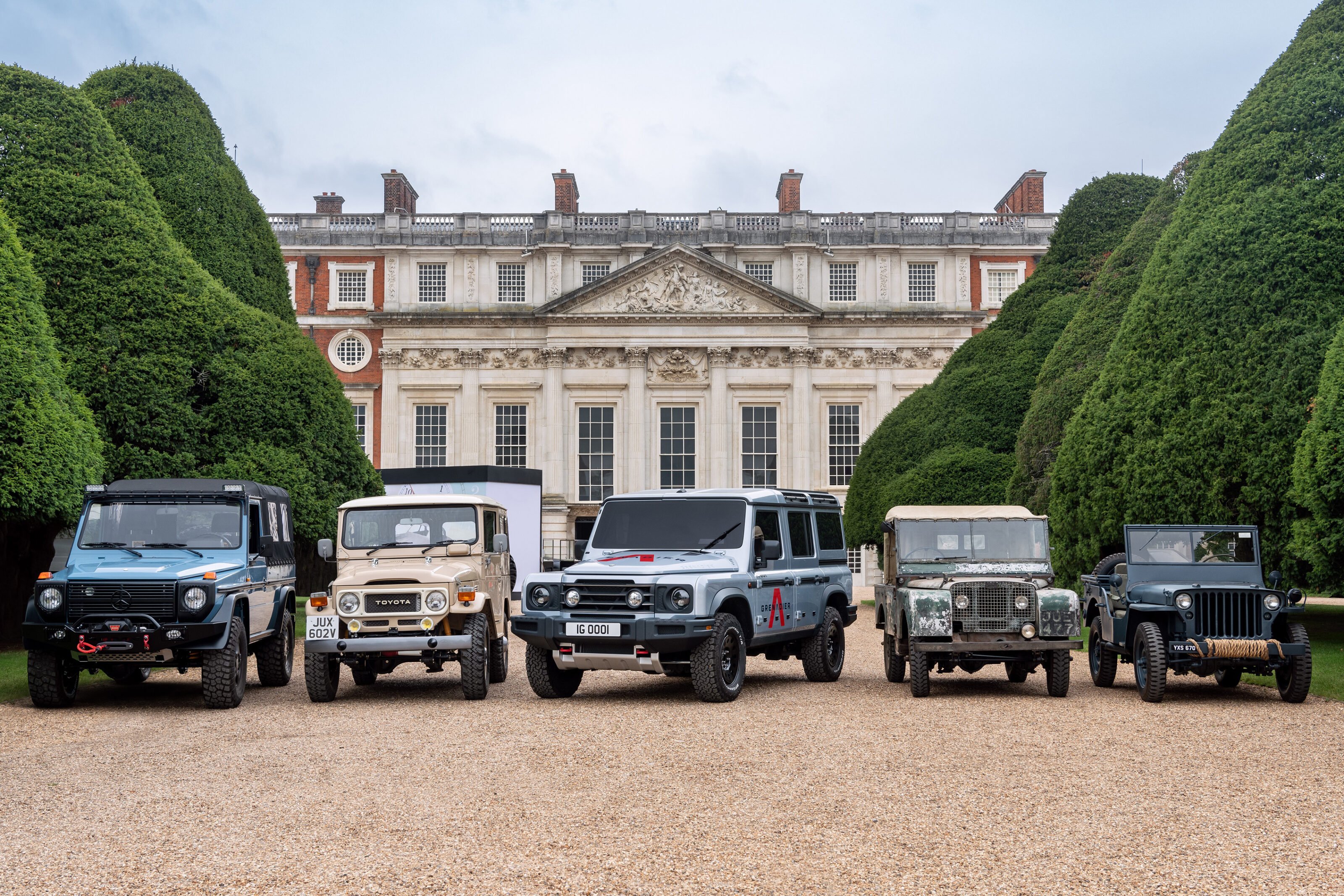
Pretty funky, truth be told. It’s a purposeful-looking device, bigger than you think, and striking with its mostly flat, businesslike surfaces and unfussy detailing. There are shades of G-Wagen, Pinzgauer and Defender, of course, but in the flesh the Grenadier’s design hangs together well, looking confident and understated.
There are shades of G-Wagen, Pinzgauer and Defender, of course, but in the flesh the Grenadier’s design hangs together well, looking confident and understated.
And when you climb in?
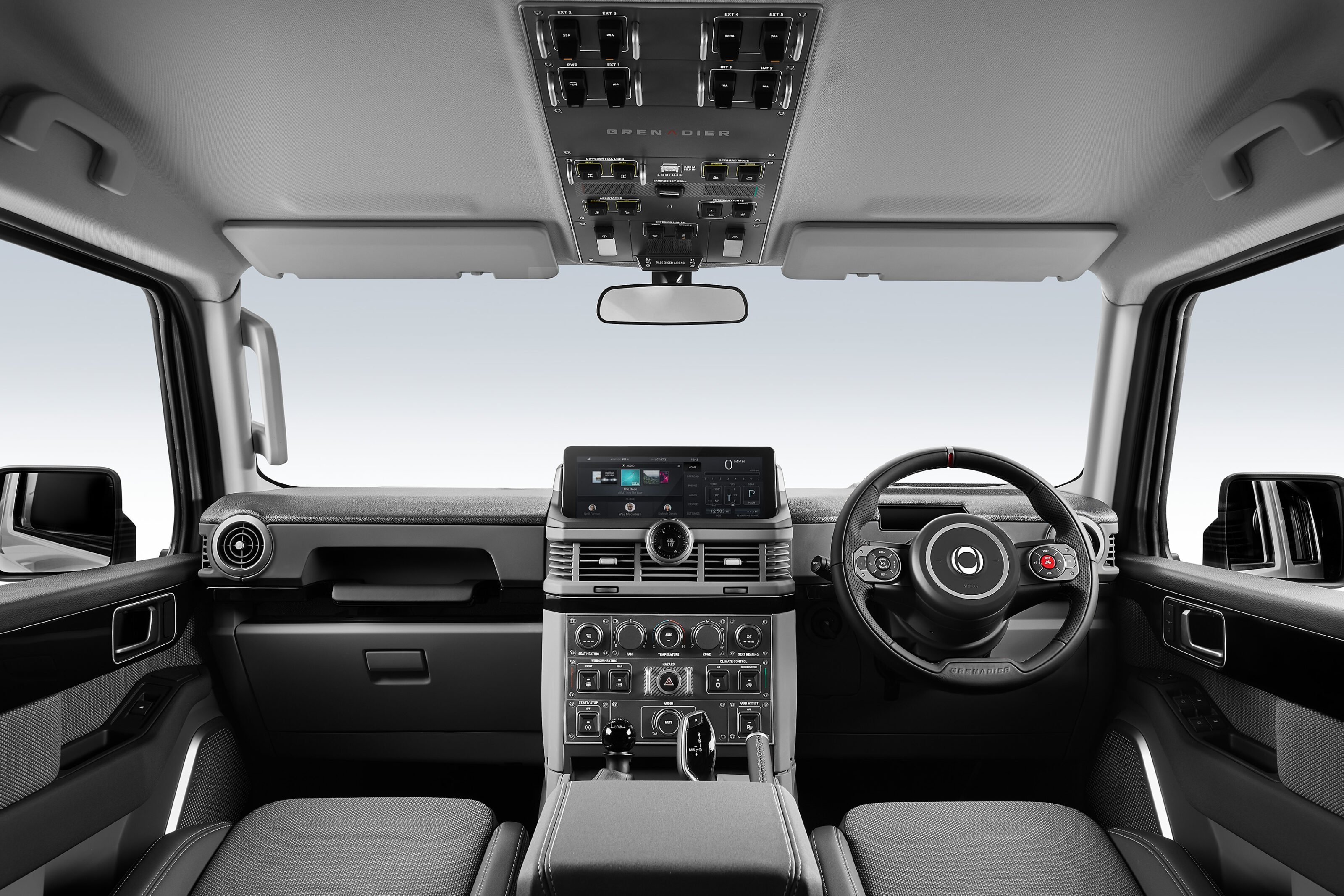
Ineos showed two cars at Goodwood; a representative show car and a well-worked prototype fresh from duty on the Tour de France. We poked around the former before jumping in the latter for our run up the hill.
You climb up into really good Recaro seats, which are both supportive and super comfy. In answer to everyone’s first question, namely ‘Is there anywhere to put my elbow?’, the answer is a resounding yes. Your arm naturally comes to rest, comfortably, on the top of the door. There’s space in here, and the ergonomics are sound.
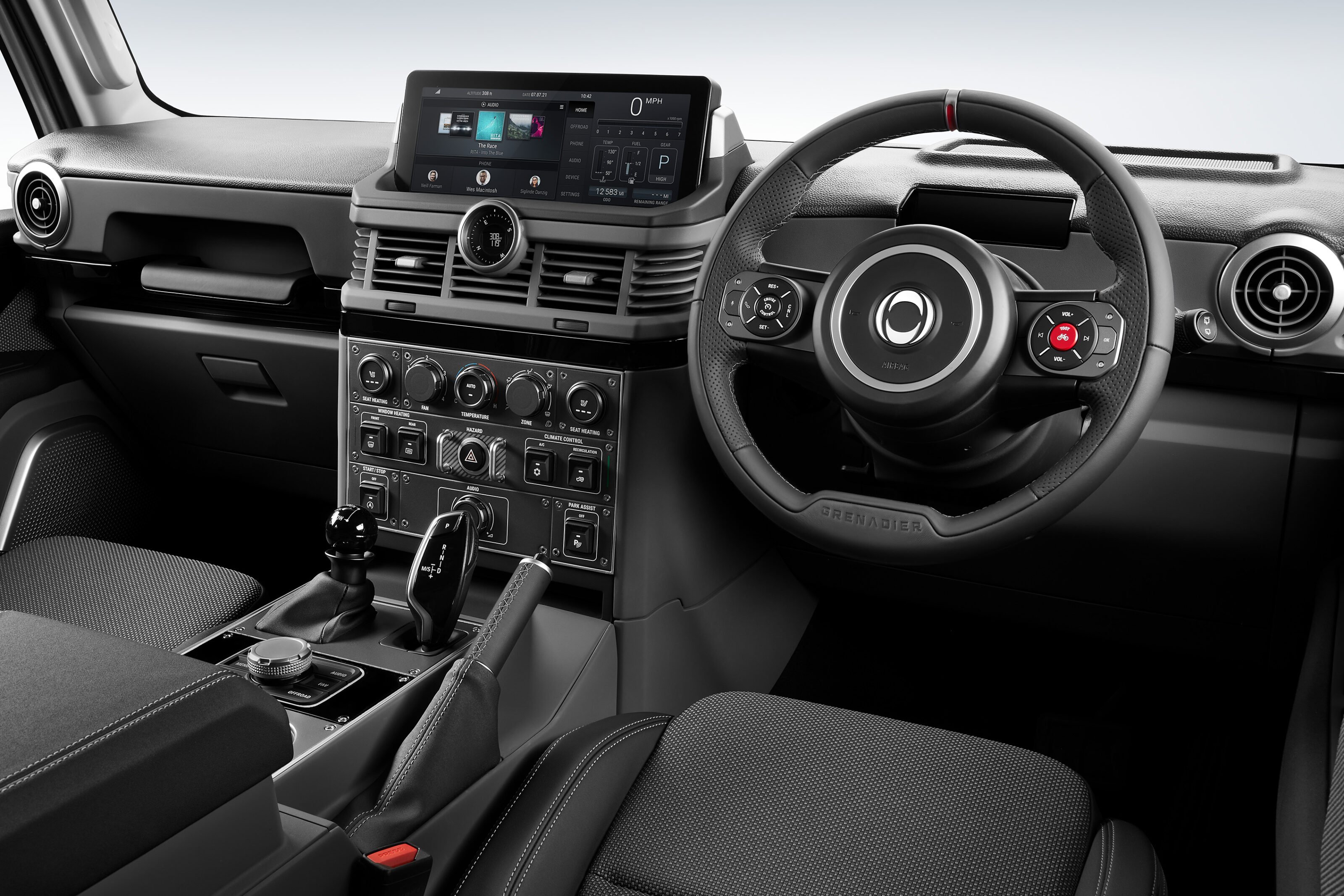
The cockpit strikes a great balance, feeling functional and stripped-back without any sense of being cheap or basic. The main instrument panel is striking in its clarity, and above it sits the main infotainment screen.
Up on the ceiling, where kids and drunk mates can’t suddenly lock both your differentials ‘for a laugh’, you’ll find the controls for off-road driving and four sets of switches for accessories such as winches or auxiliary lights. The chunky design and clear fonts call to mind a plane’s cockpit and match the purposeful aesthetic of the exterior.
For passengers, two chunky grab handles set the tone nicely and the view out is fantastic, with great visibility and that jutting clamshell bonnet to remind you you’re in a vehicle that means business.
Let’s go!
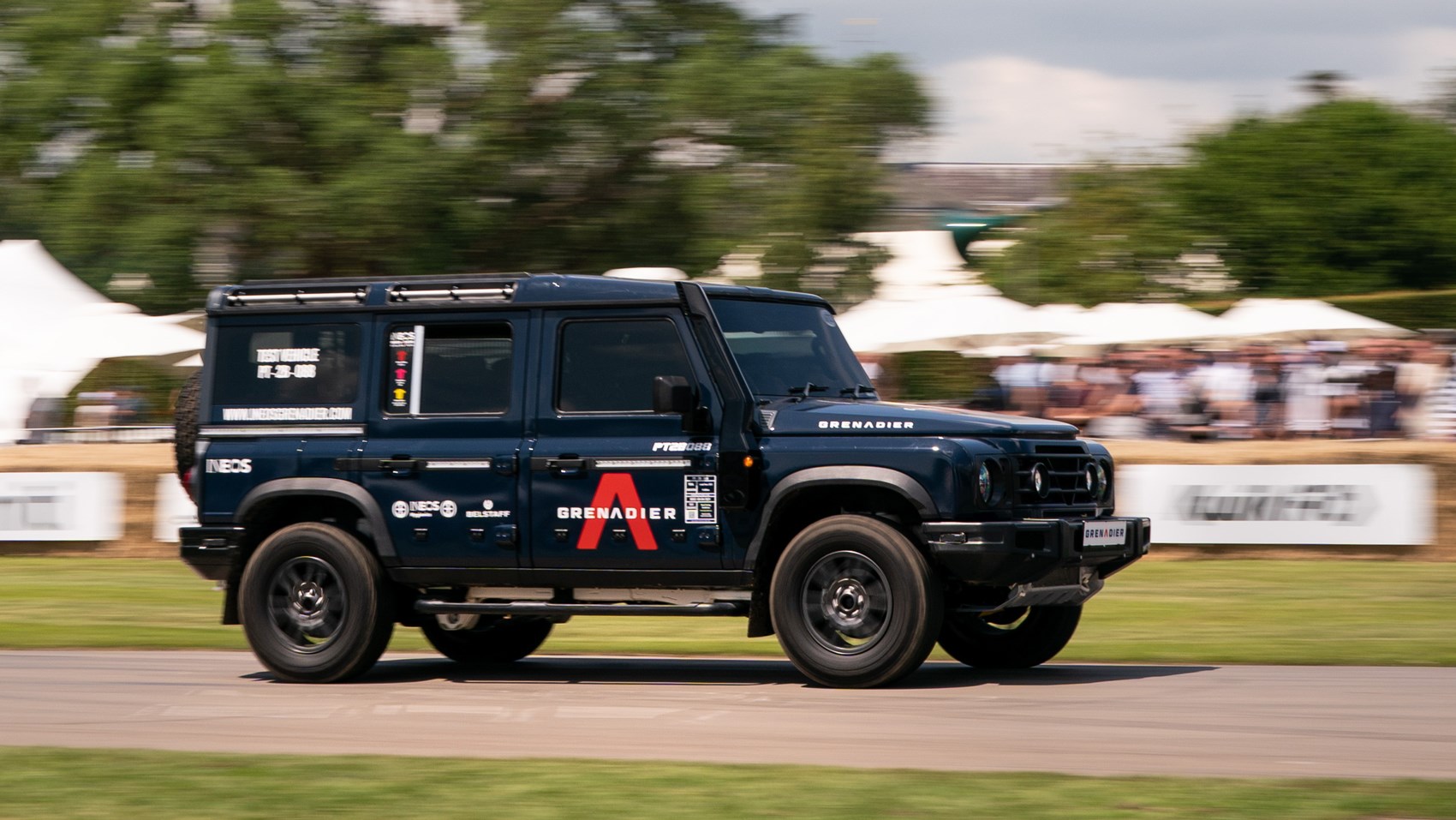
Two BMW powertrains will be offered – petrol and diesel 3.0-litre six-cylinders both mated to an eight-speed ZF auto ‘box. The engine’s quiet and refined on start-up and the transmission is effortless.
Up to the start line, a few waves to the crowd, and hit the accelerator. The Grenadier takes off with conviction and nary a chirp from its BFGoodrich off-road rubber.
At the wheel is handy rally driver Cameron Davies who, at 14, became Britain’s youngest rally champion before going on to compete in various European one-make rally series. With a speed limiter in place and orders not to go to full throttle, I’m not expecting my socks to be blown off.
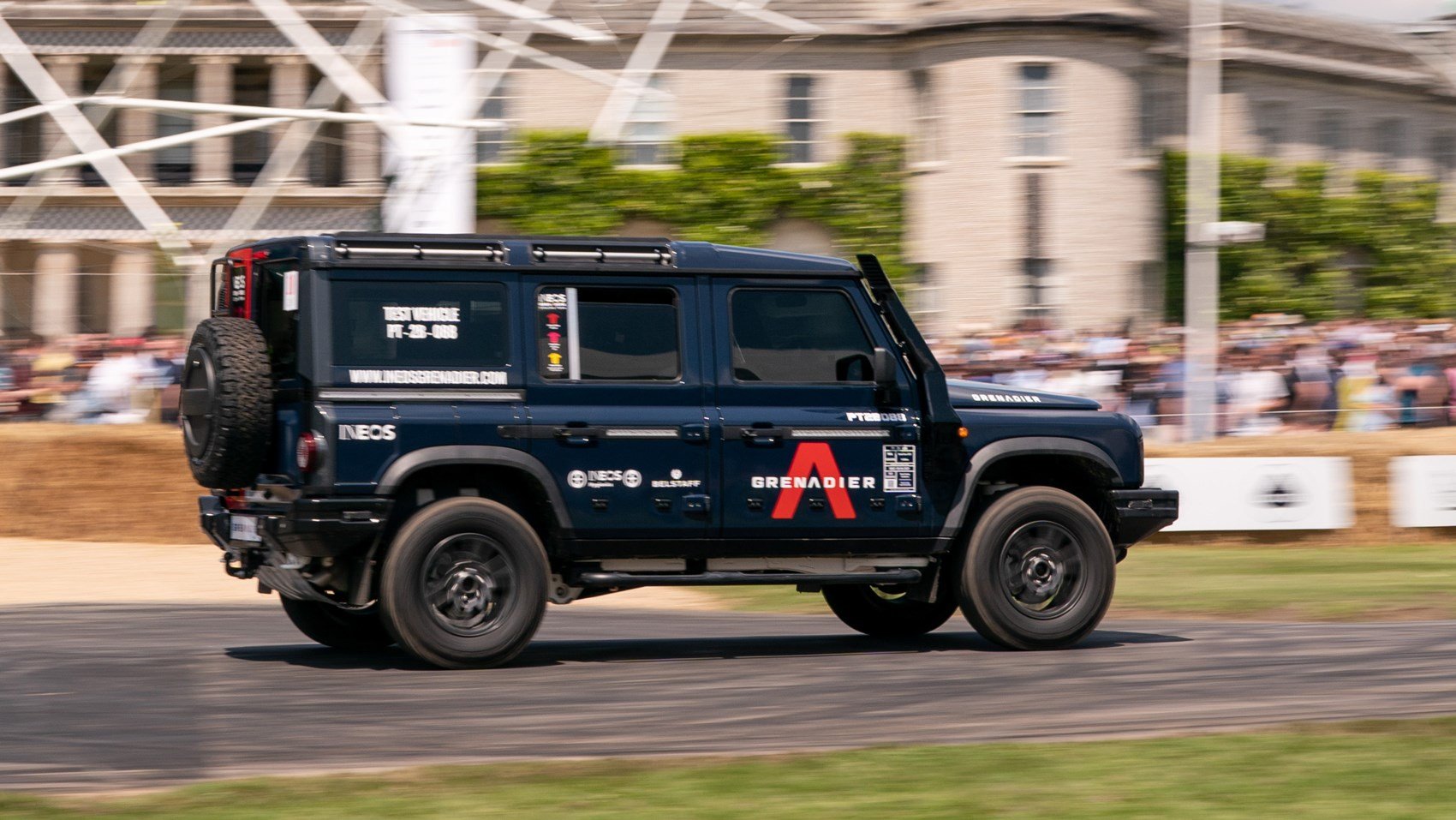
But we brake admirably late for the first right-hander and go in tyres squealing. At once I’m impressed with the Grenadier’s poise and its responsiveness under duress. There’s far less body roll than you might expect given the car’s all-terrain remit and ladder chassis (suspension is good old-fashioned coilovers, beam axles and anti-roll bars – no air) and, as Davies works the wheel and throttle pedal, it’s clear the Ineos is happy to respond to his inputs even as we howl through the first corner.
On past Goodwood House and the BMW powertrain demonstrates its peachiness – smooth, sonorous and punchy. It’s been re-mapped for this application and feels torquier than a tuned tractor.

We jink past the flint wall – again, composure is impressive given this thing’s dirt pedigree – and bowl on into the next corner, a tricky off-camber right-hander. The Grenadier laps it up, Davies opening the corner up by grabbing a healthy bit of verge on the inside before powering out, the torque and sweetly-mapped shift strategy meaning there’s no temptation to shift manually.
That’s it: over the line. And another chance to embarrass a paddock full of supercars by attracting more interest and enquiries than all of them put together…
VERDICT
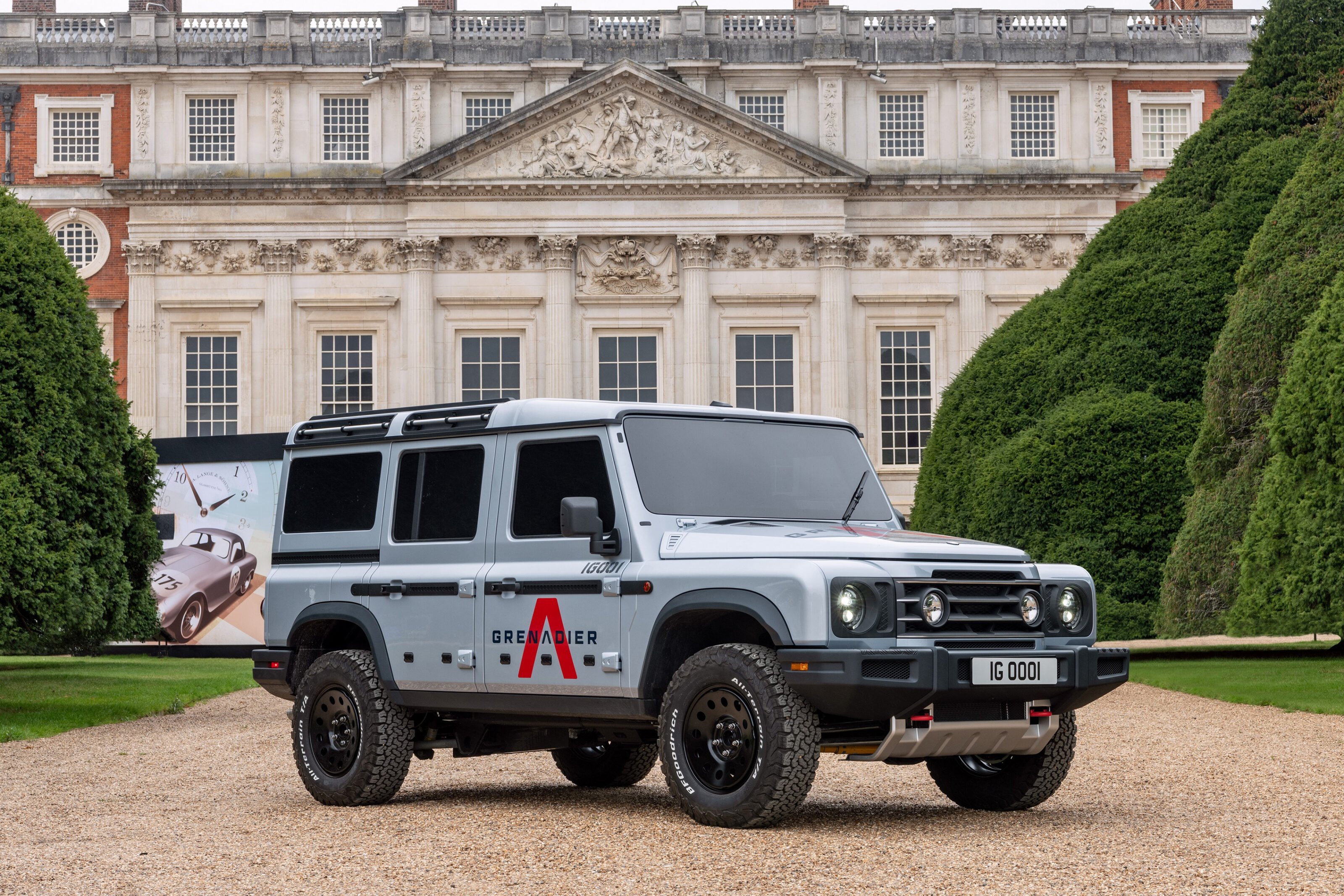
We won’t drive the Grenadier until 2022, when the healthy list of buyers with an order placed will also start to see their cars. But on this evidence the Ineos 4×4 is shaping up very nicely, feeling like a highly competent, refined and charming road car that’ll then happily soak up as much mud and abuse as you care to throw at it.
Despite being out of step with most new cars, the Ineos also feels also feels oddly zeitgeisty (anti-zeitgeist?), winning hearts and minds with its no-nonsense approach (actual ignition key, hose-out interior, boxy but handsome body) and thoroughly traditional powertrain (no EV option here, of course).
This article was first published at Carmagazine.co.uk
At corner exit, for the slightest of moments, there was a suspension of disbelief. With a couple of degrees of steering still applied, and my right foot pressed hard into the firewall, I was transported behind the wheel of a different vehicle. The twin-turbo V8 (aided by a surface change) was able to convince the rear tyres to relinquish their stranglehold on the tarmac and permit the mere hint of power oversteer.
In that fleeting moment when power triumphed over grip I was transposed into a reality more understandable than our own – one where this display of bravado and performance would be executed by a brutish super sedan or slinky coupe.
But no, in a perfect encapsulation of our new warped existence, the vehicle in question was an SUV. A Lamborghini Urus SUV, sure, but a high-riding, kiddie-hauling, urban-friendly form of tribal transport none the less.
You will doubtless be familiar with the Urus’ purpose, with the four-door bull being Lamborghini’s most popular model both locally and internationally, re-enacting the Porsche Cayenne’s brand-saving heroics. The recipe is simple; wrap aggressive and eye-catching sheetmetal around shared architecture, send nuclear power to the tyres, and bask in a well-funded victory.
However, while singing from this now-familiar songbook, the Urus is forced to perform a series of increasingly difficult magic tricks that require that same suspension of disbelief that was washing over me as I applied the required corrective lock to arrest a two-tonne drift.
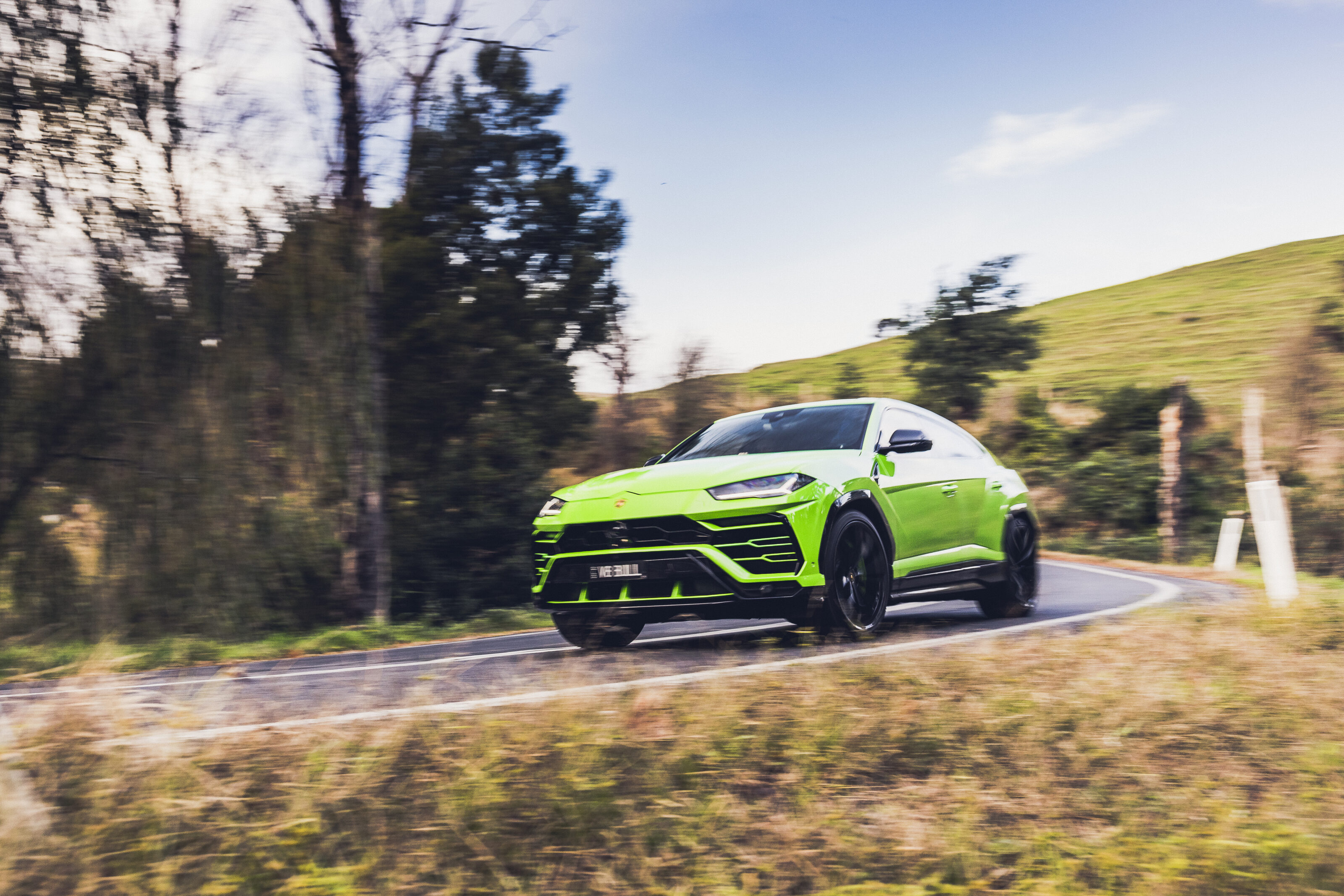
The first is convincing you of its worth. Our test car is fitted with not just cringe-inducing personalised plates, but six-figures worth of optional extras. Starting with a $395,888 base price, the local Lamborghini press office was able to transform this into a $497,803 tax magnet thanks to a focused dedication to box ticking.
Highlights include $17K for paint, almost $10K for the 23-inch wheels, another $10K in gloss black detailing, and $6K for the Q-citura seat stitching. Potential owners will want to set aside $500,000 as a starting point, lest they suffer the indignity of being out-gunned when dropping Bonathon off for his weekly fencing lesson.
While the Urus certainly looks every bit like a half a million dollar SUV from the outside, it can’t shake its Ingolstadt influences inside, sharing much of its switchgear with similarly sized siblings. Audi’s fingerprints are everywhere, from the wheel design, to the infotainment; almost everything inside the Urus is German with an Italian veneer.
But, for many buyers, that’s almost the point. This is a Lamborghini that isn’t scared of the everyday, that is capable of hauling more than two occupants with actual honest-to-god reliability, refinement and comfort. Value is in the eye of the ultra-wealthy beholder, and to them an RS Q8 may as well be a pov-pack Touareg. It just doesn’t have the clout.
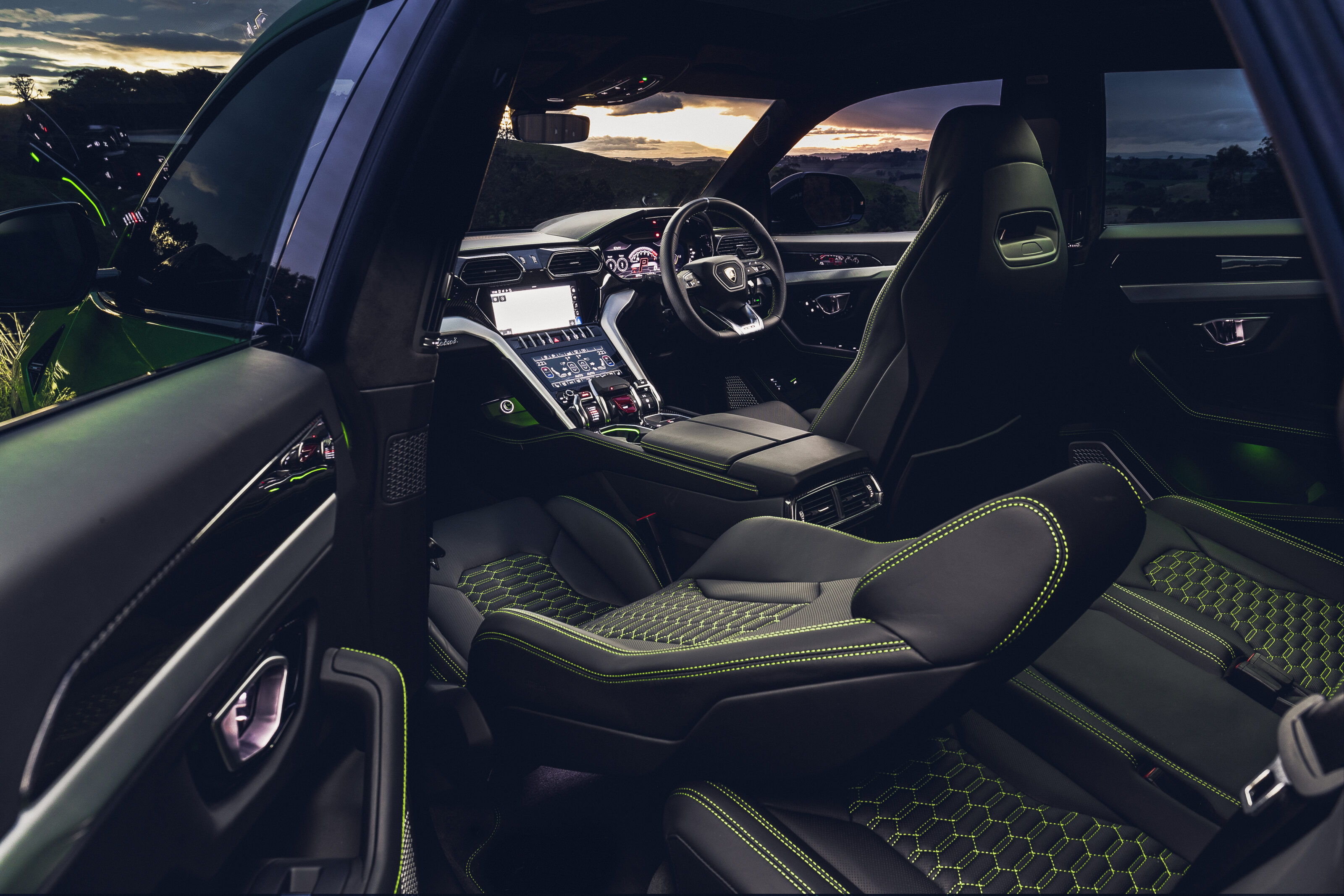
”Put your ear to the bonnet, and you’ll hear the final screams of dinosaurs being immolated”
To find out if there is more to the Urus than being a rolling display of affluence, we headed to Victoria’s West Gippsland region. The end destination was C425, or Korumburra-Warragul Rd, which connects the two eponymous towns. Running for 39km, it presents a challenging stage for the Urus to stand tall upon and reach deep into its bag of tricks.
Before we get to the good stuff, there is 100km of late-Autumn highway driving. For any other Lamborghini this wouldn’t be mentioned bar to note it was loud, and an inconvenience that stood in the way of fun. But, the Urus is unlike the Huracan and Aventador in that this transit stage is entirely inoffensive, and actually rather pleasant.
In its standard ‘Strada’ drive mode, the big Lambo has a ride quality that defies its 23-inch rims and low-profile rubber – it is tranquil and composed regardless of road surface. It is here I have the first of a series of revelations. Yes, the Urus is an SUV, but it isn’t a successor to the LM002, instead it’s a modern revival of the Espada with styling from the four-door Estoque concept car – just with extra ride height.
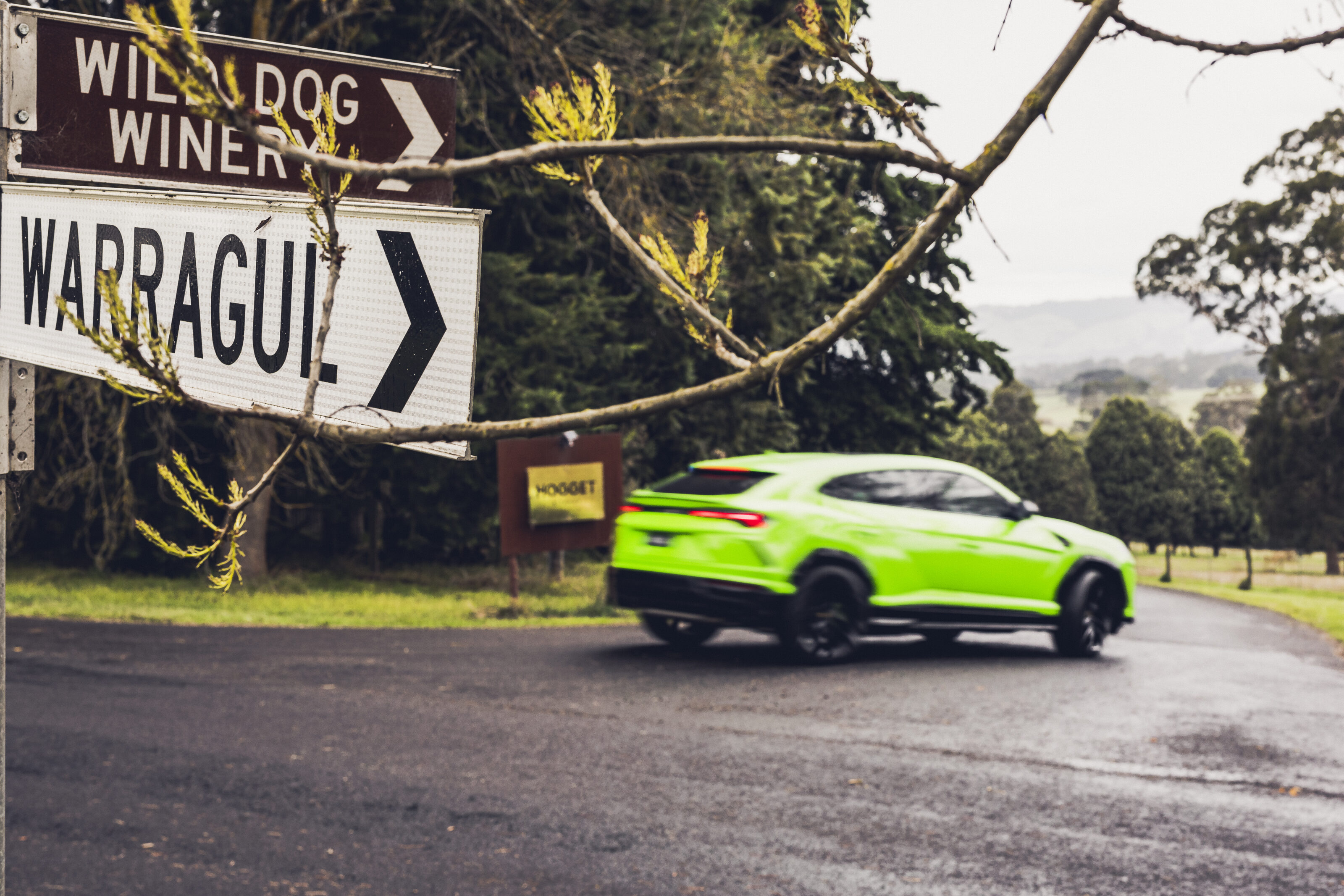
Finally I reach Warragul, and begin the descent toward Korumburra. Out here beyond Melbourne’s suburban crawl, the landscape encourages you to take a deep breath, to soak in the soothing beauty of the supersaturated green hills that bump gently to the horizon. C425 starts off slow, with long sweeping bends that play nicely to the Urus’s strengths.
The big Lamborghini is at its best in this environment, given room to play and put on its brutalist display of power. The 4.0-litre twin-turbo V8 under the bonnet isn’t unique – it can be found in a range of other products – but it is at its zenith here, deploying 478kW at 6000rpm, and 850Nm between 2250-4500rpm. Transferring that power to the tyres is an eight-speed torque-converter automatic that can deliver gearshifts both soft and smooth, or hard and fast.
Bring the Urus to a standstill before planting the throttle and you are given a clear indicator of its straight-line abilities. The V8 has a liquid gurgle at idle that sounds like bubbling lava. Put your ear to the bonnet, and you’ll be able to hear the final screams of dinosaurs being immolated in the eight combustion chambers. At launch the big bull charges forward, the speedo reading three digits in just 3.6 seconds. But straight-line parlour tricks are relatively easy to perform these days, and with electrification hitting its stride, a mid-to-high three second sprint to 100km/h (while still a gut churner) isn’t the showstopper it once was.
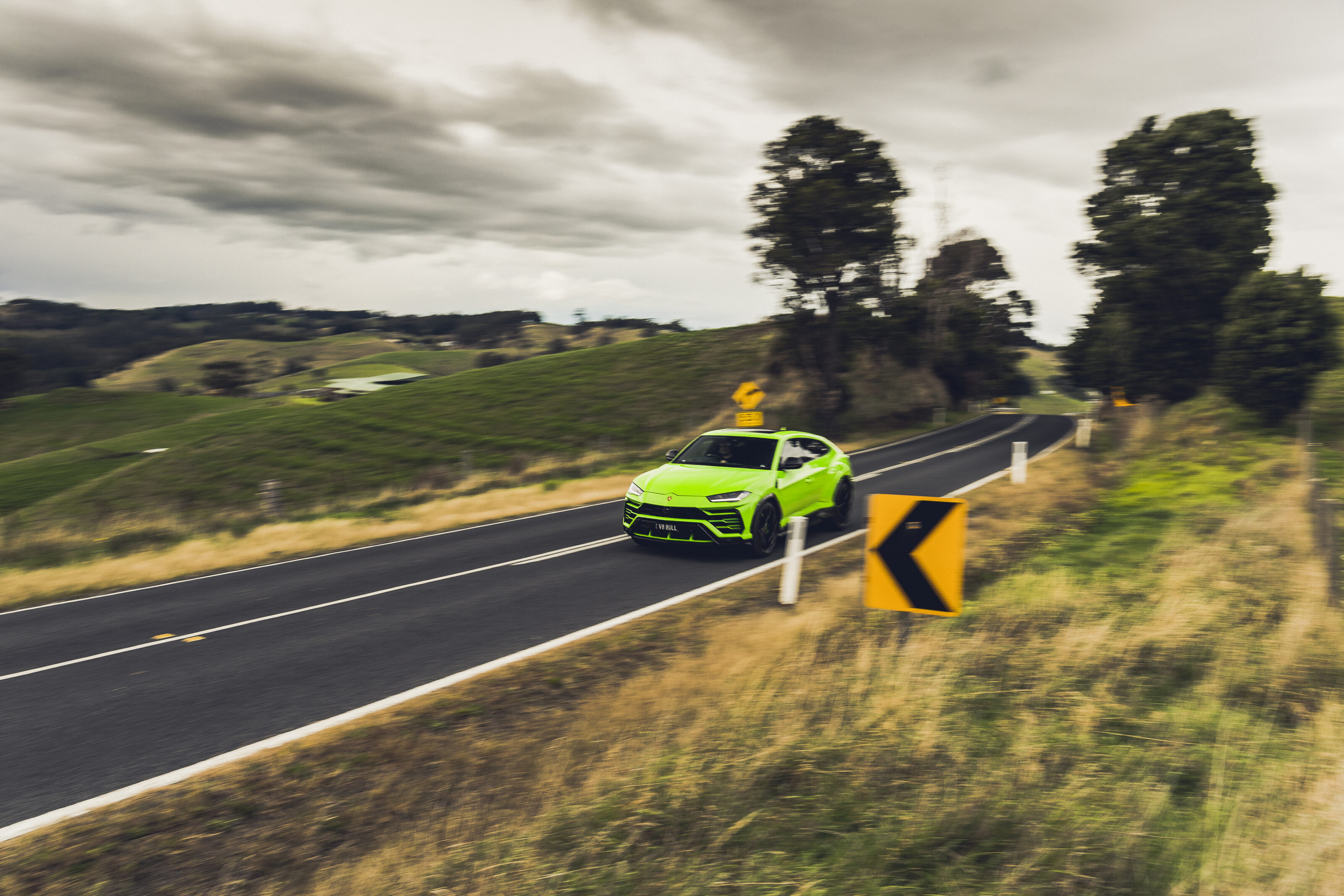
The best of C425 lies in the 10km north of Tetoora Road to south of Strzelecki. It’s here that the Urus’s depth of ability is truly put to the test. Heading south, the road begins to dive hard, with corner radiuses tightening. I take solace in the fact the 440mm carbon ceramic brake discs mounted to the front axle are grasped by 10-piston calipers, with the rear stoppers in the same size-class as some of Porsche’s finest metal.
Despite their impressive size the discs have an unenviable job, with the Urus weighing in at 2280kg while simultaneously being capable of reaching outrageous speeds in short order. You’ll want to get some heat into them before trying any heroics, though. Once you have, stamping the pedal stands the Lamborghini on its nose, and when the velocity is abated you can chuck the Urus into each bend with vigour.
The road winds down the hill, jinking knife-edge cambers on each left/right transition. The Urus rolls into these bends like a mastiff chasing a pomeranian, unrelenting in its pursuit of the next apex. There is an array of technologies helping the Urus perform athletic feats that’d leave certain sports cars befuddled. A self-locking central Torsen diff shuffles power appropriately, 40:60 normally, and up to 70 per cent front or 87 per cent rear, with the torque-vectoring rear diff directing up to 75 per cent of its twist action to either driveshaft Rear-wheel steering, and active anti-roll bars deliver freakish agility that’s not always that organic in feel.
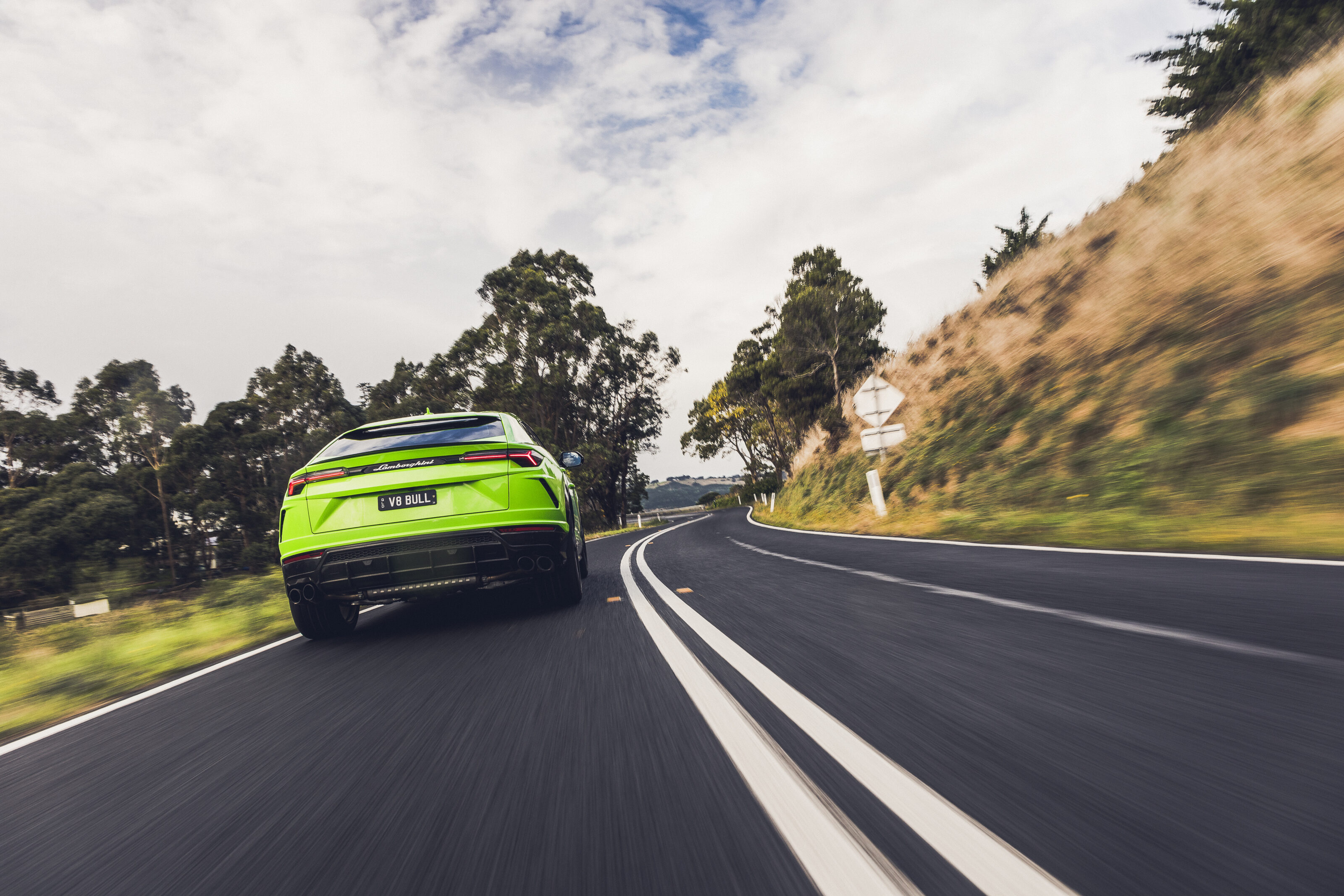
This athleticism is aided by the direct steering at just over two turns lock-to-lock. Body roll is denied any presence in the experience, while the speeds required to force the front wide is frankly ridiculous. The prodigious grip is no doubt helped by an enormous footprint (the Pirelli P Zero rubber measures 285/35 at the front, 325/30 at the rear). Lamborghini is Pirelli’s only customer for tyres in this size.
The only hint at the technological trickery helping transform this heavyweight boxer into a dainty ballerina is the surreal numbness to its body control during the cornering process. This is an idiot-proofed experience, with a soft-edge to everything. Throttle adjustments do little to perturb the Urus mid-corner yet the feedback through the wheel is consistently remote. It’s all very impressive, but a tad inauthentic.
There are other quirks that chink the Urus’s armour – mainly the ‘Anima’ drive mode selector. The theatre of pulling the lever to change modes is appropriately dramatic at first, but the selector only goes one direction. Shifted from Strada to Sport and want to revert to standard? Too bad, you’ll need to scroll through all four other modes to get back.
Softening the blow is the breadth of ability in Sport. Unless you are at full attack, this setting is the sweet spot in 90 per cent of situations. Another niggle is apparent the first time you set off. Drive is selected by pulling the right paddle on the wheel, while park and reverse are found on the centre console.
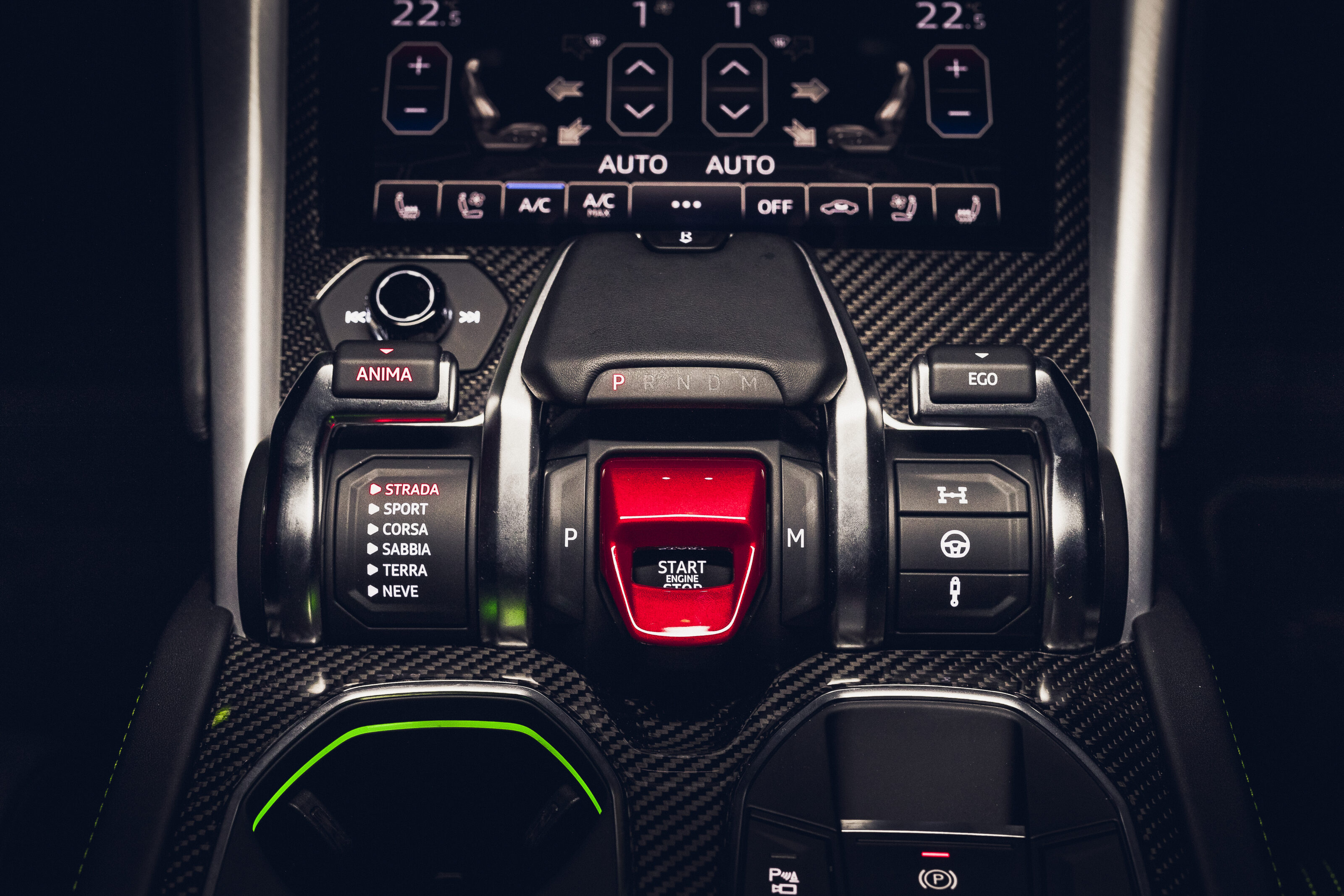
Half the reason to move away from the standard setting is the vocal theatrics. While relatively tame in its standard ‘Strada’ mode, the exhaust comes to life in Sport and Corsa. Drive around town with the windows up and every lift of the throttle sounds like a bag of gravel being dumped from the Urus’ bumper. Lower the glass and you are treated to a series of crackles and pops that alert everyone within the postcode of your presence.
Thumb the big ‘M’ for manual mode, and the Urus will still auto up-shift in its ‘Sport’ setting. Only in the maximum attack ‘Corsa’ will you encounter the 6800rpm soft-cut.
You can build and save a personalised variation that mixes and matches your preferred gearbox, steering and suspension setting. This can then be activated via the ‘Ego’ lever that sits to the right of the jet-fighter inspired starter button – the plastic covering of which is all a bit childish. But what’s the harm in letting your inner-child have some fun from time to time? This is a Lamborghini, after all.
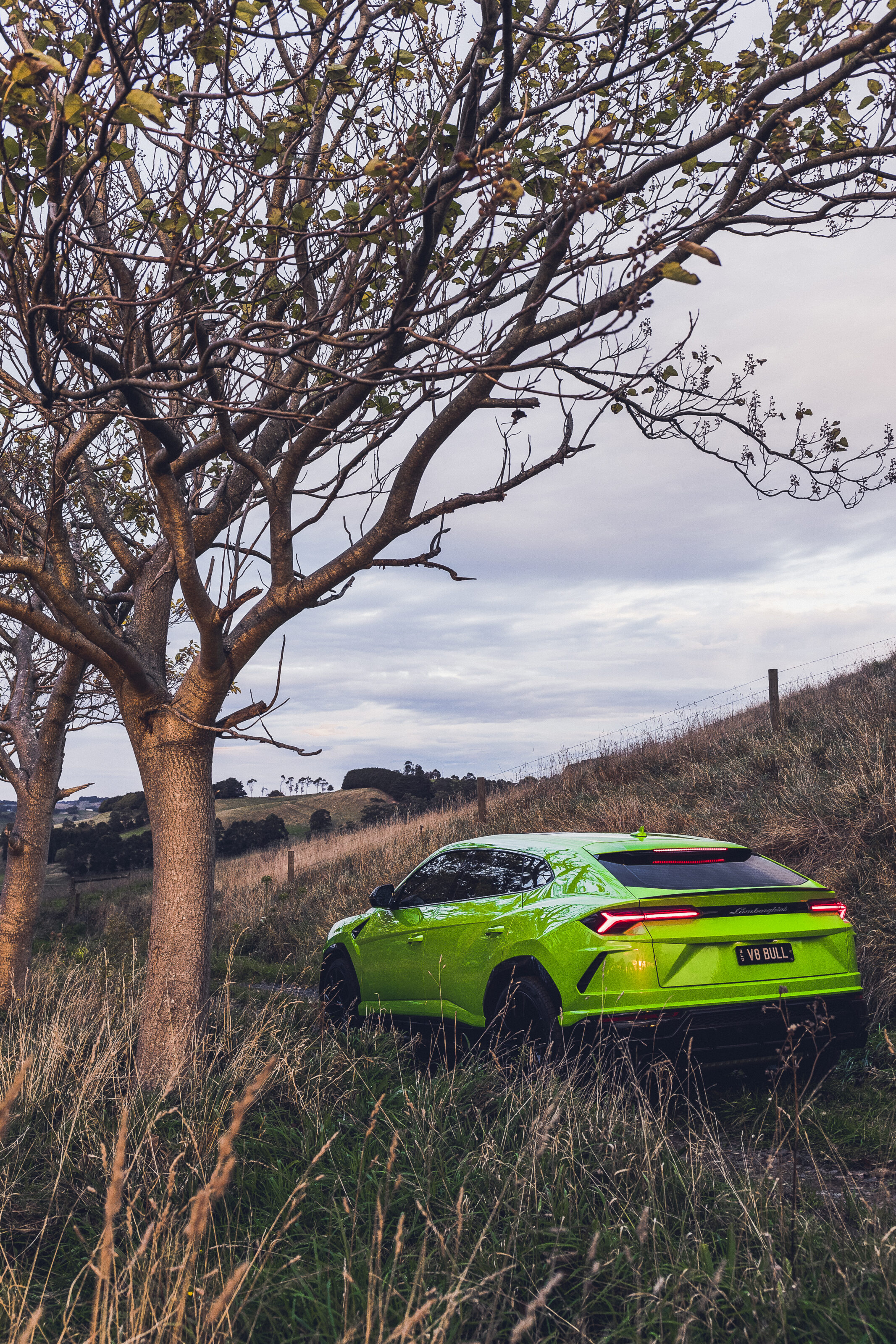
Further down the road I stop to admire the view at what looks like a clearing on the side of the road. Turns out it’s a stop for the local school bus, which dumps a trio of cherubs out in front of the hulking green machine. Swiftly, the lead child confirms that The Kids Are Alright, casting a knowing eye over the Verde Mantis paint before firing his loaded inquiry my way. “Is that a Lamborghini?” My confirmation of his suspicions is met with the appropriate ooh-ing and aah-ing. It’s nice to know that even the plumpest of Sant’Agata’s bulls can make a child’s day merely by being present.
While it’s nice to cosplay as a dogecoin billionaire for a day, not everyone is as enamoured with the appearance of the Lambo. Two members of the Victorian Police stop for a look, and simply mutter “The green is a bit much, isn’t it?” with a sneer before leaving. A sincere and enthusiastic thumbs up and ‘A-OK’ sign from what looks like a member of ZZ Top at the next intersection helps level the scales of public opinion.
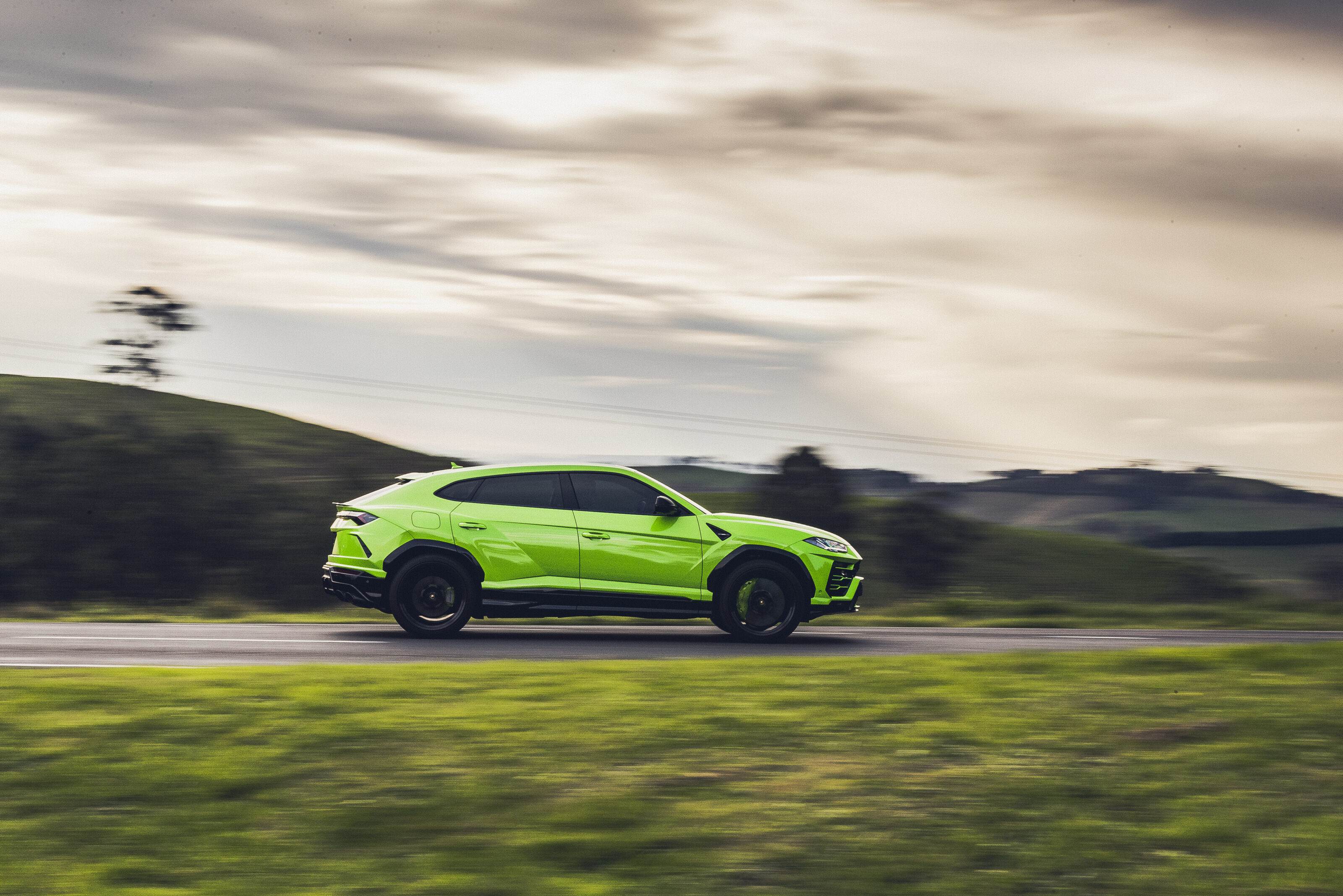
In building the Urus, Lamborghini hasn’t lost any of its sense of fun. It’s as ridiculous and outlandish as you’d expect from an acid-coloured vehicle with a bull badge. It has produced an SUV that is as comfortable doing a Toorak school run as it is crossing continents, setting lap times at Phillip Island, or tackling a challenging driving road – cynicism be damned!
The question is now whether you are ready to accept this new reality, warped by a previously unfathomable feat of technology. The answer, for the most part, depends on whether you have it in you to find the Urus’ larger-than-life character charming. While it’ll never persuade with delicacy or subtlety, it’s savagely effective.
The sun dips over the hills as we approach the old coal town of Korumburra. The LEDs flick on, bathing the road in 6000 Kelvin white. In that tunnel of light I try to process the way the Urus dismantled C425. That, in itself, requires a suspension of disbelief that’ll take me some time to work on.
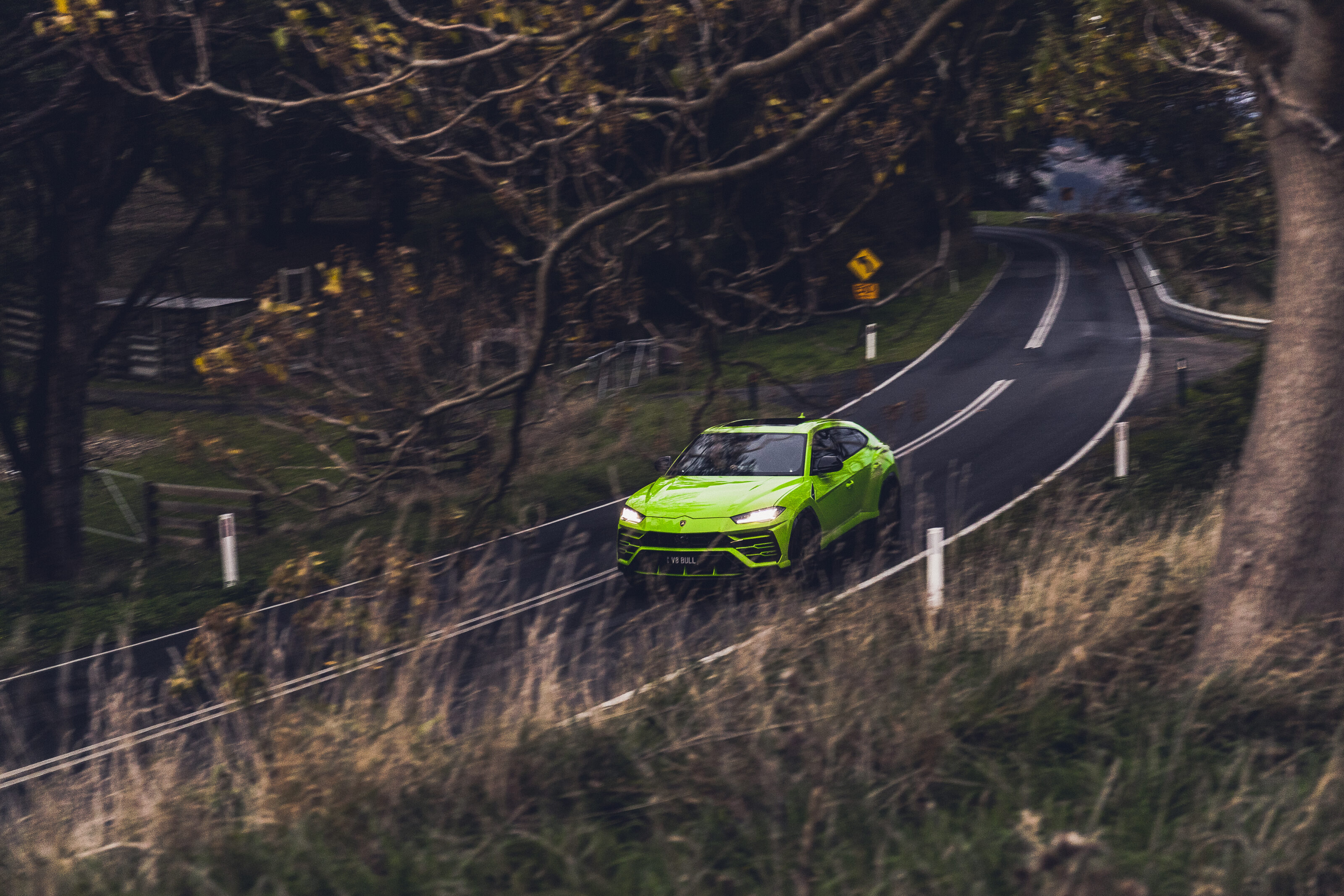
39km: 85 Bends
C425 sits in the sweet spot in terms of length for both down-and-back runs straight from Melbourne and larger day trips. At night, the return run transforms into a Japanese-style touge, with nearby town lights visible from the winding ridge line. You can stop for food at the book-end towns, though the Wild Dog Winery offers a more boutique experience. A number of lookouts pockmark the route, but are often only accessible via dirt.
Toyota may dominate the new-car sales charts but none of its vehicles features among the top 20 fastest-sellers in Australia.
Instead, it’s MG leading a big charge from the Chinese auto brands.
We’ve used the latest VFACTS industry data to compile a list of the vehicles growing the fastest in the country.
Our top 20 focuses only on passenger cars, SUVs and utes, and any model selected has a sales volume exceeding 250 units.
We have also sifted out models which have big year-to-date percentage increases skewed for a certain reason – such as a new-generation version launching close to the middle of 2020.
This applies, for example, to two French compact SUVs which are now available in new-generation guises. The Peugeot 2008 (up 319 per cent) and Renault Captur (up 757 per cent) were essentially absent from showrooms – apart from some outgoing stock – in the first half of 2020.
There are several notable all-new models which are too new for a sales comparison with the first half of 2020 but have made strong starts in the market.
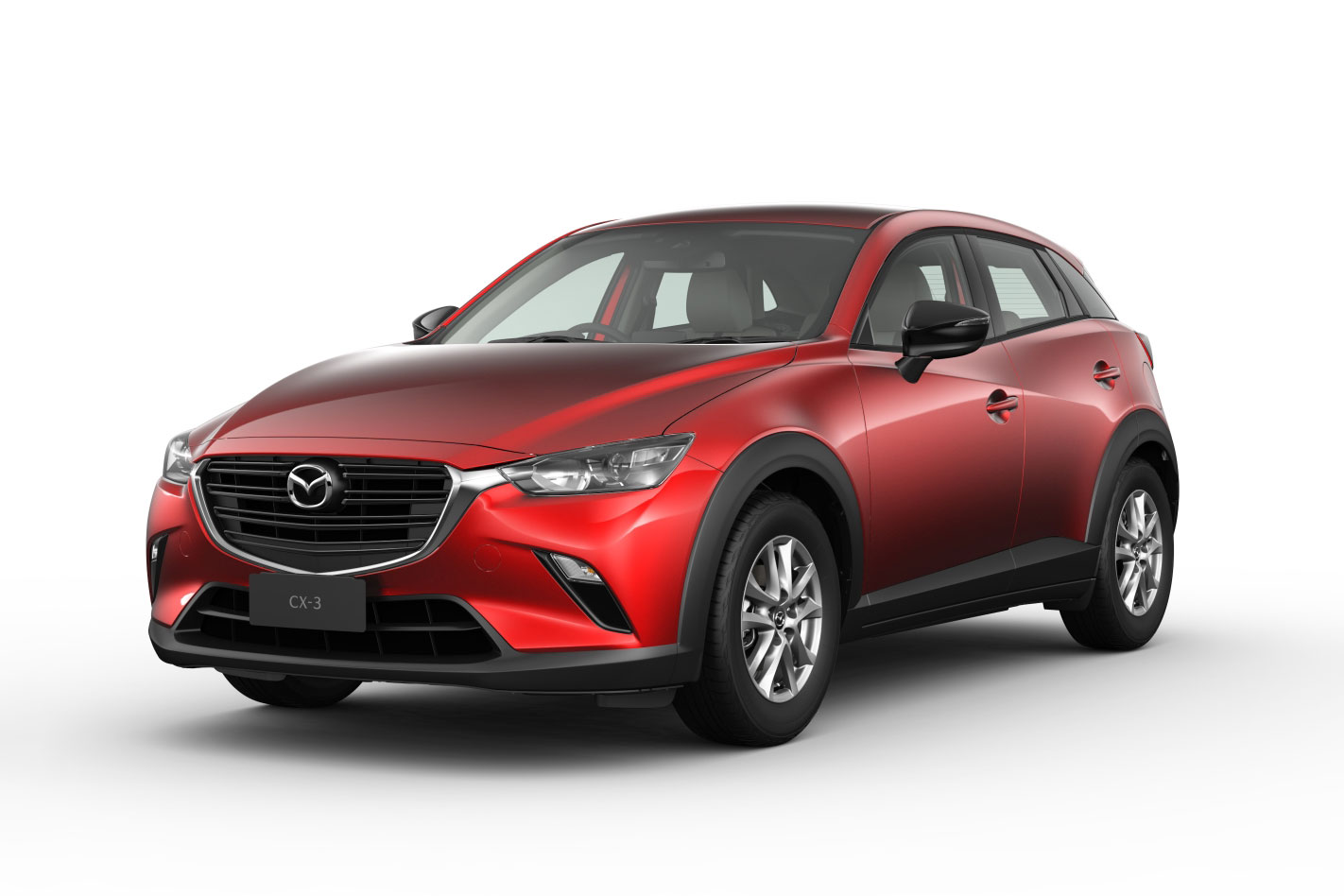
The Toyota Yaris Cross already has 4214 sales to its name, placing it second in the highly competitive light-SUV segment led by the Mazda CX-3.
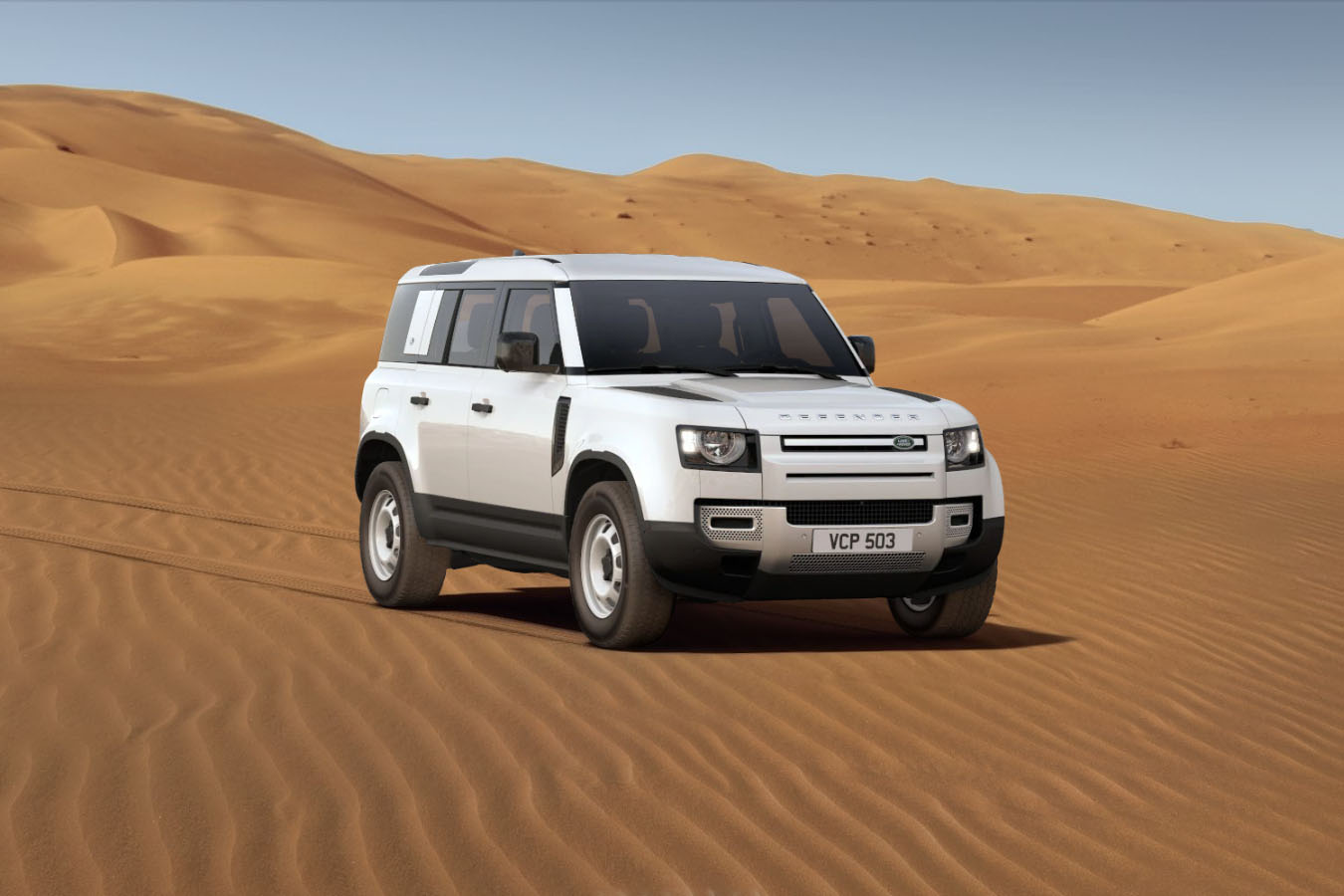
Land Rover’s all-new Defender has established itself as the company’s second-best-selling model so far in 2021, with 912 units behind only the 1155 units of the Range Rover Sport. Could the shorter, slightly cheaper 90 version joining the 110 from July help make the Defender number one?
A surprise mover in the Mercedes-Benz camp is the GLB 5+2-seater SUV, which, with 2006 units year to date, sits only behind the C-Class and A-Class in the German brand’s sales pecking order.
Porsche Australia is also likely to be satisfied with 369 sales so far for the sports car brand’s first ever fully electric model – the Taycan.
Mercedes’s first electric model to be sold in Australia, the EQC SUV, is up 127 per cent year-to-date and among a range of low-volume, big-growth heroes.
These include a few limos. The latest-generation Mercedes S-Class is up 132 per cent (137 registrations), the Audi A8 is up 100 per cent (16 units) and Italy’s Maserati Quattroporte is up 200 per cent (if just nine units).
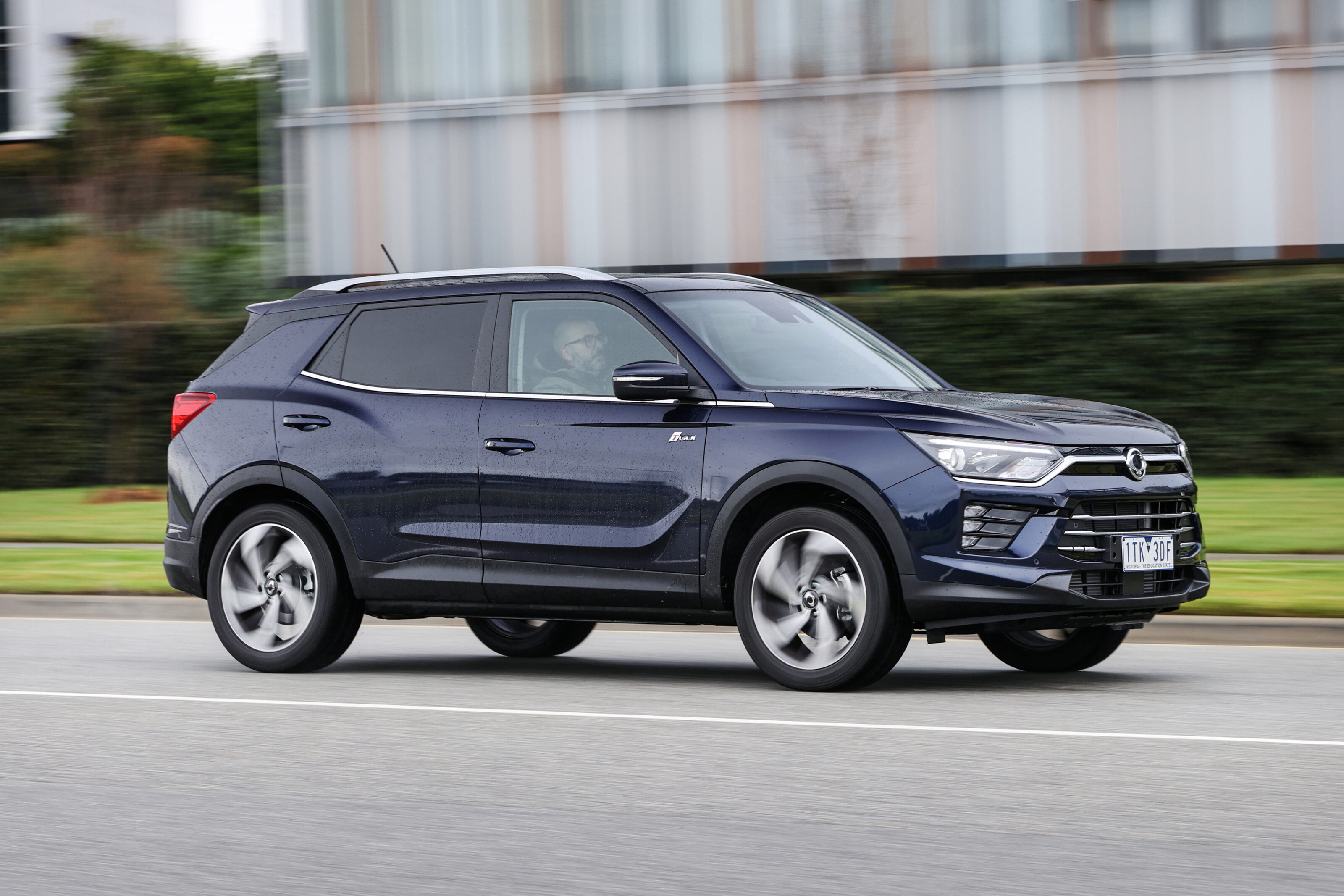
SsangYong would have three models in the top 20 without our 250-unit limit. Its Korando SUV (201 units to date) is up 154 per cent.
And just in case you are curious about vans, LDV’s G10 is up 162 per cent (to 1517 units) to place it ahead of the Renault Trafic, and not too far off the Ford Transit Custom which is third in the 2.5T-3.5T segment with 1878 units (up 52 per cent).
Volkswagen’s updated Transporter is up 129 per cent (997 units), and the Peugeot Partner is up 111 per cent in the smaller under 2.5T van segment – though still trailing its two rivals, the Renault Kangoo and VW Caddy.
Here, though, is the top 20 list of genuine fast-climbers in Australia’s new-car sales wars.
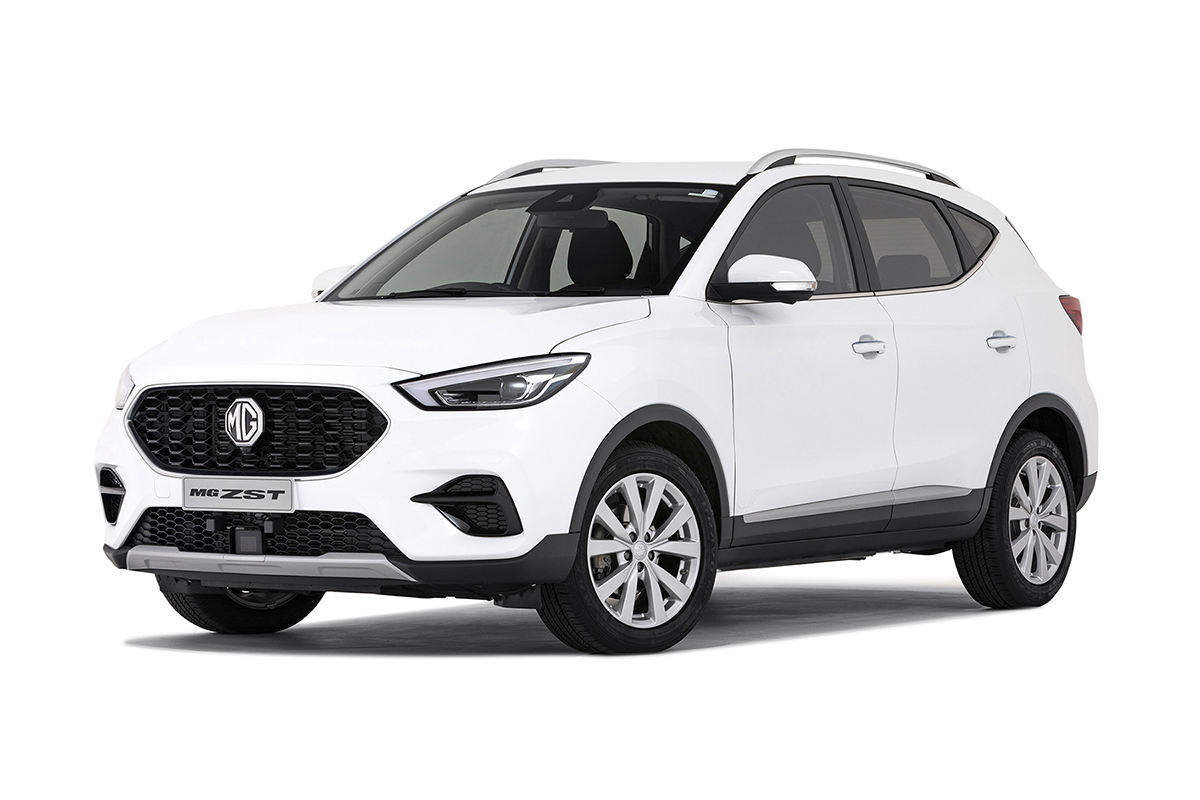
1) MG ZS/ZST – up 434 per cent
MG’s compact SUV has stormed into the lead of an intensely competitive segment thanks to sales surging from 1704 in the first half of 2020 to 9093 for the same period this year.
ZS sales have grown exponentially with the introduction of the newer ZST variant, which has also recently added cheaper Core and Vibe grades.
The ZS/ZST is currently outselling small-SUV sales giants such as the Hyundai Kona, Mitsubishi ASX and Mazda CX-30.
2) Suzuki Ignis – up 421 per cent
Another 400-plus percentage vehicle, though the Ignis owes more to returning to normal results than any remarkable change in buyer behaviour.
Suzuki sold only 173 Ignis models between January and June 2020 – likely owing to diminishing stock in the run up to a facelift introduced at the end of that period.
Just over 705 units were sold in the same period for 2019, which is closer to the 2021 year-to-date figure of 902 units.
3) Volkswagen T-Cross – up 389 per cent
VW’s smallest SUV has been making good progress since its introduction in 2020 and has benefited from a new, mid-range CityLife model in 2021.
Outselling equally new offerings such as the Ford Puma, Kia Stonic and Nissan Juke, as well as the slightly older Hyundai Venue, so far in 2021, the T-Cross is also hanging onto the coat-tails of the Toyota Yaris Cross.
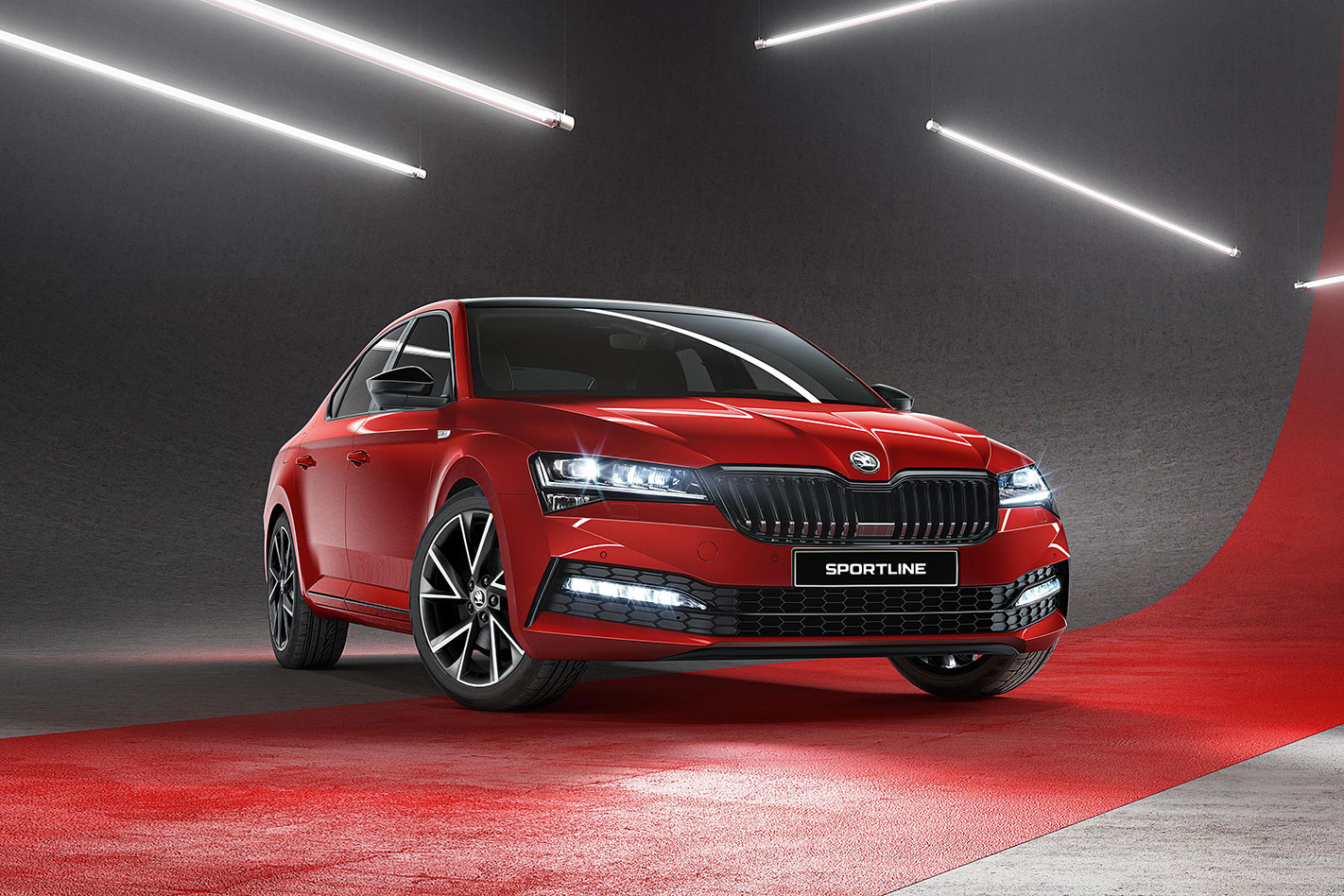
4) Skoda Superb – up 318 per cent
It’s still relatively low volume at 372 units, but the Superb’s 318 per cent growth is indicative of a Skoda brand truly on song in Australia (up 105 per cent year to date) – 14 years after returning properly to the market. It’s also no coincidence the Superb was refreshed in early 2021, including a return of the entry 162TSI variant.
5) Mercedes-Benz G-Class – up 292 per cent
The vehicle formerly known as the G-wagen is another noteworthy small-volume case, with sales almost quadrupling – from 87 to 341 units – through a doubling of variants offered. In early 2021, a G400d diesel joined the flagship AMG G63. Impressive figures for an off-roader which costs between $233,900 and $299,000 before on-road costs.
6) LDV D90 – up 235 per cent
LDV is another British-turned-Chinese brand performing exceptionally well in 2021, up 127 per cent year to date.
And while two of its commercial vehicles – the T60 ute and G10 van – are the biggest sellers, the company’s D90 seven-seater SUV is also growing in popularity. The D90 is up to 664 registrations so far this year.
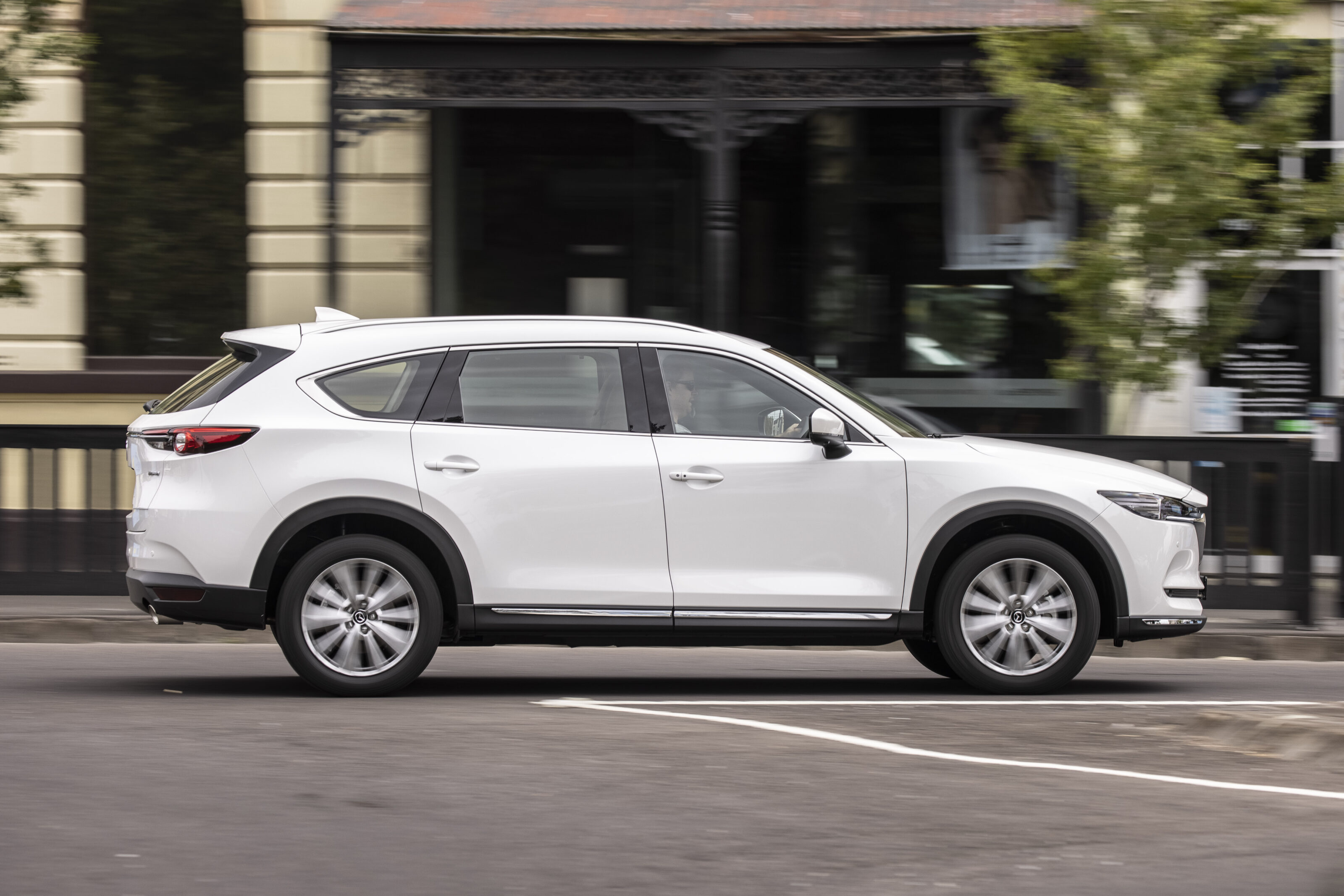
7) Mazda CX-8 – up 216 per cent
The more affordable of Mazda’s two seven-seater-SUV options has closed the sales gap to the slightly bigger CX-9. An early-2021 update for the CX-8 range – which included new variants – seems to have boosted sales, which now sit at 3524 units. The CX-9 is still ahead with 4321 units, despite offering only a single (turbo petrol) engine compared with the CX-8which has a choice of petrol and diesel.
8) MG HS – up 209 per cent
MG’s mid-size SUV rival for the likes of the Mazda CX-5 and Toyota RAV4 has more than tripled sales compared with this time last year – now up to 3470 units at the midway point of 2021. It’s not difficult to understand why. A new entry model was introduced in December 2020 and in early 2021 the line-up was further expanded with all-wheel-drive variants for the first time, as well as the addition of a plug-in hybrid version.
9) Volkswagen Multivan – up 202 per cent
Helped by a recent update (dubbed T6.1), VW’s people-mover is another of those models reverting to previous form.
While 595 registrations are triple the number of units sold in the first half of 2019, a better indication is the 559 Multivans sold between January and June 2019.
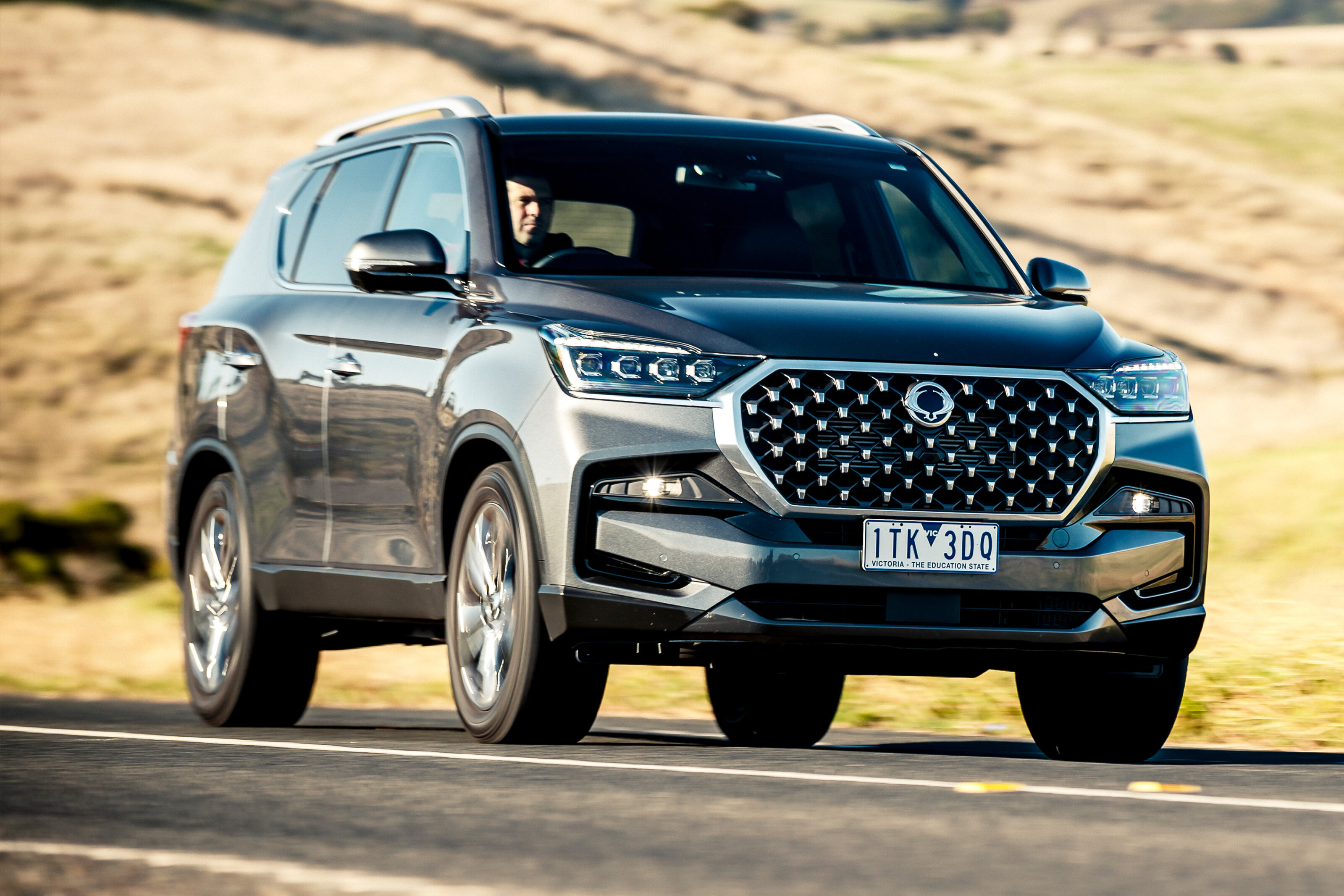
10) Ssangyong Rexton – up 182 per cent
The Korean brand’s is a small fish in the big large-SUV pond, though its 304 units still represents a promising year-to-date increase for the seven-seater which was given a facelift in early 2021.
11) BMW 4 Series – up 179 per cent
Sporty models can be particularly susceptible to newness when it comes to sales and there’s proof of this with the coupe and convertible versions of the 3 Series.
With a new-generation 4 Series introduced this year, sales have nearly tripled to 594 units. Guess that controversial grille isn’t such a big issue.
12) Ford Fiesta ST – up 167 per cent
Ford’s smallest car just squeaks past our volume limit by a single unit, yet it’s a worthy inclusion for the fact only a single variant is imported to Australia – and it’s the most expensive.
The Fiesta ST hot-hatch is at 251 units for the year, confirming that affordable pocket-rockets are still popular.
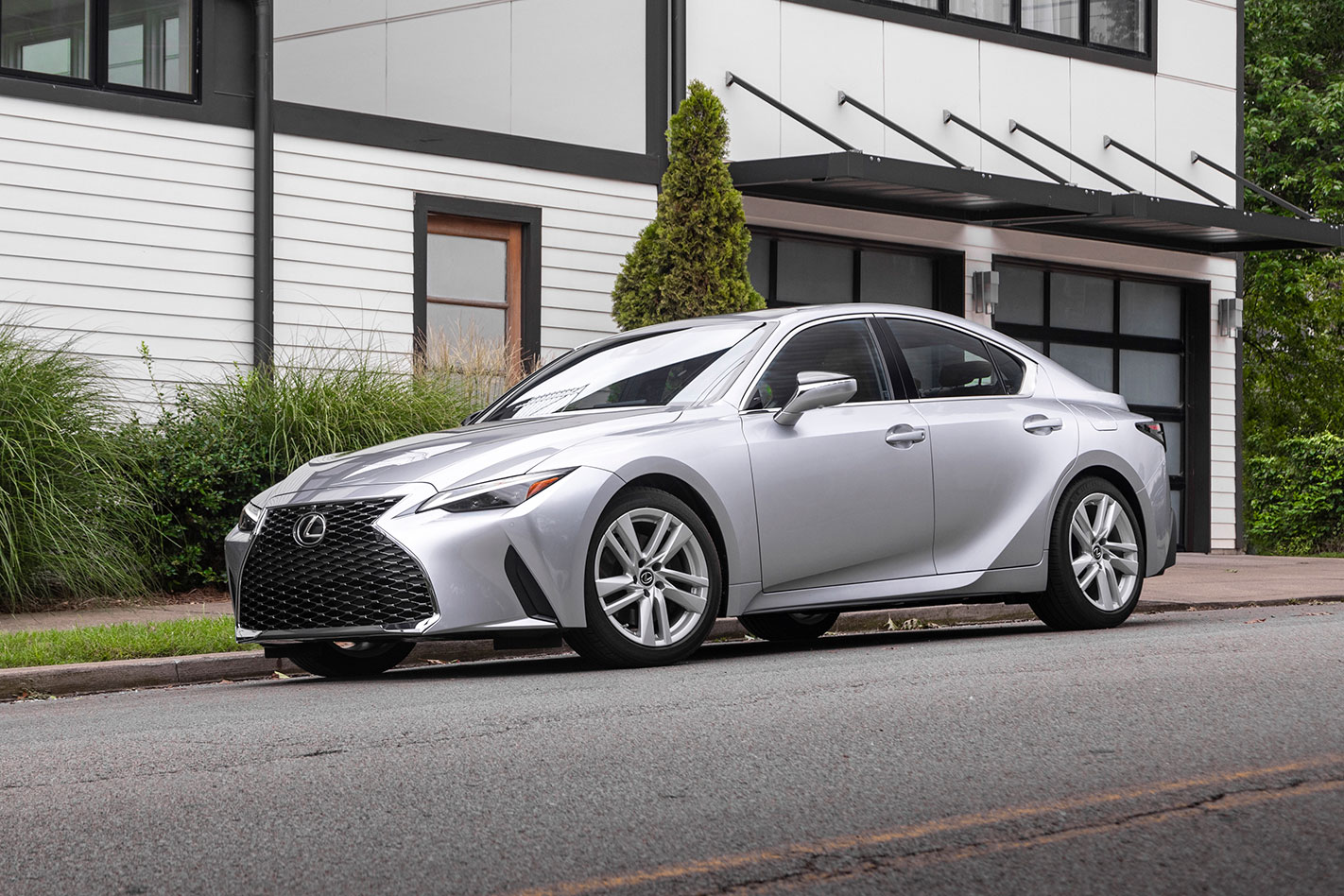
13) Lexus IS – up 144 per cent
It’s a bittersweet 2021 for Lexus’s famous mid-sized luxury sedan. On the sweet side: a heavily updated model introduced in late 2020 has contributed to the IS becoming the fastest-growing Lexus in Australia this year, even if 746 units is still well short of BMW 3 Series and Mercedes C-Class sales (but ahead of the Audi A4).
However, a bitter taste will be left in November when the model is axed owing to a lack of compliance with updated safety legislation.
14) Ssangyong Musso – up 142 per cent
Another SsangYong which isn’t going to make the majority of rivals tremble, but the Musso’s 916 units so far in 2021 is highly respectable growth – especially with an updated version only just released.
15/16) Joint Mazda MX-5 and MG3 – up 140 per cent
A small update and a new, racy GT RS variant have done wonders for Mazda’s world-famous roadster, which has climbed from 185 units this time last year to 444 registrations.
In 2020, the MG3 ended the Toyota Yaris’s domination of the city-car class and the form has continued into 2021. With 6981 sales, the little MG has made another big gain to take 20 per cent of its segment.
17) Haval H2 – up 138 per cent
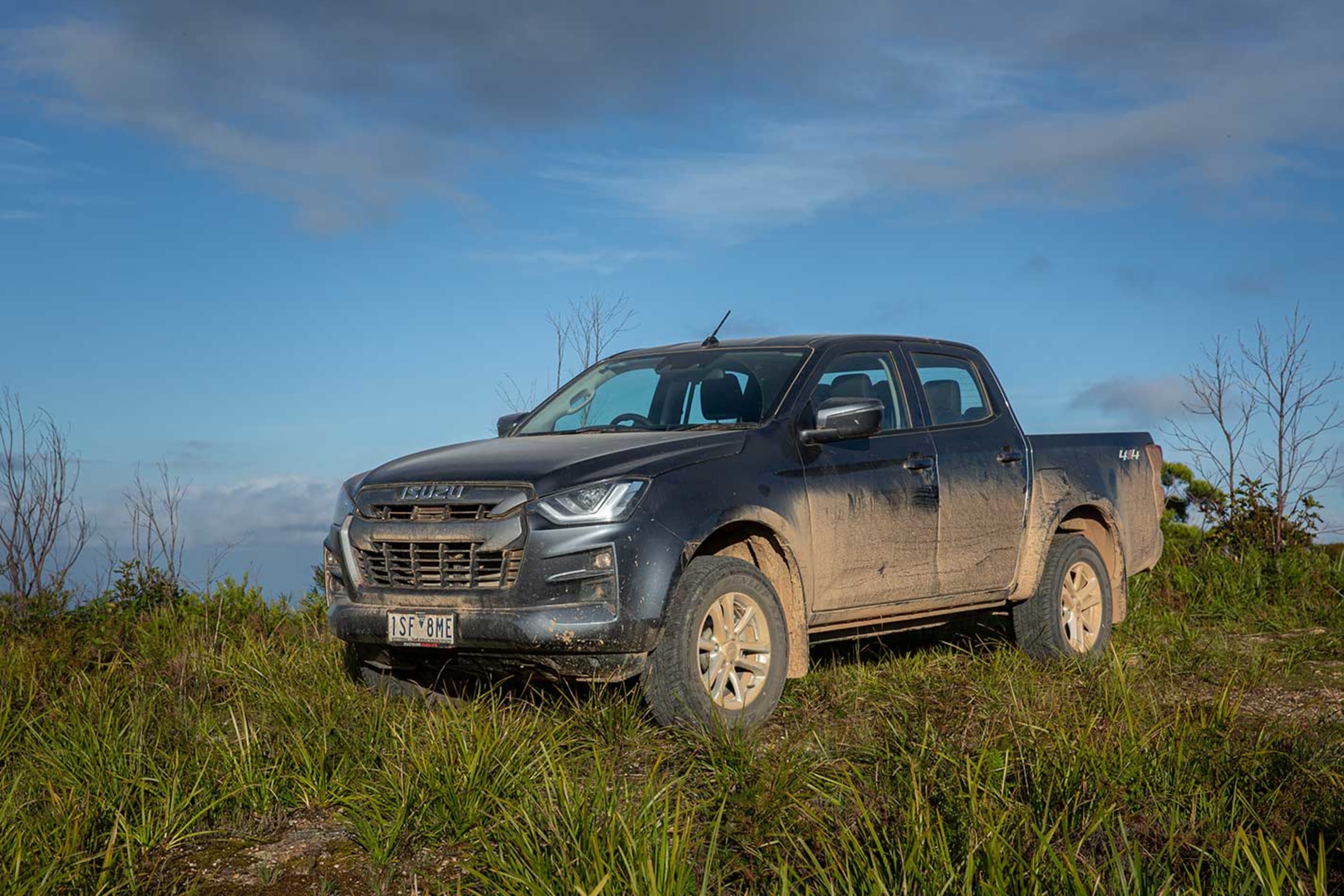
The H2 has now been replaced by the Jolion as Haval’s compact SUV, though not before finishing off on a high with nearly 2000 sales for the first half of 2021.
18) Isuzu D-Max 4X4 – up 133 per cent
Isuzu is one of 2021’s star brand performers, and it’s essentially all down to the success of the new-generation D-Max ute – notably the 4×4 variant which is up to 10,682 units. The D-Max was even the country’s third most popular model in June – behind two other utes (Toyota HiLux and Ford Ranger).
19) Suzuki Jimny – up 126 per cent
The much-loved Jimny is still, well, loved much. And a new, cheaper variant called the Lite goes on sale in August, which should only further boost sales already close to 1500 for the year.
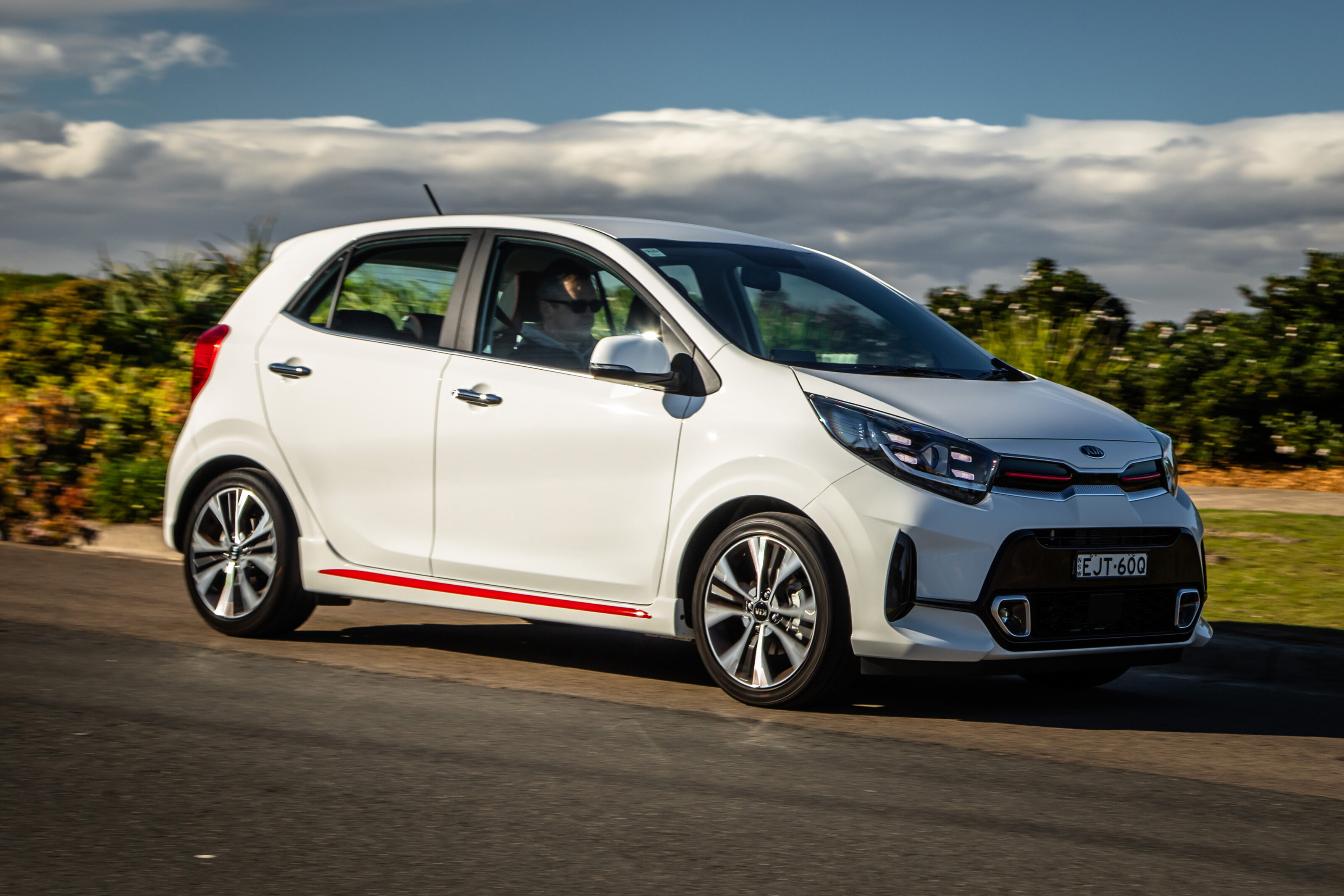
20/ 21) Joint Haval H6 and Kia Picanto – up 122 per cent
A new-generation H6 has only recently gone on sale, yet the mid-size SUV is already having a good year with 699 units so far.
An unexpected model is the fastest-growing Kia in 2021 – the Picanto micro car. The pint-sized hatchback is up to 3770 units so far this year, accounting for a sales increase which even surpasses that of the new-generation Sorento SUV (up 115 per cent).
Kia has unveiled a facelifted version of the Ceed small car for 2022 with a host of updates to help keep the Euro-only range fresh against newer competitors such as the Volkswagen Golf.
In Kia’s European range, the Ceed fills the small-car space occupied in Australia by the Cerato. Until this year’s facelifts for both models (see the new-look Cerato here), the two were much closer in front-end styling – although the Ceed was set apart from our local Cerato hatch with its more conventional hatchback shape.
For the 2022 Ceed, a redesigned front-end incorporates Kia’s latest logo and a prominent new front grille with a black gloss finish, chrome inserts and closed-off design for plug-in hybrid variants.
Surrounding the larger grille is an updated headlight design, with full-LED headlamps and three new arrow-shaped daytime running lights.
In addition, the Ceed’s lower front bumper has been altered with chrome accents and a side garnish which extends into the front wheel arch.
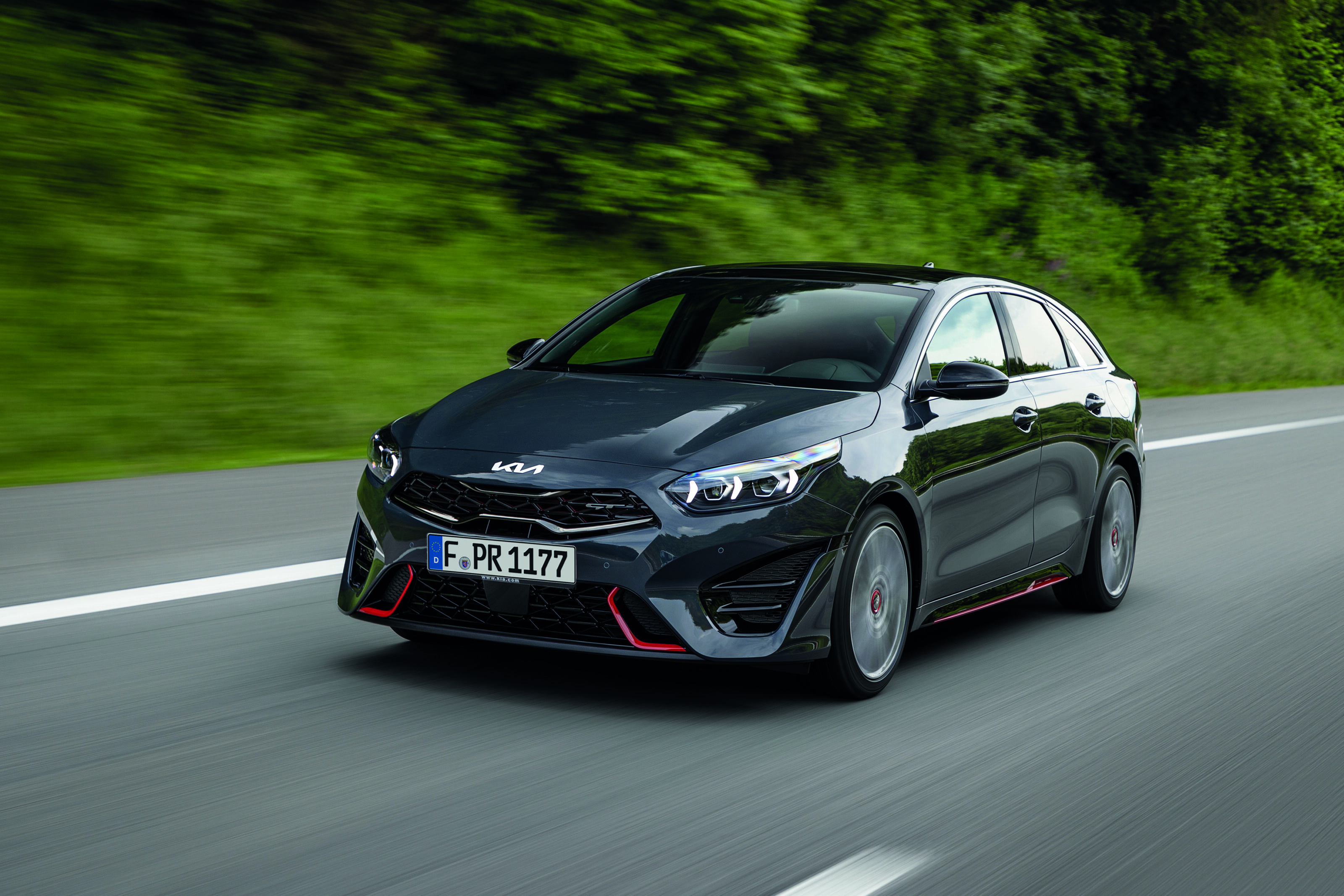
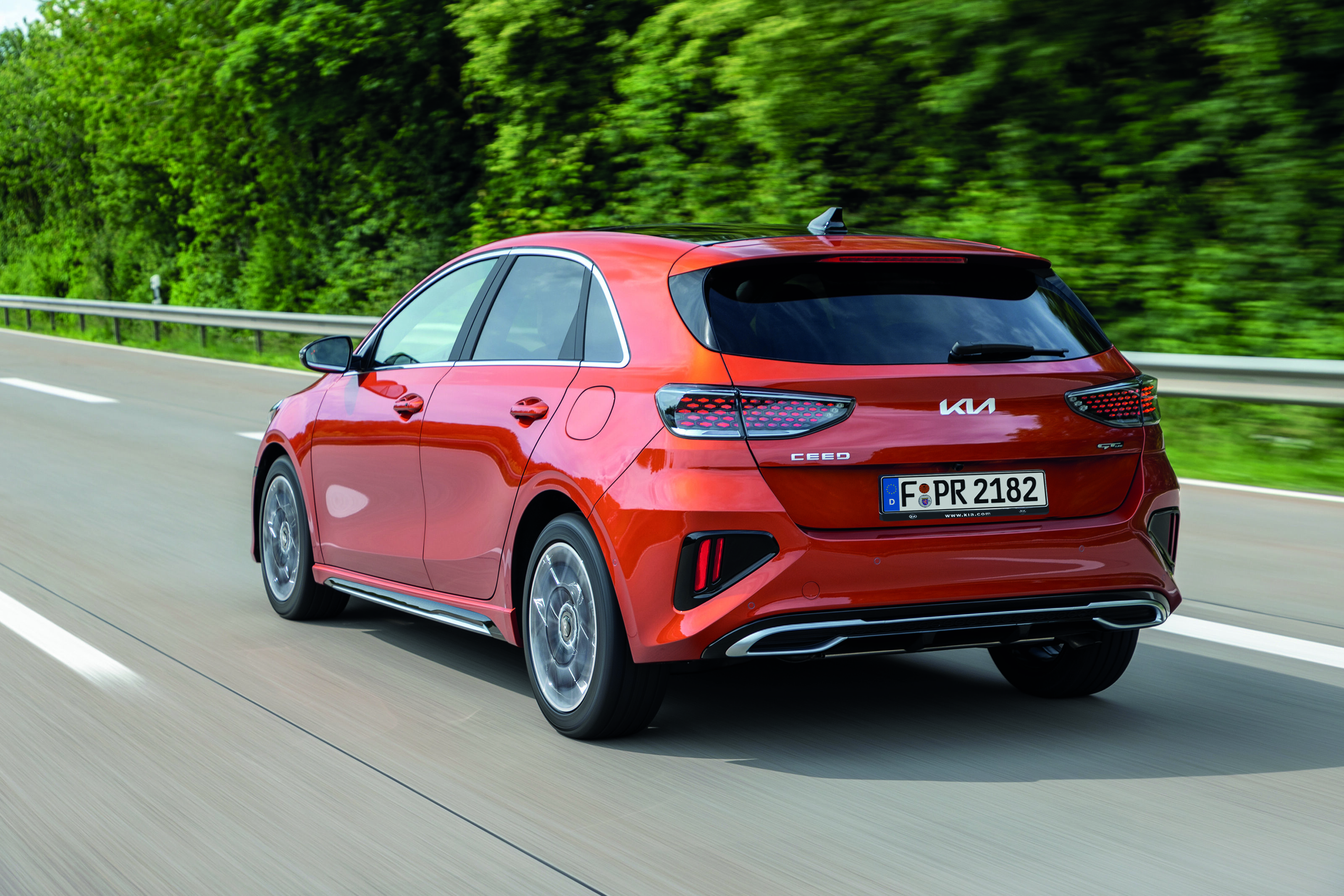
Out back, the hatch picks up a new tail-light design on GT-Line and GT variants – consisting of 48 red honeycomb-shaped light modules with sequential turn signals in a clear tinted housing.
The wagon, ProCeed shooting brake and regular hatch models retain their existing tail-light designs, however, all Ceed variants now feature a gloss-back rear diffuser with chrome styling cues.
Additionally, the ProCeed GT includes a set of exclusive design upgrades, including red highlights at the front, side and rear, as well as larger exhaust tips and updated 18-inch dark metal alloy wheels with red wheel caps.
Two new external colours – orange fusion and machined bronze, replacing copper stone – and a set of new alloy wheel designs, ranging from 16-inch to 18-inch, round out changes to the exterior design of the Ceed.
Moving inside, a 12.3-inch digital instrument cluster has been added to range-topping versions of the updated Ceed range, paired with an 10.25-inch infotainment system. Wireless Apple CarPlay and Android Auto, plus a new USB charging point in the centre console for rear passengers.
Kia Connect will include additional tech in the Ceed, including; valet mode, third-party calendar link with navigation, augmented reality for the last mile of navigation and ‘user profile transfer’, a feature which will primarily allow fleet customers to easily switch their preferences from one connected Kia to another.
Four new upholstery options – including black suede/leather bucket seats with contrasting grey stitching on the GT-Line, and red leather on the GT – join the updated Ceed range. GT-Line, GT and PHEV variants also pick up a newly-designed leather gear knob.
Kia has focused on active safety technology in the updated Ceed, with a range of revised driver assistance systems included. Much like recent Hyundai-Kia products, the Ceed’s blind-spot alert and rear-cross traffic alert systems have been upgraded to include collision avoidance technology. In addition, the car will now warn the driver when a leading vehicle has driven away in slow-moving traffic or at the lights.
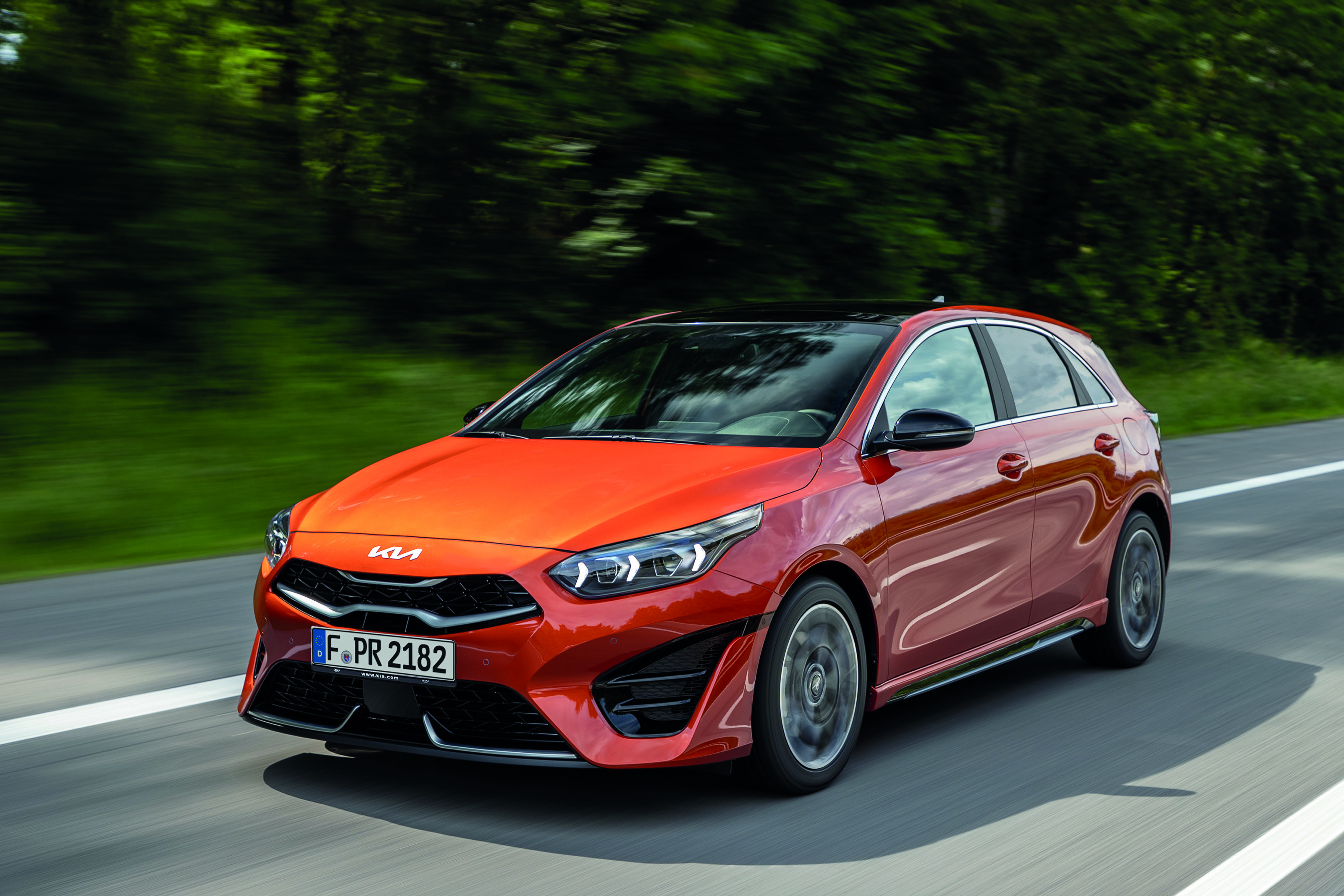
The engine options have remained unchanged for the updated Ceed, although a new 1.5-litre turbo-petrol engine was added to the UK range earlier in 2021. The engine – which replaced the previous 1.4-litre turbo – is joined by a range of turbocharged petrol and diesel donks, alongside mild-hybrid, plug-in hybrid and LPG options.
The updated Kia Ceed will commence production at the company’s European manufacturing plant in Slovakia during August, ahead of an on-sale date in Europe during the fourth quarter of this year. Full pricing and specification is expected to be announced in the coming weeks.
With Kia’s small car slot filled by the recently-updated Cerato in Australia, the Ceed remains off the table for an Australian launch. The previous-generation ProCeed GT was sold in Australia for a short period in the mid-2010s, but was discontinued due to slow sales and high import costs stemming from the model’s European production in 2015.
The rapidly growing range of Volkswagen electric vehicles is set to become even bigger after the German manufacturer announced it plans to bring a full-size SUV into its model line-up.
In line with the rest of its EVs, the new vehicle will be called the ID.8 and is planned to be the size of the North American and Chinese market’s Atlas, a car which we don’t receive in Australia.
If it is based around the dimensions of the Atlas, it will be a larger vehicle than the internal combustion engine-powered Touareg and the ID.4, – the latter of which is VW’s second EV due to arrive in Australia next year.
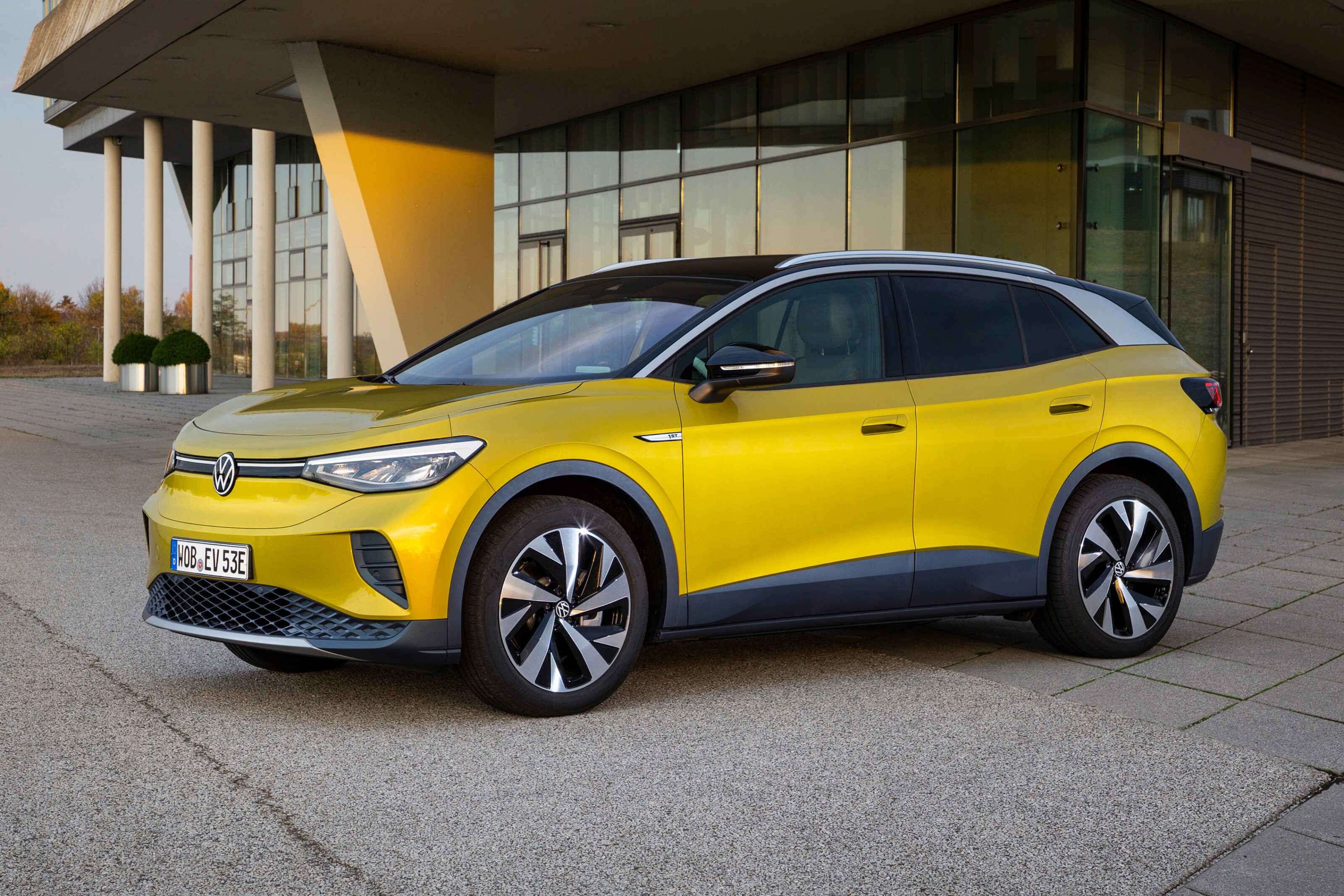
Plans for the ID.8 were revealed by the VW Group’s chairman of the board of management, Herbert Diess, after his speech earlier in the week at the New Auto presentation, outlining the manufacturer’s electric ambitions in the near future.
Posting on his LinkedIn account, Diess shared a list of VW’s current models and their EV equivalents, with the Golf already having a partner in the ID.3, the Tiguan with the ID.4 and ID.5, T7 and the ID.Buzz and the Passat and the ID.6 (not coming to Australia or Europe).
The ID.8 was listed alongside the Atlas, though there was no mention of which platform would underpin it, whether it would be the MEB (which acts as an alternative to the Atlas, Golf and Tiguan’s MQB architecture) or the freshly announced Scalable Systems Platform (SSP), revealed at the presentation as Volkswagen’s universal electric platform.
Volkswagen is aiming to phase out ICE cars completely by 2035 in Europe, in line with a proposed EU plan to outlaw fossil fuel vehicles from 2035.
Asked whether the ID.8 or other members of the ID range will be heading Down Under, a spokesperson for Volkswagen Australia told WhichCar:
“All VGA brands are doing the utmost to make cases for PHEVs and EVs. The EV strategy announced by the NSW Government is the model of what ought to be adopted uniformly and nationally. Victoria’s ham-fisted, cash grabbing excuse for an EV policy is the very antithesis of common sense.“So while it’s premature for us to estimate the arrival of specific models, Volkswagen in Australia would very much like to introduce the ID.4 to commence its zero emission vehicles roll out.”
The Audi RS3 is a fast car in its own right, but the Porsche 911 Turbo is a really fast car, capable of clocking 0-100km/h in a ballistic 2.8 seconds.
The potent 294kW RS3 hatchback is quick enough to hassle genuine supercars from only a few generations ago, but Porsche’s 427kW twin-turbo sports car icon is here to show us just how far the game has come.
The humble hot hatch was never going to be a match for the Porsche but, for posterity, we flung them both down the quarter mile with a very convincing – if not, expected – win claimed by the 911.
But this raised an interesting question: how many car lengths ahead would the RS3 hot hatch need to keep the 911 at bay?
In the name of science, we decided to find out.
The first experiment saw the RS3 begin ten car length’s down the 400m strip, equating to an approximate 40m head start.
Even with a significant head start, the 911 despatched the RS3 in short order, crossing the line with a handful of car lengths to spare.
With the staggered start extended to 15 car lengths, or approximately 60 metres, the 911 Turbo was still able to run down the five-pot hot hatch – crossing the finish line a few car lengths ahead, still.
The biggest head start of the day saw the RS3 begin with an almost 70-metre advantage – seemingly a full set of traffic lights ahead of the 911.
While not even positioned as Porsche’s apex predator – sitting one rung below the bigger, badder Turbo S – the 911 Turbo chased down its prey with ferocious intent, with the photo finish showing the Porsche pipping the Audi hot hatch by inches.
For curiousity’s sake, we performed a roll race commencing from 50km/h, with an emphatic victory given to the 911.
It’s a stark display of just how rapid today’s crop of performance cars have come. By the cold Winter day’s end, the 911 Turbo bested a 0-100km/h sprint in 3.1 seconds, clearing the quarter mile in 10.9 seconds.
The Audi, predictably, trailed behind measuring 4.1 seconds from 0-100km/h, and mustered a 12.4 second pass over the 400m strip.
It’s certainly no knife in a gunfight, but today the heroic Audi RS3 was simply outgunned. Watch all the action up top, and let us know what other weird pairings you’d like to see in future!
Snapshot
- First i4 will arrive early 2022
- M50 features 400kW AWD layout
- Dual-screen interior standard
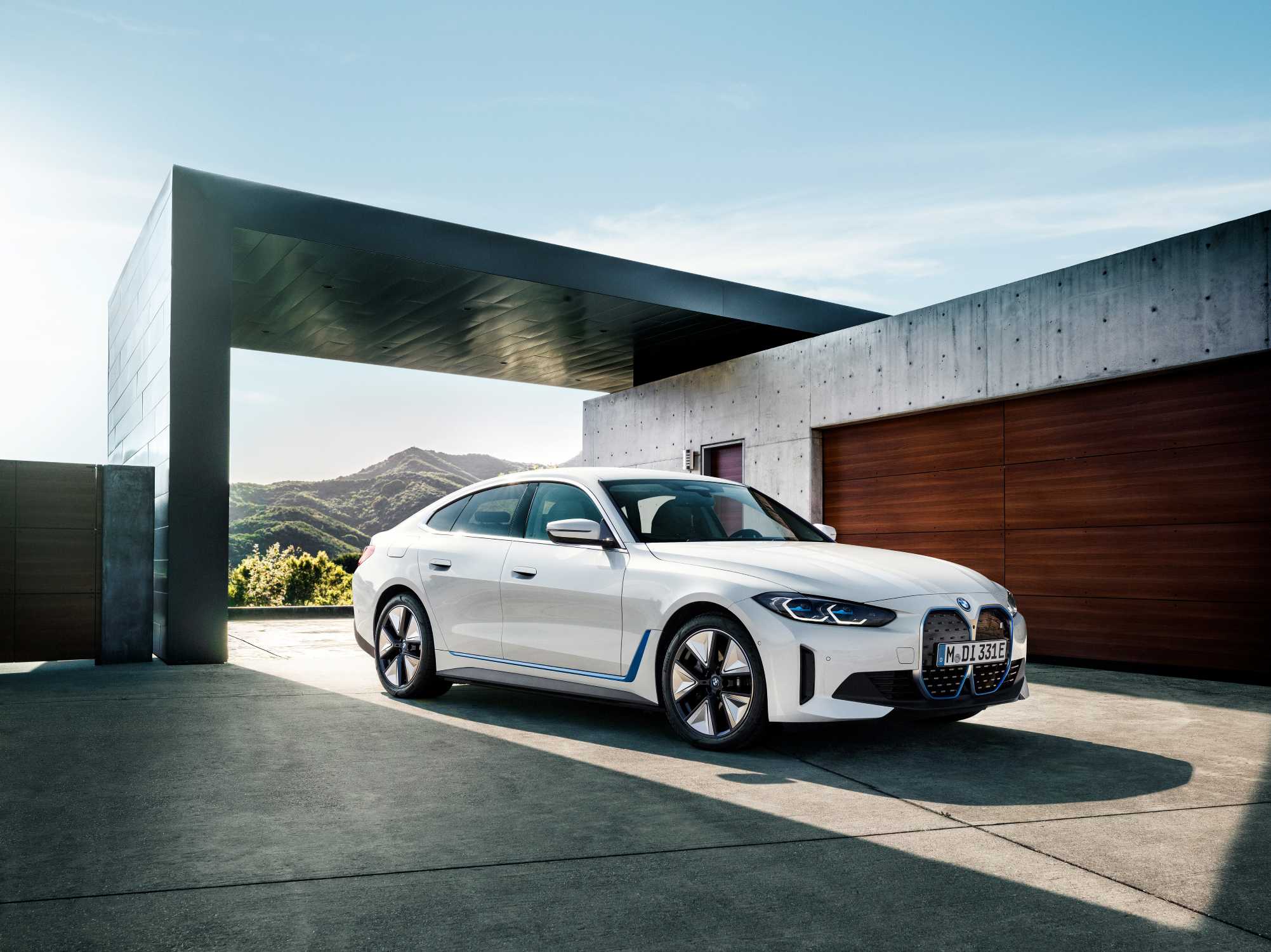
BMW’s first ever i4 has been revealed, due to reach Australian shores in early 2022.
The eDrive 340 model will be accompanied by the i4 M50, the first all-electric M car to appear in BMW’s long-running performance line.
The mid-size electric luxury sedan will rival the Tesla Model 3 in the Australian market, though the BMW is the more expensive.
Pricing
Two BMW i4 models will be available upon the EV’s arrival early next year. The entry-level eDrive40 will carry a price of $99,900 before options and on-road costs. The cheapest Tesla Model 3 is currently priced at $59,990 before on-road costs.
The M50 will be priced at $124,900 before on-road costs. It’s a big margin over the top-spec Tesla Model 3 Performance, which recently dropped to $90,900.
Power and performance
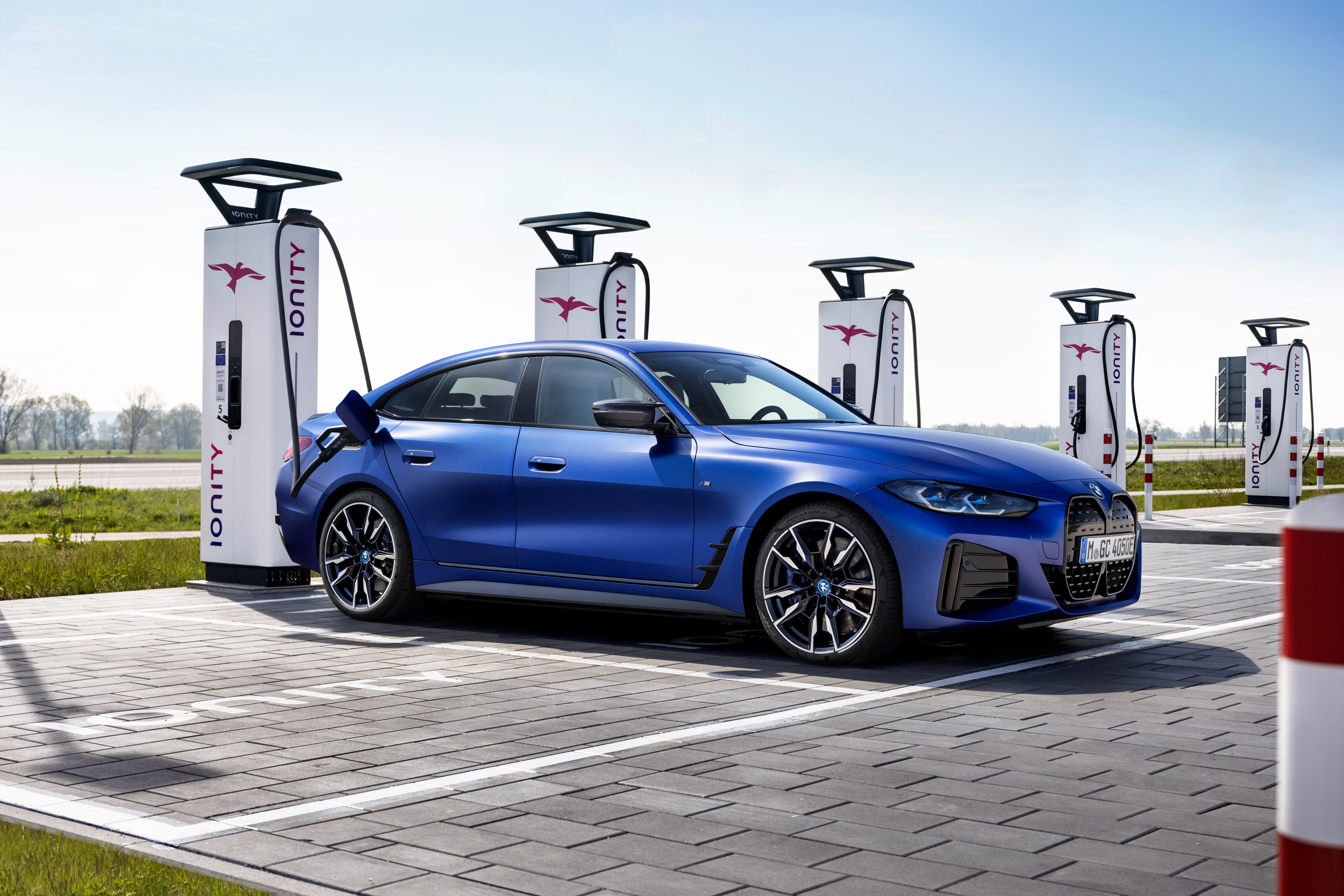
Both cars use fifth-generation BMW eDrive technology, with an 84kWh battery capable of 200kW DC charging.
The eDrive40 features a single electric motor sending 250kW/420Nm to the rear wheels, with a range of 590km. The 0-100km/h is achieved in 5.7 seconds.
The M50 instead uses two motors, powering both the front and rear axles for a 400kW/795Nm output and 3.9-second sprint to 100km/h. Range is reduced to 510km per charge.
Plugged into a 200kW charger, battery capacity can be brought from 10 per cent to 80 per cent in just 31 minutes. Ten minutes of fast charging from a 10 per cent battery can yield 164km of range in the eDrive40, or 140km for the M50.
For the Australian market, both models will use adaptive M suspension and 19” wheels as standard.
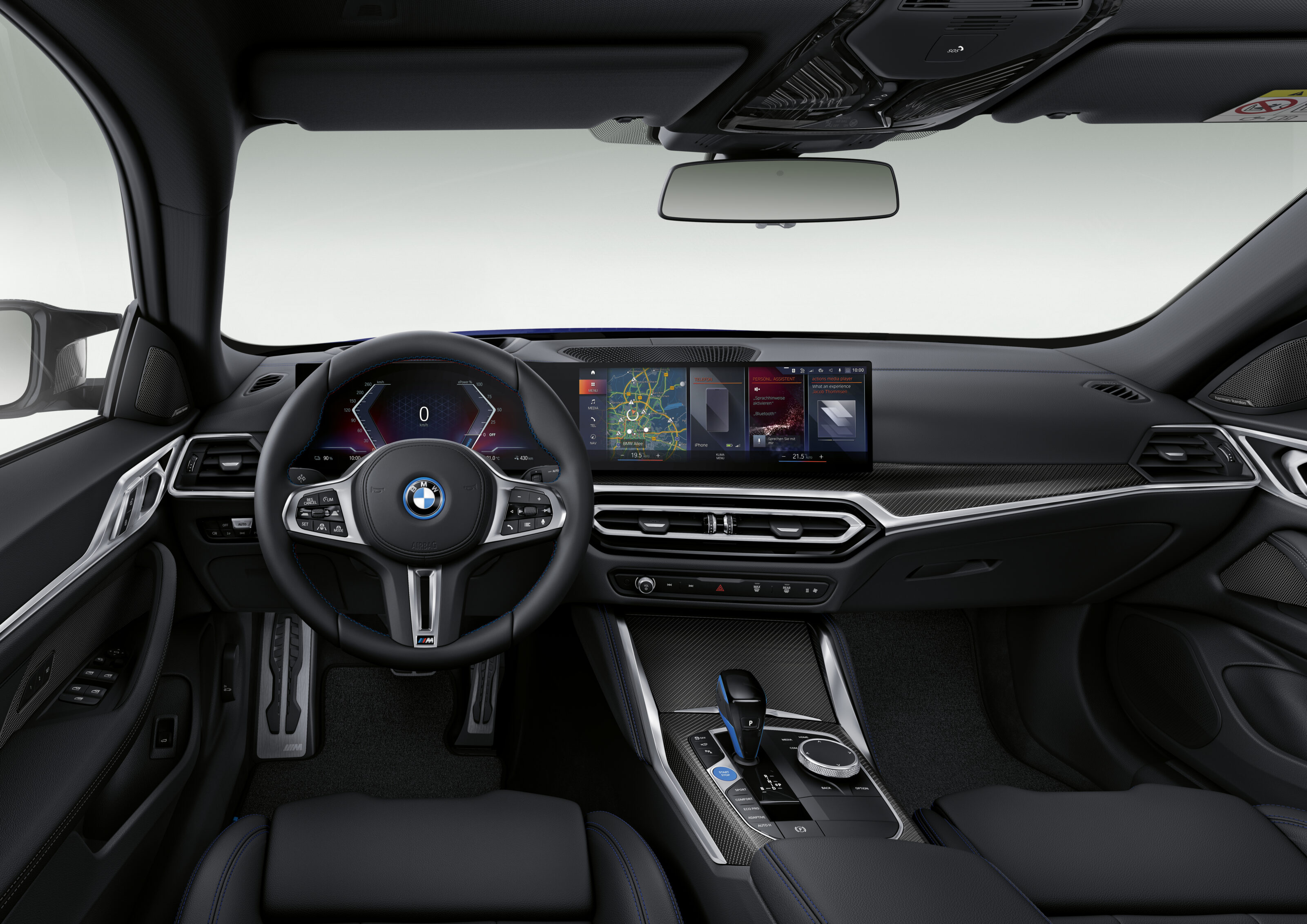
Features
Standard features on the i4 eDrive40 include:
| M Sport Package |
| M Sport brakes |
| Sport front seats |
| 12.3u201d information display |
| 14.9u201d control display |
| Leather upholstery |
| Head-up display |
| LED headlights |
| Automatic tailgate |
| Parking assistant |
| Wireless smartphone charging |
| DAB+ digital radio |
| Smartphone integration |
| 10-speaker sound system |
| Five-year Chargefox subscription |
In addition, the i4 M50 offers:
| M Performance tuning |
| xDrive AWD system |
| Lumbar support |
| Laserlight headlights |
| Harman Kardon 16-speaker surround sound |
| Electric glass roof |
| Performance Tyre Package |
| M Technology Package |
| Rear spoiler |
| Metallic paint |
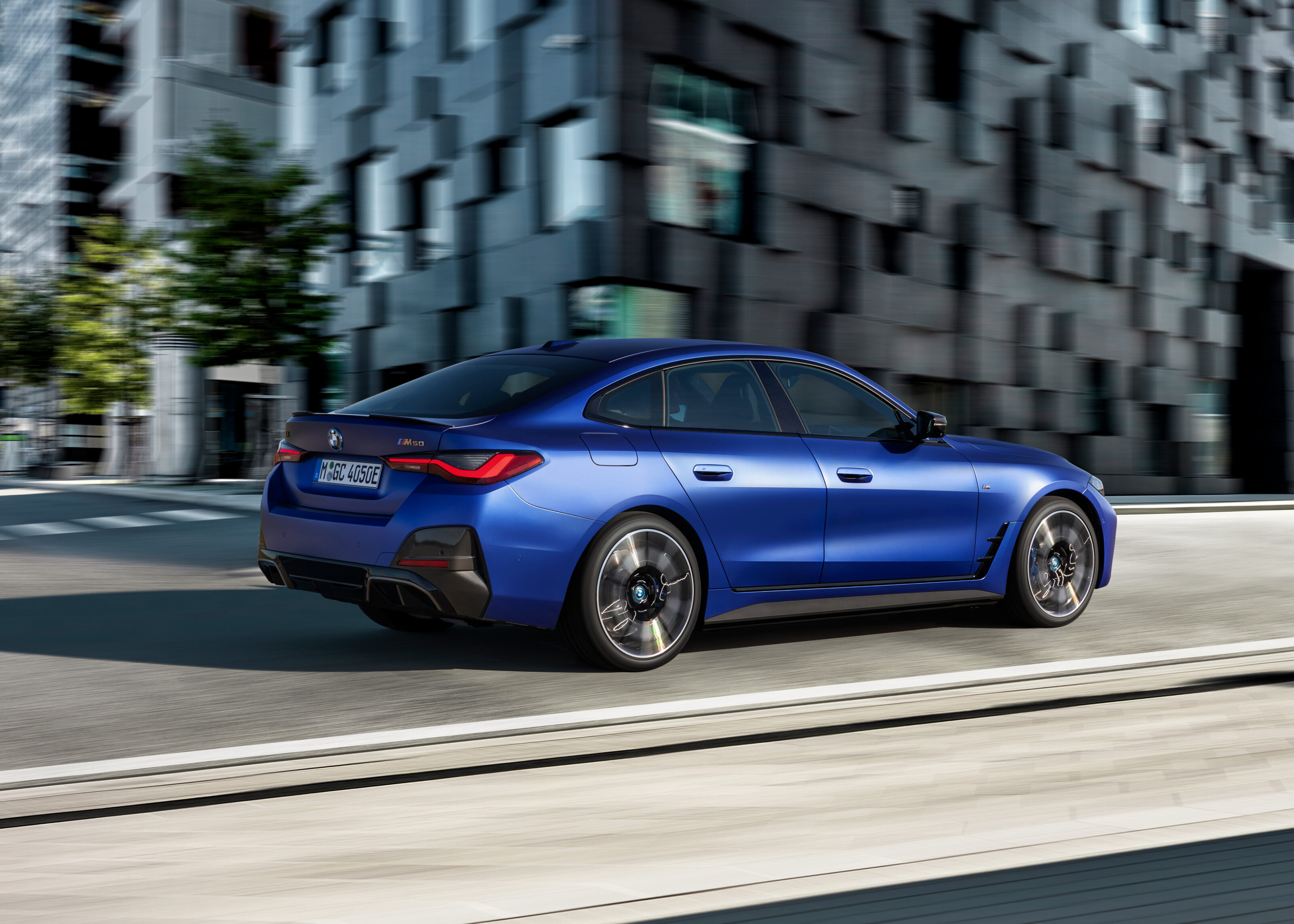
Options
A number of extra packages can be chosen for both cars at an additional cost.
For an extra $5800, the eDrive40-only Visibility Package adds:
| Metallic paint |
| Electric glass roof |
| Laserlight headlights |
The $1500 ($1300 on M50) Comfort Package features:
| Heated steering wheel |
| Lumbar support (standard on M50) |
| Heated front seats (standard on M50) |
| Heated rear seats (M50 only) |
The $1700 ($1200 on M50) M Sport Plus Package includes:
| Shadowline M lights |
| M seatbelts |
| M rear spoiler (standard on M50) |
| High-gloss Shadowline with extended contents |
Finally the $3600 ($2100 on M50) Executive Package adds:
| Tyre pressure monitoring |
| Alarm system |
| Sun protection glazing |
| Harman Kardon surround sound (standard on M50) |
| BMW Drive Recorder |
Alpine white is standard paint, though eDrive40 buyers can pay $2000 for:
| Black sapphire |
| Mineral white |
| Sunset orange |
| M Portimao blue |
| San Remo green |
| M Brooklyn grey |
| Skyscraper grey |
Priced at $3850 ($1850 for M50), BMW Individual colours are:
| Davit grey |
| Tanzanite blue |
| Aventurine red |
Finally, M50 buyers only can choose BMW Individual frozen M Portimao blue for an extra $4700.
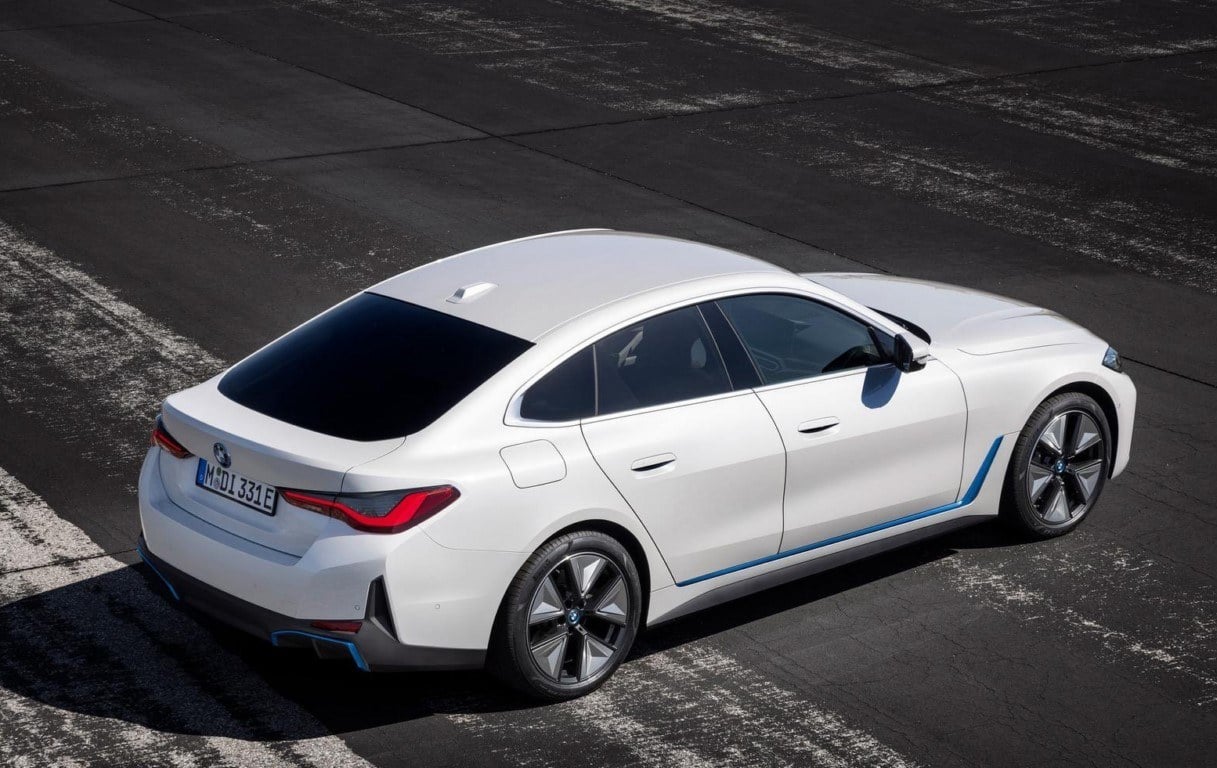
Safety
Safety features on all i4s include:
| Active cruise control |
| Front collision warning |
| Speed limit information |
| Lane departure warning |
| Steering and lane control assistant |
| Surround view |
| Remote 3D view |
Availability
Both the BMW i4 eDrive40 and i4 M50 will be available from early 2022.
Snapshot
- JLR enjoying a higher rate of orders than in 2020
- New Defender 110 accounting for over a quarter of all JLR sales
- Pauses in production due to chip shortage could lead to long delivery delays
Jaguar-Land Rover Australia says a strong customer order bank for 2021 isn’t reflected by published sales figures, owing to the ongoing product delays caused by the global computer chip shortage.
The British 4WD brand has only three per cent year-to-date sales growth in a market that has increased nearly 30 per cent in the first half of 2021. Jaguar sales are down nearly 20 per cent.
JLR Australia said at a briefing today the company has recovered well from a rough 2020 despite what industry vehicle-registration figures suggest. Managing director Mark Cameron said the company had posted a 50 per cent increase in orders taken over the first six months of 2020 and a 150 per cent jump in orders compared with the back end of the year.
The relative success has been attributed to mid-life updates or full refreshes for the majority of JLR’s models in 2021, and 34 per cent growth in sales of $70K+ large SUVs – key Jaguar-Land Rover territory. The company said the Covid-19 pandemic is prompting its primary customer demographic to spend its money on cars rather than overseas travel.

Supply problems are also affecting the all-new Defender, a vital model. The company recently announced its production facility in Nitra, Slovakia, would be shutting down temporarily owing to the semi-conductor chip shortage crisis.
The all-new Defender 110 was introduced locally in the second half of 2020 and has just been joined by the shorter-wheelbase Defender 90. Land Rover Australia says the Defender currently accounts for between 25 and 30 per cent of JLR’s orders but has warned customers could face waits into early 2022 for delivery.
Cameron admitted JLR Australia was looking at options to keep its delivery schedule for all models on track. This includes the possibility of removing features that are heavily reliant on the semi-conductor chips.
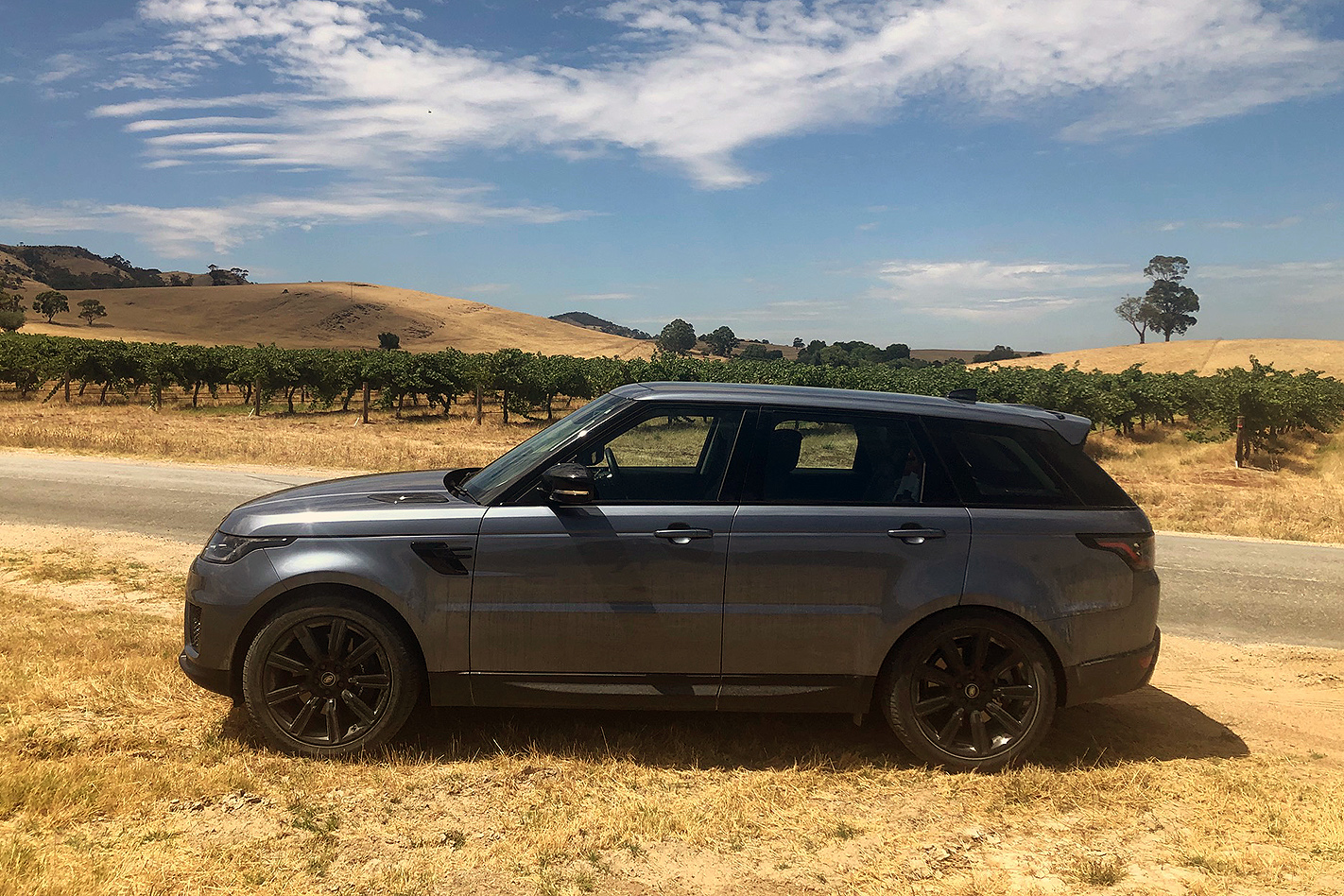
The Defender is Land Rover’s second most popular vehicle so far in 2021, with 912 sales only behind the 1155 registrations of the Range Rover Sport.
Jaguar-Land Rover claims the success of the Defender, Range Rover and Jaguar SUV models means the company accounts for just over a quarter of all $70k+ large SUV sales in Australia over the last six months, more than any other manufacturer.
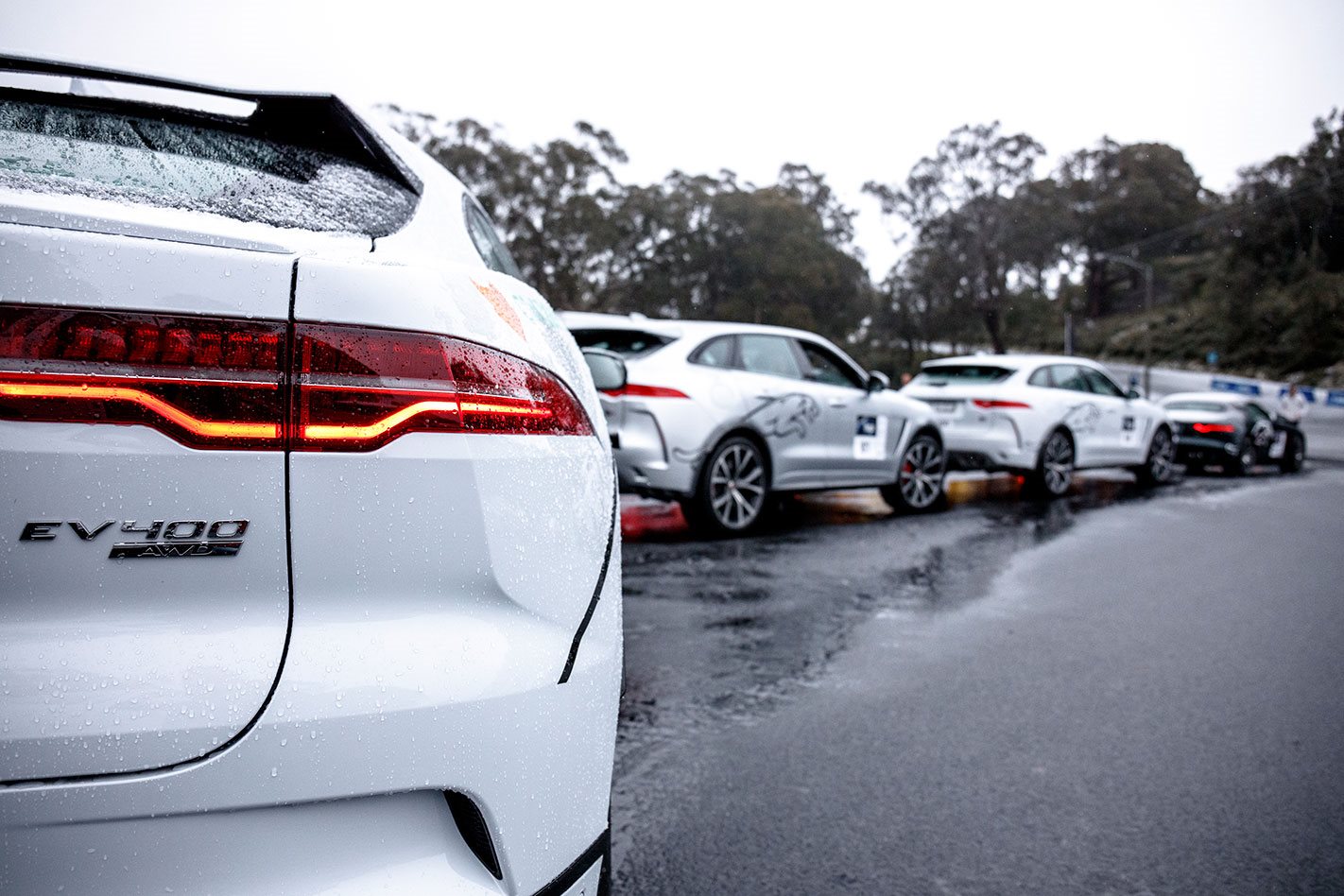
Bringing plug-in hybrid models to Australia is still off the table for the time being, with Cameron putting down JLR’s hesitance toward introducing its PHEV variants locally down to different approaches being taken by state governments.
He believes further changes to the Luxury Car Tax, on top of the recent amendments, would lead to a stronger consideration for JLR to bring a wider range of its of luxury PHEVs to Australia.
Prices of JLR’s products could soon come down off the back of a Free Trade Agreement between the United Kingdom and Australia, essentially scrapping tariffs on vehicles imported from British brands.
