
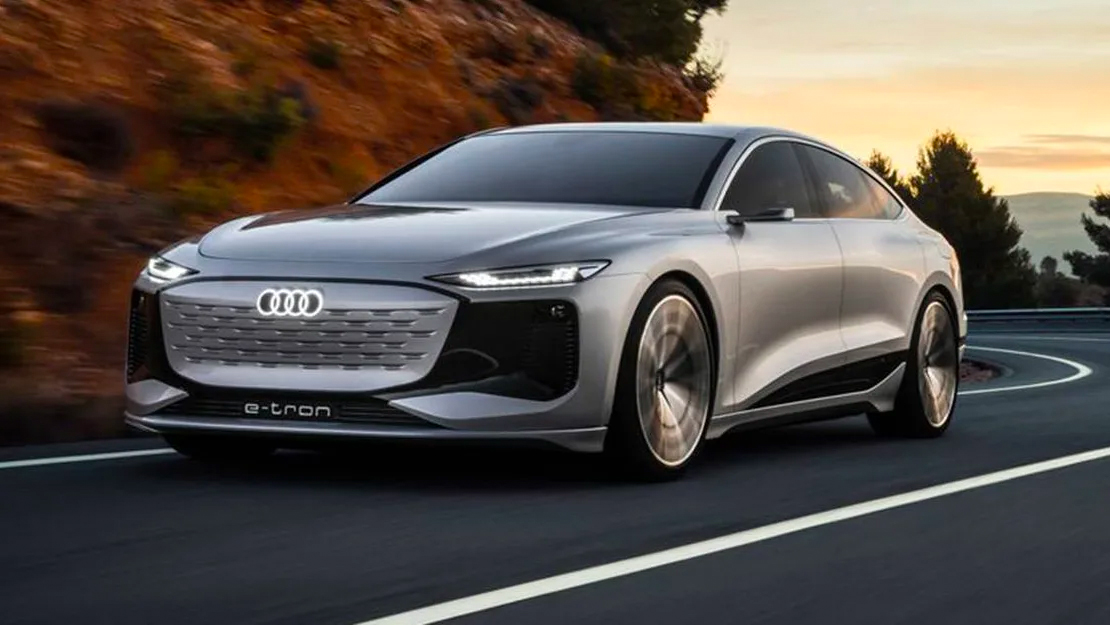
UPDATE, April 17: The upcoming new Audi E-Tron concept has surfaced online early, ahead of an official debut set to occur in Shanghai next week.
We’ve added a pair of images below, and the rest of the leaked marketing shots can be seen by clicking our gallery above.
Watch for more to come, in higher quality and with more detail, on Monday.
Mike Stevens
The story to here
Louis Cordony
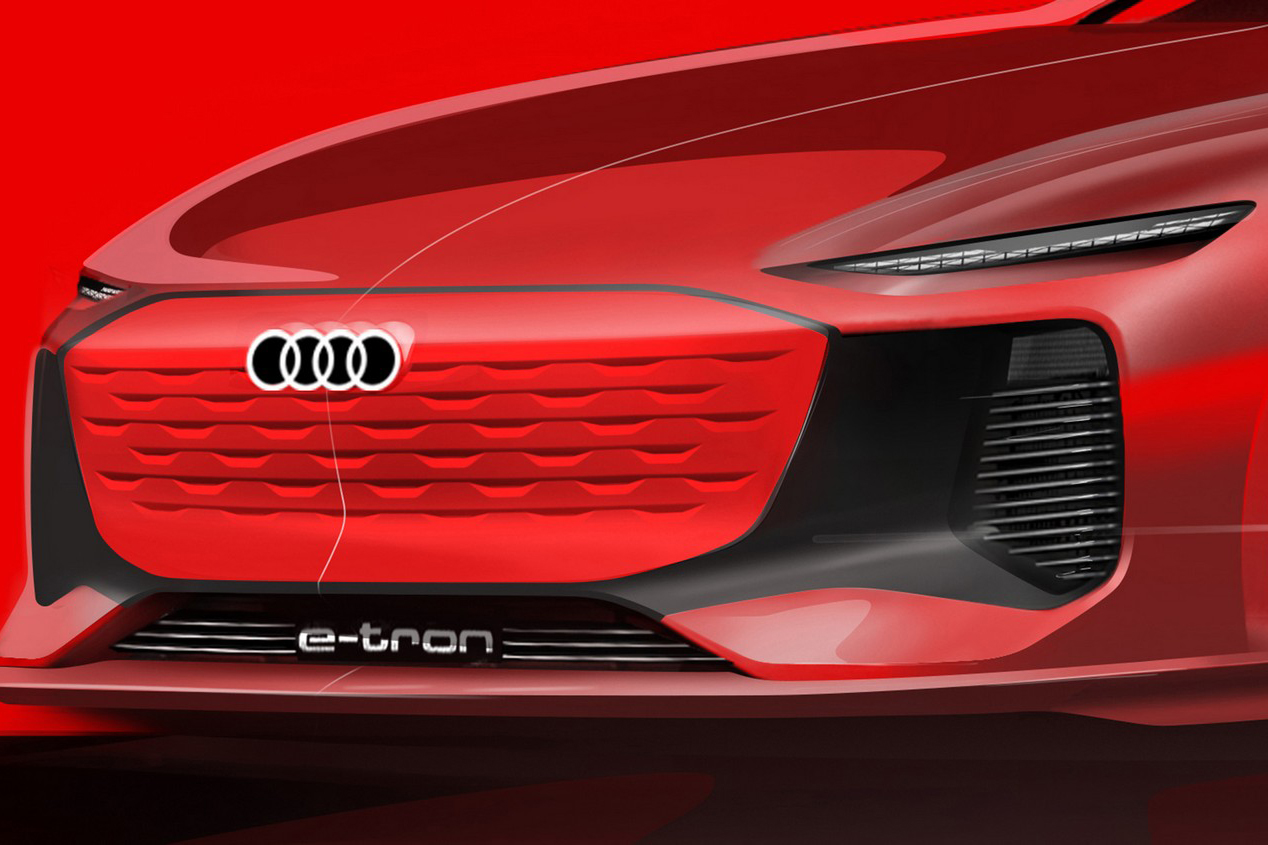
April 16: Audi has hinted a new E-Tron concept will debut at the Shanghai Auto Show next week after it uploaded a teaser to its global media database.
The image is a sketch of what is speculated to be an EV concept the brand promised for the show. It is plausible, since Audi has titled the image “World Premiere: Audi at Auto Shanghai on April 19”.
As for what the concept car will be, it’s clear that it won’t be an SUV. The cropped-in sketch shows a long front bonnet hunkered down on low-profile wheels, suggests front-engine sedan, wagon or coupe proportions.
The E-Tron treatment in the front lower grille points towards it finding its way into the brand’s EV range, which consists of the E-Tron SUV that is already on sale and will soon welcome a pair of SUVs known as the Q4 (pictured above) and Q4 Sportback.
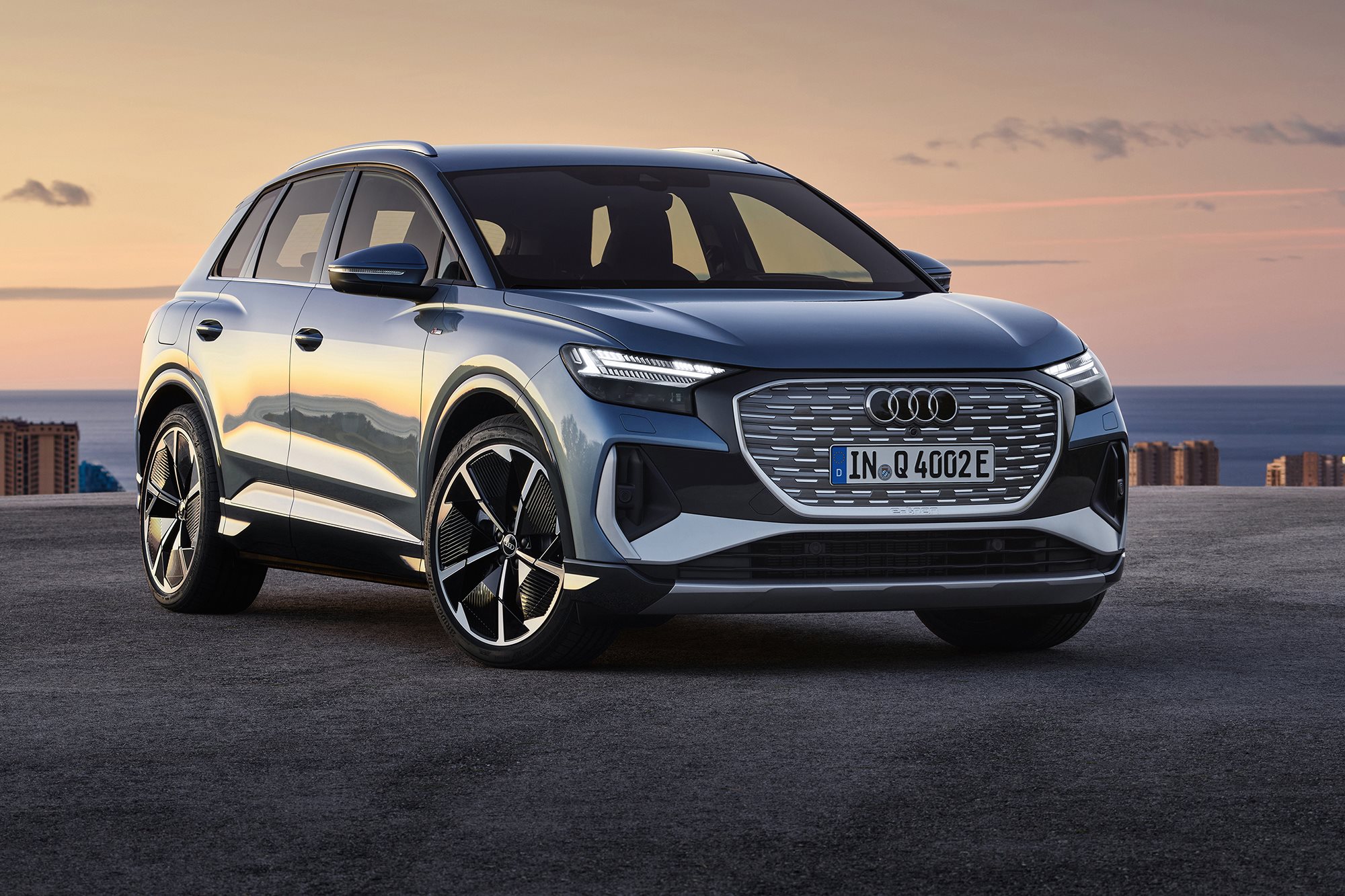
Above: the new Q4 E-Tron
However, large brake calipers pictured within this concept’s wheels also set sporty pretensions for the concept. Like the E-Tron GT, a Taycan-based rival on its way to Australia, this new concept flanks its front grille with two sizeable air guides.
Maybe, a new E-Tron GT variant is on its way. However, thin headlights and a fully enclosed grille with black surrounds contradict this.
What platform resides under this concept would reveal a lot about what it is. Audi has developed the E-Tron GT on the J1 platform, its new Q4 SUV on the MEB platform and outlined a new premium vehicle PPE platform.
Whatever platform this concept will use, it underlines the commitment Audi made to launch 20 electric vehicles by 2025 is progressing at a rapid pace. Stay tuned for more next week.
NEXT: Electric vehicles on the way for 2021
Pace notes are the dark art of rallying. Having been a lifelong fan of WRC and dabbled in the sport, personally I’m vaguely familiar with the shorthand hieroglyphics that describe the road ahead to the driver but never before have I attempted to read them.
No time like the present, right? With that can-do attitude adopted, when Toyota Australia offered a passenger ride in the shiny new GR Yaris AP4, a $400,000 purpose-built rally weapon, I asked my pilot, 2019 Australian Rally Champion Harry Bates, if I could attempt to read his pace notes.
He agreed, presumably because he already knew where he’d be going, which is why his regular co-driver, fellow champion John McCarthy, is giving me a crash course (oops, shouldn’t say crash) in his particular style of shorthand.
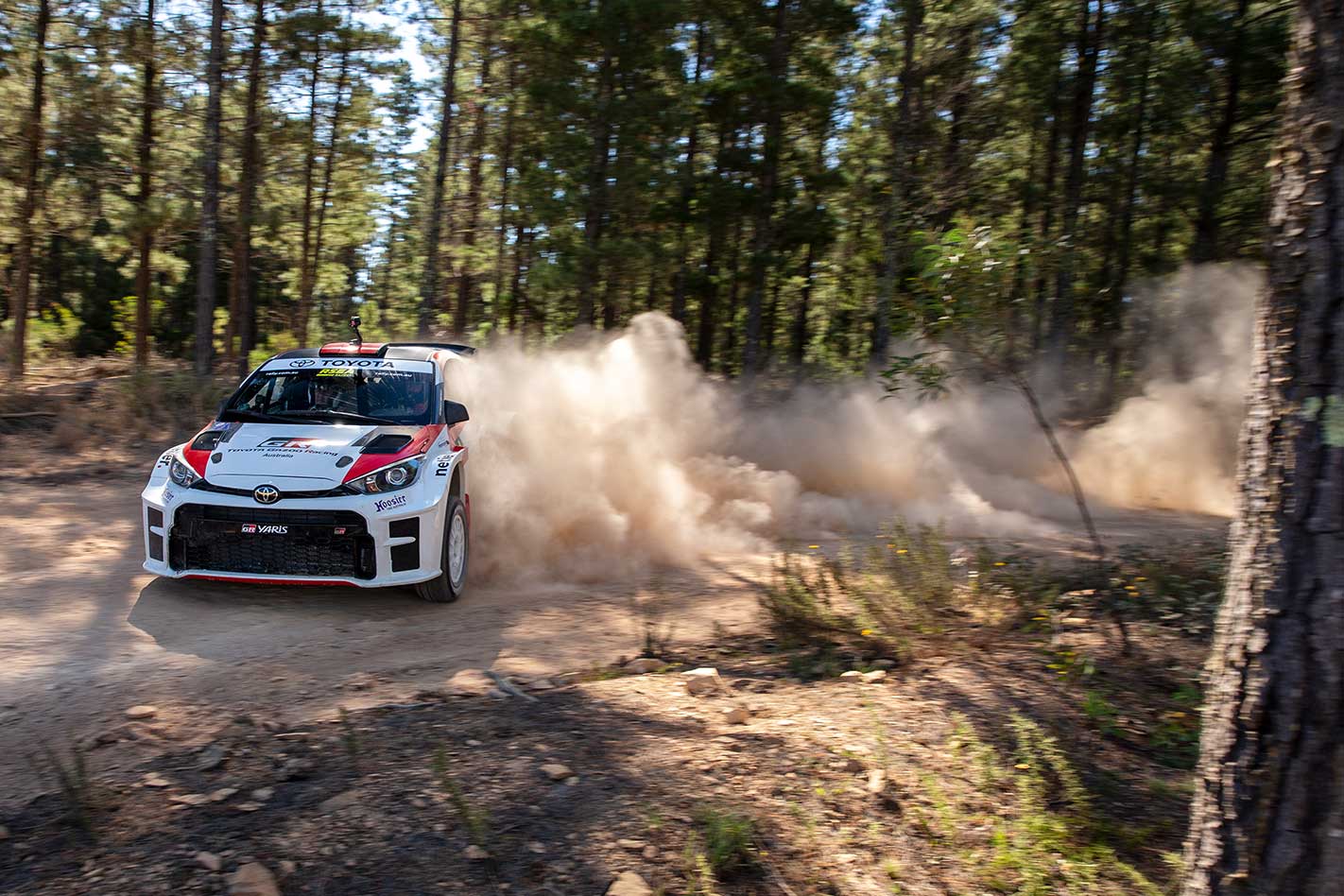
It’s a lot of take in and I spend the minutes before my ride pacing back and forth like I’m about to take an exam. My nerves are substantially settled by the fact Harry has been testing on this piece of road all day and thus knows where he is going, but I’m still not a particularly good passenger.
As it turns out I needn’t have worried, for as soon as I count down “5, 4, 3, 2, 1, go!” I concentrate so hard on the piece of paper in front of me that I lose all perception of what Harry is doing.
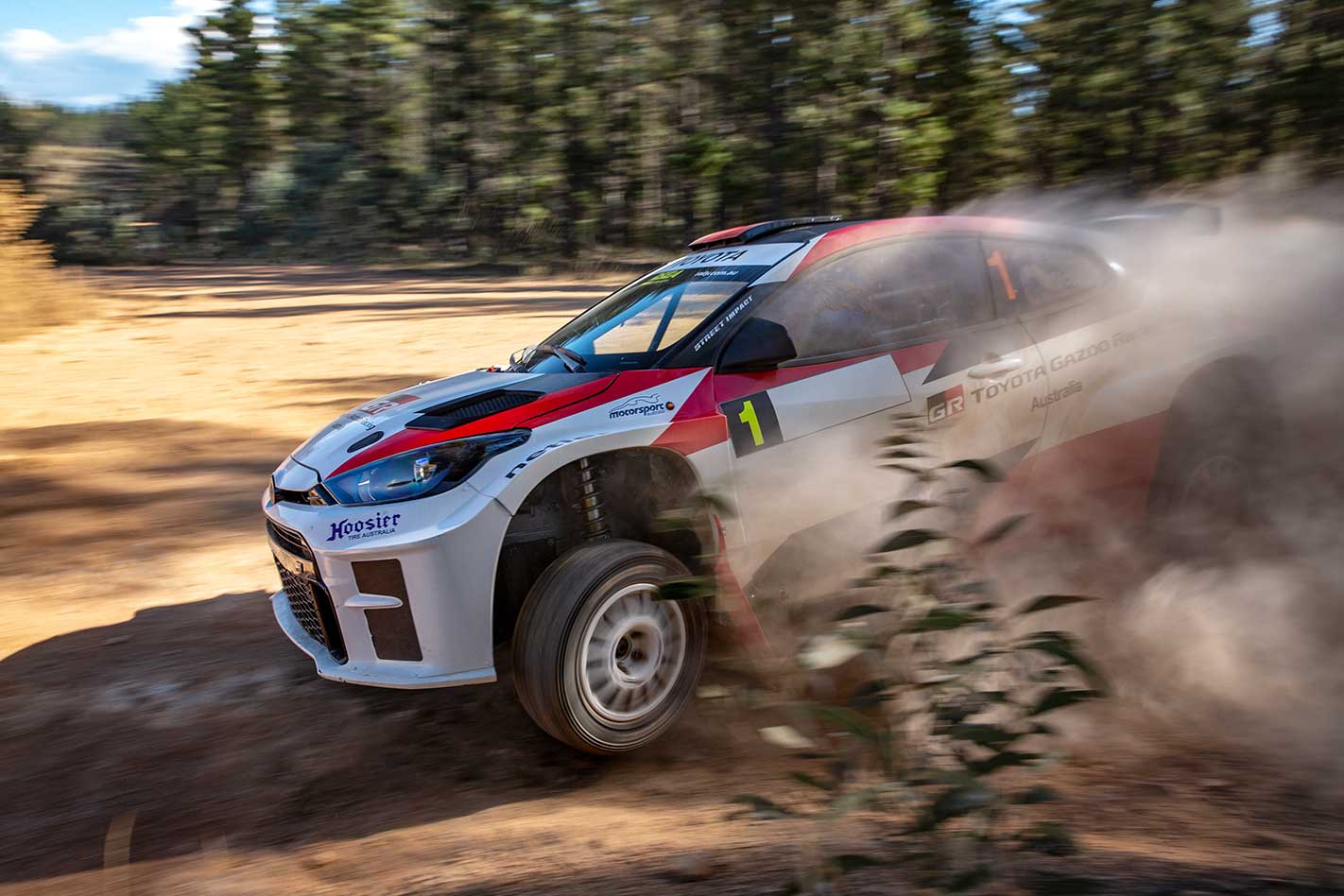
Harry is providing guidance but his intercom is too quiet and I can’t hear him over the throbbing roar of the AP4’s unsilenced turbo three-pot, so I just try my best to get back on track.
The run disappears in a blur of noise and dust, some calls landing at the right time more through good luck than good management, but at the end I’m incredibly surprised to find that it was quite enjoyable, at least when you’re sitting next to someone as capable as H Bates.
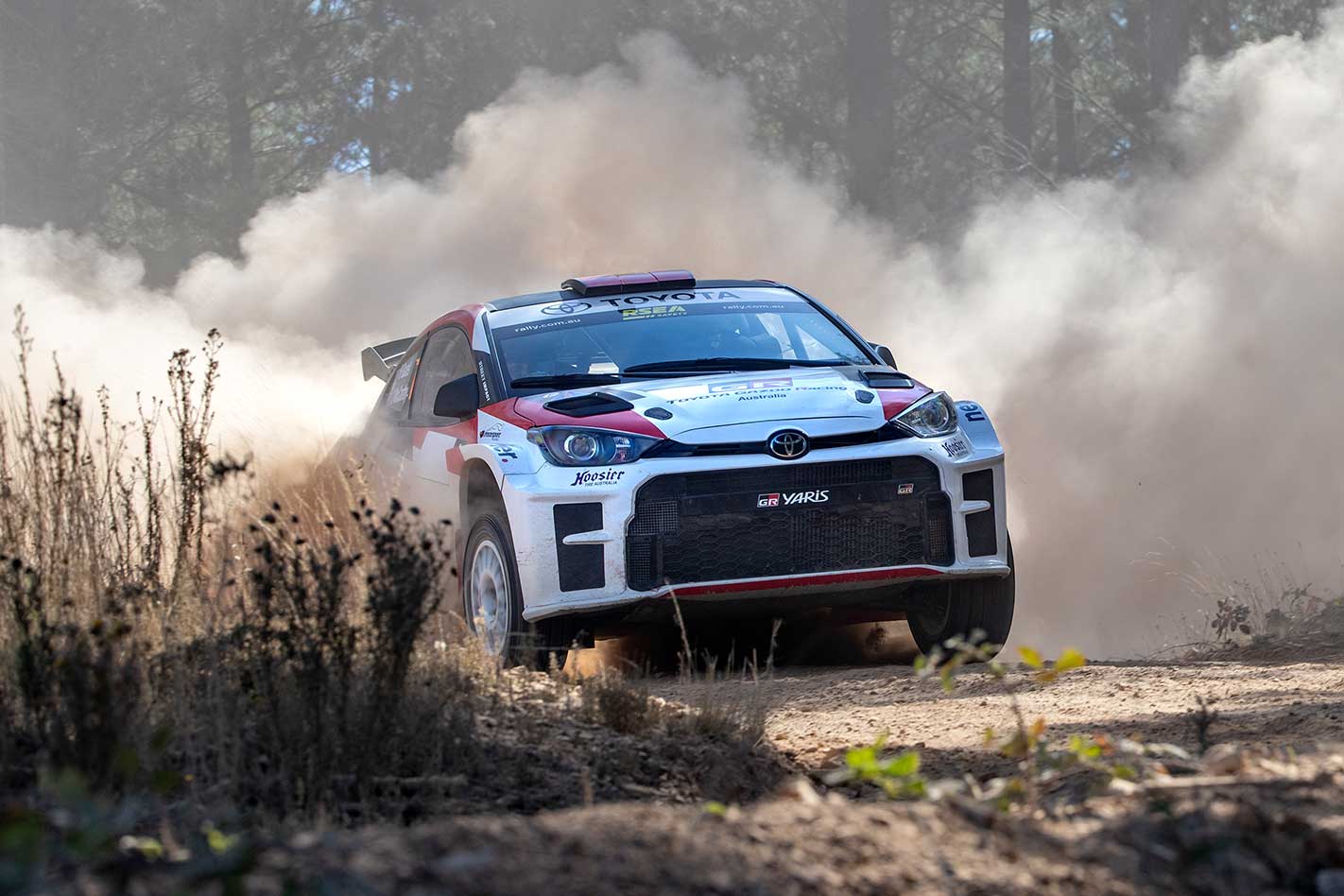
A job I’m glad I experienced, but I think I’ll stick to the driving seat for now.
Since its launch in 2015, Mazda’s CX-3 has been consistently proving itself as the mainstream compact SUV to beat and, in its whopping 15-variant line-up there’s something for everyone. Well, maybe everyone who happens to be looking for a reasonably priced, well-built, compact SUV with good road manners and a dusting of all-terrain ability.
It might be six years old now, but a series of CX-3 updates and range revisions have kept Mazda’s cash register ringing and it still offers the long list of compelling features that have stood out whenever we jump behind the wheel.
When it arrived, the newcomer did well to wade into a competitive market that was already full of popular options including the Mitsubishi ASX and gone-but-not-forgotten Holden Trax, making its mark with strong sales from the outset that continue today – Australians bought nearly 14,000 in 2020.
But if Mazda’s offering was regarded as a little late to the party in 2015, then more recent rivals from Hyundai and Kia have turned up after the glasses have been put away and the carpets shampooed. Or perhaps the younger South Korean pair is on its way to a different party where cooler people hang out …
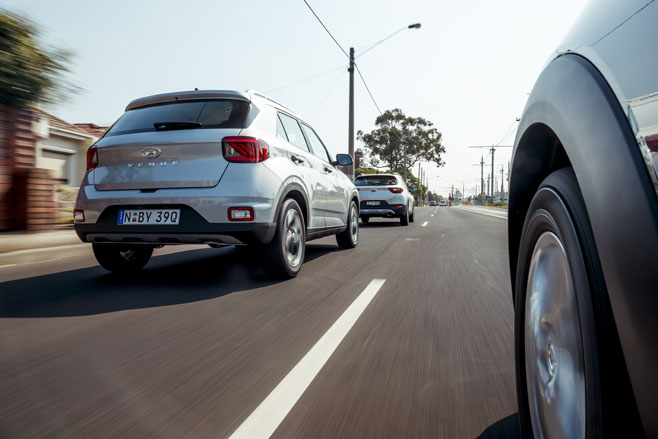
The same shifting consumer demand that saw the rise of the baby SUV and a corresponding fall of the compact hatchback has not stopped and small cars continue to evolve. It’s not just at the smaller end of the spectrum you’ll find increasing numbers of ‘crossover’ models sneaking in with more elegant profiles, fewer off-road-focused touches and less boxy styling. This is where the new fight is emerging and where the Kia Stonic and Hyundai Venue position themselves.
While you might argue the Hyundai Venue’s arrival in 2019 was unforgivably late and turning up in early 2021 was downright rude of the Kia Stonic, the counter theory is that they are among the first to define a new funkier coupe-crossover market that everyone wants a piece of. And they surely won’t be the last.
It’s not quite that simple though. Kia’s representative may have only just rolled into Australian showrooms, but it actually launched globally nearly four years ago and it’s on an even-pegging for currency with the Venue. Nonetheless, they’re the newer models here and this battle is still about the old versus the new and whether the ageing CX-3 can put up a fight against two cooler kids.
In this heavily style-driven segment, looks are almost everything and it’s here the trio already starts to reveal their individuality. The CX-3 was praised for its unorthodox design at launch and the pinched and pulled interpretation of Mazda’s Kodo language is still unique years later but it’s clear the design team was trying to shrink one of its larger models to fit the SUV segment. Did it work? You be the judge. Either way, the Hyundai and Kia approach is different.
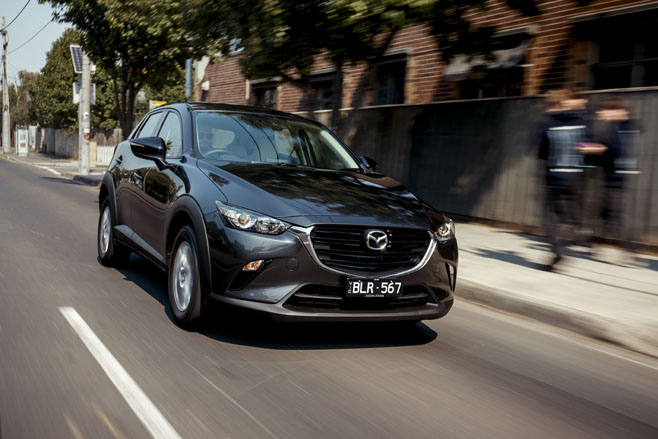
Rather than running their larger SUVs through a photocopier at 75 percent, the Venue and Stonic have a look that’s all of their own. The Venue is almost Japanese Kei car cubic crossed with curvy bread van and its design stands upright and confident with a cheeky face.
The Kia however, uses a third styling strategy, borrowing far more from its hatchback line-up than the SUV family. As a result, the Stonic has the most pleasing proportions of the three and is arguably the most handsome.
Dare we say it, but the Stonic does the best job of appealing to a younger audience, while the Venue’s appearance might be something for a, ahem, more senior crowd. Far less subjective though, is the tangible and objective inclusions each car offers.
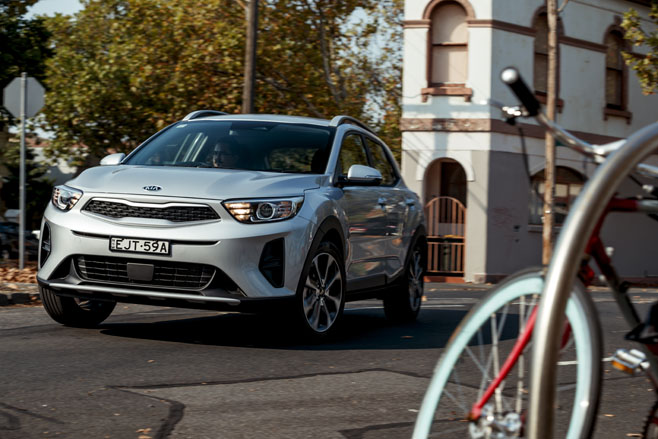
All three will fit a budget of less than $27,000 excluding on-road costs and options and, regardless of which you choose, all three bring a decent amount of standard equipment. The Mazda is the most expensive but at the more affordable end of the CX-3 range costing $26,890 for the Maxx Sport. Actually, the one you see here is the pricier Maxx Sport LE which gets an eye-catching interior dressed up in multi-colour leather and synthetic suede for an extra $750 – otherwise it’s the same car throughout.
The Stonic is presented in mid-range Sport guise costing $25,990, while the Hyundai is the most affordable as the $24,640 mid-range Active.
Interestingly all three are available as a manual which chops between $1500 and $2020 out of the price but we’re testing the auto versions which will constitute the vast majority of sales.
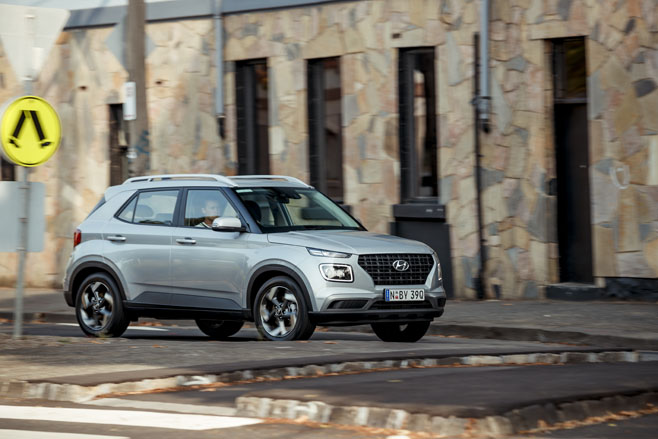
As you might expect from its bargain basement price, the Venue omits the most gear including navigation and adaptive cruise control which is included in the other two although it wins back some points for offering the nicer seat upholstery with premium-feeling fabric and some cool white flashes. Both it and the Stonic have cloth but the Hyundai’s feels more playful and stylish which is strangely the inverse of their exteriors.
All have generously sized central touchscreens but the Mazda’s 7.0-inch version feels small compared with the 8.0-inch screen in the South Koreans, and in terms of graphics and function, the Stonic is the clear leader with cool icons and a razor-sharp display that looks cutting-edge. Along with a relatively small and primitive digital driver’s information display and incandescent lighting throughout the cabin, the Mazda can’t hide its age.
By contrast, the Kia and Hyundai have vibrant colour driver’s information screens nestled between the gauges and LED lighting, although the Venue is the only one where the technology extends to the headlights.
Go for either South Korean option and you’ll get sporty 17-inch alloy wheels while the Mazda rolls around on comparatively skateboard-like 16s.
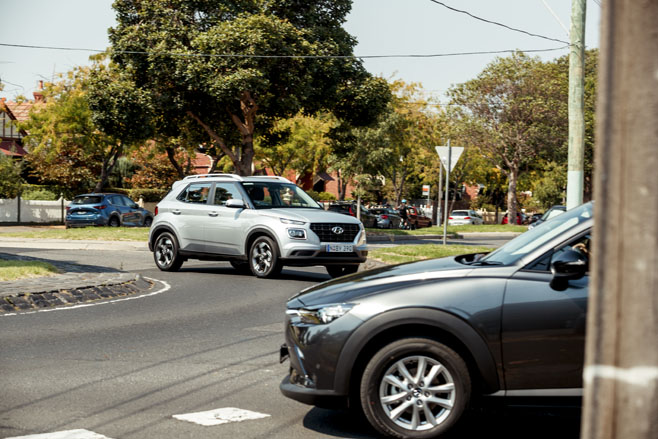
The cost-cutting continues in the second row of the Hyundai where there are no air vents for second row occupants, nor are there any device charging options or centre arm rest, whereas you will find these in varying combinations in the other pair.
Capping off the standard equipment highlights are the emerging industry must-haves of smartphone mirroring for both Android Auto and Apple CarPlay. The Hyundai however, is one of the first cars to introduce the feature wirelessly. AEB is offered for each of our contenders.
And while value is under the spotlight, it’s also worth remembering that the Mazda is offered with a five-year warranty versus the class-leading seven-year deal offered for all Kias. The five-year warranty would ordinarily apply to a Hyundai too but, not wanting to give its sister brand a free point in the compact market, the Venue is also covered by a seven-year deal.
But back to the metal bits and, even though this comparison focuses on models that are shamelessly compact, size is still a big factor and there’s no hall-pass offered for lack of room or wasted space. Here, the newcomers do very well offering surprising volume almost everywhere you look for it.
With its tall roofline, the Venue (below) feels the biggest, offering generous occupant spaces both front and back particularly the head room all round, while there’s heaps of leg room in the second row, complemented by lots of toe space under the front seats. Out back it also benefits from a 355-litre boot.
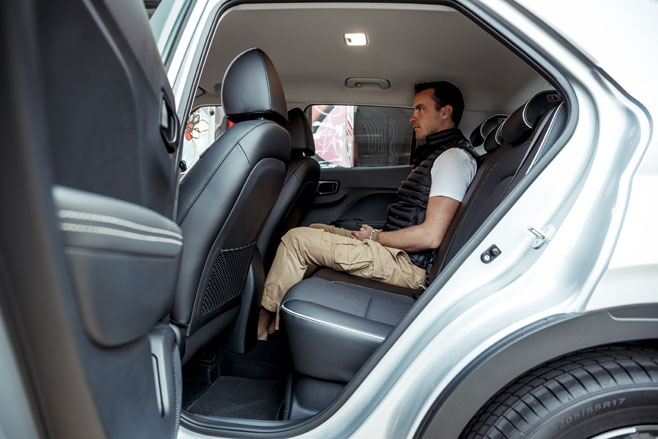
The Stonic (below) doesn’t quite match the Venue for head room as a trade-off for the more elegant roofline but it does still accommodate four adults with a surprising degree of comfort. Five-up? That might be pushing it. It also scores well for boot space, swallowing up to 352 litres of things.
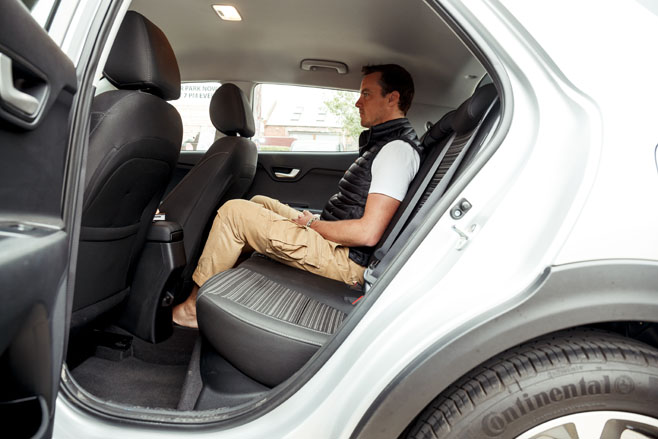
Hop into the Mazda (below) though and the cabin is immediately more confined. Quantitatively speaking, there’s a similar amount of legroom in the second row but it feels compromised by an interior that narrows toward the roofline and dives toward the rear. It’s illustrated by the diminutive boot that measures a far smaller 264 litres. The Mazda does, at least offer the most compact dimensions on the outside if maneuvering in tight spaces is a high priority.
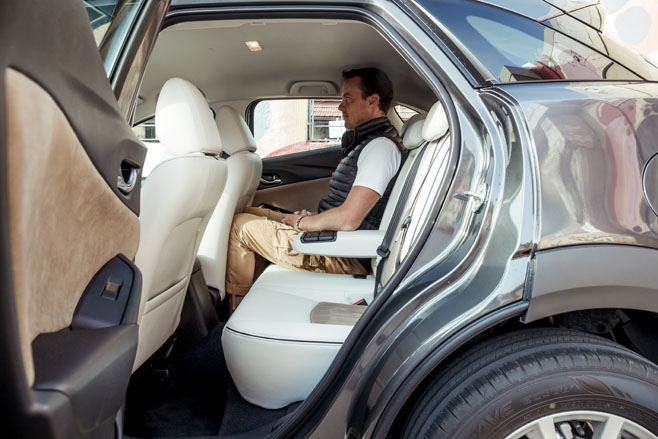
Shopping purely from the brochure, the smart money would appear to be on the Stonic and Mazda with the most standard equipment, but get the tape measure out and it’s the Mazda that starts to lag. The balance, however, is redressed when it comes to less simplistic box-ticking.
It’s only after spending time behind the wheel and in the broad range of scenarios every compact SUV pertains to relish, that this collection of examples start to show their true characters. While the Venue is spacious and the Stonic modern, neither can beat the quality of the CX-3’s fit and finish – even if it is a little dated in design.
The latter’s driving position is the most immersive too with the snug seats holding on in all the right places compared with the flatter seats in the Korean pair. After an initial blast around built-up suburban streets it looks like the Kia and Hyundai’s locally tuned suspension and lively powertrains have the advantage over the Mazda with an eagerness to change direction and speeds, while the Mazda’s chassis feels a little under damped when negotiating imperfections in the road.
Steering feedback in the Stonic is light although the rack ratio could be faster for a car of this size and weight, the Venue does better with decent communication from the road and avoids excessive weight for easy handling at low speeds. The Mazda too, reflects its small, chuckable proportions in a well-balanced steering set up.
But it’s only as the towering high-rise cityscape and stop-start traffic is disappearing in the rear-view mirror that the CX-3 pulls ahead – literally. While the South Korean pair share numerous family resemblances, all three cars have significantly different engines.
Producing just 74kW and 133Nm the Stonic’s 1.4-litre naturally aspirated four-cylinder petrol becomes breathless as soon as the speed limits climb above 60km/h. It’ll happily rev but fails to liberate the muscle to duplicate its sprightliness about town.
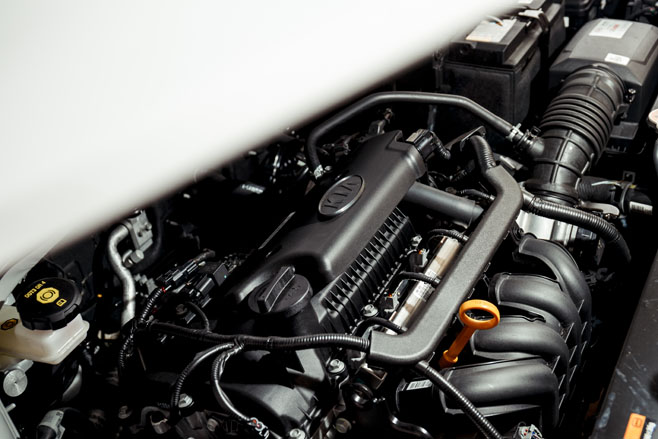
The Hyundai does better in a straight-line drag and freeway speeds with a 1.6-litre to do business with but despite the extra displacement, it only manages a meager 90kW/151Nm. But, where the smaller Kia donk likes to be revved, the Venue’s four-pot petrol wont thank you with a little too much thrashy report.
Under the Mazda’s bonnet however, you’ll find another atmo four-cylinder petrol that significantly dwarfs the other two with 2.0 litres of capacity. Its peak figures of 110kW and 195Nm are fairly unremarkable for a non-turbo 2.0-litre but it makes all the difference in this context.
Tip your toe in the CX-3 and its legs feel longer with a more capable spread of power and torque across the rev range along with respectable noise, vibration and harshness levels. The figures don’t lie. While the Stonic took nearly 20 seconds to get to 400 metres from a standstill in performance testing, the Hyundai was little faster needing 18.1 seconds. The Mazda though is noticeably quicker doing the dash in 16.8s.
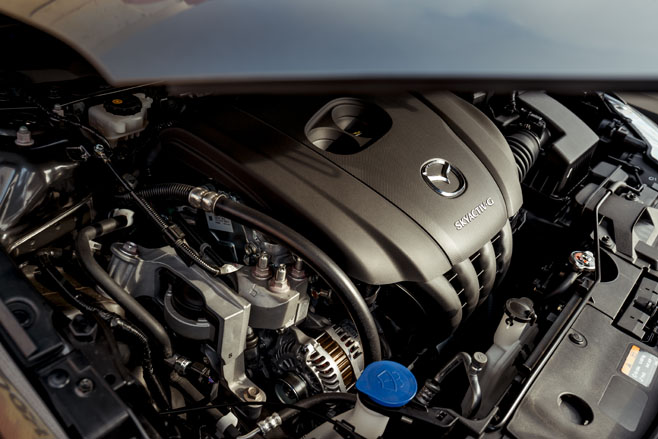
And it’s the same story in the benchmark 0-100km/h acceleration with the CX-3 completing the test in 9.4s while the Hyundai and Kia languished in the double figures, taking 11.3s and 13.6s respectively.
It’s logical to expect the most powerful of our three to also have the greatest thirst but that’s not always the case. While the Mazda did consume the most over our variety of suburban meandering and freeway blasts with an average of 8.2 litres per 100km, the smallest-engined Stonic was not the most frugal.
Coaxing meaningful performance from the little 1.4 meant the smallest engine spent more time near the red line than the Venue’s larger, torquier unit resulting in an average of 7.9L/100km for the Stonic and 7.5L/100km to the Venue.
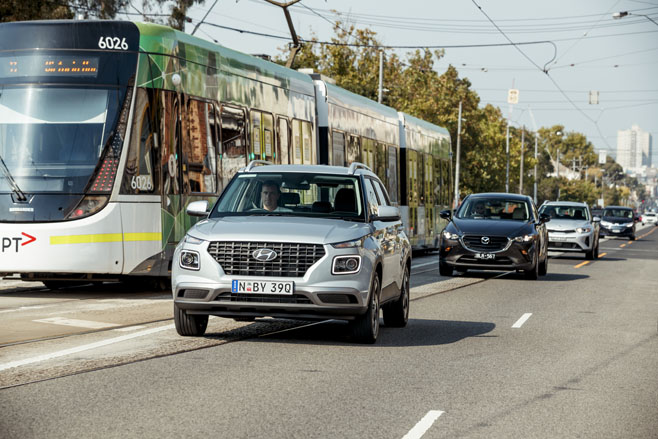
In all cases, the engines are bolted to a six-speed conventional-type automatic gearbox and the Mazda’s paring also comes out on top. In the South Korean cars, the gearbox is smooth and innocuous but becomes disgruntled when asked to downshift with any urgency. That compares with a more willing nature of the Mazda’s set up.
None of the three applications offer paddle shifters for persuading more sporty gear shifts but the CX-3’s gear mapping is the most sophisticated. It’s also worth considering that while the Mazda and Hyundai both offer different driving modes, the Kia does not. In practice, neither of the systems are particularly transformative though.
Instead, the Mazda relies on an altogether more grown-up character on faster and involving roads. It isn’t the hoot that the all-wheel drive version is despite tipping the scales with fewer kilos, but it is still the most rewarding and confident when whipped – in stark contrast to the Hyundai and Kia chassis which feel choppy and fidgety the higher the speeds climb.
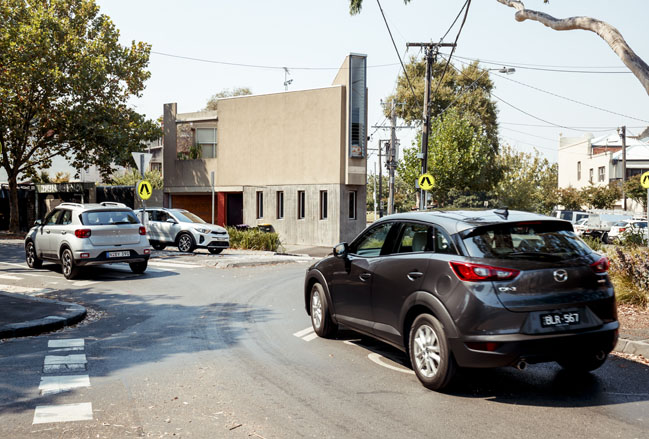
Jumping into an AWD CX-3 would add another $2000 to the bottom line which puts it outside the budget for this comparison, but it does highlight yet another advantage for the broader CX-3 range. For now, the Venue and Stonic are exclusively front-drive only.
Spending time in a relatively old compact SUV and a brace of newer crossovers graphically highlights how small vehicles are morphing into more hatchback-like machines. Plot the design curve through the Kia and Venue and the end point could lie in a new generation of vehicles that return to something infinitely more like cars than SUVs.
On face value, this trio of diminutive high-riders may appear to be staggeringly similar with comparable dimensions, prices and even their palette; presented here in a spectrum of monochrome. But it doesn’t take much digging to find a rift between them.
With their cheeky and contemporary designs, the Kia and Hyundai are trying to make waves and are doing a decent job of defining a new emerging segment with one foot in the SUV realm and the other in the future – or should that be the past?
Both possess a similar manner on the road and excel in the urban environment with a combination of space, handling and drivetrains that best suit a lifestyle akin to a cycle courier.
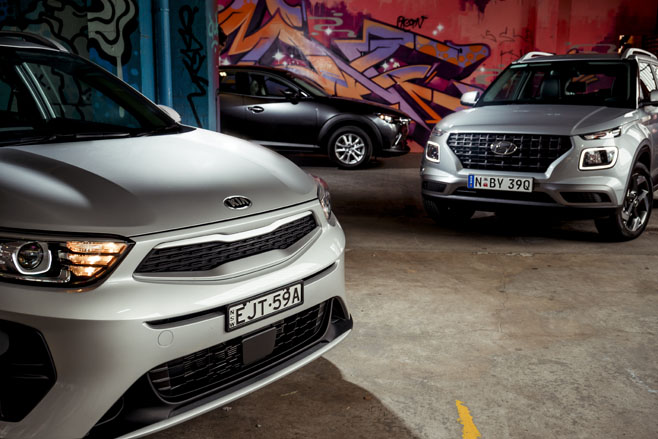
The Mazda though is simply more mature in every sense of the word. It might be older, but it continues to hit higher and punch harder than the others despite being smaller in practice and appearance. It definitely falls the shortest in space and practicality, but strides ahead when put to duties away from the confines of traffic and the metropolis.
Ultimately, the verdict comes down to the application. Both the Kia Stonic and Hyundai Venue are more at home carving up metro moguls and, combined with the more affordable price tags and disruptive styling, will appeal more to a younger or first-car audience.
But the CX-3 simply offers more to those who regularly break free of city life and are prepared to pay for it. A premium of $2250 over the Kia might not seem decisive, but in this segment money talks.
Most importantly though, these three compelling and ultimately likeable models illustrate the changing landscape in all SUV sectors. While the CX-3 is still the strongest all-rounder, it’s long in the tooth and the flow of curious coupe-crossovers that come to challenge it isn’t showing any sign of drying up.
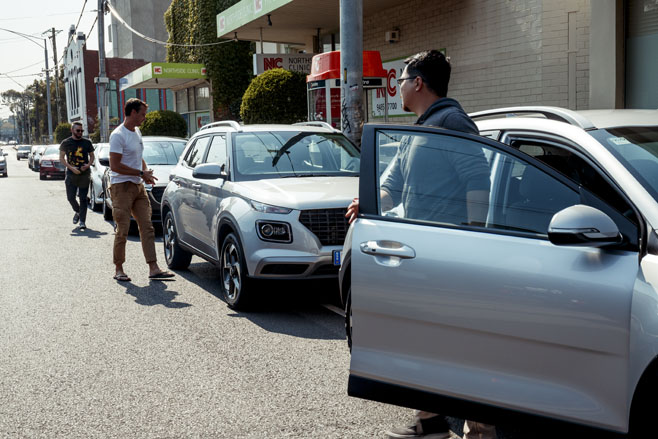
Turbo-Free Party of Three
As the major manufacturers transition to forced induction in the name of boosted efficiency and reduced emissions, it’s increasingly difficult to find a new vehicle’s engine that still relies on natural aspiration. It’s even more unlikely, therefore, to gather together three new models and find not one of them is turbocharged. It’s not only another indication of the CX-3, Venue and Stonic’s true age, but also partly answers how manufacturers are minimising costs at the budget end of the vehicle spectrum. Only the Stonic is available as a turbo but, sitting at the top of the pack, it costs nearly $30,000.
Mazda’s SUV DNA
The CX-3 might be the oldest in this particular comparison but Mazda is not being left behind in the general evolution of the SUV. The Japanese maker has already joined the coupe-SUV-crossover curio revolution with, not one, but two models in the small vehicle market. Its MX-30 and CX-30, both dial back the SUV DNA in favour of something more closely related to the Mazda 3 hatchback, but retain a little extra ride-height and cabin headroom. Whether the design direction will filter down from the small vehicles to the compact end of the family in the CX-3’s successor remains to be seen.
Specifications
Model | Kia Stonic Sport | Hyundai Venue Active | Mazda CX-3 Maxx Sport |
Price | $26,490 (D/A)/$27,010 | $24,640 no options | $27,640/$28,304 |
Engine | inline-4cyl, dohc, 16v | inline-4cyl, dohc, 16v | inline-4cyl, dohc, 16v |
Drivetrain | front engine FWD | front engine FWD | front engine FWD |
Engine capacity | 1368cc | 1591cc | 1999cc |
Power | 74kW @ 6000 | 90kW @ 6300 | 110kW @ 6000 |
Torque | 133Nm @ 4000 | 151Nm @ 4850 | 195Nm @ 2800 |
Gearbox | 6-speed automatic | 6-speed automatic | 6-speed automatic |
Body | steel, 5 doors, 5 seats | steel, 5 doors, 5 seats | steel, 5 doors, 5 seats |
L/W/H/Wheelbase | 4140/1760/1520/2580mm | 4040/1770/1592/2520mm | 4275/1765/1545/2570mm |
Tracks | 1532/1539mm | 1535/1546mm | 1524/1521mm |
Weight | 1192kg | 1165kg | 1297kg |
Boot size | 352L | 355L | 264L |
Fuel tank size | petrol/45 litres | petrol/45 litres | petrol/48 litres |
Fuel consumption | 6.7L/100km claimed (7.9 tested) | 7.2/100km claimed (7.5 tested) | 6.3L/100km claimed (8.2 tested) |
Suspension | Front: McPherson strut Rear: coupled torsion beam | Front: McPherson strut Rear: torsion beam | Front: McPherson strut Rear: torsion beam |
Steering | electric rack and pinion | electric rack and pinion | electric rack and pinion |
Front brakes | ventilated disc (280mm) | ventilated disc (280mm) | ventilated disc (295mm) |
Rear brakes | solid disc (262mm) | solid disc (262mm) | ventilated disc (280mm) |
Tyre size | 205/55 R17 | 205/55 R17 | 215/60 R16 |
ANCAP score | five stars | five stars | five stars |
Rating | 7.5/10 | 7.0/10 | 8.0/10 |
Performance figures
km/h | Kia Stonic Sport | Hyundai Venue Active | Mazda CX-3 Maxx Sport |
10 | 0.55 | 0.53 | 0.5 |
20 | 1.49 | 1.28 | 1.19 |
30 | 2.4 | 2.09 | 1.89 |
40 | 3.35 | 2.89 | 2.6 |
50 | 4.55 | 3.9 | 3.44 |
60 | 5.85 | 5 | 4.35 |
70 | 7.4 | 6.18 | 5.39 |
80 | 9.25 | 7.79 | 6.52 |
90 | 11.37 | 9.45 | 7.82 |
100 | 13.63 | 11.29 | 9.35 |
110 | 16.5 | 13.51 | 11.04 |
120 | 20.15 | 16.4 | 12.88 |
130 | 24.92 | 19.81 | 15.47 |
140 | 31.21 | 25.17 | 18.82 |
Performance Timing | |||
0-400m | 19.16sec @ 117.155km/h | 17.95sec @ 125.13km/h | 16.78sec @ 134.29km/h |
100-0km/h | 42.82m | 41.48m | 42.60m |
READ NEXT Mazda CX-3 v Hyundai Venue quick breakdown
Snapshot
- Alltrack range gets popular 162kw petrol engine
- Raft of tech upgrades including USB-C charging
- Prices start from $48,990 RRP
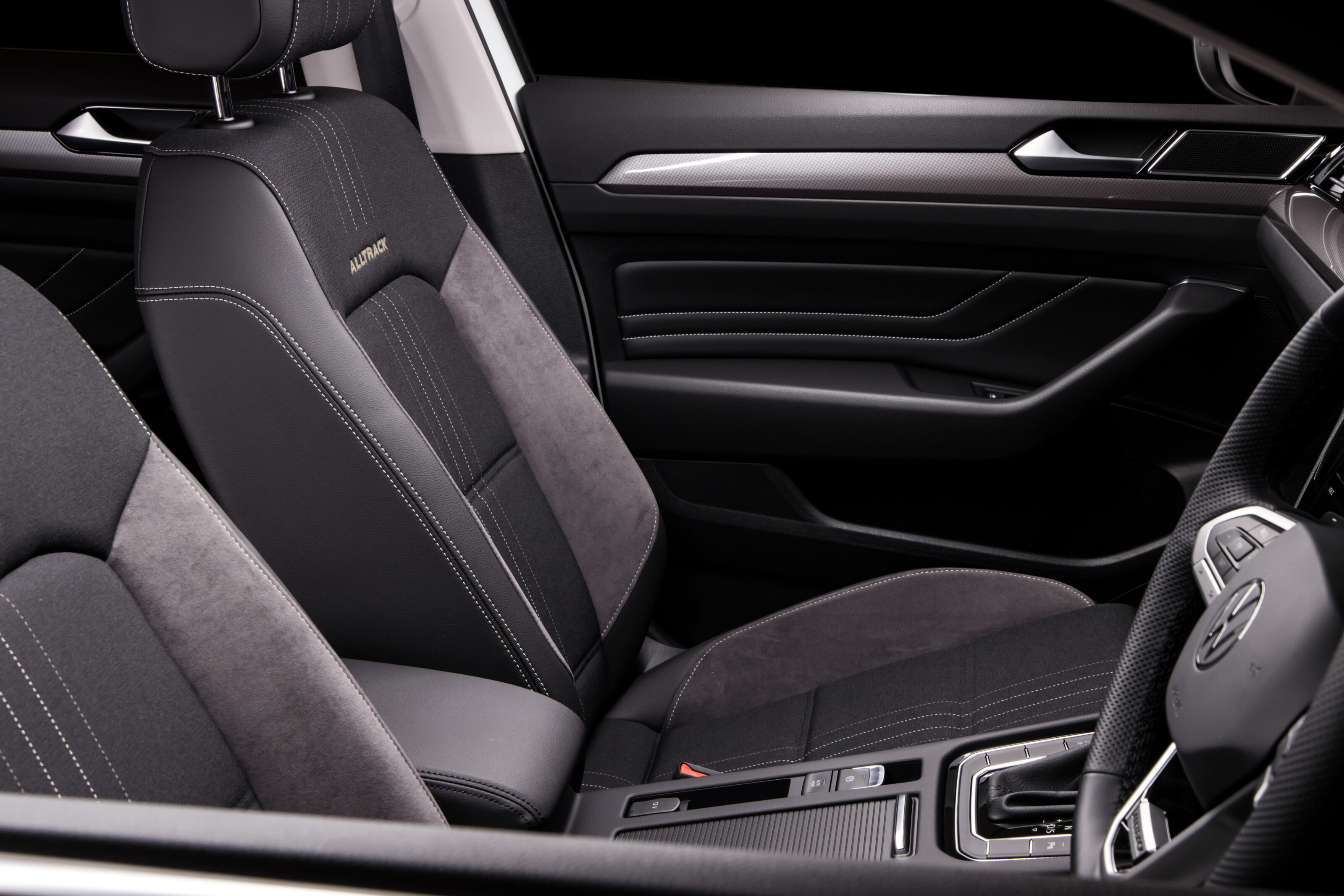
The 2021 Volkswagen Passat Alltrack has undergone an update after a three-year hiatus.
The moderately-lifted version of the Passat wagon has long been an alternative, along with its Skoda Scout and Audi A4 Allroad siblings, to the emergence of large, tall SUVs, providing a more modest approach for those who have to go off the tarmac every once in a while.

Model range and pricing
There are only two variants of the Passat Alltrack, itself being a variant of the base Passat (prices exclude on-road costs)
| Passat Alltrack 162TSI 7-Speed DSG | $46,990 |
| Passat Alltrack 162TSI Premium 7-Speed DSG | $58,790 |
Only Pure White is available for no extra cost, other paint options as listed below will set back buyers another $800.
| Reflex Silver Metallic |
| Pyrite Silver Metallic |
| Manganese Grey Metallic |
| Aquamarine Blue Metallic |
| Deep Black Pearl Effect |

Features
The nearly $12,000 difference between the baseline and Premium Alltrack only differ in what standard equipment is available as neither can be optioned with extras other than paint.
Volkswagen’s IQ Drive system is standard across both trims and further details can be found under Safety.
Alltrack 162TSI
| Park Assist, front and rear parking sensors |
| LED headlights, fog lights and taillights |
| 18u201d ‘Kalamata’ alloy wheels with matching full size alloy spare |
| 4MOTION with Adaptive Chassis Control |
| 8u201d Discover Media navigation system |
| App-Connect including wired and wireless Apple CarPlay and Android Auto |
| Air Care 3-zone climate control with rear controls |
Alltrack 162TSI Premium
| Area view 360u00b0 camera system |
| Ambient interior lighting with 30 selectable colours |
| Easy open and close electric tailgate |
| Brushed aluminium inserts in dashboard and doors |
| Ventilated, heated and electric leather front seats with driver massage, easy entry and memory |
| 19u201d ‘Albertville’ alloy wheels with matching spare |
| Panoramic glass sunroof |
| IQ. Light matrix LED headlights and Premium LED taillights with dynamic indicators |
| 9.2u201d Discover Pro navigation system with gesture control |
| Digital Cockpit Pro |
| Harman Kardon premium sound system |

Dimensions
Exterior dimensions remain largely unchanged from the previous iteration of the Alltrack variant, stacking up at 4780mm long, 1853mm wide, 1530mm high and a wheelbase of 2791mm, bringing kerb weight up to 1681kg.
The Alltrack also retains the Passat wagon’s impressive boot space, being able to hold 650L with the back seats up and 1780L when they’re folded down.

Engines, transmissions and fuel economy
While previous iterations of the Passat Alltrack had been powered by the VW Group TDI powerplant, the 2021 model moves exclusively to petrol for the first time, utilising the 162kW/350Nm Gen3 EA888 which has been in circulation since the Mk7 Golf launched in 2013.
Power is delivered to the road through VW’s seven-speed dual-clutch gearbox and 4MOTION all-wheel-drive system, resulting in a claimed 8.1L/100km on the ADR fuel consumption tests, 2.5L/100km more than the previous diesel model.
Safety
The current Passat scored five out of five stars in the ANCAP safety rating, with the Alltrack retaining the same safety technology as the rest of the range.
| Travel Assist with Adaptive Lane Guidance |
| Front Assist with Pedestrian Monitoring |
| Lane Assist |
| Emergency Assist |
| Adaptive Cruise Control |
| Side Assist |
| Rear Cross Traffic Assist |
| Driver Fatigue Detection |
| 3600 Proactive Occupant Protection |

Warranty and servicing
Backed by VW’s five-year/unlimited-kilometre warranty, the Alltrack also includes 12 months of roadside assist with capped price servicing within the first 60 months. Be mindful if you’re new to the VW life, as the 60,000km/48-month service is on the DSG box and can cost from $1,474.
However, this cost can be reduced through VW’s pre-purchase service plan, resulting in a three-year cost of $1,300 and only $2,400 if the five-year option is taken.

Availability
The Alltrack is available at all Volkswagen dealers now.
The 2022 Hyundai Santa Cruz pickup truck has finally been officially unveiled, and it’s due to go on sale in North America in the third quarter of 2021.
The Santa Cruz has been in the pipeline for a long time – we first saw glimpses of the lifestyle pick-up in concept guise over six years ago at the 2015 Detroit Motor Show.
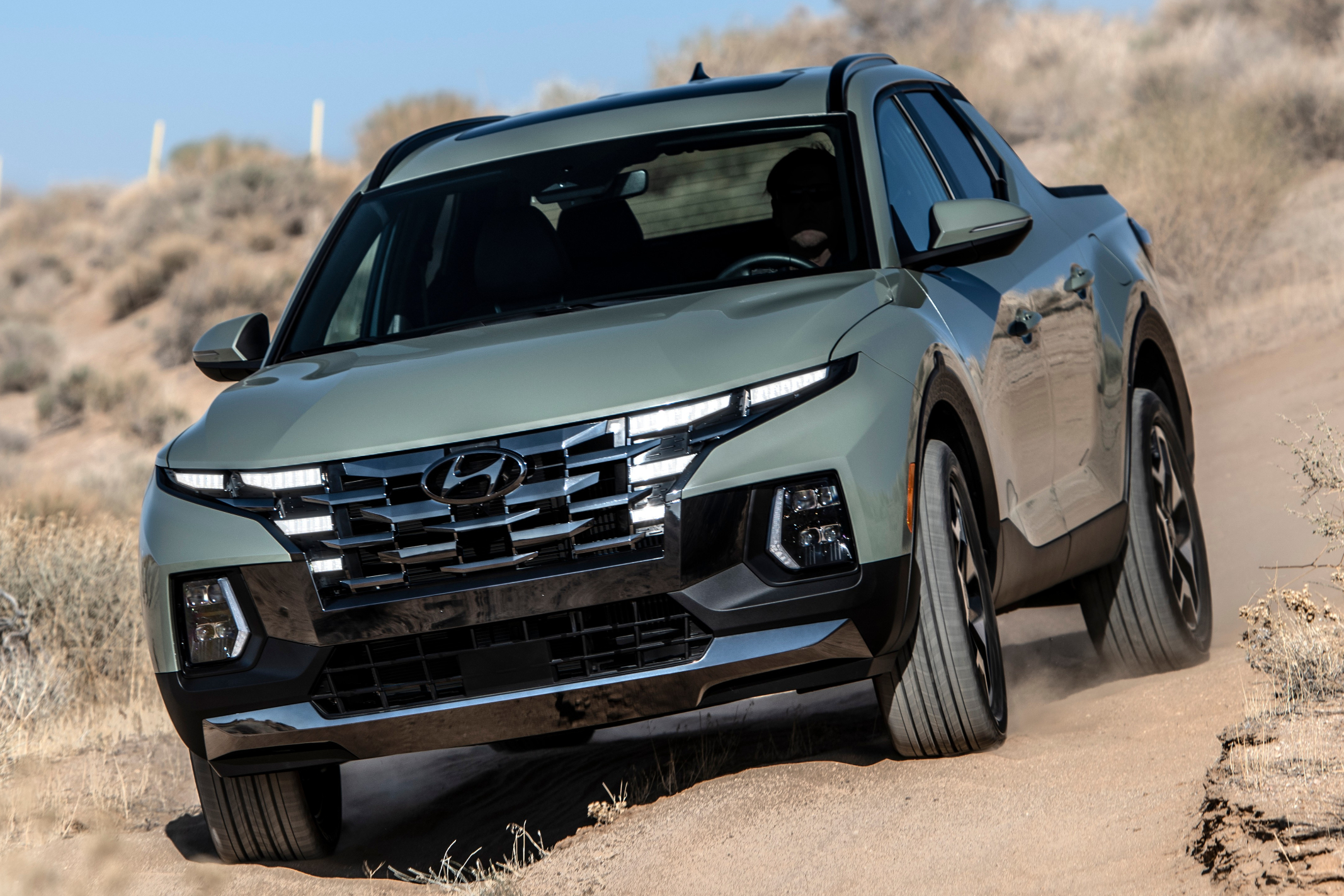
It’s an important vehicle for Hyundai’s US arm, with the truck being specifically made for the American market.
Built at Hyundai Motor Manufacturing Alabama (HMMA) in Montgomery, the Korean automaker claims the Santa Cruz project will create 1200 jobs in the US economy.
The “sports adventure vehicle”, as Hyundai describes it, will be powered by two different engines and gearbox configurations.
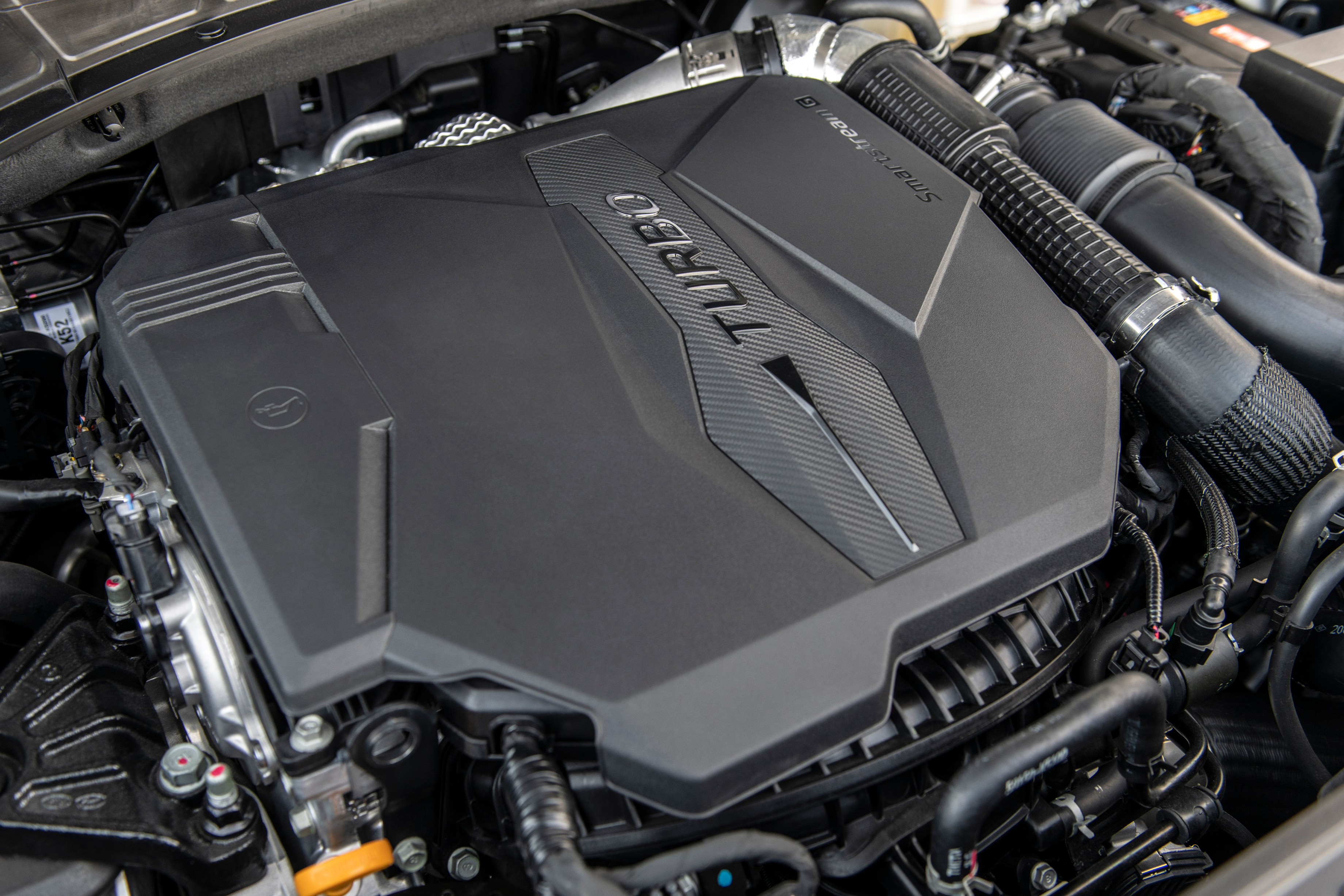
The first is a naturally aspirated 2.5-litre four-cylinder petrol engine that produces 142kW and 245Nm and is mated to an eight-speed torque-converter automatic transmission.
The second is a 2.5-litre turbo four-cylinder petrol engine that’s good for 205kW and 420Nm and is paired with Hyundai’s own eight-speed dual-clutch automatic transmission.
Towing weights will differ depending on which engine is specced, with the N/A donk rated at 1590 kilograms and the turbo four-pot good for 2270 kilograms.
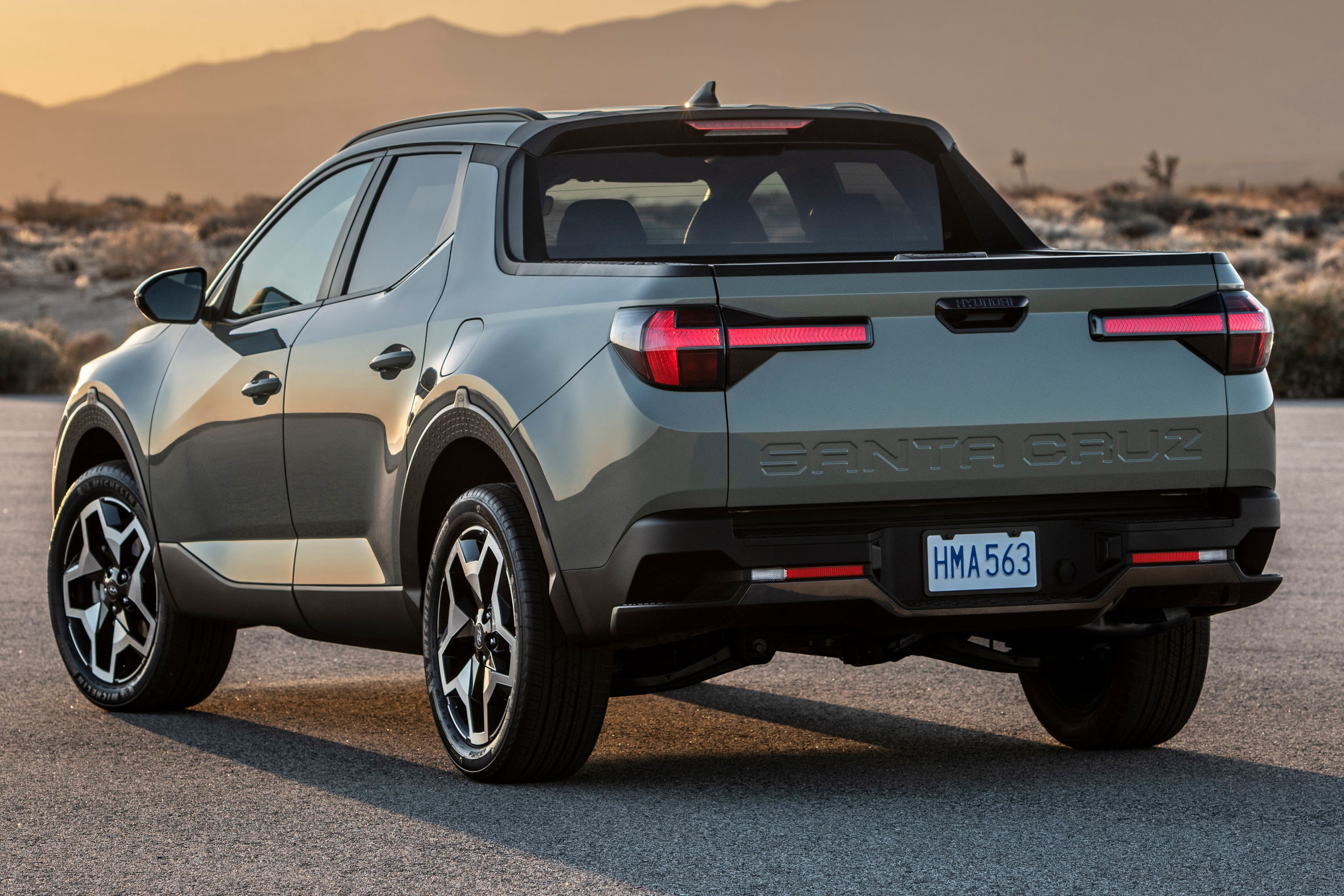
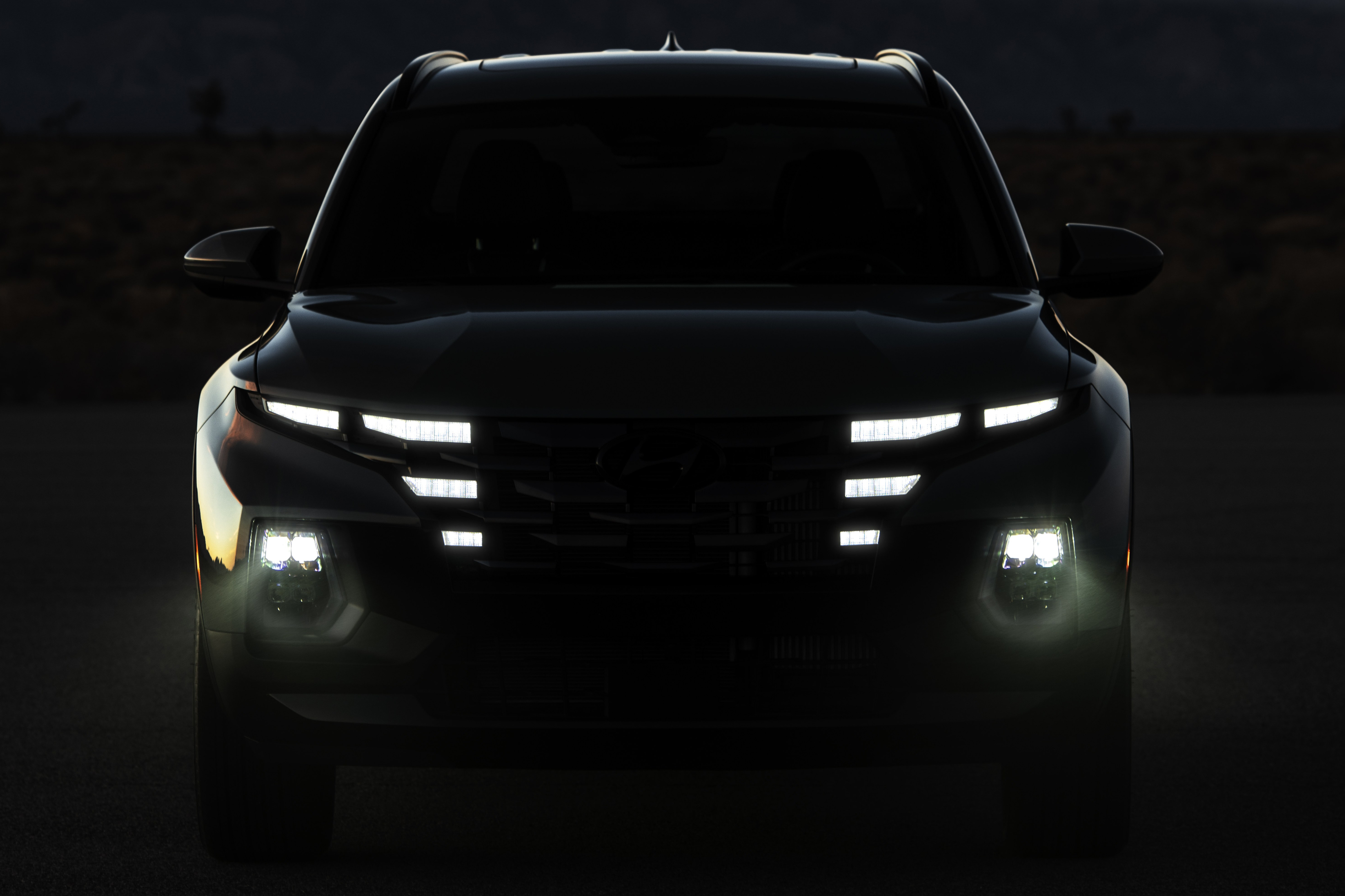
Both motors will send power to all four wheels of the Santa Cruz, utilising the Korean firm’s HTRAC all-wheel drive system, which employs a variable-torque-split clutch with active torque control to send power between the front and rear axles.
The compact truck is said to be heavily based on the underpinnings of Hyundai’s next-gen Tucson SUV, and as a result, utilises a monocoque chassis construction, rather than a ladder chassis set-up found on most utes/pick-up trucks.
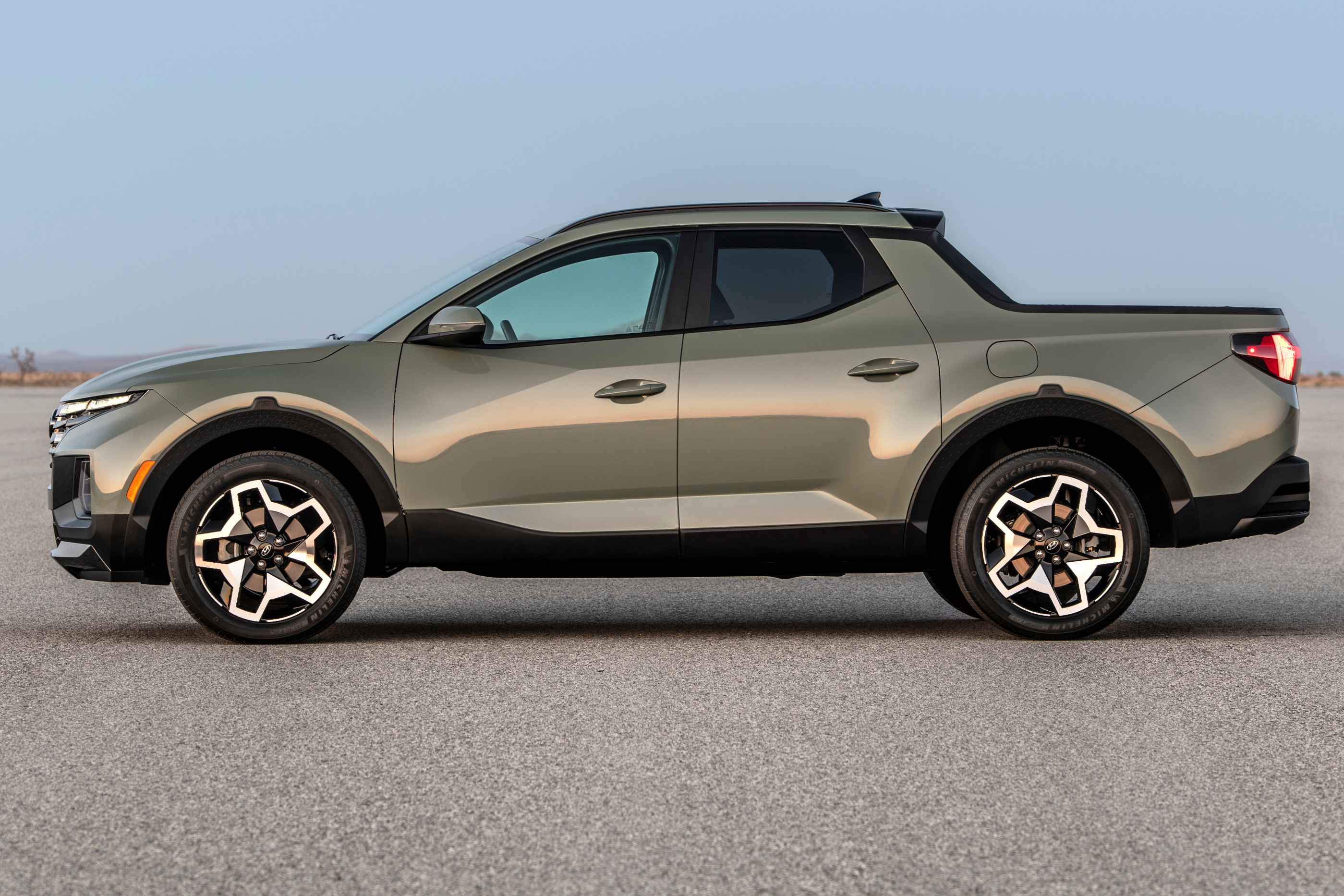
The relatively small bed of the truck will feature a foldable and lockable in-bed compartment and a hardy lockable tonneau cover.
Inside, the Santa Cruz will benefit from an 8-inch infotainment display as standard or an optional 10-inch touchscreen system, which can be had with both wireless Apple CarPlay and Android Auto.
The truck will come with a suite of safety features that include Hyundai’s advanced driver assistance system (ADAS), forward collision-avoidance assist (with pedestrian, cyclist and junction-turning detection), lane-keeping assist, adaptive cruise control with start/stop function, and blind-spot monitoring.
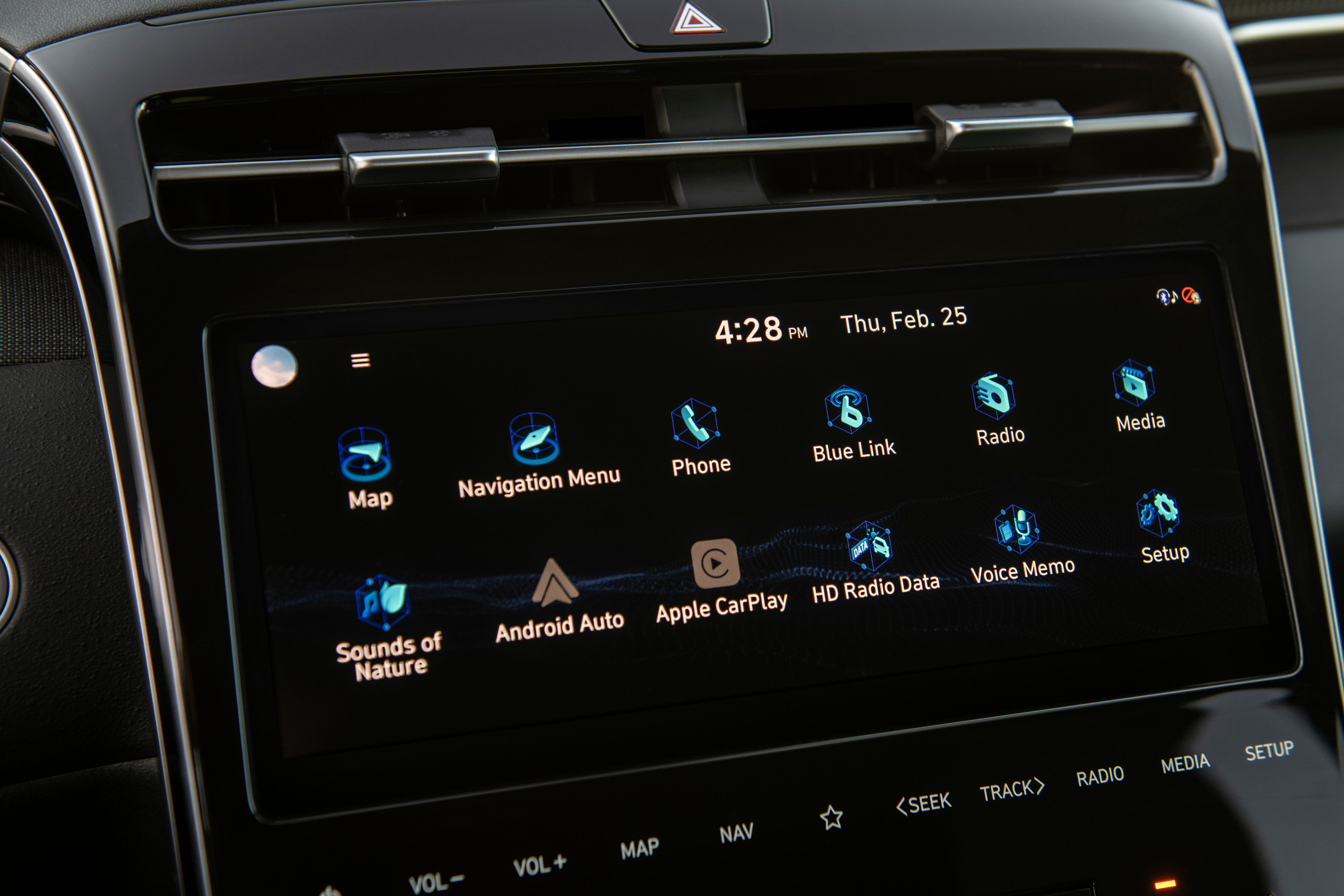
Sadly, the 2022 Hyundai Santa Cruz will not be available for the Australian market, as the pick-up was never designed or homologated for right-hand drive.
However, Hyundai and its sister brand Kia are working on a larger, Ford Ranger-sized competitor for the local market, which we can expect in the coming years.
The 2022 Zhiji L7 is an all-electric four-door sedan you’ve probably never heard of before, but it’s one that aims to take on the rest of the EV market and beat it.
Created as a joint venture between Chinese automotive heavyweight SAIC, Zhangjiang Hi-Tech and the Alibaba Group, the L7 has got some heavy-hitting performance and economy figures, and one trump card that’s never been played before.

According to the manufacturer, this striking sedan is the first electric car in the world that comes equipped with an 11kW wireless charging function. This is a major step up compared to the wireless charger capacities of other manufacturers, which have until now maxed out at around 3.5kW.
Its charging efficiency is rated at 91 per cent, and Zhiji claims the L7 can gain up to 80 kilometres of driving range from a single hour of wireless charging.
The L7 will be offered in two different models from launch, which come equipped with two different battery sizes.

The first is equipped with a 93kWh lithium-ion battery pack that’s good for a claimed 615 kilometres of driving range from a single charge.
The second model receives a whopping 118kWh battery pack that’s said to offer a vast 1000 kilometres of driving range from a single charge.

The more powerful of the two dishes out 400kW and 700Nm, and takes just 3.9 seconds to sprint from 0-100km/h.
Another feather in the cap of this EV is its potential autonomous driving capabilities.
With no less than 12 cameras, five millimetre-wave radars, 12 ultrasonic radars and a lidar laser, the L7 could come close to level five autonomy in the not too distant future, not unlike its distant relative, the SAIC R Auto ES33.

Inside, Zhiji has heaped on the tech even more, with a huge 39-inch 4k display (a first in the automotive industry) running almost the entire length of the dash.
This whopping screen space, working in conjunction with a vertically mounted central display that sits in front of the glove box, will run Zhiji’s own intelligent infotainment operating system.
Not much else is known about the Zhiji L7 right now, but reports suggest the automaker will be accepting reservations for the electric vehicle at next week’s Shanghai Auto Show, with deliveries to commence in the first half of 2022.
Behold the world’s most aerodynamic production car, in all its undisguised glory. Mercedes-Benz has at last revealed its big new EQS electric sedan, debuting with a record-breaking 0.20 co-efficient of drag.
The cab-forward design and fastback tail of the EQS don’t just make it ultra-aerodynamic. Its proportions are intended to whisper “I don’t burn nasty fossil fuels”.
This isn’t quite the way design chief Gorden Wagener puts it. But the brief for the design team was to create something that wouldn’t be mistaken for an S-Class, the equivalent of the EQS from the traditional Mercedes-Benz line-up.
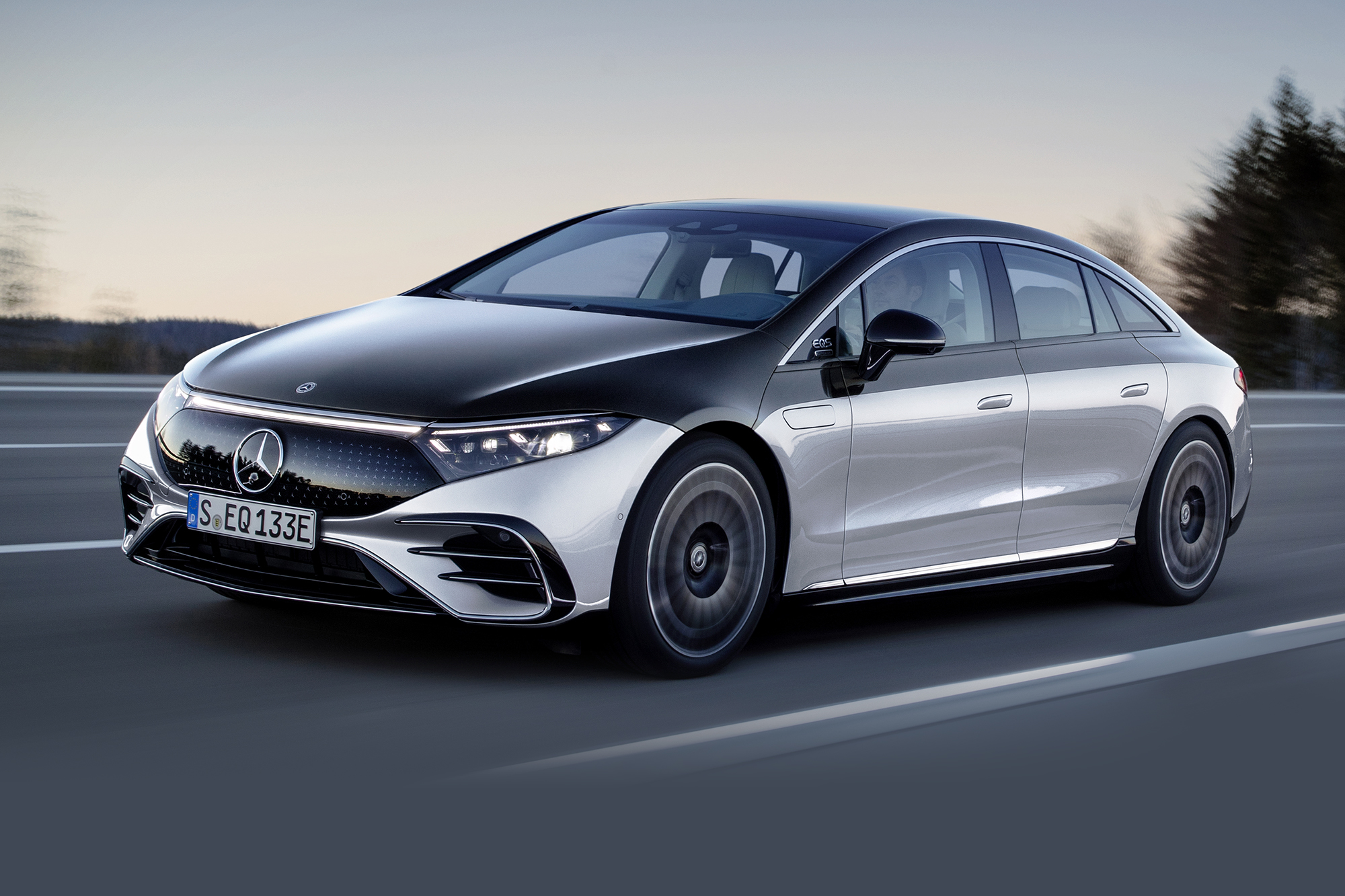
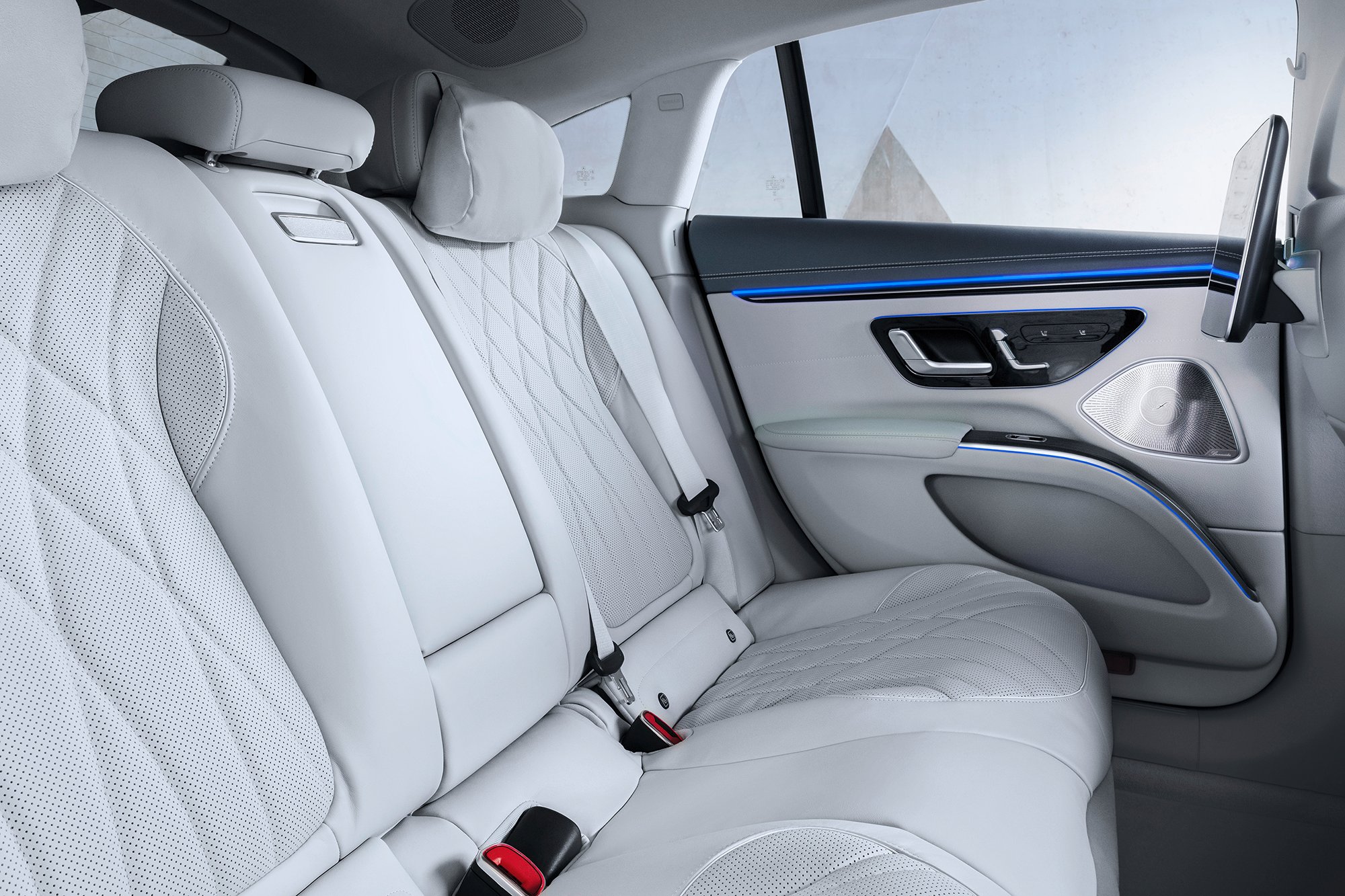
To really ram home the point, the EV has a liftback, not an old-school boot. And there won’t be the option of a super-luxurious four-seat interior, as in the S-Class; the EQS will only come configured as a five-seater.
At the front, headlights connected by a light band and the deep black radiator grille form the distinctive face. Three light dots, combined with the characteristic Mercedes eyebrow, form the daytime running light signet. LED High Performance headlamps come as standard, but the advanced Digital Light headlamp tech is available as an optional extra.
Interestingly, Mercedes-Benz suggests the bonnet can only be opened by a workshop specialist for maintenance work – such as replacing the interior air filter. It remains to be seen whether the owner can access it themselves.
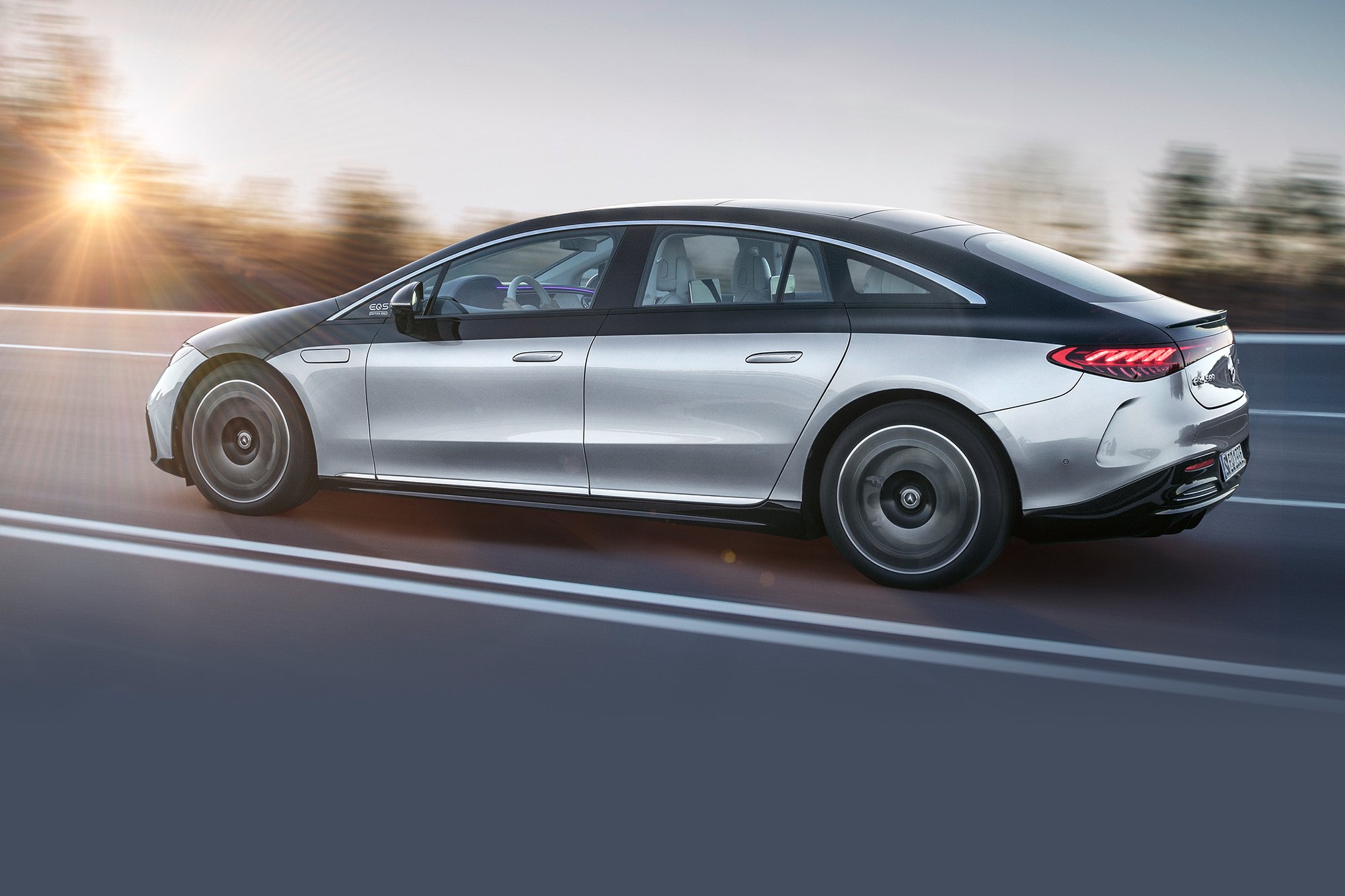
The A-pillar, which has been moved far forward, and the C-pillar at the rear also generate space for a generous passenger compartment.
Chrome accents highlight design focal points like the line of the windows, and high-quality painted contrasting surfaces can also be found in the lower area of the vehicle.
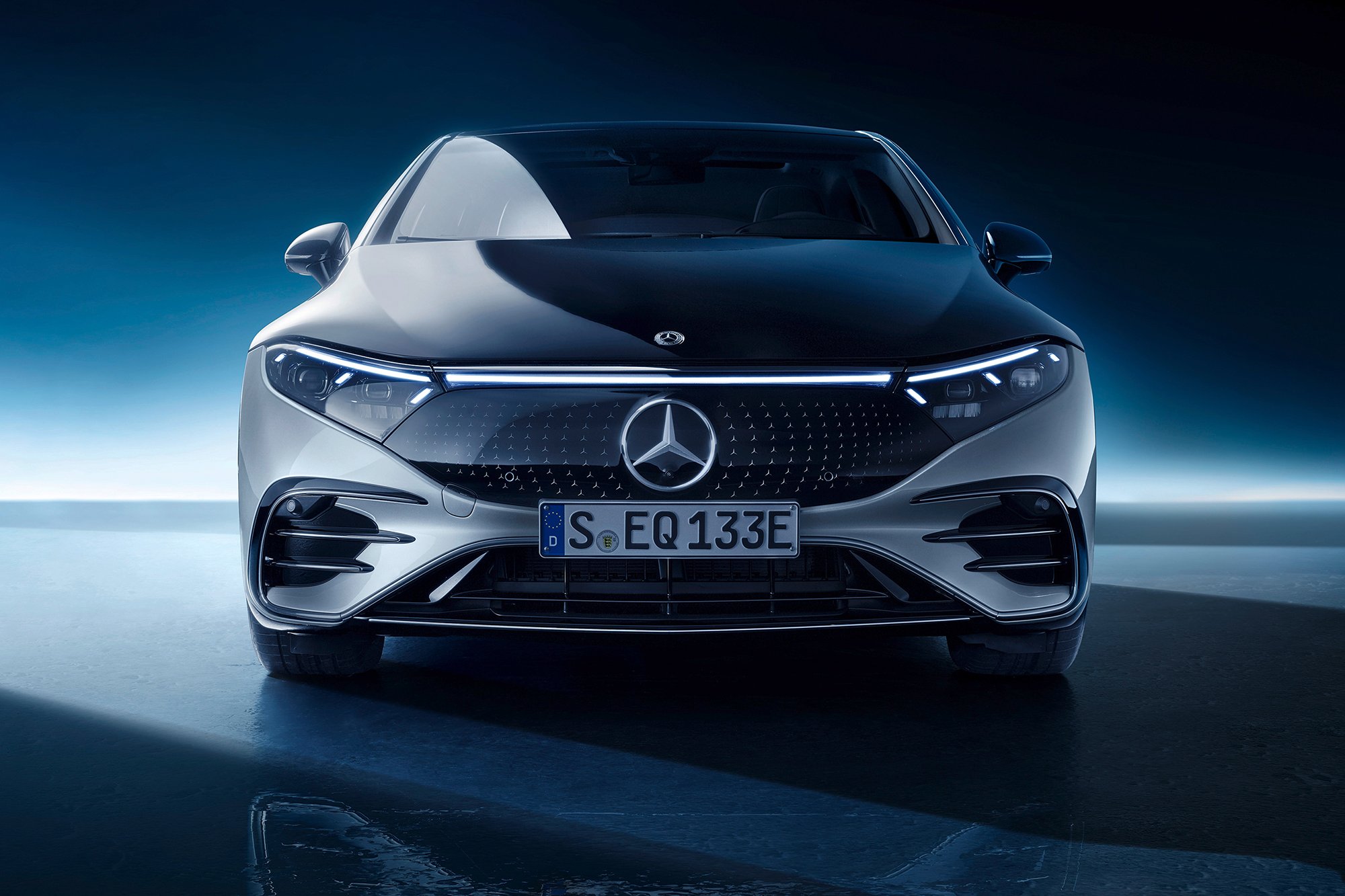
Flush door handles are standard on all models while a panoramic sunroof is available as an option.
As at the front, the EQS also has a continuous light band at the rear – a distinguishing feature of Mercedes’s electric vehicle range.
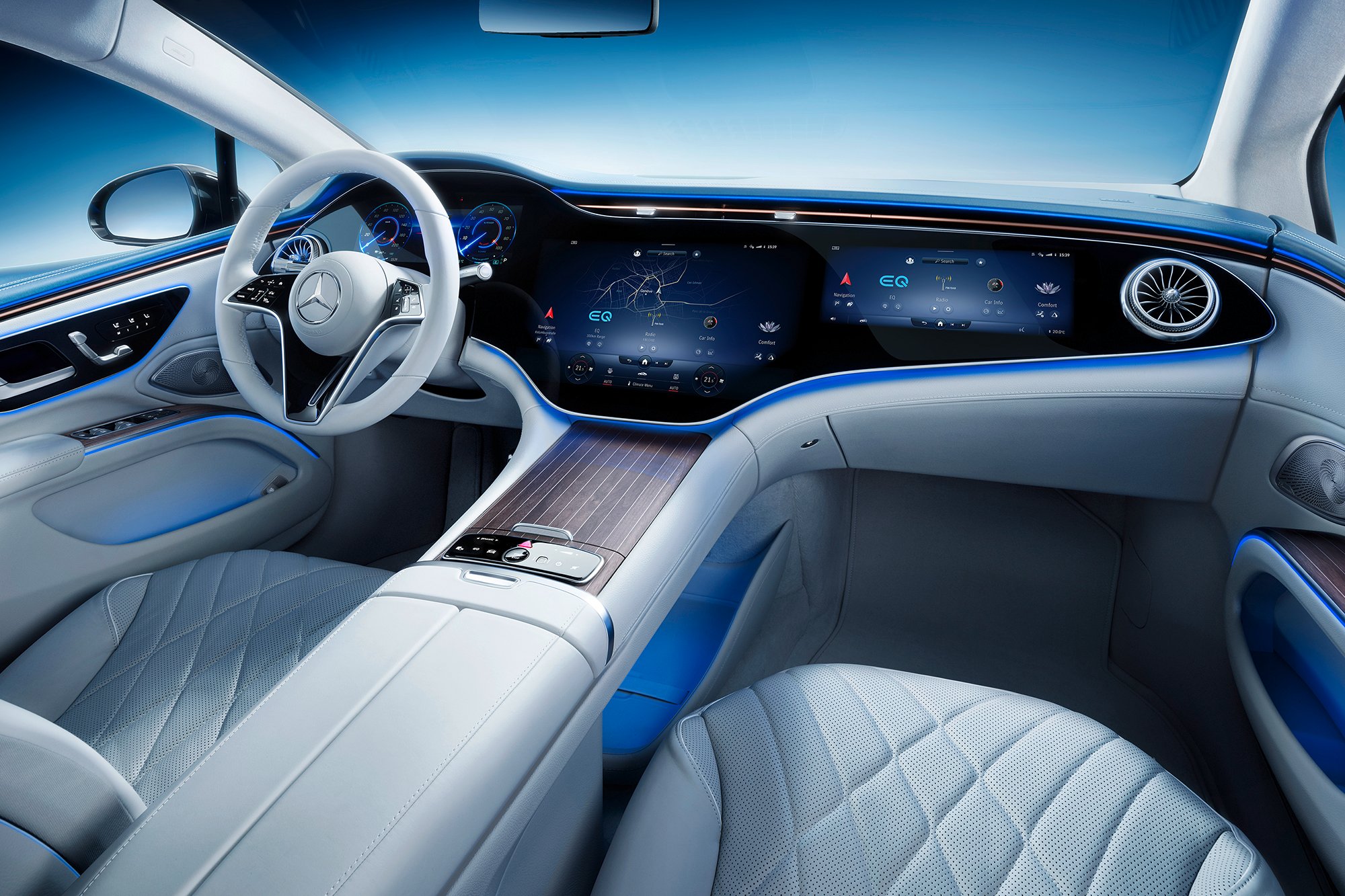
Inside, the large curved MBUX Hyperscreen unit sweeps almost from pillar to pillar. Three screens sit under a cover glass and appear to merge into one. The 12.3-inch OLED display for the front passenger gives them their own display and control area.
The most important thing to know about the EQS though, is that while it shares some chassis components with the S-Class, it’s built on a purpose-designed-for-EV platform that’s effectively all new. Known inside Mercedes-Benz simply as EVA (for Electric Vehicle Architecture), it enables the EQS’s short-overhang silhouette.
“This new architecture is scalable in every respect and can be used across models. The wheelbase and track, as well as all other system components, especially the batteries, are variable thanks to the modular design. This vehicle architecture makes Mercedes electric cars from [sedans] to large SUVs possible in the luxury segment,” added Christoph Starzynski, Vice-President of Electric Vehicle Architecture at Mercedes-Benz.
The soft curves of the EV’s surfaces also signal change. And the end of a design era. “Body creases have had their day at Mercedes-Benz,” according to the German carmaker.
Some of the features that make the EQS so aerodynamic are easily seen, like the solid black-panel grille and low-drag wheels, but much of the work is out of view underneath the car.
Down there is a mostly flat bottom, a benefit of the car’s big underfloor battery pack. There’s also an elaborate and aerodynamic set of panels to enclose the rear suspension, plus front and rear wheel spoilers.
But the 0.20Cd applies only to the EQS when it’s wearing a particular 19-inch AMG wheel design that will become available only at the end of 2021, months after European sales begin.
In the meantime, a range of 19-, 20-, and 21-inch wheels will be offered. Presumably, these are slightly less aerodynamic than the AMG wheel. According to Mercedes-Benz, the variation in Cd values across the EQS range is “comparatively small”.
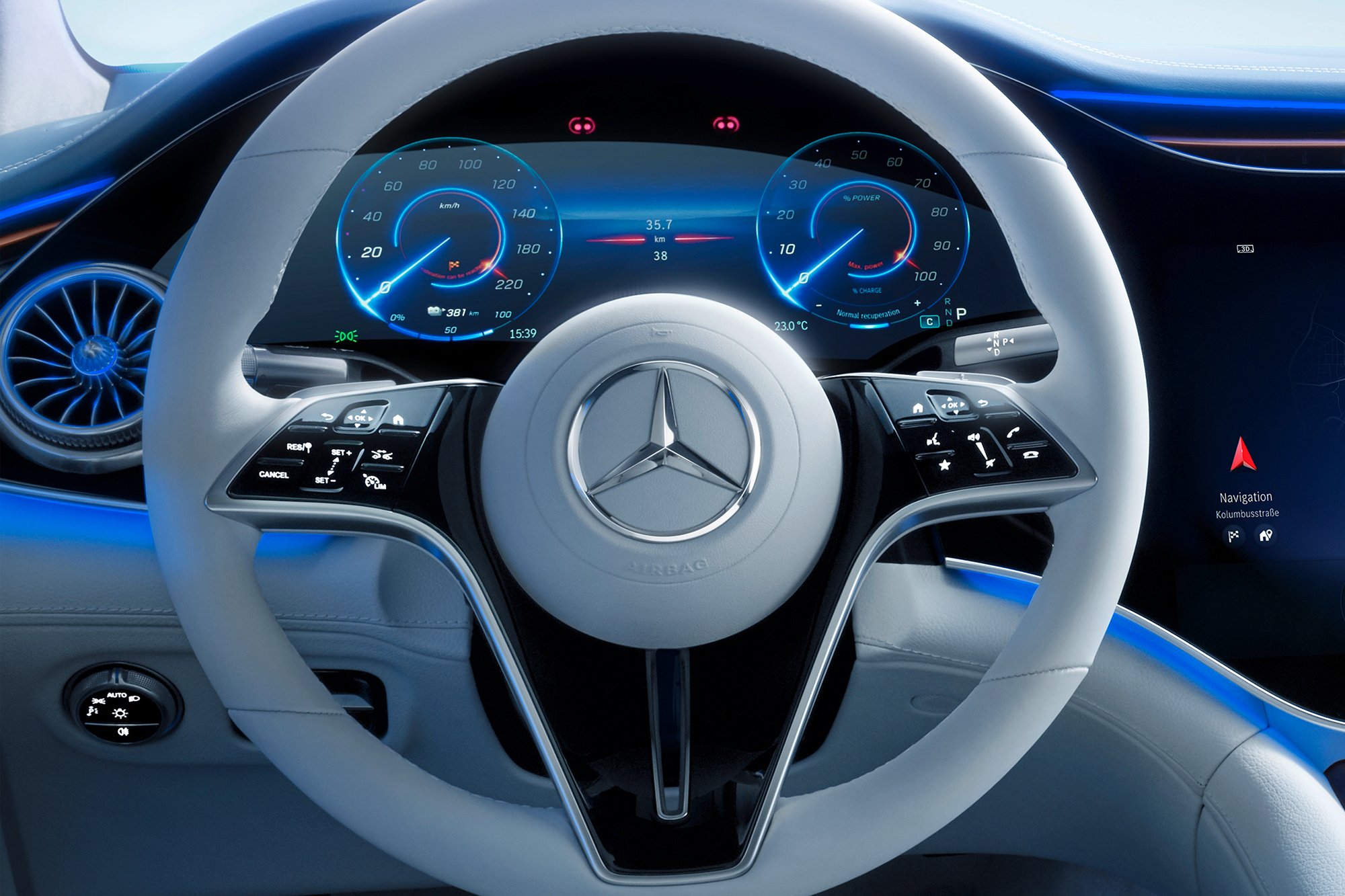
There will be two EQS variants at launch, both with a battery pack with a 108kWh of usable capacity. A smaller 90kWh pack is also planned for later.
The rear-drive 450+ is the version that achieves a massive and Tesla-trumping 770km driving range on the WLTP test cycle. It has a single electric motor delivering 245kW and 568Nm which lets it sprint from 0-100km/h in 6.2 seconds.
The all-wheel-drive EQS 580 4MATIC is quicker and more powerful. It has two motors with combined maximum outputs of 385kW and 855Nm, enabling a snappy 4.3 second 0-100km/h time despite its close to 2600kg kerb weight.
Both variants have a top speed of 210km/h.
In the 4MATIC model, the Torque Shift function ensures intelligent, continuously variable distribution of drive torque between the rear and front electric motors and seeks to add to the overall efficiency.
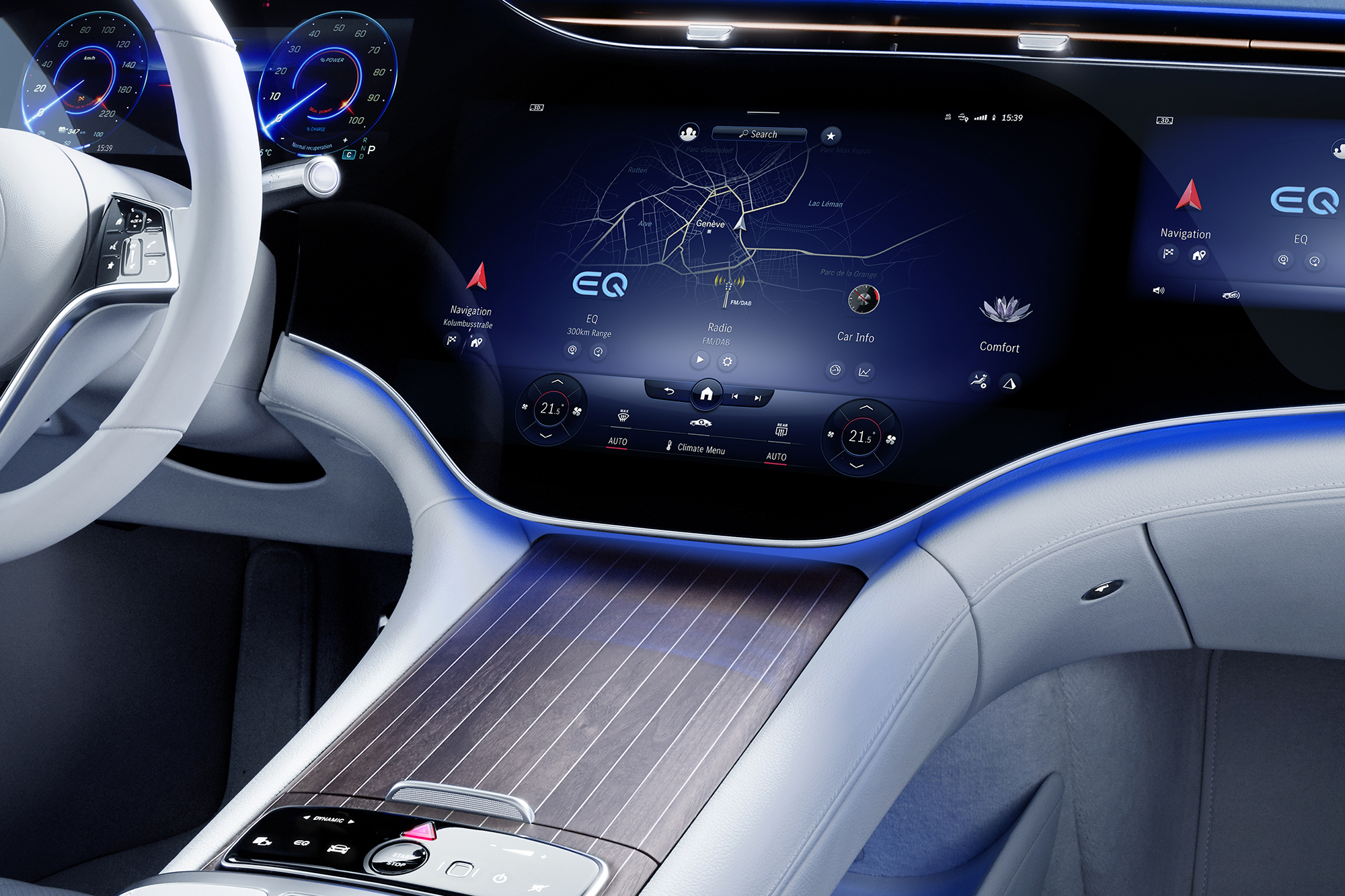
As for its charging capabilities, the EQS can be topped up with up to 200kW at fast charging stations with direct current (DC). Up to 300 kilometres of range is recharged in just 15 minutes.
The car’s super intelligent navigation system plans the fastest and most convenient route for drivers – including charging stops – based on factors such as traffic jams, speed or a change in driving style to ensure they have enough energy to complete their journey.
If there is a risk of the car not reaching the destination or a charging station the vehicle’s Active Range Monitoring activates its ECO driving functions and tells the driver via the speedo how fast/slow they need to drive to make it with the charge they have left. The EQS driver can additionally switch off some functionality to increase the range.
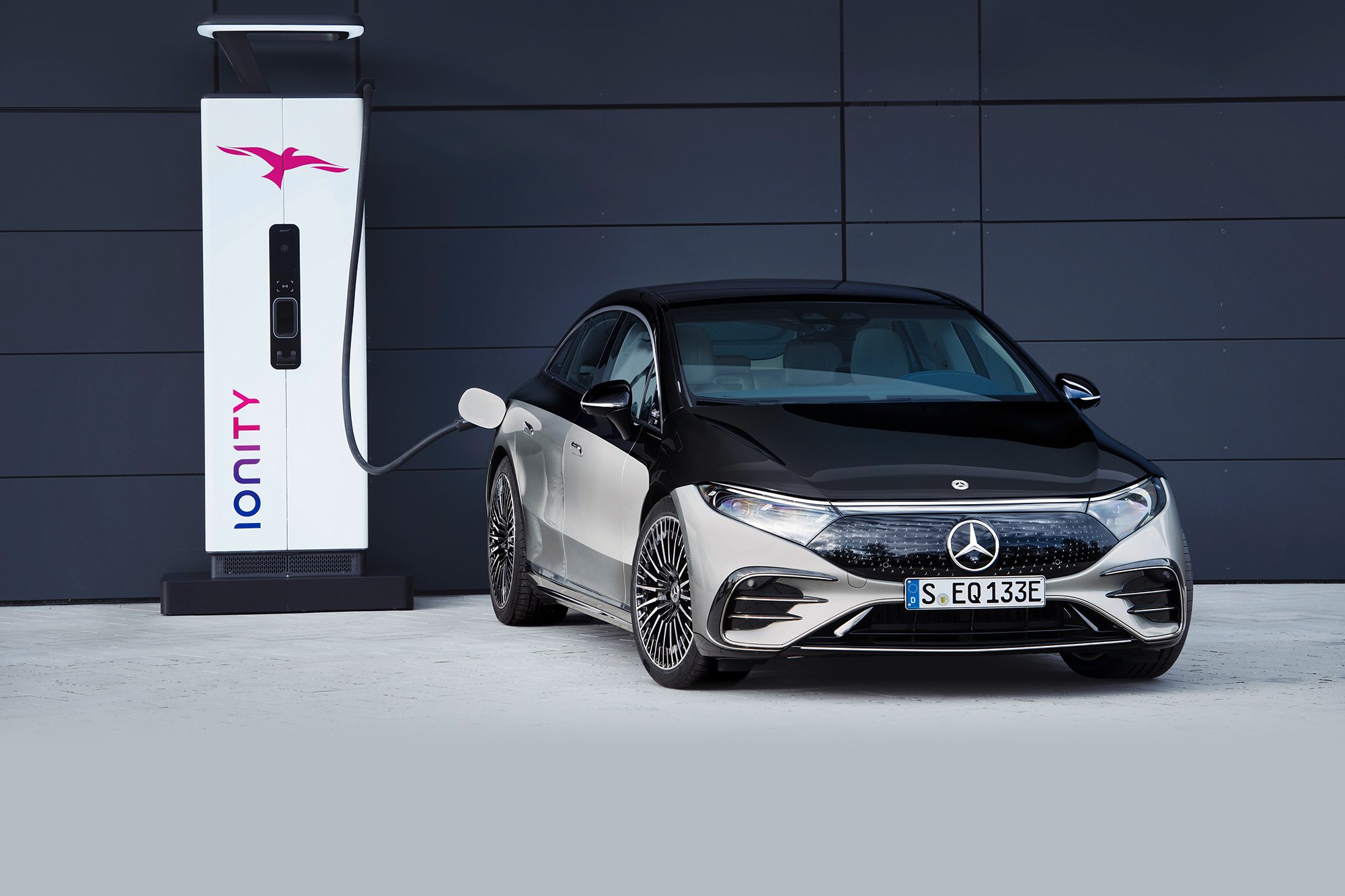
The latest generation of safety features in the EQS also include a microsleep warning from which analyses the driver’s eyelid movements through a camera on the driver’s display. This is on top of a vast suite of other driving assistance systems available, ranging from Active Steering Assist and Evasive Steering Assist to blind spot and exit warning functionality.
Mercedes-Benz used the EQS intro to announce a performance version with “up to 560kW” is being developed. There’s more than a slight whiff of AMG about that power output, which is clearly provided by a pair of motors as in the 580.
While it’s known AMG will develop high-performance versions of Mercedes-Benz EVs, no-one’s yet said exactly what they’re working on. Confirmation of the 560kW EQS seems like an answer to that question.
Less certain is how much the EQS will cost. European prices will be announced only in June, when it goes on sale.
Australia, where the EQS arrives in December, will have to wait even longer to find out how much the world’s most aerodynamic production car costs.
MORE: All EQS stories MORE: Mercedes-Benz news and reviews
In another life Erno Rubik probably would have made a good race track designer.
In 1974, the Hungarian sculptor and architect invented one of the most popular puzzle toys in the world – the Rubik’s Cube. The key to its popularity was in making something that looked straightforward fiendishly difficult to master. More than 40 years after it first began being mass-produced, the multi-coloured toy continues to baffle and challenge puzzle enthusiasts around the world.
A great race track is much like a Rubik’s Cube. It should engage and intrigue on a number of levels, delivering a lasting test because, for the most part, a motorsport circuit is designed and built just once.
The well of information informing race car set-up is deep, and drivers have never been as information-rich as they are today. And yet there are race tracks that even decades after they were first built, continue to challenge and confound racers and engineers alike.
Clive Bowen, the Founder and Director of Apex Circuit Design and a veteran of the industry calls these features “mistake generators”. Bowen, along with Apex’s Design Director, Dafydd Broom, spoke to MOTOR recently to discuss the art and science of modern race track design.
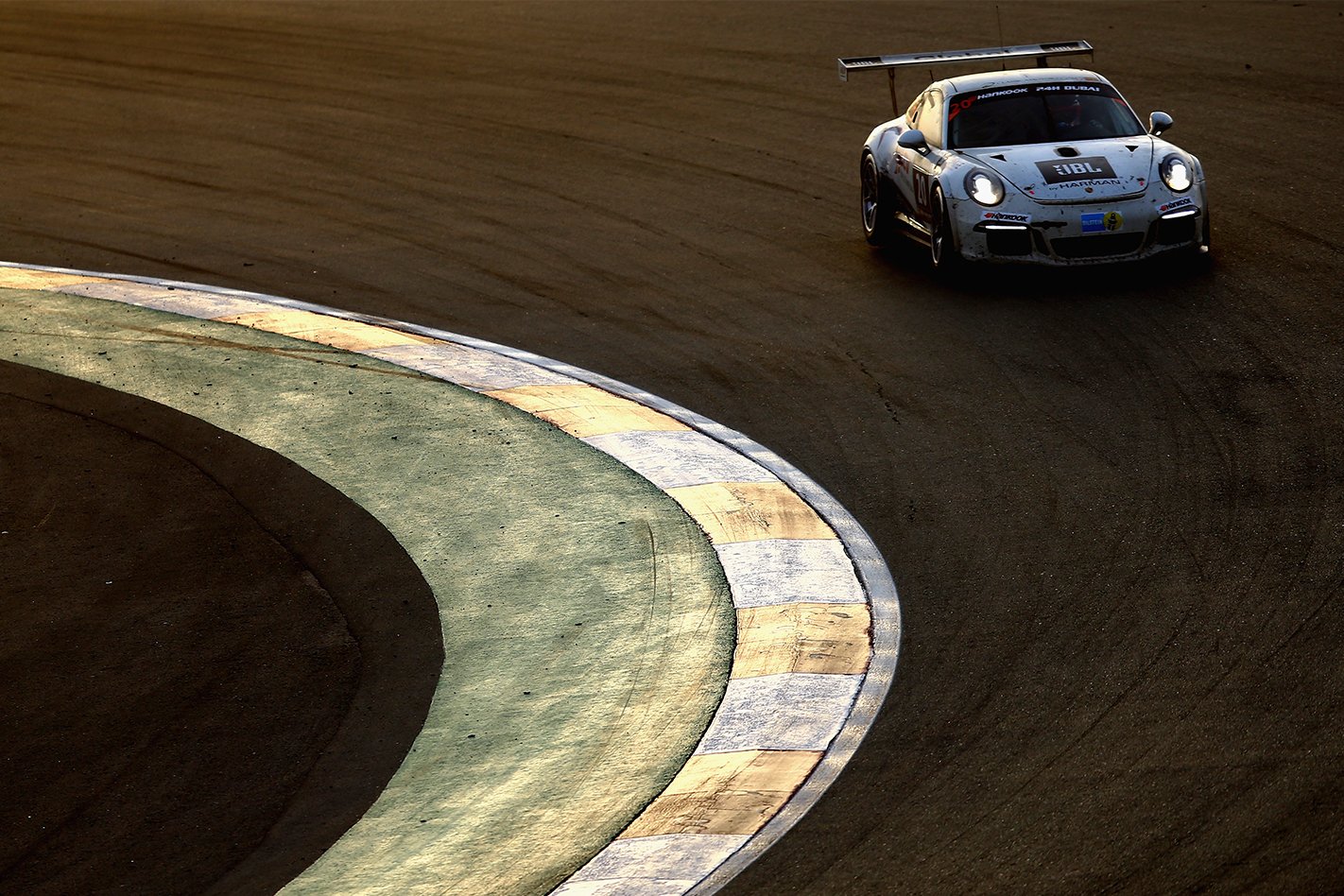
As a way of introduction to the industry, Bowen’s very first project was the Dubai Autodrome. Since then, the firm he started has worked on numerous permanent motorsport facilities, temporary street circuits, and manufacturer proving grounds around the world.
While both Bowen and Broom are based in the United Kingdom, Australians will probably recognise the pair’s work through Sydney Motorsport Park (nee Eastern Creek)’s redesign, and the Kuala Lumpur street circuit that Supercars held an exhibition race at in 2015. They are also currently working on two of the most exciting projects locally – the Cardinia Motor Park complex in eastern Melbourne, and a new permanent track at Mount Panorama.
To build that perfect Rubik’s Cube-like challenge, the team at Apex have to think about their designs from multiple angles.
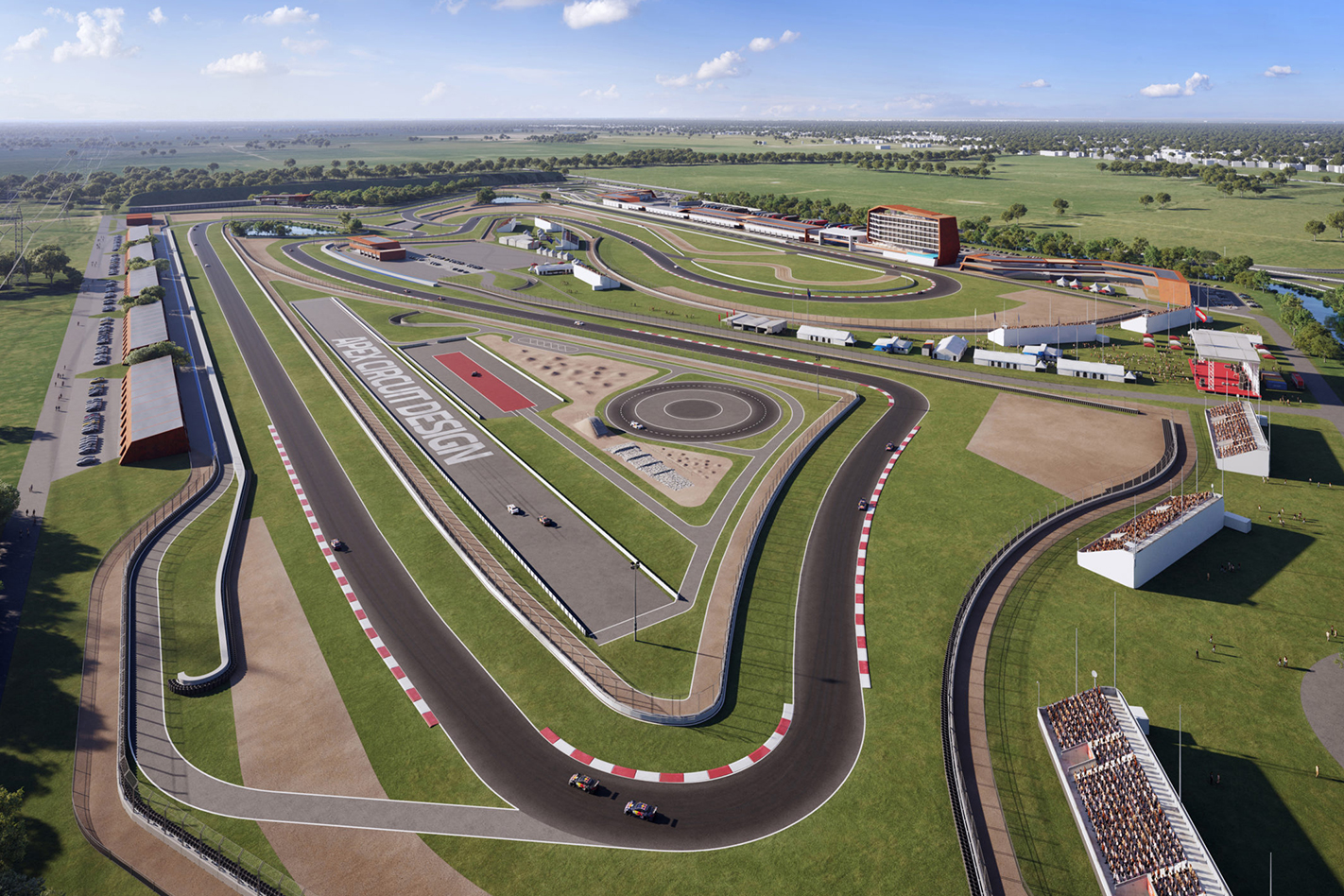
“Everyone talks about turns, but race-track design is about sequencing. What you need to be able to do is think as a race engineer, you need to think as a race driver, and you need to think of a race circuit as part of a dynamic environment that a race car is working in,” Bowen explains.
“You want to have areas where you are losing traction, you want to have areas where you have an opening radius so you can accelerate out in close proximity to the guy in front because you are setting up for a pass on the straight that follows. There is a lot of science and physics behind the processes.”
Much like driving fast, refined circuit design is a test in restraint. Be too greedy and it will bite you.
“If you design a track to be testing the car everywhere, then there is no time to breathe,” Bowen adds.
“You are going to make a mistake anywhere. What you want is to lull a driver into a false sense of security and then really screw it up for them when they encounter a grade change just before a corner they weren’t expecting.”
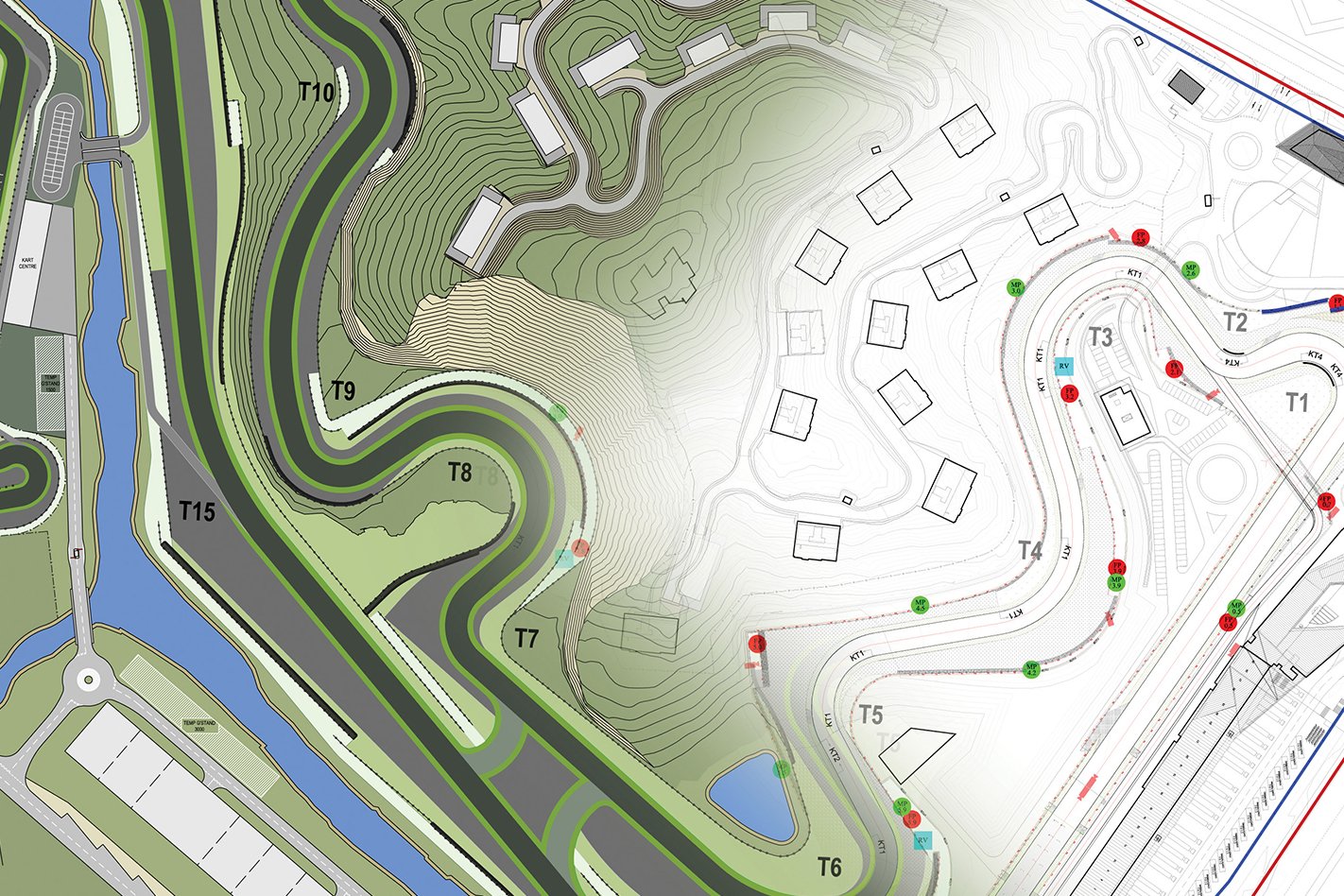
In isolation, Bowen says that designing this sorts of moment “is not difficult at all”. Standing in his team’s way, however, are a slew of governing bodies that come to the table brandishing thick, tech-dense, guidelines that dictate what Apex can and cannot build.
“If you translate those from German to English, you tend to get a set of statements,” Bowen says.
“Where if you are an English speaker, if you read a statement, you interpret it. One of the key interpretations that we have adopted from day one is a statement the FIA has that states ‘you should avoid grade change and direction change at the same time’. It doesn’t say don’t do it, just that you should avoid it. If that is translated in German, it means don’t do it.”
Bowen adds that this goes some way to explaining the forms that German designer Hermann Tilke is often derided for.
It’s not just modern regulations standing in the way of building a genuinely great racing track, it’s economics. You could build the most engaging piece of tarmac ever driven, but if the business case isn’t sustainable, it will wither and die before it ever enters the pantheon of greats.
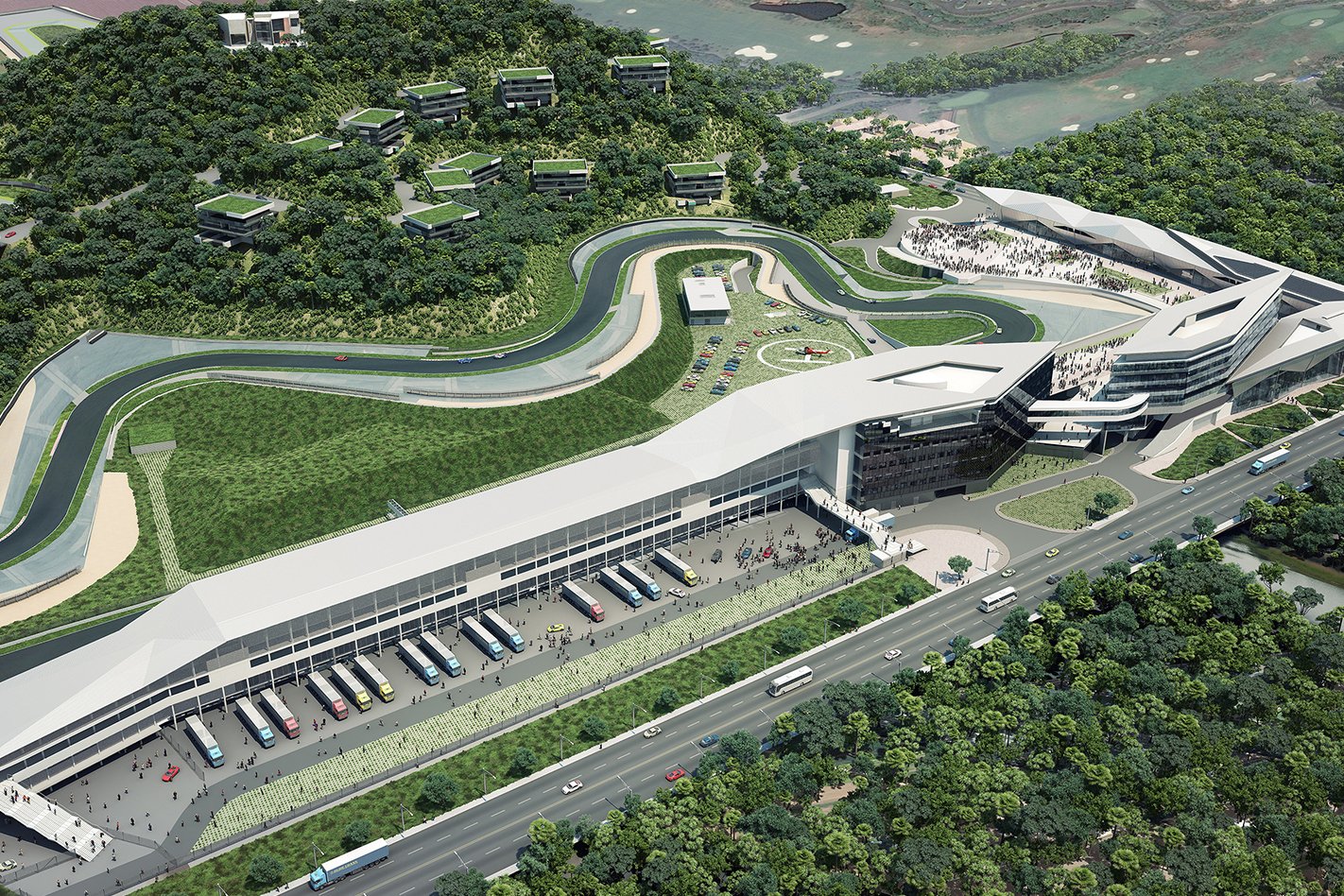
As a result, Bowen and Broom spend as much time thinking about economic strategies, footfall traffic, dwell time, property values, and asset management as they do turn radiuses and camber changes.
“Outside of the circuit design realm is one of the things that we’re desperately trying to avoid and that’s white elephants,” Broom states, referring to a circuit that is built at great expense, but fails to remain in use.
From the mid-2000s onwards, F1’s calendar has been filled with them – giant sprawling tracks that hold a few grands prix, and then lapse into irrelevance when cash reserves are depleted and global attention moves on.
“This industry has been given a bad name because of facilities that have cropped up everywhere, with no real master plan surrounding them. And so the operator is left, usually after some sort of public funding of a facility, with a circuit that’s hard to make money on. That is something that we have noted and Clive instilled in us as designers as part of this organisation, to make sure that we’re not considering the race track in isolation, we’re considering the development that surrounds it so that we make sure that the operators, the owners and the developers are making money out of the investment that they put forward.”
One of the challenges that Apex faces is instilling a belief in their clients that they don’t need an endless barrage of corners to achieve the right mix of bends.
“One of the best circuits that I know of has just six corners,” Bowen explains.
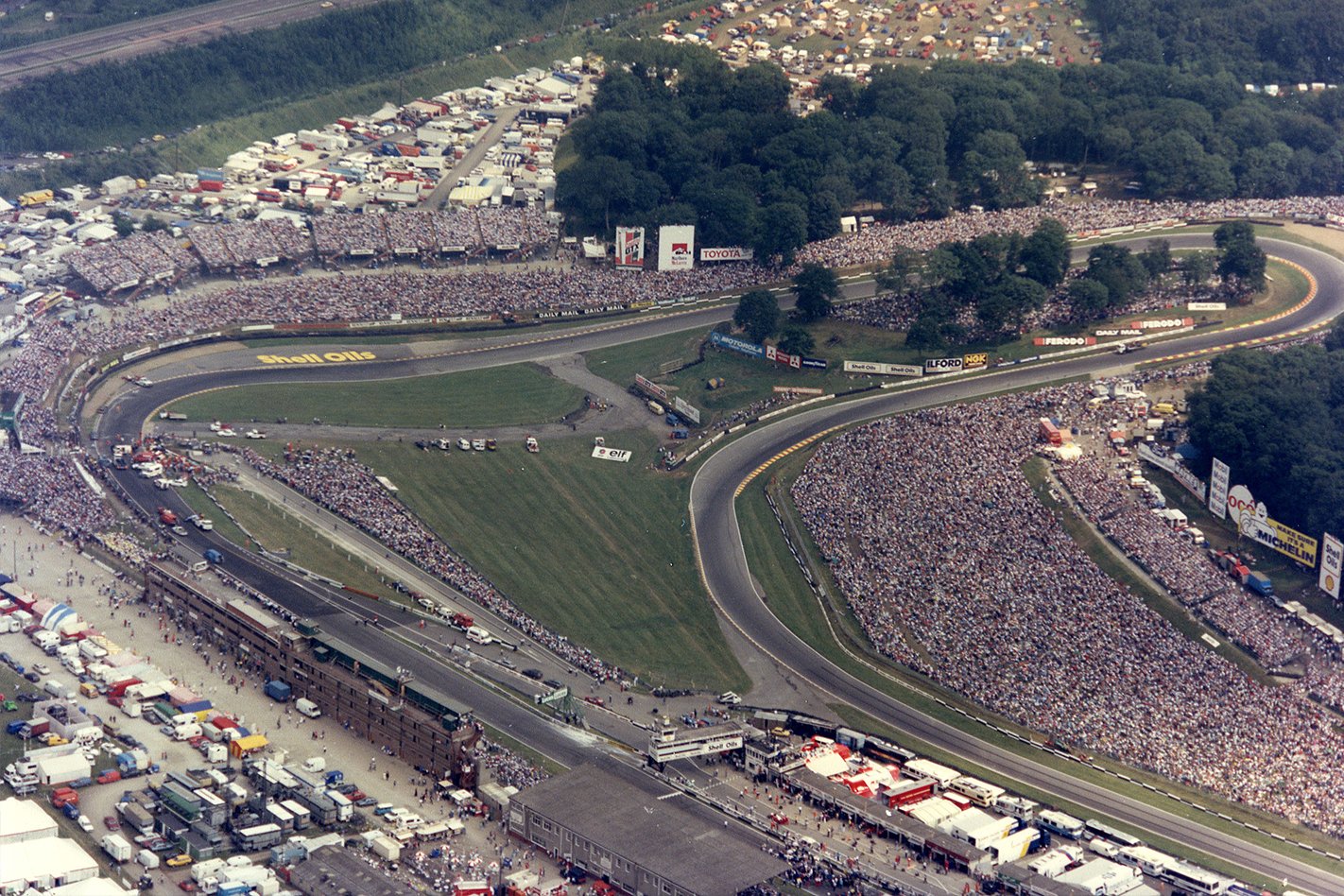
“Brands Hatch’s Indy layout in the UK is a 1.9km race track with six bends. It has one of the most iconic corners in it known as Paddock Hill, and it’s fun, it’s interesting. And because it is such a short lap time, [BTCC] touring cars take about 55 seconds to do a lap there. It sits in a bowl, so you see loads of the circuit from almost any vantage point.
“Less is often more. It is easy to get caught up in the enthusiasm to have this corner here, and this corner here, and you end up creating something that’s answering a question nobody asked.”
To get the balance right Apex works on a golden rule that balances the total number of corners against overall circuit length.
“If you look historically at race circuits, a typical F1 track with about 15 corners or so seems to offer the perfect blend of speed and corner sequencing,” Bowen adds.
“If you scale that back to a 4km kilometre track you are at about 12 corners, and again you look at the circuits that are like that, take Misano for example, the ratio of corners to length is the same. Come down again to a Grade 3 circuit of around 2.5-3.0km you need to be somewhere around eight to nine corners. If you get that ratio right, then it works, it feels right. If you have a circuit that is 2.5-3.0km and it’s got 15 or 16 corners, it’s too busy, it’s too slow, it’s a kart circuit.”
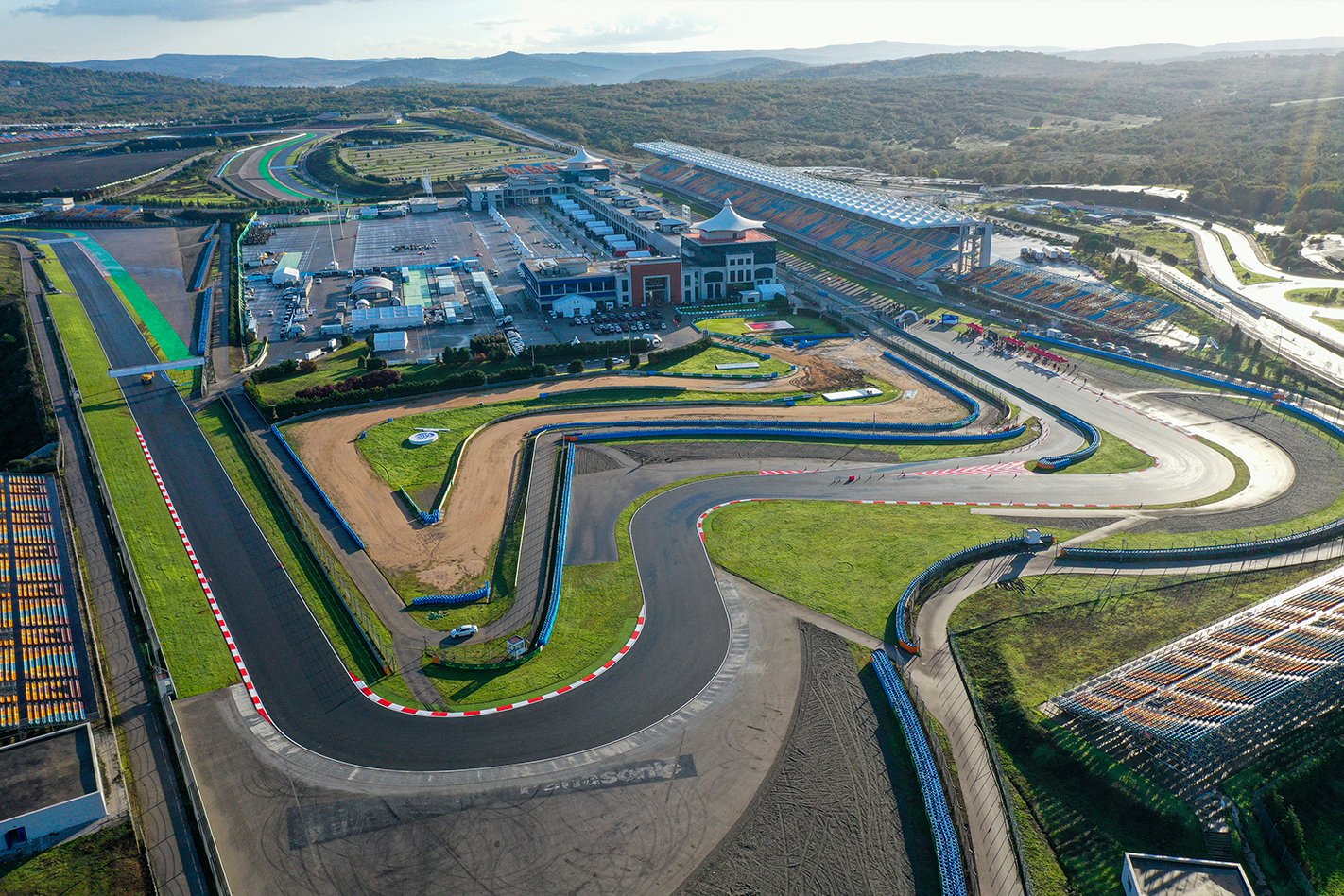
When asked what he tries to avoid when designing a circuit, Bowen is emphatic in his answer.
“Avoid a protractor,” he states firmly. “We love the idea of multi-arc corners, so you have a combination arc with the radius changing. Elliptical forms are much better than just constant radius, because they more closely follow the shape of a true vehicles’ trajectory through a corner.
“We quite like shifting the apex of a corner early or late depending on what we’re trying to achieve. So, if we have a late apex, you’re leaving the door open for somebody to dive down the inside. If you have an early apex, you’re bunching cars together because you’re setting up for a pass somewhere later on the track. The other thing you can do is to add or decrease grip levels, up to, into, through, and out of corners by putting in crests or dips. And this is where we have the greatest fun in truth, because what we’re doing is messing up the calculations by the engineer for how to set the car up.”
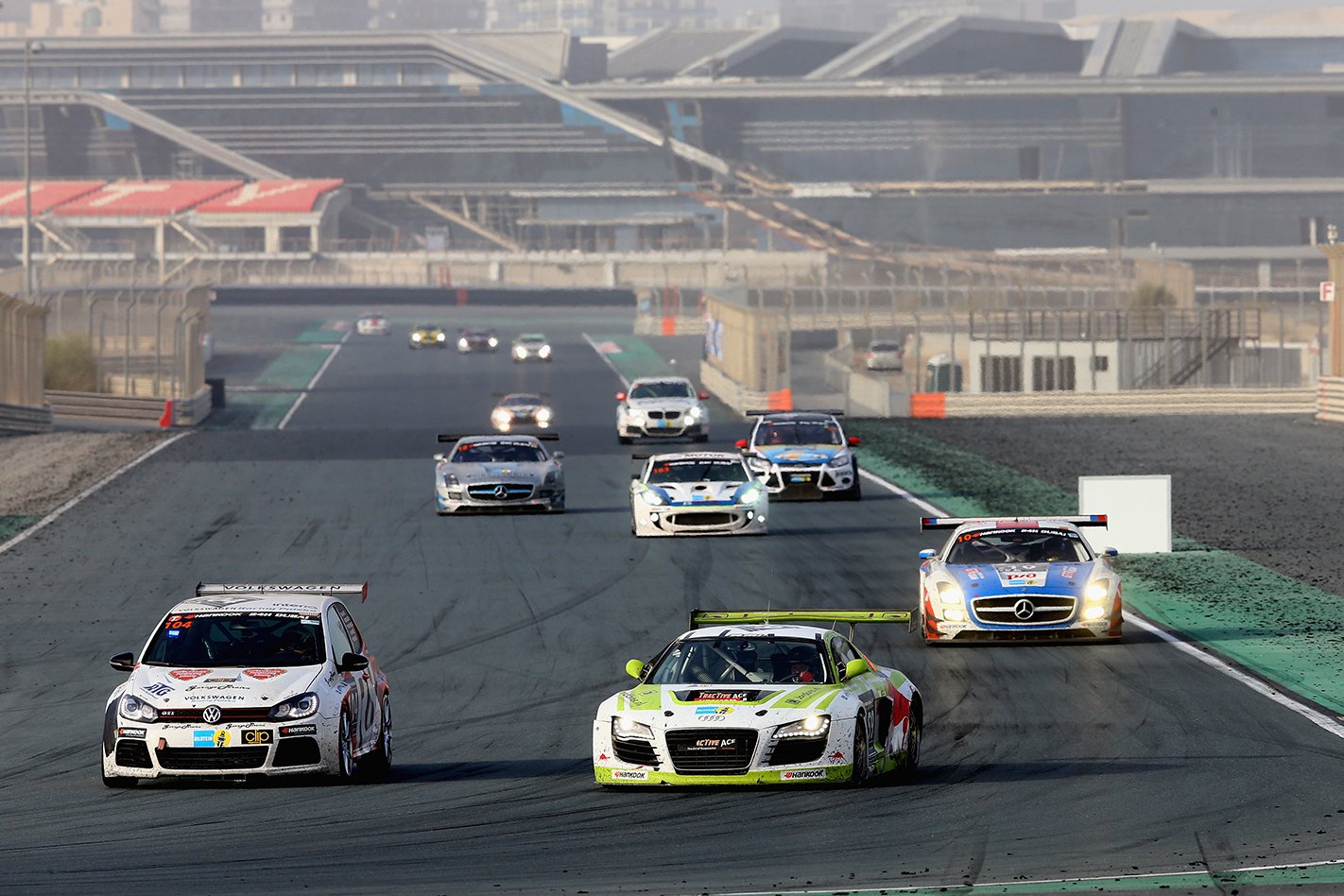
Bowen describes his perfect track as having a mix of high-, medium-, and low-speed sections, while maintaining that perfect ratio.
“This means that the setup of the vehicle will be compromised somewhere on the track,” he explains. “It’s down to how you can ensure the widest spread of vehicle set-ups, which then in turn results in better racing”
Both Bowen and Broom are dedicated motorsport fans themselves, so they understand why fans adore classic tracks like Spa-Francorchamps and the Nordschleife. However, the framework Apex works within now is in another universe to those fan-favourites.
“It’s very, very hard to emulate those old circuits within the constraints of modern circuit design safety standards,” Bowen admits.
“We can do our best, and I think we seem to be doing as well as we could be and possibly better than others, but the fact is that you wouldn’t be able to homologate any of those circuits today if they were new designs. But they exist and thank goodness they do.”
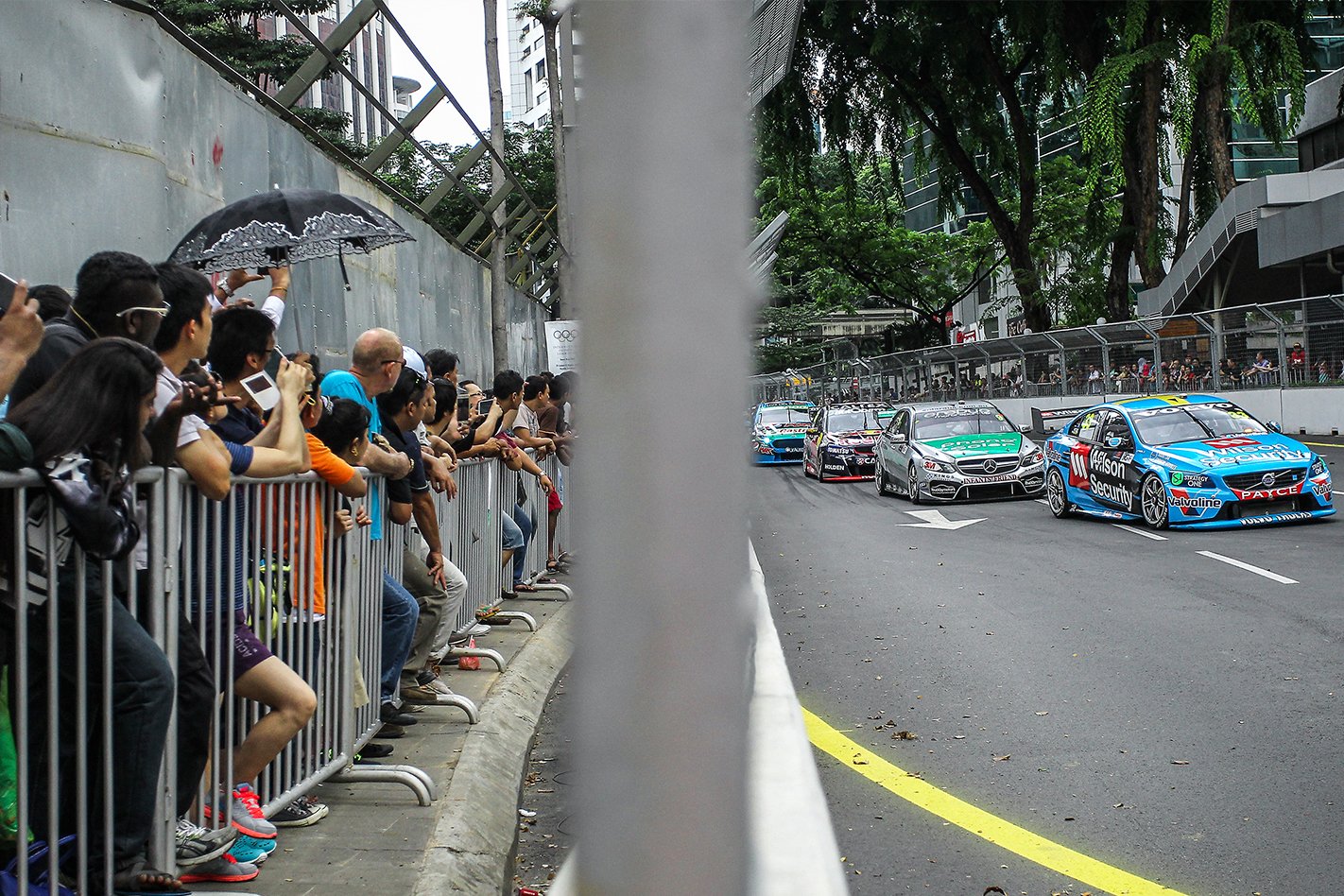
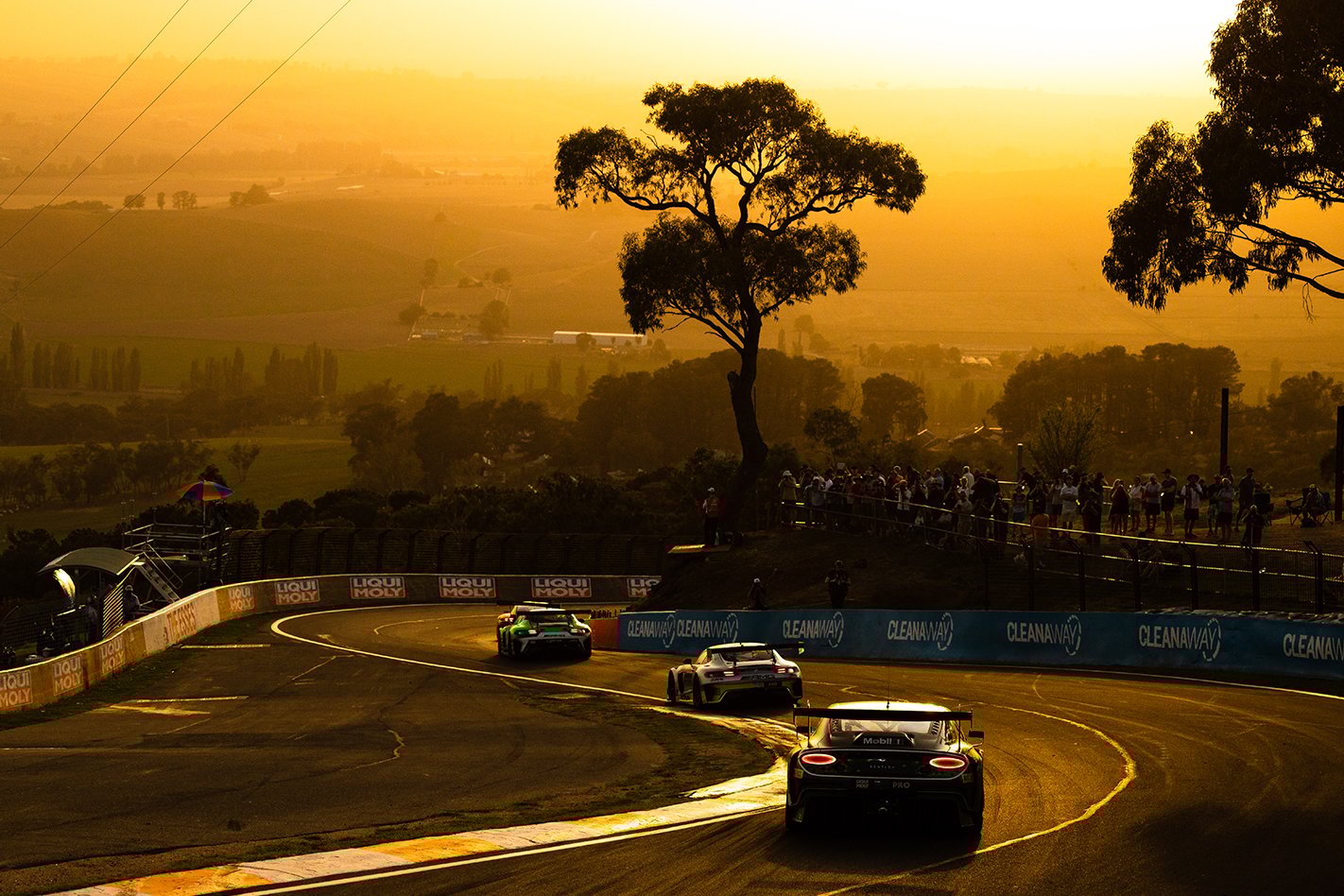
Listening to both Bowen and Broom speak is reassuring. Not only because they are clearly passionate about reinvigorating modern circuit design and ensuring that fans are as well served as track owners, but because Apex is working on designing the second circuit at Mount Panorama. No piece of bitumen is as hallowed or important to Australian motoring than Bathurst’s 6.2km tourist drive turned race track, and a new permanent addition is a big deal.
Broom is taking charge on the project, and Bowen’s advice to his lead designer is typically straightforward – “Don’t f**k it up!”
However, despite the pressure, Broom is at his most excited and enthusiastic when he begins to talk about the project.
“It’ll be an exciting track when it gets up and running … we’ve made sure there’s a lot of speed in the track, it’s very fast, because we know that Australians like to put your foot to the floor and keep it there for a while.”
Building a modern circuit is a complex, multi-faceted discipline, each aspect of the design interacting with and influencing another. With Apex at the helm, Australian race fans will soon have new tracks to challenge and intrigue them.
Erno Rubik would doubtless approve.
Breaking out of the box
When asked to comment on his personal favourite project, Bowen answers that he’s always looking forward to the next track.
In the process, he makes a point which hits right at the heart of an issue for many F1 fans – the calendar feels stagnant because most of it is the work of a single designer.
“[At Apex] we’ve got four designers within our team and a whole pile of other engineers,” he says.
“So that means four different personalities, four different sets of ideas. I am not prescriptive, and Dafydd isn’t either, because we believe in this idea that the personality of the individual has to be embedded in a design. And if the same individual is involved in every circuit, you end up with a cookie cutter.”
In simulations we trust
The advancement of computer simulations has changed the way race tracks are designed and built. Previously it was impossible to know what a circuit was actually like to drive until the cash had been spent and the bitumen laid down. Now, computer simulations allow Apex to get a guide before any soil is disturbed.
“We’ve moved much closer to using DIL (driver in the loop) as a means of informing our design,” Bowen says.
“So, having driver in the loop that we can do quickly, we’re now able to have a driveable model of the track layout within 24 hours of a 2D plan. It’s not pretty, it’s not textured, but it’s sufficiently detailed that you can drive it and it gigantically improves our ability to put in mistake generators. Because we’re then able to nuance the shape and form of corner sequences.”
It takes a big person to admit that they’re wrong and an even bigger company, but it’s thanks to just such a capitulation that Australia now welcomes the Toyota GR Yaris Rallye.
At the international launch of the GR Yaris Toyota Australia’s Vice President of Sales and Marketing, Sean Hanley, told media: “The [standard] GR Yaris…ticks every box we needed to tick to bring this car to market in Australia.”
Cleverly, Hanley did leave himself an out clause, saying: “Of course, in the event that we get overwhelming market demand we can always look at the option pack going forward” and here we are. Having seen and heard the outcry from Australian enthusiasts about being denied the ultimate GR Yaris, Toyota decided the base GR Yaris didn’t actually tick every box and introduced the Performance Pack, known locally as the Rallye.
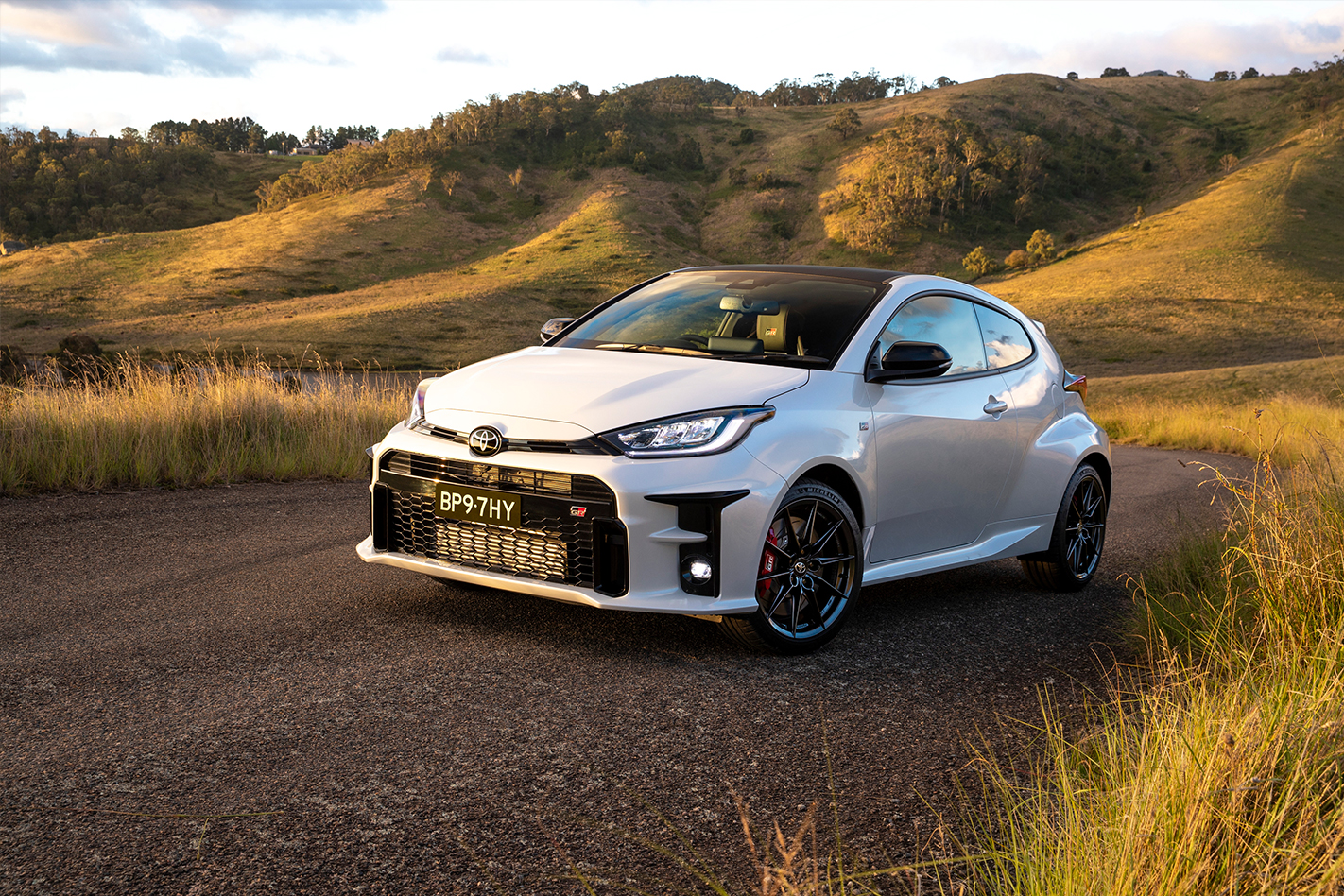
The name is a nod to Toyota’s last homologation special, its last all-wheel drive turbo model and, really, its last real wholly-developed performance car, the Celica GT-Four (the 86 being a joint venture with Subaru and the Supra a partnership with BMW).
Each locally-sold GR Yaris Rallye will be individually numbered, though it’s not a limited production model per se; those numbers could go up to 250 or 670 or 12,367 if they sell enough of them. Toyota continued its unusual but successful GR Yaris pricing strategy with the Rallye, the first 200 cars being offered at $56,200 driveaway, which were quickly snapped up, before reverting to an RRP of $54,500 before on-roads, a $5000 premium over the standard model.
Driveaway pricing will obviously depend on your state, but Toyota’s website suggests driveaway pricing of $59,637 in Melbourne, $59,173 in Sydney, $58,734 in Brisbane, $59,196 in Adelaide and $60,724 in Perth. You can be confident in those prices, too, as there are no options, every car being painted in the same Rallye-specific Frosted White crystal pearl.
Despite the obvious performance potential, Toyota’s standard five-year, unlimited-kilometre warranty applies, as does the seven-year extended warranty for the engine and driveline. Capped price servicing limits the spend to $260 for each of the first six services, but they are required every six months or 10,000km.
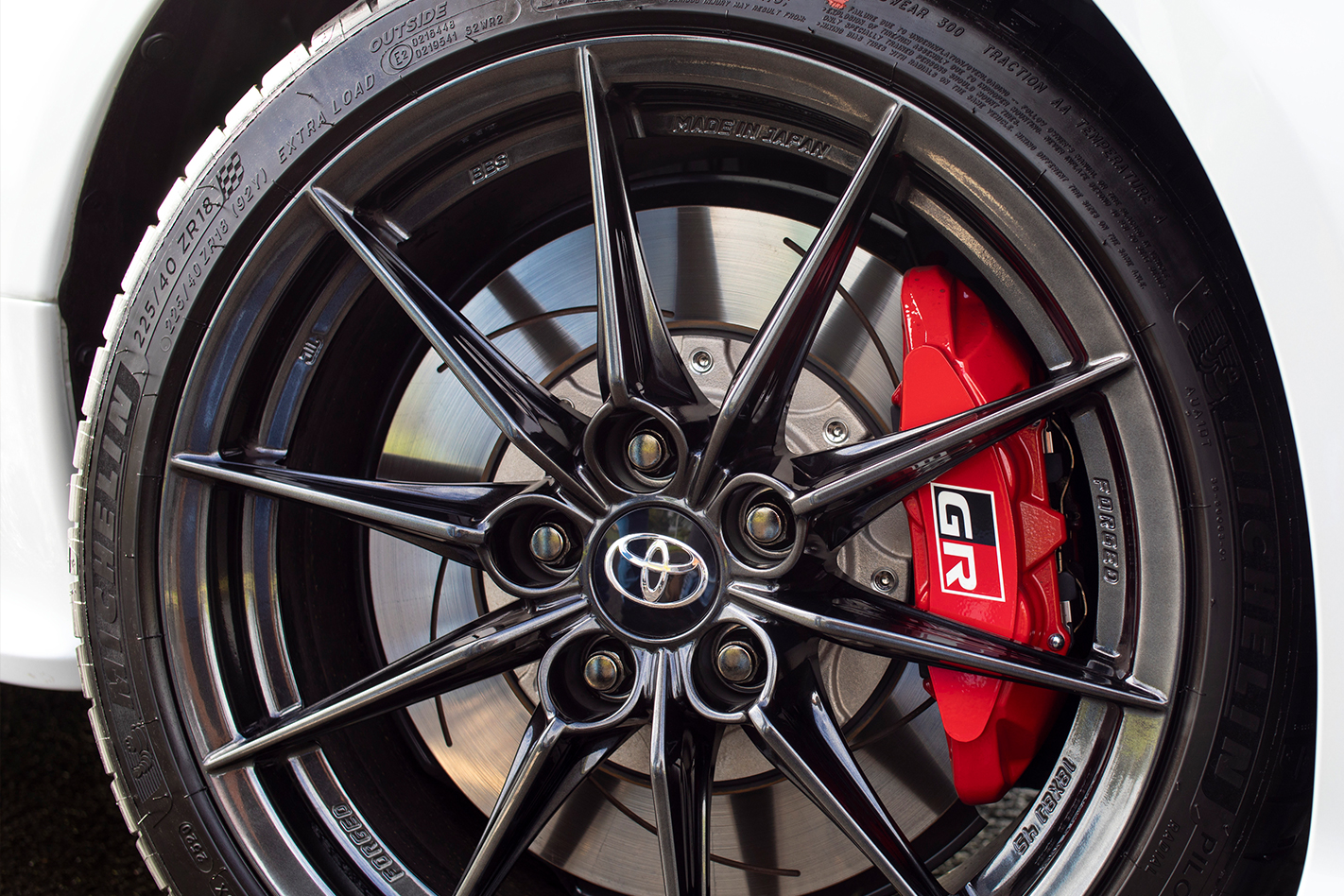
The easiest way to differentiate a Rallye is the badge on its rear hatch, but otherwise there are 18-inch forged BBS alloy wheels, brake ducts either side of the front grille, Michelin Pilot Sport 4 S tyres and red brake calipers. Inside there are sports front seats with red stitching and Ultrasuede inserts, as well as that numbered plaque on the centre console.
Hidden away out of sight is uprated suspension and a Torsen limited-slip differential at either end. These differentials allow the torque to be split left-to-right across each axle to the tyre with the most traction, in addition to the electronically controlled multi-plate clutch integrated into the rear diff which apportions the torque front to rear.
There are three drive modes that alters the basic torque split, though it’s almost constantly varying in response to driving conditions. Normal is 60:40 front-to-rear, Sport is a rear-biased 30:70 and Track an even 50:50.
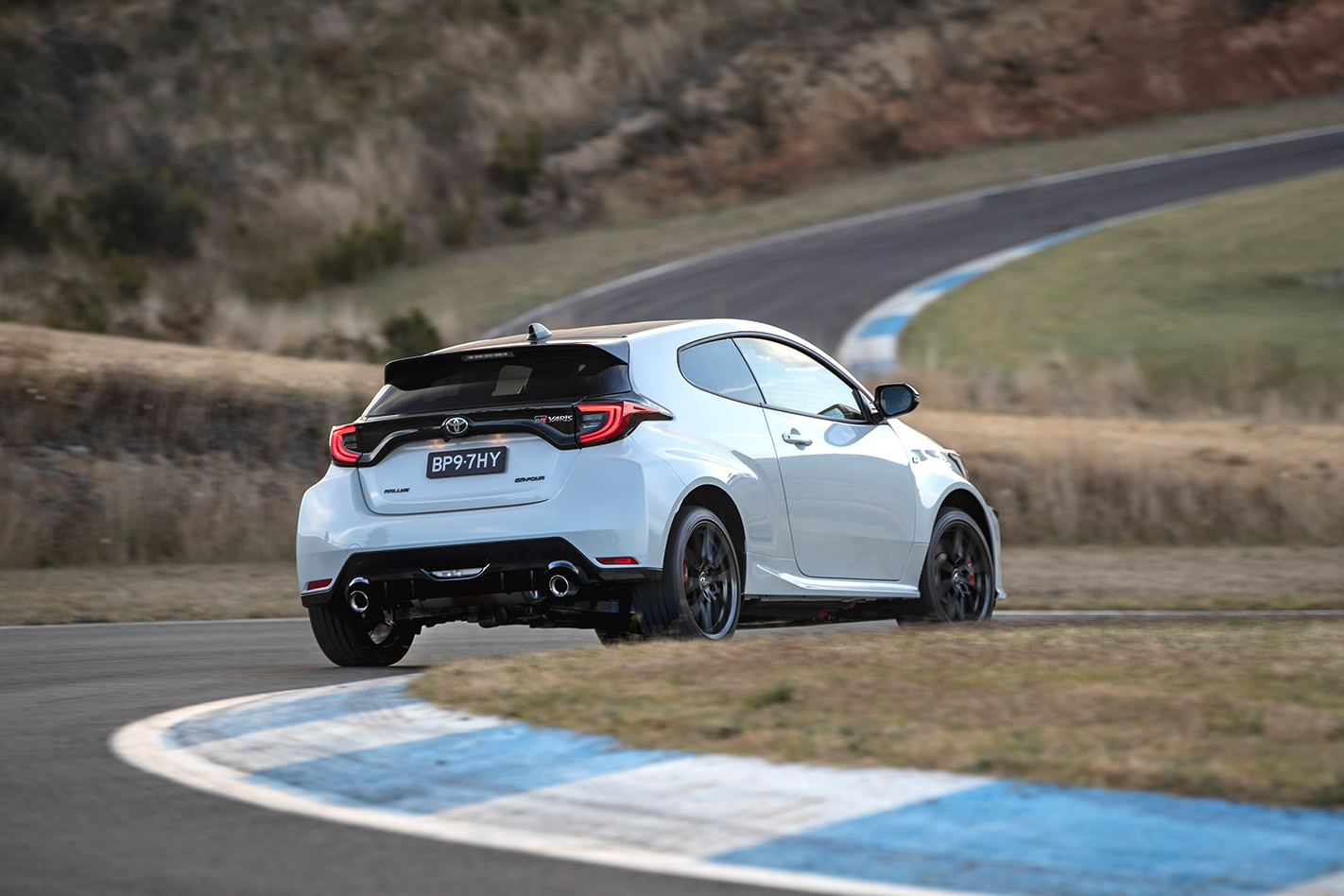
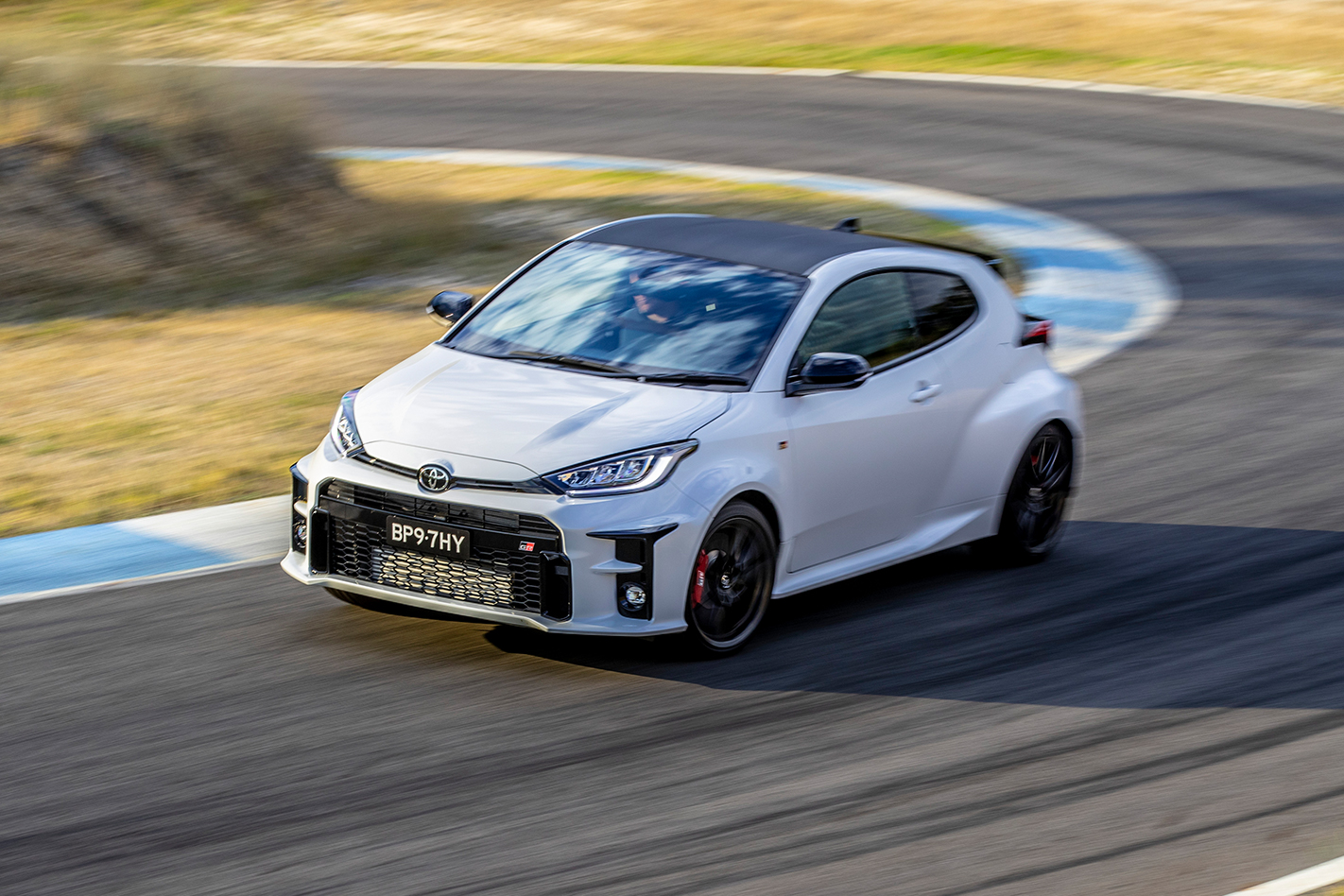
Toyota laid on the Sutton Road driver training complex in Canberra for the Rallye launch with access to its tight, challenging hill course and a motorkhana-style test on its sodden skidpan. To be honest around the former the differences between the standard car and the Rallye were slight; it’s a circuit that plays to the GR Yaris’s strengths and with ESP fully on any potential wheel slip was mopped up by the traction control before the diffs could really take over.
There was definitely greater front end purchase courtesy of the Michelin tyres – the standard GR Yaris wears Dunlop SP Sport Maxxes – and with greater familiarity and confidence quick changes of direction were dealt with more accurately by the Rallye, the standard car feeling to float momentarily as it attempted to control its weight.
A proper upcoming test on track will allow a more in-depth examination of the dynamics of the Rallye’s suspension modifications, which include larger diameter springs, a thicker anti-roll bar and stiffer bushes at the front plus stiffer bushes and bearings and two pillow-ball joints in the rear. Time on the road was brief, but the changes have happily had little to no effect on the GR Yaris’s ride quality.
Surprisingly, it’s the wet motorkhana where the Rallye comes alive. What was expected to be an opportunity to skid around and kill a few witches’ hats was actually an illuminating demonstration in the efficacy of proper limited-slip differentials.
The standard GR Yaris was fun, no doubt, pirouetting around the cones with a dab of handbrake and plenty of throttle but, should the wheels encounter different levels of grip, the wheel on the slipperier surface – usually the unladen inside front – would spin freely and have the engine smacking into the rev limiter.
In contrast, the Rallye would spin all four wheels virtually in concert, keeping the revs hanging steady and making the slide more controllable and, crucially, more enjoyable. Not necessarily the most consumer-relevant test, but a big tick for the diffs nonetheless.
This alone makes the Rallye worth the extra. If you’re going to spend $50K plus on a GR Yaris, you might as well spend a little extra and get the ‘good’ one, for the Rallye does feel to fulfil the car’s potential to a greater extent.
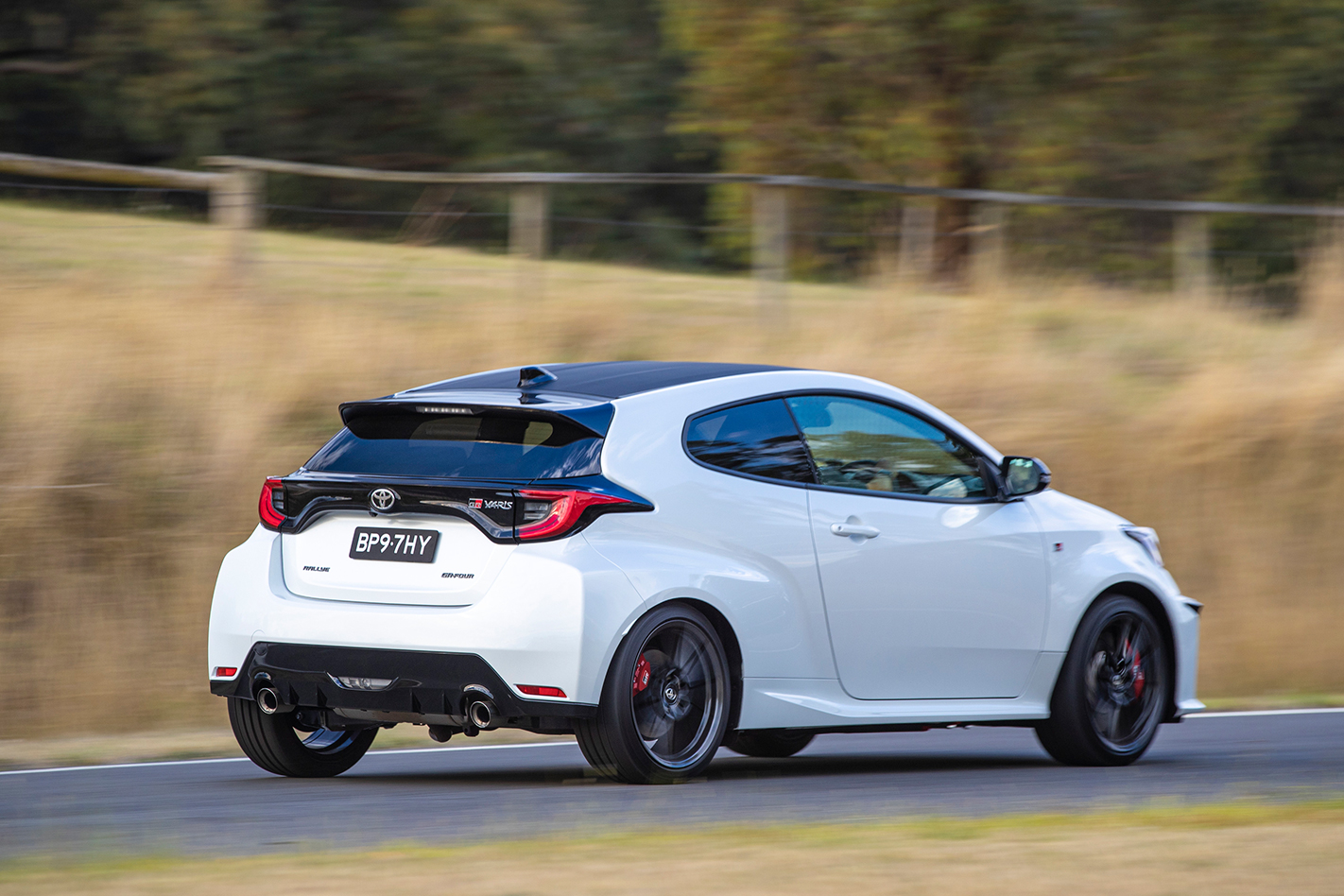
The rest of the package, good and bad, is as per the standard GR Yaris. The engine remains a thing of wonder, its power, torque and response completely at odds with both its capacity and its cylinder count. It seriously hauls and the six-speed manual is a good shift with short ratios that makes the most of the grunt, though the auto-blip function is a long way from the best around, being far too slow to rev-match on downchanges.
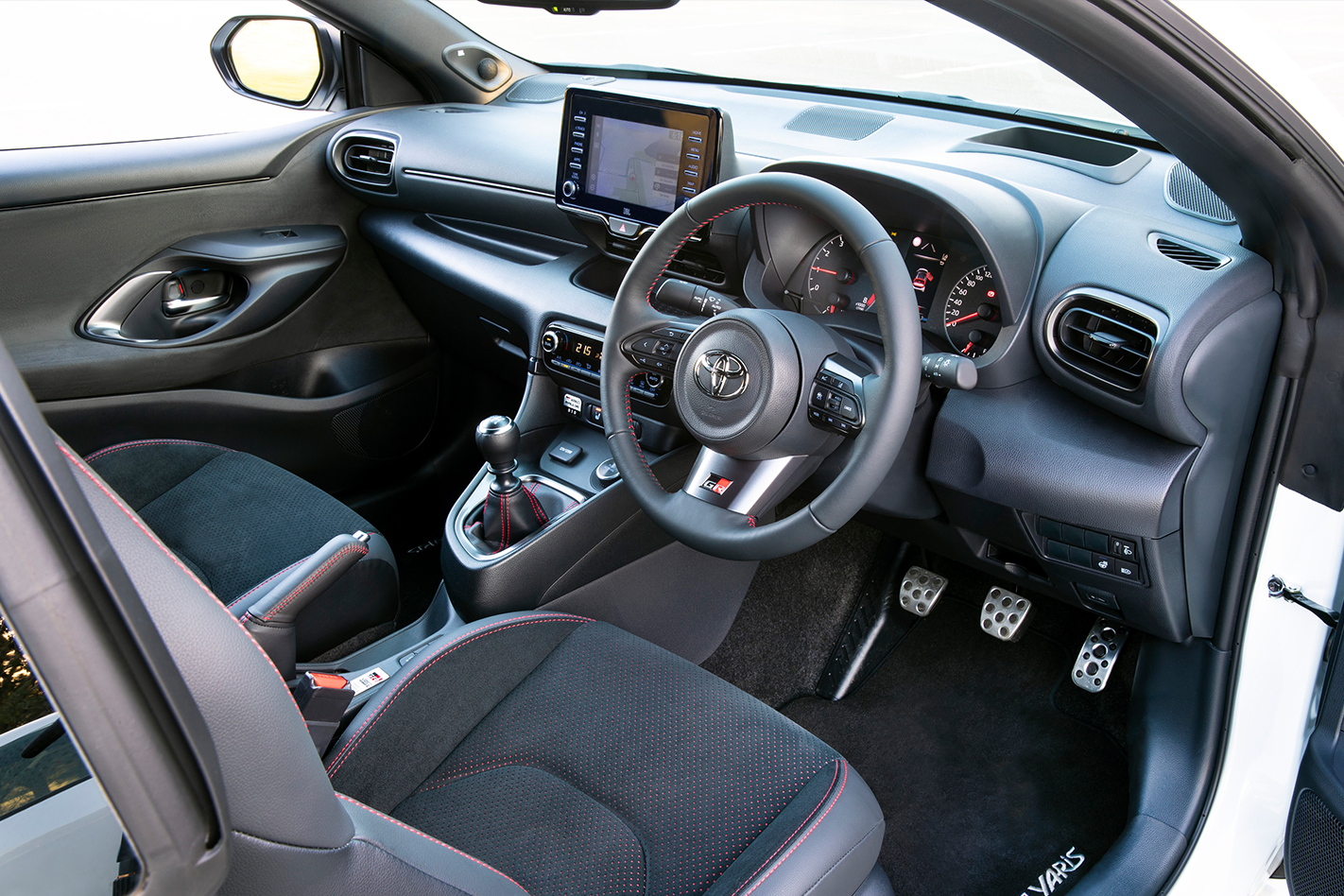
Inside is where the GR Yaris struggles most. It’s reasonably well equipped, with dual-zone climate, keyless entry and start, a 7.0-inch touchscreen multimedia system, eight-speaker JBL stereo, a head-up display, six airbags and a raft of active safety equipment including active cruise control, road sign assist, intersection assistance, blind-spot monitoring and more, but a lot of the trim is made from hard, scratchy plastic.
Thankfully the bits you interact with as a driver, specifically the steering wheel and gearshift, are leather-wrapped and the seat isn’t set as high as memory serves – you do get used to the elevated perch. The rear seats are all but useless – small children would fit, but getting them in there is a different matter – and the 141-litre boot is hilariously small, but treat the GR Yaris as a strict two-seater by folding the rear seats and it turns into a miniature van with 737 litres of cargo space.
You also score all the cool bits that Tommi Makinen insisted on for the – sadly stillborn – Yaris World Rally Car, like the aerodynamically-optimised sloping carbon roof, aluminium doors, hatch and bonnet, stiff three-door body shell and half-Yaris, half-Corolla platform.
All in all, the GR Yaris Rallye is an improvement over the standard car. Just how much of an improvement needs a longer test on road and track, but it certainly feels to be the car the GR Yaris was always meant to be: more capable, more exclusive, more fun.
The price remains a problem, though. I think back to the Ford Focus RS Limited Edition, a car that was as quick in a straight line, more entertaining to drive, had true five-door practicality, a Quaife limited-slip diff in the nose and Michelin Pilot Sport Cup 2 tyres.
It lapped Winton 5.4sec quicker than the GR Yaris and that was before the circuit modifications that shaved 1-1.5sec from lap times; even the standard Focus RS was 2.9sec quicker. And both Fords set virtually identical straight-line numbers to the Toyota, so it’s all in the corners.
Toyota deserves a lot of kudos for building such an enthusiast-focused product AND bringing it to market, but in such a fiercely competitive hot hatch market, with pint-sized heroes like the Ford Fiesta and Hyundai i20 N or more serious contenders like the Honda Civic Type R and new VW Golf R, the GR Yaris’s price/performance ratio struggles to stand out.
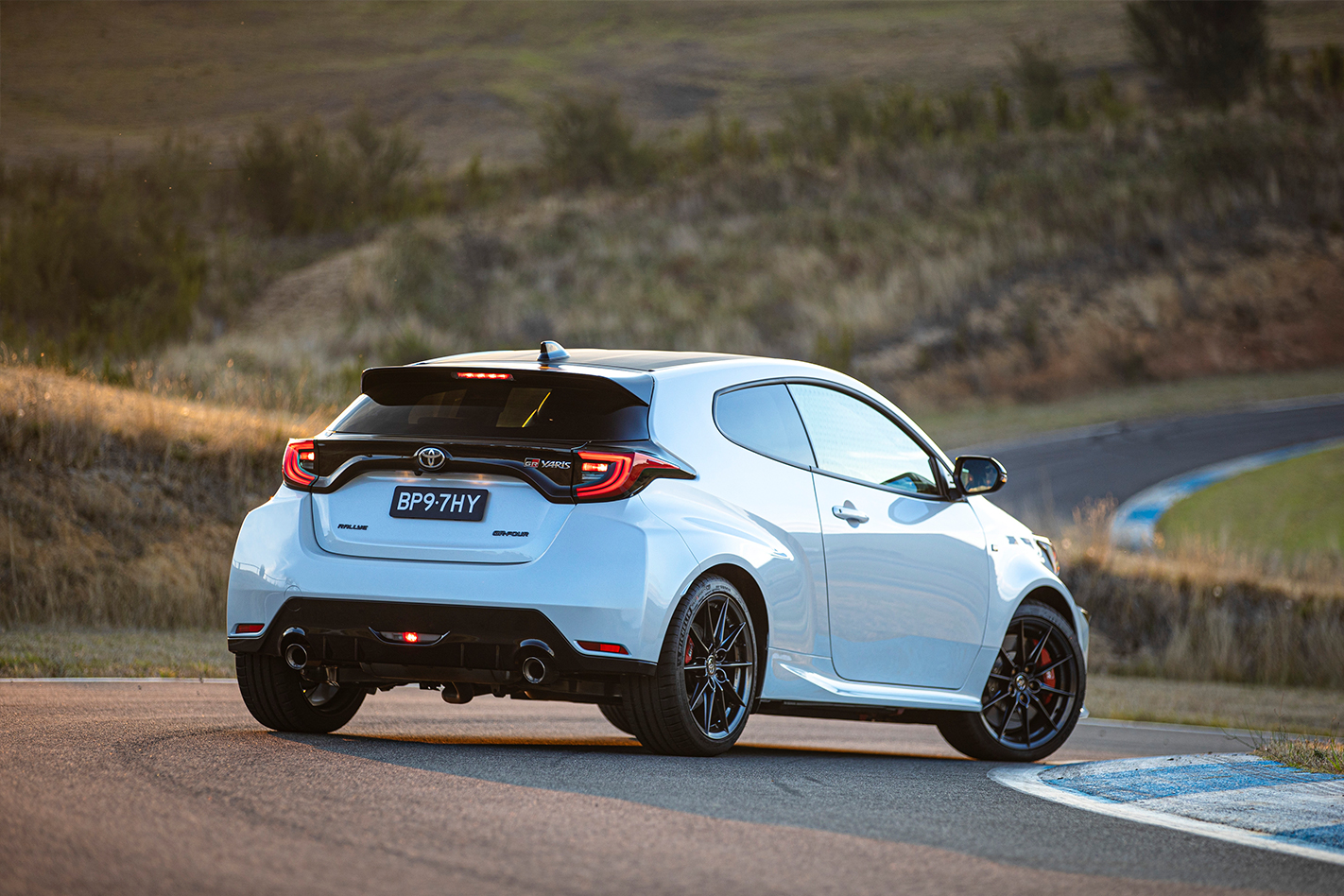
Verdict: 8.0/10
Likes: improved handling; more exclusive; fulfils potential Dislikes: even more expensive; seat too high; practicality issues
Specifications
Body: 3-door, 4-seat hatch Drive: all-wheel Engine: 1618cc inline-3cyl, DOHC, 12v, turbocharger Bore/stroke: 87.5 x 89.7mm Compression: 10.5:1 Power: 200kW @ 6500rpm Torque: 370Nm @ 3000-4600rpm 0-100km/h: 5.2sec (claimed) Fuel consumption: 7.6L/100km (combined/claimed) Top Speed: 230km/h (claimed) Weight: 1280kg Power/weight: 156kW/tonne Transmission: 6-speed manual Suspension: struts, coil springs, anti-roll bar (f); multi-links, coil springs, anti-roll bar (r) L/W/H: 3995/1805/1455mm Wheelbase: 2560mm Tracks: 1535/1565mm Steering: electrically assisted rack-and-pinion Brakes: 356mm ventilated discs, 4-piston calipers (f); 297mm ventilated discs, 2-piston calipers Wheels: 18 x 8.0-inch (f/r) Tyres: 225/40 ZR18 (f/r) Michelin Pilot Sport 4 S Price: $54,500
Two Tesla buyers in Australia claim to have lost tens of thousands of dollars each to criminals because the car company has an unsecured payment method.
According to ABC, the American EV automaker has been asking clients to pay for its vehicles via unprotected email invoices.
In one instance, Andrea Hammond from Western Australia, who had paid a deposit online for a Tesla Model 3, was emailed an invoice by Tesla which required her to make a final payment of $74,647.62.
What Ms Hammond claims she didn’t know is that the email had been intercepted by hackers, who had altered the payment details in the invoice.
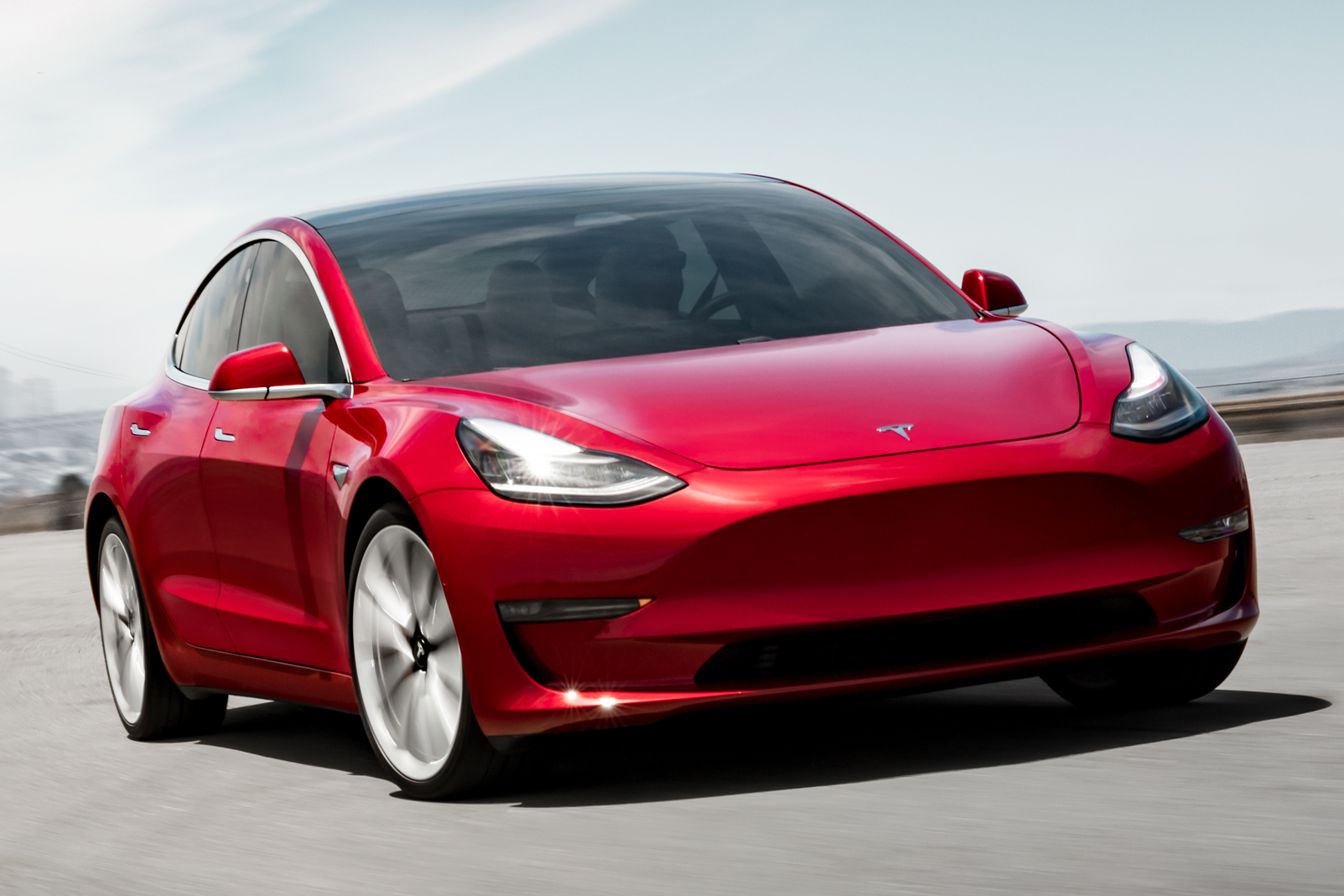
As a result, Ms Hammond alleges she unknowingly transferred the entire five-figure sum to a criminal’s fraudulent bank account.
“I absolutely cannot understand why Tesla don’t do the invoicing in the payment system through a secure website,” Ms Hammond told the ABC.
“Instead, I was sent an unsecured, editable invoice that anybody could get into and change the numbers, so the hackers didn’t have to create a new invoice.
“It was just too easy.”
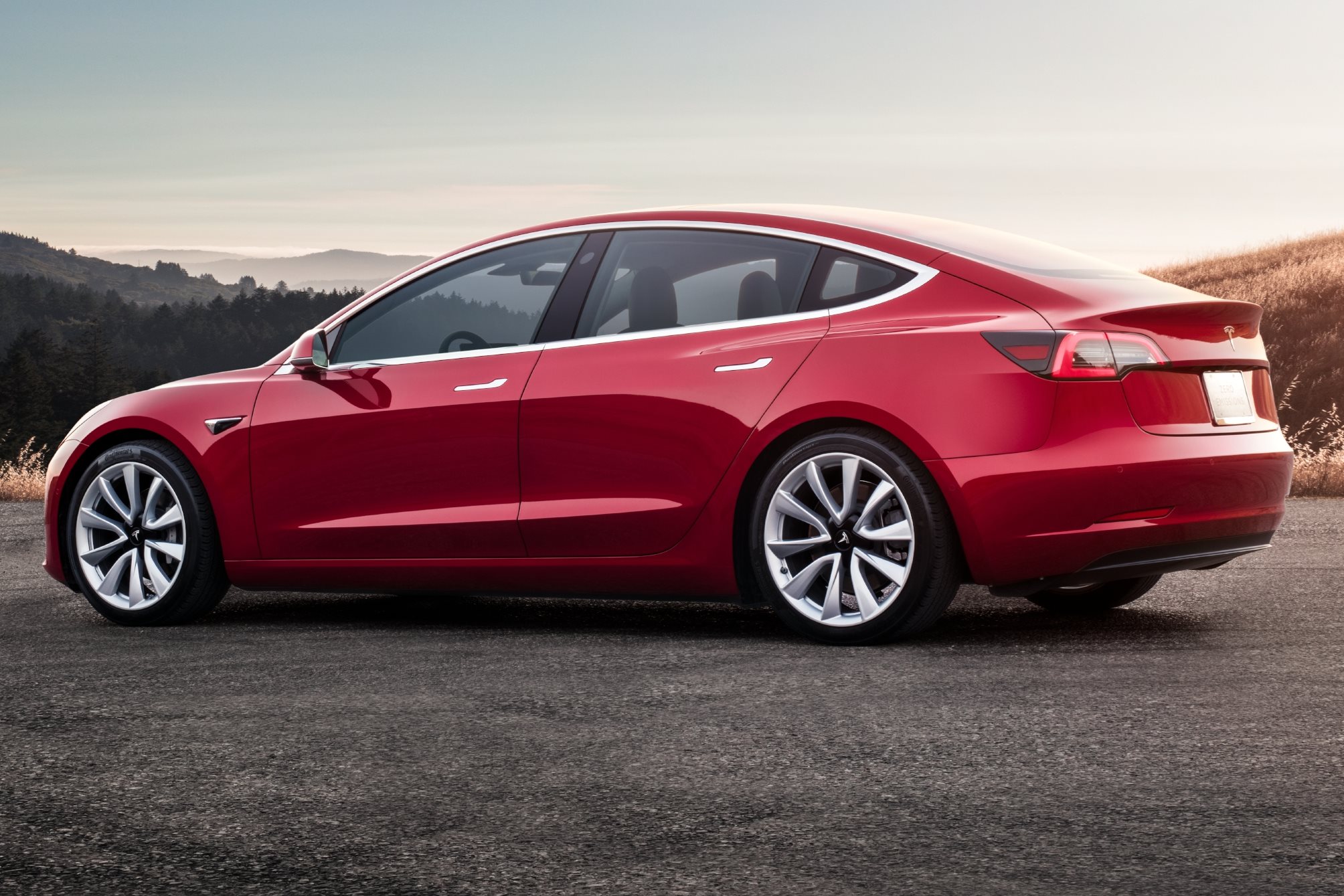
In another alleged case, a Sydney businessman, who only wished to be identified as Ron, says he was contacted by Tesla back in 2019 with news that his Model 3 had arrived in the country, and payment was required.
Ron claims he was emailed an invoice, which was hacked, and subsequently he unwittingly paid $77,800 to a criminal.
“I should have checked the bank account details on the invoice by telephoning Tesla directly, but there was no phone number readily available to ring or to contact them,” he said.
“They wanted payment quickly because the vehicle had become available, so I paid the invoice.”
Ms Hammond and Ron both say they contacted the banks to try and do anything they could to retrieve their lost thousands. While Ron managed to recoup $17,800, the rest of the pair’s money was gone.
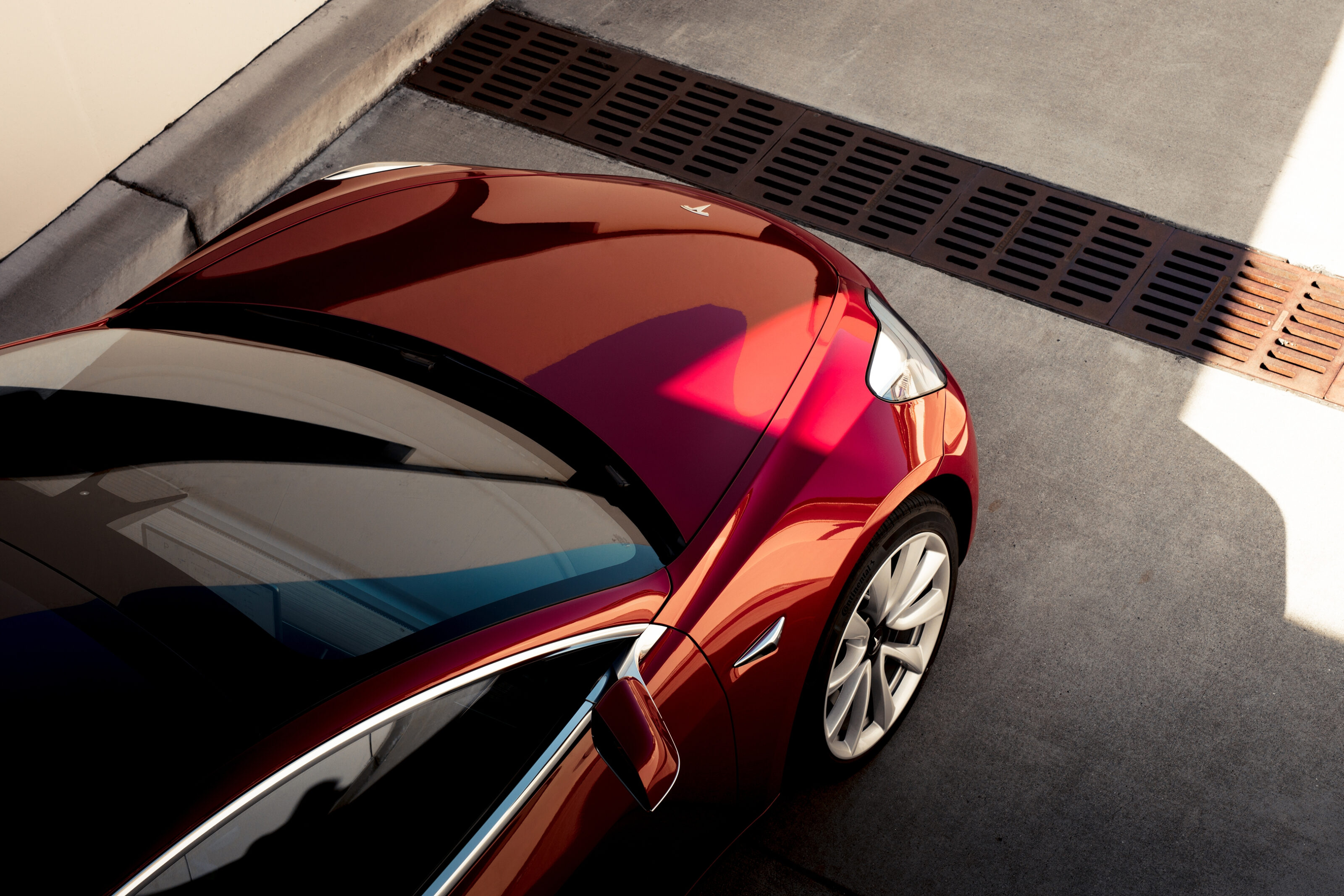
It is unclear whether or not Tesla has changed its payment methods since these issues occurred, however, the ABC reported that as late as December last year, the American firm was still requiring payment through the same system.
WhichCar has contacted Tesla for comment.
Watch this space as WhichCar brings you updates on this developing story.
MORE: Model 3 stories MORE: All Tesla stories
