
UPDATE, April 12: Genesis USA has sent out a tweet to its 17,500 followers on behalf of the brand’s CEO and president, Mark Del Rosso, asking if they would reserve a Genesis X concept with a US$1000 deposit.
Although unconfirmed, fans of the new show car could see this as a sign than the X concept is closer to a production future than previously anticipated.
The response to the tweet, despite Genesis using the hashtag #JustAsking, has been overwhelmingly positive, with more than 200 comments showing support for the sleek, fully electric grand tourer.
Unveiled on March 30, the X concept project has been overseen by the automaker’s chief design officer Luc Donckerwolke, and takes several aesthetic cues from the Essentia concept we first saw in 2018.
Only time will tell if we ever see a full production-spec version of the X concept, but be sure to watch this space as WhichCar brings you all the latest updates.
The story to here
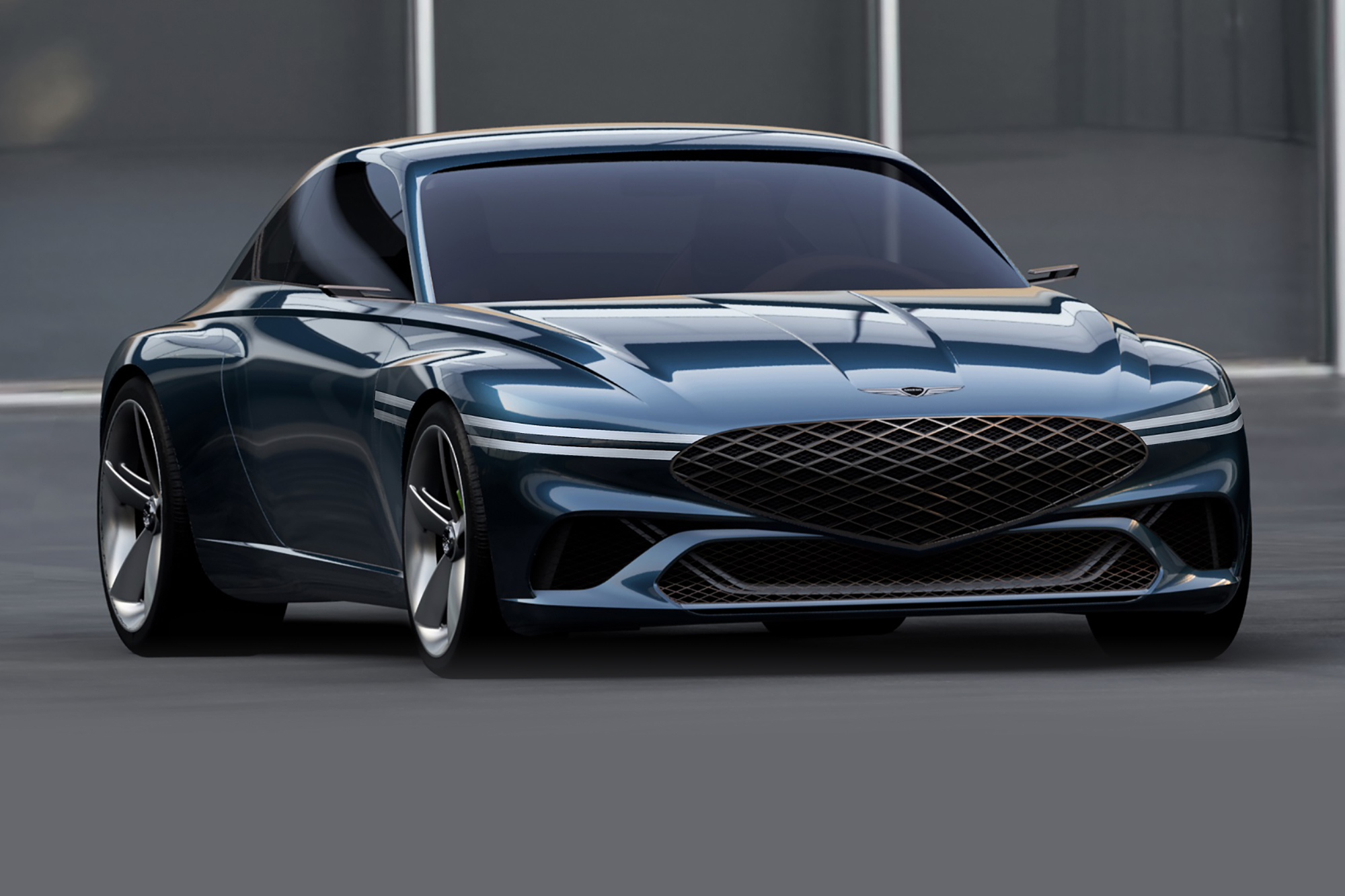
March 31: The Genesis X concept has been revealed today, debuting as the new luxury brand’s fifth show car – and its first sports-oriented electric car.
The low and wide new concept follows the 2016 New York, the 2017 GV80, 2018 Essentia and 2019 Mint show cars.
So far, only the New York and GV80 concepts have led to production follow-ups, in the form of the G70 sedan and, of course, the new GV80 SUV.
A production version of the Mint is due soon (reportedly as the electric ‘GV60’), and has been spotted in heavy camouflage over the past year. The Essentia remains the only car to be spied in an upcoming production form, although its coming was confirmed back in 2018.
Perhaps as a reference to its earlier Essentia concept, Genesis describes the X as a showcase for the “essential elements” of the brand’s design themes.
The design of the X concept moves into a more production-friendly and contemporary space than the Essentia, with styling themes that closely mirror the Genesis brand’s latest models.
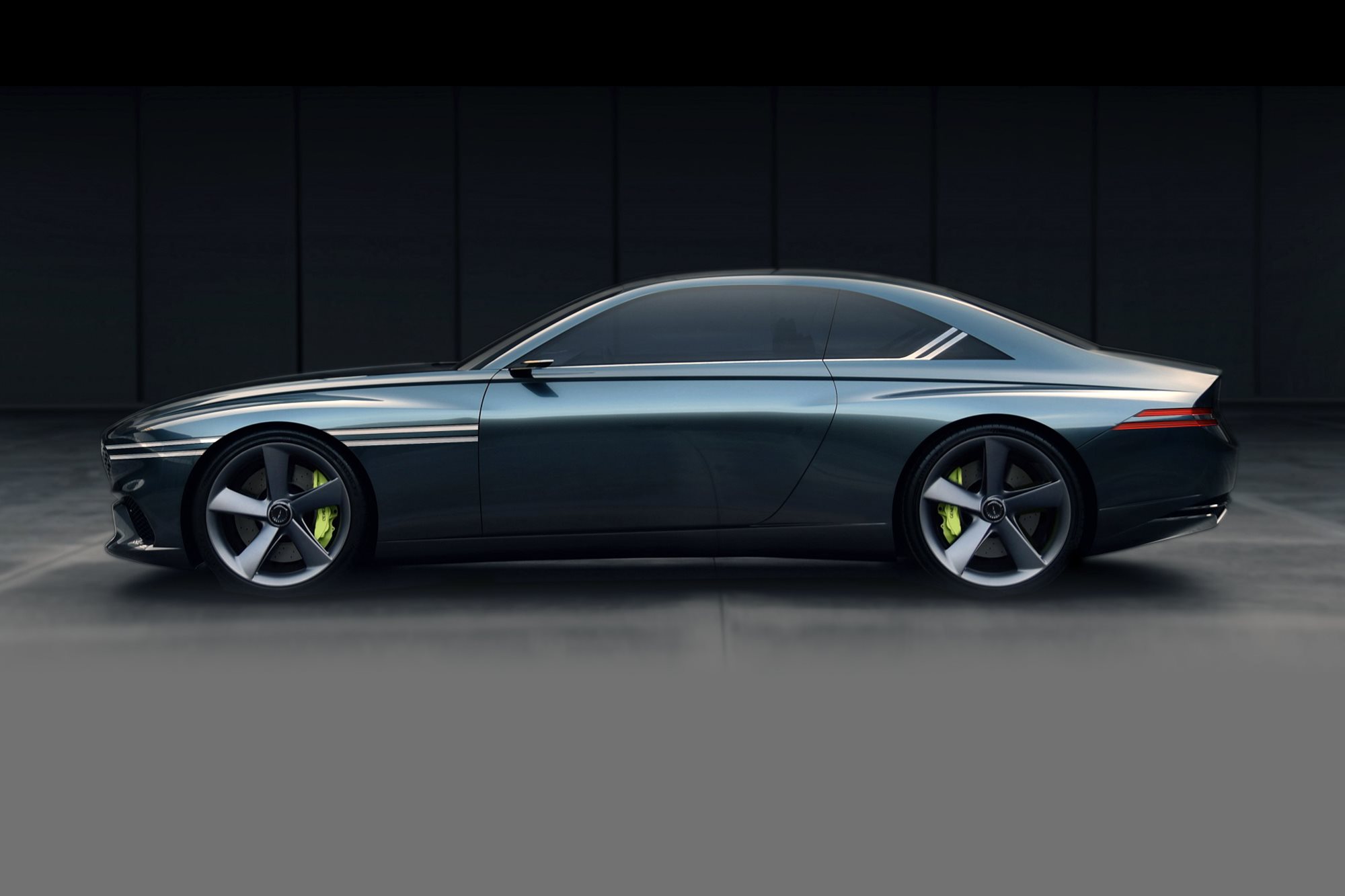
Styling elements now familiar to Genesis buyers include the shield-like grille design and the slender ‘Two Lines’ lighting themes at both ends.
The concept otherwise presents with a traditional, sleek coupe silhouette – with muscular haunches and a low, imposing presence.
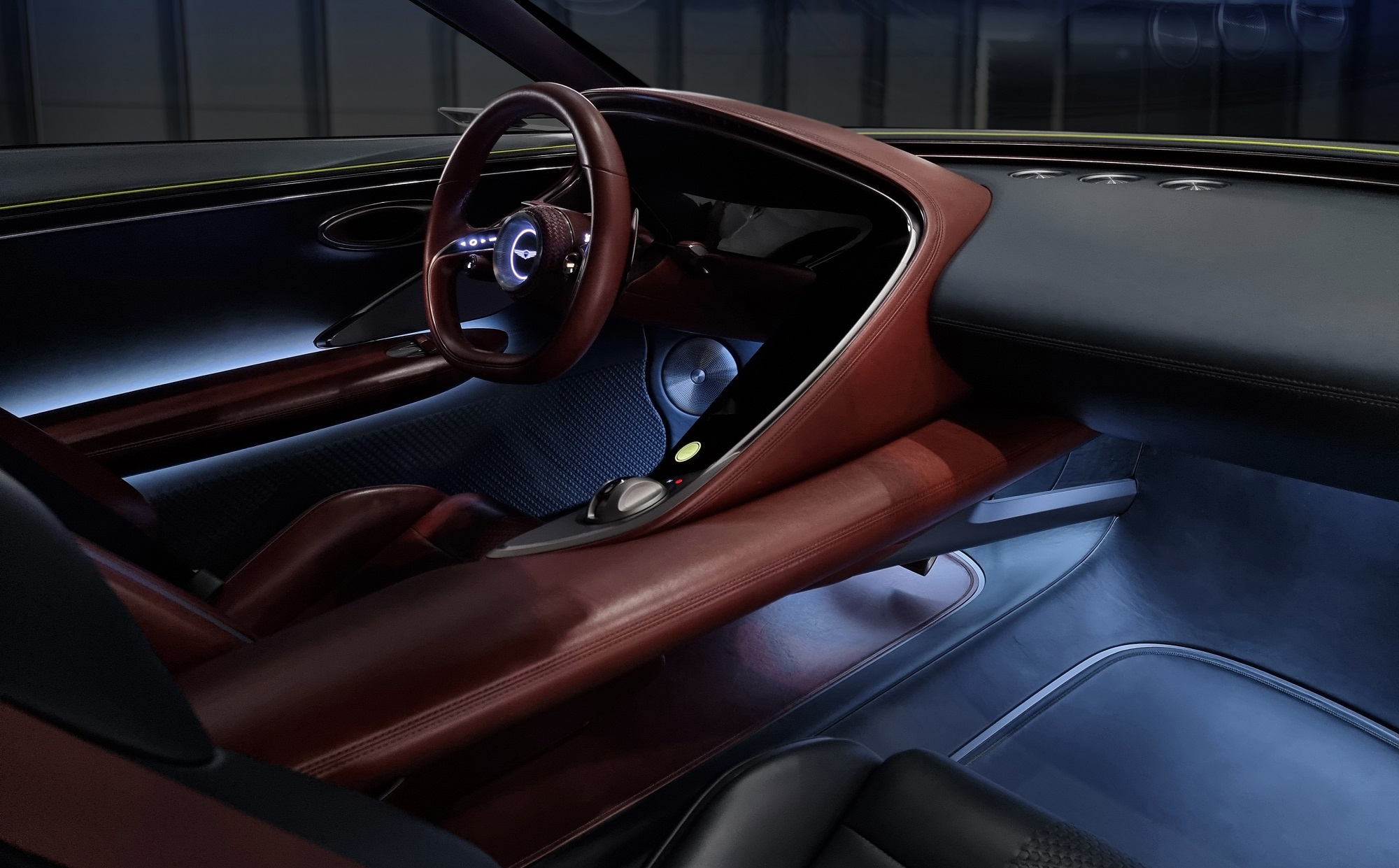
Inside, the four-seat X concept features a driver-focused wraparound cockpit, with a deep tobacco brown tone up front matched to a grey trim in the doors and rear seats.
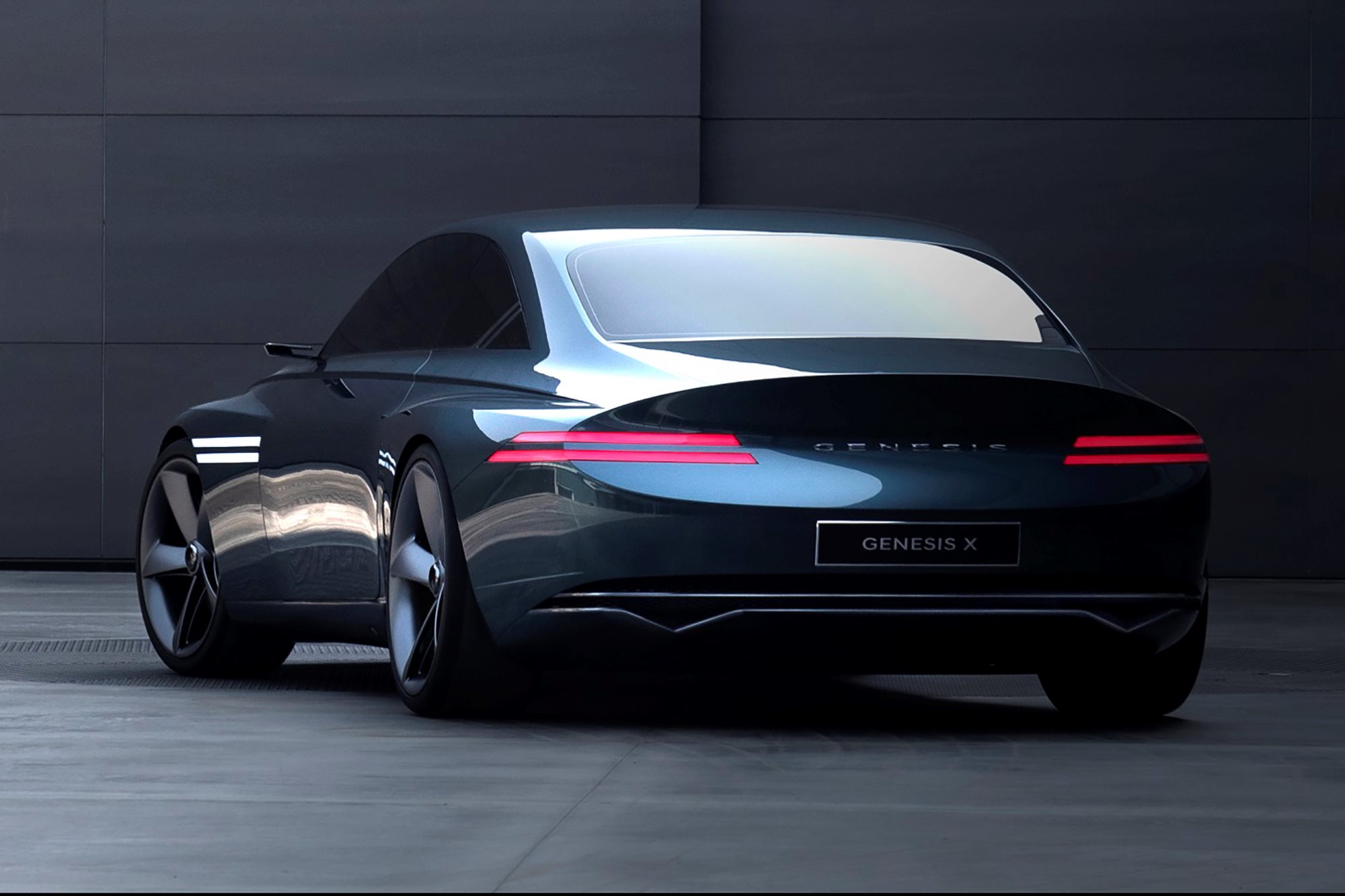
Confoundingly, Hyundai’s luxury spinoff marque describes the concept’s name as follows: “The name ‘Genesis X’ is a combination of Genesis and the letter X, which symbolises a “hidden hero.””
Speaking on its purpose, Genesis’s global design chief SangYup Lee says: “The Genesis X Concept can be described as the ultimate vision of Athletic Elegance, the inherent design language of Genesis.”
“The signature Two Lines theme and sustainable luxury will be blueprints for the futuristic designs and state-of-the-art technologies that Genesis seeks to adopt in its future models.”
Like the Lexus LC that stunned enthusiasts with its faithful evolution from concept to production car, there is little about the Genesis X concept that could not be brought to market.
Officially, however, there remains no word on when Genesis will add a proper two-door GT coupe to its stable – but buyers should look to Genesis chief Manfred Fitzgerald’s 2018 comments for comfort: “We are very committed to the Essentia,” said Raphael. “We love the car. We think the car will do very well.”
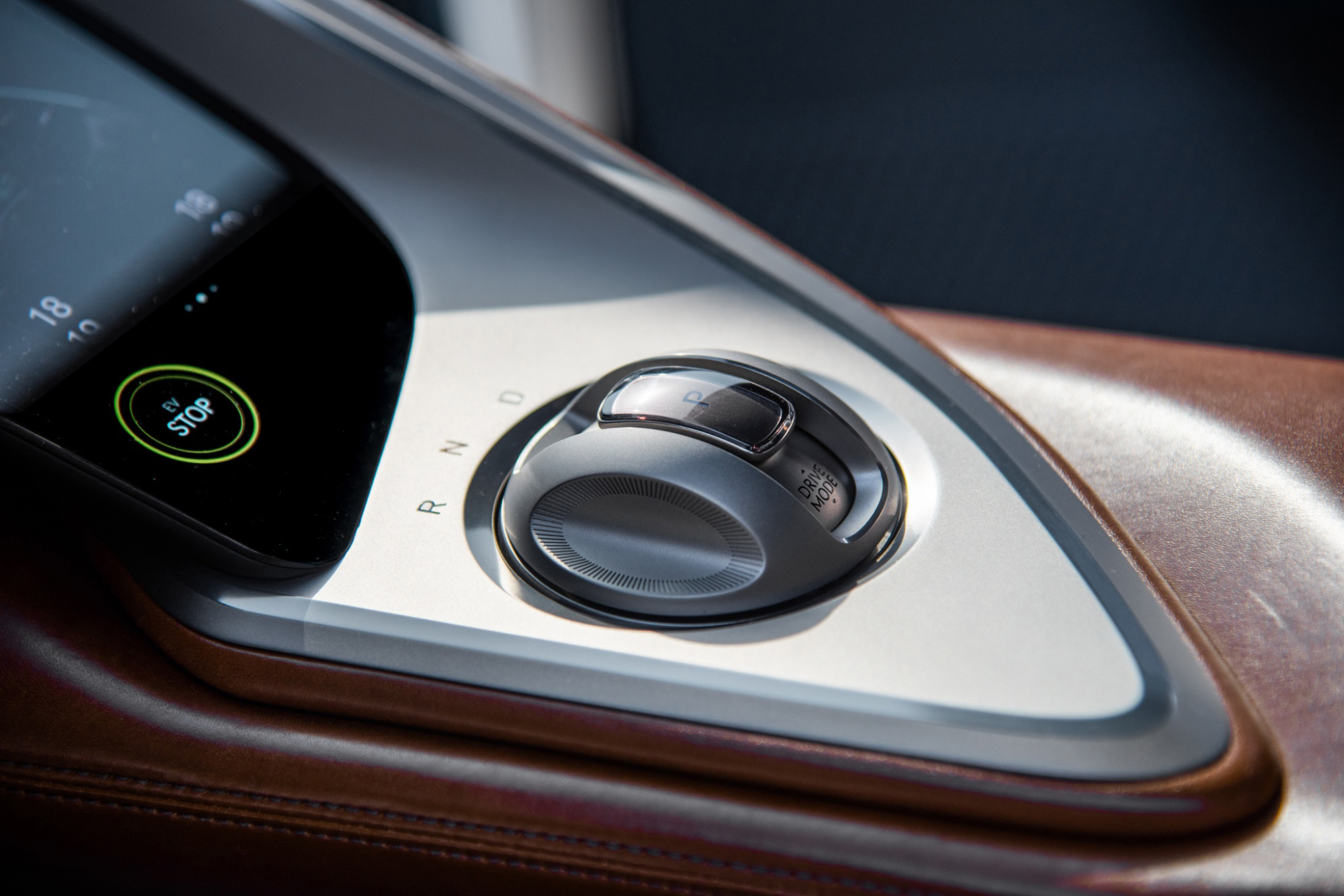
This car, or the Toyota Yaris as an overall model, was very nearly the 2021 Wheels Car of the Year. So, as you can imagine, your reviewer here went into a week of test driving the lower-spec of the two Yaris Hybrid variants (the higher is the ZR) with high expectations.
Those expectations were pumped up by two other factors, one being that the hybrid present at COTY was the top-spec ZR Hybrid. The other is that the Toyota Yaris SX Hybrid wears a comparatively bloated price tag of $29,020, almost the same as the larger Toyota Corolla SX Hybrid ($30,785).
In fact, it’s not even Toyota’s cheapest hybrid – the Corolla Ascent Sport Hybrid is almost $2000 cheaper. And the Yaris Hybrid is certainly more expensive than many of its compact hatch ‘rivals’. Any VW Polo bar the GTI is cheaper than the Yaris SX Hybrid. If that’s arousing suspicion, there’s a little more to the Yaris once you dig a little deeper.
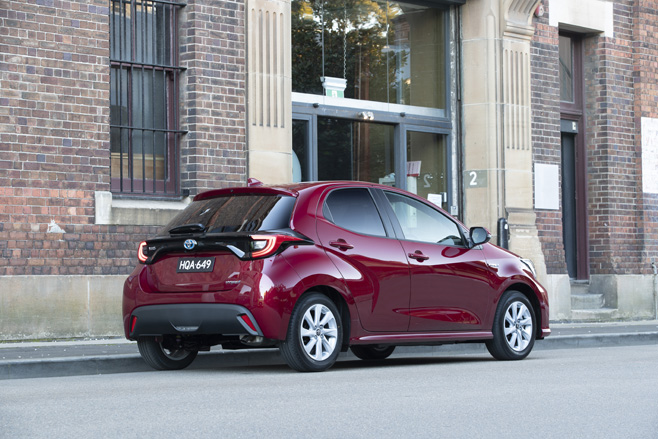
It’s very expensive for the light car segment, especially from a brand known for its value and affordable entry-level variants. But the Toyota Yaris has also taken a big step up since its last generation and Toyota says its value for money remains. Before we get to the driving, let’s consider what you get for your dosh.
Mechanically, the hybrid Yaris drivetrain is the same no matter the variant: a combined 85kW output from a 1.5-litre three-cylinder petrol engine and a lithium-ion battery, driving the front wheels via an electrically integrated e-CVT gearbox. It has three drive modes (Normal, Eco, and Power) and can also be used in full EV mode, though this relies on sufficient charge in the battery and gentle acceleration from the driver.
Visually, there’s not a lot to distinguish the SX from the Ascent Sport inside – the 7.0-inch touchscreen and much of the material (bar the leather on the steering wheel) is the same, though the SX does gain a nicer horizontal version of the 4.2-inch multi-info display on the instrument panel.
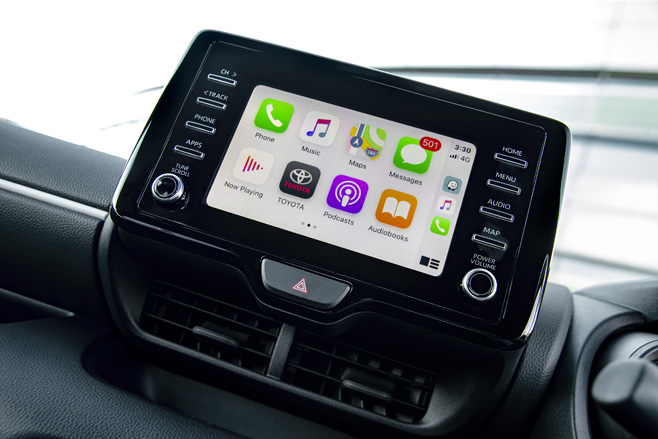
The central touchscreen does gain satnav though, with a speed limit display and warning. The air-conditioning also gets an auto option, while keyless entry adds another layer of convenience, and the ignition button replaces the key-based barrel.
From the outside, it’s a little clearer with 15-inch alloys replacing the steel wheels from the Ascent Sport, plus privacy glass on the rear windows, and LED lights all around.
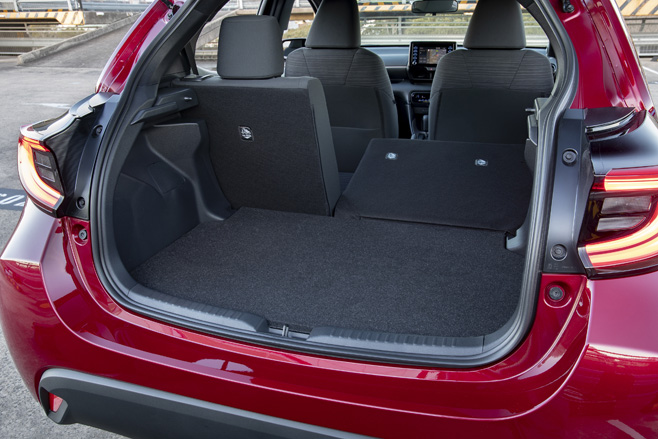
Standard on the Yaris, regardless of spec, are a few neat additions such as Toyota’s Active Cornering Assist, which uses the front brakes to quell understeer, as well as a ‘two-deck’ boot floor that can be adjusted for extra room. Toyota says space in the boot, with rear seats up, is 270 litres. The boot is actually more spacious than the larger Corolla. Win.
The safety suite for the Yaris also remains the same across all variants, with a total of eight airbags: one each for the driver and front passenger, two front-centre, two front-side, and two curtain airbags.
It also has a pre-collision system with pedestrian detection and cyclist detection during daylight hours. Road sign assist, lane and steering assist and auto high beam are also joined by the standards such as ABS and a basic reversing camera. There are also outboard ISOFIX anchors in the rear seats with three upper tethers.
Something that needs to be stressed about the Yaris is just how packed with features it is for what was once a very affordable compact hatch. If you take one of the Yaris’ competitors and option it up to the same level, you can expect to be paying more anyway. But even then, from the driver’s seat of the Yaris, it doesn’t quite look like $30,000.
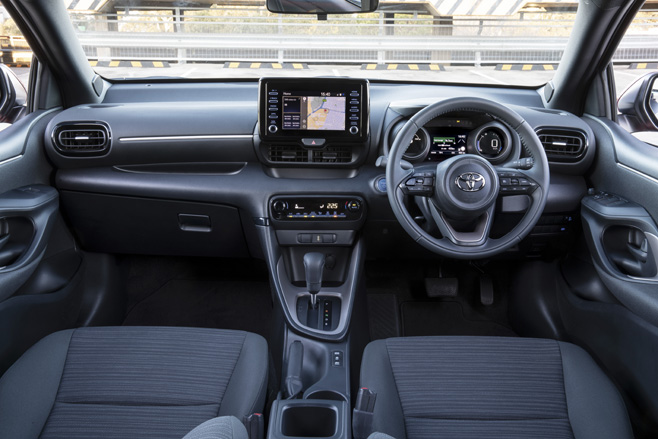
Despite plenty of functionality and tech, the materials in the Yaris and its relatively plain design (bar some elements like the organic-shaped door trim) make it still feel a little ‘cheap’. Still, it’s a spacious and comfortable place to be for the front passengers, with fairly straightforward but supportive seats, and places to put drinks in the centre console or a 1.5-litre bottle in the door storage.
There’s also a USB plug under the climate controls, which lets you use Android Auto or Apple CarPlay to bypass Toyota’s own infotainment system if you wish.
Once you get moving in the Yaris, its price hike starts to make sense. Really. The platform underneath the newest Yaris is a version of Toyota’s TNGA (Toyota New Global Architecture), different versions of which have all brought other Toyota products up to a new standard of driveability and comfort (see Corolla and RAV4). The Yaris is no different. If you’ve ever driven an older-gen Yaris, you’ll know that it’s fine as a commuter, and it gets the job done, but the current Yaris is much more than that.
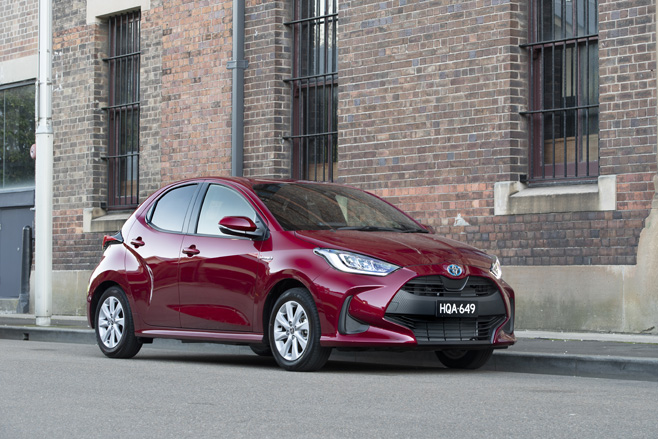
Coupled with a hybrid drivetrain that’s a clear product of many years of refinement from Toyota, the Yaris quickly becomes one of the best all-round compact cars available. Firstly, Toyota’s combined fuel consumption claim of 3.3L/100km seems genuinely achievable… if you were to drive incredibly gently, something the Yaris can do well.
The Yaris’s electric torque and smooth CVT allow for traffic light take-offs that left passengers commenting on how comfortable and smooth the ride felt during our stint with the SX Hybrid. The back seat, however, isn’t a place for adults to spend any extended amount of time. There’s enough room to sit relatively comfortably, but not much space to stretch, and over a longer trip the rear seat would feel cramped for most.
Sans passengers, however, the Yaris can actually prove quite a lively companion on a back-road blast. The TNGA chassis, with steering that’s well-weighted and lively without being unruly, plus suspension that soaks up bumps, holds a cornering line in a manner you’d imagine from a much more driver-focused hatch. It’s clear there’s talent in the TNGA platform, and it comes out in a character that’s both playful but sturdy.
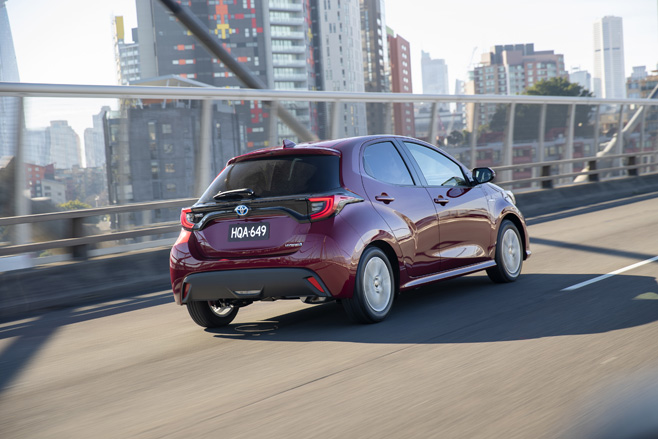
Worried about understeer? The Active Cornering Assist does a fine job of avoiding that, while the combination of instant electric torque and an engine that is most powerful when revving high means that acceleration out of a corner is consistent. Of course, its low power figure means you can’t expect to be rocketing out of a tight bend, but the Yaris does hold speed through curves surprisingly well.
Is the Yaris by any means a hot hatch? No, not unless you find yourself able to buy one with a GR badge on the back, but it is definitely a car that keen drivers can enjoy.
It’s also definitely no longer the budget option for small city cars, though there are other options if you really just need a small car to get around in (the Kia Picanto, for example, is about half the price). But they’re not as packed with tech or as refined as the Yaris and if you want something that ticks those boxes, your other options are European, and then you’ll be the one ticking boxes. On an options list.
8/10
Pros Comfortable, smooth, and fun; loaded with tech; hybrid drivetrain savings Cons Pricey! Interior still not quite ‘Euro-nice’; back seats are tight for adults
Toyota Yaris SX Hybrid specifications
Body: five-door, five seat hatch Drive: front Engine: 1490 inline-3, DOHC, 12v Bore/stroke: 80.5mm x 97.6mm Compression: 14.0:1 Power: 67kW @ 5500rpm Torque: 120Nm @ 3800-4800rpm Electric output: 59kW Total output: 85kW/141Nm Fuel consumption: 3.3L/100km Weight: 1085kg (up to 1130kg) Power/weight: 78kW/tonne Transmission: e-CVT Suspension: MacPherson struts, dampers, springs (f); Torsion beam, dampers, springs (r) L/W/H: 3940mm/1695mm/1505mm Wheelbase: 2550mm Tracks: 1480mm/1475mm Steering: Electrically assisted rack and pinion Brakes: 255mm ventilated discs, single-piston floating calipers (f); 200mm drums Wheels: 15 x 6-inch Tyres: 185/60R15, Dunlop Enasave EC300+ Price (before on-roads and options): $29,020
Just rarely, a car is launched that is so revered that it creates a huge headache for its manufacturer. We examine 10 instances where car makers asked “how the hell do we replace this?”
Ford Falcon XA | 1972-1973
In unaltered form, it’s probably Australian motoring’s most famous photo. Shot over the shoulder of Mel Nichols’ left shoulder, tacho bang on 6700rpm, speedo a crack over 160mp/h, shaker bonnet scoop in the mid-ground, and an arrow-straight Hume Highway running to the horizon. You already know the car depicted; the Ford XY Falcon GT-HO Phase III.
Australian muscle cars don’t get any more iconic – or expensive – and for good reason. Not only was the Phase III a dominant force on the road with its (often under quoted) 224kW 351 Cleveland V8, but it was all-conquering at the track. At the 1971 Bathurst 500, Phase IIIs claimed the first seven spots on the grid, and eight of the top 10. It went on to sweep the podium, and claim six of the first 10 finishers.
The Phase III road car’s gob-smacking performance was directly related to that on-track domination, with Australian touring car racing running to Series Production rules at the time that resulted in hot rod homologation specials dreamt up in Ford and Holden’s back-lot workshops.
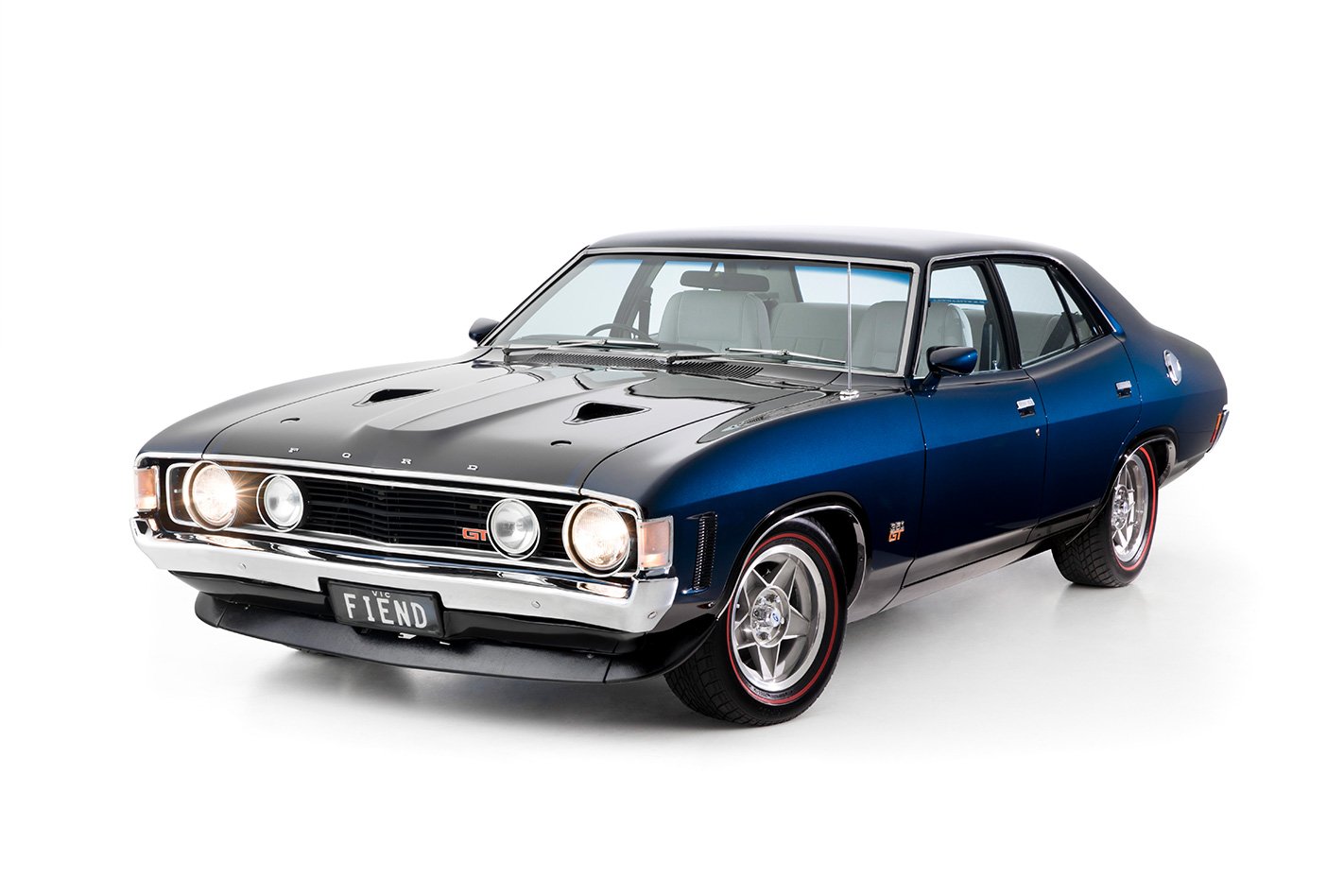
For 1972 Ford were planning to go bigger and better with the new XA, developing a Phase IV follow-up to take on the V8 LJ Torana being cooked up by the Holden Dealer Team. But then the Supercar Scare came along, intense government pressure killed the new homologation special, and touring car racing quickly moved to an Improve Production rulebook.
This left Ford in a predicament. It no longer needed to build a wicked-up XA, and doing so would be politically difficult. But it meant the XA was, well, a bit soft when compared to the Phase III. You could still fit GT variants with a 351 Cleveland bent-eight, but the XA was never going to live up to the XY, with so many factors conspiring against it.
Don’t count the XA out though, as a case can be made that it is arguably a more significant Falcon than the XY, being the first of its kind to be both designed and built in Australia. Yup, after two generations of second-hand US designs, Australia finally had a Falcon to call its own.
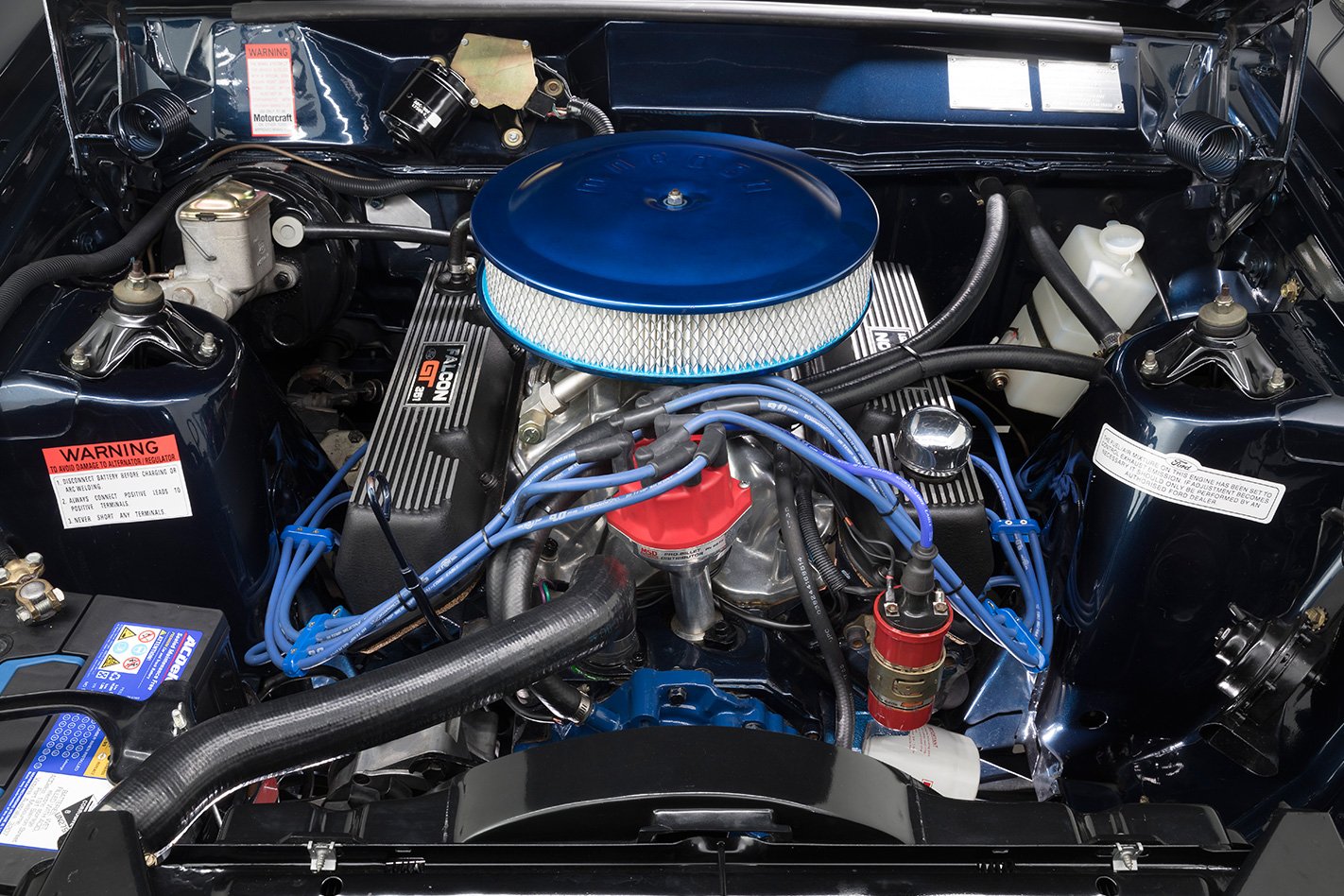
Designed by legendary Ford man Jack Telnack, the XA was produced for 17 months, starting production in March of 1972, before being replaced by September 1973. Engines carried over from the XY, but with the 302 and 315 V8s now also mostly being Aussie made.
Earning it extra kudos with the Ford faithful was the addition of a hardtop coupe, that simply oozed effortless ’70s cool. In order to save costs in development, Ford took the doors from the ute and panel-van variants, stretched the dimensions, and bolted them to the side of the XA coupe. This saved the team from having to design a completely new unit.
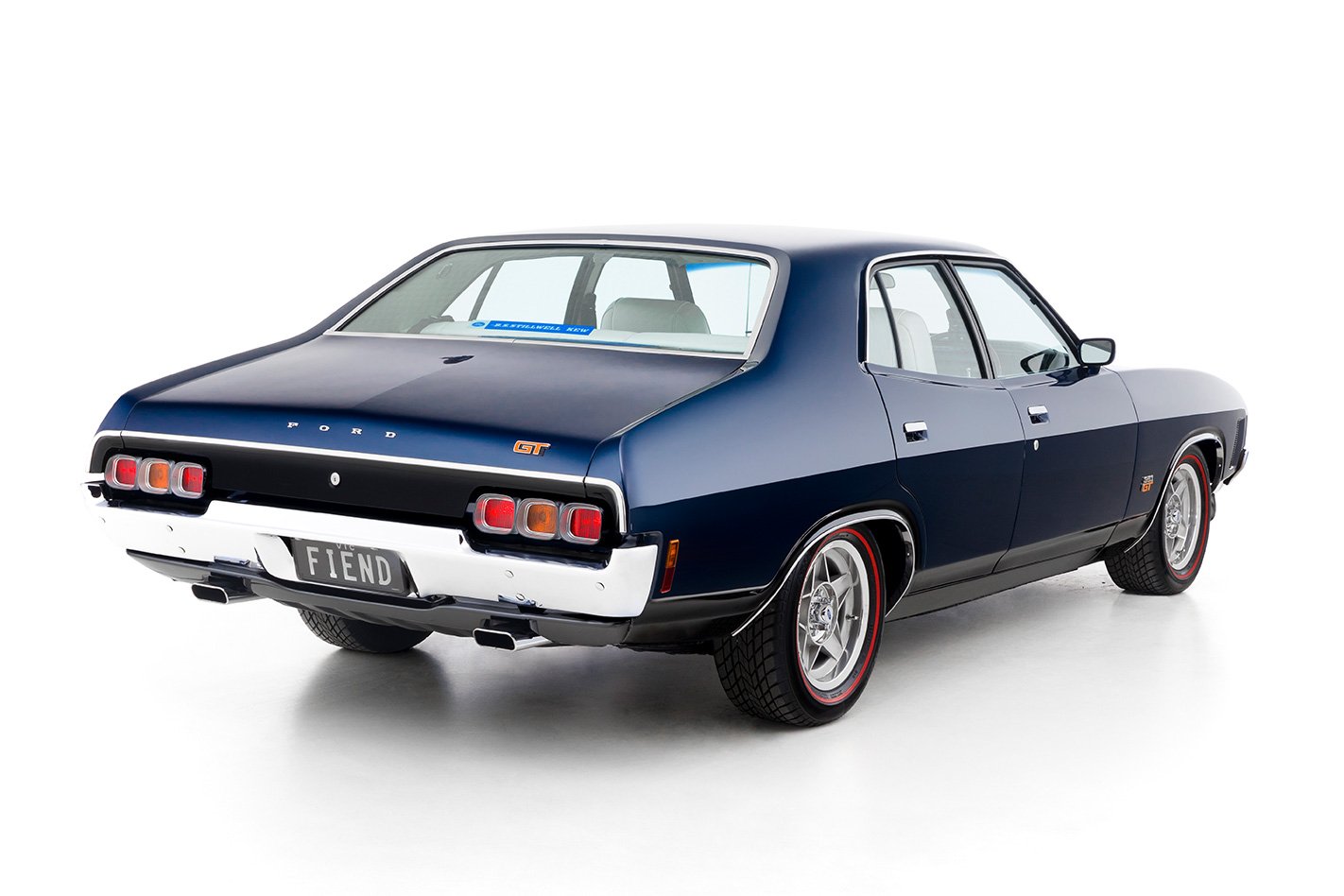
While the Phase IV racer was killed off, the XA enjoyed an impressive motorsport career, winning a pair of Bathurst 1000s in ’73 and ’74 – the first to be run over the longer 1000 kilometre distance instead of 500 miles. Of the three homologation specials that did escape Broadmeadows, one also made its way into competition as Bruce Hodgson’s rally car.
Away from the race track, the XA was also a commercial success, despite a short lifespan, building the foundation for Ford’s market dominance in the coming years. With the cards stacked against it, the XA Falcon has earned its hero status, and limited-run variants like the sleeper-spec RPO 83 are now highly sought after collector’s items.
The icon: 1971
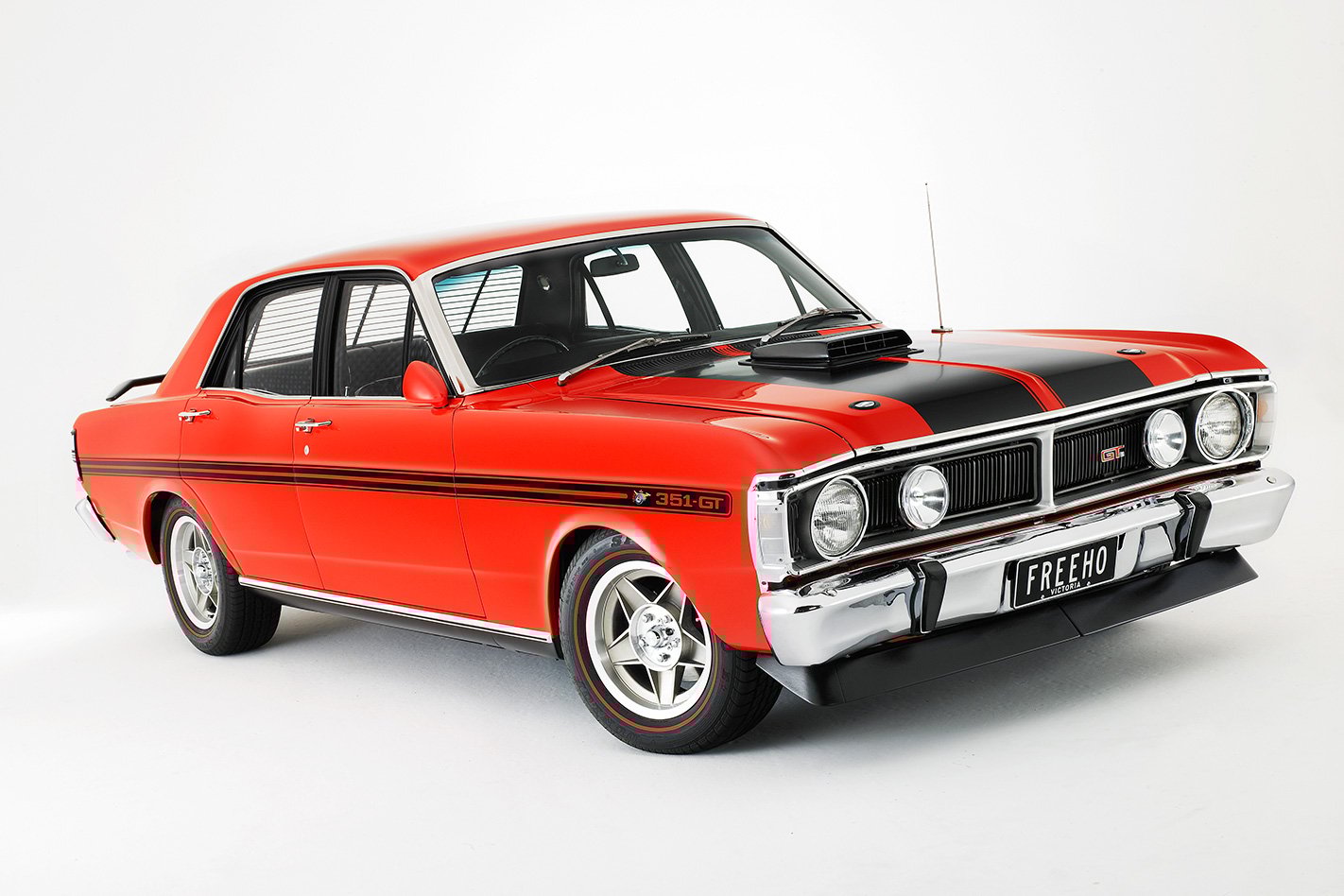
The million dollar Falcon
A pristine Phase III once owned by ex-cricketer Jeff Thomson set auction records in 2018 when it sold for $1,030,000. A Phase IV shattered that later the same year with a $2,150,000 sale price.
Three things that make a GT-HO
1. The Phase II & III engine got a bigger carb and new cams compared to the boggo 351 2. Turning and stopping was helped by a Detroit locker nine-inch diff and uprated brakes 3. A big engine required plenty of fuel to drink, with the Phase III being fitted with a 164L tank
The 2021 Citroen C5 has had glimpses of its angular, avant-garde styling teased in a new 12-second video posted by the manufacturer on social media.
Shot at dusk, the footage shows a sleek-looking crossover body shape with sharp creases, folds and an overall low-slung profile that looks to have moved the game a fair way on from the outgoing C5.
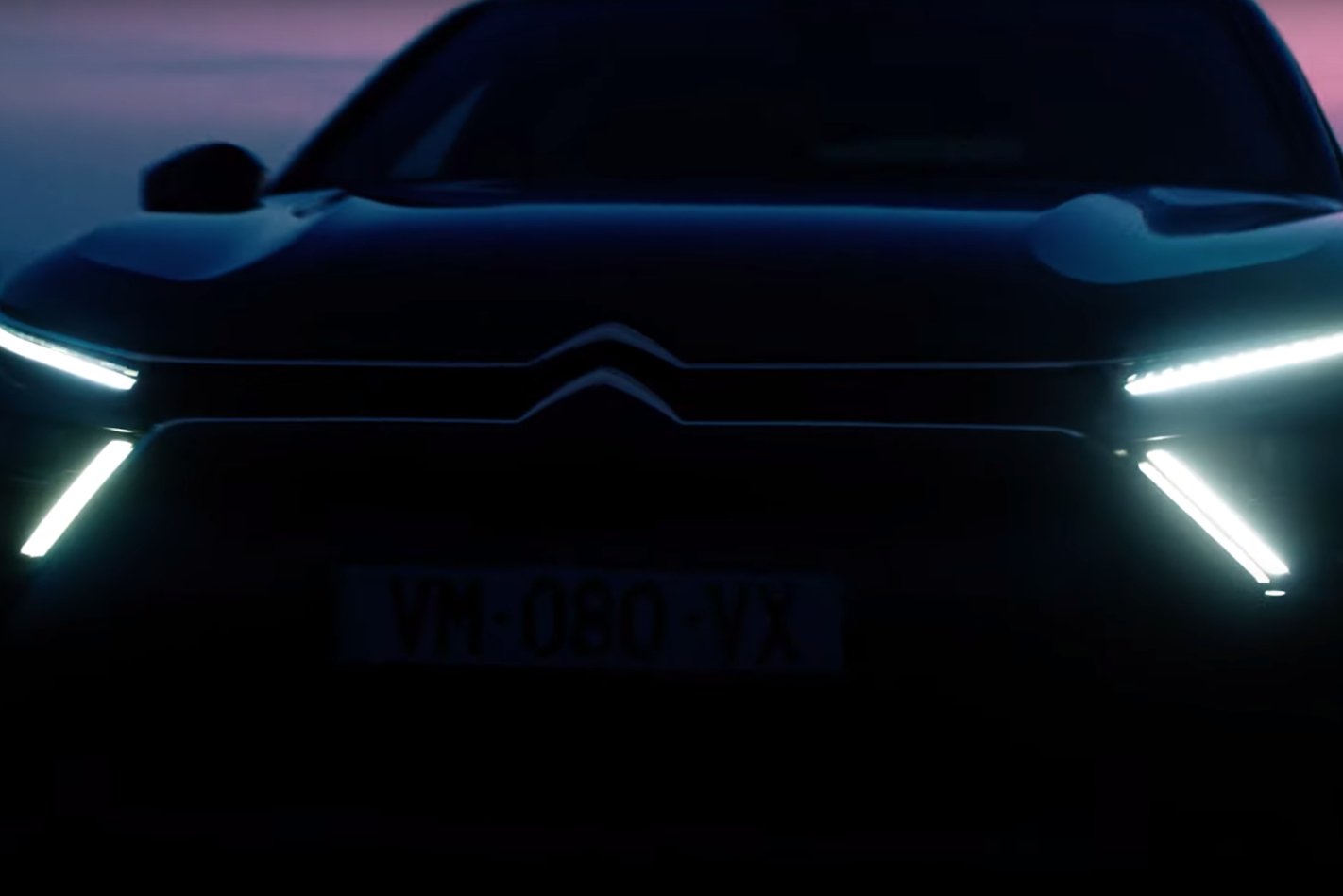
At the front, the new C5 sports large, arrow-shaped daytime running lights, which wrap around either side of a dual-line chrome grille that seamlessly transitions into Citroen’s famed logo.
The bonnet appears muscular and quite heavily contoured, with two prominent lips rising on either side of it, and overall, it doesn’t look too dissimilar to Citroen’s striking CXperience concept of 2016.
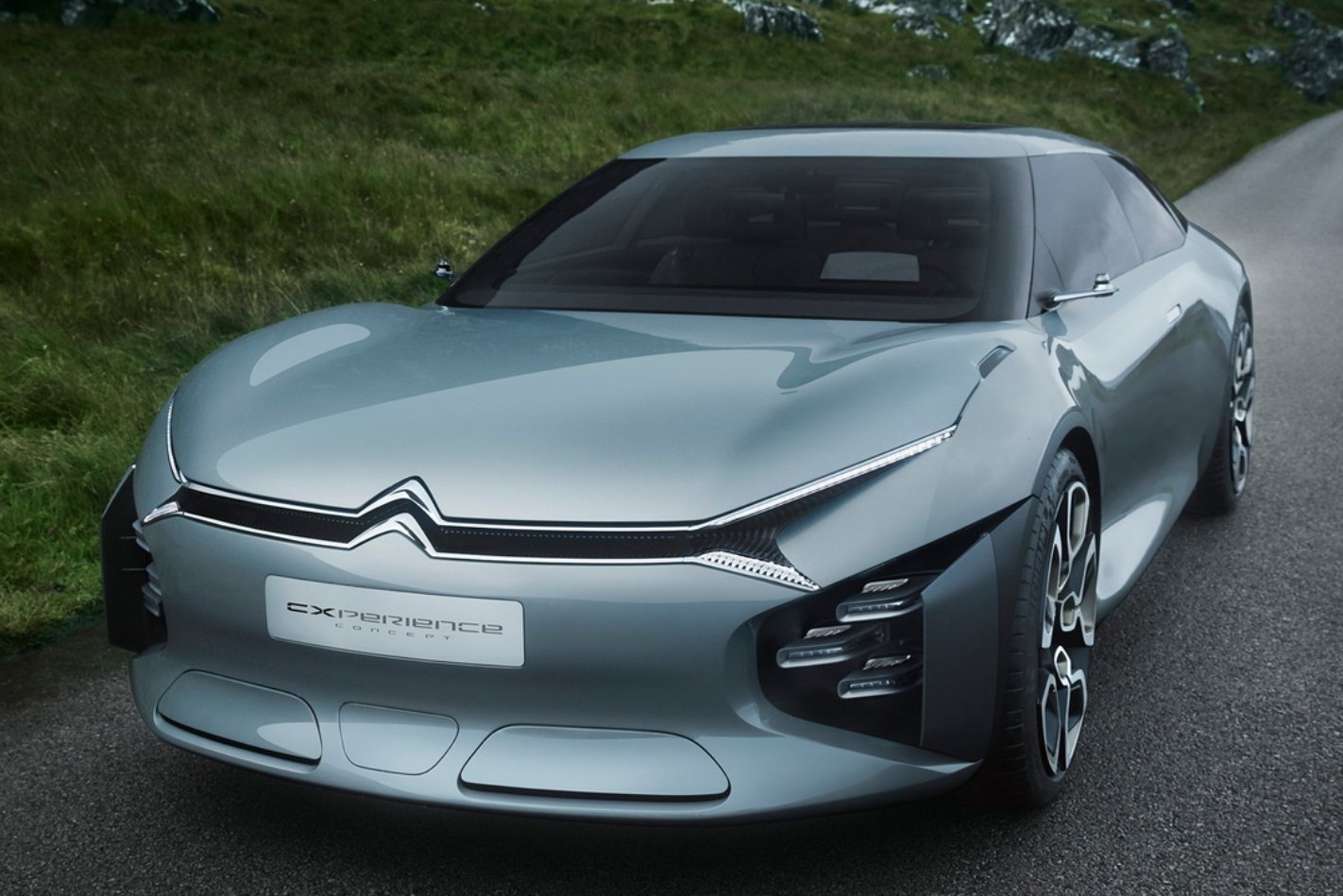
The flanks of the crossover appear similarly aggressive, flexing tough-looking flared wheel arches and slender chrome strips that line the tops of the car’s door sills.
At the back, slender 3D taillights wrap around the top portion of the wheel arches, harmoniously integrating into the car’s tailgate, which also features a prominent lip spoiler.
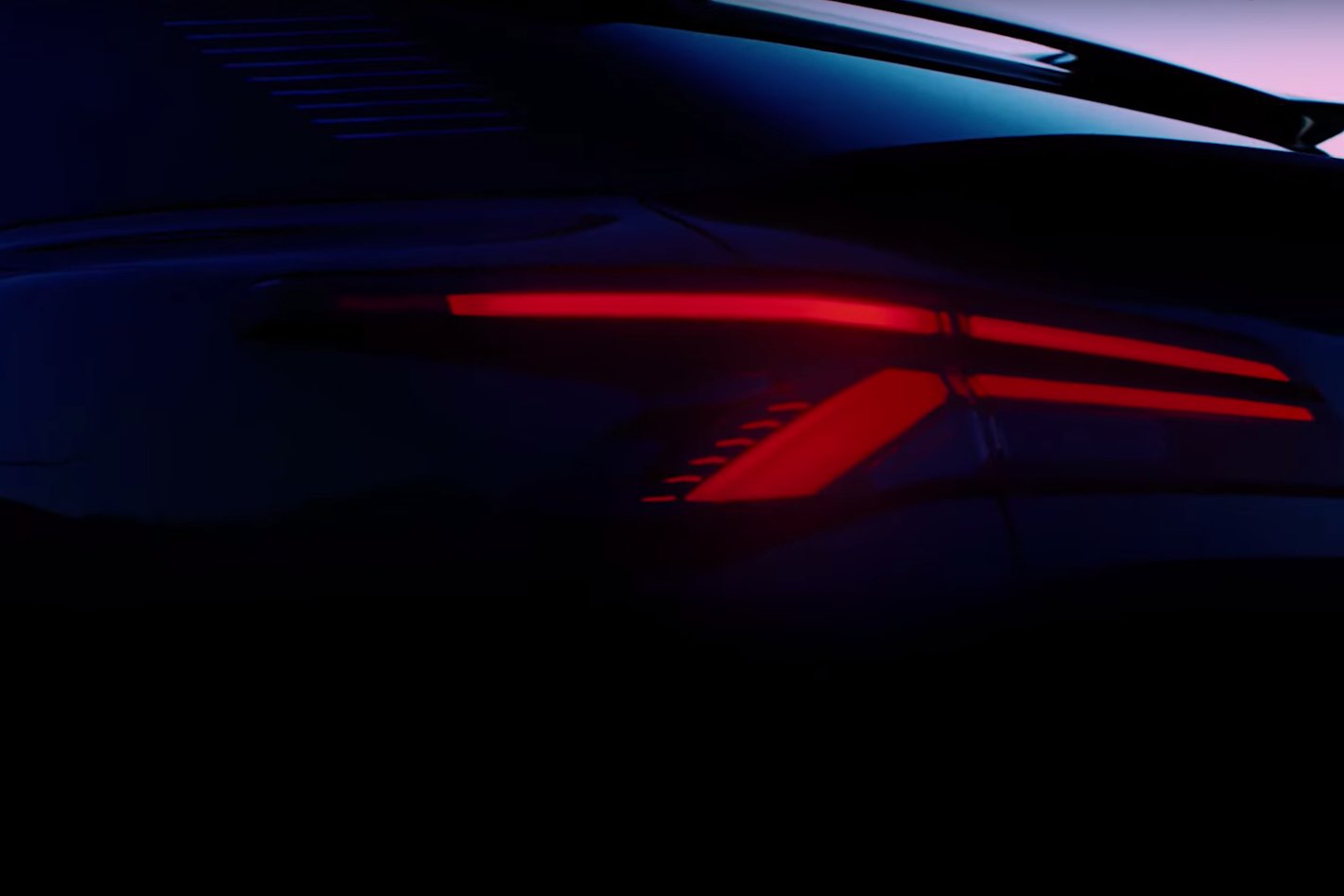
The new 2021 Citroen C5 is rumoured to share the same EMP2 chassis architecture as the Peugeot 508, thanks to both automakers being owned by the recently created Stellantis auto group.
Nothing is yet known about what powertrains will be available when the C5 launches, however, the 508 currently runs both a 1.5-litre and a 2.0-litre turbo-diesel four-cylinder engine and a 1.6-litre turbocharged four-cylinder PureTech petrol engine, which can also be had as a plug-in hybrid.
The new C5 is expected to be unveiled on April 12. What this space as WhichCar brings you all the latest updates.
MORE: C5 stories MORE: All Citroen stories
The 2021 Lamborghini Huracán STO officially has a sticker price for Aussie consumers, and it’s as large as the car is powerful – $569,000.
Based on the Italian automaker’s Huracán Super Trofeo and GT3 race cars, the homologation special is the lightest, most honed version of the mid-engined model ever created.
Tipping the scales at a mere 1339kg, the STO is 43 kilograms lighter than its closest predecessor, the Huracán Performante.
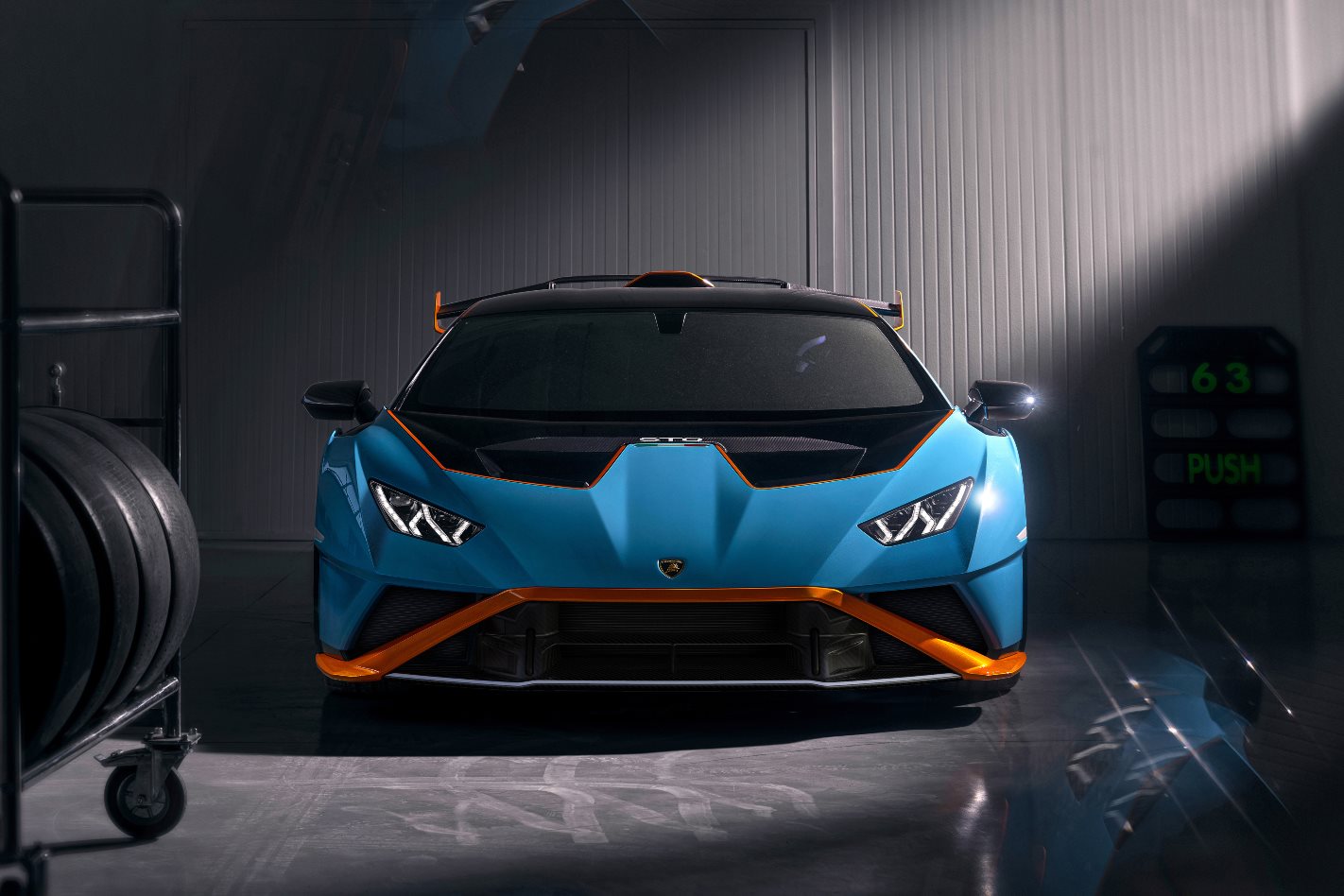
Lamborghini has achieved this significant weight saving, firstly, by ditching the driven front axles, which will always save weight.
But the road-going race car has also been adorned with several bespoke exterior and interior components, such as titanium rear-wheel arches, magnesium wheels, carbon-fibre-reinforced plastic body panels, and a single-piece carbon fibre clamshell bonnet.
There’s also a completely bespoke rear bumper that looks uncannily similar to the one found on the GT3 car, with massive gaps on either side exposing huge Bridgestone Potenza Sport 305/30 R20 rear tyres that have been specially homologated for the STO.
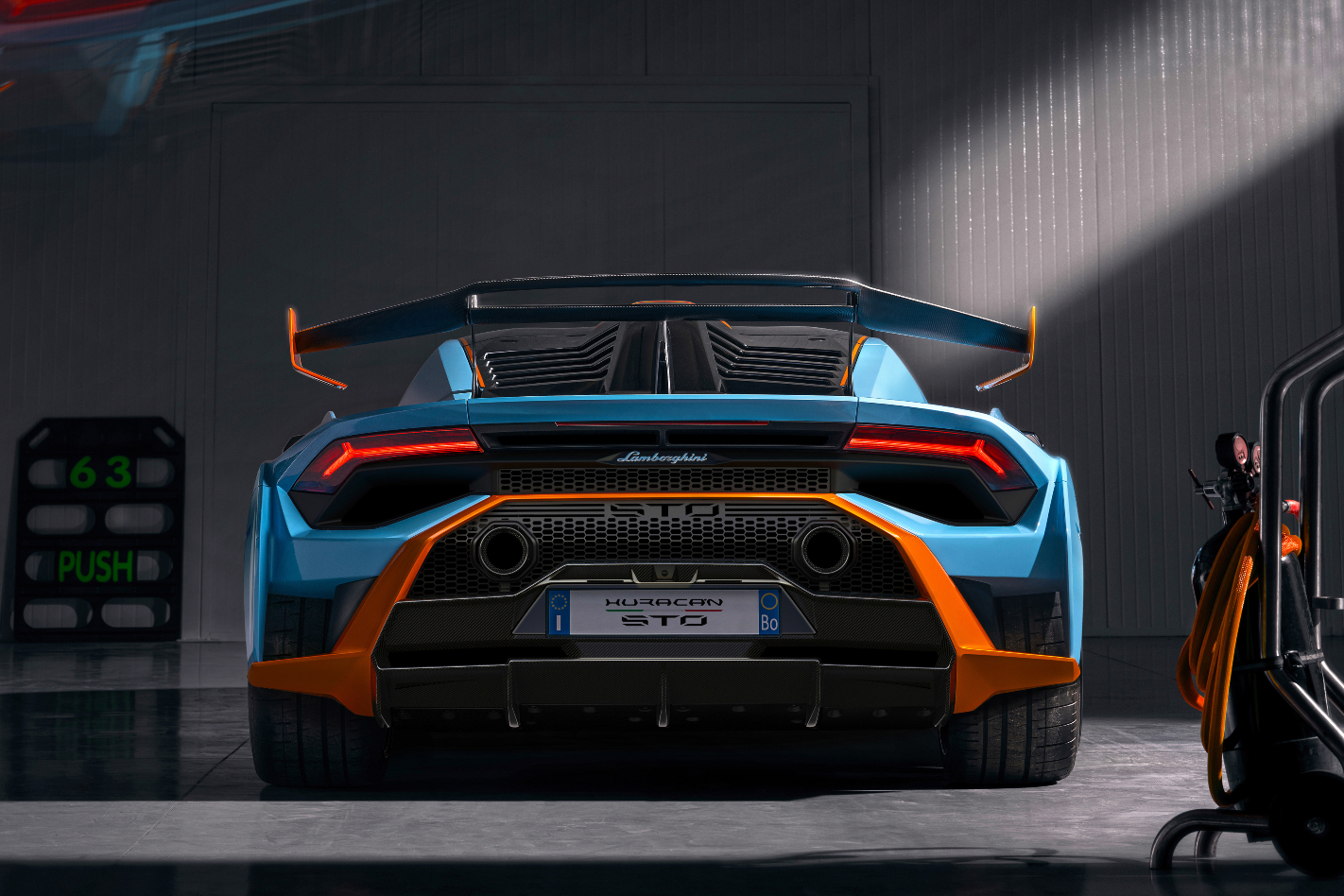
The giant holes in the bumper are there for the same reason as the new, equally large carbon fibre swan neck rear spoiler and rear-mounted shark fin – downforce. The STO has a lot of downforce.
To be more precise, when the supercar is travelling 280km/h, Lamborghini claims there’s a whopping 450kg of extra weight running over the car.
It’s this amount of downforce that has slightly stifled the STO’s top speed, which is now rated at 310km/h, 10 clicks less than the standard Huracán RWD’s Vmax.
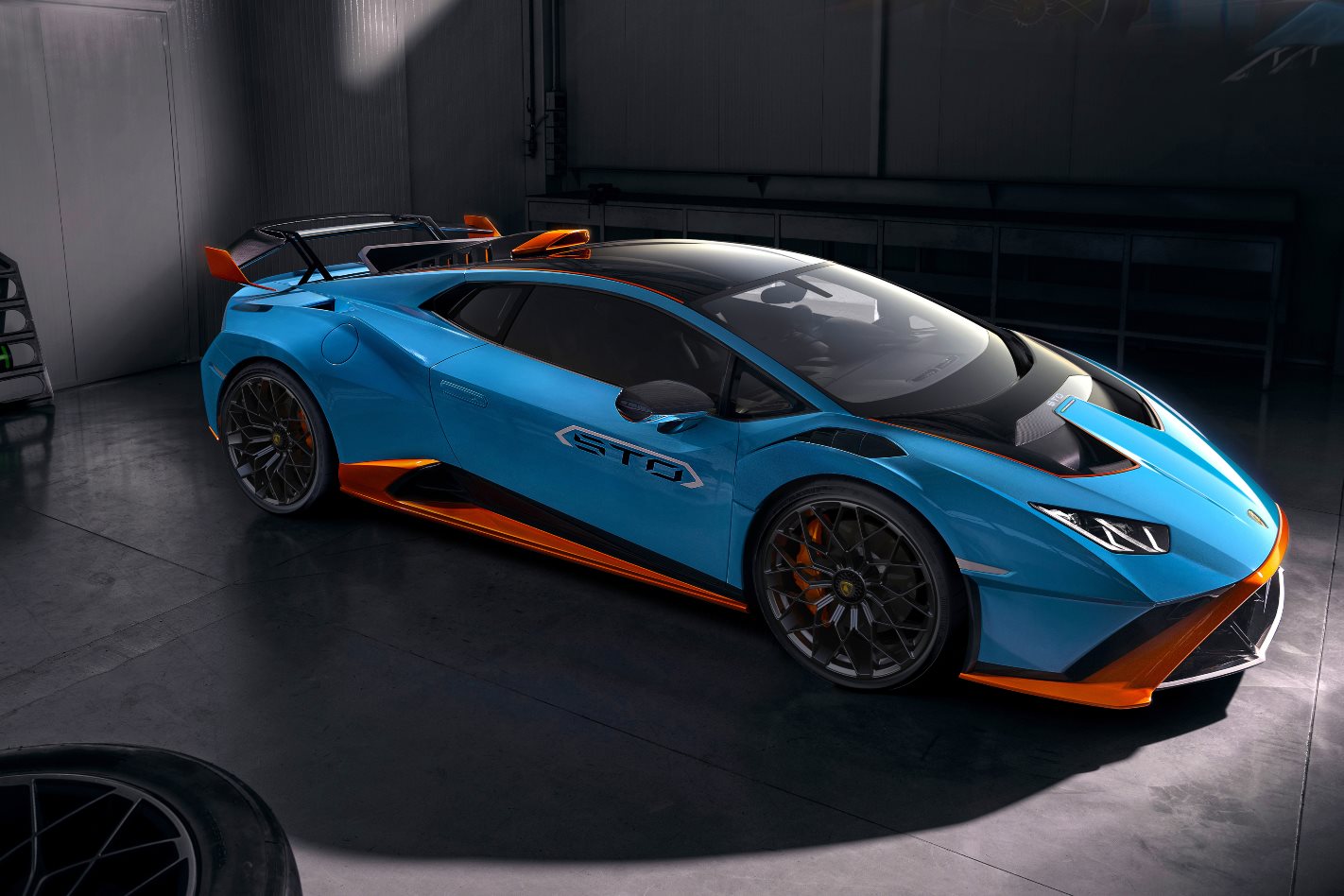
But, while the top speed may be slightly down, the race-ready supercar’s 0-100km/h time certainly isn’t, completing the sprint in 3.0 seconds.
The wick has also been turned up on the naturally aspirated 5.2-litre V10, which produces a heady 470kW and 565Nm.
This thunderous oomph is sent to the rear wheels via a seven-speed dual-clutch transmission that interacts through column-mounted carbon fibre paddle shifters.
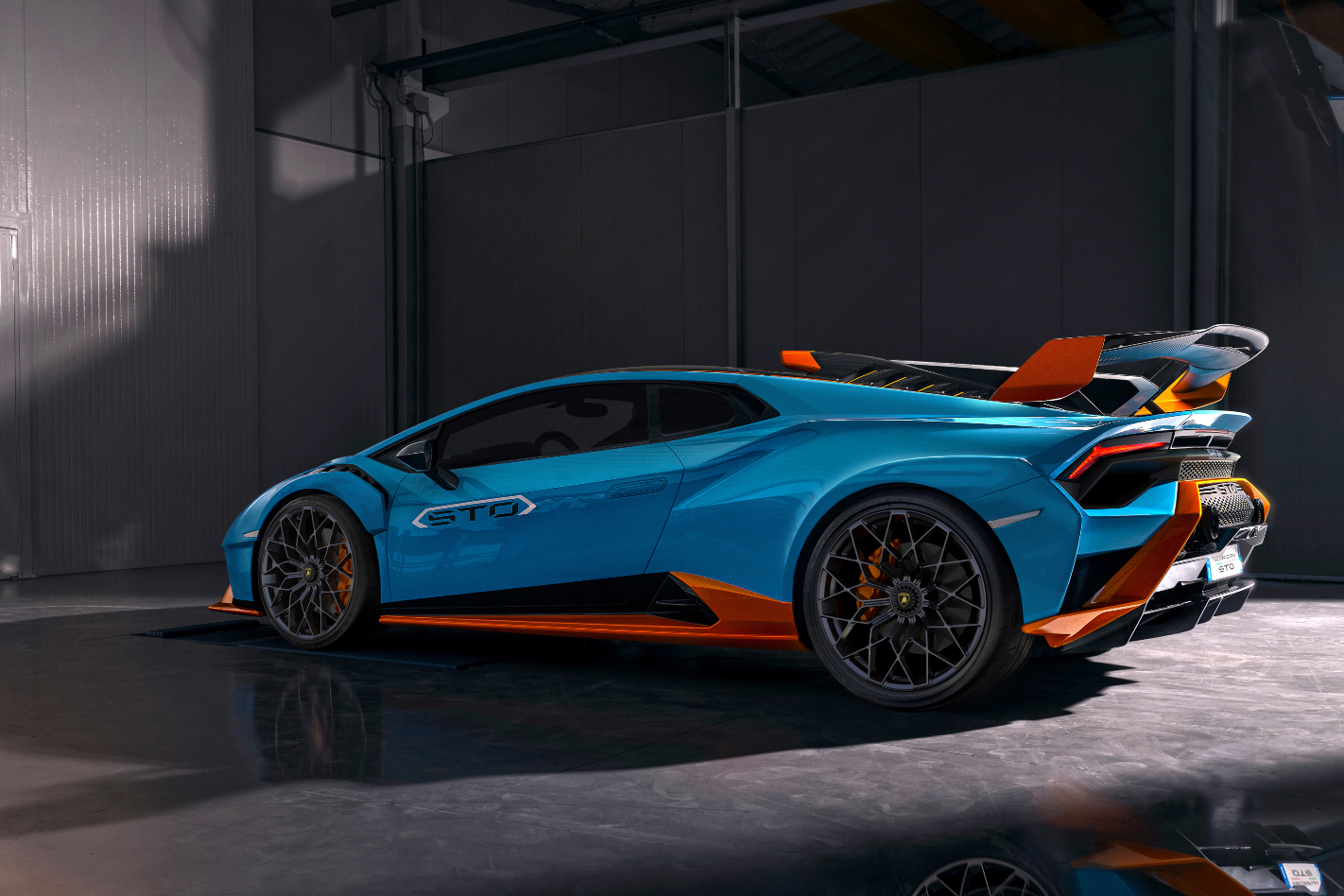
Inside, there are no carpets on the floor, just bare carbon fibre, which is also the case for the single-piece door cards.
Sound deadening has also been removed from the car, which will surely make for one of the more theatrical cabin experiences, especially when combined with the carbon ram-air scoop that sits on top of the roof, feeding oxygen to the fire-breathing V10.
The Sant’Agata supercar is on sale now in Australia, and like all Lamborghinis, the STO will come with a three-year/unlimited-kilometre warranty.
MORE: Huracan stories MORE: All Lamborghini stories
The 2022 Toyota GR 86 has been imagined as a convertible in renders from photoshop guru Theo Throttle on Instagram and, boy, do we wish it was real.
We count ourselves lucky the Toyota 86 and Subaru BRZ exist – but, with the performance car world being what it is, fans continue to demand more variety from the 86 and its great accessible rear-drive formula.
Toyota was the original architect behind such hype after it built and showcased a convertible concept version of the first-generation coupe back in 2013. It looked good.
The white beauty called the FT-86 Open was shown at the Geneva Motor Show, prompting speculation that Toyota would follow up the successful coupe with a road-ready convertible version – and possibly a turbocharged variant.
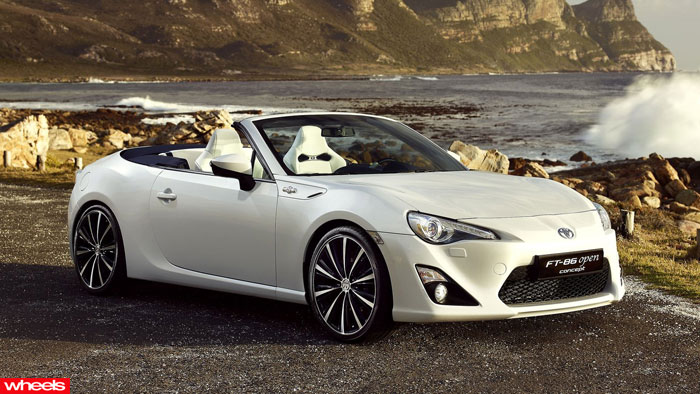
Above: The FT-86 Open
Of course, neither of those things transpired, so we don’t hold much hope for the new 86 or BRZ gearing up to take on the Mazda MX-5 for top-down sportscar glory.
However, in the slight chance someone within the product planning department makes a case for it, these renders (shared with permission) reveal how the new car could look.
There’s something to be said about the new 86 generation and its wide-body proportions that would fit so well under a cut-away roofline. That said, the folding roof mechanism would eat into boot space at the cost of retaining a four-seat arrangement.
And, if anyone remembers the Honda S2000, there’s something to be said for the new 2.4-litre engine pumping out 173kW and 250Nm to the rear wheels in something like this with a six-speed manual – that’s only 3kW shy of the great Honda roadster but with 42Nm more grunt.
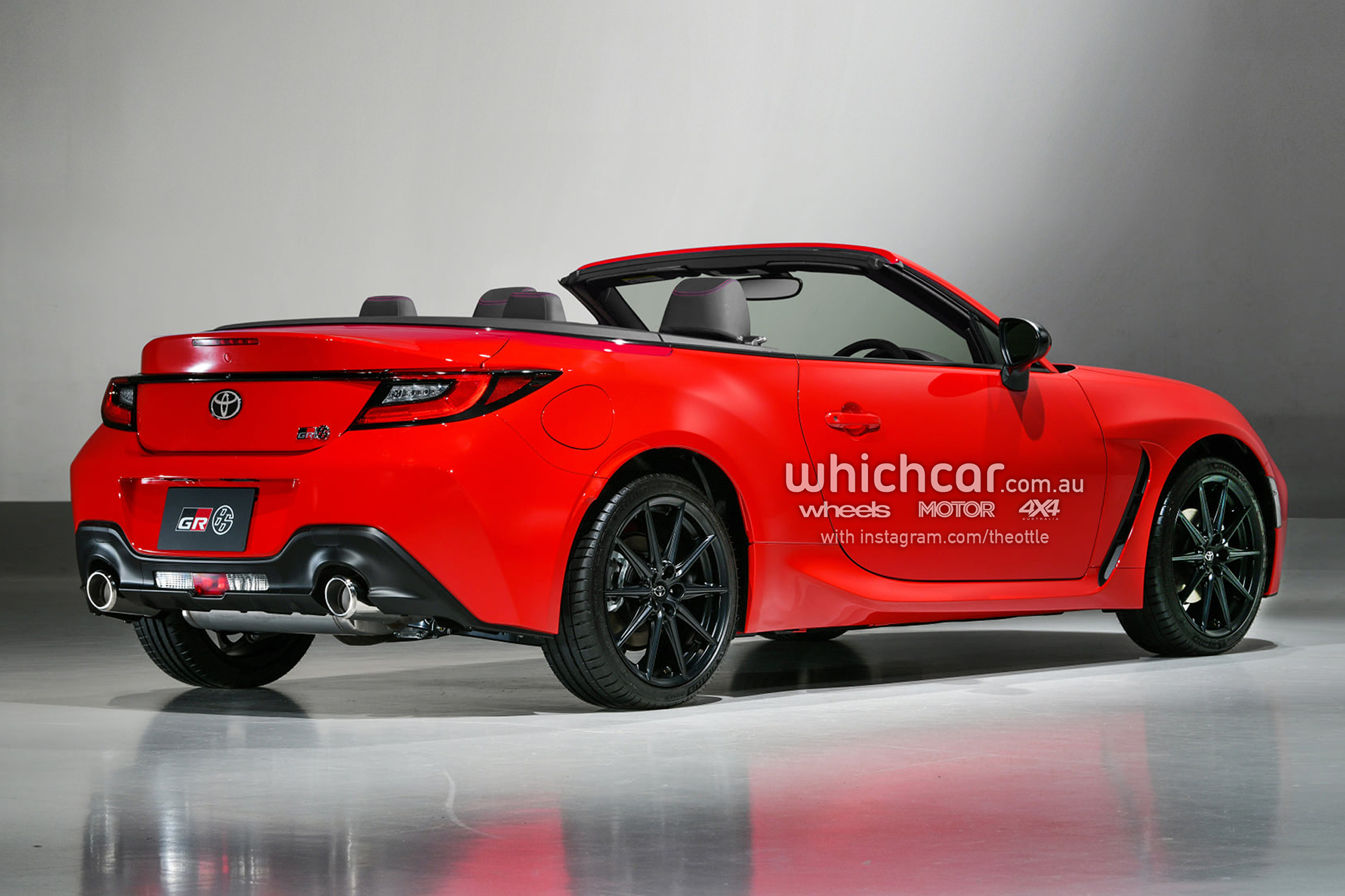
Of course, these sleek looks will penalise handling, given a roof is crucial to torsional rigidity.
However, if a convertible threatened to ruin the chances of the original 86 establishing itself as a world-class handler, the new-generation coupe has stiffened rigidity by 50 per cent, which would ensure a new convertible handles much sharper.
And how much would one cost? We speculate a convertible would increase the price because of its lower sales volumes and higher engineering requirements. But looking forward to a new 86 body style would be priceless.
MORE: Why the new Subaru BRZ’s existence is under threat MORE: 86 news and reviews
One of the unsung success stories of the last decade has been the Subaru XV.
Chunky, pretty and accessible, it regularly hits the top five on the small SUV charts, is the brand’s number two performer after Forester and accounts for about one-quarter of all Subaru sales.
That the Japanese marque has managed to make tens of thousands of Aussies believe the XV isn’t just an Impreza in stilettos is a feat in itself, because before the G4X ‘original’ that started it all in early 2012, the name debuted on a G3 Impreza grade two years earlier. And that sprang from the garish G2 Impreza RV variant sold in Oz from 2001 to 2007. Glossy bumpers and shiny alloys, anybody?
Which raises an intriguing question: given the XV’s enduring popularity, why aren’t our roads clogged with jumped-up, plastic-clad and bigger-bumpered Mazda3, Toyota Corolla and Hyundai i30 crossover hatchbacks?
Oh, hang on, someone has. It’s the wallflower from the Fatherland… please step on up, Ford Focus Active.
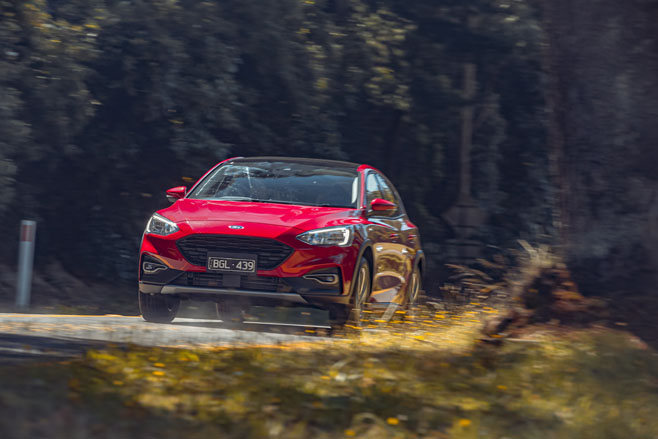
Launched in mid 2019 – some two years after the G5X XV landed – the SA-series Active is nowadays an entry-level model in the fourth generation of Ford’s European small car range, alongside the ever-slightly cheaper (and Wheels comparison winner – see March, 2019 issue) ST-Line.
To recap, virtually nothing carries over from the previous Focus iterations, with an all-new C2 architecture that’s far stronger yet lighter and a striking body styled by a young Melburnian. Fun fact, that.
Being crossover-focused, the Focus crossover follows the now well-worn SUV trope of extra ground clearance (though just 30mm up front and 34mm out back), restyled bumpers, lined wheelarch lipstick, an off-road specific suspension tune, extra driving modes (that in Active alter transmission and traction software), distinct alloys brandishing beefier tyres, unique interior trim and roof rails. Time to escape the city.
All the crossover clichés, in other words, with most dreamt up decades ago by who? Subaru, that’s who.
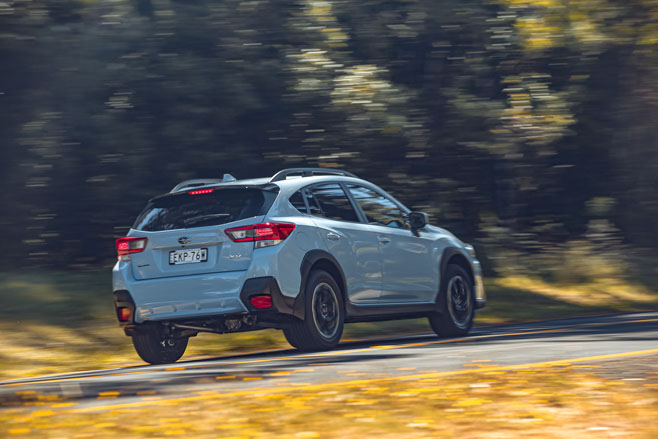
The XV you see here is the super-subtle Series II facelift launched in mid 2020, ushering in small alterations to the grille, bumpers, fog lights and wheels, as well as bigger changes to the suspension, including upgraded springs and dampers. Keep that in mind.
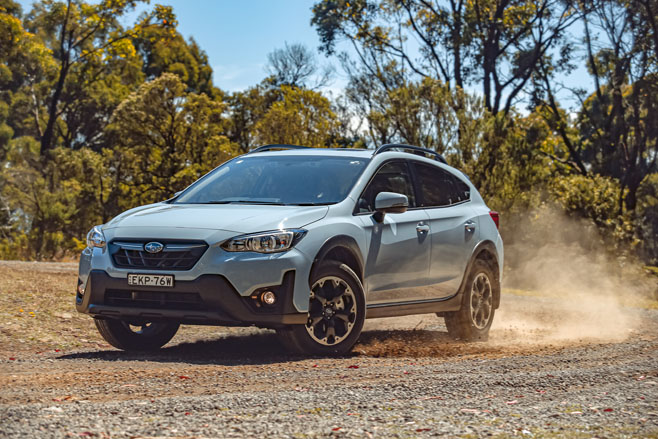
Besides the entire Focus range finding fewer than 1900 buyers last year against the XV’s 8000, two sizeable differences between the pair are that the Subaru offers a whopping 90mm of extra gap between road and underbelly – 220mm versus the Focus’ half-baked 163mm – and is all-wheel drive; the Ford is front-drive only.
These, along with a starting price of $29,690 compared to the Active’s $30,990 means the XV snatches a strong early lead in the eyes of lifestyle-loving shoppers.
Subaru’s base 2.0i is no barren wasteland either, with seven airbags, keyless entry/start, reverse camera, rear parking sensors, climate-control air-con, Bluetooth audio streaming and telephony, digital radio, Apple CarPlay/Android Auto connectivity, powered folding mirrors, paddle shifters and handsome 17-inch alloys.
But not all XVs are created equal. One omission is Autonomous Emergency Braking (AEB), since it is unavailable on the cheapest grade – unlike in Focus – and that’s not on in 2021. If tested today by crash-test specialists ANCAP, it would lose a star rating. Strewth!
The $31,990 2.0i-L remedies this with the branded ‘EyeSight Driver Assist Tech’ so should be your XV jumping-on point. It also ushers in safety like adaptive cruise control, lane departure warning, lane keep assist, pre-collision braking, post-collision braking and lead-vehicle start alert (you should keep your eyes on the road at all times, people!), as well as a leather wheel, 1.5-inch larger centre touchscreen, an extra USB port, dual-zone climate control and classier trim. $2300 well spent.
The Focus, meanwhile, mostly matches the XV 2.0i-L’s kit (minus AWD, a driver’s knee airbag, adaptive cruise and lead-vehicle start alert), bolsters its AEB with pedestrian and cyclist detection, and then goes further with wireless charging, WiFi hotspot, satellite navigation, dusk-sensing and cornering headlights, rain-sensing wipers, front parking sensors, traffic-sign recognition tech, remote-power window opening/closing, Ford’s MyKey multi-driver settings memory and 180-degree rear-camera view, among other gizmos.
Note, however, that the Active’s $1250 Driver Assistance Pack (as fitted to our Focus) is necessary and recommended to equal the 2.0i-L’s adaptive cruise and auto high beams, but also introduces blind-spot monitor and rear-cross-traffic alert that is only offered from the $34,590 XV 2.0i Premium up (as tested here), while also throwing in a sunroof, front-view camera, heated mirrors and reverse automatic braking.
Including the Active’s Driver Assistance and $2000 Panorama Roof packs (comprising a massive opening glass panel but deleting the roof rails), only $350 separates our $34,240 Focus and $34,590 XV Premium… or just $31 when driveaway pricing is factored in ($38,637 versus $38,668 respectively).
On paper, comparisons don’t come much closer than this… or diverge from each other as profoundly in reality, and this juxtaposition between the Ford and Subaru absolutely defines them; two more different personalities between cars aimed at similar demographics would be difficult to find.
Take their similar sizing but varying stance. Because it stands so much taller than the Focus, the XV feels substantially larger – like an SUV that’s been unapologetically beaten down into a hatch. Opening the wide-aperture doors and swinging yourself onto hip-high seating further supports such notions. Spacious, airy and glassy, the Subaru seems super roomy.
Despite its ambitious ‘Premium’ suffix, nobody will mistake the sheeny plastics, chunky dash and messy data-overload info display perched on top of the centre console like some sort of afterthought as such, but the exquisite build quality and beautifully crafted trim would make most luxury brands proud, with our XV never emitting a single zizz or rattle on test. Even over rough stuff.
Throw in a lofty driving position aided by excellent all-round vision, copious ventilation (front and rear), wide yet soft seating and storage to embarrass Kennards, and it is immediately clear why these Subarus have struck a chord with consumers. If you need the space and ambience of an SUV but without the bulk, step right up, folks.
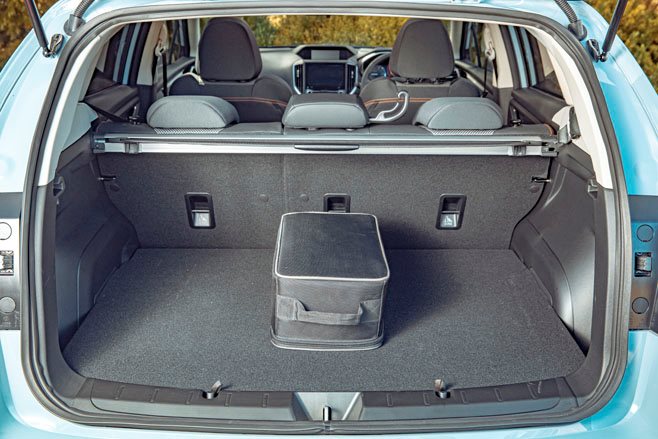
In contrast, the Focus feels like My First Crossover, a cautious attempt to cash in on a craze that frankly demands more commitment and courage than Ford has been prepared to give.
First impressions aren’t strong. The Active’s interior seems small and tight compared to the expansive XV’s from the moment you find yourself stooping to clear the roof, and once inside, the mish-mash of shapes and plastics speak of earlier, drearier interior themes. Barely rising above the smaller Fiesta’s for ambience or quality, the missing rear air vents, centre armrest, back-row cupholders and front passenger seat height adjuster (in a German-made Ford!) smack of penny-pinching.
Don’t be deceived though. Yes, the XV feels palpably larger inside, but the longer-wheelbase and wider-tracked Focus also offers space to stretch out up front and more than sufficient rear legroom, so is far from cramped. Comfy and cosseting outboard seating keep their occupants securely located even through tight fast corners while the driving position is first class.
A thumbs-up, too, for the superbly weighted controls, backed up by ample ventilation (that reaches out back), way-more intuitive SYNC3 voice-actuated multimedia interface, thoughtfully located phone charger and USB ports and sufficient nooks and crannies for odds and ends. Even the door bins are flocked. Our only real bugbear was a constant rattle coming from the sunroof trim. Untick that option, please!
It’s worth pointing out that while the Focus boasts marginally greater cargo capacity – 341 litres versus the XV’s 310L – in practice, the Ford’s boot is usefully deeper and downright cavernous once the rear backrests are folded. Parents with small children take heed.
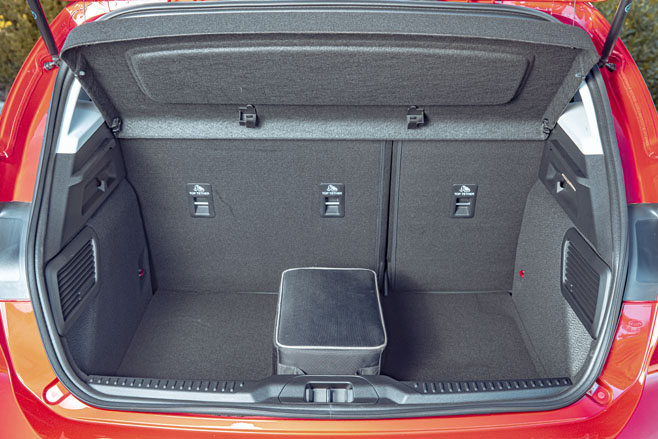
And, actually, the numbers also work in the Active’s favour at the other end of the car too, especially when it comes to speed.
In the Blue Oval’s corner, a 1.5-litre twin-cam 12-valve three-cylinder turbo drives the front wheels via a conventional eight-speed torque-converter automatic, while in the, err, boxer’s corner is Subaru’s 25 percent-bigger 2.0-litre 16-valve naturally-aspirated horizontally-opposed four-cylinder engine, powering all four wheels via a continuously variable transmission (CVT). Will size reign supreme?
No. Weighing in at a lithe 1348kg, the Ford’s three-pot turbo is right at the 100kW per tonne threshold, thanks to remarkable 134kW and 240Nm outputs, against the 1474kg XV’s 115kW and 196Nm, managing a more mundane 78kW/tonne. You can see where this is going.
Right from the get-go, the Focus is the stronger, fiercer performer. Remarkably, with barely a whiff of turbo lag, this lusty little powerhouse storms off the line and punches up through its eight ratios with terrific zeal and zest, barely taking a breath as it bolts past the 100km/h marker, seemingly sooner than its 9.1 seconds suggests. Not as rapid as our ST-Line’s 8.2s back in 2019 – we’re blaming forceful crosswinds – but nearly two seconds ahead of than the XV… Which. Simply. Won’t. Be. Rushed.
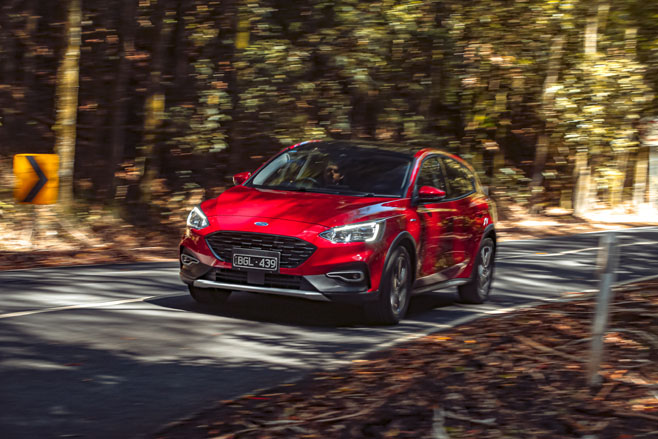
There’s a determination in the way the Active lunges forward that’s a little intoxicating, and by the time the speedo is showing 140km/h the Ford’s a yawning 4.3s in front. Likewise, in the 80-120km/h increment the Focus really starts to pull away.
We’re not suggesting the XV is slow. Thanks to some deft CVT tuning, it initially accelerates with satisfying urge… until about 50km/h, when power starts to level off. Suited to most urban commuting, then, and surprisingly brisk for darting through traffic. But there just isn’t quite enough muscle at higher revs, with the engine moaning rather than actually really moving when flooring the throttle at speed. The Subaru cries out for a deeper set of lungs.
Both cars offer performance modes. In the Focus it’s a laughably innocuous ‘Sport’ button that – when eventually discovered – extends the transmission’s change-up points for prompter responses, while the ‘S’ rather than default ‘I’ setting allows the XV’s CVT to also hold on to the pre-determined ratio band for longer. Like popping a Panadol Rapid or two, both are unexpectedly effective.
But ultimately the Subaru prefers to work up speed at its own, leisurely pace, and when not racing against a stopwatch, can be a spry point-to-point performer in its own right. It’s as if the XV takes long but considered strides while the Focus is a frantic sprinter.
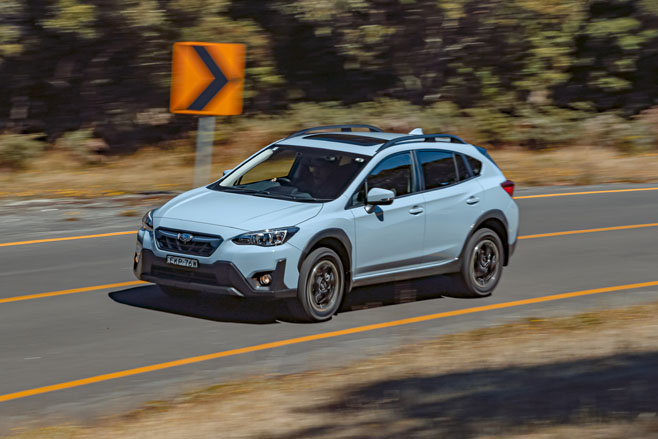
So, it’s a shock to learn that the frenetic Focus is easier on unleaded, highlighting its inherently efficient engineering. Given our broad spectrum of testing – from inner-city to desolate rural in blazing heat and air-con working overtime – the Active’s 8.8L/100km result is a win. While the XV is alone in tolerating standard 91 RON, both were tested using the premium brew.
Less unforeseen is the Focus’ sportier chassis set-up. Adhering to the series’ strapping reputation, and featuring a multi-link rear suspension set-up as per all grades nowadays (compared to the Subaru’s double wishbone arrangement), the Active’s steering is beautifully weighted and naturally immersive, effortlessly connecting car and driver.
Unburdened with extraneous mass, the Ford’s front end changes direction with delightful alacrity, for incredibly fluid handling and fantastic poise, while also pulling up sooner during our emergency-braking tests than the XV.
Most SUVs could only dream of dynamics like this.
Even with that humdinger engine response, the Focus feels like it could handle substantially more power, as it blasts along and carves through corners like no other mainstream humdrum hatchback at this price – ST-Line aside. Nothing is as fluent, fun or sophisticated, period.
Yet the Subaru is far from outclassed, with a super-smooth and easy gait as it glides along, unbothered by adverse conditions or iffy surfaces. Though the steering feels duller and more remote in this company, there’s endless grip and control galore as compensation, making it seem completely immune to the elements, for reassuring and relaxing handling and roadholding characteristics. And there’s the rub: the XV isn’t pretending to be athletic, yet still possesses agility combined with security that makes it the better all-weather performer. AWD, remember.
Sure, the Subaru might feel gutless at higher speeds, but its chassis is so strong and planted you can drive it flat-out, everywhere where legal, all the time. Imagine what a turbo heart transplant would do? Now’s the time for an XV WRX.
Speaking of which, over gravel, the latter’s substantially loftier ground clearance also comes to the fore, as it skates along the surface at speed without a care. Tighter turns reveal a fast and loose stability-control set-up, but the taction nannies do reel the Suby back in line and in plenty of time. The Focus’ Trail mode, meanwhile, also provides an extra bit of play and it too keeps things moving along safely, but isn’t in the same league as the Japanese crossover. Not without the surefooted advantage of AWD.
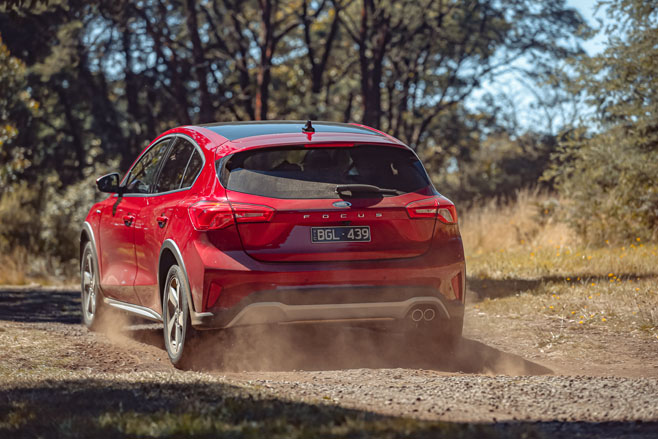
Where the XV absolutely lords it over the Ford is in its newfound ride comfort – a revelation since the pre-2020 facelift models felt stiff and unyielding. No longer. Our Premium wearing 225/60R17 rubber finally earns the name with an absorbent and calming suspension quality. Combined with massively reduced road noise, there’s an almost old-school Citroen-esque softness in its ability to smother bumps.
In contrast, you feel (and hear) the road and all its irregularities more in the firmer, louder and lustier Focus, though it isn’t crashy or hard, displays markedly less body lean when cornering or head toss traversing speed humps, and remains miles ahead of most sporty premium rivals like BMW’s 1 Series and Mercedes’ A-Class. It’s just that the newly-spongy Subaru has, quite astoundingly, reset the cushy suspension benchmark. We still cannot believe it.
Which must factor heavily in the latter’s favour when assessing two mainstream small crossovers priced so tantalisingly close to each other. Most buyers will happily trade in hot-hatch levels of athleticism and connection for quiet, smooth and cocooning suppleness.
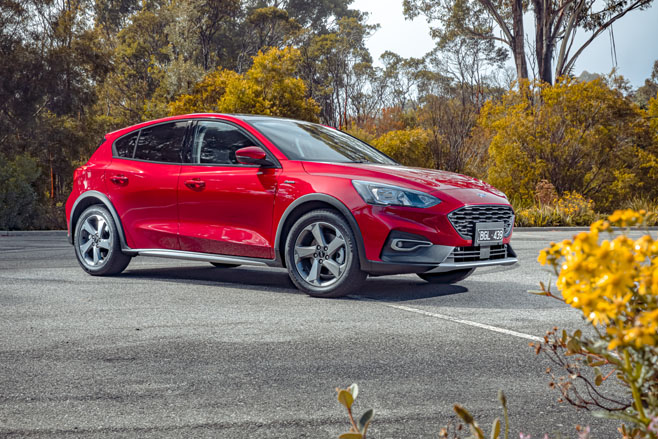
The XV is like a spacious, soothing and secure hovercraft on wheels that also happens to be a very good drive while the Active is like a fast and efficient speedboat that’s unrivalled for fun. Ultimately, despite differences that are worlds apart, the net result leaves us with two accomplished competitors that really play into their brands’ strengths. It’s incredibly close.
While keener drivers must consider the Ford, the Subaru really is better suited for everybody else, and so with its broader bandwidth of capabilities, just pips the Focus. Either way, though, the jumped-up hatch recipe is a winner that clearly works.
Why more carmakers aren’t following suit remains a mystery. Little wonder the XV is quietly making it big.
Result
Subaru XV 2.0i Premium
Pros: Spacious, airy and inviting cabin, superb ride comfort, AWD security Cons: Breathless acceleration at speed, no AEB on base model
8.5/10
Ford Focus Active
Pros: Fun handling, rorty performance, excellent efficiency, user-friendly multimedia Cons: Dreary dash, no AWD option, rattly optional sunroof, barely a crossover
8/10
Ford Focus Active Specifications
$30,990/As tested $34,240**
Drivetrain Engine 3cyl, dohc, 12v turbo Layout front engine (east-west), front-drive Capacity 1497cc Power 134kW @ 6000rpm Torque 240Nm @ 1750-5000rpm Transmission 8-speed automatic
Chassis Body steel,5 doors,5 seats L/W/H/W-B 4397/1844/1483/2700mm Front/rear track 1582/1576mm Weight 1348kg Fuel/tank petrol/52 litres Economy 8.8L/100km (test average) Suspension Front: struts, A-arms, coil springs, anti-roll bar Suspension Rear: multi-link, coil springs, anti-roll bar Steering electric rack-and-pinion Turning circle 10.7m (2.7 turns lock-to-lock) Front brakes ventilated discs (282mm) Rear brakes discs (271mm) Tyres Goodyear EfficientGrip Tyre size 215/55R17 94V
Safety ANCAP rating Five stars (Aus)
Performance Power to weight 99kW per tonne Redline/cut-out 6500rpm/6300rpm Speed at indicated 100km/h 96km/h
Standing-start acceleration 0-10km/h 0.6sec 0-20km/h 1.3sec 0-30km/h 2.0sec 0-40km/h 2.7sec 0-50km/h 3.6sec 0-60km/h 4.5sec 0-70km/h 5.0sec 0-80km/h 5.8sec| 0-90km/h 7.7sec 0-100km/h 9.1sec 0-110km/h 10.8sec 0-120km/h 12.9sec 0-130km/h 15.7sec 0-140km/h 17.9sec 0-400m 16.8sec @ 136.1km/h
Rolling acceleration 80-120km/h 6.3s
Braking distance 100km/h-0 37.9m
Track: Warm, dry. Temp: 30ºC. Driver: Byron Mathioudakis.
Warranty: 5yr/unlimited km. Service interval: 12 months, 15,000km. Glass’s 3-year resale: 48%. AAMI Insurance: $782
** Includes Driver Assistance Pack with adaptive cruise, auto high beams, blind-spot monitor and rear-cross-traffic alert ($1250) and Panorama Roof Pack with sunroof, sunglass holder and illuminated vanity mirrors ($2000)
Subaru XV 2.0 Premium Specifications
$34,590/As tested:$34,590
Drivetrain Engine flat 4, dohc, 16v Layout front engine (north-south), all drive Capacity 1995cc Power 115kW @ 6000rpm Torque 196Nm @ 4000rpm Transmission CVT automatic
Chassis Body steel,5 doors,5 seats L/W/H/W-B 4485/1800/1615/2665mm Front/rear track 1550/1555mm Weight 1474kg Fuel/tank petrol/63 litres Economy 8.9L/100km (test average) Suspension Front: struts, A-arms, coil springs, anti-roll bar Suspension Rear: double wishbones, coil springs, anti-roll bar
Steering electric rack-and-pinion Turning circle 10.8m (2.6 turns lock-to-lock) Front brakes ventilated discs (295mm) Rear brakes discs (284mm) Tyres Yokohama BluEarth E70 Tyre size 225/60R17 99H
Safety ANCAP rating Five stars (Aus)
Performance Power to weight 78kW per tonne Redline/cut-out 6250rpm/6100rpm Speed at indicated 100km/h 95km/h
Standing-start acceleration 0-10km/h 0.5sec 0-20km/h 1.5sec 0-30km/h 2.6sec 0-40km/h 3.5sec 0-50km/h 4.6sec 0-60km/h 5.6sec 0-70km/h 6.8sec 0-80km/h 7.8sec 0-90km/h 9.2sec 0-100km/h 10.9sec 0-110km/h 12.8sec 0-120km/h 15.2sec 0-130km/h 17.9sec 0-140km/h 20.6sec 0-400m 18.0sec @ 130.1km/h
Rolling acceleration 80-120km/h 6.9s
Braking distance 100km/h-0 39.6m
Track: Warm, dry. Temp: 30ºC. Driver: Byron Mathioudakis.
Warranty: 5yr/unlimited km. Service interval: 12 months/12,500km. Glass’s 3-year resale: 54%. AAMI Insurance: $827
Just rarely, a car is launched that is so revered that it creates a huge headache for its manufacturer. We examine 10 instances where car makers asked “how the hell do we replace this?”
BMW E36 M3 | 1992-1999
TRIGGER WARNING – unpopular opinion arriving. The BMW E30 M3 wasn’t the hyper-focused racetrack émigré of contemporary lore.
In fact, if you remove the rose-tinted glasses for a moment, you realise that it was anything but.
Homologation did indeed create the E30 M3. In order to gain its certification to enter Group A touring car racing in Europe, BMW needed to build 5000 M3s per year.
Look beyond that and the facts are undeniable. Costing half as much again as the range-topping 325i, the M3 was a car that could never have been sold as a barely disguised road racer.
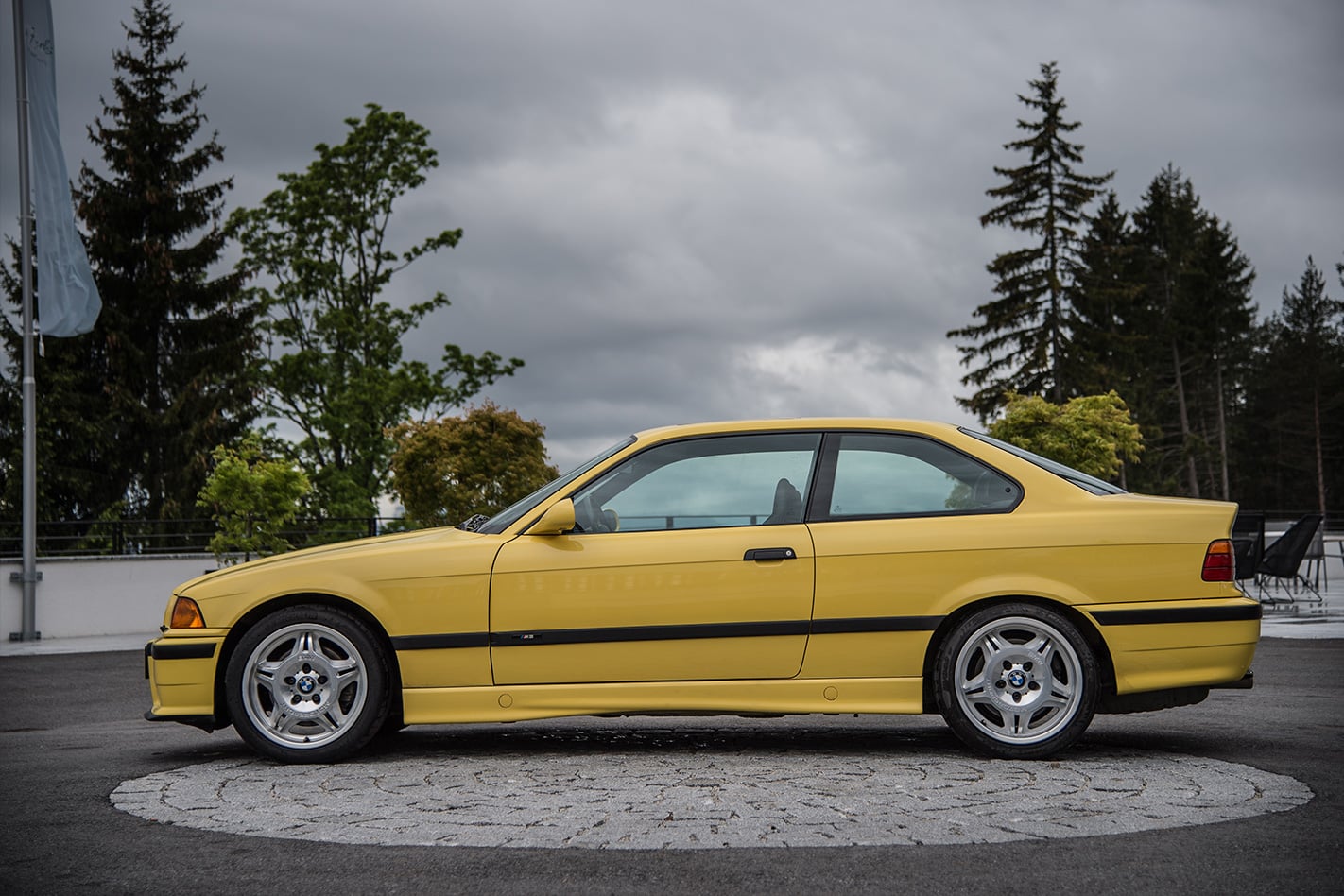
You could buy an E30 M3 with a 13-button computer, air conditioning, leather seats, central locking, electric windows and sunroof, a premium stereo, map light mirrors, an ‘active check control’ diagnostics panel and so on. Some cars were fitted with heated seats.
Even the more Spartan Euro-spec cars got Electronic Damper Control by Boge. This offered three shock stiffness settings, Komfort (K), Normal (N) and Sport (S) in order of increasing firmness, adjusted via a dial handily located on the dash.
BMW even released a full convertible version as if to subtly clue us in to the fact that this wasn’t quite as motorsport orientated as some had liked to believe.
What the E30 M3 did have on its side was crisp steering. The stock rack with a 20.5:1 ratio was swapped for a 19.6:1 item. The BMW E36 M3 was different. It leant on no homologation requirements to make production and its steering was night and day different.
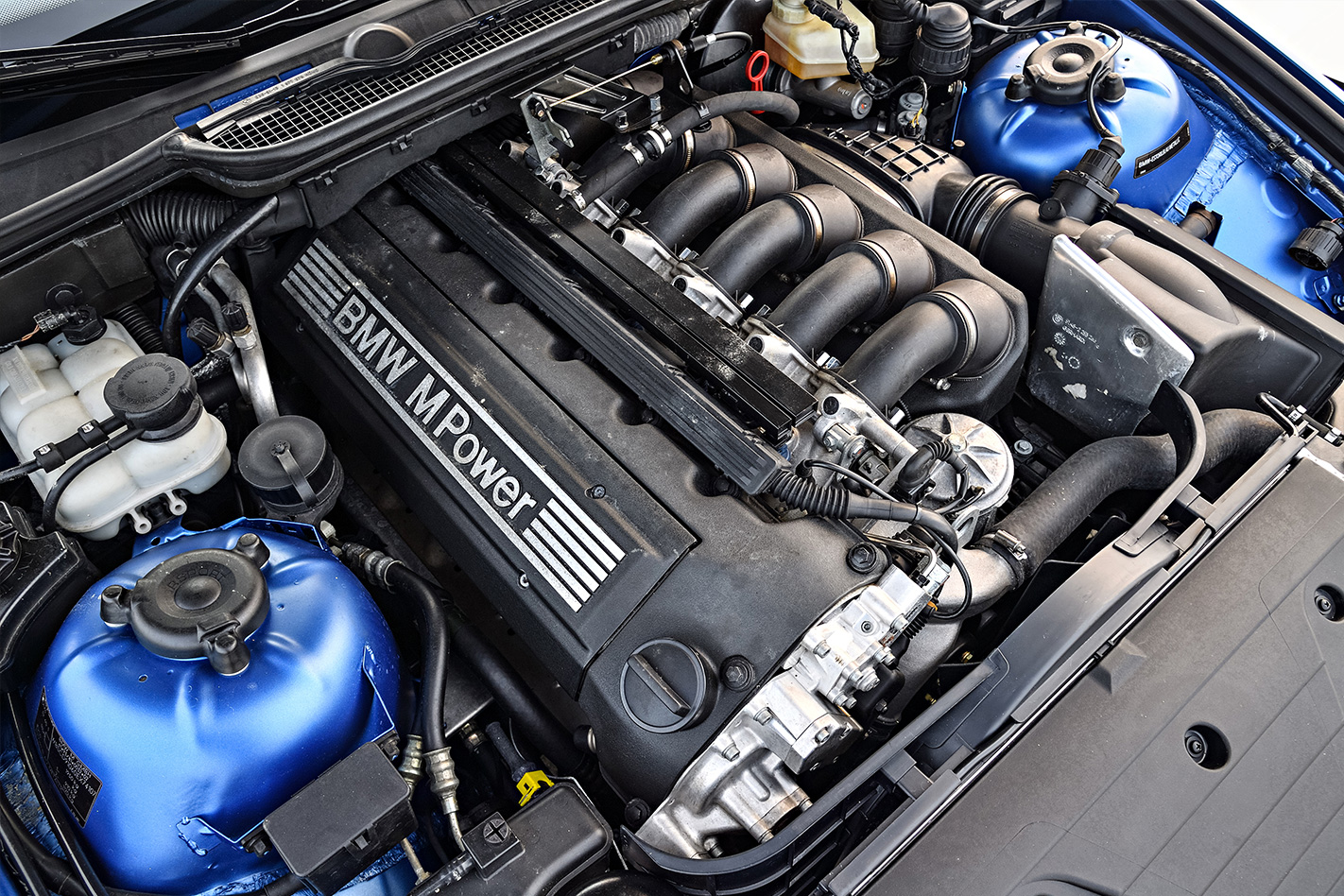
At three-turns lock to lock, it promised much the same feel as other E36s, but its variable ratio meant that it was actually slower to respond until a huge 200-degree hand/wheel angle. Fitting the quicker rack from the Z3 1.9 has become a popular aftermarket fix.
BMW tried to change this with the updated 3.2-litre E36 M3 Evo in 1996, reverting to the standard E36’s rack but by then the damage had been done. Largely due to its steering, the E36 M3 had been positioned in the minds of many as more of an E36 CS; a fast road GT car.
We’re a little more savvy these days about how manufacturers leverage the power of their brands, especially through motorsport associations and, in hindsight, the E36 M3 probably got a rough rub of the green. Its image is being rehabilitated of late, however, and prices of the rarer GT and GT2 models, as well as the ultimate, the Australian-market only M3R, reflect that.
By today’s standards, that first E36 M3 3.0 looks pretty special. Who wouldn’t want an atmo straight-six that developed 70.2kW/litre? Or which tipped the scales at a mere 1460kg?
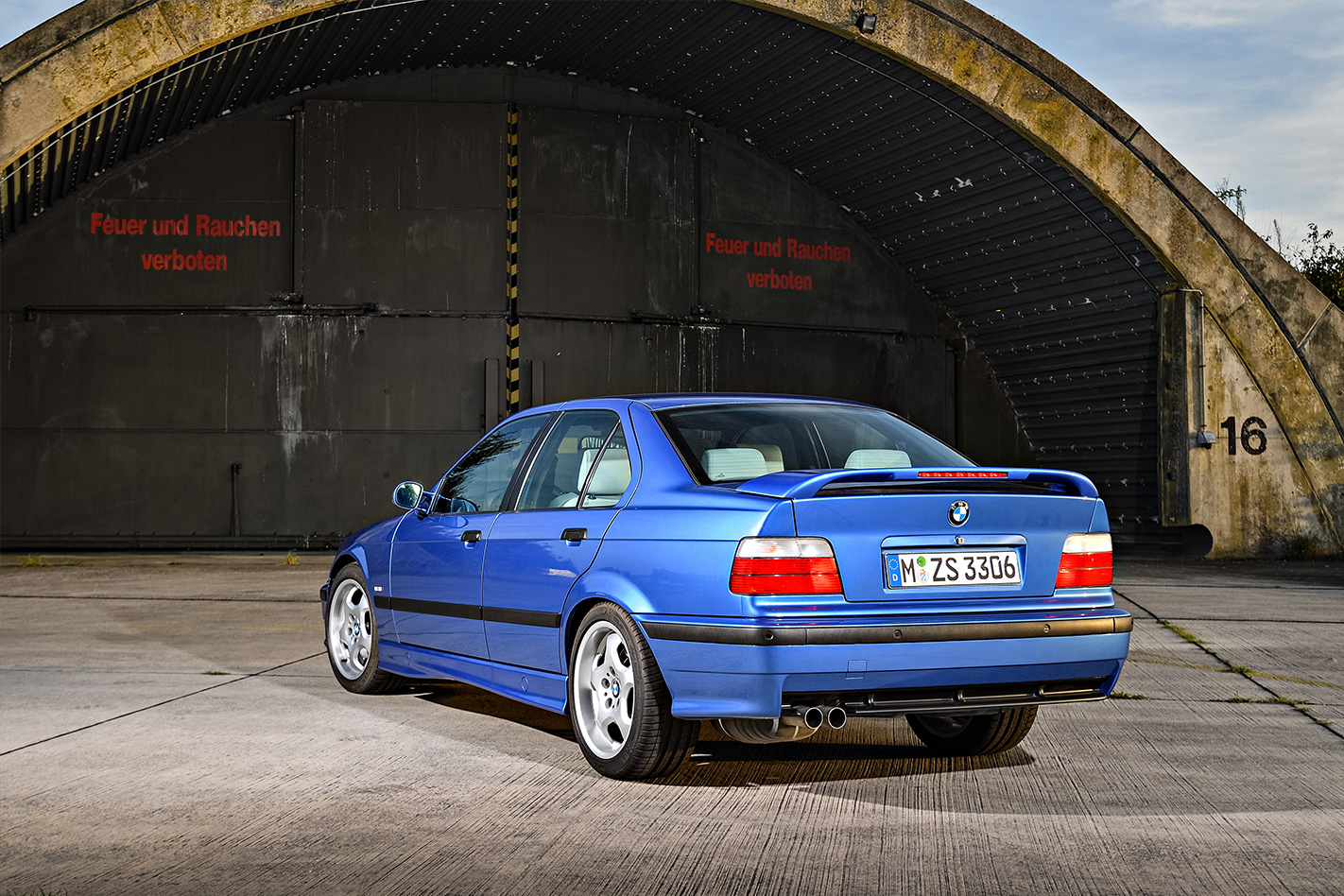
It took a while for the world to come round to the charms of the E36 M3. Perhaps the introduction of electrically assisted power steering served to remind us that its hydraulically helped tiller wasn’t such a bad thing after all, and it was fairly easy to fix that flaw in its dynamic repertoire.
And a note on unpopular opinions? Stick with ’em long enough and fashions will eventually catch up.
The Icon: 1986
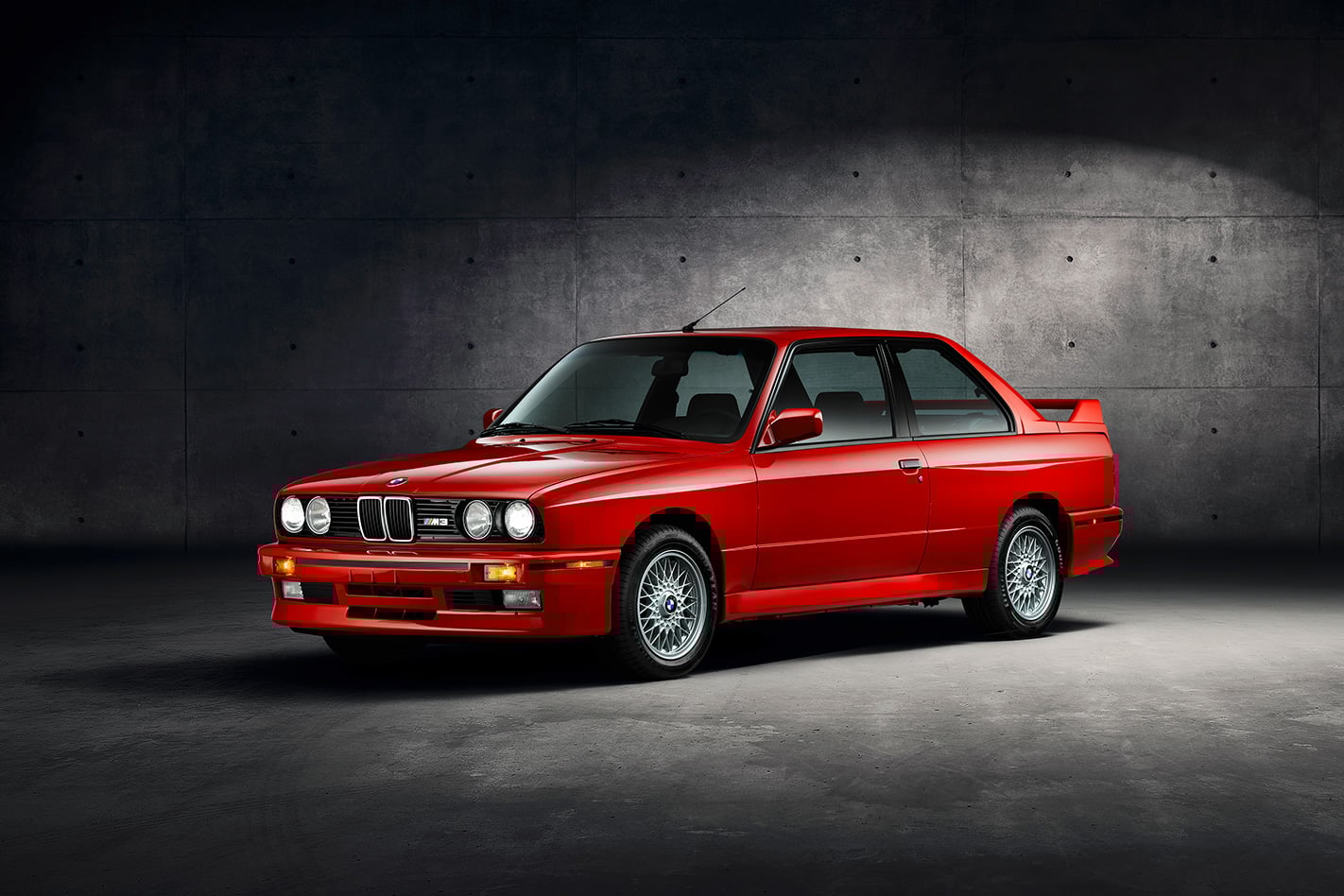
Steering Committee
The one thing that tied together the Evolution I, Evolution II and Evolution III, the Tour de Corse, Europa Meister 88, Johnny Cecotto and Roberto Ravaglia cosmetic upgrade cars and, yes, even the E30 M3 Convertible was delightful steering.
Admittedly, the engines do feel slightly weak by today’s modern turbocharged standards.
Three E30 M3 facts you may not know
1. S14 engine named for the 14 days between design and first prototype stage 2. Euro markets got the Getrag 265 dog-leg manual. US and Japan got the H-pattern 260 3. Original non-cat 1986 E30 M3’s 240Nm torque figure identical to final Sport Evo III special
Figures revealed today by an industry-led voluntary emissions reporting scheme show just one third of car manufacturers selling vehicles in Australia in 2020 met its CO2 standards.
In March 2021, the Federal Chamber of Automotive Industries (FCAI) published its CO2 emissions results for the first time, providing an insight into how the Australian car industry is tracking towards its 2030 targets. However, the results focused only on the industry as a whole.
But today’s damning report reveals how each brand performed in 2020 – and the results make for a grim read.
FCAI separates the targets into two categories: the MA category (passenger cars and light SUVs) and the MC+NA category (heavy SUVs and light commercial vehicles).
In the MA category, Toyota came out in front due to its high number of hybrid sales – one of just 12 manufacturers to beat the 154gCO2/km target in its class of 39 companies. Among the top performers were; Jaguar, Alfa Romeo, Alpine, Citroen, Fiat, Lexus, Mini, Peugeot, Skoda, Suzuki and Volkswagen.
Trailing at the back of the pack, perhaps unsurprisingly, were supercar makers Maserati, Ferrari and Lamborghini, alongside Chrysler which sells a thirsty V8 sedan.
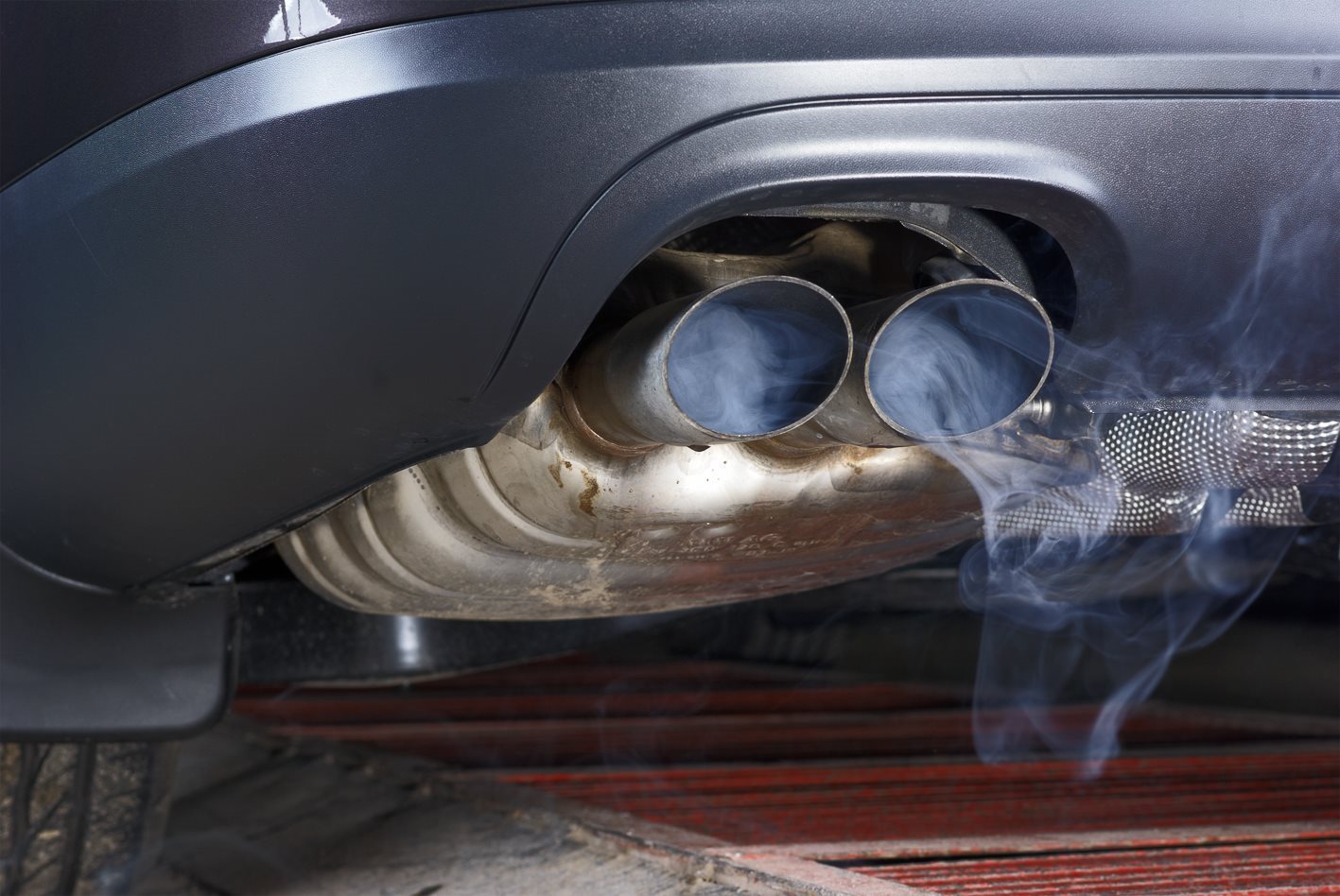
In the MC+NA class, Toyota’s HiLux ute – its biggest seller for the last five years – fell from grace, finishing 19th out of 25.
A spokesperson for Toyota told WhichCar the Japanese marque has made a “significant contribution” to the reduction in CO2 emissions and “right now, the most practical way to reduce automotive emissions is to buy a hybrid”.
“So far this year, more than half of all sales for Corolla, Camry, Yaris Cross and RAV4 are hybrid,” they added.
Last year, Toyota delivered 54,000 fuel-efficient hybrid vehicles, representing more than 85 per cent of all electrified vehicles sold in Australia.
Just eight brands achieved the 197gCO2/km target in the larger vehicle category. They included; BMW, Fiat Professional, Land Rover, Peugeot, Porsche, Renault, Subaru and Volvo Cars.
However, other marques such as Mitsubishi, Hyundai, Ssangyong and Great Wall Motors ranked worst for utes, vans and large SUVs. Lexus came in last due to its V8-powered Toyota LandCruiser-based 4WD.
FCAI Chief Executive Tony Weber said of today’s results: “There is only one result that matters for us and that is the 2030 target.
“The pathway to the 2030 target will not be smooth.”
The MA outcome for the industry as a whole in 2020, as reported by WhichCar last month, was 150gCO2/km (grams of CO2 per kilometre travelled) and the result for the MC+NA category was 218gCO2/km.
Towards 2030, the industry is aiming for a four per cent annual reduction for MA and a three per cent annual reduction for MC+NA. The overall goal in 2030 is to have CO2 emissions under 100gCO2/km and for MA vehicles and MC+NA vehicles under 145gCO2/km.
According to the results, the sector is ahead of its MA category (passenger and light SUV) targets, though is behind on its MC+NA (heavy SUV and light commercial) commitments.
CO2 results are gathered using a sales-weighted average, jointly supplied by the FCAI and the car manufacturers themselves.
The industry-led scheme is designed to bring about more choice in the new car market. New, more fuel-efficient cars and more fuel-saving tech will become more commonplace in Australian car dealerships, or at least that’s the goal.
While there are no penalties for manufacturers which aren’t hitting their targets, the FCAI hopes that consumer choice directs carmakers to hit the new standard’s CO2 emissions targets.
The new reporting standard came about mid-way through 2020 after the FCAI pushed the government to implement such a scheme for years.
The FCAI has implemented the standard in place of governmental regulation, and all manufacturers involved are committing of their own volition.
Weber points out several reasons why CO2 emissions goals have been spread out over the next ten years – as opposed to yearly targets like those in Europe.
“First, the CO2 results for 2020 reflect the type of vehicles Australians are choosing to drive, with sales of SUVs and light commercial vehicles regularly now more than 50 per cent of new vehicle sales every month,” Weber said.
“The fuel efficiency of these larger vehicles is improving with each new model release, however, the nature of the market and customer preferences need to be considered when comparing Australia’s emissions result with other countries.
“Second, the model development cycle for new vehicles can range from 5-10 years depending on the type of vehicle so the emissions reduction will continue to improve as the latest technologies arrive on our shores.”
Weber also stated that Australia’s fuel is the lowest quality in the world.
“We urge the Federal Government to accelerate the improvement of Fuel Quality Standards for Australia’s market fuels as this will enable the introduction of more of the fuel-efficient vehicle technologies already on the roads overseas,” Weber said.
FCAI’s report comes in the same week that a panel comprising of 211 ‘everyday Victorians’ involved in a workshop program for Infrastructure Victoria has recommended banning the sale of all internal combustion engine (ICE) cars in the state by 2030 in a major push towards bringing EVs into the mainstream.
The 2021 Porsche Taycan 4S has been put through its paces on some of Far North Queensland’s best driving roads by none other than Aussie Formula 1 legend Mark Webber.
The two-time Monaco Grand Prix winner has been a friend, racer, and ambassador for the Stuttgart automaker for a decade, and anytime Porsche unveils a new car, Webber is one of the first people to drive it.
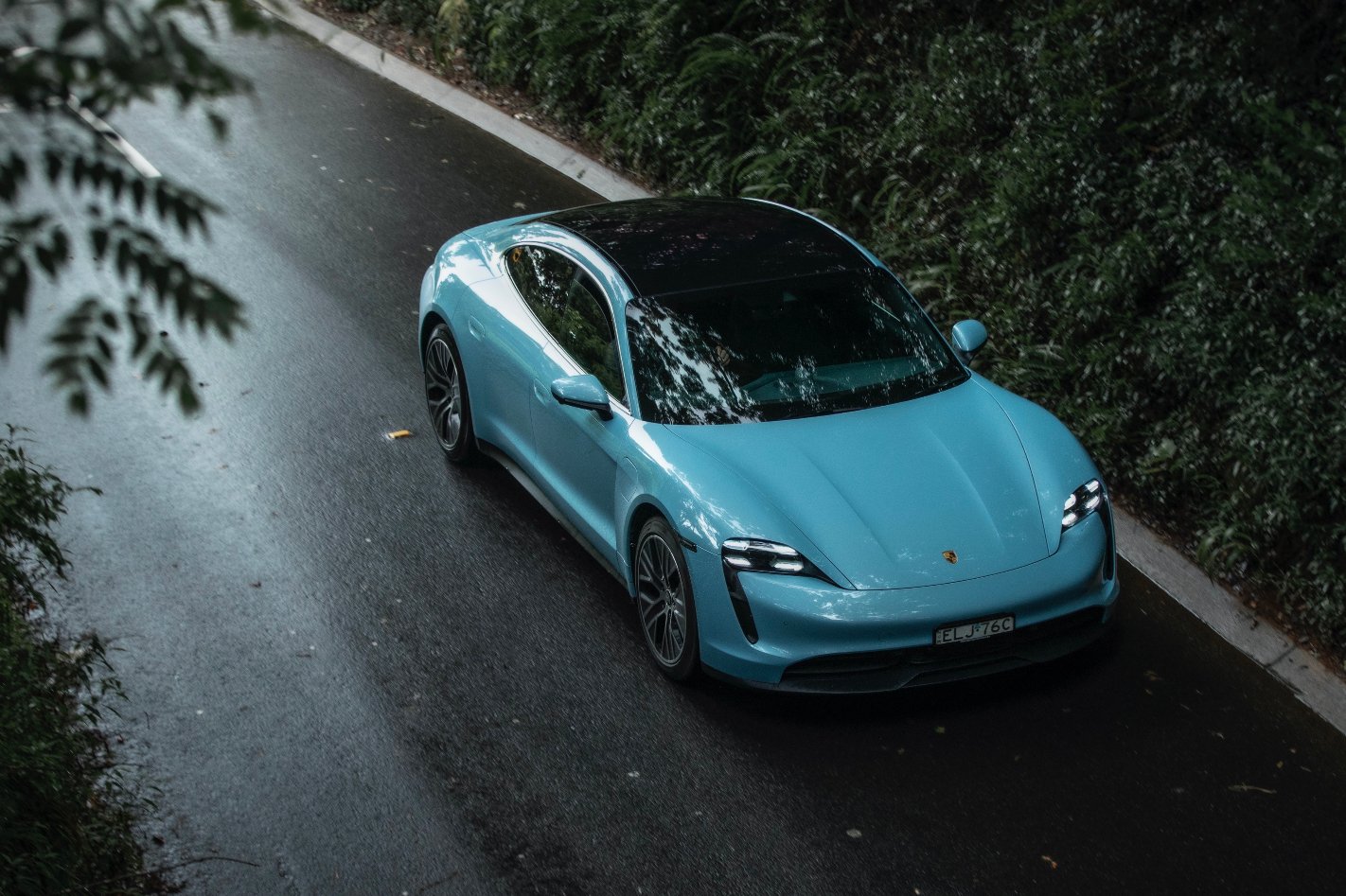
Normally we’d see the world’s best “number two driver” at a track like the Nurburgring shaking down Porsche’s latest creation, but in this instance, Webber has been thrown the keys to the new all-electric Taycan 4S, and he shows us some of his favourite driving roads near his house in Noosa.
It’s the latest instalment in Porsche’s Sunday Drives series, which is designed to capture the imagination of driving enthusiasts across the globe who may not be able to get out and road trip themselves at the moment, due to the Coronavirus pandemic.
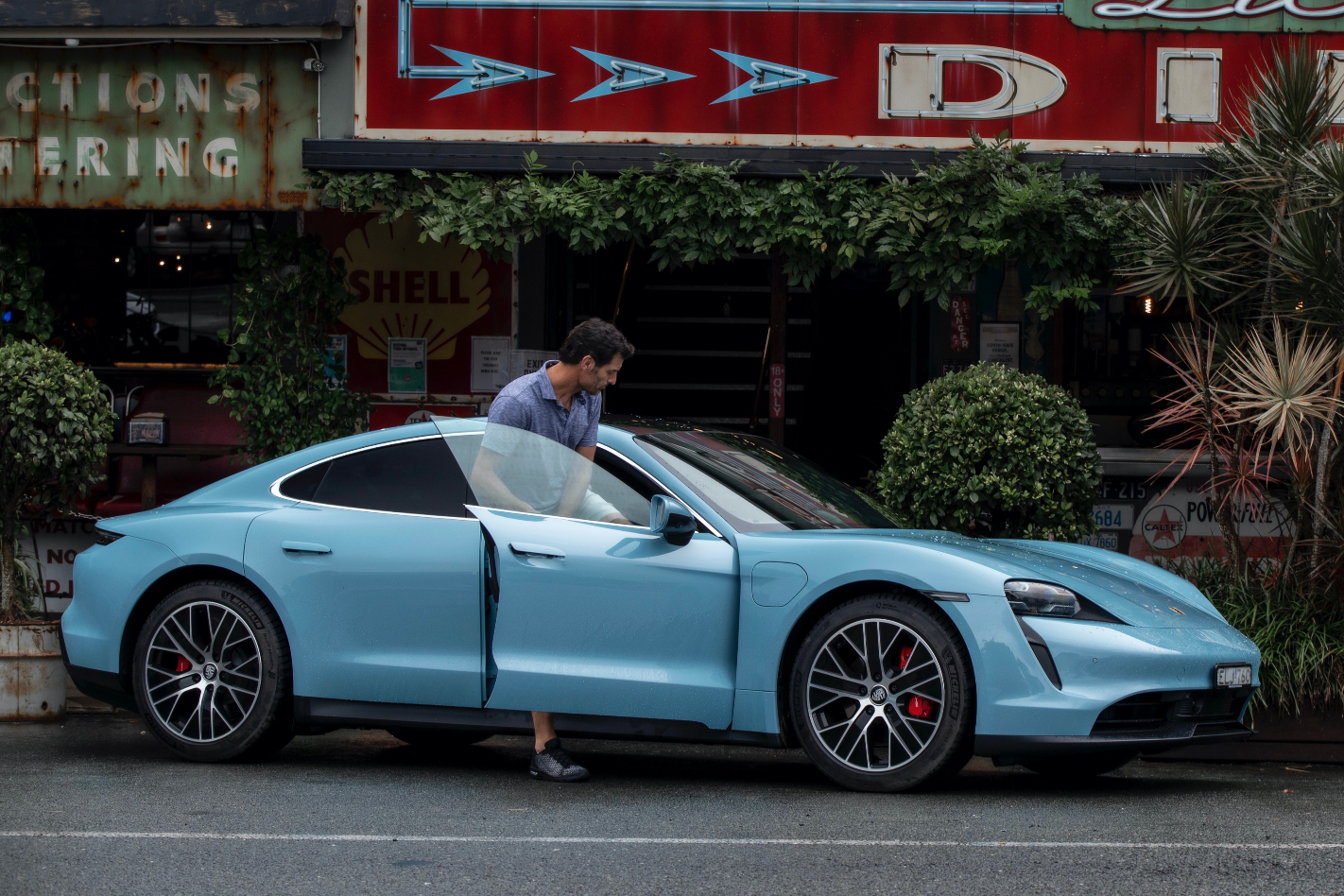
Webber cruises out of Noosa, and it’s not too long before he’s giving the Frozen Blue Taycan a decent crack on some winding rainforest roads.
The WEC world champion comments that his favourite thing about the electric Taycan 4S is “its sheer torque”.
Webber adds: “I like my motorbikes too, and it’s [the Taycan] the closest thing that comes to riding a motorbike, the sheer levels of torque and power, it just wants to jump out of its own skin.”
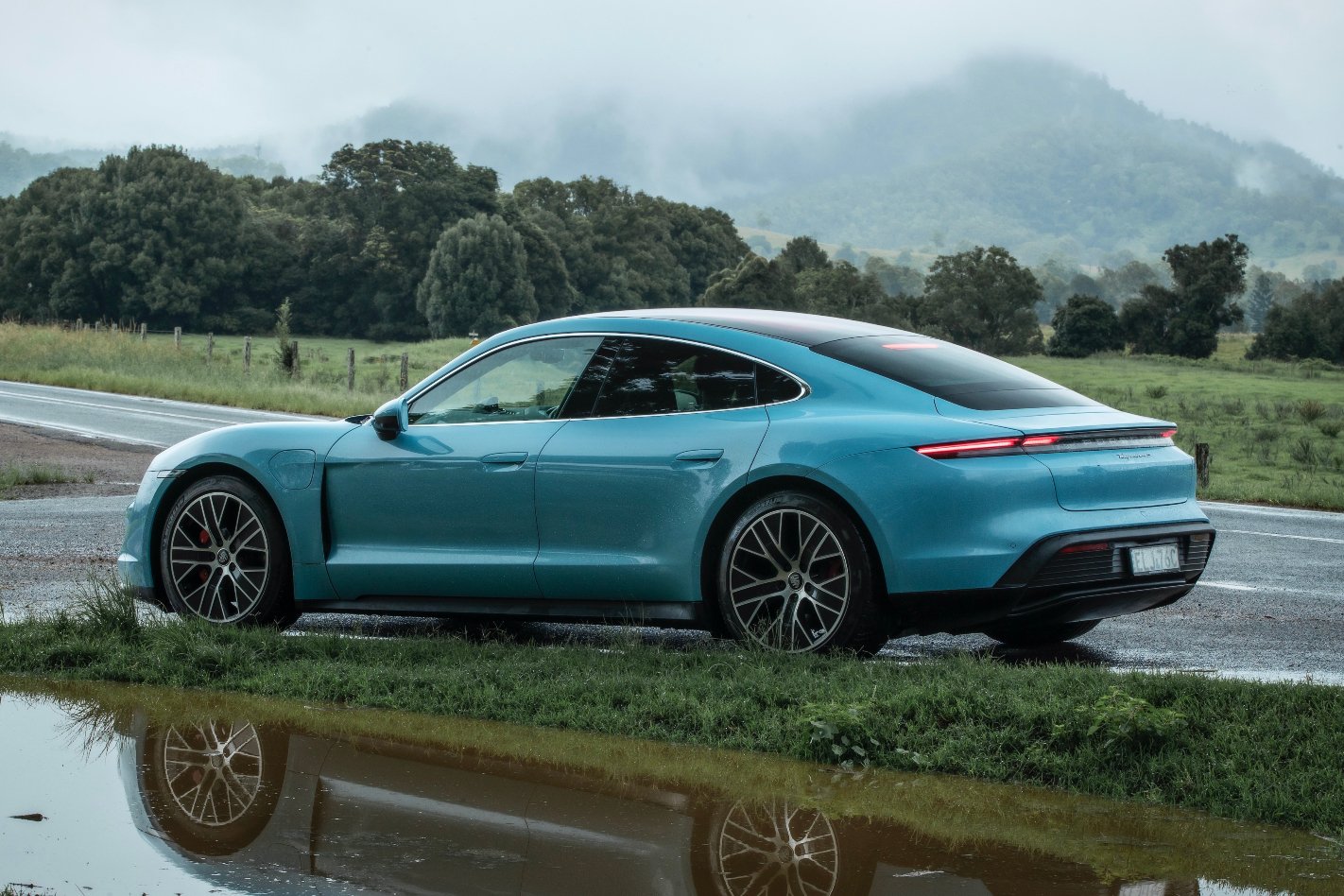
And if you think the roads Webber takes look as good as we do, you can check out his exact driving loop through the Hinterlands by using Porsche’s ROADS app.
Unveiled in January last year, the innovative app, described by Porsche as an “online scenic routing community”, allows users to find the world’s most epic driving routes to plan for their next road trip.
MORE: All Porsche stories
