
January 2024: Hyundai ute imagined with Kia Tasman body
It’s been a long time since Hyundai has spoken on its ute plans, but it’s understood the company is charging ahead with its load-hauling plans.
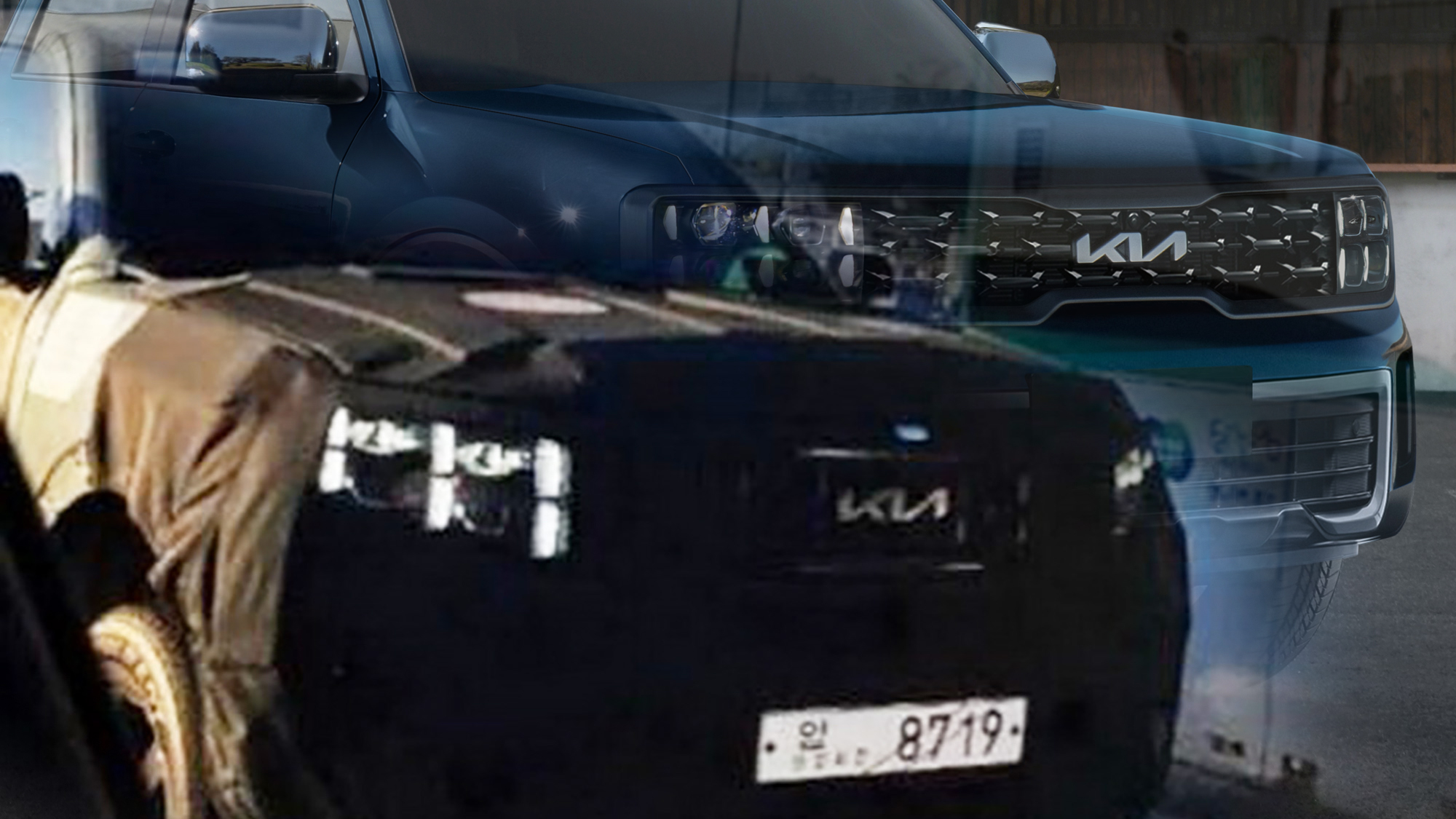
And, of course, Hyundai’s stablemate Kia has unveiled its big Tasman ute, showcasing a unique design back in October 2024.
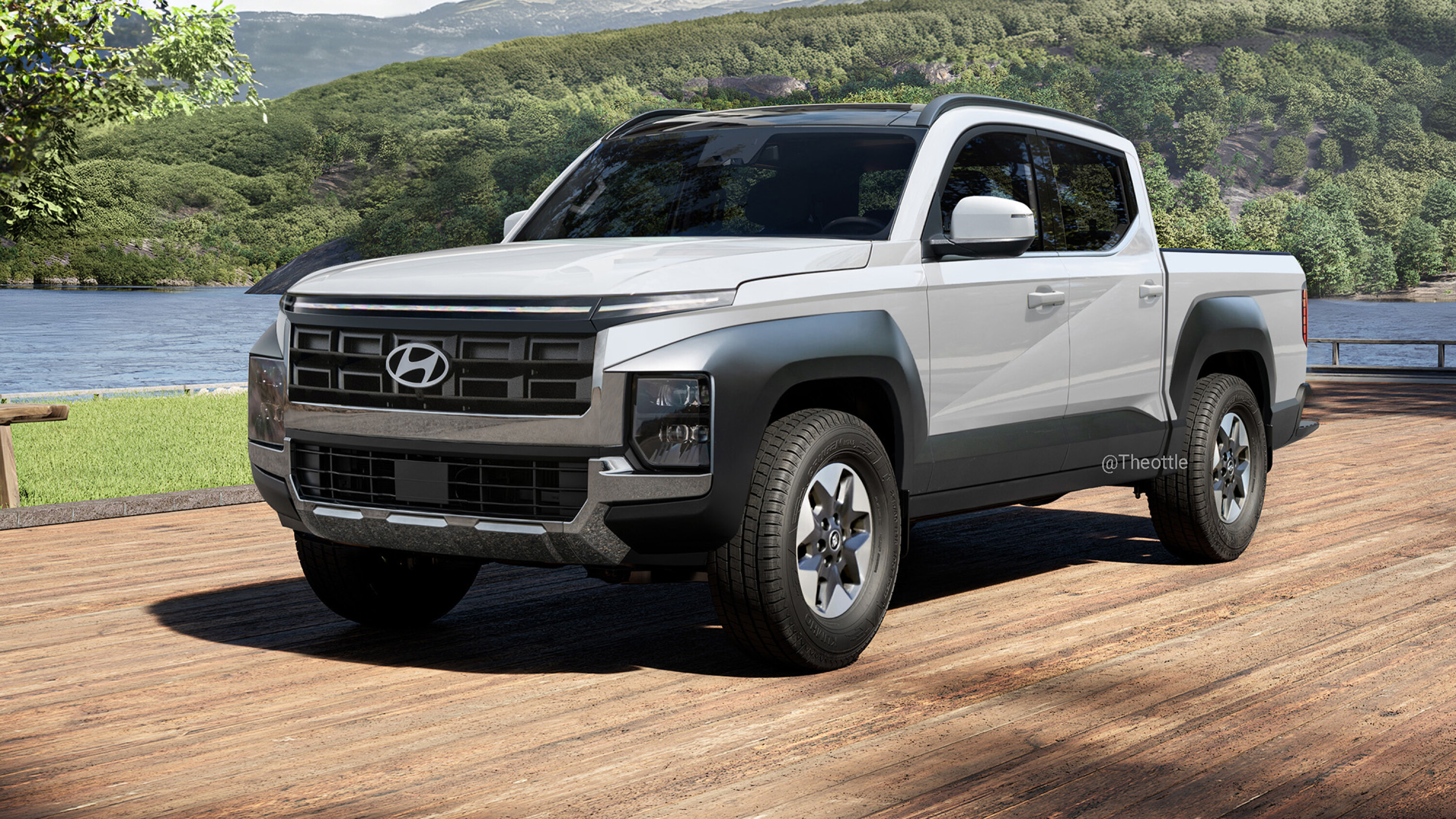
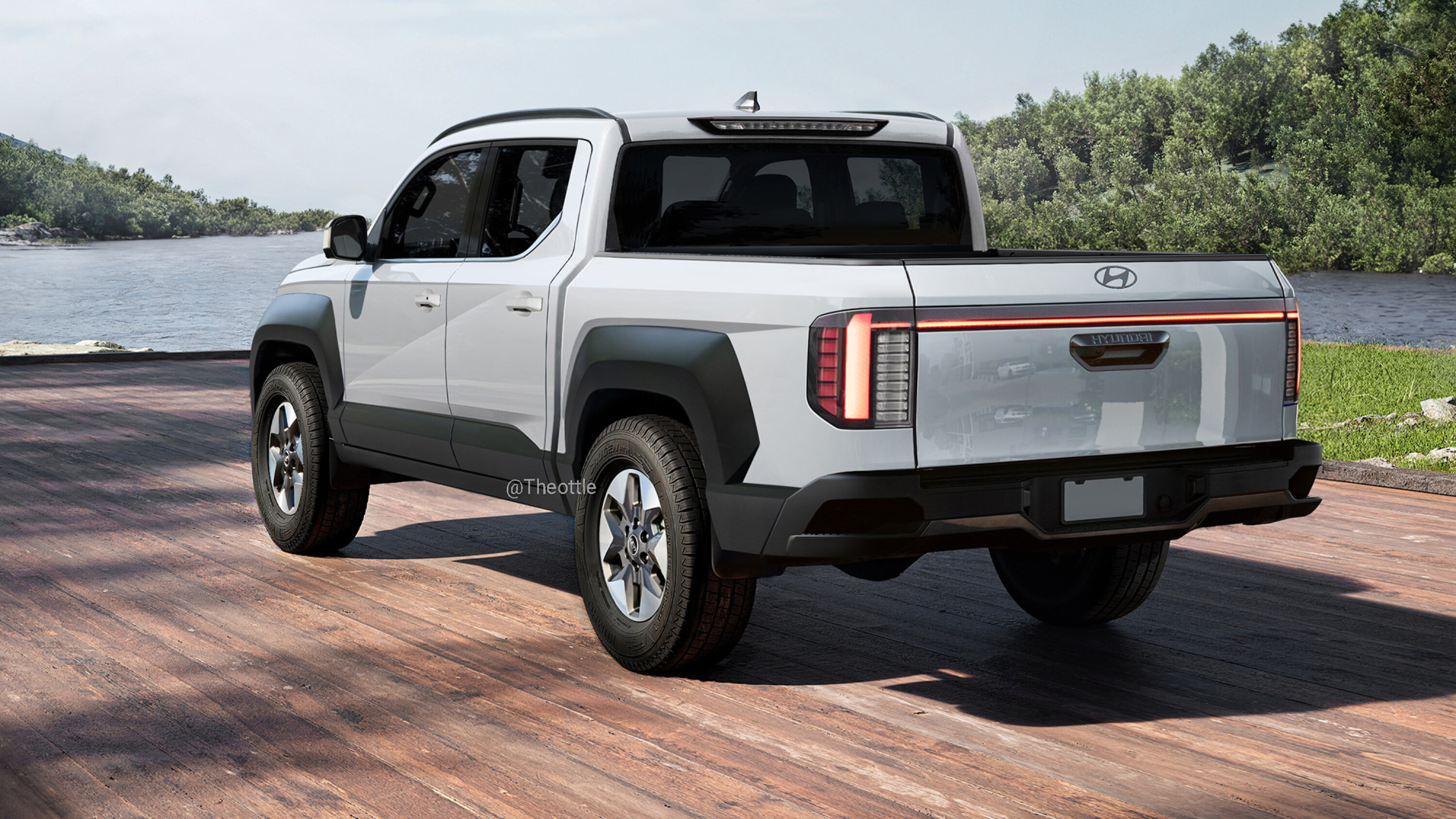
With that in mind, Photoshop wizard Theottle has imagined Hyundai’s upcoming ute with the Tasman as its base.
Of course, the problem is that Hyundai has already confirmed it will focus on an electric ute instead of diesel, so it remains to be seen if it will share any parts with the Tasman.
Check out Theo’s renderings below, and tell us in the comments what you think of the design.
1
1
Perhaps it’ll look more like the Ioniq 5 SUV?
We’d drive this!
April 2023: How about a Palisade ute?
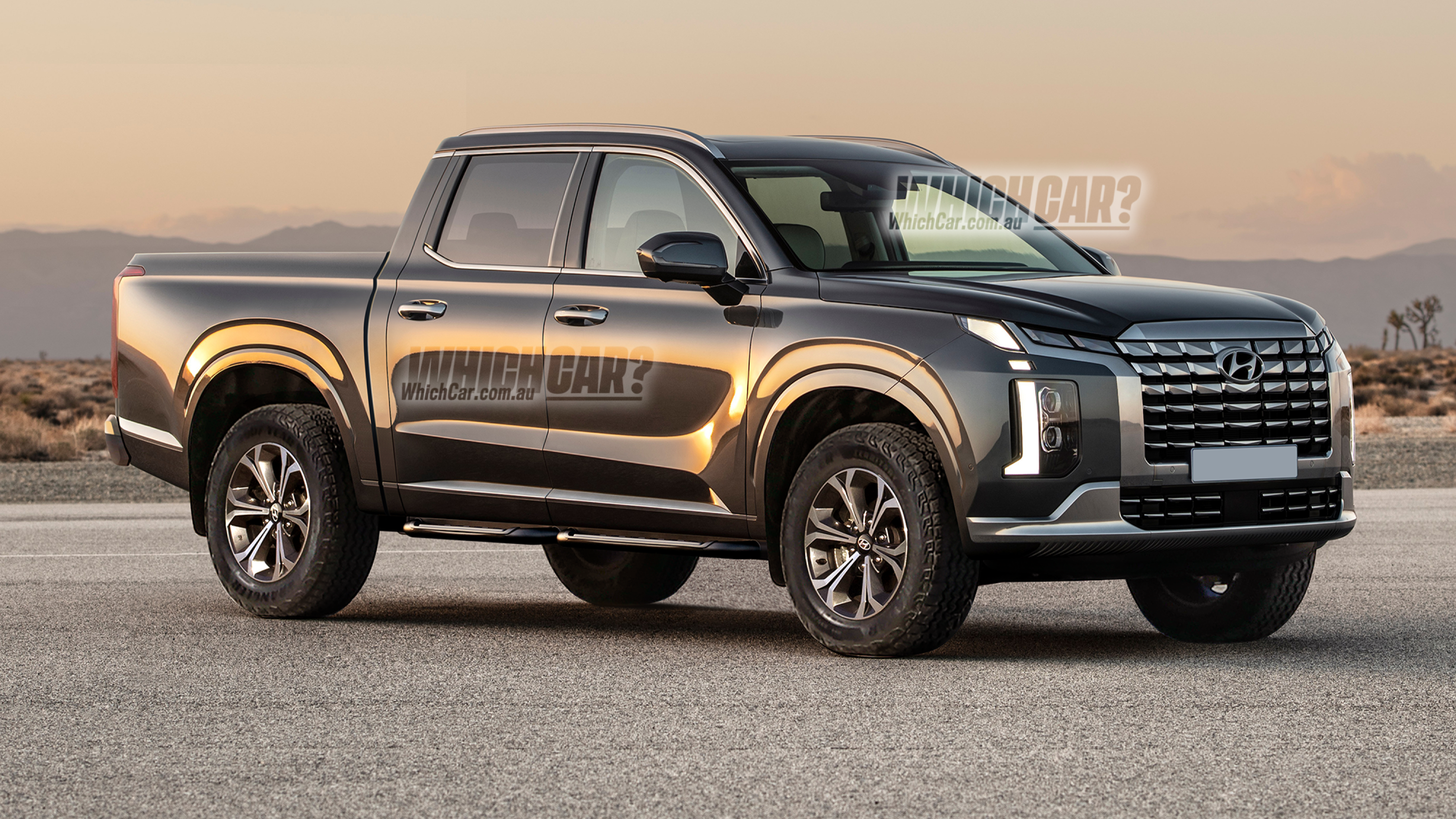
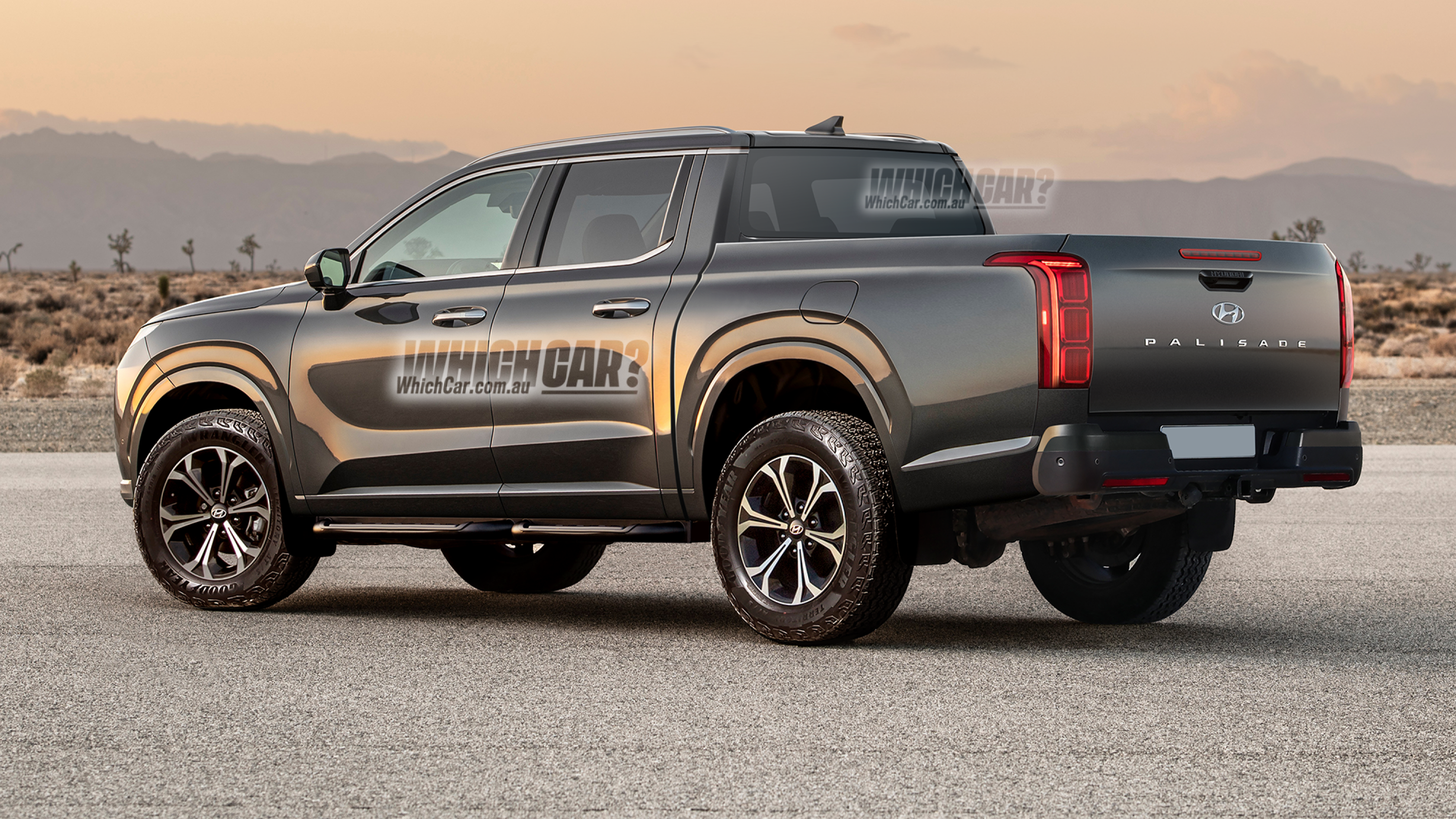
It’s supremely unlikely that Hyundai’s confirmed, upcoming ute would share its name with the Palisade, but we like it – so we’ve kept the badge in place on the tailgate.
And it’s hard to deny the Palisade’s big and bold face works on a ute. The Santa Fe- and Kona-based renderings below would surely do fine, but with the Palisade snout, this Hyundai ute could bring a lot of flair to the truck market.
Which do you prefer? Continue scrolling for more!
1
1
March 1: New renderings imagine the confirmed Hyundai pick-up ute
While we wait for Hyundai to follow cheeky sister-brand Kia into rolling out some revealing spy photos of its anticipated ute – confirmed in 2019 by outspoken Hyundai Australia boss John Kett in the story below – we’ve had a crack at mocking up some potential designs.
In this update to our Hyundai ute confirmation story, we’re presenting two potential takes on the new Ranger-rivalling Hyundai ute.
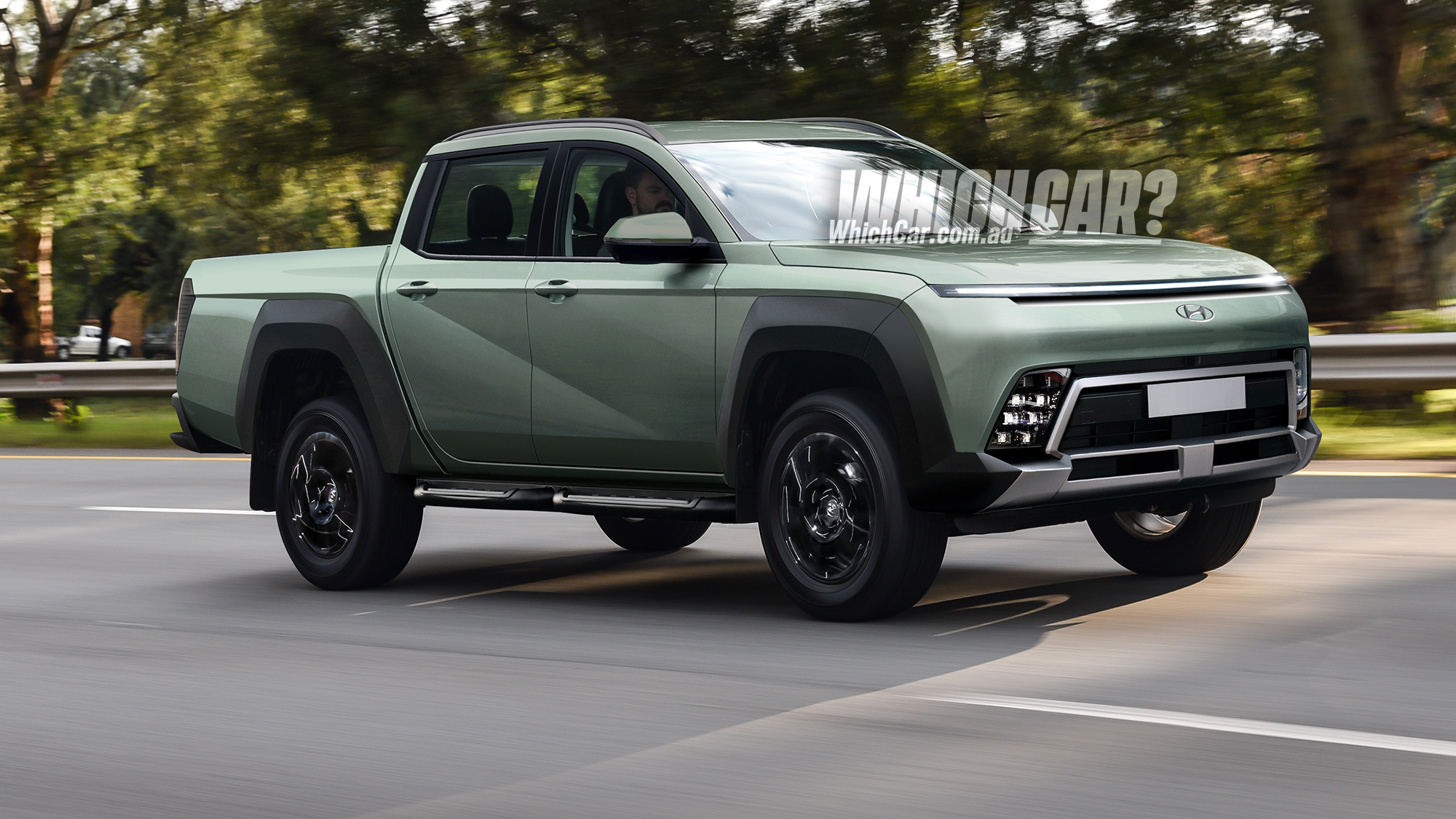
1
First up is a design inspired by the Staria van, the incoming new-gen Kona SUV, the overseas facelifted Grandeur sedan, and the new Sonata facelift.
This look might be an unlikely outcome, given it presents as a streamlined sporting design when ute buyers are often looking for something more rugged. But, as a point of difference in a crowded market, a design along these lines could be just what the doctor ordered.
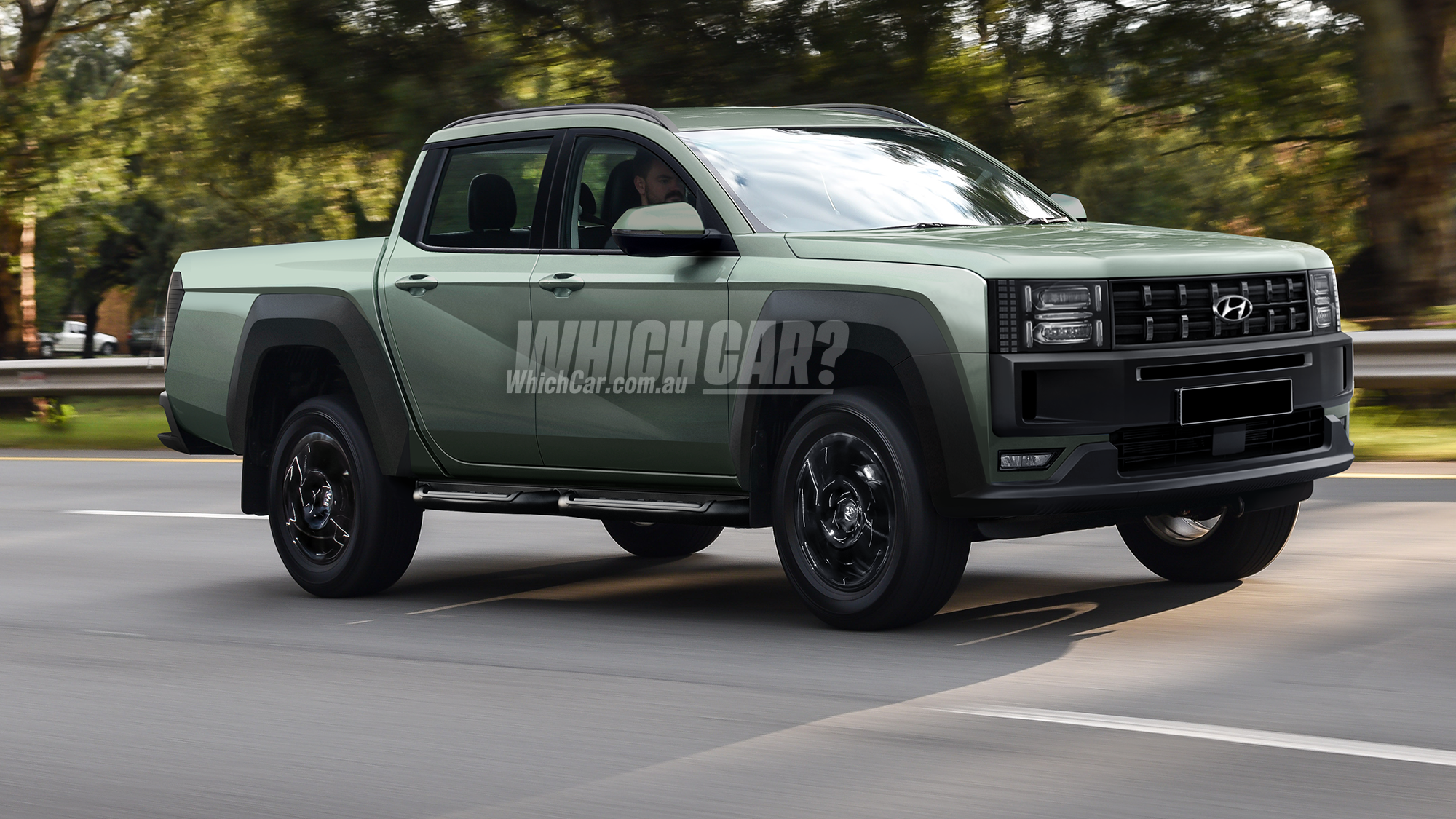
1
For the second look, we’ve turned to the next-gen Santa Fe SUV.
That’s a tricky one, because Hyundai hasn’t even unveiled the new model, but our recent spy photos suggest our speculative Santa Fe renderings are fairly accurate.
So, we’ve tacked it onto this Hyundai ute – even though Hyundai is unlikely to offer a ute with a face identical to the new Santa Fe, but it might be something along these lines.
Both designs wear the same rear-end design, with ‘pixel’ tail lights inspired by the Staria and the Ioniq 5.
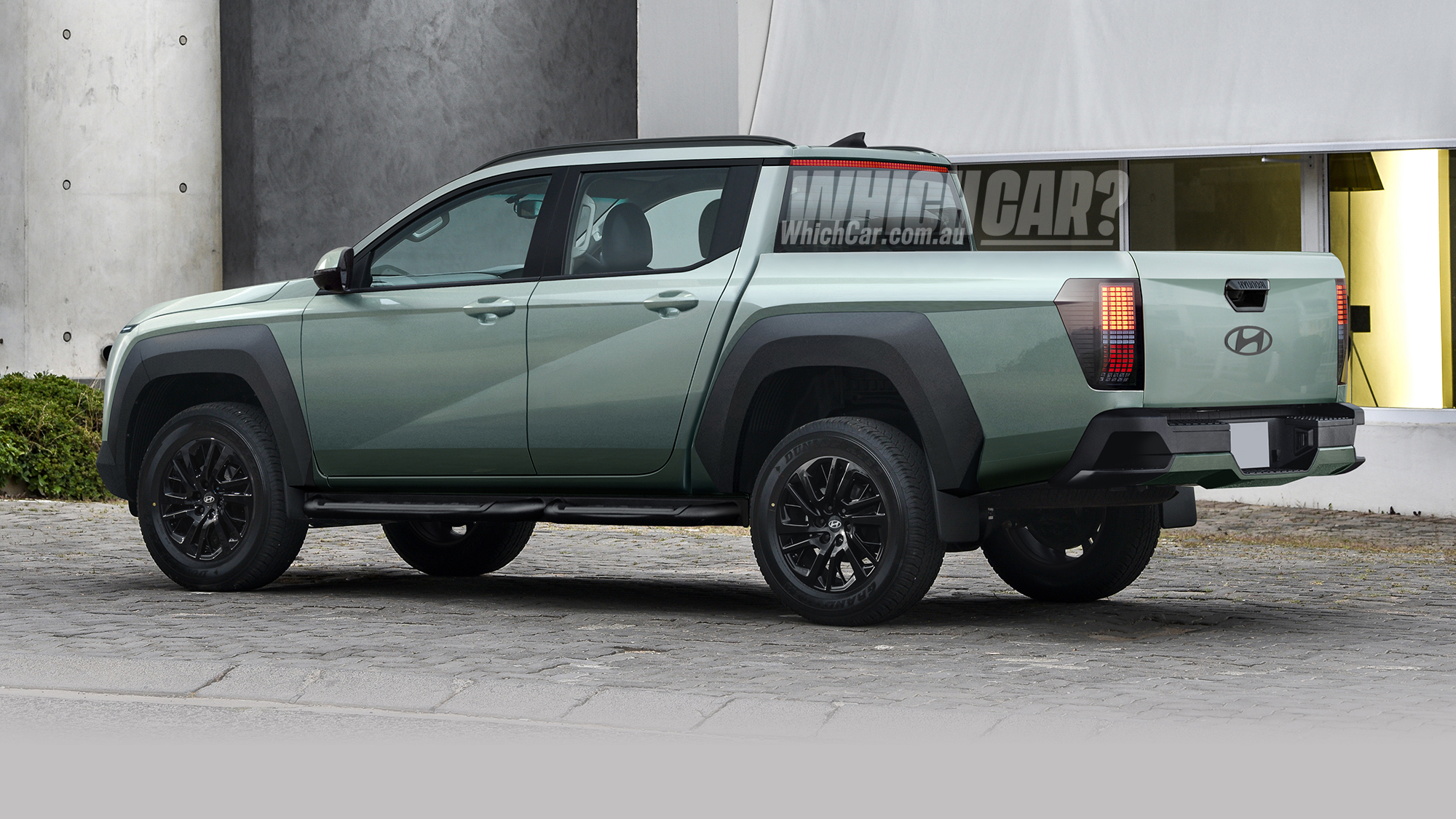
1
What will Hyundai’s ute be called?
We don’t know, but for shits and giggles, we’ve dubbed the Hyundai ute Santa Claus – partly in reference to the Santa Fe SUV and the small Santa Cruz ute sold overseas, but also because, incredibly, Santa Claus is a real place in Indiana, USA.
Hey: it’s a ‘sleigh’ that carries stuff, and it’s the Christmas gift Hyundai Oz has been waiting for!
What do you think of the new look? Tell us in the comments below!
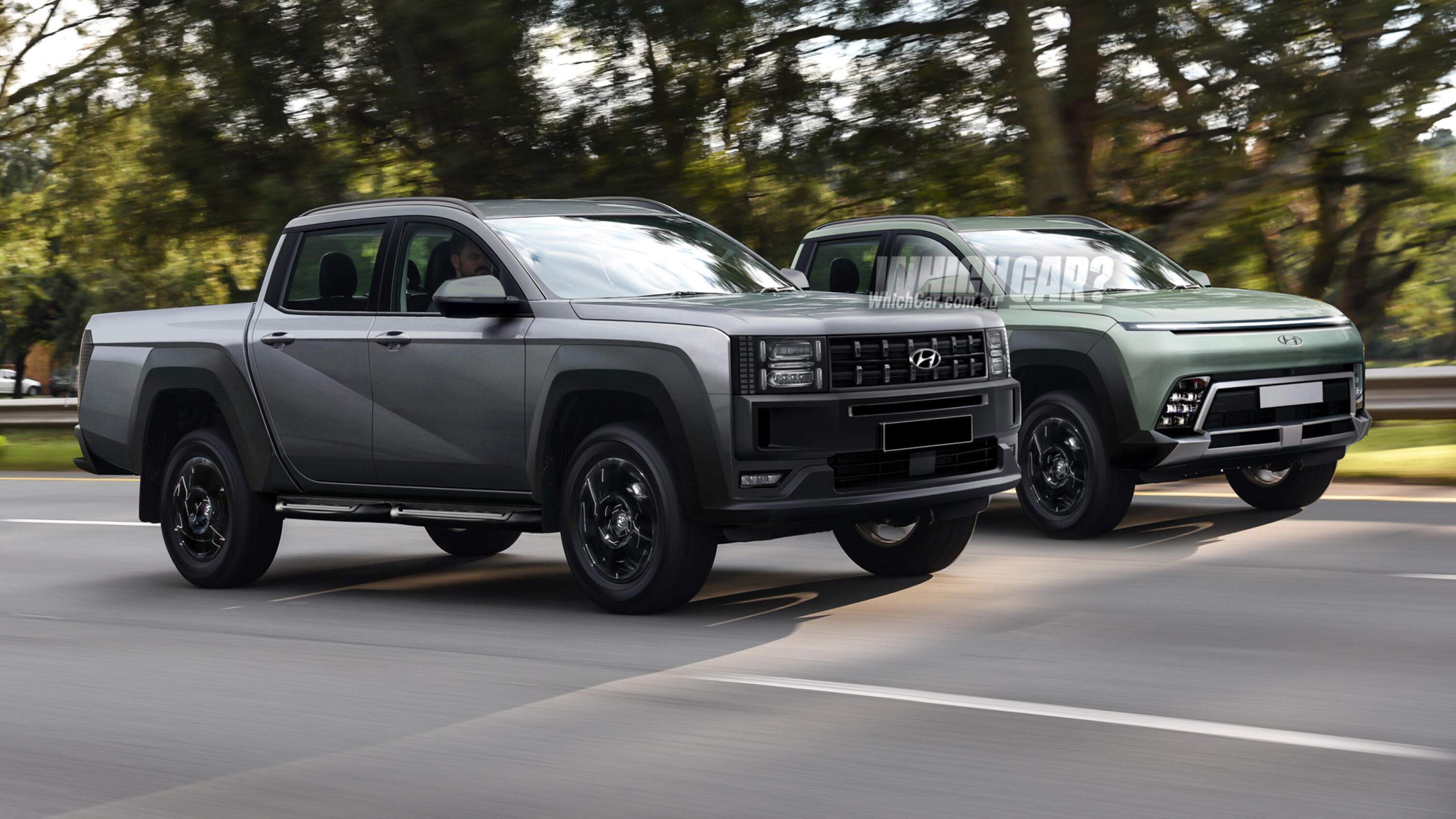
2
When will the Hyundai ute be revealed?
That’s a tough one to puzzle out, although we can likely look to Kia for some clues. The smaller of the two stablemate brands is already openly teasing its upcoming ute, by testing prototypes on public roads with the new Kia badge proudly displayed in the grille.
Speaking with Wheels Media around the same time as Hyundai boss John Kett gave Tim Robson some choice quotes (again, see below), Kia Australia COO said a 2022-23 launch for the K brand’s ute “would be pretty close”.
As we’re now into 2023, and Kia’s ute is being paraded for all to see, we can likely expect it to be unveiled in the coming months.
An Australian debut is therefore likely for either late 2023 – at the outside – or more likely sometime in 2024.
“Hopefully we’re first [to launch in Australia] but it doesn’t really matter. It’ll be close,” Meredith added, when asked about Hyundai’s version of the ute.
Has Hyundai HQ muzzled its Australian execs?
Reports in June 2020 suggested the group’s Korean headquarters had attempted to rein in the enthusiastic comments from its Australian leadership, but months later, global design boss SangYup Lee was telling us of his interest in delivering a ute for Australian buyers.
It seems a moot point now, however, given a decision has clearly been made somewhere to be more open to the free media coverage delivered with that Kia-badged ute prototype.
Did you say a six-cylinder Hyundai ute?
Maybe. Speaking with Dan Gardner at the Genesis GV80 first drive in Korea back in 2020, Albert Biermann – the company’s now-retired-but-still-consulting R&D dynamo – offered a cryptic hint when talking about the new luxury SUV’s straight-six diesel:
“This engine, we can have so many applications,” he said. “As you know, we also make commercial vehicles, so this engine will be out there for quite some time”.
A straight-six Staria is unlikely, so a direct rival to Ford’s new six-cylinder Ranger could be part of Hyundai’s ute strategy…
Get our latest stories at the links below (along with our renderings of the Kia ute), and keep scrolling for our earlier story confirming Hyundai’s ute.
1
The story to here
September 2019: Hyundai boss confirms “a real bloody ute” range is coming
New Hyundai Australia COO John Kett has lit the fire under a long-awaited ute program, confirming that the company is working on a full range of one-tonne ute-based commercial vehicles for sale in Australia.
“What’s clear to us is that if we’re going to bring a ute out, it had better be a ute,” said Kett, a long-time stalwart of the car industry both here and overseas. “We’ve got past the first hurdle of what it needs to look like, but it needs to be functional as well. That’s the important part.
“We’re going down that pathway and we’re working towards it. We just have to make sure that when it arrives, it’s a bloody ute.”
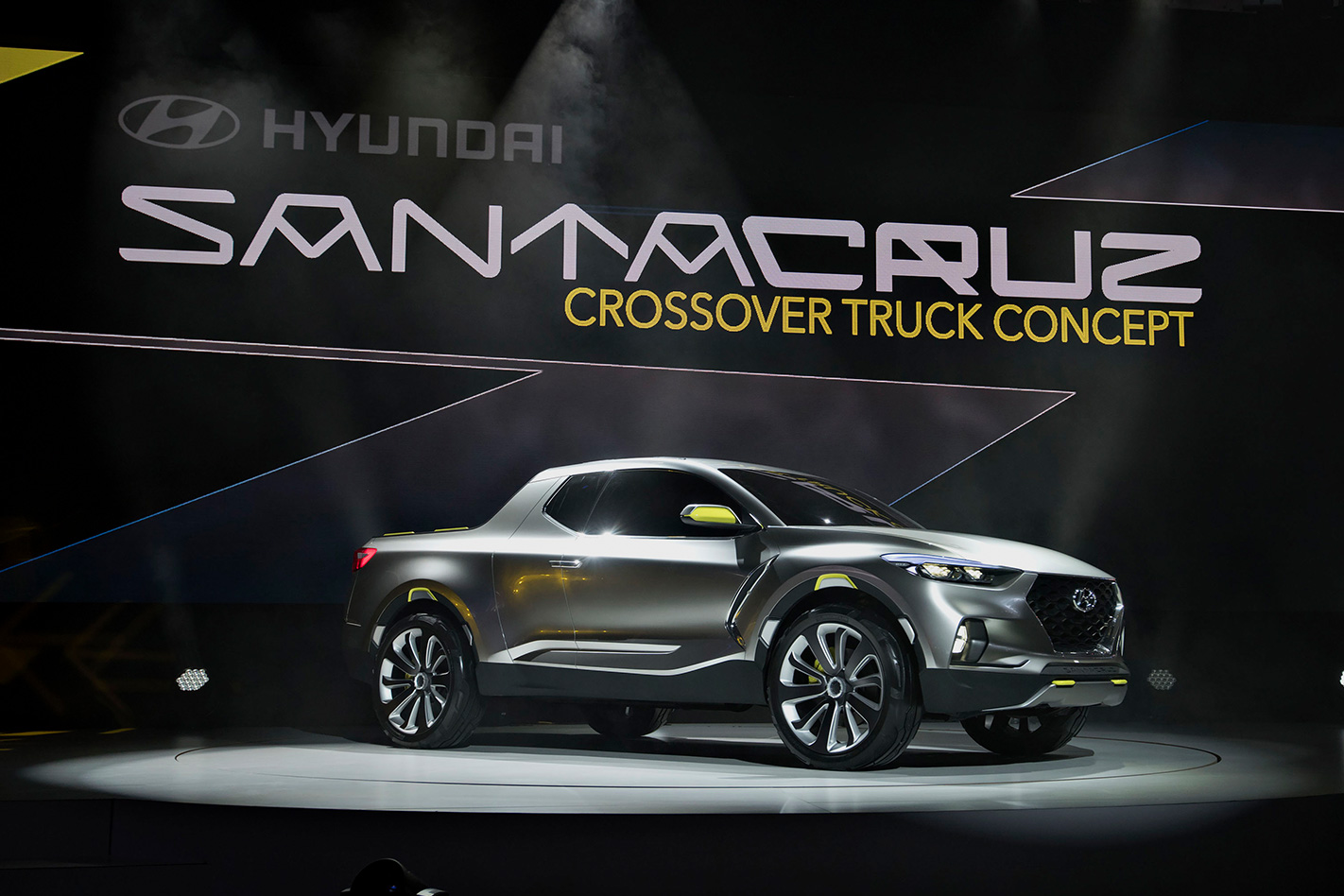
Previous Hyundai pick-up concepts have been passed on smaller ‘unibody’ designs (below), but the one-tonner will be based on a ladder-frame chassis similar to that used under rivals like the Toyota Hilux and Ford Ranger, with development costs to be shared with sister company (and staunch rival) Kia.
1
Kett told WhichCar that Hyundai is currently working on a framework around the pick-up model mix.
“We’re looking at a range,” he confirmed. “When you cut up the ute market, you split it up between 4×4 and 4×2, who owns 4×2 and what powertrain goes with that [internally] and then 4×4 crew cab versus cab/chassis and so on… we want to be smart about it and that’s what we’re going through at the moment.
“Andrew [Tuatahi, Hyundai product manager] is having a lot of sleepless nights over this because we’re going fast down that road, but we do need to be smart about it, so that when people look at it, they say ‘yep, that’s it’.”
Tuatahi acknowledged that the plan – first floated in 2014 – is based on a vehicle that can deliver what Australians have come to expect from a ute in terms of towing capacity and payload, but other factors need to be worked through before more details can be confirmed.
“The fundamental request [to head office] hasn’t changed in terms of powertrains, drivelines, chassis set-up and abilities, relative to towing and off-road ability,” said Tuatahi. “That fundamental request has been consistent.
“There have been a few other things that have changed recently in terms of other market’s production capacity and facilities, and that’s the dynamic we’re working with at the moment, just to make sure that whatever is agreed to as a solution for the one-tonne pick-up works for us and the other target markets that the car will be developed for.”
WhichCar believes that this refers to Hyundai’s recently announced plans to build a new plant in Indonesia, which shares free trade status with Australia. One-tonne utes like the Toyota Hilux and Isuzu D-Max are already strong sellers in the Asian region, while the existence of a free trade agreement will give Hyundai flexibility when it comes to pricing the ute for the Australian market.
It’s also possible that Hyundai might throw the pick-up into the US market, which is slowly developing an appetite for a one-tonne ute thanks to vehicles like the Ford Ranger.
The proposed new plant will cost more than $1 billion to build, and have an annual capacity of 250,000 vehicles once finished.
Back to the future: 2023 links
MORE
Everything Hyundai
MORE
Ute Buyers Guide
Anyone who reckons all SUVs look the same probably hasn’t seen the fourth-generation Hyundai Tucson.
When it launched in 2020, just six years separated this Tucson and the bland second-generation model known here as the ix35.
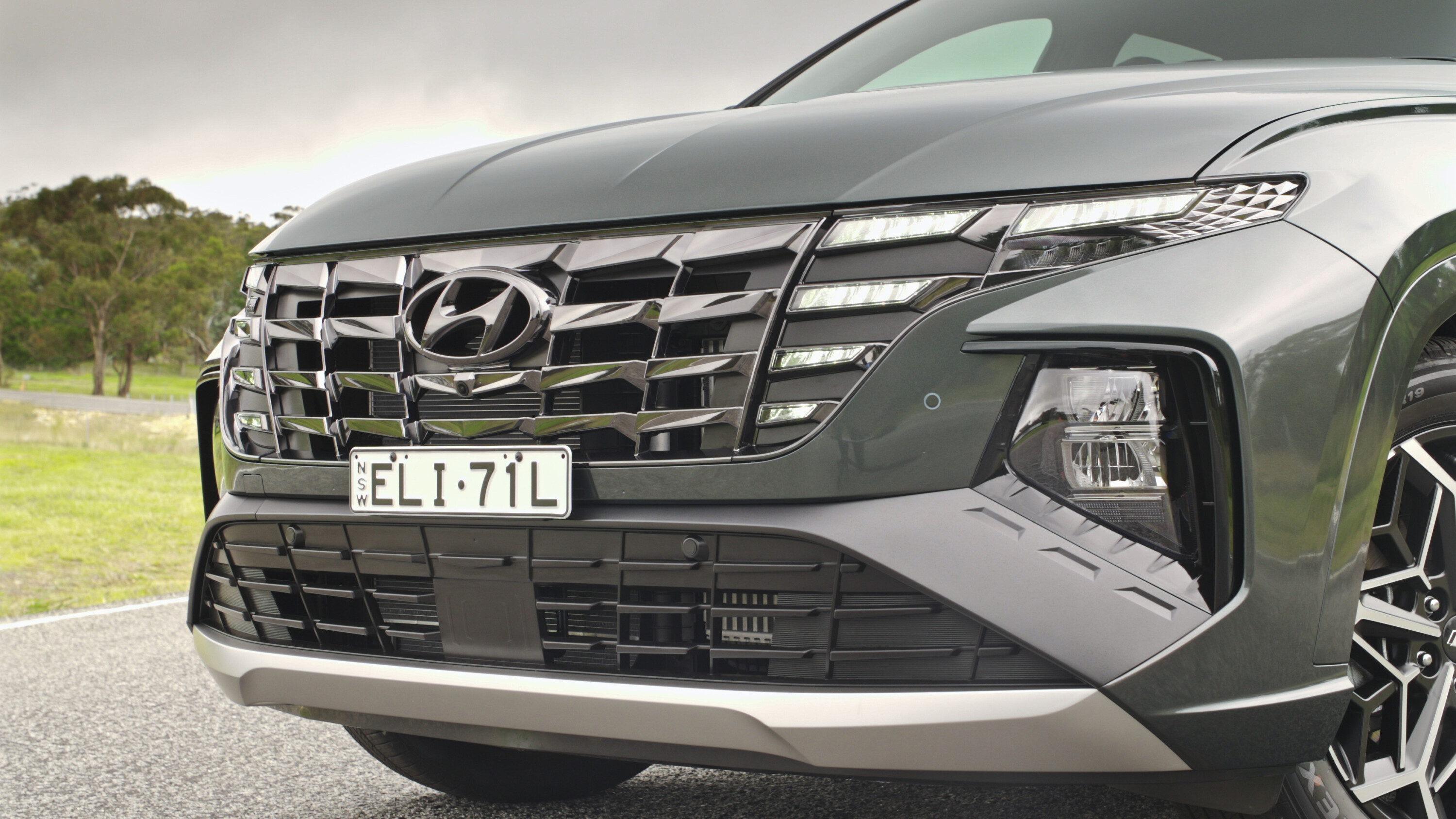
Three years on, the Tucson is still one the most striking-looking mainstream SUV models on the market, with its ‘Sensuous Sportiness’ design language bringing more angles than an origami swan including a sharp shoulder line, bulging wheel surrounds and bold character lines including a distinctive mark-of-Zorro-like Z-shape on the back door.
But beauty is in the eye of the beholder and, in the case of the Tucson, it doesn’t extend too far beyond skin deep.
A facelifted Tucson launched into Australia in June 2024. This range review has been updated to reflect the updates and changes.
JUMP AHEAD
- Hyundai Tucson pricing
- What body styles are available with the Tucson?
- What features are in every Tucson?
- What key features do I get if I spend more?
- How safe is the Hyundai Tucson?
- How comfortable & practical is the Tucson?
- How much boot space does the Tucson offer?
- I like driving, will I enjoy the Tucson?
- Which Tucson engine uses the least fuel?
- What is the Tucson’s towing capacity?
- How long is the warranty & what are the Tucson’s servicing costs?
- Which version of the Tucson does Wheels recommend?
- What are the Hyundai Tucson’s key rivals?
Hyundai Tucson pricing
| Variant | Price |
|---|---|
| Hyundai Tucson 2.0L SUV FWD | $39,100 |
| Hyundai Tucson Elite 2.0L SUV FWD | $44,100 |
| Hyundai Tucson N Line 1.6L SUV FWD | $45,100 |
| Hyundai Tucson 1.6L SUV FWD Hybrid | $45,100 |
| Hyundai Tucson Elite 1.6L SUV FWD | $46,100 |
| Hyundai Tucson Elite 1.6L SUV 4WD | $48,600 |
| Hyundai Tucson Elite N Line 1.6L SUV FWD | $48,600 |
| Hyundai Tucson N Line 1.6L SUV FWD Hybrid | $49,100 |
| Hyundai Tucson Elite 1.6L SUV FWD Hybrid | $50,100 |
| Hyundai Tucson Elite N Line 1.6L SUV 4WD | $51,100 |
| Hyundai Tucson Elite 1.6L SUV 4WD Hybrid | $52,600 |
| Hyundai Tucson Elite N Line 1.6L SUV FWD Hybrid | $52,600 |
| Hyundai Tucson Elite N Line 1.6L SUV 4WD Hybrid | $55,100 |
| Hyundai Tucson Premium 1.6L SUV 4WD | $55,600 |
| Hyundai Tucson Premium N Line 1.6L SUV 4WD | $57,100 |
| Hyundai Tucson Premium 1.6L SUV 4WD Hybrid | $59,600 |
| Hyundai Tucson Premium N Line 1.6L SUV 4WD Hybrid | $61,100 |
| Prices exclude on-road costs |
What body styles are available with the Tucson?
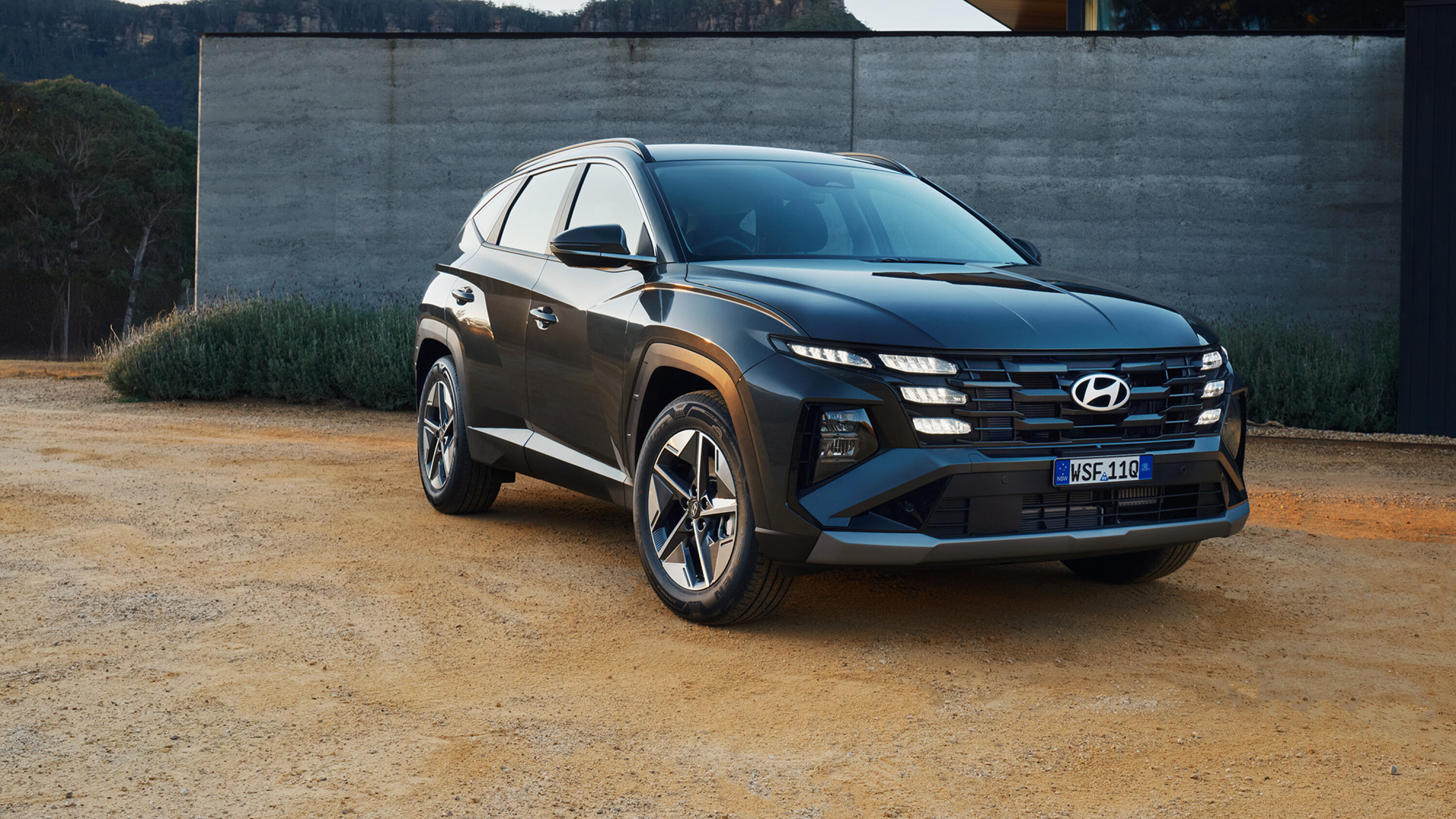
Like all of its rivals, the Hyundai Tucson is a five-door SUV only, with five seats.
The Tucson drives either its front wheels (FWD) or all four wheels (AWD), depending on the version chosen. It is classed as a medium SUV, in the volume-selling segment.
Powertrains include a standard non-turbo 2.0-litre petrol four-cylinder engine, along with a 1.6-litre turbo petrol four in regular and electric-assisted hybrid forms – the latter entering as a rival to Toyota’s popular RAV4 Hybrid.
The Tucson has dropped its 2.0-litre diesel in the process, but buyers keen on that mill can look to its brother under the skin, the Kia Sportage.
1
What features are in every Tucson?
The features listed below are standard in the entry-level model and will appear in higher-grade variants unless replaced with more premium equivalent features.
Entry level: Tucson 2.0L FWD
As the name suggests, the cheapest Tucson comes with front-wheel drive (FWD) and the four-cylinder 2.0-litre ‘SmartStream’ naturally-aspirated petrol engine, with a six-speed automatic transmission.
It’s decked out with 18-inch alloy wheels, including a full-sized spare, while the interior features manually adjusted cloth seats, a new 12.3-inch main display, and wireless connectivity for Apple Carplay and Android Auto.
| 2025 Hyundai Tucson standard features | |
|---|---|
| Cloth seats | Dual-zone climate control with 6.6-inch touchscreen, temperature dials (new) |
| 18-inch machined alloy wheels (up from 17) | 15W Wireless phone charging |
| LED headlights and tail-lights (previously Elite & up) | Four USB-C ports |
| 12.3-inch main display (up from 10.25in) | Bluelink phone app connectivity |
| New ccNC infotainment & OTA updates | Six-speaker audio |
| Apple CarPlay & Android Auto (both wireless & wired) | Keyless entry and start (new) |
| 4.2-inch driver display between standard gauges | One-touch up/down windows front and rear |
| 2025 Hyundai Tucson standard safety | |
|---|---|
| Autonomous emergency braking | Crosswind stability control |
| Lane-keep assist | Rear cross-traffic alert with braking support |
| Lane-centring assist | Rear parking sensors |
| Adaptive cruise control with stop and go | Front parking sensors (previously Elite & up) |
| Blind-spot monitoring with braking support | Rear occupant alert (‘logic type’) |
| Traffic sign recognition | Door exit warning |
Buyers of the base model can also up their spend to add the N Line package, detailed below.
| 2025 Hyundai Tucson N-Line pack for base model ($4-6K) | |
|---|---|
| 1.6-litre turbo-petrol engine for non-hybrid version (replacing 2.0 petrol) | 12.3-inch drive display |
| Shift-by-wire gear selector | N Line interior accents |
| 19-inch N Line alloys | N Line leather and suede seat upholstery, red highlights |
| N Line exterior styling, body-coloured cladding | Alloy pedal covers |
| Adaptive projector-type LED headlights with auto high beam | N Line door sill plates |
| LED reversing lights | |
1
What key features do I get if I spend more?
Tucson Elite
Stepping up to the mid-spec Elite brings a bunch of extras and more powertrain choices.
Tucson Elite powertrains
- 115kW/192Nm 2.0 naturally aspirated petrol four
- 132kW/265Nm 1.6 turbo petrol four
- 169kW/350Nm 1.6 turbo petrol-electric hybrid four
| Tucson Elite variants | Price |
|---|---|
| Hyundai Tucson Elite 2.0L SUV FWD | $44,100 |
| Hyundai Tucson Elite 1.6L SUV FWD | $46,100 |
| Hyundai Tucson Elite 1.6L SUV 4WD | $48,600 |
| Hyundai Tucson Elite N Line 1.6L SUV FWD | $48,600 |
| Hyundai Tucson Elite 1.6L SUV FWD Hybrid | $50,100 |
| Hyundai Tucson Elite N Line 1.6L SUV 4WD | $51,100 |
| Hyundai Tucson Elite 1.6L SUV 4WD Hybrid | $52,600 |
| Hyundai Tucson Elite N Line 1.6L SUV FWD Hybrid | $52,600 |
| Hyundai Tucson Elite N Line 1.6L SUV 4WD Hybrid | $55,100 |
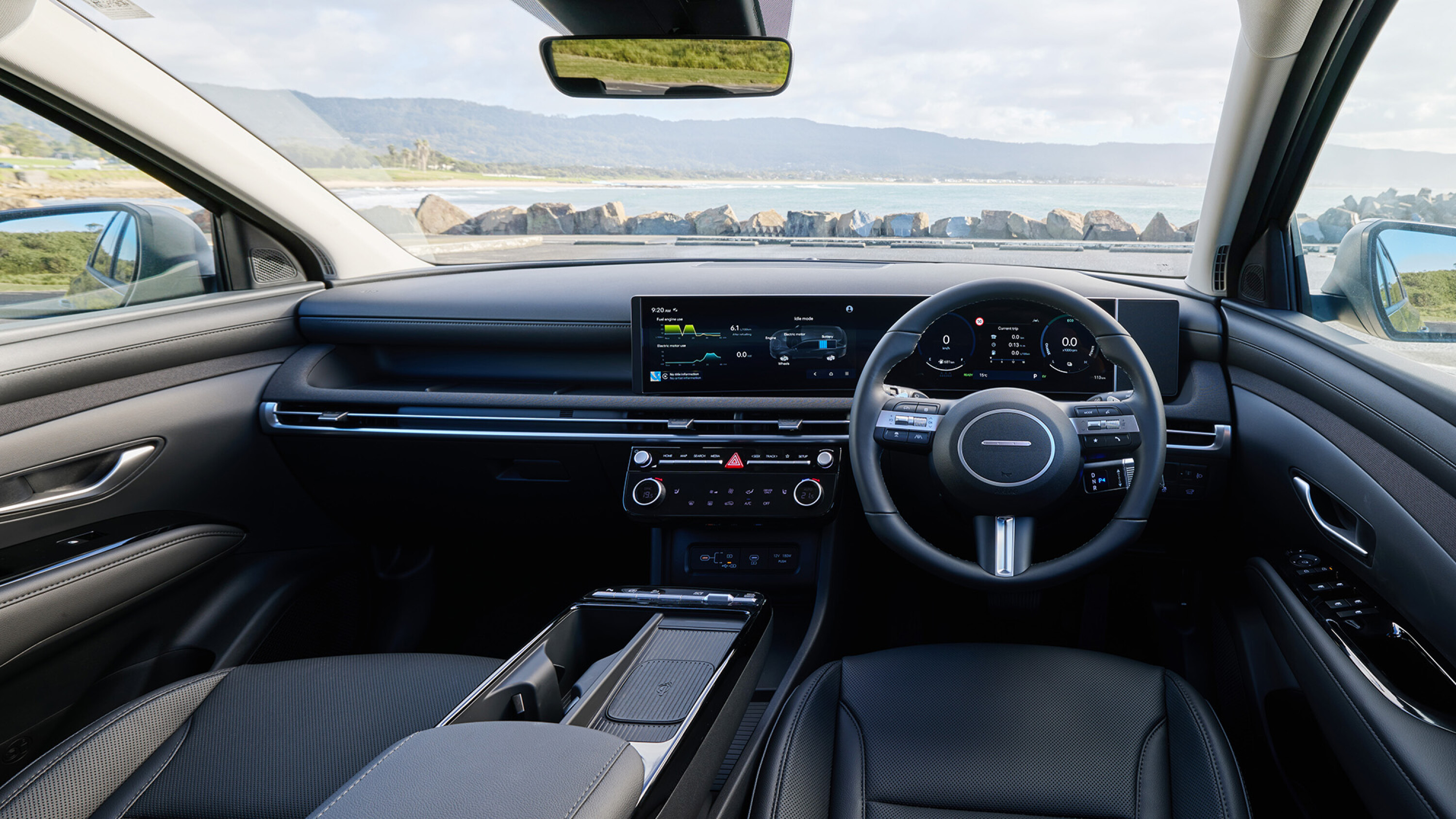
7
Key highlights include a 12.3-inch digital driver display and Highway Driving Assist, which integrates adaptive cruise control, lane centring, and automatic lane changes for enhanced driving support.
There’s also a power-operated tailgate, heated front seats and a heated steering wheel and leather-accented seats. Full upgrades listed below.
| 2025 Hyundai Tucson Elite (over base model) | |
|---|---|
| 12.3-inch driver display | Rain-sensing wipers |
| Dark chrome front grille with themed LEDs | Alloy door sill plates |
| Power-operated tailgate (previously Premium only) | Rear privacy glass |
| Heated front seats | Shift-by-wire gear selector & paddle shifters (1.6 turbo only) |
| Heated steering wheel (previously Premium only) | Highway Driving Assist with adaptive cruise control, lane centring, auto lane changes |
| Leather-accented seats | Rear occupant alert with sensors in seat bases |
| Power-adjustable driver’s seat | |
| 2025 Hyundai Tucson Elite N-Line (1.6 hybrid only) u2013u00a0$2500 | |
|---|---|
| 19-inch N Line alloy wheels | N Line interior highlights |
| N Line exterior styling with body-coloured cladding | N Line-branded leather and suede seat upholstery with red highlights |
| Adaptive projector-type LED headlights with auto high beam | Alloy pedal covers |
| LED reversing lights | N Line-branded door sill plates |
Tucson Premium
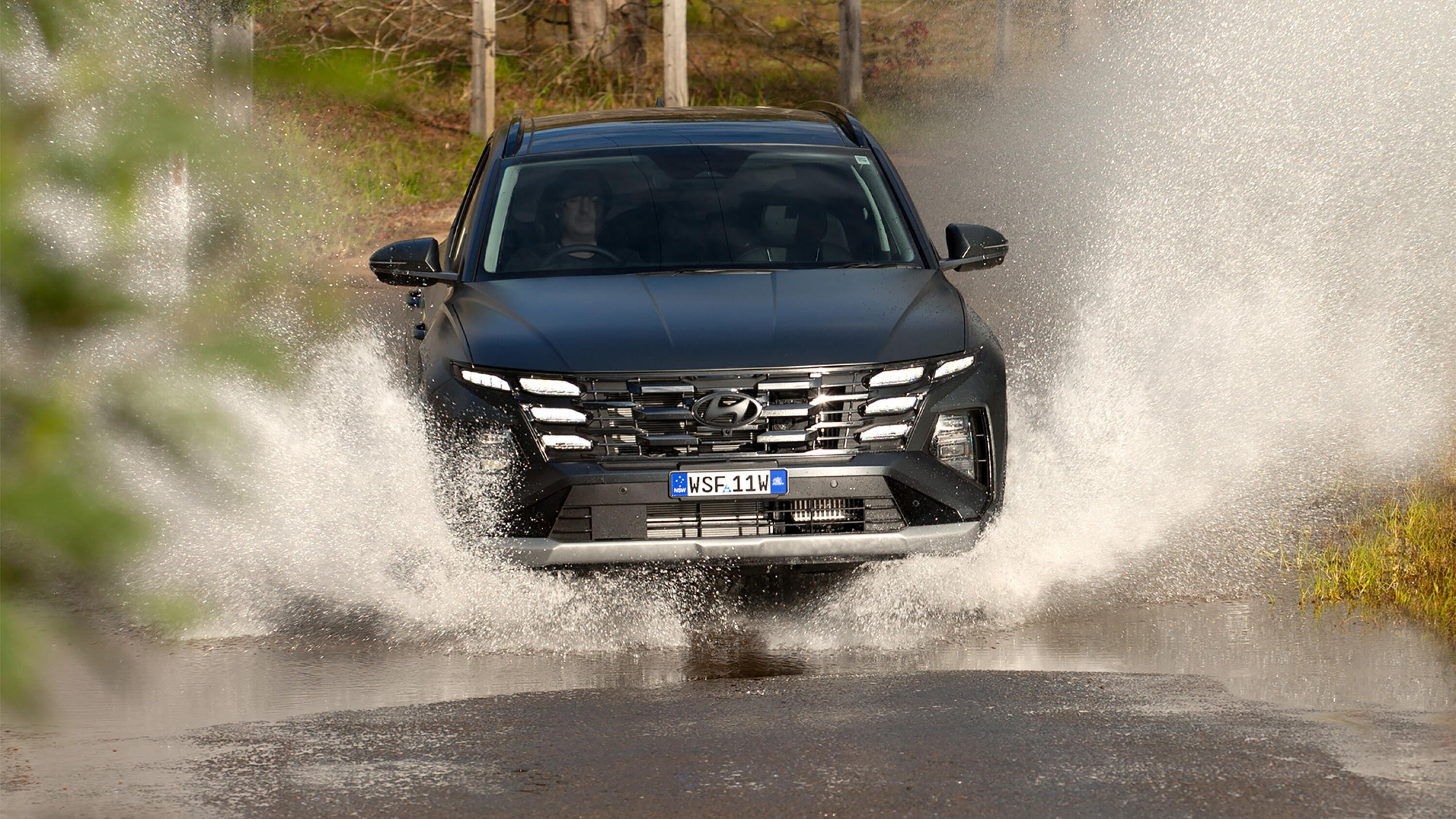
1
| Tucson Premium variants | Price |
|---|---|
| Hyundai Tucson Premium 1.6L SUV 4WD | $55,600 |
| Hyundai Tucson Premium N Line 1.6L SUV 4WD | $57,100 |
| Hyundai Tucson Premium 1.6L SUV 4WD Hybrid | $59,600 |
| Hyundai Tucson Premium N Line 1.6L SUV 4WD Hybrid | $61,100 |
| Prices exclude on-road costs |
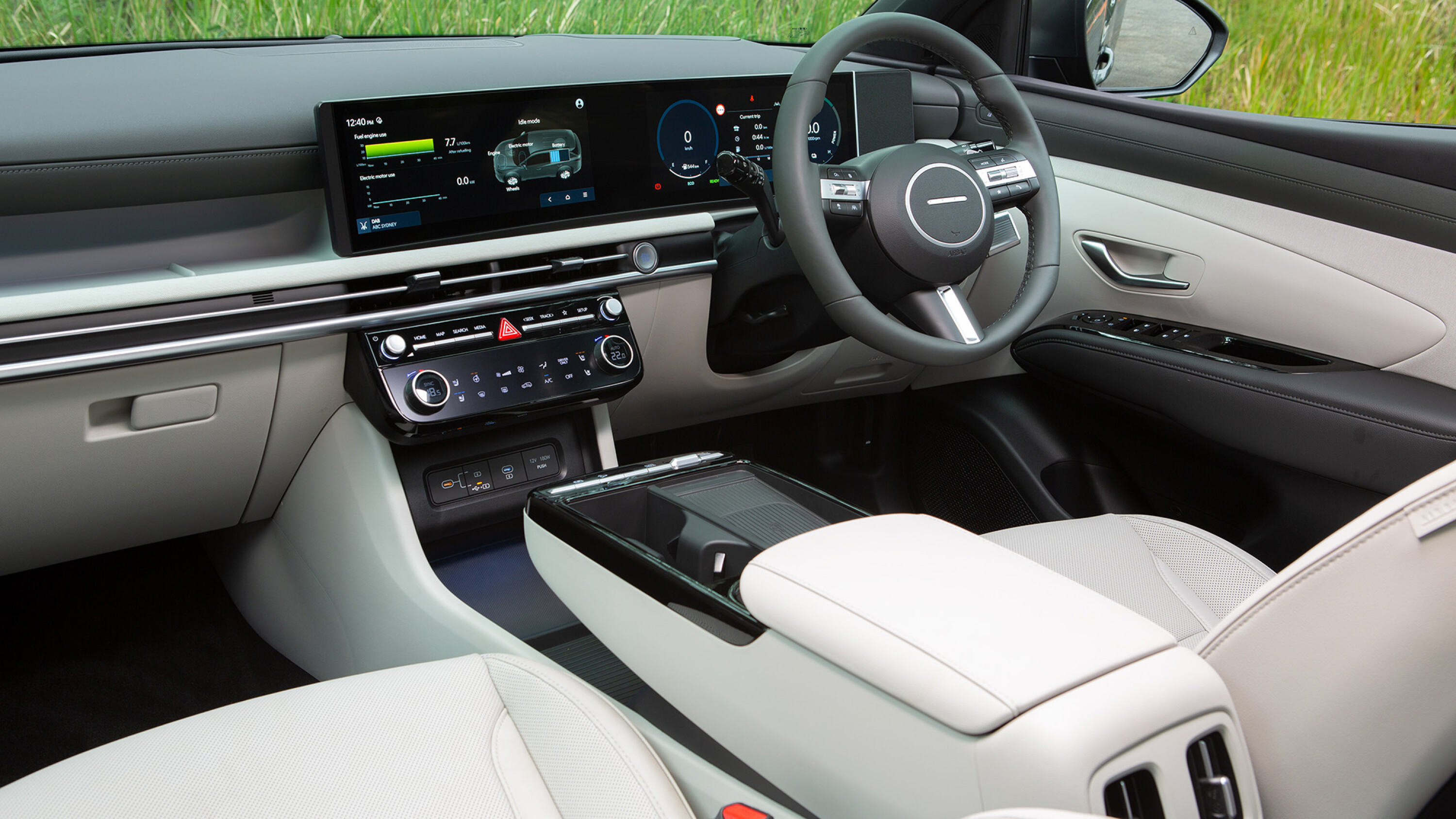
2
The Tucson Premium brings even more desirable extras, including:
| 2025 Hyundai Tucson Premium (over Elite) | |
|---|---|
| 19-inch alloy wheels | Ambient interior lighting |
| Panoramic glass sunroof | Eight-speaker Bose premium sound system |
| Adaptive projector-type LED headlights with auto high beam | Blind-spot cameras (known as Blind-Spot View Monitor) |
| 12-inch head-up display | 360-degree camera |
| Ventilated front seats | Low-speed rear autonomous emergency braking for car parks |
| Power-adjustable front passenger seat | Side parking sensors |
| Memory for driver’s seat | |
Tucson Premium N-Line
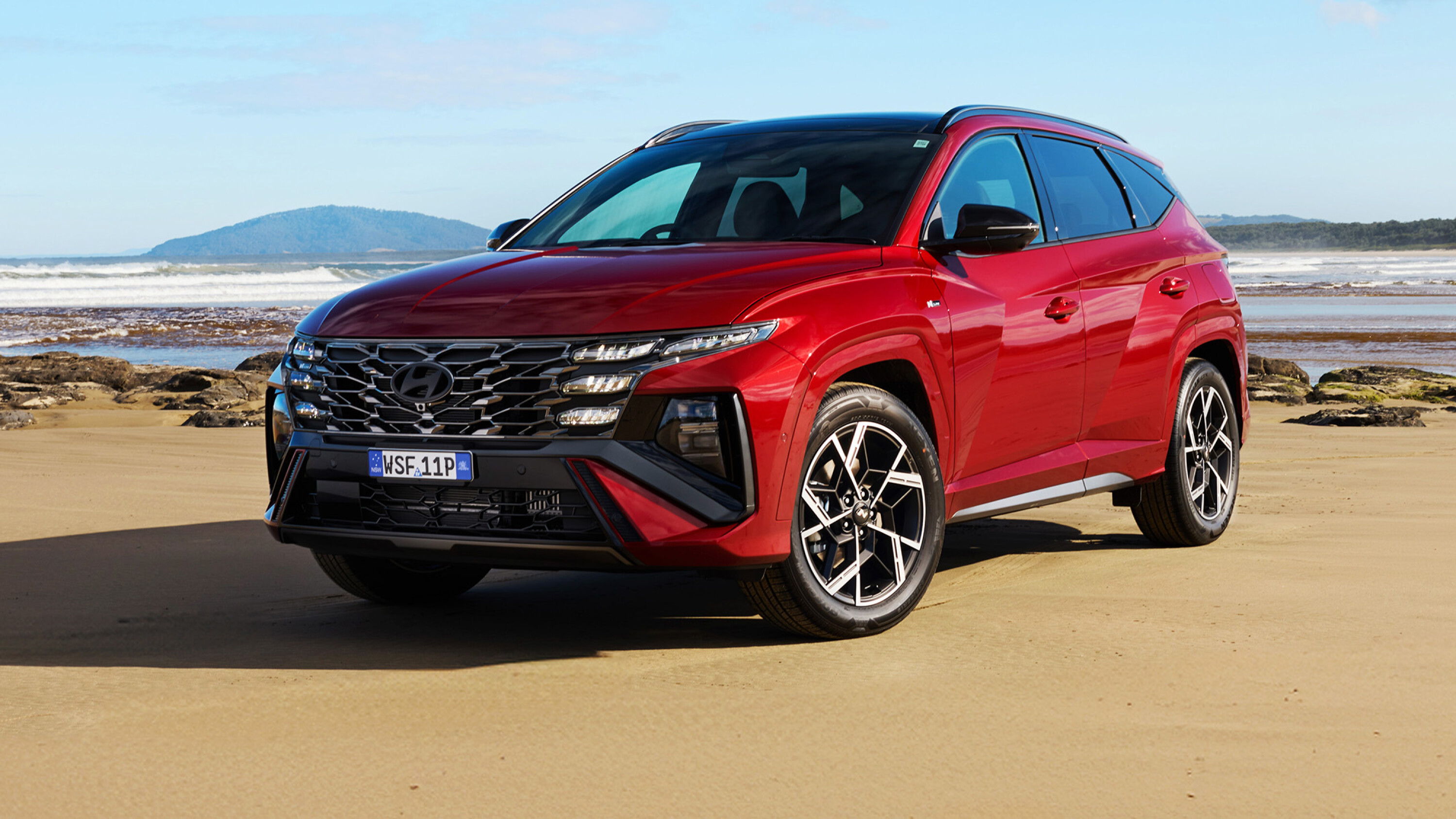
11
| 2025 Hyundai Tucson Premium N-Line u2013 $1500 | |
|---|---|
| 19-inch N Line alloy wheels | N Line-branded leather and suede seat upholstery with red highlights |
| N Line exterior styling with body-coloured cladding | Alloy pedal covers |
| LED reversing lights | N Line-branded door sill plates |
| N Line interior highlights | |
How safe is the Hyundai Tucson?
The Hyundai Tucson has a five-star ANCAP safety rating, based on testing conducted in 2021. This applies to all variants.
It received a score of 86 per cent for adult occupant protection, 87 per cent for child occupant protection, 66 per cent for vulnerable road user protection, and 70 per cent for safety assist technology, which includes:
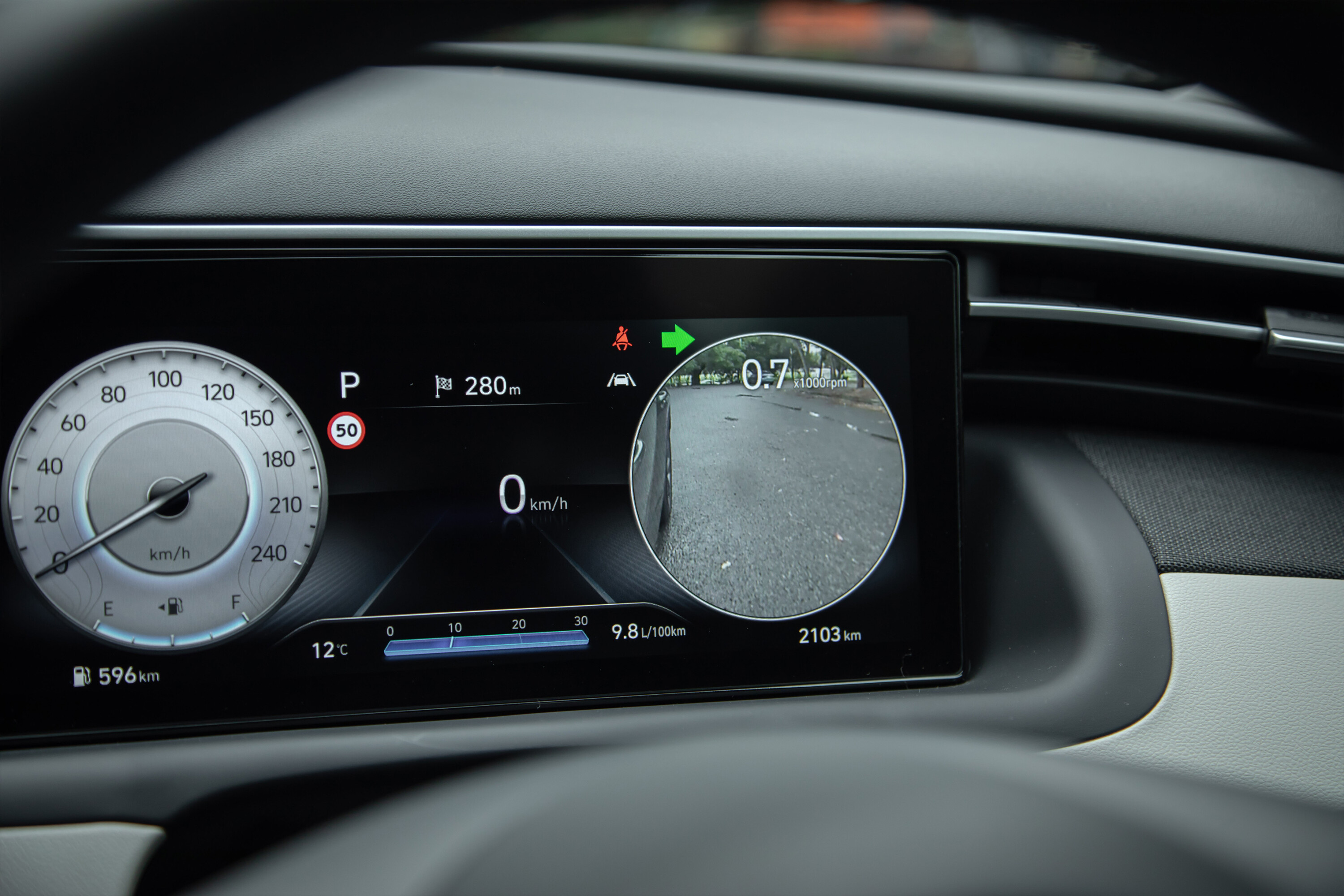
1
| 2025 Hyundai Tucson standard safety | |
|---|---|
| Autonomous emergency braking | Crosswind stability control |
| Lane-keep assist | Rear cross-traffic alert with braking support |
| Lane-centring assist | Rear parking sensors |
| Adaptive cruise control with stop and go | Front parking sensors (previously Elite & up) |
| Blind-spot monitoring with braking support | Rear occupant alert (‘logic type’) |
| Traffic sign recognition | Door exit warning |
How comfortable and practical is the Hyundai Tucson?
If someone is won over by the Tucson in a showroom it’s likely to be when they slide into the cabin.
The fit and finish are excellent and, even in the entry-level Tucson, you won’t find any hard plastics up front higher than the door armrests.
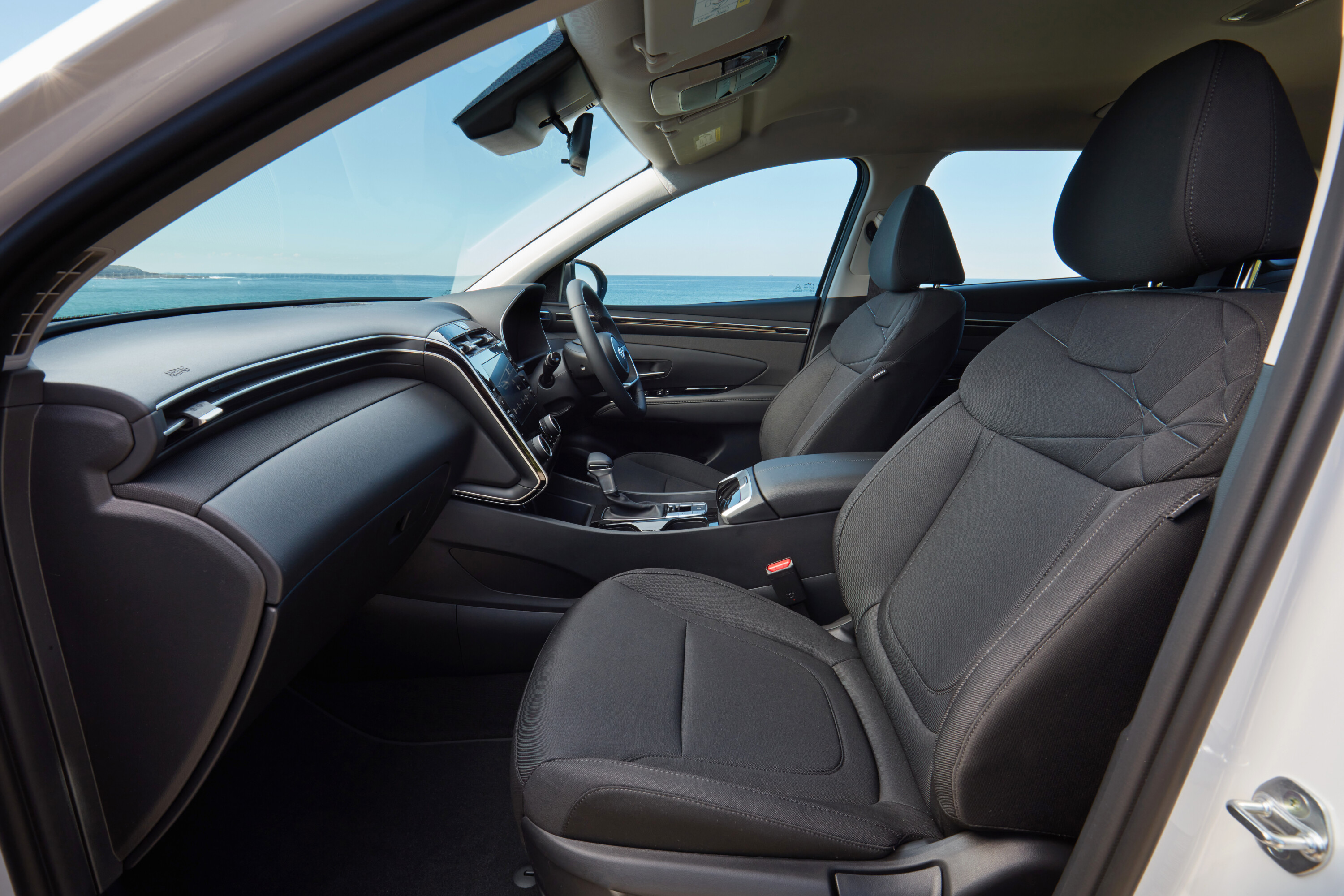
1
In the Premium, everything looks very premium, particularly with the leather upholstery trims, which are a $295 option over the standard black leather.
The front seats in all variants are comfortable.
Like the dashboard, the two-tier centre console has no protruding clutter, with even the shift-by-wire gear selector now positioned behind the steering wheel on 1.6 turbo petrol models.
There’s a decent-sized storage bin, two cup holders and a wireless phone charging pad that’s slightly tilted to allow for ventilation underneath and prevent the device from overheating.
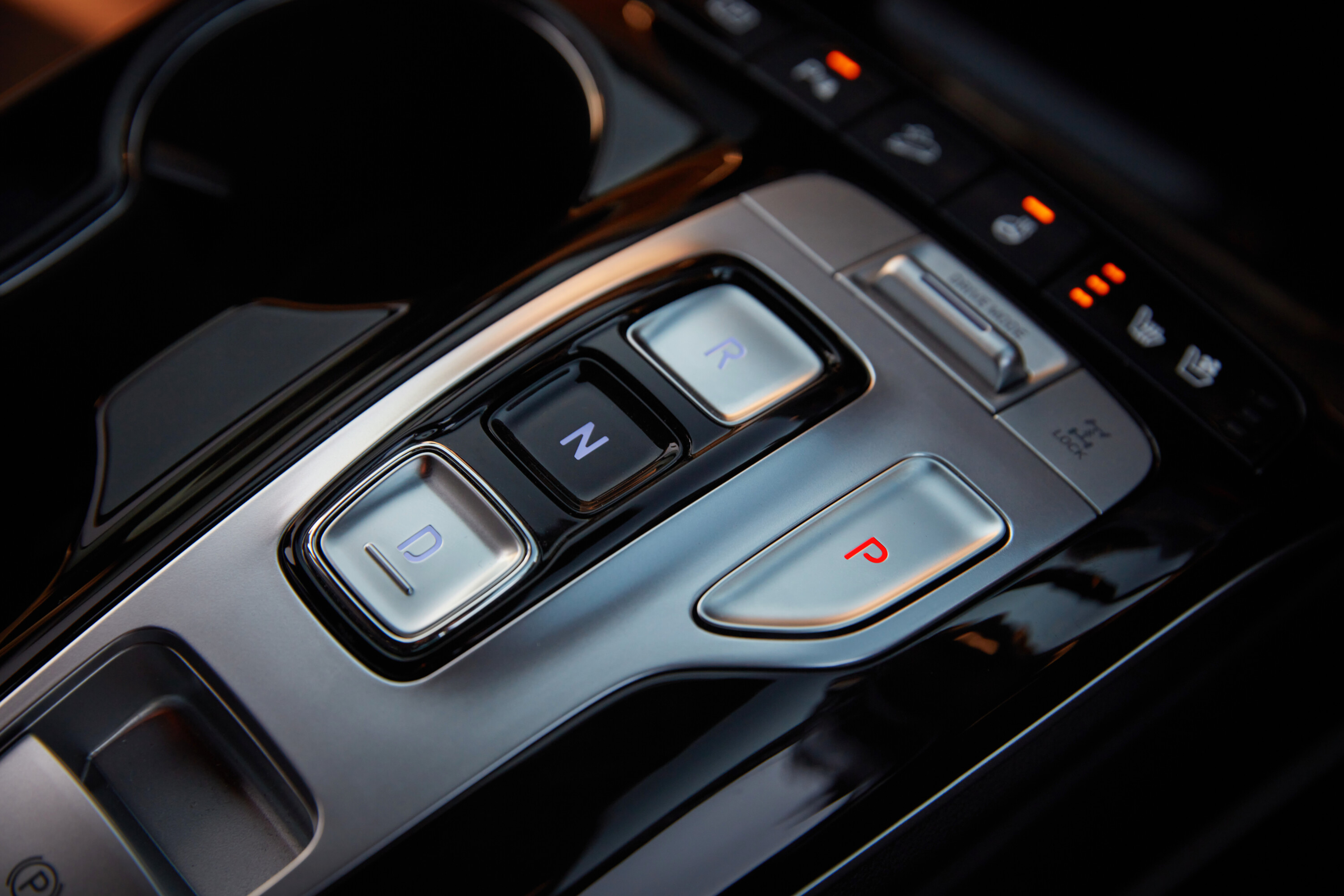
1
Rear space and comfort
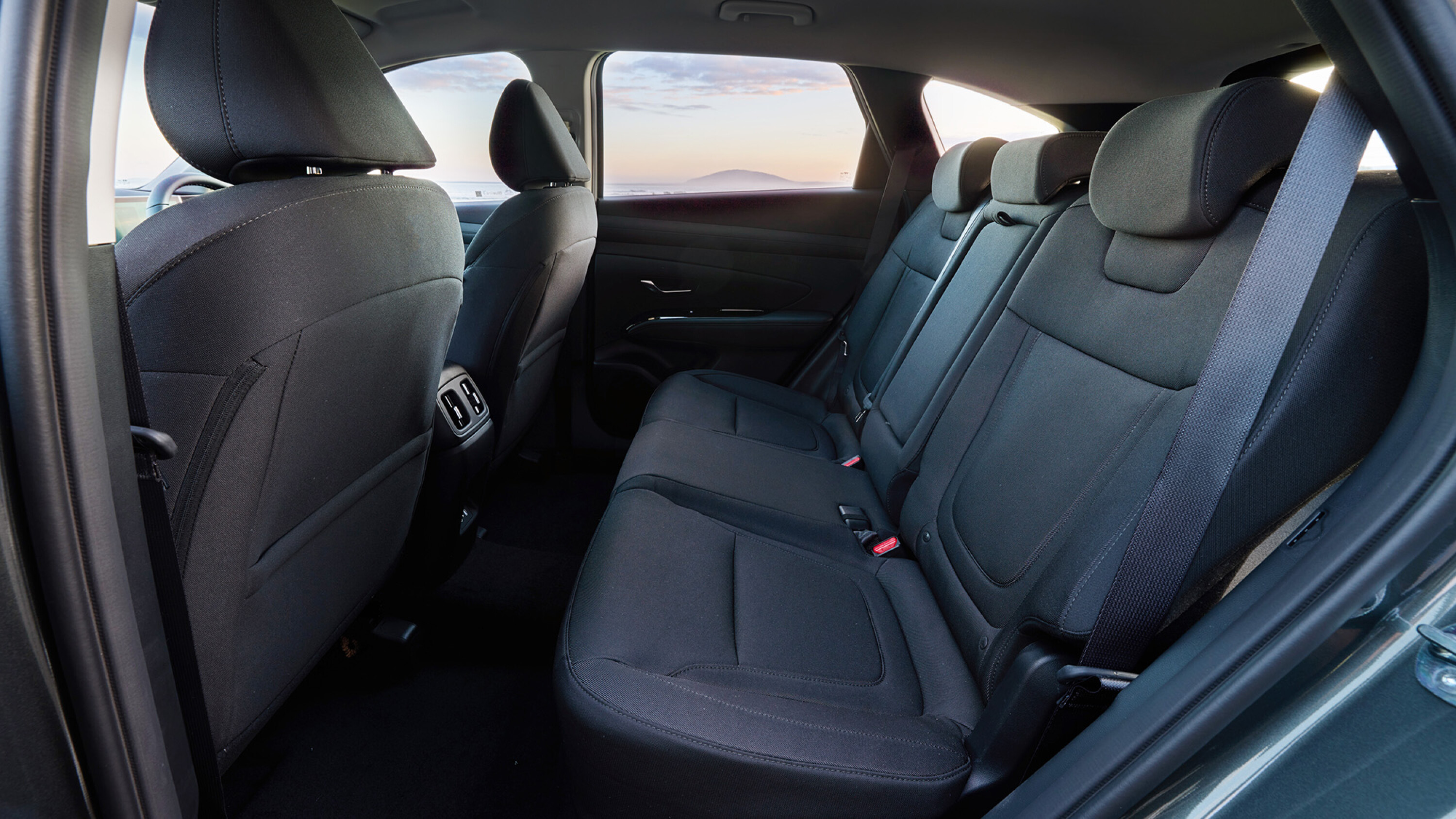
The Tucson’s 2755mm wheelbase brings plenty of leg and knee room and there’s a nice gap under the front seats to fit your feet.
All three rear seats are comfortable and despite the swept-back roofline headroom isn’t too bad either – even in versions that have a sunroof.
2
With two rear passengers, there’s a fold-down centre armrest with two cup holders.
Fitting three adults across the bench might be a bit of a squeeze, but whoever cops the middle will be pleased to see that the Tucson has a very shallow transmission tunnel that allows for reasonable legroom.
With two rear passengers, there’s a fold-down centre armrest with two cup holders. Other rear storage options include map pockets behind the front seats and pokey little door bins designed to take a bottle. Rear seat passengers also get air vents and there are two USB sockets.
1
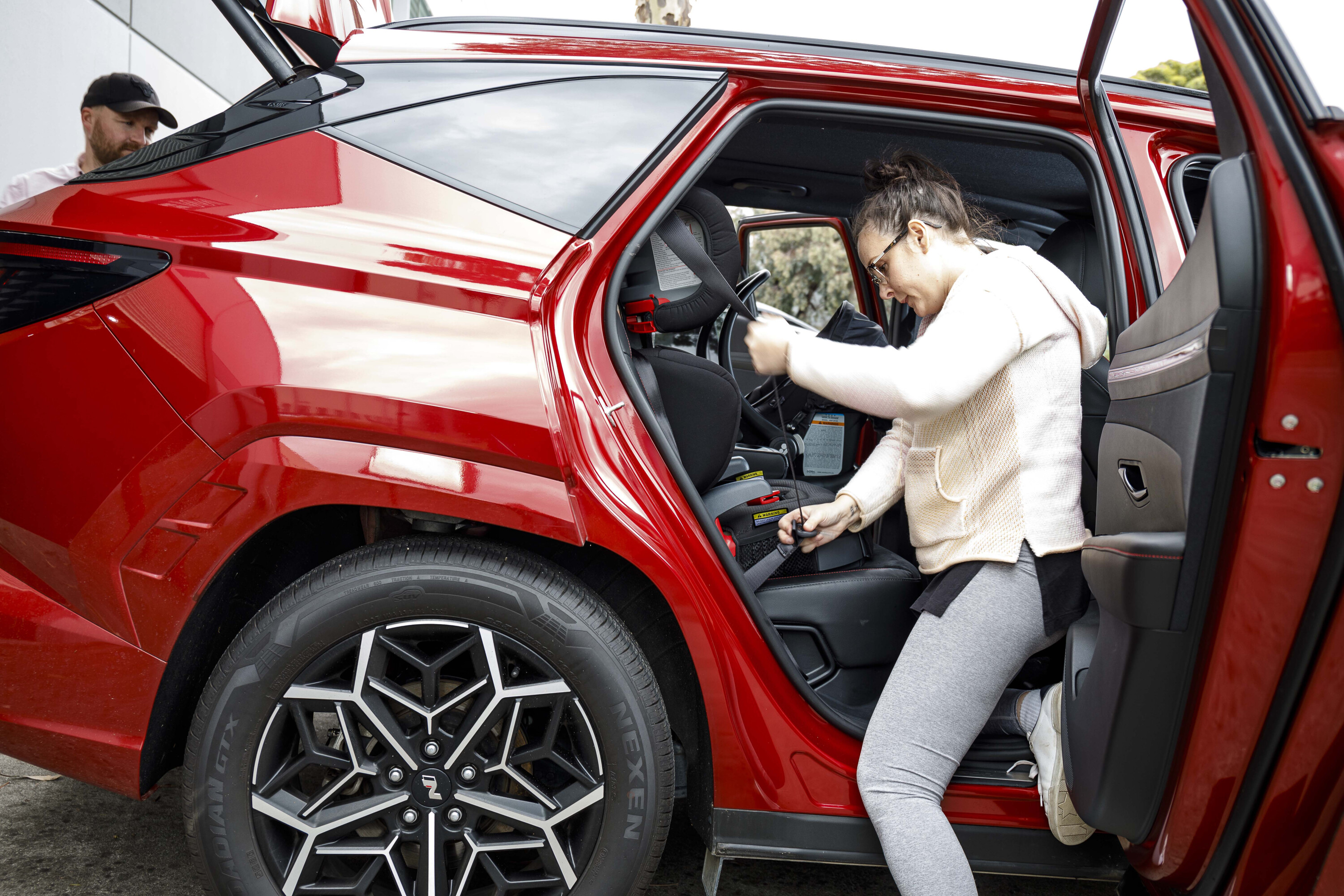
You’ll have no issues fitting three younger people across the back and if you need to put them in child seats there are ISOFIX anchor points at the outboard seats and three top tethers.
However, fitting the top tether on child seats can be difficult due to a narrow gap between the back of the second-row seats and the retractable parcel shelf.
1
How much boot space does the 2025 Hyundai Tucson offer?
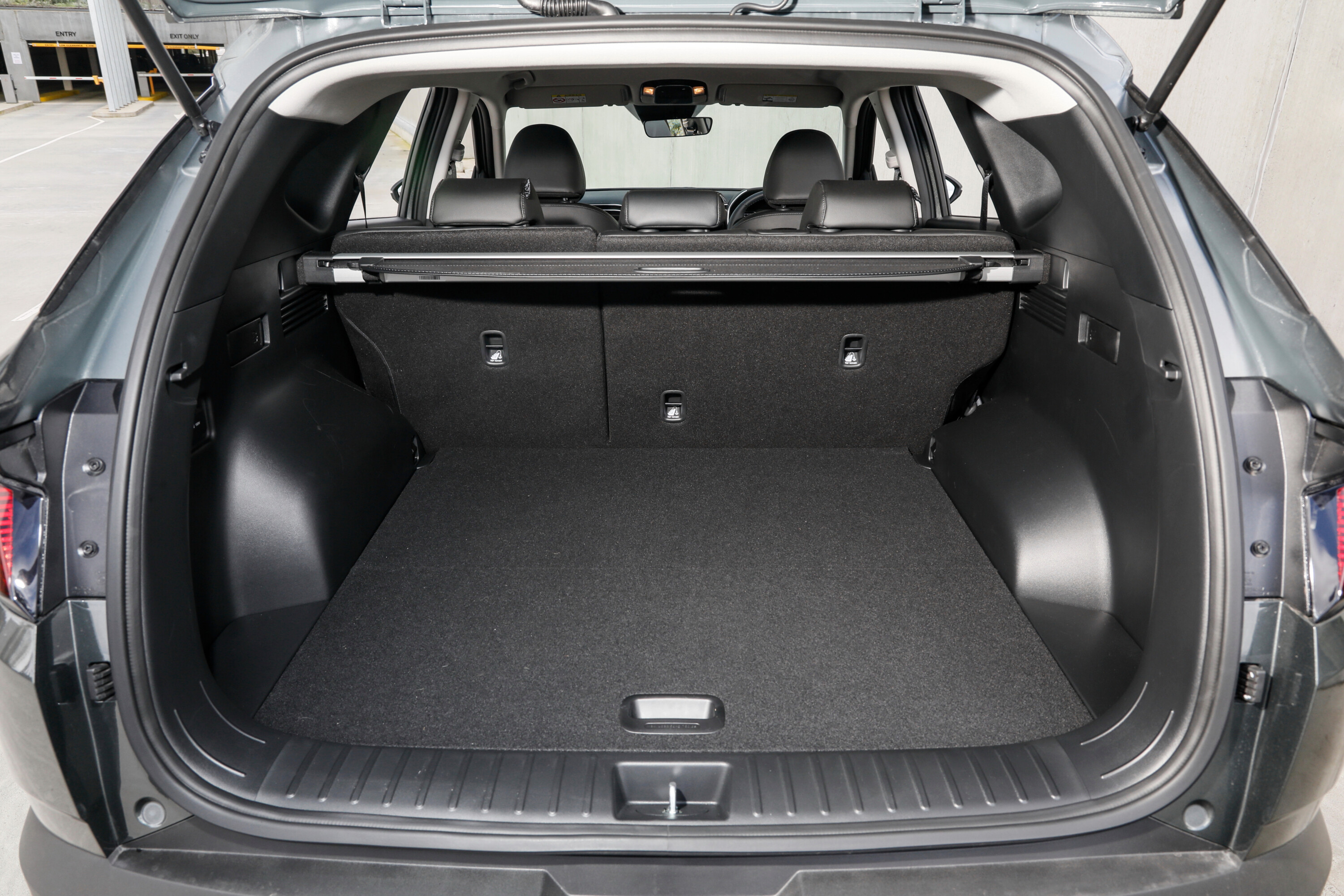
With the rear seats up, the boot holds 539 litres, making it one of the biggest in a medium SUV.
The Tucson has a full-sized spare wheel under the boot floor, so it compares well with the Toyota RAV4, which holds 542 litres with the optional full-sized spare.
2
Folding the Tucson’s 60:40 split rear seatbacks down brings up to 1860 litres.
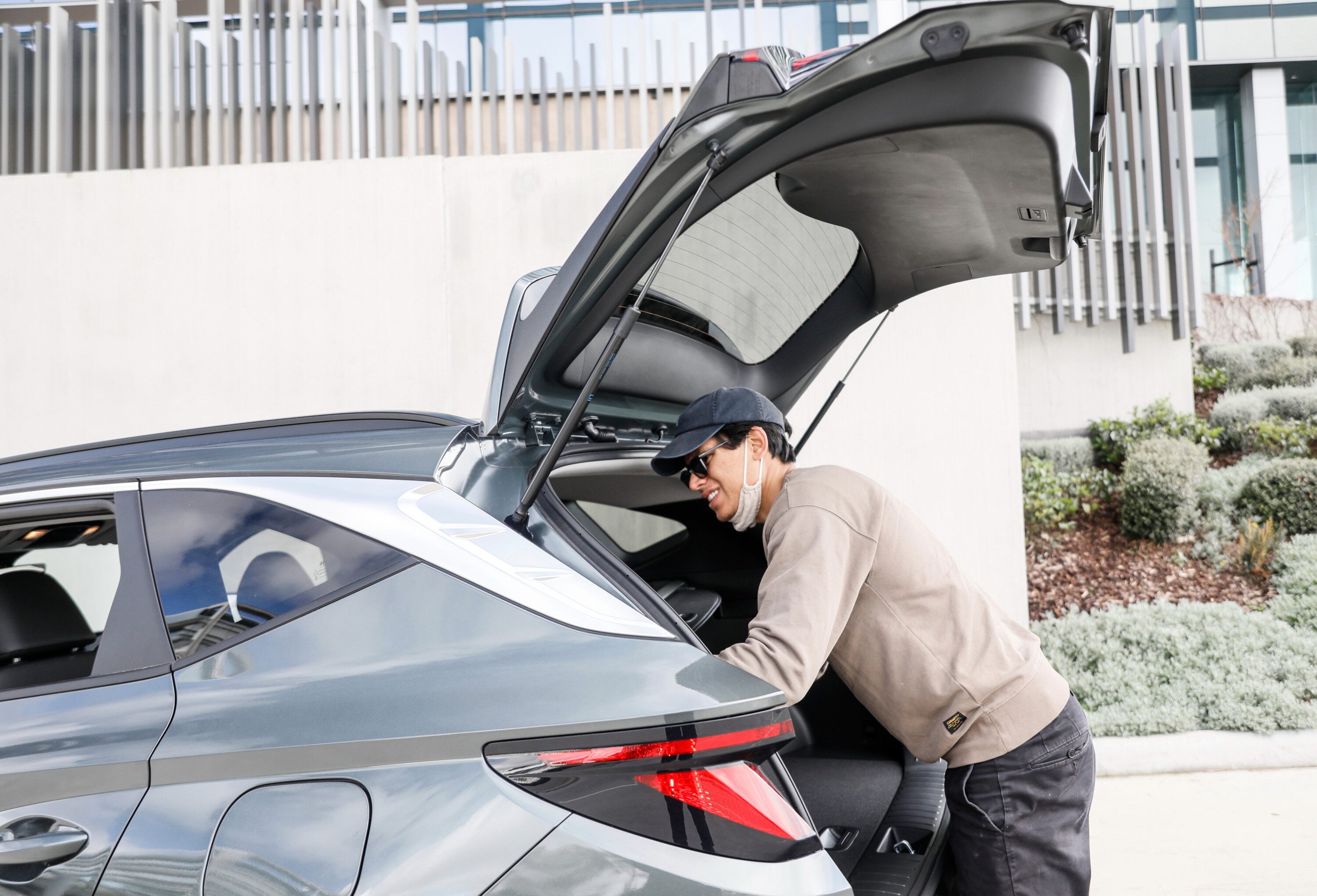
The Tucson’s tailgate opens nice and high so you won’t hit your head, and there’s a 12-volt outlet plus remote seatback releases.
I like driving, will I enjoy the Hyundai Tucson?
Depending on the engine you choose… yes or no.
Even if performance is down the bottom of your list, there will be times when you’ll find the SmartStream G2.0 engine wanting, particularly when tackling hills.
This is essentially the same engine found in the i30 Sedan, but it’s pulling an extra 200kg, which makes it a little revvy when you put your foot down.
1
Reaching 2500rpm in quick time catches the six-speed auto napping and it seems to have trouble finding the right gear, making the engine scream at about 3500rpm for a few seconds before either finding the right cog or, if the pedal is still touching the floor, revs continue climbing to reach peak torque and power at 4500rpm and 6200rpm respectively.
That weight gain also impacts the 132kW/265Nm 1.6-litre turbo-petrol that, combined with the seven-speed dual-clutch transmission, delivers its best work at higher speeds and feels gutsy and decisive on the open road.
But around town, this powertrain combo struggles a little and can feel frustratingly slow and jerky at low speeds, not to mention a tad thirsty.
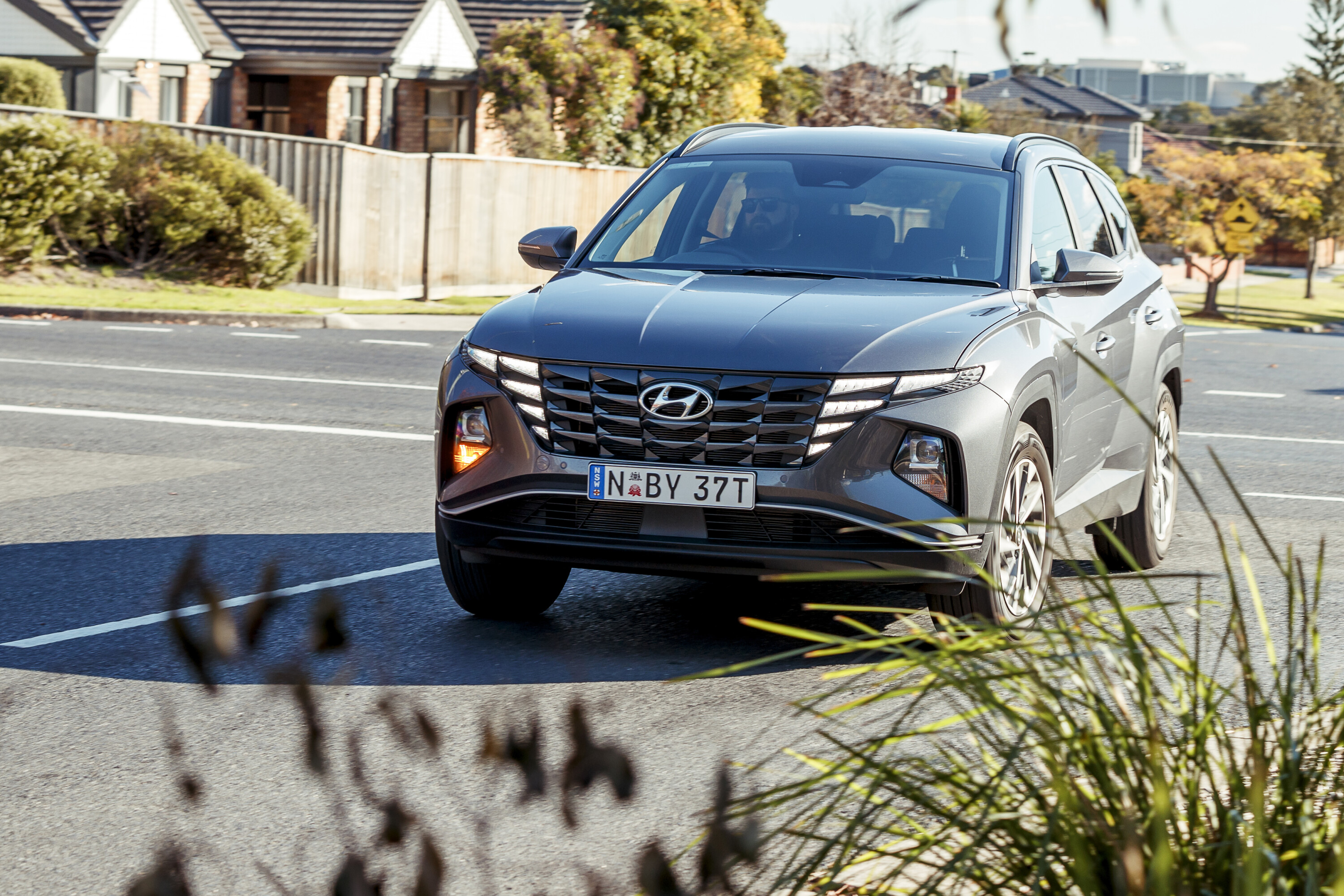
1
The new flagship engine, the 1.6 turbo petrol-electric hybrid, offers a more convincing 169kW and 350Nm – and that huge jump in torque makes a palpable difference behind the wheel, helped by its conventional six-speed auto.
Where the six-speed of the willing but underpowered petrol engine would desperately hold onto gears, it plays more confidently with the hybrid setup.
Ride comfort across the range is firm but not jarring – endowing the Tucson with a more sporting feel.
The new Tucson misses out on the local tune that was once a staple of Australian-delivered Hyundai models and while it cushions occupants nicely from nasty potholes, the damping is less effective at isolating the cabin from small- to medium-size bumps, making the ride feel a little busy on country roads.
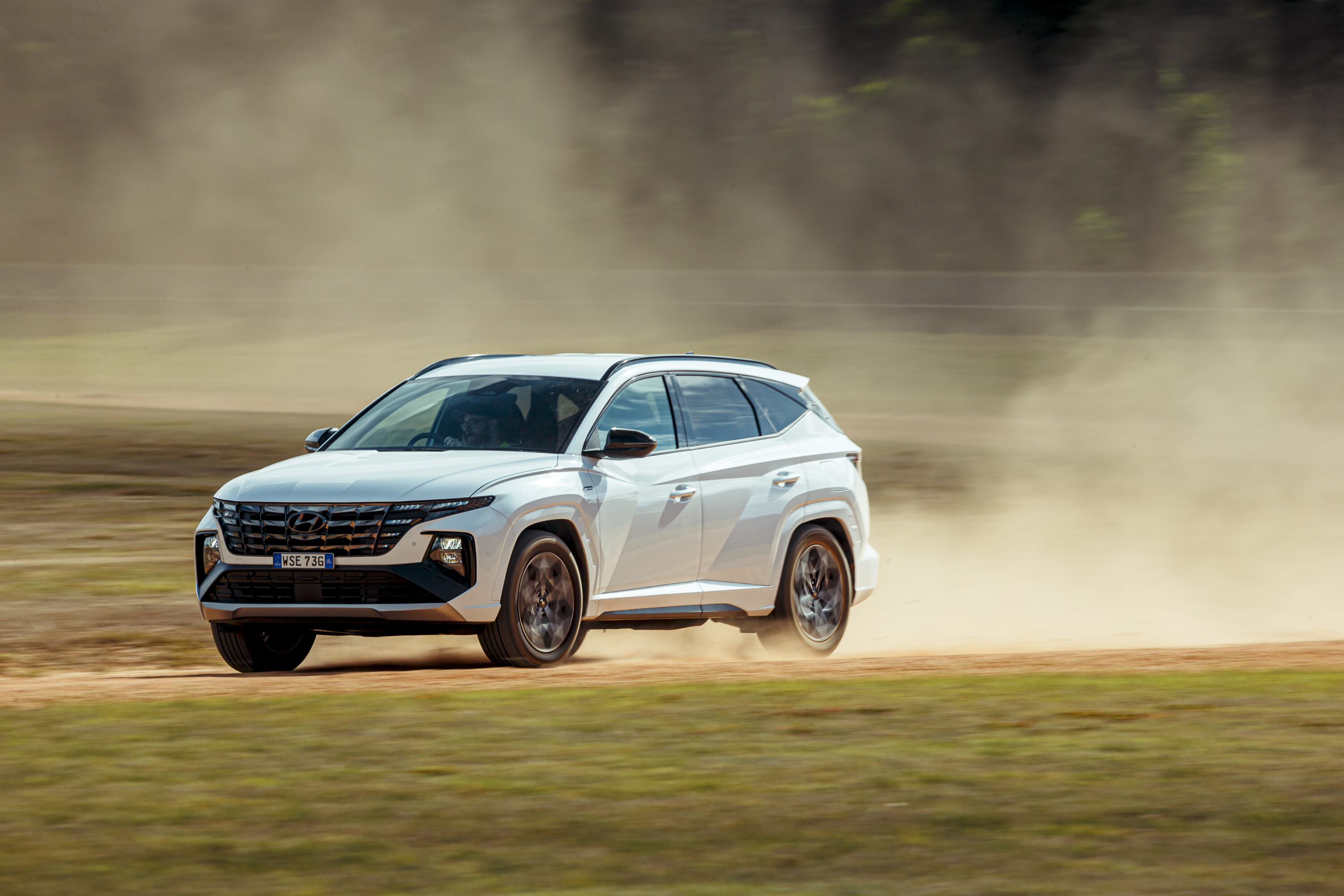
4
Body roll is well-contained for a medium SUV and it feels neatly compliant through corners.
The steering likewise feels well-weighted, lending more confidence in corners and on the highway.
Which Tucson engine uses the least fuel?
No surprise, the hybrid is the most frugal of the three powertrains available.
It has a respectable official combined fuel consumption rating of 5.3 litres per 100 kilometres – which, depending on the circumstances of your trip and the distance, is easily beaten with high sub-5.0 numbers. Conveniently, the hybrid only needs 91-octane petrol.
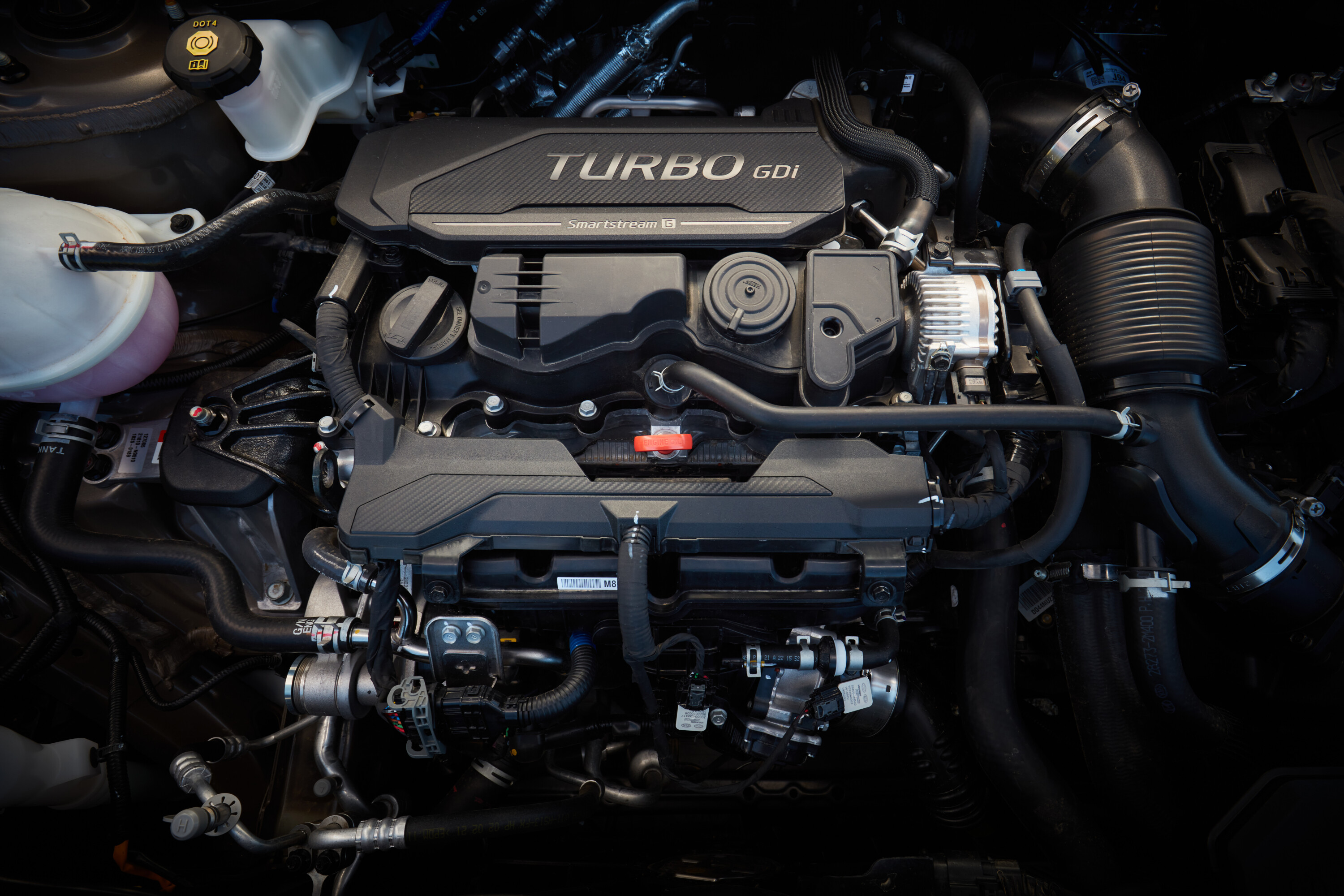
1
We can’t say the same about the 2.0L petrol and 1.6L turbo-petrol engines, which do a great job in a Hyundai i30 but struggle with the Tucson’s additional 200kg heft.
The 2.0-litre petrol drinks 8.1L/100km on the combined cycle and a very greedy 11.0L/100km on urban roads, while the 1.6-litre turbo engine’s official combined fuel consumption is 7.2L/100km.
What is the Tucson’s towing capacity?
The petrol Hyundai Tucsons have a 1650kg braked towing capacity, while the hybrid version can haul up to 1900 kilograms – matching the diesel model it replaces.
Unbraked towing capacity is 750kg across all three powertrains, as is the 100kg tow ball weight limit.
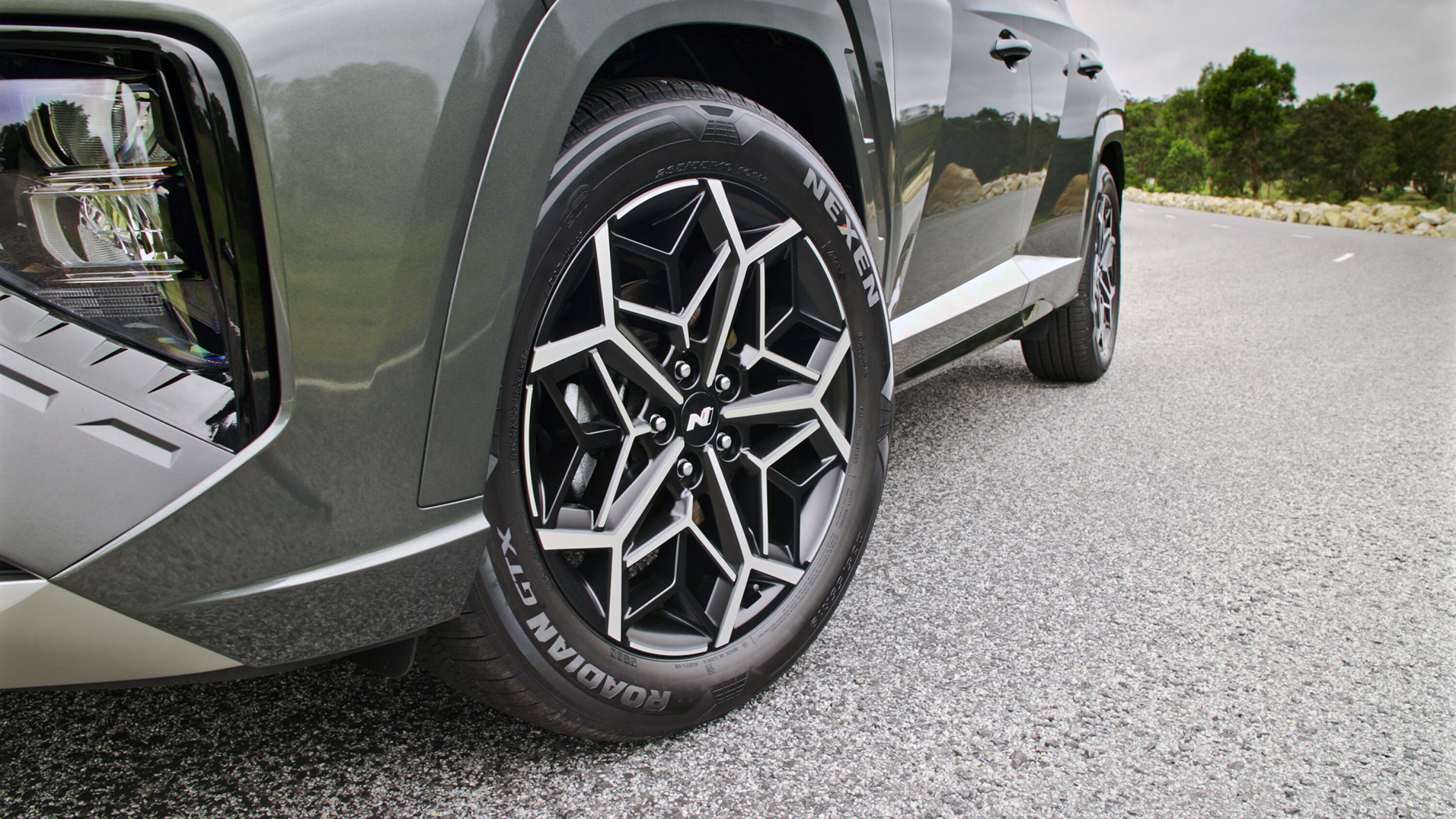
1
How long is the warranty and what are the Hyundai Tucson’s servicing costs?
As per the wider Hyundai range, the Tucson is covered by the brand’s five-year/unlimited-kilometre warranty.
Servicing for the 2.0-litre petrol is required every 12 months or 15,000 kilometres, whichever comes first. The turbo-petrol and hybrid variants have a shorter 12-month/10,000km interval.
Lifetime capped-price servicing is available, with costs dependent on the service interval and powertrain.
For the popular hybrid model, the first five services are priced at $340, $340, $560, $410 and $340 respectively.
Service intervals are 12 months or 10,000km – which, given the Aussie average of around 14,000km per year, could prove frustrating.
1
Which version of the Hyundai Tucson does Wheels recommend?
Read most Hyundai and Kia SUV reviews and you’ll be invariably steered toward the turbo-diesel AWD options in earlier forms, or the new hybrid in the Tucson’s latest incarnation.
The fact is, those combinations do a much better job of hauling these Korean SUVs than the petrol offerings. This is certainly the case with the Tucson.
For the best all-round package in the updated range, it’s hard to go past the hybrid, which offers the best value in terms of equipment, driveability, fuel economy and mid-level pricing – starting from $45,100.
What are the Hyundai Tucson’s key rivals?
It’s fair to say that Peter Robinson knows a thing or two about assessing a vehicle. As the editor of Wheels for a record 16-year innings, more road tests have landed on Robbo’s desk than any other man in the big chair at Wheels. He’s driven nearly everything in a stellar career, so it was only natural that we wanted him as a judge at COTY and, when all was wrapped up, that we wanted access to his notebook.
Here are the ten cars that caught Robbo’s eye, for better and for worse, at COTY 2024.
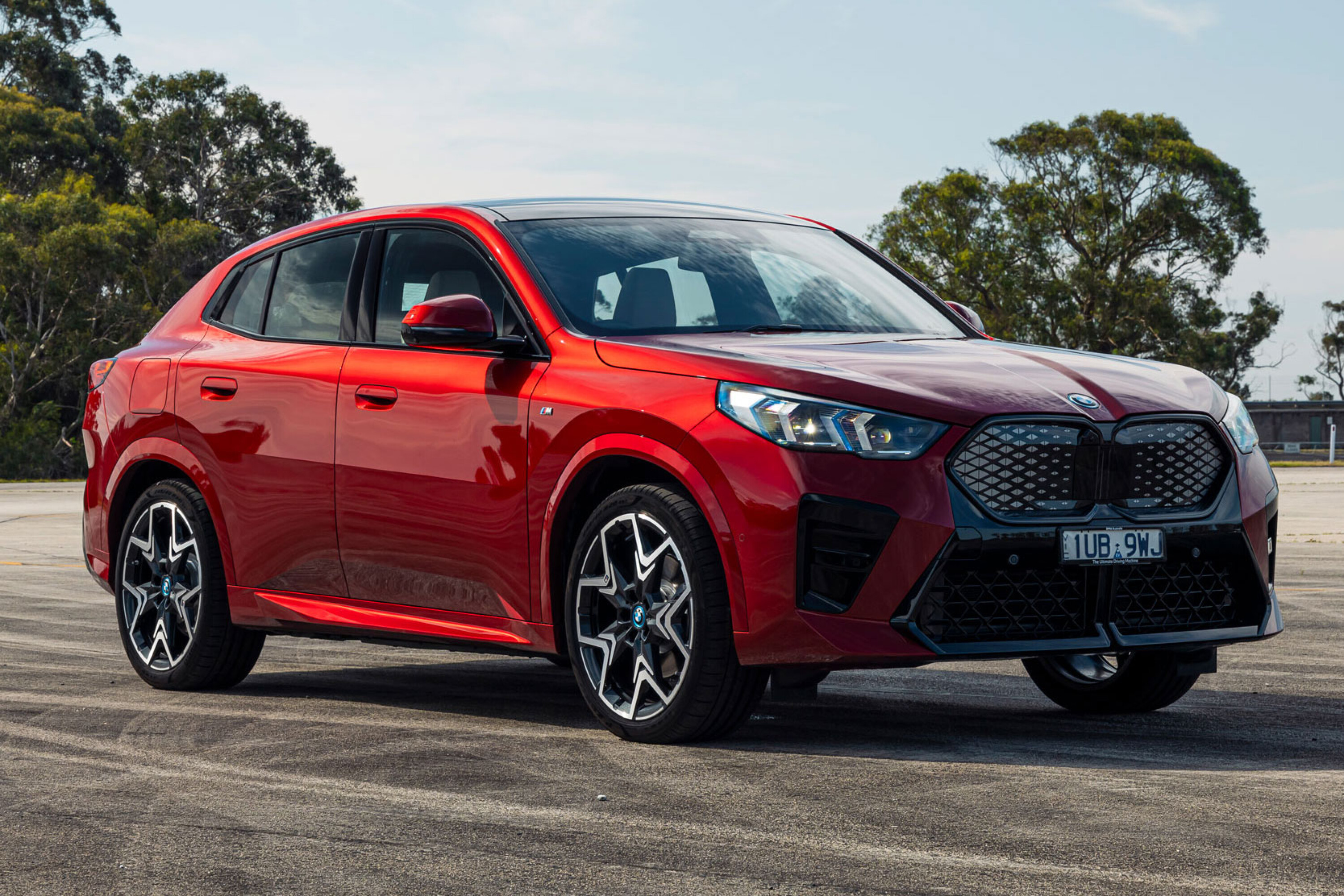
BMW iX2 xDrive30
For decades BMW instruments set the standard in legibility, simplicity of design and elegance. No longer, the switch to digital instruments, which brought a total redesign, dates back to 2018. Despite six years refinement of the concept this BMW’s dashboard is as contrived, messy and hard to fathom as too many elements of the exterior styling. Why change the perfection of white-on-black circular dials?
1
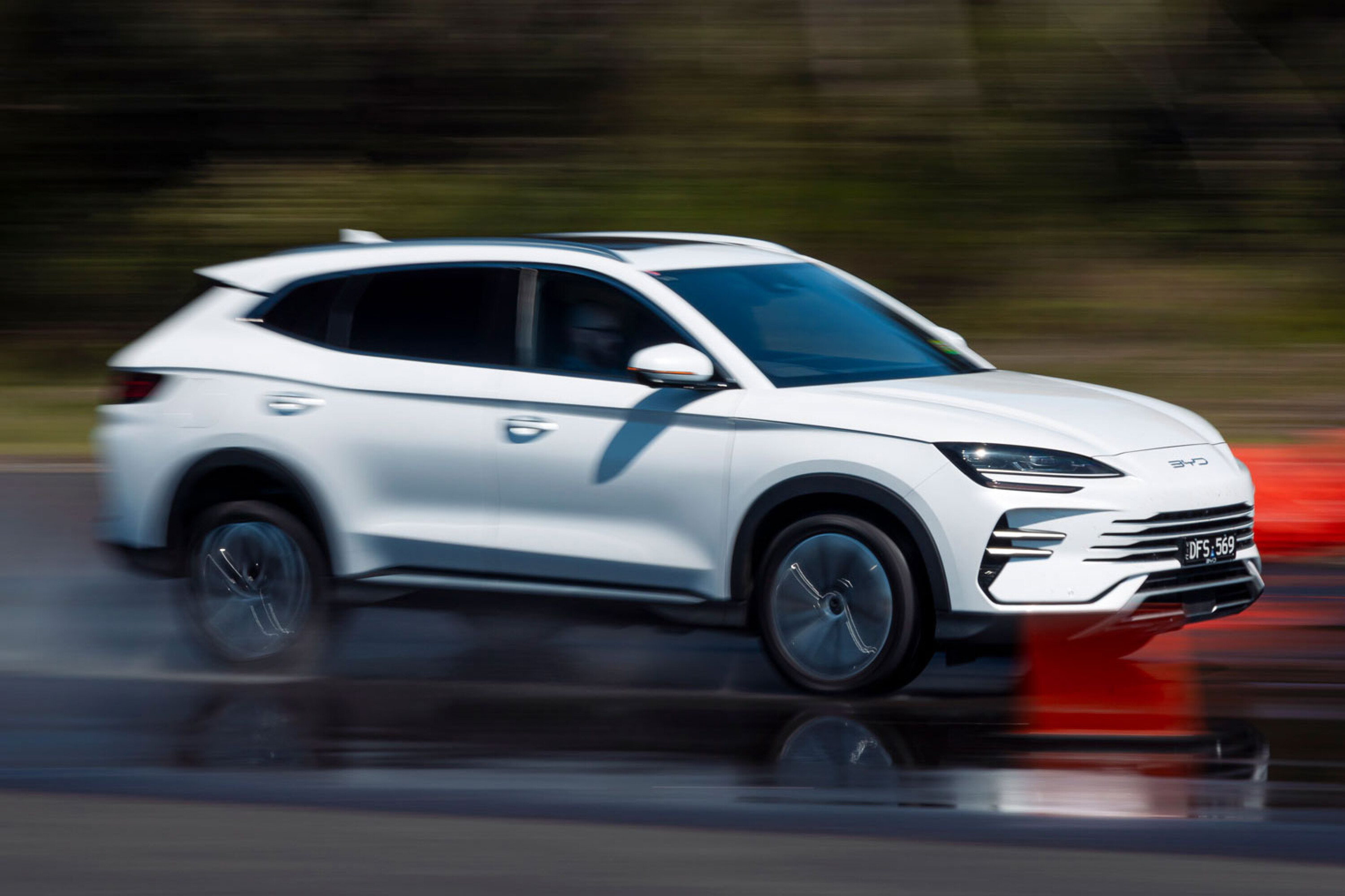
BYD Sealion
BYD, the most feared of all China’s car makers, still has much to learn when it comes to dynamics, a quality that remains significant to Wheels’ readers. Corners and bumps instantly reveal the Sealion’s lack of body control from a suspension that’s excessively soft and brings an overreaction to big bumps and helps exaggerate the understeer. Add steering that’s too light and you realise rivals do driver appeal so much better. Nor is the hybrid drivetrain responsive, for it lacks the immediacy of an EV, unless you kickdown to the firewall to wake up the petrol engine. Wait for the next generation.
1
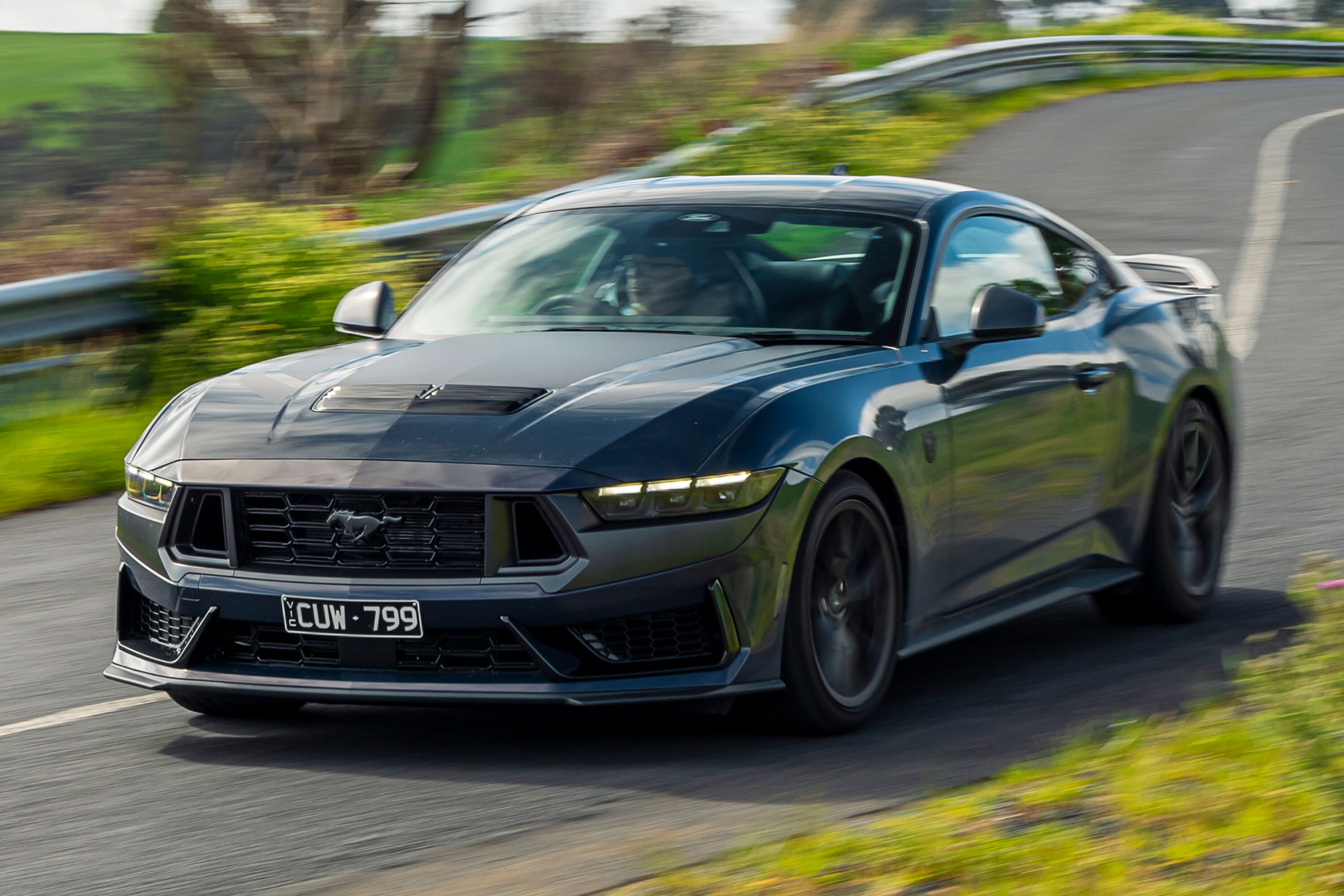
Ford Mustang Dark Horse
Yes, it helped that the Mustang was the only three-pedal COTY competitor, but that wasn’t the only reason I loved Ford’s track-attacking special edition. The Dark Horse, equally skilled as a comfortable cruiser or blitzing sports car, is capable of feats no other Mustang I’ve driven can achieve. The brawny 350kW bent-eight emits all the right sounds, the brakes are fantastic, the handling so wonderfully adjustable, the slick gearchange perfectly matches the car’s character, and the electric power steering delivers real feedback on the track. Yes, this Mustang’s getting hefty, yet it remains a brilliant drive. Another batch please.
1
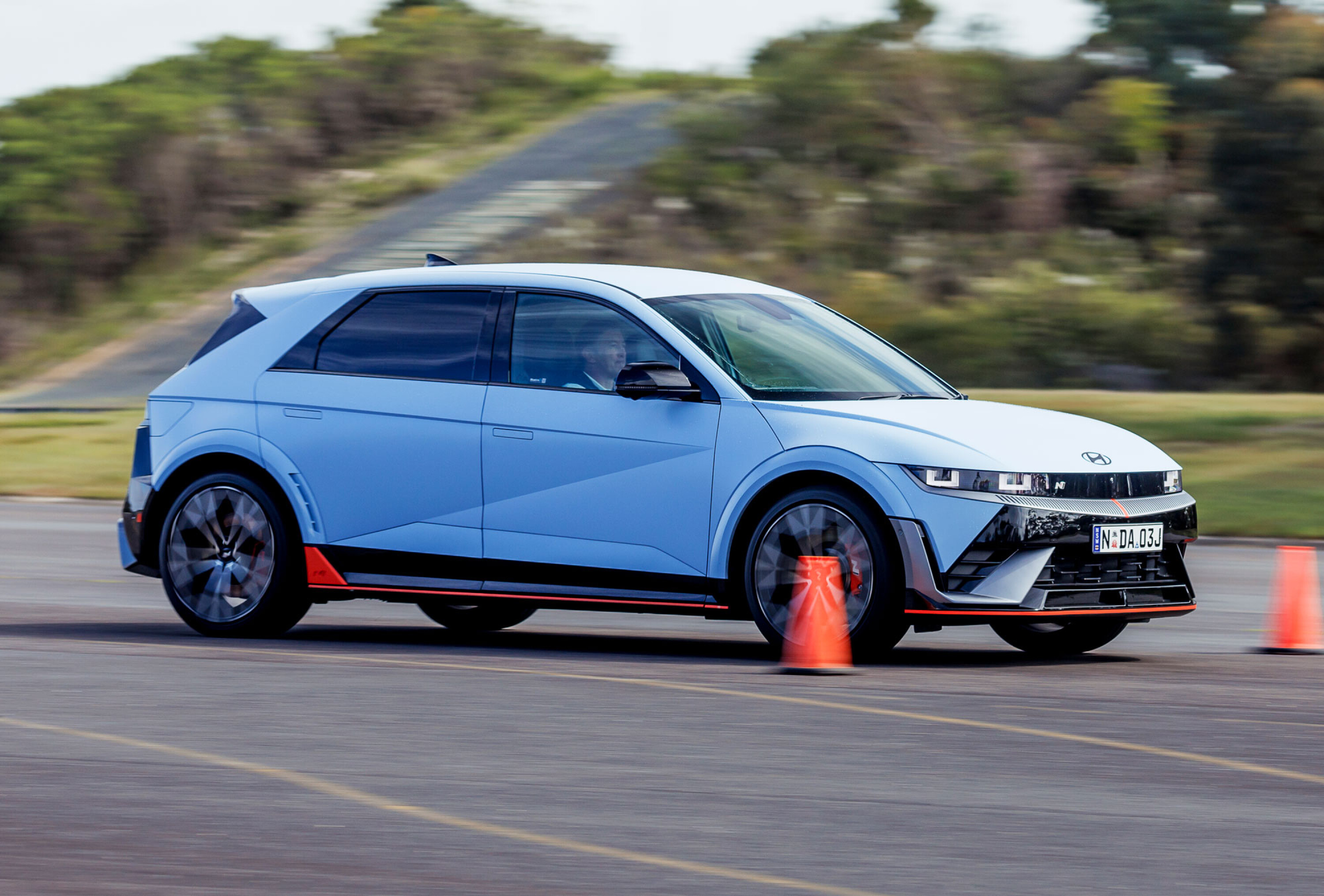
Hyundai Ioniq 5N
Much respected colleagues, including my old mate Chris Harris, rave about the Ioniq 5N.
Didn’t stop my scepticism hitting the redline before any wheel time. I can’t pretend to understand how it’s been achieved, only that in how the N feels, sounds and behaves (it even stutters at the cutout), this fabulous car mirrors the very best hot hatches. At least up to nine-tenths, step beyond that and the weight intervenes. Once the N lets go it would take a Verstappen to avoid a spin.
1
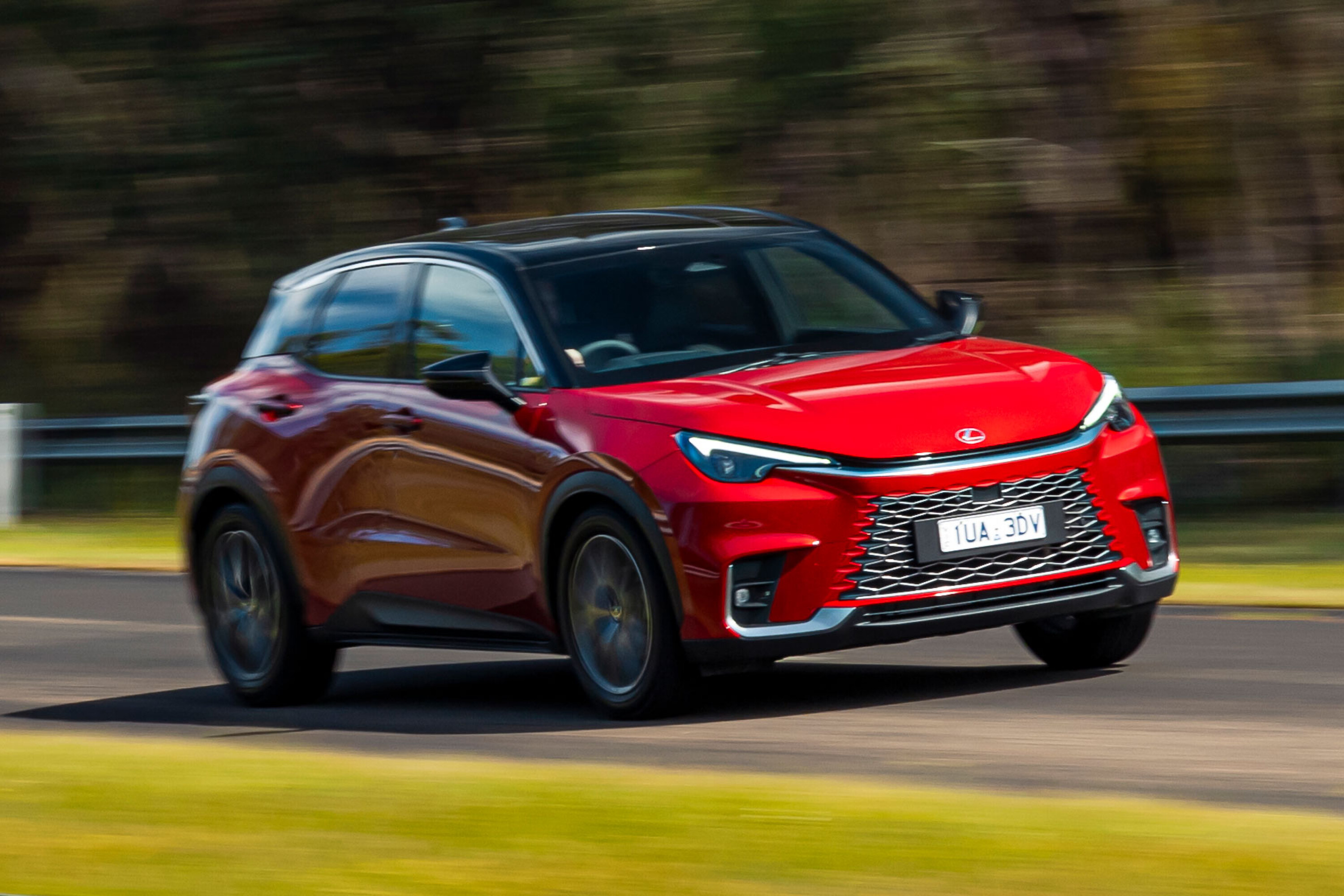
Lexus LBX
There must be some kind of irony when the cheapest (S47,550) most diminutive (overall length 4190mm) Lexus is also the best looking. The market for tiny, luxury SUVs maybe small – dealers shifted 141 LBXs in October, but by employing the Yaris Cross (835 sold the same month) as a fine basis, Lexus has transformed Toyota’s baby. Provided you don’t need serious adult space in the rear seat, the LBX plays true Lexus in terms of refinement, seat comfort, equipment and finish. Who cares if it’s not quick when the styling is so striking?
1
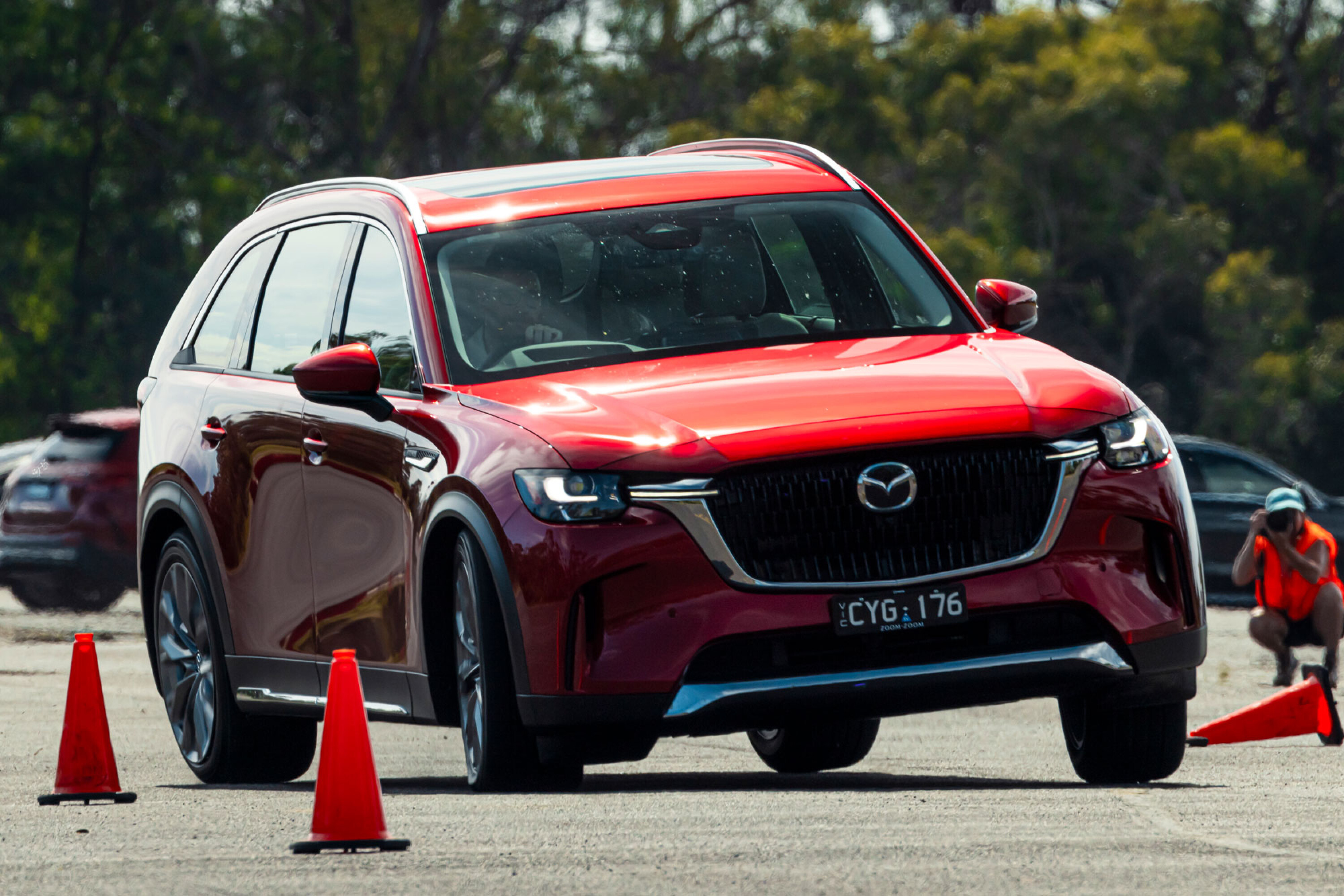
Mazda CX-90
Am I alone in struggling to identify Mazda’s clutch of look-alike SUVs? I think not. Size alone is not enough to distinguish the various CXs that continue to evolve Mazda’s now 15-year old KODO styling theme. Still, they remain handsome: the huge, designed-for-America, CX-90 exudes an upscale appearance, even though the driving doesn’t quite live up to expectations. If only I (and potential buyers) could easily distinguish it from the CX-70 and CX-80 without searching for the identity badge. Time for a new design language.
1
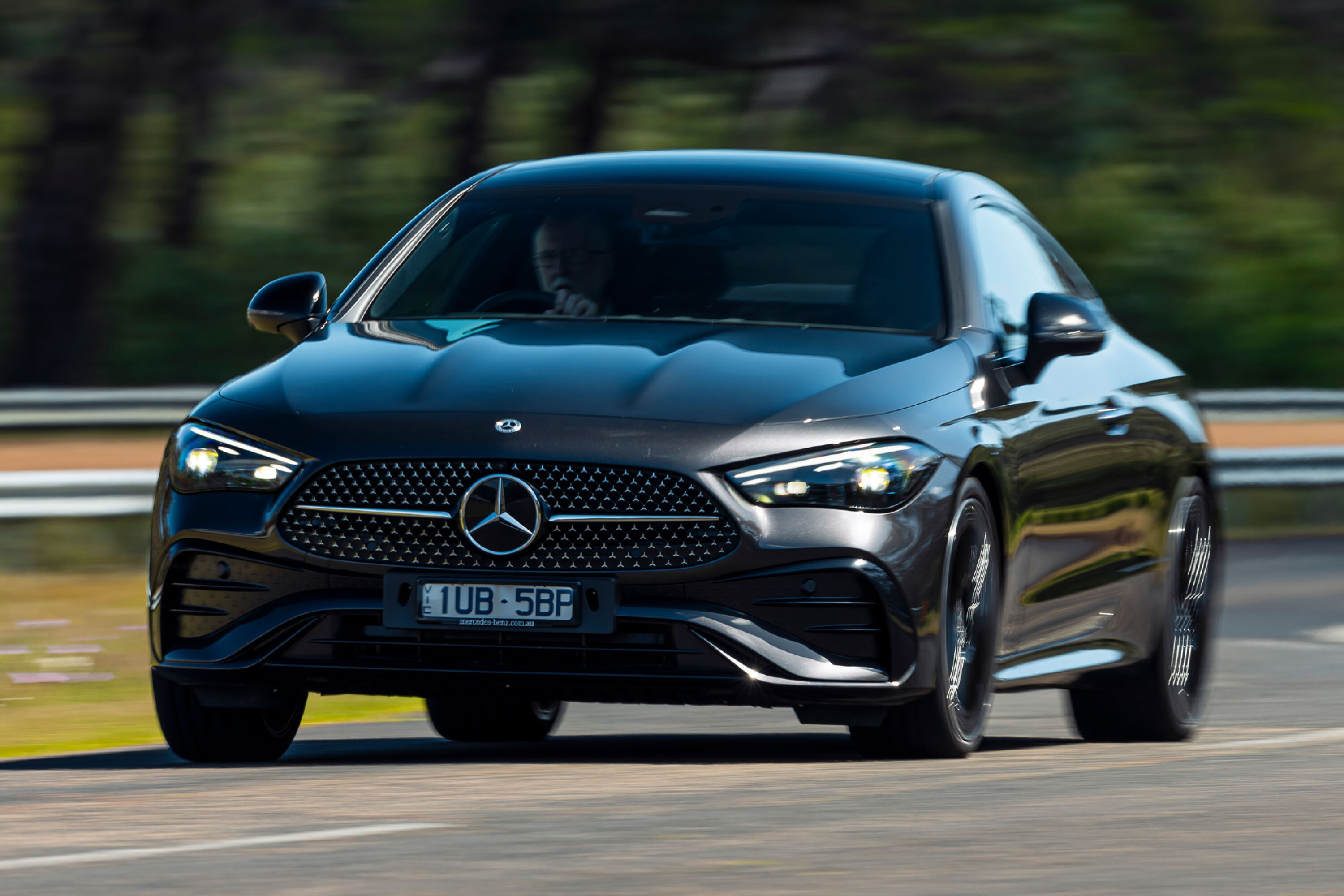
Mercedes-Benz CLE Coupe 200
It’s only four years since the Mercedes-Benz coupe (and cabriolet) range stretched to three distinctly different models, all developed from the corresponding C, E and S class sedans.
Today, just one survives: the newly named CLE. The rationalisation is a non-brainer when you realise the difference in wheelbase between the old W213 E-Class and W205 C-Class was only 33mm. The CLE splits the difference, at 2865mm the wheelbase is eight mm shorter than the E-coupe and 25mm longer than the C-coupe. Unsurprisingly, the CLE 200’s $102,815 price is rather closer to the E200’s $112,969 than the C200’s $79,200.
1
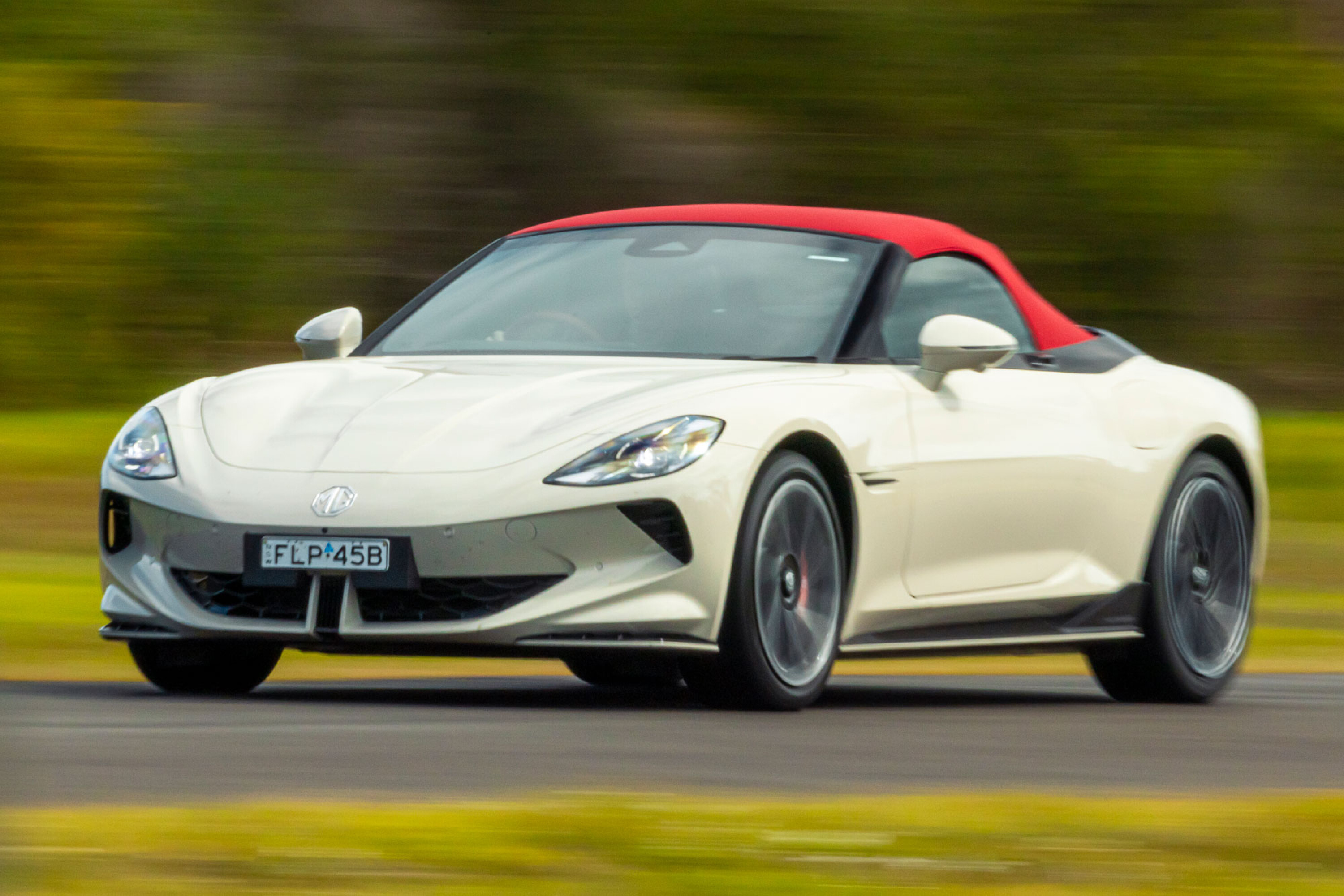
MG Cyberster
Think of the Cyberster as a fun-to-drive sports car and you’ll be sadly disappointed. Not with the startling EV performance, but the lack of composure and a truly lousy ride on anything less than a smooth surface. Rather, this is a cruise car, deliberated styled to look concept-show car, for poseurs. To the exotic styling, add electric doors that open at the touch of a button and swing up like a Lambo’s, and a flamboyant interior that features four screens.
Yes, it feels unique, but for pure fun I’d still take an MX-5.
1
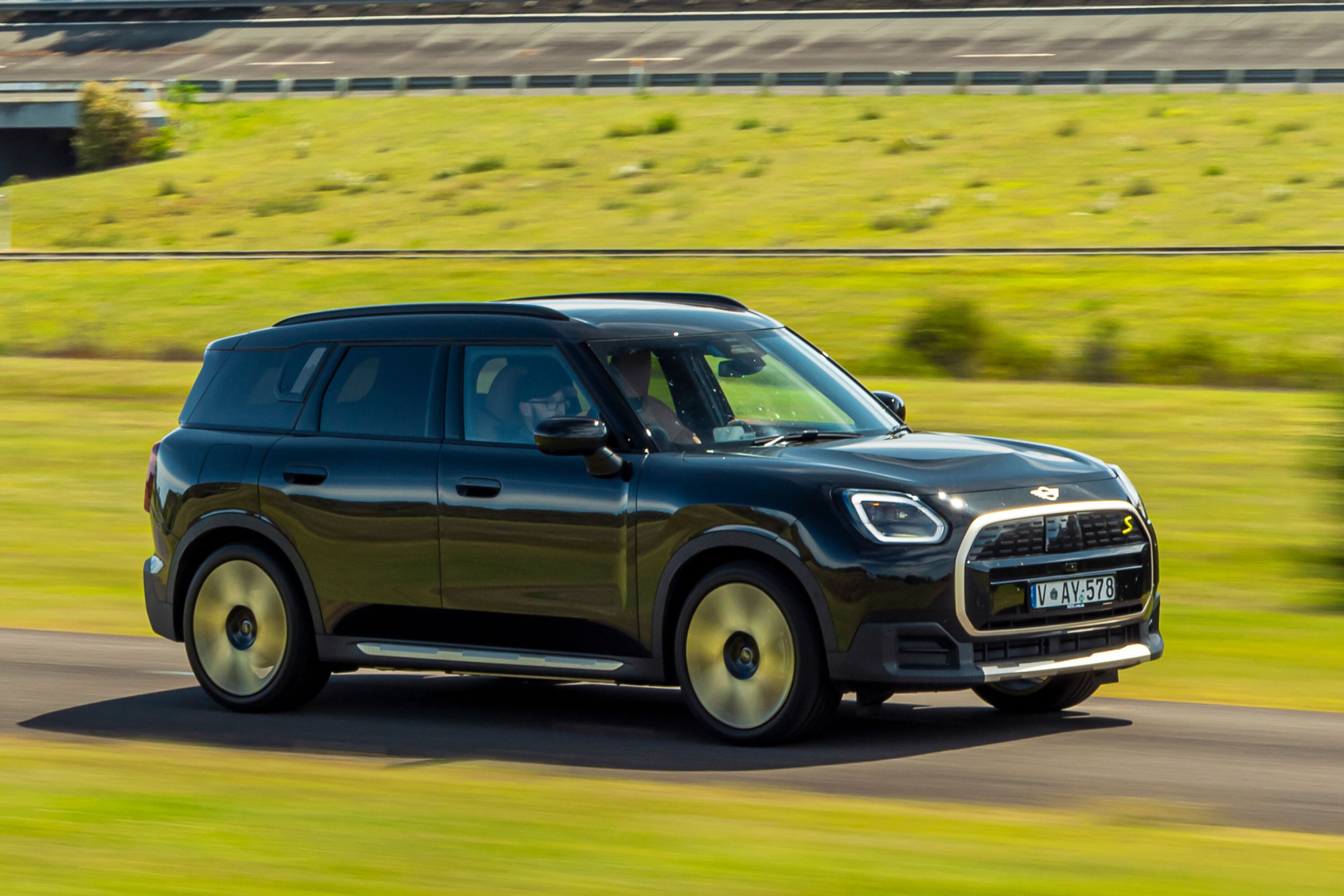
Mini Countryman SE
If I told you the Mini Countryman was effectively the same length the original Range Rover, I doubt you’d believe me. It’s true, the new Countryman stretches to 4447mm, up 130mm on its predecessor, while the two-door Rangey reached just 4445mm. The Countryman is easily the largest model in the brand’s history, big enough to warrant the SUV label. Yet it’s true to the Mini ethos and even in EV form still feels and drives as you expect a Mini to behave. The interior is undeniably Mini with its enormous circular screen. What’s not Mini is the way-too-thick diameter of the steering wheel.
1
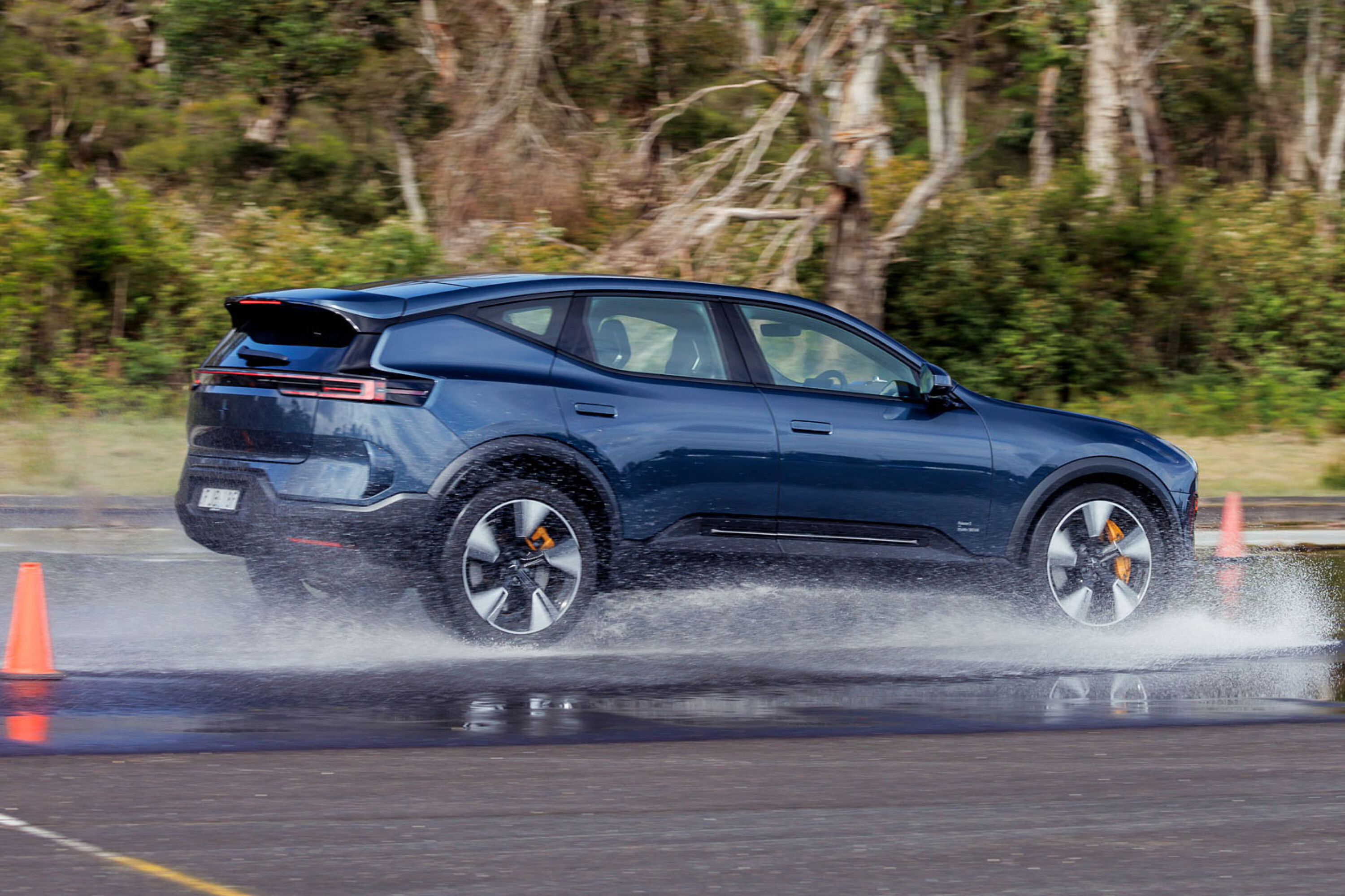
Polestar 3
My first Polestar and I’m impressed. Seems the key to the Polestar 3’s agile driving feel is the BorgWarner mechanical torque-vectoring rear axle that Polestar claims is a first for an SUV. The dual-clutch system can send all the rear motor’s torque to one wheel or split it between the left and right wheels in any ratio. The rear-axle disconnect only works in Range mode when opening both clutches improves efficiency and increases range by about 10 percent. If you buy into the claim that this Polestar is a rival for the Big Three Germans then there’s no doubting its competitiveness.
1
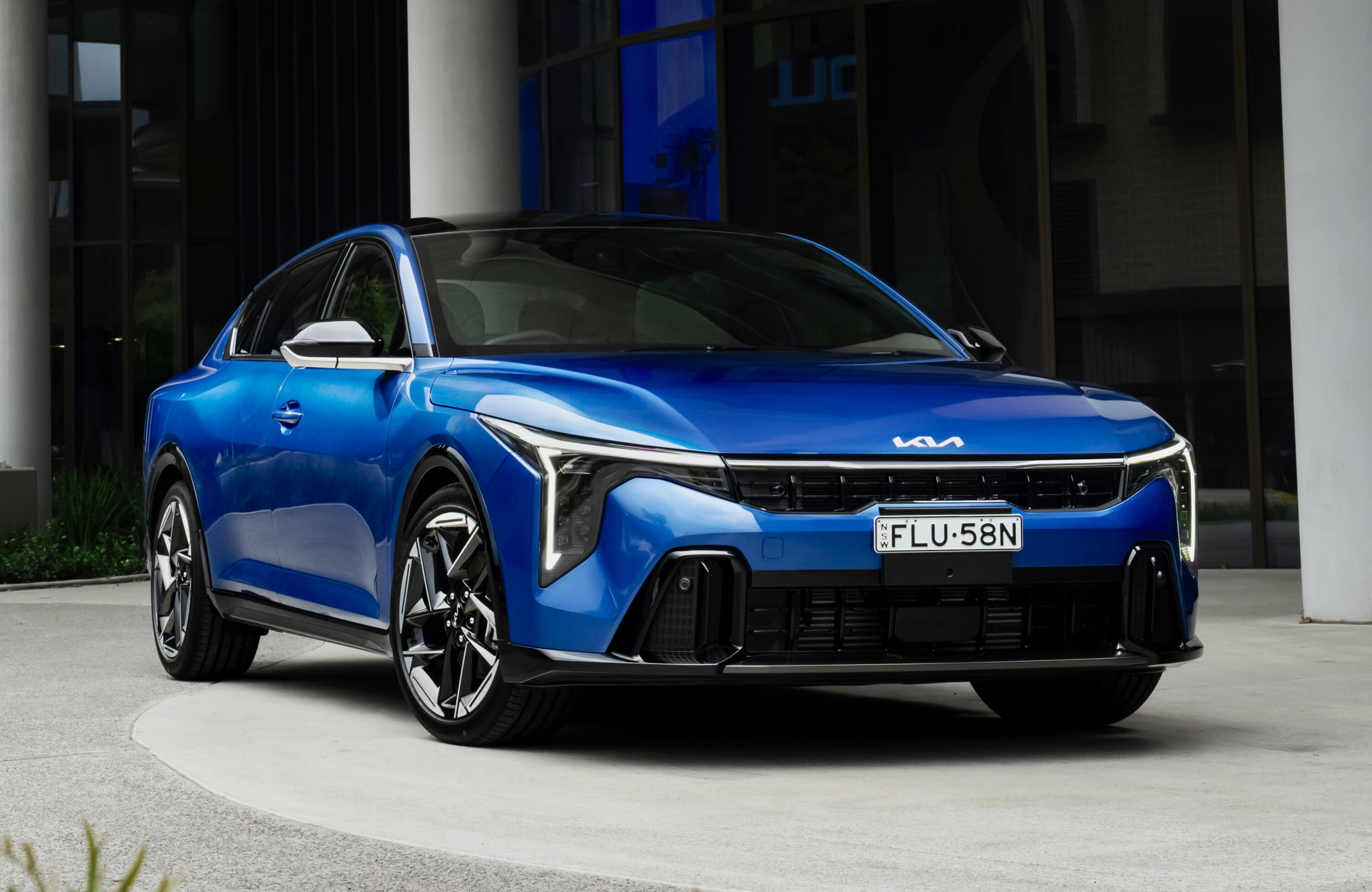
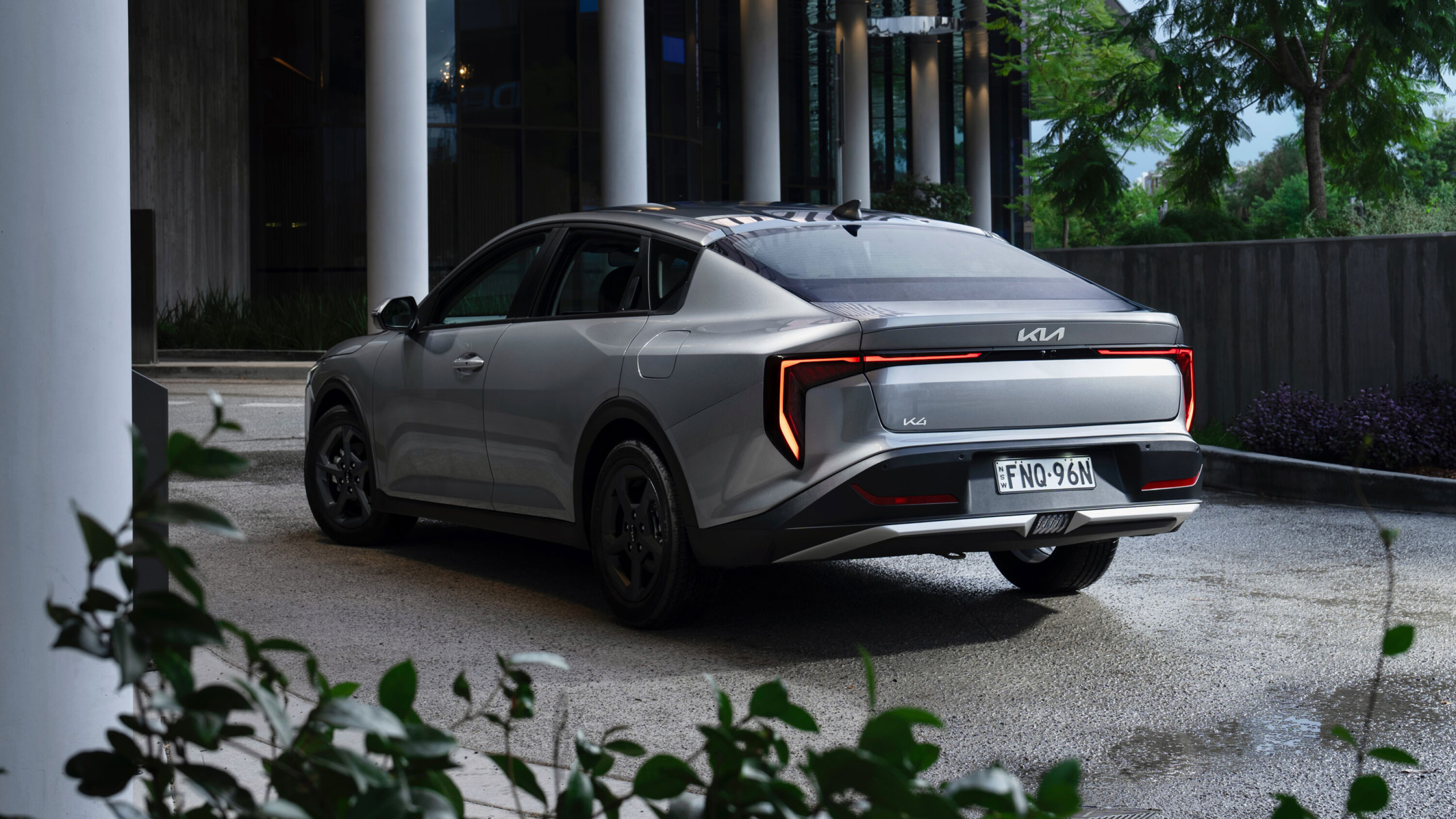
For many Australians their first experience of Kia was via its dependable Cerato model but in a quest to standardize its model names, the Korean powerhouse will retire the name down under and replace it with the Kia K4.
As with the Cerato, four models will be offered here: entry-level S, mid-spec Sport and Sport+, and the warm top-spec GT-Line. Priced from $30,590 plus on-road costs, the Kia K4 will be offered solely in sedan form for now with a hatchback bodystyle expected later in the year.
1
Efficiency and drivetrains
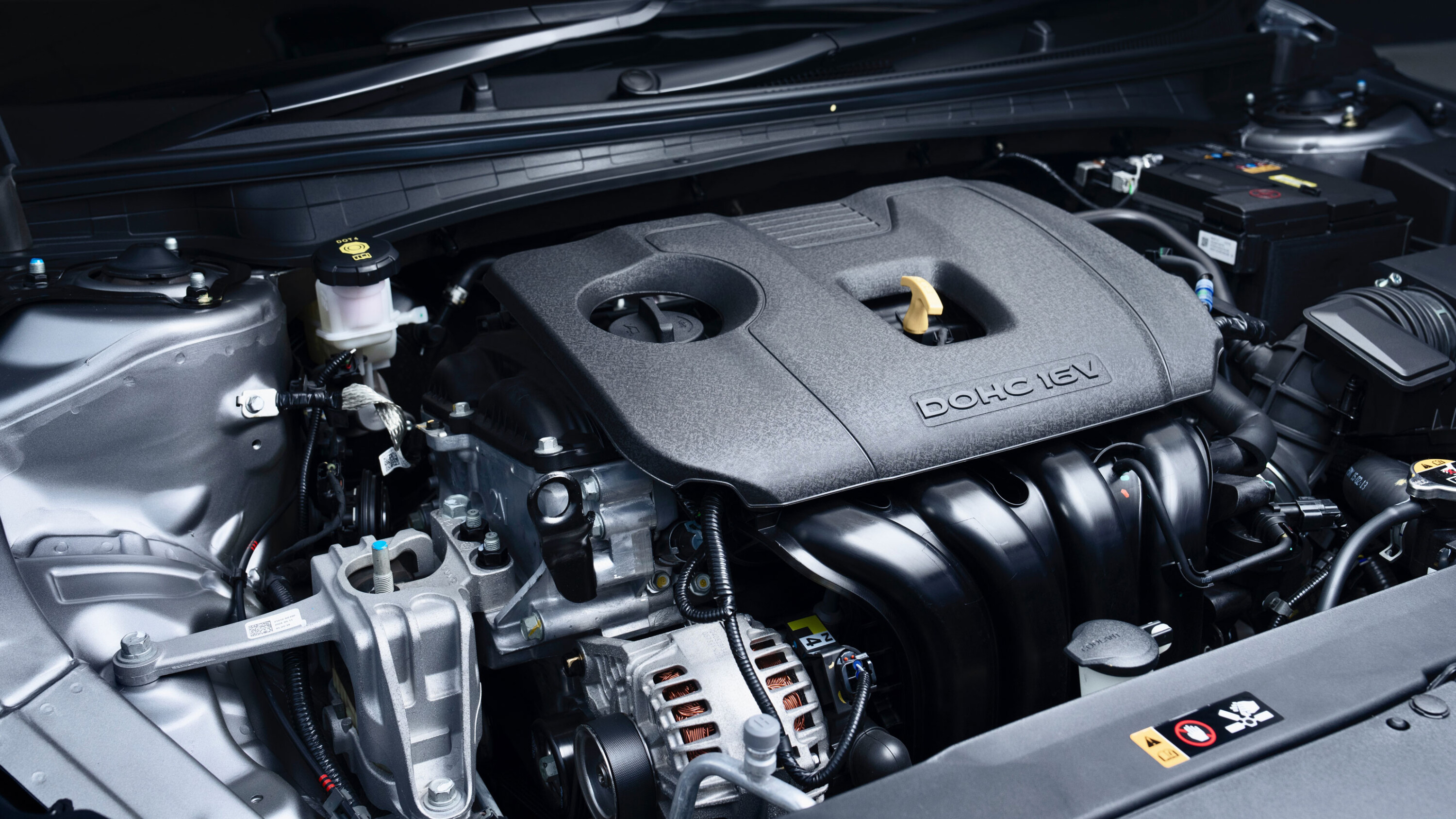
The K4 range will initially be available with a choice of two petrol engines: either a 112kW/192Nm 2.0-litre naturally aspired engine in the S, Sport and Sport+, or a 142kW/264Nm turbocharged 1.6-litre unit in the GT.
If those engines are familiar, it’s because they are largely carried over from the Cerato. A hybrid is due later in the year for those wanting more efficiency.
The 2.0-litre engine is equipped with a six-speed automatic transmission, while the 1.6-litre turbo is paired to a new eight-speed auto, replacing the previous seven-speed dual-clutcher in the Cerato GT. The 2.0L engine is rated at 7.4L/100km for combined fuel consumption – identical to the Cerato – while the 1.6T is now rated at 6.7L/100km, which is a 0.2L/100km improvement.
1
Dimensions
The K4 has increased in size compared with the Cerato it replaces, now measuring 4,710mm long, 1,850mm wide, 1,425mm high and riding on a 2,720mm long wheelbase, making it 200mm longer, 50mm wider, 15mm less tall and riding on a 20mm-longer wheelbase than the Cerato.
Its 508-litre boot is also 80 litres larger than the Cerato sedan.
Safety
The K4’s ANCAP safety rating is yet to be announced, but the whole range is quite well equipped with features like seven airbags (including a front centre unit), autonomous emergency braking (AEB) with pedestrian, cyclist and intersection assistance, blind-spot monitoring with rear cross-traffic alert, lane keeping assistance with lane departure warning, adaptive cruise control, driver attention monitoring, intelligent speed limit assistance, auto high beam and a reversing camera.
Adding the Safety Pack to the base S adds junction-crossing detection and direct/oncoming lane change detection, while the Sport adds lane change assist and semi-autonomous highway driving functionality.
1
Pricing
Kia K4 pricing (plus on-road costs):
- S: $30,590
- S Safety Pack: $32,690
- Sport: $35,190
- Sport+: $37,590
- GT-Line: $42,990
Standard features
The entry level K4 S is equipped with:
- Dusk-sensing automatic LED headlights with LED daytime running lights
- 16-inch alloy wheels
- Keyless entry and push button start
- Remote start
- Heated and auto-folding mirrors
- Grey cloth upholstery
- Height-adjustable front seats
- Manual air-conditioning with rear air vents
- 12.3-inch touchscreen with over-the-air updates
- Wireless and wired Apple CarPlay and Android Auto
- AM/FM/DAB+ digital radio
- 4x USB-C charging ports
- Six-speaker sound system
- Seven airbags (including a front centre unit)
- Automatic emergency braking (AEB) with vehicle, pedestrian, cyclist and intersection assistance
- Lane keeping assistance with lane departure warning
- Blind spot-monitoring with rear cross-traffic alert (both with braking)
- Adaptive cruise control
- Intelligent speed limit assist
- Auto high beam
- Driver attention monitoring
- Safe exit warning
- Rear occupant alert
- Reversing camera
- Front and rear parking sensors
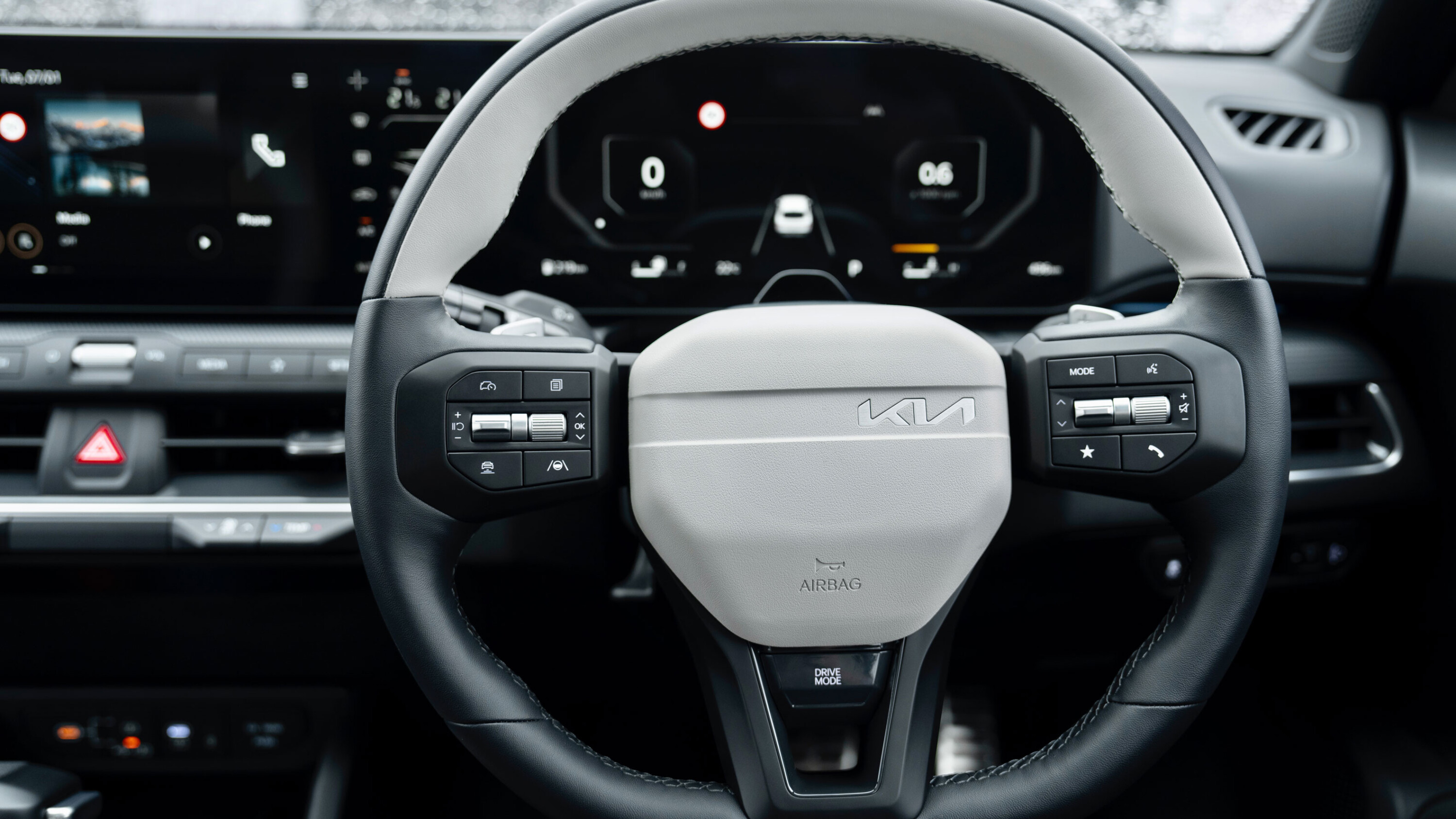
- 12.3-inch digital driver’s display
- 5.0-inch climate control panel
- Dual-zone automatic climate control with auto defogging
- Enhanced AEB system with junction-crossing detection
- Direct/oncoming lane change detection
- 17-inch alloy wheels
- 12.3-inch digital driver’s display
- 5.0-inch climate control display
- Inbuilt satellite navigation
- Dual-zone climate control with auto de-fogging
- Enhanced AEB system with junction-crossing detection
- Lane change assist
- Semi-autonomous highway assist 2 functionality
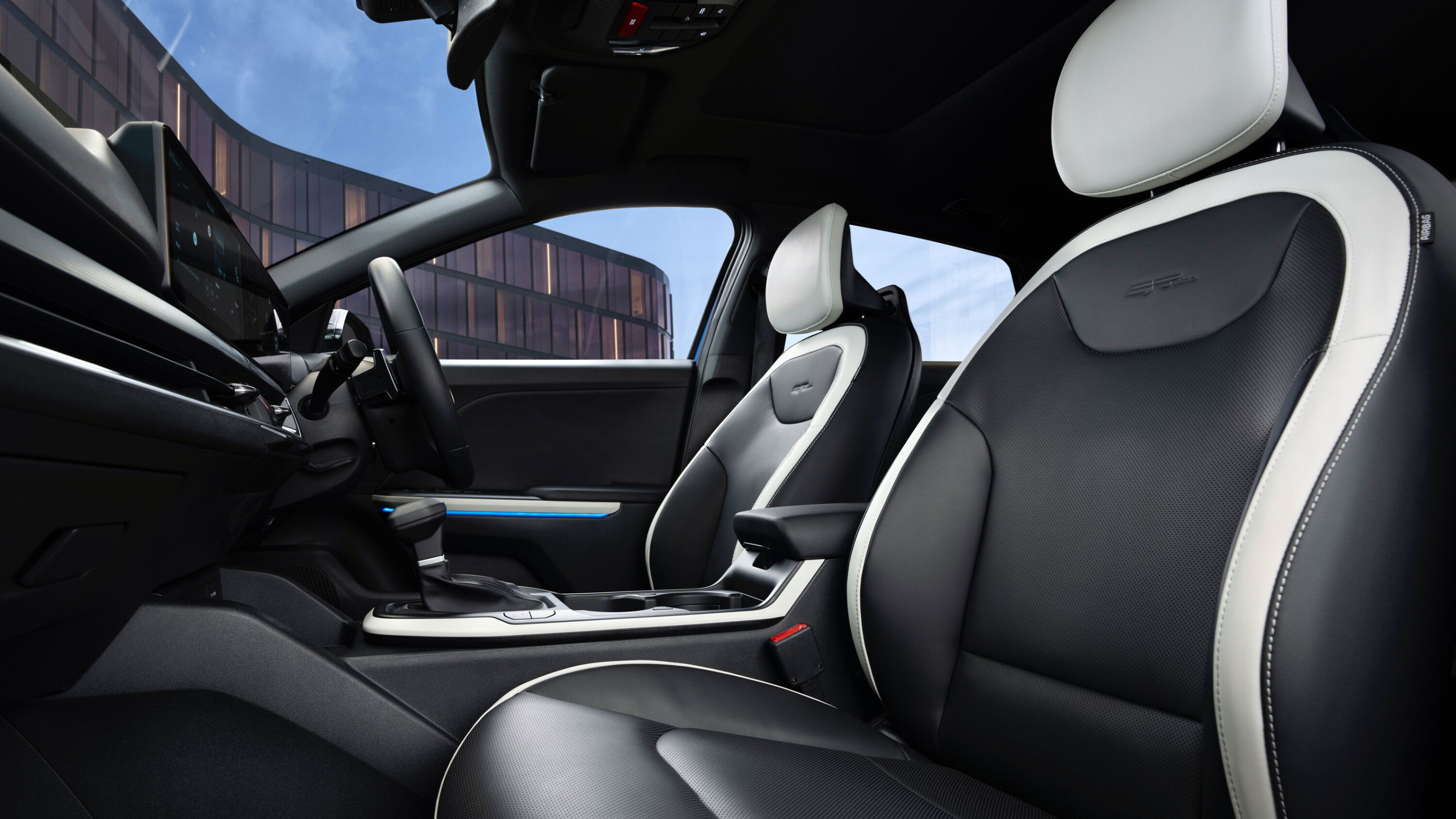
- Grey synthetic leather trim
- Heated front seats
- Auto-dimming rear mirror
- Solar windscreen glass
- Automatic rain-sensing ‘aero’ type wipers
- Soft touch door insert trim
- Silver interior door handles
- Sliding sun visors with inbuilt lighting
- Illuminated glovebox
- Passenger-side rear setback pocket
- GT-Line exterior styling with gloss black trim inserts
- Independent rear suspension
- Larger brakes (305mm front, 284mm rear)
- Sunroof
- 8-speaker Harman Kardon sound system
- Upgraded LED exterior lighting with LED front fog lights
- 18-inch alloy wheels
- Wireless phone charger
- Black synthetic leather upholstery
- Ventilated front seats
- Heated steering wheel
- 10-way electric driver’s seat with memory
- Ambient interior lighting
- Alloy pedals
1
Service and warranty
Like all other new Kia models, the K4 is covered by Kia’s seven-year/unlimited km warranty with up to eight years of roadside assistance if serviced through a Kia dealership.
Service pricing is yet to be announced, but considering that the drivetrains are largely shared with the Cerato, we expect the cost to be fairly similar at around $2,030 for the 2.0-litre petrol (up to 75,000km) and $1,950 for the 1.6-litre turbo (but to shorter 10,000km intervals).
Colours
- Clear White
- Snow White Pearl: $600
- Aurora Black Pearl: $600
- Steel Grey: $600
- Interstellar Grey: $600
- Fiery Red: $600
- Wave Blue: $600
- Honeydew: $600
1
MORE
Everything Kia
Peugeot’s hybrid 3008 medium SUV has finally landed in Australia, news first covered by WhichCar back in 2021.
The brand has confirmed that the 3008 range will be priced from $52,990 plus on-road costs, making it one of the more expensive options in the mid-size SUV segment.
Two models will be available in Australia: the entry-level Allure ($52,990 +ORC) and the top-spec GT Premium ($64,990 +ORC). A mid-spec GT will join the range later in the year, and a fully electric version was previously confirmed for Australian sales, though its timing is unknown.
1
Drivetrains and efficiency
The only available drivetrain in the 3008 range for now is a turbocharged 1.2-litre three-cylinder engine that’s supplemented by a hybrid system and a six-speed dual-clutch transmission. The engine outputs 100kW of power (at 5,500rpm) and 230Nm of torque (at 1,750rpm), with the electric motor adding an extra 15.6kWand51Nm at certain points of the rev range. The claimed 0-100km/h time is 10.1 seconds with a top speed of 201km/h.
A mild hybrid system unlike the full hybrid system in a Toyota RAV4, for example, the 3008 can still be driven electrically at low speeds for a claimed combined fuel consumption of4.9L/100km. That’s more than the RAV4’s 4.7L/100km rating, but it’s still efficient for a mid-size SUV.
Dimensions
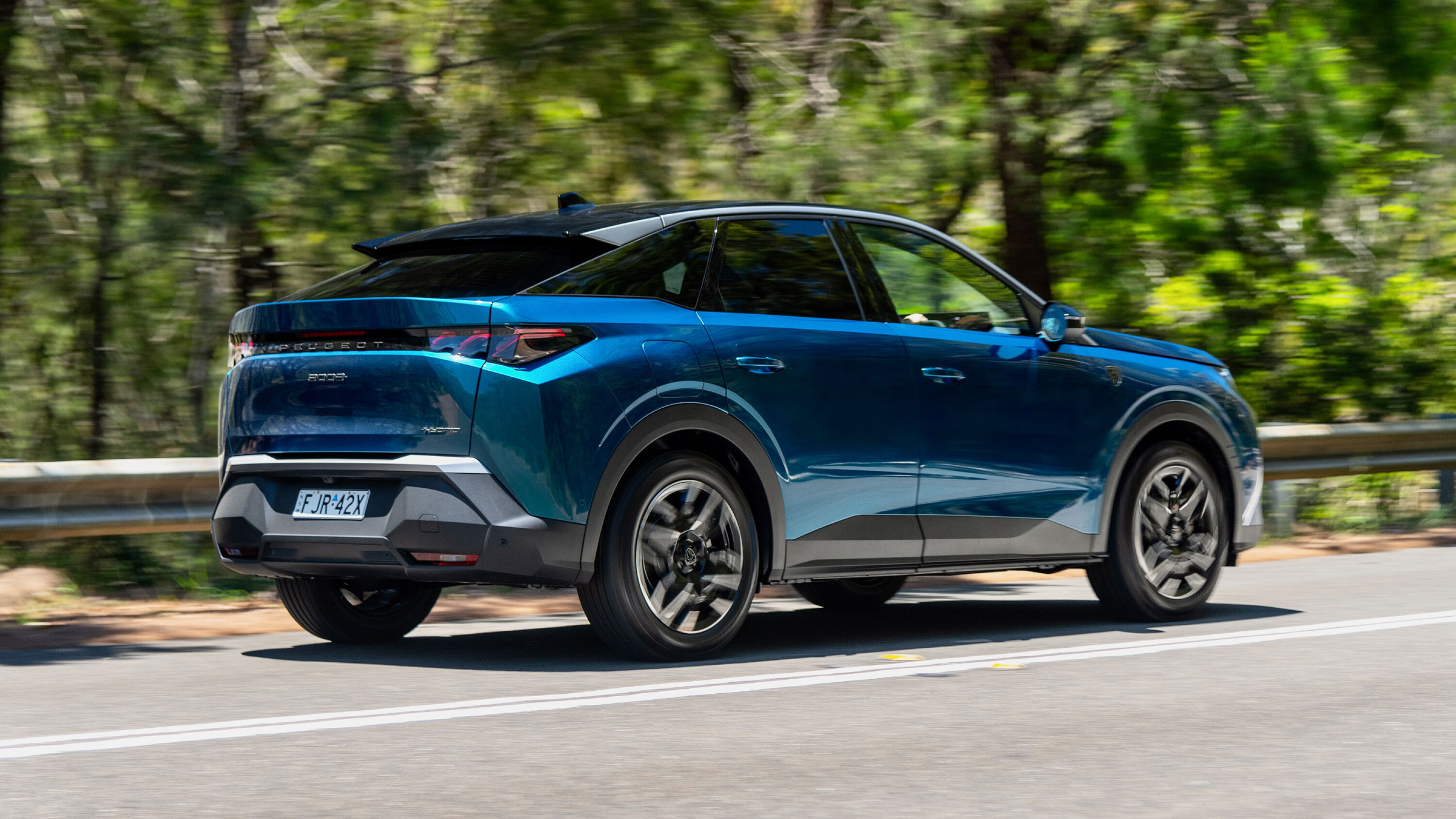
The 3008 measures 4,542mm long, 2,108mm wide, 1,665mm tall and it rides on a 2,730mm long wheelbase, which makes it 95mm longer, 42mm taller and 54mm wider than its predecessor.
Its boot measures 520-litres with the seats up and 1,480L when they’re folded.
1
Safety
The 3008 is yet to be tested by either Euro NCAP or ANCAP for safety, but is equipped with a long list of safety features like autonomous emergency braking (AEB) with pedestrian and cyclist detection, lane keeping assistance with lane departure warning, auto high beam, traffic sign recognition, driver attention monitoring, auto high beam, blind-spot monitoring with rear cross-traffic alert, front and rear parking sensors and a 360-degree camera.
The GT Premium adds pixel adaptive high beam and adaptive lane guidance.
Available colourways will include Obsession Blue, Nera Black, Artense Grey and Okenite White.
Pricing
Peugeot 3008 pricing (plus on-road costs):
- Allure: $52,990
- GT Premium: $64,990
1
Standard equipment
- 19-inch alloy wheels with a tyre repair kit
- Dusk- and rain-sensing all-LED exterior lighting, including front and rear daytime running lights
- Rain-sensing automatic wipers
- Keyless entry and push button start
- Heated and auto-folding mirrors with puddle lamps
- Sport, normal and eco driving modes and snow, sand and mud modes
- Dual-zone automatic climate control with rear air vents
- Fabric and leather seat upholstery
- Leather steering wheel
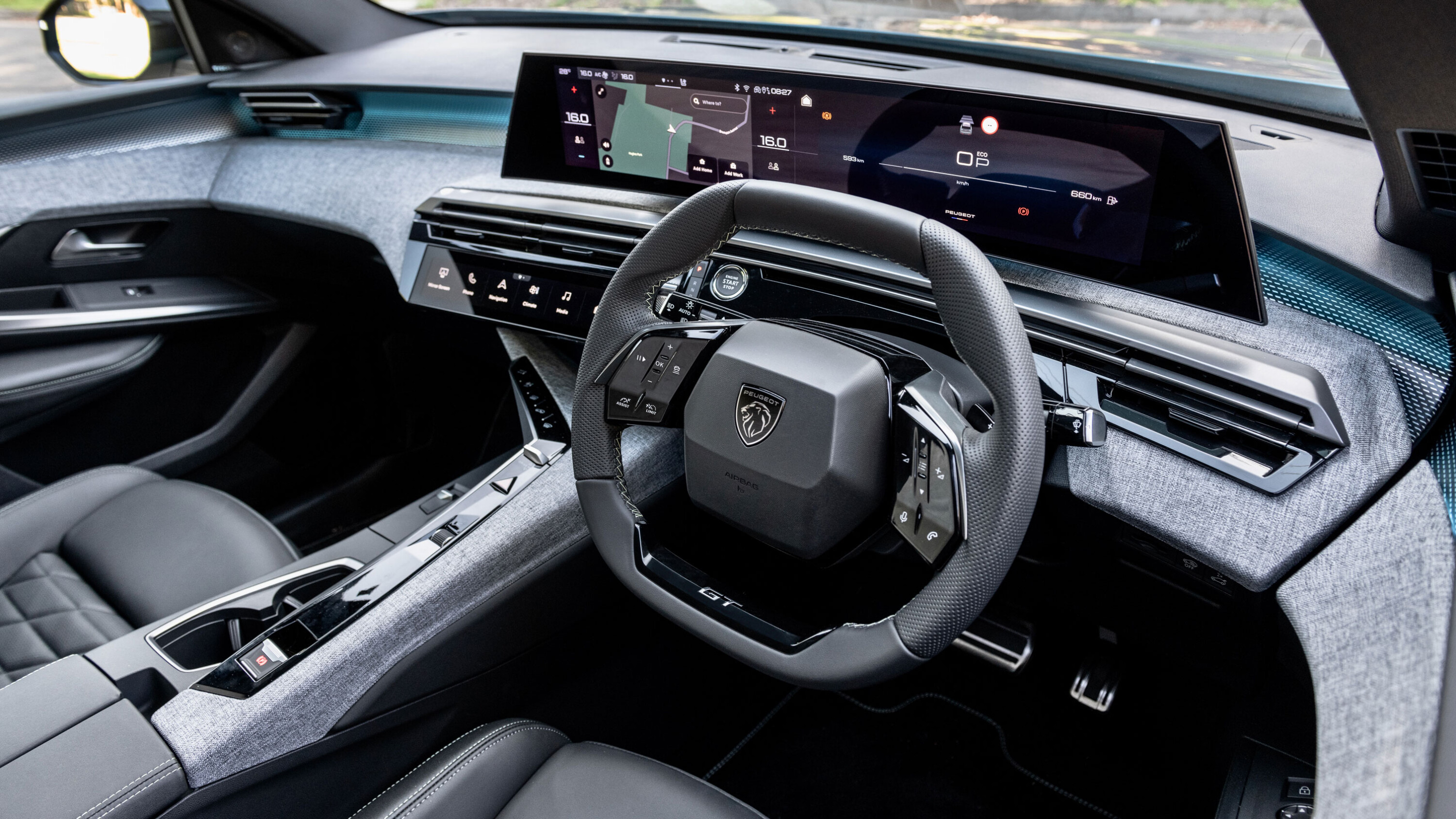
- 21-inch curved instrument panel incorporating touchscreen and driver’s display
- Over-the-air updates, map updates and live services (one-year subscription) with access to the MyPeugeot smartphone app
- Satellite navigation with live traffic
- Wireless Apple CarPlay and Android Auto
- AM/FM/DAB+ digital radio
- Six-speaker sound system
- 4x USB ports
- 40:20:40-split rear seat folding
- Rear privacy glass
- Six airbags
- Autonomous emergency braking (AEB) with low light pedestrian and cyclist detection
- Land departure warning with unmarked road edge detection
- Active lane keeping assistance
- Adaptive cruise control with stop and go functionality
- Long range blind-spot detection with rear cross-traffic alert
- Driver attention monitoring
- Traffic sign recognition
- 360-degree camera
- Front and rear parking sensors
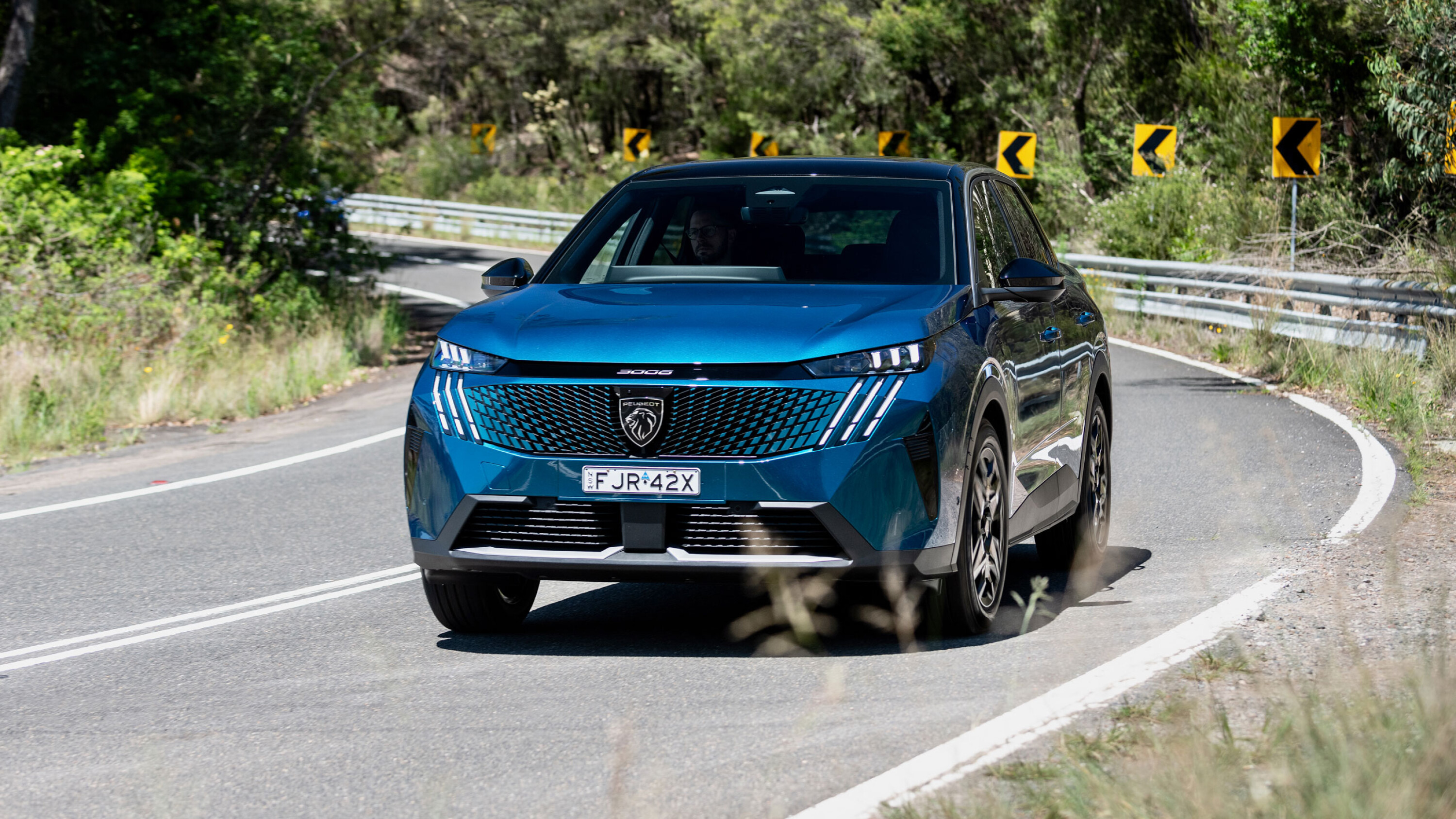
- Pixel LED headlights with adaptive high beam
- 3D LED tailights
- Black roof
- 10-speaker Focal sound system
- Peugeot shield on the front winds
- GT steering wheel
- Panoramic sunroof
- Air quality management
- Extended ambient lighting
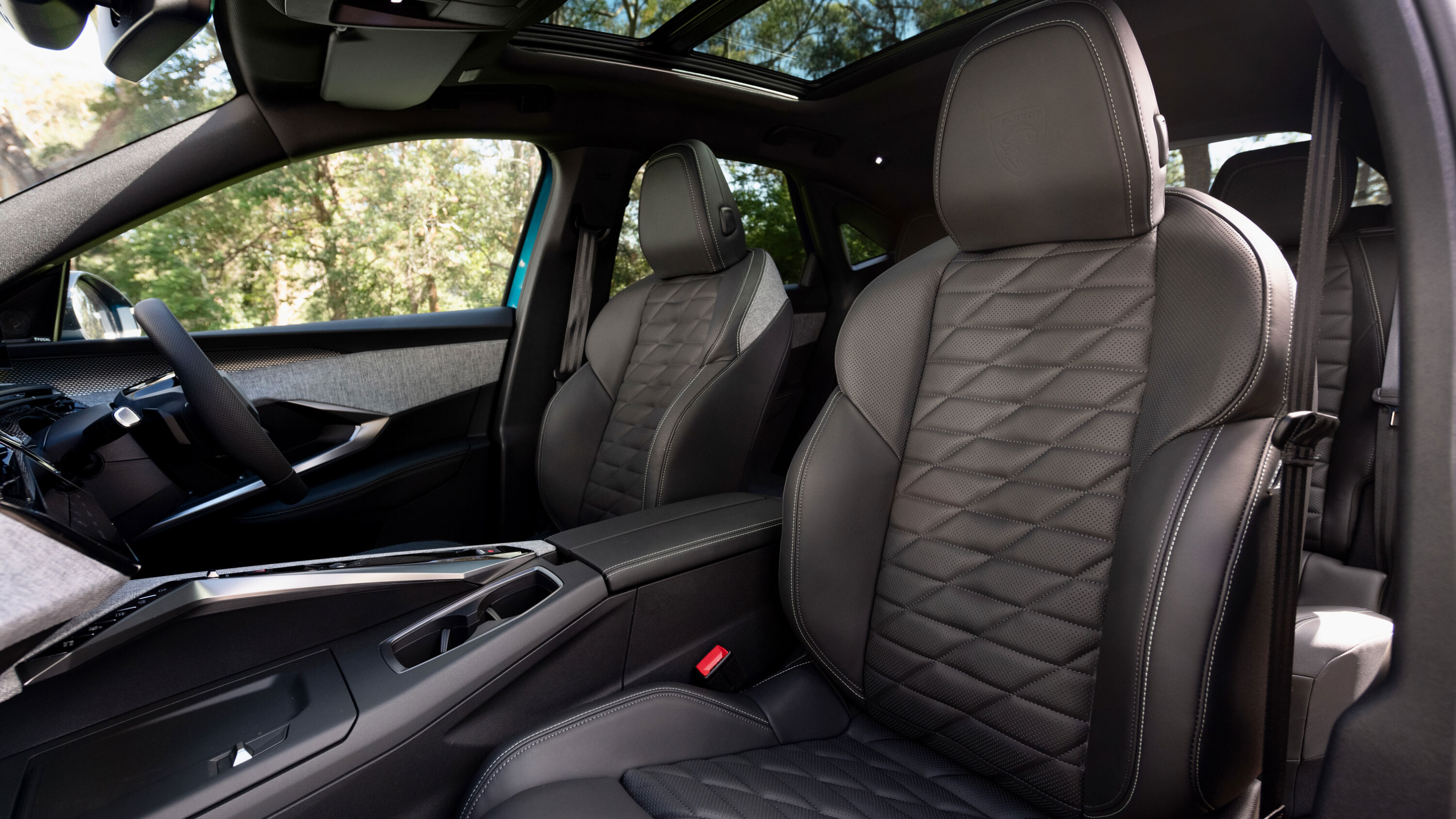
- Full leather upholstery
- Heated and ventilated front seats
- 12-way electrically adjustable front seats with massage functionality
- Heated outboard rear seats
- Acoustic and laminated front windows
- Adaptive lane guidance
Service and warranty
The 3008 is covered by a five-year/unlimited km warranty with five years of roadside assistance.
Its annual service intervals are a long 25,000km interval and five years/125,000km of servicing costs $2,779 ($555 annually) though buyers can choose a pre-paid service plan for the same length of time for $1,890 ($378 annually).
1
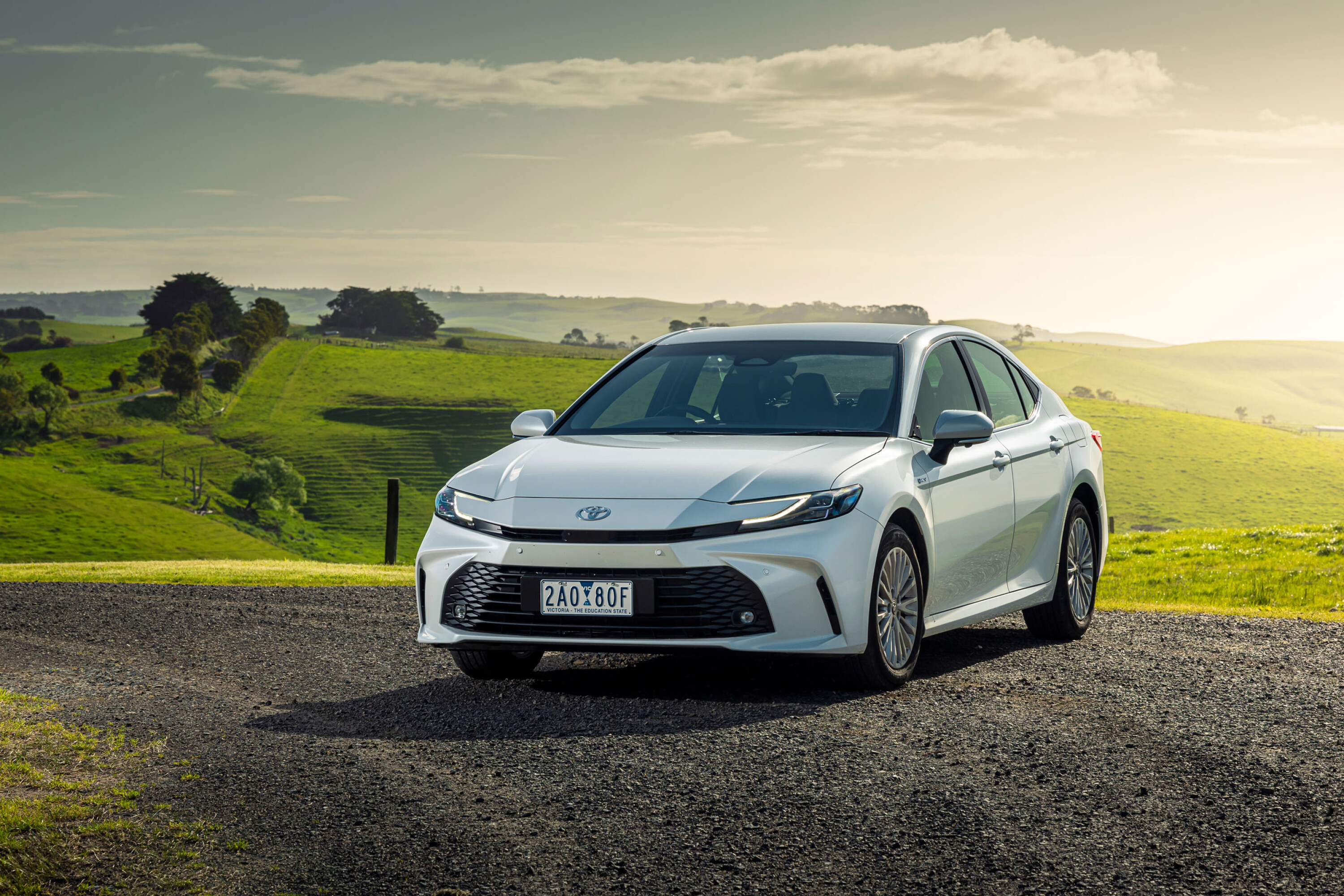
The Australasian New Car Assessment Program – better known to all of us as ANCAP – has named Aussie family favourite the Toyota Camry as the safest car it tested in 2024, with an overall weighted score of 88.4 per cent.
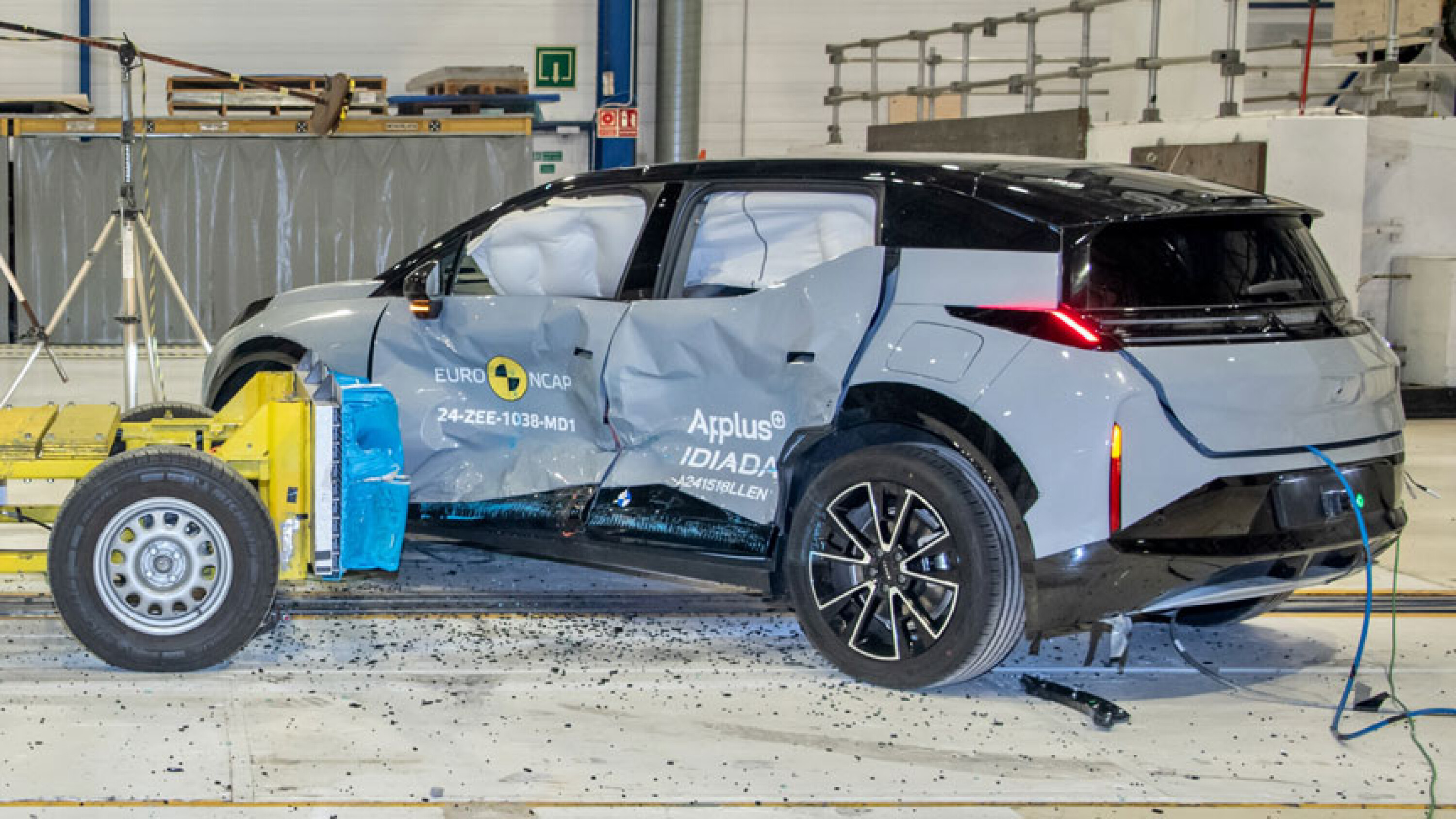
More impressively, the Camry’s 95 per cent adult occupancy protection score was the highest individual score of 2024. The Camry also scored 87 per cent for child occupancy protection, 84 per cent for vulnerable road user protection and 81 per cent for safety assist.
1
“The Camry secured top spot in 2024, excelling with a score of 95% for Adult Occupant Protection – the highest AOP score of all vehicles assessed in 2024,” said ANCAP Chief Executive Officer, Carla Hoorweg.
“The Camry remains a stable and reliable choice with a safety pedigree that dates back over 13 years.”
The Toyota Camry Ascent Sport recently polled second in Wheels COTY 2024-25, behind the Hyundai Ioniq 5 N, with veteran motoring journalist Peter Robinson writing: “No potential rival goes close to matching the Camry’s long-acknowledged low operating costs, reliability, and practicality.”
1
In second place was the recently tested Mazda CX-80, with an overall weighted score of 87.6 per cent. According to ANCAP, it scored solidly across the board, particularly its 92 per cent score for adult occupancy protection and a full point score in side impact, far side impact, whiplash protection and oblique pole crash tests.
The CX-80 also scored 87 per cent for child occupancy protection, 84 per cent for vulnerable road user protection and 83 per cent for safety assist.
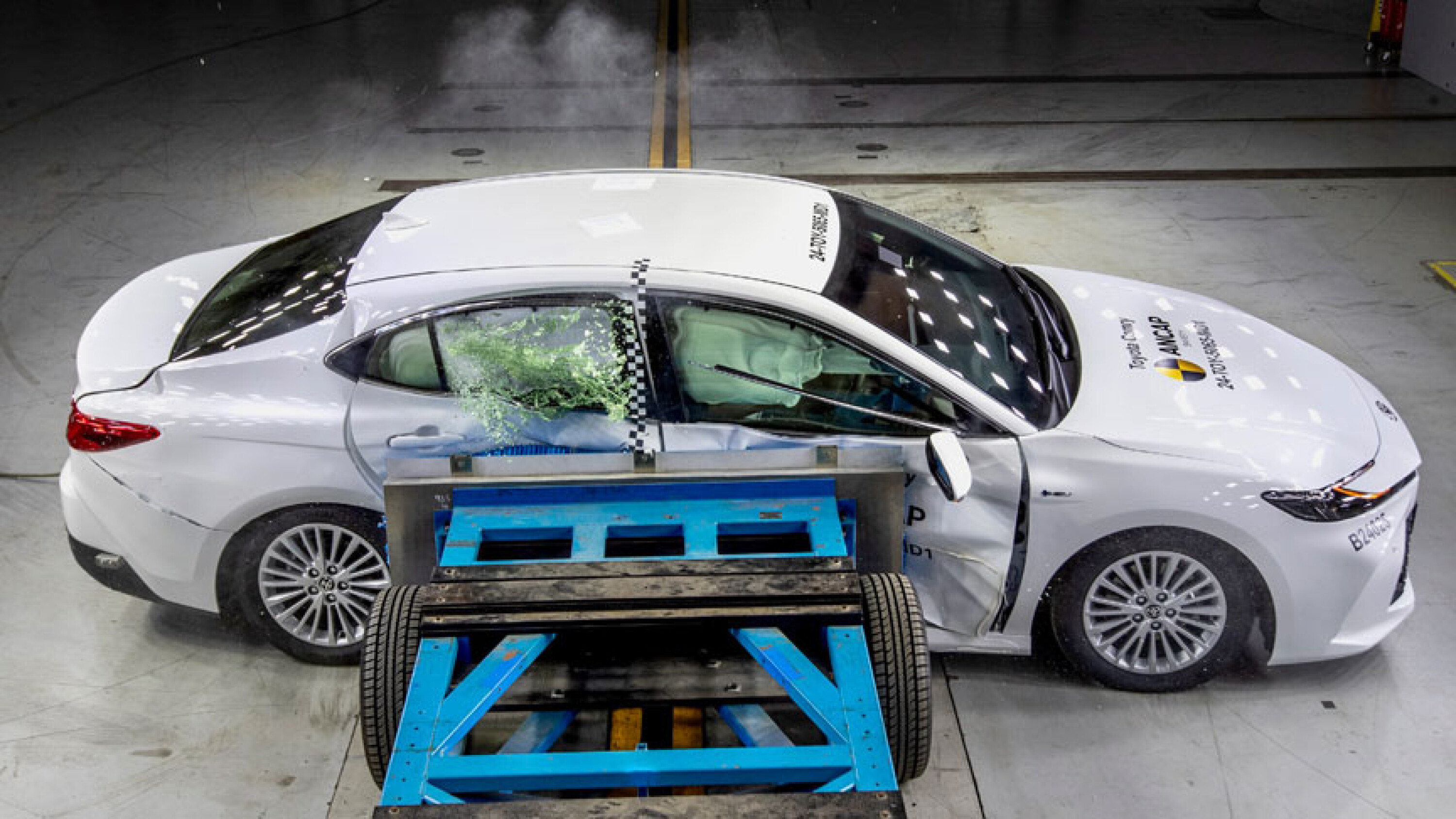
Rounding out the top three was the new Chinese all-electric SUV Zeekr X, which was only recently launched in Australia. Its overall weighted score was 87.4 per cent, which was only just behind the CX-80. Its 91 per cent adult occupancy protection score was also impressive, while it also scored 87 per cent for child occupancy protection, 84 per cent for vulnerable road user protection and 84 per cent for safety assist.
1
Significantly, ANCAP noted that of the 23 vehicles tested in 2024, close to half (11 out of 23) were new models not previously known to the Australian and New Zealand markets, and 10 of those achieved a full five-star result.
2025 is set to be a busy year for ANCAP with a number of new models from brands such as Geely due to arrive on Australian shores. First cab off the rank is believed to be the new Kia K4, which has just been launched locally.
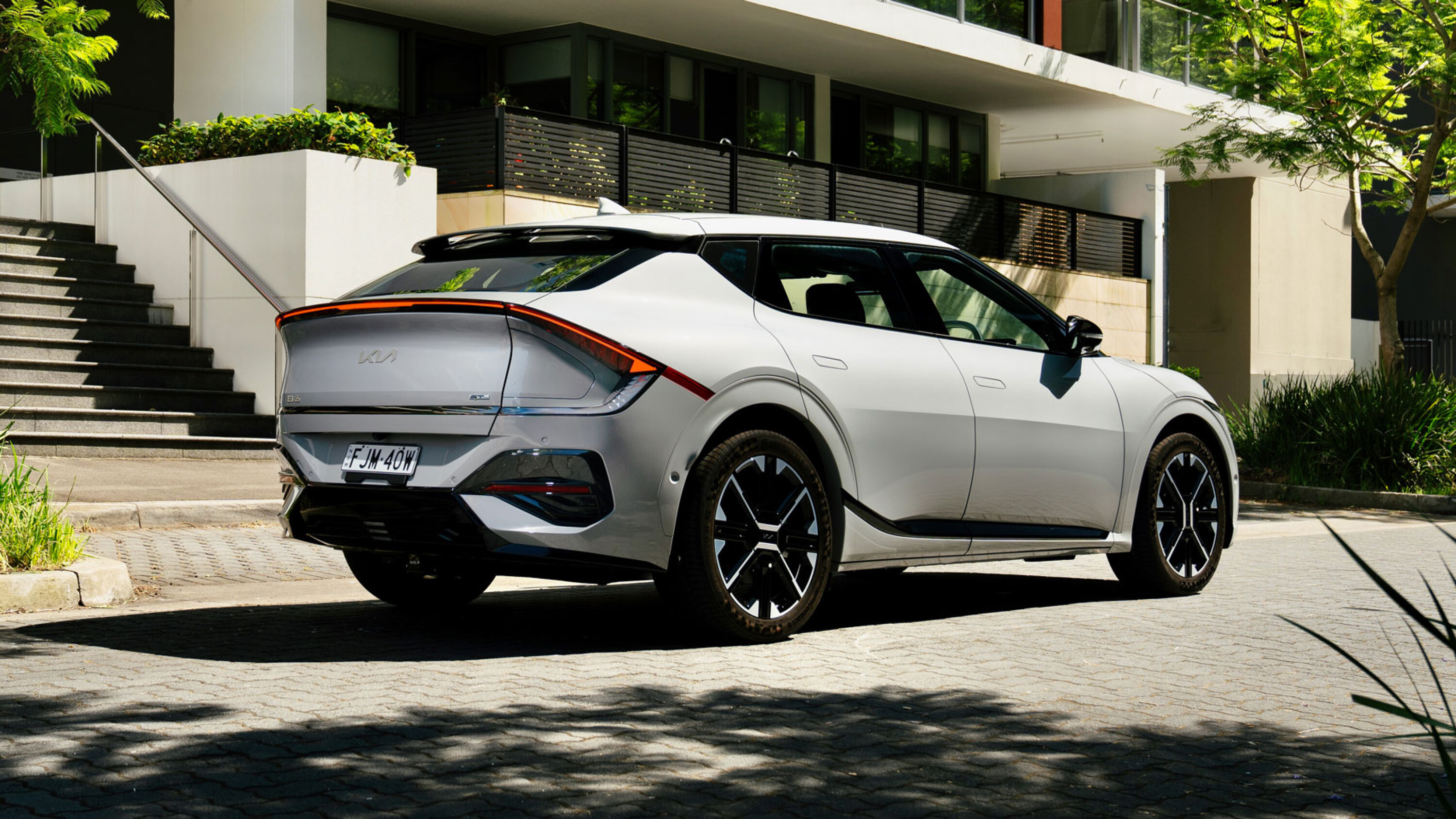
Kia’s EV6 is currently having a song-and-dance made over it at the 2025 Australian Open tennis tournament in Melbourne as part of the Korean maker’s signature event sponsorship, but the EV’s facelift was originally revealed last year.
The EV6’s styling has been updated in line with newer Kia models like the smaller EV5 with sharper ‘Star Map’ lighting – the company’s latest design signature – and sharper-looking bumpers which have brought a 15mm increase in overall length.
1
The taillights have adopted new graphics, while the rear bumper has been redesigned for a similar look to the front. There are new wheel options ranging from 19- to 21-inches in size.
Under the body a new 84kWh battery replaces the previous 77.4kWh unit for more driving range. Though Kia is yet to confirm local figures, the Euro-spec GT-Line RWD claims an increase in driving range from 528km to 582km (WLTP).
The top-spec GT has seen revised ride and handling tuning for “increased natural feel and grip levels, as well as improved rough road control and improved steering feedback”, according to Kia. Part of the changes included a stiffer rear sway bar, softer front sprints and a new steering system.
1
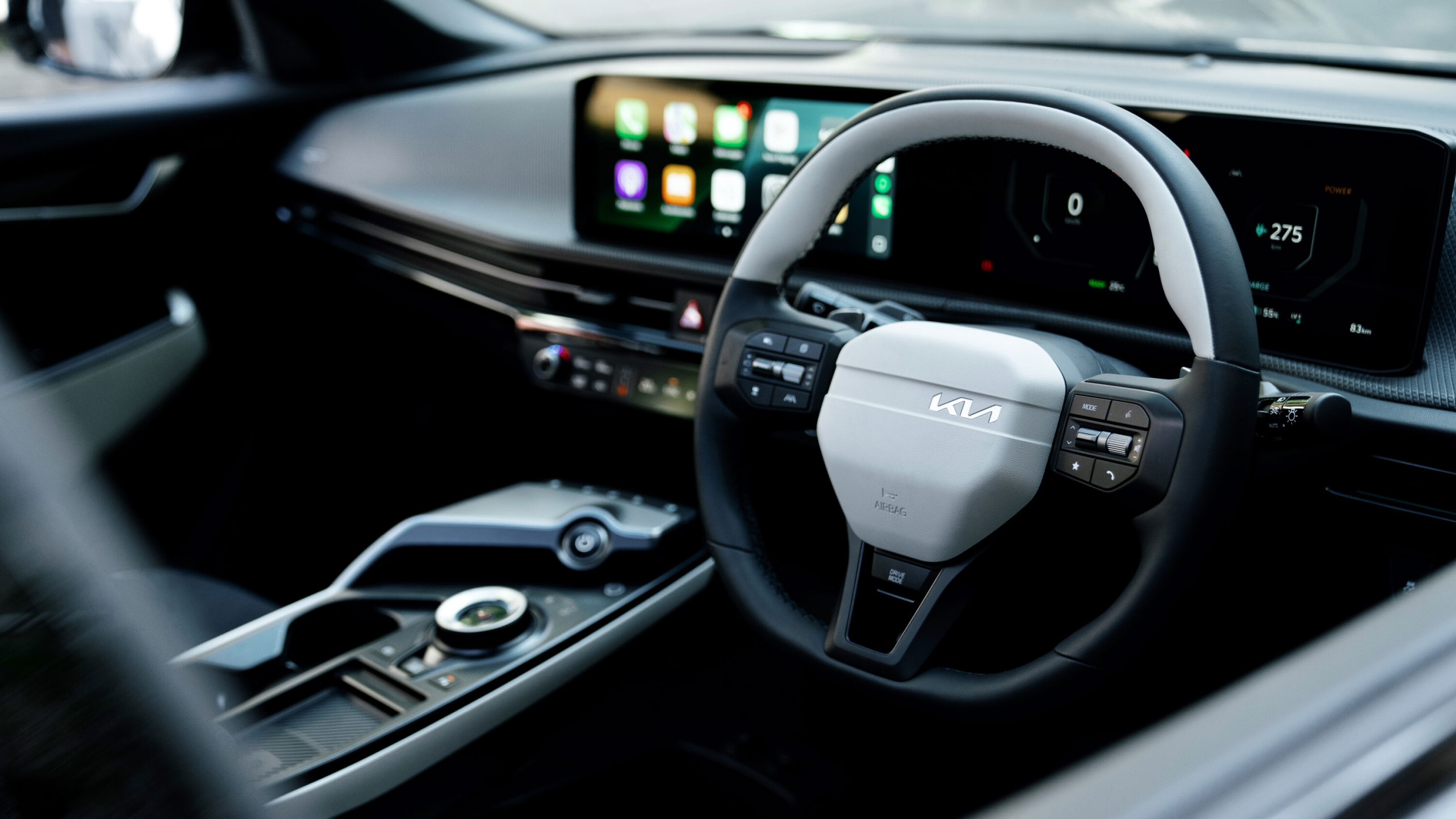
Inside, the EV6 has also been updated with the company’s latest ‘ccNC’ infotainment system with features like over-the-air updates and wireless Apple CarPlay and Android Auto. These features are seen through new dual 12.3-inch screens for the infotainment and driver’s display.
The EV6 range also features a redesigned steering wheel design, an updated centre console with revised materials and fingerprint recognition (for the GT-Line and GT).
The EV6 was the first car Kia designed as an EV from the ground up, using a dedicated platform and electricals not shared with a hybrid/plug-in hybrid.
More details about the updated Kia EV6 will be announced closer to its second quarter 2025 launch.
MORE
Everything Kia EV6
MORE
Everything Kia
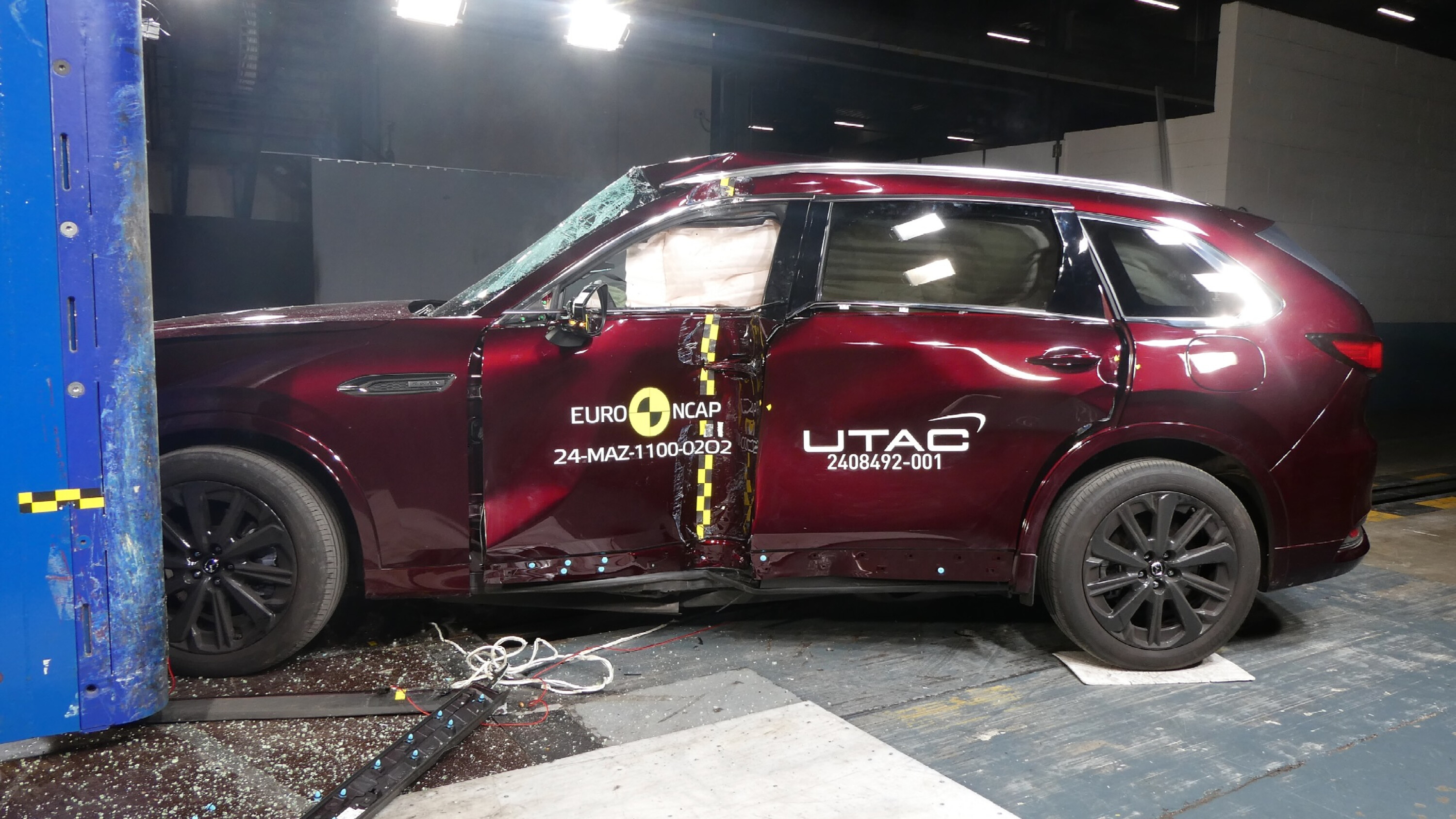
The recently released Mazda CX-80 has scored the highest five-star rating from the Australasian New Car Assessment Program (ANCAP), enhancing its appeal to safety-conscious family buyers of the large seven-seat SUV.
Awarded to the whole CX-80 range, ANCAP gave the CX-80 scores of 92 per cent for adult occupancy protection, 87 per cent for child occupancy protection and 84 per cent for vulnerable road user protection.
According to ANCAP, the CX-80 performed well in the side impact, oblique pole, whiplash protection and far-side impact tests, achieving maximum points.
5
The CX-80 also demonstrated good levels of protection for all key body regions of both child dummies in the frontal offset and side-impact tests, and provided good physical protection for pedestrian’s pelvis, femur, and lower legs.
The CX-80 performed less well, however, in detecting a crossing cyclist when making a left-hand turn, which was noted as poor. Performance in turning scenarios involving motorcyclists was also assessed as poor. On the plus side, its lane support systems were given a full point score.
The CX-80 range is now on sale in Australia, priced from $54,950 plus on-road costs.
MORE
Everything Mazda
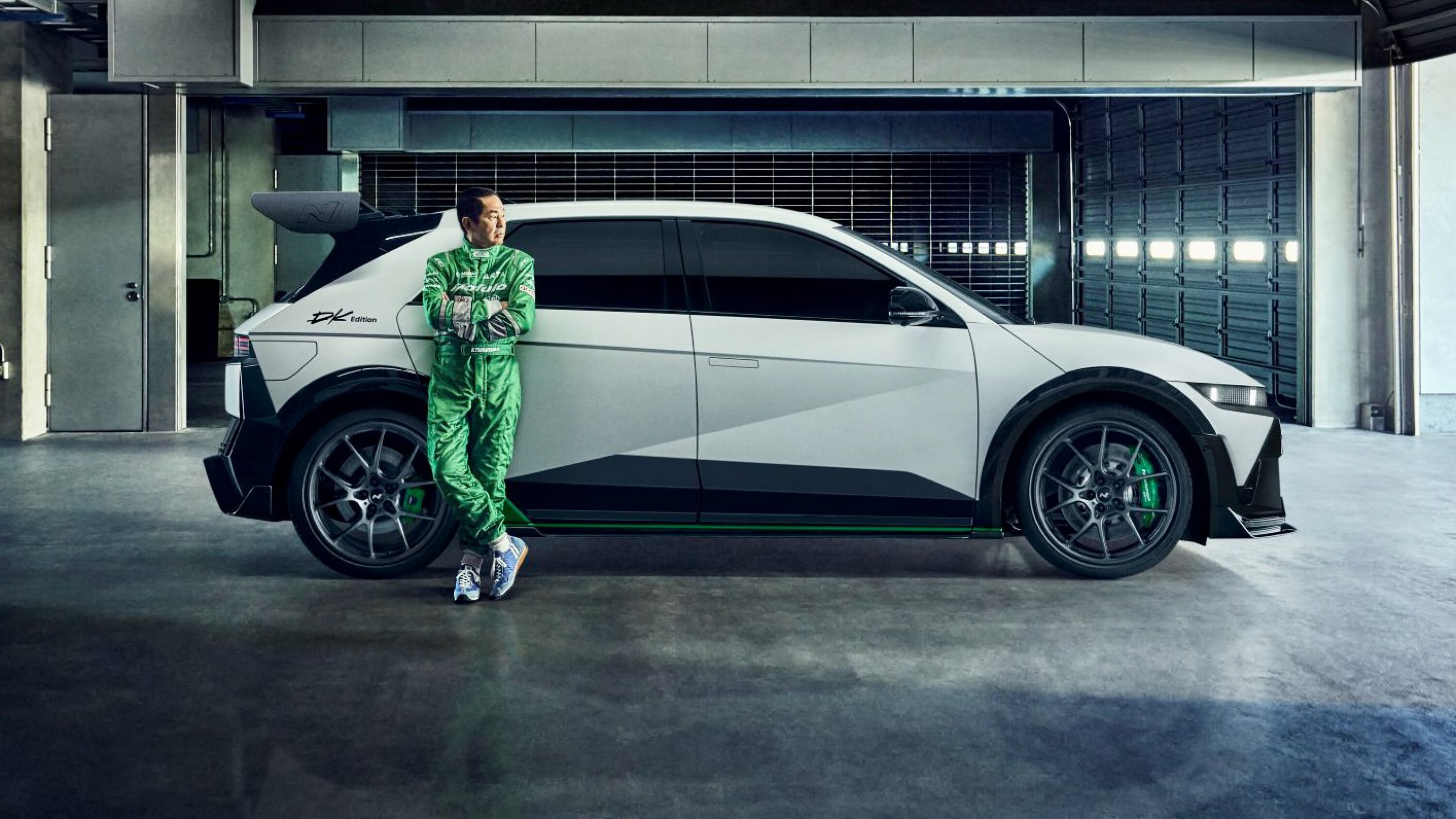
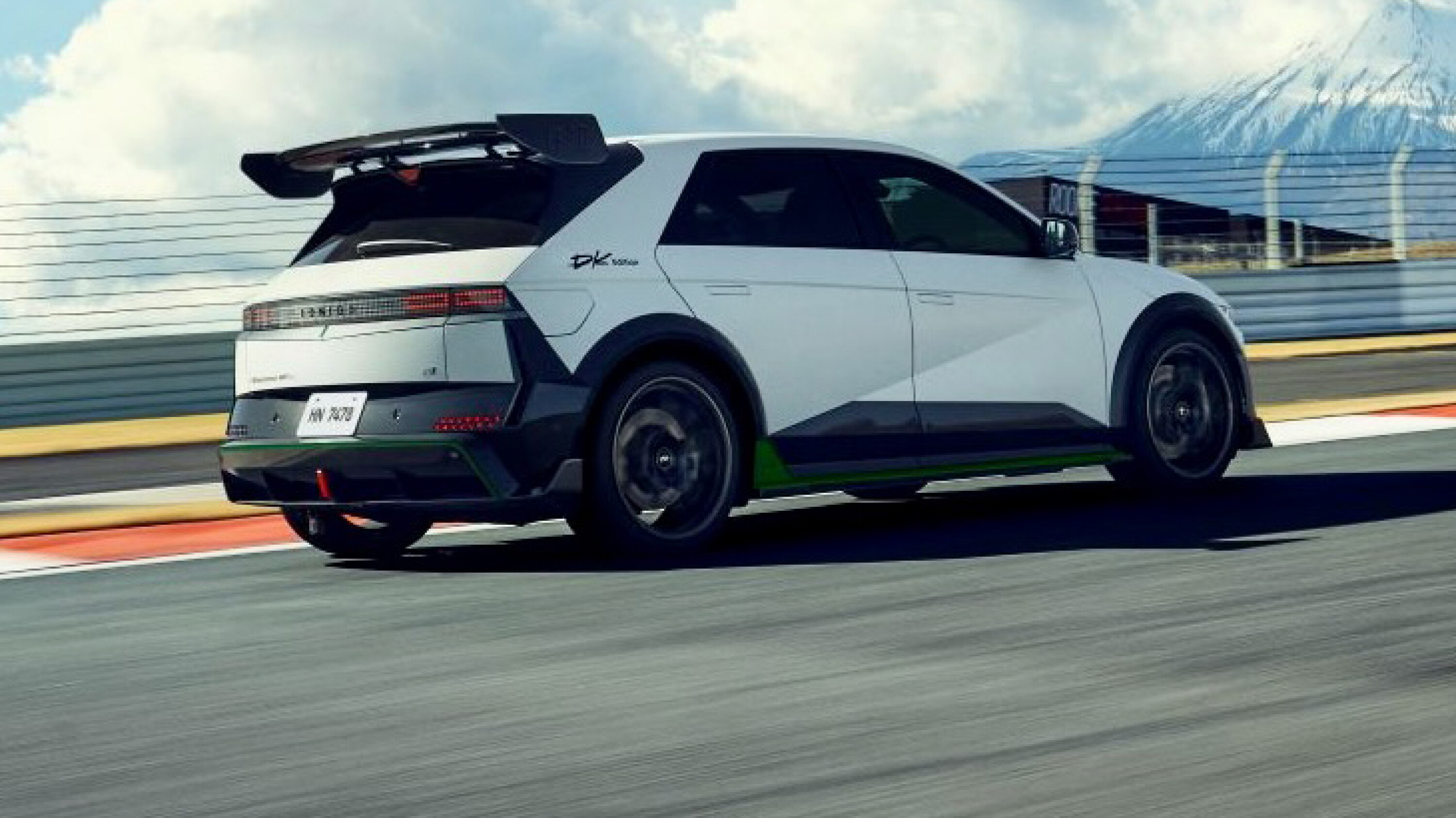
Based on Wheels’ Car of the Year 2024-25 winner the Hyundai IONIQ 5 N, the new DK Edition adds a number of parts to enhance its drifting ability – all with the approval of Japan’s ‘Drift King’ Keiichi Tsuchiya.
Upgrades to the special edition vehicle include new six-piston monoblock callipers with larger brake pads, new H&R lowering springs with a 15mm lower ride height, and a new 21-inch alloy wheel design with a special ‘sawtooth’ structure on the barrel for better grip to the tyres.
The IONIQ 5 DK also gets a new front splitter, new side skirts and a new rear wing for increased downforce, all in carbon fibre. There are also green exterior accents inspired by Tsuchiya’s iconic all-green racing suit.
1
“I’ve experienced the IONIQ 5 N many times and have been surprised and delighted every time, and I met Hyundai N to tune the best high-performance electric vehicle to my style,” Tsuchiya said in a statement.
Hyundai says it plans to release the IONIQ 5 DK Edition in South Korea and Japan – which is actually a relatively new market for the brand – in the first half of this year, but other markets are yet to be announced.
Considering Australia’s love of sporty cars and Hyundai N cars, we’d be surprised if at least a few of the DK Edition didn’t make it Down Under or that its special parts were made available as dealer-fit accessories.
4
MORE
Everything Hyundai
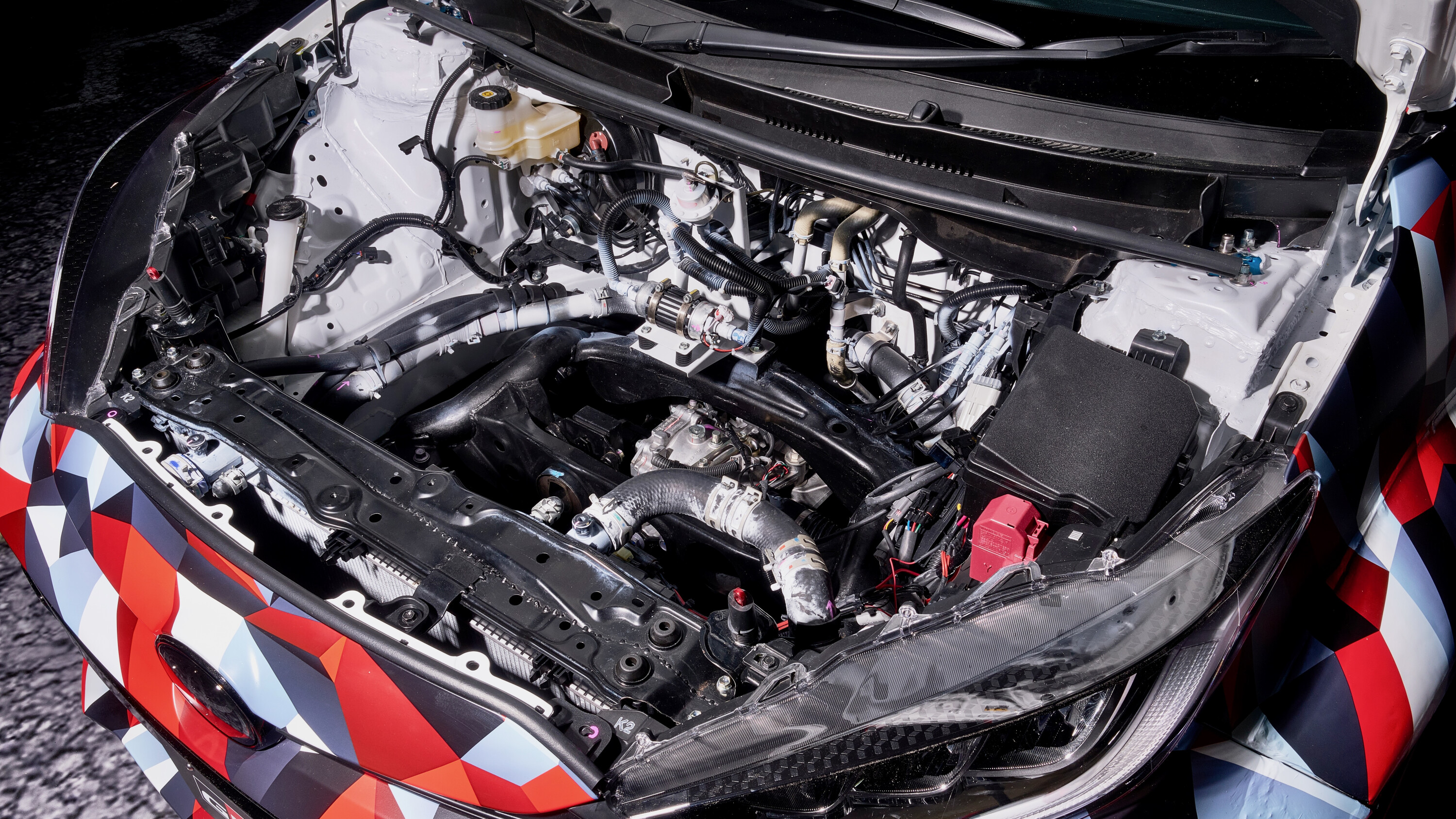
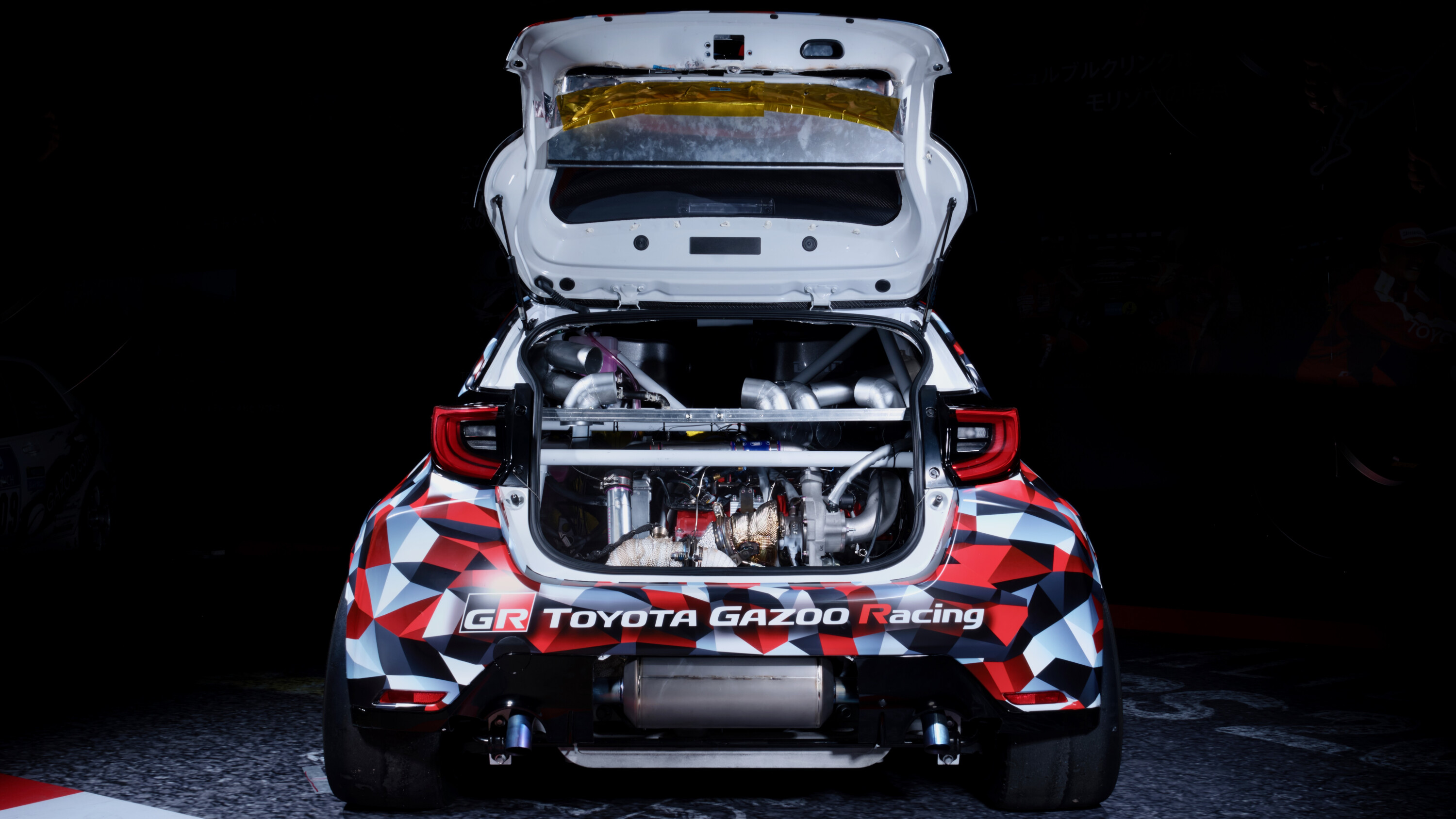
The unveiling of a GR Yaris M Concept car at the 2025 Tokyo Auto Salon has given us a tantalising look at the potential future of Toyota’s Gazoo Racing sub brand.
While Toyota has definitely got its sporting mojo back, it has given no indication it plans to produce a mid-engined hot hatchback, so one might wonder what the purpose of this concept car is.
But some industry insiders believe a new mid-engined sports car using the legendary MR-2 name will be produced in the coming years and this GR Yaris is a likely preview of its form.
1
But while that mid-engined layout is important, this GR Yaris M Concept also debuts a new engine. Instead of the ‘G16E-GTS’ unit that appears in the regular model, it uses a new work-in-progress turbocharged four-cylinder 2.0-litre engine codenamed ‘G20E’.
Toyota is rumoured to be launching the new engine in the coming years with as much as 295kW of power and 550Nm of torque, though the ‘entry-level’ version of the engine will still make similar outputs to today’s GR Yaris at around 221kW and 400Nm. An unrestricted racing version of the engine will reportedly pump out 441kW.
Other Toyota exhibits from the 2025 Tokyo Auto Salon included a new GR Yaris race car for the Nurburgring 24 Hour race and a new aero package for the GR Yaris.
2
MORE
Everything Toyota
