
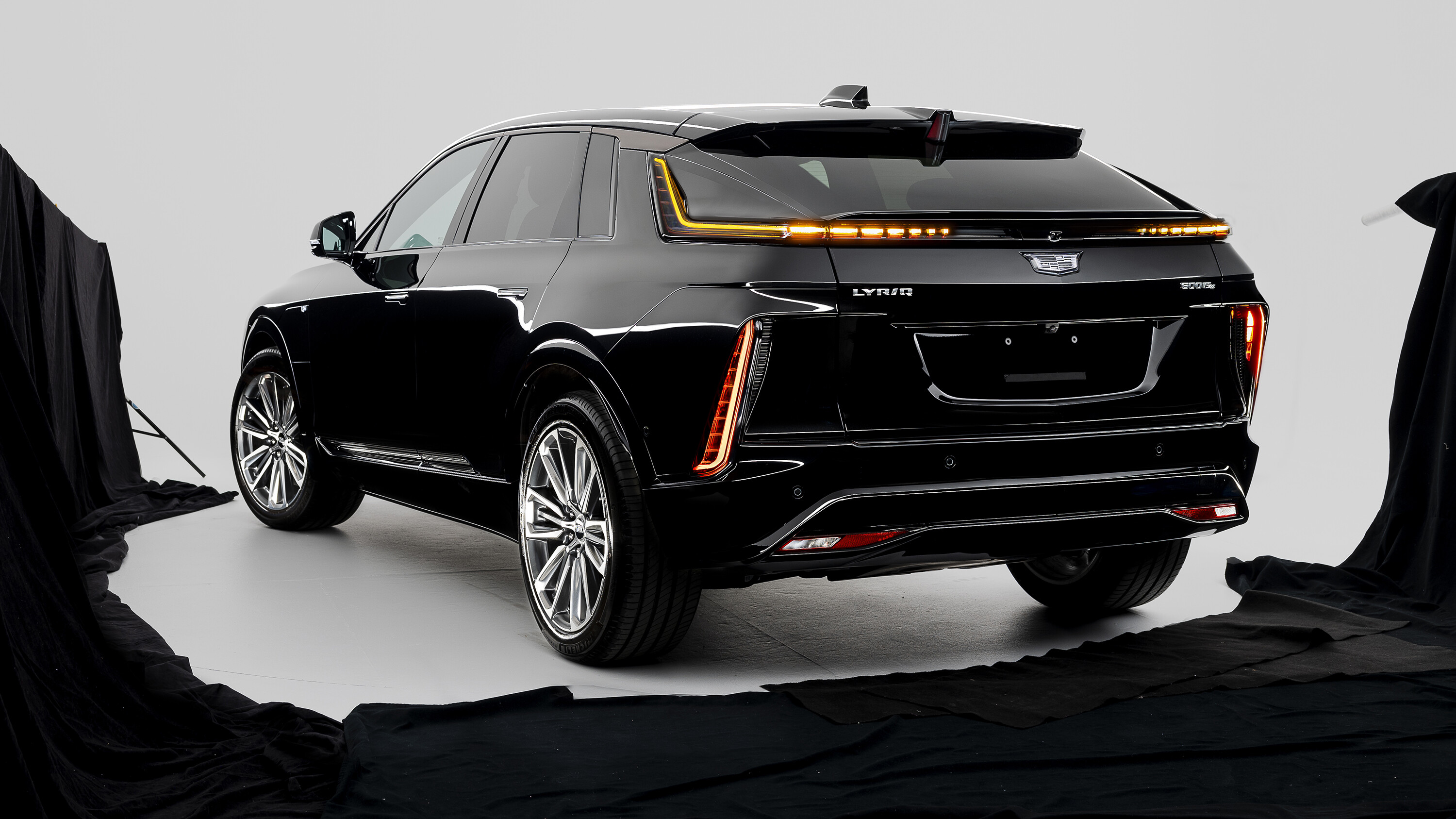
It’s the only Cadillac Lyriq in Australia and it travelled about 15,500 kilometres to get here, flown in secretly from General Motors’ Spring Hill manufacturing plant in Tennessee, where it’s built, and via Hawaii.
Wheels is the first local media outlet to see it, weeks ahead of its official press unveiling in Melbourne, as part of exclusive ‘long lead’ coverage for the latest issue of our print magazine (which goes on sale imminently – so grab yourself a copy!).
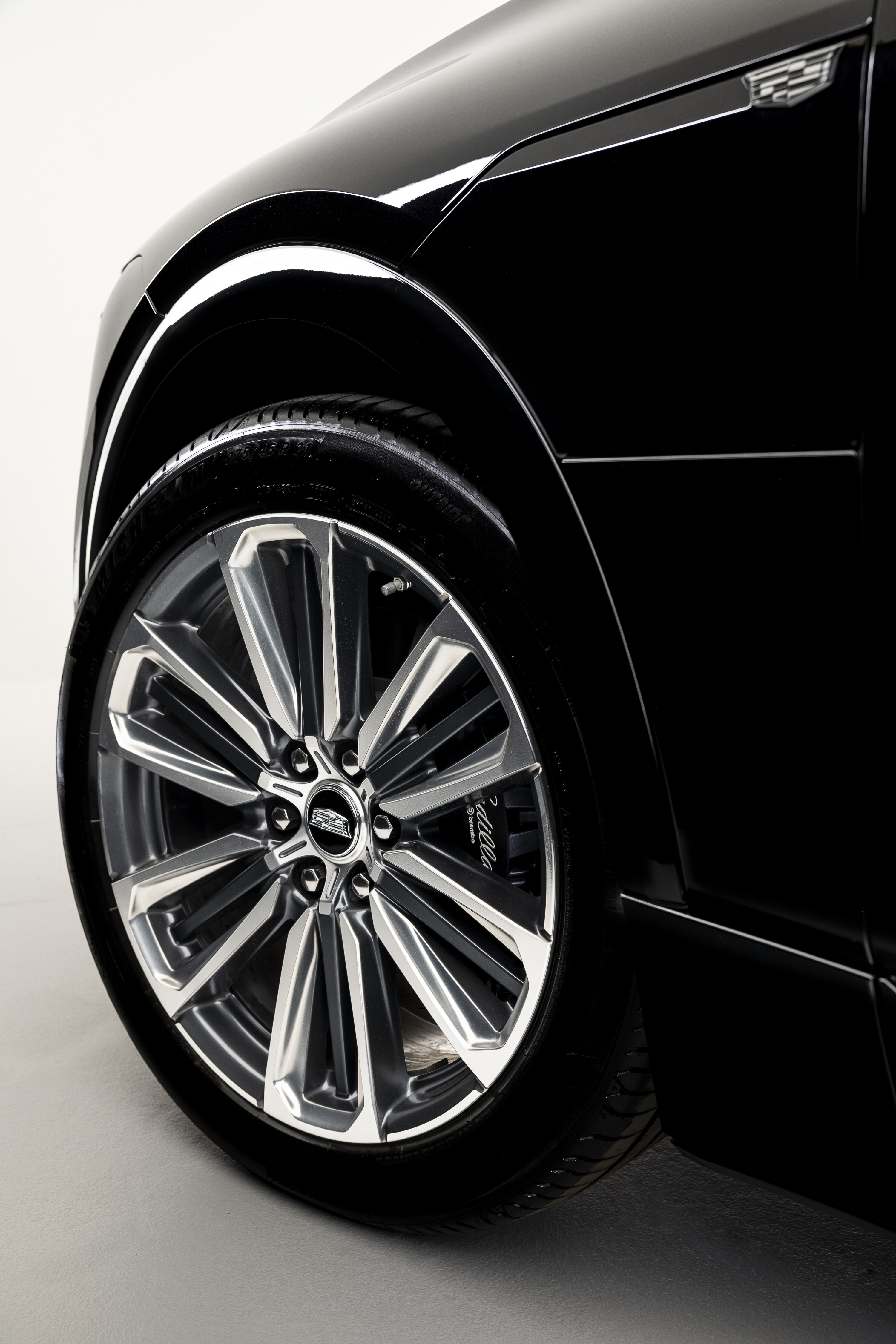
Dressed in black (paint), the Lyriq hasn’t arrived at our nondescript Port Melbourne studio in what would be the first choice of Ellen Dewar, our head of photography, who’s tasked with shooting some pretty studio pictures.
1
Well, it would be last choice, but that’s compensated for by the sense of excitement around not just a new vehicle but a whole new brand – even if speculation around Cadillac’s return has been strong, especially when the Lyriq name was trademarked a few months ago.
(That was along with the Optiq and Escalade IQ names of what are expected to be future models joining the Lyriq here.)
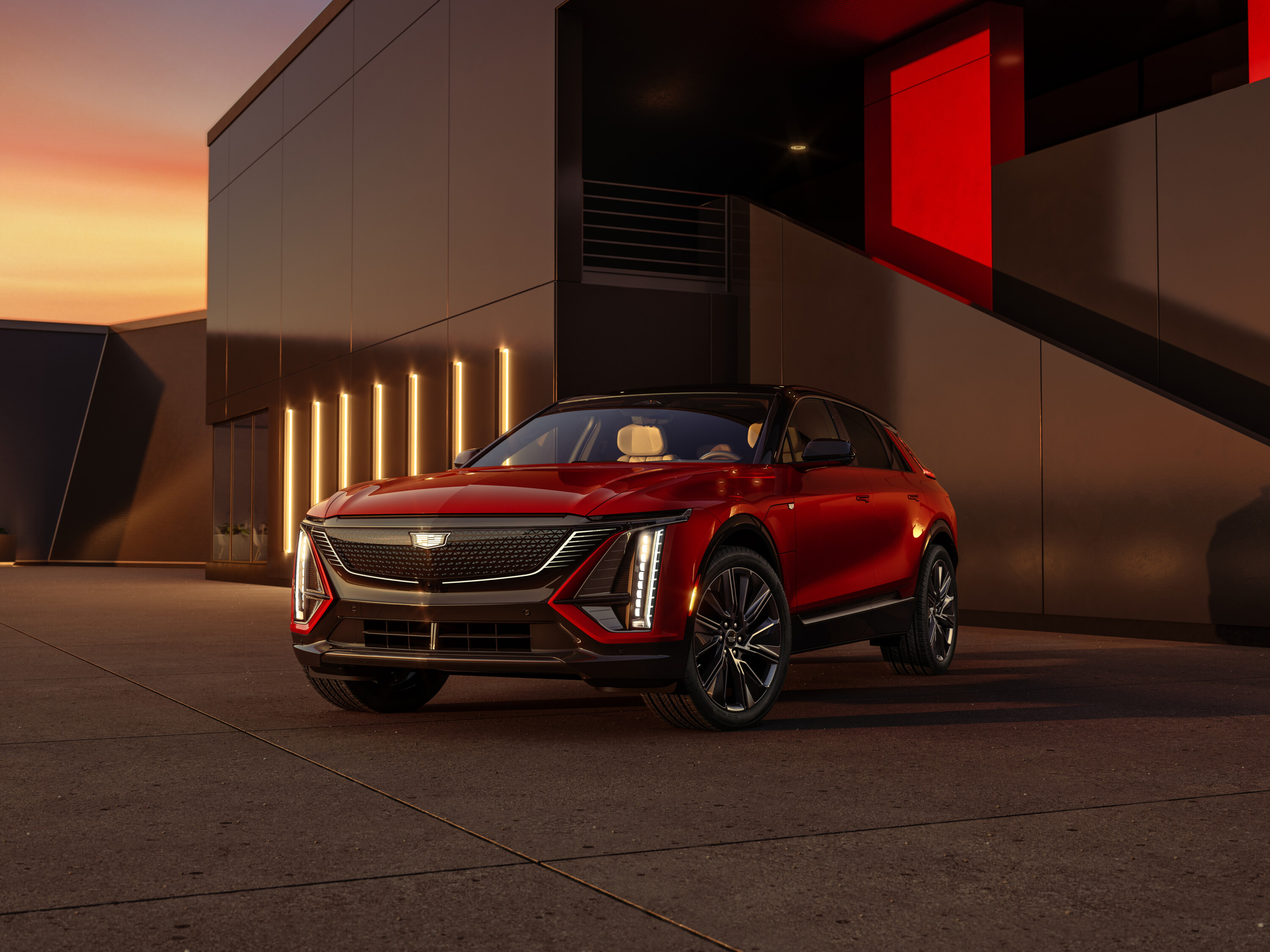
Pictures can disguise a vehicle’s size, and even in the metal you need to be looking at the Lyriq in profile to appreciate it is indeed a large SUV; one that’s a few mils short of five metres.
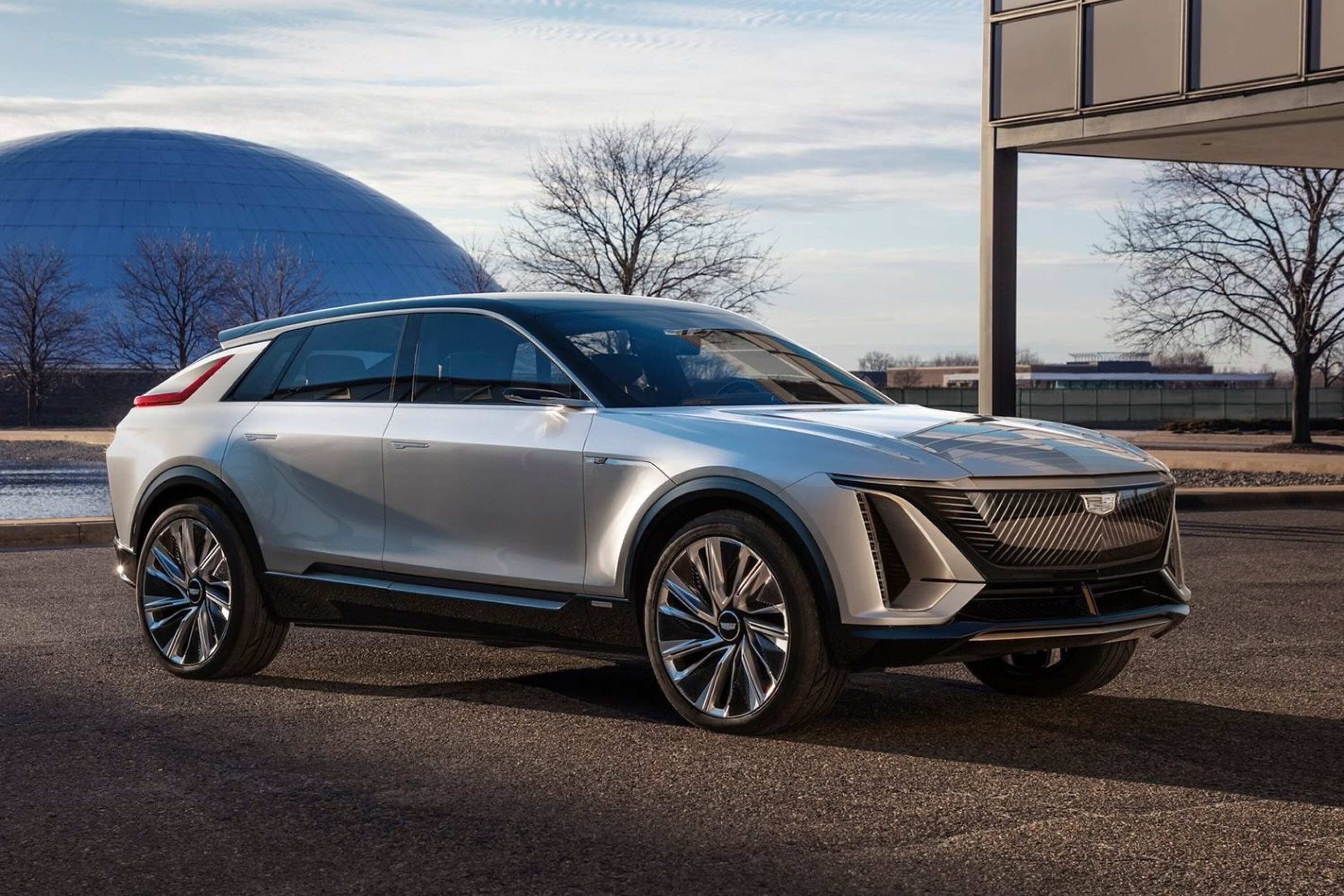
Caddy’s designers have also done a terrific job with the Lyriq’s stance and proportions, with very short overhangs – a 3.1m wheelbase dominates the length – and a roofline that’s relatively low and tapering to the rear. There are hints of the Range Rover Velar to the styling, which most would view as a compliment.
1
There’s also a subtlety to the design that’s often missing from big American SUVs.
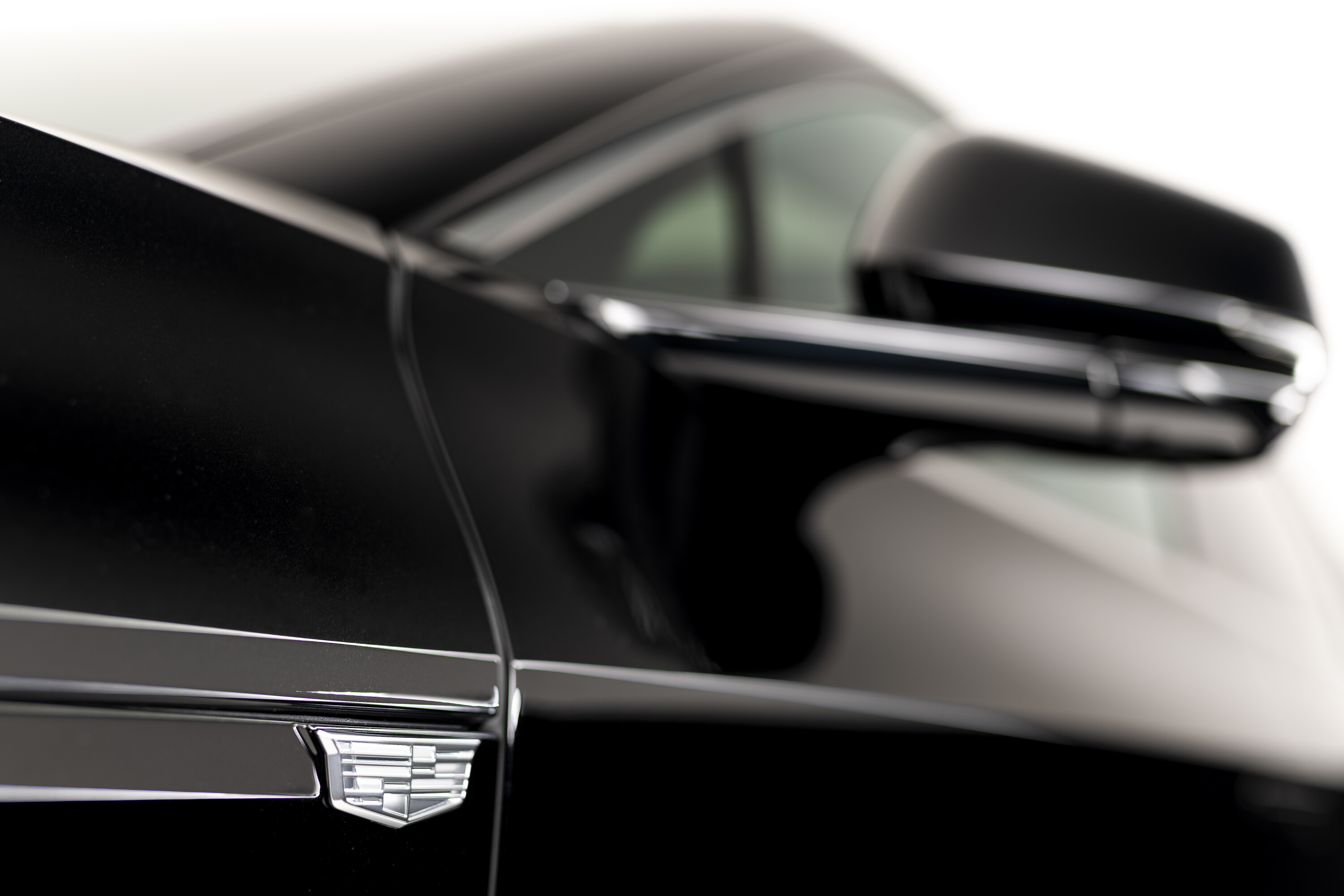
And here’s a particularly subtle touch: the Cadillac badge is monochromatic for its EV models.
Disappointingly for Australia, our local vehicle design rules (ADRS) means the Lyriq’s LED-patterned grille will need to be disconnected for our market. (There are different LED grille patterns for different model grades.)
The Australian show car is a Sport variant, the flagship of a three-tier range in the US.
1
A ‘600e4’ badge on the tailgate represents three drivetrain elements: 600 is a rounded-down reference to the Sport’s torque (610Nm), e is for electric (of course), and 4 indicates the all-wheel drive created by the dual motors.
Single-motor, rear-drive versions of the Lyriq are available in the US, producing 255kW (versus 373kW for the dual motor) and 440Nm.
Maximum quoted electric ranges aren’t significantly different: the 505km figure for the Lyriq RWD is just 11km more than the AWD.
The Lyriq is keen to make a good impression even before you step into the cabin. Opening the front doors reveals illuminated sills featuring Cadillac in script next to a silhouette graphic of the Lyriq.
1
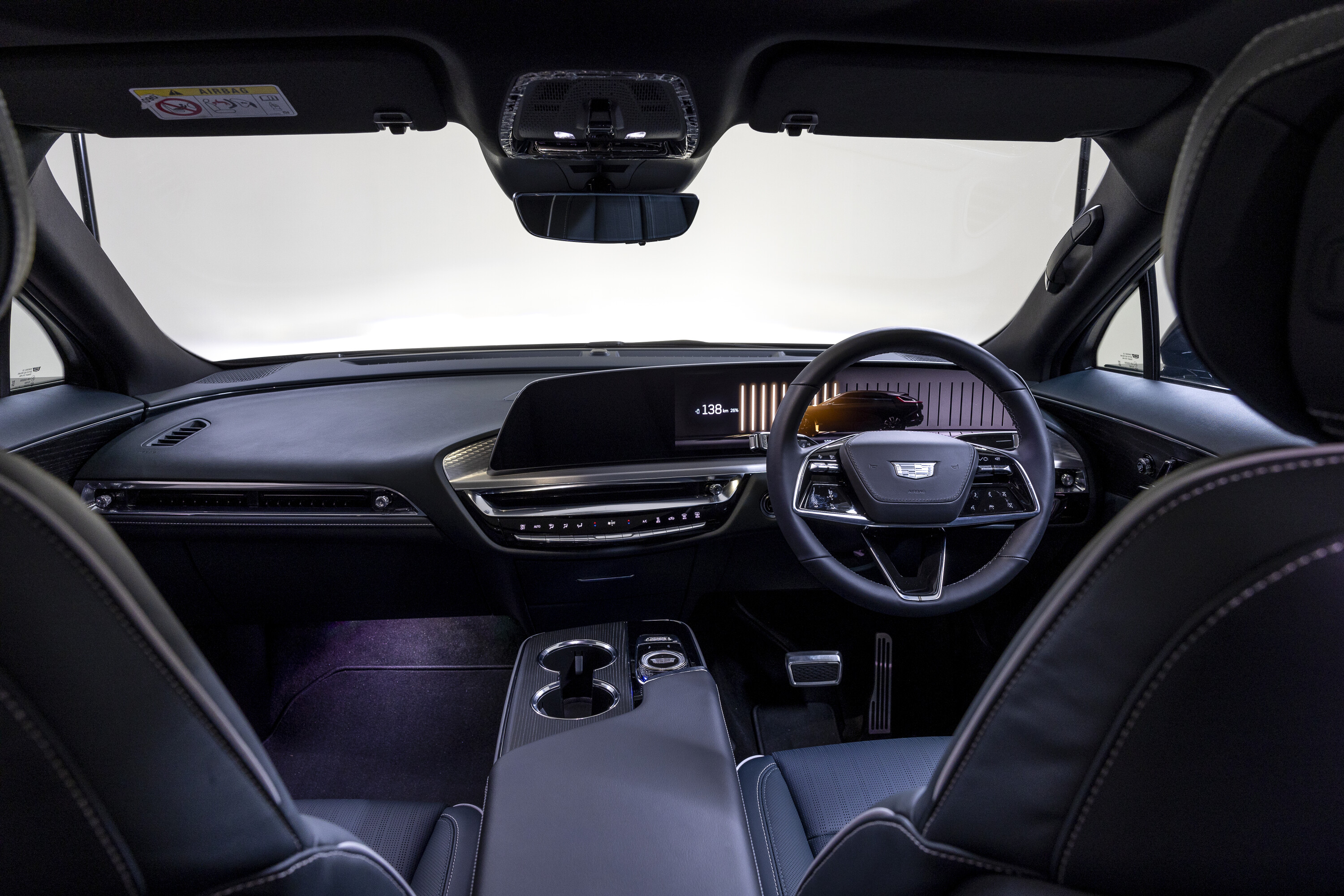
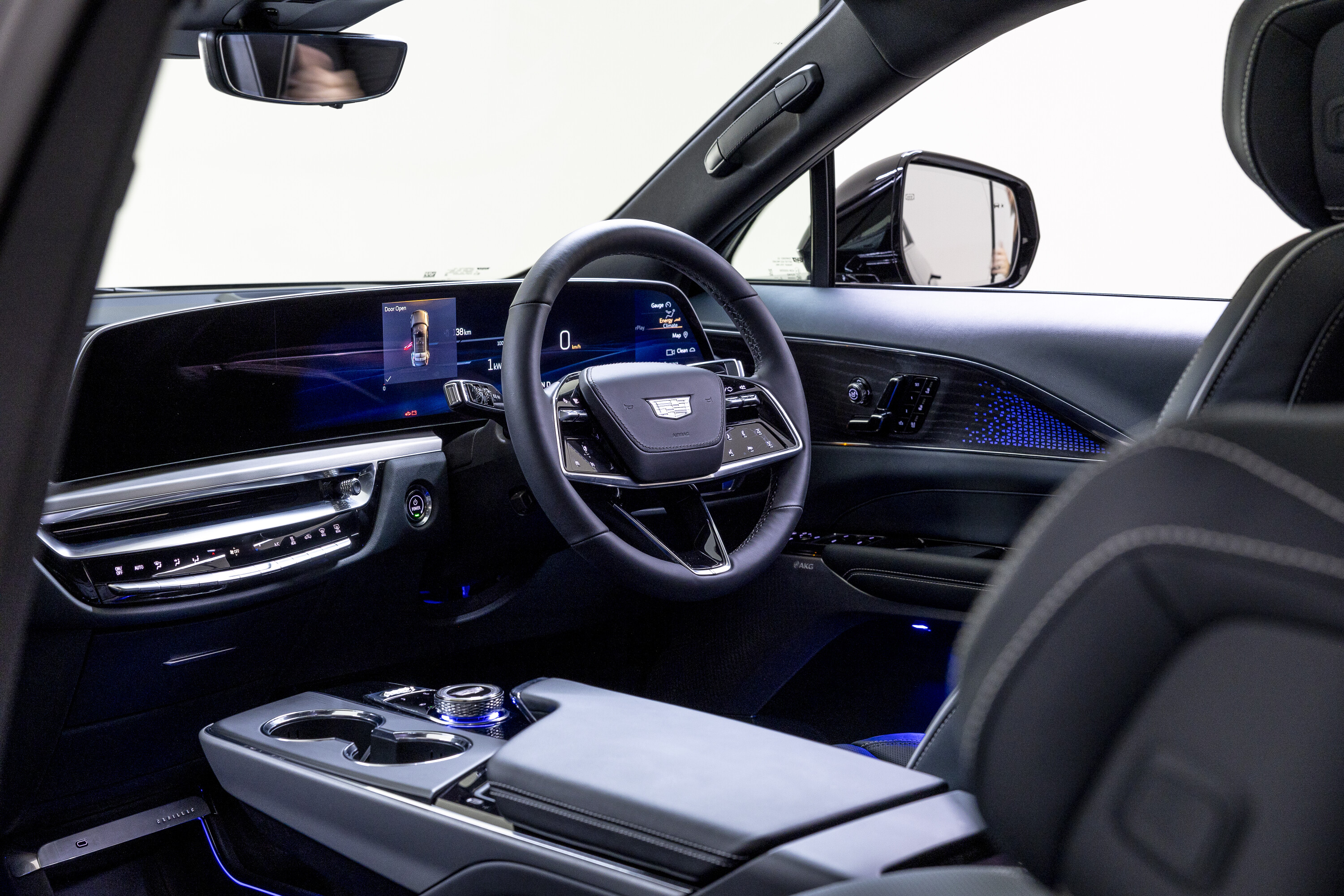
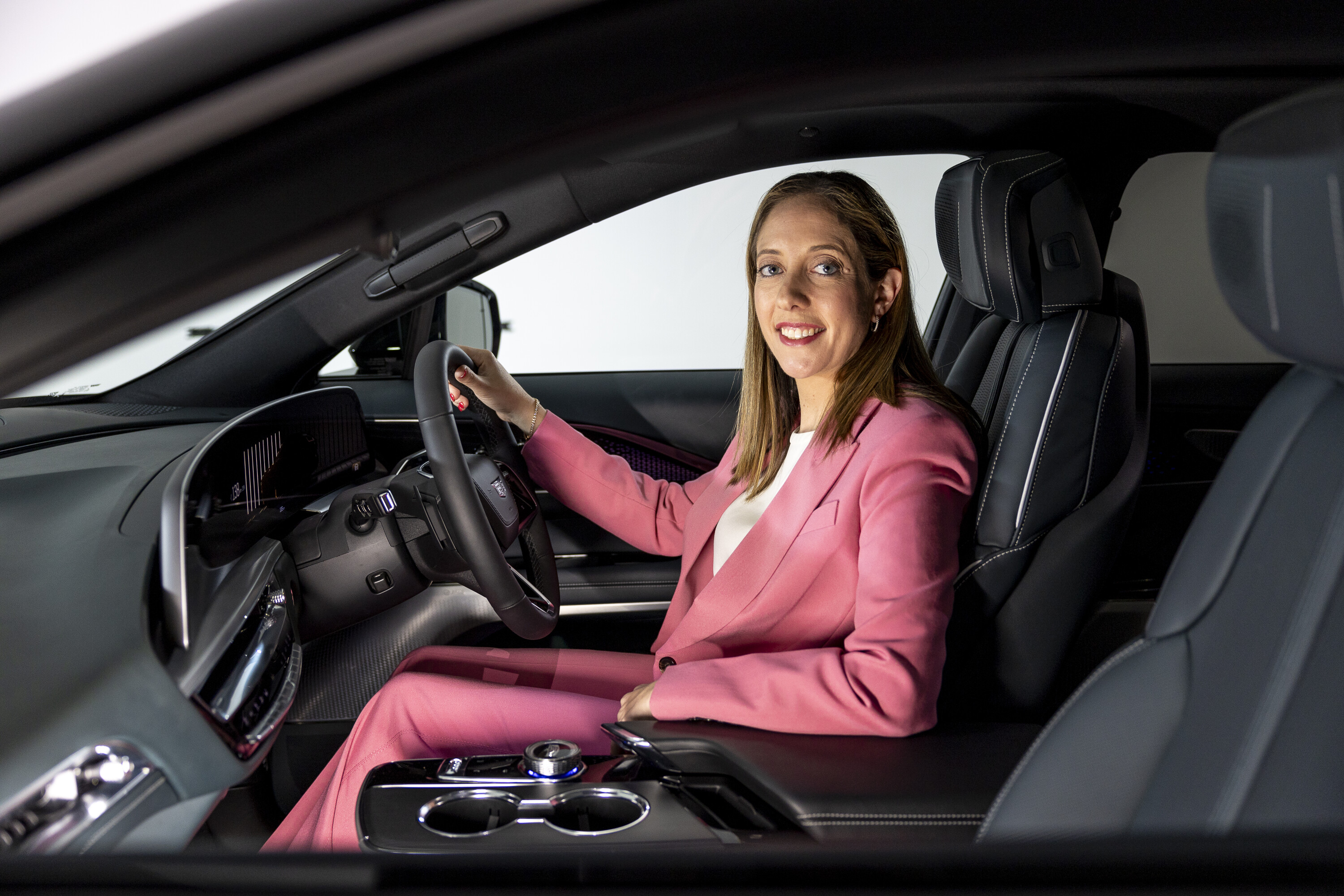
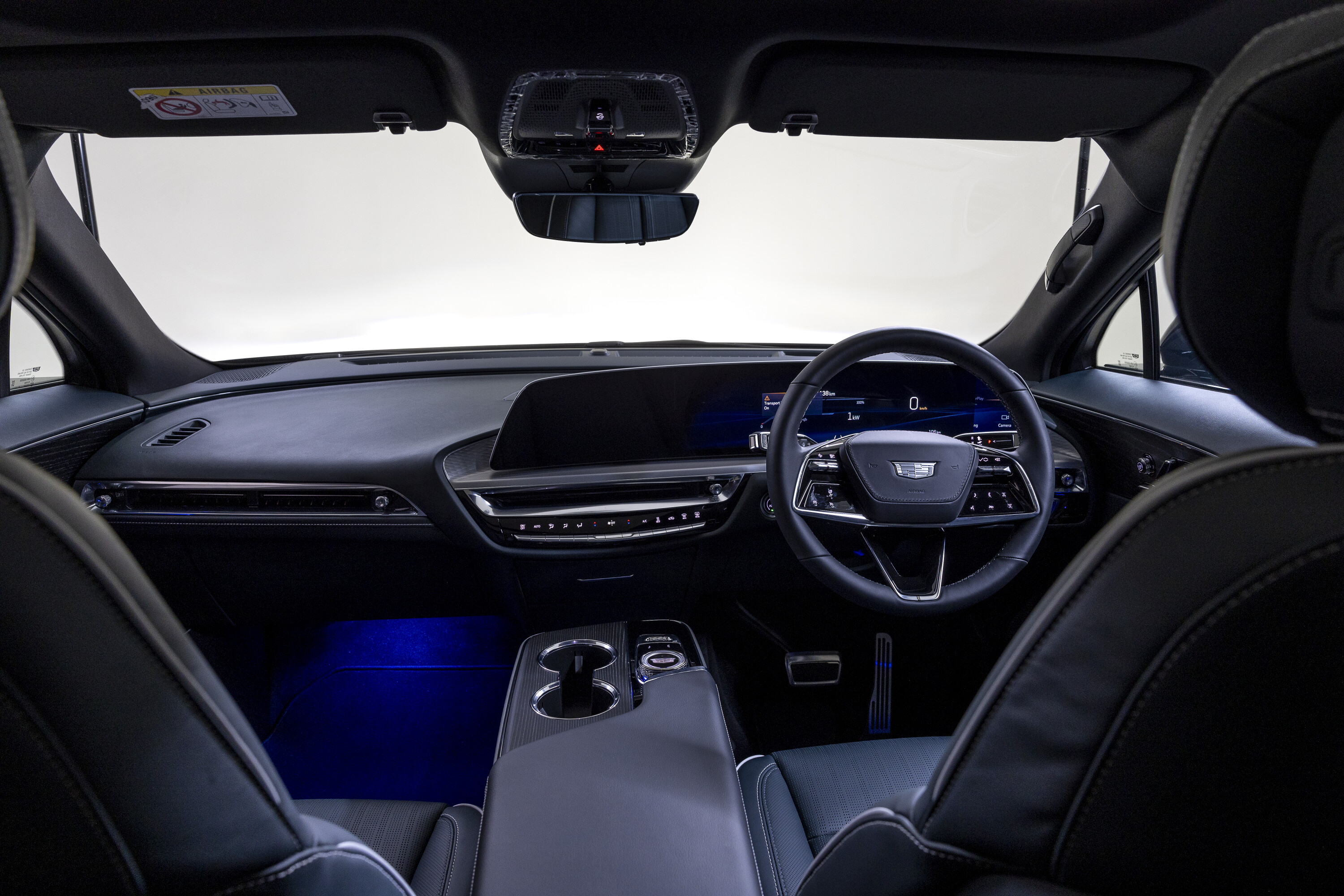
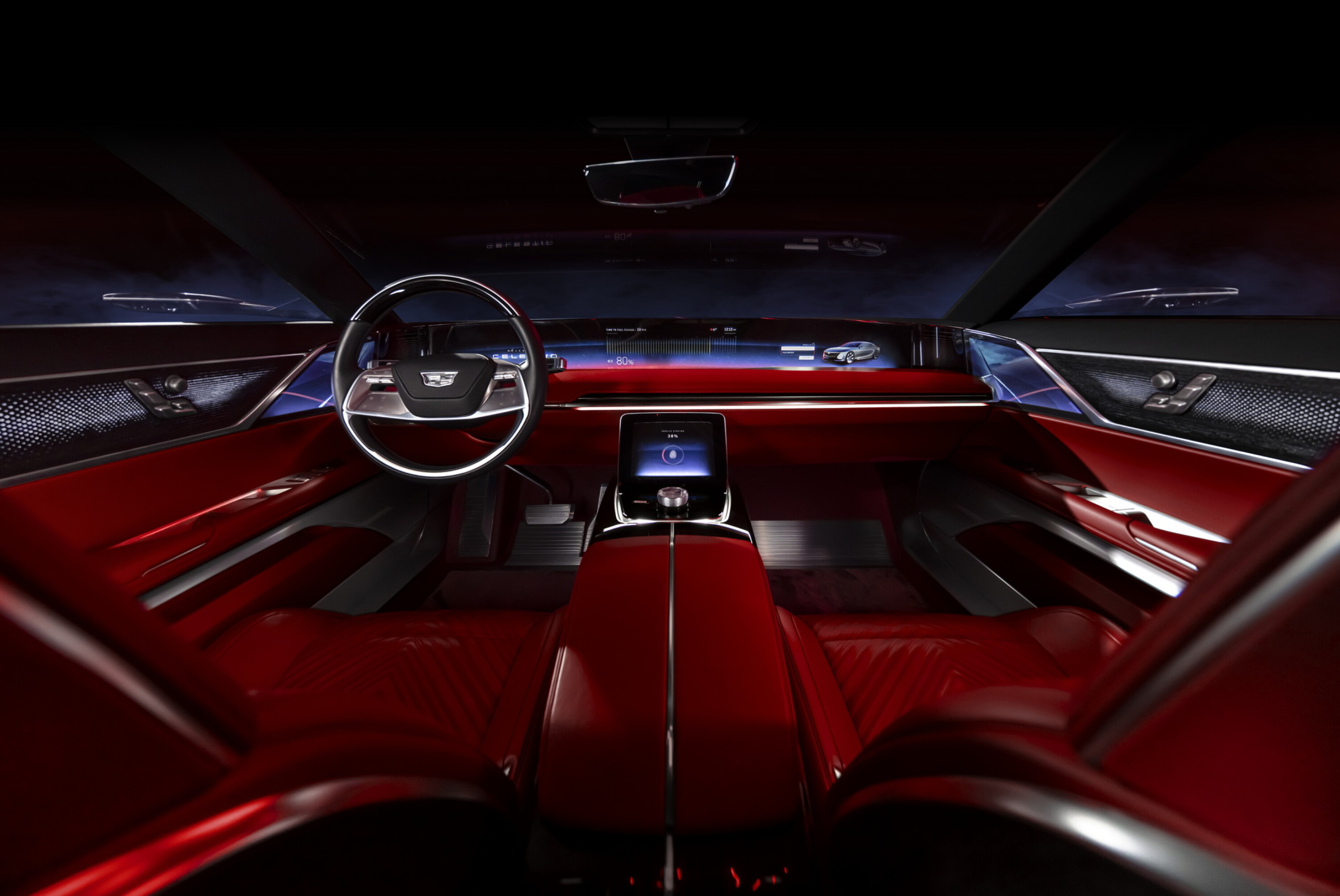
The Lyriq’s cabin design is far off Tesla’s ultra-minimalist approach, yet, again, there’s more restraint than with your typical US SUV interior.
A 33-inch digital display dominates the dash, though we can’t explore the dual displays as they’re not yet configured for the Australian market.
The driver instrument section is customisable, though, we know.
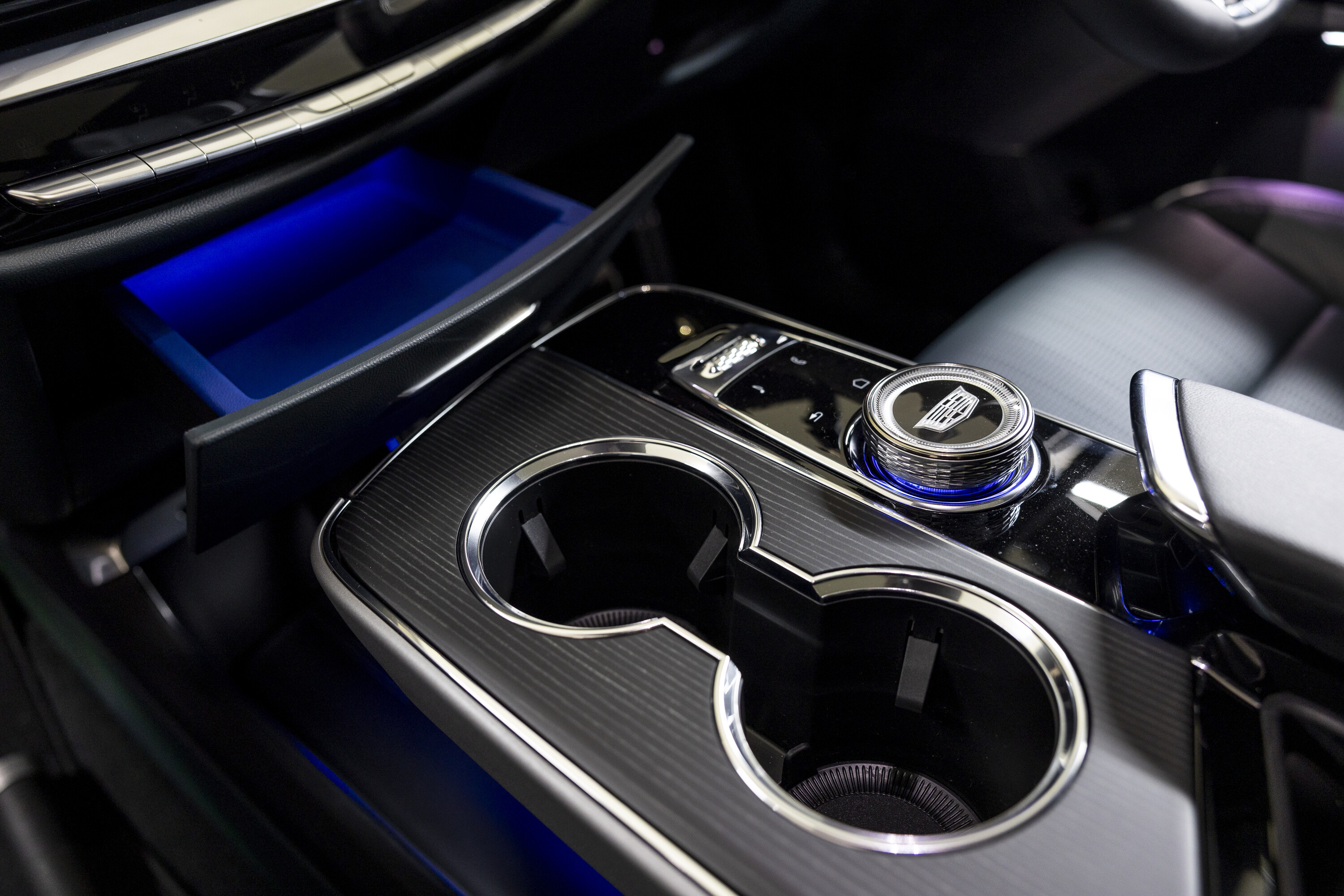
On the centre console, there are knurled edges for the Google Built-In infotainment system’s rotary controller, volume scroller, and cup-holder borders.
1
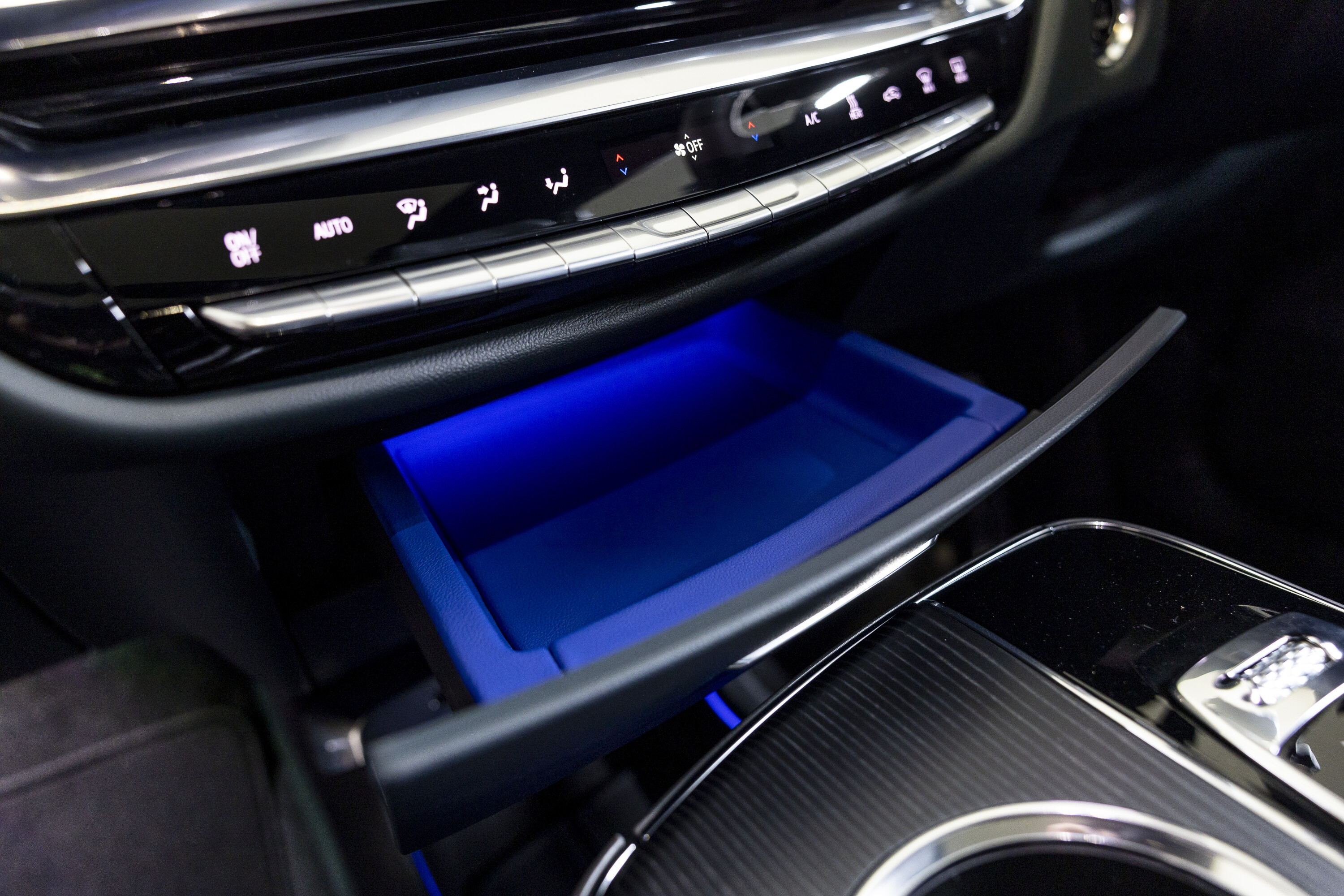
There are intricate controls for the air vents and soft materials are placed in key areas, though plastics do start to get harder the lower the eye level.
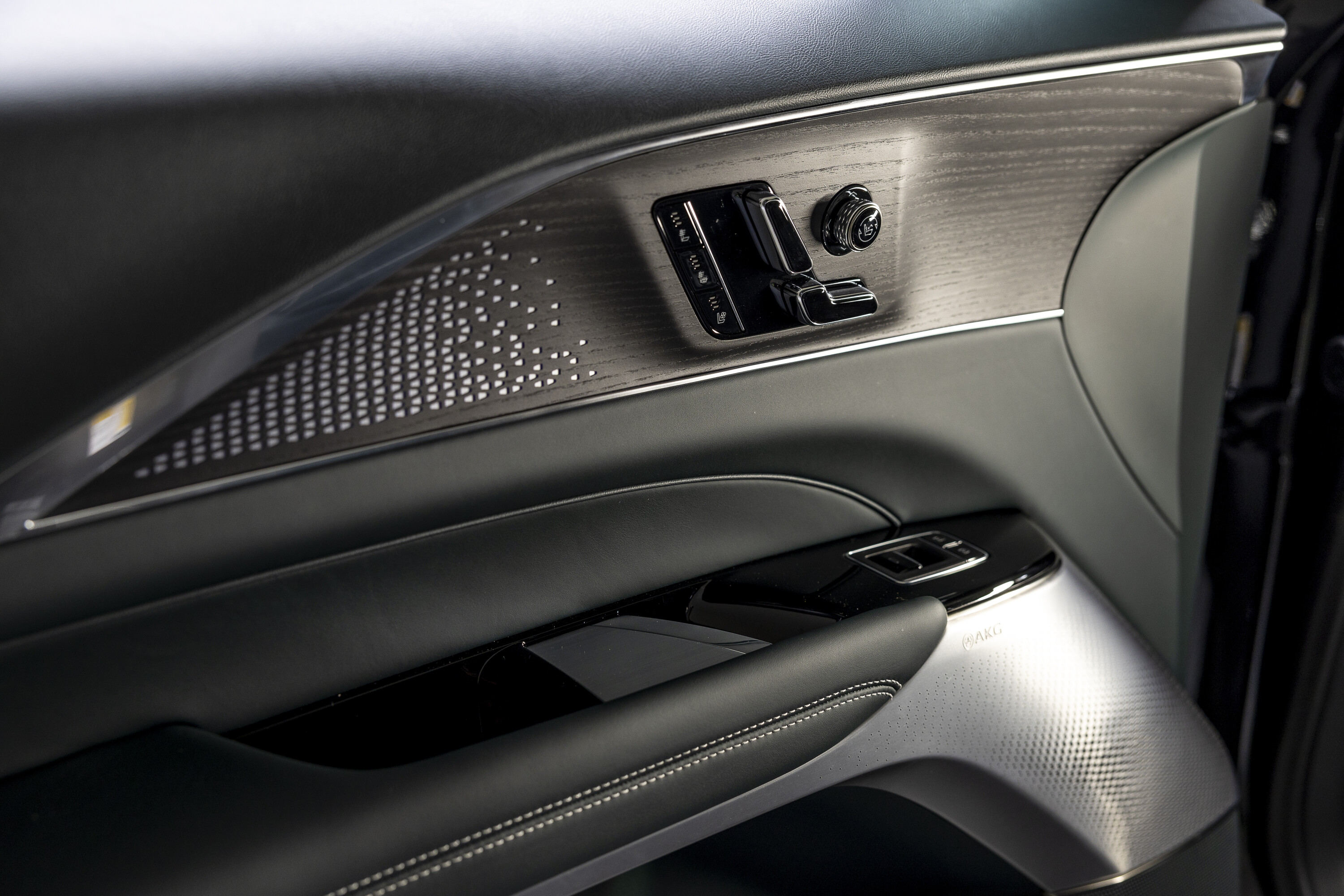
Seat-shaped adjustment switches embedded in a genuine matt wood door section could have been pulled out of a Mercedes, though the overall interior styling arguably has the most in common with Hyundai’s luxury brand, Genesis.
Our strangest thought: the steering wheel looks like a headless Darth Vader opening his arms outwards. (Or maybe it’s just because I’ve watched Star Wars about 50 times.)
1
Door pockets are generously sized, and while the main console cubby is quite shallow, there’s a lower section for larger items that also serves as the inductive tray for smartphones.
The storage/charging tray, as well as a cubby that pulls out of the central dash, are finished in a bright blue felt that comes right out of the… Let’s call it a ‘surprise and delight’ feature as the colour has no relationship with anything else in the interior.
For the glovebox, Cadillac borrows an idiosyncrasy from Tesla – it can be opened only via a button on the infotainment touchscreen.
1
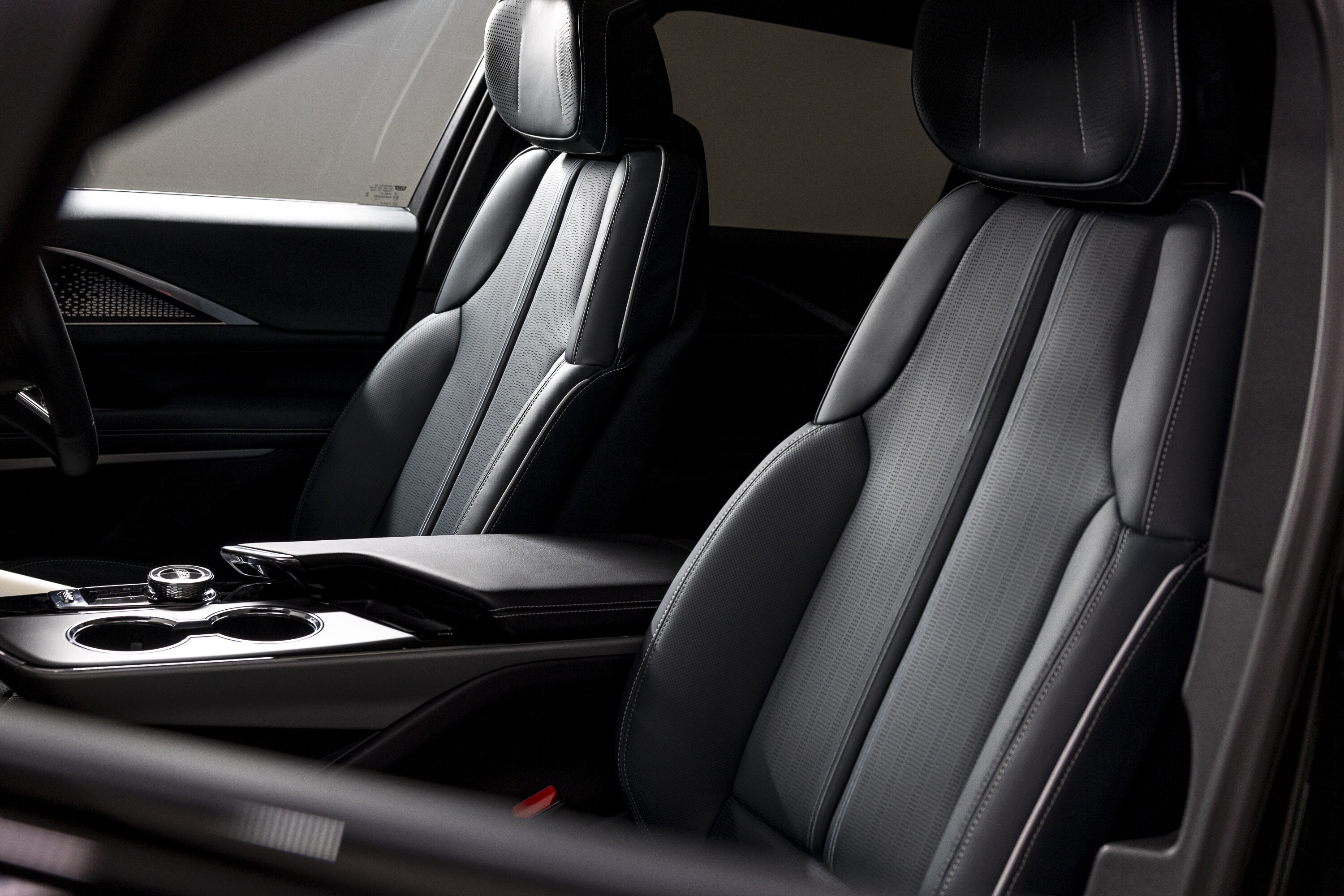
Interior options include an AKG audio system with 19 speakers – including in the headrests.
A wheelbase not far short of 3.1 metres delivers as expected in the rear seat: limousine legroom.
The flat floor and wide cabin mean three adults could sit across the bench with a high degree of comfort.
Pressing the monochromatic Cadillac badge at the rear opens the electric tailgate.
1
Inside, there’s an amount of boot space that makes Cadillac’s 793-litre boot measurement sound realistic, even if some of that likely includes a sizeable underfloor well (where cables or other items can be placed).
There are electric switches for lowering the 60-40 seatbacks, though the auto operation is a one-way ticket only; the seatbacks need to be raised manually.
With the seats flattened, Cadillac quotes cargo space of 1722 litres.
1
As the tailgate lowers to a close, that completes our static tour of the Cadillac Lyriq.
With the full local market launch still at least 12 months away, our heavy desire for a steer of the electric Caddy means it may be time for us to fly ?? kilometres in the opposite direction.
MORE
Everything Cadillac
MORE
Electric SUVs
This time it should happen.
General Motors’ American luxury brand Cadillac will return to Australia, it has confirmed this week – 15 years after the global financial crisis prompted a last-minute bail-out of a planned local launch.
The Cadillac Lyriq large electric SUV will spearhead the brand’s global expansion, which will include Australia and New Zealand from late 2024, along with Japan, the UK, and parts of Europe.
Cadillac plans to be an all-electric brand by the end of this decade, with the reduced complexity of EV production making it easier for cars to be built in both left- and right-hand drive configurations.
GM will split its sales operations set-up in Australia, with Cadillac established as a separate, EV-only brand while ICE models sit under the GM Specialty Vehicles (GMSV) banner that was introduced in 2020 following the demise of Holden.
GMSV recently announced the V8-powered GMC Yukon Denali large SUV would join the Chevrolet Silverado full-size pick-up and Corvette sports car ranges.
While the Yukon will join the Silverado as a model converted to right-hand drive by GM’s local partner Walkinshaw, Cadillac will build RHD models at its US factories for export as it looks to establish itself as a truly global luxury brand.
GM Australia and New Zealand said several key factors made 2024 the right timing for the first official return of the 121-year-old Cadillac brand since its iconic tail-fin cars were sold locally in the 1960s.
1
“I think this time around the evolution that the Cadillac brand is taking is really bold with what we’re doing,” GM ANZ managing director Jess Bala told Wheels in an exclusive interview.
“GM’s investing a lot in EVs, which we’ve publicly talked about across all the brands, and for Cadillac in particular, as the luxury brand, it’s really spearheading that.
“And if you look at the markets here in Australia and New Zealand, we’ve got a lot of tech-savvy customers, a lot of luxury customers, and we feel very confident that the timing now is right to introduce Cadillac here.
1
“[GM has] been very public that we want to be a global company, and you can’t be global if you don’t have right-hand drive because there are still many major markets that are right-hand drive with considerable volume in it.
“GM’s invested a lot in the modular [800-volt] Ultium platform, which is the foundation for all of our EVs across all of the GM brands, and it does make it a lot easier to therefore do right-hand drive.”
Cadillac will launch with the Lyriq initially before expanding the line-up. The company is billing it as a mid-size luxury SUV, though in Australia its 4996mm length puts it squarely in the Large SUV camp.
1
In the US, the Lyriq currently features a 102kWh lithium-ion battery and is available in single-motor/rear-drive and dual-motor/all-wheel-drive formats.
The Lyriq RWD produces 255kW and 440Nm, and has a maximum driving range of 505km. The AWD model increases power and torque to 373kW and 610Nm, while range drops only marginally to 494km.
Cadillac says DC rapid charging of up to 190kW allows for 124km of range to be added in just 10 minutes.
With battery technology continuing to advance at a fairly rapid pace, and the Lyriq yet to be homologated for Australia, expect the above figures to vary by the time it reaches Australia in about a year’s time as a ‘2025 model-year’ (a 2024 model in our market language).
1
If Australia mirrored the Lyriq range in North America, there would be a Tech entry model, mid-spec Luxury, and the flagship Sport.
Cadillac brought the full-fruit Sport model to Australia for the mid-November media announcement, flying it in especially all the way from its Tennessee factory via Hawaii.
Pricing for the Lyriq is a long way away from being confirmed, though US prices virtually guarantee six figures. Its dimensions also put it on a collision course with Audi’s Q8 e-Tron, BMW’s iX, and Mercedes-Benz’s EQE, as well as Tesla’s Model X (presuming it returns to Australia).
Germany’s large electric SUVs range between $131,000 and $146,000 in starting prices; Tesla’s Model X started from about $140-150K before local orders were stopped when the company ceased production of right-hand-drive versions.
GM ANZ is not yet confirming which other Cadillac models will join the Lyriq here “not long after”, though local trademarking suggests we don’t need any budding Sherlocks.
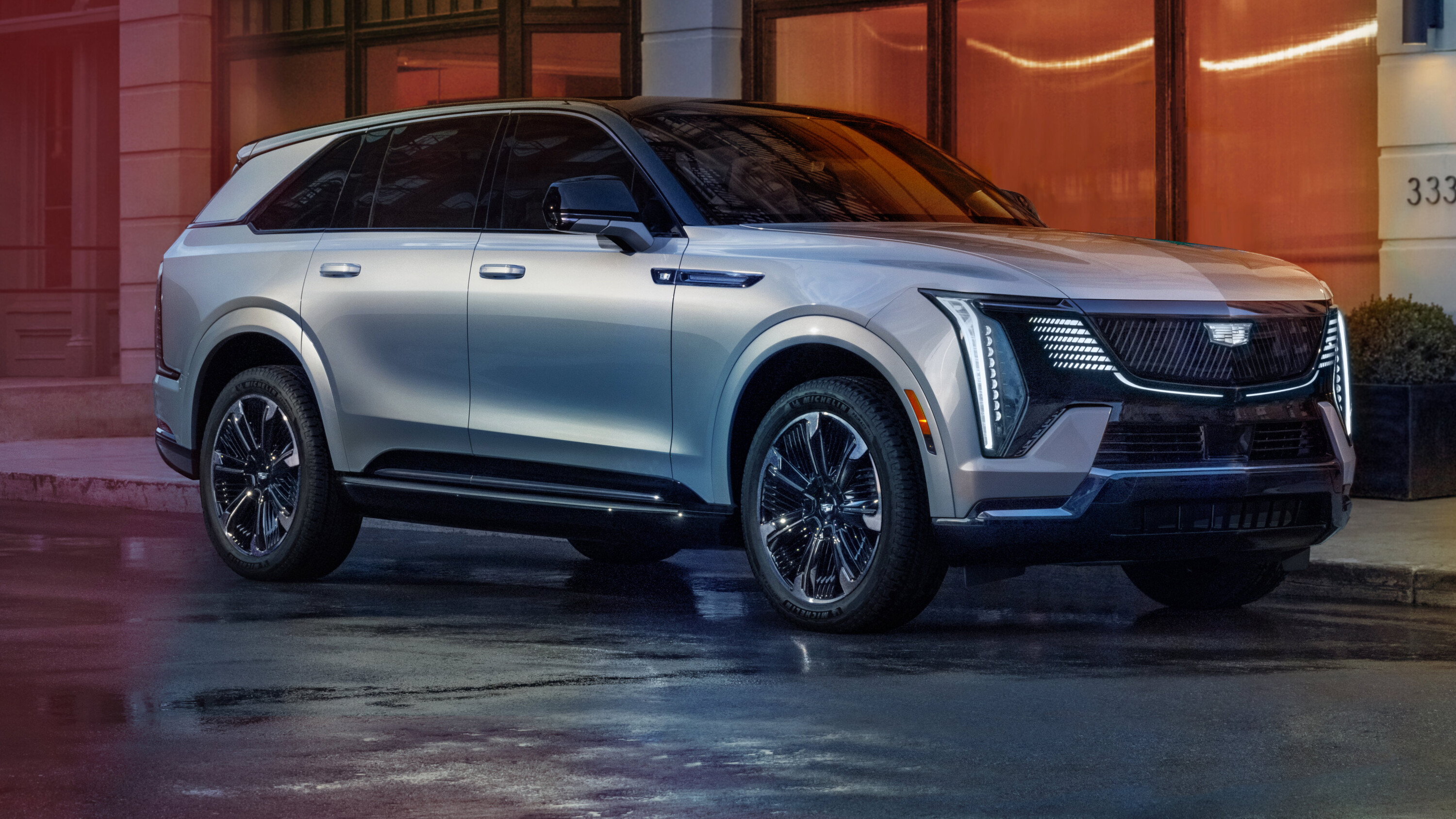
GM has registered both the Escalade IQ and Optiq names in Australia – the former a freshly unveiled, fully electric version of the brand’s halo-model full-size SUV; the latter another electric SUV that’s slightly smaller than the Lyriq. Check the page opposite for more details on these models.
1
Bala also dropped some heavy hints at the potential for more affordable Cadillacs than the Lyriq.
“I think there can be a [pricing] span depending on different size of vehicles and what the entries are,” she said. “[The Lyriq is] our mid-size – [if] on the bigger side, especially for here – but knowing that there’ll be more opportunities for different vehicles to come should be able to give us some leverage from a [price] bandwidth standpoint, too.”
While GMSV products will continue to be sold through dealerships, Cadillac will follow the Tesla (and Genesis) ‘direct to consumer’ formula. The Lyriq and subsequent models will be sold online or via Cadillac Experience Centre stores, which initially will be set up in Sydney, Melbourne and Auckland.
1
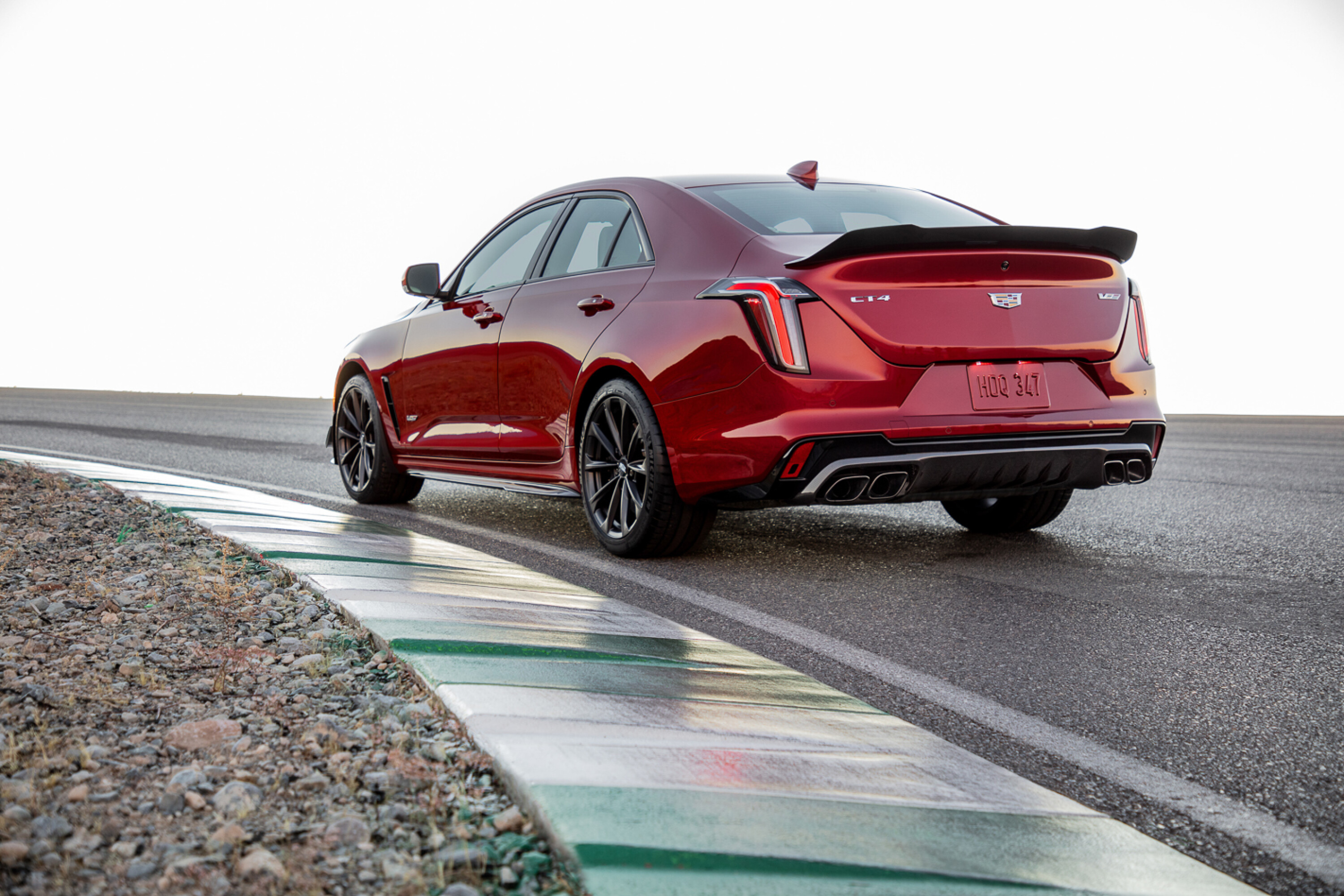
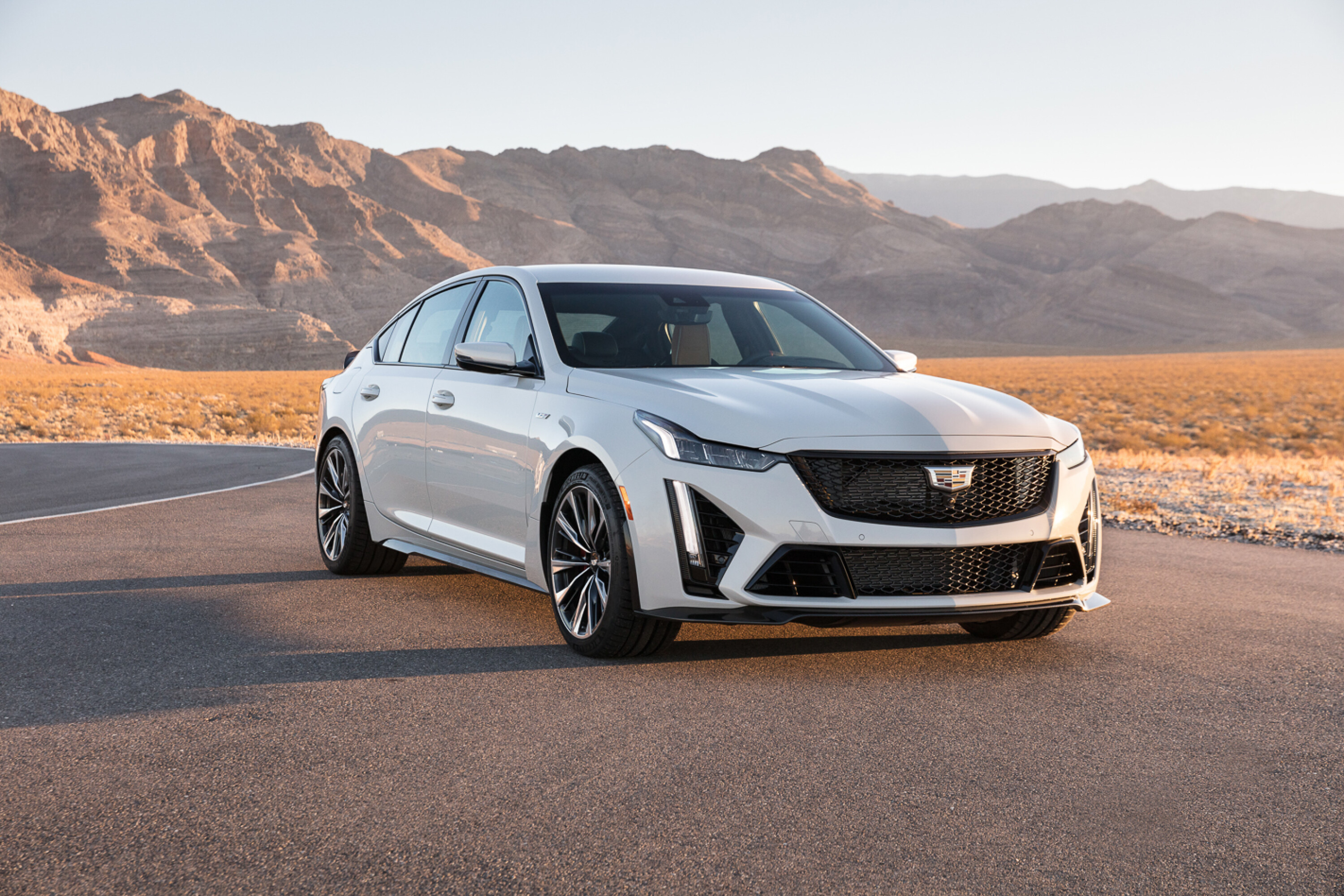
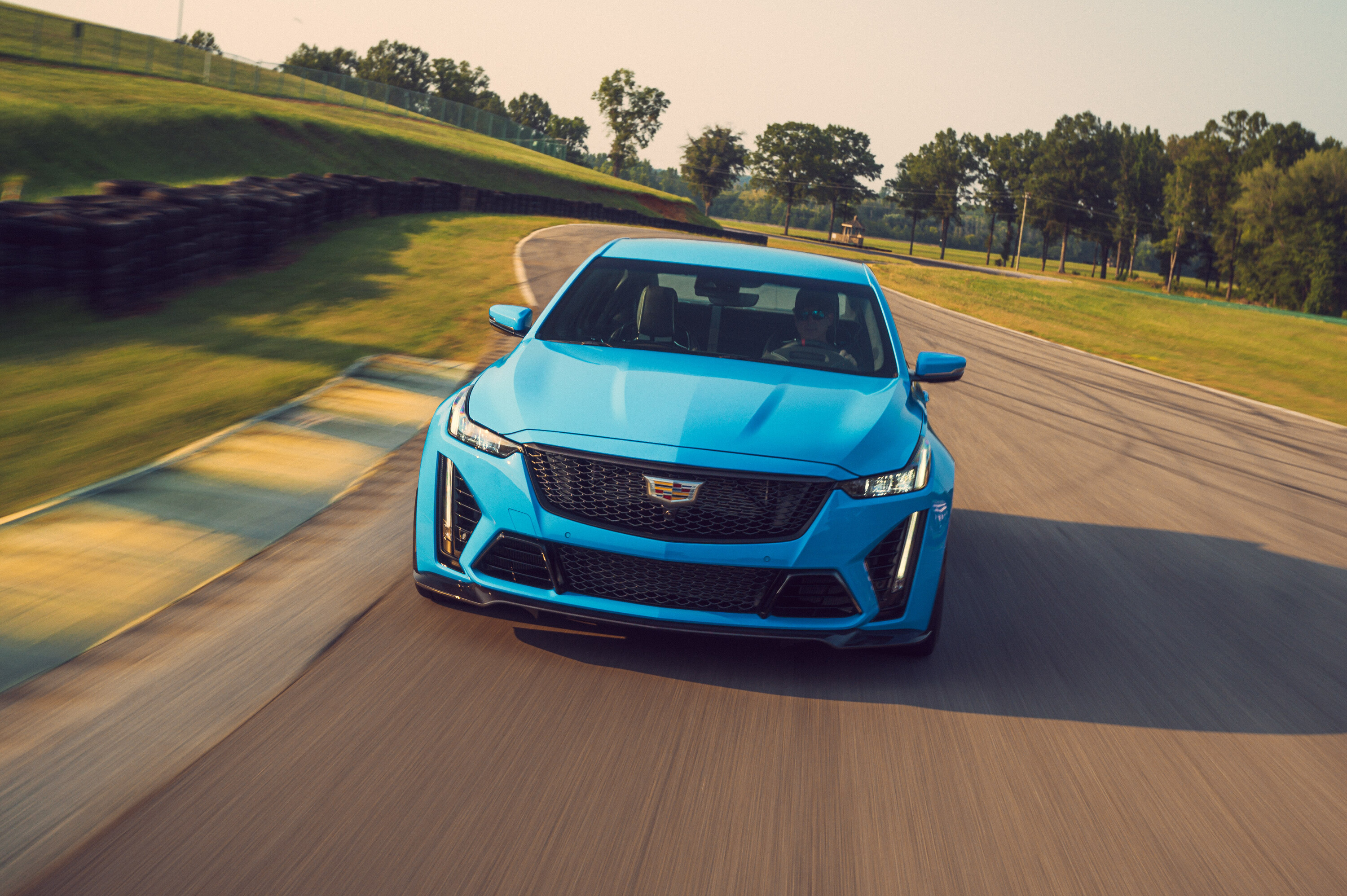
Cadillac’s EV-only focus means bad news for any Australians planning to order either of the CT4 and CT5 mid-size and large sedans, especially the appealing ‘Blackwing’ high-performance variants.
The CT4-V Blackwing produces 352kW from a twin-turbo V6 and has a claimed 0-60mph (0-97km/h) time of 3.9 seconds, while the CT5-V Blackwing is an HSV throwback with its supercharged 6.2-litre pushrod V8 and 498kW power output.
Cadillac’s history is rife with famous sedans – as well as coupes and convertibles – but the CT4 and CT5 are expected to be phased out by 2026. Performance fans will be placated by the development of a more focused Lyriq V model, slated to develop 410kW.
1
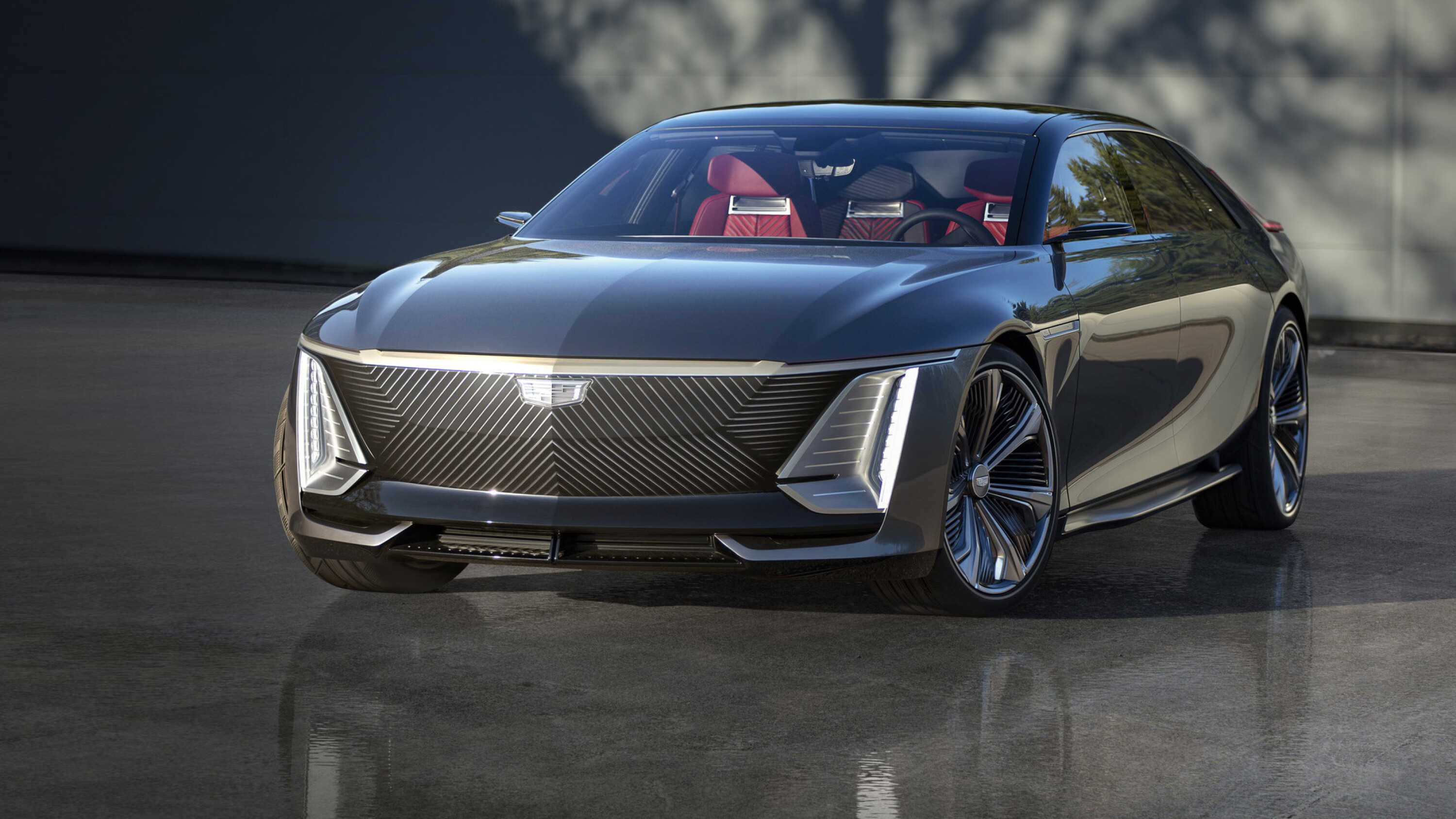
When asked by Wheels, GM wouldn’t confirm whether a four-door body style had a place in its future line-up beyond the Celestiq outlier.
US industry journal Automotive News reports that an electric sedan is possible for around 2027, otherwise Caddy’s future range looks set to be dominated by SUVs and crossovers.
The Lyriq, at least, impresses in the metal. With its Rangie Velar-like profile, short overhangs, and a glass-to-metal ratio heavily skewed towards sheetmetal, the electric Caddy SUV is strikingly designed and delivers a commanding presence.
1
Cadillac name-checks the German luxury-brand triumvirate – Audi, BMW, and Mercedes – as natural targets
Our studio model’s black exterior paint added a suitably sinister element for a brand that’s had its fair share of appearances in mobster films and series, including The Sopranos and Goodfellas. But bolder colours are available, such as Emerald Lake green, Opulent Blue, or Radiant Red.
Cadillac name-checks the German luxury-brand triumvirate – Audi, BMW, and Mercedes – as natural targets, as it talks about competing in the “tier one luxury” realm. It also admires compatriot Tesla that has “dominated the EV space”.
Many challenger luxury brands have struggled outside of the US, but Cadillac’s global boss, John Roth, told Wheels the brand is confident it can stand out in the luxury-car space.
1
“Cadillac has always been a leader in innovation for the consumers and there’s an opportunity on a global stage to bring that Cadillac luxury brand [experience]. Only Cadillac can do American modern luxury in the marketplace,” said Roth.
“When you go back in time, Cadillac in 1910 had the first fully enclosed vehicle with the H model. You look at 1912 and we had the first electric starter … in 1928, the first curved shatterproof windshield… All those ideas start to apply to our thinking [today] of what a luxury customer really looks for in a vehicle.
“Beyond the luxury touchpoints that need to exist in the vehicle, [today] you get into the software enablement that’s inside the vehicle. And on a US basis, there are elements like Super Cruise [autonomous driving], heads up display, 33-inch screen, and all the technology that a [luxury] consumer would ask for in a vehicle like this – because that’s what Cadillac stands for.

1
Local boss Bala believes factory right-hand-drive Cadillacs will also be a significant factor for Australian luxury-car buyers
“There’s just a great opportunity with a [vehicle] like Lyriq and with an overarching brand like Cadillac for us to really step into the Australian and New Zealand market and have that same kind of momentum and growth that we’re seeing in other parts of the world.”
Roth said Cadillac was achieving strong year-on-year growth in the US, as well as countries including China and Canada.
Local boss Bala believes factory right-hand-drive Cadillacs will also be a significant factor for Australian luxury-car buyers, contrasting with the imported GMSV models that are converted here from left-hand drive.
1
The flexible, modular Ultium platform also creates the potential for more GM brands to follow Cadillac here as separate entities, though it remains to be seen whether GM will be ready to play again in the high-volume segments it once occupied outside of the US with the likes of Opel, Vauxhall and, of course, Holden.
The chances of a dedicated Chevrolet brand with models such as the Blazer EV that’s a twin to the Lyriq, as well as the smaller Bolt EV, are played down for now.
1
“I’d say that consistently over in Michigan, the [GM] team’s always looking at opportunities, what’s possible, and what makes the most sense for the company as well,” said Bala.
“Obviously the Ultium platform is going to allow us to be a lot more flexible when it comes to those sorts of [decisions], but as of right now [a separate Chevrolet brand] is not something we’re planning on doing. But we are constantly looking at different opportunities, especially for the GMSV line-up.”
The confirmed re-introduction of America’s most famous luxury car brand, however, can be seen as a statement that General Motors, just three years after the painful closure of Holden, is ready to get serious about Australasia again.
MORE
Everything Cadillac
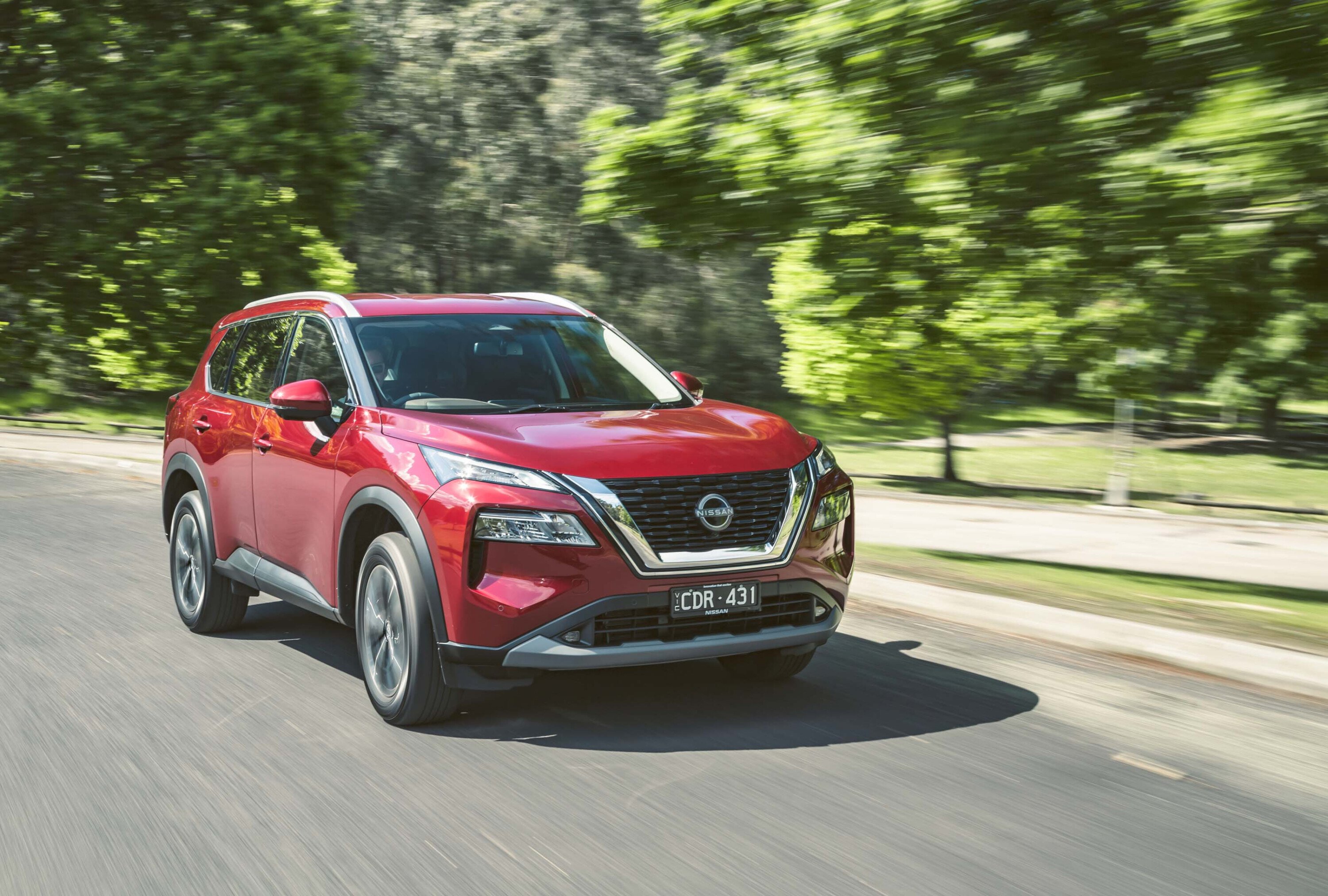
The Nissan X-Trail has long been a popular choice in the SUV market, known for its blend of practicality, comfort, and affordability.
And now, the latest Nissan X-Trail has been crowned as our Best Medium SUV for 2023. This comes after its predecessor garnered global acclaim in the same category, setting a high bar for the new model’s debut in 2023.
Additionally, it secured a top-four position in the 2023 Wheels Car of the Year, successfully competing against not only its immediate competitors in the segment but also against the latest entrants across various categories.
So let’s take a look into the entry-point into the X-Trail range – the ST – to see what it has to offer.
1
Pricing and features
The ST engine choices include a 2.5-litre petrol engine, available with front-wheel- (FWD) and all-wheel-drive (AWD) drivetrains. The FWD model is available as a 5-seater, while the AWD is exclusively a 7-seater offering.
Pricing starts from $37,250 before on-road costs for the ST FWD variant. Need the extra two seats? It’ll cost you another $3040, but you’ll also add the AWD capabilities and a couple of other features.
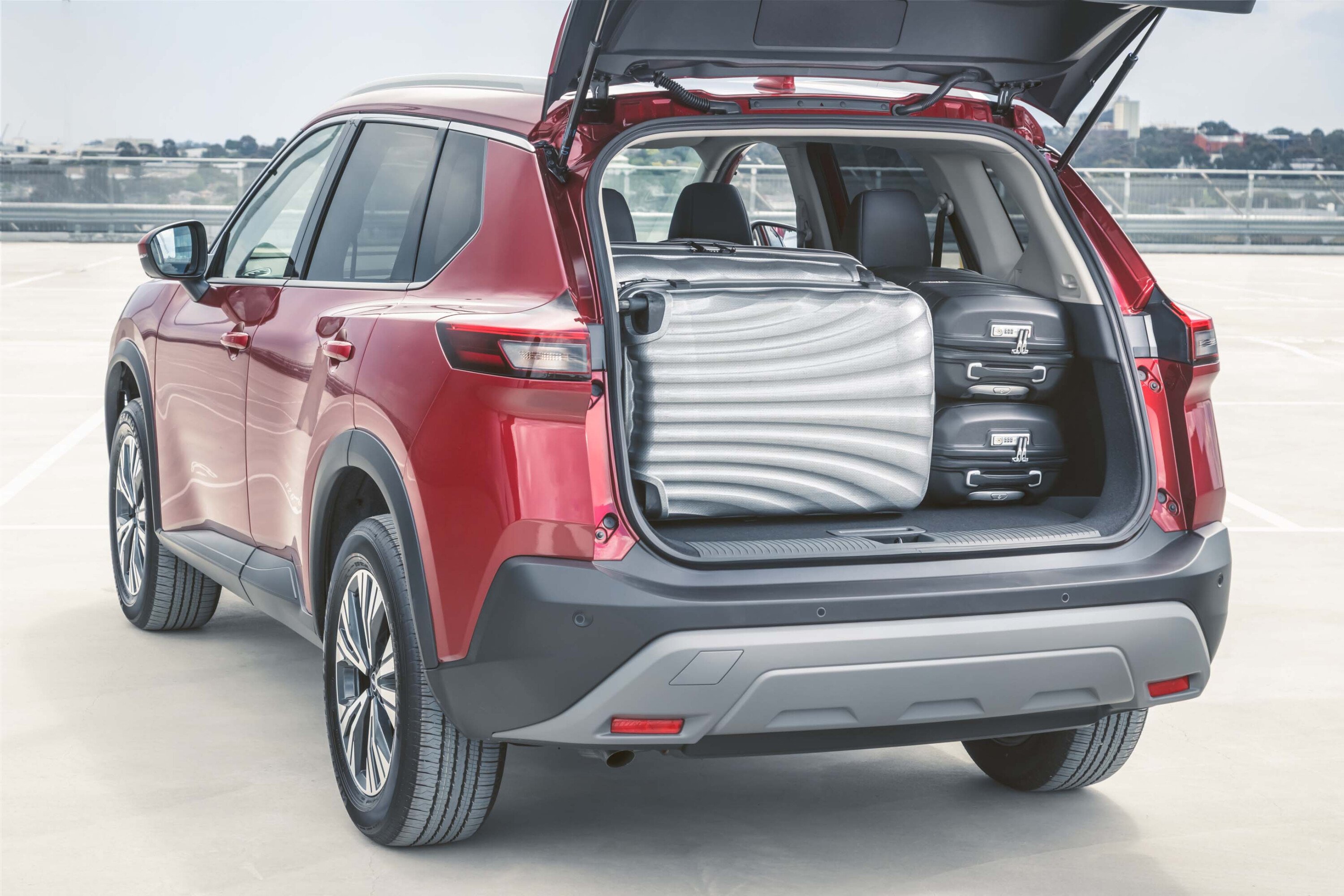
The X-Trail ST, while being the base model, is well-equipped for its segment. Its exterior design is both modern and functional, with a focus on practicality and ease of use.
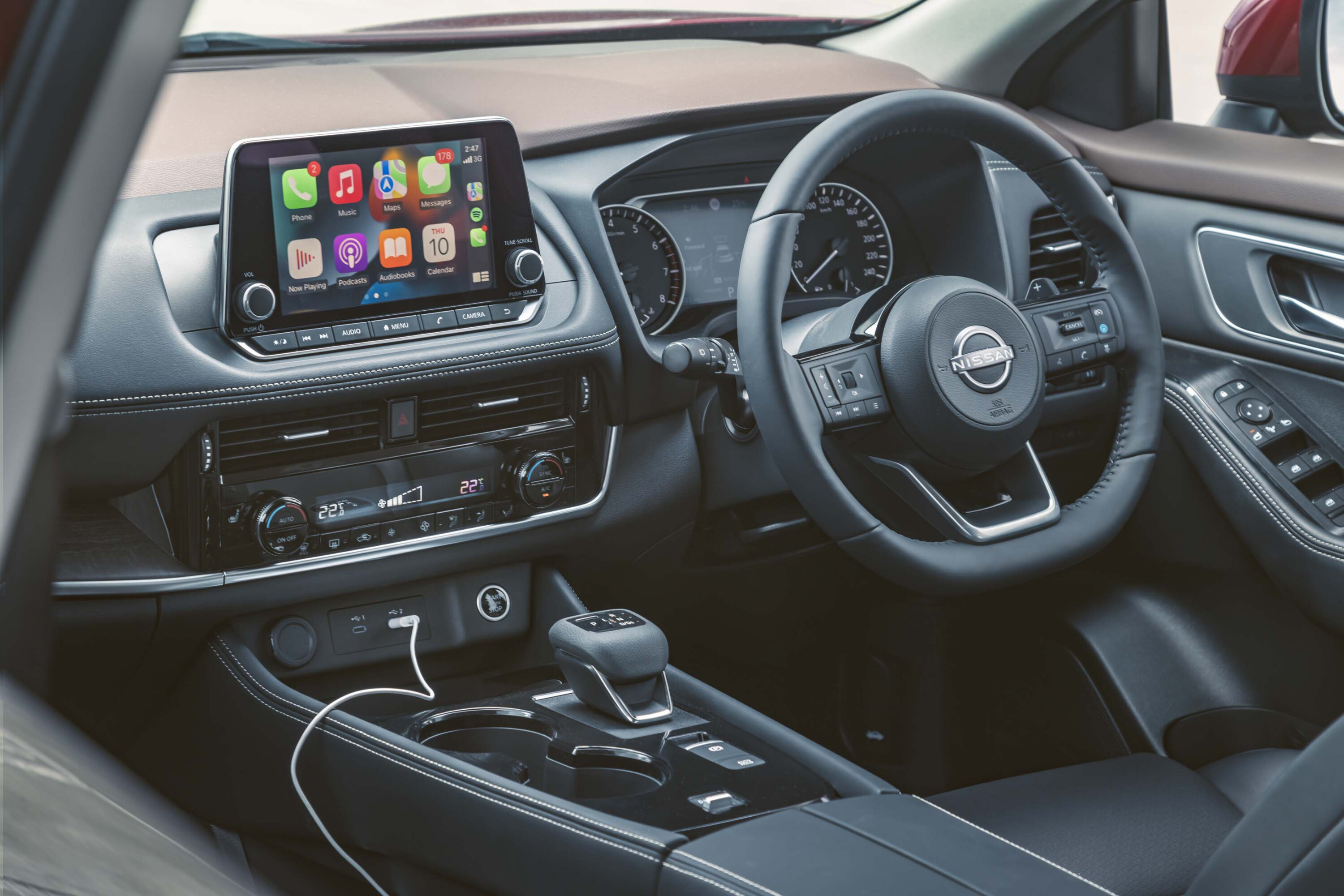
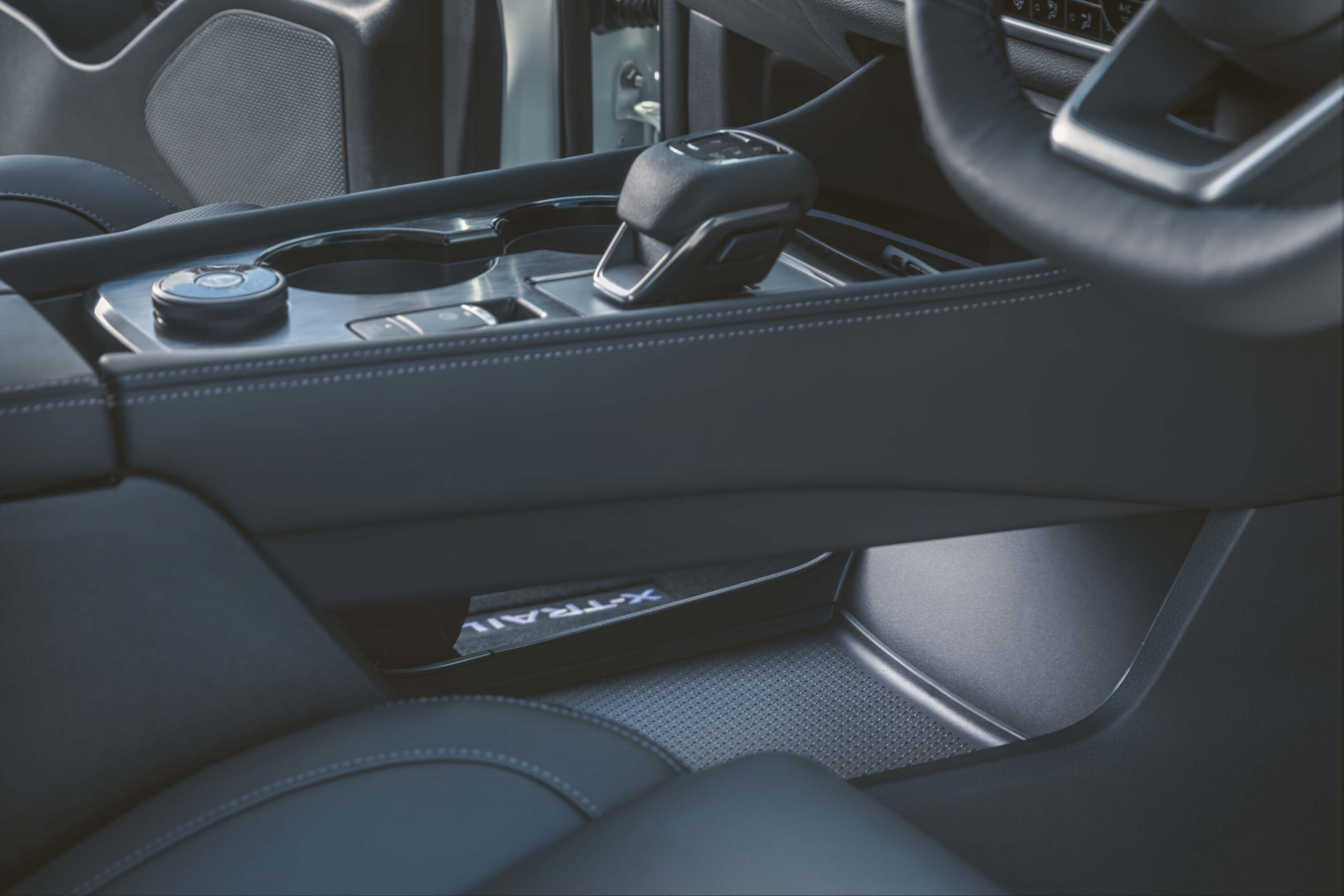
Inside, the ST offers a spacious and user-friendly cabin. The infotainment system ensures basic connectivity, while the clever use of space and Nissan’s ‘Divide-N-Hide’ cargo system add to its practicality.
1
| 2023 Nissan X-Trail features | |
|---|---|
| 17-inch alloy wheels | LED headlights, tail-lights and daytime running lamps |
| 5 or 7 seats | Plastic steering wheel |
| 8.0-inch infotainment screen | Power folding and heated door mirrors |
| Active cruise control | Push-button start |
| Air-conditioning with second-row air vents | Rear parking sensors |
| Auto-dimming rear-view mirror (7-seater only) | Rear-cross traffic alert |
| Autonomous emergency braking | Reverse auto braking |
| Blind-spot warning | Reversing camera |
| Cloth seats | Six-speaker audio system |
| Digital instrument cluster | Six-way manually adjusted driver’s seat |
| Driver’s lumbar support | Space-saver spare wheel |
| Dusk-sensing headlights with high-beam assist | Traffic sign recognition |
| Forward collision warning | Trailer sway control |
| Keyless entry | Wired Apple CarPlay and Android Auto |
| Lane departure warning | |
1
Safety
The 2023 Nissan X-Trail received a five-star safety rating from ANCAP, achieving impressive scores of 91 percent for adult occupant protection and 90 percent for child occupant protection.
| 2023 Nissan X-Trail standard safety | |
|---|---|
| 7 airbags (dual front, side, curtain, and front-centre) | Lane departure warning |
| Autonomous emergency braking (vehicle, pedestrian, cyclist, junction, reverse) | Trailer sway control |
| Adaptive cruise control | Rear cross-traffic alert |
| Lane-keep assist | Rear occupant alert. |
| Traffic sign recognition | Blind-spot alert |
If you’re interested in Nissan’s ProPilot+ safety suite of features which adds semi-autonomous highway driving, you’ll need to look from the next variant, the ST-L onwards.
1
Key rivals
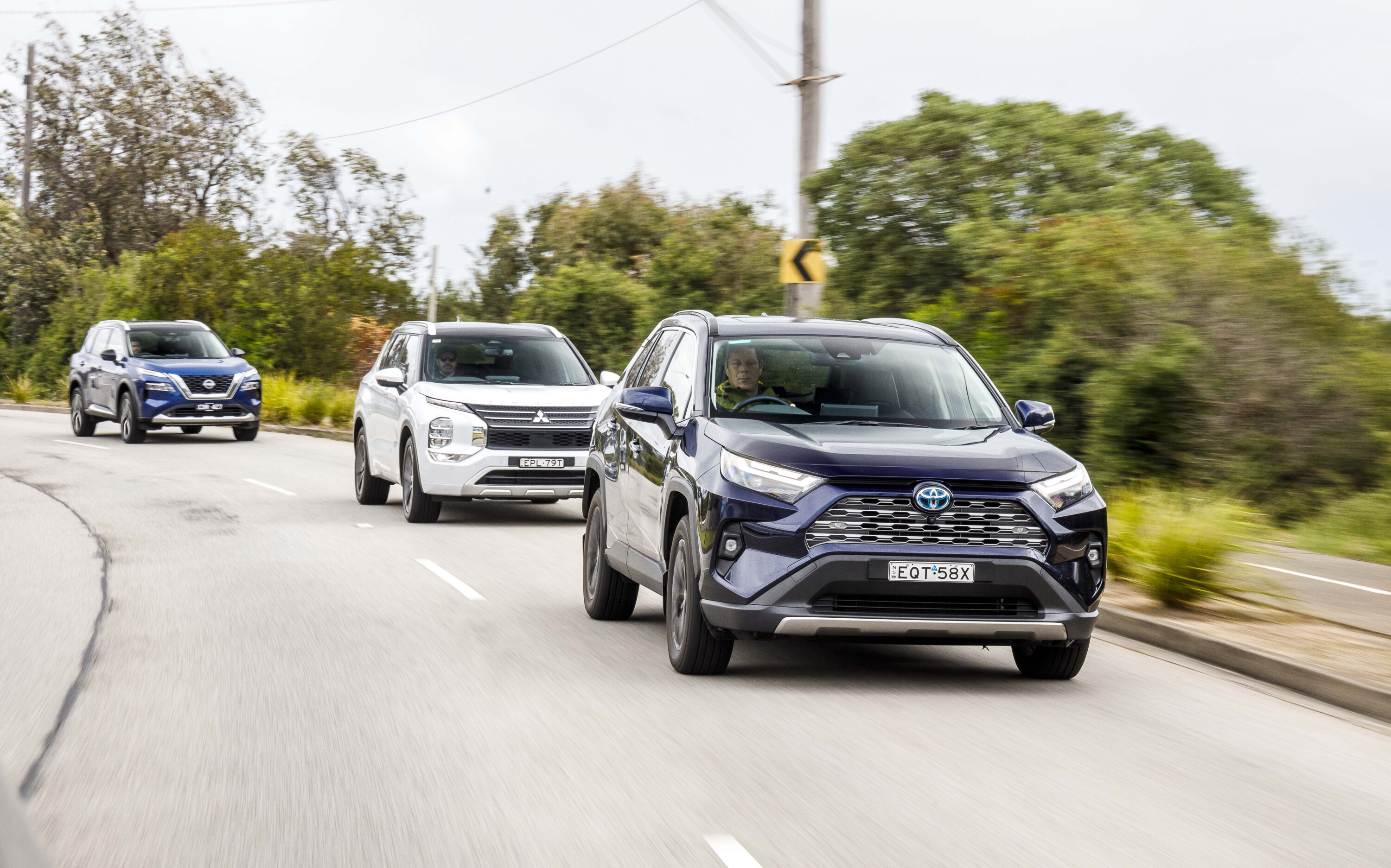
The mid-size SUV segment is filled with established and equally successful names, but as one of Australia’s most popular segments there’s plenty of love to go around between:
1
Should I put it on my shortlist?
The 2023 Nissan X-Trail has proved its a car that was worth waiting for.
The new-generation has brought a heap of upgraded and new specifications, in a good looking overall package.
If you’re on a budget, the X-Trail ST will offer you and your family plenty as a great family all-rounder but if you’re wanting some additional creature comforts, the ST-L will definitely start to tick some boxes you didn’t even know you had.
MORE
Everything Nissan
MORE
Midsize SUVs
Things we like
- Tremendous power and grip
- Seamless and sophisticated traction systems
- Fastest car ever to lap Ferrariu2019s test track
- Brilliant brakes
Not so much…
- Ferocious price tagu2026
- u2026yet itu2019s completely sold out
- Thereu2019s no boot. Or frunk.
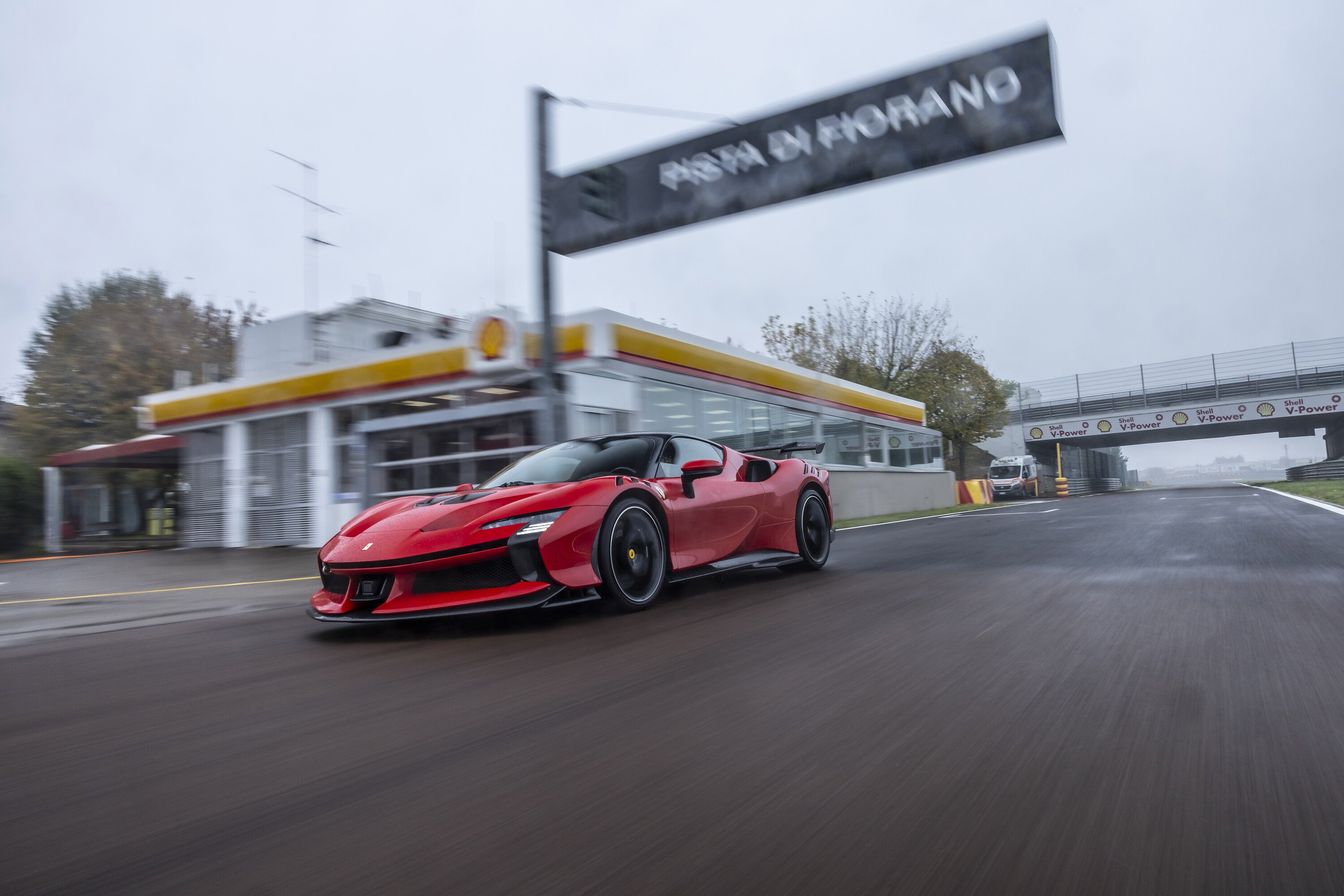
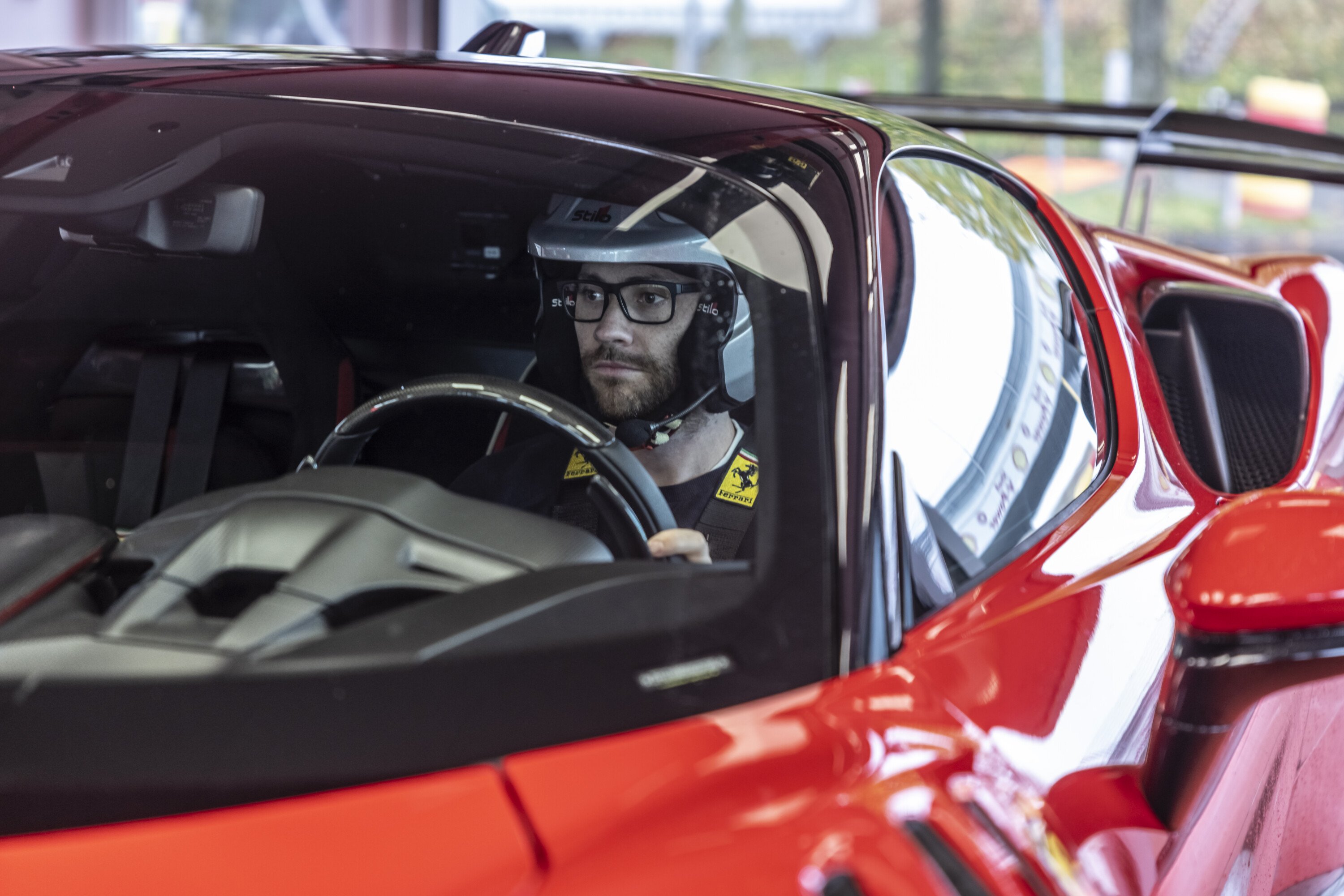
“Jump” isn’t a word you expect to hear while driving a $1.5 million dollar Ferrari around a circuit, yet I swear that’s what Ferrari’s test driver, who is improbably young and rakishly thin, has just said over the radio.
“Be careful over the jump,” comes his ultra-cool voice from the car ahead of me, the high-pitched howl of his own SF90 XX rising in the background. “It’s extra wet here”.
Spray is pouring off the back of his car, which unlike my scarlet red machine is a shade of brilliant blue, and despite his warning, the young test driver doesn’t seem to be slowing down at all.
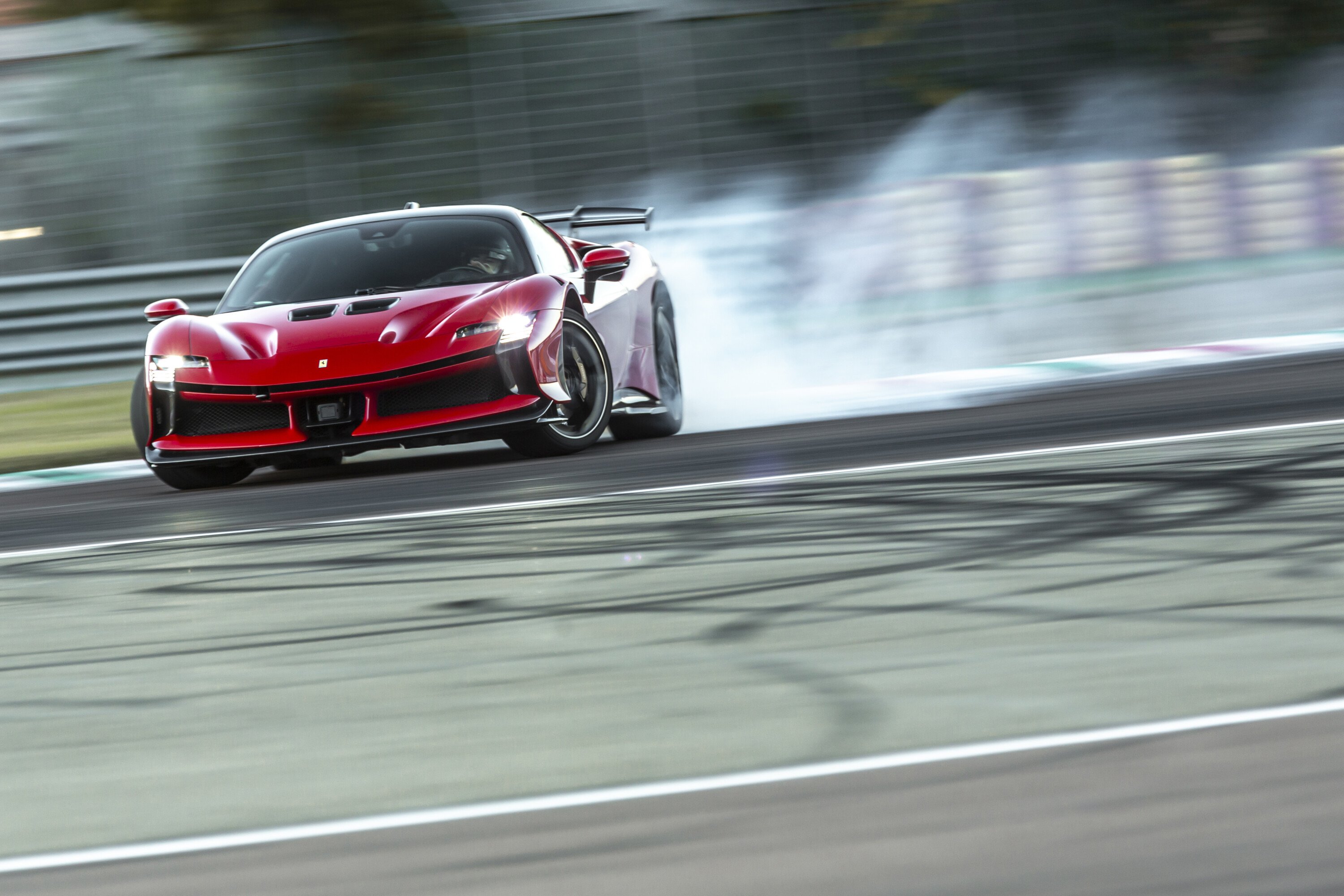
2
We slingshot through the right-hander that leads onto the bridge at Fiorano and I watch as he gasses it out the other side, the bewinged tail of his car shimmying for a nano-second before it rockets up the road. It’d be rude not to follow…
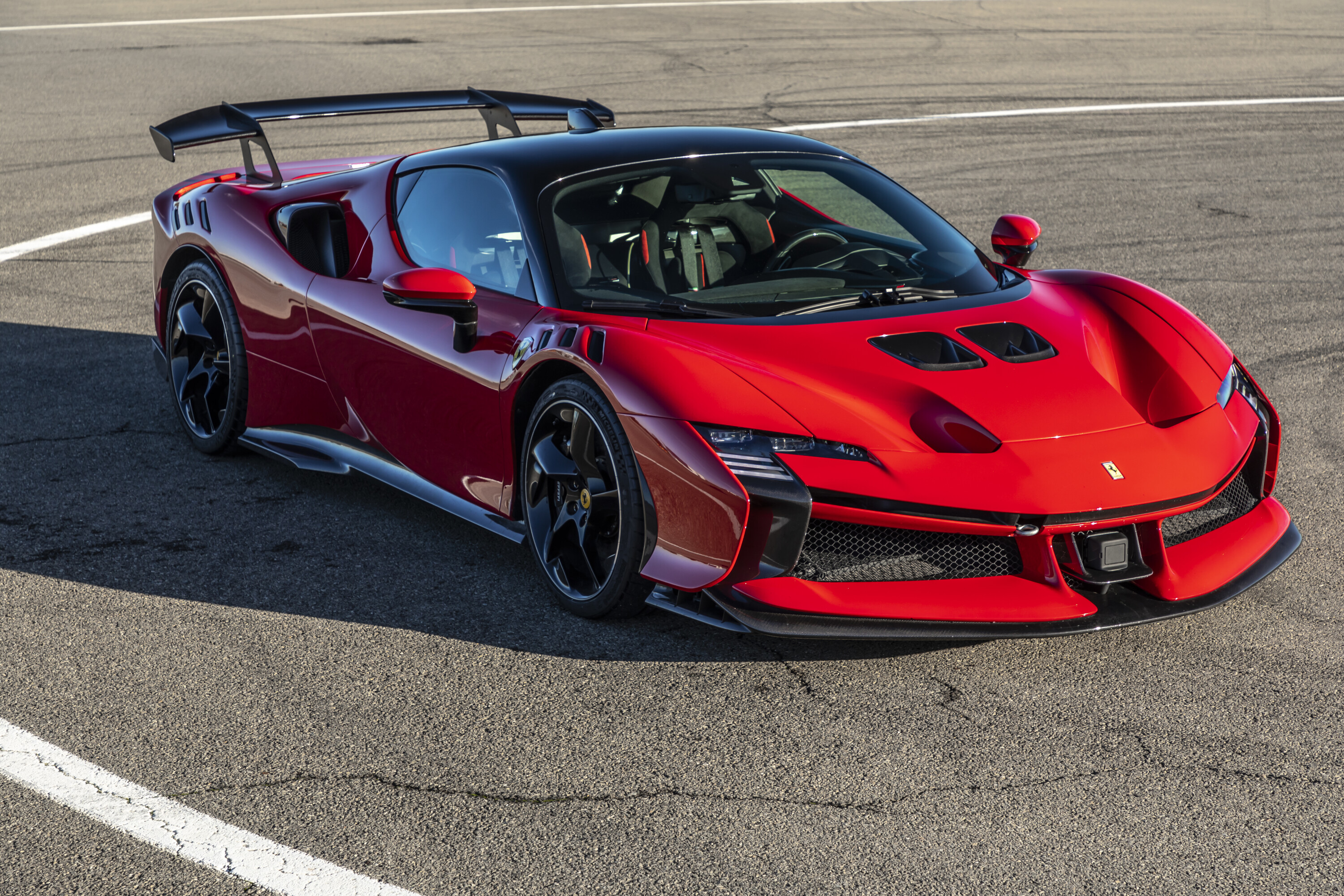
This is our first ‘hot lap’ in the SF90 XX Stradale – the fastest road car ever to lap Fiorano – and it’s also my first opportunity to go full throttle. Wary of the wet kerb, I get the car straight and flatten it. OH. MY. GOD.
The traction light blinks for a second but then BAM, the SF90 XX leaps forward, the electrified front axle clawing at the tarmac before the big 4.0-litre V8 chimes in like a sledgehammer. It’s ferocious acceleration, the kind that forces your neck to tighten and your knuckles to whiten, and then I hit the ‘jump’.
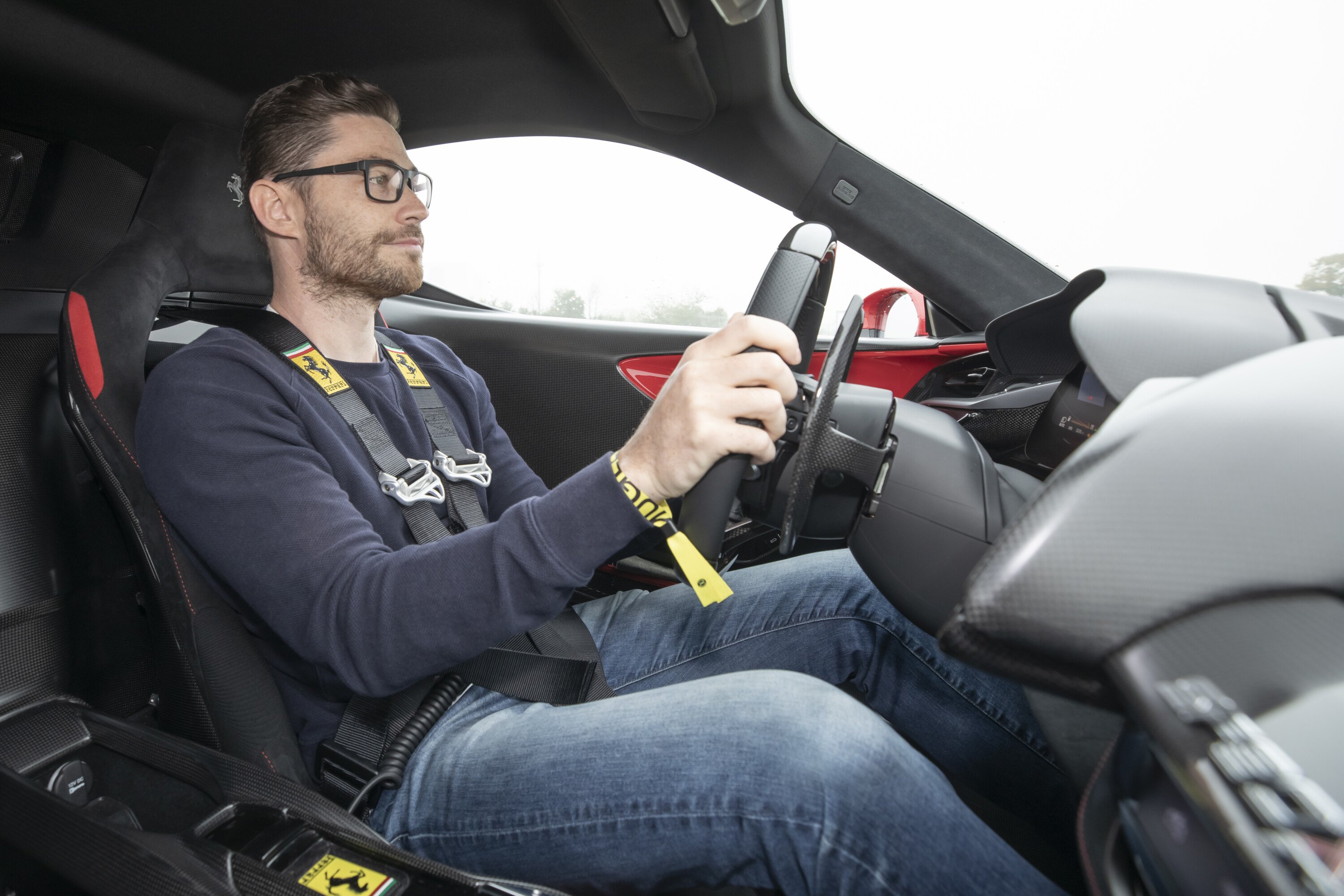
1
Really it’s just a seam in the tarmac, an innocuous rise of a few centimetres as the track crests the bridge, yet the SF90 XX hits it with such velocity that it seems to take off.
The car goes light, the rear axle squirms and rages before it bites once more and the insane sense of acceleration returns.
What follows at Fiorano are five laps of extreme discovery. On paper, you could accuse Ferrari of rolling the arm over with the SF90 XX. Oh sure, this is the first time Ferrari has ever made an XX car that’s also road legal. Every XX before it – Enzo XX, 599 XX and the LaFerrari based FXX-K – have been slick-shod, track-only monsters.
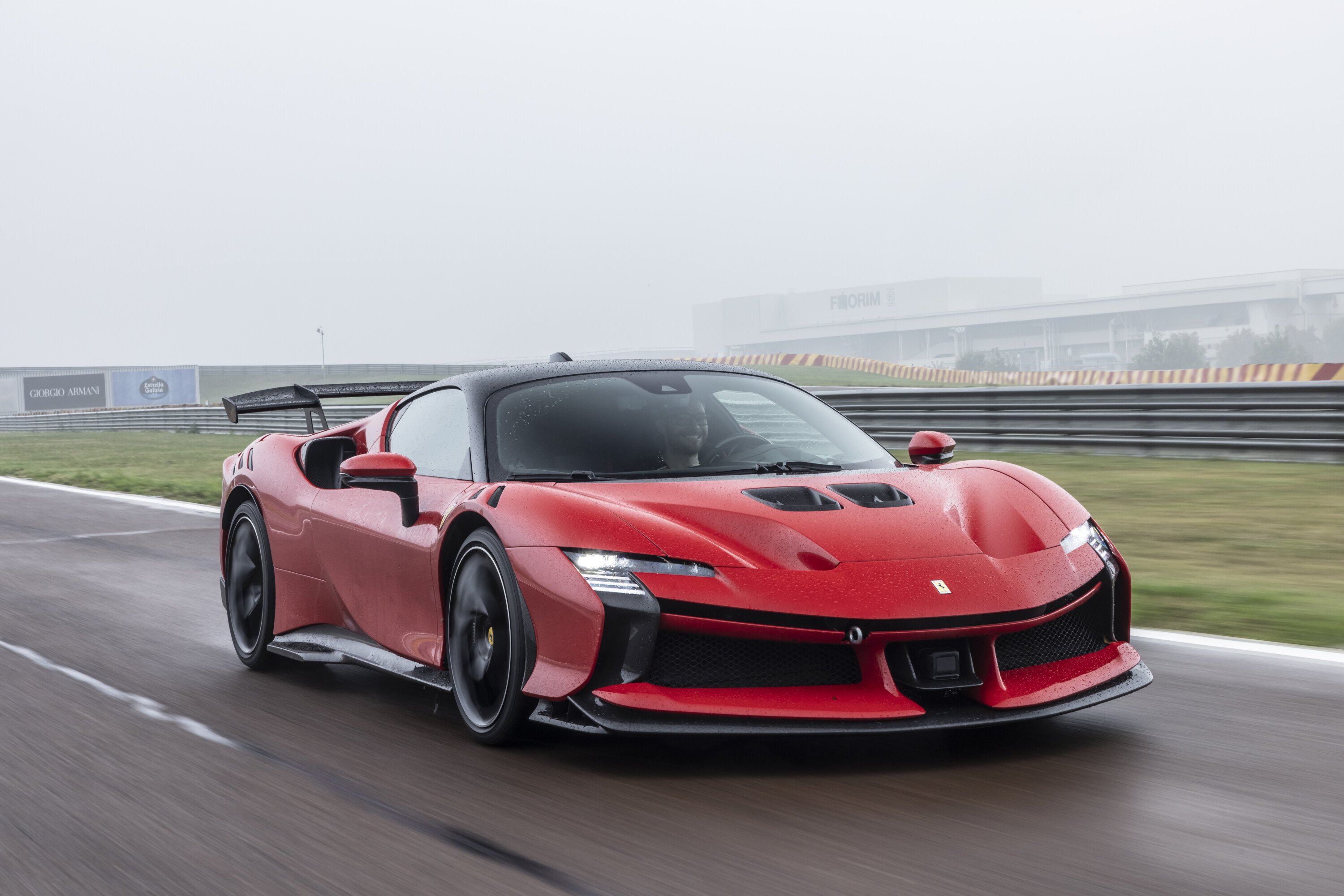
2
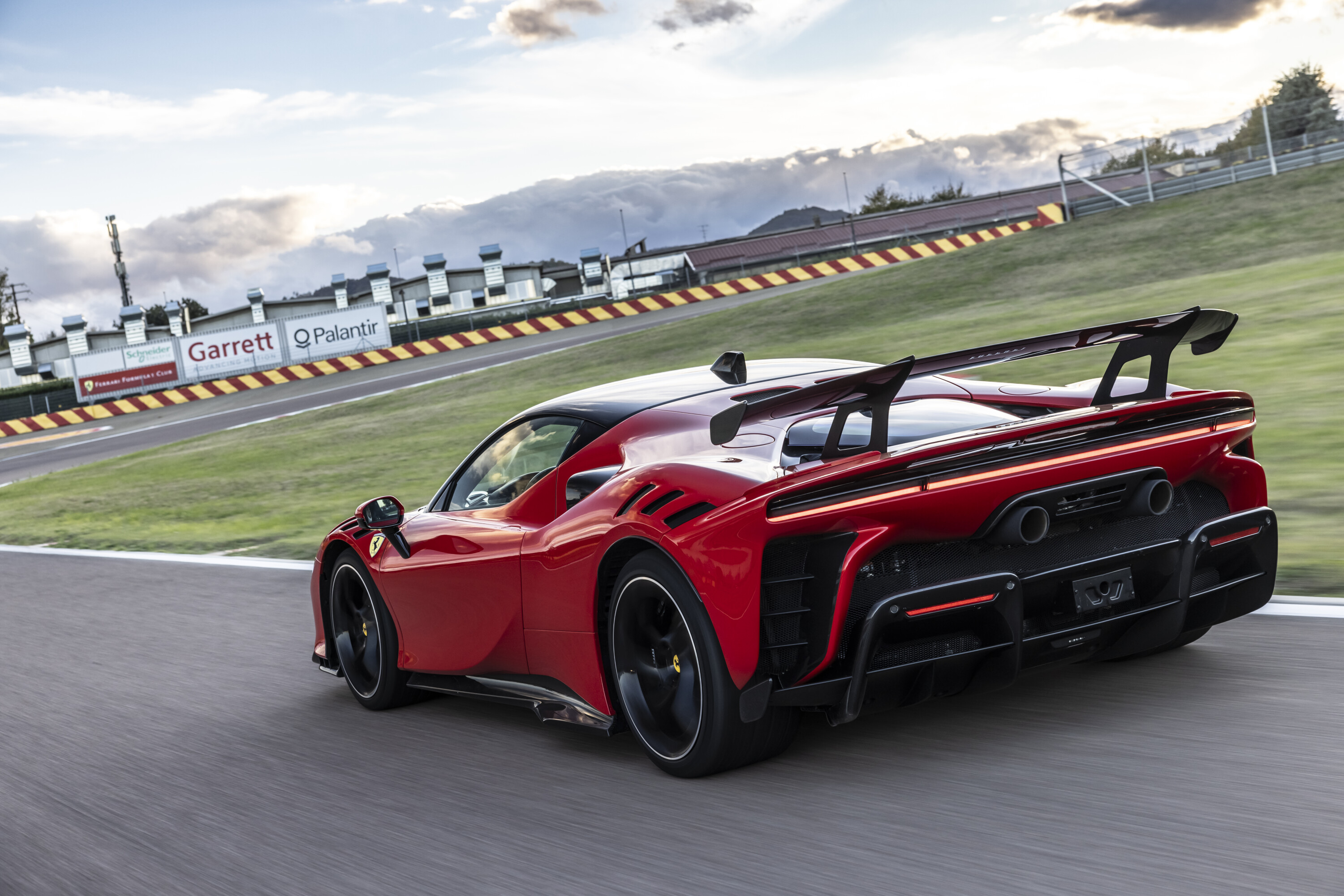
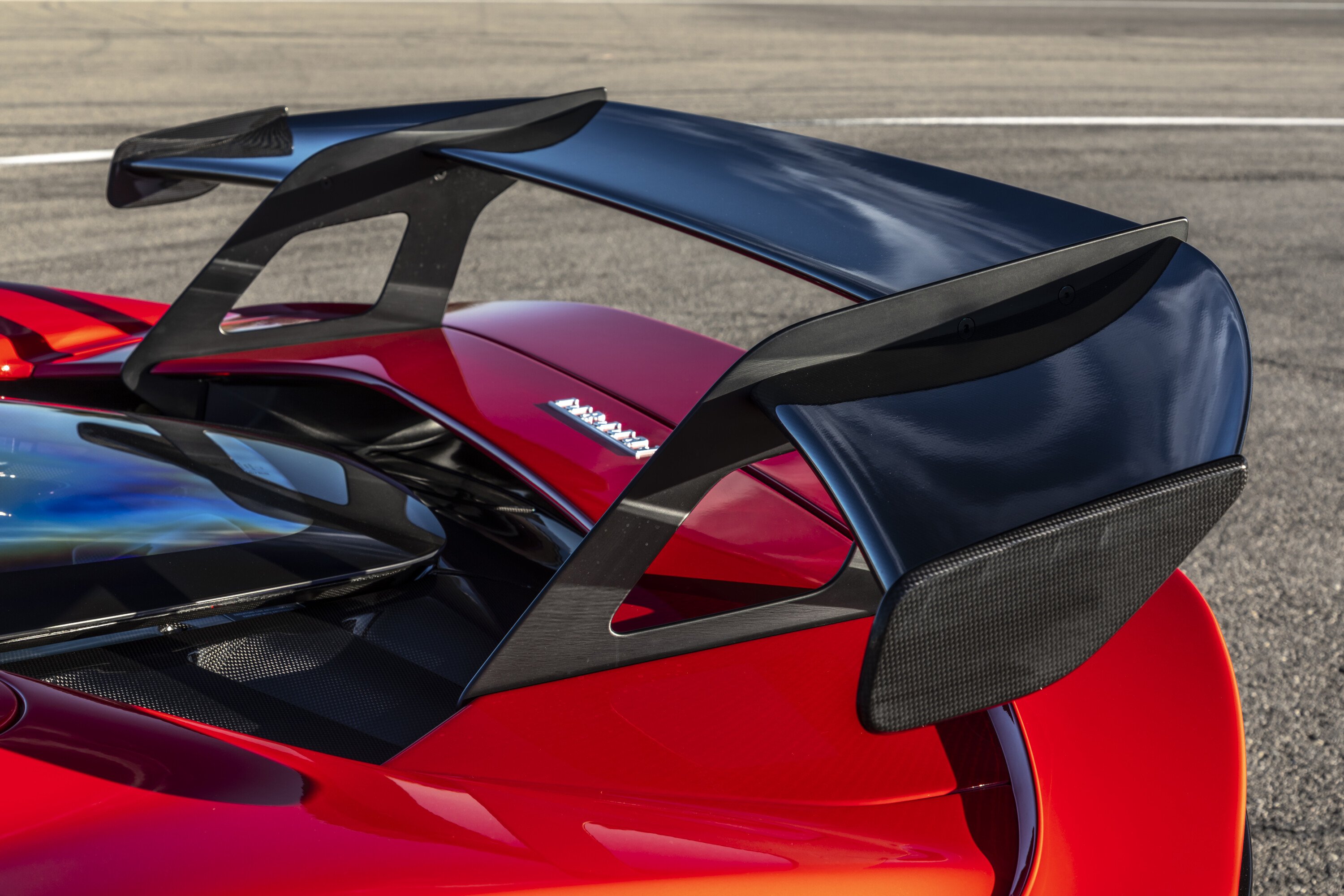
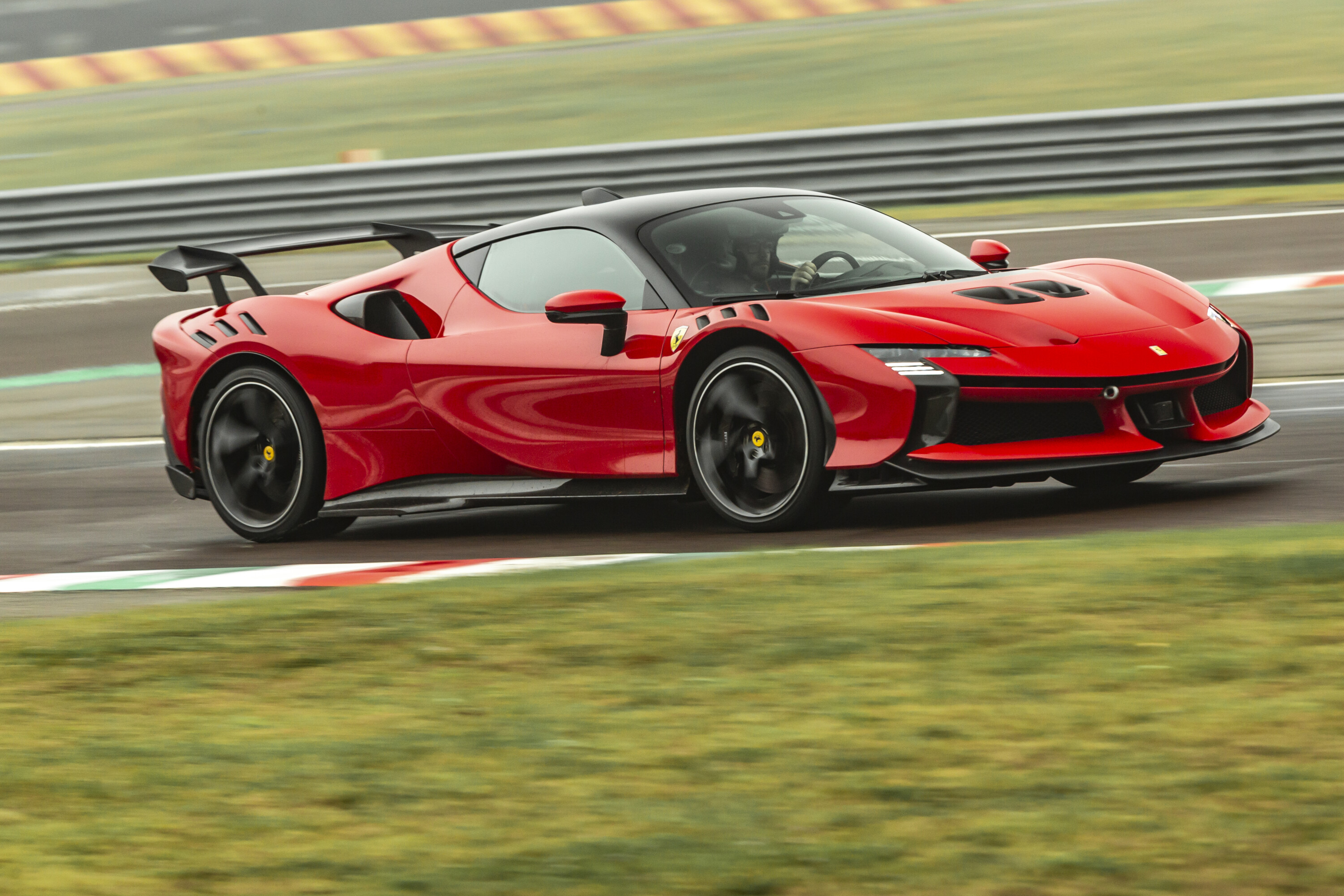
And yes, the SF90 XX does look obviously different to a regular SF90 thanks to that huge, downforce generating rear wing – the first ‘fixed’ rear wing on a Ferrari since the F50 — but power from the 4.0-litre V8 and three e-motors has risen ‘only’ by 22kW.
The tyre spec is also identical to the Michelin Cup 2s on the regular SF90 and despite a heavy focus on removing weight, just 10kg has been shaved from the XX’s total dry mass of 1560kg.
Then there are the obligatory 0-100 and 0-200km/h acceleration markers where the XX version is ‘just’ 0.2sec quicker than the standard car. Both are blistering, though… The XX will hit three figures in 2.3 seconds while 200km/h is chalked up in 6.5sec.
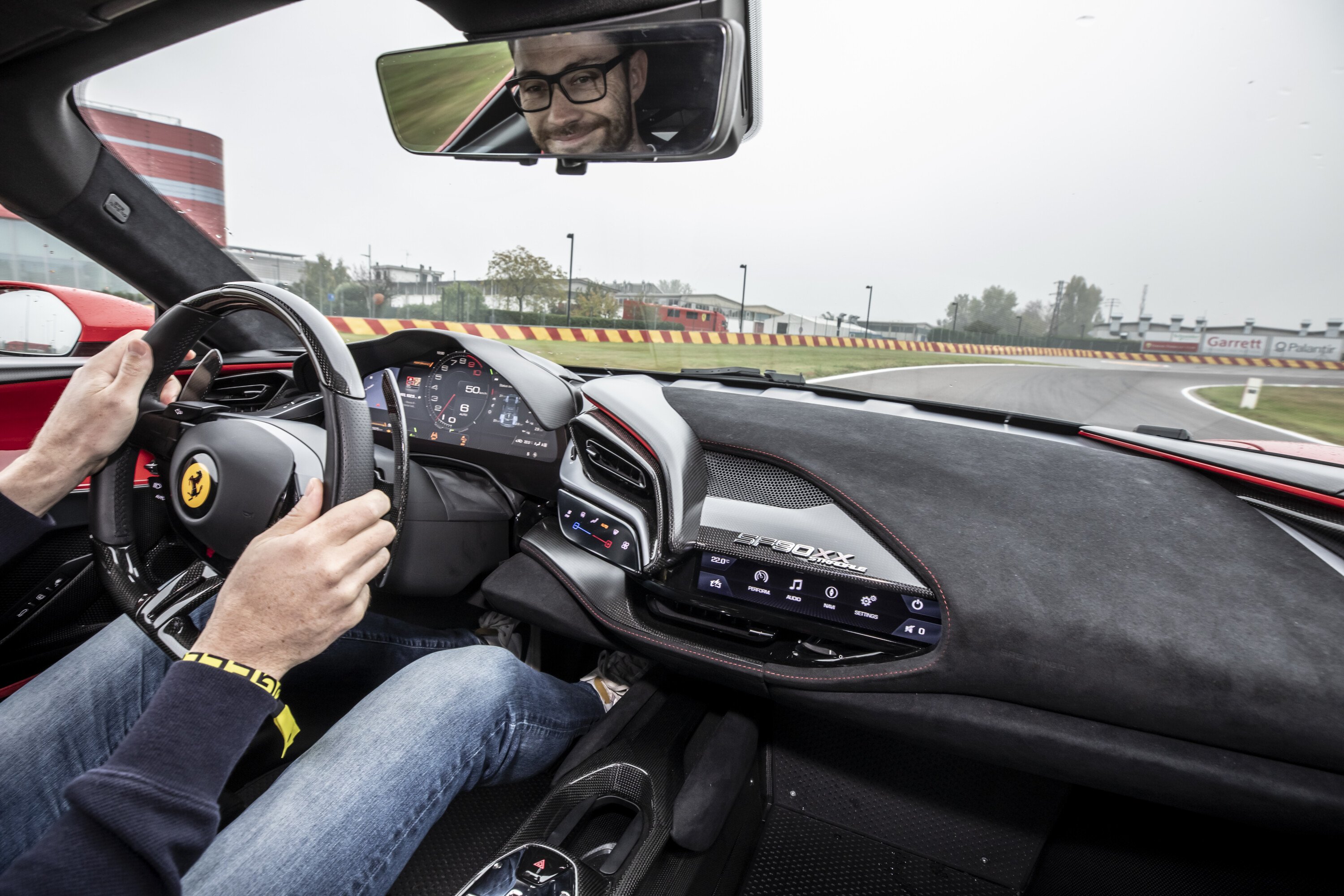
1
One number that has changed dramatically for the XX, however, is the price.
A regular SF90 Stradale will set you back around $850,000 – providing you’re lucky enough to buy one, that is – but the XX is about twice that. Only 799 coupes and 599 Spiders of the SF90 XX will be made and each will carry a sticker price of $1.56m and $1.73m respectively. The Spider, incidentally, isn’t only more expensive but it’s 100kg heavier and two tenths slower to 200km/h.
Any notion the XX is a cynical money grab, however, is immediately and categorically banished when you drive it. This is a different league of performance.
1
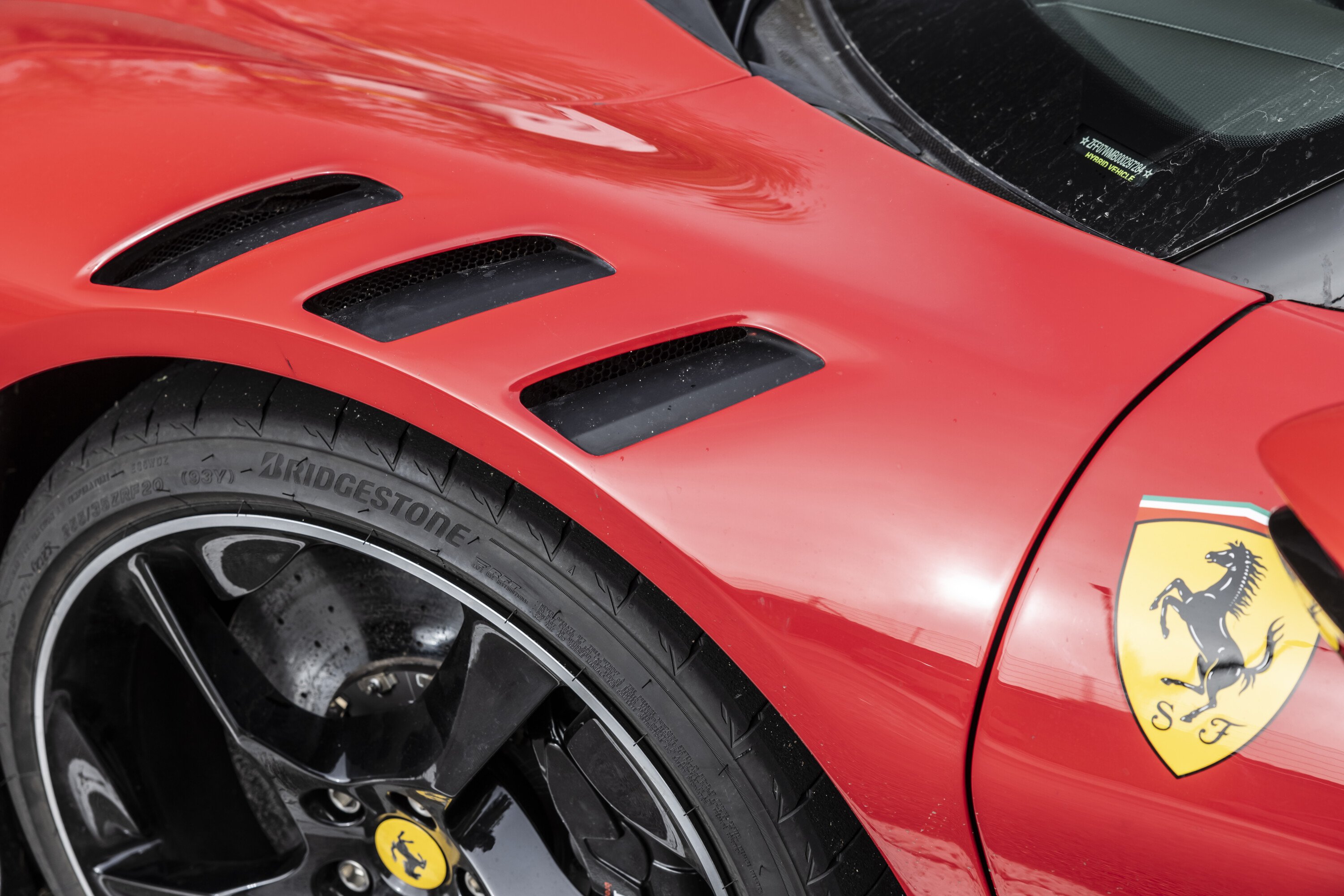
Because it’s raining, and the SF90 XX makes 1030hp (757kW), Ferrari’s mechanics have swapped out the standard-fit Cup 2 rubber and instead fitted run-flat Bridgestones to better disperse the water.
And from the get-go, the SF90 XX is far friendlier than an ultra-complex, aero-honed track car ought to be.
I once drove a Lamborghini Huracan STO on a wet Phillip Island and that experience was so full of glassy understeer and spiky, terror-inducing oversteer than I immediately wanted to return to the garage, but the SF90 XX’s initial handshake couldn’t be warmer.
1
The steering is fast and crisp but not nervous, the front tyres are grippy and turn obediently, and the balance feels so benign and predictable that you find yourself relaxing after just a few corners.
And then it’s got you. Like a witch with a candy house, once you’re inside, there’s no escaping, and there’s a mind-boggling degree of performance to unpack.
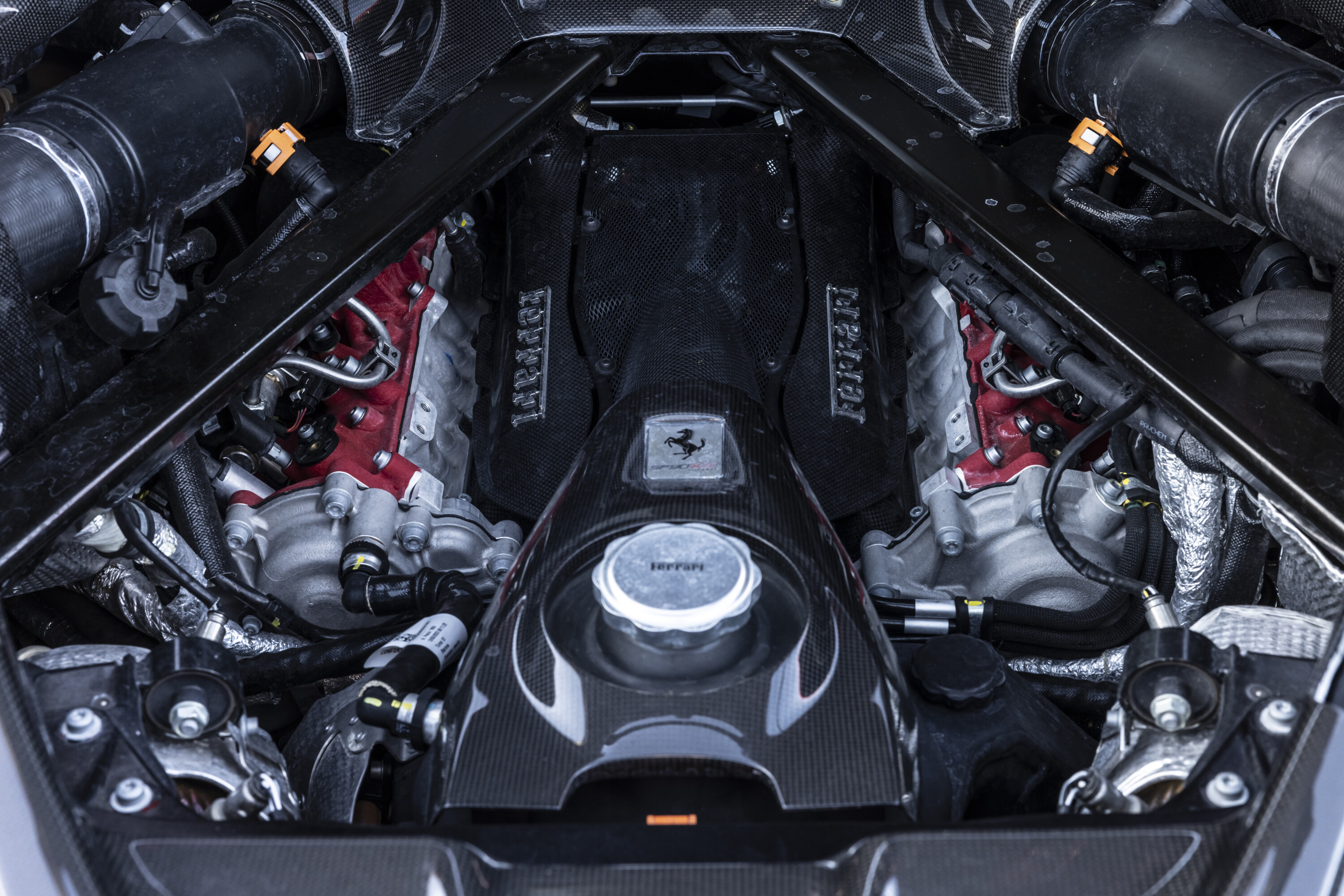
The first thing to wrap your head around is the seemingly bottomless sense of grunt at your disposal. Outputs may have only risen slightly but the numbers undersell the changes Ferrari has made to both the 4.0-litre V8 and the plug-in hybrid system.
1
The pistons, for example, are a new design and the V8’s compression ratio is higher.
The inlet and exhaust ducts have also been polished to boost airflow efficiency and there’s a different machining process for the combustion chamber. The engine itself is lighter, too, thanks to the deletion of the regular SF90’s secondary air system which saves 3.5kg.
Then there are the cooling improvements for the 7.9kWh battery that feeds the three e-motors (one for each front wheel, with the third nestled between the V8 and the gearbox) which allows it to deliver a 20 percent higher discharge rate. But the bigger change is to the software that controls the electric deployment.
1
Dial in Qualifying mode and the XX automatically delivers 30 additional hits of ‘extra boost’ which last for 2.0 seconds on corner exit. Around Fiorano, Ferrari says this feature alone is enough to shave 0.25s off your lap time.
Combine all this and the result is a powertrain that feels wonderfully savage. Squeeze the throttle in any gear, at any revs, and the pick-up, response and rush of speed it delivers is mind scrambling. Need some context? The SF90 XX has twice the power of an F50 (1030hp plays 512hp) and its total output is almost identical to the FXX-K Evo.
Better news, though, is that despite the obvious complexity of combining three e-motors with a highly strung V8 and regenerative braking, it all feels wonderfully seamless. There are no clunky handovers between the engine and e-motors, no weird sensations as torque is shuffled from wheel-to-wheel.
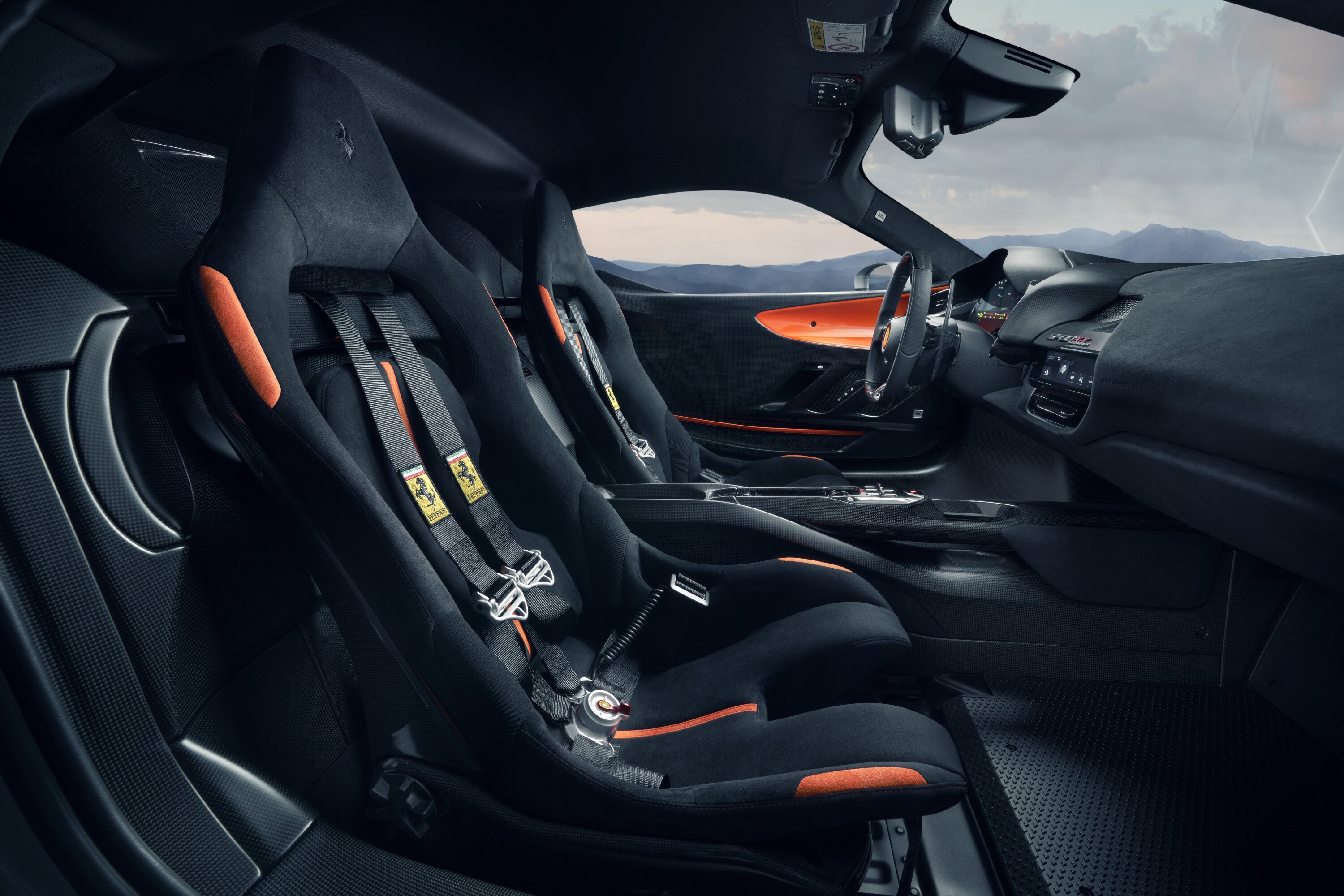
1
And because the XX’s intake plenum has been redesigned and moved closer to the cabin, there’s plenty of additional exhaust noise to enjoy, too.
The sound of the V8 isn’t objectively beautiful – it’s far from the lusty operatics of a V12 – but it’s urgent, angry and visceral. Then there are the gear shifts from the eight-speed dual-clutch which are whip-crack fast and have been re-engineered to deliver a sharper rev cut and ‘race car’ sound when you upshift close to the 8000rpm redline.
Power is nothing without control, of course, and the traction available — even on a soaked circuit — is mighty. The Bridgestones help (Ferrari’s pit crew call them “wets”) but mostly it’s down to Ferrari’s mastery of chassis electronics.
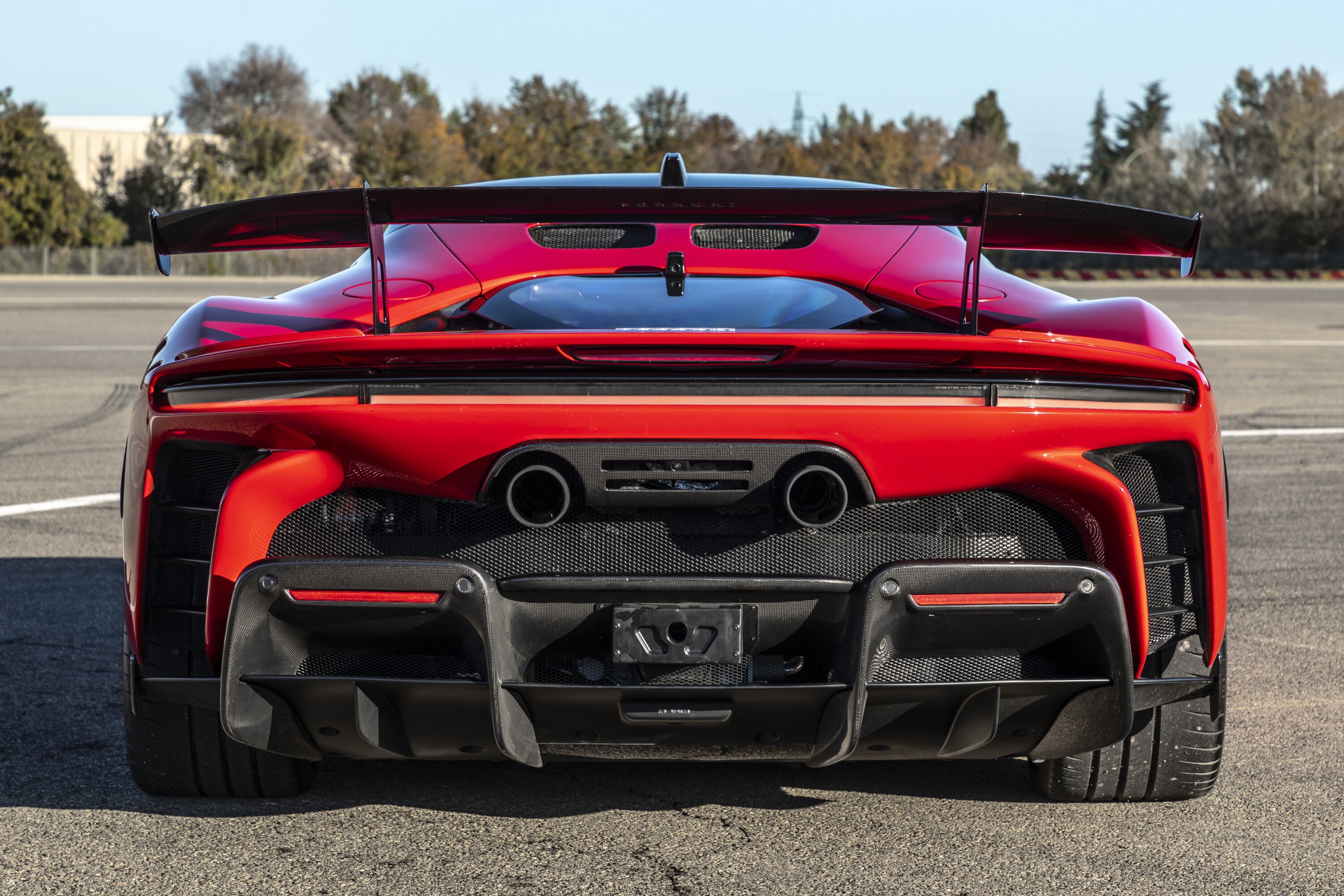
1
The rain is falling hard enough to use ‘wet mode’ during my first session and the way the SF90 XX manages wheel slip and blends in the throttle on corner exit feels like witchcraft.
Out of Fiorano’s hairpin you can absolutely flatten the throttle and marvel at how the system perfectly increases the power delivery as you wind off the steering lock.
You need faster hands in Sport and Race modes – we weren’t brave enough to try CT off – with the latter providing enough latitude to understand the SF90 XX would be a proper animal without the clever systems. Not that I felt robbed of any excitement by keeping the electronics switched on, however: this car is intoxicating.
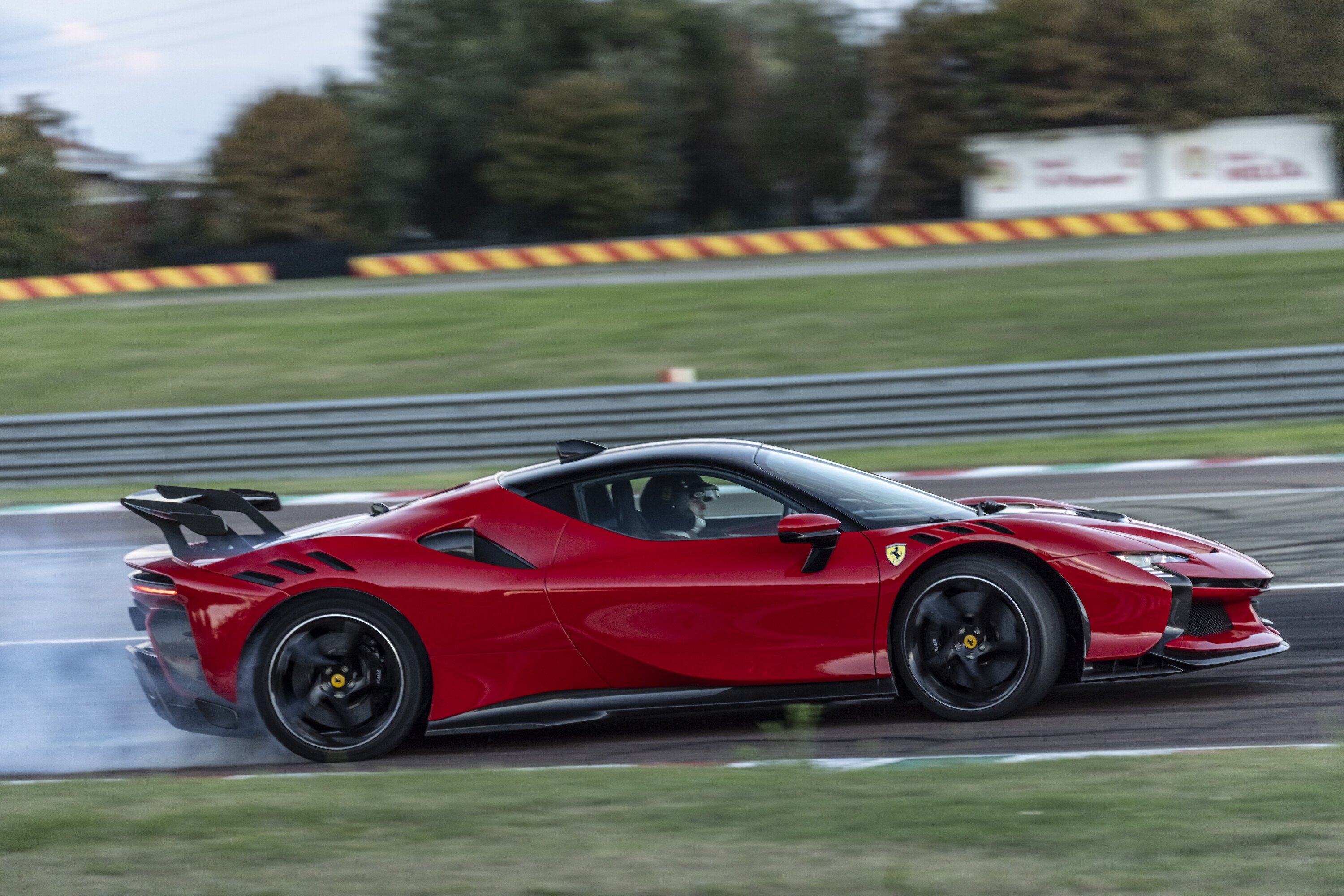
1
I emerge from my first two sessions shaking, every synapse fizzing as if I’ve just hooked myself up to a mains supply of caffeine.
My brain is slightly fried, not just from the sensory overload but from the understanding that I’ve only scratched the surface. It’s easy to be cynical of ultra-expensive track cars like this, to dismiss them as out-of-touch exercises for the uber-wealthy, yet the SF90 XX has gotten under my skin in an unexpected way.
Further proof of just how much of a leap the XX is over the regular SF90 is provided by what it can do in the hands of Ferrari’s chief test driver, Raffaele De Simone. On a sunnier and far warmer day, De Simone hustled the SF90 XX around Fiorano to achieve an independently verified lap time of 1:17.309s. That’s 10 seconds quicker than an F50, and 2.4 seconds better than La Ferrari — that’s a lot around a small 3km track.
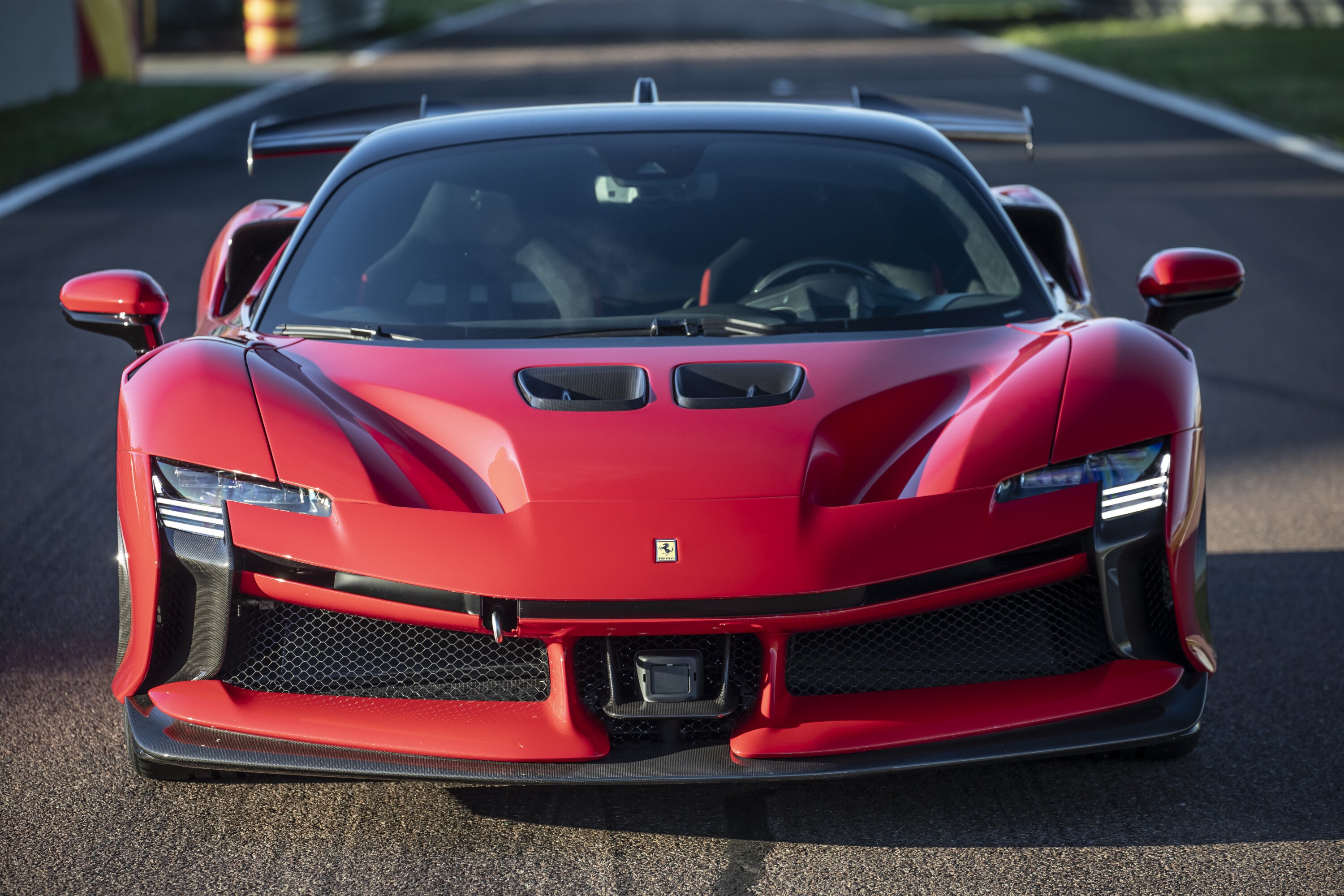
1
The more telling difference, however, is how it compares to a regular SF90. Until now, the ‘standard’ SF90 was the quickest road car around Fiorano but the XX is a full 1.7sec faster.
Remember, the XX has the same tyres and limited extra grunt, meaning a big chunk of its extra performance is down to one thing: aerodynamics.
Ferrari says it ran more than 1000 digital and 150 wind tunnel configurations for the SF90 and the result is a car that creates more downforce than any road-going car Maranello has ever made. The huge, fixed rear wing alone makes 315kg of downforce at 250km/h and it works in tandem with a moveable section of bodywork below it that Ferrari calls a “cut-off Gurney” which can rise or lower automatically to vary the amount of drag and downforce.
2
The rest of the car has been honed to beat the air into submission, too. The underbody is almost entirely closed off, the rear diffuser is a new design and up front there’s a larger front splitter which makes 45kg of additional downforce on its own.
The biggest change in the nose, however, is the repositioning of the radiators. In the regular SF90 the centre radiator cools the battery and e-motors and ejects its hot air underneath the car. In the XX, however, that central radiator has been inverted which allowed Ferrari to seal off the floor.
“This gave us a huge amount of downforce but it created problems because now we have hot air that exits through the bonnet and over the windscreen,” says Ferrari’s head of aerodynamics, Matteo Biancalana. Ensuring that hot air didn’t make its way into the engine intakes “was a nightmare” according to Biancalana but the net result is a car that makes 530kg of downforce at 250km/h.
2
The extra grip means Raffeale De Simone doesn’t need to touch the brakes between Fiorano’s fast turn 4/5 complex like he does in other road cars but is it something regular punters can feel?
On a dry circuit maybe but today it’s hard to gauge how much of the aero I’m actually exploiting. The fact that even I don’t need to brake between T4 and T5 bodes well and I’m sure I can feel some aero benefit through the fast sweeper around the back, but aero grip is a tricky thing to describe.
Something that’s indisputable, though, is the improvement to braking performance. The XX boasts larger rear discs and unique carbon pads but the transformational change comes via software, which Ferrari calls ABS Evo.
1
It’s able to process more information more quickly, and more accurately, than a regular SF90 and it can also brake each wheel completely independently, which allows the driver to brake later and to carry more brake pressure into the apex.
The pedal itself is expertly judged – firm but with good modulation – and despite the XX’s tauter chassis set-up, there’s actually a surprising amount of pitch from the nose under heavy braking.
You can sense a whisker of body roll through quick changes of direction, too, which is enough to suggest that despite its track focus, the SF90 XX could trump both a GT3 RS and McLaren Senna for ride comfort on the public road.
1
Ferrari’s clever ‘bumpy road’ mode for the adaptive dampers and a nose lift are both available, too, though we didn’t get to venture outside of Fiorano on this visit.
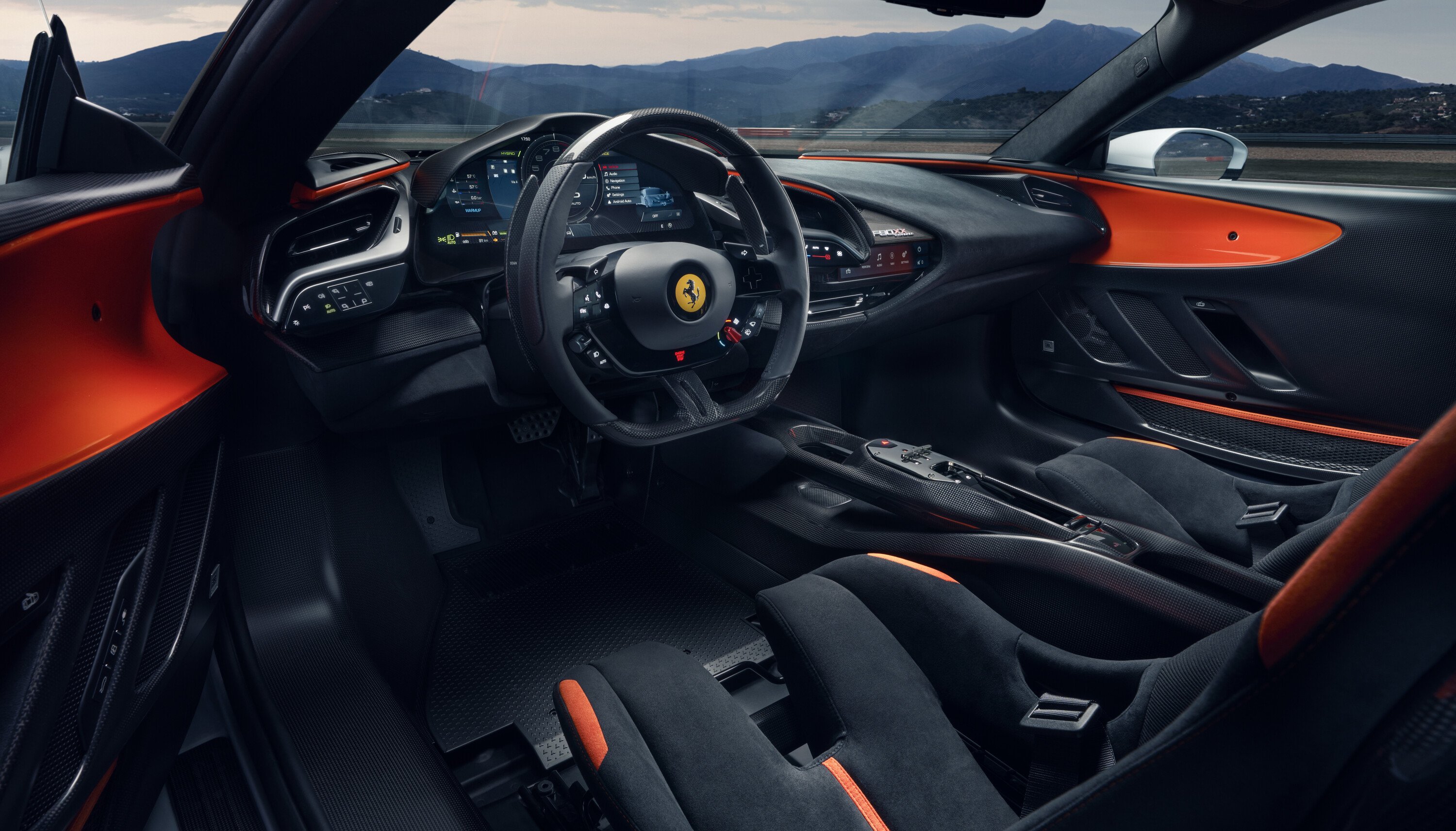
So how to sum up the SF90 XX? With the light fading and the rain returning, I slip into the passenger seat for a final few laps of Fiorano while Ferrari’s test driver does the driving. It allows me to drink in some details that I’d missed earlier, like the naked carbon on the door cards, the lack of carpets, and how beautiful the metal throttle and brakes pedals are.
The whole cabin is striking, actually, in a sparse yet expensive way, though storage isn’t a strength – there’s a single cupholder in the central carbon spare and some small nets in each door.
1
At least the seating position is brilliant, though, and the seats themselves – which are the lightest ever fitted to a Ferrari road car – are supportive and surprisingly comfortable.
The passenger laps also give me time to consider the point of the SF90. This is the first time Ferrari has made a road-legal XX car and needing to fit it with numbers plates has clearly robbed it of some of the extreme character you get in hardcore, slick-clad cars like the FXX-K and 599 XX.
Does that make it any less special? It’s a tricky question to answer – and a conundrum that plagues all ultra focused, tyre-limited road racers – yet as I watch Ferrari’s test driver oversteer out of the hairpin and then effortlessly pitch it into Fiorano’s fast, high-consequence left-hander, there’s no disputing the level of excitement and ability on offer here.
As a machine for delivering an experience, of translating the sensations and excitement of speed and grip and noise – even on a wet track — the SF90 XX is a masterstroke. In the dry, and on Cup 2R rubber, it’d be something else entirely.
MORE
Everything Ferrari
2024 Ferrari SF90 XX specifications
| Coupe | Spider | |
|---|---|---|
| Body | Two-door, two-seat coupe | Two-door, two-seat convertible |
| Drive | All-wheel drive | All-wheel drive |
| Engine | 3990cc V8 (90u00b0), dohc, 32v, twin-turbo | 3990cc V8 (90u00b0), dohc, 32v, twin-turbo |
| Motors | 3 x e-motor + 7.9kWh battery | 3990cc V8 (90u00b0), dohc, 32v, twin-turbo |
| Power @rpm | 758kW (combined) | 758kW (combined) |
| Torque @rpm | 804Nm @ 6250rpm (V8 only) | 804Nm @ 6250rpm (V8 only) |
| Transmission | 8-speed dual-clutch | 8-speed dual-clutch |
| 0-100km/h | 2.3sec (claimed) | 2.3sec (claimed) |
| L/W/H | 4850/2000/1225mm | 4850/2000/1225mm |
| Wheelbase | 2650mm | 2650mm |
| Track width | 1683/1674mm (f/r) | 1683/1674mm (f/r) |
| Boot space | N/A | N/A |
| Weight | 1650kg (dry) | 1660kg (dry) |
| Fuel / tank | 68L | 68L |
| Suspension | Double A-Arms, coil springs, adaptive dampers, anti-roll bar (f) multi-links, coil springs, adaptive dampers, anti-roll bar (r) | Double A-Arms, coil springs, adaptive dampers, anti-roll bar (f) multi-links, coil springs, adaptive dampers, anti-roll bar (r) |
| Steering | Electric rack-and-pinion | Electric rack-and-pinion |
| Brakes | 398mm carbon discs (f); 390mm carbon discs (r) | |
| Wheels | 20-inch alloy | 20-inch alloy |
| Tyres | 255/35 ZR20 (f); 315/3- ZR20 (r) | 255/35 ZR20 (f); 315/3- ZR20 (r) |
| Price | $1,568,200 | $1,730,100 |
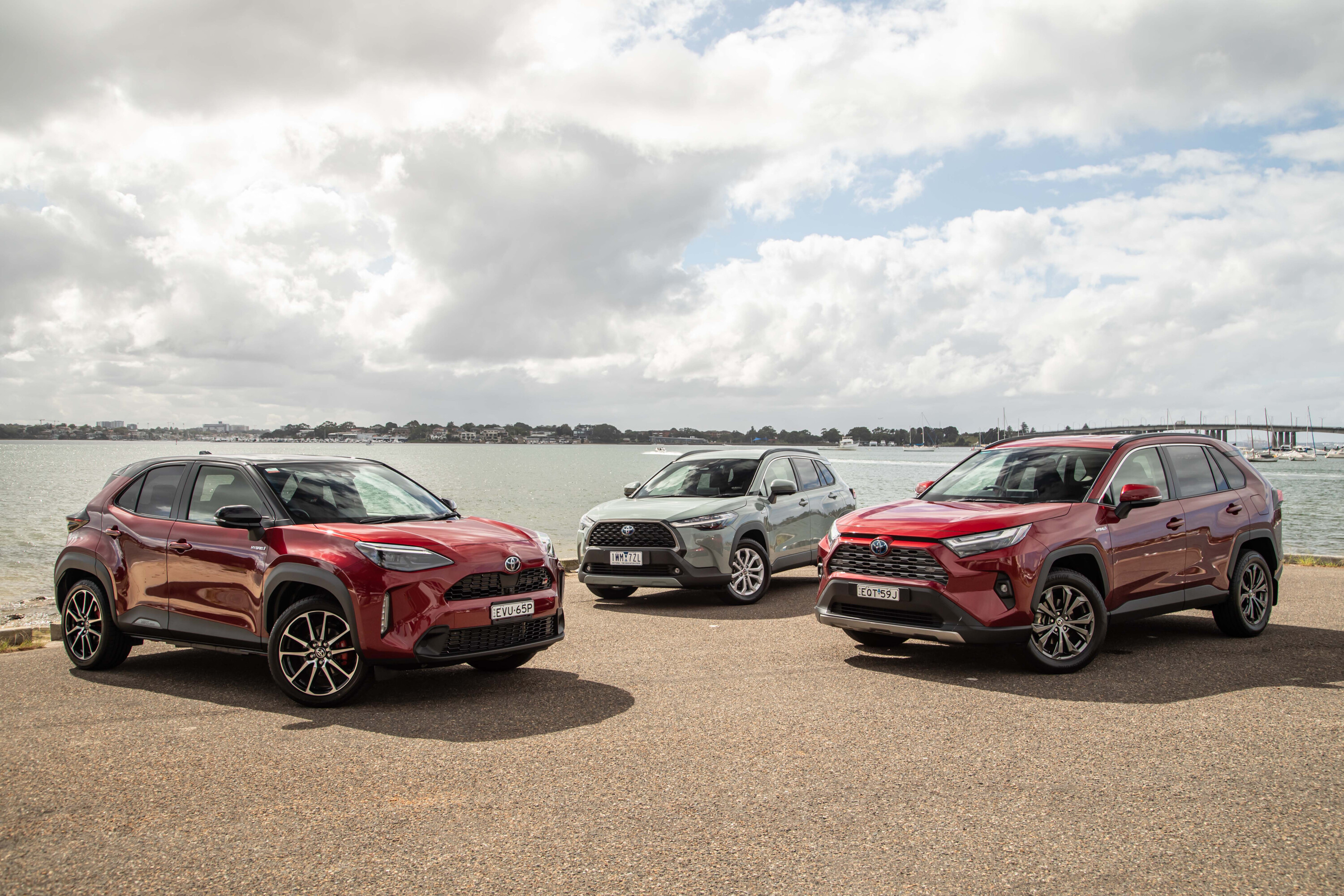
Toyota could soon crash the party for plug-in hybrids in Australia, with a high-ranking company exec revealing the brand is reevaluating its position on PHEV powertrains.
Toyota Australia has long been a pioneer of petrol-hybrid technology – it sells more hybrids here than any other brand – yet it currently doesn’t have a single plug-in offering across its broad product portfolio.
That could be about to change, however, with Toyota Australia’s vice president for sales and marketing, Sean Hanley, telling Wheels he thinks the potential for PHEVs is on the rise.
1
“I’m watching the market, not just for Toyota, I’m looking at it more broadly speaking and I think hybrid and plug-in hybrids in the next five years are going to come back into their own again,” he said. “I really do; I can see it a mile away.
“I’m even seeing it from other brands now that are suddenly bringing all these hybrids in, and plug-in hybrids. And all these stories about EV production being cut. I think there’s a bit of a correction happening.”
Hanley said the small-to-medium SUV segment — which includes the hugely popular Toyota RAV4 — is where he sees the most potential for PHEVs in Australia.
“Small SUVs, small-to-medium SUVs. Maybe RAV,” said Hanley.
Toyota currently only sells a small number of plug-in hybrids globally, though it does offer the RAV4 Prime in America which combines an 18.1kWh battery pack with a 2.5-litre petrol engine. It produces a combined output of 225kW, can travel 67km on electricity alone, and can hit 0-100km/h in 5.7 seconds.
When asked why Toyota was suddenly feeling more positive about PHEV powertrains, Hanley replied:
“I think the technology has moved on. I mean, if you had asked me five years ago, I might have said, I think plug-ins would be a difficult challenge at that time. I don’t hide from that comment because I think at that time, that was correct.
1
“But five years later, the technology’s moved on and it has accelerated. I think the technology’s moved on and I think [PHEVs] have something to offer.
“We believe we’re seeing a resurgence in hybrid and I think plug-in hybrids will be part of that. To what extent, I don’t know sitting here, but I think they’ll play a role and we should definitely be part of that given that we are the leaders in hybrid.”
As for when Toyota might add its first PHEV in Australia, Hanley suggested we could see one join the range in the next few years.
“Probably between 2025 and 2030,” he said, “because I’ve already made some pretty ambitious targets that 90 percent of our range will have some sort of electrification in the next couple of years.”
MORE
Everything Toyota
MORE
PHEV and Hybrid Cars
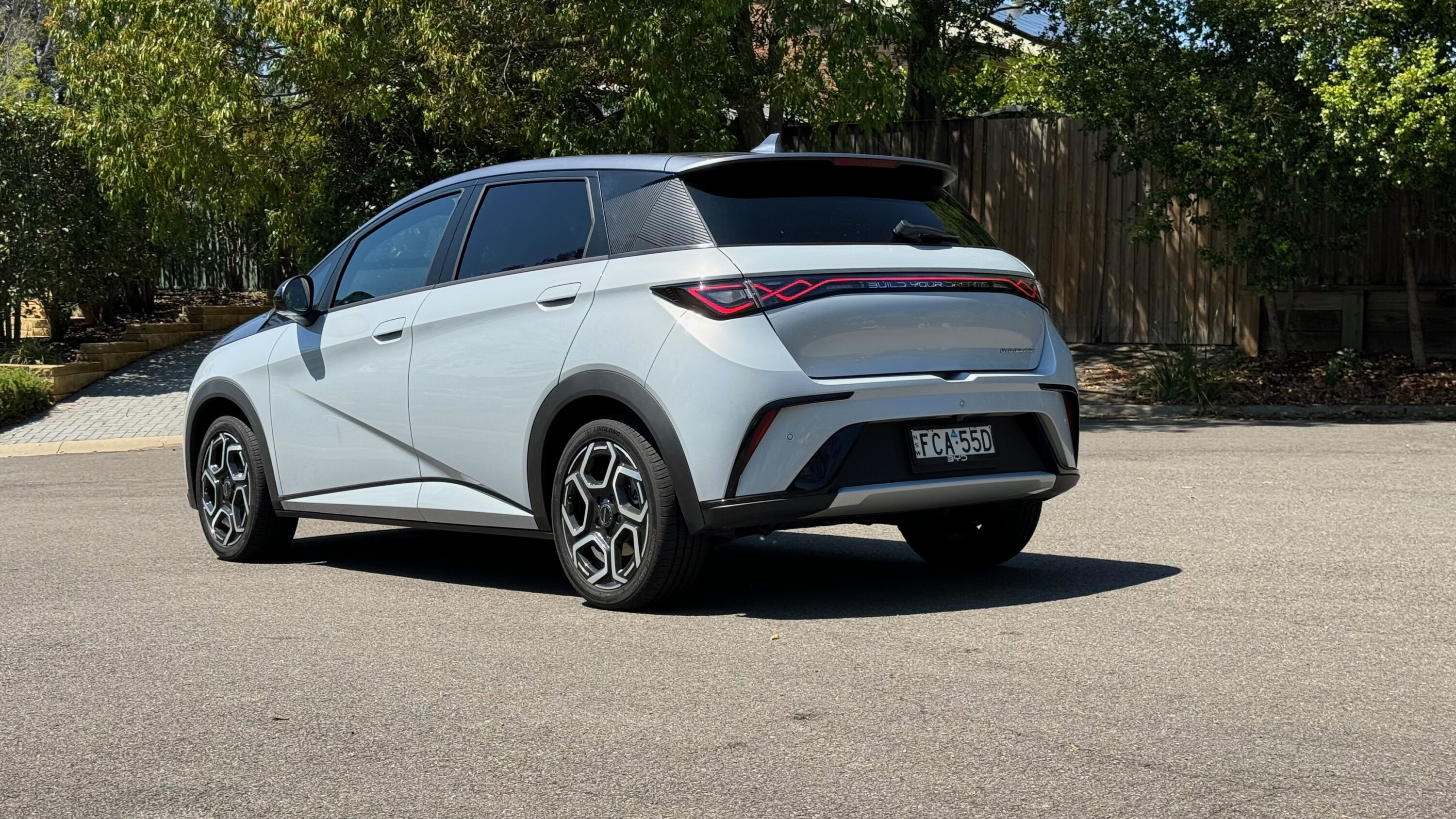
The most affordable electric car in Australia, the BYD Dolphin, is here – and it starts at just $38,890 plus on-roads.
That will get you into the lower-output, smaller-battery Dynamic model – which, with a 0-100km/h time of 12.3 seconds, sounds about as dynamic as a brisk walk to the toilet.
The more expensive Premium model tested here is the go for those who want a bit more range, a lot more poke, and a couple of extra features, too. And at $44,890 plus on-roads, it’s still very affordable for a compact EV.
1
JUMP AHEAD
Pricing and features
It might be cheap, but it’s also super well-equipped for the money.
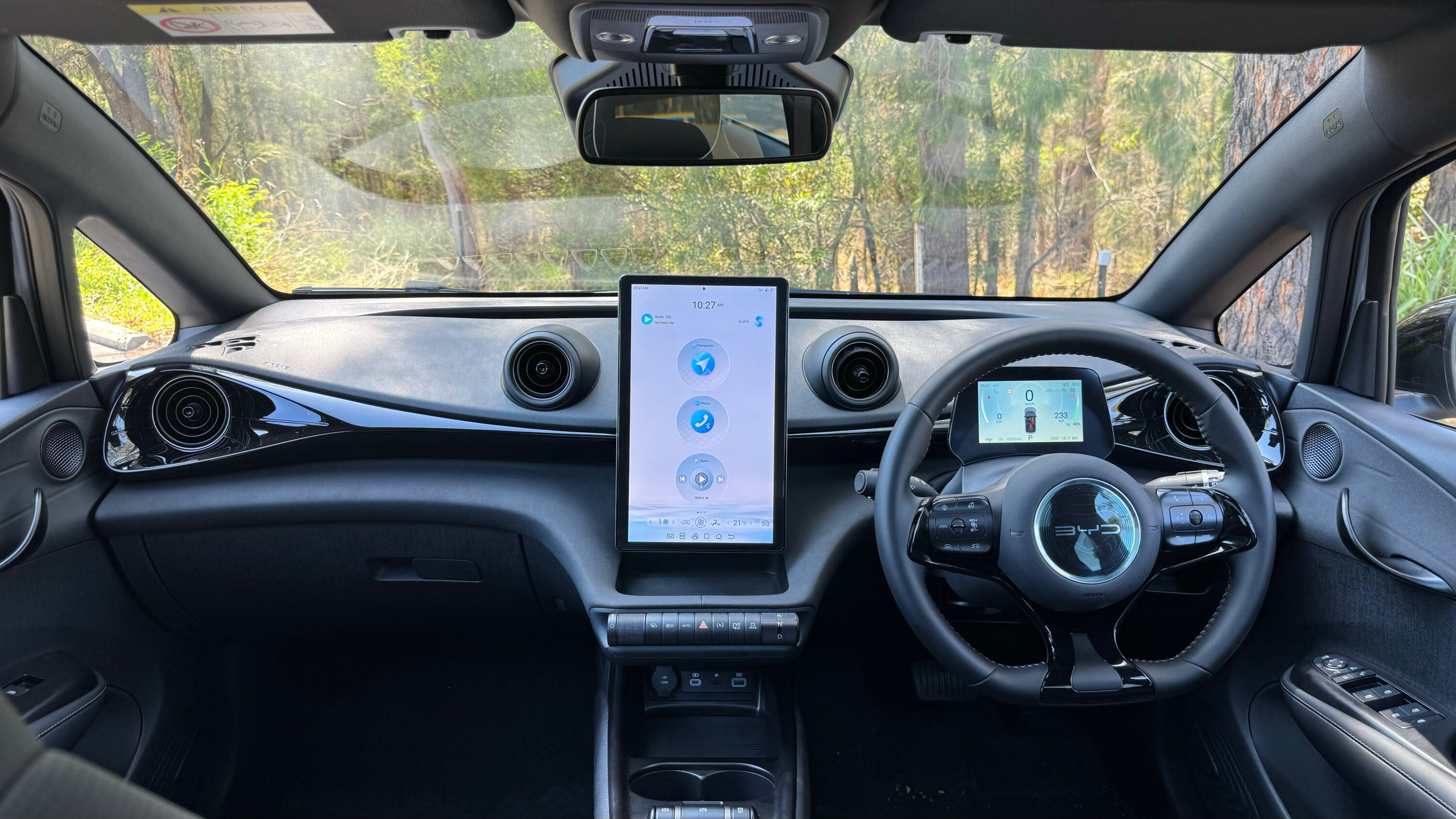
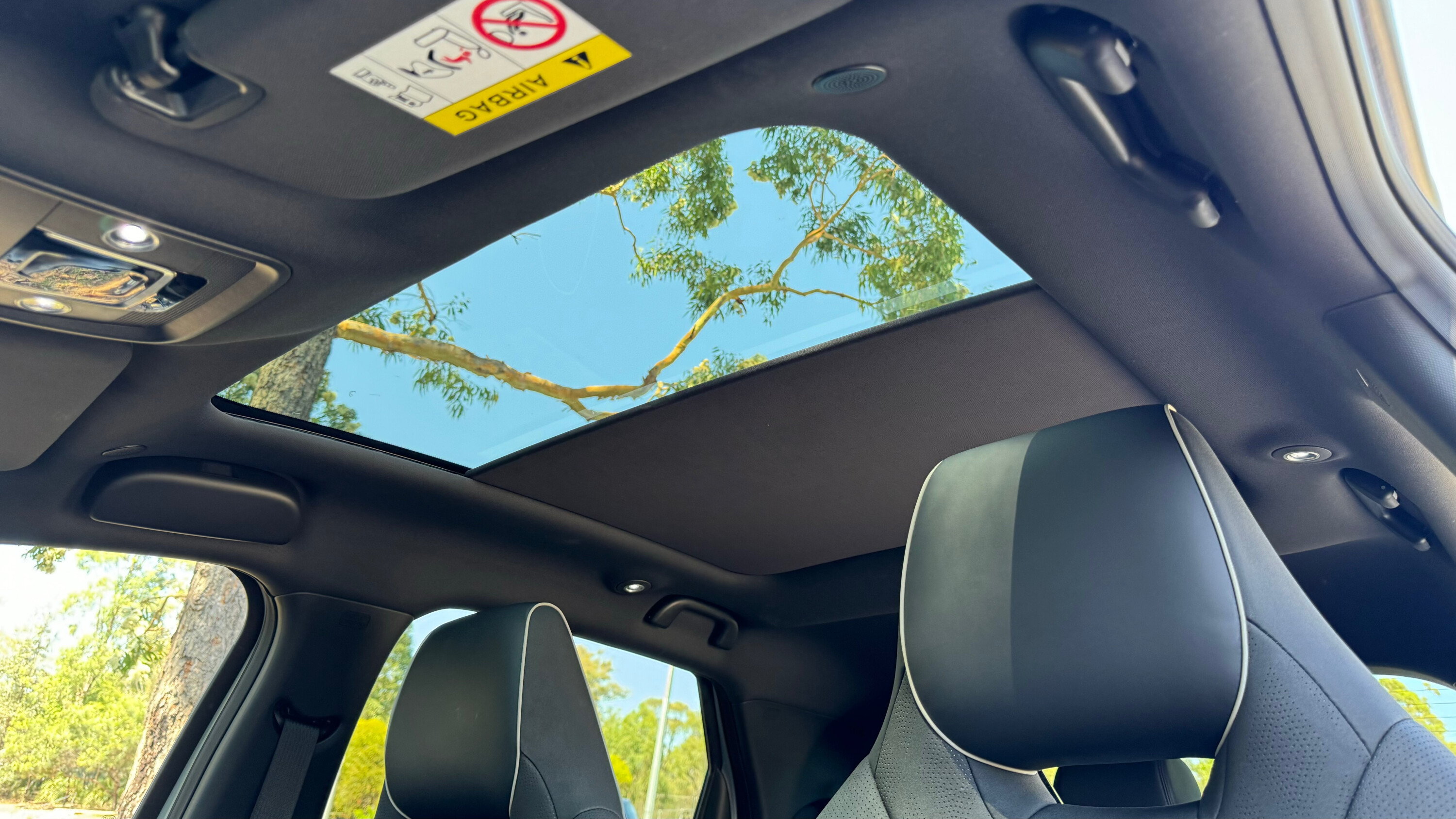
The entry-level Dynamic comes standard with 16-inch alloy wheels, LED headlights, LED daytime running lights, LED tail-lights, a panoramic glass roof, 12.8-inch rotating touchscreen infotainment system with wired Apple CarPlay, satellite navigation and digital radio, a six-speaker sound system, wireless phone charging, four USB ports, a 5.0-inch digital instrument cluster, power adjustable front seats with heating, fake leather trim, and keyless entry and start.
The Dynamic grade has a 44.9kWh battery pack, allowing it a WLTP-rated driving range of 340km, and a single electric motor at the front axle that produces 70kW and 180Nm.
1
Spend the extra $6000 for the Premium model and you get a few extra colour-coded bits and more paint choices, 17-inch alloy wheels and a different rear suspension package – multi-link rather than torsion – along with more grunt and range.
The Premium model upgrades to a 60.4kWh battery rated to 427km (WLTP), while the motor delivers 150kW and 310Nm – good for a 0-100km/h time of 7.0 seconds… a bit more like what you’d expect of an EV.
There’s AC charging at a maximum rate of 6.6kW, and DC charging varies between the grades – 60kW for the Dynamic, 80kW for the Premium.
1
Buyers get a six-year / 150,000km warranty, but there are some stipulations about certain components that’ll require a deep-dive into the fine print.
Battery warranty is an eight-year / 160,000km cover. Servicing intervals are 12 months / 20,000km, and there’s an eight-year capped-price plan for an average of $299 per visit.
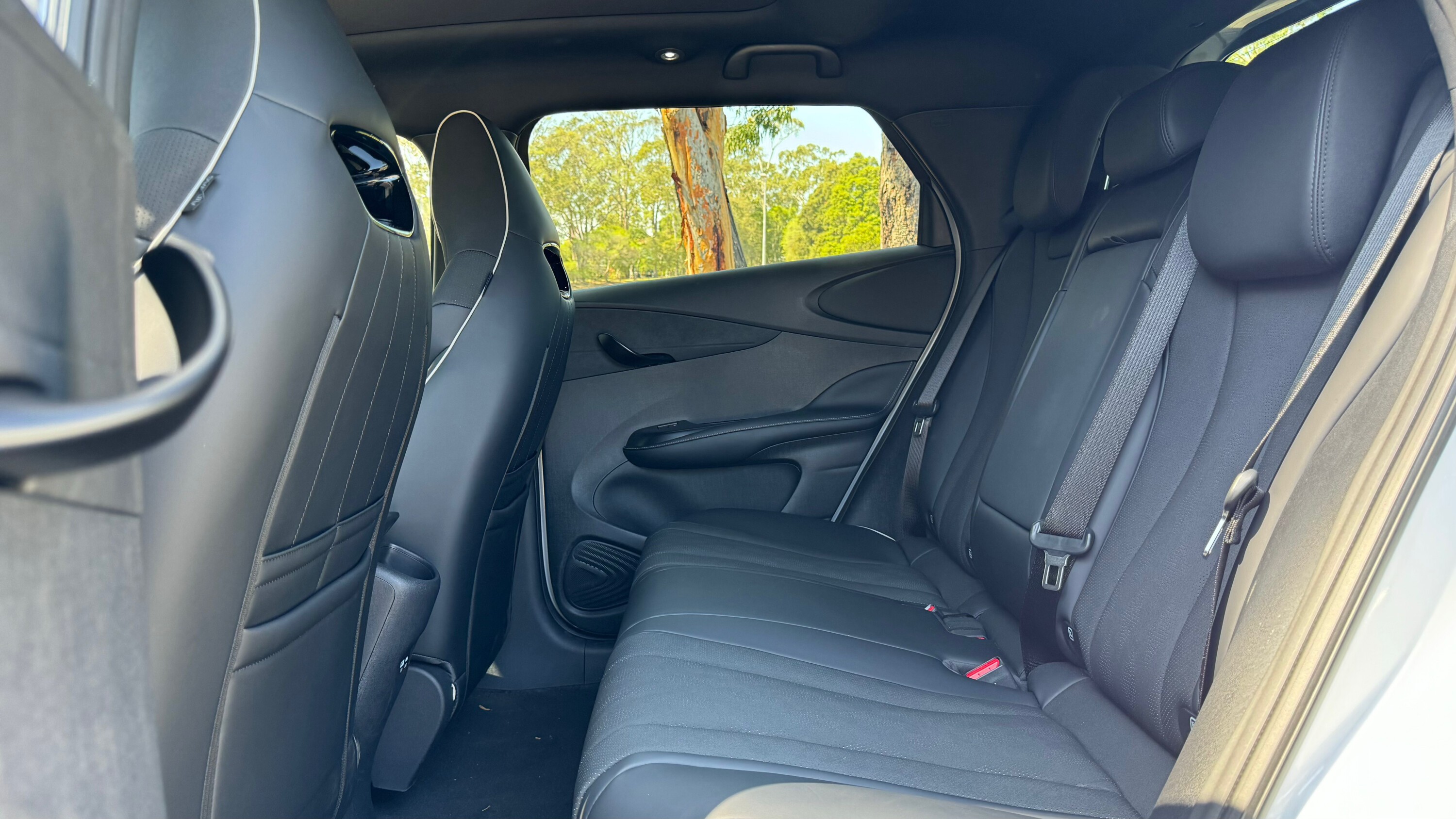
There’s no spare wheel, but you do get a decent 345-litre boot space, bigger than a GWM Ora (228L). Space in the cabin is decent, too, but a panoramic sunroof means taller rear-seat occupants suffer for headroom.
1
Safety
It may be affordable, but there haven’t been any corners cut on safety spec here.
The BYD Dolphin achieved the maximum five-star ANCAP safety rating against the strictest criteria to date (2023 date stamp), so it has all the gear you’d expect.
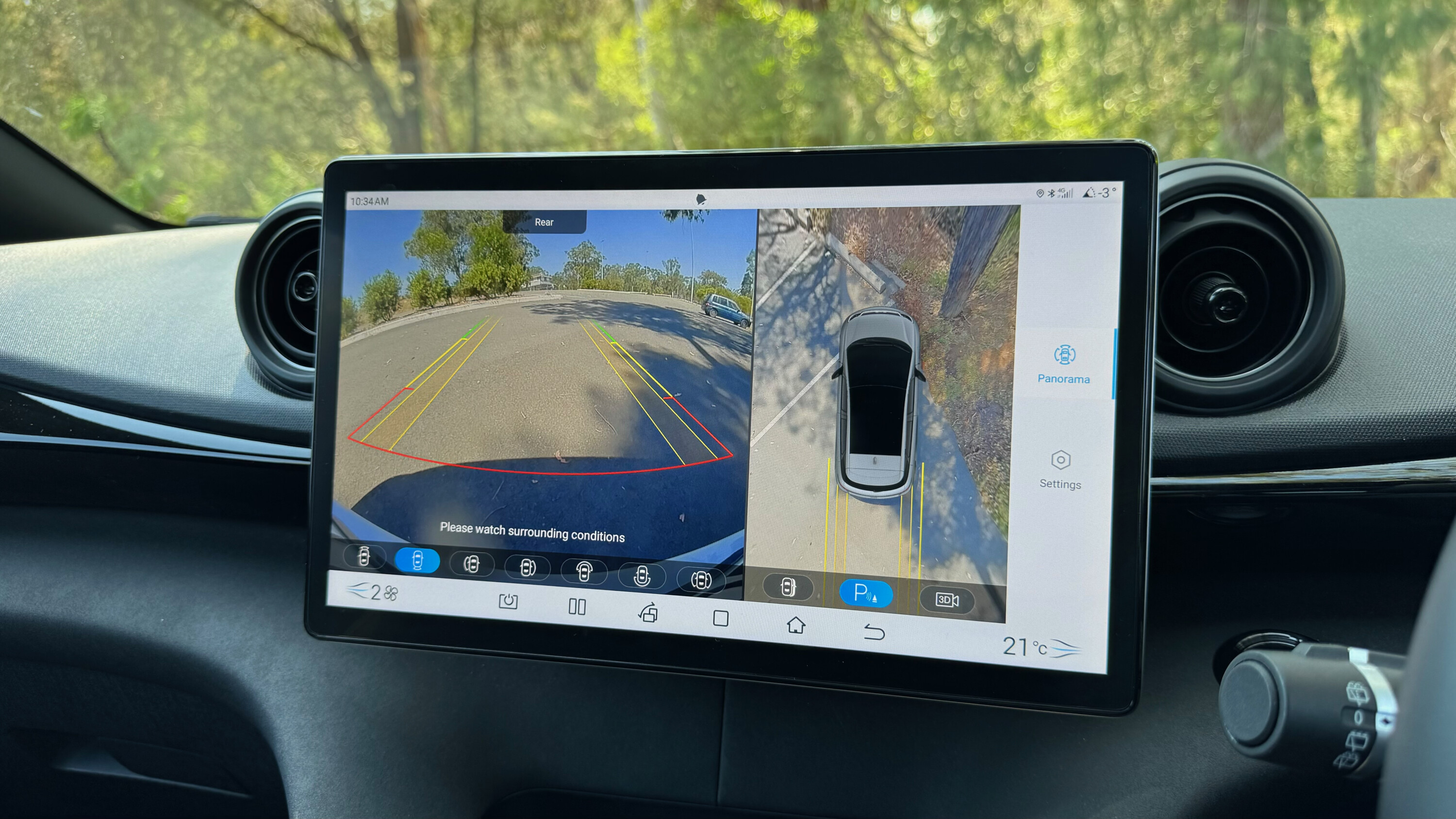
Standard is autonomous emergency braking (AEB) with pedestrian, cyclist and junction detection, and there’s lane-keeping and emergency lane keep assist, adaptive cruise control, ‘intelligent’ speed sign recognition, driver attention alert, blind-spot monitoring, rear-cross traffic alert with braking, front cross-traffic alert, a surround-view camera and parking sensors, and plenty more, including seven airbags.
That camera system is a sweet inclusion for urban-dwellers. Some of the other tech? Not so much…
2
On the road
The best compliment that can be paid to the BYD Dolphin is that it’s a great urban car.
If you live in a city, or will use it as a second car for daily duties in the burbs, then you’ll be well served – for the most part.
But if you find yourself on the freeway, or on a twisty road in the bush, you’ll quickly learn why the ‘ideal city car’ tag might also be a backhanded compliment.
That’s because the Dolphin’s chassis setup is flummoxed by bumpy roads, wobbling and lurching over bumps and never offering a whole lot of confidence, primarily due to its tragically underdamped rear suspension.
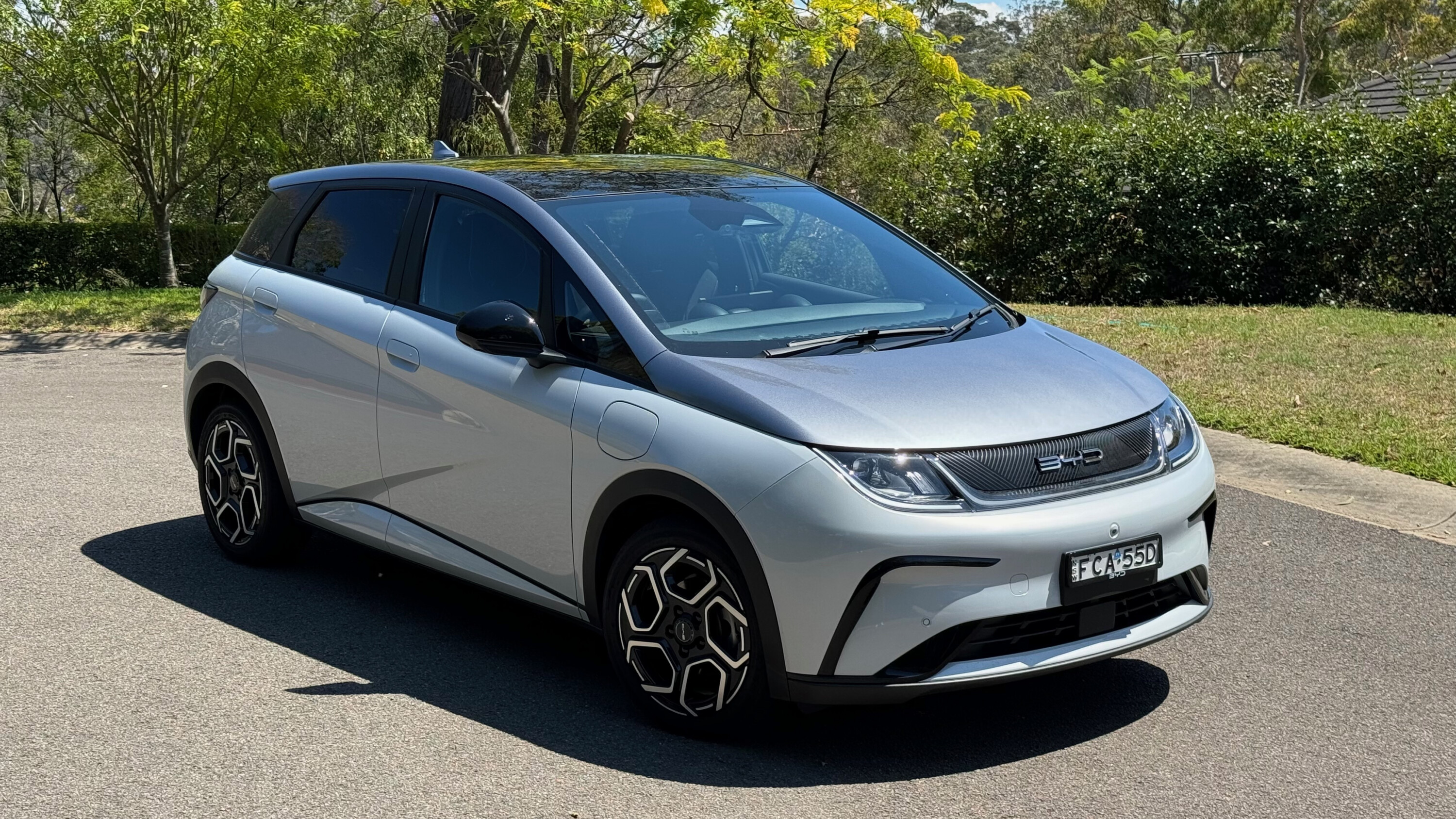
1
It’s a shame, because it seems to have a fair feel to the steering, although swapping out the LingLong Comfort Master tyres for some more reputable rubber would provide an instant improvement to the handling. At least the thing is easy to park.
But even half-throttle acceleration in the dry can cause the front tyres to spin and squeal, such is the shortness of grip on offer – so go easy on the go-pedal.
As you’d expect, there’s a decent amount of poke from zero, if only it could get the grunt to the ground. And it’s otherwise reasonably refined, with quiet-enough progress around town.
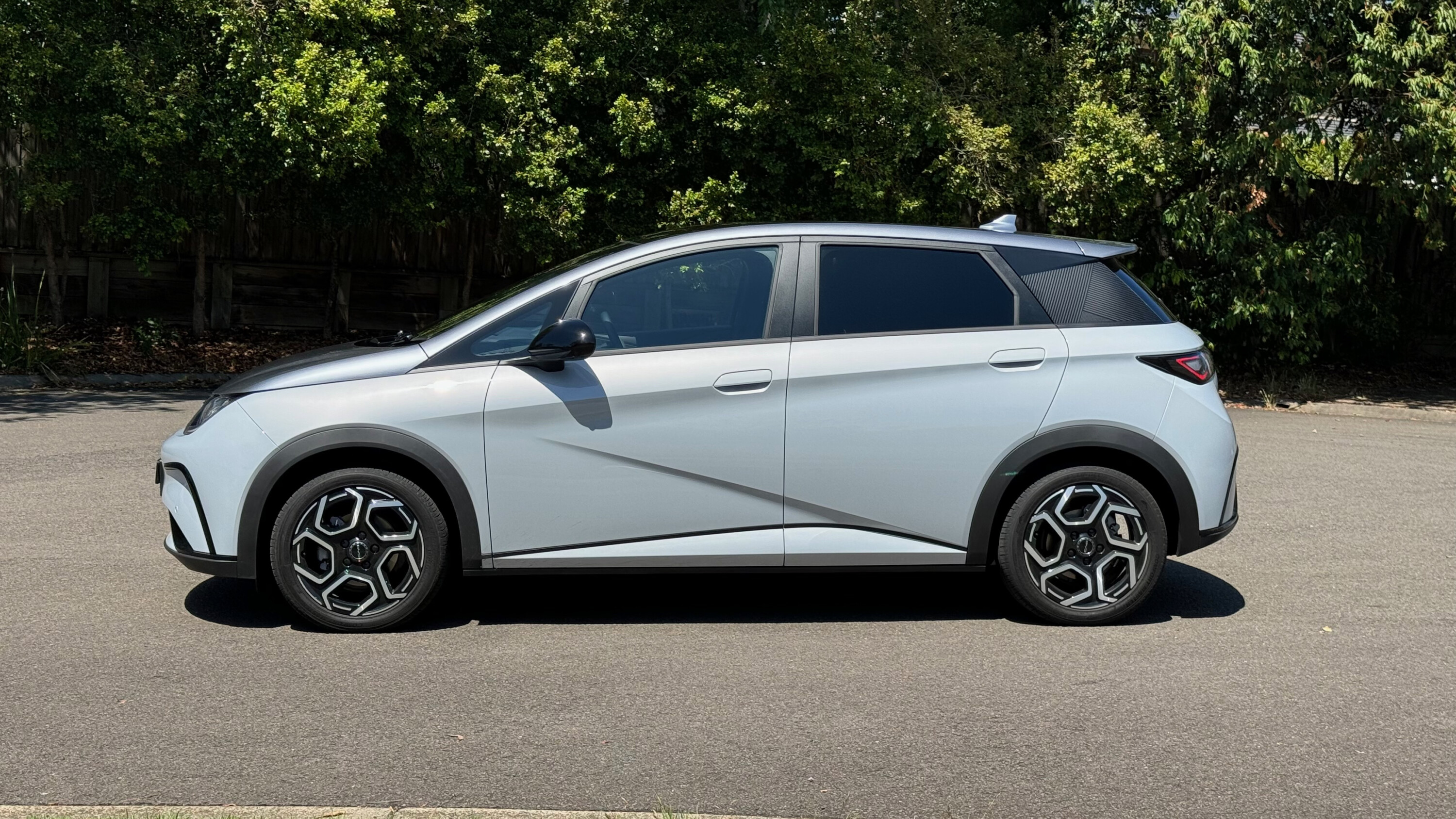
1
Oddly, there’s no single-pedal driving mode in the Dolphin, and the brake pedal feel is squelchy at the top of the pedal.
Just note, too – this car is best operated with the lane-keeping and emergency lane-keep tech systems disabled… which you’ll need to do every time you drive it. Plus, you might want to turn off the speed-sign recognition system, otherwise it beeps incessantly (albeit far less annoyingly than a Kia or Hyundai).
- What is a Powertrain or Drivetrain?
- Power vs torque
- Car suspension explained
- Automatic transmissions (‘gearboxes’) explained
- Chassis control systems explained
- Car vs Ute vs SUV: How the vehicle you buy should guide the way you drive
- What is the WLTP emissions and range test?
The best alternative is the rear-drive MG 4 which, by comparison, is a joy to drive. Prices start from $38,990 through to $59,990 for the manic X-Power model.
Another option would be the GWM Ora, which starts at $39,990 and tops out at $51,990 for the yet-to-arrive GT version. It’s stylish, but not as practical as the others.
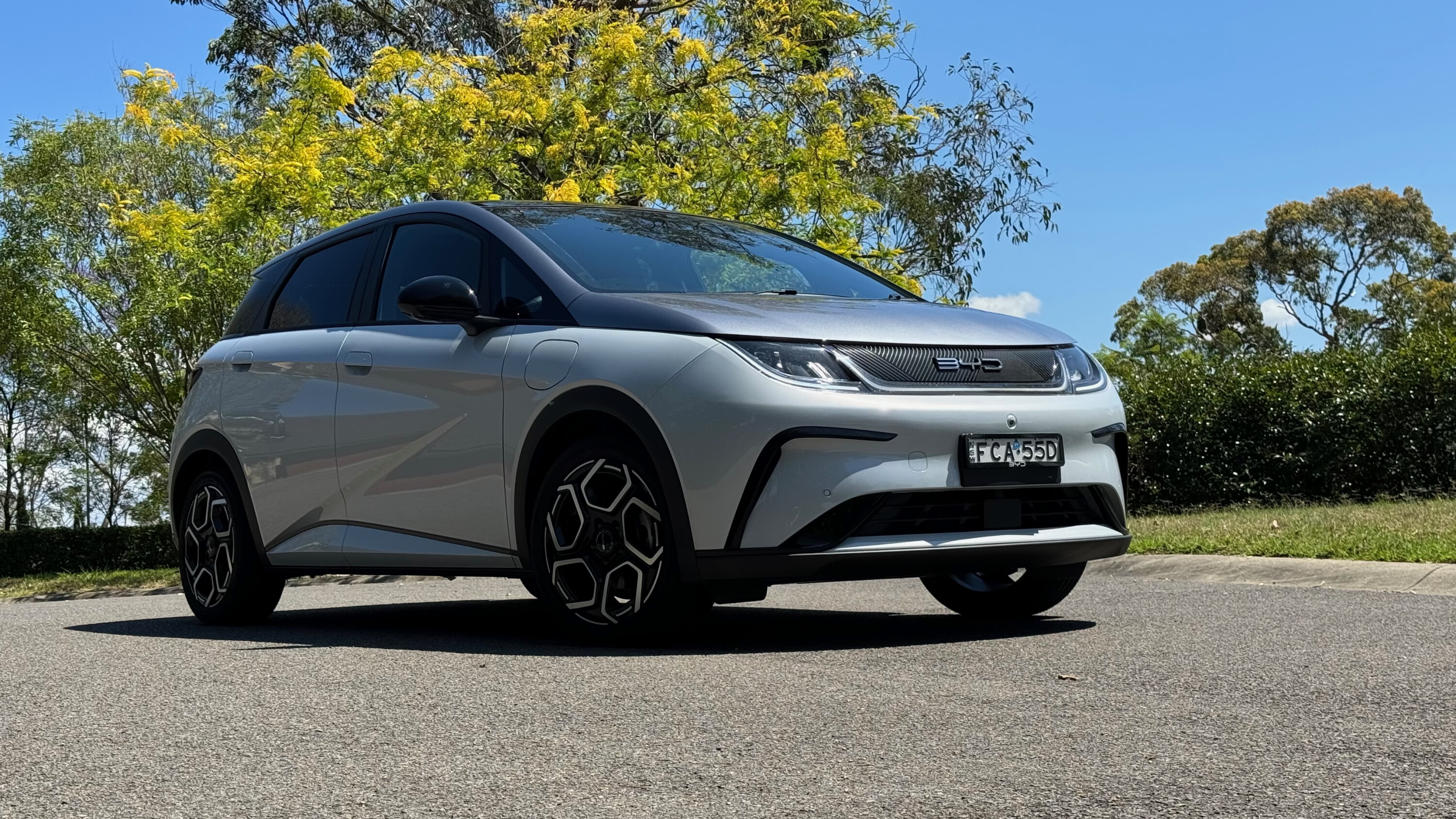
1
Should I put it on my shortlist?
If you live urban and don’t give much of a hoot about driving dynamics, sure. But for the keen driver there are better choices, even if those alternatives don’t come with the same level of spec offered with the Dolphin.
MORE
Everything BYD
MORE
Electric Cars
| 2023 BYD Dolphin Premium specifications | |
|---|---|
| Powertrain | Front-mounted electric motor, LFP battery |
| Max power | 150kW |
| Max torque | 310Nm |
| Drivetrain | front-wheel drive |
| Energy consumption | 14.2kWh/100km (WLTP combined) |
| Priced from | $44,490 plus on-roads |
Wireless Apple CarPlay and Android Auto are set to become available in the latest Hyundai and Kia cars.
More-affordable Hyundai and Kia vehicles with smaller screens and no built-in satellite navigation have had access to wireless CarPlay and Android Auto since 2020.
However, navigation-enabled vehicles are limited to wired support due to a disagreement between either Apple or Google regarding whose maps should appear when the system is first loaded.
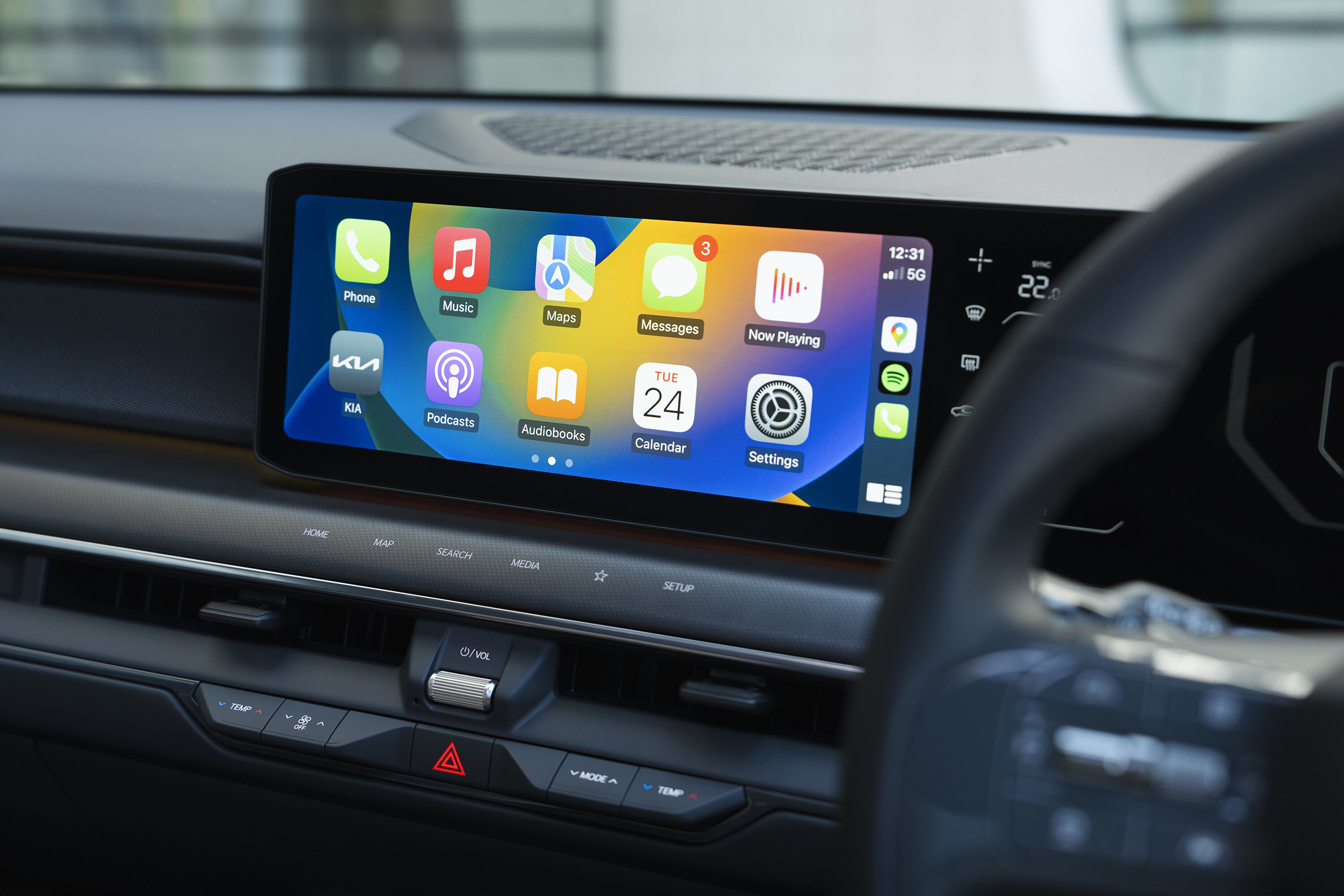
1
Now, a software update is currently rolling out in Europe for Hyundai and Kia vehicles fitted with the latest Connected Car Navigation Cockpit (CCNC) infotainment system to enable the feature.
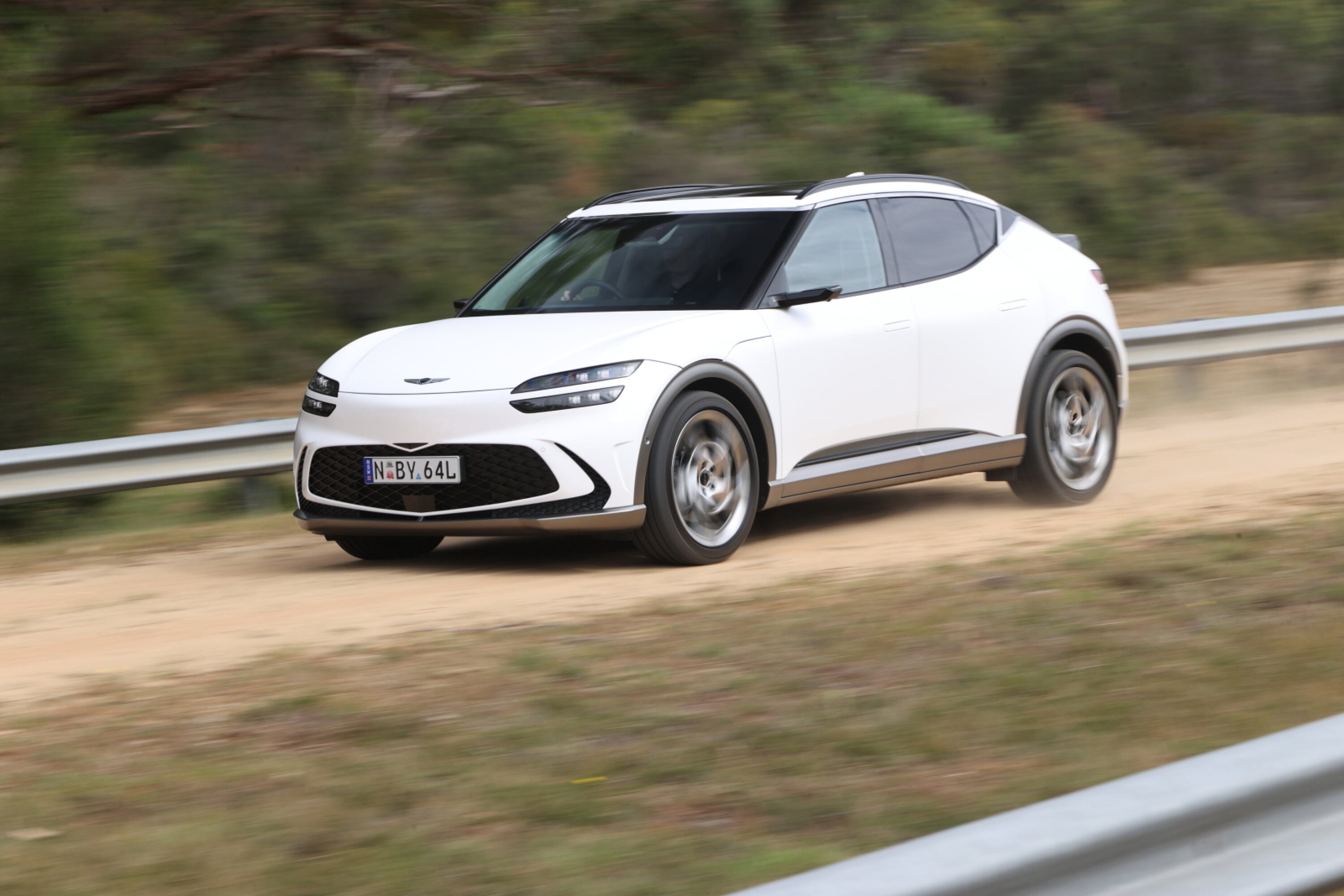
The CCNC infotainment system is currently fitted to the SX2 Hyundai Kona, DN8.V3 Hyundai Sonata N Line and the just-launched Kia EV9 in Australia. An upscale version, CCIC, is fitted to the Genesis GV60.
Future vehicles due to launch with the new software include the Hyundai Ioniq 5 N and the all-new Santa Fe, along with the facelifted Kia Sorento, Carnival and Genesis GV80.
WhichCar understands the Santa Fe, due in the first half of 2024, will launch with wireless phone mirroring installed from the factory.
Kia Australia has confirmed that while initial versions of the EV9 have wired Apple CarPlay and Android Auto, an over-the-air software update due in the next month or so will enable wireless connectivity for new and existing owners.
Likewise, a Hyundai Australia spokesperson said local technicians are currently testing wireless Apple CarPlay in the Kona and Sonata, with an over-the-air software update expected to be released in the coming months “if all goes to plan”.
A support document confirms that owners will need to delete their existing phone-to-car connection and re-pair after installing the update to enable wireless functionality.
1
It is unclear when Genesis vehicles will receive the update in Australia, and if it’ll be limited to the GV60 or also the existing G80, GV70 and GV80, which run the ‘premium-class Gen 6 navigation’ widescreen infotainment system.
“At this time we cannot provide any updates with regards to Genesis vehicles and the availability of wireless Apple CarPlay,” said a Genesis Australia spokesperson.
Unfortunately, current Hyundai, Kia and Genesis vehicles with the 10.25-inch or 12.3-inch ‘standard-class Gen 5W navigation’ system – including the Hyundai Ioniq 5, Ioniq 6, Kia EV6 and Genesis G70 – are not due to receive an update to enable wireless phone mirroring.
MORE
Everything Hyundai
MORE
Everything Kia
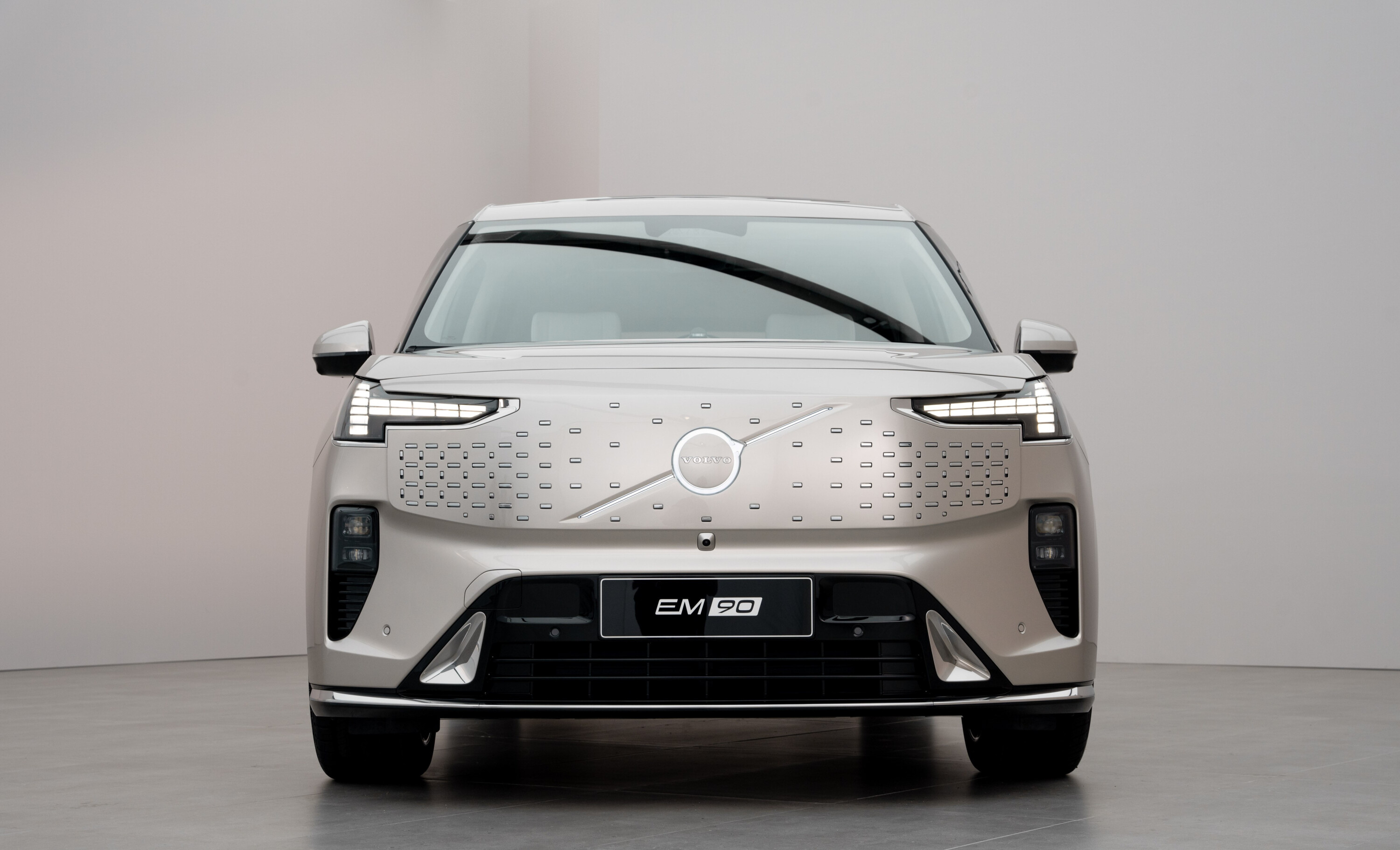
Volvo has unveiled the EM90 electric MPV as its first ever people-mover in its 96-year history.
The Swedish brand bills the EM90 as a vehicle that can lead a double life of family car and executive transport, though for now it is planned to be exclusive to the Chinese market.
The six-seater, which was leaked last month, is based on the Zeekr 009 sold in the same market by Volvo parent company Geely and pitched as a rival to the likes of the Lexus LM and Mercedes-Benz V-Class.
1
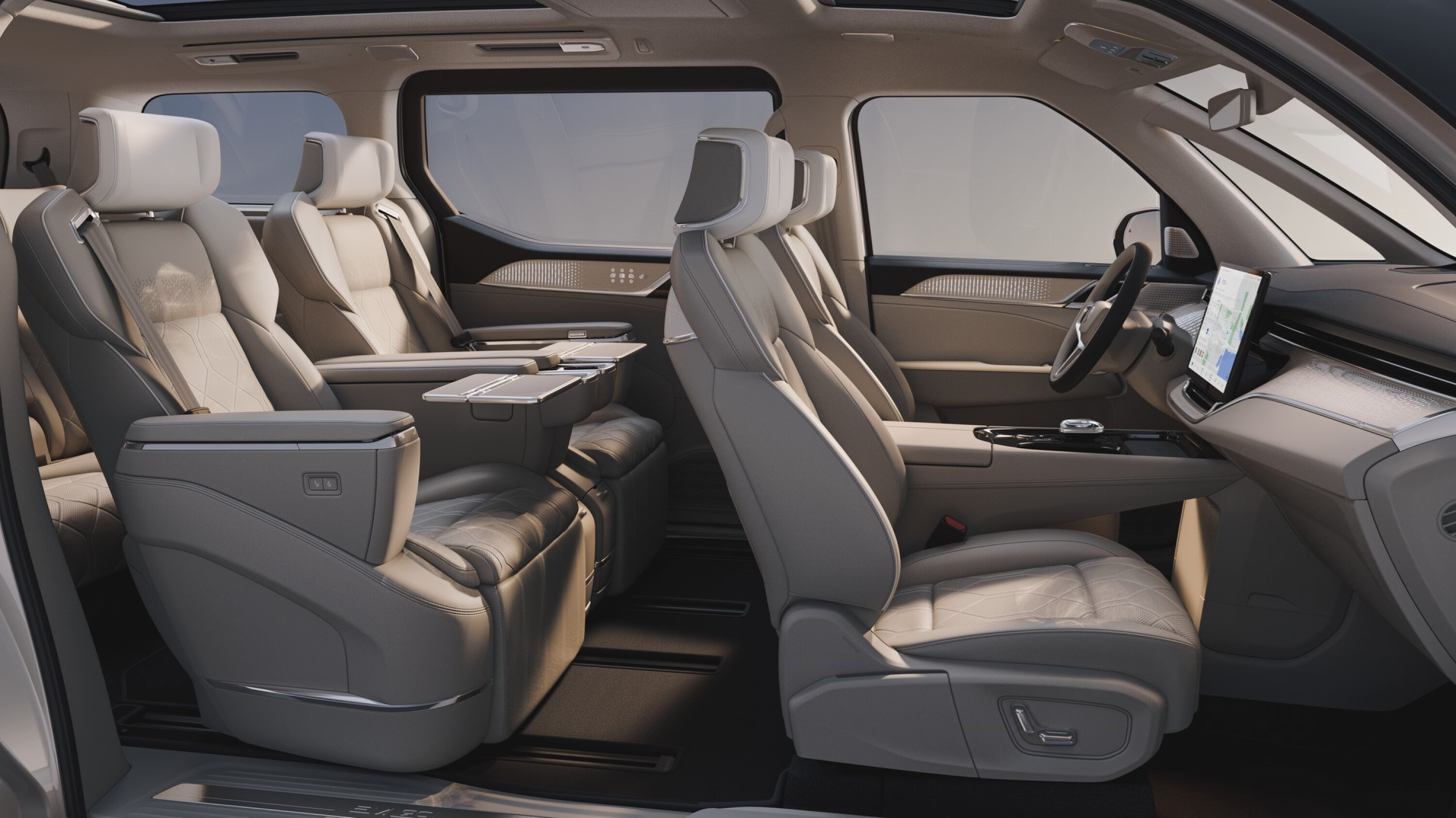
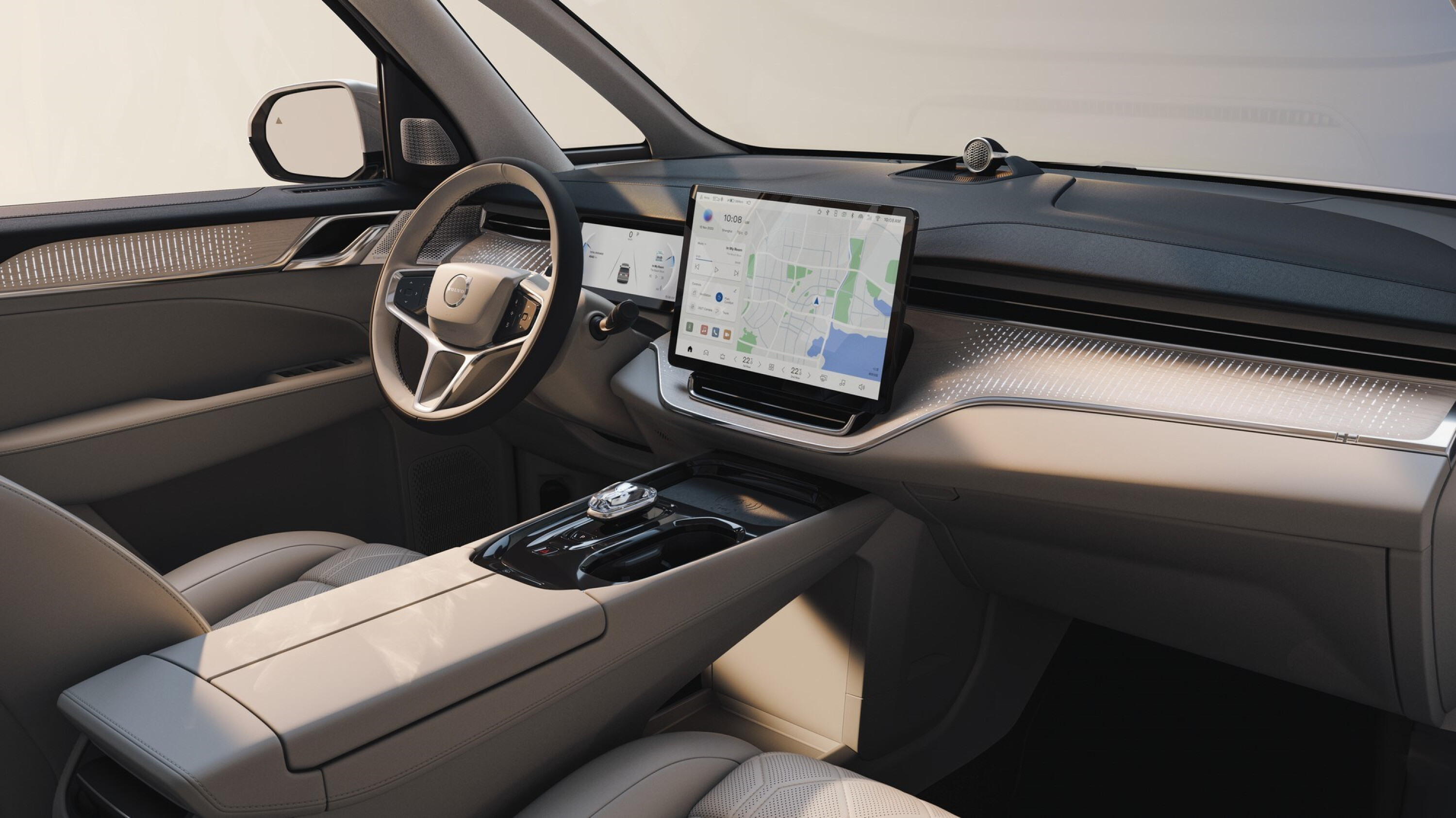
Volvo says a flick of a switch or a voice command enables the 5.2-metre-long EM90 to adjust its digital displays, seats, windows, lighting and air-con to tailor the interior for either meetings, a movie theatre, or even sleeping quarters using the rear seats.
A large, 15.6-inch screen folds down out of the roof for rear occupants, while those up front have a similarly sized, 15.4-inch infotainment display.
There’s a 21-speaker Bower & Wilkins audio system, while a road-noise-cancellation system and air suspension are designed, respectively, to deliver a quiet and comfortable cain.

1
1
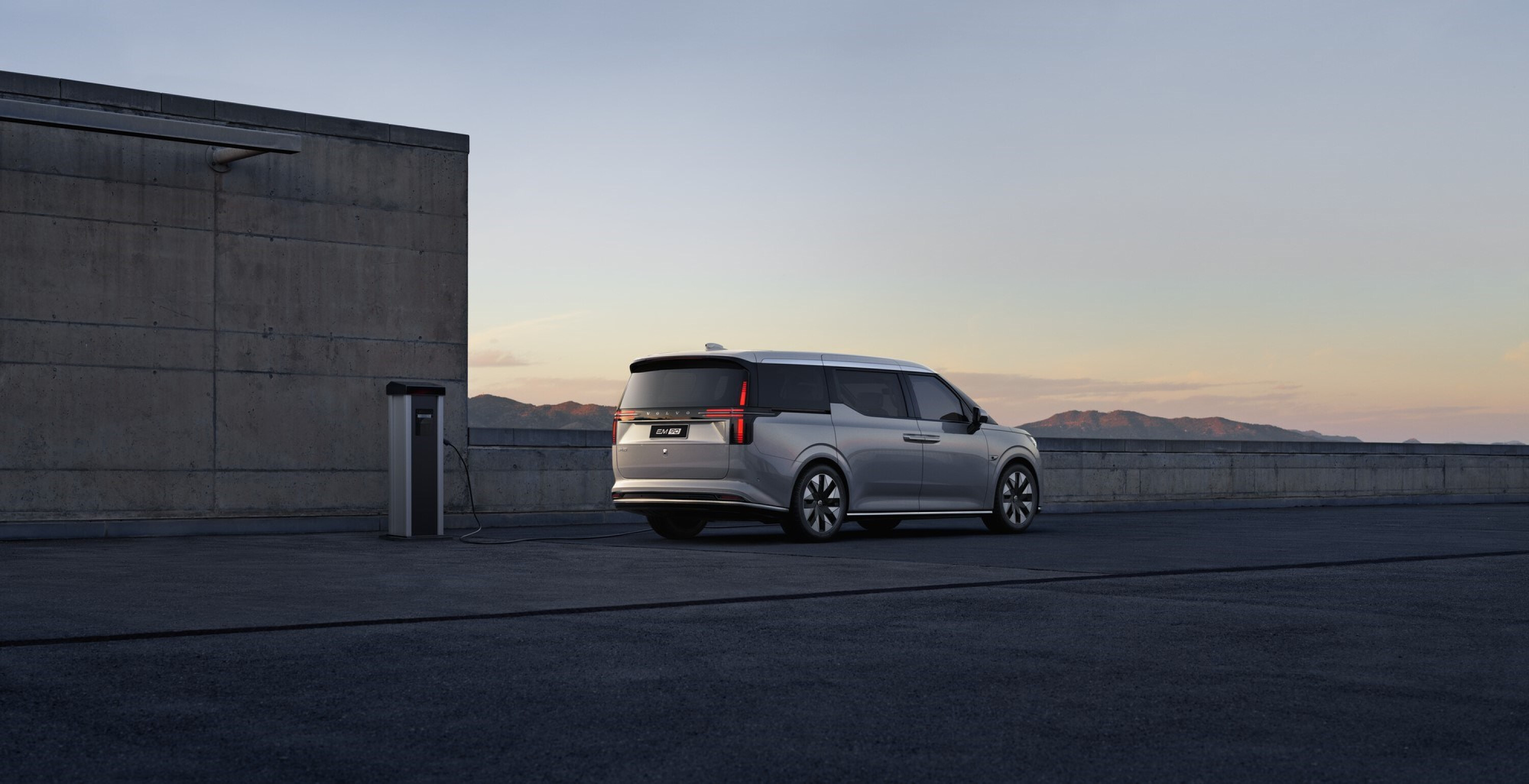
A 200kW e-motor is fed by a large 116kWh battery and the EM90 comes with a claimed 0-100km/sprint time of 8.3 seconds and a 738km range.
That range, however, is based on China’s typically optimistic CLTC rating system rather than Europe’s more widely recognised WLTP.
Rapid charging is said to take less than half an hour to increase the battery from 10 to 80 per cent.
1
Bi-directional charging allows the EM90 to charge power devices.
The EM90 rolls on either 19-inch or 20-inch aero wheels.
Another first for Volvo is the illuminated logo on the grille, flanked by the brand’s now-traditional ‘Thor’ LED lights.
1
MORE
Everything Volvo
Snapshot
- 2023 Skoda Kamiq: Full Australian line-up details
- New Run-Out variant added with lower cost for limited time
- Available until Q2 2024 when a facelifted model is expected to launch
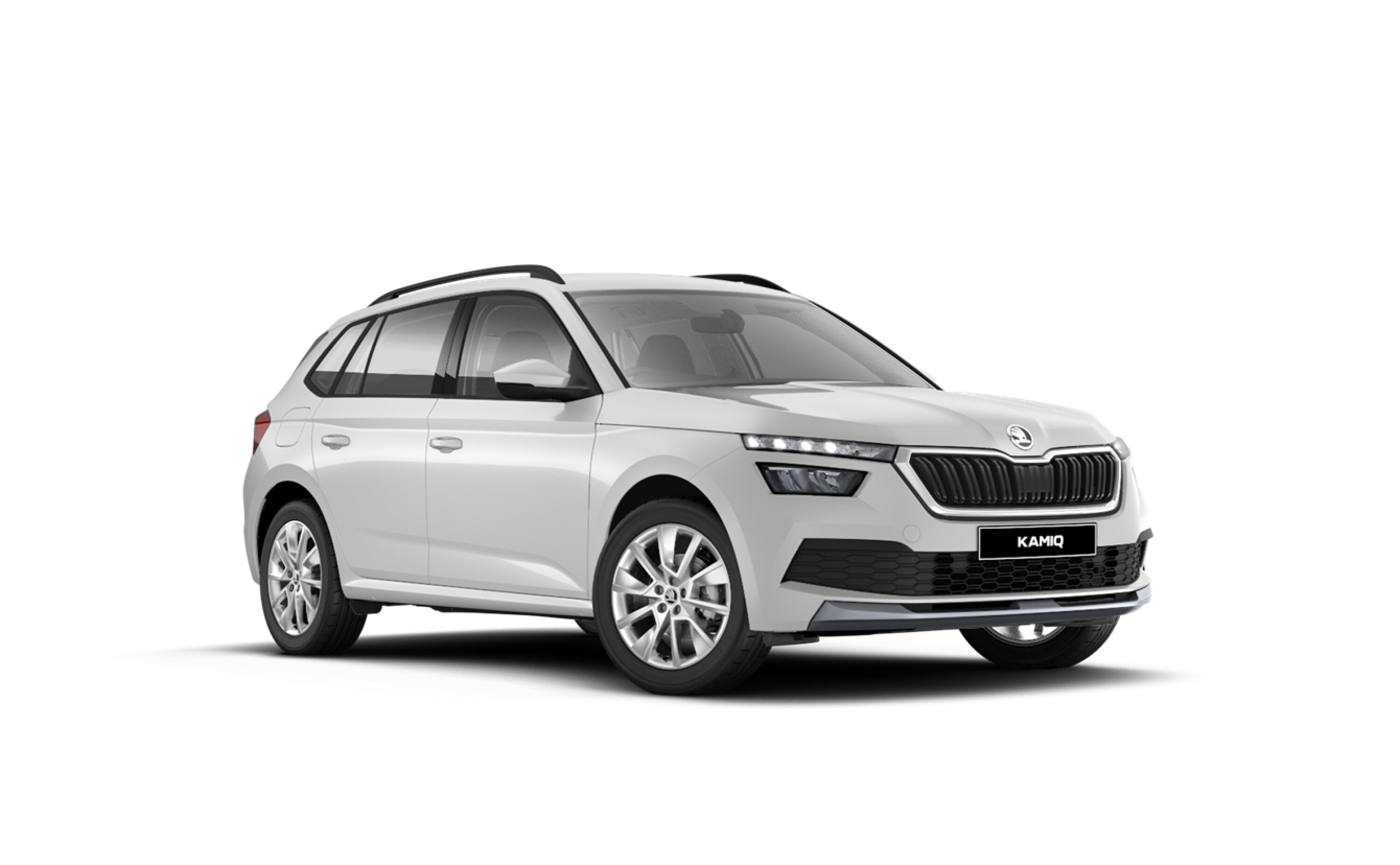
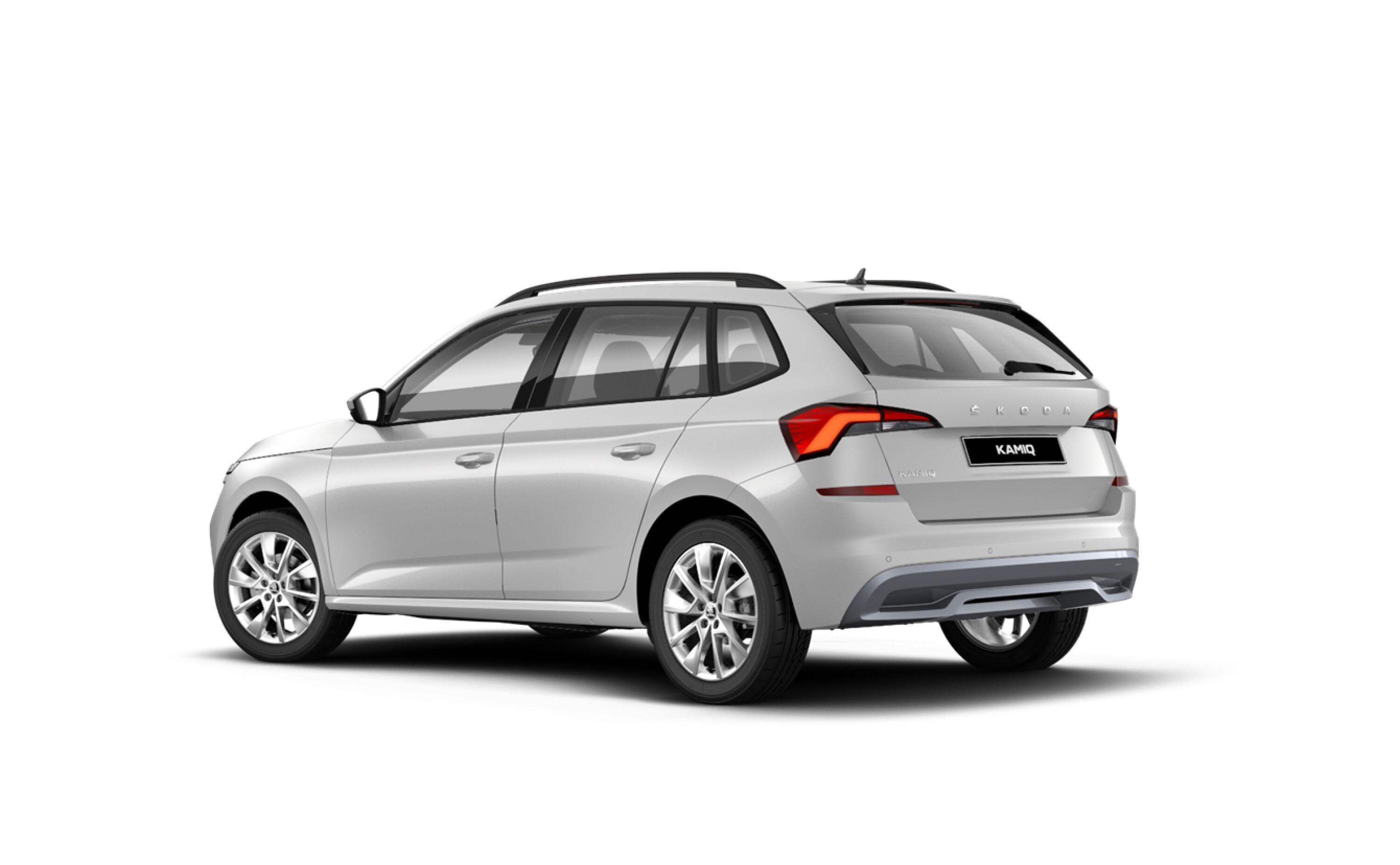
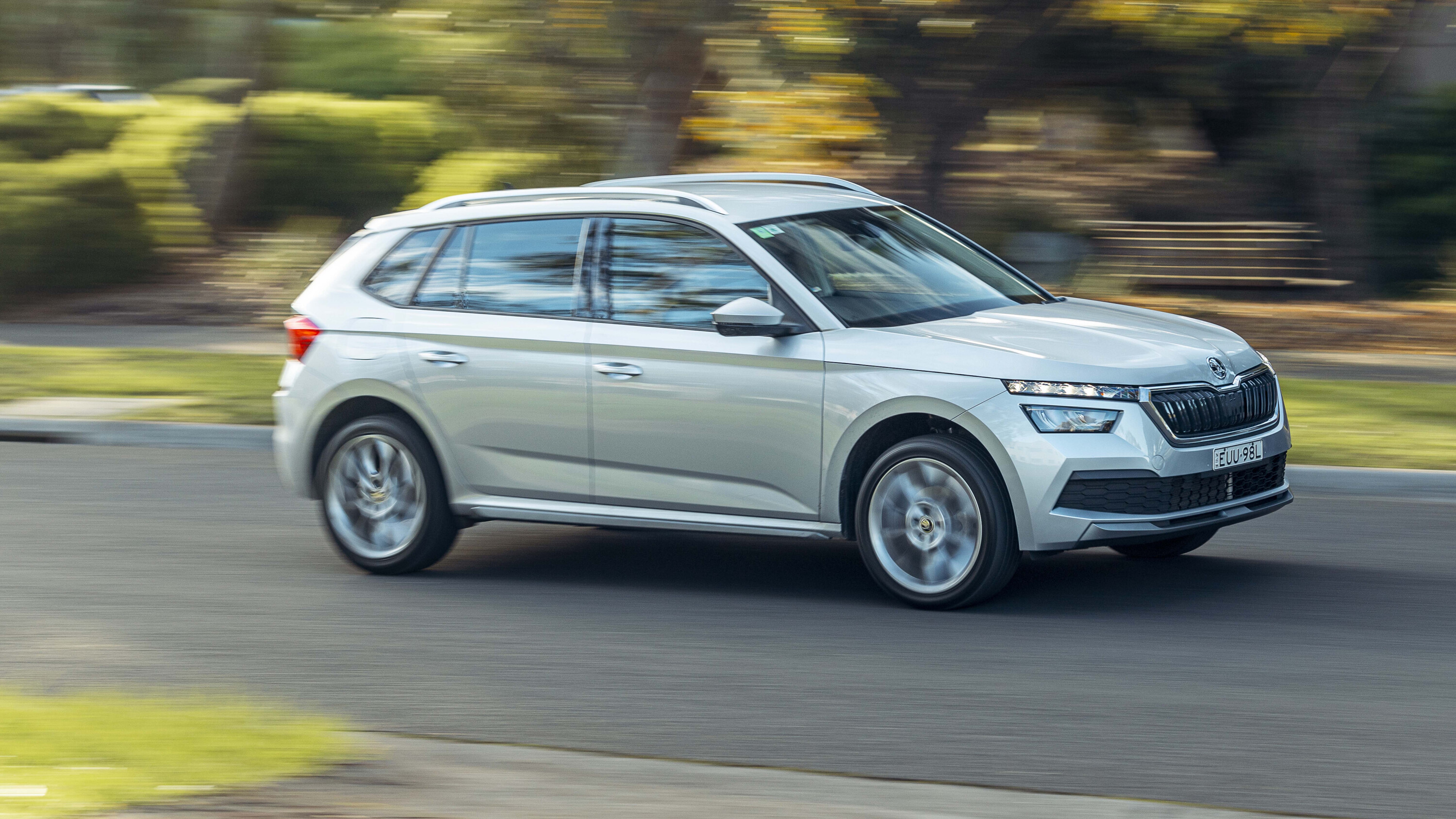
A more-affordable variant of the 2023 Skoda Kamiq small SUV has arrived in Australia for a limited time.
The aptly-named Kamiq Run-Out will be available until the second quarter of 2024, around the time a facelifted version is due to launch in Australia with revised styling, eco-friendly interior materials, matrix headlights, and faster charge ports.
Priced from $31,790 before on-roads – or $32,990 drive-away nationally – the Kamiq Run-Out maintains the turbo-three 85TSI, dual-clutch automatic powertrain and 5.4L/100km fuel consumption for $5000 less drive-away, losing some equipment available in the Style.
1
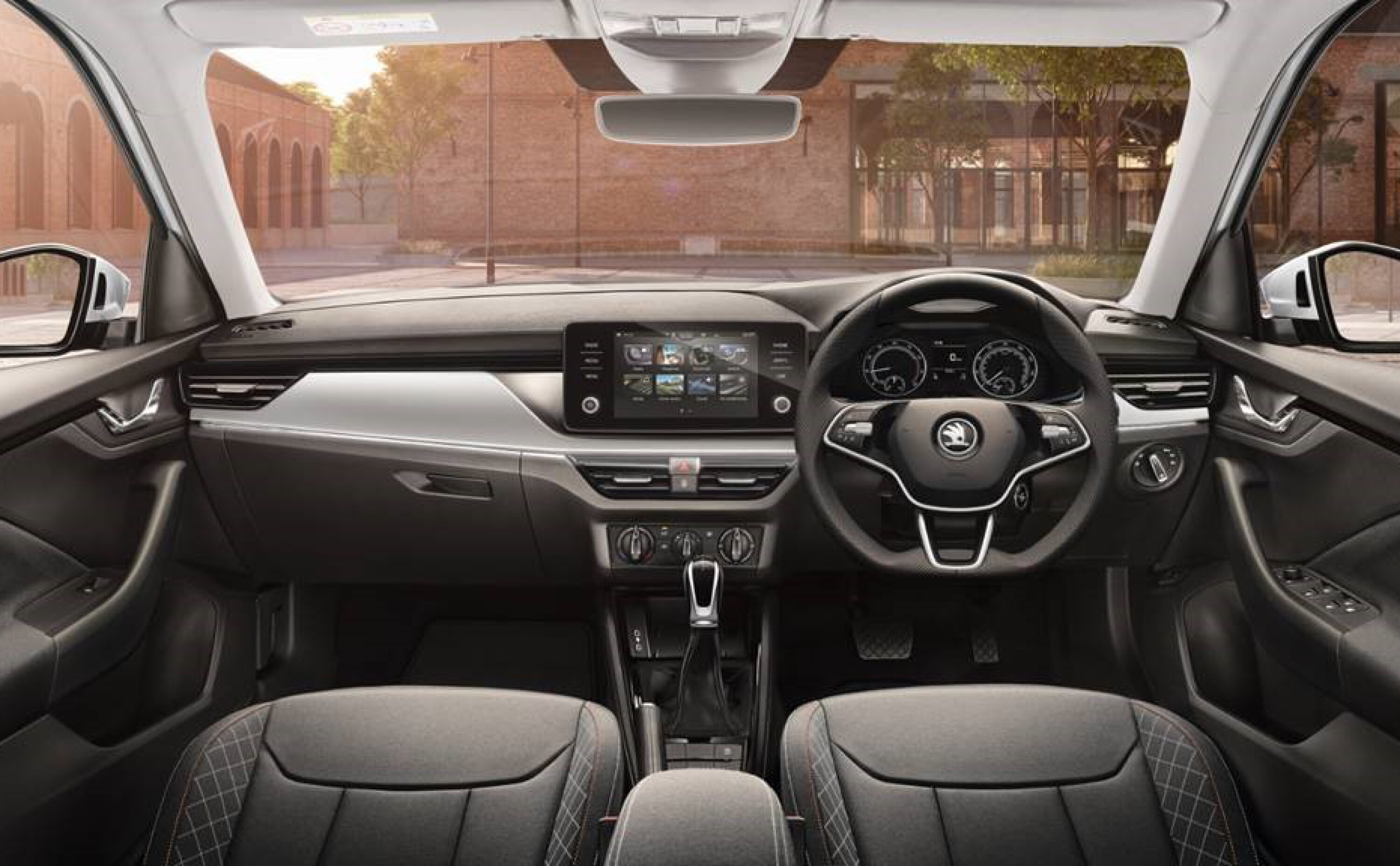
This missing equipment includes adaptive cruise control, lane-centring assist, an electric tailgate, a digital instrument cluster, a wireless phone charger, and dual-zone climate control.
However, Skoda Australia is keen to point out that the Run-Out still “has features typically expected in the mid-to-high specifications of competitor brands”, with national drive-away pricing fixed at $1200 more than the retail cost.
“We have seen competitors persist with inefficient naturally aspirated engines and plastic steering wheels in entry models, however we find that our customers typically want more,” said Skoda Australia marketing and product boss Kieran Merrigan.
1
“Škoda customers are the most discerning in the market. We have spent the last year articulating our seven-year warranty, our affordable seven-year servicing plan and our strong whole of life ownership credentials. Even with a seven-year service plan, buyers can now choose a Kamiq for less than $36,000 driveaway.”
The addition of the more affordable Kamiq Run-Out follows the return of blind-spot and rear cross-traffic alerts across the line-up last month – including the new variant.
Pricing for the now mid-spec Style has remained static, while the flagship Monte Carlo and Signature have risen between $1000 and $1500, respectively.
1
JUMP AHEAD
- 2023 Skoda Kamiq pricing
- 2023 Skoda Kamiq features
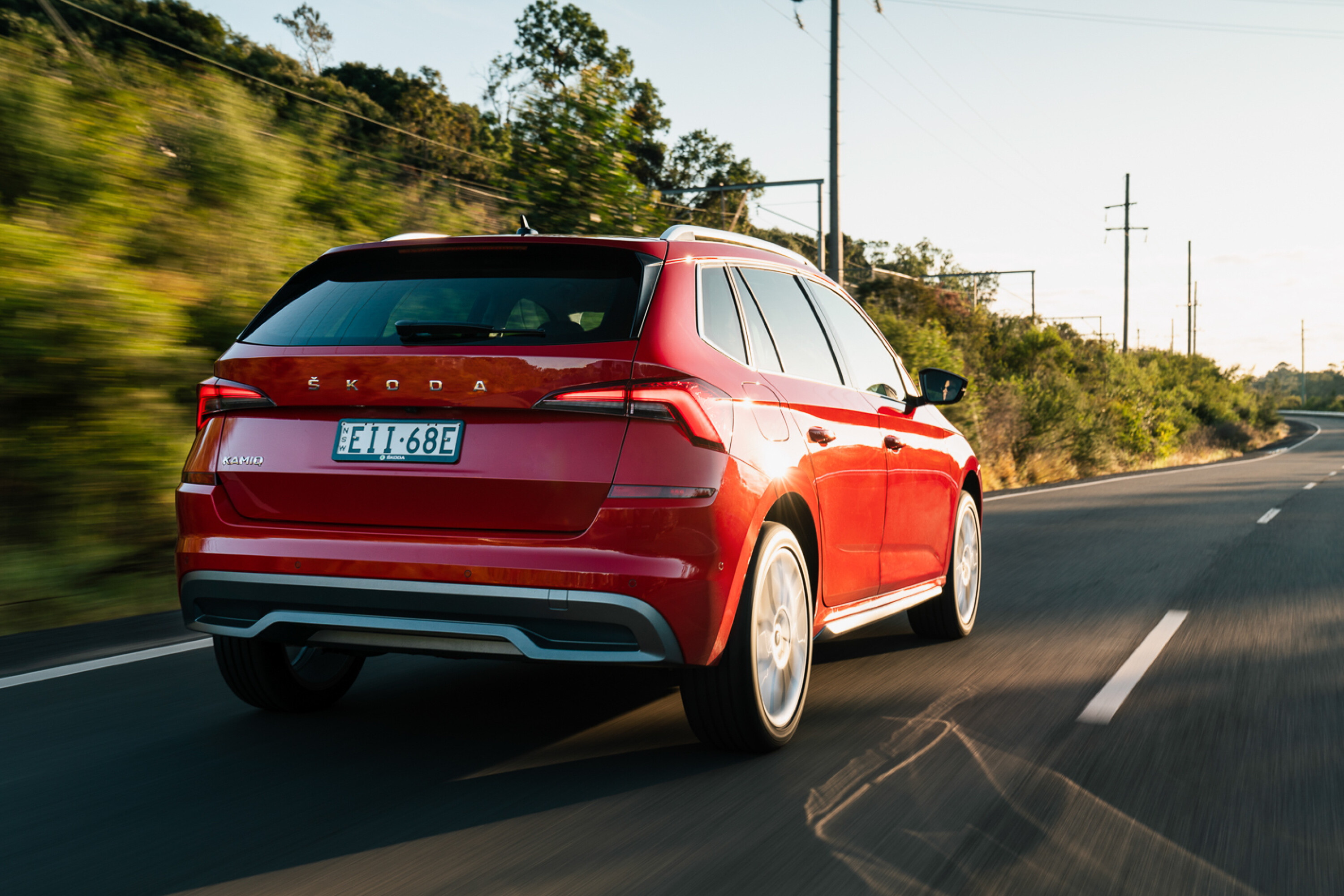
- 2023 Skoda Kamiq colours
- Engine, drivetrain, and fuel economy
- Safety
- Dimensions
- Warranty and servicing
2023 Skoda Kamiq pricing
| Model | Pricing (RRP) | Pricing (national drive-away) |
|---|---|---|
| Run-Out (new) | $31,790 | $32,990 |
| 85TSI Style | $35,490 | $37,990 |
| 110TSI Monte Carlo | $40,990 | $42,490 |
| 110TSI Signature | $41,990 | $43,990 |
1
2023 Skoda Kamiq features
| 2023 Skoda Kamiq Run-Out features | |
|---|---|
| 17-inch alloy wheels | Auto-dimming rear-view mirror |
| 8-inch infotainment system | Electric, heated & foldable mirrors with driver-side auto-dimming |
| Wired Apple CarPlay and Android Auto | Manual air-conditioning |
| Eight-speaker audio system | Rain sensing wipers |
| Four USB-C ports | Rear parking sensors |
| LED headlights and tail-lights | Rear-view camera |
| Leather-wrapped steering wheel | Tyre pressure monitoring |
| Fabric upholstery | Stow-away umbrella |
| Height adjustable driver and passenger seat with lumbar support | Black roof rails |
| Keyless entry and push-button start | |
2023 Skoda Kamiq 85TSI Style features
| In addition to Run-Out | |
|---|---|
| 18-inch u2018Crateru2019 alloy wheels | Electric tailgate |
| 10.25-inch digital instrument cluster | Rear privacy glass |
| Wireless Apple CarPlay and Android Auto | Dual-zone climate control |
| Wireless phone charger | Silver roof rails |
| Adaptive cruise control | Anti-theft alarm system |
| Lane-centring assist | |
2023 Skoda Kamiq 110TSI Monte Carlo features
| In addition to 85TSI Style | |
|---|---|
| 18-inch u2018Vega Blacku2019 alloy wheels | Black exterior trim |
| Sports seats | 15mm-lower suspension |
| Full-LED headlights with adaptive high beam, fog light and cornering light | Drive mode select |
| Panoramic sunroof | Automatic parking |
| Sports pedals | Animated front turn signals |
2023 Skoda Kamiq 110TSI Signature features
| In addition to 110TSI Monte Carlo | |
|---|---|
| 18-inch u2018Crateru2019 alloy wheels | Silver roof rails |
| 9.2-inch infotainment system | Power-adjustable driveru2019s seat |
| Satellite navigation | Heated front and rear seats |
| Leather and suede upholstery | Front parking sensors |
1
2023 Skoda Kamiq colours
| Candy white | Moon white* |
| Graphite grey* | Brilliant silver* |
| Black magic* | Race blue* |
| Velvet red# | Phoenix orange (Style, Signature)# |
| * Metallic paint, $550 | # Premium paint, $1100 |
Engine, drivetrain, and fuel economy
The Kamiq Run-Out and Style are powered by a 1.0-litre three-cylinder turbo-petrol engine, producing 85kW and 200Nm. Power is exclusively delivered to the front wheels through a seven-speed dual-clutch automatic transmission.
Both the Monte Carlo and Signature variants feature the existing 1.5-litre four-cylinder turbo-petrol engine, producing 110kW and 250Nm, also only available with front-wheel drive and the seven-speed dual-clutch.
All variants require at least 95RON premium unleaded.
| 2023 Skoda Kamiq fuel economy | ||
|---|---|---|
| 1.0-litre petrol (85TSI) | 5.4L/100km | 122g/km |
| 1.5-litre petrol (110TSI) | 5.6L/100km | 127g/km |
1
Safety
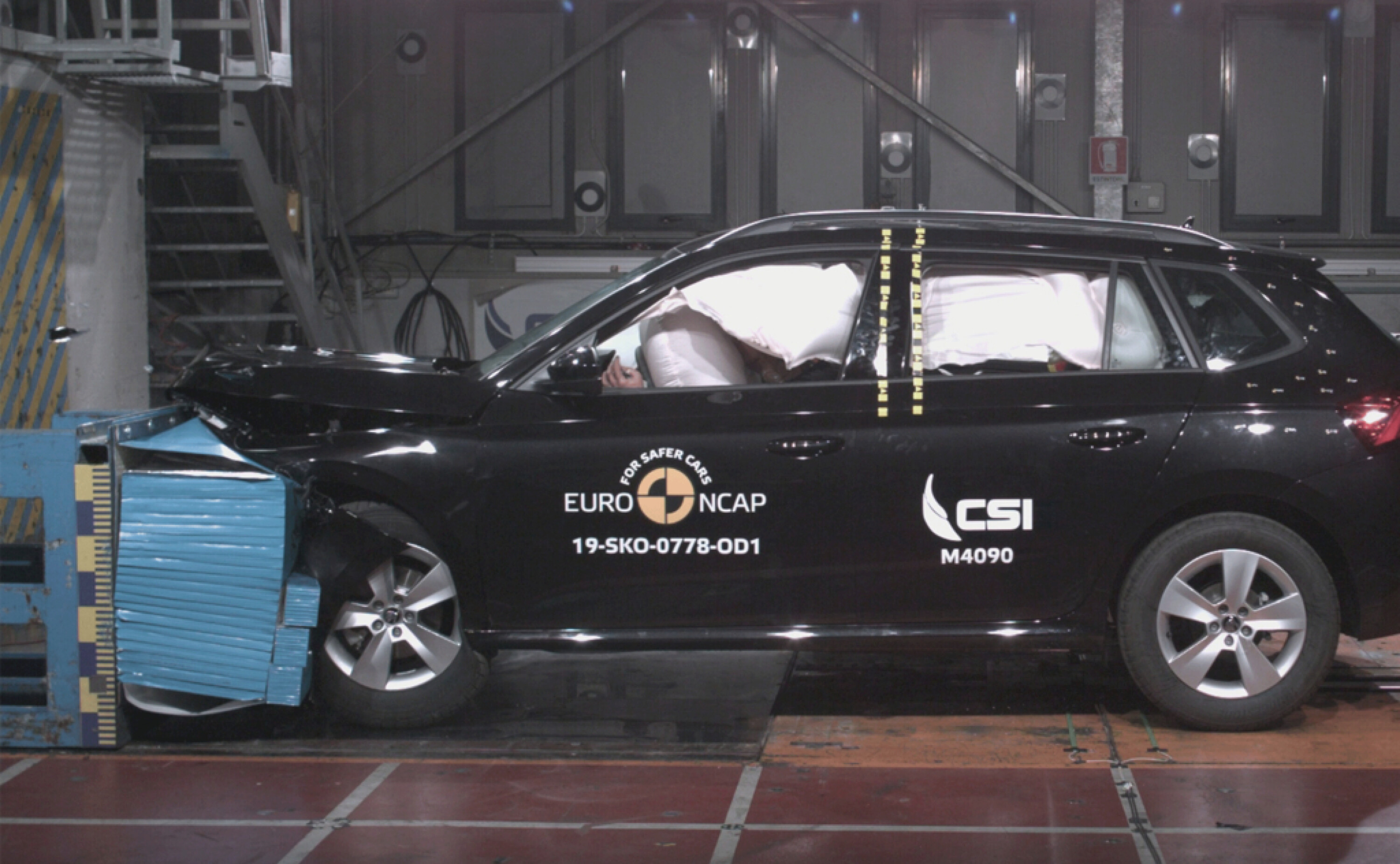
The Skoda Kamiq is covered by a five-star ANCAP safety rating, based on testing conducted in 2019.
It scored 96 per cent for adult occupant protection, 87 per cent for child occupant protection, 80 per cent for vulnerable road users and 76 per cent for safety assist.
All Kamiq models have seven airbags (dual front, side and curtain, and driver’s knee).
| 2023 Skoda Kamiq active safety features | |
|---|---|
| Autonomous emergency braking (vehicle, pedestrian) | Blind-spot alert |
| Lane-keep assist | Rear cross-traffic alert |
| Lane departure warning | Auto high beam |
1
Dimensions
The Skoda Kamiq measures 4241 millimetres long, 1793mm wide and 1531mm tall, with a 2651mm wheelbase.
2023 Skoda Kamiq boot space
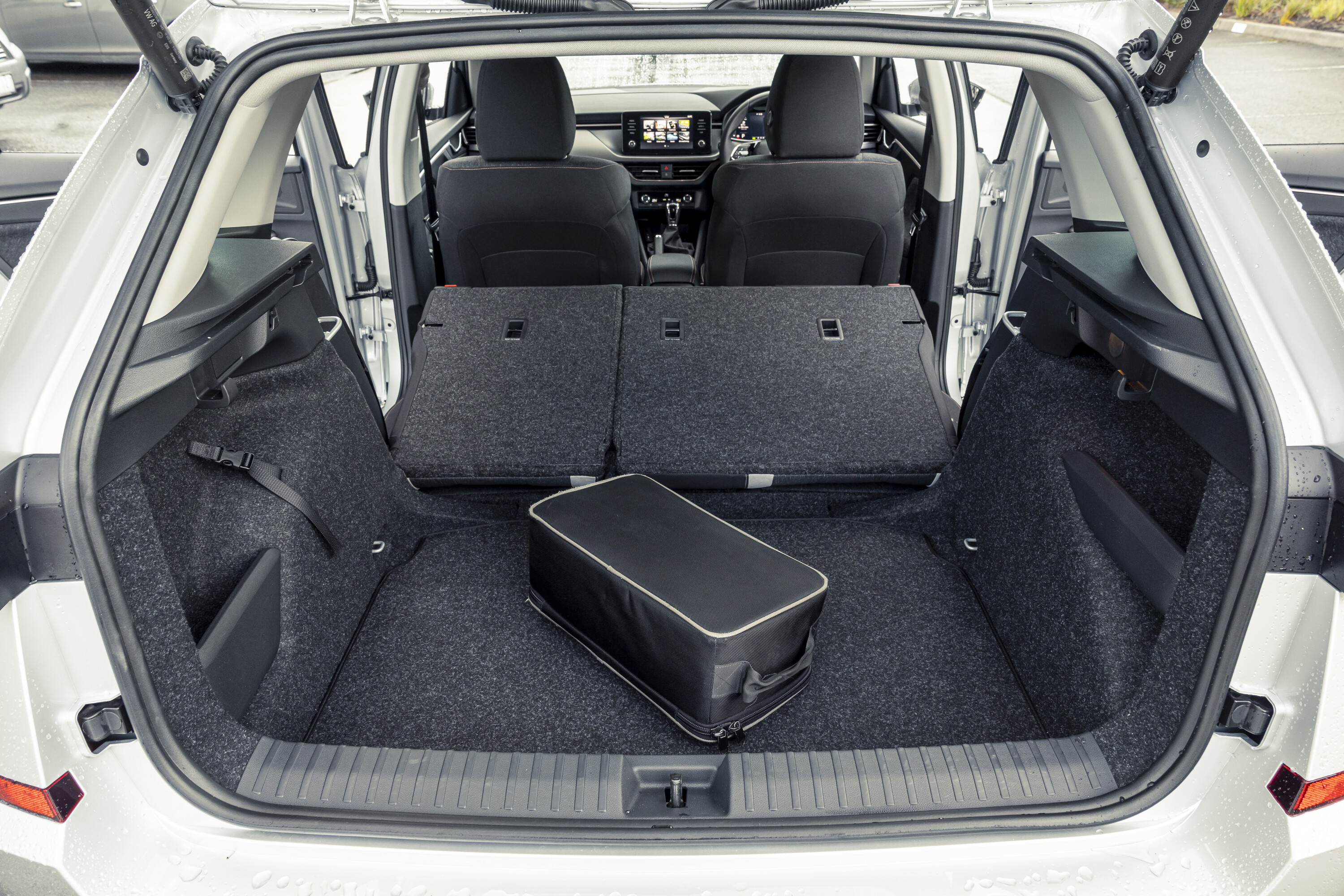
The Skoda Kamiq has a 400-litre boot, expanding to 1395L with the second-row folded.
Warranty and servicing
The Skoda Kamiq is covered by the brand’s seven-year/unlimited-kilometre warranty.
Skoda offers 12 months of complimentary roadside assistance, with a yearly top up available when the vehicle is serviced within the dealer network for up to nine years.
Maintenance is required every 12 months or 15,000 kilometres, whichever occurs first, with two service packs available to purchase.
| Service pack coverage | Cost |
|---|---|
| Five-year/60,000-kilometre | $1800 |
| Seven-year/105,000-kilometre | $2650 |
MORE
Everything Skoda
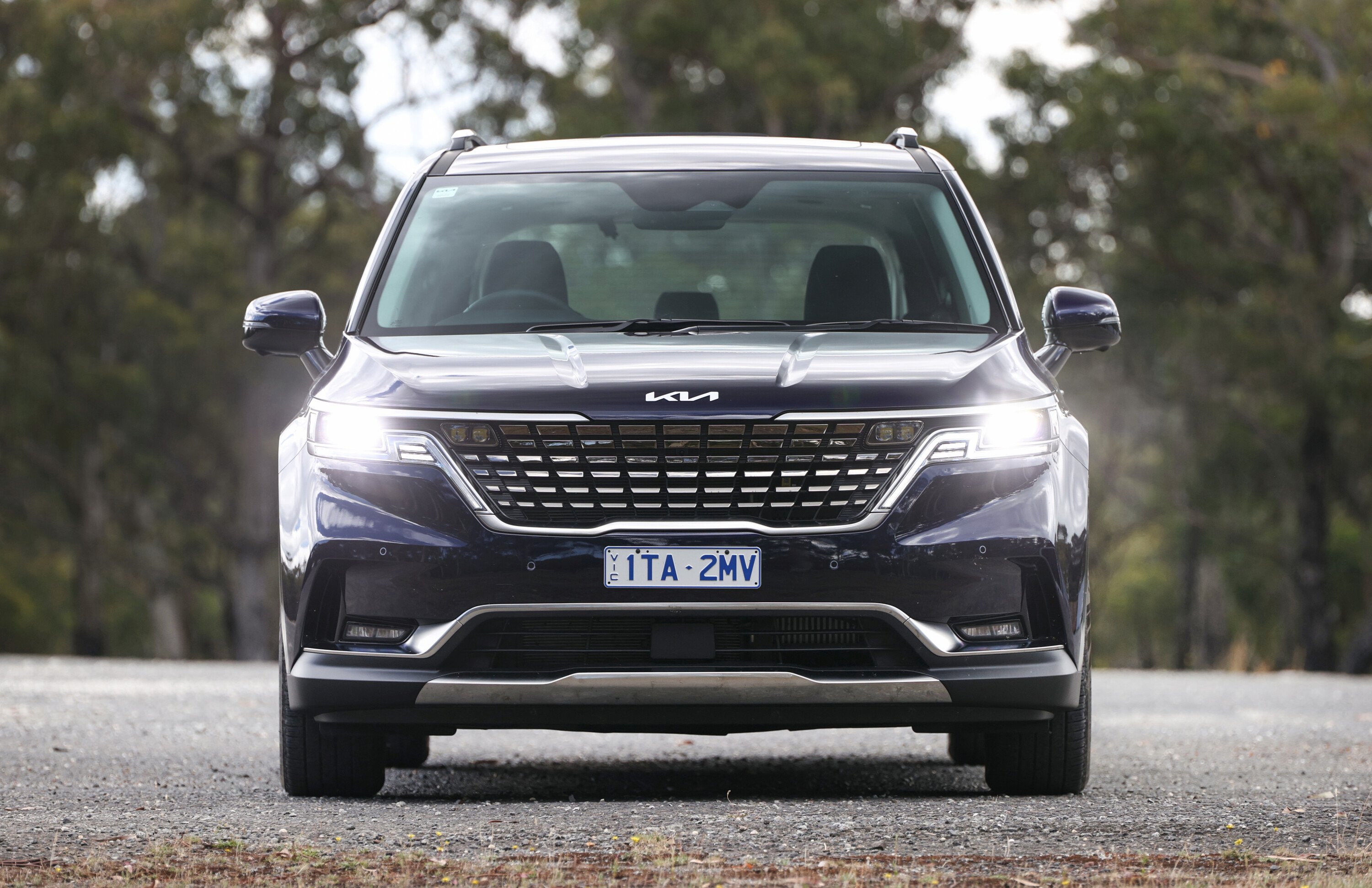
The Kia Carnival has made a name for itself in the multi-purpose vehicle (MPV) segment, becoming a go-to for families with its combination of ample space, comfort, and adaptability.
Commanding a significant 80 percent of the Australian people mover market, the Carnival is not only known for its extensive boot space but also as a preferred option for both corporate fleets and families who need more space than a large SUV can provide.
Constructed on the same platform as the Sorento SUV, the Carnival is a sizeable vehicle, measuring 5.2 meters in length and weighing just over two tonnes.
The 2023 Carnival Special Edition Diesel model arrived in early 2023 to offer extra choice to those already waiting for other variants, due to semi-conductor shortages.
1
Pricing and features
Positioned under the range-topping Premium variant, the Carnival Special Edition Diesel is priced at $67,500 drive-away in Victoria for the diesel version.
Powered by a 2.2-litre four-cylinder turbo-diesel engine, coupled with an eight-speed automatic transmission, it delivers 148kW and 440Nm of power.
A 3.5-litre V6 petrol engine option was available, but Kia Australia has temporarily halted orders for the V6 petrol engine in the Carnival, focusing production on international demand.
1
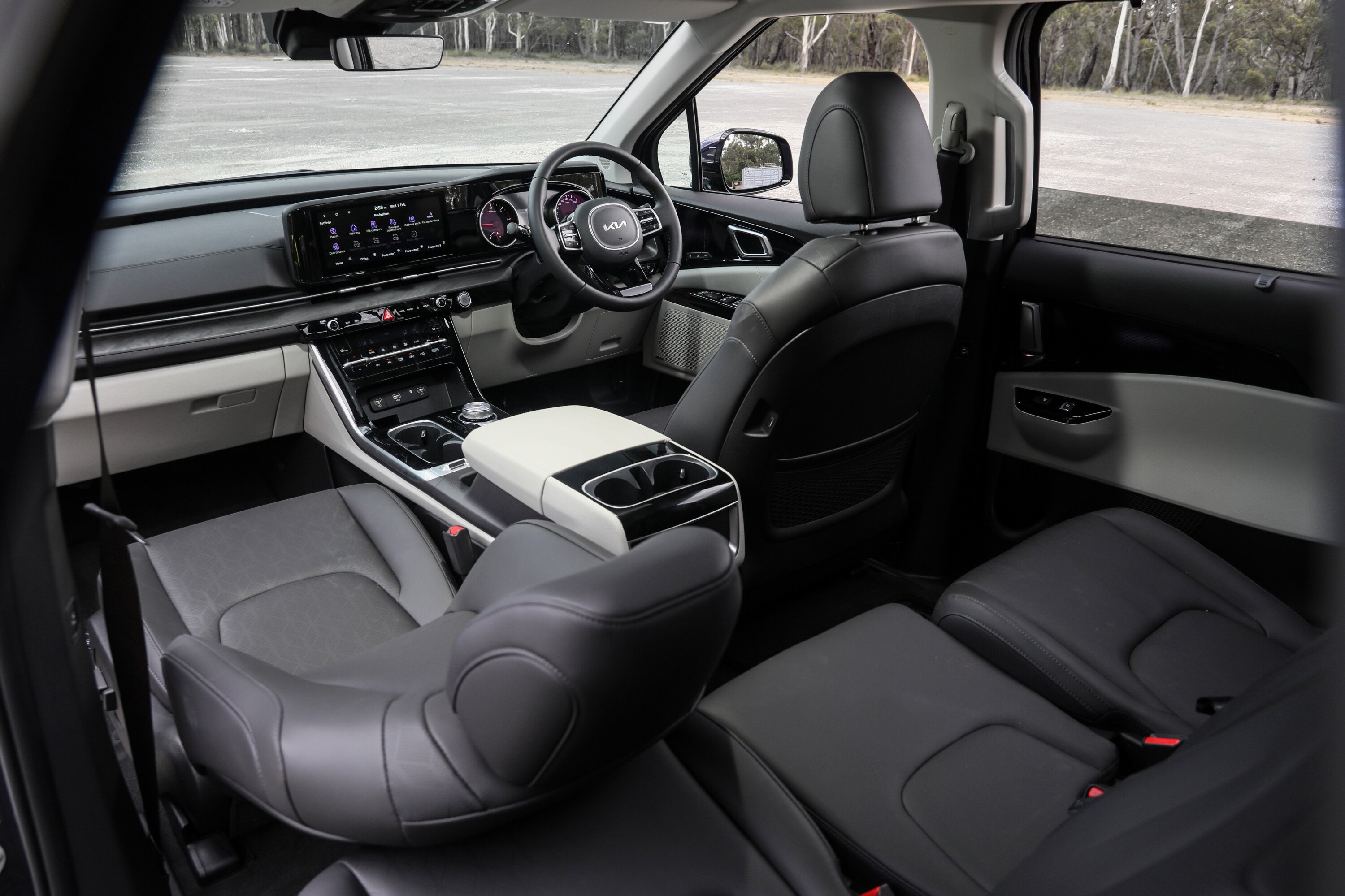
This new variant is positioned between the SLi and Platinum models. It features luxury elements and design aspects borrowed from the Platinum, such as black 19-inch wheels, dual sunroof panels, heated seats, and wireless phone charging.
In terms of window functionality, the variant differs from other models by offering auto up/down only for the driver’s window, rather than for all side windows.
Notably, it does not include some higher-end features like the 12-speaker Bose premium sound system and an electric passenger seat.
The absence of all these features is intentional to reduce the need of semiconductors, which are causing the long wait times.
| Kia Carnival Special Edition features | |
|---|---|
| 10-way power adustable driver seat | Front and rear parking sensors |
| 12.3-inch infotainment infotainment screen | Hands free powered tailgate |
| 19-inch black alloy wheels | Leather-wrapped steering wheel and shifter |
| 360-degree camera | LED fog-lamps |
| 4.2-inch instrument cluster display | Rear cross traffic collision avoidance assist |
| Apple Carplay and Android Auto (wired) | Rear privacy glass |
| Auto-dimming rear-view mirror | Smart key with push button |
| Dual-zone auto climate control | Sunroof |
| Dusk-sensing LED headlights | Synthetic leather seats |
| Eight-speaker sound system | Touch open sliding doors |
1
Safety
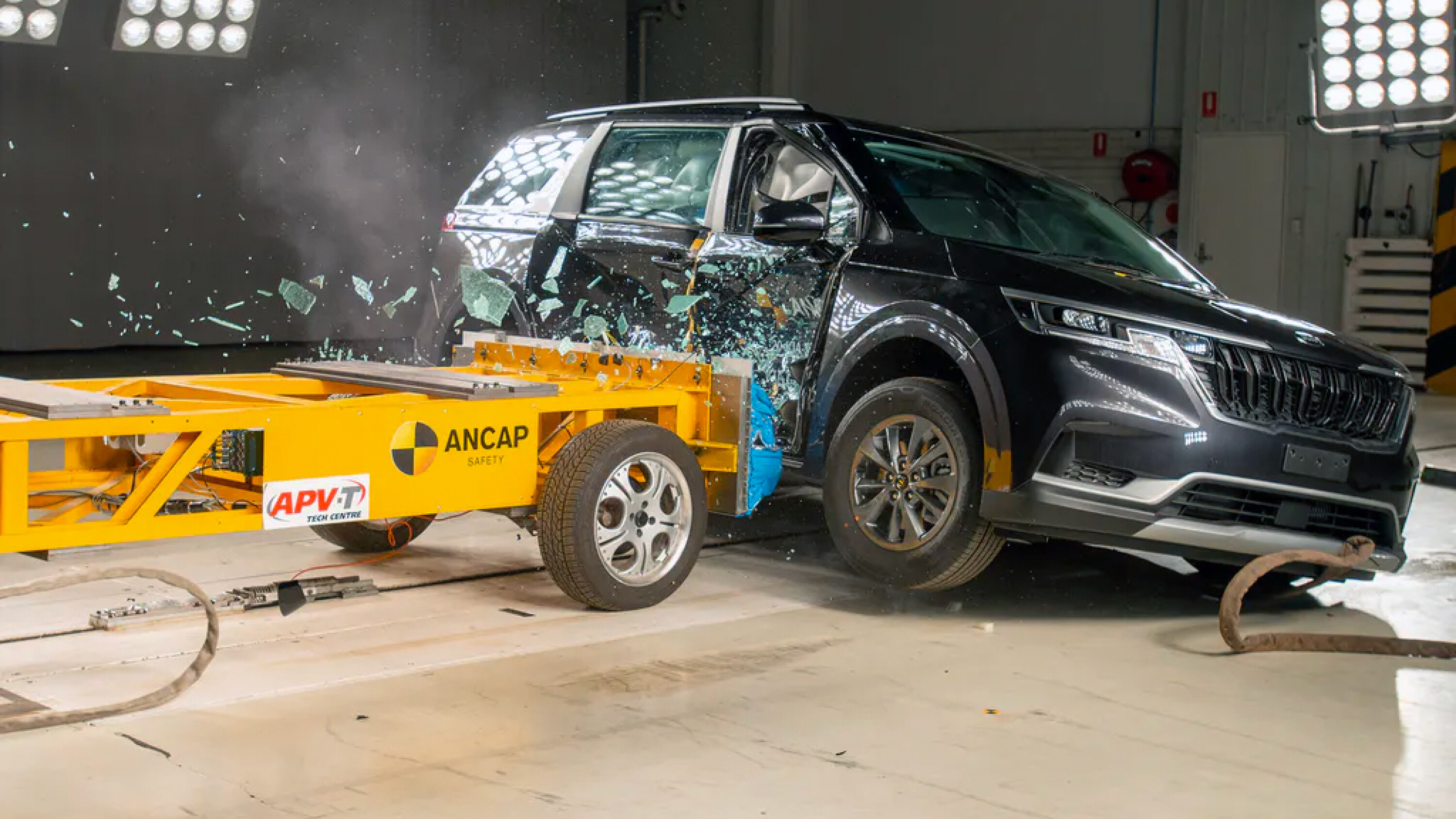
The Carnival has earned a five-star ANCAP safety rating in 2021, a testament to its extensive range of safety features offered across all models.
Regarding crash safety performance, the Carnival has excelled, securing a 90 percent score in adult occupant protection and 88 percent in child occupant protection.
1
| Kia Carnival safety features | |
|---|---|
| 7 airbags | ABS |
| Stability and traction controls | Forward AEB (high and low speed) |
| Forward collision warning | Reverse cross-traffic alert |
| Multi-collision braking | Front cross-traffic alert |
| Lane departure warning | Lane-keep assist |
| Driver attention detection | Safe exit warning |
| Blind-spot monitoring | Reversing camera |
The Carnival features a sophisticated auto emergency braking (AEB) system that can detect both pedestrians and cyclists.
Despite its array of technological features, the Carnival notably does not include rain-sensing wipers, which, while not essential for safety, is a surprising omission.
Key rivals
The departure of the Honda Odyssey from the Australian market, once a significant rival, has played a role in bolstering the Carnival’s dominance in the people mover segment.
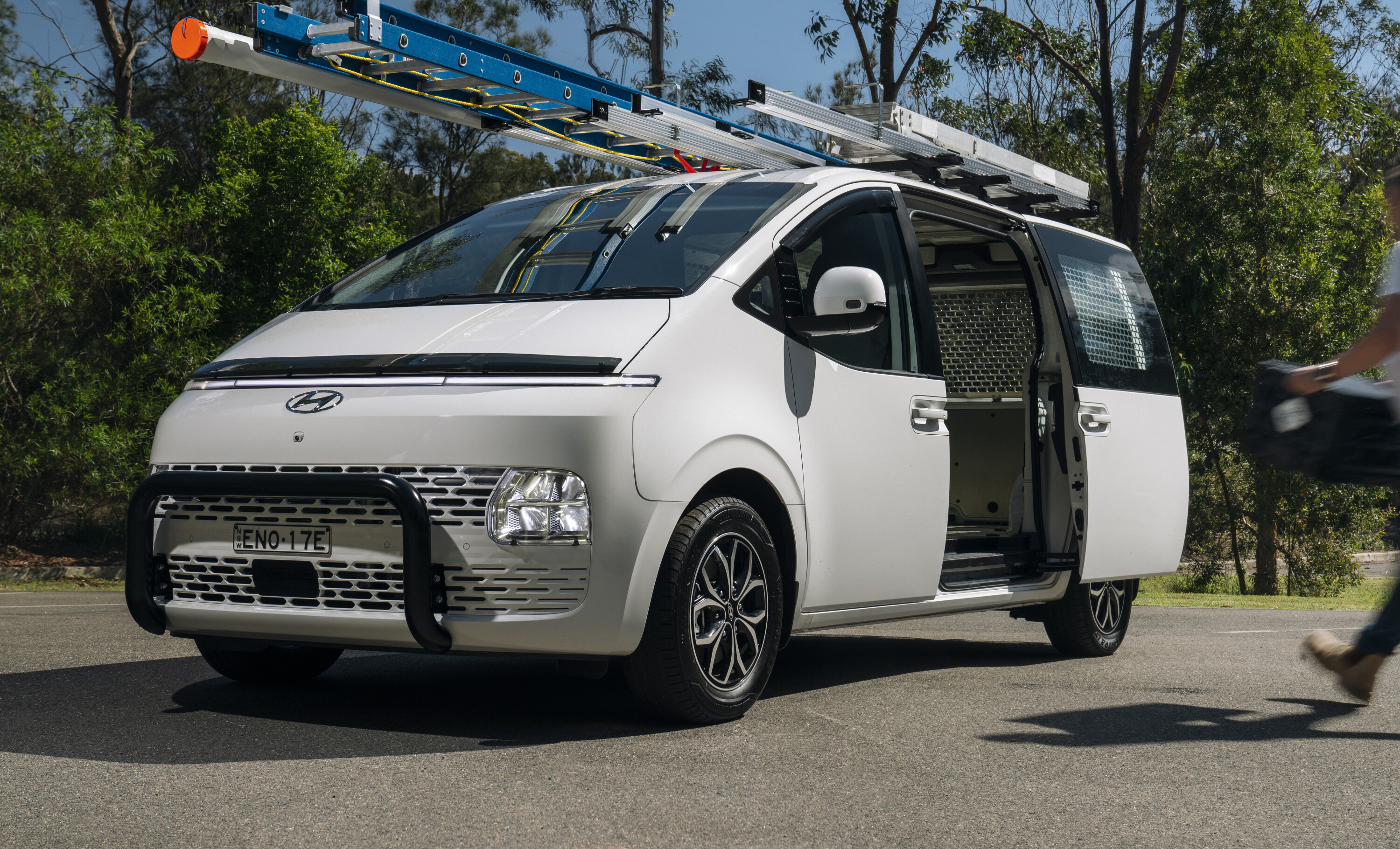
Notable competitors to the Carnival are:
1
Should I put it on my shortlist?
The 2023 Kia Carnival stands out as an attractive choice for families seeking a balance of space, comfort, and fuel efficiency.
Though its large size might seem overwhelming to some, the generous interior space and diesel fuel efficiency (given the unavailability of petrol models) are significant advantages.
In an effort to reduce wait times, Kia has introduced the Special Edition with a few less tech specs. If you’re in need of a people mover and don’t have the time to wait, the Special Edition will sure to tick all your boxes.
MORE
Everything KIA
