Heavy is the head that wears the crown. The Ford Everest saw off all comers to win 2023’s Wheels Car of the Year crown and has been rewarded with some truly impressive sales figures. When you’re at the top, everybody’s drawing a bead on you, and there will be some who felt that Ford’s win was somehow asterisked by the fact that the ancient Toyota Prado was on run-out, ahead of an all-new model appearing.
It’s time to find out whether they have a point, because the LandCruiser Prado has finally landed and we’ve put the biggest selling Everest model, the V6 Sport, up against the Prado GXL, the variant that Toyota reckons will account for just over half of all Australian registrations.
The Ford offers an instant and useful price advantage, carrying a $73,740 price tag while the Toyota is $79,990, ducking just under this year’s Luxury Car Tax threshold of $80,567. Both are seven-seaters and the Everest scores another on-paper advantage in offering a 184kW/600Nm V6 powerplant compared to the Prado’s 150kW/500Nm four-pot. Suddenly that weight of responsibility borne by the Ford looks to have been quickly and rather effortlessly handballed to Toyota.
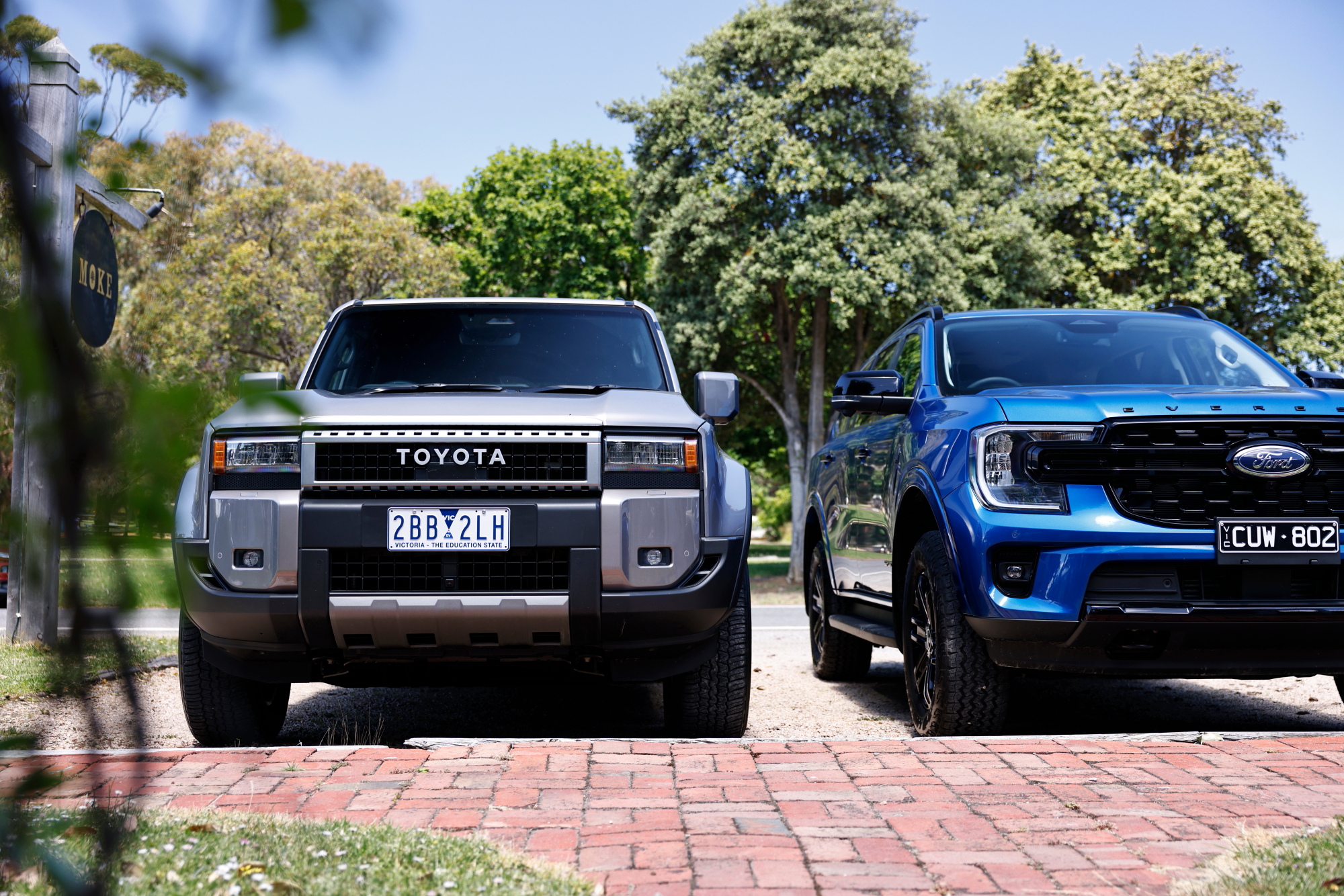
There’s little doubt that the Prado is turning more heads. As it stands, it’s still a relative novelty on our roads compared to the ubiquitous Everest, and people are endlessly curious about it, wanting to see inside, asking our opinion and giving theirs. For the most part the impression it creates is favourable. The somewhat brutalist styling is a hit, although some had asked when the retro-style round headlights that the American market gets will appear Down Under. Unfortunately, Toyota has no plans for that.
Given the pace that the order bank is filling, we’re going to get very used to the look of the Prado very soon. Toyota has instigated a rolling cap on waitlists of over 12 months, so if the queue blows out any longer than that, they won’t officially take an order from prospective customers.
There’s no great issue with Everest availability. Stock levels of the Thai-built Ford are good, with all but the range-topping Platinum versions readily available and a typical wait of three months for a Sport custom-spec order.
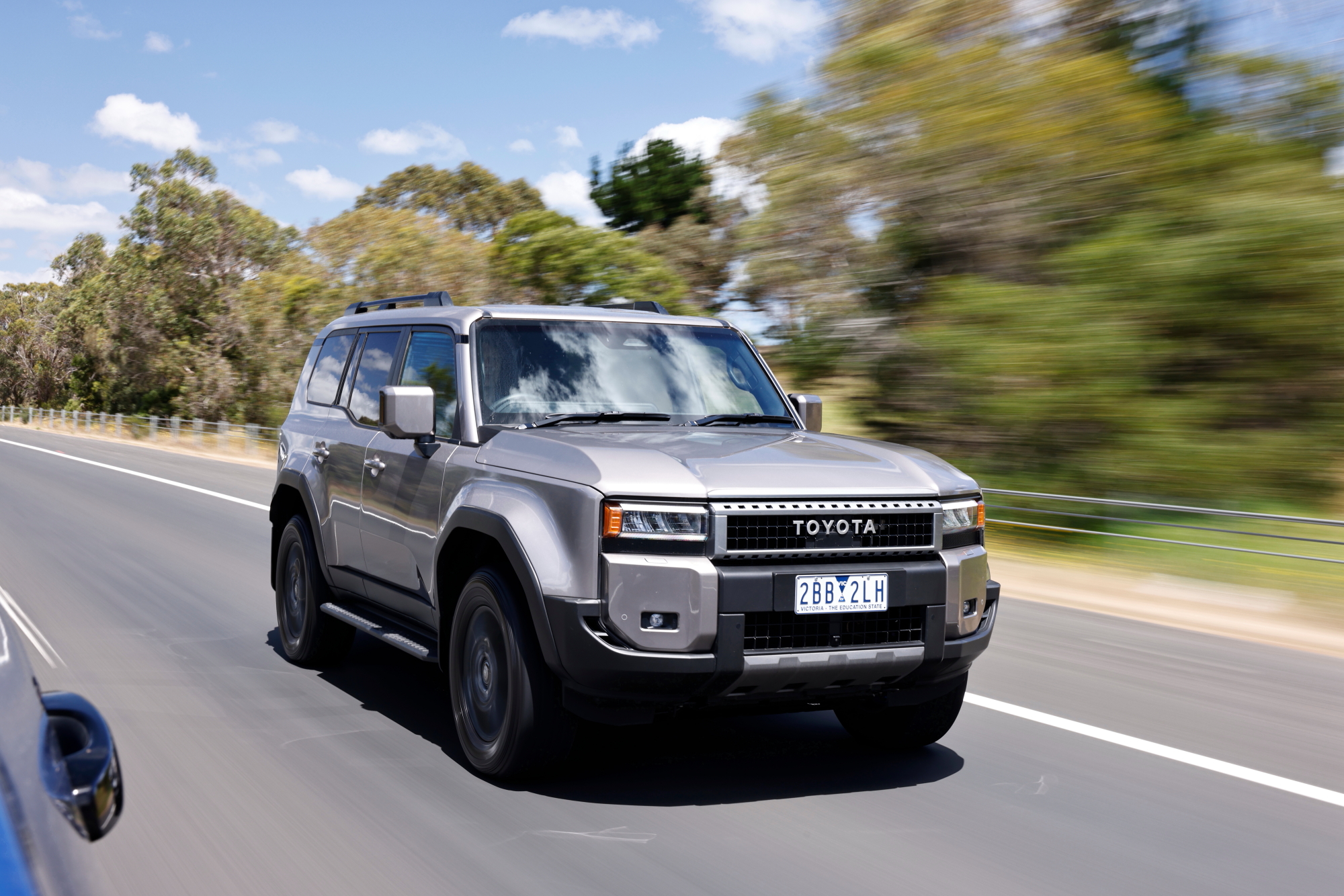
The GXL is the entry-level seven-seater in the Prado line-up. Beneath it is the five-seat GX base model and above it the seven-seat VX and Kakadu models, and the five-seat Altitude off-road specialist model. As well as the 50:50 split-fold third-row seating, the GXL adds standard roof rails, a powered tailgate, rear privacy glass, and silver front and rear guard trim. Inside, there’s synthetic leather seats rather than fabric upholstery, heated and ventilated front seats with eight-way powered driver’s seat, leather-trimmed steering wheel and shift knob, rear-seat air-conditioning panel and an auto-dimming rear view mirror. There’s also a front wireless charging pad and a pair of additional USB-C ports in
the third row.
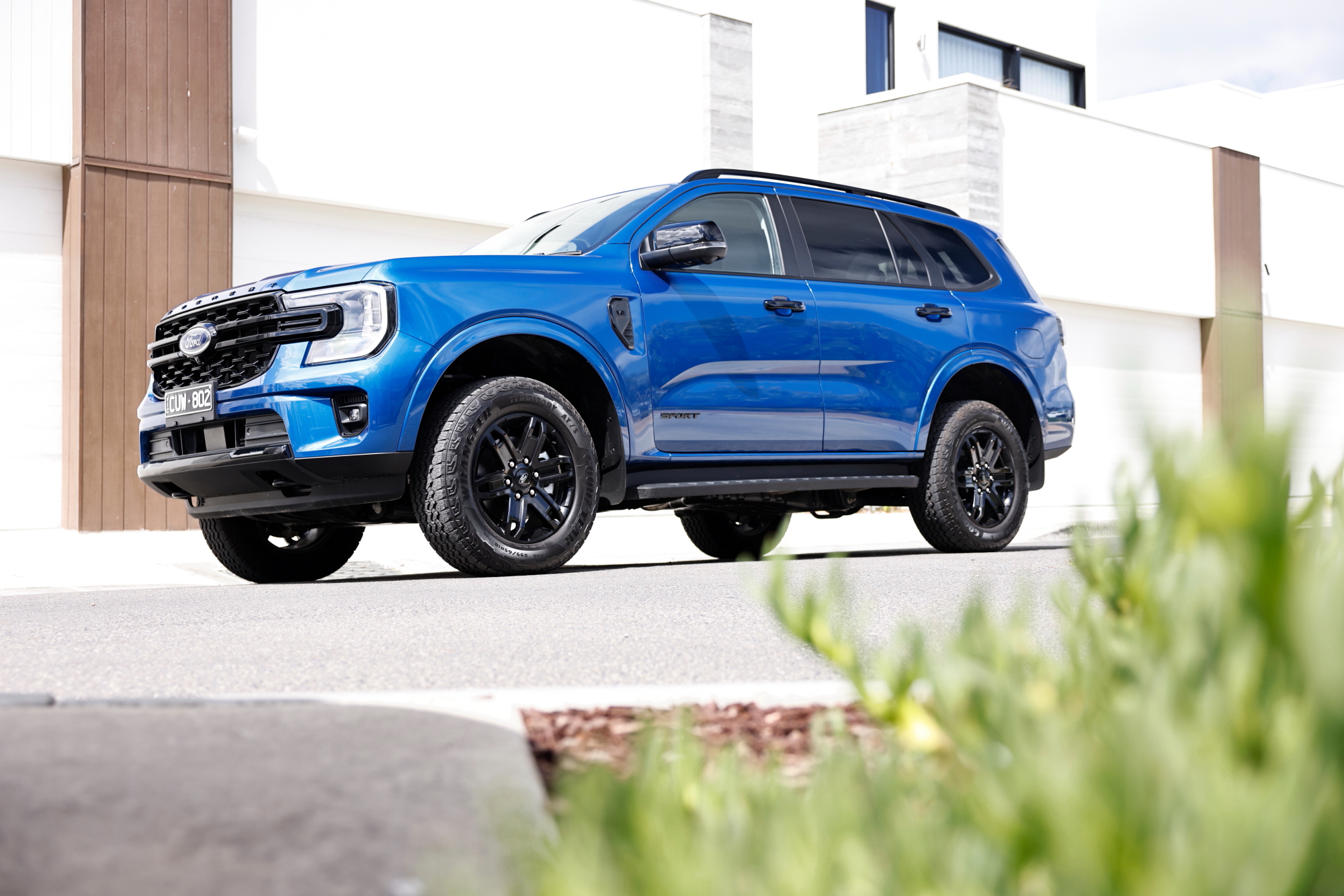
The Everest range bifurcates quite neatly into the 2.0-litre four-cylinder models and the four-wheel drive V6s, of which this Sport is the entry level. It’s easy to see why it’s so popular as the 2.0-litre Trend 4WD costs a mere $6000 less, and for that, buyers are not only getting a significant engine upgrade but also a trim level that brings with it a distinct look and feel, as well as more gear.
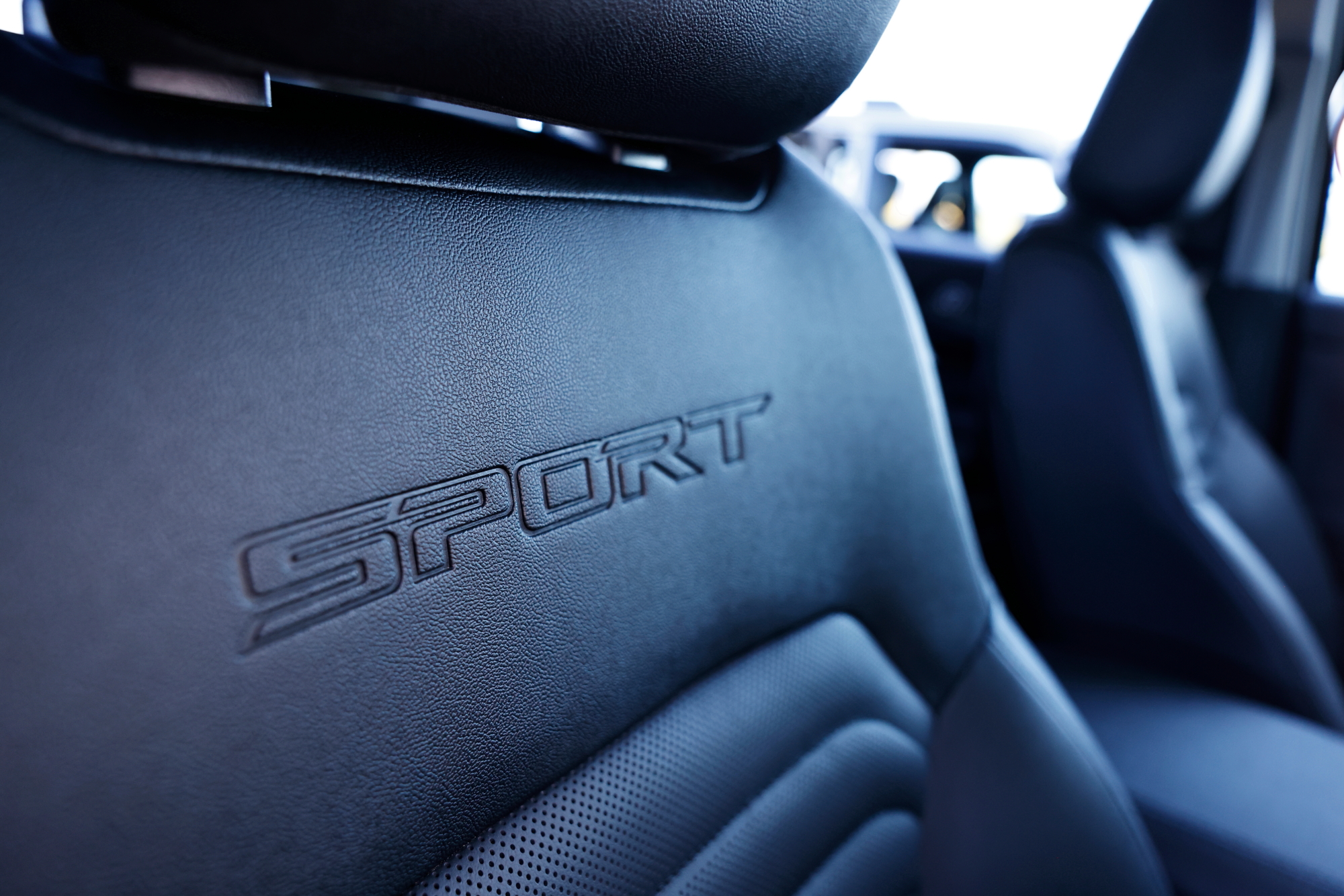
The black exterior theme extends to 20-inch black alloys (or 18s with A/T tyres), black exterior accents and black 3D bonnet lettering. The Sport also nets a 10-speaker sound system, leather-embossed seats, 10-way power driver seat with memory function, eight-way powered passenger seat, and heating and ventilation for both front seats.
Both SUVs feature standard wireless Apple CarPlay and Android Auto, with wireless charging pads to back up that capability. Both feature large touchscreen displays, with the Ford’s easier to navigate. That said, Ford’s SYNC4A system can occasionally hang and require a reboot in order to recognise a previously paired phone. By contrast, the Prado’s system seemed rock solid in picking up smartphone mirroring quickly and effectively.
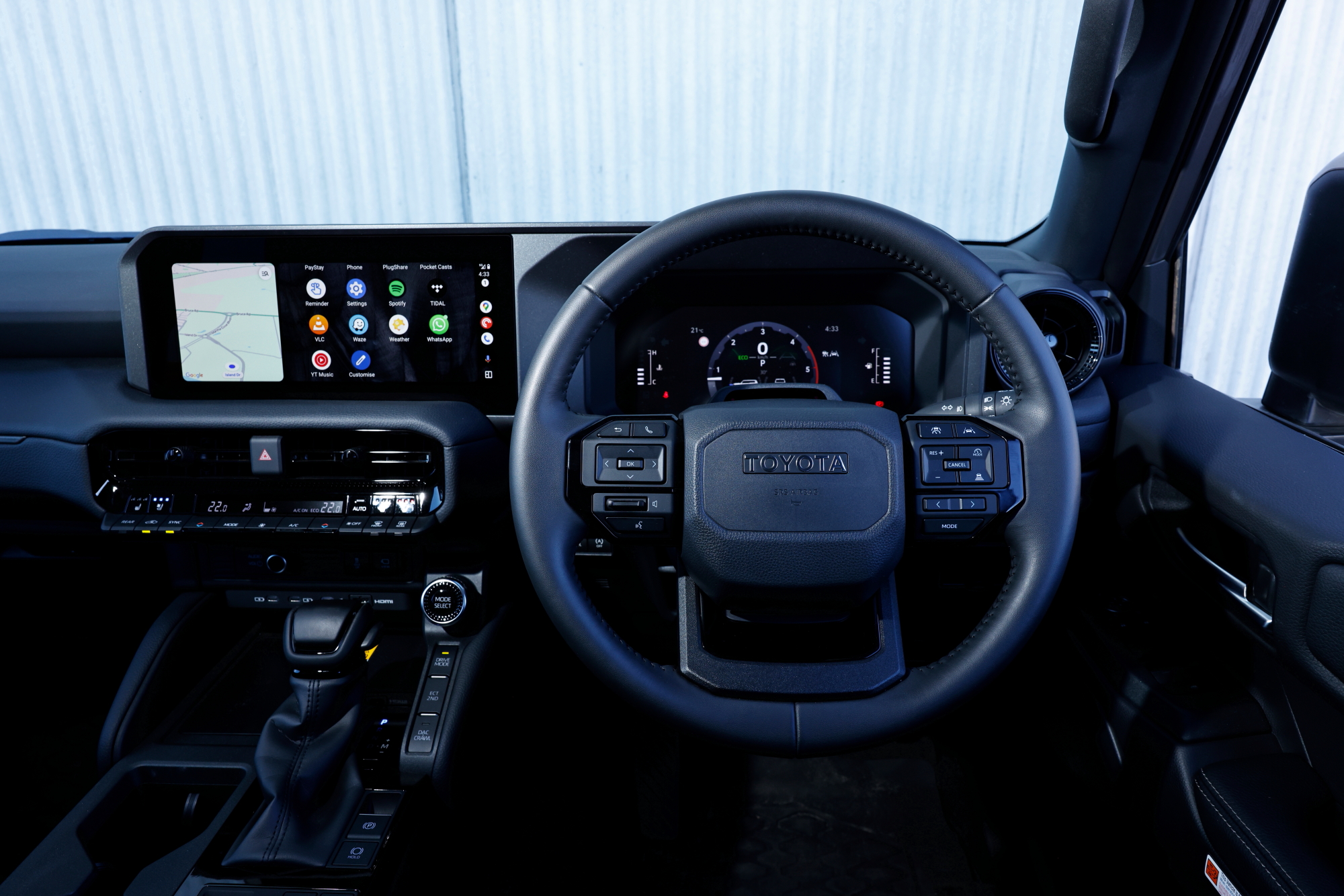
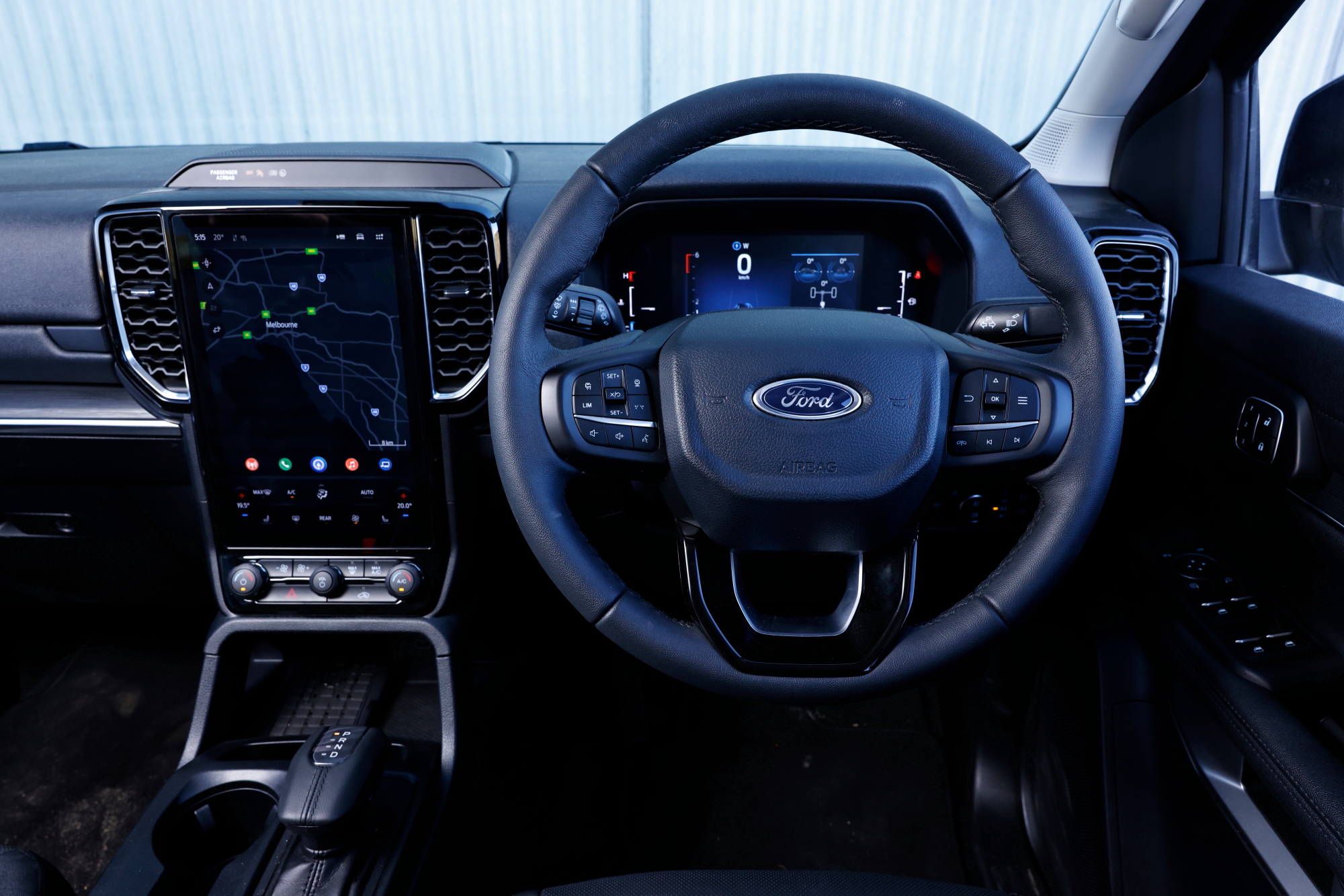
Both feel well provisioned for storage space in the front of the cabin, the Toyota featuring a larger and deeper central bin, the Everest countering with not one but two gloveboxes. The Toyota features an HDMI port and three USB slots up front, the Ford offers a choice between USB-A and USB-C. Both offer a decent driving position but, in contrast to their respective screen orientations, the Toyota’s ‘portrait’ mirrors don’t clear blind spots as effectively as the Ford’s ‘landscape’ oriented items.
Fire up the cars and the Toyota is initially more endearing. The front seats are more comfortable than the Ford’s firmish and slightly convex-feeling backrest, and the combination of low-effort steering and a softish suspension tune means that it’s a vehicle that would be easy to cover some serious kilometres in.
The engine is undoubtedly more sibilant. Despite the fitment of chain-driven harmonic balancer shafts to the 1GD unit, it’s always going to be tough making a combination of compression ignition and big 689cc cylinders feel silky. By way of comparison, the Ford’s V6 only has to manage 499cc of swept capacity per cylinder. The Prado’s lump does maintain its peak torque figure for longer than the Everest’s somewhat peakier performance.
A key part of the Toyota’s friendliness on road is the fitment of Dunlop Grandtrek AT30 tyres (265/65R18 all round). Although labelled an all-terrain tyre, they’re markedly less aggressively knobbly than the Everest’s Goodyear Wrangler Territory A/T rubber (255/65R18 front and rear). As a result, the Toyota turns in a little more crisply on the blacktop, and there’s less hum from the tyres on poor surfaces.
Pitch the Prado into a corner and that inherently soft suspension results in considerable body roll. It’s game, though, and well behaved even when pushed. As is the case with many fairly soft vehicles, it’s not so much the case of measuring over or understeer, more an issue of how much roll the vehicle is happy to accept. In the case of the Prado, it’s quite a lot.
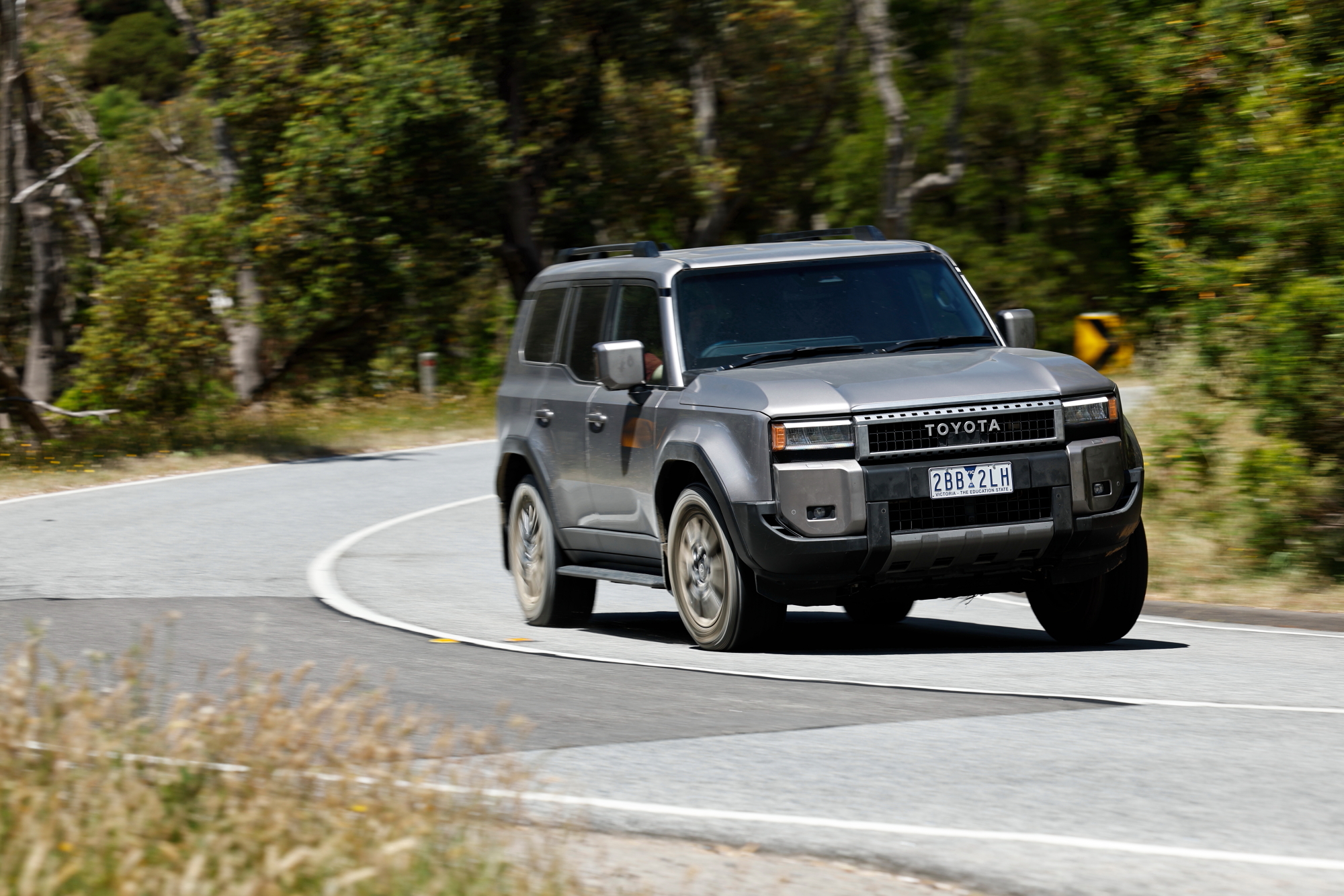
Follow the Toyota through a series of bends in the Everest and you’ll experience a far flatter and better-controlled body, albeit with rear dampers that are both a little too firm and a little too short in travel than might be ideal. The steering doesn’t feel quite as linear as that of the Toyota, but it’s quicker and delivers more feedback. For a big ’un on a warty tyre, the Ford is also surprisingly good fun to hustle along.
The engine advantage speaks for itself in a straight line, the Ford effortlessly gapping the Toyota as we pulled onto a freeway slip road. We recorded a 9.8-second 0-100km/h time for the Everest at COTY 2023, and the Prado is nearly a second off that mark, stopping the clocks at 10.7sec (according to Toyota), the modest torque fill of the 48V mild-hybrid system notwithstanding. The hybrid does help to tickle the Prado’s fuel figures into a net positive over the Everest, 8.5L/100km for the Ford playing 7.6L/100km for the Toyota. Both engines require a periodic AdBlue top up.
There’s little to choose between the two transmissions. While Ford initially had some issues with the earliest batches of 10-speed autos, a revised torque-converter design has fixed that. If anything, it’s the less hesitant of the two ’boxes now, especially around town speeds, and responds to kickdown requests quicker. Neither feature wheel-mounted shift paddles, but you can knock the Prado’s gear lever to one side and shift manually if required. The Everest features some less intuitive buttons on the shift knob to achieve the same end.
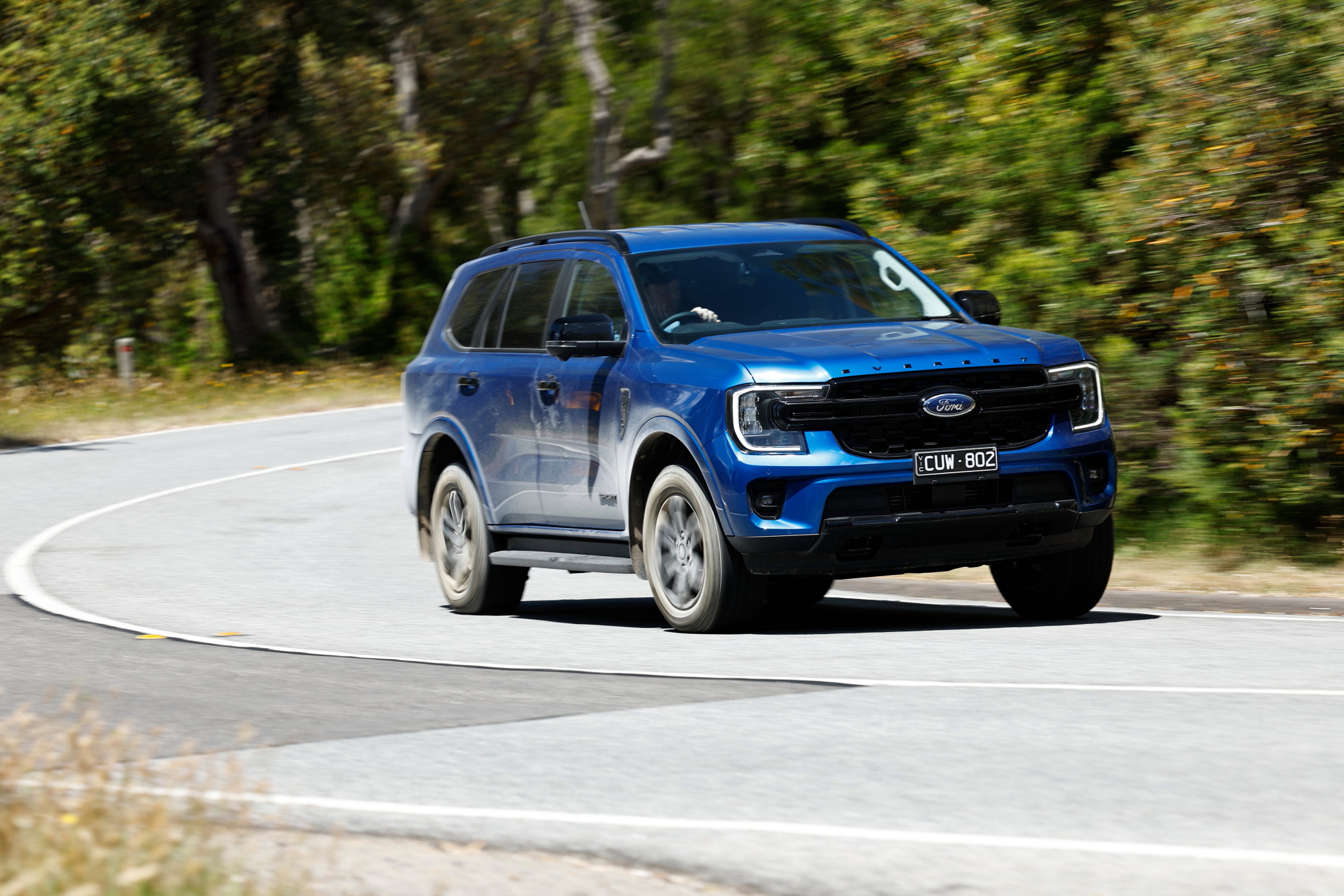
So the Prado scores wins for comfort and ride, the Everest countering with more involving handling and a superior drivetrain. Both can more than hold their own off road, as you might expect given their targeting. The Everest has 226mm of ground clearance, a wading depth of 800mm, and approach, departure and breakover angles of 30.2, 25 and 21.9 degrees respectively. It also features an electronic rear diff lock and Slippery, Mud/Ruts and Sand drive modes, as well as a dedicated off-road screen to show pitch and roll angles, steering angles and relevant camera images.
The Prado GXL’s limiting factor is its relatively urbane tyres, which have nothing like the tenacity of the Everest’s Goodyears in the soft stuff. Nevertheless, it features 219mm of ground clearance, a 700mm wading depth and approach, departure and breakover angles of 30.4, 23.5 and 21.1 degrees, so largely a notch behind the Everest. It also doesn’t come equipped with the trick demountable sway bars of the Altitude variant, so can’t boast that model’s ultimate articulation.
It does feature a rock crawl setting, a mode to start in 2nd gear, and a centre Torsen diff lock. Prado owners get a choice of either four-wheel drive high or the equivalent low range, whereas Everest can be run in rear drive – a smart four-wheel drive that diverts drive to the front treads when necessary – and the obligatory 4H and 4L settings. We found it hard to switch out the parking sensors when off-roading, resulting in many maddening bleeps, as it’s a function buried within the on-screen menus rather than operated by a physical button.
Somewhat unforgivably for two vehicles with an off-road remit, neither have a standard tyre-pressure monitoring system. In both cases you need to ascend the range to get this system as standard (VX in the case of the Prado, Platinum on Everest).
Both vehicles claim a 3500kg braked towing capability, but delve a little deeper into this one and key differences emerge. You might well have heard grumbles about the Prado’s payload, and the GXL has the highest payload of the range at 615kg. The sum total of towball down load, fuel, driver and passenger, roof racks, luggage, bullbars and such like need to be accommodated within that 615kg figure. Perhaps this helps explain why the Prado wasn’t offered as stock with a long range fuel tank option or space under the bonnet for a second battery. The Everest’s payload figure is quoted at 696kg.
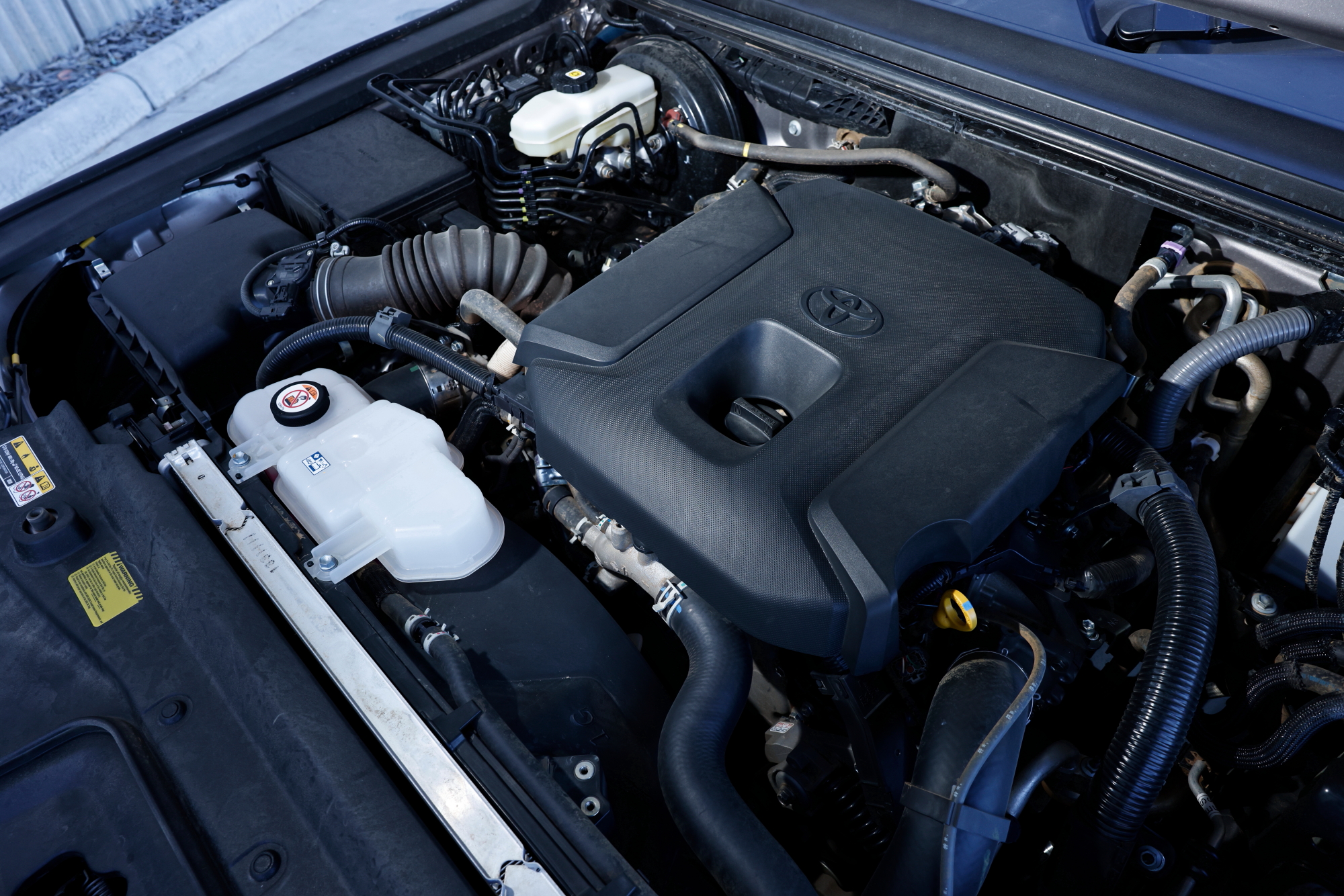
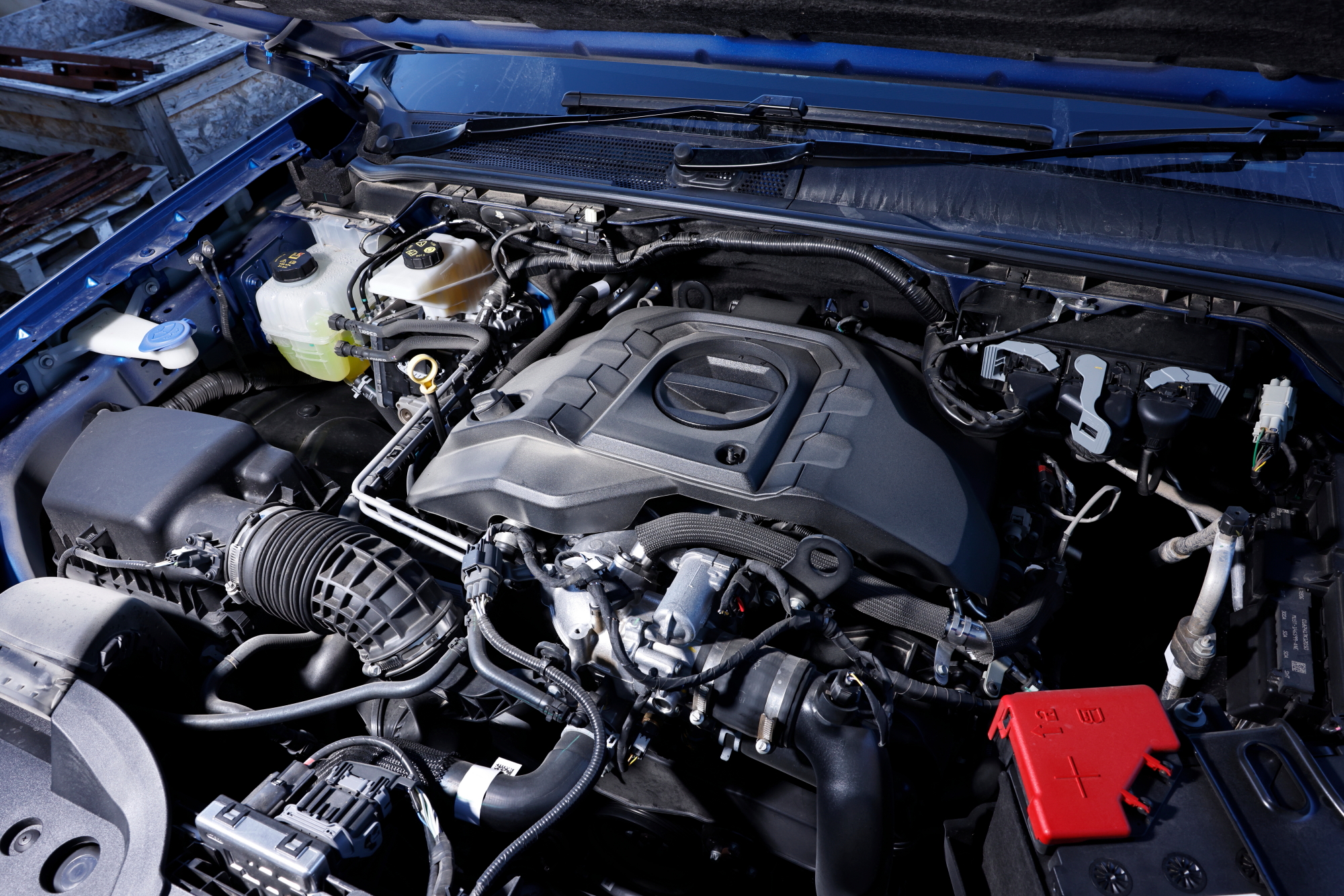
Luggage and packaging in general are an issue with this seven-seat Prado. Whereas the rearmost row of seats in the Everest folds flat to the floor to create a huge, low 128cm long runway on which to load gear, the Prado’s clunky rear seats sit atop a raised floor which houses the 48V battery pack. So not only is the Prado’s luggage bay shorter in that dimension than the Ford’s at 115cm, it’s also less tall from the folded seat backs to the ceiling (76cm v 82cm).
Fold the third row up and the Ford offers 56cm from the base of the seat back to the tailgate’s dust seal, whereas it’s a mere 40cm in the more compromised Toyota.
Why is this? After all, the Toyota’s rear end looks longer, and indeed is, than the Ford’s. Climb into the Prado’s second row and it’s apparent that because there’s no slide facility for that bench, Toyota have given this row a very decent amount of leg and toe space, and the third row is cramped as a result, with a very awkward egress past the tumbling seat. By contrast the Everest’s second bench has a tilt/slide facility which can afford a fairer amount of space for kids in the third row.
The drop-in storage box that Toyota fits to add some token practicality at the back doesn’t give a great impression of quality – it’s unlined and the lid has a 60kg weight limit.
With all three rows of seats in place, Toyota claims 182 litres of storage for the GXL in seven-seat mode, 906 litres with the 50:50 split-folding third row lowered and 1829 litres if the 60:40 split second row stowed. Ford, by contrast claims 259 litres with seven seats in place, 898 with the third-row folded flat and and 1823 litres.
We flatly refuse to believe that the Prado GXL offers more space than the Everest Sport in five-seat guise, despite the quoted figures, which I suspect may be to the ceiling rather than the more normally quoted figure to the height of the parcel shelf. Toyota Australia referred our query back to Japan and we’re still waiting for a response to this particular question.
The rear end of the car is such an issue that it makes it extremely difficult to recommend over the Everest as a practical seven-seat proposition. The sheer height of the floor means that lifting baby strollers or shopping into the Toyota is so much harder than it needs to be. It’s also proving to be a sticking point that some prospective customers can’t look past. That alone would be enough to hand the Everest the win in this comparison.
That it’s also more affordable, faster, more refined, more involving to drive, just as good off road, better for towing, just as well equipped and also records a five-star safety score makes the Ford the easy recommendation in this head to head. Ultimately, the 48V mild-hybrid system seems to have been this Prado’s Achilles heel. It has compromised the rear packaging while in the process adding weight to the vehicle which, in turn, has a deleterious effect on its payload figure.
We crowned the Everest the COTY winner in 2023 because it was a car that manifestly understood what Aussies wanted from a rugged seven-seat SUV. Designed by Australians, in Australia, for Australians was the mantra that did a great deal to get it across the line last year. It still holds true today.
As for the Prado, it’s tough to make a case for it in this particular instance. Were you set on owning one for the longer haul and you didn’t particularly care about ultimate carrying or towing capacity, it’d doubtless be an appealing thing, but those inherent compromises become apparent every time you lift the tailgate.
Toyota doesn’t come to market and get squarely beaten by a three-year-old incumbent very often but in the shape of the all-conquering Everest, the latest LandCruiser Prado has run into something very special indeed.
In focus – Ford Everest
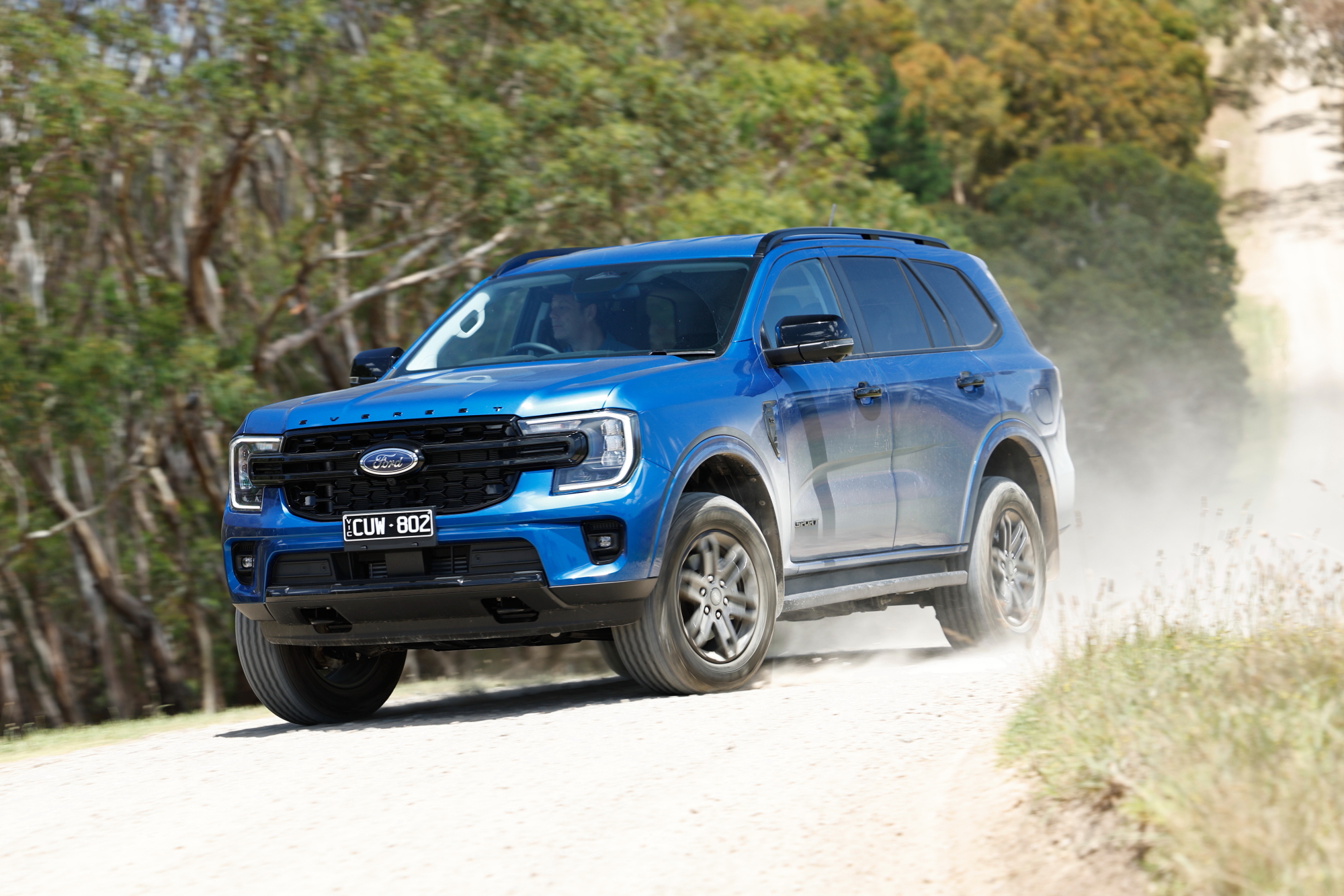
The Ford Everest’s cabin is something that’s well executed and certainly a step up from workmanlike, but it still carries the whiff of its Ranger counterpart about it. Every Everest comes as standard with an embedded modem known as FordPass Connect that allows you to use the FordPass app on your smartphone to remotely start the vehicle, receive health checks and so on.
Ford’s trailer-towing tech is deeply impressive. Input the dimensions of your trailer into the system and it’ll automatically adjust all the parameters of the lane departure system to cater for the increased length of vehicle and trailer.
The Everest’s 2900mm wheelbase is a useful 50mm longer than Prado and it shows in the cabin packaging.
| Model | Ford Everest Sport V6 4WD |
|---|---|
| Engine | 2993cc V6, dohc, 24v, turbo-diesel |
| Max power | 184kW @ 3250rpm |
| Max torque | 600Nm @ 1750-2250rpm |
| Transmission | 10-speed automatic |
| Weight | 2454kg |
| 0-100km/h | 9.8sec (tested) |
| Economy | 8.5L/100km (combined) |
| Price | $73,740 |
| On sale | Now |
In focus – Toyota Prado
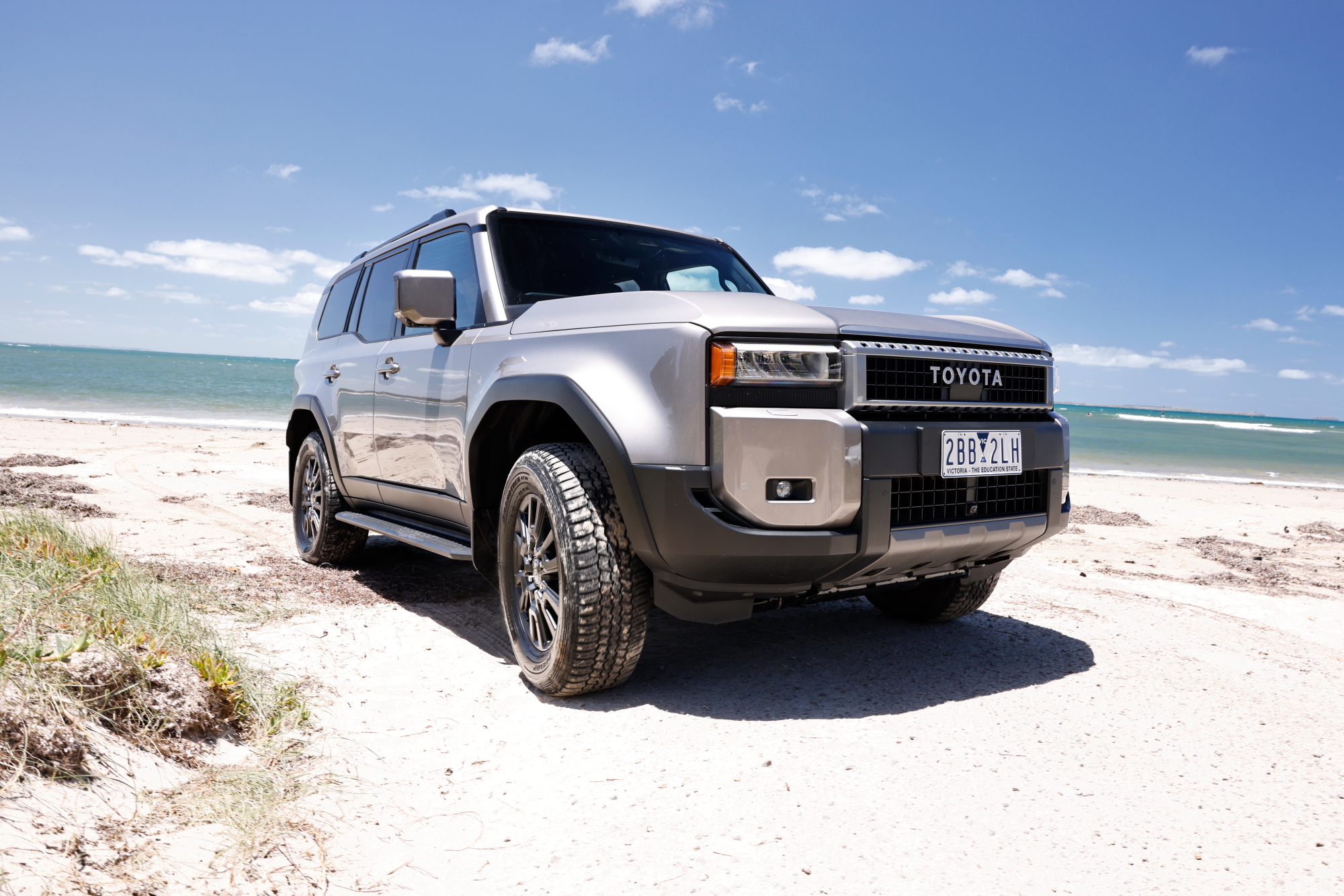
There’s little doubt that the Toyota’s dash looks and feels a notch above that of the Ford’s. Some real thought has clearly gone into the size, quality and positioning of the physical buttons, Toyota clearly listening to feedback from scores of Prado customers.
The low instrument panel, upright A-pillar, higher driver hip point and low beltline improves the feeling of airiness and helps position the vehicle off-road.
Toyota’s Multi Terrain System (MTS) is largely carried over from the LC300 and it works well. Dust sealing is also markedly better than the old Prado. Seating upholstery in this GXL model is made from Sumitex fabric largely composed from recycled PET plastic bottles.
| Model | Toyota LandCruiser Prado GXL |
|---|---|
| Engine | 2755cc 4cyl, dohc, 24v, turbo-diesel |
| Max power | 150kW @ 3000-4000rpm |
| Max torque | 500Nm @ 1600-2800rpm |
| Transmission | 8-speed automatic |
| Weight | 2535kg |
| 0-100km/h | 10.7sec (claimed) |
| Economy | 7.6L/100km (combined) |
| Price | $79,990 |
| On sale | Now |
This article originally appeared in the January 2025 issue of Wheels magazine.
Things we like
- Poise and pace; smart tech integration; feels like a Porsche inside
Not so much
- Is this enough to win over EV sceptics; pricing has taken a huge leap up
Forget what you’ve heard about Porsche walking back its promises around electric vehicles. This Macan is never going to have an internal combustion engine, and if that doesn’t sit well with you, then you have until Q2 of 2025 to snap up the last of the old model from dealer stock because no more are coming Down Under.
It’s one heck of a roll of the dice. Ballsy, even. But ask Porsche’s engineers whether they would want to return to petrol or diesel and the answer is unequivocal. “Why would we? Our goal was to do everything better than the combustion Macan.”
The new Macan range opens at $128,400 which buys you the entry-level, rear-wheel-drive version. This is no makeweight, delivering a 265kW punch with overboost. Curiously, this Macan can only access peak overboost power when launch control is activated. In other driving scenarios, 250kW is your lot. It’s still enough to punch the Macan through 100km/h in 5.7 seconds, so even the base Macan is almost the performance-equivalent to the old Macan S.
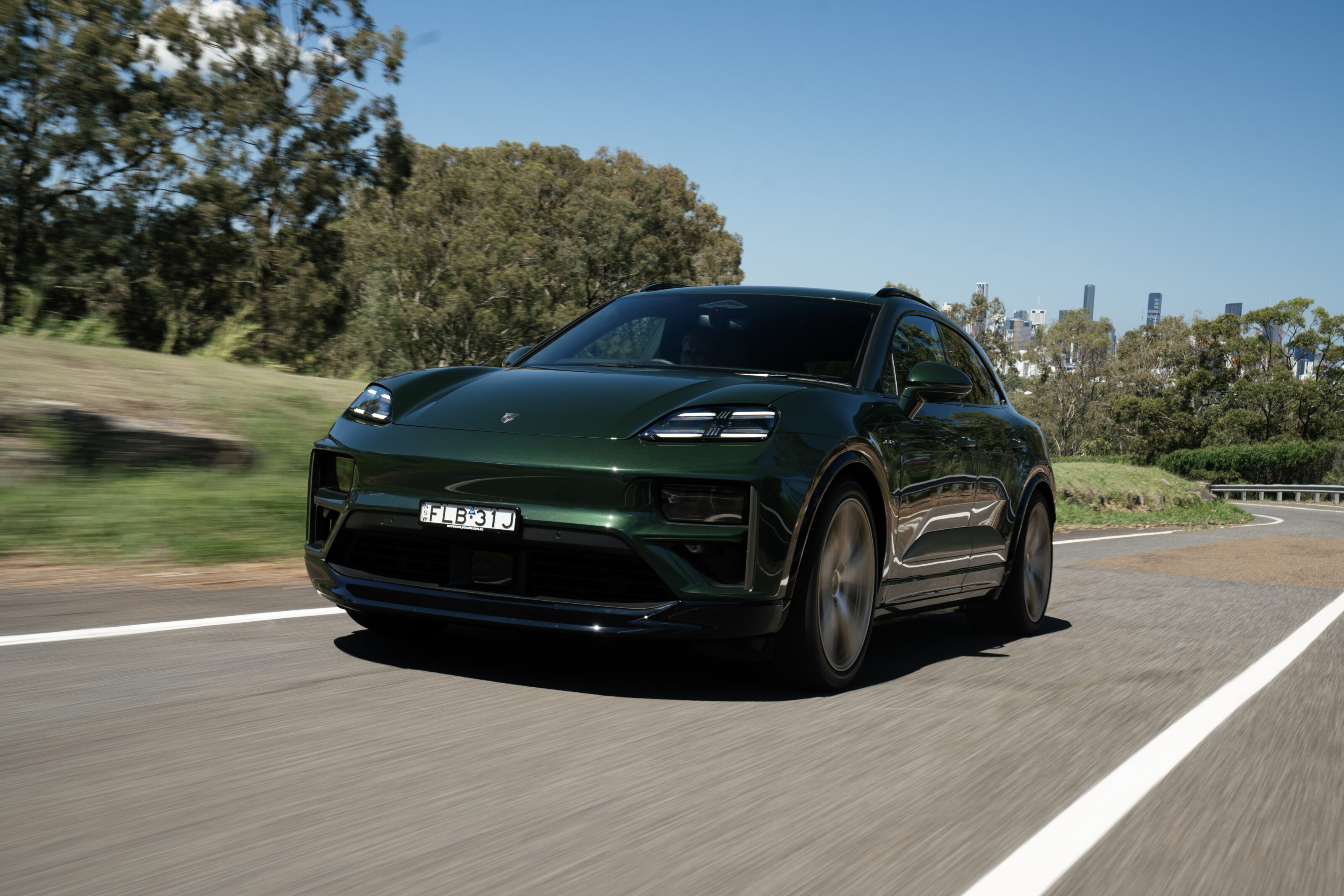
Pay an additional $6000 and you get the Macan 4. This is equipped identically to the Macan, but is provisioned with an electric motor on the front axle, which nets a total system output of 285kW in normal driving conditions or 300kW when utilising launch control and overboost. This one’s a little quicker off the mark as a result, the 0-100km/h time dropping to a spry 5.2 seconds.
The penultimate rung on the Macan ladder, for now at least, is the 4S. Priced at $149,300, this features an uprated rear motor, 330kW, or 380kW in launch mode, plus torque vectoring, rear-wheel steering and adaptive air suspension offered as an option.
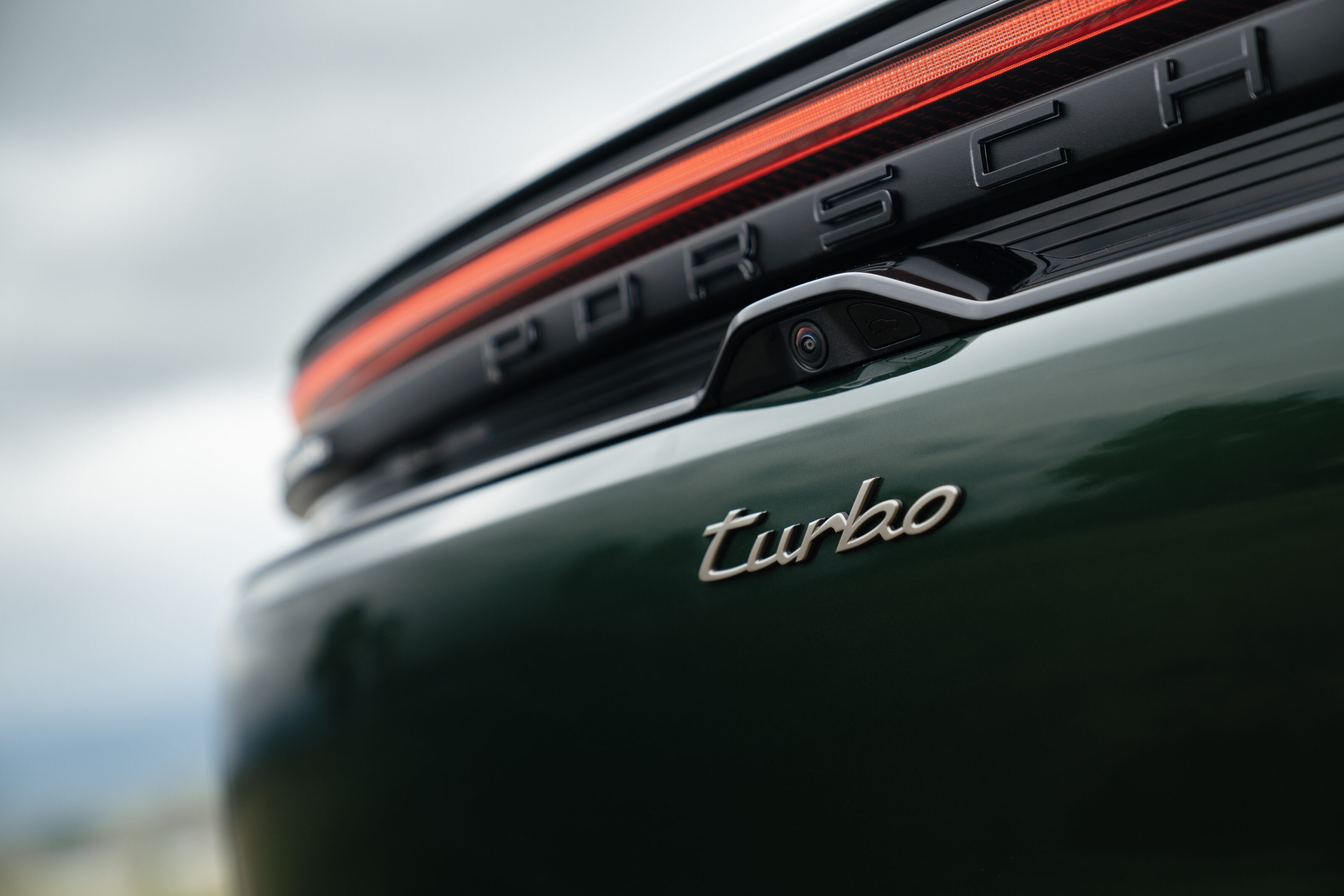
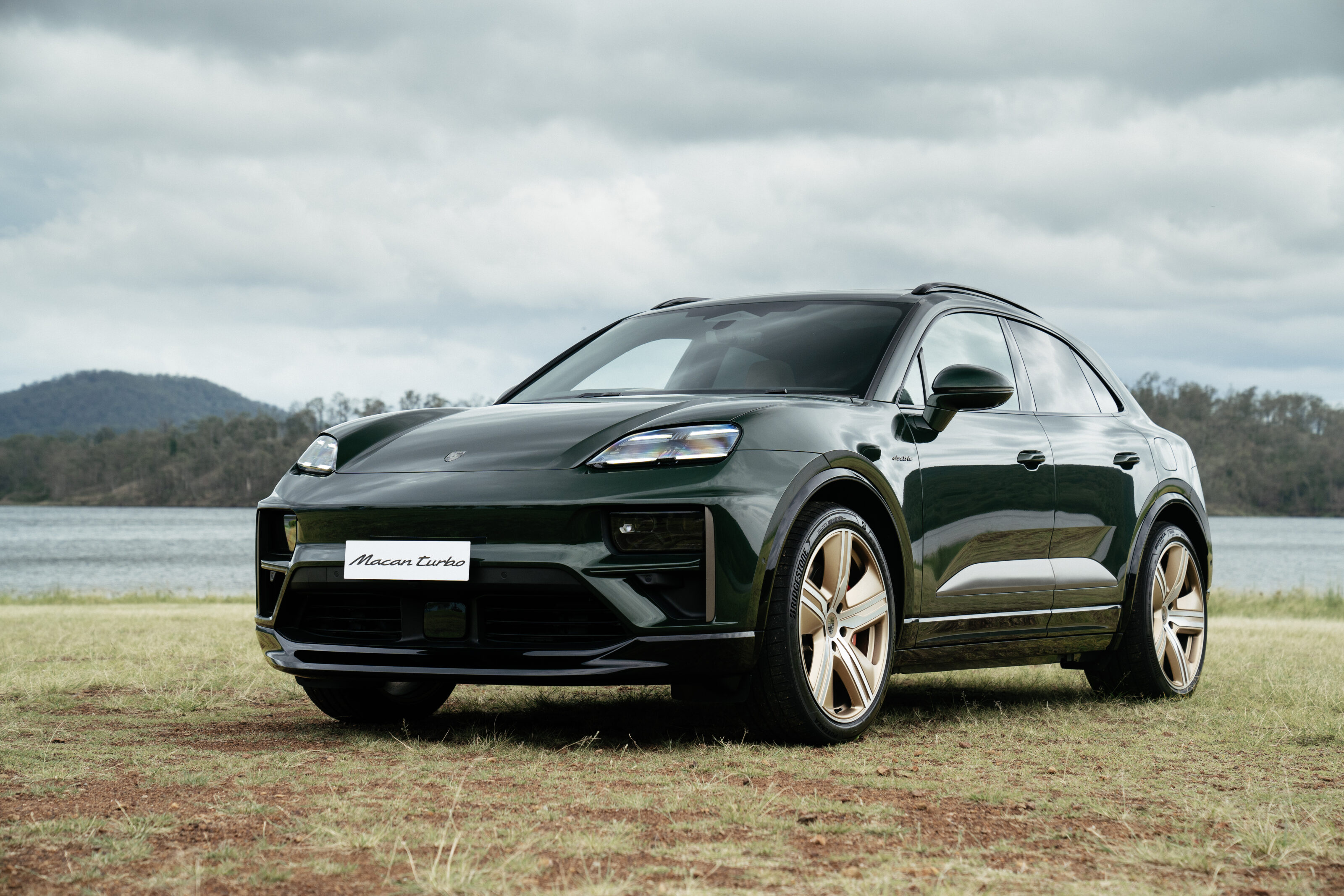
At the top of the model line-up is the Turbo. This is a proper powerhouse, as indeed you might expect when you’re being asked of $184,400. While that doesn’t sound an inordinate amount to ask for a Porsche that generates peaks of 470kW and 1130Nm, it also nets you air suspension with Porsche Active Suspension Management (PASM) electronic damping control, 20-inch alloy wheels, either 14-way electric Comfort front seats or 18-way adaptive sport seats and unique body styling.
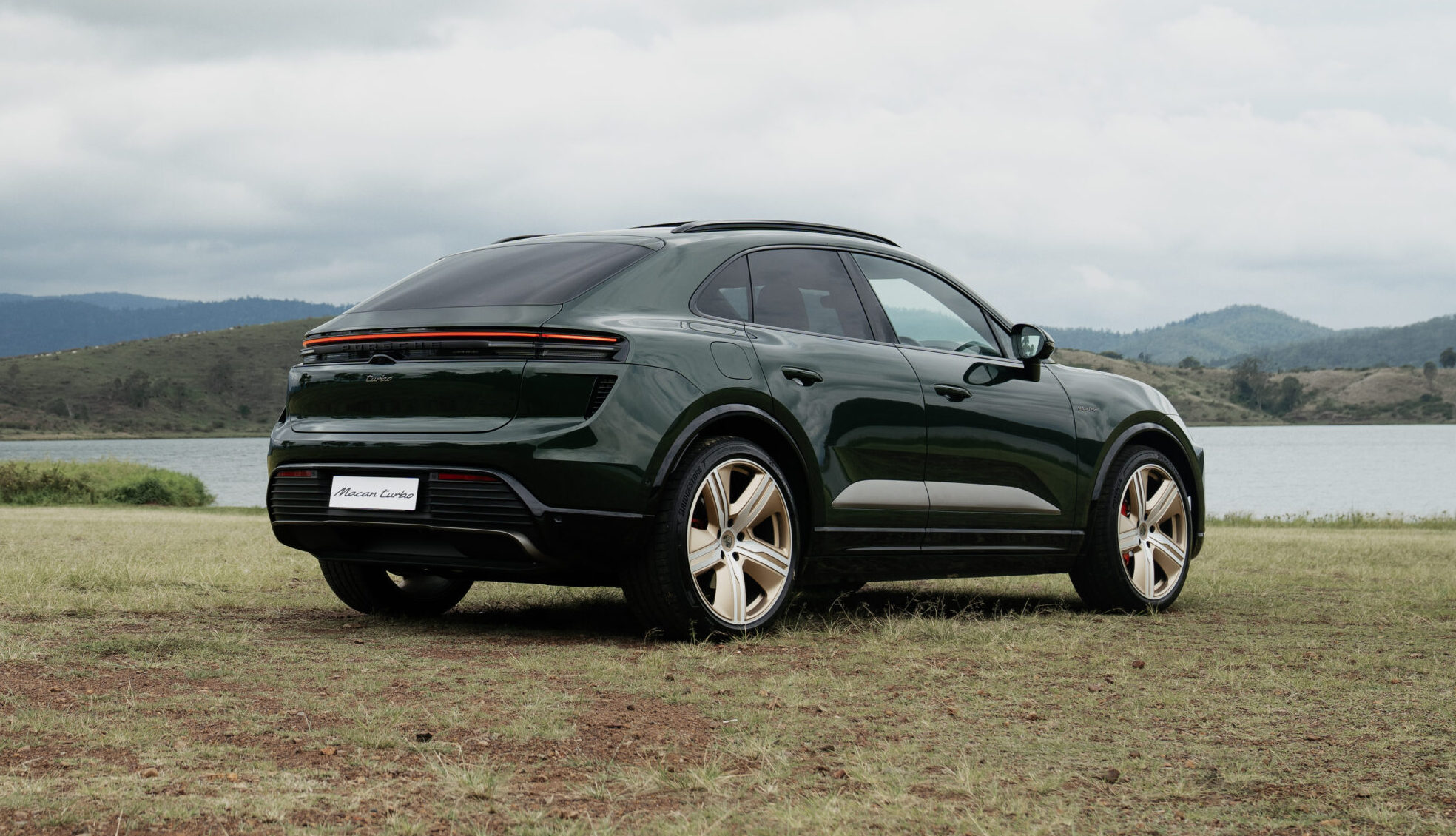
The old Macan somehow managed a sort of reverse Tardis effect. It wasn’t a small car, but it somehow felt more pinched in the back than a hatchback like a Golf, and was usually favoured by those who weren’t putting people-sized people on that back bench.
Porsche has eased the belt out a little with the new car and despite its swooping roofline looking as if it could compromise on the amount of space inside, it’s comfortably better packaged than before, with adults easily accommodated in the rear seats.
Up front there’s an 84-litre frunk that can be opened either with the key (it pops straight up on its struts, so make sure you have overhead clearance) or, if you have the key fob about your person, you can just swipe your hand across the panel immediately below the Porsche crest and it’ll open that way.
There’s little actual advantage to this, but anything that makes you feel like a Porsche-owning Jedi has to be a good thing, right?
At the other end, there’s a dinky button next to the numberplate which lifts the rear hatch. In all of our test cars there was a lumpy bag with the Macan’s charging cables velcroed to the luggage bay floor, and I can’t help but think there ought to have been a more elegant solution. There is underfloor storage in some models, which is where the cables should be stowed, but pop the floor up on the Turbo and that space is occupied by a hefty subwoofer. Porsche claims a total boot space of 540 litres, which expands to 1348L with the rear seats folded.
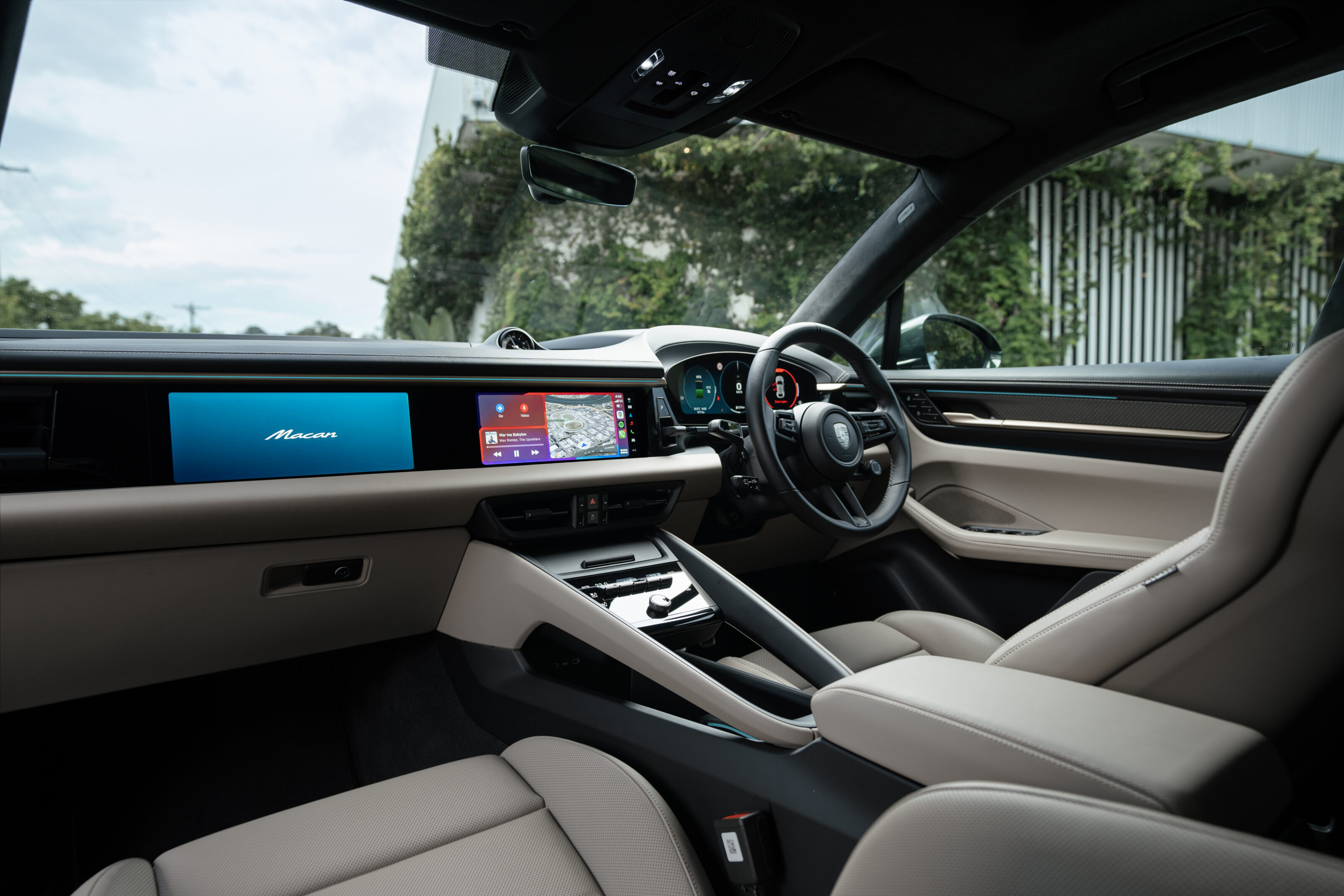
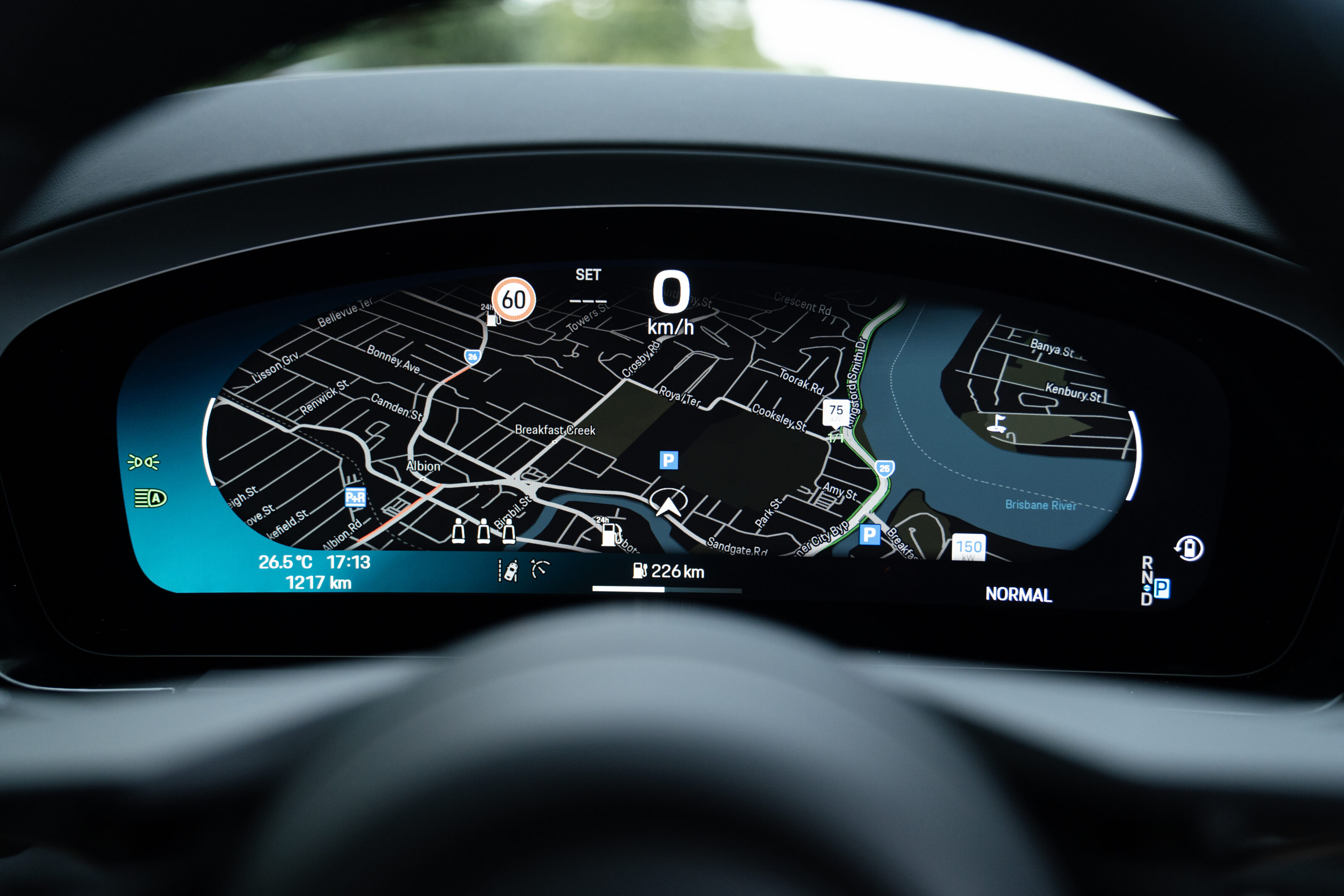
The driving environment is well considered. Porsche is particularly proud of the large 12.6-inch curved display and the colour augmented-reality head-up display. The dash is dominated by the two main screens and, if required, a third passenger screen can also be optioned. The Android Automotive blended ecosystem is smart and responsive, and don’t worry, it works wirelessly with both iPhone and Android. Basically, it’s Android deep down, with a Porsche ‘skin’ overlaid and then you can mirror your phone atop all of that. It does a great job of bringing the apps on your phone to life on its big screen.
In most normal conversations, how a Porsche drives dictates whether it’s a success or not. This time round, it’s not so cut and dried. To cut to the chase, the new Macan drives extremely well. It comfortably eclipses the old car in every measure of go, stop and steer, and that was quite a dynamic benchmark to aim for.
We had the opportunity to drive the Macan 4 and Turbo models on road and track, and it was an illuminating experience. We learned that trying to drift a 2.4-tonne SUV with 1130Nm of instant-access torque under your right clog requires a little practice. We realised that the 3.3-second 0-100km/h quote for the Turbo is typically Porsche conservative, and that in most reasonable conditions, two-point-something is attainable but, after a couple of frothy lattes, not always advisable.
We discovered that the Macan corners hard and flat, and the Turbo responds like a rear-drive car on corner exits if you loose off that avalanche of torque. Put that partially down to the Porsche Torque Vectoring Plus, an electronically controlled diff lock on the rear axle. Even without that, the Macan can shuffle drive between its axles around five times quicker than its ICE equivalent.
We also understand that driving in a somewhat exuberant fashion on track in hot temperatures does not make the tyres at all happy and that the energy consumption rises to around 100kWh per 100km, which in the Macan Turbo’s case, is slightly more than one percent of range for every kilometre driven. But let’s face it, the track stuff was merely a demonstration of what this new car could do in extremis. It was deeply impressive but you don’t, and won’t, see track-day pitlanes stuffed with Macans. Think of it more like Omega sending a watch down to 200m underwater. They’ve done it so you don’t have to.
On road, the biggest surprise is that the Turbo’s ride quality has improved compared to early pre-production drives. It rides on standard air suspension and benefits from Porsche Active Suspension Management (PASM) electronic damping control. In other words, it’s plusher than anything on 22-inch liquorice-strip tyres has any right to be.
There’s a degree of suppleness to both the Turbo and Macan 4 models that bodes well for Australian conditions. Switch the cars into Sport and there’s some artificial noise piped into the cabin which is far from intrusive or annoying. Even in the most focused drive modes, the ride doesn’t deteriorate unacceptably.
The Macan does have a switchable overrun recuperation function. When engaged it slows the vehicle very gently with regen when you lift off the throttle. The braking system is a blended set-up where it tries to use regen braking most of the time, but switches to friction braking beyond a certain threshold. It’s well calibrated and the transition between the two braking modes is hard to establish.
Unlike the Taycan, which features a two-speed transmission, the Macan has a single-speed reduction gear, Porsche’s engineers claiming that the technology has progressed since the Taycan was unveiled such that two gears were deemed unnecessary.
On road, the Macan Turbo’s gut-wrenching pace sometimes feels like overkill, but there will be those who will always want the flagship car. The Macan 4 is notably slower off the line, but still feels as brisk as you’d need in most road-driving scenarios.
Its 800-volt platform means that the Macan can DC charge up to a speed of 270kW if you can source a 350kW fast charger, getting from 10 to 80 percent charge in 21 minutes. Otherwise the car switches from series to parallel charging at a lower 135kW peak charging rate.
There’s no doubt that the new Porsche Macan is an impressive entrant. It’s quick, composed, looks good, is bigger inside than before and leverages some interesting technology. Despite all of that, it’s still going to face an uphill battle, and this must be worrying Porsche.
Here in Australia, the Macan was the company’s best-selling vehicle. It remains to be seen whether customers will warm to the new electric version in quite the same fashion. When Porsche’s head of the Macan line was asked why he expected customers to take to an electric Macan when they didn’t with the Taycan, he engaged in some world class waffling that eventually ended up with a statement on how impressive the head-up display was. Hardly convincing.
One key difference between the Taycan and the Macan is that the latter replaces an established and well-regarded nameplate with a range of electric models. That’s never happened in Australia before. So while the new Macan does so much so right, there are bigger questions to consider. Is the market ready for a premium electric SUV to sell in serious volumes? Is this a better Macan but, somehow, a less ‘proper’ Porsche?
The hefty step-up in price will be an impediment and raw speed alone is such a devalued commodity in this world of easy electric power. I’m not sure too many will put much credence in old versus new Macan comparisons based purely on acceleration or torque numbers. So does it do enough to sway the doubters? I’d say very nearly. It feels short of a feature that in another industry would be dubbed the ‘killer app’, the absolute must-have, no-debate reason for purchase. Otherwise, it covers nearly every base and does so with genuine polish.
As Thomas Rothfuss, the director of the Macan product line, put it: “It’s a whole different world compared to the combustion version.” No kidding.
Specifications
Model: Porsche Macan Turbo
Motor: Two permanent magnet synchronous
Battery: 100kWh (gross), 95.3kWh (net)
Max power: 430kW (470kW w/Launch Control overboost)
Max torque: 1130Nm
Transmission: 1-speed reduction gear
Weight: 2405kg
Range: 616km (WLTP)
0-100km/h: 3.3sec (claimed)
Price: $184,400
On sale: Now
Mercedes-Benz Australia has added a new limited edition of the AMG GLC 43 called the Edition R, which is priced lower than the regular model but adds special features.
Available to order now from Mercedes-Benz dealerships, the Edition R is priced from $128,900 plus on-road costs for the wagon bodystyle and $141,600 for the coupe, making it between $5,900 and $12,700 less expensive than the regular GLC 43 models.
It’s not the first addition to the GLC range this year, with the brand also recently launching the new
entry point GLC 200.
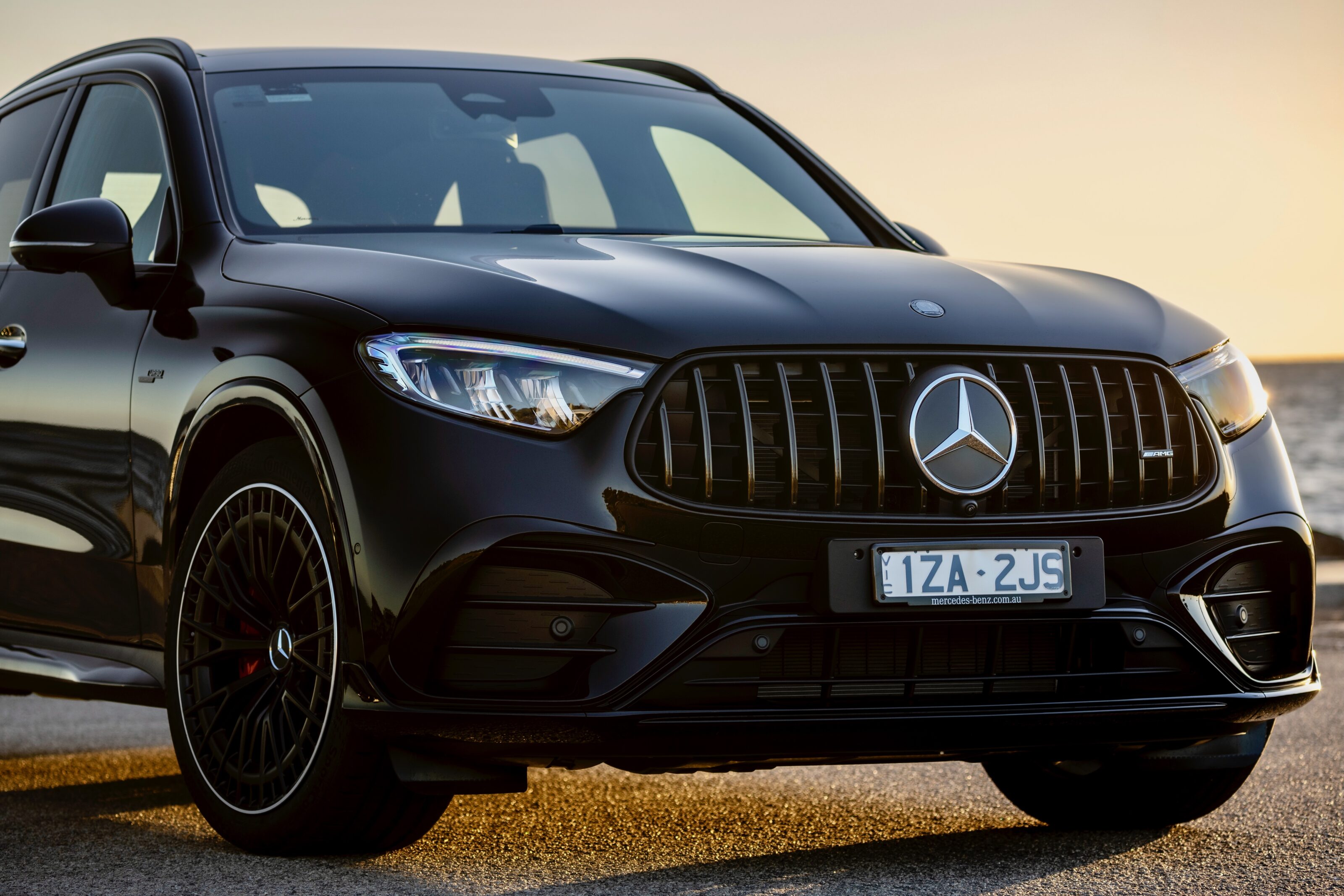
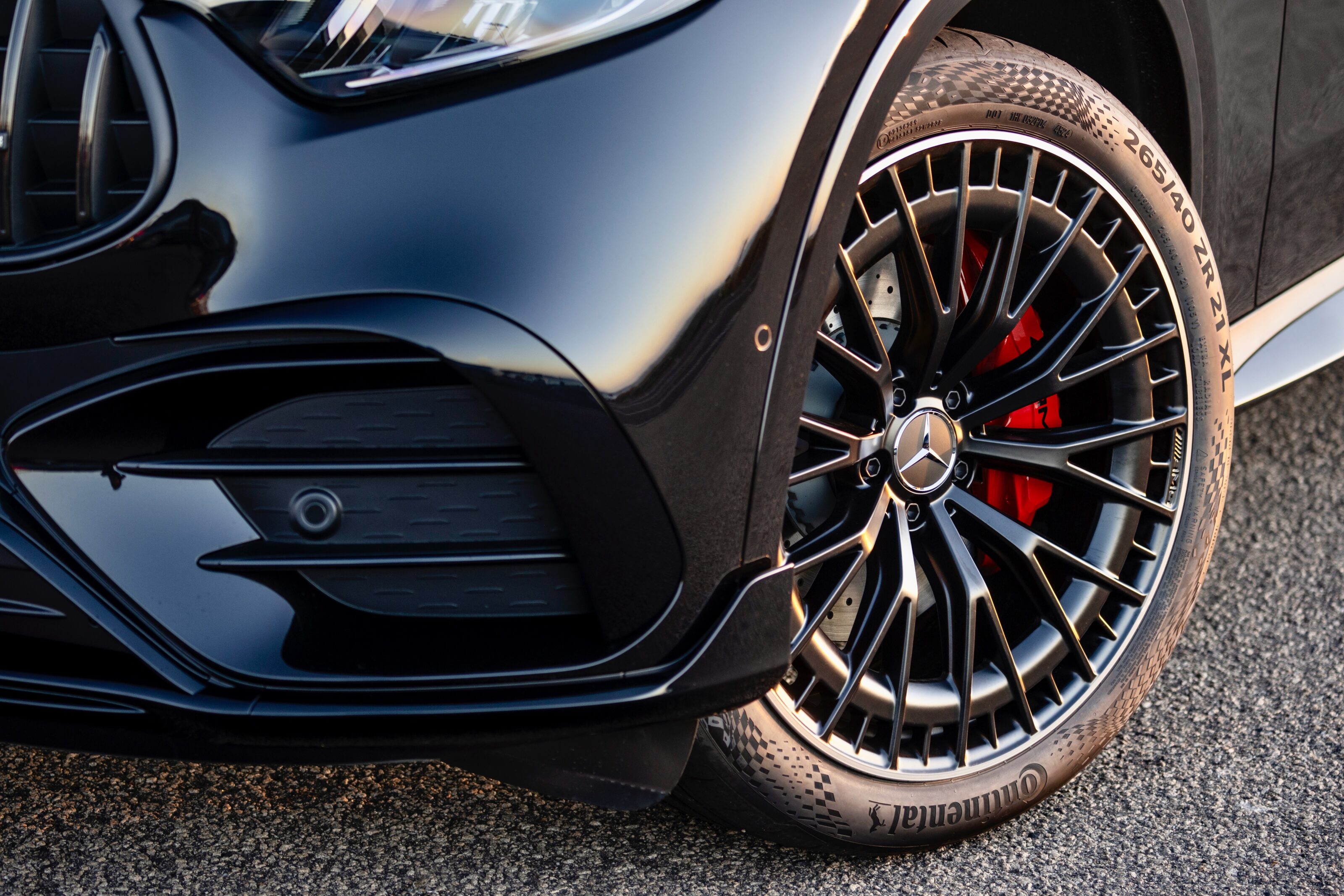
Standard equipment on the Edition R includes the AMG Dynamic Plus package, which adds
dynamic engine mounts, a selectable race mode and matte black 21-inch AMG Y-spoke alloy
wheels.
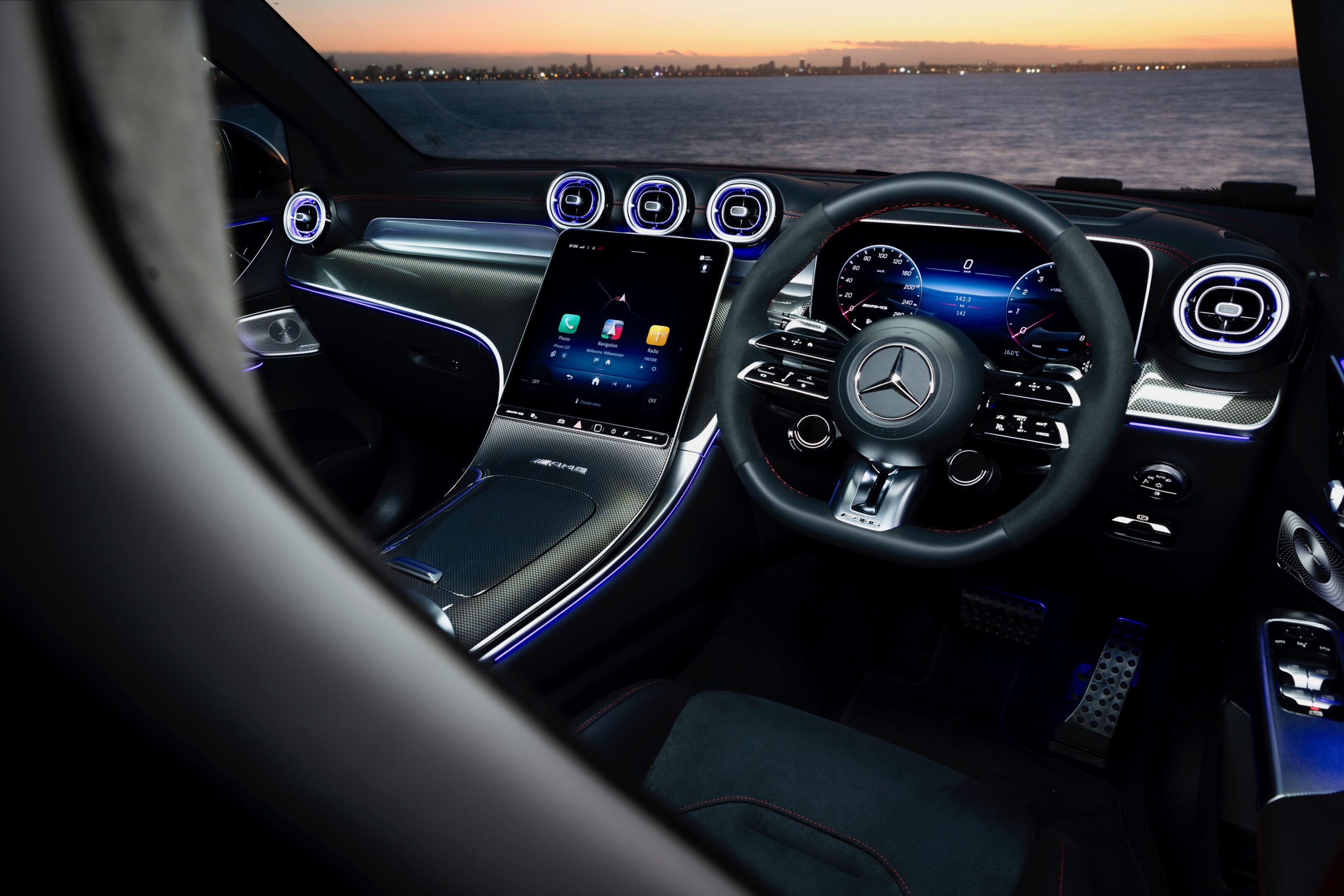
Inside the Edition R is the AMG Performance Seat Package Advanced with synthetic leather and
suede trim with red stitching, as well as a new metal trim that’s exclusive to the Edition R and
builds onto the standard model’s nappa leather and suede steering wheel, as well as a Burmester sound system.
Other standard features gifted from the standard GLC 43 include heated and electric front seats
with memory, dual-zone climate control, Apple CarPlay and Android Auto smartphone mirroring, a
wireless charger and ambient lighting.
A panoramic sunroof, dark tinted glass, head-up display, 360-degree camera, automatic parking
and a big suite of active safety tech are also standard equipment.
The Edition R will be available in ‘Polar White’, ‘Verde Silver metallic’, ‘Graphite Grey metallic’,
‘High-Tech Silver metallic’, ‘Obsidian Black metallic’ and ‘Spectral Blue metallic’ paint options, with
‘Patagonia Red’ metallic’, ‘Opalite White’ and ‘Alpine Grey’ available as extra-cost options.
Under the bonnet of the Edition R is unchanged with the C 43 and GLC 43’s 310kW/500Nm 2.0-
litre four-cylinder turbo-petrol engine and 48V mild-hybrid system continuing as before, enabling a
0-100km/h sprint time of just 4.8 seconds. The grunt is sent to all four wheels through a nine-speed
automatic transmission, with adaptive dampers and rear-axle steering also standard.
Mercedes-AMG GLC 43 pricing (plus on-road costs):
| GLC 43 Edition R | $128,900 |
|---|---|
| GLC 43 Coupe Edition R | $141,600 |
| GLC 43 | $136,900 |
| GLC 43 Coupe | $147,500 |
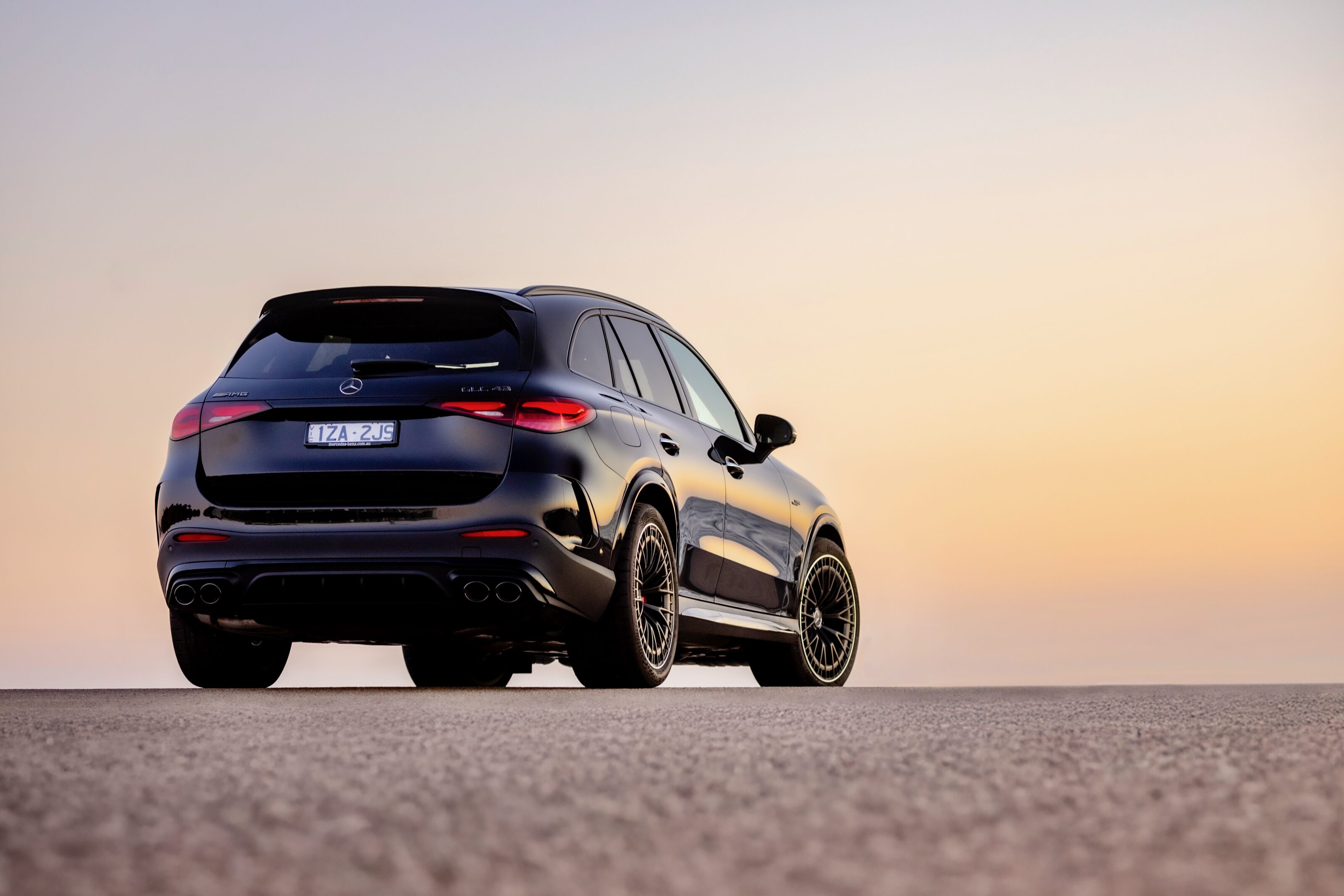
The Mercedes-AMG GLC 43 Edition R is now available to order from Mercedes-Benz dealerships.
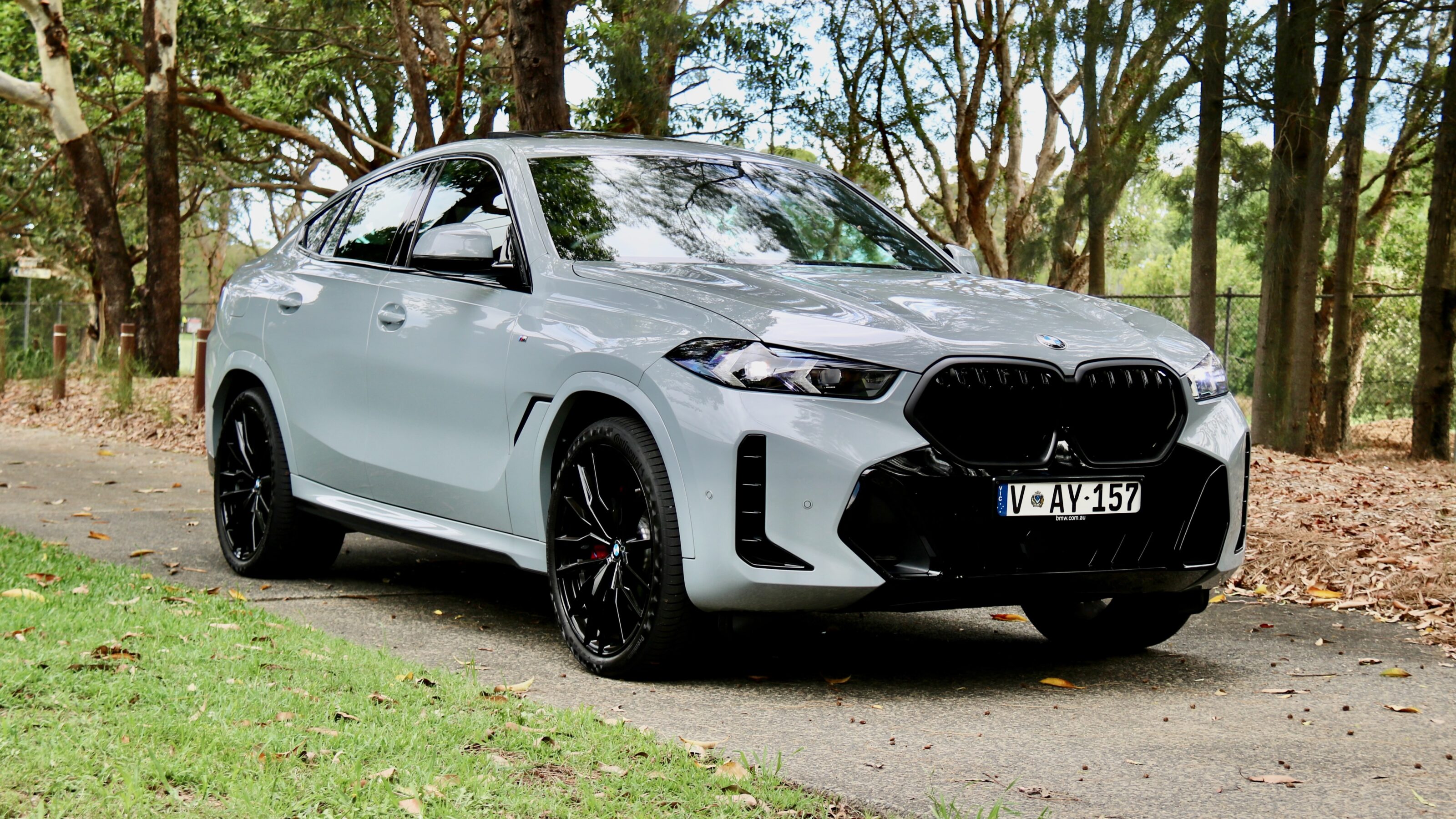
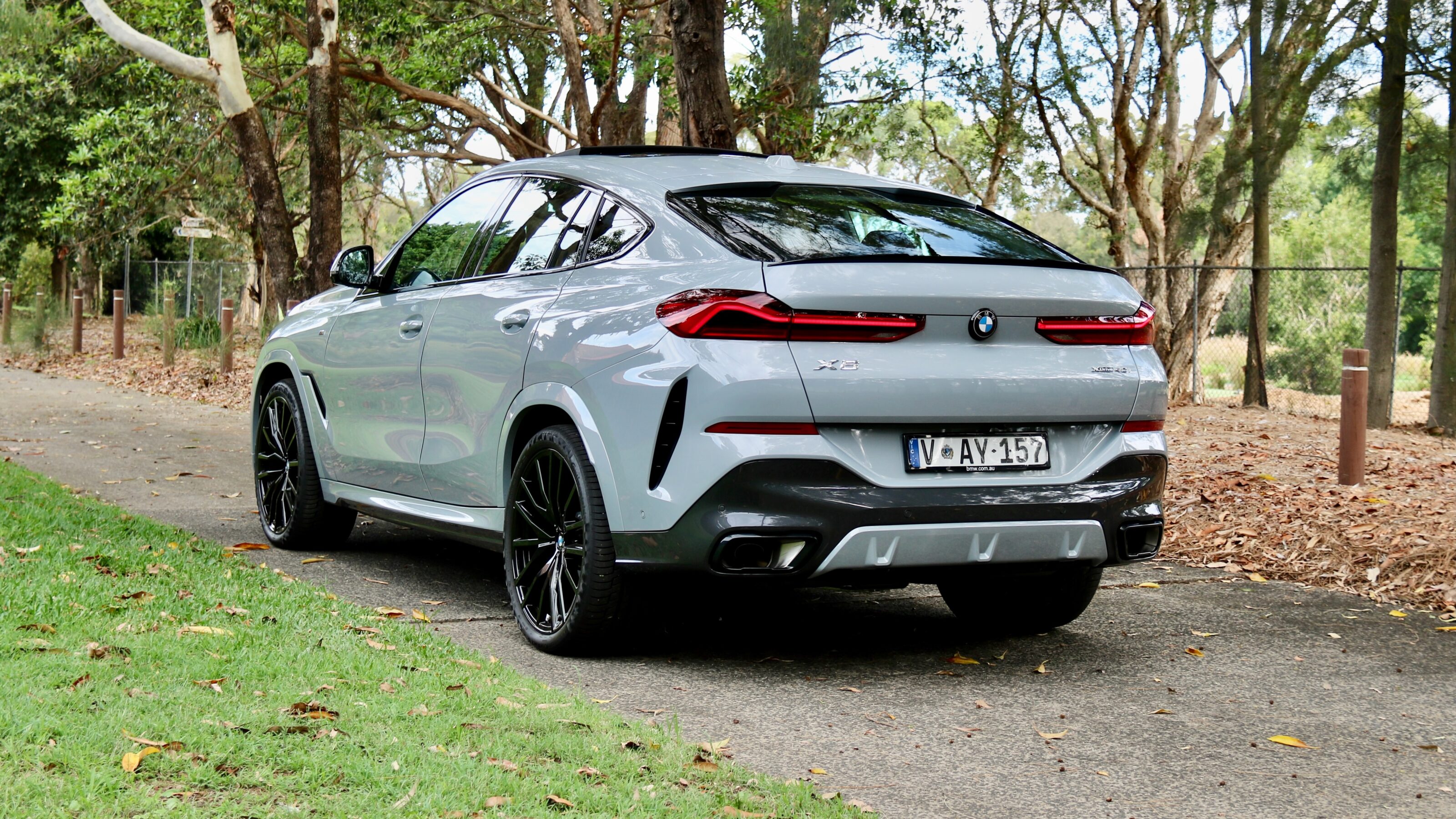
First released back in 2008, the BMW X6 was one of the pioneers in the coupe SUV segment that even now is still quite popular globally.
Now in its third generation, the X6 continues to be based on the popular X5 but trades its boxy rear and optional third row of seating for a heavily raked coupe-like roofline.
Ever since its release, the X6 has been a controversial product, though its success is clear to see as multiple rivals have been spawned since. If you’re after a coupe SUV, is the X6 the model to choose? Here’s the WhichCar guide.
How much does the BMW X6 cost?
| xDrive30d | $143,600 |
|---|---|
| xDrive40i | $147,600 |
| M60i | $181,600 |
Which features are standard in the BMW X6?
The entry-level X6 xDrive30d and xDrive40i models share the same equipment list:
- 21-inch alloy wheels with run flat tyres and a space-saver spare
- M Sport exterior styling
- Automatic all-LED exterior lighting with auto high beam
- Rain-sensing automatic rain-sensing wipers
- Keyless entry with push button start and phone key access
- Electric tailgate with hands-free operation
- Heated and auto-folding/auto-dimming exterior mirrors that auto-dip on the passenger side
- Panoramic sunroof
- Dual-zone automatic climate control with rear air vents
- M Leather steering wheel
- ‘Verino’ synthetic leather upholstery
- Electric sports front seats with driver’s memory functionality
- Heated front seats
- BMW live services with over the air updates, real time traffic alerts and remote services
- 12.3-inch digital driver’s display
- 14.9-inch touchscreen with live services and apps like weather
- Satellite navigation with live traffic
- Wireless and wired Apple CarPlay and Android Auto
- AM/FM/DAB+ digital radio
- 10-speaker sound system
- Wireless phone charger
- 6x USB charging ports
- Selectable driving modes
- Configurable interior ambient lighting
- Head-up display
Safety features:
- Seven airbags
- Autonomous emergency braking (AEB)
- Front and rear cross-traffic alert
- Blind-spot monitoring
- Lane keeping assistance with lane departure warning
- Adaptive lane guidance
- Driver attention monitoring
- Adaptive cruise control with stop and go functionality
- Speed limit information
- 360-degree camera
- Automatic parking
- Front and rear parking sensors
- Low-speed rear auto braking
- Automatic post-accident SOS calling
- Alarm with remote theft recorder
- Drive recorder
The X6 has never been tested by ANCAP, but the closely related X5 received a five-star rating in 2018 based on older protocols.
X6 M60i adds:
- Nappa leather instrument panel
- Quad-zone automatic climate control
- Soft-close doors
- Door sill finishers with ‘M60i’ designation
- 464W Harman Kardon sound system
- Metallic paint
- 22-inch alloy wheels
- Tyre pressure monitoring
- High-gloss M Sport package with gloss black mirror caps, and grille
- Red M Sport brakes
- M seat belts
- M Sport exhaust system
- M Sport differential
- Adaptive M suspension including anti-roll stabilisation
X6 optional extras:
- Enhancement Package with 22-inch wheels, metallic paint, tyre pressure monitoring, glass interior trim pieces and 16-speaker Harman Kardon sound system: $6,000
- Comfort Package with heated rear seats, heated and cooled front cup holders, heated front console and door panels, heated steering wheel, rear sun shades and rear privacy glass: $2,500 for the M60i, $3,800 for the 30d and 40i as it also includes quad-zone climate control for them
- Executive Package with massaging front seats, glass interior elements, comfort front seats, ventilated front seats, gesture control: $8,500 (or $6,500 when ordered with Enhancement Package)
- M Sport Pro Package with high gloss exterior trim, shadow line lighting, M Sport brakes with red callipers and an M Sport exhaust (30d and 40i only): $3,000
- BMW Individual ‘Merino’ leather trim in either white, brown, tan or black: $4,000 ($2,500 with Executive Package)
- Nappa leather instrument panel (30d and 40i): $2,500
- Black suede headliner: $2,500
- BMW Individual piano black or ash interior trim: $800
- M carbon fibre interior trim: $1,700
- Remote engine start (40i and M60i): $690
- Four-wheel active steering (standard on M60i): $2,500
- Adaptive air suspension (30d and 40i): $2,500
- Trailer tow hitch: $2,500 (tongue and adaptor cable sold separately)
- Gloss black roof rails: $800
- Luggage compartment package: $800
- 1,508W Bowers & Wilkins Diamond sound system: $8,000 (only in conjunction with the Executive or Enhancement Package on 30d and 40i)
Colour range (all no-cost on M60i):
- Alpine White: no cost
- M Carbon Black: $2,000
- Black Sapphire: $2,000
- Mineral White: $2,000
- M Brooklyn Grey: $2,000
- Skyscraper Grey: $2,000
- Manhattan: $2,000
- Aventurine Red: $2,000
- Dravit Grey (not available on M60i): $4,600
- Tanzanite Blue (not available on M60i): $4,600
- M Isle of Man Green (M60i only): no cost
Interior colour range:
- Silverstone grey
- Coffee brown
- Cognac tan
- Black
- Red and black
How comfortable and practical is the BMW X6?
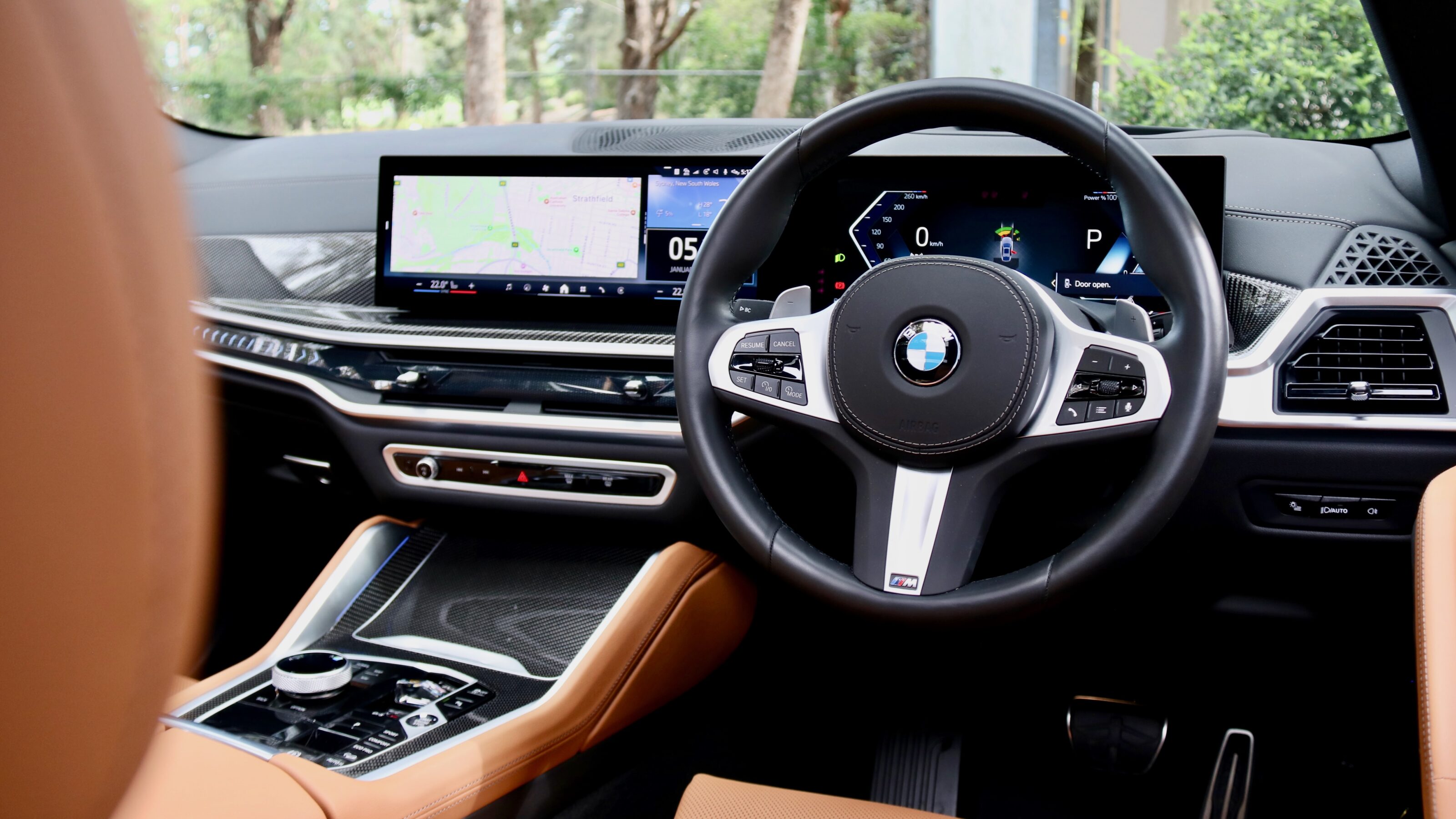
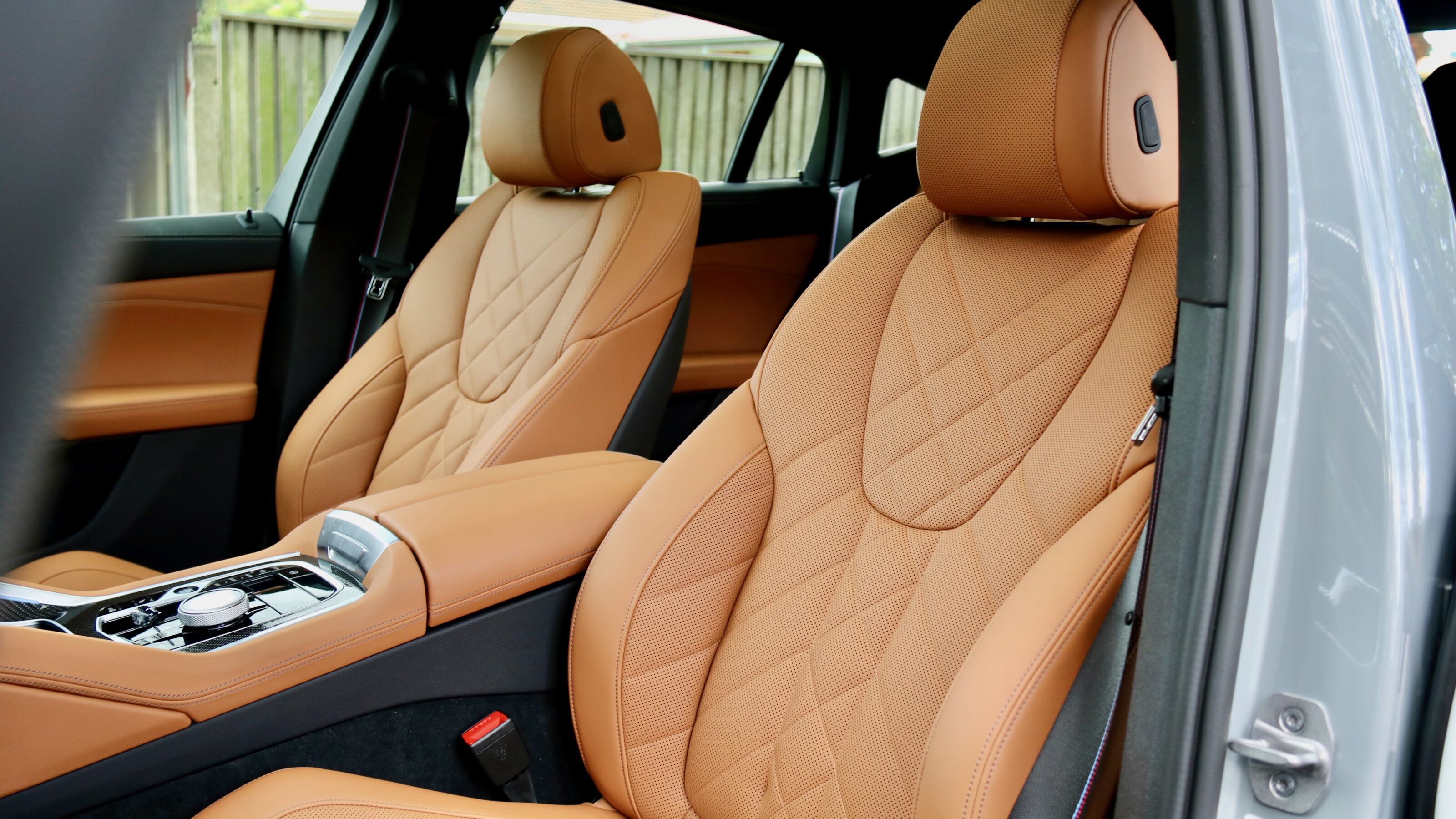
The interior of the X6 is genuinely luxurious, with ample soft touch surfaces around and some lovely switchgear, like the glass elements of our test car. The cognac colouring of our test car’s upholstery was lovely too, and really gave a warm vibe to the cabin. Our test car also featured a carbon-like trim, which went well with the tan upholstery.
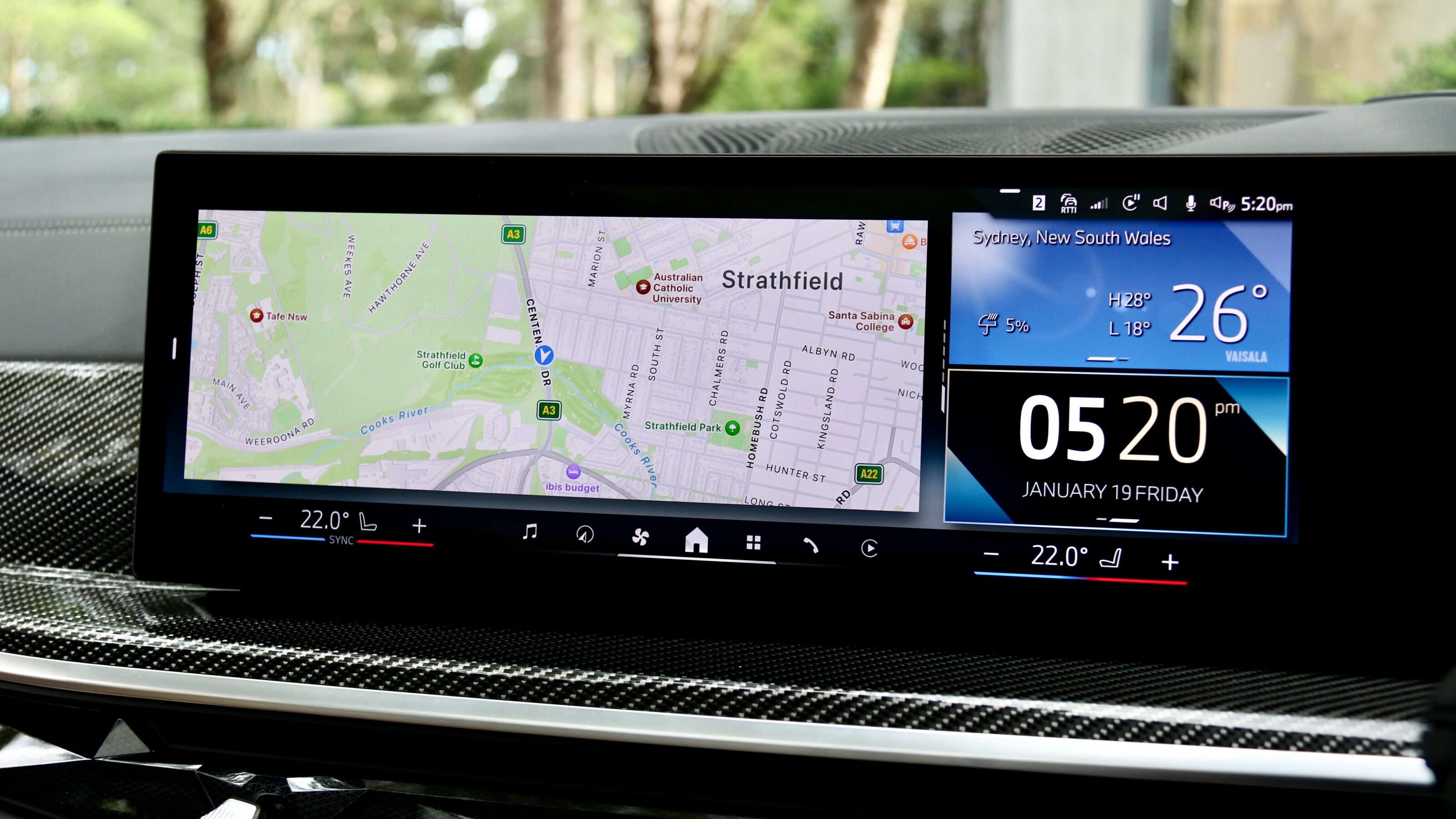
The X6’s cabin is dominated by the twin-screen set up, with a 12.3-inch digital driver’s display accompanied by a 14.9-inch touchscreen with BMW’s latest iDrive 8 software. Unlike the smaller X1 and X2, the X6 has kept the control wheel for use at speed, but it’s also a touchscreen.
The system can also be controlled via voice through saying “hey BMW”, and it’s quite a fast system too. It can be overwhelming to use at first, however, thanks to the sheer amount of features on offer – plus, the climate control is now built into the screen. The shortcut icons make it easier to use, but it’s still not as ergonomic as physical controls.
Still, having features like weather and Spotify inbuilt into the car is handy, and the screen quality is excellent too. We love the classy animations, and the optional Harman Kardon sound system of our test car sounded great as well.
Front seat comfort is excellent with soft and supple upholstery and seemingly endless ways of adjusting the seats – even the side bolsters can be moved in and out to hold occupants in the seat better.
There’s also a lot of storage from the big door bins, big bottle holders, a wireless charger underneath the dashboard, a big space underneath the split-open armrest and a large glovebox as well.
Rear seat space in the X6 is impressive for two occupants given its slinky roofline, though keeping it to two is a good idea as the middle seat is compromised. The rear seat is otherwise reasonably well equipped with air vents, USB-C charging ports, map pockets and door pockets – sun shades, a dual-zone climate zone and heated seats are on the options list.
The X6’s healthy 580-litre boot can be expanded to 1,530L with the rear seats folded and like the rest of the cabin, it’s well finished with lovely carpeting, and also features clever storage solutions like space underneath the floor and on the sides, plus some hooks to hang bags off. Unusually for a modern BMW, there’s also a space saver spare wheel underneath the boot floor.
How big is the BMW X6?
The X6 measures 4,960mm long, 2,004mm wide, 1,700 tall and rides on a 2,975mm long wheelbase.
How much can the BMW X6 tow?
All X6 variants can tow a 3,500kg braked trailer with a 750kg unbraked towing capacity.
Will I enjoy driving the BMW X6?
In an SUV frame of mind, absolutely. The X6’s mechanically identical X5 sibling rewrote the rulebook for how well an SUV could drive upon its release way back in 1999 and the X6 only improves on that thanks to its sportier attitude.
Put simply, the X6 is the sportiest SUV this side of the impressive Porsche Cayenne, which is a big feat – the way the X6 goes around corners despite its heft is great. Of course, it’s not a sports car like a Z4 but the X6’s handling ability is impressive.
While that translates to a slightly firm feel in regular driving, the X6 is still entirely comfortable. While rear visibility isn’t amazing thanks to the sloping roofline, it’s still a very nice place to spend time on the road; its noise suppression is impressive, the steering is well weighted and it’s very easy to drive.
Three turbocharged powertrains are available: six-cylinders with either petrol or diesel power, or a stonking V8 in the M60i. Obviously, the V8 is fast and sounds great, but even the sixes on offer are quite satisfying to drive. Our xDrive40i test car’s engine sounded great, provided more than ample thrust – its claimed 0-100km/h time is just 5.4 seconds – and was pretty good on fuel, aided by the excellent 48V mild-hybrid system that aids both performance and economy.
How much does the BMW X6 cost to run?
The combined fuel consumption for the X6 ranges from 7.7L/100km for the 30d to 9.3L/100km for the 40i and 11.9L/100km for the M60i. Claimed CO2 emissions range from 203g/km for the 30d to 211g/km for the 40i to 261g/km for the M60i. The petrol X6s must be fuelled with premium unleaded fuel and feature an 83-litre fuel tank.
We recorded just over 10L/100km in the xDrive40i in mostly urban driving, which is impressive given the size and weight of the X6.
What warranty covers the BMW X6?
Like all new BMW products, the X6 is covered by a five-year/unlimited km warranty with three years of roadside assistance. BMW’s cars are covered by condition-based servicing, which means that the car decides when it needs a service but once-yearly/every 15,000km is given as a general guide.
A five-year/80,000km service plan costs $3,275 or $655 annually.
Which BMW X6 should I buy?
It really depends on where your priorities lie – all three variants in the X6 range are accomplished, refined and great all-rounders.
The diesel will give good performance with reasonable fuel economy, though diesel isn’t best suited to everybody. The M60i is very fast and makes a great noise, but it’s also almost $200,000 once on-road costs are factored into the price.
For our money, we’d buy the xDrive40i and revel in that lusty petrol six, reasonable thirst and excellent handling. Even unoptioned, it would make for a wonderfully luxurious and sporty SUV under the $150,000 mark.
Which cars rival the BMW X6?
Australia is the only major market in Mazda’s world that gets the CX-60, the CX-70, the CX-80 and the CX-90 SUVs. I have no shame in admitting that, prior to driving the CX-70, I genuinely had very little idea as to how they all meshed together.
Even now that I do understand it, I’m still a little leery of the logic behind it and can see how the average buyer might be flummoxed. Put simply, a CX-60 is a medium-sized SUV for a CX-5 customer with deeper pockets. If they want something yet more imposing and more premium, they can step up to the bigger CX-70, Mazda’s flagship two-row SUV.
That leaves the CX-80 and CX-90 to accommodate those buyers who need three rows of seats. Of these, the CX-80 is set to be the volume seller, with the CX-90 the premium option. In other words, if you are not making like an antechinus, a marsupial described as having a “frenzied mating period”, then the five-seat CX-70 might well pique your interest. It’s well worth a detailed look over.
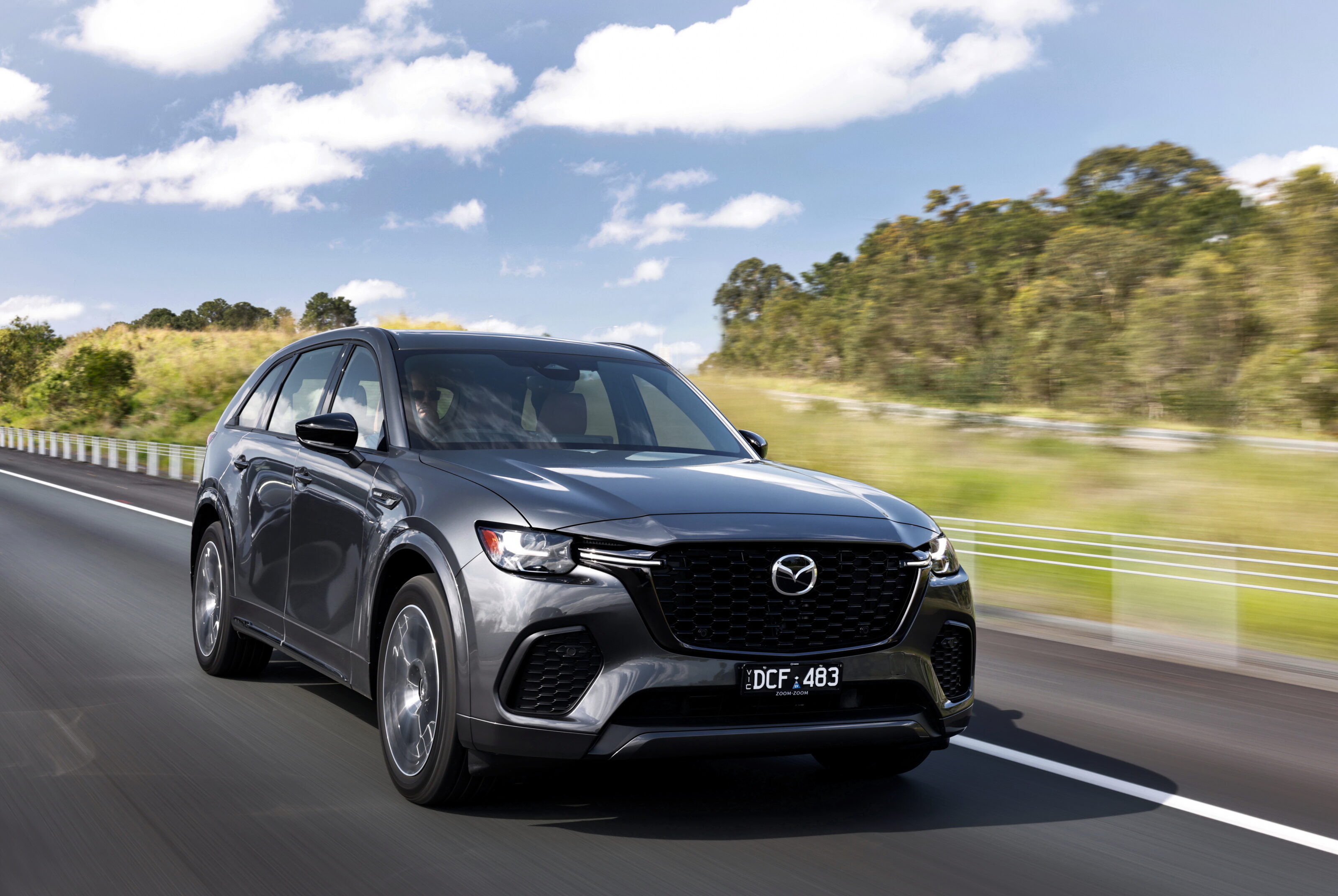
While some of the other variants on Mazda’s large-scale platform have suffered some teething issues, Mazda is trying to incorporate customer feedback into its vehicle development, with a suite of improvements to CX-60 incoming, and many of these updates have informed the thinking on CX-70.
It’s certainly a sizeable hunk. It rides on the same chassis as the CX-90, which means a huge 3120mm wheelbase, fully 250mm longer than the CX-60. At 5100mm long, it’s around 150mm longer than something like a BMW X5 or a Mercedes-Benz GLE, so you’re not getting shortchanged in terms of metal for your money.
Ah yes, the asking price. Mazda offer straight-six, mildly hybridised engines in the CX-70, mated to a rear-biased all-wheel-drive chassis. You choose from either petrol or diesel, with the latter commanding a $2000 price premium. There are also two trim levels, GT or Azami. The petrol G50e GT kicks things off at $75,970 before on-roads, with the Azami variant pitched at $82,970.
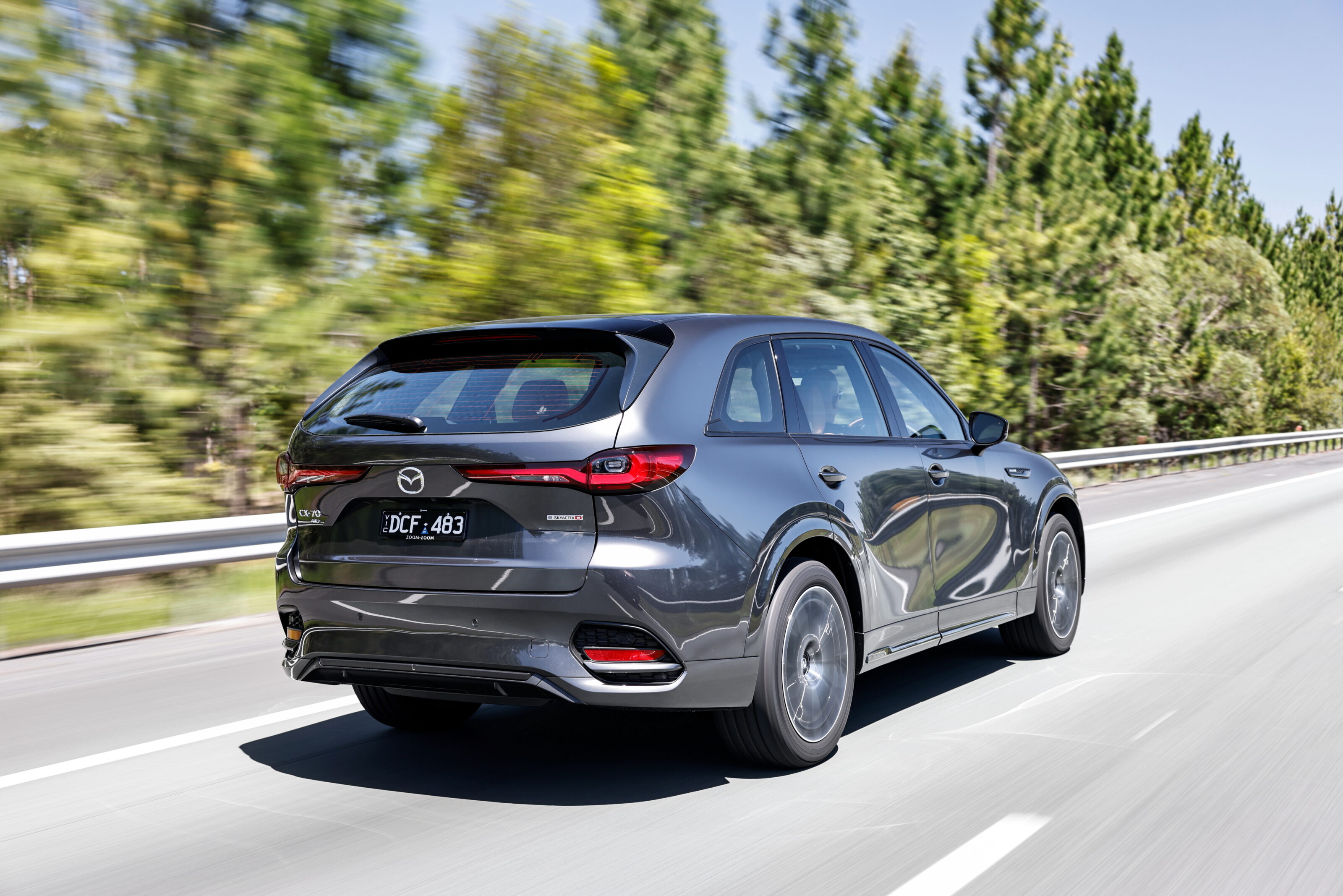
It’s definitely the looker of the bunch of contemporary Mazda big SUVs. It manages to avoid the slab-sided bulkiness of the other models, while retaining an element of the dynamic cab-back stance of the CX-60 that hints at its rear-biased torque split. Talking of which, there’s plenty to go round. The D50e diesel delivers 550Nm versus the G50e petrol’s 500Nm showing, although those positions are reversed when it comes to peak power. While the diesel makes a respectable 187kW at 3750rpm, the petrol unit is good for 254kW between 5000 and 6000rpm. The 2.5-litre PHEV is not an option for CX-70.
Both the GT and Azami are, as you’d expect for the price, well equipped. The GT rolls on 21-inch black metallic alloy wheels, gets adaptive LED headlights and a panoramic sunroof. There’s a Bose stereo with 12-speakers, a 360-degree view monitor, wireless CarPlay and Android Auto, a heated steering wheel, and leather-trimmed heated and electrically adjustable front seats with a memory function for the driver. There’s both a 12.3-inch colour central screen and a 12.3-inch TFT instrument panel.
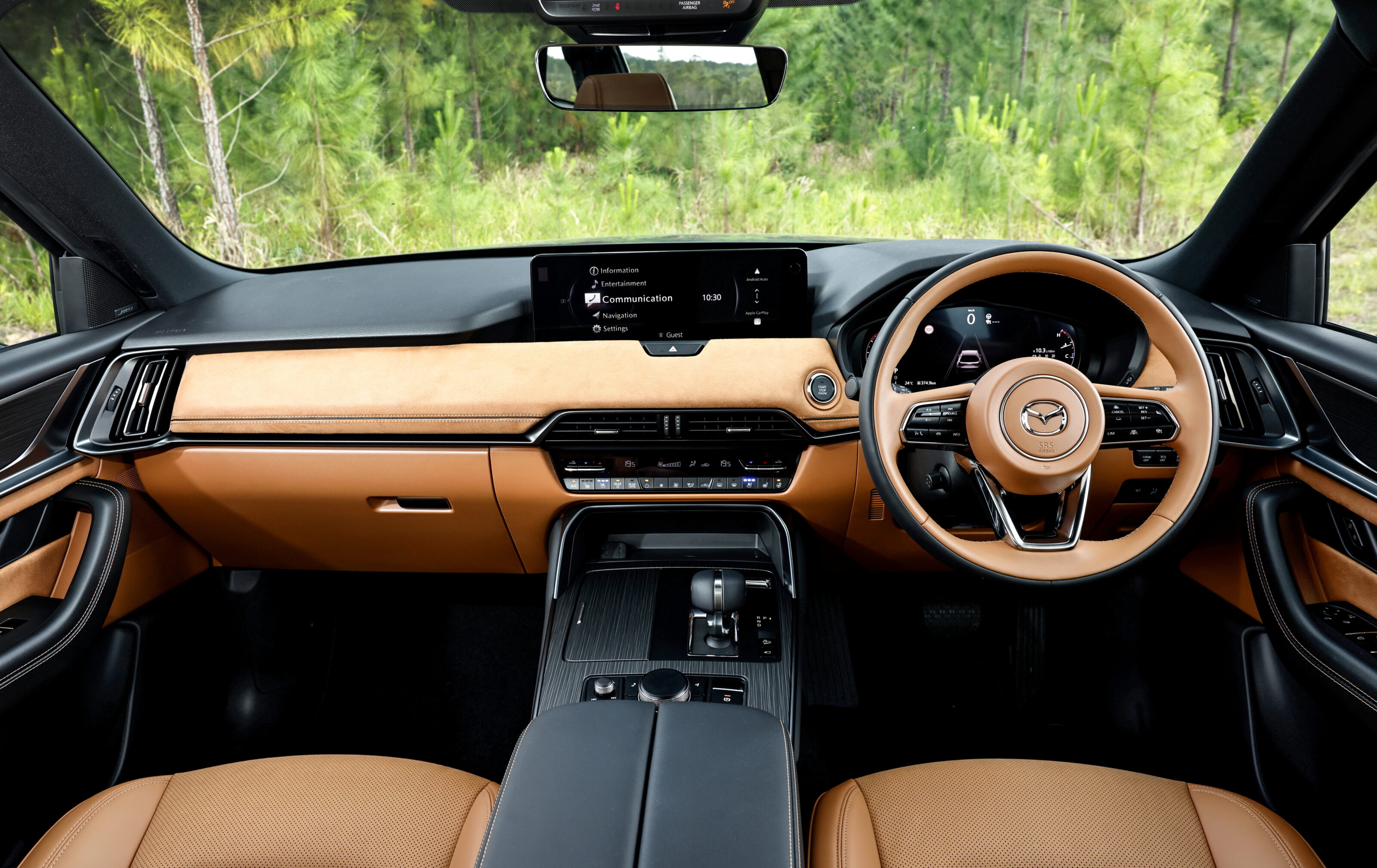
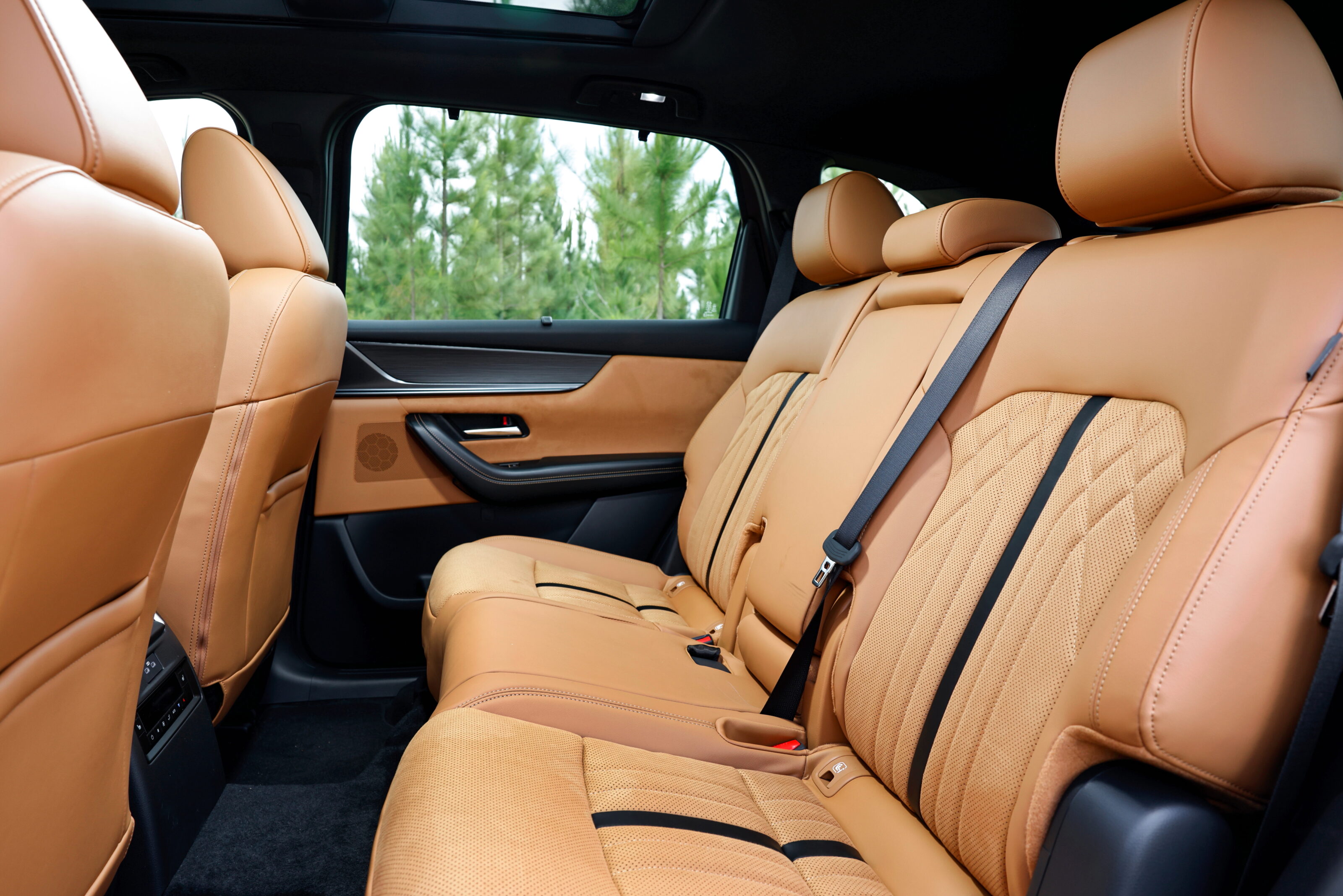
Throw another $7K at the Azami model and you’ll also get ambient lighting, quilted nappa seat trim in either black or burgundy, a frameless interior mirror, Cruising and Traffic Support (CTS), interior foot lamps, front ventilated seats, and a see-through-view for the view monitor. There are also some body-coloured exterior parts such as wheelarches, lower cladding and door handles. There’s also the option to spend another $3500 on the SP pack for the Azami which includes tan leather, a suede finish for the dashboard panel and a two-tone coloured steering wheel.
Choice is always good, but the law of diminishing returns does seem to come to the fore here, and the GT looks to be where the value lays.
Rivals for the CX-70 would probably include the likes of the BMW X5, the Mercedes-Benz GLE, the Audi Q8, the Genesis GV80 and the Lexus RX. Heck, you could probably throw Range Rover Velar and Volkswagen Touareg into that mix too. A Mazda mixing it with these brands? Jump inside the CX-70 and you begin to understand why that’s not such a long bow to draw.
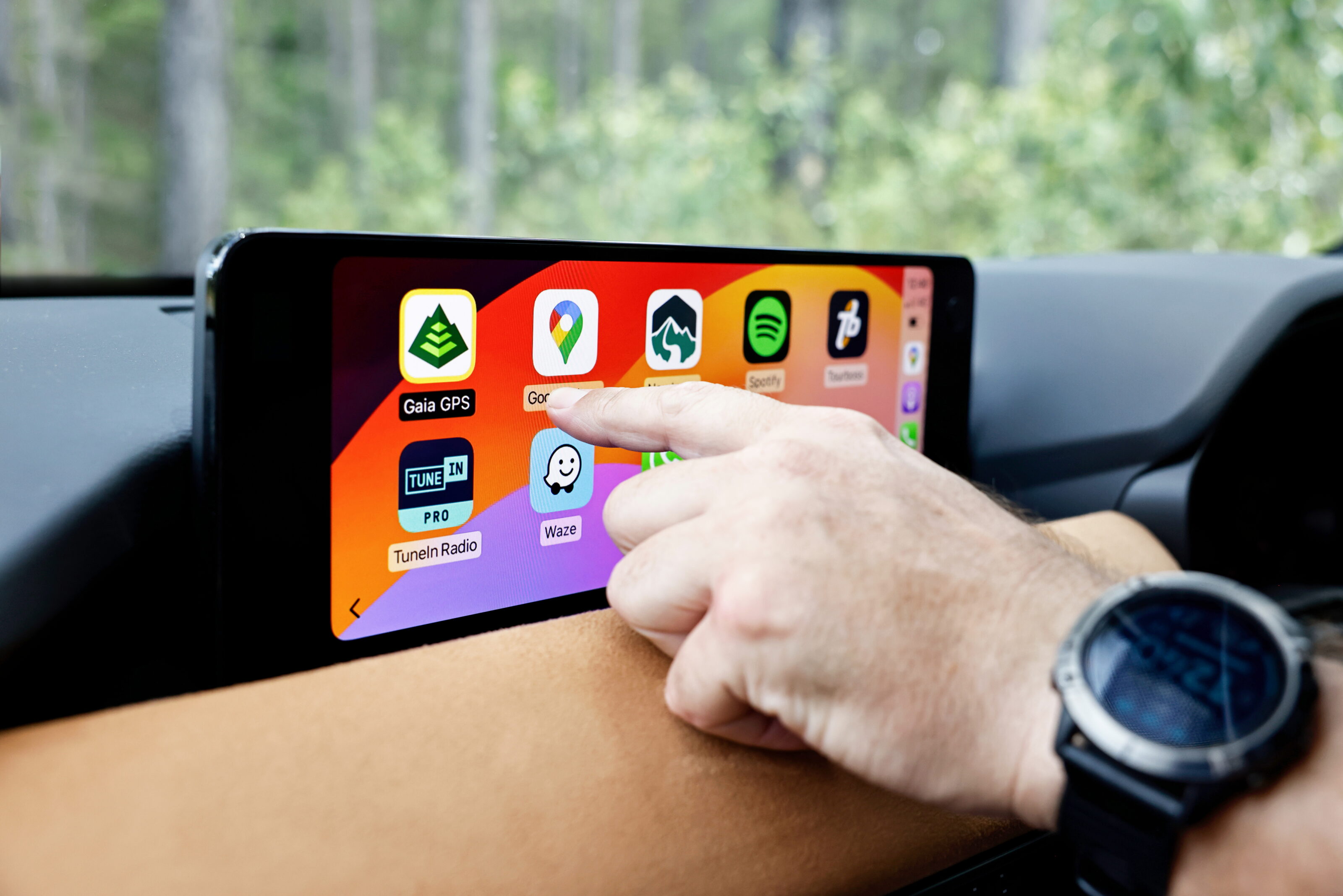
It’s big, but it’s certainly not a case of never mind the quality, feel the width. Build quality seems very good and cabin materials are better than in most of the aforementioned rivals. Mazda still persists with the dashtop screen that is controlled by a dial. Yes, there is a setting whereby you can switch on touchscreen functionality, but it’s not very good, largely because the screen is out of reach, even for a person with gibbon-like arms such as me. Also, because when you do try to operate it, the heel of your hand will rest directly on the hazard warning light switch which, given the ergonomic excellence of the rest of the cabin, seems like a deliberate example of obstinacy from Mazda’s engineers.
Otherwise the interior is extremely well thought through. The front seating position is excellent and visibility is largely good, even with the chunky C-pillars. I experienced one incident where the vehicle phantom detected something as I was reversing and it threw on the brakes fairly hard, but otherwise there’s little to complain about. There’s plenty of oddments storage, with a deep centre bin, generous door pockets and a useable glovebox. Taller rear passengers might feel a little pinched for headroom given that the seat is high and the sunroof robs a couple of inches of headroom, but the rear seats have a decent slide and recline function to partially compensate.
Another thing that some may grouse about is that the styling direction is virtually indistinguishable from a CX-60 or a CX-80 or a CX-90. Sit at the wheel and you’re greeted with pretty much the same architecture, the same twin-lidded centre console, the same screens, the same steering wheel design and minor controls placement. It’s all very Russian doll and it’s easy for manufacturers to get hidebound into specific design tropes and, as a result, customers to become bored by them over time.
We’re given the diesel to try first. I’ve driven both of these engines in other Mazdas and while I like these straight sixes, and applaud Mazda for building them, I must admit to a tinge of disappointment. They’re good rather than great engines, which is a bit of a shame when Mazda stepped so far outside the lane of conventional thinking to develop them. The CX-70 feels foursquare and alert, disguising the weight of that diesel up front. The 48V mild-hybrid system thrums the engine cleanly into life and adds a little torque fill at low engine speeds. The electric motor sits between the engine and the eight-speed automatic gearbox and, like all the best hybrid installations, does its work inconspicuously.
Body control initially seems excellent. Tip the CX-70 into a corner and it resists roll beautifully. The electrically-assisted steering initially feels a bit moribund just off-centre but weights up agreeably. It’s not particularly full of feedback, and it’s tyre squeal rather than anything coming back through the steering column that reminds you of the limits of the car’s front end grip. The CX-70 feels eager and unflappable, right up until that moment that it flaps. That moment will usually be brought about by a mid-corner bump or a compression. The former will set the car pogoing a little; the latter can sit the rear down hard onto its bump stops. While driving at sensible speeds on fairly well-surfaced roads, one bump was enough to launch a 20kg bag from the luggage compartment into the roof. Now imagine your children are located 20cm in front of that bag.
It’s all rather perplexing, as if there’s a fundamentally good platform beneath it which is let down by its damping. Even without extending the car, you’ll feel it nerfing and jostling frequently, expansion joints or lateral seams in the road surface sending sharp jolts through the passenger cell. The hardware is all really good, with double wishbones up front, a multi-link rear and an admirable focus on the geometrical rectitude of offset and camber control. It ought to be really good. Sadly it requires some remedial work and, at this juncture, outside engineering help would probably be beneficial in this regard.
With less weight in the nose, the petrol engine feels marginally less susceptible to these vertical insults. Both powerplants have much to be said for them, and despite diesel being about as on-trend as a Diddy compilation album, anything that dials back the dynamism a notch or two is good for the CX-70. Part of me wonders whether it’s because Mazda no longer has a performance sub-brand, and has made such a thing of its jinba-ittai philosophy of the man and the machine being one, that the chassis engineers have culturally felt obliged to imbue sportiness into ranges of vehicles which could probably do with less of it.
There is otherwise much to commend the CX-70 for. Given that you’ve eschewed a pair of seats in the very back, you’re then treated to a vast maw when the powered tailgate opens. Mazda quotes 589 litres with the rear seats in place, which is a VDA measurement. Go to the roofline and you get 923 litres five-up. Fold the rear bench down and there’s 2015 litres available for a couples getaway. Should that still appear inadequate, there’s 2500kg braked towing capacity whether you choose petrol or diesel.
Ultimately, this is a very good car that’s let down by its mediocre ride. A vehicle with this wheelbase, in this price bracket, that need have no sporting intentions should deliver a greater impression of polish in the way it goes down a road.
What’s more, it ought to be a relatively easy fix. That this car has come to market with such a significant flaw is not what we’ve come to expect of Mazda. Hopefully a solution isn’t too far off, but until then, for all its other attractions, the CX-70 falls short as a properly rounded large five-seat SUV.
Specifications
| Model | Mazda CX-70 D50e Azami |
|---|---|
| Engine | 3283cc 6cyl, dohc, 24v, turbo-diesel |
| Max power | 187kW @ 3750rpm |
| Max torque | 550Nm @ 1500-2400rpm |
| Overall value | 4/5 |
| Transmission | 8-speed automatic |
| Economy | 5.4L/100km (combined) |
| Weight | 2216kg |
| 0-100km/h | 8.3sec (claimed) |
| Price | $84,970 |
| On sale | Now |
It only just snuck in before Christmas, but the Toyota LandCruiser Prado 250-Series was one of the biggest launches of 2024.
To say a new Prado doesn’t come along every year is an understatement. Its 150-Series predecessor soldiered on for 15 years, but that didn’t stop it from dominating the large SUV segment, adventurous Aussies hoovering them up right until the very end.
The radical design change hides a more evolutionary mechanical package but the new Prado has made huge strides in some areas – and yet is a retrograde step in others.
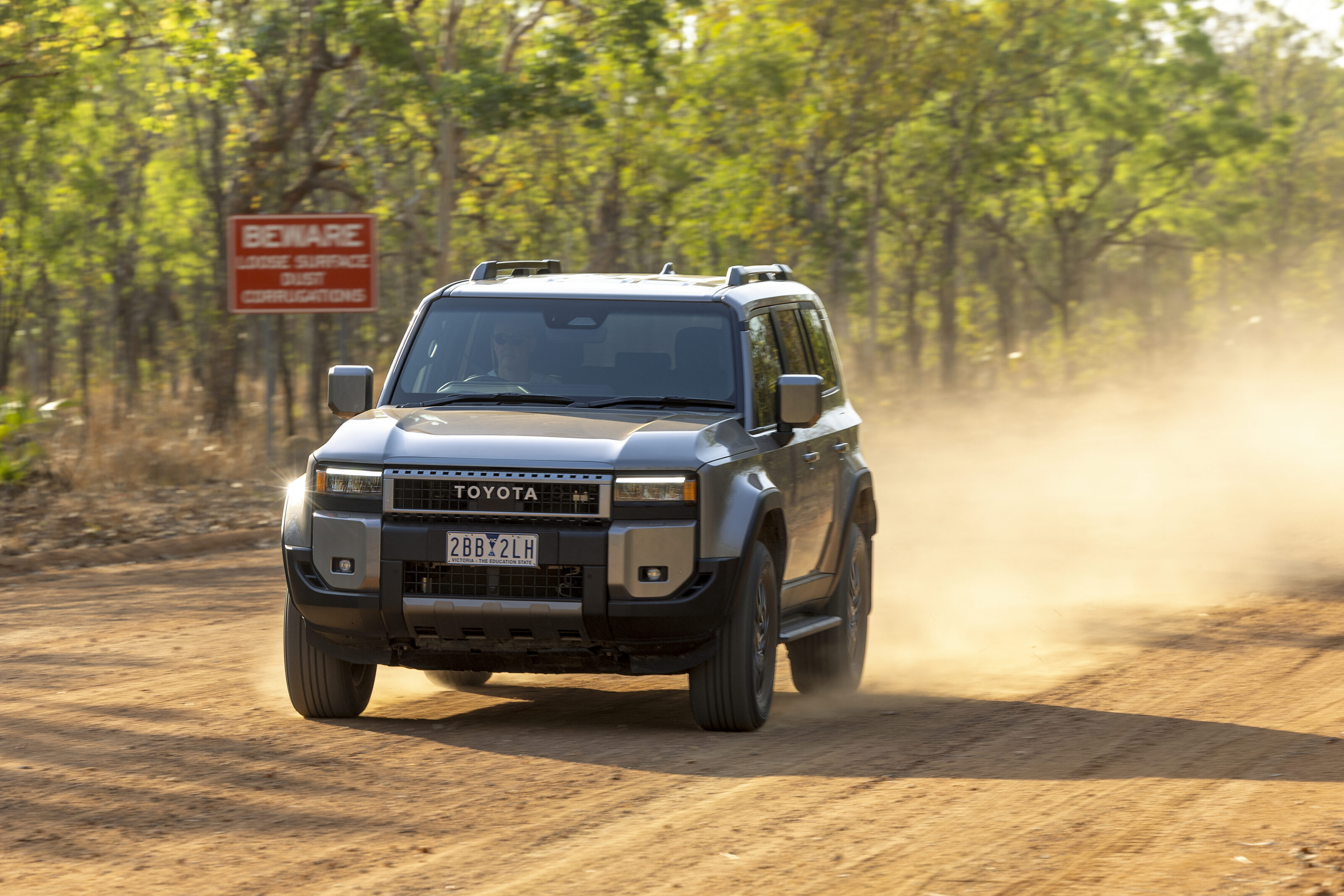
How much is it and what do you get?
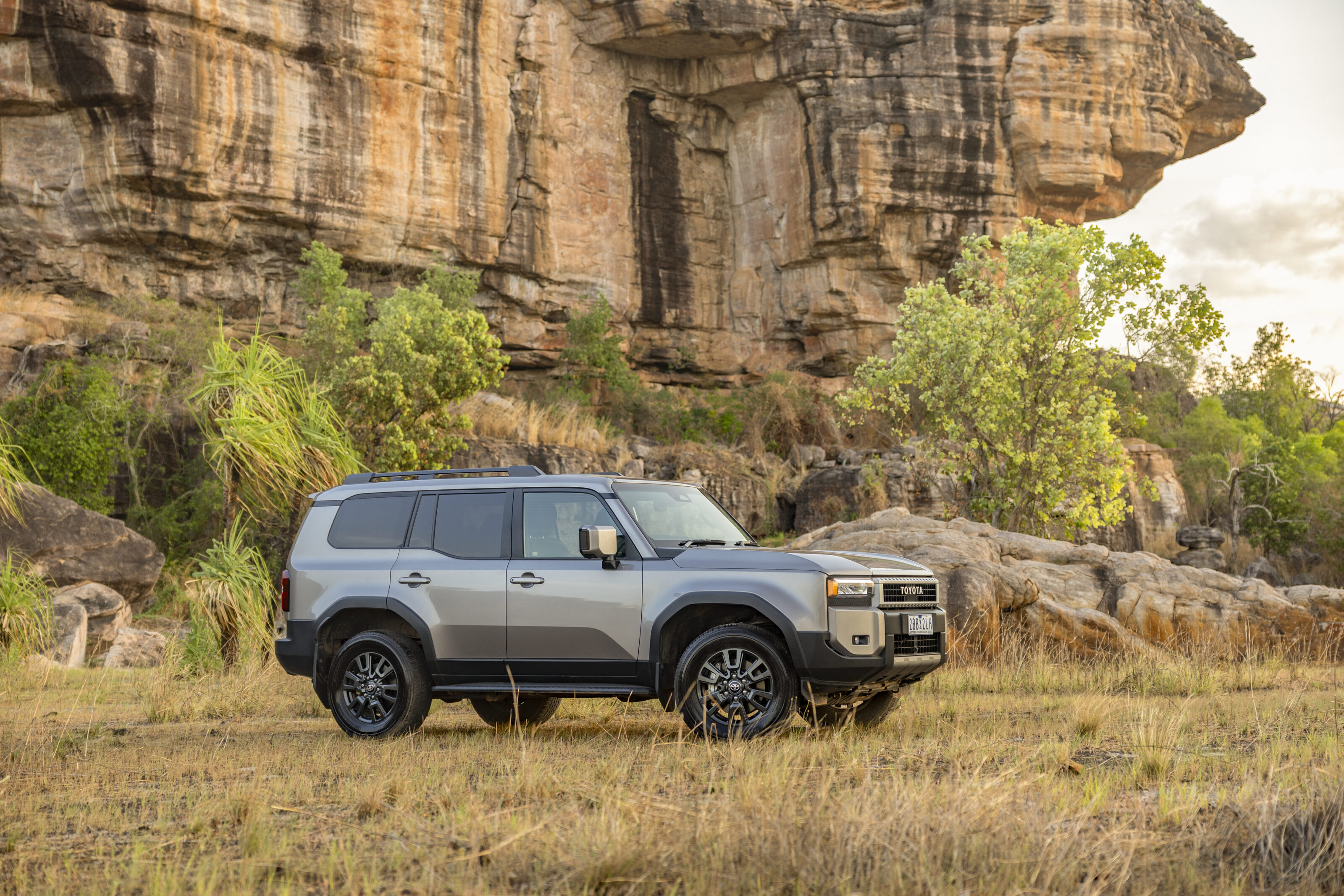
The GXL reviewed here is expected to make up the bulk of new Prado sales, but despite sitting just one rung up from the bottom of the range, it isn’t short of equipment. Then again, it does cost $79,990 plus on-road costs, a $10,000 lift over its predecessor.
Under the bonnet the familiar 2.8-litre four-cylinder turbodiesel remains but now with mild-hybrid assistance, as first introduced in the Hilux. It produces 150kW and 500Nm and sends power to all four wheels via an eight-speed automatic gearbox.
On the outside you’ll find 18-inch wheels with 265/65 highway tyres, LED lights, side steps, roof rails and a power tailgate with rear window hatch. Step inside via keyless entry and there’s dual-zone climate control, synthetic leather seat upholstery, heated and ventilated front seats, an eight-way power-adjustable driver’s seat and auto lights and wipers.
Infotainment is handled by a 12.3-inch touchscreen with wireless smartphone mirroring, satellite navigation, AM/FM/DAB+ radio and Toyota Connected Services. There’s also wireless phone charging, five USB-C ports, an HDMI port, a 12v outlet and a 220v outlet in the boot.
Six colours are available: white, black and ebony (that is somehow different to black) as standard and frosted white, dark grey and bronze an extra $675.
Some goodies you forgo by not stretching to the $87,400 (+ORCs) VX include adaptive variable suspension, 20-inch alloys, auto-levelling Bi-LED headlights, a 12.3-inch digital instrument cluster, powered passenger seat and steering column, refrigerated centre console and 14-speaker JBL stereo.
How do rivals compare on value?
The Toyota Prado commands a premium over all its rivals. The GXL nudges range-topping Ford Everest Platinum money ($81,200 +ORC) and sits well clear of other separate-chassis SUVs like the GWM Tank 500 Ultra ($73,990 driveaway), Isuzu MU-X ($67,990 driveaway) and Mitsubishi Pajero Sport GSR ($64,840 +ORCs).
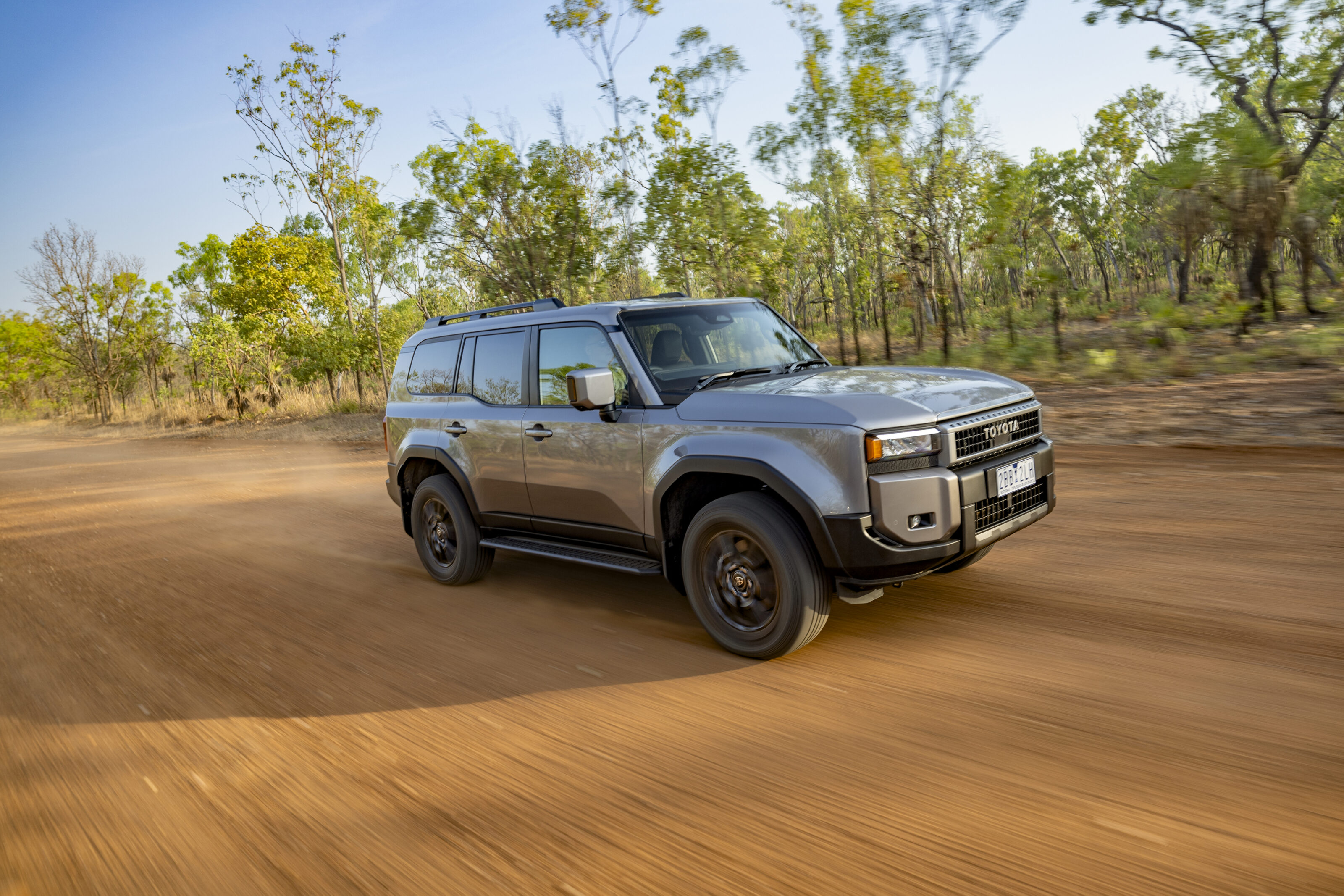
Interior comfort, space and storage
Toyota has made some very strange decisions with the interior packaging of the 250-Series Prado, but let’s deal with the positives first. Up front there are plenty of buttons and dials to contend with – arguably an excess – but familiarity should come easily enough.
You sit high with a commanding view of the road, vision out is good and finding a comfortable driving position will be in reach of most. Everything is chunky and feels appropriately rugged, yet there are soft-touch surfaces rather than hard plastics which gives a more premium feel.
Hop into the centre row and there’s loads of room, separate temperature controls and USB-C ports for charging, while the backrest is helpfully reclinable as the default position is a little upright.
The centre row also tumbles forward for easier access to the third row, but from here it all starts to go a bit wrong. Unfortunately, the Prado’s second row doesn’t slide forward so while the rearmost seats are well equipped with USB-C ports, air vents and cupholders, space is tight, limiting its seven-seat capability to pre-teen children.
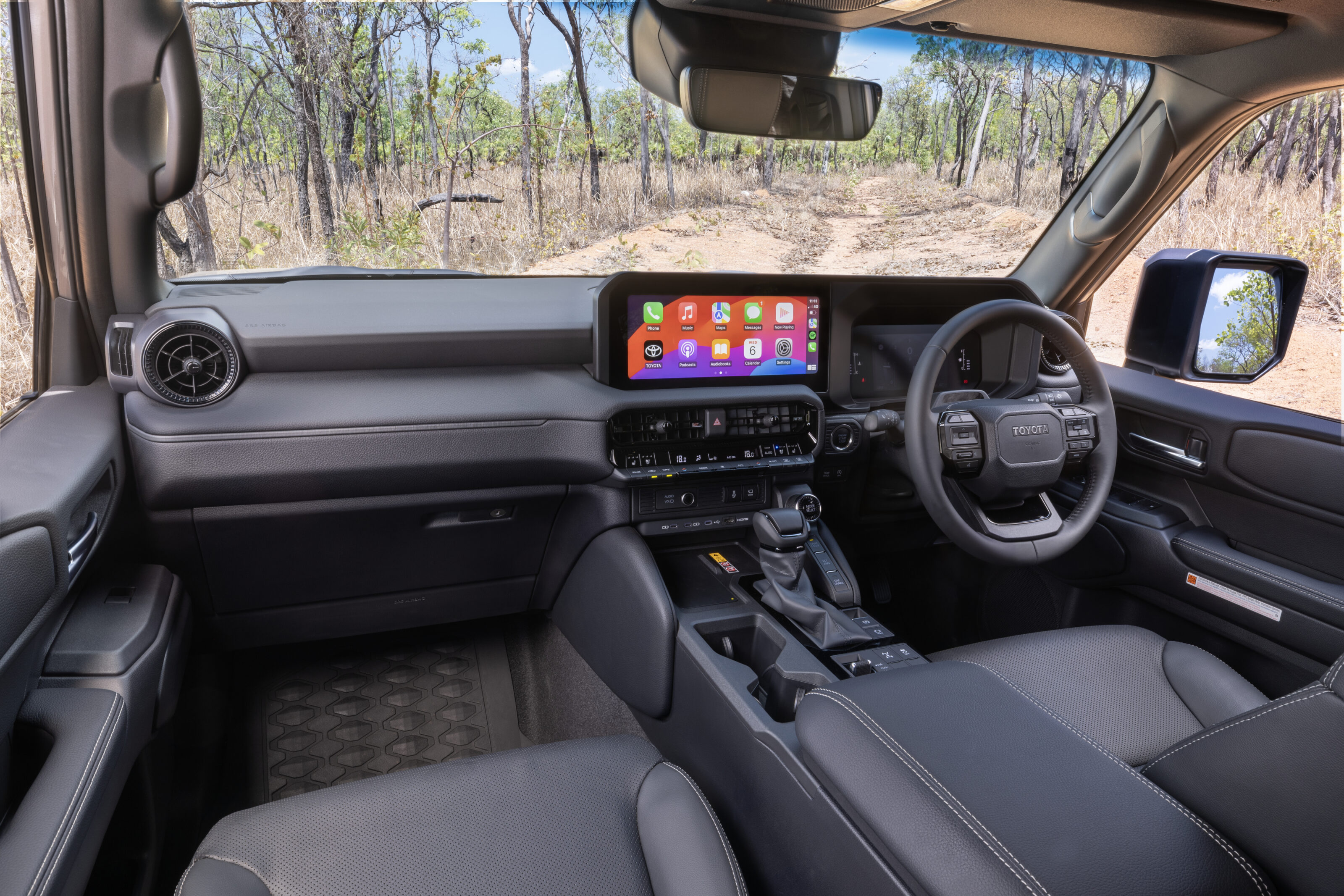
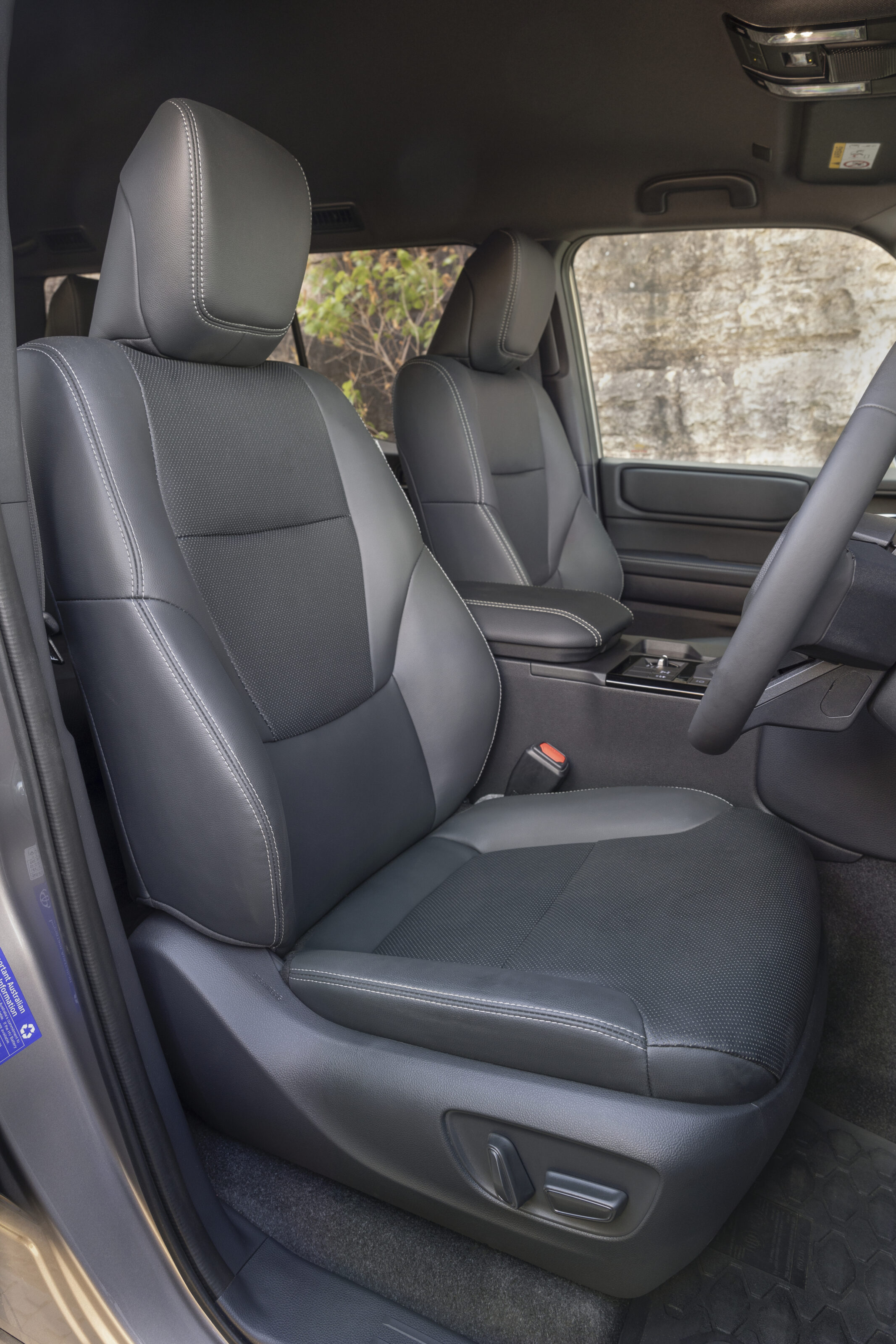
What’s more, because the hybrid Prado’s (which we don’t get yet) battery is intended to live under the boot floor, the third row effectively just sits in the boot even when folded.
Toyota’s specs say there’s still 906 litres on offer but the rear seats heavily compromise the load space and the flimsy plastic bin Toyota has installed behind them to give the illusion of a flat floor does little to improve the situation.
It makes a strong case for the base GX, which is only available in five-seat configuration. What you lose in (questionable) third-row flexibility, you more than make up for in improved luggage space.
What is it like to drive?
The improvements to the latest Toyota Prado are immediately evident from the first turn of the steering wheel. For those familiar with the leaden helm of the previous generation, the lightness of the new electrically assisted steering will be a revelation.
It makes the Prado so much easier to manoeuvre in all circumstances, whether finding a park in town or cruising at 110km/h or picking out the best line off road. Ride comfort is also very good, road imperfections either absorbed by the tyre sidewall and suspension or just pummeled into submission by the Prado’s sheer mass.
This mass works the engine very hard indeed. The mild-hybrid system’s 8.4kW/65Nm motor generator does a fine job of assisting at slower speeds to get the GXL’s 2535kg moving, but you’ll need to plan your open-road overtakes carefully and the jury is out on its towing capabilities.
Speaking of, Toyota has increased the Prado’s towing capacity to a braked maximum of 3500kg and its Gross Combined Mass (GCM) is an impressive 6600kg, but the limitation is the Gross Vehicle Mass (GVM).
For example, if towing 3500kg, the GXL’s payload is limited to 265kg (assuming a 10 per cent downball load) which means you’ll be packing relatively light. The Prado isn’t alone in this regard by any means, but nor does it move the game on and any accessories such as bullbars or roof racks will reduce this further.
Off road the Prado is in its element. Despite a locking rear diff being limited to the Altitude variant, Toyota’s traction control is more than up to most challenges, provided an appropriate set of tyres is fitted.
How much does it cost to run?
In our experience the Toyota Prado’s 7.6L/100km combined fuel economy claim is highly optimistic, with its typical thirst more likely to be in the 9s – see earlier point about not much engine pushing a lot of car.
Of note for outback tourers, especially those towing, will be the fuel tank reduction from 150 to 110 litres. Still decent, but you’ll be planning more stops.
The new Prado also requires AdBlue, with Toyota claiming the 17.4L tank will need refilling about every 8000km, which will set you back about $35 at the pump at current prices.
Toyota offers a five-year/unlimited kilometre warranty with an extra two years of driveline cover if you stick to the scheduled servicing, which is required every six months or 10,000km.
The first 10 services are capped at $390 each, but that’s still a hefty $3900 over the first five years. Over the same period, a Ford Everest costs $1591.
If an item covered by warranty fails, towing to the nearest Toyota dealer and a loan car is covered, otherwise Toyota’s roadside assist costs either $99 or $139/year.
How safe is it?
A five-star ANCAP rating was applied to all new Prado variants in December 2024 with scores of 85 per cent for adult occupant protection, 89 per cent for child occupant protection, 84 per cent for vulnerable road user protection and 82 per cent for safety assist. Obviously, with scores like this it has the works in terms of safety equipment, including nine airbags and a list of active acronyms that would make for some terrible Scrabble hands (see below). In general, they’re pretty unobtrusive, save the occasional unnecessary interruption from the lane-keep assist.
- AEB with pedestrian, cyclist, motorcyclist and oncoming vehicle detection
- Intersection collision avoidance
- Active cruise control
- Deceleration assist
- Road sign assist (speed signs only)
- Emergency driving stop system
- Rear cross-traffic alert
- Driver monitor camera
- Emergency steering assist
- Low-speed acceleration suppression
- Curve speed reduction
- Lane trace assist with lane-departure alert
- Auto high beam
- Blind-spot monitor
- Safe exit assist
- Rear parking support brake
Verdict
The 2025 Toyota LandCruiser Prado 250-Series is an enigma. It looks great, has vastly improved road manners, excellent off-road chops and has been brought up to date with the latest safety and in-car technology.
On paper it looks like a slam dunk, but little thought has apparently been put into some important fundamentals. Compromise is the word. The inflexible second row compromises its seven-seat capabilities; the third-row packaging compromises its luggage space; the increased weight compromises its performance, efficiency and payload.
Combine these compromises with a significantly increased price tag and the new Prado is a good car that’s nonetheless underwhelming. The caveat to this is the five-seat GX and Altitude variants will largely solve these packaging issues, while offering better value and greater off-road ability respectively, so we’ll endeavour to bring you further reviews as soon as possible.
Specifications
| Engine | 2755cc 4cyl diesel, dohc, 16v, turbo, mild hybrid |
|---|---|
| Max power | 150kW @ 3000-3400rpm |
| Max torque | 500Nm @ 1600-2800rpm |
| Transmission | 8-speed automatic |
| Weight | 2535kg |
| Economy | 7.6L/100km (claimed) |
| Price | $79,990 |
| On sale | Now |
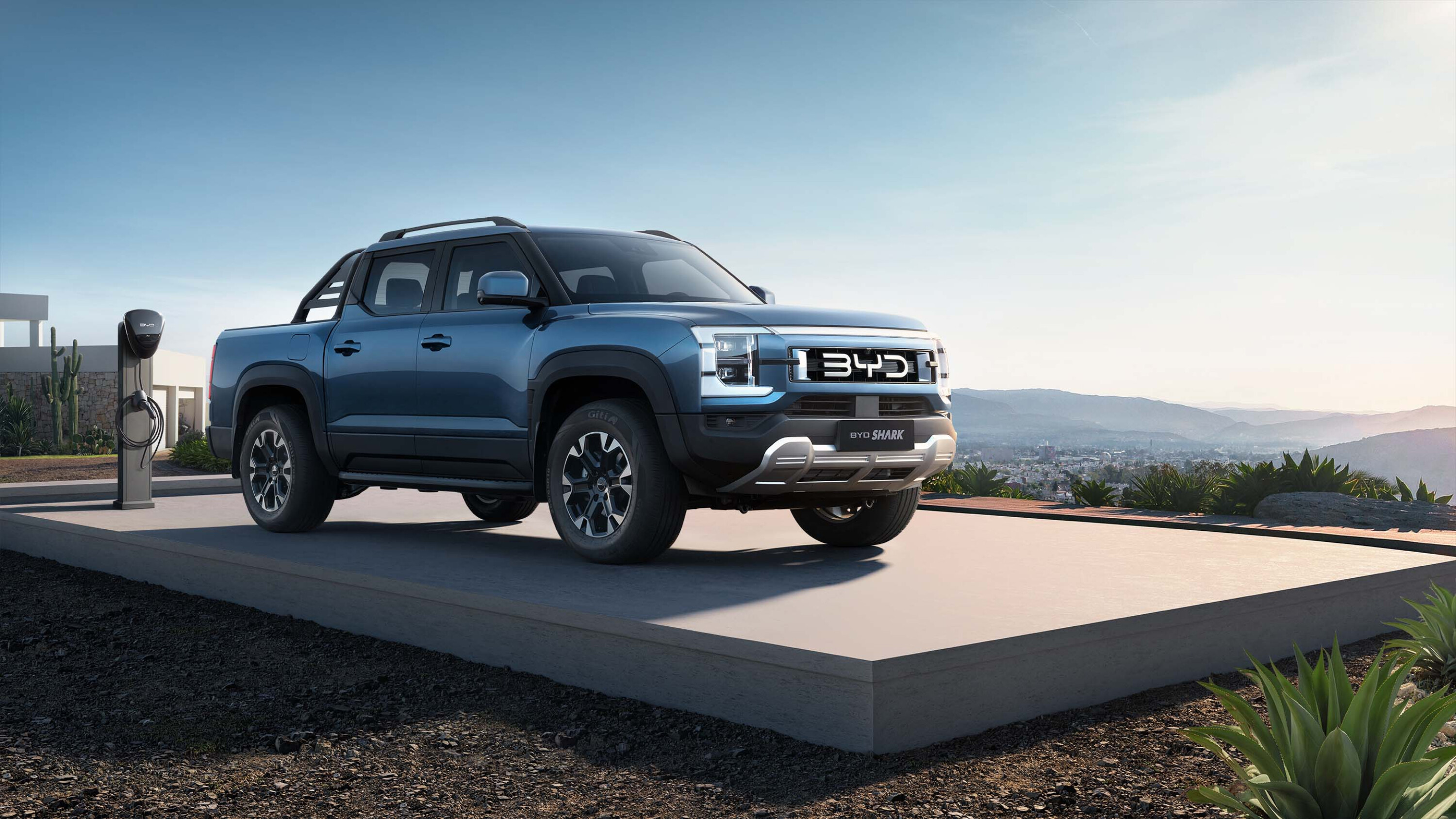
After years of glacial evolution, the 2025 BYD Shark 6 is a genuine revolution in the dual-cab ute segment.
It’s the first plug-in hybrid ute available in Australia and its cutting-edge powertrain gives it segment-leading power and performance as well as impressive fuel efficiency and vehicle-to-load practicality.
Loaded with kit at a price that significantly undercuts most of the established offerings, it will play a pivotal role in BYD’s ambitions to become the number one sales force in Australia.
Here’s the story to this point and everything you need to know about the 2025 BYD Shark 6.
Jump Ahead
- March 2025: BYD sales leap on strength of Shark 6 ute
- January 2025: Deliveries commence
- October 2024: Factory-backed Ironman accessories
- October 2024: Full pricing and specifications
- September 2024: Australian on-sale date confirmed, pricing below $60,000
- May 2024: BYD Shark revealed!
- April 2024: Reveal date and name announced
- November 2023: BYD Ute imagined
- October 2023: BYD Ute leaked
- September 2023: BYD Ute confirmed for Australia
March 2025: BYD sales leap on strength of Shark 6 ute
BYD notched back-to-back record sales months in Australia with 4,811 vehicles sold in March 2025 thanks to new product like the Sealion 7 electric SUV and Shark 6 PHEV ute.
According to VFACTS, Australia’s national vehicle sales report, the brand’s 4,811 sales result marks a 100 per cent increase in year-on-year figures and a big increase on the 3,281 sales of the month before it.
In particular, the new Shark 6 plug-in hybrid ute sold strongly with 2,810 registrations or 58 per cent of the company’s March sales with buyers taking delivery before the FBT exemption on plug-in hybrids ended on April 1.
January 2025: Deliveries commence
The first examples of the BYD Shark are now reaching customers as EVDirect attempts to fulfil more than 5000 orders placed by customers.
Sales have not yet been confirmed as the Shark is yet to be added to the official VFACTS reporting and deliveries have been slowed by recent port issues.
There is some pressure on delivery dates due to the looming cessation of Fringe Benefit Tax exemptions for plug-in hybrid vehicles on April 1, 2025.
October 2024: Factory-backed Ironman accessories
One of the difficulties with new entries into the dual-cab market is accessory support, but BYD’s local distributor, EVDirect, has partnered with Ironman 4×4 to offer a range of accessories for the Shark.
The accessories can be added when purchasing the vehicle and are backed by BYD’s six-year/150,000km warranty.
Offerings include a bullbar with integrated light bar, roof rack, manual and electric tonneau covers and canopies.
October 2024: Full pricing and specifications
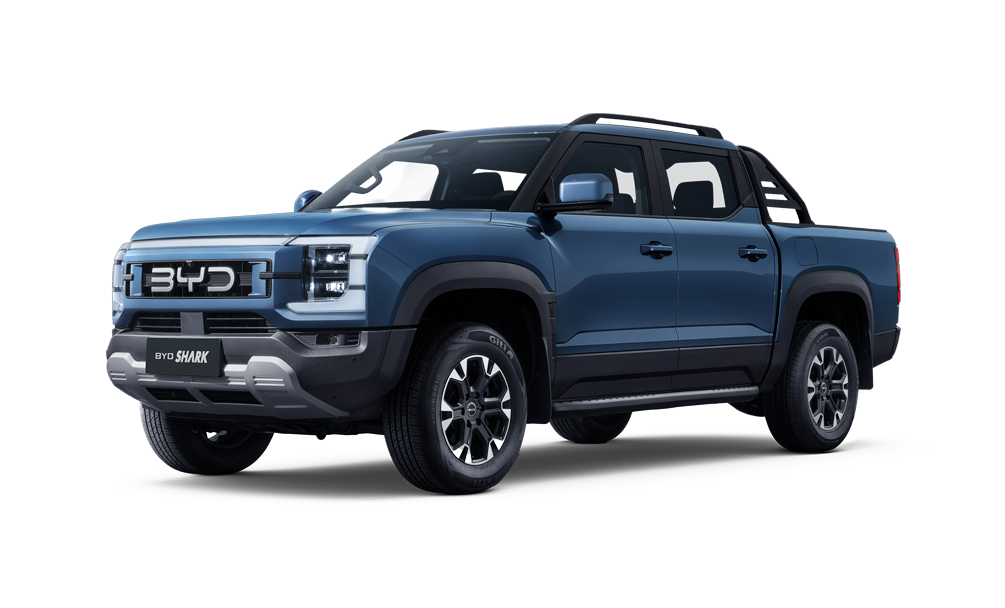
The 2025 BYD Shark is now available to order with an eye-catching price tag of $57,900 plus on-road costs. Only one variant is currently available and BYD has said the current price is an introductory offer, so this may rise at a later date.
As mentioned below in an earlier update, the Shark is powered by a combination of a 1.5-litre four-cylinder turbo petrol and dual electric motors which produce 321kW/650Nm.
A 29.58kW Blade battery provides up to 100km (NEDC) of electric range and gives the Shark vehicle-to-load capability.
It’s loaded with equipment including leather upholstery, a 15.6-inch rotating infotainment screen with wireless smartphone mirroring, heated and ventilated front seats, eight-way power-adjustable driver’s seat and 10.25-inch digital instrument display.
Dimensions
| Overall length | 5457mm |
|---|---|
| Overall width | 1971mm |
| Overall height | 1925mm |
| Wheel track (front and rear) | 1660mm |
| Wheelbase | 2920mm |
| Minimum turning radius | 5.50m |
| Tray capacity | 1200L |
| Kerb weight | 2710kg |
| GVM | 1660mm |
| Wheel track (front and rear) | 3500kg |
| Seating capacity | 6 |
Off-road dimensions
| Approach angle | 31.0 |
|---|---|
| Departure angle | 19.3 |
| Ramp-over angle | 17.0 |
| Ground clearance | 230mm |
| Maximum wading depth | 700mm |
September 2024: Australian on-sale date confirmed, pricing below $60,000
Australian sales of the 2025 BYD Shark will commence on October 29 and contrary to expectations below of a circa-$70,000 price tag, BYD says the Shark will start below $60,000.
May 2024: BYD Shark revealed!
The 2025 BYD Shark has been officially revealed ahead of its Australian launch, where it will look to bite chunks out of the sales of the Ford Ranger, Toyota Hilux, Isuzu D-Max, Mitsubishi Triton and more.
It’s one of the biggest fish in the sea, measuring 5457mm long, 1971mm wide and 1925mm tall, bigger in every dimension than a Ford Ranger. But while it’s visually familiar, the Shark’s mechanical makeup is like nothing else in the segment.
A 1.5-litre four-cylinder turbo-petrol and dual electric motors combine for an impressive 321kW, giving the Shark the ability to sprint to 100km/h in 5.7sec yet return a combined fuel consumption claim of 7.5L/100km.
One of BYD’s lithium-iron phosphate ‘Blade’ batteries is integrated into the chassis and provides up to 100km of electric-only range, though this claim is made using the less strenuous NEDC test cycle, like wise the Shark’s total 840km range.
According the BYD, the Shark will prioritise using the electric motors for “up to 80 per cent of total journeys” before switching to hybrid running. Vehicle-to-load capability will also allow tools or appliances to be powered using the battery.
Another unique feature of the Shark is its independent coil-sprung rear end, rather than the live axle and leaf springs typically found beneath dual cabs. This should pay dividends in terms of on-road comfort and handling and the 835kg payload is competitive, but maximum towing is only 2500kg rather than the usual 3500kg.
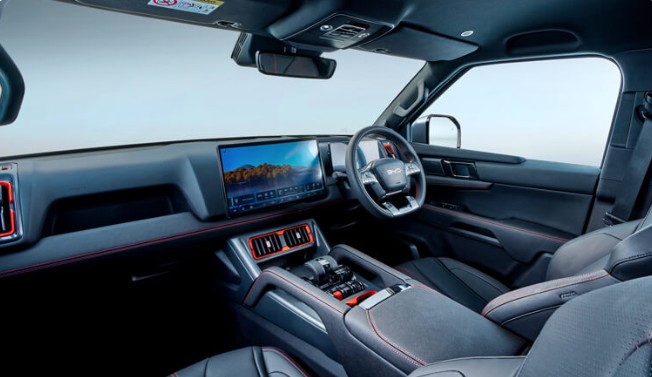
Inside, the Shark has a high level of equipment, including a 15.6-inch touchscreen infotainment system with smartphone mirroring, a 10.25-inch digital instrument cluster, wireless phone charging and a head-up display.
On the safety front, there’s autonomous emergency braking, lane-keep assist, lane departure warning, blind-spot monitoring, rear cross-traffic alert and adaptive cruise control with BYD expecting a five-star ANCAP rating when the Shark is tested in due course.
Mexican pricing of 899,980 pesos converts to around $80,000 locally, but it’s expected the Shark will come in under this to align with the likes of the Ford Ranger Wildtrak, Isuzu D-Max X-Terrain and Toyota Hilux GR Sport.
Powertrain
| Drivetrain | AWD |
|---|---|
| Front motor type | Permanent magnet, synchronous motor |
| Front motor maximum power | 170kW |
| Front motor maximum torque | 310Nm |
| Rear motor type | Permanent magnet, synchronous motor |
| Rear motor maximum power | 150kW |
| Rear motor maximum torque | 340Nm |
| Engine type | Hybrid special longitudinal 1.5T |
| Engine maximum power | 135kW |
| Engine maximum torque | 260Nm |
| Maximum power | 321kW |
| Maximum torque | 650Nm |
| Fuel tank capacity | 60L |
| Combined fuel consumption | 7.9L/100km |
| Combined range | 800km |
April 2024: Reveal date and name announced
We now know when we’ll get our first official look at the new BYD ute, which we now know will be called the Shark.
In a post on X (formerly Twitter), BYD said: “Get ready for BYD SHARK’S global debut in Mexico City, Mexico, and witness the strength and innovation behind our new Pickup Truck. Mark your calendars for May 14, 2024, it’s here to redefine green mobility to the next level.”
Performance
| Acceleration (0-100km/h) | 5.7 seconds |
|---|---|
| Electric range | 100km |
| Battery type | BYD Blade |
| Battery capacity | 29.58kWh |
| CO2 emissions | 46g/km |
| Combined fuel consumption | 2.0L/100km |
| Energy consumption | 212Wh/km |
November 2023: BYD Ute imagined
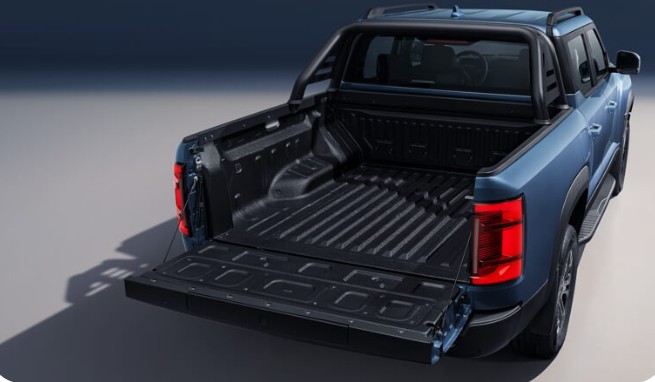
Thanks to the earlier patent images, we’ve been able to conjure up some renderings of the 2025 BYD ute that we’re fairly certain, while speculative, are pretty close to the money.
October 2023: BYD Ute leaked
Patent images of the new BYD ute have been uncovered by CarNewsChina, providing our first concrete look at the hotly anticipated dual-cab.
Earlier camouflaged spy pics have provided a good indication of the ute’s overall proportions, but the patent images fill in some details, including a Ford-style front end with C-shaped headlights, bold BYD grille, heavily flared front guards and a long wheelbase.
There are also plenty of body adornments, including a front bash plate, side steps, sports bar and integrated roof rails, while the overhead view even reveals a sunroof. Another unique feature is the blacked-out pillars giving the impression of a ‘floating’ roof.
Powertrain details are still unconfirmed, but it’s expected the BYD will launch with a plug-in hybrid system – potentially beating the Ford Ranger PHEV to market as Australia’s first plug-in ute – with a battery electric version to arrive later.
BYD has said the ute will wear an ‘Ocean Series’ moniker. Traditionally, BYD’s pure electric models have had animal names – such as the Seal and Dolphin – while plug-ins are named after vessels, like the Frigate medium SUV and Landing Ship people mover not offered in Australia.
September 2023: BYD Ute confirmed for Australia
BYD’s local sales ambitions will be bolstered by the addition of a ute in 2024, according to EV Direct CEO Luke Todd.
Concrete details are still scarce as the ute is yet to be officially revealed, even in its Chinese home market, but spy shots reveal a full-size dual-cab to rival the likes of the Ford Ranger and Toyota Hilux, while inside large digital screens suggest a modern interior.
The BYD ute will be one of the first electrified offerings in the segment, though to what extent is currently unclear, and it will be extensively tested in Australia to ensure it’s tough enough for local conditions.
Unlike some Chinese manufacturers, that have separate brands for passenger and commercial vehicles, the new ute wears prominent BYD branding on its grille. The working codename for the project is ‘F pick-up’ but given the brand’s other offerings, an aquatic-themed name would seem a safe bet.
Safety features
- 360° camera
- Front and rear parking sensors
- Intelligent power brake system
- Hydraulic Brake Assist (HBA)
- Electronic Brake force Distribution (EBD)
- Hill Hold Control (HHC)
- Controller Deceleration Parking (CDP)
- Vehicle Dynamic Control (VDC)
- Hill Descent Control (HDC)
- Driver Fatigue Monitor System (DFM)
- Adaptive Cruise Control (ACC)
- Automatic Emergency Braking (AEB)
- Lane Departure Warning (LDW)
- Lane Departure Prevention (LDP)
- Emergency Lane Keeping Assist (ELKA)
- Front Collision Warning (FCW)
- Intelligent Cruise Control (ICC)
- Rear Collision Warning (RCW)
- Trac Sign Recognition (TSR)
- Intelligent Speed Limit Information (ISLI)
- Intelligent Speed Limit Control (ISLC)
- Front Cross Trac Alert (FCTA)
- Front Cross Trac Brake (FCTB)
- Rear Cross Trac Alert (RCTA)
With 20,591 registered in January 2025 alone for a 23.7 per cent market share, it’s clear that mid-size SUVs are increasingly popular in Australia. That’s in thanks to the sheer variety available, with more than 20 models to choose from.
Many buyers also prize them due to their practicality and with that in mind, ranked on boot space, what are the most capacious mid-size SUVs on sale in Australia?
1. Tesla Model Y – 938L
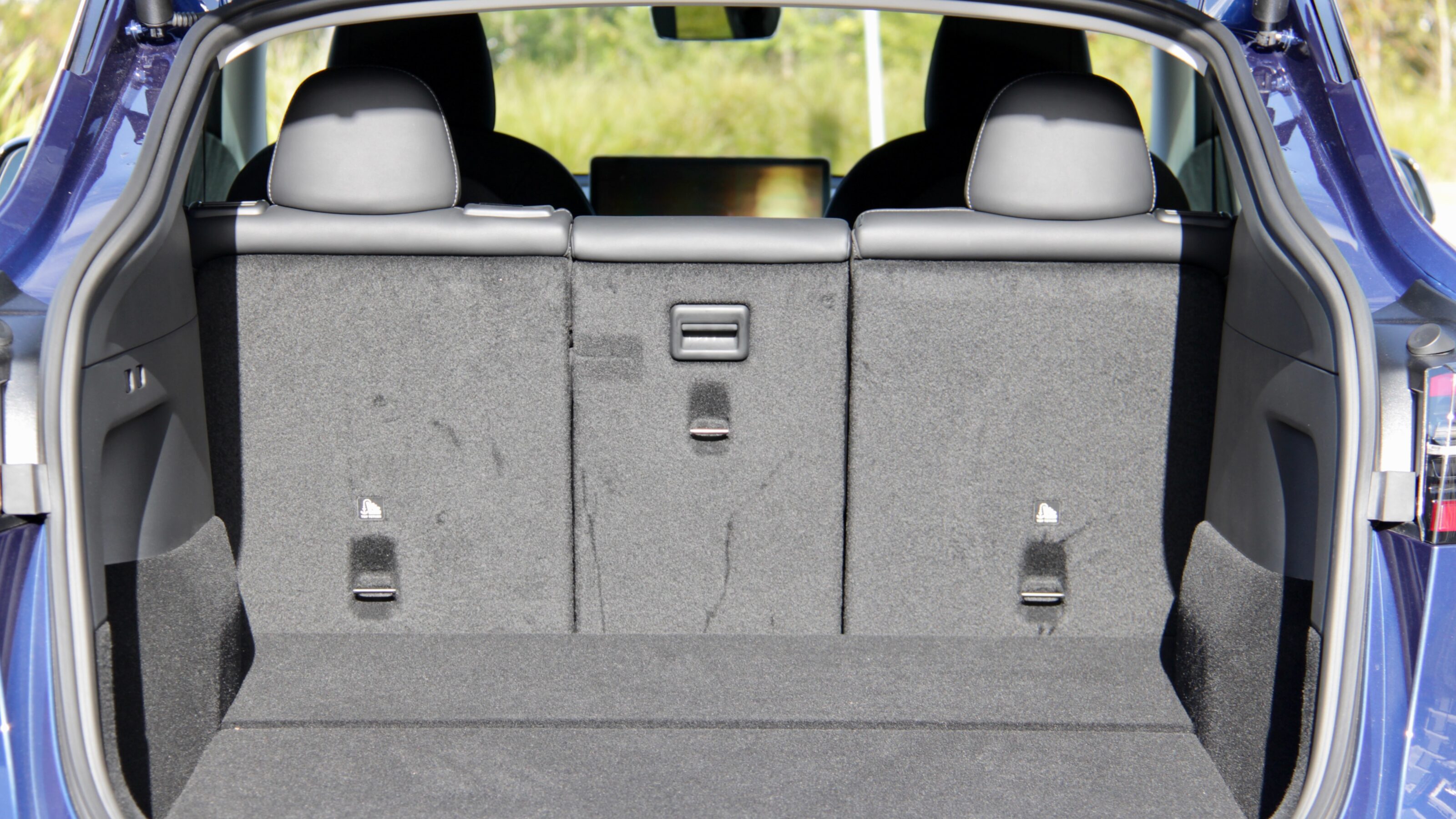
Part of the global popularity of the Model Y – it was the best-selling car in a number of global markets in 2024, before Elon’s controversial foray into politics – is not its electric drivetrain or performance, but just how damn practical it is. It’s well packaged with excellent rear seat space, as well as a massive boot. With the rear seats folded, a humungous 2,022L of space is available.
Its coupe-like roofline doesn’t impede too much on rear space either, though it may cause issues when carrying taller items. Still, it’s very practical – helped further by its large 117L front boot, which is more than enough for a weekly shop.
2. VW Tiguan – 615L
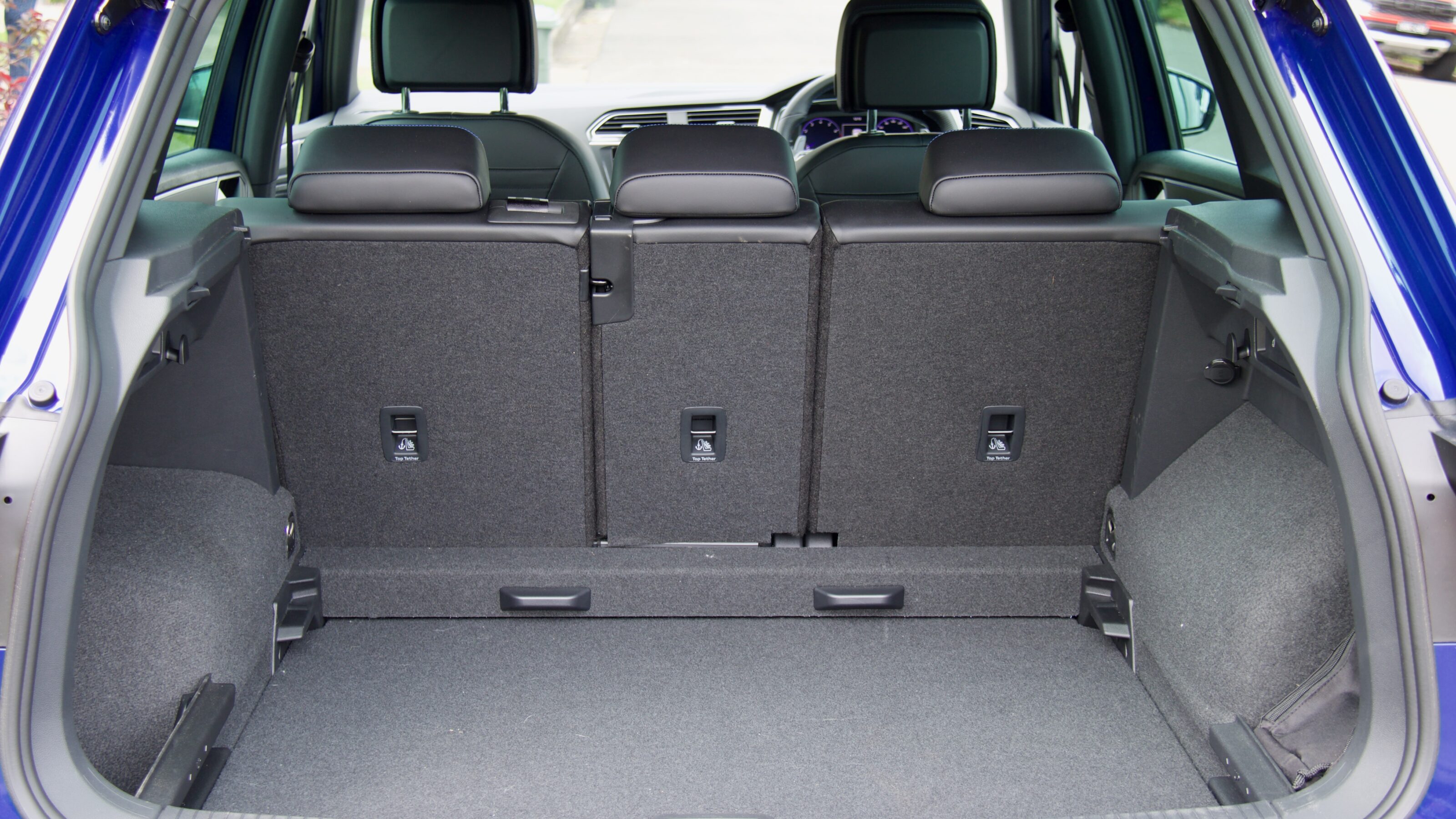
Even though there’s a larger Allspace model and also a bigger third-generation model launching locally, the current Tiguan is still quite a practical choice in the segment. With 615-litres of available space – with the rear seats slid forward – the Tiguan’s boot is the largest of the ICE offerings.
It’s also got some handy features like under-floor and side storage, bag hooks and even remote releases to fold the rear seats – doing so opens up 1,655L of space, which is bettered by some rivals but it’s still a healthy number.
3. GWM Haval H6 – 600L
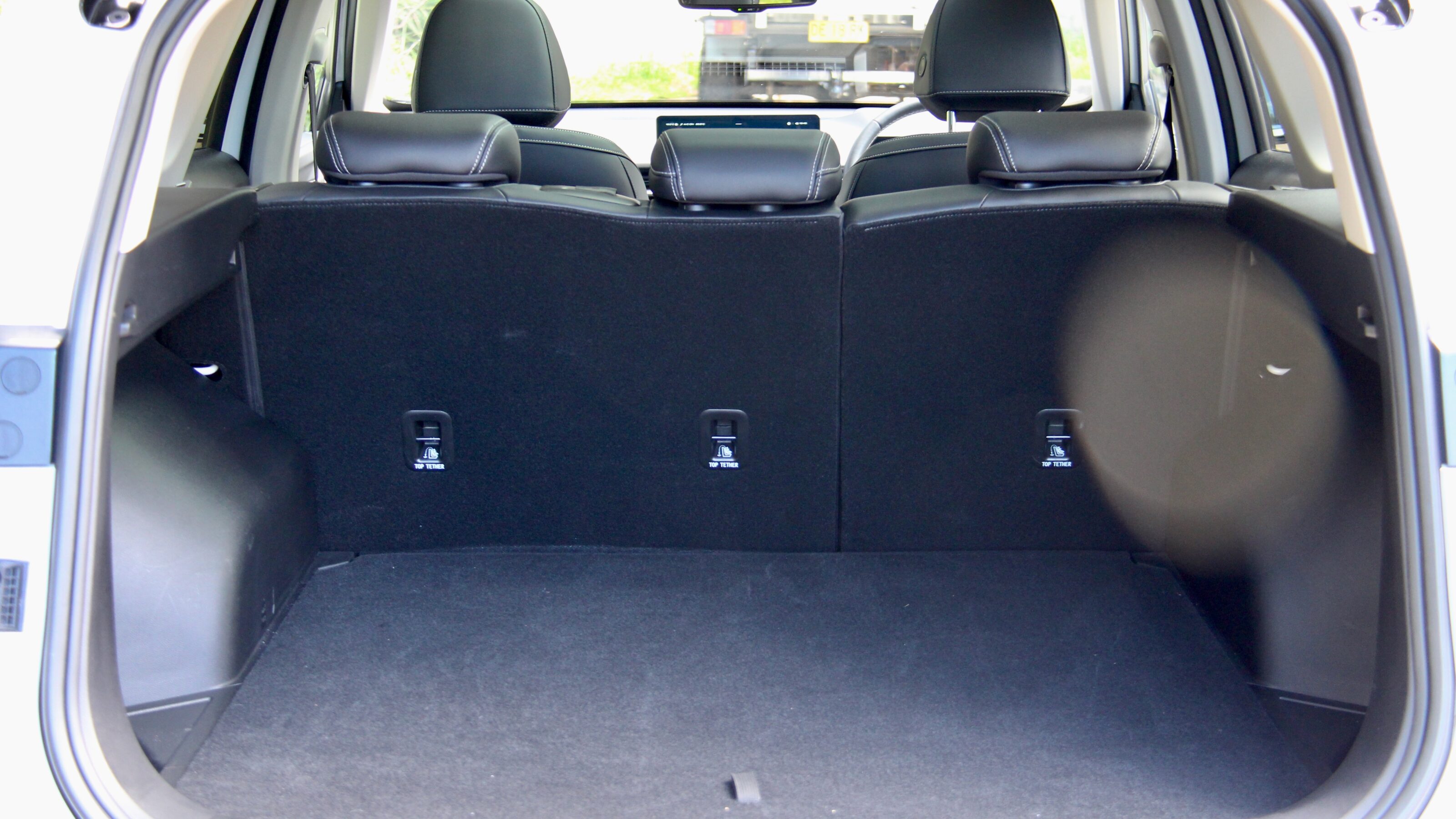
The GWM Haval H6 sells reasonably well locally but those looking for practicality should consider it because of its large 600-litre bootspace, which expands to 1,405L with the rear seats folded.
Aside from some side storage, it doesn’t feature any clever touches but impresses with a flat floor and a relatively low load lip.
4. Honda CR-V – 589L
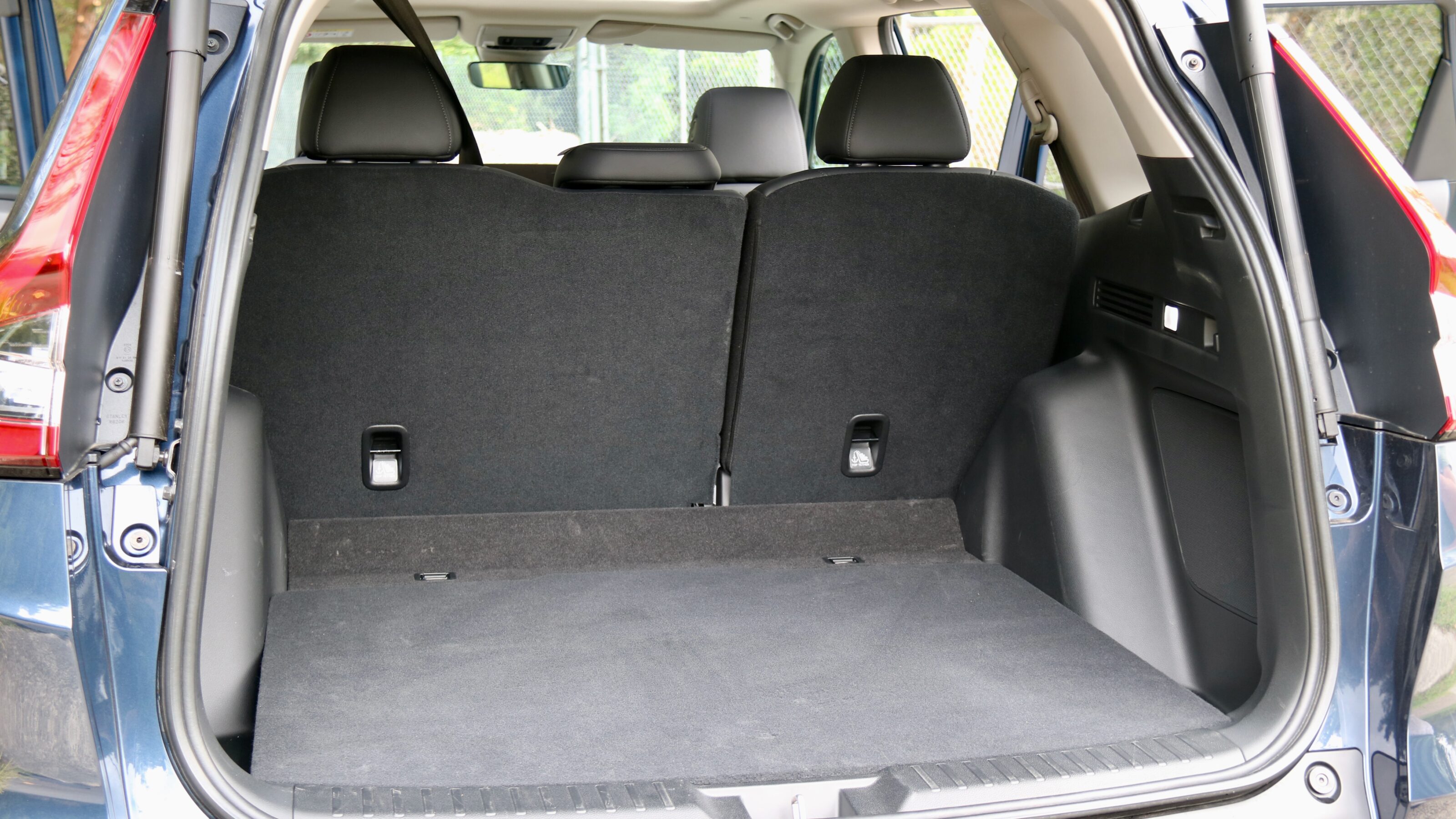
The Honda CR-V has long been one of the most practical mid-size SUVs and the current shape model is no different with a healthy 589-litre space that expands to 1,671L with the rear seats folded. It’s also full of practical details like bag hooks and side storage, while the option of two extra seats for seven in total is available as well.
The CR-V’s load lip is impressively low as well, making it easy to load heavy cargo in, while the electric bootlid – depending on model – can be set to automatically close when you walk away from it.
5. Kia Sportage Hybrid – 586L
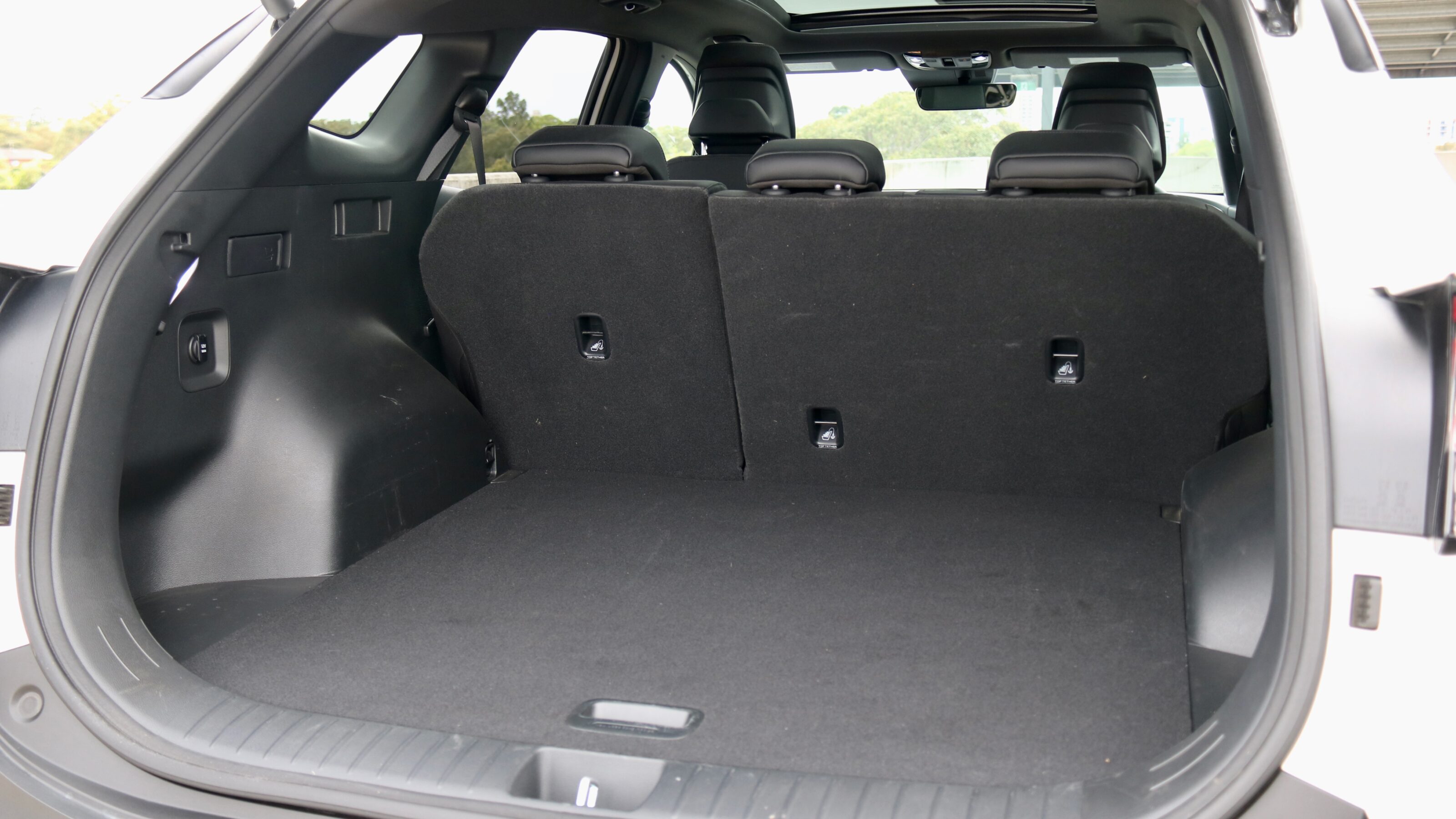
In hybrid form, the Sportage has a large 586-litre bootspace, which expands to 1,872L with the rear seats folded, which is one of the highest numbers in the segment.
The boot itself includes under-floor storage, remote releases for the rear seats and a power outlet, plus, the seats fold almost completely flat as well.
6. Mitsubishi Outlander and Nissan X-Trail – 585L
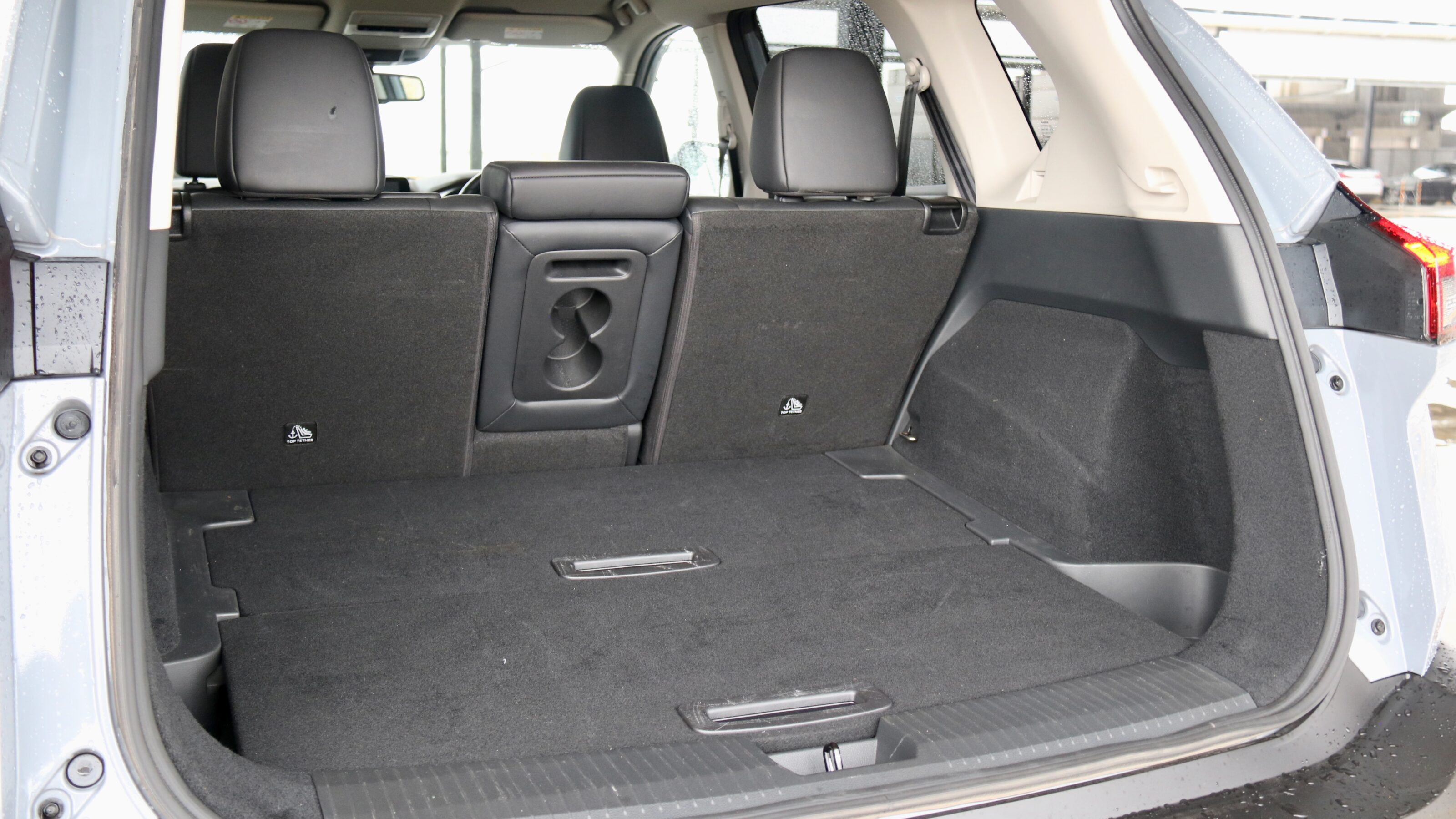
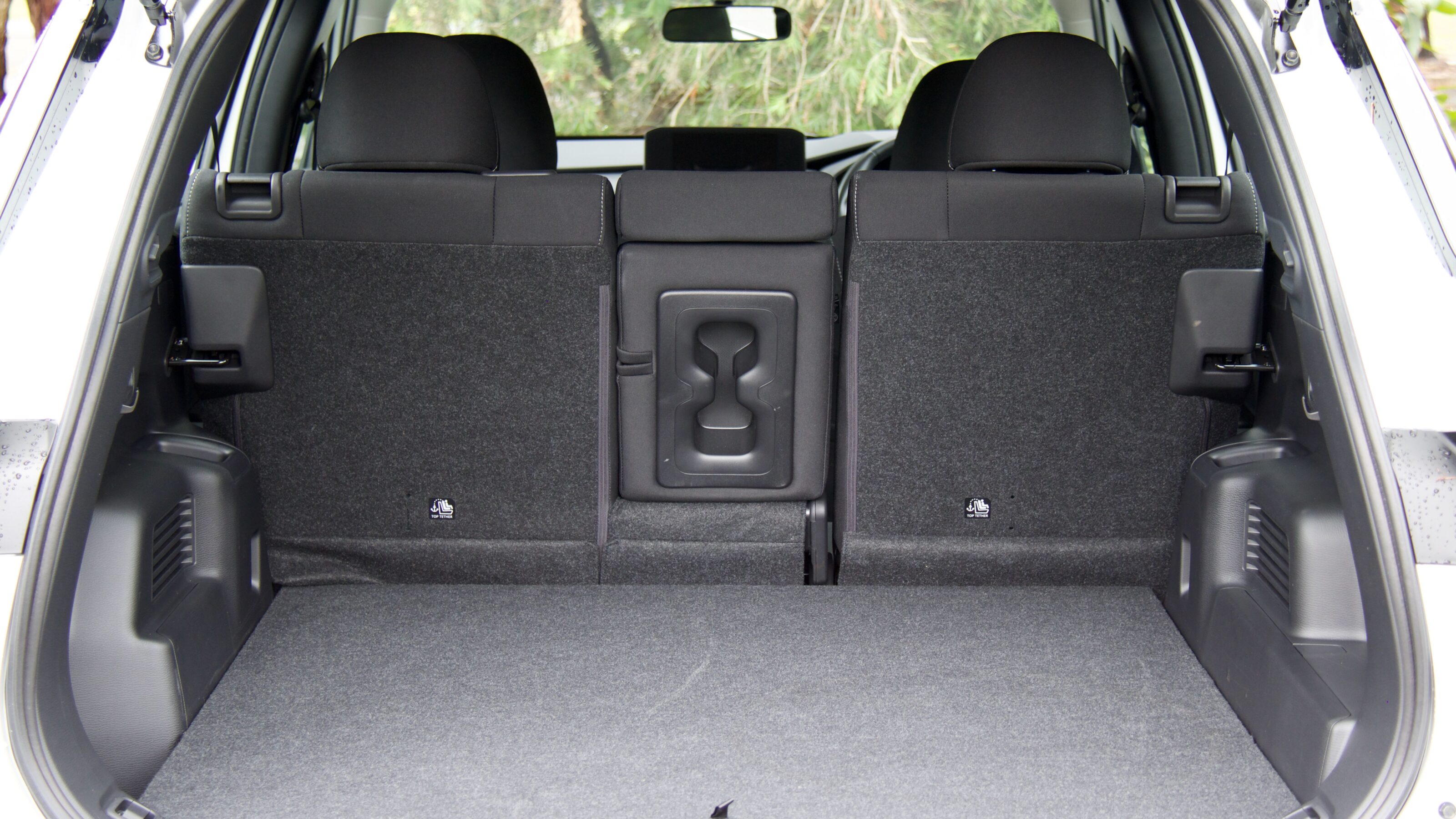
It’s no surprise to see two cars that are practically identical under the skin share the same boot capacity, and in the mid-size SUV segment, both the Outlander (above) and X-Trail (top) offer great practicality. There is side storage, under-floor storage, a 40:20:40-split rear seat depending on the spec chosen and remote releases for folding the seats.
Both are also available with a seven-seat option, though that reduces boot capacity to 478L (and just 163L with the third row in place). Folding the seats down in the five-seater Outlander increases space to 1,461L and while Nissan doesn’t quote a figure, it’s likely to be quite similar.
7. Hyundai Tucson Hybrid – 582L
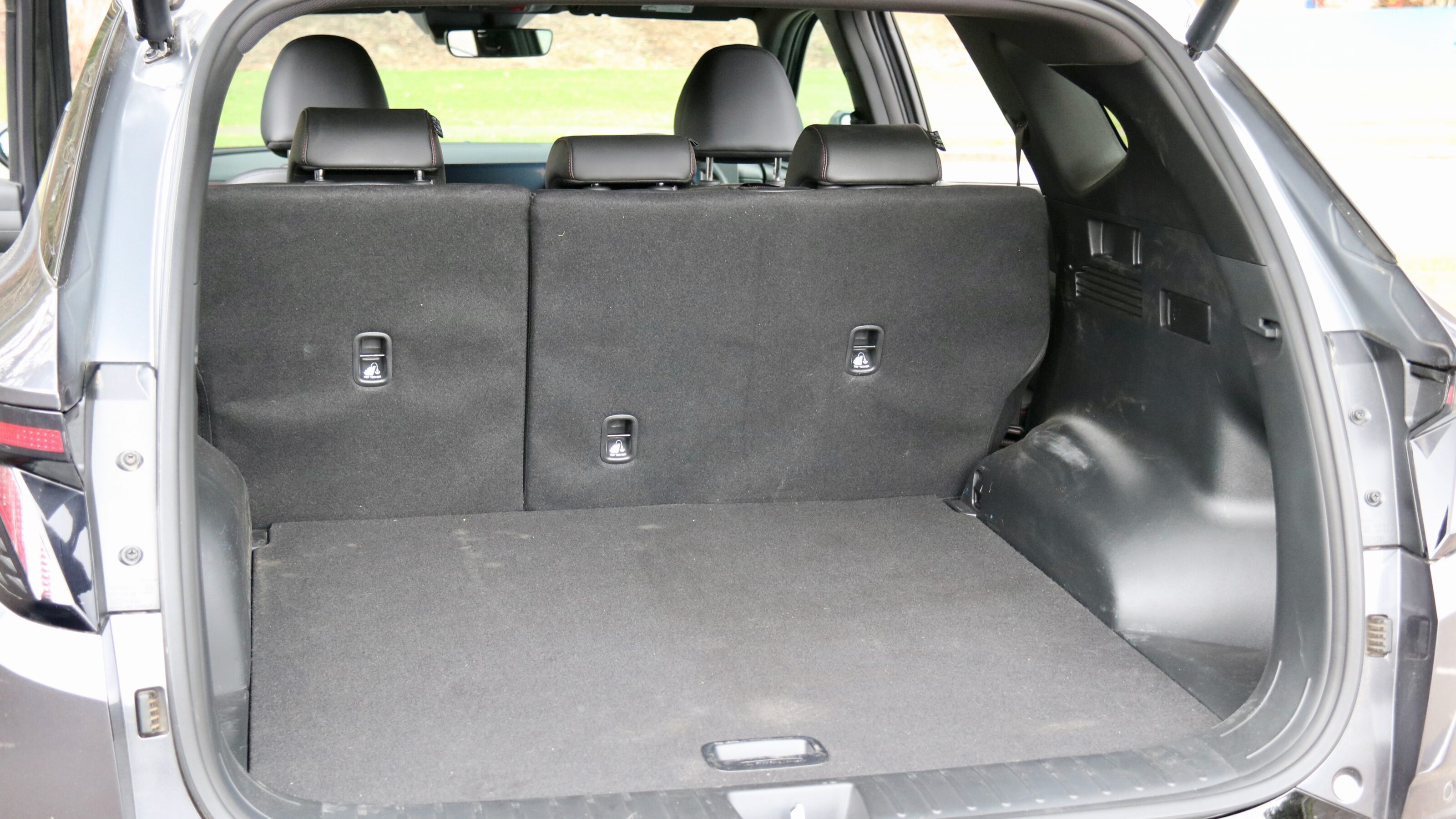
Given that the Tucson shares so much with the Sportage, a similar boot capacity was expected with the Tucson shading the Sportage by just four litres with the seats up – though with them folded, its 1,903L space is a full 31L larger than its Kia cousin.
Like the Sportage, the Tucson includes under floor storage, bag hooks and remote rear seat releases. Plus, we love how standing next to the hands-free power tailgate with the key nearby for five seconds automatically opens it. No awkward foot waving under the bumper here.
8. Leapmotor C10 – 581L
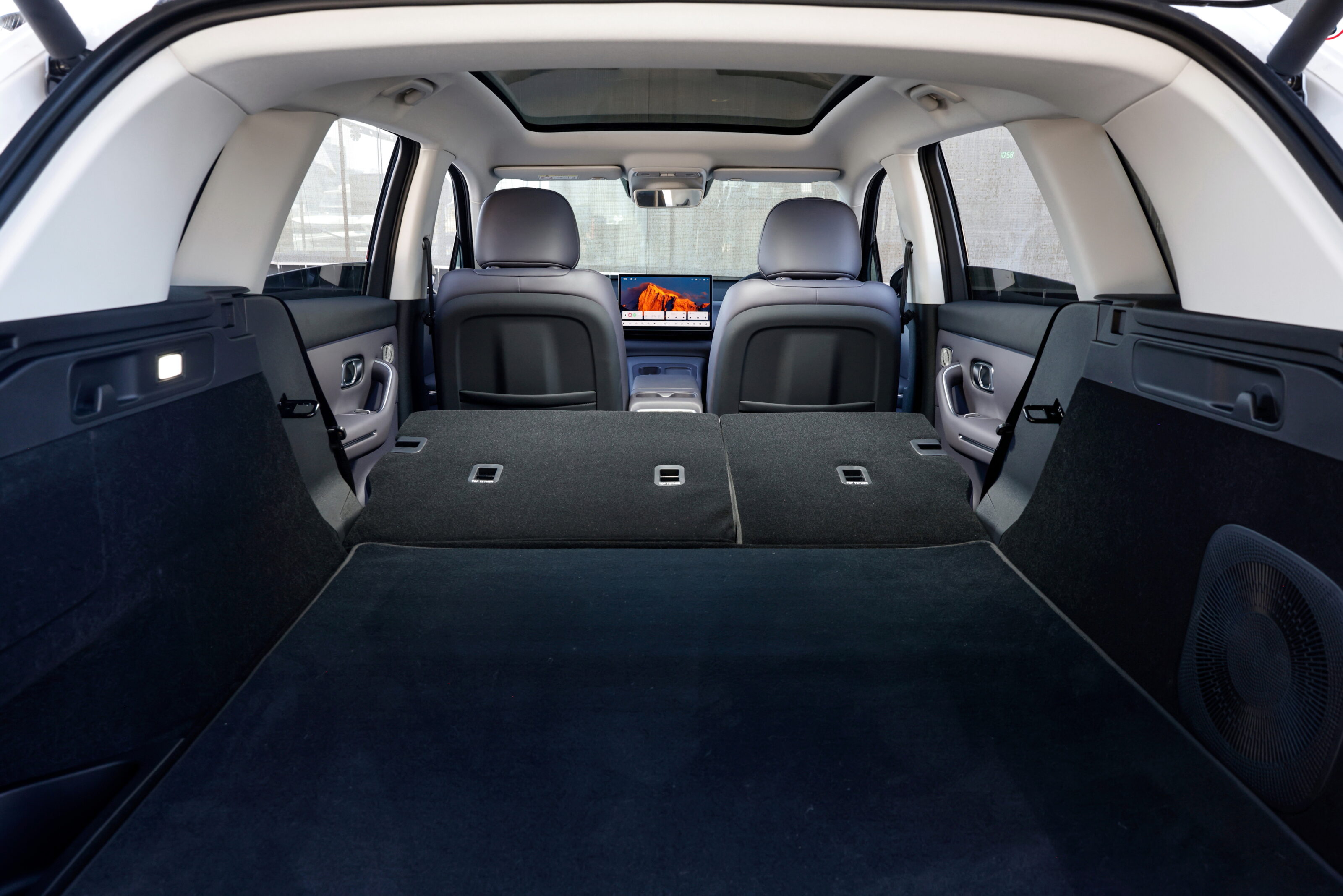
The Leapmotor C10 is a new entrant to the Australian market that isn’t likely to be on many radars, but its boot capacity might open it up to more consideration. 581L is great, especially considering that it’s not as large as some rivals on the outside.
The C10’s boot itself also features under-floor storage, side storage and a few bag hooks as well, while the seats fold almost flat for a 1,410L of space.
9. Skoda Enyaq – 570L
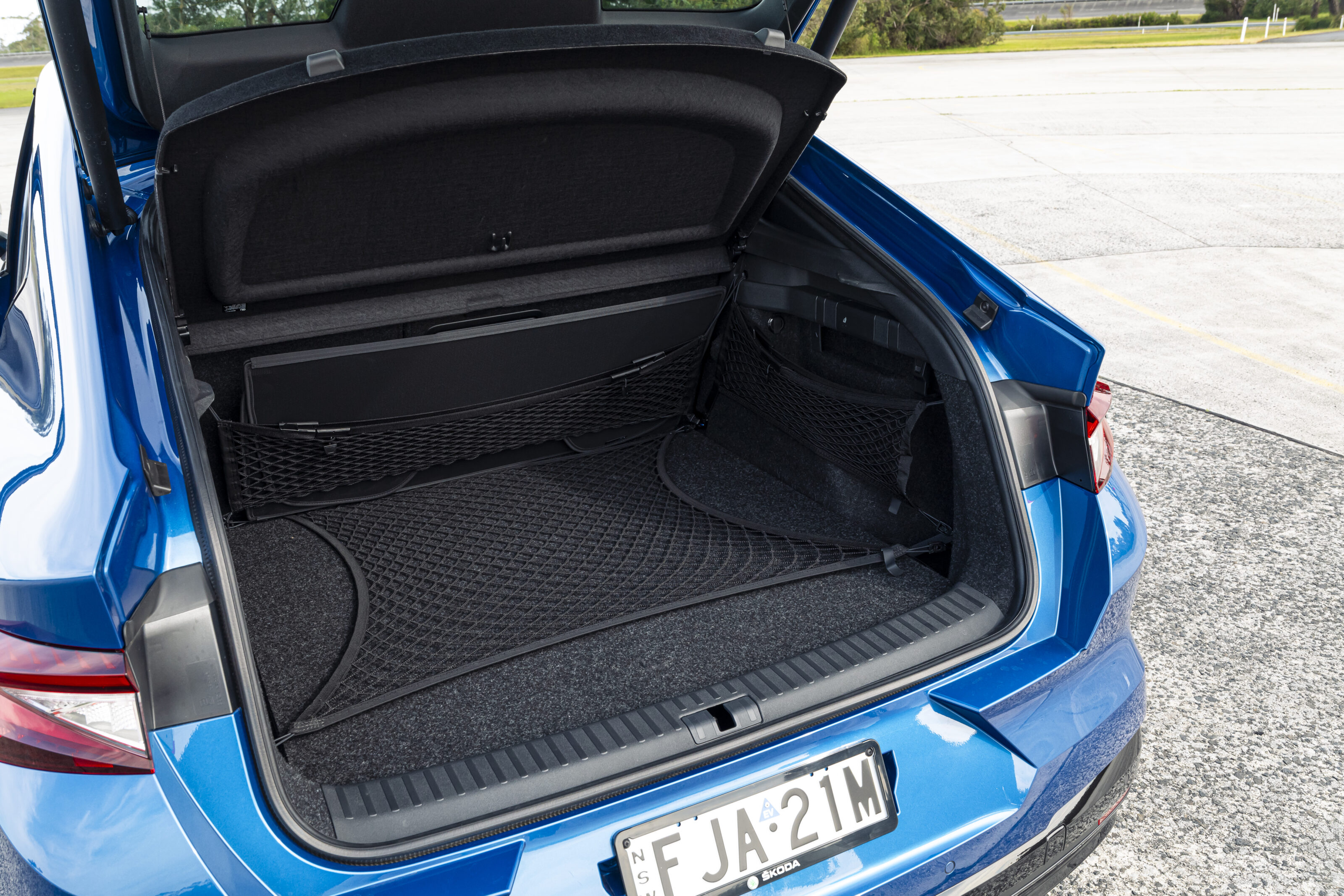
Skoda’s mid-size electric SUV went on sale in Australia last year with a healthy 570-litre boot, which opens up to 1,610L with the rear seats folded. What’s surprising about that is Australia only receives the coupe variant of the Enyaq, with the boxier and more capacious wagon shape due later this year.
As you’d expect for a Skoda, the Enyaq’s boot offers a lot of ‘simply clever’ features, such as netting, bag hooks, under floor storage with sectioning and side storage as well.
10, Chery Tiggo 7 Pro – 549L
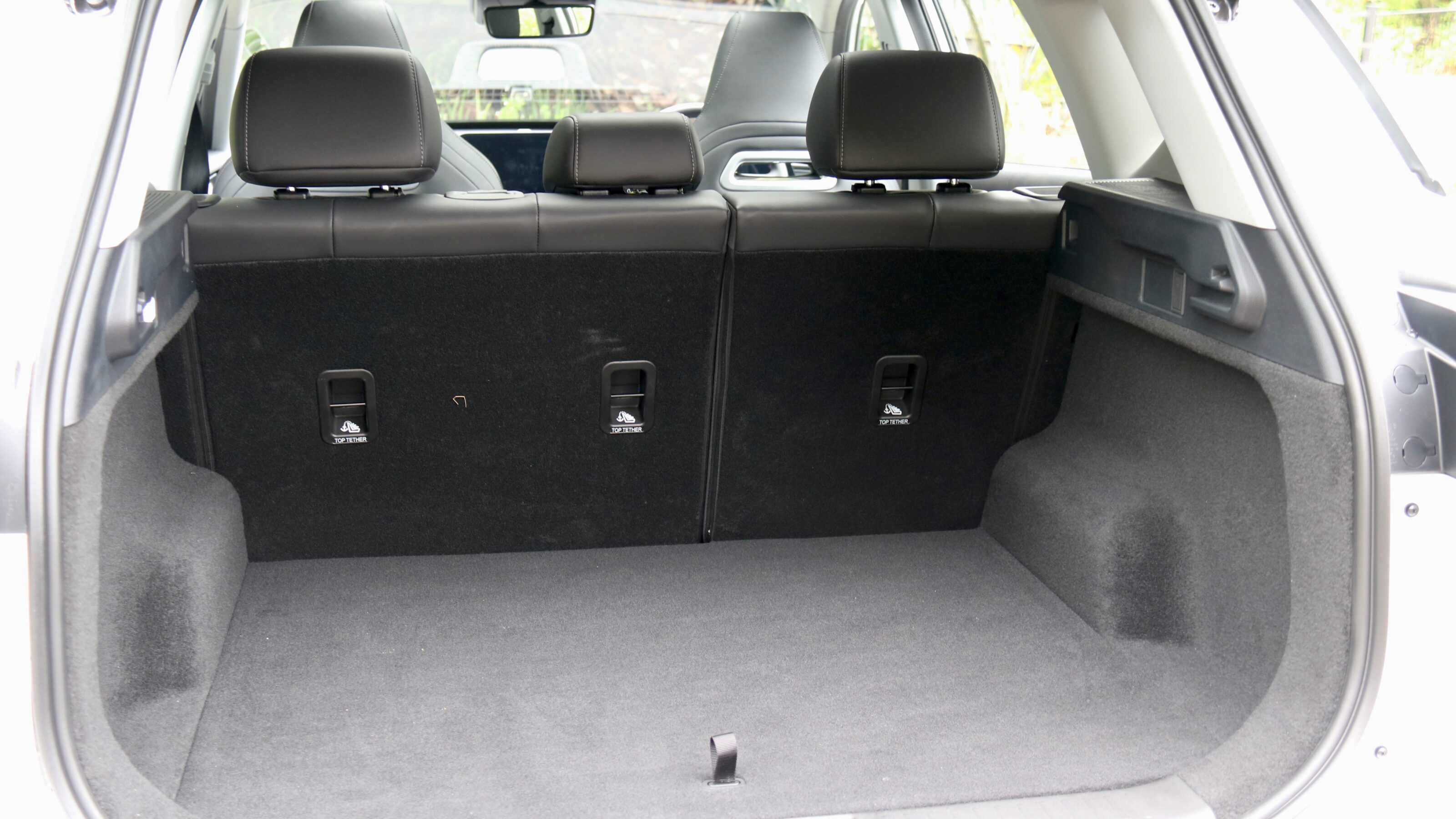
Like the Leapmotor C10, the Tiggo 7 Pro is a mid-size SUV that’s on the smaller size and yet, its 549L boot capacity sits near the top of the segment.
The capacity of the largely featureless boot grows to 1,672L with the seats folded, which is much larger than you’d expect.
Other mid-size SUVs in Australia:
- Hyundai Ioniq 5: 527L
- Skoda Karoq: 521L
- Peugeot 3008: 520L
- Kia EV5: 513L
- MG HS: 507L
- BYD Sealion 7: 500L
- Subaru Forester: 498L
- Renault Koleos: 493L
- Kia EV6: 490L
- Cupra Ateca: 485L
- Peugeot 408 plug-in hybrid: 471L
- KGM SsangYong Torres: 465L
- Deepal S07: 445L
- Toyota bz4X and Subaru Solterra: 441L
- Mazda CX-5: 438L
- BYD Sealion 6: 425L
- Geely EX5: 410L
Did you buy a mid-size SUV for its practicality? Let us know in the comments below.
Replacing the previous CX-9 in the company’s global line-up, the Mazda CX-90 represents a new era for Mazda. It sits on a new rear-biased platform, it uses a range of new six-cylinder powerplants with mild-hybrid tech and even the eight-speed automatic gearbox is new.
There are three variants available in Australia for now, and each one is well equipped and suitably premium inside. And they would want to be, as the top-spec Azami sits at over $100,000 once on-road costs are included in the price. Here’s everything you need to know.
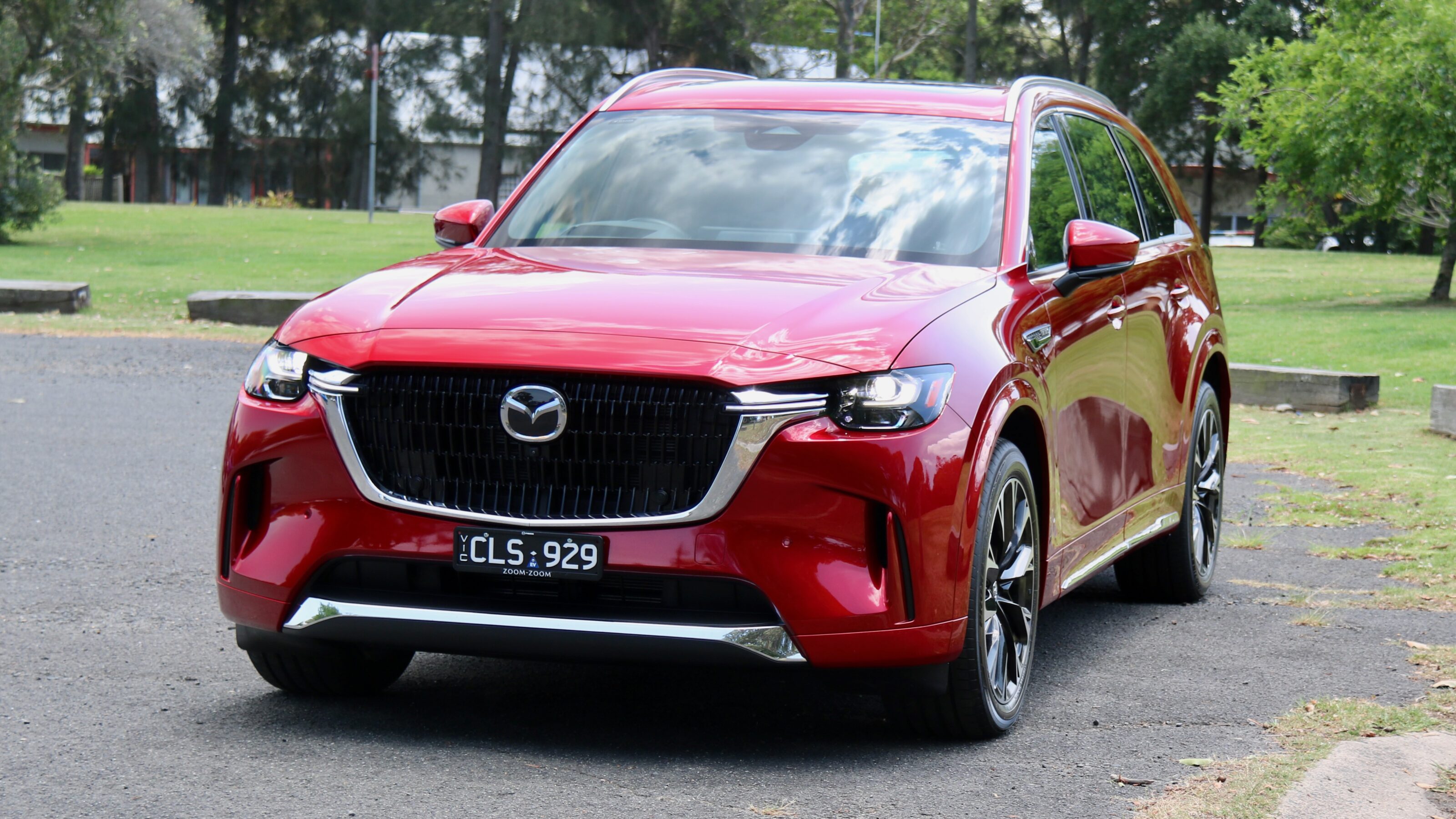
How much does the Mazda CX-90 cost?
Most CX-90 variants sold in Australia feature seven seats, though option packages with six-seats are available on the top-spec Azami. The CX-90 is otherwise offered as a five-door wagon. Regardless of the model chosen, a new 3.3-litre turbocharged inline six-cylinder engine is available: either a 254kW/500Nm petrol until or a 187kW/550Nm diesel. Both use an eight-speed automatic transmission and feature a rear-biased all-wheel drive system.
| Touring petrol AWD | $74,550 |
|---|---|
| Touring diesel AWD | $76,550 |
| GT petrol AWD | $85,530 |
| GT diesel AWD | $85,550 |
| Azami petrol AWD | $94,630 |
| Azami diesel AWD | $93,515 |
| GT diesel AWD | $85,550 |
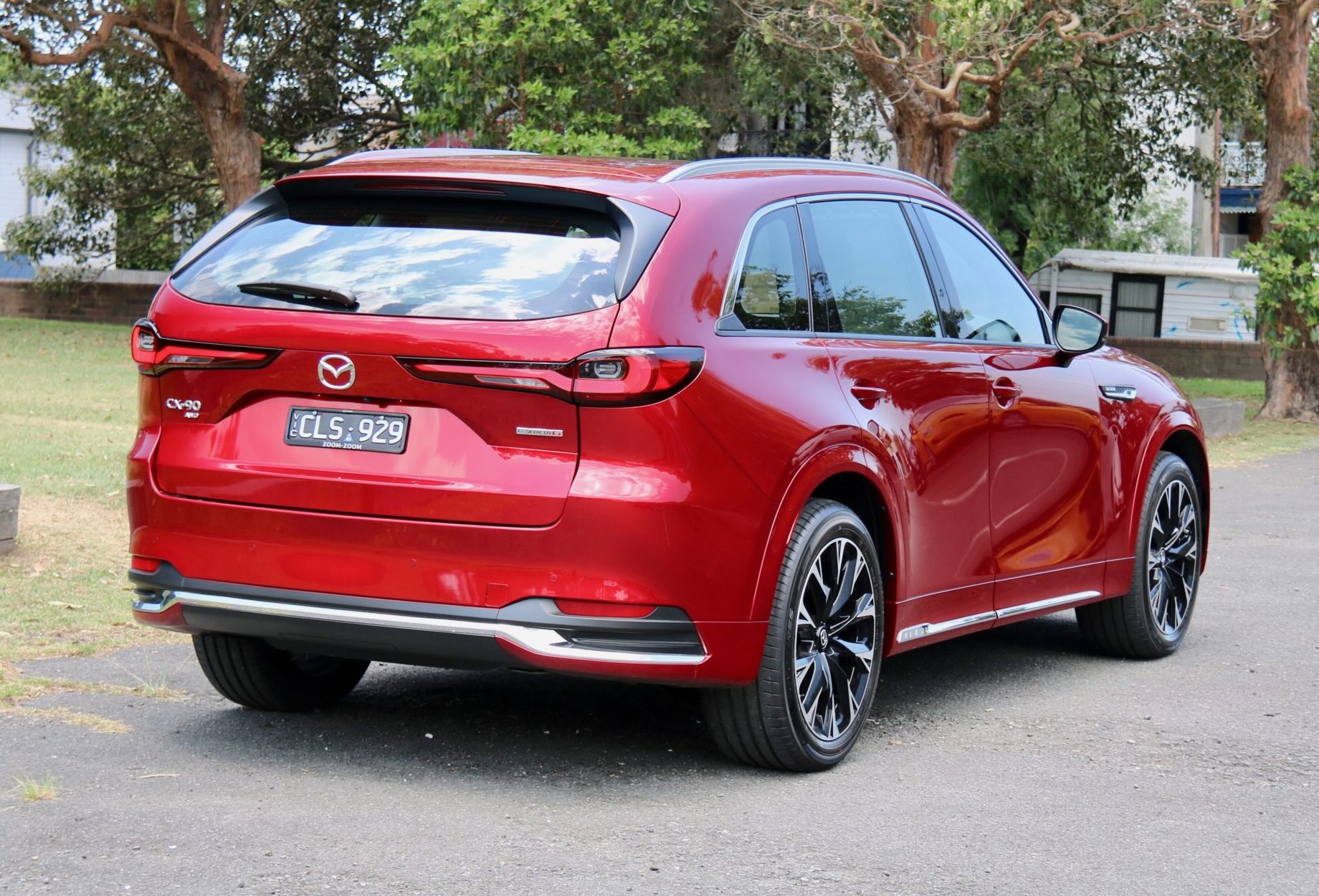
What features are standard in the Mazda CX-90?
All CX-90 models in Australia are equipped with the following features (unless replaced in higher-spec models):
- 19-inch alloy wheels with a space-saver spare wheel
- Dusk-sensing automatic LED exterior lighting
- Rain-sensing automatic wipers
- 10.25-inch infotainment screen with ‘Mazda Connect’ software
- Auto-dimming rear mirror
- Hands-free electric tailgate
- Leather steering wheel and gear knob
- 8-speaker sound system
- Heated front seats
- Satellite navigation
- 7.0-inch digital driver’s display
- Heated, auto-dimming and auto-folding exterior mirrors
- Keyless entry and push button start
- Tri-zone automatic climate control
- Wireless and wired Apple CarPlay and Android Auto
- Wireless phone charger
- Leather upholstery
- 10-way driver/8-way passenger electric front seats with driver’s seat memory
- AM, FM and DAB+ digital radio
- Rear door inbuilt sunshades
- 150W AC outlet
- Roof rails
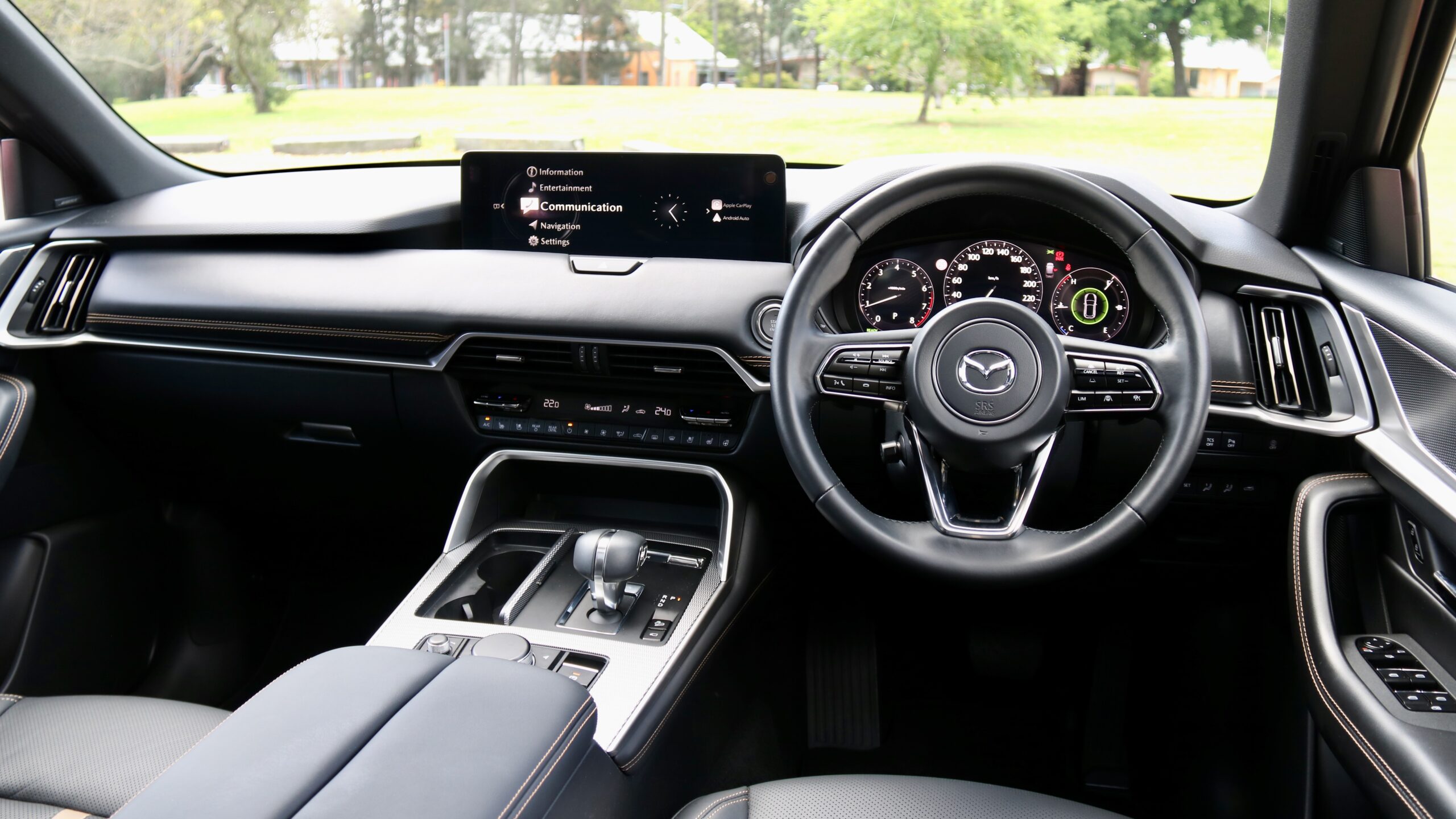
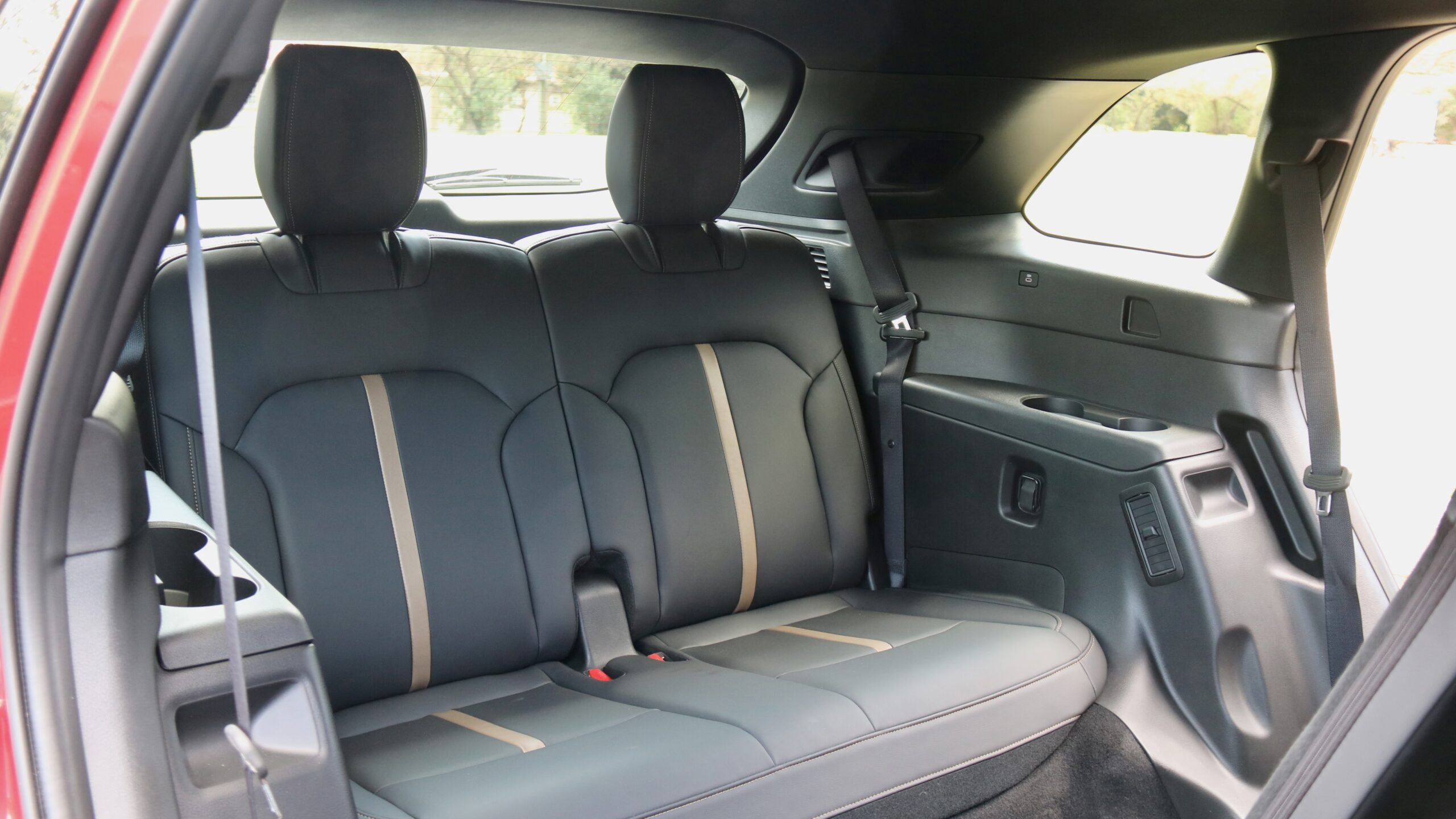
What do I get if I pay more?
Above the entry-level Touring are the mid-spec GT and top-spec Azami, which are available with the same drivetrains as the base model.
CX-90 GT features (in addition to Touring):
- 12.3-inch infotainment screen
- 21-inch alloy wheels
- Electric steering wheel adjustment
- Heated outboard middle row seats
- High-level LED exterior lighting
- Front footwell and rear door lighting
- 12.3-inch digital driver’s display
- Matrix adaptive high beam
- Heated steering wheel
- 12-speaker Bose sound system
- Panoramic sunroof
- Personalisation system with auto restoration of settings
CX-90 Azami features (in addition to GT):
- 21-inch black metallic and machined wheels
- Interior ambient lighting
- Body-coloured wheel arches and lower cladding
- Frameless interior mirror
- 360-degree camera with ‘see-through’ view
- Nappa leather upholstery
- Ventilated front seats
- Easy entry electric driver’s seat
Is the CX-90 available with any optional extras?
Optional Takumi Package (Azami) adds:
- Pure white nappa leather upholstery
- Cloth dashboard panel with Japanese ‘Kakenui’ stitching
- Second row captain’s chairs with ventilation (reduces seating capacity to six)
- Bright decoration panel
- White maple wood console and door trim inserts
- Second row centre console with storage
Optional SP Package (Azami) adds:
- Tan nappa leather upholstery
- Suede dashboard panel
- Second row captain’s chairs with ventilation (reduces seating capacity to six)
- Dual-colour tan and black steering wheel
- Second row centre console with storage
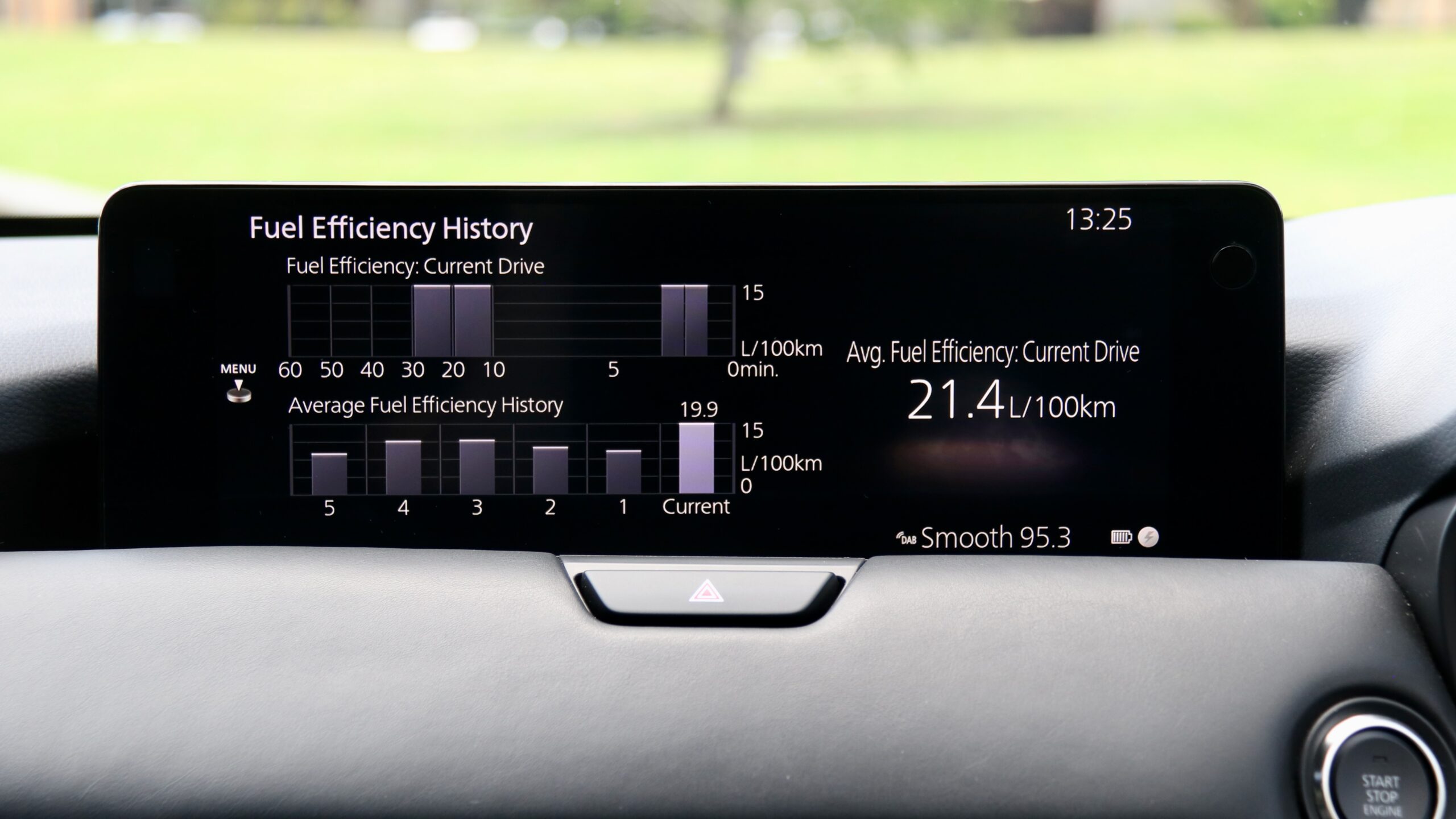
How safe is the Mazda CX-90?
The CX-90 is yet to be tested by ANCAP for safety, but the closely related – and slightly smaller – CX-80 just received a five-star rating.
All variants include 10 airbags (including a front centre and driver’s knee airbags and side units for the middle row) and a comprehensive list of active safety features, including autonomous emergency braking (AEB), adaptive cruise control with stop and go functionality, traffic sign recognition, front and rear cross-traffic alert (with braking), driver attention monitoring, blind-spot monitoring, vehicle exit warning, lane keeping assistance with lane departure warning, a head-up display, front and rear parking sensors, a 360-degree camera and auto high beam.
The GT adds Matrix adaptive high beam and the Azami further adds adaptive lane guidance and traffic jam assist.
How comfortable and practical is the Mazda CX-90?
As we’ve seen from modern Mazdas, the cabin of the CX-90 is comfortable and premium-feeling, but also spacious for seven people. While this is Mazda’s most expensive product, the materials and dashboard layout is almost identical to the smaller and less expensive CX-60. If the most luxurious cabin experience is important to you, choose one of the option packages on the Azami because both add another layer of luxury finishing.
In the top-spec Azami, the nappa leather is of great feel and while an XC90 has better material quality, the CX-90 still features plenty of soft touch surfaces. But the entry-level Touring’s quality is also pretty good – there’s less layering and less soft touch, but it still feels expensive. The CX-90’s cabin could be more practical as its cupholders aren’t massive, and nor is the box underneath the centre armrest, but the door bins are large and the glovebox is as well.
Centre of the dashboard is – depending on the spec – either a 10.25-inch or 12.3-inch infotainment screen that is controlled by a wheel located on the centre console, which Mazda says is safer because your eyes aren’t taken far off the road to control it. If parked with the handbrake on, it’s also controlled by touch but we wish it was able to be controlled by both the wheel and touch as using smartphone mirroring with the wheel is cumbersome.
In both the Mazda3 and CX-30, you can always control the Apple CarPlay and Android Auto on the screen via touch, and we wish that this functionality was expanded to the larger SUVs in the Mazda line-up like the CX-90.
Front seat comfort is reasonable and features heating across the range and ventilation in the Azami, though the seats are a bit flat and should offer more adjustment for the price. Passenger space in a Volvo XC90 is superior in all rows, though the CX-90’s second and third row is still reasonably spacious and features a third climate zone, heated outboard middle row seats, inbuilt window shades, charging ports, air vents and airbag coverage. The second row both slides and reclines, and access to the third row is good, thanks to an effective seat folding mechanism.
How large is the Mazda CX-90’s boot?
Behind the third row of the CX-90 lies 257litres of bootspace, which is increased to 608L with the third row folded and 2025L (to the ceiling) with the second row folded as well. Once the both rear rows of seating are folded, there is a flat floor, easily allowing for long items to be transported.
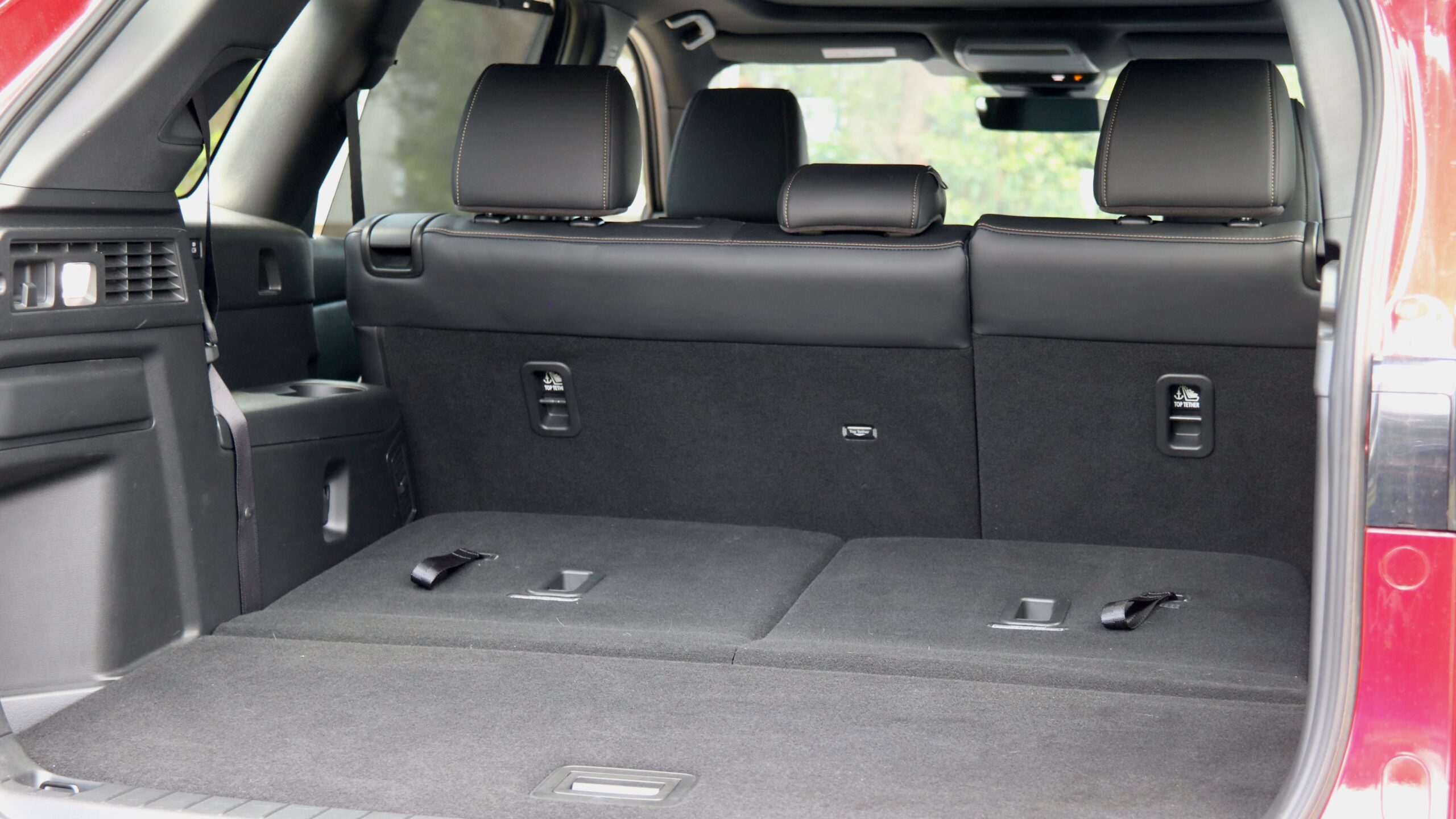
I like driving – will I enjoy the Mazda CX-90?
As we’ve seen from Mazda products of the past few decades, the CX-90 is a keen handler for such a big bus. Its ride is firmer than rivals, particularly in the GT and Azami with their larger 21-inch wheels, but rewards keen drivers with a good chassis that’s capable of putting smiles on faces. The steering can be a bit heavy in urban conditions and three-point turns can take more muscle effort than needed, but in spirited driving, it’s well-weighted and offers a good amount of feel for a large SUV.
Both drivetrains offer great performance, good economy when you’re not on it and pretty good refinement as well. Mazda improved both the drivetrains from when first released in the CX-60 so that the gearbox is a lot smoother and the transition from the mild-hybrid system powering the car to the engine is a lot less noticeable. With 254kW of power on offer, the petrol model is quick (its claimed 0-100km/h time is under seven seconds) and it sounds pretty good as well. The diesel also impresses as its full 550Nm is available from just 1500rpm, meaning you’re almost always in the full torque band for smooth and grunty progress.
Is the Mazda CX-90 expensive to run?
Thanks to the new generation of engines and a standard 48-volt mild-hybrid system, the claimed fuel consumption for the CX-90 is impressive: just 5.4L/100km for the diesel and 8.2L/100km for the petrol with CO2 emissions of 143g/km for the diesel and 189g/km for the petrol. In our experience, urban-only driving the petrol resulted in a figure of 10.5L/100km – anybody with memories of the V6 first-generation CX-9 and its horrendous fuel consumption will sigh in relief. On a road trip, the CX-90 diesel did 5.6L/100km, which is excellent for such a large vehicle.
All CX-90 variants are covered by a five-year/unlimited kilometre warranty with five years of roadside assistance. Five years of capped price servicing is expensive, and ranges from $3,299 for the diesel to $3,469 for the petrol – that’s a yearly average of $660 for the diesel and $693 for the petrol. While the diesel initially looks less expensive to maintain, its annual service intervals are 5,000km less than the petrol at 10,000km, so those travelling more than 10,000km in the diesel will have to account for an extra service or two in the first five years of ownership.
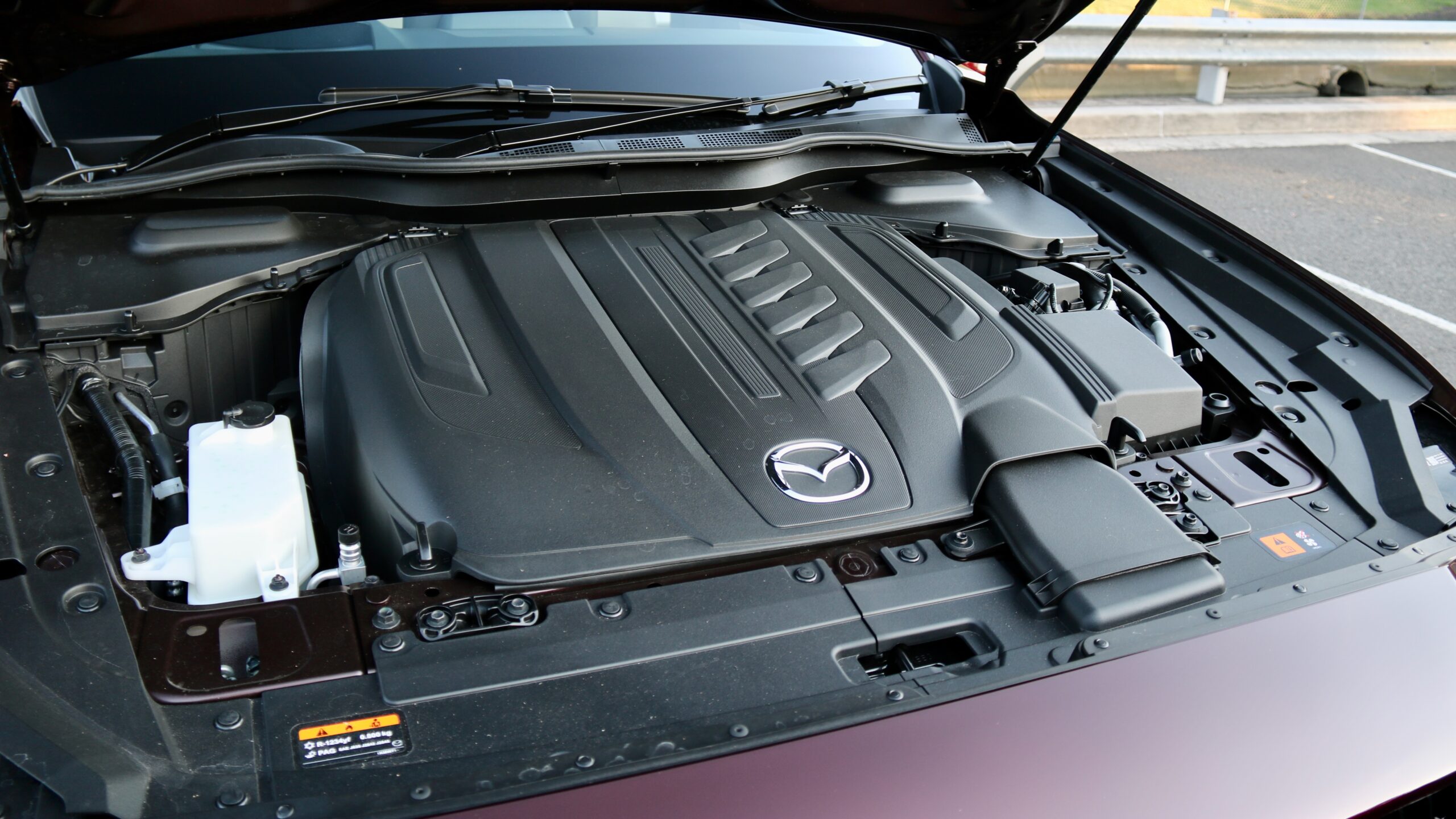
Which Mazda CX-90 variant is best?
The whole CX-90 range represents solid buying for those needing a large SUV that drives well, offers a range of punchy and efficient drivetrains and a spacious and premium cabin. To find a better option, buyers would have to spend at least $10,000 (plus options) more on a Volvo XC90.
Even the entry-level Touring is very well equipped with features like leather upholstery, tri-zone climate control and a full suite of active safety features. Importantly, the sweet powerplants is offered across the range so that those who can’t afford the GT or Azami won’t feel shortchanged.
Which vehicles rival the Mazda CX-90?
We’re regularly told by car makers that Australians love a performance car and that local sales are some of the highest in the world, yet it’s legally impossible to drive such a car at its limit here. Most urban areas have speed limits of 50 or 60km/h – but some are even lower at just 30km/h in school and high-density pedestrian zones, all in the name of safety.
Despite our seemingly endless battle against speeding, Australia faces an uphill battle when it comes to its road toll. Sadly, 1327 people were involved in fatal road crashes in 2024 and that’s the fourth year in a row of increased deaths on our roads. That’s a situation that the Australian Automobile Association (AAA) reports has not been seen since 1966 – before the introduction of compulsory seat belts.
Latest data also revealed that the National Road Safety Strategy (2021-2030) is failing to meet its goal of halving road deaths by 2030 – instead, they have surged 18.5 per cent since its launch. According to experts, there are a number of reasons for this increase, including the larger cars that are being bought by Australians these days.
But speed is also one of the main reasons and there’s more than enough evidence backing lowering speed limits in certain areas to reduce the road toll: in 2023, Wales reduced its urban speed limit from 30mph (50km/h) to 20mph (30km/h) and in just three months, the casualties on local roads dropped by 26 per cent.
If any online story about speed limits many Aussies will complain that their country has some of the lowest speed limits in the world and they are constantly monitored by authorities as part of a revenue raising exercise.
But is that true? There maybe some truth to the desire of authorities to raise easy revenue but does Australia really have some of the lowest speed limits in the world? The answer may surprise you.
Speed limits around the world:
| Location | Maximum speed limit |
|---|---|
| Isle of Man, UK and some parts of the German autobahn | Unrestricted |
| Abu Dhabi | 160km/h |
| Saudi Arabia, Turkey, Kazakhstan, Iraq, Poland, Bulgaria and Texas, USA | 140km/h |
| Italy, France, Austria, Argentina, the Netherlands, Denmark, Russia and the Northern Territory | 130km/h |
| South Korea, India, Brazil, Thailand, Finland, Spain, Portugal, Ireland, South Africa and Japan | 120km/h |
| The UK, most states in the USA, Taiwan, Hong Kong, New Zealand, Malaysia, Mexico and Australia (outside the NT) | 110km/h |
| Indonesia, Peru, Mali, Lesotho, Ethiopia, Myanmar, Columbia and the Phillipines | 100km/h |
| Yemen, Iceland, Chad and Tajikistan | 90km/h |
| Madagascar, Honduras, Faroe Islands and Bolivia | 80km/h |
| Greenland, Liberia, Bhutan and Papua New Guinea | 70km/h (or less) |
While there are a number of developed countries that have higher limits than us, Australia clearly does not have the lowest speed limits in the world and our 110km/h limit in most states is shared with some of our closest international friends like New Zealand, the UK and most states in the USA.
Even the 130km/h limit that applies on some roads in the Northern Territory ranks highly on the global speed limit list, sharing space with countries like Italy, France, the Netherlands, Denmark and Russia.
Of course, there will always be some wanting to go faster than that – and a race track is the perfect place to do it – but some of the lowest speed limits in the world? Australia could be a lot slower.
Should Australia have higher – or lower – speed limits? Leave a comment below.