
KGM Australia has announced pricing and specifications for the KGM Torres Hybrid, which is its first hybrid offering locally, ahead of first deliveries commencing in December. Priced from $45,000 drive away, KGM has made the Torres Hybrid is $7000 more expensive than the equivalent petrol model, but is both more powerful and more fuel efficient – plus, it also includes more standard equipment.
The Torres will compete against other hybrid mid-size SUVs like the Toyota RAV4, Hyundai Tucson and GWM Haval H6.
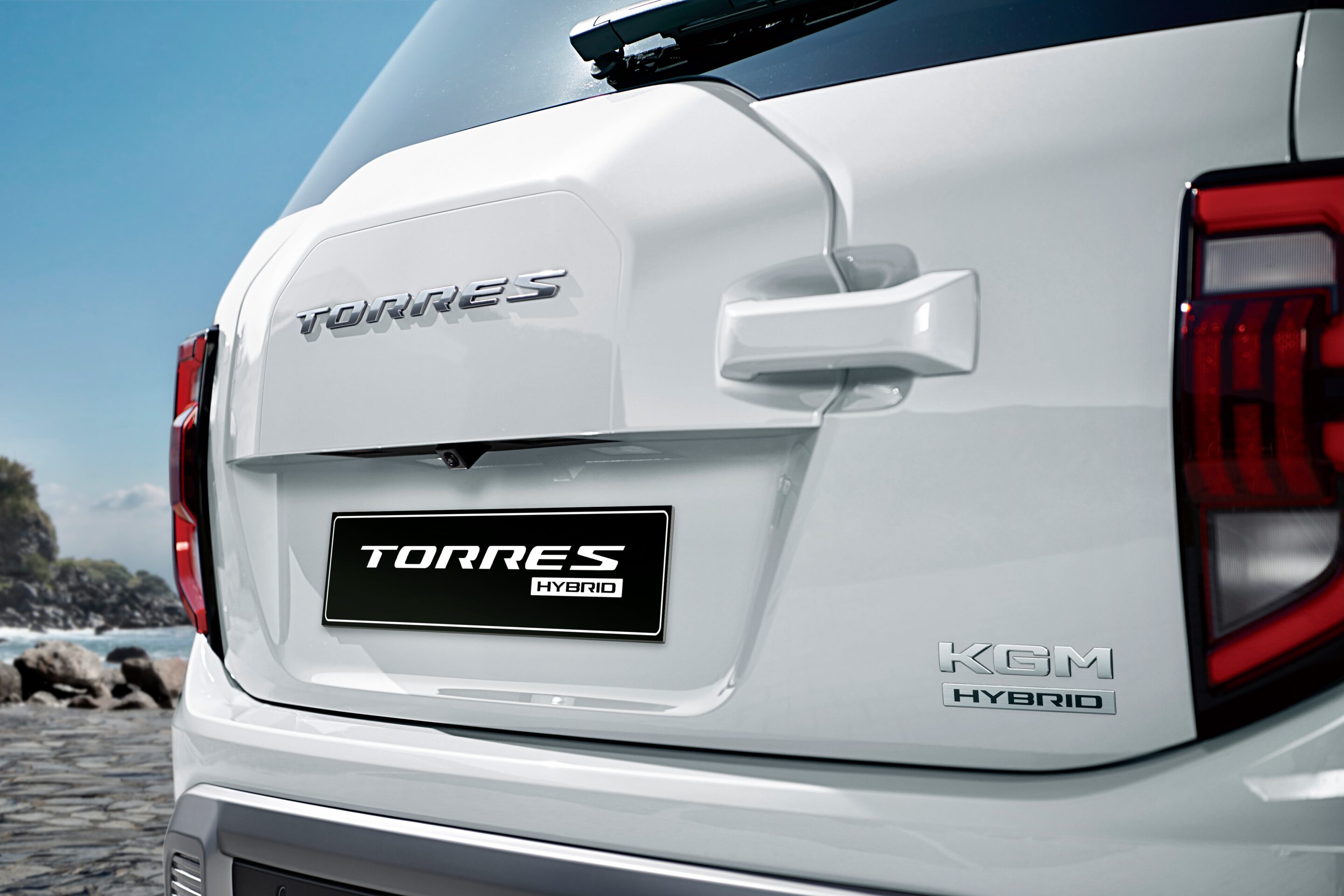
The KGM Torres Hybrid pairs a 1.5-litre turbo-petrol engine with two electric motors and a 1.8kWh LFP battery powering the front wheels via a dedicated hybrid transmission. Total system output is 150kW, made up of 110kW/220Nm outputs from the petrol engine and 130kW/300Nm from the electric motors.
Combined fuel consumption for the Torres Hybrid is rated at 5.6L/100km – 1.8L/100km less than the less powerful petrol Torres – and with CO2 emissions of 127g/km.
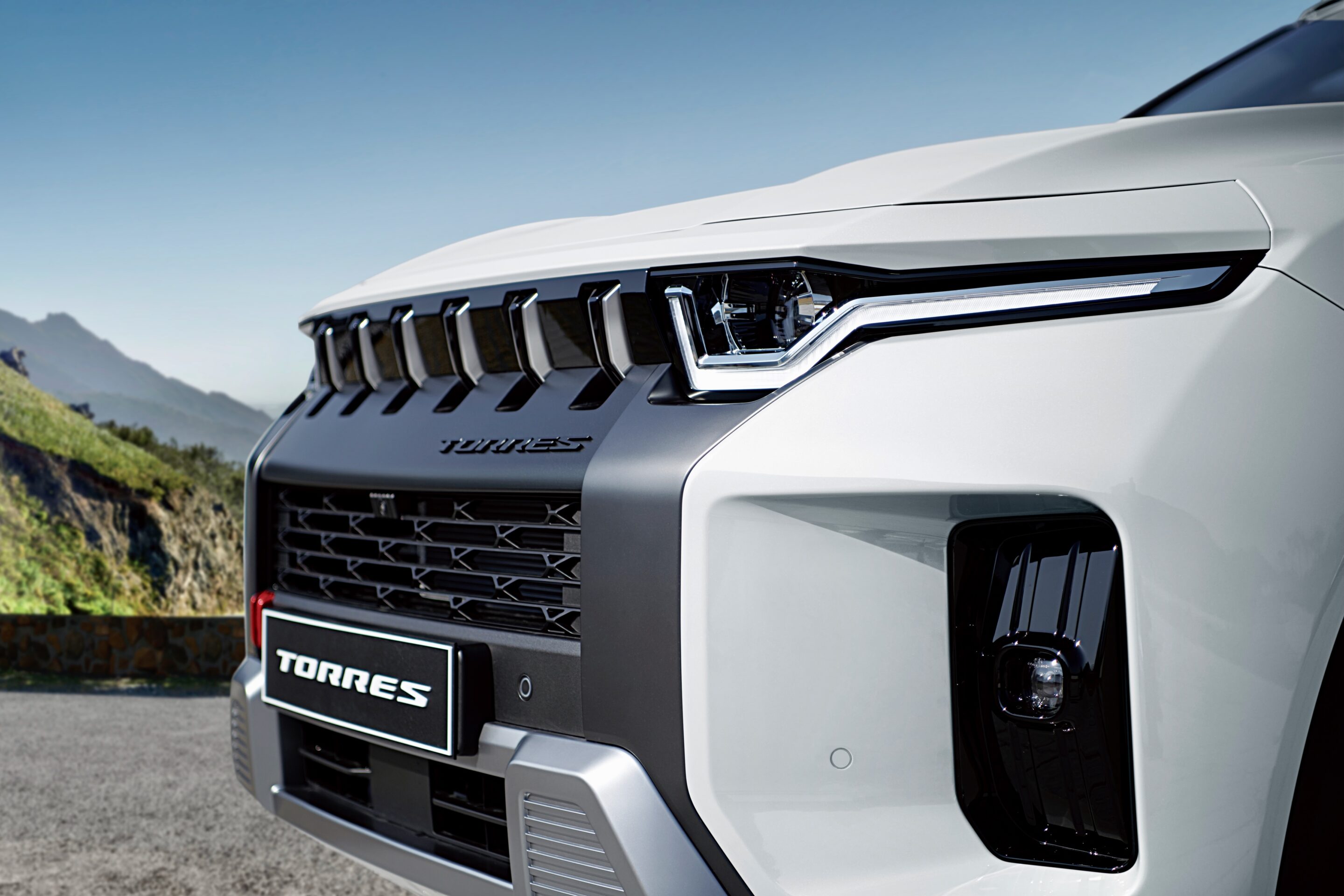
Pricing for the Torres Hybrid starts at $45,000 drive away for the entry-level K30, which is $7000 higher than the petrol Torres ELX that it lines up with. However, the hybrid is better equipped with features such as a leather steering wheel and adaptive cruise control.
Unlike some other hybrid mid-size SUVs, the Torres Hybrid doesn’t lose bootspace compared to the petrol model, with KGM still claiming 465 litres with the seats up (703 litres to the ceiling) and 1526 litres with the rear seats folded. However, its 1300kg braked towing capacity is 200kg less than the petrol model.
2026 KGM Torres pricing (drive away):
| K30 | $45,000 |
|---|---|
| K40 | $48,000 |
KGM Torres K30 standard features:
- 18-inch alloy wheels
- Automatic LED headlights and front and rear daytime running lights
- Rain-sensing automatic wipers
- Heated/auto-folding mirrors
- Keyless entry with push button start
- Cloth upholstery
- Dual-zone climate control
- Leather steering wheel
- 12.3-inch digital driver’s display
- 12.3-inch touchscreen
- Apple CarPlay and Android Auto
- Interior ambient lighting
Torres K30 safety features:
- 8x airbags
- Adaptive cruise control
- Autonomous emergency braking with forward collision warning
- Lane keeping assistance with lane departure warning
- Front vehicle start alert
- Auto high beam
- Driver attention alert
- Front and rear parking sensors
- Reversing camera
Torres K40 model adds:
- Power tailgate
- 20-inch alloy wheels
- Leather-look seats
- Heated front seats
- Heated steering wheel
- Rear door sun blinds
- LED front fog lights
- Blind-spot monitoring with rear cross-traffic alert
- Lane change-collision warning
The KGM Torres Hybrid will go on sale in Australia on December 1, with local deliveries due to commence then.
There’s no question that Hyundai is on a big product roll at the moment. From the futuristic Ioniq 5 and ballistic Wheels COTY-winning Ioniq 5 N, to the bold and beautifully practical Santa Fe, Hyundai’s line-up continues its significant upgrade.
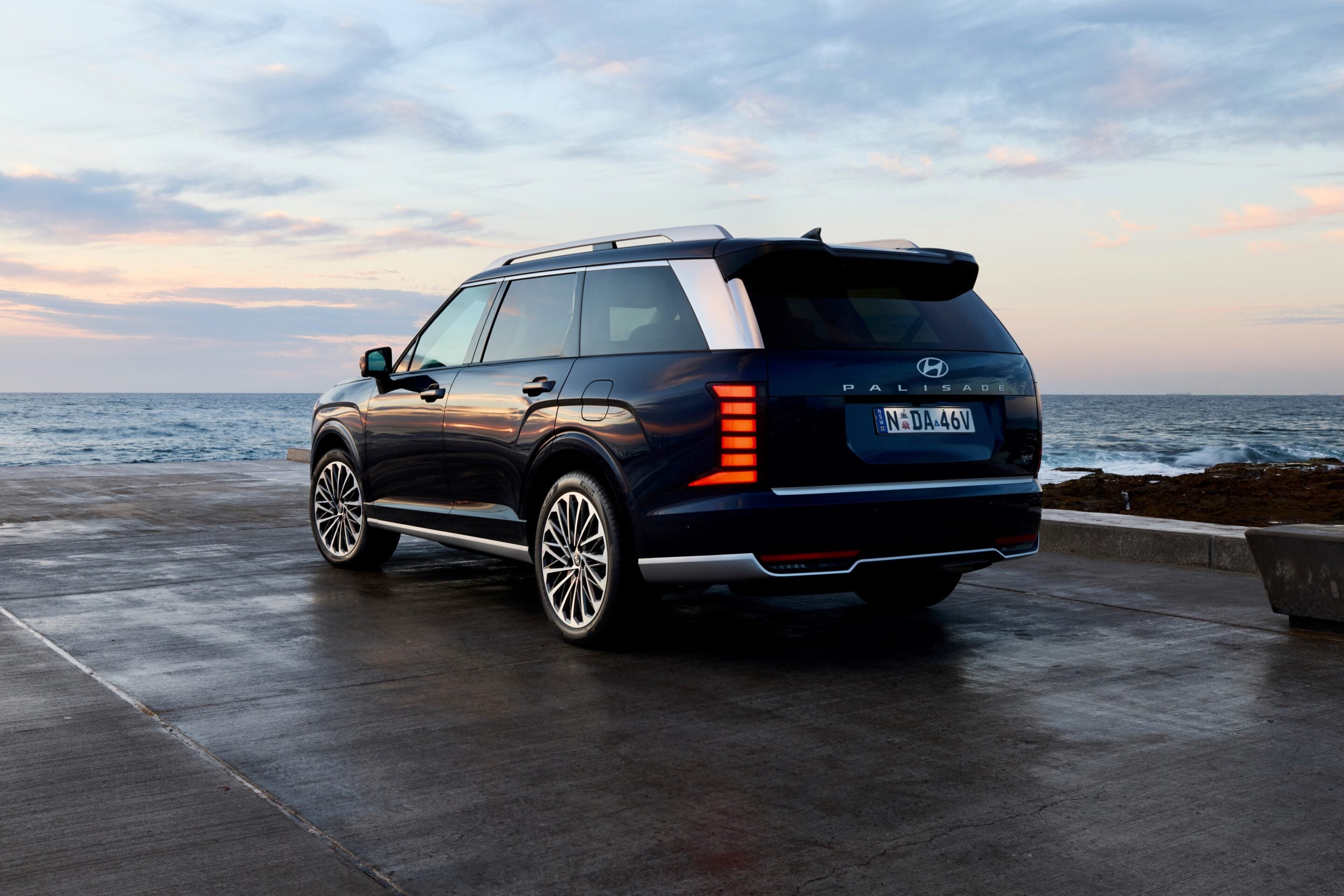
The latest to receive a new generation is the Palisade large SUV, with Hyundai giving it an upmarket look and a properly luxurious interior vibe, a gutsy new powertrain that’s also an in-vogue hybrid, plus Hyundai’s newly-extended seven-year conditional vehicle warranty.
For now, there’s only one Palisade model available in Australia: the top-spec Calligraphy. Cheaper models will be part of the line-up in the future, but 83 per cent of previous Palisade sales were the Calligraphy, so Hyundai Australia decided to launch with that model first.
2026 Hyundai Palisade pricing (plus on-road costs):
| Calligraphy 8-seat | $89,900 |
|---|---|
| Calligraphy 7-seat with second row captain’s chairs | $90,900 |
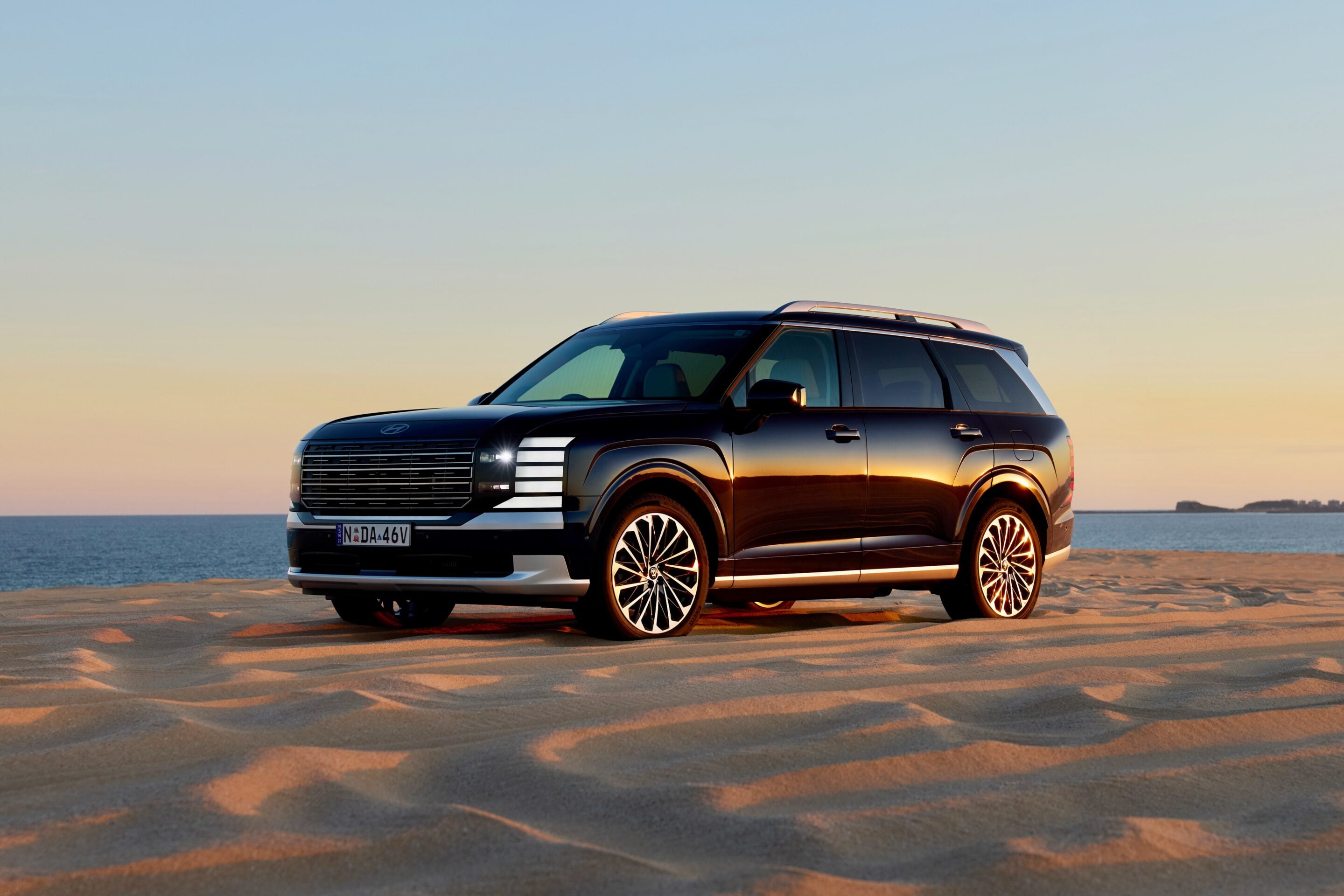
It’s true that near-$90,000 plus on-road costs is not cheap, and it’s a full $12,750 more expensive than the top-spec Santa Fe Calligraphy, but the Hyundai Palisade Calligraphy is fully loaded with standard equipment – even the third row of seats is heated, for example. Find the full list of standard features below.
So far, the only drivetrain available in the 2026 Hyundai Palisade line-up is a new 2.5-litre four-cylinder turbo-petrol hybrid making strong 245kW and 460Nm outputs. That’s mated to a six-speed automatic transmission and an all-wheel drive system as standard – unlike the previous Palisade, there’s no front-wheel drive model available just yet, nor pure petrol or turbo-diesel options.
The 2.5-litre hybrid drivetrain was the correct choice for the Hyundai Palisade in Australia as it combines the power of the previous V6 engine but with the low-end torque and efficiency of the previous 2.2-litre turbo-diesel. It’s rated at 6.8L/100km for combined fuel consumption and 154g/km for CO2 emissions, and we got a slightly higher 7.8L/100km result, which is still quite good for such a big vehicle. The Palisade uses 91RON regular unleaded fuel as well, and its 72-litre fuel tank gives a long range.
The previous Palisade was comfortable to drive, and the new model is no different. Australian-spec models received a local suspension tune against softer South Korean and North American models, and while we haven’t driven those versions, the Aussie Palisade model handles competently. It features frequency-select front dampers, self-levelling rear dampers and a unique power steering tune. The result is impressive ride and handling, despite its obvious size.
A big improvement for the new Palisade compared with the old one is refinement. While the four-cylinder hybrid drivetrain could still be quieter under even moderate throttle, its road and wind noise levels are relatively hushed.
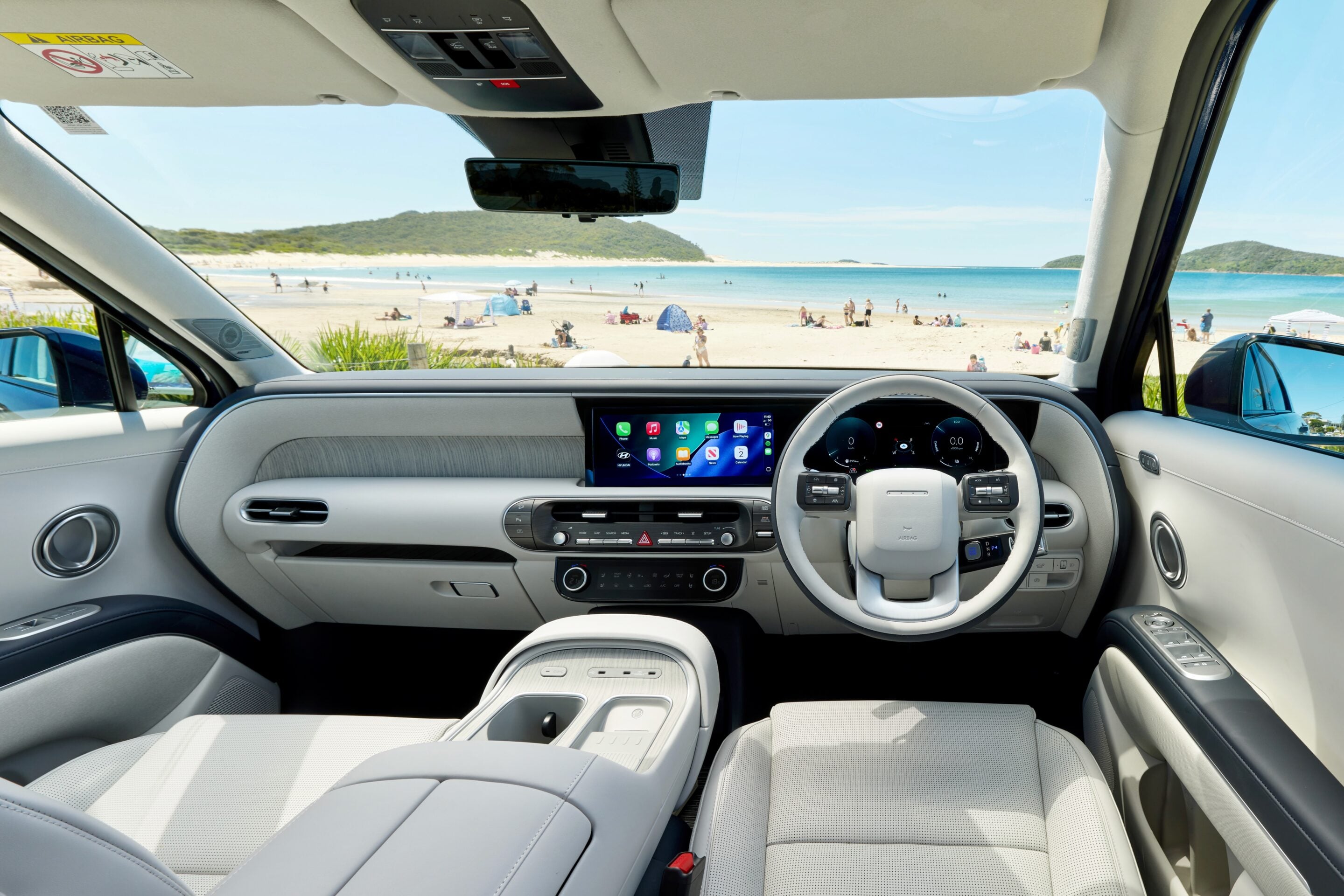
Inside the cabin is an impressive space and a big step forward compared with the previous Palisade. For starters, it’s got leather or leather-like trim almost everywhere you touch, while there’s an added depth to the trim pieces and switchgear that wasn’t previously present in the Palisade. It’s not quite to the level of Genesis, but it certainly feels plusher than the Santa Fe and Ioniq 5.
Not only is the Palisade’s cabin plush, but it’s also quite practical with a lot of available storage. That includes large door bins, a huge central box, a big open tray and then large open cupholders with a wireless phone charger next to them. Front seat comfort is excellent, especially for the driver and their 18 ways of adjustment, including the ‘relaxation’ mode that throws the seat back in the best thing since lie-flat seats in airline business class.
The dual 12.3-inch screen layout used in the Palisade is one we’ve seen before in the Santa Fe, but it still works well. The touchscreen layout is dead easy to use, while the screen quality is sharp as well. The 14-speaker Bose sound system could use a bit more bass, but it’s still clear and warm.
Move rearward and unlike many other seven/eight-seaters we’ve seen, rear passengers are still very well catered for. The second row is huge, with ample room for people above six-foot tall, and amenities are seemingly endless with a separate climate zone, multiple charging options, sun shades, door pockets and even heating and ventilation for the outboard seats. Plus, if you don’t need eight seats, for an extra $1000 you can choose the captain’s chairs for a seven-seat layout – they’re electrically adjustable like the standard pews but add a walk through to the third row.
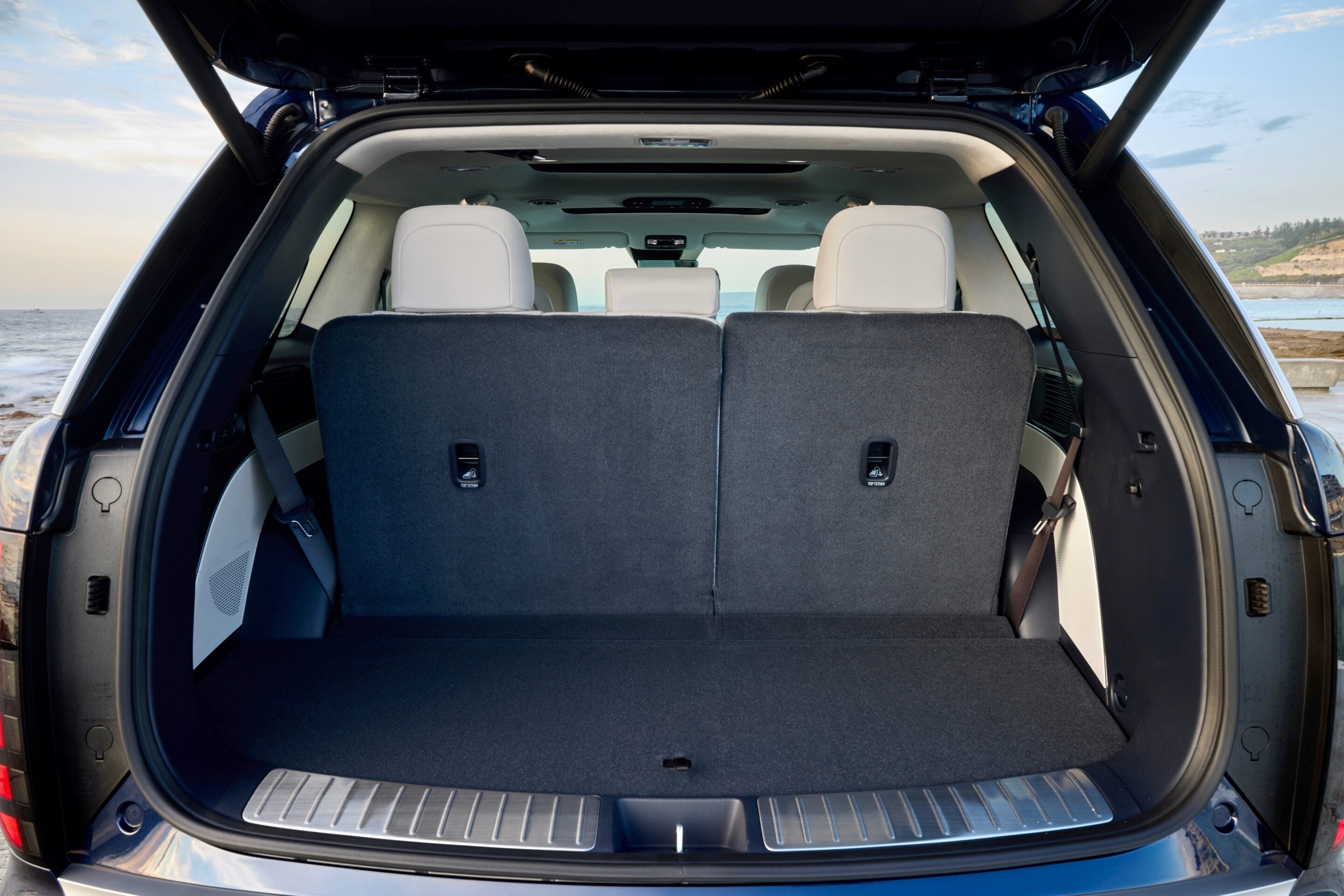
Speaking of the third row, it’s also excellent. Third rows that are functional for everyday use by folks of many sizes are rare – most are small and only for kids – but the Palisade’s is just that. Plus, it also has heated seats, air vents, speakers, charging and cup holders so those back there won’t feel shortchanged. Those with child seats will be happy to know that the third row features two both top-tether and ISOFIX points as well.
With all the seats erect, there’s 300 litres of space in the Palisade’s boot, which expands to 712 litres with the third row folded. Impressively, the boot features hooks, side storage, under floor storage and even a full-size alloy spare wheel. Folding the second row unlocks a huge 2081 litres of space and huge potential for trips to Ikea.
The 2026 Hyundai Palisade Calligraphy is an impressive product, no matter which way you look at it. Its step forward in luxury and overall quality is instantly noticeable, but it’s also somehow even more practical than before, great to drive, very comfortable and both efficient and strong when it comes to performance. Only the short 10,000km annual service requirements, lack of cheaper models and lower towing capacity compared with the previous model grate, but even so, Hyundai’s product roll has continued nicely with the new Palisade.
Hyundai Palisade specifications:
| Model | Hyundai Palisade Calligraphy |
|---|---|
| Price | $89,900 plus on-road costs |
| Drivetrain | 2497cc inline four-cylinder turbo-petrol hybrid |
| Transmission | Six-speed torque converter automatic, all-wheel drive |
| Peak power | 245kW (@ 5800rpm) |
| Peak torque | 460Nm (@ 1800rpm) |
| 0-100km/h | 7.5 seconds (est.) |
| Combined fuel consumption/CO2 emissions | 6.8L/100km, 154g/km |
| Fuel tank/size | 91RON regular unleaded, 72 litres |
| Dimensions (length/width/height/wheelbase) | 5065/1980/1805/2970mm |
| Tare mass | 2175kg – 2304kg |
| Boot | 300 litres (third row up)/712 litres (third row folded)/2081 litres (third + second rows folded) |
| Warranty | Seven-year (conditional on servicing at Hyundai dealer)/unlimited km with 12 months roadside assistance that’s topped up with each service |
| Service intervals/cost | Annual/every 10,000km, $2600 for five years/50,000km ($520 per year) |
| On sale | Now |
Palisade Calligraphy standard features:
- 21-inch alloy wheels with a full-size alloy spare
- Automatic LED exterior lighting with front and rear daytime running lights
- Automatic rain-sensing wipers
- Dual sunroofs
- Roof rails
- Keyless entry with push button start
- Key phone functionality
- Electric tailgate with easy open functionality
- 18-way electric driver’s seat with memory
- 12-way electric front passenger seat
- Heated leather steering wheel
- Nappa leather upholstery with a suede headliner
- Heated seats in all rows
- Ventilated front and middle row seats
- Rear privacy glass
- 12.3-inch digital driver’s display
- 12.3-inch touchscreen with live services and over-the-air updates
- Wireless Apple CarPlay and Android Auto
- AM/FM/DAB+ digital radio
- 14-speaker Bose sound system
- Satellite navigation with live traffic
- 6x100W USB-C chargers
- Wireless phone charger
- Power-folding second and third rows of seating
- In car camera
- Head-up display
- UV centre console steriliser
- Vehicle-to-load (V2L) functionality
Palisade Calligraphy safety features:
- 8x airbags
- Autonomous emergency braking (AEB) with pedestrian, cyclist and intersection assistance
- Adaptive lane guidance with lane keeping assistance
- Intelligent speed limit assist with traffic sign recognition
- Blind-spot monitoring with a blind-spot camera
- Safe exit assist
- Rear cross-traffic alert (with braking)
- Adaptive cruise control with stop and go functionality
- 360-degree camera
- Automatic rear braking
- Auto high beam
- Side, front and rear parking sensors
- Automatic parking
- Smart park assist (remote control parking from the key)
- Rear occupant alert
- Traffic sign detection with speed limit alert
- Rear automatic emergency braking (low speed)
The new 2026 Nissan Navara ute, confirmed for an Australian release in the first quarter of 2026, has finally been revealed after a lengthy teaser campaign.
Sharing almost everything with the current Mitsubishi Triton, the new Navara – codenamed ‘D27’ – has been brought into the modern age with Mitsubishi’s help. It’s slightly larger than the old model, more powerful, more fuel efficient, more tech-filled and more spacious inside.
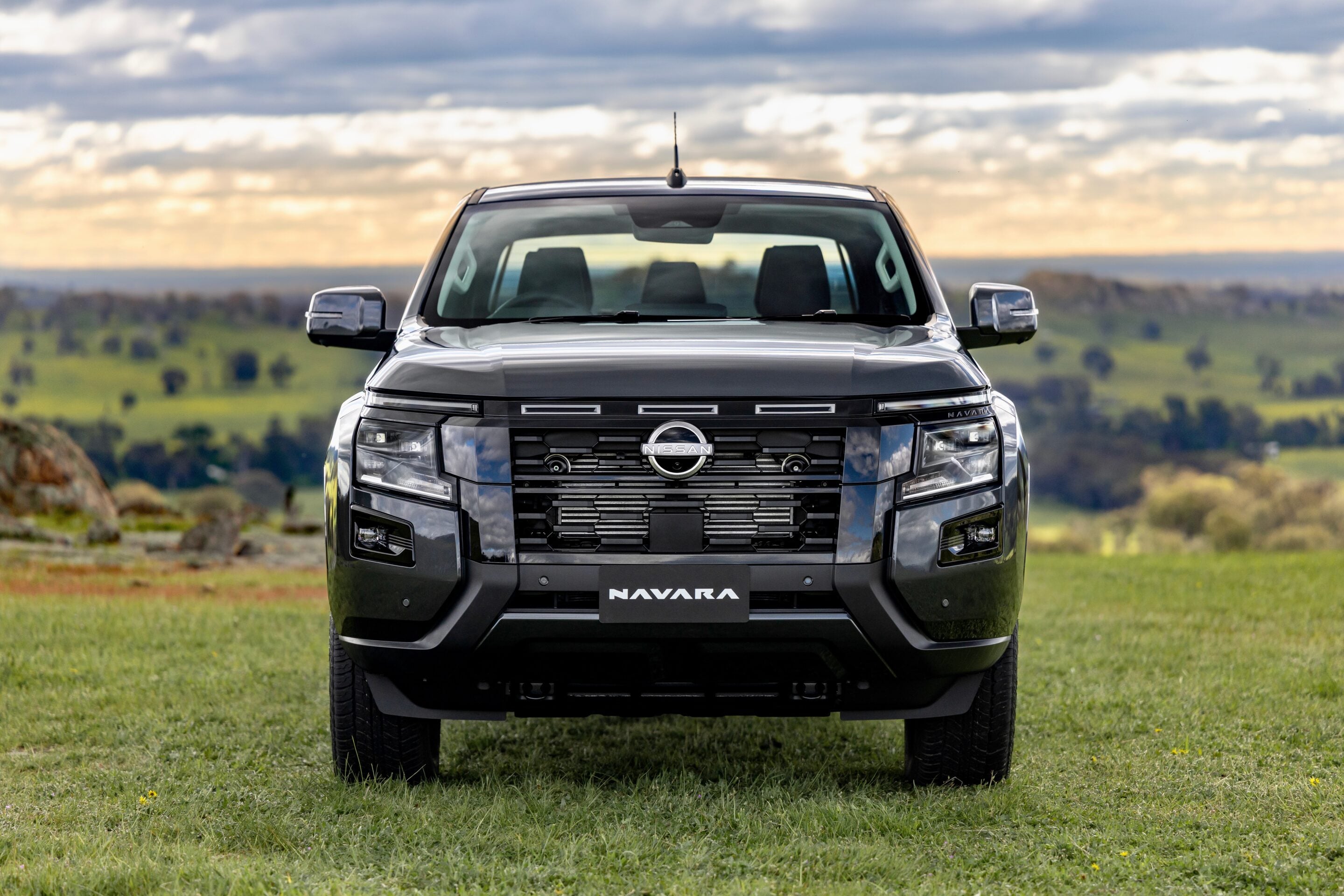
On the face of it, the 2026 Nissan Navara appears to be mostly identical to the Mitsubishi Triton on which it’s based, though there are devils in the detail. Unique Navara design features include the headlights and tailights, bumpers, bull bar-inspired V-strut grille surround and mesh grille.
The 2026 Nissan Navara measures 5230mm long and rides on a 3150mm long wheelbase – for an extra 42mm of rear legroom than before – which are identical numbers to the Triton. Its 228mm ground clearance is slightly better than the previous Navara, and as previously reported, Australian company Premcar tuned the suspension for local conditions. Unlike the previous Navara and its coil spring rear suspension, the new model features the Triton’s leaf springs.
As with the Triton, the whole 2026 Nissan Navara range uses a 150kW/470Nm 2.4-litre twin-turbocharged four-cylinder diesel engine, which is an upgrade compared to the current Navara’s 140kW/450Nm 2.3-litre twin-turbo diesel. The Triton’s 7.7L/100km combined fuel consumption rating is likely to carry over to the Navara, which is a 0.2L/100km improvement on the current Navara.
A six-speed automatic transmission will be standard and unlike the Triton, four-wheel drive is standard as well, though two four-wheel drive systems will be offered: one with the traditional 2H, 4H and 4L modes and the other a more sophisticated system with the upper-spec ST-X and Pro-4X models upgrading to a permanent system (2H, 4H, 4HLc, 4LLc) with an open centre diff to allow all-wheel drive running on bitumen.
Active safety features have been significantly boosted, which include eight airbags, autonomous emergency braking, adaptive cruise control, lane keeping assistance, blind-spot monitoring, cross-traffic alert, a 360-degree camera and driver attention monitoring, many of which aren’t available on the current Navara.
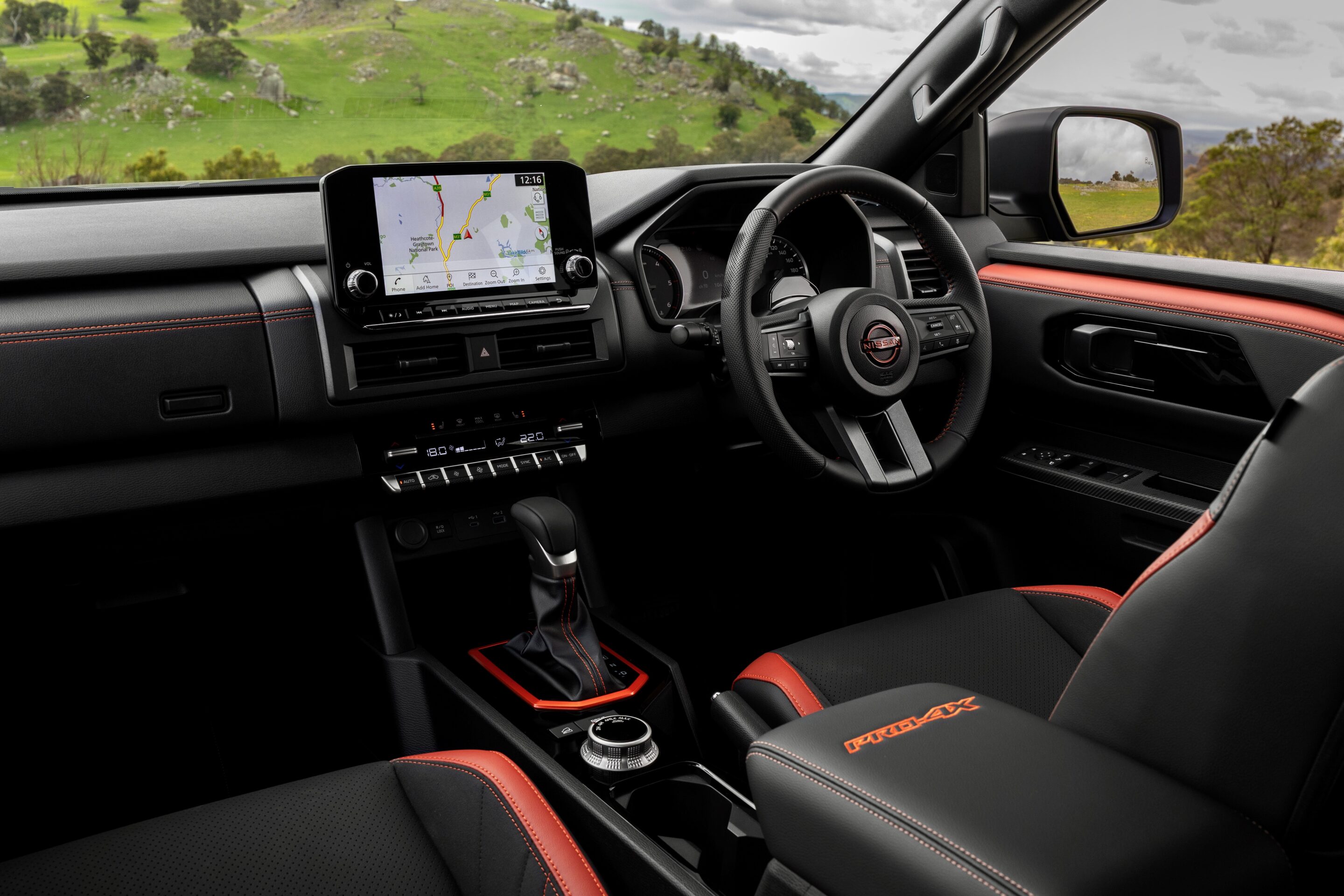
Inside the 2026 Nissan Navara is identical to the Triton, save for Nissan-specific graphics and trims. Otherwise, the design carries over, as do features such a 9.0-inch touchscreen with wireless smartphone mirroring and a 7.0-inch driver’s display. Nissan is yet to reveal which models will receive what equipment, but the whole range is likely to receive the full suite of safety features.
For the first time in the local Navara range, Nissan’s ‘MyNissan’ connected services will be available, which allows owners to control the air-conditioning, call emergency services, track a stolen vehicle and remote door locking and unlocking.
The 2026 Nissan Navara will go on sale in Australia at the end of the first quarter of 2026 with local pricing and specifications to be announced closer to then.
Porsche has revealed its first fully electric Cayenne, a model the company says marks a significant turning point for its long-running luxury SUV range and its broader transition toward electrification.
Arriving more than two decades after the original Cayenne reshaped the brand’s global fortunes, the new battery-powered version will sit alongside existing petrol and plug-in hybrid variants rather than replace them outright.
The new line-up consists of two versions at launch: the Cayenne Electric (below) and the more powerful Cayenne Turbo Electric. Both use all-wheel drive, new drive motors and a high-voltage 113kWh battery. In its most aggressive settings, the Turbo variant can deliver extraordinary outputs, with peak power hitting 850kW when launch and temporary boost systems are engaged. Porsche claims 0–100km/h in 2.5 seconds and a top speed of 260km/h, placing it among the fastest SUVs on sale.
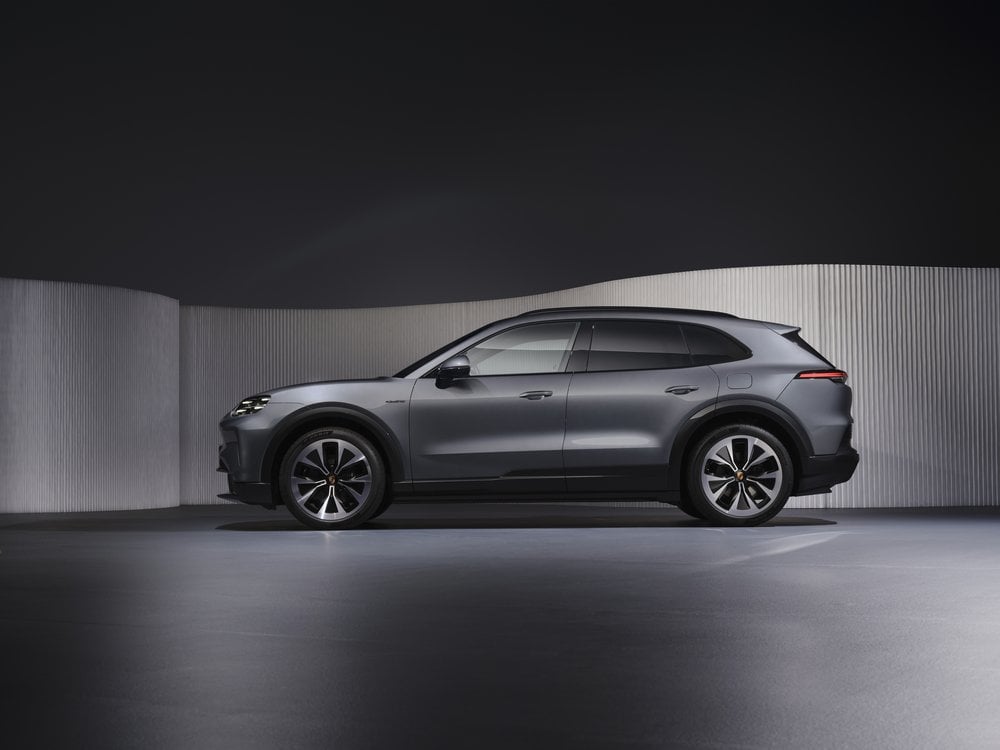
Energy recovery tech borrowed from Formula E racing allows the Cayenne Electric to recuperate up to 600kW under braking, meaning most deceleration is handled by the motors rather than conventional brakes. Adaptive air suspension is standard across the range, while the Turbo also offers torque-vectoring, rear-axle steering and a new active suspension system designed to counter body movement during cornering or off-road driving.
Porsche says the long-distance ability of the electric Cayenne was a priority. Under European testing, the regular model can travel up to 642 kilometres per charge, while the Turbo is rated slightly lower. With 800-volt architecture, DC charging speeds peak at 390kW and, in controlled test conditions, have reached 400kW. The company reports that charging from 10 to 80 per cent can take under 16 minutes. Porsche will also offer inductive wireless charging as an option, allowing owners to recharge by parking over a ground plate.
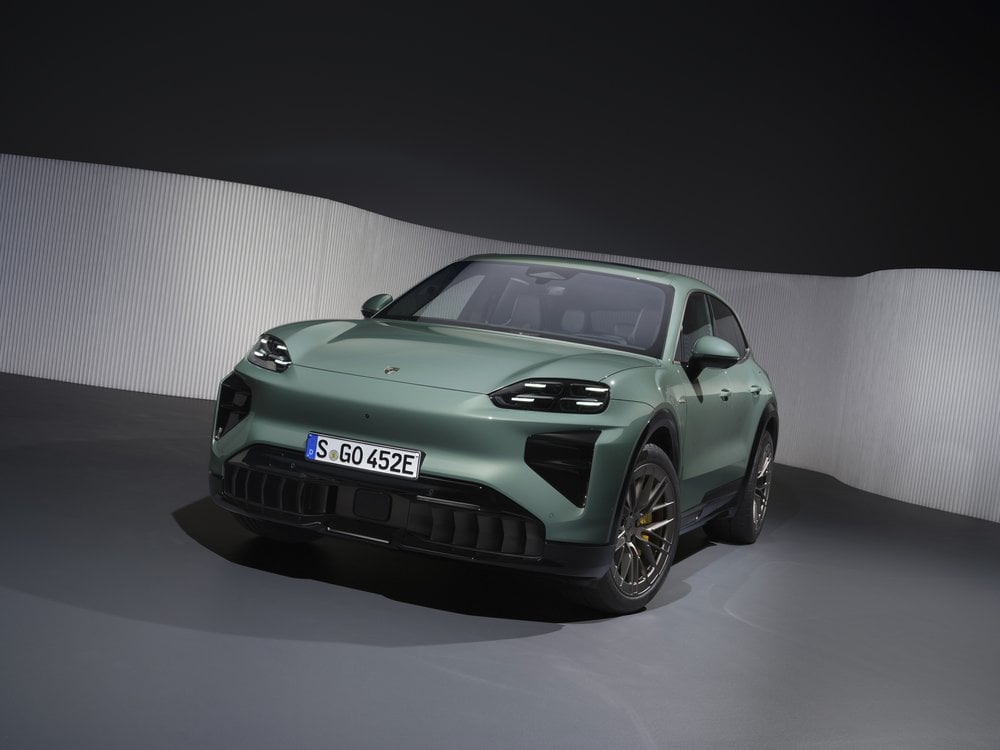
The new model sits on a slightly larger footprint than the petrol Cayenne, with an extended wheelbase delivering more rear-seat space. Boot capacity ranges from 781 to 1588 litres, with an additional 90-litre front compartment. Towing capability remains strong, with a maximum rating of 3.5 tonnes depending on configuration.
Exterior styling takes cues from existing Cayenne models but pushes further toward aerodynamic efficiency, with new lighting units, smooth body surfaces and active aero elements including movable cooling flaps, an adaptive roof spoiler and rear aero blades on the Turbo. The drag coefficient is listed at 0.25, placing it among the most streamlined SUVs in its class.
Inside, Porsche has introduced its largest digital display setup to date. A curved OLED “Flow Display” spans the centre console, paired with a digital instrument cluster and an optional passenger screen. A new voice-control system uses AI to interpret more complex requests, while the cabin itself can be customised extensively through various design packages and Porsche’s special-order programs.
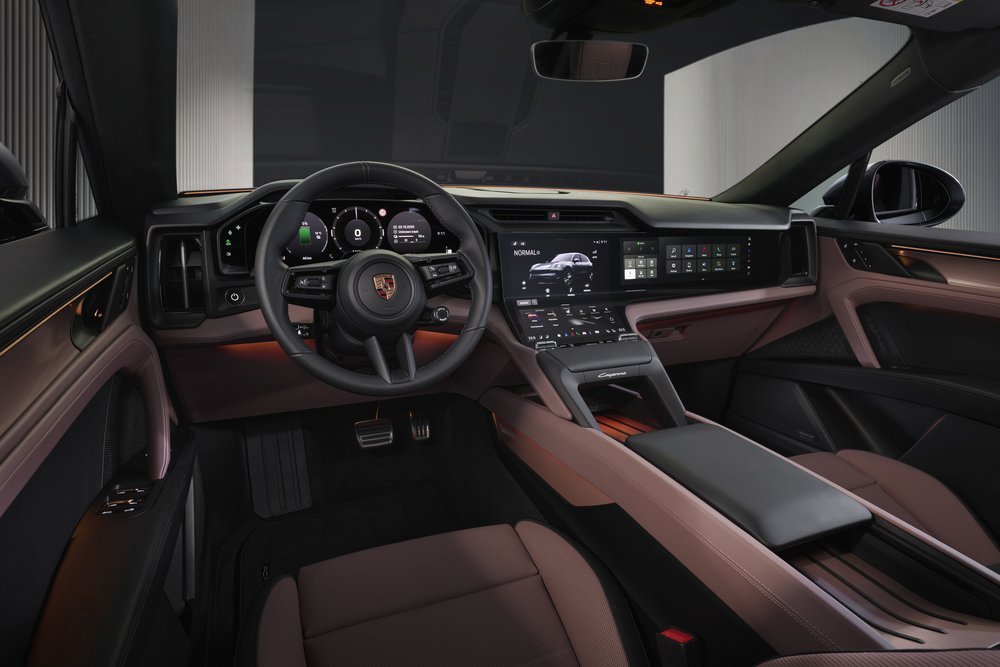
Australian-market cars will add several features as standard, including a tyre repair kit, privacy glass, upgraded parking assistance, digital radio and a wider range of no-cost paint options.
Australian deliveries are expected to begin in the third quarter of 2026. Local pricing starts at $167,800 for the Cayenne Electric and climbs to $259,900 for the Turbo Electric.
BYD’s is aiming high in Australia after its year-to-date sales have increased rapidly in 2025, including a massive increase of 148 per cent compared with this time last year. According to its targets, BYD will sell 55,000 units in 2025 alone – a remarkable number for a brand that only launched in Australia in February 2023.
Speaking to WhichCar by Wheels at the launch of the new Atto 2 electric small SUV, the brand further outlined its plans to continue expanding in the Australian market to try and achieve a top three sales position by the end of 2026. BYD chief operating officer Stephen Collins said that BYD’s momentum this year will not slow down heading into 2026 and that it’s aiming to topple Tesla as the best-selling new energy car brand in Australia.
“We’ve had a great 2025 so far and sales have exploded,” said Collins. “We’re up 148 per cent year on year and we’re looking to continue that trajectory into 2026.
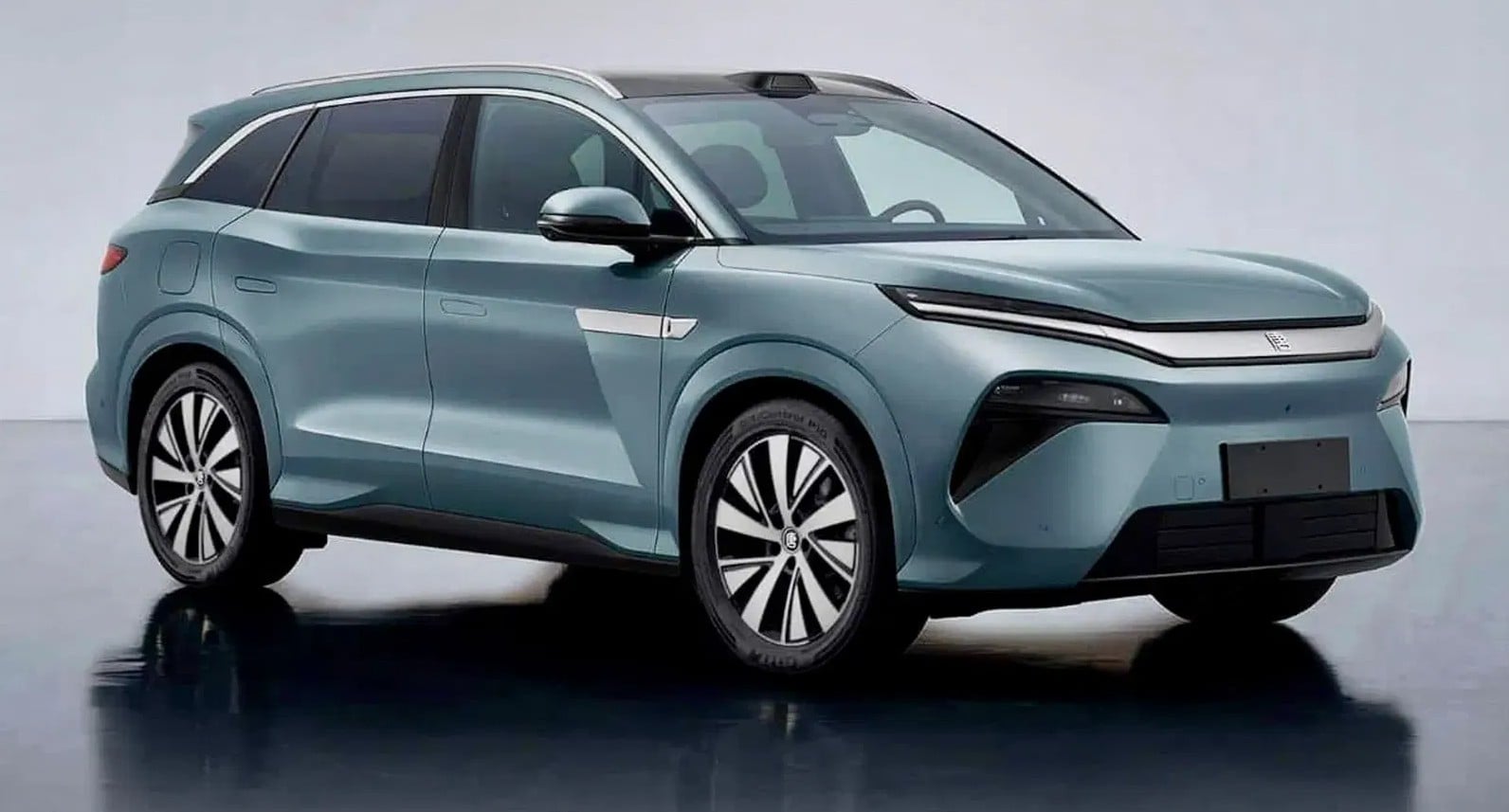
“In June 2025, we achieved a record for BYD sales in Australia at over 8000 units. Since then we’ve been sitting at between 4000-5000 units each month and we’re expecting to finish 2025 with around 55,000 units in total,” he said.
According to Collins, although BYD already sells six models in Australia, product is key to further improving its sales numbers. While BYD’s premium arm Denza launches later this month, the Atto 1 and Atto 2 are important additions to the range. due on sale next month as the cheapest EVs in their respective segments. The Sealion 5 and Sealion 8 plug-in hybrid SUVs are also due in the first quarter of 2026 – the latter of which is predicted to become BYD’s best-selling car in Australia.
“To grow sales we need to offer more product to more people and Atto 1 and Atto 2 are the first steps,” he said. “The light car segment is relatively small but we see a big opportunity, be it people in their 20s and first time car buyers or retirees who want value for money. The Atto 2 will target first car buyers, people in their late 20s and early 30s doing urban driving, or maybe as a second car.
“We currently hold 2500 expressions of interest in Atto 1 and 2, and we think there will be really strong orders for both of them. The novated leasing for the Atto 1 starts at around $99 per week including insurance and registration, which is extremely affordable motoring.”
Looking further into 2026, Collins says that any Chinese product “is available to us, we just have to make sure that it fits into our market”. Possible additions include the Seal 06 plug-in hybrid mid-size sedan and wagon, while more additions to the Denza line-up – potentially rebadging products from its YangWang luxury arm – are almost certain.
BYD is also looking to expand its Australian dealerships and service centres. Currently, it has 104 showrooms around Australia – including only one in the Northern Territory and three in Tasmania – a number that it’s looking to expand in 2026 to around 150. A new 20,000-square metre warehouse is also being built in Melbourne to help parts supply.
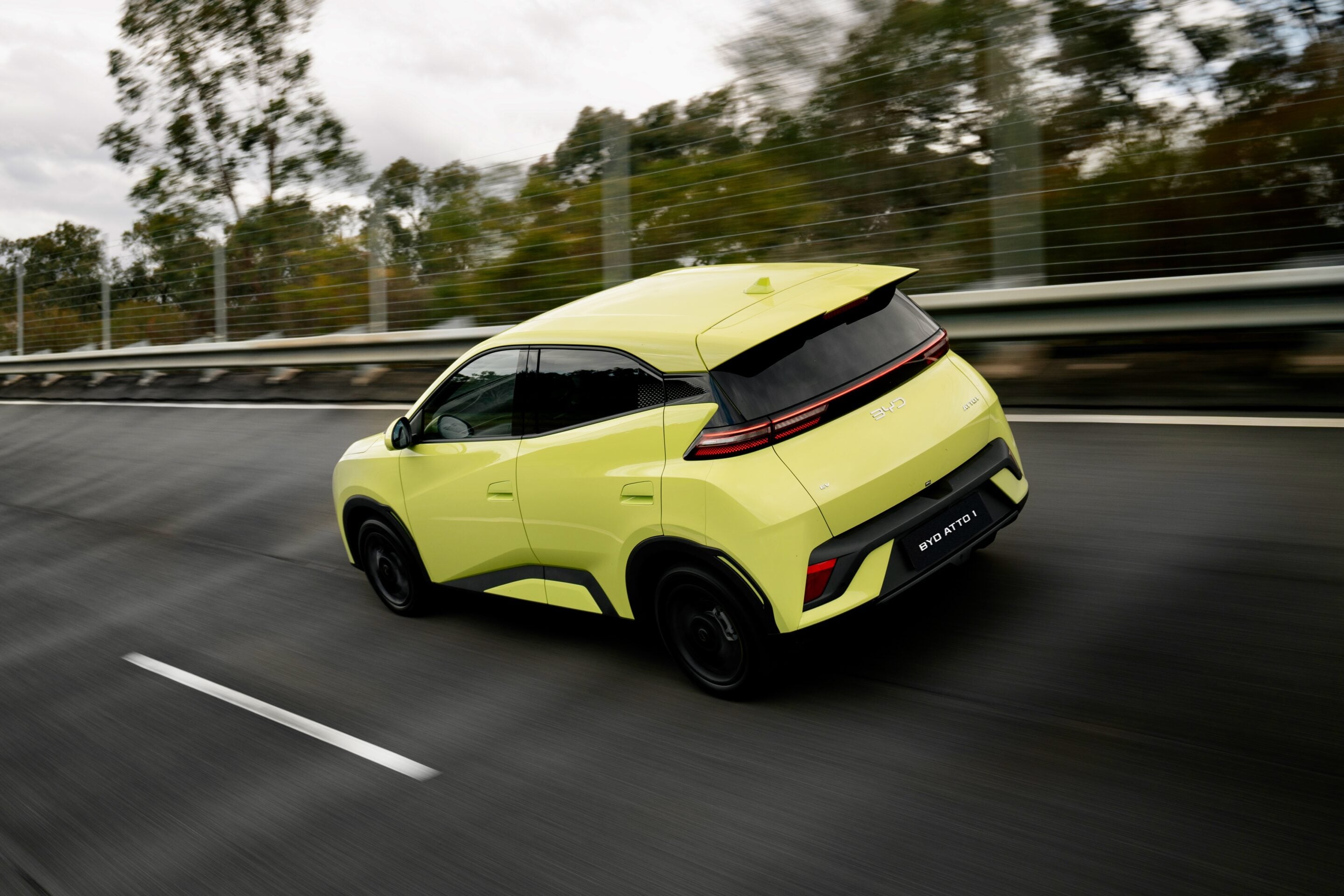
“In 2026, we’ll continue expanding our retail presence,” Collins said. “At the moment, we’re at 104 outlets but by the end of 2026, that will increase to around 150. And they won’t just be showrooms either, but service centres with full parts supplies as well.”
Other priorities for BYD for 2026 include growing into new sales channels, expanding further into fleet sales, improving service and parts availability and continuing to build a strong brand that is trusted.
Set on achieving market dominance, Chinese giant BYD is continuing to expand its model line-up in Australia. Not satisfied with achieving a top 10 position on the sales ladder during 2025, its goal to be in the top three brands locally by the end of 2026 is bold but considering its rate of expansion in both product and dealer presence, certainly possible.
The latest BYD model to launch in Australia is the Atto 2, which has become the cheapest electric SUV on the market priced from just $31,990 plus on-road costs. Is the BYD Atto 2 key to BYD achieving its sales goals?
BYD Atto 2 pricing (plus on-road costs):
| Dynamic: | $31,990 |
|---|---|
| Premium: | $35,990 |
The Atto 2’s pricing makes it – easily – the cheapest new electric SUV on sale in Australia, significantly undercutting rivals such as the Chery E5 (starting at $36,990 plus on-road costs), Leapmotor B10 ($38,990 +ORC) and Kia EV3 ($47,600 +ORC).
The Atto 2 is covered by a six-year/150,000km warranty, with 12 months of roadside assistance and an eight-year/160,000km battery warranty.

Both variants in the Atto 2 range are well equipped, especially considering that a heat pump and vehicle-to-load (V2L) functionality is standard. The Premium especially is loaded with kit, but it’s difficult to overlook the Dynamic’s $31,990 +ORC entry price. Head to the bottom of the page for the full run through of the Atto 2’s standard features.
The cabin of the Atto 2 is a quiet, comfortable and well featured place to spend time. Material quality is impressive with plenty of soft touch materials and no noticeable panel gaps or loose-feeling switchgear. Front seat comfort is good as well, though there’s no lumbar adjustment or under-thigh angle adjustment. Plus, the lack of seat ventilation in the Dynamic means that the front seats would likely get quite hot in summer thanks to the standard synthetic leather trim.
The touchscreen in the Atto 2 looks a bit dated to look at but is packed with plenty of features like live services, wireless smartphone mirroring and inbuilt sat-nav. It’s more user-friendly than a lot of other new cars, too, because a shortcut bar lies at the bottom of the screen so that functions such as the climate, headlights and home button are always visible (though it features precious few physical buttons). And, being a BYD, it rotates as well for some extra pizzaz.
There’s plenty of storage space, including big central cup holders and a huge central box, while two adults will fit fine in the rear seat – keep it to two though as the Atto 2 isn’t a wide car. For child seats, there are two ISOFIX and three top-tether points. plus, air vents, two USB chargers, map pockets and door pockets.

There’s a healthy 380 litres of bootspace behind the rear seats, which expands to 1320 litres with the seats folded. Clever touches include a dual-level boot floor, side storage and hooks to hang bags off. There’s no front boot unfortunately, and the tailgate is manual, but it is quite light.
Both Atto 2 variants use a 51.13kWh ‘Blade’ LFP battery for a claimed WLTP range of 345km, which is less than both variants of the Leapmotor B10 (361km–434km), but that car costs $5000+ more to buy. On the local media launch of the Atto 2, we drove it mostly on the motorway from Sydney to the Central Coast and back for around 160km of driving and the range still showed just over 50 per cent of charge, making the WLTP claim fairly accurate in those conditions.
BYD claims that the battery of the Atto 2 can be DC fast charged at up to 82kW and a 10 to 80 per cent charge takes just under 40 minutes, which is around half that of the Leapmotor B10. Its 7kW AC charging limit is even less, and a full charge takes a minimum eight hours. There could be improvements made to the Atto 2’s charging ability, for sure, and there are also only two modes of regenerative braking, with no one-pedal driving functionality.

Dynamically, the Atto 2 is nothing special either. There’s more than enough performance from its 130kW/290Nm motor with a claimed 7.9-second 0-100km/h time, but its odd steering and pronounced body roll even during moderate cornering mean that enthusiasts won’t be too impressed. Perhaps it was just our Premium test car with its slightly larger wheels than the base Dynamic or the unsophisticated torsion beam rear set-up but the suspension thuds over smaller undulations and it’s otherwise too soft over larger bumps. A local steering and suspension tune would serve the Atto 2 well.
The light steering of the Atto 2 is especially odd when you realise that it’s actually quite quick, so any movement off centre has the car turning more sharply than you expect. That’s not so bad around town because it adds a light and nimble feel, but when you’re on a motorway and the Atto 2’s over-sensitive lane keeping assistance is trying to steer you back to the lane – and you accidentally correct it more than needed – it’s alarming.
Otherwise, there’s plenty to like about the Atto 2. It’s an in-vogue small SUV powered by electricity and it’s more than practical enough for its intended purpose as an urban roundabout. Overall quality is impressive and it’s loaded with features.
Its low pricing is an obvious drawcard in an age when most ICE-powered rivals cost more and it’s further proof of how hard BYD is pressing in the Australian market. Combined with the smaller Atto 1, the age of cheap EVs is well and truly upon us with the BYD Atto 2.
BYD Atto 2 specifications:
| Model | BYD Atto 2 |
|---|---|
| Price | From $31,990 plus on-road costs |
| Peak power | 130kW |
| Peak torque | 290Nm |
| Motor | front-mounted, permanent magnet synchronous |
| 0-100km/h | 7.9 seconds (claimed) |
| Battery | 51.3kWh lithium-ion |
| Driving range (WLTP) | 345km |
| Peak DC charging speed | 82kW |
| 10-80% peak charging time | 39 mins |
| Dimensions (length/width/height/wheelbase) | 4310/1830/1675/2620mm |
| Kerb weight | 1555-1590kg |
| Bootspace (seats up/down) | 380 litres/1320 litres |
| On sale | Now |

BYD Atto 2 Dynamic standard features:
- 16-inch alloy wheels with a tyre repair kit
- Dusk-sensing automatic LED exterior lighting
- Rain-sensing automatic wipers
- Heated mirrors
- Keyless entry and start
- NFC card, Bluetooth key and digital key
- Synthetic leather steering wheel
- Synthetic leather upholstery
- Manual height-adjustable driver’s seat
- Automatic air-conditioning with rear vents
- 8.8-inch digital driver’s display
- 10.1-inch touchscreen with over-the-air updates
- Wireless Apple CarPlay and Android Auto
- FM and DAB+ digital radio
- Satellite navigation
- Four-speaker sound system
- 4x USB ports
- Heat pump
- Vehicle-to-load (V2L) capability
- Snow, eco, normal and sport driving modes
Atto 2 safety features:
- 6x airbags
- Autonomous emergency braking (AEB)
- Adaptive cruise control
- Lane keeping assistance
- Adaptive lane guidance
- Blind-spot monitoring
- Rear cross-traffic alert (with braking)
- Door open warning
- Auto high beam
- Traffic sign recognition with speed limit alert
- Reversing camera
- Tyre pressure monitoring
- Rear parking sensors
The Atto 2 is yet to receive a safety rating from Euro NCAP or ANCAP.
Atto 2 Premium model adds:
- 17-inch alloy wheels
- Roof rails
- Panoramic sunroof
- Auto-folding exterior mirrors
- 360-degree camera
- 6-way electric driver’s seat
- 4-way electric front passenger seat
- Heated and ventilated front seats
- Larger 12.8-inch touchscreen
- Wireless phone charger
- Front parking sensors
- Auto-dimming rear mirror
- Four extra speakers (eight in total)
Rolls-Royce has revealed a highly unusual bespoke project: a Black Badge Ghost customised for a client with a deep interest in the early era of video games. The special-order model, named the Black Badge Ghost Gamer, incorporates dozens of references to the 8-bit aesthetic associated with vintage arcade machines and home consoles, marking the first time the luxury brand has drawn directly from gaming culture for a commission.
According to Rolls-Royce, several of its customers have become active collectors of early gaming hardware and memorabilia. That trend informed the approach to this commission, which aims to reinterpret the pixelated style and colour palettes of early digital graphics through handcrafted materials rather than screens or lighting effects alone.
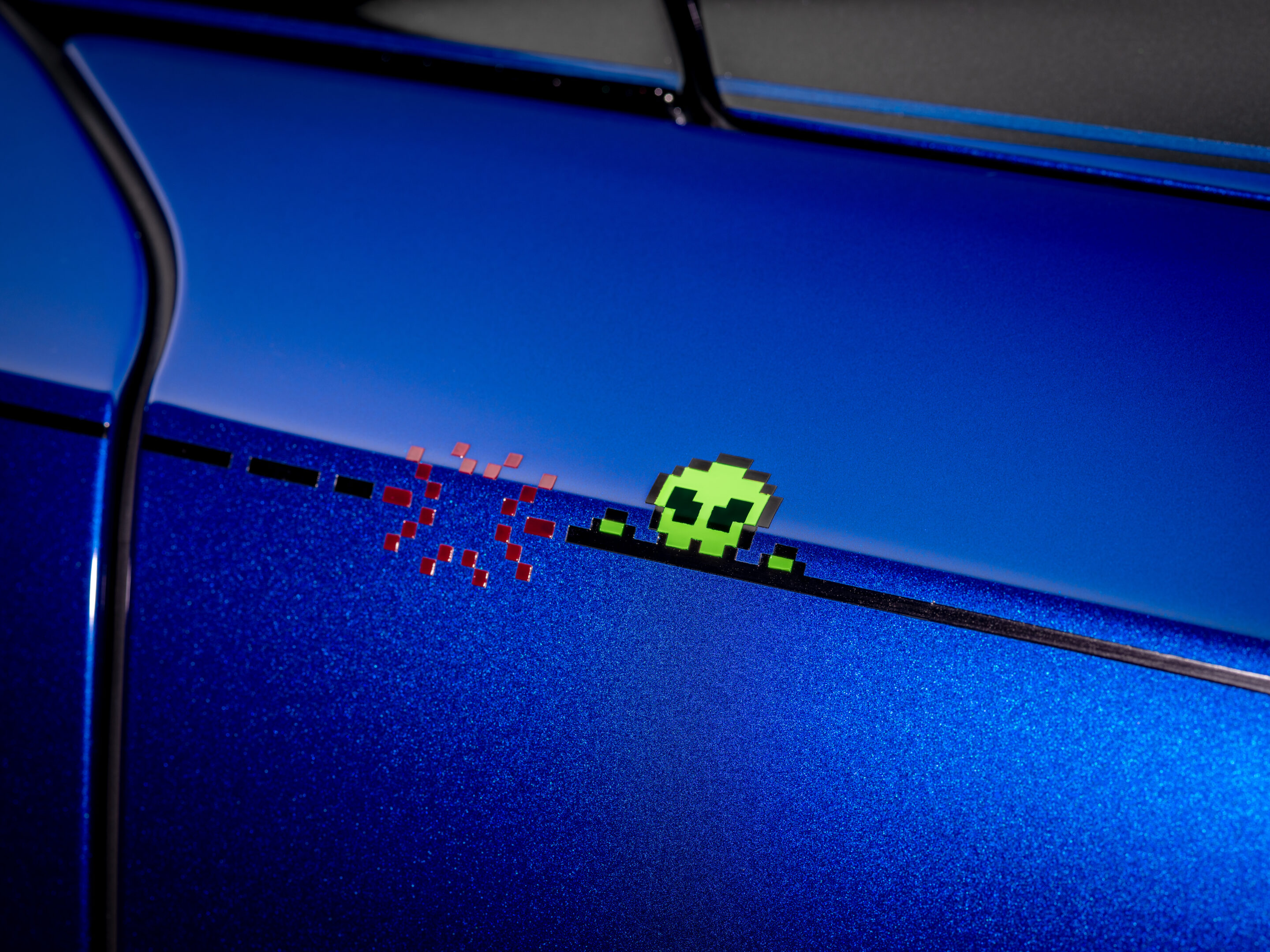
The exterior uses a two-tone colour scheme of Salamanca Blue and a shimmering black upper section, designed to evoke the metallic and neon finishes common on classic arcade cabinets. A key feature is a hand-painted “Cheeky Alien” motif – designed in collaboration with the owner – created from 89 tiny squares intended to resemble pixel graphics. The car also features illuminated versions of Rolls-Royce’s Spirit of Ecstasy mascot and grille, along with blackened brake calipers and 22-inch wheels.
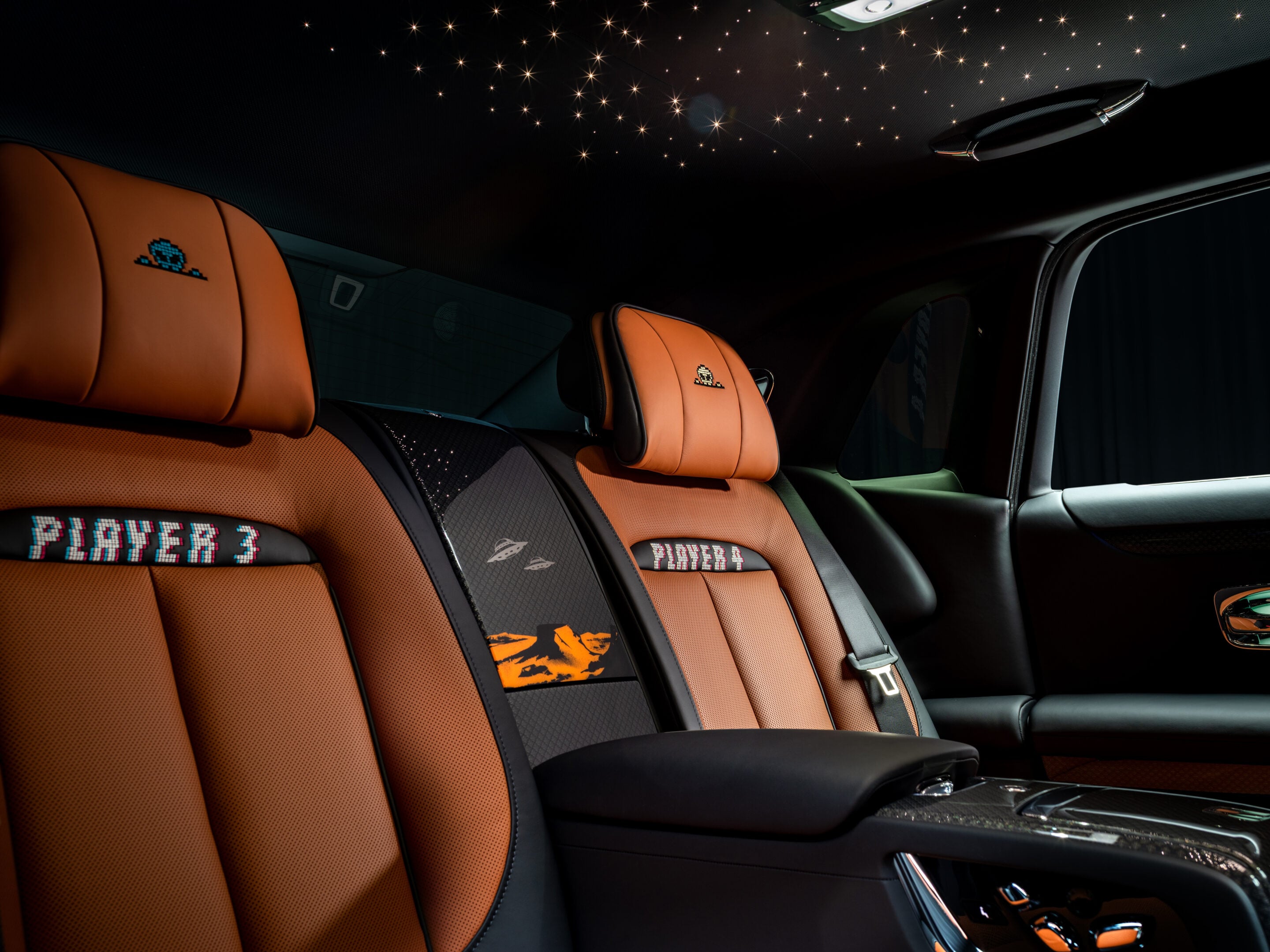
Inside, the theme becomes far more elaborate. The cabin features a black and tan colour scheme with embroidered “Player 1,” “Player 2,” “Player 3” and “Player 4” seat labels stitched in retro-style typeface, accompanied by pixel-art aliens in the headrests. Between the rear seats, Rolls-Royce has added a small artwork inspired by early arcade-game cabinet art, showing two stainless-steel flying saucers hovering over a lunar landscape. The scene was painted by hand, using several techniques to recreate the textured look of early sci-fi games.
The cabin’s technical surfaces also feature subtle sparkles intended to resemble starfields, and some contain hidden “Easter eggs,” including engraved icons and small inlays visible only when particular panels are opened. A modular rail across the dashboard can hold accessories such as cameras or navigation devices, reflecting the owner’s interest in tech-focused customisation.
Lighting plays a major role in the design. The roof features a “Pixel Blaster” Starlight Headliner, with 80 fibre-optic spacecraft arranged across the ceiling. Rolls-Royce has reprogrammed its usual shooting-star lighting effect to resemble laser fire. The dashboard also carries a unique illuminated panel with a stylised starfield and spacecraft outline.
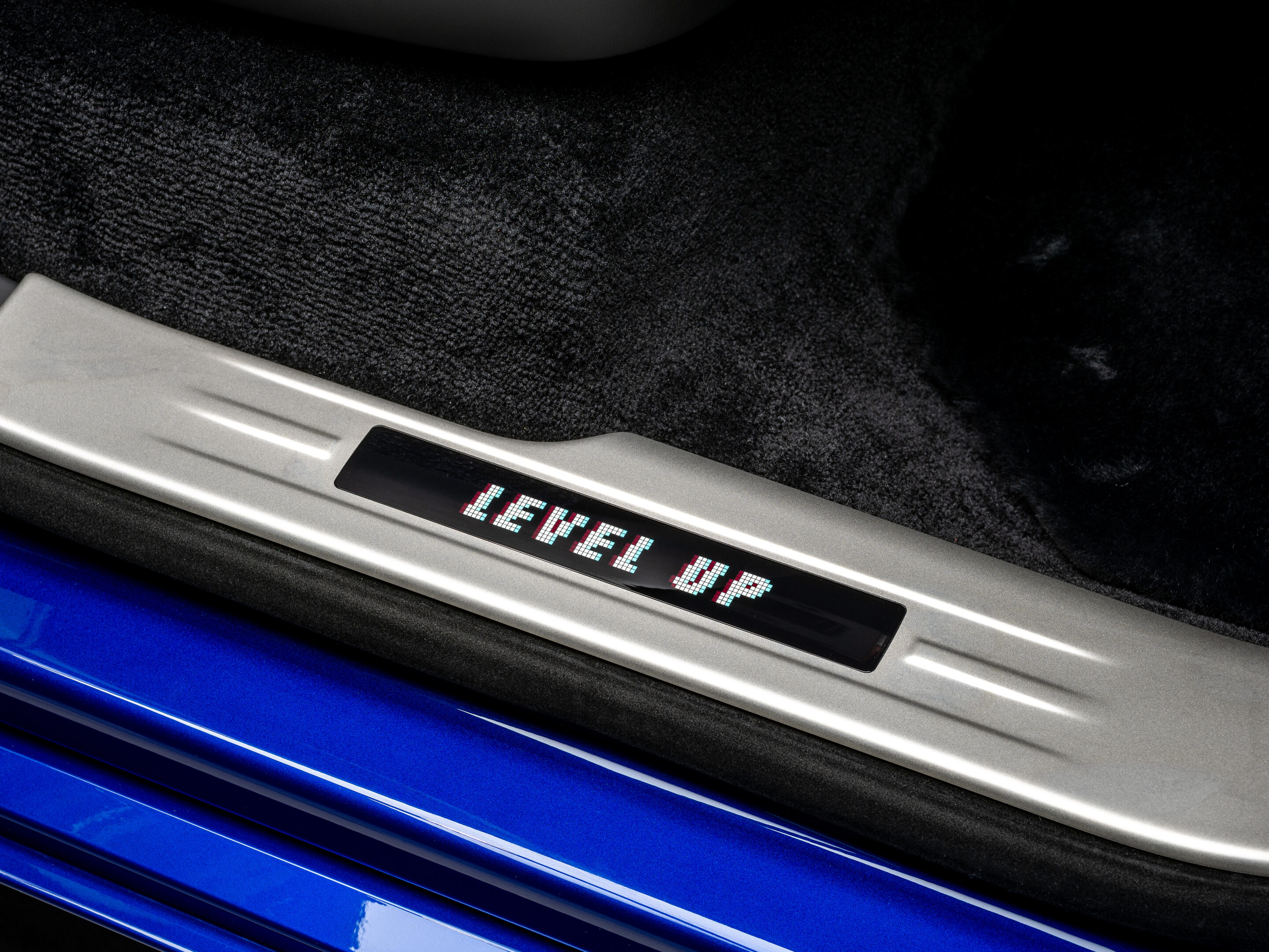
Even the door sills continue the theme, displaying classic arcade prompts such as “PRESS START” and “LEVEL UP” in pixelated lettering.
Delivered to a technology entrepreneur, the Ghost Gamer reflects a growing appetite among younger luxury-car buyers for commissions shaped by pop-culture influences rather than traditional luxury cues. Rolls-Royce says it expects similar requests to become more common as a new generation of collectors enters the market.
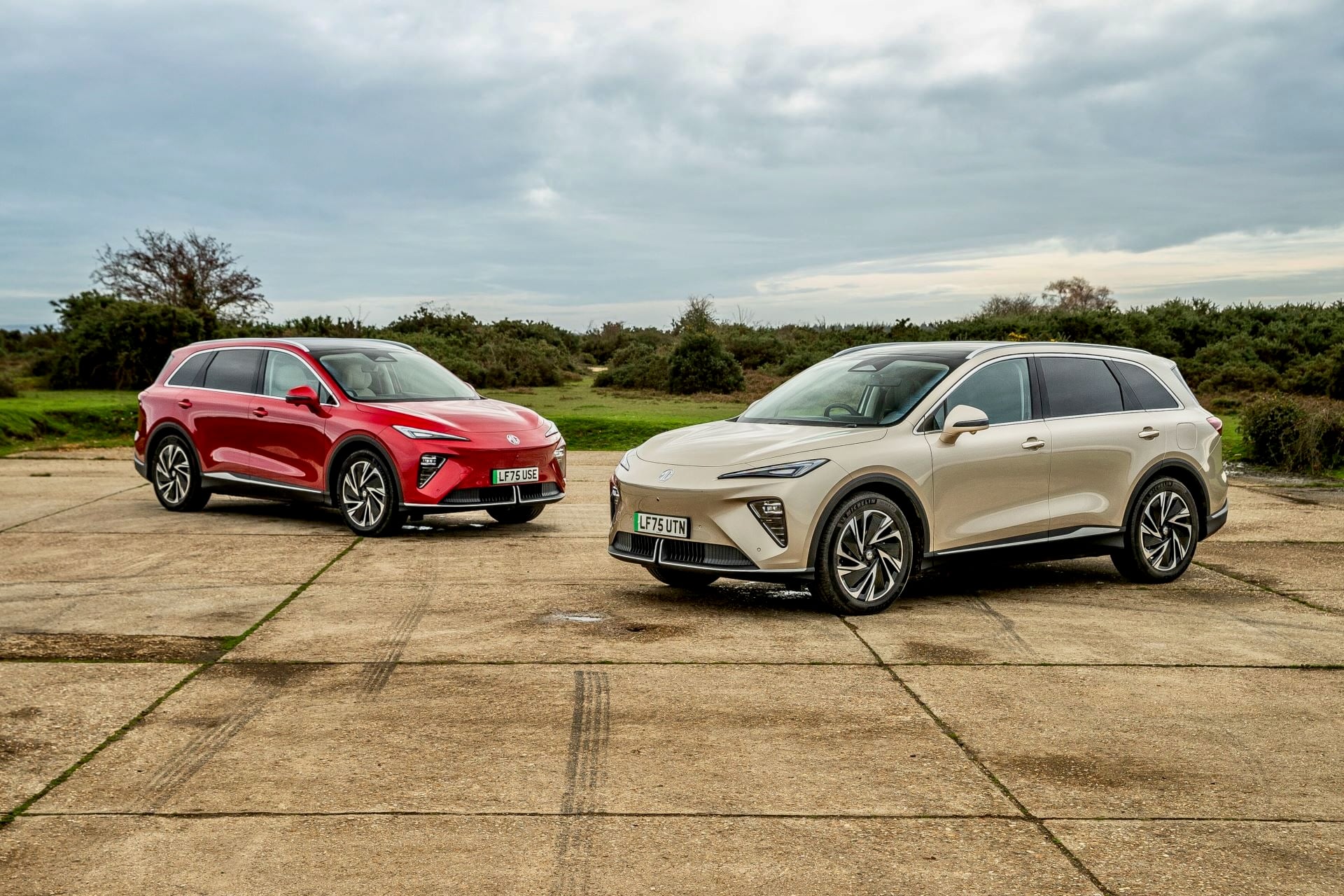
The MGS6 EV mid-size electric SUV has been revealed after it was unexpectedly seen during Euro NCAP safety testing. Already on sale in the UK, the MGS6 EV sits above the existing MGS5 EV small electric SUV, but follows the same styling theme and adds more space, features, performance and battery cells for extra range. The MGS6 is expected to arrive in Australia during 2026.
On the outside, MG’s latest design language continues to evolve, with this relatively upright model taking inspiration from the Cyberster for some exterior elements. These include an aggressive lower bumper on the front end, here matched to a split headlight design with thin upper units housing the daytime running lights and indicators, and main headlamps housed below. At the rear is a slim light bar and yet more Cyberster-inspired design at the base of the bumper.
Under the skin, the MGS6 is based on the same ‘MSP’ platform as the MG4, which is a bespoke EV architecture that integrates a 77kWh NMC battery under the cabin floor. In the UK, all variants use this battery pack, which then powers either a single-motor or dual-motor powertrain for up to 530km of range (WLTP).
As for power, the entry-level variants share a single, rear-mounted motor that produces 180kW of power and 350Nm of torque. It’ll sprint to 100km/h in 7.3 seconds and tops out at 200km/h. There is also a dual motor powertrain available in the UK, making 266kW of power and 530Nm of torque for a 0-100km/h time of 5.1 seconds and hitting the same 200km/h top end – the dual motor’s range is reduced to 485km, however, thanks to its extra weight.
Charging is a little underwhelming, though, with a peak 144kW DC rate. This means the 10-80 per cent fast charge takes 38 minutes, which is well behind the class average.
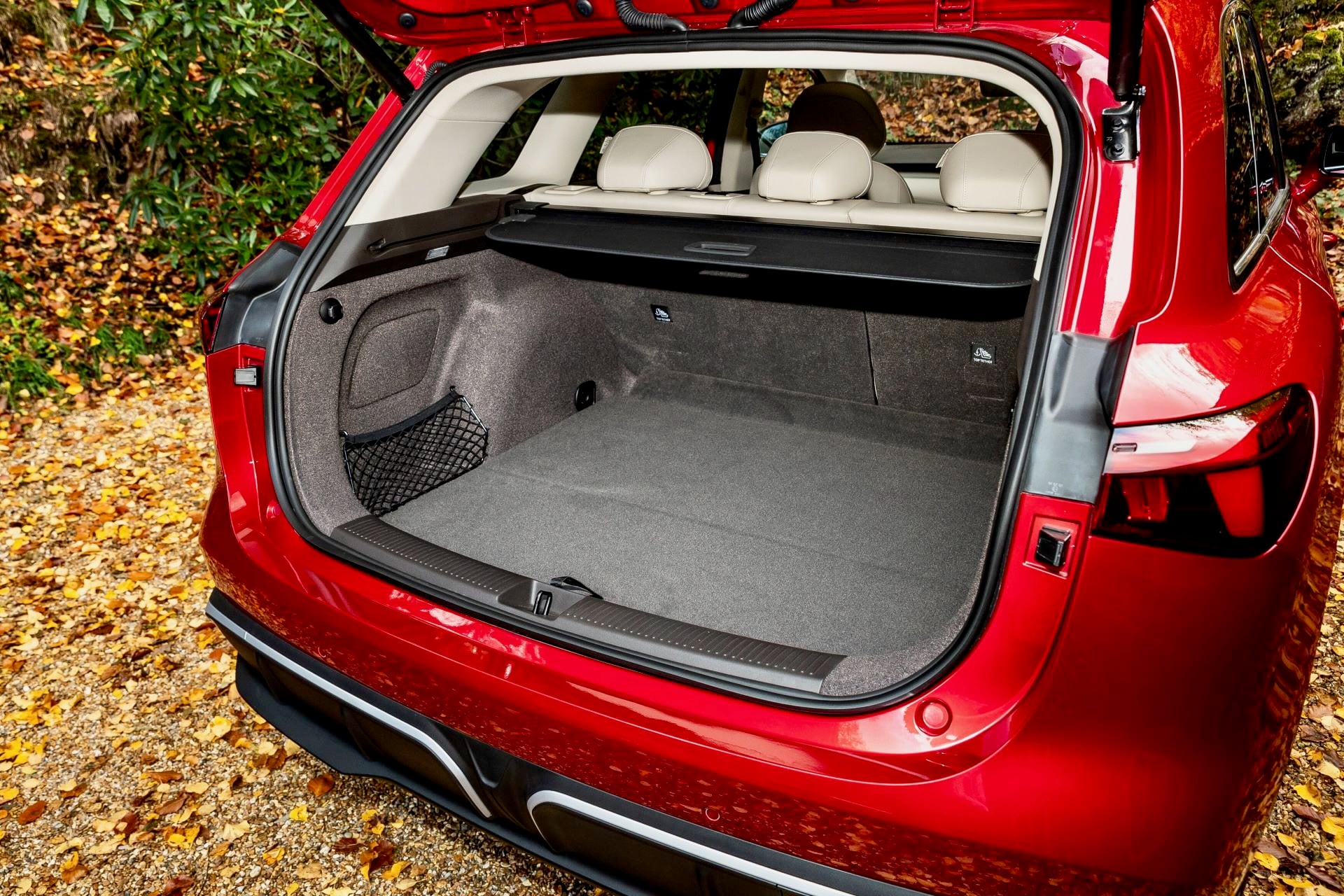
All MGS6 EVs feature a large, family-friendly body, five seats and plenty of cargo space. Measuring 4708mm long, the MGS6 EV is around 5cm shorter than a Skoda Kodiaq, but is strictly a five seater. According to MG UK, it has a huge 674-litre boot, which expands to 1910 litres with the rear seats folded – plus, there’s a 124-litre front boot as well.
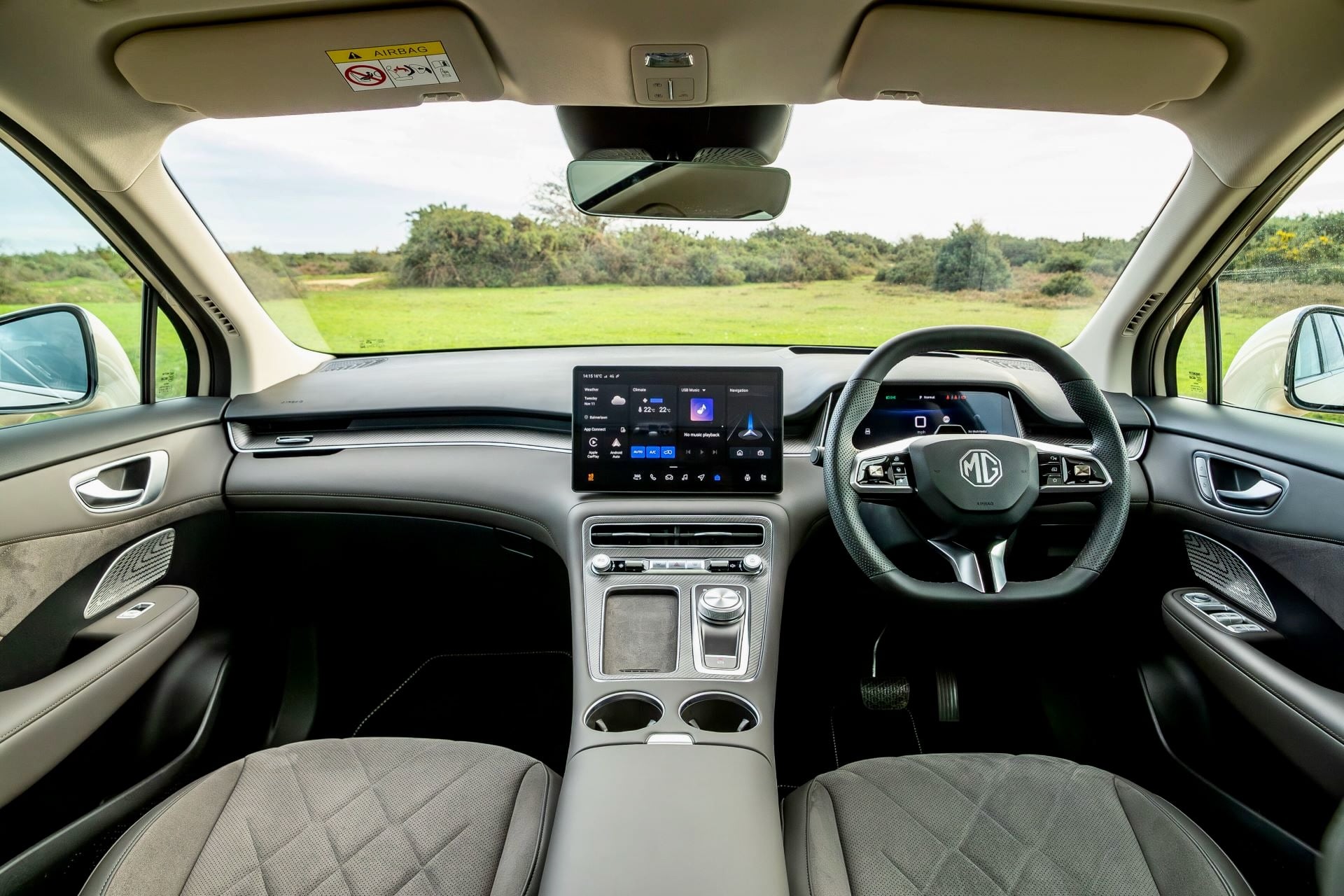
The cabin itself is brand new, and features a dual-screen set-up like the MGS5 EV. All models include a 10.25-inch driver’s display, with a 12.8-inch touchscreen mounted above the centre console. This houses all the usual elements, such as inbuilt sat-nav and the car’s main controls, but MG has listened to customer feedback and still offers a row of physical controls for functions such as adjusting the volume and fan speed.
Wireless Apple CarPlay and Android Auto are also standard, as is a wireless phone charger mounted on the centre console, and all models have access to MG’s ‘iSmart’ app to control the car’s functions such as charging timing, climate pre-conditioning and location.
According to MG, this spacious all-electric newcomer has been designed to move families and their stuff with ease, while offering lots of standard equipment at a reasonable price. How much does it cost? In the UK, the entry-level SE Long Range variant will cost from just under £38,000 (A$77,000), but we don’t yet know how that will correspond to Australian pricing. Given that MG is famous for value, we expect the MGS6 EV to be well priced.
UK models are all well equipped, with the entry level SE featuring 19-inch alloy wheels, grey cloth upholstery, heated front seats and steering wheel and the full suite of the MG Pilot active safety kit. But upgrade to the Trophy model and you’ll find equipment such as a panoramic sunroof, head-up display, heated and ventilated seats, 11-speaker stereo and 20-inch wheels. We expect Australian models to be fairly similar in terms of features, though likely called Excite as the entry model and Essence at the top.
As has been previously revealed, the MGS6 EV has already received a full five-star Euro NCAP rating, as well as strong scores for adult and child-occupant protection. It scored 92 per cent and 85 per cent respectively in the two categories, as well as 84 per cent for vulnerable road users and 78 per cent in the safety assist test.
More than three years after it was previewed in near-production form, the Jeep Recon electric off-roader has now been fully revealed.
Already confirmed for Australia when it was previewed, the Recon is a go-anywhere four-wheel drive like we’re used to from the Jeep brand, but it’s all-electric with a dual-motor drivetrain fitted as standard.
The Recon has been purpose-built to deliver the level of off-roading capability the brand is renowned for and has even earned the same ‘Trail Rated’ certification as the legendary Wrangler. Underneath is the ‘STLA Large’ platform that’s also used by the more luxurious Jeep Wagoneer S.
Power comes from a 100kWh battery that has steel underbody protection and will offer an estimated range of up to 450km, which is a long way off the 650km the new electric Jeep Compass can reach, but that car is far less off-road capable.
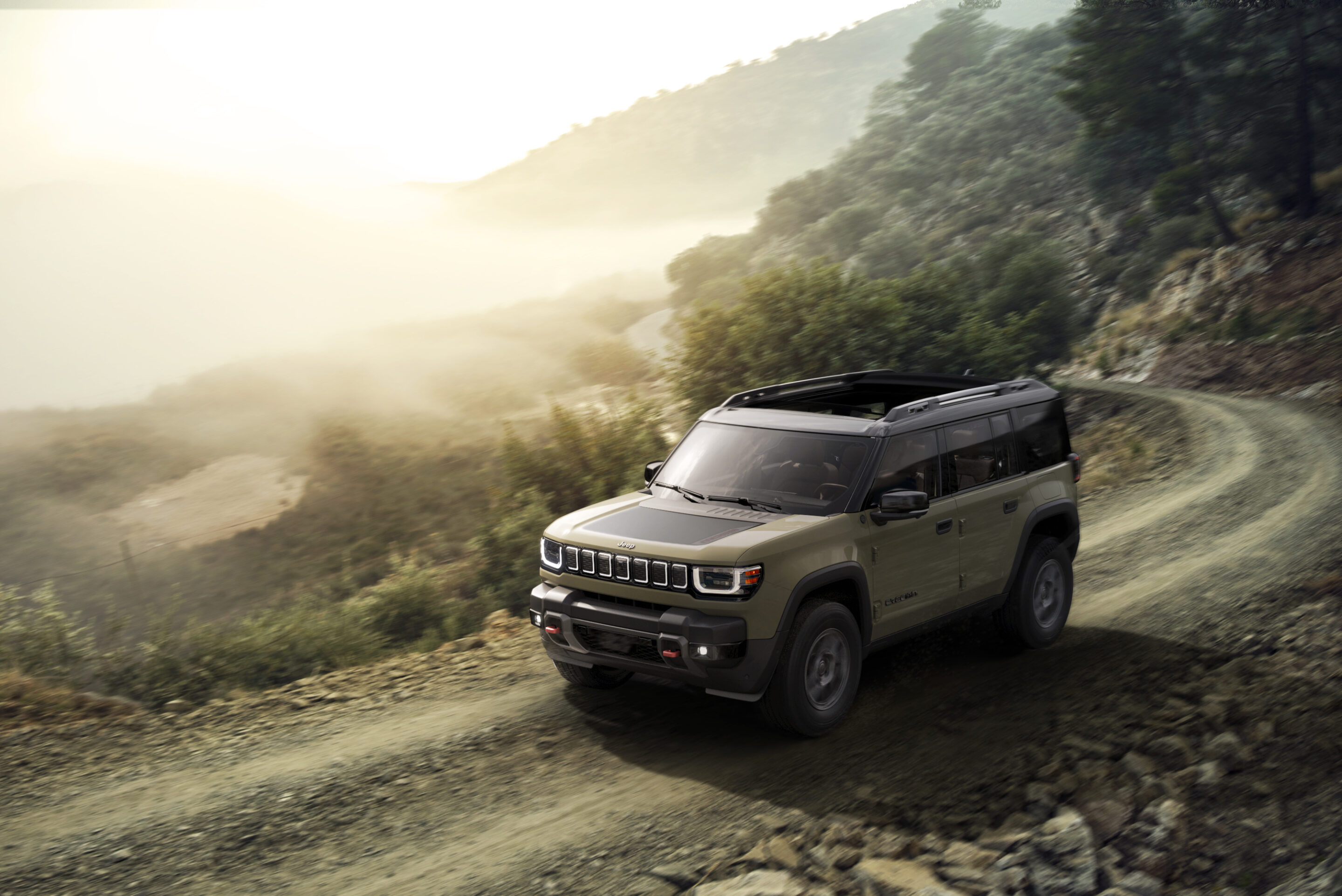
The Recon’s dual motors work together to deliver four-wheel drive, 478kW of power, 840Nm of torque and 0-100km/h in a very fast 3.7 seconds, meaning this Jeep is very nearly as quick as the latest BMW M5.
Instant torque is one of many advantages electrification offers, but Jeep says it’s calibrated the throttle pedal to make power delivery feel controlled and precise, which should help when rock-crawling or tackling other types of tricky off-road obstacles.
The Recon benefits from large-diameter half shafts and other beefed-up components to ensure all its torque gets to the wheels, plus an electronic locking differential at the rear. At the same time, the front e-motor can be disconnected to help boost the car’s efficiency on-road.
The Recon’s ‘Selec-Speed Control’ system can maintain a set speed on challenging inclines and declines, plus there are specific drive modes for Snow and Sand, as well as Auto and Sport. The Moab version shown in these press images will also feature a special Rock mode too.
All four doors on the Recon are removable, as are the rear quarter glass and rear windscreen, for that ‘wind, mud and sand in the hair’ driving experience. Apparently it just takes a few minutes to remove them and doesn’t require any tools. A dual-pane sunroof is standard, but an openable power top will be available as an optional extra.
Wearing a set of 33-inch off-road tyres, the Recon has 239mm of ground clearance, plus off-road enthusiasts will appreciate a 34-degree approach angle, 34.5-degree departure angle and 23.5-degree breakover/ramp angle. Those are on par with the current Land Rover Defender.
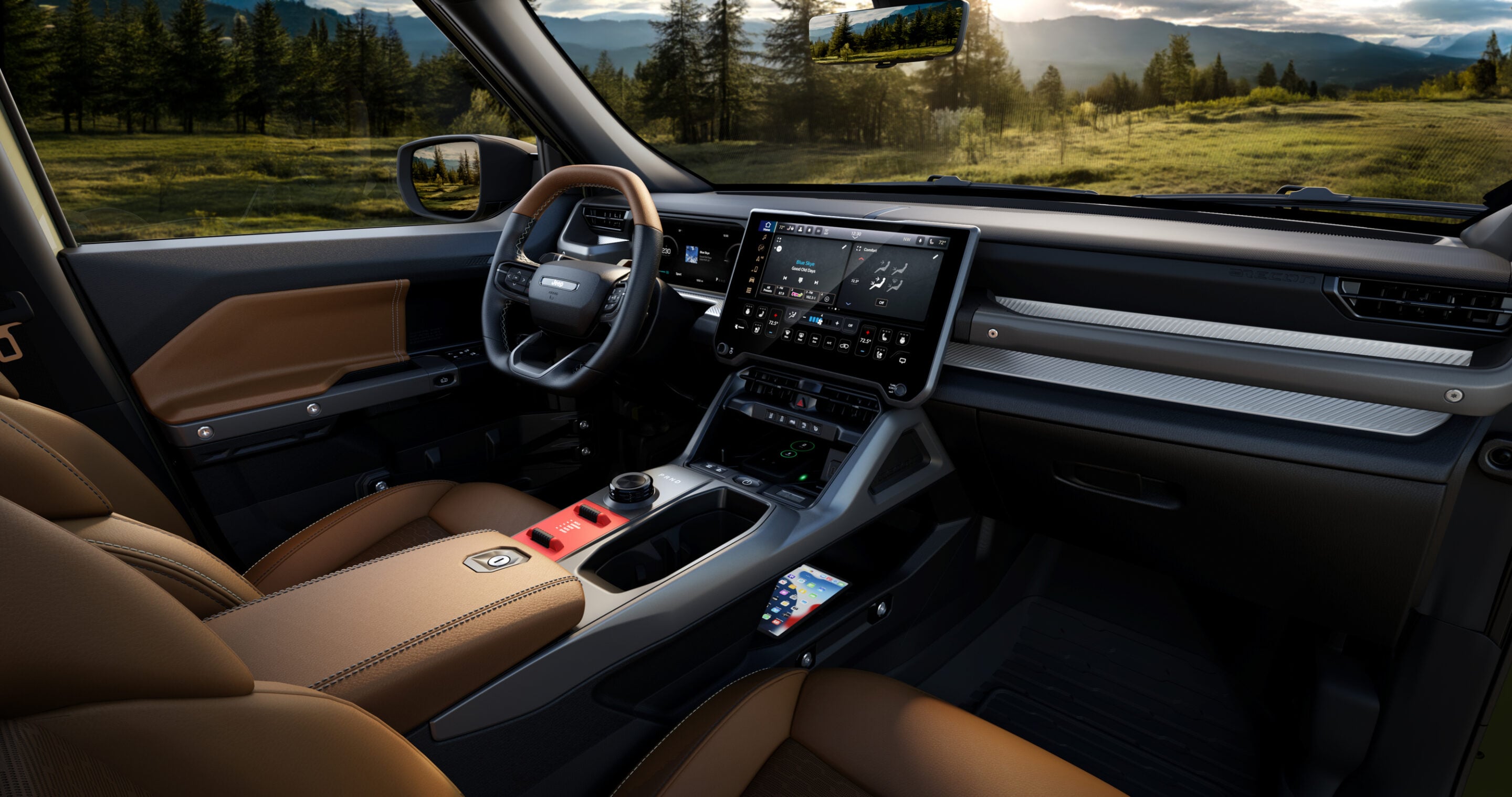
The Recon’s interior has been designed to be “functional and forward-thinking”, featuring durable yet sustainable materials throughout, storage solutions just about everywhere and lots of tech, starting with a 12.3-inch digital driver’s display and 14.5-inch touchscreen.
There are no physical climate controls but there are proper buttons for activating some of the off-road functions and other stuff. The bright red panel on the centre console is where you’ll find the chunky switches for the drive modes and locking differential.
On the dashboard is a modular accessory rail that can be used for mounting cameras, additional GPS or even a rubber duck holder (collecting ducks has become a bit of a Jeep thing). Meanwhile the modular door panels have removable elastic straps and there are some interchangeable storage solutions, while underneath the centre console is enough space for a large tablet.
We don’t yet know exactly how large the Recon is but Jeep claims it offers up to 1866 litres of space when the rear seats are folded down, and there’s an additional 85 litres of storage under the bonnet.
The Jeep Recon will go into production early next year in Mexico and will hit the streets in North America soon after before heading to more global regions towards the end of the year.
When did we grow so comfortable with the idea of excess?
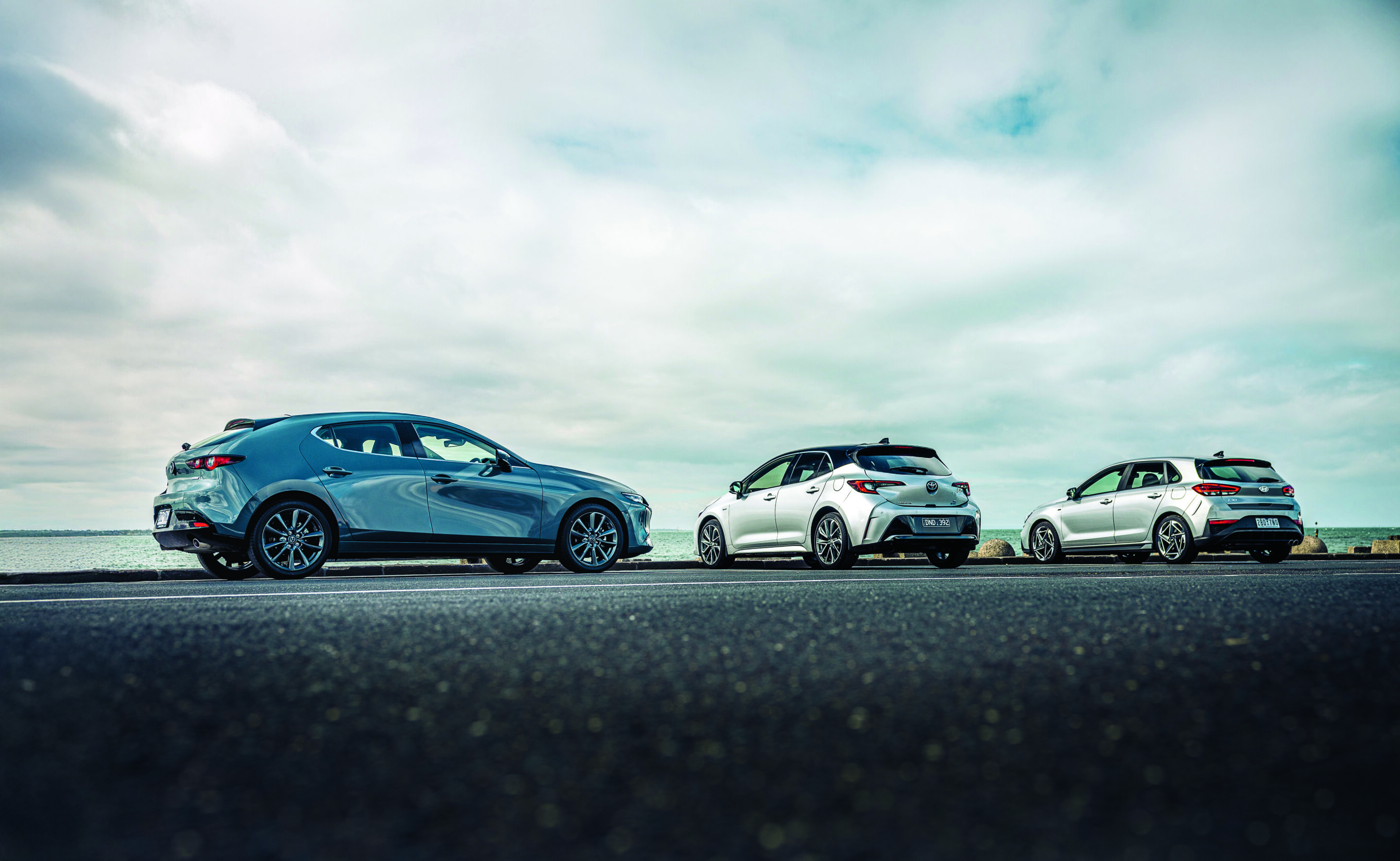
It’s a question that’s hard to dismiss as I’m looking at the new Hyundai i30, the Mazda3 and the Toyota Corolla. After all, we’re a nation that traditionally loves a big car and this trio, which would be deemed ‘family hatches’ in Europe, are relegated to the ‘small car’ category here. Maybe we’re just no good at
efficient packing.
For mine, these are some of the cleverest and most interesting cars for sale at any price, largely because they need to manage so many compromises so smartly. It’s not difficult to build a car that does one thing really well, as a whole host of Chinese ingenues are ably demonstrating. Building a car that’s safe, comfortable, reliable, fuel-efficient, stylish, affordable and spacious while occupying a modest road footprint? That requires some fiendishly smart minds to assemble.
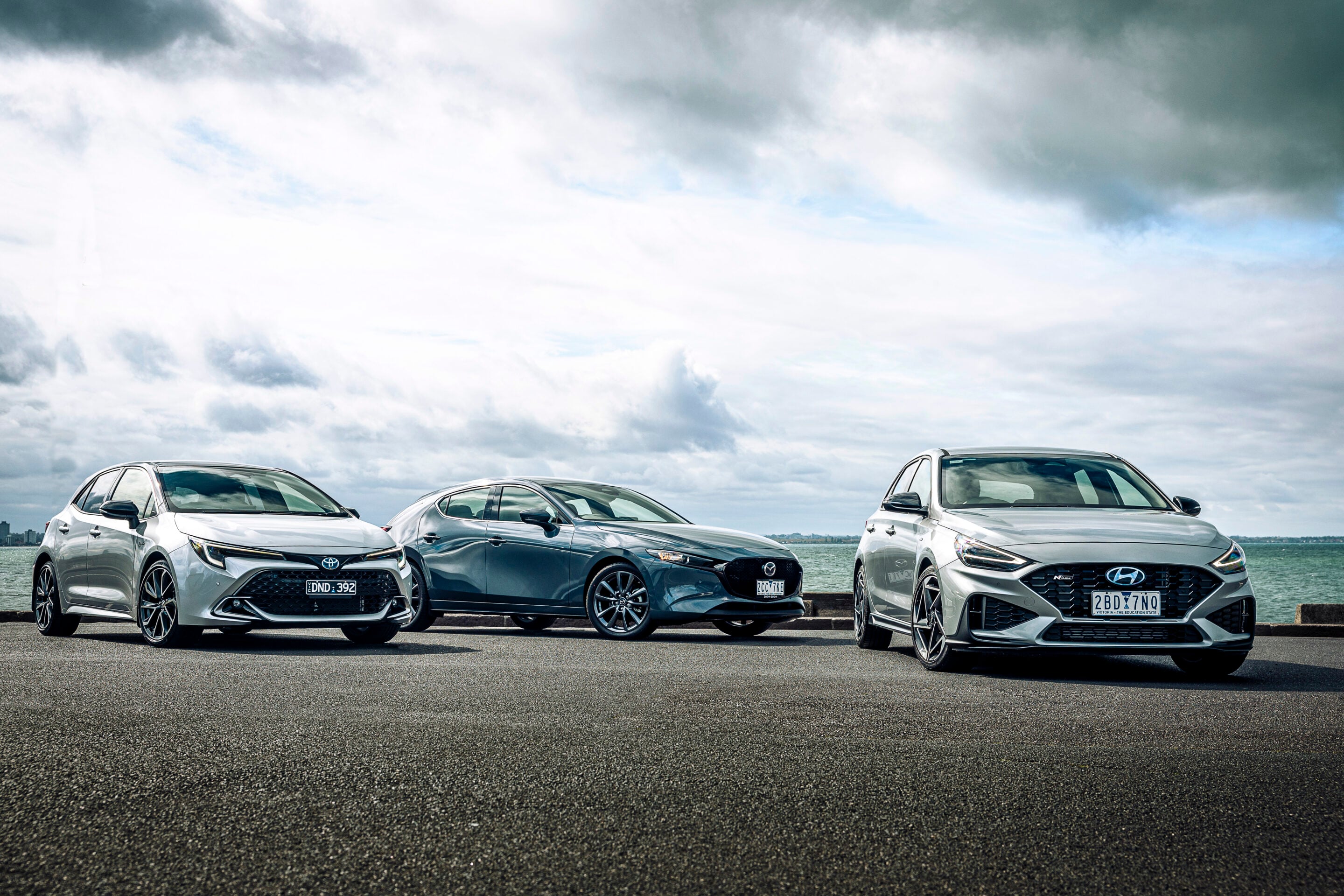
It’s also one that is proving too difficult for many manufacturers to devote the requisite resources to. As more car makers take on the easier, and consequently lazier, assignment of building SUVs instead, the small car appears to be withering on the vine, in Australia at least. In 2014, Toyota sold 43,375 Corollas here. Last year, that figure was almost halved to 24,027. Back then there were 49 different small car models you could choose from. Now there are just 27, a reduction of 45 per cent. It may not surprise you to learn that in Japan and Europe, those trends are reversed.
As it stands, these are the three best-selling small cars in Australia, categorised below the $40k price point. The Kia Cerato was amongst them, but has latterly been replaced by the K4. We’re still awaiting the hatchback version of that car, promised for the end of the year. All three fully deserve to be on those podium steps, but we’re looking to discover which has the most compelling blend of attributes. If you’re looking to downsize in this crushing cost of living crunch, you might find the next few pages well worth your time.
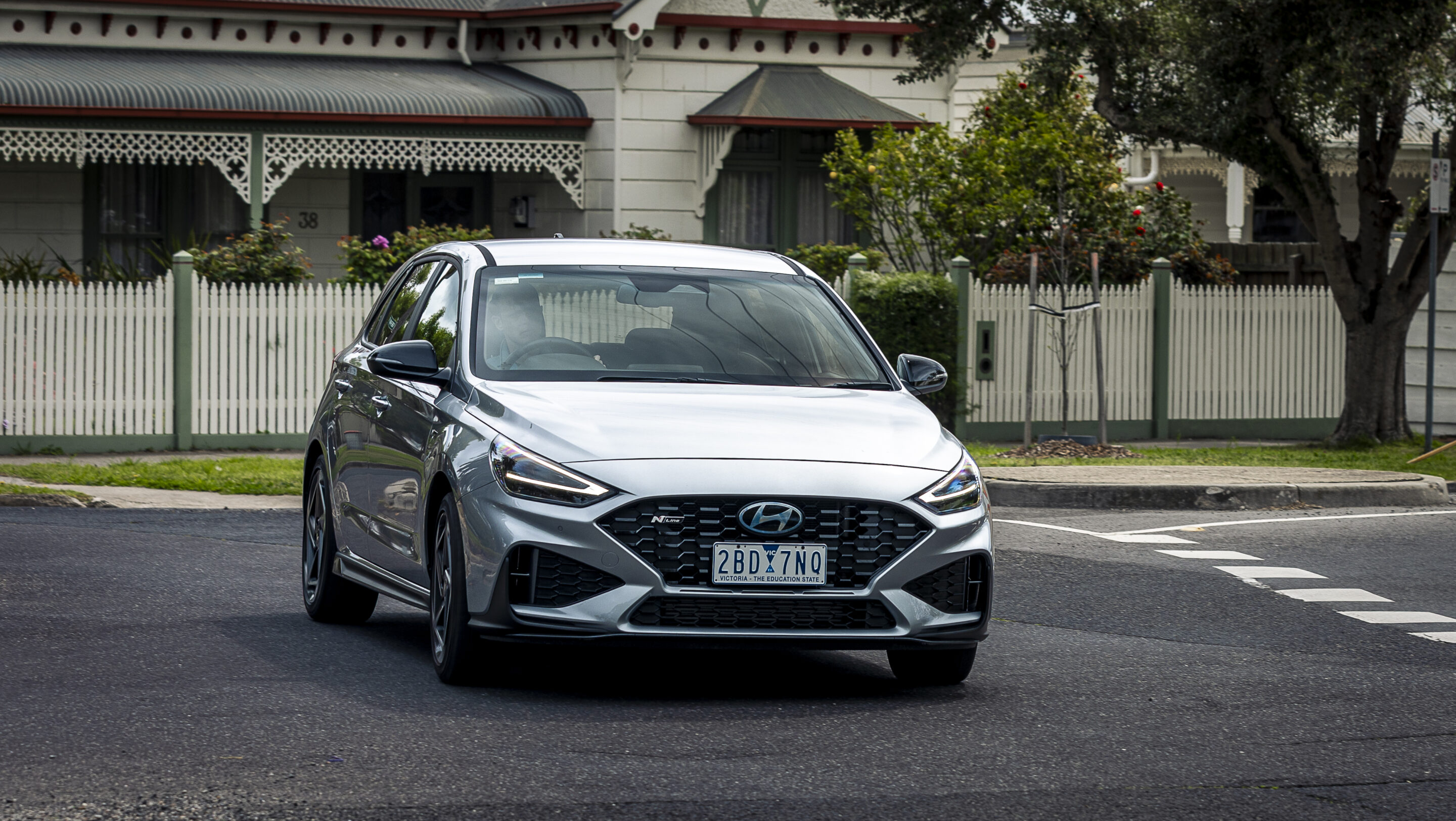
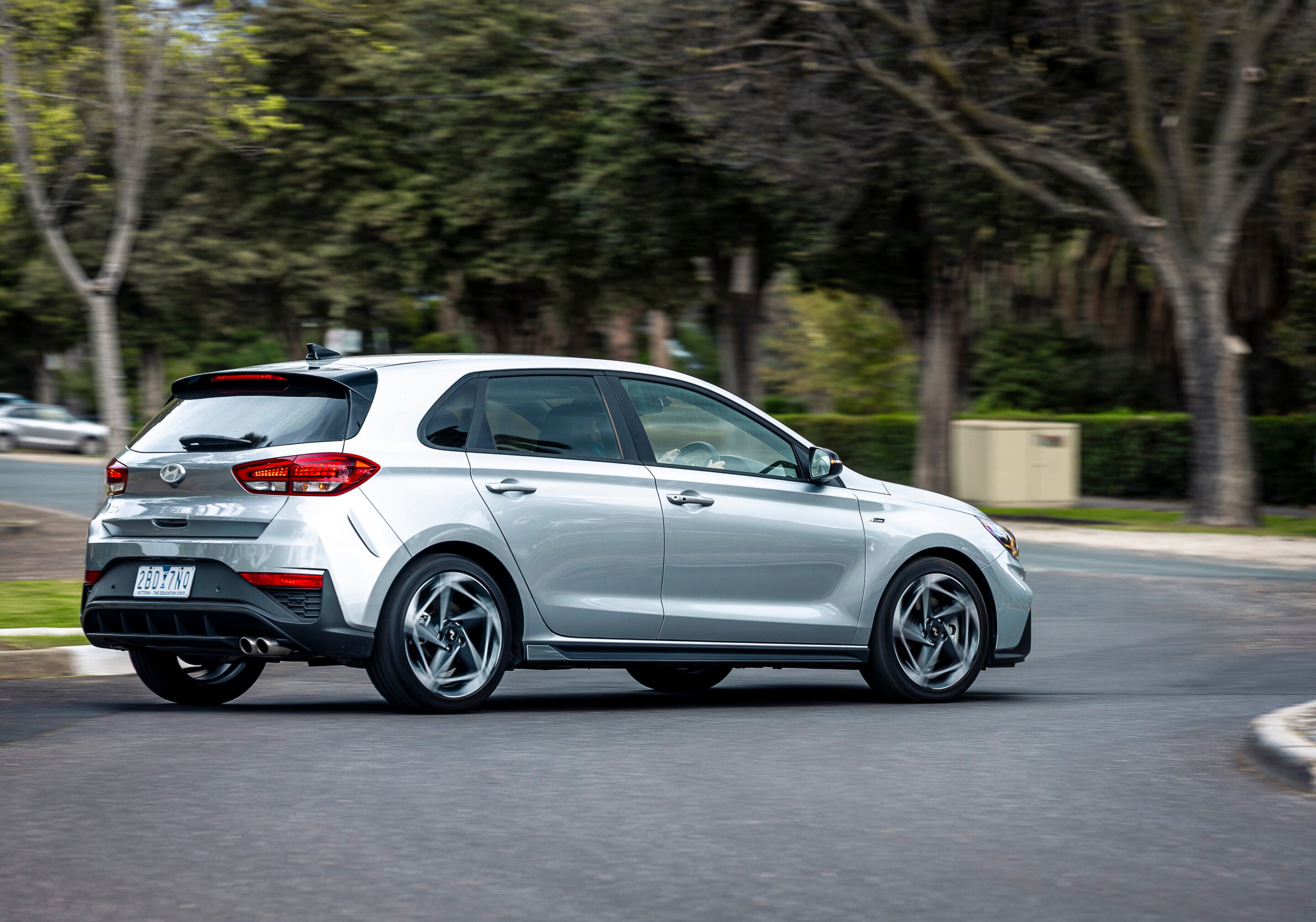
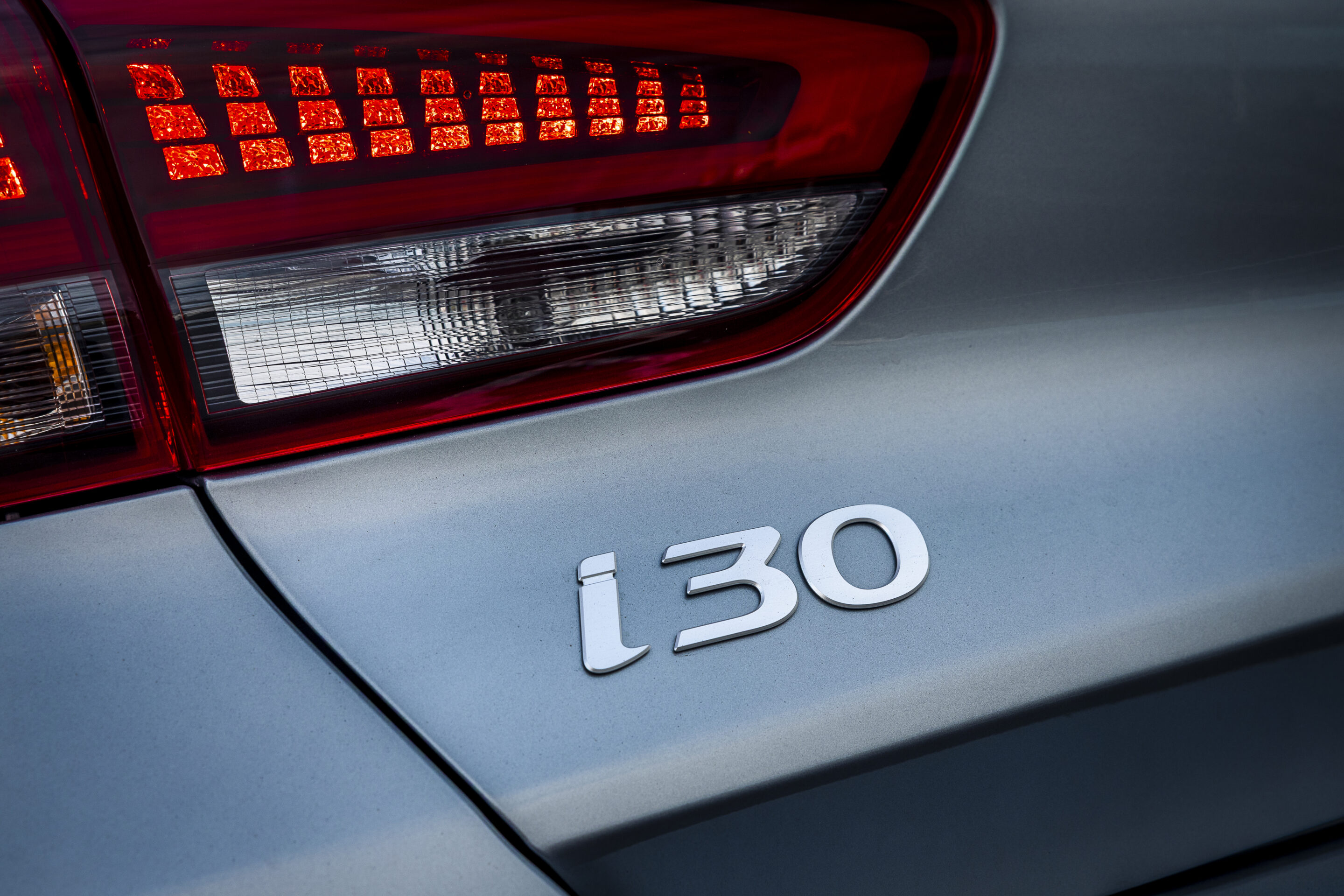
The Hyundai i30 (above) is nominally the oldest of this trio, with this third-generation PD model introduced in 2016 at the Paris Motor Show. The Peter Schreyer design has aged gracefully, and been treated to two facelifts in the interim, the first in 2020, which brought slimmer headlights and a digital instrument cluster, among other refinements, and a second more minor refresh in 2024 which focused on grille and bumpers, at the same time slimming the i30 range down to just N-Line and sporty N models here in Australia. The 117kW/250Nm mild-hybrid 1.5-litre turbocharged powerplant was new for 2024, replacing the older 150kW 1.6T unit, helping reduce Hyundai’s group emissions in the process.
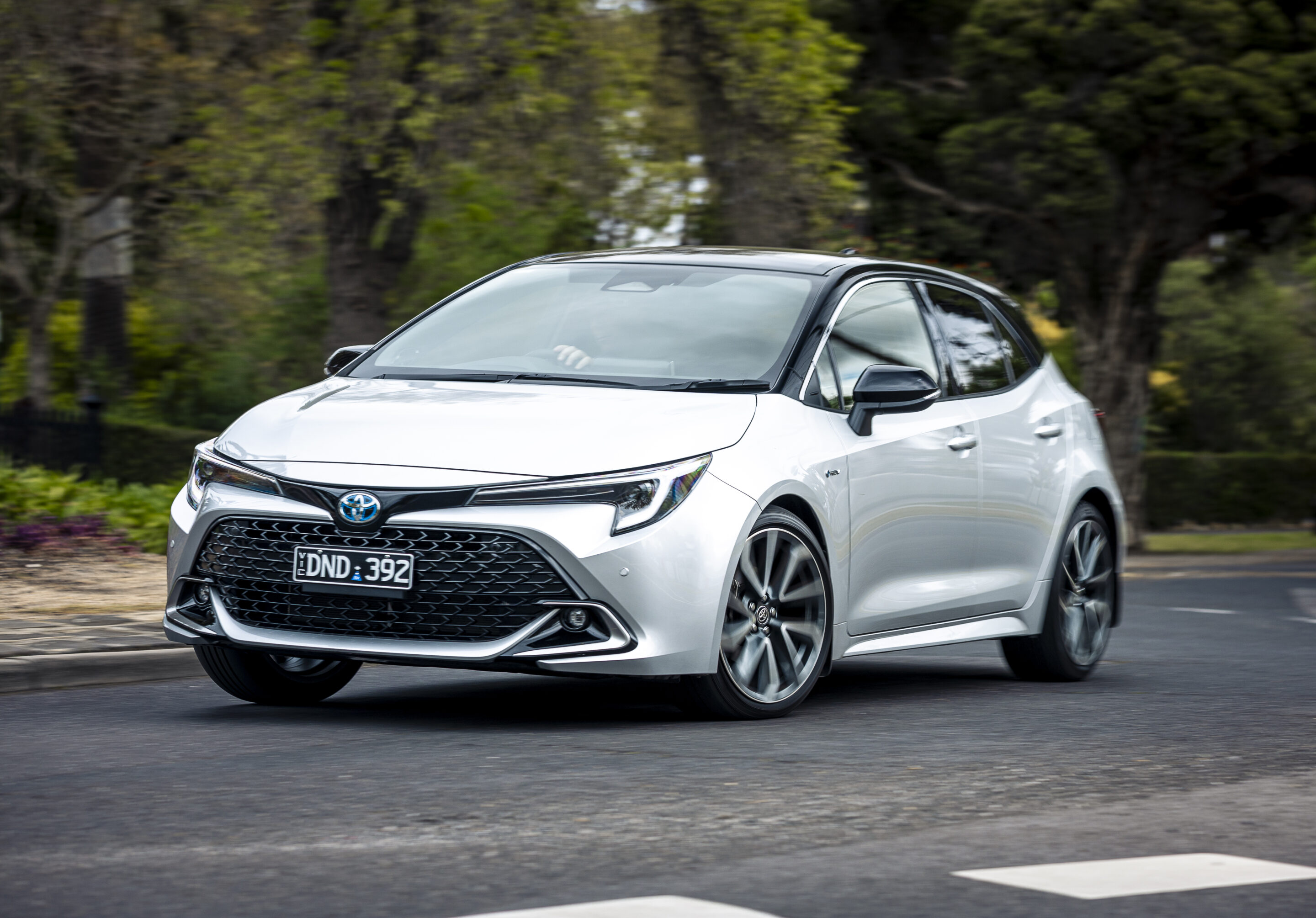
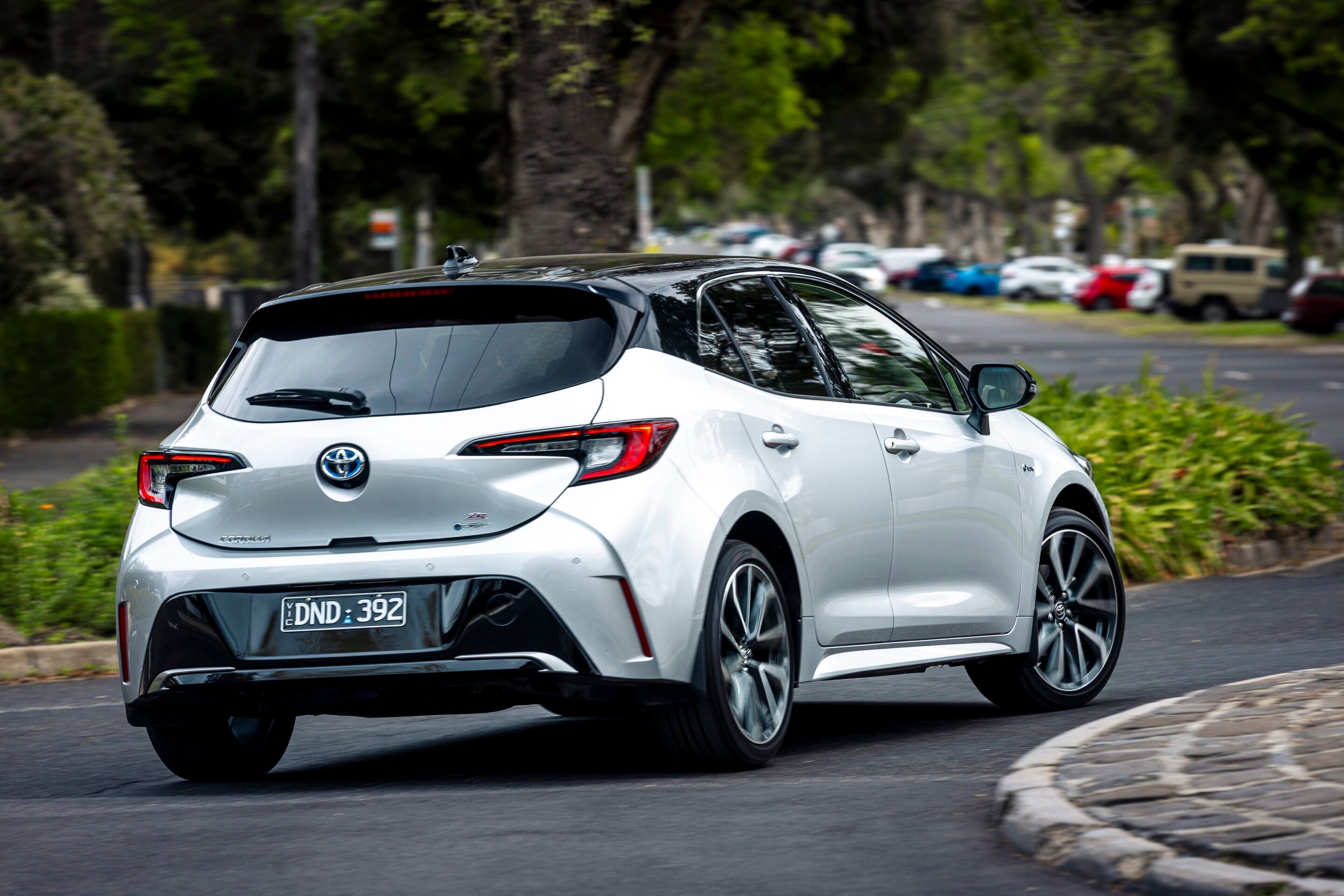
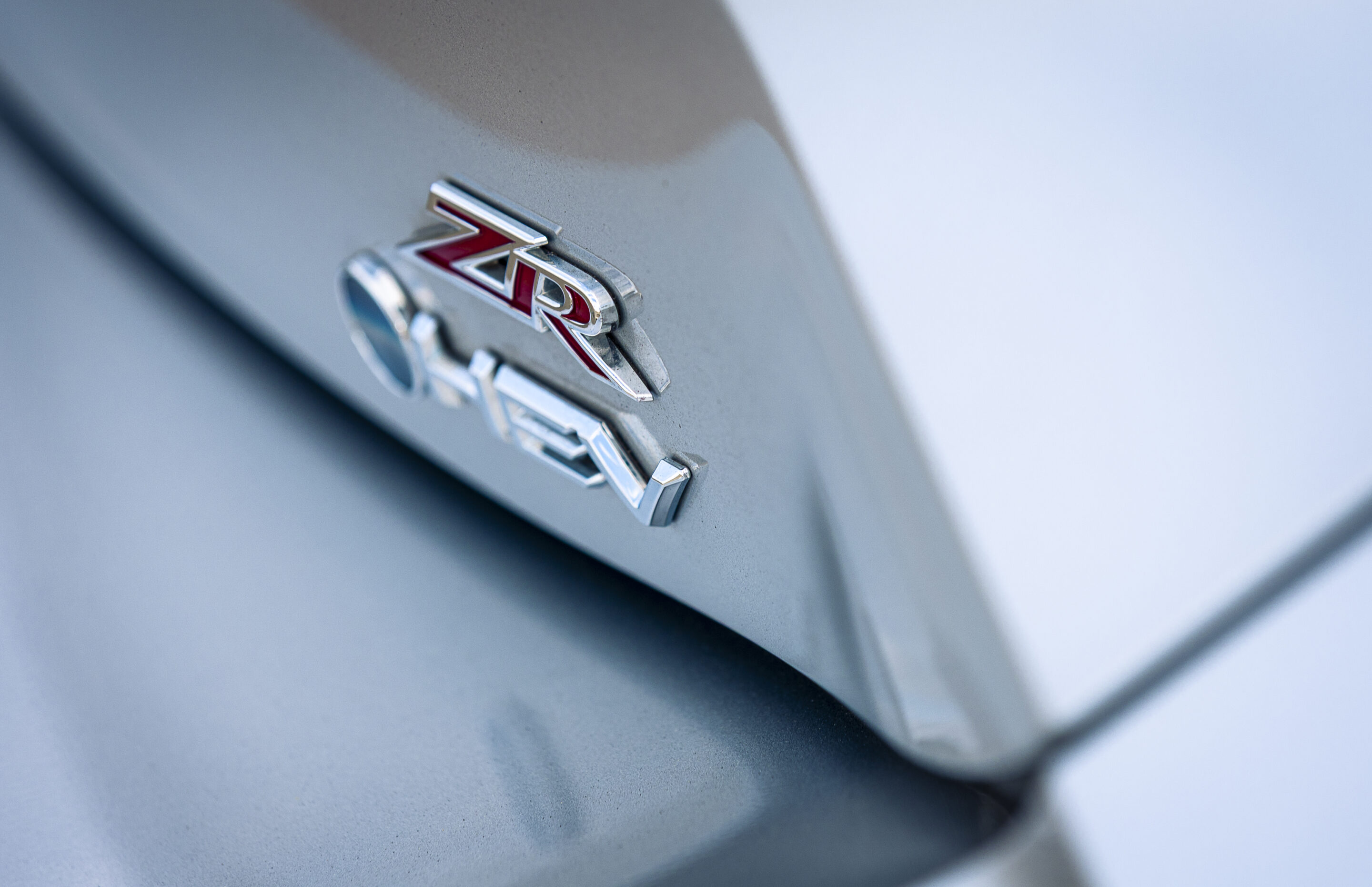
Next to debut was the E210 or 12th-generation Toyota Corolla (below), which had its hanky whipped off at the 2018 Geneva Show, badged as an Auris. The ignominy. It was launched Down Under on August 7 of that year and is the only one of the trio to be sold as a hybrid, with Toyota migrating all Corolla models (bar the flagship sports GR model) to a hybrid powertrain in June 2024.
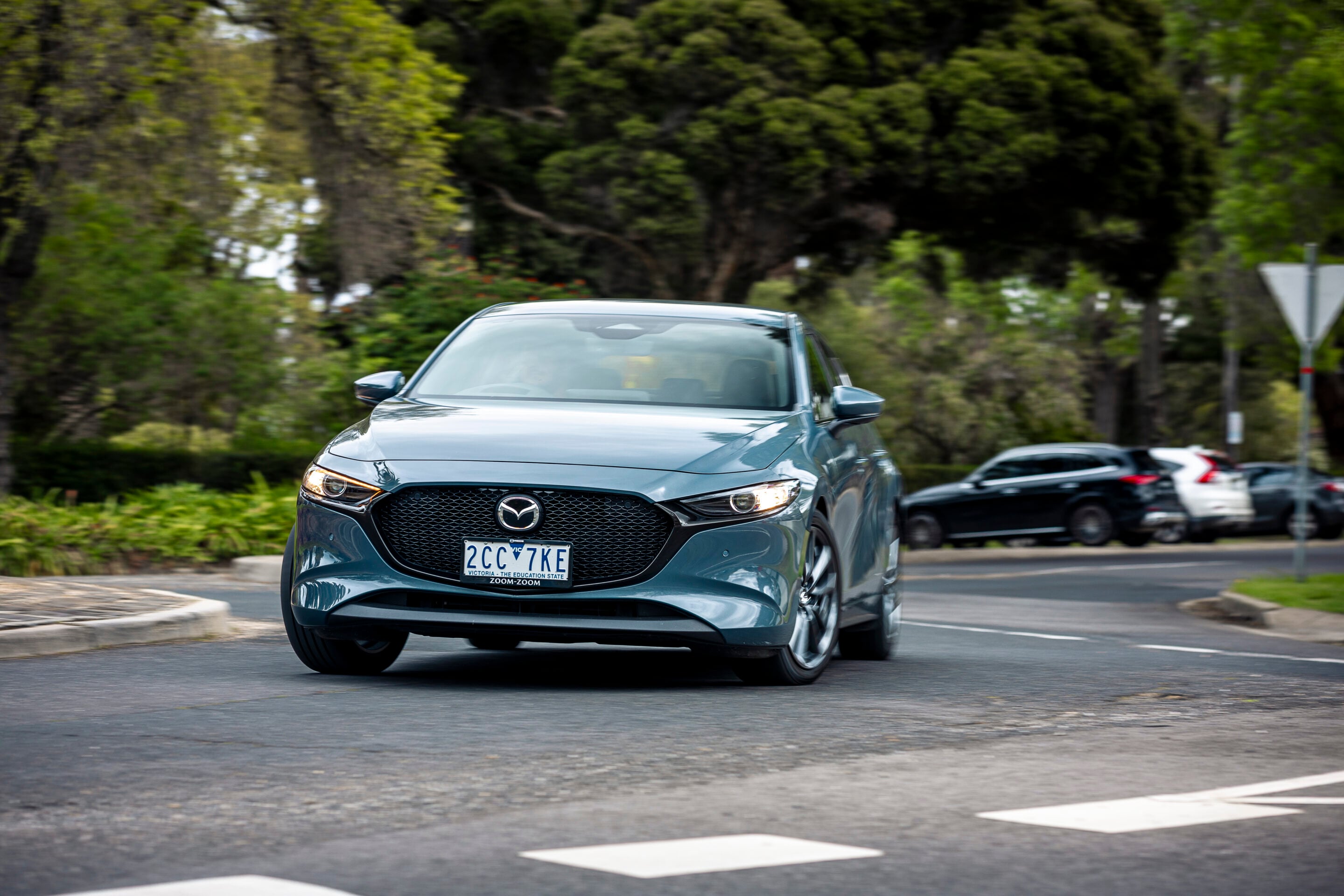
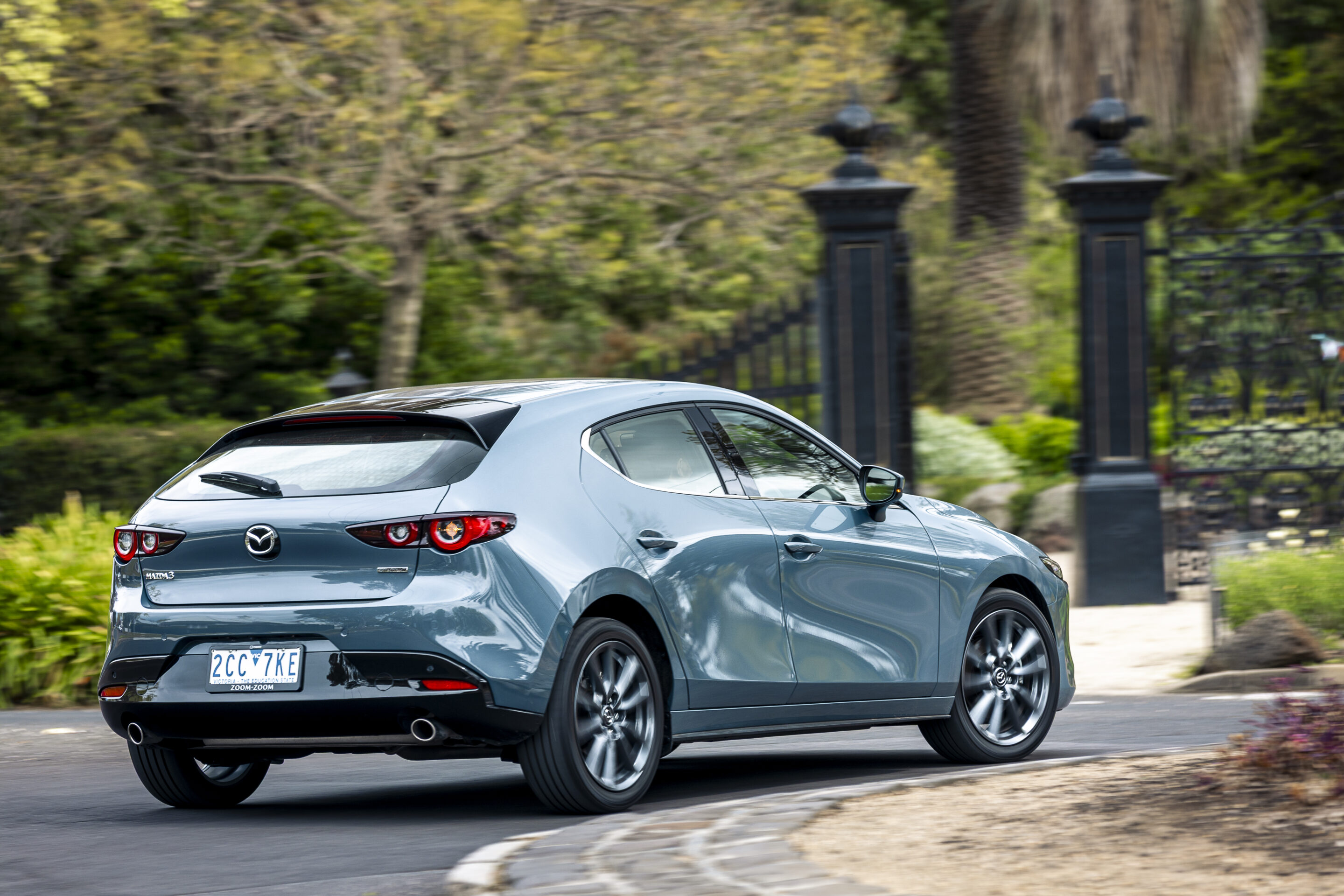
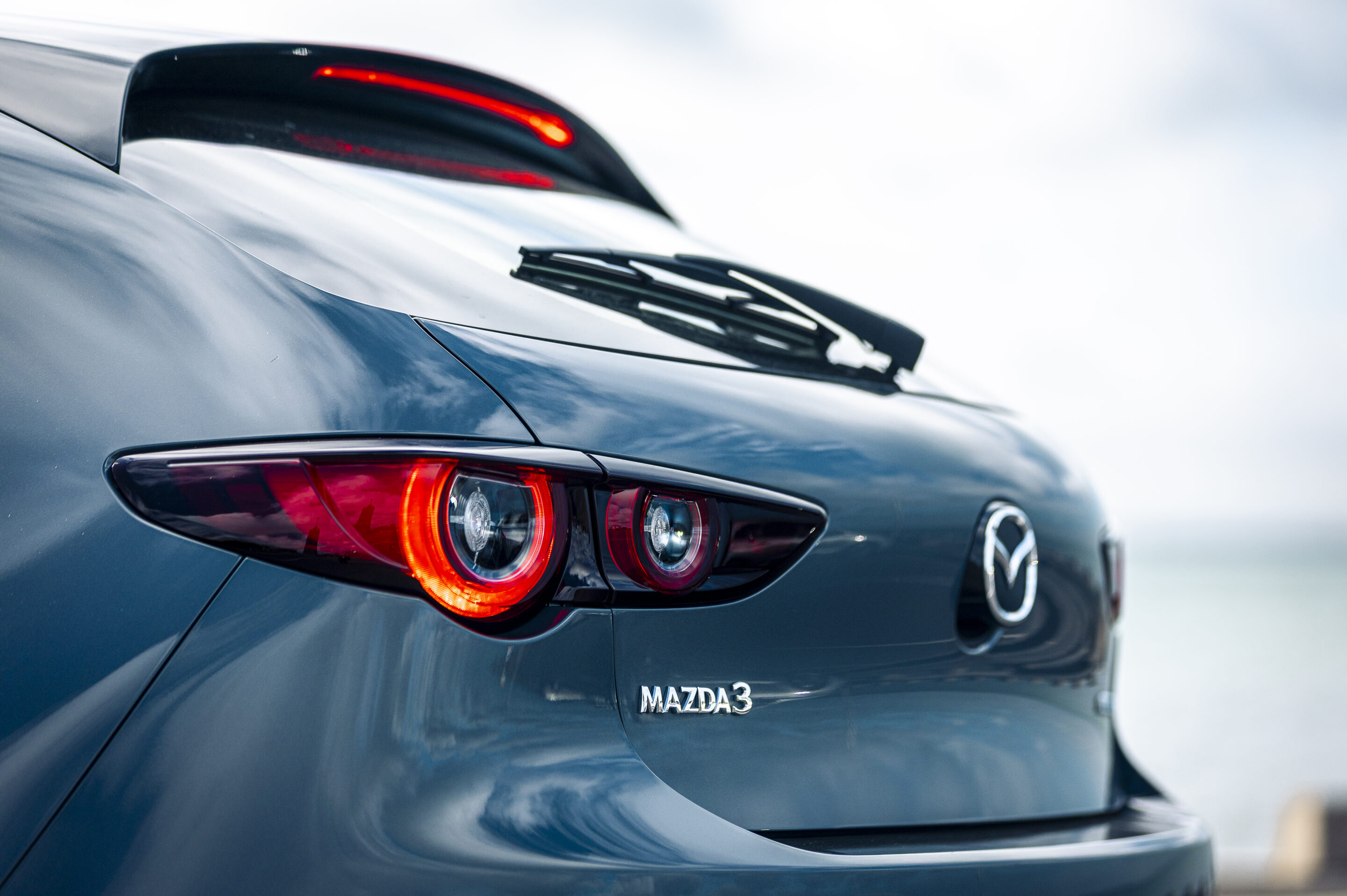
It’s hard to believe that the BP, or fourth-generation, Mazda3 (below) is seven years old. It still looks as fresh as the moment it was unveiled at the Los Angeles Show in November 2018, going on sale here in April 2019. It also marked a significant step up in pricing for the model line, which is why you can see from our sales figures that registrations took a significant tumble from 2019, the last year of mixed old and new models being sold, to 2020. These aren’t just a pandemic effect either, as can be seen by the relatively COVID-proof sales of its key rivals.
Parked on the promenade at Williamstown, it’s hard to deny that these are three extremely well executed pieces of styling. The Mazda’s expensive-looking body surfacing makes it seem gem-like in certain lights, and that teardrop shape still looks daring even today. The Hyundai looks hunkered down and purposeful, with a wholly extrovert set of diamond-cut alloys teased out to each corner. The Corolla’s face still has the most presence, and in ZR trim, the contrast roof, big alloys and flash of metal contrast from the sculpted front seats lifts it beyond the usual Corolla fare.
The Hyundai carries a number of advantages into this contest. Not only is it the most affordable of this trio, it’s also the most powerful and comes with the most generous warranty. In N Line trim, it’s also the most overtly sporty, this Czech-built car also riding the firmest of the three contenders. It also sounds the fruitiest when you explore the upper reaches of the rev range.
That said, it’s hard not to pine for the punch of the old 1.6T engine, which made the i30 feel like a proper warm hatch and always seemed a bit of a bargain. The mild hybrid 1.5-litre unit is a more mannered thing, with an almost imperceptible idle-stop system thanks to the 48V electricals. The seven-speed dual-clutch transmission isn’t quite such a seamless partner and, especially around town, power take up can feel a little terse, with the ‘box often slipping its clutch when pulling away or occasionally introducing an unwelcome shunt to the driveline that you wouldn’t get from a torque converter auto. The wheel-mounted paddles are elegantly sculpted though and work well with the DCT ’box when you’re pressing on. The steering feel of the Hyundai is the most detailed of the bunch, and it’s sensibly geared, although switching the drive mode to Sport adds too much artificial weight.
The N Line (below) feels as if it’s on a very good set of dampers. The ride is firmish, but very well controlled with no crashiness or harshness to it. This European built model rides on a multi-link rear end, rather than the cheaper torsion beam setup adopted by some previous lower-spec i30 models and there’s quite some finesse to its blend of steely body control and cultured bump absorption. One thing you do have to watch when negotiating junctions onto heavily cambered roads is the low chin height.
This i30 is equipped with the best tyre of this bunch, and by some margin. The Michelin Pilot Sport 4 rubber measures 225/40 ZR18 all round and helps deliver strong front end bite into corners and strong traction off the mark. No tyre is perfect, however, and the downside of the stiffish sidewall of this particular hoop is cabin noise, which will have you raising your voices to chat while negotiating coarse chip surfaces.
One thing that’s not particularly great about the i30 is intrusion from the driver assists, with the speed limit recognition system often registering incorrectly and chiming as a result. Fortunately, Hyundai has now made it a whole lot easier to switch these annoyances off.
If the Hyundai represents the more focused end of the driving dynamics spectrum, the Toyota Corolla ZR (below) sits at the other. Despite getting a firmer suspension tune than its cheaper siblings, the ZR still feels quite accommodating, albeit without the boofiness that affects lowlier Corollas with a lot of tyre sidewall to work with. It’s a very well-judged setup, with the 225/40 R18 Dunlop Sport Maxx rubber introducing a good deal more reassurance and heft into the steering system at the expense of tyre noise at speed. The TNGA bones beneath this 12th gen Corolla have always been good, but the modest tweaks to the ZR Corolla have resulted in a car that enjoys being hustled along.
It’s just a shame that the peak power output is quite so limited. It feels as if this car is begging for a few more kilowatts to exploit its chassis, but if we’re to don our sensible hats for just a moment, perhaps there’s something to be said for a car with a modest power output that handles really smartly. The Corolla is also the only one of this trio that can switch into pure electric drive mode for relatively short distances thanks to its compact lithium-ion battery pack.
The 1.8-litre 2ZR-FXE Atkinson cycle petrol engine is good for an unstressed 72kW and 142Nm via the Atkinson cycle. Fortunately, there’s that 70kW electric motor packaged with the continuously variable transmission, which also adds a helpful 185Nm of torque. As is their wont, Toyota doesn’t quote a system torque figure.
The Mazda (below) is the dark horse of this trio. The 2.0-litre normally-aspirated Skyactiv-G engine feels a bit of a relic compared to the electrified smarts of the other two powerplants, and it does require a few revs on the board to give of its best, but you won’t feel too much of a hardship because the 3 is a story of generally very good dynamic calibrations. The damping feels relatively plush, the steering is well weighted and accurate, if slightly less chatty than the Hyundai’s, the stability control is excellent, and body control is composed in roll if not quite so much in pitch.
The six-speed automatic gearbox is smooth around town and decently responsive out on the open road. There’s a set of paddle shifters should you want to flick up and down the ’box yourself, but it’s not quite so willing to let you downshift near the limiter as the i30’s DCT. On the plus side, you can use the stick instead to change gear, Mazda being one of the few car manufacturers that gets it right by having a forward shove on the lever engage a downshift. If you ever see this setup, it means that people who love driving engineered the car and prevailed over marketers who, in many other marques, argued successfully for the dumbed-down alternative.
A couple of functions probably merit a rethink though. The adaptive main-beam lighting works reasonably for most instances, but it struggles with edge case scenarios such as approaching cycles or motorbikes, or when following a vehicle towing a trailer. In these instances, it often holds the brights on for way too long and you’ll find yourself clicking back to manual control. The other is a perennial Mazda gripe and that’s the clumsiness of interacting with the distant screen via a dial. This is a solution that nobody else has adopted and there’s a reason for that. Enough said.
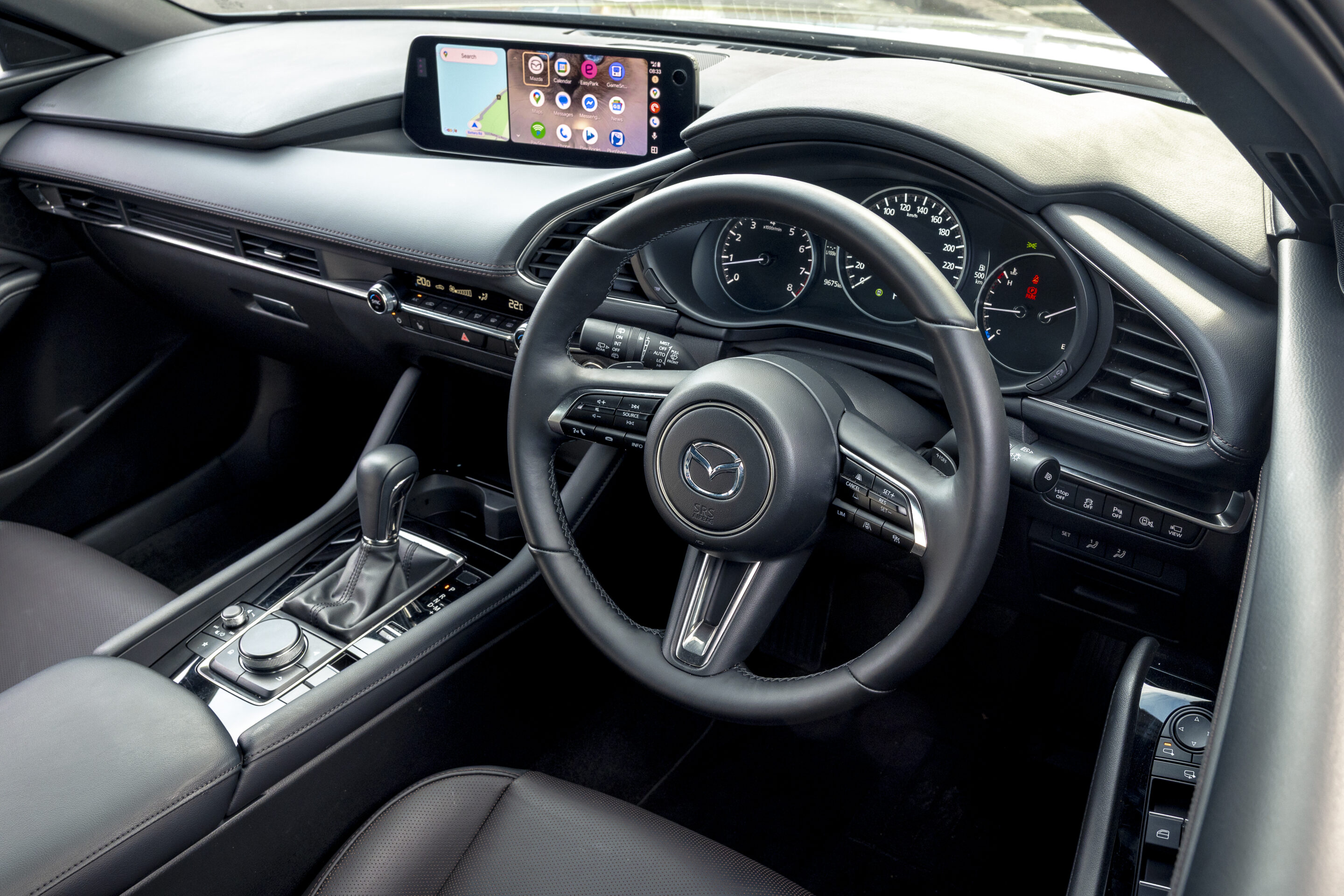
Otherwise the Mazda’s cabin quality is easily the best of this bunch. The leather on the wheel feels so buttery smooth, it’d feel good in a Bentley. At first, virtually every surface in the cabin seems lined with stitched leather, but Mazda has cleverly finished the dash roll-top in a soft-touch thermoplastic that looks like leather. The metal fillets for the dash look classy and a great deal of thought has clearly gone into the look and feel of the switchgear. It’s lovely. Not quite so delightful is the overuse of piano black on the centre console. This is a material that looks great in brochures and car dealers but, as our demonstrator showed, soon gets scratched and tatty in real world use. Bottom line? It’s not premium. It’s just cheap, hard plastic and Mazda’s not the only culprit here.
Wireless Android Auto and Apple CarPlay feature, and this Touring spec also gets heated front seats and steering wheel, with a two-setting memory function for the driver’s seat. There’s a wireless phone charger and I love the way that Mazda has put a 12v 120W power outlet and two USB-C connections in the centre bin and then left an aperture so that the lid doesn’t pinch the cables if your passenger wants to use their phone and charge at the same time. It sounds basic common sense, but so many car makers get this wrong.
Talking of common sense, the Mazda scores points by packaging a space saver wheel and tyre set, the only one of this trio thus equipped. Flip up the boot floor and there, in all its magnificence, is your Dunlop Space Miser III, ready to come to your aid if you ever catch a flat. The boot itself is the smallest of this trio and doesn’t offer a great deal of clever storage solutions. Fold the 60/40 split rear seat and the 295L of space grows to 1026L.
Climb into the back and maybe because of the Mazda’s curves, you expect it to be the smallest of this trio, but legroom behind the driver isn’t too bad. Headroom isn’t the best for taller passengers, and there’s only shin height vents with no rear USB provision at all. The rising window line of the car may also make it feel a bit claustrophobic for very small kids.
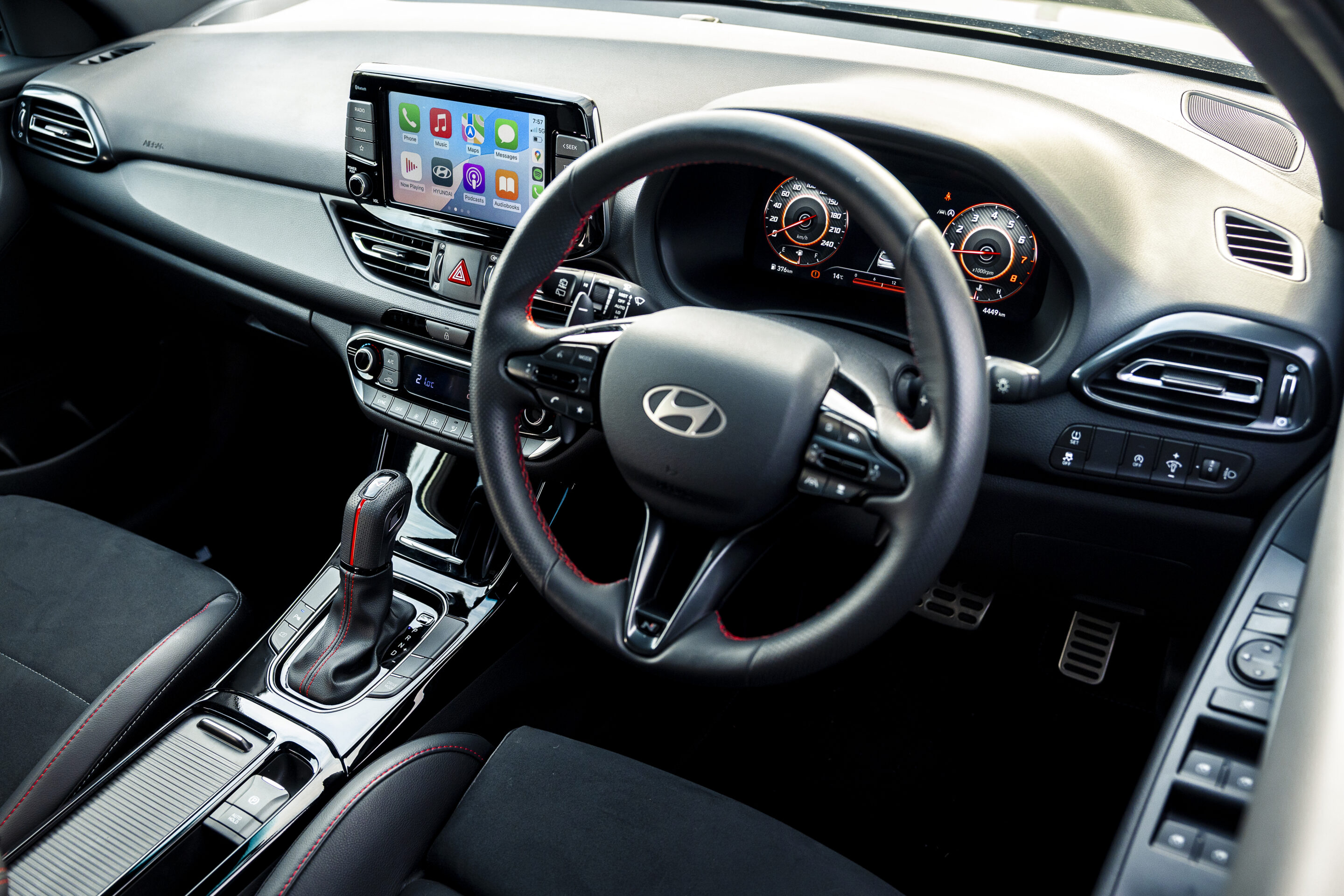
The Hyundai’s big windows give its cabin a far airier feel to the cocooned Mazda. The dashboard architecture is beginning to look its age, and the materials also feel a half-step behind. This N Line model gets a bit of sporty dress-up for the steering wheel, the gear shifter and the very good Alcantara-faced front seats, which help lift the vibe above holiday hire car spec. As with the Mazda, there’s a lot of piano black on the centre console, and there’s also no electrical adjustment for the seats. The old seven-speaker Infinity-branded stereo system you used to get seems to have fallen victim to shrinkflation, and has been replaced by an inferior six-speaker no-name setup.
By way of recompense, this i30 N Line does feature tyre pressure monitoring, a wireless charger and
USB-A and USB-C up front, and, weirdly, it’s the only i30 to offer wireless Android Auto and Apple CarPlay. Pay another $5000 for the N Line Premium and it swaps the eight-inch touchscreen for the bigger 10.25-inch display that you get in the i30 N, but that can’t talk to an Android phone without a cable. So if you’re wedded to your Samsung or Google handset, this is the i30 you should choose.
The Hyundai delivers the best rear headroom, and while legroom is about on par with the other two, it’s the only one of this trio with a hard plastic shell to the rear of the front seats, which makes it less comfortable on the old patellas. It’s the only one of the three to offer a couple of USB-C outlets for rear passengers, so it’d doubtless be the favourite with the kids, who will get a better view out as well. Pop the tailgate open (all three of these cars are manually operated) and you have the biggest boot of the trio and there’s a 12v power outlet which is a considerate touch.
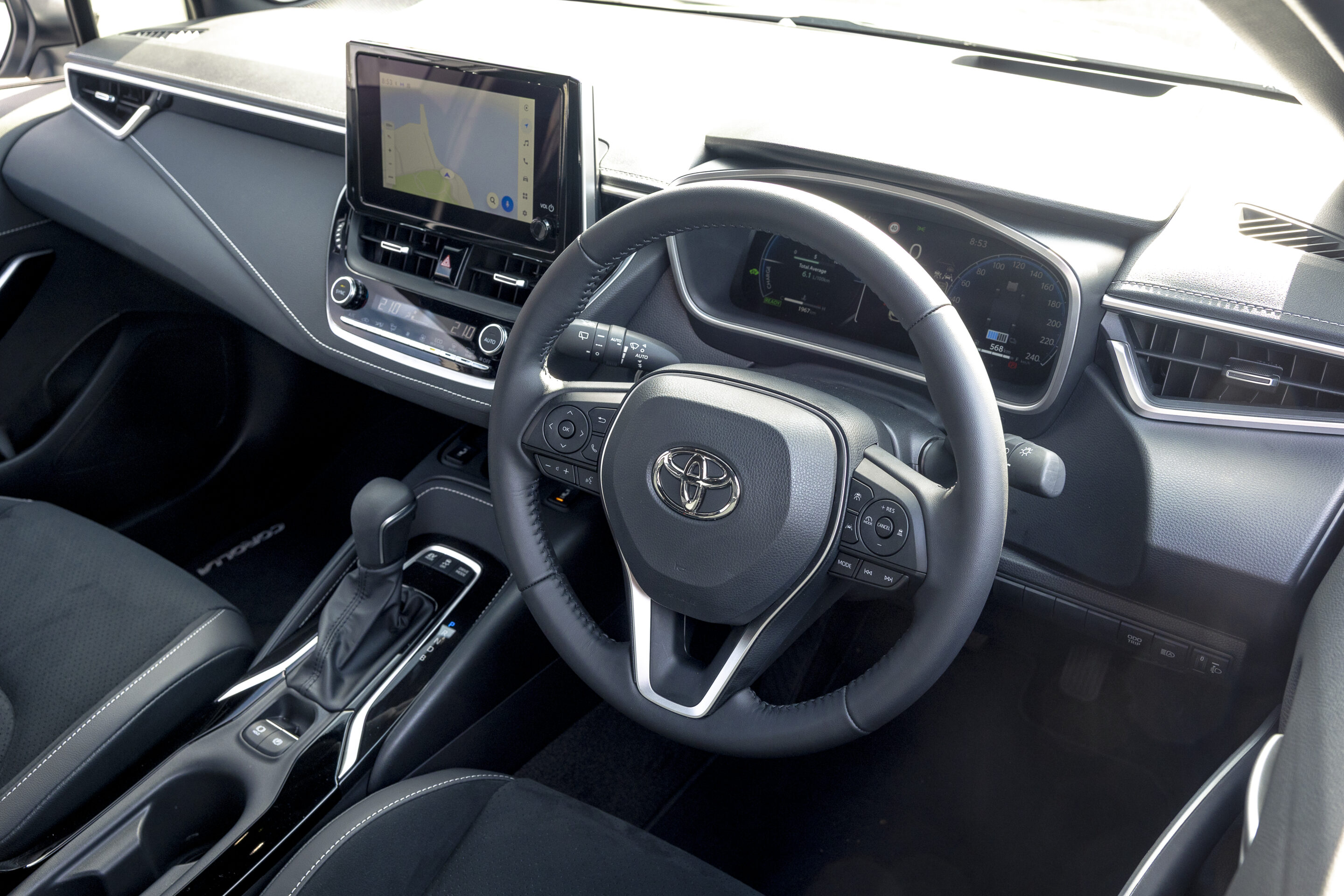
The Corolla’s cabin feels lifted with the improved materials that come with the ZR trim, and the metal highlights in the front seats are a welcome piece of theatre. It also nets heated front seats, a leather-trimmed steering wheel, and some additional brightwork to jolly things up, although the minor switchgear is all very familiar and rather utilitarian. The JBL-branded stereo punches below its weight, and this is the only one of this trio that requires a cable to mirror your Android phone.
Otherwise practicality isn’t bad with the best of oddments stowage of the trio. There’s a wireless charger, a 12V and a USB-C charger up front, but none in the rear. The back feels a bit dark, and headroom isn’t stellar, but legroom and toe space feels largely on a par with the others.
The 12th-gen Corolla initially came in for some flak for its small boot, and Toyota has instigated a sneaky ‘fix’ for this ZR model, deleting the spare wheel and tyre and freeing up a bit more space in the back. The 333-litre capacity isn’t too bad, but while the depth of the luggage bay has increased, the footprint hasn’t, so it can still be a struggle to get two cases in the back. So, what’s there in lieu of a spare wheel? Flip up the boot floor and, bizarrely, the Corolla is packaged with a jack and wheel brace to remove a wheel, but then adds a tyre inflator kit.
Fuel economy was markedly divergent among the three cars, but was largely as predicted. All three cars can run on 91RON fuel, so there’s no cost advantages there, but the full hybrid Corolla ZR was best on test, returning 5.6L/100km. A lighter right foot will easily see that figure swing into the fours. The Hyundai was next best, logging a reasonable 6.5L/100km while the Mazda languished a long way off that target, registering 8.9L/100km.
These three hugely popular cars all impressed. You could make a convincing case for any of them. The Hyundai is the most overtly sporting and represents the keenest value for money. The Corolla is the most economical and we’d count on it to be the most reliable. If you’re a little less price sensitive but still tend to the risk averse, it’s a bit of a no brainer. The Mazda will appeal to the aesthete who values quality and a car that’s been engineered by proper drivers.
Where would our money go? It’s a quandary, because the development of these three models is an intriguing case study in vehicle evolution, each diverging from each other to fill a specific niche. It’s hard to split the Hyundai and the Toyota. Both have an intriguing blend of qualities and not a great deal on the other side of the ledger that would count as deal breakers. They emerge as quality all-rounders albeit perhaps lacking a little daring.
It’s the Mazda3 G20 Touring, however, that emerges as the most special car of this group, the one that’s the most satisfying to drive and the one that delivers the most compelling blend of attributes. That said, it’s the only one of this trio with a significant shortcoming, namely the off-pace fuel economy of its 2.0-litre engine. If you can live with paying a bit more at the bowser, we’d wager the reward is worthwhile.
Either way, these three very different hatches all cross the line in a virtual photo finish. Excess?
Who needs it?
Where’s the hot Mazda3?
While Hyundai managed to turn the i30 into a brilliant hot hatch in the form of the i30 N, and Toyota has created the fire-breathing GR Corolla, Mazda chose never to deliver a true enthusiast version of the 3. We can but imagine what an MPS version of the current car would be like, but it’s curious that a company that prides itself on the zoom-zoom dynamics of its road cars can miss such an obvious halo opportunity. Mazda even has a turbocharged version of its 2.5-litre four good for 186kW/433Nm in left-hand drive markets. Wicking that up another 20kW would put it on par with an i30 N in terms of power and it already easily bests it for torque. Yet still no interest.
Specs
Toyota Corolla
| Model | Toyota Corolla ZR Hybrid |
|---|---|
| Price | $39,100 plus on-road costs |
| Engine | 1798cc inline-4cyl, 16v, DOHC, turbo, hybrid |
| System power | 103kW @ 6600rpm |
| Torque | 142Nm @ 3600rpm (engine only) |
| Transmission | CVT |
| PWR | 73.6kW/tonne |
| L/W/H/WB | 4375/1790/1435/2640mm |
| Weight | 1400kg |
| Fuel Consumption | 4.0L/100km (claimed) / 5.6L/100km (tested) |
| Boot size | 333L |
| Tyres | Dunlop SP Sport Maxx 050 225/40 R18 |
| 0-100km/h | 9.3 sec |
| Warranty | 5 years/unlimited km |
| Overall rating | 7.6/10 |
Mazda3
| Model | Mazda3 G20 Touring |
|---|---|
| Price | $37,705 plus on-road costs |
| Engine | 1998cc inline-4cyl, 16v, DOHC |
| Power | 114kW @ 6000rpm |
| Torque | 200Nm @ 4000rpm |
| Transmission | 6-speed automatic |
| PWR | 80.4kW/tonne |
| L/W/H/WB | 4460/1850/1435/2725mm |
| Weight | 1418kg |
| Fuel Consumption | 5.9L/100km (claimed) / 8.9L/100km (tested) |
| Boot size | 295/1026L |
| Tyres | Toyo Proxes R51A 215/45 R18 |
| 0-100km/h | 9.0 sec |
| Warranty | 5 years/unlimited km |
| Overall rating | 7.7/10 |
Hyundai i30
| Model | Hyundai i30 N Line |
|---|---|
| Price | $36,000 plus on-road costs |
| Engine | 1482cc inline-4cyl, 16v, DOHC, turbo, mild hybrid |
| Power | 117kW @ 5500rpm |
| Torque | 253Nm @ 1500-3500rpm |
| Transmission | 7-speed dual-clutch |
| PWR | 81.3kW/tonne |
| L/W/H/WB | 4340/1795/1453/2650mm |
| Weight | 1439kg |
| Fuel Consumption | 5.6L/100km (claimed) / 6.5L/100km (tested) |
| Boot size | 395/1301L |
| Tyres | Michelin Pilot Sport 4 225/40 ZR18 |
| 0-100km/h | 8.6 sec |
| Warranty | 7 years/unlimited km |
| Overall rating | 7.5/10 |
The article originally appeared in the November 2025 issue of Wheels. Subscribe here and gain access to 12 issues for $109 plus online access to every Wheels issue since 1953.
