
The curtain has dropped on Lamborghini’s most hardcore V12 production car ever: with the hybridised 620kW Essenza SCV12 being revealed overnight.
Developed by Lamborghini’s Squadra Corse division and designed in-house by Centro Stile; the Essenza SCV12 is limited to just 40 units, and won’t be appearing on the roads any time soon – this is strictly a track-only affair.
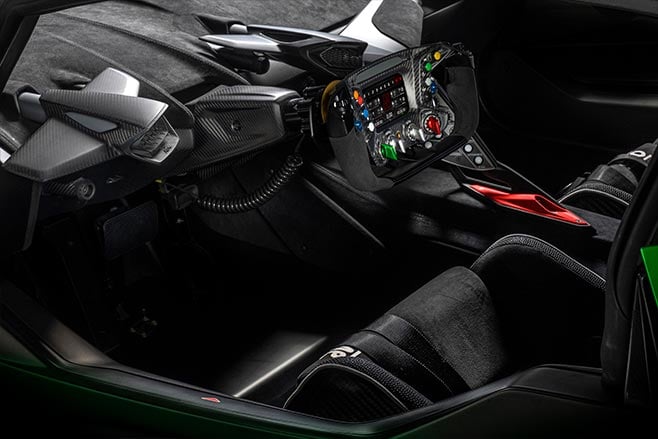
With the added hybridised power bump (up almost 70kW from the ‘normal’ Aventador SVJ), and subsequent added weight of batteries; the SCV12 boasts a new-generation carbon fibre monocoque which was developed to comply with FIA prototype safety rules, without the need for an internal rollcage. The standard AWD Aventador’s front driveshafts have been binned, with a new sequential six-speed gearbox ingeniously doubling as a structural chassis element to which the rear suspension mounts to.
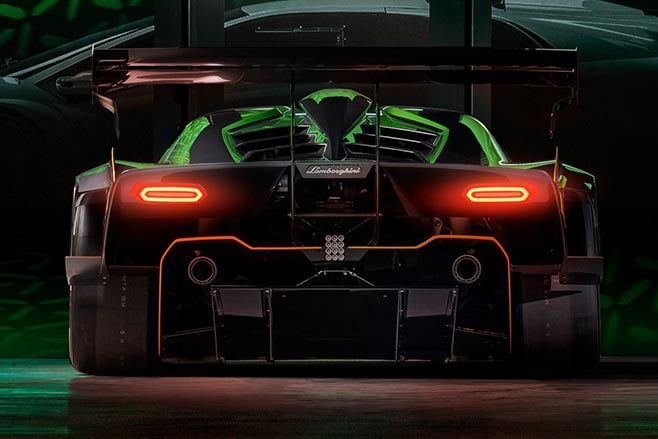
Its mechanical underpinnings are bolstered by an equally dramatic aero package, which Lamborghini claims to yield more downforce than a GT3 car. The sizeable front splitter, adjustable rear wing combine with various strakes and running boards to produce 1,200kg of downforce at 250km/h. The bonnet vents are also designed to separate hot air from the cooling elements whilst funnelling clean cold air to the roof scoop and engine intake.
Lamborghini Aventador SVJ driven
The car is cornered by Pirelli-shod centrelock magnesium wheels (19” front, 20” rear) and Brembo brakes.
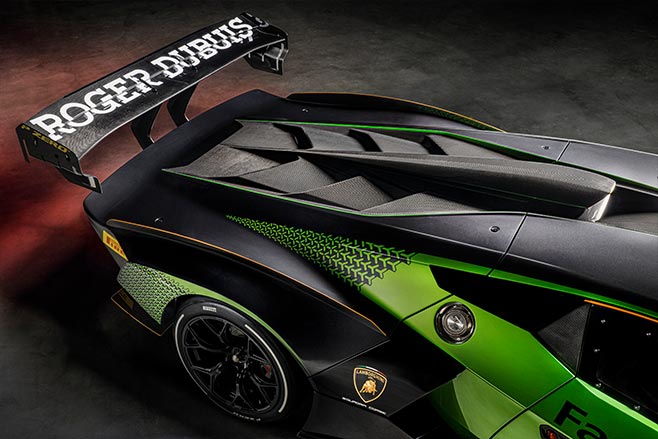
The Essenza SCV12 is a curtain-call for Lamborghini’s naturally-aspirated V12, which Chief Technical Officer, Maurizio Reggiani, says has “been a symbol of our brand since 1963”.
“Essenza SCV12 is the ultimate expression of the V12” he added.
Hybrid V12 Lamborghini Sian Roadster revealed
As Lamborghini’s flagship track-toy, Essenza SCV12 ownership grants you access to a number of special programs which will see you able to take part in “arrive and drive” events at FIA Grade 1 circuits all around the world. Lamborghini will handle logistics of your car, as well as provide the full support of the Squadra Corse technical staff, as well as factory drivers for coaching.
Sounds great, but don’t expect to take your car home afterwards… Lamborghini will hold on to it for you.
The exclusive Essenza SCV12 owners club, also includes a factory storage service for your vehicle. Your Essenza will be housed within a personalised garage within a bespoke new hangar in Sant’Agata Italy.
Don’t worry though, Lamborghini state that the garages will be fitted with webcams so you can monitor your car 24 hours a day via an app.
The new Ferrari Roma has landed in Australia, with pricing and details confirmed for Maranello’s new entry-level sports car.
With pricing starting at $409,888 before on-road costs, the new ‘base’ model Ferrari is pricier than the sub-$400k ask of its drop-top Portofino ‘sibling‘, but the performance that will be available to Roma buyers is superior.
With a twin-turbo 3.9-litre V8 under the bonnet the Roma produces 456kW between 5750-7500rpm, with 760Nm available to between 3000-5750rpm.
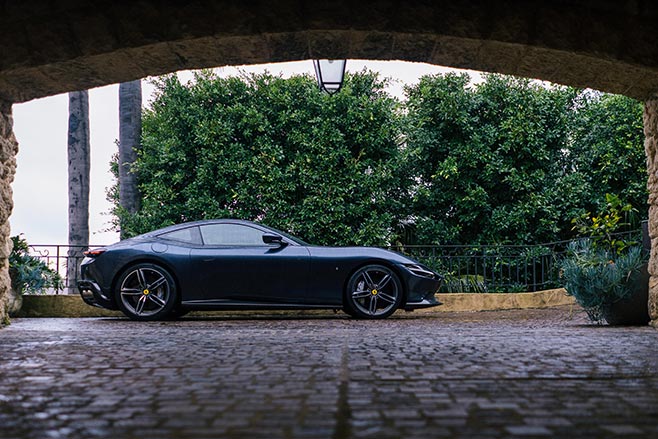
Ferrari says it’ll hit 100km/h in 3.4 seconds, and 200km/h in just 9.3 seconds. Top speed is said to be more than 320km/h.
Details from the Ferrari Roma’s worldwide debut
It’s also claimed to be significantly lighter than the Portofino, a 1472kg dry weight with lightweight options ticked as opposed to the drop-top’s 1664kg.
Ferrari says the Roma will represent “the pinnacle of performance in this category” of entry-level ‘supercars’.
It’s available to be viewed (during its tour over the next six months) and subsequently purchased from Ferrari dealers in most capital cities around Australia and New Zealand: Sydney, Melbourne, Brisbane, Gold Coast, Adelaide, Perth, and Auckland.
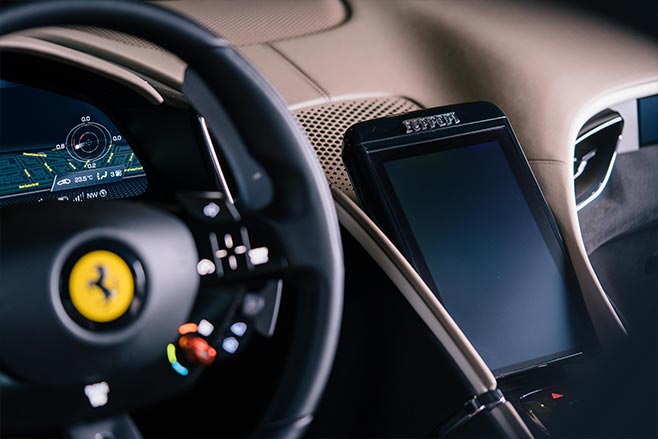
Dieter Knechtel, president of Ferrari Far East and Middle East Hub, says the car will grant owners a taste of a lifestyle that is ‘uniquely Italian’.
“After much anticipation and excitement, it brings us great pleasure to present the all-new Ferrari Roma for the first time in Australia.
“Ferrari Roma reflects a uniquely Italian lifestyle, offering an extraordinary experience of understated luxury and elegance.
“This new model is truly Ferrari, perfectly balancing performance, innovation, technology, driving pleasure and design.”
Get your free weekly MOTOR report!
In order to understand the BMW Z8, first you need to understand the man behind its genesis, Prof Dr Wolfgang Reitzle. And to understand Reitzle, you need to know two things. The extravagant BMW 8 series was his pet project and his autobiography was called Luxus schafft Wohlstand – Luxury Creates Wealth. A deeply vain, yet fiercely intelligent executive, Reitzle believed he was being primed for coronation to the top job when the man who’d held BMW’s chief executive position for 29 years, Eberhard von Kuenheim, retired in 1993.
To give the aristocratic von Kuenheim a grand send off, BMW arranged a party at the Chateau de la Messardiere in St Tropez in May of that year, attended by senior executives. To underscore the marque’s achievements, it had arranged a display of BMW’s finest cars, amongst them the slinky 507 roadster from 1956. R&D boss Reitzle was captivated by the 507, as was head of production Bernd Pischetsrieder. Together they mulled the prospect of a successor that would appeal to a clientele who turned to Mercedes-Benz or Porsche for their statement roadsters.

What Reitzle didn’t know then was that von Kuenheim had knifed him. Tipped off that Reitzle had mulled a job offer from Porsche for entirely too long, he’d recommended the quietly-spoken Pischetsrieder for the top job. Reitzle, as BMW’s top product guru, was nevertheless determined for the sports car project to gain traction. With Pischetsrieder’s backing, board approval for the project quickly followed. Reitzle gave senior designer Chris Bangle the green light to proceed and the American tapped the brightest talent in the design department, Henrik Fisker, on the shoulder to envision the shape.
“So I remember the design chief came back and said, ‘Would anybody like to take a stab at this? You know, do a model on what the 507 could look like today’,” says Fisker. “Similar to how a Porsche 911 evolved over time, how would the 507 look if we produced it today? So I start working on this project, and instead of making the car kinda look like a 507, I decided to make something entirely new that still had heritage. It was summertime, and everyone was on vacation and I volunteered to stay behind and model it as a ‘no promises’ design exercise.
“I only had five engineers working with me. It wasn’t even officially a project, so we had absolutely no restraints. That’s why the design could be so pure, because it didn’t go through the traditional channels,” adds Fisker. “When we showed it to the board they immediately green lit it without really knowing how we were going to make it. We had to create a whole new platform, which was very exciting as that gave me an opportunity to keep the proportions of the car. It was just decided that this was going to be the ultimate BMW at the time.

With Fisker on exterior styling duties and Scott Lempert responsible for interior treatment, the design work was finally signed off in 1995, whereupon Fisker was transferred to another iconic BMW design, the first-gen E53 BMW X5. The first driveable prototypes appeared in 1996 and the Z8 was premiered at the Tokyo Show the following year, dubbed the BMW Z07 concept. This was a coupe with a Zagato-style double-bubble roof, but foreshadowed the sleek fuselage and classic long bonnet, cab-back dimensions of the production Z8. The 4.9-litre V8 S62 engine that was to appear in the Z8 then saw its debut at the 1998 Geneva Show under the bonnet of the E39 M5.
Neither Reitzle nor Pischetsrieder survived at BMW to see the Z8 into production, with both being ousted in an extraordinary putsch in February 1999. Board members disagreed with Pischetsrieder’s handling of Rover, but it was a genuine shock to many that Reitzle also got the axe. Ford’s Premier Automotive Group became his next port of call where he eventually became embroiled in a low-wattage spat with fellow director Nick Scheele, a man determined to curb the good Professor’s extravagance. Pischetsrieder jumped across to Volkswagen.

The public’s first sight of the Z8 came in the mostly dreadful 1999 Bond movie The World Is Not Enough. BMW supplied three fibreglass mock-ups which came into being after the producers of the Bond movies spotted a Z8 model being finessed. Having signed a three-movie deal with the Germans, they were insistent the car feature in the third movie, following previous arrangements to feature a Z3 and a 750iL.
Based on a Cobra kit car chassis, one car had no engine and the other pair had Chevrolet 5.7-litre V8s. Most of the static scenes of the car were the fibreglass mules. The driving shots were inserted after much of the other filming had been wrapped and even then, BMW insisted that Brosnan cross his arms to hide the unfinished steering wheel design. Henrik Fisker hadn’t seen the script at all and was apparently aghast when the car that he had put so much of himself into was sawn in half in the movie, despite it being the engine-less plastic mock-up

Series production began in 2000, the car’s custom spaceframe being built at the Dingolfing plant with hand-finishing taking place in Munich. There’s a common misconception that the Z8 is effectively an E39 M5 roadster, and while it does share engine, gearbox and some suspension componentry, it rides on a bespoke aluminium chassis and the engine sits behind the line of the front wheels, making it front-mid engined. It’s also the sort of money-no-object exercise rarely seen these days, with a production run capped at 5703 units.
The Z8 was very Reitzle, simultaneously cerebral in its storytelling and grandiloquent in its vision, yet initially tricky to warm to. Early reviewers struggled to pigeonhole it, many expecting a raw throwback roadster and finding something fairly urbane. It adopted the X5 V8’s rack-and-pinion steering system and while this sounds far superior in theory to the recirculating ball set-up found on the E39 M5, perhaps it needed additional development time that BMW didn’t have, because its helm is slightly aloof.

Wheels’ first acquaintance came in 2000 when Peter Robinson drove the car in California. He seemed to find it a slightly odd blend of dynamic qualities. “Strangely, for all its civilised manners, it doesn’t feel as quick as the driver expects, unless you work the engine above 4000rpm,” he said. “From here it’s going to take a very quick car to maintain station with the Z8. Of the current 911 range, only the Turbo offers Z8-beating performance.”
Then there was the vexed question of the steering. “The steering is meaty and, at least around the straight-ahead position, is quick and direct in its first movement, but as lock is applied there’s no real feel”, he said. “In spite of the weight saving benefits of the BMW-produced aluminium construction – the spaceframe weighs 230kg, 30 percent less than if it was steel – the Z8 never feels especially nimble or agile. Rather, it’s glued to the road, stable and predictable with vast reserves of adhesion unless, of course, you switch off the DSC, when power oversteer is instantly on tap.

“Switching to Sport mode produces a more aggressive throttle action, though unlike the M5, it doesn’t change the steering weight. Away from second gear bends that push the nose wide, the Z8 is wonderfully invigorating to drive,” concluded Robbo.
It attracted celebrity owners, including Apple’s Steve Jobs, who loved the sleek, machined look of his silver Z8. He was apparently far less enamoured of the BMW-branded Motorola car phone that was supplied with it, but that’s probably understandable. His car was auctioned by RM Sothebys in 2018 for $510,000 and many other cars, even without such provenance, have realised prices approaching half a million dollars. In short, this car never depreciated. Perhaps it hit a vanishingly tiny sweet spot for limited run, naturally aspirated, rear-drive, manual-shift exotica with retro appeal but relatively modern power and driving characteristics. It certainly manages to escape the rather affected kitschiness of many turn-of-the-century retro designs.

The fact that values of the Z8 never really slumped means that the parc of existing cars tends to be in extremely good condition. Many owners quickly realised that the Z8 was on a steady path of appreciation and locked them away, keeping mileages low and auction values correspondingly lofty.
BMW vowed to maintain 50 years’ worth of Z8-specific spare parts stock including body panels, roof mechanisms and interior switches and mouldings. Many of the faults are fairly easy to diagnose, such as warped aluminium shock mounts, valve cover leaks, failing VANOS solenoids, tired cam sensors, and UV-damaged plastics both inside and out. Be prepared for a bit of sticker shock when it comes to refreshing even fairly minor interior trim parts though, and the subframe that incorporates the shock mounts is a $40,000 part. Uneven panel gaps in the bonnet are a sign of this issue.

In many regards the unashamedly retro design theme of the Z8 has served to future-proof it, from a design aesthetic at least. It still looks astonishingly fresh compared to its contemporaries; cars such as the Aston Martin DB7 and Ferrari 360 Modena which are both firmly lodged in a 1990s styling sensibility. It’s not even particularly rare, by the standards of its class. There aremore than four times as many Z8s as Ferrari 360 Challenge Stradales, and there are more than eight Z8s for every Porsche 996 GT3 RS. It’s just that you never see them. They’re magical. And that still makes Wolfgang Reitzle smile.
SAFETY FAST
BMW has a long tradition of supplying safety cars to MotoGP, stretching back to 1998 when it introduced the Z3 M Coupe. The Z8 featured at the 2001 German round and is red underneath but wrapped in white. It also has a roll-cage, light bar and other upgrades. Periodically seen at the Nurburgring museum but more often residing at BMW Classic in Munich, chassis #AF70050 comes from the initial batch of 81 show and press fleet vehicles from 1999.
ALPINA DIALS UP THE DROOL…
When production of the BMW Z8 ceased in ’02, responsibility shifted from Munich to Buchloe. Alpina’s take was subtly different, turning it into a US-focused GT car. The big change was dropping the S62 V8 and manual ’box in favour of a 280kW/520Nm 4.8-litre F5 engine from the Alpina B10 V8 S mated to a five-speed ZF auto.
Alpina had wanted to fit a BMW V12 but ran into space issues. BMW North America ordered 450 cars from a run of 555 globally. With their multispoke 20in wheels, blue-faced dials and Switchtronic gear shift buttons, the more sybaritic Alpina Roadster V8 was perhaps the road car the Z8 should have been all along.

THE GOOD
Undimmed aesthetic appeal; mighty M5 V8 powerplant; rarely seen on Australian roads; rugged mechanicals; place in BMW’s heritage; manual transmission
THE BAD
Parts prices are steep; heavy front end for a sports car; few buyers are willing to sell; steering a little odd; no height adjust on steering wheel

BMW Z8 SPECS
Engine: 4941cc V8, dohc, 32v
Max power: 294kW @ 6600rpm
Max torque: 500Nm @ 3800rpm
Transmission: 6-speed manual
Weight: 1585kg
0-100km/h: 4.7sec (claimed)
Economy: 14.5L/100km
Price: $450,000 (value today)
Mercedes-Benz has continued a long-held tradition of safety innovations, revealing the world’s first production-ready rear frontal airbag.
Designed to compliment existing safety systems, the optional rear airbag works in conjunction with belt restraints and other existing safety systems.
The new style of airbag deploys from the front seat backrests in severe frontal collisions, helping protect passengers in the outer rear seats.
Mercedes claims the rear airbag “can greatly reduce the loads acting on the heads and necks of the outer rear passengers” in severe frontal collisions.
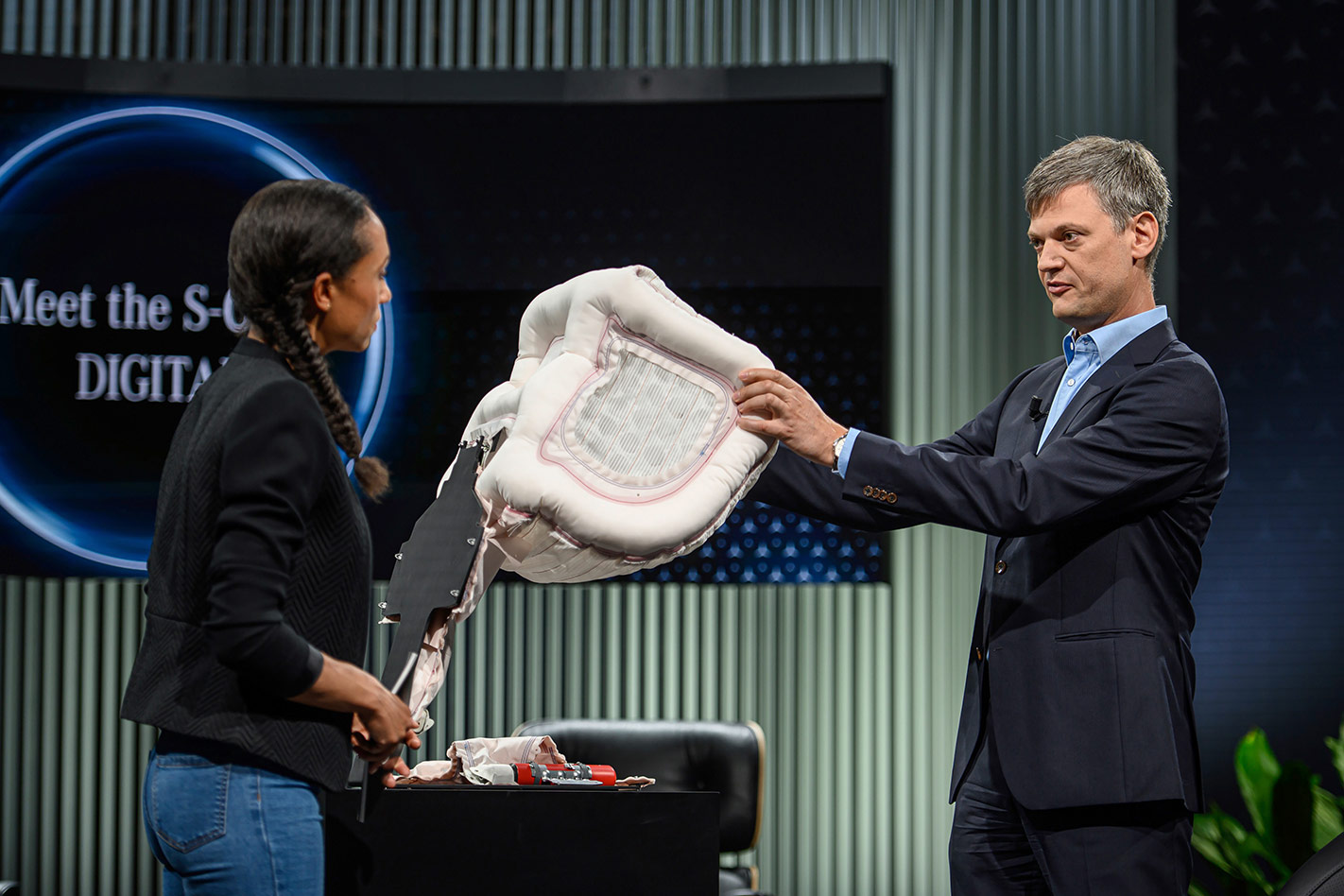
SO, HOW DOES IT WORK?Unlike a typical frontal airbag that is fully inflated by air, just part of the rear airbag’s structure is inflated.
The cylindrical tubular frame is deployed in a wing-shaped structure, with the “tent-like” airbag in the middle.
Mercedes says this softer central piece is inflated by valves in the skin of the fabric, designed so air cannot escape once the passenger’s head is immersed in the airbag.
By only inflating the tube structure instead of the whole system, Mercedes says this new, relatively large, airbag can be deployed rapidly. It is also claimed to reduce the impact of for the passenger.
“The rear airbag with an innovative, tubular structure is unique. And as a result, it deploys extremely gently,” says Dr Thomas W. Hellmuth, Mercedes-Benz’s head of body and safety.
“Naturally, the passengers should continue to fasten their seat belts. With the new, illuminated-design belt buckles, putting on seat belts is now even more intuitive.”
BUT WAIT, THAT’S NOT ALL!
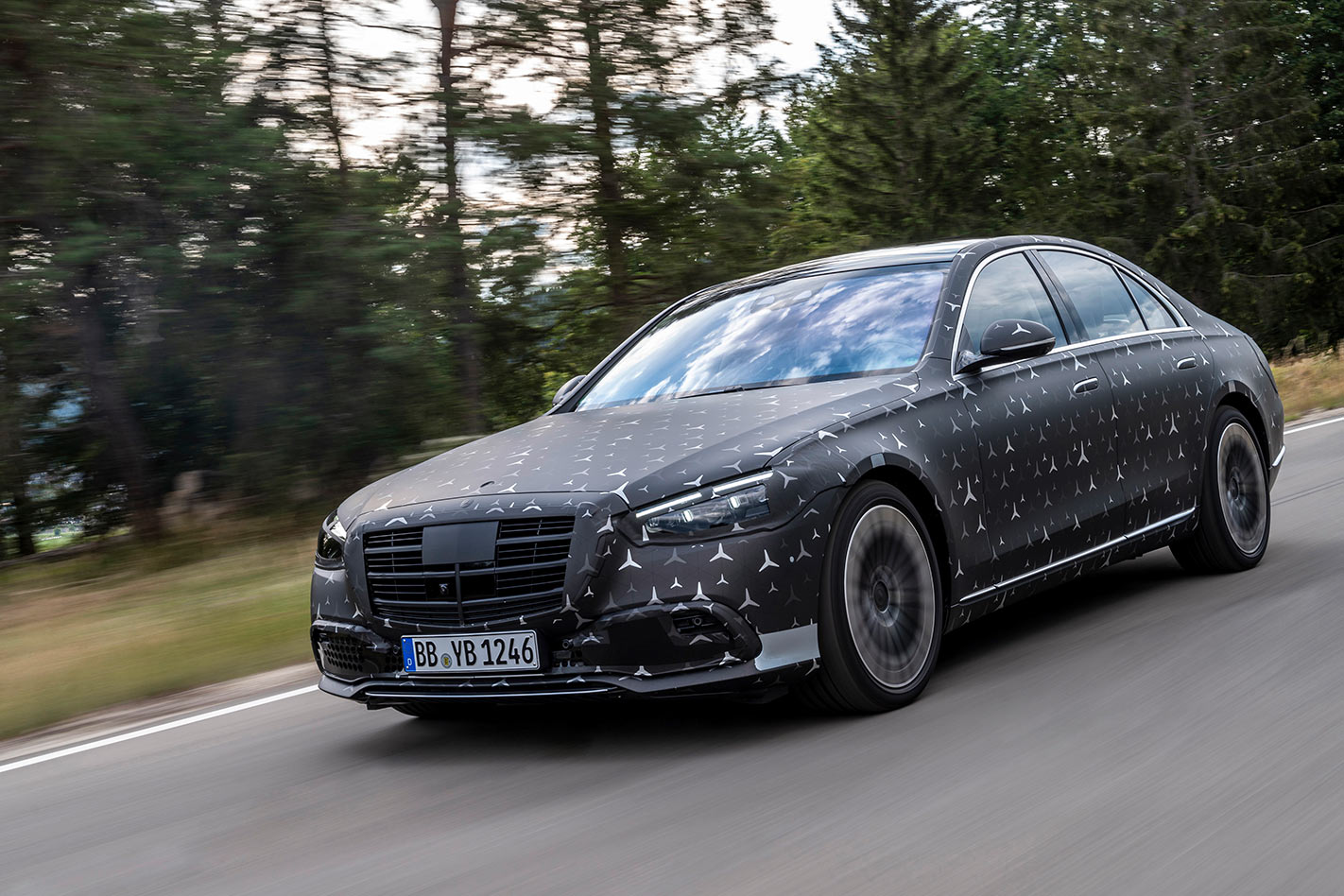
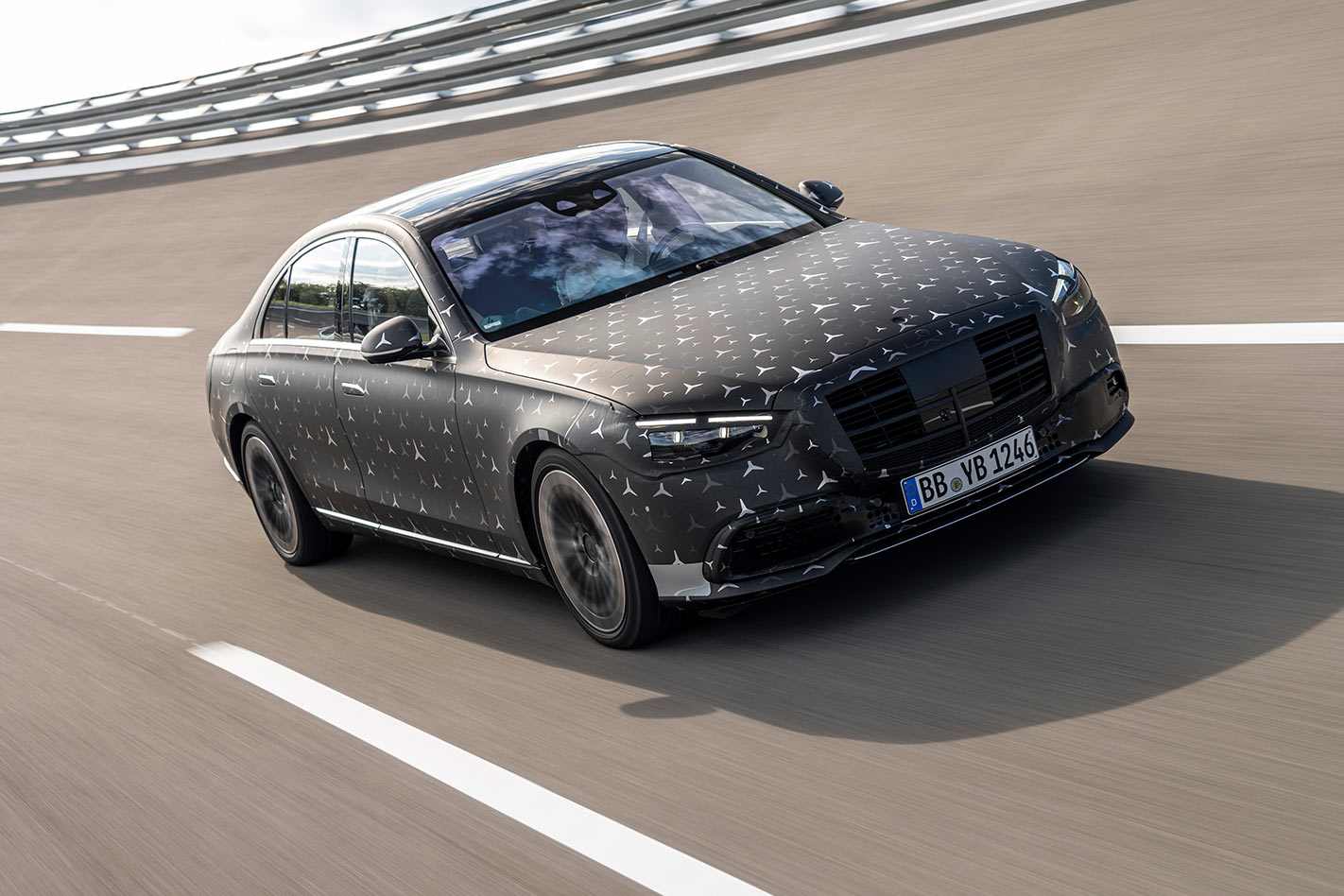
Mercedes-Benz hasn’t stopped there with their latest S-Class, fitting a range of other safety innovations to the next-gen large sedan.
A new active suspension system can elevate the entire car by 8cm if it detects an impending side impact – reducing the load on door structures.
Certain markets will also receive a centre airbag that deploys between the front occupants.
After a years of work, the 2003 and 2004 V8 Supercars championship-winning Ford Falcon has been restored by Ross Stone Racing, an offshoot of the former Stone Brothers Racing team (sold to become Erebus) which had built and run the car in its competition days.
It’s one of two cars team owner Ross Stone says will be restored, telling MOTOR work has already begun on the car that won the 2005 Falcon V8 Supercar driven to a championship victory by Russell Ingall.
The Ambrose BA Falcon, likely worth a small fortune given its pedigree, has been near completion for some time with Stone saying the last things to be fitted to the car just last week were the plexiglass rear windows.
The car’s history doesn’t end with the two Ambrose victories, however, as it’s the car that then-new James Courtney used in the Supercars Development Series in 2006. The car has been returned to its 2004-spec livery, wearing the defending champion number 1 rather than Ambrose’s own number, 4.
Here’s another two-timer that went for sale, Whincup’s 2013/14 Commodore
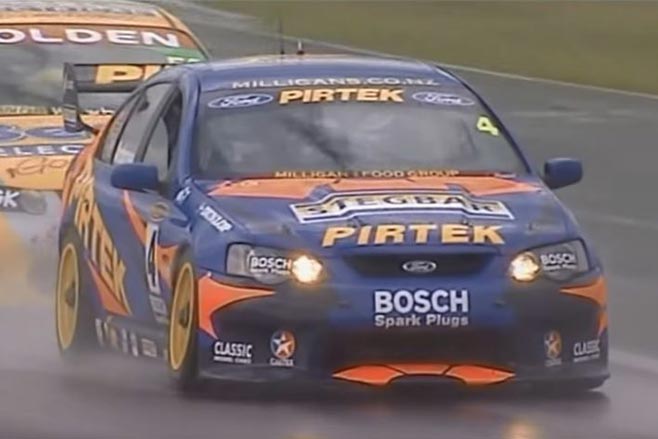
While this car and the Ingall Falcon are the only two cars retained by Ross and brother Jimmy Stone, mentions from interviews across the past year of the cars eventually being up for sale mean the 2003/04 winning Falcon could find its way into a more private collection, or could even see track time again in some form.
Throwback: Ambrose stands down from Supercars
Here’s a clip from the last moments of the 2003 V8 Supercars championship, wrapped up by Ambrose’ comment after winning the final round at Eastern Creek, “I’m taking the number one off Skaifey’s car, I can guarantee that. It’s mine now!”
Get your free weekly MOTOR report!
The biggest mistake that many drivers make with their mirrors is not using them at all.
How often have you tried to get the attention of a terrible driver in front of you, particularly one sitting in the right-hand lane going slowly, only to realise they’re never going to see you behind them because their mirrors never reflect their eyes.
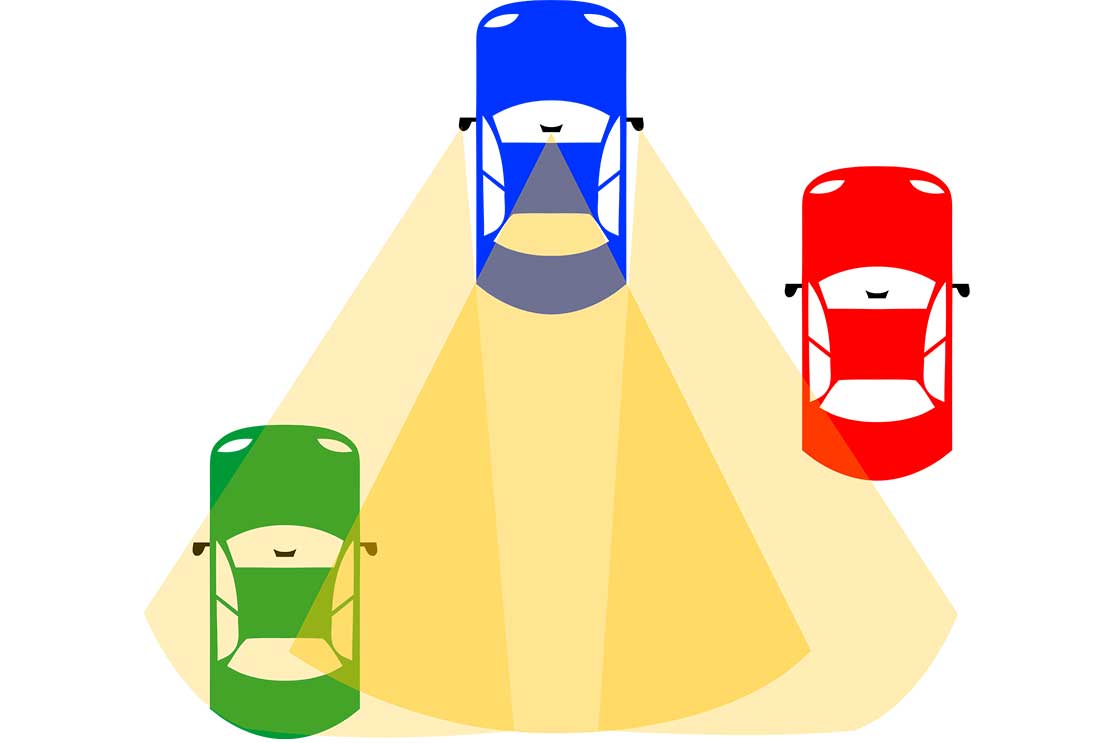
The second biggest mistake is not setting up the mirrors properly – both rear-view and side mirrors. First of all, always make sure you’ve completed your seat adjustment before setting up your mirrors.
The rear-view mirror should be the simplest: Frame the rear window and attempt to get as little reflection of your car’s interior as possible.
With the mirror on the right-hand side, set the height so that the horizon behind you (the point at which the road disappears) is halfway up the image you can see reflected.
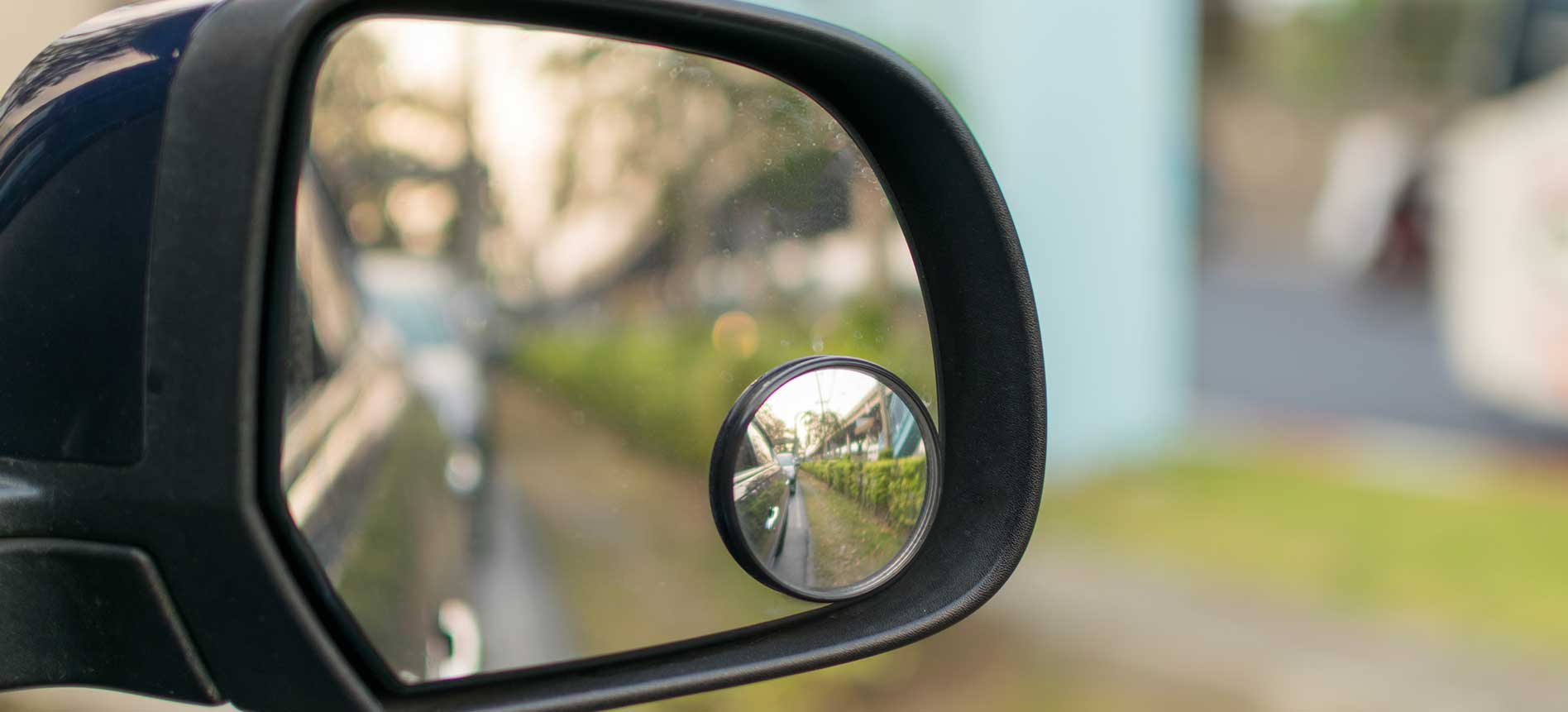
Now push it out to the right so you can see as little of the side of your car as possible, and as much of the road and other vehicles as you can manage.
However, be sure to leave a little of your own car in the image as a source of reference.
The left mirror should be set up in the same way, except when you’re reverse parking – you should dip it down slightly so you can see the gutter next to you and avoid scuffing those wheels.
BMW has announced a new range of M Performance parts for its incoming facelifted 5 Series, including the M5 and its Competition halo model.
As per usual with these modification lines from the performance sub-brand, they’re aimed at sharpening a car’s look, garnishing the interior with added flair and bolstering performance with new brakes, exhausts and suspension springs.
A new steering wheel is offered inside that re-trims the standard one with Alcantara and adds a centre stripe. The paddles are finished in carbon while the M5 matches it with the gear shift selector. As usual stainless steel pedals and specialized floor mats are available.
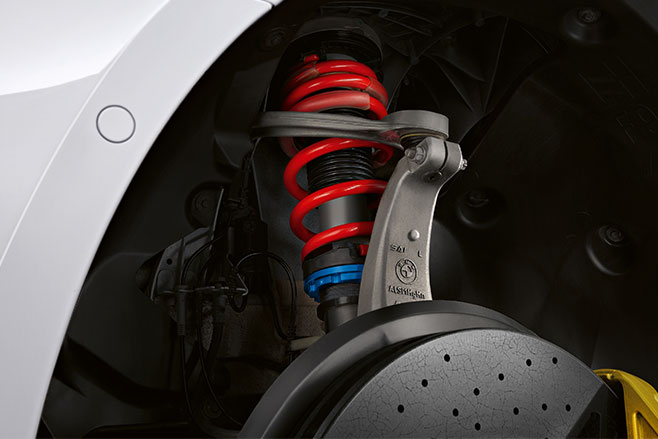
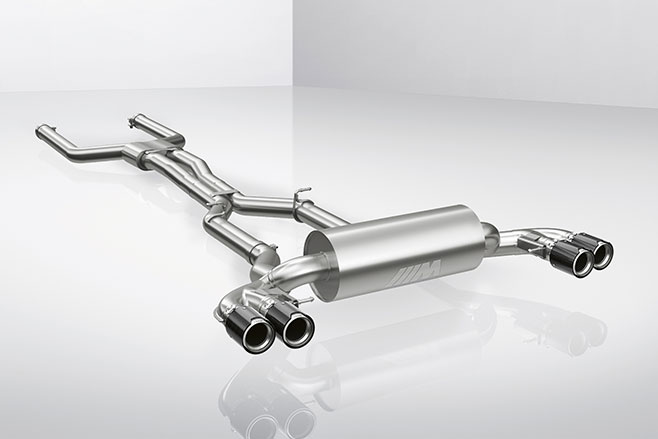
There’s also a special quad-tip exhaust system for the M5, all the way from the front axle, while you can fit regular petrol and diesel models with their own axle-back systems. All feature carbon-fibre tip finishers.
BMW global has announced the parts will be made available after the facelifted 5 Series launches in the next couple months. Its Australia arm whether has confirmed they will be available Down Under on local cars. However current 5 Series will be incompatible with the new “side breathers” and diffusers, while the new M5 front splitter is also not back-compatible. For now, have a flick through the above gallery for more details, or peruse the full official parts list from BMW below.
“BMW M Performance Parts for the BMW 5 Series, the BMW M5 and the M5 Competition:
Exterior:
- M Performance front attachment carbon left/right
- M Performance front splitter carbon
- M Performance decorative front grille carbon or high-gloss black
- M Performance Air Breather carbon left/right
- M Performance exterior mirror cap carbon left/right
- M Performance side sill attachment carbon left/right
- M Performance accentuation strip black/silver (not for M5/M5 Competition)
- M5/M5 Competition exclusively: M Performance foiling motorsport stripes
- M Performance side sill films left/right
- M Performance rear bumper trim high-gloss black
- M Performance rear diffusor carbon
- M Performance rear diffusor black matt
- M Performance rear spoiler Pro Carbon (for sedan only)
- M Performance rear spoiler carbon (for sedan only)
- M Performance rear spoiler black matt (for sedan only)
- M Performance tailpipe finishers carbon (selected models)
- M Performance tailpipe finishers chrome (selected models)
- M Performance fuel filler cap carbon
Interior:
- M Performance steering wheel
- M Performance steering wheel trim carbon/Alcantara or carbon/leather
- M Performance shift paddles carbon
- M5/M5 Competition exclusively: M Performance steering wheel Pro
- M5/M5 Competition exclusively: M Performance gear shift selector trim carbon
- M Performance stainless steel pedals and footrest
- M Performance floor mat
Drive, driving dynamics and wheels:
- M Performance 19″ brake system
- M5/M5 Competition exclusively: M Performance sport brake pads
- M5/M5 Competition exclusively: M Performance sport suspension
- M Performance exhaust system for diesel (not for M5/M5 Competition)
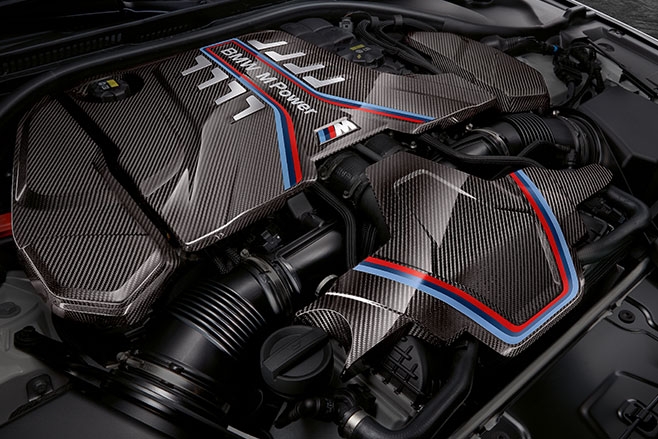
- M5/M5 Competition exclusively: M Performance engine cover carbon upgrade kit
- 19″ M Performance forged wheels double spoke 786 M Jet Black matt, complete summer and winter wheel set (not for M5/M5 Competition)
- 20″ M Performance forged wheel double spoke 669 M Bicolour (Jet Black matt, high-gloss milled), complete summer wheel set (not for M5/M5 Competition)
- 20″ M Performance forged wheels double spoke 669 M Orbit Grey, complete summer wheel set (not for M5/M5 Competition)
- 20″ M Performance for wheels multi-spoke 732 M Bicolour (Jet Black, high-gloss milled), complete summer wheel set (not for M5/M5 Competition)
- M5/M5 Competition exclusively: 20″ M Performance forged wheel Y‑spoke 863 M Ferric Grey matt, complete summer wheel set
- M Performance key case Alcantara/carbon
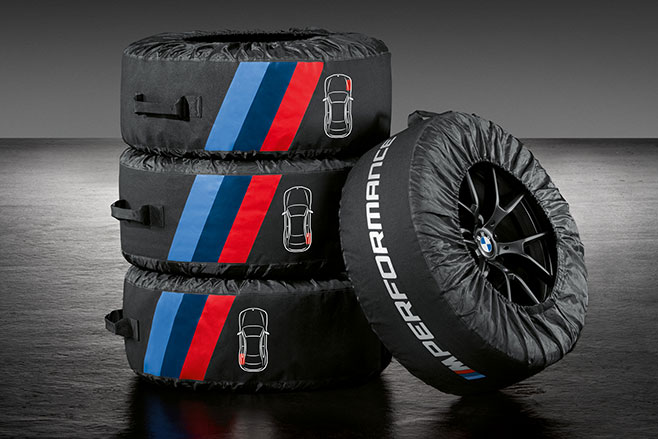
- M Performance tyre bag
- M5/M5 Competition exclusive: M Performance Indoor Car Cover”
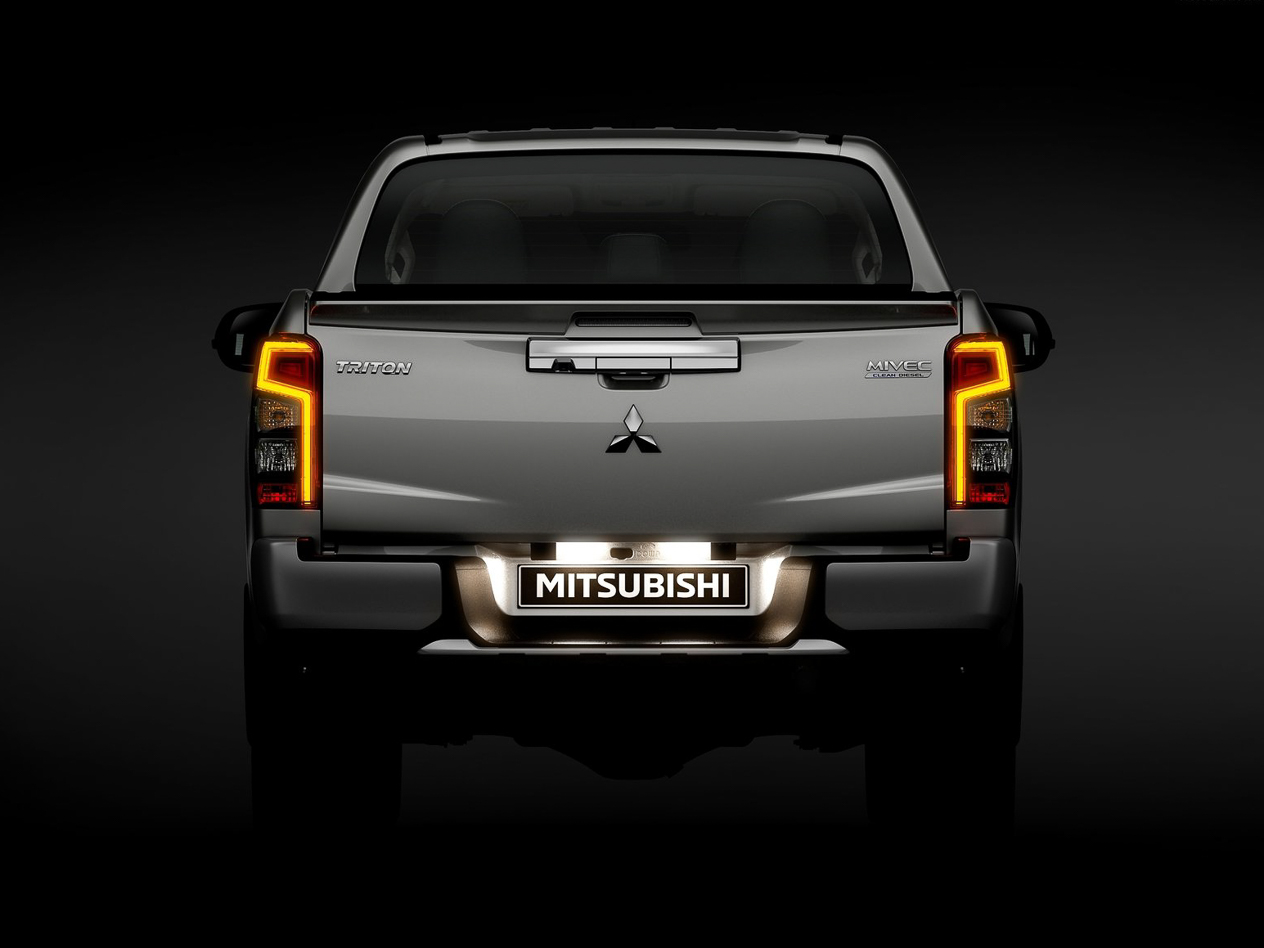
Mitsubishi has confirmed as part of a mid-term business roadmap, that the next-generation of its popular Triton one-tonne ute is finally on the way.
It’s just one of the key announcements unveiled in the Japanese car maker’s business plan this week, which details how it plans to pull itself out of a Covid-19 sales nosedive.
The ‘Small but Beautiful’ plan also previews Mitsubishi paring-back its worldwide assault by halting the flow of new models to Europe, while re-investing its focus on its core market of the Asia Pacific region.
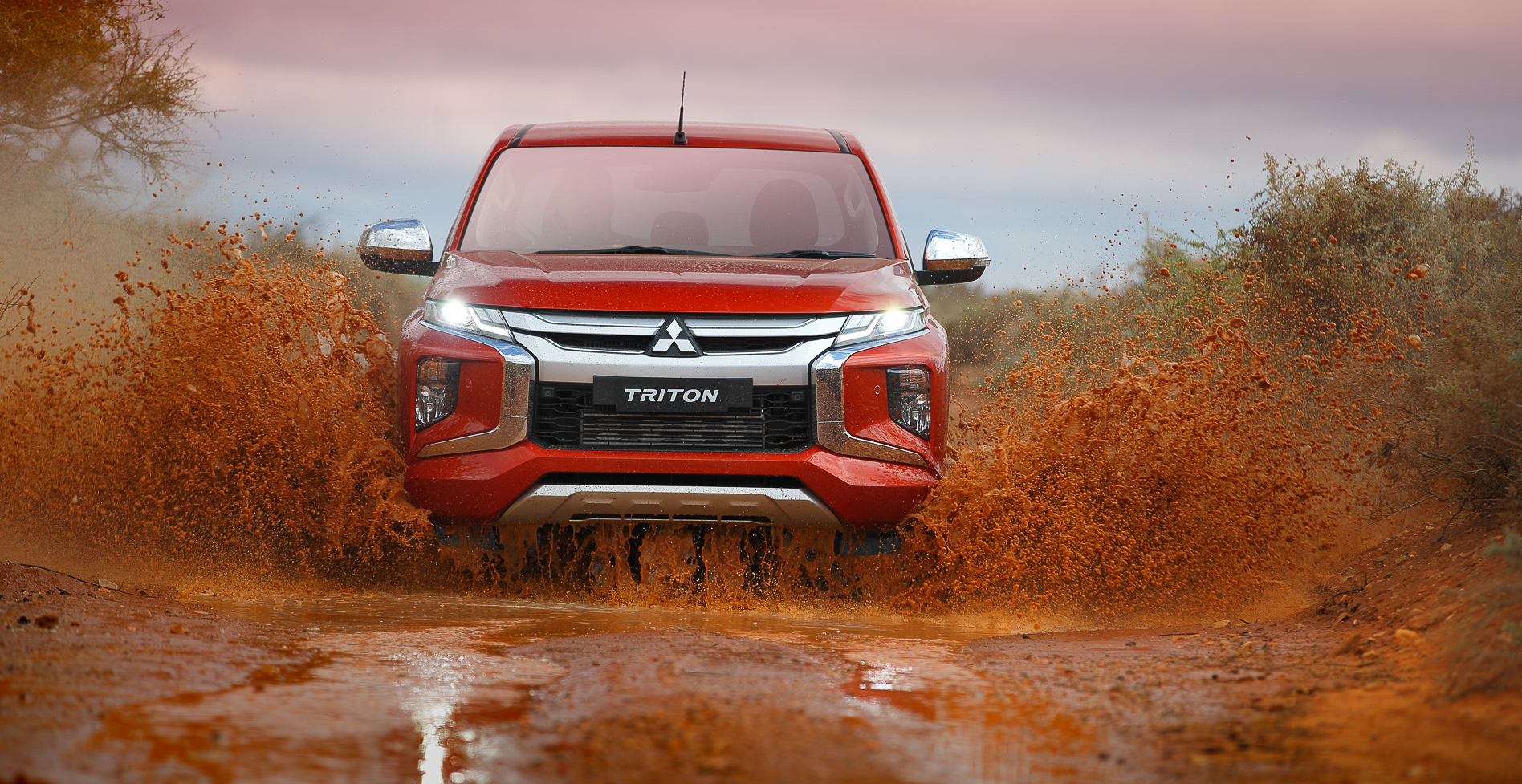
And while we lament the loss of the Pajero 4WD hero that has graced Australian roads for decades, Mitsubishi has announced that we can expect a new Triton in 2022.
It seems the Renault Nissan Mitsubishi Alliance will finally start playing nicely with one another in order for Nissan and Mitsubishi to collaboratively develop the next-generation ute, which both brands insist will look different.
The Alliance first announced a leader-follower style business plan earlier this year in which one brand would become the ‘leader’ of each segment, while fellow Alliance brands ‘follow’ on the same platform and design.
Mitsubishi is understood to be the ‘leader’ brand in the light commercial vehicle segment with development of the sixth-generation Triton already well-underway. Nissan is already falling into place as the SUV specialist and Renault is positioned to carry the passenger model mantle.

But while the Triton-based models may have unique external designs, it’s unlikely we’ll see much difference internally. Both brands are expected to share the same drivetrain options, suspension set-ups and steering.
Further ahead, Mitsubishi’s future will also bring the introduction of a new-generation Pajero Sport which should come some time in 2023.
It’s clear that Mitsubishi sees a way forward through consolidating its line-up and reducing its costs by some 20 percent since last financial year.
“We will shift our strategy from all-round expansion to selection and concentration,” said Mitsubishi Motors Corporation chief executive officer Takao Kato.
“First of all, we will complete our structural reforms and further strengthen our competitive areas—ultimately to build a corporate structure that can surely generate profits during this mid-term period.”
If nothing else, Mitsubishi’s renewed focus to “provide our reliability through 4WD and off-road performance” and invest in its SUV-heavy local line-up should see it in a better place going forward.
In 2007 JDM fan boys around the world were in uproar. Nissan had disgraced the heritage of the GT-R badge by fitting a V6 under the R35 instead of the traditional boosted straight-six.
What those furious fans didn’t realise however, is Nissan was simply fulfilling a prophesy that had begun almost a decade earlier with the development of the R34 GT-R.
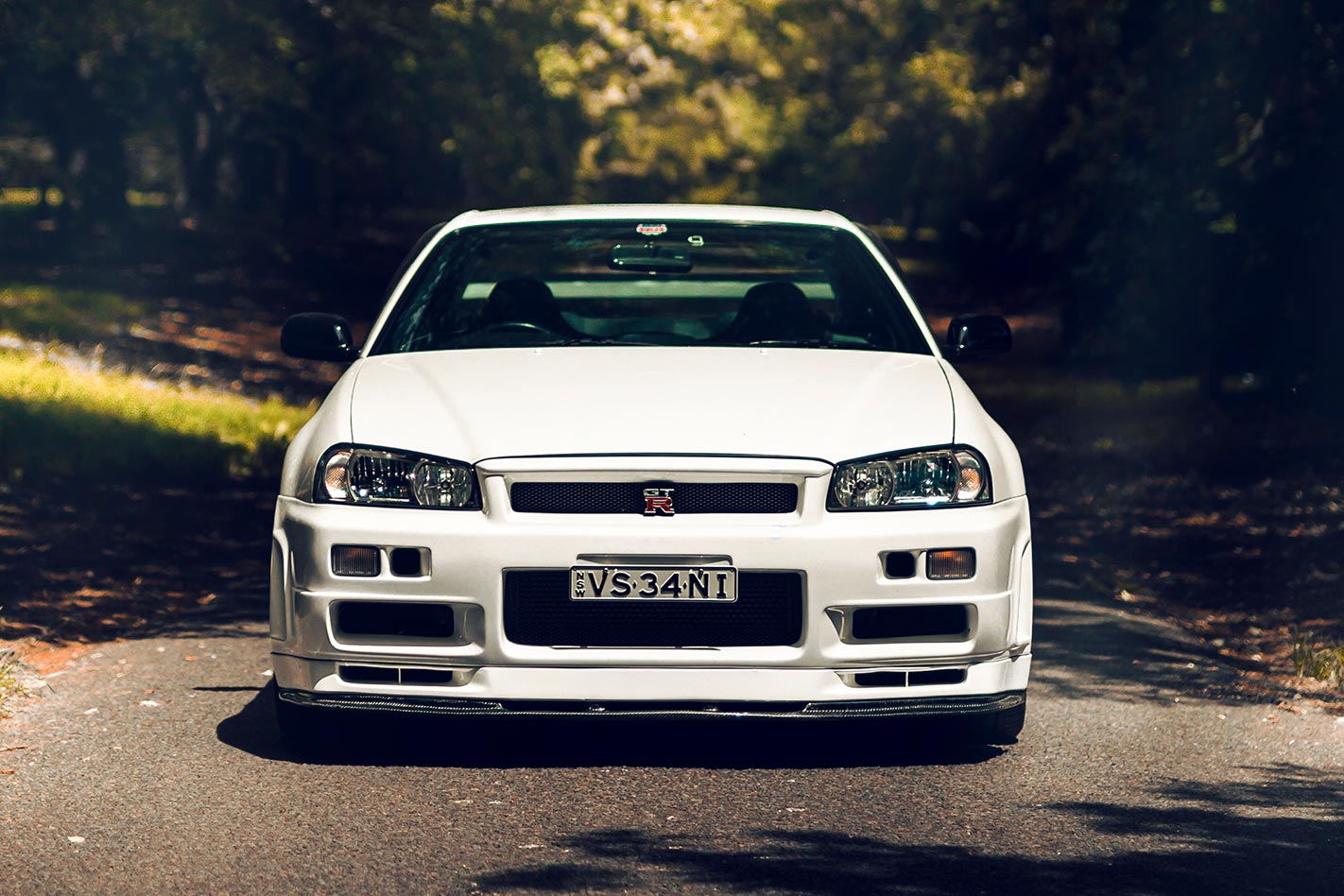
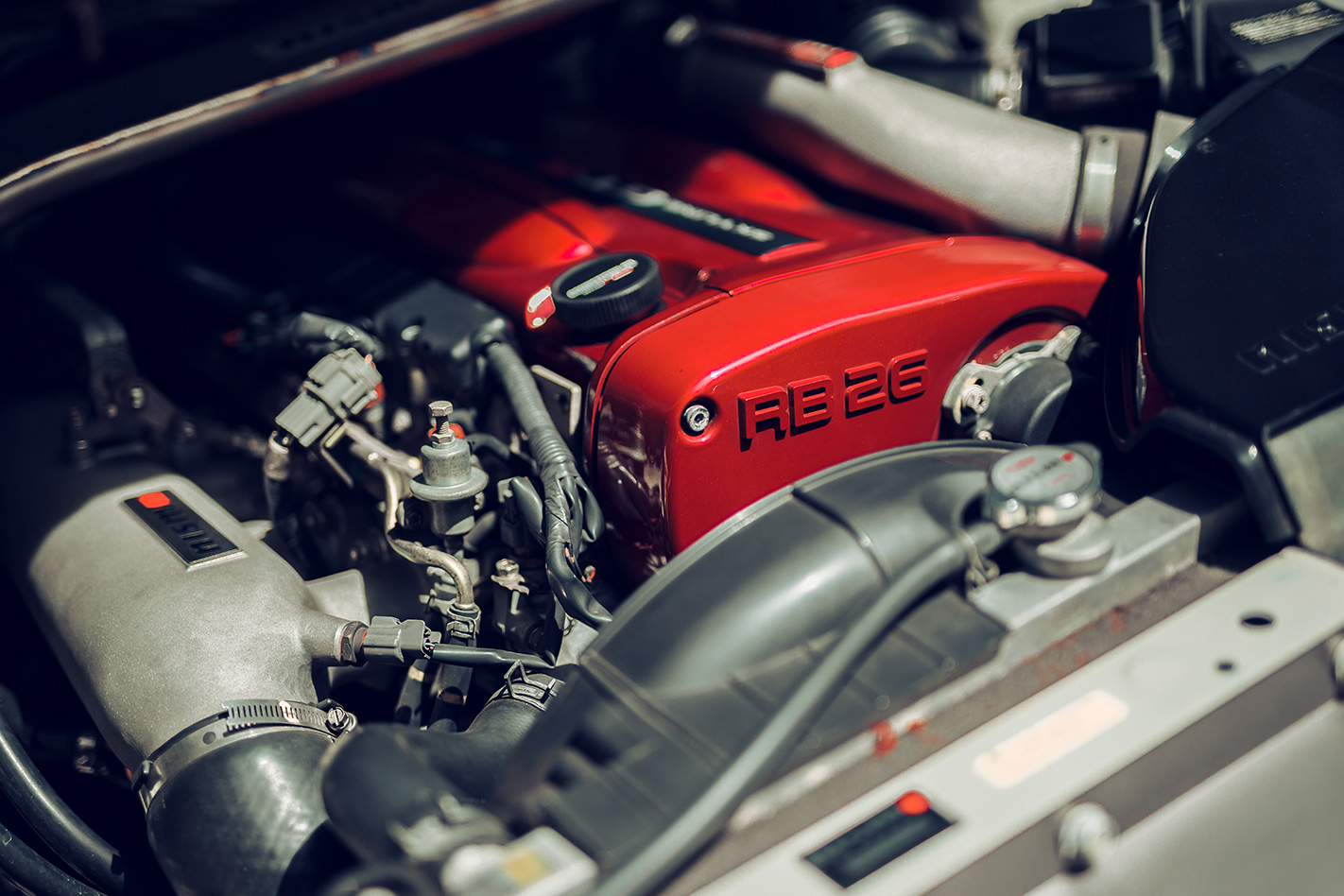
You see, the last of the Skyline GT-R line very nearly wasn’t powered by Nissan’s iconic and revered RB26DETT powerplant.
Chief engineer Kazutoshi Mizuno and designer Watanabe both intended for the R34 to be fitted with a V6 engine, mounted behind the front axles for a front-mid-engined layout.
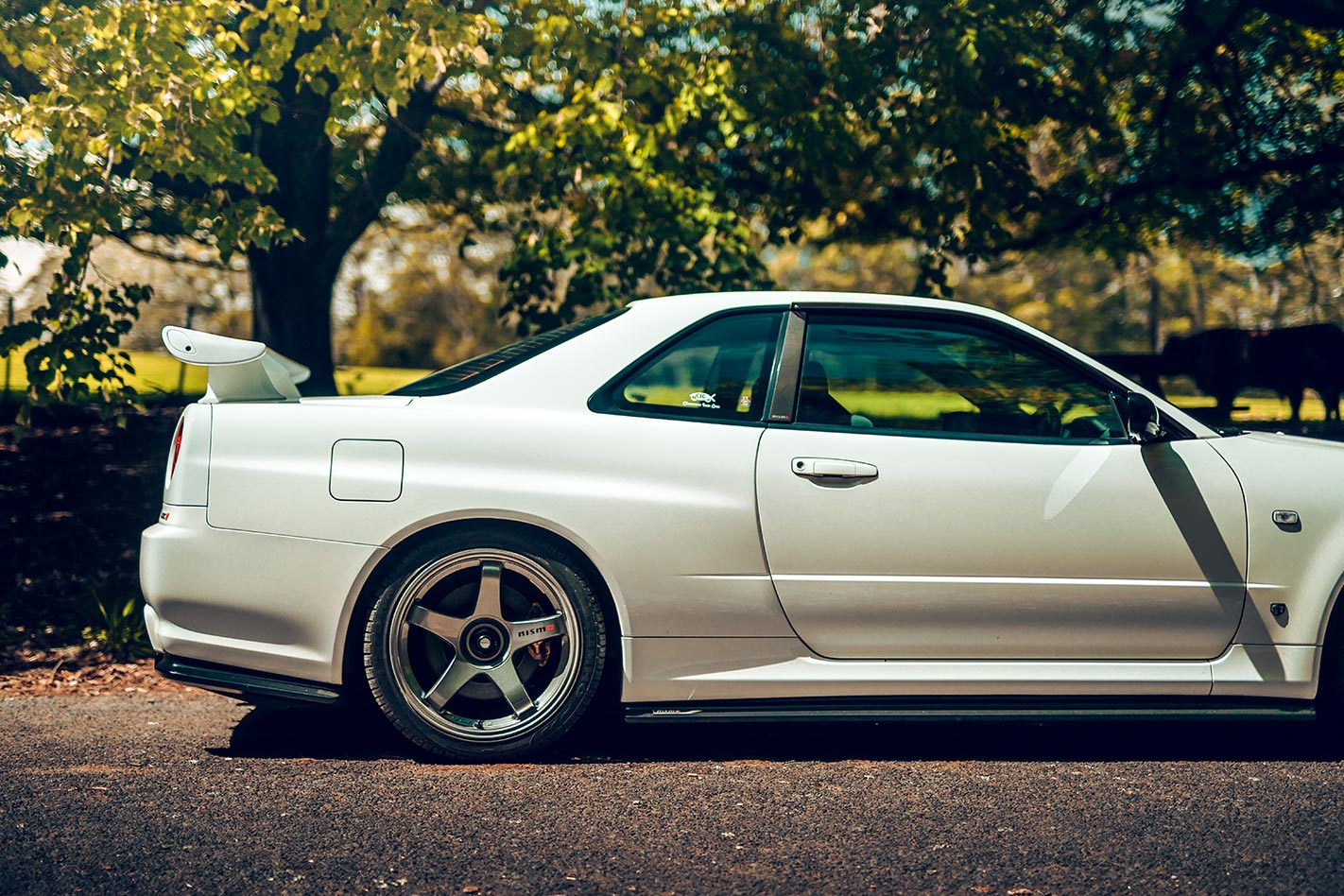
However, the plan was thrown out because there wasn’t enough budget to develop a V6 with performance worthy of the hallowed GT-R badge.
Instead, the RB26DETT that had powered both the R32 and R33 soldiered on and was utilised once again.
During the R34’s development, Nissan – and Japan in general – was in the throes of a financial meltdown, having weathered seven years of what economists now call the Lost Decade.
The 1991 collapse of the Nikkei 225 and subsequent interest rate stagnation had caused the company to refocus. Carlos Ghosn was brought in to slash costs in 1999, with only three of Nissan’s 46 models in its domestic market returning a profit. The R34 GT-R was not one of them.
The R34’s chief engineer Mizuno-san had, for some time, claimed that the RB26DETT engine was past its sell-by date and campaigned for an all-new, lighter and more efficient aluminium-block V6 for the R34 GT-R.
While development of Nissan’s VQ series of V6 powerplants was already well under way, developing a high-performance version of this engine for the R34 was deemed an unacceptable budget blowout.
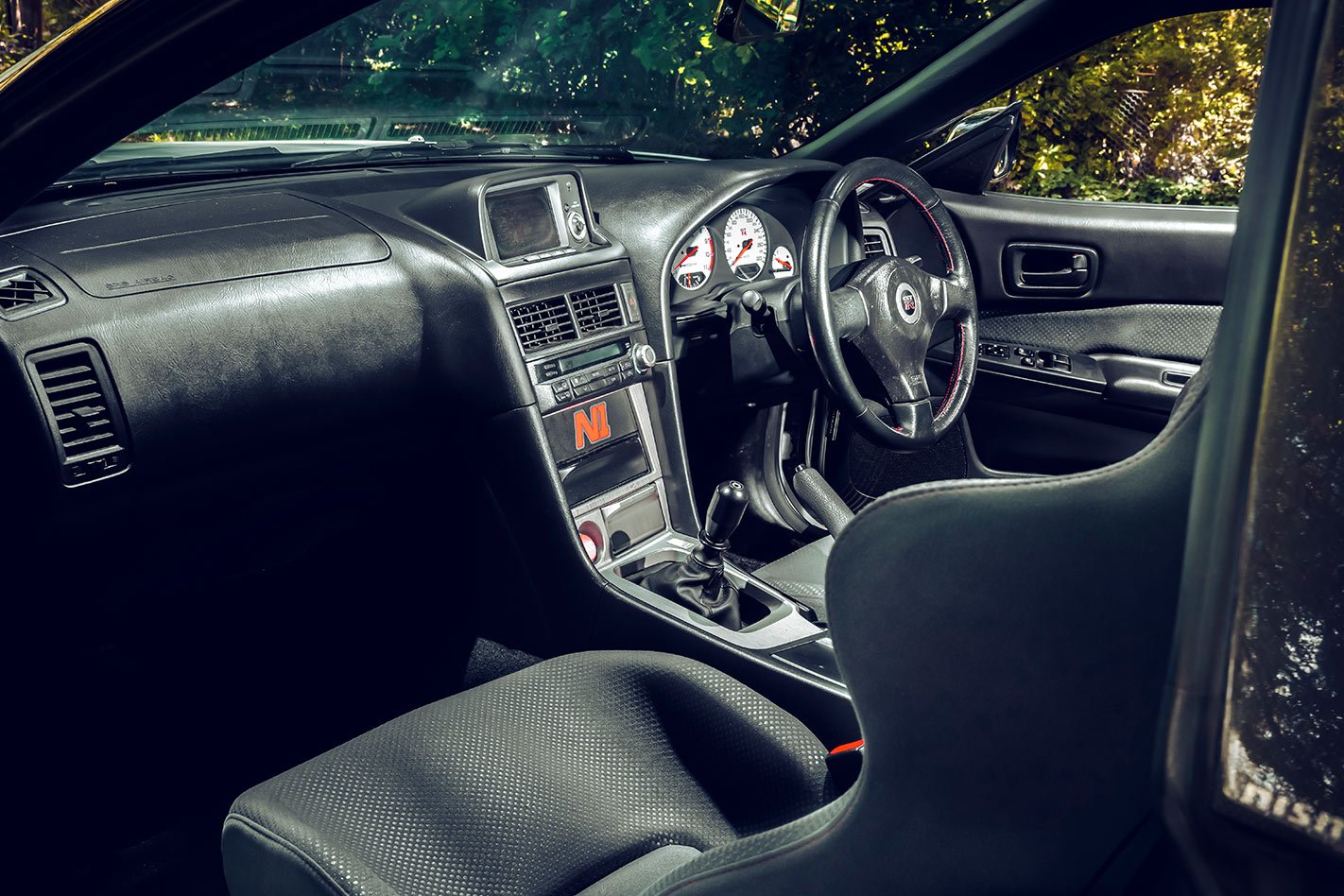
In 2017, the R33 and R34’s designer, Watanabe-san spoke to the media about the initial plan, confirming that the RB26 would have been given an early retirement if he had his way.
“The basic concept of all the Skylines was to deliver technological innovation to customers,” he said.
“In line with this concept, for the R34 we wanted to propose a new Skyline image with front mid-ship layout and a V6 engine.
“However, building a V6 engine for the Skyline meant constructing an additional engine production line, which required huge investment.
“After long consideration, we were forced to give up.”
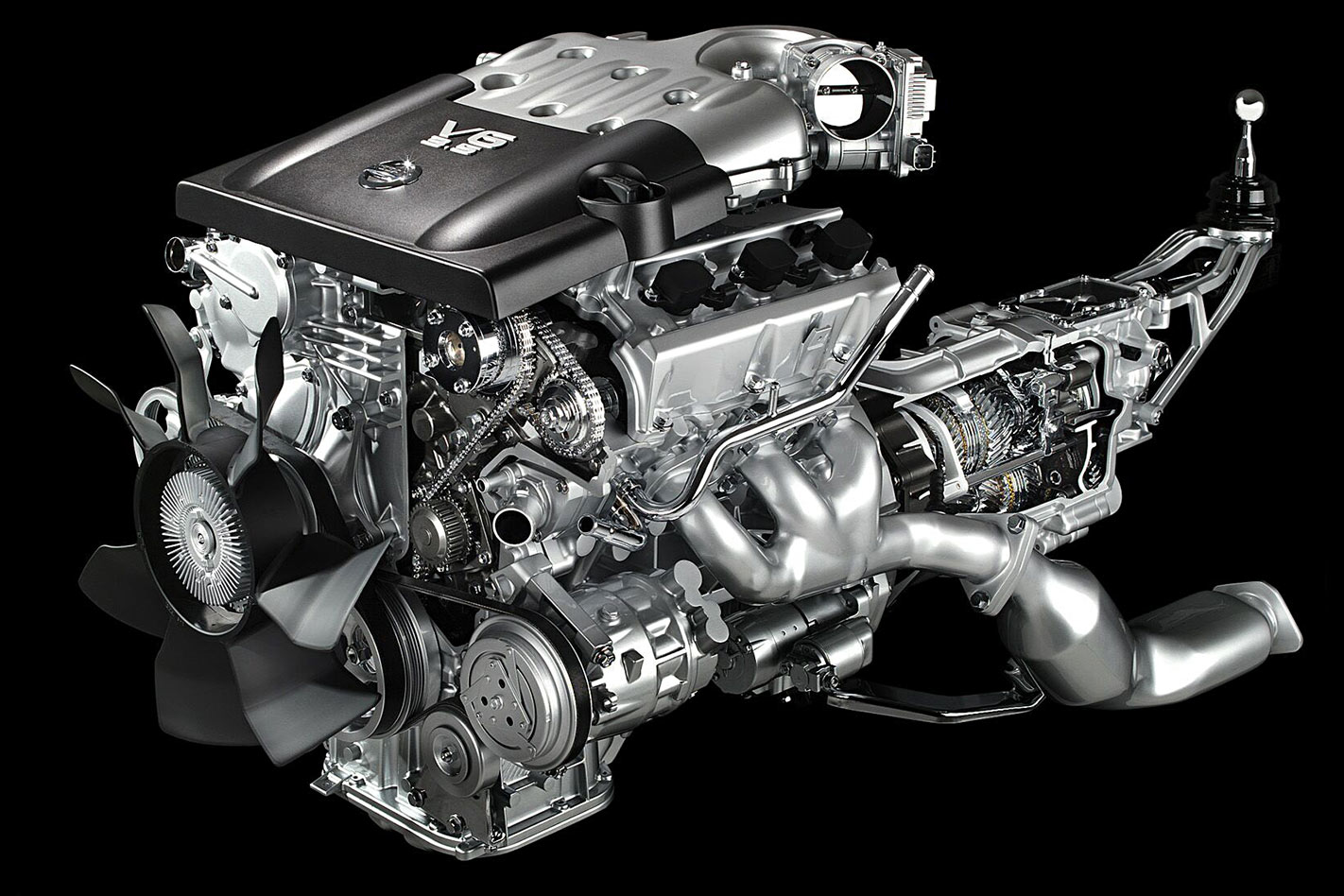
History tells us the Watanabe and Mizuno would eventually get their wish, but would have to wait until 2007 with the introduction of the VR38DETT unit, itself a development of the VQ family, in the R35 GT-R.
While a road-faring going V6-powered R34 GT-R was never built, there were a handful of factory NISMO R34 GT-Rs with twin-turbo V6 engines built – they just happened to be GT500 race cars.
The same desires of the engineering and design team for wanting to move to a V6 for the road car were used to justify the race car ditching the straight-six – namely, better weight balance and a lower centre of gravity.
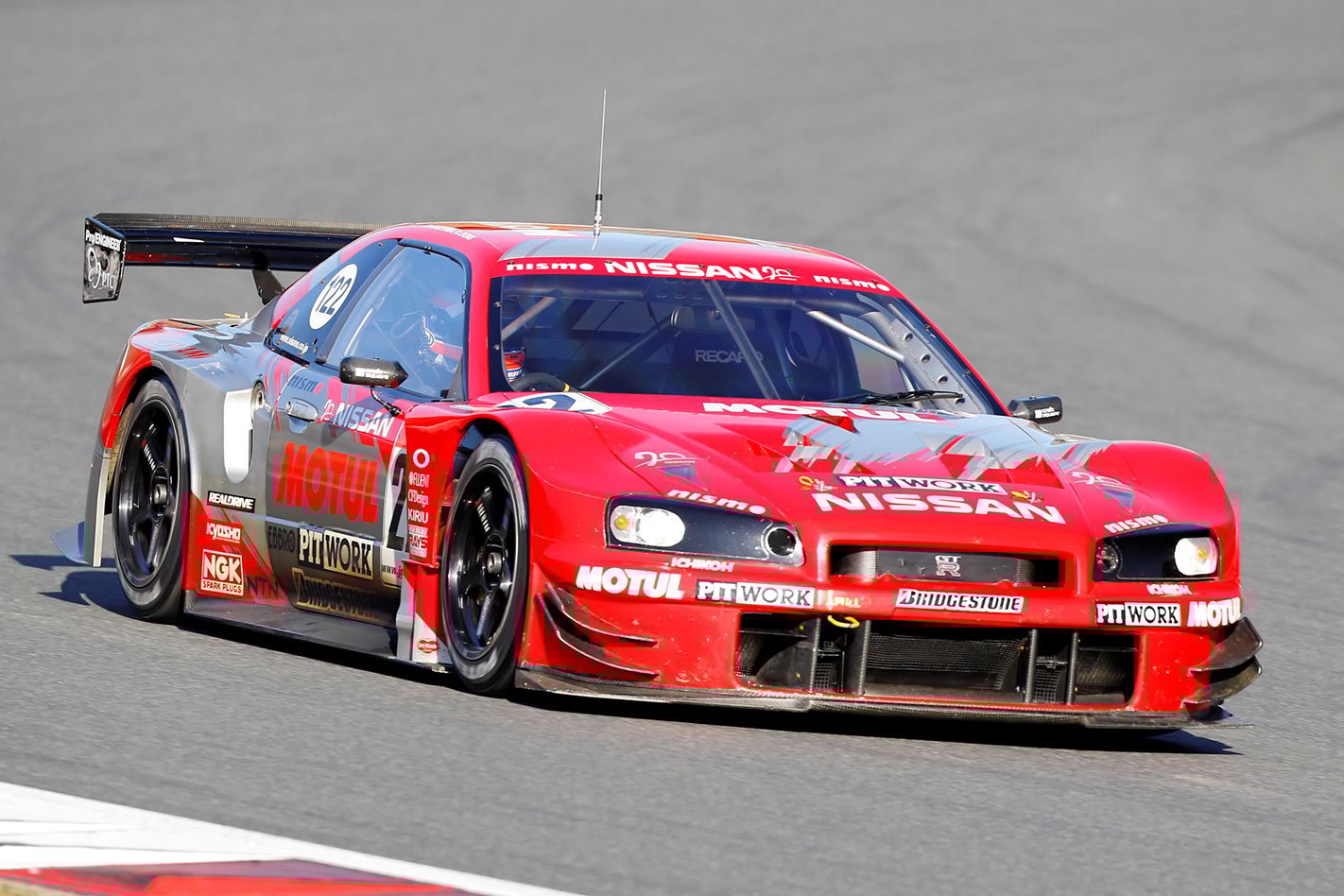
Competing in the GT500 class of the 2003 All Japan Grand Touring Car Championship (what would eventually become Super GT) were three R34 GT-Rs, all powered by a VQ30DETT.
In race trim, the engine produced in excess of 356kW @ 5600rpm, and more than 735Nm @ 4000rpm.
That would be the final year for the Skyline R34 in JGTC, replaced by the Z33 350Z in 2004.
What do you think? Should Nissan have built a road-going V6 R34 GT-R?
This is the story of a country singer, a V8 ute, the 2005 TV Week Logies, and one rather irate music manager… as told by former HSV general manager Chris Payne.
We recently Spoke to Payne about the HRT Maloo concept of 2001, but during that conversation he recalled the time he lent Keith Urban a Maloo to drive during a visit to Australia.
“Keith Urban’s manager rang up and said ‘I’ve got this bloke, you’ve probably never heard of him, Keith Urban. He’s really interested in HSV and he loves Maloos’.” Payne says.
“I’m a bit of a country music fan so I was well aware of who he was before he was popular, so I organised for him to come and do a tour through the factory.
“He was in Australia for the Logies, and so we said ‘why don’t you borrow a Maloo to do the red carpet arrival in?’ I believe it was, at Crown Casino that year.
“And so he did. And he sent back this note (pictured below). Cracking young bloke. Loves his Holdens and HSVs. Reckon he must’ve gone to a bit of effort to find this card at the newsagent before he returned the Maloo!”
Payne on the HRT Maloo concept
Whether you’re into Urban’s music or not, the fact you’re reading a story about HSVs from MOTOR suggests you’ll at least find common ground with his desire to rip mad skids.
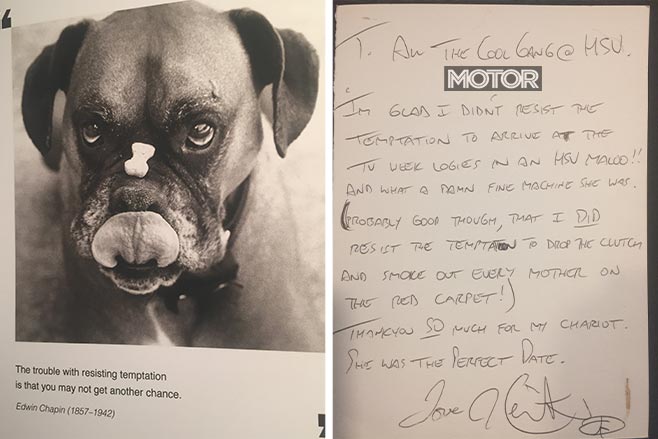
If you can’t read his handwriting, here’s the text in nice, legible sans-serif font:
“To all the cool gang at HSV I’m glad I didn’t resist the temptation to arrive at the TV Week Logies in an HSV Maloo! And what a damn fine machine she was. (Probably good though, that I DID resist the temptation to drop the clutch and smoke out every mother on the red carpet!) Thank you so much for my chariot. She was the perfect date. Love, Keith Urban”
But according to Payne, that was only the beginning of Urban’s obsession with sitting in the driver’s seat of a V8 Holden ute, as engineered by the folks in Clayton.
“Of course the follow up to it from him was ‘How can I get one? I’m based in Nashville so can I get one over here in left-hand drive?’
“He was telling us how a few of the other country music blokes based there would be so jealous because they’re all big car guys, and he’d be the only one with a Maloo.
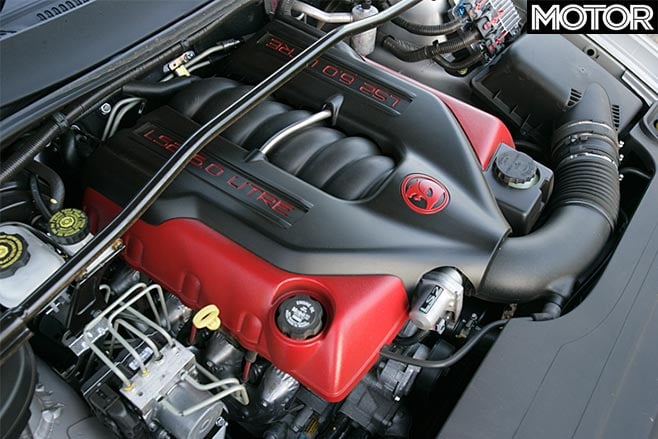
Imagine this… but in Tennessee
“So I remember we priced it up for his manager, and it was at least AU$150,000 at the time, left hand-drive would have used some of the Middle East-spec Chev sedan parts, and I told his manager ‘It’s not certifiable or approved and you probably won’t be able to register the car in North America but that’s all up to you.’
“And Keith said ‘I don’t care, I really… I just want, er, it.”
It was here we had to ask Chris Payne if he nearly dropped in an “I just want one.” He told us it was a habit.
“Anyway, Keith Urban kept ringing us up and sending us messages. Eventually his manager had to call us and say ‘Will you stop talking to him? He’s not having it, I’m not letting him have it!’
“So the phone stopped ringing after that. But he was dead keen.”
With Urban having lived between the US and Australia over the last couple of decades, we can’t help but wonder if he secretly has a Maloo stored in a Sydney garage somewhere that Nicole Kidman doesn’t know about…
