
As Holden continues to dismantle its operations in Australia, signs of life are starting to appear around General Motor’s continued presence in Australia.
The phrase ‘GMSV’ has been trademarked with the Australian government, along with a Special Vehicles logo.
The two applications were filed in late June and early July, respectively, and were filed by Australian law firm Baker Mackenzie.
The GMSV trademark covers a wide range of categories and is likely to have been filed after news broke of a rogue Facebook page using the name to sell non-affiliated merchandise.
The filing for trademark protection on the logo, however, is more interesting, in that it’s the first physical representation of the General Motors Special Vehicles operation that’s come to light since the news broke earlier this year that GM would close the Holden brand in Australia.

It has been filed to cover aircraft; boats; caravans and trailers; cycles and bicycles; vehicles including motor vehicles; engines for motor vehicles; cars, buses, trucks and motorcycles; land vehicles; cigar and cigarette lighters for motor vehicles; parts and accessories for all the foregoing, according to the filing.
GMSV is likely to take the form of a joint venture between engineering firm Walkinshaw Group and GM and will convert and sell left-hand-drive GM products.
Walkinshaw moved into the conversion business when it took on the contract to convert RAM utes to right-hand drive for RAM Trucks Australia, following that with conversion projects for the Chevrolet-badged Camaro coupe and Silverado ute, both facilitated by GM Holden.
The Camaro program has now come to an end, though the Silverado and RAM are still being converted in Melbourne.
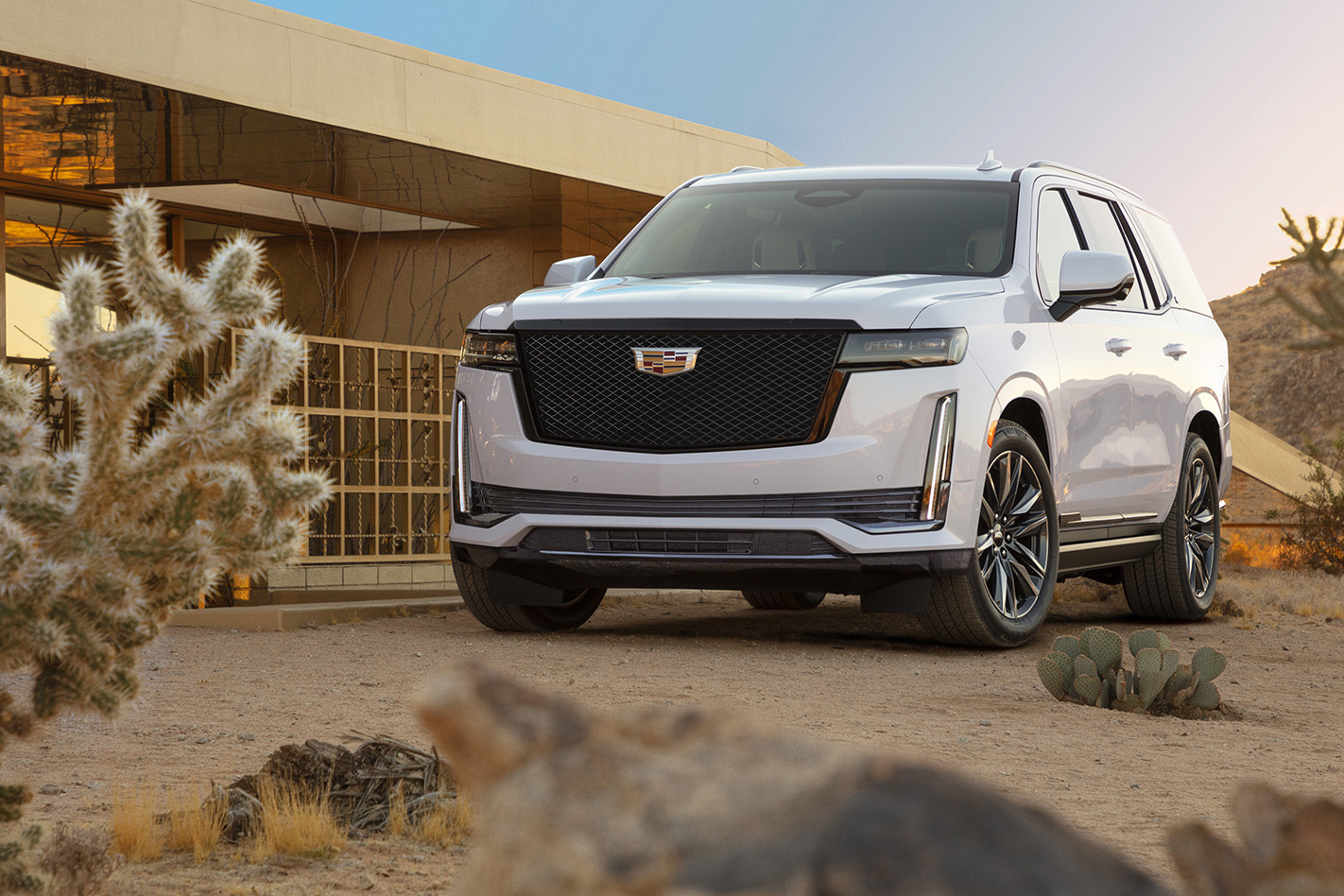
GMSV will likely take over the importation of the factory-RHD Corvette C8, and it will likely flesh out the range of Chevy trucks with SUV products.
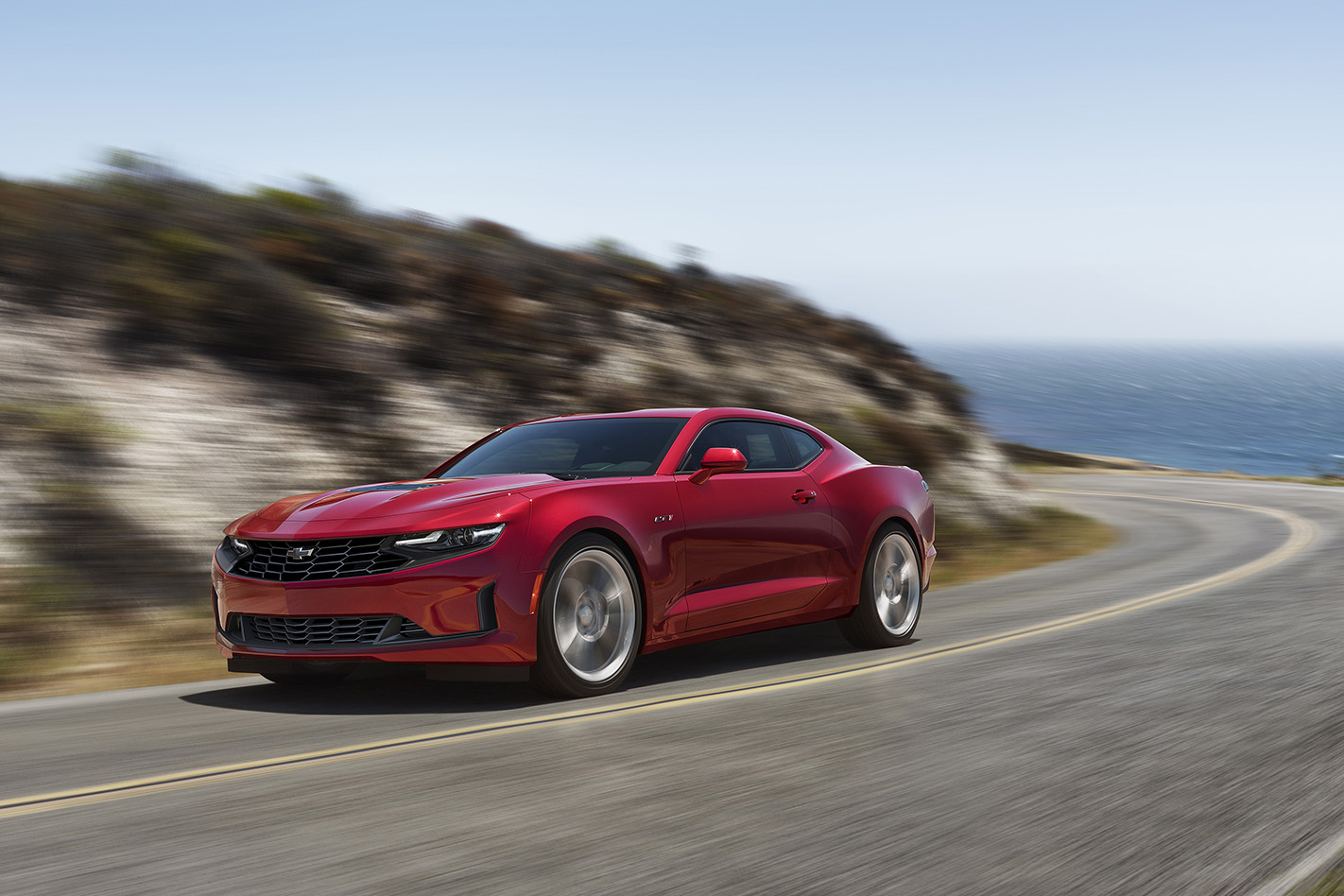
True to its roots as Holden Special Vehicles, the new entity is also likely to import and convert performance version of GM products, including the Camaro (below).
However, the continued impact of COVID-19 on the automotive industry- and in particular the hard-hit state of Victoria – will have an effect on the timelines of the company’s rollout, while exchange rate pressures between the US and Australian dollar will also play a part.
Both trademark applications are not due to be considered until the end of the year.
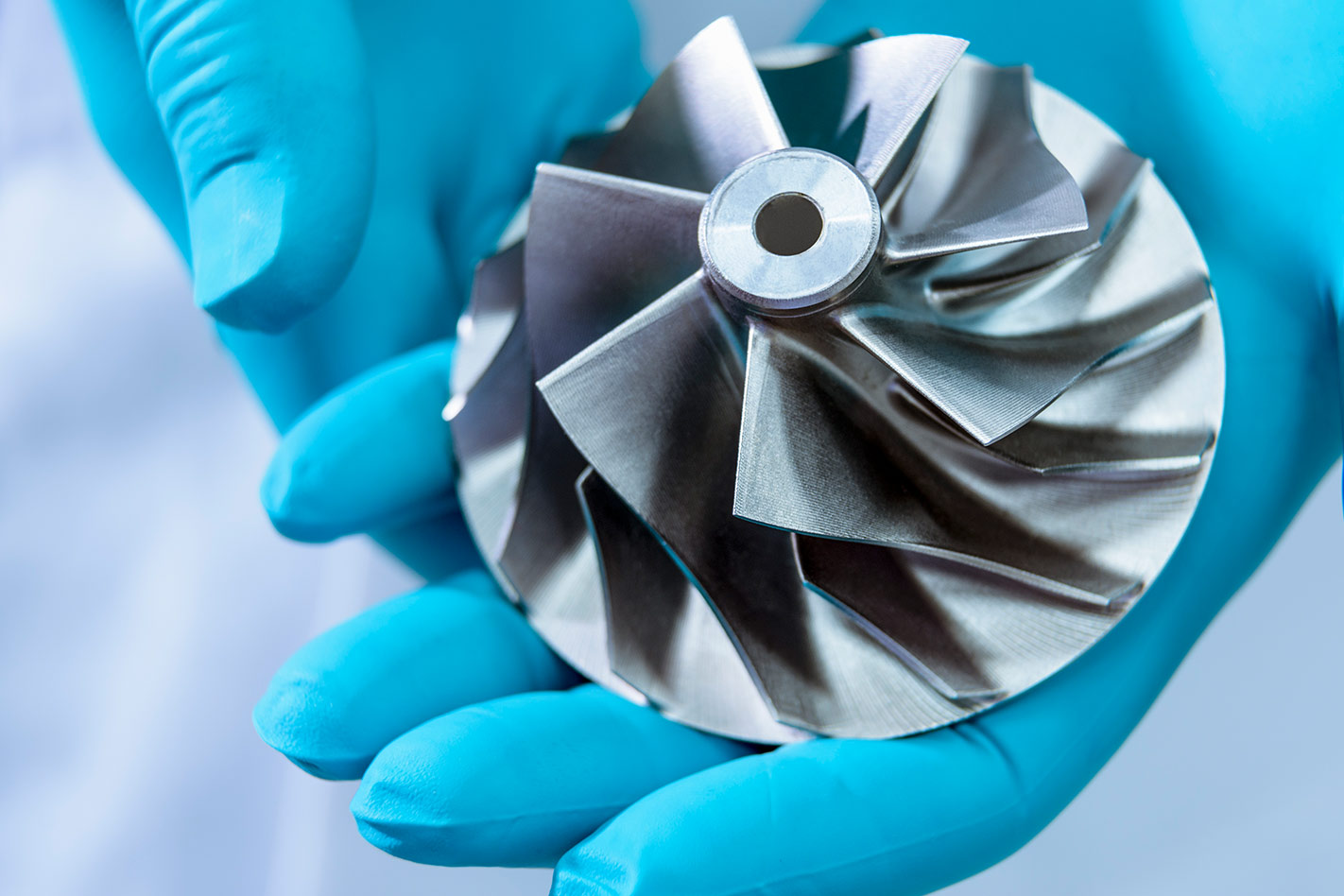
Reduced to its simplest form, a turbocharger isn’t hard to understand. Two fans sit at either end of a metal shaft so that both spin around in unison. One of these fans, the turbine, sits in the stream of exhaust gases exiting the cylinders. As the engine blows hot gas past the fan blades, they spin up, in turn rotating the shaft and the other fan, called the compressor. This fan is mounted in the car’s air intake so, as it spins faster and faster, it sucks more air into the vehicle’s cylinders. With more air in, you can throw in correspondingly more fuel. Bingo! More power.
Anyone who has ever tried pumping up a road bike’s tyres using a handheld pump will appreciate that as you compress a gas, you heat it up. Hotter air is less dense and therefore less effective at making fuel burn, so in order to help cool the air that’s been squeezed into the induction system by the compressor, it passes over a heat exchanger, or intercooler, that removes the extra heat and channels it elsewhere. Also required is a wastegate, to bleed off excess boost.
Therefore, we can think of a turbo as a means to the end of burning more fuel and developing more kilowatts than an equivalent naturally aspirated engine can. Doing more with less has long appealed to engineers. In the early days, it was all about generating a big power figure. In the 1980s, every car seemed to spawn a turbo variant but even back then there were other considerations at play.
Turbochargers were relatively crude and introduced most to the concept of turbo lag. In order to throw air and fuel in at an elevated rate, the basic mechanism of the turbocharger dictates that the exhaust gases must be exiting at high speed. Therefore, there’s an initial period, at relatively low engine speeds, when the turbocharger isn’t operating optimally. Honda’s answer to this came in 1988 when it introduced the variable geometry turbocharger on its Legend 2.0 V6.
Honda already realised that turbo lag was largely a function of the turbo’s aspect ratio (AR); the relationship between the area of the exhaust turbine inlet to the radius of the turbine blades itself. Increasing the AR by using a large open-vaned turbine will increase spool up time, but increase top end performance by allowing more air to flow. Decreasing the AR, with a smaller turbine with more acutely angled vanes will decrease spool up time, but reduce top end performance. Honda realised that with an actuator, it could alter the angle of the vanes offering quick spool up and then at higher engine speeds, increase the AR. Controlling the boost pressure this way also made a wastegate unnecessary.
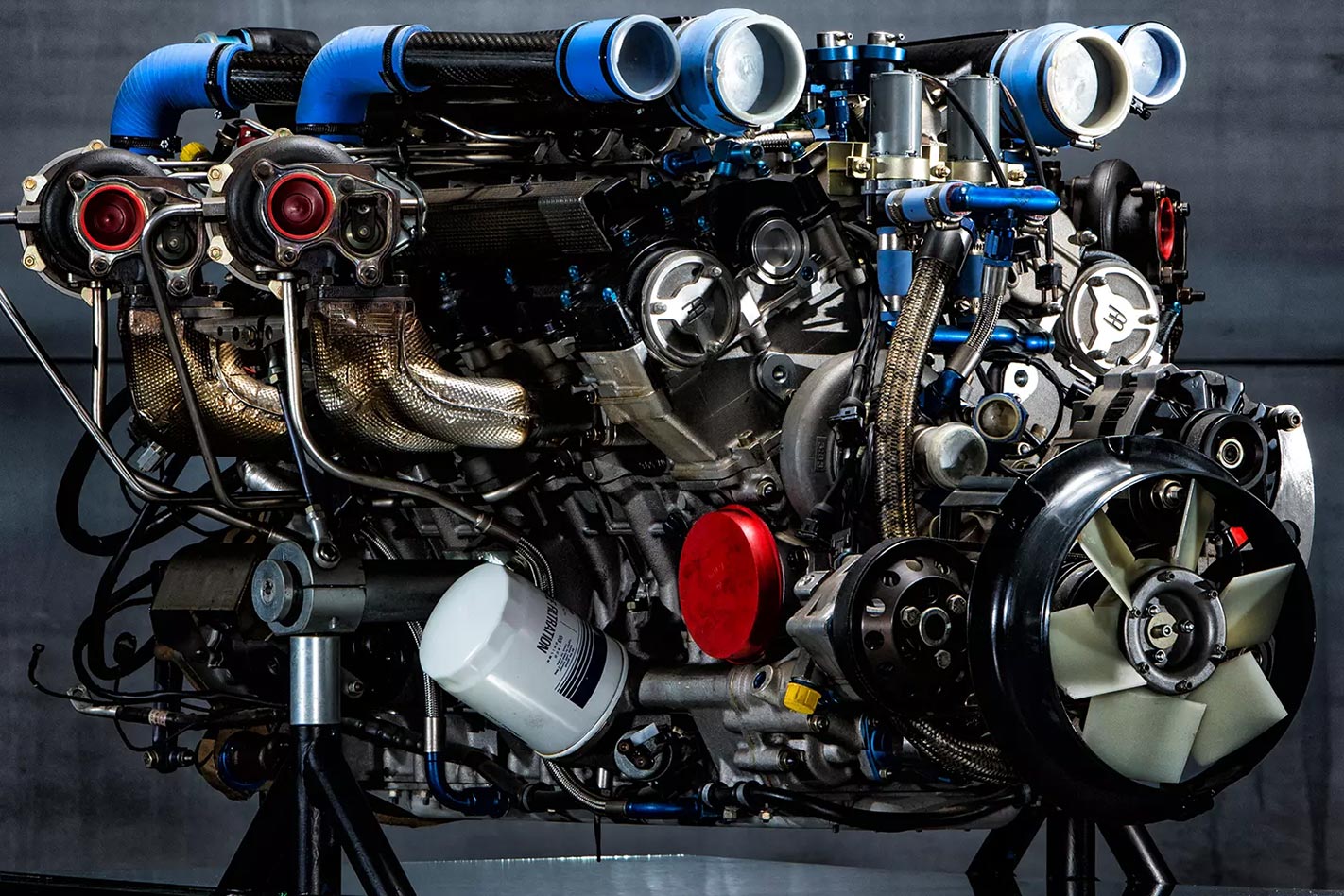
A different method of tackling the same issue was simply to use two turbochargers; a small one and then a big one. The Maserati Biturbo of 1981 might have been the first production car to use a pair of blowers, but it simply fitted one to each bank of cylinders of its V6 engine, known as parallel turbocharging. Sequential turbocharging activates a small turbocharger at low RPM, reducing turbo lag. As revs rise, a bleed of exhaust gases are directed to the larger turbo to pre-spool it. Then at high engine speeds, all of the exhaust gases are routed to the larger turbine to deliver high boost. Porsche’s 959 was the first production car to utilise sequential turbos in 1986. Mazda’s Eunos Cosmo (1990) and FD RX-7 (1992) followed suit, but for many, the car that popularised the tech was the 2JZ-GTE-powered MK4 Toyota Supra.
Having largely cracked the issue of turbo lag, manufacturers started to take the idea of volumetric efficiency seriously. A smaller turbocharged engine making an equivalent amount of power as a larger naturally aspirated one makes all kinds of sense. It’s boosted to make useful power at lower engine speeds, it has less reciprocating mass and enjoys lower frictional and pumping losses. Thermal efficiency improves because the engine basically recaptures energy that would otherwise be lost from the exhaust pipe.
Downsized turbocharged engines like the 875cc Fiat TwinAir of 2011 or the Ford 1.0 three-cylinder ‘Fox’ from 2012 soon started raising eyebrows. Put simply, drivers weren’t getting anything like the claimed fuel figures. Why?
Well firstly, it’s to do with driving style. A turbocharged engine turns into a fuel-hog under hard acceleration, something the old NEDC lab economy tests never measured. But there’s more to it than that. Because a turbo compresses the incoming air, the fuel injection system automatically adds more fuel to keep the mixture at the correct ratio. And this is where the problems begin. As the pressure in the combustion chambers rises, you run the risk of destructive knock.
This pre-ignition occurs when the fuel-air mix undergoes compression ignition in the cylinder. This creates two flame fronts in the combustion chamber, the one you want (from the spark plug) and the one you don’t – pre-ignition. In order to combat this, engine control units have a simple fix and that is to squirt more fuel into the cylinder to cool things down. It’s called mixture enrichment and while it might help your engine last, it doesn’t do a lot for fuel economy.
Some manufacturers like Lotus, Mazda and, for quite some time, Toyota resisted the lure of downsized turbo engines and those decisions may well be borne out. Euro 7 regulations due in 2026 are expected to kill the downsized turbo engine, and will instead promote a strict air:fuel ratio (Lambda 1) throughout the engine map; in effect a stoichiometric 14.7:1 fuel burn that outlaws mixture enrichment.
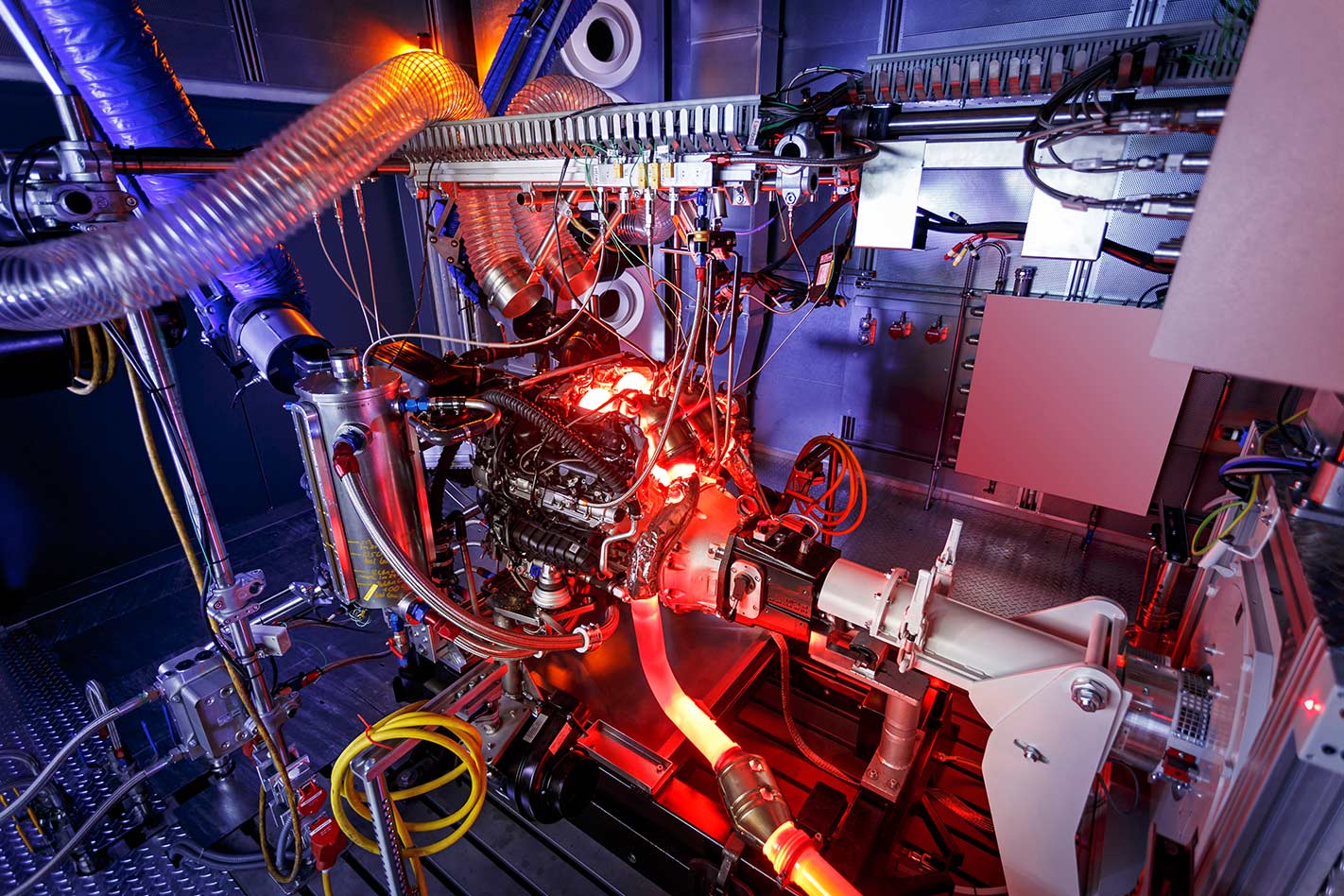
This has generated smarter solutions from manufacturers such as Garrett and BorgWarner. These use 48v electrical architecture to spool up the turbo almost instantly, slashing cold start emissions and cutting lag. At high engine speeds, the e-turbo switches polarity to turn the motor into a generator, sending power to an electrical sub-system. We’ll start to see these in production cars in the next year or two, their aim being to right-size the turbocharger’s turbine for consistent Lambda 1 rated power.
So that’s where we’re at. The turbocharger has certainly come a long way in the last 48 years and, as a pure concept, its days are numbered. A new, electrified era of forced induction will last as long as there’s a demand for internal combustion engines. And you’d need to be pretty bold to put a use-by date on that.
THE FOUR STEPS TO MAKING BOOST
STREAM
Energised exhaust gases exit the engine and are directed into the turbo. Known as the ‘hot side’ of the turbocharger
SPOOL
Turbine spins up in flow of gases, reaching up to 250,000rpm and 1050°C. Exhaust exits to catalysts
SUCK
Compressor spins at same speed, pulls in huge quantities of fresh air which heats up as it’s compressed
SQUEEZE
Air is cooled and then forced into combustion chamber under pressure. More air + more fuel = more power
 Turbo Titans
Everything you’ve ever wanted to know about the humble turbocharger and its miraculous power-boosting abilities.
You can expect to hear the WhichCar Weekly crew discussing electric vehicles more frequently as the technology becomes more accessible, feasible and attractive, and our latest episode is certainly no exception.Sparking the conversation (and the electric puns) this week, is Ford’s utterly jaw-dropping Mustang Mach-E prototype which has been fired into the public eye by a sensational video. Besides the incredible figures and ability of the one-off heavily modified model, the noise created by Ford’s beast is the highlight for Chris, Dan and Tim.
Is this the future of high-performance cars? Will a new generation of car enthusiasts get more excited about the whine of a motor than the bark of an exhaust? Tune in to find out what we think.Next, Dan has been at the wheel of the newest electric vehicle to arrive in Australian showrooms. Find out what he thought about Mini’s full-electric foray and his one day with the Mini Cooper SE.
And finally, another week, another sweeping aspiration or claim from Tesla founder Elon Musk who, this time, is sticking to his guns that the range of electric cars will still manage level-five autonomy this year. Self-driving experts have wasted no time getting the boot in and highlighting the incredulous nature of Musk’s claims.The WCW team weighs in with the actual state of autonomous tech and where the other manufacturers stand on the future of cars without human drivers.You can find WhichCar Weekly on all manner of podcast apps including iTunes and Podbean. Please rate, subscribe and leave a review!And if you want yet more WhichCar action whether it be behind the scenes insights or the very latest from the automotive front line, follow the day-to-day happenings of the WhichCar team on Facebook @whichcarau, or Twitter and Instagram @whichcarAnd if you really want to get involved, send us a question or auto anecdote of your own. We endeavour to answer all your messages.
Listened to or watched the WhichCar weekly podcast? Help us out
- Leave a note in the comment section below
- Leave a review on Apple Podcasts/iTunes
- Subscribe to our podcast
“Jason Statham?” I ask. “Tom Cruise?” Staff Journalist and fellow road-tester Louis suggests from the passenger seat. We’re trying to name an actor known to play both fun and serious roles, and wouldn’t look out of place in a suit. Why? We’re trying to decide which actor the car we’re sitting in is most like.
The car we’re in is the Mercedes-AMG CLA45 S and it is not Tom Cruise. The CLA is too talented and entertaining for that, and its acting range is too broad. Cruise is the A45 S hatchback, if anything.
While the CLA is mechanically very closely related to that of the A45 S hot hatch – hyper hatch if you like – it chases a rather different buyer. One looking purely for the driving experience has an easy choice: the hatch. It’s an action hero and it’s more than up to the task of entertaining. But it’s not exactly a sex symbol. Anyone who considers style an important aspect to a car will consider the CLA coupe (sedan, really) very closely. This is according to Mercedes-Benz, anyway, who will charge an extra $17,600 to be part of the CLA club, with its $111,200 asking price dwarfing that of the A45 S.
For this reason, the CLA45 S needs to be the fashionable sibling, and our test car is a fine example. While the hatch is bound to radiate boy racer vibes, the swoopy body on black wheels of our CLA with no extra-cost options is somewhat demure, hinting at its abilities through modest touches to the bodywork and its Panamericana grille.
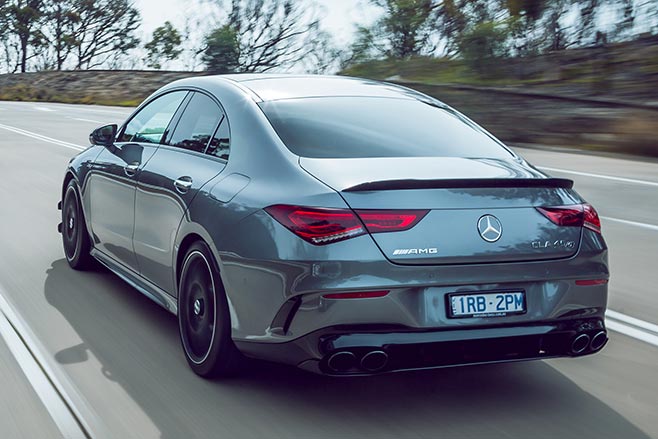
It looks more like a baby E-Class than a compact car, potentially because it’s longer than the C-Class sedan by 6mm. Its wheelbase is, however, shorter by about 110mm. But it’s underneath the skin where this new generation really needs to shine, as the outright pace of the last generation wasn’t enough to allay complaints about clunky gearboxes and a lack of character when it came to the driving experience. A stiff ride and a somewhat economically styled interior didn’t aid the matter.
This time around, the boffins at AMG were able to set the CLA45 up the way they wanted, with more input on their part rather than just having to mould what Mercedes had already designed. The CLA45 S cops a slathering of chassis upgrades over the rest of the CLA range including additional bracing in areas like the front wheel arches, a shearing plate underneath the engine, and a 4MATIC+ all-wheel drive system specific to the pair of 45s, which we’ll get to. The CLA also has wider tracks than the A45, by 8mm on the front axle and 27mm on the rear.
Undoubtedly the headline of the new generation of compact AMGs is what lies by that front axle. The M139 turbocharged inline-4 is an all-new build, sharing only some fastenings with the previous M133. The new powerplant’s outputs are even nudging early C63 territory, with 310kW and 500Nm extracted from just 2.0 litres. Built on a new assembly line in Affalterbach, the M139 has cylinders coated in a friction-reducing substance called Nanoslide, is able to nudge 7200rpm, and has an interconnected cooling system that includes wheel arch-mounted radiators.
But at the same time as the engine is cool, it’s hot as hell. Its turbocharger spins to 169,000rpm and can force through 30.5psi of intercooled air, with electronically controlled wastegates ensuring boost pressure isn’t lagging behind the demands of a right foot on a pedal. AMG aimed to make this engine feel more naturally aspirated than the last, to deliver power all the way to the top end of the tachometer rather than just a big initial surge of peaky grunt.
A dyno graph provided by Mercedes showed the more gradual delivery compared to the older engine, with power peaking at 6750rpm rather than near 6000rpm, and torque building to a peak around 5100rpm instead of reaching full thrust before 3000rpm. When it’s placed in the CLA45 S’s engine bay, it’s also facing the ‘other direction’. The exhaust manifold now faces the firewall, shortening the plumbing required for it and the intake, and avoiding running hot pipes under the sump.
2016 AMG A45 at Bang For Your Bucks
New adaptive dampers are one of the other talents that make the new CLA45 better than the last, with three stages ranging from genuinely comfortable to quite stiff and focussed, though neither end of the spectrum really limits what you can do from the driver’s seat. Sport+ won’t demolish your spine on a relatively rough road, while Comfort won’t stop you having fun.
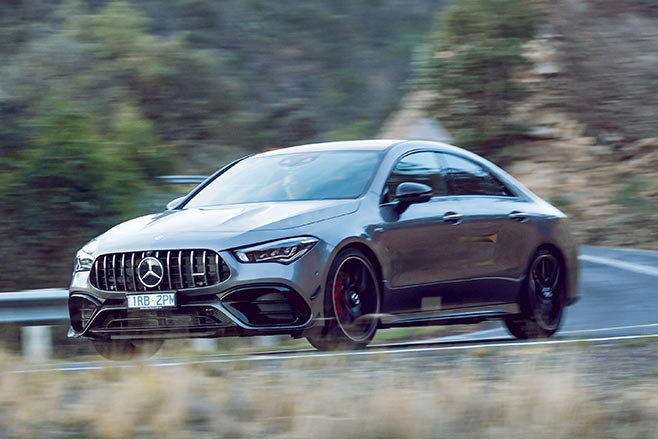
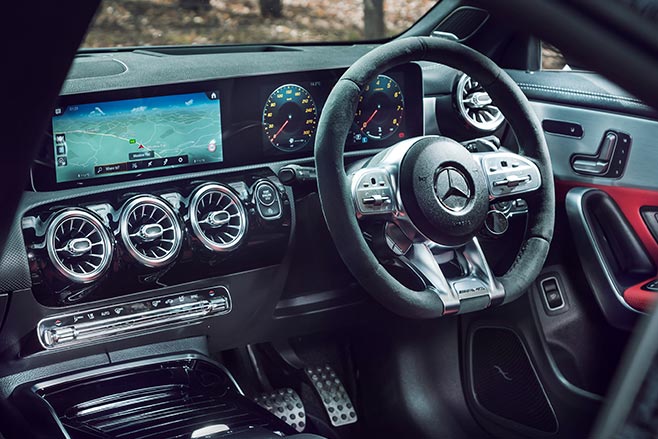
And fun on backroads you will have. The cabin of the CLA45 is quite stylishly appointed and visually calm, even with optional red accents. You’ll probably lose some of that calm when you realise that just saying ‘Mercedes’ triggers the MBUX infotainment system’s voice recognition assistant. This irritating quirk aside, there are few things to complain about from inside the CLA45, save for maybe the hard plastic hand rest for using the MBUX system’s touchpad. It looks a little bit ‘rental’ but you’ll likely forget about this once setting off.
Push the start button (while holding the right shift paddle if you’d like a cheeky rev) and you’ll hear the M139 greet you, with reportedly no false engine sounds originating from inside the cabin. There’s no button to open valves in the exhaust as with some AMG models, but the engine does get more vocal when you switch the drivetrain to Sport or Sport+. Cruise through the suburbs and the CLA is able to play the part of an executive runabout, with its compliant suspension and 19-inch wheels letting only small thuds through as you traverse level crossings or the likes of Melbourne’s tram lines.
We decided to leave those tram lines behind, however, as the desire to conquer mountain roads and winding countryside lanes struck. The CLA is up to the task, needing only a turn of the steering-wheel mounted dial to get into Sport mode, stiffening the dampers slightly and waking the engine right up.
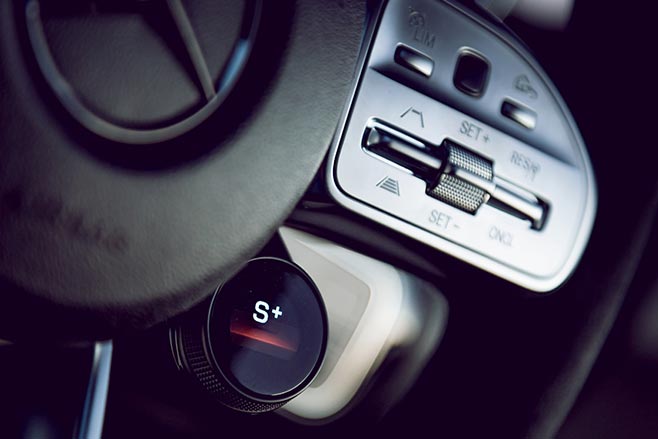
Driving hard in Sport means the body will still roll somewhat on its chassis and the engine requires your attention as it’s not at full-attack just yet. Though it’s not the most effective way to make the CLA fast, it’s one way to make it fun. Another turn of the control dial and you’re in Sport+ mode, which stiffens the dampers to their fullest and gives the engine a little more perk, while also setting the AMG dynamics control to ‘Pro’, allowing a higher degree of hooliganism from the driver’s seat. The exhaust also reaches its most aggressive by this point, though the sound of a greedy intake upfront does its best to gain your attention.
It’s also in Sport+ that the 4MATIC+’s new tune comes to front of mind, it’s Twinster-style application (similar to that of the late Ford Focus RS) producing a more rear-driven feel than the Haldex-style systems of cars like the Audi TT, which divert drive to the rears when it’s needed rather than when it might be wanted. With AMG Torque Control, the drivetrain can actively distribute torque between the rear wheels to use them to rotate the car through a corner. It’s this new system that makes Drift Mode possible, though this isn’t something we were keen to test on public roads. Even without it, the CLA45 feels keen to involve some mild tail-wagging, almost like it wants Drift Mode on. Cheeky bugger.
For more aggression, turn that wheel-mounted dial once more to Race mode. The settings are almost all the same as Sport+, but now the engine is entirely ready to attack at any time, and the 8-speed dual-clutch is keeping the revs in the sweet spot (above 2000rpm) almost constantly, snapping up the next gear in whichever direction it must with ease. It’s in Race mode where the CLA becomes searingly quick, making its 0-100km/h claim of 4.0 seconds eminently believable.
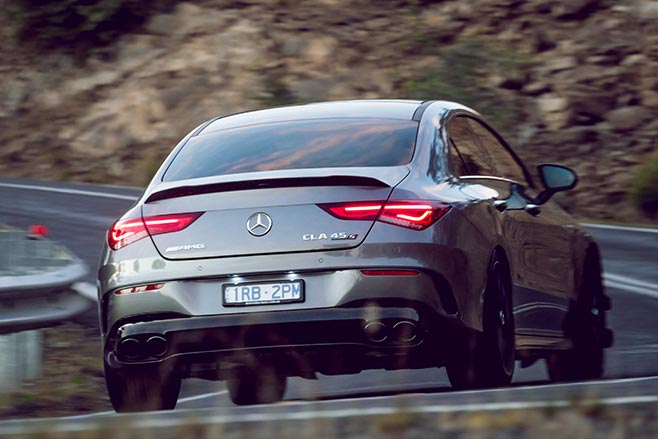
So we decided to test that claim at Heathcote Park Raceway.With temperatures approaching 15 degrees through a dry morning, we lined the CLA45 S up having been told the Race Start launch control system was patronisingly easy to use. Electronics all off, foot on brake, foot on accelerator. The engine is poised and, we assume, we’re about 4.0 seconds away from hitting 100km/h.
Foot off brake… and not much happens for a moment.
Some hesitation from the CLA to launch hard was later explained to us as the computer likely calibrating its clutches to gauge whether they’d been run in yet. We were the first to use Race Start. We managed to coax a 4.21sec run to three digits, with a 12.32sec quarter mile at 185.93km/h thanks to one smooth launch, but fears of frying clutches prevented us from pressing on to reach the magic numbers we had hoped for.
Our comrades at Wheels managed 3.9sec to 100km/h in the A45, and the fact the CLA45 S takes just 2.41sec to blast from 80 to 120km/h is confirmation the car is about as fast as it’s claimed to be, as long as it’s ready to launch. The brake distance of 34.99m from 100km/h is a testament to the AMG’s 360mm front discs with six-pot callipers, paired with Michelin Pilot Sport 4 S tyres measuring 9 inches wide at both ends.
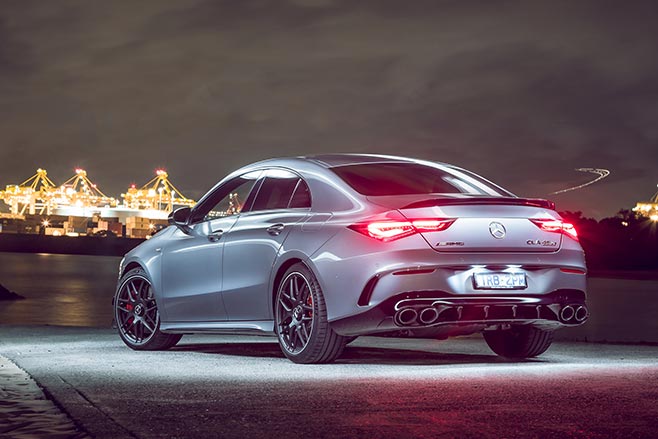
The disappointment of our Heathcote visit melted away once we were back on winding roads. The playful demeanour of the CLA45 S emerges from beneath that sly facade, again urging you to make use of the most powerful production four-cylinder engine in the world. Much of the criticism levelled at its forebear is forgotten, as the new kid is ready to play along to whichever script it’s handed.
Unfortunately, like a capable actor, the cost will make you question its value. Consider the $93,600 A45 S and your priority for style may waver, though look at the price of a (slower) AMG E53 Coupe at $180K and you might feel a bit better. From outside the AMG stables, the obvious rival in BMW’s M2 Competition is set to be a short-lived one as the CS approaches and the sub-$100K Competition Pure ends its time on sale. Is the M2 as much of a fashion statement? Perhaps not, but its ability to impress dynamically is hard to top.
The temptation to award the CLA45 S 4.5 stars is immense, not just for the satisfying ‘45’ match-up, but also that there are 17,600 reasons it probably shouldn’t be given the same score as the similarly able A45 S. Still, car buyers remain the directors of their own motoring stories, and sometimes it’s better to have a CLA45 S fulfilling your need for speed than, well, Tom Cruise.
Likes: Relentless engine; cheeky dynamics; sexy styling Dislikes: Costs far more than similar A45 S; launching quirks
Rating: 4.0 out of 5 stars
Mercedes-AMG CLA45 S performance times 0-10km/h 0.34 0-20km/h 072 0-30km/h 1.12 0-40km/h 1.51 0-50km/h 1.90 0-60km/h 2.25 0-70km/h 2.62 0-80km/h 3.07 0-90km/h 3.63 0-100km/h 4.21 0-110km/h 4.82 0-120km/h 5.48 0-130km/h 6.32 0-140km/h 7.18 0-150km/h 8.07 0-160km/h 9.03 0-170km/h 10.14 0-180km/h 11.50 0-400m 12.32sec @ 185.93km/h 80-120km/h 2.41sec 100-0km/h 34.99m Heathcote Park Raceway, dry, 15°C. Drivers: Louis Cordony/Chris Thompson. www.vboxaustralia.com.au
2020 Mercedes-AMG CLA45 S Specs Body 4-door, 5-seat sedan Drive all-wheel Engine 1991cc inline-4, DOHC, 16v Bore x stroke 83.0 x 92.0mm Compression 9.0:1 Power 310kW @ 6750rpm Torque 500Nm @ 5000-5250rpm Power/weight 194kW/tonne Transmission 8-speed dual-clutch automatic Weight 1600kg Suspension struts, coil springs, adaptive dampers, anti-roll bar (f); multi-links, coil springs, adaptive dampers, anti-roll bar (r) L/W/H 4693/1857/1413mm Wheelbase 2729mm Tracks 1605/1585mm (f/r) Steering electrically assisted rack-and-pinion Brakes 360mm ventilated discs, 6-piston calipers (f); 330mm ventilated discs, single-piston calipers (r) Wheels 19.0 x 9.0-inch (f/r) Tyres 255/35 ZR19 (f/r); Michelin Pilot Sport 4 S Price $111,200
We look at the wildest turbocharged racers from four different categories and delve into the tech that made them so fast and fearsome.
OPEN WHEEL
BENETTON B186
It’s easiest to think of the BMW M12/13 engine that’s nestled between the axles of the Benetton B186 as Formula 1’s version of The Mountain; the Icelandic weightlifter who made a habit of crushing people’s heads on Game of Thrones. Even now, 34 years after blasting onto the grid, this engine is unmatched in terms of outright power.

Designed by BMW engineer Paul Rosche, the 1.5-litre four-cylinder unit revved to 11,500rpm and was subjected to such incredible internal forces that it was built around used road-car engine blocks that had travelled more than 100,000km. The thinking was that if the blocks were going to break, they’d have done so already. “The car was like a bomb,” Gerhard Berger said of the B186 – the only driver to successfully tame the beast. “You’d open the throttle at the entry to the corner only to get the power at the exit. And if you missed it by five or 10 metres, there was nothing you could do – you just spun it. The lag was about one or two seconds.”
A single run in qualifying trim, which wound the boost up to 80psi, was enough to totally destroy the gearbox. Power outputs were estimated to be 1118kW, though we don’t know for sure as BMW’s dyno couldn’t measure anything above 954kW. Central to the B186’s grunt was its fuel; a potent mix made mostly from pure toluene, a key ingredient in paint thinner, and cost US$300 a litre in 1986. Allow for inflation and that’s US$701 today!

Built in secrecy by Penske for the 1994 Indy 500, this modified chassis debuted a new engine dubbed ‘Beast’. The 3.4L Merc pushrod V8 made 745kW+, due to a rulebook loophole that allowed an extra 4.9psi of boost. Al Unser Jr took pole with an avg speed of 367km/h, though the Beast was banned after just one race.
RENAULT RS01

Renault’s EF1 engine broke new ground in F1, bringing boost to the world’s biggest stage for the first time. However, the 1.5-litre V6 was notoriously unreliable, and suffered six DNFs before it finished a race. Despite pioneering the tech, a turbocharged Renault engine has never won the F1 championship.
TOURING CARS
FORD SIERRA RS500
Of all the Ford Sierra RS500s in the world, none were as fast as the six Shell-liveried hatches that rolled out of Dick Johnson Racing’s small Acacia Ridge workshop in the late 1980s/early ‘90s.
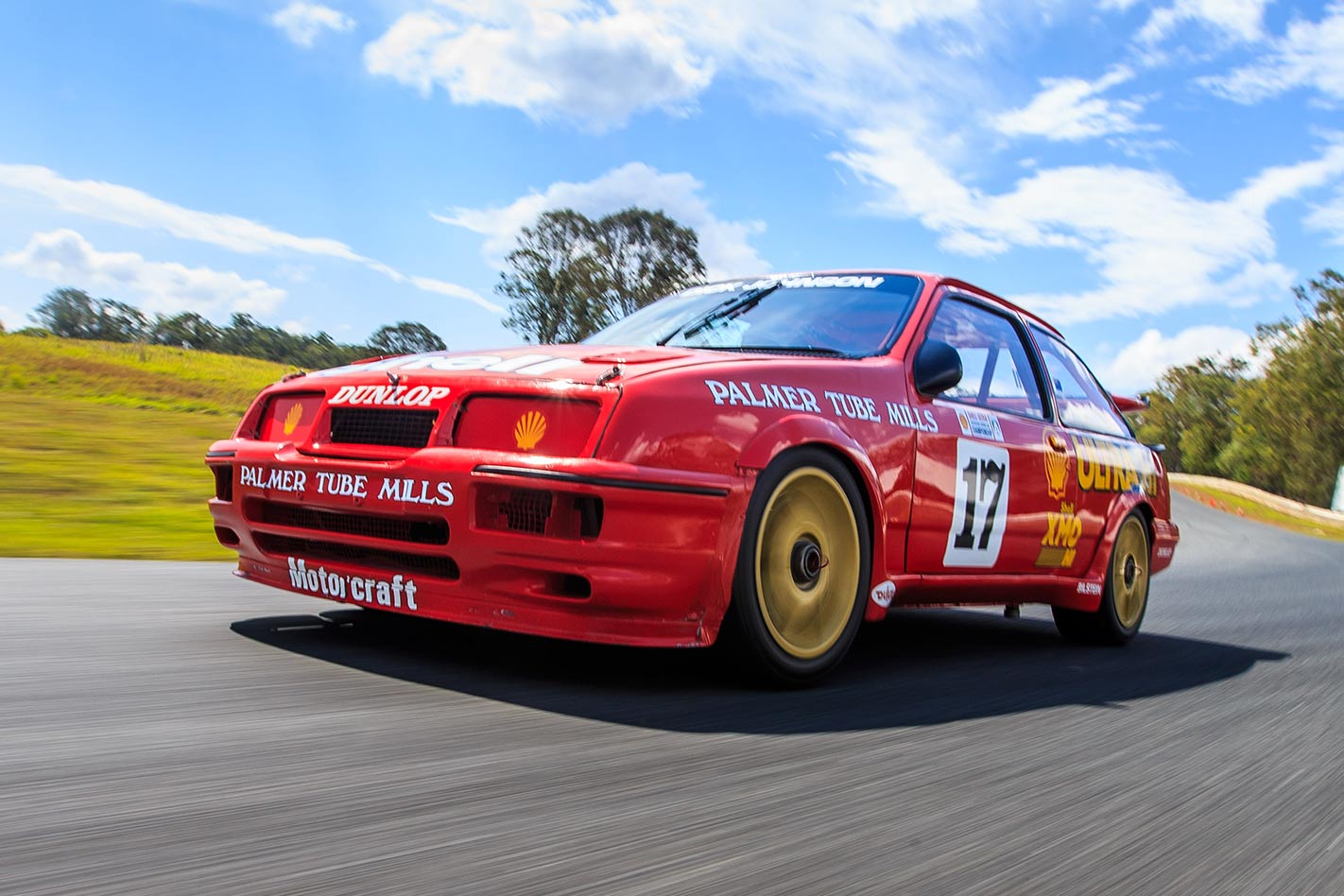
Powered by a 1993cc 16-valve four-cylinder Cosworth, these racers didn’t so much have a power curve, as they did power cliff. Think the Ferrari F40 has sledgehammer power delivery? Try driving one of these. Off boost, just 67kW worth of grunt was available to the driver. Once fully spooled, however, and all 34psi was being pumped into the engine, 507kW was sent to the rear treads. In a car weighing 1100kg. According to Johnson, the transition was “like a light switch.” If that sounds exciting, imagine piloting one of these grenades around Bathurst, in the rain…
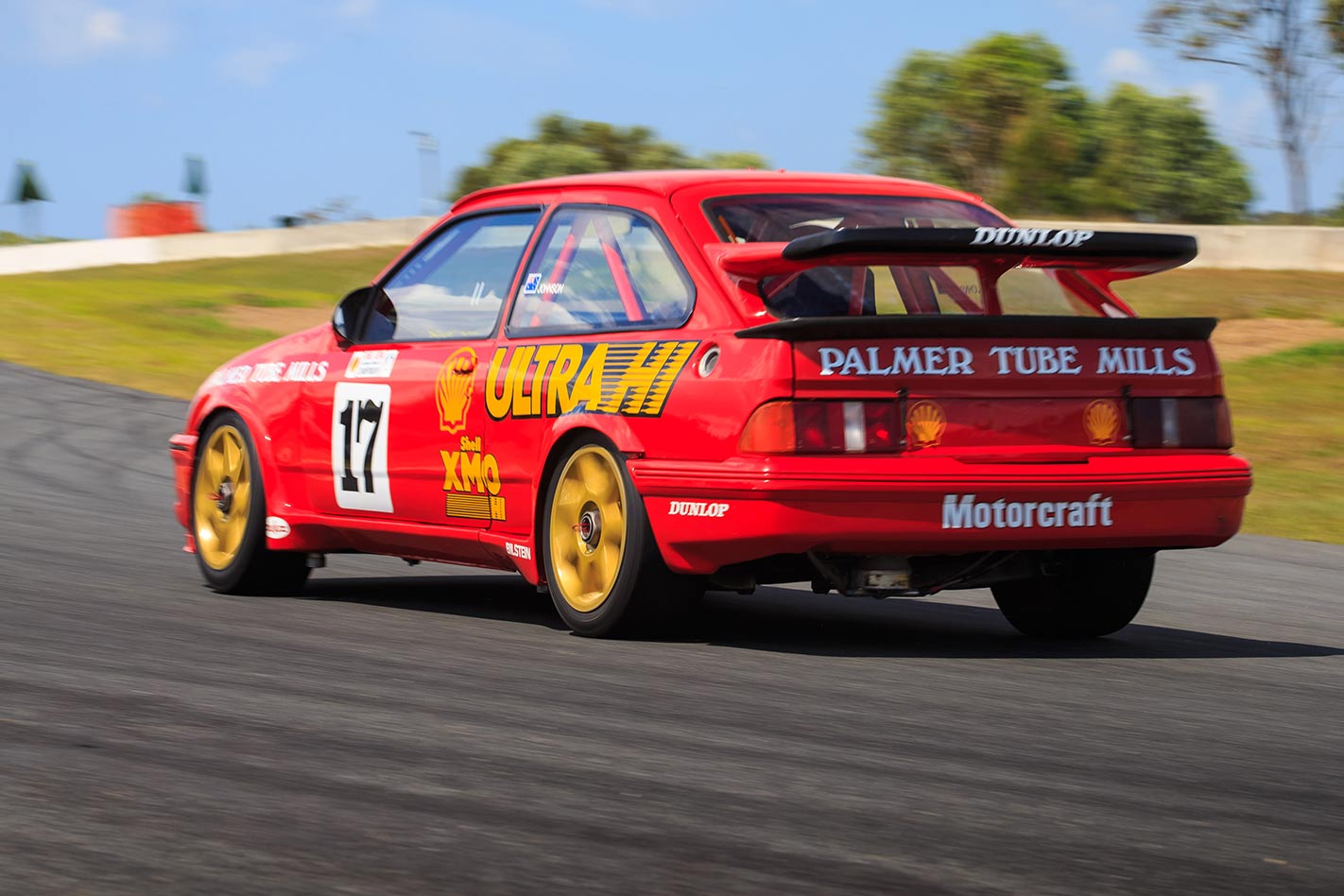
Aside from their huge power, DJR’s Sierras had a few other home-brew improvements that kept them ahead of the pack. Created alongside DJR team manager Neal Lowe and with the help of Harrop Engineering, they included using a modified Ford nine-inch rear differential and replacing the Getrag ‘box with a Hollinger unit. Still, part longevity was not a Sierra strength. Turbos needed replacing at a prodigious rate. Even lesser-powered Sierras were a handful. Glen Seton says driving his RS500 was like “having a Mini Minor with a jet powered engine in the back”.
THE TURBO HOLDEN

Hang on, Holden never raced a turbocharged car in Supercars, did it? Well, it almost did. A Cadillac-based 3.8-litre twin-turbo V6 was being developed for the 2019 season by Triple Eight, even going as far as running a test car at Bathurst before the project was axed due to high costs. Oh, what could have been…
NISSAN 910 BLUEBIRD
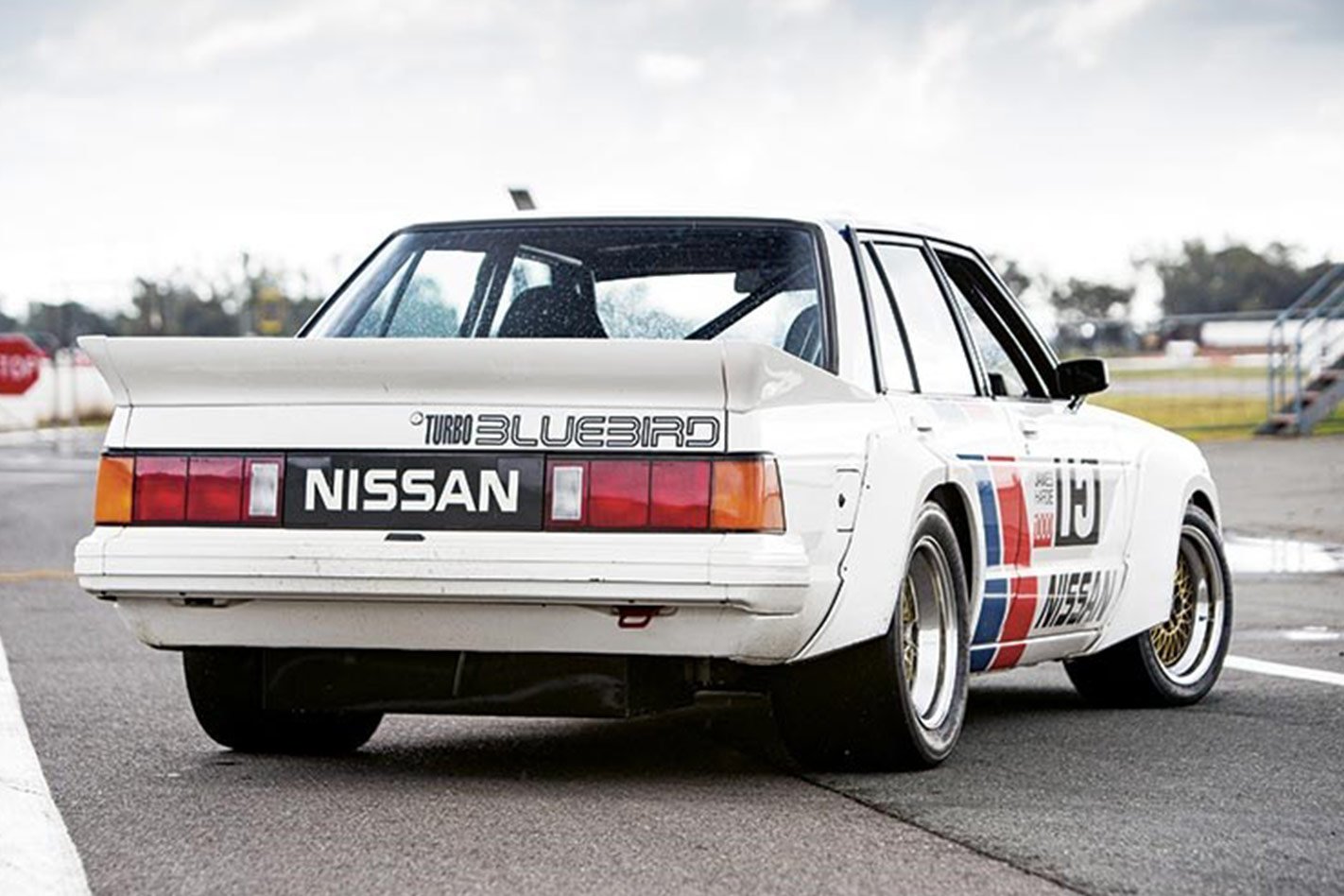
This four cylinder Nissan is the fastest Group C touring car ever to grace Australian race tracks. Powered by a 1.8-litre with 223kW, the Bluebird’s 1984 Bathurst pole time of 2:13.850 (driven by George Fury) took six years to be eclipsed. It was the first time a touring car averaged above 100mph at Bathurst.
SPORTS CARS
PORSCHE 917/30
Racing car drivers always, and we mean always, want more power. Not Mark Donohue. He was definitely satisfied with the power levels of his 1973 racer. “When you can leave black marks from the exit of one corner, all the way to the entry of the next one, you know you have enough horsepower,” Donohue is famously quoted as saying of the Porsche 917/30.
Think you’d be man enough? Try digesting these numbers: 820kW from a 5.4-litre flat-12 with twin turbos in a chassis weighing 800kg. Oh, and there’s no windscreen.
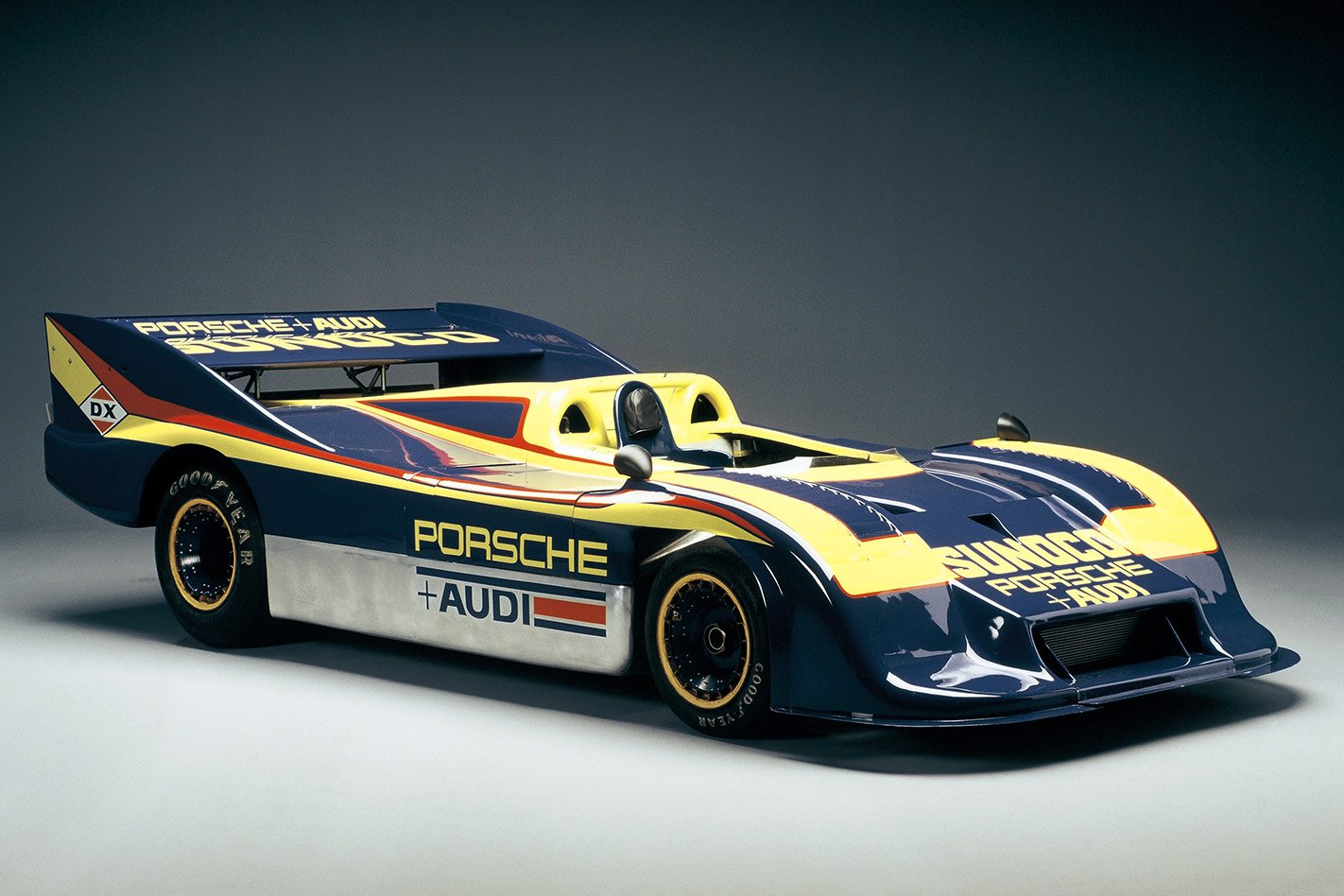
Part of the 917/30’s secret was a dial on the dash that allowed drivers like Donohue to adjust boost pressures. These usually sat around 16psi during a race, but could be wound up to 20psi if needed. Uncharacteristic longevity was another Porsche strength. Unlike most high-power turbocharged engines of the time, which chewed through components at an alarming rate, this 12-cylinder Porsche was capable of enduring 25-30 hours of running between services.
Legend also has it that once its racing duties were over, Porsche engineers strapped the 917/30 to a dyno, held the wastegates closed, and were able to produce 1103kW. In a category famous for its unhinged nature, the 917/30 was the undisputed power king.
AUDI R10
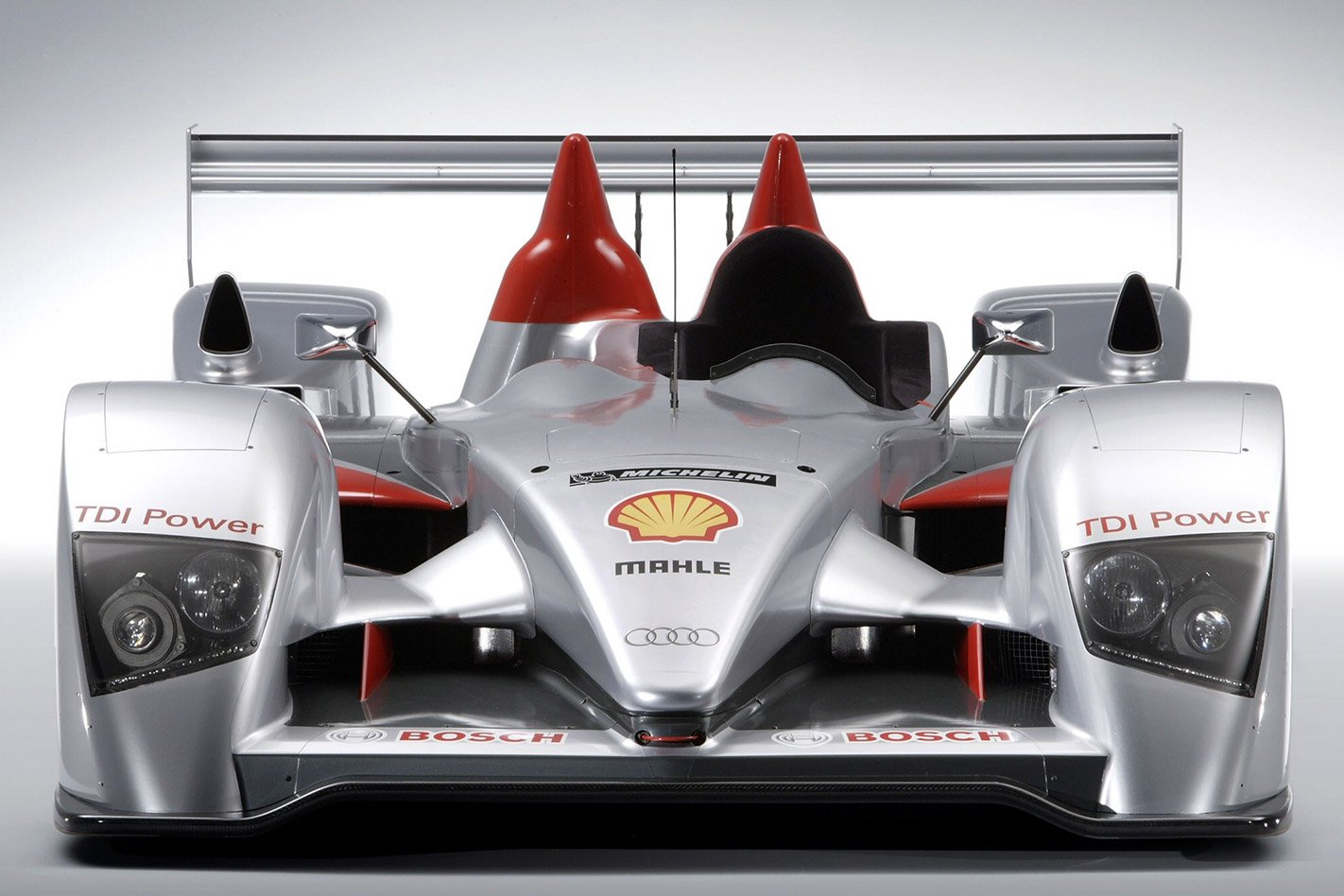
This car revolutionised modern endurance racing. Its 5.5-litre twin-turbo V12 was the first diesel-powered car to win at Le Mans. It clocked three victories between 2006-08, with its final win being the last time a V12 won Le Mans outright. Run at a cost of US$15m a year, it was Audi’s most expensive racing project ever.
NISSAN R90CK
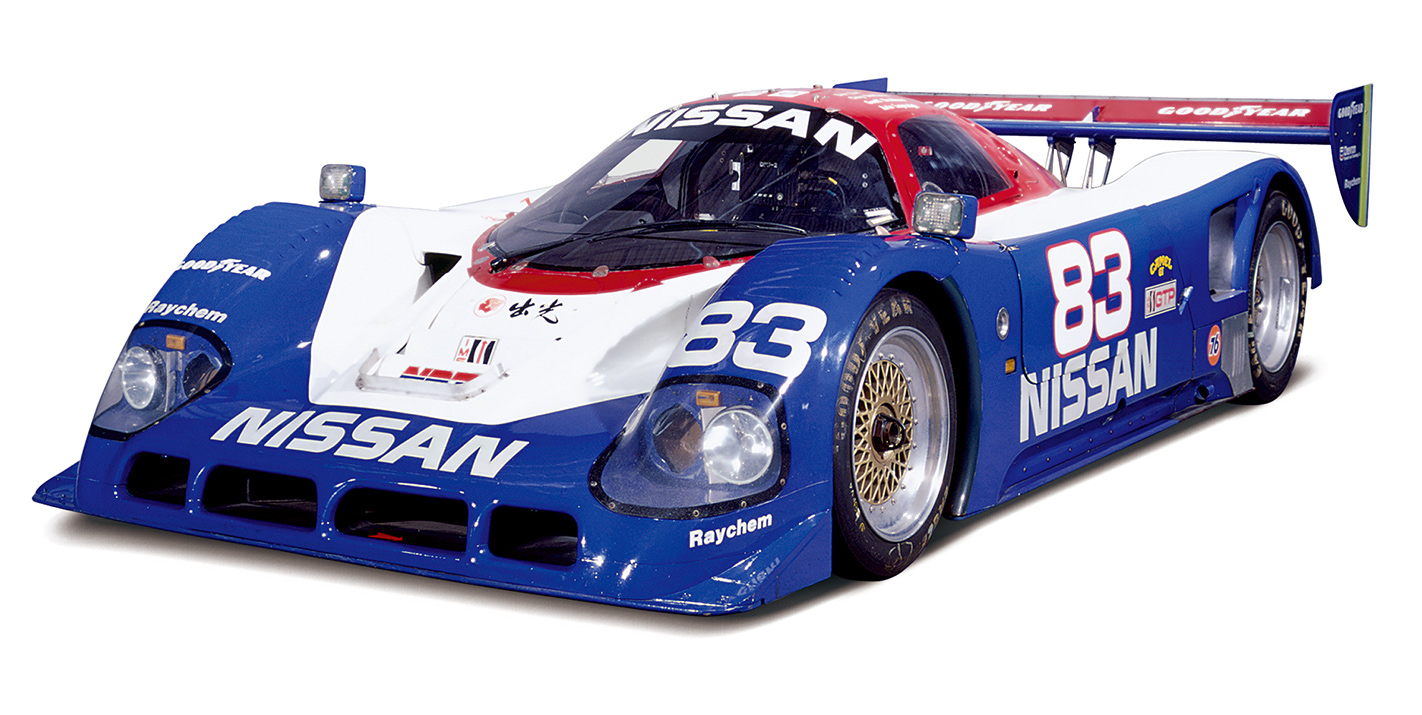
As if the regular 522kW R90CK wasn’t hardcore enough, a boost malfunction during qualifying at Le Mans in 1990 transformed the 3.5-litre twin-turbo V8 into a 745kW+ monster. Amazingly, it didn’t blow up and it tore down the freshly chicaned Mulsanne at 383km/h to grab pole by 6.0sec.
RALLY
PEUGEOT 205 T16
This little French hatch was the most successful car in Group B, but unlike the short-lived top-flight rallying regulations, the engine that powered it went on to have a successful racing career for more than a decade. Codenamed XU8T, the 1.8-litre four-cylinder that powered the 205 Group B car actually started life as an ‘XU’ diesel engine for road cars of the time. A modified head was placed atop the engine, a KKK K26 twin-scroll turbo strapped to the side, and the whole thing was transversely mounted in a custom chassis with most of the bulk behind the co-driver’s seat to allow easy access come service time.

The 205 was immediately successful, winning six-straight rallies between late ‘84 and early ‘85. A second ‘E2’ evolution of the 1775cc engine was developed, with a new Garrett T31 turbo, and a switch to an air-to-water intercooler, bringing even greater success. When the FIA scrapped the introduction of Group S, and rallying moved to Group A, Peugeot’s planned third evolution of the engine was put to work powering the 205 Pikes Peak and Dakar Rally racers. This ‘E3’ XU9T variant bumped capacity to 1905cc and power to “more than” 447kW. All up, the XU8T and XU9T claimed 16 WRC wins, two manufacturer and driver WRC titles, two Pikes Peak victories, and eight Dakar triumphs.
FORD FOCUS WRC
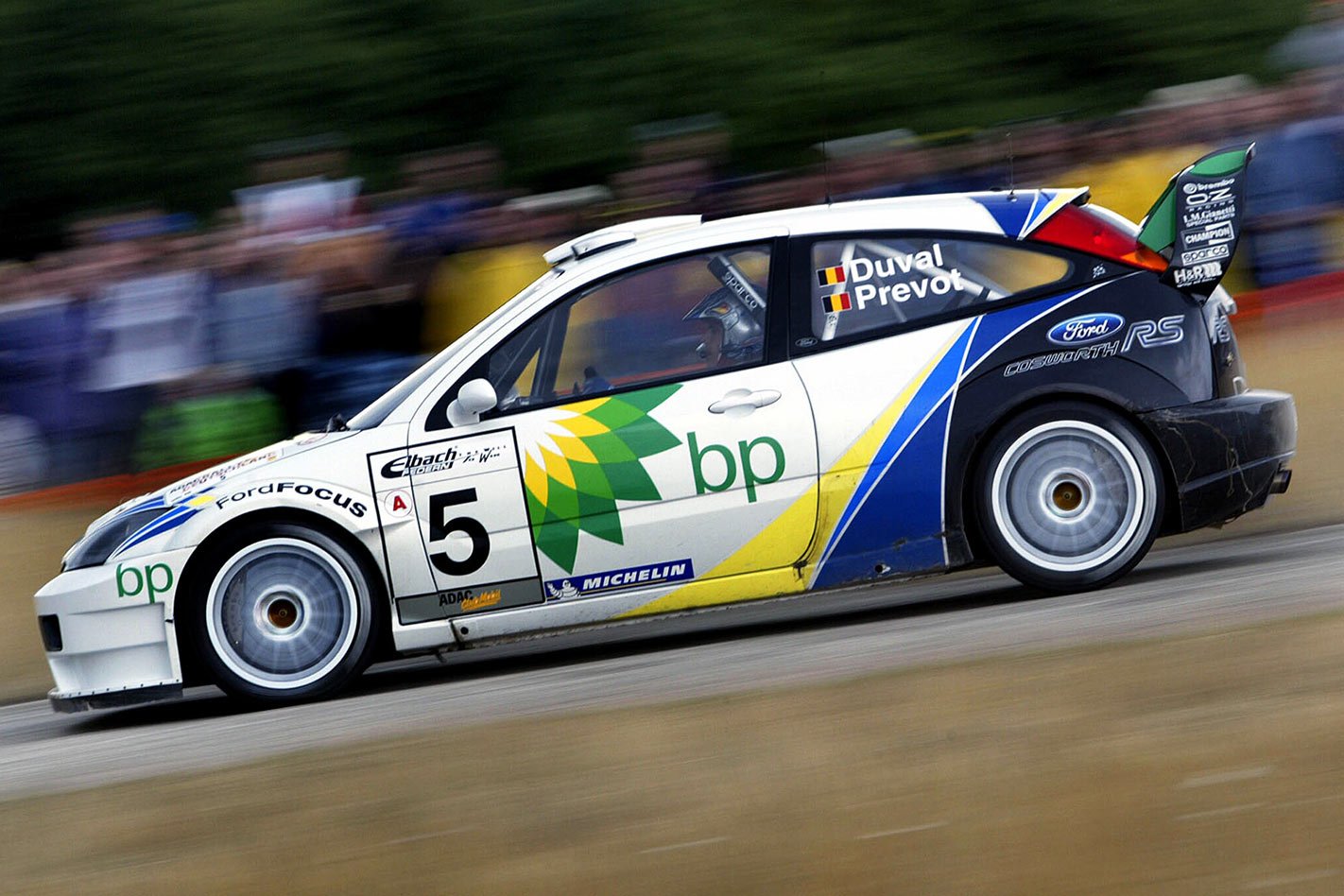
Turbos, rally and ‘clever’ rule interpretations are notorious. Take Ford’s 2003 ruse. A 45-litre titanium tank was hidden in the rear bumper, connected to the inlet manifold. It would store air harvested from the turbo off-throttle, which would be pumped back at full-throttle, bypassing the restrictor.
LANCIA ECV

Built for the doomed Group S regs, the ECV (Experimental Composite Vehicle) weighed just 930kg and produced 448kW from a clever twin-turbo 1.8-litre four-cylinder. The ‘Triflux’ engine had a unique design, with three separate manifolds and crossed valves. Sadly, it would never race. Looks mad, though.
Turbo Titans
Everything you’ve ever wanted to know about the humble turbocharger and its miraculous power-boosting abilities.
Update #1
July 8, 2020 Km Driven: 300km Avg fuel use: 9.8L/100km
I’ve now completed the most harrowing drive of my entire life. That’s saying something, because I’ve driven Porsches on autobahns, Lamborghinis on racetracks and even big 4WDs on fumes miles from the nearest petrol station.
For this drive I was taking my newborn son home from the hospital. My precious firstborn, and it felt like every idiot on the road was out to get us. Threats were everywhere from the Toyota Corolla driver on the phone to the truckie whose long trailer swayed into my lane one time. Even the other cars driving safely were not safe in my eyes.
They were menacing just by their presence. Honestly, I’d have been happier if the road had been blockaded to allow my family to make their first trip in complete isolation. Is that too much for a humble taxpayer to ask?
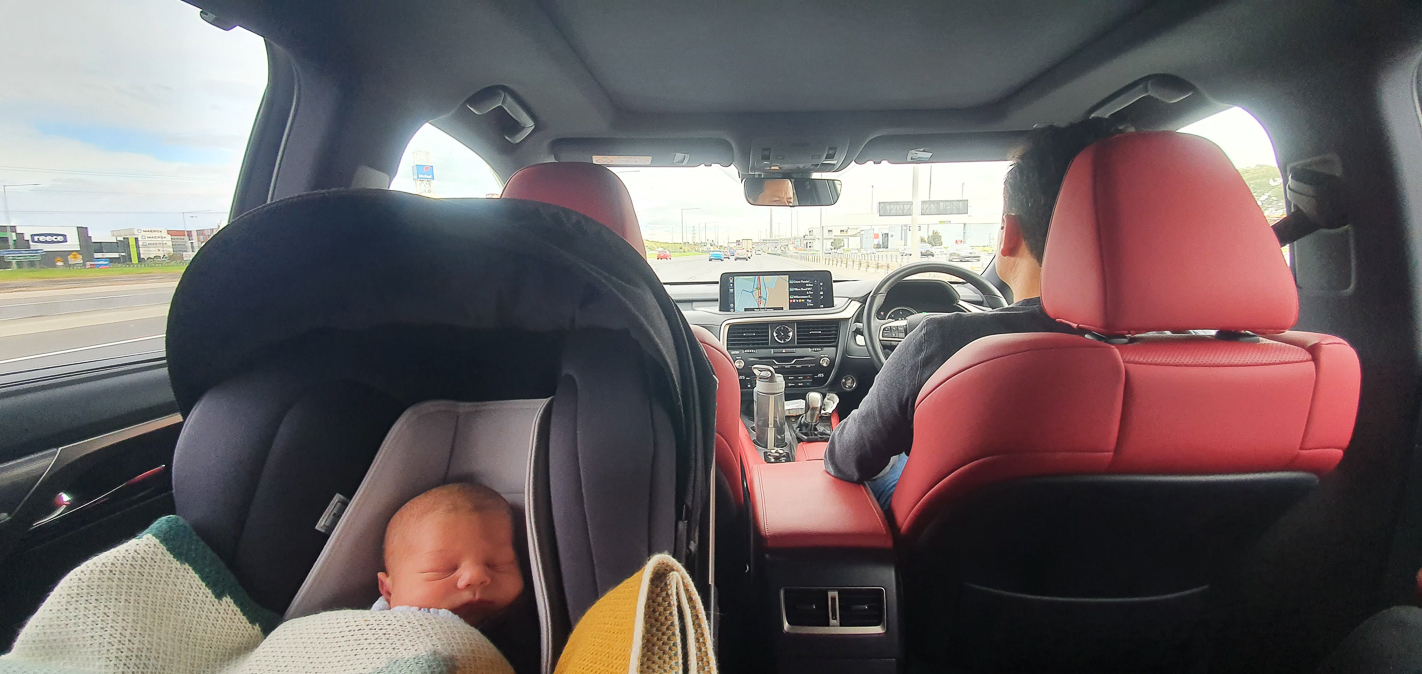
Okay, so it’s clear now that I was overreacting, as I’m guessing most new parents do. The incredible urge a parent feels to protect their children from harm was new to me, and I wasn’t prepared for the power of that emotion. It makes you want to safeguard them from every bad thing in the world – and the resurgent coronavirus is just the first of those evils.
Maybe I’ll calm down eventually, but it’s interesting to note that I’ve become a calmer driver since that first drive home last week, even when I’m on my own. My inner equilibrium between rushing to be on time and just getting there safe has definitely swung towards the latter.
Anyway, back to our irrational first drive with Junior. I’m glad I was in a Lexus RX 350 at the time, firstly because of the brand’s reputation for reliability and quality. I knew I had the absolute best chance of avoiding any kind of mechanical malfunction which might increase Junior’s exposure to the ugly and unclean world. Not that breakdowns happen often in any car, but for this drive I wanted all the reassurance I could get.
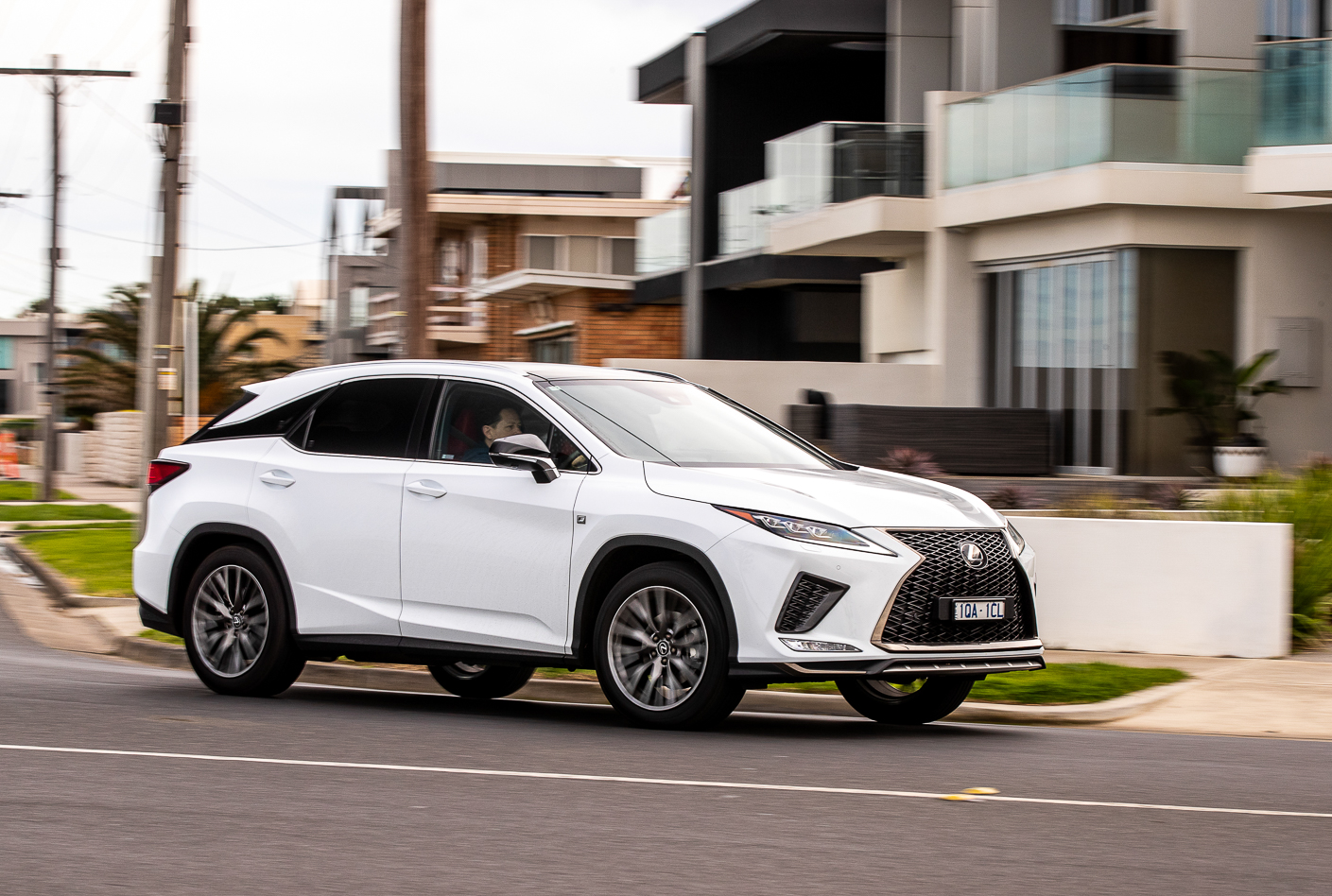
The RX 350’s high driving position also gave me good visibility of the road ahead. This way I could see traffic hazards as prepare for them as quickly as possible. It also meant I could make my braking as smooth and slow because nobody wants to wake a sleeping baby.
To a certain extent I didn’t have to worry about the traffic immediately in front because I dialled the newly updated radar cruise control in to help with that (for more on this and the many other updates to the Lexus RX range in 2020, check out WhichCar’s launch report). It kept me moving at the speed limit and adjusted our velocity to keep a distance to the car in front. That probably added many minutes to our travel time because dozens of other cars saw this gap as an invitation. But I was not in a hurry.
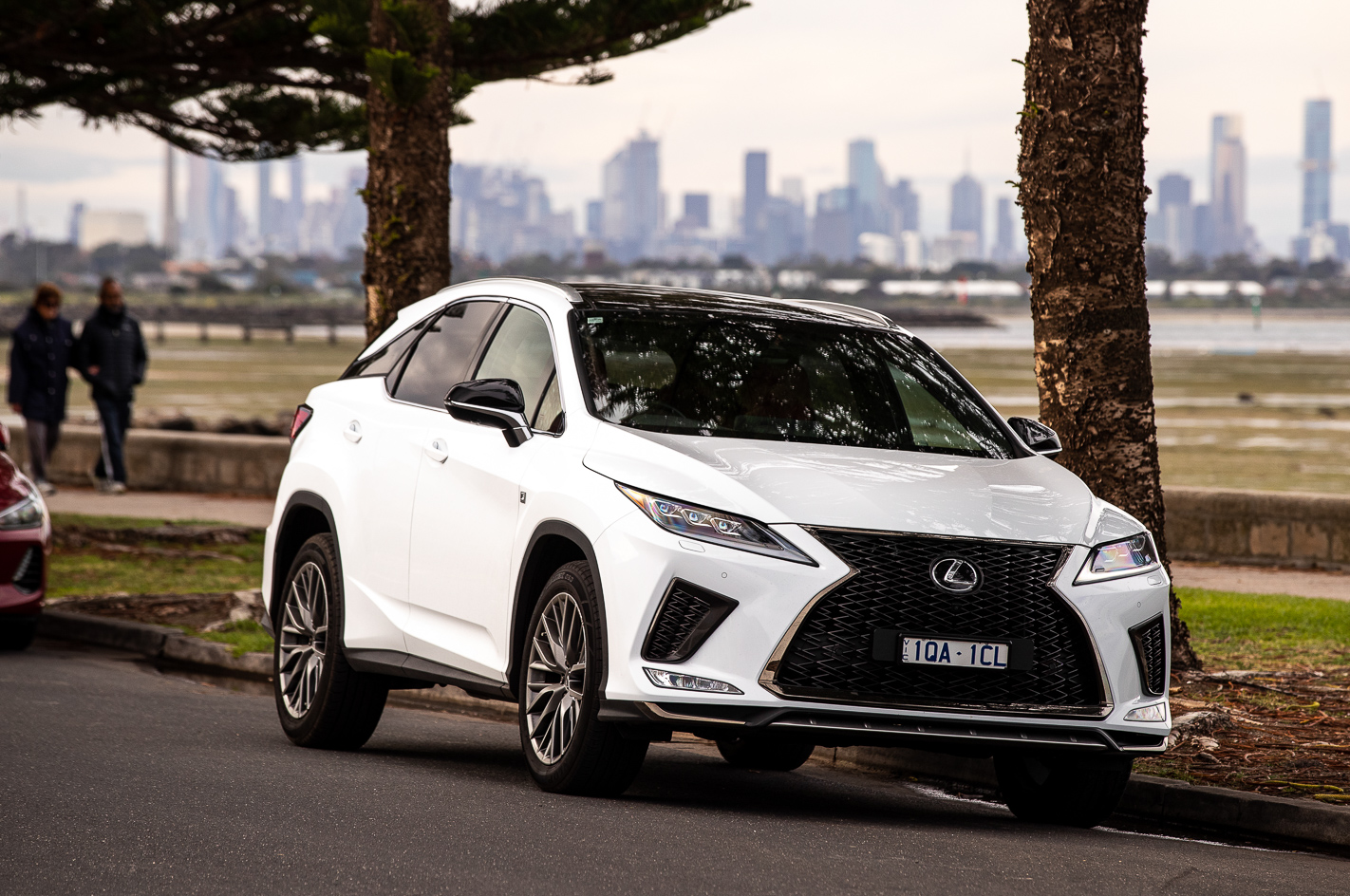
Visibility to the sides and the back are very good in the high-riding RX, and you’re assisted by a blindspot warning system.
The RX350’s petrol V6 engine is not short on power, meaning I could use its acceleration to keep a good-sized safe zone on all four sides. It’s definitely a step up compared to the Lexus RX 300’s smaller 2.0-litre turbocharged engine I’ve driven previously. But with that extra performance comes a slight increase in both fuel economy and engine vibrations through to the cabin.
You’ll no doubt be surprised to hear we made it home without incident – despite my frayed nerves. And I need not have worried about waking Junior… It turns out he loves cars just like his old man. Over the next week we took him for a couple of drives to meet his grandparents and there’s something about a car’s motion that puts him to sleep every time. Can’t be the Lexus’s whisper quiet cabin, because I pretty much always drive with music or podcasts coming through the high-end Mark Levinson sound system, and he didn’t seem to mind.
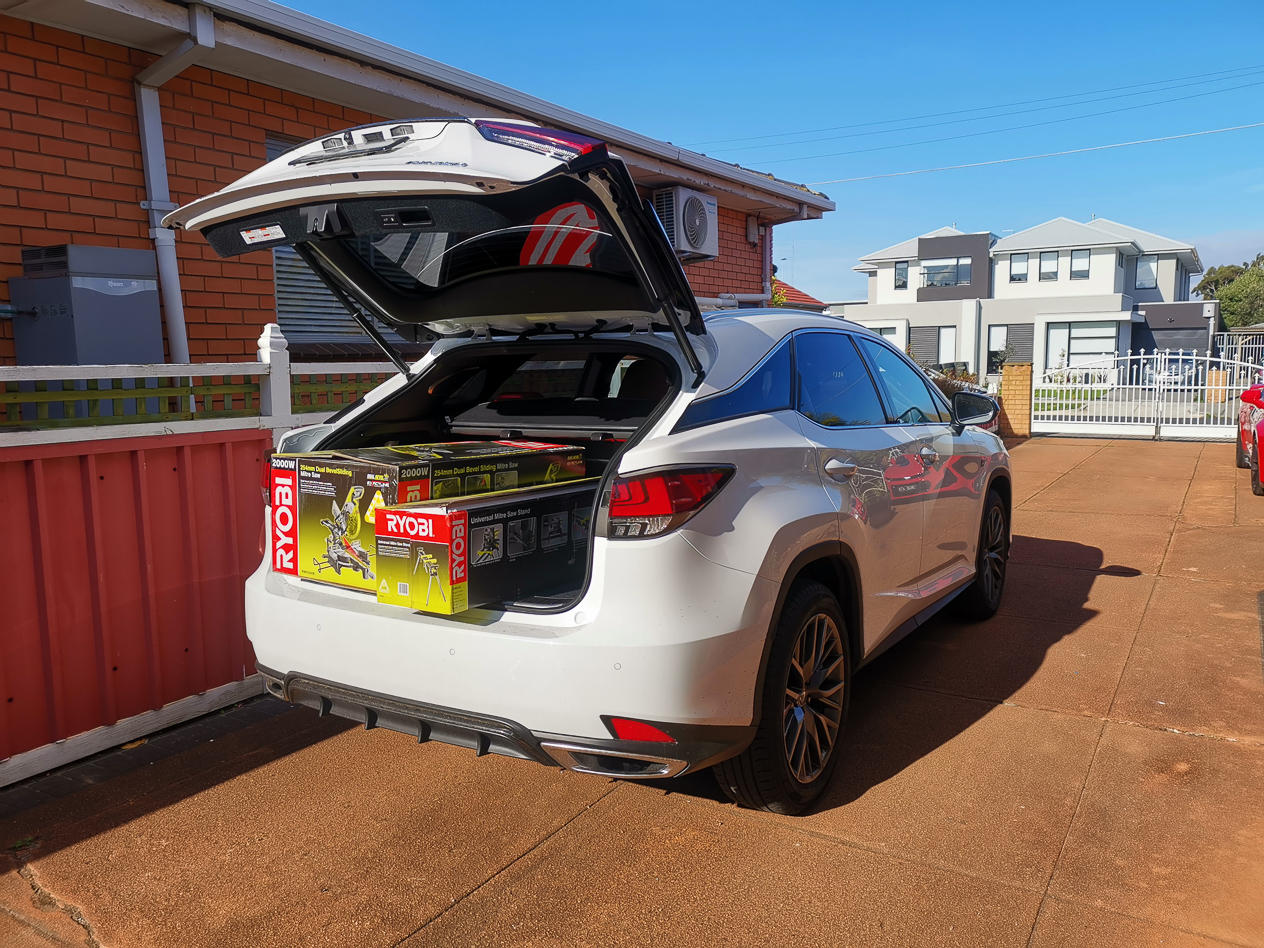
The Lexus’s 506-litre boot did well swallowing our new pram and bassinet, along with the bags of nappies, creams, outfits and other baby-stuff that is apparently necessary even for a short trip. The back seat, however, may be spacious enough for adults, but a backwards facing capsule only fits if the front passenger seat is willing to give up 4-6 inches of legroom.
How good is ISOFIX! Two clicks and a tether and the capsule base is secure. Then the capsule itself slots in easily, although Mum is having difficulty lifting it to the height required to slot it in. She’s not exactly a beanpole at 5ft 3in, so it’d be unfair to blame that on the Lexus.
That’s it for this week. Next week I’ll take a closer look at the differences between the $93,970 RX 350 F Sport I’m driving now and the $86,800 RX 300 F Sport I reported on previously.
Update #2
July 22, 2020 Km Driven: 1450km Avg fuel use: 10.1L/100km
Life in the middle of a COVID pandemic has its advantages. Very few working dads get this kind of ‘quality time’ with their new child in its first few weeks of life.
In our family, mum is the primary caregiver because milk bar, so my role is very much supporting her. This means changing nappies, doing laundry, fetching wraps, holding infant, and so on.
That last part is fun because the little man is very engaging when he’s awake – demanding, too – but his sleep/wake schedule doesn’t fit neatly around my work-from-home commitments.
For example, I’m typing this one-handed while holding him, and as a result I’m well short of my usual 80 words-per-minute. Arlo has also made quite a few Zoom meeting appearances, too, and usually makes his presence felt with a well-timed wail.
Like most infants his sleep/wake pattern is still developing, and that’s one area the Lexus RX 350 has come in handy. As I said above, the motion puts him to sleep, which has come in handy on numerous occasions. It also has the added bonus of making me a lot more comfortable driving around with my most precious possession in the car.
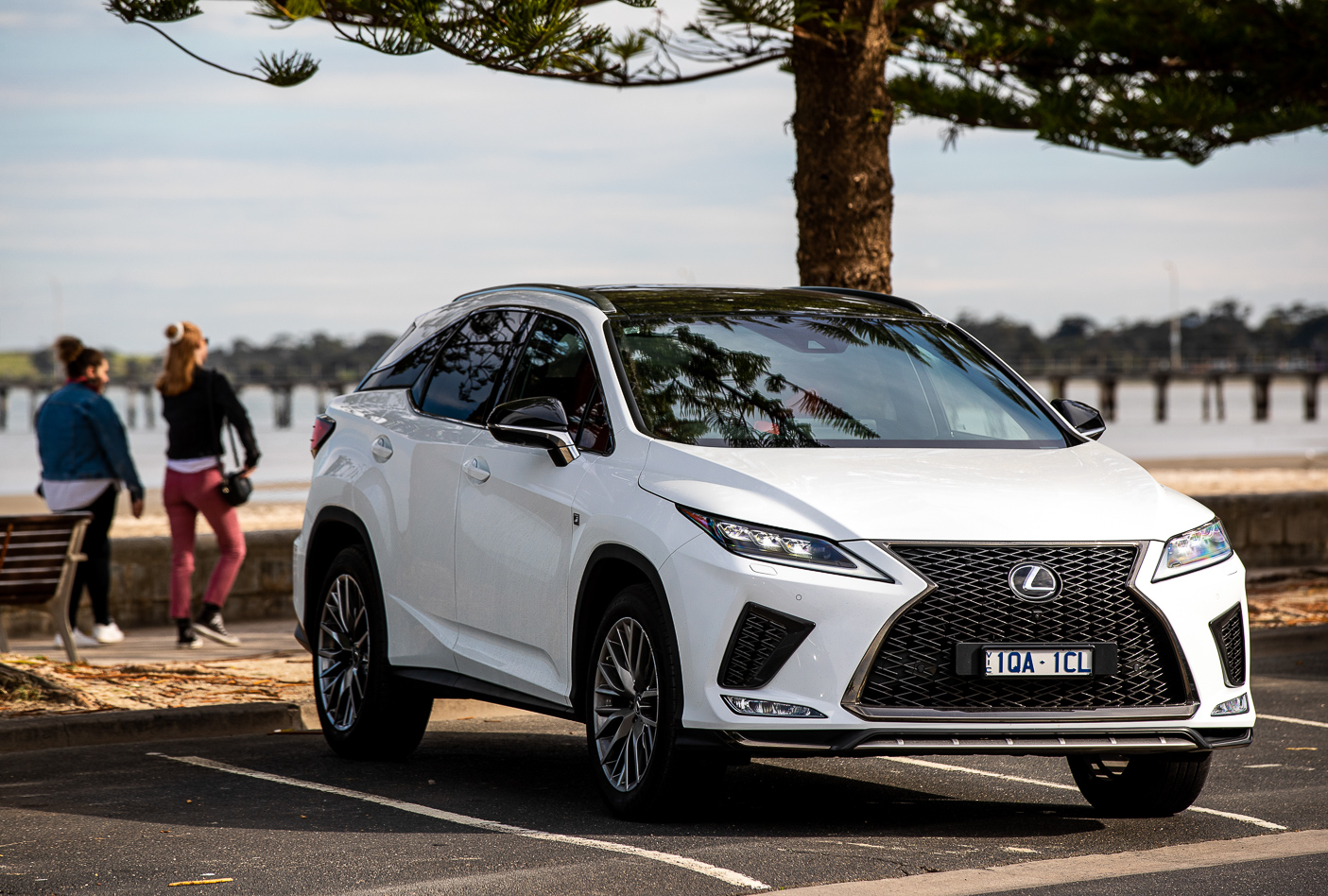
If anything, the Lexus RX 350 is too smooth and too quiet. I’d like a few more bumps and vibrations to come through to the cabin, and more of that engine rumble to help send the little man to slumberland.
I tried putting the adaptive variable suspension into sport and sport+ modes, and that does stiffen up the ride a bit, but it’s still very Lexus. I do like how these stiffer settings reduces dive under brakes which, in turn, reduces inertial flow-through on occupants. Arlo doesn’t give a stuff; he’s asleep.
Getting the capsule in and out of the Lexus is easy even though it’s a lift up into the car. Not sure if our capsule is bulkier than some others, because it does require the front passenger seat to be slid forward a fair way. There’s still enough room for an adult in front without cramping, but it’s not as capacious as before.
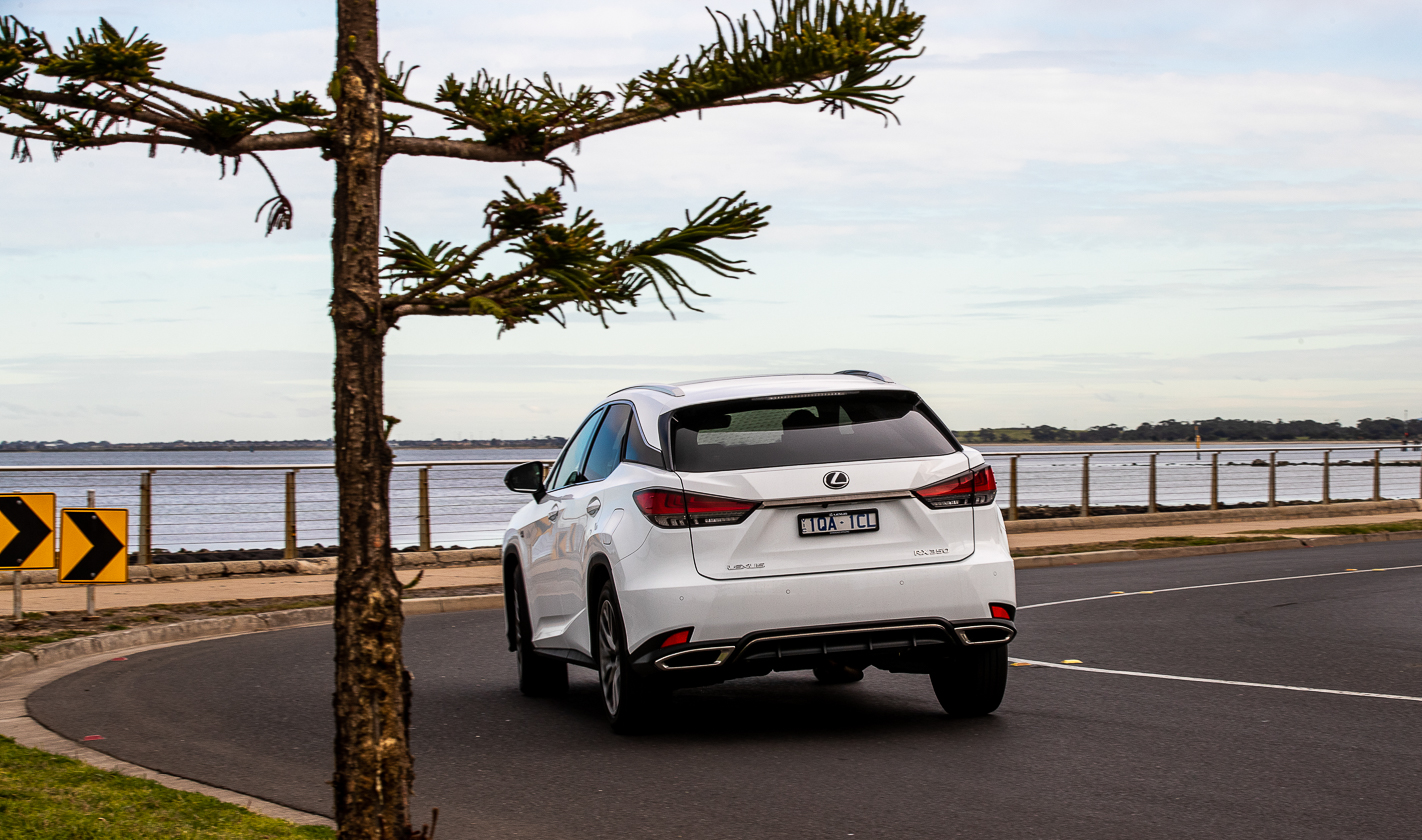
Next week I’m upgrading again to the Lexus RX 450h, which is quite similar to the RX 350 I’m in now, but it has an electric motor and battery pack to increase performance and reduce fuel consumption.
The 3.5-litre petrol engine in the 450h is largely the same as the one in the RX 350, but detuned slightly, presumably to work better with the electric motor. It also gets a continuously variable transmission in place of the RX 350’s eight-speed auto, which means no gentle gearshift lurches to help lull Baby Butler to Lala-land.
Getting your head around the way car companies name their models is guaranteed to give anyone over the age of 40 a headache. That’s because we all grew up in an era when the badge actually had something to do with the engine size.
Lexus RX Crafted special edition revealed
The Lexus RX 300 I’ve reviewed here comes with a 2.0-litre turbocharged four-cylinder petrol engine and 6-speed automatic gearbox that drives the front wheels only. It’s a sweet combination that is smooth, quiet, and packs a punch when you need it. I never found the front-drive RX 300 scrabbling for traction, although it’s fair to say the RX 350’s all-wheel drive helped out when we did some dirt road driving on the way to a bushwalk.
The RX 350’s 3.5-litre V6 has 26 percent more power than the RX 300, and an eight-speed automatic gearbox, which delivers much stronger acceleration despite the extra bodyweight that comes with bigger mechanicals.
I’m happy to take Lexus at its word that the RX 350 is 1.2 seconds quicker from 0-100km/h (8.0sec v 9.2). In the real world that manifests as easier acceleration when merging onto a freeway, less stress overtaking and a generally easier time driving around town.
No surprise that fuel consumption suffers as a result, but not as much as I was expecting. The RX 350 is averaging 10.1L/100km compared to the RX 300’s 9.6L/100km. That difference is a lot less than the ‘official’ laboratory figures of 9.6 and 8.1 would suggest.
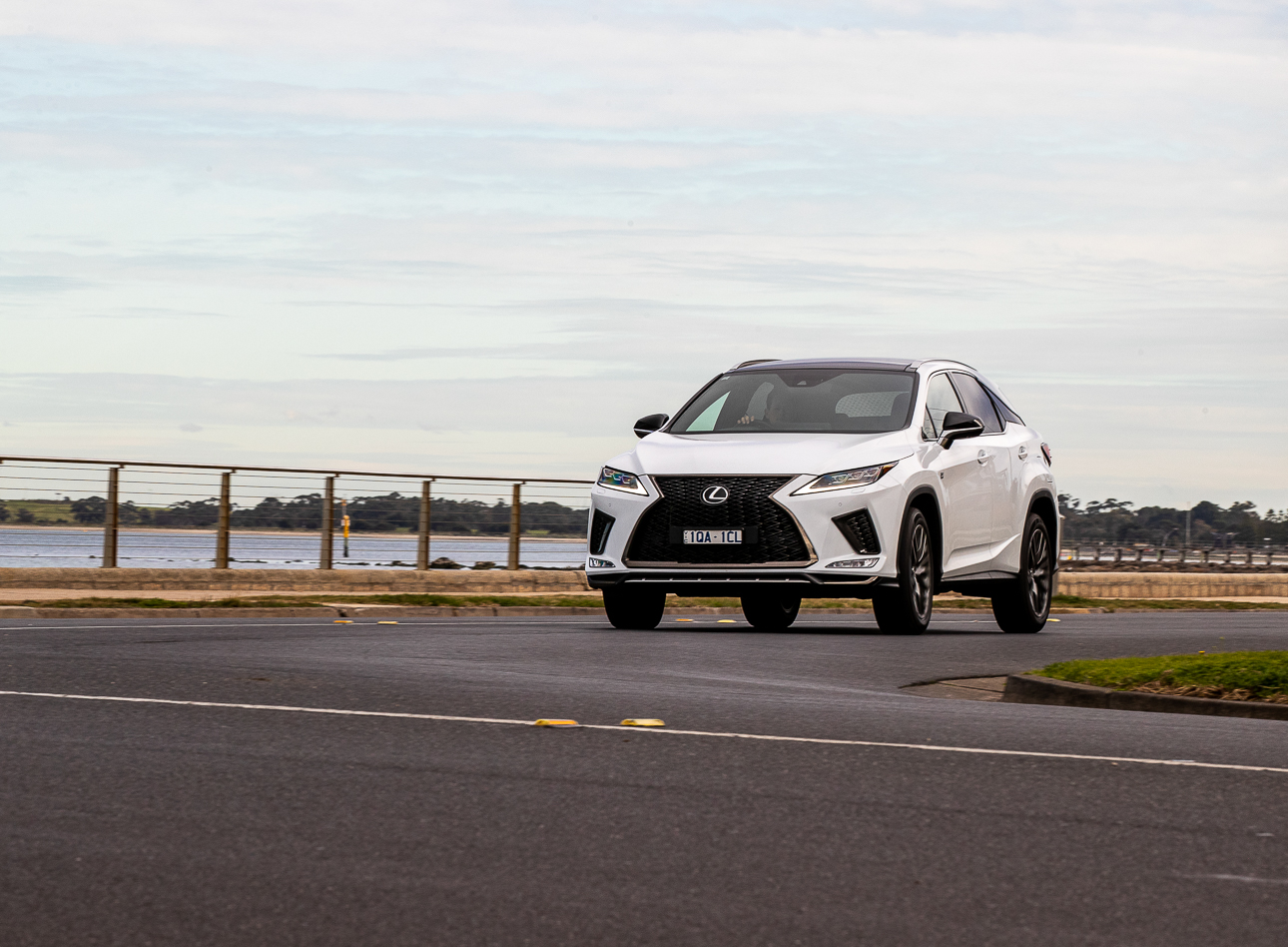
I think it’s partly because the bigger V6 doesn’t have to work as hard to give the driver meaningful acceleration, and because it has eight gears to choose from rather than six. There’s also the flow-on effect of the AWD system’s Dynamic Torque Control, which is a fancy way of saving fuel by driving the front wheels most of the time and only sending drive to all four wheels when it’s really needed.
Whichever way you go, the difference across the average 400km week is a cup of coffee.
Inside the RX 350 F Sport, the differences between this and the RX 300 F Sport are minimal. That’s because all the RX range has respectable levels of equipment, and both models I drove had the ‘F Sport’ package installed.
For the record, standard RX fare includes keyless entry and start, power steering wheel adjustment, privacy glass for all but the front row of seats, satellite navigation, digital radio, 12-speaker audio.
The headlamps, wipers and high beam are all intelligent, meaning they operate automatically when needed. Both cars had heated seats and memory settings for the driver’s seat – both of which are must haves. It should go without saying that all luxury SUVs have Android Auto and Apple CarPlay connectivity; all RX models do.
The F Sport package brings a few other interior advantages such as sunshades for the rear doors – of which baby Arlo approves – a 15-speaker Mark Levinson sound system which is crisp, clear and true, and a panoramic view monitor. This last system combines the images from the front, side and rear cameras to give you a 360deg view around your car.
As for the RX 350’s suite of active safety systems, the new Lane Tracing Assist system is handy. It expands on the old model’s lane departure warning system to also keep you in the middle of the lane.
I’ve noticed the auto-braking while reversing feature is a touch overzealous at times. A couple of times I’ve been edging backwards out of a car spot, and a car drives past behind me. I’ve seen it, I know it’s coming, I’m still creeping slowly backwards because it’s safe.
But the system disagrees. It hits the brakes hard, presumably thinking I’m going to crash. Some may laud this conservatism, I don’t because it scares the crap out of me every time, and makes me think I hit something else I didn’t see.
Overall the RX 350 has been a very enjoyable vehicle to drive. The extra power over the RX 300 is welcome and doesn’t cost as much at the fuel pump as I expected. Is the $10,000 price difference worth it for the extra power, 8-speed auto, all-wheel drive and bigger 20-inch wheels when compared to the base RX 300?
That’s debatable, but it’s also worth noting the RX 350 gets leather accented seats in both rows, and the front seats are heated, ventilated and with position memory functions.
For the purely pragmatic buyer it’s borderline, although I have enjoyed the luxury of heated seats during a Melbourne winter, and the seat memory is a handy feature when you share the car with another.
But still, we’re talking 14 percent more expensive. I’d probably stick with the RX 300, but the extra power (which gives the RX 350 a 1500kg tow rating compared to the RX 300’s 1000kg), and those few niceties might make it money well spent for you.
Instructions for colouring in
We’ve loaded all the images in this story into a clickable gallery above. Simply right-click on the pic you want, and save it to your computer. Then print out to your heart’s content!
We’d love to see your best efforts too – head over to our Facebook page and post ’em up!
Craving a way to distract the kids – or yourself- and put their sticky fingers to good use? How about some car-themed arts and crafts?
We’ve sifted through manufacturers’ social feeds and found which brands are offering the chance to design the dream version of our car.
So, fire up the printer, curse at the lack of inkjet cartridges, then sharpen your pencils and pick your way through what we’ve found.
Aston Martin
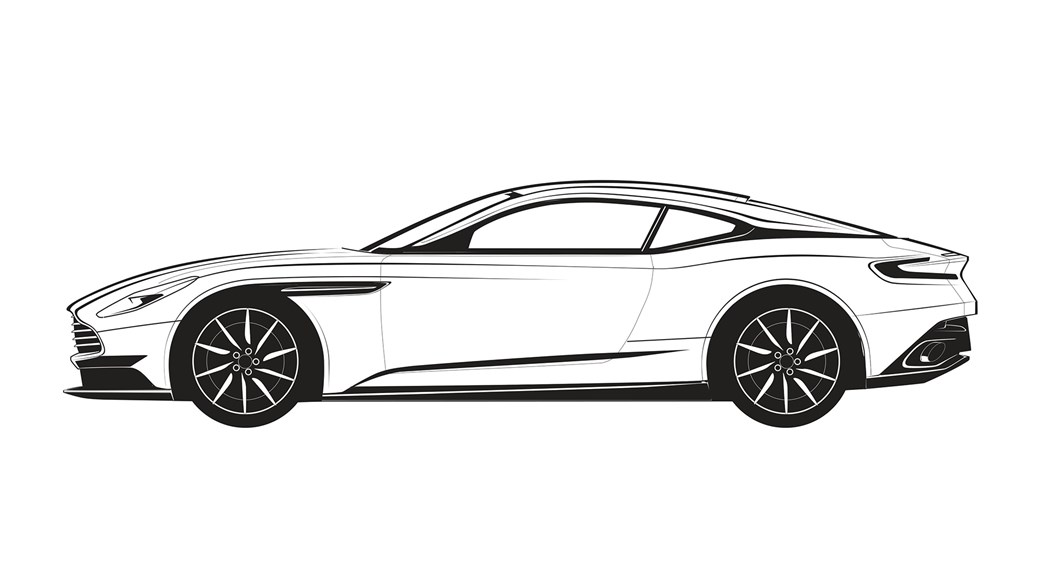
We’ll make a strong start with this Aston Martin DB11, shall we? Do let us know if your kids come up with any particularly daring colour schemes…
Audi
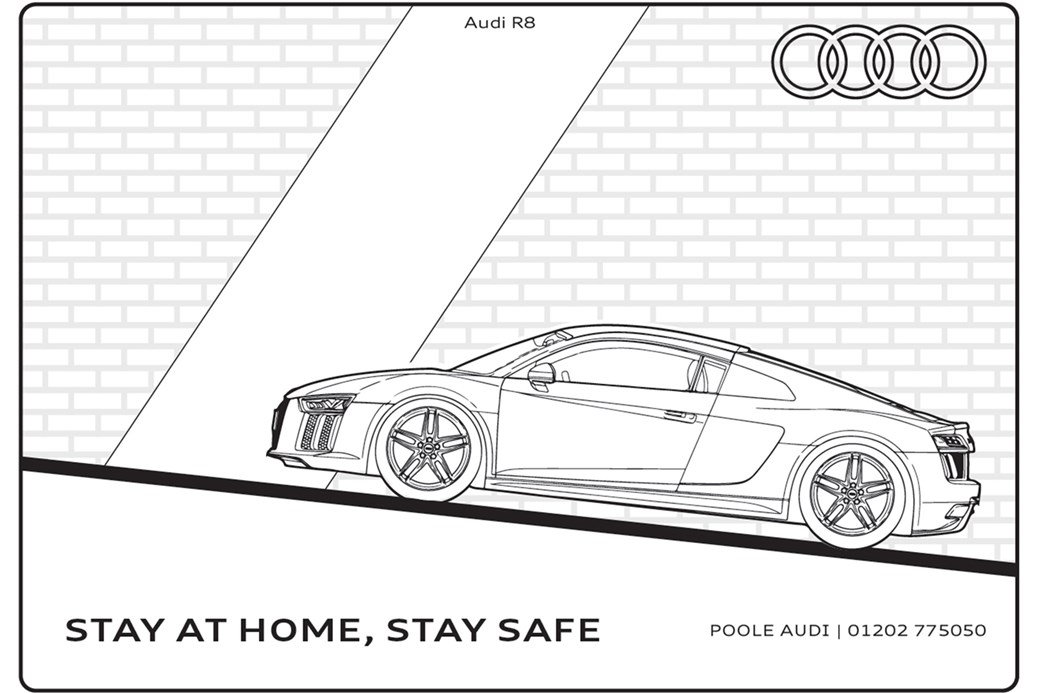
While we haven’t found any officially sanctioned Audi colouring-in, this dealership in the UK has saved the day for many Audi fans with colouring pages for an Audi R8, Quattro, TT and Q8. You could even design your one with a blank template. Warm-up your Crayolas, there’s a few in this one:
Audi’s colouring-in pages can be found here!
DJR Team Penske
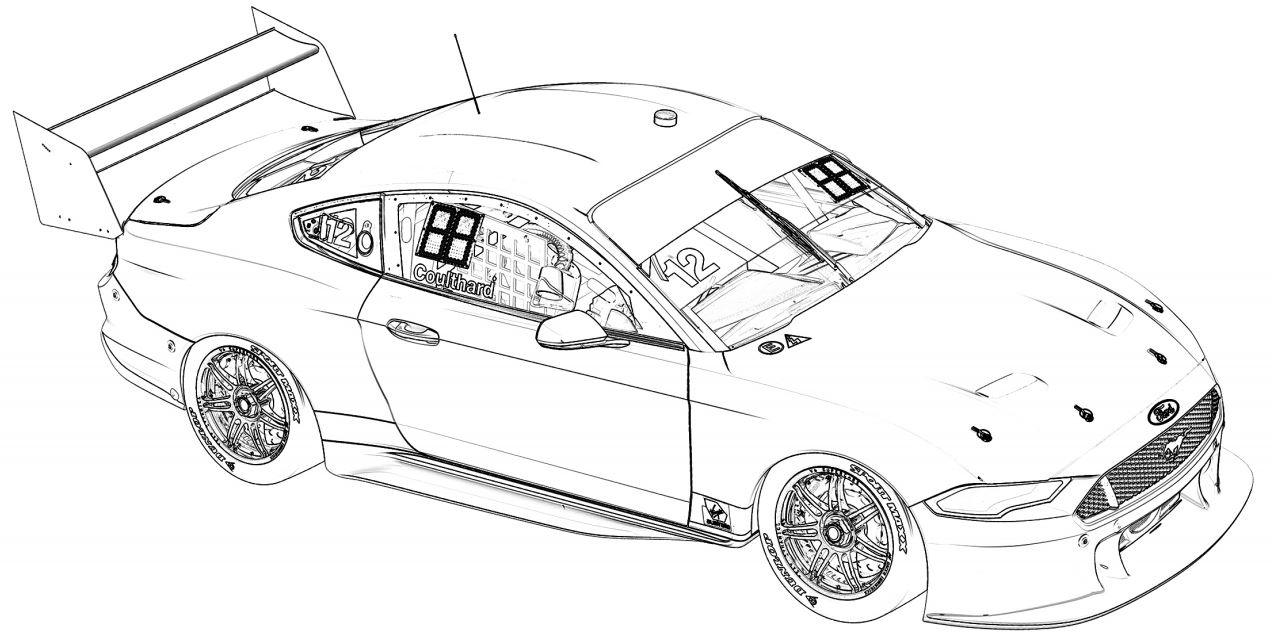
Prefer something a little more racy? How about a few Ford Mustang Supercars! With such colourful liveries, you’re going to need to break out the BIG box of Faber Castells for these.
Head here for more racecar colouring-in action!
Fiat
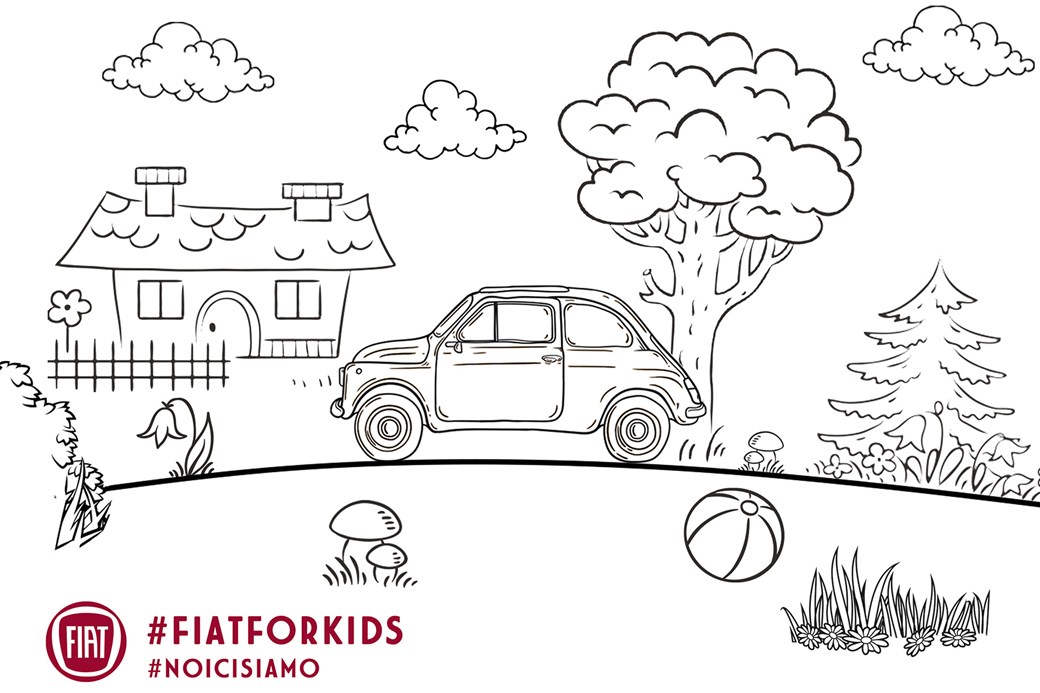
We’ve got both new and classic versions of the iconic Fiat 500 here – would you have them in the same shade, or completely different?
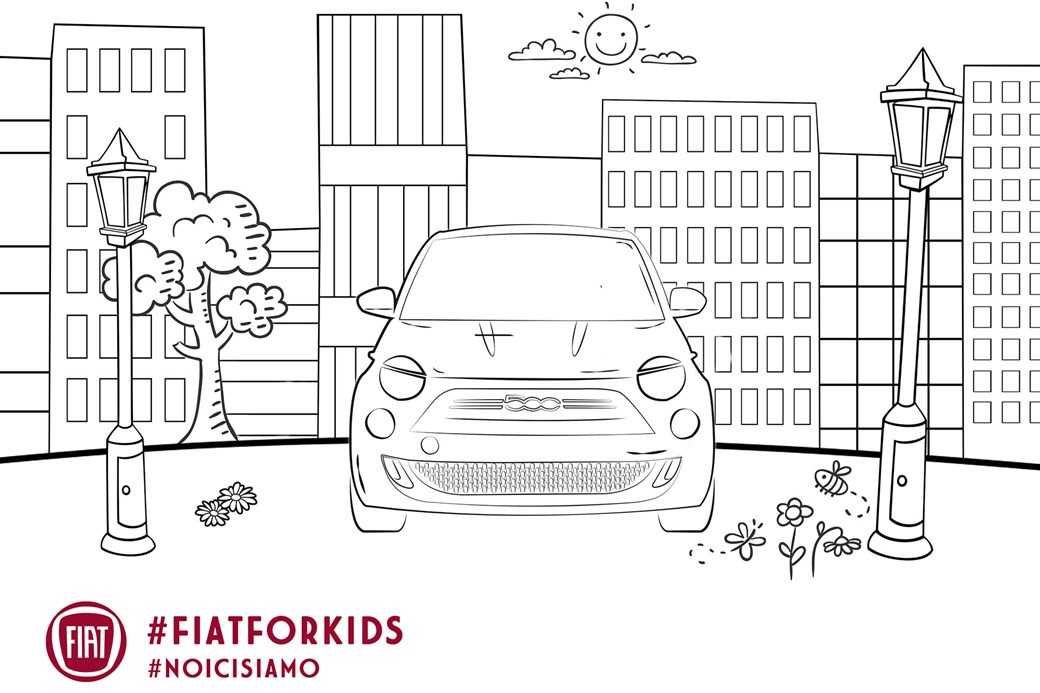
How about one in each of the Italian flag colours?
Ford
Take your pick of cars to colour in here – from sporty ones like the Focus ST, Ford Mustang, and Ford GT supercar, to the more practical side with the Ford Ranger, Transit Custom and, yes, even the Ecosport.
You’ve also got dot-to-dot, a number of mazes to work through and spot-the-difference if the mood changes.
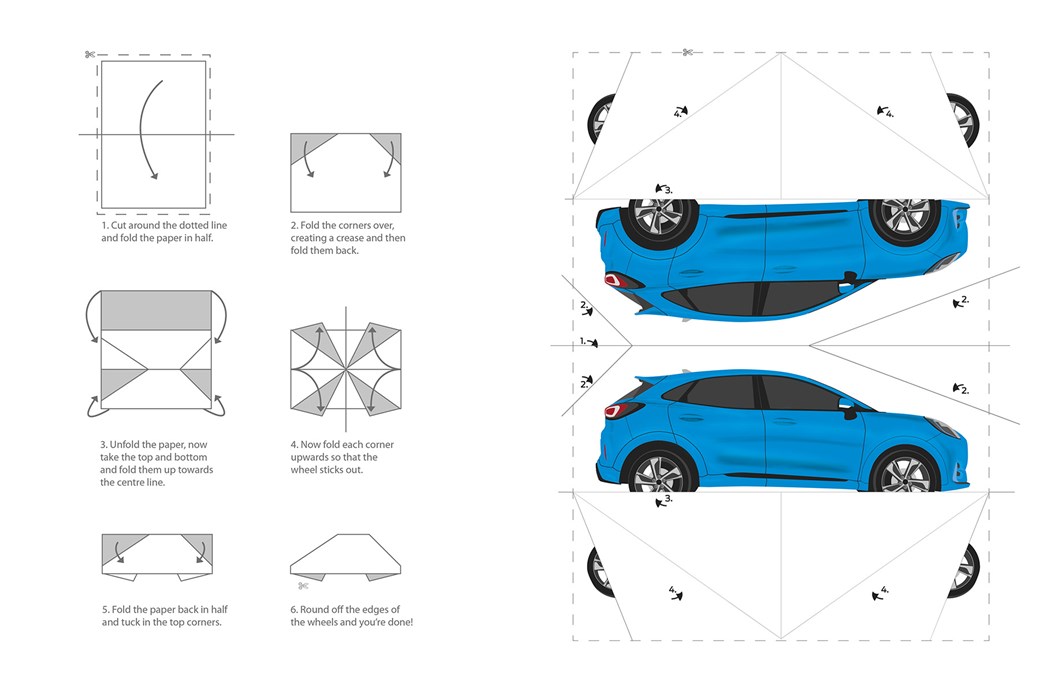
Fancy something three-dimensional? You can build your own origami Puma SUV, available with its own instruction sheet.
Heaps of colouring-in, puzzles and papercraft options at Ford’s family fun hub, click here!
Jaguar i-Pace Formula-e
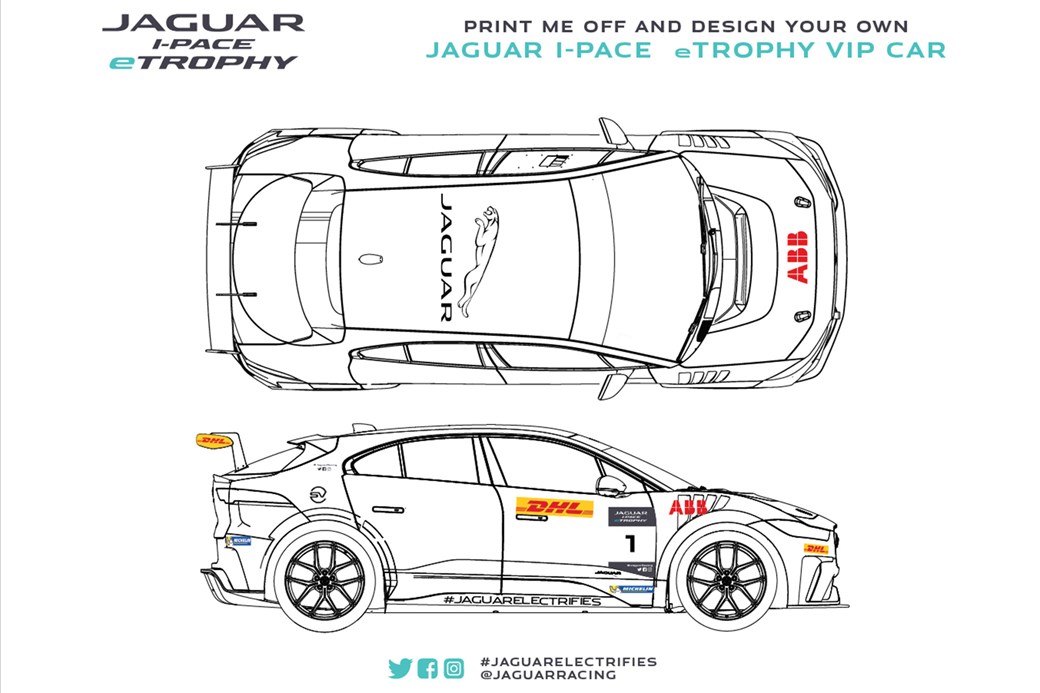
There might not be a classic E-Type here, but if you fancy some motorsport and have a turquoise pencil that’s never been used, your prayers have been answered – with the i-Pace eTrophy VIP electric car.
Land Rover Defender
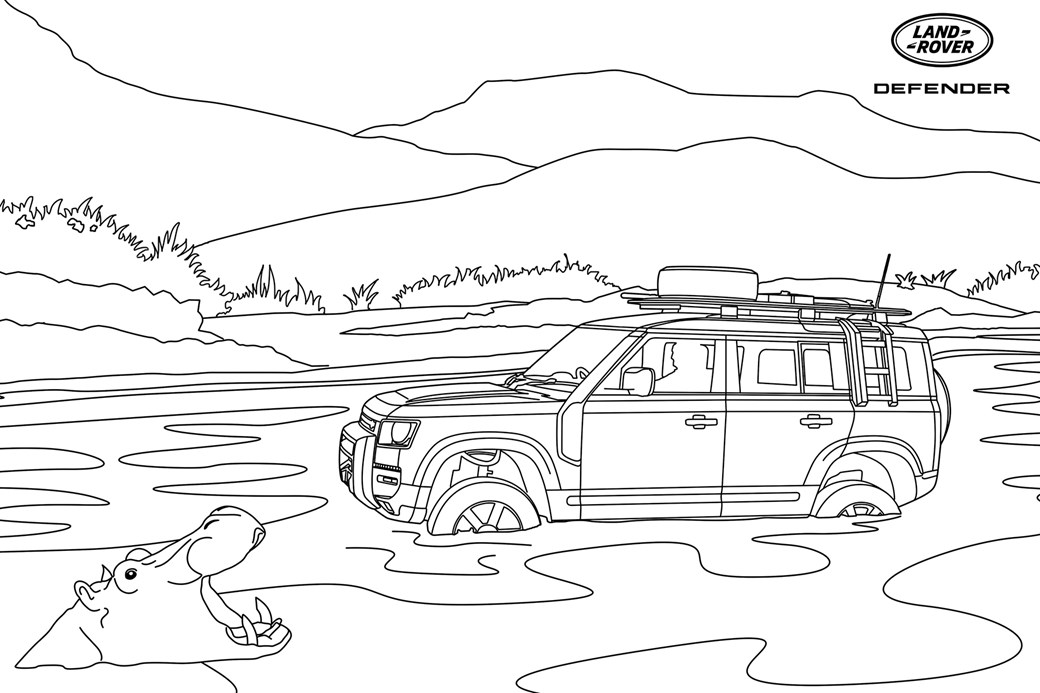
Have you already configured your dream Defender on the Land Rover site? If you can’t find the colour of your choice (we’re still waiting for Montalcino Red to make a return), how about making your own one here?
Lexus
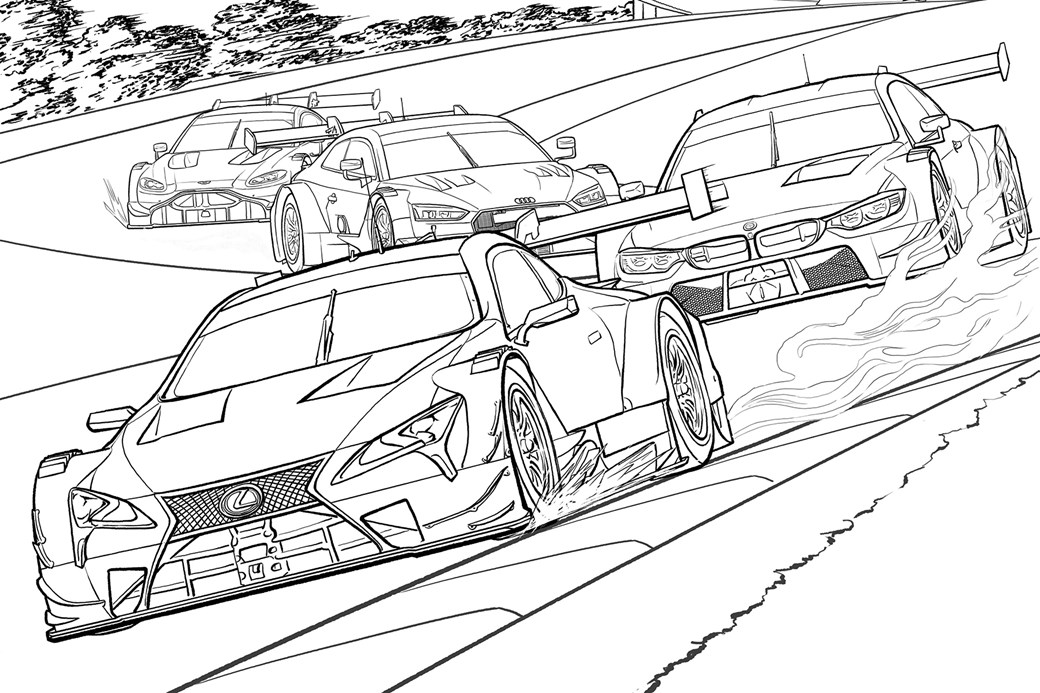
We’ve been granted the best-looking – and sounding – Lexus currently on sale to colour in. You can find both the Super GT racing car and roadgoing version on the link below. We’re sad we can’t hear that glorious naturally-aspirated V8 afterwards, so we’ll just have to pretend this is the hybrid model in EV mode instead.
Download the Lexus LC 500 colouring pages
Mercedes-Benz
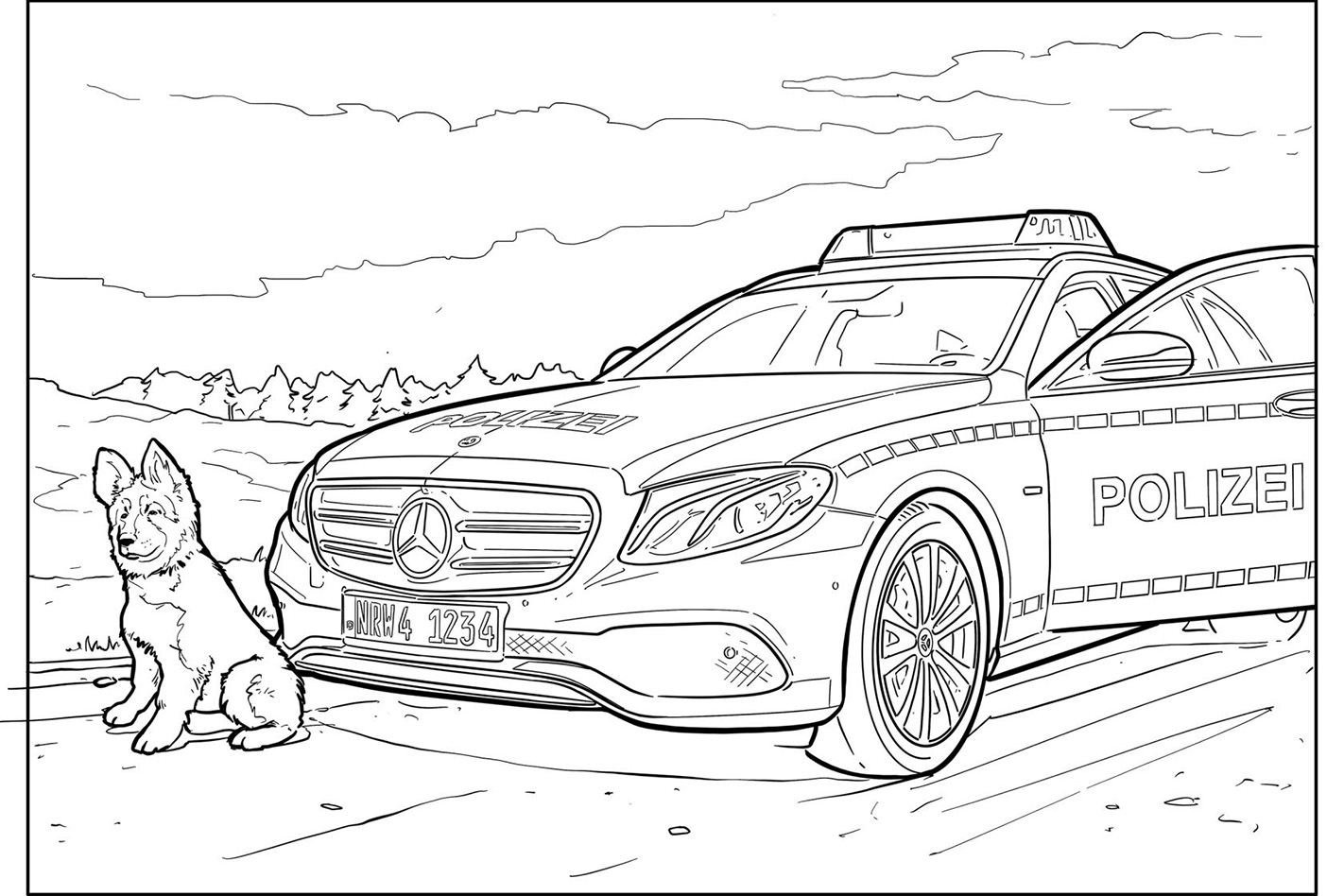
There’ll be a Mercedes-Benz to suit anyone here, with a comprehensive range of pages with all sorts of models, whether they’re classic or modern. And if that wasn’t enough, make sure you scroll down to the bottom for more pages, including the F1 car and police-liveried Vito.
Find Benz’s colouring-in pages here!
Nissan
Nissan are embracing the colouring-in trend too with their #DrawDrawDraw campaign, and have released a bevy of high-res downloadable DIY illustrations for your enjoyment.
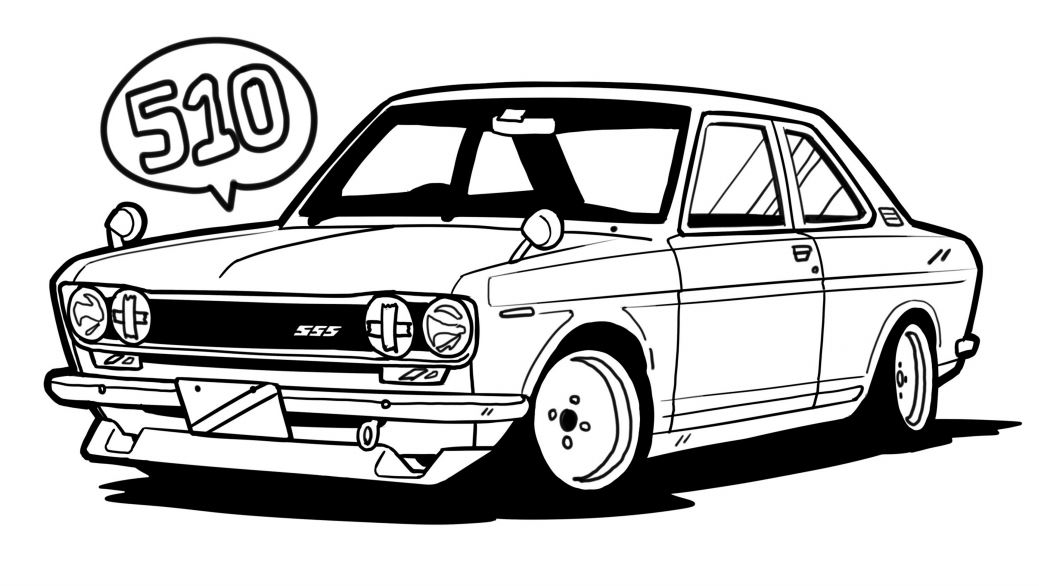
There’s a great selection on offer from the company’s history, from a tough-looking modern-day Nissan X-Trail to the classic Datsun 1600 and, of course, the mighty GT-R and beloved 240Z.
Head here to download Nissan’s colouring-in templates!
Rolls Royce
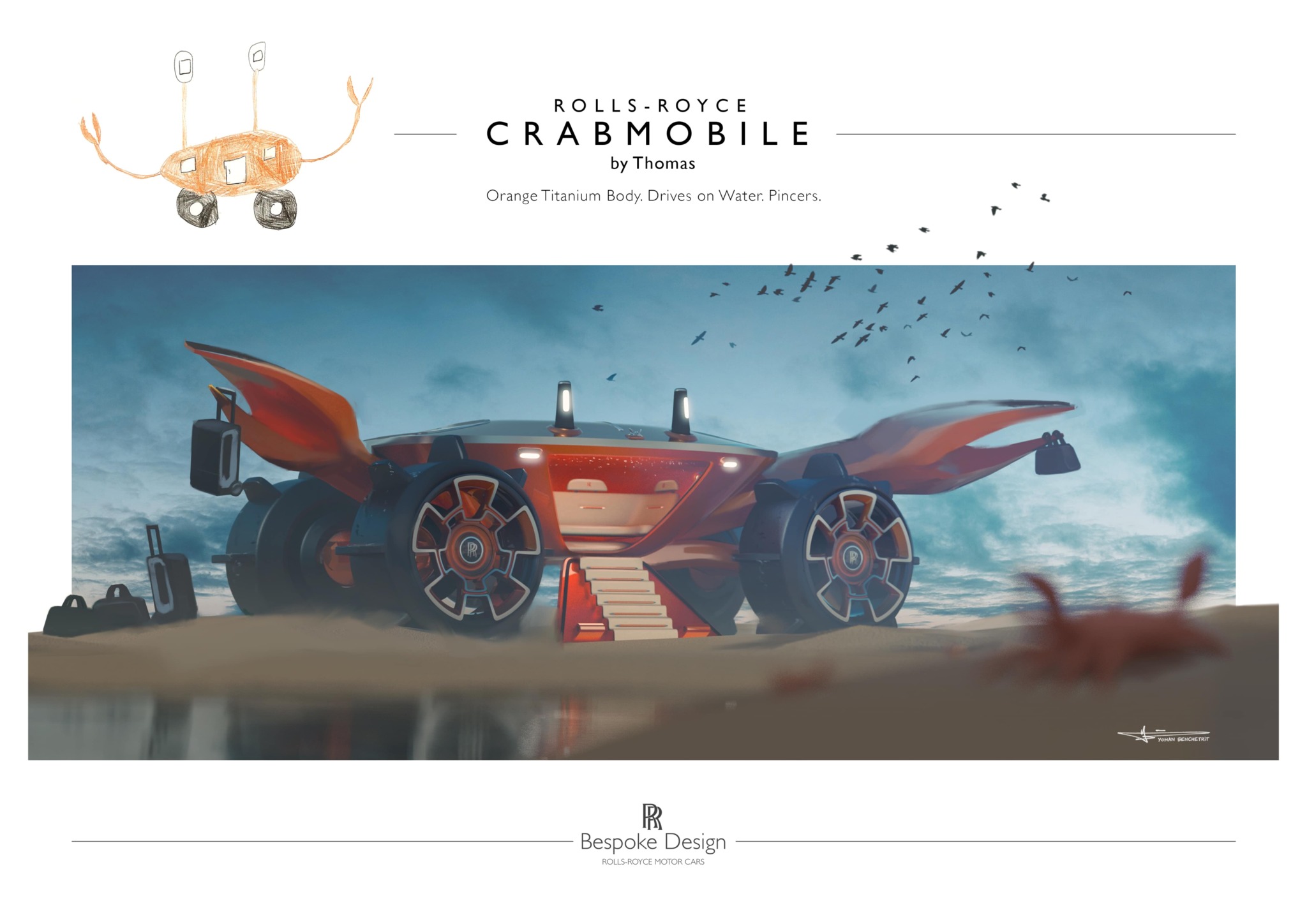
This one has an extra special element to it, because Rolls Royce wants to reward its most creative young followers with actual prizes!
All you have to do is sketch out your vision for the Rolls Royce of the future and send your designs through to Rolls Royce via their competition page here. The best will receive a prize and praise! Need some inspiration?
Well, the highly unorthodox crab-inspired design below (the submitted entry is in the top left of the above pic) should give you some hints about what Rolls is looking for. Go nuts!
Toyota Gazoo Racing
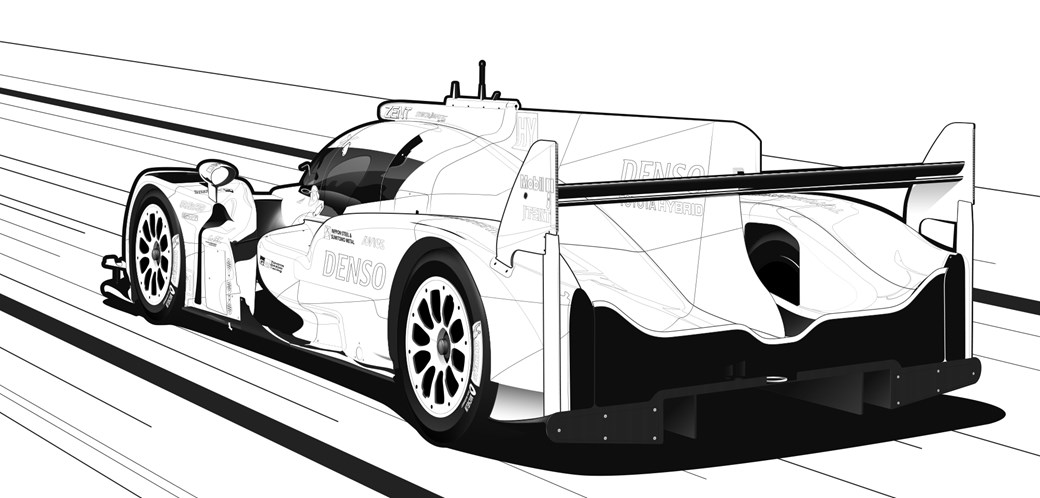
How about a Le Mans theme? You can choose from the TS-series range, including the title-winning TS050 Hybrid below:
Toyota: Build your own 86
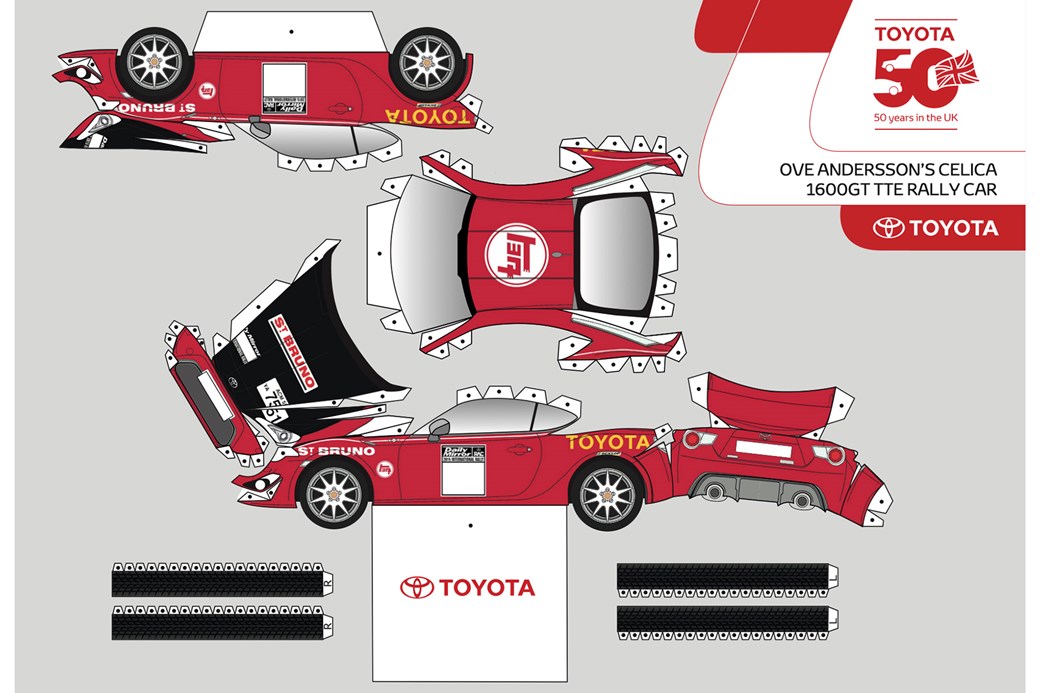
Had enough scribbling? What if you’re running low on crayons and pencils? Well, Toyota has gone towards the Year Two after-lunch-on-a-Wednesday route, with cut-outs of the retro-liveried 86s from 2015 for you to stick together.
They’re already coloured-in for you, so you just need to cut them out, apply glue and shape them the best you can. We can’t be held responsible for any glue-related mishaps, but please do tag us or send us pictures of any that you have.
Download the files for Toyota’s papercraft 86 here!
This article was originally published on CARmagazine.co.uk
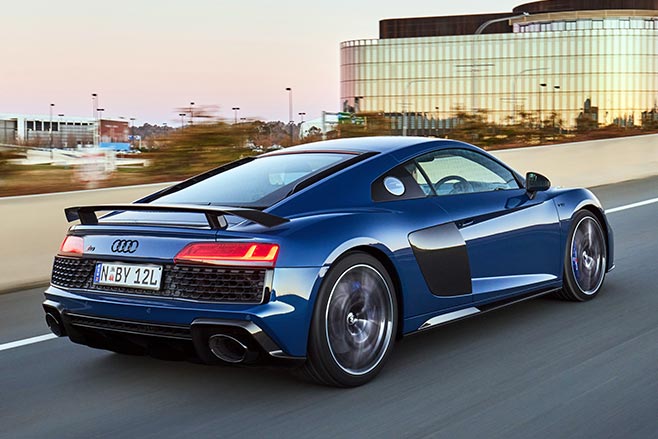
Can the Audi R8 already be high-school age? Yep, born in 2007 as a V8, the R8 is now deep into its second – and last – model cycle (at least in its current form); hence this relatively mild yet effective makeover which has just arrived to blitz Aussie roads.
The top-tree V10 Performance now costs $395,000 with, Audi claims, an extra $10,000 in bits over the outgoing model, including a leatherised interior, a sharp exterior makeover, laser LED lights and adaptive damper-based suspension with a trick new carbon-wrapped anti-roll bar up front.
Still based around a 79 per cent aluminium/13 per cent carbon fibre chassis, the R8 Performance carries over the alloy V10, on display for all the world to see underneath its glass hatch cover.
No more R8? Here’s the future of Audi’s sports cars
A legacy of the company’s deep-rooted involvement in GT3 racing, the 449kW/560Nm – Australia misses out on the European-spec full-whack 456kW/580Nm because of local fuel quality concerns – beauty combines genuine firepower with real-world civility and drivability.
It even has a cylinder-on-demand mode to save fuel. Audi says most of the power increase is down to a revised valvetrain with components made of titanium.
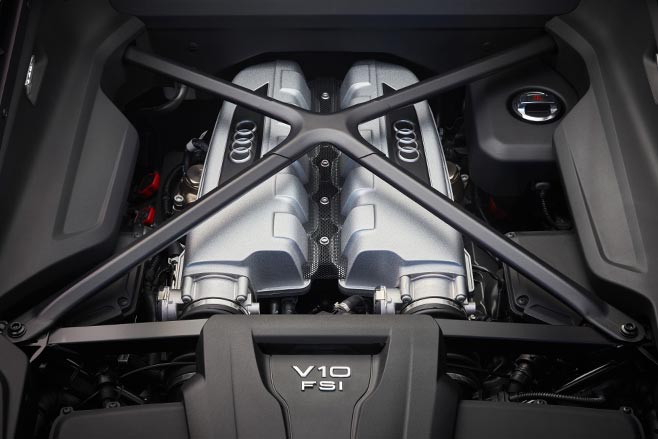
Meanwhile Audi has also tweaked the dynamic steering and suspension for better response; and updated the ESC software which also results in slightly shorter braking distances.
On board, the manually adjustable fixed-back bucket seats are an odd mix of not-quite-right and a bit underdone. Narrow across the base and through the lumbar area, taller drivers may have trouble finding an ideal position behind the wheel or in the passenger seat.
The first: Audi’s 2007 R8 takes on Gallardo and 911
As well, the R8 isn’t the greatest for storing literally anything, though the addition of an inductive phone-charging box is welcome.
Everything is forgiven when you thumb the start button on the steering wheel, though, as the ballsy V10 takes its first gasps of life.
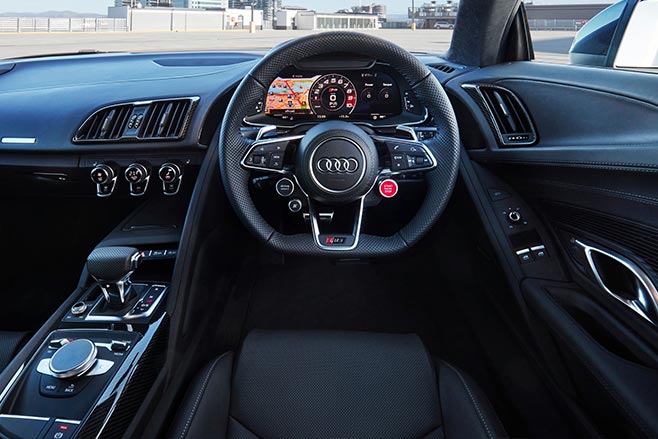
The 5.2-litre’s torque delivery is ramrod straight, smouldering and plentiful, and it relentlessly piles on speed like a plummeting wall safe.
So stiff is the chassis it rides in, though, the impact of the mighty V10 on your shoulder blades can feel disappointingly underdone – until you look down at the digital dash. The naturally aspirated urge from the dry-sumped marvel is delivered in one relentless, massive, straight line of torque right around to its power peak of 8250rpm.
It emits lovely noises through the standard bi-modal sports exhaust, and while some suggest it’s not quite vocal enough when on song, it’s still plenty entertaining, and perfectly in keeping with the car’s silken glove, iron fist ethos.
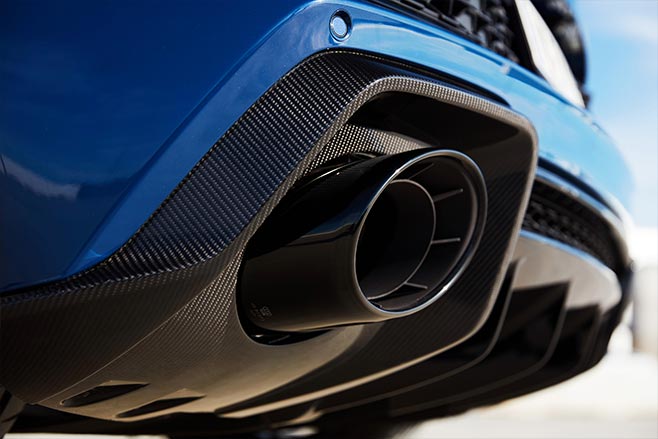
And the agility from the seven-speed auto gearbox is as intoxicating as ever – and praise be, the Golf-spec paddle shifters have been binned for milled alloy items.
A great car is the sum of its parts, and the R8 is still a great car. Its chassis feels hewn from iron, allowing the wheels to track intimately over all road surfaces and sending detailed messages back through your fingers and backside.
Classic MOTOR: 2013 Audi R8 V10 Plus review
I reckon Audi’s non-adaptive R8 suspension tunes have been pretty darn good, but the adaptive damper spec steps it up a notch. Ride? Check. Handling, grip, feedback? Check. The R8 will not spook even the most timid of pilots, yet it will reward the more adventurous. Its electromechanical steering is still a shade too light underhand for my tastes, but it’s a joy to be able to place the front wheels exactly where you want them with so little effort.
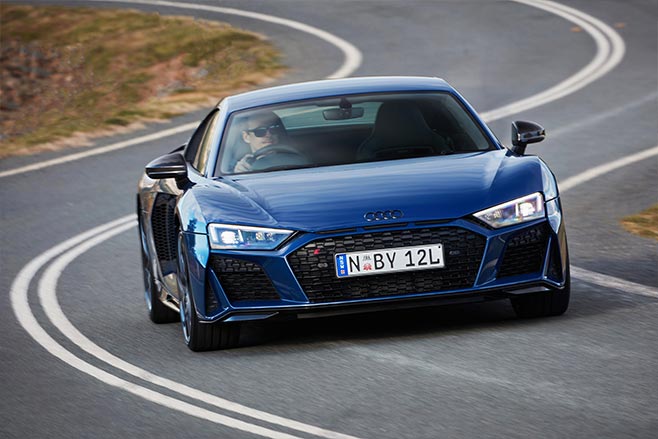
Drive traction off the corners, too, is tops, with the quattro system seamlessly and instantly delivering power where it’s needed most.
If you want to potter around at 60km/h, its silence and civility is a marvel to behold, with zero histrionics from the highly-strung drivetrain. Of course, the caveats of a low-slung, broad supercar in an urban environment come into play, with care required on steeper driveways and when manoeuvring in tight spots.
The 2020 R8 Performance is a fitting evolutionary step for one of the most intriguing sports cars of the 21st century. It’ll be a sad day when it’s retired, despite the plethora of talent coming from Audi Sport, and it’ll be nigh-on impossible to replace. In the coming issues we’ll jump onboard the new R8 RWD to see if it picks up where the much-loved RWS left off.
4.0 stars out of 5
Like: Epic engine is epic; awesomely fast; well-judged styling; response; comfort Dislike: Interior could feel more special; prescriptive handling; early understeerer
2020 Audi R8 Performance specs Engine 5204cc V10, DOHC, 40v Power 449kW @ 8250rpm Torque 560Nm @ 6500rpm 0-100km/h 3.2sec (claimed) Weight 1595kg Price $395,000
Get your free weekly MOTOR report!
Australia crashed the turbo party almost by accident. Put that down to the Commodore VL Turbo. The last of the line of the original Commodore shape was an odd thing; a stop-gap model that should have staggered to obsolescence given it was replaced just three years later by the brave new VN. Yet it earned a place in the hearts of enthusiasts via the fickle hand of legislation.
Unleaded fuel rules spelled the end for the old Holden Black straight-six engine, so a deal with Nissan was done to fit the Skyline’s RB30E in the 1986 VL. This was followed six months later by the turbocharged RB30ET variant. Available in SL, Berlina and ritzy Calais trims, it’s fair to say we liked it.
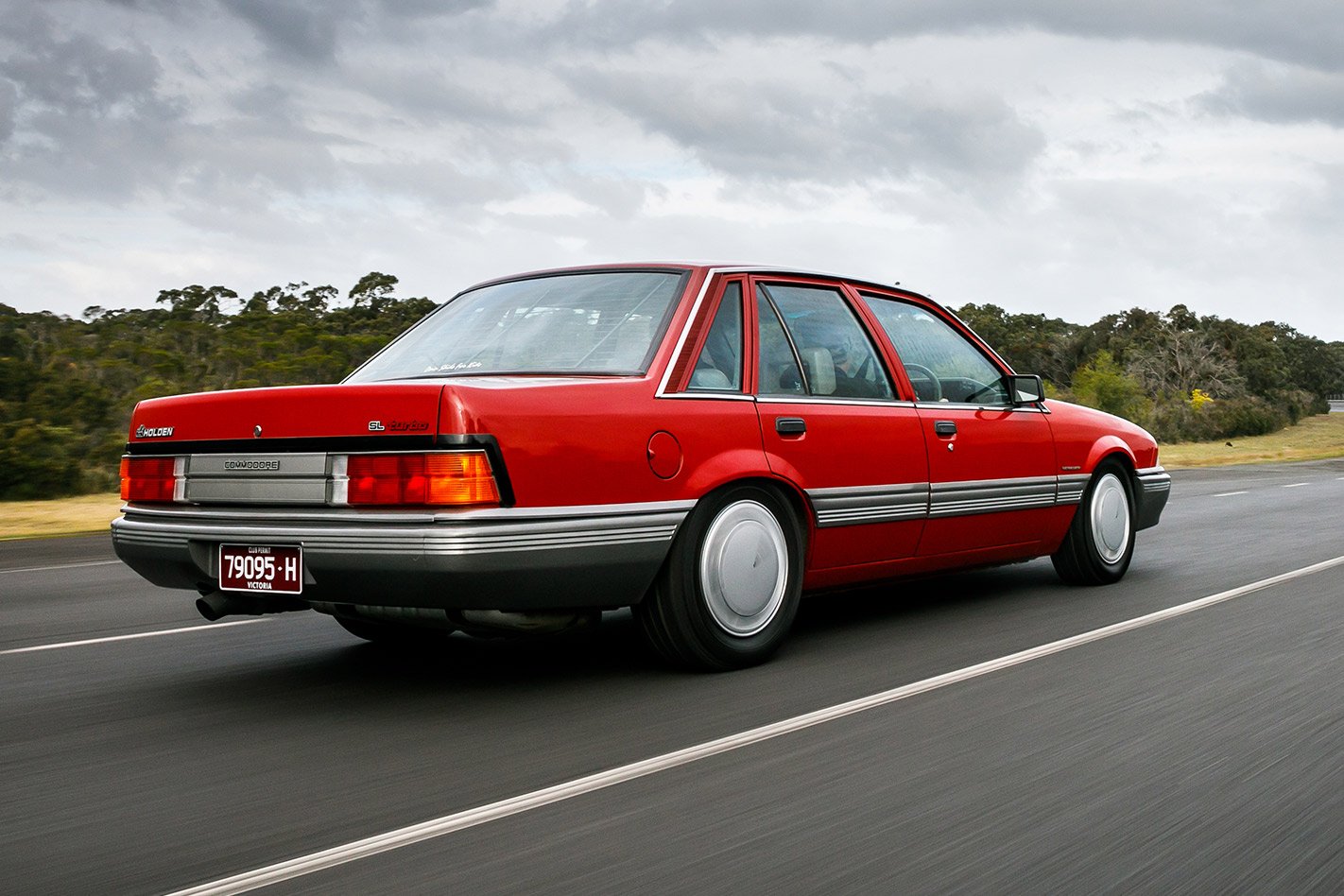
Back in August 1986, Wheels wrote: “The engine is silky smooth and flexible. Accelerating with wide-open throttle the turbo’s up to maximum boost pressure and into full stride as it clears the 2400rpm mark. Equally importantly, it willingly works right down to 1500rpm or less. It may lack the raw bottom-end punch of the bigger engines when accelerated from lowly speeds, but there’s no real suggestion of turbo lag either. What you get is immediate response which gathers strength very quickly as the revs rise to two-five … The turbo may, however, prove to have more performance everywhere when ranged against the coming VL unleaded 4.9-litre V8…”
To a certain degree, Ford made it easier for Holden to offer its flagship sedan with an exclusively six-cylinder line up (albeit temporarily), having dropped the V8 from its XE line up some four years earlier. It wouldn’t be until 2002 that Ford finally appreciated the benefits of a turbo six, and while the VL Turbo has achieved cult status, the blown Barra lump is unarguably the hero engine.
Where the old Holden made a hearty 150kW, the 3984cc overhead cam Barra was good for a massive 240kW. Let’s put that figure into the perspective of 2002. Back then, a 911 GT3 only made 25kW more, and here was Ford offering that much power in a $44K sedan. It upset the hierarchy somewhat, its 14.2s 400m time eclipsing its XR8 sibling by 0.2sec.
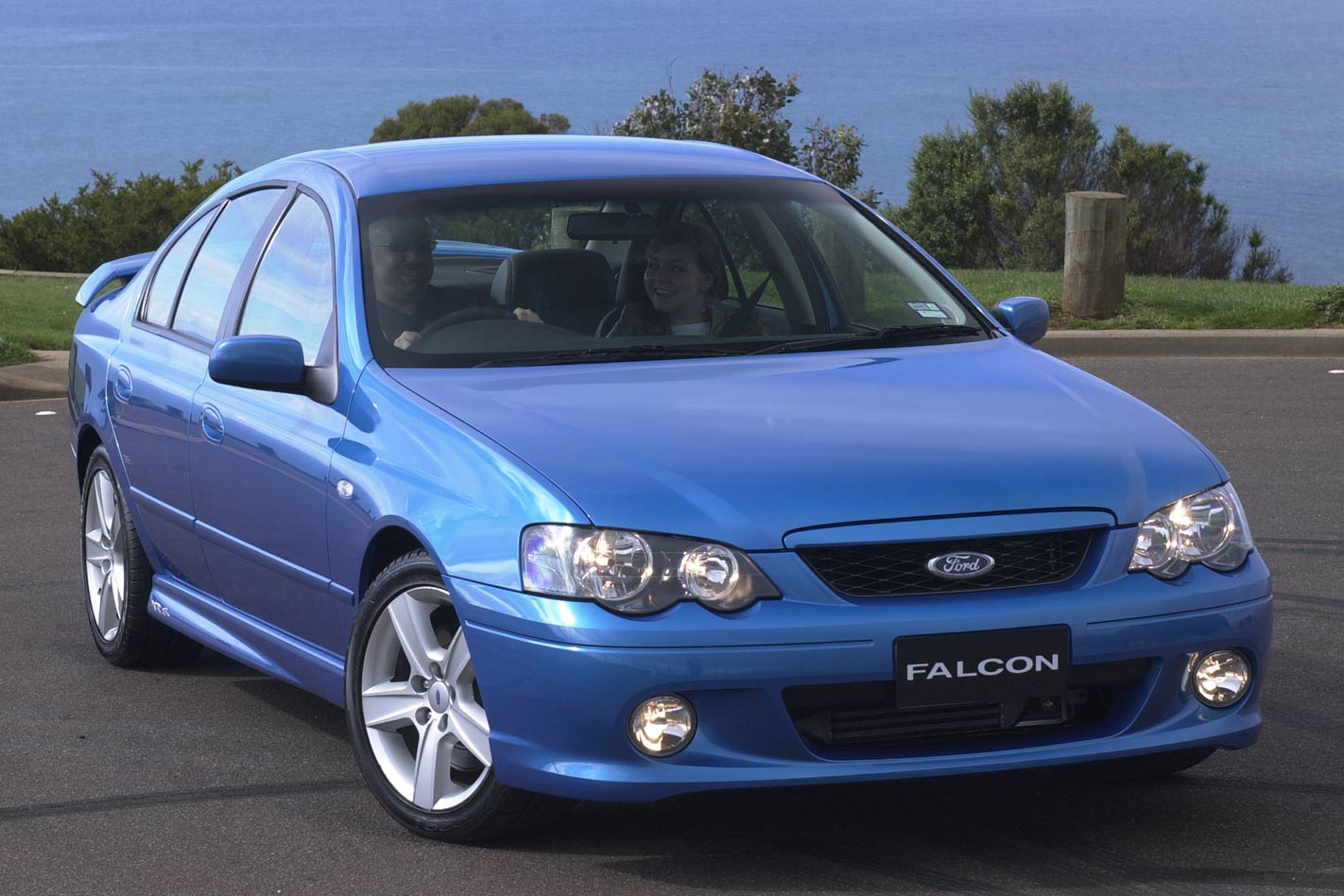
With a lighter front end, the XR6T was nimbler than the XR8 too, and its sports suspension package was developed with the help of John Bowe. Unlike the VL Turbo, the early five-speed manual’s not the preferred gearbox; the sequential four-speed auto does a solid job of keeping the turbo fizzing. A six-speed Tremec T56 manual appeared in 2004.
We’re not sure who coined the phrase, ‘Aussies love V8s but buy sixes’, but the Commodore VL Turbo and the Ford Falcon XR6 Turbo are two vehicles that were transformed for the better by forced induction, in effect doing much of the heavy lifting for the image of the straight-six.
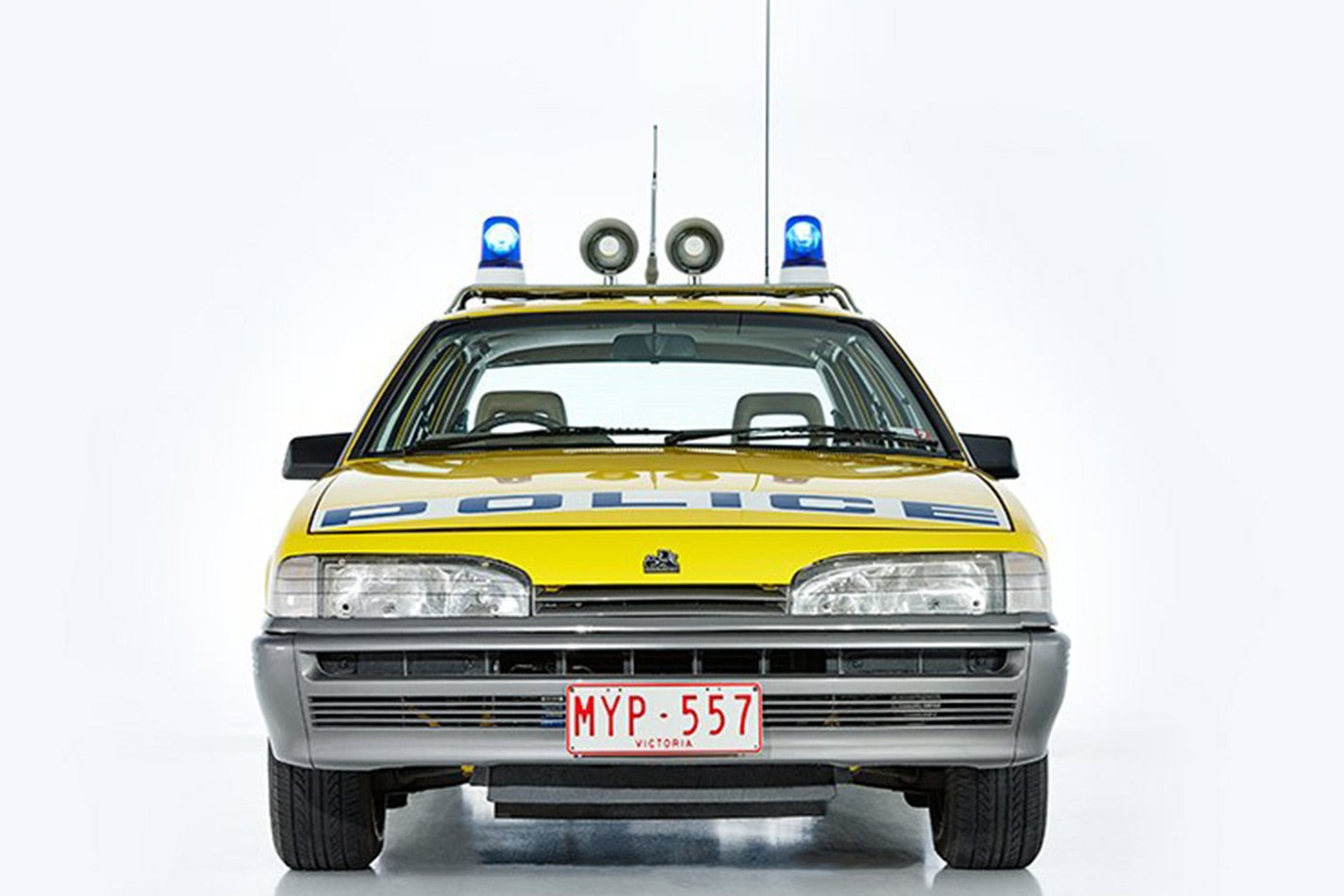
COPS AND ROBBERSThe VL Turbo BT1 interceptor, commissioned by Victoria Police, featured a larger fuel tank and striking yellow paint. Contrary to much rumour, the Garrett T03 turbocharger wasn’t wicked up for pursuit duties. It made much the same 0-100km/h in 7.6sec as the civilian-spec car, just so long as that massive tank (up to 90 litres) wasn’t brimmed. Look out for cloned cars.
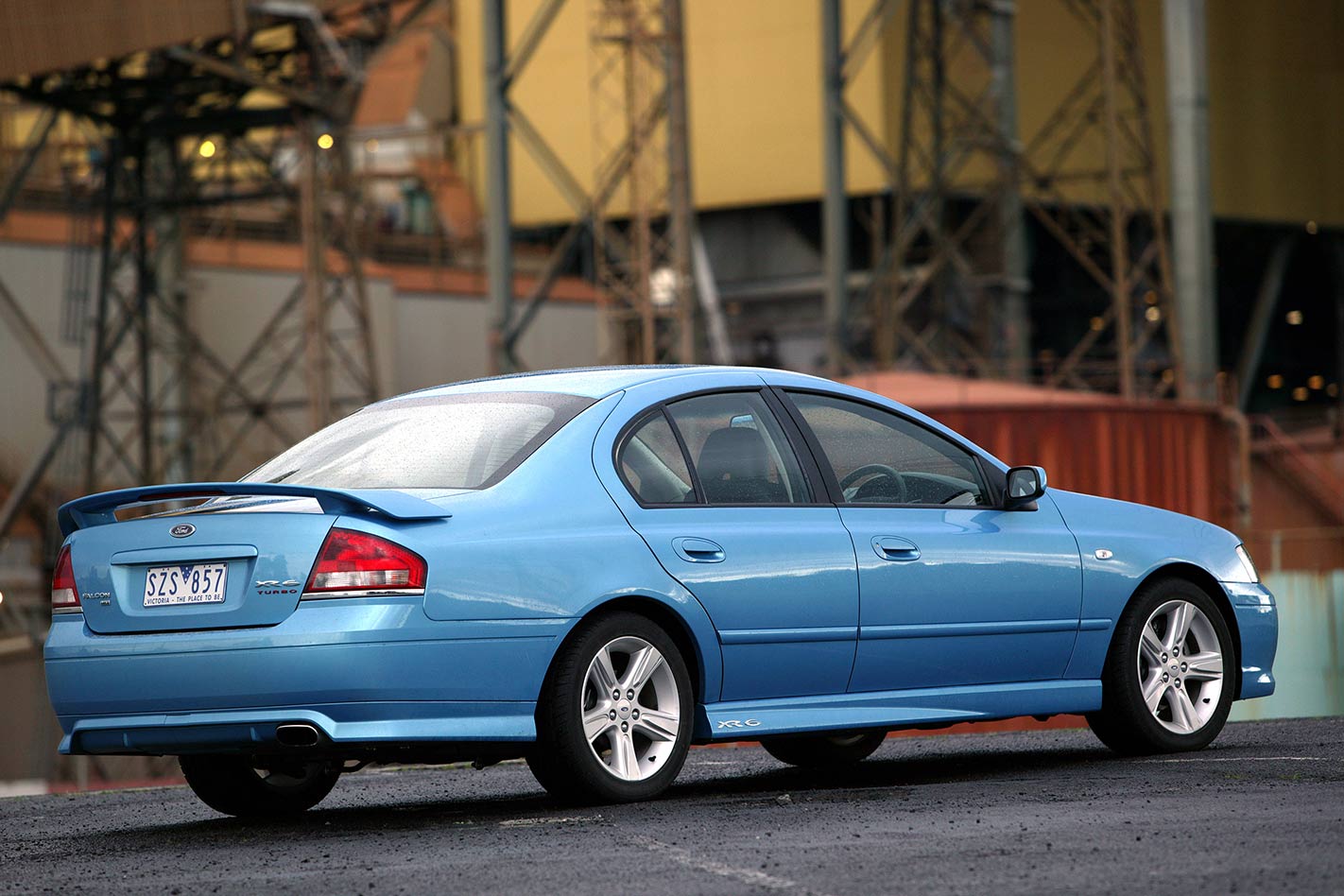
BOOSTED BARRA
Although the Garrett GT40 ball-bearing turbocharger only ran at a modest 0.4 bar, the assistance of an air-to-air intercooler saw the XR6 Turbo make 58kW more than its atmo sibling. The 240kW power figure was enough to beat Holden’s VY Commo SV8 with its 235kW LS1, and more low-end torque and smarter gearing also made the Ford able to get the drop on the Commo at the lights.
2002 FORD BA FALCON XR6 TURBO BUYER GUIDE
Current value: $7500 – $10,000 What to look for: Flaky central locking, warped brake discs, worn rear suspension bushings, auto gearbox heat exchangers, and boot floor rust.
1986 HOLDEN COMMODORE VL TURBO
Current value: $20,000-$45,000 What to look for: Sun-wrecked plastics, warped cylinder heads, failed brake boosters and sagging headlining. Avoid lowered suspensions and overboosted examples. Original five-speed manuals and ex-cop interceptors are sought after.
Turbo Titans
Everything you’ve ever wanted to know about the humble turbocharger and its miraculous power-boosting abilities.
The Federal Chamber of Automotive Industries (FCAI) has introduced a new industry-led voluntary emissions reporting scheme that will see emissions targets extrapolated across the next ten years.
The FCAI CO2 Emissions Standard represents a new push by the Australian automotive industry to try and bring its most efficient cars to Australia, in order to combat the nation’s greenhouse gas emissions.
In contrast to reporting schemes currently used in Europe, the Australian Standard will look at manufacturer emissions over the next ten years.
This recognises the fact that some manufacturers may not record annual improvements or will use different strategies to reduce CO2 outputs.
While acknowledging that the industry itself has achieved a reduction in greenhouse gas emissions of 24.9 percent since 2005 levels, the FCAI states there is always more to be done.
“The FCAI strongly supports a comprehensive approach to addressing motor vehicle emissions that includes fuel quality standards, the introduction of Euro 6 and the introduction of a challenging but realistic, achievable and market-relevant CO2 standard,” said FCAI chief executive Tony Weber.
“In this context, the FCAI Standard has been based on internationally mandated practices, including those from Europe and the USA, while still recognising the unique characteristics of the Australian market.”
It is expected of manufacturers to aim toward an average four percent reduction in CO2 per annum for MA vehicles (passenger cars and light SUVs) and an average reduction of three percent for MC and NA vehicles (heavy SUVs and light commercial vehicles) per annum.
If the above guidelines are followed, on average, MA vehicles will output no more than 100 grams per kilometre of CO2 by 2030, while those in the MC and NA category will output no more than 145 grams per kilometre of CO2.
Targets will be calculated jointly between the FCAI and its member manufacturers on a sales-weighted average according to current VFACTS data.
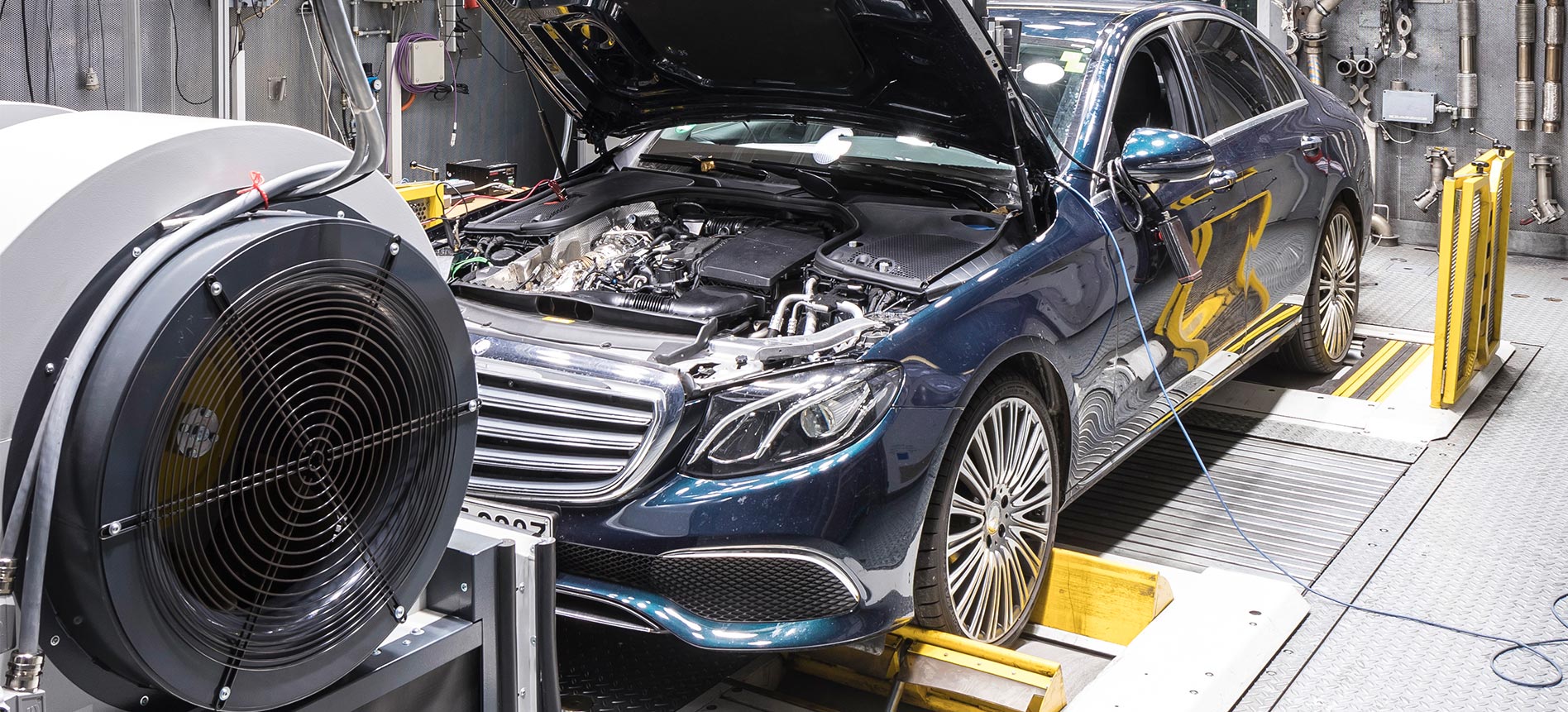
Emissions reporting data will be in-line with that supplied to the European Environment Agency which allows for various credits to help manufacturers hit their targets.
These sorts of concessions include super credits for manufacturers introducing electric vehicles (which will count as three vehicles), air conditioning gas credits for models that use safer refrigerants and ‘off-cycle’ credits for manufacturers that introduce fuel-saving tech such as start/stop engine tech mid-way through a model’s life cycle, for example.
The idea behind the new standard is to provide Australia with more technologically advanced and fuel-efficient vehicles in a more timely manner.
There is no financial penalty for carmakers who miss these targets.
The FCAI hopes that consumer choice directs Australian car makers to hit the new Standard’s CO2 emissions targets, stating that “consumers take CO2 emissions seriously” and subsequently base their purchases on these factors.
Why is this being introduced now?
The FCAI has been pushing the government toward emissions targets for years, though it has not come to the party. This has pushed carmakers and automotive bodies like the FCAI to implement change.
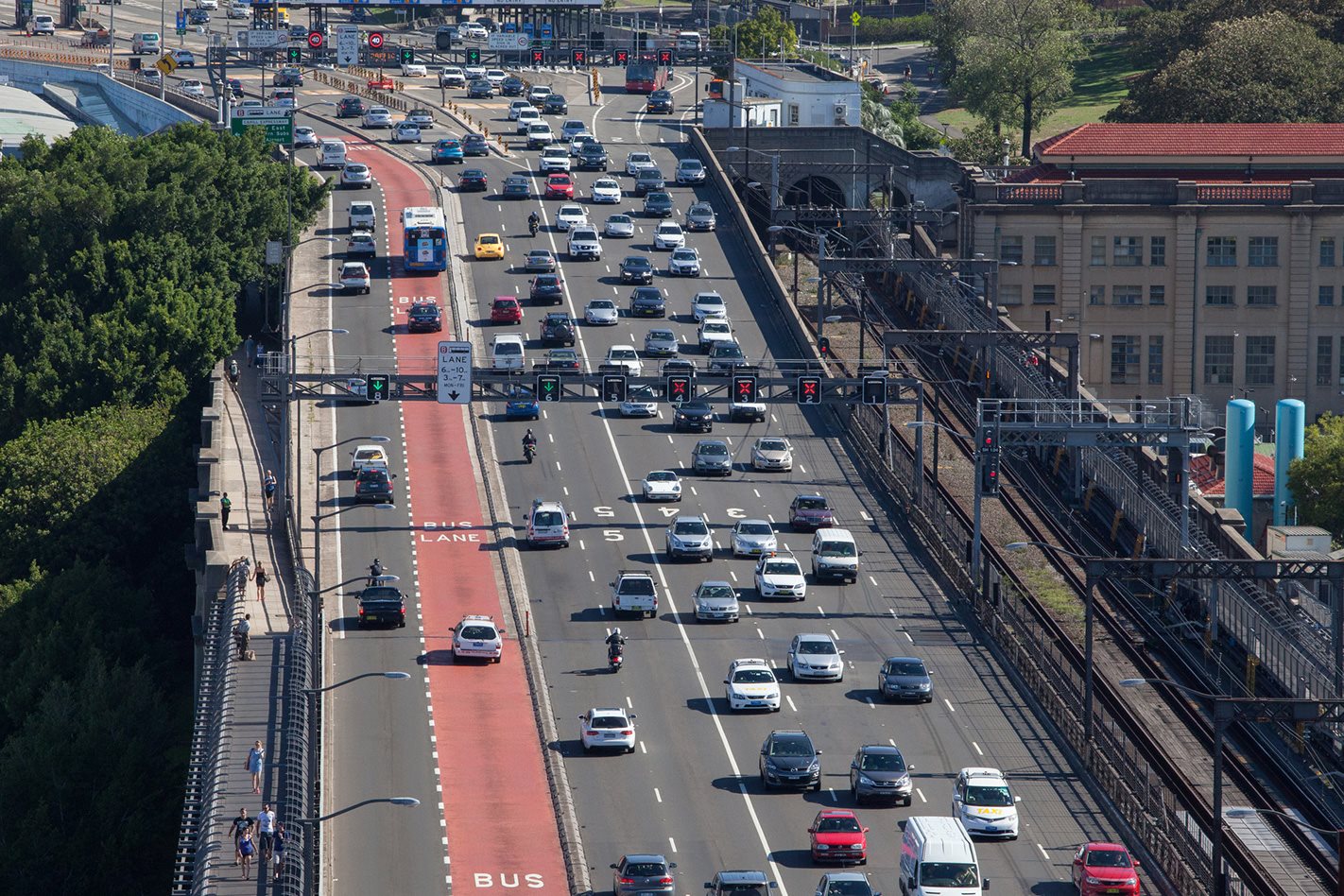
The FCAI has implemented the standard in place of governmental regulation, and it aims to propel Australia forward in the fight for more fuel-efficient, technologically advanced and safer cars.
A lot of flexibility has been built in by the FCAI; the long-stretch 2030 target means importers will have flexibility with their parent companies to bring more fuel-efficient cars to market in Australia.
As well, automotive groups have flexibility in transferring credits among one another in order to hit targets. For example, Toyota is able to share its credits with Lexus in order for both manufacturers to hit their respective targets.
What does this mean for consumers?
If the scheme works to plan, Australians will start to see more choice in the new car market. New, more fuel-efficient cars and more fuel-saving tech will become more commonplace in Australian car dealerships.
The standard doesn’t look to exclude vehicles that don’t hit their targets; rather, it looks at incentivising companies to bring in more models that do match or beat the CO2 targets.

The FCAI will report on the CO2 Emissions Standard on a yearly basis, with the first report to be conducted in Q1 of 2021.
Consumers will have to pay close attention to those reports in order to understand who’s hitting their targets and who isn’t, though, as no additional labelling or emissions placards will be placed on new cars.
