
Remember Daihatsu? The company that built the cars your aunt owned, or the one your older brother drove to uni in the mid-2000s? It was usually a Charade. A pretty standard, very cheap hatchback, and not particularly fast. A couple of staff working for MOTOR even used to own them. But pretty much no one in Australia ever had the chance to own a Daihatsu Charade GTti.
Daihatsu, the company that has spent the last few decades being slowly taken over by its now owner Toyota, built a very impressive thing back in the late 1980s. A proper hot hatch, and one that wasn’t particularly expensive. With a three-cylinder engine coming in at 993cc, with a side of intercooled turbocharging helping it to make 74kW (that’s a nice, round 100hp), the GTti’s engine was lauded as the most powerful 1.0-litre engine at the time.
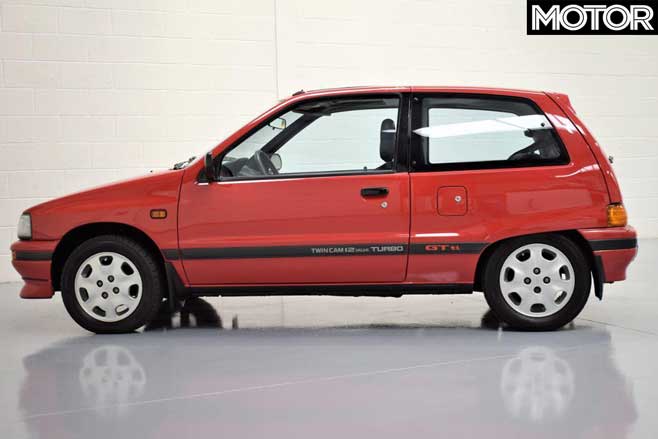
Sure, that’s still not a tonne of power, but the GTti only weighed 808kg. This put its power-to-weight clear of other icons (see: cars this author owns or has owned) of the time like the Mk2 Golf GTI or the Mazda NA MX-5. Plenty of videos on YouTube will also give you a hint that it could be quite a handy steer in the right hands. One such clip features a pair of 911s, 993 and 996, taking an embarrassingly long time to catch up to one at the ‘Ring.
Unfortunately, the Charade GTti never made it to Australia, the Charade Turbo being the closest thing to land on our shores. It had pretty much the same engine, albeit missing around 24kW and an overhead camshaft, making it far less of a threat at the Traffic Light GP.
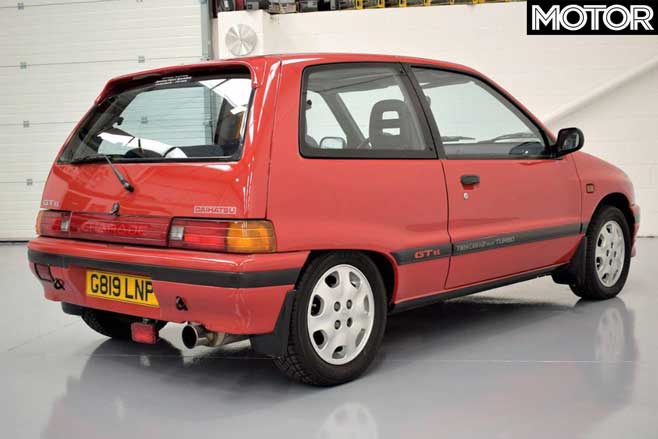
1987 DAIHATSU CHARADE GTti SPECS Engine: 993cc inline-3, DOHC, 12v, turbo Power: 74kW @ 6500rpm Torque: 126Nm @ 3500rpm 0-100km/h: 7.8sec (estimated) Price: £8199 (when new in UK, not sold in Aus)
Through absolute chance and no real judgment or planning of my own, I have forged a far more intimate relationship with the iconic Camaro than I ever expected.
Way back in January 2018 I drove the sixth-generation model for the first time in California, ahead of its Australian launch in HSV-converted right-hand drive form. The drive was actually to kill time between the Consumer Electronics Show in Las Vegas and the Detroit Motor Show, but the ensuing battle with the freshly updated Ford Mustang GT was so memorable, it turned into a cover story for Wheels magazine.
Read it here: Ford Mustang head-to-head with Chevrolet Camaro
There was time for a refresher in the same 2SS variant when the first examples started rolling out of the HSV re-engineering facility in Melbourne and, after that, the mighty ZL1 arrived.
Somehow, I found myself piloting an example of this 477kW 6.2-litre supercharged maniac in the 2019 Street machine Drag Challenge wearing a set of Micky Thompson drag radials and clocking passes into the low 11s. Despite never having drag raced anything in my life.
Fair to say the Camaro and I were forced together and love prevailed.
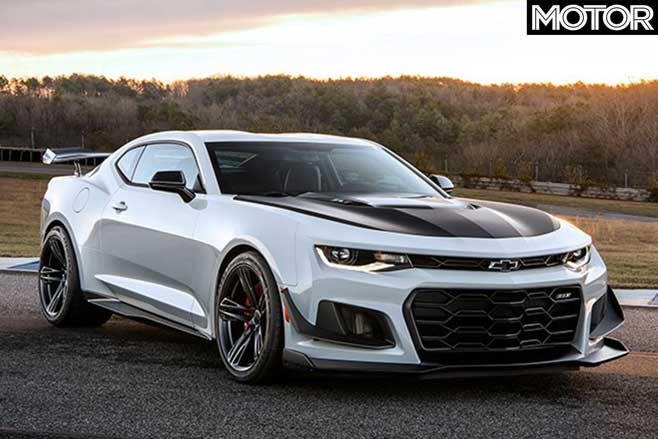
But like a sushi chef slowly gaining the experience to prepare increasingly difficult dishes, I was about to graduate into the pinnacle of Camaro performance. If the 2SS I had first sampled in the US was salmon nigiri, the Camaro ZL1 1LE was my first fugu.
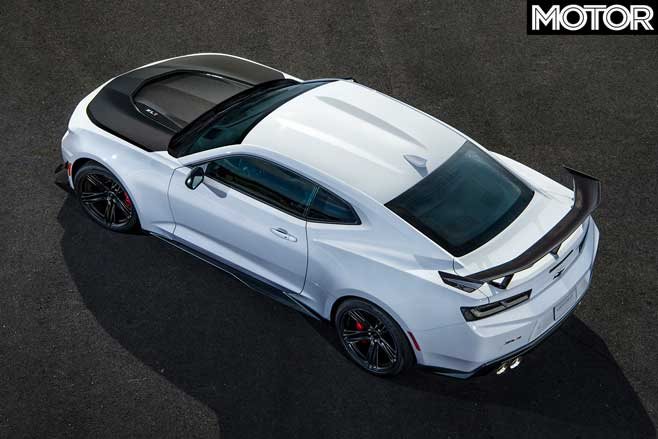
But I wasn’t going to take on the challenge alone. I had the good fortune of having racing legend Warren Luff on hand to hopefully stop me doing anything wildly stupid in this most highly-strung version of the iconic Camaro to date.
I was glad for any guidance whatsoever as the example I would be driving was the very first in the country and before HSV had even decided how it would offer customers the track-honed package.
Sandown raceway in Melbourne’s south east was the location for this, slightly nerve-wracking foray, a circuit known for having a car park that is in a better state of repair than the actual track.
Which wouldn’t ordinarily be a problem in a normal ‘road car’ but with its selection of enhancements, the ZL1 1LE falls into a murky realm somewhere between road-legal and racer.
It’s track-tuned suspension was punishing on the straight where it sniffed out every single imperfection and locked onto them like a bloodhound.
Thankfully, Luffy’s expert instruction was delivered with all the calm and professionalism (and a little teasing) you would expect from the accomplished racer that he is.
What you can’t see in the video is that I was sweating profusely. With the air conditioning switched off for better sound quality, the massive supercharged V8 pumping heat over the cabin and a warm Melbourne day outside, I was struggling to stay cool. Luffy however, with thousands of laps in hot cars as his day job, was probably a bit chilly.
Hopefully I don’t need to spell it out that the car was mental. My excitement and childish laughter are not acting and the package is unreal.
The car had a few teething problems including one which prevented the paddle shifters working but I didn’t mind letting the 10-speed automatic get on with its job, allowing me to concentrate on not crashing.
If you’ve never lapped Sandown, you might not know just how terrifying it is, particularly to the relatively inexperienced, with a couple of brutally unforgiving corners added to the patchwork surface that threatens to spit you into a barrier with absolutely no warning.
With Luffy relaying potentially life-saving instructions to me with composure, we managed to get a decent amount of the 1LE’s capability slapped onto the dodgy track and captured on camera.
I still don’t know what this Monstrous iteration of the Camaro drives like on the public road, but when I get a chance, Warren Luff will be the first person I call.
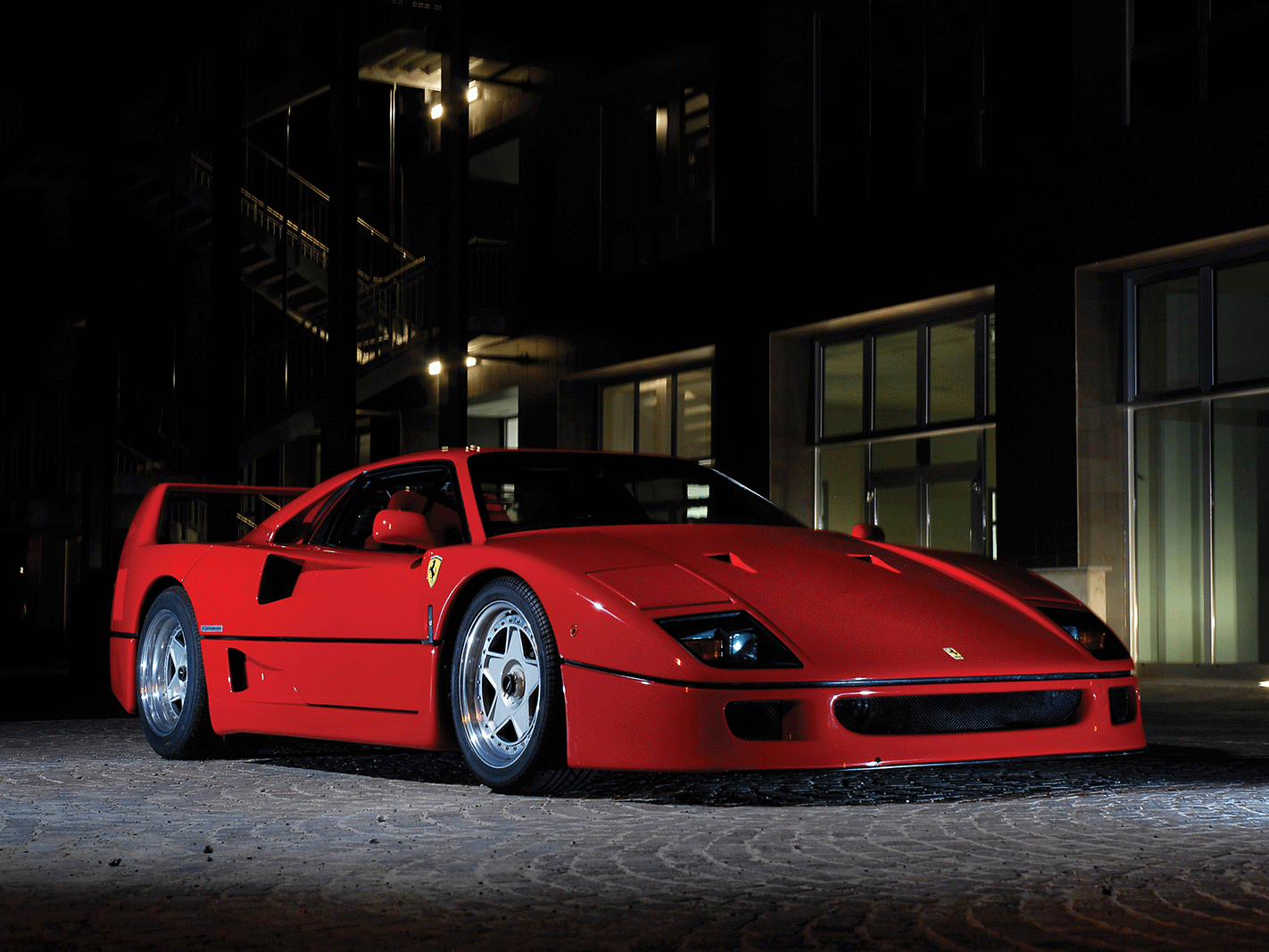
Ferrari F40
Back when it came out, it was a proper beast, maybe the most powerful car ever built at the time. When I was five years old, the first thing I remember is my dad took me in an F40, and I was so impressed and fell in love with it instantly.
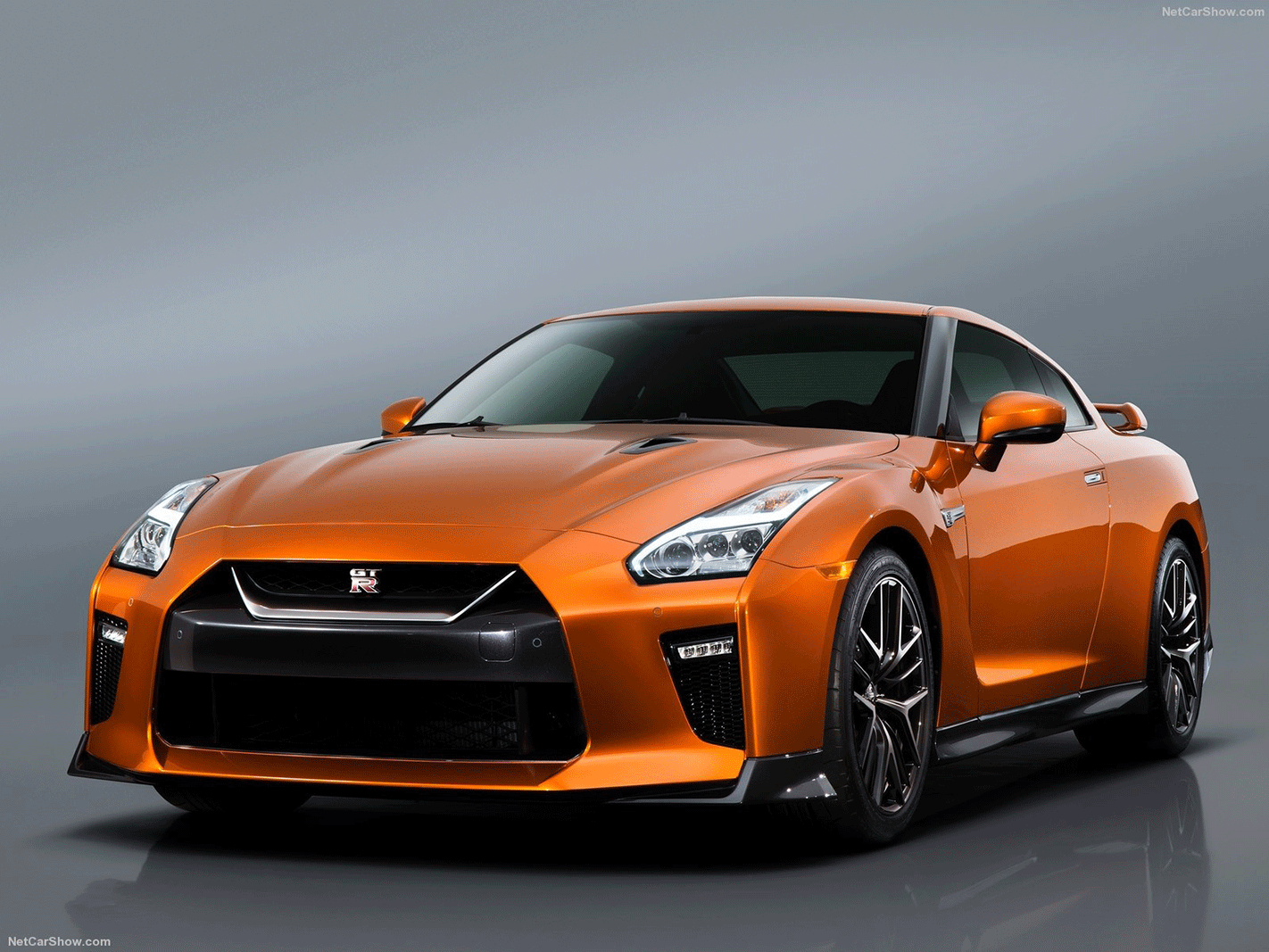
Nissan GT-R
I actually already own one of these. When I turned 18 years old and I got my driver’s licence, it was the greatest car to have in terms of value and performance. It was a dream car for me when I was 18, and now I have one and like it very much.
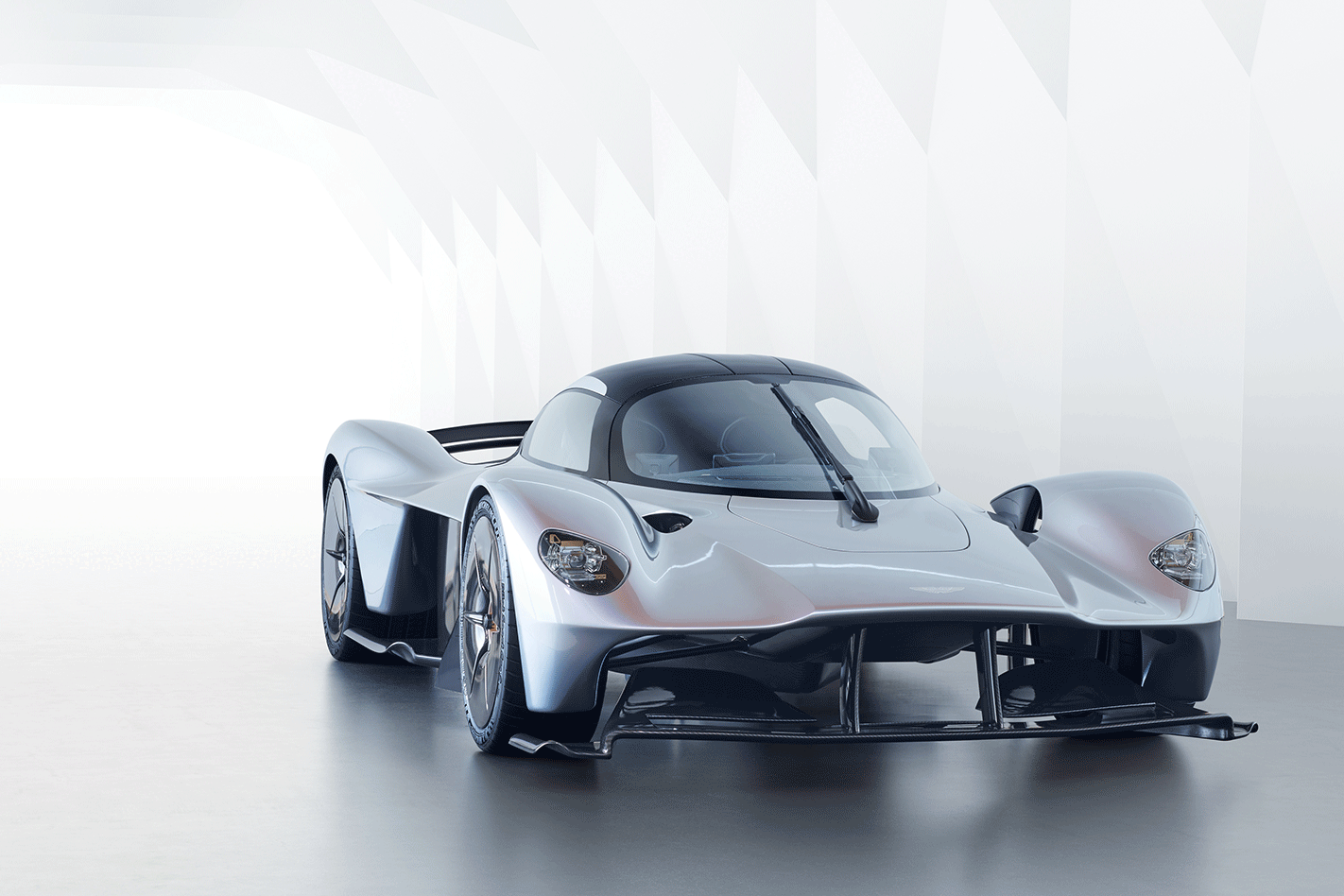
Aston Martin Valkyrie
I think this is going to be the best car ever. Not only in terms of power, but in cornering speed as well. I think it will push the limit of what defines a hypercar further than it has ever been. Clearly, for me, it is going to be the quickest road-legal car ever.
We’re now a third of the way into 2020 and not a single real-life Formula 1 race has been held, but on July 10 you’ll be able to relive the F1 season that never was with Codemasters’ F1 2020.
It’s a tricky situation for UK company Codemasters. Development of F1 2020 would have been well underway long before the decision was made to cancel the opening round of this year’s Formula 1 season in Melbourne due to the COVID-19 emergency, and since then the series has made do with a virtual substitute using F1 2019 and a grid bereft of actual F1 pilots.
That’s hardly the fault of Codemasters, but with the outlook for a resumption of the 2020 F1 season looking nigh-on impossible, it means F1 2020 has the dubious distinction of being a racing sim that simulates something which never happened.
But that shouldn’t really matter if the game is good, so what can we expect? Well, in addition to the Hanoi street circuit and Circuit Zandvoort that were supposed to host their first F1 races this year, there are tweaks to the gameplay along with the expected tweaks to cars, drivers and liveries.
The biggest change will be the addition of a ‘My Team’ mode, where players can don their team manager hat and create their own Formula 1 team to battle the real-world teams represented in the game. That’s on top of the changes to career mode that see shorter season lengths of 10 or 16 races as options to the standard 22-race full season.
Two-player split screen also makes a return, while a Michael Schumacher special edition of F1 2020 can also be had from launch.
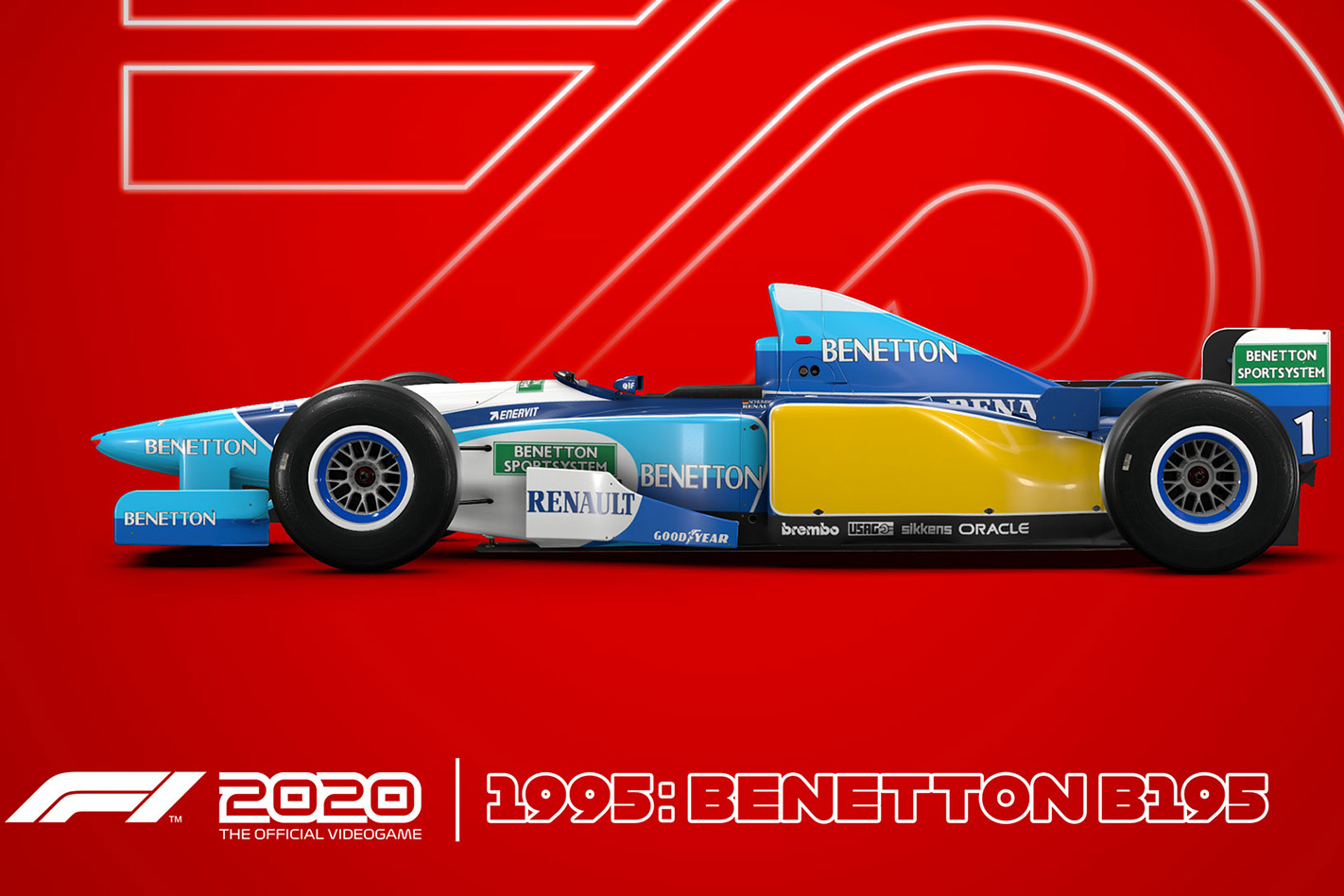
Besides giving players access to the game three days prior to the official launch, the Schumacher edition includes special liveries, player animations and other driver customisations, as well as four iconic cars from Schumacher’s career. Ever wanted to have a steer of his Jordan 191, Benetton B194 or B195, or his Ferrari F1-2000? Here’s your chance.
Right now there’s no gameplay footage or in-game screenshots of F1 2020, so we can’t make a call on whether there are any graphical improvements relative to F1 2019. We should find out more in the run-up to 2020’s launch on July 10.
Koenigsegg was one of the last brands we would expect to knock off Mercedes-AMG with the most powerful 2.0-litre engine in the world. But after releasing its new USD$1.7m (AUD$2.6m excluding taxes) Gemera to an empty motor show in Geneva in March, the four-seat hybrid hypercar quickly proved it is a mould-breaker in more ways than one.
For instance, the mid-mounted 2.0-litre three-cylinder engine (yes, three cylinders) drives only its front wheels, and it will be the first in the market to feature camshaft-less valvetrain technology. And the company says that, with three electric motors supplementing its grunt, Gemera will be the first hybrid (and four-seater) to reach 400km/h.
These achievements are yet more impressive when you consider they all come from one car. But company founder and CEO Christian von Koenigsegg built Gemera to show the world his take on the best solution for shrinking emissions from long-range car travel – until battery technology gets its act together for pure EVs.
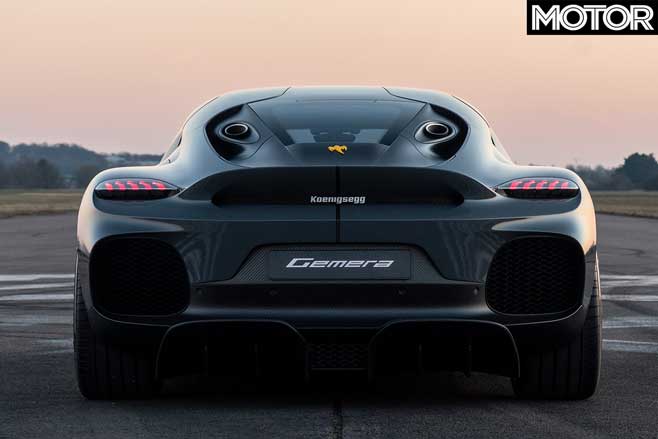
As well as producing as much as 1268kW and 3500Nm from its hybrid powertrain, Koenigsegg claims the Gemera can travel 50km on electric power alone and as far as 1000km when starting out with a full charge and fuel tank. That’s a drastic gap to Croatian EV hypercar firm Rimac, which plans to squeeze only 550km of range from its incoming full electric C-Two hypercar.
Of course, the Gemera’s eco-credentials are moot as long as it’s sipping fossil fuels and plugged into a coal-powered wall outlet. But Koenigsegg has an answer to that. It’s called the TFG, which is a quaint name for its engine and stands for Tiny Friendly Giant.
Koenigsegg explains its compact size allows the Gemera to fit the engine behind the rear seats while still leaving room for three “full-size” carry-on bags. Crucially, it says to achieve the Gemera’s figures with a full-electric powertrain would add another 30 per cent in weight to account for larger batteries and other hardware. All up, the carbonfibre-chassis Gemera weighs 1850kg at kerb, or within 40kg of a Camaro ZL1.
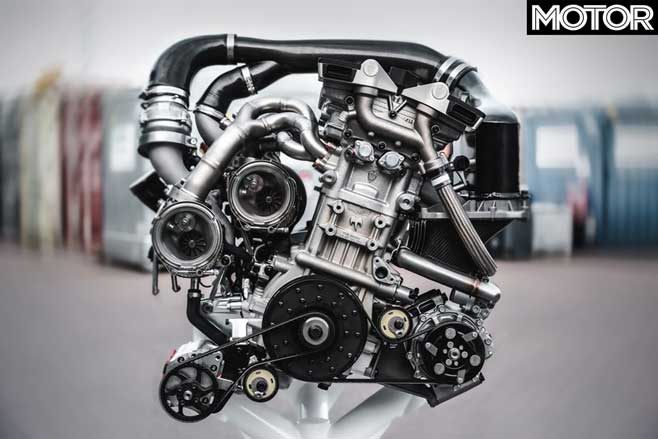
Okay, but why ‘friendly’? Well, to keep on the previous point, a lighter kerb weight benefits handling as well as easing its demand on consumables. And then there’s the TFG’s camshaft-less valvetrain, developed by Koenigsegg subsidiary Freevalve, that allows it to run on “whatever you can find”, including petrol and even diesel in small amounts.
What it’s really designed for, though, are “next generation renewable” biofuels – like Gen 2.0 Ethanol and Vulcanol – that virtually neutralise tailpipe emissions thanks to ‘extreme’ catalytic converters. On top of this, the TFG also charges the batteries when you’re on the move.
Finally, the ‘giant’ tag comes from the fact it accounts for 447kW and 600Nm of the Gemera’s total outputs, thanks to a twin turbocharging system that relies on Freevalve to control the sequential nature of its arrangement.
But the stars of the show are really the Gemera’s electric motors. The least of them sits in front of the TFG on the crankshaft. Rated at 298kW/400Nm, it assists the ICE to drive the front wheels through a torque tube. The other two straddle the TFG and drive each rear wheel directly. They’re rated at 373kW and 1000Nm each and can be decoupled via wet clutch for torque vectoring or range. All up, the three motors make a combination of 1044kW and 2500Nm while feeding on an 800-volt battery.
Gemera will hit 400km/h without a single gearshift. With its monstrous 3500Nm torque peak arriving before 2000rpm, the car simply pulls through a single ratio all the way to its top speed – while clipping 100km/h from rest in just 1.9sec.
So, the Gemera boasts mega grunt, ridiculous speed and enough room for your family and guilty conscience. Like we said, it’s a mould-breaker.
Koenigsegg Gemera’s Hybrid System
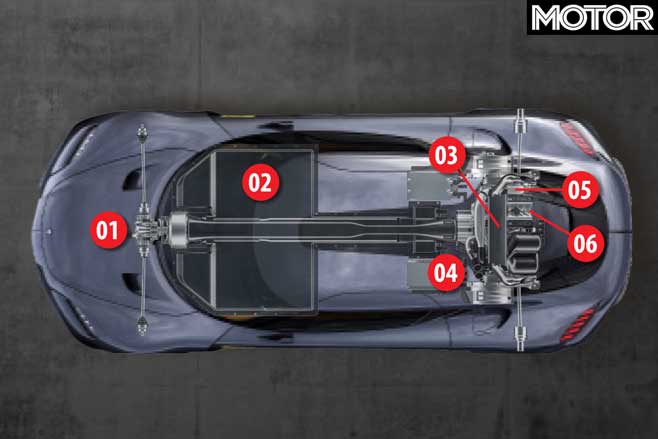
01 | Locked or Unloaded The engine’s power arrives at a front differential, which is flanked by two hydraulic clutches. They lock up to offer torque vectoring to either front wheel, and can disconnect to save fuel in EV mode.
02 | Carbon Castle The battery is rated at 800V and 16.6kWh. It lives under the front occupants in a carbonfibre casing and carbon-aramid tunnel down the centre of the car. Koenigsegg says it is liquid-cooled and each cell carefully monitored.
03 | Mighty Mouse The dry-sumped 2000cc three-banger weighs only 70kg and is no bigger than a carry-on suitcase. But each cylinder is big, sporting a 95mm bore and 93.5mm stroke. The TFG at its 8500rpm redline equals F1 engine piston speeds.
04 | Double the Fun Grunt has to pass through a hydraulic coupling before reaching the front diff. It can double the torque while under 3000rpm, explaining why the Gemera makes 3500Nm in total, even though its powertrain makes 3100Nm combined.
05 | Twin Turbo Each cylinder has two exhaust valves, with one routed to a smaller turbocharger and another to a higher-flow one, and the infinitely adjustable valves can direct gases to whichever turbo unit required for the rpm range.
06 | To Infinity! Pneumatic actuators replace camshafts, offering infinitely variable valve timing – and also doing away with the need for throttle bodies. It’s so complicated only artificial intelligence will ever be able to get the best out of it.
Styling? Inspired by an egg, mate
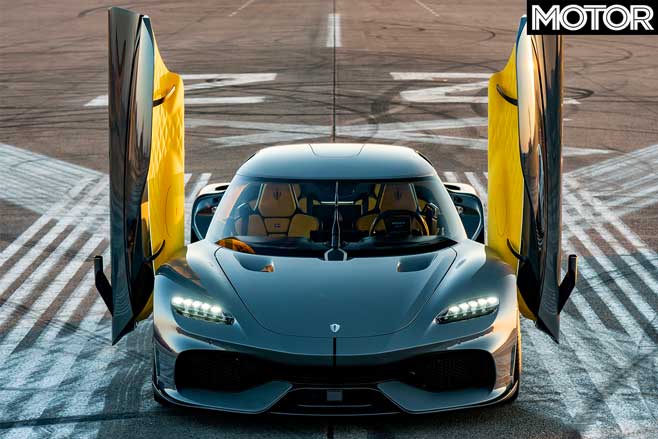
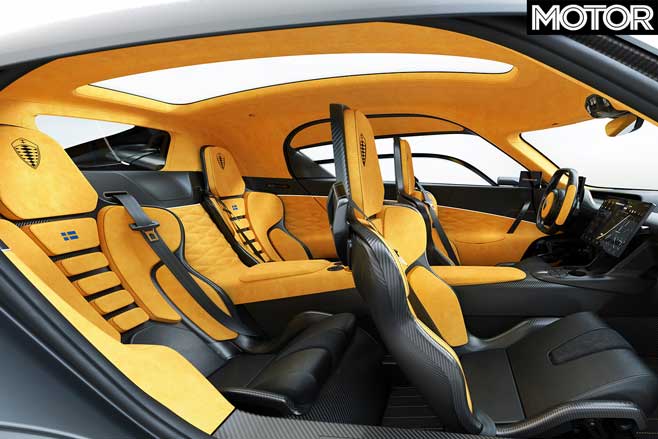
At just under five metres long it would seem like the Koenigsegg Gemera’s goal to cram four people in a mid-engine car has been achieved. Koenigsegg says the cabin, inspired by the shape of an egg, can fit four adults each over 6’5 in height. The front seats don’t even need to be moved to enter the rear. Enormous single ‘dihedral synchro-helix’ doors doors span each side. They swing up and forward, keeping out of harm’s way thanks to sensors located along the doors’ edges.
What stands out?
The Toyota Kluger is a roomy seven-seat SUV with a powerful V6 engine and responsive eight-speed auto gearbox. It is smooth and quiet to drive, and its comfortable cabin has thoughtful storage touches and deeply cushioned seats. Even the rearmost passengers are protected with airbags. All Klugers offer auto braking and other advanced driver assistance features as standard.
What might bug me?
Manoeuvring the Kluger for parking: the steering feels heavy at very low speeds.
What body styles are there?
Five-door wagon only.Toyota offers front-wheel drive and all-wheel drive versions of the Kluger. AWD Klugers drive the front wheels all the time, and the rear wheels if the front tyres start to slip.The Kluger is classed as a large SUV, lower priced.
What features do all Klugers have?
Adaptive cruise control, reverse parking sensors, and a reversing camera.A pre-Crash Safety System that incorporates high-speed automatic emergency braking, and a driver-assistance suite that includes lane-keeping assistance, a rear cross-traffic alert, and auto-dipping headlights.A colour touchscreen: 6.1-inch for the less costly Kluger GX, and 8.0-inch for the GXL and Grande. Bluetooth connectivity for phone calls and audio streaming. An audio system with iPod, Aux and USB inputs, and six speakers.Controls on the steering wheel for the audio system and your phone.Seating for seven people.Headlamps that switch on automatically in low light. Daytime running lights near the headlamps, which make your car more visible to others.Aluminium alloy wheels (which are lighter and more stylish than steel wheels), and a full-sized spare wheel.Seven airbags. Electronic stability control, which can help control a skid or a slide and is mandatory on new cars. (For the placement of airbags, and more on Kluger safety systems, please open the Safety section below.)The Kluger is covered by a five-year, unlimited warranty.
Which engine uses least fuel, and why wouldn’t I choose it?
There is only one engine available in the Kluger, a 3.5-litre petrol V6. In all-wheel drive Klugers, it consumes 9.5 litres/100km in the official test (urban and country combined). Front-drive Klugers do a bit better.That figure is for the revised engine and gearbox package that arrived in February 2017. The new engine was the same size and type as the old one, but adopted direct petrol injection, which adds power while saving fuel. The auto gearbox gained an extra two ratios, for a total of eight.What the Kluger consumes in real-world driving depends a lot on how and where you are driving it. In easy highway cruising at 100-110km/h, you can expect the new, direct-injected V6 to use between 10 and 11 litres/100km. Throw in some stop-start driving and fuel use will quickly rise past 12 litres/100km. Once your driving mix becomes more urban than open road, expect about 14 litres/100km.The eight-speed auto transmission is fitted to all Klugers.
What key features do I get if I spend more?
Step up in price from the Kluger GX to the GXL and you get three-zone air-conditioning: you can set different temperatures for the left and right sides of the cabin in front, and a third temperature for those in the rear.The GXL also gains rain-sensing windscreen wipers, blind spot monitor, and rear-cross traffic alert that senses cars coming from either side when you’re reversing out of a driveway or parking spot.There’s also smart key entry, which allows you to unlock the front doors or power-opening tailgate while the key remains safe in a pocket or bag. Heated front seats, a power-adjusted driver’s seat and partial leather trim are also part of the GXL deal. There is the bigger – 8.0-inch – touchscreen, and it comes with a digital radio and satellite-navigation. And there are roof rails, for fitting the optional roof rack.The most expensive Kluger, the Grande, comes with a sunroof, ventilated front seats (they circulate cool air), power adjustment for the passenger seat, and a memory for the driver’s seat (which makes it easy to restore your settings after a companion has driven the car).The Grande is distinguished externally by its 19-inch wheels (other models have 18s), fitted with tyres of a slightly lower profile – essentially a cosmetic change.
Does any upgrade have a down side?
Headroom in the front of the Kluger Grande is about 3.0 cm less because of the sunroof, but that will affect only very tall people.The 19-inch wheel and tyre combination fitted to the Grande is less suitable for driving on rough and unsealed roads than the 18-inch wheels and tyres on less expensive Klugers.Black is the only standard colour, with the other eight costing extra.
How comfortable is the Kluger?
The Kluger’s cabin is stylish and functional and looks well put together, with a quality feel. There’s a sense of formality, thanks to the darker hues. Kluger Grandes in some colours can be ordered with a paler interior.There is a broad storage tray on the passenger’s side that is good for holding phones – it even has a hole for power cords, which slot through to charging outlets below.Big door pockets and a deep centre console provide ample space for bottles, handbags and the like.Seats are supple and supportive, for good long distance comfort. Ventilation controls are big and easy to operate, and produce superb results. Some people might have to lean away from the seatback to reach the touchscreen.Vision is good to the front and side, but not good at the rear, where the camera comes in handy.At very low speeds you might find the steering slightly heavier than you expect, with some effort required when parking. It’s a big car and this reminds you of its bulk.The V6 engine is smooth and feels very eager when you press the accelerator. On a country road or freeway, the Kluger is impressively quiet inside and rides comfortably.
What about safety in a Kluger?
Every Kluger has a reversing camera, electronic stability control, and seven airbags. Auto-on headlights and daytime running lights enhance visibility at dawn and dusk.Two of the airbags are placed directly in front of the driver and front passenger, and there is a knee airbag for the driver. The duo up front also get a side airbag each, which protects them from side impacts at chest level. And head-protecting curtain airbags stretch all the way to the back of the car, extending past passengers in all three rows of seats.In January 2018, Toyota rolled out active safety features to all Kluger models that were exclusive to the most expensive Kluger, the Grande.Perhaps the chief of these is radar-based autonomous emergency braking that works at city and highway speeds – part of what Toyota calls its Pre-Collision Safety system. It detects obstacles in front – typically a sharply slowing car – and warns you if it deems a collision likely. If you do not react, it will brake automatically – with the aim of reducing your speed at impact.The Kluger also warns you if it begins to wander out of its lane – perhaps because you are distracted or sleepy – and can nudge the steering in an attempt to wake you up and guide you back on course.The GXL and Grande feature other radar sensors look behind you, alerting you if you are about to change lanes into the path of a nearby car, or if you are about to reverse into the path of a vehicle crossing behind.The Australasian New Car Assessment Program (ANCAP) has rated the Kluger’s safety at its maximum of five stars, most recently in April 2017.
I like driving – will I enjoy this car?
The Kluger is a pleasure to drive provided you respect its bulk and refrain from forcing the pace.The pleasure comes from how comfortable and quiet it is to travel in. It’s like driving a luxury limousine.But it’s also a big and heavy car, so while it’s nicely stable through corners it is not particularly agile in and out of corners. Quick direction changes are not what the Kluger likes, and it will tell you so in the way its body rolls from side to side.If you are driving near the limits of tyre grip, the Kluger’s stability control system also intrudes more on the driving experience than those in most cars. Sometimes it will disconcert you by cutting power for a moment, rather than stabilising the car in a more subtle fashion.The V6 gives the Kluger great performance, especially when you encourage the smooth engine to spin up. The eight-speed gearbox that arrived in February 2017 helps you do this, allowing the engine to attain and hold its best power more easily. The current Kluger feels more responsive than its pre-update predecessor, which had a slightly less powerful V6 and six-speed gearbox, and it’s the extra ratios in the gearbox that make most difference.The 19-inch tyres on the Grande bring you marginally better steering response and accuracy than the 18s on other Klugers, but they diminish ride quality and puncture resistance on rough or gravel roads. The upgraded Kluger retains the Australian-tuned chassis of the car it replaces.All-wheel drive versions of the Kluger are designed for off-bitumen driving rather than off-road driving: think gravel, dirt or snow-covered roads, and farm tracks. (You can even press a Snow button near the gear selector, which reduces the chance of wheelspin on slippery surfaces.)
How is life in the rear seats?
The middle row of seats has ample head room and excellent leg room. The seats split-fold 60/40 and can also be slid forward and back, for distributing leg room between the second and third rows.There are three child-seat anchor points for the middle row of seats but none for the back row. That middle row works well for carrying two or three children, and there’s enough head and leg room to keep adults content, too.However, the third-row seats are difficult to access when child seats have been clicked in to the second row.The relatively high rear floor makes it easy to clip children into their belts. The lip on the floor at the tailgate is small, a win for getting prams in and out easily.Ventilation to the rear is good, too, with air-conditioning vents in the roof for the rearmost passengers. The independent control of rear temperatures in a GXL or Grande helps keep the clan content. The Grande also has retractable blinds for the rear doors.
How is it for carrying stuff?
As with most SUVs, there is not much storage space if you’re using all seven seats. But with that third row folded there is a broad, deep load area. You can also slide the second-row seats forward to maximise luggage space. There’s a small covered binnacle on the left side of the boot.The rear window on Kluger GXLs and Grandes can open independently of the tailgate, making it quicker and easier to load small items.The Kluger is rated to tow 2000kg, which is sufficient for a medium caravan or single-horse float. Expect the fuel consumption to rise noticeably when towing anything heavy or large.
Where is the Toyota Kluger made?
All Klugers are made in the USA.
What might I miss that similar cars have?
A diesel or turbocharged petrol engine that uses less fuel than the Kluger’s petrol V6, as available in the Hyundai Santa Fe, Kia Sorento or Mazda CX-9 and Mazda CX-8.A middle row of seats that split-fold 40/20/40, for added load flexibility. The Hyundai Santa Fe, for example, offers this feature.You might also be interested in a seven-seat SUV that you can take off road. Among your options here are the Toyota Prado and Fortuner, and the Ford Everest.
I like this car, but I can’t choose which version. Can you help?
We like the Kluger GXL all-wheel drive. The GXL brings plenty of useful and cosseting features for the money – such as the tri-zone ventilation, smart-key entry and leather seats. The all-wheel drive system gives you extra confidence on dirt roads or at the snow, while also bringing benefits on slippery bitumen surfaces.
Are there plans to update the Kluger soon?
Yes. The current Kluger went on sale in 2014 with a petrol V6 engine and six-speed auto gearbox. About February 2017 Toyota introduced a mildly facelifted Kluger that brought direct petrol injection to the V6 engine and replaced the six-speed auto with an eight-speeder, resulting in a more responsive car. Kluger GXLs gained a bigger touchscreen, satellite navigation, and smart-key entry.In January 2018 Toyota rolled out the Grande’s advanced driver assistance suite, with adaptive cruise control, automatic emergency braking and lane-keep assistance, to the GX and GXL.In March 2019 Toyota released a limited run Kluger dubbed the Black Edition that was based on the GXL but enhanced with bold black exterior trim, and 19-inch gloss-black alloy wheels replacing the standard 18-inch rims.In April 2019, Toyota revealed the fourth-generation Kluger at the New York Motor Show. The all-new Kluger is bigger than the current model and will feature the latest infotainment and active safety technology. It will be powered by a choice of V6 petrol and a four-cylinder hybrid powertrains with the latter yet to be conformed for the Australian market.It was expected in Australia some time in 2020 but it’s more likely to arrive early in 2021.
I described the demise of Holden as a bit like having a relative in palliative care; you know only too well what the eventual outcome is going to be, but it still comes as a hell of a shock when Auntie Dorrie does finally pop her clogs.
Standing back and looking at the chain of events now, there was never any real doubt about what would become of the brand, especially since it couldn’t take a trick at showroom level. No sell cars, no open doors. Simples. But even as late as December last year, Holden dudes were still telling me that the brand was safe and they knew of no plans to get rid of it. I don’t doubt their honesty. But I do question GM’s place in all of this.

On the surface, it was GM’s decision to get out of right-hand drive cars that was the last nail in the pine box marked ‘Australia’s Own’. The argument went along the lines of: It costs just as much to develop a right-hand drive car as a left-hooker. And since 75 per cent of our business is left-hand drive, we’ll just do what big business does and follow the money. Well, I’m not sure I buy that.
For starters, I question the statement that it costs twice as much to develop right- and left-hand-drive versions of the same car. Yes, there are packaging considerations and crash-safety to consider and the dashboard moulding needs to be flipped and, yes, those things all cost money to iron out. And I’m sure it costs millions to do. But really, what effect does the location of the tiller have on where the fuel tank is placed? Or how deep the window-line is? Or what part-number wheel-bearing is going to be used?
Sure, there will be differences inside the engine-box, but does a left-hook car need a different roof pressing to the right-hook version? Does it need a re-engineered bootlid or tail-lights? I wouldn’t have thought so. So I’ll say it again – I seriously doubt the whole double-the-development-cost thing.
Having questioned the statement about the true cost of right-hand drive, I’ll now move on to wondering out loud about the business case for getting out of right-hand drive. Sure, a GM without right-hand drive will be a sleeker animal, but it also locks it away from a quarter of the planet’s car buyers. Is this good business?
I’m not sure, and I’ve been racking my brain trying to think of another mass-market player who doesn’t have both right- and left-hand drive cars. And I can’t. Think of one, that is. Does this trend among GM’s peers not suggest that to be a major operator in the car biz, you need to cover as much of the globe as possible? And if that means having both LHD and RHD, where does that leave GM?
Is this a distant cry for help from Detroit? Despite all the hoopla about a Tesla-busting range of EVs in the future and a USD$20 billion spend on electric tech between now and 2025, is GM giving off early signs of trouble? R U OK, mate?
Time will tell, I guess. Meantime, while Holden had stink-lines coming off it for the last two or three years, I don’t think it’s just me who will miss the auld dear.
Exactly what we’re losing culturally has been a major topic of conversation at the MBC lately, and I’m not ashamed to say I’m devo’ed.
My mum and dad went on their honeymoon in a Holden, I came home form hospital in one, and the Morley boys have driven them, raced them, built them, modified them, crashed them and loved them for as long as we’ve been old enough to know them. I still have a couple of old girls in my shed and I can tell you for free, that aint about to change.
Looking to kick some butt in your local trivia club? Reckon your mate is a bit too mouthy by half about car stuff? Then tune in to our series of History, Trivia and Fast Facts on the world’s most interesting automotive brands.
The first cab off the rank is Italian sports-luxury manufacturer Alfa Romeo, owned by the Fiat Group since 1986.
1 French heritage
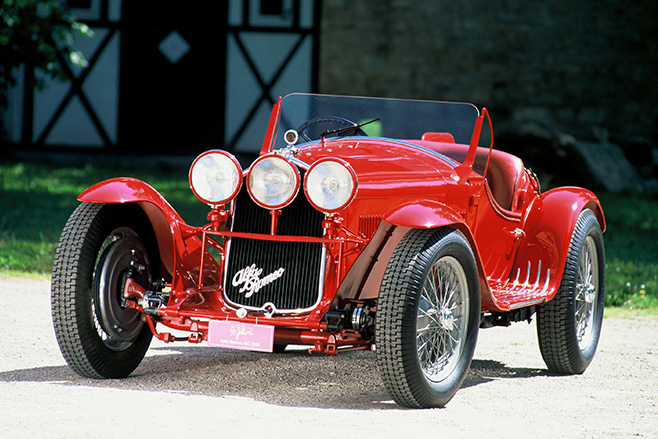
Alfa Romeo may be famously Italian, though it started life as eponymous French auto maker Alexandre Darracq. After Darracq’s 1906 expansion into Italy with a factory outside of Milan failed, the outfit was acquired four years later by a consortium of Italian investors and renamed Anonima Lombarda Fabbrica Automobili.
That accounts for the ALFA part of the name; the Romeo half came into the equation in 1920 – five years after businessman Nicola Romeo had purchased a controlling stake in Alfa.
2 The birth of a sporty reputation
Alfa Romeo won the inaugural (pre-Formula One) Grand Prix World Championship in 1925, while the foundations of a reputation based around sports cars was cemented between 1931 to 1934, when the brand achieved four successive victories in the 24-hour Le Mans endurance race.
3 Turning over a new (clover)leaf
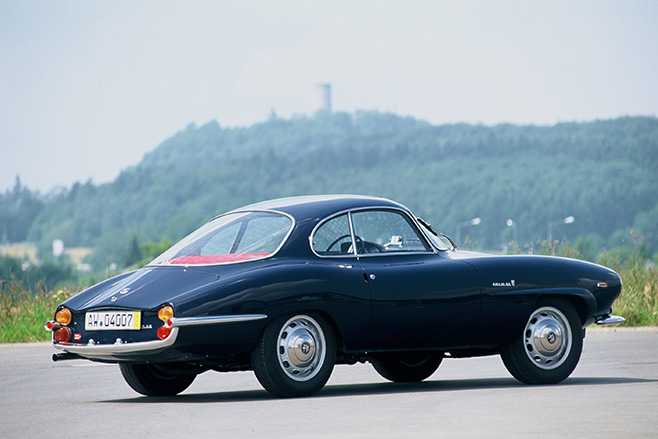
Alfa’s performance variants continue to wear the quadrifoglio – or four-leaf clover – badge. The ‘good luck’ symbol was first used by Ugo Sirocci, on the Alfa RL he raced to the brand’s first road victory in the 1923 Targa Florio.
When he died a year later in a car not featuring the quadrifoglio, Alfa started applying it thereafter.
4 The origins of Ferrari
Alfa Romeo Tipo B
Enzo Ferrari became a works driver for Alfa in 1920 before starting a Scuderia Ferrari outfit nine years later that would look after Alfa’s racing team for four years.
He was made manager when Alfa brought the team in-house again, though the ambitious Enzo would leave to focus on what would become the world’s most famous automotive brand.
5 Wall St crash rescue
Alfa, like many companies, was affected badly by the Great Depression that was a consequence of the October 1929 Wall Street crash known as Black Tuesday.
Four years later it was rescued financially by the Italian government.
6 War craft
Alfa Romeo contributed to the production of military components and aircraft engines during World War I, a role it would repeat for Italy’s involvement in the Second World War – this time with, rather than against, Germany.
The Alfa Romeo Avio company was born in 1938, the result of Alfa’s aviation interests being hived off from the main company. Alfa’s alloy engine prowess stemmed from its involvement in the aviation industry.
Bomb damage delayed the restart of vehicle production to 1946.
7 Formula first
Ferrari is the Italian car brand most synonymous with Formula One, yet it was Alfa Romeo that won the inaugural championship in 1950 – with the 158 driven by Giuseppe ‘Nino’ Farina.
It repeated the success in 1951 with legendary Argentinian racer Juan Manuel Fangio, driving a 159, and then promptly retired from the sport.
8 The 40-year-old engine
Alfa unveiled the world’s first aluminium, double-overhead-cam four-cylinder engine at the 1954 Geneva motor show. It would be used in the company’s cars until the 1990s.
9 Graduating to the big screen
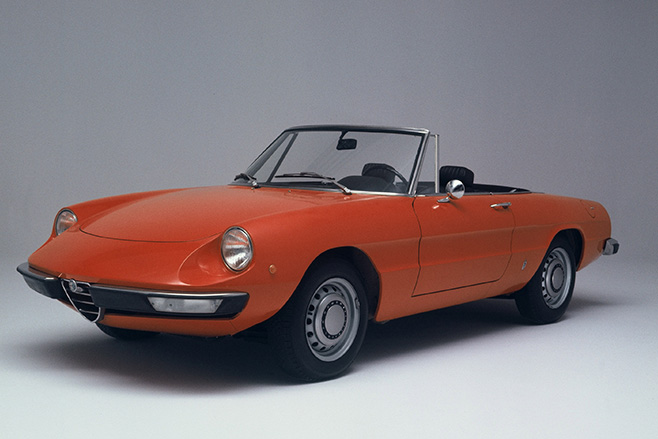
The Alfa Romeo brand seduced the world in 1967 when its Duetto Spider, launched just a year earlier, starred alongside Dustin Hoffman in the hit film The Graduate.
The shrewd product placement was the result of Hoffman’s uncle, Max, being a famous Alfa importer. If you notice any continuity issues in the film, it’s because the film-makers used three different European-specification 1600 Spiders.
10 Alfa’s American nightmare
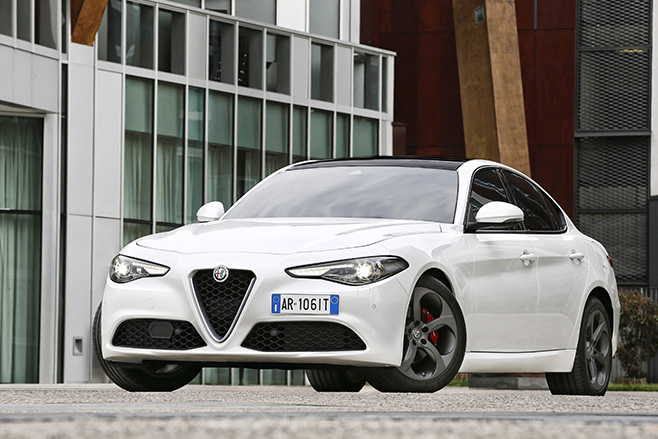
With the exception of the quarter-million-dollar 8C supercar, Alfa has been missing from the US market for more than 20 years. It pulled out in 1995 owing to unhappy executives (sliding sales) and unhappy customers (quality issues).
The new Giulia, Alfa’s rival for the likes of the BMW 3 Series and Mercedes-Benz C-Class, marked its oft-delayed return in 2017 – but the signs are ominous that another withdrawal is looming.
11 Counting to 4C
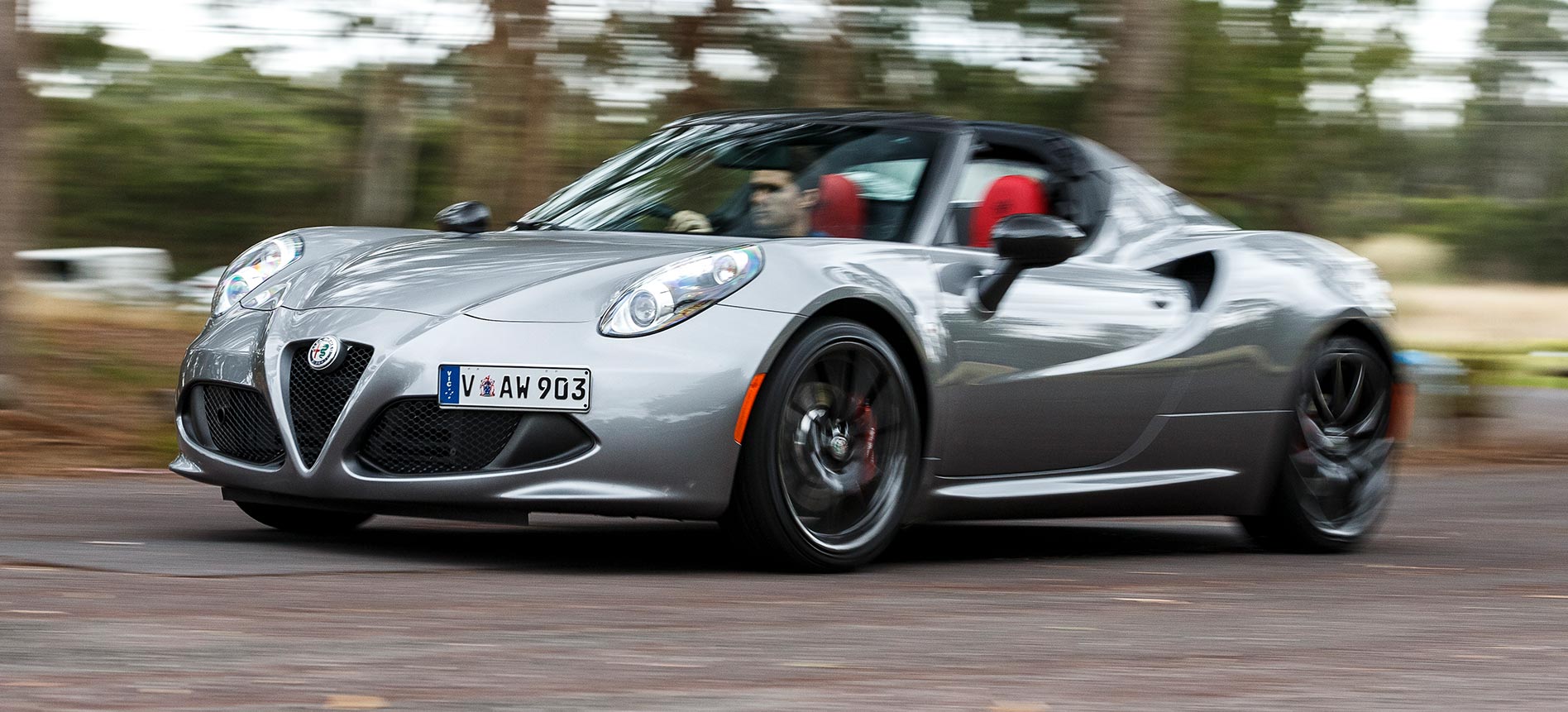
Alfa’s 4C sports car was intended originally to wear the scorpion badge of Fiat’s racy Abarth brand, according to well-placed Italian sources.
It’s understood the change of brand was made because executives desperately needed a new interim product for Alfa while development of the new Giulia sedan was being delayed.
12 Better late than never
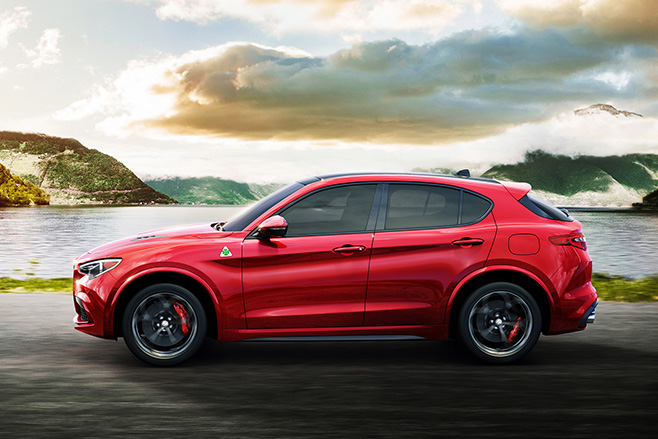
Alfa Romeo released its first-ever SUV in 2017. Named the Stelvio, the model will mark 14 years since the brand showcased the Kamal SUV concept at the 2003 Geneva motor show.
It shares a platform and engines with the Alfa Romeo Giulia mid-size sedan – and unfortunately its slow sales.
13 The future looks shaded
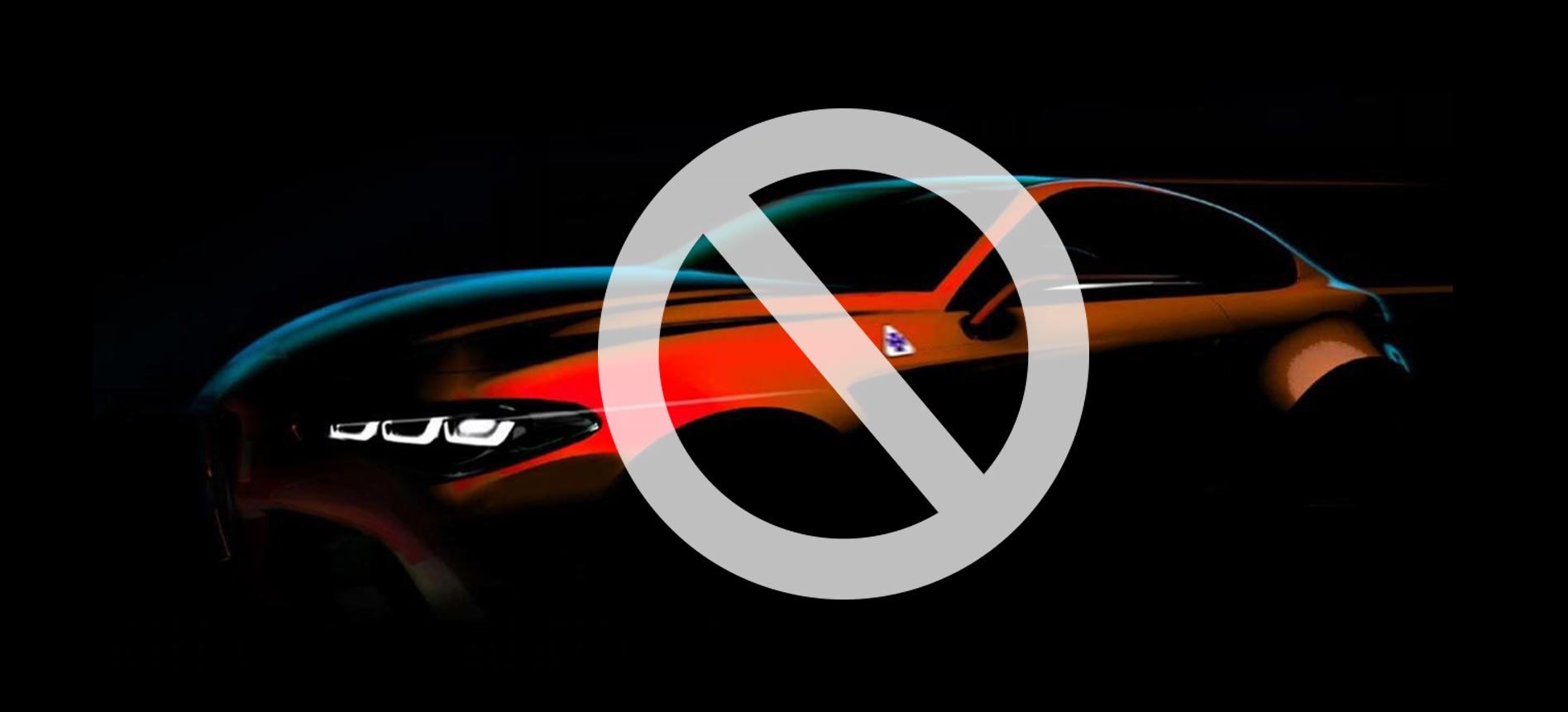
In the middle of 2018, Alfa Romeo made waves with the announcement that the long-awaited rekindling of its performance heritage was close at hand with the announcement of a new 500kW 8C supercar, a hybridised 450kW GTV coupe, and a replacement for its Golf-competitor, the Giulietta, as part of ambitious seven model plan that will enter production in 2022.
Unfortunately, of the seven, Alfa Romeo’s new and rationalised product roadmap now just features three of the originally proposed models, the facelift Giulia and Stelvio, and a possible ‘Tonale’ small SUV to line-up against the BMW X1 segment. All three models are earmarked for a 2021 debut.
14 The Alfisti
This is the established collective noun for the global legions of passionately devoted fans of the Alfa Romeo brand.
The van is traditionally a completely unremarkable vehicle.
Designed for purely utilitarian purposes, vans are uninspiring to the red-blooded motoring enthusiast… most of the time.
But like any rule, there are always exceptions, and these three examples show why you shouldn’t underestimate that tradie van next time you line up at the traffic light grand prix.
The XJ220-powered Transit
The Jaguar XJ220 was a seriously quick car for its time. With sleek aerodynamic styling, the Jag Supercar was powered by a 540-horsepower twin-turbo 3.0-litre V6. This was good enough to launch the Big Cat from 0-100km/h in 3.6-seconds, and onto a blistering 342km/h top speed.
Interestingly at the time, Jag couldn’t go testing the engine in something that would give the game away on what it was developing. So it hatched a plan to slot the running gear of the XJ220 into something a bit more inconspicuous. Enter, the Ford Transit.
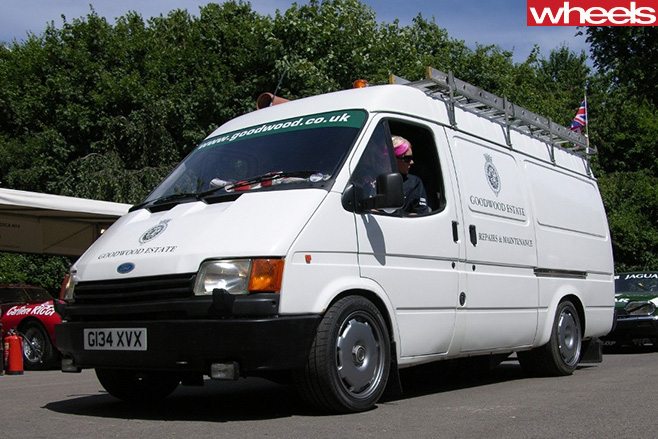
The van was modified to accommodate the new power-train, and successfully tested the engine and gearbox combo without prying eyes picking up on what was happening.
Once the XJ220 was released, the test van was put out to pasture and forgotten for a number of years.
However, it has now found a new life in Hillclimb racing. The current owners have fiddled with the engine to make 477kW, and the suspension has been tweaked so that corners aren’t a masterclass in understeer. It even gets driven on the road regularly!
Keeping its sleeper looks, this is one Transit that you don’t want to get tempted into racing off the lights.
Ford Supervan
Originally created in 1971, the original Ford Supervan was the lovechild of a Mk1 Transit bodyshell and GT40 engine and chassis. Built by Terry Drury Racing the car made appearances at motorsport events around Britain, and appeared to simply be a Transit with flared arches and wider wheels – that just so happened to be powered by a 298kW V8 from one of the most iconic Fords of all time.
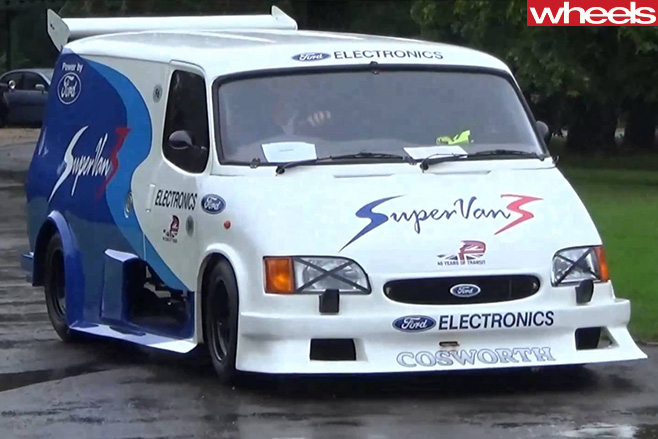
It wasn’t until 1994 that the Supervan name returned once more, this time to promote the Mk5 Transit. Built off the Supervan 2 carcass, the third iteration of the Supervan had a reduced seven-eighths scale body, with a Cosworth HB engine. Supervan 3 was the longest surviving iteration, appearing publically until 2001, before being refurbished in 2004 with a Ford-Cosworth Pro Sports 3000 V6 Engine.
Long live Supervan!
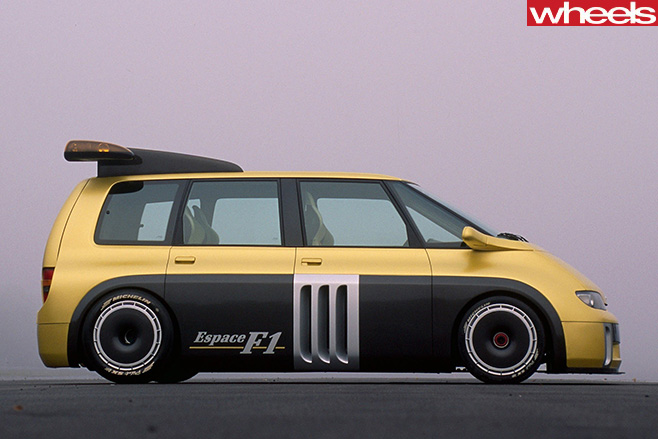
Renault Espace F1
In 1995 Renault was celebrating the 10th anniversary of both its involvement with racing in Formula 1, and its Espace people-mover. Instead of dealing with the two occasions separately, Renault decided to multi-task, and the Espace F1 was born.
Resembling an Espace visually, the radical van was underpinned by a carbon fibre chassis and body, and was powered by a 587kW 3.5-litre V10 lifted from the 1993 Williams-Renault FW15C F1 car.
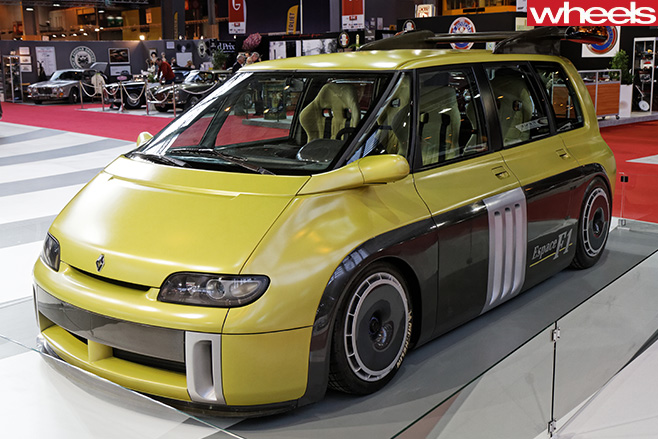
It wasn’t just getting going that was the Espace F1s party trick; the people-mover was pretty impressive on the brakes too – it was capable of going from 0-270-0km/h in just 600 meters.
This article was first published June 10, 2016.
- Introduction: The Big Surprise
- Update #1: The Baja Hustle
- Update #2
- Update #3: The great cover up
- Update #4: Snow-go zone
- Update #5
Introduction: The Big Surprise
FISH OUT OF water doesn’t quite cut it here. No, this is more deep-sea-tuna-on-top-of-Uluru kind of territory. Complete with Julian Assange-in-a-crowded-supermarket levels of discomfort.
You see, I’m just not a dual-cab ute kind of guy. I can appreciate them in a detached kind of way, and understand that they’re exceedingly popular and thus exceptionally relevant to the average Aussie, yet they hold zero appeal to my rational side. They’re too heavy, too thirsty and too clumsy. Plus I don’t have anything to lug about.
This does make me feel like an American trying to understand cricket, though I have tried to grasp the allure of the pick-up. This involved several attempts at hardcore off-roading, but all this managed to do was deepen my confusion. Who cares if your ute can clamber up a boulder? And enduring hours of muddy ruts and inching down slippery slopes at 4km/h is about as thrilling as hopping inside your dryer to share a spin cycle with a bowling ball.
All of this makes me the least qualified person in the Wheels office to run the latest addition to our fleet – this rather ostentatious Ford Ranger Raptor. Which is precisely why I wanted to be its custodian. Over the next six months, I’m hoping the Raptor can finally shed some light on the whole dual-cab thing. Plus, let’s be real: this isn’t your typical dual-cab.
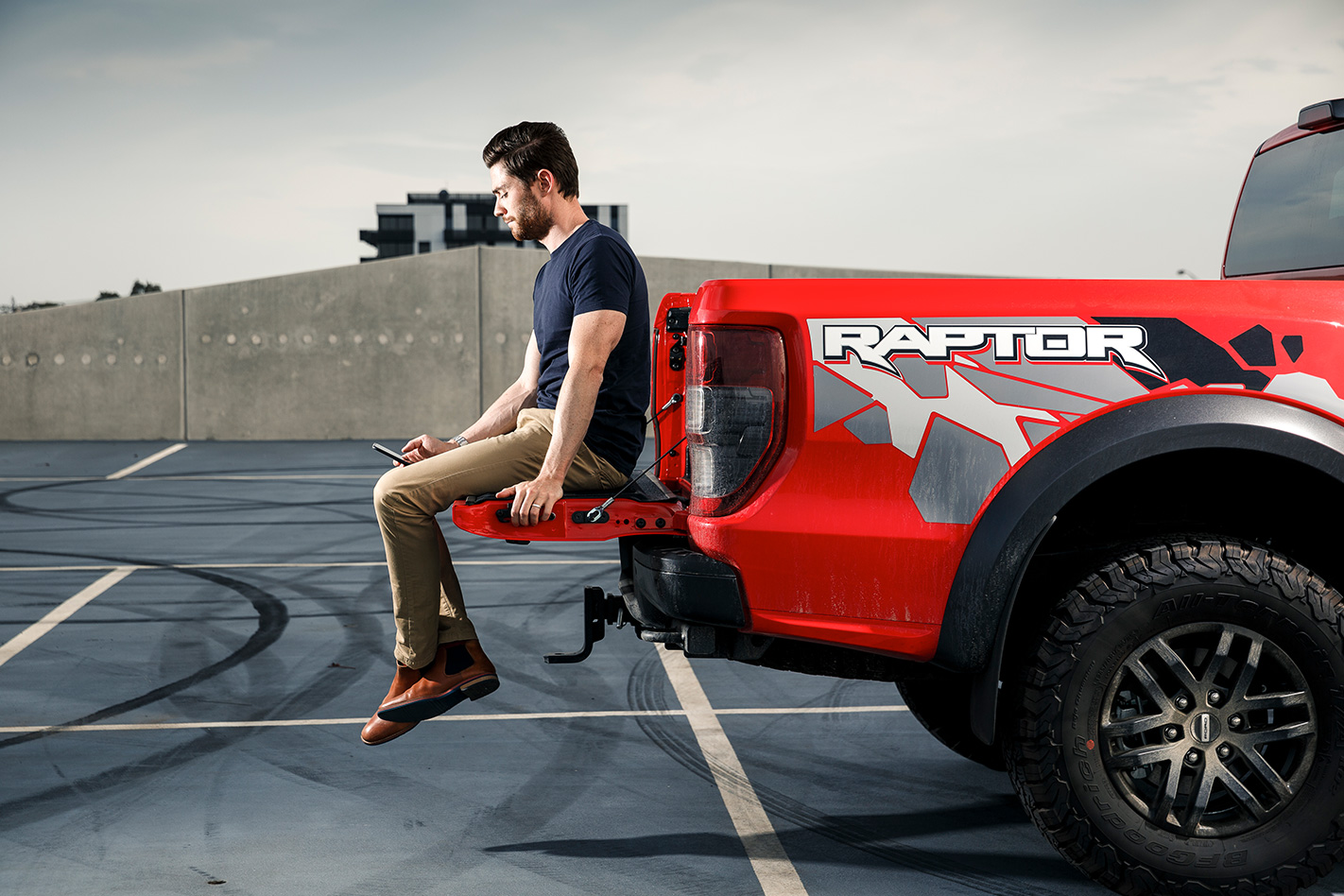
It looks absolutely mental, especially in this colour (a $650 option, while the decals are an additional $750), and I adore how much of a visual middle finger it delivers in every situation. Bluff, aggressive and imposingly tall (the track is 150mm wider and the ride height is 50mm taller than a regular Ranger), it’s the only vehicle I’ve ever ‘owned’ that requires the help of a grab-handle on the A-pillar to climb into.
Plus, while I find most off-roading to be about as exciting as a Matthew McConaughey marathon, the Raptor has been designed with a particular brand of bush bashing in mind – high-speed hooliganism. The evidence of this is found primarily in the one mechanical component that dominates the Raptor experience: the suspension.
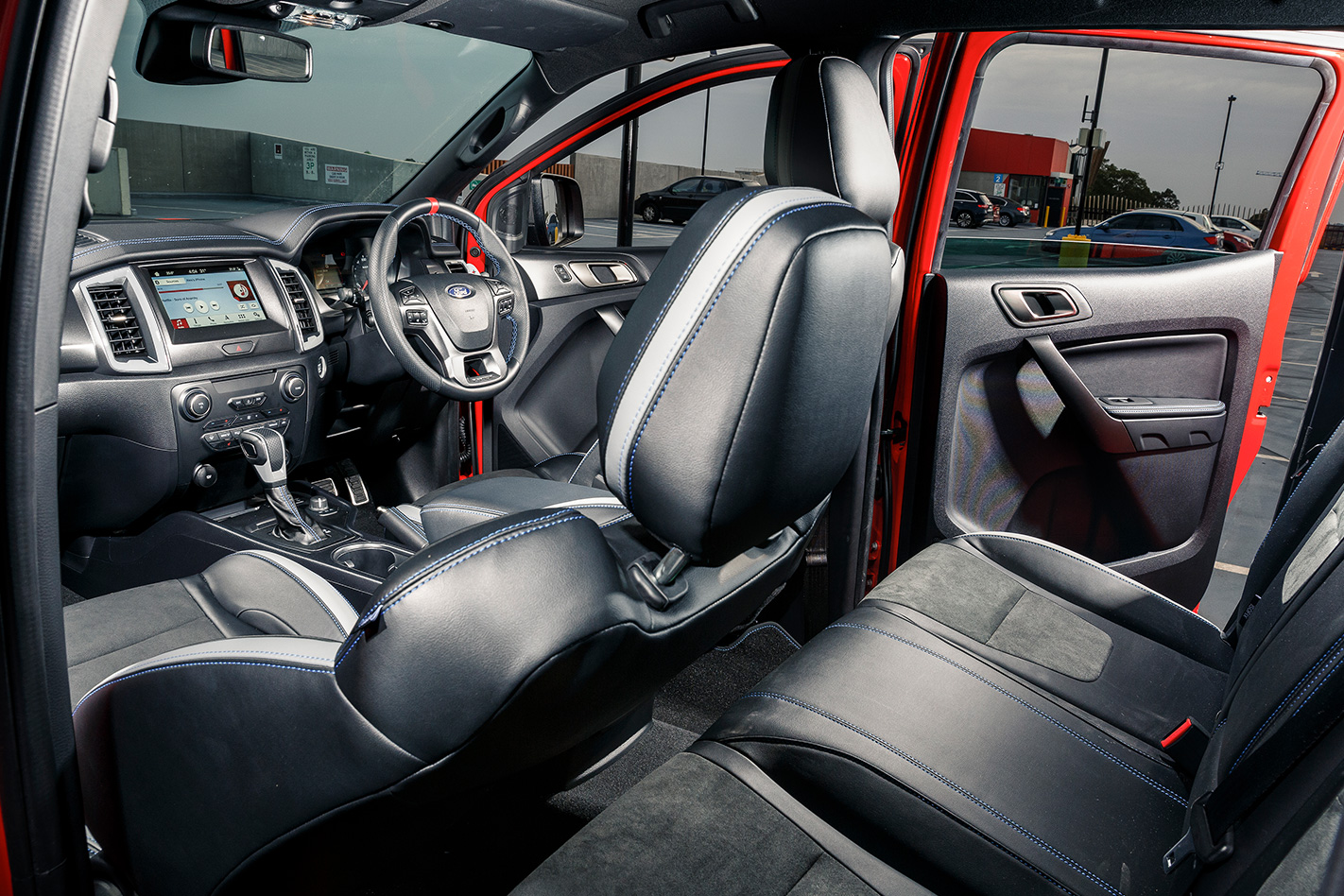
The long-travel Fox shocks and strengthened chassis have been built to cop an absolute hammering as owners fang through deserts and jump off sand dunes with huge amounts of air. And that, dear reader, is the kind of off-roading I do find appealing. The hope is that during our time together, the Raptor and I will embark on some ambitious adventures that will expand my motoring horizon and skill set, but so far things have been fairly mundane. Month one has been spent acclimatising to its sheer size and girth (at 2180mm wide, lane discipline is important), enjoying the loftiness of its seating position (it rivals small trucks for height), and marvelling at how polished it is in heavy suburban driving.
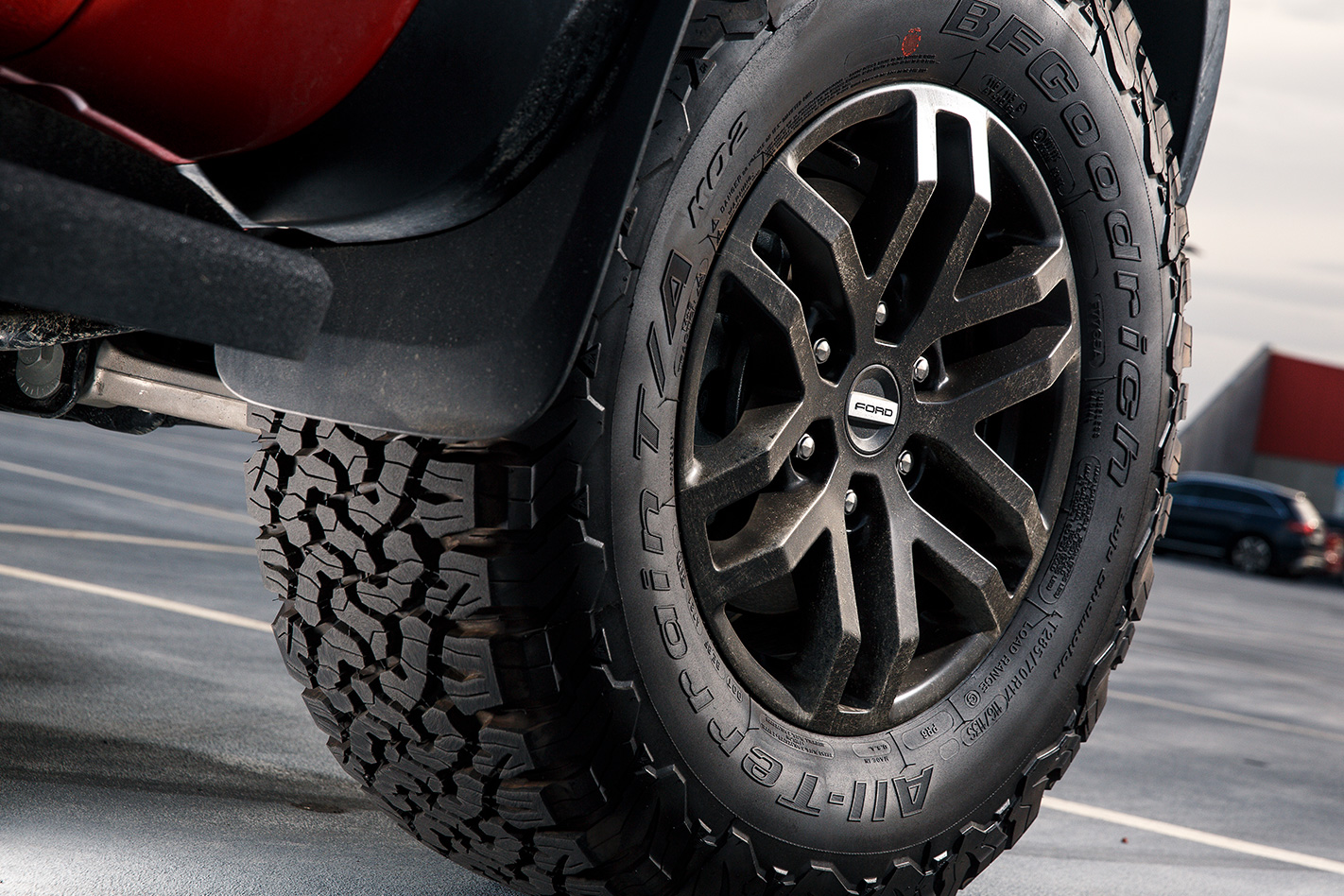
Sure, the controversial 157kW/500Nm four-cylinder diesel (more on this in coming months) is a little rattly at times, but the 10-speed auto is smooth and the cabin is remarkably civilised. Looking at those chunky 285/70R17 BF Goodrich tyres, I’d expected them to drone like a dementor’s death rattle at 100km/h, yet they’re no worse than a conventional passenger tyre. Impressive.
And in most situations, the ride verges on impervious. Small imperfections do make their way into the cabin with that trademark tremor that seems to plague all unladen pick-ups, but bigger bumps are ironed out with disdain. So much so, in fact, that speed humps don’t so much signal an obstacle that requires you to slow down as one that taunts you to speed up.
The sternest test I’ve thrown the Raptor’s way to date has been a weekend jaunt to the Yarra Valley for lunch at a rather posh winery. It chewed up the four-hour road trip with ease – helped in part by comfortable and supportive Raptor-specific front seats – though it did score some odd looks as we parked up among the sea of grey BMWs, Audis and Volkswagens. It really did feel the odd one out. The proverbial fish out of water. And I liked that.
Update #1: The Baja Hustle
It is as I’d hoped. Five weeks into Raptor ownership and the Blue Oval brute is already enriching my life in new and dusty ways. Aware that I may have been a tad hasty in my remarks about off-roading in last month’s report (“About as exciting as a Matthew McConaughey marathon”), and with Saturday dawning bright, I decided the time was ripe for some adventuring.
With the wife equally keen to explore, we threw the dog into the back seat and made a beeline for Lerderderg State Park, an hour north-west of Melbourne with some 14,250 hectares of bushland on offer.
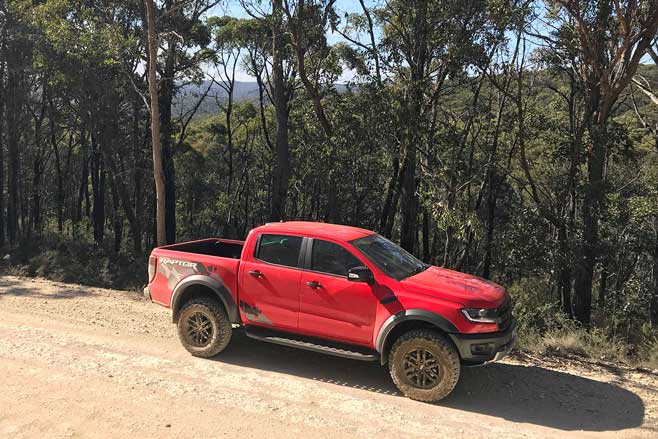
Its centrepiece is a 300m-high gorge that bisects the park, alongside which runs one of the main dirt arterials, O’Briens Road. It’s a well-maintained track that offers a tasty blend of wide and fast sections that give way to tight, plunging hairpins as the road snakes towards a river crossing. Perfect for exploring the six drive modes of the Raptor’s Terrain Management System, including the one I’m most keen to try: Baja mode.
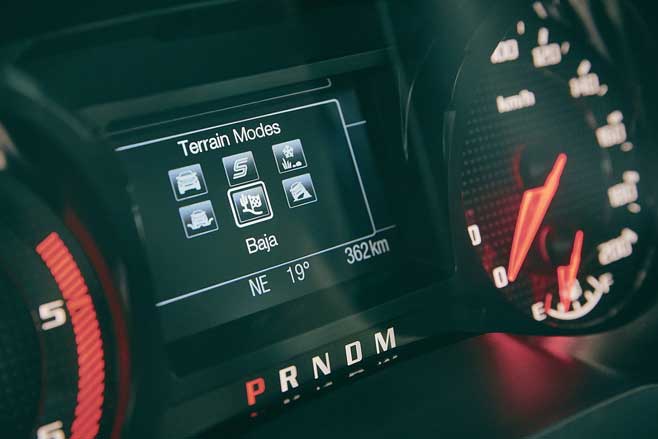
Each mode (Normal, Sport, Weather, Mud/Sand, Baja and Rock Crawl) alters the driver assist systems and the calibration of steering, throttle, transmission, ABS and the locking differential, though Baja is designed specifically for fast off-road running. It sharpens up shifts, holds onto gears for longer, improves throttle response and slackens off the traction control, all of which makes it an absolute hoot on a slippy surface.
Proper high-speed off-roading will have to wait for a safer location, so I only get a tantalising taste of what Baja has to offer – though Lerderderg does present a sterner challenge before we head for home.
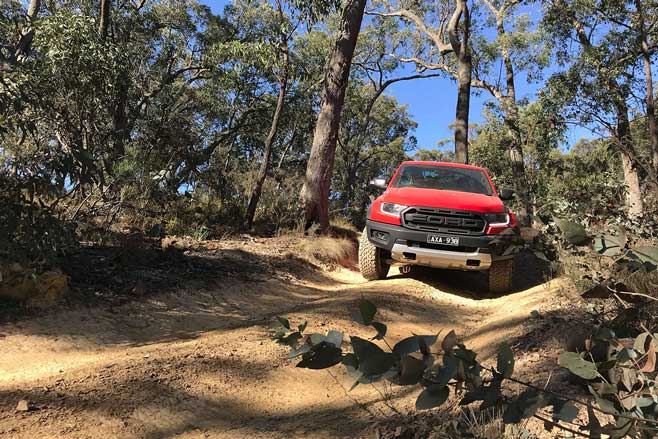
Splintering off the main road are numerous ancillary tracks that delve deeper into the dry bushland, quickly transforming into challenging trails with deep ruts, sharp rocks and steep elevation changes. Painfully aware of my inexperience off-road, and the fact that I haven’t seen another car for hours and have no phone service, I tread with caution. I needn’t have. The Raptor barely breaks a sweat as it clambers over fallen trees and crawls up hillsides with the surefootedness of a mountain goat.
The drive modes helped, as did the reassurance of the BF Goodriches’ reinforced sidewalls. But was it fun? Not in the way I’m used to when I’m at the wheel, though I’ll admit to a strange sense of satisfaction as we headed for home, the ute caked in dirt, and plans for a return visit already in our minds.
Update #2
IT WAS CRUEL, really, bringing the Raptor along, but we had no choice, see. We needed its height, and its tray, to shoot the cover shot of last month’s magazine. It worked a treat, too – the resulting image was suitably evocative and arresting – but what we didn’t twig at the time was how the Raptor might fare in such illustrious company. You see, every one of the cars in the shoot was powered by a thumping V8 (Great V8s! was the cover line) and this, by association, did the Raptor’s 2.0-litre diesel no favours. The company you keep and all that.
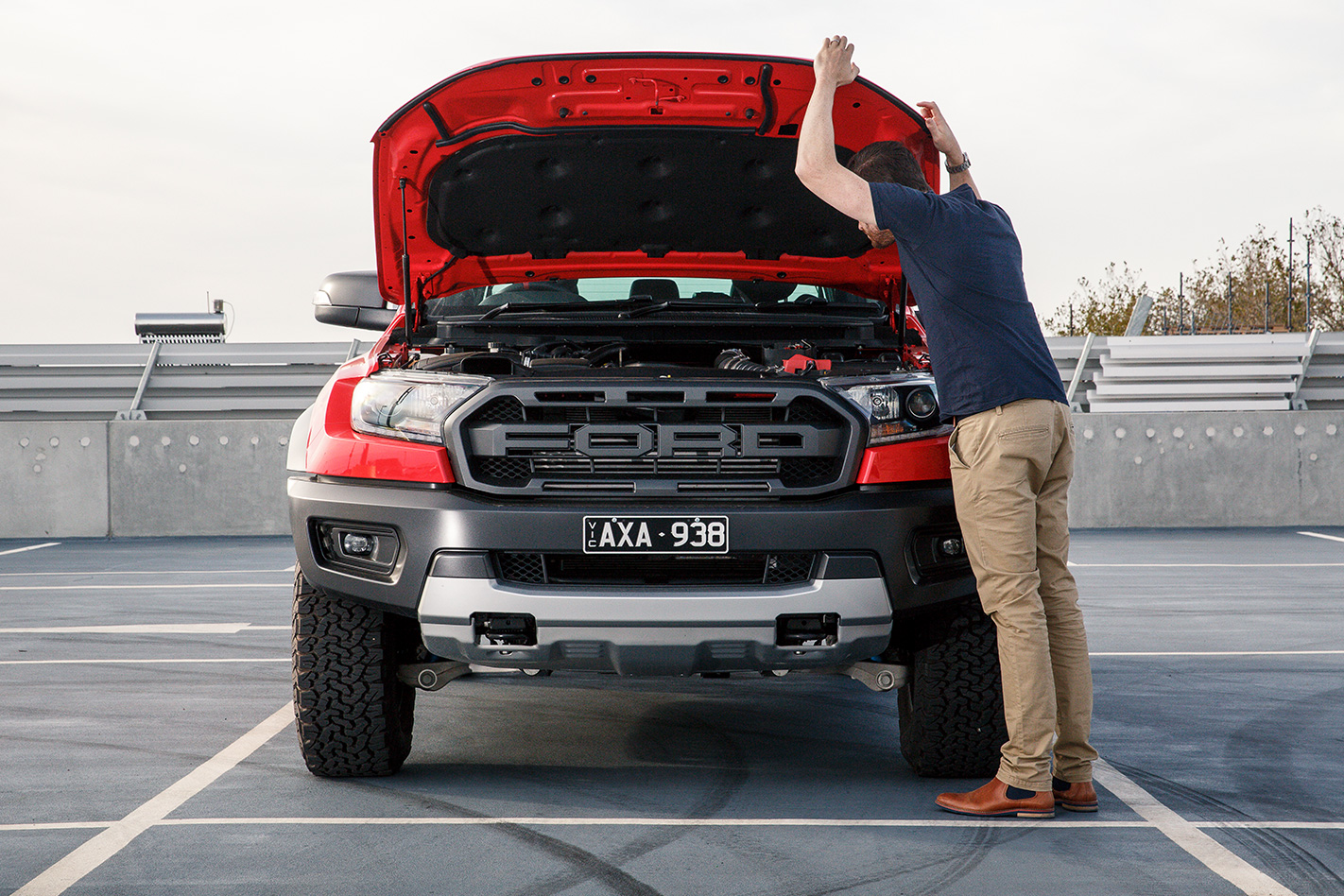
It’s a touchy topic this one, so it’s best to tread carefully. Much has been made of Ford’s curious decision to fit its flagship ute with a downsized 2.0-litre oiler, and most of it has been critical. It’s easy to see why. With 157kW and 500Nm on tap, the Raptor’s new ‘Panther’ twin turbo-diesel produces only 10kW/30Nm more than the 3.2-litre diesel in the regular Ranger range. It’s also outgunned by rivals like VW Amarok (165kW/550Nm) and Mercedes X-Class (190kW/550Nm), which are cheaper.
The rest of the Raptor is pumped up to the max, so why not the engine? Why not fit the 335kW/691Nm EcoBoost V6 of the larger F-150 Raptor, which is paired with the same 10-speed auto? A tweaked version of the Mustang’s 2.3-litre turbo four also sounds tasty.
Ford Australia’s answer? No one would buy it. Blue Oval engineers are convinced that the dual-cab-ute market is so diesel oriented that the Raptor had to be powered by one. The ‘Panther’ unit was the newest, most technically advanced option. For a while, I could see their point. It’s nicely refined and reasonably efficient, and anyway, does a ute like this, designed for sustained off-road running, need a kick-arse engine?
“Yes!” came the resounding response from the wider Wheels team when I floated the question. And now I’m starting to agree with them. Two things happened this month to convince me.
The first was driving those ‘Great V8s’ and then imagining what the Raptor would be like with one. Pretty epic, I reasoned, especially as most examples will likely spend more time on bitumen than fanging through the bush.
The second was almost being crushed by a BK-series Mazda 3 as we drag raced onto a freeway on-ramp. The Raptor’s 0-100km/h claim is a yawning 10.4sec and only the Mazda’s driver lifting off saved me from serious embarrassment. Is that the kind of performance one should expect from such a hardcore, and expensive, dual-cab? I’m not so sure.
Update #3: The great cover up
Inwood ponders the virtues of a lockable tray, while others take a lend
You can spot a wangler from a great distance. They’re crafty, these folk, these ‘borrowers’, these ‘favour askers’, so you need to know what you’re looking for, but no-one is more finely attuned to their tricks than a ute owner. “Mate, are you up to much this weekend?” is an all-too-familiar, and seemingly innocent, opening gambit. “Oh good,” comes the whip-crack follow-up. “Can I borrow the Raptor? You’ll be okay to drive my Citroen C2, yeah?”
So far my Raptor has helped three people move house, been twice called upon by our sister title 4X4 Australia to ferry about some off-road wheels and tyres, and has been a regular at Bunnings where all sorts of hardware has been stuffed into its tray.
At least the wanglers are grateful. “Beauty, mate, cool ute,” is often the parting remark as the keys clatter across my desk. “Heaps of room.”
Until recently I’ve taken them at their word, but twice this month I’ve had to call upon the Raptor’s utility. The first time was to move some pool-fence palings, which proved all too easy. But the second task was trickier.
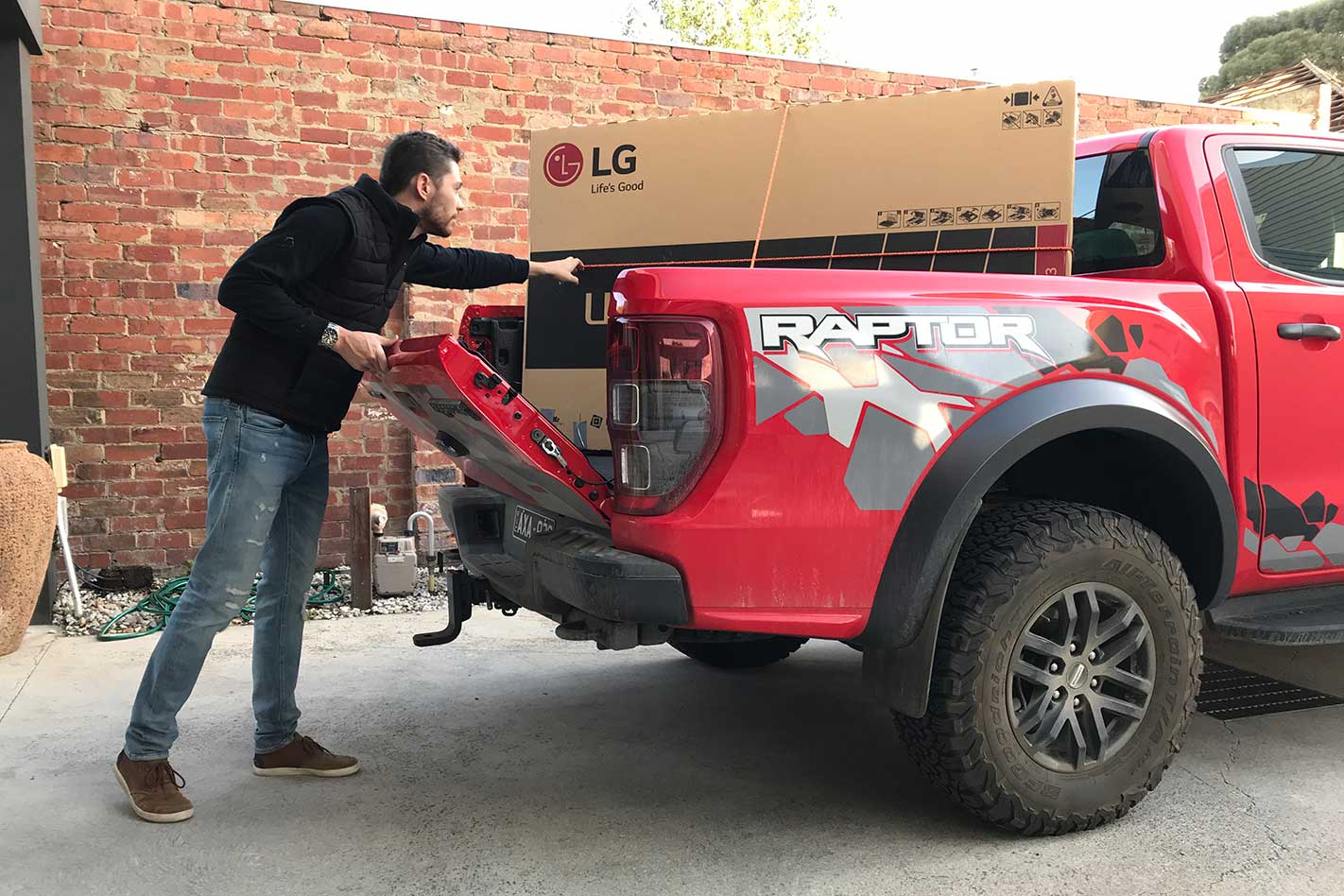
My 70-inch TV had packed it in and I needed to get it to a repairer. As with most modern electronics, the TV’s box was about 50 percent larger than the unit itself, and there was a moment where I feared it wouldn’t fit. It did, just, when placed diagonally across the tray, and I’ve since discovered that I mightn’t have been so successful had I been driving a regular Ranger. As part of the Raptor re-engineering process, Ford has altered the dimensions of the tray to make it slightly larger. Compared to a regular XLT, the Raptor’s ‘pick-up box’ is 194mm longer and has a tailgate opening some 155m wider. Handy.
What the Raptor doesn’t come with, however, is any kind of tonneau cover. Ford offers a variety of factory-fit soft and hard covers on the options list, but as standard, the Raptor’s tray is left open.
At first I thought this a glaring oversight – especially as the Ranger Wildtrak is armed with a lockable rolling hardtop as standard – though unless you need to lock up tools or other valuables, this month’s experience shows a hardcover might be more trouble than it’s worth. In both instances, I would have had to remove the hard lid, then store it somewhere where it wouldn’t fall over or be damaged. Without a mate to assist, that would have been a stretch too far, though now that I think about it, a hard cover might bring the benefit of being an excellent wangler repellent…
Update #4: Snow-go zone
Raptor is bred for the desert, but keeps its cool in the mountains too
- Price as tested: $76,790
- This month: 855km @ 10.7L/100km
That’s what the Blue Oval chucked down our throats from the moment it first told us that it had a performance-focused ute coming – and with good reason. A lot of development – including local – went into creating this beast, and plenty of that was focused on perfecting what happens when you engage that Baja mode – its moniker a reference to the great Mexican desert race of the same name. While the Fox dampers soak up the bumps, the traction control loosens, the throttle sharpens and it’s wildly entertaining to drive on any surface reminiscent of that gruelling desert dash.
So the first thing I did when editor Inwood wistfully threw me the keys to his old flame was take the Raptor to the snow. You know, where Ford’s marketing might suggest it doesn’t belong. I was a bit concerned, as tapping the throttle on the slightest of damp surfaces usually sees the red rig spin rubber like a Bamix coming out of thick soup.
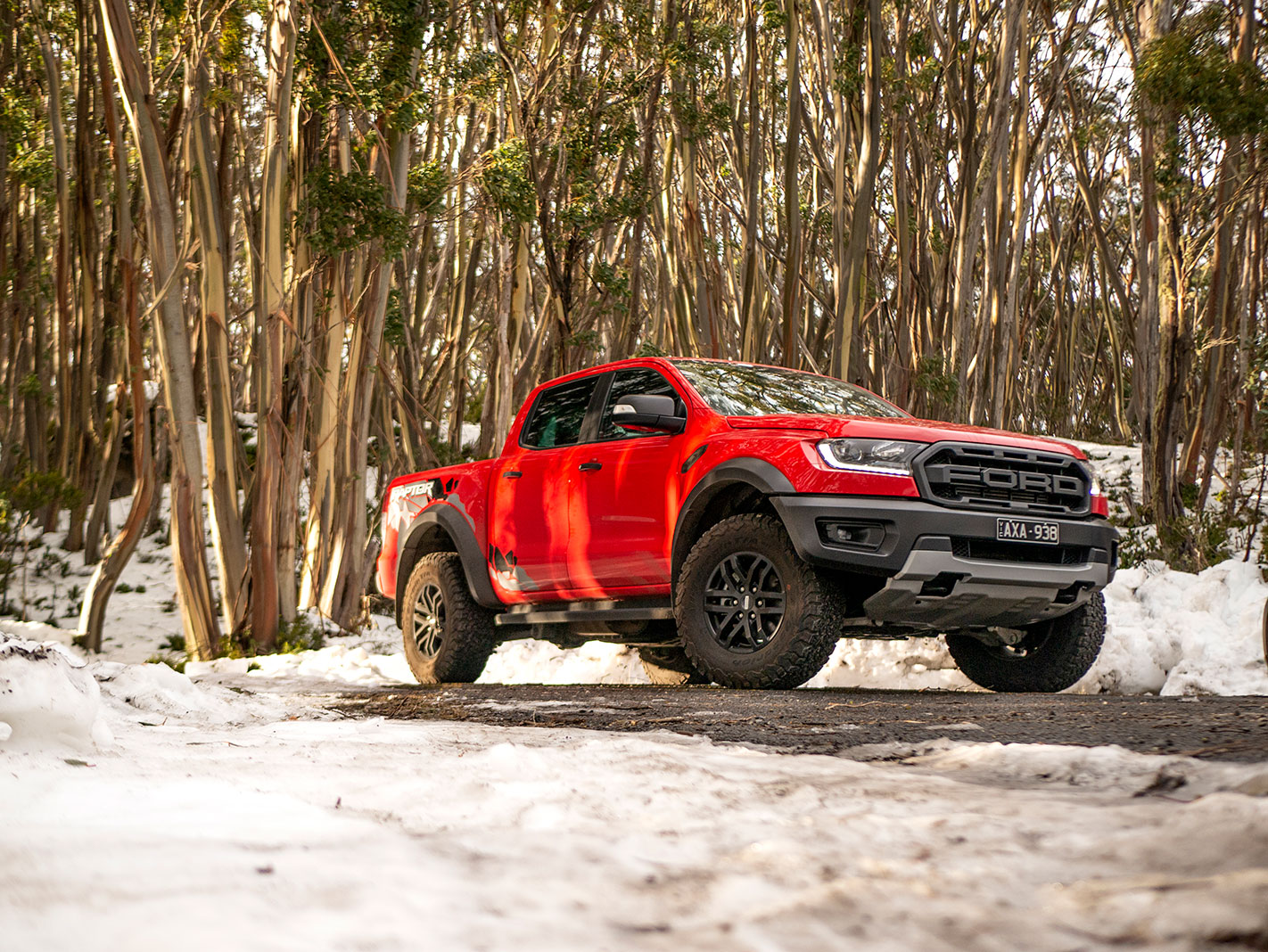
In Victoria, snow chains are mandatory in alpine parks, so that was of some comfort. Then again, chains really shouldn’t be required for a four-wheel-drive on anything but the most hazardous of snow-blanketed roads.
Then there was the size of the cabin to contend with. It’s good for four passengers (I carried two plus me) but not also for their luggage. So all the heavy stuff went in the tray over the axle, which also aided traction (the Ranger, unlike VW’s Amarok, doesn’t run in constant all-wheel drive) and I used waterproof duffel bags and plastic containers for everything else. It was an unconventional arrangement, but workable given our long-termer doesn’t feature a cover over the tub.
As for driving up the mountain, I figured that, worst-case scenario, I’d drop the Raptor into 4×4 high range and select Weather mode. I was sure the mandatory hire chains were a massive waste of time. In the event, I didn’t touch either. It crawled up to the summit driven by the rear wheels only without slipping a bit, and I reversed it into a car park and left the handbrake off for the impending overnight dump of snow. It came, and there was a large lump of white to contend with, but in 4×4 high and with a dab of throttle, the Raptor was climbing up over the white stuff without breaking a sweat.
‘Weather’ mode isn’t a name that does justice to the Raptor’s snow smarts. Were Ford to build an Everest Raptor … well, there’s a name that tells a story.
Update #5
All power to a beaut ute that doesn’t shirk a load
I must confess I cheated a little of late and I haven’t been completely faithful to the Raptor I fell in love with. I’ve been seeing Andy’s orange Renault Megane for a bit of a fling, which has given me a broader perspective on what the Ranger-on-steroids is really like.
As a car to drive every day, the Raptor is just so easy to get along with. Everything is in the right place, the controls all work without fuss, and it feels as solid as the work truck it is. It’s not jerky or awkward to drive either, despite measuring over 5.5m long and weighing more than two tonnes. It’s easy to park, vision is good, and the steering feels tuned for city driving.
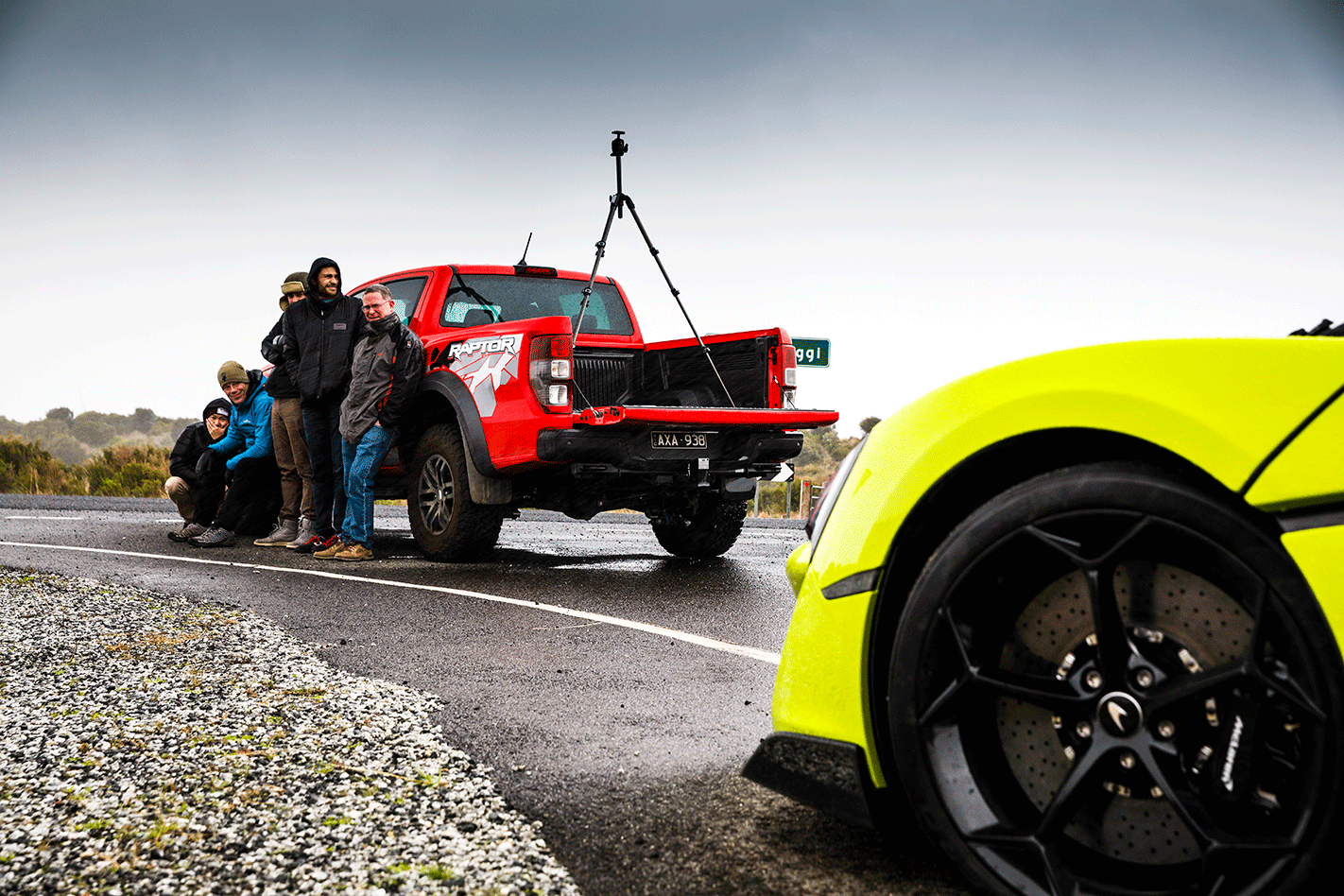
As for family transport, there’s plenty of room for my young son to kick about – literally – and the dirt cleans easily from the seat trim. For big kids and adults the rear is not as inviting, though, with the low seat-to-floor height not suited to long legs. But as a car to travel in with kids? It’s great.
We’ve already tested that heading up to the snow, hauling my small family of three plus luggage and all the gear for the slopes. The only problem was a lack of covered storage areas due to the exposed tray. Editor Inwood already pondered a practical solution during his handling of a giant TV: sure a cover would be useful some of the time, but equally, it’d have to be removed some of the time to haul awkward-size loads. I’d keep the tray clear myself, and think about a larger canopy to only use occasionally on big trips away, because there are plenty of opportunities to use the ute how it was intended once it’s sitting in the driveway.
Inspired to an early spring clean, I took to the yard to get things looking sharp while I still had the pick-up. The penny pincher I am, I wasn’t taking two level tubloads of rubbish to the dump. That’d cost me twice as much as piling everything into one trip. After that, I picked up a load (according to the mulch man, it was a bit over 500kg) of decomposing garden litter.
While such tasks might seem menial for a Ranger, it should be noted that the mulch brought the Raptor’s unique Watt’s link rear-end suspension toward its 758kg maximum payload. That’s a lot less than the normal Ranger 4×4 dual-cab’s proper one-tonne rating. This may be a turn-off for some, though the impressive ride quality on and off-road is some compensation. However, the Raptor’s 2500kg towing capacity – a hefty 1000kg deficit to some other 4×4 models – put me off trailering an old car I needed to pick up. Still, it hardly felt the half-tonne mulch load, either in stability or grunt.
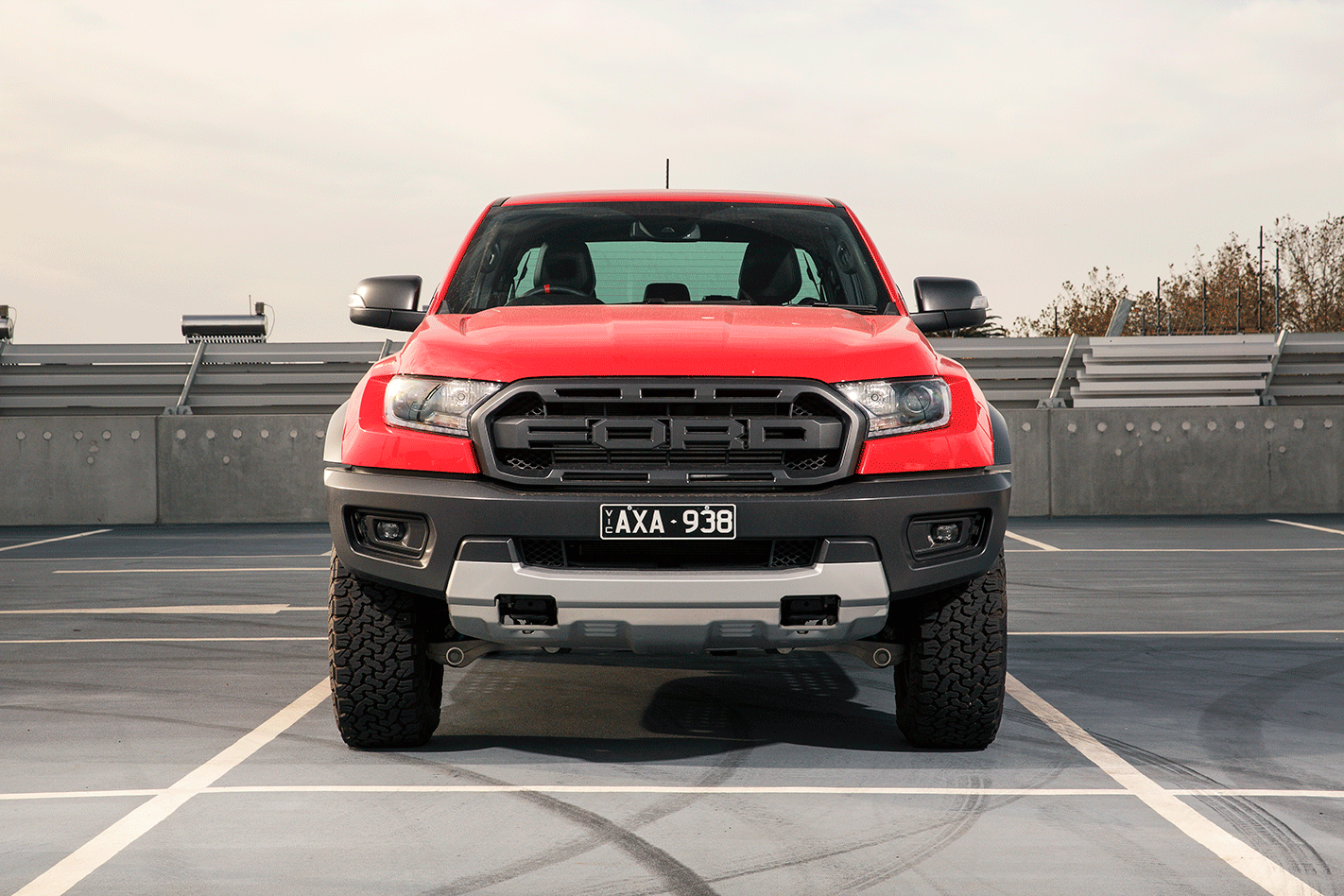
That said, if the Raptor could receive just one improvement, it’d be more poke. I’ve been left in the dust of German V6 foes the VW Amarok and Mercedes-Benz X-Class when getting onto the freeway, and, more importantly, been left with waning confidence on the wrong side of the road while trying to overtake a slow-moving caravan. Pep at the crucial 80-120km/h sprint really is lacking. I’m not asking for a twin-turbo V6 F-150 Raptor-matching 0-100km/h sprint of 5.0sec, but somewhere between that and our Raptor’s 10sec stroll would be very welcome.
Is that enough to discourage from recommending the Raptor? Not at all, because everything else it does is blended so well with utility. It juxtaposes Andy’s Megane, which provides a narrow performance focus in the right circumstances. As a bit of a ‘lifestyle’ car, the Raptor might suggest it’s somewhat form over function, but in reality it accomplishes both.
