
Station wagons… not terribly sexy, are they? I mean, you’re not about to see James Bond leap out of a sensible five-door any time soon, are you?
This review was originally published in MOTOR’s October 2006 issue
Exactly, but I have to admit a sneaking admiration for conventional wagons. Not the least justification for which is the fact that they give people who more need space an alternative to the default setting that is a soft-roader. (And you really don’t want to know what I think about most of those.) And hey, beats there a heart so cold as does not get wood even thinking about an Audi RS4 wagon? Precisely.
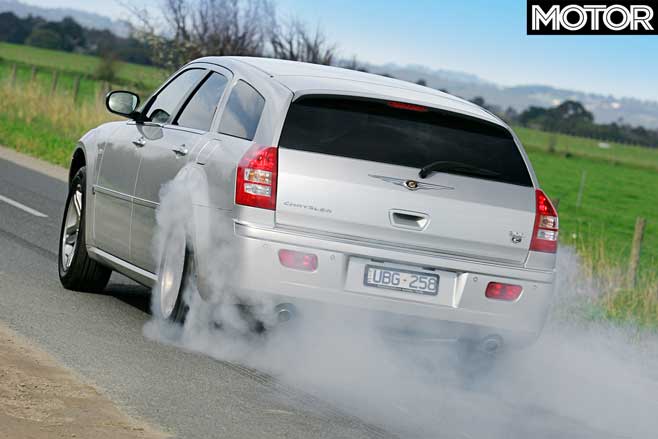
Flip side, of course, is that wagons just don’t look sexy and, by the time you’ve added the extra glasshouse to a normal sedan, the weight distribution is usually ballsed up, too.
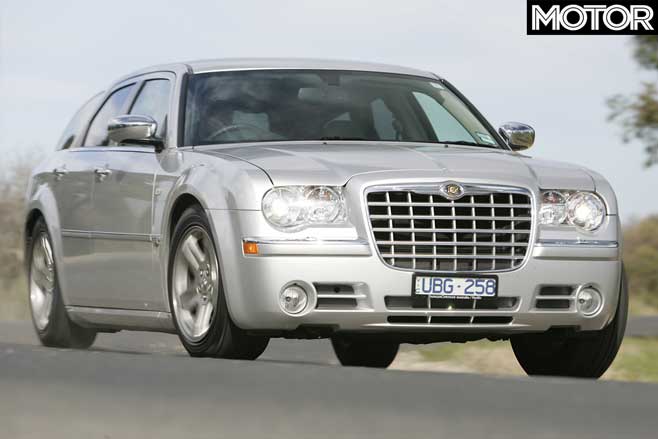
So, just to prove that you don’t know everything about station-wagons, allow me to introduce the Chrysler 300C Touring.
Okay, maybe ‘sexy’ is the wrong word, but from any angle, there’s no getting around the fact that the Touring has every last skerrick of attitude possessed by its sedan bro. Which is lots.
The roofline is so low that the tailgate needs to be hinged over the rear doors to allow a big enough opening. And if you think those rear-side windows look small from outside, you should see the slits they represent from within. You’re gonna want a short-arse dog for this one.
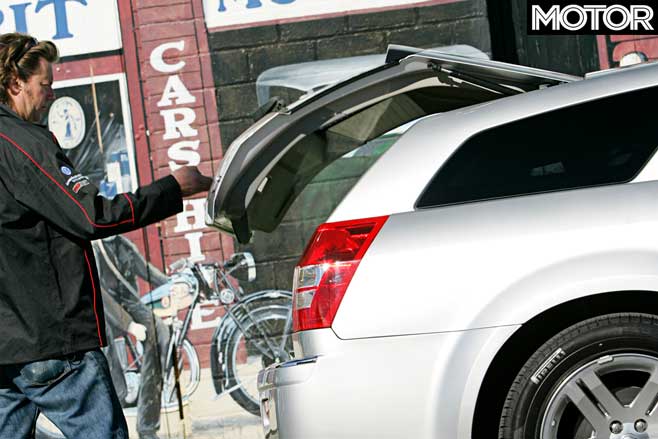
And as for weight distribution; even though it sits on the sedan’s wheelbase, the 53kg added to the sedan’s 1825kg is located mostly between the axles and is such a small percentage of the total weight-bridge ticket, it really ceases to matter.
So that’s the problem stuff out of the way, then. But what’s the 300C Touring really like?
It’s a bit of a mixed bag, but the downsides are all down to the thing’s American heritage rather than any engineering shortfalls.
Stuff like the ordinary interior plastics make you wonder about it all a bit, but most of what you see is okay. Less wonderful are the plastic bins under the luggage area floor. Nice idea when you’re toting wet bathers and such, but the fit and finish is worse than poor and just doesn’t support the theory that the 300C is a premium product.
But get up the other end and the 5.7-litre Hemi really starts clawing back ground.
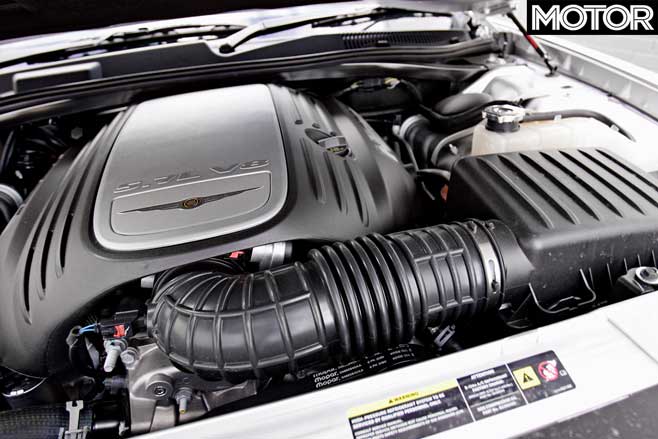
Having just sampled the SRT-8 version of the big Mopar, I was wondering if maybe the cooking V8 with its 250kW and 525Nm might feel a bit limp. I needn’t have worried.
The five-speed auto needs a second or two to think about things before sending drive to the rear axle, but when it does, it all happens pretty impressively.
The engine is smooth and flexible in the mid-range and feels like the full 5.7 litres. The variable displacement thing where the bent-eight can drop four cylinders to save juice works imperceptibly and its very muted exhaust note lacks all the blood and guts you’d expect with a big-inch V8 experience.
At speed, the Touring still feels heavy in the manner of all 300Cs, but the wagon also feels like it’s packing a bit more unsprung weight than the sedan versions.
Those huge wheels and tyres (225/60 on 18-inch rims) probably don’t help with that impression but that doesn’t alter the fact that the ride can be a bit jouncy over small amplitude bumps. Strike such a bump-fest with some steering lock applied, and the Touring can start to skip around a bit. It never goes into a tankslapper, but it does feel odd.
The extra kilos add a claimed half-second to the rest to 100km/h dash with Chrysler quoting 7.3 seconds against the sedan’s 6.8 seconds. Doesn’t feel like there’s that much difference, to be honest.
But it’s not just the car itself that’s heavier, the pricetag is also bulkier. While the 5.7 sedan costs $59,990, the Touring is all yours for $62,990 – though the sunroof is a $2430 extra.
That’s still pretty cheap, of course, considering the hardware you’re buying, but it will make some folks wonder what the whole concept is all about. I mean, you can’t buy a station-wagon version of the Holden Caprice or Ford LTD, can you?
Which begs the question, would anybody want one?
And regardless of what you think about wagons generally, you really need to drive the 300C Touring before you answer that last question.
2006 CHRYSLER 300C TOURING SPECS Engine: 5.7-litre dohc 24-valve V8 Power/Weight: 250kW/1878kg Drive: rear-wheel Price: $62,990 ($2430 for sunroof)
What are they?
The Mazda MX-5 and Abarth 124 Spider represent the ultimate in affordable sports driving, with lightweight frames, punchy engines and excellent ride and handling.
The 124 Spider is based heavily on the MX-5 and built at Mazda’s Hiroshima factory, however, their differences extend beyond their badges, with the turbocharged Abarth roadster offering a brasher Latin alternative to the elegant Mazda.
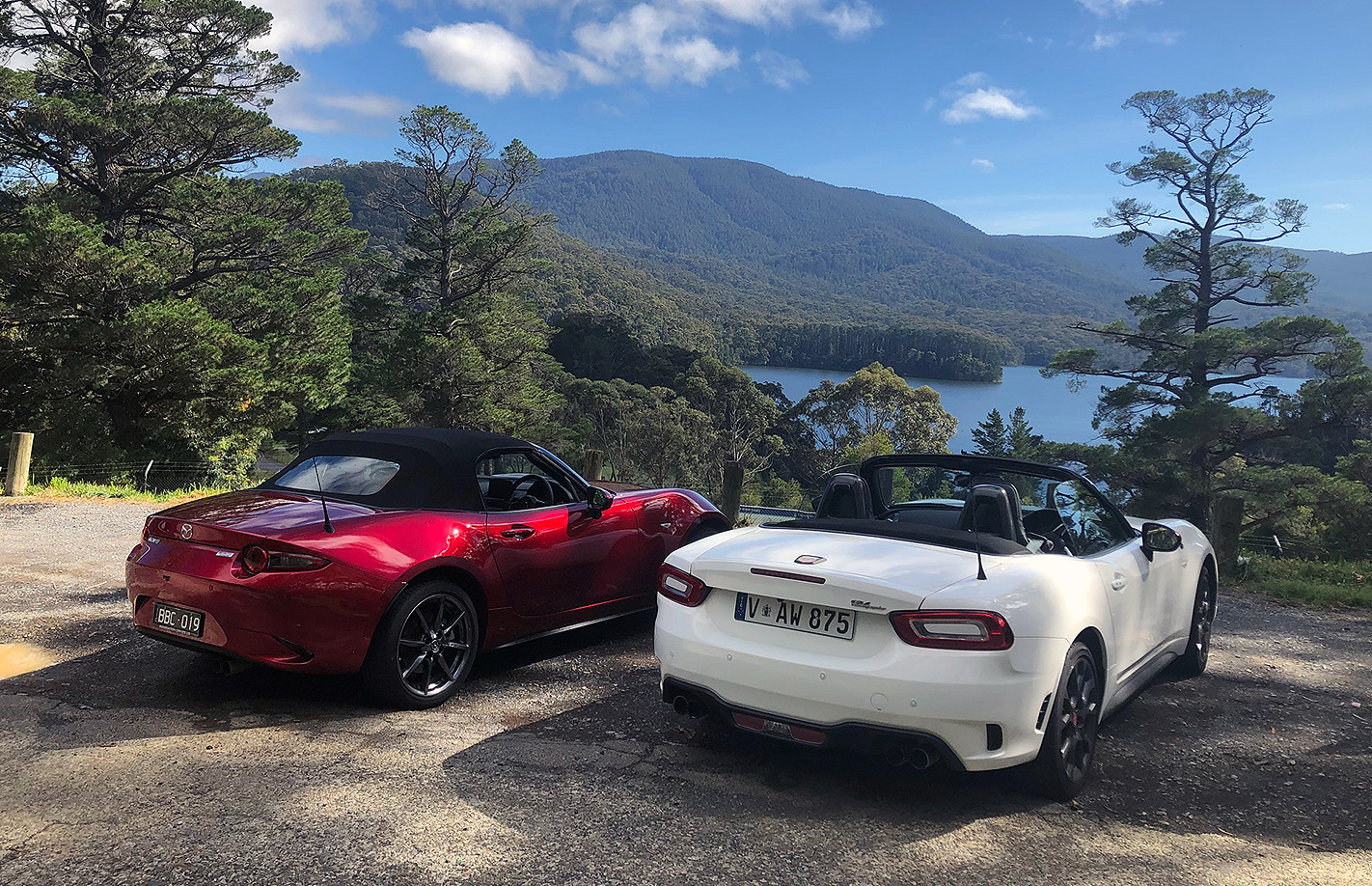
The Abarth 124 Spider’s 1.4-litre four-cylinder turbo petrol engine produces 125kW of power and 250Nm of torque.
When it was introduced in 2016, it was the more powerful alternative to the MX-5, but that changed in 2018 when the MX-5’s 2.0-litre engine was beefed up to produce 135Kw/205Nm.
How affordable are they?
The six-speed manual MX-5 Roadster GT retails for $43,320 and sits between the less powerful 1.5-litre MX-5 Roadster ($35,390) and the manual version of the MX-5 RF GT ($47,400) with the hard-top folding roof. Automatic versions are available for each variant for an additional $2000, but you’re best saving that money and sticking with the entertaining manual.
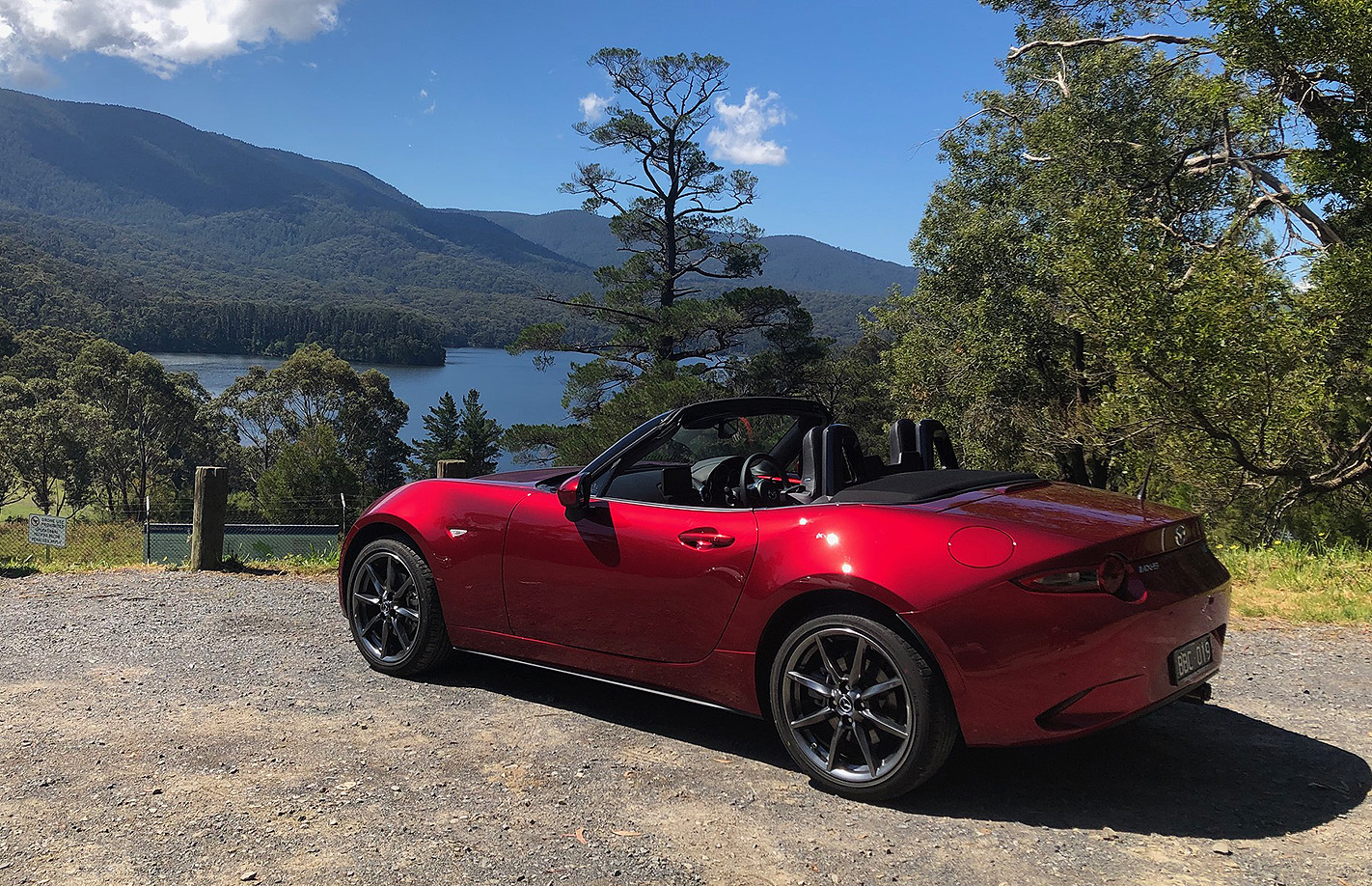
The MX-5 GT’s price is all inclusive with the only option, apart from accessories, being premium paint.
Featuring the same manual gearbox as the MX-5, the Abarth 124 Spider is priced from $41,990 with the same $2000 premium placed on the automatic version. However, there are extra-cost options such as the $2490 Visibility Pack that adds LED auto-levelling headlights, LED daytime running lights, adaptive headlights, rear-parking sensors, blind-spot detection, rear cross-traffic alert and headlight washers, most of which are standard on an MX-5.
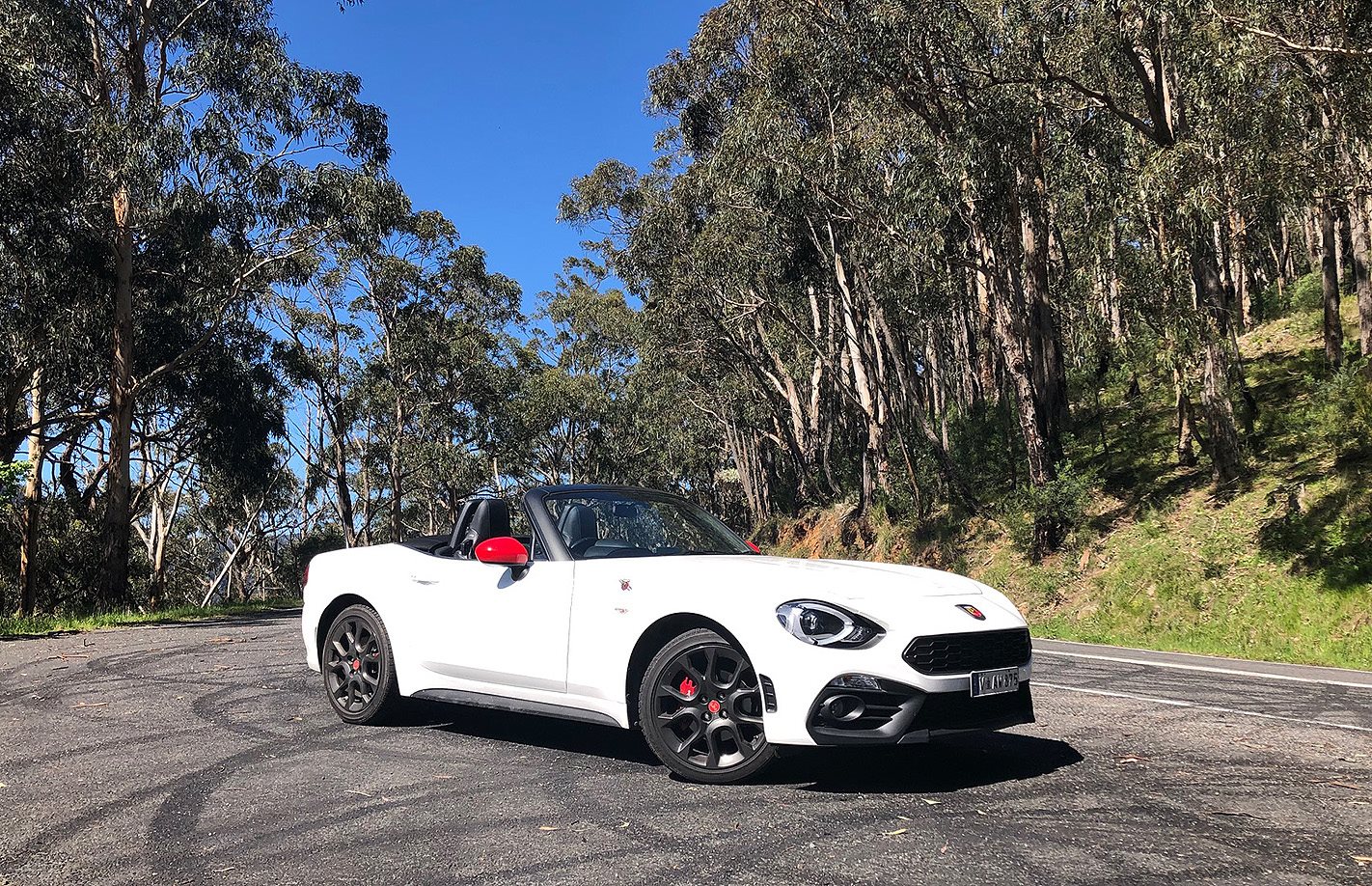
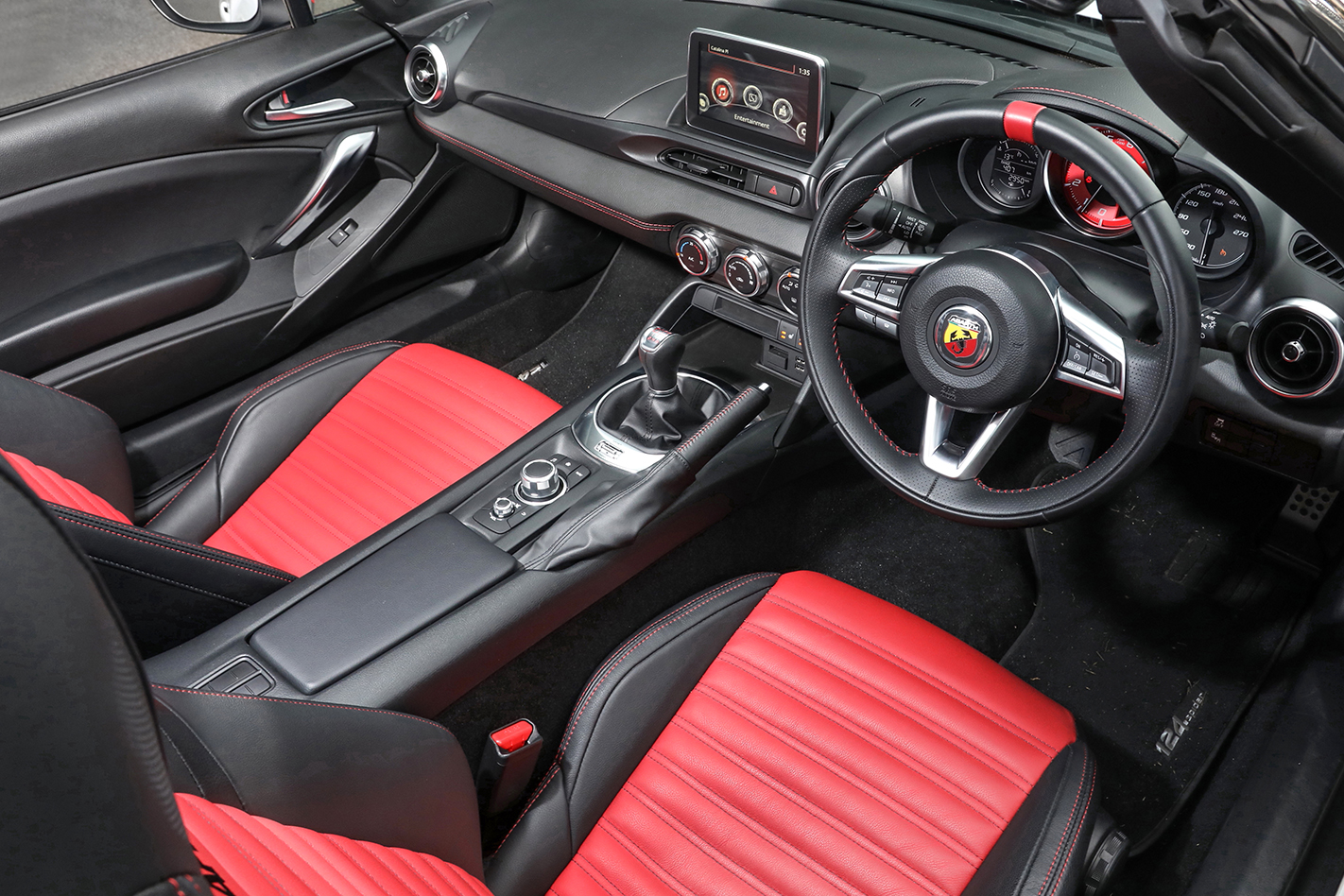
The 124 Spider in this comparison is a special Monza Edition that includes the Visibility Pack and other extras including two-tone leather Recaro seats, beefy Monza exhaust and bespoke wheels for $47,580.
What features do they have?
Even with the Monza pack, the 124 Spider misses out on key features introduced to the MY19 MX-5 Roadster GT including forward and reverse autonomous emergency braking, traffic-sign recognition, reach-adjustable steering wheel and Android Auto/Apple CarPlay. It does, however, have sportier Bilstein suspension and Brembo brakes.
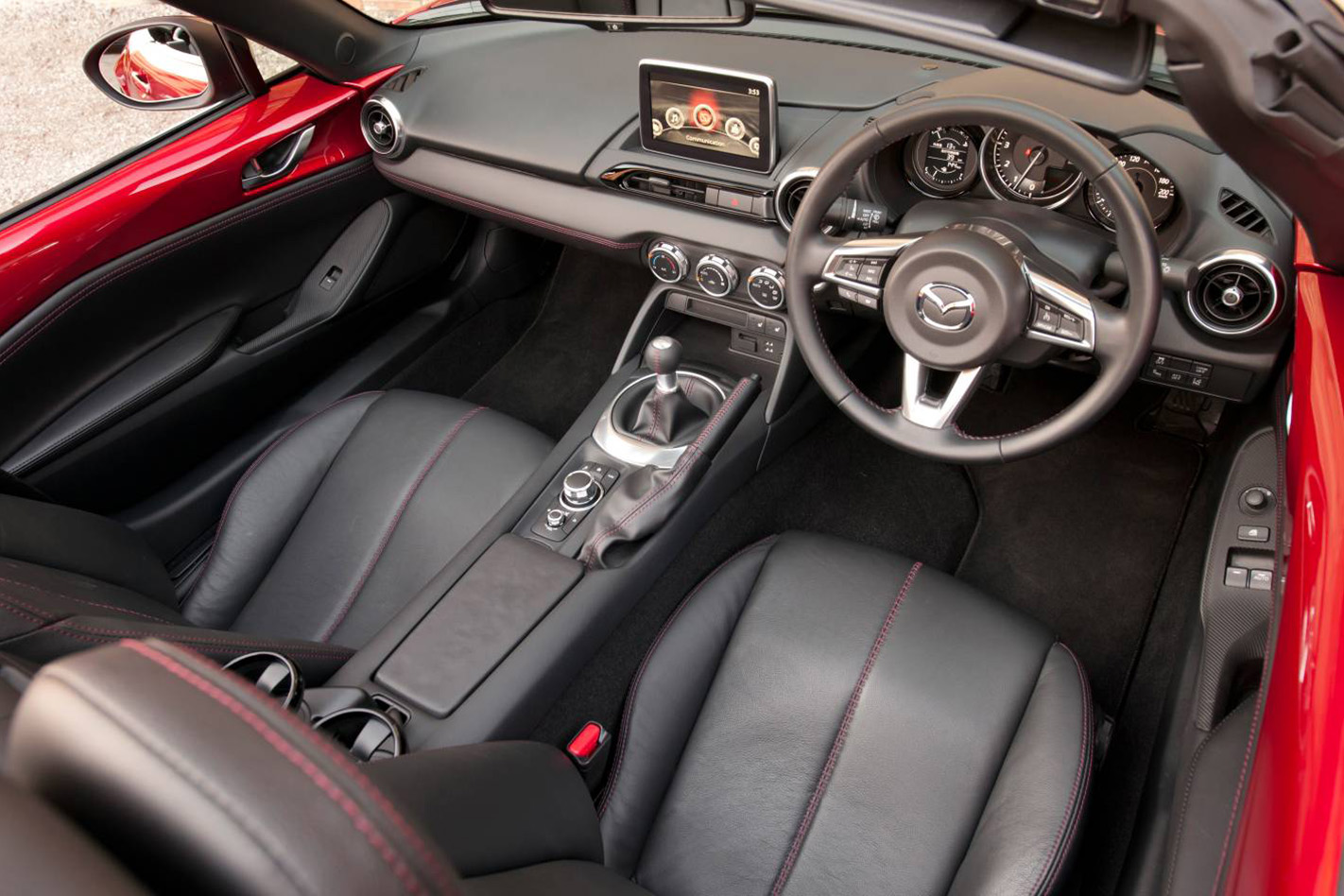
Jump inside and their two-seat interiors are otherwise virtually identical, with standard equipment including a 7.0-inch touchscreen, Bose premium sound system, push-button start, smart keyless entry, leather heated seats, leather-wrapped steering wheel, cruise control, reversing camera, in-built sat-nav, climate control air-conditioning, auto headlights, rain-sensing wipers and 17-inch alloy wheels.
The Abarth 124 Spider is covered by a three year, 100,000km warranty, while the MX-5 GT has a five-year warranty with no limit on kilometres driven.
How safe are they?
The MX-5’s safety package significantly improved with the 2019 model, with the introduction of a reversing camera, autonomous emergency braking, and traffic sign assistance to help you with identifying the speed limit. This is on top of other standard active safety features including blind-spot monitoring, and rear-cross traffic alert that warns you of any vehicles approaching from the side while you’re reversing
The MX-5 GT also has lane-departure warning, and adaptive LED headlights that adjust their beam depending on the MX-5’s speed and movement.
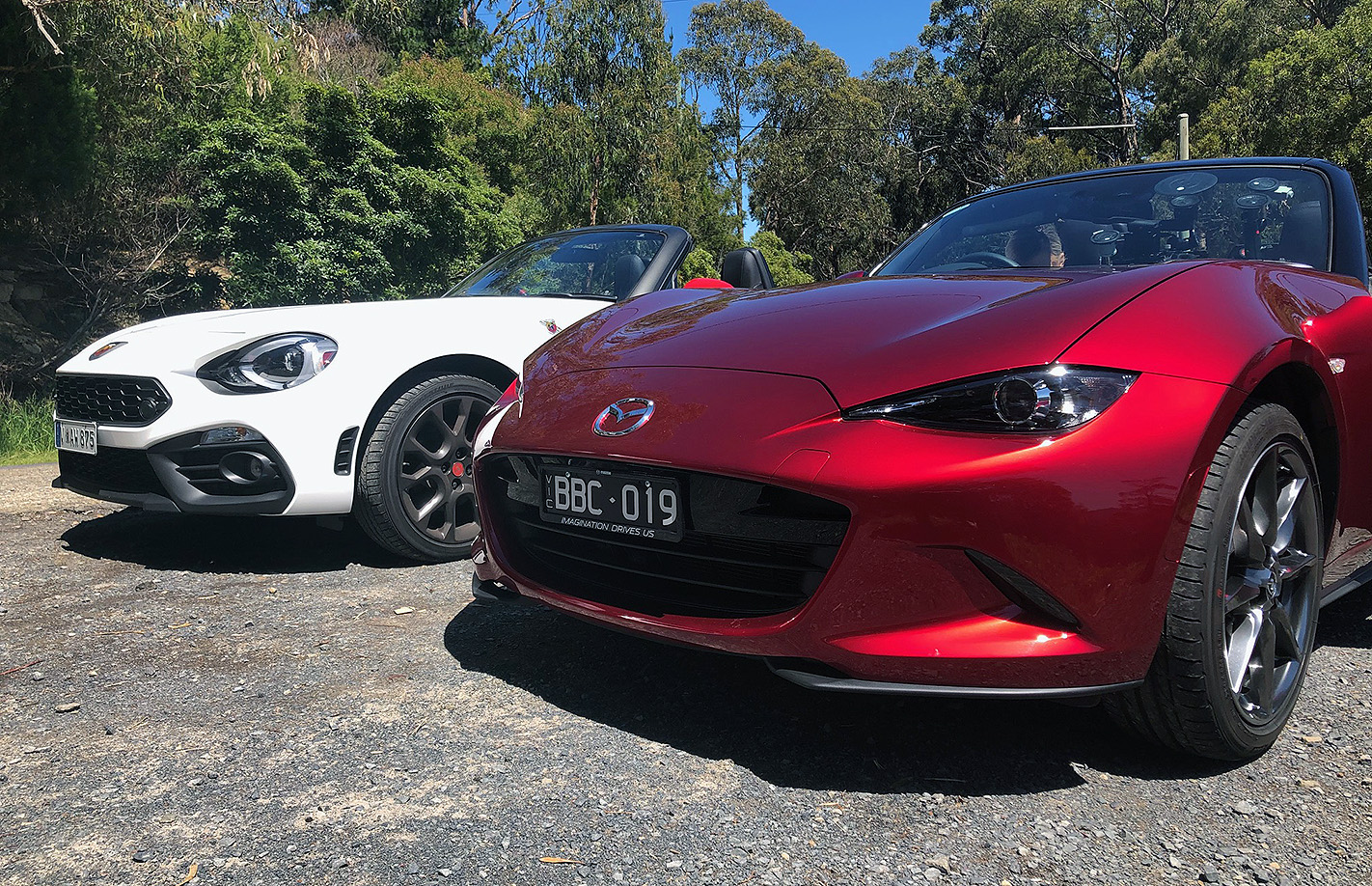
Of these, only the reversing camera is standard kit in the 124 Spider, with blind-spot monitoring and rear-cross traffic alert and adaptive headlights part of the Visibility pack.
Each car as has also a rollover hoop behind each seat that, with the strong windscreen pillars, give some protection in rollovers. There are four airbags, two front and two side, protecting the driver and passenger.
What are they like to drive?
Both are extremely fun to drive, especially when you find some bendy roads. Their low ride makes you feel like you’re going quicker than you are which allows for a thrilling drive within the speed limit.
The steering feels like an extension of your arms, with the front wheels facing exactly where you point them, helped by the taut chassis and overall light weight. The short-shifting six-speed manual shared by each car is excellent, though I had to manage the Abarth’s clutch pedal a little more carefully in first gear to avoid stalling.
Performance and ride quality are where each car mostly display their different personalities.
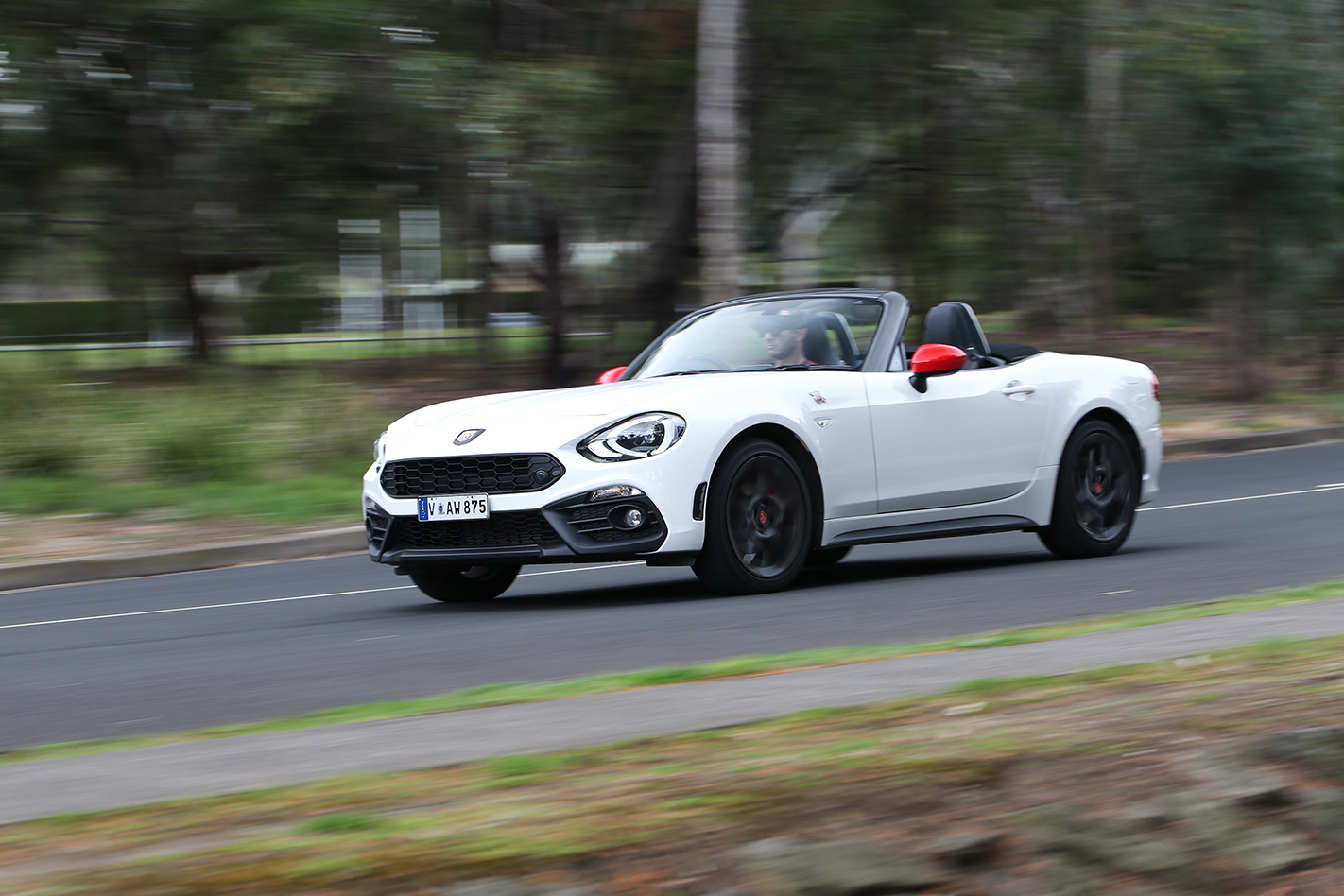
The Abarth’s turbocharged engine produces more torque than the MX-5’s, which means it lurches off the line quicker despite a little turbo lag. The MX-5 is almost opposite. It’s still lively, but it holds power for longer at higher revs, while the 124 begins to peter out as you continue to accelerate requiring you to change gears sooner.
The Abarth’s Bilstein suspension is noticeably stiffer than the MX-5’s, but it’s what you expect from a sports car and not particularly uncomfortable. The MX-5 offers a considerably smoother ride though, which does little to compromise handling. Where sometimes the Abarth’s back wheels will want to flick out of the turn to straighten the ship, the MX-5 feels more fluid.
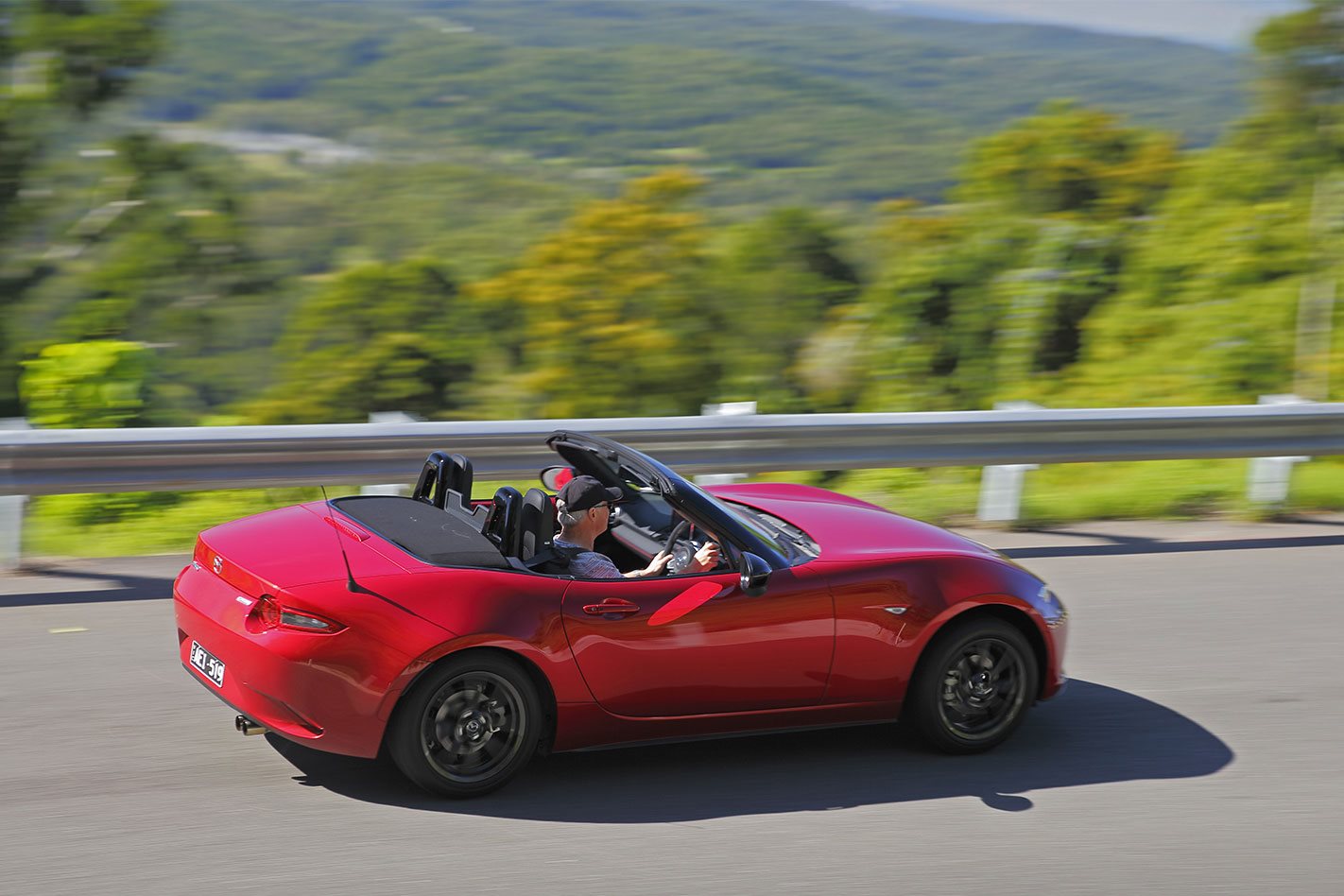
The driving position in each car is excellent, however, taller folk will appreciate the MX-5’s reach adjustable steering wheel even if doesn’t make climbing in and out any easier.
Driving each through the hills overlooking Victoria’s Yarra Valley, it’s difficult to pick which of these roadsters I’d rather drive, though the Abarth’s raspy exhaust note did stretch my smile a little further. It’s only when you leave the hills for the highway that you realise the MX-5 has the overall edge.
Our opinion
If the Abarth 124 had the same equipment levels as the MX-5 GT you simply could consider it a turbo MX-5 with the key differences coming down to ride and performance. It’s a joy to drive and its broad sculpted bonnet and retro-grille attract plenty of attention. If you want to stand out from Australia’s sizeable MX-5 gang you’ll have few regrets if you follow your heart and choose the Scorpion badge.
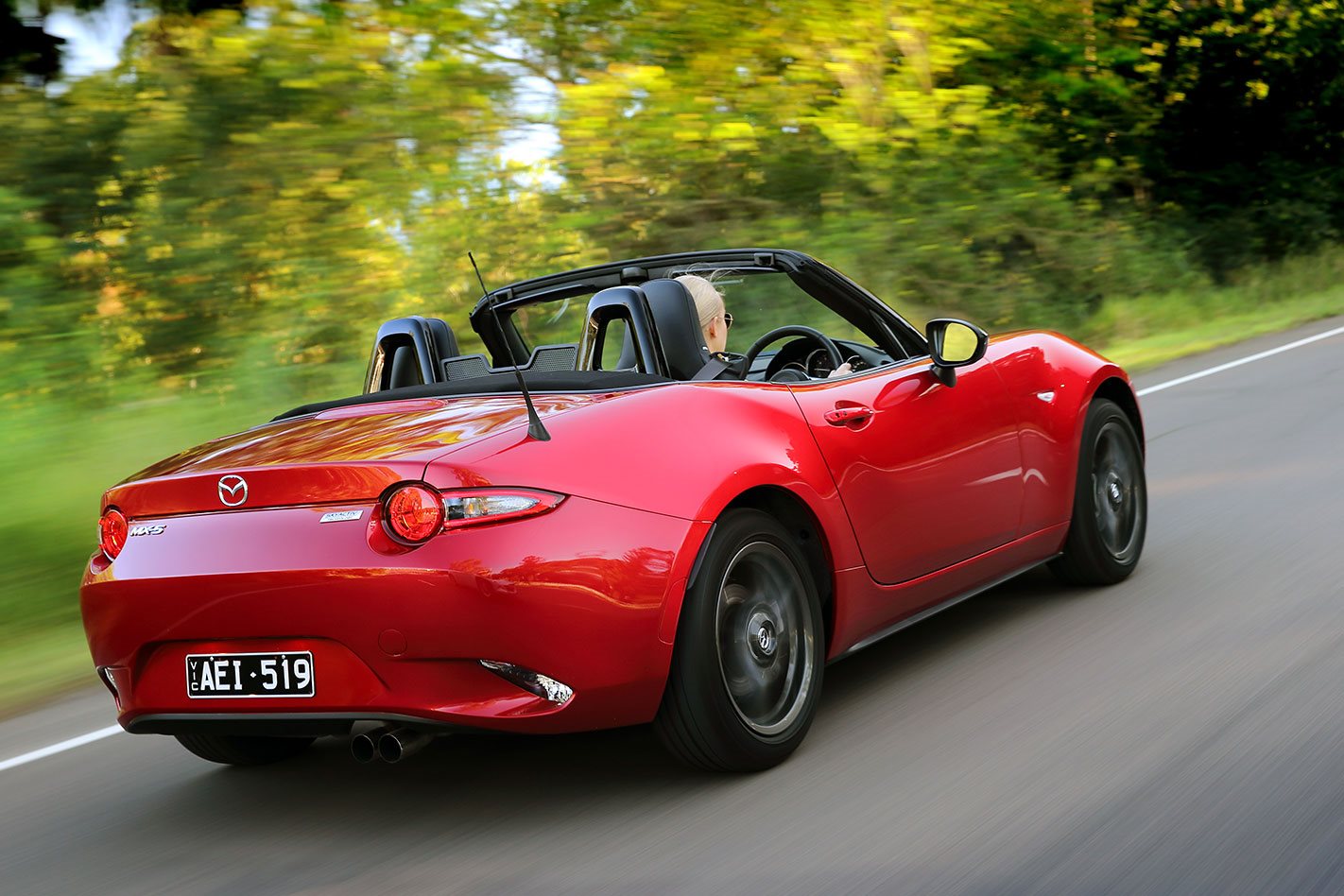
However, the Mazda MX-5 Roadster GT, with its lower price, superior equipment levels and longer warranty, is the better value buy, while being equally enjoyable drive.
Since the first MX-5 arrived in 1988 it always stood out as a reliable roadster that doubles as a loyal daily driver and fun weekender. The latest version continues to strike that balance lacking little in terms of modern creature comforts, while still offering the same old-school driving thrills.
We won’t lie, not all of us knew some of these weird rotary-powered cars existed before today. But between a few members of the MOTOR and wider WhichCar team, we’ve pulled together a list of several obscure cars powered by the kind of engine Mazda loved so very dearly.
1970 Mazda RX-500 concept
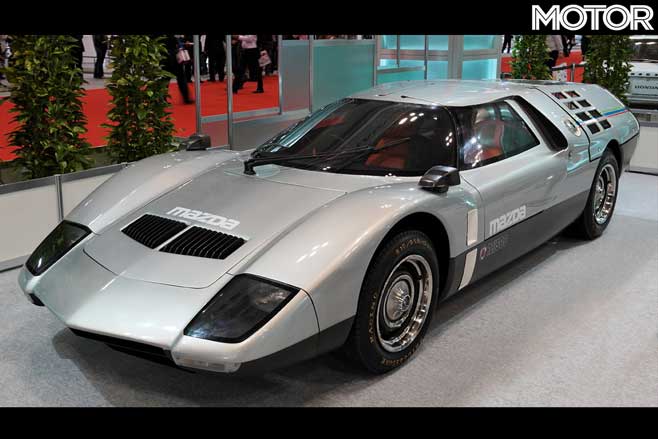
The car that kicked this list off is one we honestly forgot existed until this week. This mid-engined Mazda testbed isn’t as ‘super’ as it looks perhaps, but a respectable 184kW from its 1.0-litre 10A rotary engine make it more significant in terms of power than a few entries to follow on this list.
The primary function of the RX-500 was as a test for a series of lights mounted on its rear, which changed colours not just as the vehicle was braking, but as it was accelerating or slowing too.
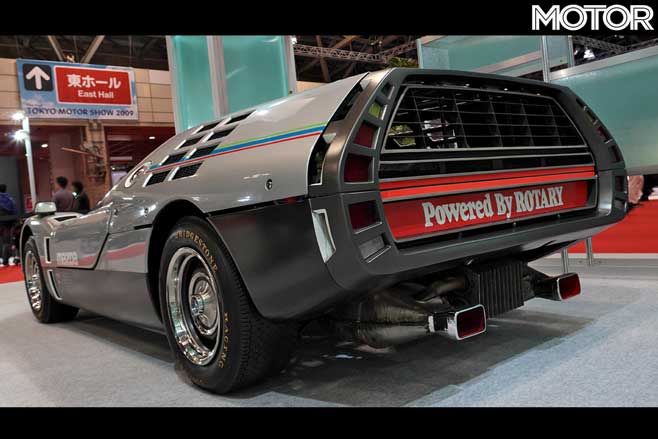
Obviously this never got off the ground, so the RX-500 remains a bit of an oddity. It does have rather excellent gulling engine covers and ‘butterfly’ doors for the cabin. It was also dragged out of storage and shown at the 2009 Tokyo Motor Show, almost 40 years after it was first displayed at the 1970 Motor Show.– Chris Thompson
1973 Chevrolet Corvette XP897 GT concept
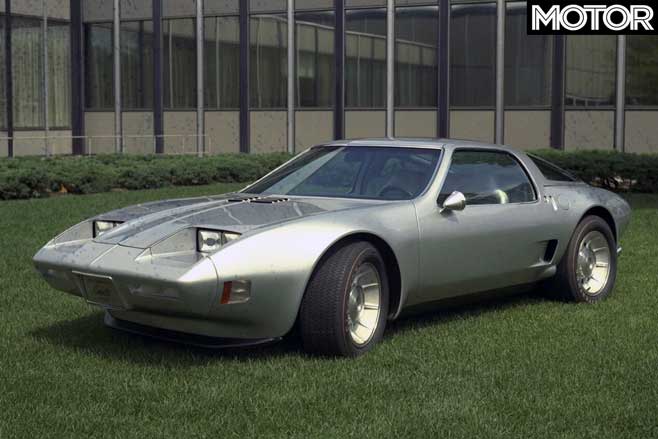
It may surprise some to learn that General Motors was just as bullish on the rotary engine as Mazda was. So enamored were they with the rotary that serious consideration was given to actually putting one in a mid-engined Corvette, an idea which birthed the Corvette XP897 GT Twin Rotor Concept.
By all accounts it actually drove quite well and could have become a star-spangled rival to the RX-7, were it not for the oil crisis of the 1970s – and the fact that GM’s rotary guzzled enough fuel to make even a big-block V8 envious – killed it off before it could even gestate. – Tony O’Kane
1974 Mazda Parkway RE13 Rotary 26 Superdeluxe
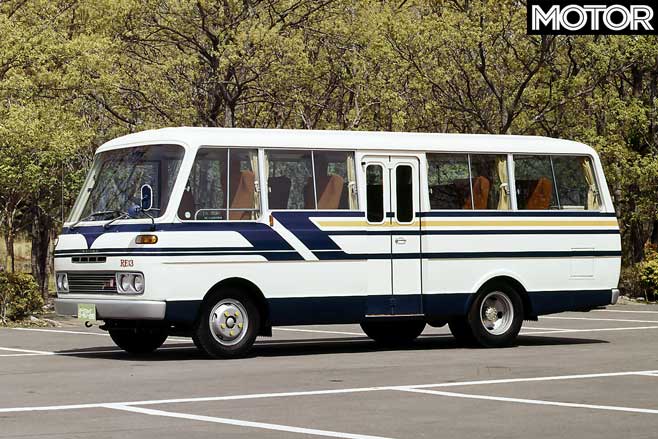
Of all the things to drop a rotary engine into, a municipal bus is probably the worst. Nevertheless, 70s-era Mazda was so amped about having made the rotary concept work that they were putting spinning triangles into whatever they could lay their hands on.
Hiroshima sake must be especially potent, because delivering enough torque to motivate a large 26-seat bus based on a truck platform isn’t something a rotary engine is good at. It was one of the first applications of the 13B engine – naturally aspirated, of course – though surprisingly Mazda didn’t follow it up with a second-gen Parkway Rotary. That’s sarcasm, by the way. – Tony O’Kane
1970 Mercedes-Benz C111-II
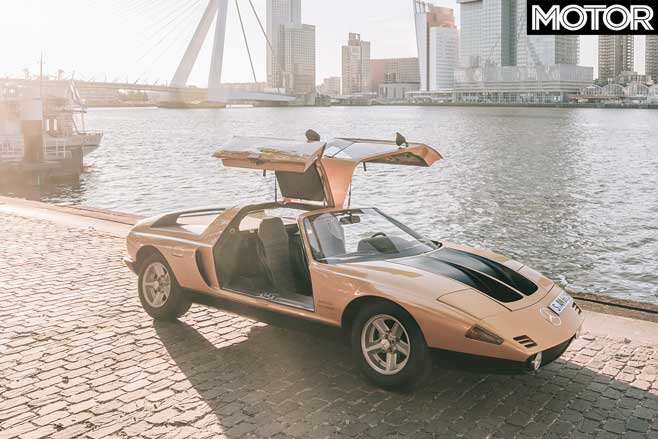
When Mercedes-Benz thought they ought to give the then-revolutionary Wankel Rotary engine a try, the Stuttgart giant did it in spectacular style with the C111 experimental cars.
The first C111 of 1969 started with a 206kW triple rotor engine, and Mercedes one-upped itself with the C111-II a year later, which packed a 257kW quad-rotor setup – similar outputs to that of the Lamborghini Miura’s V12.
Sadly, with the C111-II, Mercedes-Benz realised the inherent shortcomings of a rotary engine and swapped out the spinning triangles for the pistons of a traditional 3.5-litre V8 engine at the end of that very year.– Daniel Wong
1969 Citroen M35
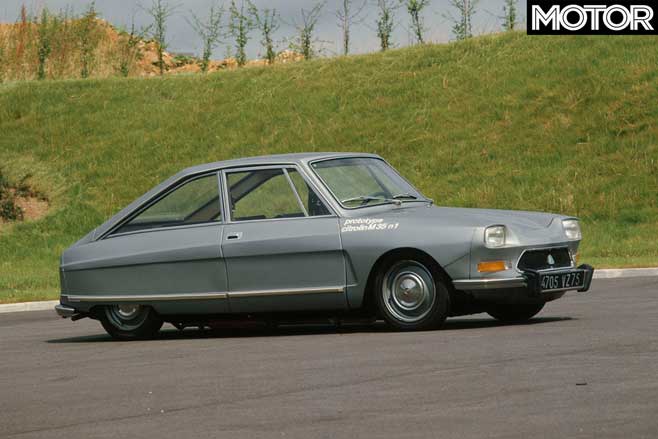
Who knew that Citroen dabbled with the rotary engine? Probably not many, because the French car maker only produced 267 examples of the Wankel-powered M35 between 1969 and 1971.
The M35 was a tiny coupe that featured a small 995cc longitudinally-mounted rotary engine that could produce 37kW and 68Nm. Cute. The engine was said to be so smooth and quiet that Citroen fitted an alarm that rang whenever the car approached redline.
Cool too, it featured Citroen’s famous hydropneumatic suspension system for ultimate comfort. – Tom Fraser
1973 Citroen GS Birotor
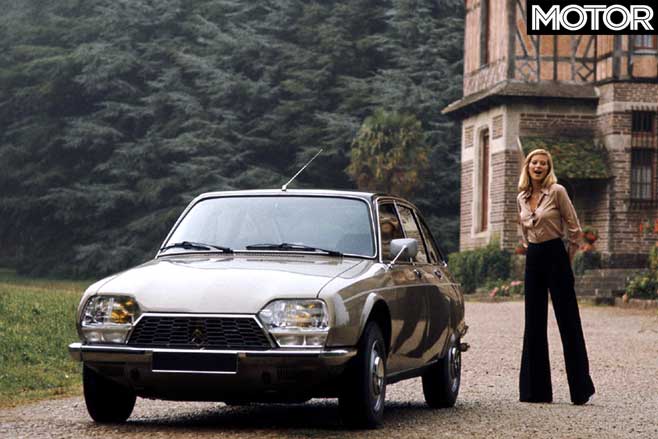
Another from our French mates at Citroen, hydropneumatic suspension and all, is the GS birotor. With 79kW from its NSU-Citroën motor rather than the 37kW from the M35’s rotary, the GS was a better offering in terms of performance.
But better than the M35 isn’t saying much, and less than 1000 were reportedly sold. The car pictured is seen at the Mullin Auto Museum, one of the few you’ll find after Citroen tried to buy back the Birotors it sold to avoid the cars being recognised as Citroens. Ouch. – Chris Thompson
2003 Mazda RX-8 Hydrogen RE
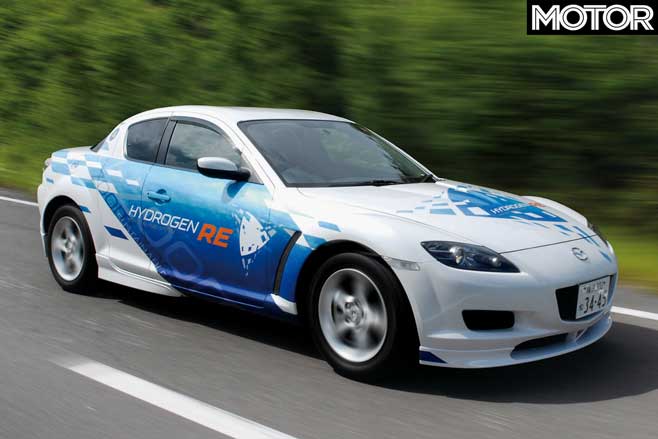
Ferdinand Piech once described Felix Wankel as a mechanical engineering genius who didn’t study thermodynamics before axing the engine at Audi when it absorbed NSU.
Where Piech saw the Wankel’s separate combustion and intake chambers as a problem, Mazda saw an opportunity, as the cooler intake chamber allowed the volatile hydrogen gas to remain stable until ignition.
This unique property of the rotary engine led Mazda to experiment with hydrogen-powered RX-8s and Premacy people movers in the early-2000s. Though a few units were leased, the programme bore no fruit as a hydrogen infrastructure remained a distant dream coupled with Mazda’s subsequent separation from Ford at the end of the decade. – Daniel Wong
1975 Mazda Roadpacer AP
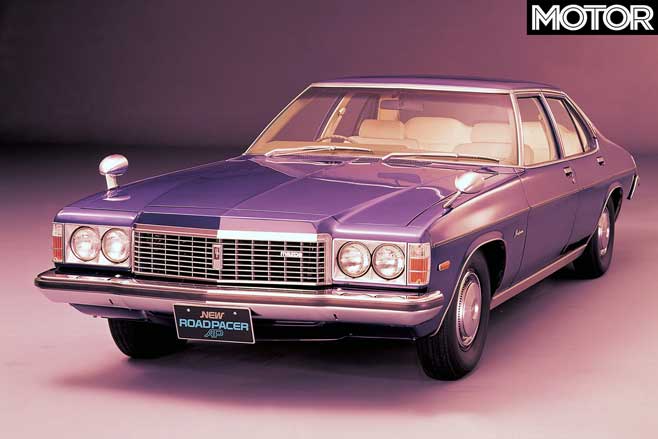
We know Mazda loves the rotary engine – or did – and we know GM spent a but of time trying to make the rotary a plausible production car power unit, but did you know the stories of these two brands have an obscure crossover?
Mazda nabbed a slew of Holden Premiers and fitted them with 13B Wankel rotaries in an effort to cut pollution (the AP stands for Anti-Pollution) but only a small number ended up selling between the initial availability in the mid-70s.
It was reportedly a bit of a slow, uneconomical disaster (Holden’s ‘red motor’ straight six was more powerful and fuel efficient), so not many are still around today. – Chris Thompson
What’s on WhichCar TV this week?
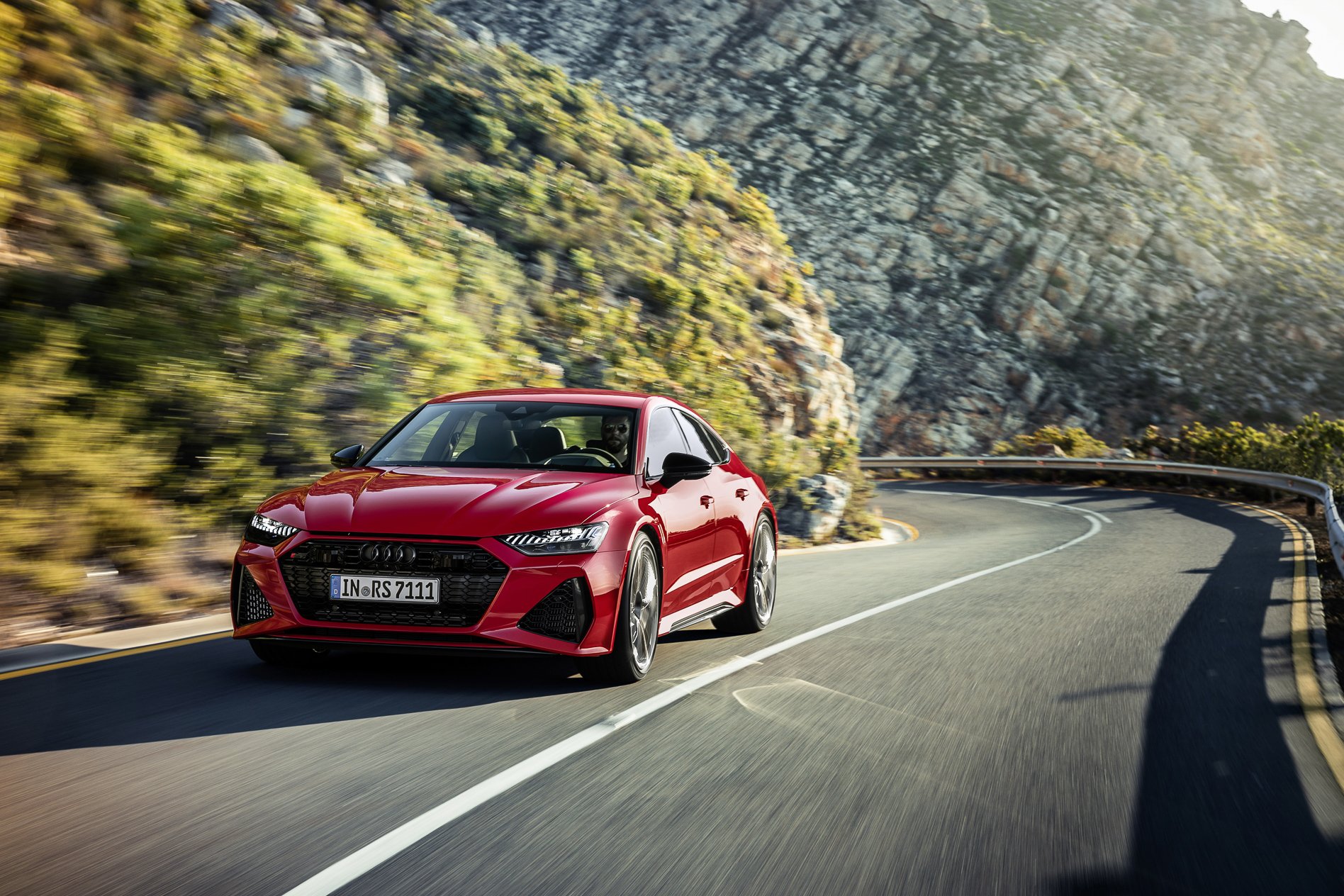
Dan takes the Audi RS7 on a German hill climb
Dan unleashes the mighty Audi RS7 on a hill climb through Germany. While it’s sporty, stylish and super fun to drive, we’ll also find out if this beast ticks the practicality box.
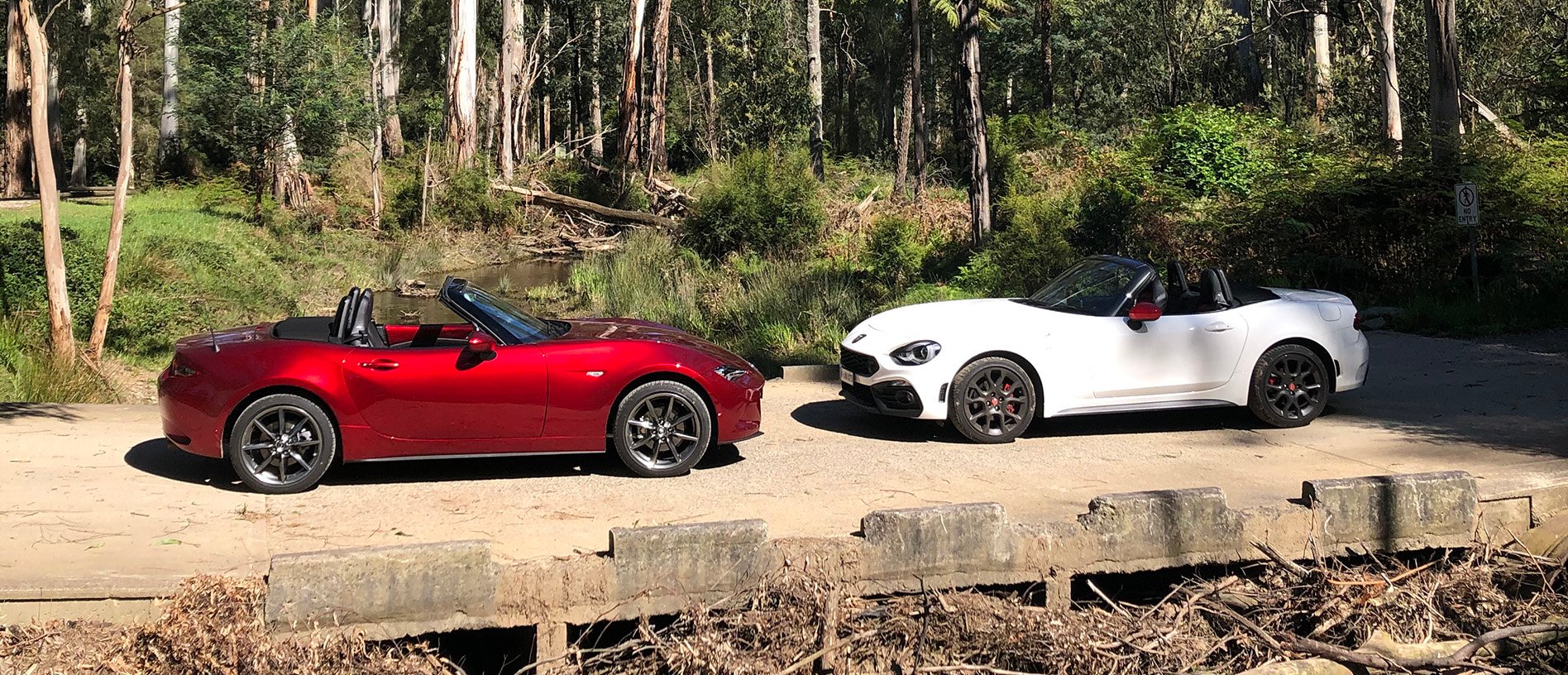
The battle of the Roadsters
David and Elise take a scenic drive and put two very special roadsters up against each other. But in the end WhichCar is the total package?
Inside a Ferrari Launch
Start up your engines…Emma is in her element as she takes us behind the scenes at the Ferrari F8 Tributo launch in Sydney.
Editor’s Review
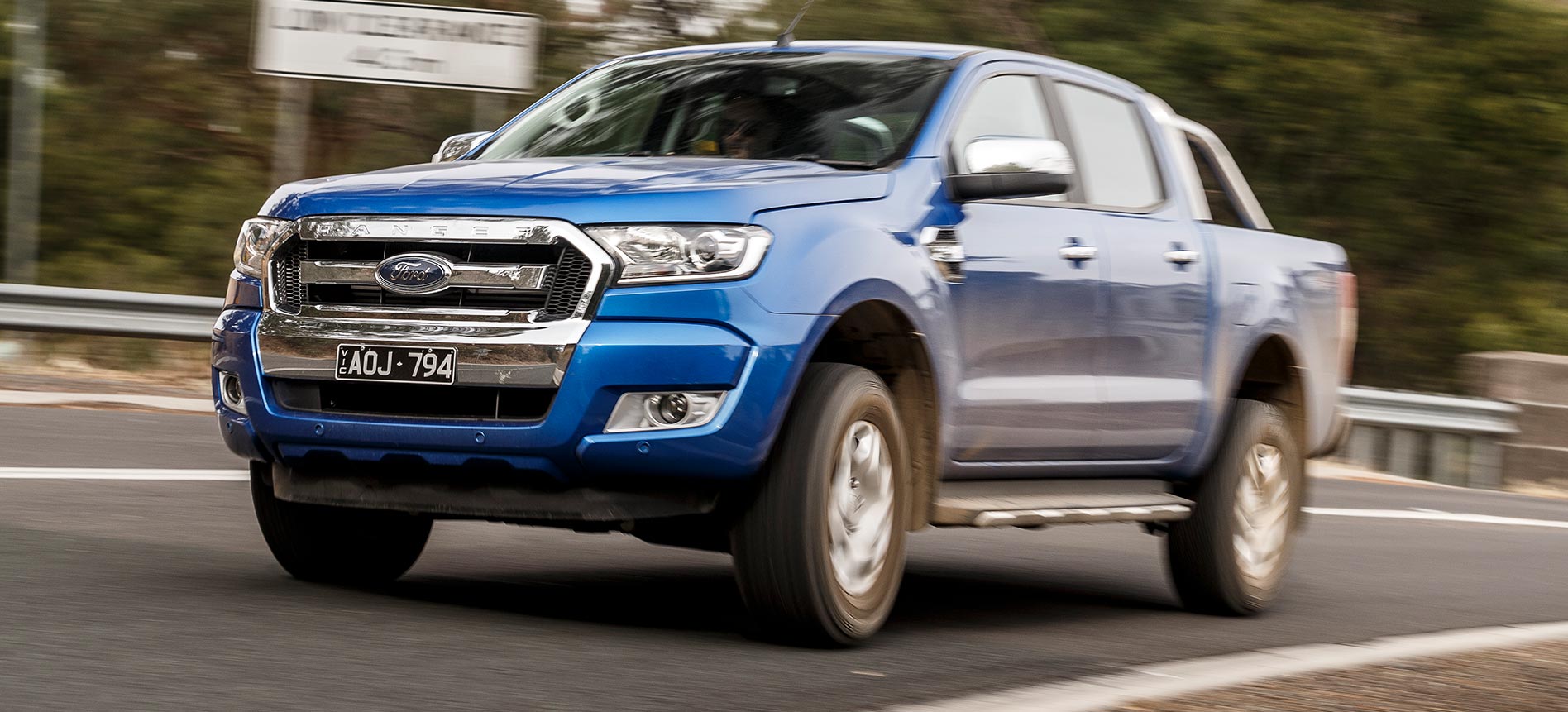
This week it’s 4×4’s turn for an Editor’s review and the pick is the Ford Ranger. Matt Raudonikis shares his views on the big mover in this flooded market.
For season two, we’re also offering an amazing prize for our viewers. How does a trip to the Maldives sound? Pretty awesome, right?
The Maldives competition is open NOW!
And, if for some reason you can’t (and it had better be a good reason!) then there’s a host of ways to catch up on the show, check out behind-the-scenes stuff and find out more about the cars Aussies want to buy.
For example, our weekly podcast, our Facebook page and our YouTube channel are standing by 24/7.
WHAT
WhichCar TV Season Two Episode 8
WHEN
4:00pm Sunday March 29th
WHERE
Channel 10
FIND THE HOSTS ON INSTAGRAM
Daniel Gardner @octanedan
Elise Elliott @eliseelliott_media
David Bonnici @whichcardave
Emma Notarfrancesco @emmanotarfrancesco
4×4 Australia Magazine @4x4australiamag
MISSED THE SHOW?
The 2020 Goodwood Festival of Speed has been postponed with COVID-19 concerns cited as the cause.
Originally scheduled to take place in early-July, organisers of the event dubbed as “the ultimate motoring garden party” has decided to postpone the event to a later date on advice from the UK government.
According to the organisers the event would “most likely happen in later-summer or early autumn”, and they will continue to honour tickets and hospitality bookings that have already been made for the new date.
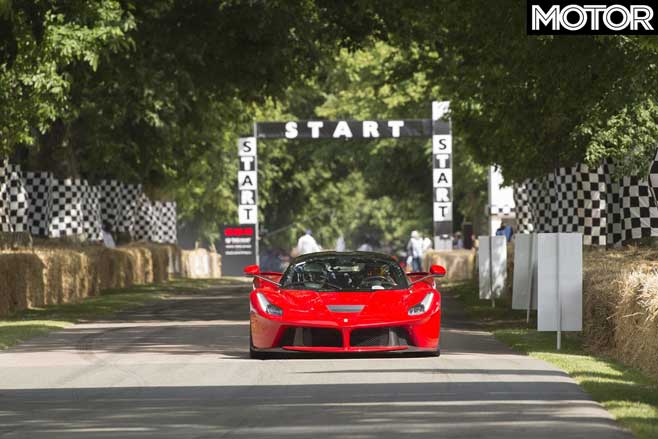
Unlike many motoring events around the world that draw a specific audience, the Goodwood Festival of Speed is one of the most anticipated events of the year as it promises something for everyone.
Be it exotic supercars, historic race cars, drift cars, race prototypes, actual prototypes, ruddy Land Rovers, or motorcycles, the Goodwood estate is open to any machinery built for speed, which has made it a major draw amongst enthusiasts and car companies alike.
Until we hear any updates on the new date for the 2020 Goodwood Festival of Speed, here are some of the thrills… and spills from past years.
– The Best of Goodwood 2019
– The burnouts and burn-downs of Goodwood 2018
– The Best of Goodwood 2017
– Best crashes of Goodwood
– Worst of Goodwood’s Molecomb
This story was first published in Wheels January 2017. This week is the 50th anniversary of the C111 concept’s global unveiling. To celebrate, we are looking back at when Peter Robinson was let loose in one of Mercedes-Benz’s rarest and most valuable prototypes with a single clear instruction: “Go as hard as you dare…”
“IT’S like a modern car,” says Rene Olma, pointing to the C111. “You can drive it as you want on the road.”
“Are you sure?” I respond, disbelieving, “In the rain?”
Olma, the head of communications for the Mercedes-Benz Classic division, smiles and tells me Auto Motor und Sport, Germany’s leading motoring magazine, recently ran the 46-year-old Mercedes classic through its contemporary road-testing process in a genuine comparison with today’s SL.
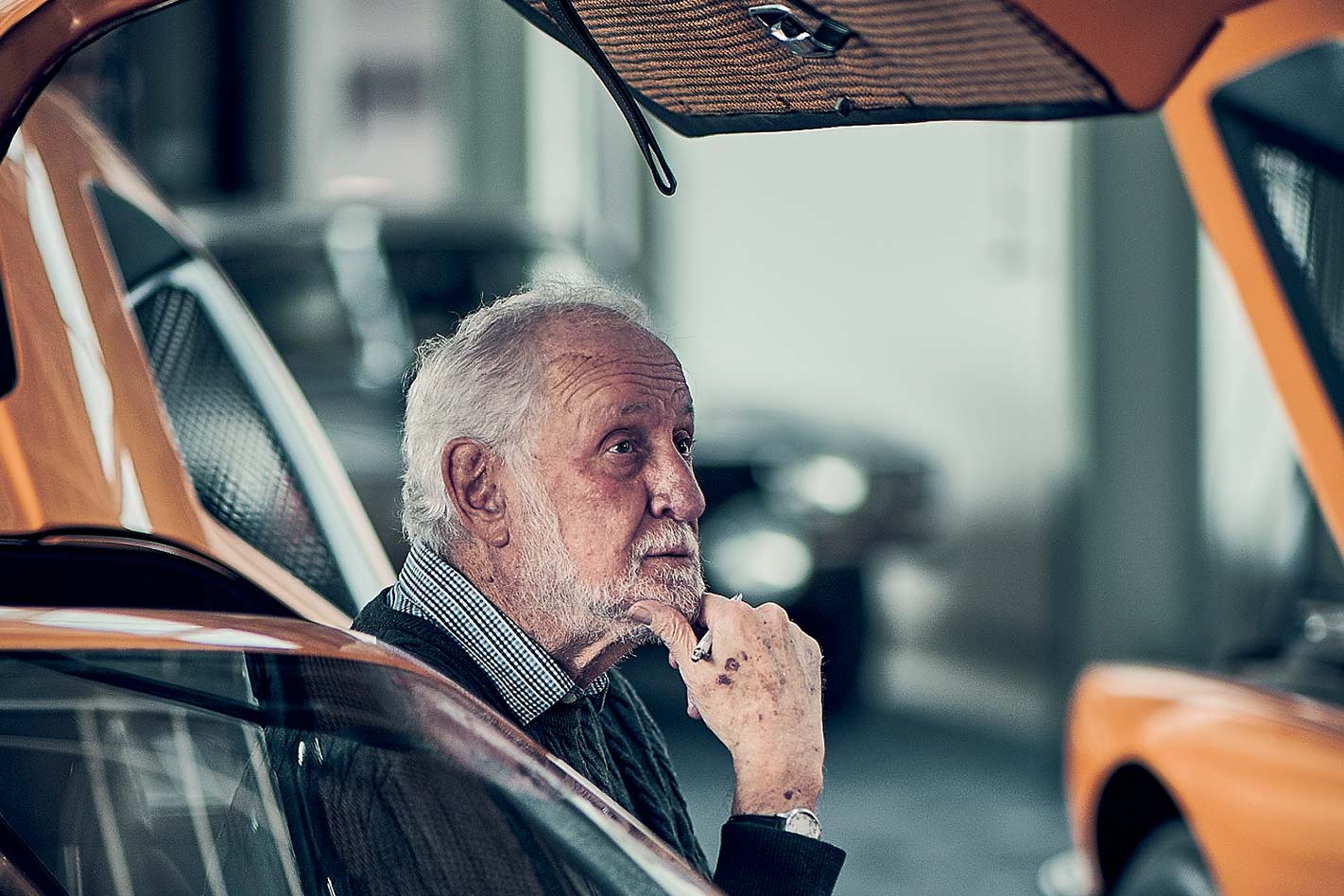
During the 18 months planning for this story, I always asked if this drive of the C111 could take place on Mercedes’ famous Unterturkheim test track inside the huge Stuttgart works. Only when we arrive at the M-B Classic workshops does Olma tell me that’s impossible; the track is in constant use testing R&D department prototypes. The alternative is another, smaller Mercedes durability track south of Stuttgart, and to spend the rest of the long summer day on the fabulous roads in the Swabian Alps to the east.
Far from being disappointed that the heavily banked track is off-limits, I’m thrilled at the chance to try the striking, copper-gold (the stylists called it “rosé wine”) gullwing coupe in real-world conditions. And also a little anxious. The C111, one of just 14 (of which 11 survive) is insured for something close to $10 million.
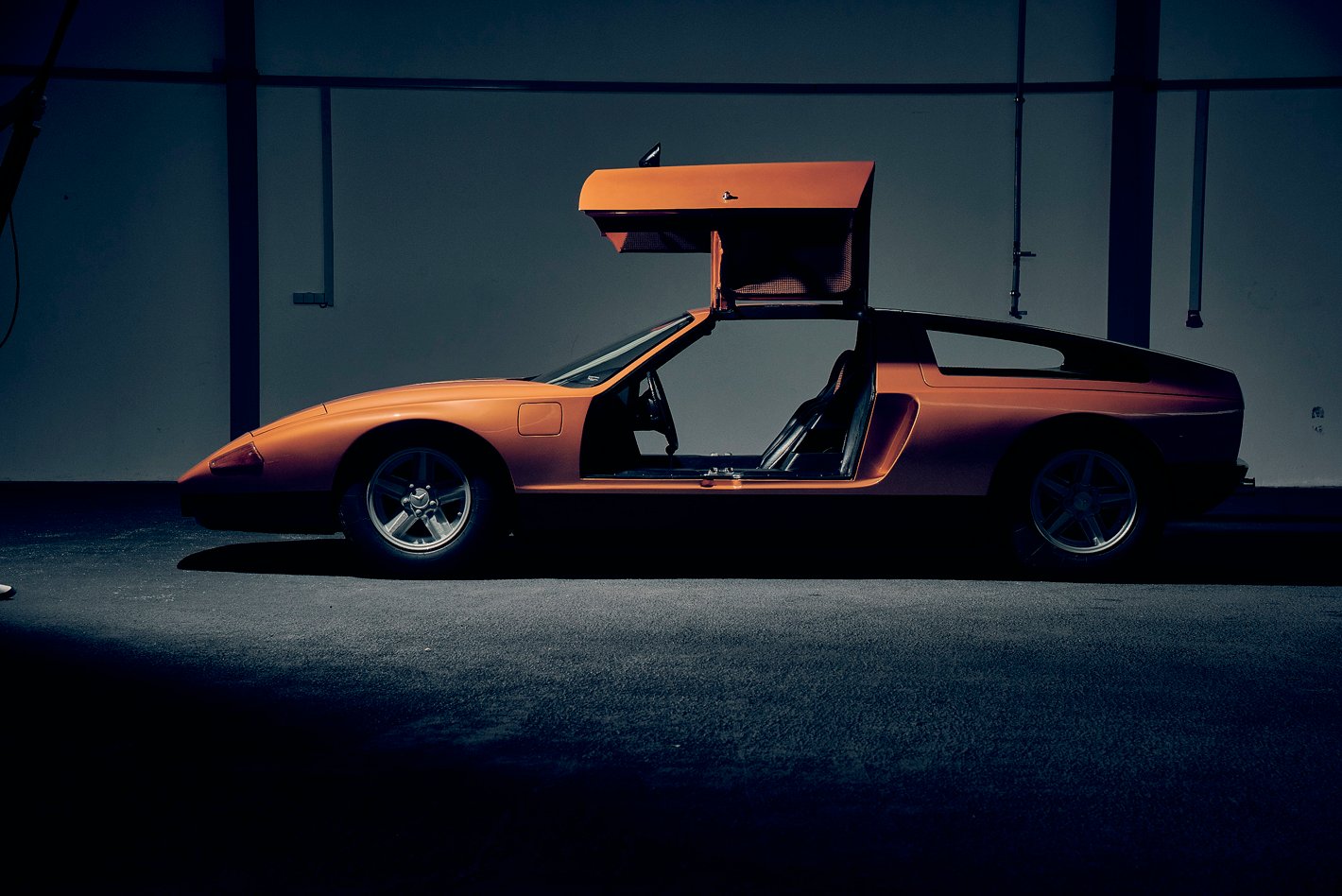
Before setting off, let me tell you something about the C111 (pronounced C-one-eleven).
It was introduced at the 1969 Frankfurt motor show as an “experimental sports car” to test various engineering ideas, most notably a radical Wankel engine for which Mercedes had a development licence, but also: a new multi-link rear suspension (eventually to replace Mercedes’ normal semi-trailing arm system) and front suspension; the mid-engine layout; an anti-lock brake system; and a tube-style frame welded of sheet steel, rather than the backbone-style construction then in favour. It’s a layout that’s essentially similar to the Ford GT40.
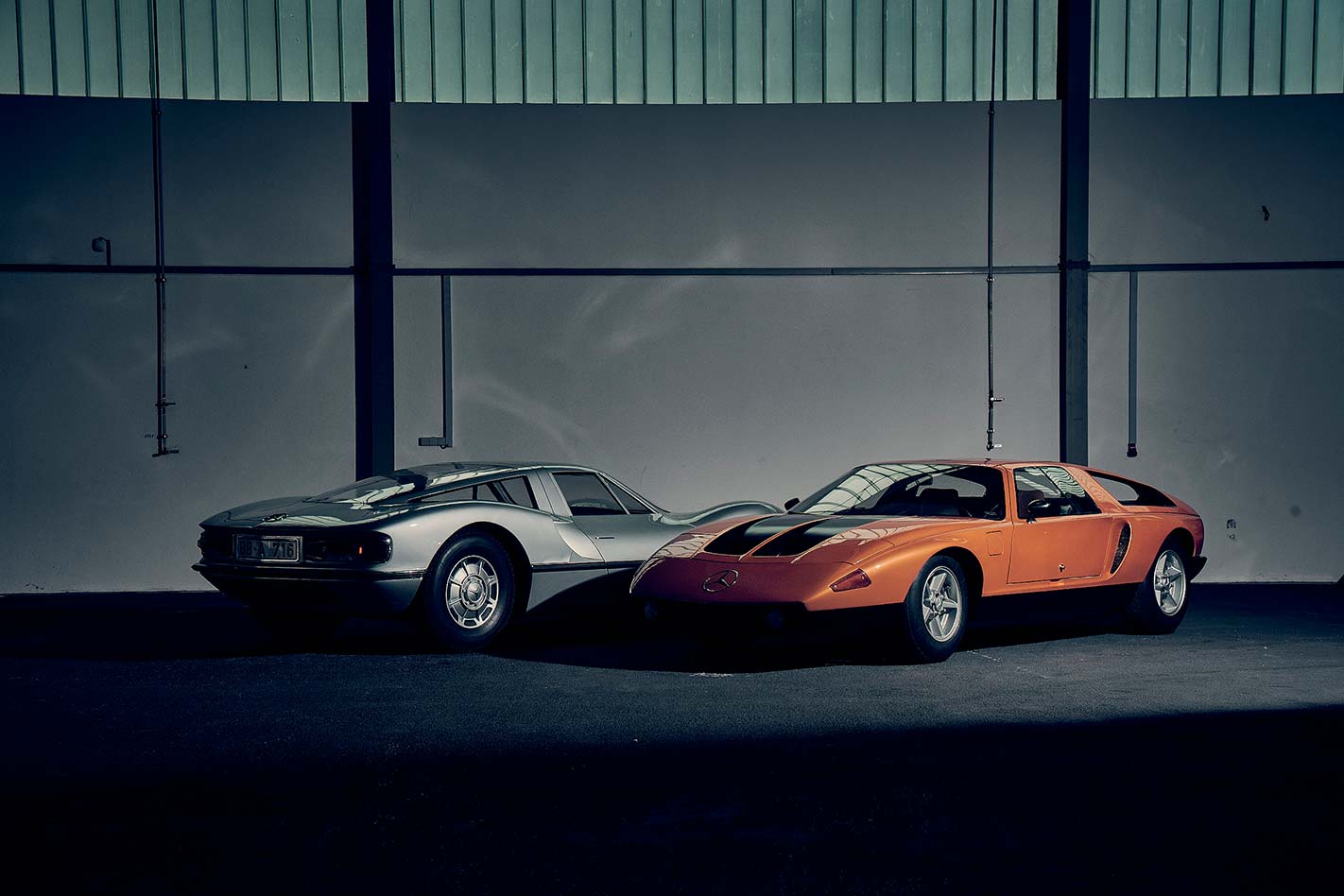
Mercedes had played with a mid-engine supercar in the mid-1960s, but Bruno Sacco, soon to be head of design, criticised the awkward, American-ish Paul Bracq design; with the approval of his boss, Karl Wilfert, Sacco initiated a new and very wedgy design.
With its fibreglass/plastic body styled by Joseph Galitzendorfer, the C111 proposal took Mercedes design in a totally new and creative direction. Clean, elegant and aerodynamically efficient (Cd 0.33), the still beautiful and timeless, wildly expressionist styling proves there were many at Mercedes who saw this car as far more than a test laboratory. It was to be a modern 300SL, a mid-engine gullwing supercar to rival the Lamborghini Miura and Ferrari Daytona in performance and appearance, and to combine these qualities with typically Teutonic practicality and superior handling and roadholding.
It was also small at 4440mm long, 1825mm wide and just 1120mm high, about the size of today’s Porsche 911, but with much shorter overhangs. Rudi Uhlenhaut, Mercedes’ great test development engineer, undoubtedly set out to build the world’s best sports car.
Customers and the press were impressed with the original 206kW three-rotor car, but it was the 1970 version, with a 275kW four-rotor engine, that brought a massive performance increase – top speed 285km/h and 0-100km/h in 4.8sec, brilliant for the era. Combined with a lower waistline and larger windows, buttresses that sweep back from the reinforced roof, and gullwing doors that opened to improve visibility, it had around 500 people queuing up, cheque books open, to order the car. It was not enough.
An initial run of 50 cars was hinted at by the motoring press. Eventually, in 1973, durability issues with the rotary engine, crash test security with the gullwing doors (what if the car should roll?), difficult egress and potential emission problems saw the Mercedes board veto a production version, by a margin of just one vote.
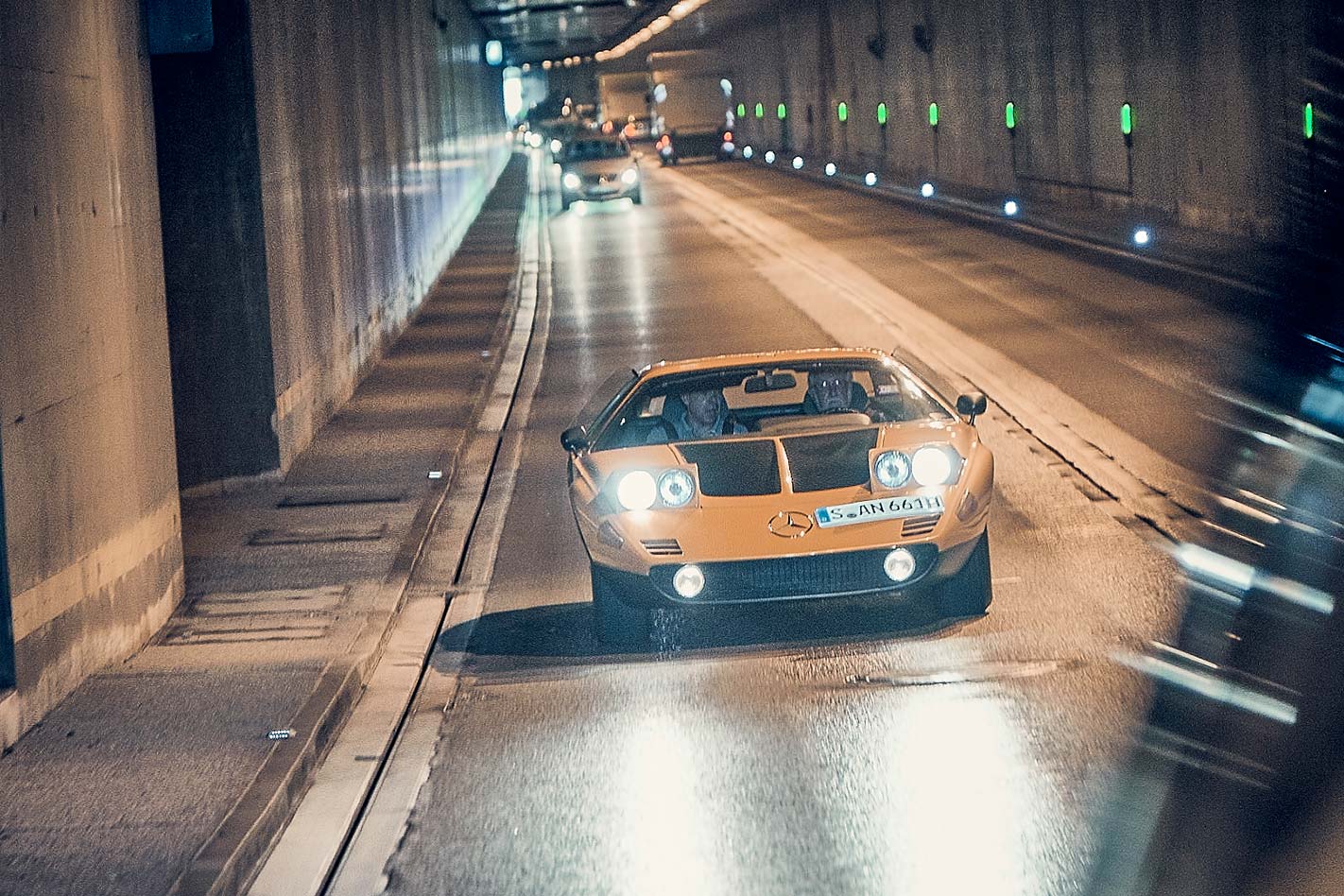
Now, rain falling, I’m about to be trusted with the gorgeous C111 in Stuttgart’s dense traffic.
Compared with today’s supercars – with vents, ducts, wings, spoilers and splitters on every surface – the overall impression is precise, minimalist even, almost delicate. The blacked-out areas, uncluttered rear treatment with a blacked-out grille enhanced by simple round red tail-lights, evoke understatement and design refinement. Only the high-profile (215/70 VR15) Michelin tyres and pop-up headlights betray its age.
Minder Matthias Chwal, the mechanic who rebuilt the car when M-B Classic decided they wanted a reliable and fully functional roadgoing C111, opens the wide gullwing door.
Watch your head on the lower edge of the door, slide across the expansive body sill, being careful to avoid the greasy, single, centre door lock in the sill, and you find a perfect driving position. Long before the BMW M1 and Honda NSX, Mercedes created a user-friendly supercar. It is so much more practical than the Italian supercars of the era. None have ever been sold, though, which plays a big part in the C111’s mystique.
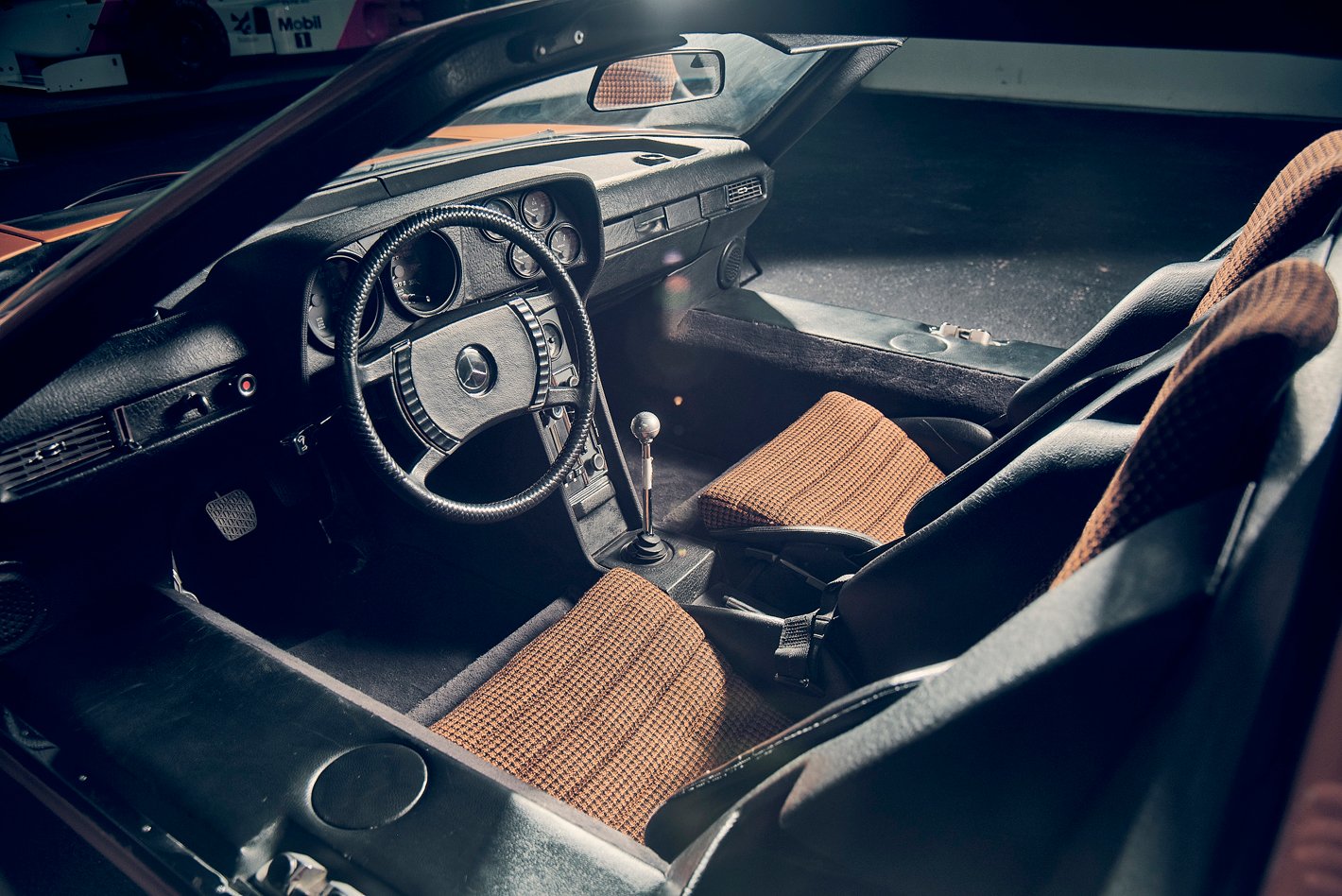
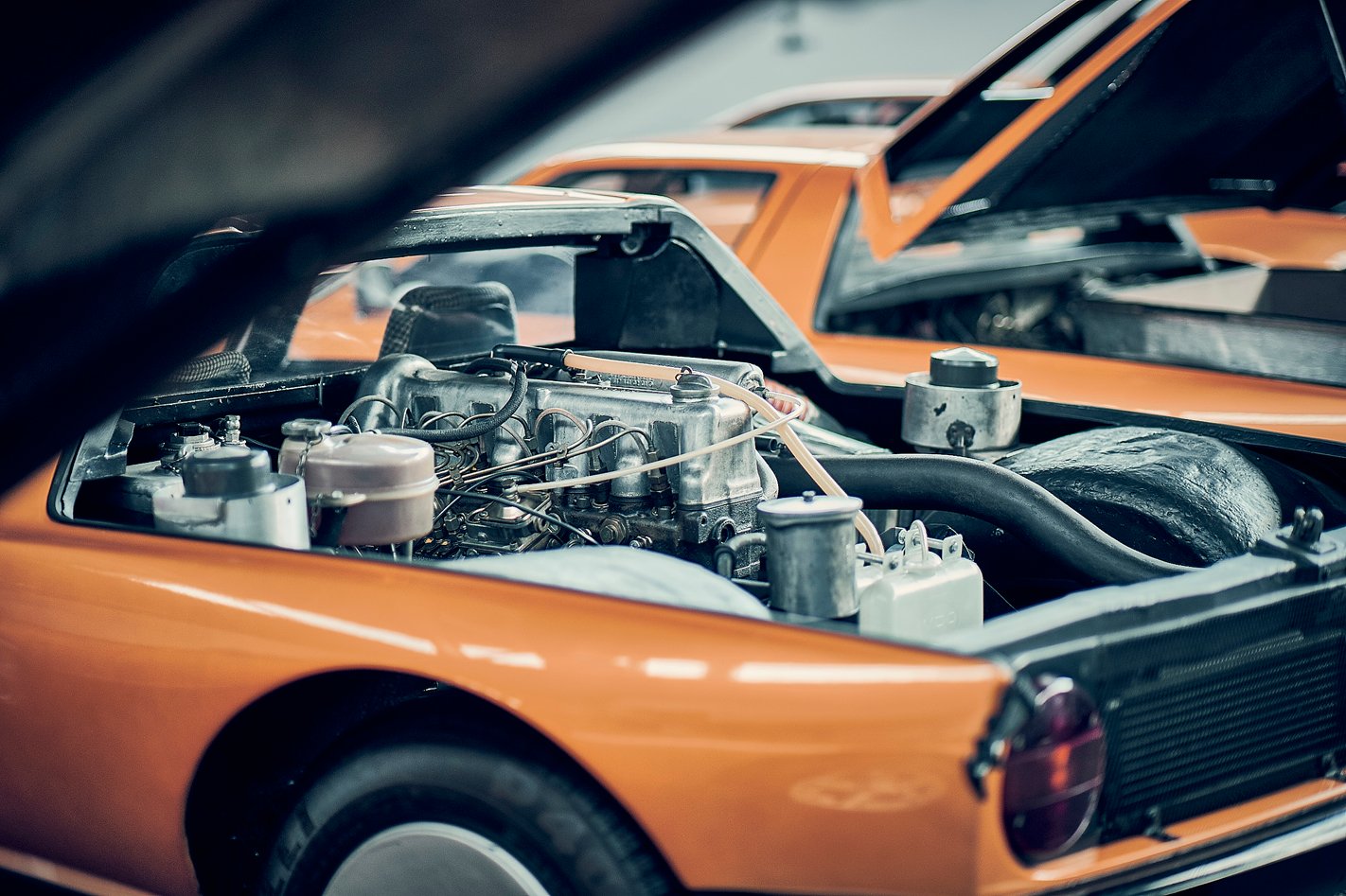
The huge four-spoke black steering wheel is straight from the S-Class, pedals offset just a little to the left relative to the wheel. The dashboard (and the wheel), switchgear and controls are from production 1970 Mercedes cars, the fashionable houndstooth cloth buckets supportive and comfortable. The huge windshield is striking, providing exceptional forward visibility. The windscreen’s leading edge reveals the tell-tale sign of one of the world’s first integrated radio antennas. The period V8 now installed to keep the car realistic was developed for the R107 350 SL.
This once experimental prototype is production-ready, with a working historic and vertically installed Becker radio, air-conditioning and full set of gauges. Even the inside of the glovebox is finished, in leather.
There’s a note stuck on the dash that suggests a 120km/h maximum speed. However, despite the car’s value, I’m told to ignore it.
Turning the key and hearing that V8 fire is bliss. It’s a bit lumpy initially, but soon settles to an even rumble. The tacho’s crudely painted redline is at 6500rpm, though the numbers run up to 10,000rpm, an obvious indication it was intended for the Wankel engine, which was governed to cut the fuel supply at 7500rpm.
To take off, you push a button on top of the gear lever to select the dog-leg first gear (or reverse) on the ZF five-speed transaxle (as used in the DeLorean DMC-12). From second to fifth gears, the shift is via a standard H-pattern.

By modern standards, the C111 is brisk rather than fast, and needs plenty of revs to overcome a lack of low-end torque. Best to keep the bent-eight in the 3500-5000rpm range, which means frequent use of the gearbox, learning to deliberately hesitate for a brief moment on shift across the H-gate as you change gears.
In four-rotor form back in 1970, the C111 must have felt ridiculously fast. Yet the ride is beautifully composed and the new suspension’s anti-dive geometry, which would make it on to all production Mercedes cars, really works, though there is bodyroll in tight corners. The brakes, the same vented four-wheel discs developed for the 300SEL 6.3, are strong, progressive and reasonably weighted.
The one area where the C111 fails by contemporary standards is in its steering behaviour. At anything below 40km/h, the steering is so heavy it demands strong-arm tactics and feels ponderous. At parking speeds it requires a massive effort to move the front wheels. The trait of quickly loading up as you turn the car into corners exaggerates the car’s understeer because slow corners demand far more lock than you initially feel is needed. And because there is nothing in the way of self-centring, the wheel must then be wound back to a straight-ahead position as you exit.
Two things here: It would have been easy for Mercedes to fit a production C111 with hydraulic power steering; second, at 3.75 turns, the steering is far slower and less direct than modern cars. For the mid-engine supercar, Mercedes stayed true to its experience and fitted a traditional recirculating-ball system. No pin-sharp rack-and-pinion system, then beginning to appear on most of its rivals, for the C111.
The transformation in the steering on winding country roads is both welcome and a real surprise. As the steering lightens it also feels far more direct and accurate at the straight ahead. It even develops self-centring out of corners, the whole car coming alive, encouraging the driver to attack corners and straights. Yes, you can drive this car hard, as hard as you dare. Now it is light on its feet and even feels agile.
I’m learning the car and road as I run the C111 back and forth for the photographer. Stretching the V8 out to 6000rpm, I can’t believe my confidence levels – especially given its value – as the Mercedes is flung around, balancing its attitude on the throttle, even as all the engine’s power is delivered to rear wheels that take 55 percent of the car’s weight. The whole car, so obviously thoroughly developed, displaying Mercedes’ accepted Fort Knox impregnability in all its 1260kg, feels utterly self-assured and stable with a harmony that was unheard of in its contemporary rivals.
From my enthralling day at the wheel, it’s clear the C111 was created by engineers who knew how to drive and understood what it took to make a car decently fast and immensely rewarding to drive, at least away from suburban speeds. A production C111 would have elevated supercar standards to an all-time high.
No doubt there was great relief in Modena when the Italians learned that Mercedes didn’t plan to produce C111s. At the time, Mercedes’ 3.5-litre V8 was not sufficiently powerful, and the brutal 6.3/6.9 V8 was simply too heavy if the car was to maintain the balance achieved with the Wankel. As a result, through the troubled 1970s with its two energy crises, Mercedes ignored supercars and it wasn’t until more than a decade later, with BMW on the march, that Stuttgart dared to think of genuine high-performance sports cars.
In 1991 Mercedes showed the mid-engine C112, effectively its answer to Jaguar’s XJ220, but the heavy-handed, almost ugly design was still-born.
It would be another decade before Mercedes returned to the supercar with the front-engine Mercedes-McLaren SLR, supposedly inspired by the 300SLR Uhlenhaut coupe. It, too, didn’t sell or drive as well as expected. Then came the also gullwing SLS AMG and in 2015 the GT, each staking a claim to be a successor to the original, though without displaying the engineering and design creativity of the exquisite C111.
I can appreciate and accept the reasons why Mercedes-Benz didn’t build the C111, but that doesn’t make it any less disappointing. Not when it looks so close to perfection. Forget the Lamborghini Miura and de Tomaso Mangusta, this might have been the best-looking sports car of all.
Out with the four rotors, in with eight cylinders
Knowing Mercedes-Benz planned to show the Intelligent Aerodynamic concept at Frankfurt in 2015, M-B Classic proposed that a C111-II be rebuilt because of its role in aerodynamic development 46 years earlier. The idea was to use the car for static displays as well as participate in driving excursions and Mercedes’ global Fashion Week events.
They exchanged the irreplaceable Wankel engine for a more reliable M116 3.5-litre V8 from the same era, requiring only minor modifications to engine mounts. All the mechanical aspects were restored or replaced, with the emphasis on steering, brakes, springs and dampers. Six-point seat belts were installed to match the period seats, and a fire-control system (essentially to meet classic car racing safety regulations). But it remains absolutely faithful to the appearance and originality of the second-generation C111 as unveiled in Geneva in 1970.
A 10,000-mile record breaker
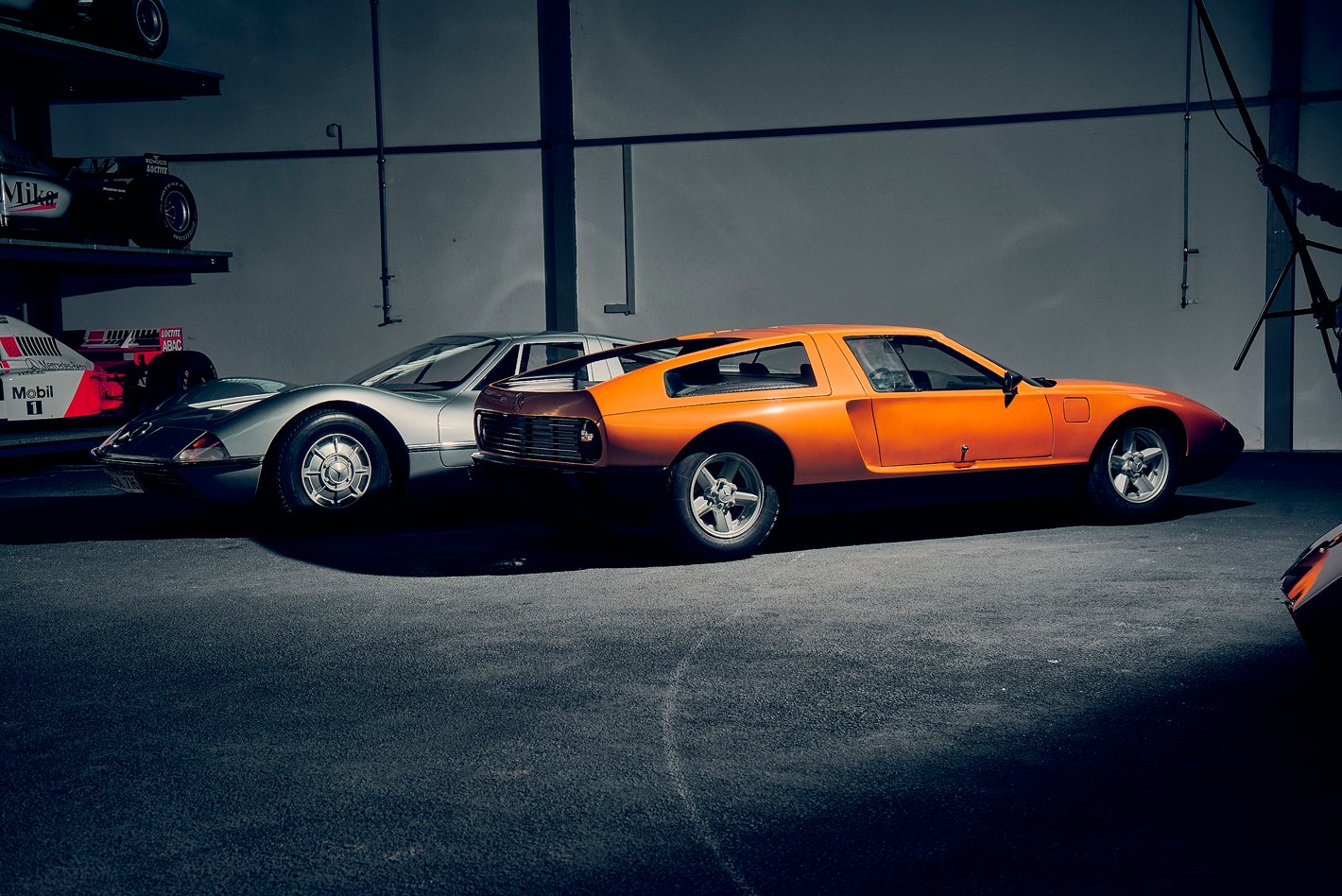
For a decade from its 1969 launch, the C111’s role was as a “continuing research car” for Mercedes-Benz, gaining first a fourth rotor, switching to a turbocharged diesel engine, and finally ending its development career in 1979 with a turbocharged 4.8-litre V8 petrol. Along the way, the diesel and V8-powered cars set speed records, including averaging 251.798km/h over 10,000 miles, which stood for 25 years. All were overshadowed by the C8 C111 IV’s record of 403.978km/h in one fantastic lap of the Nardo speed bowl in Italy.
Sign-up here to get the weekly Wheels highlights
Truth be told, the naturally aspirated Lotus Exige hasn’t really hit the right notes for the majority of the MOTOR crew. Too revvy, some sniff. The six-speeders gearing’s a bit funny, say others.
This review was originally published in MOTOR’s October 2006 issue
What we all do agree on, though, is that the basics of the handling package are pretty phenomenal; taut aluminium honeycomb body, racecar-derived uneven-length wishbone suspension, and lightweight everything.
Stands to reason, then, that an extra helping of grunt to punt that lovely chassis along might turn disbelievers into born-agains. The Toyota-sourced 2ZZ-GE 1.8-litre VVTi all-alloy four-potter is a good powerplant for the little Exige, though its appetite for revs to keep it on the fun-cam settings proved tiresome. The gearset in the Toyota box, too, left holes in the power delivery that dulled the fun, especially at corner exit where the torque is needed most.

So, what to do? A great way of bolstering the low-to-mid-range torque delivery of any car is via a supercharger, and the little crank-driven Eaton Rootes blower is attached to the motor via Lotus’s own intake manifold, plenum and induction plumbing. Cooling the air charge is left to an air-to-air intercooler that’s fed by the roof scoop.
It’s good for 7 pounds of boost at about 3500rpm, and helps the 935kg (949kg fully optioned) car make a smidge over 162kW at a soaring 7800rpm. At 215Nm at 5500rpm, torque is up by 34Nm over the naturally aspirated version of the Celica engine, and 80 percent is available from just 2000rpm. It’s a figure that’s still on the low side, but then it hasn’t got a whole lot of car to push around.
The Exige S is largely the same animal as the Exige, though there are some key refinements that are very big nods in the direction of everyday practicality. Well, sort of. The rear bar gets new metalwork and a revised exhaust, while a combo of a revised three-piece diffuser and a fixed-angle rear wing out back combining with a tweaked front splitter to increase negative lift at both ends. The rear light clusters are now an LED design, too.
Inside, an all-new, cheesy-looking plastic dash and a bespoke Momo steering wheel hide a pair of SRS airbags, and there’s also a set of up-spec ProBax-designed seats, aircon and a four-speaker stereo. Lotus has also, sadly, fallen for the starter button fad – but it hasn’t moved the steering column-mounted ignition barrel, which can foul on the knee of larger drivers. And if you look in the rear view mirror today, you’re in for a big surprise… you can’t see a blessed thing thanks to the intercooler pipework.
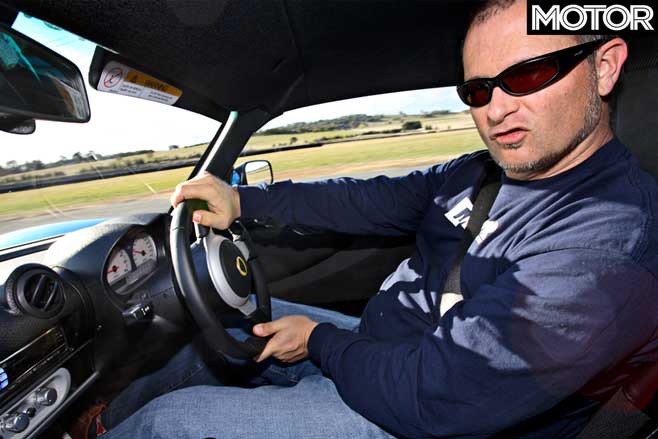
The way that this car drives, though, is the big improvement. It accelerates like any scalded household pet you’d care to name, claiming a 0-100km/h time of 4.3sec. As you’d expect, mid-range urge is greatly improved, and the C65 gearbox – with the same close ratios as the Exige, including its surprisingly leggy 4.529 final drive figure – now meshes beautifully with the wider powerband. It’s still revvy and it’s still thrashy, but it’s now got enough Benson to give it some serious hustle.
The Exige S has a switchable traction control system that works through Lotus’s own T4e engine control system and its new fly-by-wire throttle to limit power. While it’s still a pussycat to drive with the system switched off, in conjunction with Lotus’s excellent ABS system and the stock semi-slick Yokohama Advans, it makes for a seriously quick, entertaining, idiot-proof sports coupe. It’s only available as part of the optional Sports Pack, which also gets you lighter rims, sports seats, different trim and a roll-hoop crossbar.
Out in the back blocks, the Bilstein adjustable damper- equipped Exige is quick and lithe. Serious steering effort is needed to move it from rest, though it loads nicely just off-centre. A revised pedal box has vastly improved the relationship between throttle and brake for better heel-toeing, though the notchy gearshift needed a firm shove on occasion. Noise? Check. Power? You betcha.
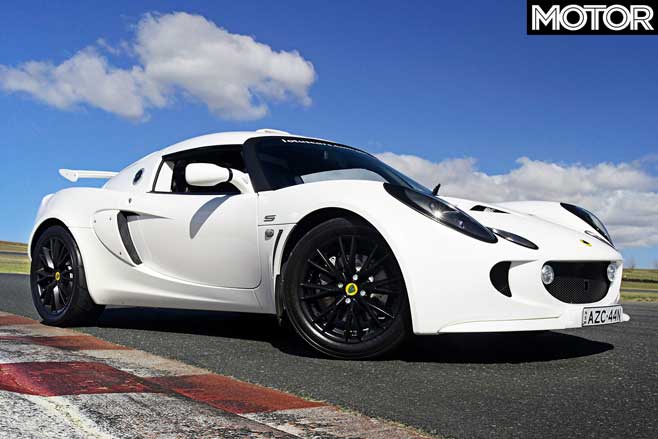
On track, it’s nothing but a riot dressed in Tupperware. Lap times with traction control on differed only in tenths with it switched off, though I did feel the car save my worthless hide from a couple of big moments.
Should a Lotus have a supercharger, aircon, traction control and carpet? One of Colin Chapman’s mantras still held dear at Hethel Heath is ‘the best engineering solution is the least number of parts most effectively deployed.’ In the Exige’s case, the extra parts give Lotus a chance to shoot for a bigger market than just those who revel in the purity of simplicity, without dulling the message.
2006 LOTUS EXIGE S SPECS Engine: 1.8-litre DOHC VVTi supercharged four-cylinder Power/Weight: 162.5kW/935kg (no options) Drive: rear-wheel Price: $114,900
AN ONLINE classifieds site in the United Kingdom has revealed that a small BMW conversion company has built the ‘Touring’ version of the F80 series M3 we wished BMW had.
Hailing from Nottingham, M-Conversions has developed its own limited run of M3-powered 3 Series wagons called the MCT-450, and one of the 20 has popped up for sale.
Before you ask for how much, let’s run over what’s gone into to building one. From what we can tell, M Conversions has taken a standard previous-gen 320d M Sport and sacrificed its powertrain, suspension, body panels and interior to make way for an F80-series M3’s replacement components.
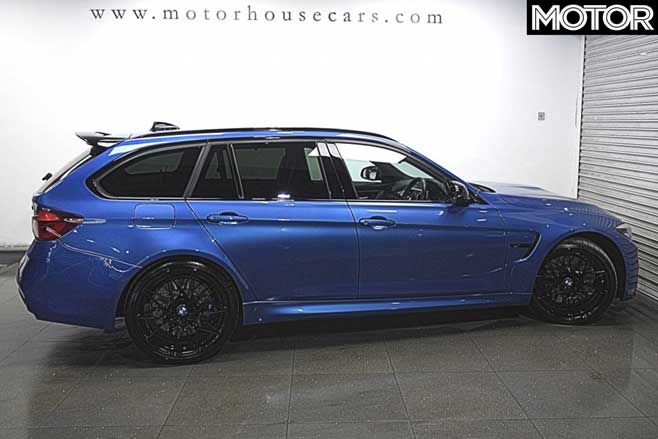
In this instance, an M3 Competition has donated the all-important M bits. So it packs a seven-speed dual clutch transmission, electronically controlled locking rear diff, adaptive dampers, M compound brakes and the all-important, somewhat-feared twin-turbo S55 3.0-litre inline-six with 331kW/550Nm.
We’ve reached out to the advertisers on the classified for more information, and whether there’s any tweaking involved to suit the wagon’s weight distribution, but from what we can see on the photos, things have been done well.
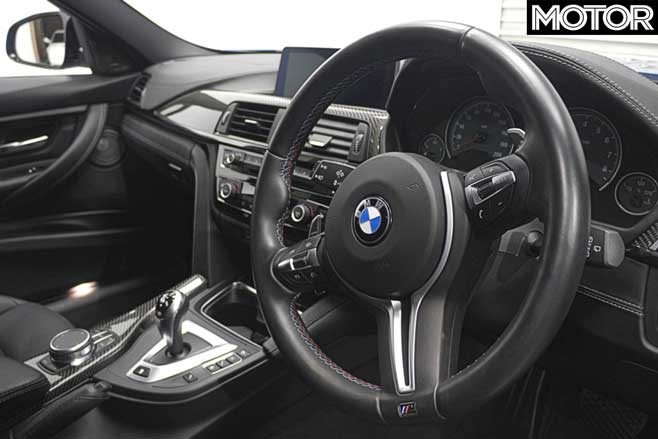
The interior’s replete with the Competition weight saving seats, while the centre console boasts the expected multi-mode buttons for changing either the suspension or powertrain on the fly. It’s also mentioned the MCT-450 also features the F80’s upgraded sub-frame and strut reinforcements.
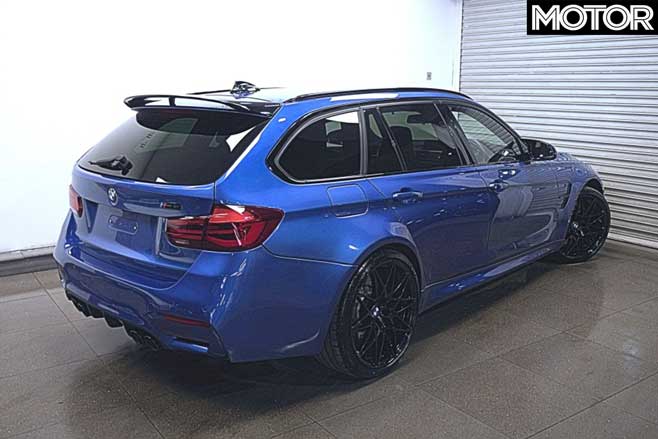
But while we imagine gutting and fitting a new powertrain and suspension setup might have been relatively straightforward, it’s the custom carbon fibre rear bumper and bespoke rear quarter panels, that meet the M3’s well-known width, that are most impressive. The MCT-450 even keeps the M3’s standard tail lights.
Listed at a very stiff £79,995 (converting to AU$159,900), with only around 4800km on the ODO, it’s easy to baulk at the sum given the F80 series car is wrapping up its life cycle and BMW’s slashed prices with Pure models to keep interest in the aging warrior that’s sometimes been seen as far less than perfect.
You can, at the moment in Oz, nab an BMW M3 Pure for $130K.
But considering that Mercedes-AMG will run you up $168,900 for a C63 S Estate (before on roads), and Audi will need $152K from you for an RS4 Avant, it seems fairly priced given the work poured into it.
And ask yourself this, if BMW announced its own 20-strong run of M3 wagons to celebrate the F80’s life, and put each of them to auction, how much would you be willing to pay for what could be one of the sharpest steering wagons possible to ever touch tarmac? Yep, us too.
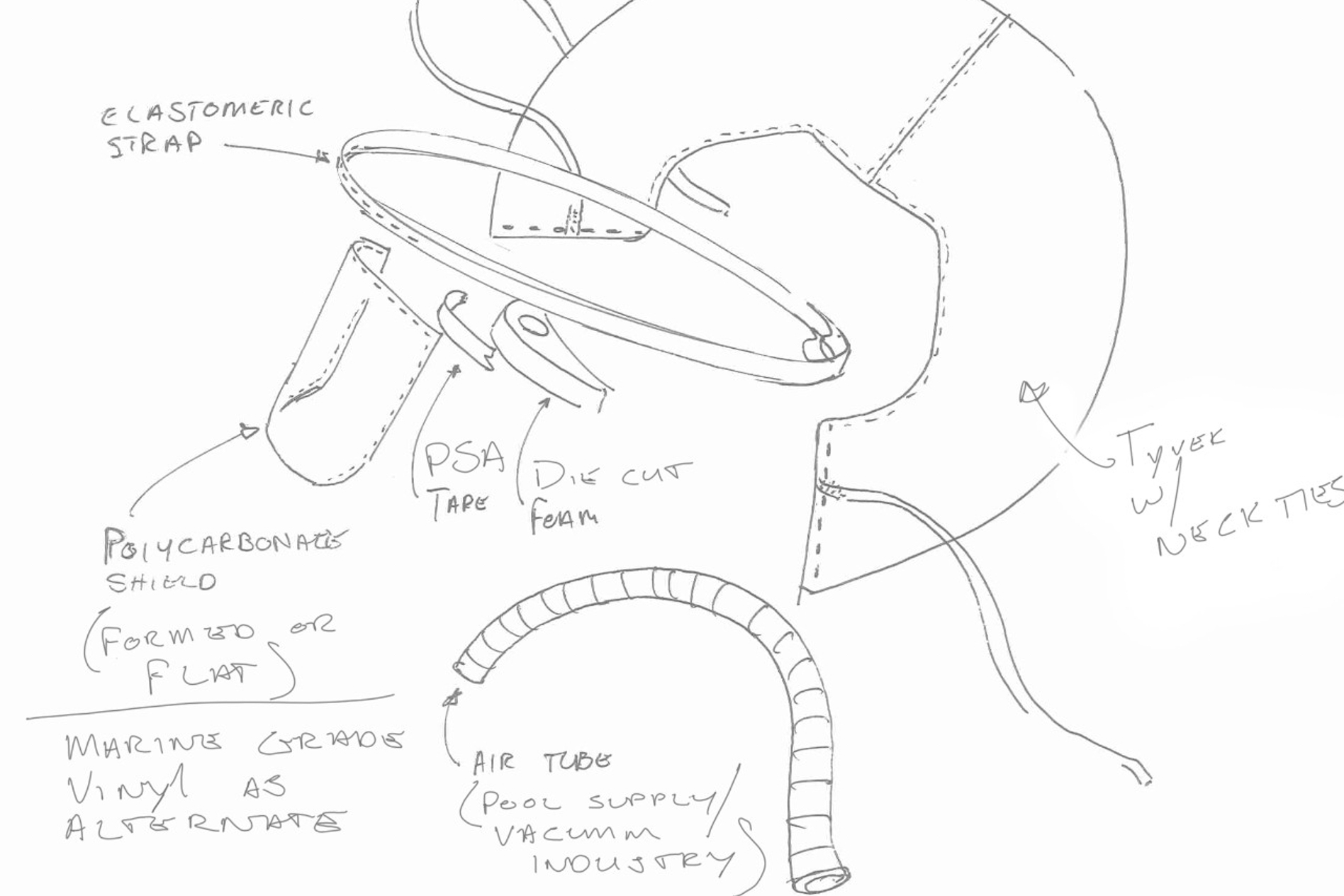
On the surface, it looks like something from a movie set; a set of hand-sketched drawings that show off Ford’s plans to build a ventilator that could be used by health workers tending to sick patients afflicted by COVID-19.
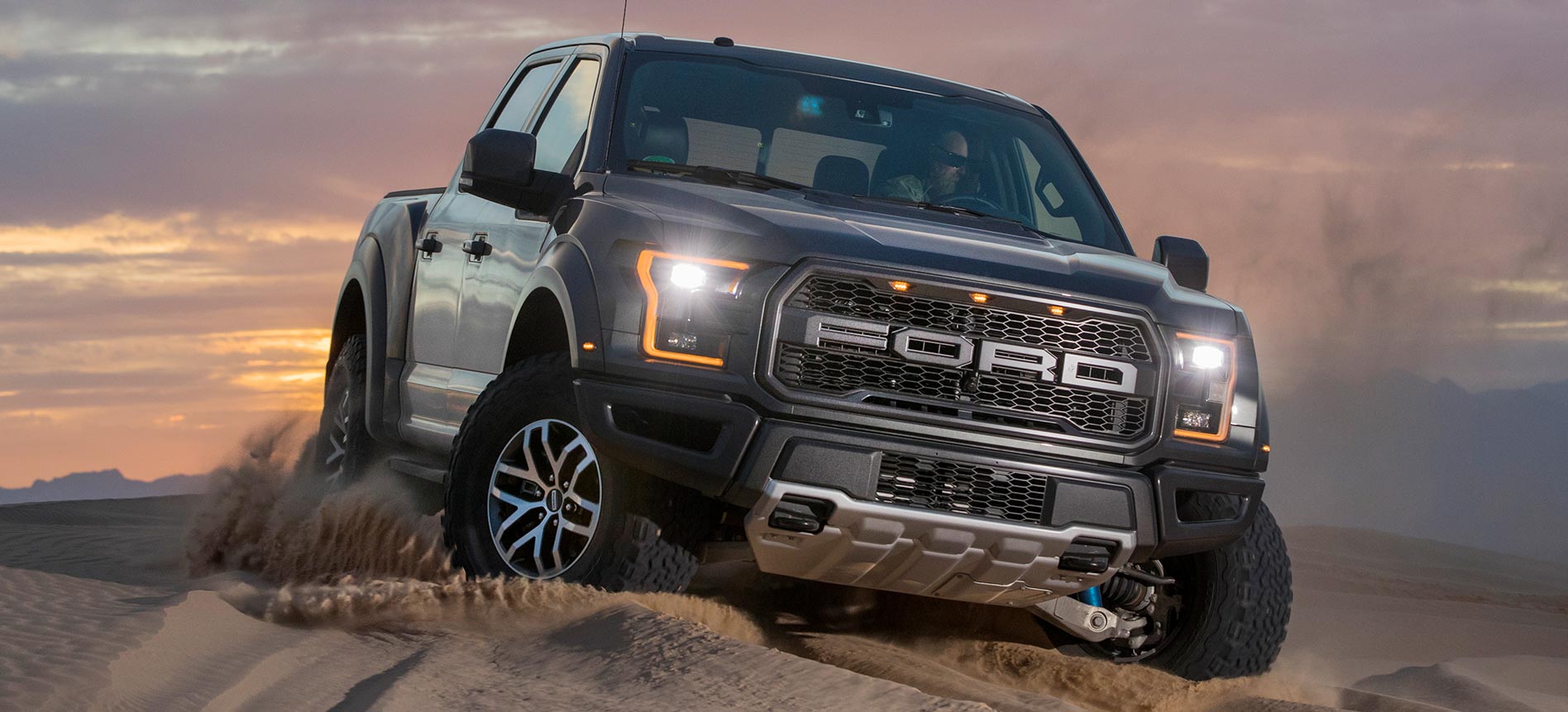
A seat blower fan from the F-150 pick-up truck, a plastic backing plate and a brace of tubes all powered by a power drill battery combine neatly on paper in a noble effort to answer the call from an increasingly desperate nation, where if the COVID-19 virus gets away from the medical fraternity it could reportedly claim more than two million lives.
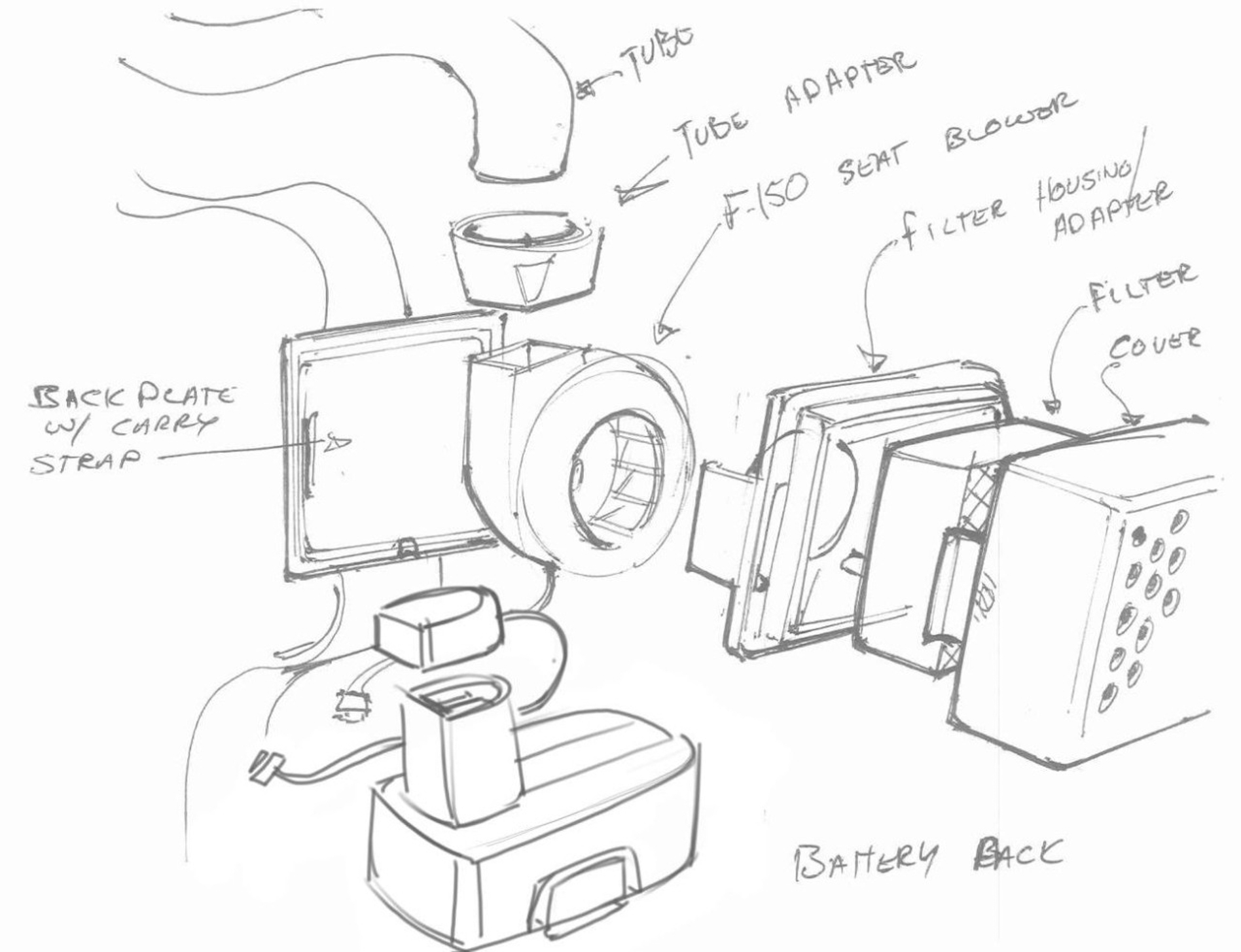
The problem with Ford’s magnanimous gesture is that while the drawings came together in a couple of days, a viable ventilator product won’t likely surface until June at the earliest.
Why the delay? It’s not the fans, obviously – Ford can whistle up enough fans from a supply chain that provides enough trucks for Ford to sell more than 2400 every single day in the US.
As well, with every plant standing idle, there are plenty of bodies to apply to the task of building them, and a typical car factory has enough space that can be used as clean rooms for assembly. The capacity to print 3D parts at scale is also a big advantage.
The other parts, like hoses and seals, are pretty straightforward – but the delay comes in the area of electronics. Outside suppliers will need to design and test the right parts, before manufacturing of the complete units can be facilitated.
Units will need to be prototyped and tested, too. Take into account the sheer numbers of people not actually at work at the moment, and it’s easy to see where delays and bottlenecks might occur before completion.
Others are doing their bit; General Motors, for example, wants to use its sheer size and muscle to help a company called Ventec build up to 200,000 of its ventilators, using GM’s purchasing power and factories.
It claims it has 95 percent of the parts needed to push the project forward, but others aren’t due to ship until April and beyond.
However, things are at a standstill, with the Trump administration reportedly baulking at the US$1 billion bill.
Even Tesla’s Elon Musk – who was just days ago scoffing at the idea of the danger – flew in 1000 ventilators from China, but it’s a literal drop in the bucket. New York governor Andrew Cuomo says the city needs 60,000… and that’s just one city in a country of 325 million people.

Instead of the NY motor show, the Jacob Javid Centre is being converted into a field hospital
Building ventilators is not like slinging toasters together. US-based ventilator maker Medtronic, for example, has pushed its output from 100 to 225 units a week but needs to source 1500 parts from 14 different locations for each one, in a time when logistics management is a huge challenge.
The ventilator issue is a critical one. The devices being discussed here are used to provide a consistent oxygen flow to moderately sick patients, but currently, there simply aren’t enough in circulation.
Even though ventilator makers have doubled their output, part shortages mean that the projected spike in COVID-19 cases will have torn through the country by the time enough is ready.
US stocks currently stand at 160,000 nationwide, standing in the way of a virus that could infect millions of Americans.
Underpinning the whole issue is the unwillingness of the Trump administration to invoke something called the Defense Product Act, which compels private companies to build products for the good of the country and provides investment to speed the process along.
Hopefully, Ford – in conjunction with its partner GE Healthcare – can make swift headway, but this fight against an invisible, microscopic enemy may be over before it’s even really begun.
What stands out?
The second-generation CX-5 adheres closely to the very popular original but refines its formula with a roomier, quieter, and more comfortable cabin, and enhanced handling. The mid-sized SUV from Mazda is available in five increasingly well equipped versions, all with active safety that includes auto braking. You can have petrol or diesel power, and front-wheel or all-wheel drive.
What might bug me?
How often you have to drop the car off for service. It’s every 10,000km (or 12 months), which could mean twice a year if you drive a lot.Dealing with a flat tyre when you’re out of town. All CX-5s have a space-saver spare tyre, which limits the recommended top speed to 80km/h. It is skinnier than the regular tyres on the car, and so has less grip.
What body styles are there?
Five-door SUV-style wagon only.Some CX-5s drive only their front wheels, but most drive all four wheels.All-wheel-drive CX-5s use an on-demand AWD system. Most of the time it sends most of the engine’s power to the front wheels, to optimise fuel economy. When the sensor-based, predictive, system thinks the front wheels are about to slip, it sends a greater proportion of power to the rear wheels.The Mazda CX-5 is classed as a medium SUV, lower priced.
What features does every Mazda CX-5 have?
A sound system with analogue and digital radio receivers, Aux and USB inputs, Bluetooth connectivity for phone calls and audio streaming, and at least six speakers, controllable from a 8.0-inch touchscreen that supports smartphone pairing via Apple CarPlay and Android Auto.Leather on the gear handle and steering wheel, and controls on the wheel for operating the cruise control, the sound system and your phone.Headlights and taillights illuminated by LEDs, which are brighter than conventional halogen bulbs and last much longer. Windows tinted against sun penetration.A reversing camera, and rear parking sensors. Rear cross-traffic alert, which looks to either side behind you when you are reversing, and warns if a vehicle is approaching.Electronic stability control, which can help you control a skidding car. All new cars must have this feature.Autonomous emergency braking that works at low and medium speeds and can detect pedestrians day and night, adaptive cruise control and other active safety features including blind-spot monitoring, driver attention alert, lane departure warning and lane keep assist.Aluminium alloy wheels.Six airbags. (For airbag placement, and for more on CX-5 safety systems, please open the Safety section below.)The CX-5 is covered by a five-year warranty, with no limit on distance.
Which engine uses least fuel, and why wouldn’t I choose it?
Mazda offers a choice from four engines in a CX-5: two four-cylinder petrols, a four-cylinder turbo-petrol, and a four-cylinder turbo-diesel. It is the 2.2-litre diesel that uses least fuel, consuming 6.0 litres/100km on the official test (city and country combined).The diesel pulls well and is the engine most suited to country driving. Even around town it accelerates smartly.One reason not to choose it is because you want more power from your CX-5 through the 2.5-litre turbocharged petrol engine available in the more expensive AWD GT and Akera CX-5s. Shared with the CX-9 and Mazda 6, the powerful turbo engine has claimed fuel economy of 8.2L/100km. This makes it the thirstiest engine in the range, though its performance boost provides excellent acceleration for overtaking and an 0 to 100km/h time of 7.7 seconds, more than a second quicker than diesel (8.8 seconds).Another reason not to opt for a diesel CX-5 is that it costs more than non-turbo petrol versions, and come only with all-wheel drive and an auto transmission. Another might be that you expect your CX-5 will spend long periods when it does only short trips around town, in which case its particulate filter, which traps diesel soot, could clog. (You need 20 minutes of steady cruising every now and again to clean the filter.)Of the non-turbo petrol engines, the 2.0-litre supplied with front-wheel-drive CX-5s is the more economical, using about 15 per cent more fuel than the diesel on the official test. It has a lot less punch than the diesel – which you would notice when climbing hills with big loads – but it is still a peach of an engine, spinning keenly and smoothly.A CX-5 Maxx Sport auto with this engine averaged 10.4 litres/100km over a June 2017 Wheels magazine comparison, ranking among the less thirsty of nine mid-size SUVs reviewed.The 2.5-litre petrol alternative offered with AWD CX-5s brings you about 20 per cent more thrust than the 2.0-litre, and uses only about 10 per cent more fuel. The extra acceleration available makes overtaking easier.Apart from the turbocharged petrol, the engines available with this second-generation CX-5 are very like those offered with the first CX-5, but with revisions aimed at making them smoother and (in real-world use) a little more frugal.The petrol engines and the diesel also save fuel in the city through stop-start technology, which stops the engine when you stop the car, and starts it automatically when you take your foot off the brake to drive away.The 2.0-litre petrol engine is available with a six-speed manual gearbox or a six-speed automatic. The two bigger engines are available only with a six-speed automatic. Mazda says it expects 95 per cent of buyers will choose an automatic CX-5.(Power outputs and all other Mazda CX-5 specifications are available from the Cars Covered menu, under the main image on this page.)
What key features do I get if I spend more?
The least costly CX-5 is the Maxx FWD. It comes with the less powerful, 2.0-litre petrol engine, a manual gearbox, front-wheel drive, cloth seats, 17-inch aluminium alloy wheels, and the features common to all CX-5s. An auto gearbox is an extra-cost option. Spend more money and you can have a Maxx AWD, which has the more powerful, 2.5-litre, petrol engine and drives all four wheels.For a little more than a Maxx AWD you could have instead a Maxx Sport FWD. It reverts to front-drive and the smaller engine, but it comes standard with auto transmission, looks and feels better, and has more equipment.On the outside the Maxx Sport wears nicer looking alloy wheels. Inside, there is a different, dark cloth on the seats and a more appealing dashboard finish – complete with fake stitching. The touchscreen displays satellite navigation. Rear passengers gain a folding centre armrest that holds a USB outlet, from which they can charge mobile devices. Dual-zone air-conditioning lets the driver and front passenger set preferred ventilation temperatures, and dedicated vents carry cooling or heating to those in the back. Headlights switch on automatically when it’s dark, windscreen wipers operate automatically when it rains, and there are paddle shifters on the steering wheel.For more money you can have a Maxx Sport AWD, with the 2.5-litre petrol engine. And for a bit more again, you can have AWD and the diesel engine.The remaining three grades in a CX-5 are Touring, GT, and Sport. None of these is available in FWD: it is auto and AWD only, with either the bigger petrol engine or the diesel.Choose a CX-5 Touring and you gain parking sensors at the front, and smart-key entry (which lets you unlock the car and drive away without taking the key from your bag or pocket). A flip-up glass panel on top of the dashboard shows a digital speedo near your line of sight, and Mazda’s Traffic Sign Recognition displays (in the instrument cluster) the last speed-limit you passed. Seats are finished in a mix of fake leather (it’s marketed as Maztex) and fake suede. Heated exterior mirrors power-fold automatically against the body when you park, to keep them out of harm’s way.Spend some more for a CX-5 GT and the interior will be trimmed in real leather (you can choose black or white), with wood on the dashboard and doors. Both front seats are heated and power-adjustable, and the driver’s seat remembers your settings. A more comprehensive head-up display projects speed, blind-spot and navigation details onto a virtual pane on the bonnet. There’s a sunroof, and both it and the tailgate power-open. Headlights adjust to shine into corners, and the wheels are bigger 19-inch items shod with lower-profile tyres that look a bit racier.The GT also provides an option to upgrade to the more powerful 2.5-litre turbocharged petrol engine.The most expensive CX-5, the Akera, also gains Nappa leather trim for the seats, genuine timber dash and door inserts, front seat ventilation function, heated steering wheel, a frameless rear-view mirror and rear outer heated seats.Its headlights use multi-element LEDs, and at night dip for oncoming drivers only those parts of the high beam that might dazzle them – leaving you a bright view of the road to either side.
Does any upgrade have a down side?
CX-5 GTs and Akeras ride a bit more firmly on their lower profile tyres than other CX-5s: there is less cushioning air between you and the road. Replacement tyres are also likely to cost more.The 2.5-litre turbo-petrol engine that’s an option with the GT and Akera versions brings a jump in fuel consumption over the diesel and standard petrol engines.Nine colours are available on a CX-5, six of them at no extra cost. Soul Red Crystal, Polymetal Grey metallic, and Machine Grey attract a $495 premium.
How comfortable is the Mazda CX-5?
This new CX-5 uses classier looking materials and finishes than the car it replaces, with Mazda placing more emphasis on presentation and refinement.Even the less costly CX-5s use metal-look finishes prominently, and supply a chunky leather grip for the height and reach adjustable steering wheel. Both front seats are height adjustable too, and the steering is pleasantly light.Seats are very comfortable, with good upper body support. While the leather trim feels plush, the less slippery cloth seats on the Maxx and Maxx Sport hold you in place more effectively around corners.Noise levels in the cabin have been reduced significantly over those in the outgoing car, and now are comparable with best alternatives. Tyre noise, in particular, has been hushed, and wind noise is beautifully subdued. Mazda says the new car is as quiet inside at 100km/h as its predecessor was at 80.Ride comfort is good without being outstanding: on long trips you might wish it were more soothing. The car “always feels primed, when sometimes you just want it to chill,” senior Wheels reviewer Nathan Ponchard wrote of the CX-5 Maxx Sport 2WD.The 2.5-litre petrol/turbo-petrol engines and the diesel in AWD CX-5s are quiet engines also. Front-wheel drive CX-5s are noisier when you’re accelerating, as you tend to work the 2.0-litre engine harder.The more expensive CX-5 Touring, GT and Akera come with speed-sign recognition. From time to time it misses or misinterprets a sign, and so it can’t always be relied on.
What about safety in a Mazda CX-5?
Every CX-5 has the mandatory stability control, a reversing camera, rear parking sensors, autonomous emergency braking at speeds up to 160km/h, blind-spot monitoring, a rear cross-traffic alert, and six airbags. It is a comprehensive package, focusing jointly on crash protection and crash avoidance.Two airbags protect the driver and front passenger from a frontal impact; two more are placed outside these front occupants at chest level to protect from a side impact; and curtain airbags, extending down each side at head level, protect occupants front and rear from side impacts.All CX-5s also have additional active safety features that add protection from distraction or fatigue at highway speeds, including lane-keep assist that warns that you have started to drift out of your lane (perhaps from distraction), also providing gentle steering assistance to bring you back. And a Driver attention alert checks your control inputs over time, warning you to take a break if they become erratic.Mazda calls the CX-5’s auto braking Smart City Brake Support [Forward/Reverse]. It operates over a broader speed range than the similarly named system in the outgoing CX-5, using camera-based sensors to scan the road ahead for obstacles – typically a car that has slowed unexpectedly, but also a pedestrian. The system works in the same way, albeit only up to 8km/h, when you’re reversing.Blind-spot monitoring uses rear-facing radar sensors to check for vehicles at your rear corners that might not appear in your mirrors, warning you of them if you attempt to change lanes.Rear cross-traffic alert uses the same sensors when you’re reversing, checking for vehicles crossing behind you and telling you if you’re about to back into danger.The CX-5 Maxx Sport, Touring, GT and Akera add auto-on headlights and wipers, which improve visibility and cut fatigue.The Australasian New Car Assessment Program (ANCAP) rated the second-generation CX-5 at five stars for safety, its maximum, in September 2017.
I like driving – will I enjoy this car?
The CX-5 is one of the more enjoyable mid-sized SUVs to drive, with accurate but not overly sensitive steering and good grip in corners. The GTs and Akeras feel marginally more precise on their lower profile tyres.All CX-5s drive better than the cars they replace, and not just because they are quieter. Their rooflines are slightly lower, and on all but the Maxx the left and right wheels are marginally further apart, both measures that improve security in cornering. The CX-5 is not as agile as the lighter and lower Mazda3, but it is very surefooted.The CX-5 joins the Mazda3 and new CX-9 in adopting a Mazda steering technology called G-Vectoring Control Plus. Essentially it reduces power slightly as you turn into a corner, improving grip and feel at the front, and restores it as you steer out. You don’t notice this, and it is hard to assess Mazda’s claim that it helps. But the car does feel good on a pleasant bit of road.Tweaks to the diesel make it quieter than its predecessor, and it remains strong and responsive. It’s the best of the engines for country driving, pulling effortlessly up hills and building speed swiftly when overtaking.The 2.5-litre petrol does not haul as hard as the diesel, but its free-revving nature ensures it is fun.The 2.5-litre turbo-petrol CX-5 promises a more dynamic ride, which we’ll explain more once we’ve had we’ve had a chance to test drive it.All-wheel drive CX-5s are light-duty off-roaders are effective on gravel or snow-covered roads and gentle tracks. This 2020 model features ‘Off-Road Traction Assist’ mode enhances off-road functionality when venturing onto rougher terrain. At the push of a button, the AWD system combines with traction control to electronically lock the rear differential, where the CX-5 can then intelligently monitor wheel slip in order to distribute optimal traction to the tyres that have found purchase on solid ground.While this significantly improves traction, the CX-5 is still limited by its road-going tyres and relatively low ride and clearance heights compared to specialised 4×4 SUVs.
How is life in the rear seats?
Even adults will appreciate the generous rear-seat leg-room, and there is plenty of space for big shoes under the front seats.The backrest can be unclipped from its regular 24-degree angle and leaned back to 28 degrees, providing an alternative position for child-seats or over long distances.Big back doors make getting in easy, and once in you get a good view out the side windows.All but the CX-5 Maxx have dedicated rear air-conditioning vents, and a folding armrest that holds dual USB charge outlets.
How is it for carrying stuff?
Up front there’s a large covered centre console with a small removable shelf, as well as deep, long door pockets.Pockets in the rear doors are much smaller but could still hold a big water bottle.The fixed rear seats split-fold 40-20-40, so that you can carry long items while still seating two rear passengers comfortably.The boot has a small lip that opens to a broad, flat load space. At 442 litres, the luggage area is 10 per cent larger than the previous CX-5s.The boot also has a clever luggage cover that is strapped to the tailgate, so that it rises when you open the boot.Short people or those with a low garage roof can set a maximum opening height for the powered tailgate on GTs and Akeras.Any CX-5 can tow up to 1800kg.
Where does Mazda make the CX-5?
All CX-5s are produced in Japan.
What might I miss that similar cars have?
Not much now the CX-5 has Apple CarPlay/Android Auto and a turbo-petrol option.Perhaps a full-sized spare tyre. The Subaru Forester, Honda CR-V and Jeep Cherokee get one, and it is available on some Toyota RAV4s.The ability to seat seven people in a car of similar size, which you can have in a Nissan X-Trail or Mitsubishi Outlander.Or European flair, as with the Peugeot 3008, Renault Koleos and Volkswagen Tiguan.Even so, the CX-5 ticks most boxes, which has helped it maintain its place as Australia’s best-selling medium SUV ahead of those above other keen rivals including the Ford Escape, Holden Equinox, Hyundai Tuscson, and Kia Sportage.
I like this car, but I can’t choose which version. Can you help?
The CX-5 Touring with the 2.5-litre petrol engine offers a lot of value and versatility. You’ll enjoy the performance lift from the bigger petrol engine, and the AWD will help in sketchy conditions or on trips to the snow. The diesel version is tempting, but costs a lot more and is not as carefree around town.
Are there plans to update the Mazda CX-5 soon?
This second-generation CX-5 went on sale at the end of March 2017.It received two upgrades in 2018, including one in November that added the 2.5-litre turbocharged engine and Android Auto/Apple CarPlay smartphone pairing to the range.In March 2020, Mazda added some new features for the 2020 model year including Off-Road Traction Assist for AWD versions, and a bigger 8.0-inch infotainment screen.Expect a significant update or all-new model by 2022.
