
One piece of new-car tech that’s sure to impress is the 360-degree parking monitor (also known as bird’s eye, top-down, around- or surround-view) that shows a simulated view from above the vehicle and what’s around it.
The bird’s-eye image of the car appearing on the touchscreen often has uninitiated passengers demanding to know what kind of wizardry is involved.
While it’s tempting to explain the car launches a drone when you select reverse or that the car manufacturer has an expansive satellite network, the real tech behind it is still pretty clever.
The camera system works by stitching together camera feeds from around the car – usually located in the grille, under the side mirrors and near the boot latch – to provide a holistic view that is displayed on the car’s infotainment screen. Typically you can also select between each of these camera to get a full-screen view of that camera.
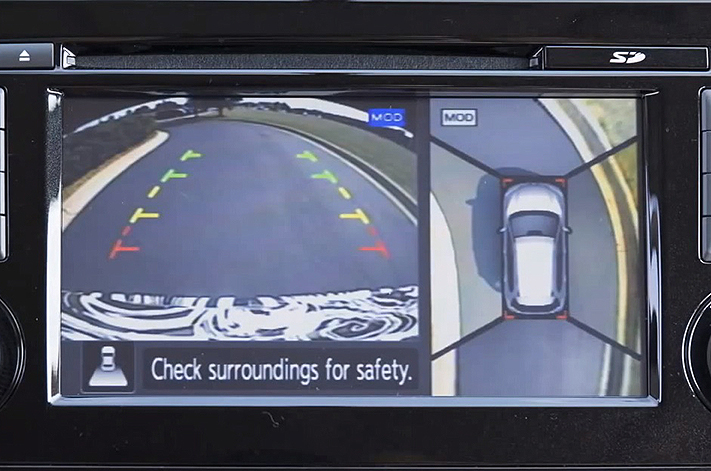
The cameras have extremely wide angle lenses in order to capture the most information about what is surrounding you.
Software merges the images to make it look you’re being filmed from about 10 metres directly above, and a picture of a car is provided in the middle to give you a reference point.
The 360-degree image can be shown on a split screen in conjunction with forward, rear or side views, like shown above.
The system works in the same way as a reversing camera by activating when the reverse gear is selected.
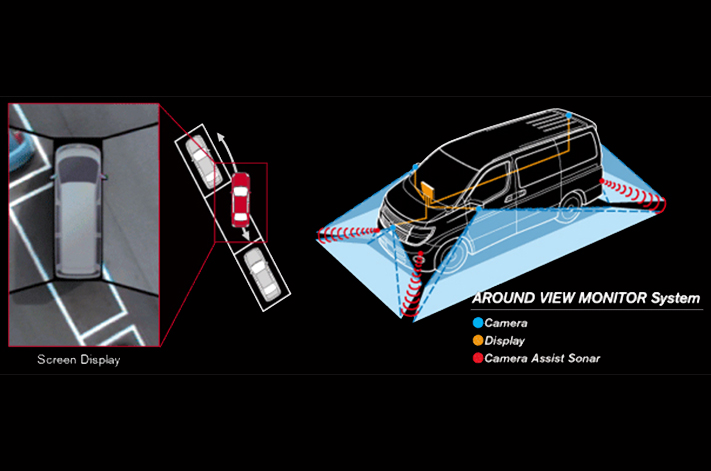
With some systems the simulated aerial view can be distorted, so dotted lines are added to provide a true sense of your car’s width to help you avoid obstacles or scrape the kerb.
Audible warnings via front and rear parking sensors are also used to ensure accuracy.
The 360-degree camera is primarily marketed as a safety feature in that it helps spot pedestrians, particularly children, while reversing or manoeuvring into tight spots. But its bread and butter role is helping to prevent bumps and scrapes, saving plenty of money in the long run.
Mazda has updated its popular CX-5 mid-size SUV for 2020, bringing new safety technology, quieter components and new off-road capability, while slightly bumping the price up across the board.
A core model for Mazda, and a favourite for Australians too, thankfully the Mazda CX-5 has scored a bunch of new kit to offset the extra outlay of money you’ll have to spend at dealerships.
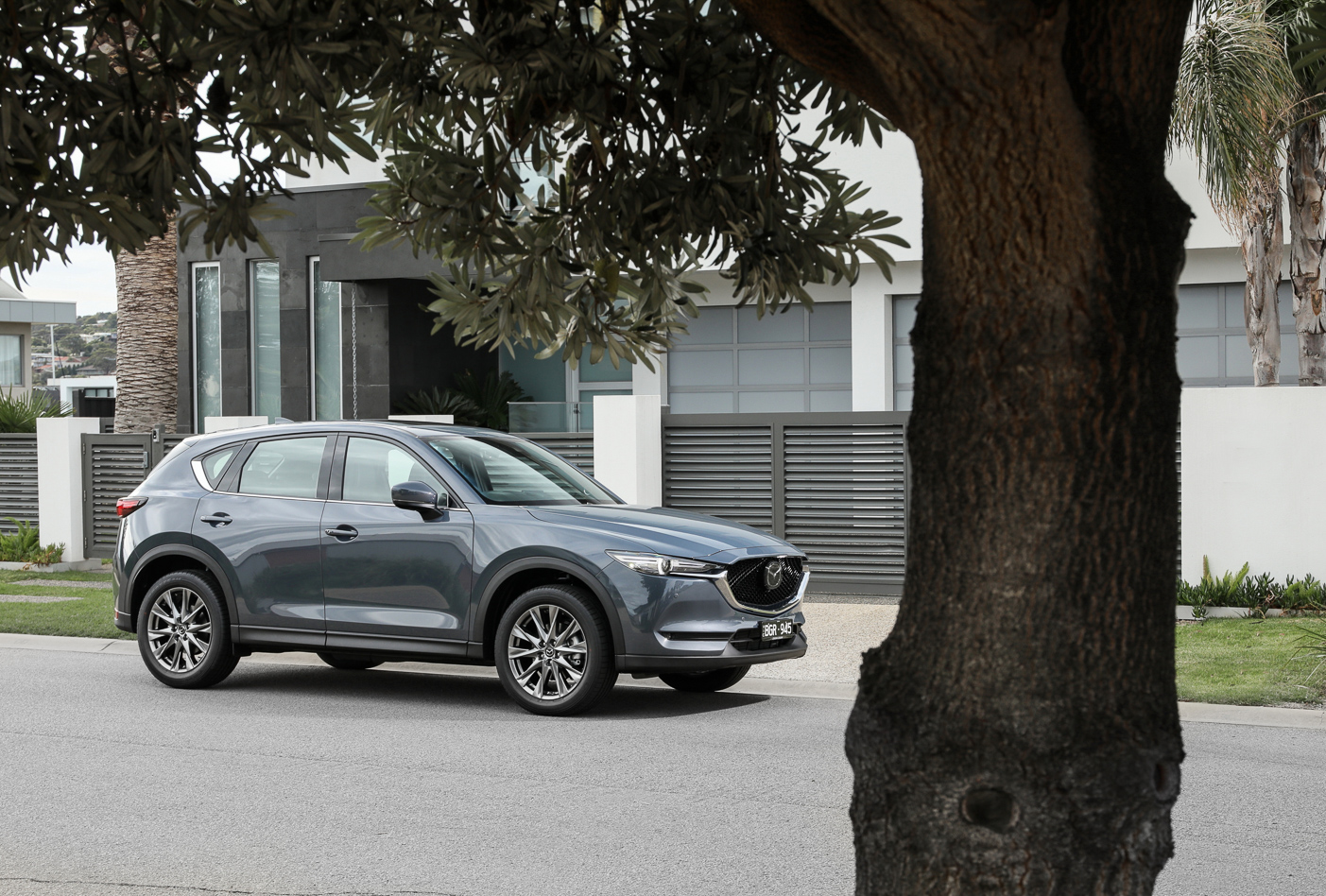
Familiar model grades are retained including the Maxx (starting $30,980), Maxx Sport (starting $36,290), Touring (starting $40,980), GT (starting $46,090) and Akera (starting $48,330). Four engines remain on offer: a 2.5-litre turbocharged unit, a 2.2-litre turbo-diesel, a 2.0-litre naturally-aspirated engine and a 2.5-litre naturally-aspirated engine.
Chief among all new additions to the range is a new Off-Road Traction Assist mode fitted to all-wheel drive models that offers enhanced functionality when venturing onto rougher terrain.
At the push of a button the AWD system combines with traction control to electronically lock the rear differential, where the car can then intelligently monitor wheel slip in order to distribute optimal traction to the tyres that have found purchase on solid ground.
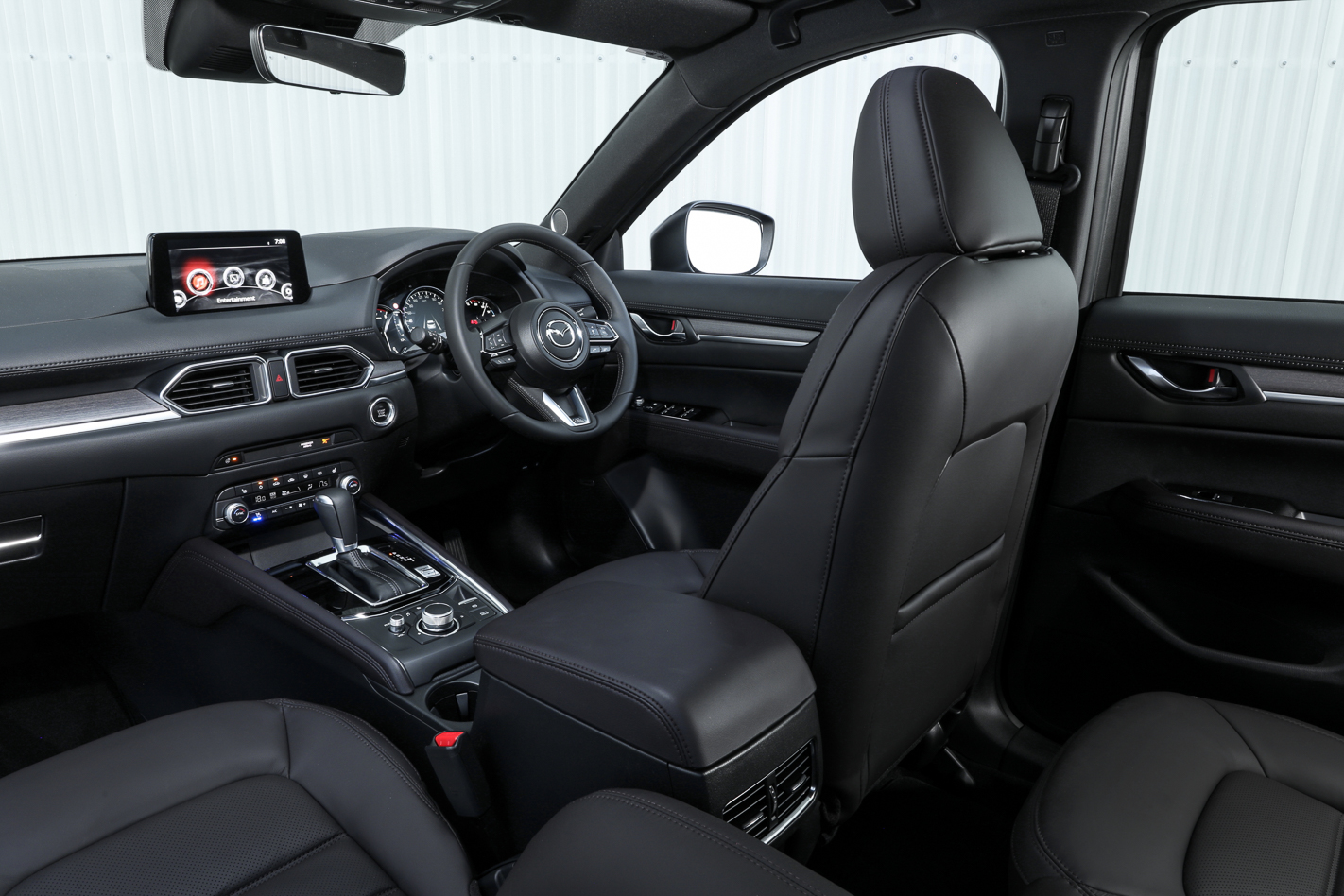
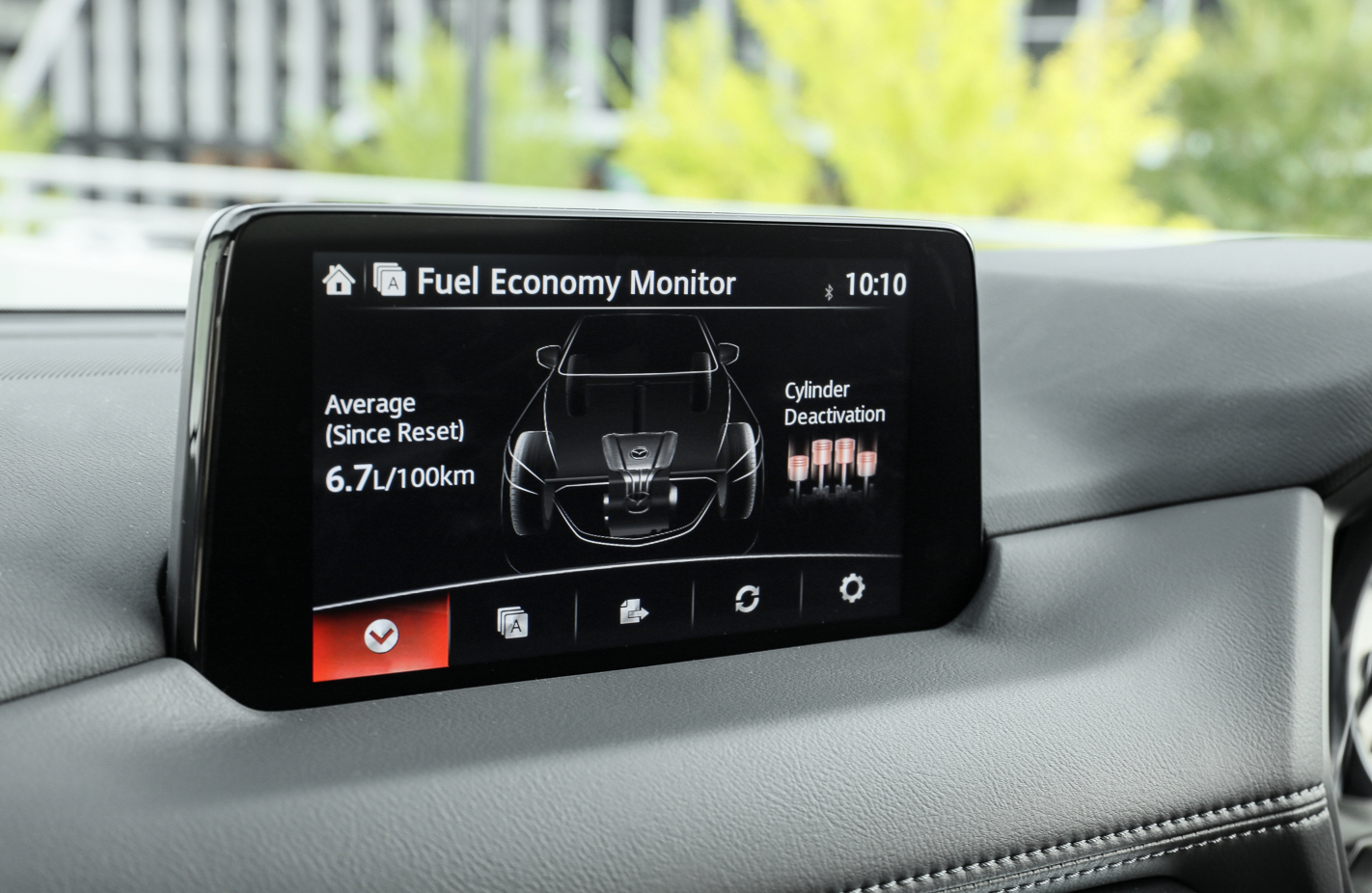
Some other minor changes include Maxx Sport variants and above now receive paddle shifters as standard and cars with the naturally-aspirated Skyactiv-G 2.5L petrol engine will now receive a cylinder-deactivation graphic in the MZD Connect infotainment system that illustrates when cylinders 1 and 4 have been shut down in order to save fuel.
All specifications will now be equipped with an advanced autonomous emergency braking function, Smart City Brake Support, to add night-time pedestrian protection to AEB functionality.
Mazda says the updated CX-5 will now become quieter thanks to several noise, vibration and harshness improvements, including the addition of a more sound absorbent headliner material and a steering vibration countermeasure that will cut down on the amount of road vibrations felt through the steering wheel.
Turbo-petrol Skyactiv-G engine cars will receive quieter exhausts, and a quieter boot floor to reduce the resounding noise from the rear of the cabin.
More minor additions such as a larger 8-inch display for the entry-level Maxx, new generation name badging, new key fob design and a new Polymetal Grey Metallic paint option are also brought to the table.
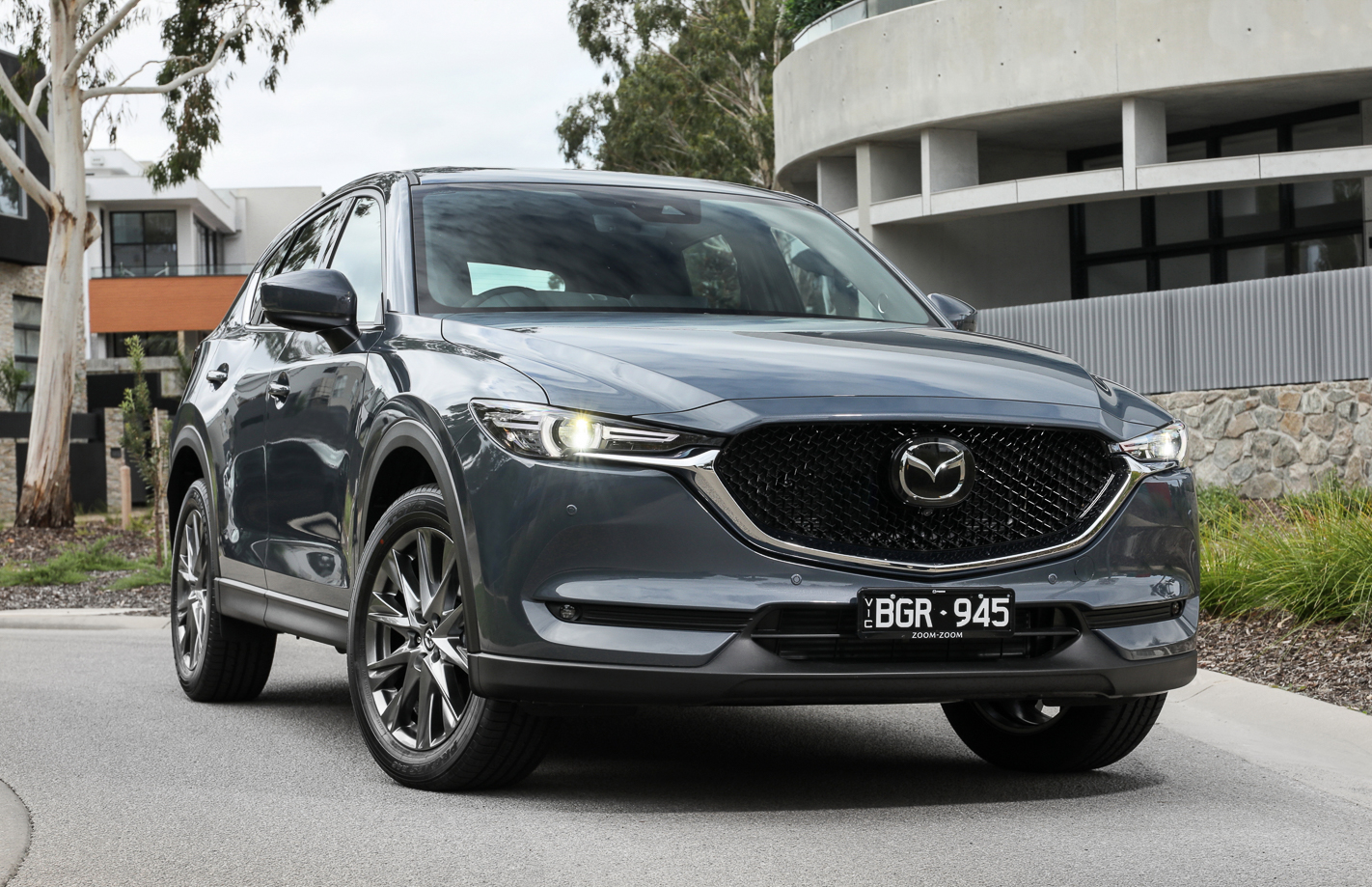
All Mazda CX-5s are covered by a five-year, unlimited kilometre manufacturer warranty and each owner is covered for five years by Mazda’s Premium roadside assistance service.
The MY2020 Mazda CX-5 is available now.
2020 Mazda CX-5 Australian pricing:
- Maxx 2.0L (manual) FWD, $30,980
- Maxx 2.0L FWD, $32,980
- Maxx 2.5L AWD, $35,980
- Maxx Sport 2.0L FWD, $36,290
- Maxx Sport 2.5L AWD, $39,290
- Maxx Sport 2.2L diesel AWD, $42,290
- Touring 2.5L AWD, $40,980
- Touring 2.2L diesel AWD, $43,980
- GT 2.5L AWD, $46,090
- GT 2.2L diesel AWD, $49,090
- GT 2.5L turbo AWD, $48,590
- Akera 2.5L AWD, $48,330
- Akera 2.2L diesel AWD, $51,330
- Akera 2.5L turbo AWD, $50,830
Rapid manufacturing technology is slowly transforming the way cars are built
Even though it’s been around since the early 1980s, 3D printing technology still has a sci-fi aura surrounding it. The idea that complex three-dimensional objects could be produced by a single machine is still a fairly revolutionary concept, and it’s only recently that such machines have shrunk in size and price to be attainable by private consumers, rather than large companies.
Uptake by the auto industry has also been slow. 3D printing has been useful for making one-off prototype parts for concept cars and test mules for a while now, but the technology is now starting to find applications in production cars as part quality, printing speeds and per-unit cost comes down. Conventional methods of mass-production such as injection-moulding plastic and casting metal will nearly always be more cost effective when dealing with large production volumes, but 3D printing still has plenty of real-world applications in the automotive world. Here are just a few.
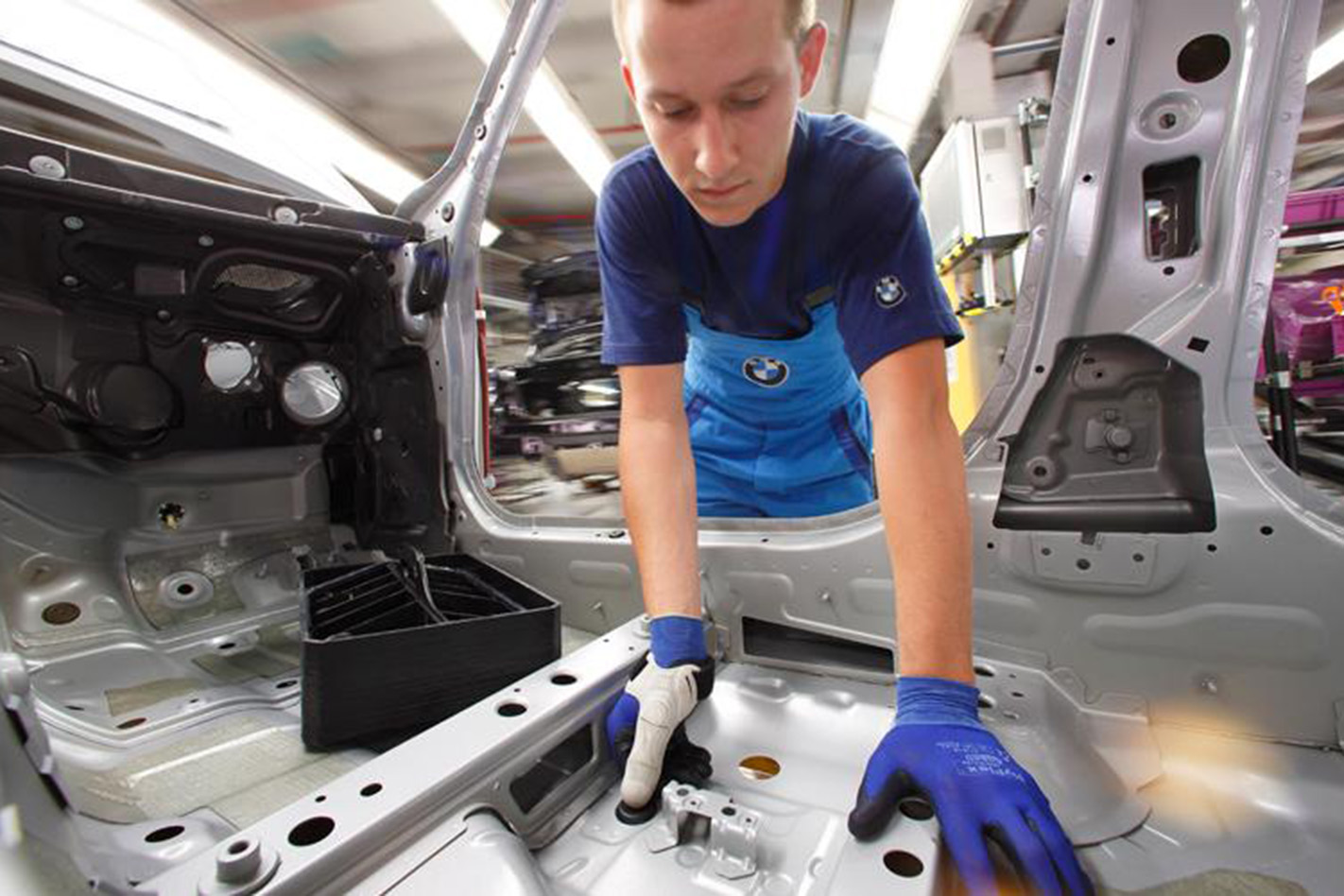
The most useful current application for 3D printing in car manufacturing isn’t the most obvious one, and it doesn’t actually involve 3D printed parts being incorporated into the cars that you buy.
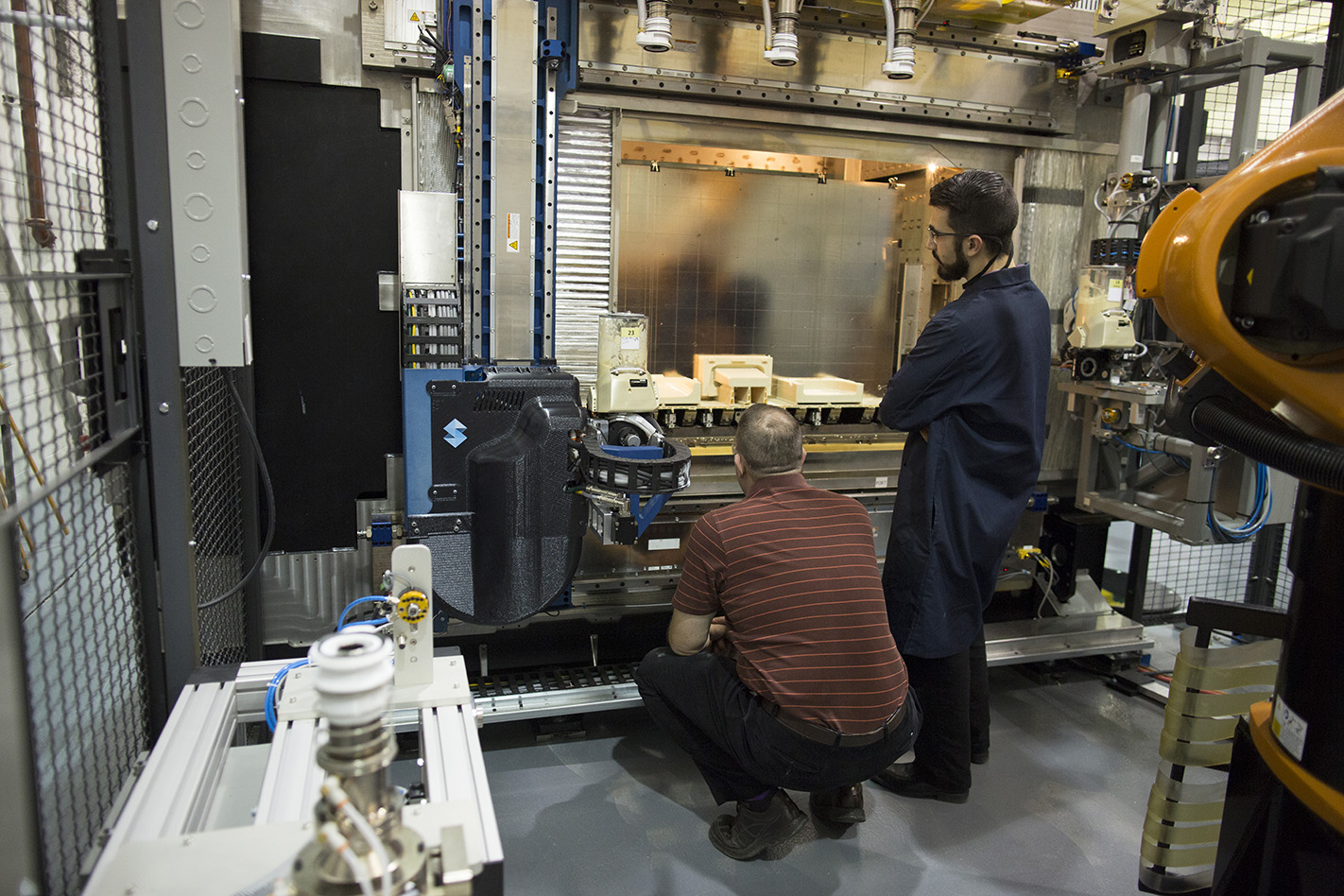
Instead, it’s far more prosaic than that. Manufacturers – among them Ford and BMW – are using 3D-printed jigs and tools to help their line workers assemble vehicles faster, more efficiently and with less risk of injury.
The technology is especially useful for low-run special-edition models that may need unique tools to help install bespoke parts, and with 3D printing being ideally suited to making one-off parts at significantly lower cost than traditional methods including injection moulding or milling, it helps carmakers keep spending in check.
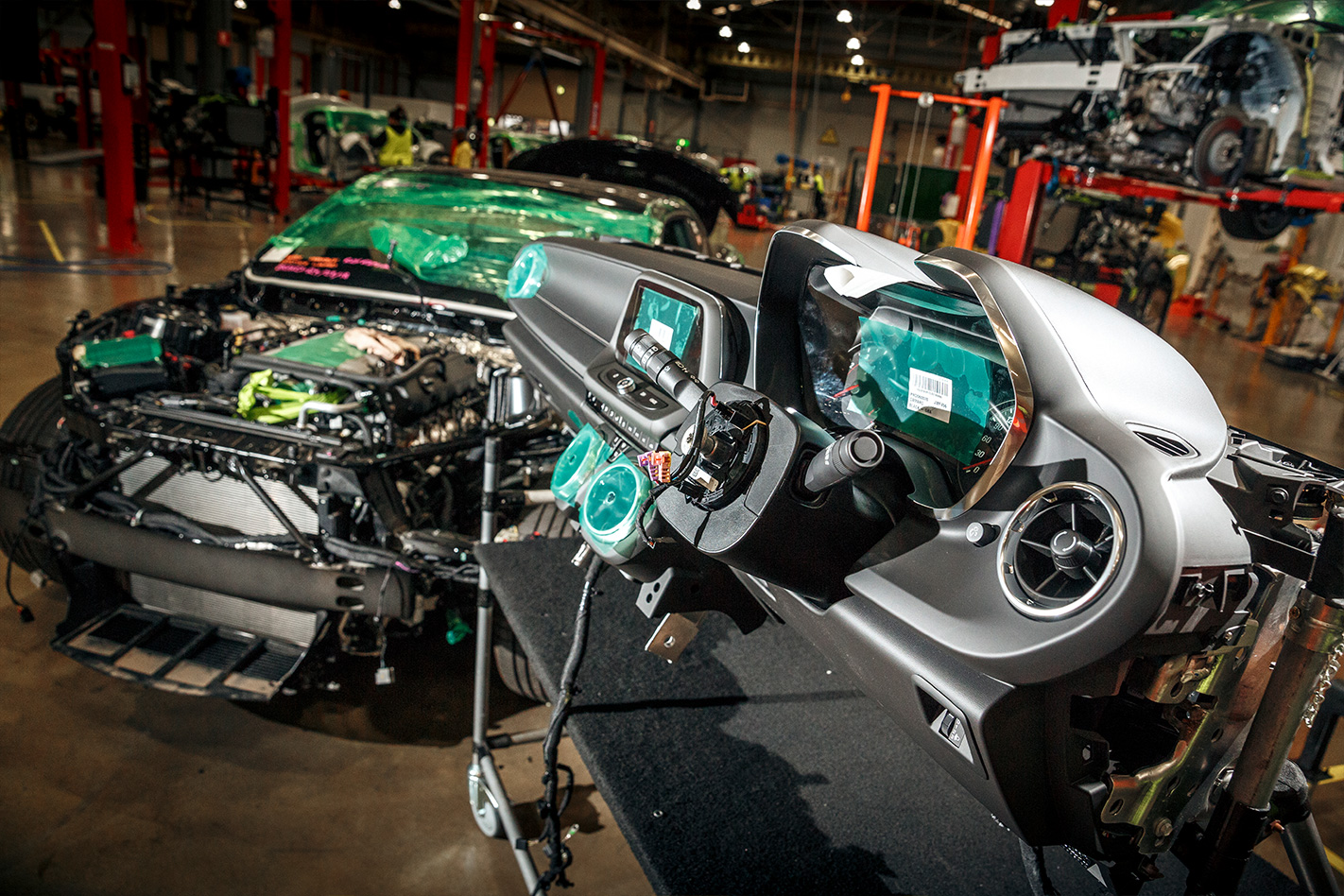
HSV has been using 3D printing since 2010 in order to produce prototype parts. It first tried 3D printing for test bodykits to check fitment and has continued to expand its use to the present day as it converts Camaro and Silverado to right-hand drive.
With much of the behind-the-dash furniture being entirely unique to the locally-converted Chevrolets, the little ducts and brackets that reside in this part of the car are prime candidates for additive manufacturing.
Tooling up for injection moulding each of those parts would be cost prohibitive, but thanks to 3D printing they can all be made by the same machine. It’s a slower process, but if the volume isn’t high then that’s not a big deal.
Speaking of spending, one of the biggest costs involved in being a carmaker is maintaining an inventory of spare parts. Every variant of every model must have enough spare parts available to last at least ten years – the reasonable lifespan of a modern car – and warehousing these things generates significant bills for car companies around the globe.
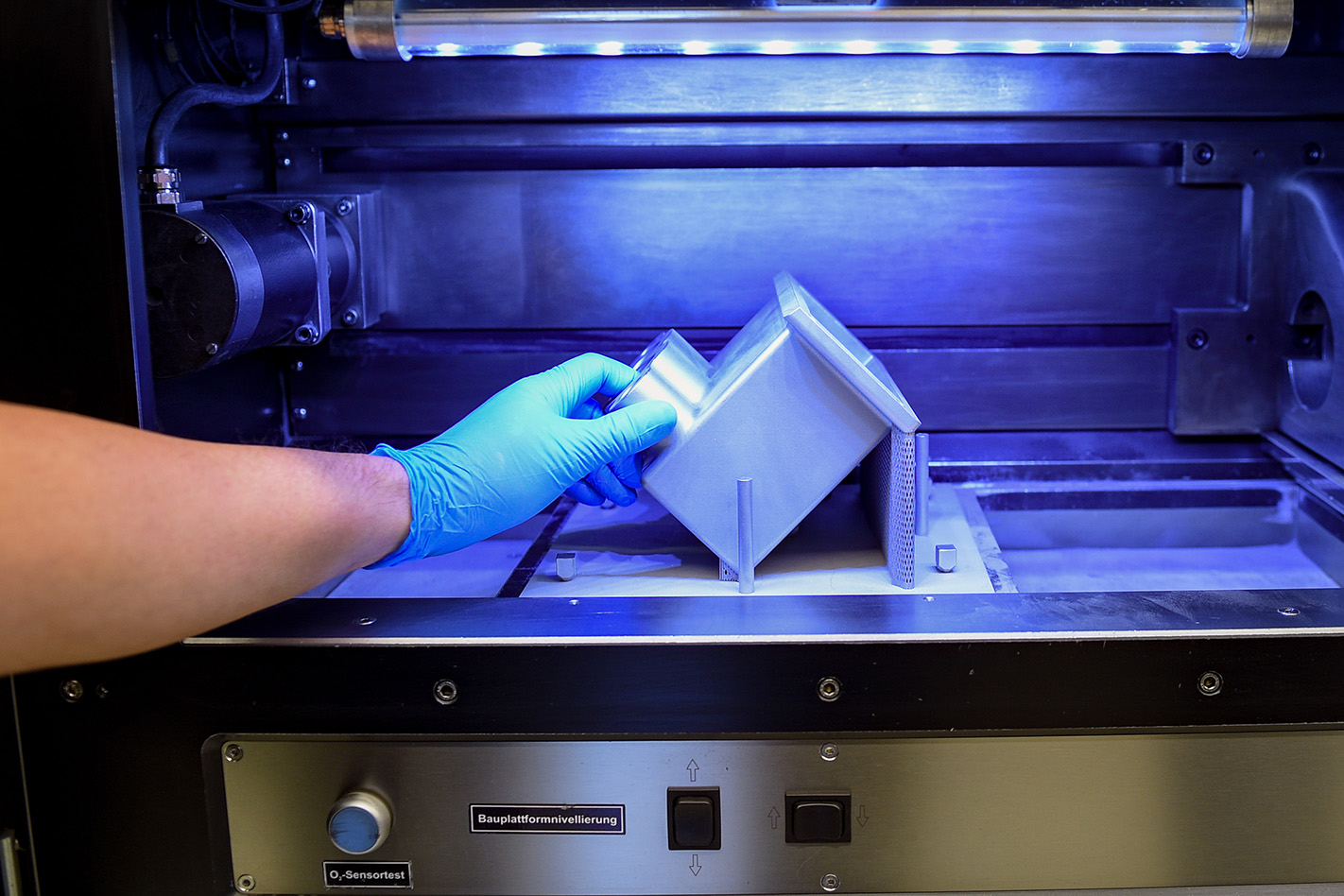
One solution is to replace vast parts warehouses with a room full of 3D printers and a database of 3D models of parts. Parts could then be printed on demand and supplied the same day (or next day) rather than having to be shipped from overseas if local stocks are depleted. Rather than holding inventory of individual parts, the automaker would only need to stock the base materials needed to create them.
For the consumer, that potentially means their car spends less time at the dealership when repairs are needed. For the manufacturer, it means massive cost savings in logistics and real estate.
Manufacturers are experimenting with printing smaller, simpler parts such as door handles or mirror casings, but as metal 3D printing becomes more sophisticated and cost-effective, we could one day see replacement mechanical parts be manufactured on-demand too. However, large parts such as bodywork will likely still need to be made by traditional means.
The likes of BMW, Daimler-Benz and Ford – among others – are all trialling 3D printing technology for their spare parts operations.
Customisation
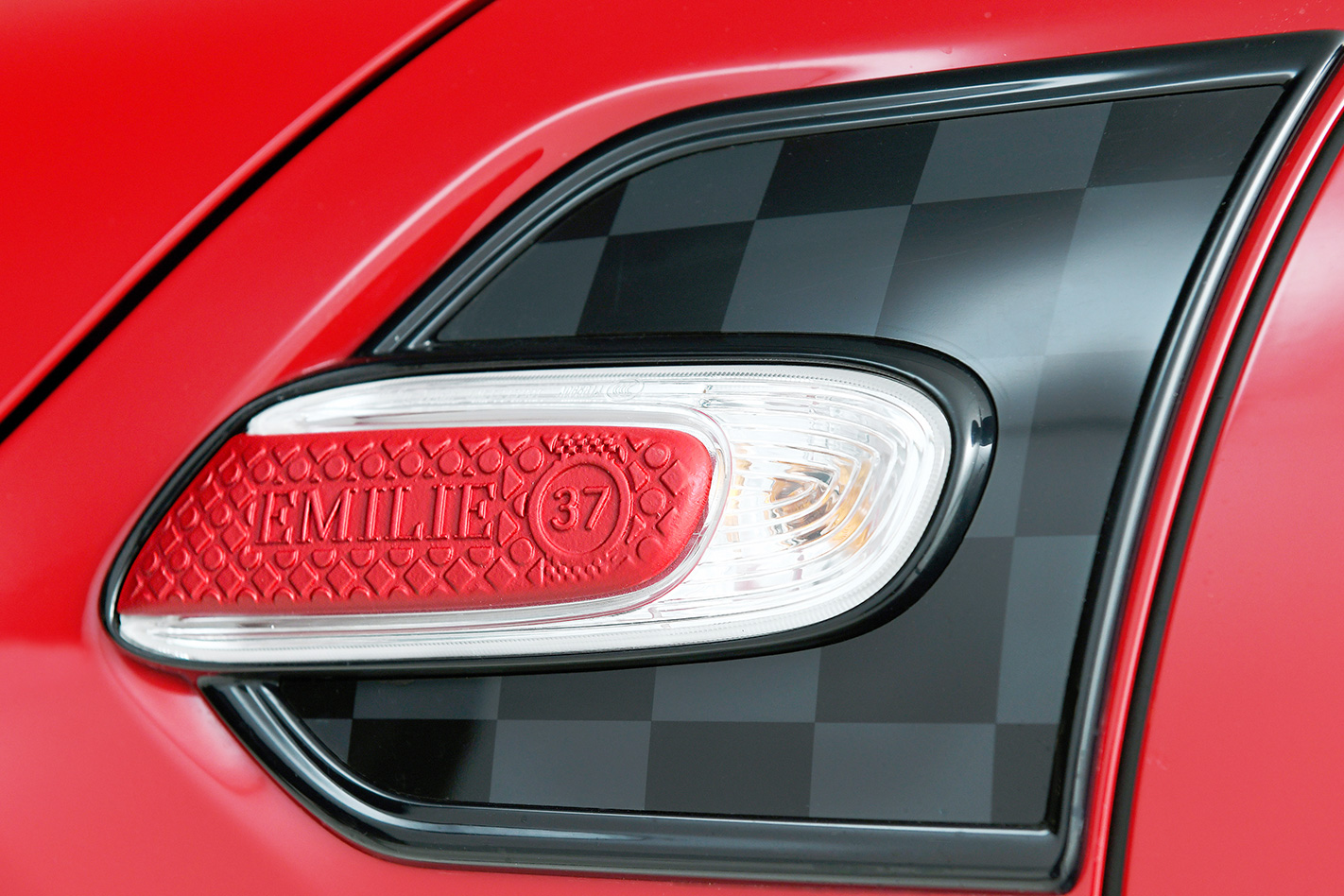
Mini has made no secret of its plans to enable a higher level of vehicle personalisation through technologies like 3D printing, with high-resolution plastic prints featuring the owner’s name or a custom motif replacing trim pieces throughout the interior and exterior.
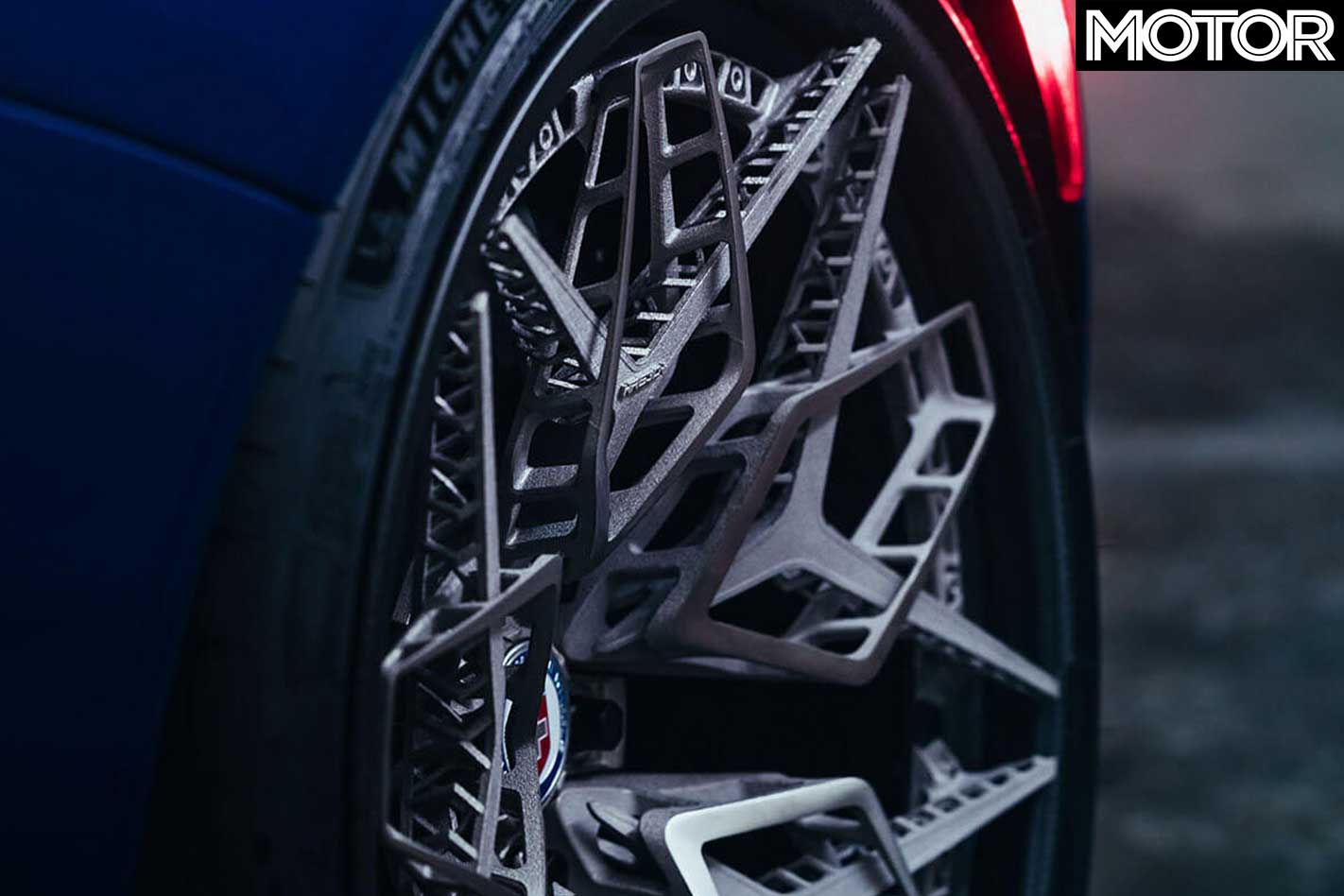
The aftermarket wheel industry is also looking into new options, with HRE revealing a hugely intricate wheel design that can only be manufactured using laser-sintered titanium 3D prints. The cost would be eye-watering, but the head-turning effect couldn’t be had any other way.
Parts for classic cars
Cars that have stood the test of time long enough to attain classic status have a slightly different spare part problem – there simply aren’t any.
Beyond what little spares may be lurking in the darker corners of parts warehouses around the world, owners of classics and vintage cars either have to remanufacture or repair their existing parts, or scavenge from other surviving examples. Until now.
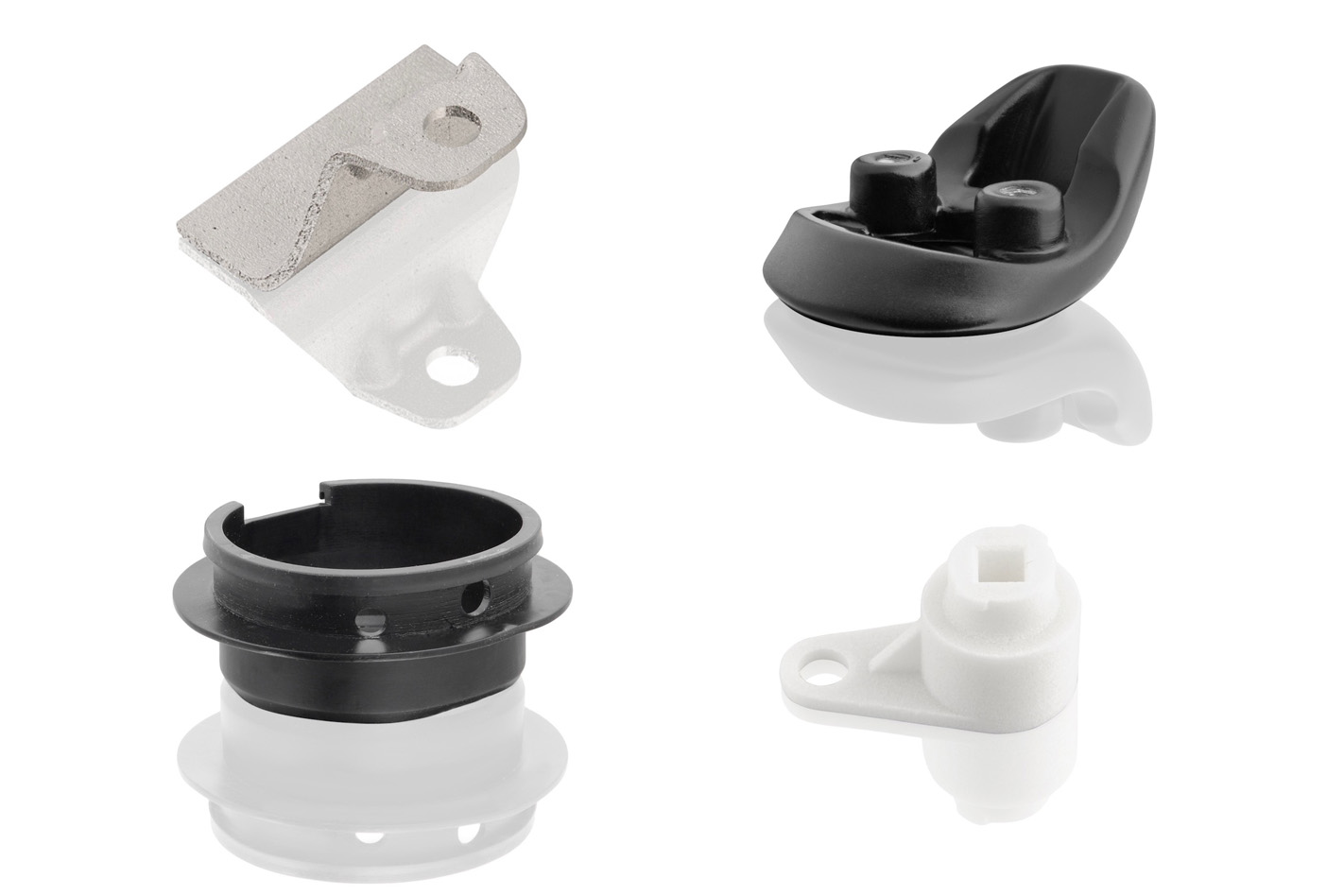
3D printing means parts can be scanned, digitised and then replicated in a variety of materials, and given the tiny demand for these parts it’s often more cost effective than commissioning a supplier to do a low-volume run of replica parts.
Porsche Classic recently adopted that method to print nine different parts from a variety of materials, with 20 more parts being evaluated for its on-demand production system. If you’re chasing a brand new clutch release lever for a Porsche 959, you may wind up with a 3D printed item.
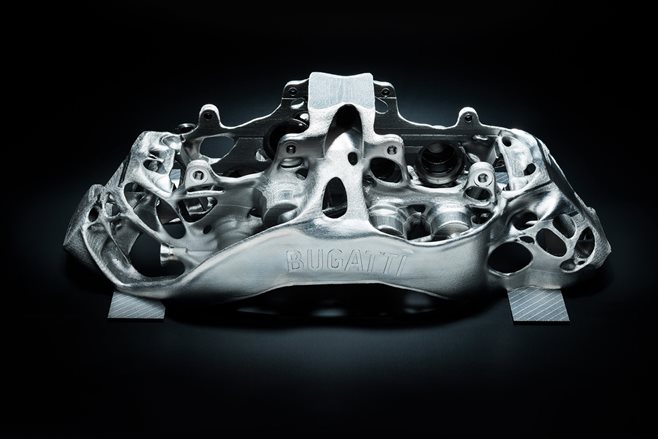
Bugatti titanium caliper
Given the high cost of 3D printing compared to traditional methods of mass production, the technology in its present state makes the most sense for cars that are built in low volumes, sell for significant sums and have unique requirements.
And they don’t get much more expensive, complex and unique than a Bugatti.
Bugatti, makers of the mind-bendingly rapid Chiron hypercar, designed a brake caliper so intricate and lightweight that it could only be manufactured by 3D printing. Its shape, with many small voids, passages and pockets that would be difficult to machine out of solid metal or cast from molten metal, was instead constructed out of sintered titanium powder by a 3D printer. The result is a monstrous brake caliper that measures 41cm long, 21cm wide and 13.6cm high, yet only weighs 2.9kg.
Each caliper takes 45 hours to print and then requires 11 hours of additional machining to make it a functional part, but the revolutionary aspect of Bugatti’s high-tech brakes is that it’s a part that’s very central to a car’s performance and safety – rather than just a plastic housing for a door mirror.
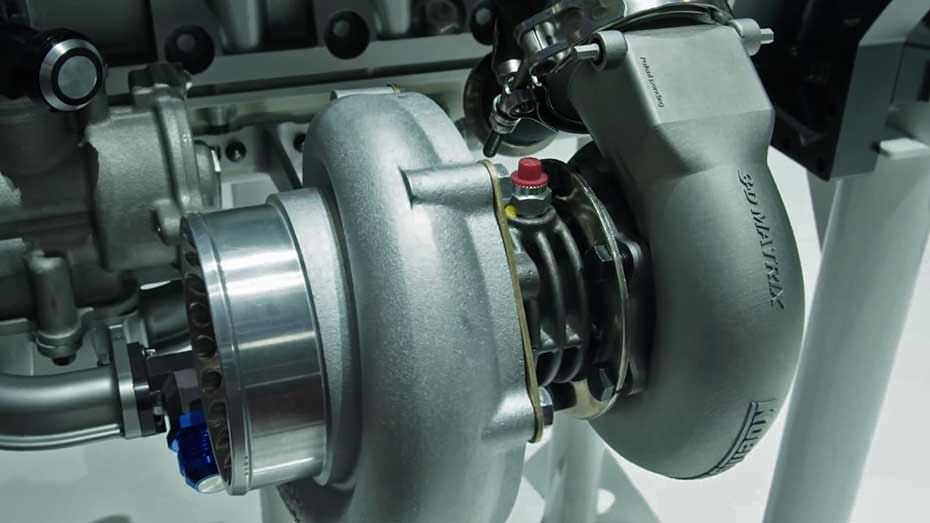
Koenigsegg One:1 3D-printed turbocharger housing
Bugatti’s 3D-printed brake caliper is almost a work of art, but it’s far from being the first road-going application of a mechanical 3D print. Swedish supercar specialist Koenigsegg employed a printed turbocharger turbine housing in its ballistic One:1 hypercar, exploiting the technology’s ability to create shapes that would be otherwise difficult, impossible, or uneconomical via machining or casting.
Why not just go with an off-the-shelf cast metal item? Because Koenigsegg’s patented variable-geometry turbine required a custom part, but low production volumes meant only 14 housings were required. Just like Bugatti’s brakes, it was the perfect application for metal 3D printing.
If you were ever unclear on the sheer commercial power of the Fast And The Furious franchise, then get this: news that the latest film’s premiere will be delayed until next year has seen the share price of game developer Codemasters drop by six per cent, all because the video game companion to that film will have its debut delayed as well.
Fast & Furious 9 – otherwise known simply as F9 – was originally slated to enter cinemas on May 24, but the global pandemic and the consequent shutdown of businesses like movie theatres prompted movie studio Universal to hit the pause button on the F9.
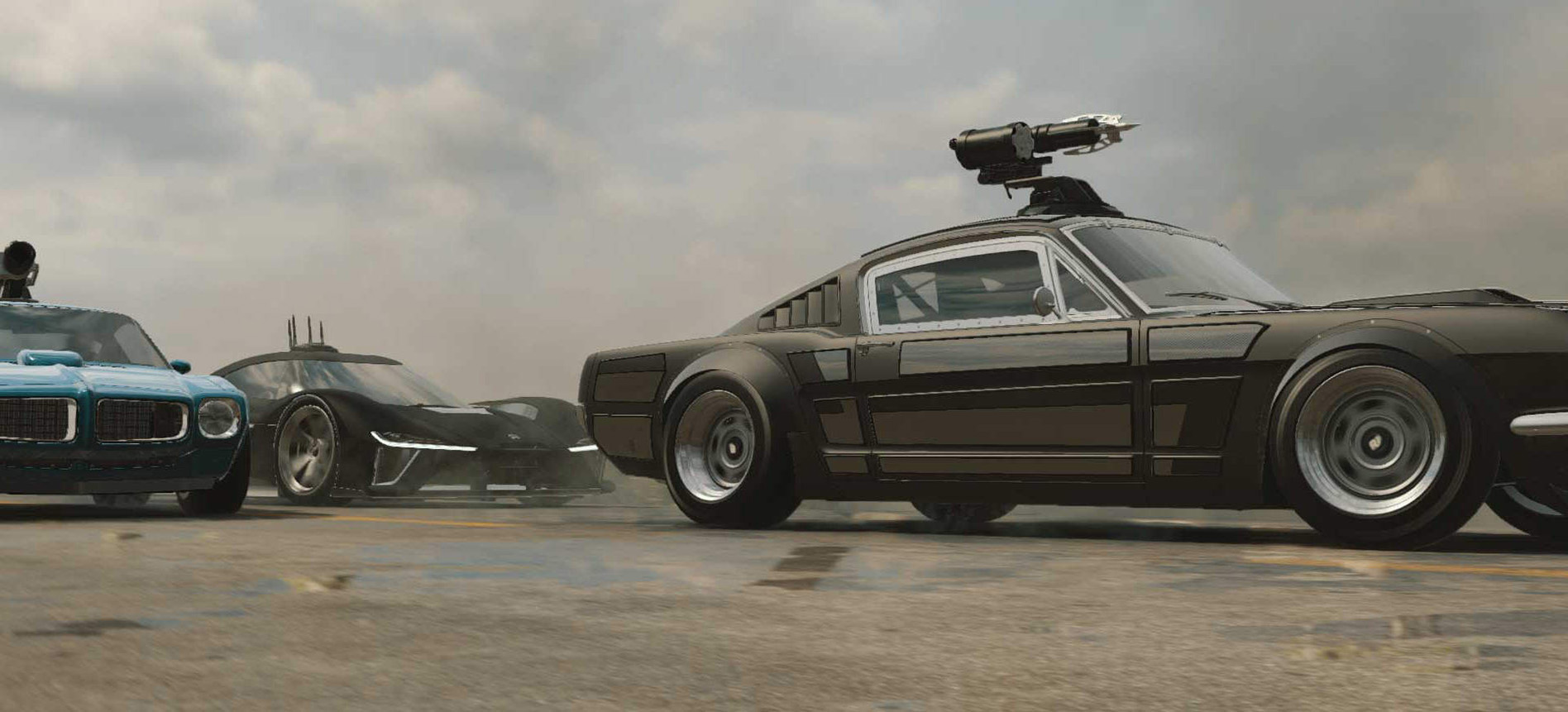
That’s a bit of a problem for Codemasters, which was also set to release Fast and Furious: Crossroads (above) on May 24 as a side-by-side virtual adventure to complement the movie.
Developed by Codemasters subsidiary Slightly Mad Games (also responsible for the hardcore racing sim Project Cars 2), Crossroads was billed as a “team-based, vehicular-heist action game” and featured extensive voice acting by cast members Vin Diesel, Michelle Rodriguez and Tyrese Gibson.
After Universal Pictures announced an 11-month delay in Fast & Furious 9’s premiere, Codemasters Group Holdings PLC is now describing the release of their Fast & Furious game as “uncertain”.
In a statement released on March 13, Codemasters PLC reassured investors that “provided The Company [Codemasters] releases the game in Q1 of FY21, the Board anticipates that the later release of the F9 film will have no material impact on its financial expectations for FY21”.
Codemasters distributors, Bandai Namco, are said to be working closely with Universal Pictures to re-finalise a release date, but the damage is done. Codemasters shares slipped six per cent following news of the F9 delay.

The total reduction in the company’s market capitalisation amounts to a whopping GBP146.03 million, or $286.33M. Ouch.
By the time Crossroads hits stores and digital distribution, both Sony and Microsoft will have their next-generation consoles on sale – the Playstation 5 and Xbox Series X, respectively.
With massive increases in hardware capability on those consoles, Crossroads is going to look pretty wrinkly around the eyes right from the get-go, which may crimp sales of the game. To be truthful, the graphical quality we’ve seen of Crossroads thus far is already well below par (below).

There may be some solace for Codemasters, given their game F1 2019 is now the only form of Formula 1 motorsport that punters will be able to watch for the foreseeable future.
The first official ‘Virtual Grand Prix’ held using the game took place just days ago on a virtual Bahrain circuit, but time will tell whether fans will respond favourably to an entirely electronic substitute for their favourite form of motor racing.
Time will also tell whether it will help Codemasters bounce back from the gargantuan delay to what was supposed to be a massive money-spinner.
Honda has announced a significant retail network shakeup to its Australian network as it struggles to cope with a national new car sales slump, fearsome competition, currency fluctuations, shifting emissions legislation and now the COVID-19 crisis.
In July 2021, the Japanese carmaker will implement a new business model that strips under-performing models from the line-up and slashes the number of dealers operating in Australia, in a bid to stem losses.
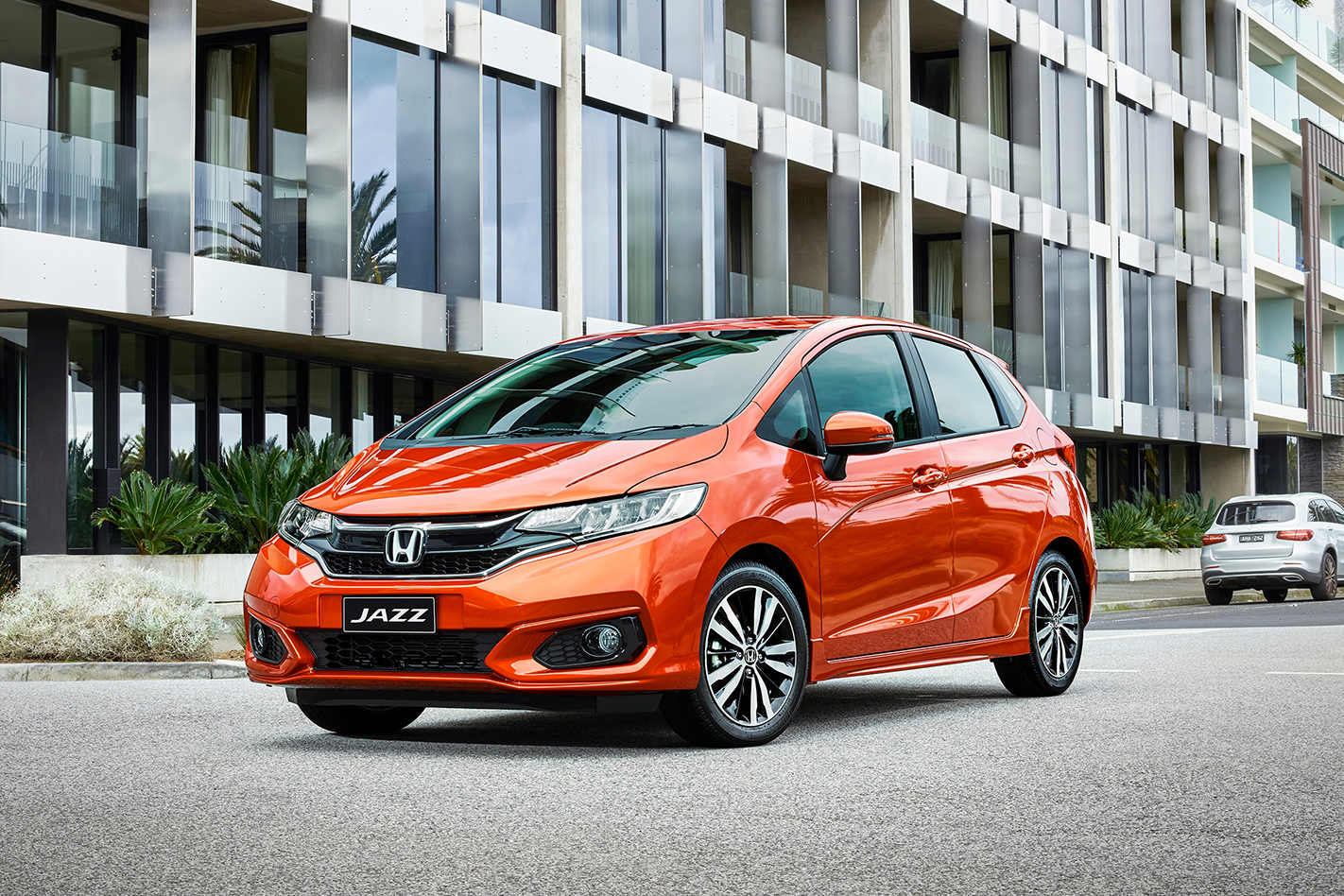
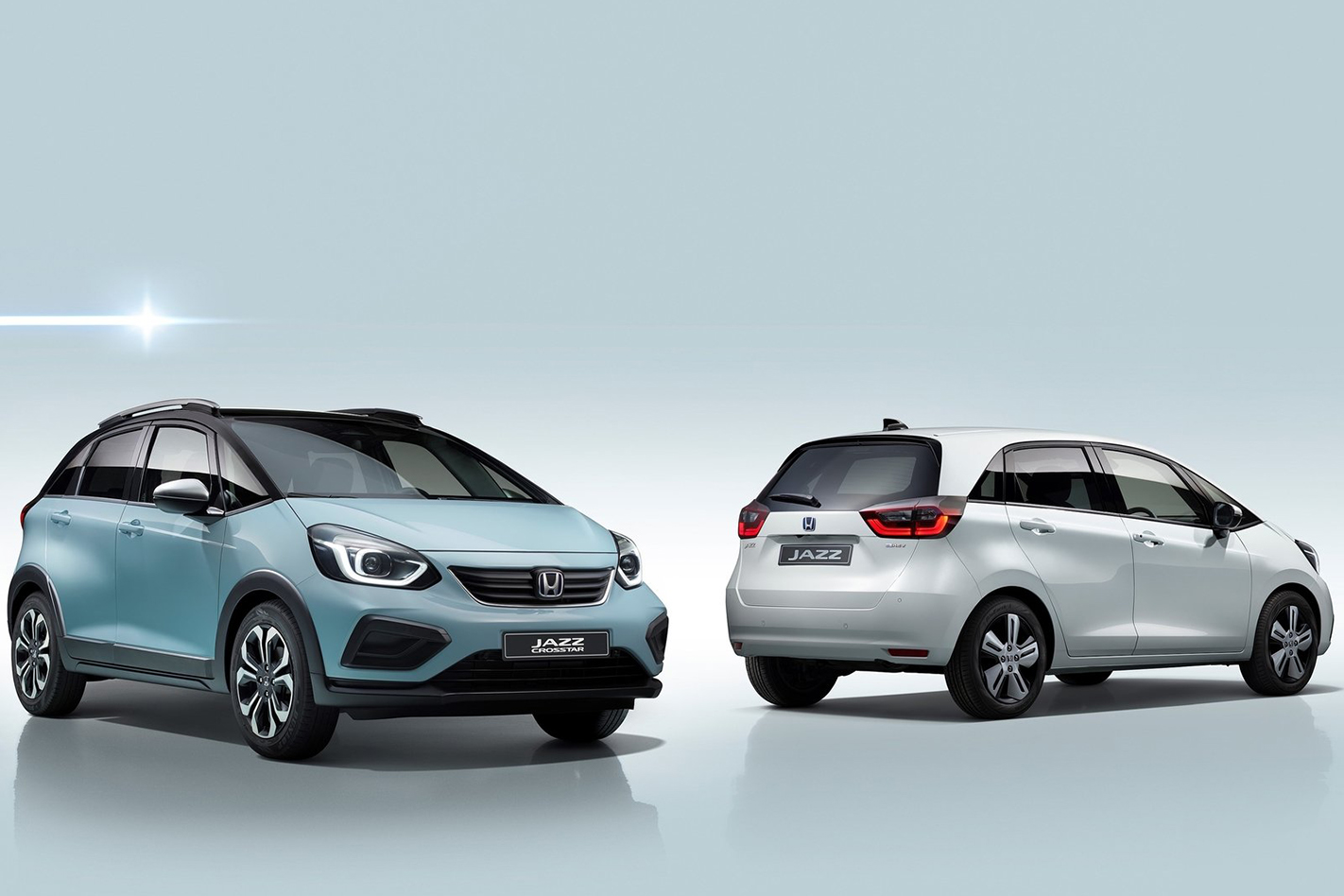
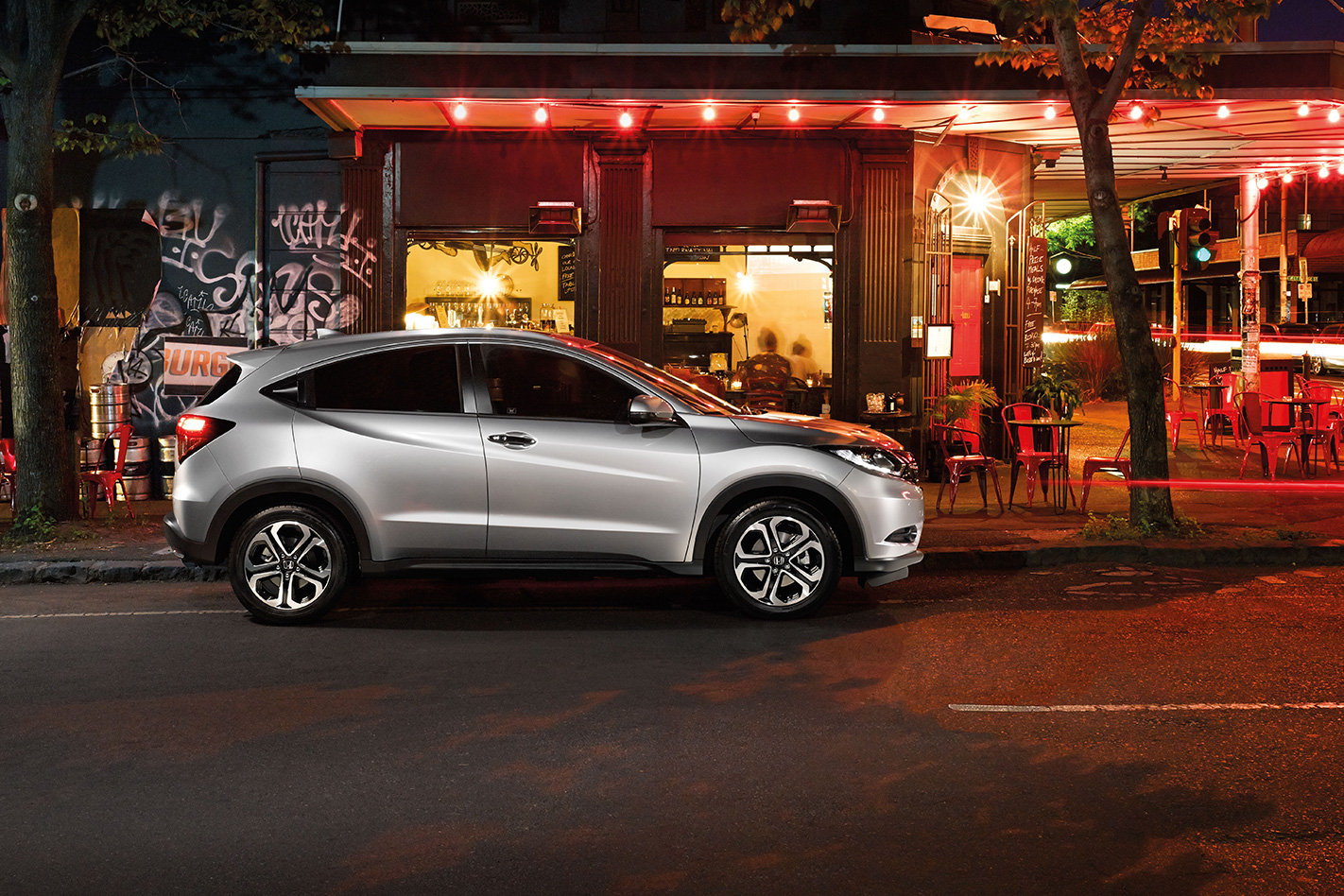
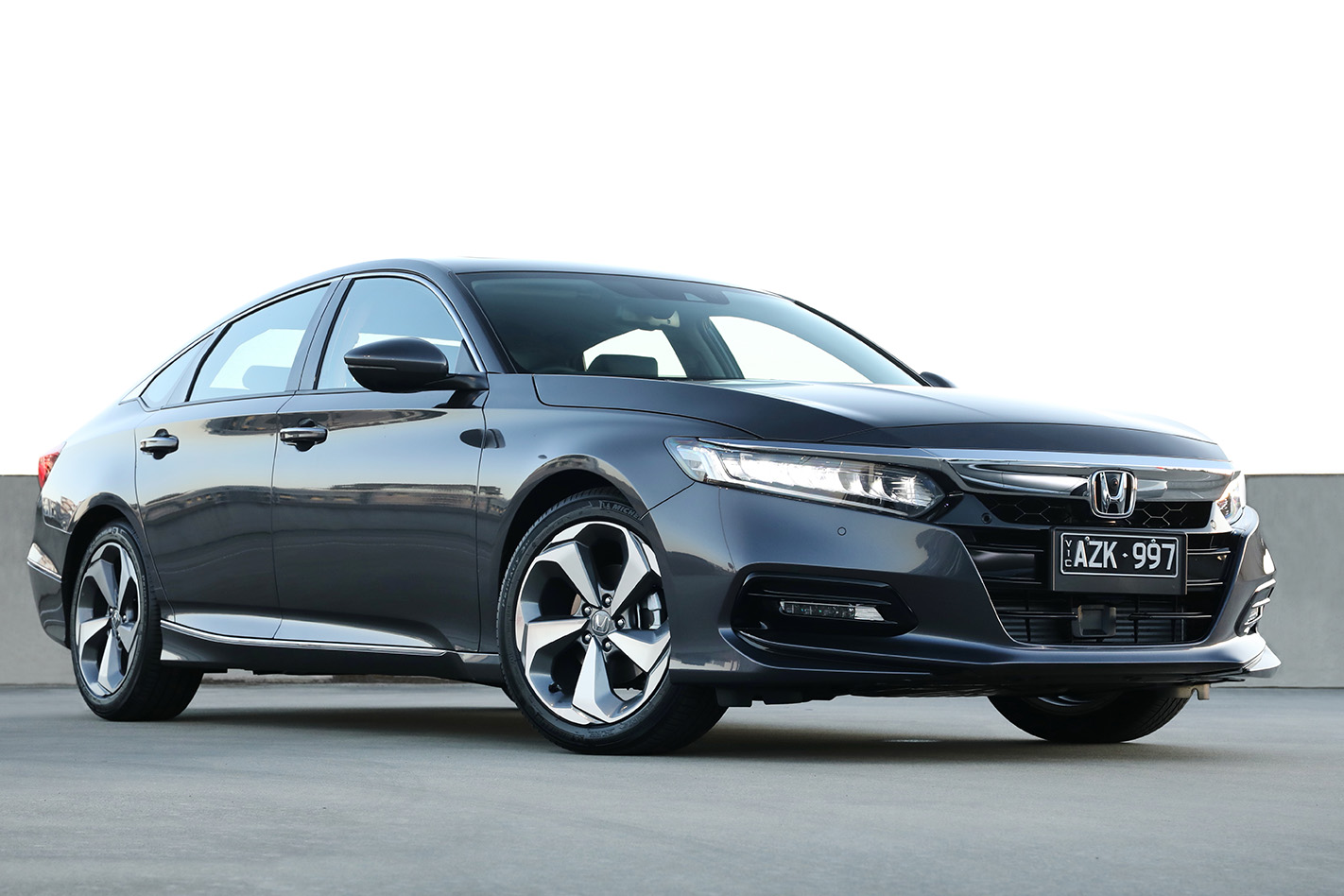
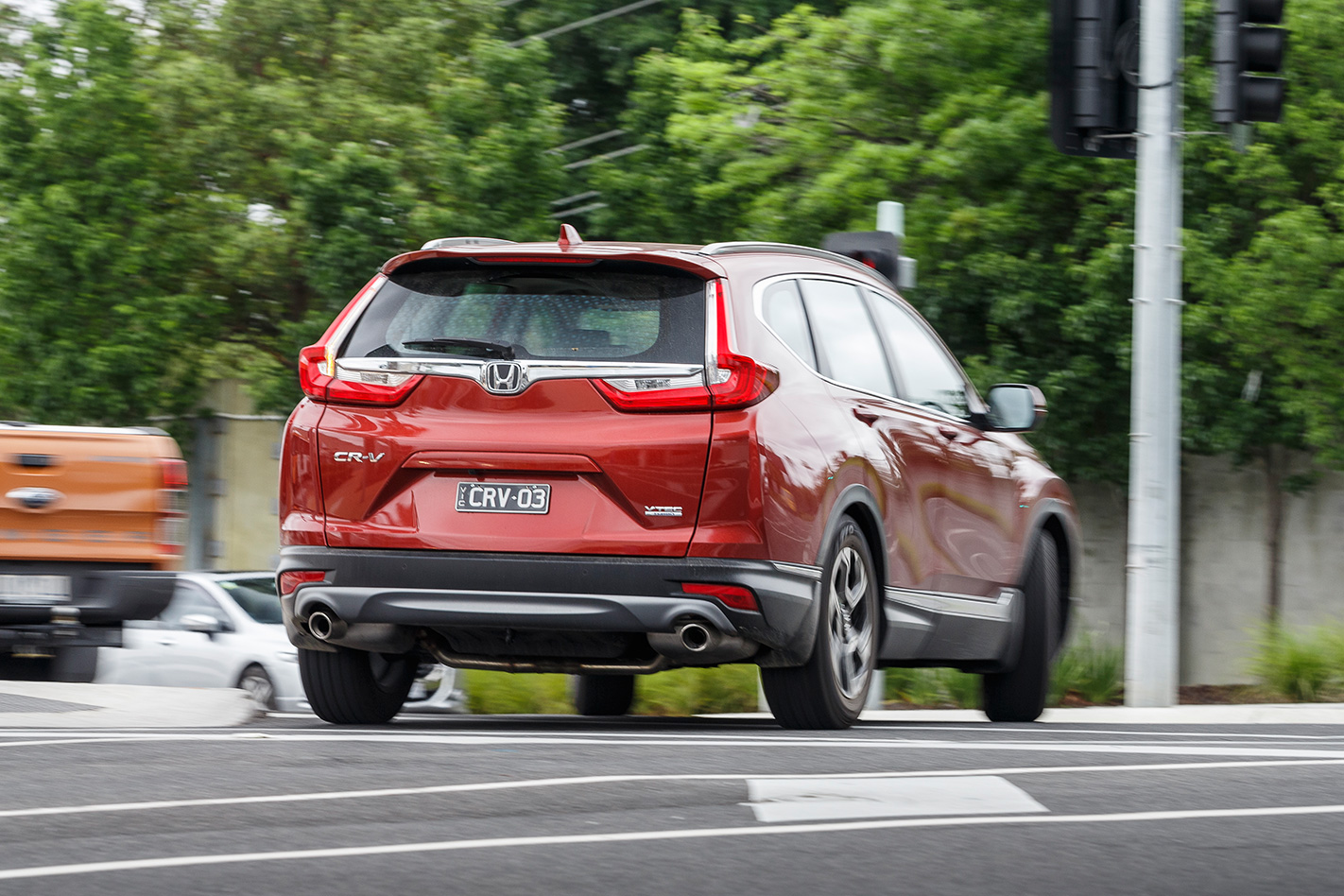
In conjunction with the dumping of dealer deadweight, Honda will drop the Jazz light hatch – as predicted by WhichCar – along with low-spec versions of its Odyssey people mover. Unsurprisingly, the CR-V, HR-V and Civic, including the Type R hot hatch, are safe for now as the top performers, as is the new Accord.
Exact numbers are yet to be applied to the model, and the company says it is expecting volumes to fall even further before prospects improve, but its focus is now on a quality customer experience rather than quantity of vehicles rolling out of showrooms.
“The number of owners in the Honda dealer network will be reduced, however, Honda plans to sustain its customer convenience through substantially maintaining the same number of sites,” it said in a statement.
Recent speculation predicted an announcement from Honda was imminent that it would completely withdraw from the Australian market, following Holden and Infiniti, but this most recent official word confirms it is still committed to the market after 50 years.
With the recent barrage of industry-thwarting challenges, Honda is bracing for impact and expecting sales volumes to continue sliding. Just how low they will dip is not yet known, but the company is forecasting registrations to be in the region 1650 per month by the time it implements its new business strategy mid next year.
If true, that number represents a massive fall from the 3500 vehicles currently sold by Honda each month so far this year
With such dramatic and deliberate reductions in sales volume, it’s fair to predict a number of Honda employees may be out of a job, with roles at every point of the retail machine likely to be made redundant.
New Honda dealership model
But while dealer numbers and the product portfolio will be trimmed, Honda says its dramatic plans are about enhancing the customer experience. To do this, dealership ‘owners’ are set to be cut, but the company will be “maintaining the same number of sites”.
No detail is offered as to exactly how that will work but, presumably, the retained franchisees will be offered a greater chunk of the network to share, with smaller, less profitable dealerships absorbed into larger entities that have the capacity to cope with existing customers.
Honda describes it as a ‘hub and spoke’ network in metropolitan regions and it is apparently in negotiation to decide the ongoing dealership portfolio over the next few days. It will also take over a simplified stock management logistics system, with all vehicles held centrally by Honda.
Honda pricing fixed
Hand-in-hand with a focus on more premium offerings, the company has also announced it plans to introduce a hybrid version of each model in the ‘rationalised’ line-up.
As for the customers, including existing Honda owners and potential new owners, Honda says to expect a more enjoyable point of sale and aftersales experience including:
- A simpler and more transparent experience to remove some of the pressures and anxiety sometimes associated with the sales process.
- The opportunity to experience the full Honda range and browse for the model that matches their exact preferences without pressure to necessarily buy.
- More clarity and price certainty during transactions.
WhichCar will bring you more detail about Honda’s new business model for Australia as it surfaces over the coming months.
They might not have the greatest public image, but in tough times, most banks will work with you should you find yourself without an income and unable to service your car loan.
Banks will often exercise flexibility when borrowers encounter hardship and, according to the Australian Banking Association (ABA), they’re being particularly benevolent to people suffering financial difficulty as a result of the current economic slowdown, as well as the recent bushfire and flood disasters across the country.
Can banks really help with my car loan?
If you find yourself unable to make car-loan repayments, it’s best to get in touch with your bank as soon as possible and while you still have several options available.
This goes with other organisations should you have trouble paying things like car insurance and your gas bill. Remember, it never hurts to ask.
Any alternative loan repayment arrangements will depend on your personal circumstances and financial situation. According to the ABA, some of your options may include:
- Freezing loans in exceptional circumstances, such as after an emergency event or natural disaster
- Deferring or reducing loan repayments
- Restructuring and consolidating loans
- Altering loan repayments to interest-only
- Waiving certain fees and charges
- Waiving penalties for early withdrawal of a term deposit
- Providing a moratorium on collections action
- Providing alternative banking arrangements.
This is done on a case-by-case on compassionate grounds and depends on individual circumstances, the likelihood of being able to re-continue payments, hardships beyond your control, and the bank’s own commercial considerations.
What do I say when I call my bank?
Before calling the financial institution it’s best to do assess your circumstances and finances to see what you can afford to repay and for how long.

Make a budget taking into consideration other important living expenses. The banks will likely ask you about your costs, so make a list your various bills and expenses before you go in. Have your account details with that bank available too.
When calling your lender, ask to speak to the financial hardship team. Sometimes their contact details are a little hard to find, but the ABA has a handy list of hardship assistance contacts for Australia’s major financial institutions.
Be open and honest about your situation so they can determine if or how they can help – you’re more likely to get a compassionate hearing too.
What if the bank won’t help?
If you’re not satisfied with the support your bank has provided, you’ve got the right to lodge a complaint with your bank and with the Australian Financial Complaints Authority.
For further assistance, you can try the National Debt Helpline, which offers free financial counselling.
The Wheels Verdict: Adding a petrol engine to the CX-8 line-up creates newfound monetary value while retaining the model’s core attributes of a versatile cabin and premium ambience. And while it’s thirstier than the 2.2-litre turbo-diesel four offered in three spec levels, the availability of the 2.5-litre SkyActiv-G unit will open up the CX-8 to a new segment of buyers.
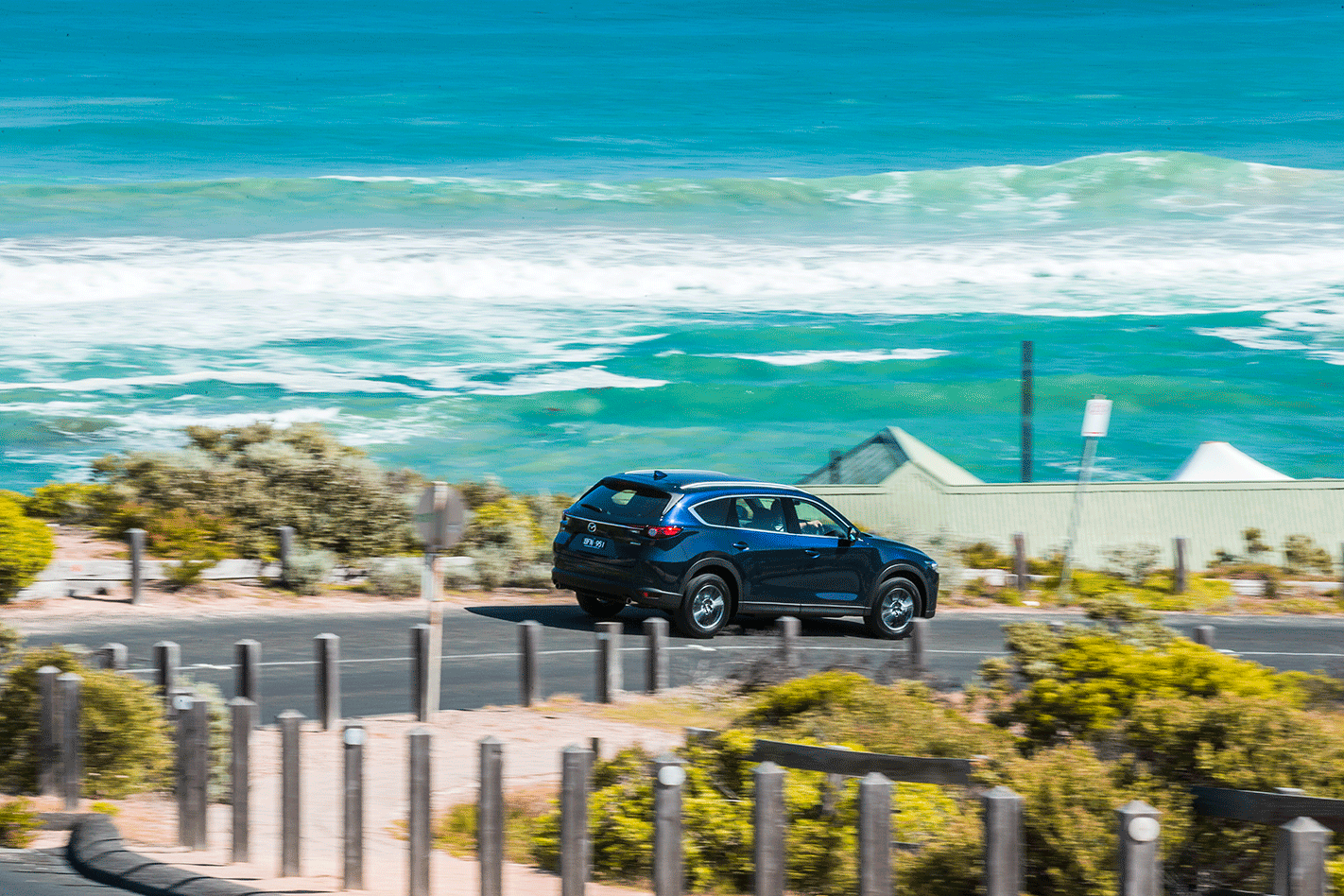
WHAT IS THE MAZDA CX-8 TOURING FWD PETROL?
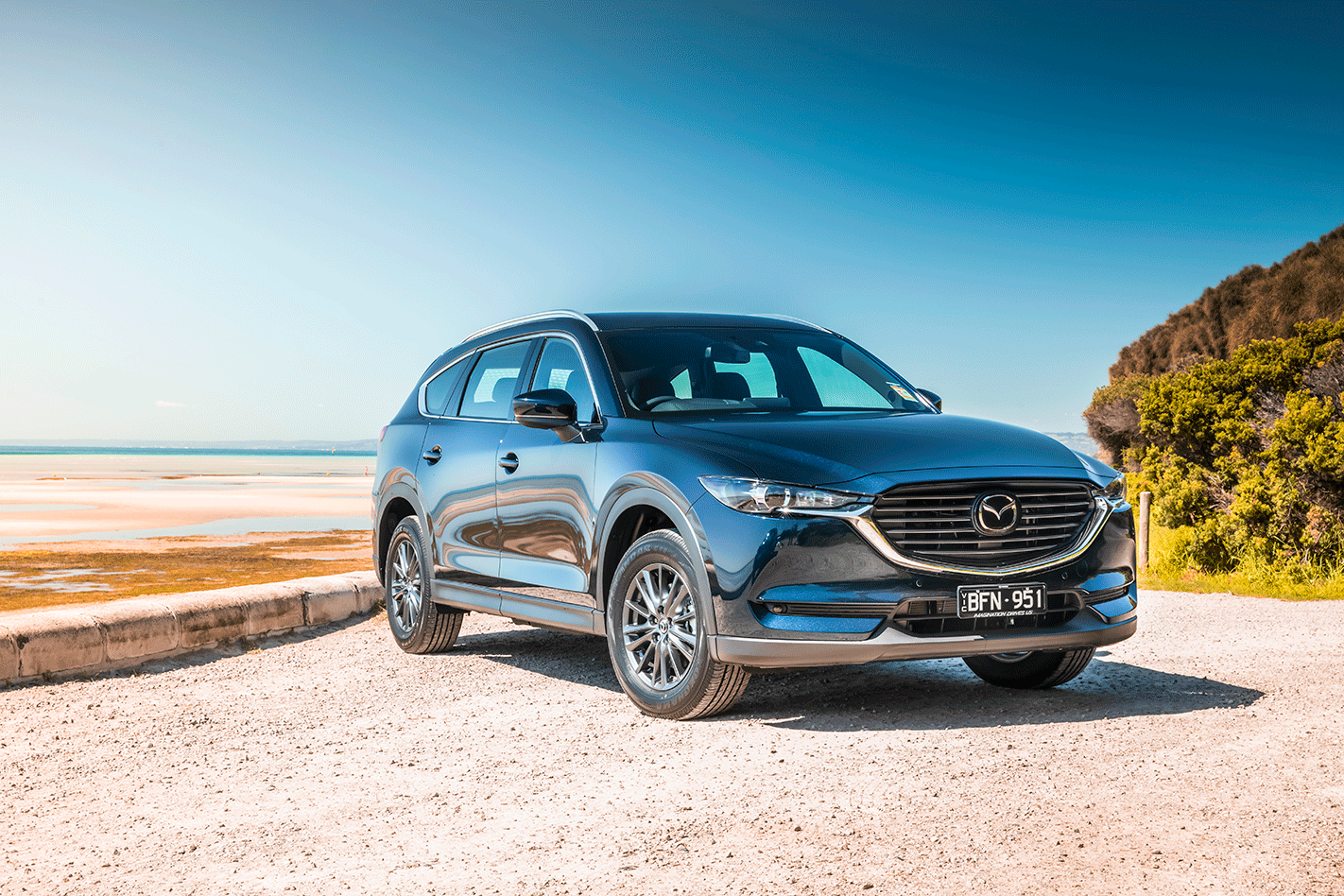
The seven-seat Mazda CX-8 sits on a stretched CX-5 platform (it’s 350mm longer than the 4550mm CX-5, but shares an identical width of 1840mm). However, its 2930mm wheelbase equals that of the CX-9. Essentially, the CX-8 slots in between the two as a best-of-both-worlds scenario.
WHY WE’RE TESTING IT
Originally launched as a three-model turbo-diesel-only line-up, the updated CX-8 now offers petrol power at a cheaper entry point. Safety has increased by including an advanced version of the company’s Smart City Brake Support, which now also incorporates pedestrian protection at night. We’re interested to know if the SkyActiv-G powerplant can cut the mustard in the stylish seven-seat SUV.
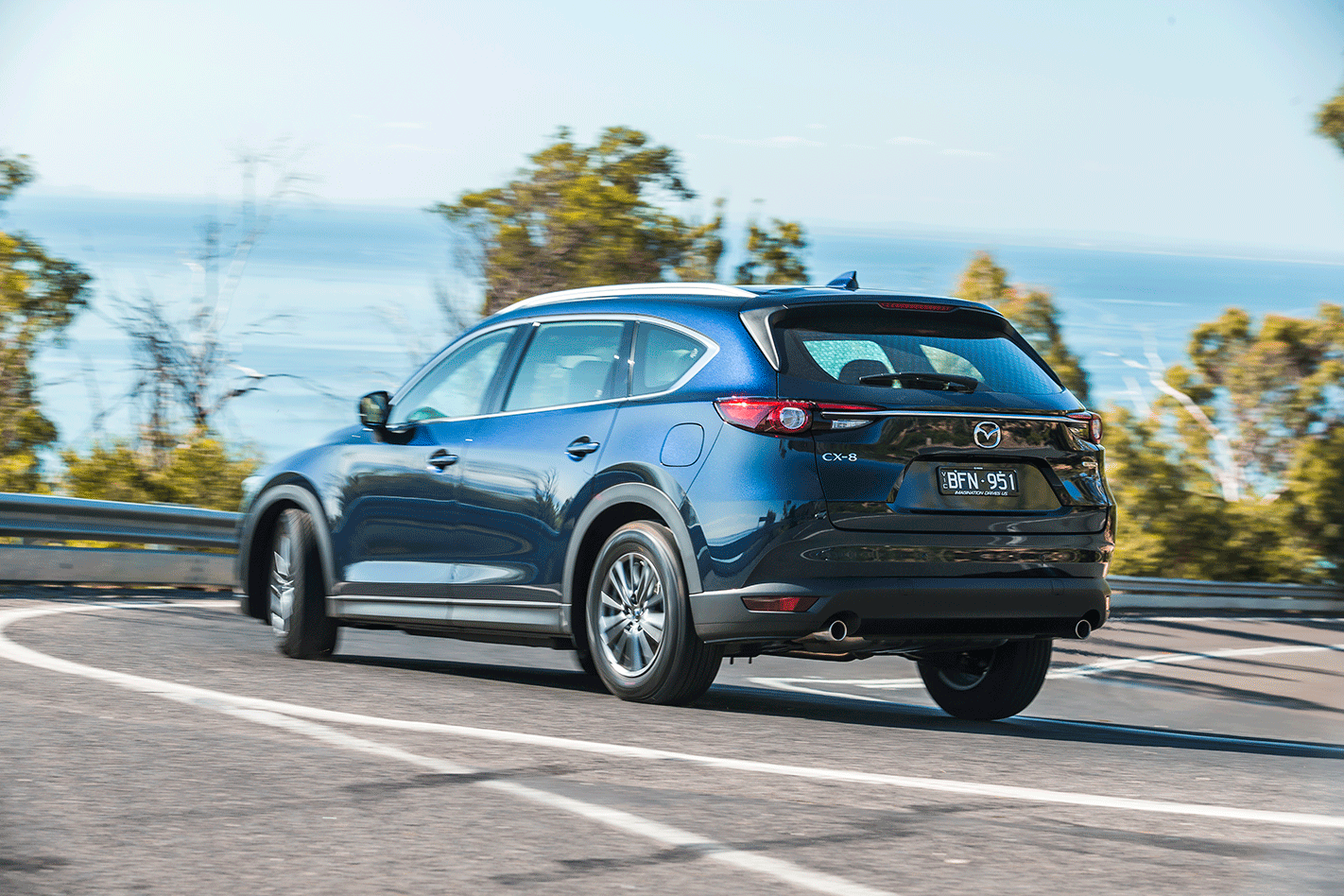
THE MAZDA CX-8 TOURING FWD PETROL REVIEW
Mazda is doing a lot of introspective thinking and self-assessment of late. Plugging gaps in its range has almost become a sport for the venerable Japanese marque. The genre-bending CX-30 is one of the latest niche fillers, but the CX-8 really kicked it off in 2018. It’s bigger than a CX-5, but smaller than the COTY-winning CX-9.
However, the caveat was a single, diesel-only engine choice. Now Mazda has transplanted its 2.5-litre naturally aspirated four-cylinder engine into the CX-8, and as a result, the seven-seat SUV with a tapered roofline now not only offers an alternative to turbo-diesel propulsion, it also lowers the cost of admission to less than $40,000.
The entry price of $39,910 is for the Sport, one of two petrol variants added to the range in front-wheel-drive (FWD) guise only. The other is the $46,590 Touring tested here. However, Mazda also elected to bolster the SkyActiv-D CX-8 offerings by introducing Touring, GT and Asaki all-wheel drive (AWD) grades. The top-spec Asaki AWD now extends to $65,440.
While the SkyActiv-G powertrain is new to the CX-8, it’s not a fresh engine. The 2.5-litre unit is used in the likes of the CX-5, CX-30 and 6. It produces 140kW (6000rpm) and 252Nm (4000rpm). The former is the same as the 2.2-litre four-cylinder turbo diesel, but the Newton count fails to rival the 450Nm mustered up in the oiler. Therefore the performance is not as lively, with the 0-100km/h sprint out of the school car park taking 10.9 seconds, 1.7sec slower than the FWD diesel.
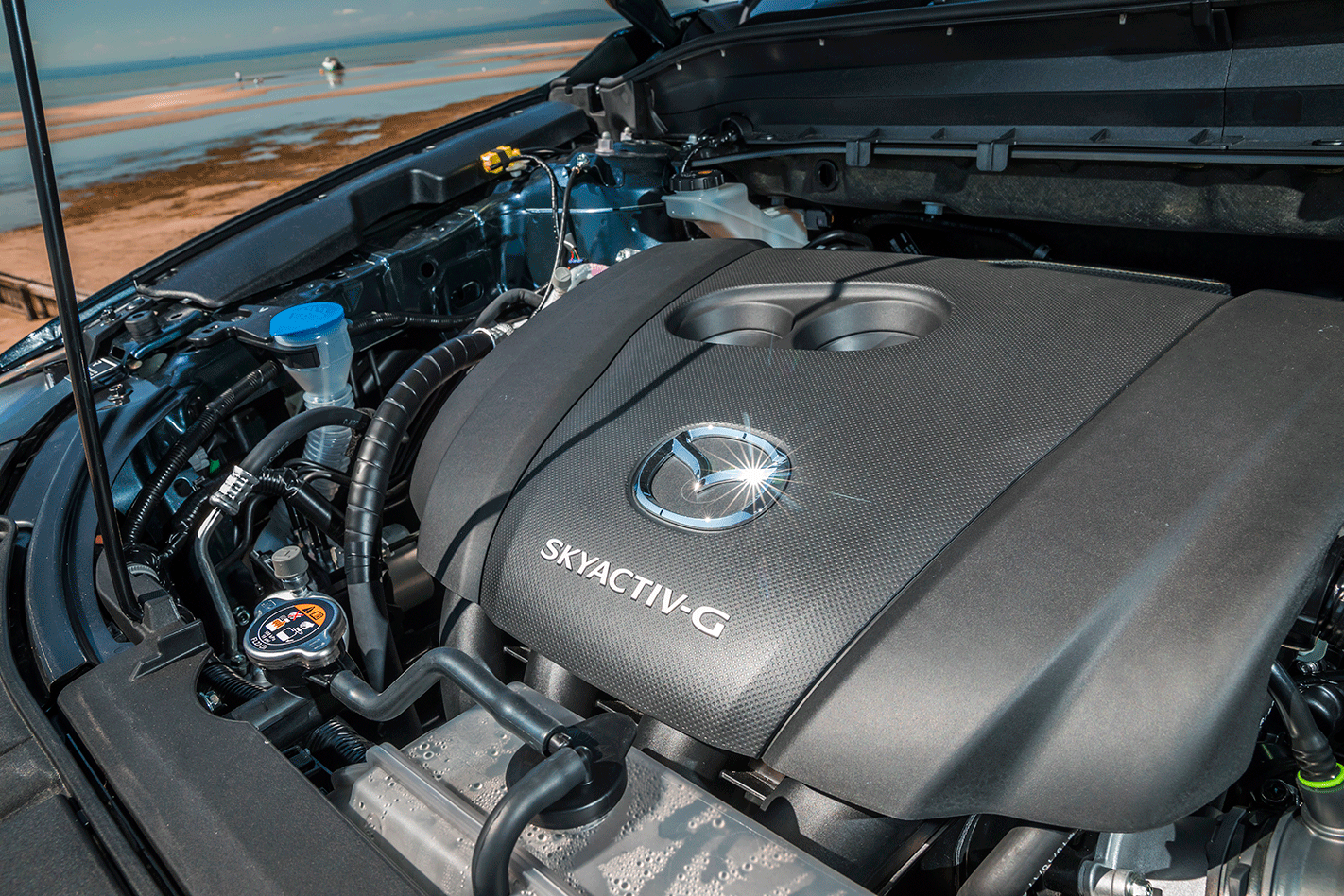
So progress is more adequate than swift, and you have to give the accelerator a good old prod to get the 1782kg mass moving. While it’s a little strained under load at high revs, the sound emanating from under the bonnet is more rorty than thrashy. However, the CX-8 likes to drink petrol, with the combined consumption claim coming in at 8.1L/100km. In the real world we saw the trip computer hover around 9.7L/100km.
Dynamically the CX-8 lives up to the standard set by Mazda’s SUV range. Based on a stretched CX-5 platform, the seven-seater displays decent body control, a composed ride quality, and steers with Mazda’s traditional engagement levels. Stretch its legs on the open road and the Touring is a plush and quiet cruiser thanks to the extra sound deadening, although the six-speed automatic is getting on a bit and can kick down over-eagerly in search of torque in hilly terrain.
Inside, not much has changed. It still feels premium and the design is ageing well, but the MZD Connect infotainment is overshadowed by the new system found in the CX-30 and 3. The 8.0-inch screen is touch enabled and offers Apple CarPlay and Android Auto, while general ergonomics are sound. The head-up display is a highlight, as are the clear analogue gauges housed within the instrument cluster. The materials used throughout are top notch, while the Touring grade adds black leather and electrically operated front seats. LED fog lamps, keyless entry/start and parking sensors up front also come with the upgrade.
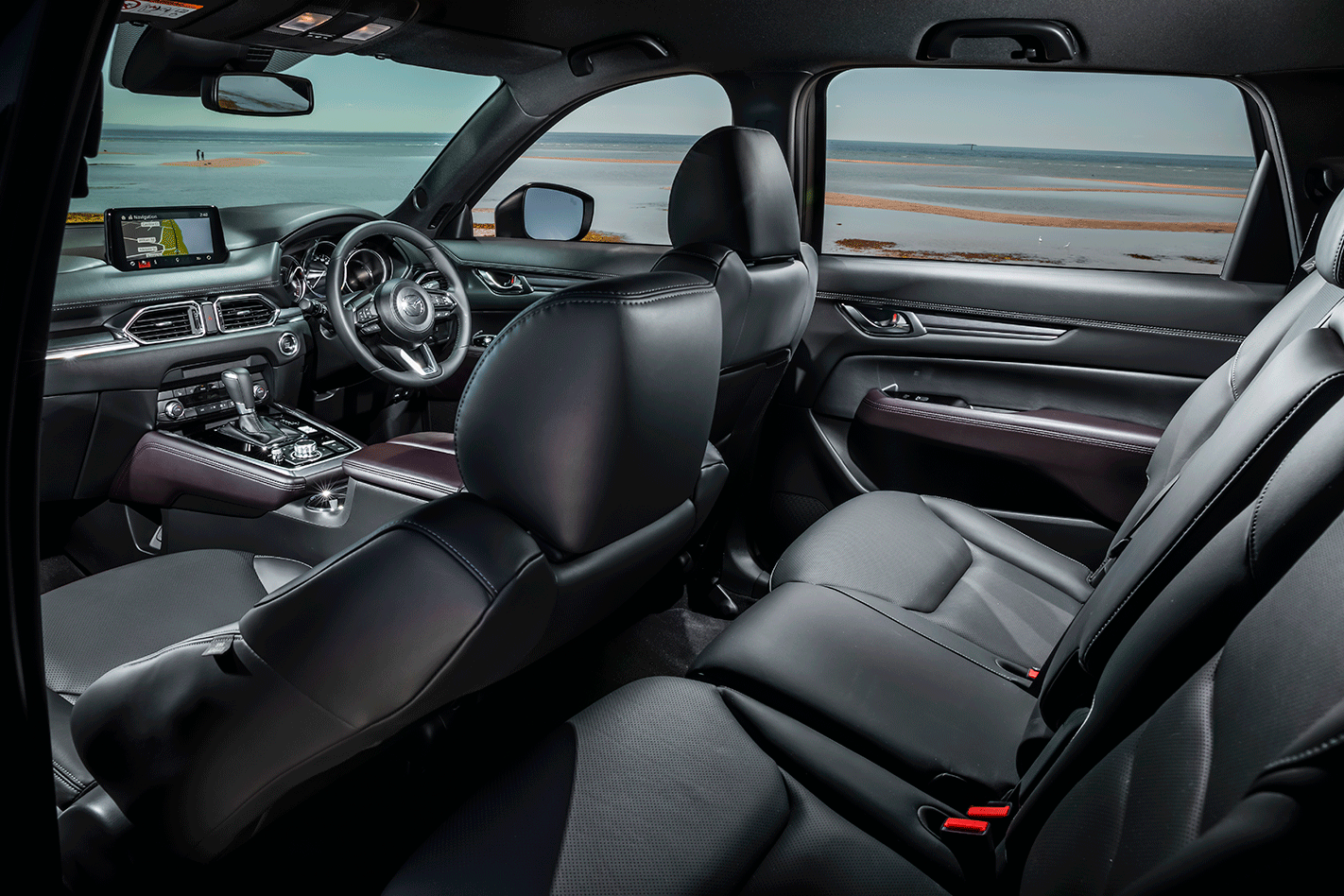
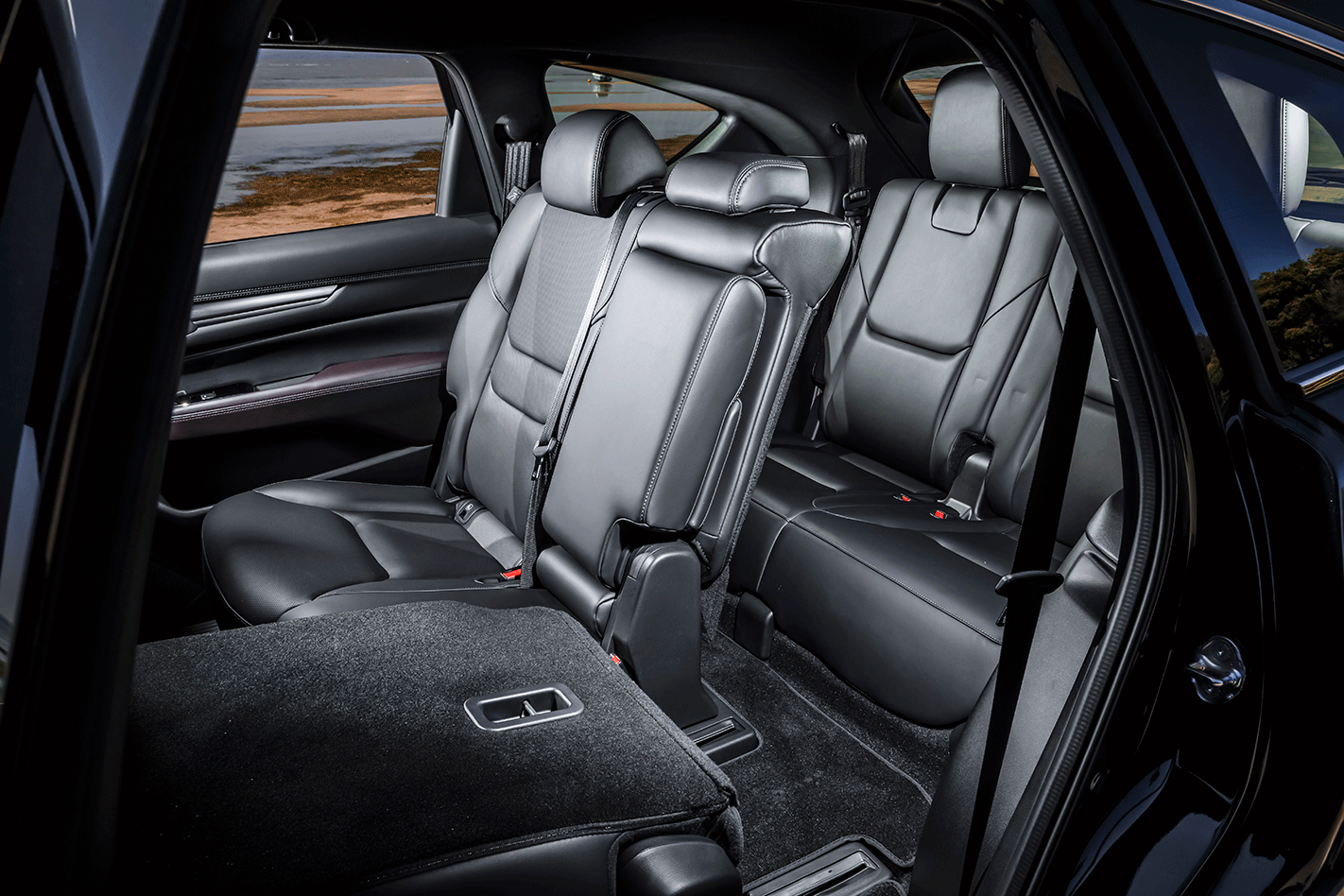
In the middle row, head and legroom is generous (the CX-8 shares the same 2930mm wheelbase as the CX-9), with the seats sliding forward and aft to accommodate taller third-row passengers. If you’re planning on using your seven-seater with all pews occupied most of the time, the longer and wider CX-9 is going to offer more room for all. There are cup holders in the back seats, but the third row misses out on the air vents and USB ports the middle row affords – you have to step up to GT or Asaki to gain that. The boot is 209L with all seats in place and 775L in five-seat mode.
Overall the CX-8 remains a polished and accomplished seven-seat SUV offering. While it isn’t as frugal at the bowser as its diesel counterpart, the petrol’s lower price of entry and the absence of perceived diesel drawbacks will appeal to plenty. And that, for Mazda, is worth all the navel-gazing.
RIVALS
Hyundai Santa Fe; Kia Sorento; Mazda CX-9
Mazda CX-8 Touring specifications
- Model: Mazda CX-8 Touring petrol FWD
- Engine: 2488cc 4cyl, dohc, 16v
- Max Power: 140kW @ 6000rpm
- Max torque: 252Nm @ 4000rpm
- Transmission: 6-speed automatic
- Weight: 1782kg
- 0-100km/h: 10.9sec (claimed)
- Economy: 8.1L/100km
- Price: $46,590
- On sale: Now
With the latest 2020 Ford Focus ST packing an overhauled version of the Mustang’s 2.3-litre Ecoboost turbo-four, unleashing an extra heft of power from it wouldn’t be too difficult.
UK-based tuner, Mountune has done just that with its smartflash m330 plug-and-play upgrade for the Mk4 Focus ST, which bumps up the car’s stock output from 206kW and 420Nm to 243kW and 515Nm.
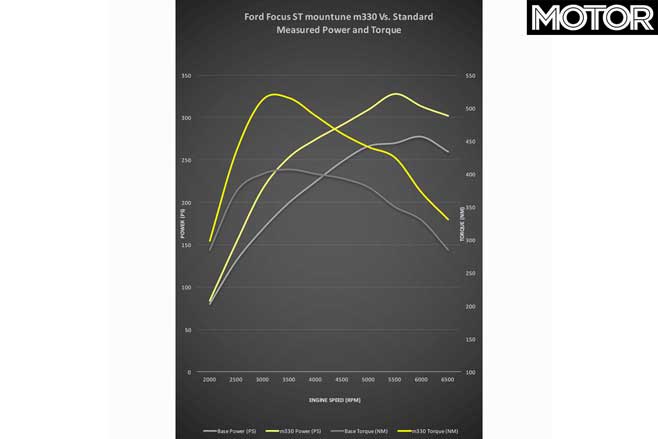
With the added power, the m330 tune is able to punt the Focus ST from 0-60mph in 5.2sec, an improvement over the stock car’s 0-100km/h claim on 5.7sec.
For comparison, the beloved previous-generation Mk3 Focus RS managed 257kW and 470Nm of torque, 276kW and 510Nm in its final ‘Heritage’ spec.
That being said, Mountune says its peak power figures are recorded using RON99 fuel, though the tuner says the engine would still be able to run on regular RON95 fuel. However owners can easily switch between the m330 tune and the stock tune via its smartphone app.
Installing the m330 upgrade is simple as the kit comprises of an OBD Bluetooth interface that is plugged into the car’s OBD port, from which the tune can be uploaded to the Focus ST’s ECU and controlled using the smartphone app.
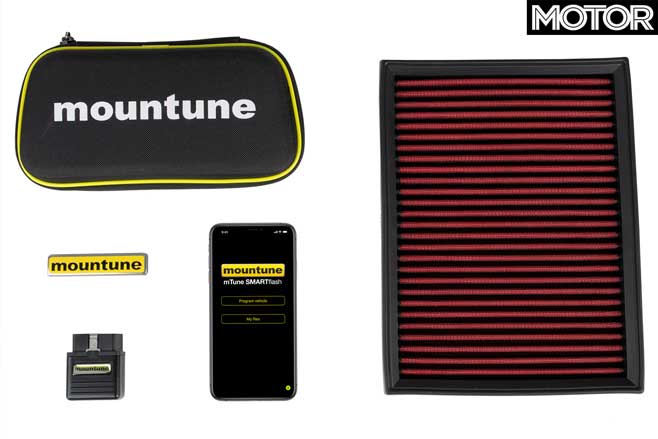
Aside from the increased power output, the m330 tune is also said to deliver a more aggressive launch control strategy, a new track mode which is described as a “recalibrated wet-mode for track settings”, and more pops and bangs from the exhaust in Sport and Track mode.
The m330 upgrade is available in two options, the base £474.17 (AUD$929) pack comes with the OBD Bluetooth interface and the smartflash app, whereas the £499.17 (AUD$978) full upgrade pack includes Mountune’s drop-in air filter that is said to improve the Focus ST’s induction noise.
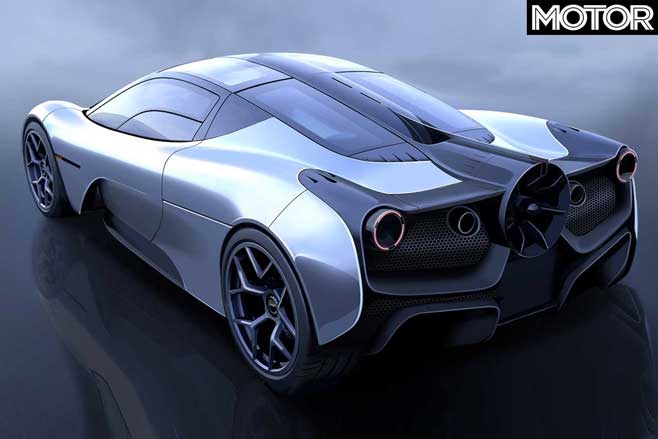
Twelve cylinders, 3.9-litres, no turbos, 12,100rpm, 485kW and 450Nm, 980kg, and only 100 to be built. That is what to expect from Gordon Murray Automotive’s T.50 supercar.
But the test engine for the Cosworth-developed V12? A Three cylinder.
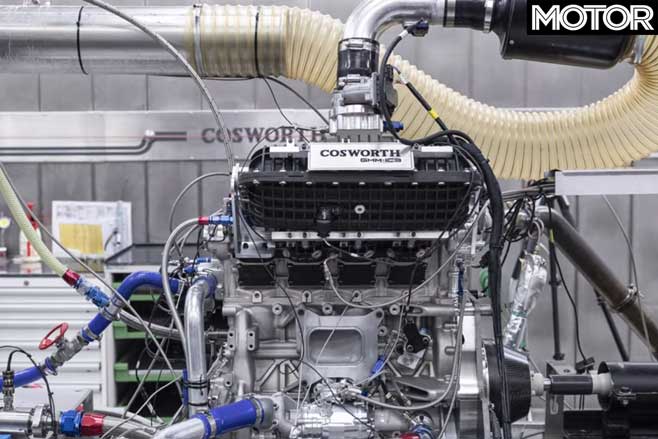
Recently shown off in a video depicting its high-rpm revving and emissions testing, the three-cylinder is just a quarter of the ‘GMM IC3’ engine that will rest behind the driver in the T.50.
Murray, a purist when it comes to engine aspiration and vehicle dynamics, has shunned the forced induction and masses of weight most supercars opt for, instead using his simplified (yet fussy) design approach to create a car that will be, as he says, the last true analogue supercar.
In an interview featured in the current (March 2020) issue of MOTOR, Murray says he designed the T.50 as a halo for the Gordon Murray Automotive (GMA) brand, meaning it needed to follow his principles closely.
No turbos, low weight, complete feedback from car to driver. He says turbos will always lack the immediate throttle response of a naturally aspirated engine.
“No matter what the manufacturers tell you, they always have lag,” he says.
“The V12 is all-new and bears no resemblance whatsoever to the [Cosworth-designed Aston Martin] Valkyrie’s engine. It’s also much lighter than the Valkyrie’s V12. It’s likely to be the last great V12.
“It will also be the lightest, the highest revving and have the fastest engine response.
“The lack of engagement of modern supercars has happened for a few reasons. First, they’re nearly all turbocharged and I don’t think you’ll ever get a turbo to have the throttle response of a good non-turbo.”
Fond of clattery engines, big torque and sticky fuel bowsers? You have Rudolf Diesel to thank. The engine technology that bears his name has been propelling cars, ships and aircraft for well over a century now, and with the man’s 162nd birthday happening this month, it seems like an opportune time to list some of the more remarkable cars to use his world-changing technology.
From workhorses to racecars, diesel engines have not-so-quietly achieved great things for more than a hundred years.
The years ahead will be tough, though, with the dieselgate scandal and a new focus on particulate emissions seeing diesel tech fall out of fashion among the world’s manufacturers.
That said, there’s been no shortage of impressive diesel-powered machinery in recent times, and here are just some:
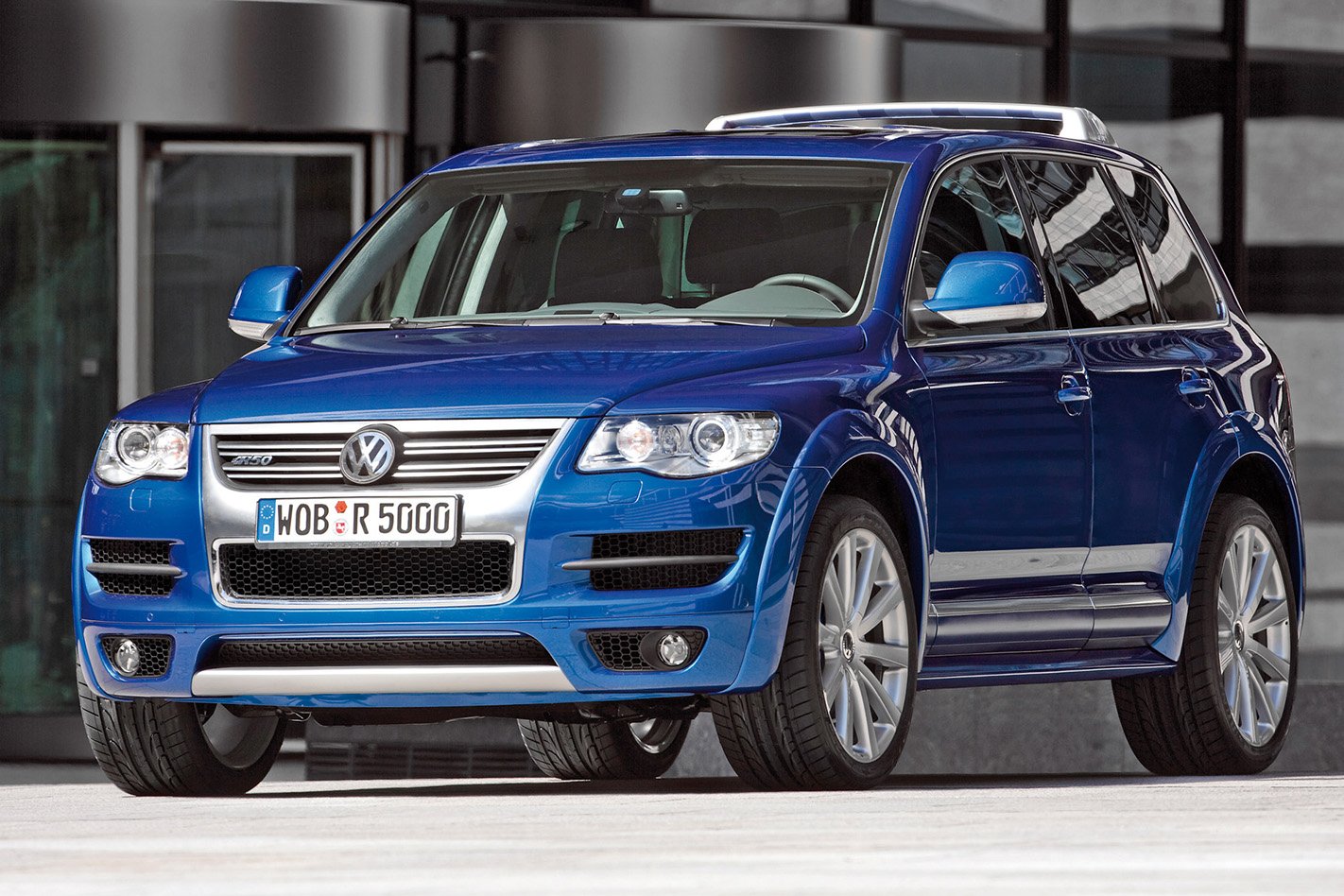
Volkswagen Touareg R50
Volkswagen in the noughties seemed like an unstoppable juggernaut ruled by wild-eyed engineers. Experimentation with new kinds of engines was rampant, and it seemed that getting a green light for a special project simply depended on whether or not the desired engine could physically fit.
A 12-cylinder Phaeton? How about the W8 Passat or six-cylinder Golf R32? The Germans had a fascination with jamming the biggest engine possible into seemingly everything, and the Volkswagen Touareg R50 was just another example.
Is a twin-turbo 5.0-litre diesel V10 a sensible thing to put in a family SUV? Absolutely not, but is it cool? Absolutely so.
It’s interesting to note that with 257kW and 850Nm, the R50 boasted more torque than the other insanely over-the-top Touareg – the petrol-guzzling 6.0-litre W12.
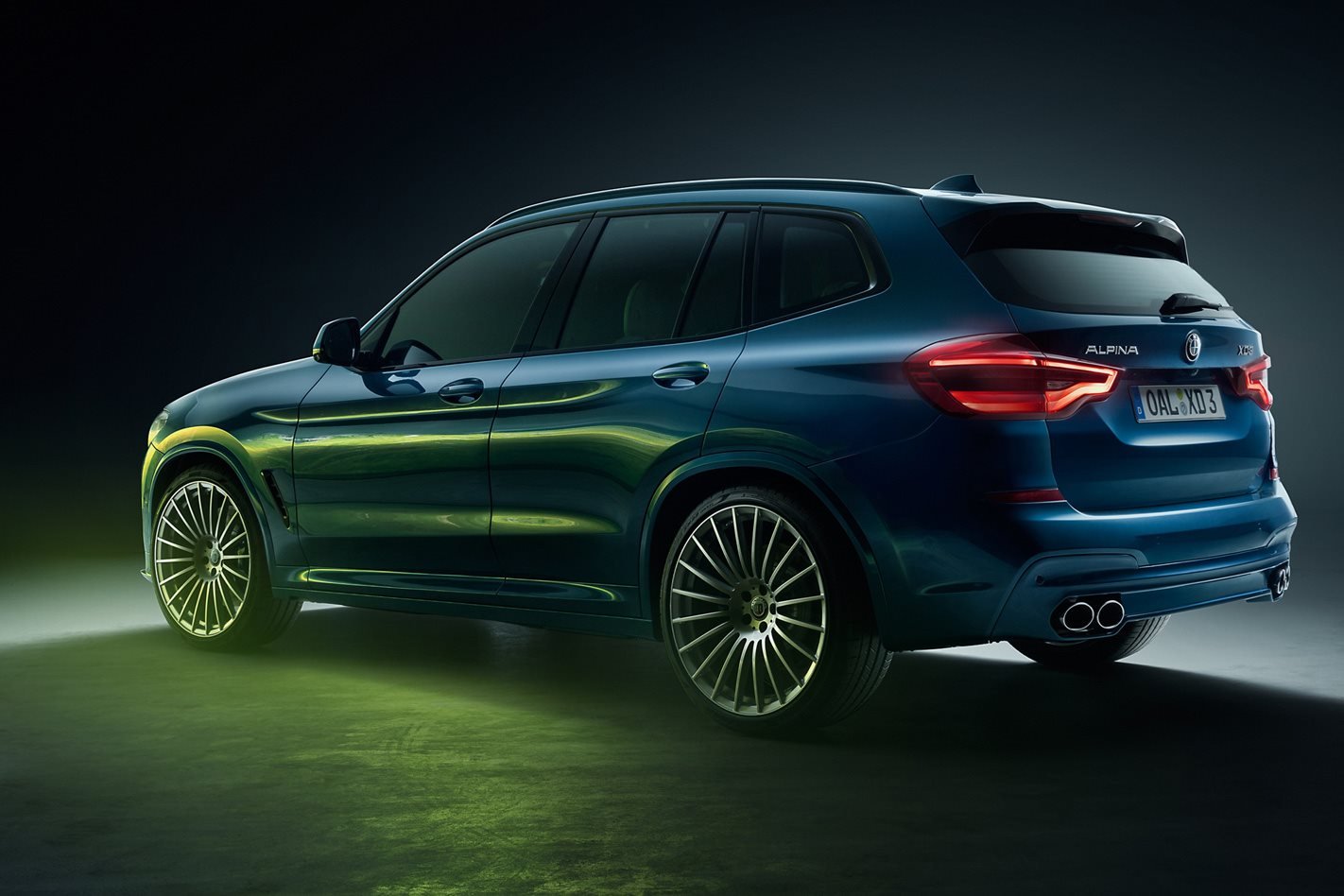
Alpina XD3
How many turbos is ideal? One? Two? Three, even? Nope – four is the ideal number if you’re Alpina, which introduced a quad-turbo engine in 2018. Fitted to the Alpina XD3 performance SUV, the 3.0-litre diesel engine uses four turbochargers to output a hardly-believable 286kW/900Nm in left-hand drive examples.
Sadly in our Aussie right-hand drive cars the steering column gets in the way so it was downgraded to just two turbochargers. Despite that, our version can still hit 100km/h in 4.9 seconds thanks to its 245kW/700Nm powerhouse. Not bad for a diesel.
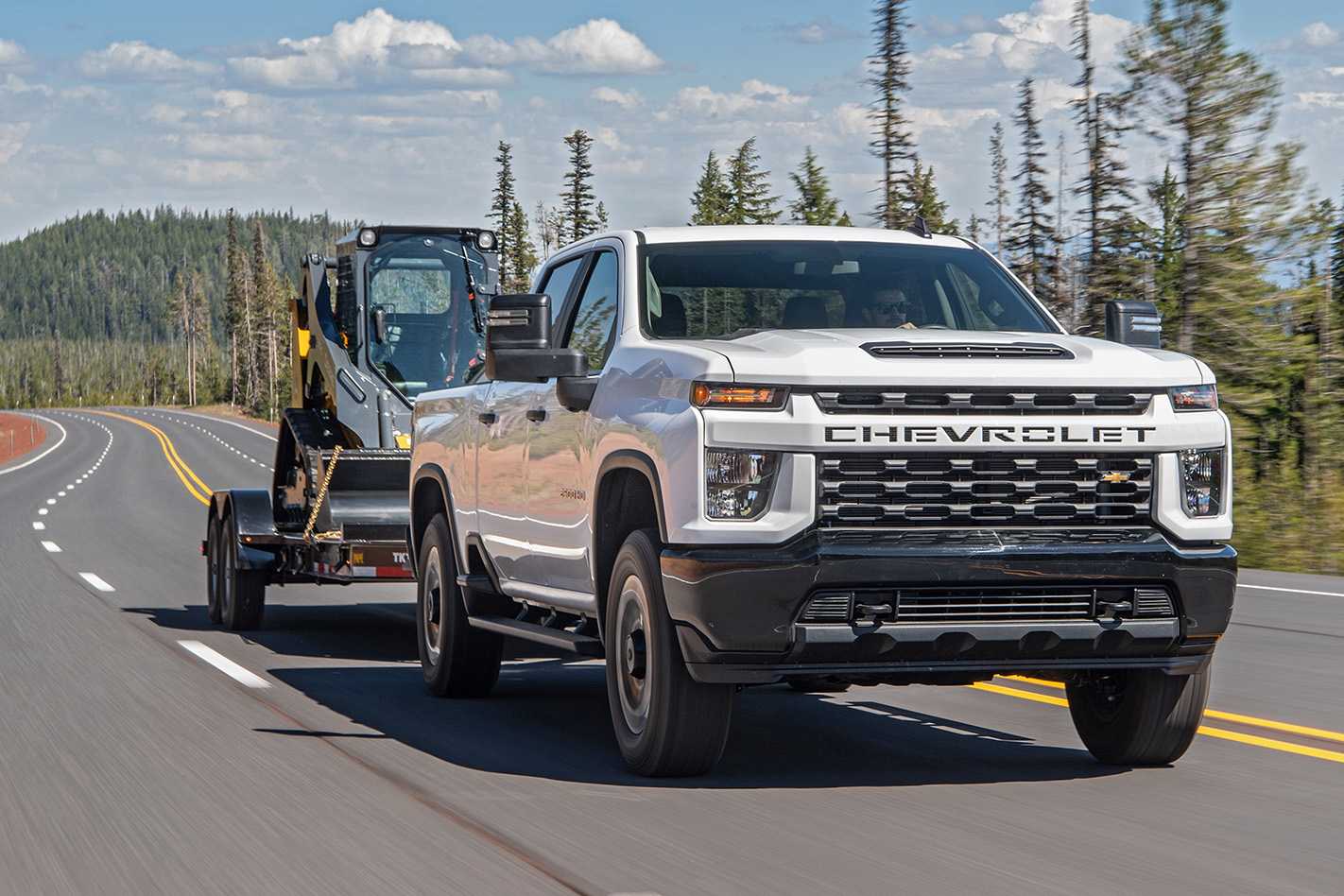
Silverado 2500 – 6.6 Duramax V8 (L5P)
You can mess around with toy diesels all day but if you want the ultimate in liquid coal, you have to jump into the realm of American trucks. The 6.6-litre Duramax V8 under the bonnet of the Chevrolet Silverado 2500 is currently the most powerful diesel you can drive on a car licence with 332kW, while its monstrous 1234Nm of torque is unrivalled by anything before it.
If that’s still not enough output to embarrass an SUV, GM’s engineers designed the L5P to reliably develop up to 410kW and an earth-shaking 1424Nm.
For a road-going tow rig, the Silverado 2500 is pretty much the next best thing to an actual truck.
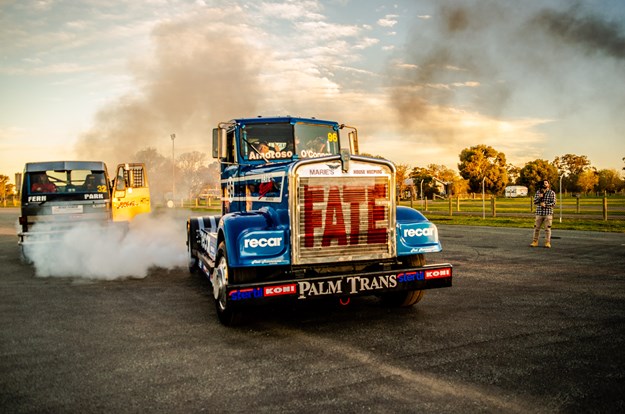
1991 Kenworth W prime mover race truck
This blue monster is one of the oldest race vehicles still circulating in Australia – but it’s only become more fearsome with age. FATE – named after owner/driver Franks Amoroso’s freight company – was born in 1988 and packs a 14.0-litre Cummins ‘big-cam’ V8 diesel with a hand-ground camshaft, custom twin turbochargers and modded pistons to produce a conservative 1100kW.
It still races at the front of the Australian Truck Racing championship to this day. “I still get the same buzz today as I did 31 years ago, I can tell you that,” he told WhichCar’s sister site OwnerDriver.com.au late last year.
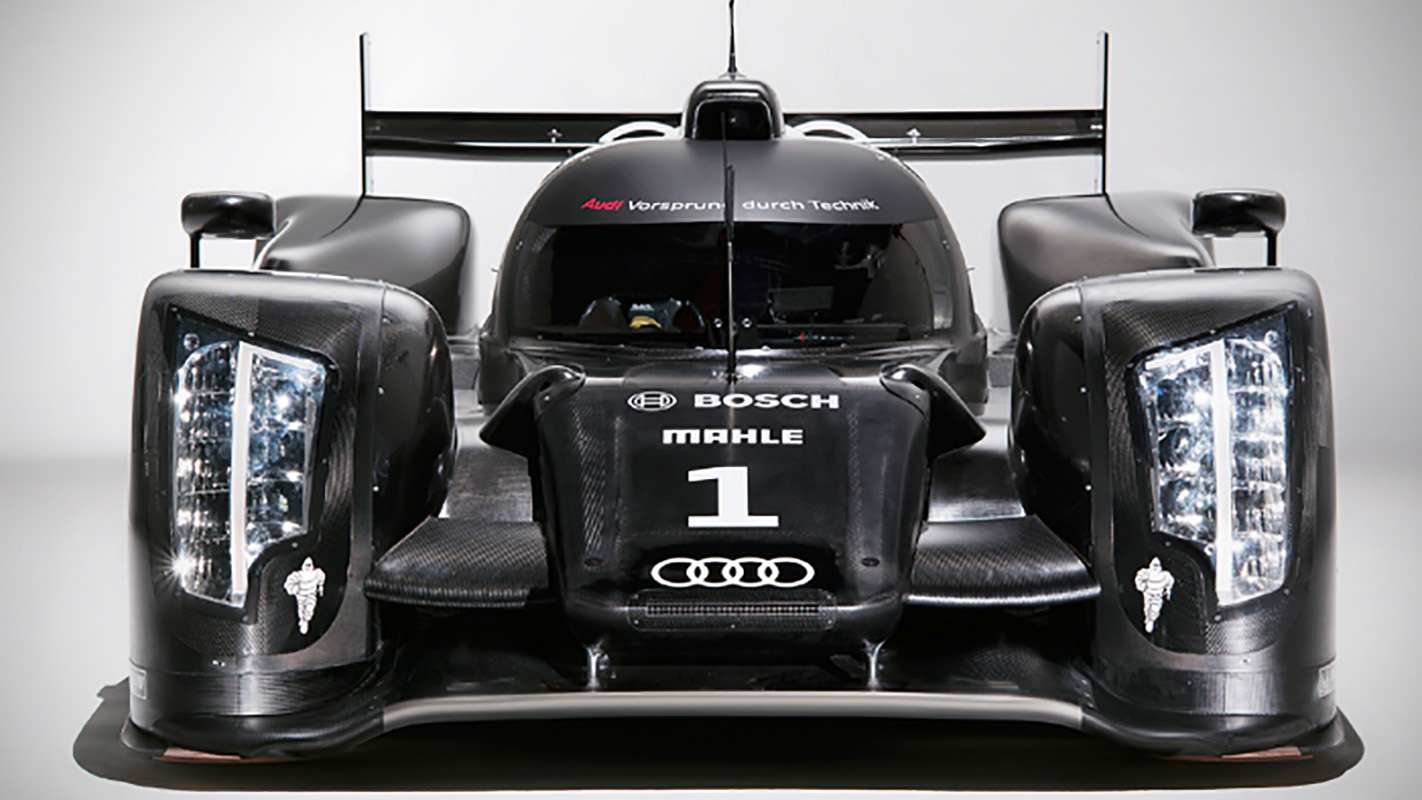
Audi R10 TDI, R15 TDI, and R18 TDI race cars
Diesel’s not usually the fuel of choice for race cars, but in the days before Dieselgate VW-owned Audi was rather keen on it. Between 2006 and 2016, with the V12-powered R10 TDI, the V10-powered R15, and V6 R18, Audi’s Le Mans efforts relied on turbocharged diesel power units – with the final evolutions of the R18 adding hybrid assistance on top of that for good measure.
Of 75 race entries between the three generations, the TDI Le Mans racers racked up 57 wins – vindication indeed for Audi’s diesel fixation, as well as the less pit-stop intensive strategy it allowed. Diesels ain’t just for trucks.
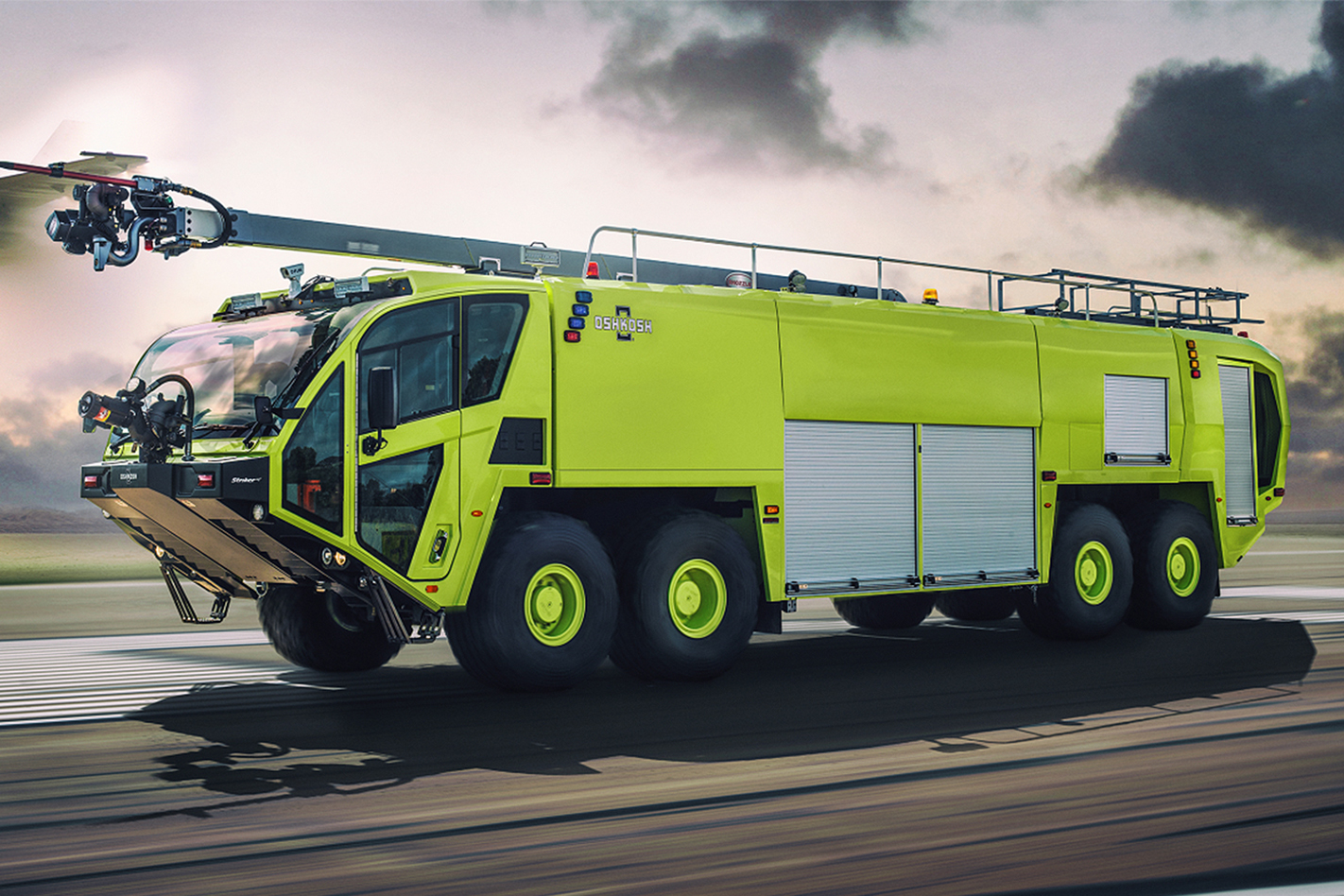
Oshkosh Striker 8×8
When you need to rapidly distribute 18 tonnes of life-saving water and foam on to a downed aircraft you need something big, powerful and brimming with Newton’s finest. That’s where the eight-wheel-drive Oshkosh Striker 8×8 aircraft rescue and firefighting tender steps in.
Powered by not one, but two, rear-mounted 574kW/3183Nm Scania Tier 4F, 16-litre V8 diesel, its combined 1148kW is sent to all eight wheels via a seven-speed automatic gearbox and can get the 62-tonne behemoth from a standing to 80km/h in 20 seconds, on the way to a top speed of 125km/h.
The engines also drive the pumps that can push 17,033 litres of water and 2400 of foam up to a height of 20 metres, even while the Striker is on the move. When you need bulk grunt, a diesel – or two – becomes necessary.
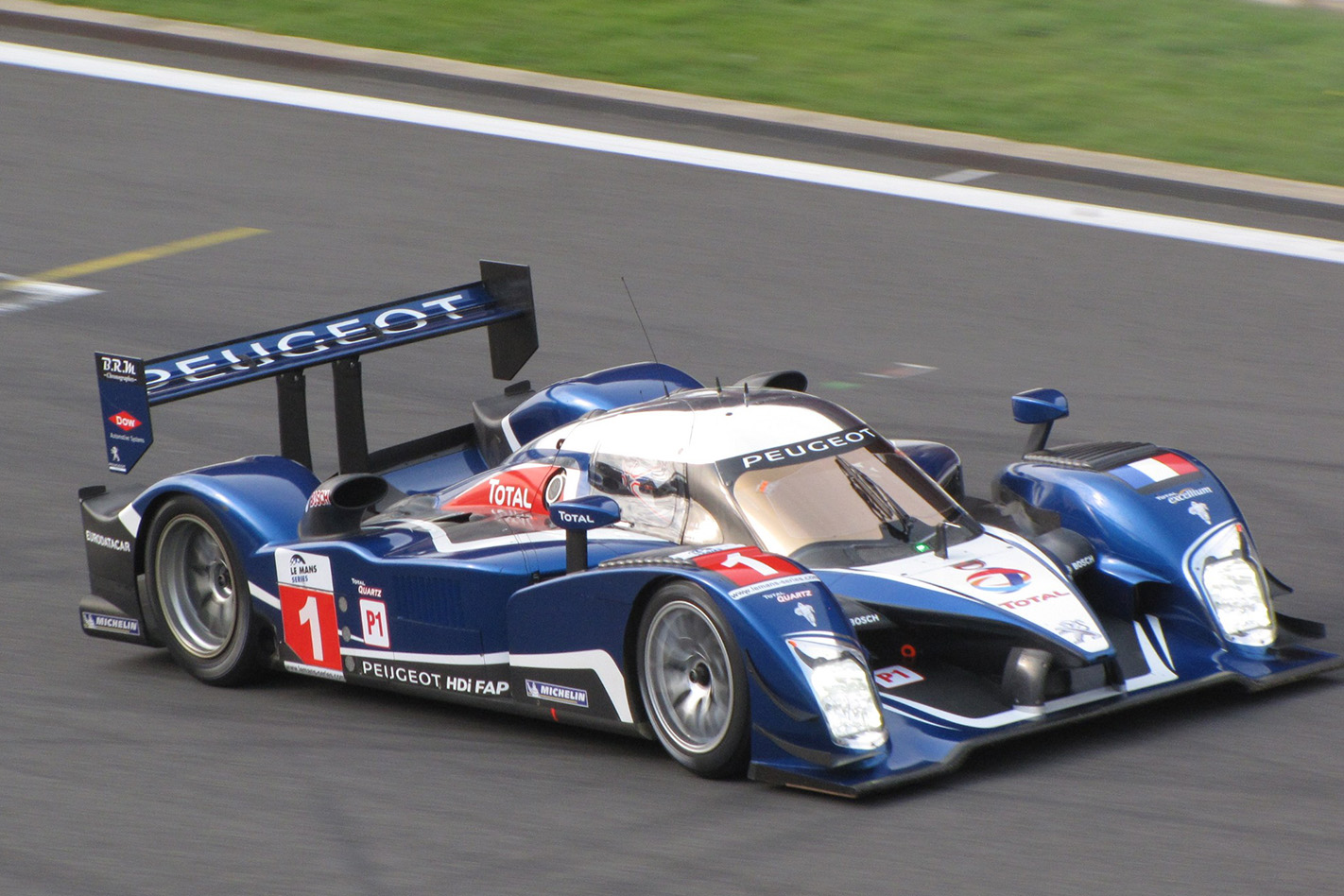
Peugeot 908 HDi FAP race car
In the same vein as Audi’s Le Mans racers is Peugeot’s 908, the twin-turbo V12 racer that took home the top trophy at 20 of 30 races it entered. Along with Audi’s Le Mans prototypes of the same era, it helped put diesel power on the map in motorsport.
But 2009’s 24 Hours of Le Mans was the HDi FAP’s moment of glory, placing both first and second with Aussie driver David Brabham standing on the top step.
The 908 was raced from 2007 to 2010, though sadly Peugeot’s on-track diesel brilliance didn’t really spread into its road car family to the same extent as Le Mans rival Audi.
