
What stands out?
The drawcard for the Honda Jazz city car has always been its ability to swallow luggage, courtesy of its box-shaped body and clever flip-folding seats. It also has a very good infotainment interface (standard on even the keenly priced Jazz VTi), a surprising turn of speed, a frugal engine, and a five-year warranty.
What might bug me?
That the steering and handling falls short of the superb standard set by the Honda you owned in the 1990s (or earlier).Driving at less than 80km/h on the space-saver spare until you can fix your full-sized flat tyre.
What body styles are there?
Five-door hatchback. Though Honda does have a sedan version called the City.The Jazz drives its front wheels, and it is classed as a light car, lower priced.
What features does every Jazz have?
Air-conditioning, cruise control, and power-adjusted exterior mirrors.A hill-start assist system, which operates the brakes automatically to make take-offs on hills easier.A multi-information display for the driver that presents the average fuel consumption, range-to-empty and outside temperature, and a programmable speed alarm.Steering wheel controls for the audio system, a Bluetooth phone and the cruise control. A Siri eyes-free voice command function.A 7.0-inch colour touchscreen interface for the Bluetooth phone and the audio system – which has an AM/FM radio, and USB and HDMI sockets.A multi-angle reversing camera that offers normal, wide and top-down views.A space-saver spare wheel, with speed and distance restrictions.Six airbags. Electronic stability control, which can help you control a skidding car. (For the placement of airbags, and more on Jazz safety features, please open the Safety section below.)Every Honda Jazz carries a five-year, unlimited distance warranty.
Which engine uses least fuel, and why wouldn’t I choose it?
There is only one engine in the Honda Jazz, a 1.5-litre four-cylinder that uses a miserly 5.9 litres/100km with automatic transmission, on the official combined cycle test, and slightly more in manual form.In real-world comparison testing conducted for the March 2015 issue of Wheels magazine, a Honda Jazz with this engine averaged 7.0 litres/100km, ranking with the Volkswagen Polo and Mazda2 among the most frugal of nine light cars reviewed.The Jazz also has plenty of power for a car of its size, proving quicker than the eight alternatives driven.The auto transmission is a continuously variable type (CVT). The manual gearbox is a five-speeder, and offered only in the least costly model, the VTi.(Power outputs and all other Honda Jazz specifications are available from the Cars Covered menu under the main image on this page.)
What key features do I get if I spend more?
The least costly Jazz, the VTi, comes with cloth-covered seats, manually controlled air-conditioning, satellite navigation, conventional halogen headlamps, and steel wheels with plastic trim. A manual gearbox is standard, or you can pay more for an auto.Spend more for a Jazz VTi-S and auto transmission is standard. You also get a leather-trimmed steering wheel and satellite navigation. The external mirrors can be power-folded out of harm’s way, and the headlights use long-lived LEDs for low beam. Exterior aesthetics are enhanced with side skirts, a tailgate-mounted spoiler, and foglights. Wheels are made from nicer looking aluminium alloy, dispensing with the plastic trim caps. The wheels also grow an inch in diameter to 16 inches, with the tyre sidewalls shrinking slightly to compensate – again mainly to provide a sportier look.The most expensive Jazz, the VTi-L, has part-leather seats, with seat heaters in the front. Climate control air-conditioning maintains a set temperature. A smart key allows you to unlock the car while the key remains secure in your pocket or bag. Headlamps use very bright LEDs for both low and high beam, and there are LED daytime running lights. Paddle-shifters on the steering wheel give you some manual control of the CVT auto. You also get rear parking sensors – which help you judge how close you are to an obstacle behind.
Does any upgrade have a down side?
No item of extra equipment has a drawback in itself, but the Jazz VTi’s excellent value dissipates as you progress to the VTi-S and VTi-L.Of seven paint colours offered for the Jazz, just one – Rallye Red – is standard. All others cost an extra $500.
How comfortable is the Honda Jazz?
The Jazz is quite comfortable to drive and ride in, although how comfortable depends on where you drive it.The suspension is good at dealing with urban speed humps and smoothing out patchy arterial roads. However, over the different kinds of bumps and surfaces encountered on country trips, it struggles to isolate occupants from the road and is relatively noisy.From a seating and ergonomic viewpoint, the Jazz has much more going for it. A tilt and reach adjustable steering column and simple yet supportive front seats, with height adjustment for the driver, promote a comfortable position for the driver and front passenger. Vision out for the driver is very good.The Jazz’s cabin materials are of good quality, including the dash plastics, fabric or leather seat trim, and carpet. The design of the dash itself is quite neat, headlined by the appealingly crisp colour touchscreen. On the more expensive Jazz VTi-S and VTi-L, built-in satellite navigation (introduced about September 2017) helps you find your way around town without relying on a smartphone.
What about safety in a Jazz?
Every Honda Jazz has anti-lock brakes, stability control, six airbags, hill-start assist, a comprehensive reversing camera, and fast-responding LED taillights.The six airbags are in the usual places: two directly in front of the driver and front passenger; one alongside each front occupant at chest level to protect you from side impacts; and a curtain airbag on each side at head level, protecting occupants front and rear from side impacts.The forward location of the Jazz’s A-pillars (those either side of the windscreen) and large, downward tapering front side windows allow good vision for tight corners and roundabouts, increasing primary safety. Door-mounted exterior mirrors aid vision in the same driving conditions.The Jazz VTi-L has LED daytime running lights, which make it easier for other drivers to see you.Automatic emergency braking is not available on a Honda Jazz.The Australasian New Car Assessment Program (ANCAP) awarded the Honda Jazz its maximum five-star rating for safety, in January 2015.
I like driving – will I enjoy this car?
You will enjoy the Honda Jazz on a practical level, because it is so light and easy to drive. It makes an effortless city car.However, if you like driving in the sense that most car enthusiasts do, that will be the limit of the enjoyment you get from the Jazz.The Jazz’s steering stands out as the weak point. It is too light, and lacks both precision and a strong sense of connection with the road.The suspension feels composed on smooth roads, but on lumpier surfaces it loses its balance – especially if the Jazz encounters bumps in the middle of a corner.The engine offers very good power and performance for a light car, but can’t make up for the fact that the Jazz is not a sporty steer.On the Jazz VTi-L, the CVT auto can be manually operated using gearshift paddles behind the steering wheel, which makes it more fun than some conventional automatics.
How is life in the rear seats?
The Jazz’s rear seat accommodation is good to great by comparison with other light cars. In its favour are decent legroom and generous headroom.The Jazz’s rear floor tapers upwards, which provides a comfortably angled surface for rear occupants to place their feet on. The slope accommodates the Jazz’s fuel tank, which is in the centre of the car under the floor.The Jazz has a two-setting adjustment for the rear backrest angle, though the more upright setting is the more comfortable of the two. The rear seat base offers good under-thigh support.The seat can carry three passengers, with lap and sash belts for all.
How is it for carrying stuff?
The Jazz is excellent at carrying stuff – Honda built the model’s reputation on capacious flexibility, and that reputation lives on in the current, third-generation car.The Jazz’s rear cargo area is quite big, at 350 litres, and Honda’s ‘Magic Seats’ mean you can expand the total luggage area to an enormous 1492 litres. Yes, it can swallow a bicycle easily.In addition to folding away to create a flat cargo floor, the rear seats can be flipped up to liberate tall space for luggage in the area usually occupied by rear passengers.There’s more space available behind the Jazz’s back seats – and more options for reconfiguring the seats – than in any alternative.
Where is the Honda Jazz made?
The Honda Jazz is manufactured in Thailand.
What might I miss that similar cars have?
Possibly the effortless low-speed accelerator pedal response of turbocharged light cars, such as the Renault Clio and Volkswagen Polo. But the Jazz goes just as hard if you work the engine.An extra gear in the five-speed manual VTi. Many light car rivals offer six-speed manual gearboxes, improving responsiveness and fuel economy and reducing noise when cruising.The latest active safety features, such as automatic emergency braking. This is standard on every Mazda2, for example, and optional on every Toyota Yaris.The ability to show apps from your smartphone on the touchscreen and control them from there, via Apple CarPlay or Android Auto. The Polo, Suzuki Swift and Kia Rio support this, for example.The Rio has an even longer warranty, at seven years.Other light cars worth considering include the Ford Fiesta and Hyundai Accent. You might also look at the Suzuki Ignis micro-SUV.
I like this car, but I can’t choose which version. Can you help?
Yes – the Jazz VTi is our pick of the line-up. It is well equipped for the money. The VTi-S and VTi-L, although they offer appealing equipment, cost too much to be obviously worth the jump.
Are there plans to update the Jazz soon?
The current Honda Jazz arrived in the middle of 2014. Towards the end of 2016 the standard 7.0-inch touchscreen was replaced with a slightly smaller 6.1-inch unit, and in February 2017 alloy wheels were extended to the Jazz VTi.From July 2017, Honda extended its warranty period to five years.About September 2017 the Jazz received a light mid-life facelift, for the 2018 model year. A 7.0-inch central touchscreen was reinstated on all models, with USB and HDMI ports. The more expensive Jazz VTi-S and VTi-L gained built-in satellite navigation, and headlights on the VTi-L gained long-lived and very bright LEDs for both high and low beam. To keep costs down, the Jazz VTi-S lost its climate control, relying instead on manual air-conditioning. The least costly Jazz, the VTi, lost its alloy wheels, reverting to steel wheels with plastic covers and all-halogen headlights. Both the VTi-S and the VTi-L lost their gearshift paddles. Cosmetic changes inside and out extended to new bumpers front and rear on all cars, and revised alloy wheel designs.Since then Honda has released special editions of the Jazz including +Sport and 50 Years Edition, celebrating Honda’s half-century.A new-generation 2021 Honda Jazz was revealed late in 2019 at the Tokyo Motor Show, there are doubts about if it will be sold in Australia.
Back in March 1976, a story by Tony Curtis – no, not that one – appeared in Wheels. ‘In The Year 2025’ was a bit of a depressing read, to be honest. Inspired by Orwell’s 1984, the author told a tale of all private motor vehicles being banned by the overarching hand of the state by 1985. Swing and a miss there.
Yet glance through the 1976 issue and some things are all too familiar. There are Corollas, Passats, 911s, Civics, LandCruisers and Lancers. A disgruntled reader wrote a letter complaining that modern cars lacked character, while a Fiat came last in a group test.
A couple of months later, however, Wheels ran a report on ADR27A, the first anti-pollution regulations on Australian cars, noting that “it’s become critically important that something must be done to at least minimise any further increase in air pollution”. Cars like the Fiat 130 and Renault’s 15 and 17 coupes faced the chop for being unable to comply with these restrictions on hydrocarbons, carbon monoxide and nitrous oxides.
That noble aspiration seems a long way distant. In a recent analysis by Transport Energy/Emission Research (TER), written by Professor Robin Smit, it became clear that Australia looked likely to become a dumping ground for the world’s dirtiest engines. “There is no incentive for the car companies to sell lower-emitting vehicles here. At the moment the manufacturers are allowed to sell anything they like with little restrictions,” Smit said. So are we where we thought we’d be at the turn of this new decade? We take a look at some of the major pillars of progress and mark the cards.
Autonomy
The last year has been tough on autonomy. Apple shuttered its autonomous electric ‘Project Titan’ and Waymo’s CEO John Krafcik issued a stark reality check, stating that the technology might never actually work. In an interview with the WSJ, Krafcik said that true autonomy will never happen, and that self-driving cars will always “have restraints”. At the Tokyo show this year, James Kuffner, the CEO of the Advanced Development division of the Toyota Research Institute, said of true level five autonomy, “Let me be clear: nobody is even close.”
While most of the self-driving hype has cooled, there is one notable exception. Elon Musk has marked the end of 2020 as the time when Tesla drivers will be able to get in, nod off and wake up at their destinations using full self-driving. Until then, despite the tech being what he refers to as ‘feature complete’, drivers will have to continue to monitor the technology and be ready to take control of the wheel if something goes wrong. The only 100 percent reliable indicator here is Musk’s overconfidence in when this technology will appear.
At present, true autonomy is reserved for tightly controlled geofenced areas. If you’re anticipating catching some zeds on the commute to work, there’s always Uber.
· Probability rating: 6/10
· Verdict: Don’t listen to Elon
Electrification
Five years ago there were three electric cars on sale in Australia – BMW’s i3, Tesla’s Model S and Nissan’s Leaf. Now three has become 10. We currently have the i3, Hyundai’s Ioniq and Kona, the Jaguar I-Pace, the Nissan Leaf, the Renault Zoe, Mercedes-Benz EQC and a trio of Teslas: S, X and 3. Seven additions in half a decade is hardly an avalanche of new metal. There’s nothing yet from Toyota, Mazda, Kia or anything from the Volkswagen group. It’s on the way, but these industrial giants haven’t exactly fallen over themselves to rush product out.
A recent survey by Nielsen across 1000 car owners and 10 senior automotive marketers found that attitudes to electric cars in Australia took a similar wait-and-see tack. Fully 24 percent of respondents identified that they intend to buy an EV but the market penetration remains at around 0.2 percent.
“Australia is currently in a catch-22. The lack of recharging stations and infrastructure discourages electric vehicle buyers. Without consumers’ intention to purchase, the government will not prioritise to build what’s needed,” Nielsen noted.
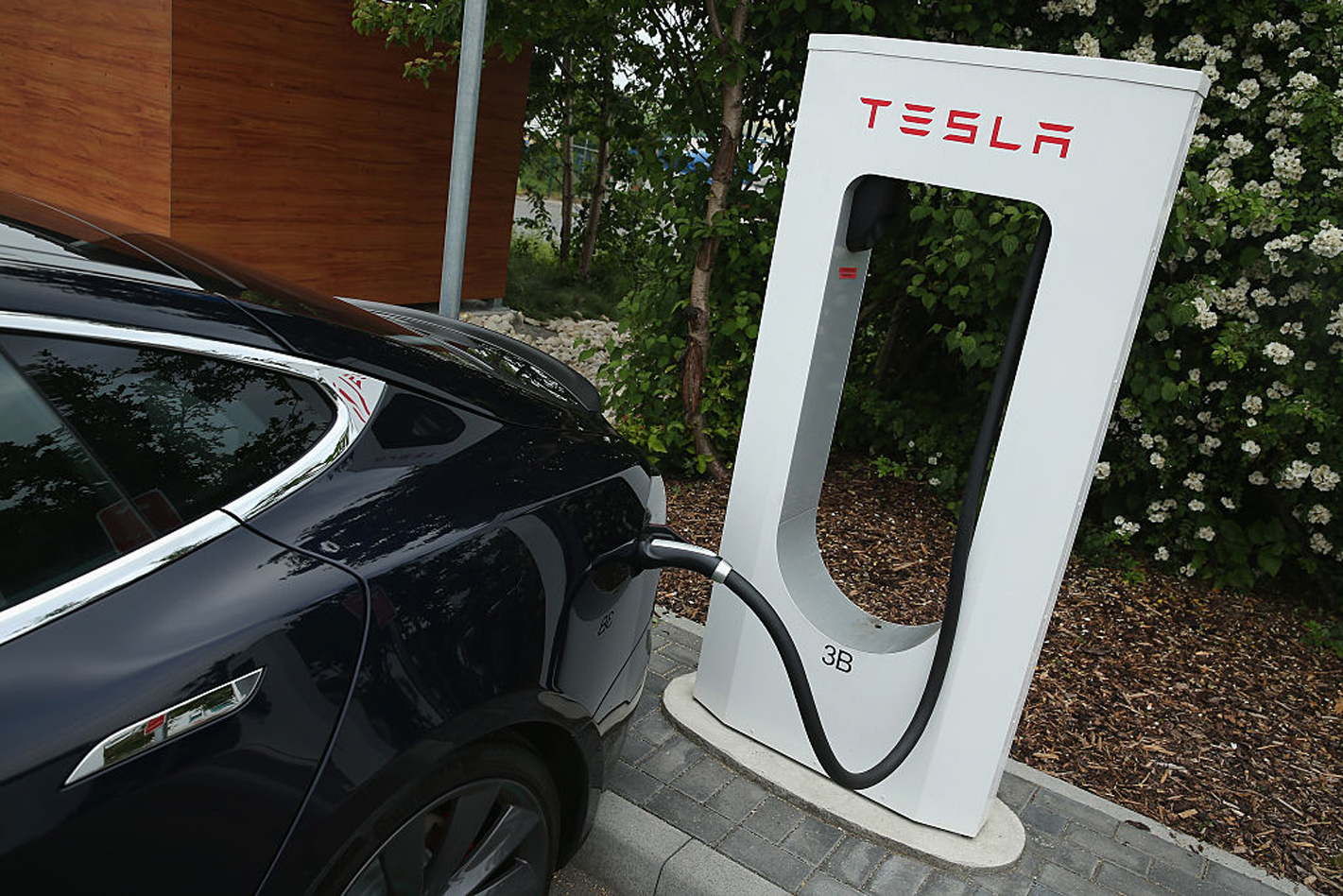
Perhaps that does a disservice to the rapid growth of the domestic electrical charging infrastructure. Five years ago you could buy a Tesla, but route planning could be problematic. There were just two Supercharger locations in the entire country at the start of the year. Now there are nearly 40 connecting up most major arterial routes.
The Morrison government announced $15m worth of funding in August for a network of 42 fast-charging stations to be built by start-up Evie over the next 12 months (at a total cost of $50m). These stations, located about 150 kilometres apart, are Tritium 350kW ultra-fast charging units, manufactured by an Australian company headquartered in Brisbane.
“We have estimated that Australia needs around 350 sites to cover all the highways that make up Australia’s national land transportation network,” Evie’s chief executive Chris Mills said.
The chargers are suitable for all EV models currently available, and will also support new EVs capable of even-faster charging times.
Chargefox is also rolling out 350kW Tritium and ABB units, with some 22 locations adding to Queensland’s existing 17-site network with a goal to extend it to 100 sites in total.
· Probability rating: 7/10
· Verdict: If they build it, will you come?
Vehicle to X
We’ve toyed with the idea of ‘vehicle to everything’ communication, but 2020 marks a big step forward with the incredibly prosaic-sounding Release 16 of the 3GPP C-2VX protocol. Basically, this is a 5G standard of ultra-fast cellular broadband which allows rapid transmission of data from car to car, car to infrastructure (such as signs and lights) and car to vulnerable road users (pedestrians and cyclists).

Vehicle to X (or V2X) will assist in use cases such as forward collision warning, lane-change and blindspot warning, emergency brake light warning, intersection movement assist, emergency vehicle approaching, roadworks warning and platooning (allowing a number of vehicles to travel together in close proximity).
A consortium backing the C-2VX technology called 5GAA now has over 120 members, among them car manufacturers such as Audi, BMW, Daimler, Ford, GM, Honda, Hyundai, Nissan, Volkswagen and Volvo. Included in the body are tech companies like Intel, Samsung and Qualcomm, auto electronics companies such as Alpine, Continental and Bosch, network infrastructure manufacturers like Nokia and Ericsson, and telecoms carriers AT&T, T-Mobile, Verizon and Vodafone.
As well as offering much faster data transfer, from 50 milliseconds for 4G to as quickly as 1ms, 5G can also transfer more data than 4G, allowing vehicles to share sensor data such as input from video cameras and radar. This would allow, for instance, camera data from a truck in front of you to arrive at your vehicle so that you could check whether the road ahead was clear.
· Probability rating: 6/10
· Verdict: Progress being made
Solid-state batteries
This remains a target that’s tantalisingly close. Solid-state batteries differ from conventional lithium-ion batteries by replacing the liquid or polymer electrolyte with a solid electrolyte, thus realising greater energy densities. This, in turn, allows the battery packs to be smaller, as well as cheaper per kilowatt-hour, and spells the potential for EVs to realise an 800+km range.
These benefits seem obvious and are brought into focus by the fact that it’ll probably be three years before we get to the much-vaunted US$100/kWh figure for Li-ion batteries which has long been mooted as the point at which EVs are more cost effective to produce than internal-combustion-engined cars. At the start of 2010, that figure stood at $1000/kWh and by the start of 2015 it had dropped to $300/kWh. By 2017, General Motors claimed the Chevrolet Bolt’s cells were $145/kWh and Audi has recently cited $120/kWh for its battery costs.
Toyota’s absence from the global EV market has, in large part, been due to its focus on solid-state battery tech. It has partnered with Subaru and Suzuki, with Mazda set to join the alliance, in developing solid-state tech and is targeting the Tokyo Olympics for launch. “If possible, by the time we have the Olympic Games [in 2020], we would like to make sure that a solid-state battery can be unveiled to the public,” Toyota research and development boss Shigeki Terashi said in June.
· Probability rating: 7/10
· Verdict: Hurry up and wait
Hydrogen fuel-cell
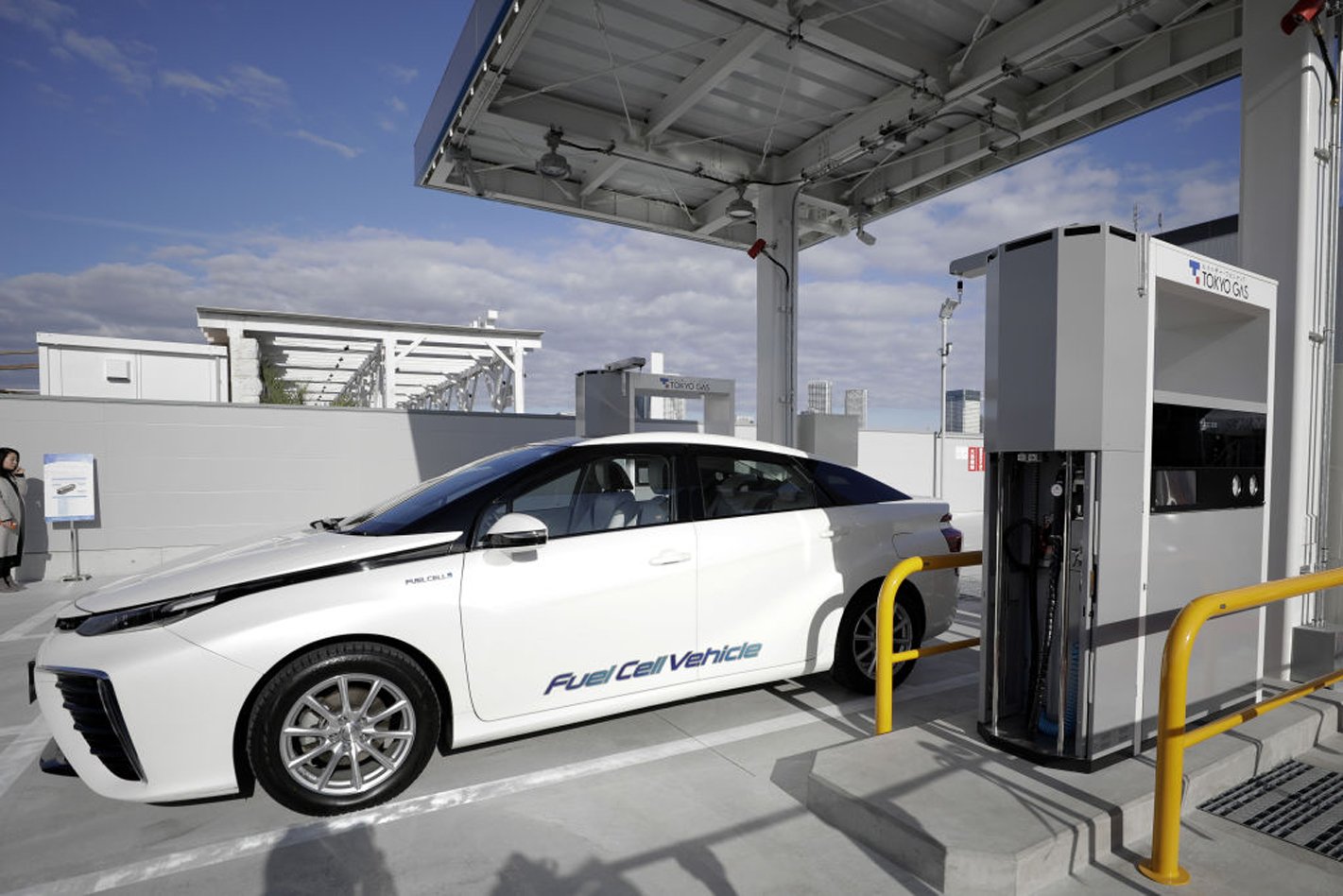
In 2014 there were zero Hydrogen service stations in Australia. Now it’s 2020, and the number of hydrogen service stations remains a big fat zero.
· Probability rating: 0/10
· Verdict: Still a practical non-starter
The verdict
There’s a universal truth about disruptive vehicle tech. The ideas come a lot quicker than the infrastructure roll-outs. What’s more, safety-critical systems take a long time before they are fit for human consumption. The run up to 2020 feels, if anything, an inflexion point, a time when we take a breath and begin to take a more measured view of technological advances. The complexity of contemporary systems integration demands it. Australian academics are doing pioneering work on hydrogen generation and sequestering, while solid-state battery advances and a step change in Vehicle-to-X protocols should see 2020 kick off a new series of manufacturing and infrastructure investments. We’ll write another one of these in a decade. Who’s taking odds on any new cars with internal-combustion engines remaining on sale?
Sign-up here to get the weekly Wheels highlights
What does Porsche have in common with America’s National Football League (NFL)? The answer involves Batman and pies. Sort of.
There are two types of aspirations, and I don’t mean naturally and forced. I mean realistic and pie-in-the-sky. I mean the difference between an attainable goal and a daydream that has no chance of coming true. For example, I aspire to lose 10 kilos. Which is a realistic aim. It’s not a pie-in-the-sky daydream, although the pie in my hand suggests it won’t happen this year. Again.
On the other hand, I secretly still aspire to be Batman. But I have no expectations that it will ever come to pass, and not because I’d need to lose more than 10 kilos. It’s simply an unattainable goal, which is why I don’t even try. And that’s smart. Chasing unattainable goals is a ticket to misery.
Which is why Porsche is becoming the NFL.
Take a look at a 1977 copy of Wheels. (Ugh, Wheels. I know. But I didn’t have a 1977 copy of Modern Motor handy.) I picked 1977 because it was the year I was born. (I mean, uh, the year some old bastard I know was born. Me, I’m still young and radical. Do young people still say radical? Pardon me while I look at some memes on the TikTok.)
Anyway. Wheels, 1977. (The cover story? A four-way comparo between a Cortina, a Corona, a Passat and a Datsun 180B! For the record, the Cortina won.) A Porsche 911 Coupe cost $21,348. An XC Falcon sedan cost $5172. The Bureau of Statistics says the average annual income in 1977 was $10,960, so the Falcon cost you six months’ wages, and the 911 cost you just under two years’ wages.
Today the median salary in Australia is $55K. So a Ford Mondeo costs about eight months’ salary… and the “cheapest” Porsche 911 costs more than four years’ salary.
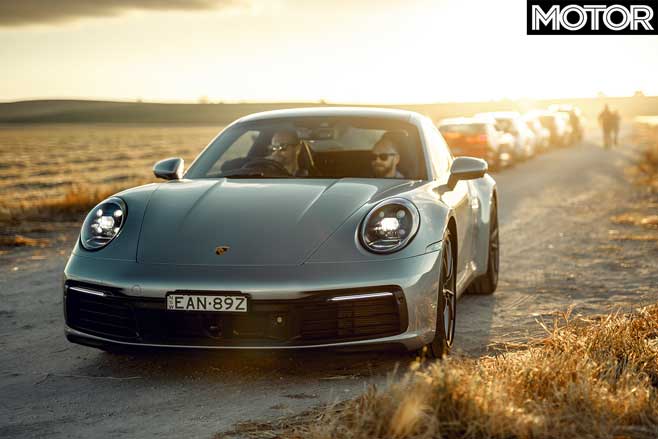
So everyday family cars have gotten a little more expensive – but top-shelf sports cars have become crazy, only-for-the-children-of-oligarchs expensive.
“So? They’re aspirational!” huffs the Porsche fanboy.
But they’re the wrong sort of aspirational.
Porsche is effectively teaching youngsters that owning a 911 is like being Batman: if you’re a billionaire orphan, then maybe, but for the rest of us – don’t even try.
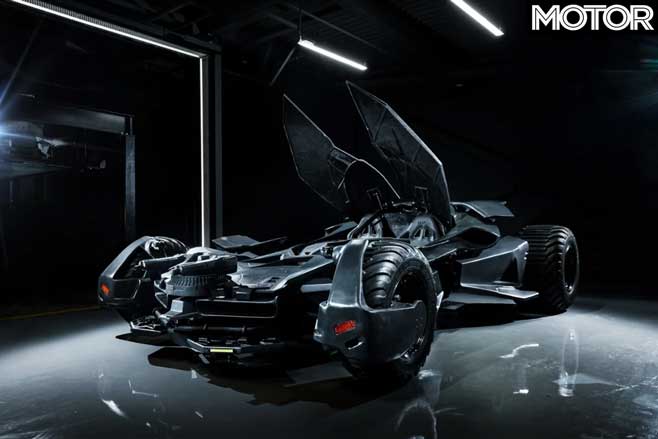
And that’s fine, as long as the current crop of rich folk are still buying 911s. The problem is a decade down the track, when the current 911 buyers are being put into care homes and the next generation doesn’t show up to replace them because they’ve been taught not to try.
This is a real problem. The same thing has the billionaire owners of American NFL teams sweating into their Pappy Van Winkle.
One of the problems the NFL faces – besides everyone dying of concussions and the fact that not even the referees understand pass interference – is that youngsters today are more likely to grow up as basketball fans than football fans. Fans who attend a live game by age five will attend 58 per cent more live games over the rest of their life, compared with fans who first attend a game aged 14 or older. Making young fans matters.
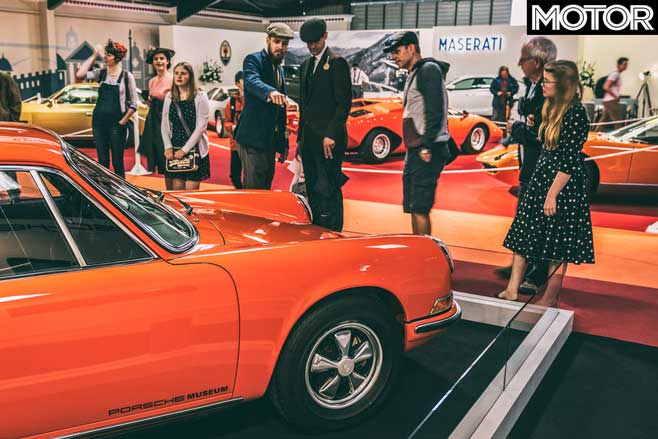
But there’s a thing in the United States called the Fan Price Index, which measures how much it costs to attend live sports, across basketball and football and baseball and ice hockey and whatever. And what the Index says is that young people and families with kids aren’t going to the football, because it’s too expensive. They’re going to the basketball instead. And now the NFL is desperately trying to recruit young fans, before they wake up a decade from now to find they’ve become a relic, like candlepin bowling or honest elections.
Porsche is clearly still riding high, and far be it for me to tell the Germans how to organise something – I couldn’t organise an emissions test in a VW factory. But if Porsche keeps getting further out of reach for buyers, then one day they’ll find that buyers are out of reach for them.
One of my favourite motoring stories is the tale of Burma switching from right- to left-hand drive. Instigated overnight in 1970 at the behest of the nation’s totalitarian leader, General Ne Win, the story is one of outrageous propaganda and hopeless mismanagement, though my favourite part is the reasoning behind the switch. Details are murky, but the consensus is old Ne Win, who was a pretty nasty piece of work, was acting on the advice of a wizard.
While Burma (now Myanmar) is clearly not a poster child for swapping driving sides – one especially chaotic outcome was buses dropping passengers in the middle of busy streets – that doesn’t mean we should hastily dismiss Ne Win as a crazed megalomaniac (he was, actually, but you get my point). Perhaps he was on to something…
Holden’s closure has seen the whole ‘left vs right’ debate bubble back to the surface, with GM’s official statement singling out ‘fragmented right-hand-drive markets’ as a key reason to retire the brand. And it wasn’t just Holden; GM was axing all of its RHD production globally.
Panicky minds might clutch at their pearls and squeal, “If GM is doing it, others might follow!”, though cooler heads will know this isn’t likely. Mercedes has recently confirmed that RHD production is “a cornerstone” of its business, and FCA has also made a global commitment to right-hook nations.
Still, it did have me wondering about the potential benefits of Australia making the switch. They aren’t insubstantial. Access to previously denied product (think Ford F150 and Mustang GT500, Cadillac CT5/CT6, and big SUVs like the Cadillac Escalade) is the most obvious, and we’d also get new cars sooner. Manufacturers often prioritise left-hand-drive production to supply larger, more lucrative markets, leaving us to wait months or even years for some models.
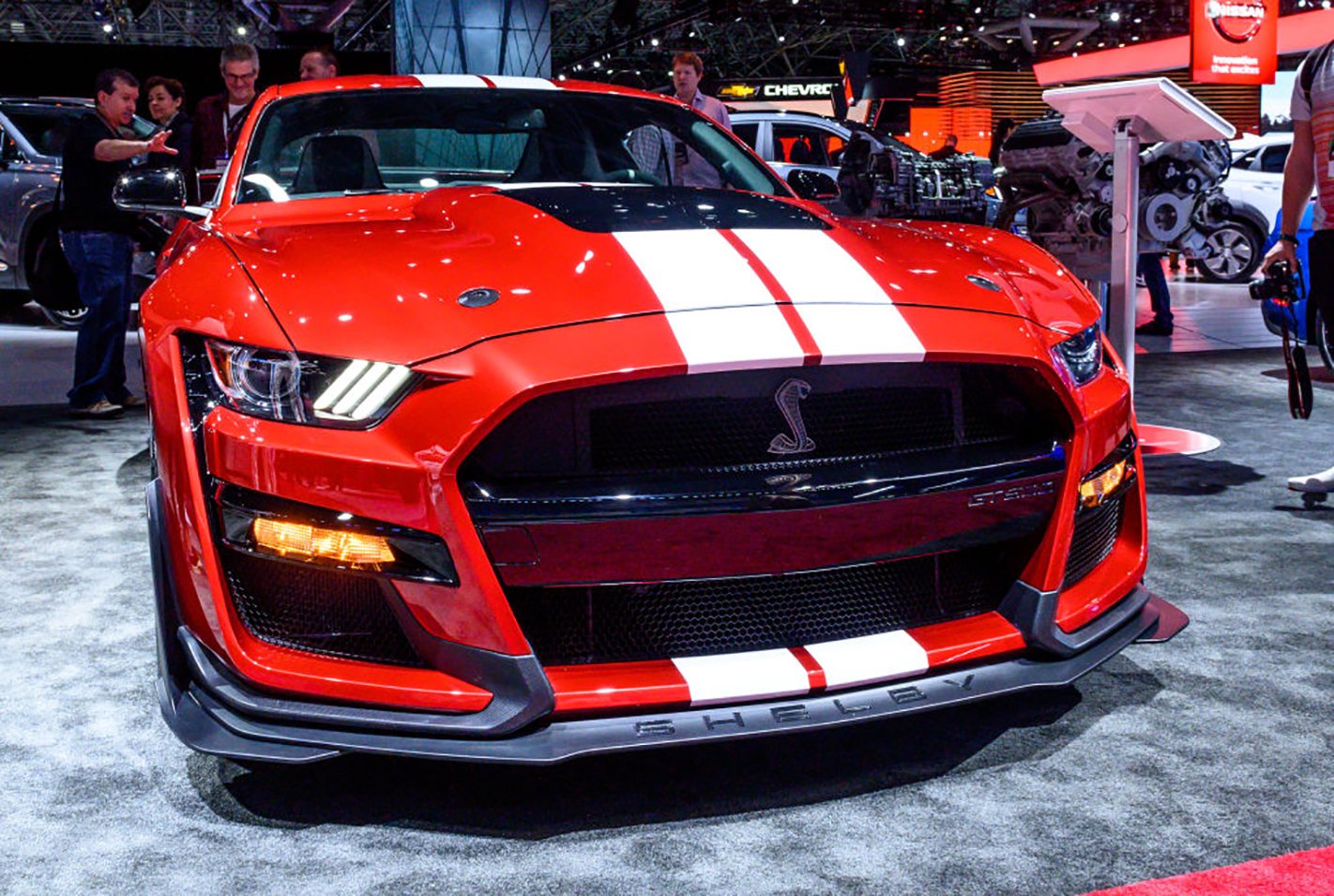
It’s well known Australia is in the minority when it comes to driving on the left. Two thirds of the world drives on the right, with most of those that don’t being former members of the British empire – like India and Australia which, with Japan, are among the world’s prime left-driving nations. But it hasn’t always been this way. In medieval times nearly everyone kept left as it allowed people on horseback to keep their dominant hand closer to the centreline of the road. This made using weapons to fend off attacks easier, plus most right-handed riders mounted their steeds from the left (ie, the kerb).
Things gradually changed in Europe after the French Revolution, but in America it was the increased popularity of huge supply wagons that saw them make the switch. These wagons were horse-drawn and riders sat on the left-rear animal to keep their stronger arm free for whipping. To improve visibility for the wagon drivers, laws were introduced in the late 1700s that mandated traffic keep to the right.
The split has continued ever since, though Burma isn’t the only nation to jump sides. Sweden made a much more successful transition three years earlier in 1967, setting an example Australia could follow. Question is, should we?
Realistically, the answer is no. Aussie driving standards are low enough without throwing in such a curve ball. It’d be a huge logistical task too, plus the costs would be high – though perhaps not as astronomical as you’d think. Sweden’s transition bill was reportedly 628 million krona, or about A$425 million in today’s money. That’s a fraction of what Australia spends on road transport ($5.6bn in 2019-2020), but a key difference is scale. Sweden’s road network had less than two million vehicles. Australia now has 10 times that.
Still, why can’t Australia have both left- and right-hand-drive cars? Japan and the UK already allow it, despite being predominantly RHD, and we’re already halfway there with registrations of left-hook classic cars. One hurdle would be drive-thrus and other ticket booths but that’s an easy problem to solve, and while it might feel foreign at first, anyone who has spent a decent amount of time in a left-hand-drive car will vouch it soon becomes second nature. But hey, it’s just a suggestion. I’m no wizard.
What is the Subaru XV Hybrid AWD?
This is the electrified version of Subaru’s popular crossover was introduced to the Australian market along with a hybrid version of the Forester mid-sized SUV.
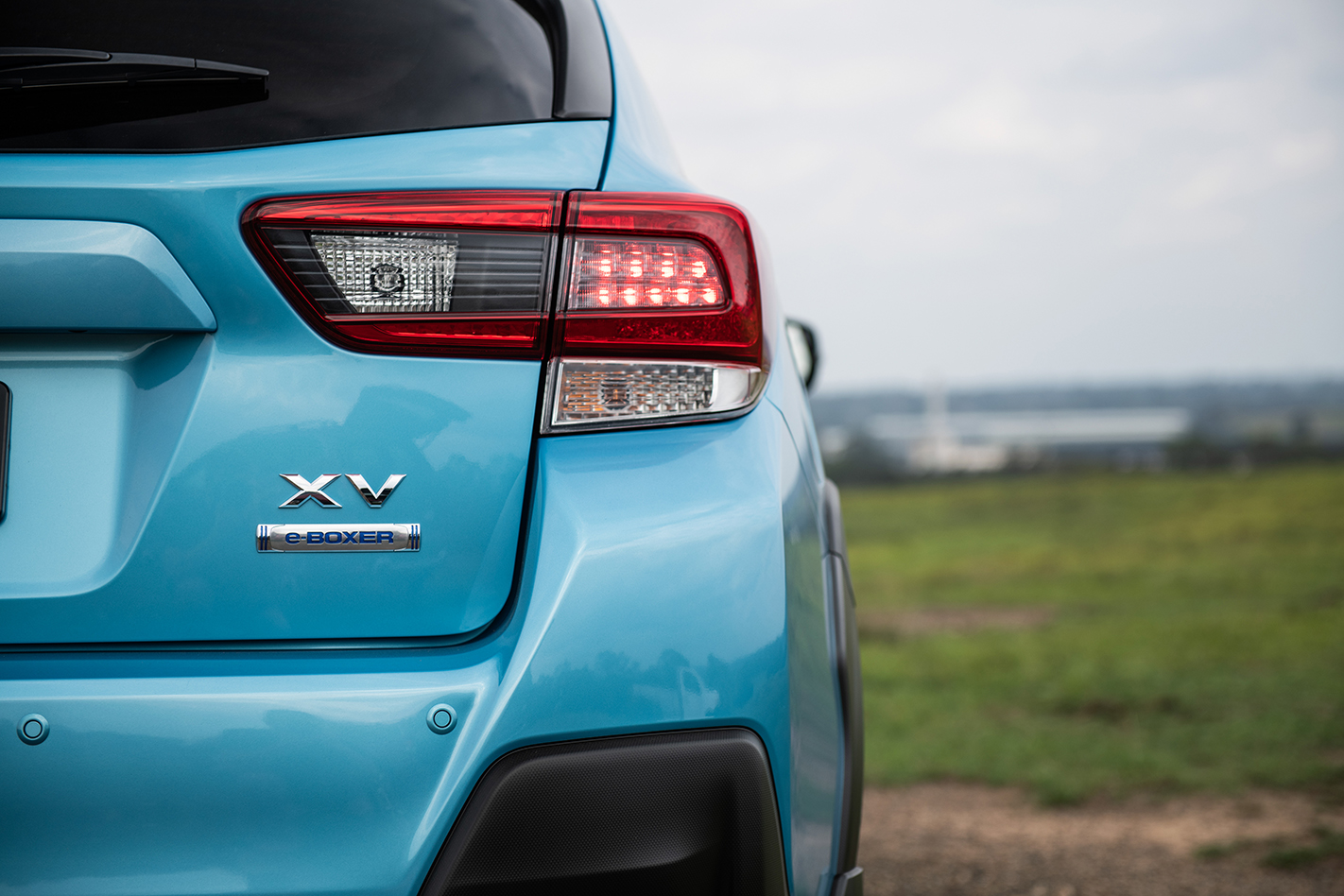
Based on the mid-spec XV 2.0i-L ($31,610), the XV Hybrid AWD retails for $35,580 with the extra $3970 bringing the hybrid powertrain along with additional active safety features.
What is the Subaru XV Hybrid AWD like to drive?
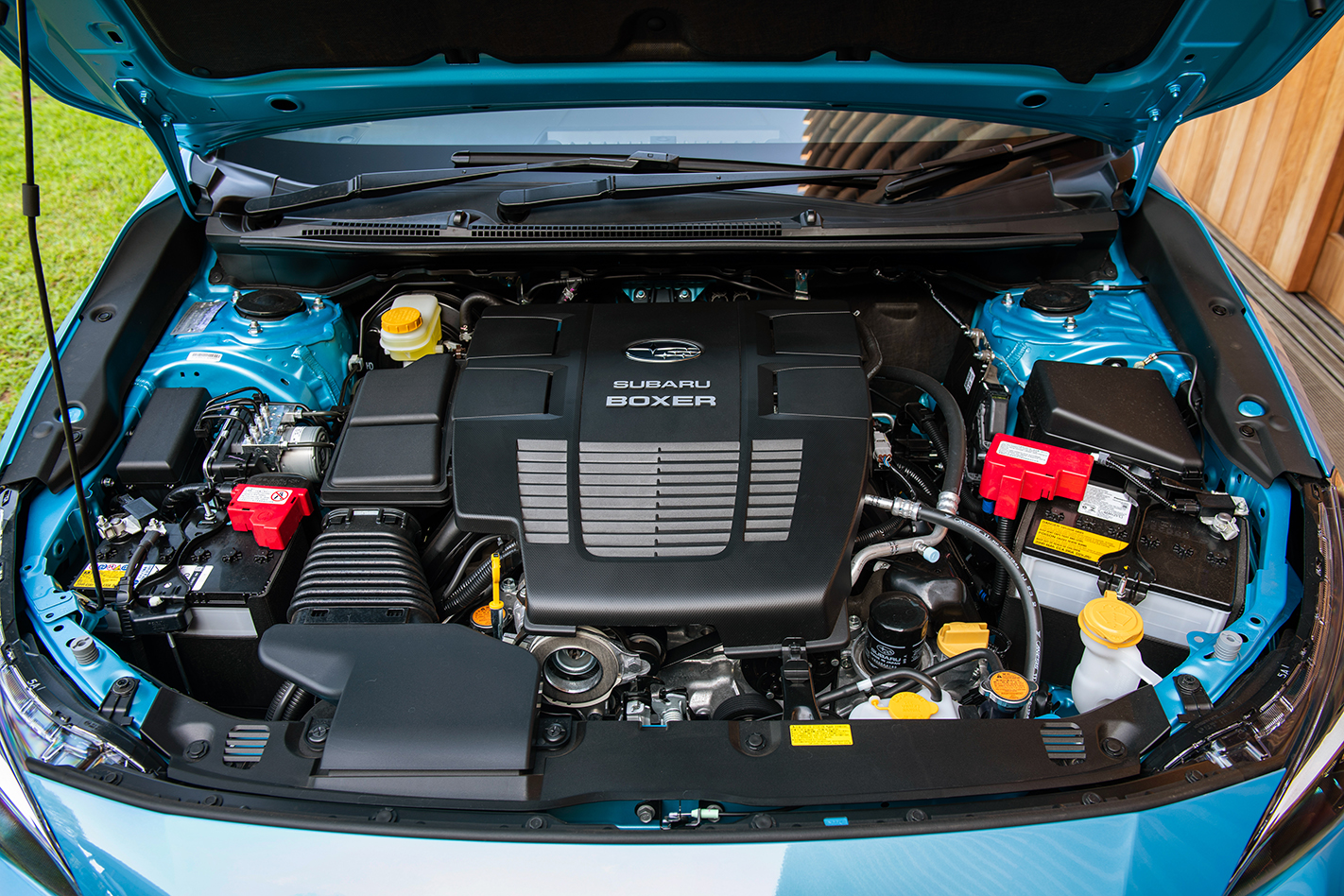
Subaru calls its e-Boxer hybrid powertrain a mild hybrid, but it does more than usual mild hybrid systems which simply offer a power boost on take-off but don’t drive the vehicles on batteries alone.
However, it is a lot more subtle than other full hybrid powertrains, with the electric motor giving way to engine power at lower speeds and preferring to take up the slack when you’re coasting.
The ‘e-Boxer’ powertrain uses the same engine as a regular XV that’s been detuned from 115kW to 110kW with the single 12.3 kW electric motor providing some extra boost – by comparison the Toyota RAV4 Hybrid has 131kW and 88kW electric motors for the front and rear axles respectively.
Any differences between the hybrid and petrol VXs are subtle. Like the petrol versions, the drive is smooth and quiet at lower speeds, though the engine and CVT do protest a little loudly when accelerating to overtake or join freeway traffic.
And, like the rest of the XV range, the Hybrid is capable on gravel roads and dirt tracks thanks to the permanent AWD system that does a good job of helping to keep the nose straight ahead on loose or slippery surfaces.
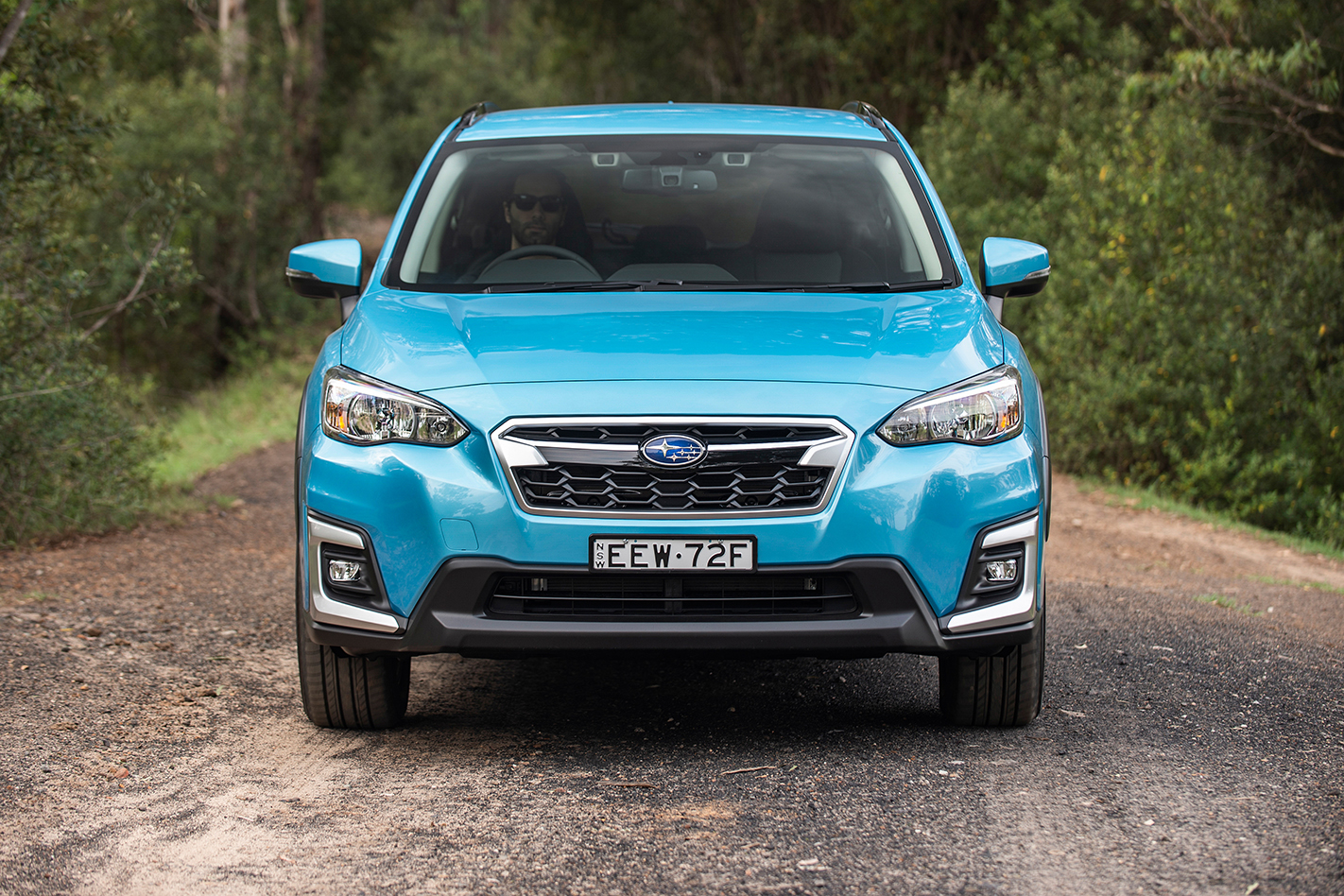
It also features the X-Mode hill-crawl function, which helps the XV climb slippery slopes, and the hill descent control that helps it get you back down, both work well, giving this small SUV some real-world off-road ability.
According to Subaru, the hybrid system further improves traction because of the more precisely controlled torque distribution, though I didn’t get a chance to test this.
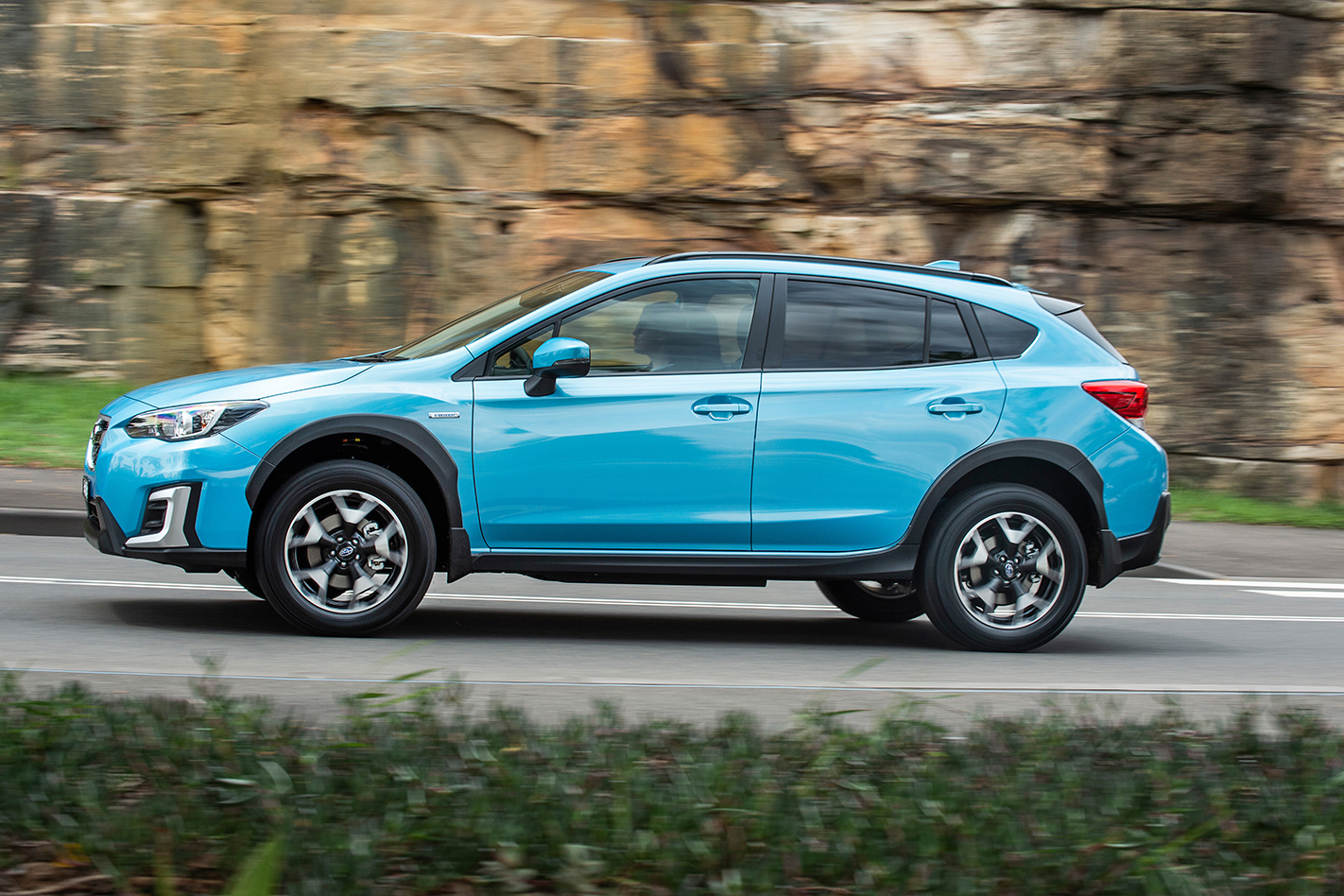
Of course, the big question is, what about fuel economy?
Well, it’s not too different from petrol XVs either. The XV Hybrid has a claimed combined fuel consumption of 6.5L/100km compared to the XV 2.0i-L’s 7.0L/100km. The bigger Toyota RAV Hybrid’s fuel consumption is as low 4.7L/100km.
My driving which was mostly on city streets and freeways was generally around Subaru’s claim. I averaged around 6.7L/100km but got down to 5.9L/100km for a while after making a concerted effort to rest my lead foot.
What is the Subaru XV Hybrid AWD like to live with?
The Subaru is a charming small SUV that brings many of the user-friendly characteristics from the Impreza small car on which it’s based.
That includes the cabin design, which looks sharp and plays to the XV’s adventurous image with attractive contrasting stitching that that adorns the cabin and comfortable cloth seats.
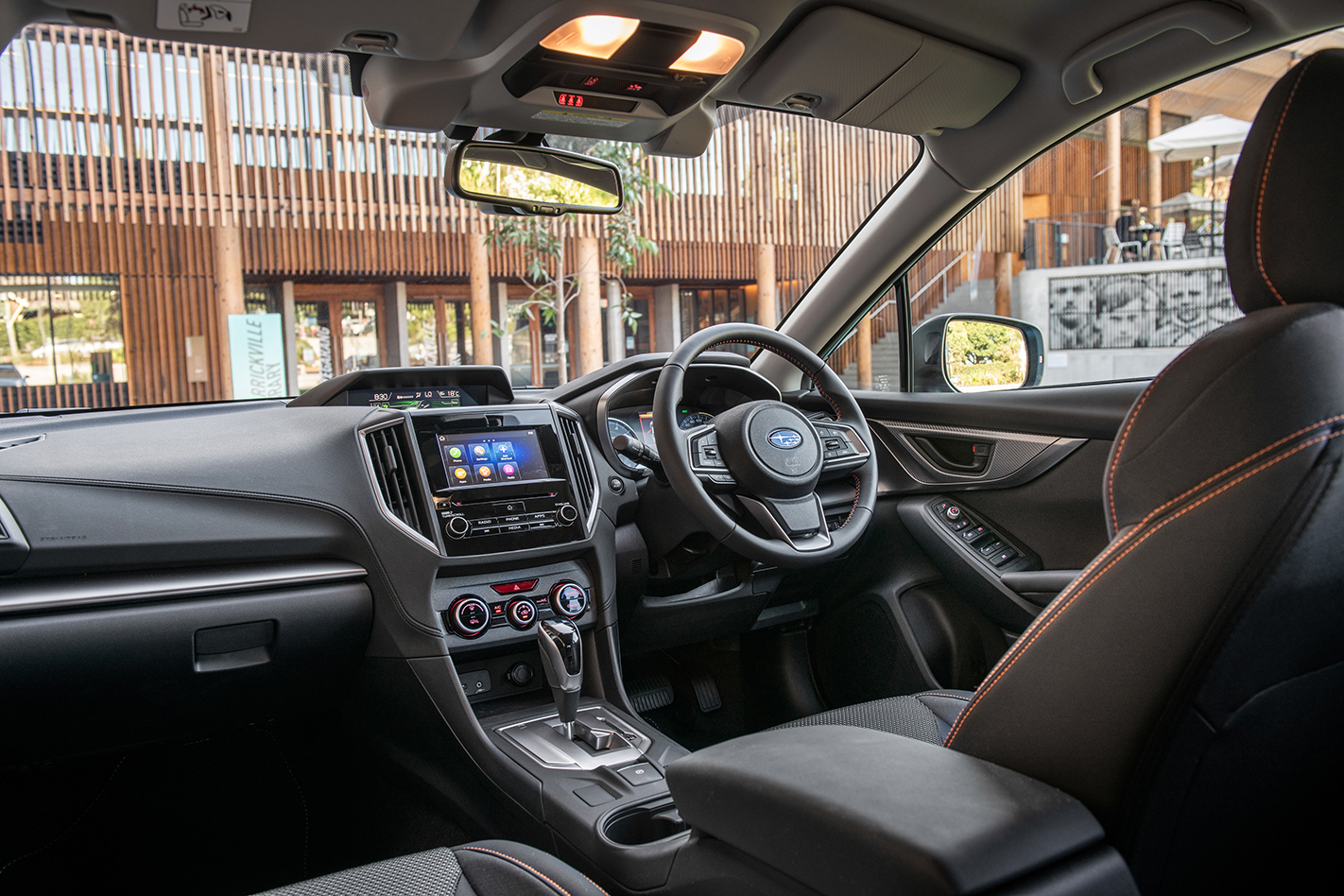
The rear seat easily accommodates two big adults and there is good side and front vision for rear occupants, along with face-level air vents.
The 310-litre boot space is a little below the average for small SUV. In the 2.0i-L this is justified by having a full-size spare wheel under the boot floor, but in the Hybrid the space is taken up by batteries, which means you have to make do with a puncture repair kit that isn’t ideal if taking your XV off the beaten track. The rear-seats split 60:40 to extend load space up to 765 litres.
If you need to tow anything the XV Hybrid can lug a braked trailer up to 1270kg, which is 130kg less than the petrol versions.
Of course being a Subaru the XV comes with plenty of technology, including the third generation of Subaru’s EyeSight that uses two cameras to identify other vehicles, pedestrians, and objects in front. Among its functions are forward collision warning, autonomous emergency braking, adaptive cruise control and lane-keeping assist.
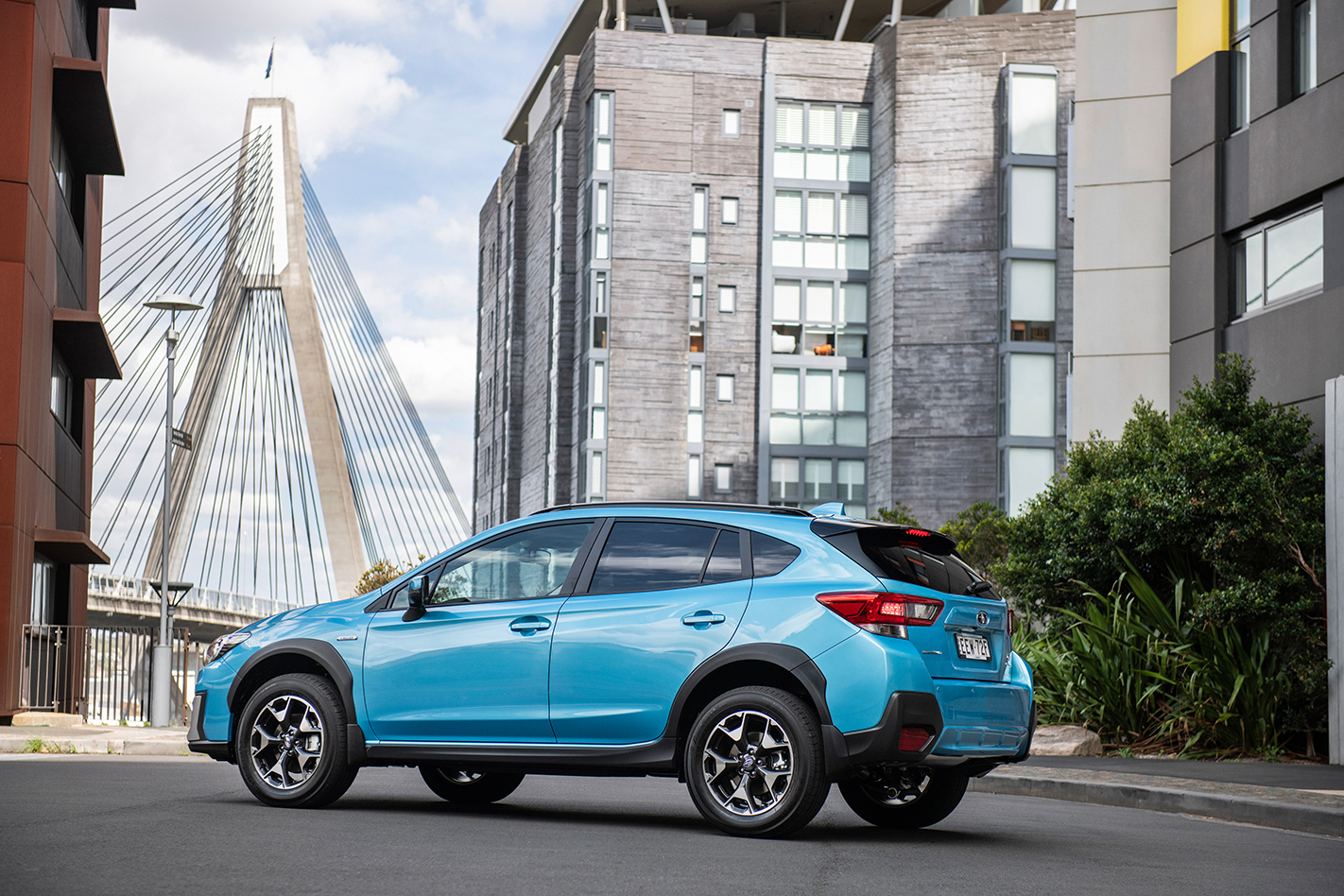
EyeSight also has a handy feature that alerts you when the car in front has driven off, should you become distracted while waiting at an intersection.
The XV Hybrid is the only variant apart from the fully-equipped XV 2.0-S to have the full suite of safety features that also includes rain-sensing windscreen wipers, dusk-sensing headlights, blind-spot monitoring, lane-change assistance, rear cross-traffic alert and reverse auto-braking.
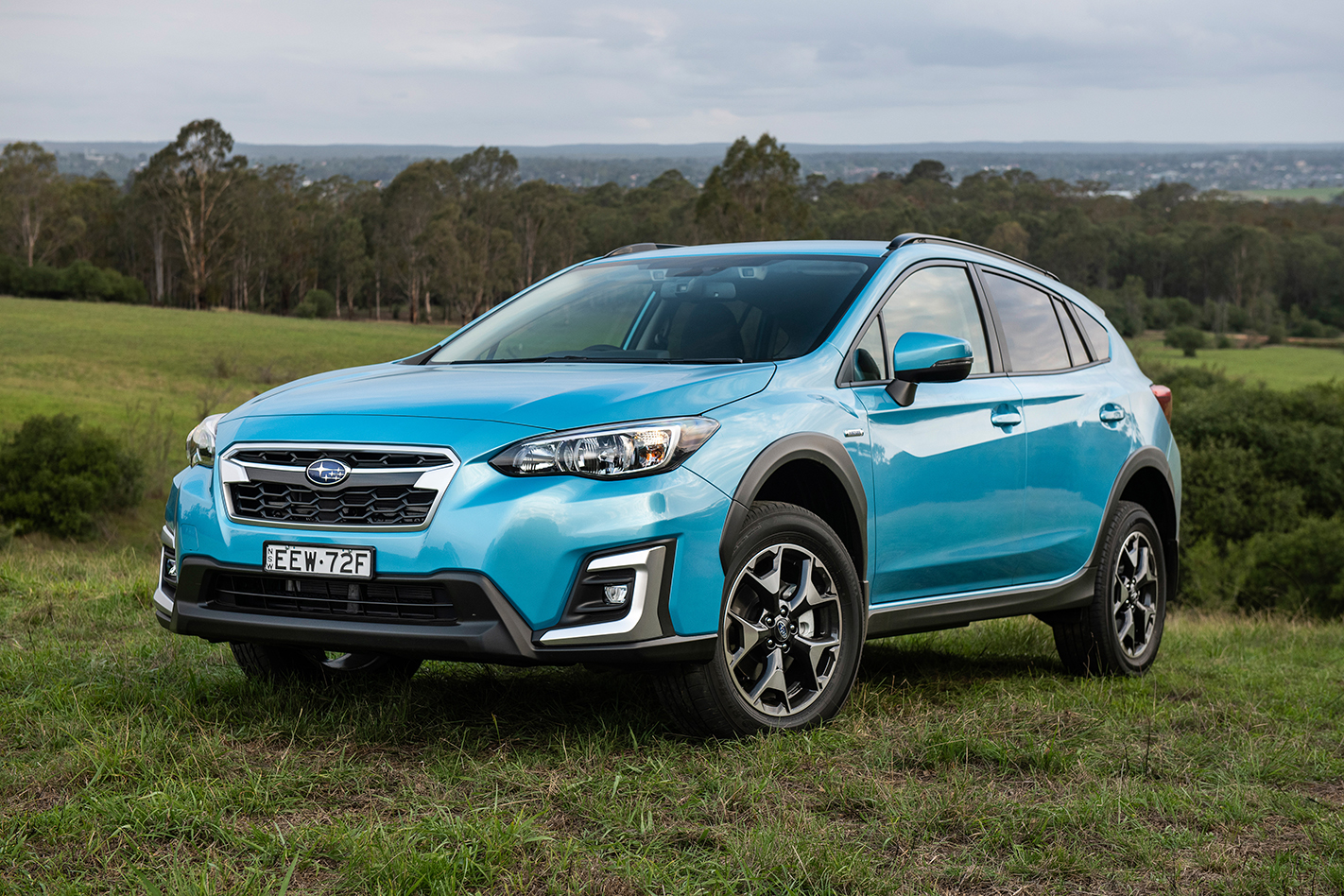
Infotainment wise, the XV Hybrid AWD has a small 6.5-inch touchscreen with the convenience of Apple CarPlay and Android Auto smartphone mirroring, AM/FM/digital radio and a CD player, which is becoming a rarity these days.
Is Subaru XV Hybrid AWD good value?
Spending just shy of $4000 more on the XV Hybrid AWD over the XV 2.0i-L, while also bringing the full list of safety features, doesn’t seem worth it when you consider you’re only reducing your fuel consumption by about 19 percent.
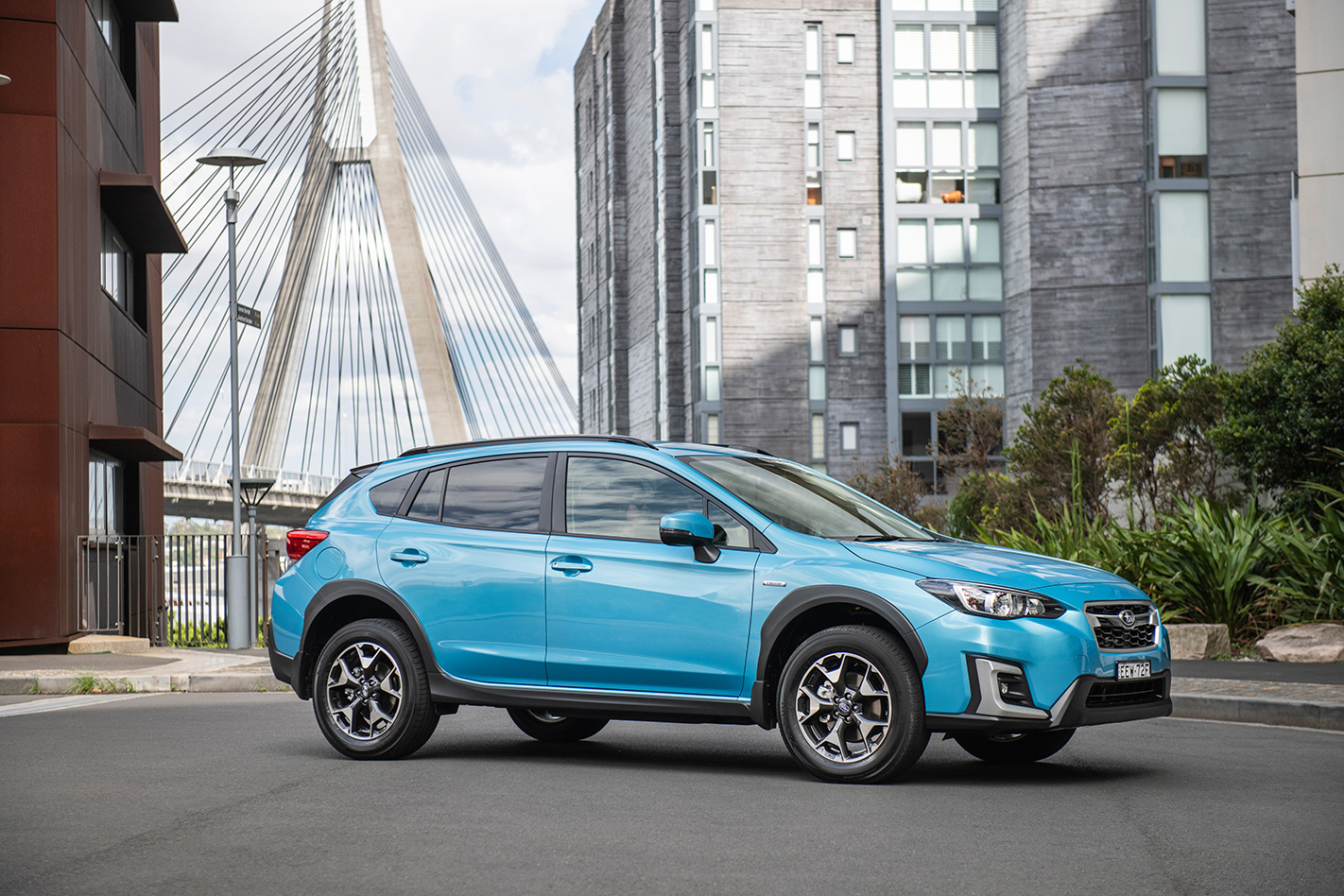
If you’re going to spend around $36,000 on a Subaru XV you might as go for the XV 2.0i-S range-topper ($36,530) that has all the safety gear along with extra creature comforts including a sunroof, power-adjusted leather seats, heated front seats, bigger 8.0-inch touchscreen with satellite navigation and of course a full-sized spare wheel and bigger towing capacity.
Many Mums and Dads are familiar with this testing scenario. You’ve just filled up the family car with petrol at the servo. There’s a baby sleeping soundly in a capsule, a grumpy toddler in a booster seat, maybe even a whinging pre-schooler in the back, too. Oh, and it’s raining. And you’re running late.
Unloading and reloading all the kids is a military operation. Wouldn’t it be easier to just whip in, pay and jump back in the car? It’s not like you’re leaving your kids in a carpark while god forbid you nick off and play the pokies for two hours, surely?
As tempting as it is, children should never be left in vehicles, even for short periods.
“My advice to parents thinking of leaving a child alone in the car is simple: Don’t do it,” says Will Barsby from Shine Lawyers.

“As a father, I understand why you might not want to disturb a baby or toddler asleep in the backseat when it only takes a few minutes to pay for fuel or pickup a takeaway meal. Unfortunately, a lot can go wrong in that amount of time,” Barsby says.
Cars for families with four kids
Those dangers include:
- Dehydration and heat stress. Parked cars can quickly turn into infernos, even with the windows down. It doesn’t take long for a child to start overheating.
- Burns from vinyl and metal fittings, and seatbelt buckles.
- Children playing with car controls like the ignition, handbrake, gears and power windows. And what happens if the driver has forgotten to apply the handbrake?
- Car theft, hijacking, or kidnapping. Imagine the horror if your car was taken with your children still inside?

VICTORIA
Following a spate of paramedic call outs to children left in cars, Victoria toughened its laws. The penalties for leaving a child unattended in a car in this southern state are very steep, and include:
- A $4,000 fine, or;
- A maximum of 6 months imprisonment, or
- Both.
QUEENSLAND
A person who, having the lawful care or charge of a child under 12 years, leaves the child for an unreasonable time without making reasonable provision for the supervision and care of the child during that time commits a misdemeanour.
- Maximum penalty: 3 years’ imprisonment.
NEW SOUTH WALES
A person who leaves any child or young person in the person’s care in a motor vehicle without proper supervision for such period or in such circumstances that:
- The child or young person becomes or is likely to become emotionally distressed, or
- The child’s or young person’s health becomes or is likely to become permanently or temporarily impaired, is guilty of an offence.

WESTERN AUSTRALIA
A person who has the care or control of a child and who leaves the child in a motor vehicle (as defined in the Road Traffic Act 1974) without proper supervision for such period or in such circumstances that:
1. The child becomes or is likely to become emotionally distressed; or
2. The child’s health becomes or is likely to become permanently or temporarily impaired, is guilty of a crime, and is liable to imprisonment for 5 years.
- Penalty: A fine of $36,000 and imprisonment for 3 years.
So, what does this legal jargon mean? Basically, not every act of leaving a child in a car is necessarily a crime in every state.
“Regardless, my advice remains the same. No parent should leave any child alone in their car. Period. It’s just not worth the risk,” says Barsby.
You wouldn’t leave your handbag on the seat of your car, so why do the same with your most precious cargo? Dragging the kids out of a vehicle is inconvenient, but it pales compared to the guilt and regret a parent would feel should something tragic occur.
There has never been a better time to be a petrol head with plenty of cool gear on the market to pique your interest whether it is karting, R/C racing, or just good old video games.
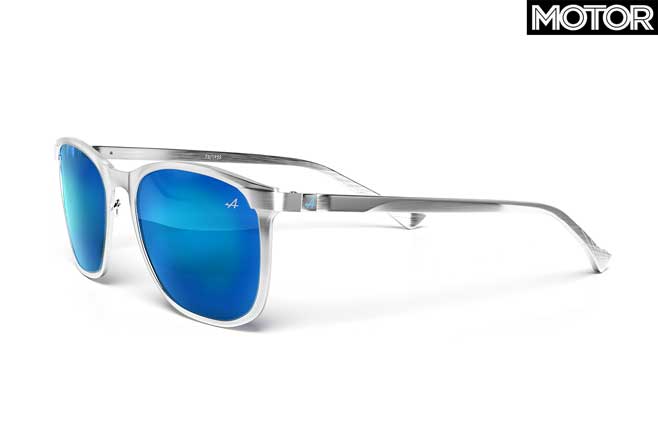
01 | FEATURED “PRODUCT OF THE MONTH”: Alpine sunglasses ($450 from alpine-eyewear.com) Given the climates the Alpine A110 was originally born in, we’re not surprised the French brand has released sunglasses this cool. The frames are aluminium and available in three colour choices – blue, black or aluminium – while the lenses are made by Novacel.
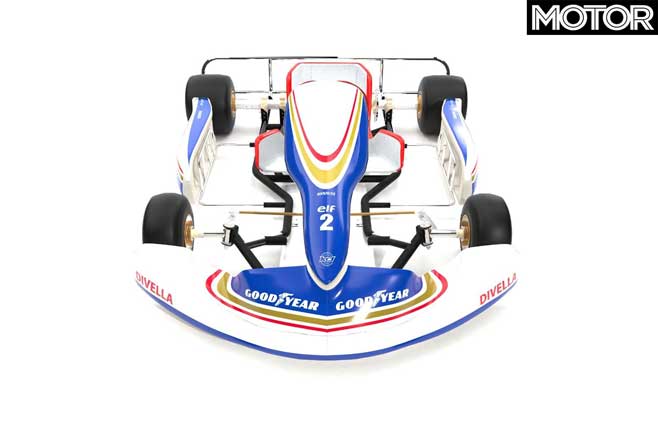
02 | Williams kart stickers ($192 from kartdavid.com) Turn your go-kart into Williams’ 1994 championship-worthy F1 racer with this FW16-aping sticker kit. Can be custom-made to suit any chassis nosecone, sidepods and Nassau panel.
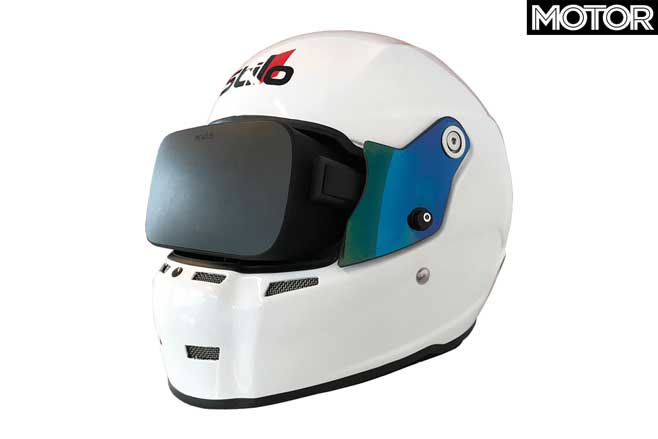
03 | Sim racing helmet ($POA from vsport.com.au) Struggling for space for your simulator rig’s TV? Grab this Stilo ST5 helmet, specially developed to balance out the weight of an Oculus Virtual Reality headset (sold separately) mounted in the visor.
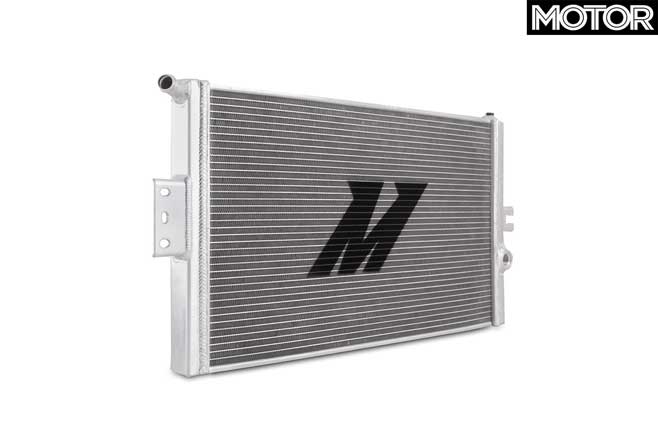
04 | Infiniti Q50/Q60 Red Sport radiator ($838 from mishimoto.com.au) This performance radiator beefs up coolant volume fed to the Infiniti Q50 and Q60 Red Sport’s 3.0-litre twin-turbo V6 and increases its external fin area. Comes with a lifetime warranty.
05 | Tamiya Subaru Brat ($300 from metrohobbies.com.au) Subaru’s loveable ute known as the Brat in America (or the Brumby in Oz) lives on in Tamiya’s 1:10 scale radio car collection. Complete with a sealed gearbox and double-wishbone front-end.

06 | Silodrome tee ($20 from silodrome.com) A tee for the more retro-obsessed folk who deal with good ol’ carbies on a regular basis. Comes in grey, blue, black or green and in sizes XS through to 4XL.

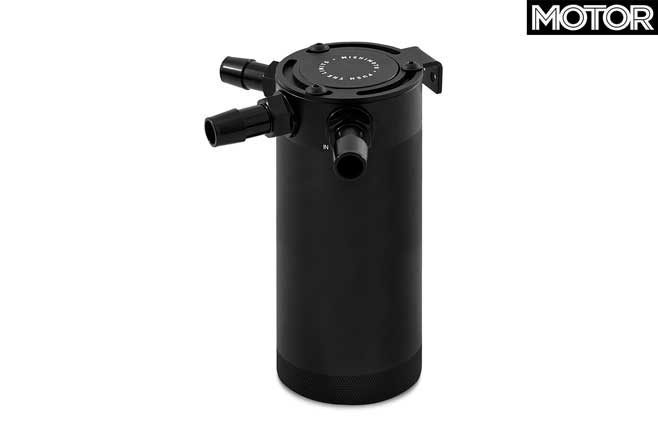
07 | XL Catch can ($250 from mishimoto.com.au) Keep your cooling and intake safe from oil blow-by with this XL catch can that can catch an XL volume of oil.
Reasons to say nice things about Ryanair don’t come along very often. Europe’s biggest-by-far budget airline isn’t an especially pleasant way to travel, and I speak from extensive experience in this matter. But the Irish outfit recently helped make me better informed.
When the Australian media’s two-day turn in Porsche’s 19-day and 6000km-plus European road trip to launch the Taycan came to an end, all the others had to head to Berlin’s Tegel airport to begin the long, multi-stage journey home.
I was instead flying from the German capital to my home airport of Bergamo Orio al Serio, outside Milan. Ryanair happened to be the only airline jetting nonstop between the two cities, making them my preferred option. But their limited schedule meant overnighting in Berlin and catching a flight early next morning.
That’s how I ended up in a restaurant on Chausseestrasse, sharing a table with the incoming group of Middle East and South African media. Travel fatigued, they all headed early to bed. That meant having only the fresh set of Porsche engineers, who had also flown into Berlin that day, as company for a nightcap at the eatery’s well-stocked bar.
It’s usually worth chatting with Porsche people, so I struck up a conversation. One was a high-voltage battery and charging expert. Before moving to Porsche six years ago, he’d spent time with Mercedes-Benz working on hydrogen fuel-cell electric cars. Here was someone who could answer a question that had been bugging me. Lunch stops during the Taycan drive had been visits to service stations equipped with the latest-generation 350kW DC fast-chargers being rolled out by Munich-based Ionity. This company is a joint venture launched by BMW, Mercedes-Benz parent Daimler, Ford and the VW Group, of which Porsche is a part. They will soon be joined by Hyundai and Kia.
The rate at which the Taycan’s 93kWh lithium-ion battery can be topped up varies according to factors including its internal temperature and SOC (state of charge). In the most favourable conditions the pack will take on charge at a rate of 270kW, way higher than any other European-made EV and better than even the latest versions of Tesla’s Supercharger.
So what, I wanted to know, stops the Taycan from sucking the full 350kW? The expert answer is that maximum charge-rate limits are determined by battery design. Cells optimised for high energy density and therefore maximum range, my Porsche pal explained, have restricted ability – for reasons both chemical and physical – to absorb really high-power charge rates.
So while high-energy-density batteries will drive an EV further on a full charge, its driver must spend more time waiting at a DC fast-charger when making long journeys. And our obliging battery expert has seen first-hand evidence that this is already a gripe with EV early adopters who are also long-distance drivers.
He believes high DC fast-charge rates will become a greater priority for Porsche EV customers than the full-charge driving range. Other brands, he adds, are beginning to think the same way.
More topics were discussed as his beer and my grappa gradually disappeared, but the one question I neglected to ask was my Porsche man’s name. That’s why I can thank only Ryanair for adding to my store of EV knowledge.
The Wheels Verdict: Mercedes-Benz has long held the high ground in the premium sedan sales race but BMW is back with a real fighter in the G20 3 Series. Packing more tech, more equipment and taking a leaf from its driver’s car roots, the segment just got a whole lot more competitive.
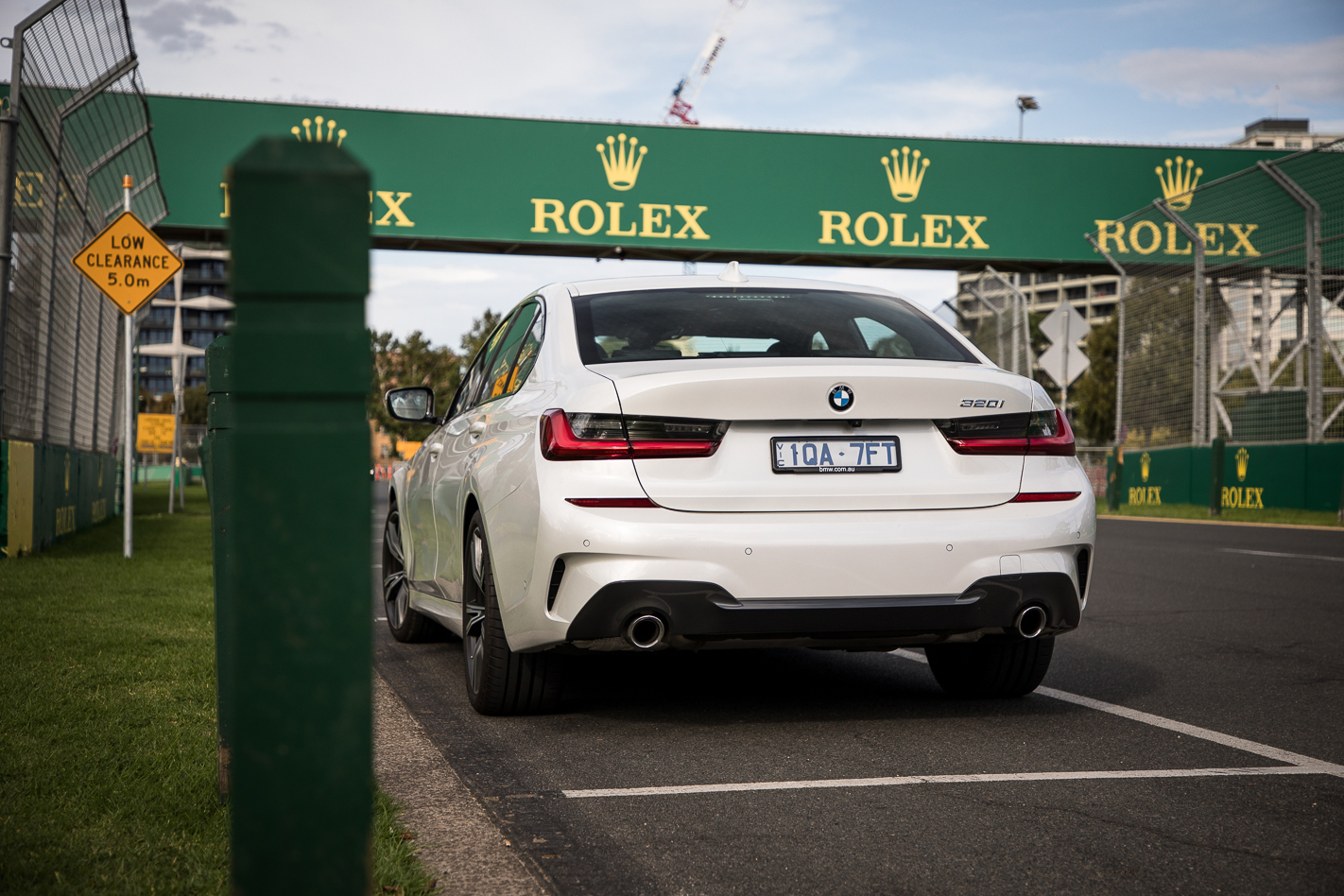
What is the BMW 320i?
The BMW 320i is the entry-level specification of 3 Series from BMW that doesn’t actually feel ‘entry-level’ at all. The sheer level of kit you get from the base model and the amount of tech you can equip it with means it rivals its more expensive 330i stablemate while retaining the same 2.0-litre four-cylinder turbocharged engine, albeit in a slightly detuned specification.
Why are we testing it?
The 3 Series is already a well-known Wheels Car of the Year competitor but we wanted to see how it would fare in the real world. Sure, the 320i doesn’t stock the same firepower as the M-fettled M340i nor does it have the same kick as the higher-grade 330i, but in its base guise the 320i just might be the unsung hero of the 3 Series range for everyday activity.
BMW 3 Series review
The new 3 Series has been on Australian roads for a year now and has been well regarded at launch, in Wheels tests and even at 2020 Car of the Year – despite not making it past the first stage.
But one model that has so far eluded us is the base specification 320i. Despite there being a decently sizable jump of $6000 to go from a 320i to 330i, the 320i’s $65,900 base price includes a comfortable amount of kit, and you can option your way up to a 330i specification anyway.
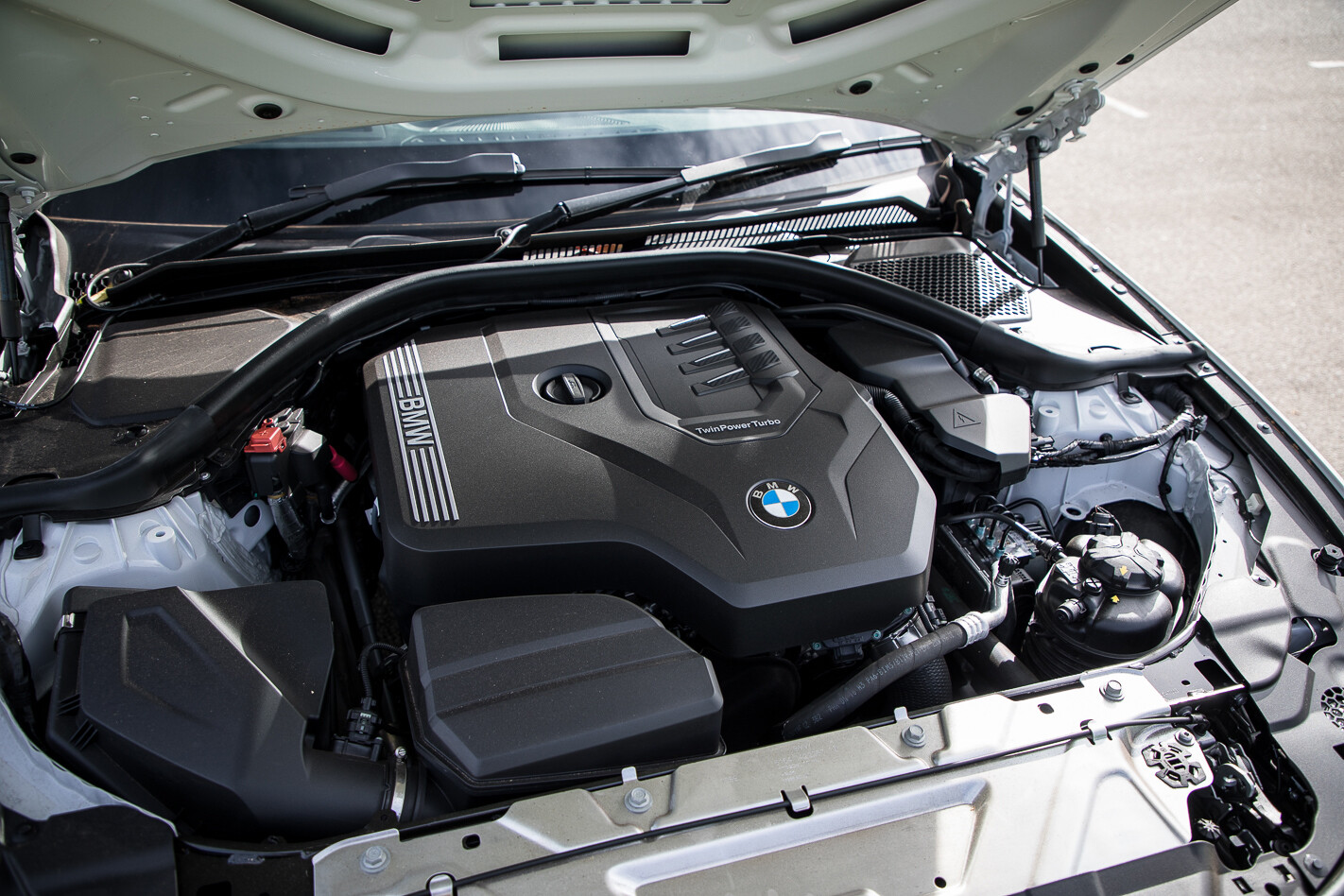
It does only make do with a 2.0-litre turbocharged four-cylinder engine in 135kW/300Nm tune, which sounds tame on paper but in practice feels perky enough for the everyday schlep and provides a surprisingly satisfying engine burble when you creep up through the rev range. The BMW 320i can sprint to 100km/h in 7.2 seconds – nothing to scoff at.
BMW fans will be pleased to hear that the M Sport package is now included as standard, bringing cool equipment like an M Aerodynamics kit, M Sport brakes and suspension, sportier steering wheel and black headliner to the base model. In addition to the sporty M-specific parts, the 320i also receives advanced driver assist features, parking assistant, LED headlights and a wireless phone charger as standard.
Compared to its predecessor which was really starting to wear old, the G20 3 Series is a far nicer place to be and presents much more vibrant and tech-filled than before. The new dual-screen infotainment system that incorporates the instrument cluster is smartly laid out and the graphics are nice to look at, and the new iDrive 7 software is simple to use. Voice commands are a bit of a hit-and-miss affair, however. Best stick to the tried-and-true rotary dial controller or the touchscreen.
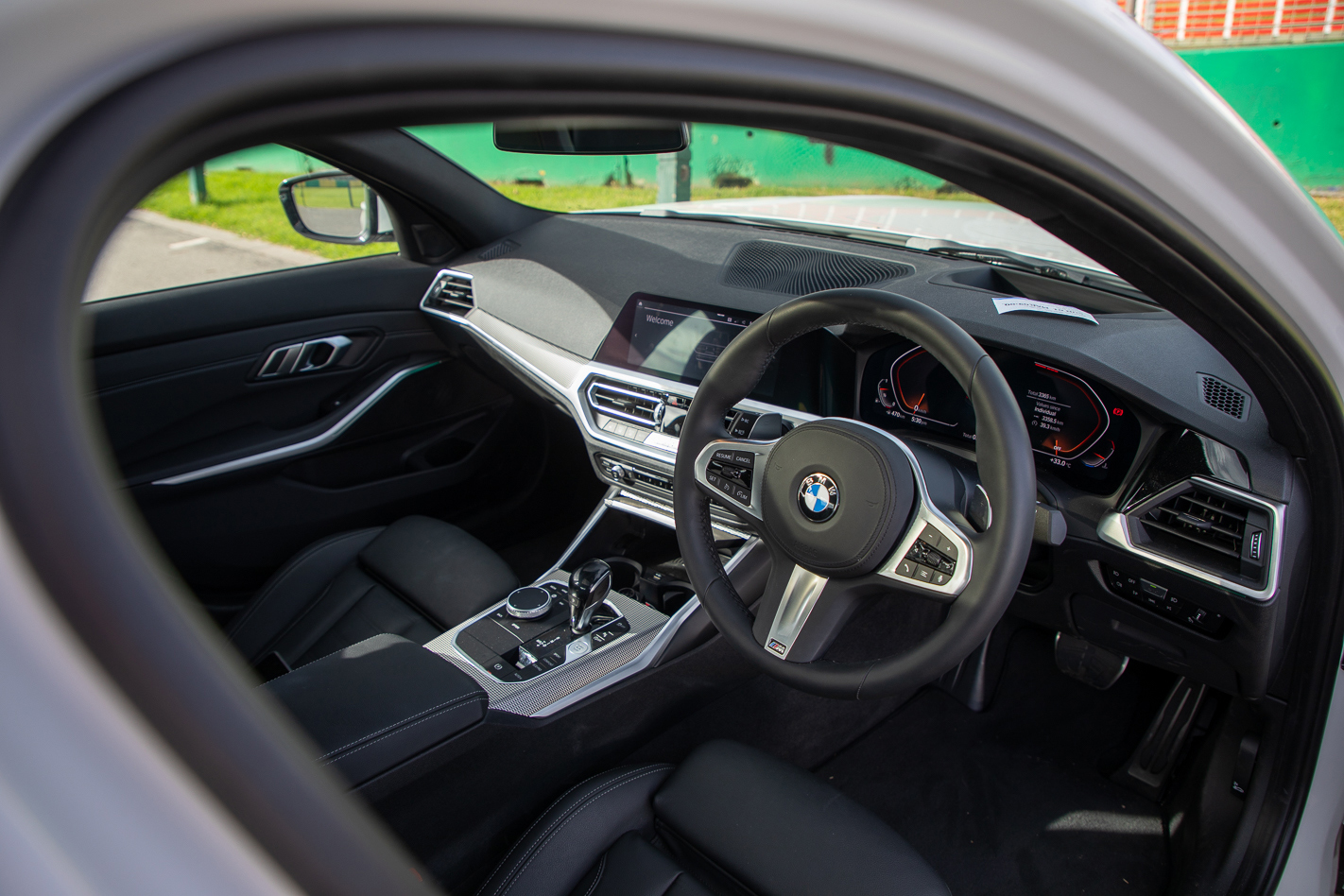
Up front you’re treated to a fantastic low seating position, the seats are comfortable and supportive and everything feels well-rounded ergonomically. The digital instrument cluster, while it displays more information than ever, isn’t quite as legible as the easy-glance mechanical dials of old.
Moving rearward, the second row seats are comfortable for taller people but may get tiresome on longer drives. Best mitigated by taking a break or being shorter. The boot fits 480 litres of air (on par with its German rivals) and the rear seats fold in a 40/20/40 format.
On the road is where you come to realise that despite being an entry-level variant, the 320i is arguably one of the strongest variants in the G20 3 Series range. BMW has an innate ability to work wonders with a four-cylinder, which feels strong and torquey even in its 135kW/300Nm tune.The eight-speed gearbox also should take some credit for being extremely smooth and obedient, always calculating the most appropriate ratio for a given situation.
One thing we’re not so hot on is the overly thick steering wheel, but the steering feel itself is nice and weighty and you can easily feel your way through road surfaces. It sticks flat through bends while remaining pleasantly supple over smaller imperfections, only really becoming unstuck over larger speedbumps which can throw the rear end around.
Many suggested this 3 Series was to become the return to form for a brand that once was held in high regard in terms of driver engagement and if BMW can deliver such a comprehensive package at a base-level, stepping up to a higher model isn’t exactly necessary.
Rivals
Audi A4 35 TFSI; Lexus IS300; Mercedes-Benz C200
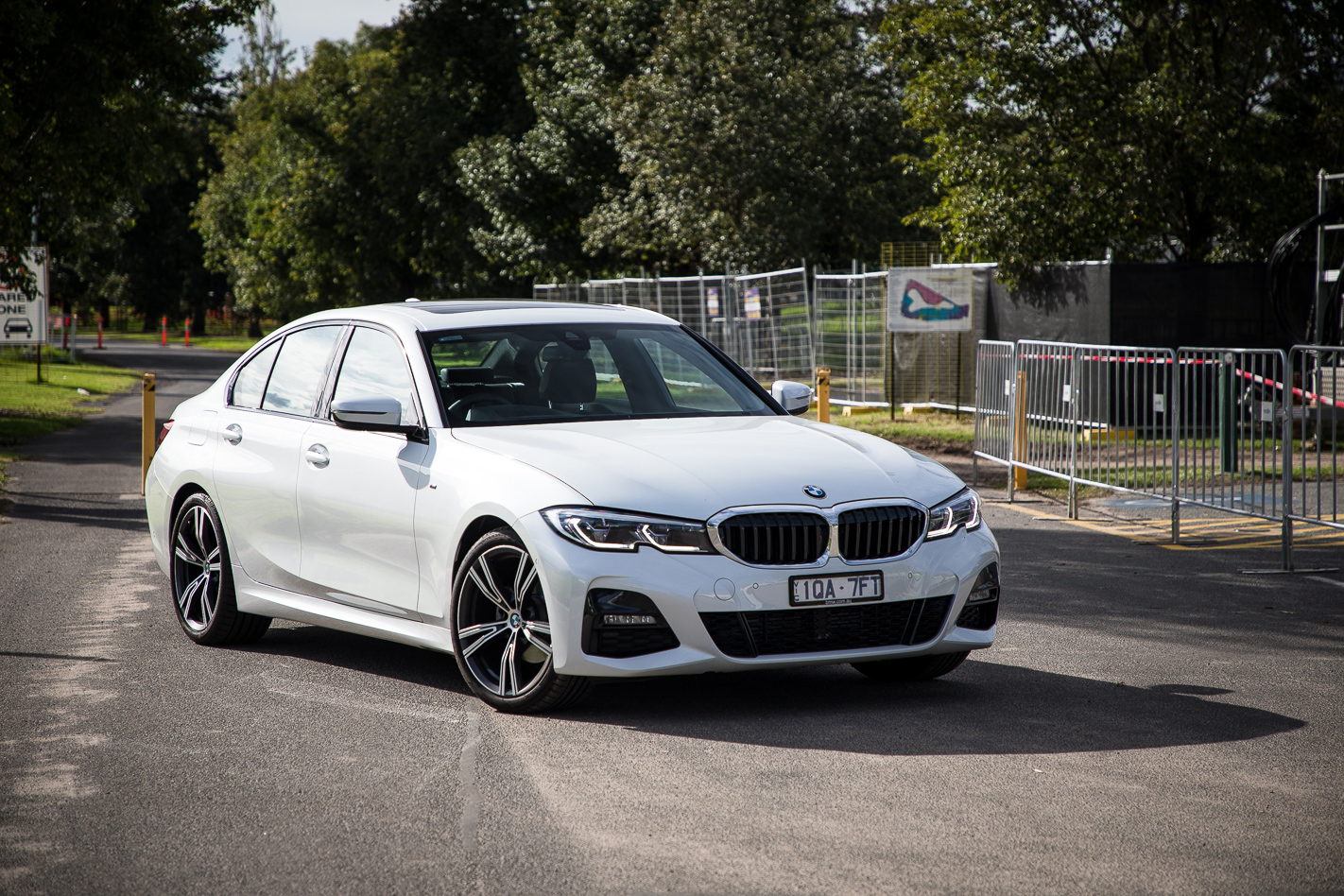
BMW 320i PRICE AND SPECS
- Model: BMW 320i
- Engine: 1998cc in-line 4, dohc, 16v, turbo
- Max power: 135kW @ 5000rpm
- Max torque: 300Nm @ 1350-4000rpm
- Transmission: 8-speed automatic
- Weight: 1460kg
- 0-100km/h: 7.2sec
- Economy: 6.3L/100km (claimed)
- Price: $65,900
- On sale: Now
THE BMW X5 M Competition and its companion, the X6 M Competition Coupe, are steadfast supporters of the high-performance combustion engine. The solitary battery feeds exclusively the starter motor. The art of hybridisation has yet to be embraced by the M division.
Also conspicuous by their absence here are other items often found in oversexed soft-roaders, such as air suspension (not sporty enough), rear-wheel steering (weight, complexity), adaptive aerodynamics (allegedly no need) and carbon-ceramic brakes (packaging constraints).
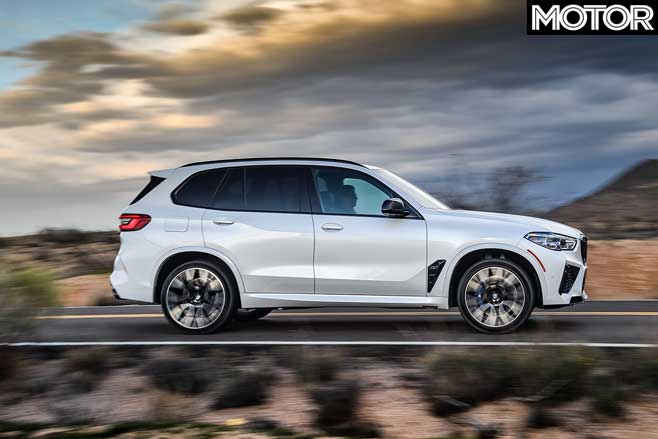
The drivetrain has proved its worth in the M5. In Competition guise, the 4.4-litre twin-turbo V8 revs to 7000rpm and produces 466kW at 6000rpm – up 37kW from the previous-generation engine – and 750Nm from a subtly growling yet commendably sudden 1800rpm to a phonetically dense and usefully lofty 5800rpm.
Mated to the high-revving V8 is BMW’s trademark fast-acting eight-speed Steptronic transmission with three operating modes, while the AWD system combines a fully variable front-rear torque distribution and active side-to-side torque split at the rear. Most of the time, the X5 M travels in rear-drive; only when it approaches the limit of adhesion do the front wheels grab some of the momentum. Locking xDrive in Sport stimulates tail-happiness, which can be further enhanced by selecting M Dynamic mode or by deactivating DSC altogether.
Inspired by marketing’s inherent search for fresh frivolities, the driver can choose from various steering, brake and suspension calibrations, but anything beyond Comfort in the latter requires a painkiller or two on less than perfect roads because of the unforgiving nature of the dampers and hyper-stiff 295/35 R21 and 305/30 R22 Michelin tyres.
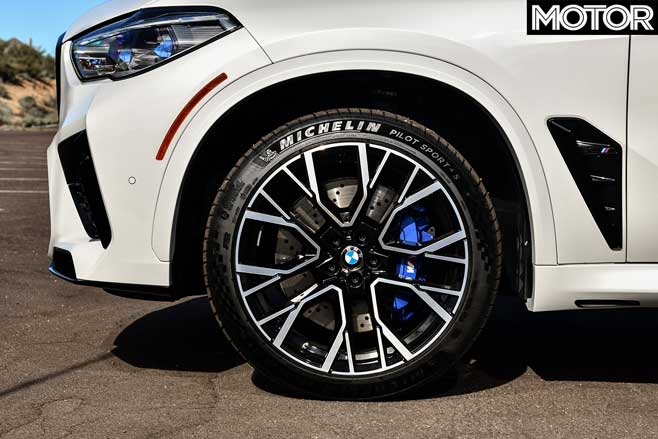
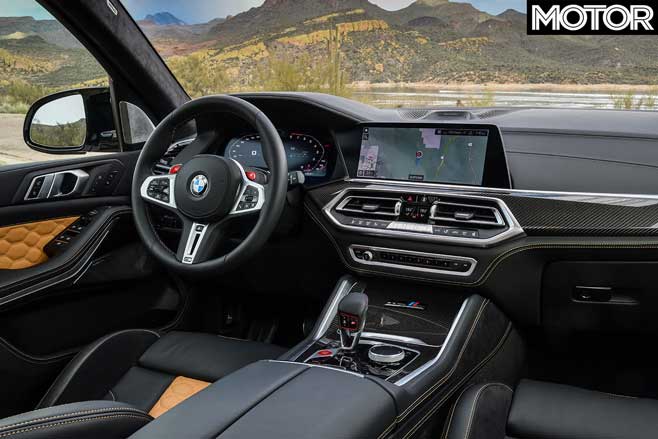
Like most BMWs, the high-end SUV twins indulge in multiple-choice ergonomics that land somewhere between confusion and enlightenment. The commendably advanced voice control could replace most of the buttons and switches, but instead the X5 M continues to inform and distract the driver with a maze of displays, knobs, thumbwheels and touchscreens. The sheer number of available interfaces is too much of a good thing, but mercifully the red M buttons can be programmed to disable start-stop and the most interfering assistance systems.
Standard luxury equipment includes laser lights, heated and ventilated massage seats, sunroof, music by Bowers & Wilkins, TV, soft-close doors and double glazing.
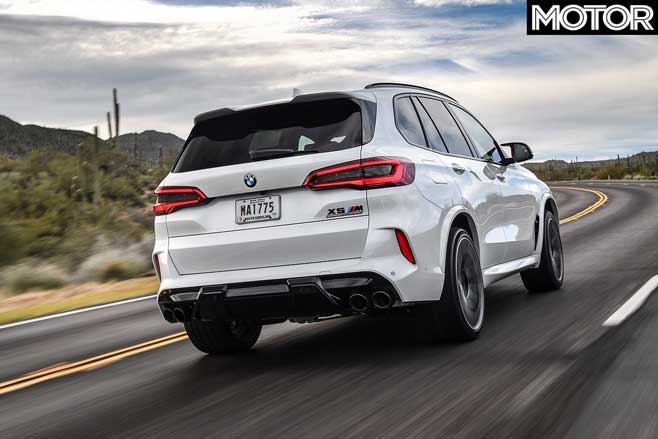
The X6 M, which costs $4000 more than its boxier brother, can put away one less suitcase and is design-wise even more of an acquired taste.
However, the dynamic talents of the X5 on steroids make the mind boggle. Acceleration from 0-100km/h takes just 3.8sec, top speed is 291km/h, and the big beast will stop from 100km/h in just 32.2 metres (even eclipsing the M5 sedan thanks to the extra bite of the wider tyres). However, while the four exhaust tailpipes look imposing, the top-of-the-line X5 sounds more like puberty vocal change.
At 2385kg, its mass and inertia make tyres squeal under hard braking and even harder cornering. Give her stick and the brakes will steam at the foot of a long, rapid descent, while the V8 burns fuel at the rate of an open fire.
The X5 M Competition justifies ultimate driving machine status with a number of merits. The engine spreads torque over a wider rev range than most of its challengers, throttle response is sharp but not jerky, the adaptive transmission does not really depend on driver inputs to deliver, grip abounds almost irrespective of corner radius or surface quality, the handling is neutral and the car follows the chosen line in a fuss-free and stable yet admirably dynamic manner. Switch off DSC and there is almost always enough grunt on tap for second- or third-gear slides.
But there are downsides. Stiff tyre sidewalls destroy the low-speed ride, the steel brakes do not match the stamina of carbon-ceramic rotors, the steering could do with a more relaxed high-speed calibration, and the software that governs the multi-stage transition from glide to slide interferes early and in ragged steps. Not to mention the bewildering instrument graphics, the overstuffed centre stack and busy steering-wheel controls, all of which look great in the brochure yet lack a Kimi-style leave-me-alone exit mode.
Let off the leash, this thing reels in tarmac like a grotesquely overweight greyhound, but it is questionable value at $210K.
2020 BMW X5 M COMPETITION SPECS Engine: 4395cc V8, DOHC, 32v, twin-turbo Power: 466kW @ 6000rpm Torque: 750Nm @ 1800-5800rpm Weight: 2310kg 0-100km/h: 3.8sec (claimed) Price: $209,900
Likes: Lusty engine; slick auto; luxury appointments; handling Dislikes: Harsh ride; brake performance; too many modes; electronic interference; graphics; excessive controls
Rating: 3 out of 5 stars
