
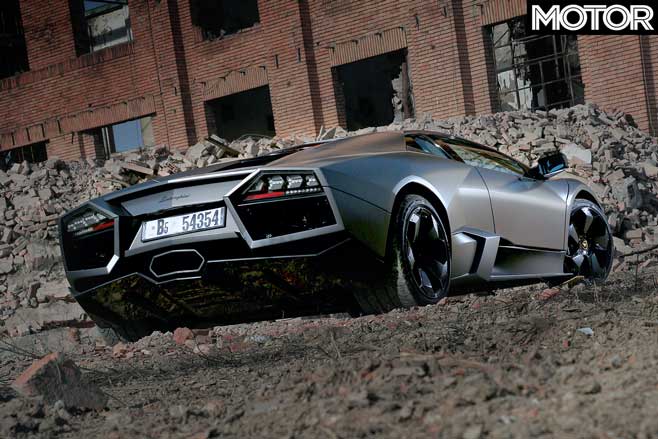
It’S EASY to be cynical about the Lamborghini Reventón. It was, in effect, a Murciélago LP640 in Air Force fancy dress, its polygonal exterior intended to mimic the sharp lines of fighter aircraft. The aeronautical theme continued inside, the standard instruments replaced by a trio of customisable TFT liquid crystal displays.
Other modifications included five-spoke blade-style wheels, LED lighting, the unique Grey Barra paintwork and an interior drowned in Alcantara.
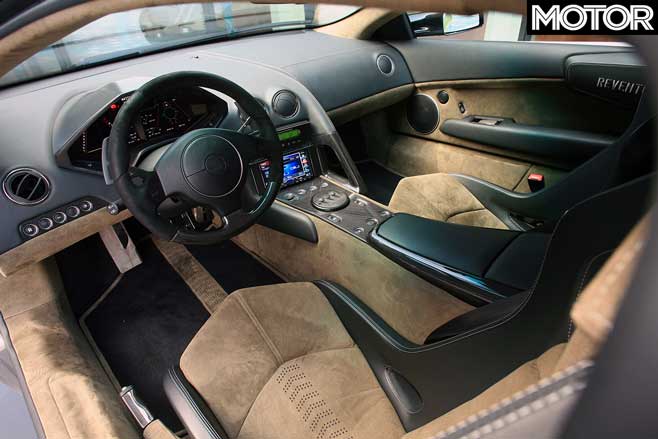
Mechanically, it was basically LP640, the 6.5-litre V12 bumped by 7kW to 478kW/660Nm, which wasn’t anything to sneeze at, and Lamborghini also installed carbon-ceramic brakes. The Reventón accelerated like it was being shot off an aircraft carrier, 0-100km/h taking just 3.4sec on its way to a top speed north of 340km/h.
But by far the most important thing about the Reventón, the factor that had the rich and famous clamouring for their engorged wallets, was its rarity.
Just 21 were built, 20 for customers and one for Lamborghini to keep in its museum. This exclusivity allowed Sant’Agata to get away with more than doubling the price of the (mechanically identical, remember) LP640 to USD$1m. Not that you could choose to buy one; they were reserved for Lamborghini’s “friends and collectors”.
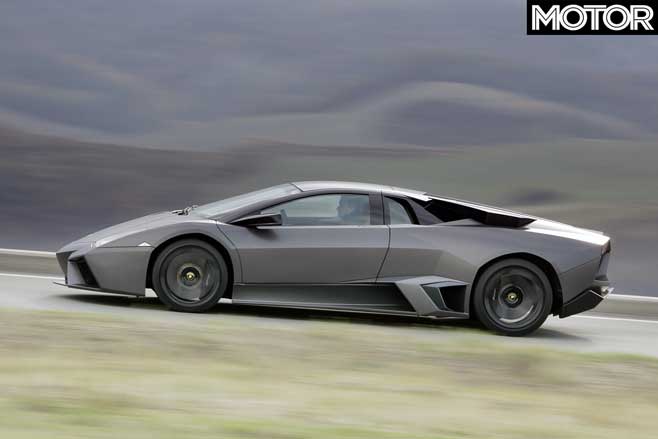
Sensing it was on to a good thing, Lamborghini repeated the trick by building 15 Reventón Roadsters, though it at least upgraded the engine to 493kW to match the mighty LP670 SV Murciélago swansong. The price went up accordingly, though, Lambo charging USD$2.1m for the roofless experience.
These ‘few-off’ models have become an important part of Lamborghini’s business, cars like the Veneno, Centenario, Sesto Elemento and the latest Sian FKP generating tens of millions of euros in revenue and a corresponding number of Instagram likes. Mind you, we wouldn’t say no to a limited run of the Huracan Sterrato…
2007 LAMBORGHINI REVENTÓN SPECS Engine: 6496cc V12, DOHC, 48v Power: 478kW @ 8000rpm Torque: 660Nm @ 6000rpm 0-100km/h: 3.4sec (claimed) Price: USD$1,000,000
For the first time in Wheels Car of the Year, we are publishing the judges’ scorecards for each of the 2020 contenders.
This is all part of our push to give the biggest motoring award in Australia greater transparency.
As usual, each judge rated every car against the five overarching COTY criteria, but in 2020 this included 26 sub-sections that were individually scored. Each of these were scored out of five.
That resulted in each contender’s scores being generated via 182 different data points. The averages of those are displayed below.
It’s important to remember the COTY criteria, which are Function, Efficiency, Safety, Technology, and Value.
If you want to find out why each contender was given this score, make sure to read all the COTY verdicts, which can be found here.
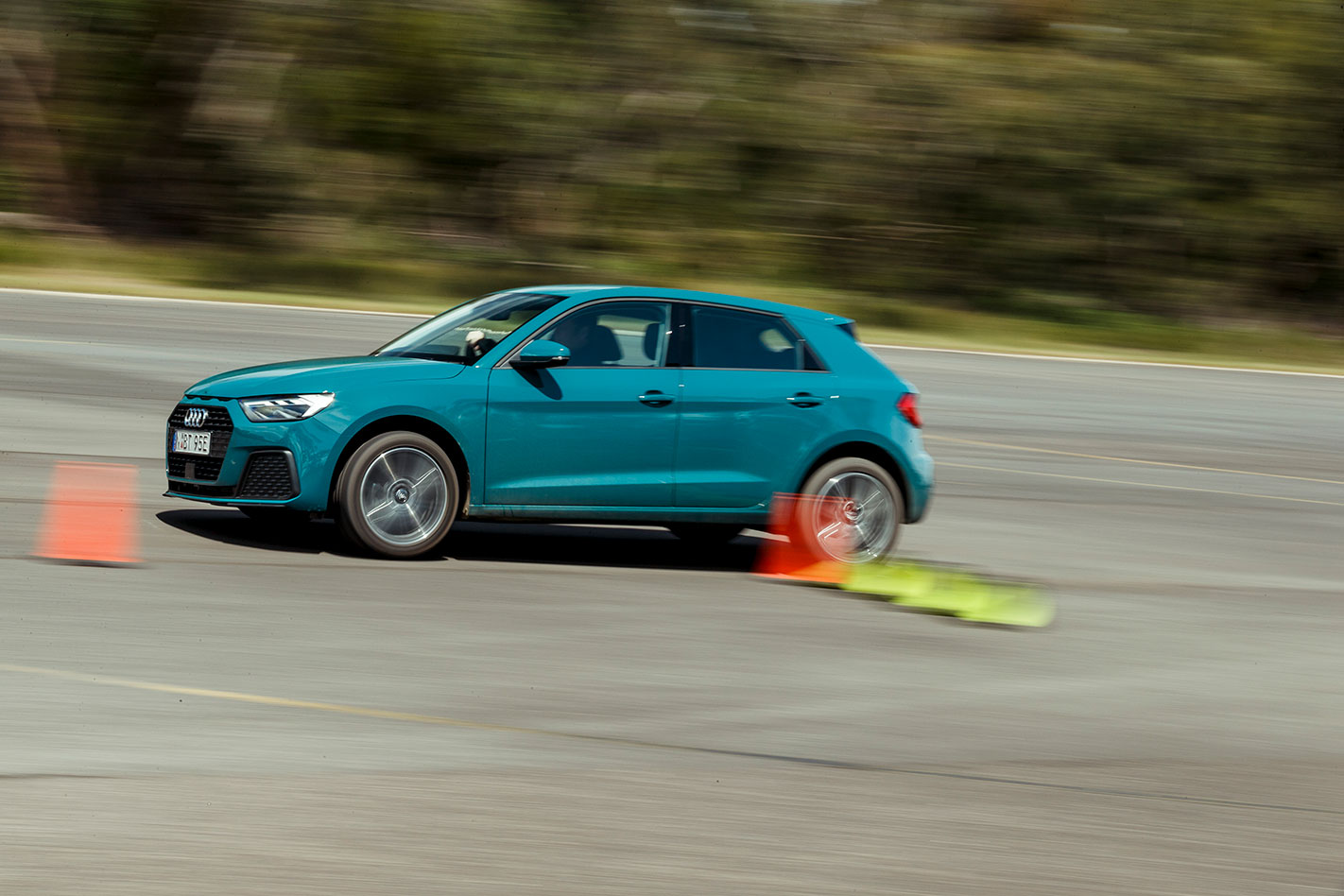
Audi A1
- Function: 3.1
- Efficiency: 3.1
- Safety: 2.9
- Technology: 2.6
- Value: 2.6
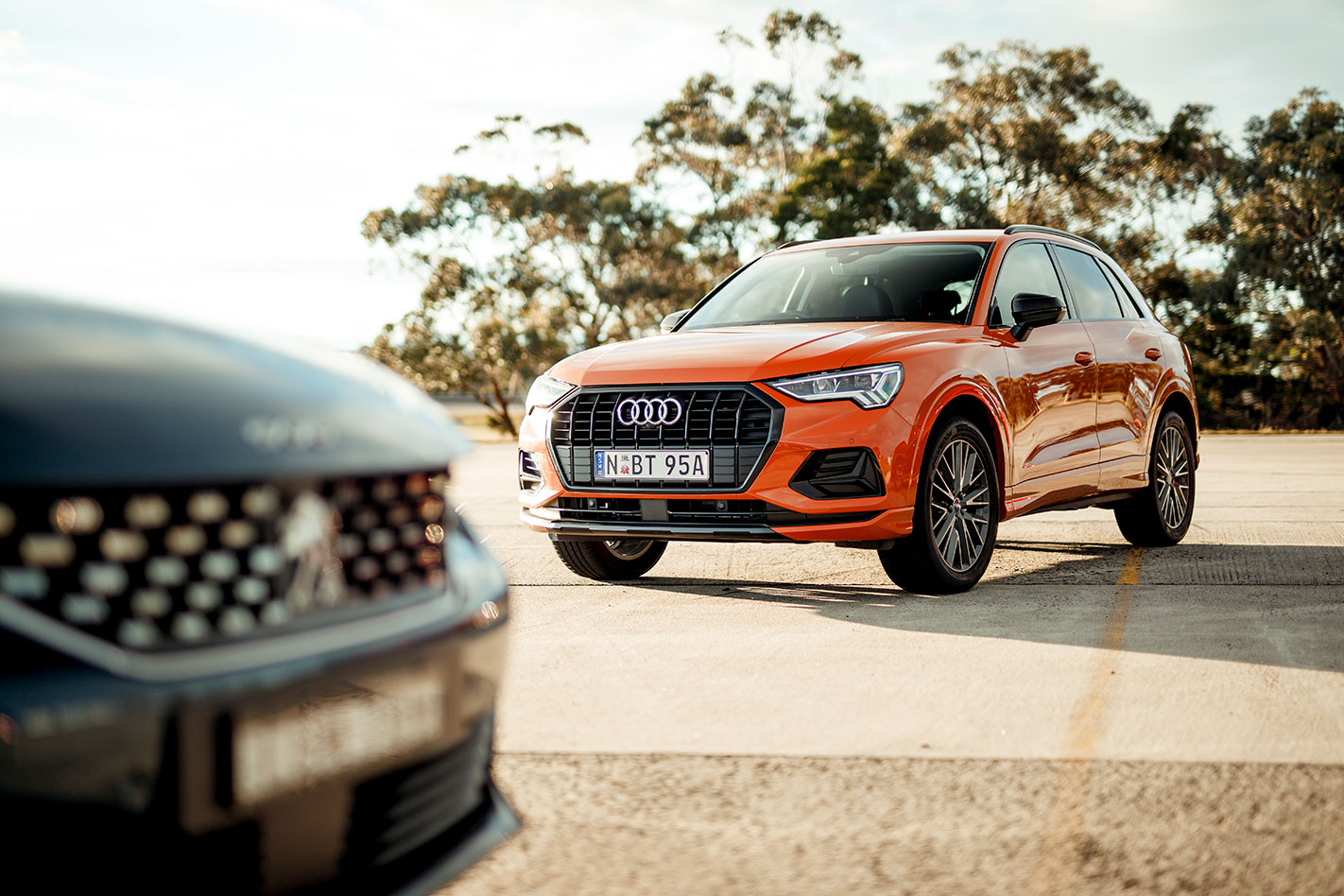
Audi Q3
- Function: 3.3
- Efficiency: 3.0
- Safety: 3.2
- Technology: 2.8
- Value: 2.7
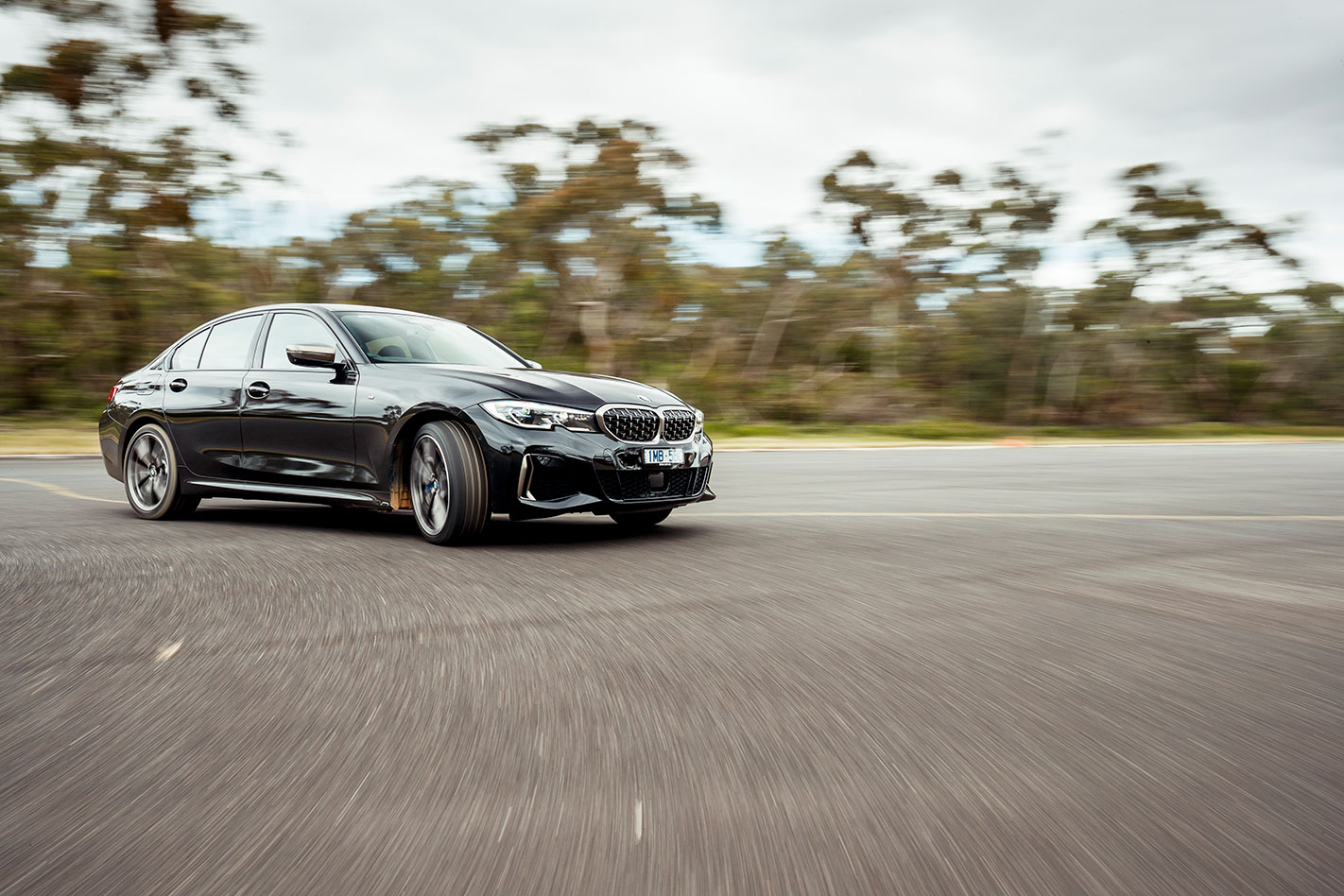
BMW 3 Series
- Function: 3.7
- Efficiency: 3.6
- Safety: 3.3
- Technology: 2.8
- Value: 3.2
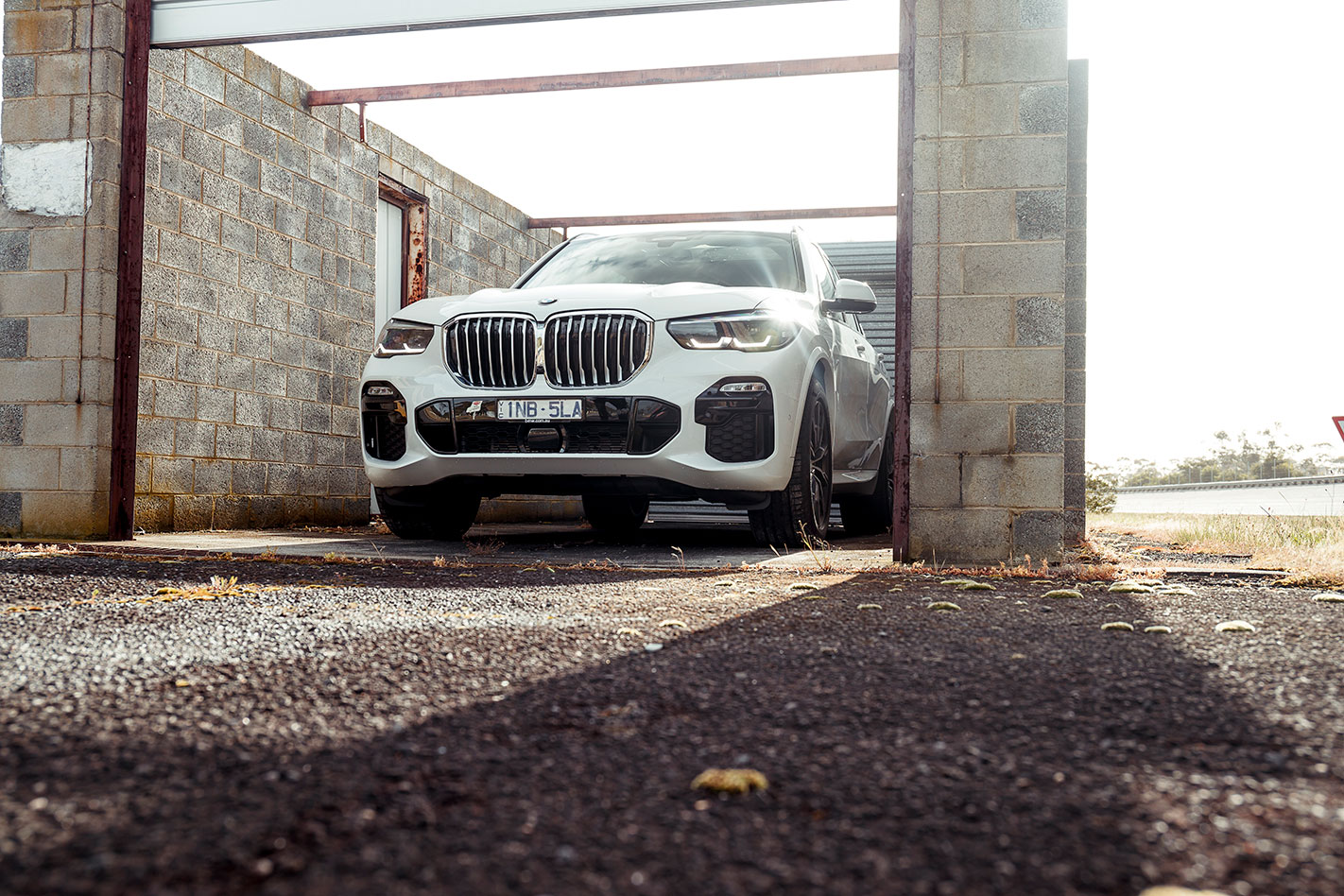
BMW X5
- Function: 3.4
- Efficiency: 3.1
- Safety: 3.6
- Technology: 2.8
- Value: 3.1
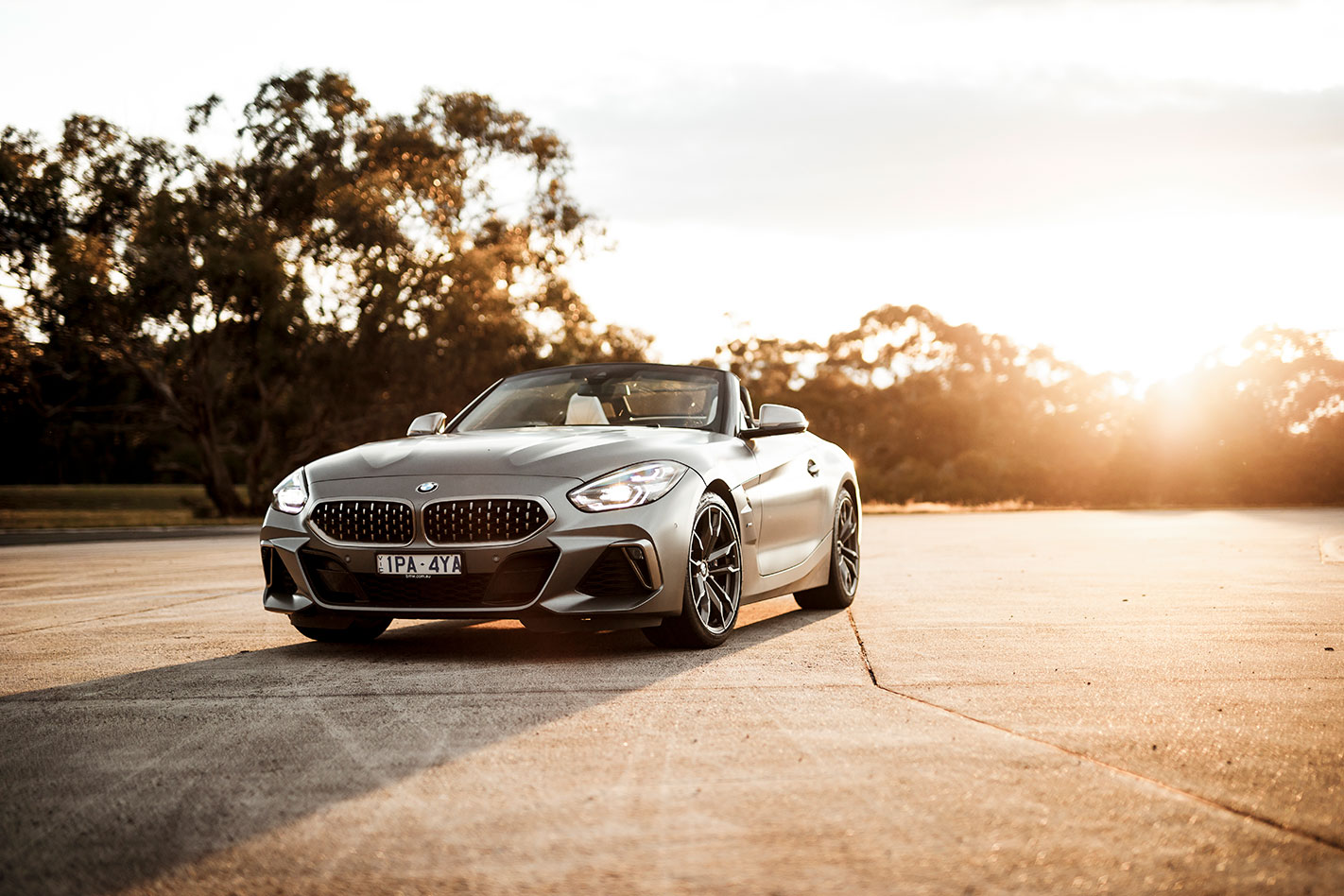
BMW Z4
- Function: 3.1
- Efficiency: 3.0
- Safety: 3.0
- Technology: 2.1
- Value: 2.7
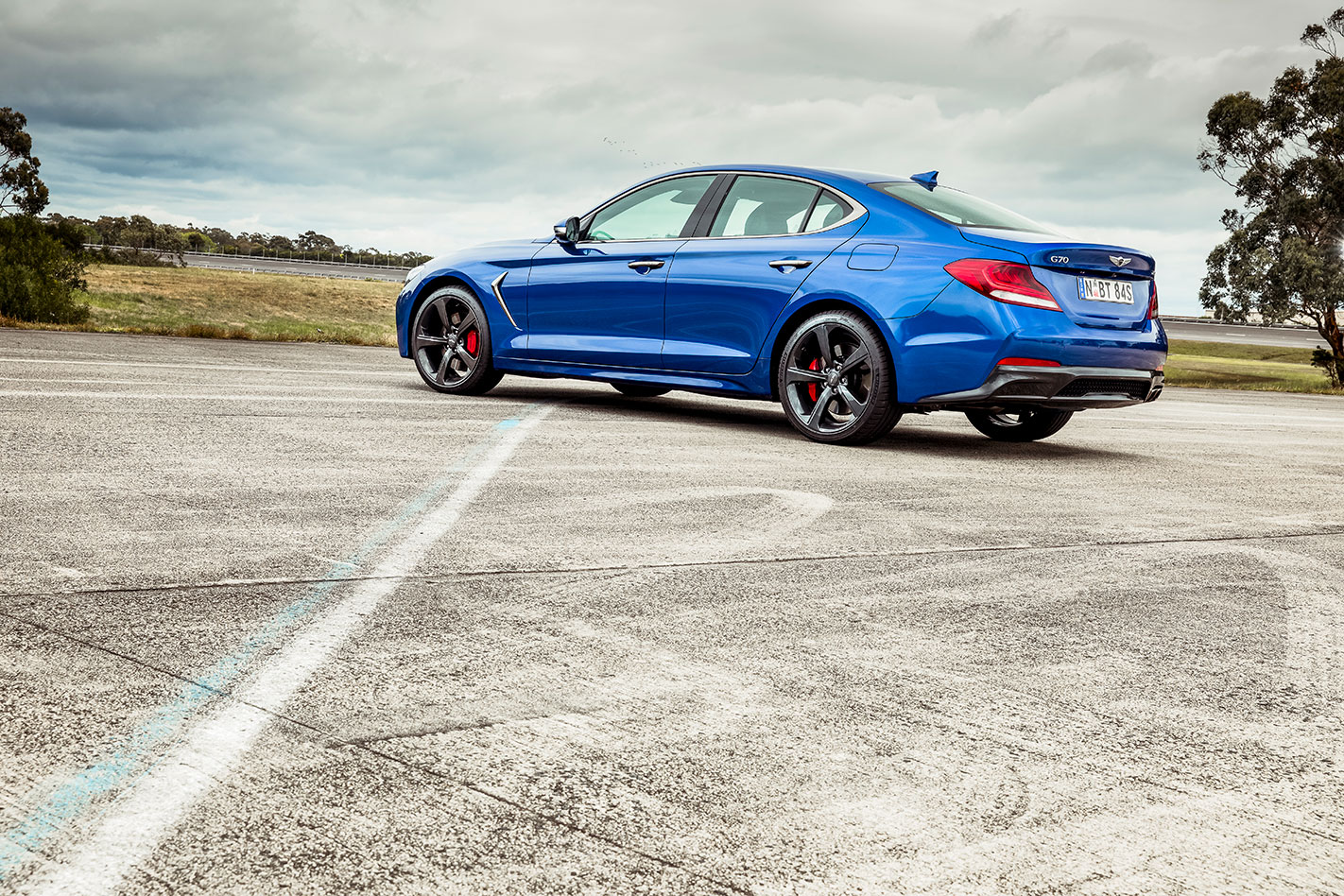
Genesis G70
- Function: 2.9
- Efficiency: 1.9
- Safety: 2.9
- Technology: 2.0
- Value: 3.1
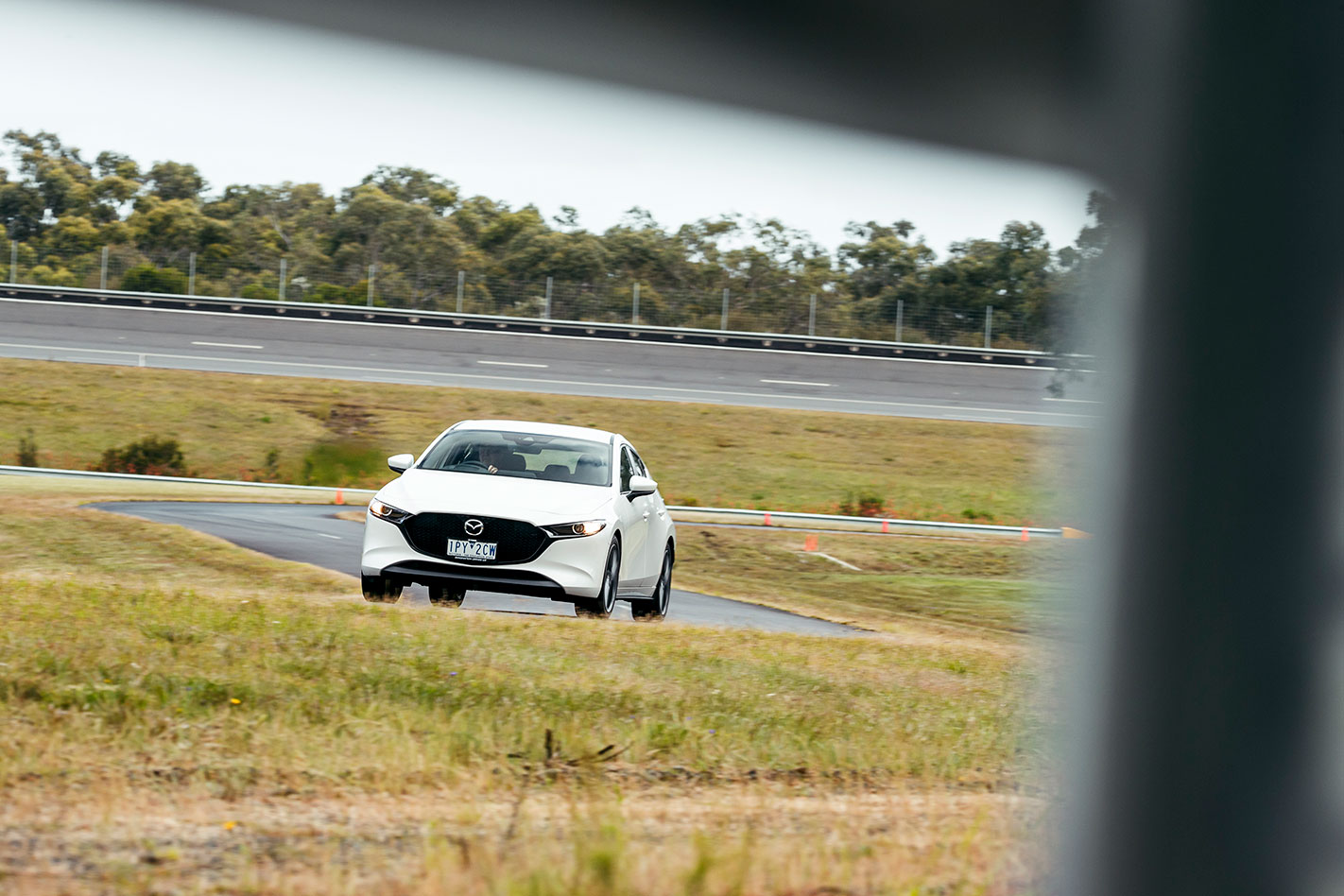
Mazda 3
- Function: 3.6
- Efficiency: 3.1
- Safety: 3.4
- Technology: 2.9
- Value: 3.6
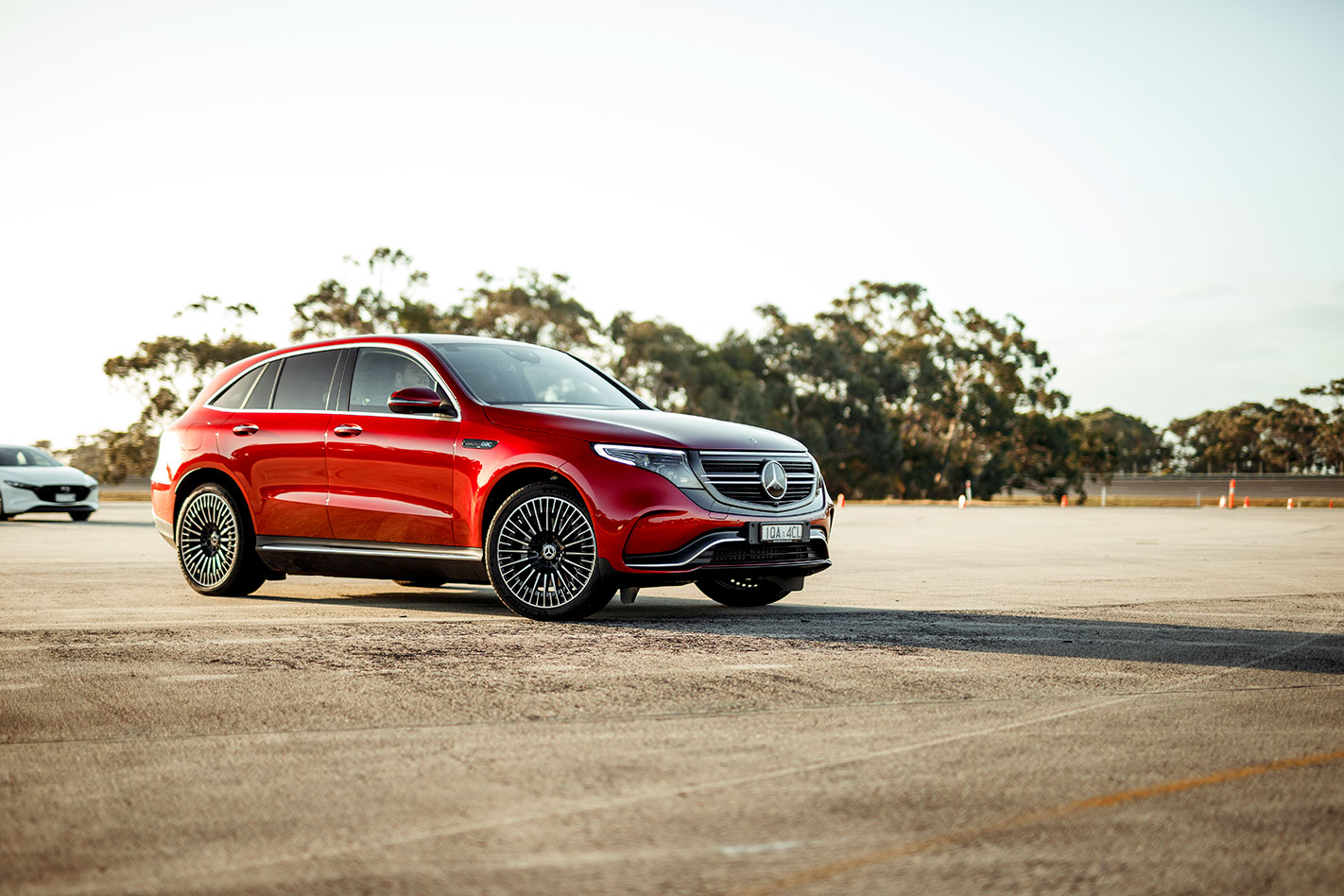
Mercedes-Benz EQC
- Function: 3.8
- Efficiency: 4.8
- Safety: 4.0
- Technology: 4.0
- Value: 3.4
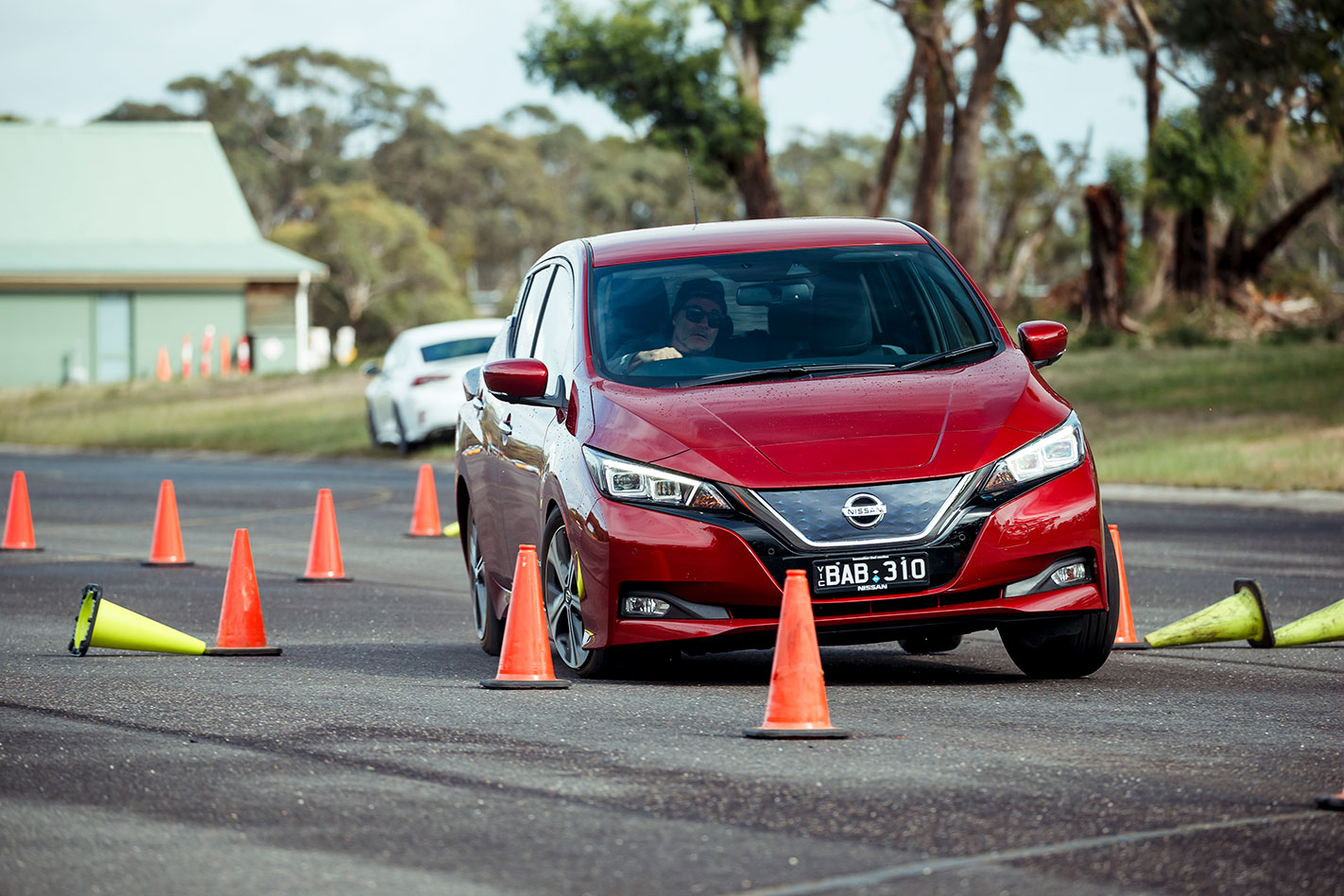
Nissan Leaf
- Function: 2.7
- Efficiency: 4.9
- Safety: 3.1
- Technology: 2.9
- Value: 3.2
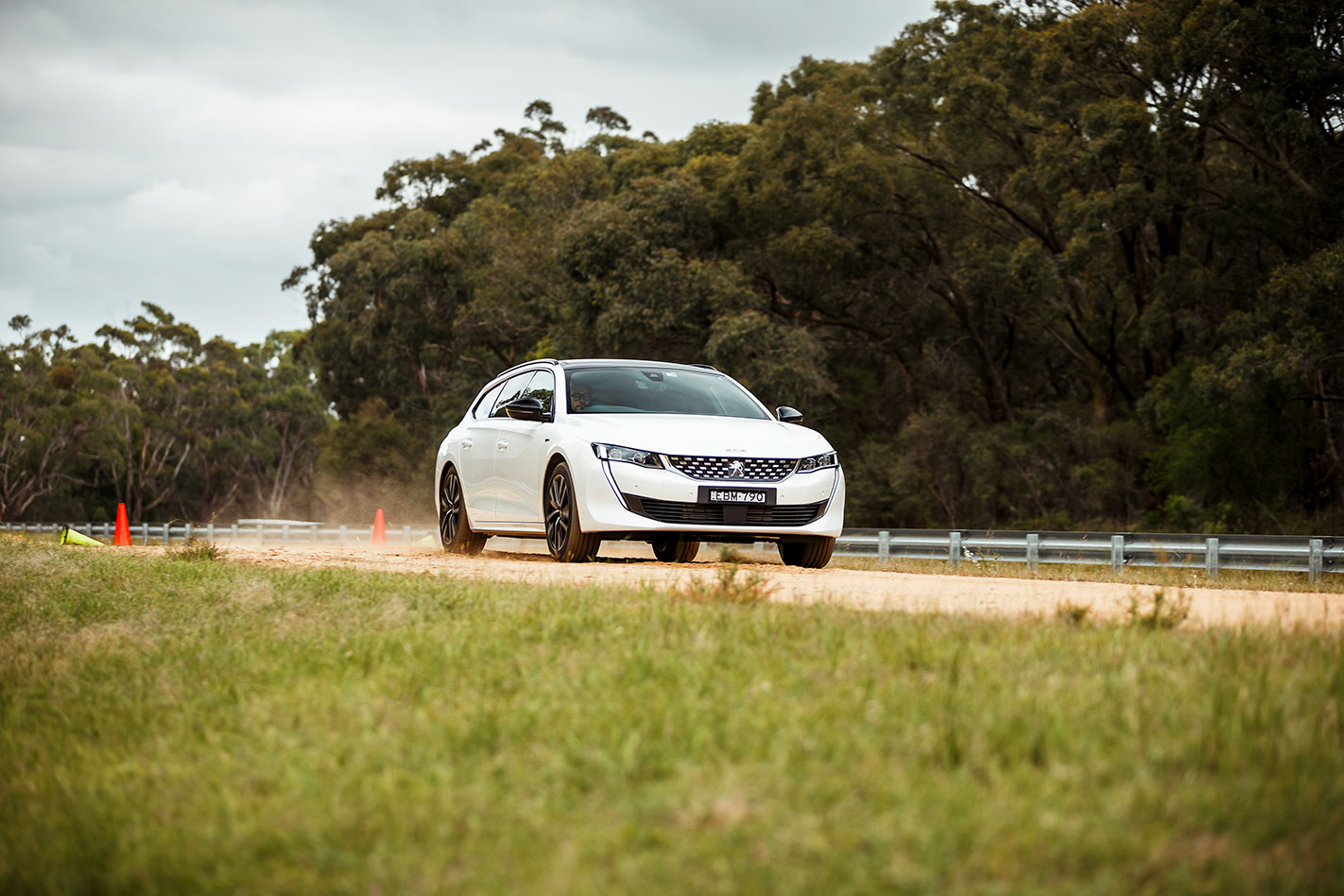
Peugeot 508
- Function: 3.6
- Efficiency: 3.7
- Safety: 3.4
- Technology: 3.4
- Value: 3.0
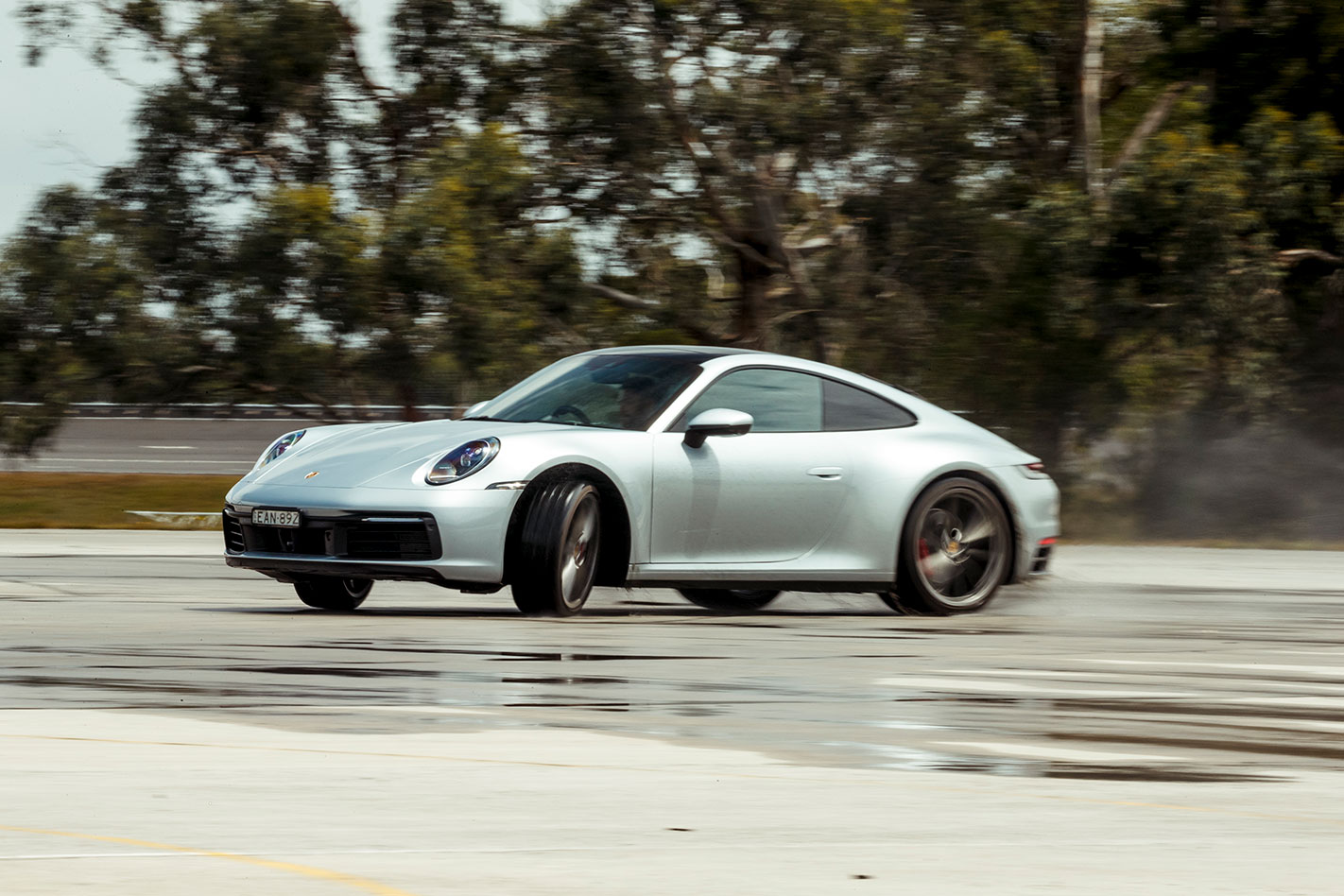
Porsche 911
- Function: 4.1
- Efficiency: 2.4
- Safety: 3.0
- Technology: 3.0
- Value: 3.2
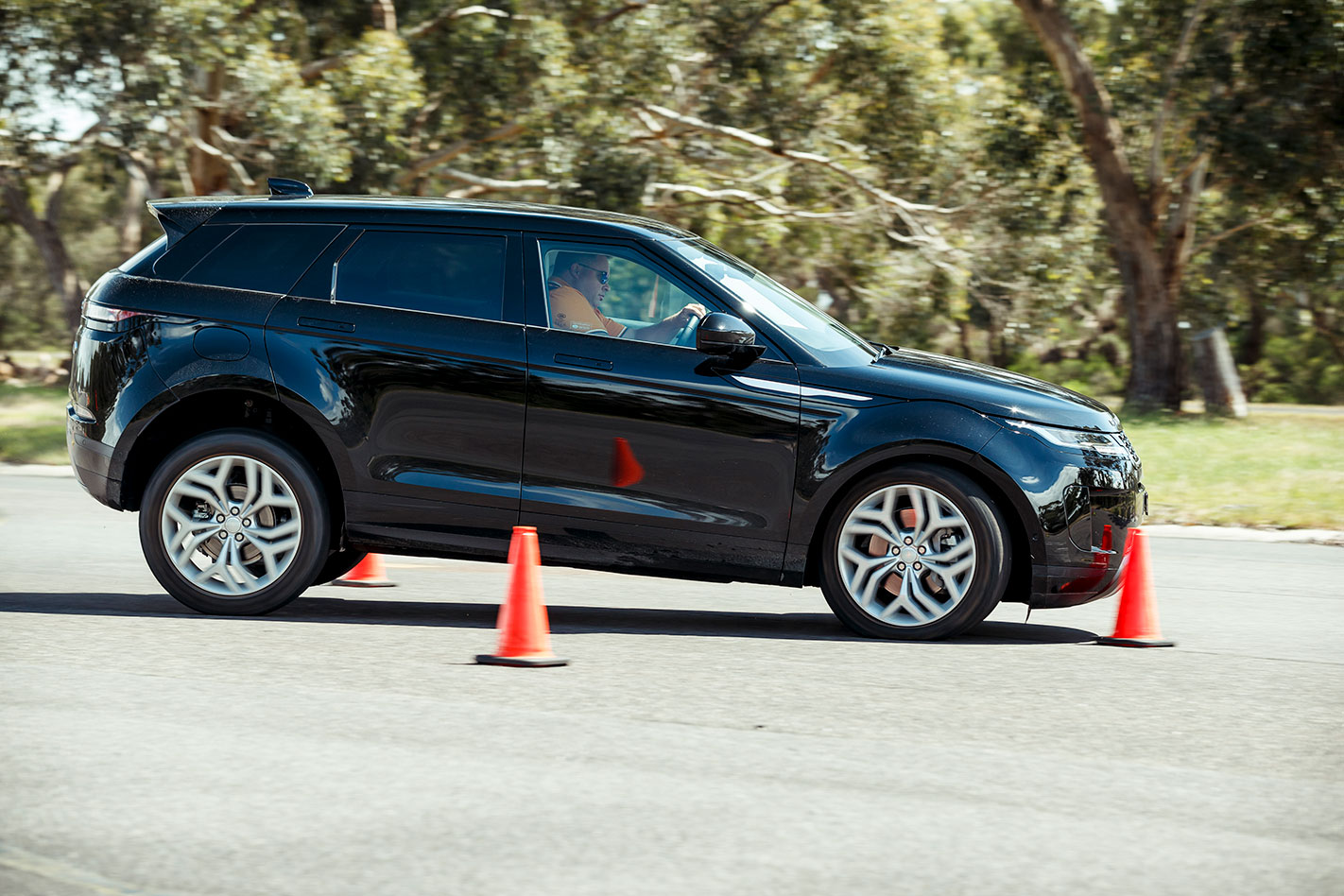
Range Rover Evoque
- Function: 3.1
- Efficiency: 2.4
- Safety: 2.5
- Technology: 2.7
- Value: 2.6
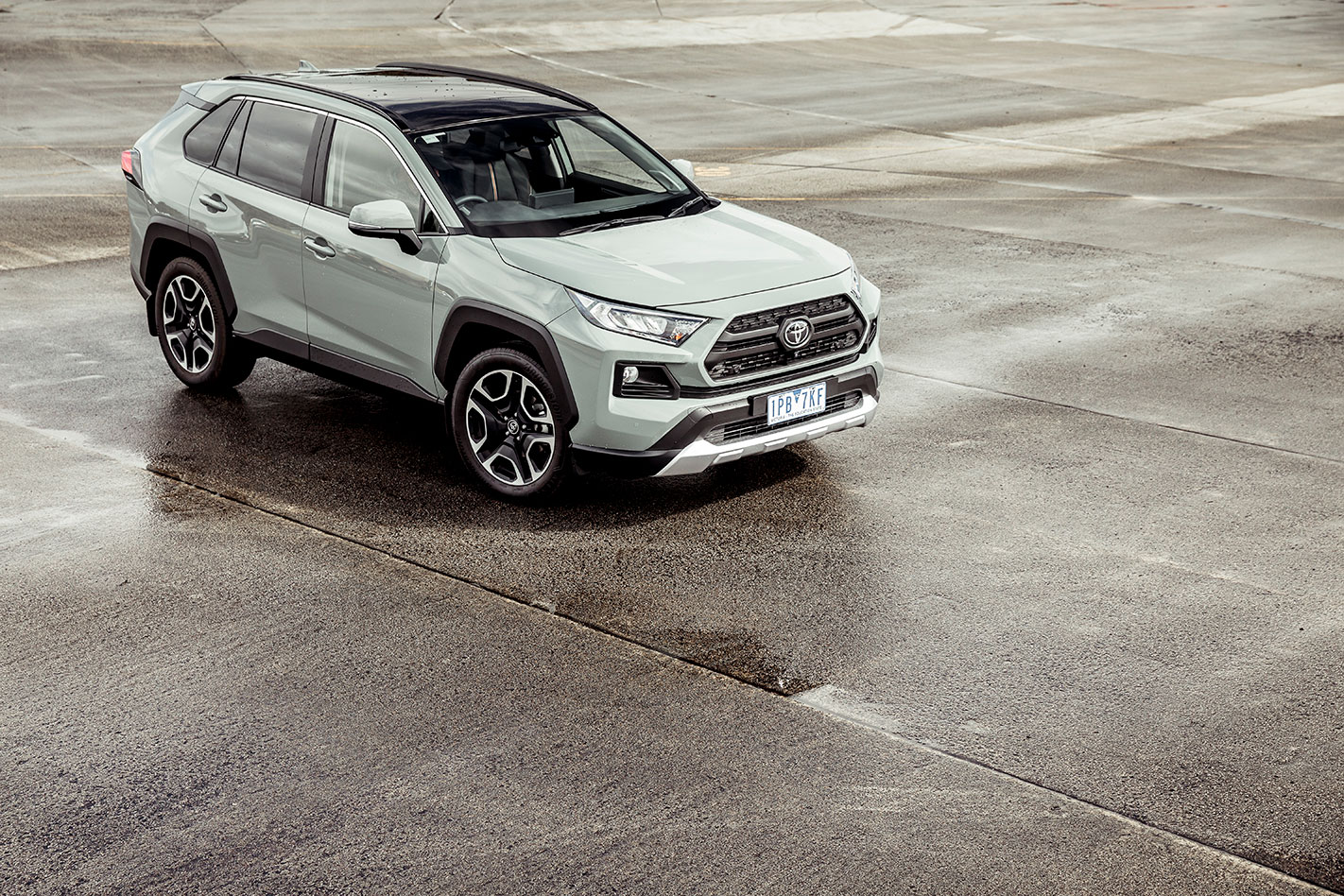
Toyota RAV4
- Function: 3.4
- Efficiency: 3.8
- Safety: 3.2
- Technology: 3.5
- Value: 3.9
Toyota Supra
- Function: 3.0
- Efficiency: 2.9
- Safety: 2.5
- Technology: 2.1
- Value: 3.2
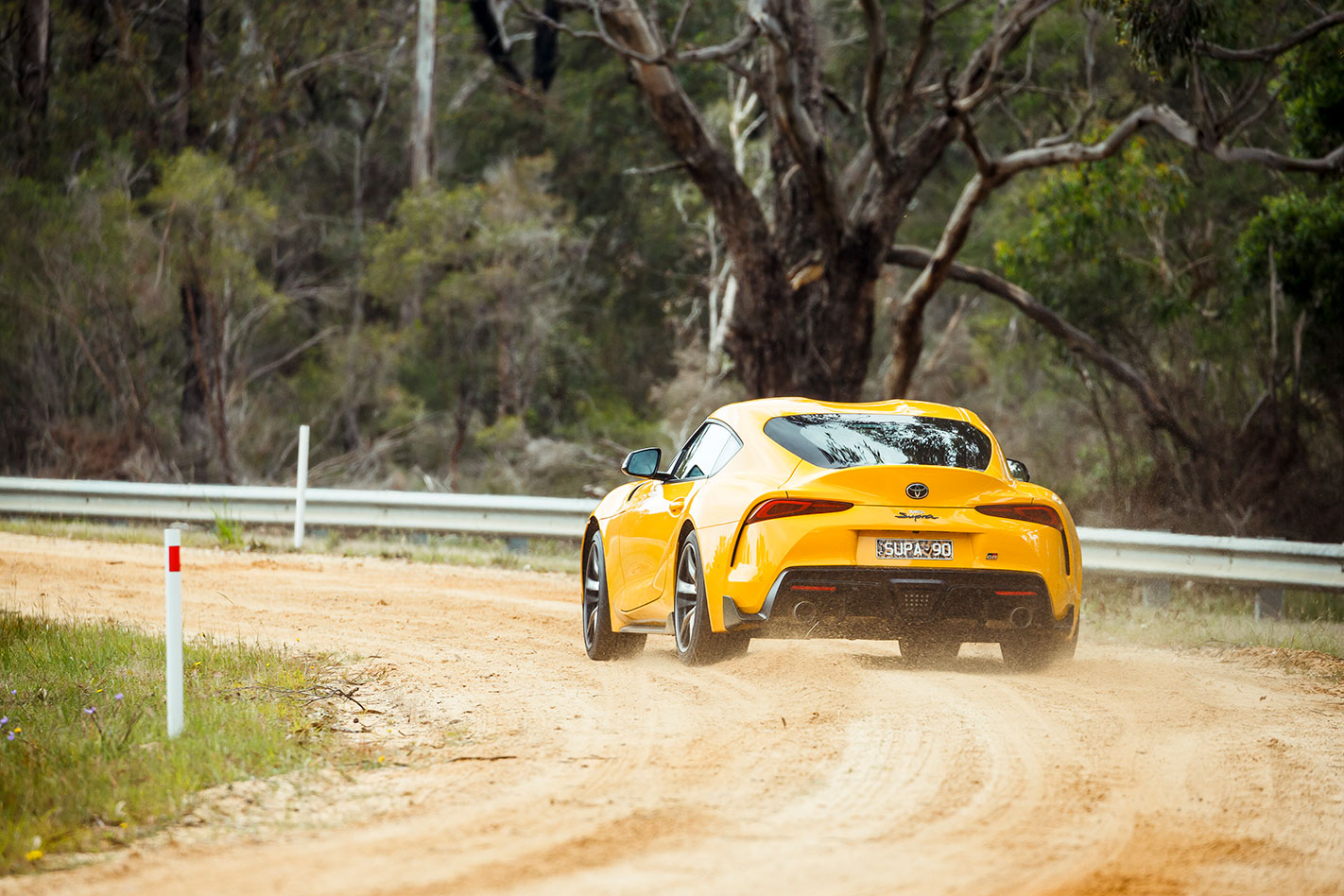
Tesla Model 3
- Function: 3.3
- Efficiency: 4.9
- Safety: 3.4
- Technology: 3.6
- Value: 3.4
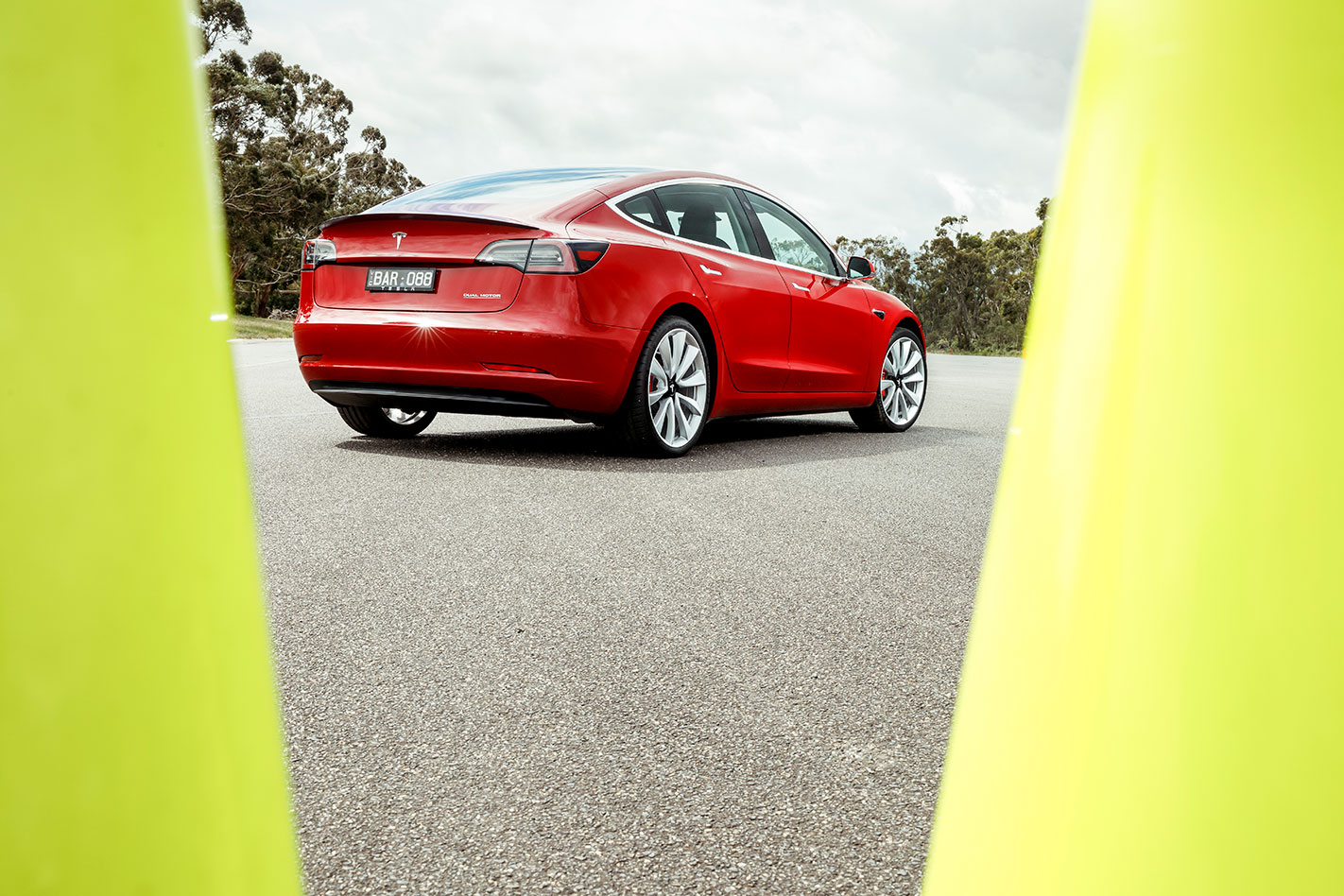
Volkswagen Touareg
- Function: 3.5
- Efficiency: 2.7
- Safety: 3.6
- Technology: 2.7
- Value: 3.3
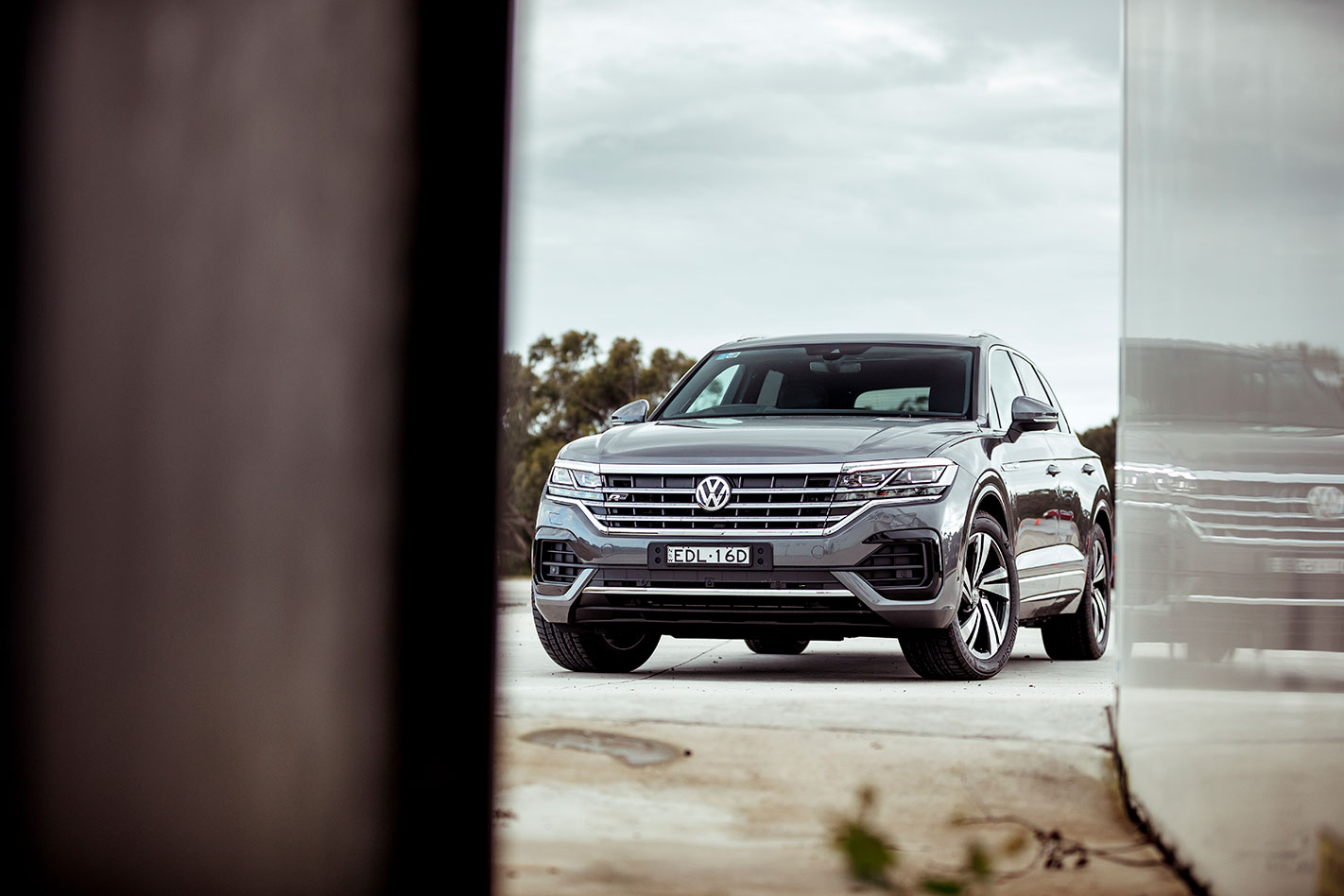
Volvo S60/V60
- Function: 3.2
- Efficiency: 3.0
- Safety: 3.4
- Technology: 3.0
- Value: 3.0
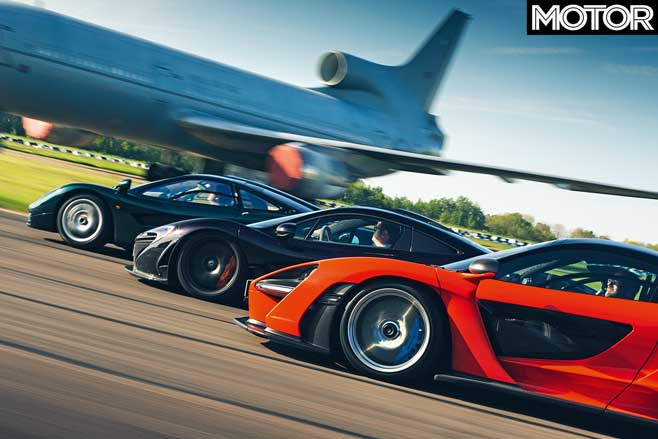
The sight alone is enough to elicit involuntary laughter. F1, P1, Senna. All on the same slice of tarmac, dihedral doors flipped up. They have been together before, most notably and recently at the Goodwood Members Meeting, but never for a purpose like this. We have them and this track for the day, including its near three-kilometre runway. They are ours.
Despite the P1 being worth around $10 million (it’s a prototype and the most filmed and famous P1 in existence) and the F1 valued at five times more than that, no-one is saying ‘don’t go there, don’t do that’ with any of them. McLaren people are everywhere, appearing more than anything else pleased that we’ve been able to make this thing happen.
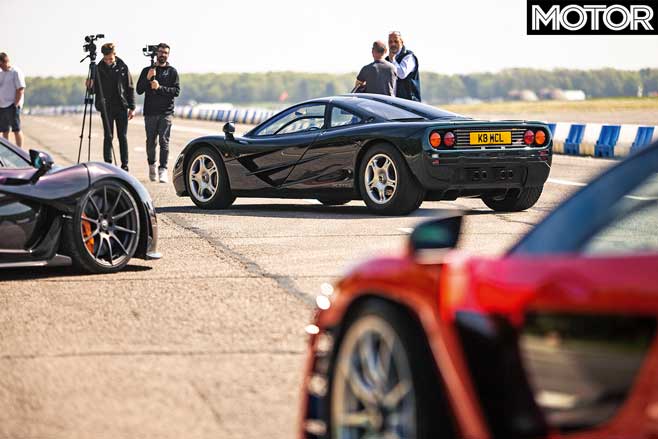
So, at the risk of repeating myself: F1, P1, Senna. Which would you take first? If I didn’t have a story to write afterwards, I’d have left the F1 until last. Of course you would. It’s a McLaren F1 for goodness sake, and the number of those in anything approaching regular use in the world can be counted on the fingers of one hand, probably without needing the thumb. But it’s the benchmark, the inspiration, the one without which the others might have existed but surely not as they are. It is the origin; it has to go first.
It seems hardly believable that the car is 25 years old, but the truth is that age manifests itself in primarily positive ways: the car’s compactness, its manual gearbox, analogue dials, normally aspirated engine and so on. For those of us who love the simple business of driving, the transition of such one-time staples from rule to exception is not something that is necessarily to be celebrated.
Then there is that central driving position, so mad in theory but so effective in practice. It needs zero acclimatisation, for it feels natural at once. I’m glad it’s coming back on the Speedtail. Visibility all round is sensational, the antithesis of the Lamborghini letterbox approach to cockpit design. Confidence grows.
The V12 is smooth, the gearbox on this 94,000km car loose and easy to operate. So, because there is time, I can tootle about for a bit. My goodness it rides well. No anti-roll bars here (or ‘anti-traction devices’ as they used to be called at McLaren). The unassisted steering communicates like that of a Lotus, and no wonder – there are Exiges that weigh more than this.
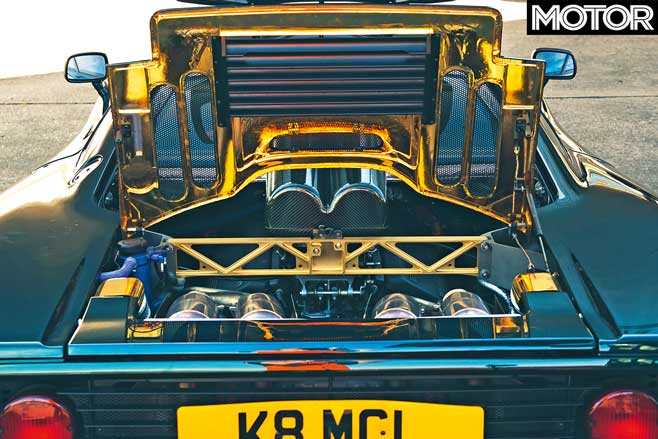
And then you can resist no longer; pausing only to remind yourself this is 468kW in 1164kg of car and that it has no safety systems of any kind at all, you give it the boot. Which is when part of you that somehow and stupidly filed this car under ‘nice old thing’ loses all comprehension of what happens next; it will only be regained when you remember the old dear has a better power to weight ratio than a Bugatti Veyron. Really. In the cockpit all your limbs are busy changing gear and holding it straight. By the time you feel you can afford to glance down, an insane number is already on the speedometer, like 250km/h.
Then something else happens. Or, more accurately, doesn’t happen. The rate of acceleration scarcely slows, because the F1 has no drag compared to modern cars whose bodies generate downforce. Out of deference to its age and value, I didn’t press on much further, but this very car once did over 385km/h, which is way faster than either of its younger, far more powerful descendants can manage.
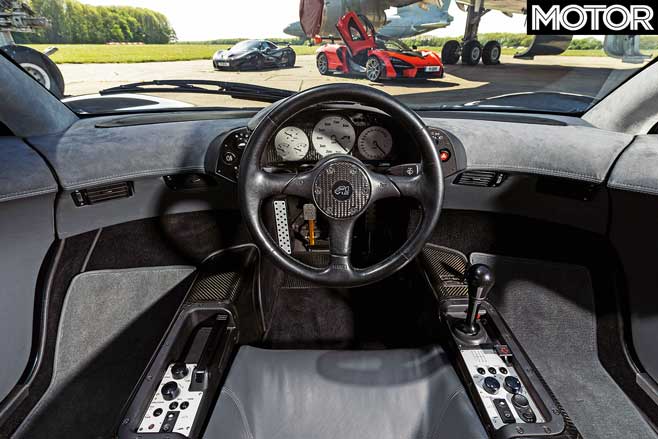
But while the F1 feels utterly mighty in a straight line, around the rest of the lap the years start to show. This is by no means all bad news because on new Michelins (the only components on the car not to period spec because the original Goodyears are no longer available), the car has surprisingly good grip and a nice balance near the limit.
But I don’t want to throw it around and that has nothing to do with its value. F1s tended not to react brilliantly when pushed further than they cared to go and I’m very happy to leave that aspect of its character unexplored. But there’s no avoiding the brakes, and by both modern standards and those of any car with this level of performance they are, frankly, terrible.
What will the P1 feel like after that? There’s so much about it that seems less, well, good. It has a small turbo V8, not an enormous atmospheric V12. You shift gears via paddles, not a lever. You can only get two people on board and there’s not much room for luggage.
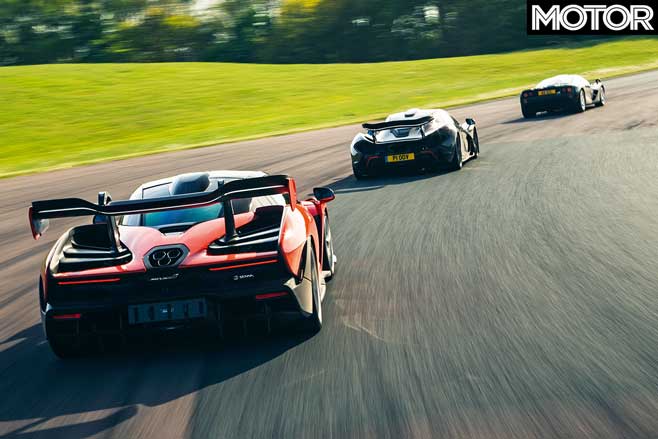
Yes, it’s far more powerful thanks to its hybrid-assisted 673kW engine, but that very system also makes it heavier – 300-odd kilograms heavier. When it came out alongside the LaFerrari and Porsche 918, hybrids were a novelty, so much so in cars like this that a new term was coined that was never applied to the F1 in period: these were ‘hypercars’. But is it really such a leap?
Well, in a word, yes. For the avoidance of doubt, I’d have the F1 powertrain over the P1 equivalent every day of the week, month and year, but that doesn’t make the P1 less than one hell of a car, and capable in ways the F1 simply could not imagine.
But let’s look first at what they share, beyond a badge, all-carbon construction and very funky doors. The curious thing is that, despite the 20 years that separate them and the fact very few of the people who worked on the F1 were still around in Woking to work on the P1, they still feel related. And it’s that sense of light and space in the cabin that does it. This is a massively more complex car, bristling with driving modes for the powertrain and chassis, push-to-pass power boost and DRS buttons, but it still manages to make you feel at home.
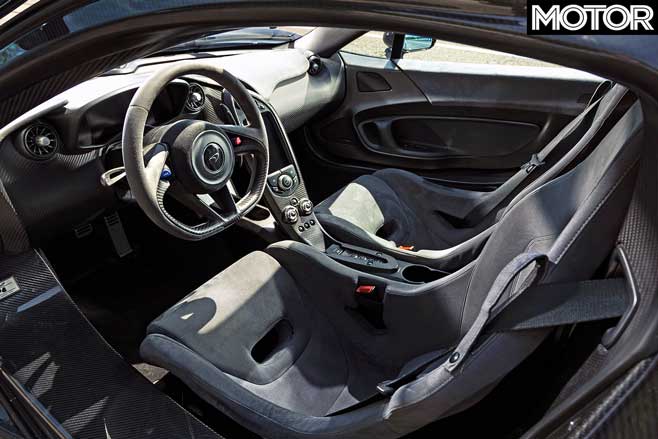
The difference is that here the chassis is no longer cast in a supporting role to the engine; they get equal billing and provide a double act of what, even today, is rare ability. The P1 actually feels quicker in a straight line than the F1 because the hybrid system fills in all the holes in the torque curve, providing turbocharged shove with zero lag. It doesn’t sound beautiful like the F1 – in fact it sounds quite ugly – but it somehow fits the maniacal rate at which it gathers speed.
But while you’re conservative with the F1’s entry speed into corners and downright cautious with its brakes, you can treat the P1 almost like a racing car. You can brake from 300km/h, feel the carbon brakes shed 150km/h like they’re shrugging off a coat and then fling it into a corner while still hard on the stoppers. Try that in the F1 and you would be in the trees.
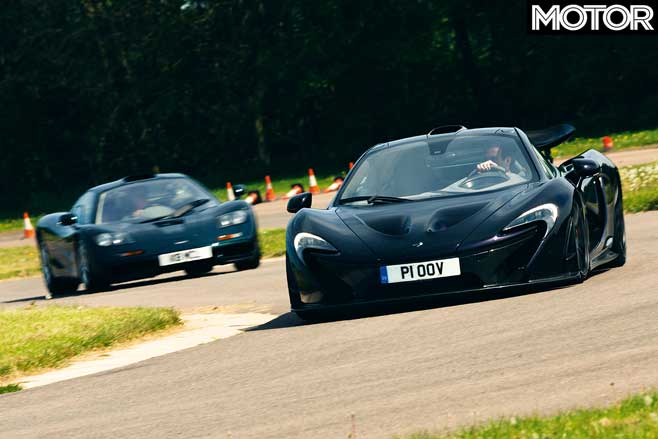
It has massively more grip, yet despite that the limit is not something to be carefully skirted as you would in the F1, it’s a place to seek out and enjoy. With proper downforce, active aero, (relatively) modern tyres and one of the world’s most sophisticated suspension systems, the P1 is actually a far easier and more accessible car to drive fast than the F1, and that fact stands as a powerful riposte to the many and varied ways in which the older car proves that not all progress is always in the right direction.
But it is the Senna that shows how McLaren hypercar philosophy has evolved over a quarter of a century. The F1 was a pure road car and always intended as such. The P1 is a finely judged balance between road and track and uses its suspension to prove itself very plausible in both environments. But the Senna? I once spent a long day on the road in one and it was thrilling, but so too was it hard. Really hard.
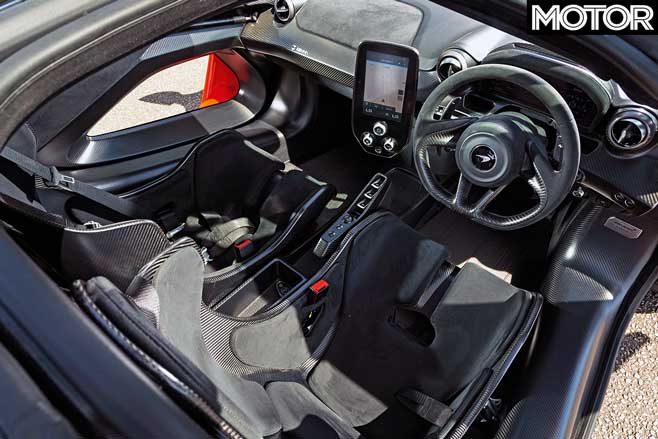
The car is noisy and uncomfortable. You never know what reaction you’re going to get when you nail the throttle because you’ll almost always instantly trigger a traction control system so sophisticated all you usually notice is a reduction in engine power. You can of course turn it off, but get ready to get busy if you do. More than anything, the Senna feels like a caged beast on the road because, unlike the others here, unless you’re driving it as fast as you can there’s not much point being on board. And you can’t do that in public.
But on the track? Oh my goodness. The Senna is so good, it actually makes the P1 feel, if not actually clumsy, then certainly its age. It feels like a racing car, or as much like a racing car as a street-legal tyre will permit in 2019. Its composure in quick corners is utterly unlike any other road car I’ve driven. Its precision, speed and feel at big speeds is simply sublime.
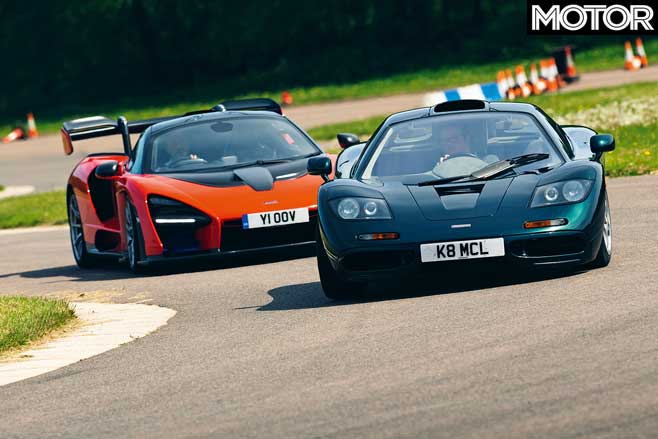
If the Senna has a problem, it is only that the car is so much better than its Pirelli Trofeo R tyres, which are themselves state of the art. In high-speed corners, when there’s 800kg of downforce nailing the car to the road, it’s mesmerising, in a different world even to that inhabited by the P1.
In the slow stuff, when it can only rely on mechanical grip, there is understeer that needs a degree of management. Happily, being closer in weight to the F1 than the P1 and more chuckable than either, there’s much fun to be had sorting it out. And it is utterly viceless.
I don’t much like ‘horses for courses’ verdicts, but it seems iniquitous to come up with a 1-2-3 order for these cars, separated as they are not just in time but concept too. While the F1 is entirely established as perhaps the automotive icon of the last generation, neither the Senna nor even the P1 have yet had time to find their place in history, but the progression from road car to track car is clear. How interesting then that the next car in the Ultimate Series is the Speedtail, a car billed as more luxurious and road-oriented even than the F1. So it seems the circle will be complete.
Fast Facts
| u00a0 | McLaren F1 | McLaren P1 | McLaren Senna |
| Body | 2-door, 3-seat coupe | 2-door, 2-seat coupe | |
| Drive | rear-wheel | ||
| Engine | 6064cc V12, DOHC, 48v | 3799cc V8, DOHC, 32v, twin turbos + electric | 3994cc V8, DOHC, 32v, twin turbos |
| Power | 468kW @ 7500rpm | 673kW @ 7300rpm | 597kW @ 7250rpm |
| Torque | 617Nm @ 5000rpm | 900Nm @ 4000rpm | 800Nm @ 5500rpm |
| Power/Weight | 402kW/tonne | 452kW/tonne | 447kW/tonne |
| Transmission | 6-speed manual | 7-speed dual-clutch | |
| Weight | 1164kg | 1490kg | 1314kg |
| L/W/h | 4288/1820/1140mm | 4588/1946/1188mm | 4744/2153/1229mm |
| 0-100km/h | 3.2sec | 2.8sec | 3.1sec |
| Top Speed | 386km/h | 350km/h (limited) | 335km/h (redline limited) |
| Price | One recently went for $28 million. Seriously. | AUD$3million (estimate) | AUD$1.6million (approx) |
McLaren’s Trinity
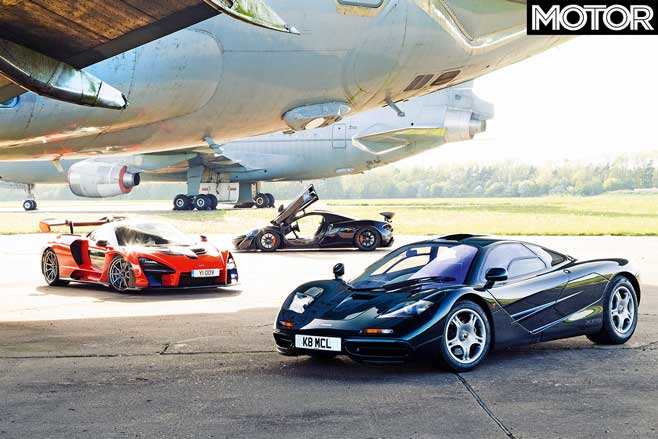
McLaren F1 – 1995
Formula 1 racecar designer Gordon Murray had already masterminded three World F1 Drivers Championships when he convinced McLaren boss Ron Dennis to build his innovative three-seat supercar. With the world’s first cabonfibre chassis and a big V12 engine, it was both light and powerful, and set a new speed record that stood for seven years.
McLaren P1 – 2012
Limited to an initial production run of just 375 units – which sold out in a month – the P1 utilises hybrid power but ditches the F1’s novel three-seat layout for a conventional two-seat arrangement. Used McLaren’s own 3.8-litre twin-turbo V8, which was enhanced by an electric motor. The car features Formula 1 technology such as KERS, ‘push to pass’ and DRS.
McLaren Senna – 2019
The third member of McLaren’s ‘Ultimate Series’ line was named after Brazilian driver Ayrton Senna, who won his three world titles driving for McLaren. As such, the 720S-based car was designed primarily for the track (while remaining road legal). It is 176kg lighter than the P1 and employs aggressive active aerodynamics to generate some 800kg of downforce.
“It’s going to be between the BMW 3 Series and the Porsche 911,” I said, with all the breezy confidence of a man who knows how these things work. Two weeks before Car of the Year, I’d just been asked what was going to win.
Two weeks later, things are looking a good deal less cut and dried. In fact, so Byzantine is the voting process in the first round that it comes down to eliminating one car from our lists and, when that doesn’t create a clear top five, we have to choose between the Toyota RAV4 and the Peugeot 508. These are Byron Mathioudakis’s two closet favourites at the event and, judging by the look on his face, it’s like telling someone there’s only room for one of their two kids in a lifeboat.
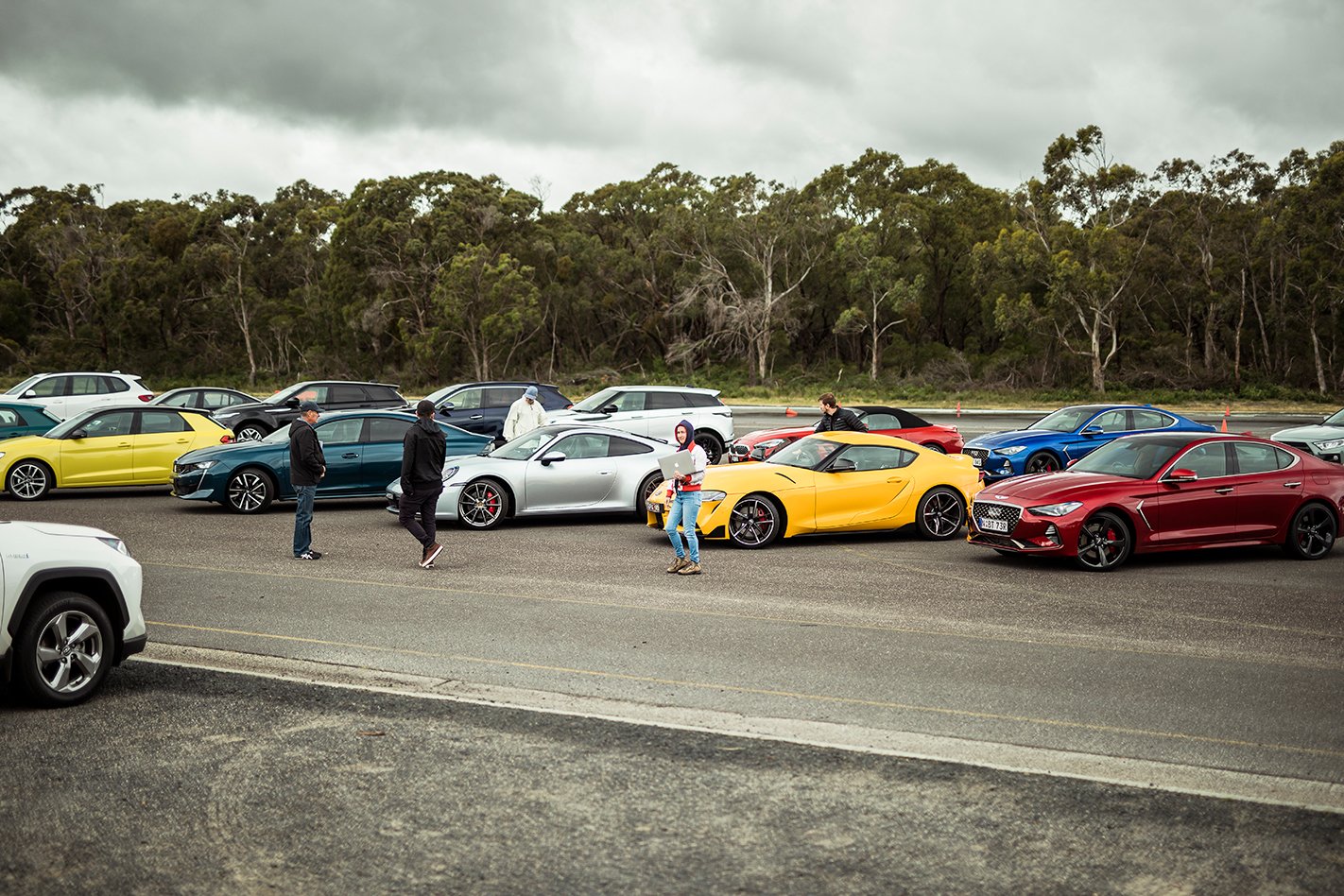
Despite my pre-event bluster, this year looked a close-run thing. We’d deliberately culled the number of models back a little from last year in order to concentrate the quality of the field and to make the first round of judging less frenzied. We were also back at Lang Lang, 90km south-east of Melbourne, doing the static poke and prod while staving off hypothermia in a gazebo that was acting like a wind tunnel. Since the last time we were here, GM had introduced stricter safety rules regarding high-centre-of-gravity vehicles at its proving grounds. In other words, there’d be no flat-out stuff with the SUVs.
The alternative is a coned lane-change test. Our host isn’t keen on seeing airborne wheels as the family trucksters jink through the chicane of witch’s hats, so instigates an initial 60km/h speed limit on the exercise for SUVs. Unfortunately, Byron has something of a (genuine) hearing impediment and initially launches a Toyota RAV4 at the fearsomely tight right/left/right maze at 90km/h. Amid manic ESC braking interventions, it emerges with barely a cone left standing.
And we thought he’d turn over a new Leaf…
One of the major subtexts of this year’s COTY was whether Volvo’s S60/V60 twins could stage an unprecedented three wins on the bounce following the victories of the XC60 and XC40. Sporting tradition usually dictates that you retire the trophy at that point and design a new one, but given the knitted brows of the judging team emerging from the Volvos, it doesn’t look likely.
Deciphering Noelle Faulkner’s serial killer handwriting shows where Volvo’s three-peat looks to be foundering. There among the randomly slanted scribbles and manic strikeouts was the comment, “No X-factor or any lingering desire to drive it again.” Sorry. Should I have issued a spoiler alert there? Oh well. It’ll be a fresh face up on the podium this year to collect the big gong.
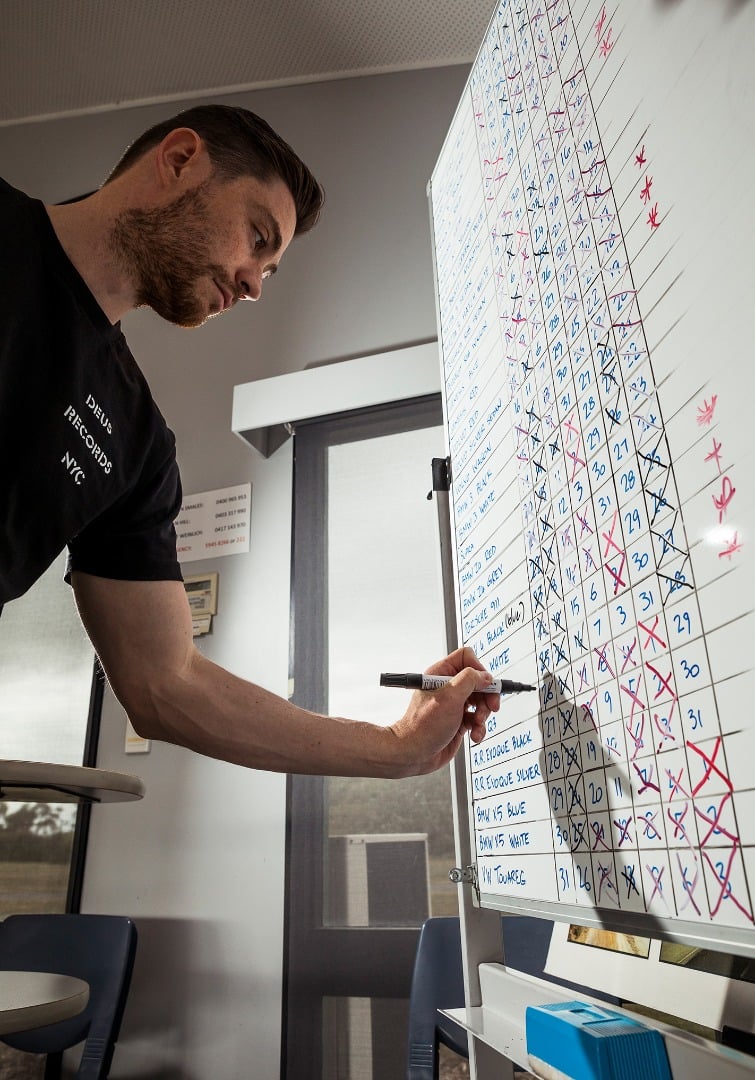
Since you’re here, I’ll clue you in that five cars progress to the second round. Byron – and a few others – hoof the Peugeot 508 overboard, which leaves the Toyota RAV4, the Mercedes-Benz EQC, the Tesla Model 3, the Porsche 911 and the Mazda 3. These are the five that perform best against the tried and tested COTY criteria of Function, Efficiency, Safety, Technology and Value.
The more observant among you will have probably already twigged that 40 percent of the second-round contenders are electric cars, which make up 0.6 percent of Australian new-car sales. Is that an issue? Not really. Car of the Year isn’t a forum to consciously lead or follow; it’s an exercise to assess how well the cars stack up against the criteria. Call it drivetrain agnostic, if you will.
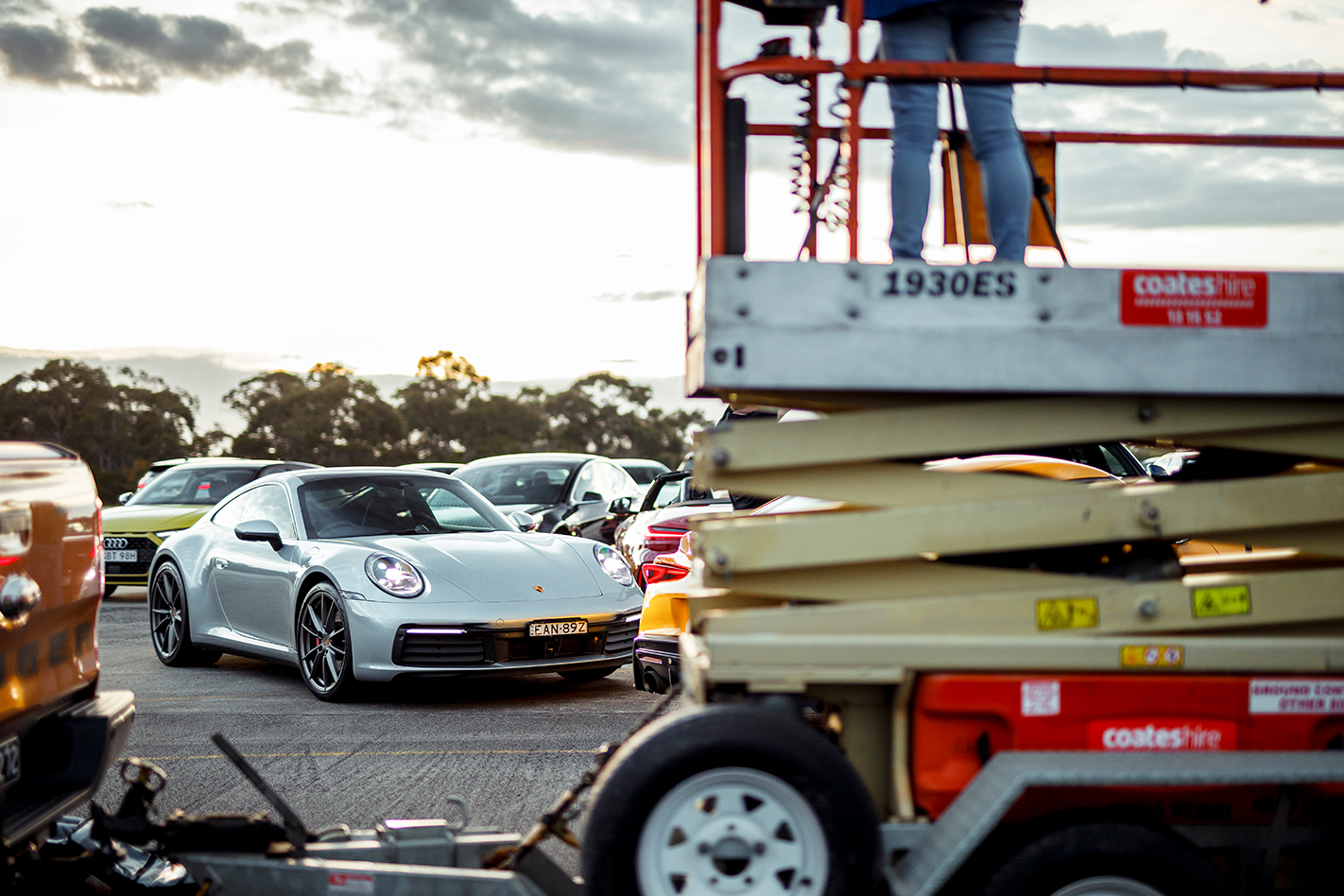
Only one EV has won COTY before and the pitchfork brigade still hasn’t fully recovered from the BMW i3’s victory back in 2014. When 66 percent of the final three were cars that drew their power from a plug rather than a pump, it looked likely that we were heading for another controversial one.
For the road routes we have an observer along. An observer from WhichCar TV sponsor Continental has dropped in to see how the Wheels team tests the cars. He gets out at the end of one drive loop looking a little ashen. “You really test the cars,” he says. “I wasn’t quite expecting this use-case.”

Charging the two electric cars proves a sparky challenge for the logistics brains trust but neither the Mercedes-Benz nor the Tesla run out of electrons, unlike the i3 six years ago or the Jaguar I-Pace last year. Game on.
Every night the team retires to Inverloch, conspires to miss last food orders at the local eateries and then becomes embroiled in massive but generally good-humoured arguments. Byron objects to Inwood referring to the RAV4 Edge 2.5 as ‘The Noisy Nail’ and, to be fair, the car redeems itself over time. Every year there’s one car that impresses the entire COTY team with its sheer unfussed utility, and this year the RAV4 is it. I’m feeling wholly justified in my sage choice of long termer.
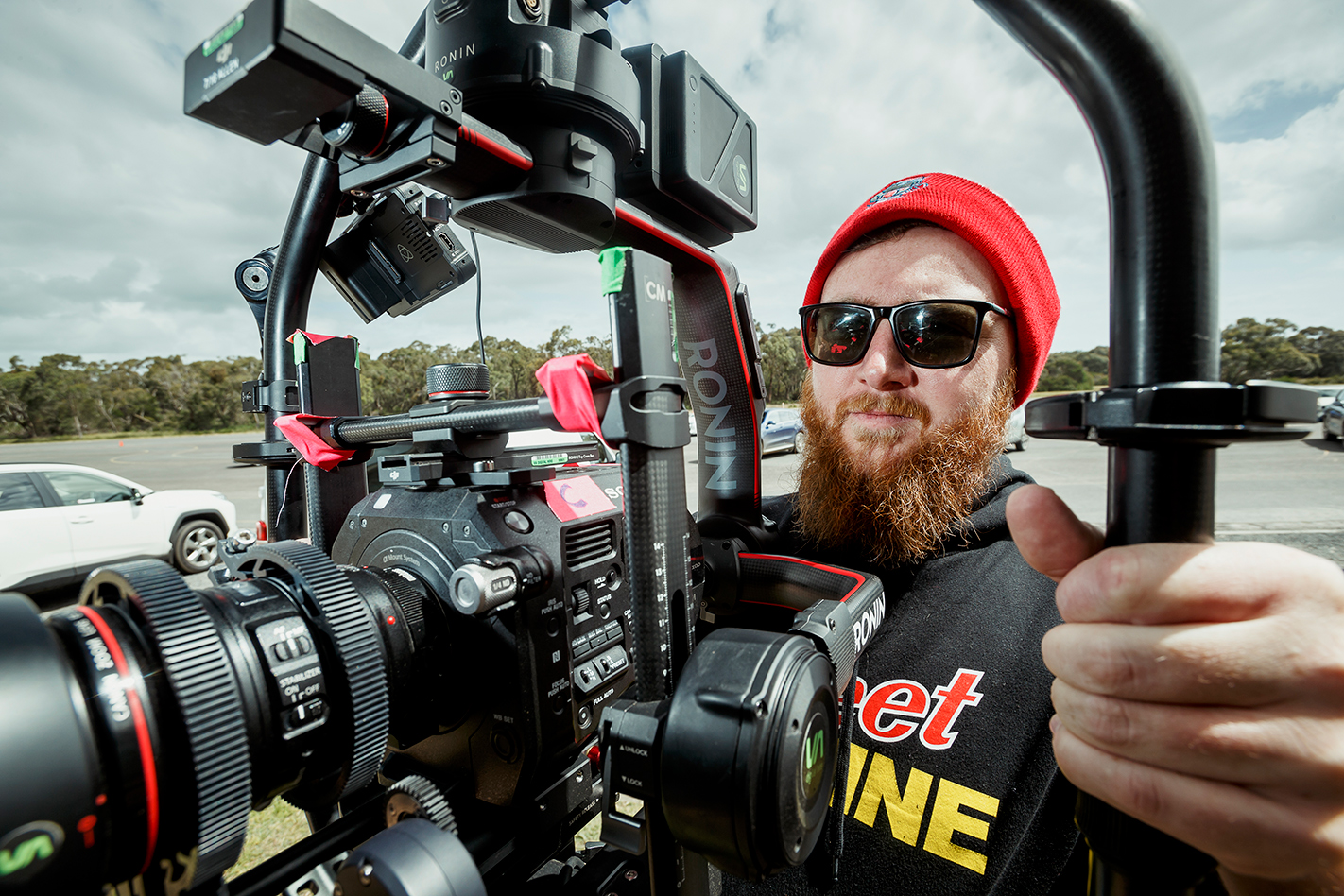
Carey and I have a disagreement over his assertion that the 911 couldn’t be deemed good value because Porsche made excess profit on it. Byron then gets into it with Hagon over his claim that the Nissan Juke was one of the most influential cars of the 2010s. Never accuse Wheels judges of a lack of passion.
As the competition progresses, it’s clear that one car would have to trip firmly on its face in order to lose, and it isn’t a candidate that any of us really saw coming. Every day we try to find the chink in its armour, but every evening we all just look at each other, nod in agreement and argue about something else before realising it’s the ungodly hour of 9pm and Inverloch has put up the shutters for the night. Westerman acts as peacekeeper, supplying our unexpectedly palatial Airbnb with enough KFC that we become disappointed if any food during the event doesn’t arrive in a bucket.
So that’s the backstory to COTY 2020. A steady and remorseless grind to winnow the field until one car remains. Trust the process and it will deliver. Just not always in a bucket.
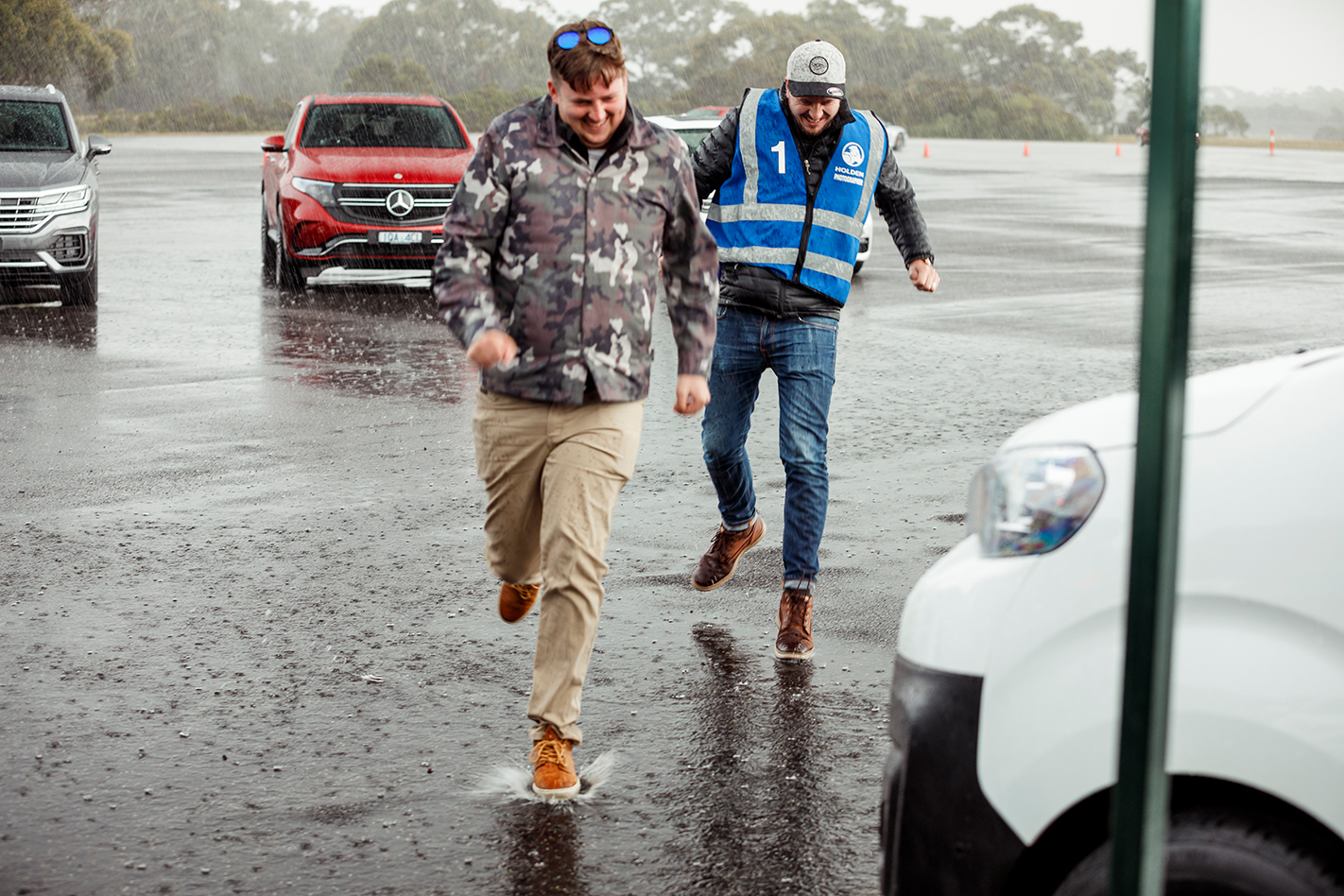
A special thanks to Holden and VBOX
Car of the Year requires an army, and this year was made easier with thanks to Holden and VBOX Australia.
Holden’s Lang Lang proving ground offers a range of tough tests for the COTY field, all overseen by Henry Weinlich – a man who never strops smiling.
The facility received an upgrade in 2018 – including resurfacing the 4.7km circular track at a cost of $7.2m – proving that the company is still investing money in Australia.
We also couldn’t have collected the performance testing data without VBOX Australia kindly lending us one of its VBOX Touch units.
It’s easy to use via the 4.3-inch colour touchscreen and the 10Hz GPS receiver provided accurate data logging. A big thanks to all.
Designed and engineered in Germany, but not only by Germans, and assembled in Austria, this product of a 2012 agreement revives a Japanese legend last produced in 2002. Toyota insists the new Supra would not exist if it had not done a co-development deal with BMW, and the Germans say that without their Japanese partner the business case for replacing the Z4 roadster would not add up. The closely related pair of rear-drive two-seaters are produced in the same Magna Steyr-owned factory in Graz, Austria.
To say the two-birds-with-one-stone origin tale of the new Toyota Supra is more complex than the average car’s is an understatement. But there’s nothing complicated about the Supra line-up launched in Australia last September.
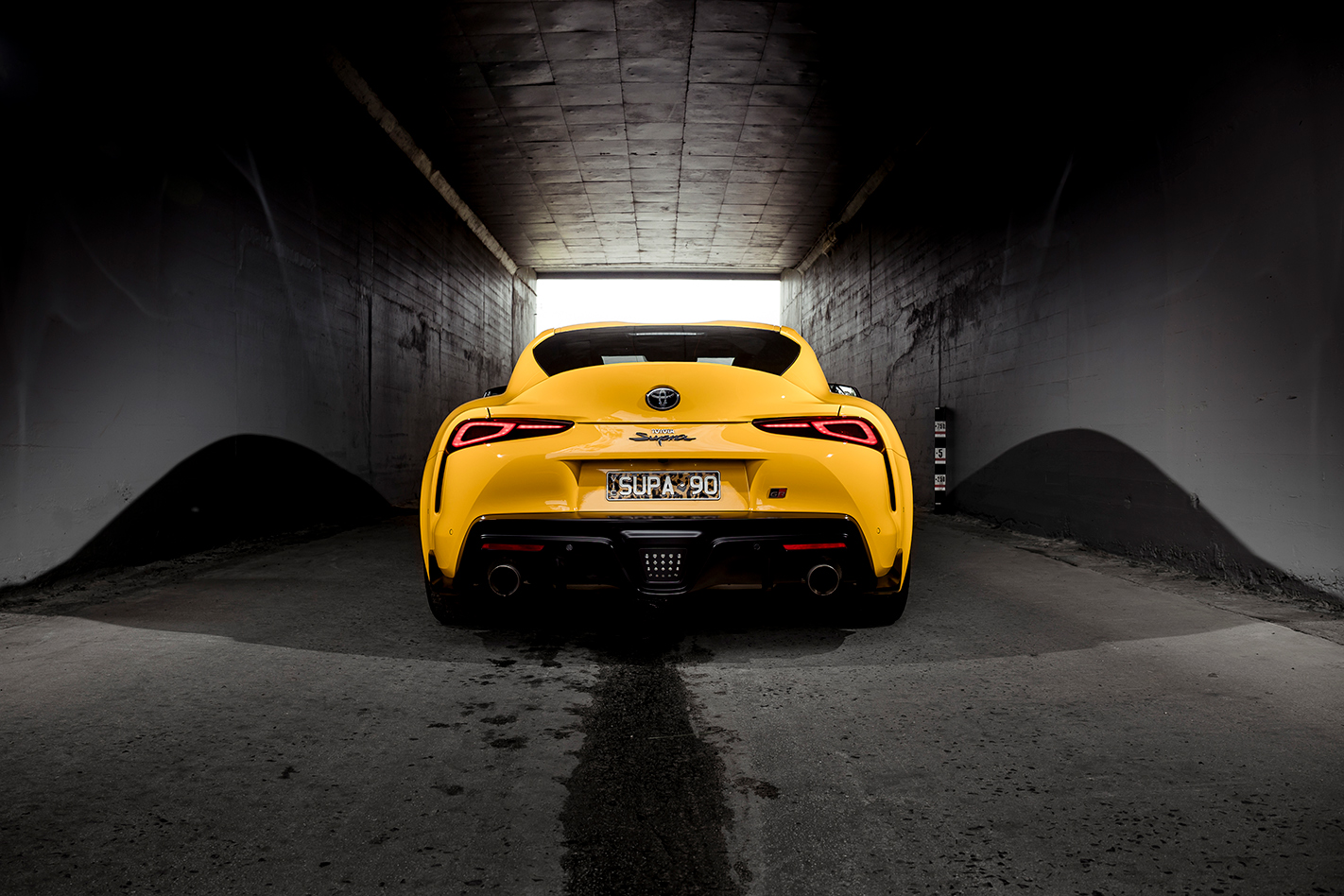
It consists of only two model grades, the $84,900 GT and the $94,900 GTS. The extra money buys larger 19-inch wheels and Michelin Pilot Super Sport tyres, larger rear brakes and red-painted calipers, metal pedals, a head-up display, JBL sound system, plus access to Alcantara interior trim and matte grey exterior paint options at $2500 apiece.
Those prices are premium, but competitive. The Supra GTS is around $30,000 less than its Z4 M40i sibling with the same 250kW and 500Nm BMW 3.0-litre turbo in-line six and ZF eight-speed automatic. The Toyota also undercuts its most obvious competitor, the Jaguar F-Type P340 Coupe, and is $20,000 more than Nissan’s ancient and raw 370Z Nismo.
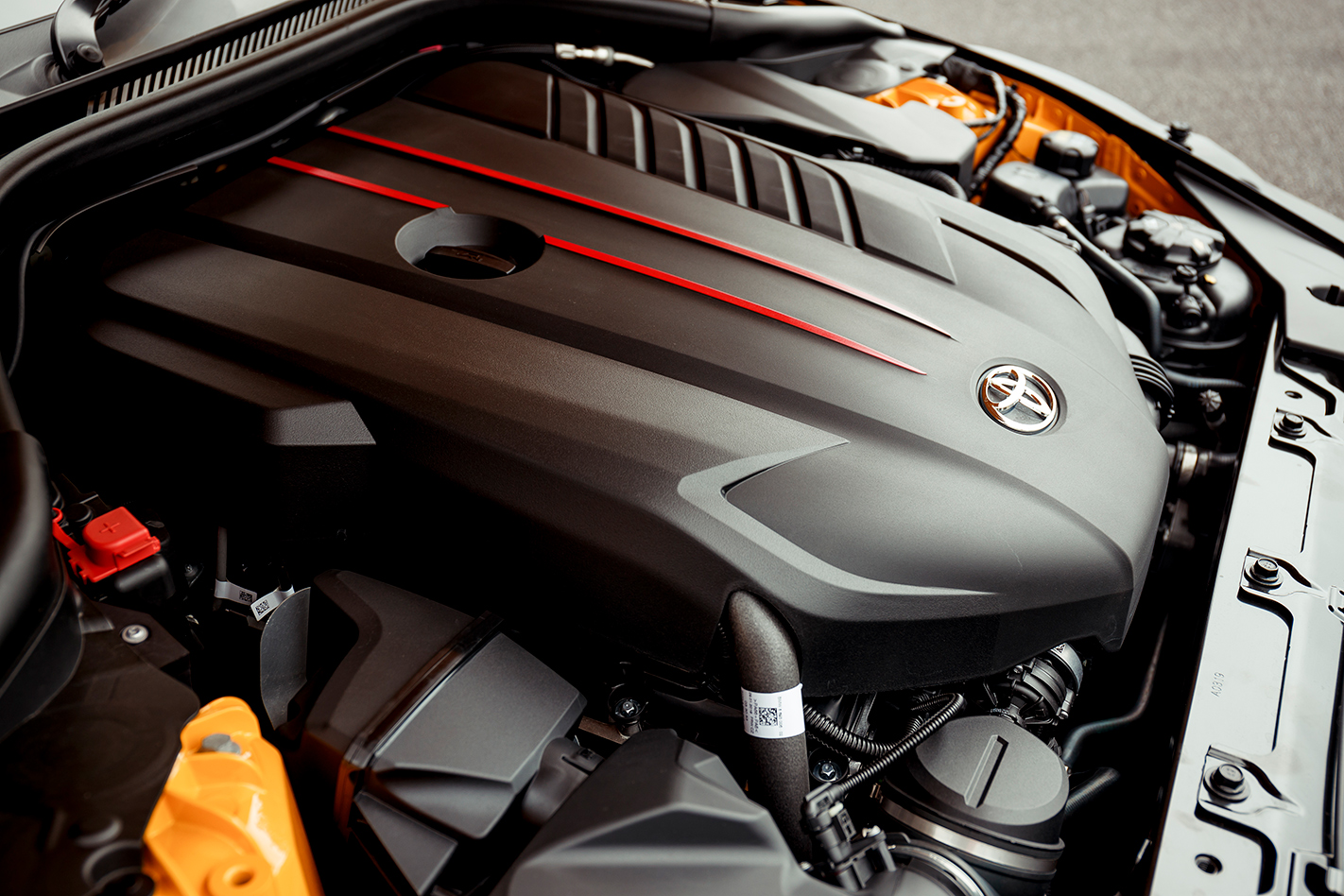
What’s not debatable is the quality of the Supra’s borrowed drivetrain, though consumption soars when driven with verve. Some judges yearned for a manual transmission in place of the auto, but the muscular and musical BMW engine is mostly a delight.
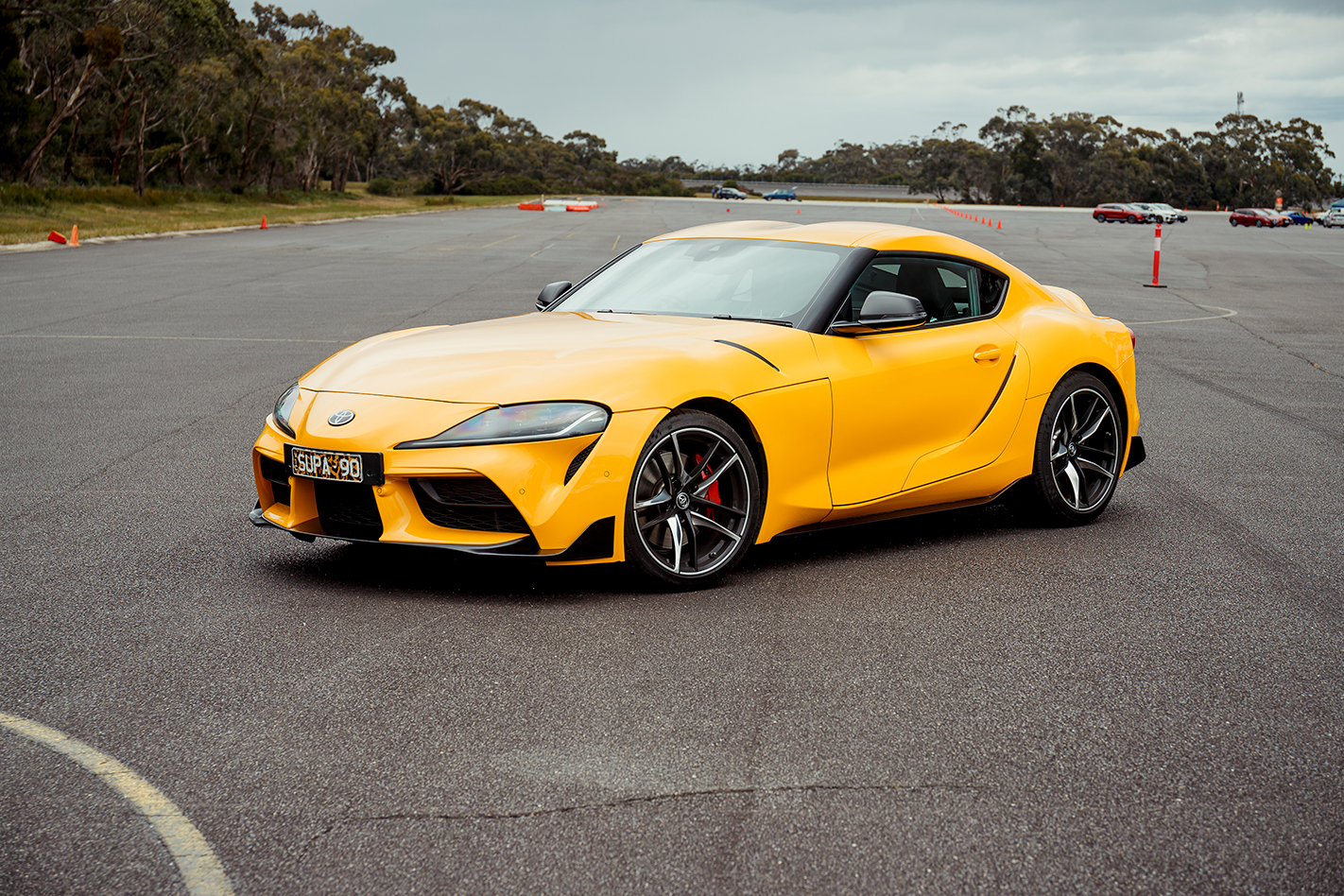
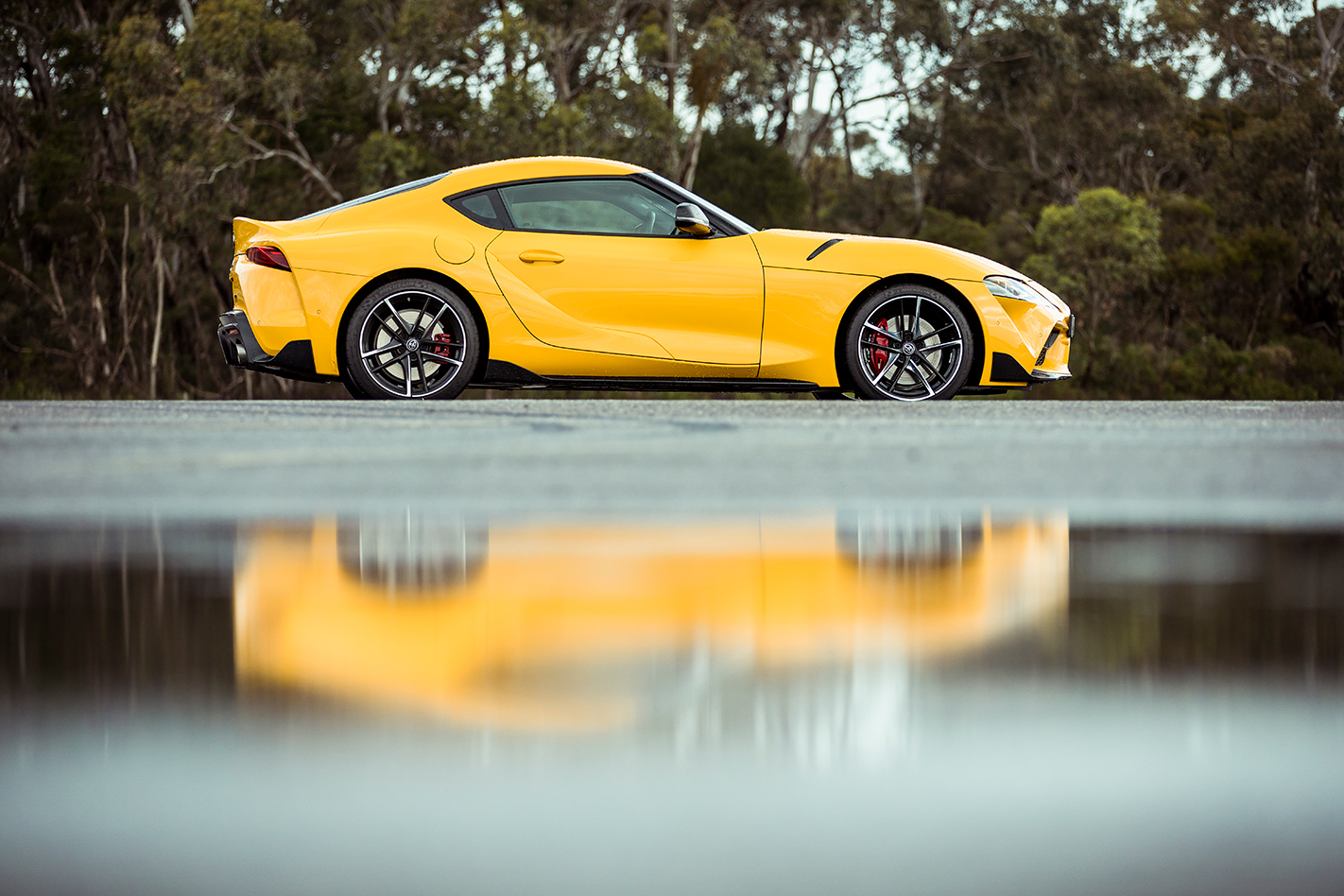
While ride comfort is impressive, some judges at first thought its Toyota-calibrated chassis felt a little too ‘GT’. Drive it harder, however, and it’s clear that there’s a flintier side to its initially urbane dynamics. The brakes are great, but both ESC and traction control systems lack finesse.
The Toyota was the noisiest car in the COTY 2020 field. Constant road roar wasn’t the only inherent flaw. Head-banging was a hazard for taller judges when getting into and out of the Supra, thanks to the cut of the door apertures.
The contrived exterior hysterically screams Japan. Toyota sent a small team of designers to work in Munich for two years on the Supra, and it’s plain most of them were exterior artists. The snug interior instead shouts BMW, though Toyota deserves some credit for specifying a steering wheel with a slimmer rim than the fat sausages being served by Munich lately. Supra’s cargo compartment is small.

Safety isn’t a Supra strong point. It hasn’t yet been independently crash tested (though the Z4 has earned a five-star rating from Euro NCAP) but the list of sensor-based safety and driver-assist systems isn’t as extensive as that fitted to a budget-priced Corolla.
The high noise levels, divisive exterior design, cramped interior, hard-driven thirst and skimpy safety equipment ultimately dented the chances of this interesting comeback car progressing any further in COTY 2020.
THE JUDGES’ COTY SCORECARD
Function: 3.0
Efficiency: 2.9
Safety: 2.5
Technology: 2.1
Value: 3.2
TOYOTA SUPRA SPECS
BODY
Type: 2-door coupe, 2 seats
Boot capacity: 290L
Weight: 1495kg
DRIVETRAIN
Layout: Front-engine (north-south), RWD
Engine: 2998cc 6cyl turbo-petrol (250kW/500Nm)
Transmission: 8-speed automatic
OTHER
Tyres: 255/40R18 – 275/35R19
ADR81 fuel consumption: 7.7L/100km
CO2 emissions: 177g/km
Crash rating: Not yet rated
PRICES
$84,900 – $94,900
Ford engineers in Europe have been hard at work on solving one of the world’s greatest dilemmas… how does one bring the world of emojis into the real world?
Chevrolet once sent out a press release written entirely in emojis for a… car I can’t remember, and various states are starting to allow the use of emojis on vehicle number plates.
However, Ford has taken the notion one step further, incorporating flexible LED panels into a cycling jacket and hooking them up to a controller that allows a cyclist to show his or her happiness, displeasure or concern with a quick press of a button.
Nothing could go wrong there, surely (insert eye-rolling emoji here).
Besides the obvious face emojis, the jacket’s designers – working on the company’s Share the Road campaign in Europe – have also cleverly incorporated flashing turn signals and a danger symbol into the jacket’s repertoire , which would actually be super practical in the cut and thrust of a morning commute.
The control units itself looks a little bit kludgy, and were this one-off prototype ever to make it into production, that could stand to be tidied up to make it easier to use in the heat of a fierce emoji war.
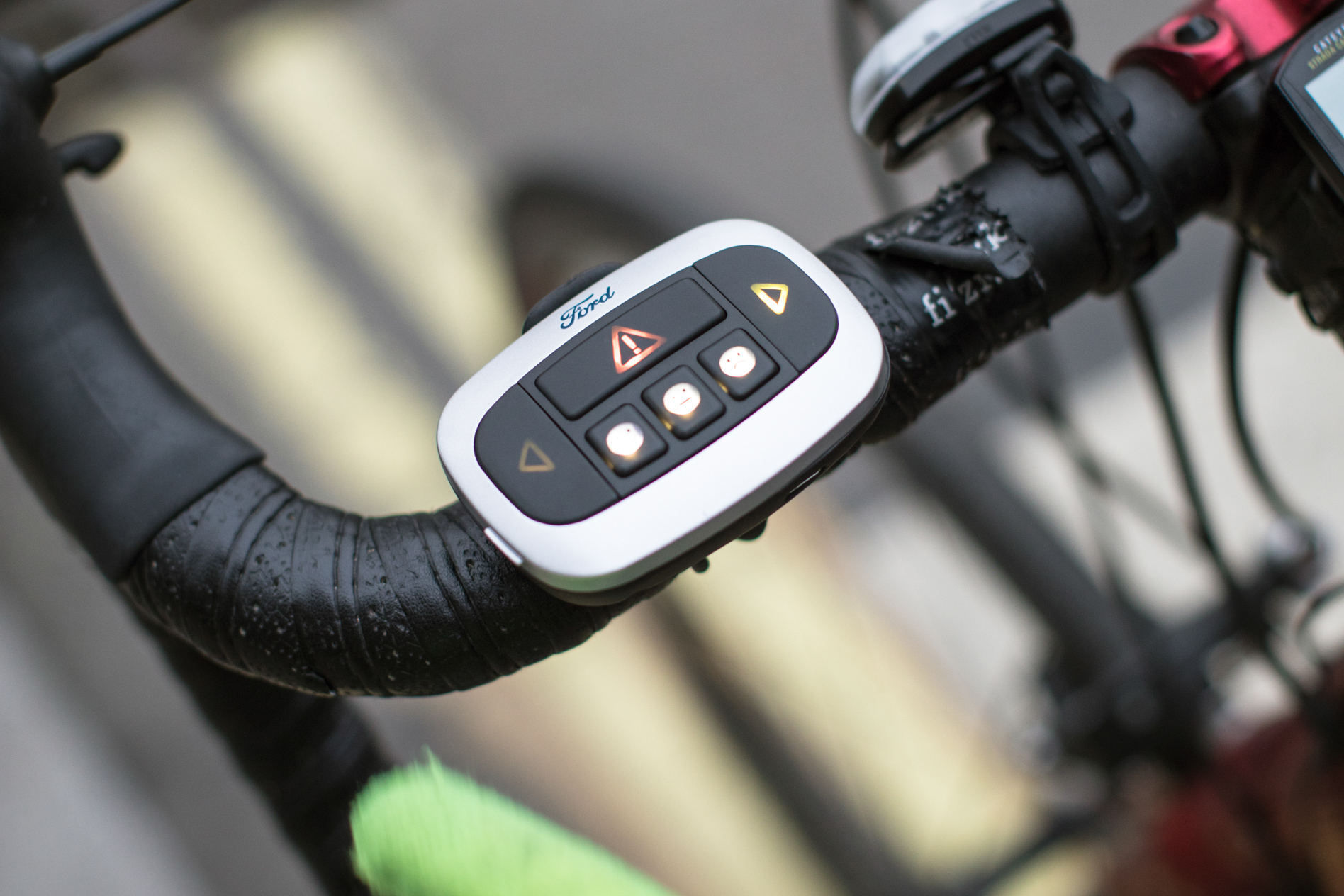
“Emojis have become a fundamental part of how we use language. Whether used to convey facial expressions, humour, or sarcasm, they have become integral to our ability to express ourselves and quickly,” says Dr. Neil Cohn PhD, assistant professor, Department of Communication and Cognition at Tilburg University in The Netherlands.
“This jacket created in partnership with Ford ‘Share the Road’ allows riders to express their feelings and creates an important emotional link between them and other road users.”
While retina-searing LED lights have long been a vital weapon in a rider’s arsenal, brake lights and indicators have – despite what a plethora of dodgy Instagram ads try and tell you – never really come of age, but this clever piece of kit is a great example of what car designers can do to help calm the sometimes ruffled waters of shared roadways.
Oh, and if you were wondering, there appears to be no eggplant emojis built into the standard programming. Sorry.
MOTOR Australian feature review
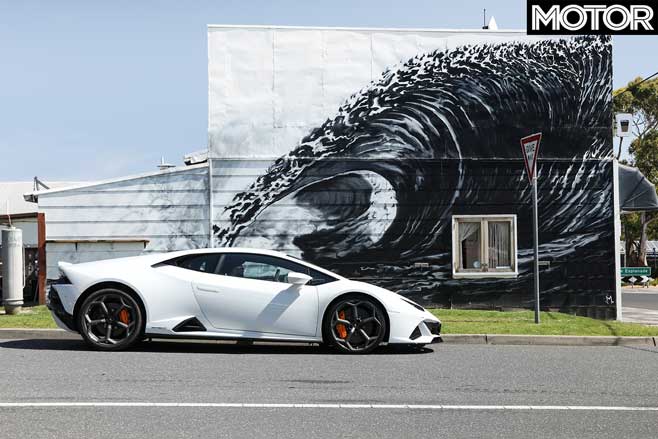
This happens often in car company land. A whiz-bang new halo model emerges and then, what feels like only a year later, the base model is facelifted and gets all the goodies of the previous halo car, which now seems a bit dated. Coincidence? More like cleverness – car companies know what they’re doing.
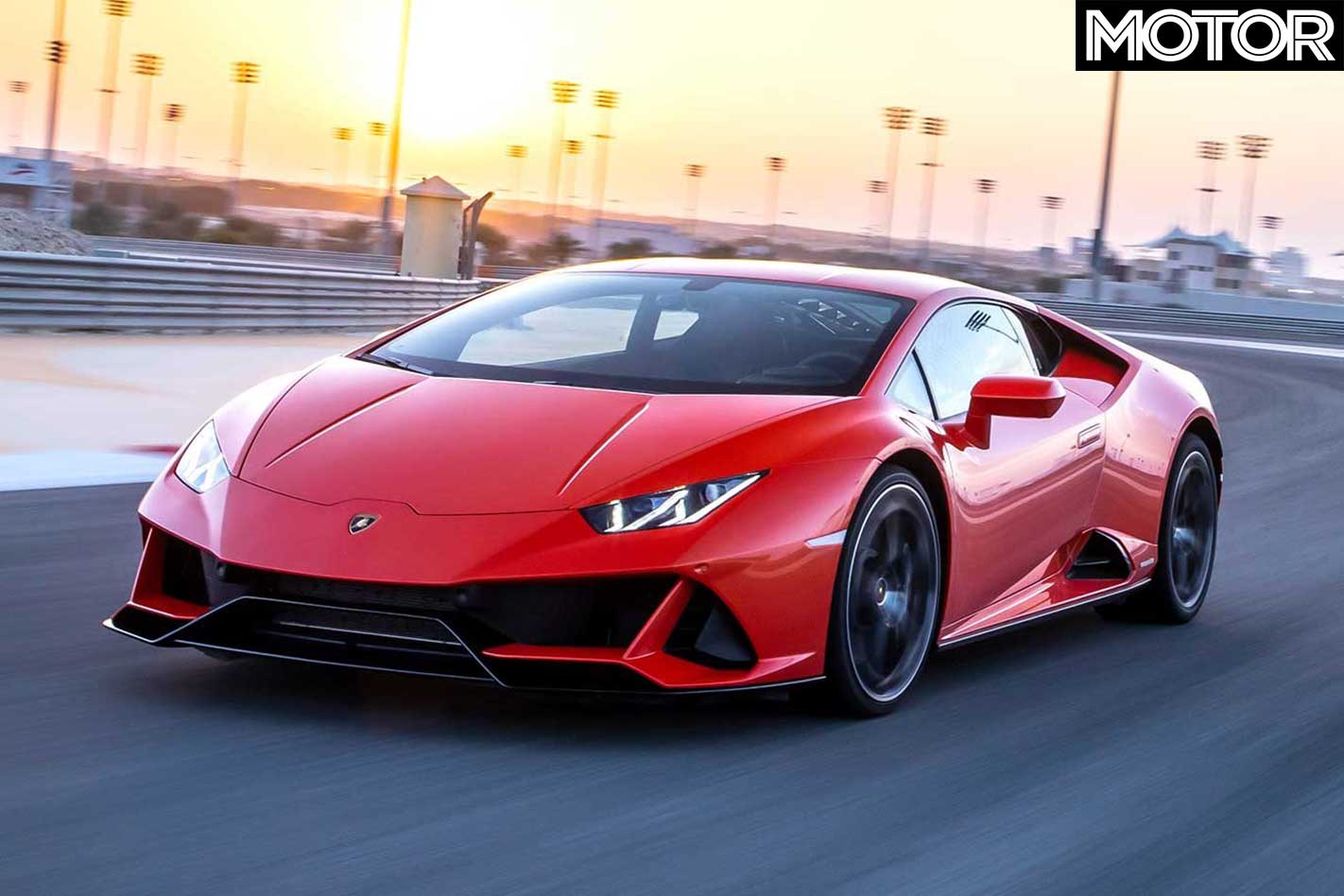
Case in point: the new Lamborghini Huracan Evo. More than the Huracan’s biggest update since its launch in 2014, the Evo is a Performante in everything but name – and one other major exception which we’ll get to.
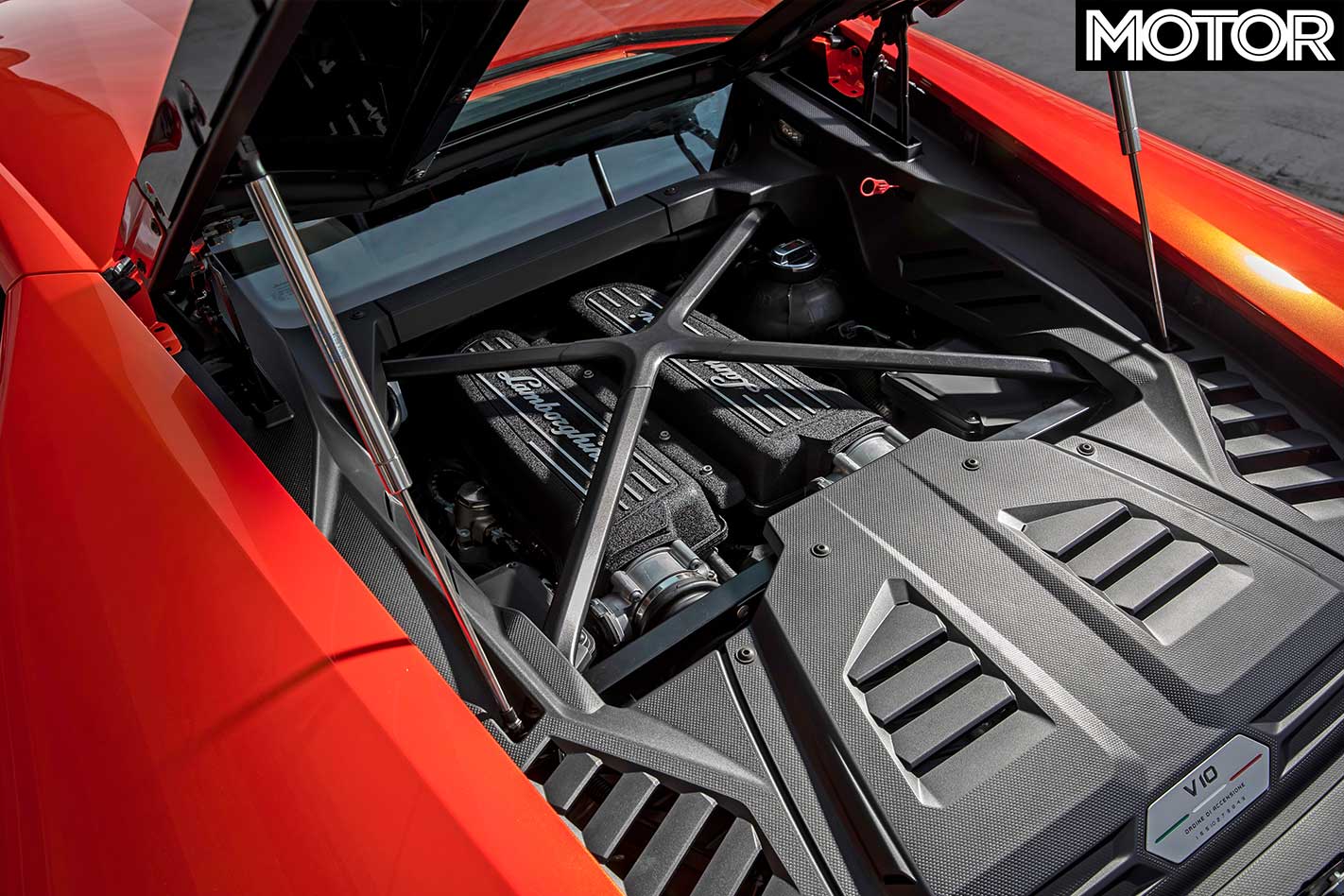
That means it’s in with the Performante engine, the most aggressive iteration of the Lamborghini/Audi 5.2-litre V10 yet. A redesigned inlet tract and higher-lift intake cams with titanium valves – and presumably some ECU fiddling – combines with the existing 12.7:1 compression ratio and 8500rpm maximum engine speed for a fairly staggering 470kW at 8000rpm and 600Nm at 6500rpm, up 21kW/40Nm on the outgoing LP610-4.
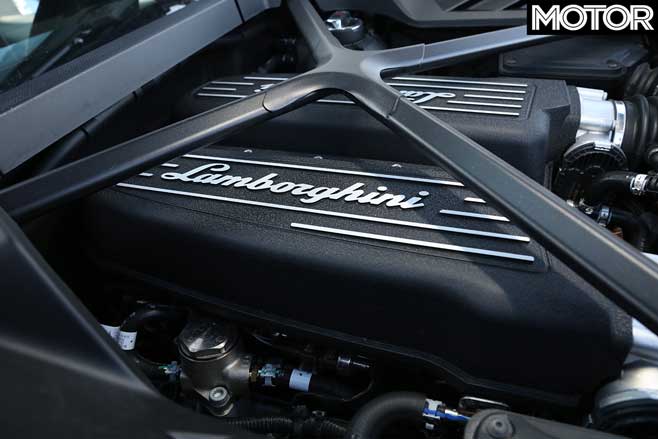
The seven-speed dual-clutch paddleshift transmission remains though in fairness it had little room for improvement, while the big news in the chassis department is the fitment of the Performante’s trick rear-steering system. Lamborghini, meanwhile, has ditched the previous letters/numbers naming convention – to make the cars more marketable, it says – so you and I would be the only ones calling it the new LP640-4.
That, of course, was the Performante’s name under the previous naming convention, yet the Evo differs in one significant way and it’s not just the lack of super-sticky Pirelli P-Zero Trofeo R tyres – no, don’t think your Evo is going to set a 6:52.01 around the Nordschleife, unless you retrofit the Performante’s Aerodinamica Lamborghini Attiva (ALA) active aerodynamics, of which the Evo misses out entirely.
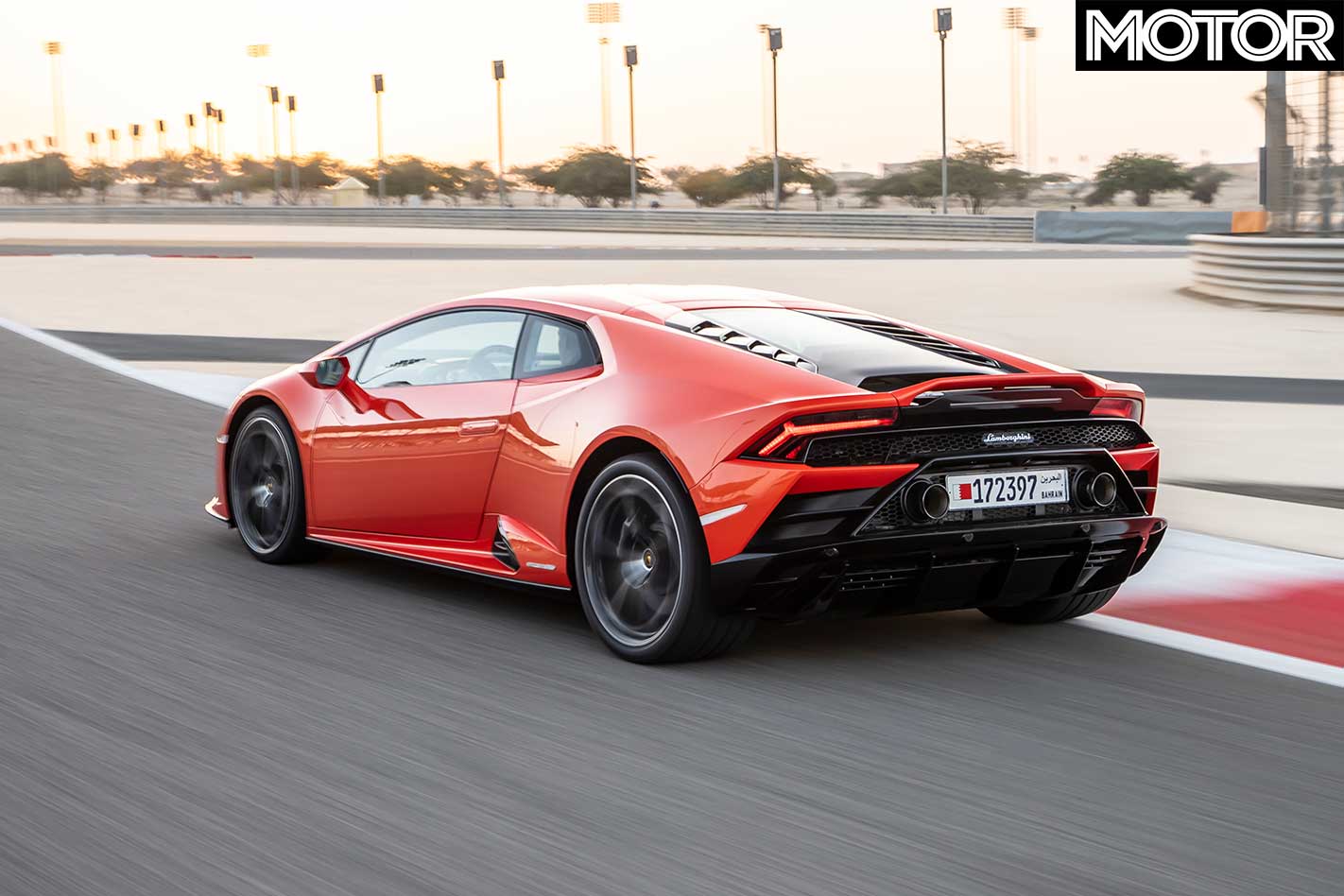
The aero has indeed improved, says Lamborghini, thanks to restyled front and rear bars – which inject a bit more sin into the Huracan’s overall vibe – and a subtle yet obvious, almost ducktail-like rear lip spoiler.
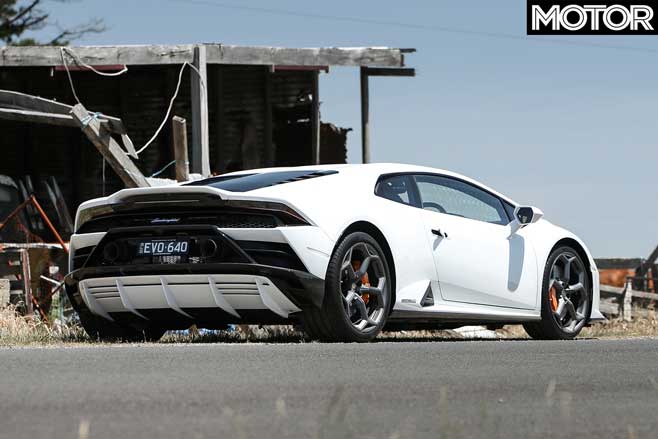
In Evo guise, and certainly in our test car’s Bianco Icarus Metallic paint, there’s a new – to our eyes – almost Countachness about the Huracan missing in the previous design. And that’s even if you ignore the awful body-coloured, white rear diffusor – one aero element that does borrow heavily from the Performante – which looks, from some unfortunate angles, like a nappy.
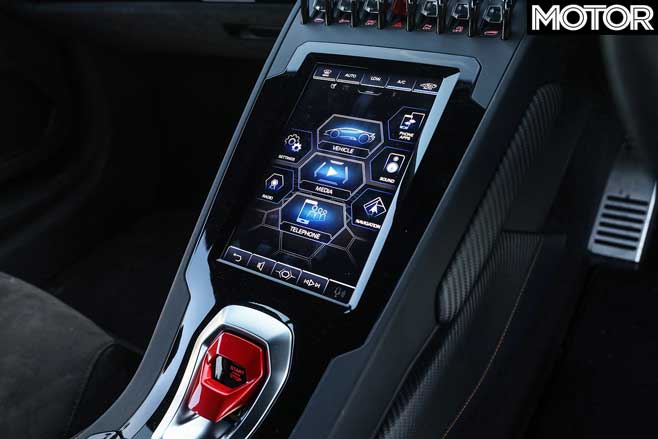
Inside the tweaks are minimal, limited to a new 8.2-inch touchscreen atop the centre stack which now contains all infotainment and air-con controls. As we pick the car up, we’re told, almost proudly, that this system was designed by Lamborghini – not Audi – which would go some way to explaining why it’s fiddly, not the last word on intuitiveness and a bit annoying.
Meanwhile, not that it would register for those in the market but the price has crept up from $428,000 to $459,000, or a seriously pricey $520,461 if you tick as many options as the Lamborghini public relations team did for this particular car. Which had just 146km on the odo when we picked it up, making MOTOR the first outlet in Australia to drive it, and with just a 500km limit. Needless to say, the run-in period was very brief.
And limited, mostly, to Melbourne’s Monash Freeway as we guided the pristine nose of our baby bull south-east towards Warrugal – and the twisty road playground that lies nearby. Specifically, Grand Ridge Road, a 25km stretch of quiet, undulating twisties linking the even quieter locales of Hallston and Ellinbank.
The thinking being, faster sweepers should play to traditional Huracan strengths of speed and stability, while some tighter corners could help show off the new rear-wheel steering. Or so the theory went.
The first thing you notice about the Huracan – once you’ve gotten used to the curious, slightly high-feeling seating position, somewhat of an illusion created by the low windowline and dash – is, as ever, the engine. Oh, the engine.
In the most behaved mode Strada (Street), you’d have no idea of the ferocity that lies just centimetres from the back of your head, the powertrain shifting you along effortlessly, smoothly and quietly and on supple adaptive dampers with a more-than-acceptable ride quality.
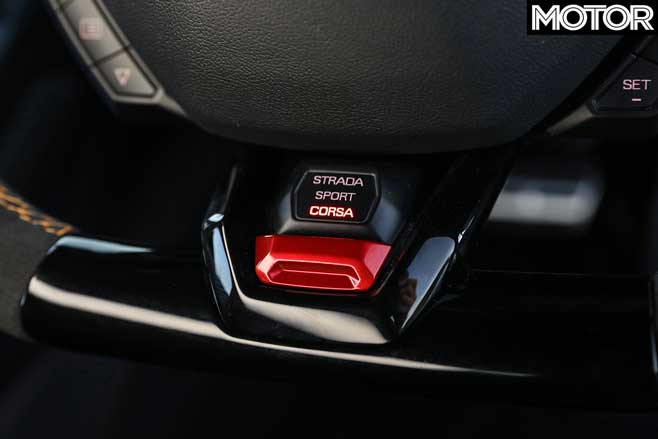
The width and value of the car are always in the back of your mind and aside from also some fairly big tyre noise – and seats that have a bit of a time limit – the Huracan is as liveable and daily driveable as supercars come. The indicators even make sense after a while, being a stubbly thumb-controlled left-right switch on the left steering wheel spoke, even if the idea isn’t quite as well executed as Ferrari’s, which puts a button on each side of the steering wheel.
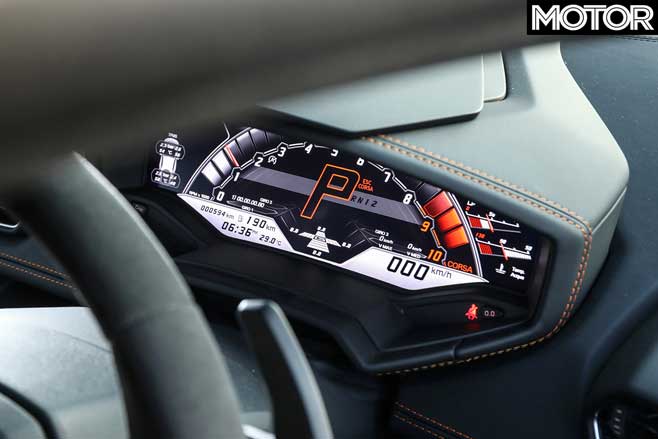
Scroll the drive mode selector – which is a red toggle on the base of the steering wheel – through to Sport and even Corsa (Race) and the Huracan may as well be a different car. Ahead of you, the clear, bright TFT instruments transform from big tachometer to full, race-spec rev counter, complete with giant gear indicator. The idle speed increases, as does the amount of decibels coming from behind you, as the Evo crouches down into the pounce position ready for your next command.
If you’re in a supercar posse you might have a silly mate with a McLaren who’s only too eager to tell you just how fast his carbon-tubbed, latest twin-turbo purchase is in a straight line. And he’d be right, they’re fast. So are Ferrari 488s; and 911 GT2 RSs. But the Huracan Evo proves the atmo engine ain’t getting left in anyone’s dust, if nothing else just because of its twin-clutch launch control and all-wheel drive.
As you might imagine with a car with 470kW, the Huracan Evo is brutally fast. First and second gears are processed rapidly with zero wheelspin, howling revs and linear power translating to clean acceleration. And all the while making a noise like the sound deadening has been sucked through a hole in the rear firewall.
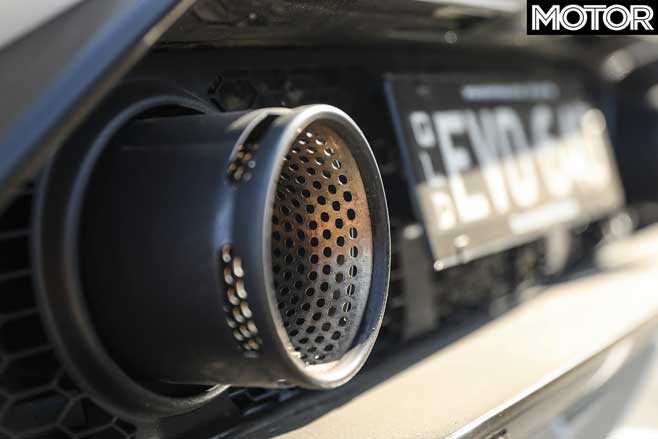
How they can make a car this loud, legal, is amusing, the Evo even more aurally aggressive than the previous Huracan (which was no wallflower). Notably the hilarious pops and cracks on the overrun, which are so loud they are felt percussively through the seat just as much as they are heard with your ears.
Sadly we were unable to test the Evo on our drag strip but past experience with Huracans and R8s – even rear-drive ones – suggests its claims aren’t the stuff of fiction. Zero to 100km/h takes just 2.9 seconds, says Lambo, and 0-200km/h 9.0sec – improvements of 0.3sec and 0.9sec over the outgoing LP610-4 respectively.
Owing to the linear way it accrues speed, and with minimal all-wheel drive fuss – rather than the explosive, coming-on-boost, bursting-into-wheelspin rear-drive thrust of its turbocharged rivals – the Huracan Evo is somehow not quite as exciting in a straight line as its rivals, but it’s still as fast as you’ll ever want. And it sounds as good as you’d ever want, the V10 making a racket that will echo through the ages.
The Huracan, and R8, have obviously always been about that engine. About the powertrain, really, as the twin-clutch ’box deserves just as much praise. And if you could try to understand Lamborghini’s focus in updating the Huracan, you might say it’s tried to elevate the chassis and handling to get at least close to the magic of that which lies amidships.
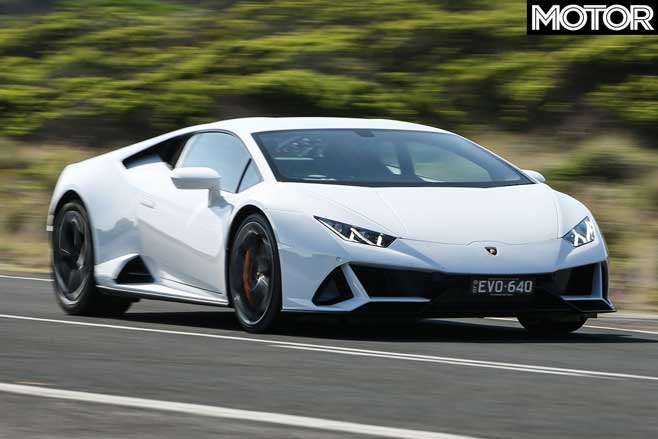
The rear-wheel steering goes some way to achieving that. Unlike, say, a Porsche 911 rear-steering system – which blends invisibly into the dynamic sum of the car – the Huracan’s system is very obvious in its operation. Almost too much so.
There’s an acclimitasation period as you keep turning too much into corners, only to unwind a little bit of lock. But once you get used to it, only small steering inputs are required – making driving a Huracan fast a tiny bit easier. It comes to the fore in the slower corners where the point of rotation feels more rearward than before, letting you carry more and more speed without fear of the car pushing wide. It’s quite a unique feeling if you’ve never felt it before.
As for the high speed stuff, it’s hard to know what difference the rear-steer has made as it wasn’t exactly a nervous-feeling car at bigger velocities to begin with. Feeling rock-solid planted and giving total confidence at higher speeds has always been a Huracan virtue.
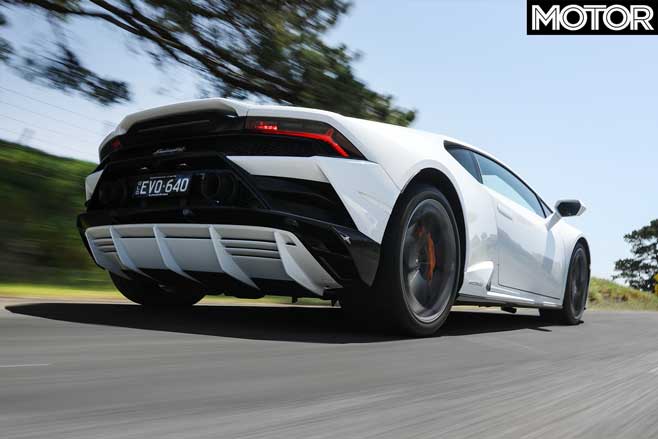
It’s curious playing with the Evo’s myriad electronic modes, too. Corsa is almost too aggressive for the road. The rear-wheel steering becomes hyper-sensitive and the transmission develops an artificial thump as you go up the gears, which is a bit unpleasant.
Sport is very much the sweet spot, the transmission a lot smoother, the rear-steering not as aggressive, the damping a bit softer with more compliance. There is no customisable Ego mode in this car – which is a curiosity – so you’re restricted to Sport mode which is no hard thing – it’s perfect for the road.
It has to be said, though, the rear-wheel steering hasn’t really imbued the Huracan with a new dynamic magic as we may have been quietly hoping. Beyond a doubt the Evo is spectacularly capable – the speeds it will comfortably permit down a twisty road are nothing short of ludicrous – but the chassis, the front end and the steering, still exist in the very long shadow of the powertrain. It’s a fairly hard thing to measure up to – the engine is one of the greatest ever made.
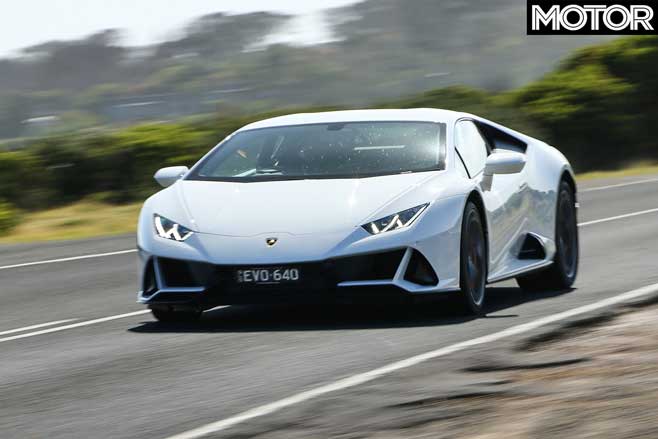
We wouldn’t argue for a second either that the Evo would be riotously good on a track, where what is almost a slightly under-tyred feeling would translate into huge fun. Power oversteer is possible, too, some rear-drive characteristics emerging in first and second gear.
But as it stands, on the road, some classic, at times scary mid-engine dynamics (the harder you try to drive around the relatively narrow 245mm front tyres on the brakes, the more aware you are that there is a huge lump of engine right behind you) limit you to driving the Evo in one way. And that’s enjoying the acceleration, noise, gearbox and brakes – of which there is no doubt plenty to enjoy.
Instead, for us the Evo is a preview of a car that’s still to come, and one that makes us salivate like a hungry hound at a butcher’s window: the rear-wheel drive version. The LP580-2, the 426kW version of the previous Huracan, was one of our favourite cars. And so the prospect of an even more grunty, cheaper, Performante-powered rear-drive Huracan Evo is something that Excites Us A Lot. We don’t even know if Lamborghini is going to build one, but we presume they will. And for MOTOR readers, it will be worth the wait.
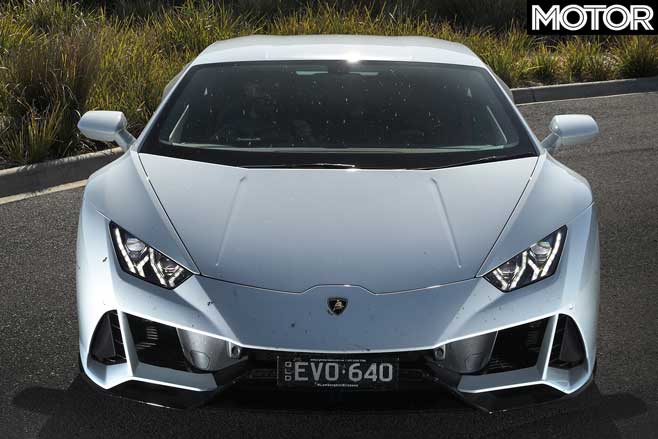
FAST FACTS 2019 Lamborghini Huracan Evo
BODY: 2-door, 2-seat coupe DRIVE: all-wheel ENGINE: 5204cc V10, DOHC, 40v BORE/STROKE: 84.5 x 92.8mm COMPRESSION: 12.7:1 POWER: 470kW @ 8000rpm TORQUE: 600Nm @ 2000-6000rpm WEIGHT: 1422kg (dry) POWER-TO-WEIGHT: 330kW/tonne (dry) TRANSMISSION: 7-speed dual-clutch SUSPENSION: double wishbone, coil springs, adaptive dampers, anti-roll bar (f/r) L/W/h: 4520/1933/1165mm WHEELBASE: 2620mm TRACKS: 1668/1620mm (f/r) STEERING: electrically assisted rack-and-pinion; rear-axle steering BRAKES: 380mm carbon-ceramic discs, 6-piston calipers (f); 356mm carbon-ceramic discs, 4-piston calipers (r) WHEELS: 20.0 x 8.5-inch (f); 20.0 x 11.0-inch (r) TYRES: Pirelli P Zero; 245/30 R20 (f); 305/30 R20 (r) PRICE: $520,461
PROS: Engine to die for; response; noise; insanely fast CONS: Lacks handling magic of rivals; new infotainment is fiddly RATING: 4.5 out of 5 stars
MOTOR first drive review
More power, more aero and better handling… has the ‘Baby Lambo’ just become the Raging Bull of choice? By: Daniel Gardner
Open the door of the Lamborghini Huracan Evo and slide out of its strangely hexagon-adorned cabin and you’ll have a number of post-blast thoughts circulating your mind. You might be digesting the urgency of dual-clutch transmission shifts, pondering its underlying Audi DNA, or chuckling at how far the raging bull has come since the Diablo days.
However, of all the lasting impressions the four-wheel drive Huracan LP 610-4 and the rear-drive LP 580-2 leave you with, I promise you won’t be walking away craving a little more power. Nor will you wish its naturally aspirated 5.2-litre V10 could be a bit noisier. And I’m pretty certain you won’t deduct marks for just a little too much aerodynamic drag and not enough street presence.
Regardless of whether you hop in the all-paw version, or the (initially worrying but actually sublime) two-wheel drive option, in either coupe or Spyder form, each Huracan since its 2014 launch has adhered to the Lamborghini mantra: unapologetically irreverent, shamelessly conspicuous, fast.
And yet, the Italian manufacturer has decided that after five years of snapping driver’s and onlooker’s necks, the Huracan is in need of more power, enhanced agility, a more shouty report and slipperier aerodynamics.
Lamborghini calls it the Huracan Evo. And we’re not talking a mild mid-life facelift with a bit of slap and a snazzy limited edition boot badge. For a start the Evo is more handsome than any Huracan before it. No sheet metal has been changed, but unlike more mainstream cars, the Huracan’s front and rear bumpers constitute a large chunk of real estate, giving the design team a big canvas to make changes.
Trademark Ypsilon vents now fill the prettier nostrils and contribute to 16 per cent more cooling air, while at the tail end a huge diffuser works with new underbody deflectors for more stability at speed. The pair of Supersport exhausts also now emerge half way up its hind and in the middle, while a slotted spoiler draws hot air out of the engine bay using the venturi effect, while adding downforce. It’s style and substance with up to seven times more aerodynamic and downforce efficiency.
Not only does the Huracan now fight the air less, it has more help from the atmo V10 to push through it. Borrowed from the mighty Performante, power is up to 470kW and torque peaks at 600Nm – enough to get from static to 100km/h in 2.9 seconds – also the same as the Performante. However, beyond the 10 cylinders buried deep in the Huracan’s hold, the Evo is a very different beast.
While the Performante bullies the air into submission with ostentatious forged carbon-fibre spoilers and fins, the Evo has a more subtle, cooperative approach in its pursuit of speed. It’s still four-wheel drive, but unlike the Performante, the new Evo borrows the rear-wheel steering system from the obscenely aggressive Aventador SVJ.
And if that wasn’t enough, the Urus donated its torque vectoring. It’s like the Lamborghini engineers pulled all of their favourite parts off the shelves and threw them all at the updated Huracan. So you would expect it to be good then…
As a tantalising Huracan hors d’oeuvre, chief technical officer Maurizio Reggiani lets slip that the car I’m about to drive is faster in parts of the Nardo test track than the Performante. Sounds like a challenge.
But testing the athletic ability of what promises to be a viciously capable machine on public roads would be like darts in the dark; bullseye, one-hundred-and-eighty, someone looses an eye. It’s exactly why I am standing in the surprisingly cool desert breeze craning my neck to look up at the Bedouin tent-inspired grandstand towering high above the Bahrain International Circuit. If this 5.4km, 15-turn track is good enough for Formula One, it’s good enough for the Evo.
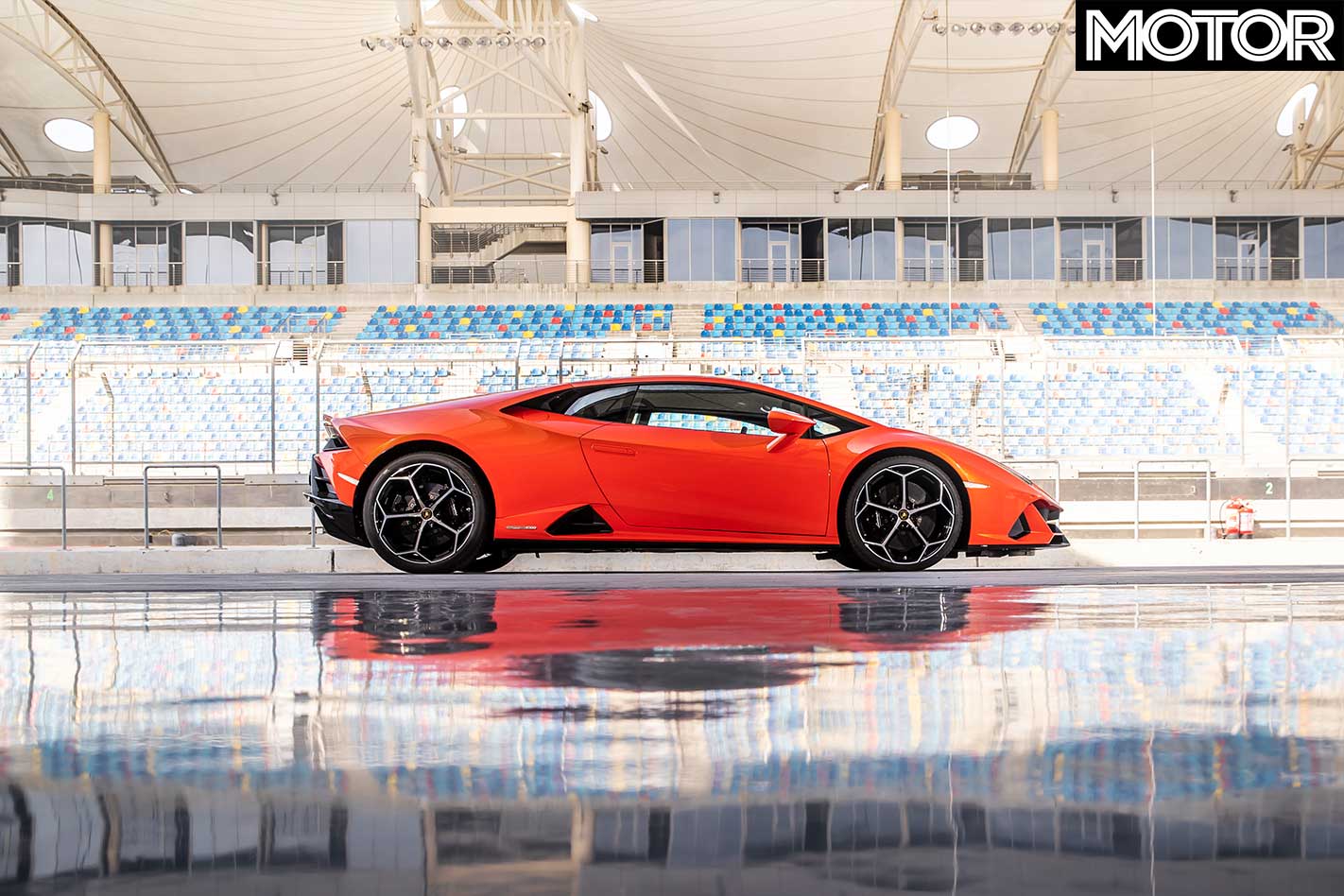
But far from elated, I return to the pits after an initial acclimatisation session disheartened. The Evo is unbearably twitchy to handle, almost invisible patches of dust snap the tail into a slide without warning, and the new exhaust is ringing in my ears like a drill sergeant. I’m the grunt. On top of a tricky circuit I’ve never driven before, there’s just too much to take in – sensory overload, but I’ve got all afternoon to work this out.
For its update, the Evo brings a system called Lamborghini Dinamica Veicolo Integrata (LDVI) – a central processor that masters all the dynamic elements of the car. According to its maker, the new technology is ‘predictive’ and will allow a confident driver to safely dig deeper into the Huracan’s ability than ever before. It works.
Out on the track again I push the Evo harder – much harder – and it transforms. The steering’s initial sensitive edge is chamfered off and allows precision positioning, while the rear wheels help carve the body through corners with unbelievable obedience. In faster bends the resistance to lateral movement is astonishing.
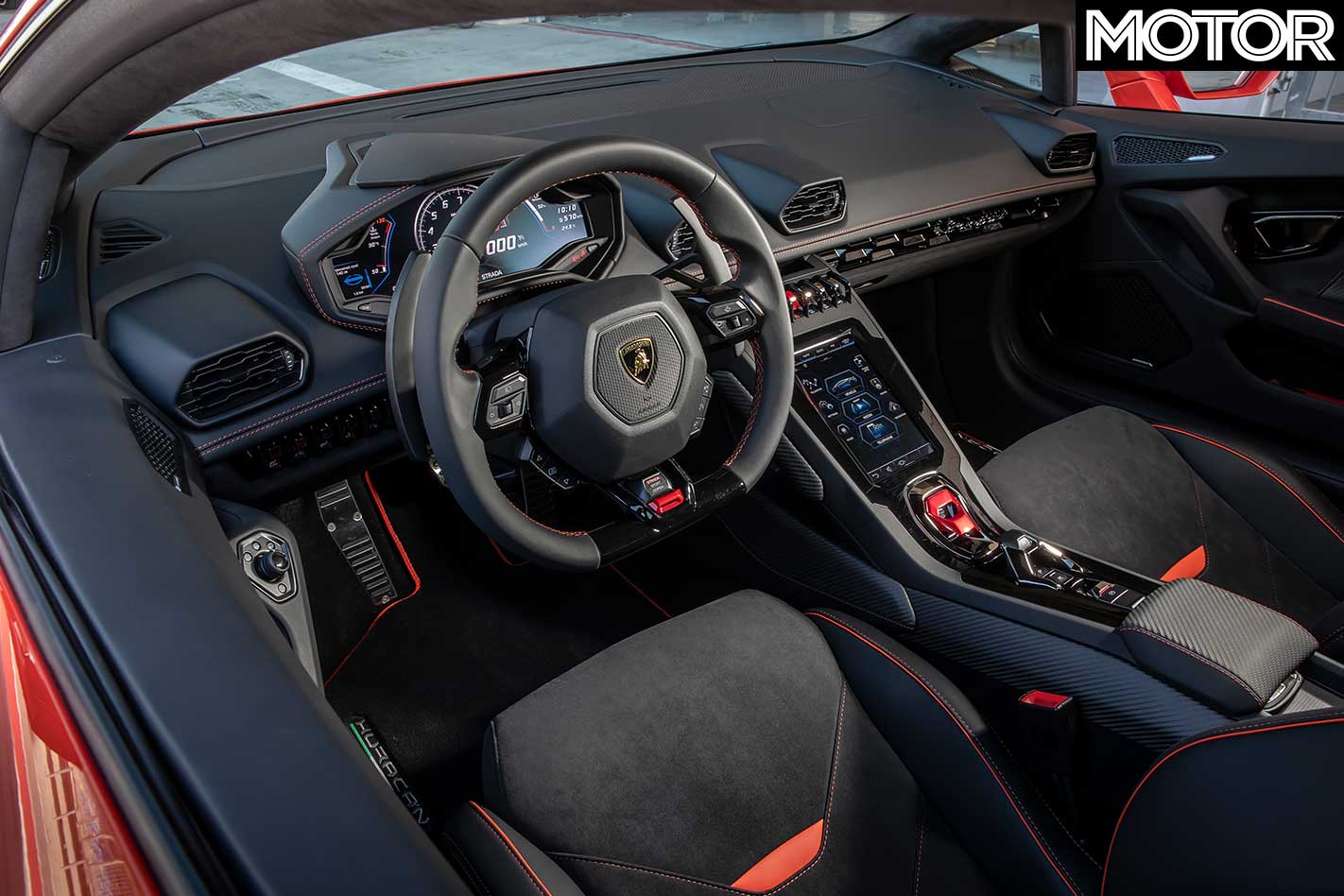
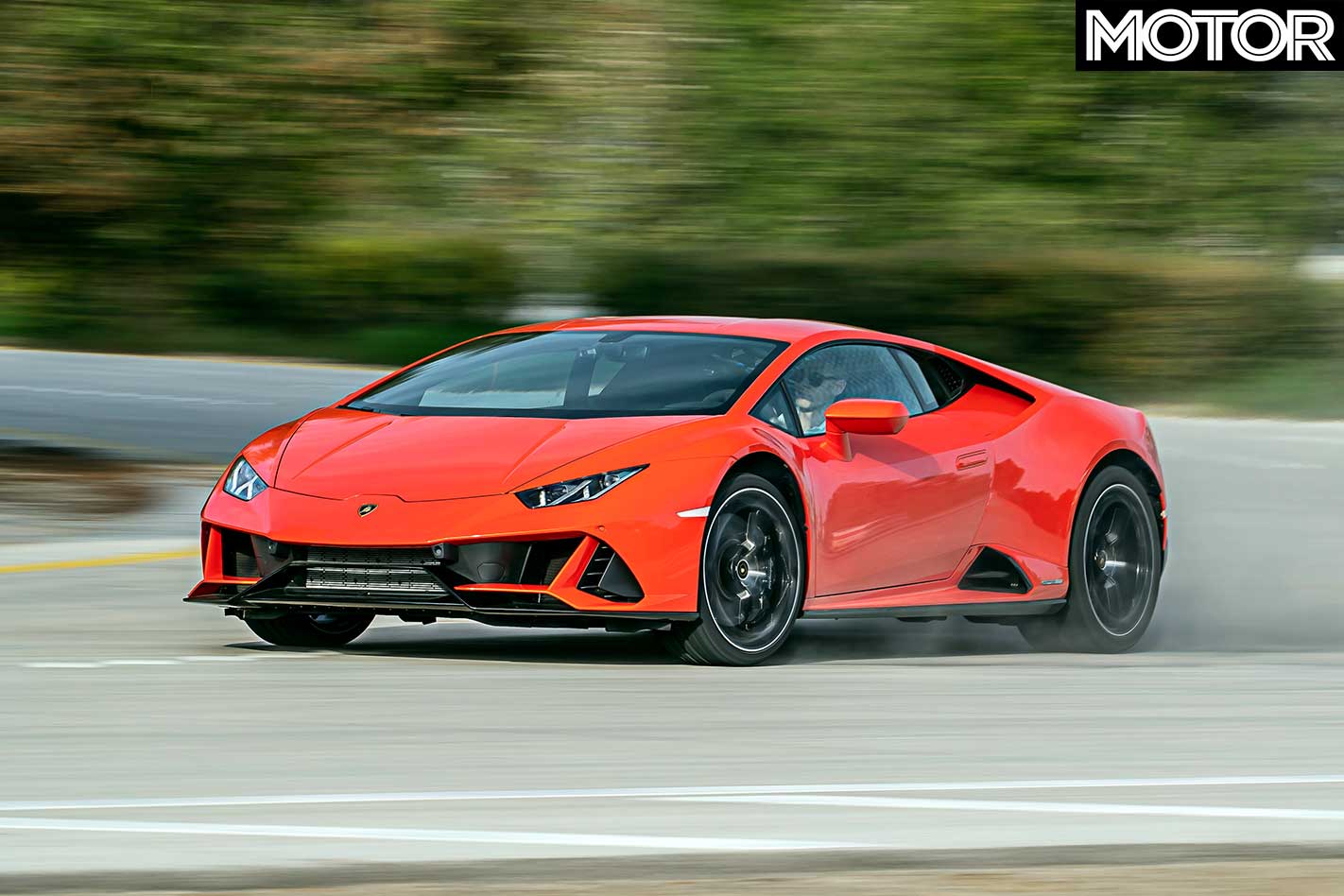
Even brash off-camber, uphill acceleration can’t shake its composition and seemingly boundless grip. Unlike a Porsche 911 Turbo, however, the grip doesn’t feel endless. There’s a delightful lightness in the Evo’s step and the tail will wag under hard braking into corners, and it’ll do it again when you open the throttle on exit. The tendency to understeer of the pre-update Huracan is notably absent though, replaced by a neutrality that allows breathtaking confidence and pace.
It’s fast in a straight line, too. Thanks to the new titanium valves, redesigned inlet manifold and peak power at 8000rpm, the naturally aspirated engine output builds from muscular in the mid-range to colossal near the redline. And the note – dear god, the note. Imagine Sirens covering a Joe Satriani solo with none of the distortion. And, if you can believe it, it’s even louder.
A lap with LDVI off reveals how many of my mistakes the Evo had previously been hiding. Catching a slide has more snap, the tail fidgets with careless acceleration and high speeds are more unnerving. Ironically, LDVI is so effective that you’re unlikely to ever realise it’s working. The Evo makes you feel like a hero whether you deserve it or not.
The sun dives behind the dunes, but it doesn’t call full-time on the fun because Bahrain is one of the few circuits in the world with day-quality flood lighting and I’m not paying the power bill. Instead, the circuit stays alive with the din of atmo power and I realise, unlike the Motor offices, synthetic light is better than the real thing. There are no shadows to hide nasty surprises, no mirages to fool and nothing to dazzle tired eyes. After dark, the track is at its best – and so is the Evo.
The stadium lights blink past at an epilepsy-inducing frequency and the digital speedo flashes 270-something before I smash the big pedal into the floor again. A few more laps to master turn 14 and I know the Evo would be blasting out even bigger numbers on the finish straight.
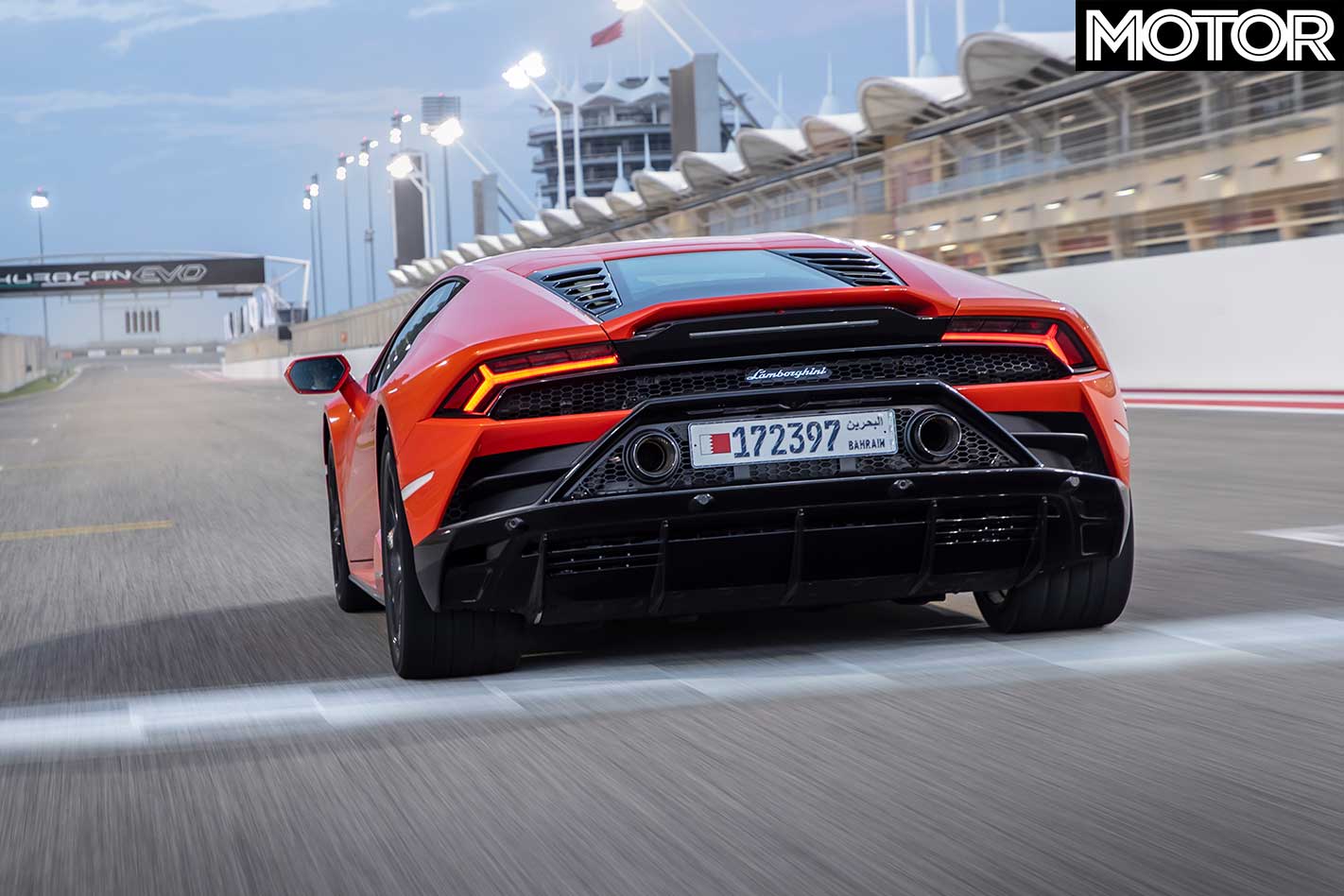
Ultimately it’s utterly glorious, totally intoxicating and I’ve driven few cars that outwardly encourage you to push far harder than you think possible or sensible. If you take the Evo’s lead, however, it will reward you with one of the most lively and effervescent characters you’re likely to encounter.
I leave the track as the brilliant globes blink out taking possibly more questions with me than answers. The Evo is resoundingly improved over the original Huracan and on a track it conceivably has the potential to embarrass even the Performante. However, Lamborghini says this is the easiest version to live with day-to-day and on the open road. I guess I’m going to have to meet this domesticated bull again – only next time, it’ll be on red sand.
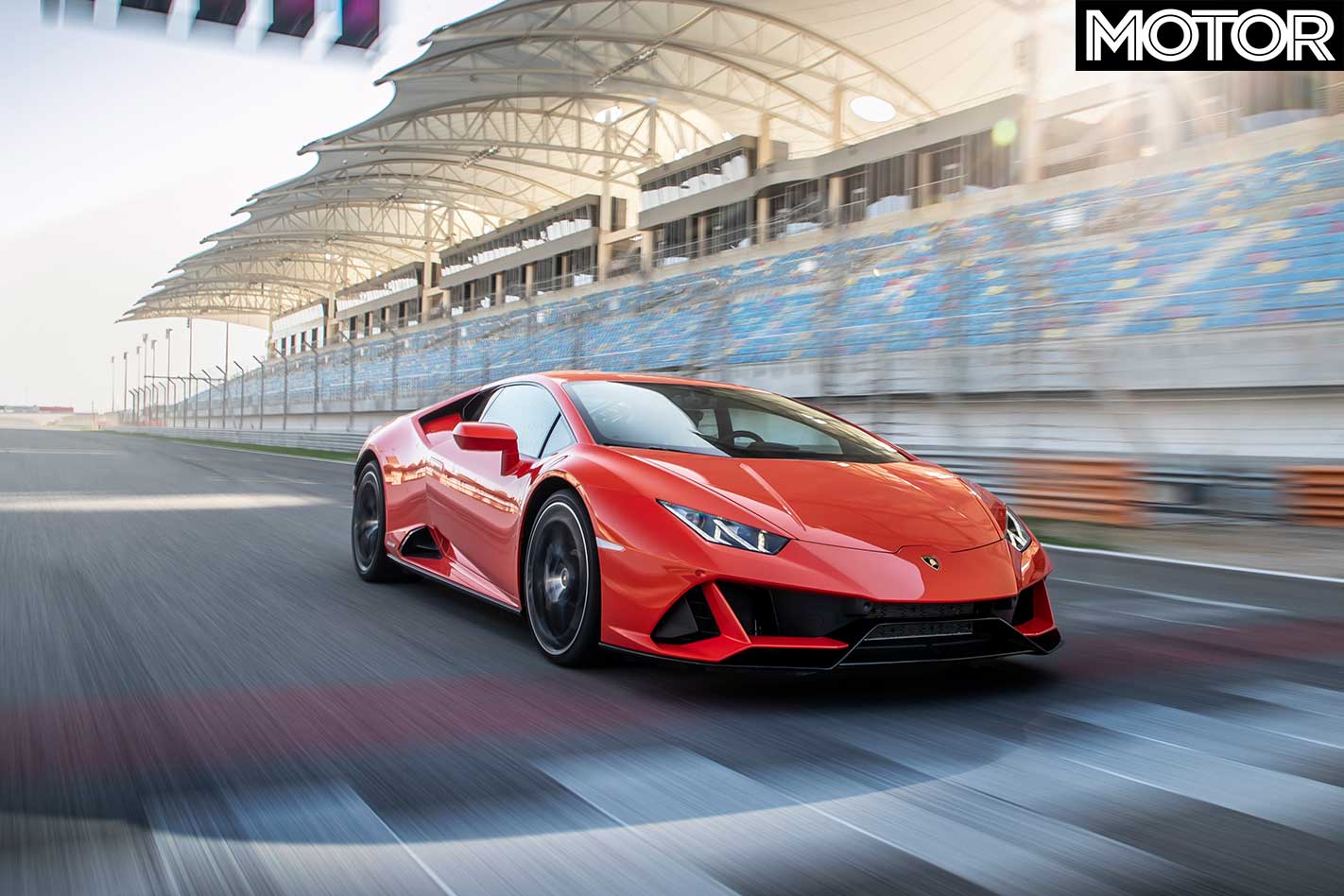
PROS: Improved dynamic ability; gains Performante power; epic soundtrack CONS: Can be hard to tame at first; needs to be driven on-road for final verdict RATING: 4.5 out of 5 stars
Pub Ammo: 4 Bahrain circuit facts
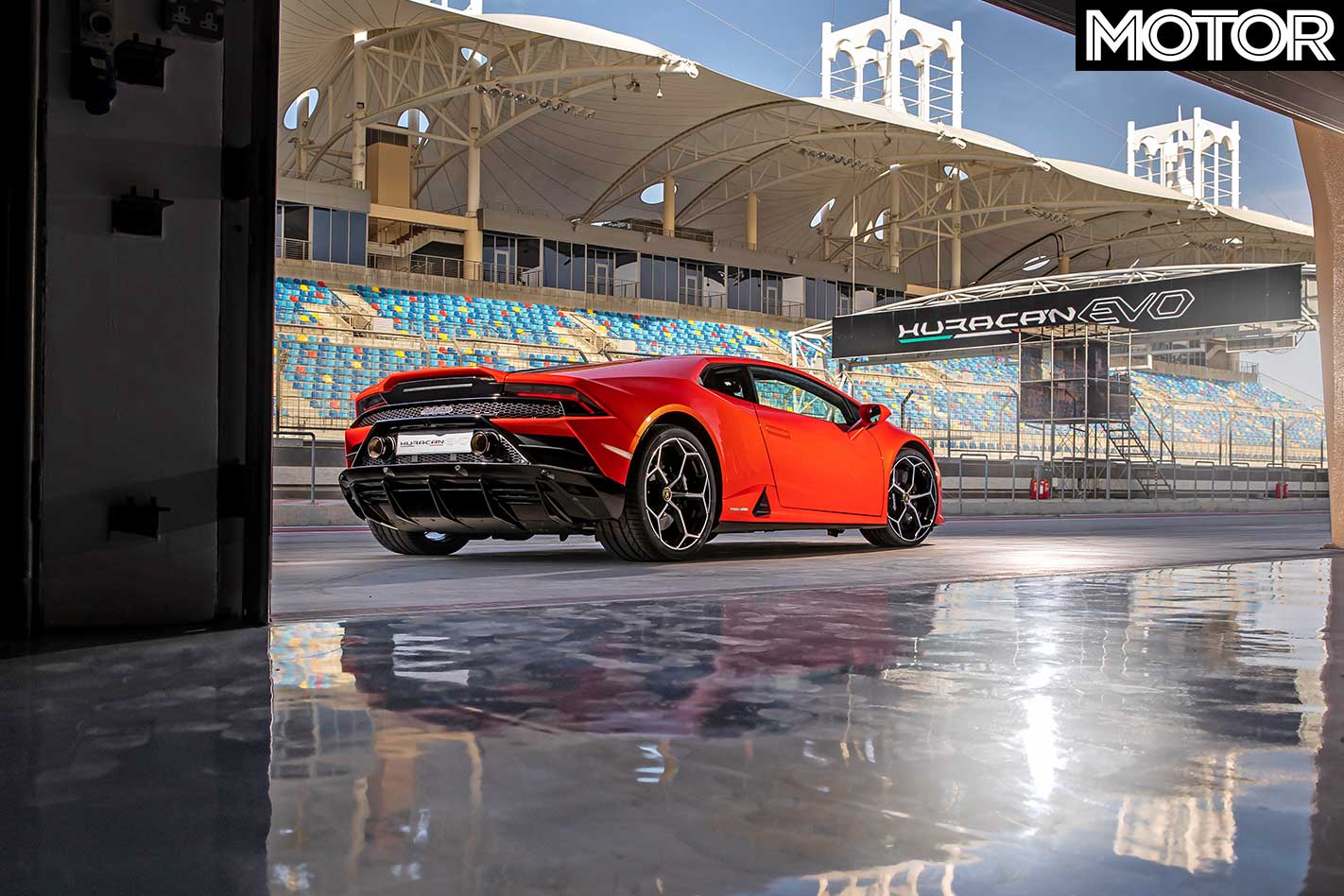
01- If a Formula One car ingests just a few grains of sand it’s likely to vomit them back up onto the track along with its pistons 02- In an effort to avoid engine wear, the owners identified the area a majority of the dust was blowing in from and spray glued it down 03- Its prized Graywacke surface was imported from a quarry in Shropshire, England, to give the impression it’s not in the middle of a desert 04- 5000 square metres of turf was laid and requires constant watering. Here’s a thought, maybe just build it somewhere else?
Sign-up here for your free weekly MOTOR report
Wheels first drive review
The Wheels Verdict: The new eighth-generation Corvette’s mid-mounted engine marks the most radical change since the first one appeared in 1953. Even the basic version blurs the lines between sportscar and supercar – the prospect of a Holden-badged version is an exciting one.
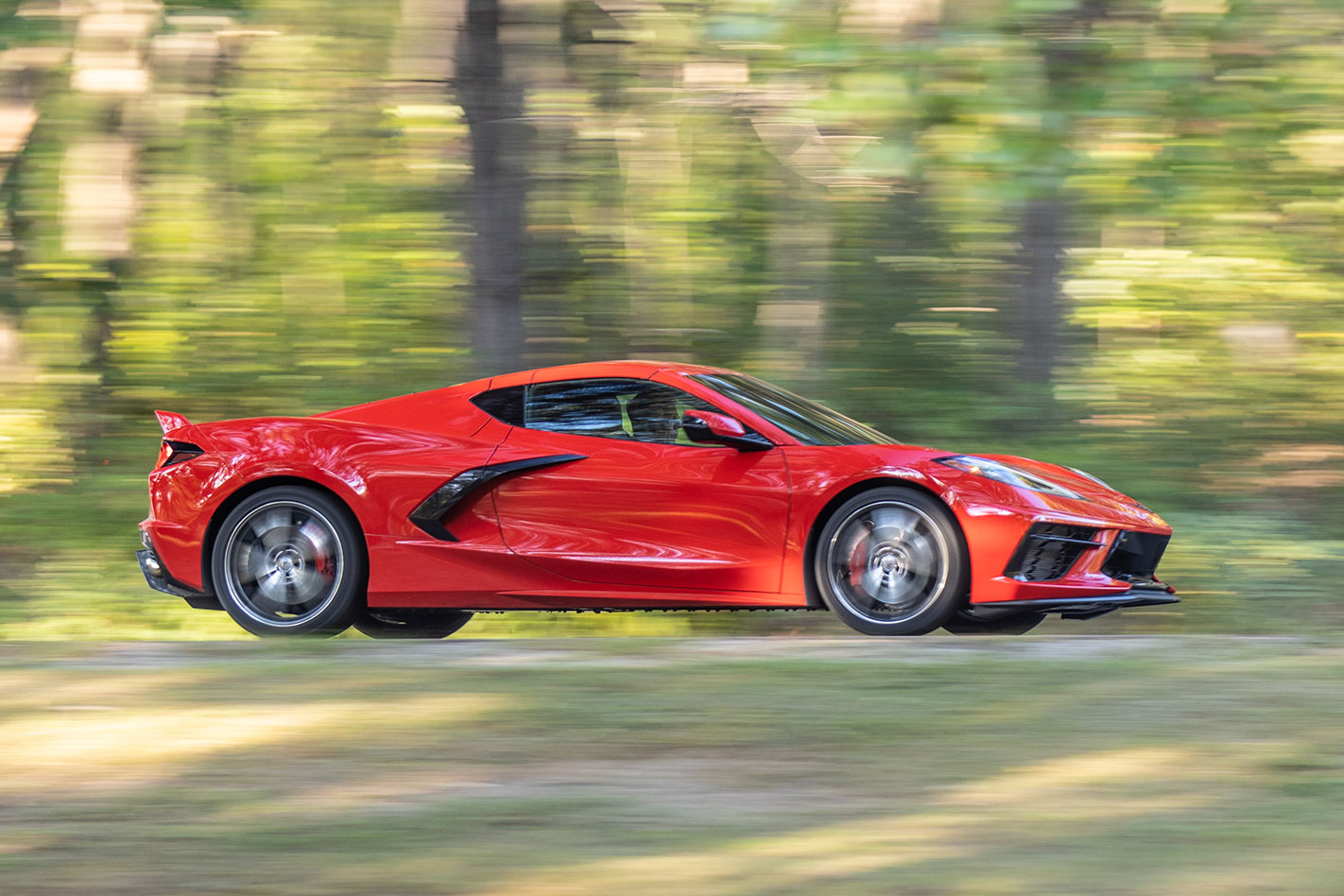
WHAT IS THE CHEVROLET CORVETTE?
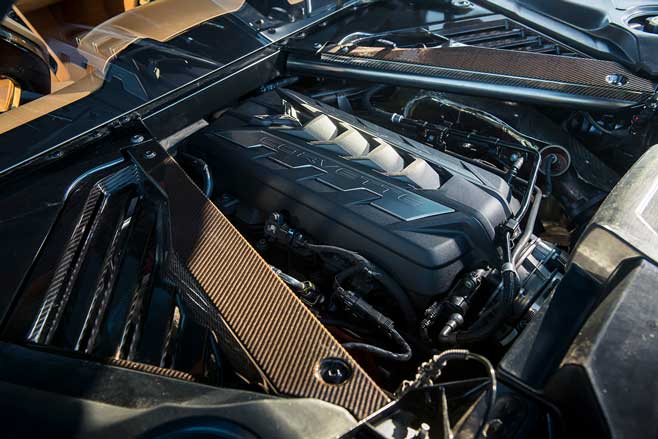
The C8 Chevrolet Corvette is the eighth generation of this fabled marque since Chevrolet started turning them out in 1953, and the first mid-engined Corvette. The 6.2-litre LT2 V8 is a new unit but keeps the pushrod and two-valves-per cylinder design of its predecessor, the LT1, as well as the same 6600 rev limit. The atmo bent eight is good for 369kW and 637Nm and a claimed sub-3.0sec 0-60mph time (97km/h).
WHY WE’RE TESTING IT
Because it’s coming to Australia! We’re still pinching ourselves to make sure it’s not a dream. For the first time in 66 years of production, the big Chev is heading our way in an official capacity – which means it’s already right-hand drive. Obviously, the chance to check out the ground-breaking ’Vette in its top spec on the streets of Michigan was too hard to resist.
CHEVROLET CORVETTE C8 REVIEW
Hunger is the best sauce, so those waiting for a mid-engined Corvette have had plenty of time to build a serious appetite. Chevrolet built the first concept in the 1960s and has dropped hints about reversing the order of passengers and powertrain several times since. The previous-generation C7 got closest, having been partially developed with a motor in the middle until GM’s bankruptcy forced a rethink.
We’ll have to wait a while longer. The C8 is about to go on sale in the States but the right-hook Holden version we told you about in our September issue is still a way off. But the basic car is good – really good.
Sitting on an aluminium structure with fibreglass bodywork, the C8 is heavier, 137mm longer and 57mm wider than its predecessor. Indeed, its overall length of 4630mm makes it one of the longest mid-engined cars full stop. Yet while the V8 now sits behind the rear bulkhead and the car’s proportions changed to match, much is familiar.
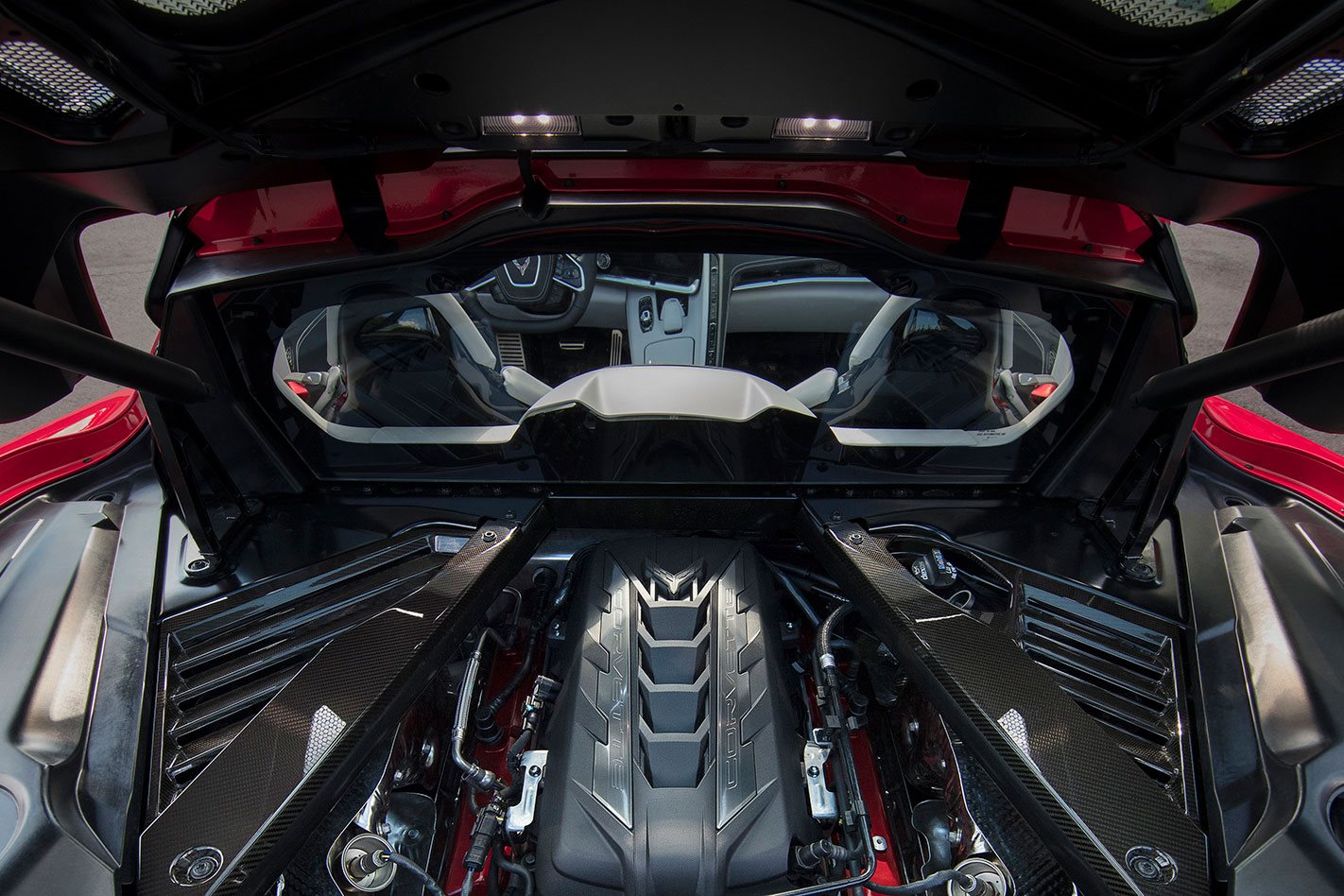
The C8’s shark-nosed styling is clearly related to that of the C7, as is its raised rear end and tail-lamp graphic. The engine is also an old friend, a lightly developed LT2 version of GM’s small block with 6.2-litres of displacement and a claimed 369kW and 637Nm of torque. This works with a standard eight-speed dual-clutch transmission driving the rear wheels. GM confirms there’ll be no manual.
Despite its lack of technical sophistication, the blue-collar engine suits the car perfectly. It’s sonorous, muscular from the basement to the penthouse, and has throttle response to put even the snappiest turbocharged alternatives to shame. It doesn’t rev as high as exotic rivals, but it still sounds great when closing in on its 6600rpm limiter. The higher of the transmission’s eight ratios are tall – cruising economy has long been a Corvette strength – but the lower ones are geared intelligently so the redline never feels too low.
It’s brutally quick, too – somehow faster than its power output and 1530kg dry weight suggest it should be. Chevrolet claims a sub 2.9-second 0-60mph (0-97km/h) time, which feels entirely feasible. Without launch control and on cold tyres, the C8’s in-built performance monitor reported I ran a 3.5-second time by the simple expedient of jumping on the throttle in Drive. Acceleration stays strong well beyond the benchmark figure. The dual-clutch ’box doesn’t add the torque bump to upshifts which most junior supercars do but changes are lightning fast, even in the more relaxed ‘Tour’ mode.
The most obvious dynamic change over the C7 is the chassis’ ability to find traction for the huge urge. The brawniest front-engined ’Vettes always felt edgy and on the brink of big slides under full power, even when travelling in straight lines. The C8 has a lot more adhesion and feels much more stable; even getting close to the limits of lateral grip is hard to do on-road. In tighter turns there is a hint of understeer plus the unsurprising ability to move the handling balance rearwards with a big dose of throttle. But in faster stuff the Corvette just sticks, especially on the mighty Michelin Pilot Sport 4S tyres of the car I drove, part of the optional Z51 performance pack. The regular Corvette comes on less grippy all-season rubber in the States.
The high limits are probably a large part of the reason the steering never really wakes up on-road, with ultra-fast reactions but little sense of loadings on the front axle getting as far as the strangely square-shaped steering wheel. Ride quality is impressive, the optional adaptive dampers keeping body motions under tight control over some of Michigan’s bouncier backroads in both ‘Tour’ and ‘Sport’ modes, even ‘Track’ feeling viable for road use.
Like its predecessors, the C8 has been designed to work as well as play; GM reckons most buyers will use their cars as regular transport and not just weekend toys. Cabin refinement has improved over the C7 and cruising refinement is impressively good, with much less low-frequency noise at constant revs. The engine sits much closer to occupants’ ears but is no louder at everyday speeds.
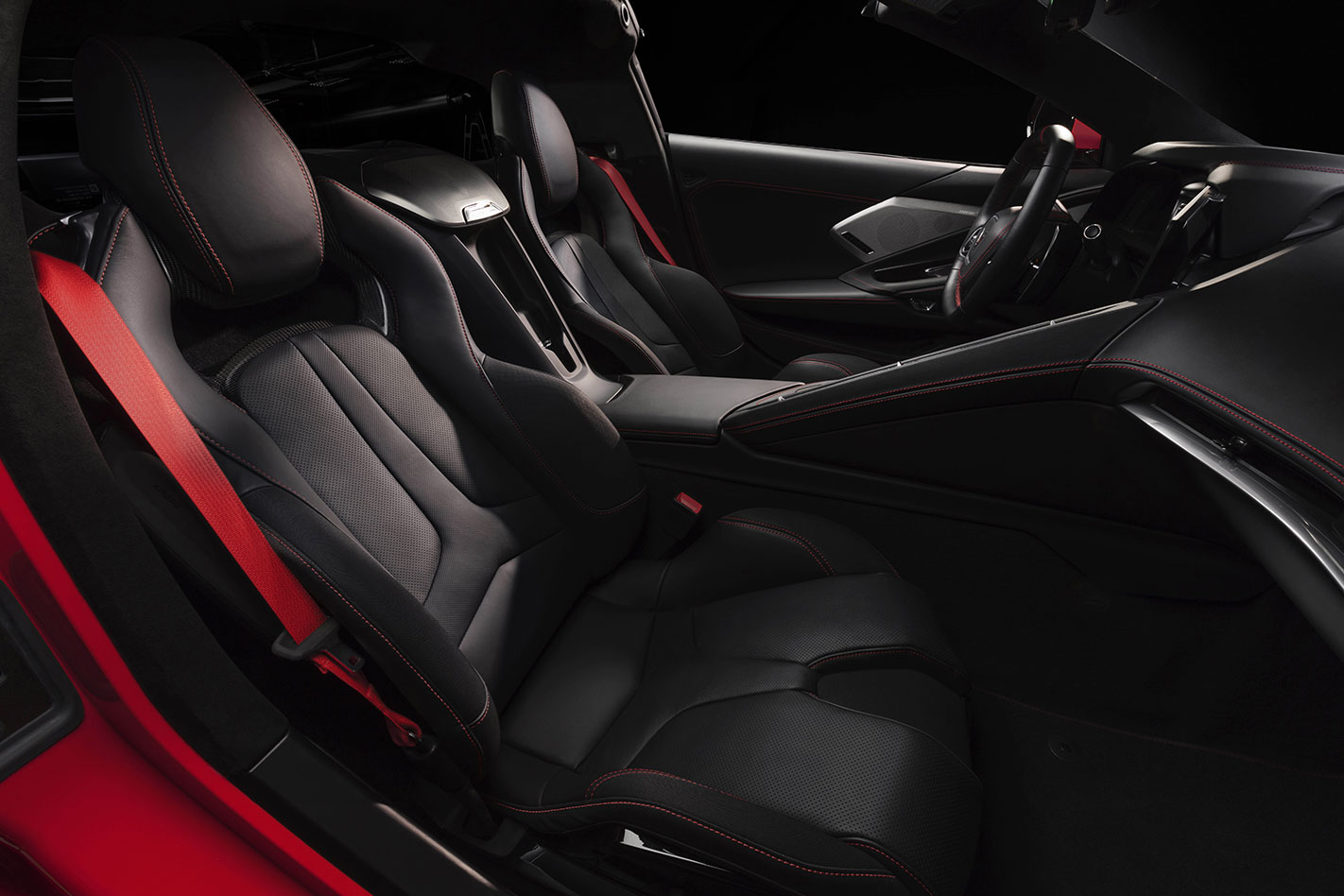
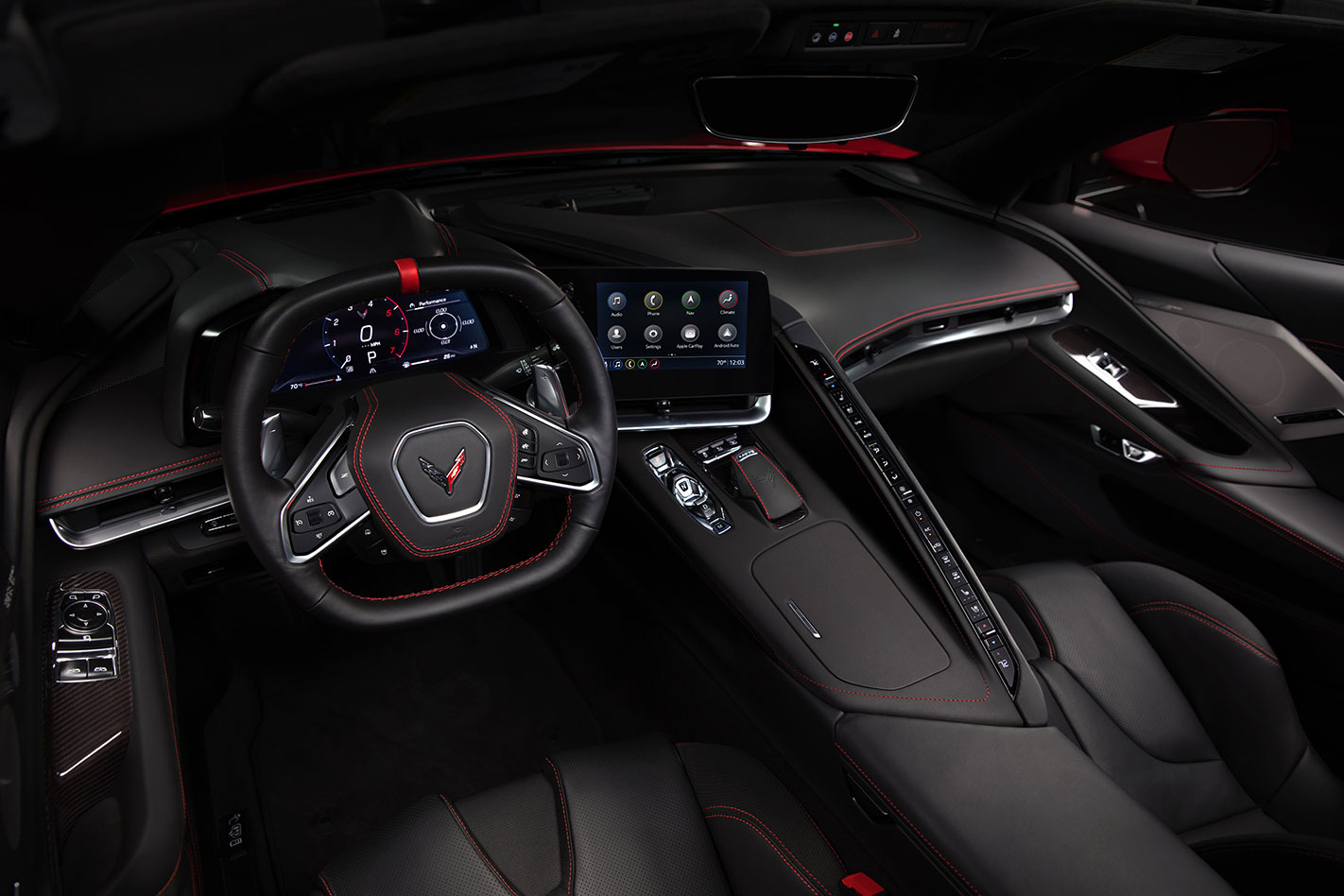
While not exactly spacious, the cabin feels roomier than would be normal in a junior supercar, and trim quality is up several notches. The resin-heavy smell that filled the cabin of previous gens – a manly eau de Corvette – is almost entirely gone. The full-spec 3LT trim car I drove in the US had leather and Alcantara on most touchable surfaces with hard plastics relegated to hard-to-reach places.
There are some ergonomic grumbles. The long row of ventilation buttons on the ridge that separates the two seats are hard to see. The driver’s seat is strangely set higher than the passenger’s, and rearward visibility is poor despite a glass screen above the engine compartment. My test car had an optional camera-based rear-view system, but the display screen was too dim in bright sunshine. The long dash also throws up lots of distracting reflections in the shallow windscreen.
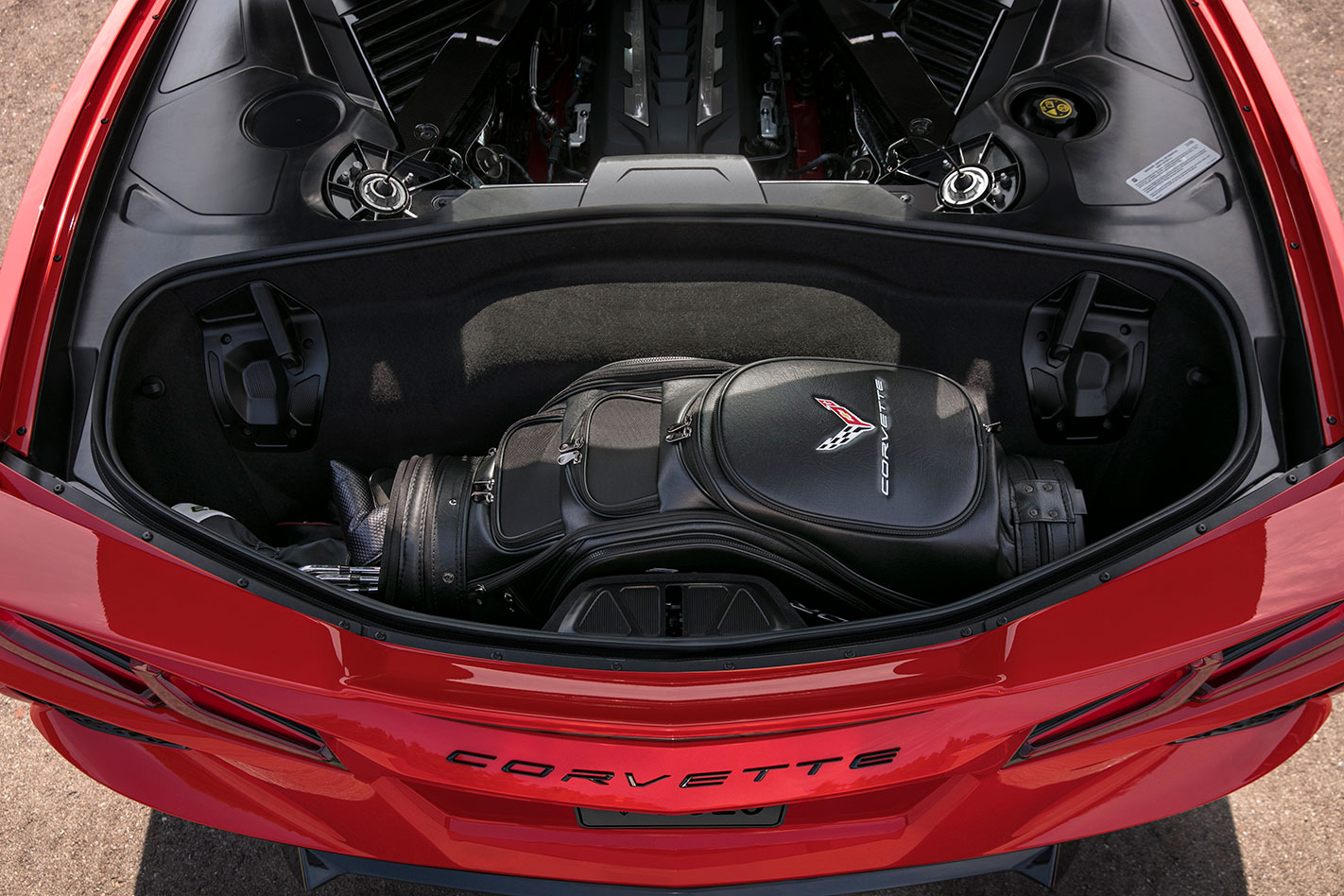
Yet this Corvette is also impressively practical, with 356 litres of luggage space split between a small frunk and a larger compartment behind the engine which can swallow a set of golf clubs. It also still has a targa roof, which can be removed to turn it into a breezy convertible, although storing the lid under the rear deck precludes carrying anything else. (A full convertible will also be offered.)
In the US, the Corvette is something close to an outrageous bargain, GM having delivered on its pledge of bringing in the entry-level car at just below US$60,000 – less than a basic four-cylinder Porsche 718 Boxster. Even with the plushest available 3LT trim, the Z51 performance pack (which adds an LSD and bigger brakes to the summer tyres) and the switchable dampers, the Corvette barely breaks US$80,000; less than half what McLaren charges for a 570S in the States. But that’s the greenback. Expect an entry price around A$170,000 when the right-hook C8 hits Oz, possibly before the end of 2020.
The good news is that the C8 is of a standard that suggests it will travel well, and it can be fairly compared with far posher alternatives.
RIVALS:
PRICE AND SPECS
- Model: Chevrolet Corvette
- Engine: 6162cc V8 (90°), ohv, 16v
- Max power: 369kW @ 6450rpm
- Max torque: 637Nm @ 5150rpm
- Transmission: 8-speed dual-clutch
- 0-100km/h: 2.9-sec (estimated)
- Weight: 1530kg (dry)
- Economy: TBC
- Price: $170,000 (estimated)
- On sale: Late 2020 (estimated)
Second Opinion: MOTOR first drive review

Motor focuses exclusively on high-performance cars, offering a heart-stopping, hair-raising blast into the world of prestige and performance culture.
The mighty mid-engined Corvette Stingray is only a year away from Oz, but we couldn’t resist driving it first in California By: Jethro Bovingdon | Photos: James Lipman
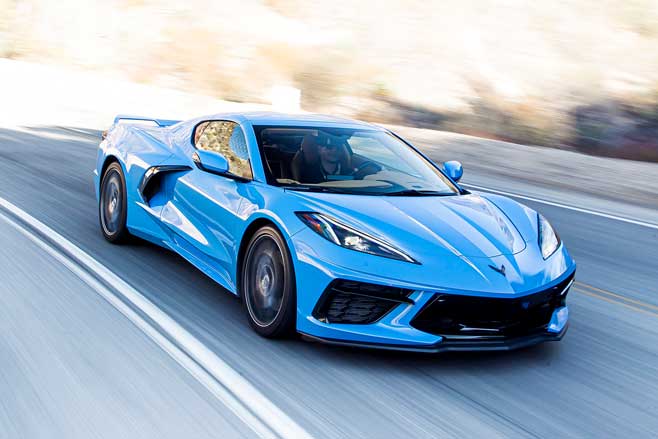
Hype swirls around the new Corvette Stingray like few other cars in recent memory. In the US there have been rumours of a mid-engined ’Vette for decades and people are drooling at the prospect, or outraged that more than 65 years of front-engine heritage has been betrayed. It seems to offer the most outrageous value and yet packs a 6.2-litre V8 with 369kW and 637Nm, and an 8-speed dual-clutch gearbox.
US magazines have already recorded sub-three-second runs to 60mph (97km/h) and 0-100mph (0-160km/h) in the low 7s. This from a car that starts at just $59,995 in its home market, or $10K less than a Cayman S. No wonder there’s so much hype. It looks like Corvette has democratised the supercar.
Let’s not spend too long worrying about what went before and whether placing the engine behind the driver is sacrilege or simply progress. Holden has announced that the Stingray will come to Australia in right-hand-drive form, so what we really need to know is whether this thing is any good.
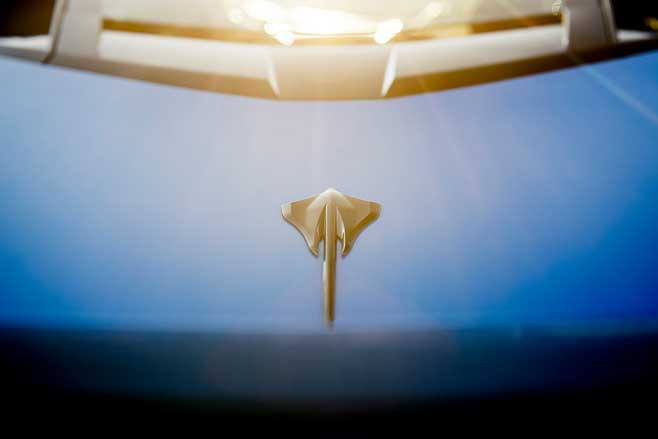
If Chevrolet has finally built a car to take on and beat the rest of the world and it’s available to buy here through your local Holden dealership… well, who cares about talk of legacy and heritage and all that nonsense? Don’t tell anyone I said this, but most of the older Corvettes sucked anyway.
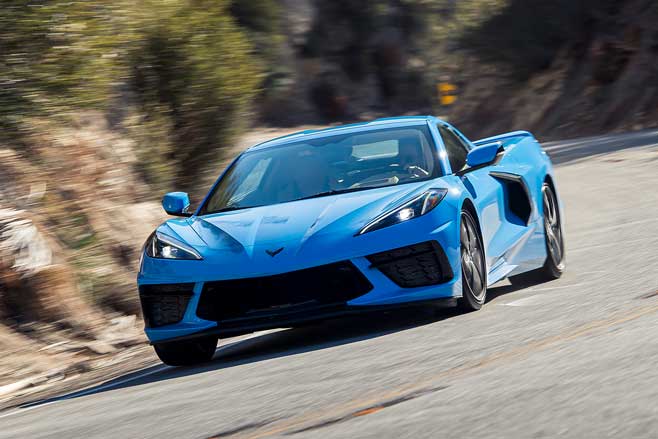
Sadly, the stylists weren’t as keen as the engineers to cut the baggage loose. The inescapable truth is that the C8’s styling is rather conservative, slightly clumsy and very definitely weighed-down with all that history.
There’s drama in the shape, but park it beside something from McLaren or Ferrari and it looks heavy-handed and rather dated already. Even in the context of a 718 Cayman, the Stingray looks like it’s trying way too hard. A shame but maybe not a deal-breaker, as there’s so much good stuff going on beneath the fussy lines.
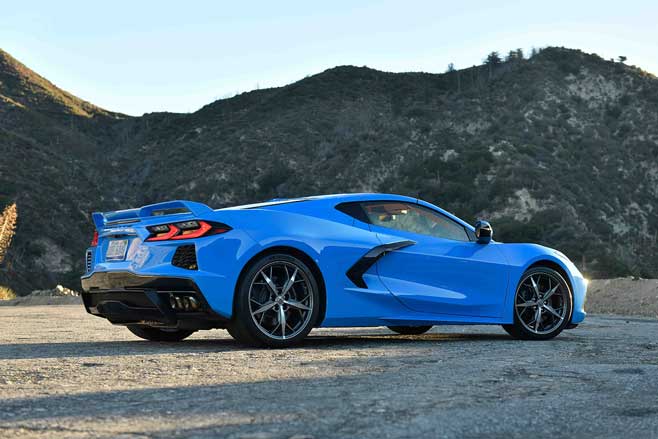
The C8 is built around a central aluminium spine, essentially a three-sided box-section that’s closed for added stiffness with a carbonfibre panel. Aluminium subframes bonded and screwed in place carry the double-wishbone suspension all round and cradle the powertrain.
The Stingray weighs 1530kg dry. I wish it were a little lighter, but the chassis is a hell of a piece of engineering for a car that will be built in great volumes – up to 40,000 a year – at a pretty reasonable price.
Encouragingly, the thing you notice when you walk around the C8 for the first time is just how low they’ve managed to locate the engine in the chassis. Dimensionally, it’s full-scale supercar – longer than a Ferrari F8 Tributo and with a significantly increased wheelbase, a shade narrower and 28mm taller.
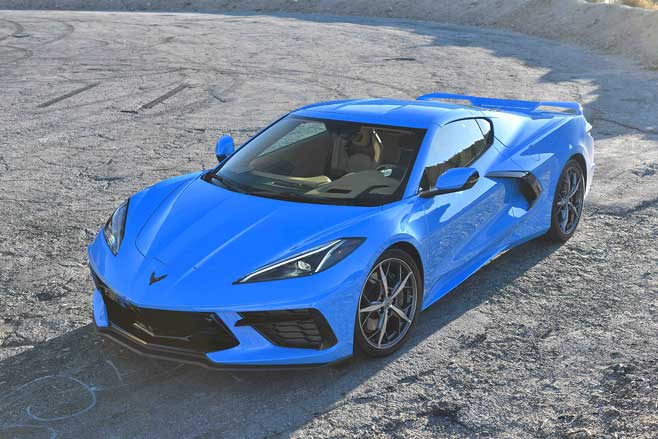
Now, let’s talk options. Not leather and infotainment packages – of which there are many – but performance options to unleash the Corvette’s sharpest, most focused character traits.
The big one is the Z51 Performance Package, which comprises uprated suspension with manually adjustable threaded spring seats, bigger brake discs with four-piston monobloc calipers all round, enhanced cooling, shorter gearing, electronic limited-slip diff, performance exhaust and a fixed wing. It’s a USD$5K option and our Rapid Blue Z51 test car has the additional benefits of Magnetic Selective Ride Control (USD$1895).
It’s also fully loaded with the 3LT interior (USD$11,000), has Competition Sports Bucket Seats and a few other goodies to take the total to USD$83,825. That’s a chunk more than the headline-grabbing base price, but still spectacular value.
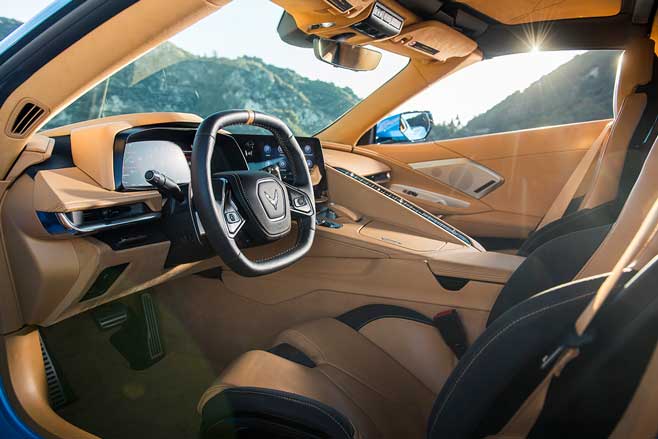
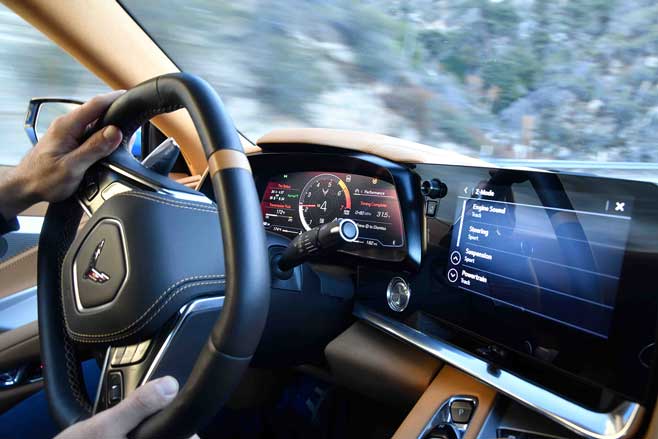
Swing open the door and drop into the tight-fitting seats and you’ll remain convinced that’s the case. The square-topped steering wheel looks odd but gives a fantastic view of the instrument binnacle, and the intensely driver-focused layout shows the C8 team really cared about the person in the hot seat.
The V8 starts with a nice, big boom but settles back to an almost restrained idle, and even when I hit the Z button on the steering wheel that has been pre-loaded with Sport or Track settings for most parameters, the noise is pretty polite.
The C8 has Weather, Tour, Sport, My Mode and Track modes as well as Z mode, which you can shortcut to via the aforementioned button. The small-block’s smooth, slightly distant noise suggests powerful GT car rather than hair-on-fire supercar.
First impressions continue along the same theme. The ride is extremely good – quieter than even a McLaren with its trick hydraulically linked dampers and lack of anti-roll bars – with a lovely sensation of well-oiled smoothness mixed with effortless precision. Sport is the sweet spot, as Track goes too far for even quite smooth roads. It’s nice to feel such defined steps between the modes, though.
The electric power steering also has various weighting options but in essence is light, very clean in feel and reaffirms a sense of inherent agility if you avoid the needlessly stiff and sticky-feeling Track mode.
Quite simply, there’s a polish and fluidity here that I haven’t experienced in previous Corvettes and the dynamic package immediately feels poised, alert and yet well within itself. And I love the driving position; you sit so far forward and have an amazing view ahead, very much like an original Honda NSX.

The engine is naturally endowed with a fabulous breadth of performance, and such is the traction available Chevy has given the C8 very short gearing in the first two ratios. It’s a nice introduction to the V8’s insistent and linear power, then once you’re rolling along in third or higher you get to feel its any-rev muscle.
The LT2 V8 doesn’t have the sweet, cultured tone of, say, the Porsche flat-six in a Cayman GT4, but there’s something intoxicating about the big-cube feel and sound. If only the 8-speed dual-clutch had a tighter, punchier shift. I’m sure the computer says it hits as hard and fast as a PDK but it doesn’t feel it. In fact, you could almost be forgiven for thinking it was a really good torque-converter auto rather than a dual-clutch unit. It needs more edge.
Pretty soon you start to wonder if the whole car doesn’t need a bit more edge. The Stingray flows with a lovely sense of calm, the steering light and precise if a little lacking in texture and feedback, the front-end quick to respond but never manic or jumpy, and there’s so much traction available that once the nose has bitten you can load the rear axle with torque and know it will deploy every last bit.
There’s a real efficiency about the way the C8 tackles a road, and it always feels within itself even when you’re starting to really push. Yes, there’s a trace of understeer at the limit, and just occasionally over bumps on corner entry you suddenly sense a lot of weight behind you, but this is a car with real composure even under duress. In fact it positively invites you to up your own commitment to experience everything it has to offer.
What you don’t get is an expressive driving experience or one rich in feedback and adjustability. Try to impose yourself on the C8 by braking hard into turns or really gassing the V8 early in corners and it remains relatively benign and seems reluctant to really indulge the driver. It’s extremely impressive but maybe a shade too buttoned-up.
Having complained about the snappy on-limit behaviour of the C7, it seems unfair to call the C8 too well-mannered, but I can’t help feeling that making it a touch more aggressive on turn-in and a little stiffer at the rear to bring the tail into play would make for a more intense and exciting experience.
I understand this is the entry point for the new mid-engined Corvette and there are faster, more focused iterations to come, but the beauty of rivals from the likes of Porsche is that they play the everyday card perfectly and then offer infinite entertainment and adjustability. A little more of that split personality would be very welcome.
Even so the new Corvette is a deeply impressive car. Its talent runs deep and doesn’t feel artificially magicked out of extreme tyres or crazy spring rates. The feeling of agility and composure is inherent in the chassis, suspension and engine location. Even better is that the car celebrates its mid-engined configuration.
The styling had led me to believe the Corvette might feel like its radical new architecture was done begrudgingly rather than embraced for all the benefits it can bring. Yet when it’s flowing down a twisting road and you feel right at the point of an arrow, masses so well controlled and with all that lovely traction to lean on, there’s no doubt the engineers wanted to show that abandoning the old layout wasn’t a necessary evil but instead opened up a whole new world of possibilities.
This standard Corvette Stingray, even in Z51 configuration, isn’t the natural conclusion of that bold step into the future. But it’s a hell of a place to start.
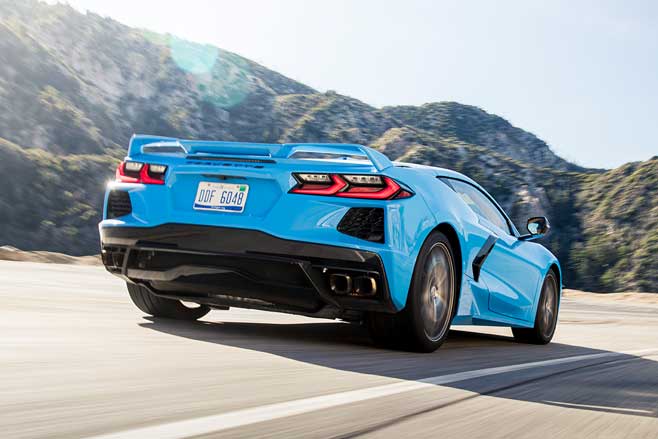
FAST FACTS 2020 Chevrolet Corvette Stingray Z51 BODY: 2-door, 2-seat coupe DRIVE: rear-wheel ENGINE: 6162cc V8, OHV, 16v BORE/STROKE: 103.2 x 92.0mm COMPRESSION: 11.5:1 POWER: 369kW @ 6450rpm TORQUE: 637Nm @ 5150rpm WEIGHT: 1530kg (dry) POWER-TO- WEIGHT: 241kW/tonne (dry) TRANSMISSION: 8-speed dual-clutch SUSPENSION: double wishbones, adaptive dampers, coils (f); double wishbones, adaptive dampers, coils, anti-roll bar (r) L/W/h: 4630/1934/1234mm WHEELBASE: 2722mm TRACKS: 1648/1586mm (f/r) STEERING: electrically assisted rack-and-pinion BRAKES: 345mm discs, 4-piston calipers (f); 350mm discs, 4-piston calipers (r) WHEELS: 19.0 x 8.5-inch (f); 20.0 x 11.0-inch (r) TYRES: Michelin Pilot Super 4S; 245/35 ZR19 (f), 305/30 ZR20 (r) PRICE: AUD$240,000 (as-tested, estimate); AUD$175,000 (base model, estimate)
PROS: Lovely flow; driving position; ride; traction; value CONS: Could be sharper; overweight; fussy styling; gearbox RATING: 4.5 out of 5 stars
The most anticipated model to come out of General Motors for quite some time now has another feather in its cap. The Chevrolet C8 Corvette’s Nürburgring lap time is fairly quick.
An upcoming documentary looking at the development of the Corvette Stingray has drawn attention to itself through an easter egg which appeared to almost certainly be an announcement of the C8 Corvette’s lap time around the Green Hell.
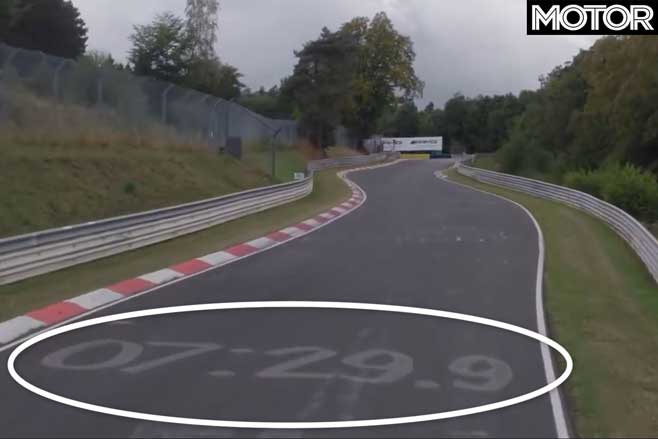
Titled Revolution, the doco (noticed by US blog GM Authority) is a look at how the C8 came to be, and a fair part of it appears to be focused on the Nürburgring testing. At about the 50sec mark in the trailer (below), the easter egg appears as graffiti rendered onto the track.
So, though 7:29.9 isn’t exactly mind-blowing – it’s in the same ranks as the first R35 Nissan GT-R and falls short of the C6 Corvette ZR1 – it’s worth noting that the Stingray is only the base model. There’s more to come from the C8-gen ‘Vette.
In search for confirmation of this time, we looked to GM’s test driver for the C8 Corvette, who tweeted about having been testing the car at the ‘Ring “last summer,” so mid-2019.
Production of the C8 Corvette Stingray began during the week at GM’s Bowling Green production facility in Kentucky, on February 4th.
Of course, the car is expected to arrive in Australia in 2021, after production of right-hand drive models has commenced.
As far as home accessories go, having your very own race track in the backyard has to be one of the coolest for any motoring enthusiasts.
That’s exactly what is up for grabs in Florida, with a $26 million mansion for sale, including a legit eight-turn waterside race track

With a price tag like that, it’s fair to say most of us won’t be able to afford the home, but it’s always worth dreaming.
The house was originally built for a motorhome tycoon, meaning it was built to the tastes of well, a motorhome tycoon.
Located in Thonotosassa, outside Tampa, Florida, the main residence has eight bedrooms, 26 bathrooms and two swimming pools – everyone knows you need a 4:1 bathroom-to-bedroom ratio when hoofing down some buffalo wings.
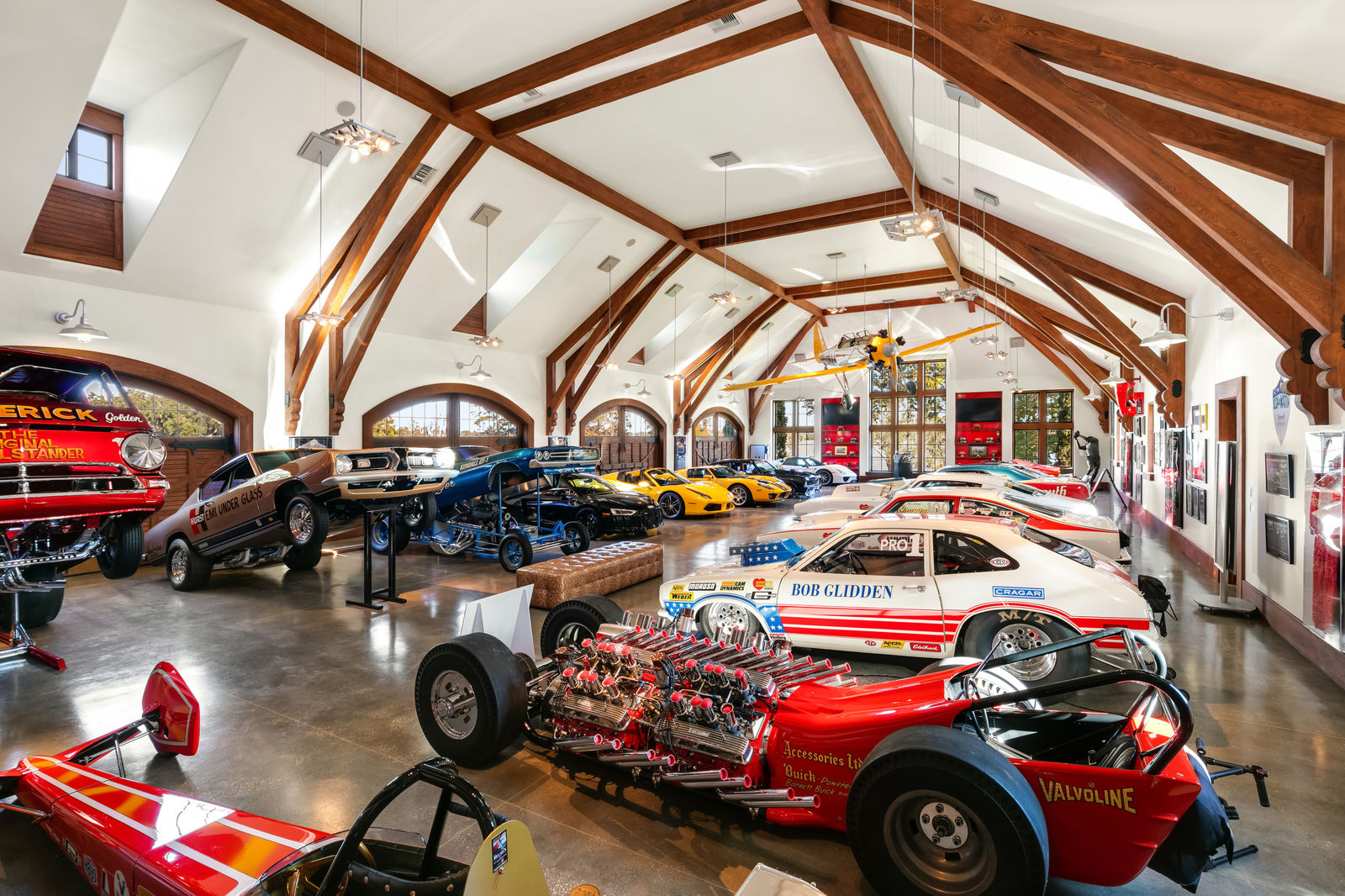
Built on a 36-acre property, the home also has a bowling alley, horse stable, two-story guest house, boat house, and importantly, 1021 square metre warehouse. This was home to the previous owners sizeable, and impressive, 80-car collection.
That’s plenty of space to store all the toys you’ll use on your very own race track.
Listed by Smith & Associates Real Estate, we hope a true motoring enthusiast snaps up the home.

If you don’t want to move all the way to North America, Melbourne also had its own $13.5 million mansion go up for sale last year, which also featured a go-kart track.
Now all we have to do is win the lottery… simple.
