
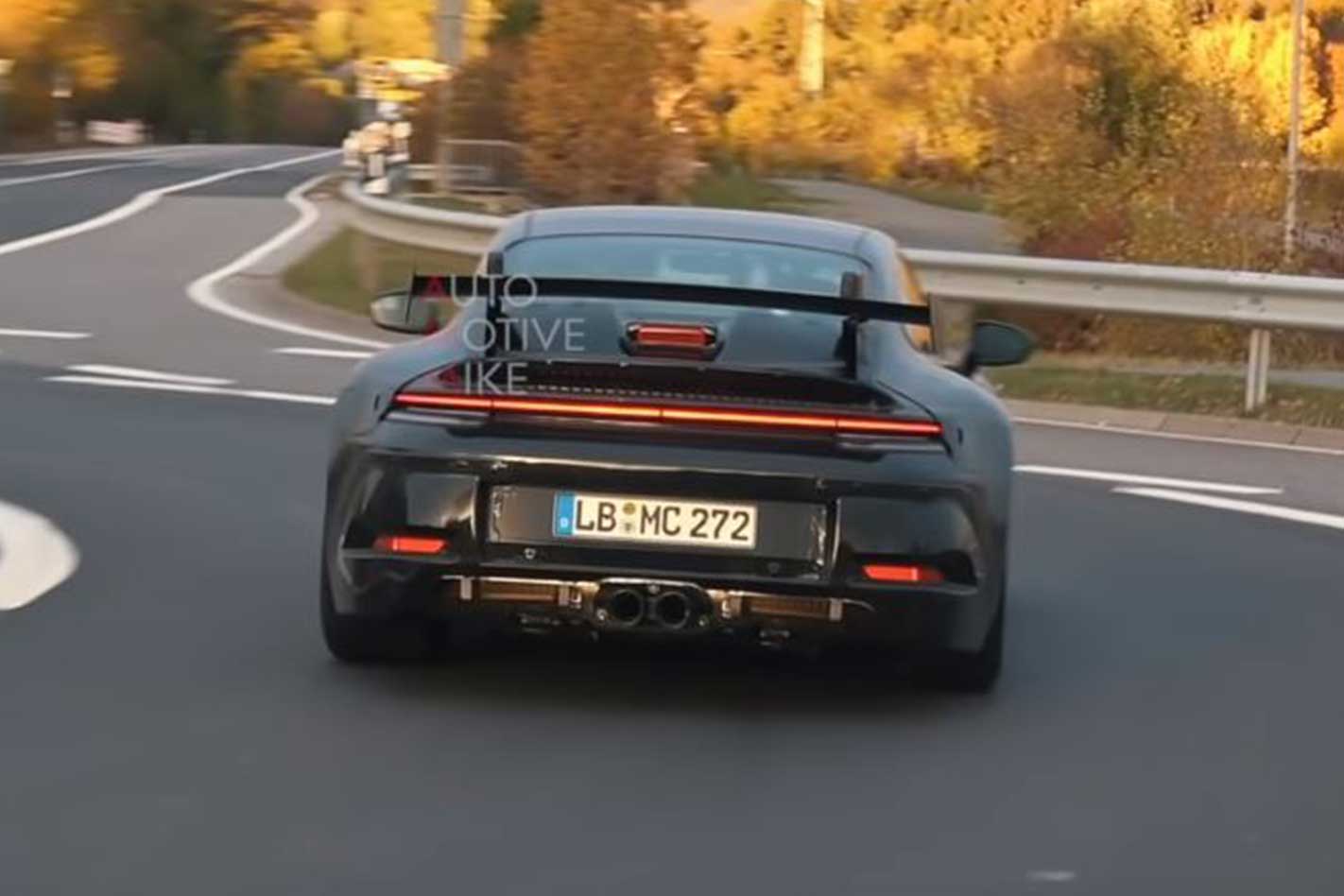
Porsche’s 911 992-generation has arrived, but we’re still waiting to see the latest 911 in its final form. We’ve driven everything from the Targa to the Turbo S, and now our spy photographers have caught a glimpse of the ultimate naturally-aspirated 911, the GT3 RS.
These fresh pictures show the most extreme version of the 992 you’ll find – beyond the forthcoming race car – and the prototype shown seems to be feature some RSR DNA anyway.
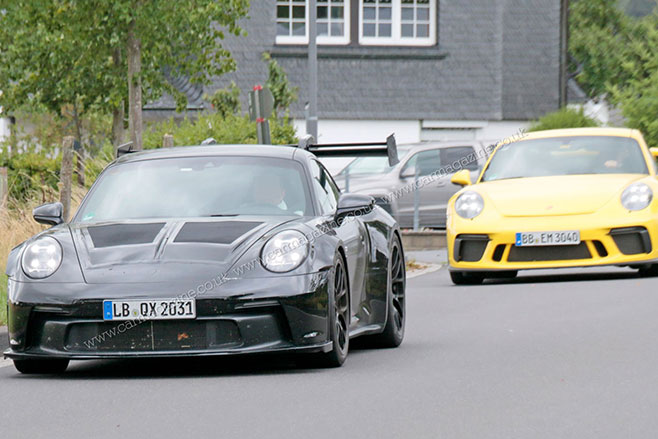
Further pictures have revealed more interesting details about the forthcoming RS; Porsche appears to have moved towards horizontal cooling louvres behind the front wheels, and Stuttgart has dispensed with the air-intakes usually found in front of the rear-wheels.
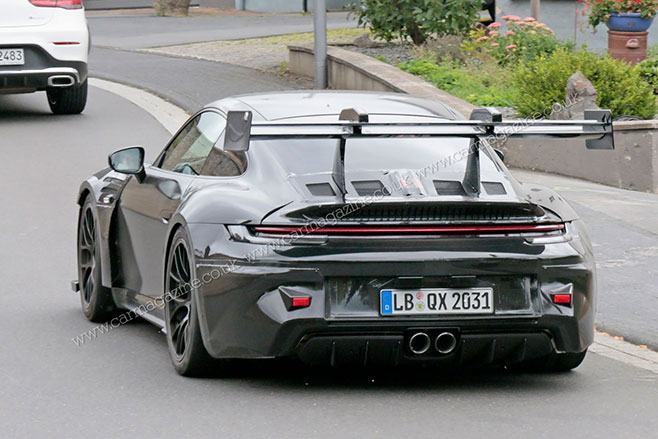
Add the wider-than-stock body, and this GT3 RS looks to be an unpainted RSR.
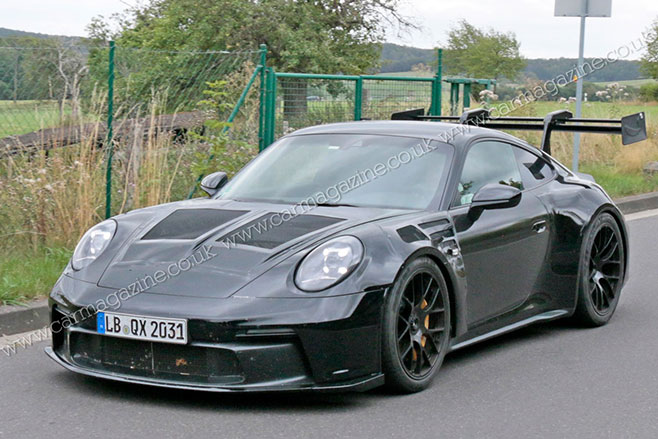
Photo credit: Felix Berghoff for CarPix via CAR magazine
What about the ‘standard’ new 911 GT3?
Porsche teased the 911 purists’ holy grail in its new Superbowl commercial, and although we only only see the side profile of the new GT3, it’s better than nothing.

It’s hard to learn too much from the snippet the car features in, but you can make out a rather aggressive rear spoiler – complete with scaffolding – as well as a slightly sharper front-end. We’re also pleased to say it matches the scoop we published late last year. You can watch the video at the bottom of the page; the car appears from 0:44.
The new 2020 GT3, due in the second half of 2020, will become the first 992-era 911 to offer naturally aspirated engines and it’s set to offer a greatest hits of 911-kind, with the 4.0-litre non-turbo flat six, manual transmissions, laser-targeted hardware updates and a choice of models to bring the GT3 experience to a wider audience.
A while ago we spoke to numerous sources at Porsche to assemble the best possible picture of what to expect from the new Porsche 911 GT3. Read on for our full scoop dossier.
992 911 GT3 to be stiffer for better handling
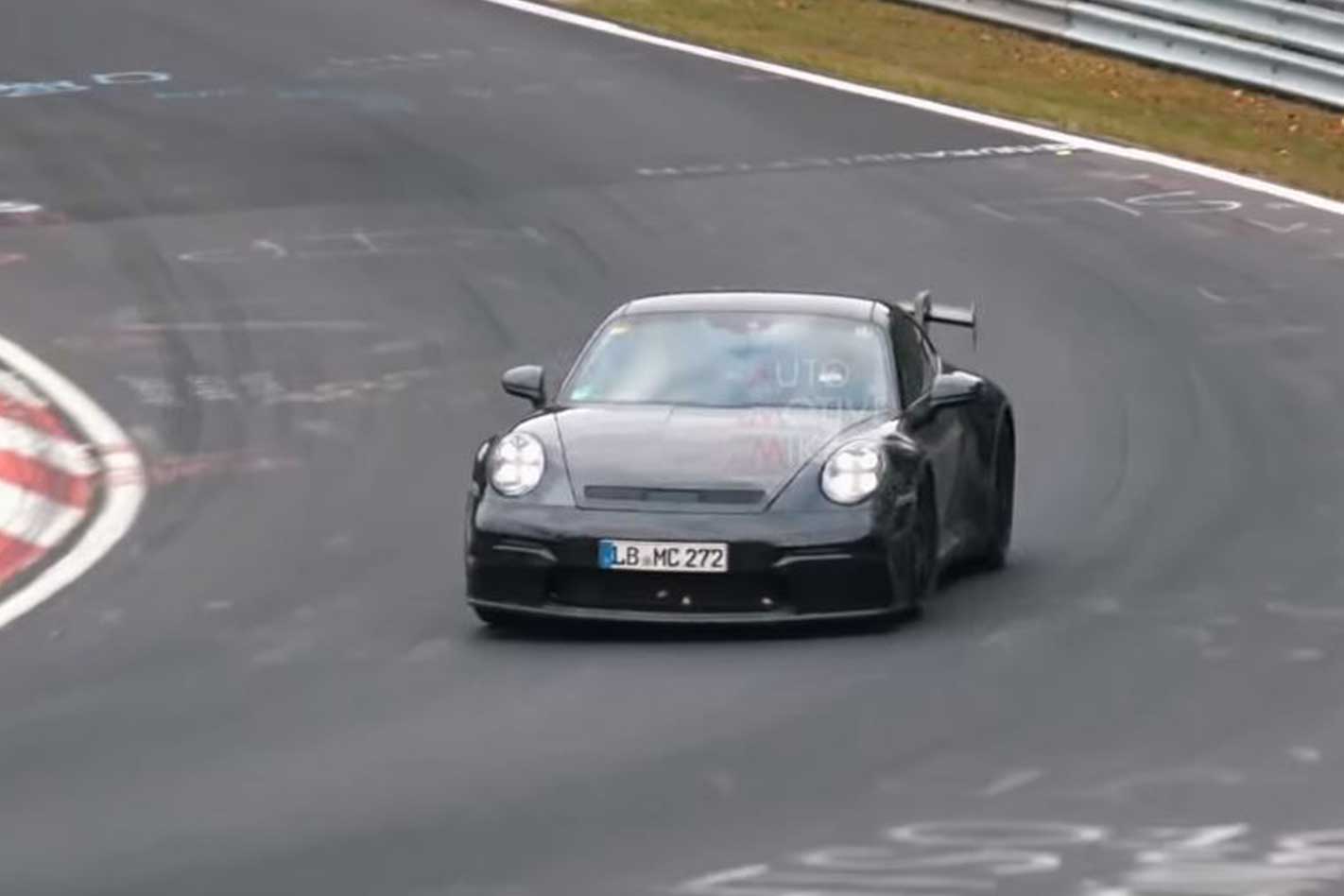
The latest aluminium-intensive 992 architecture is the stiffest platform ever used on a 911, and it’s light too. Only 30% of the structure is made from steel and yet it’s the most torsionally rigid base in the model’s long and storied history. It’s 5% stiffer than the last-generation 991.
This means that the suspension will have a head start in preventing body flex and in having a strong and stable (sorry) foundation with which to tackle the worst bumps, lumps and humps a road can throw at a sports car.
Suspension mounts front and rear are made of precision die-cast aluminium parts while the flat-six will be mounted directly on to the chassis.
Why the new 2020 Porsche 992 911 GT3 will be naturally aspirated
We expect the new GT3 to keep its bewitching 4.0-litre naturally-aspirated flat-six and this year’s Speedster provides a few tips. Despite gaining petrol particulate filters and plenty of emissions-crunching hardware, it developed more power – 503bhp – and kept the 9000rpm redline for high-revving aural antics.
‘It’s 10kg lighter and we didn’t lose any power,’ GT division boss Andreas Preuninger told CAR magazine earlier this year. ‘In fact we got 10bhp more! We used individual throttle bodies, which help a lot, but it wasn’t easy…’
Will it still sound epic?
While the addition of those particulate filters has stymied the sound of the Cayman GT4 – a little – the GT3 should still scream like an old-school Porsche, according to our intel. On the Speedster, the motors for active flaps in the exhausts were specially positioned in the airflow to survive the heat and allow more precise modulation of the exhausts’ vocal chords.
‘There will be stricter noise regulations to come in three years or more,’ Preuninger says. ‘It’s not really affecting the 992 GT3 – it’s for the cars that come after that. We will find solutions for them too. In my cars there won’t be any loudspeakers, believe me. Too heavy!’
A GT3 Touring is in the works
If you prefer your GT3s a little more under-the-radar, you’ll be pleased to hear that a wing-free Touring model will again be offered. Our artist’s impression above, by Andrei Avarvarii, depicts the regular, bespoilered GT3, but a more discrete version will be available for shrinking violets. It gains a pop-up tail in place of the scaffolding on the rump.
Although yet to be officially confirmed, we expect the new GT3 to offer a manual gearbox again, although the forthcoming GT3 RS model may stick to a paddle-only PDK twin-clutch transmission. Preuninger says demand for the manual-only Cayman GT4 ‘proved the manual is still alive’.
‘That gave us the tailwind for the [manual-only] 911 R project, and for the [991 GT3] Touring,’ he says. ‘So it’s built up, step by step, and we’re now in a pretty good situation where everyone is pretty aware of the needs of the GT customer.’
More spec secrets: dimensions and the art of the right-sized 911
The new 911 GT3 package will remain no bigger than before, to keep that just-right 911 footprint intact. Yes, the model has ballooned in recent years, but it remains a relatively small car in a sector that’s suffered bloat in recent years.
While the 992’s platform spaces its wheels wider apart than ever for standard Carrera models, for increased grip and stability, that doesn’t mean the GT3 will expand its tracks even further. Preuninger has promised the new 992 GT3 will be neither wider nor heavier than the outgoing GT3.
That’s good news: threading a GT3 down a narrow, twisting road is one of the most special driving experiences going. Were it to grow broader it’d become something of a liability on UK B-roads…
We’ll update our 2020 Porsche 911 GT3 scoop in the weeks ahead as we uncover more facts about it.
This story first appeared on our sister site Car Magazine UK
The Renault Mégane R.S family has copped a refresh, along with the rest of the Mégane range.
Most importantly, the entire group of Mégane R.S variants now run one engine, the 220kW Trophy-spec engine, rather than being split with the ‘base’ R.S cars running with 205kW and 390Nm.
The Trophy’s selling point is now its exclusive Cup chassis – yep, there’s no more R.S Cup badge.
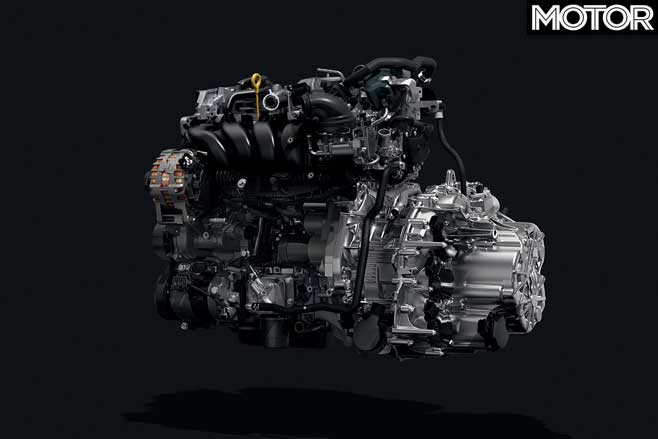
This means you can now access the same power as the $74,990 Mégane Trophy-R for almost $30,000 less.
Internationally, the Mégane R.S models will have 420Nm if equipped with an EDC gearbox, or 400Nm with a manual gearbox.
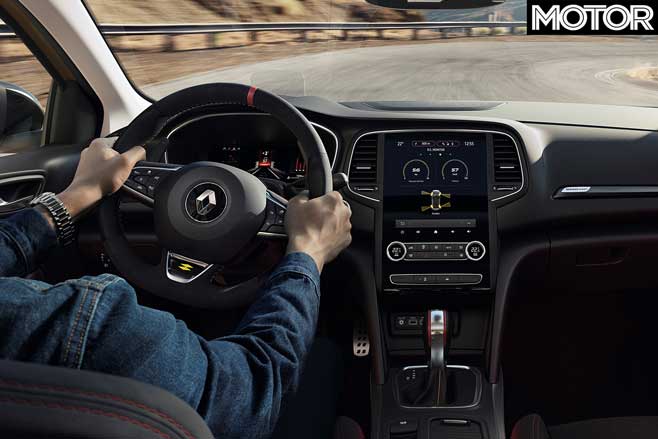
Renault has also added a new R.S monitor to display “numerous vehicle parameters in real time.”
Higher up the food chain, the Trophy’s Cup chassis has shock absorbers and suspension springs stiffened by 25 per cent and 30 per cent respectively over the regular Sport chassis, with an anti-roll bar set “10 per cent higher” than the standard R.S.
Finally, Renault’s GT Line is dead. Long live the R.S Line! Yep, following in the footsteps of ranges like VW’s R-Line or Audi’s S-Line, the Mégane’s quasi-hot hatch now features a badge similar to that of its faster siblings.
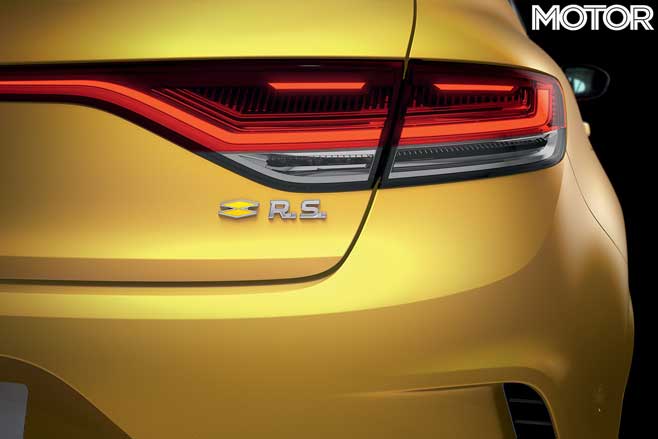
Renault also says the R.S Line will adapt a sportier look than the GT Line was give, as a move to “meet the expectations of the growing number of customers who want a strong differentiation through dynamic design.”
MOTOR has contacted Renault Australia for confirmation of local specifications and availability, and will update this story once it has received a response.
When the Chevrolet Camaro ZL1 was introduced to Australia it seemed that would be the peak of Camaro offerings in Australia. But now HSV has confirmed the Camaro ZL1 1LE is headed to Australia.
At a recent drive day at Melbourne’s Sandown Raceway, we were offered a drive in a Camaro ZL1 fitted with the wild 1LE kit (review coming soon!), as HSV customers were also invited to put the aero-optimised muscle car around the track.
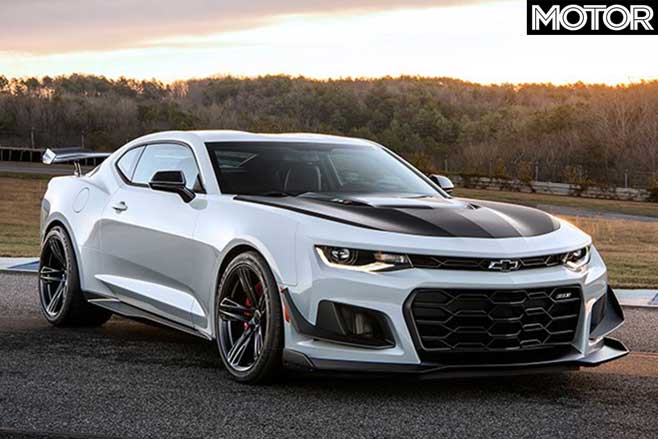
Though HSV is remaining mum on many of the details, including exact availability and pricing, a spokesperson tells MOTOR customers should contact their HSV dealer for any enquiries soon as the supply will be “extremely limited” if HSV’s plans go ahead.
The pack includes a host of aero improvements including the massive wing and dive planes, as well as wider, stickier R-compound Goodyear tyres (by an inch) and a set of uprated dampers suited to higher intensity driving.
It’s essentially a GT3-ified Camaro, and HSV’s wheelman of choice Warren Luff for testing says the package works as a whole to make the car much more capable on track. And we tend to trust Luff’s comments when it comes to track driving cars.
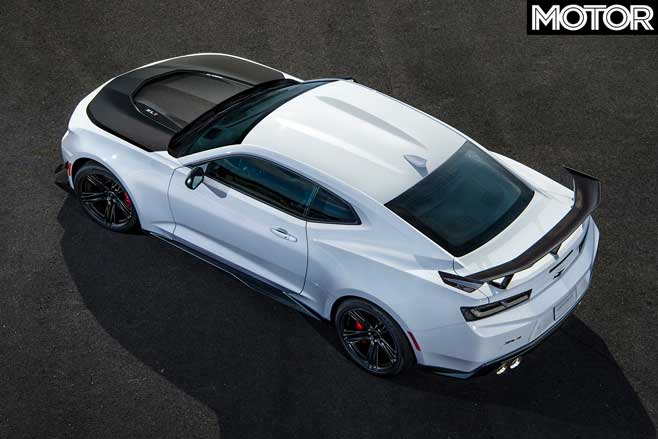
“The aero enables the suspension to make the most of the grippier tyres… all the elements work together to improve the full package rather than just focusing on one area.”
Even without any additional engine tricks over the standard 485kW and 881Nm, Luffy managed to improve the laptime at Sandown by about 2.5 seconds, though he didn’t have the exact times to hand when we asked.
For now, HSV customers should contact their dealer for information, and check out MOTOR’s first taste of the ZL1 1LE at Sandown here.
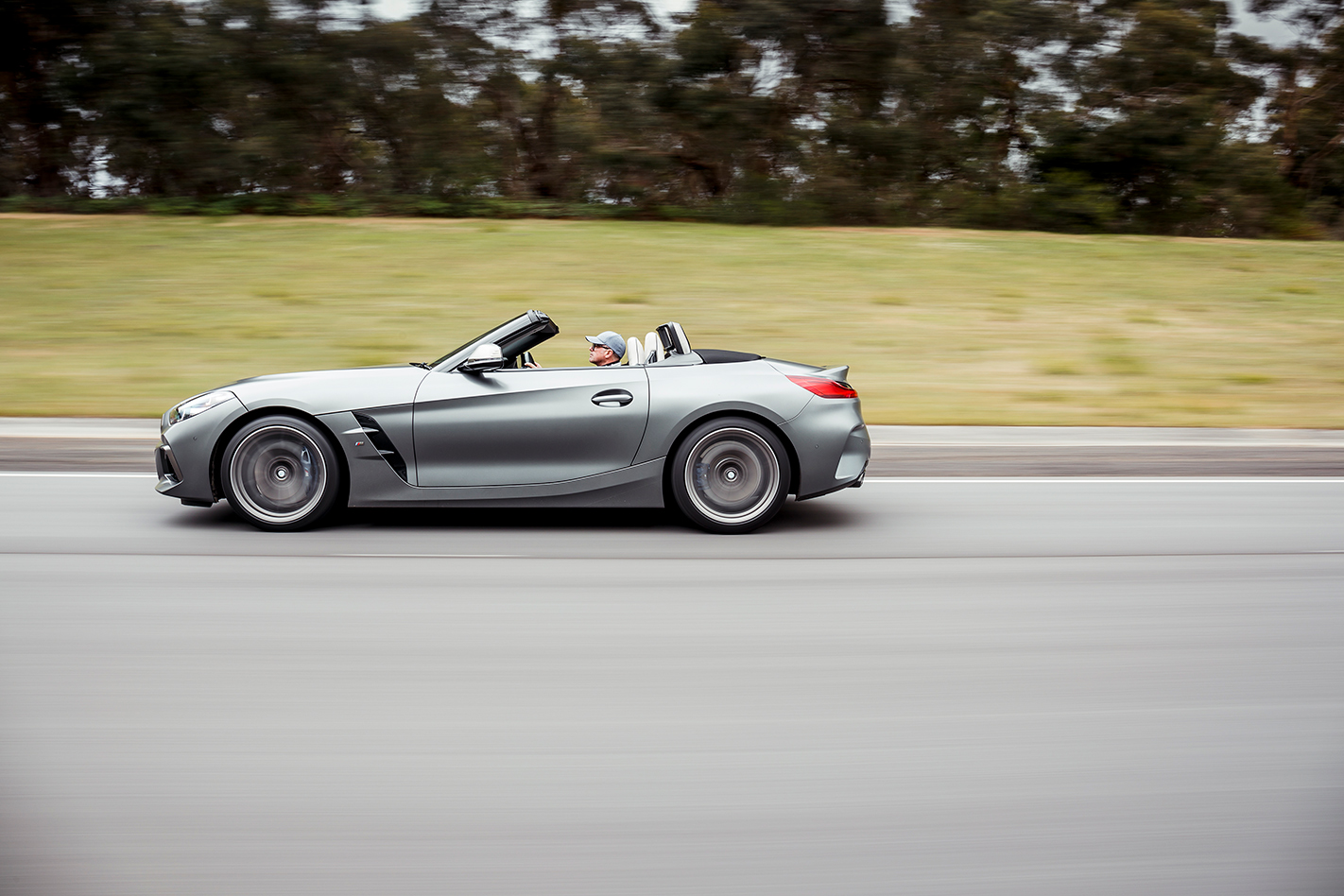
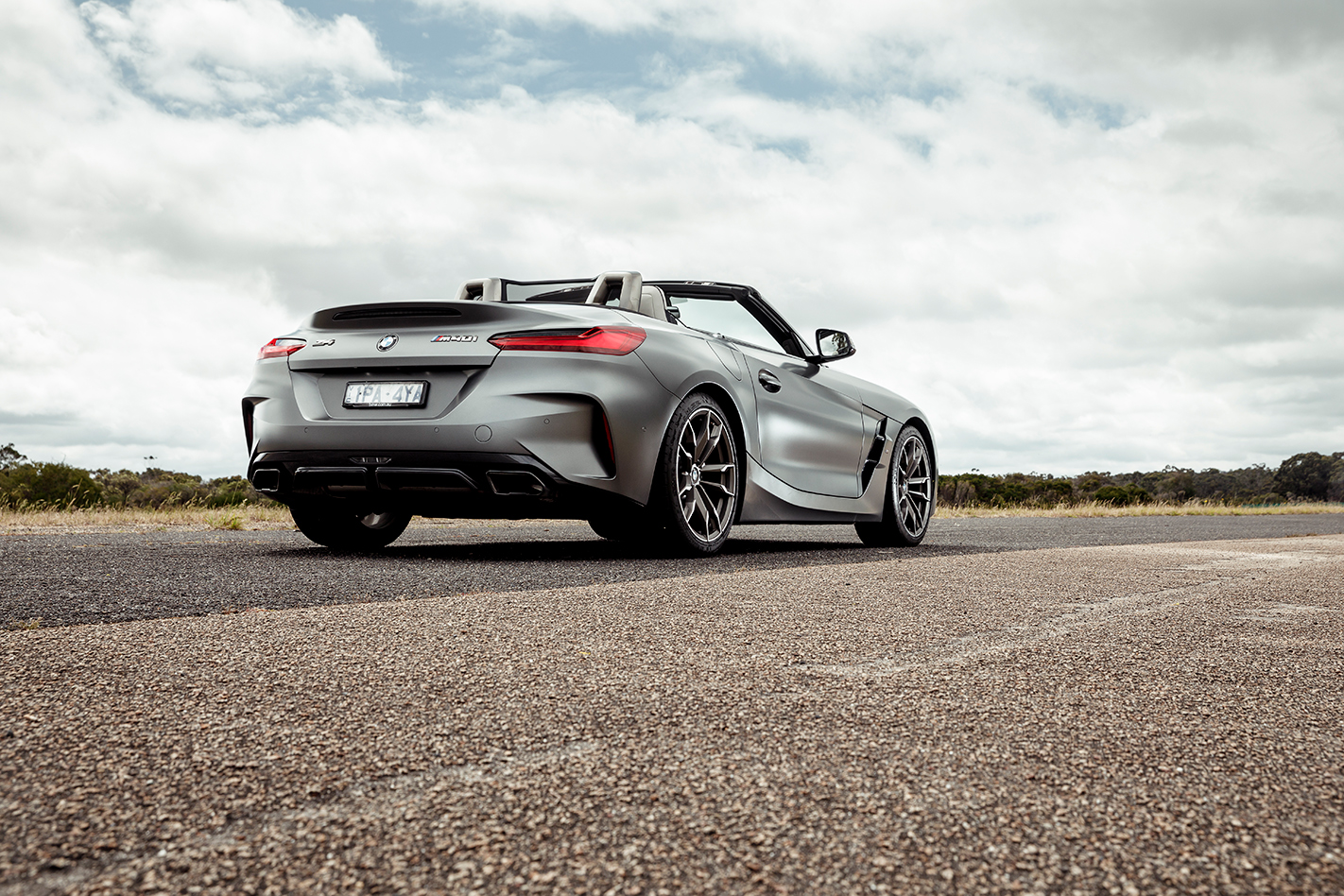
In an era of import-only COTYs, it’s refreshing to see an Australian influence in one of our contenders; the third-gen BMW Z4 was designed by Sydney-born Calvin Luk.
It was the design that was an early topic of contention. Some were attracted to its rotund rump, but others felt things were underdone. Fashionista Carey declared it simply didn’t have the appeal he expects in a sports car.
No complaints with the practicality, though, the Z4’s two-seat space and ergonomically sound cabin a plus. The return of a soft-top roof and its clever packaging that maintains all 281 litres of luggage space with sun or shade was also praised, as was the Bunnings-friendly ski port poking from boot to cabin. Throw in solid structural integrity and it’s clear the core engineering is from fine Bavarian stock.
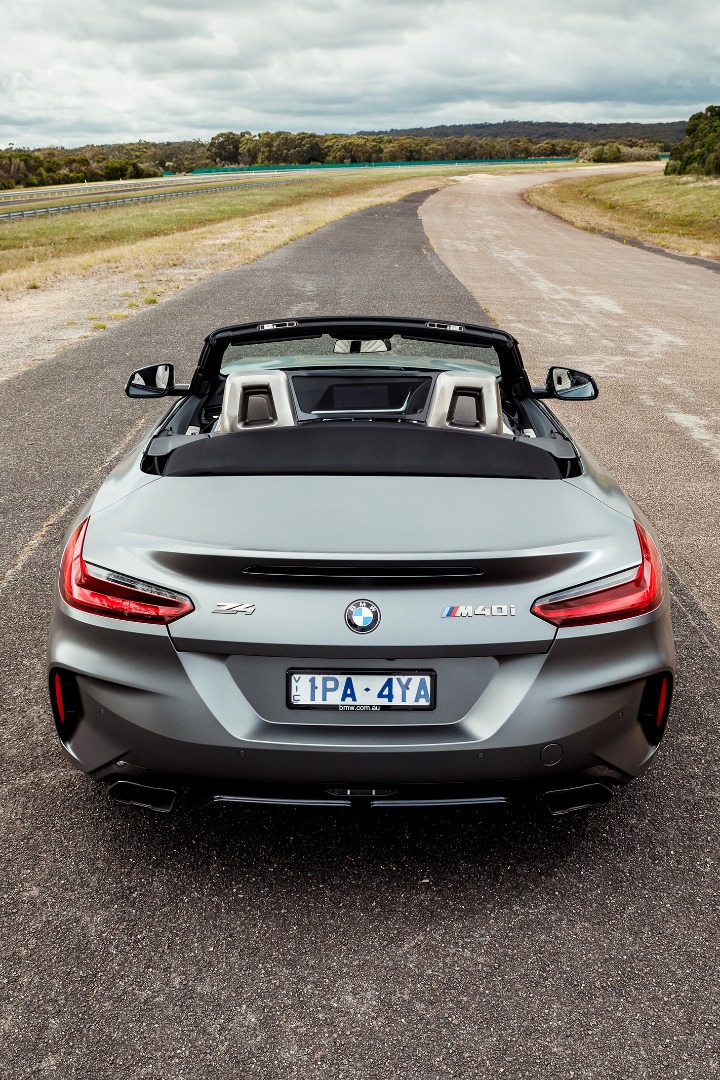
Judges were also impressed with the way the rear-driver quelled wind and road noise, while Mathioudakis highlighted the cold-weather comfort of a roadster that cossets its occupants like a cosy blanket, roof up or down.
We’ve spent time in the 30i previously – arguably the sweet spot of the three-tiered range – but for COTY 2020 our Z duet consisted of the bookends: the $84,900 20i and the $124,900 M40i.
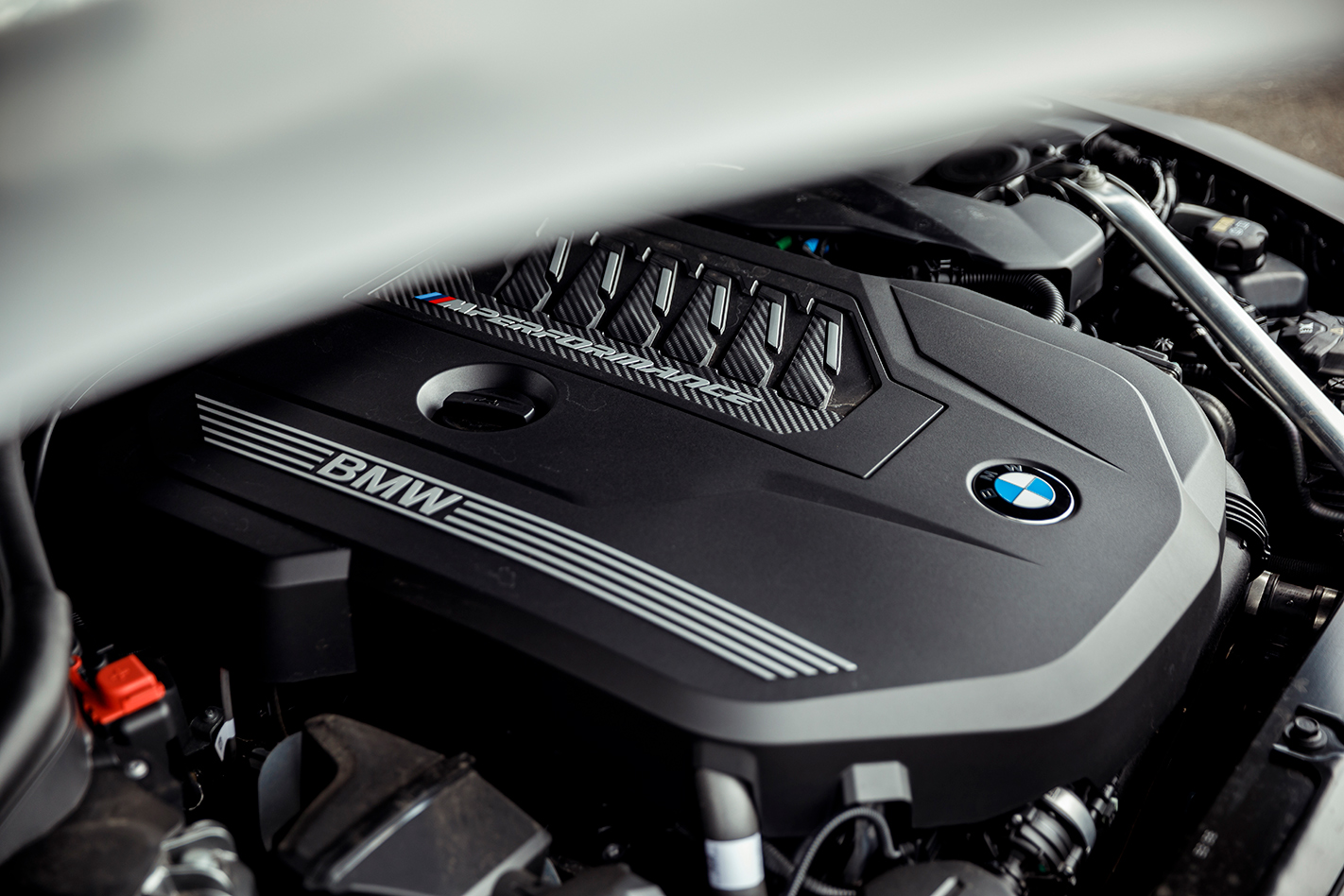
From the first prod of the throttle, the M40i’s luscious, rev-hungry 250kW in-line six won fans. The linear torque and way it syncs with its eight-speed auto is just as enticing.
The 20i less so. Judges could almost live with the 145kW/320Nm outputs, but the lack of verve and the strangled top-end of the turbo four-pot isn’t seductive.
Thankfully Apple CarPlay was thrown in for nix right on COTY deadline, but it counted for little given the lack of the Android opposite and an equipment list that’s hardly bulging.
It marked the start of some bumps in the Z4’s COTY journey – literally. Some of its GT goodness faltered on Lang Lang’s rough-road section. Enright thought the vacant passenger seat was going to disintegrate, Mission Impossible-style, in a shaking rage. Carey was kinder, suggesting the combination of torque and lumps were not endearing to that (broad) rear-end.
Which highlighted a monumental hurdle for the Z4; a Stuttgart-sized mountain in the form of the Porsche Boxster. While BMW may have an M-infused six-pot win over the huffing fours in the Boxster, Porsche returns serve (and some) with dynamic excellence the Z4 can’t match.
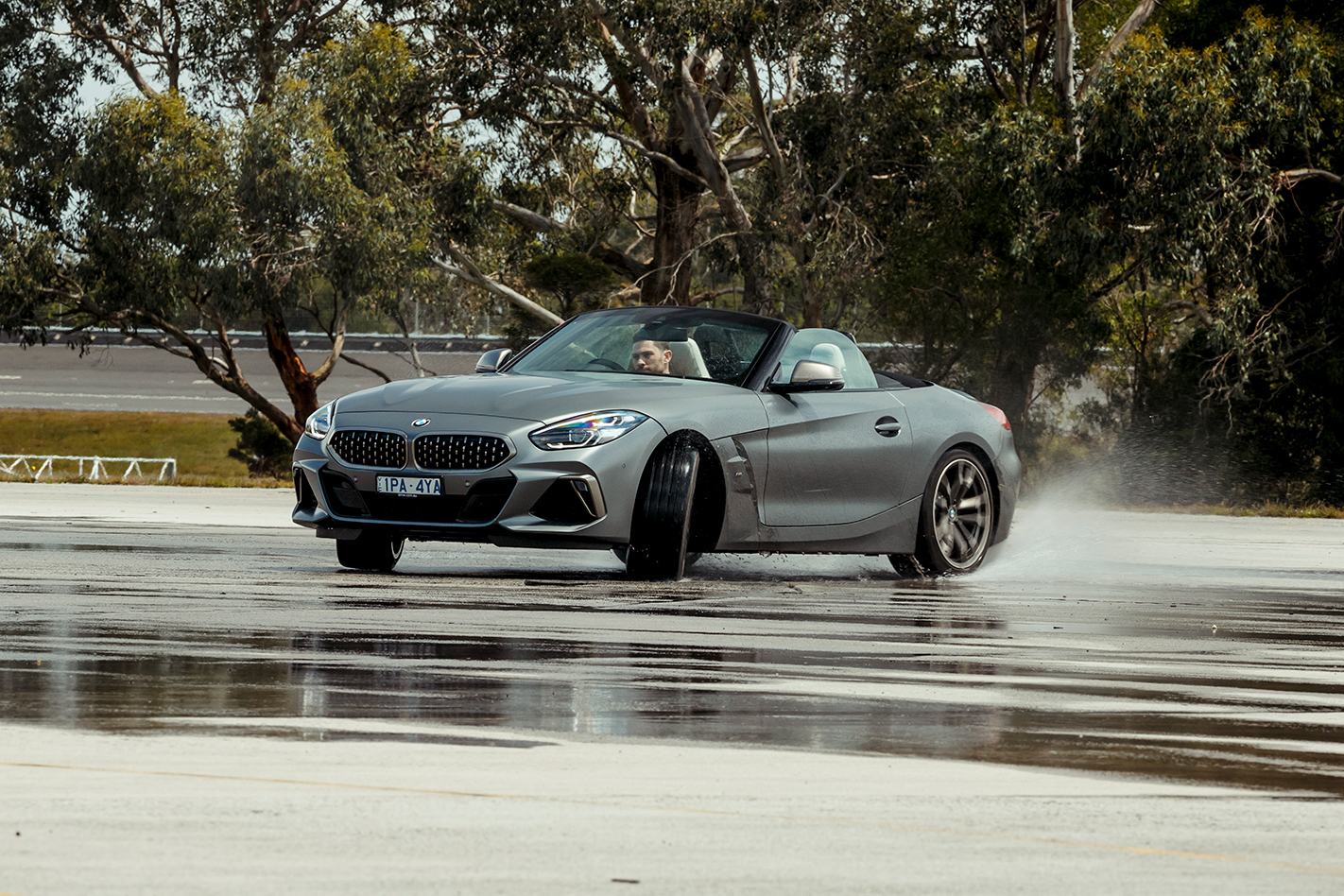
There was also the occasional grumble about the Manga Steyr build quality due to some dodgy gaps between bumper and guards deemed more Tesla than BMW.
All of which detracted from the charm elsewhere in what is a vastly improved Z4. It’s by far the best among an often-underwhelming ancestry.
And while it may be as Aussie as a modern COTY gets, patriotism counts for nothing at the year’s biggest test, which is why the Z4’s run came to a bumpy end.
THE JUDGES’ COTY SCORECARD
Function: 3.1
Efficiency: 3.0
Safety: 3.0
Technology: 2.1
Value: 2.7
BMW Z4 SPECS
BODY
Type: 2-door convertible, 2 seats
Boot capacity: 281L
Weight: 1405 – 1535kg
DRIVETRAIN
Layout: Front-engine (north-south), RWD
Engines: 1998cc 4cyl turbo-petrol (145kW/320Nm); 1998cc 4cyl turbo-petrol (190kW/400Nm); 2998cc 6cyl turbo-petrol (250kW/500Nm)
Transmissions: 6-speed manual; 8-speed automatic
CHASSIS
Tyres: 225/50R17 – 275/35R19
ADR81 fuel consumption: 6.5 – 7.4L/100km
CO2 emissions: 148 – 169g/km
Crash rating: 5 stars (NCAP)
PRICES
$84,900 – $124,900
Whenever I watch the cobbled-together cop shows where sinning motorists are corralled for entertainment, I often find myself idly wondering what the cost of educating drivers has been over the years.
How many drink-driving ads in print, on TV, in digital mediums and more have been commissioned over the last few decades, all with the intent of educating us to not drink and drive?
It has to be well into the billions now, surely.
Yet it appears the message isn’t sinking in. More than 30 percent of fatal crashes in Australia in 2015, for example, involved drivers and riders with a blood-alcohol content over the legal limit.
When I drink, I don’t drive. Blanket rule. It doesn’t make me a saint or a pariah… it’s a personal choice, dictated largely by the fact that I drive professionally for a living, and I’m often driving expensive cars that belong to someone else.
Besides, the whole thing around how many drinks one should have before driving is, if I’m honest, a pain in the arse. Two drinks will arguably get you to the national limit of 0.05 grams of alcohol per 100ml of blood, then one drink an hour will keep you there. Or tip you over. Or something.
Besides the fact that the maths varies wildly depending upon body size, sex, tolerance and a million other variables, for me it’s way easier to default to the path of least resistance.
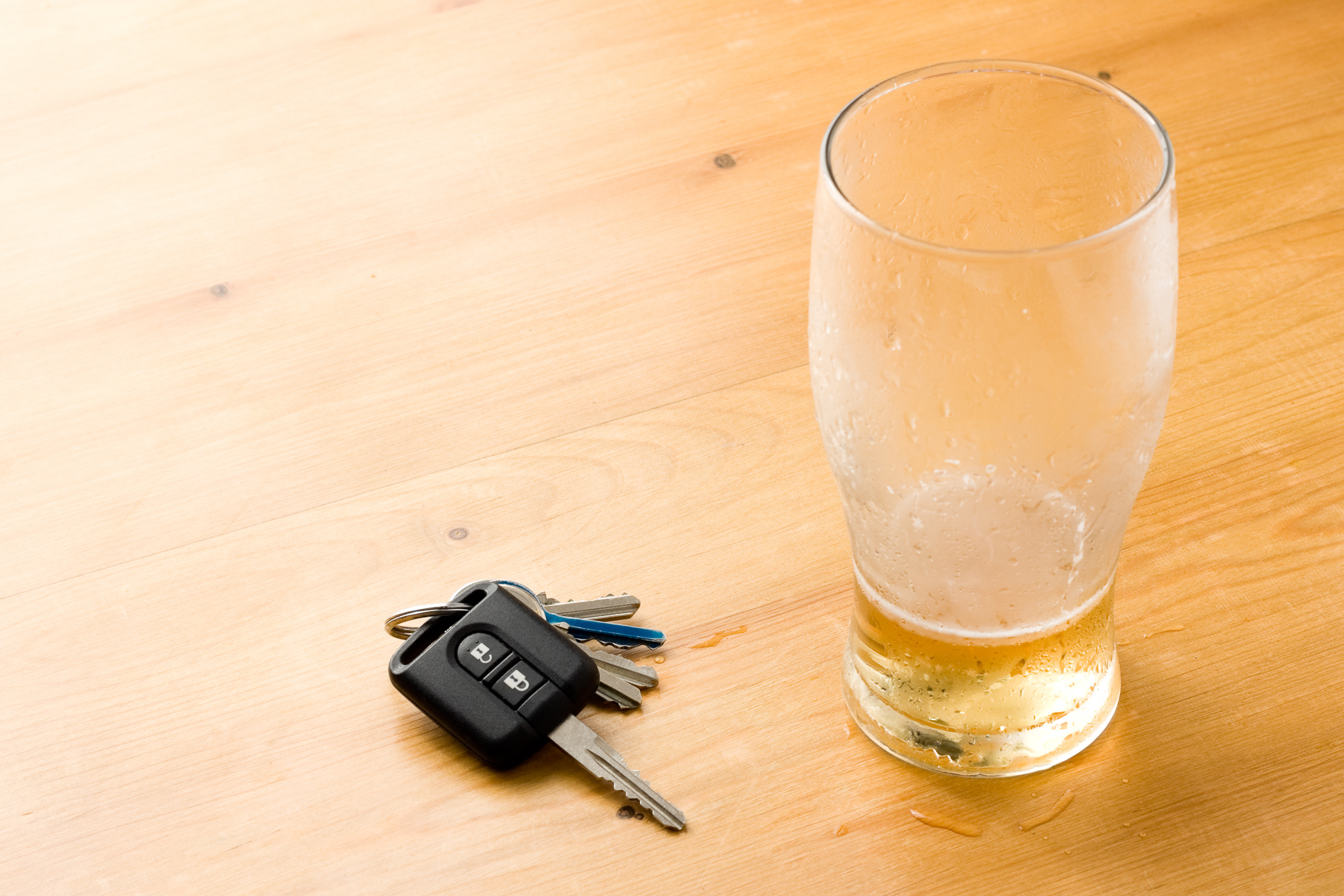
My tolerance for alcohol is relatively low because I don’t drink it much. I’m a husky gent, so I ‘d suggest I need more drinks than the average bear to ping the 0.05 meter; I’d be lucky to recognise my car at 0.05, let alone operate it.
Australia’s nationally enforced limit of 0.05 was introduced in 1991 – almost thirty years ago – alongside the introduction of the random breath test, after road deaths per 100,000 people per year in Australia regularly topped 24 (it’s now down around seven, with better roads and safer cars also playing a part).
The truly terrible news this week that a driver who posted a 0.150 blood alcohol reading killed four kids from the same family in Sydney has, unsurprisingly, resulted in calls for the limit to be lowered to zero. On the face of it, is it such a bad idea?
A surprisingly large number of countries already subscribe to a zero policy, including Brazil and the Czech Republic, along with countries where alcohol, in general, is taboo, like UAE and Pakistan.
The majority of places prescribe to 0.05 levels – Scotland only reduced its limit from 0.08 in 2014, while the US allows up to 0.08 in the main, with limitations for commercial drivers.
As well, most countries limit their youngest and newest drivers from imbibing in any shape or form for the first couple of years of driving.
The reality is that a zero reading is probably unworkable; various medications contain trace amounts of alcohol, while a hearty serve of nan’s special rum trifle might put you in trouble.
But 0.02… that’s not a bad compromise, and it’s the same level that’s enforced in China, home of the largest population in the world.
Studies have shown that men are, on average, 15 times more likely to be killed in a single-vehicle crash when their BAC levels are between 0.05 and 0.07, compared to three times between 0.02 and 0.04.
As well, marketing the notion that a driver should have only a single drink before sliding behind the wheel would be a pretty easy one. ‘One drink will do’, for example, is a simple notion that no one can misconstrue.
Of course, it’s not going to stop everyone, and alcoholism continues to be a problem in wider society. (Closing half the bottle shops in the country would be a good start, surely – how many Dan Murphys does one country need?)

The heartbreaking vision of a loving dad struggling to process the fact that three of his kids and one of their cousins have been taken away in such a terrible way is hard to watch. If something- anything – good can come of such an awful tragedy, opening the conversation about what the next stage of the war against drink-driving can proceed might be it.
Every year at Wheels COTY, there’s one contender that doesn’t progress beyond the first round, but nevertheless distinguishes itself as a very good thing. Last year it was the Hyundai Santa Fe; the year before, the Volkswagen Arteon. This year’s claimant was the BMW X5.
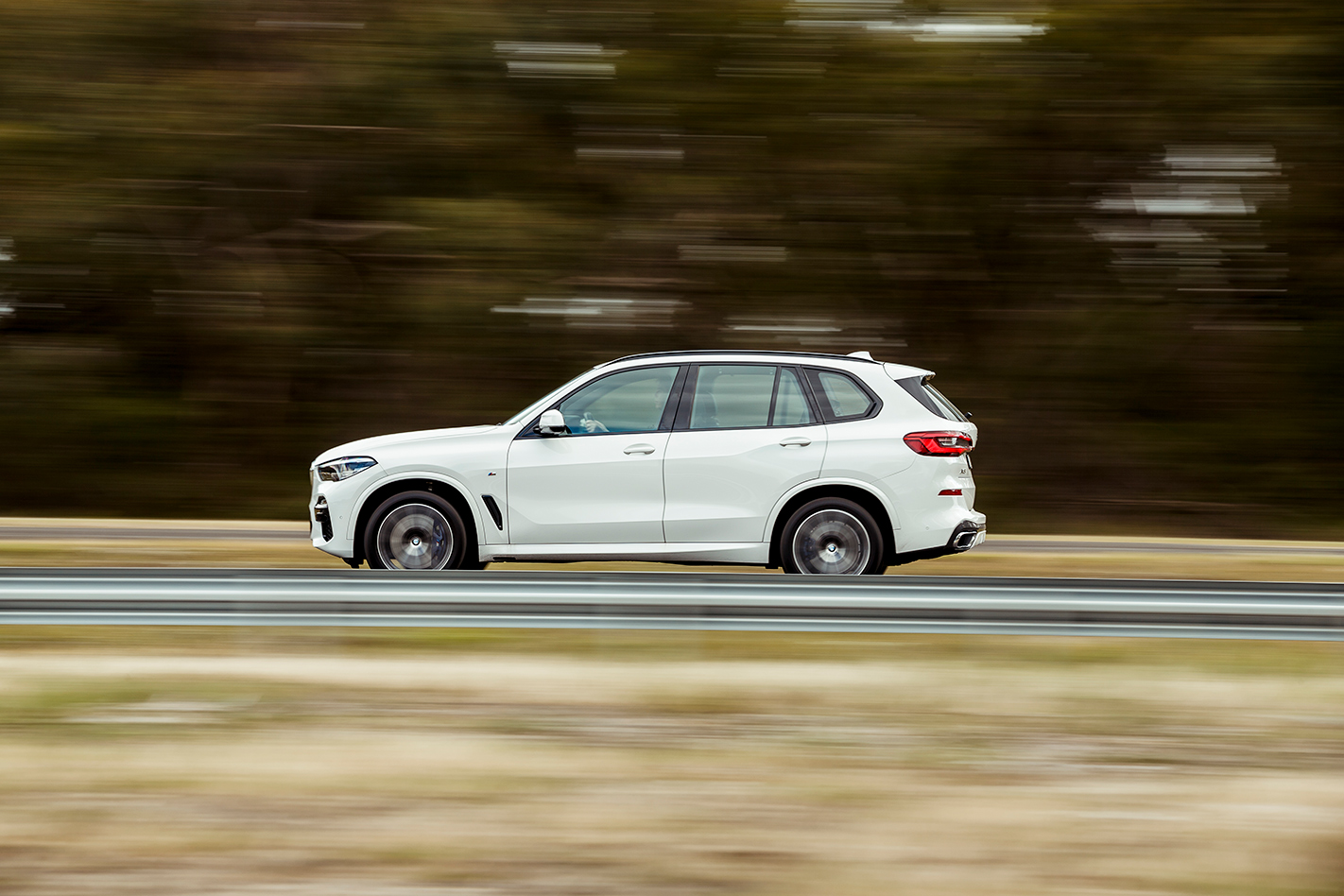
Toby Hagon reckoned it was amazingly car-like for such a large SUV and loved its composure through our coned lane-change test. It was perhaps only bettered by Volkswagen’s Touareg in this discipline, but the VW had the advantage of an $8K R-Line pack that included a pair of electromechanical anti-roll bars to stabilise it. The BMW felt more natural through the flick-flack, our GMH hosts allowing us to gradually up the speed until we were matching the speeds of non-SUVs.
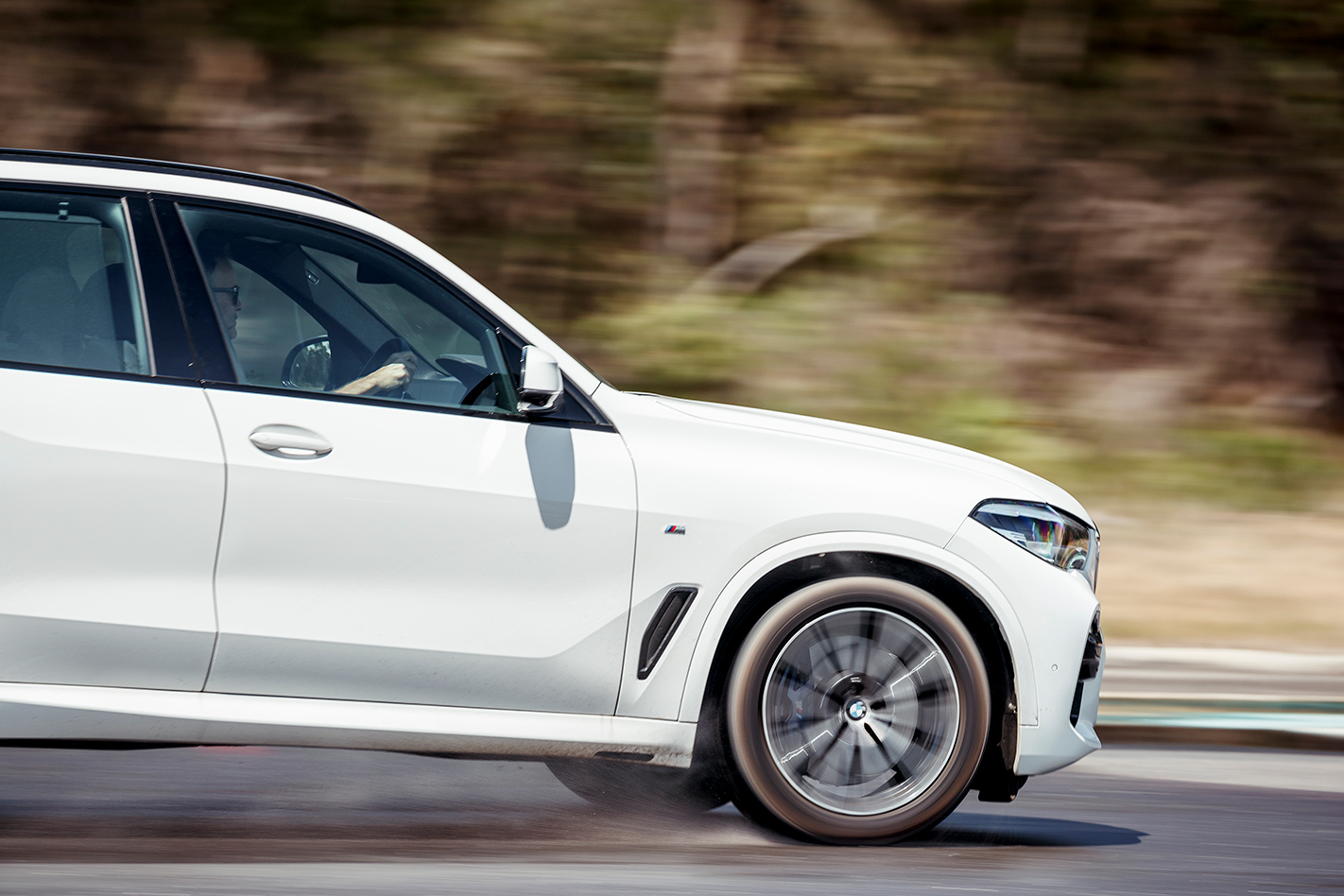
Of the two cars along for review, judges preferred the petrol-powered X5 xDrive 40i to the 30d oil-burner, although some noted that despite its agility, it isn’t one of those SUVs that shrink around you. The X5 always feels a significant lump of metallurgy to be hauling about, the flipside of which is that you don’t have to wonder where your money went.
The cabin treatment received near universal praise, although the two contra-rotating main dials in the skeuomorphistic digital dash are a retrograde step. BMW used to be the exemplar of clear binnacles but now the clocks are fussy and overstyled. It’s time to wind back the (analogue) clock. While BMW’s at it, there has to be a more elegant way of incorporating an eye-scanning camera than the plastic carbuncle that sits front and centre in the display between the two main dials.
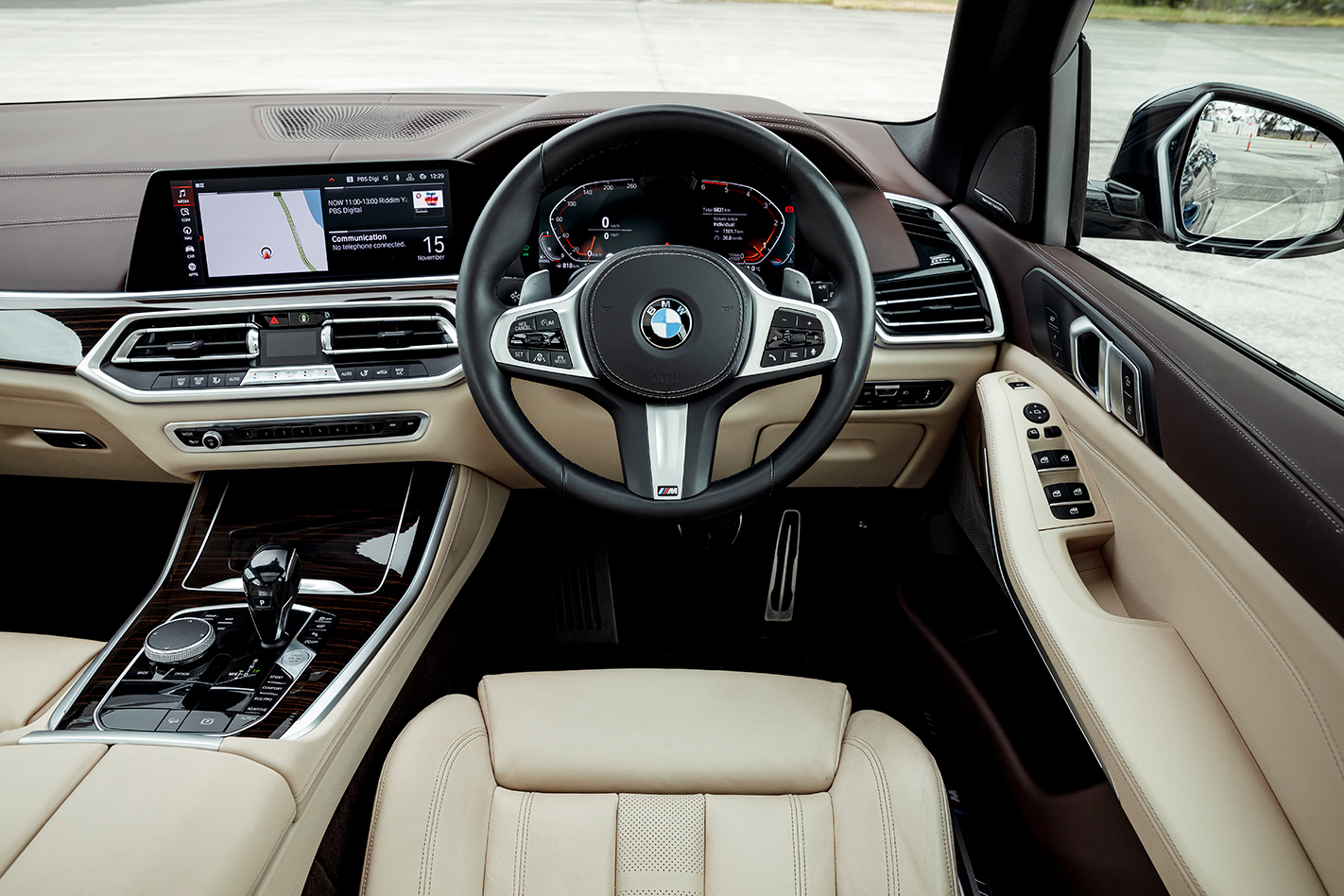
‘Remote’ was the most accurate word I could conjure up to describe the way the X5 drives, but that’s probably no bad thing for the target clientele. Talented but distinctly taciturn, it feels assured and relaxing, and makes a great choice for reeling in countless freeway kilometres. Were we buying, we’d probably spend the additional $2300 on dual-axle air suspension, a fitment that comes as standard on the plug-in hybrid xDrive 45e. Even on steel springs and optional 22-inch rims, the 30d rode acceptably, but the 40i on 20-inch alloys was notably silkier.
Where the X5 wasn’t so clever was in rear-seat accommodation, where it felt a little mean-spirited, perhaps aiming to drive those who value rear features to the bigger X7. A third row is a huge $3700 ask, and there’s little of the dress-up with digital temp vents and multiple power options that can make other rivals feel more family friendly. The rear row doesn’t even slide. What’s more, it seems a temerity to ask an extra $900 for a wireless phone charger on a $100K+ SUV.
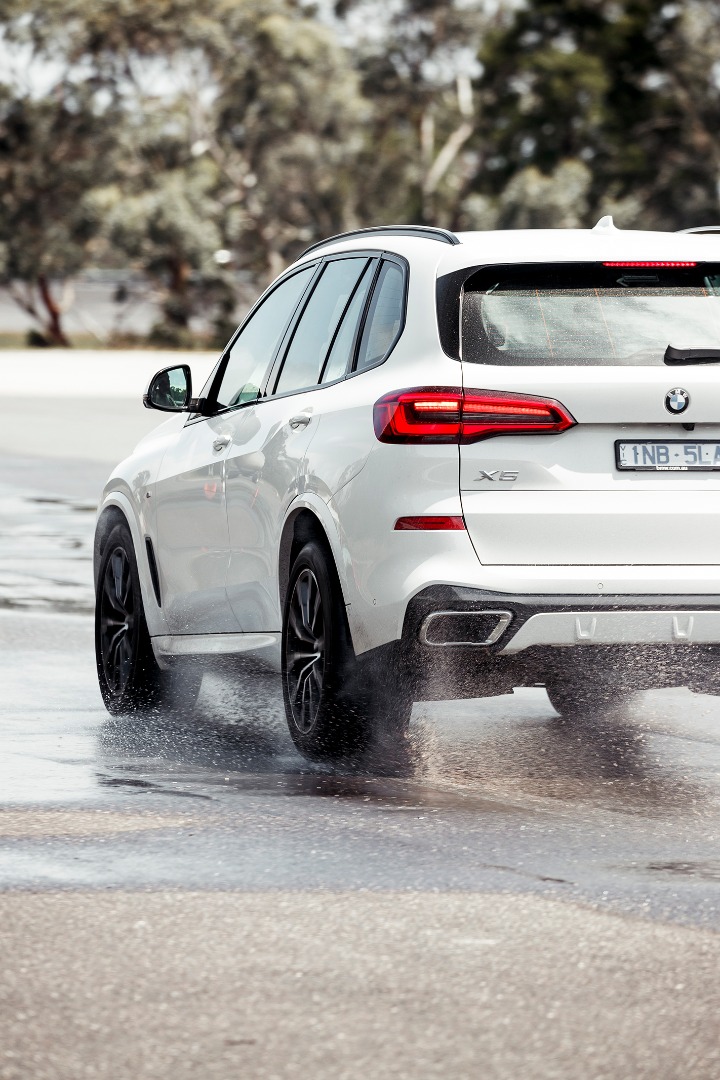
The X5’s impressive interior finish and lantern-jawed styling found it plenty of admirers. Unfortunately, few felt it sufficiently tempting to progress to the second round. Still, BMW ought to be proud of this G05-generation car. It’s a good ’un, and had we been able to sample the 45e plug-in version, it may well have advanced.
THE JUDGES’ COTY SCORECARD
Function: 3.4
Efficiency: 3.1
Safety: 3.6
Technology: 2.8
Value: 3.1
BMW X5 SPECS
BODY
Type: 5-door SUV, 5 seats
Boot capacity: 500 – 645 litres
Weight: 2060 – 2435kg
DRIVETRAIN
Layout: Front-engine (north-south), AWD
Engines: 1995cc 4cyl turbo-diesel (170kW/450Nm); 2993cc 6cyl turbo-diesel (195kW/620Nm); 2998cc 6cyl turbo-petrol (250kW/450Nm); 4395cc V8 twin-turbo-petrol; (390kW/750Nm); 2998cc 6cyl turbo-petrol + e-motor (290kW/600Nm)
Transmission: 8-speed automatic
CHASSIS
Tyres: 255/55R18 – 315/35R21
ADR81 fuel consumption: 2.0 – 10.7L/100km
CO2 emissions: 47 – 243g/km
Crash rating: 5 stars (ANCAP)
PRICES
$99,900 – $151,900
While well over 100 million people tune into the Super Bowl to watch American football, we at the WhichCar office get our kicks watching the car commercials that play during the ad breaks, and the extraordinary budgets all the key players stump up to appear on America’s most coveted advertising spot.
Even before you start producing the ads, which often involve famous celebrities with associated ginormous pay cheques, a 30-second ad during the game is said to cost around AUD$9 million dollars. Considering many of these car ads run past the one minute mark, running a campaign is eye-wateringly expensive.
But the manufacturers know that the Super Bowl is watched by more than 100 million Americans and almost double that worldwide, and paying the money guarantees literally millions of eyes will see their latest and greatest machinery.
Following this year’s showing, we’ve collected some of the best car ads that are inspiring, hilarious and sometimes bizarre.
Porsche: “The Heist”
Porsche’s big-budget ad invokes The Fast and the Furious-type action mixed with The Italian Job-style stunt driving in which its prized new Taycan is Tay-can from its Zuffenhausen museum.
Hyundai: “Smaht Pahk”
Celebrity cameos from Rachel Dratch, John Krasinski and Chris Evans dial up the Boston accent in a funny ad where they collectively watch a 2020 Hyundai Sonata park itself.
Audi: “Let It Go”
Audi loves a big game commercial and this year is no different. The E-Tron is shown powering toward a future of electric motoring to the tune “Let It Go” from the film Frozen.
Genesis: “Going Away Party”
What better way for Hyundai to establish its luxury-focused sub-brand than by buying it a big-game spot? The advert features John Legend and Chrissy Teigen giving ‘old luxury’ the flick by ushering in new luxury in the form of the new Genesis GV80.
GMC Hummer: “Quiet Revolution”
This one caught a few people by surprise. Hummer is back, and it’s now electric.
Jeep: “Groundhog Day”
Bill Murray stars in this campaign for Jeep that suggests every day is a new adventure if you’re behind the wheel of a Jeep Gladiator.
Toyota: “Heroes”
Featuring actress Cobie Smulders as super mum, this ad from Toyota shows Smulders arriving just in time to save the day behind the wheel of a new Toyota Kluger.
Volkswagen: “The Best Team”
Volkswagen dedicates its Super Bowl offering to its factory workers based in Chattanooga, Tennessee.
Kia: “Tough Never Quits”
In this inspiring advertisement, NFL running back Josh Jacobs returns to his childhood to offer up some sage wisdom to his younger self.
WeatherTech: “Lucky Dog”
It may not strictly be about cars or from a vehicle manufacturer, but we liked this story too much not to share. The CEO of WeatherTech (floor mat manufacturer) was so moved by the vets from the University of Wisconsin School of Veterinary Medicine who saved his dog from cancer, that he bought an ad spot to thank them and urged viewers to donate.
Let us know your favourite in the comments below.
Audi is planning a big year for fans of performance metal, with the launch of a huge array of fast sedans, wagons and SUVs.
The RS Q3 and RS Q3 Sportback, the RS6 Avant and RS7 coupe, as well as the RS Q8, will all launch in the second half of 2020, making it a busy year for the brand.
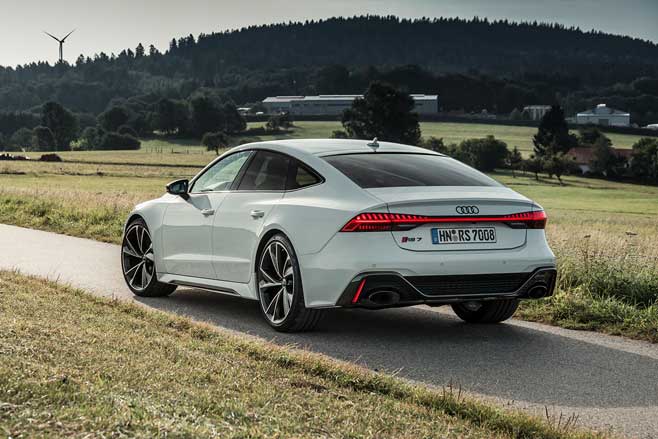
The key announcement, though, is the return of the RS3 hatchback, which quietly disappeared early in 2019. The issue, according to Audi, was due to delays in the real-world emissions testing program – known as WLTP – which have now been resolved.
The RS3 was hot property for the local arm of Audi, with more than a quarter of all A3 sales attributed to the RS3 alone.
“It was a big gap for us,” says Audi Australia’s product pricing and planning director Shawn Ticehurst. “We’re very happy to get it back.”
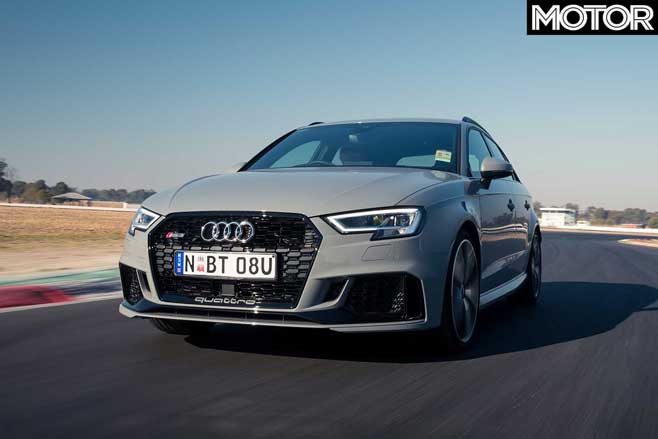
While the RS3 gets to keep its five-cylinder turbocharged petrol engine, it does come at a slight cost. In a first for the brand, it will be fitted with a petrol particulate filter.
Its 294kW/480Nm outputs remain unchanged (other than for a small change in the torque curve), but thanks to Australia’s poor fuel quality – derided as the worst in the world– owners will be restricted to using 95 RON or better fuel.
While using 91 RON was permissible in earlier versions of the car, the high sulphur content of the lower octane petrol will damage the petrol particulate filter.
“The small compromise of having the petrol particulate filter is one worth taking,” he says. “The alternative was not take the car at all.”
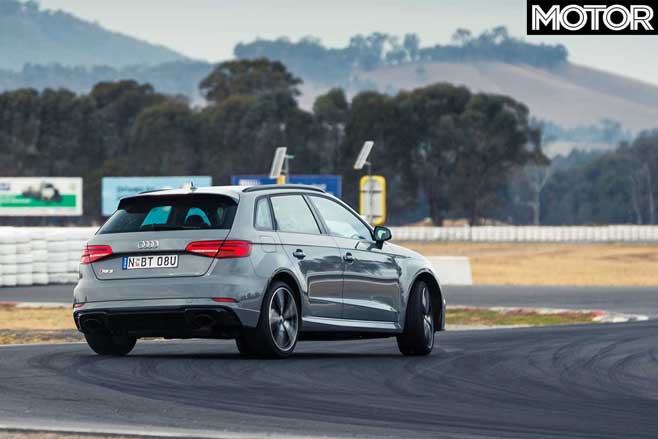
Ticehurst also says the distinctive sound of the five-potter will be different. “It’s hard to describe, but it loses a bit of its ‘parp-parp’,” Ticehurst says, adding that the fundamental note is still very familiar.
“I’ve driven them in Europe, and I pleased to report that the still sound good.
“They will lose a little, but not enough to take away from it. There will be some disappointment. If it had lost its character, we wouldn’t have brought the car back.
“We’ve done a lot of testing with it and our engineers in Germany assure us it will be good. They wouldn’t allow us to launch it if there was a risk [of damage to the PPF].”
The stock RS3 will be priced at $83,800 plus on-road costs for the hatch and $86,400 for the sedan.
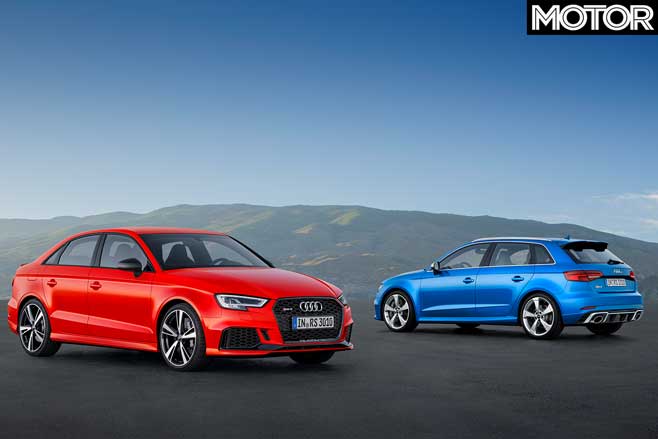
A Carbon edition will be added to the line-up to mark the car’s return. It gets magnetic dampers, metallic paint, bigger stereo and inductive phone charging as standard to accompany its 19-inch rims, AWD driveline and the aforementioned five-cylinder engine. It’s $3400 more than the stock car at $87,200 and $89,900 for the hatch and sedan respectively/
However, the ceramic brake option has been deleted from the overseas catalogue for the RS3, thanks to a very small take-up rate.
Meanwhile, the R8 will also return to Audi showrooms in a late-life blast.
It will mirror the facelifted version of the car seen in Europe early in 2019, which adds a new front bumper and tweaked headlights, while the rear reverts to a one-piece lower panel below the lights to link it more closely to the racing car, along with new round exhausts and new diffuser.
The same mighty V10 engine resides under the rear hatch, making the same 397kW and 540Nm via a different engine tune.
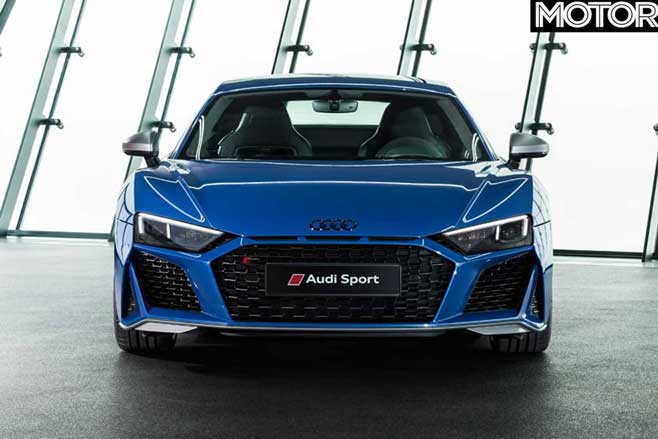
However, in contrast to the RS3, the R8 will arrive down under without a petrol particulate filter, which costs it seven kilowatts.
According to Ticehurst, this came down to how the R8 sounded with and without the filter.
“With the R8, we did have the choice [to delete the PPF], and sound made that decision for us.
“We lost 7kW accepting the engine without it, but we’ll take that.”
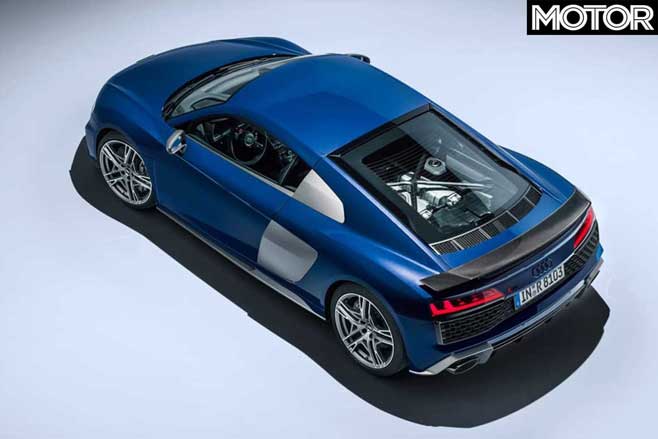
The range will change, too, with the RWS model now known as the RWD model becoming a standard member of the range, and what used to be the V10 Plus will now be the V10 Performance. Both will be available in coupe or open-top versions.
Both coupes weigh 1595kg, with the Performance getting ceramic brakes, lighter seats and wheels to offset its AWD system, as well as a CFRP front stabiliser bar.
Inside, everything is leather with an Alcantara roof lining.
The RWD coupe will start from $295,000 and the Spyder $316,500 .
The V10 Performance quattro costs $395,000, and the Spyder $416,500.
Hundreds of cars pass through the WhichCar carpark each year, but rarely does anything nudge a million dollars in price, so when Rolls-Royce offered its Wraith in exclusive Black Badge edition, we planned something a bit different for the show.
Director Matt’s vision was to showcase the Wraith’s classy and tenebrous features not in the harsh light of day but after dark in the depths of Melbourne’s winter.
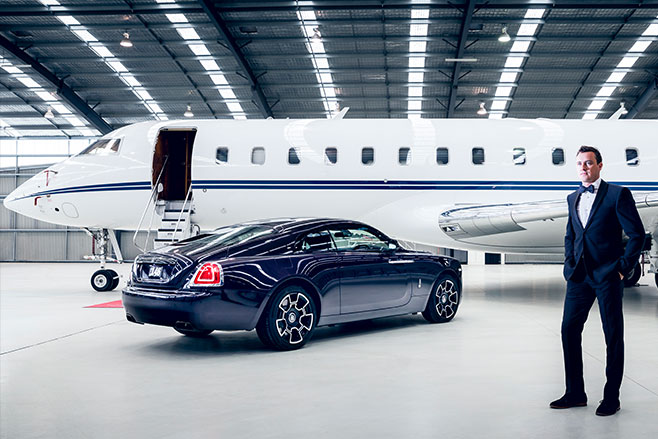
Not only would the city lights bathe the massive coupe in a completely unique glow but, as the clock ticked further into the unsociable hours, we would have the usually busy roads largely to ourselves. And the results were better than we could have expected.
Virtually every shot you see in the segment was filmed using fixed focal length lenses – known as prime lenses – for their light-boosting qualities and crisp image, and they brought in spectacular levels of light on a typically gloomy evening.
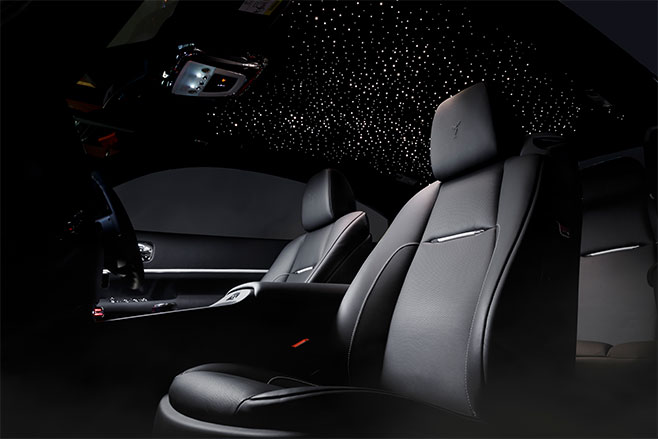
The Rolls’ deep Belladonna Purple paint was radiant under the synthetic lights and the ridiculously exuberant star constellation roof lining shone like nothing else.
Originally, we set out to capture the segment starting during the early evening shortly after sunset and knock the shoot on the head as soon as we had everything in the can.
But the final call to wrap wasn’t made until about 6:00 am the following day, and all the makeup and Red Bull in Melbourne couldn’t disguise the odd wrinkle and bag on my face.
Actually, the filming took place over two evenings, with a second night required to grab some final tracking shots and we used sections of road from far in Melbourne’s north all the way down to the bay.
You might recognise the recently restored Palais Theatre in St Kilda among some other iconic Melbourne landmarks.
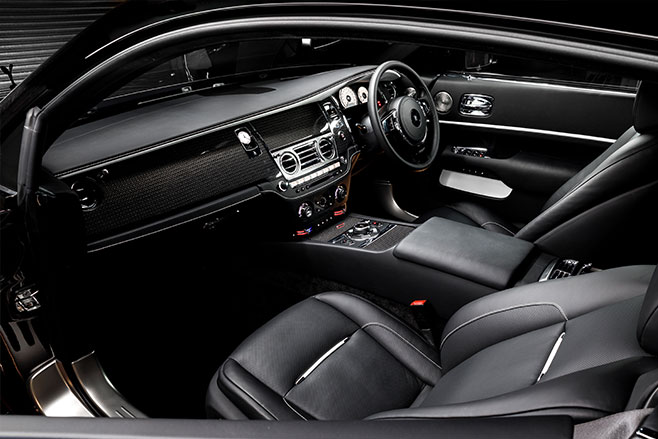
Another part of the preparation you won’t see in the film was a short security briefing. When you’re driving through some seedy and deserted suburbs during the early hours in a hugely valuable car, it pays to be aware of any undesirables before they start paying too much unwanted attention to you. Happily, we returned the Wraith to its rightful owner.
You might also be interested in the private jet that Emma arrives on at the start of the feature. It’s a Bombardier Global Express and its owner gave us permission to use it as the co-star alongside the Wraith… as long as its identification number was not revealed. If you thought the Rolls was a pricey bit of kit, then the Bombardier costs about 30 times more.
Check out the feature above if you haven’t already caught it on Channel 10 and get in touch if there are any other TV secrets you’d like us to give away.
WhichCar TV
WHEN
4pm Sundays (repeats the following Wednesday and Saturday)
WHERE
Channel 10
FIND THE HOSTS ON INSTAGRAM
Daniel Gardner (@octanedan)
Emma Notarfrancesco (@emmanotarfrancesco)
MISSED THE SHOW?
In scenes looking worryingly similar to Terminator, Tesla has released footage of what its Autopilot driver-assist system actually sees when it’s scanning the road in the course of providing ‘semi-autonomous’ driving.
Tesla recently published an entire landing page dedicated to every aspect of the AI technology, highlighting its achievements in “deploying autonomy at scale”.
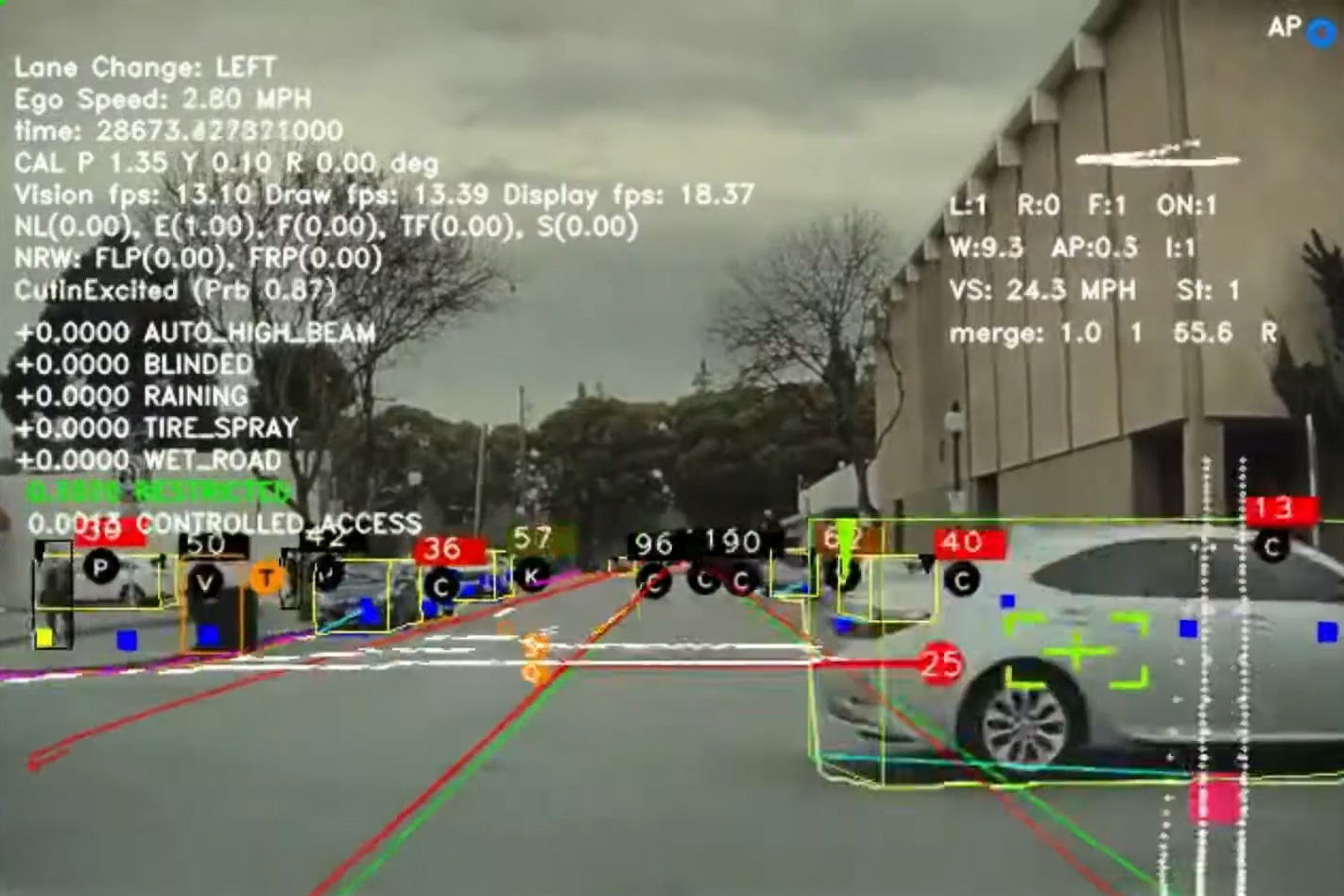
On the page you can see footage of Autopilot mapping out objects and distances in real time, all being monitored constantly to ensure the car doesn’t go off the rails – so to speak – and crash.
The information page is super-techy, so be warned if you wish to delve further into how the system works, but we’ll try and break down how Autopilot actually works in practice.
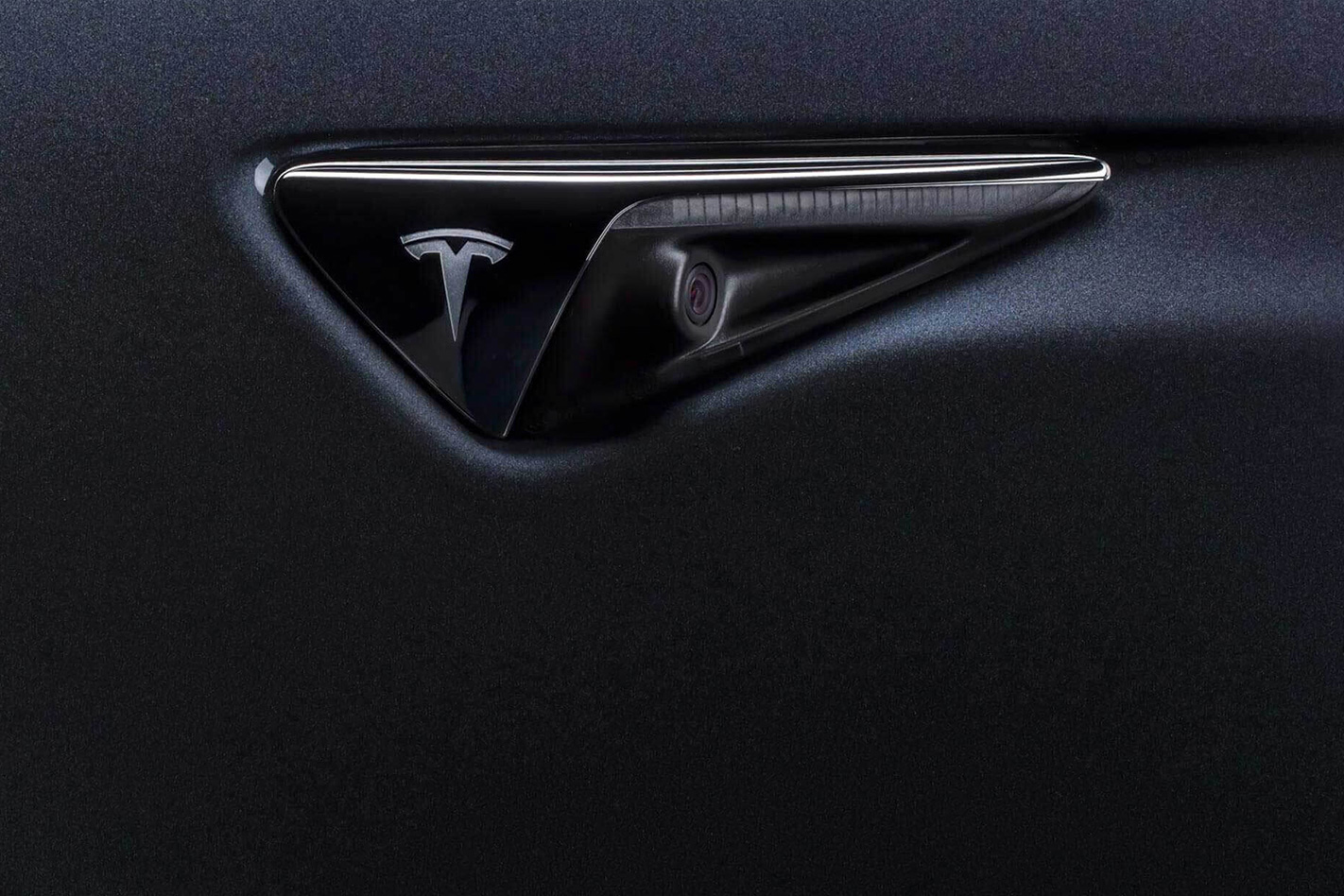
Essentially, using networked cameras positioned around the car, the software is able to detect and segment objects and decide how far away they are, and subsequently act on that information using car inputs like steering, brakes and acceleration.
Using specially-built silicon chips that deal specifically with Autopilot, Tesla is able to build neural networks that can learn about the unique driving situations of nearly one million Teslas throughout the world in real time. This means that while a Tesla can learn about its direct surroundings using the cameras attached to the car, it can also draw on information that’s been gathered by other Teslas around the world to best decide what it should do.
As an aside, Tesla states that each Tesla Autopilot network involves 48 individual networks that take 70,000 GPU (that’s Graphical Processing Units) hours to train.
But information is useless without being acted upon. This is where Tesla’s autonomous algorithms come in. These complex equations essentially drive the car by dictating what Autopilot should do in a given situation. Think of it like this: Tesla designs algorithms that dictate the car should behave by doing X if Y is detected by the neural network. This is achieved by developing a planning and decision-making system that can robustly operate in a real-world situation. Think of it as a fancy, incredibly-complex flow chart.
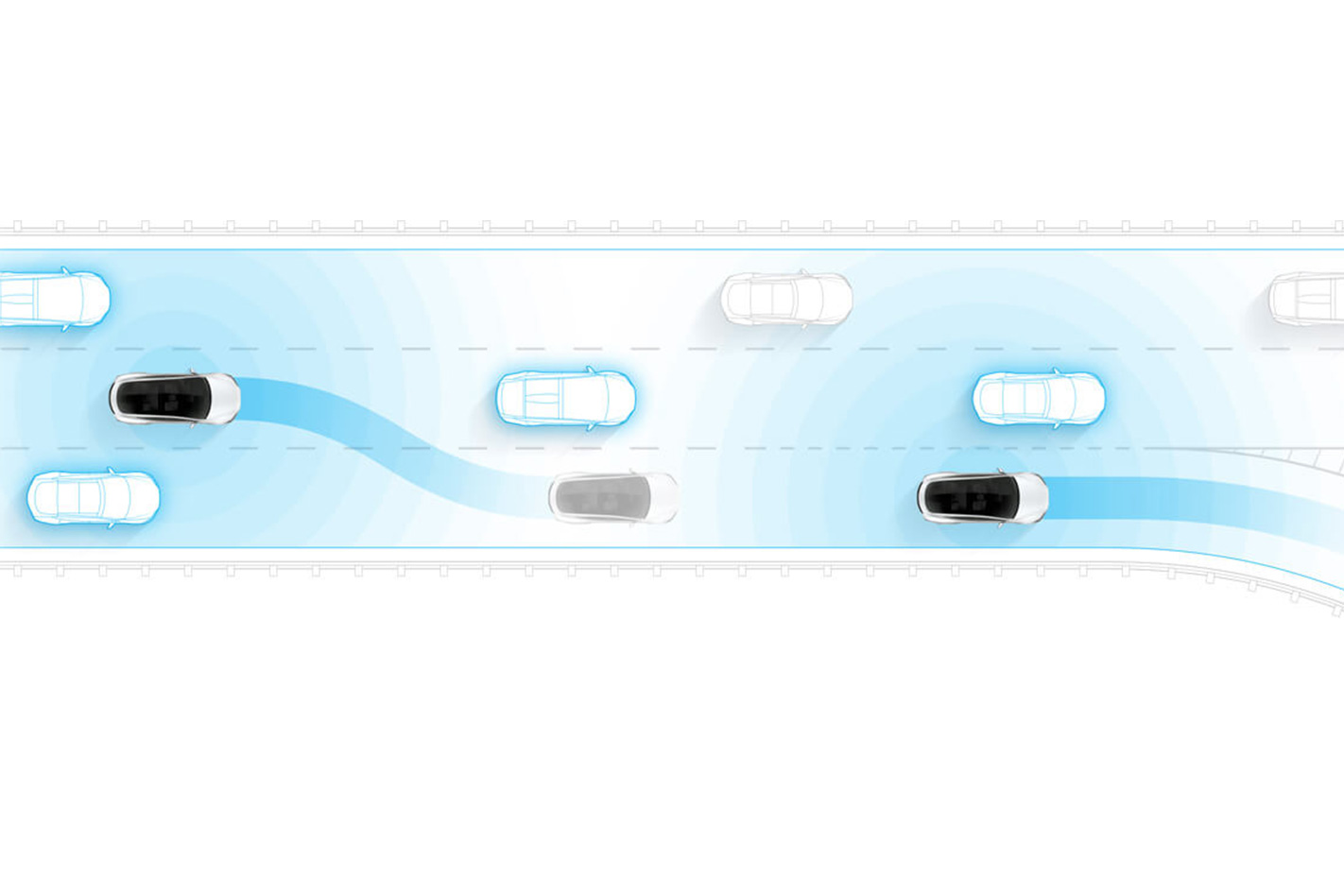
All this technology ensures that as the car is moving along it can autonomously create a high-fidelity representation of the world, and calculate trajectories within that time and space, as you can see in the video at top.
If all this doesn’t sound like mumbo jumbo to you and you find yourself interested in what Tesla has to say, the Californian company is actively looking for help with its AI technology – so go ahead and register your interest on their Autopilot landing page.
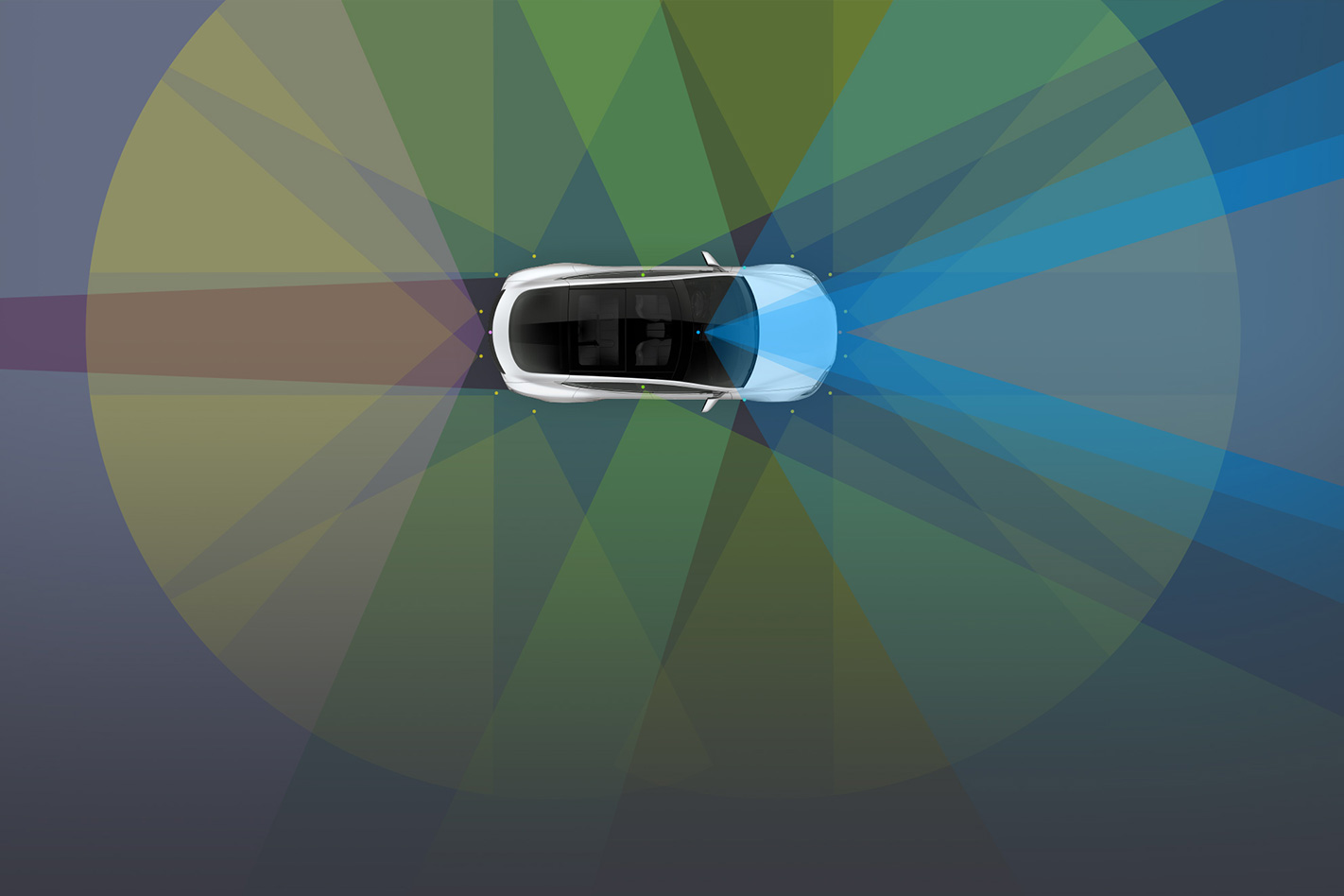
For the rest of us, just enjoy the cool footage and quietly await doom as the robots take over.
