
This is the ultimate BMW 2 Series – an all-out final edition for the current model with the famed CS moniker on its boot.
And we’re seeing it before we should, with Jalopnik revealing the M2 CS undisguised in all its beefed-up and carbonfibre-festooned goodness.
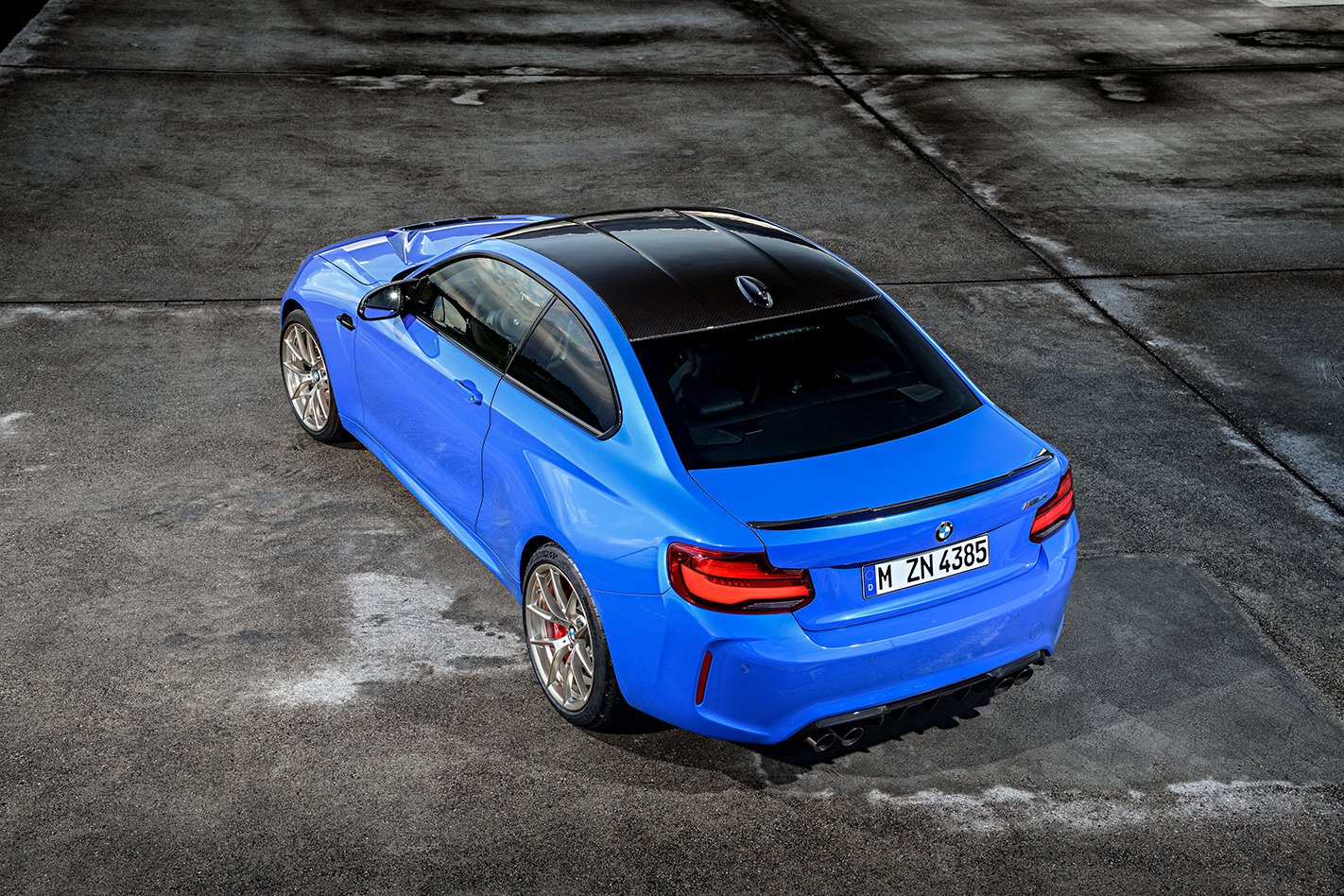
According to Jalopnik, only 2200 will be built, with global allocations and pricing for all markets yet to be revealed.
Jalopnik claims that the CS will run an amped-up version of the S55 twin-turbo straight six, packing an M4-rivalling 331kW and 550Nm.
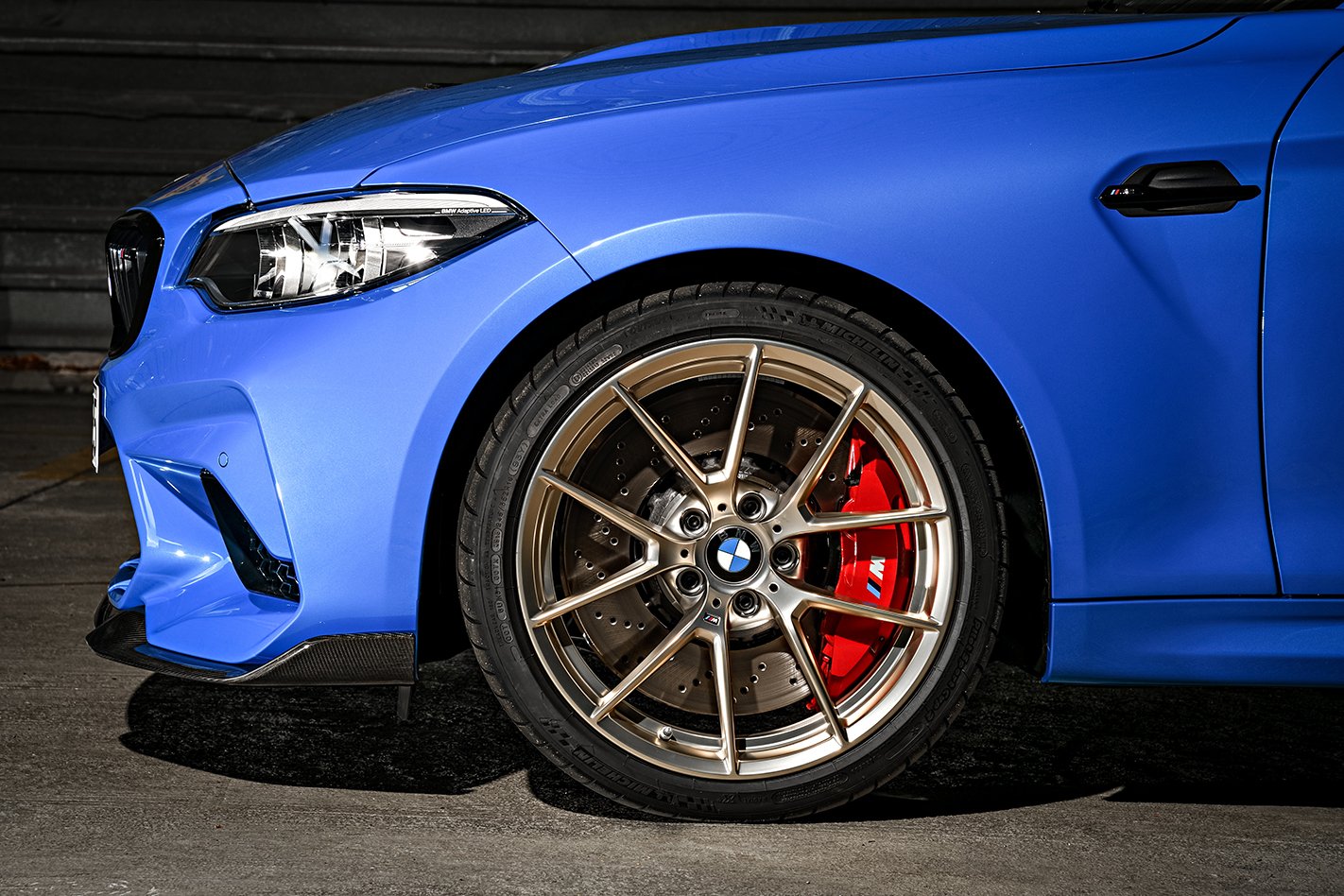
With a six-speed manual the CS will cover the 0-60mph (97km/h) dash in 4.0 seconds, while the seven-speed DCT lowers that marker by two tenths to 3.8sec.
Although it’s not just about power upgrades, with the CS gaining a new exhaust system with electronically controlled valves – so it should sound angrier.
For the first time, Adaptive M suspension will be fitted to the M2 to give the already compliant two-door coupe an extra layer of on-road sophistication.
The roof is now carbonfibre, reducing the weight and lowering the centre of gravity of the standard M2. However, the carbon treatment extends further to the engine bay, rear diffuser and spoiler, front splitter and door mirrors.
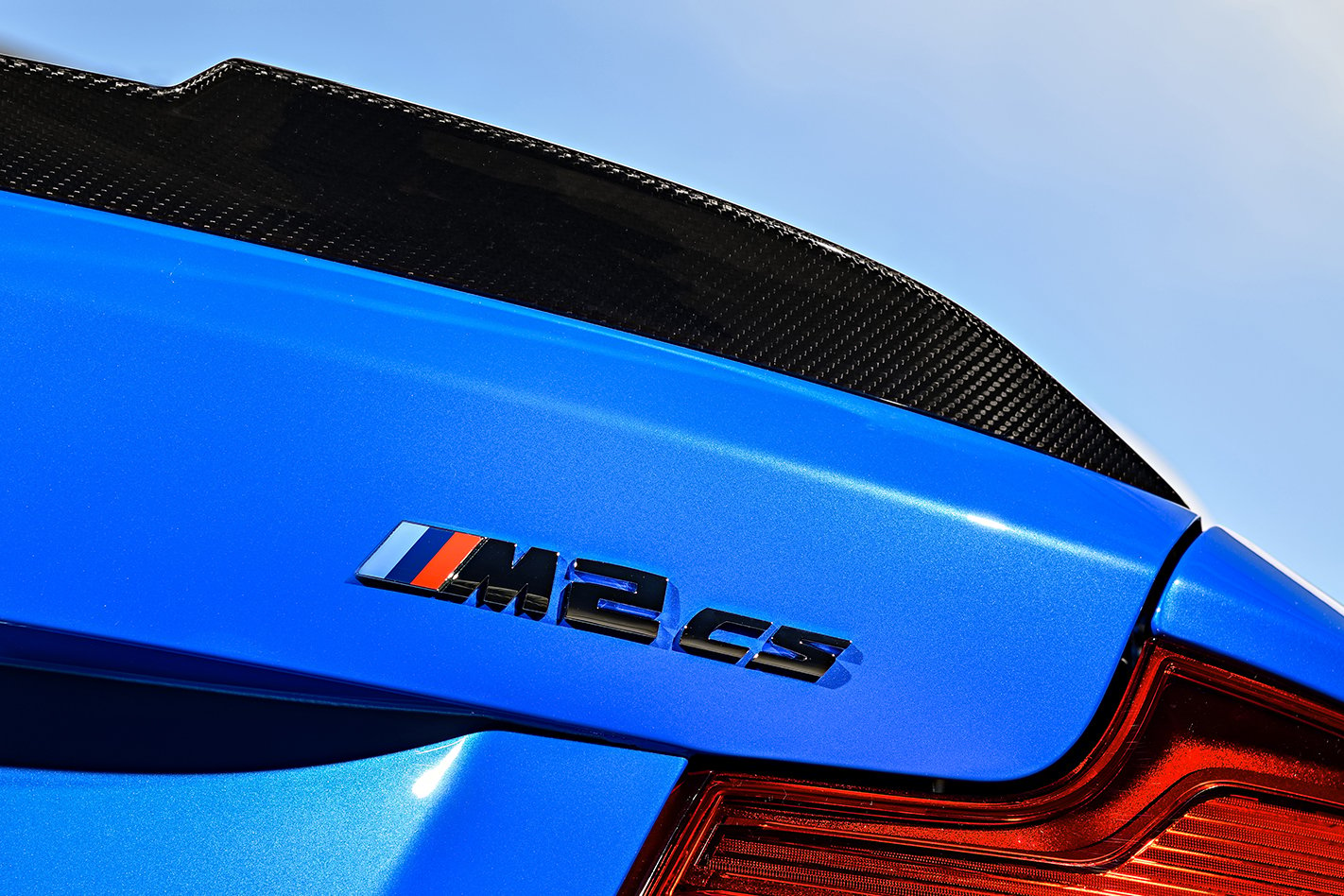
Externally, the CS also gains new wheels and more aggro bodywork with an M3/M4 CS-style bonnet scoop.
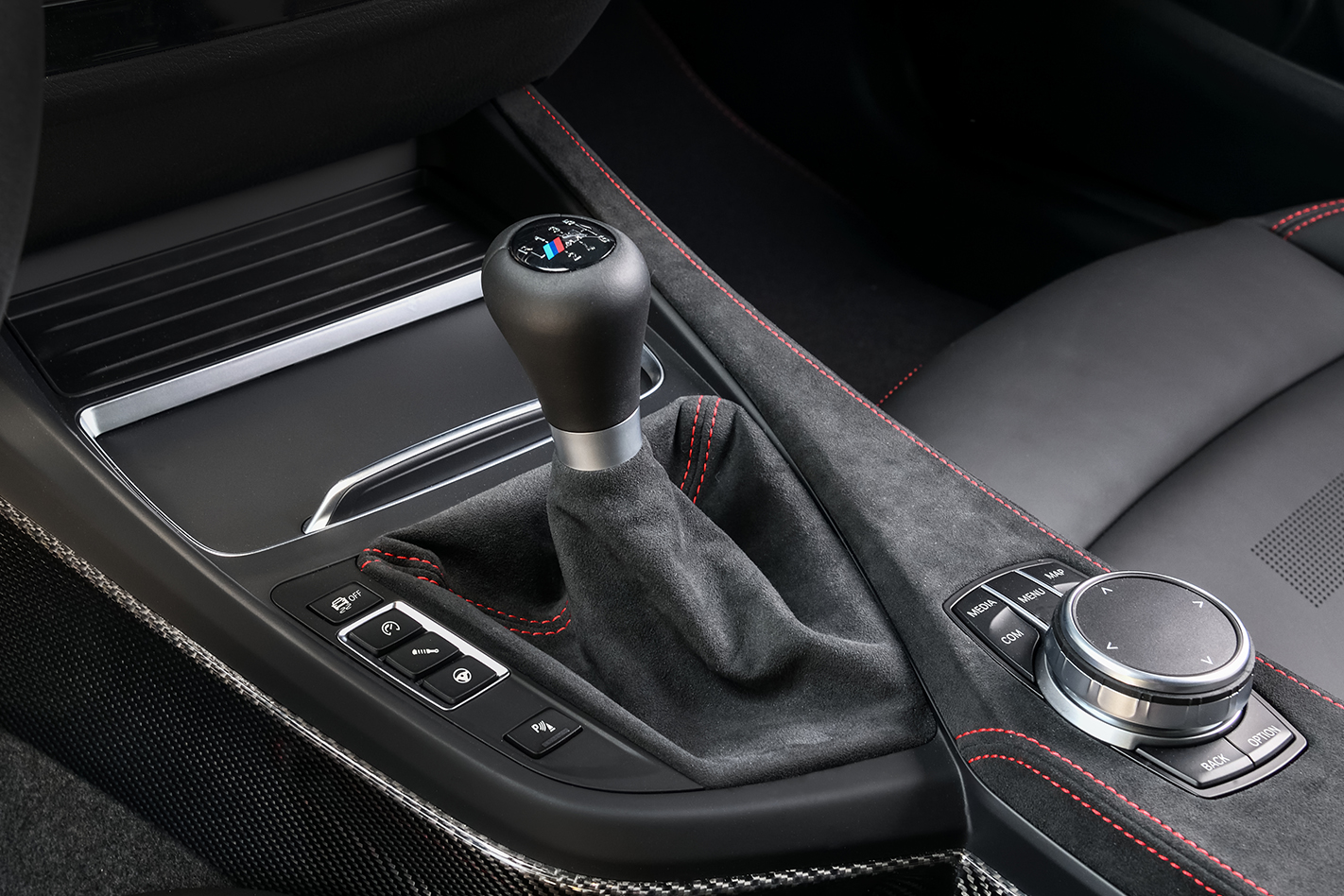
Inside, Alcantara is swathed across many surfaces, including the thick-rimmed M Sport steering wheel, centre console (which is also carbonfibre), dash and body-hugging front seats. M2 CS badging can also be found on the kick plates, while the CS logo is woven into the Alcantara dash trim.
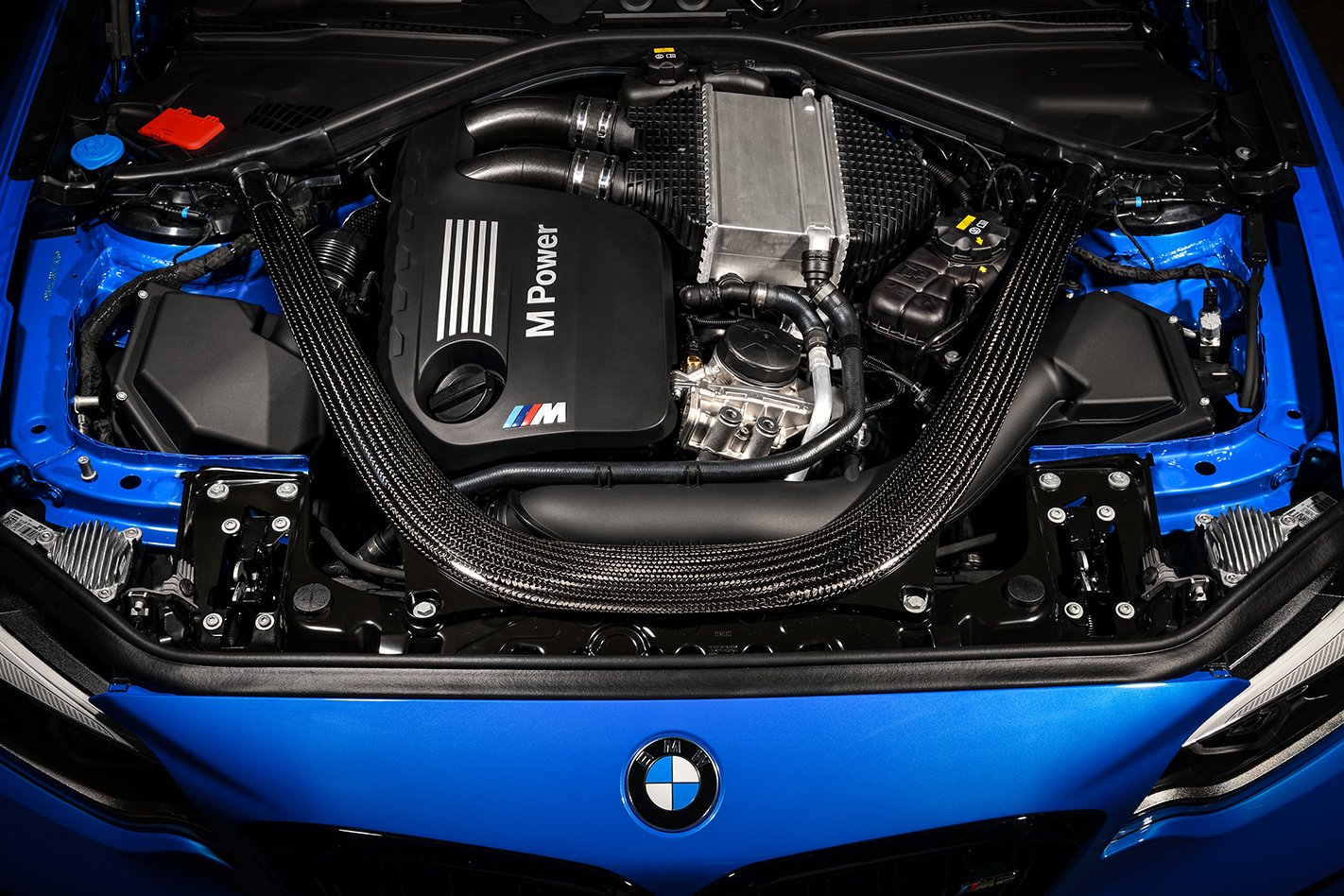
What do you think? Would you prefer the brawny M2 or will you wait for the upcoming BMW M4?
- New build completed in seven days
- McLaughlin’s first drive since nasty Gold Coast crash
- Title could be wrapped up this weekend
McLaughlin destroyed his previous car in a huge crash on the Gold Coast, leaving the team a short turnaround to build up a new car from scratch.
The new Mustang was built in just seven days from a bare shell, and was completed on Monday with sufficient time for the team to dash out to Queensland Raceway for a 60km shakedown test, which is permitted under Supercars rules.
The car was then loaded into a transporter to rush straight to Melbourne in time for this weekend’s Sandown 500 endurance race.
DJRTP actually had a largely complete car in its workshop, but the decision was taken to accelerate the build of a brand new chassis, known as 007.
It’s a surprise release from the usually secretive team, who has blurred some of the footage to prevent rivals from getting too close a glimpse at its technologies.
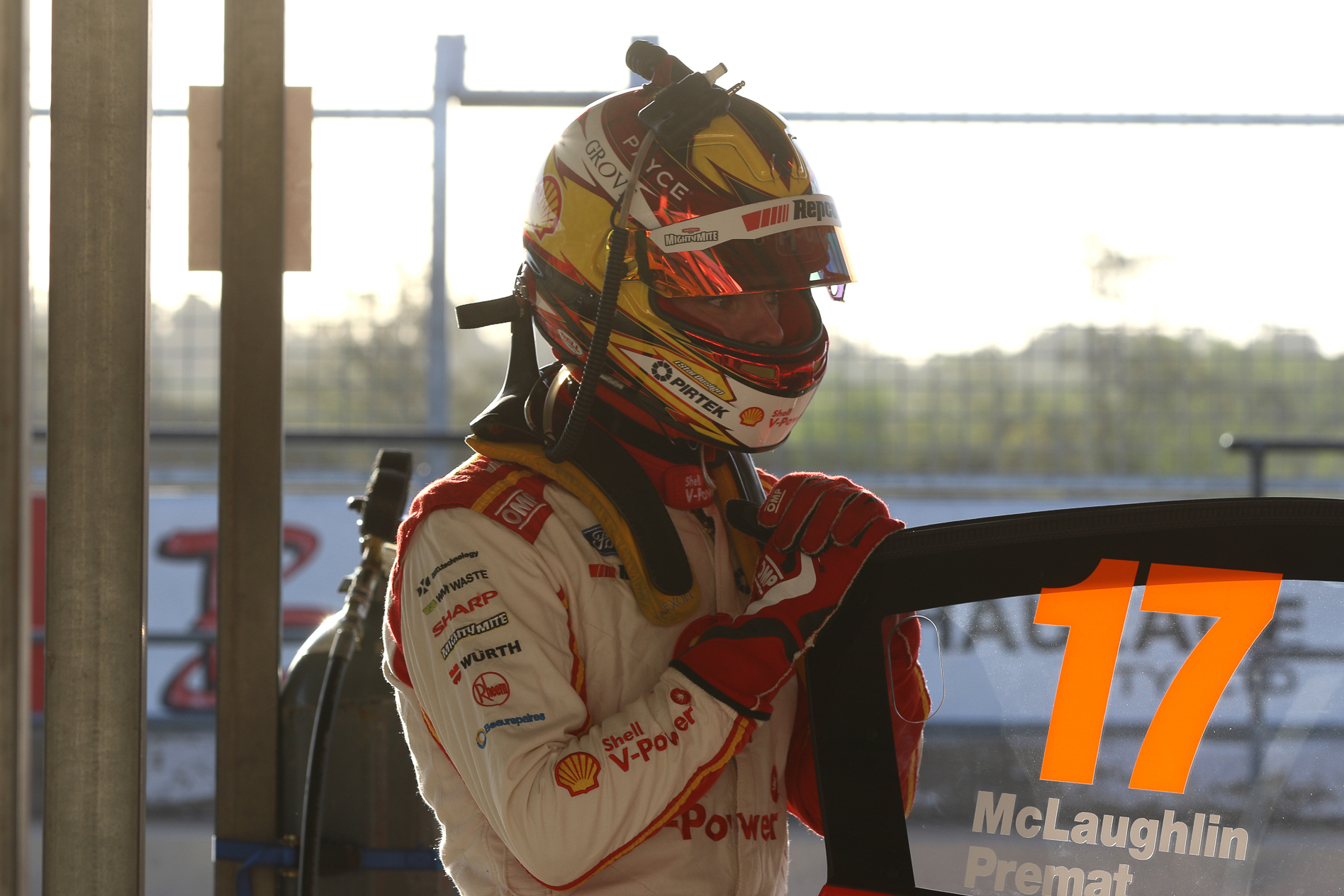
As for its pilot, McLaughlin (above) took to the wheel of the newly rebuilt car for the first time since the crash.
The young Kiwi escaped serious injury but was checked for signs of neurological damage at a Gold Coast hospital, after Supercars medical chief Dr Carl Le noticed McLaughlin stumbling over his words in a TV interview.
He was cleared of any injury and is free to race this weekend.
McLaughlin was effusive in his praise that the work his team has done in building him a brand new car in such a short time frame.“I say all the time that I have the best crew in Supercars, and they have demonstrated it again with the incredible effort they have put in over the last week,” said McLaughlin.“To turn a completely bare chassis into a running Supercar in less than seven days is truly incredible, and a testament to the skill and dedication of this crew.”
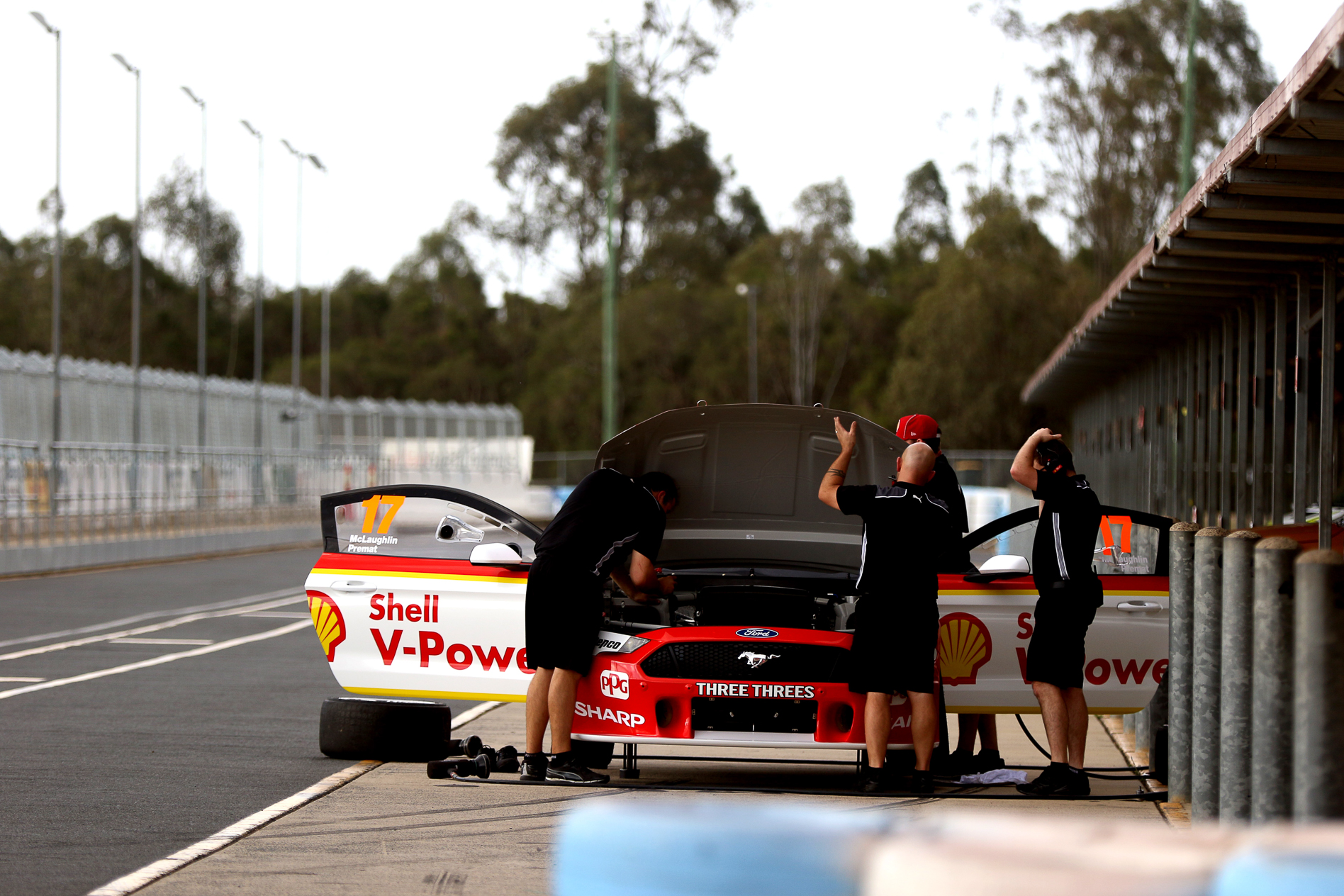
McLaughlin, who won the Bathurst 1000 with French co-driver Alex Premat, said the car ran “beautifully” at the shakedown.“It might be Chassis 007, but we’re going to make sure that this one isn’t shaken or stirred,” he joked.
There’s something so damn admirable about Audi’s decision to only offer its RS4 and RS6 high-performance flagships in wagon-only Avant variety. It’s a strategy that started back in 1994 with the RS2 Avant – a sensible Audi 80 wagon that had a 232kW turbo five-cylinder under the bonnet.
The RS2 defined the hot wagon equation and that philosophy continued through the German carmaker’s model lines to today, but at a point along the way, Audi realised the wagon segment was perhaps a little esoteric and an intercostal muscular model might capture a few more fans – especially in Australia where wagons have long fallen out of favour.
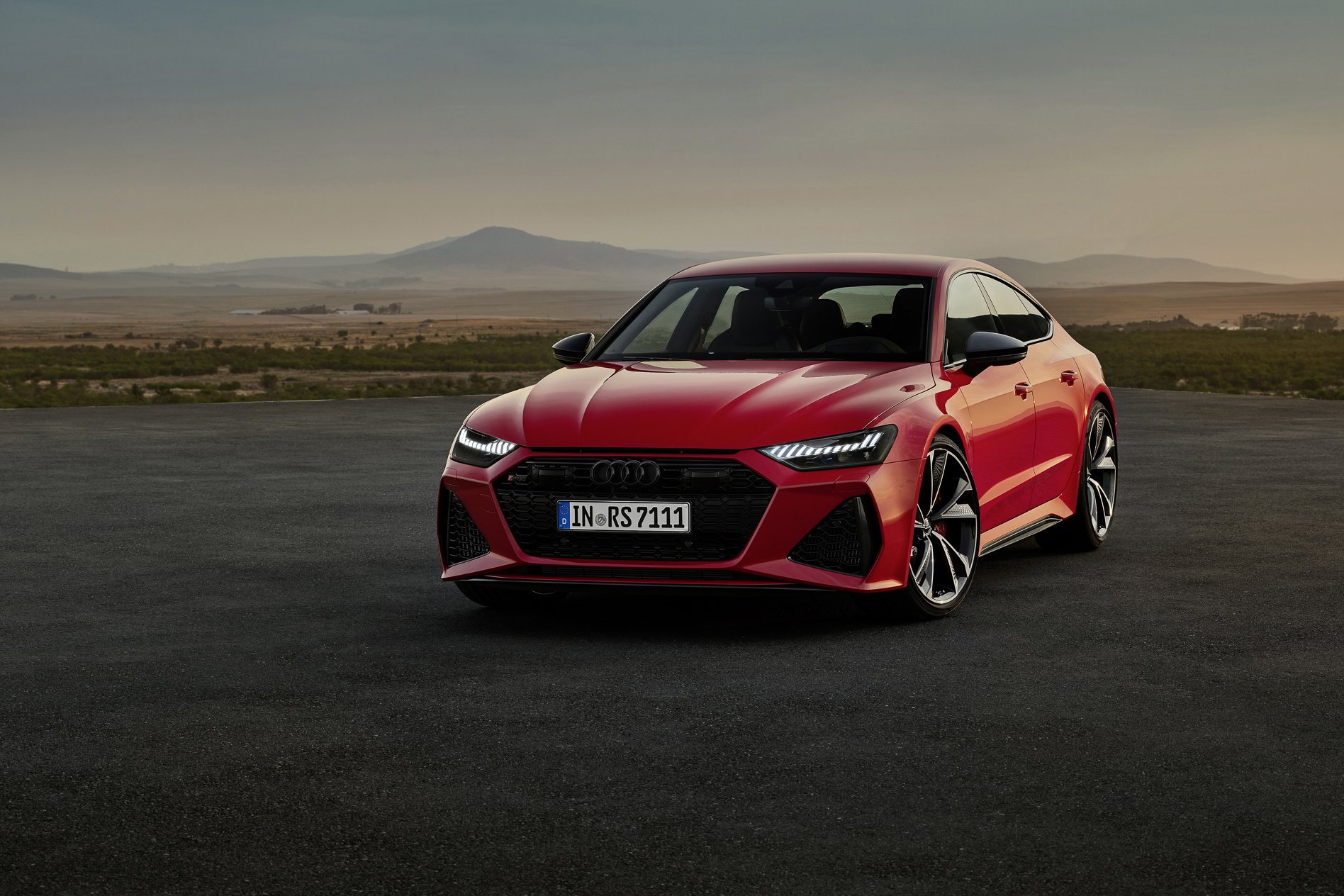
If that applies to you, but the current-generation Audi RS6 Avant’s performance promise makes you a little weak at the knees, then it has a sibling that might fit the bill. Don’t let the badge deceive you, because the RS7 shares exactly the same 441kW turbo V8, quattro all-wheel drive transmission as the Avant, packaged in a very different body.
Exactly what one might call that body is subjective and open to interpretation, but for the record, Audi has dubbed it the Sportback. If it was listed by the Smithsonian, it might define it along the lines of ‘four sedan doors and the boot of a hatchback knitted together by a coupe’s profile’.
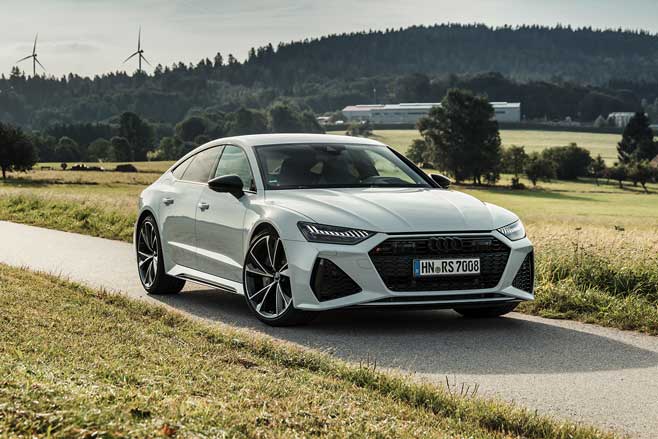
And if you think it works well in the pictures, then let us tell you its aggressive stance and intimidating presence works even better in person. Like the RS6, its arches have been fattened by 20mm each side and the aerodynamic work front and rear works aesthetically too.
Expect to see this beast arriving in Australia about the middle of 2020 and priced about the quarter of a million mark, but we got an early glimpse in Germany. Just the day after its official reveal at the 2019 Frankfurt Motor Show, we were thrown the keys and pointed in the direction of the 50-year old Das Hardburg hill climb race.
It takes mere minutes to realise you are in a very special Audi. The RS7’s cabin is typical Ingolstadt attention to detail, beautifully restrained design and purity.
The seats are expertly appointed in fine materials including Alcantara and the minimalist dash layout is striking. Just a single knob protrudes from an otherwise vast expanse of glossy touch screens like a yacht on Lake Eyre.
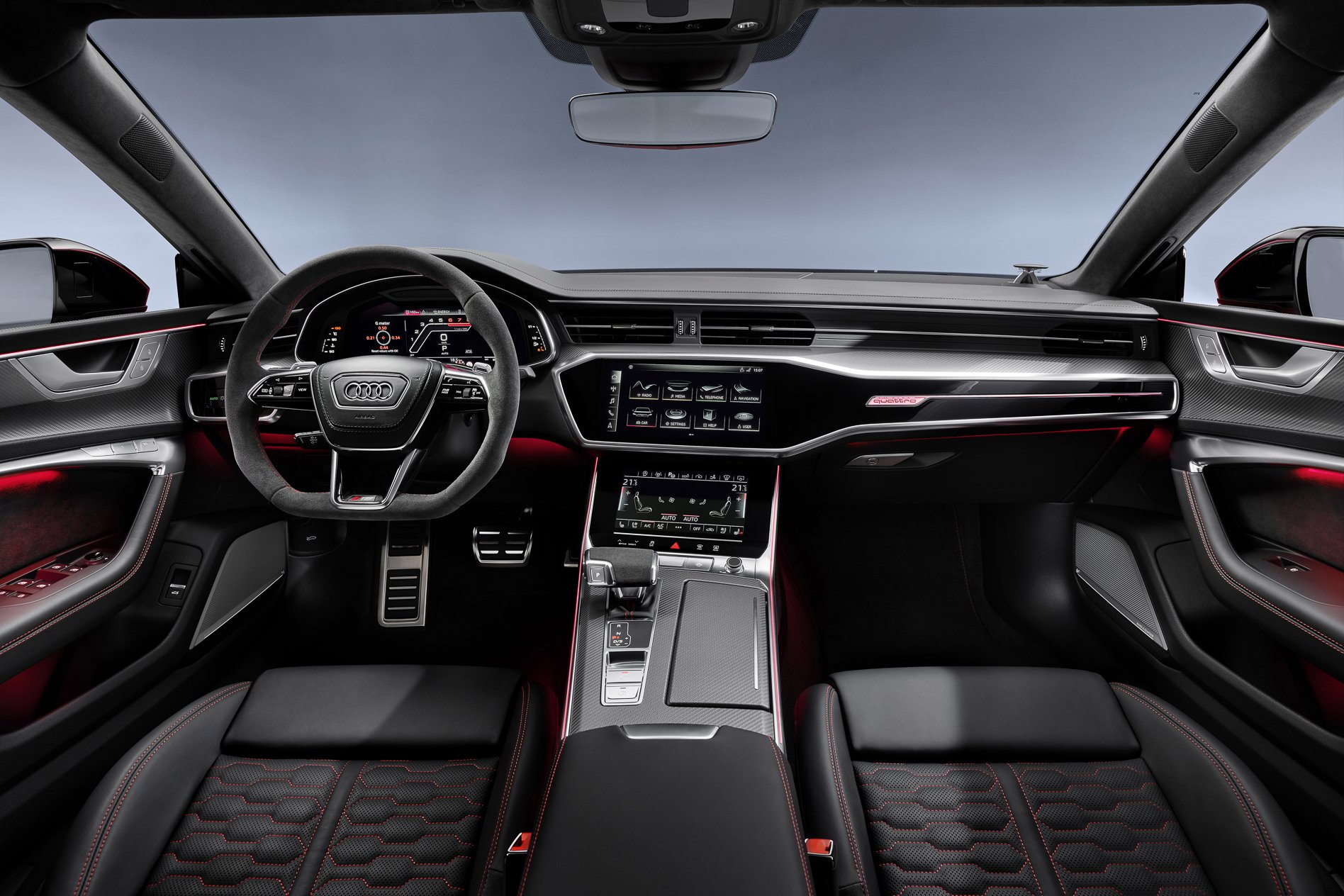
But unlike some other manufacturer’s approach to switchgear rationalisation, which can be tiresomely convoluted – we’re looking at you Lexus – the Audi system is simple and intuitive. The Audi MMI is every bit as sharp and logical as BMW’s iDrive approach.
It would be easy to get lost in the multitude of customisation options including ambient lighting colours, sophisticated personalisation and the excellent Virtual Cockpit digital instrument cluster, but the road out of Frankfurt soon turns to the coveted Autobahn.
On the Autobahn
It’s here that the full might of the RS7 starts to become apparent. At the first sign of a clear straight, the taps are opened allowing the full 800Nm to find its way to the road and the pace increases with eye-popping urgency. Zero to 100km/h arrives in a claimed 3.6 seconds, and as it continues to accelerate the head-up display counts up past 200km/h like a slot machine that’s hit the jackpot, with the cabin serenity defying how quickly the German scenery is flashing past.
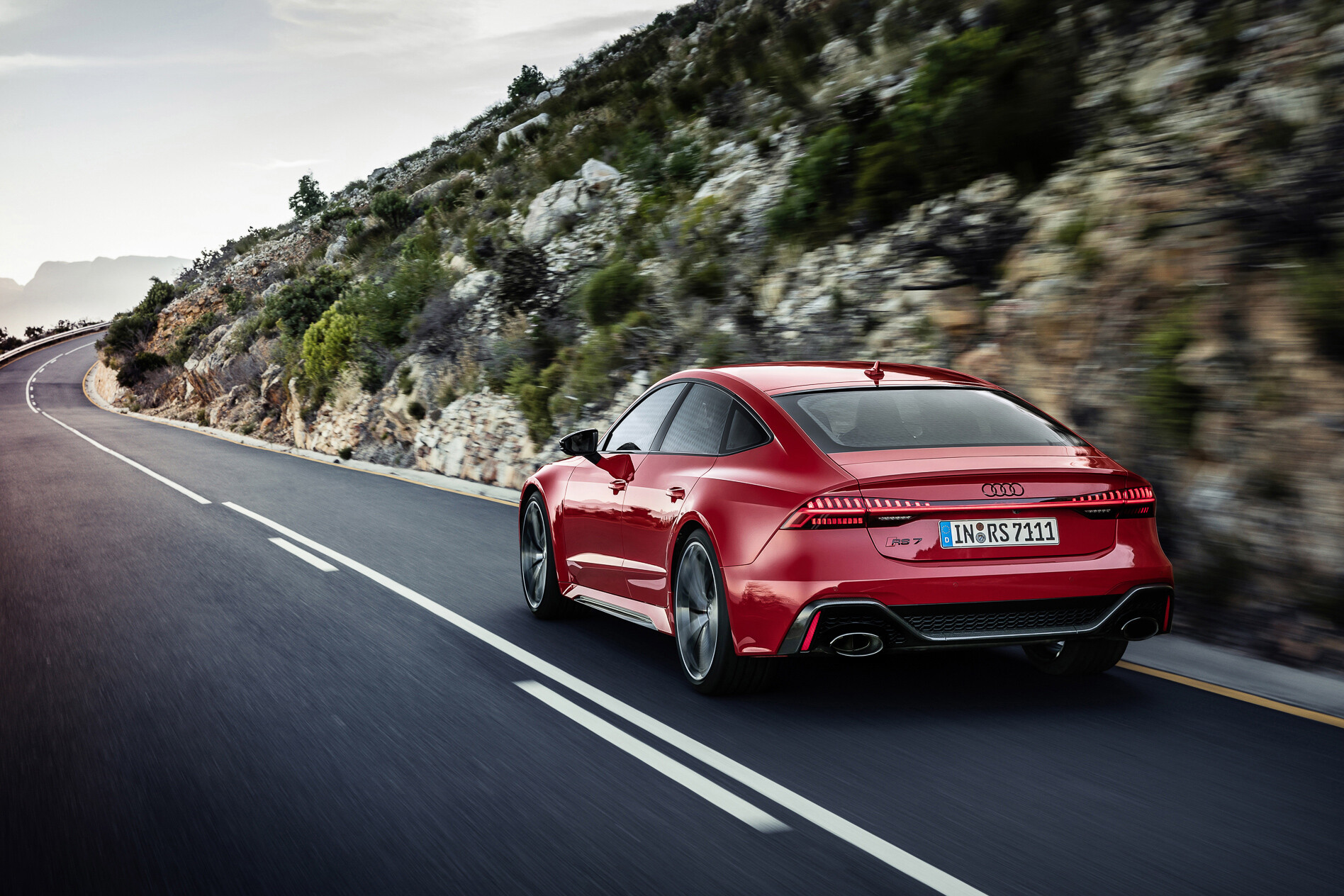
The steering is firm, the nose planted, and the body hunkered into a ridiculously stable stance. Only as 250km/h comes and goes, do the wing mirrors start to roar and indicate our speed.
A car on the horizon pulls into the outside lane and a mission to the magic 300km/h is aborted. An initial smooth rollout of the throttle rapidly turns into a heavy application of brake as we bear down on the initially distant Passat with almost alarming pace. It’s another illustration of just how fast this thing goes.
Fortunately, the trip back from a new PB of 292km/h is as effortless as the excursion to it, thanks to massive carbon-ceramic brakes in all four corners. At the front end, the discs are grabbed by 10-piston callipers courtesy of Brembo and their efficiency is simply staggering.
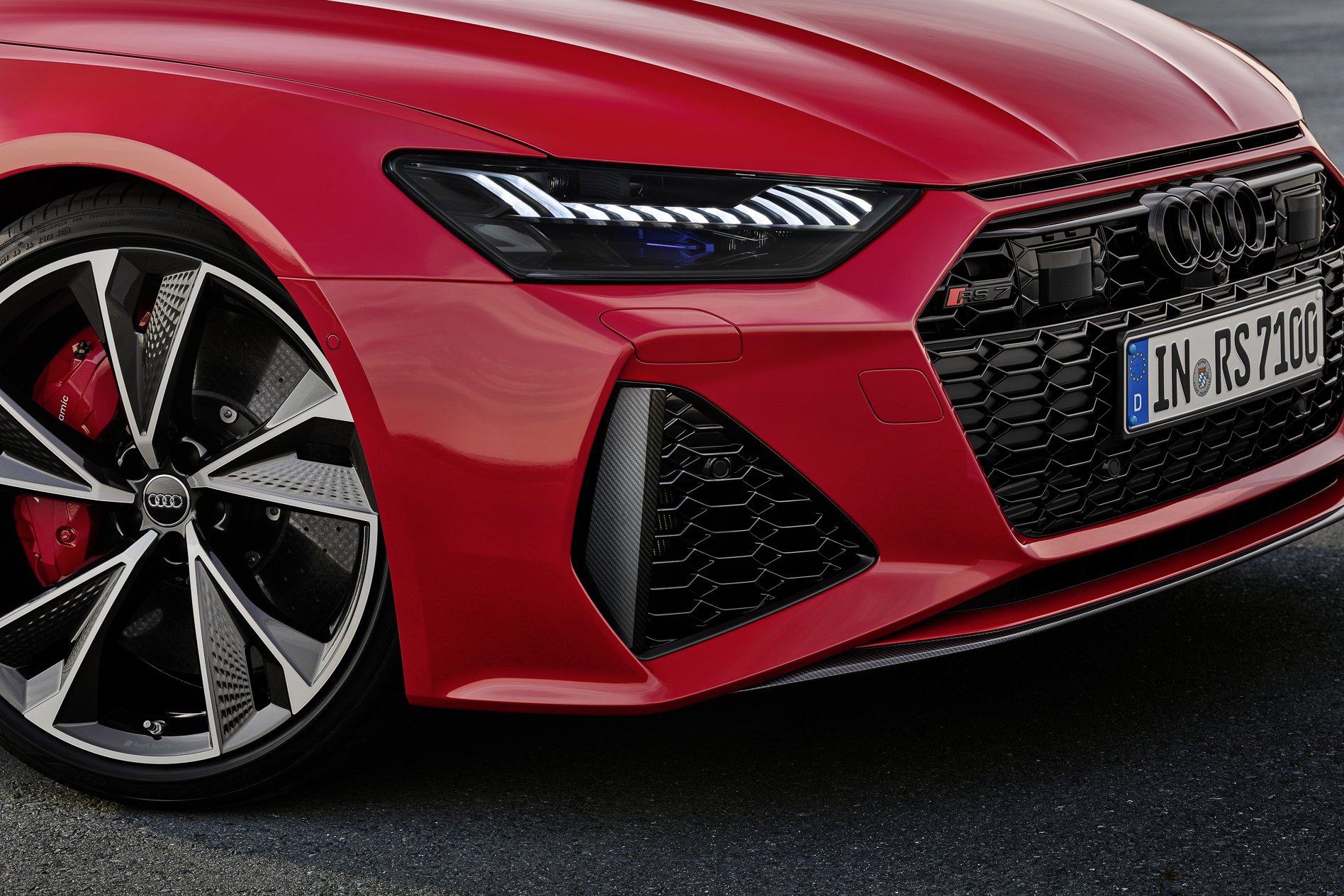
Officially, the RS7 is limited to 305km/h, but from the rate at which it smashed through the various milestones on the way there, it’s obvious it has plenty more pace beyond that. As stunning as the ability to accelerate is the Audi’s stopping power and the confidence to shed speed instils confidence to use its full performance repertoire. Perfect as the way ahead turns hilly.
New peaks
The Das Hardburg hill climb has been running since the 1960s and the 2019 competition ran just two weeks before our arrival. Car nuts keep returning to this German motoring mecca for its beautifully maintained roads that slice through quintessentially pretty countryside and verge on arcadia.
At first, the narrow roads bordered by nasty looking kerbs feel claustrophobic and restrictive of a car like the RS7, but the performance is so accessible. The monstrous acceleration is very easy to get used to and its dimensions seem to shrink as the speeds increase.
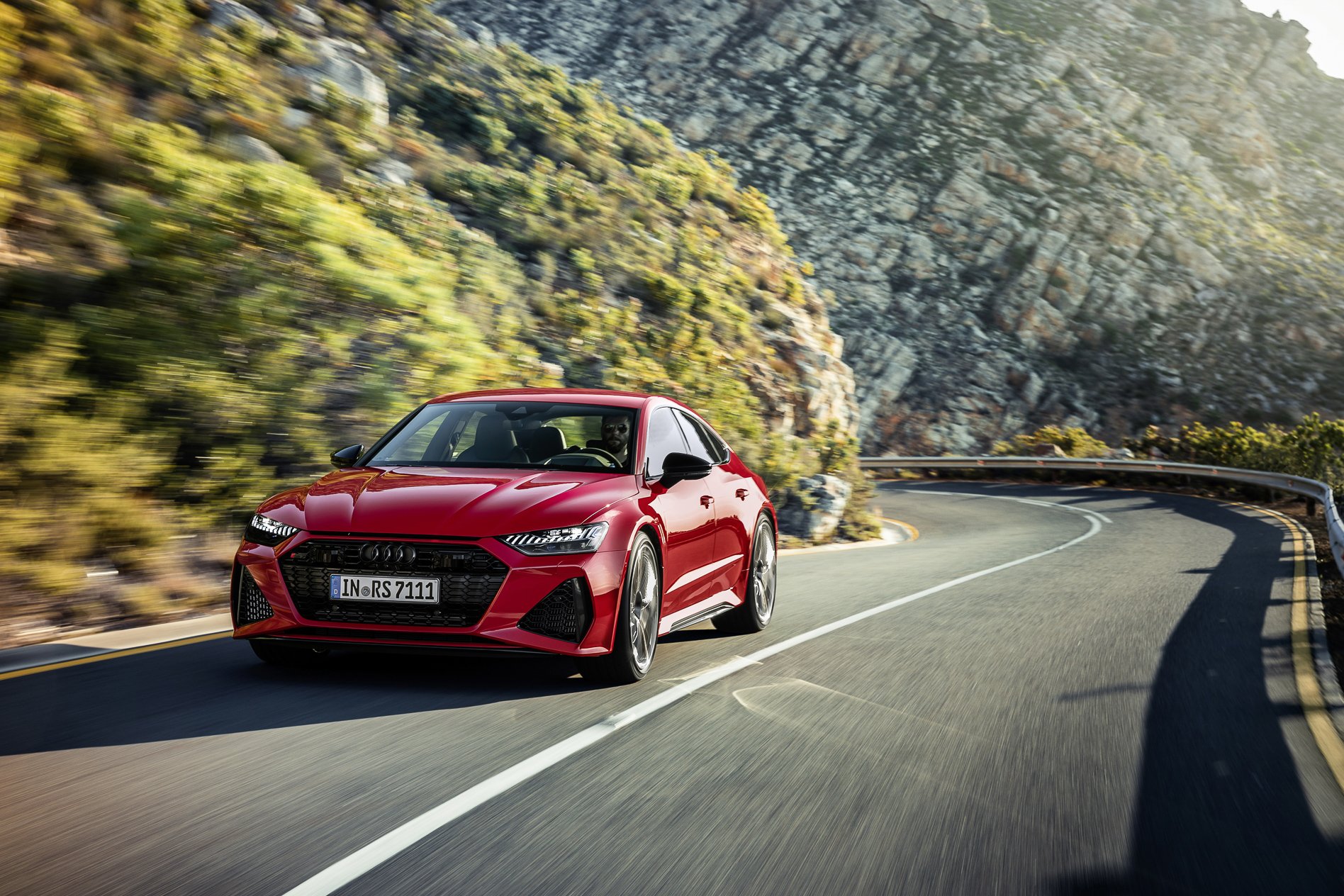
Rear-wheel steering is particularly influential in the transformation, allowing the big Sportback to rotate as a shorter sportscar would. Also worth praise is the RS transmission program that favours the rear axle for power until the person at the wheel runs out of talent.
Tap the new RS button on the steering wheel, however, and the RS7 goes from extra spicy to nuclear. Turbo lag is nonexistent and the mid-range torque is stupendous, but thanks to proprietary quattro smarts, the power can be applied mid-corner, firing the Audi from one corner to the next.
The previously slick automatic – one of the most seamless we’ve experienced – switches into an aggressive map and is beautifully intuitive when left to its own devices, and grabbing for the shift paddles was hardly ever necessary.
When you do though, the gearbox will allow you to downshift into the red – a great statement of intent that this is a true performance model.
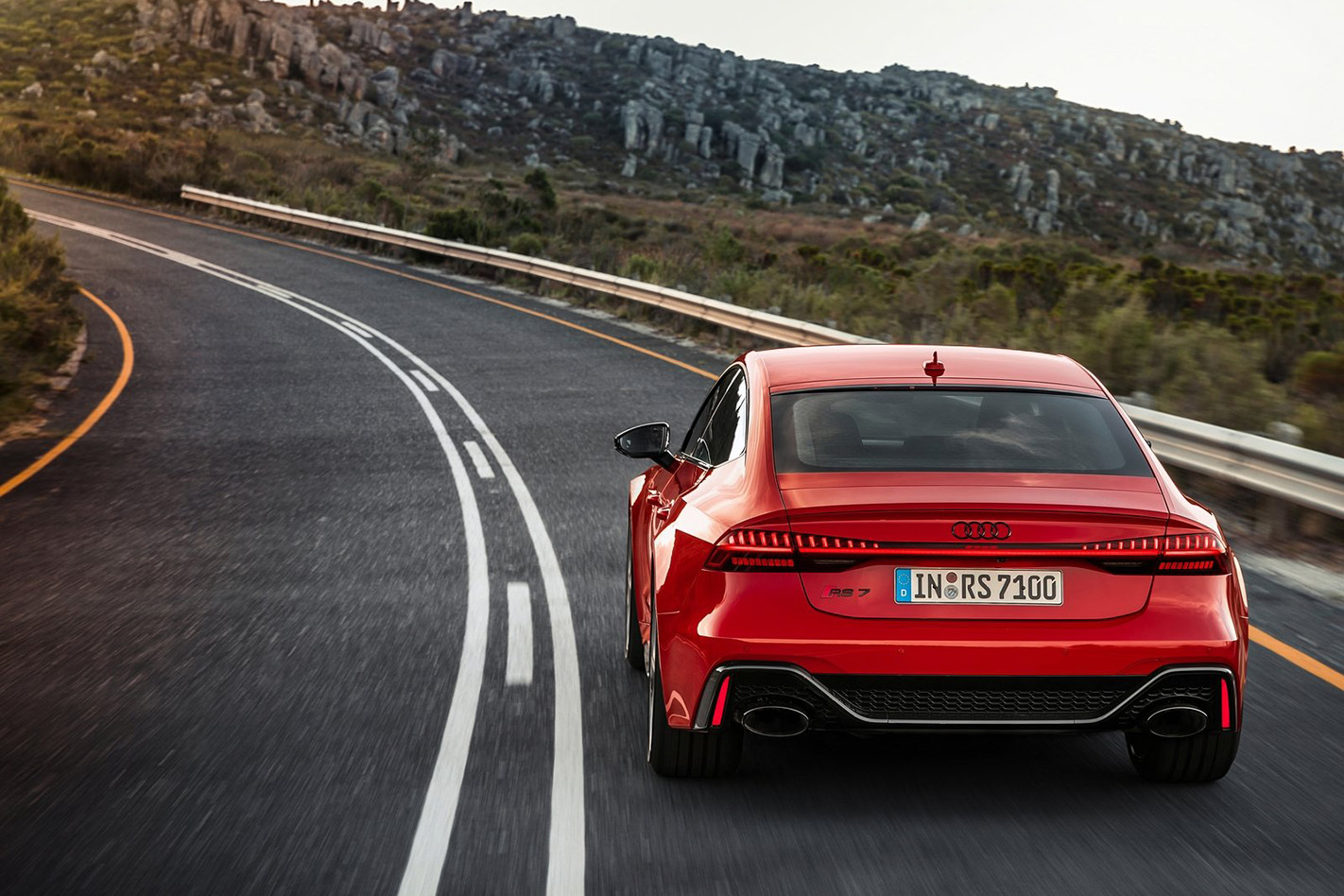
Air suspension is available for those that want the best option for ride comfort but, for our money, the ‘standard’ RS Sport set up is the pick for getting the most in the corners. It’s not exactly uncomfortable cruising either. Unlike the previous RS7, both suspension options are rated for the full 305km/h v-max.
Our desire for a little more shout from the massive tailpipes is just about our only criticism and the new version doesn’t seem to quite equal the first-gen RS7’s gloriously antisocial report.
It’s not the larrikin that the BMW M5 is nor is it as switched-on as the borderline neurotic Mercedes-AMG E63. But in a fight between the big three German ‘sedans’ It is, without doubt, the easiest to live with and therein lies the genius in Audi’s approach. The RS7 doesn’t try to beat the M5 at its own game, instead pursuing its own ambition to be genuinely useable day to day.
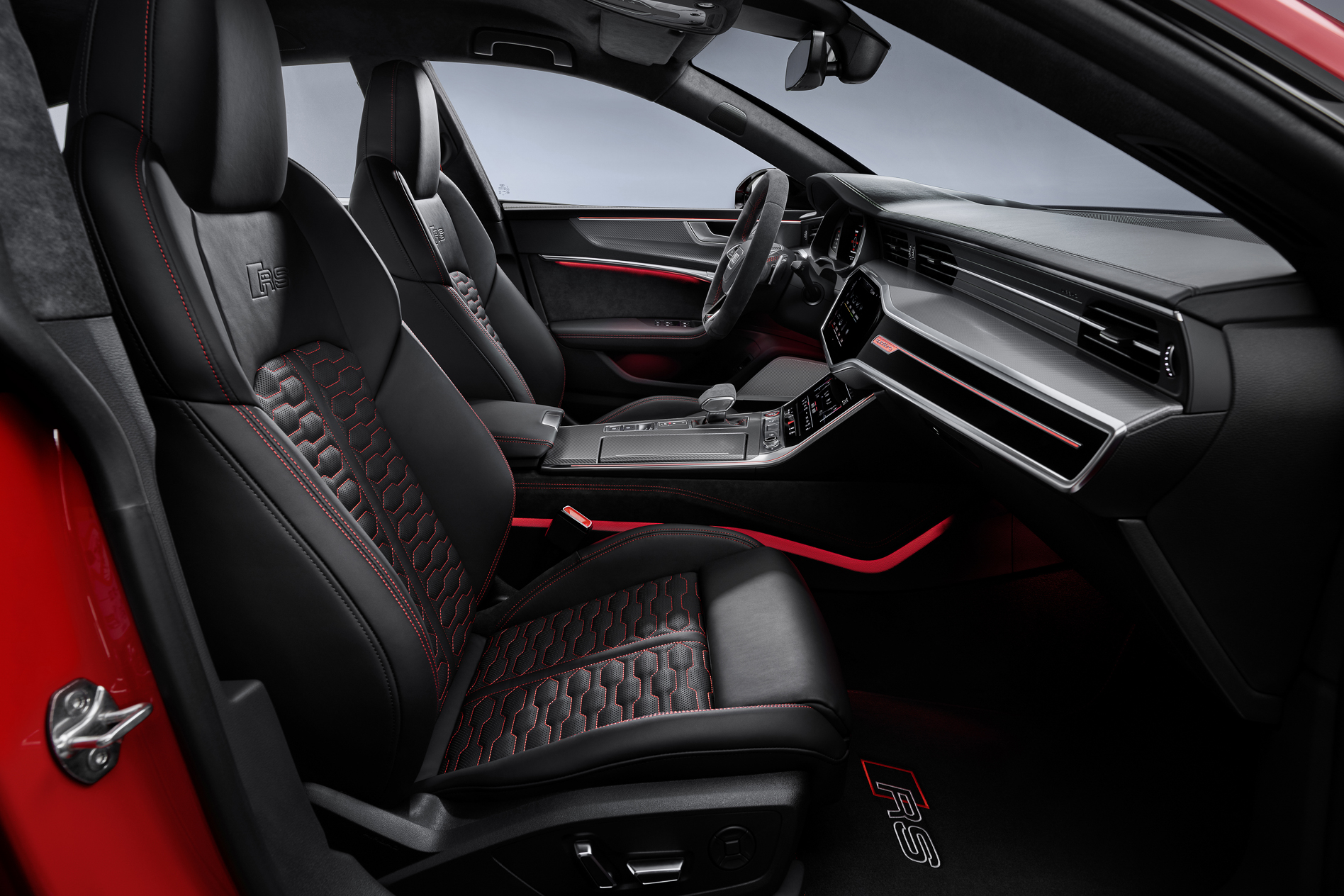
In the second row, tall adults have plenty of space and there’s even enough headroom despite the diving roofline. Behind that, there’s a huge boot, which couldn’t be any easier to access courtesy of the unique hatch.
It is not unkind to describe the Audi as relatively benign because, after a few hours of being pummelled by the Merc’s granite ride, that’s exactly what you’ll be craving.
After a day tearing up a decades-old German road race, the RS7 plots a course back to the Autobahn and provides a deeply relaxing method of getting where you need in comfort… and very, very fast.
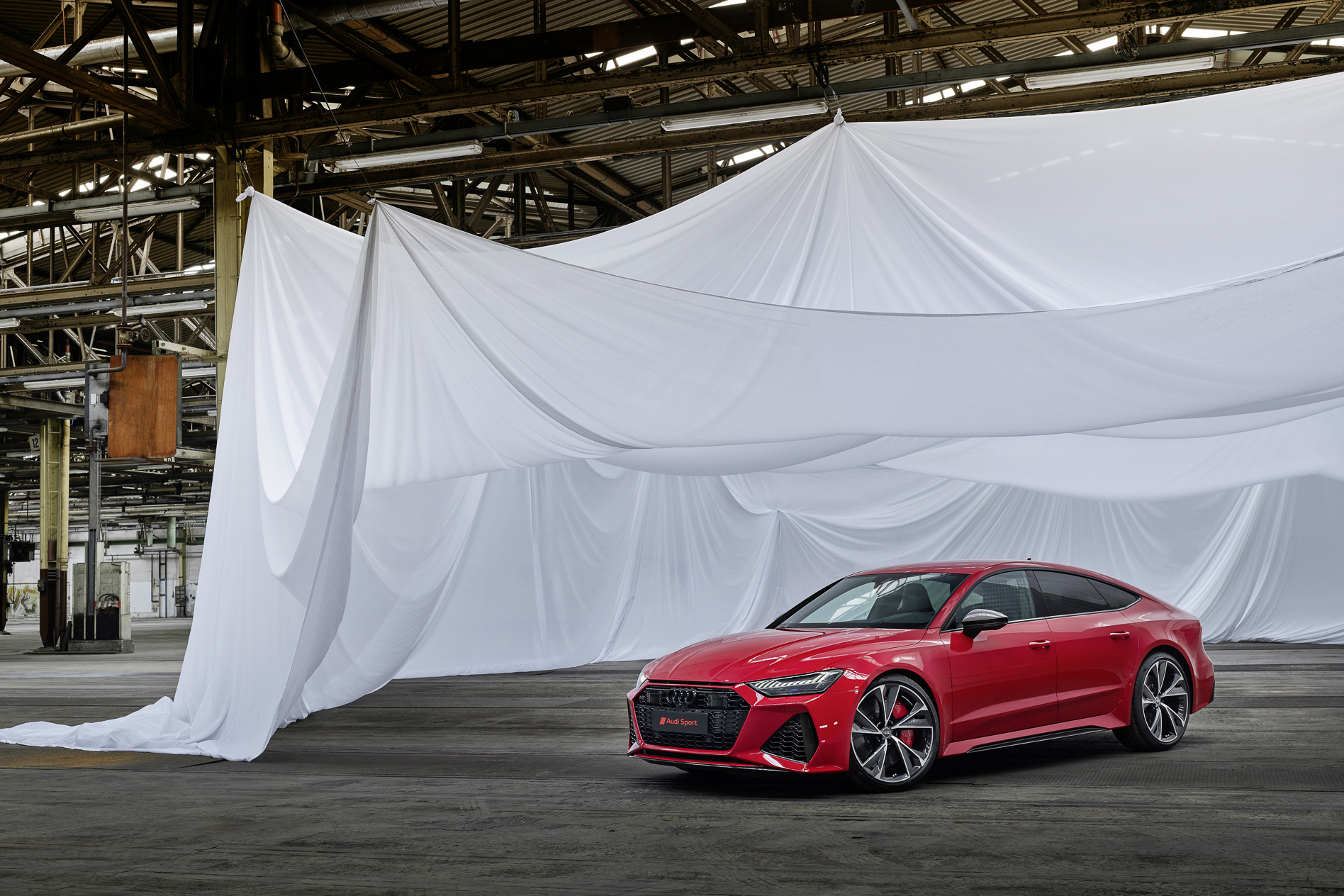
The hardest question to answer is whether you would pick the Sportback or the wonderfully unapologetic RS6 Avant. For our money, the added space of a wagon and the laughable implication that you might have actually bought it for its practicality is too tempting to resist.
Realistically though, both are obscenely complete vehicles offering their own individual practicality but the same monumental powertrain.
Second Opinion – MOTOR first drive
The new RS7 is the first Audi sport four-door in years that properly stirs the emotions By: Georg Kacher
THE VERY FIRST Audi RS4 Avant was a real eye-opener, and so was the second-generation RS6 and of course every single iteration of the R8. But somewhere along the way, too soon and with almost tragic persistence, Audi’s in-house go-faster department lost the plot.
Sure, the cars engineered in Ingolstadt and produced in Heilbronn gained more power and torque with every model change, dedicated tech-heads got their money’s worth out of the increasingly ambitious interpretations of the Vorsprung durch Technik theme, and the more and more colourful make-up kept boosting the poseur value. But drive a 2018 model RS5 or RS6 and you will very likely be anaesthetised by the duff steering, wooden brakes, muffled feedback even close to the limit, and the frustrating artificial supremacy of the safe but stubborn electronic control apparatus.
To add insult to injury, the engines began to lose their lustre when the normally aspirated V8 gave way to the breathless turbocharged V6, the V10 was put on the list of endangered species for good, and the evolution of the charismatic five-cylinder ended in a bloody boardroom battle.
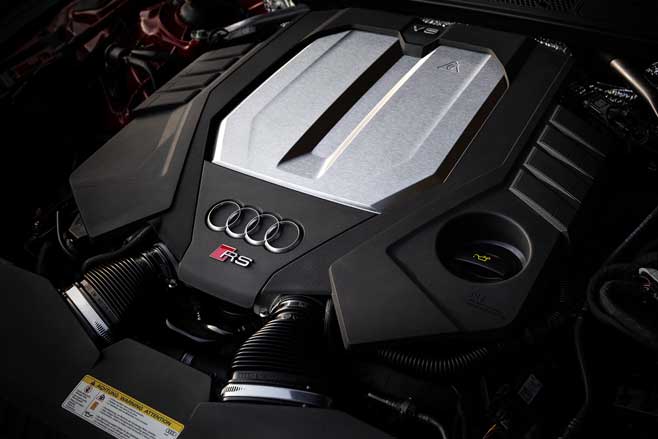
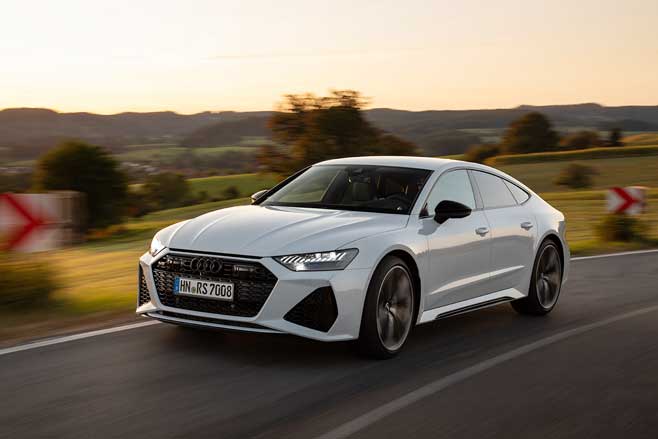
In view of this patchy historic background, hopes were not high when Audi invited us to sample the second-generation RS7, which looks from some angles as if a Tonka Toys designer has been moonlighting under the influence. Marketing may disagree, but an optional stealth kit would do well with those who prefer to keep a low profile.
Thanks to the more emphatically flared Quattro-style wings, the 2020 vintage is 40mm wider than the outgoing model and the bulging wheelarches are now easily big enough to accommodate the optional 22-inch rims, which look the business but are bound to shatter the ride. The motorised spoiler that automatically extends at 100km/h is again part of the package, yet even when fully extended it cannot quite neutralise the rear axle lift pegged at 40 kilos at Vmax.
Available in Europe from €121,000 (AU$196,000) and due in Australia in April at an estimated $250K, Audi’s top-of-the-line five-door coupe takes on, among others, the much more expensive Mercedes AMG GT4, upcoming BMW M8 Gran Coupe and even pricier Porsche Panamera Turbo. In terms of value for money, the competition is therefore giving Audi a head start.
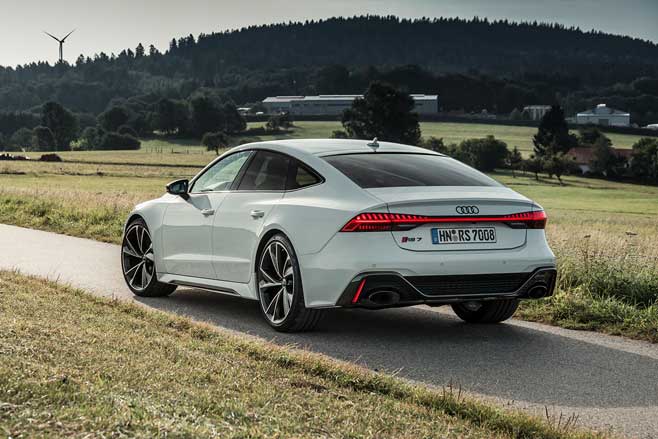
Performance-wise, it’s pretty much a dead-heat between the previous 445kW RS7 and its 441kW replacement. On the debit side, the fuel consumption has gone up by about 10 per cent due to comprehensive desmogging equipment – and, owing to the mandatory particulate filters, the mid-range full-throttle acceleration is now at least subjectively less explosive.
According to the data sheet, though, the new RS7 is in top form. Despite a 50kg weight increase, the four-seater (the rear middle seat costs extra) can roar from 0-100km/h in 3.6sec and cross the 200km/h barrier a mere 8.4sec later. That’s supercar quick and totally repeatable regardless of weather conditions thanks to quattro four-wheel drive.
The top speed depends on the customer’s budget. A bog standard RS7 is electronically limited to 250km/h, and while the available RS Dynamic package lifts the limit to 280km/h, the RS Plus kit, which throws in carbon-ceramic brakes, is good for an even ballsier 305km/h. Despite the standard mild-hybrid application, part-time cylinder on-demand system and a commendably slippery drag coefficient of 0.32, the average fuel consumption works out at an unremarkable 11.6L/100km. No, you don’t want to know…
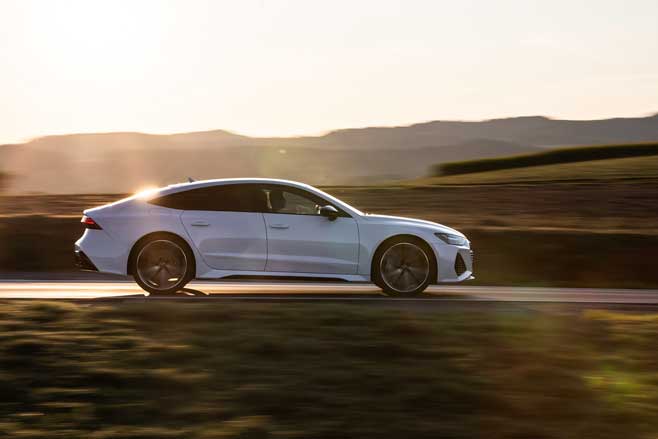
But enough foreplay. Now it’s crunch time, first on the autobahn from Frankfurt to Basel, then on the back roads of the Odenwald where fox and hare bid each other good night.
Hit the starter button and the engine instantly lapses into a scantily muffled version of ‘love thy neighbours’. Although the Comfort volume is loud enough to make next door’s poodle prick his ears, the composer of the RS7 soundtrack has provided a much rowdier on-demand exhaust symphony. If you’re an almost-deaf heavy metal supporter, then go ahead and treat yourself to the extra-cost sports exhaust, which is so damned noisy it will soon be black-flagged by the EPA anyway.
Despite these and other frivolities, the high-tech Audi is emphatic proof that the days when driving a motor car was a simple clutch-shift-throttle-brake sequence are definitely over. For a start, the spy in the cab keeps bugging you to select from four basic programs named Auto, Comfort, Efficiency and Dynamic. Sounds straightforward but isn’t because next on the to-do list are mandatory individual calibrations of engine, transmission, dampers… the whole caboodle. Last but not least, you must define the preferred composition of the dynamic RS1 and RS2 modes to be accessed later by the accordingly marked steering-wheel button.
The RS7 comes at this point with only one engine specification – a more potent Plus version may follow in due course – but the buyer can choose between two different chassis configurations at no charge. Option one is the RS adaptive air suspension, option two is the RS sport suspension paired with Dynamic Ride Control (DRC). We drove both versions, and walked away equally impressed.
Owners who take their car to the track at least occasionally, get a kick out of making backroad hell freeze over on early Sunday mornings, and typically need a fresh set of tyres every six to nine months should specify the second option. What makes this choice special is the instant yaw, roll and pitch control executed by conventional steel springs and diagonally connected adaptive shock absorbers. It’s an ancient yet still compelling system first introduced by Citroen in the DS and later made standard by Audi in the 2005 RS4.
DRC provides a totally flat ride and a steadfast cornering stability irrespective of the surface quality. At the same time, this performance-oriented chassis will talk you through bend after bend by feeding relevant information and filtering out interference.
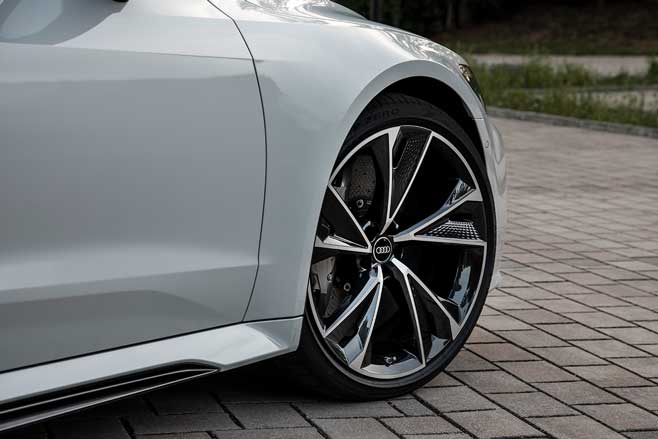
Although the latest iteration of the RS air suspension is 50 per cent stiffer than in a no-frills A7, the ride in Comfort mode is somewhat cushier than in a car fitted with the less compliant steel set-up. Another bonus is the air cushion’s ability to lower the body height by 10mm above 120km/h and to raise it by 20mm before tackling tall obstacles like speed humps and angled driveways.
So, no contest? It really depends on individual priorities and preference. The air suspension has the edge in terms of ultimate directional stability assistance, and it offers a relatively broad adjustment range, while the largely analogue DRC system is more communicative, more linear and more rewarding when you feel like having a really wild time.
In contrast to the previous RS7, which was rather harsh and unrefined when pushed, both versions contribute to the much improved composure, suppleness and ground contact. The notably less erratic low-speed ride over manhole covers and hotchpotch tarmac also deserves a favourable mention, as does the near total absence of brake dive and acceleration squat.
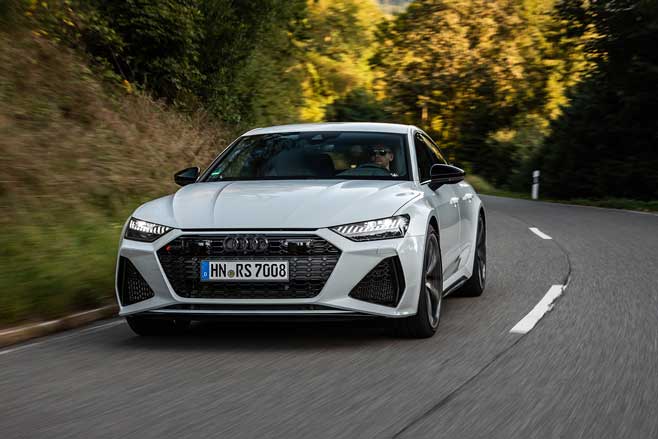
Extra money buys the useful rear-wheel steering, which reduces the turning circle by a full metre while consolidating the directional stability at speed. Another option worth contemplating are the unflagging carbon-ceramic brakes, not only due to their enormous stopping power but also because of the constant pedal pressure and travel, and their immunity to fading.
Full marks also for the reprogrammed electro-mechanical steering, which in its latest metamorphosis is keen to communicate, share information and filter disruptive elements while still relaying essential warning signals, arising grip issues and any pending change of handling balance. The difference between old and new in this department really is night-and-day drastic, especially when you wind on lock; the ratio quickens accordingly and the action becomes instantly more direct. Nice.
Although traction is rarely an issue, the torque distribution has been redefined for more pliable handling, quicker feedback at the limit and higher cornering speeds. Depending on the Drive Select set-up and the chosen RS1/RS2 preferences, the black box can now send up to 70 per cent of the car’s 800Nm to the front axle and up to 85 per cent of the momentum to the rear wheels, where the optional quattro sport differential will mastermind the side-to-side torque split.
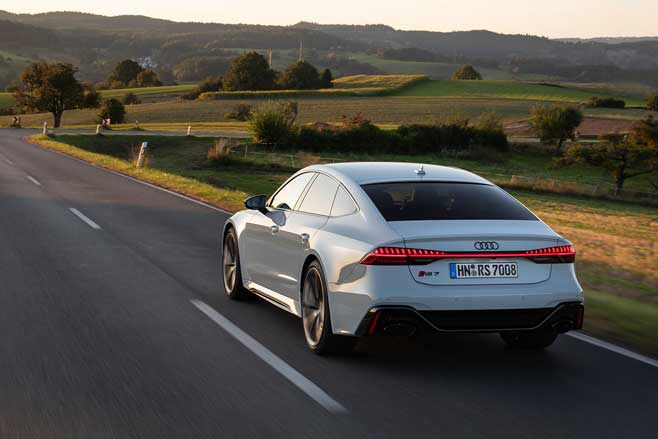
The 4.0-litre V8 produces its peak power output between 6000 and 6250rpm. The maximum twist action is on tap from 2050 to 4500rpm, so high revs are not an obvious forte of this engine. Even though there’s no turbo lag worth mentioning, the throttle response scores only 8.5 on the 10-point hooligan scale, and the mild hybrid module has no instantly obvious energy-saving effect.
The compact E-unit can recuperate up to 21kW of brake energy, which is instantly redirected to the buffer battery or used to power the air-conditioning and the auxiliary equipment. The more radical stop-start system cuts the engine as soon as road speed drops below 22km/h. At the same time, it enables lift-off coasting between 55 and 160km/h as long as Drive Select has been pre-set in Efficiency.
Just about any kind of information you can think of – from the status of more than 30 assistance systems to the megabyte music library – is relayed real-time by the elaborate multi-panel, multi-display MMI touch-response complex.
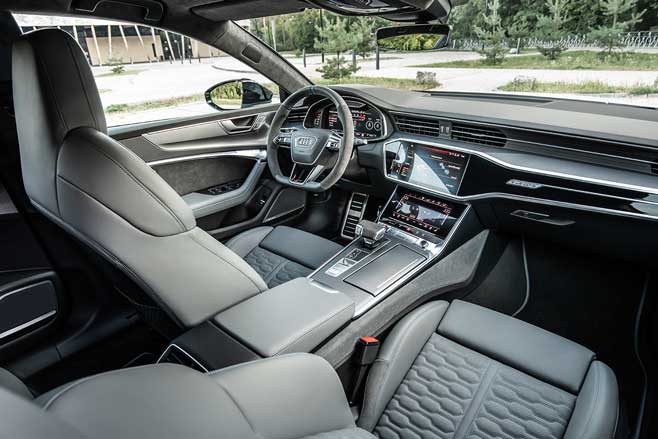
Although the black box behind this elaborate orchestration is probably intelligent enough to back horses, we like the complex layout best when the focus is on the RS monitor, which features the prominent technicolour upshift blitz, fist-size speedometer, large gear indicator and supplementary readouts detailing g-force, temperatures, tyre pressures and charge air flow.
If the new RS7 does define the shape of things to come from Audi Sport, the Ingolstadt powerbrokers have finally come to grips with their worst legacies by making outstanding performance much more transparent and accessible. In addition to ample grunt and reassuring surefootedness, excitement and emotion are about to return as integral parts of the RS DNA.
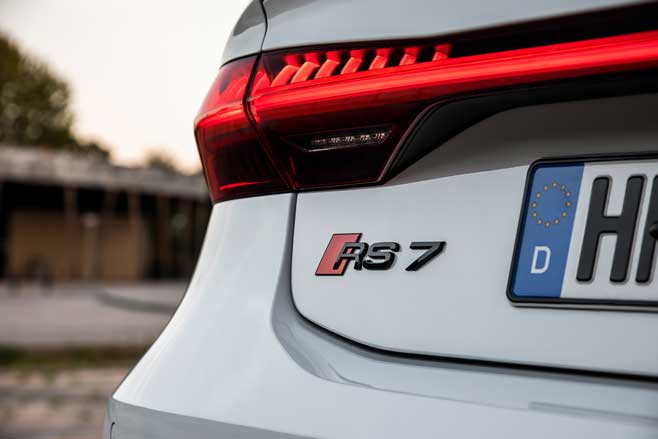
FAST FACTS 2019 Audi RS7 BODY: 2-door, 4-seat coupe DRIVE: all-wheel ENGINE: 3993cc V8, DOHC, 32v, twin turbo BORE/STROKE: 84.5 x 89.0mm COMPRESSION: 10.0:1 POWER: 441kW @ 6000rpm TORQUE: 800Nm @ 2050-4500rpm WEIGHT: 2065kg POWER-TO-WEIGHT: 244kW/tonne TRANSMISSION: 8-speed automatic SUSPENSION: five-link, adaptive dampers, air or coil springs, anti-roll bar (f/r) L/W/h: 5009/1950/1402mm WHEELBASE: 2929mm TRACKS: 1668/1650mm (f/r) STEERING: electrically assisted rack-and-pinion BRAKES: 420mm ventilated/drilled discs, 10-piston calipers (f); 370mm ventilated/drilled discs, single-piston calipers (r) WHEELS: 21.0 x 10.5-inch TYRES: Pirelli P Zero (AO), 275/35 ZR21 (f/r) PRICE: $250,000 (est)
PROS: Mind-bending performance; transformed chassis CONS: Overweight; complex drive modes; divisive face
RATING: 4.5 out of 5 stars
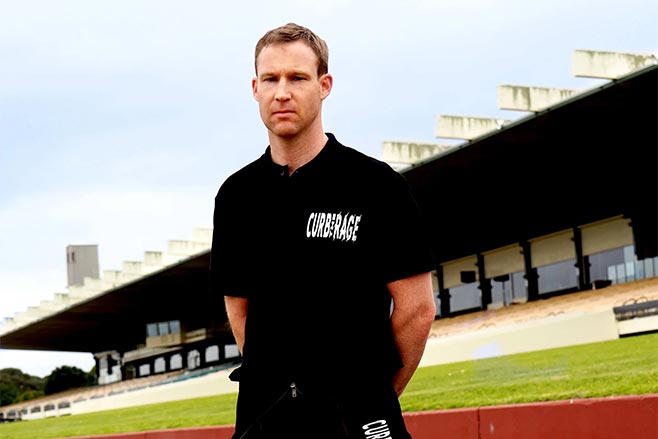
Bathurst winner and former PCOTY judge David Reynolds has today launched an anti-road rage campaign called ‘Curb the Rage’.
Reynolds hopes to use his profile, and his persona, to spread the message that road rage is not only a growing problem, but one that’s more dangerous than we often realise.
“Road usage in Australia is at an all-time high and with that brings congestion which is causing more road rage,” says Reynolds.
“In 2002, the Government’s Intergenerational Report forecast our national population would exceed 25 million in 2042. In 2007 the estimate was dropped to 2024. We have now almost exceeded that figure in 2019.”
To help his campaign, Reynolds’ sense of humour comes into play in clips such as the following, which he uses to remind road users to ‘Chill’ with a branded air freshener.
The ‘Chill’ air fresheners aren’t a profit exercise, rather the sales will be used to “raise valuable funds to educate and grow awareness of this important issue.”
“I think it’s time we brought awareness to the issue and help the community overcome this important challenge,” Reynolds says.
“In conjunction with key industry figures and with the help of corporate partners, I want to use my profile in motorsport and bring resolution to the issue.
“By visiting schools and industry I hope to build momentum with the campaign. This issue is real, it’s having an impact on a lot of lives and the consequences are terrible. Together we can get back to the privilege of driving and our Australian way of life.”
More clips, information, and the ‘Chill’ air fresheners are available at the Curb the Rage website.
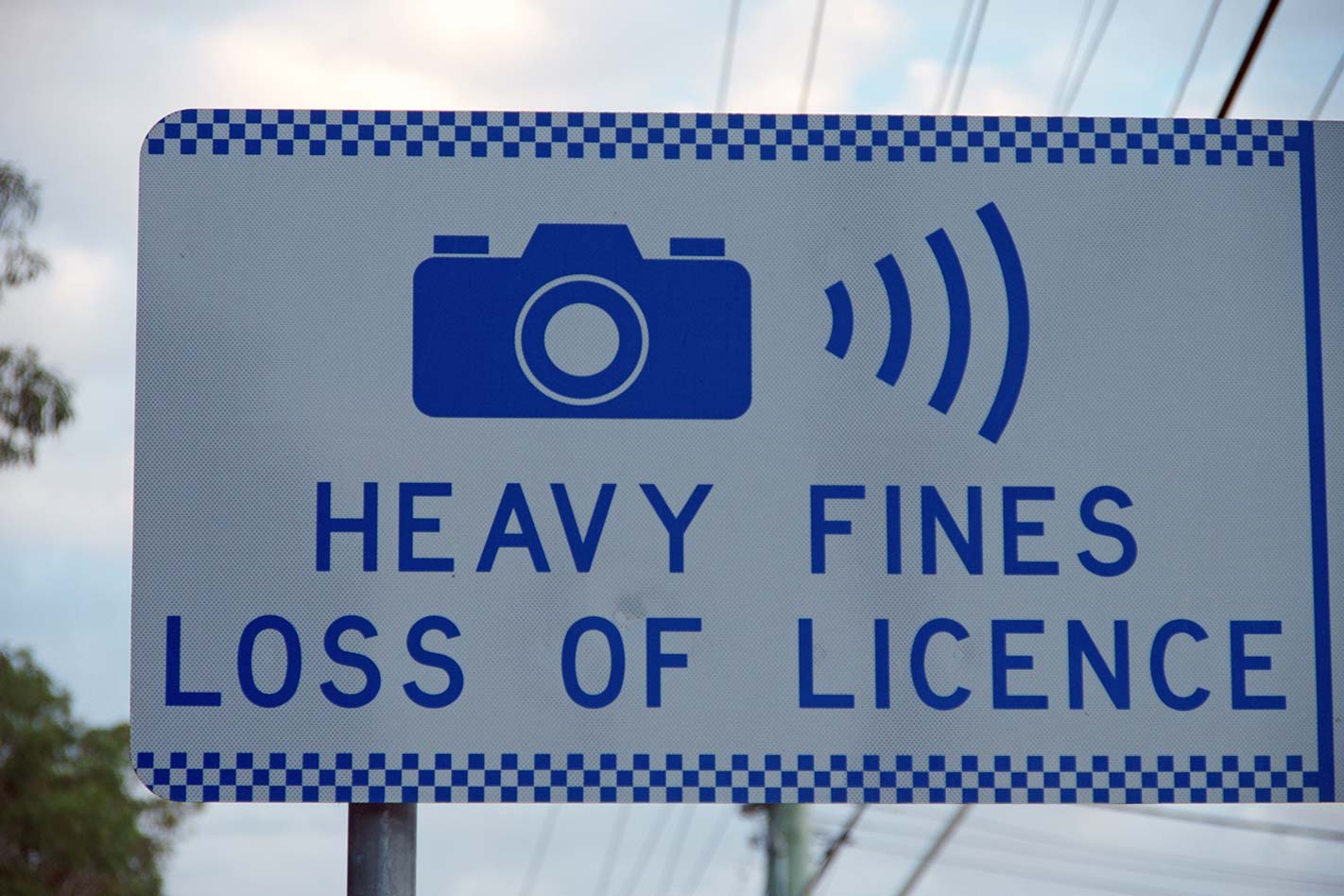
If you think you know how to avoid speed cameras, think again. The NSW Government is considering a plan to remove all road warning signs that precede fixed and mobile speed cameras.
According to ‘expert advice’, the move could save as many as 54 lives each year.
However, critics are claiming that the sign elimination is merely revenue raising – one that would add to the $1.12 billion in funds already collected from NSW motorists in the past seven years.
It’s an interesting development given that a similar plan to remove signs was rejected by the NSW Liberal Government last year.
NSW Transport and Roads Minister, Andrew Constance, said given the fact the NSW road toll is rising, the government needs to take action.
“Expert advice says we could save 54 lives a year by removing speed camera warning signs,” Mr Constance said in a statement.
“We will consider any advice that tells us we can save lives.”
There are currently around 45 mobile and 110 fixed speed cameras in NSW, with mobile phone detection units to come.
In data released earlier this month, the government claimed that fixed speed cameras across the state have reduced fatalities by 80 percent. The review also suggested that injuries also fell by more than a third at the 110 fixed speed camera locations across NSW.
Victoria already doesn’t use warning signs for road-side mobile speed cameras, but as previously reported by Wheels, the road toll is skyrocketing within the state.
While NSW saw an increase in deaths to the end of October 2019 (from 292 in 2018 to 310 in 2019), Victoria’s total toll of 232 for the same period is a 31 percent rise.
However, nationally, figures dropped by 1.3 percent, to 1185 road deaths, during the 12 months prior to September 2019 against the same period in 2018.
A report conducted last year by the state Auditor-General on mobile speed cameras recommended that the signs be removed. In reference to the report, Mr Constance said that warning signs defeat the purpose of changing people’s behaviour.
“People need to understand that they could be caught anywhere on the road network at any time, doing the wrong thing.
“Everybody needs to know that fine revenue goes straight into a road safety fund to educate people on what they’ve done wrong in the first place,” Mr Constance said.
The NSW government is introducing mobile phone detection units in December, which will cost taxpayers $88m. These cameras will also be deployed sans warning sings.
What do you think? Should warning signs for speed cameras remain?
Those waiting for the new performance renaissance of Alfa Romeo might have to wait longer as FCA’s latest financial results presentation revealed a revised product roadmap devoid of the proposed next-gen 8C, GTV, and Giulietta.
In the middle of 2018, Alfa Romeo made waves with the announcement that the long-awaited rekindling of its performance heritage was close at hand with the announcement of a new 500kW 8C supercar, a hybridised 450kW GTV coupe – and a replacement for its Golf-competitor, the Giulietta, as part of ambitious seven model plan that will enter production in 2022.
Unfortunately, of the seven, Alfa Romeo’s new and rationalised product roadmap now just features three of the originally proposed models: the facelift Giulia and Stelvio, and a possible ‘Tonale’ small SUV to line-up against the BMW X1 segment. All three models are earmarked for a 2021 debut.
While the next-gen 8C, GTV, Giulietta, and a new large SUV model has evaporated into the ether, the rationalised product plan has instead shoehorned another smaller SUV model for 2022, which is in line with the company’s plans to capitalise on the market shift from A- to B-segment vehicles.
The new portfolio has been rationalised to avoid overlapping with other Group brands and focus its resources on dipping into current market strengths. This strategy is said to have “planned capital spending reduced” and to maintain the brand’s “premium positioning”.
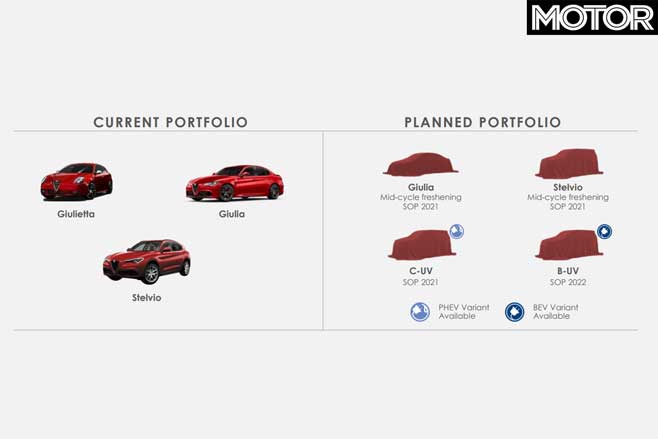
It is uncertain if the next 8C, GTV, and Giulietta has been axed permanently or put on the backburner, but with FCA’s talk about reducing capital spending and capitalising on the small car market, the odds aren’t in its favour of being merely delayed.
We have reached out to FCA Australia for comment and FCA has replied that it doesn’t comment on future products.
If you’re looking to leave the car in the garage this Christmas party season, then there’s another ride-sharing service that’s looking to get your sozzled self home.
It’s called Didi, and it’s looking to expand its already-huge footprint across Australia – though not necessarily in the way you might think.
For instance, the service debuted in Geelong, Victoria in May, simply based on the data that it had the highest concentration of ride-sharing services anywhere in Australia.
Newcastle in NSW was next, followed by the Sunshine Coast and Brisbane in Queensland, Melbourne and Perth. Sydney? Not yet.
The company chose Australia for its diverse culture and co-operative governments, according to Lida Xu, the head of operations in NSW and Queensland.
“We have a very long term commitment to the Australian market – we’re not here for a short time,” he told journalists at a briefing in Sydney.
“We want to provide the best experience for both our passengers and driver-partners, and we hope to become the preferred transportation platform in Australia. We really believe in local service and local collaboration, as well.”
The first half of 2019 will see Australia’s largest city, Sydney, join the Didi map, and Xu (below left) says the timing was deliberate.

“It’s not a delay, we’ve always planned to roll out this way,” he said. “If you look at our past plans, we’ve always rolled out in smaller cities, because we want to make a commitment to passengers and drive partners and grow in confidence. But now is the right time to expand into Sydney.
“Newcastle, for example, is the second-largest city in NSW, with a high population density and high ride-sharing demand, so it made sense to go there.”
Didi offers two services at present; Express caters for regular riders, while Max provides a seven-seat service. Xu says the company is also working on services for disabled riders.
It hasn’t been an easy ride for Didi; some nasty incidents involving its drivers in China saw the company pivot hard to a notion that safety, not tech advancement and growth, should come first.
“Last year, our technology team spent many months ‘all-in’ on security,” said Dr Fengmin Gong, vice president of security at Didi (below). “Before, we were moving very fast. Although we know safety is very important, but when there is always room for improvement.

“If you look at our incident/accident rate [including injuries to driver and/or passengers] in China versus taxis, it was one-eighth the size.
“Now we have in place a number of measures that are long-lasting. Our on-boarding, for example, has been massively improved. We are also able to use our platform to solve disputes or problems because we have the ability to view both sides of the issue.
“Some drivers are very ambitious, for example, and try to do too many trips, but we can insist that they take a break, and when we introduced in-car cameras, we could also detect if the driver is tired.”
The company has also developed its app with an advanced AI voice recognition that can even discern different Australian accents that complies with Australia’s strict ‘no-touch’ mode.
The company is also talking transport authorities here about future plans, including data sharing for autonomous driving, smart traffic lights and the like.
“For example, we have traffic heat maps which have a standard interface that authorities would have access for planning,” said Dr Gong. “We still own the data, but we’re all working together to make things happen.”
Heat maps are developed on the base data that Didi users generate when they’re out on the road, which then can be used to calculate traffic densities and speeds.
“We divide the grid into small hexagons,” he explained, ‘which can be used to aggregate the data, and can be uniformly applied anywhere.”
Pricing is a key to Didi’s success moving forward.
“Currently our prices are lower in most of our cities than our major competitors,” said Xu.
Drivers, too, are well catered for, according to Xu.
The commission rate currently stands at 5.5 percent, with the exception of Perth at 11 percent. At time of wiriting, Uber is 25.5 percent and Ola takes 15 percent of trip prices, according to Didi.
“I can’t say we won’t fluctuate, but we’re committed to providing a commission fee that’s attractive to both passengers and driving partners,” said Xu.
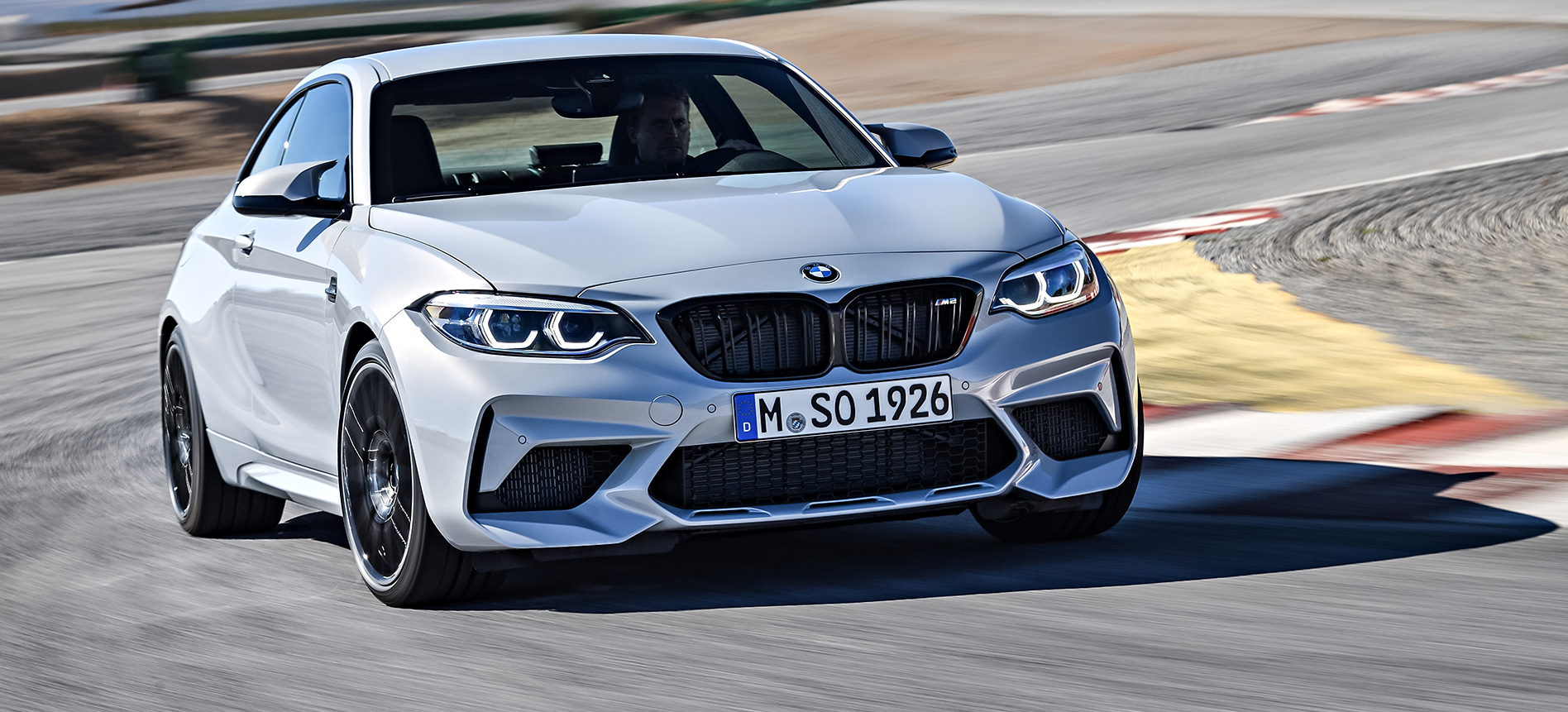
UPDATED – The next generation of M2 sports coupe will continue on as a rear-wheel coupe, according to BMW.
Reports from the UK this week further confirm that the 2 Series coupe will, as WhichCar reported earlier this year, will send potentially more than 230kW to the rear wheels.
At the launch of the third-generation 1 Series earlier this year, the man in charge of the vehicle’s powertrains, Christian Bock, confirmed that BMW will actually build two separate streams of 2 Series models when the car is renewed “in the near future.”
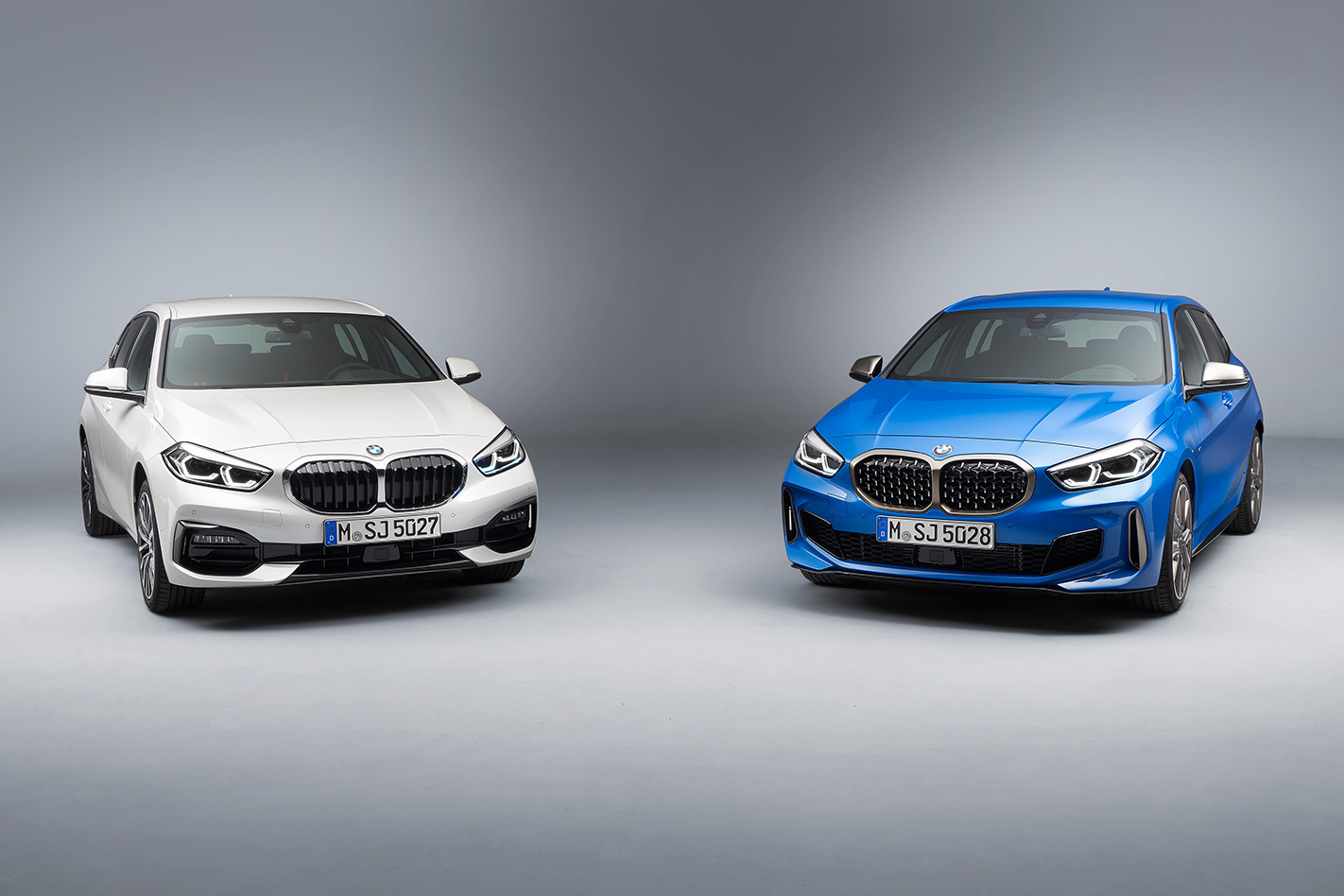
BMW 1 Series
The 2 Series Grand Tourer five-door hatch will move to BMW’s UKL2 front-wheel-drive platform similar to that of the 1 Series, while the 2 Series convertible and coupe will stay with a longitudinal engine/rear-drive set-up based on the same KLAR platform as the recently renewed 3 Series.
The top-spec M2 coupe, meanwhile, will be offered in both rear- and all-wheel-drive formats, with the xDrive system to be moved across to the hot 2 Series from the 3 Series.
“[The M2] is not forever,” said Bock. “At the moment, we should cover our customers who are expecting something like an M2 in the future. At the moment at least, it will remain in an online configuration.”
Bock is also positive about the future of petrol-powered performance as the company moves towards an electrified future.
“From me, a big yes,” he grinned. “If there is some sort of limit placed on us, or there is discussion about forbidding the engines, then it is a clear no.”
BMW 1 Series officially revealed. Vale RWD and six-cylinder engines
“It is my hope that mankind is open enough to look in all directions, and that there is a future [in combustion engine cars] even in a small segment.
“We always say at BMW that the last drop of fuel burned on this earth should go into a BMW V12!”
Life on the street must be brutal for humans, and a relentless battle for survival for dogs. But it’s also deeply unkind to cars.
The search for a low-budget first vehicle for my 17-year-old daughter had taken us to (and past) scruffy, unloved Suzuki Swifts, a clunky Honda Jazz, and a parked-by-ear Yaris that had covered all of the miles to the moon and back. Eventually it led us to a 2009 K12 Nissan Micra in Sydney’s inner west.
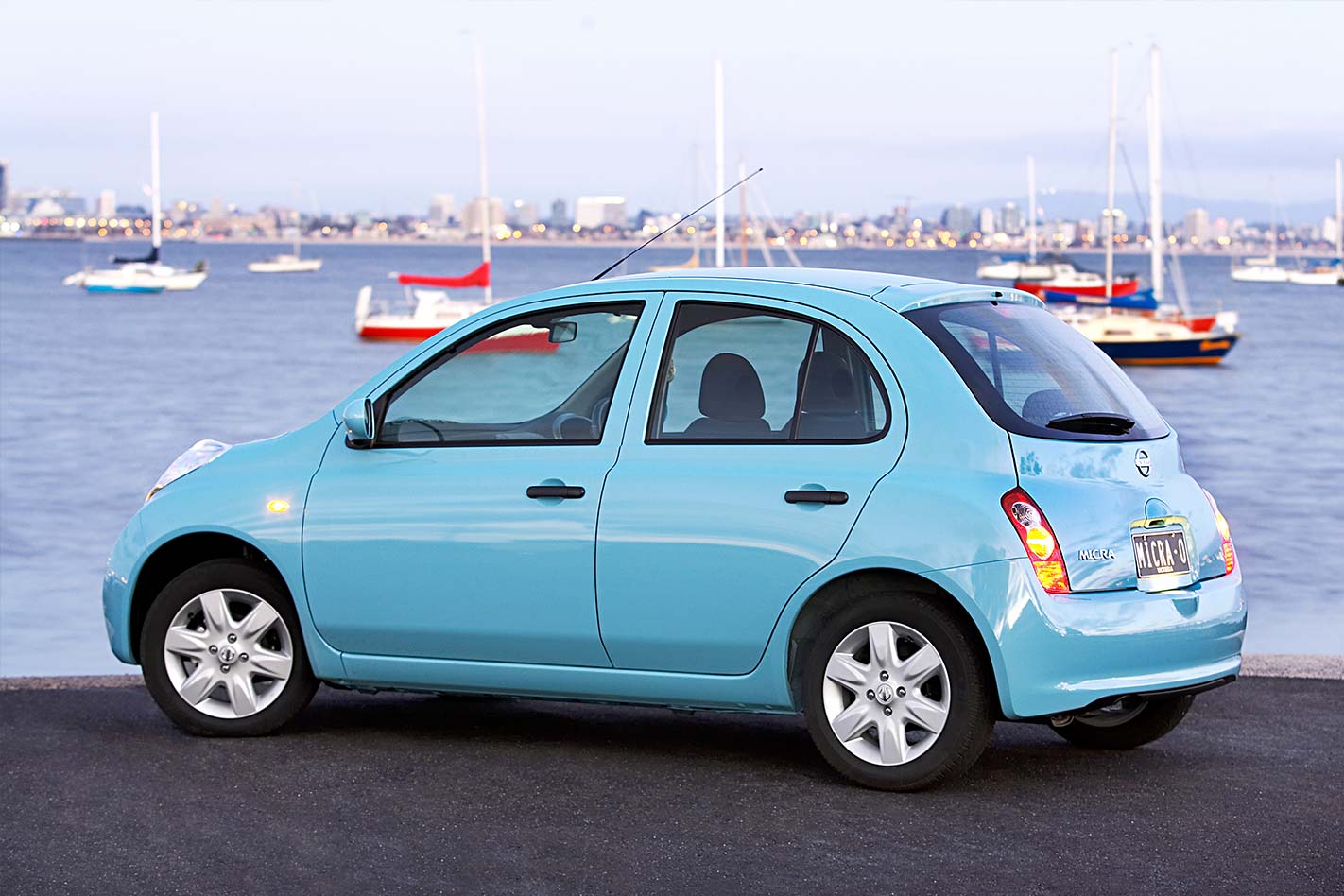
Life on the street had knocked the shine out of its mint-green paint; crap and grime and leaves and sap had found their way into its most intimate reaches. Ageing outdoors can be unkind.
The seller was a mid-40s chap named Guiliano, and he was visibly downcast as he explained the car had belonged to his mum since new, but it had to be sold now, as she had passed away suddenly earlier this year. It was the final piece of her estate; his last physical link to her memory. He apologised for not having made any effort to prepare it for sale. “I just haven’t had it in me,” he said despondently. But he knew what I really wanted to know. “It might not look like it now, but she did love it,” he said. “She was really meticulous about the maintenance.”
The logbook in the glovebox testified to this, and the odo had half the kays of similar cars from the same period. The dipstick showed the oil was a rich caramel colour, and as I squeezed underneath the little Nissan with a torch, everything looked tidy and straight.
So I forced myself to look past the grottiness and the dinged bumper, and we did the deal in his kitchen over an excellent coffee. As we said our goodbyes on the street, Guiliano said, “Look after it for me,” and I knew he really meant it. We parted with an only slightly awkward man-hug.
My daughter and I got it home and went straight to work with the high-pressure cleaner and an entire career’s worth of free-sample car-care products. It was deeply therapeutic, blasting away years of cosmetic neglect. It was also a great bonding time, not just with my daughter, who was poppin’ like a whack-a-mole, but with the car itself. As I dug leaves out of the scuttle, and degreased the doorjambs, I found myself in a mental conversation with this little Pommy-built 1.4, in a way only other car people could understand. I had a stern word with it about upholding Japanese mechanical integrity, and as I cut through the cloudy haze of its headlights with the electric polisher, opening its ‘eyes’ for the first time in years, I also wanted it to know just how irreplaceable its human cargo was: “Now listen, you little ANCAP underachiever, if you let anything bad happen to my girl, I’m gonna gut you with a plasma cutter…”
With the law laid down, I started attacking the interior. First it needed clearing of the detritus, and the rear-seat pockets gave up more snippets of the last good years Guiliano’s mum had enjoyed. The receipts for her Carnival Cruise to New Caledonia in 2018; the set menu of a wedding she’d been to in 2017. As I binned them, I felt that real transition of our little car embarking on its next phase of life.
Four hours later, the metallic-green paint had a deep lustre; the tyres glowed gloss black; the glasshouse sparkled, and the interior was immaculate. I even unbolted the rear bumper and, with a bit of gentle persuasion, the big ding returned to shape with a satisfying pop. After a quick trip to Repco for new wheel trims and number-plate frames, the bobble-eyed minty Micra was shining like a new pin.
Finally Sisi pulled me away, unable to hold back any longer for the must-have Instagram selfie with her little green freedom machine. It was reminiscent of a prized photo of 17-year-old me, standing proudly with my Mini Cooper S in 1983, except she was not sporting a tragic, post-punk mohawk and tartan trousers.
She wasn’t the only one who posted a pic. I sent a photo of her with the car to Guiliano, with a short note to say thanks, and how happy we were with how the car had scrubbed up. “I hope your mum would be pleased,” I wrote.
“That’s awesome,” Guiliano wrote back. “She’s smiling.”
The track-hardened Jaguar XE SV Project 8 – claimed to be the fastest sedan around the Nurburgring – has not been quite as fast moving out of showrooms, despite there being only 300 of them. In an effort to shift the remaining 15, Jaguar has built this less-extreme road-biased version.
Still with 441kW and available only in left-hand drive, the big change is the aerodynamics, with the previous high rear wing replaced by a subtle lip. To balance it, there’s also a new splitter at the front. Oh, and the top speed has been pegged back from 320 to a mere 300km/h in deference to the resulting reduction in high-speed stability.
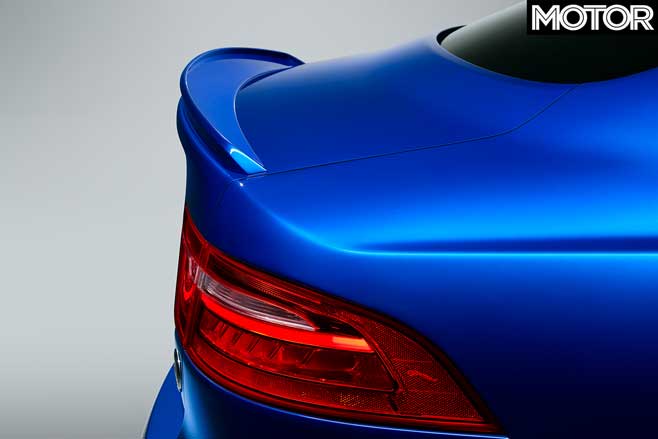
Essentially, it’s the same bespoke machine, with a wide-arched body sharing only the roof and door skins from the standard XE. The double-wishbone suspension gets niceties such as recalibrated adaptive dampers and anti-roll bars, billet suspension knuckles and squidge-free ball joints. The 20-inch wheels are wrapped in Michelin Pilot Cup 2 tyres.
Consequently, the Touring is pretty much the same as the track versions. Yet that’s no bad thing because, despite its circuit focus, size and weight, the XE SV Project 8 is an engaging and entertaining road car. Not only is it supremely fast and impressively poised, it delivers a sense of occasion that’s arguably unrivalled.
As a road car, it feels too stiff at first, and at low speeds follows every surface change, but the ride never gets crashy, the adaptive dampers rounding the edges of the worst imperfections. Get some load going through the car and, apart from on really lumpy surfaces, there’s just enough composure and suppleness to keep you connected and just about comfortable.
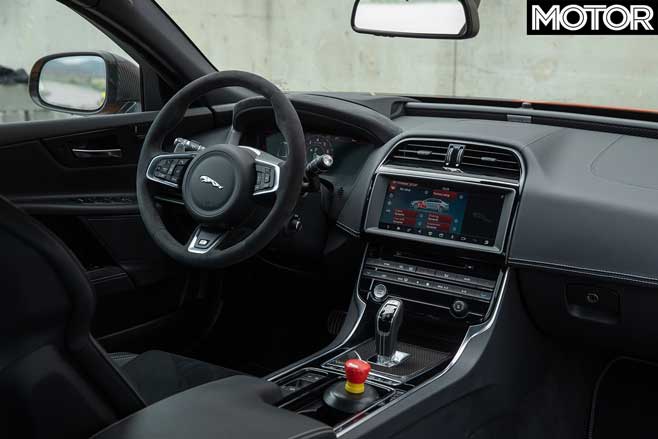
Grip from those gumball Michelins is immense in the dry, yet you’re always being given feedback; the electrically assisted steering is quick and precise, turn-in is extremely positive, and the all-wheel drive system strikes a fine balance between adjustability and security. This isn’t a tail-happy machine, but there’s enough torque being sent to the rear to allow a combination of steering and throttle to adjust your line when you’re really going for it.
Project 8’s appeal is largely that powerhouse of a supercharged V8. It delivers a startling turn of speed, pulling with demented conviction from almost any revs. Jaguar says the 0-100km/h sprint takes 3.3sec, and it feels that quick, even if the eight-speed auto lacks the speed and smoothness of the best dual-clutch units.
But it’s the noise that really captivates, especially with the titanium exhaust’s adaptive flaps fully open. It’s loud as it bellows and crackles away, but it’s an authentic sound; if you don’t burst out laughing with every artillery barrage-backed upshift, you need to be checked for signs of life.
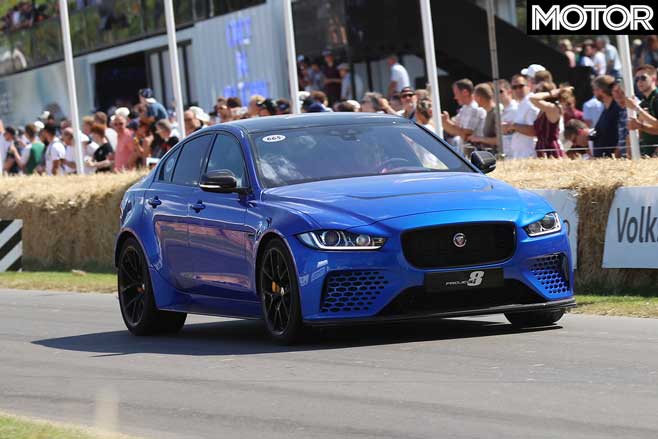
JAGUAR XE SV PROJECT 8 TOURING SPECS Engine: 5000cc V8, DOHC, 32v,supercharger Power: 441kW @ 6500rpm Torque: 700Nm @ 3500rpm Weight: 1757kg 0-100km/h: 3.3sec (claimed) Price: $325,000
Like: Slightly more road-friendly; ballistic performance; immense grip and composure; entertaining exhaust noise Dislike: Shift quality and speed; heft; very firm ride
Rating: 4 out of 5 stars
