
Warren Buffett said it best. The legendary stock market speculator advised that it’s best to “be fearful when others are greedy and greedy when others are fearful.”
The same could equally apply in the classic car market.
If you’ve been keeping your eye on the premium vehicle auctions lately, you’ll notice a lot of pass-ins. Put bluntly, many very desirable classics just aren’t making reserve while in no-reserve auctions, prices are bumping along unspectacularly.
Hagerty’s ‘Blue Chip’ Index is probably the most scientific method of tracking the state of the international markets, using sales data for a basket of excellent condition automotive A-listers.
Prices stagnated throughout 2018 and slipped in 2019, currently 4 percent down on September last year. It could have been worse, but the data was skewed a little by an outlier, namely a 14 percent jump in Shelby Cobra values.
It was bad news all the way if you owned a 1970 Hemi Cuda convertible, with a decrease of 13 percent (or USD$300,000), while the Tucker 48 plummeted by 14 percent (or USD$250,000).
Hagerty’s Andrew Newton attempted a positive spin on the figures, stating that “the Blue Chip Index is still 10 percent above where it was five years ago” but that’s not great news for recent acquisitions.
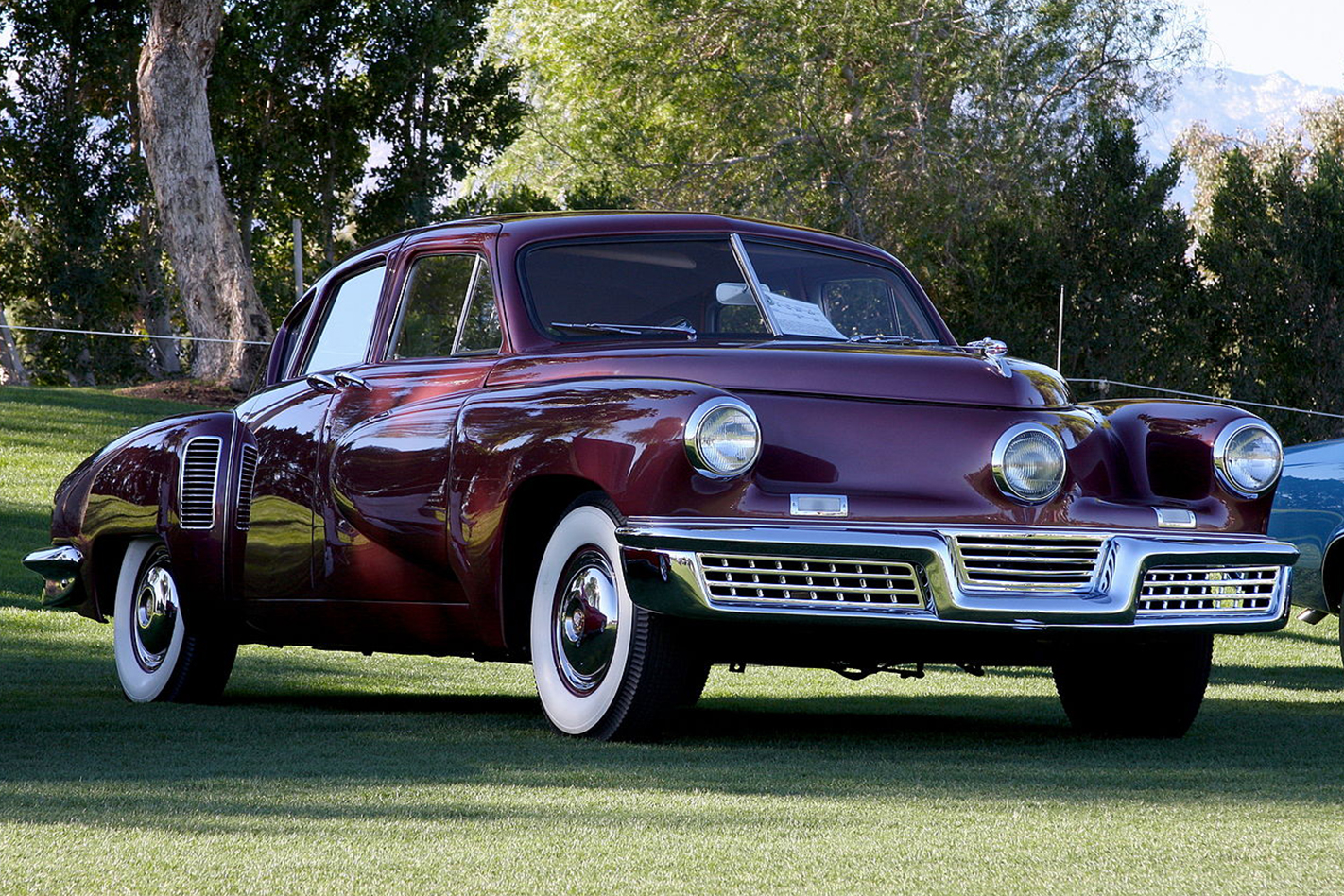
A number of high-profile misses at this year’s Monterey auctions has served to depress customer confidence.
“The number of mainstream and high-end vehicle owners who think that values are growing has been trending downward for more than a year, and for September both numbers are at their lowest points since they were first included in the Market Rating at the end of 2009,” said Hagerty.
“The expert sentiment section of the rating is at its lowest point since October 2010, largely due to market observers’ reactions to the Monterey auctions.”
The sell-through ratio for headliner cars at Monterey dropped from 56% at last year’s sales to 42% this year.
Taking a longer term view of the market is instructive. Hagerty’s market rating shows a general downtrend since mid-2015, although the sharp dip of 2015-2017 look to have eased slightly. None of this data seems to dissuade many classic car magazines still insisting that you can make money on old cars. Genuine investment-grade cars might require a longer view.
The Aussie market is continuing to mirror the other major markets. Last year started out reasonably and stagnated.
Lloyds achieved a record $365,000 for a four-door Holden Torana A9X, over $1m for Jeff Thomson’s old GT-HO Phase III and over $2m for 1 of only 3 Ford GTHO Phase IVs.
Towards the end of 2018, things started to drop off and 2019 has seen many auctions with disappointing completion rates.
Guy Allen, editor of Unique Cars, has had his eye keenly trained on the values of Aussie collectables and has seen the market change over the last 12 months.
“We valued VK Blue Meanies at around $175K last year, and we were seeing them start to change hands at nearly $200K,” he says.
“This year’s a completely different story. The very rarest cars will still fetch good money, but most of the rest is what I’d describe as flat. That same VK would be valued at around $145K.”
In other words, you’ve really got to know what you’re doing if you’re investing and don’t want to get badly burnt.
A pair of Dutch researchers from Tilburg University combed through the auction data of 29,000 car sales going back to the 1990s and came to a stark conclusion. Most classic cars have been horrible investments.
Economists Luc Renneboog and Dries Lauren sampled the data from 1998 through to the very peak of the market in 2015. During that period, gross returns worked out at 5.6 percent a year.
Adjust that for inflation and it came to 3.4 percent per annum.
Now consider that this figure didn’t include incidental costs such as transaction costs, storage, transportation, insurance, maintenance and restoration bills. Even accounting for the fact that the research period started at the peak of the 1990s bubble and included two major bear markets, after adjustment for inflation, stocks returns of 4 percent still outperformed chrome-bumpered metal.
But let’s get back to that Buffett quote at the top of the feature. The market is now coming to terms with the fact that the classic car bubble has burst. There’s been a definite adjustment downwards. How far will it go? When can we afford to be greedy when the rest are fearful? If I could reliably answer that particular question, I wouldn’t be sitting here writing this but every indication would seem to suggest it has a way to go yet.
This year’s Goodwood Revival was another incredible culmination of rare, desirable and valuable cars from around the world, but along with the amazing hardware on display, it’s the costumes and fashion worn by the participants that really completes the magic.
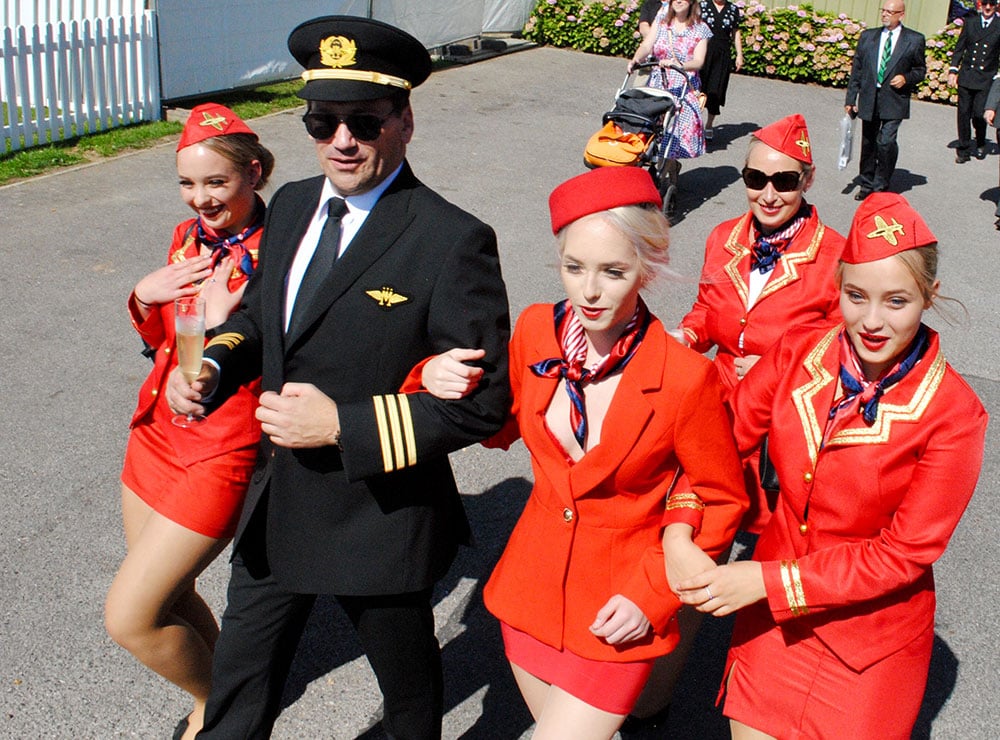
And people don’t do attire by half at the festival. Just as much attention and effort have been put into making the outfits as accurate and convincing as the lovingly cared for cars. Blink and you might think you’ve flashed back a few decades.
Not everyone has a unique classic car to roll up at the heritage show each year, but a majority of punters choose to get into the spirit by dressing up in character.
Whether it’s a wartime military uniform, unapologetic period clothing or even a mechanic’s classic white overall, everyone is out to impress.
Browse our gallery to see some of the best get up at the 2019 Goodwood Revival alongside the jaw-dropping machinery.
More incredible galleries
- The best race cars of all time
- 2019 Frankfurt Motor Show’s hits and misses
- 50 years of Nissan’s Z heritage
- All-time automotive fails
Brickies, once Australia’s most famous illegal dragstrip, is now totally respectable as the home to Sydney’s Olympic Park and numerous high-rise apartments. Back in the 1960s and 1970s, the Homebush area was a wasteland of old factories, a huge brick pit – hence Brickies – and contaminated swamps. Plus Bennelong Road, a private street and an illicit drag racing nirvana.
Hot-shoe hoons, hanging out at a Parramatta Road Big Chief hamburger joint, used word of mouth – remember this is pre-mobile phones – and most Friday and Saturday nights Brickies was home to 50 racers plus around 300 spectators. It was Falcon GT versus Torana XU-1, Charger against Monaro, plus really anything that ran, often including a cluster of hot ‘rats’, cars running 396s, 427s and 454s, rather than small-block 350s.
The Brickies story appeared in Wheels, December 1976, though initially it was intended to be the lead story of a new magazine from Murray Publishers, owners of Wheels. Provisionally called Treads and to be edited by Steve Cropley, Wheels’ assistant editor, it was to be a “young car nut’s newspaper”. When the idea of the new title was killed, Cropley and I decided the Brickies story deserved to run in Wheels. To preserve the author’s identity the story was by-lined Special Writer, though in reality the writer was Cropley.
The idea came from the late Geoff Paradise, founding editor of Street Machine magazine, and lover of fast hot rods and custom street cars. To get the story, Cropley and Paradise hit the Brickies on two consecutive nights in Geoff’s black Holden HQ 308 V8. Larrikin-journo Paradise couldn’t help himself: the HQ performed a couple of burnouts for the crowd before Geoff decided he couldn’t afford to destroy more rubber.
Cropley quoted spectators who claimed two of Australia’s top Pro Stock drivers raced for $300, running their hot Monaro and Statesman. Another night an interstate truckie turned up in his Mercedes-Benz prime mover. With the rear rubber covered in a flammable liquid, his fiery burnout so lit up the night that the cops arrived thinking somebody’s car was getting burnt.
One of Paradise’s photographs accompanying the story showed a Morris 1100 lined up against an air-cooled Fiat 500, proving Brickies really was a true venue for RWYB: Race What Ya Brung. At one stage Brickies even took on the mantle of respectability: homemade Christmas tree lights, three amber and one green, temporarily replaced the starter’s one-two-three-go hand movements.
The police tolerated Brickies, knowing they would rather street racing happened on a deserted Homebush backstreet than on “open-all-night-for-exhaust-fumes” Parramatta Road. Occasionally, though, the fuzz would wait until there was a healthy gathering on Bennelong Road and then block the narrow bridge to Parramatta Road, checking all the cars for roadworthiness as they came out.
To understand the appeal of Brickies you only need watch the 1977 movie The FJ Holden, in part set on Bennelong Road. The Brickworks was also used as a film location for the Bartertown scenes in Mad Max Beyond Thunderdome.
Between 2009-2016 Olympic Park returned to motorsport as the location of a V8 Supercars road circuit. We like to think the naming of a couple of streets close to the old drag strip finish line – Nuvolari Place, after a legendary Italian driver, and Monza Place, for the great Italian circuit – pays a bizarre homage to Brickies.
Speed, there is something about it. With every additional kilometre per hour, there’s a heightening of danger and a distillation of focus, an acceleration of heart rate, a quieting of thought. Dancing a little more closely with fate. We all know the feeling; it’s a bit of a drug.
Away from one’s own experience behind the wheel, speed captivates the cultural imagination in ways other measurements do not, be they lap or acceleration times, and for me Bugatti has proved as much yet again this month.
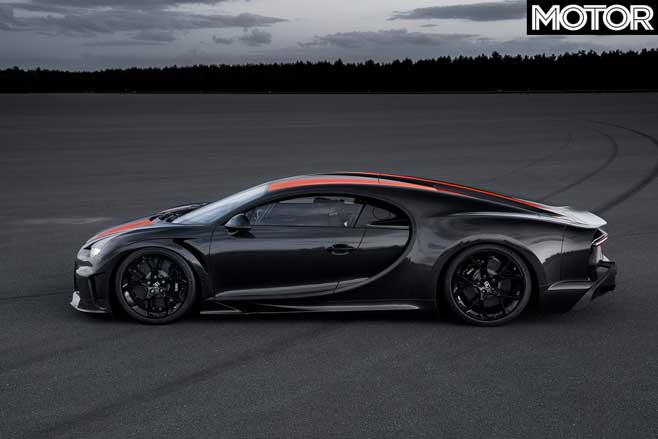
While I’m definitely besotted with our two cover cars and their staggering power outputs, individual or combined – can you imagine a paddock containing 1810 horses? – it’s the 490.48km/h kissed by a blistering Bugatti Chiron prototype at the 21km-long Ehra-Lessien test track in Germany, in August, that really has my fascination.
Basically Bugatti built a long-tail Chiron for the express purpose of being the first to break the 300mph (482km/h) barrier with what is ostensibly a car you can buy, numberplates and all.
Part of my curiosity with not only top speed in road cars, but this run in particular, is that it gives a so-called hypercar a reason to exist. Up until now, it was starting to feel like the only limits some of these new hypercars were pushing had to do with price and rarity. But the long-tail Chiron prototype has a point beyond just filling the VW Group’s coffers: as a machine built to expand the boundaries of engineering. Others should take note.
And it’s amazing to think of the speed attempt itself. Trees, behind guardrails, whipping past at velocities normally reserved for salt flats – 136 metres per second to be exact. Quad turbochargers, furiously whistling, cramming multiple atmospheres into 16 huge cylinders. The slippery body punching a hole into a thickening wall of air. The awesome centrifugal forces (5300g!) on the still-street-legal Michelin tyres, wanting to rip them apart – and what would happen if just one of hundreds of parts failed.
“I think most people have been 150 miles an hour (241km/h)sometime during their life,” explained test driver Wallace, 58, the man who set the production car record of 390km/h in a McLaren F1 in 1998 at this same track. “If you then add just another 30 to make it 180 (290km/h), that’s a whole different world. Then when you get to 200 (322km/h), it’s a lot faster than 180. So when you’re talking about 300 (483km/h), it’s a massive, massive step”.
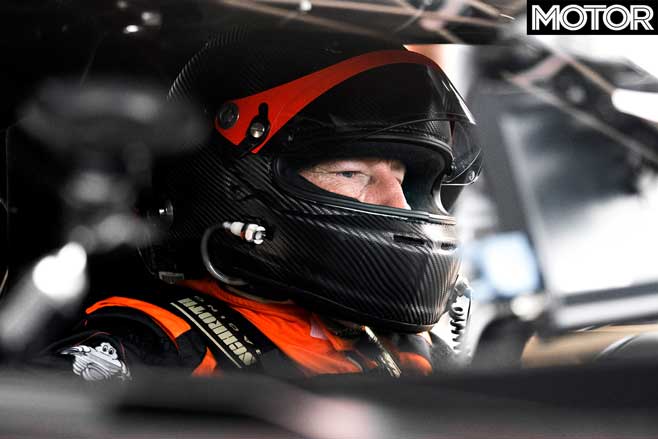
I do guiltily enjoy that there was not a battery or electric motor in sight, save for the regular one powering the starter motor. It was purely on hydrocarbons this feat was achieved.
I also quite like that a top speed run seems to have garnered a fascination well beyond just car enthusiasts, especially in this age of speed being supposedly the root of all evil. The Chiron doing 490km/h seems to me a bit of a churlish record to break – but that it was by a bunch of serious, doctorate-educated German engineers, delights me all the more.
It’s a bit sad that Bugatti has said it will no longer gun for production car top speed records. With 490km/h, it is done. It’s now up to other brands to pick up the baton, and they should. Stunts like these not only generate credibility – they inspire. And inspiration has never been in stronger demand.
Audi is continuing to develop and invest in sustainable technologies that complement its growing range of zero-emissions vehicles, and has elected 2030 as the year it will shrink its carbon footprint to zero.
Following in the tyre tracks of the 2019 e-tron, Audi will roll out a stream of emissions-free, fully electric models over the coming years, but a holistic carbon-reduction strategy will gradually shut off the company’s CO2 taps in parallel over the next decade.
Speaking at the IAA Frankfurt motorshow, Audi Sport joint managing director Oliver Hoffmann confirmed the company’s ambitious forecast and how it intended to get there.
“We are working to be CO2 neutral by 2030,” he said. “By 2025 we will have 30 electrified models and out of them 20 fully electric cars. We are focusing on new technologies and electrification, and we have a clear electrification strategy for the high-performance segment.”
Audi is already on the path to zero carbon with various initiatives by parent Volkswagen Group already well under way. In 2015, Lamborghini’s Sant’Agata factory was certified as carbon-neutral and Audi is even developing fuels that will allow combustion-powered cars including relatively thirsty Lambos to run carbon-neutral.
Revolutionary fuels such as e-diesel and e-petrol are produced using renewable energy and use carbon dioxide waste from large scale industry as the key ingredient.
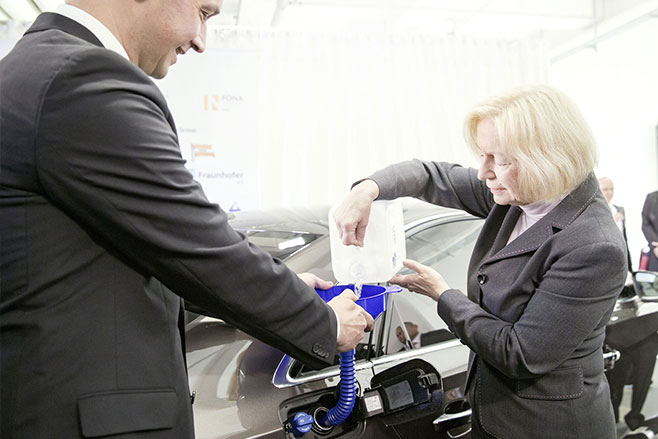
Hoffmann explained that renewable energy was critical to achieving company wide carbon-zero operations due to increasing public awareness about power-generation and its place in all manufacturing
“For us it’s very important, especially for our production plants. I think there is a total change of mind and people thinking about the complete chain for vehicles. Electrification makes sense when the electricity is sustainable.
“We are in contact with the government and the energy suppliers to change it. But you will get pressure when the customer changes their mind.”
Sixty five percent of Germany’s energy is produced using renewable sources including wind, solar and HEP with ambitious targets to increase that figure. For context, Australia’s renewables contribute just over 20 percent to the national total.
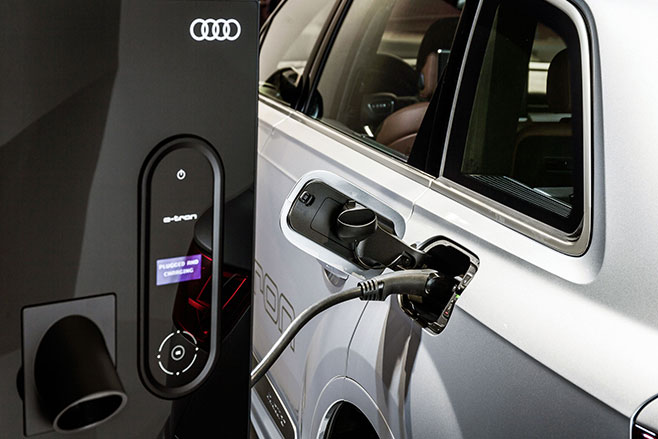
While the current range of emerging electrified Audis relies heavily on battery technology, hydrogen as a fuel will also start to feature in the range. But, according to Hofmann, fuel cell systems will not replace existing battery storage.
“I don’t think it will be the step after battery electric mobility,” he said. “I think we will get it in parallel. First for heavyweight cars because it’s the perfect solution for lorries and long-range cars, SUVs with high weight. There is no this or that.”
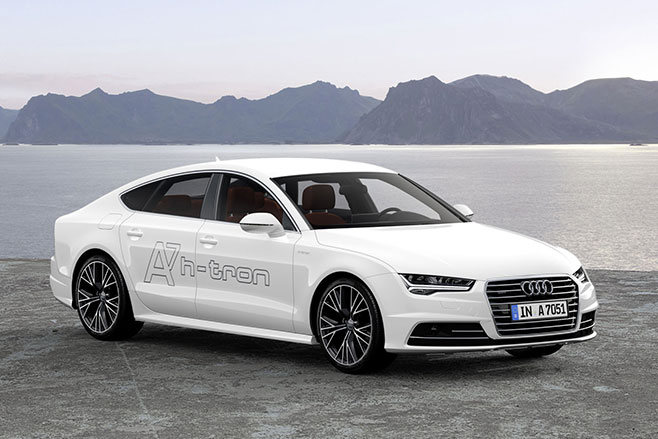
The company is already heavily invested in hydrogen research with its h-tron vehicles, alongside other alternatives including gas-powered g-tron concepts.
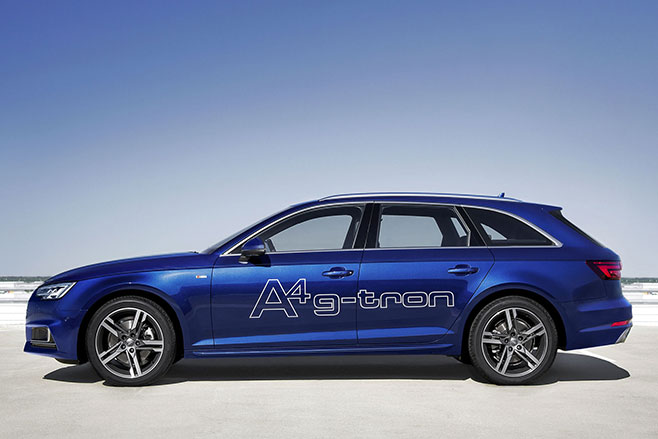
As one of Volkswagen’s high-performance halo brands, Audi has a tricky balance to maintain as it advances into a relatively unknown electric future and both serving its loyal customers while reducing carbon outputs are the guiding principle.
“On the one hand we have the customer demand and on the other we have to deliver technologies focusing on C02 and neutral mobility.
“It’s not our way to say everybody has to drive an electric scooter.”
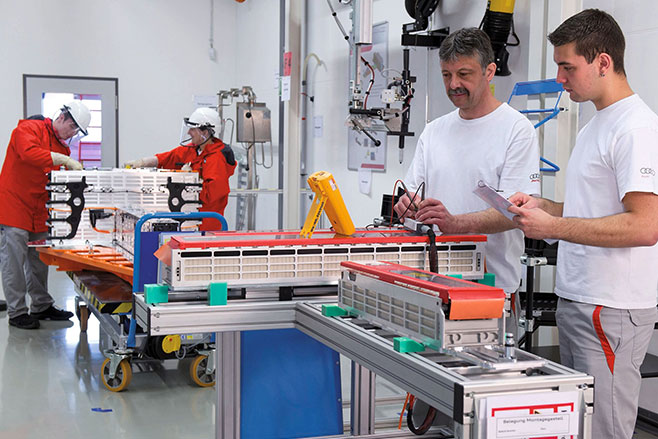
And that mission statement means the company will continue to deliver vehicles that are fast, fun and tread lightly on the planet, it says.
Next year, the company will launch its e-tron GT – a vehicle that has much in common with the Porsche Taycan including monstrous performance, followed by more driver-focused models that roll on a Porsche partnered PPE platform.
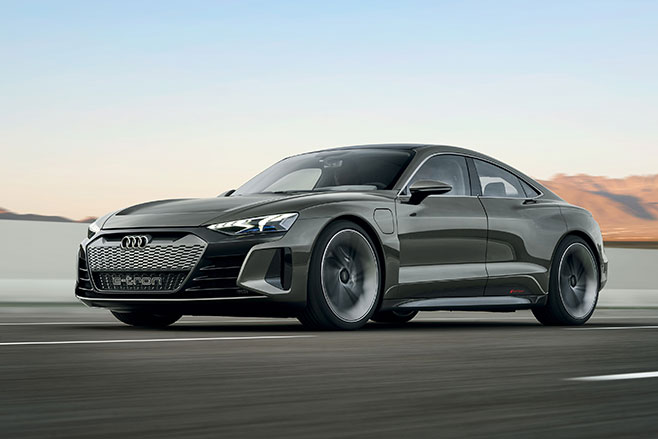
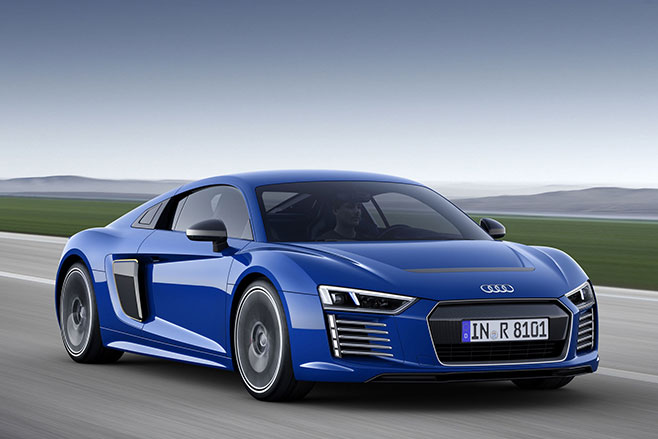
When asked if the electrified future of Audi could accommodate a successor to the sports halo R8, Hoffmann said an electric car will one day wear an RS badge but one with the esteemed R8 moniker was still in discussion.
“There will be a sportscar to follow the R8 but there’s no decision regarding name or the concept.
“To say ‘born on the track and built for the road’, this can also fit for electric cars. We are working on concepts and this is a platform for customer racing. We have to focus on the whole story and what is the right sportscar for the future.”
And if that isn’t quite green enough for your environmental sensibilities, the company is developing special paint which reflects more heat than traditional finishes to reduce air conditioning losses, and even a completely vegan specification for the e-tron GT.
The Nissan Skyline GT-R was never intended to stay stock.
While impressive in showroom guise, a standard GT-R is merely a blank canvas for aftermarket artists to create their motoring masterpieces, men like Kazuhiko ‘Smokey’ Nagata of Top Secret, Hironao Yokomaku of Veilside, Goichi Kitagawa and the late Hiroyuki Hasegawa of HKS and Michizo Niikura of Mine’s.
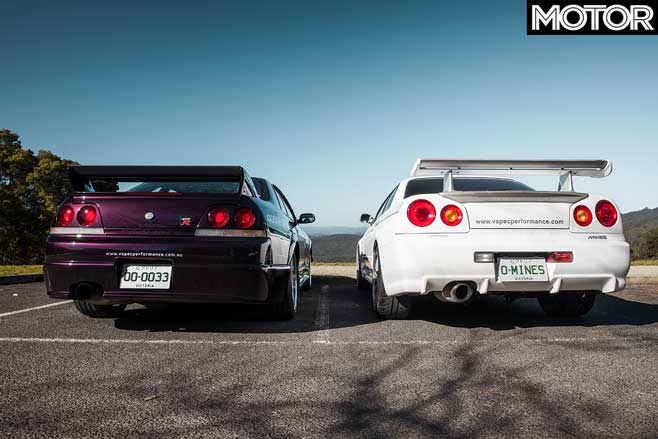
For many years Mine’s was the quiet achiever of the Japanese tuning industry. It didn’t build nine-second drag weapons, wild winged track monsters or neon-coloured Auto Salon stars, instead focusing on sensible, thoroughly-developed and attainable performance bits. In the words of Niikura-san: “We try to be as realistic as possible when we develop cars and parts … we don’t want to offer something the customer won’t understand.”
But what happens when Niikura and his crew let their hair down? The above quote was taken from an episode of the iconic Japanese video series Best Motoring, which featured the Mine’s ‘Ultimate Response R34’ GT-R.
You’ve probably seen the clip: it features a couple of Japanese racing drivers – think of Manabu Orido and Keiichi Tsuchiya as Japan’s John Bowe and Peter Brock – uttering expletives as they desperately try to keep one step ahead of a machine that’s re-arranging their concept of speed, Tsuchiya commenting: “It’s so fast that even a dead man will scream. I felt more fear than pleasure.”
With typical understatement, Niikura describes the Ultimate Response GT-R thus: “We’ve been quite soft on tuning in the past, leaving the engine stock and just replacing turbo kits, but on this one we did the engine as well. We didn’t just pursue big power but focused on balance and response.”
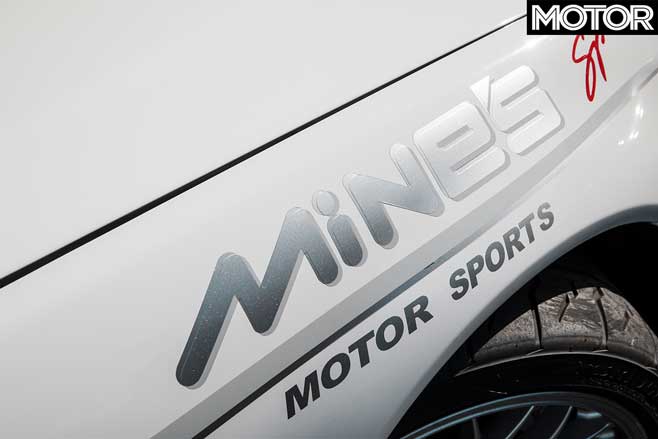
The car you see on these pages isn’t the Best Motoring star but its sister, reportedly one of three built in the same spec and livery. It’s owned by Melbourne GT-R experts V-Spec Performance, who generously supplied both cars for this feature.
The heart of the Mine’s R34 is its fully-built RB26DETT engine based on the toughened N1 block (stamped 24U). While the Best Motoring car retained a standard capacity, this example is a 2.8-litre; according to V-Spec, it was built for Niikura himself as a more street-focused package, sacrificing the smaller engine’s 9000rpm ceiling – though it still revs beyond 8000rpm – for greater mid-range torque.
A 1mm bore increase and 4mm extra stroke expands the swept volume from the stock 2568cc to 2771cc, the bottom end is strengthened by lightweight Tomei internals and the crank, con-rods and forged pistons all balanced.
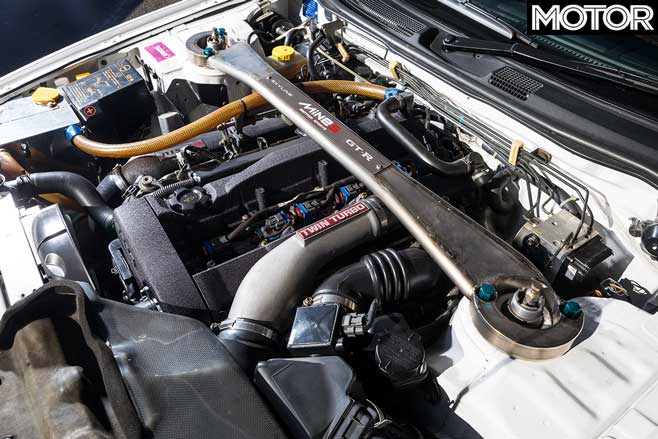
In the top end Mine’s strengthens the valve springs, head studs and Nismo-sourced oil pump and installs new camshafts – 260 degrees with 10.25mm of lift on both the inlet and exhaust sides, if you’re curious.
Boost is developed by modified HKS GT2530 turbos and the end result is claimed to be 441kW and 629Nm, figures which align nicely with the at-the-wheels dyno readings of 370kW and 538Nm of our feature car.
If those outputs seem a bit modest in comparison to the 750kW-plus claimed by some cars, consider this: the Mine’s machine essentially offers the same grunt as a current GT-R Nismo with 200 fewer kilograms to haul.
Speaking of Nismo GT-Rs. Formed in 1984, Nissan’s official motorsport arm first turned its attention to the GT-R in 1990, producing 560 R32s with an aero bodykit, steel-wheeled turbos and the deletion of the ABS, rear wiper and radio. Its R33-based effort was far more serious.
Just 44 Nismo 400Rs were built at a cost of ¥12,000,000 each, which equated to about AUD$155,000 in 1997 and about $270,000 in today’s money. Funnily enough, not far off the cost of a current R35 GT-R Nismo.
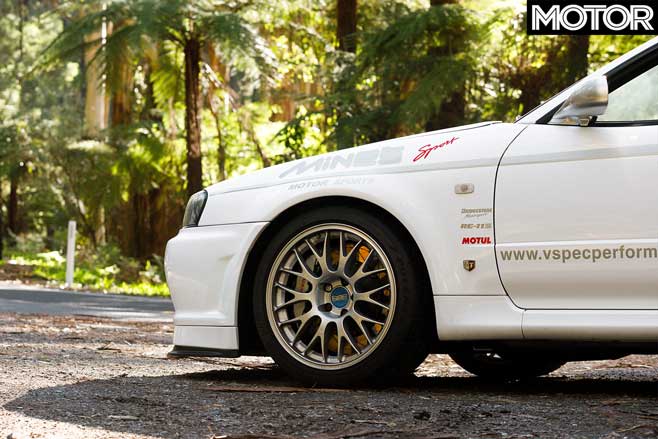
Like its modern successor, no part of the car was left untouched. The flared guards add 50mm of width and allow the fitment of 18 by 10.0-inch wheels wrapped in 275/35 tyres for an extra 30mm of rubber at each corner. The new wheels expand the track by 20mm front and rear and the whole show sits 30mm lower thanks to new Bilstein dampers.
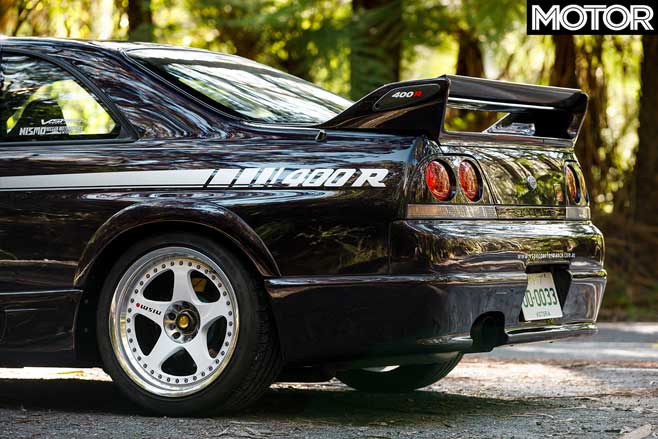
That comprehensive bodykit includes air intakes in the front bumper and ducts for the oil cooler and brakes, which use Nismo pads. The bonnet is carbon, the rear wing scores carbon fibre elements and there was the option of HID headlights.
Inside, unique instruments include a 320km/h speedometer and (highly optimistic) 11,000rpm tacho plus a titanium shift knob and bespoke 360mm steering wheel. Once again, however, the main focus was extracting more power from the under-stressed RB26.
So comprehensive were the changes that the engine received its own code, the RB-X GT2. It set the template for the Mine’s R34 by increasing bore and stroke 1 and 4mm respectively, its capacity once again 2771cc, while a hefty boost increase from the standard 8.5psi to 15.6psi lifted outputs to 294kW/469Nm.
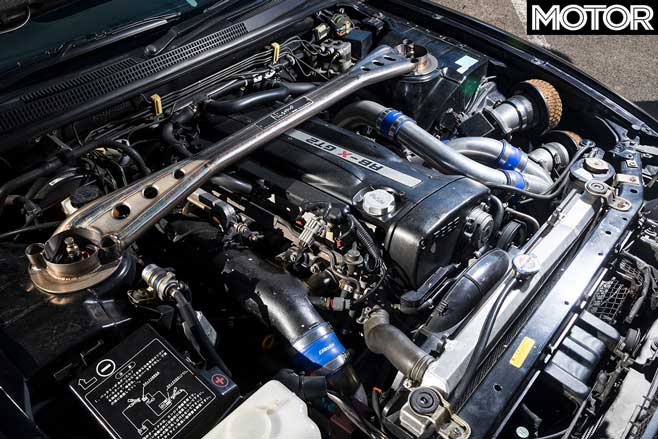
To cope with the added stress the RB-X uses a reinforced block, forged pistons, crank and con-rods, 1.2mm metal head gasket, steel-wheeled N1 turbos, a Nismo intercooler, air-cooled oil cooler and a titanium exhaust. Other upgrades include a titanium front strut brace, reinforced engine mounts, a twin-plate clutch and carbon propshaft.
The last time I saw a Nismo 400R it was a mass of polygons, slowly rotating to the sound of cheesy pseudo-jazz music. Like many petrolheads of my era, Gran Turismo and its sequels was a big part of my automotive education, providing information and access to little-known brands and models, particularly those from the Japanese market.
V-Spec’s 400R is build number 007, painted in iconic Midnight Purple, and rightly leads a sheltered existence these days. It wasn’t always so, its previous Japanese owner using it regularly judging by the more than 66,000km on the odometer. Nevertheless, even in its homeland a 400R sighting is a rare event; in Australia you’ve almost got better odds of being hit by lightning.
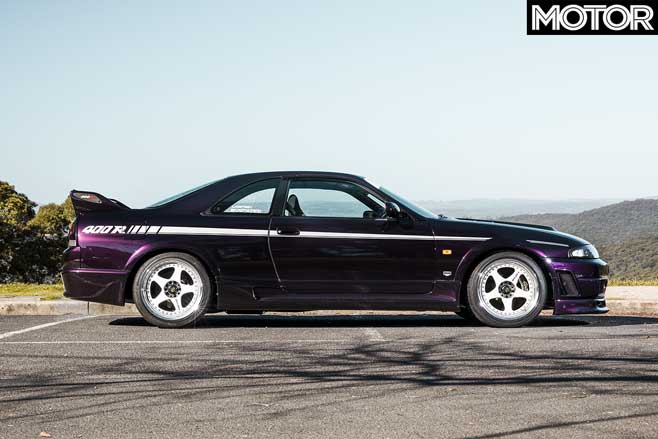
Its provenance is lost on the general public. Filling up at a busy BP the 400R barely scores a second glance; to the masses I’m just another Paul Walker wannabe in a modified Skyline. Heathens. Later, faith in humanity is restored by NB MX-5-driving youngster Alex, who swerves into our photography location, mouth agape, exclaiming: “I never thought I’d see one in the flesh.” It’s unclear which car he’s referring to – it doesn’t really matter.
You sit a little high and slightly reclined in a 400R, but the seat is beautifully supportive and the unadorned steering wheel is perfect. It can’t be coincidence that both Nismo and Porsche have settled on 360mm as the perfect wheel diameter.
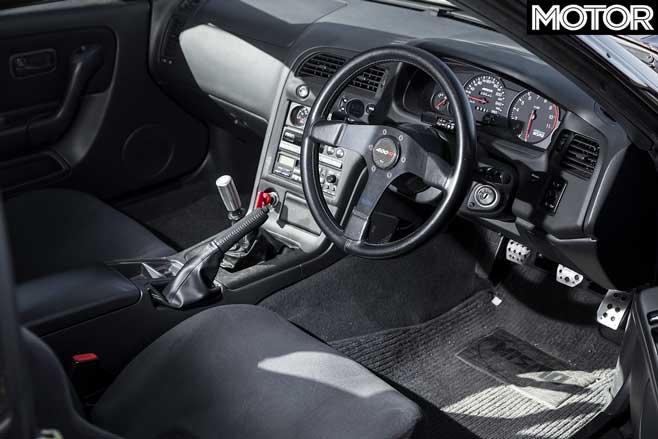
The alloy pedals are well-spaced, though the accelerator is a bit high for natural heel-toeing, but by far the biggest impediment to driving the 400R smoothly is the twin-plate clutch. It’s not evil – a bit of familiarity is all that’s required – but its sharp operation provides the potential for embarrassment.
Even at slow speeds the Nismo’s qualities shine through. Its suspension is firm but not uncomfortable, only jostling the occupants on particularly poor surfaces, the steering jiggles in your hands across cambers like a GT-series 911 and the engine is incredibly tractable, pulling without hesitation or complaint even when I accidentally select fourth from first. All the while the RB-X orchestra plays its symphony, every metre accompanied by growls, hisses and sneezes as boost is built and dumped and revs rise and fall. It sounds like it has 900hp, not 400.
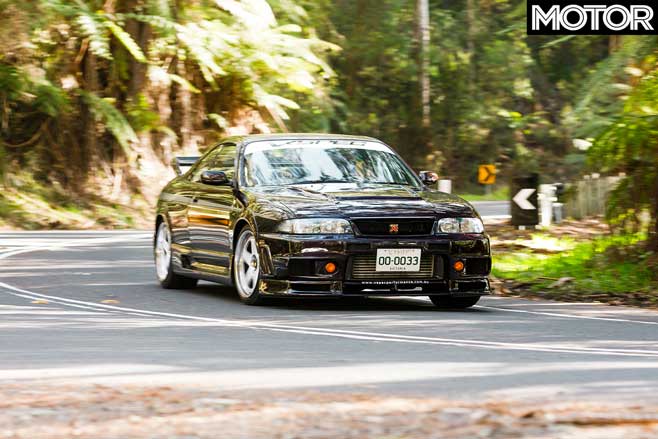
Today’s turbocharged engines are all about boosting low- and mid-range torque, but in the 1980s and ’90s turbos were the key to unlocked power and lots of it. As such the RB-X initially feels disinterested, needing around 3500rpm or so to get into its stride, but take into account the 8000rpm redline and there is a 4500rpm-wide powerband to exploit. You quickly adjust, learning to keep the tacho hovering between 4000-5000rpm through corners so that you’re in the meat of the torque delivery on exit.
The steering is weighty and extremely responsive without being heavy or darty. Inputs are answered immediately and the feedback is superb, every corner of the car providing information about the road beneath. Arguably the greatest myth about GT-Rs is that they drive themselves.
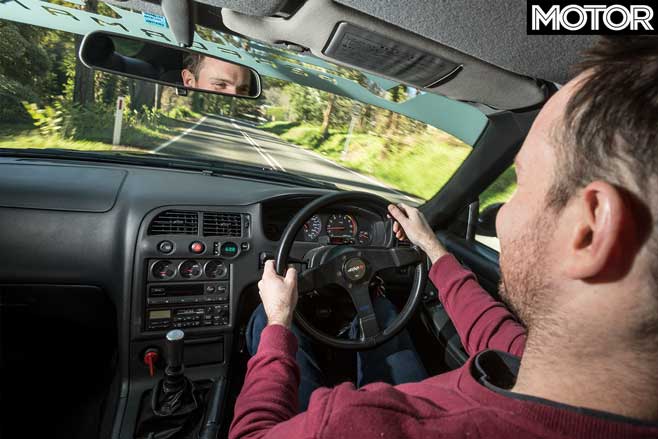
There is a tremendous amount of technology in the chassis – even this 22-year-old model has ATTESA active all-wheel drive, a torque-vectoring active rear LSD and all-wheel steering – but it’s up to the driver whether they get themselves into trouble and whether they can then extricate themselves from it, especially as the R33 lacks ESP or traction control.
It’s unclear when the Dunlop Direzza DZ10Z tyres were last replaced and the 400R initially feels very short of rear grip. As the kilometres pass it becomes clear that this sensation is merely a combination of the quick steering, rear-biased ATTESA and all-wheel steer working together to get you to corner exit as quickly as possible.
It’s unnerving at first, particularly in a car this rare and valuable (it’s insured for $300K) but as kilometres pass the behaviour becomes reassuring, as you know the front end will stick and the amount of rear-end involvement depends on how hard you press the throttle.
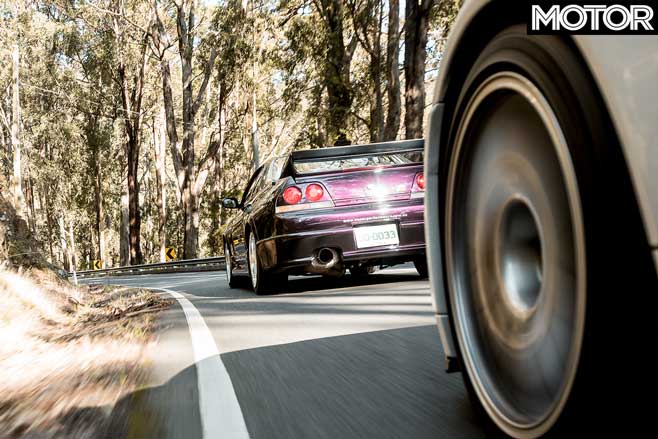
More than 20 years on, the 400R is still a very fast car; once on boost it accelerates in a sustained rush right to 8000rpm. Performance figures are hard to come by, but in one of Best Motoring’s famous Tsukuba Circuit battles, Nismo’s tweaked GT-R showed a clean pair of heels to the likes of the Honda NSX-R, Porsche 993 911 Turbo and Ferrari F355, instead trading tenths with the 993 GT2.
Perhaps unsurprisingly given its OEM roots, it’s also very well resolved, with strong brakes, plenty of traction and solid body control, though the dampers run short of travel over bigger compressions. In short, the 400R lives up to the legend.
Even if you had no idea what the Mine’s Ultimate Response GT-R was, its staccato, almost rotary-like idle is a dead giveaway of its intent. Like the R33, the driving position is slightly reclined but the seat is much lower and the semi-quartic wheel – a step backwards from the standard R34’s perfectly round item – adjusts higher.
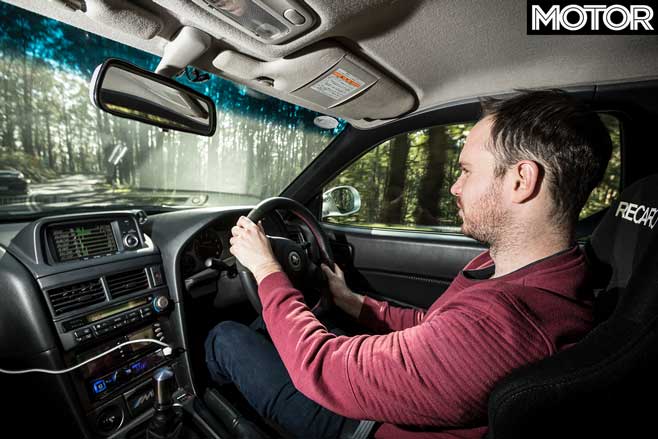
A digital screen on the dash displays an incomprehensible amount of vehicle data; commonplace these days, science fiction in the early 2000s. The Mine’s car is even easier to drive than the 400R: the clutch is much more progressive, the steering is lighter, the pedals better spaced and the throttle pedal long in its travel, only revealing its riches when the driver really asks for them.
Do so and the acceleration is, frankly, berserk. As with the 400R there is a pause – though a shorter one – before the engine responds, like the ebb of the ocean prior to the tsunami arriving. You barely notice the hesitation as the sound of enormous quantities of air being ingested focuses the mind on what’s about to occur.
When the boost arrives it’s like being rear-ended by a speeding train, the front tyres scrabbling for purchase while the rears dig into the tarmac and catapult 1500kg of GT-R down the road. It’s little wonder Orido and Tsuchiya disbelievingly exclaimed the Ultimate Response was “too fast!”.
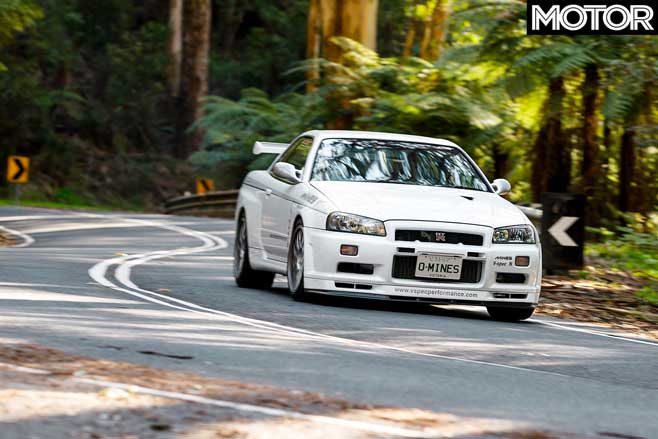
But the Mine’s car has a secret beyond expertly applied engine tuning. Sitting in the rear diff is a 3.9:1 final drive, significantly shorter than the standard R34’s 3.545:1. At the same revs the Mine’s car is travelling about 10 per cent slower, but the torque multiplication effect of the shorter gearing makes it accelerate much harder. It’s this rear diff – a horrendously expensive Nismo item that’s no longer available, according to V-Spec – as much as the monster engine that’s key to the ‘Ultimate Response’ tag.
Drive the R34 hard and you’d never guess its vintage; or if you were forced to, you’d perhaps hazard 2011 rather than 2001. The gap between it and the 400R might only be a handful of years but it feels like a decade or more.
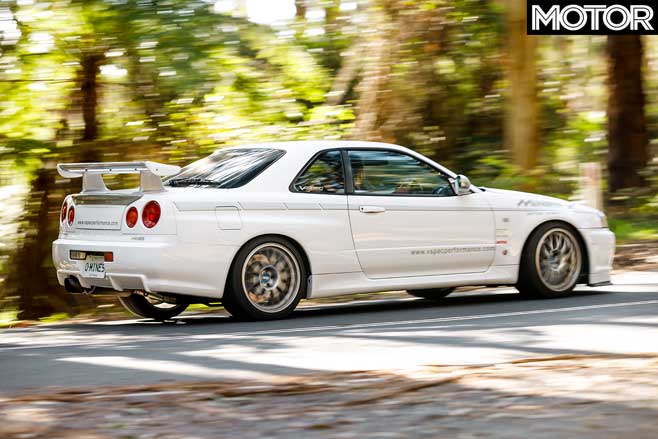
Like the 400R, Mine’s has subtly enhanced almost every area of the GT-R’s chassis, with lighter wheels, wider rubber and pillow-ball joints rather than traditional bushes. It’s less playful than the R33, the all-wheel drive system favouring traction over agility; the steering is slower to respond and requires lock to really weight up, but is also razor accurate. Its behaviour is incredibly confidence-inspiring which makes it very easy to drive quickly, but its outright speed is such that do so still requires concentration.
It’s difficult to think of many modern cars that could match the Ultimate Response GT-R for pace on a twisty road and fewer still for enjoyment. With its combination of insane speed, driver feedback and everyday usability, it’s one of the most amazing cars I’ve ever driven.
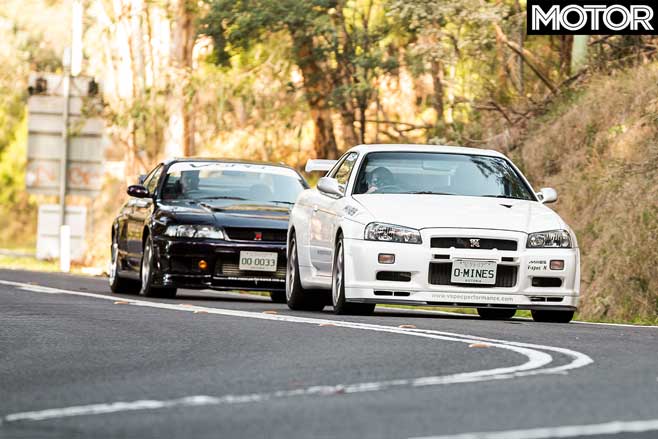
Better yet, Mine’s will build you one, though you’ll need (extremely) deep pockets as the engine alone costs ¥3,218,400 (around AUD$42,000). But when offered the choice of one more drive in either car, it’s the 400R I choose.
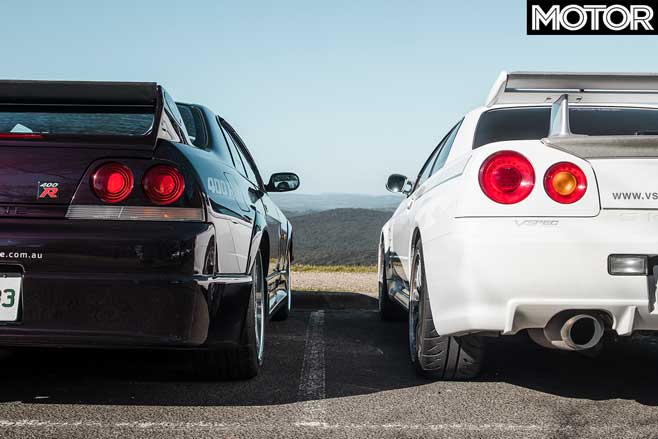
There’s something special about the factory extracting the maximum potential of a model – after all, no one knows the car better than its creator. Drive a 400R, Subaru WRX STI 22B, Mazda RX-7 SP or Mugen Civic RR and standard machinery will never have the same appeal.
Fast Facts
| u00a0 | Nismo 400R | Mine’s R34 GT-R |
| Body | 2-door, 2+2-seat coupe | |
| Drive | all-wheel | |
| Engine | 2771cc inline-6, DOHC,24v, twin-turbo | |
| Bore x Stroke | 87.0 x 77.7mm | |
| Compression | 8.5:1 | |
| Power | 294kW @ 6800rpm | 441kW @ 7200rpm |
| Torque | 469Nm @ 4400rpm | 629Nm @ 5400rpm |
| Power/Weight | 190kW/tonne | 285kW/tonne |
| Transmission | 6-speed manual | |
| Weight (dry) | 1550kgu00a0 | |
| Suspension (f) | multi-links, coil springs, anti-roll bar (f/r) | |
| L/W/h | 4675/1830/1330mm | 4600/1785/1360mm |
| Wheelbase | 2720mm | 2665mm |
| Tracks | 1480/1490mm (f/r) | 1500/1510mm (f/r) |
| Steering | hydraulically assisted rack-and-pinion | |
| Brakes | 332mm ventilated/grooved discs, 4-piston calipers (f/r) | 356mm ventilated/grooved discs, 6-piston calipers (f); 330mm ventilated/grooved discs, 4-piston calipers (r) |
| Wheels | 18 x 10.0-inch (f/r) | 18 x 10.25-inch (f/r) |
| Tyre Sizes | 275/35ZR18 (f/r) | 265/35R18 (f/r) |
| Tyres | Dunlop Direzza DZ 10Z | Bridgestone RE-71R |
| Price | $300,000 (and rising) | We’re not game to estimate… |
| Rating | 5 out of 5 stars | 5 out of 5 stars |
The one that didn’t quite make it
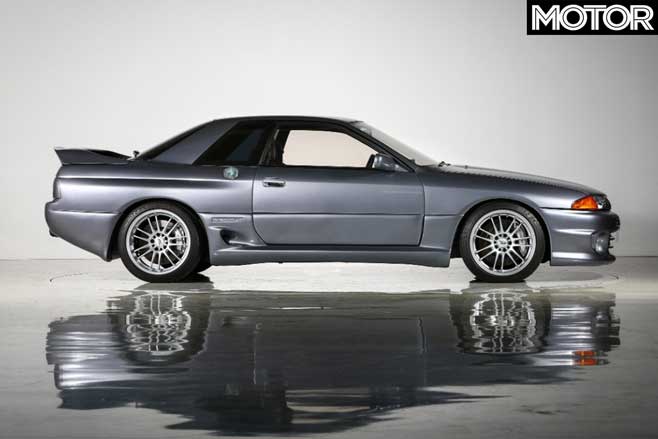
We wish boats sailed faster. In a dream world this would have been a three-car test, with the third car being arguably the most special of all. In January 2019 V-Spec Performance successfully bid for one of just four HKS Zero-Rs, paying AUD$212,000 for the ultra-rare R32, one of which resides with the Sultan of Brunei.
So comprehensive is the work done by HKS, the Zero-R wears no Nissan badges. Similar in spec to the Mine’s Ultimate with a 441kW 2.8-litre engine, the HKS is nonetheless a very different beast. We’ll hopefully beg and bribe V-Spec into doing a feature in a future issue.
The strangest thing happened this year: cars became a major political issue. Well, when I say cars, I really mean EVs. What other vehicle holds such political promise, such opportunity to appear forward-thinking and ‘green’, or such ammunition with which to paint your opponent as a coal-mongering Luddite? You could practically hear the speech writers rubbing their hands together with glee.
As I wrote this, the Federal election was just over a week away, so I realise that by now, the discourse may have moved on. But honestly, can you think of another topic that has accelerated from zero to linchpin election issue faster than EVs?
For a while there it was all-pervading. EVs were on TV, on the radio, in my Facebook feed and on the front page of the paper. I even contributed. Radio stations called and I spoke with listeners who asked intelligent questions about recharging times, price premiums and how far they could travel on a charge.
At first this made me ecstatic. “Finally!” I thought. “EVs are getting the mainstream attention they need. The sensible debate has begun!” That should have been the first warning sign, though at this point I was still optimistic.
Regular readers will know that Wheels is broadly supportive of electric cars. We’ve championed them on our cover, bestowed our Car of the Year award upon them, and driven them extensively. This issue continues the trend with two electric-car feature drives starting on p60 and p86 respectively.
You’ve shown a collective interest in them, too. Our ‘Future Issue’ has been one of our strongest-selling editions two years running, and by now, the enthusiast fear that EVs pose a threat to driving enjoyment has been exposed for the red herring that it was. As a collective, we seem to have accepted the direction the industry is barrelling towards, and realise that when engineered with real expertise, electrification can enhance the driving experience.
None of this has stopped Wheels from reporting on the many and varied challenges facing EVs. You need only to consider the sales numbers to appreciate just how much of an EV backwater Australia is. EVs make up 0.2 percent of our market, a figure that experts say puts Australia 10 years behind the rest of the world. Then there’s the state of our recharging infrastructure (Australia currently has around 600 public charging stations; Europe has 150,000 and counting), and the thorny issues of the fuel excise, how our power will be generated, the need for subsidies and incentives, how batteries will be disposed of… The list goes on.
The fact that our nation’s leaders are only now debating if electric cars are important, or simply a passing fad, is embarrassing. The rest of the developed world accepted EVs yonks ago. The time for burying our heads in the sand has passed.
So when one of the policies being debated set a target of making 50 percent of all new-car sales electric by 2030, I saw it as a positive move. An idealistic and unrealistic one, sure, but I reasoned it was better late than never, right?
Then things began to unravel. Hot on the heels of making a spectacular boob of himself by declaring you can recharge an EV “in 8-10 minutes”, Bill Shorten really put his foot in it by revealing he didn’t know how much the world’s most popular EV costs. Then the Liberals contributed to the ignorance by claiming that a rise in EV sales would harm tradies by killing off the dual-cab ute. Yeah, I don’t get that one either.
We all know that politicians are always making promises they can’t keep, but this is one of those occasions when they don’t even know what they’re promising. Or how impossible it is. As soon as Shorten said it, you could hear the sound of journos scribbling reminders in their diaries for 2030 so they can write stories pointing out just how badly we missed the target.
Norway is the global leader here, with 58 percent of its car sales in March being electric, but they’re actually doing things to incentivise people to buy EVs. And I think that’s the Big Lie here. Australia is going to aim for 50 percent, but what are our leaders actually promising to do to get us there? Absolutely nothing.
While Subaru is yet to make any public moves towards a next-gen Subaru WRX STi, we can now safely say the Japanese market version of the STi won’t have the same engine it does now.
That’s right, after 30 years of Subaru producing the 2.0-litre flat four known as EJ20, the motor is set to be taken out to pasture this year.
Currently the powerplant for the JDM version of the WRX STi, and not available in the car anywhere else in the world, the EJ20 first powered the Subaru Legacy in 1989 and will only be available in new STis up until the end of December 2019. After this, Subaru Japan will no longer accept orders for the current generation WRX STi.
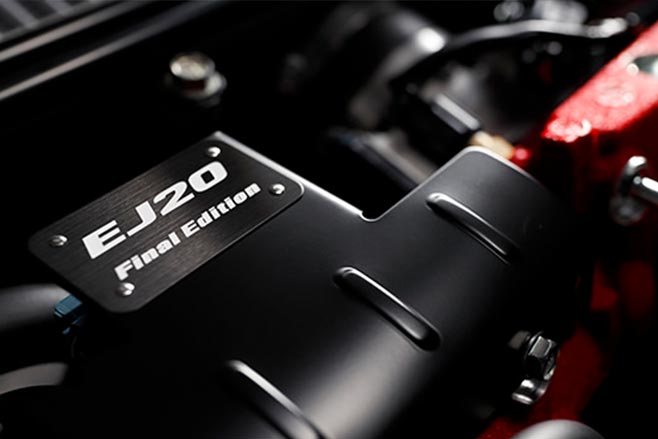
But, to celebrate the EJ20’s three-decade service to Subaru, the brand is offering the Japanese market a total of 555 units of a special edition STi, the Subaru WRX STi EJ20 Final Edition.
A Japanese press release also says the models will be available to interested buyer via a lottery, which will randomly (we assume) select the 555 lucky buyers.
The number of cars available is a reference to the brand which sponsored what is arguably the most iconic rally car of all time, Colin McRae’s WRX.
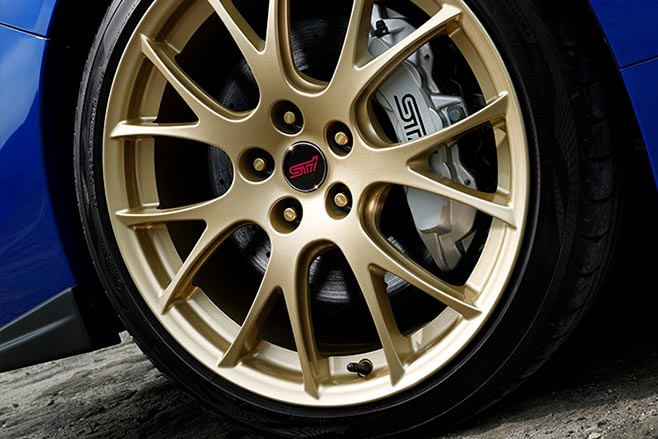
Thus, the EJ20 is also finished in Subaru’s famous blue/gold colour combination, with a set of BBS wheels also used on the WRX STi S209 announced for the US market at the beginning of 2019.
The engine specifications for the EJ Final Edition haven’t yet been confirmed, but it can be expected it’ll pack more power than a standard EJ-powered Subie.
STis in other markets, such as our own, will reportedly keep the same running gear as they’ve currently got, so don’t hold your breath for a new WRX to pop up any time soon.
It doesn’t seem all that long ago that the Audi S4 was powered by a 4.2-litre 253kW V8.
In fact, it wasn’t all that long ago that all of Audi’s S-badged models seemed to be using engines that would look preposterous by today’s standards. Just look at the old C6-generation S6; that had a massive 5.2-litre 320kW Lamborghini-derived V10 at its nose, and even then it wasn’t the fastest or most powerful version you could buy at the time.

How times have changed. These beguiling engines have now largely disappeared from Audi’s range of S cars, and even some of the halo RS models have been shorn of a few cylinders.
That, however, is the way of the world. Attitudes change and priorities shift. That’s why, under the bonnet of this new Euro-market S4 sedan, instead of the previous petrol engine you’ll find a 3.0-litre V6 diesel engine supplemented by a 48-volt mild-hybrid system. It’s a move we’ve seen Audi make with updated versions of its other S-badged sedans and coupes, but Audi Australia hasn’t really engaged.
This diesel model won’t be coming here, but the new petrol-engined S4 will arrive next year.
Regardless, there’s little denying the fact this new S4 packs quite a wallop. That V6 diesel kicks out 255kW and a whopping 700Nm of torque, which is spread across a relatively narrow 2500-3100rpm window.

For the sake of comparison, that’s the same amount of torque as a Mercedes-AMG C63 S Coupe gets from its 4.0-litre, twin-turbo V8. In typical Audi fashion, this performance is directed to all four wheels via an eight-speed auto and a self-locking diff that can funnel up to 85 per cent of that torque to the rear axle.
While I don’t doubt the S4 is more than capable of hitting its claimed 0-100km/h time of 4.8sec, it’s the way it accelerates while locked in-gear that’s the most entertaining aspect of its character.
Put your foot down below 2000rpm and the pace gradually starts to pick up, but as soon as you breach that 2500rpm marker, things get a lot more brutal. The accelerative force unleashed by the twin-turbo diesel is a sudden violent surge accompanied by a muscular, bassy (if a little faux-sounding) bellow from the V6. It might be fleeting, but for that short moment it exists, it’s undoubtedly thrilling.

The S4’s versatility is readily apparent, too. Point it down a stretch of motorway and not only is that engine impressively hushed, its claimed combined fuel figure of 6.2L/100km means it should provide decent range between trips to the servo.
Sitting on lowered sports suspension, the S4’s ride is noticeably firmer than its A4 counterpart, even with its dampers in their comfiest, most pliant setting. That said, the manner in which it navigates poorly surfaced roads isn’t so brittle you’d wince at the prospect of driving one over long distances. This is a settled, well-sorted car.
The S4 grips tenaciously through corners too, although you can still get its rear end to step out with some well-timed throttle inputs.
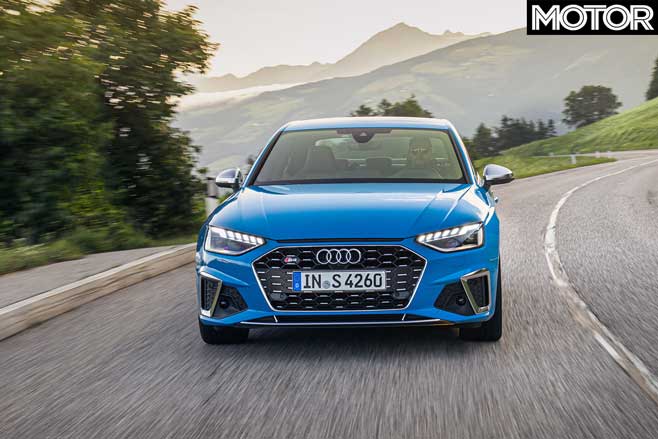
In Dynamic mode, the steering does have an artificial sense of weight about it, but for the most part it allows you to steer the car in a confident, assertive manner. Its response rate quickens as your speed increases, which can be a touch unsettling at first but doesn’t take long to get your head around. It’s a bit disheartening, if not at all surprising, to find there’s little feedback to be gleaned here, though.
The latest-generation BMW M340i xDrive will likely remain the enthusiast’s go-to choice in the segment, but there’s plenty to like about this new S4, even if it’s perhaps not the most inspirational car to drive hard.
The hybridised diesel powertrain in this Euro-spec model makes it something of an oddity in the fast compact executive class, but it also lends the Audi an impressive breadth of ability; it’s both a refined motorway cruiser and an exceptionally fast car to point down a secondary road.
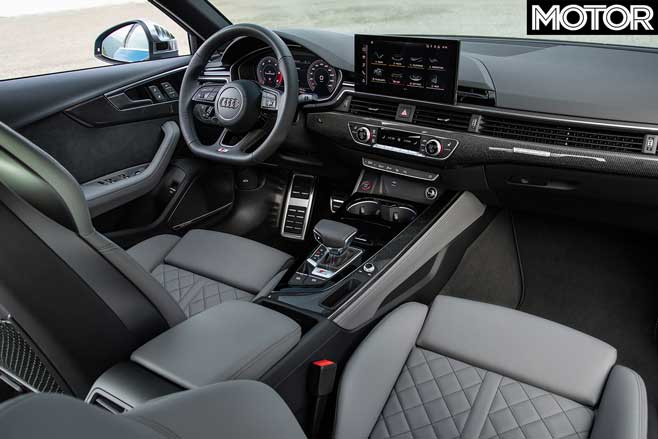
A refreshed cabin, with Audi’s latest 10.1-inch MMI-plus touchscreen infotainment system and virtual cockpit as standard, also helps to give the S4 a welcome boost on the technological appeal front.
We look forward to seeing how the facelifted S4 stacks up for the Australian market in 2020 with the 260kW/500Nm TFSI engine – good enough for 4.7sec to 100km/h – under the bonnet.
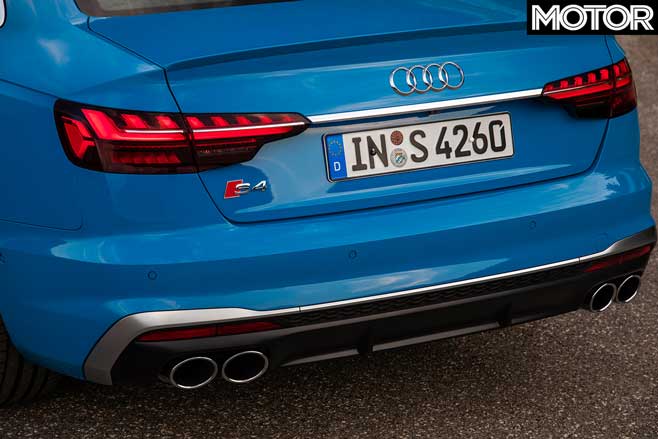
2019 AUDI S4 TDI SPECS Engine: 2967cc V6 turbodiesel, DOHC, 24v Power: 255kW @ 3850rpm Torque: 700Nm @ 2500-3100rpm Weight: 1785kg 0-100km/h: 4.8sec (claimed) Price: $105,000 (est)
Like: Brutal torque and acceleration; refined cruising; economy; refreshed interior Dislike: Narrow performance band; artificial steering weight and feel
Rating: 4 out of 5 stars
- Official statement from Toyota and Subaru puts rumours to rest
- No decision yet around what it will look like
- Will a concept appear at the Tokyo Motor Show?
Announced as part of a major strengthening of ties between Toyota and Subaru, the “joint development of the next-generation Toyota 86 and Subaru BRZ” was specifically mentioned as a goal of the new alliance.
The tie-up will also see the two companies share their respective areas of expertise more widely; more Subarus will be equipped with Toyota’s hybrid systems, for example, while Toyota – interestingly – is keen to tap more deeply into Subaru’s all-wheel-drive expertise.
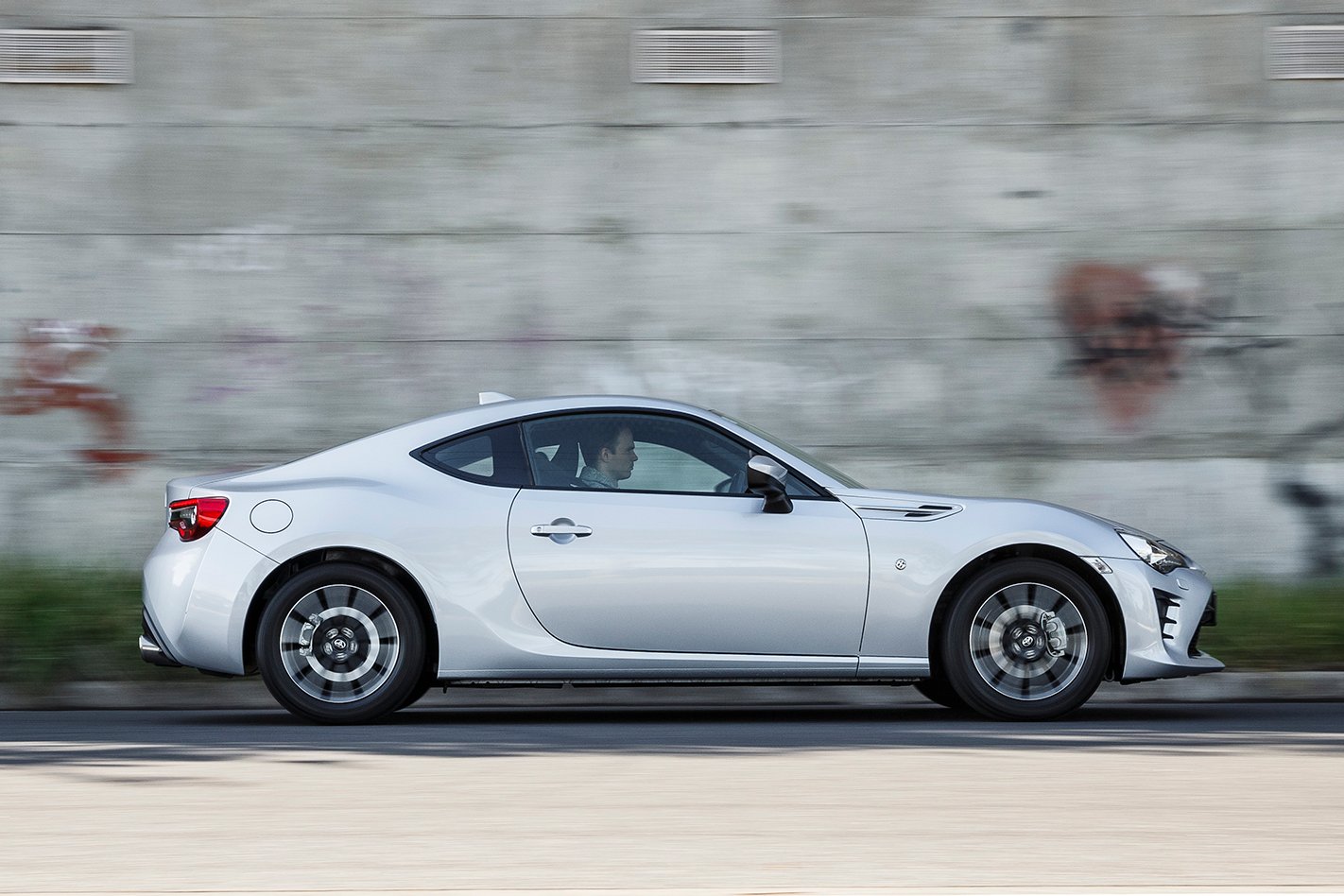
While the two companies collaborated on the original 2012 86/BRZ pairing, it was far from easy. The car was built on top of a modified Impreza platform, and used many Subaru chassis parts and the basics of its 2.0-litre boxer engine.
The engine, meanwhile, was fitted with Toyota’s variable valve technology, something that many Toyota engineers reportedly resisted.
The next-generation car – which is still at least two years away or more – is likely to switch to a rear-wheel-drive version of Toyota’s TNGA platform, which will also see duty under next-generation Lexus products.
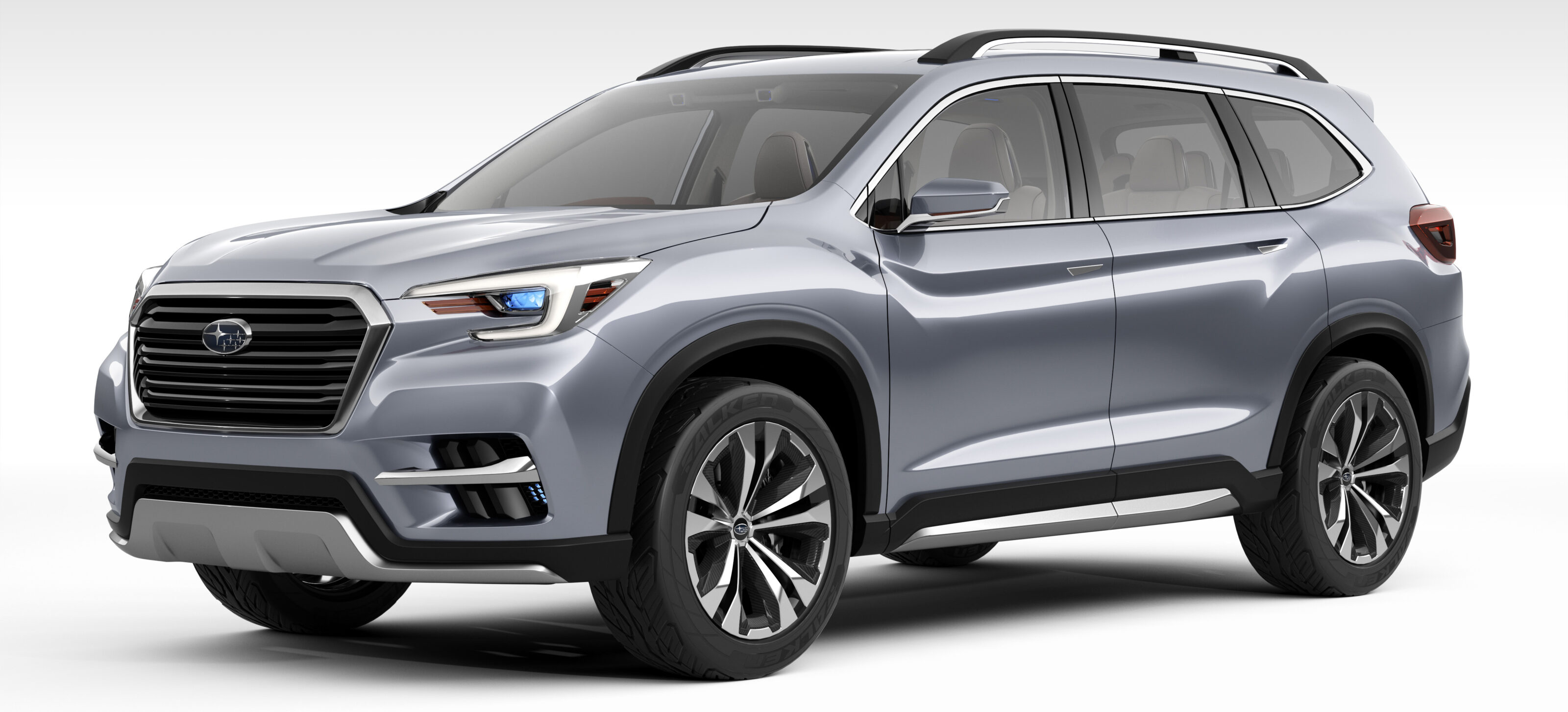
The engine could potentially morph into a larger capacity 2.4-litre flat-four engine, currently used by Subaru in its US-built Ascent large SUV (below in concept form) where it makes up to 197kW in stock form.
As well as the 86/BRZ, the two companies will join forces in the electric car field, with Subaru’s AWD systems mated to Toyota’s EV tech. They will also work together in the areas of autonomous vehicle development.
Toyota has long been a part-owner of Fuji Heavy Industries (nee Subaru) and the new announcement sees the world’s biggest car company increase its stakeholding to 20 percent. Subaru will also spend $1 billion on Toyota shares.
