
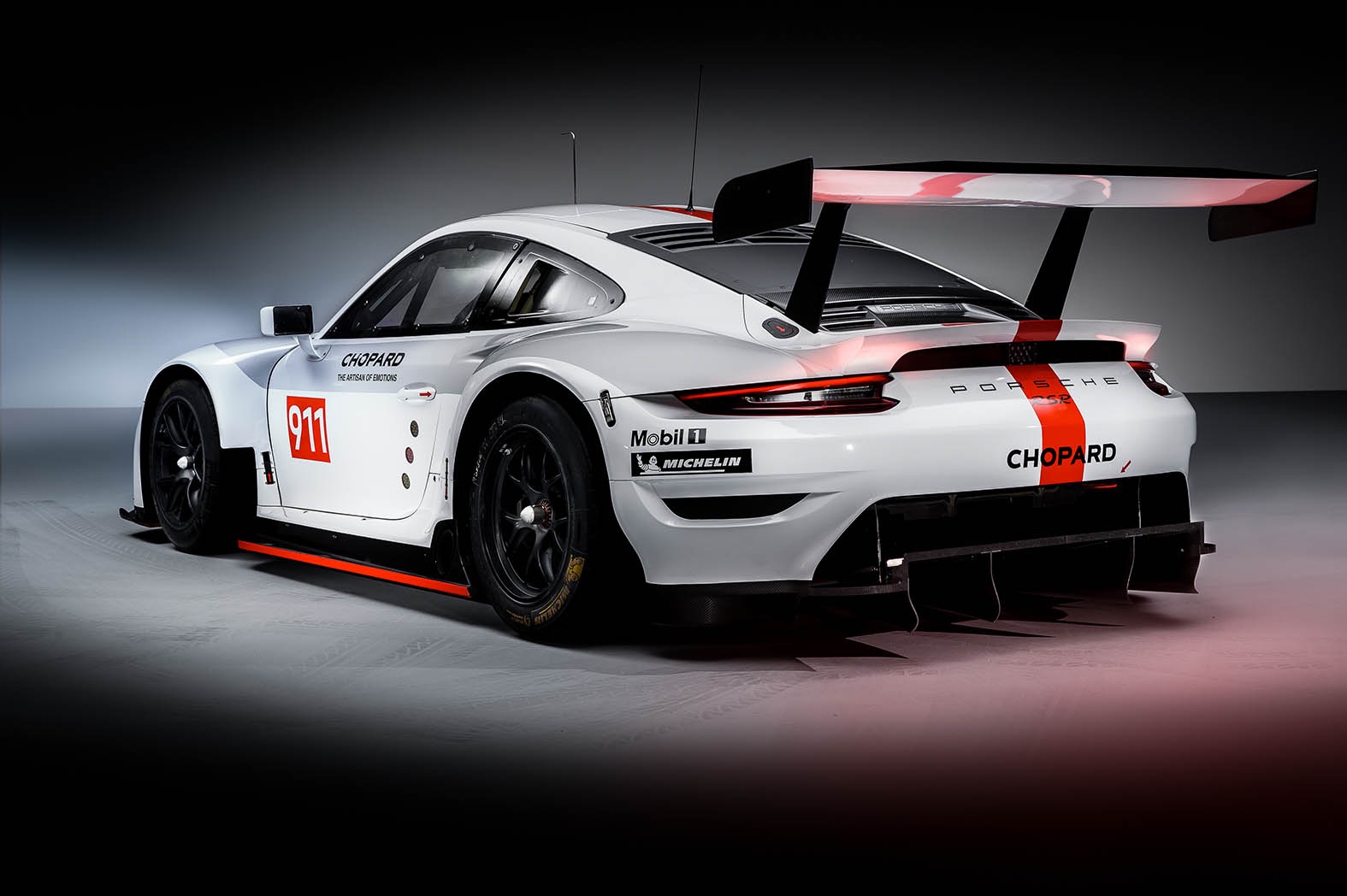
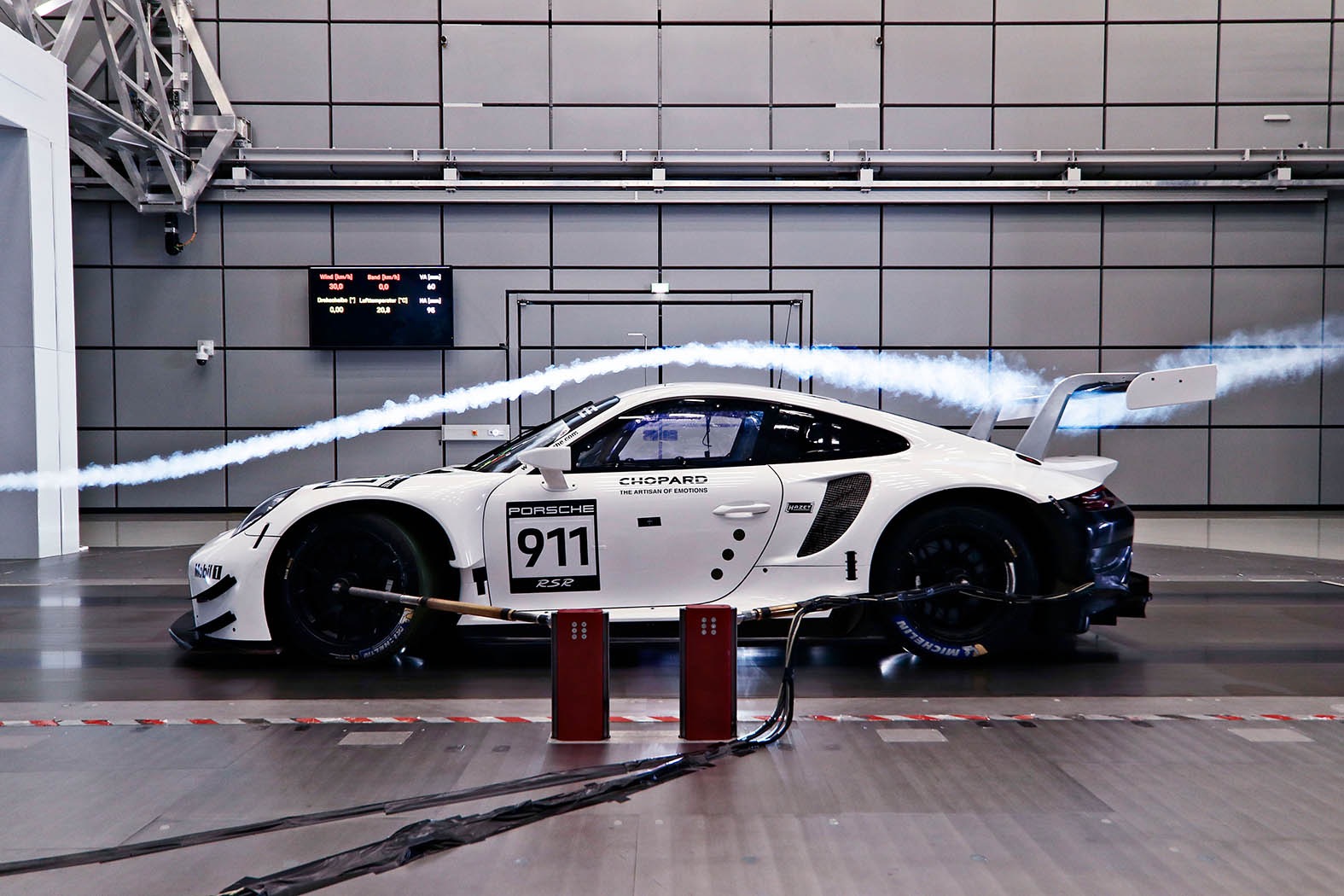
GAWP WORTHY, isn’t it? This is the new Porsche 911 RSR race car and before you turn off and think, ‘oh it’s just a refinement of the same old 911 recipe’, it’s best to remember that when it comes to racing, Porsche is much more adventurous. The last RSR, for example, caused much fuss by moving its flat-six engine from the back, to the middle. Even Porsche itself says this new RSR is “the most spectacular 911 of all time”. Big call. A new RSR doesn’t come along that often. World Endurance Championship (WEC) regs demand a three year homologation period and Porsche claims a full 95 percent of the car is new. The only carry over components are the headlights, the braking system, the clutch, elements of the suspension and the driver’s seat. Of course, the mid-engine layout remains, though the engine itself is now larger, up from 4.0-litres to 4.2 (4194cc). Depending on the size of the restrictor fitted to comply with a racing series’ regulations, Porsche says it’s good for 515hp (384kW). The new donk is also said to offer better driveability over a wider rev band, while a new six speed sequential ’box quickens up shift times and boosts efficiency. Visually, one of the biggest changes is the exhaust, with the outlets now exiting ahead of the rear wheels. That’s right, side exit exhausts! Porsche says this makes the exhaust itself lighter and offers aero improvements, not least because it gave the designers freedom to pen an all-new rear diffuser. Created to defend Porsche’s 2018 World Endurance Championship crown, the 911 RSR made its global debut at the Goodwood Festival of Speed. It’s first competitive hit-out will be during the first round of the WEC at Silverstone on September 1, where Porsche will campaign two factory cars.
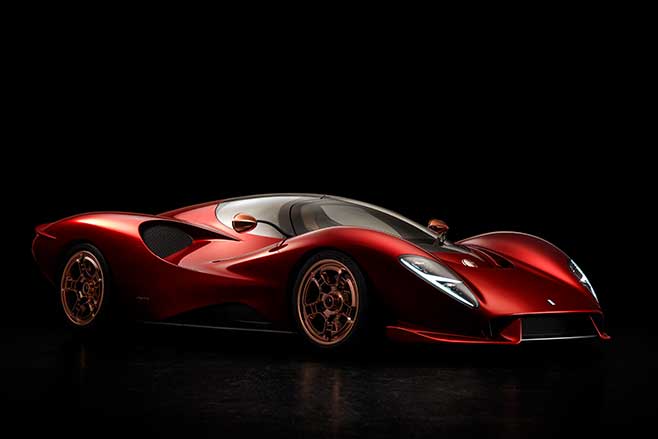
De Tomaso has returned upon its 60th anniversary to unveil a new supercar at the Goodwood Festival of Speed, called the De Tomaso P72.
As a tribute to the De Tomaso P70 which was designed as a collaboration between Alejandro de Tomaso, Carroll Shelby, and Peter Brock (the GM designer, not the racer), the P72 borrows the carbon fibre chassis from the Apollo IE.
The same people who are behind the Apollo Automobil brand had a big hand in bringing back the De Tomaso brand.
“Since we acquired the brand in 2014 we have been working diligently in complete secrecy to provide the brand the justice it deserves,” says De Tomaso chair Norman Choi, who wants to remind people the brand was about more than just the Pantera supercar.
“That is to finally tell Alejandro’s story and his journey. When we embarked on the Apollo IE program we wanted to create a modern-day homage to one of our favourite eras, the GT1 days of the 90s. We felt no one would ever truly produce a car like this again so we did it ourselves.
“We created the Apollo IE from a blank sheet of paper, producing a modern day car with true provenance. We are taking the same approach with Tomaso and paying homage to another one of our favourite eras, the prototype days of the ’60s.”
Though no technical details of the P72 have been revealed yet, the car’s chassis was originally built to house the Apollo IE’s naturally-aspirated V12, and footage of the De Tomaso at Goodwood would suggest that’s the case for the P72.
Only 72 will be built, with further details such as pricing yet to be announced.
TOMMI MAKINEN never owned the car that bore his name. Perhaps it was a little too close to something he viewed as work, but the Mitsubishi Lancer Evo VI Tommi Mäkinen Edition, often referred to as simply the TME, is a vehicle he’s nevertheless proud to see bear his moniker. It certainly beats a Lada Samara Deluxe by Brock all ends up.
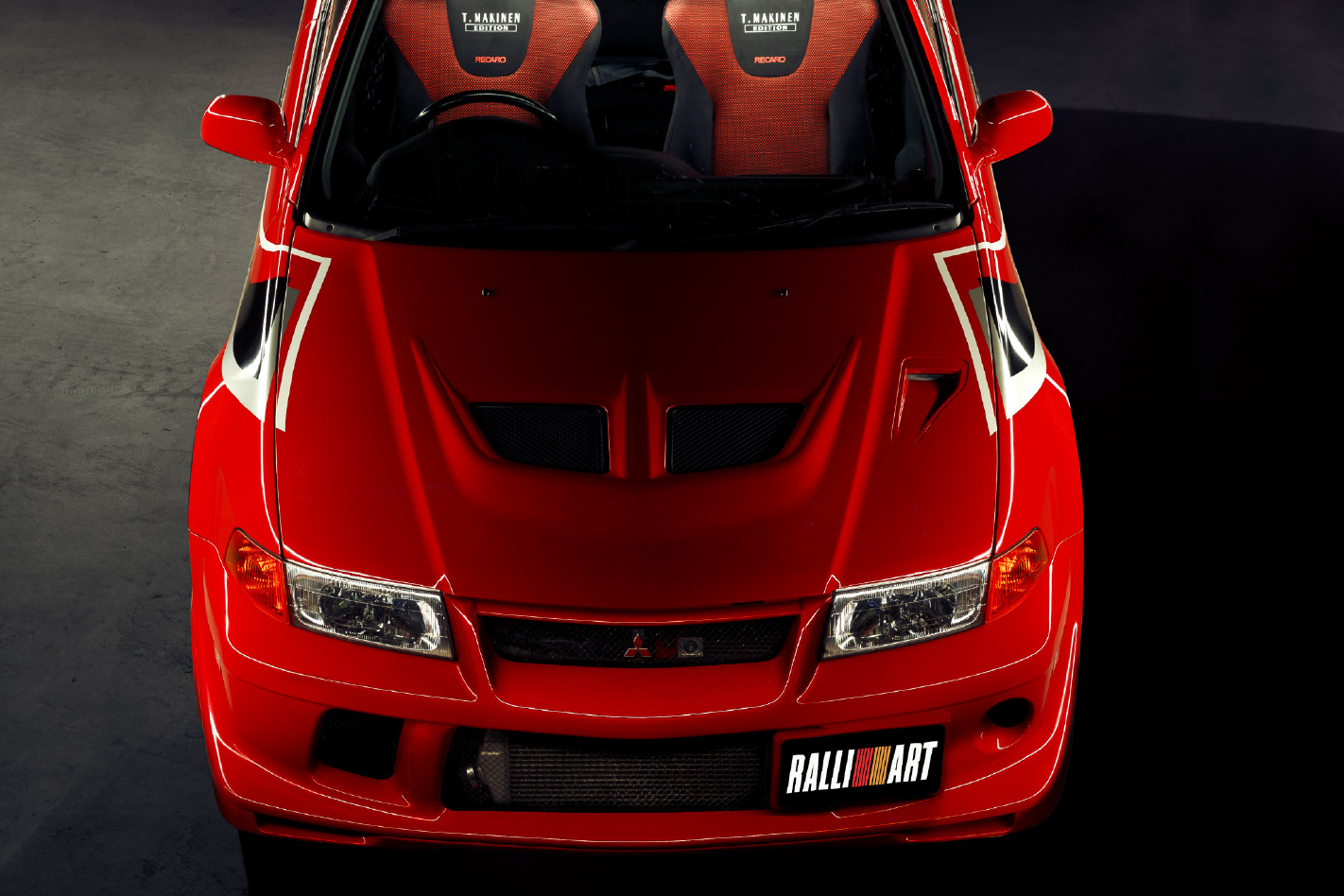
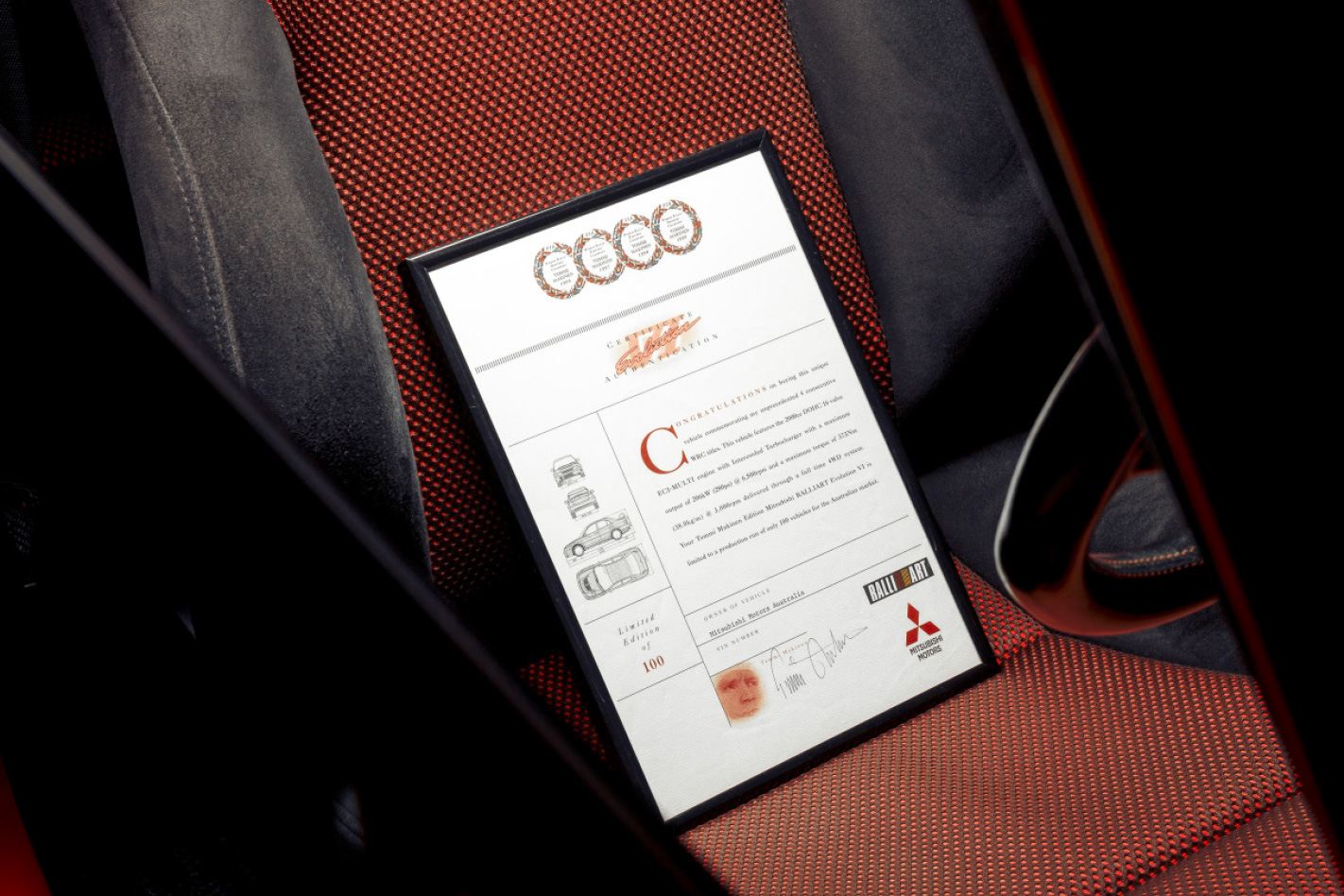
Originally launched 20 years ago, the Tommi Mäkinen Edition was a limited run scheduled for 2500 cars built from the Evo VI to commemorate Mäkinen’s four world rally championships. The TME wasn’t just a ‘stripes ’n’ flaps’ piece of opportunist marketing either. It was mechanically distinct enough to be referred to as the Evo 6.5 and featured performance refinements such as a freer-breathing muffler as well as a cleverly baffled fuel tank to prevent fuel surge under high-G cornering.
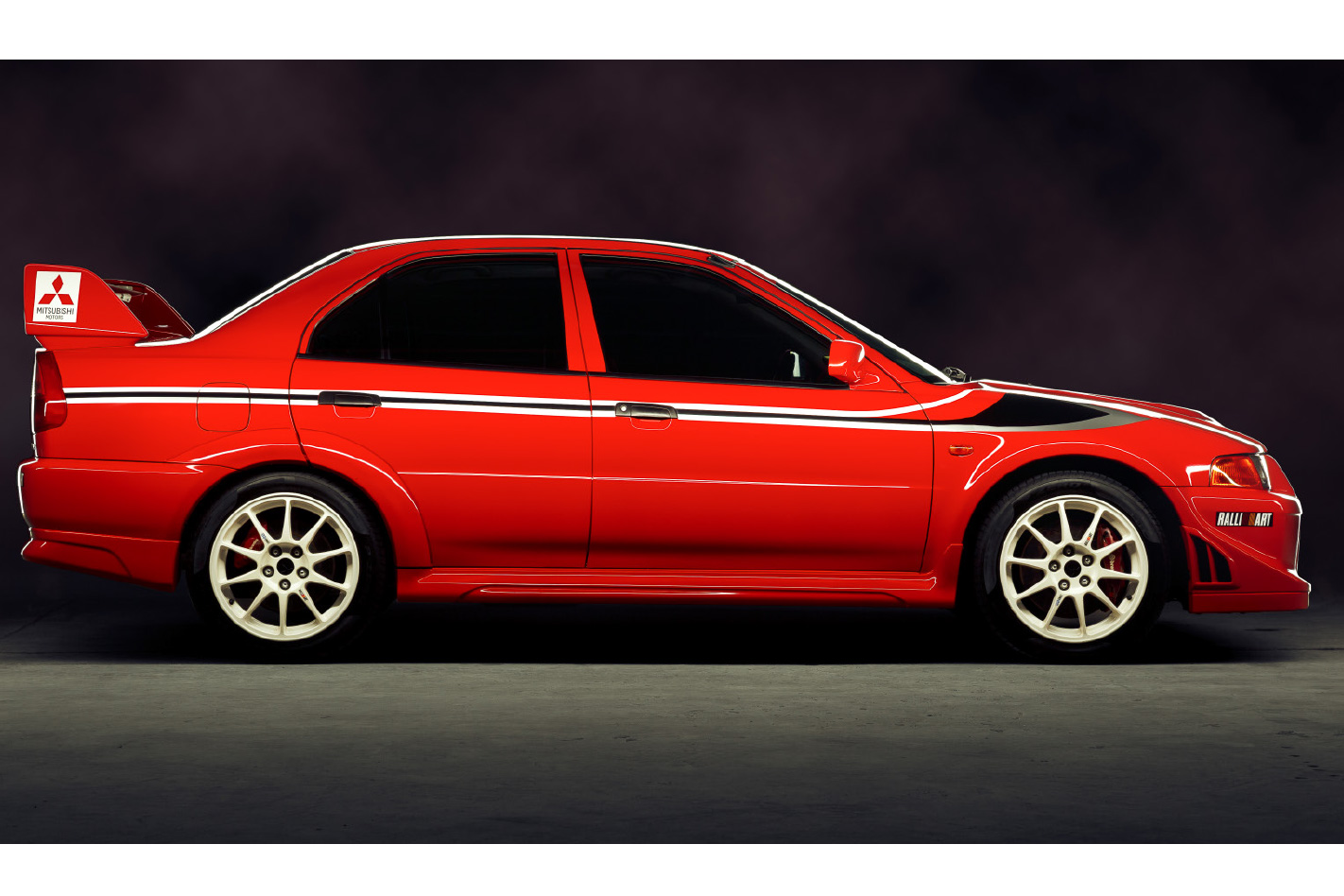
The ride height was dropped by 10mm, lowering the roll centre, and the Mäkinen was also treated to an even quicker steering ratio than the already hyper-alert Evo VI. The turbocharging system was also revised, the TME’s twin-scroll turbocharger featuring a titanium alloy turbine wheel and a smaller 15g compressor wheel with a revised blade configuration. Ducts in the asymmetrical bumper helped feed air to the intercooler, oil cooler, intake and brakes.
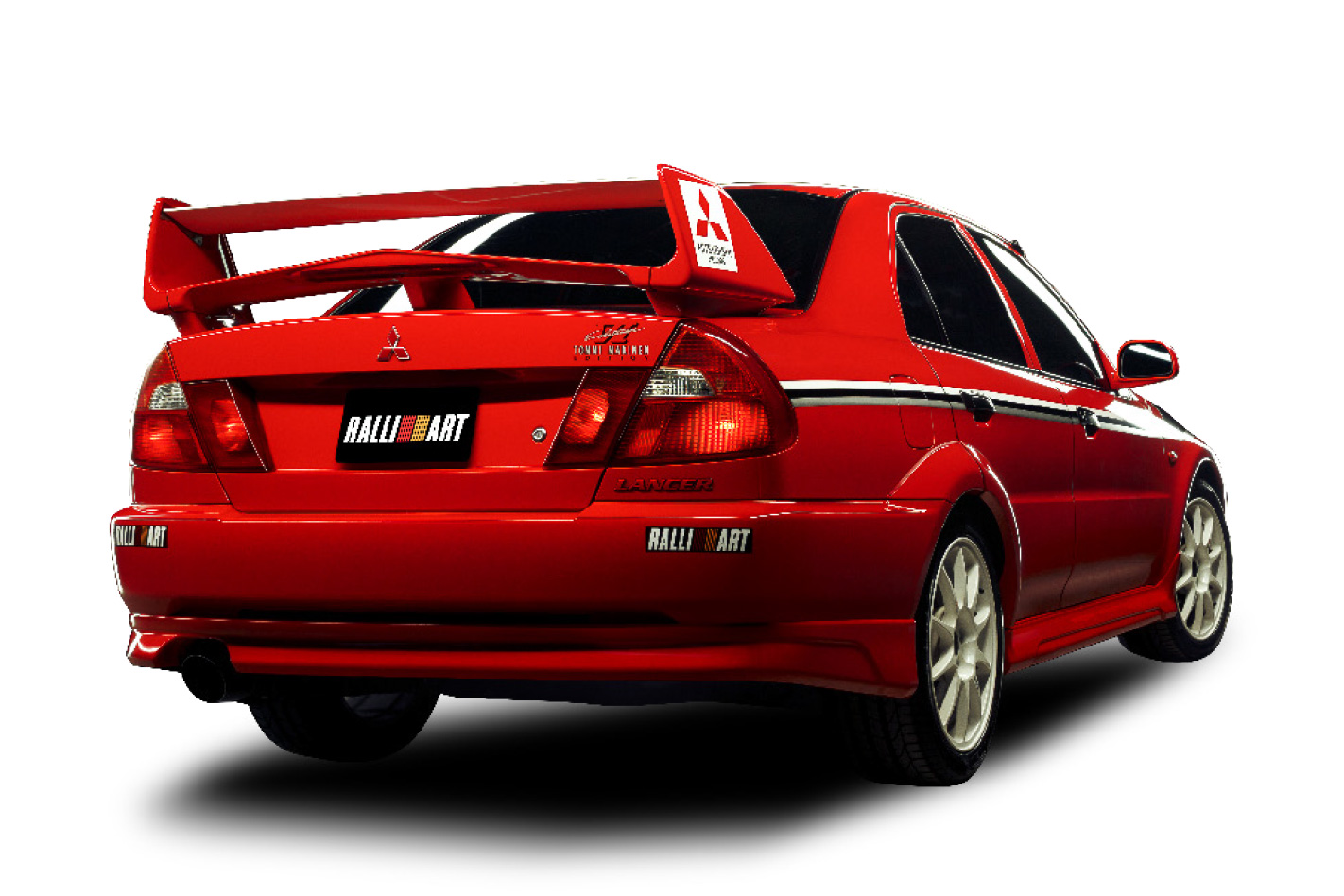
The white powder-coated 17-inch Enkei alloys aped the look of the WRC machine and the optional TME-specific decal set also looked like the Evo was on a rally transit stage. The cabin also featured stitched and monogrammed Recaro bucket seats, red stitching for the leather-trimmed Momo wheel and gearshift gaiter as well as red-on-black graphics instrumentation.
Colours offered worldwide included Pyrenees Black Pearl, Scotia White, Canal Blue, Satellite Silver or – by far the most popular paint finish – Passion Red. Worldwide TMEs were available in three trims ex-factory: RS, RS2 and GSR. The RS version is the stripped-down factory lightweight designed for rally teams to convert to competition specification.
The GSR is the heavier but more refined road car, equipped with climate control, electric windows and mirrors, sports seats and alloy wheels, while the RS2 is a mix of both models: effectively an RS with some added GSR equipment. The RS and RS2 versions were built in both left- and right-hand drive, whereas the GSR was only ever offered with the steering wheel on the right.
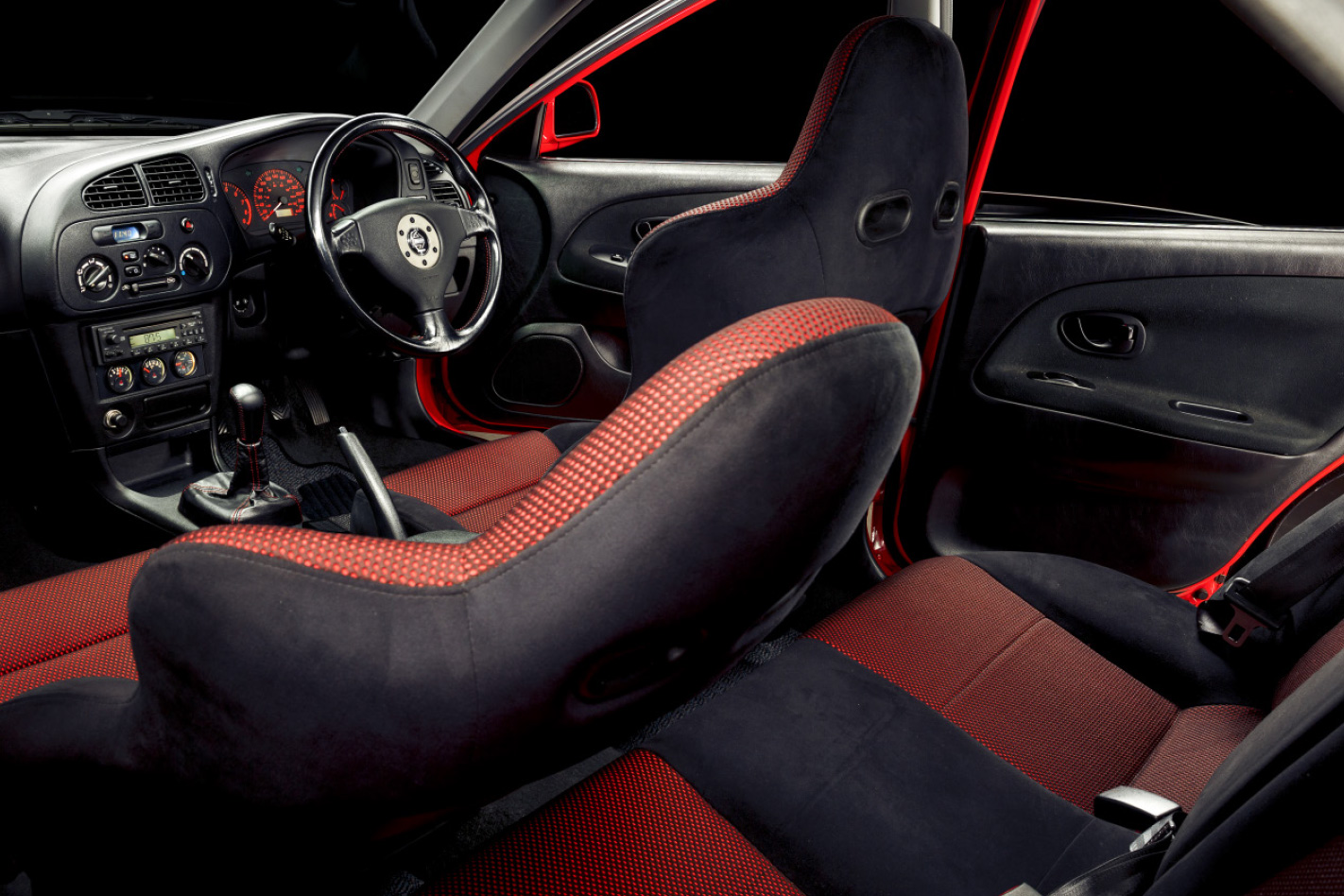
The 100 official Australian imports were in mid-spec RS2 guise, which means that they got the electric windows, Brembo brakes and trick Active Yaw Control (AYC) fitted to the GSR but not its front LSD.
Other fitments include a 260km/h speedo, a headlight adjuster dial on the dash, base Lancer CE-spec air-conditioning, and a single-slot Clarion CD head unit with the radio antenna mounted on the A-pillar.
The desirable ‘cross-ratio’ five-speed gearbox was also fitted, with third, fourth and fifth gears notably punchier than the GSR and a shorter final-drive ratio. ‘Delta Stripes’ were an option on Passion Red cars.
Like most limited-run import schemes, the program was not without a few bumps in the road. The cars were shipped under the Specialist and Enthusiast Vehicle Scheme (SEVS), which allows major manufacturers to bring in up to 100 vehicles without having to complete volume compliance procedures. All were built in September 2000 but there was a significant delay which saw the cars languish dockside in Japan from September to May 2001 awaiting import approval due to an issue translating crashworthiness documents for the Federal Office of Road Safety.
That delay meant that these very-late-run Evo VIs ended up being on sale here while the more modern Evo VII was in dealers worldwide. An asking price of $79,990 meant that the TME was untouchable in terms of bang for your buck, probably second only to Porsche’s $298K 996 Turbo as the quickest point-to-point car sold here at the time.
The Australian cars were split evenly between silver, black, red and white, with two silver cars sacrificed for crash testing, so Mitsubishi ended up selling 98 officially-sanctioned customer cars. Or 99 if you include a weird one-off; Mitsubishi officially importing one extra Canal Blue GSR-spec Tommi Mäkinen as a special order.
An RS tips the scales at 1260kg, an RS2 1280kg and the GSR is a relatively porcine 1365kg. That’s still around 220 kegs lighter than a modern superhatch like a Merc A45 AMG, which goes some way to explaining why Aussie cars are fiercely accelerative even by current standards. A manual car gets to 100km/h from rest in 4.5 seconds, which is on par with a contemporary BMW M2 Competition.
But has the rest of the TME package withstood the test of time? Not completely. The fit and finish of the interior is bettered by a $15K Kia Picanto, and in the intervening couple of decades, manufacturers have learned a great deal about driveline refinement and calibrating intermeshing suites of electronic systems. Jump into an Evo VI and the doors clang shut, the windscreen feels almost comically upright and the 4G63 2.0-litre lump sounds charisma-free upon turning the flimsy key.
From there, things improve quickly. There’s a decent relationship between body stiffness and suspension compliance, the car never feels over-tyred and the engine spins freely. The front end is extremely attentive, so it’s easy to drive the car clumsily before you’ve keyed into its gearing. Tyre noise is a constant, and optimising the gearbox for acceleration means that even in fifth you’ll have 2800rpm on the clock at 100km/h. A tiny 50-litre fuel tank and a marked thirst for 98RON means that this isn’t always a vehicle ideally acclimatised to this wide, brown land.
Find a twisty road that’s clear of traffic and the Tommi Mäkinen Edition still shines. The suspension was tuned specifically for tarmac rally stages, so finding routes you can imagine featuring in the Tour de Corse lets the Evo really show its stuff. Because it’s so low geared, you often find yourself using fourth and fifth gears in anger, the suspension working frantically and the Evo trying to tip into corners that you haven’t yet registered. It has the most aggressive castor and kingpin angles of any Evo model ever built, so its small wonder it feels neurotic.
The steering feels a little dead just off-centre, but as soon as you start deforming the contact patch it feeds back cleanly. The TME rolls from the factory with one degree of negative front camber. Anything more than two degrees of negative camber at the steering wheels and the most noticeable effect will be worn tyre shoulders as the MacPherson strut front suspension imparts only a moderate camber gain under compression.
It’s only on low-grip surfaces that you’ll really feel the Active Yaw Control working its magic, busily shuffling torque left and right across the rear axle. Most of the time, the TME just feels as if it has more grip than grunt, but the handling bias in extremis feels as if you’re driving a rear-wheel-drive car that has some assistance from the front rather than vice versa. It would still take a pretty serious sports car to leave a TME behind on tough roads.
Fortunately, most Australian cars have now appreciated to the point that proper maintenance is a sensible investment. Expect to pay $80K or more for a decent example, dependent on colour (reds are preferred)and originality, and there are a few things to look out for when buying. The first is that it is a genuine Australian TME. The VIN on the green compliance plate should have a 17-digit configuration rather than the usual 11-digit format. Common faults include noisy tappets, smelly air-conditioning due to blocked drain plugs, juddering brakes, rusty wastegate actuators, corroded battery terminals, poor idling, a slipping recline on the Recaro seats, squawking from the AYC clutch plates at low speeds, failed AYC pumps, and rattly anti-roll bar bushes and drop links. That sounds quite a medley of ailments, but none is terminal and the well-recognised symptoms are relatively easy to diagnose. The engine is fundamentally tough and its oversquare design lends itself to turbocharging well.
Two decades haven’t dimmed the Mitsubishi Lancer Evo VI’s legend. If anything, hindsight has burnished the car’s status. Born from Group A homologation, the Tommi Mäkinen Edition is dripping with authenticity and that, more than anything else, guarantees its collectability. Unlike many collectors’ cars, however, this is one you’ll still want to drive.
Cities are set to lose municipal funding equal that to which they raise in traffic camera revenue.
It’s a bold move by Ohio Governor Mike DeWine, who signed off on the law in April which took effect this week.
The plan to do this is by reducing state funding for any city, town or village that operates speed cameras or red light cameras by an amount equal to the revenue gained from collected fines.
The law is designed to test the age-old message that traffic cameras save lives.
Supporters of the new laws have suggested they’re interested in proving the theory that traffic cameras cause less crashes, rather than boosting municipal funding through fine collection.
Addendums to the law require all appeals to be heard in court, rather than being sent to an administrative officer, and the abolishment of cameras on interstate highways.
The Ohioan laws come at a time when Australian law enforcement is doubling-down on its mantra that speed cameras save lives.
It’s out-of-the-box thinking, but definitely an experiment worth keeping an eye on.
What do you think? Have we got any chance of Australian states introducing similar laws?
The Hennessey Heritage Edition Ford Mustang isn’t solely about numbers, although it has plenty of big figures if you want them. Let’s begin with power.
A 3.0-litre supercharger blowing into a 5.0-litre V8 produces 594kW and 913Nm. That’s a power-to-weight ratio of 351kW per tonne, just 8kW shy of a Porsche 911 GT2 RS. Top speed? It’s claimed to exceed 320km/h.
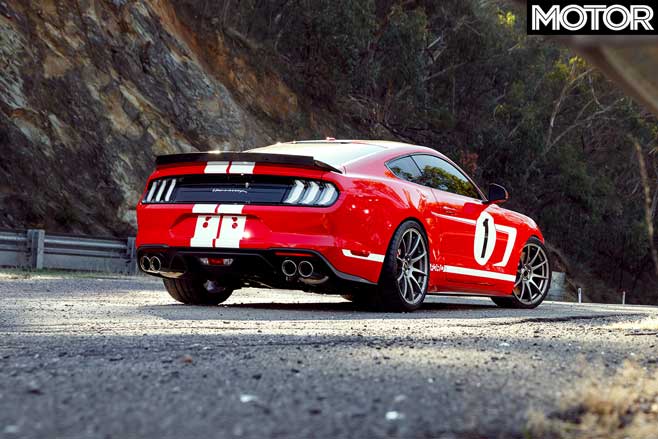
Then there’s its price. Only 19 will be built to celebrate the American brand surpassing 10,000 sales. Four have gone to Adelaide’s KPM Motorsport, the only agent outside the US licensed to sell complete Hennessey vehicles. You can order one for around $190,000, depending on the donor Mustang’s specification.
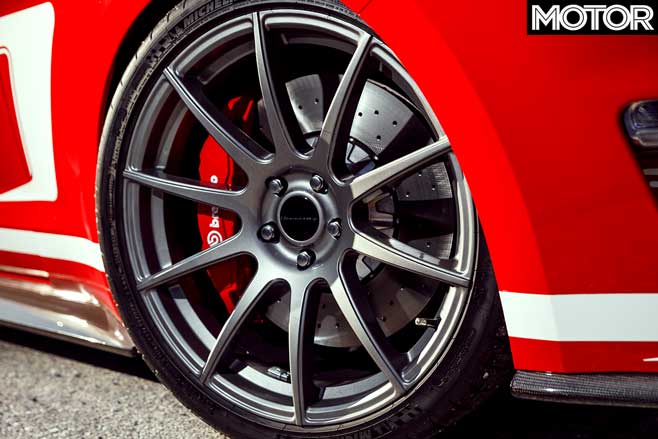
KPM will also give it more than just nuclear levels of grunt. The brake system is also super-sized, comprising big Brembo six- and four-piston calipers fore and aft, respectively, matched with 395mm/380mm drilled and ventilated dual-material discs.
On these pages it might look like a giant hot wheels car, but in person those stickers and carbonfibre exterior package give it serious head-turning appeal. The wing, side skirts and splitter add a hint of NASCAR racer to the new Mustang’s aggressive surfaces.
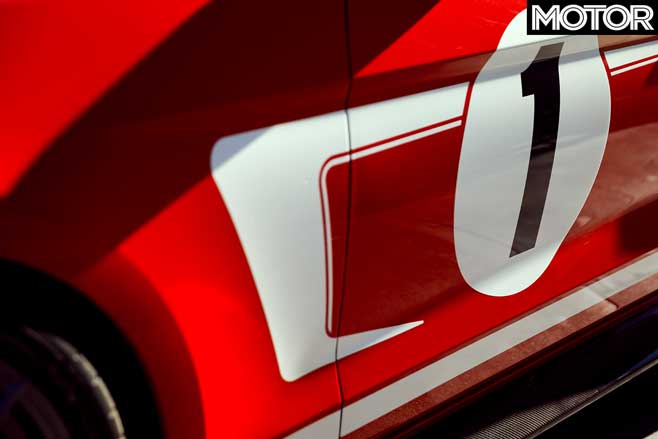
The Hennessey’s lowered stance sports a touch of rake and it hunkers over massive 20-inch wheels that stretch tyre sizes to 275mm at the front and 305mm at the rear. Crucially, that’s 20mm and 30mm wider than the Mustang GT’s stock rubber.
We’ve flown to KPM in Adelaide to unleash an automatic Heritage Edition in the surrounding hills. But with only 50km to gain an impression, and out of respect to its new owner, it’ll be more of a speed date than in-depth road test.
Early attempts at wide-open throttle running are interrupted by harsh interventions from traction control, jolting the car violently as the massive 20-inch Michelin Pilot Sport Cup 2 tyres try to warm up in the cool morning air. So we tread softly for a while.
Soon enough we stumble upon a sun-drenched straight where the tarmac is smooth and climbs uphill for a couple of hundred metres. Sensing the opportunity, we stomp the throttle.
The supercharger whine intensifies and the nose lifts slightly. Grip is good, because we explode forward and suddenly all those big numbers come to life. Your organs compress, like you’re in an A380 about to ‘rotate’ and the next bend rushes at you.
But the fun is short lived when the revs hit an invisible soft-cut at 6500rpm. That then falls to 6200rpm. Soon, it’s 6000rpm. A ‘check engine’ light appears on the dash so we park to investigate.
Popping the bonnet to vent some heat we notice the supercharger coolant system’s surge tank bubbling away. Suspecting an unhappy engine, we call KPM Motorsport owner David Roscio for assistance.
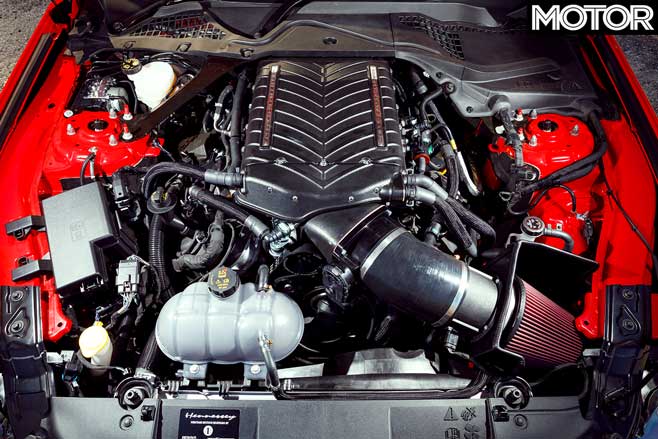
He arrives and is perplexed but also not surprised. He says right-hand drive Mustangs use an Aussie-specific header manifold on the driver’s side. To accommodate the steering shaft, two exhaust pipes downsize to 40mm in diameter where they snake around the shaft. They’re also crimped, impeding exhaust gas flow, and placed right near the cylinder head temperature sensor.
Compounding this, he says the car’s stock cooling fans switch on at only 20 per cent speed when cylinder head temperatures reach 95-degrees. But as we’ve found with stock automatic MY18 Mustangs at Performance Car of the Year, this simply isn’t enough to save them from cutting power.
Taking this on board, Roscio admits future supercharged packages should be equipped with oil coolers. As for us, here and now, he re-flashes the car’s ECU to switch on the fans at 40 per cent speed when temps reach 88-degrees. We set off in the car to salvage an impression with what precious kilometres we have left.
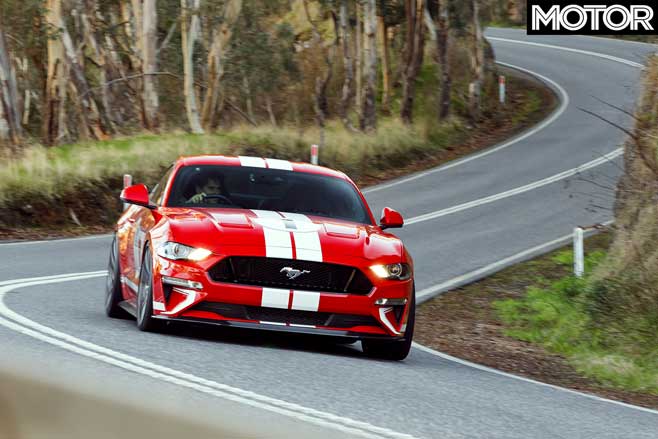
Thanks to a lower centre of gravity and wider tyres the Hennessey has enormous grip which also improves its behaviour through corners. Where a stock car’s rear end would feel nervous into corners, it settles earlier, feels more planted, and the heavier steering weight helps you slow your inputs.
The brakes need a couple stops to reach temperature, but they are full of feel. The stock GT’s brakes bite aggressively in the first few millimetres of pressure, but these offer better control of deceleration. On the other pedal, that big blower delays throttle response ever so slightly, but retains the car’s stock delivery behaviour. Torque builds early, holds into the mid-range before a heady power peak rushes you to the top-end. But to enjoy it you’ll need to disable all driver aids.
Even in Sport Plus, traction control cuts power to gain grip and then adds it to restart acceleration. It’s a vicious cycle exaggerated by the mode’s harsher shifts. It’s unsettling and a symptom of a traction control system designed to handle 258kW/362Nm less.
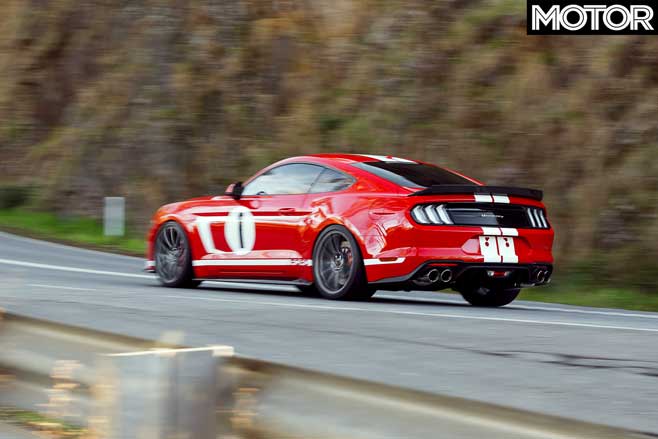
Lowering springs penalise the ride, cut damper travel, and the big 20-inchers thud into potholes. Luckily the stock Magneride dampers have kept some welcome compliance. Put it this way, it’ll be okay on long drives, but we’d only explore all its performance potential on smooth, reliable surfaces.
What is surprising is how placid it is at a more relaxed pace. That 10-speed automatic (it’s also available with a six-speed manual) has no trouble handling the grunt. In normal mode it shifts through gears without a hitch. And although the cat-back exhaust booms at low-revs, it sounds great on overrun and is integrated with the drive modes.
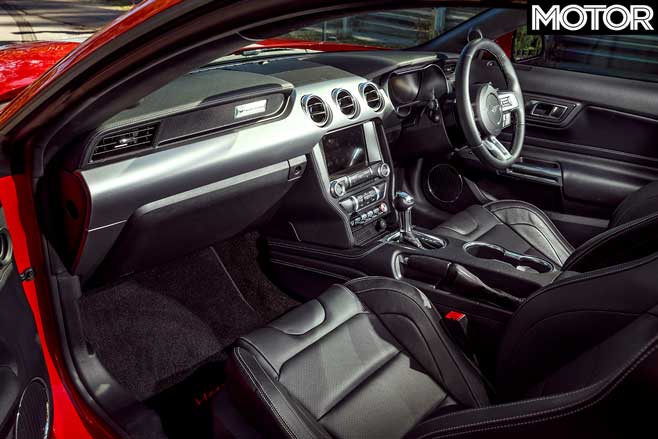
The interior is largely unchanged from an original Mustang GT. It also has Ford’s brilliant Recaro seats. The only visual clue that it’s packing an engine that could power a Texas city grid are those Hennessey floor mats.
So, should you get one? There are cheaper ways to get an adrenalin fix if you’re simply a power junkie. For example, KPM offers a supercharger package that lifts power to an eye-watering 694kW for $65K.
The Heritage Edition Mustang’s appeal is it’s a well-rounded package. Sure, you need to unshackle it from driver aids to use all the power, leaving you to handle this monster alone, but the grip and brakes match its prodigious outputs in dry, cool conditions. At least for the very short drive we had.
When you consider it costs as much as a BMW M4 CS did new, and matches the Shelby GT500’s exclusivity and power, you can see why you’d put up the big numbers to buy one. Just ask for an extra cooler.
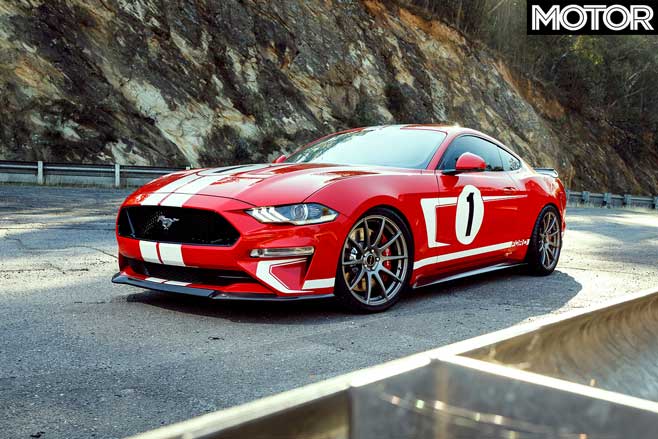
2019 HENNESSEY HERITAGE EDITION MUSTANG SPECS Engine: 5035cc V8, DOHC, 32v, supercharged Power: 594kW @ 7200rpm Torque: 913Nm @ 4500rpm Weight: 1690kg (est) 0-100km/h: 3.3sec (claimed) Price: $190,000
Like: Prodigious power, tough looks, steering feel, planted handling and huge grip Dislike: Crude traction control, heating issues, massive price tag and firmer ride
Rating: 3.5 out of 5 stars
What is it?
The Toyota Yaris GRMN is a hot hatchback bubbling over with the frantic, unbridled energy of a bounding puppy dog. Its exuberance, dynamism and endearing charm make it hard to resist.
But it’s not coming to Australia.
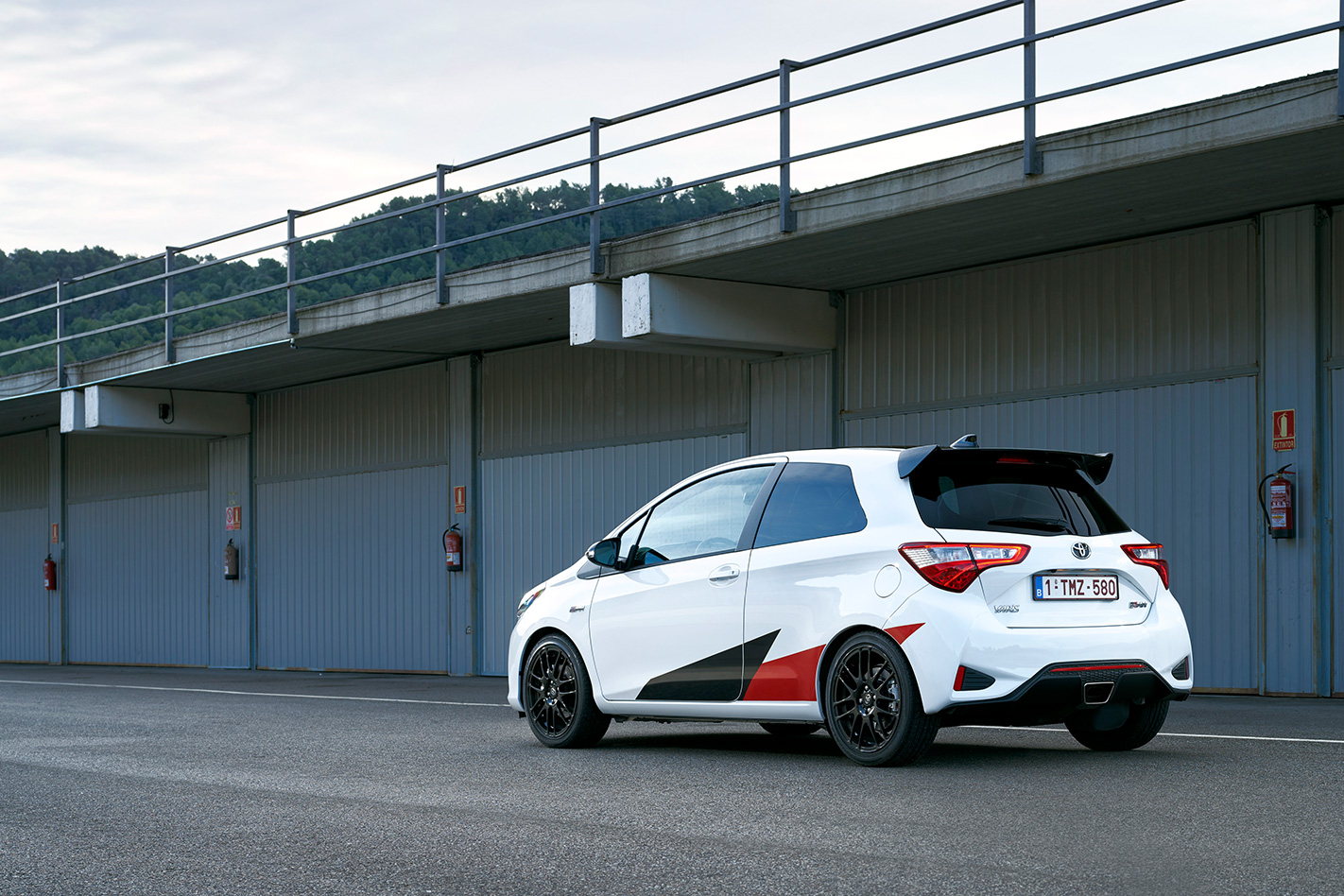
That’s a good thing, because as invigorating as the Yaris GRMN is to drive, it’s a hot hatchback built to satisfy a demand that doesn’t really exist in Australia.
As a country, we like our sporty hatchbacks a little bigger – Corolla-sized – and more affordable than the Yaris GRMN’s potential mid-$50K price tag, and with automatic transmissions rather than the manual-only Yaris.
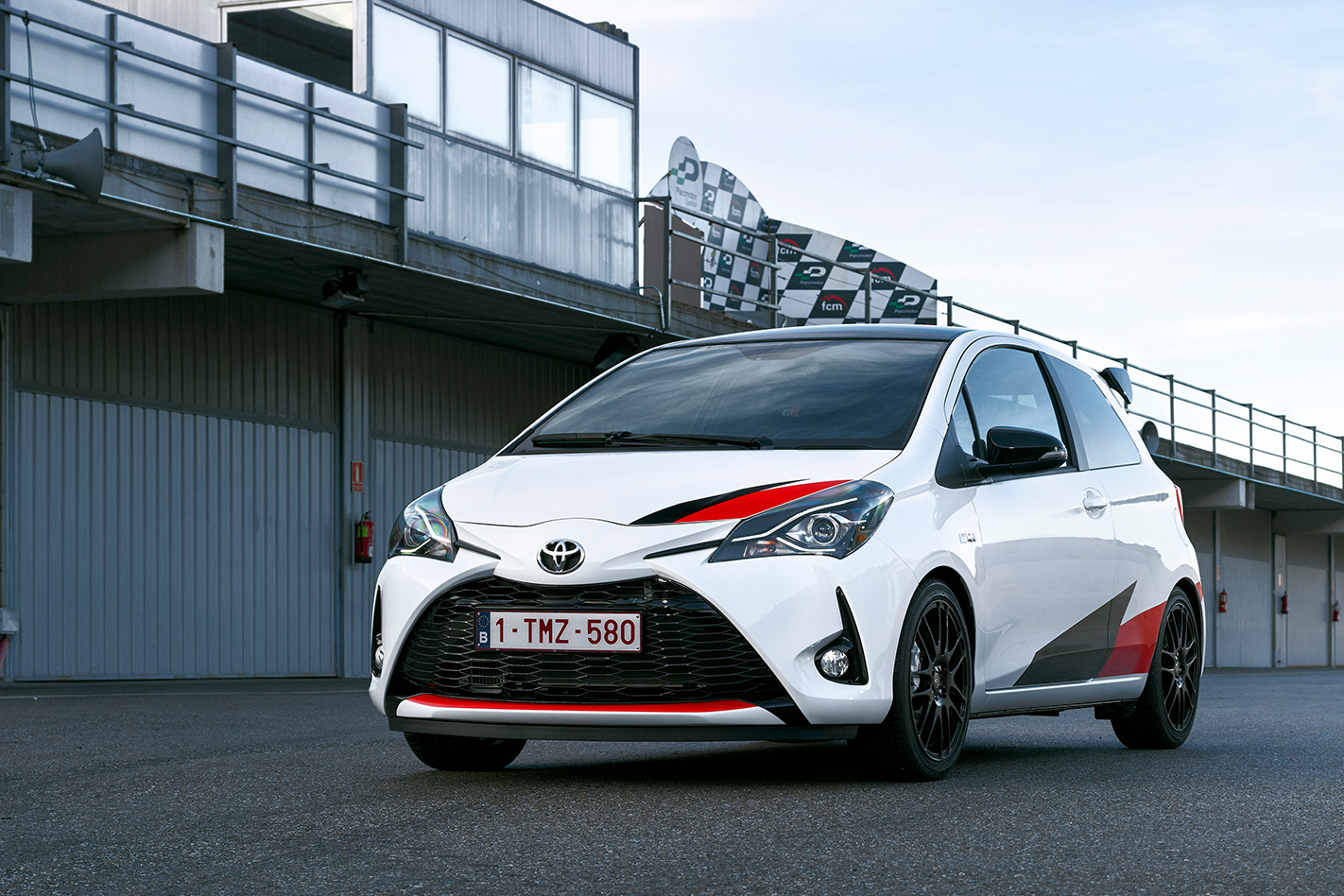
So why is WhichCar bothering to drive it and report on it? Because the Toyota Yaris GRMN gives us clues to what Toyota’s Gazoo Racing (GR) performance sub-brand (GR is to Toyota what AMG is to Mercedes-Benz and M is to BMW) could do to the extremely popular Toyota Corolla to create a rival for the Volkswagen Golf GTI and other larger hot hatches.
One drive of the Yaris GRMN is enough to know that a Corolla hot hatch would be worth salivating over.
The Toyota Yaris hatchback on which this GRMN model is based is smaller than the Corolla, roughly the same size as a Mazda2 or Honda Jazz. There are three Yaris models in the Australian range – the Ascent, SX and ZR – and all are five-door hatchbacks with either a 1.3-litre or 1.5-litre petrol engine.
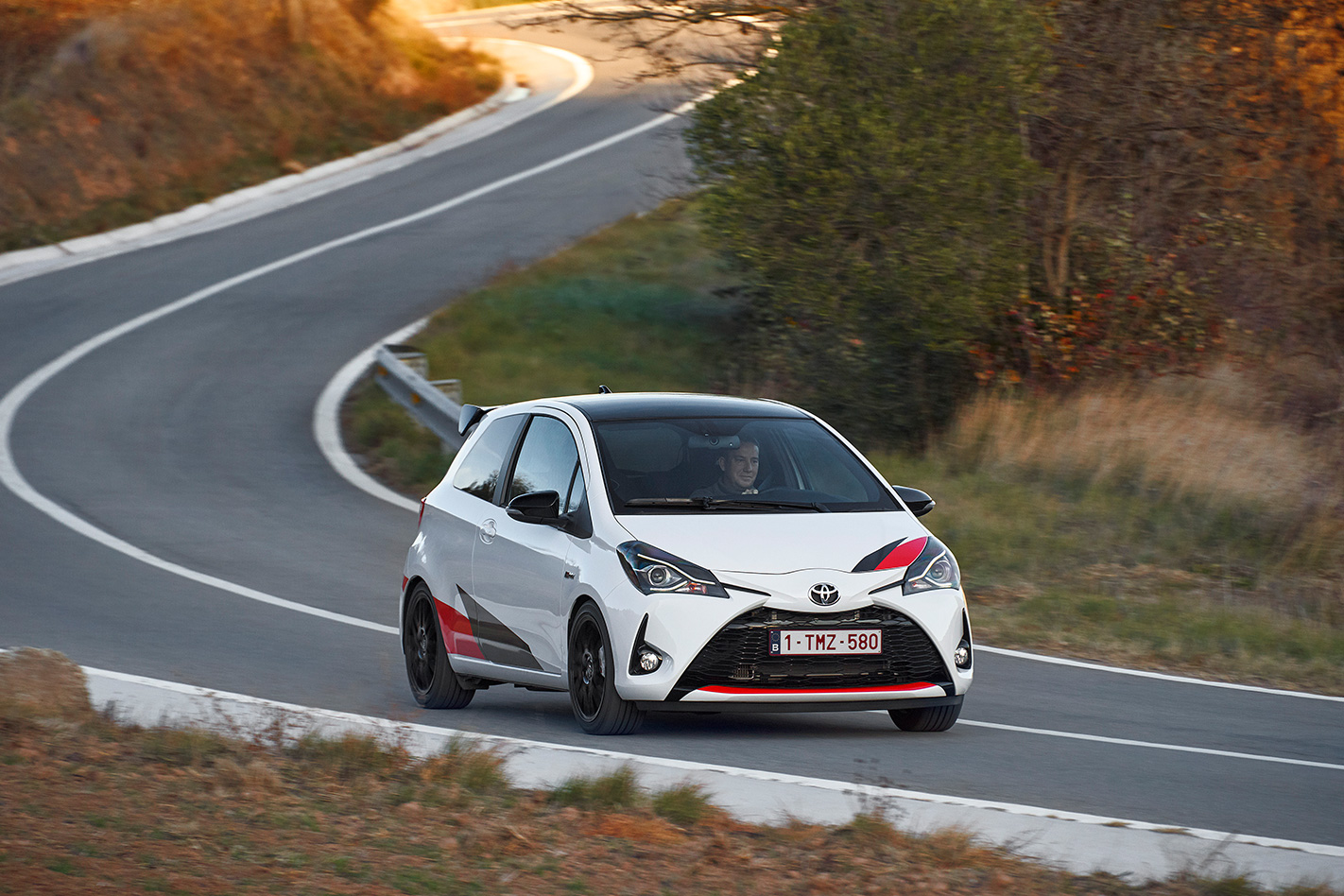
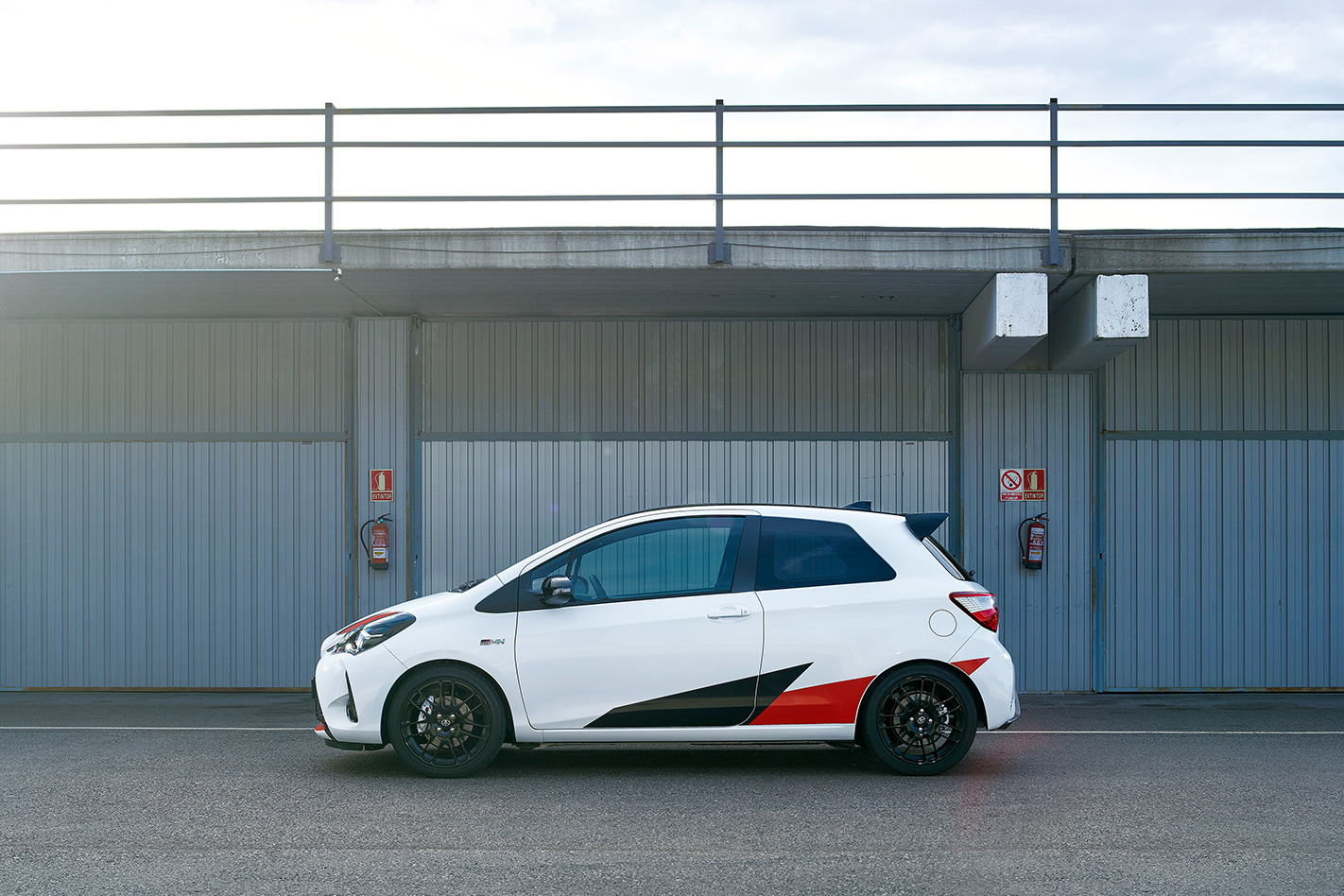
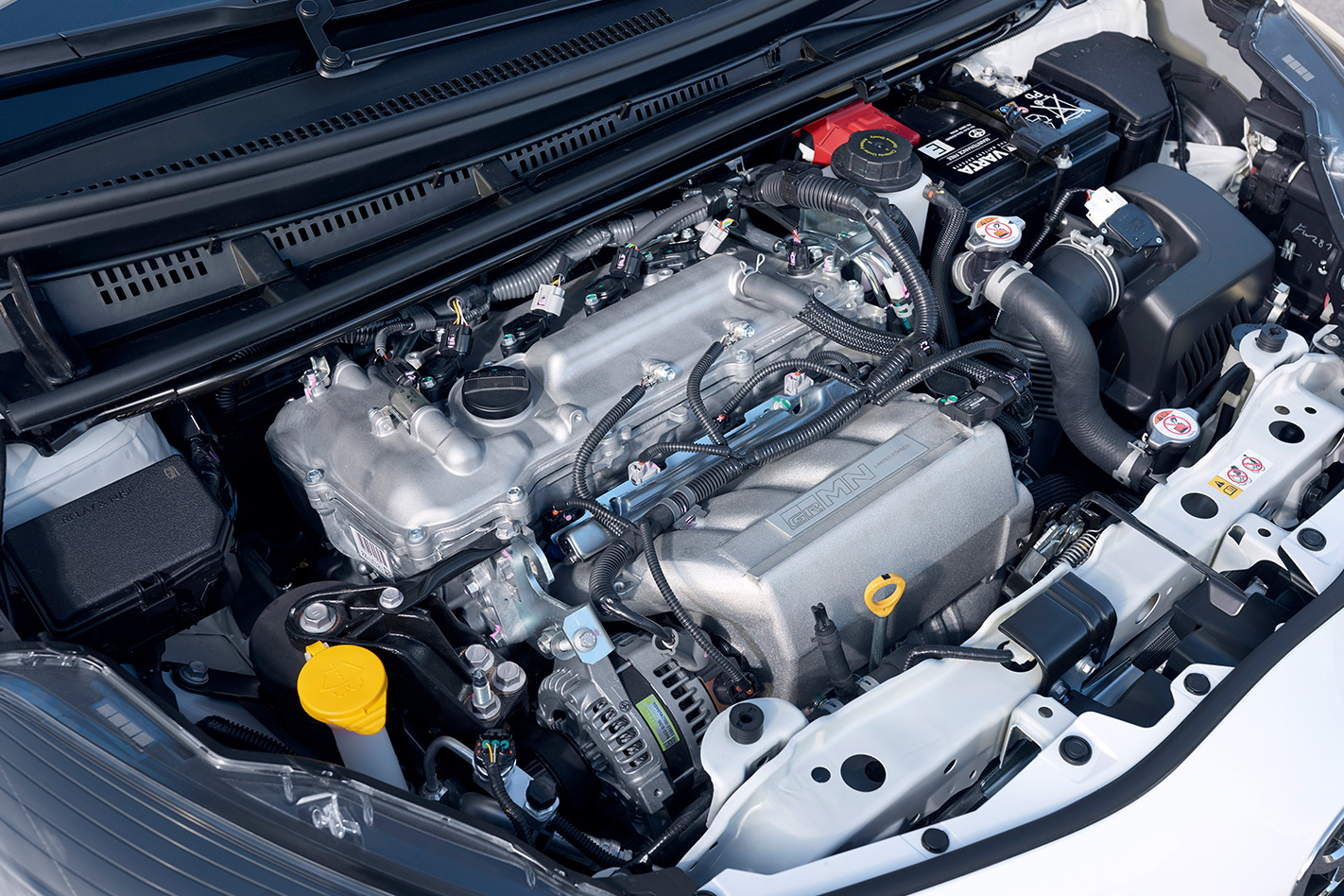
The Yaris GRMN is based on a three-door bodystyle Toyota doesn’t offer to Australians. It also has a bigger 1.8-litre petrol engine with a supercharger for considerably more performance. Additional body bracing and suspension tuned by Lotus makes it a sharper drive, and changes to the exhaust system to make it sound as fast as it goes.
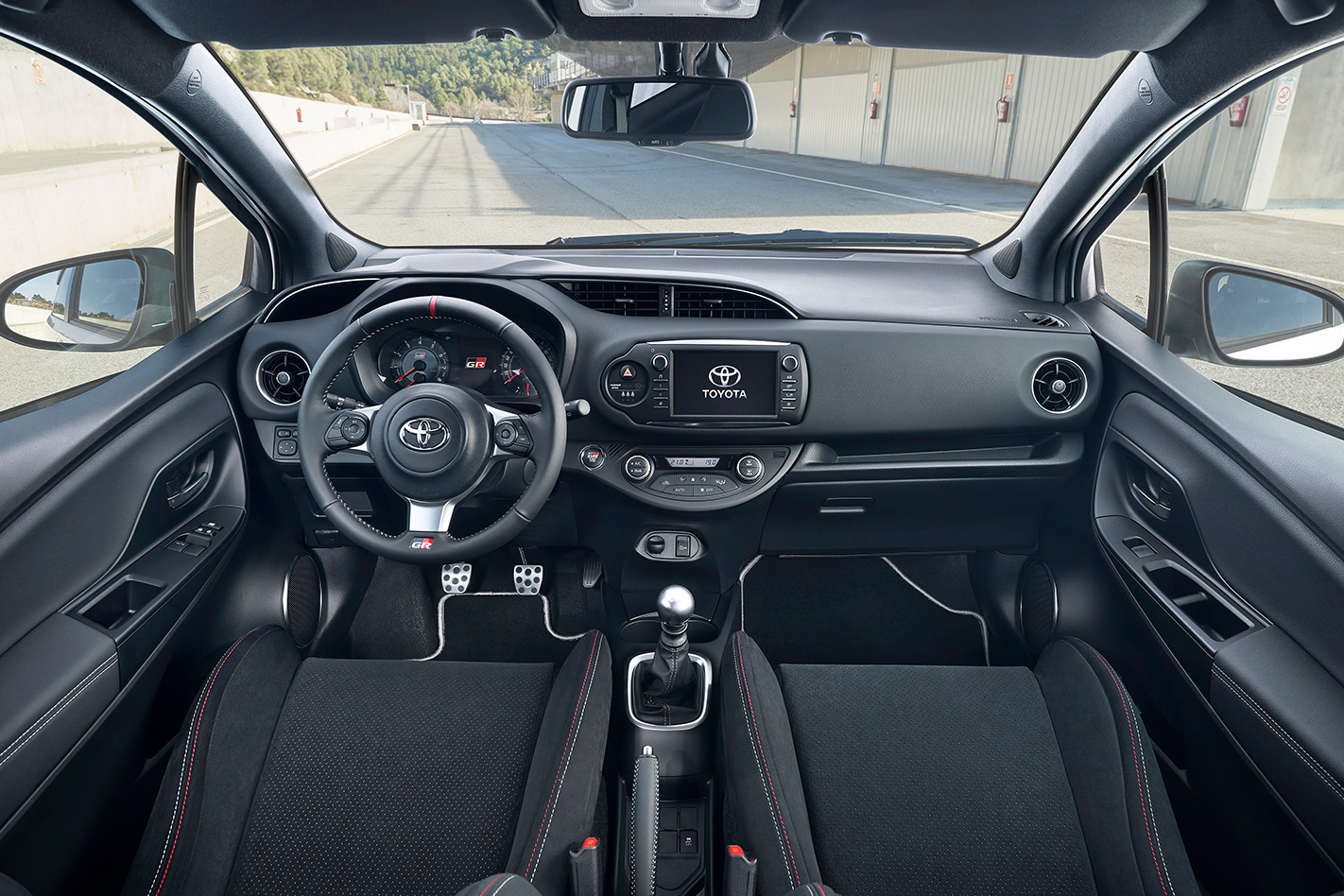
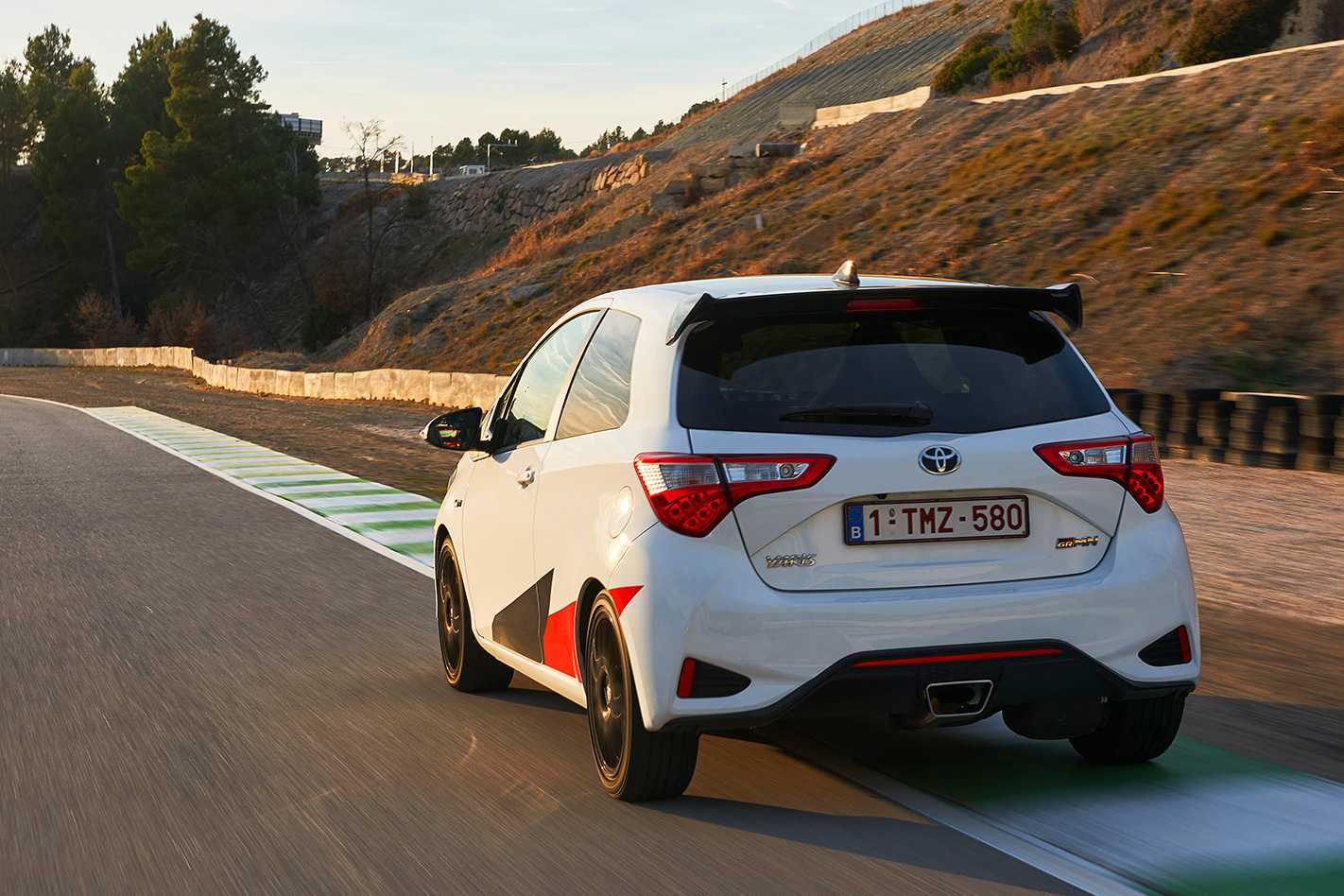
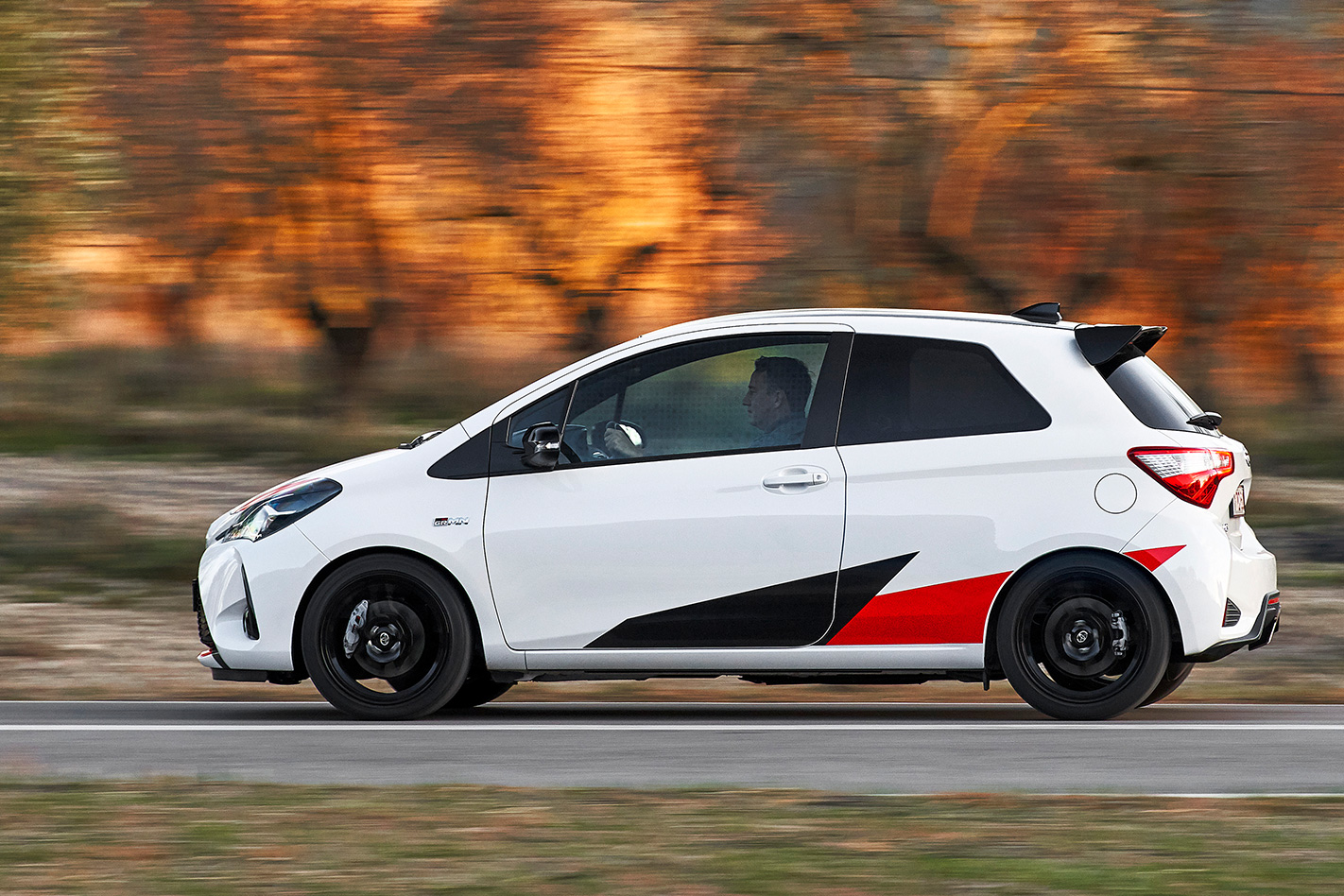
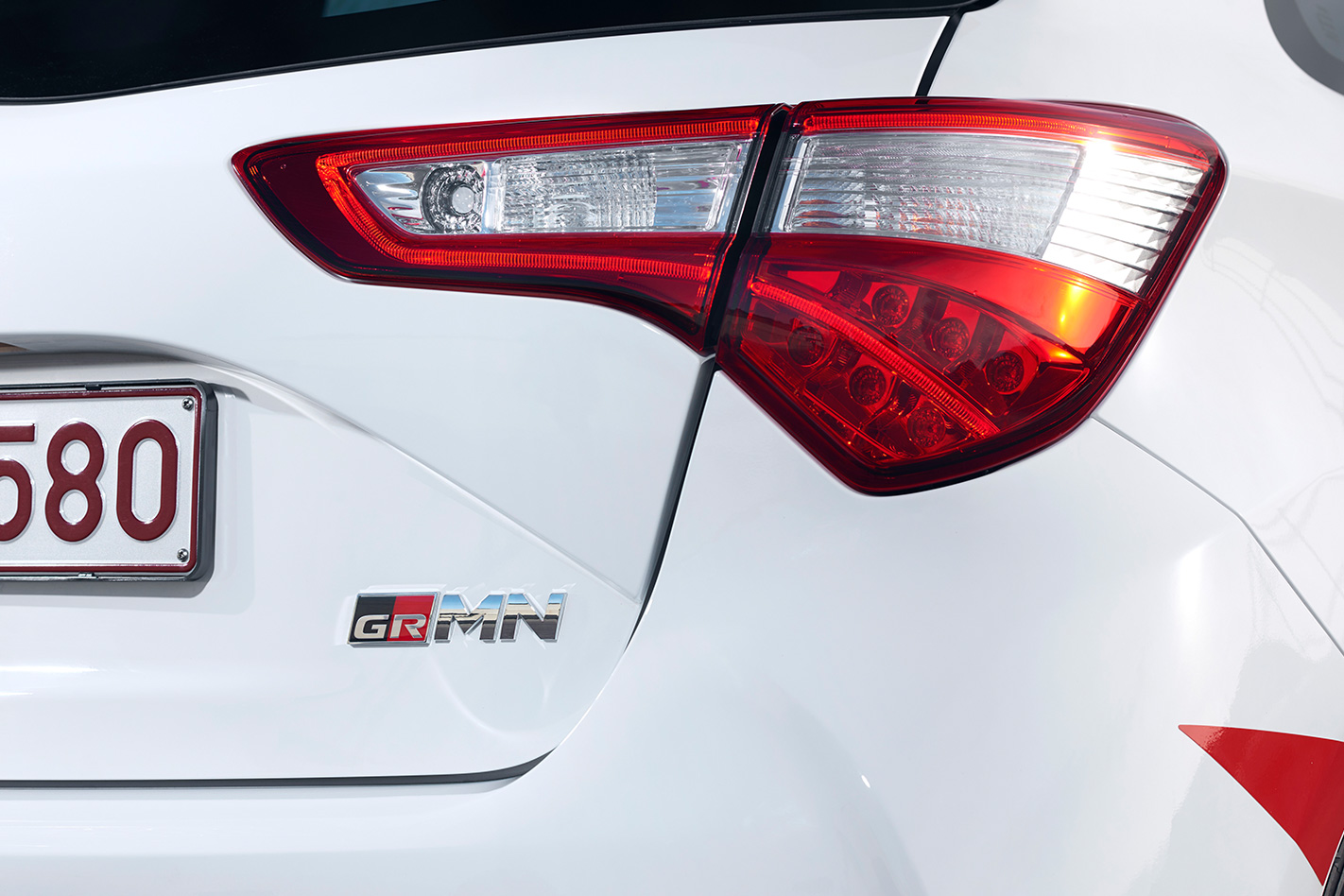
This is a full-fruit sports hatchback, in case the lairy red, white and black bodywork and the rear wing don’t give it away. Bigger 17 inch wheels add to the visual flair, while internally the changes are mostly around the body-hugging sports front seats, leather armrests, aluminium pedals and Gazoo Racing logos.
The Yaris’s budget beginnings are still evident in the moulded plastics used on the dash and doors.
How much is the Toyota Yaris GRMN?
The Toyota Yaris GRMN – the MN stands for Masters of Nurburgring, which is a bit cheesy — was launched in Europe in late 2017. Just 400 examples were produced so Toyota could test demand for a potential hot baby hatch.
Australia was not part of the plan, so unless you want to spend a chunk of your own cash to privately import one, you can’t have it.
The Toyota Yaris GRMN’s European price tag of €31,250 equates to a bit over $50,000 in Australia, which puts this little fighter up above bigger, angrier beasts like the Renault Megane RS, VW Golf GTI and Hyundai i30N – and the Yaris has no chance of matching their performance despite its enthusiasm and energy.
Who is it for?
Not Australia, because of the reasons outlined above (too small, too pricey). For this car to work Downunder, it needs two extra doors, more room inside, a more powerful engine, an automatic transmission and a price reduced by about 20 percent.
Basically, it’d need to be a Corolla GRMN with a mid-$40,000s price.
After driving the Yaris GRMN, though, it does give us hope that should Toyota give the very popular Corolla the same treatment, then that would be a hot hatch worthy of attention.
Is the Toyota Yaris GRMN easy to live with?
Surprisingly, yes. It’s still a Toyota Yaris at its core, which means it’s easy to get in and out of, and extremely easy to manoeuvre in daily driving, and in tight spaces.
Inside, the cabin is relatively spacious – for a very small, three-door hatchback, that is. Plenty of headroom up front, and a few places to drop your phone or keys or wattle bottle or whatever.
The driver’s and front passenger’s seats are sporty bucket seats that hold occupants in place very well, although the driver’s pew is situated a touch high in relation to the pedals and the steering wheel, which detracts from the feeling of speed and dynamism.
Getting into and out of the back seat is not easy, unless you’re an agile pre-teen.
Boot space is competitive if not generous, though nobody shopping at the smallest end of Auto Alley is going to mark the Yaris down for only having 286 litres of luggage capacity.
How well does the Toyota Yaris GRMN drive?
This is the Yaris GRMN’s reason for existence. Forget the price, forget the diminutive size, forget the fact your mates can’t fit comfortably in the back. This is where all is forgiven – almost.
Short story is the Toyota Yaris GRMN is an absolute hoot to drive.
Start with the engine, a 1.8-litre supercharged four-cylinder with ‘only’ 156kW of power and 250Nm of torque. This is not a lot by hot hatch standards, but when it’s packaged in an 1100kg vehicle there’s plenty of fun to be had.
Toyota claims an impressive 6.3sec 0-100km/h acceleration time, which is respectable and brisk. The Yaris also has little trouble putting the power down in corners because a limited slip diff up front keeps wheelspin to a minimum.
Toyota’s fitment of a supercharger rather than a turbo may seem old school but it brings some benefits. The advantage of supercharging over the more common turbocharging is that the power boost is always ready to deploy, whereas turbochargers take a moment or two to spin up to speed – although modern turbocharging is shortening this lag with every passing year.
But still, the immediacy of a supercharged engine is a joy to play with. It gives the Yaris boundless energy and exuberance that will have you prodding the accelerator again and again just to feel the car’s spring-loaded enthusiasm — and to hear the gravelly growling soundtrack bursting from its centrally mounted exhaust.
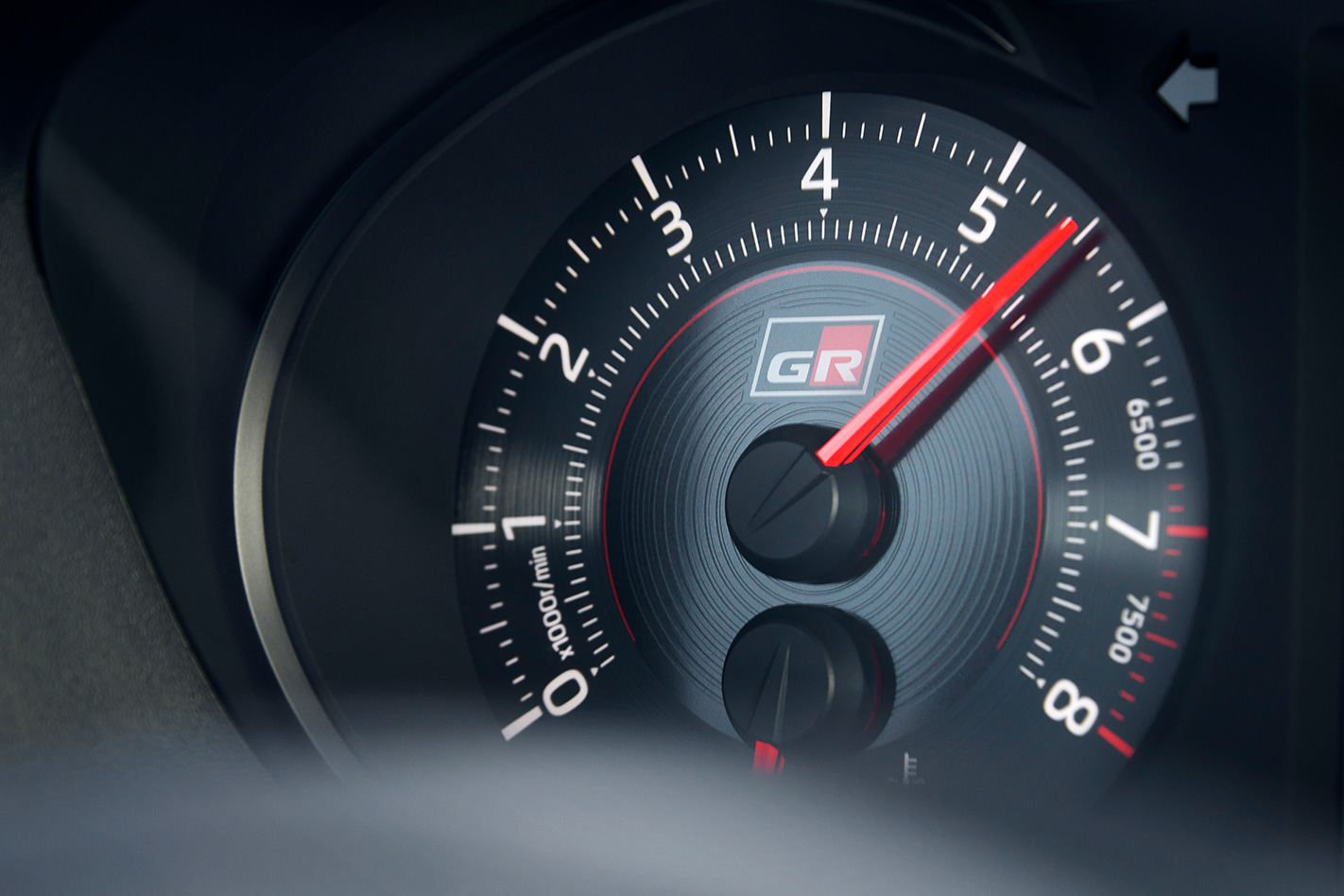
This muscular drivetrain is the Yaris GRMN’s best feature. We drove the Yaris on Belgian backroads and freeways at speeds from 40km/h to 140km/h, and the Yaris’s engine is strong and willing in all real-world scenarios – even pulling manfully in sixth at overtaking speeds.
The Yaris GRMN’s uprated suspension and steering complement the drivetrain’s enthusiasm with dynamism and poise. The ride quality is mostly good, although the suspension’s limited wheel travel runs out quickly and some bigger bumps can crash through.
Verdict
To dismiss the Toyota Yaris GRMN for its very obvious failings against Australian wants and needs is unfair. Yes, it’s too small, underpowered and overpriced for our market. But it’s cheaper than a VW Golf GTI in Europe, so it’s appropriately priced and positioned for the market for which it was intended, where tiny hot hatches like the VW Polo GTI, Renault Clio RS, Peugeot 208GTI and others are very popular.
In short, we are spoiled in Australia. And we should be thankful that we get bigger hot hatches with serious sporting potential for less than our European cousins.
If you evaluate the Yaris GRMN as a portent of the future, an example of what Gazoo Racing can do to a Toyota econo-car, then it’s a resounding success. There’s enough here for us to be excited should GR turn its attention to cars Australians will buy, like the Corolla.
And we are strong supporters of a future where Toyota’s sporting spirit and driving enthusiasm is expressed in more cars than just the Toyota 86 and Supra. Bring it on!
BMW is back, baby. It sort of started with M3 CS, and then continued with M2 and M5 Competition – our second- and third-place finishers at last year’s Performance Car of the Year – and gathered pace again with the new G20 3-Series and now, the BMW M850i.
So what’s changed? It’s hard to say, but the latest generation of BMWs have a certain, new dynamic vigour. Like they’ve learned a few things and have gotten ‘better’. Have they changed the food in the engineering canteen in Munich? Climate change making the local weather warmer? Whatever it is, it’s working – a lot of the latest BMWs I’ve personally driven lately, I’ve thought a quiet ‘wow’.
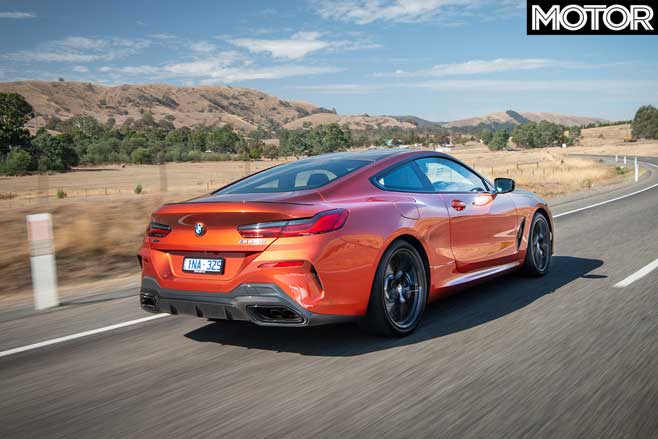
M850i is one of them. Now in Australia and basically replacing 6-Series, the 8-Series is BMW’s latest grand tourer, built off the brand’s modular Cluster Architecture platform underpinning everything from Z4/Supra to new 3-Series, 5-Series and even X7. A platform that appears to be inherently very good.
In this 8-Series, the M850i xDrive, the now familiar 4.4-litre N63 twin-turbo V8 is up front, sending its significant 390kW/750Nm via the equally familiar ZF eight-speed automatic and all-wheel drive, the whole shebang working to fling 1965kg of leather-lined, hulking grand tourer to 100km/h in just 3.7sec.
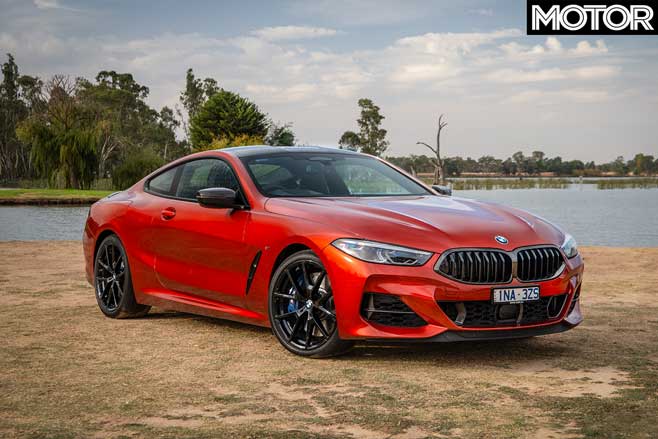
At nearly 5m long and 2m wide (but just 1346mm tall) it’s an imposing car in the metal. Slink inside and BMW’s latest generation interior awaits, a delightful pit of expensive-feeling materials. Build quality feels super solid, ergonomics are sound and aside from some slightly garish touches that may or may not be intended to appeal to a growing Chinese market, gripes are few and it’s a smart, special-enough place to sit.

The M850i is special to drive, too. Super smooth at any speed, the all-wheel drive acceleration is clean and potent, the V8 snarling in a pleasantly unexpected way. BMW has really stepped up its Active Sound Design game, which plumbs artificial intake noise through the speakers. If you like your V8 notes, you’ll find the M850i’s noise really hits the spot.
It’s a big car but an accurate front end and subtle rear-steering make it easy to place and there’s a sense the M850i, with huge grip and ability, is keen to hustle. A default understeerer, explore deeper and there is a lot of handling talent to be discovered, including power oversteer. Joy.
At $272,900, indeed this is not a cheap car. They won’t sell many, but if this is the ability of the M850i, we’re twisting ourselves in a knot at what the M8 is going to be like. The Munich forecast is looking good.
2019 BMW M850i SPECS Engine: 4395cc V8, DOHC, 32v, twin-turbo Power: 390kW @ 5500–6000rpm Torque: 750Nm @ 1800-4600rpm Weight: 1965kg 0-100km/h: 3.7sec (claimed) Price: $272,900
Like: Revels in being driven harder; ballistic acceleration; ride quality; interior; V8 snarl Dislike: Can’t quite fully escape its weight; for $300K interior could feel more special
Rating: 4.5 out of 5 stars
Introduction
If there’s one thing Mitsubishi loves, it’s a good concept reveal. It’s whipped the silver dropcloth off any number of design studies and future models over the last few years, most of them aimed at the SUV segment.
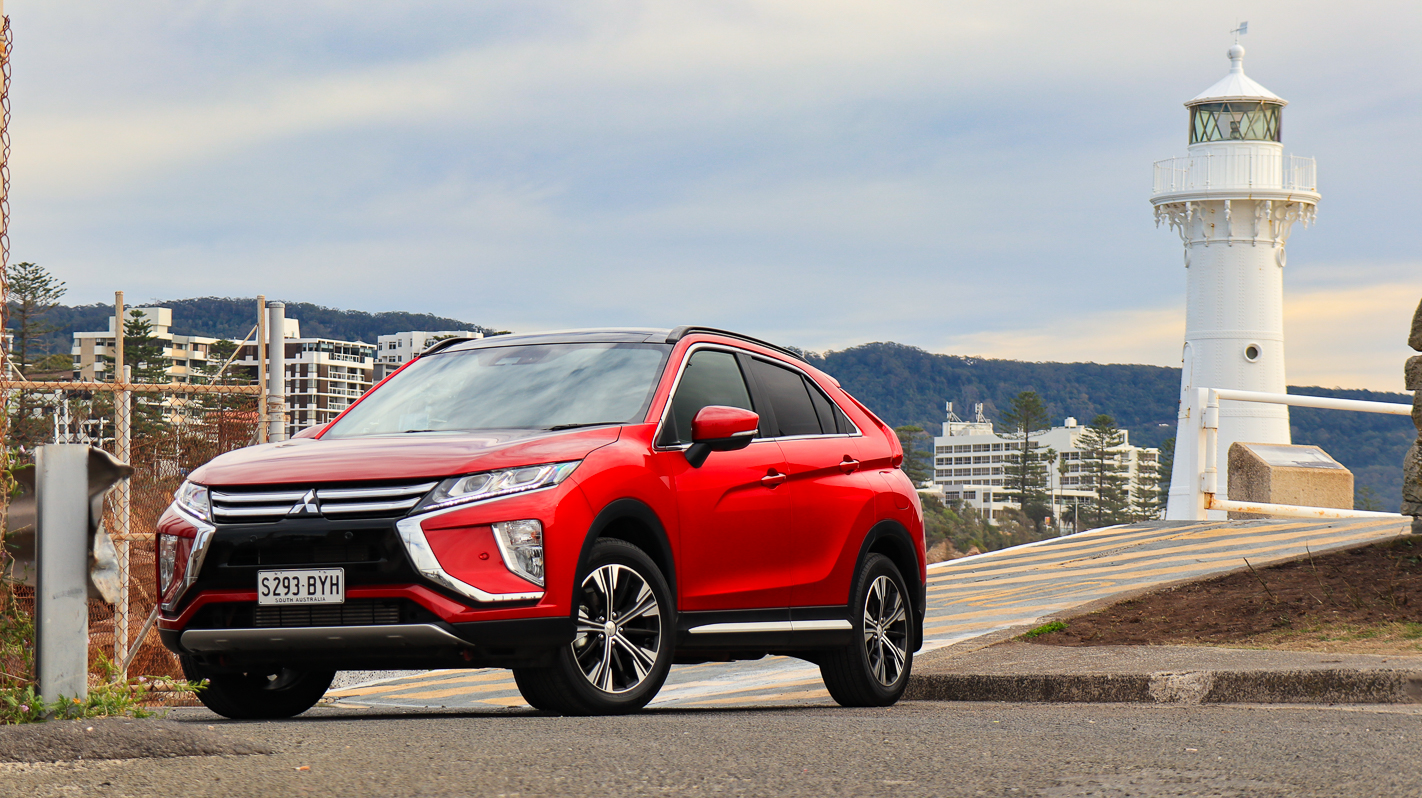
The five-seat, five-door Eclipse Cross SUV, launched in 2018, sits between the small ASX and the medium Outlander in Mitsubishi’s burgeoning SUV line-up – though ‘between’ is a pretty strong statement.
Both the Eclipse Cross and the ASX are, but for the same of a handful of millimetres, the same length and width, and offer almost identical interior space.
The differences between the two, then, come down to price and design, and the Eclipse Cross has more of both.
Style
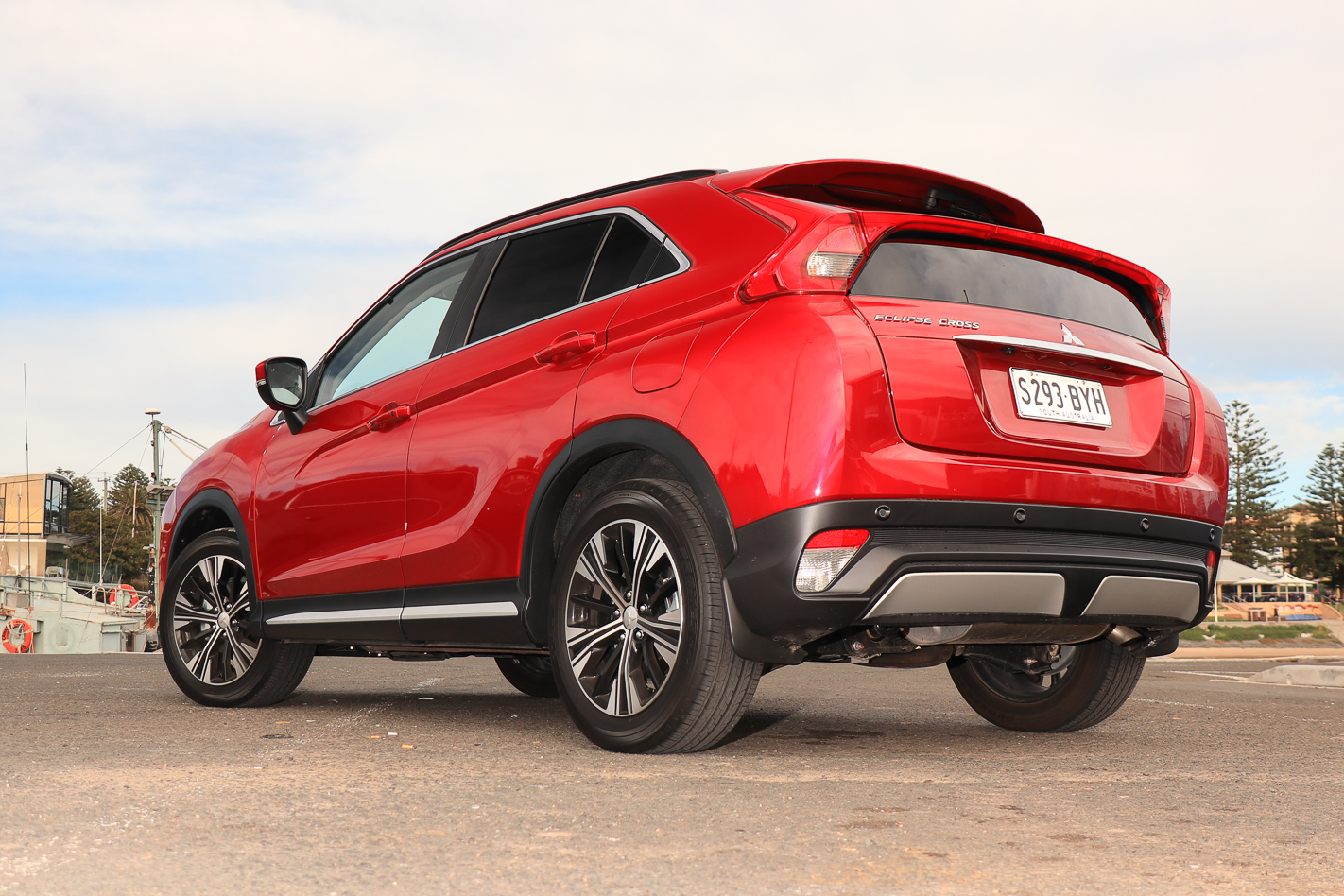
The Eclipse Cross moves away from the other, more utilitarian SUVs in the ageing Mitsubishi line-up thanks to a more detailed and sleek design approach.
The front grille and bumper are rendered in Mitsubishi’s more current design language that can be seen on the new Triton, for example, while the roofline drops off over the c-pillar to give it a four-door coupe silhouette.
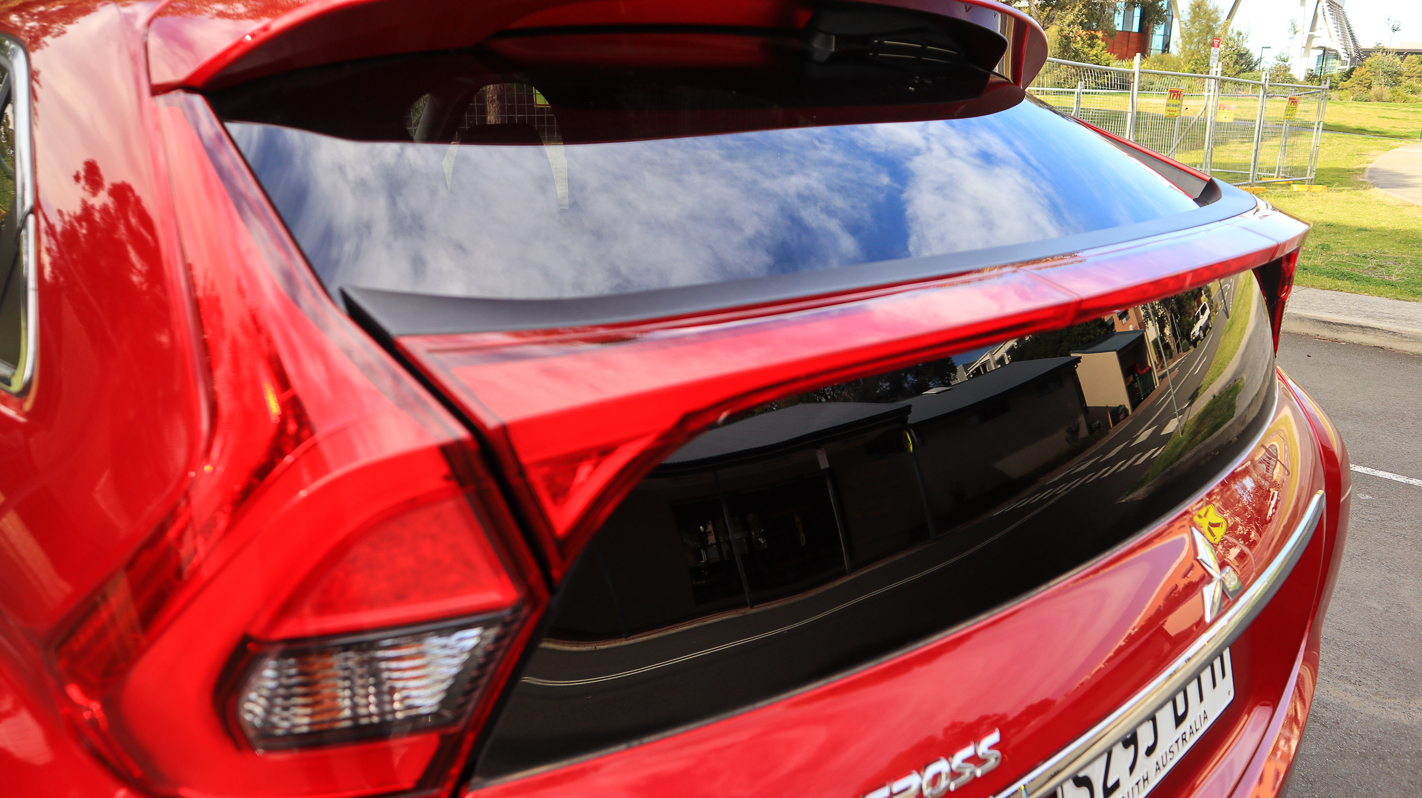
The rear, though, is a bit more confusing and not as resolved. The main culprit is the split rear glass that’s intersected by a light bar that cuts straight across a driver’s rear view. A deep roof spoiler also reduces glass area and creates a perfect dust trap.
Inside, the Eclipse Cross steps it up, with a bold and contemporary sweep of silver sprouting from the centre console. Controls are well integrated and nicely laid out, and are a good mix between button and rotary dial.
The leather seats in our top-spec Exceed tester are bold, simple and comfortable, with contrasting stitching adding a bit of brightness to an otherwise sombre cabin.
Price and Features
The Eclipse Cross Exceed pings the cash register at $38,990 plus on-road costs in all-wheel-drive form which is, for the sake of interest, about $8000 more than the equivalent ASX. Drop back to the FWD version of the Eclipse Cross and it’s still a $6490 jump between the two.
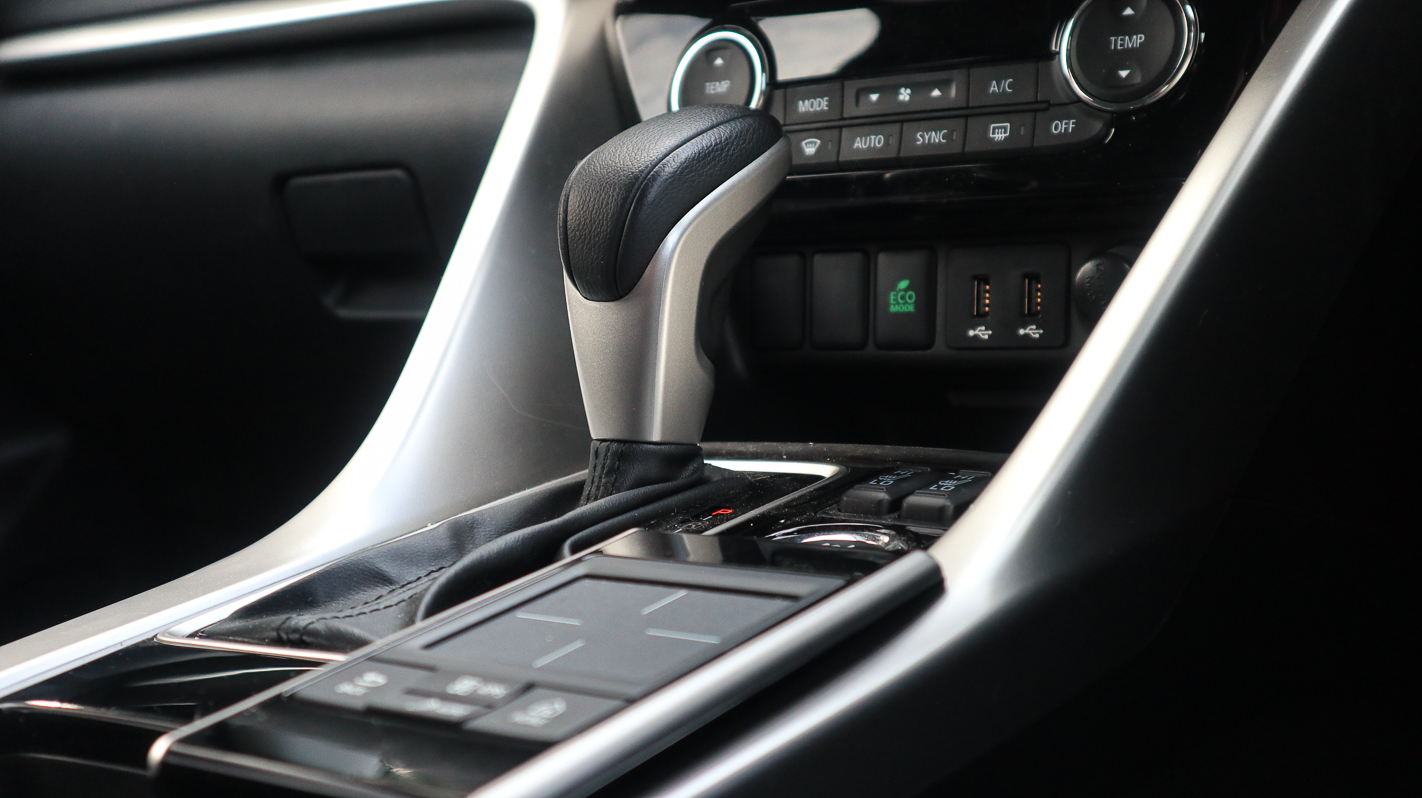
What makes the Eclipse Cross different to the ASX? As well as its looks, the ‘Cross also scores more kit as standard. A more sophisticated 1.5-litre four-cylinder turbocharged engine is mated to a CVT gearbox and a part-time AWD system, while the 18-inch alloy wheels bolt up to strut front and multilink rear suspension.
Up front, there are leather-accented seats with powered controls for the driver’s side, heating for both front seats, a small multimedia screen on the centre console with a small touchpad controller, switchable terrain modes and plenty of padding on things like the centre console bin lid and door cards.
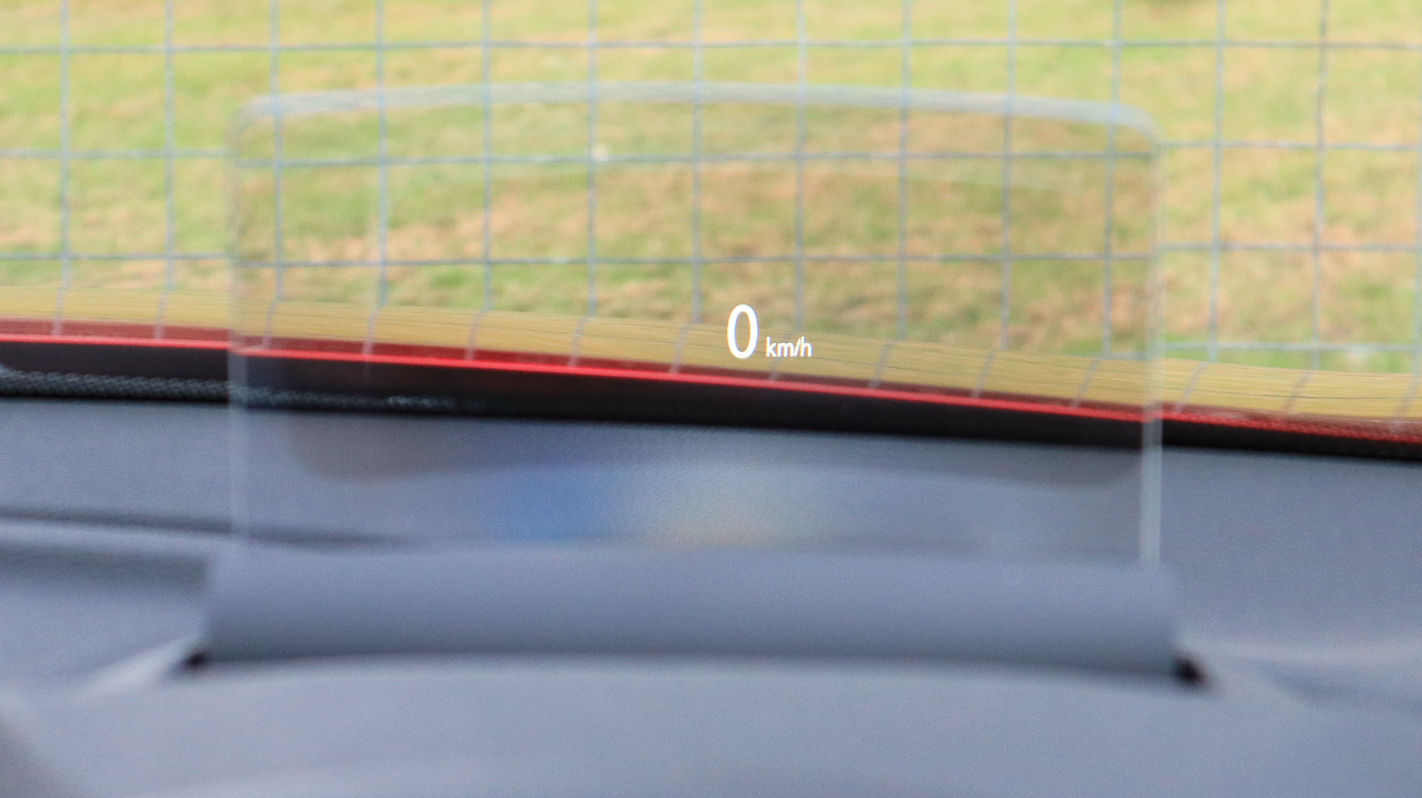
Automatic lights and wipers, along with a sort-of keyless entry system (you have to push the button on the door handle) and start/stop button are also standard, along with a bright, clear heads-up display that gives the Eclipse Cross a digital speedo.
The multimedia system runs Apple CarPlay and Android Auto as well as digital radio, at the expense of onboard sat-nav.
Rear-seaters get reclining backrests and a sliding rail for more leg room, ISOFIX baby seat mounts, cupholders and bottle holders as well as a 12v charging point to share, but there are no rear vents, which is a surprise omission.
There’s a space-saver spare wheel in the boot, along with cargo tie-down hooks.
Natural enemies within the small SUV space include the category darling, the Mazda CX-3 in it $38,000 Akari LE form, as well as newer contenders like the Hyundai Kona Highlander at $39,000.
Size
Slotting into the small SUV category, the Eclipse Cross is designed to carry five people. Its sliding second row gives back seaters a few options to get comfortable depending on what’s being carried in the boot, while the front seats are decently proportioned and set reasonably low in the car.
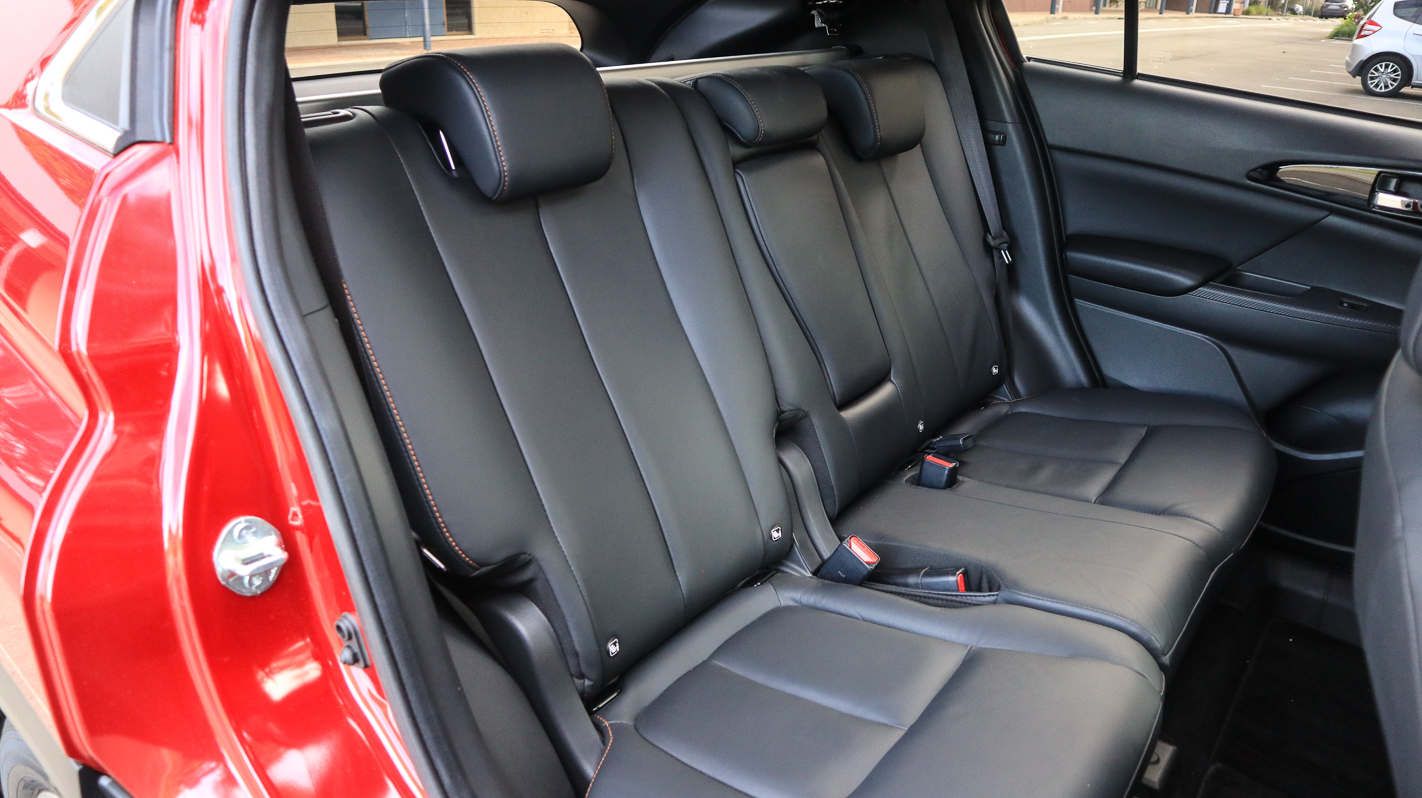
The biggest issue with the interior space is the loss of rear headroom that comes from the factory-fitted dual-pane panoramic glass roof. Even though it only drops by 14mm, it’s a crucial difference given how tall the rear bench feels. Anyone over average height won’t be especially comfortable.
There is, however, decent knee and toe room in the back of the Eclipse Cross.
Boot size of the Mitsubishi Eclipse Cross is on par with the rest of the small SUV category, though it does lose out to its class-topping stablemate.
How different is the Eclipse Cross to the ASX? Well, with the rear seats in the regular position, there is 374 litres of available space, versus 393 in the ASX.
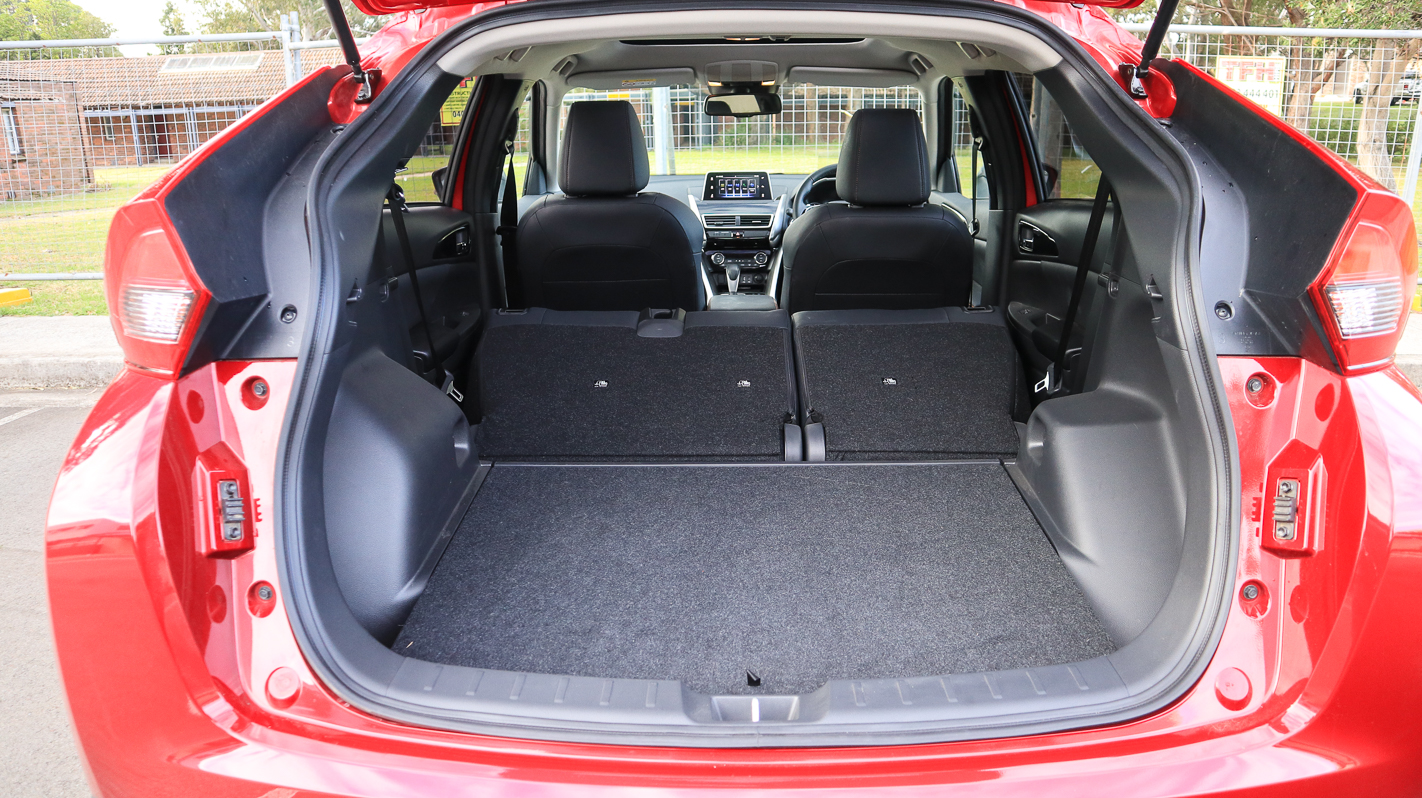
However, push the seats forward and position the rear seatbacks vertically, and that space grows to 443L. Drop all the seats, and the Eclipse Cross has 1122L, versus 1193 in the ASX.
Safety
Seven airbags and a full suite of driver safety aids including AEB, adaptive cruise control and auto high beams give the Eclipse Cross a top five-star score from ANCAP.
LED headlight also help the safety quotient, but in use the automatic high-beam system doesn’t work very well at all, failing to dim in time to stop dazzling oncoming drivers.
Warranty and running costs
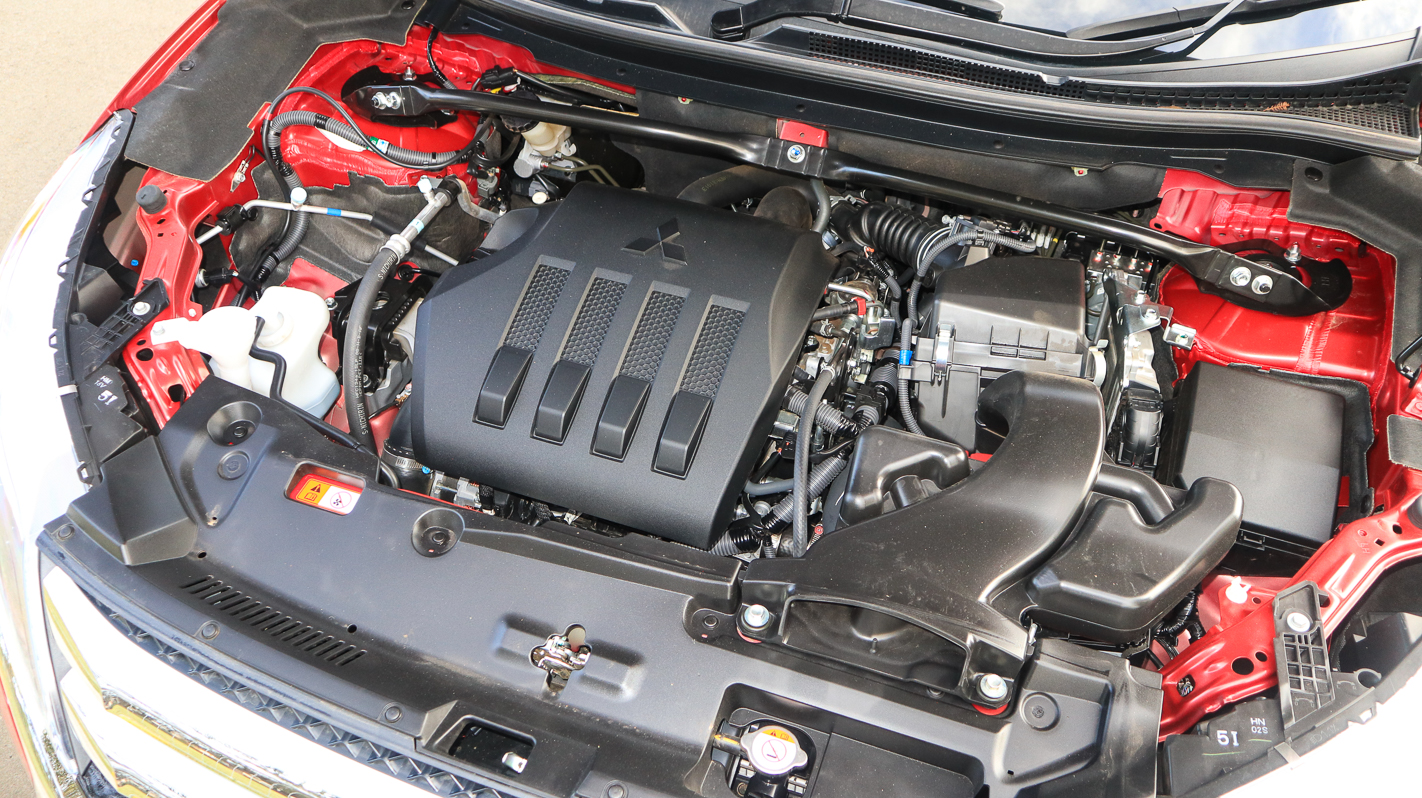
Mitsubishi now offers a five-year warranty across the board though it limits kilometres to 100,000km.
Fixed price servicing is offered for the first three years, and costs a total of $725 ($240 for the first two and $245 for the third). Service intervals are set at 15,000km or 12 months.
The 1555kg Eclipse Cross Exceed runs a 60-litre fuel tank that can swallow 91 octane petrol, and Mitsubishi claims a combined fuel economy figure of 7.7 litres per 100km.
Over a 430km test cycle, we got pretty close to that, returning a real-world 7.9L/100km. It will cost a little over $100 a tank to fill.
Comfort
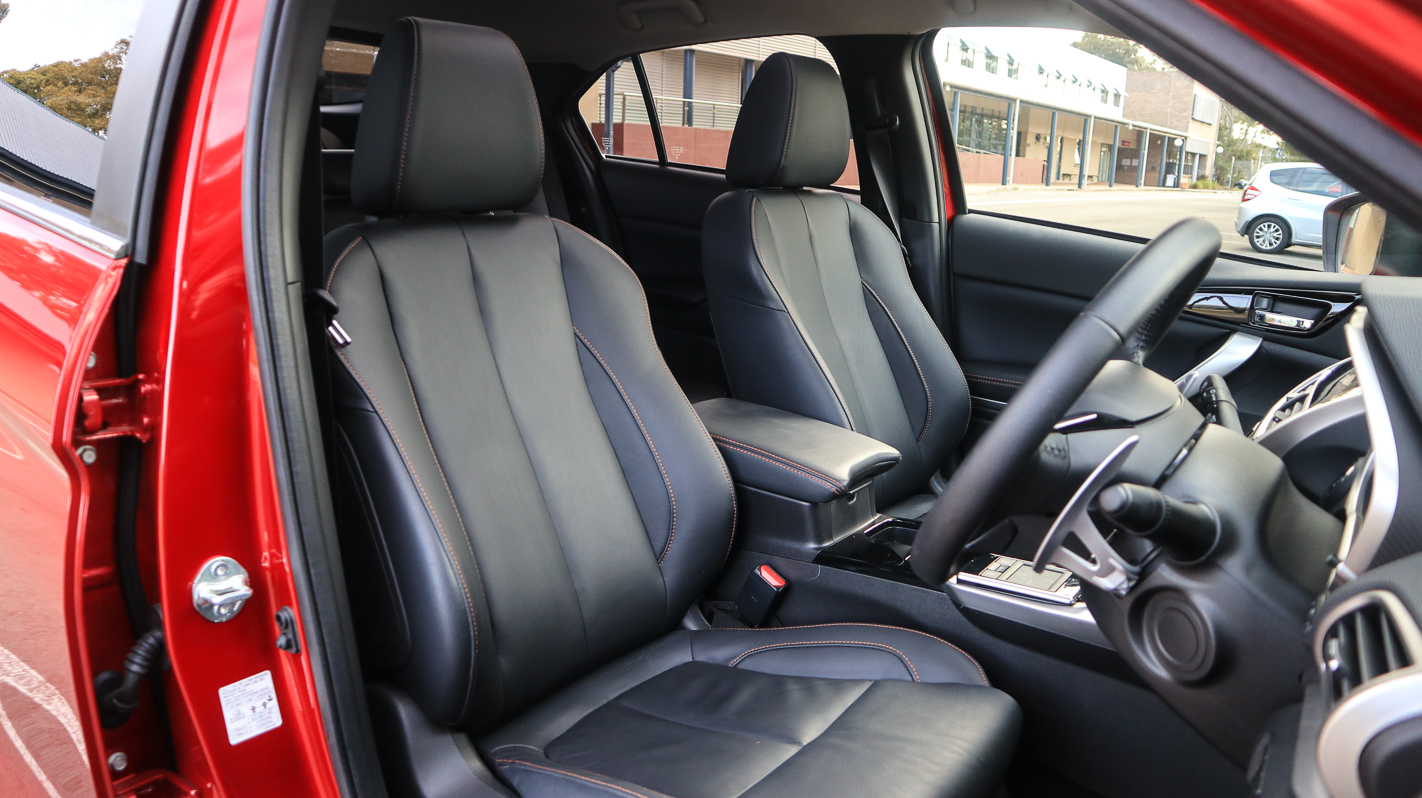
Aside from the headroom issue mentioned further back, the Eclipse Cross is pretty comfortable. There is sufficient oddment storage, the centre bin is well sized and there are cupholders and bottle holders a-plenty.
The multimedia system is small but straightforward, though the touchpad down by the electronic handbrake is a bit superfluous – I only used it once in the week I had the car. As well, the all-wheel-drive mode does a great job of disguising itself as a start button. Don’t ask how I know that.
Visibility around the car is good, and there’s a 360-degree camera to assist, as well.
The seats are well proportioned, too, which is a nice touch in a small SUV. Lack of rear vents is a bit of a bummer, though.
On the road
All of Mitsubishi’s small and medium SUVs ride on the same ageing underpinnings, but the Eclipse Cross has had the most work done to it in terms of localising the ride and handling.
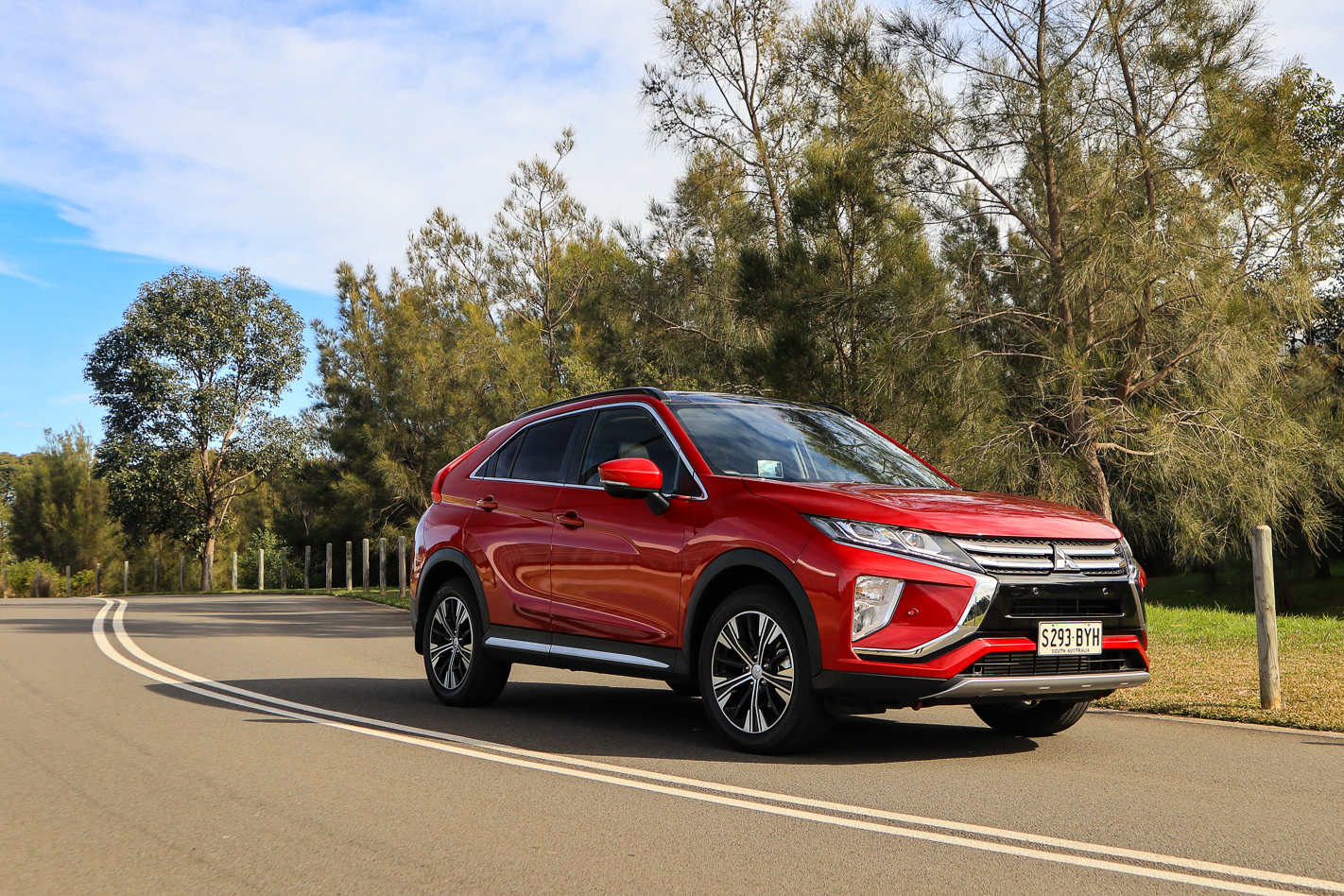
The 1.5-litre turbocharged engine is a sweet little unit, with the same 110kW as the ASX’s 2.0-litre naturally aspirated version but more than 50Nm more torque. The CVT gearbox is impressively refined, too, feeling and behaving more like a traditional auto under a light right foot.
It can get noisy when asked to deliver more, but it’s convincing nonetheless.
The Eclipse Cross is predominantly front-wheel-drive biased until traction becomes an issue, and it can be coaxed along a moderately loose surface. However, tyre grip and ground clearance will, as always, be the limiting feature of such sojourns.
The suspension tune leans heavily towards soft, which works well at suburban speeds. It could be better with more roll control, especially across the back axle, but for pootling around town, it’s soft and absorbent.
The trade-off comes at higher speeds on rougher surfaces, though, where the Eclipse Cross can lose its composure. At highway pace it copes well, but throw mid-corner back-road bumps and sharp-edged hits in there, and the softer bushings and underdamped shocks let you know pretty quickly.
Noise intrusion is pretty subdued, which is good for the highway run.
All of the driver aid systems work well (aside from the auto high beams), and the heads-up display is terrific, with great clarity and the right amount of information.
Verdict
Mitsubishi is a car company that sells ASXs by the tonne because it’s a cheap, spacious and reliable compact SUV – and it currently outsells the Eclipse Cross by about three to one.
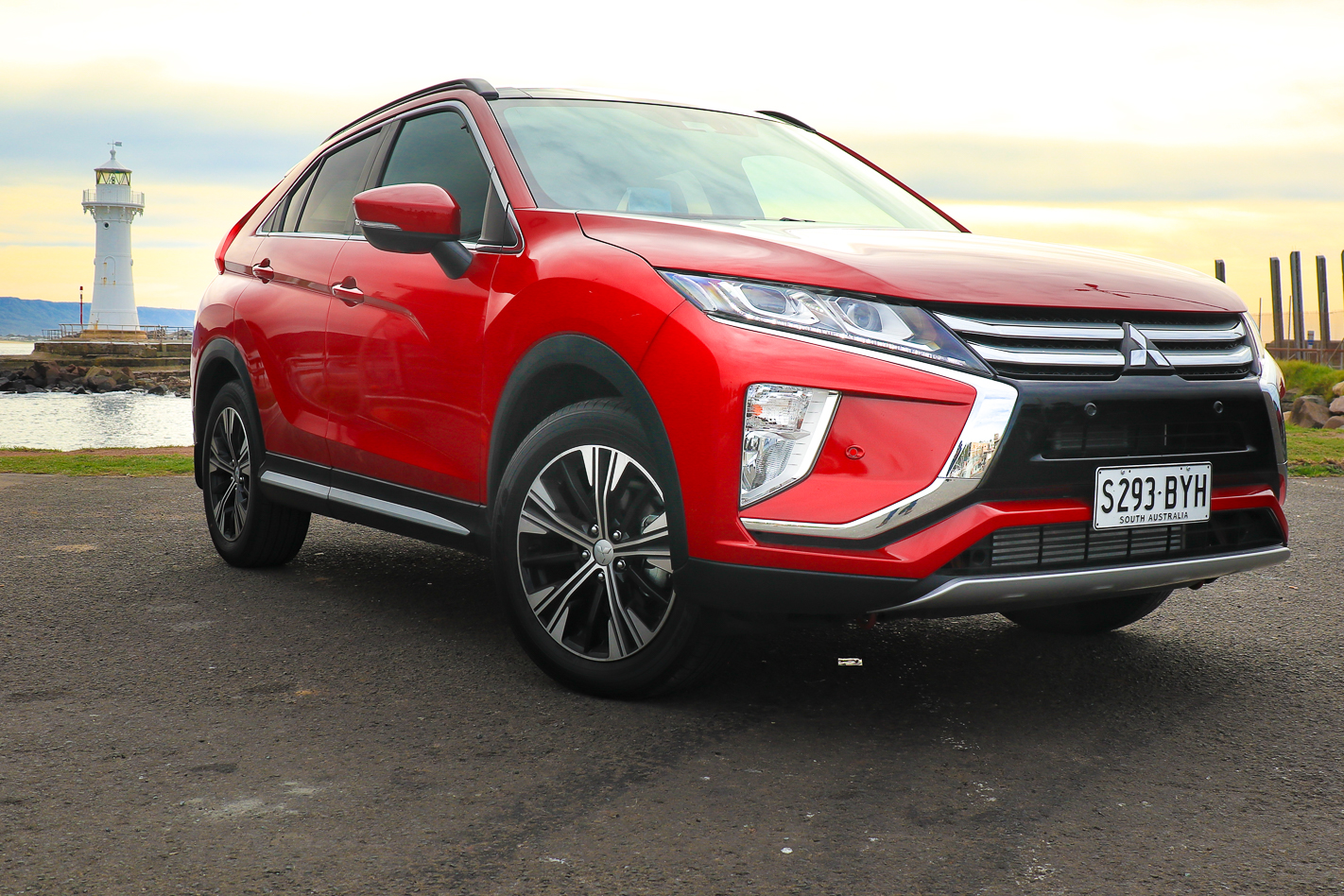
To be honest, though, I thought that equation would be worse, which tells me that there is a market for a more luxurious, better equipped but still affordable small Mitsubishi SUV.
For mine, I don’t think the Eclipse Cross goes far enough in trying to keep a gap between the ASX and itself, though. It’s a little bit better here and there, but I’m still waiting for that awesome concept car look that the company keeps promising and not delivering.
Overall, though, the Eclipse Cross gets a pass for being more comfortable and better equipped, and the 1.5-litre turbocharged engine is worth the upgrade cost by itself.
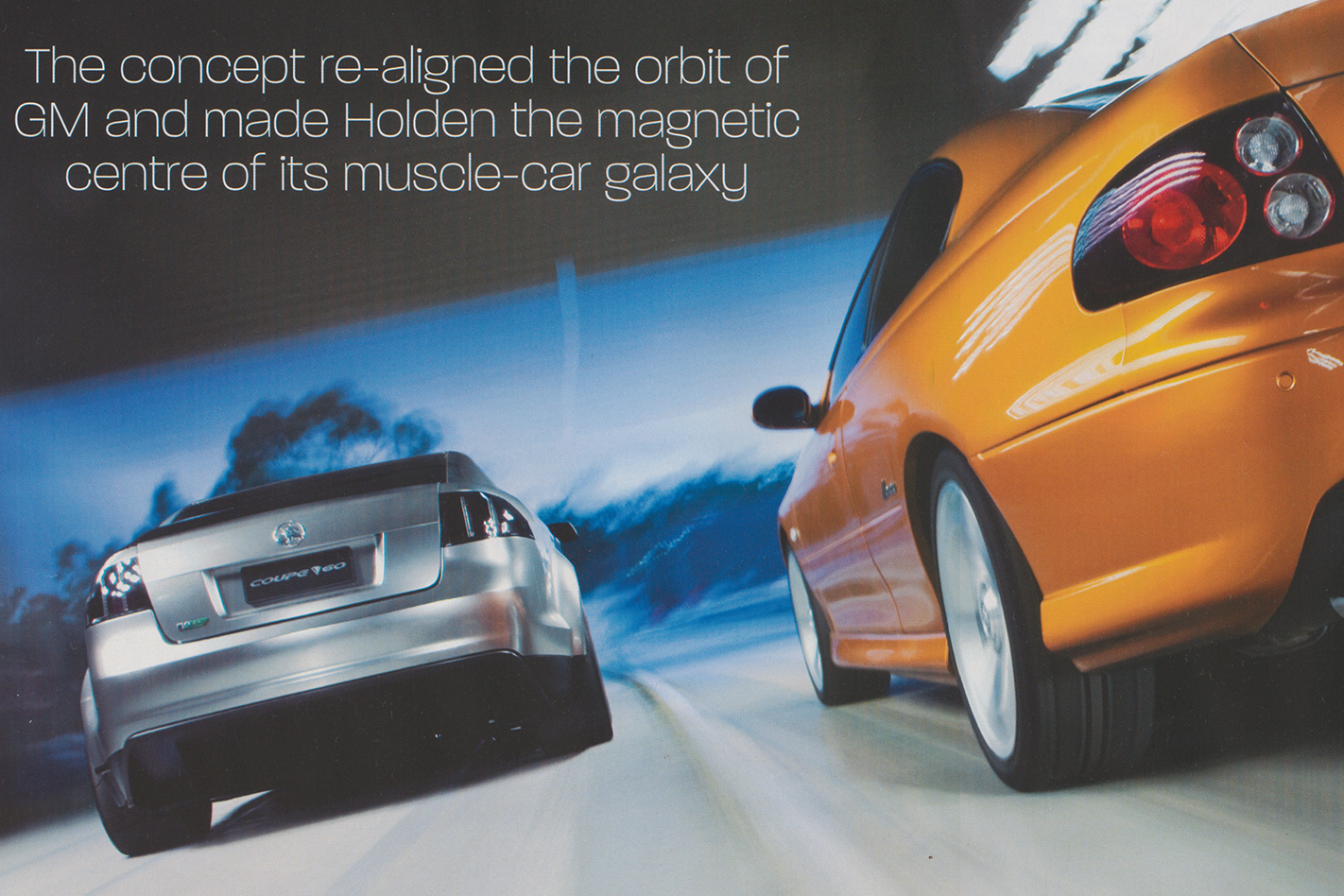
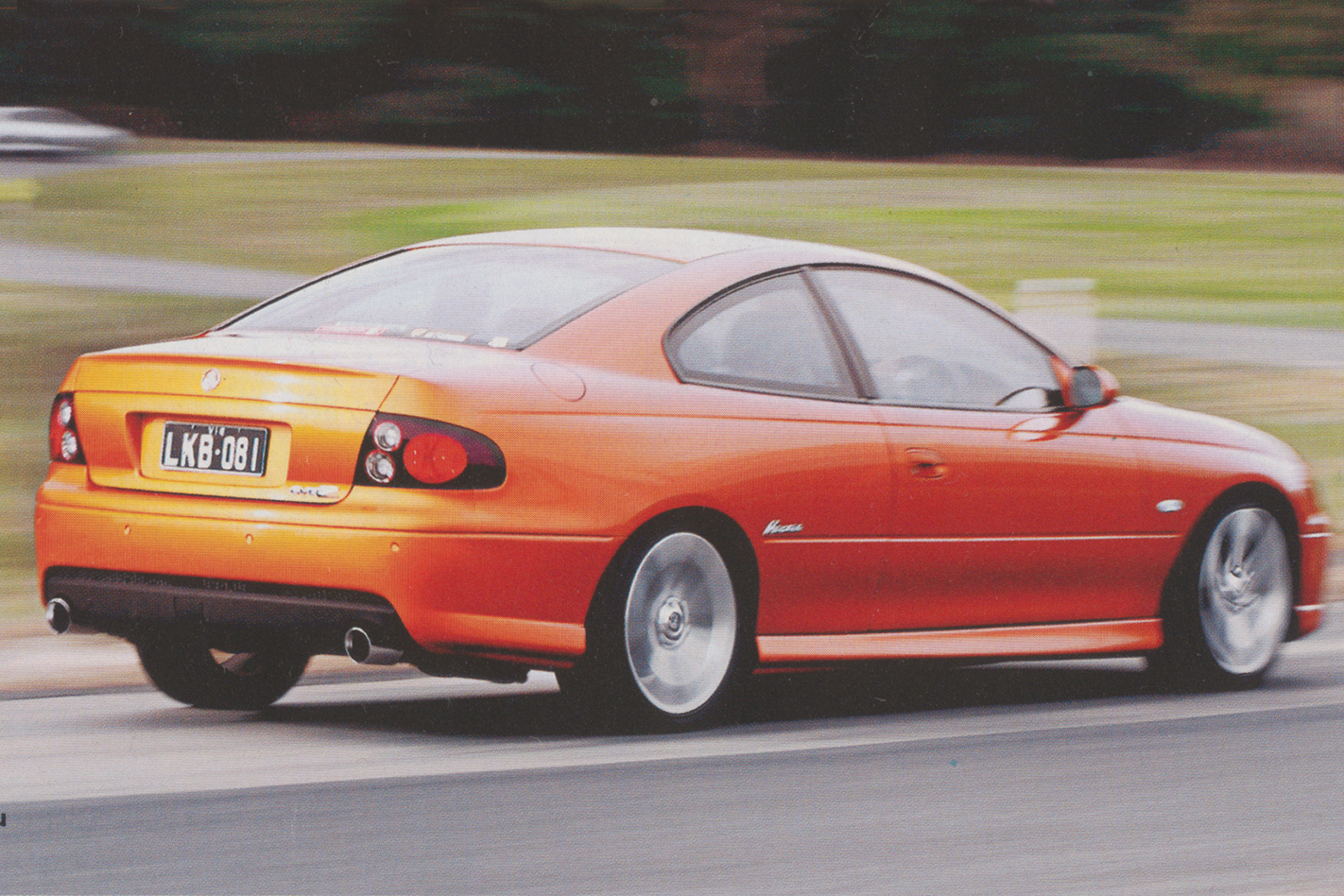
NOT LONG before the end of the 20th century, a remote automotive outpost took a bare-arsed bet on a concept for its first full-sized coupe in 20 years. Far from being an unnoticed blip on a distant star, the Commodore Coupe concept would re-align the orbit of General Motors itself and make Holden the magnetic centre of its muscle-car galaxy.
3 Kings was originally published in the September 2009 edition of Wheels magazine
Eleven years on, more cataclysmic forces are pulling GM in a new direction. But Holden’s 10-year trajectory produced Monaro, the all-Australian pony-car that went on to earn one of America’s most iconic badges: Pontiac GTO. It put Australia in the box seat to develop GM’s new generation of rear-drive architecture, the Zeta, which in turn put another all-Australian model, the VE Commodore, on the boat to the US wearing Pontiac badges.
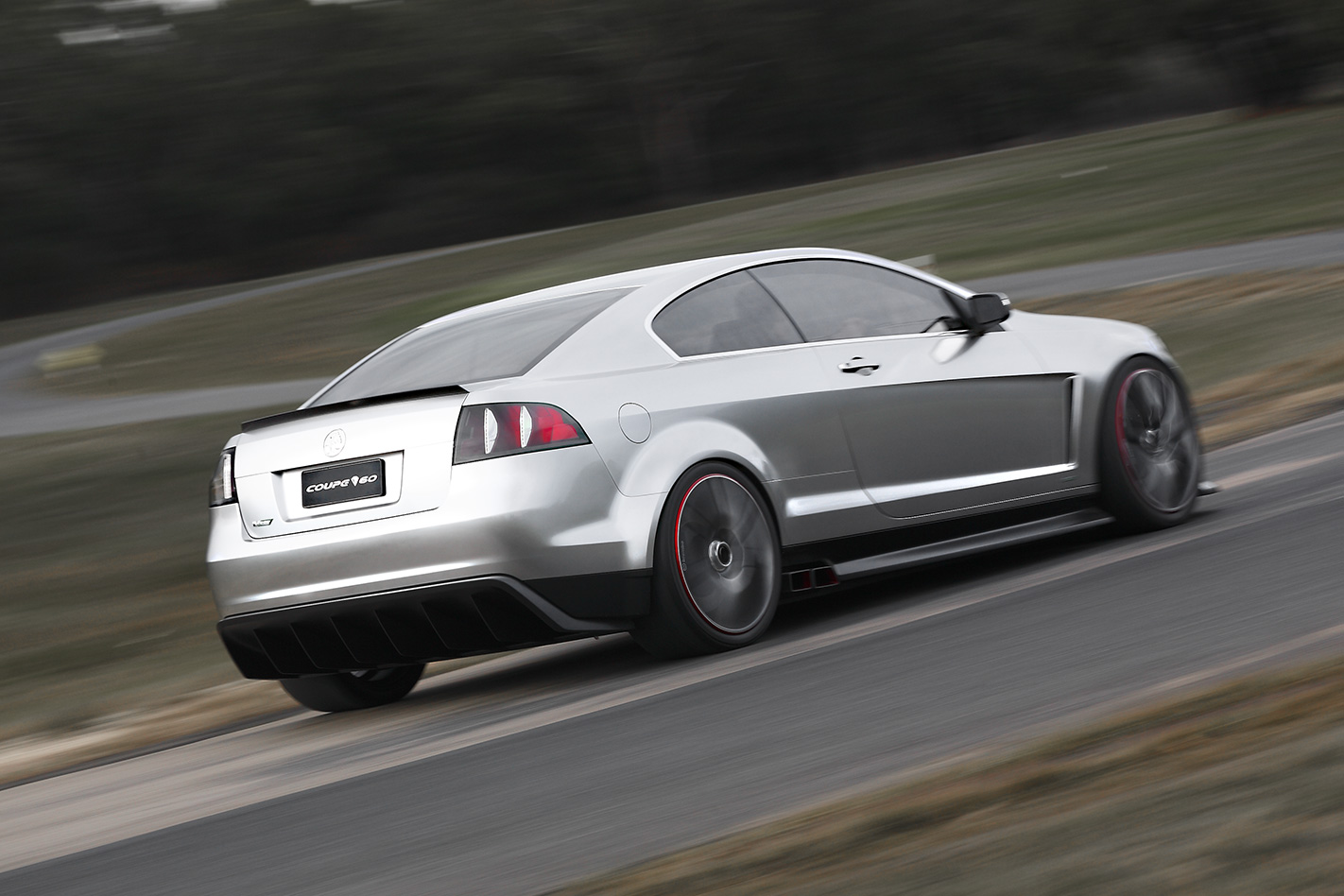
It culminated, perhaps inevitably, in Australia designing and engineering an all-American icon, the new Camaro. It was a surrogate project, never destined to be built or sold here. Unlike the third, and perhaps most dazzling star that might have embodied the best of everything.
Back in 1998, Hughes was on the team of the now near-legendary Holden design revolutionary, Mike Simcoe. He confirms the furtive Friday nights and surreptitious Sundays that the team spent on the largely unauthorised Commodore Coupe clay. “I recall coming in one Sunday and doing a full-size tape that we were going to show [engineering boss] Tony Hyde. We just let a few important people know that we were going to make a full-sized clay.
“These days, [Holden is] far more global, so you have to let people know before you can get things done,” he smiles. “But back in those days, we had a bit more flexibility to hide the costs [involved]. Yeah, it was very sneaky …
“We were all pretty young when we did it, then it was a big success when it came out. It put Holden – and more specifically, Design – on the map as a stand-alone department that could do things for GM globally.”
Of course, it was GM’s product prophet Bob Lutz who saw the inner beauty of the Commodore Coupe. His nod gave the green light for the first new Monaro coupe since the HX LE of 1976, and also put it in the frame for the US market from 2003.
“There’s no point doing some thing wacky,” Hughes says. “We can’t spend millions and millions of dollars on show cars without the intention of going forward into production. It’s pretty well known in the GM world that when Holden does a show car it’s usually quite buildable and quite realistic.
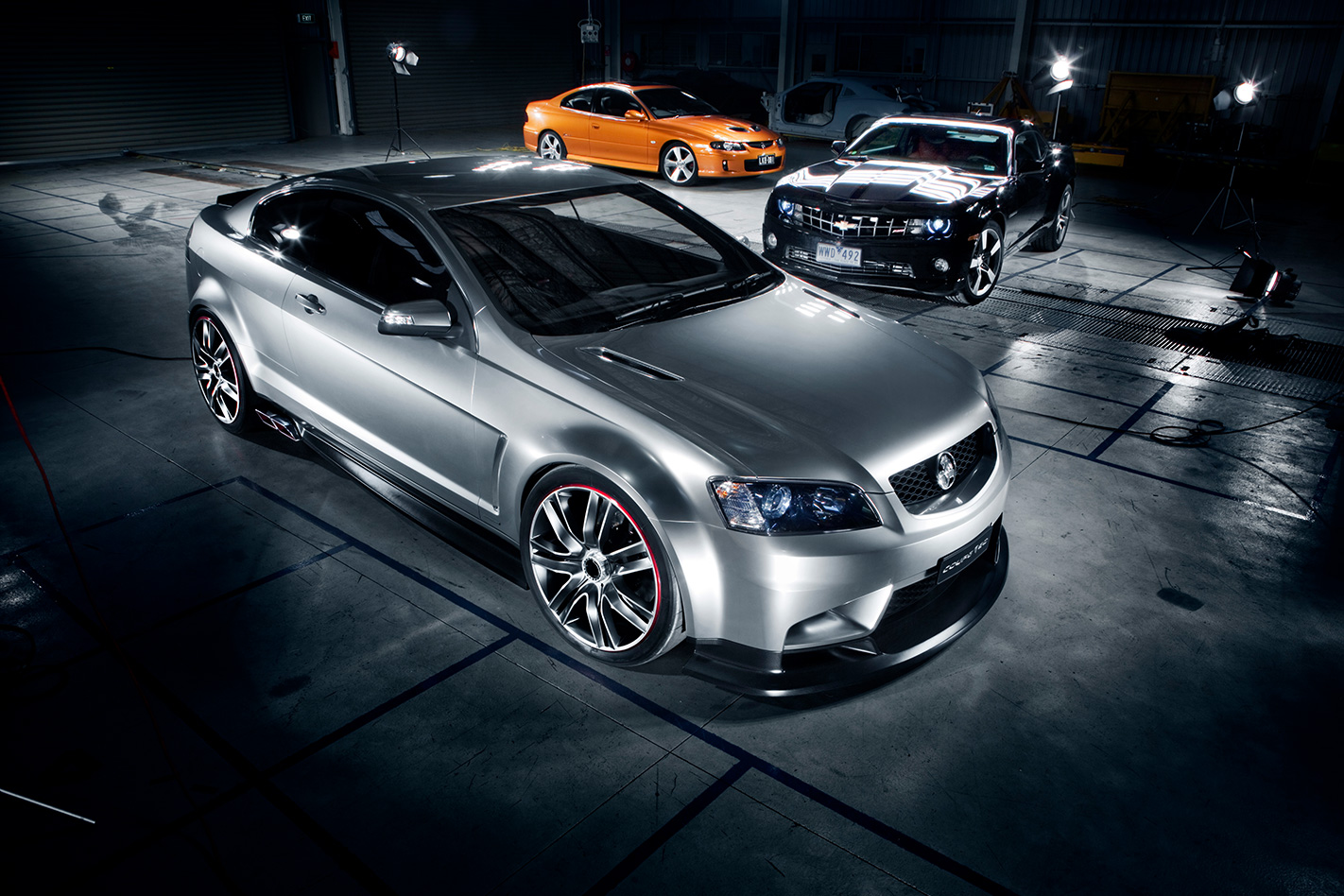
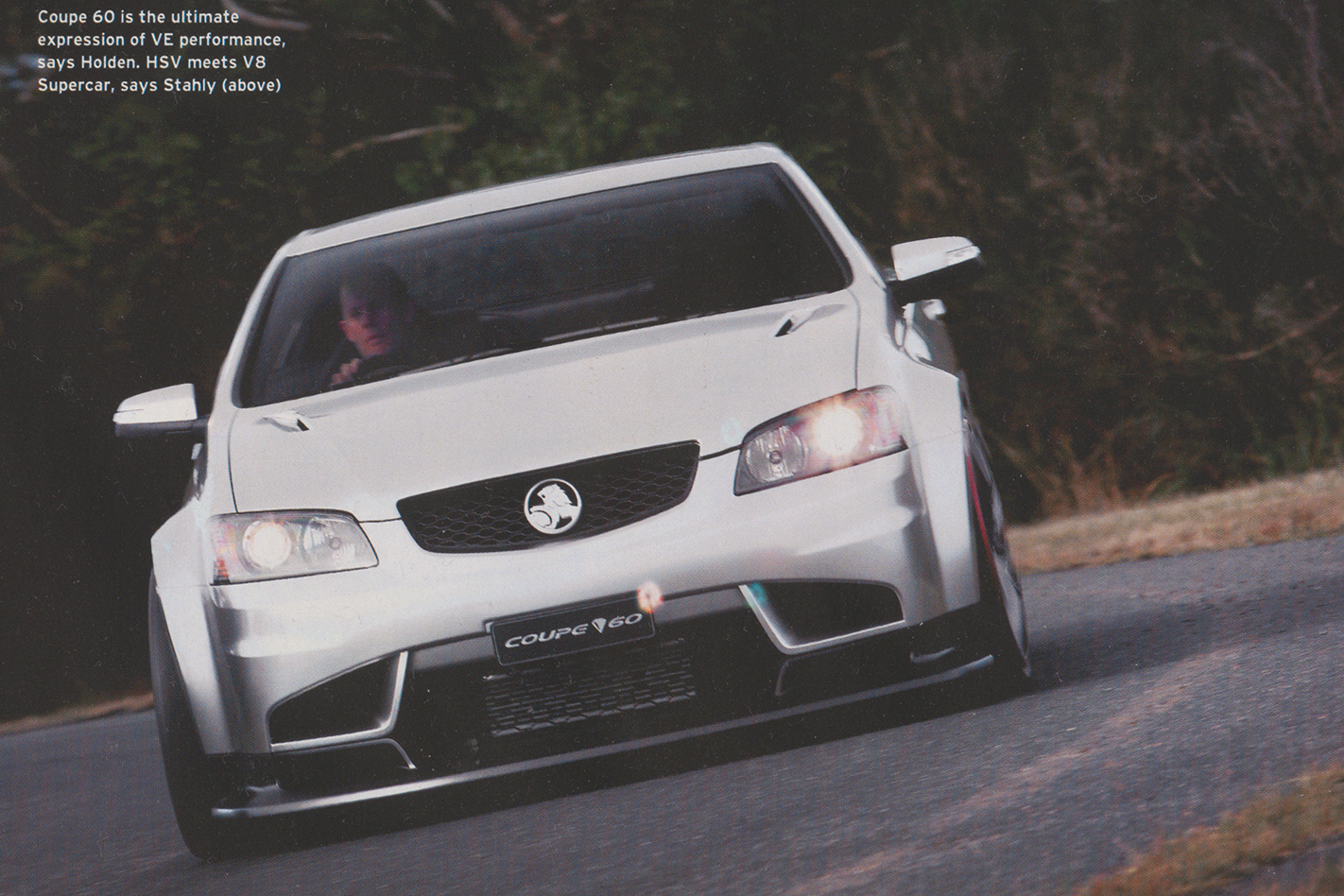
“The Coupe 60 was done as a coupe study on VE architecture, similar to Monaro, similar architectural changes. That’s not unknown. It’s the same when we do any new architecture. We do all the variants that could possibly go ahead.”
Lutz’s-sudden fondness for his antipodean outpost would also, of course, create a global foundation for Holden’s next generation of Commodore. In Zeta, Lutz would have a world-class platform capable of underpinning a variety of enthusiast US models.
Matter-of-factly, the design boys set about doing studies of that family. Sedan. Ute. A new twist on wagon. And a coupe.
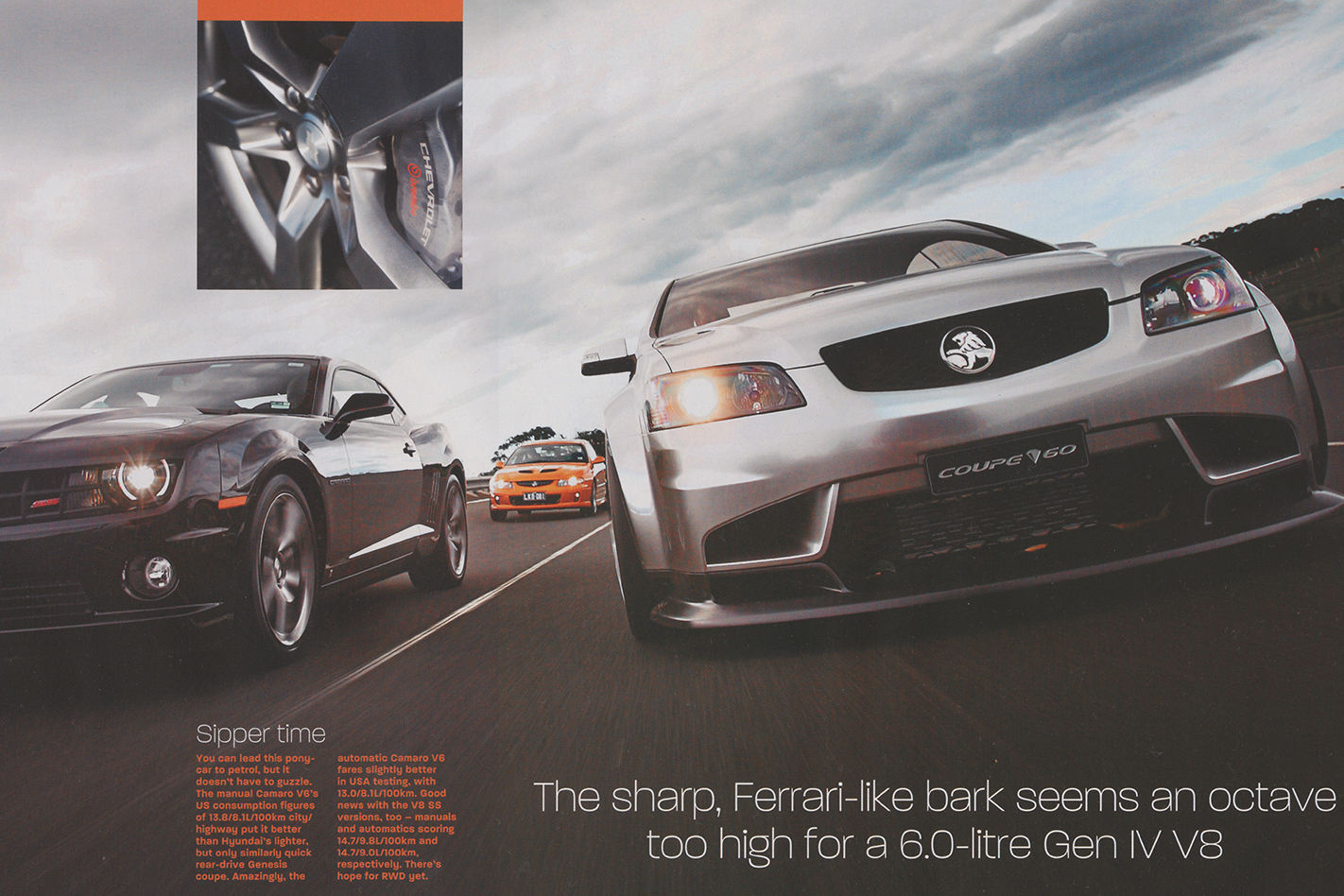
I HEAR IT before I see it. The sharp, Ferrari-like bark seems an octave too high for a 6.0-litre, Gen IV V8. Put that down to a straight-through exhaust system that exits, race car-style, via side pipes. The sound, and the admitted absence of a cat converter, contrasts with the Coupe 60’s green credentials, namely AFM cylinder shutdown and E85 ethanol-blend capability.
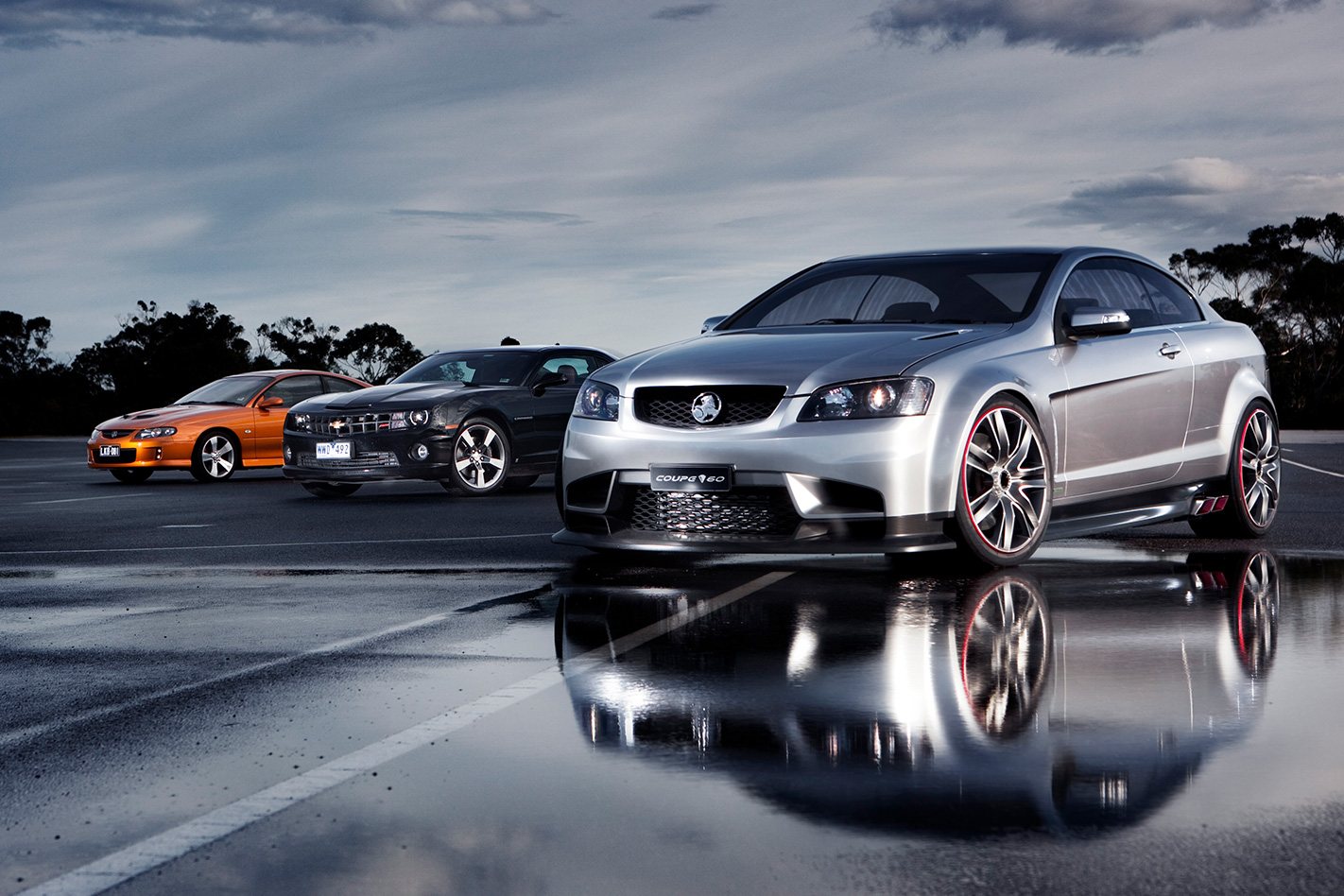
Still photography can’t do it justice because Coupe 60 is live-action. Light plays and pours over it like mercury as this one-off, hand-built creation motors across the Lang Lang skidpan, rumbles to a halt in front of me and, signing off, cracks a lop-sided grin of right lock. Two weeks of revolving on a motor show stand doesn’t touch 10 seconds of this. I’m later told that the eye-riveting, titanium effect of the paint (which Hughes named Diamond Silver) is achieved by an undercoat of black, followed by four coats of chrome silver. The same process is used on a couple of the Camaro’s wheel options, the number of chrome coats determining the darkness of the final finish.
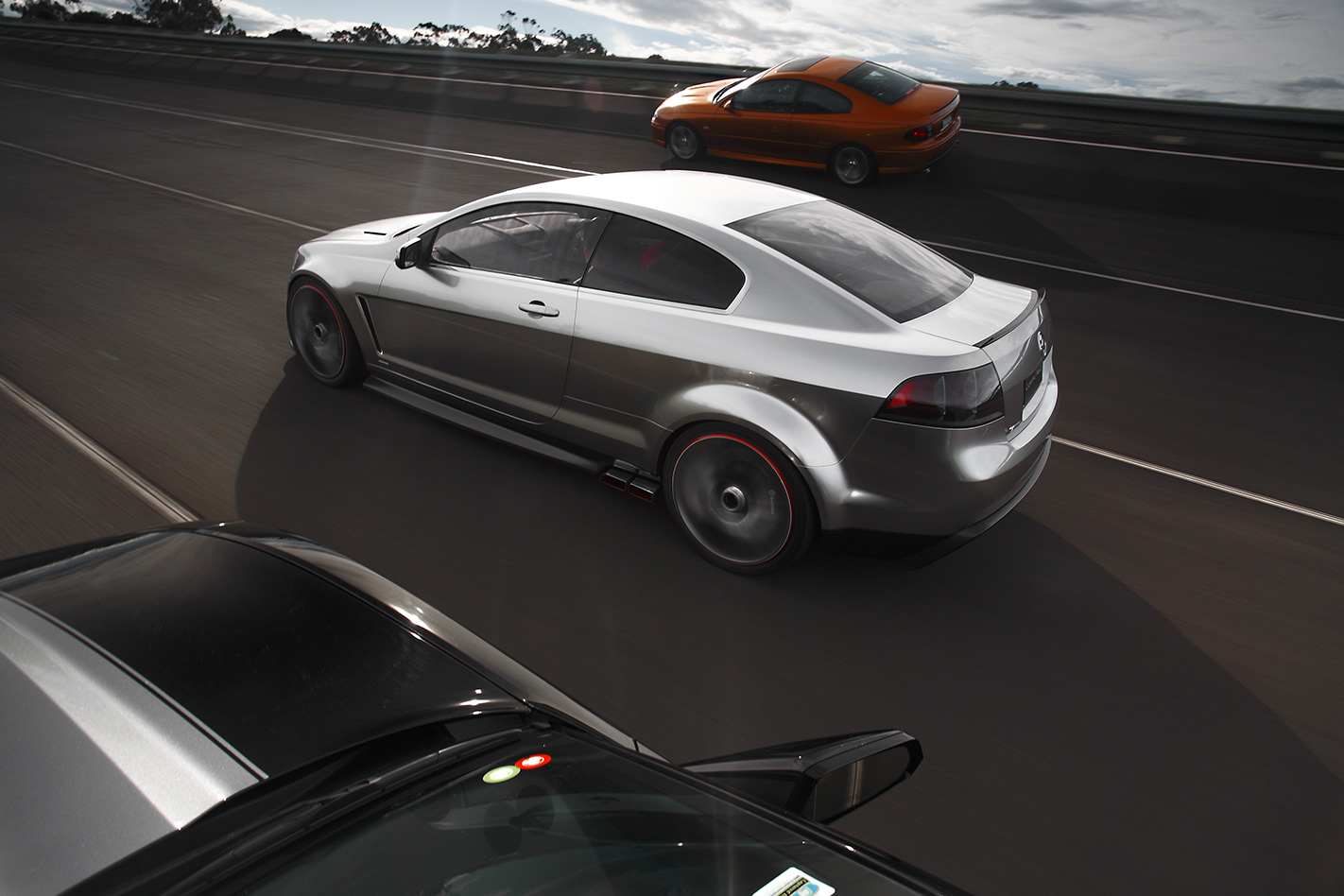
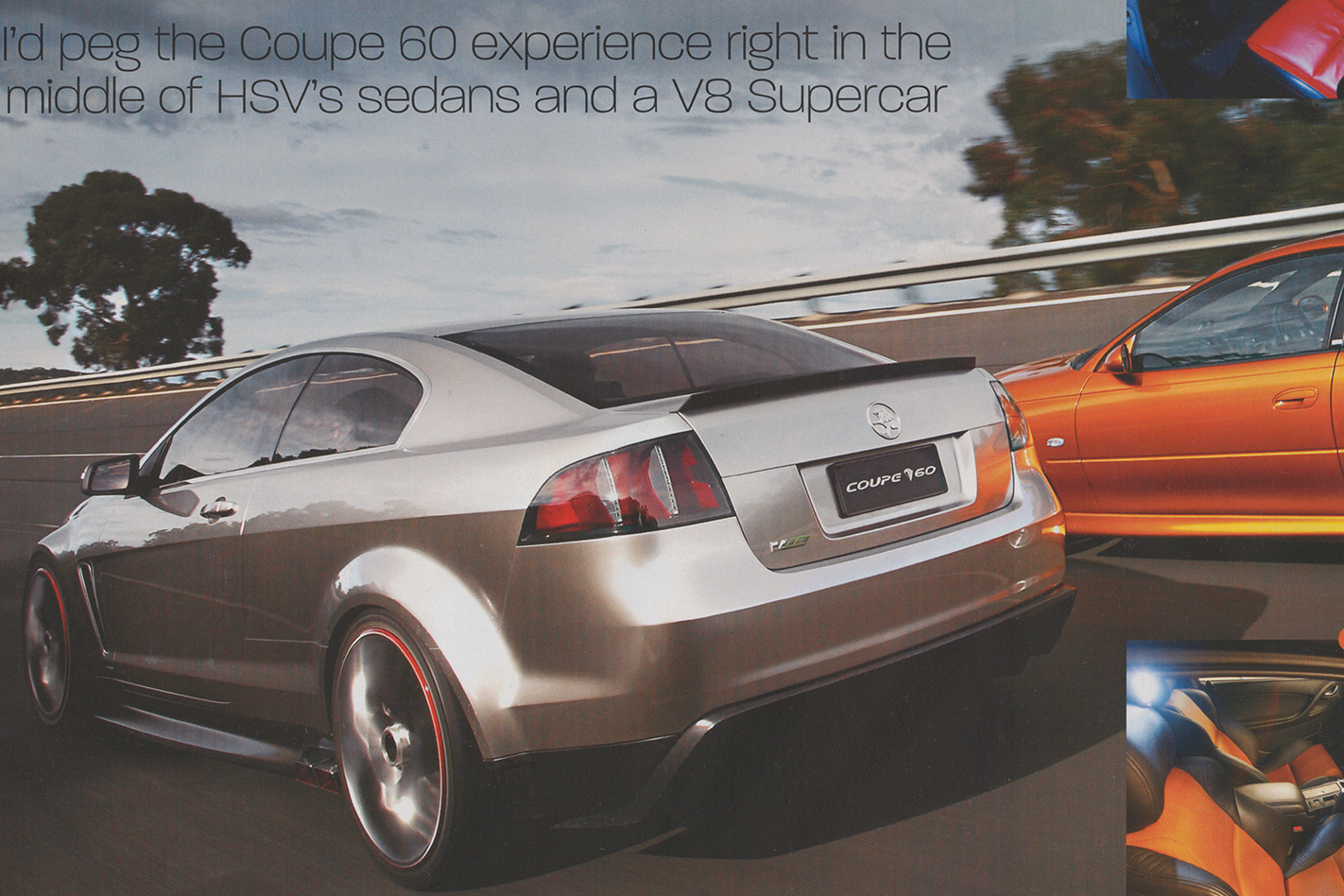
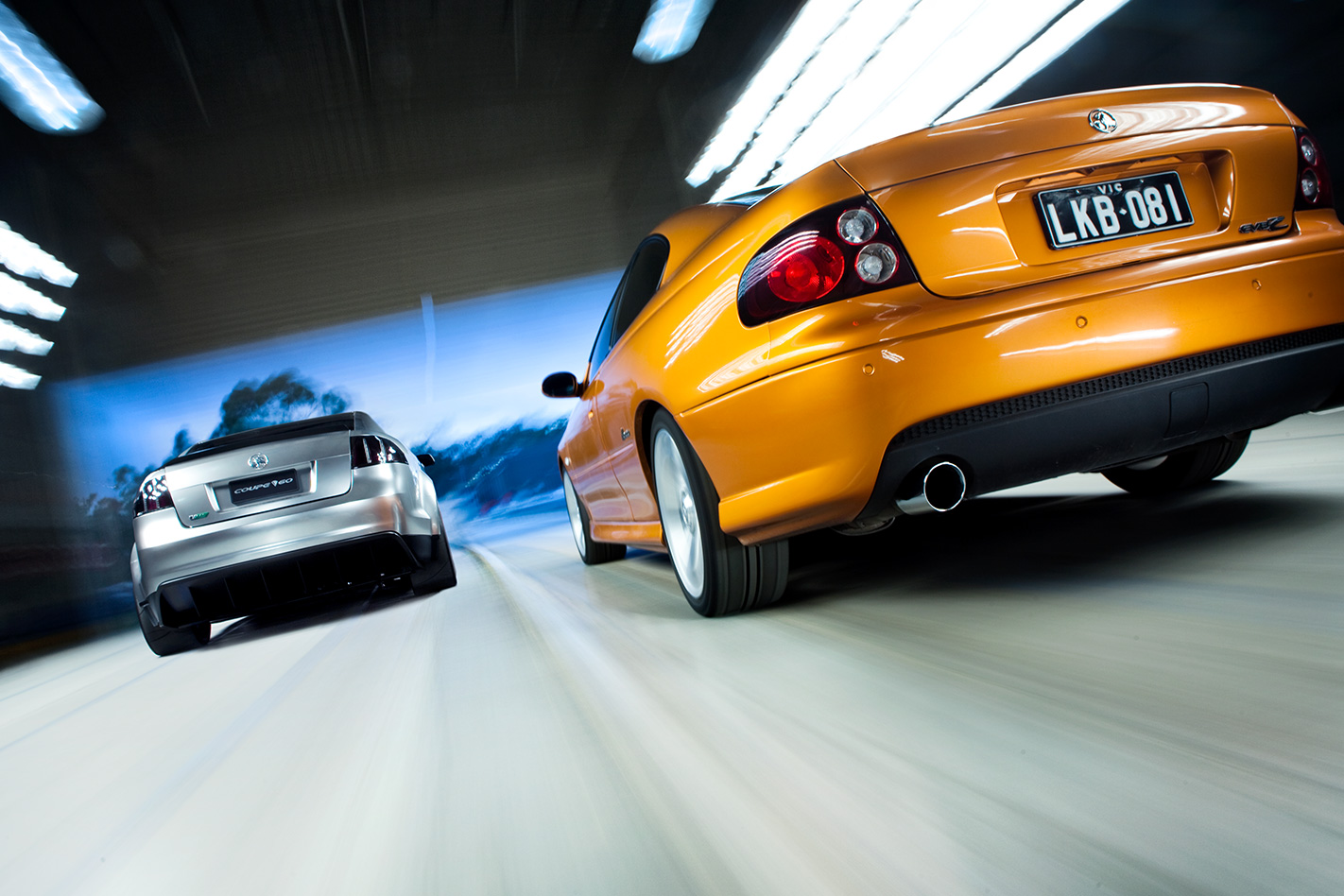
The body shape is a completely logical, yet understandably emotional step from the VE sedan. There’s the zip front overhang, trademark solid surfaces hitting crisp lines, and obvious cues like the hockey stick at the base of the C-pillar. But with its more raked windscreen, 60mm lower roofline, 150mm longer doors (with a properly fast cut-line, unlike the poor old Monaro’s) and 123mm chopped from its upturned tail, Coupe 60 is a more exaggerated and unrestrained expression of VE’s proportions.
The instrument panel is familiar, but different, with the driver’s side graced with a floating instrument pod atop the steering column. Despite the recognisably thick A-pillars and the prevalence of black interior colour – which, here, brings more focus onto the variety of textures used – there’s space and light everywhere.
It’s the pillarless design that absolutely opens the cockpit. The black, high-waisted interior of the VE Commodore (and the Camaro even more so) feel almost dungeon-like by comparison. Remember, underneath Coupe 60’s hand-made fibreglass and carbonfibre panels, is literally a pretty standard, donor Commodore SSV, gas-axed above the sills.
Hughes confesses the pillarless solution is a bit fanciful in these times of cost and side-crash constraints. Coupe 60 hangs together with the help of a boot-consuming X-brace. “It’s still possible to have pillarless, but you throw in extra tin and weight and it’s ridiculously expensive.”
Then again, it might not. But neither Holden’s design department nor the suit who inked the Coupe 60’s $1.5m insurance policy wants to find out.
Almost certainly, we’ll never get to drive a production VE Monaro. Holden’s design efforts are now necessarily split between its large, rear-drive models and a new emphasis on advance design of smaller, front-drive cars, of which the Cruze is an early example.
Hughes sees the Coupe 60 as a glorious celebration of rear-wheel-drive proportions – “every designer in the world would like to work with the proportions that we’re handed out here” – but he stresses the Coupe 60, with its blend of overt sex and enviro-tech sensibility, is very much alive in its message.
If it’s a Chevy Camaro, even a V6, we answer hell-yeah!
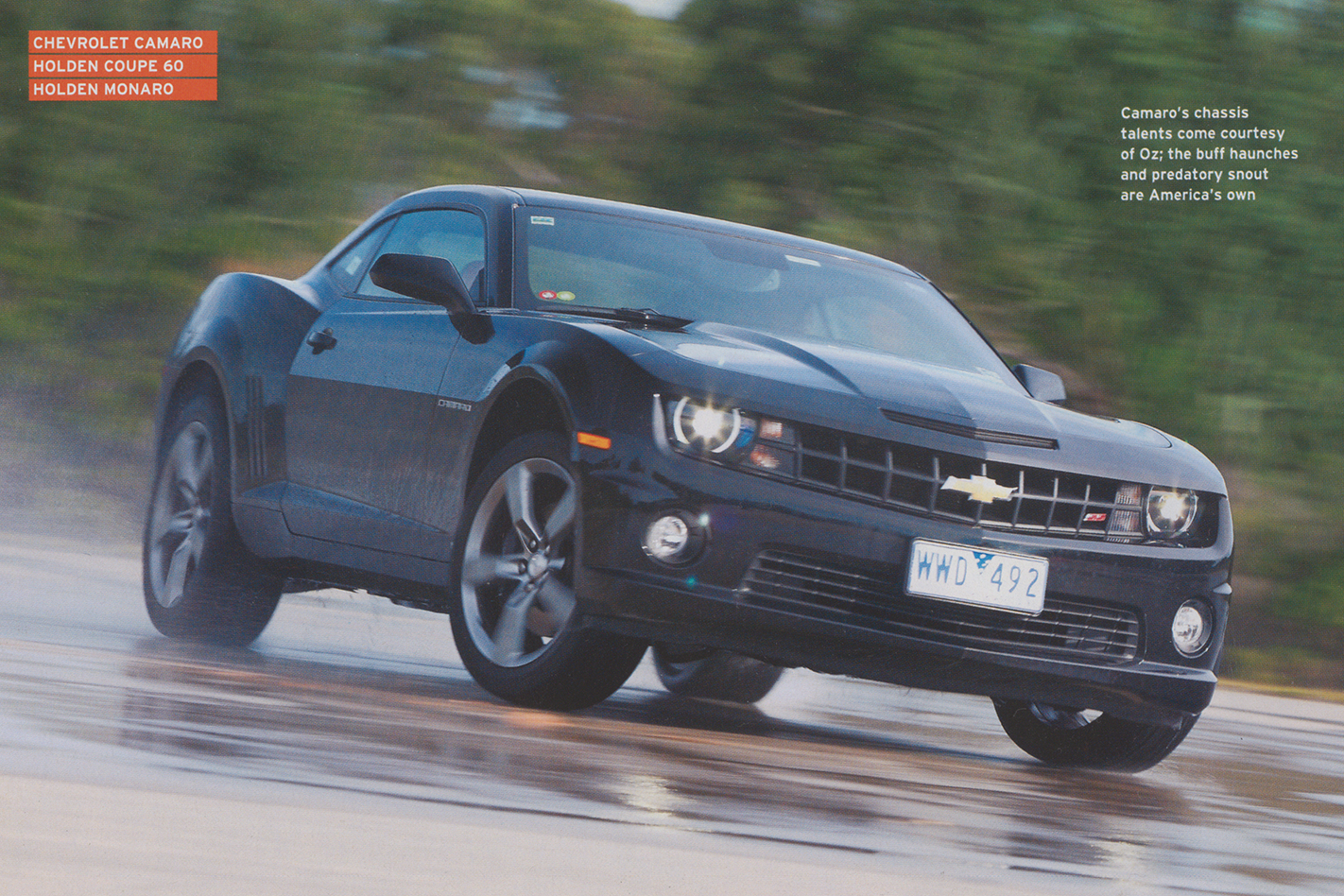
Camaro came from a US show car, but the finished product is as much a tribute to Holden design as it is to Holden’s engineers. Production viability wasn’t included in the fibreglass shell that arrived from the States.
“The show car was what we call ‘cheated’,” explains Hughes. “It can’t be produced. It was pushed to the very limits in terms of pressings, slammed roof, overhangs, those sorts of things. The challenge was to move [key aspects of the structure], by 30mm in some areas, to make it so you can’t pick it.”
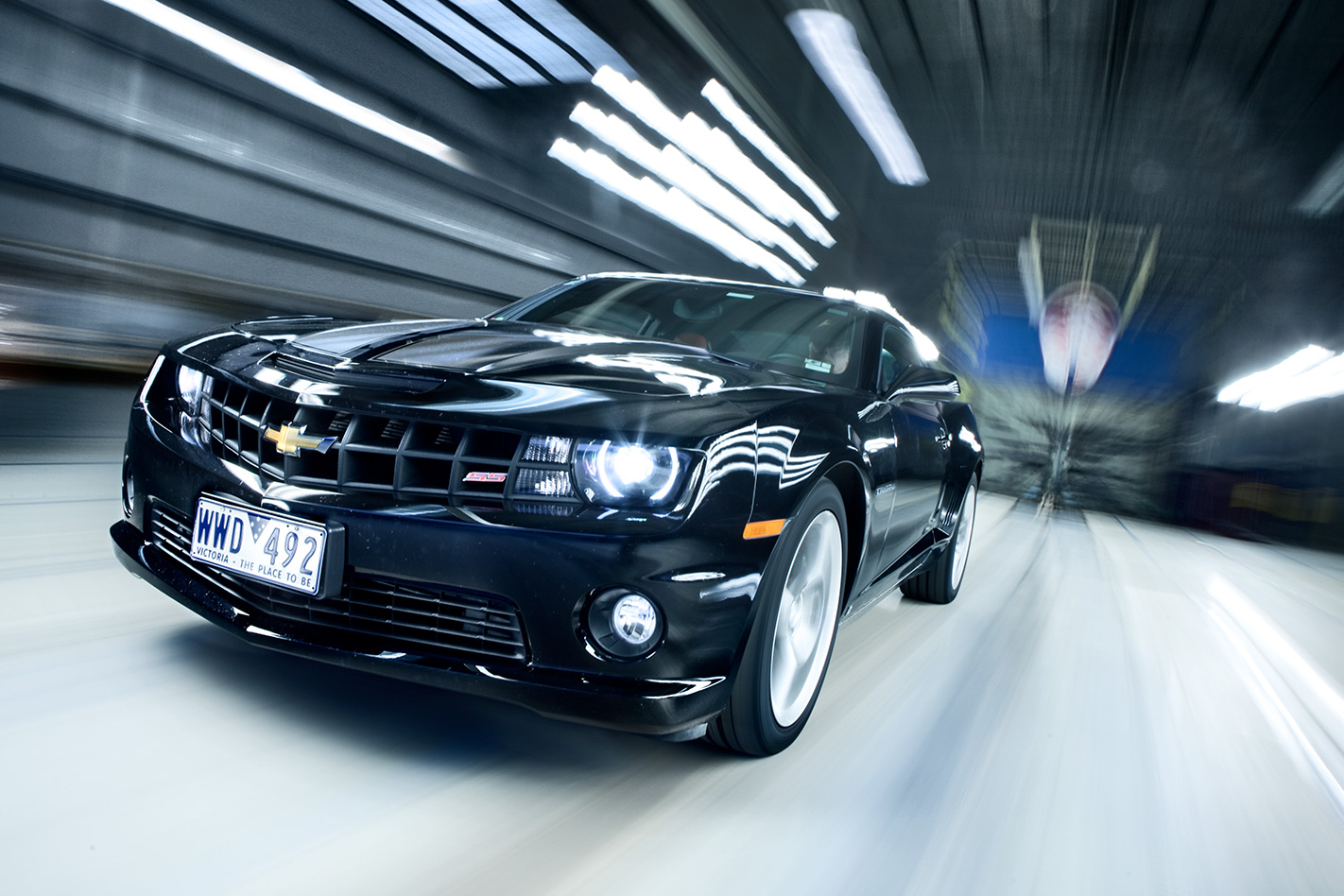
A close cousin of the Coupe 60, Camaro is very much the squat, haunchy two-plus-two. It’s longer in the dash-to-axle (by 75mm), shorter in the wheelbase, much shorter in the tail, wider in the track. I realised that the black Camaro SS Rally-Sport that was staring me down, crow-like, was pure Batmobile.
The interior is certainly dramatic, from the deeply-dished, Buck Rogers steering wheel to the sweeping, amphitheatre-like instrument panel. Everything’s focused on the front two occupants, though the rear is quite habitable for kids. Interior visibility beyond the B-pillar is severely restricted, but the consolation comes in the exterior-mirror view back to those hard-edged haunches.
The dynamics live up to the promise. The manual-trans SS (V8) drivetrain feels instantly familiar to anyone who’s driven a recent V8 Holden/HSV product. There’s a smidge of understeer and perhaps a tad more give in the overall chassis feel, but the chassis’ grip and responsiveness are spectacular. I’m deeply impressed by the SS’s ride, which is pockmarked only by the rumble through the 20-inch tyres … until I step into the V6 base LS version.
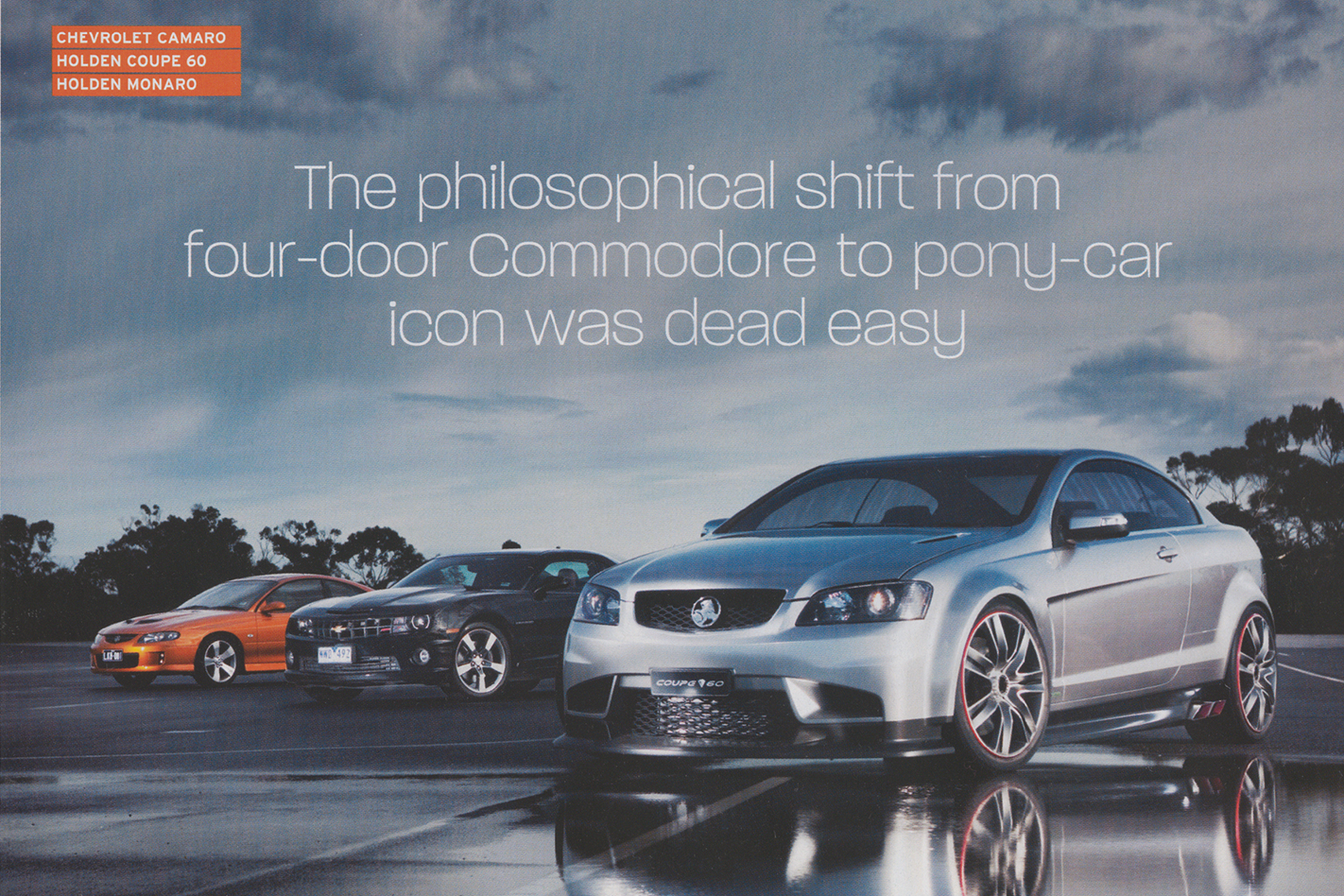
Andrew Holmes, Camaro’s program engineering manager, says the philosophical shift from four-door Commodore to ponycar icon was dead easy. “Among Australian engineers who do that sort of stuff anyway, it was an opportunity for us to build a genuine sports car … Monaro was something that came off an existing platform, there were certain constraints in place.”
In today’s GM, there isn’t the same sort of freedom to do covert, Sunday-afternoon skunkworks projects like the one that started this whole thing 11 years ago. But Holmes points out there’s a definite upside. “Back then we had a little bit more autonomy- but by the same token, there’s stuff you miss out on.
“You know, it’s nice to be able to go to the guy who did Corvette and the Cadi!lac XLR and say: ‘I’ve got a little problem, how did you solve it on your car?’ And at the same time, it’s nice to have those guys all asking us stuff we know about.”
A great thing about our job is being allowed to drive a lot of different cars. If there’s a downside, it’s that we don’t get to know all the cars that come through the WhichCar garage intimately, with our subsequent research revealing certain features that eluded us.
We wondered if this was the case with the actual owners of particular cars. Could it be that they were driving their pride and joy for ages only to discover a helpful function they had no idea about? We asked the question on WhichCar Facebook and got some great responses.
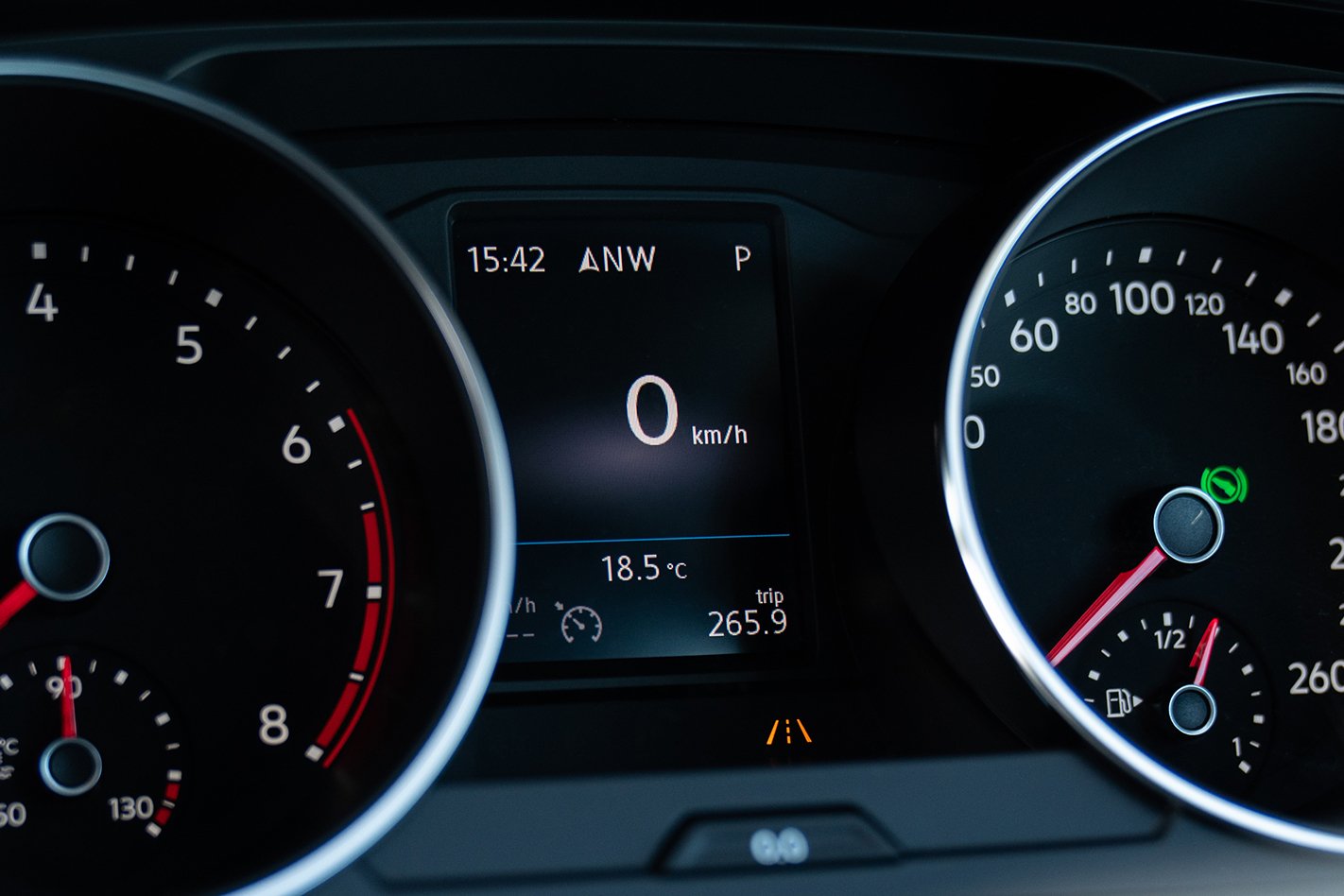
Here’s what our readers came up with. Who knows, some of these features could be lurking somewhere in your car?
“My Honda Accord 3.5 ltr V6 had a digital speedometer so that I can see my exact speed in the dash easily.” – Bijusash
“I bought a new Mazda RX-8 in 2007. In 2009 I reached to the side of the backrest and found a switch. I pressed it and discovered I had a powered adjustable lumbar support.” – Steve
“My (HSV) Clubbie has a little hook on the boot lid which I often wondered what it’s for… turns out it holds up the floor panel for you when you are getting the spare tyre out via a loop attached to the floor. Roadside assistance guy pointed it out to us.” – Patrick
“A factory supplied cargo net for the boot. I only found it when I had a flat and needed to change the tyre!” – Matthew
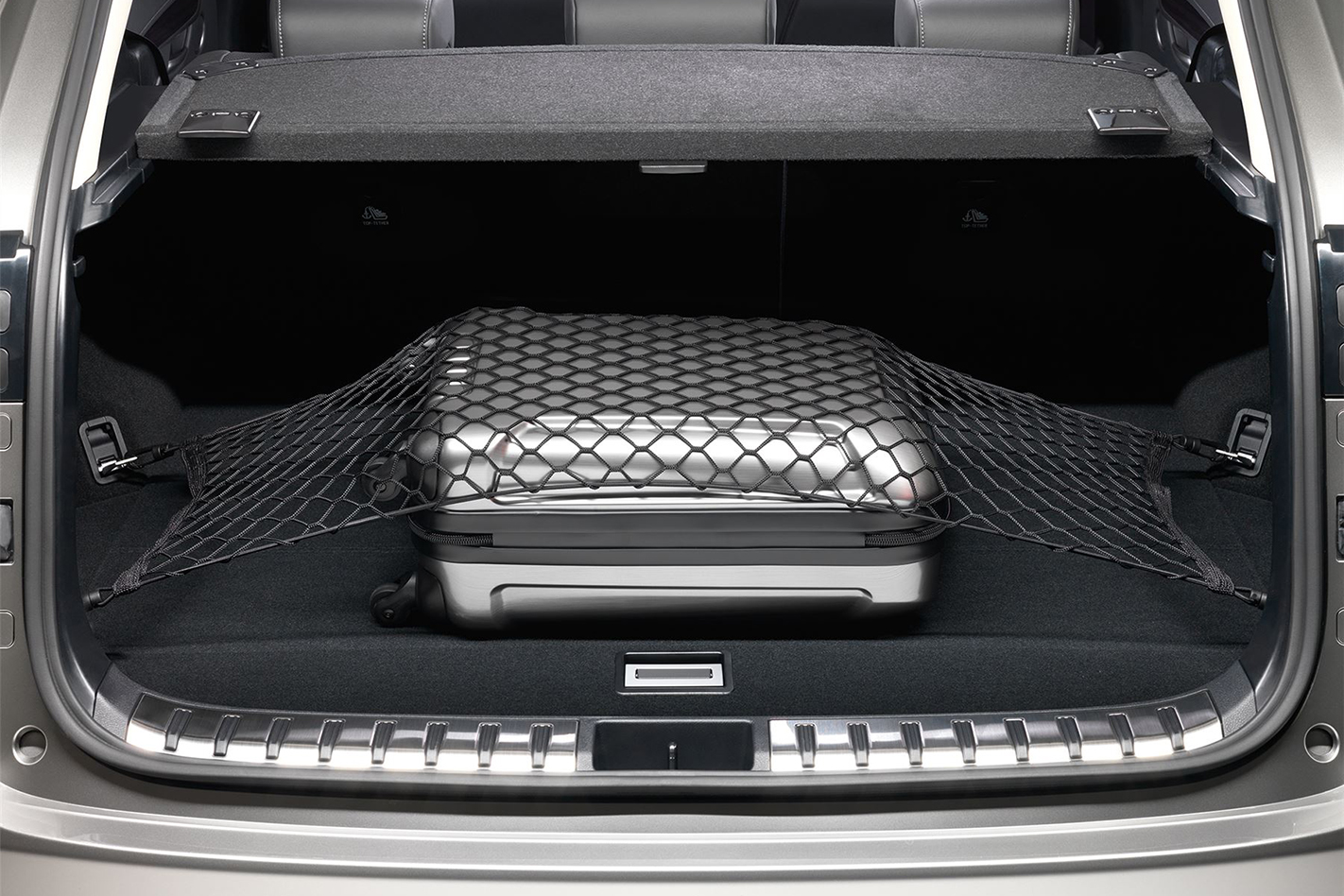
“The Ford Territory has a pull-out storage drawer under the driver seat. Shame it wasn’t filled with $100 notes. Took me about a year to notice it.” – Johnny
“Auto dipping passenger mirror that automatically dips when you put it into reverse so you don’t hit the gutter. It has to be programmed for it to work and took me about three months to find it … .” – Roger
“I had been driving for some years when I first bought a car that had the directional arrow in the fuel gauge. I am embarrassed to admit that it wasn’t till the car after that I discovered that the arrow pointed to the side of the car you filled the tank from.” – Gary
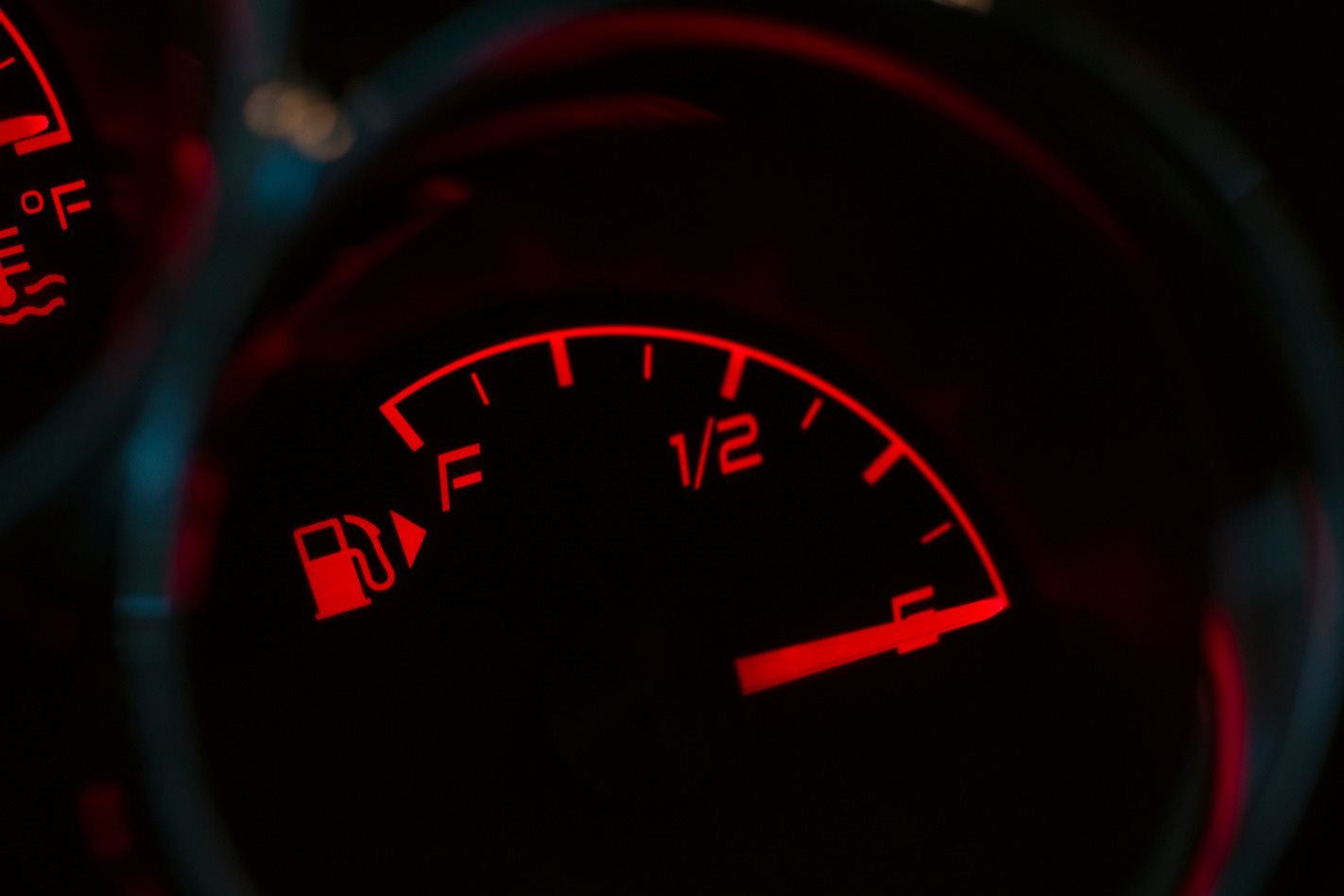
“My glove box can be used for hot or cold items.” – Ricky
“Factory umbrella in the Nissan GT-R.” – Jay (Skoda Superb has umbrellas stored in the front doors too.)
“Mirror demisters in the Volkswagen Golf” – Brad
Have you discovered anything in your car that you had no idea was included in the price? Tell us in the comments section below.
