
GENESIS G70 3.3T ULTIMATE SPORT
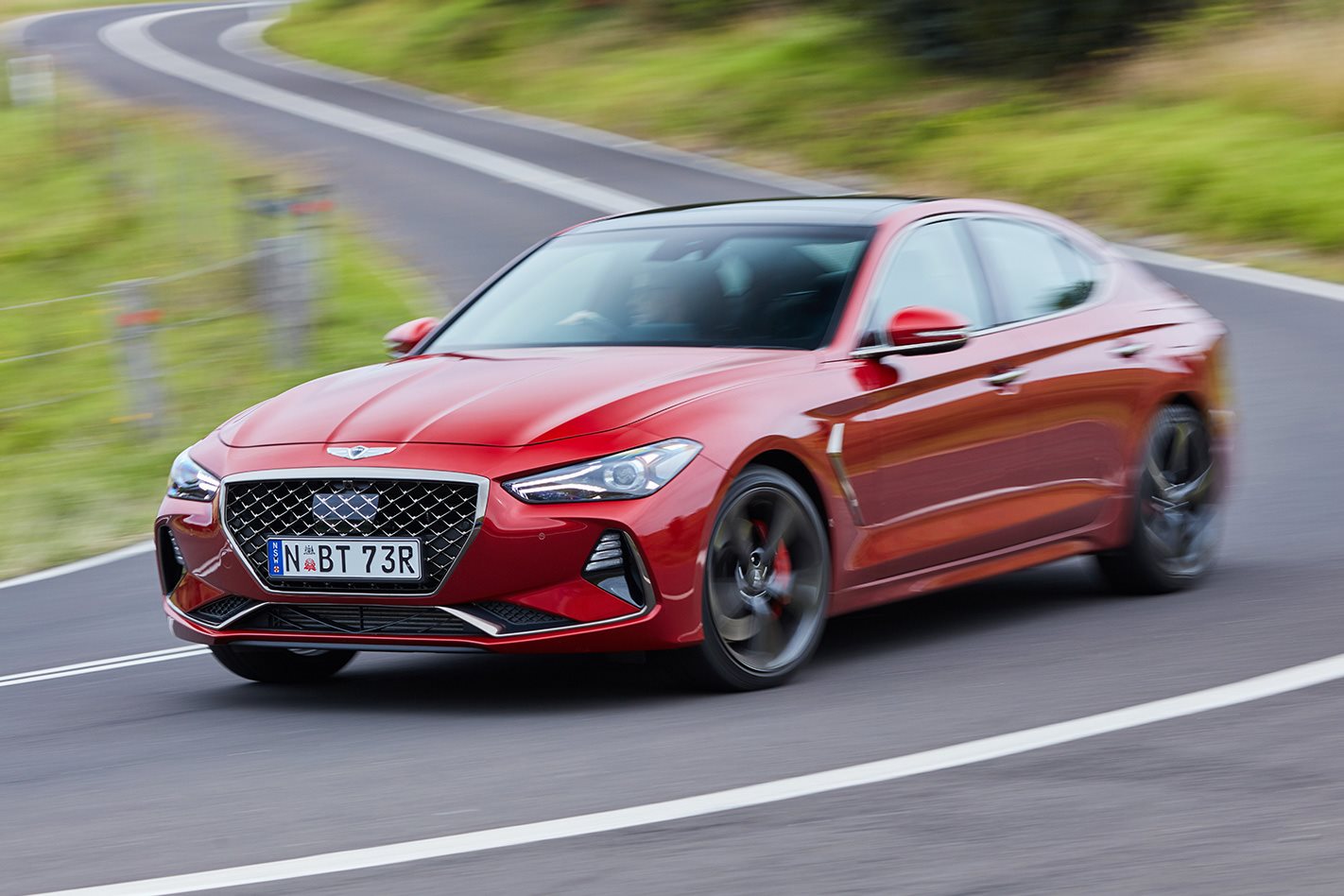
Mention Genesis to most people and they’ll either think of the most industrious part of the Bible or a tedious prog-rock outfit that we have to blame for kickstarting Phil Collins’ solo career. Only a few will make the association with the luxury arm of Hyundai, and if there’s one thing we know about luxury arms like Lexus, Acura and Infiniti, it’s that they’re great at building quality vehicles, but not always so good at selling said vehicles.
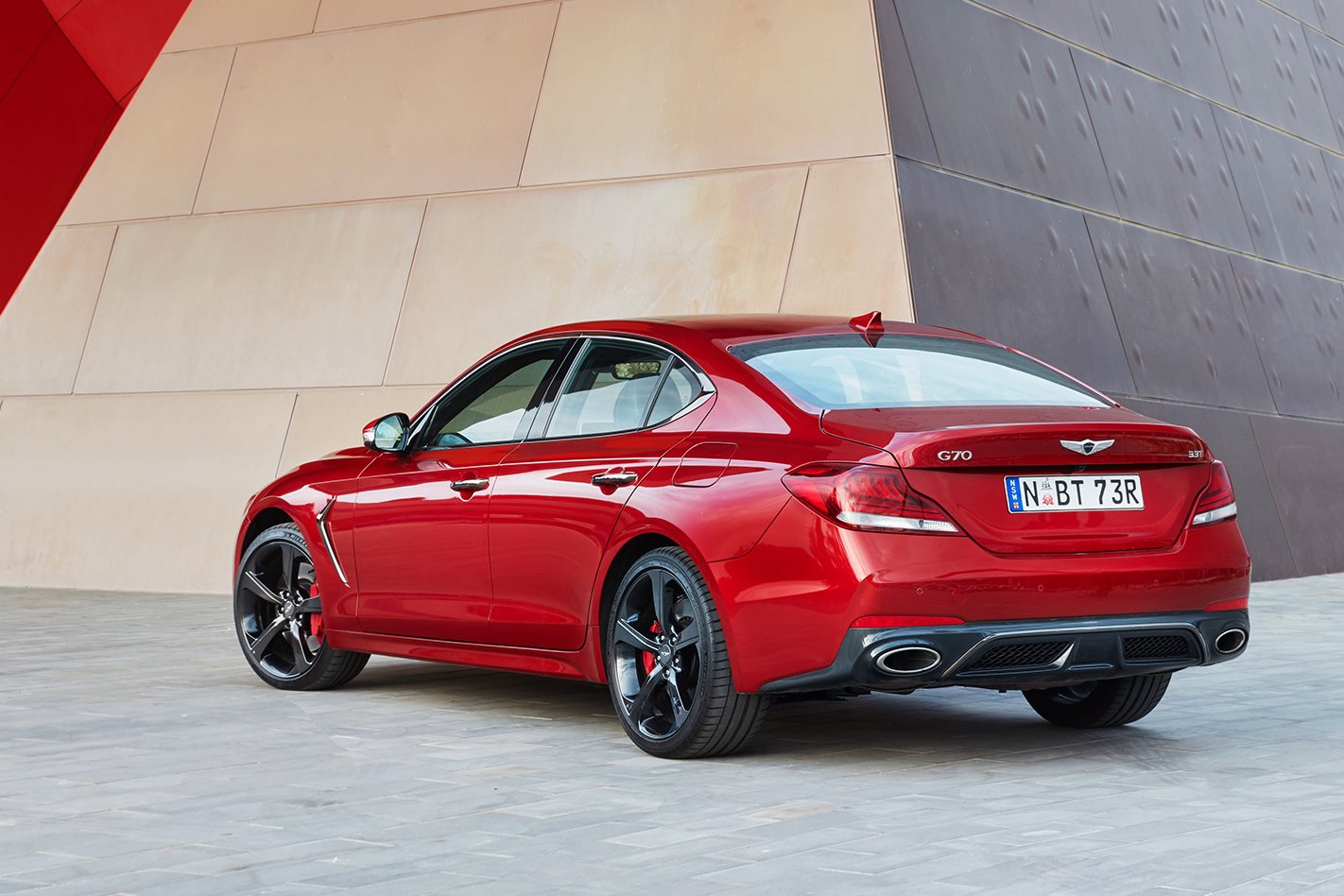
Genesis put a tentative toe into Australian waters back in 2014 with the flagship Hyundai Genesis model. Genesis the brand took quite a bit longer. That car returns in facelifted guise as the G80, but the G70 is the car that has us interested. Think of a slightly smaller, tauter and better finished Kia Stinger and you get the idea.
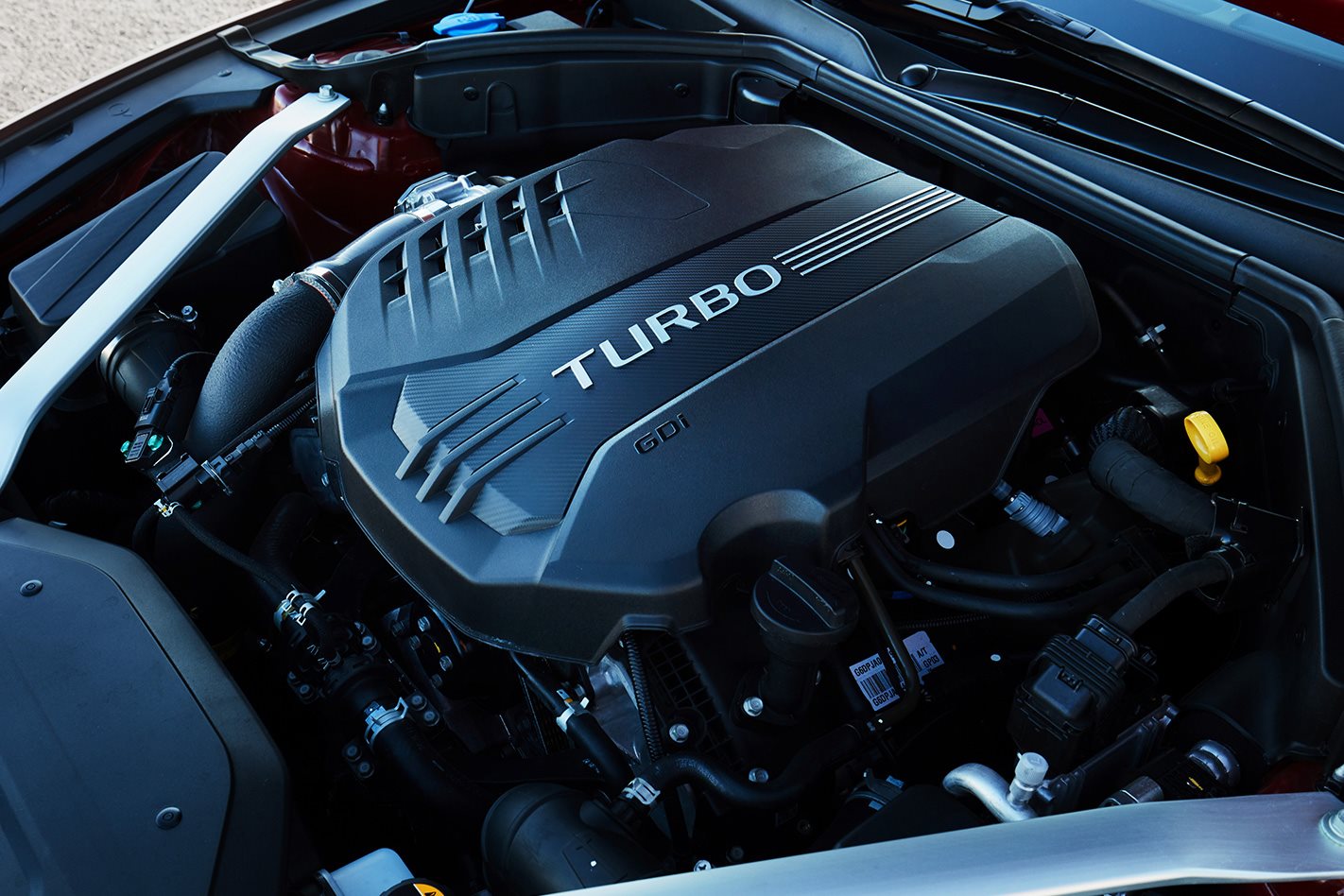
The entry-level G70s are powered by a 179kW 2.0-litre turbocharged four-pot which is a wholly respectable powerplant, but its key problem is that Genesis also offers the 3.3-litre turbo V6 which makes 272kW and 510Nm. You know that phrase ‘less is more’? It’s fairly safe to assume that whoever came up with that crock never drove a Genesis G70 V6.
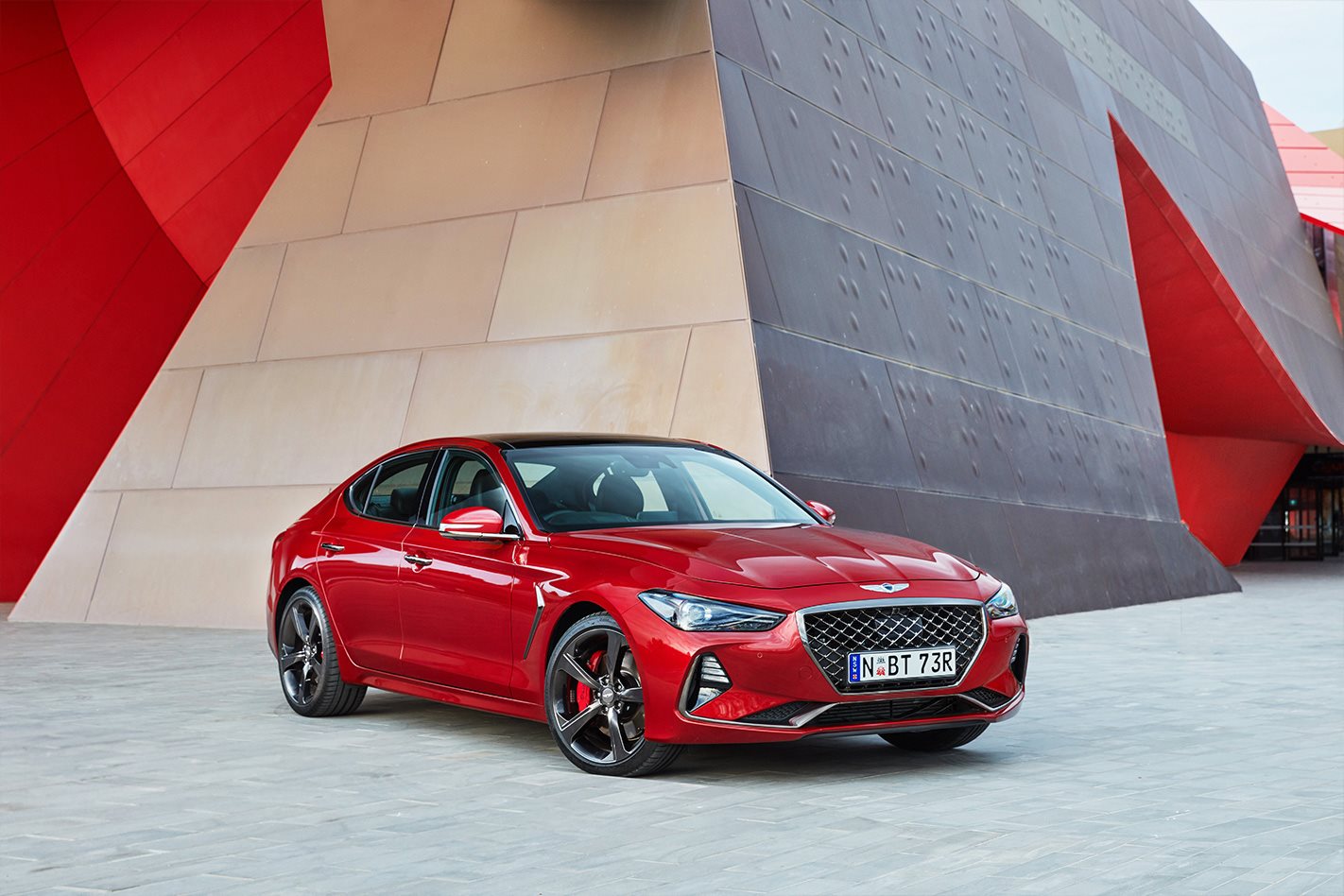
It’s riotously stuffed with grunt. The sprint to 100km/h comes and goes in just 4.7 seconds and, what’s more, it feels properly sorted in the corners. Whereas a Kia Stinger GT with the same engine gets a bit unruly and a little nautical when pushed hard, the Genesis feels pretty much what it is – a shortened Stinger chassis with the benefit of a couple more years of development.
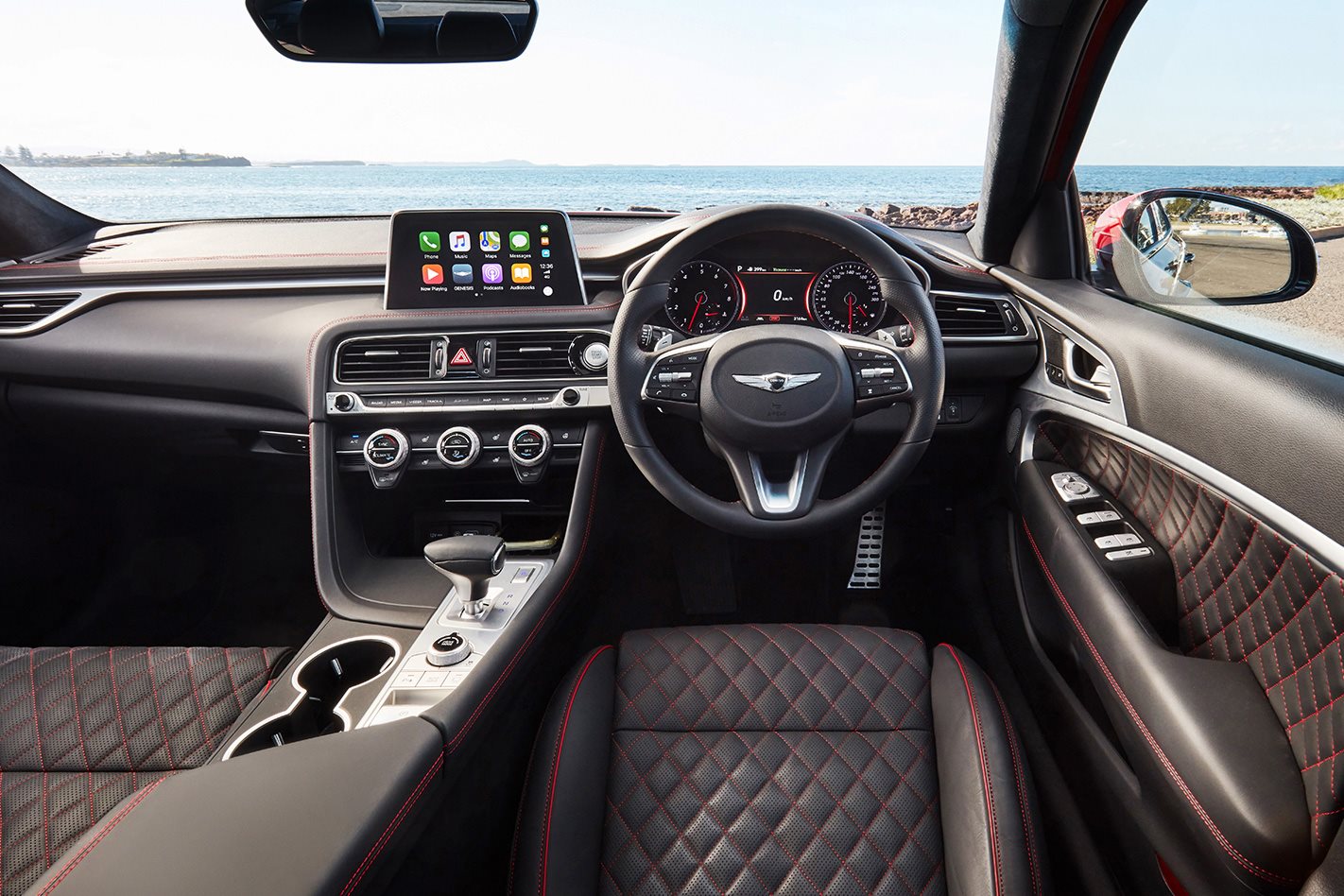
The eight-speed transmission is a decent box although it does have a propensity to upshift too eagerly in Sport mode. Talking of driving modes, this G70 gets adaptive dampers, but the firmer setting doesn’t add too much, so most will probably leave them in Comfort and use the Custom drive mode to tauten up the throttle map and steering.
The interior is beautifully finished with real high quality touch points. No wonder Genesis aced this year’s JD Power survey. The infotainment screen graphics are a bit too gauche for an $80k sports sedan but that’s a small grumble. Of more substance is the contention that the 330-litre boot is just too meagre. Compare that to the 480-litre boot of class rivals like the BMW 3 Series and Audi A4 and you can see that G70 drivers might have to pack a bit lighter.
Where the G70 really scores is in offering a hassle-free new car experience. Buyers get a five-year warranty, five-years of free servicing, no haggle pricing, a valet who arrives at your house with a courtesy car when your G70’s due for scheduled services and all the garnish like five year satnav map updates, five year roadside assist and a home delivery test drive service. If you’re looking for a half-decade of genuine fire-and-forget sports sedan ownership, absolutely nothing beats the Genesis G70.
MERCEDES-AMG C43
For around $80,000, you could net yourself a 2017 Mercedes-AMG C43 with around 20,000km on the clock and a year of warranty still remaining. Unlike its Korean counterpart, it’s unlikely that you would ever have to explain exactly what a ‘Mercedes’ was. You’d get a 3.0-litre twin-turbo V6 good for 270kW and 520Nm, and if those figures look practically lineball with the G70, it translates that way on the road too, the AMG going neck and neck with the Genesis on the strip, both recording a 4.7s 0-100km/h performance.
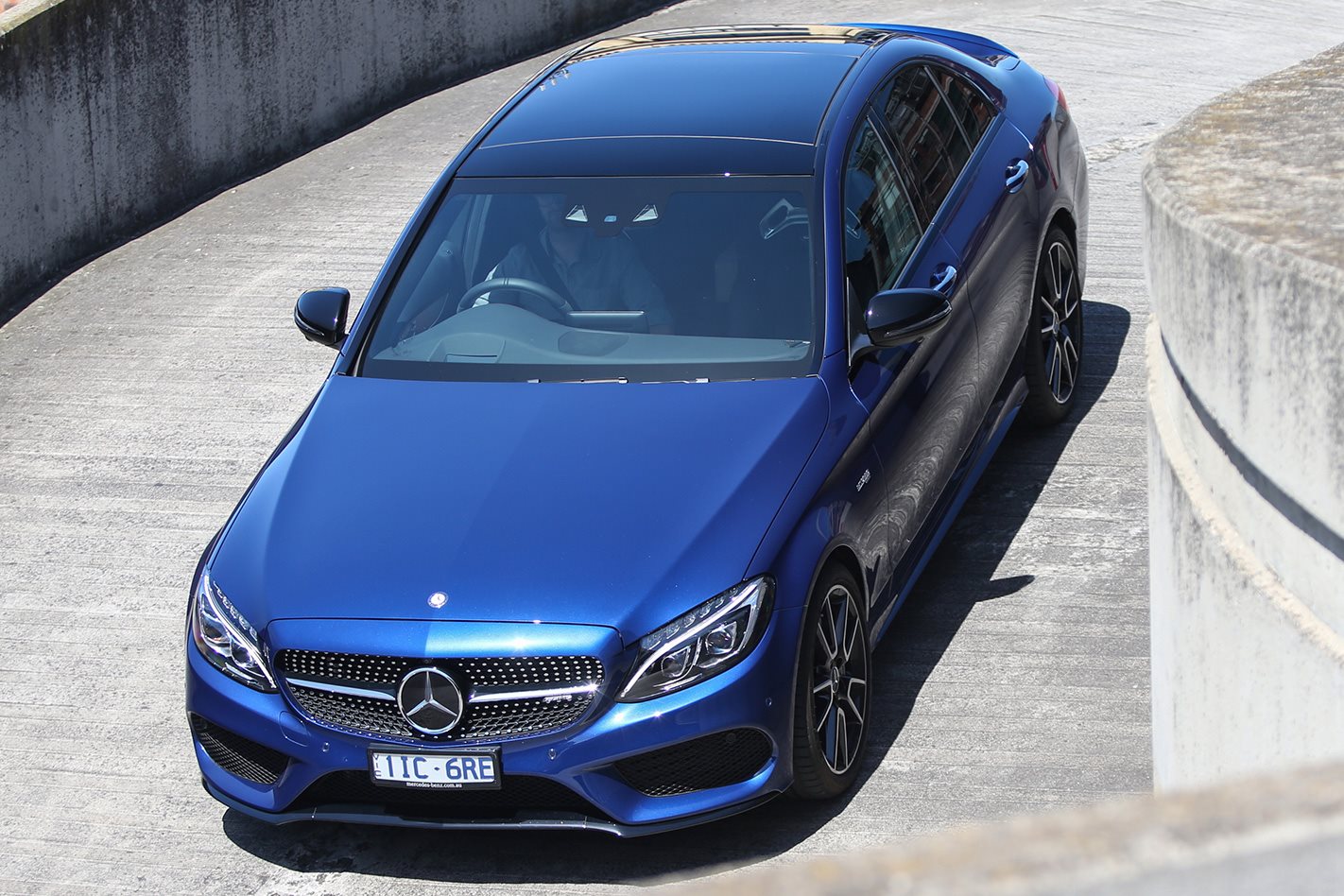
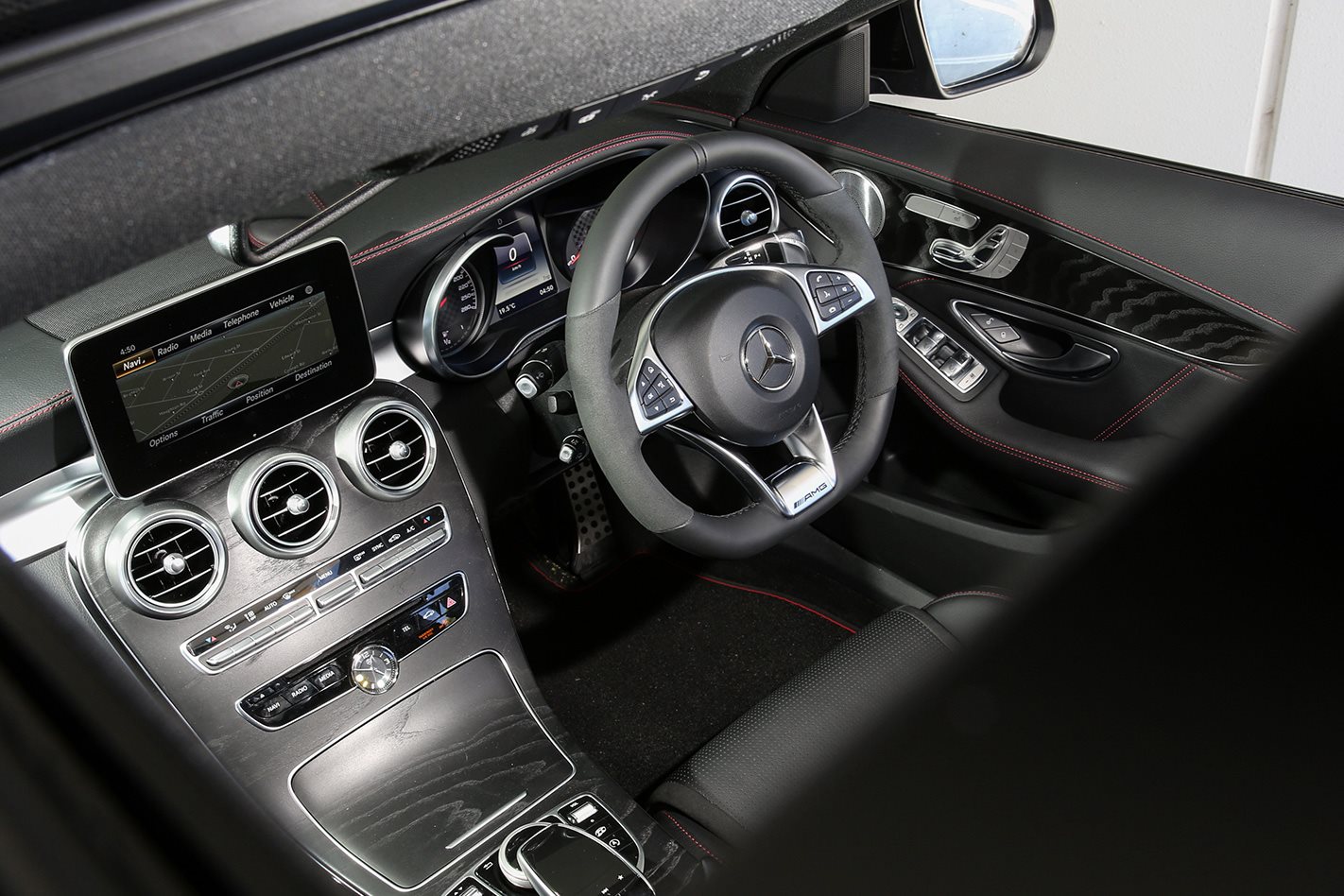
It’s not as if the Mercedes will feel dated either. Features like voice recognition, a hard disk media player, a fantastic surround-view camera, nine airbags, parking assist and an interior that majors on the sort of sense of occasion that the Genesis singularly lacks. Of course, we could go back and forth all day about perceived quality versus actual quality but there’s little doubt that the three-pointed star carries the sort of badge equity that’s but a minuscule speck on Genesis’ forward-planning horizon.
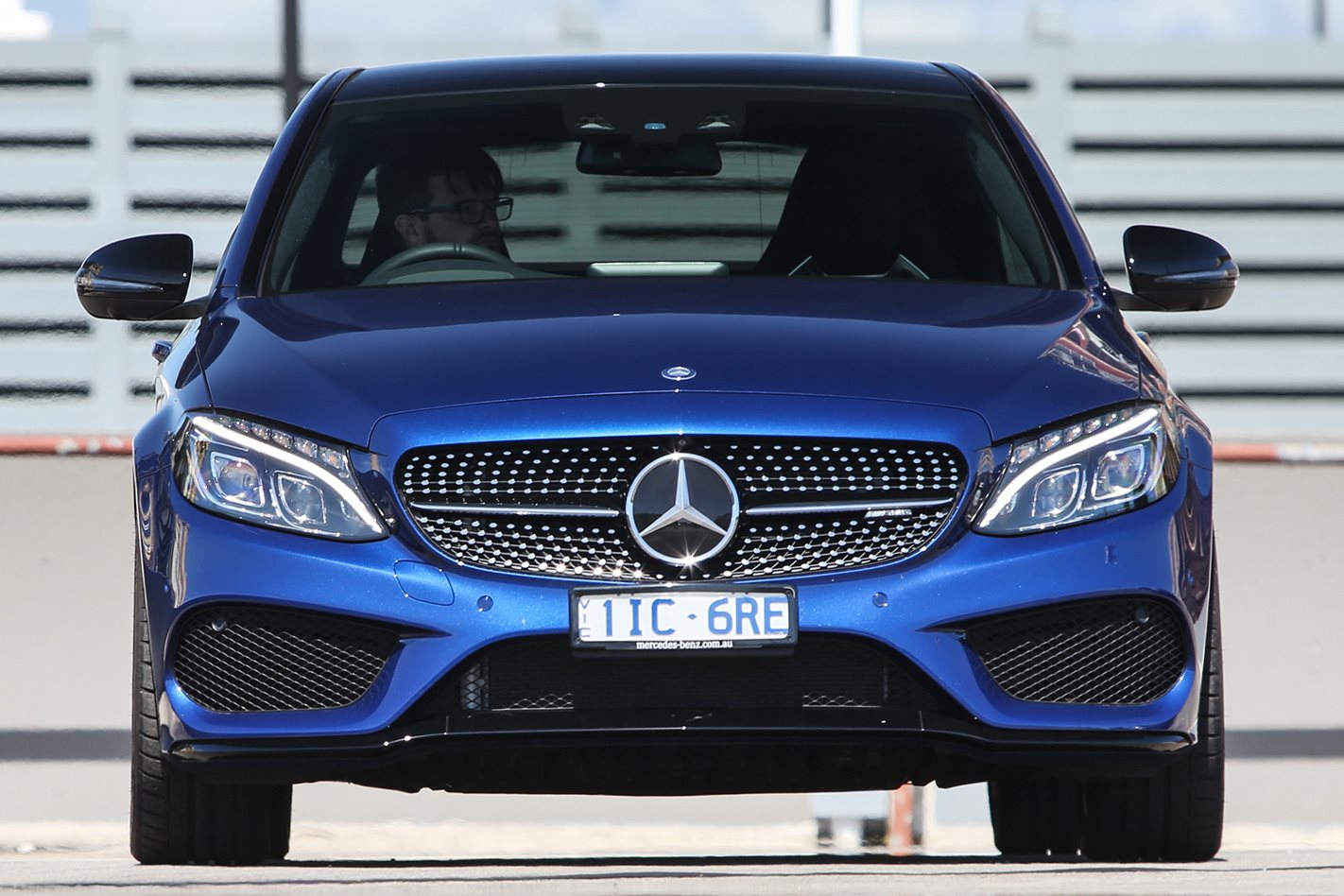
Merc’s 4MATIC all-wheel drive system underpins the C43 with a rear-biased torque distribution (31 percent front, 69 percent rear) for a predominantly rear-driven feel that delivers on AMG’s brand promise of ‘Driving Performance’ in every respect. Sports suspension with adjustable dampening lifted from the Mercedes-AMG C63 also features along with AMG’s ‘Dynamic Select’ drive modes and a three-stage ESP.
The C43 also features AMG’s typical pops and crackles when you switch it into its sportier settings and the 3.0-litre six has a musicality that the 3.3-litre Kappa unit in the Genesis lacks. The flashy badge and the streetside aural theatrics may well be enough to swing the balance for some. There’s no doubt that the AMG is the more overt offering but could the cerebral Genesis be the better car? On a twisty road, we reckon the all-wheel drive AMG would have a tough time keeping up with a G70. Of course, if it was wet, the tables might be turned thanks to the Merc’s all-wheel drive advantage but the G70 just feels as if it has a better-judged ride and handling package. Couple that with virtually unparalleled after sales care and we’re going for the classy Korean. There’s a turn up for the books.
Specs comparison
Wheels staff picks

Alex Rae
Online Editor
Genesis’ first foray into Australia was bolstered by being hugely popular with chauffeurs, which is a testament to the reliability and the perceived ‘premiumness’ it has – word gets around fast between the guys that live in these things for a living. But that’s also inculcated me with the image that it’s still a bit fuddy compared to the lively C43, which undoubtedly has a more raucous character. But Genesis is now much more than a VHA special. The G70 is fun, lively and has an authentic character all of its own. It mightn’t bark like a mongrel but it’s a nimble as a grey hound which is ultimately more fun. All of the ownership bliss is brings to the luxury market is just icing on the cake.

Andy Enright
Deputy Editor
This wasn’t actually that easy a decision, largely because of the pull of the AMG’s intangibles. Your head says Genesis, but then you picture a snarly twin-turbo Merc in your garage and the feel-good you’d get every morning dropping into that cabin and you start to be drawn to the German car. But there’s one inescapable fact. The G70 is a more involving car to drive. It has a rear limited-slip differential – unlike the AMG – and has better steering and far superior ride quality. Factor in bulletproof build quality, full smartphone mirroring, beautiful quilted leather seats, wireless phone charging and you have a stylish sports sedan that is incredibly easy to live with. As much as I’d still feel a pang of angst whenever I saw a C43 AMG alongside, it wouldn’t last too long.

Cameron Kirby
Staff Journalist
I have no time for badge snobbery. A good or bad car isn’t made by the emblem on the back, so i’m personally drawn toward the Genesis out of this pair. While the C43 is a good thing – and certainly worthy of the AMG badge – it doesn’t match the comfort or luxury of the G70. Perhaps surprisingly, the G70 is the one that has more of a tendency to bite back, with an ESC system that will permit slides which require surprising amounts of opposite lock even in its tamest setting. While the sound is thoroughly disappointing and mute compared to the AMG’s pops and crackles, it’s the everyday liveability, comfort on long trips, rear-drive thrills, and punchy engine that have me swinging toward the Genesis.
Reckon we’ve got it right? Or are we way off the money (literally)? Find your best and let us know in the comments what you’d buy.
Axed. The looks on everyone’s faces said it all: shock, but understanding. Barely halfway through the annual MOTOR Tyre Test, Editor DC called it. It was time to pack up and go home; we were wasting our time.
The weather is out of our control, you see, and we can’t do the Tyre Test indoors – not easily, anyway. And so what you’ll read is not the fruit of our first attempt at Tyre Test 2019, but rather our second, as the first attempt at MOTOR’s annual rubber ring Olympics was sadly rained out.
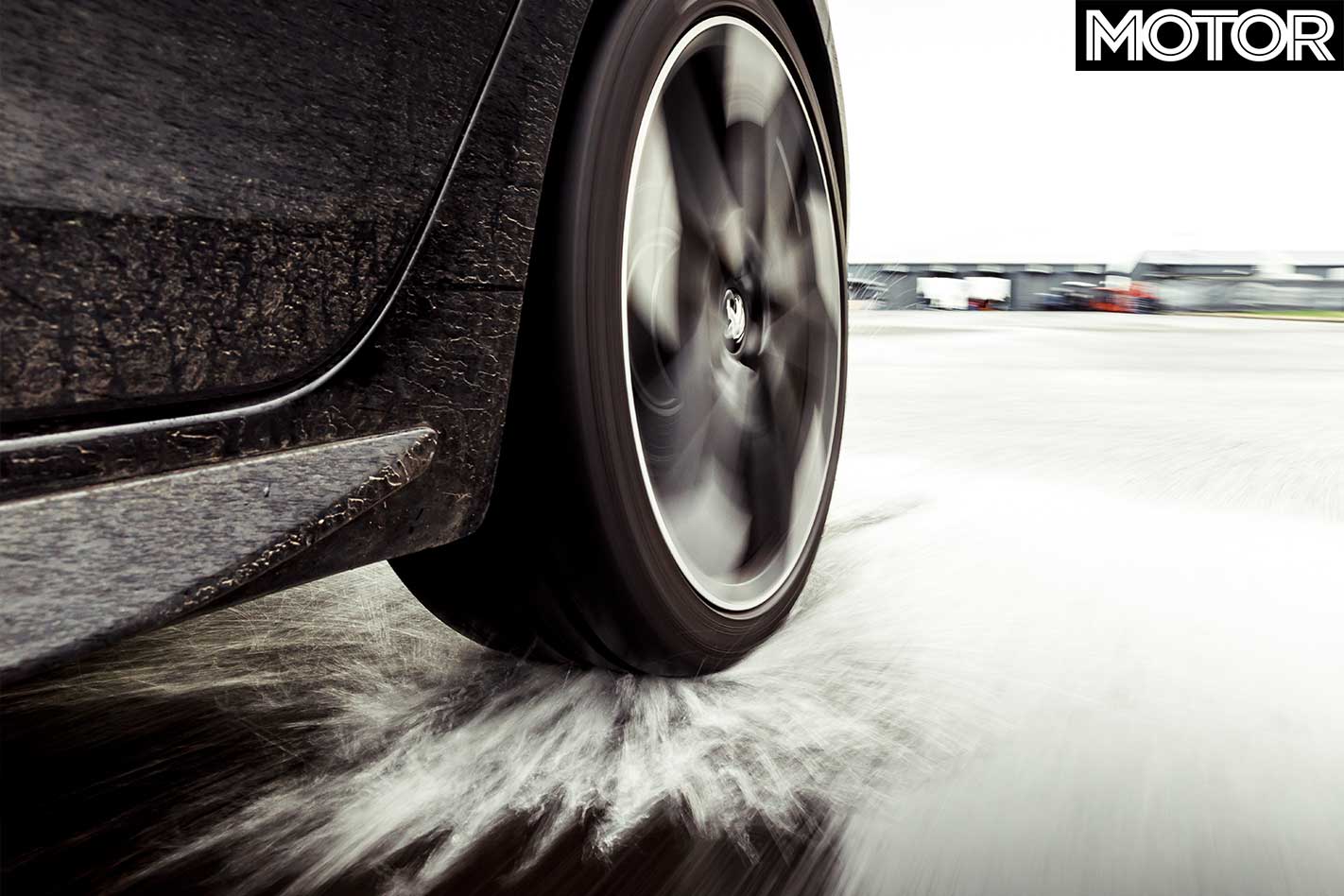
It wasn’t just that we didn’t want to get wet, but that the inclement weather was starting to affect our precious data in unpredictable ways. The MOTOR Tyre Test, carefully honed into its current format since 2001, is Australia’s longest continuously running and most trusted independent media tyre evaluation, and with the integrity of this test firmly in mind, we’re not going to publish data we are not 100 per cent satisfied with.
And so we cut our losses and regrouped for round two – that being Sydney Dragway (the battleground), Warren Luff (the hotshoe), a Peugeot 308 GTi and eight new performance tyre patterns to be put through five testing disciplines, three dry, two wet. And then a whole lotta number crunching.
Sydney Dragway: The Venue
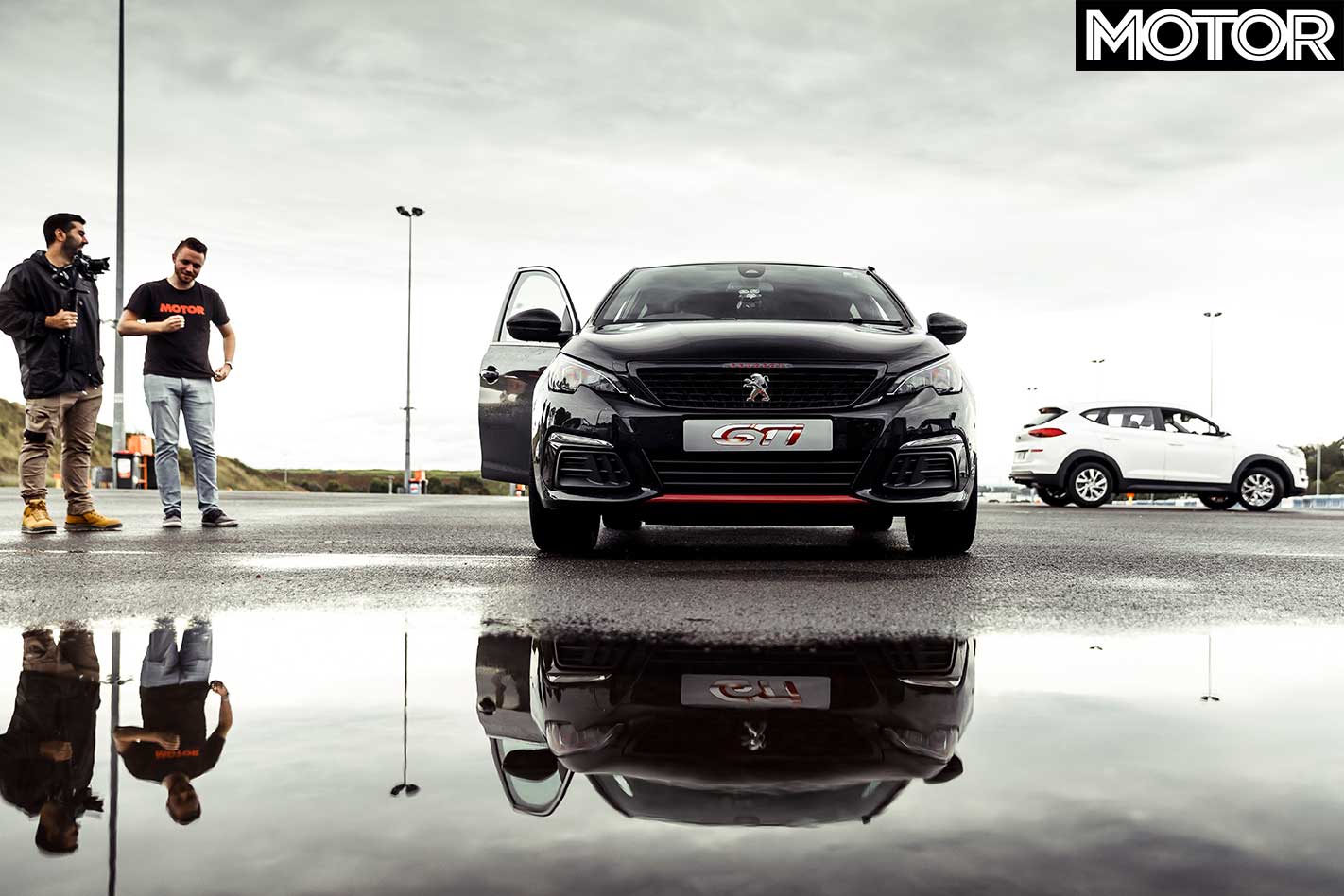
Sydney Dragway, 7.30am. It’s 17 degrees Celsius, damp, and incredibly foggy, but it’s not raining. Score.
Some of the various crews involved in making our tyre test run smoothly have already arrived, including the team from JAX Tyres, as the MOTOR hire car rolls into one of the large car parks near Sydney Dragway. That car park soon becomes scattered with cones and turns into a small motorkhana course (we’ll explain later), while the surface is still damp from the previous cold, drizzly night.
Not far away is another area set aside for wet testing, sprinklers are at the ready to keep the surface saturated. Finally, a couple of hundred metres away is the prepared surface of the drag strip, with cones arranged for a slalom and dry brake test. If it were viable for us to do our tyre test indoors, we would. But Sydney Dragway is the next best thing.
2019 Peugeot 308 GTi: The Car
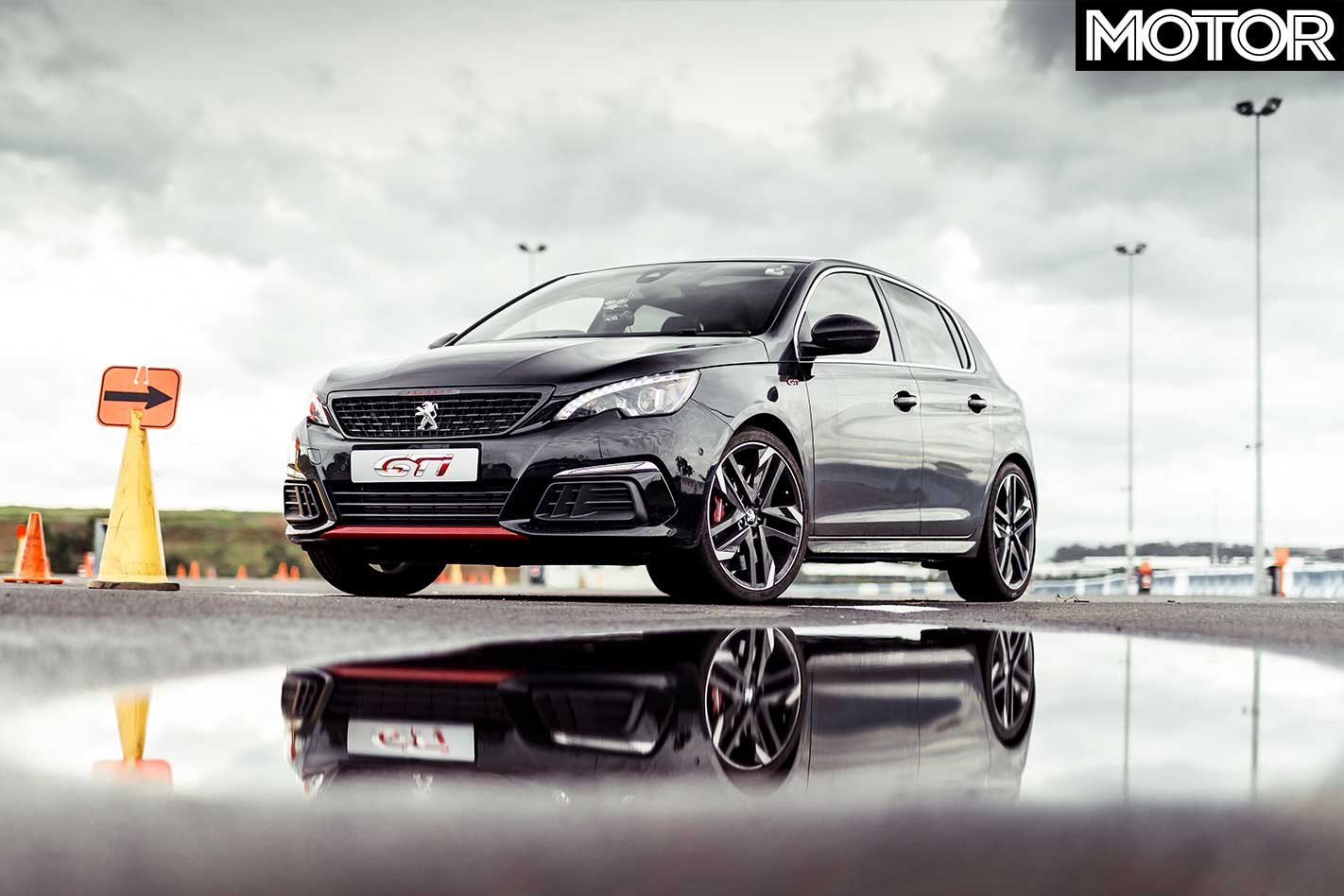
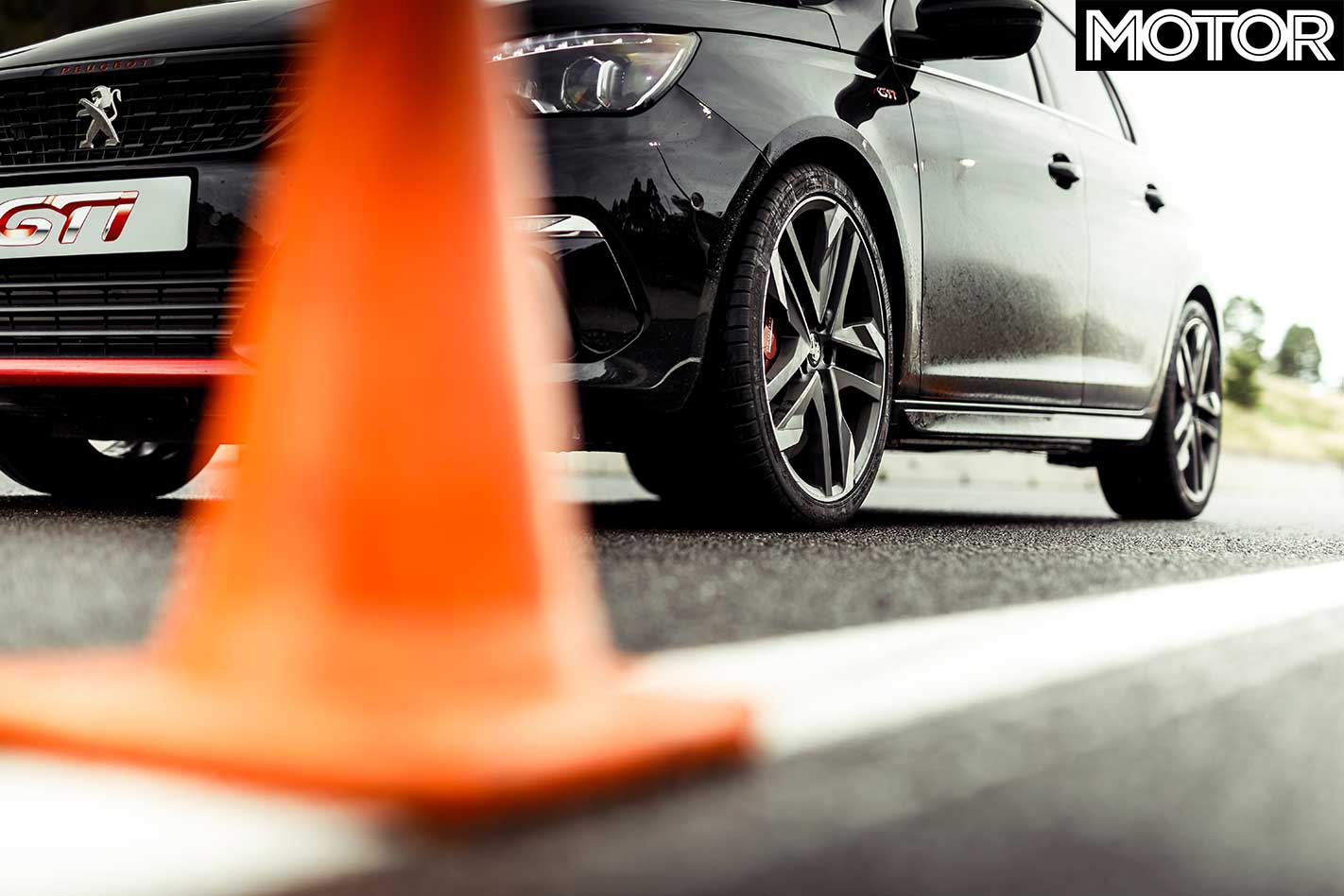
Graciously supplied by France’s own ‘lion brand’, a Peugeot 308 GTi serves as the test car for this year’s big event. Wearing the control tyres upon arrival, the GTi is joined by a backup car which primarily exists to lend its wheels to make the job faster and easier for the pit crew. An extra set of wheels means another set of tyres can be ready before the car comes back in to swap over.
With 200kW and 330Nm, a six-speed manual gearbox, and a 1205kg kerb weight, the GTi proves to be an exciting enough car to watch (and photograph), with its playful chassis providing plenty of opportunities for Luffy to cock a wheel. His only complaint about the car was that it didn’t have a racing seat, but a seat designed for comfort. It turns out MOTOR’s Tyre Test requires a well-bolstered seat.
The 308 GTi firmly ticks all other boxes though, those being some serious braking hardware (monster 380mm front discs and four-piston Alcon calipers; 268mm, single-piston rear), essential for repeatability; ESP that can be fully deactivated; a front limited-slip differential; and slightly stiff suspension offering some very tight body control. We’ve driven the 308 GTi on track at several other MOTOR tests and came away impressed with its ‘trackability’ and longevity.
That its 19 by 9.0-inch wheels are shod with stock 235/35 ZR19 tyres – a very common fitment these days – also helped. The OE tyres are Michelin Pilot Super Sports.
MOTOR Tyre Test 2019: The Tyres
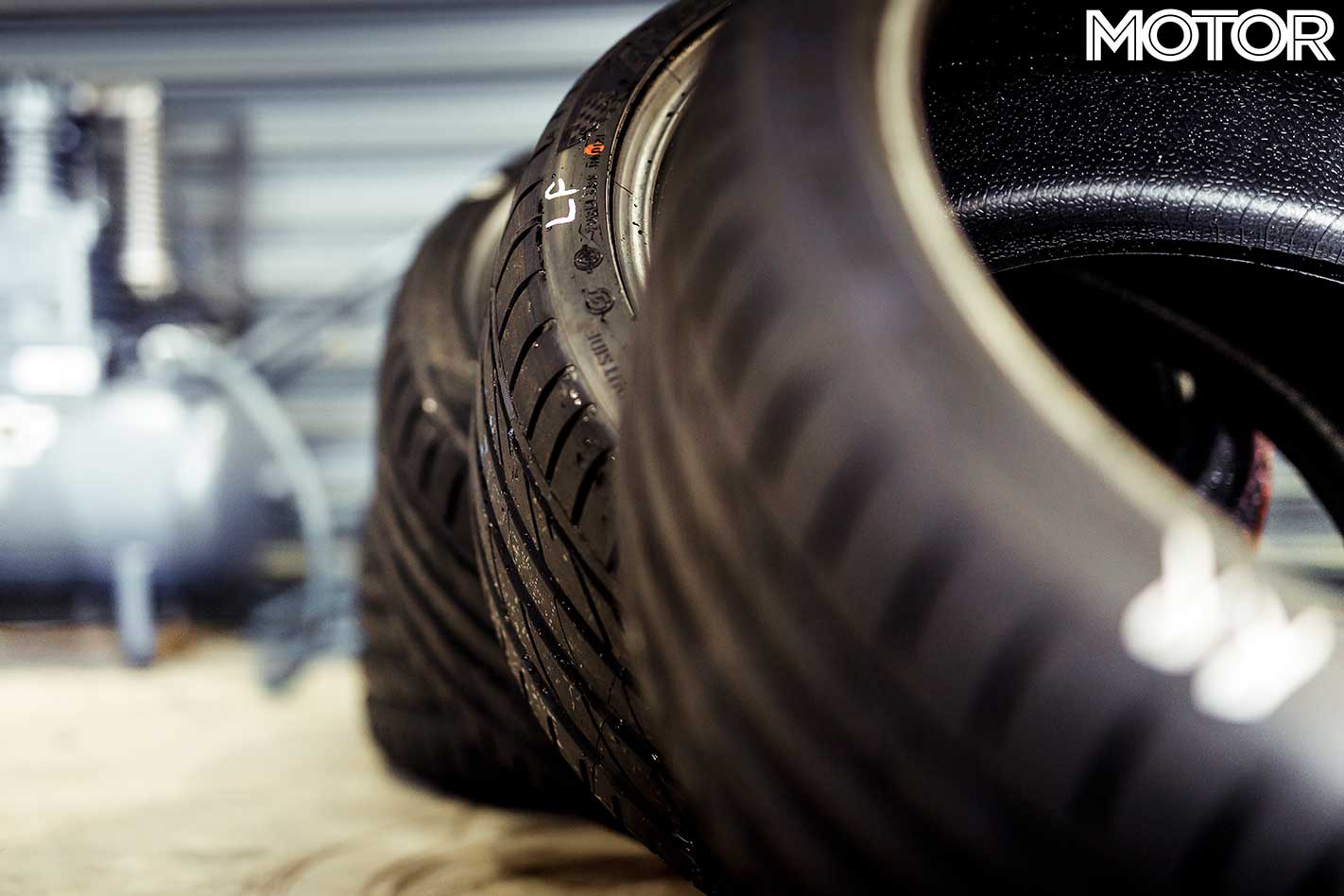
It’s shaping up as a battle between four heavyweights, one brand wanting to play with the big boys, and two budget options testing their mettle at the same time.
While the big news is the appearance of the new Michelin Pilot Sport 4S after its very notable absence last year, it has to face the reigning champion, the excellent Continental SportContact 6. The hot new Bridgestone Potenza S007A will be trying to cause an upset; while the sizzling Goodyear Eagle F1 Supersports has been included for our test, too. The venerable Pirelli P-Zero, ever the dark horse, is entered into this ring as well.
All these brands have, at some or numerous points in this shootout’s 17-year history, won the MOTOR Tyre Test before. With a price not too far off the aforementioned group, the Maxxis Victra Sport 5 wants to be taken seriously.
Meanwhile those curious about a cheaper set of rubber can keep an eye on affordable patterns in the form of the HiFly HF805 Challenge DSRT and Infinity Ecomax. Brands like Dunlop, Hankook, Toyo and Yokohama are the notable absentees this year. It’s important to note it’s risky business giving tyres over for an independent test like this, so credit to those who did.
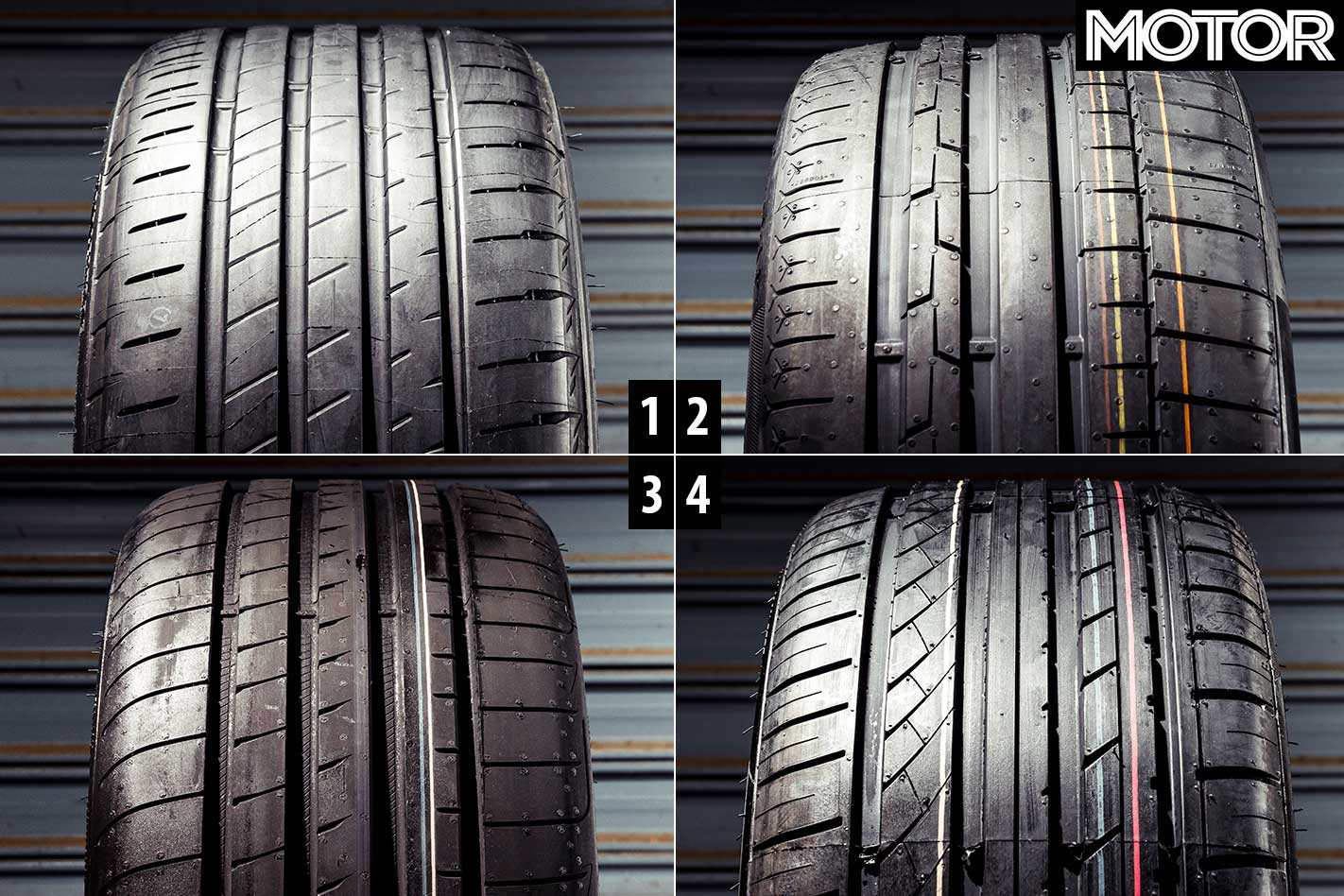
01 – Bridgestone Potenza S007A Origin: Japan Treadwear Rating: 240 Load & Speed Rating: 91Y
02 – Continental SportContact 6 Origin: Czech Republic Treadwear Rating: 240 Load & Speed Rating: 91Y
03 – Goodyear Eagle F1 Supersport Origin: Germany Treadwear Rating: 240 Load & Speed Rating: 91Y
04 – HiFly HF805 Challenger DSRT Origin: China Treadwear Rating: 280 Load & Speed Rating: 91W
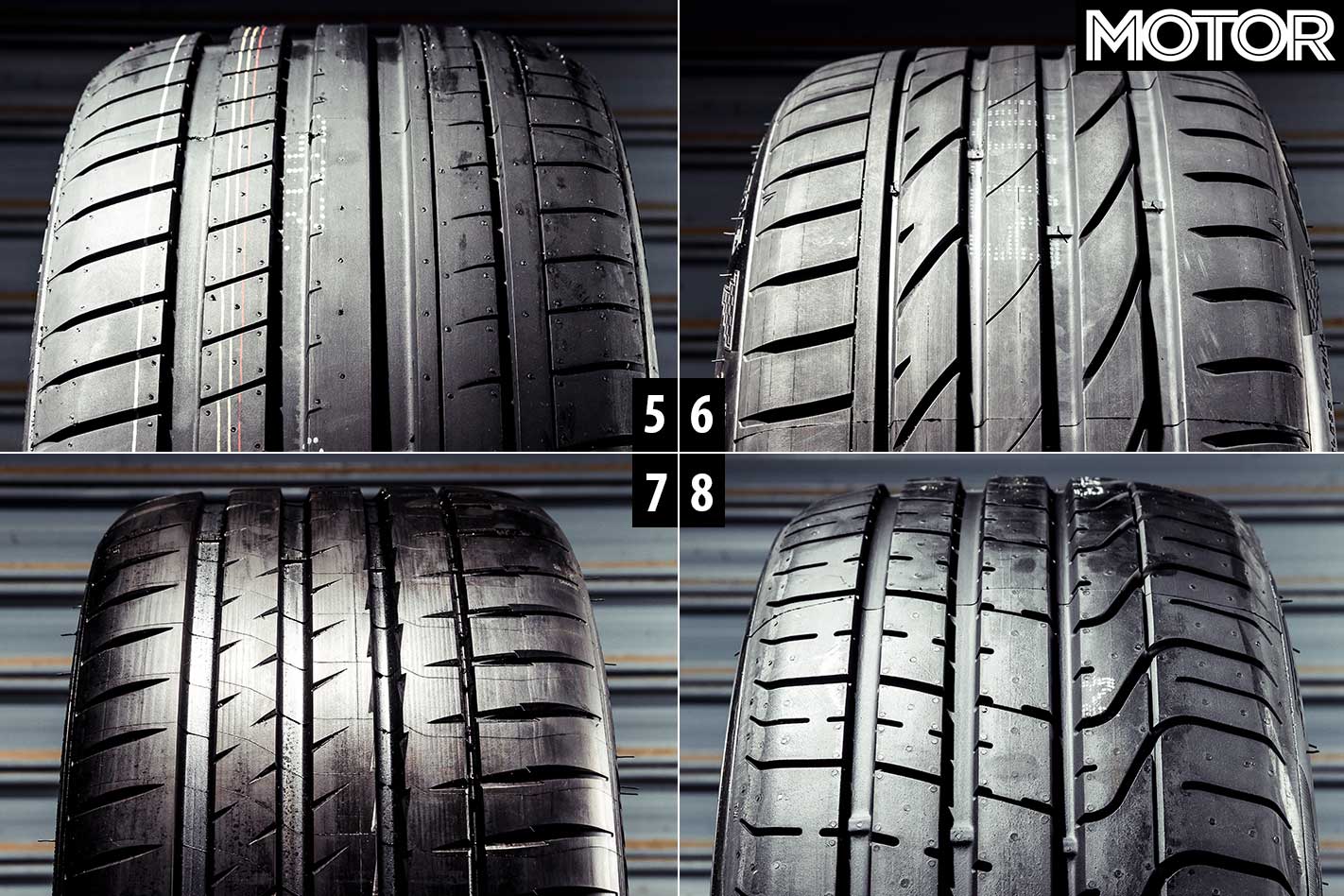
05 – Infinity Ecomax Origin: China Treadwear Rating: 280 Load & Speed Rating: 91Y
06 – Maxxis Victra Sport 5 Origin: China Treadwear Rating: 320 Load & Speed Rating: 91Y
07 – Michelin Pilot Sport 4S Origin: France Treadwear Rating: 300 Load & Speed Rating: 91Y
08 – Pirelli P Zero Origin: Italy Treadwear Rating: 220 Load & Speed Rating: 91Y
The MOTOR Tyre Testing Process
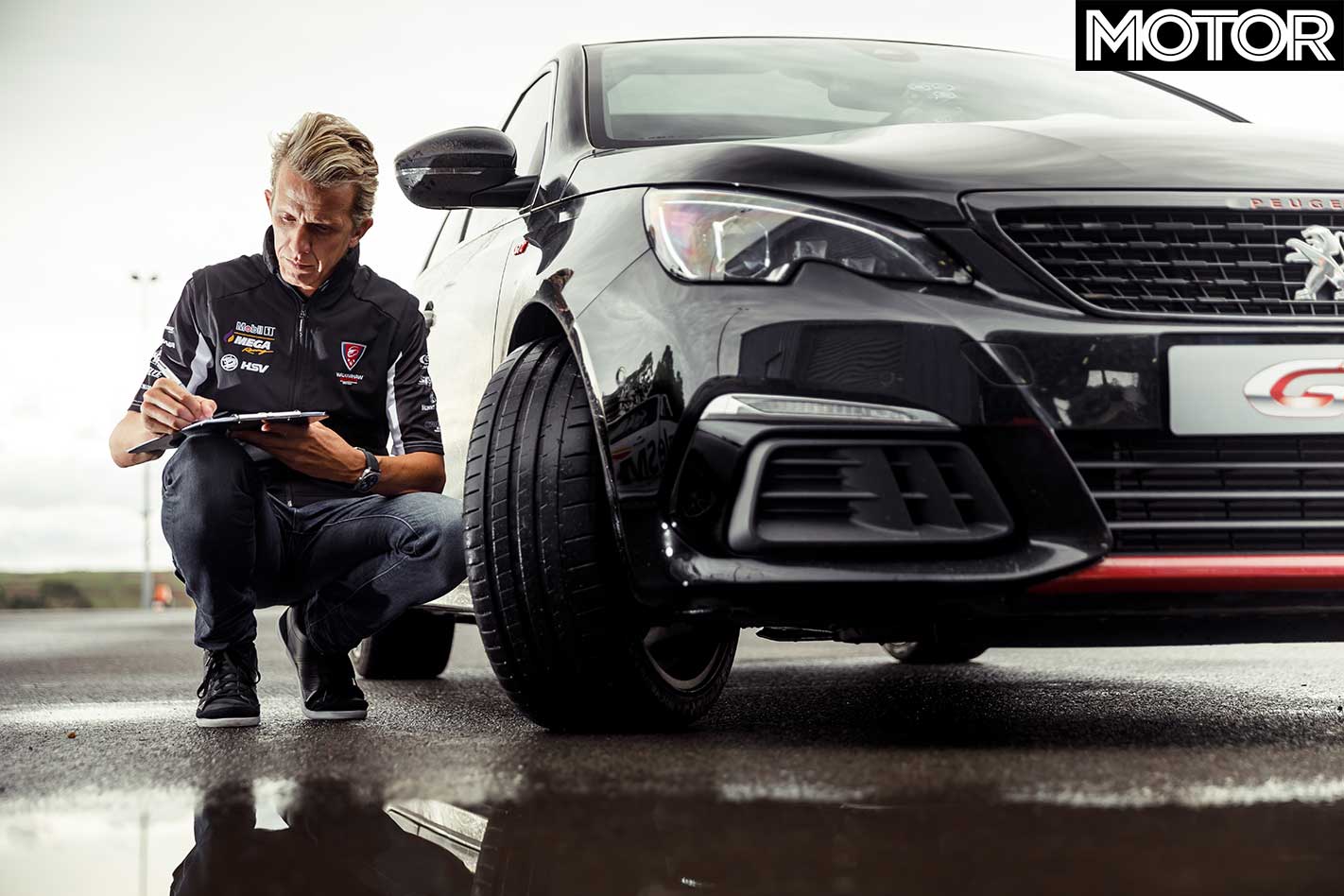
This is where the fun starts. The course cones are set up, the majority of the tyres have arrived and are accounted for, the JAX Tyres crew sorts out a temporary workspace, and our gun driver Warren Luff is comfortable in the 308 GTi. The day can kick off.
Tyre pressures are checked at 35psi cold, according to the Pug’s tyre placard. Once the fog clears, 8:25am marks the first run, setting times with the control tyre across the five exercises and, theoretically, setting the data point for what will be the most disadvantaged runs of the day due to a still-damp surface and an ambient temp of 19 degrees, still rising.
The first four tyres on the competitor list make their runs, with the JAX team using a second set of the same wheels to get a new set ready while Luffy runs each tyre through the five exercises. After the first half, another control run is set to see how variables such as surface moisture and brake wear might be affecting the tyres’ results.
The second half of the pack undergoes its runs and then the last control run sets the endpoint for variable adjustment, which we later use an equation to work out. More on that later.
Warren Luff: The Driver
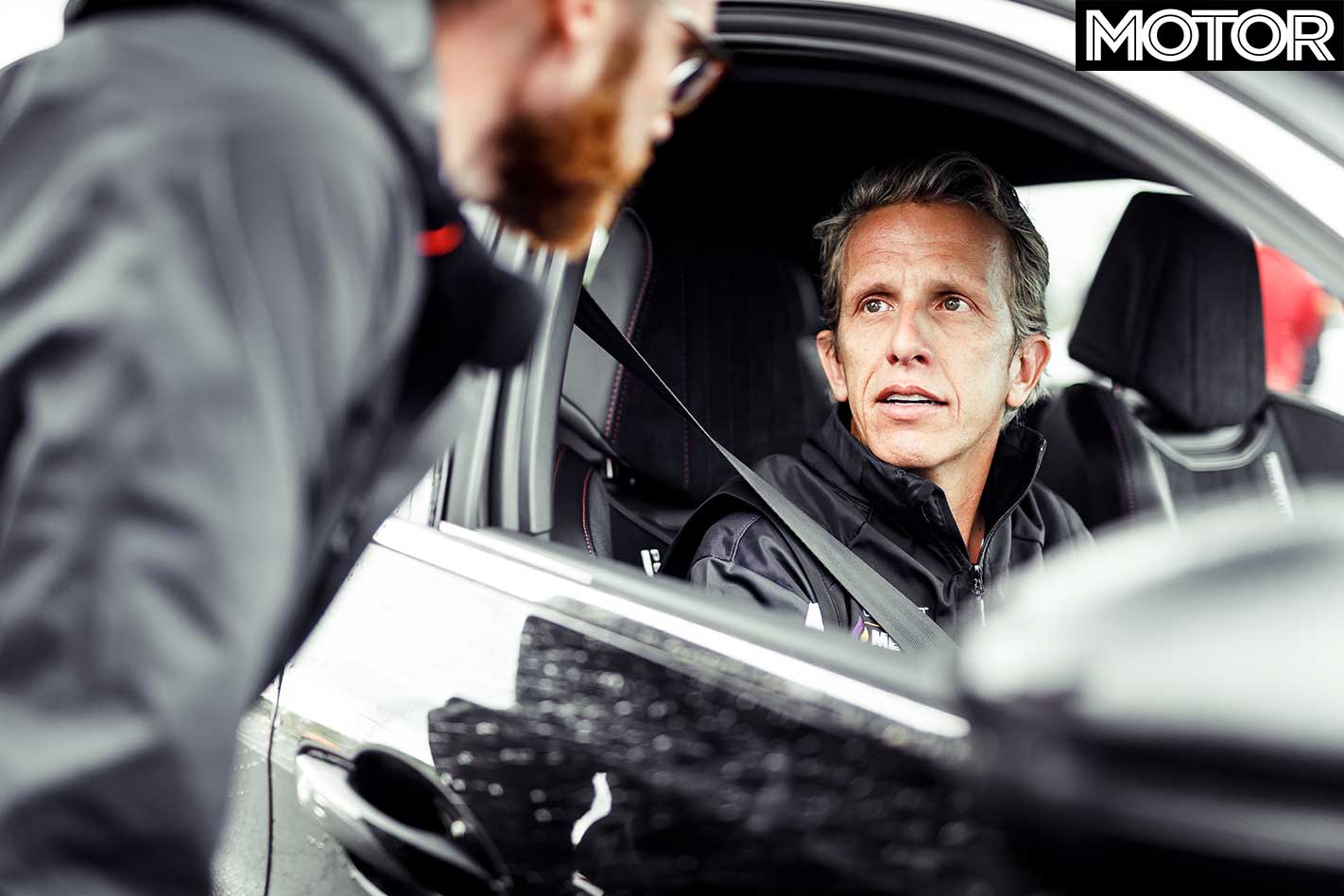
Tyre testing is all about controlling the variables, and this one we’re very confident has things under control – Warren Luff. Our go-to tyre tester for more than 10 years now, Luff is also the go-to man for the nation’s top motorsport outfits.
A two-time winner of the Sandown 500 (2012 and 2016), Luff is back in the enduro role for Walkinshaw Andretti United in 2019 where he will chase down that elusive Bathurst 1000 win (having finished on the podium more times than he’d like to be reminded). When he’s not also racing in Carrera Cup or coaching drivers, Luff is tearing about Movie World at his ‘day job’ running the stunt show.
What separates a professional driver from a very good amateur is the ability to consistently extract the absolute maximum from the car, and tyre – no matter the course, demands or conditions – and Luffy is a perfect example of this. Frankly, with his experience of road-based performance tyres, and road-going new performance vehicles, we wouldn’t have any other driver behind the wheel.
Racelogic VBOX: The Equipment
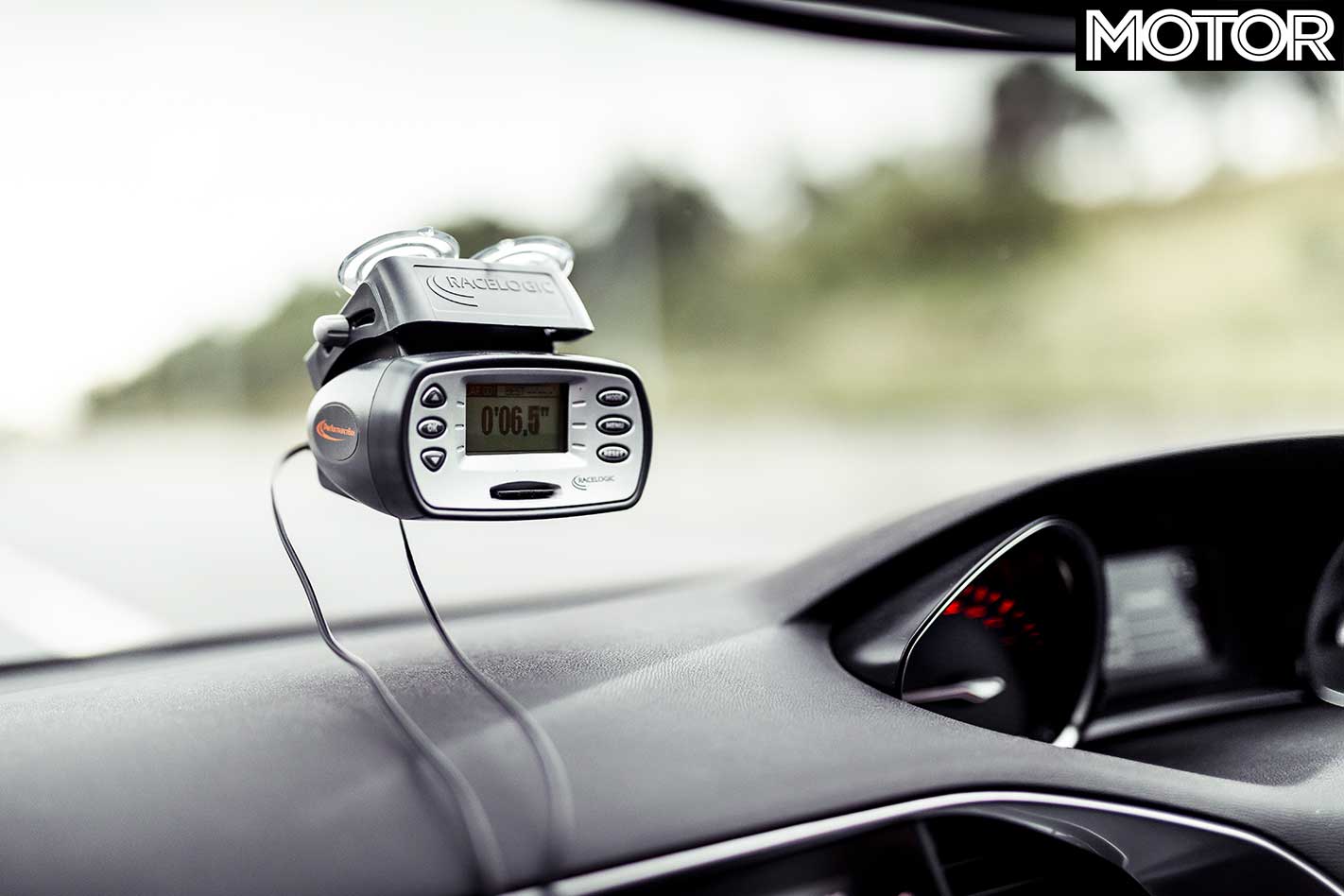
All competition runs are recorded with Racelogic VBOX GPS timing hardware and later closely verified against secondary data collected on the day. We’ve used Racelogic equipment for our Tyre Test for years, as well as all our other major tests where accuracy and reliability of data is paramount, and swear by it.
The Maths Explained

To make sure that the running order of our tyre test doesn’t advantage the tyres running in the drier or warmer weather conditions, or those that run while the car is in its fittest shape, we apply a linear regression formula to our control tyre runs to find out how external factors could affect the results.
For example, if the control tyres run faster as the day goes on, it means the last competitor tyre has an advantage. The linear regression formula essentially applies a handicap to each tyre based on how the control tyre would run at that time. This creates results based on each tyre running in the same conditions, and leaves little room for ‘what if this tyre ran first?’ scenarios.
Controlling The Variables
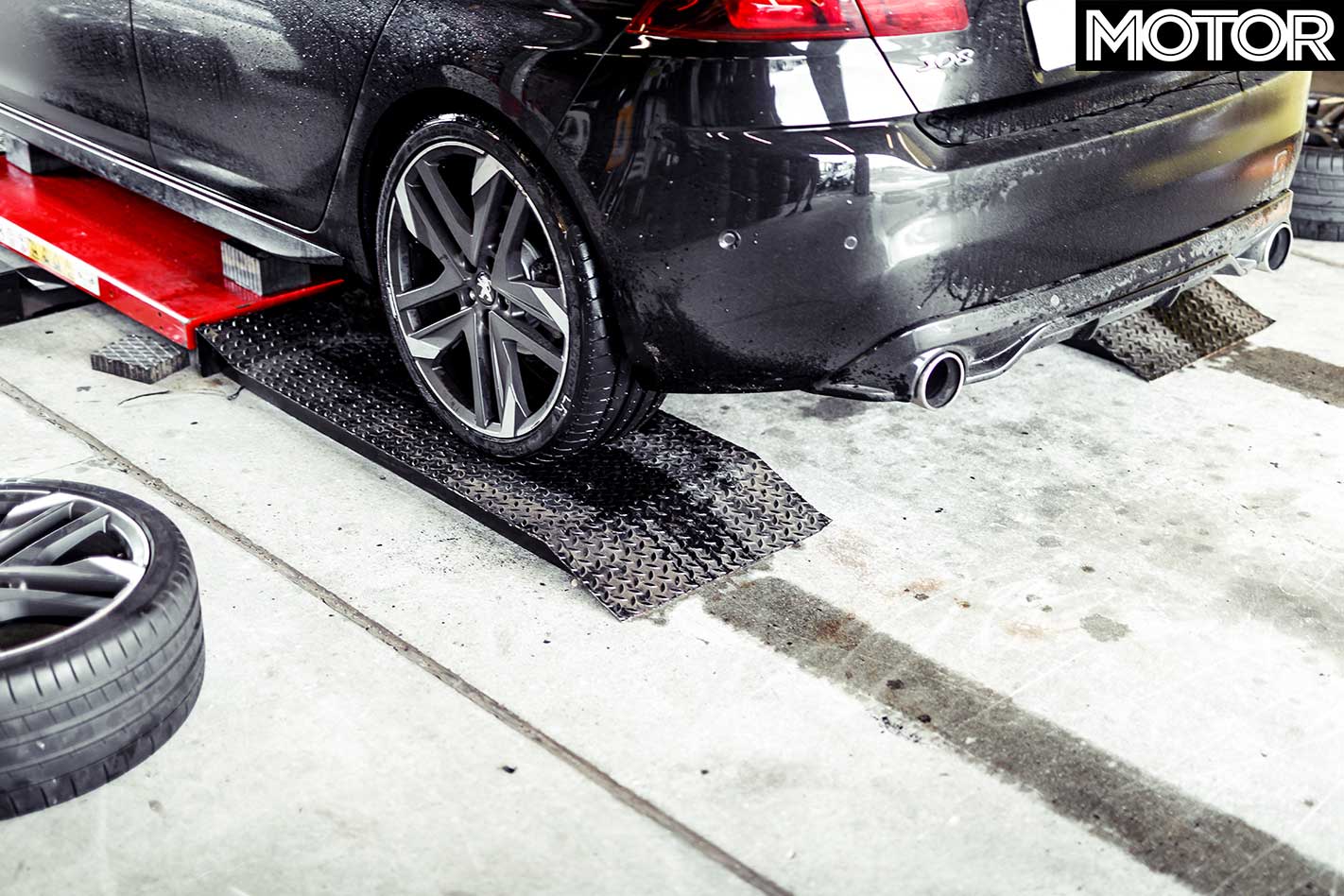
As stated earlier, this test is as accurate as it can be, but these results are still prone to factors out of our command. The control tyre and linear regression formula are the best defence against data anomalies like weather and vehicle fatigue, but there are still a few other elements to consider.
For example, it’s difficult to keep the wet testing surface at the exact same level of saturation for the entire day, but the trend of raw results indicates that the sun’s decision to appear in the late morning and warm the surface up was the biggest impact on wet brake testing performance.
Finally, Luffy is still a human. It’d be near impossible to find anyone more suited to the job given his experience and ability to nail run times down to the tenth repeatedly, but nobody’s entirely perfect. Not even Luffy… just don’t tell him we said that.
JAX Tyres: The Pit Crew
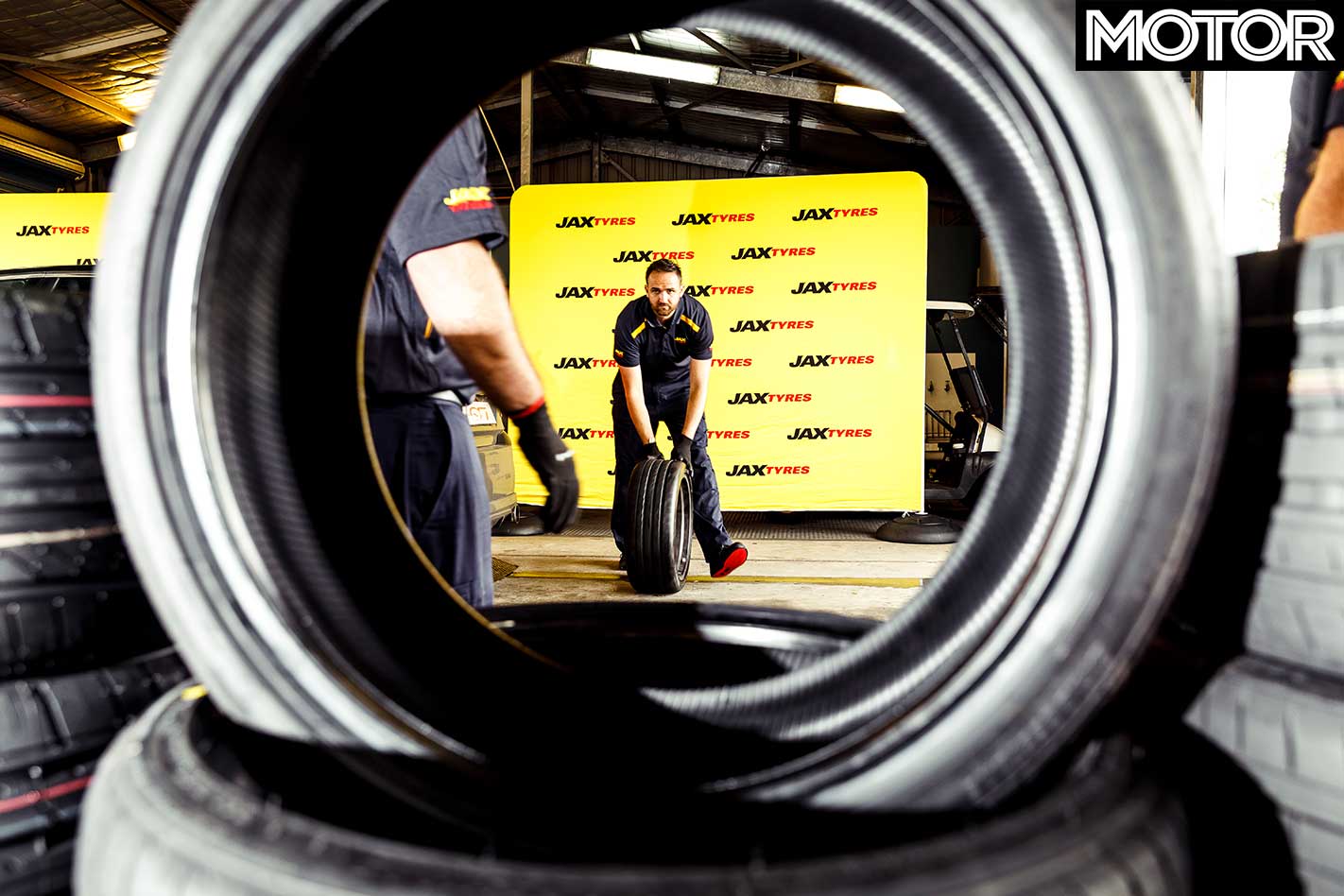
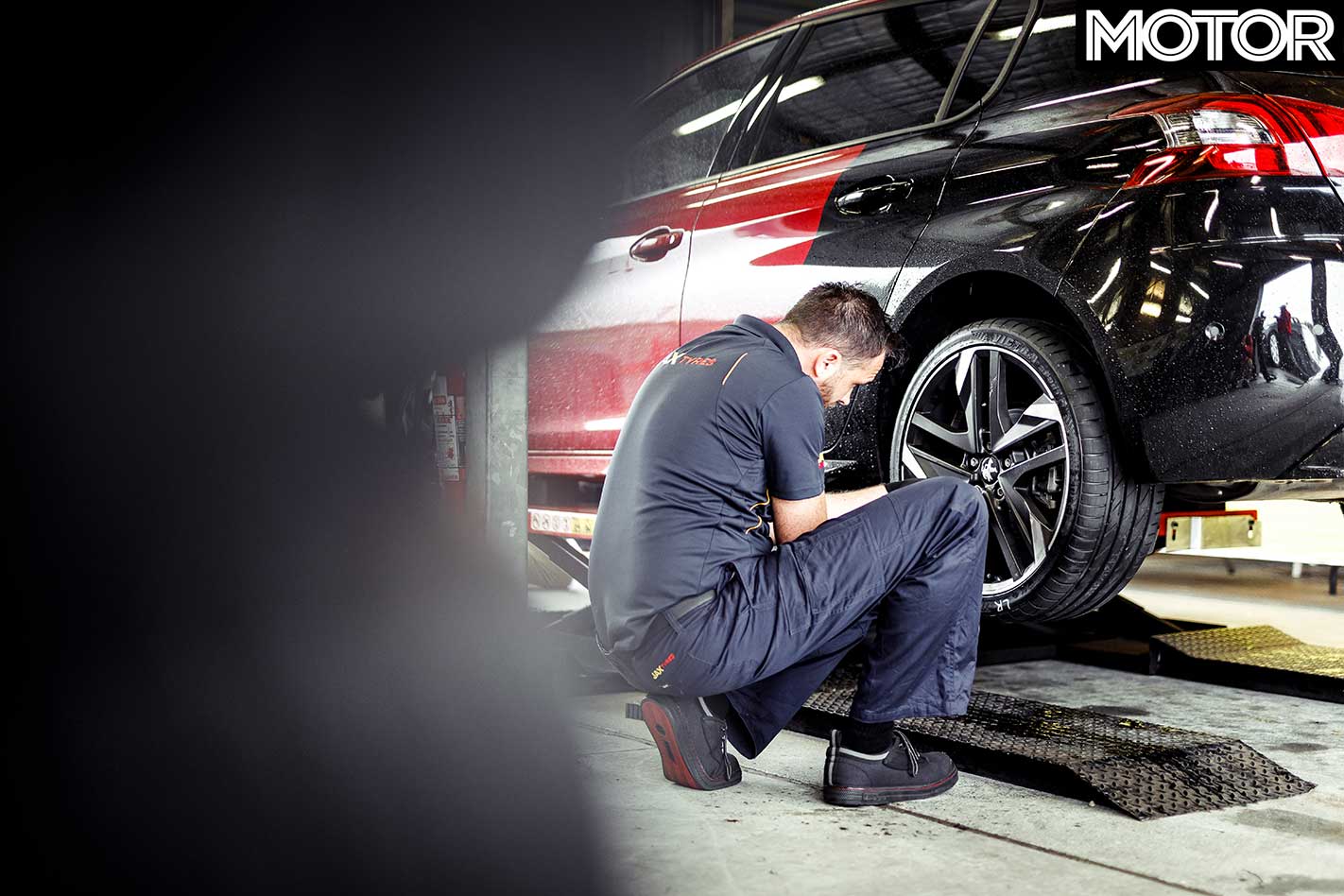
It turns out tyres make an incredibly loud ‘pop’ sound when they’re seated onto a wheel. Anyone who had never been present at a MOTOR Tyre Test or a tyre workshop wouldn’t know how loud it is, but the JAX Tyres team is so used to it they don’t even flinch anymore.
We can’t say the same for the rest of us. Not only do loud noises not scare them, but the JAX crew is made up of professionals who know their stuff, and made 44 wheel changes look like an absolute breeze. We owe them a big thanks for their help at Tyre Tests over the past couple of decades. To make the process even smoother, JAX was joined by Eagle SMF with tyre-changing equipment on hand.
Make sure you head over to jaxtyres.com.au or give them a bell on 1300 367 897 next time you’re after a set of shoes for your ride.
The Five Test Disciplines
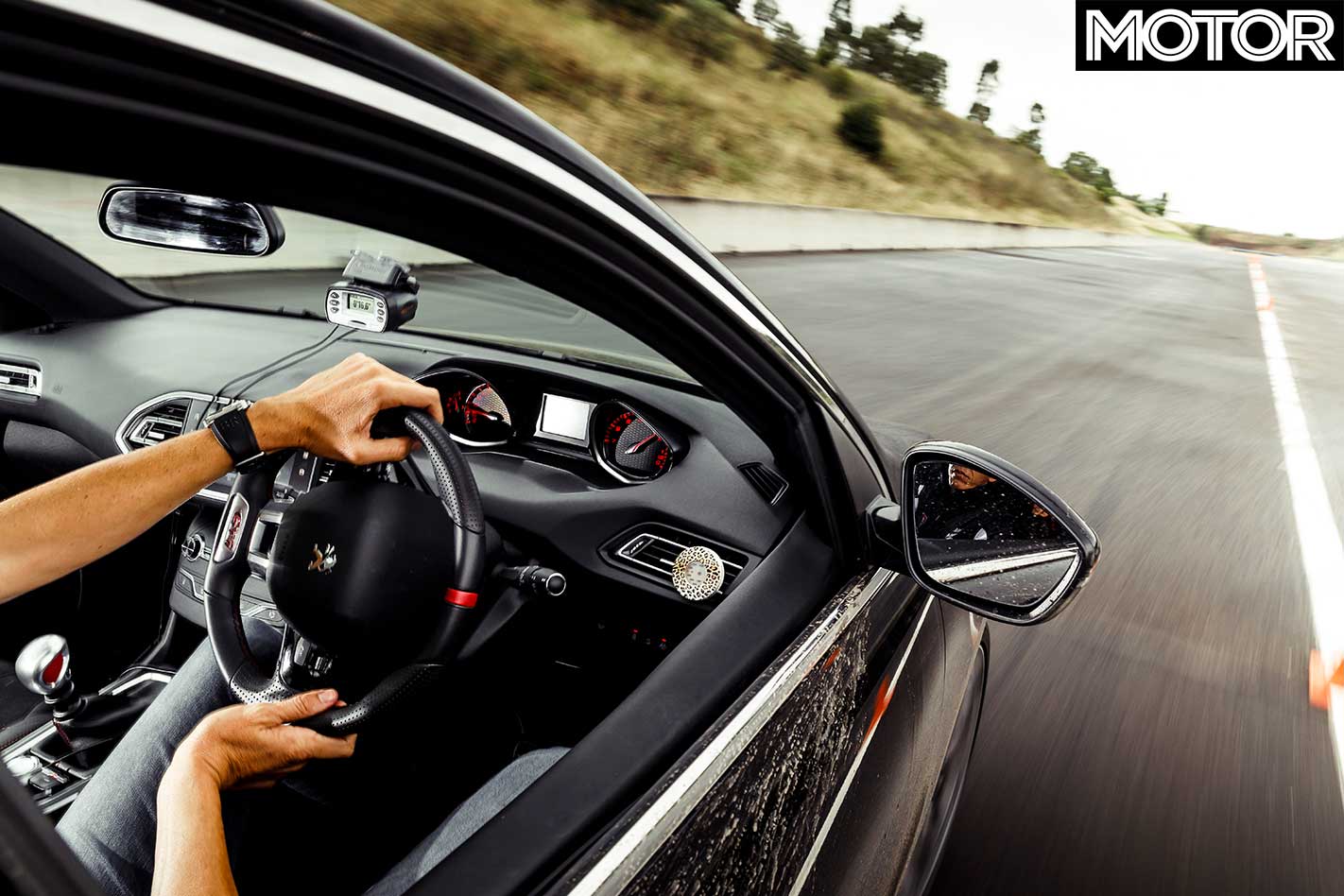
All of our exercises are completed in the same order for each tyre, with the car’s electronic assistance off, its drive settings set to Sport mode, and as per Luff’s personal comfort requirements, the air-conditioning set to 18 degrees Celsius.
In the interest of transparency, the running order of the tyres is as follows: control, Goodyear, Pirelli, HiFly, Michelin, control, Maxxis, Infinity, Bridgestone, Continental, and then a final control run. The tests are completed in the same order each time, so by the time each tyre has reached the wet lateral G test, it’s already been through the wars.
It should be noted that our reason for not including a dry lateral G score is that the data tends to spike, and can’t be read accurately without the risk of including anomalies.
Dry Slalom
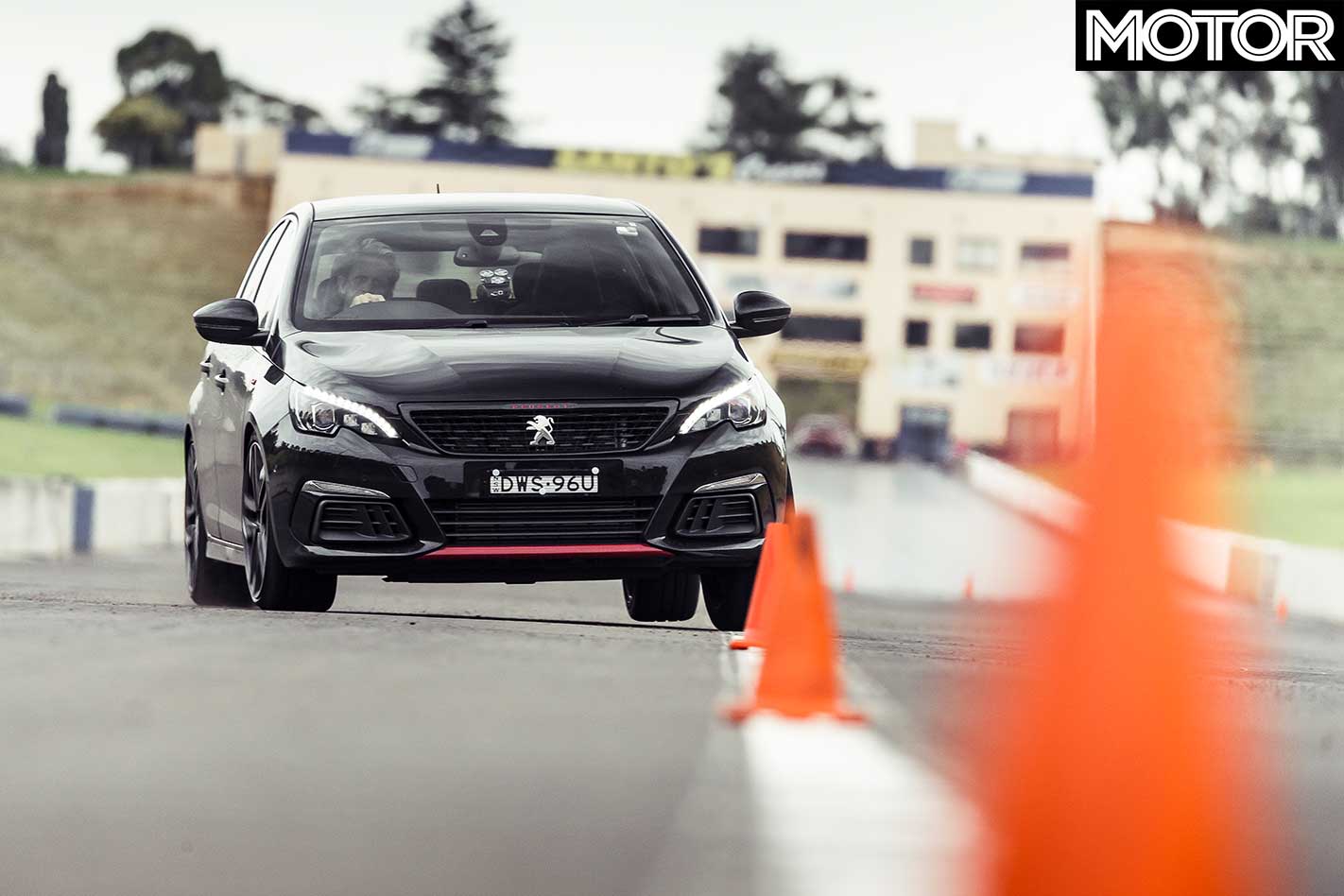
The first test each tyre must conquer is the dry slalom, a fairly self-explanatory line of cones which Luffy approaches at 60km/h before weaving through each ‘gate’ to the end of the line. This is done five times, with the best and worst times from beginning to the slalom’s end being disregarded to avoid including outliers in the final results. The middle three results are then averaged.
Despite Sydney Dragway’s grippy surface, the early morning moisture sticks around long enough to noticeably affect the earlier tyres’ times in the running order. The first control runs averaged out to 10.7sec for Luffy to traverse the slalom, while the second set worked out to a 10.43, and the last to 10.37.

Although the Bridgestones set the fastest time on the day, they also had the advantage of running late in the day when the surface was warmer and drier. After running the data through our formula, the Michelins come out on top after tying for second with the Continentals in our raw data. The Continentals ran last, with the best weather conditions, so they cop a penalty from our formula and land mid-pack.
HiFly and Infinity produced times about a half-second slower than the next-best tyre, the Maxxis Victra, even after linear regression is applied. It’s not a terrible result, but there’s a clear split.
Dry Braking
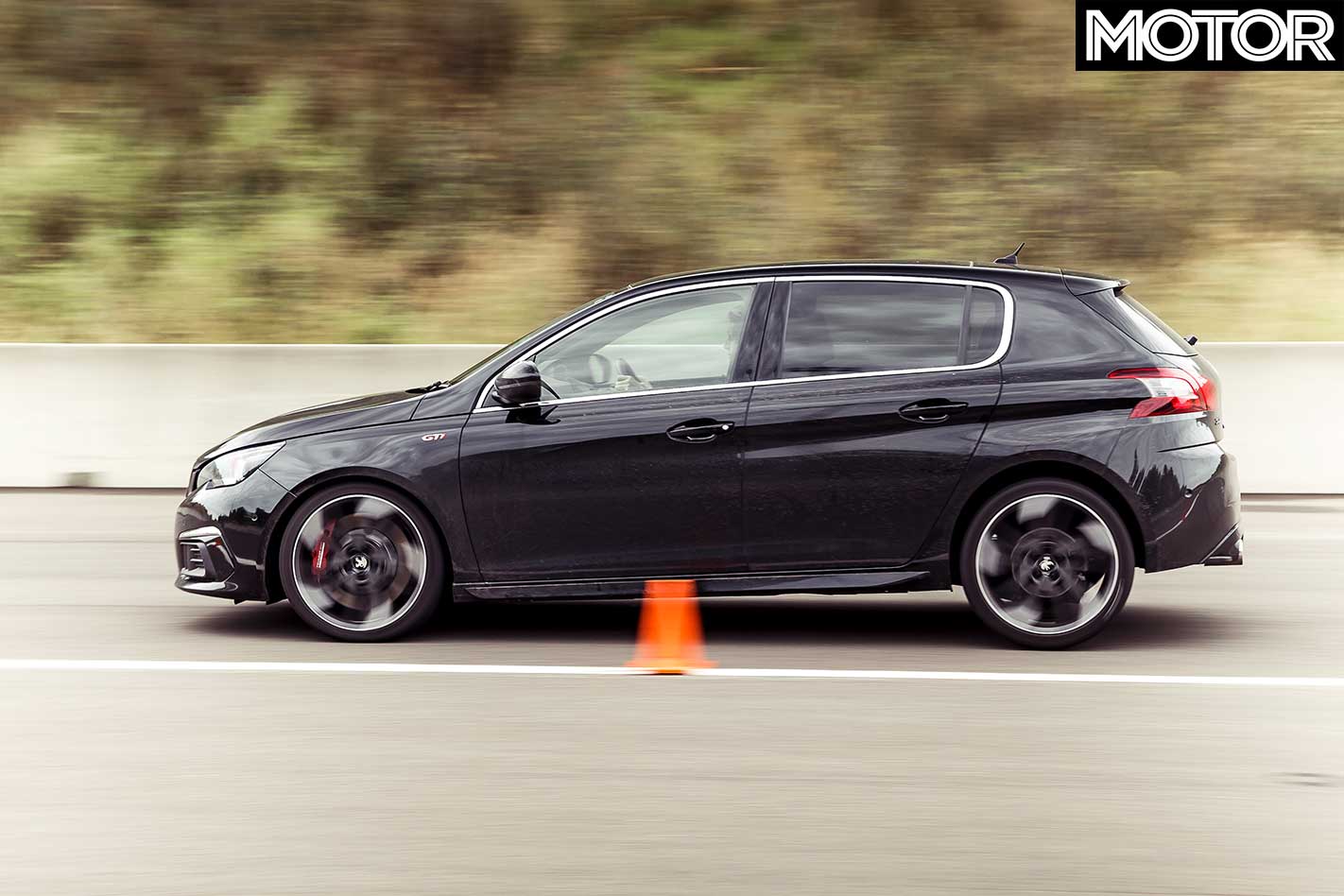
Conducted after the first, third, and fifth slalom runs to give the brakes a chance to cool, the dry braking test consists of a gate approach at 115km/h to ensure the VBOX only records consistent deceleration from 100km/h to 0km/h. The three distances recorded, down to the centimetre, are averaged to provide the score for each tyre.
The control runs for this test showed that the later runs were actually the runs with the disadvantage, as the increasingly hot surface on the strip and slowly wearing brakes led to a decline in the ability for the GTi to pull up.
The Continentals put in a valiant effort, just missing out on the podium for this exercise in our raw data. Since they ran last, however, it was the adverse testing environment that initially stole the win away. Luckily for the Contis, our linear regression formula sets the record straight.
Dry Motorkhana
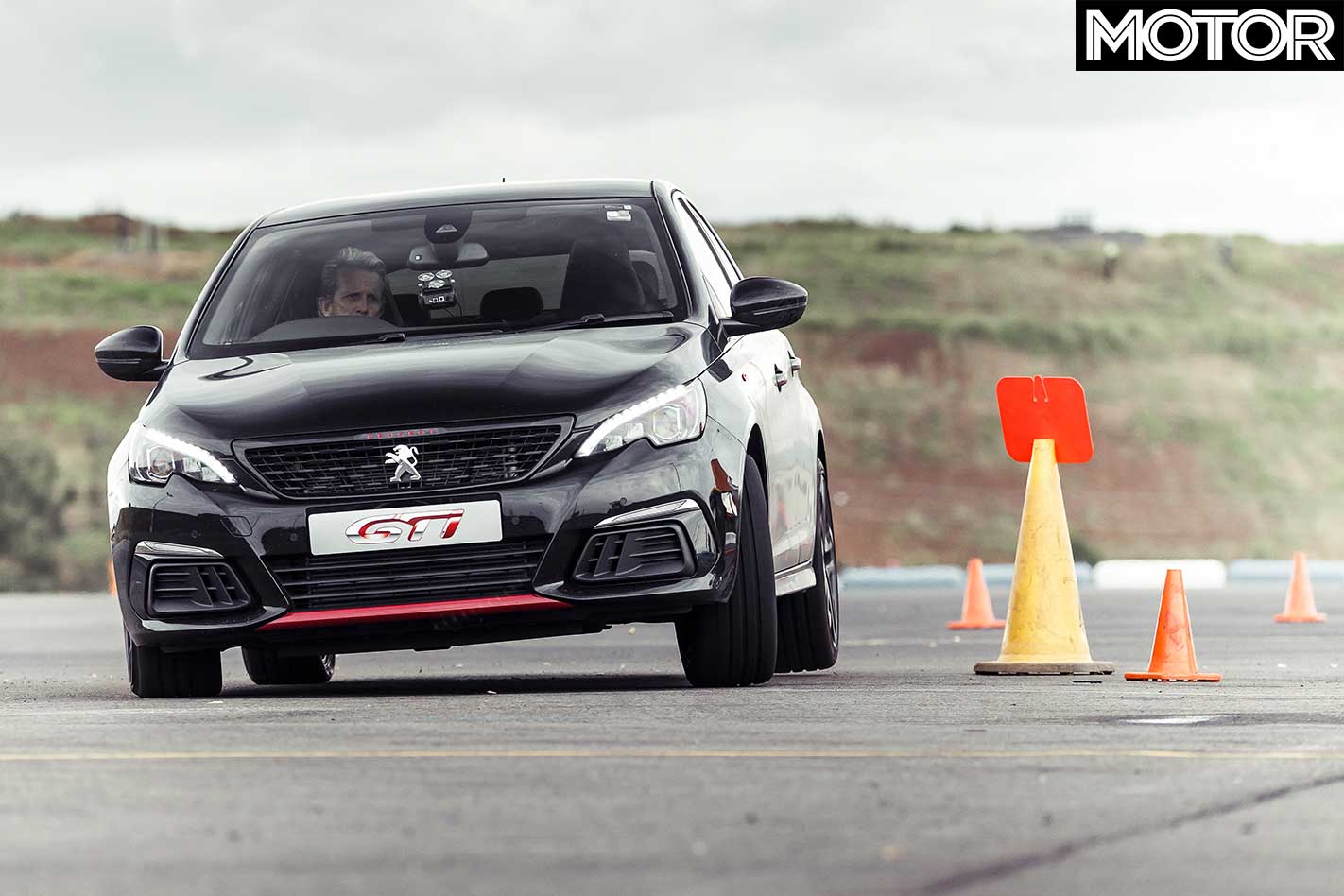
The “road course” is a small track laid out with cones to incorporate as many varied corners as possible, with a couple of places for different braking and acceleration techniques to be used. It’s not Phillip Island but it’s laid out such to test the lateral ability of the tyres in very slow and medium-speed corners. Three laps of the course are hand-timed, with the total of three laps providing a total time. These times are later verified against VBOX data.
Between the big brands this year, it came down to tenths, rather than seconds, to decide the winner. The times recorded on the day put the Michelins ahead by almost three tenths, with the Continentals in second and the Bridgestones just two hundredths shy of that.
The mid-pack was all within a single tenth, with the Infinity and HiFly around three whole seconds slower to bring up the rear. After the linear regression was applied, the Michelins kept the top rung, but the Continentals running last put the German brand at an advantage on the day, so the maths wasn’t on its side later on.
Wet Braking
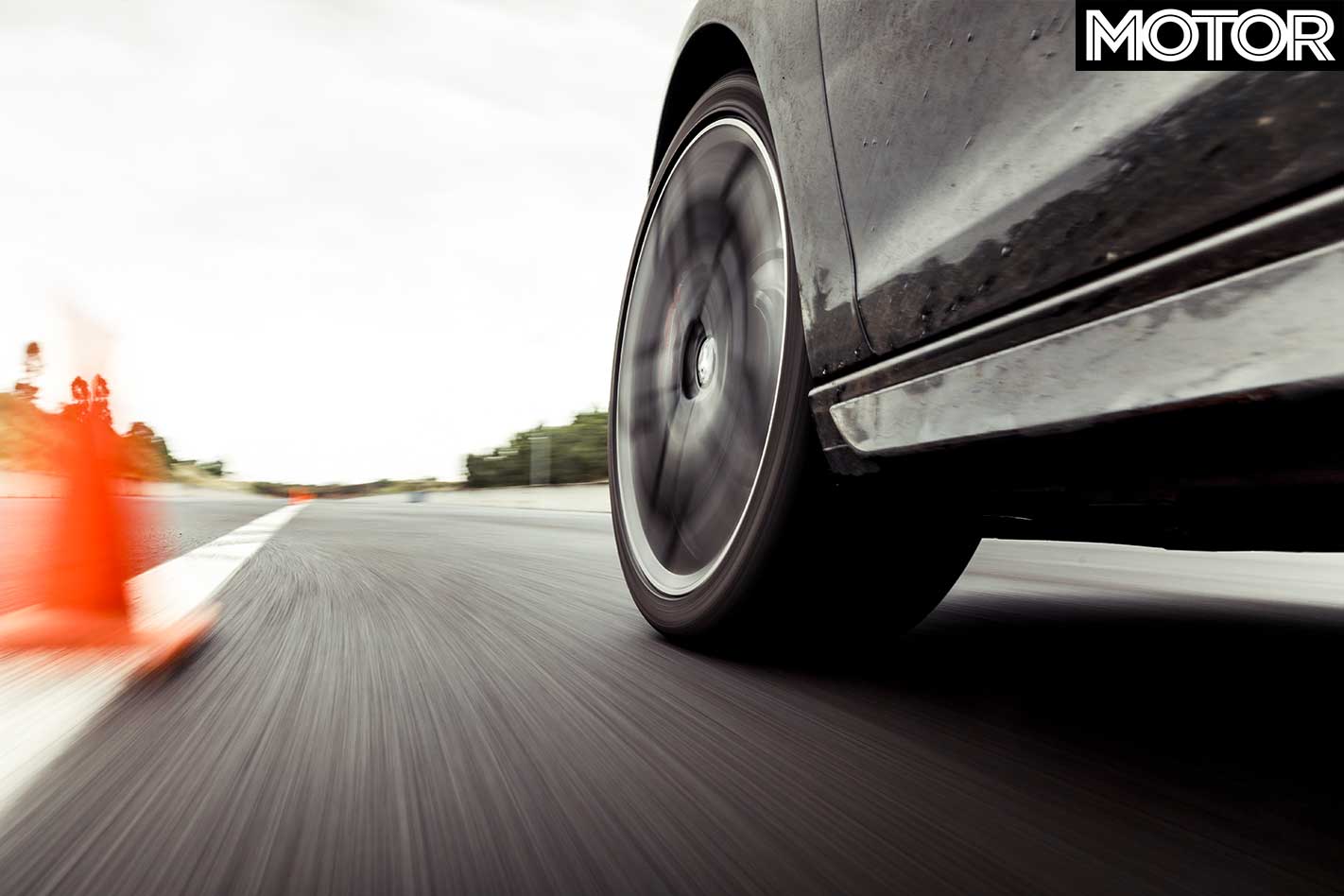
Like dry braking, but with water. On a different surface, away from the strip, the sprinklers keep a section of tarmac wet for Luffy to approach in the GTi at just above 85km/h to ensure the VBOX provides a clear 80-0km/h figure. As with the dry test, three runs are averaged to provide a representative result.
We were dealt a rather hefty shock when we started compiling the wet testing data, particularly the braking. In recent years, Continental’s entry into our tyre test has dominated wet performance. The SportContact 6 won last year due to this, while also maintaining decent performance in other tests.
This year, we find Maxxis on top, even in the raw data. We had the same result during Tyre Test ‘Attempt One’ about a month prior and dismissed it as inclement weather affecting data. It turns out, we were wrong. The Victra Sport 5 is excellent when it comes to wet braking.
Interestingly, the first control run ended with a stopping average of approximately 3.5 metres longer than the other, later two, which both averaged 26.4m. This could mean all the tyres that ran in the second half, and potentially even some from the first half, had roughly similar chances of performing at their best.
Wet Lateral G
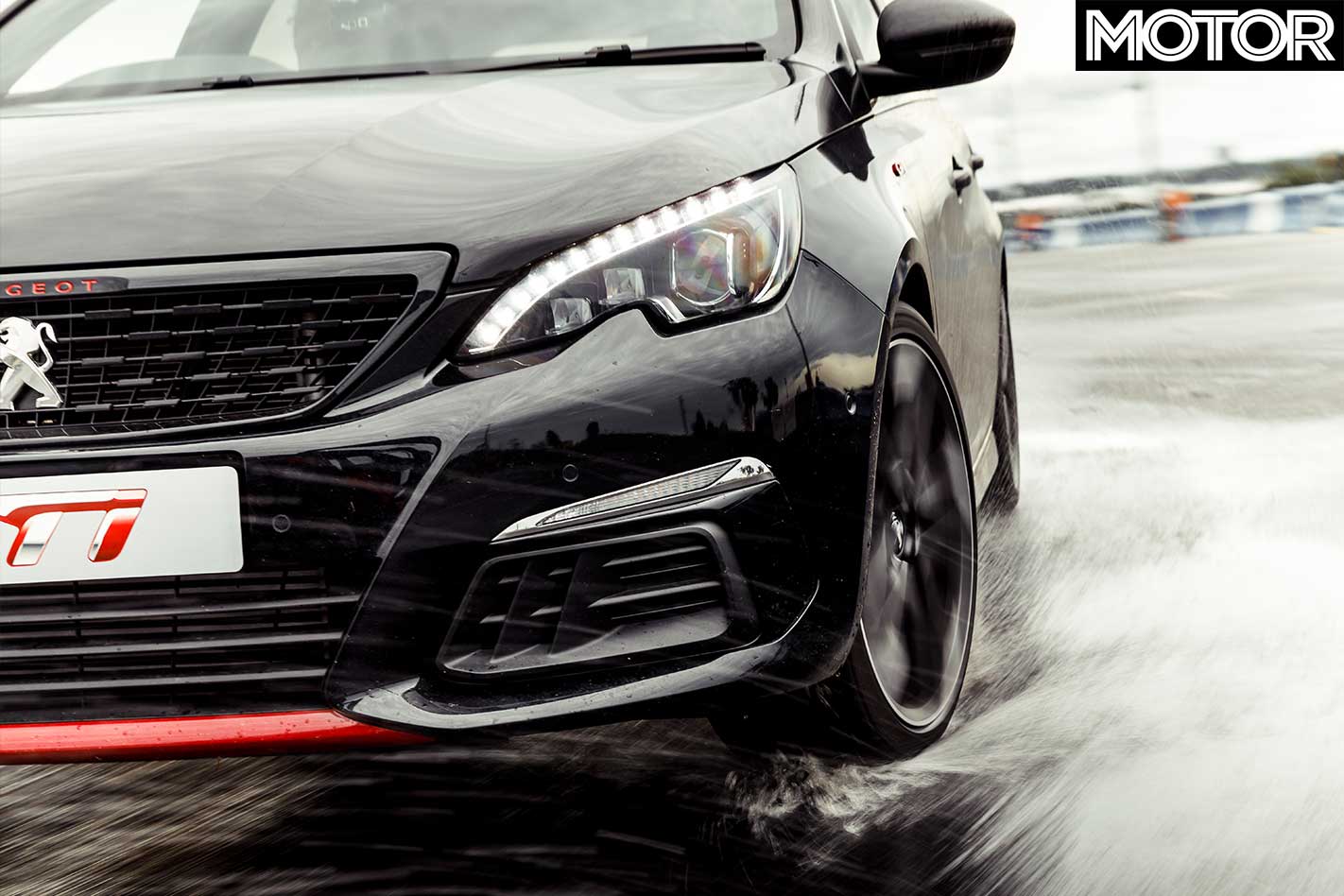
On a small, wet, oval course, Luffy approaches a corner at 40km/h in second gear, and performs a 180 degree turn, before turning around and doing the same thing in the other direction. Three right, and three left turns with consistent steering and smooth throttle to avoid inducing a false G-force peak. We use the raw information, and remove the two outliers (highest and lowest reading) before averaging the rest.
While 1G is a significant force, its actual numerical value is low, and most tyres’ average maximums were within 0.1G of each other. Even tighter were the top four, in the raw data the top quartet (Potenza, SportContact 6, Eagle F1, and Pilot Sport respectively) were all within a 0.00375G range. The advantage afforded to tyres that ran later in the day resulted in what you see in the final table, thanks to the linear regression formula.
MOTOR Tyre Test 2019: Summary
The winner of each exercise is awarded a score of ‘1’, down to ‘8’ for the last place-getter. As is clear in the case of the Michelins, consistently placing on the podium is almost guaranteed to secure a win, and that’s why the Pilot Sport 4S is this year’s Tyre Test champ. Excellent cornering in the dry, the ability to overcome wet surfaces, and the ability to pull up quickly has earned it the top spot.
Goodyear’s very new tyre came close to a win before it even made it to market, but second place in a test like this is proof the F1 Supersport is a top-notch bit of rubber.
The mid-pack is where the real tension is, however, with four excellent tyres almost equalling for third place. The Victra’s superior braking ability was its only standout, but it was enough to equal the Potenza on the podium. The lack of a podium spot should absolutely not rule out Pirelli and Continental from your shopping list.
Continental’s superior wet performance won it the gong last year. It seems the opposition has caught up, and that can only be good when you’re shopping for rubber.
MOTOR Tyre Test 2019 Results
| Ranking | Tyre | Slalom | Dry Braking | Motorkhana | Wet Braking | Wet Lateral G | Total Score | Price* |
| 01 | Michelin Pilot Sport 4S | 1 | 3 | 1 | 2 | 2 | 9 | $345 |
| 02 | Goodyear Eagle F1 Supersport | 2 | 6 | 2 | 3 | 1 | 14 | $389 |
| =03 | Bridgestone Potenza S007A | 4 | 2 | 5 | 6 | 3 | 20 | $389 |
| =03 | Maxxis Victra Sport 5 | 6 | 4 | 4 | 1 | 5 | 20 | $345 |
| =05 | Continental SportContact 6 | 5 | 1 | 6 | 5 | 4 | 21 | $345 |
| =05 | Pirelli P Zero | 3 | 5 | 3 | 4 | 6 | 21 | $365 |
| 07 | Hifly HF805 Challenger DSRT | 7 | 7 | 7 | 7 | 8 | 36 | $149 |
| 08 | Infinity Ecomax | 8 | 8 | 8 | 8 | 7 | 39 | $140 |
*Prices listed are a guide only. Contact your local dealer. Prices are correct as of June 2019
MOTOR Tyre Test 2019: The Numbers
Michelin Pilot Sport 4S review: Winner
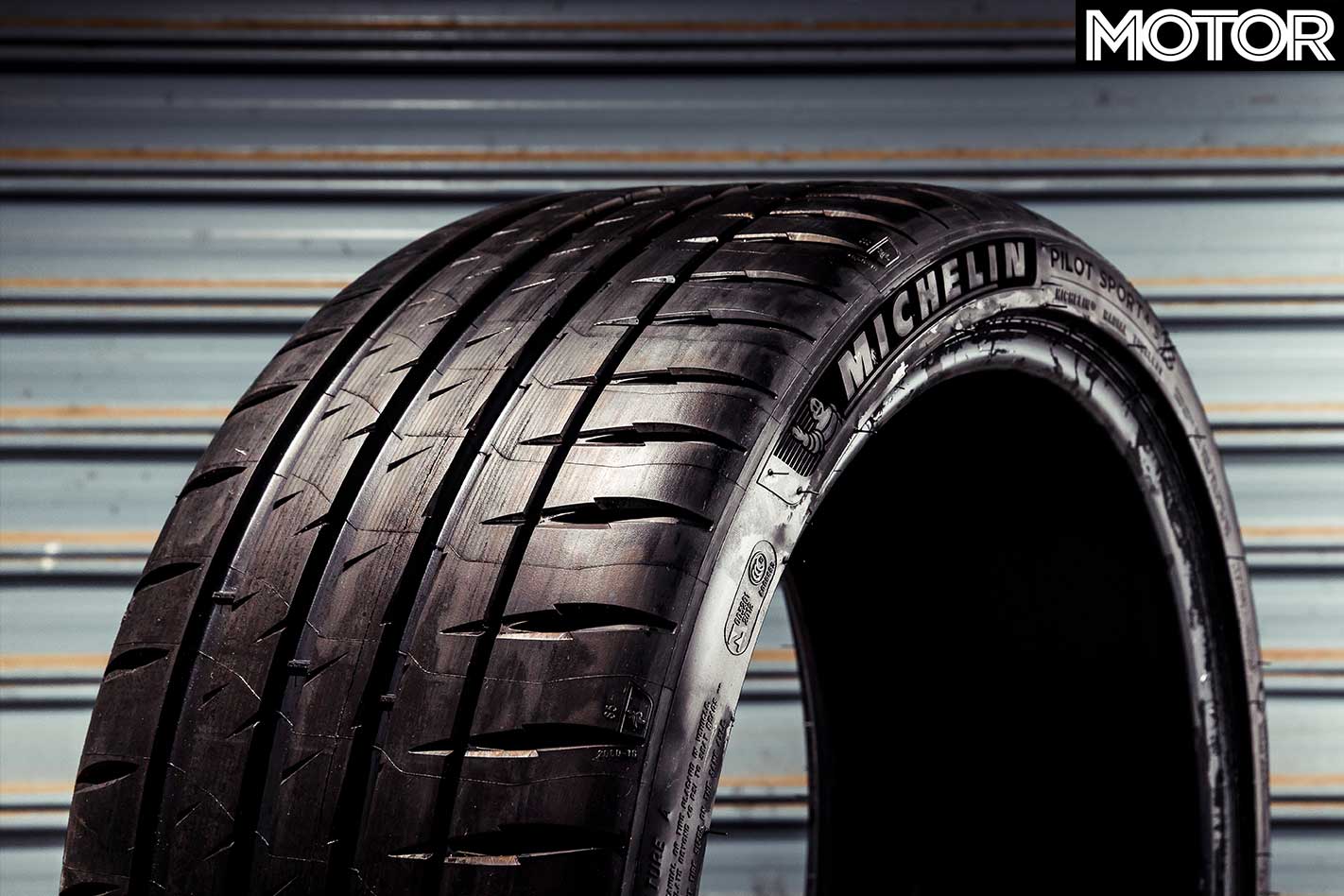
Origin: France Treadwear Rating: 300 Load & Speed Rating: 91Y Slalom results: 10.2sec (1st) Dry braking: 34.93m (3rd) Motorkhana: 76.97sec (1st) Wet Braking: 23.95m (2nd) Wet Lateral G: 1.0184G (2nd)
Goodyear Eagle F1 Supersport review: 2nd Place
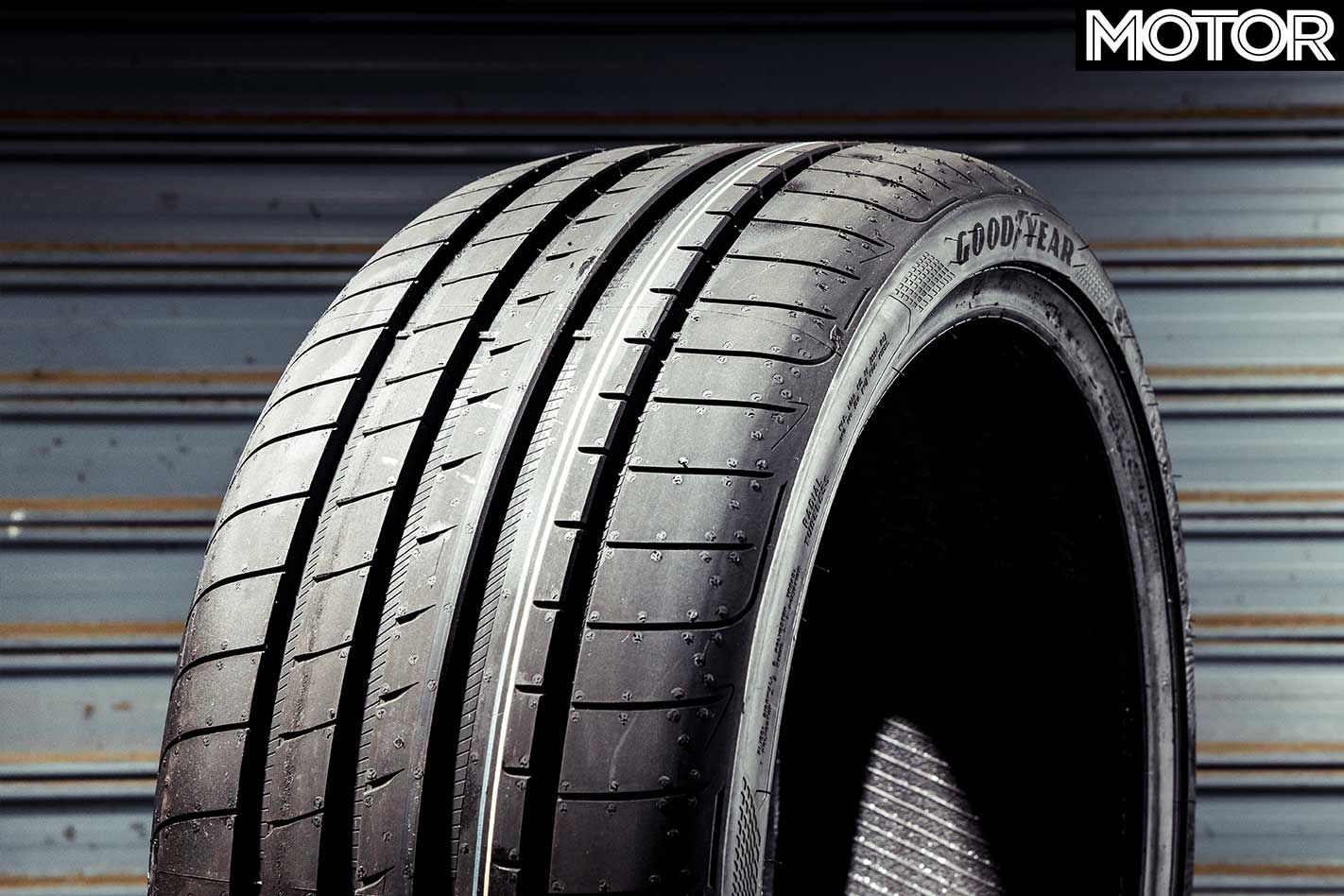
Origin: Germany Treadwear Rating: 240 Load & Speed Rating: 91Y Slalom results: 10.25sec (2nd) Dry braking: 36.43m (6th) Motorkhana: 77.25sec (2nd) Wet Braking: 24.16m (3rd) Wet Lateral G: 1.0221G (1st)
Bridgestone Potenza S007A review: Joint 3rd Place
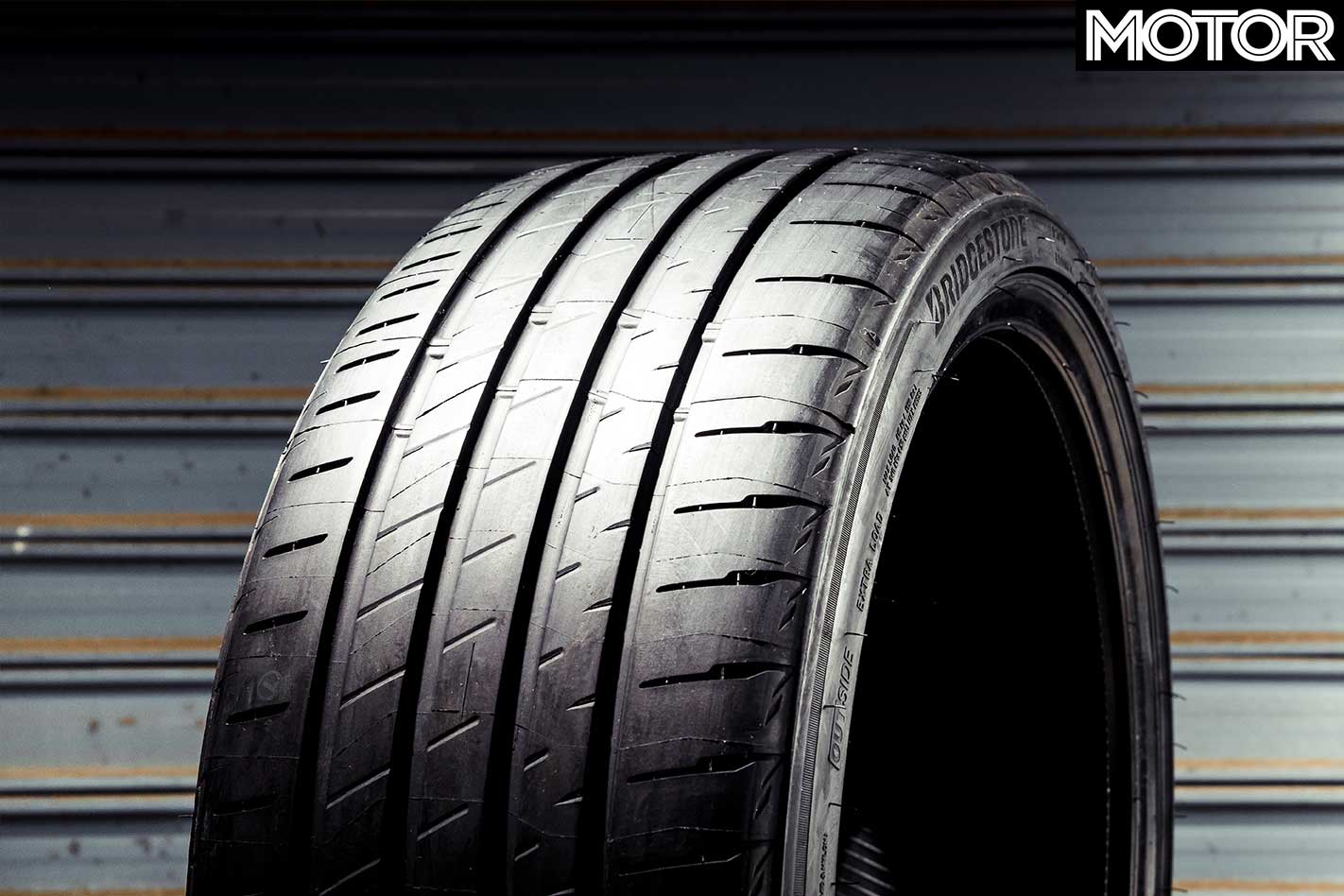
Origin: Japan Treadwear Rating: 240 Load & Speed Rating: 91Y Slalom results: 10.31sec (4th) Dry braking: 34.14m (2nd) Motorkhana: 77.91sec (4th) Wet Braking: 24.96m (6th) Wet Lateral G: 1.0175G (3rd)
Maxxis Victra Sport 5 review: Joint 3rd Place
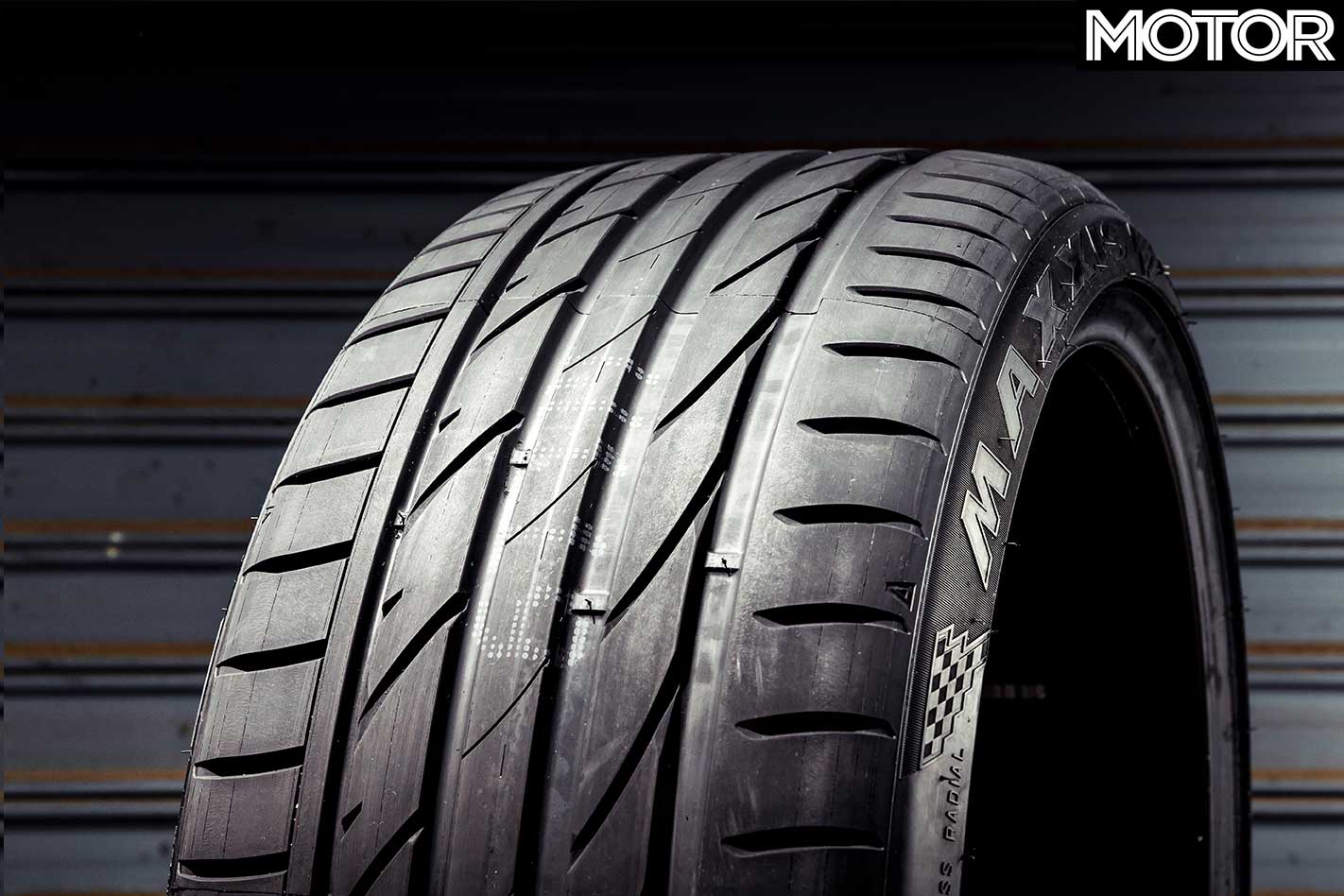
Origin: China Treadwear Rating: 320 Load & Speed Rating: 91Y Slalom results: 10.45sec (6th) Dry braking: 35.45m (4th) Motorkhana: 78.05sec (6th) Wet Braking: 23.79m (1st) Wet Lateral G: 1.0111G (5th)
Continental SportContact 6 review: Joint 5th Place
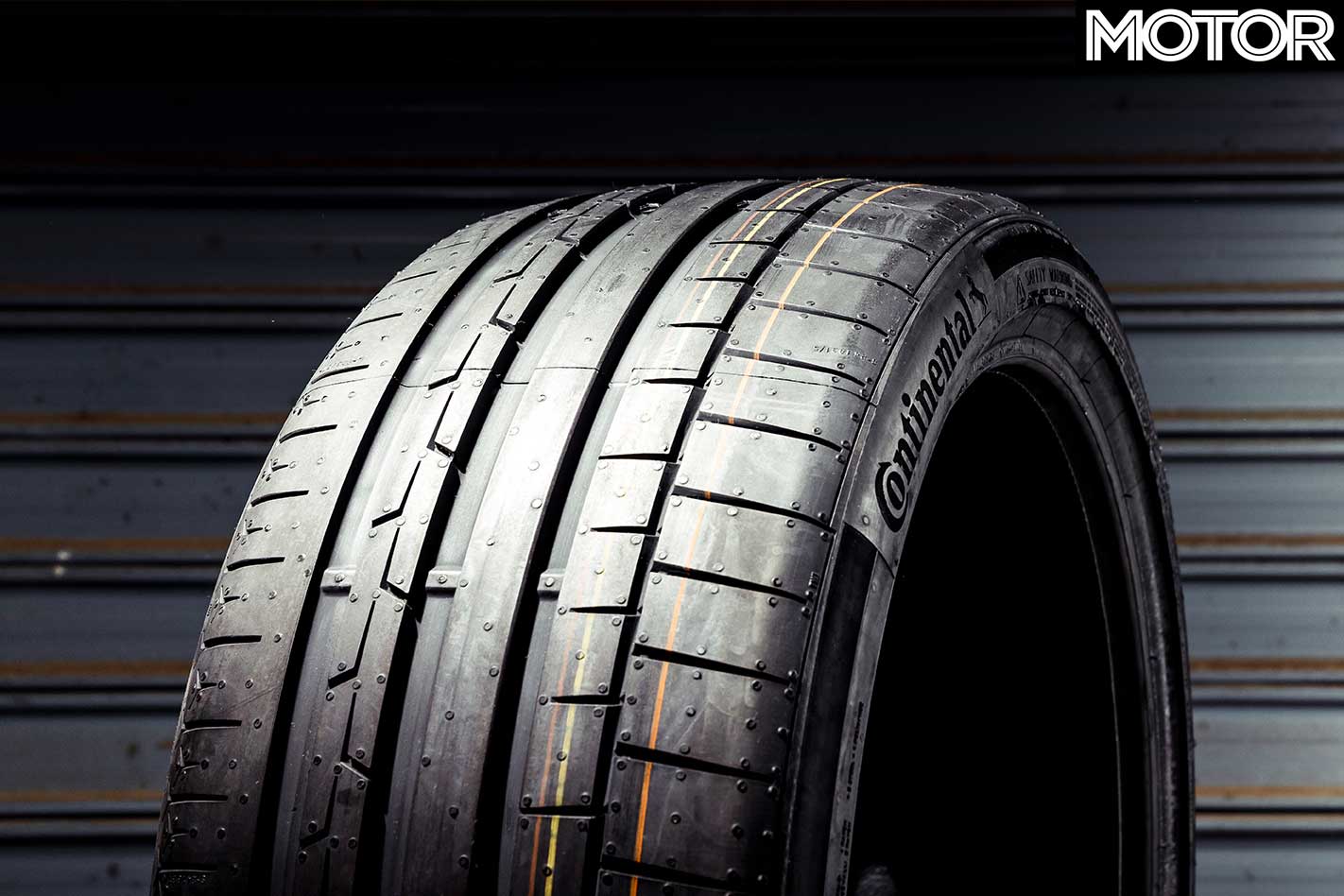
Origin: Czech Republic Treadwear Rating: 240 Load & Speed Rating: 91Y Slalom results: 10.37sec (5th) Dry braking: 33.98m (1st) Motorkhana: 77.93sec (5th) Wet Braking: 24.46m (5th) Wet Lateral G: 1.0151G (4th)
Pirelli P Zero review: Joint 5th Place
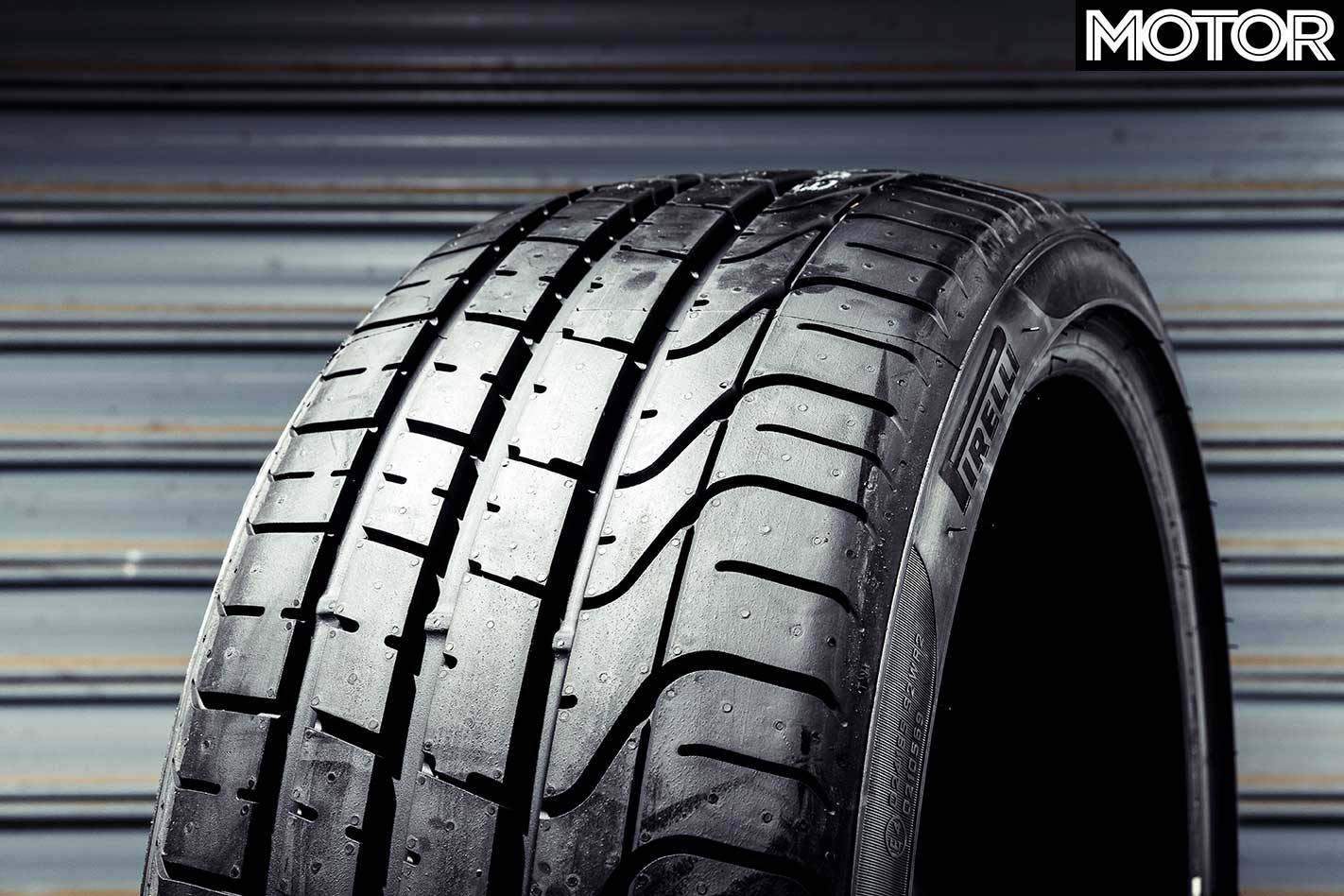
Origin: Italy Treadwear Rating: 220 Load & Speed Rating: 91Y Slalom results: 10.28sec (3rd) Dry braking: 35.87m (5th) Motorkhana: 77.50sec (3rd) Wet Braking: 24.42m (4th) Wet Lateral G: 1.004G (6th)
HiFly HF805 Challenger DSRT review: 7th Place
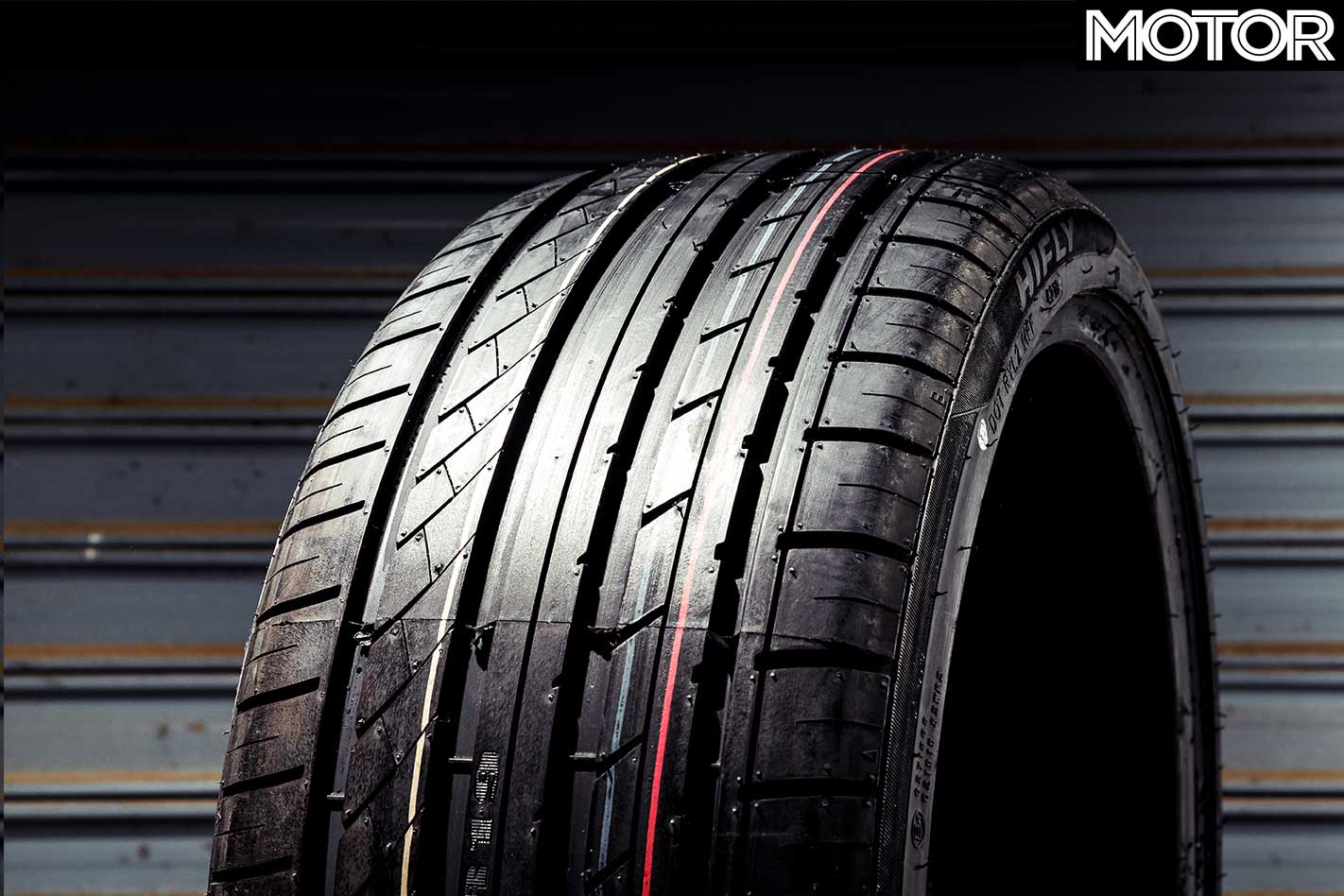
Origin: China Treadwear Rating: 280 Load & Speed Rating: 91W Slalom results: 11.02sec (7th) Dry braking: 38.66m (7th) Motorkhana: 80.68sec (7th) Wet Braking: 27.35m (7th) Wet Lateral G: 0.904G (8th)
Infinity Ecomax review: 8th Place
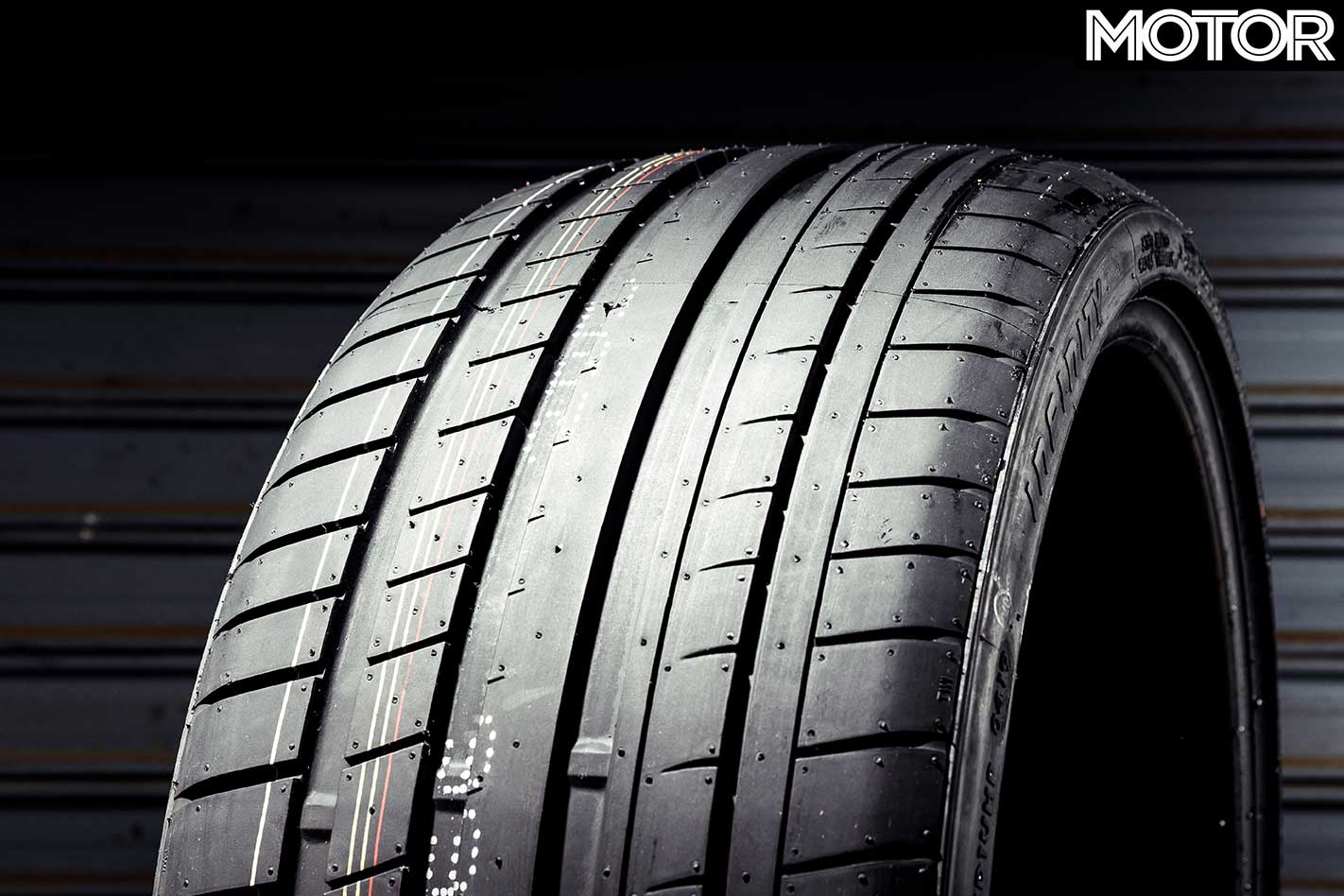
Origin: China Treadwear Rating: 280 Load & Speed Rating: 91Y Slalom results: 11.04sec (8th) Dry braking: 39.27m (8th) Motorkhana: 81.07sec (8th) Wet Braking: 27.86m (8th) Wet Lateral G: 0.936G (7th)
The age of the driverless car has just gotten a little bit closer.
After spending a few years cruising around Arizona, it seems that the Waymo self-driving car – formerly known as the Google self-driving project – is ready to stretch its wings. And it’s all thanks to a newly announced partnership with the Nissan–Renault–Mitsubishi Alliance.
The self-driving tech development company, now a stand-alone subsidiary of Google parent company Alpabet Inc, announced it will be teaming up with Renault and Nissan to research commercial, legal and regulatory issues in Japan and France.
Waymo, which currently only operates in the United States, will eventually begin testing it autonomous tech in both countries, with a plan to expand into other markets except China.
“This is an ideal opportunity for Waymo to bring our autonomous technology to a global stage, with an innovative partner,” says John Krafcik, Chief Executive Officer, Waymo. “With the Alliance’s international reach and scale, our Waymo Driver can deliver transformational mobility solutions to safely serve riders and commercial deliveries in France, Japan, and other countries.”
Nissan echoed this statement, saying the brand hoped to be a leader in autonomy. “As we continue our work through the mid-term plan – Nissan M.O.V.E 2022 – to evolve our business to meet changing consumer behaviour, Nissan aims to be an early provider of driverless mobility service,” said Hiroto Saikawa, President and CEO Nissan Motor Co., Ltd.
“Our expertise in the global automotive industry and expertise in strategic partnership will enable us to explore opportunities to grow our portfolio and deliver new value to customers with Waymo, the recognised leader in this space.“
When it comes to our state of self-driving cars, Australia has already begun some testing of autonomous vehicles (AVs), mostly in the public transport sector in NSW, WA, SA, VIC and the ACT. We also already have driverless trucks operating in mines, automated farming, light vehicle trials, exploration of truck platooning and reviews and implementation around legislation happening in most states.
And, according to the Australian and New Zealand Driverless Vehicle Initiative (ADVI), it’s only a matter of time, as Australia is a fantastic place to test autonomy due to our lifestyle and wide range of climate and road conditions. Trials in Adelaide, for example, have already been deemed a success.
Smoke slowly rises through the 2019 Chevrolet Camaro 2SS’s cabin. Along with a smell. It’s acrid, oily but, thankfully, of the Goodyear Eagle F1 kind. We’ve just laid our first Line-Lock assisted burnout and the dense white cloud in our rear mirrors confirms, yep, it was a good one.
New for the 2019 model year, the technology automates burnouts. You’ll find it buried somewhere in the new, higher-resolution screen menu huddled between the analogue instruments. And when you do, it’ll tell you how much pressure to squeeze through the brakes and when.
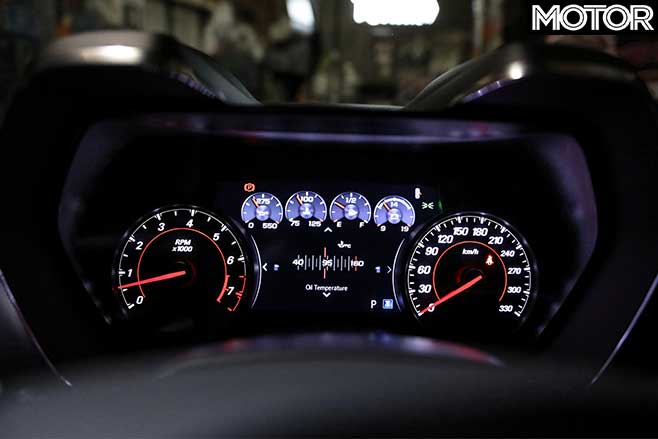
It then locks the front calipers as you bury the throttle. Next, with the rear axle spinning at 5000rpm in fifth, it’ll automatically walk the car forward at snail’s pace, laying down gluey strips of rubber that you’ll trace later for a launch. Nice. Cool as it is, though, it’s only a party trick reaped through a much more crucial change.
Chevrolet armed its V8 invader with a new 10-speed transmission for its mid-cycle update. Co-developed with Ford, it’s closely related to the Mustang GT’s vaunted 10-speed ’box. GM first bolted it into the circuit-swallowing ZL1 in 2016 and then adapted it for the 2SS. The only difference is the ZL1 gets the 10L90 series, whereas this uses the 10L80.
Although ‘80’ means it’s rated for less grunt, it still employs state-of-the-art construction. Contained in an aluminium case it weighs a mite more than the old eight-speed automatic and spans a smidge longer, as well. It fits right in its place, even with all the extra technology crammed inside.
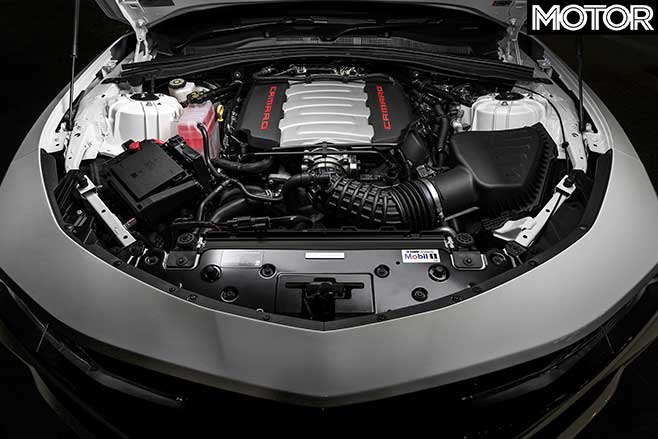
Ultra-thin fluids, new clutches, and integrated solenoid valves give GM the confidence to compare it with Porsche’s PDK dual-clutch gearbox on shift times. But do extra ratios really sharpen the SS’s sting when its 339kW and 617Nm remain unchanged? The drag strip will tell.
Pre-flight checks are as follows. Disable ESP. Leave the transmission in Drive. Hold the brake, gently, and tickle the throttle. About 1800rpm does it. Softly, but quickly, release the brake. Then blend the throttle in as a new, lighter, thinner torque converter locks-up. Feel the weight shift back, sink the gas.
The exhaust bellows through the cabin as you charge forward. It also pops violently on each shift as transmission oil flows through shorter passages, into better designed clutches, to grab the next gear quicker. Meanwhile, the torque converter stays locked, for maximum power transfer.
Chevrolet claims the new Camaro is no faster than the MY18 eight-speed automatic version, but in a straight line race with that car’s best recorded figures, it’s already hit 100km/h from rest 0.09sec earlier. And that’s just the start of it.
While the MY18 crosses the line on its limiter in third, the newer 2SS, in fifth, arrives 0.23sec earlier with a 12.57sec pass at 185.13km/h. That’s 3.4km/h faster, even though it had to complete two more shifts. The lesson? Clever gearing can extract more from an engine without adding power.
As it turns out, the first two gears in the MY19 car are exactly the same as the MY18. But for good reason. The LT1’s sizeable torque peak lies at 4600rpm. So second gear drops revs just under that, helping accelerate the car’s sizeable mass off the line. Then once it’s built some momentum and crucial wheel speed, the ratios tighten back up.
In fourth, fifth and sixth gear the revs land closer to its 5700rpm power peak until you’re into seventh, at 242km/h. Revs fall back to half way between the power and torque peaks, at 5070rpm, so it can cleave through mounting wind resistance. And not just in a straight line. We’d imagine this advantage plays out several times on a racetrack.
The gear paddles still sound awful when you pluck one, but they also control a much meaner-sounding LT1. Swapping the Camaro’s transmission let engineers devise new engine and bi-modal exhaust software. For instance, upshifts under 3000rpm are fairly uneventful.
Squeeze the pedal a little harder, though, to spike the revs into the mid-range, and it’ll crackle on overrun like it’s gurgling nitro. Or nail the gas, pluck a gear above 5000rpm and it’ll fire crack from the exhaust, just like we heard at the dragstrip. But there are times it’s not always this raucous.
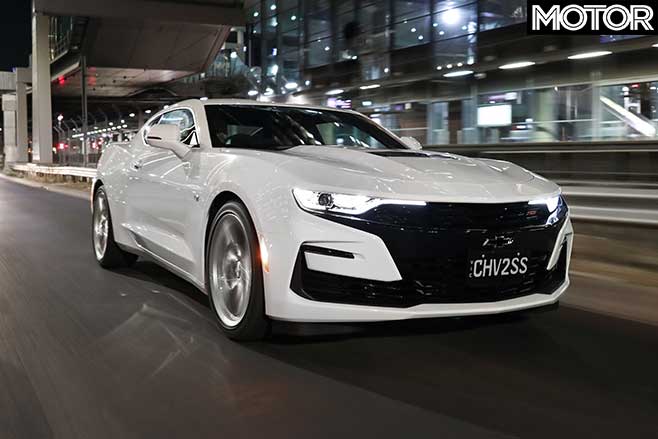
Left to its own devices the transmission rushes through gears to tame the V8’s thirst. Even in Track mode. Then once revs drop on a steady throttle, it shuts off a cylinder bank, resulting in an uninspiring ticking sound from the engine bay.
The cure? Stay in the transmission’s manual mode. Chevrolet also spruiks its ‘Lift-Foot Gear Hold’ technology that supposedly better holds gears through corners off throttle. But that’s what a good automatic should do.
When you stomp the gas it’ll quickly wake. At 110km/h in ninth at 1590rpm, the ’box downshifts multiple gears in what feels like an instant, vanquishing dawdling caravans with ease. Sure, it doesn’t work with the visceral crispness of the Mustang’s 10-speed automatic, but it knows exactly where to land in the engine’s torque-laden rev-range.
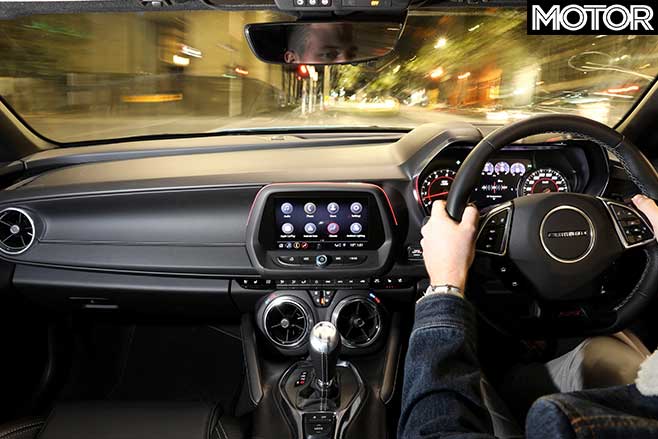
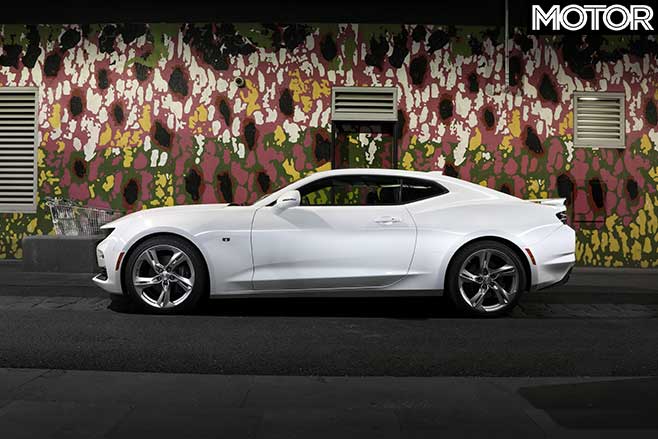
Chevrolet’s left the suspension package alone, carrying over 245/40 (front) and 275/35 (rear) Goodyear Eagle F1 Asymmetric 3 run flats on 20-inch wheels. They still find a very firm ride underneath GM’s FE3-spec suspension on Aussie roads and tip the ride-and-handling balance into the realms of compromised sports cars. Until, that is, magnetic dampers arrive. That’s okay, though, as it’s still the most agile muscle car even if its iffy steering weight spoils the front-end’s feedback.
Sight an apex, commit and there’s varying levels of resistance as you turn the wheel. The ZL1 will reveal almost all the Alpha platform’s potential when it lands, but the 2SS’s sweet driving position and tactile chassis transmit a lot about grip levels. Exceed its limit and the stability system nips any slip, feeling only a touch more intrusive than HSV’s Competition ESC.
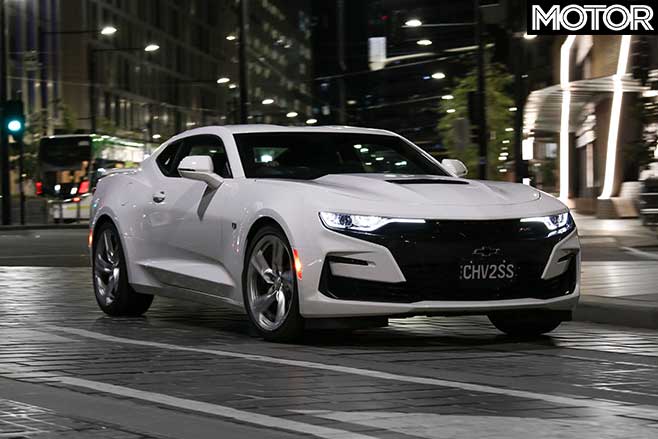
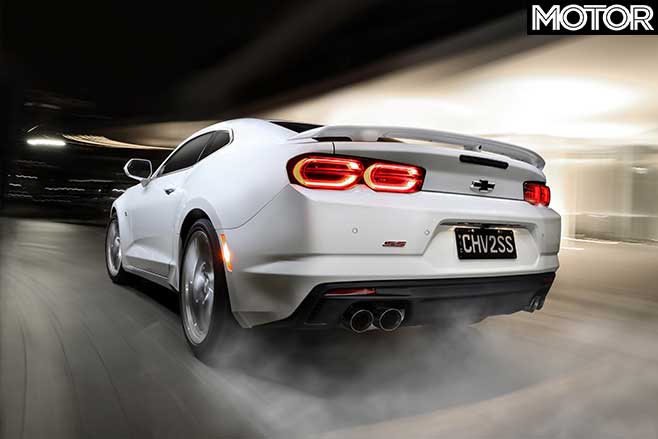
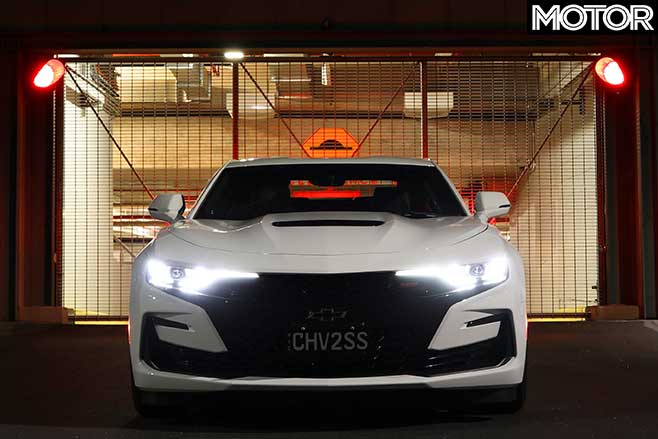
You won’t need to hold big, dirty third-gear drifts to catch anyone’s attention, its striking new front-end, defined by a vented bonnet and ‘Flowtie’ grille (the Chevy badge on the front is hollow, letting extra air through to the radiator), spins heads wherever it goes.
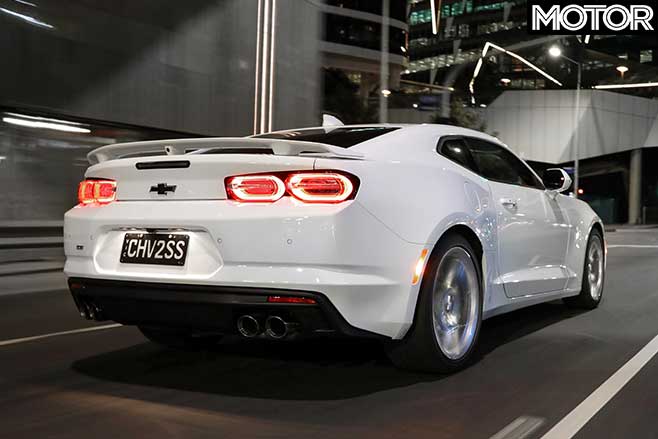
With those ‘dual element’ LED headlights peering out from a huge gaping maw, the fresh face is joined by rear lights that glow with a new design, swapping the old rectangular-shaped units for a pair of hot-plate ovals. Enjoy it while you can, though.
Backlash to its styling has been so strong in America, Chevrolet has decided to restore its bow tie badge to the grille for 2020, choosing style over cooling. It’s not clear when HSV will switch to the new design; it’s focused on simply converting Camaros to right-hand drive well enough to impress GM. That’s why, after only months since it injected the first ones into Holden dealers, it’s earned access to the 2019 version and a much-needed change to the local build process.
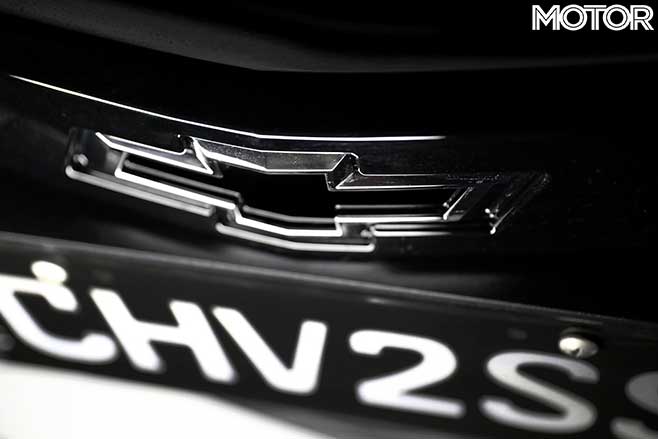
Clayton still plays middle-man. In that, it still imports core vehicles and then re-manufacturing them, but it now receives American spec cars instead of Argentinian ones, gaining more control over what’s included for the slightly inflated price.
That sunroof disappears from the standard equipment list and is replaced by a heads-up display HSV figured how to swap to the right side. On top of that, a forward-collision and rear cross-traffic alert system are included. Oh, and there’s a reversing camera mirror to boost over-shoulder visibility.
At $89,190 the automatic’s price rises $3200. Meanwhile, a six-speed manual version, that should be on sale by the time you read this, starts the range at $86,990. A drive, and verdict, on what transmission partners better with the LT1 V8 will come. Either way, we can confirm you’re getting HSV’s best effort for build quality and finish.
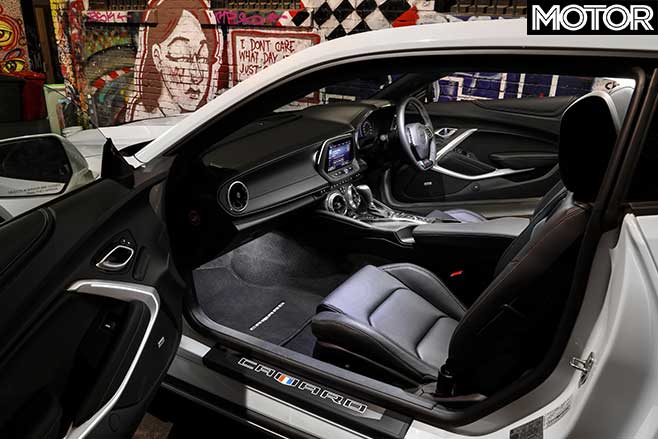
Admittedly, the steering column developed a squeak from a faulty seal. But that’s it. Everything inside feels tighter and the materials ooze a semi-premium vibe. Those cylindrical indicator stalks are a literal touch of VF Commodore, too.
Despite some inherent design quirks – like that tilted centre screen – the HUD and crisper LCD graphics for its Infotainment 3 system boost the cabin technology, and it’s a step forward. And that’s the best way to sum up the 2019 Camaro.
At an OEM-level Chevrolet needs to silence the Camaro’s dull sounding paddles, inject more aggro into the powertrain’s Track mode and smooth its ride (or HSV needs to offer optional magnetic dampers). But the mechanical upgrades, combined with HSV’s advances in manufacturing, equal a big improvement over the MY18 for just an extra $3200.
So, it’s faster, more usable, more responsive and can rip a mighty burnout with ease. And after the smoke clears, this Camaro’s guaranteed to be exclusive when GM reverts back to the old face. All it needs now to prove itself is a rematch with the Ford’s legendary Pony. Giddy up.
FAST FACTS 2019 Chevrolet Camaro 2SS BODY: 2-door, 4-seat coupe DRIVE: rear-wheel ENGINE: 6162cc V8, OHV, 16v BORE/STROKE: 103.25 x 92.0mm COMPRESSION: 11.5:1 POWER: 339kW @ 5700rpm TORQUE: 617Nm @ 4600rpm WEIGHT: 1710kg POWER-TO- WEIGHT: 198kW/tonne TRANSMISSION: 10-speed automatic SUSPENSION: struts, dampers, coil springs, anti-roll bars (f); multi-links, dampers, coil springs, anti-roll bars (r) L/W/h: 4784/1897/1348mm WHEELBASE: 2811mm TRACKS: 1600/1597mm (f/r) STEERING: electrically assisted rack-and-pinion BRAKES: 345mm ventilated discs, 4-piston calipers (f); 339mm ventilated discs, 4-piston calipers (r) WHEELS: 20.0 x 8.5-inch (f); 20.0 x 9.5-inch (r) TYRES: Goodyear Eagle F1 Asymmetric 3, 245/40 ZR20 95Y (f); 275/35 ZR20 98Y (r) PRICE: $89,190
PROS: Crackly overrun; responsive shifts; more interior tech CONS: Stiff ride; frugal-focused drivetrain; price increase RATING: 4 out of 5 stars
The Strip
| Chevrolet Camaro 2SS | |
| 0-10km/h | 0.35sec |
| 0-20km/h | 0.71sec |
| 0-30km/h | 1.07sec |
| 0-40km/h | 1.48sec |
| 0-50km/h | 1.88sec |
| 0-60km/h | 2.36sec |
| 0-70km/h | 2.87sec |
| 0-80km/h | 3.38sec |
| 0-90km/h | 3.95sec |
| 0-100km/h | 4.59sec |
| 0-110km/h | 5.23sec |
| 0-120km/h | 5.95sec |
| 0-130km/h | 6.69sec |
| 0-140km/h | 7.58sec |
| 0-150km/h | 8.46sec |
| 0-160km/h | 9.46sec |
| 0-170km/h | 10.61sec |
| 0-180km/h | 11.86sec |
| 0-400m | 12.57sec @ 185.13km/h |
| 80-120km/h (Drive) | 2.53sec |
| 100-0km/h | 33.78m |
| Speed in gears | |
| 1st | 66km/h @ 6500rpm |
| 2nd | 104km/h @ 6500rpm |
| 3rd | 144km/h @ 6500rpm |
| 4th | 172km/h @ 6500rpm |
| 5th | 204km/h @ 6500rpm |
| 6th | 242km/h @ 6500rpm* |
| 7th | 290km/h @ 6075rpm* |
| 8th | 290km/hu00a0@ 5175rpm* |
| 9th | 290km/hu00a0@ 4200rpm* |
| 10th | 290km/hu00a0@ 3900rpm* |
Sandown Raceway, 23˚C, dry. Driver: Louis Cordony Timing: VBOX Australia *Manufacturer’s claim
Know a woman under 30 who constantly pushes the envelope when it comes to technology, sustainability or art? Or perhaps you are one? As part of a brand new awards program, Automobili Lamborghini has announced the ‘Future FAB. Innovation and Transformation Award’, a prize that taps into the Italian brand’s recent social focus on supporting the pursuits of future generations while also helping to increase gender diversity in the automotive industry.
Launched as an extension of FAB, Lamborghini’s Female Advisory Board, an initiative involving an all-female network of around 180 influential women in business and culture around the world, the prize will be presented in three categories: Technology, Sustainability and Art.
It will be awarded to three women who have impacted and made a contribution to the world around them while sharing ‘Lamborghini’s philosophies and approach to ideas.
Those ideas are innovation and transformation, with a ‘commitment to creating a sustainable future while pushing the frontiers of technology and creative force of art.’
“Lamborghini is an organisation that has been able to transform itself continuously, innovating and dictating new rules in its sphere of reference, from 1963 to today,” says Chief Marketing Officer, Katia Bassi. “FAB continues along this path, involving women who are leaders in their sectors, whose experience of challenges, successes, and purchasing habits supports us in our market research and provides vital information on the trends of the luxury market and society.”
Of the award Bassi says, “with a view to Corporate Social Responsibility and to give continuity to our vocation as a future-oriented brand, this initiative offers young women under 30 the opportunity to present their projects, to be inspired by the experience of women’s leadership, and to be able to contribute along with us to innovation and progress.”
Want to enter? Find out more and how to apply via this website before October 14.
Nowadays with so many engine options available, it’s no wonder so many are left bewildered when faced with a new car purchase.
As more fuel options have entered the market, the choice on which to run long-term has become even more tricky. Today, some of the most common alternatives to petrol engines are hybrid, LPG, diesel and pure-electric. Adding in the fact that each option has numerous pros and cons makes for a confusing buying experience.
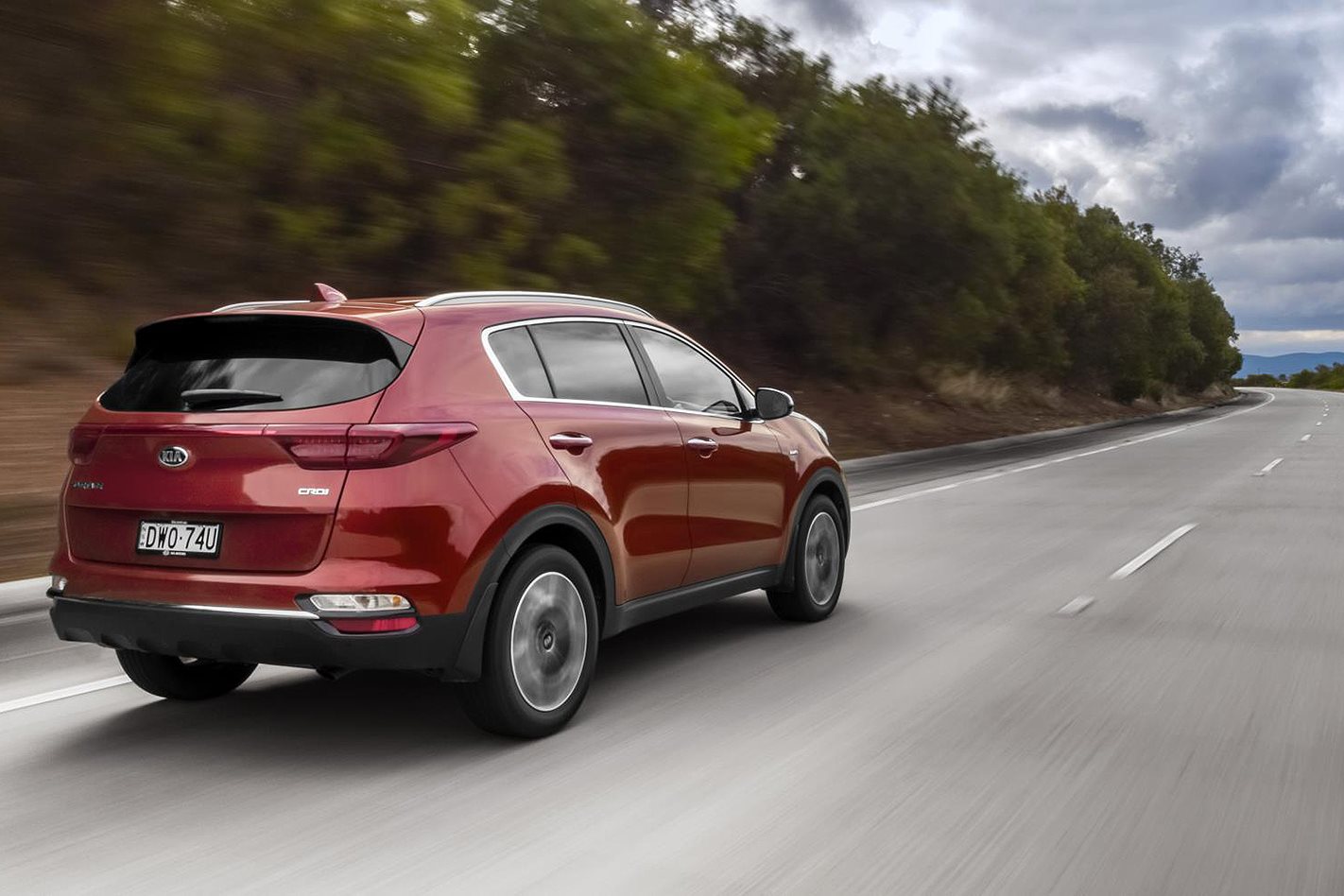
For the purpose of this article, the big debate sits between hybrid engines that combine fuel and electric boost, or fuel-sipping diesels.
Let’s take a look at how they compare…
Sales of diesel engines are generally down across the new car market in Australia. Especially considering the huge dual-cab ute market that almost exclusively uses diesel powertrains, diesel passenger cars are becoming rarer and rarer as advancements in petrol efficiency continue and bans on diesels come down across the globe.
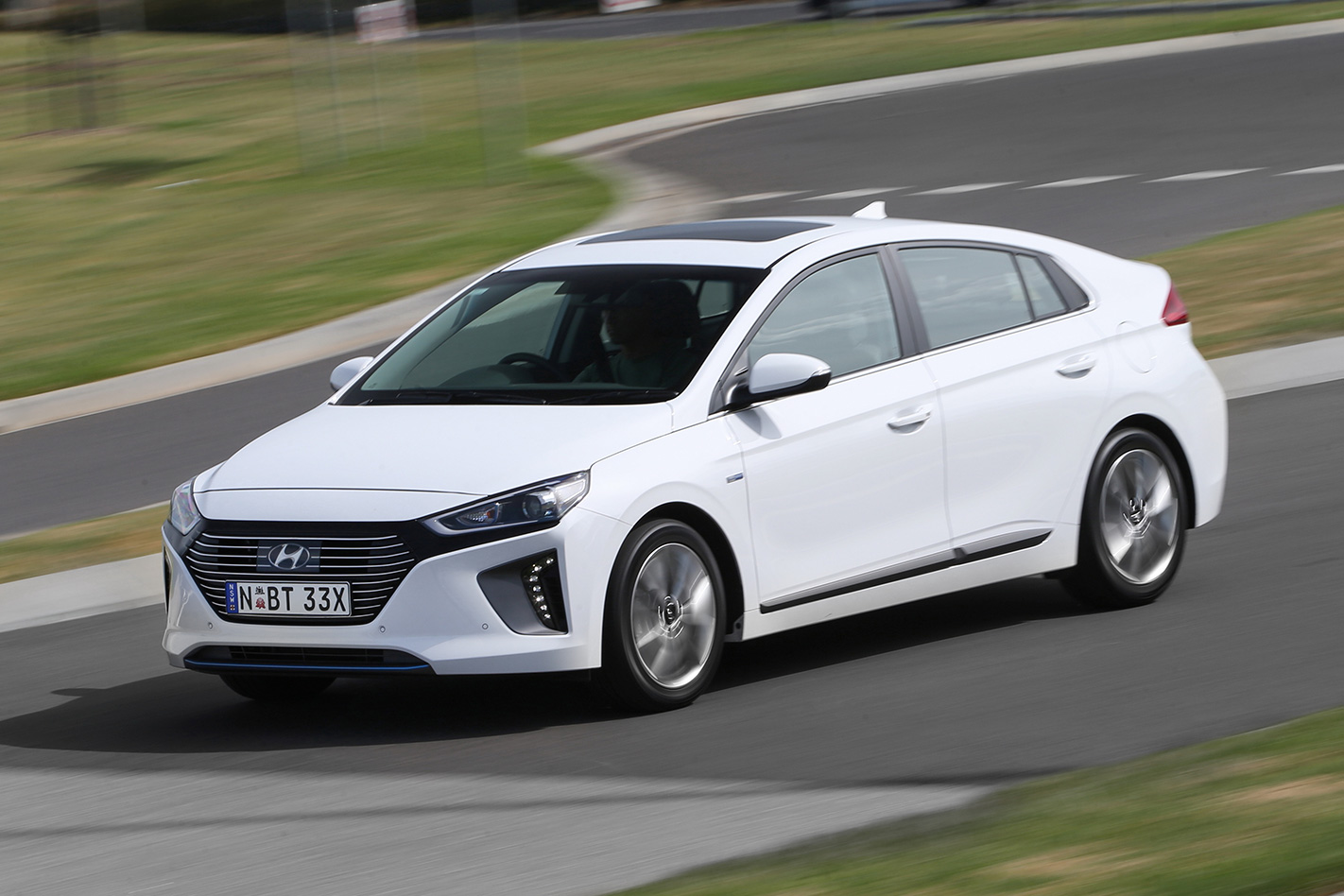
However, diesel is particularly fuel-effective for larger SUVs used for towing or longer road trips. On the downside, even filtered diesel creates noxious emissions, and the production of diesel from crude oil creates significantly higher nitrous oxide (NO) emissions than petrol.
In Australia, a hybrid engine means the combination of either electric and petrol engines, or electric and diesel engines.
The hybrid’s electricity can come from a power point (known as a plug-in hybrid), but it can also be made entirely on-board using the conventional combustion engine as a generator. Both types of hybrid also use the braking motion in a car – called regenerative braking – to recharge the battery as you drive. The generated electricity powers the car at low speeds, sometimes assists with acceleration, and runs functions like lights and air conditioning.

The Toyota Prius has been the most popular hybrid in Australia for 14 years, but other manufacturers including Mitsubishi, Mercedes, Honda and Porsche now sell hybrids. When a car becomes available in petrol, diesel and hybrid variants, the diesel is usually several thousand dollars more than the petrol and the hybrid is more again. Maintenance costs for both engine types are also a fraction higher than petrol engines, but the real difference is in the fuel running costs.
Let’s talk average cents per kilometre (c/km) for fuel. The Mazda CX-5 SUV averages 11.39c/km using petrol, yet drops to 9.13c/km using diesel. The petrol Mitsubishi Outlander SUV clocks 11.54c/km, but the plug-in hybrid petrol-electric Outlander averages 6.86c/km. That’s a five-seat, medium-sized SUV chewing less fuel than some smaller cars and even less again if you plug the Outlander into solar panels.
The major downside of diesel fuel is the environmental ramifications. If you want to steer entirely clear of diesel and still enjoy terrific fuel savings then a petrol-electric hybrid does the trick. Unless you’re really into accelerating quickly, it’s probably a better choice overall.
There’s plenty of options out there, you just need to do your research and check the figures. Save the environment, save your pockets or both… either way, hybrids are going to become more and more common in the market so keep a look out.
Looking at sales figures and at what’s parked in Aussie driveways, it’s not hard to figure out that SUVs have well and truly taken over as the default choice for the average Australian family.
Sedans, long the dominant vehicle in our landscape, appear to be on the cusp of extinction, however new research suggests the tide may soon change.
In recent years the trend toward high-riding wagons and crossovers has accelerated to the point where some manufacturers no longer have faith in ordinary passenger cars, and have wound back their four-door offerings significantly.
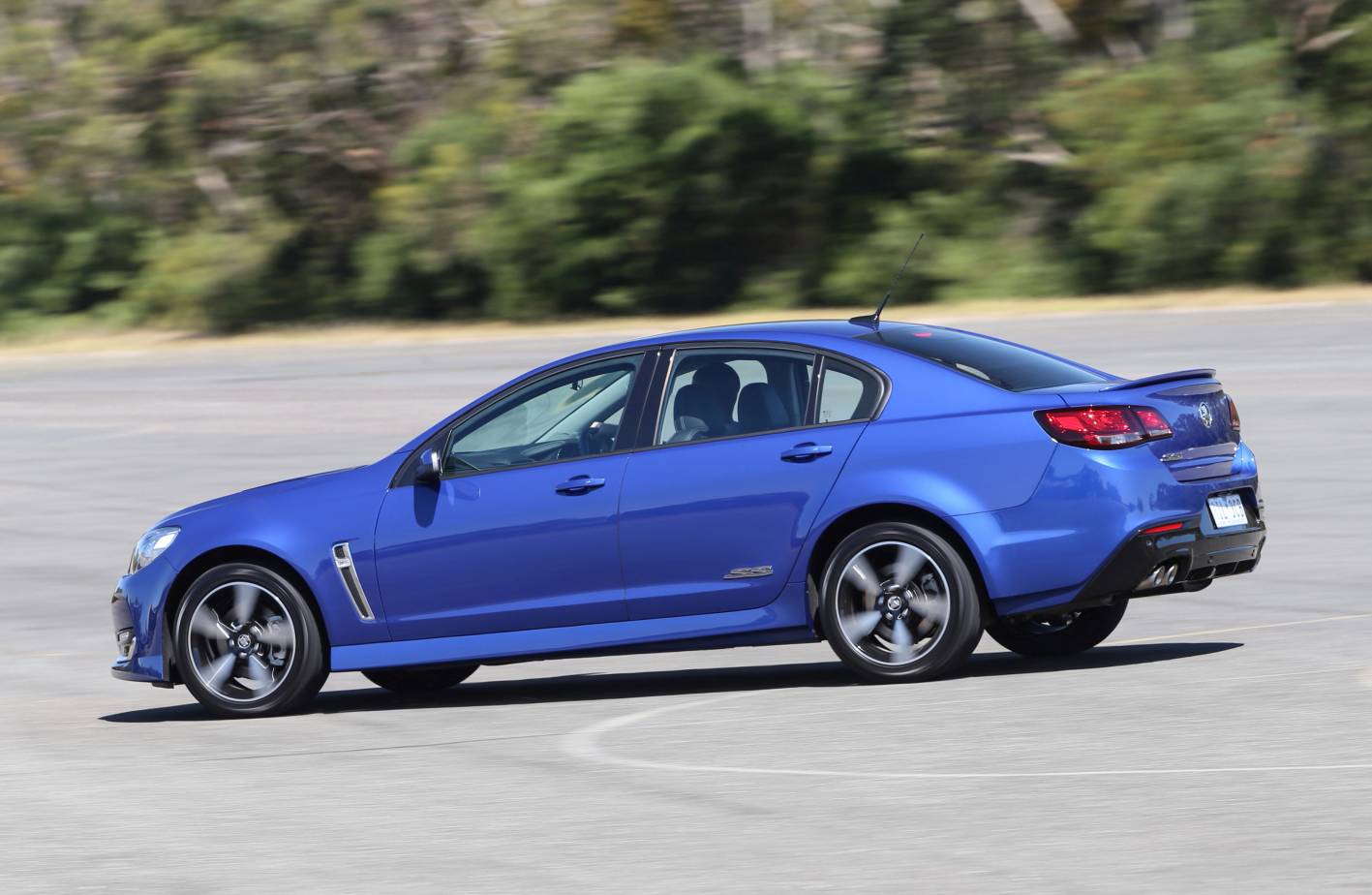
Larger non-premium sedans have suffered the most, with Ford, Toyota and Mitsubishi having long discontinued their respective Falcon, Aurion and 380 models, while the Holden Commodore has morphed into an oversized hatchback and wagon.
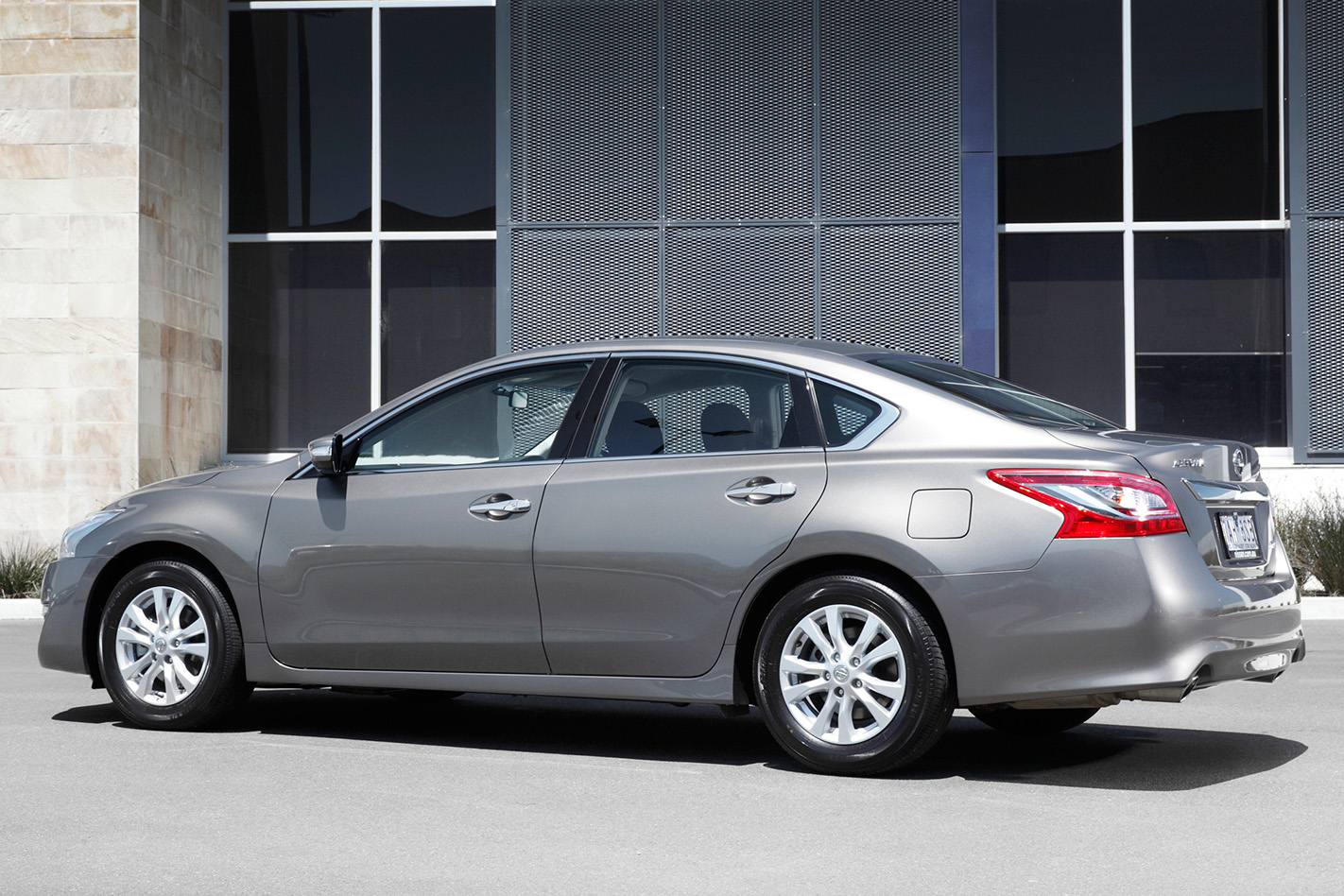
Nissan Australia has gone the furthest, having culled the Maxima, Altima (below)and Pulsar sedan from its local showrooms years ago to focus entirely on SUV, utility, and sports car product. So far, that strategy has worked for the company – they don’t appear to miss having sedans to sell, and neither do their customers.
Nissan’s local office isn’t alone in its thinking. In the United States, Ford has announced it will adopt a similar strategy and drop all non-SUV, non-performance cars from its domestic lineup, leaving sedan and hatch lovers out in the cold. Not everyone is abandoning sedans though – in fact, more than a few high-profile brands have told WhichCar that they still put great stock in retaining a sedan presence despite falling segment sales.
However Nissan’s global operation recently surveyed 11,000 car owners between the ages of 18 and 65 across 11 countries (including 1000 people from Australia), and discovered that the next generations of car buyers may not be quite as SUV-mad as their parents have been to date.
Broadly speaking, of drivers who don’t presently own a sedan a full 75 percent of them responded that they would consider buying a four-door passenger car as their next car. When homing in on the millennial demographic (those born from the mid-1980s to the mid-1990s), that number rose to 80 percent.
The figure drops to 70 percent when looking at respondents from Generation Z (those born from the mid-1990s onward), however it’s still a high proportion. Though the popularity of SUVs is undeniable, it’s clear that younger adults haven’t forgotten about the humble sedan either.
For Nissan Global, it provides validation for its future sedan strategy. Though it’s turned its back on them in Australia, the company still has a healthy four-door portfolio overseas.
“As some of our competitors walk away from sedans, we’re seizing the opportunity,” Said Nissan vice president of global product planning Ivan Espinosa.
“Our newest sedans speak directly to the needs of buyers, particularly young people who may be looking to buy their first car. In the months and years to come, Nissan sedan drivers will enjoy more autonomous technologies, more advanced and electrified powertrains, and more connectivity.”
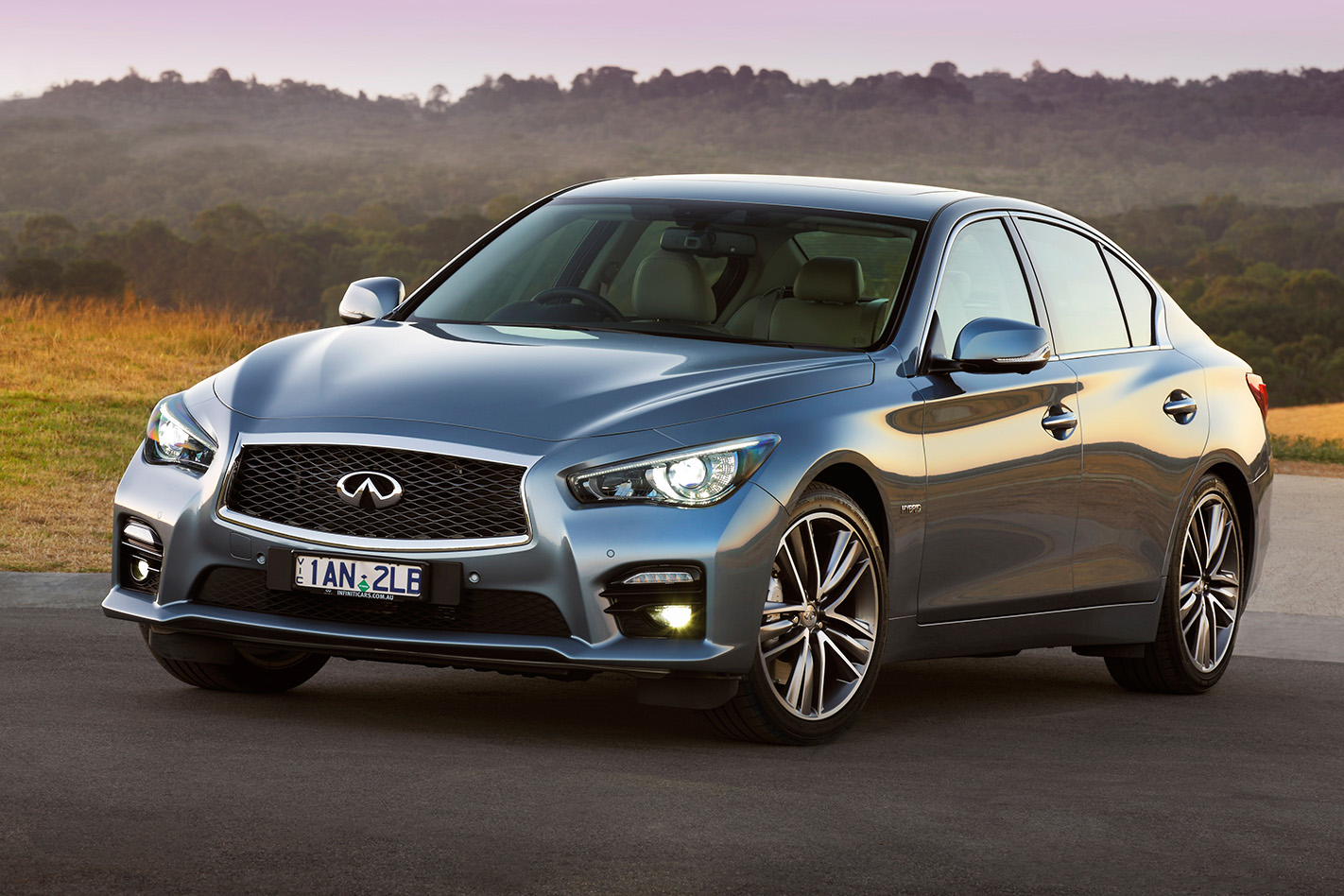
In Japan, Nissan sells the Skyline – a nameplate that would still be familiar to Australian millennials – the Cima/Fuga large sedans, the Teana medium sedan and the Sylphy small sedan. The latter two were previously sold in Australia badged as the Altima/Maxima and Pulsar Sedan respectively, while the Skyline is actually on sale here – albeit badged as the Infiniti Q50. The Cima was once on sale in local Infiniti showrooms as the Infiniti Q70, but has been discontinued.
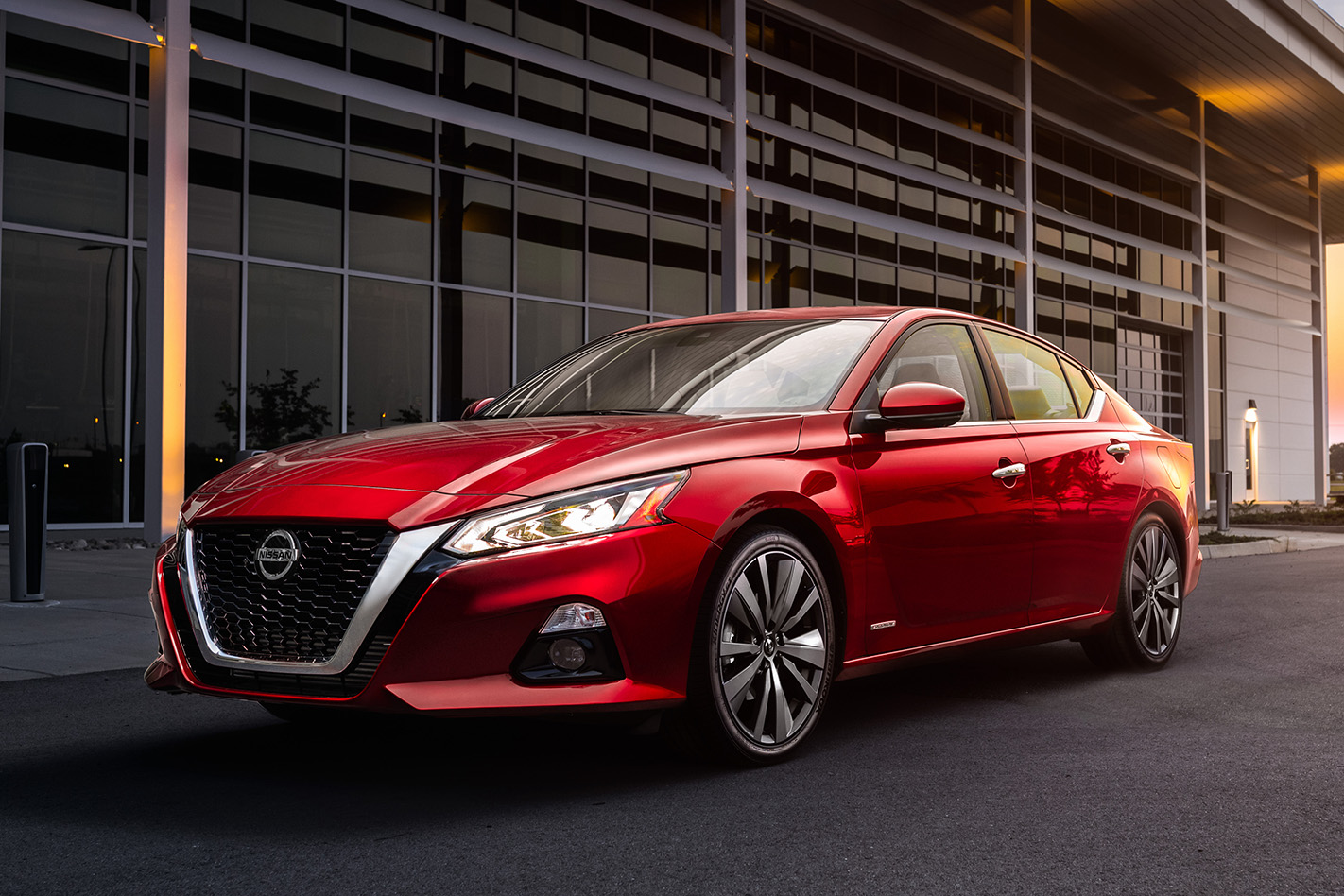
The next-generation of Nissan’s four-doors have already been revealed in the form of the 2019 Nissan Altima and 2019 Nissan Sylphy (below). The Altima, revealed last year at the New York Auto Show, is a tech-heavy flagship that uses Nissan’s clever variable compression-ratio turbocharged engine and its latest semi-autonomous driver aids, as well as sharp styling both inside and out.
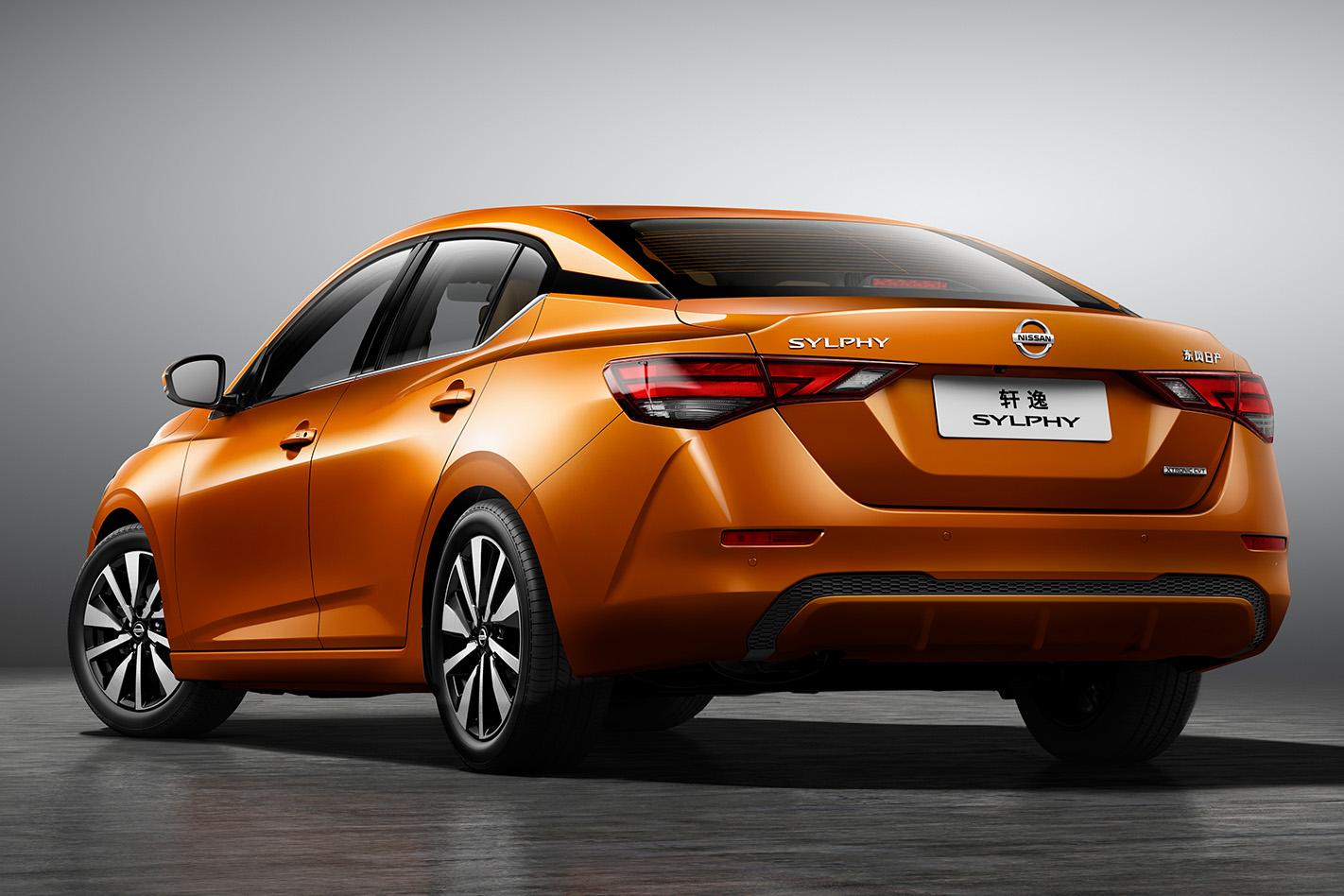
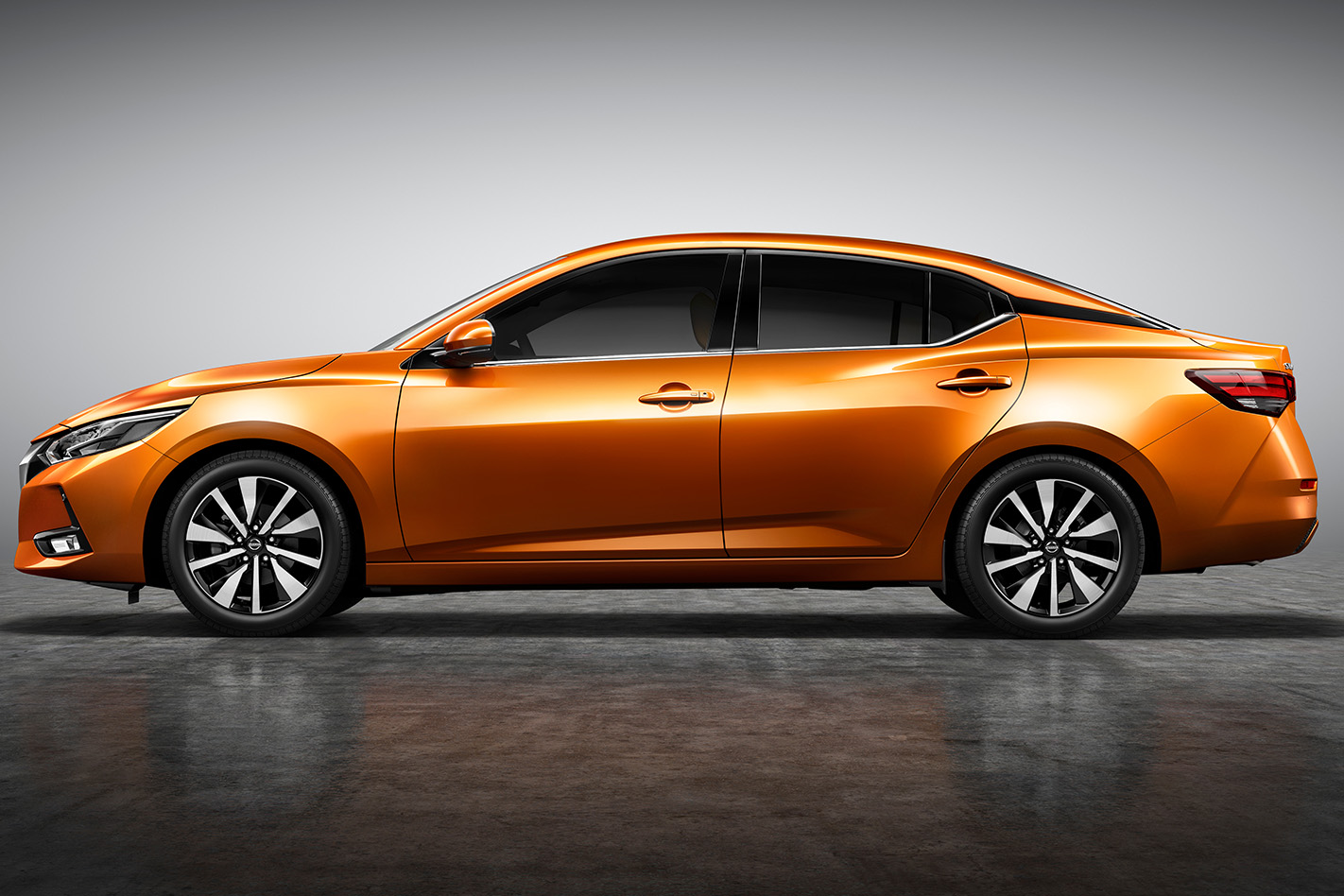
The next-gen Sylphy was announced at the Shanghai Motor Show in April, and is positioned in the same size class as the Kia Cerato, Hyundai Elantra and Mazda 3. It’s more basic than the new Altima, but its debut is yet another signal that Nissan global sees merit in keeping sedans around.
However, while it appears the attitudes of future new-car buyers appear to be positive for sedans, at this point Nissan Australia tells WhichCar that there are no plans to re-introduce any sedans to its local lineup. As always though, if the demand presents itself then the product will likely follow. Watch this space.
Mini has revealed the next version of its limited edition Mini John Cooper Works GP will be able to lap the Nürburgring in less than eight minutes.
This is not only a huge improvement over the 2012 JCW GP, which lapped the circuit in 8 minutes and 23 seconds, but it also puts the Mini closer to the other rather focused sub-8min hot hatches from Renault, Honda, and VW.
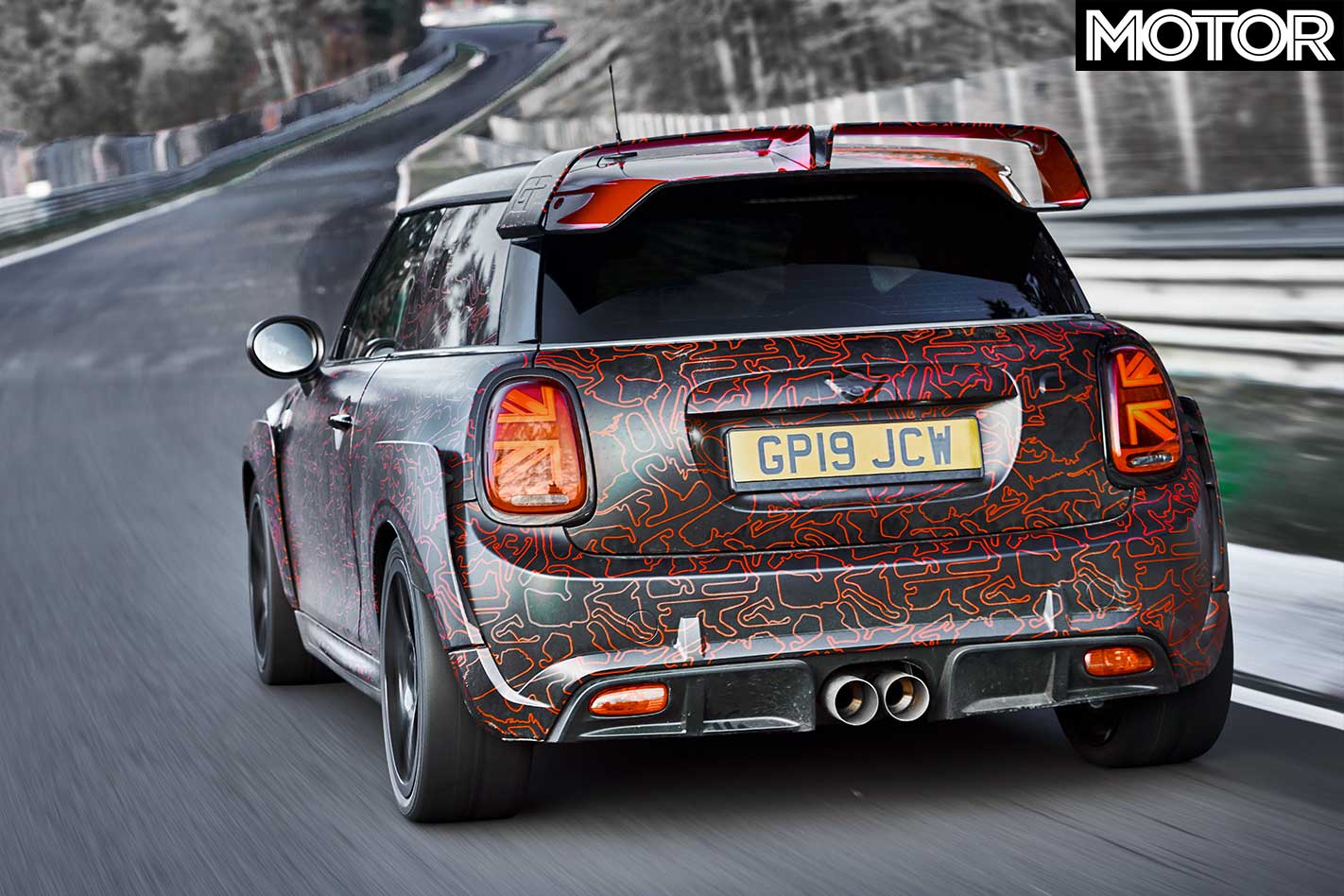
In terms of its power, the GP is said by Mini to be packing a BMW-derived four-pot with more than 220kW, which is likely to be the same engine from the BMW X2 M35i and new BMW M135i.
On the exterior, the JCW GP features extroverted aero such as the large intakes, muscular aprons, and a fairly hefty wing. It’s also got protruding arches which allow air to pass through.
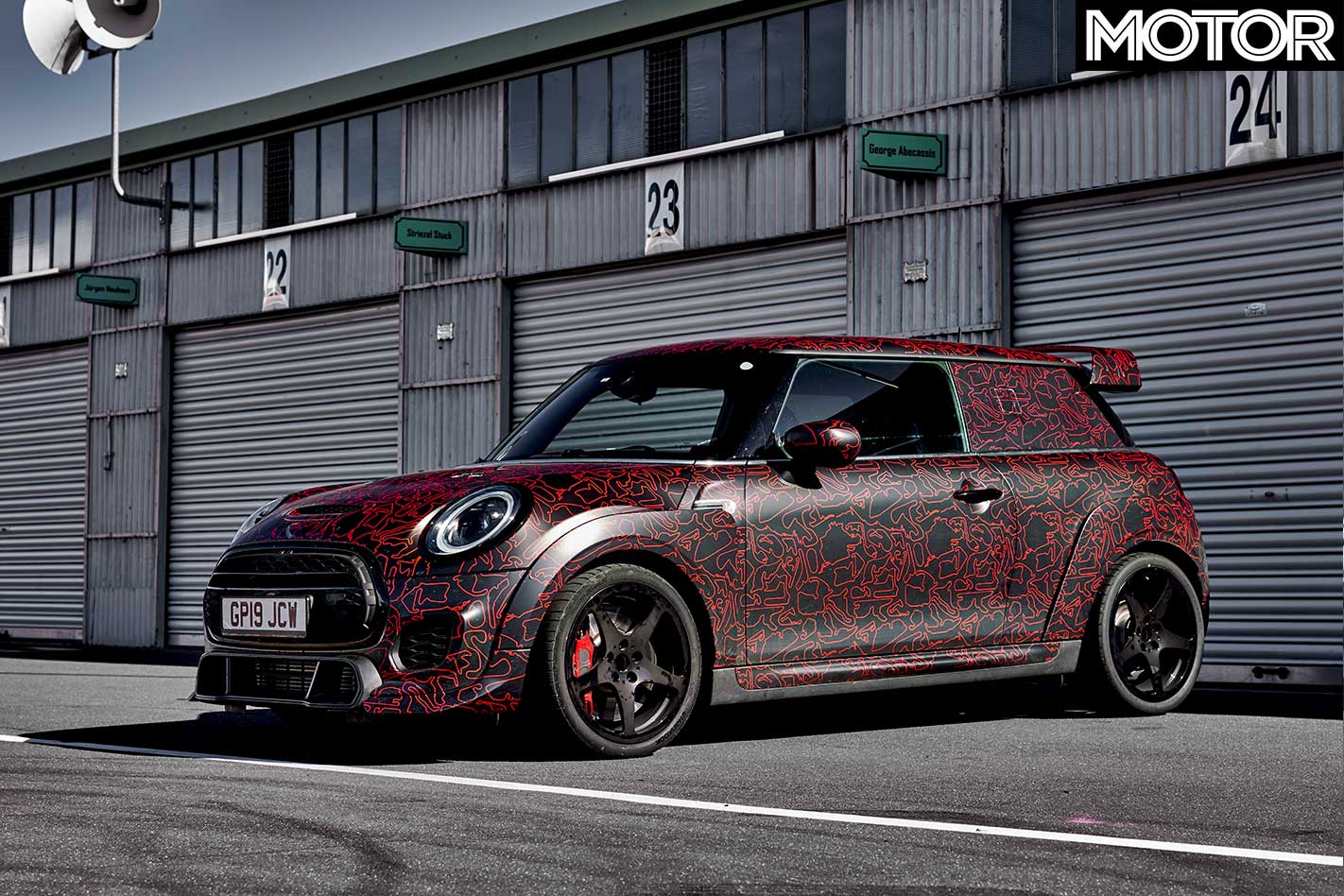
Stylistically, it takes the lead from the previous two John Cooper Works GPs, from 2006 and 2012, which featured similar wings and racey elements.
Mini took the opportunity to display all three generations on track at the recent 24 hours of Nürburgring though it says the current model is still in prototype form, thus the camo.
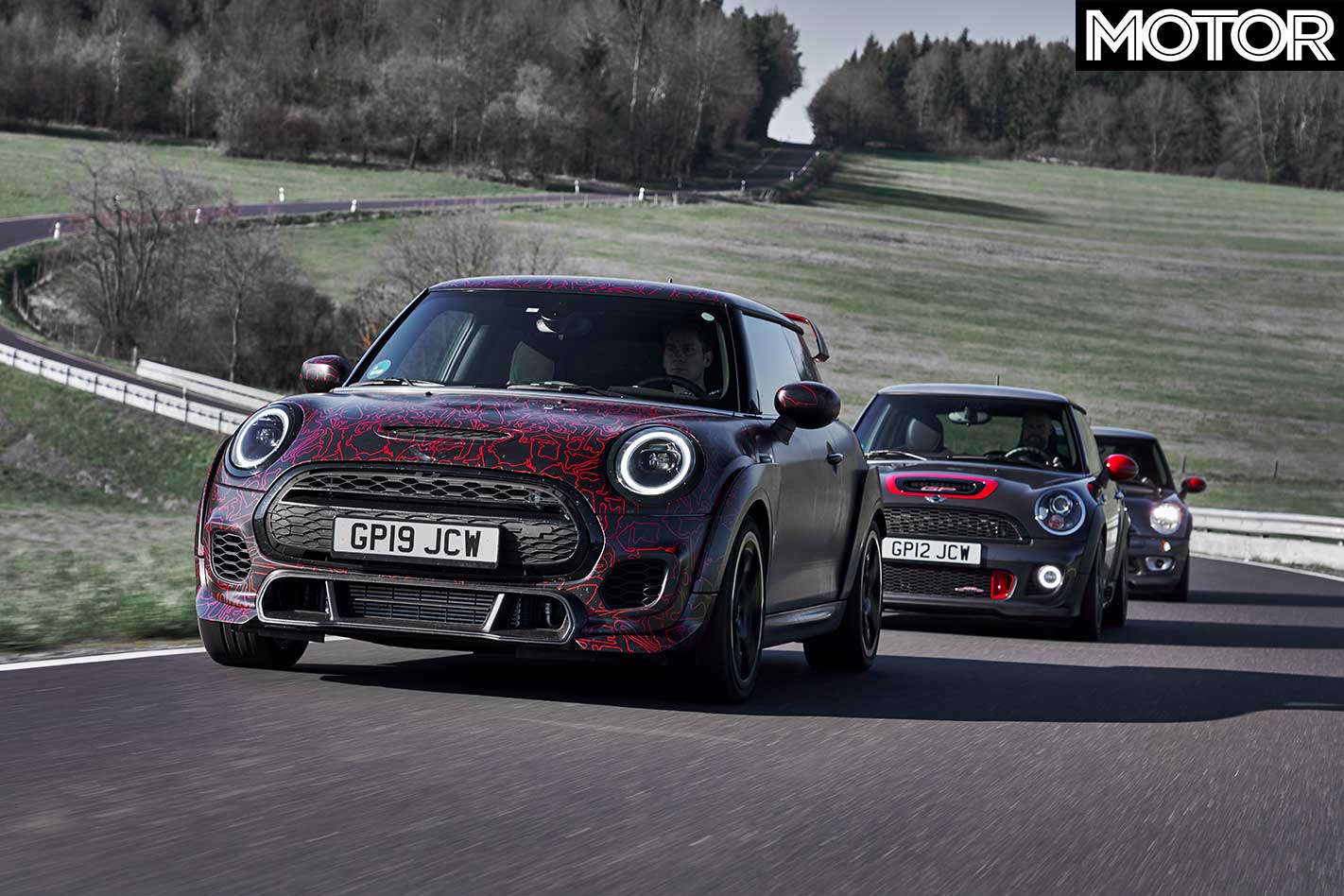
Once it’s properly revealed and launched in 2020, 3000 units are to be available. Mini Australia has expressed interest in the 2020 Mini Cooper JCW GP, after the previous GP model saw 55 units arrive in Australia in 2013.
Tapping into current vehicle safety technology and our ever-expanding wireless cellular network, vehicles are soon to become aware of each other, helping avoid road incidents and reduce the road toll.
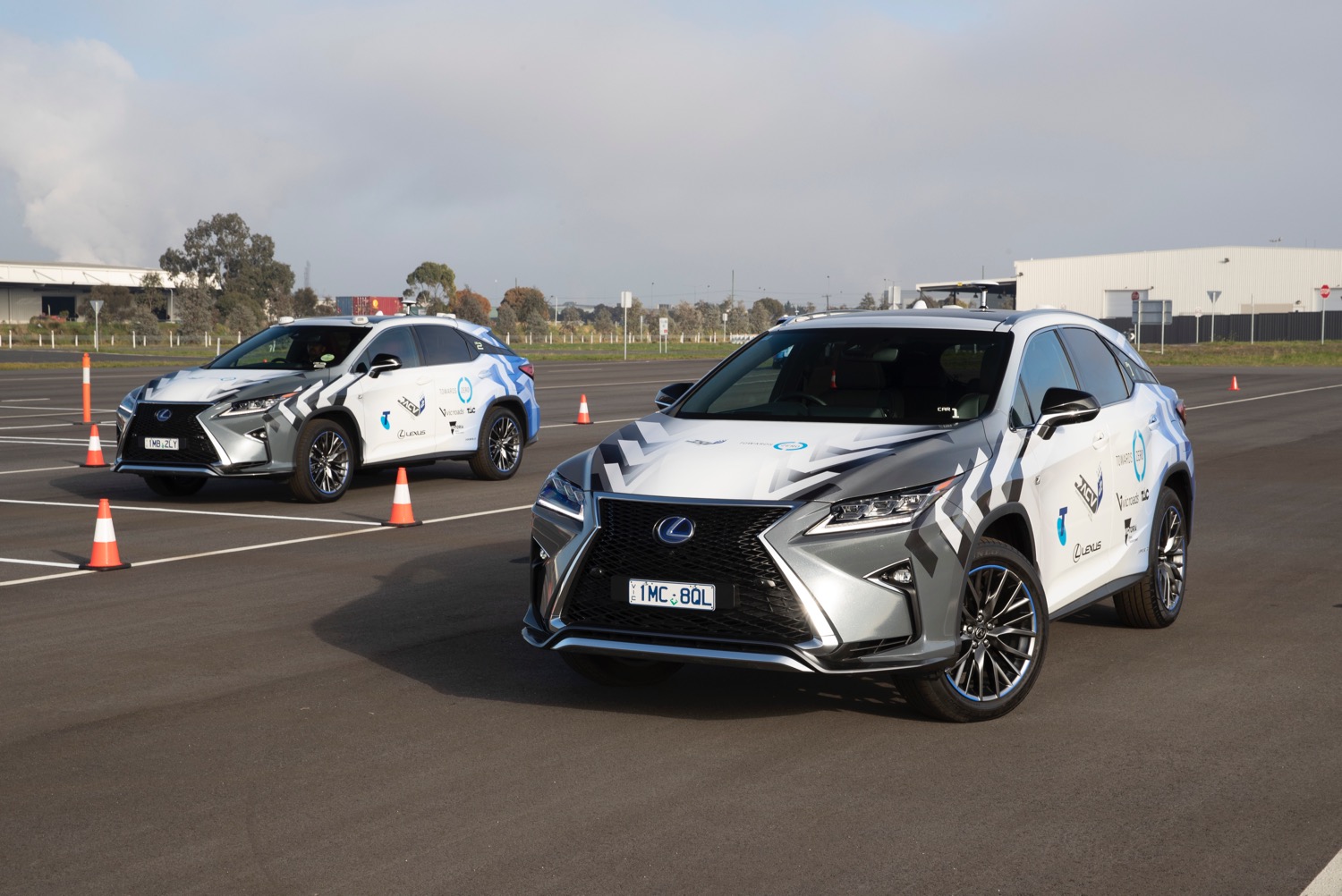
Unveiled today at Toyota’s Altona testing ground in Melbourne, the Japanese brand’s prestige marque Lexus showcased two RX 450h F Sport SUVs driving around a faux urban road layout, ‘talking’ to each other so that drivers were alerted to potential danger.
In one instance, a vehicle was approaching an intersection with a green light while another vehicle was travelling at a speed that would see it pass through its red and cross the intersection. Using GPS data that is accurate to the area the size of a volleyball, the vehicles’ positioning was transmitted via 4G to each other and in a millisecond a warning issued for the driver to take action.
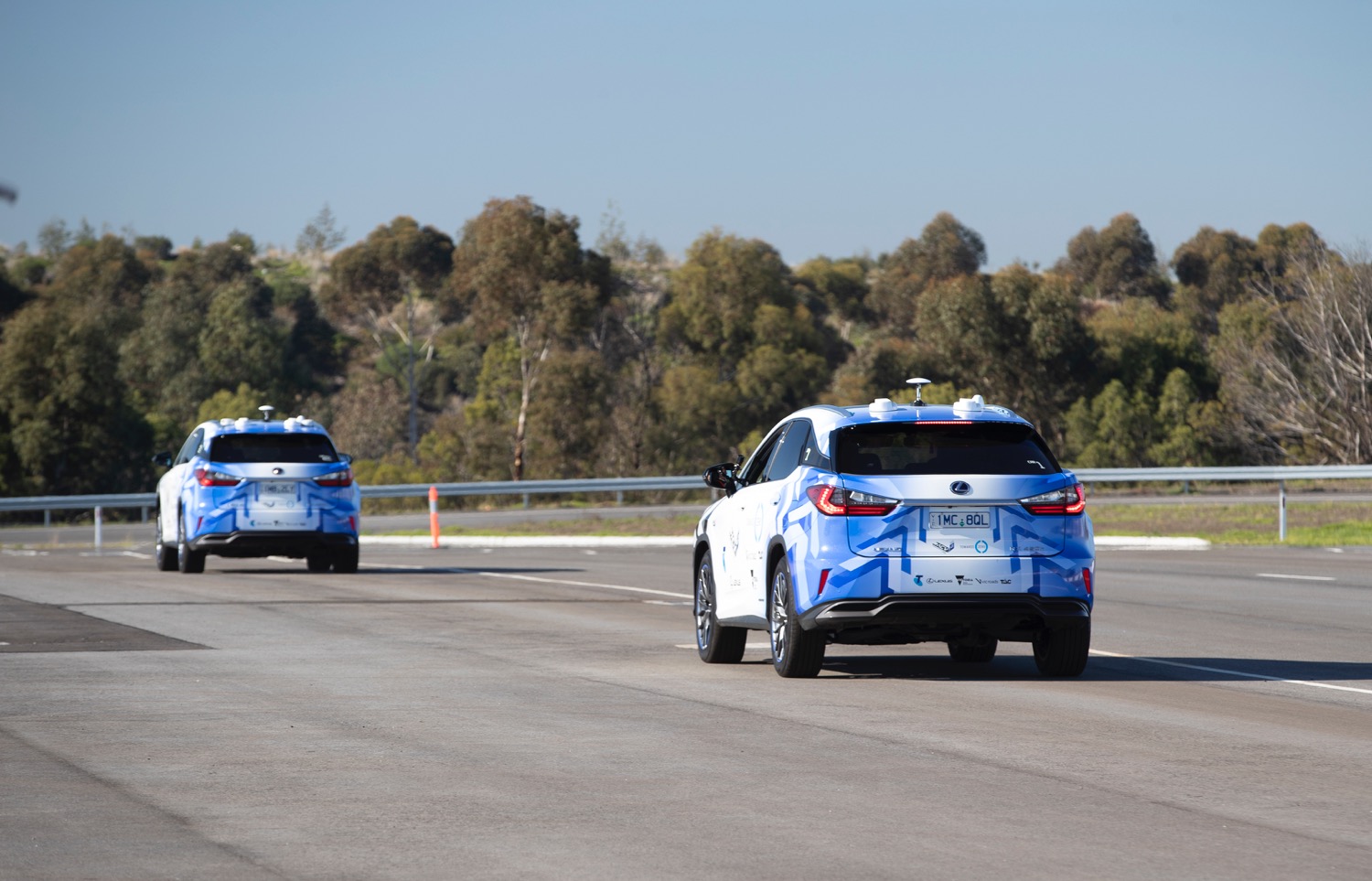
The technology is called vehicle-to-everything, and it can warn the driver of potential dangers that are out of sight, such as a vehicle making an emergency stop just over a crest ahead or even one stopped on the road.
Unlike semi-autonomous driving systems, the vehicle does not take over control, but it warns the driver of imminent danger to help mitigate a collision.
The next-step might be to put action in the hands of the car, but Lexus Australia chief executive Scott Thompson says that the current system will explore what’s possible using Telstra’s 4G and 5G network – a partner to the program that is funded by a $3.5 million Government grant.
“The essence of this connected-vehicle trial is about amplifying our ability as drivers, combining and coordinating the skills and strengths of the human and the machine – a seamless blend that extracts the best from both,” said Thompson.
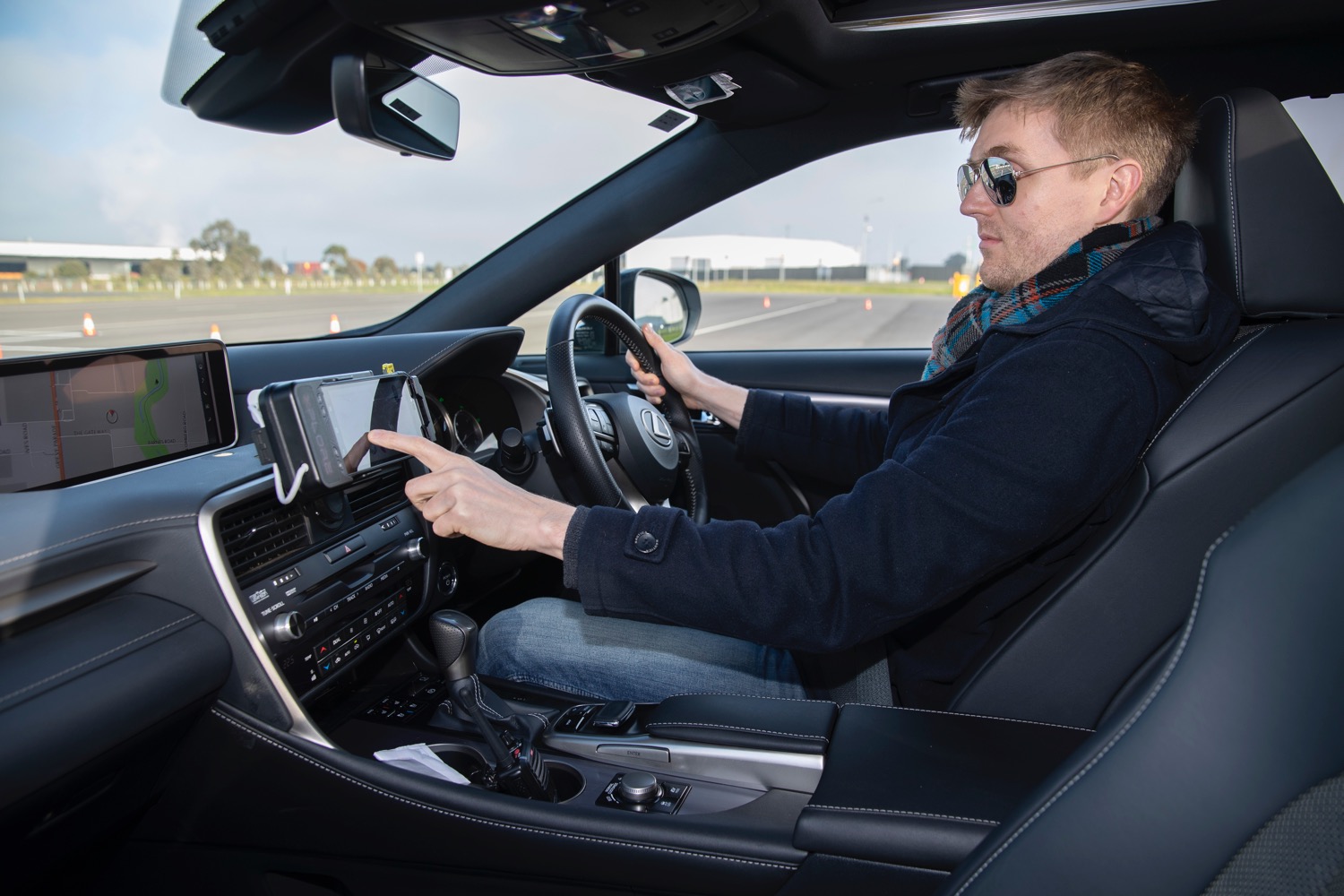
Also involved in the program are VicRoads and the Transport Accident Commission (TAC), with the TAC keen to understand how the connected-vehicle technology can help meet its Towards Zero road toll target.
Moving beyond the track environment, Lexus will trial the two vehicles in Melbourne and regional Geelong from today, building a 12 month database of real-world information that will form a report next year.
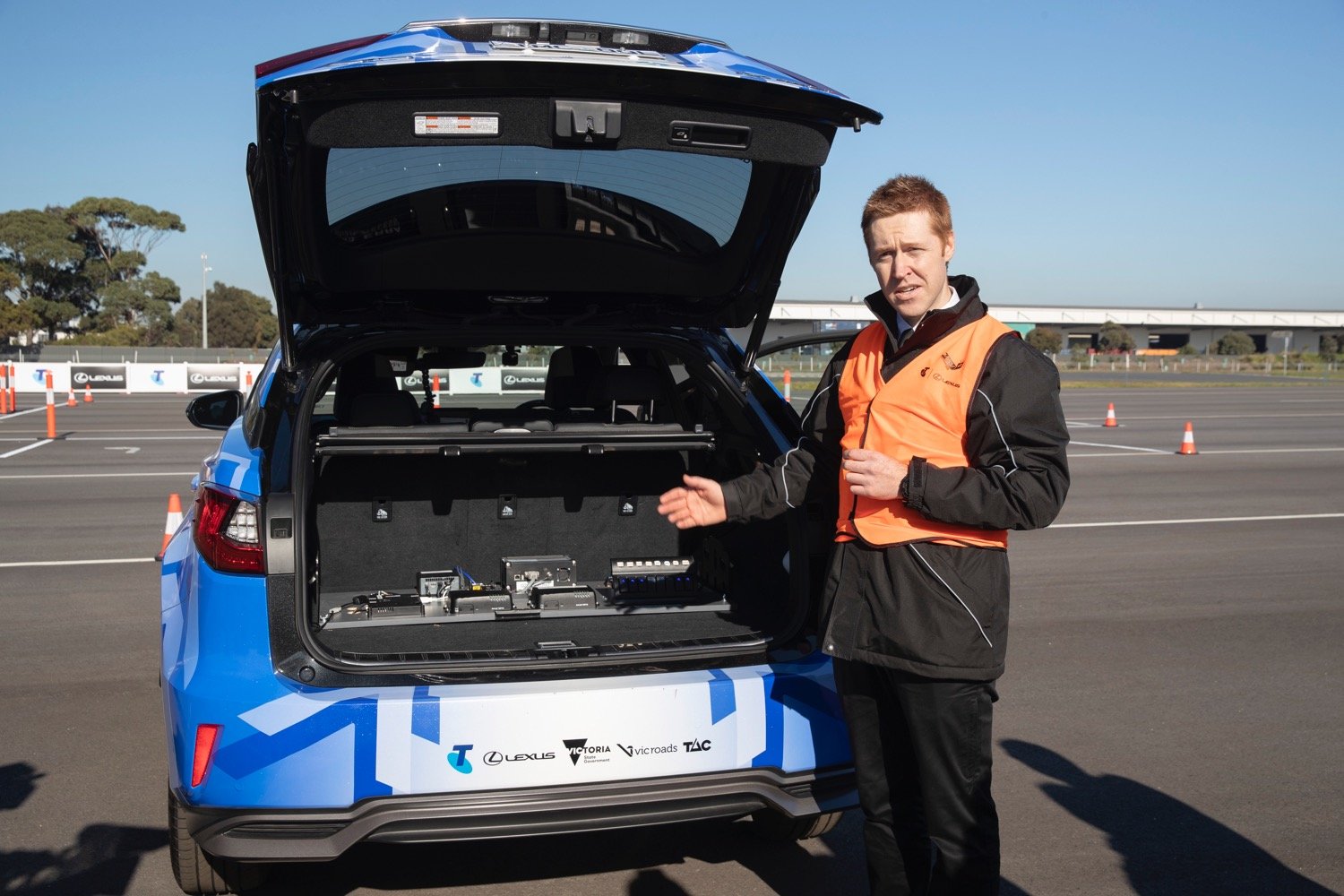
Vehicle-to-vehicle communication forms just one part of the trial, with vehicle-to-infrastructure technology also to be tested. That system lets traffic infrastructure such as speed signs and traffic lights talk to each other. The latter is still in the rollout phase, but there are 4G-connected traffic light intersections in Melbourne already.
Variable speed signs provide a live update to connected vehicles so there is no confusion (particularly through Melbourne’s poorly signed roadworks areas) as to what the speed limit is. A speed warning lets the driver know the limit and will suggest a lower speed than signed in hazardous conditions.
Finally, there is a bit of big brother, with video cameras at intersections that monitor pedestrians and cyclists to alert drivers if someone is crossing the road.
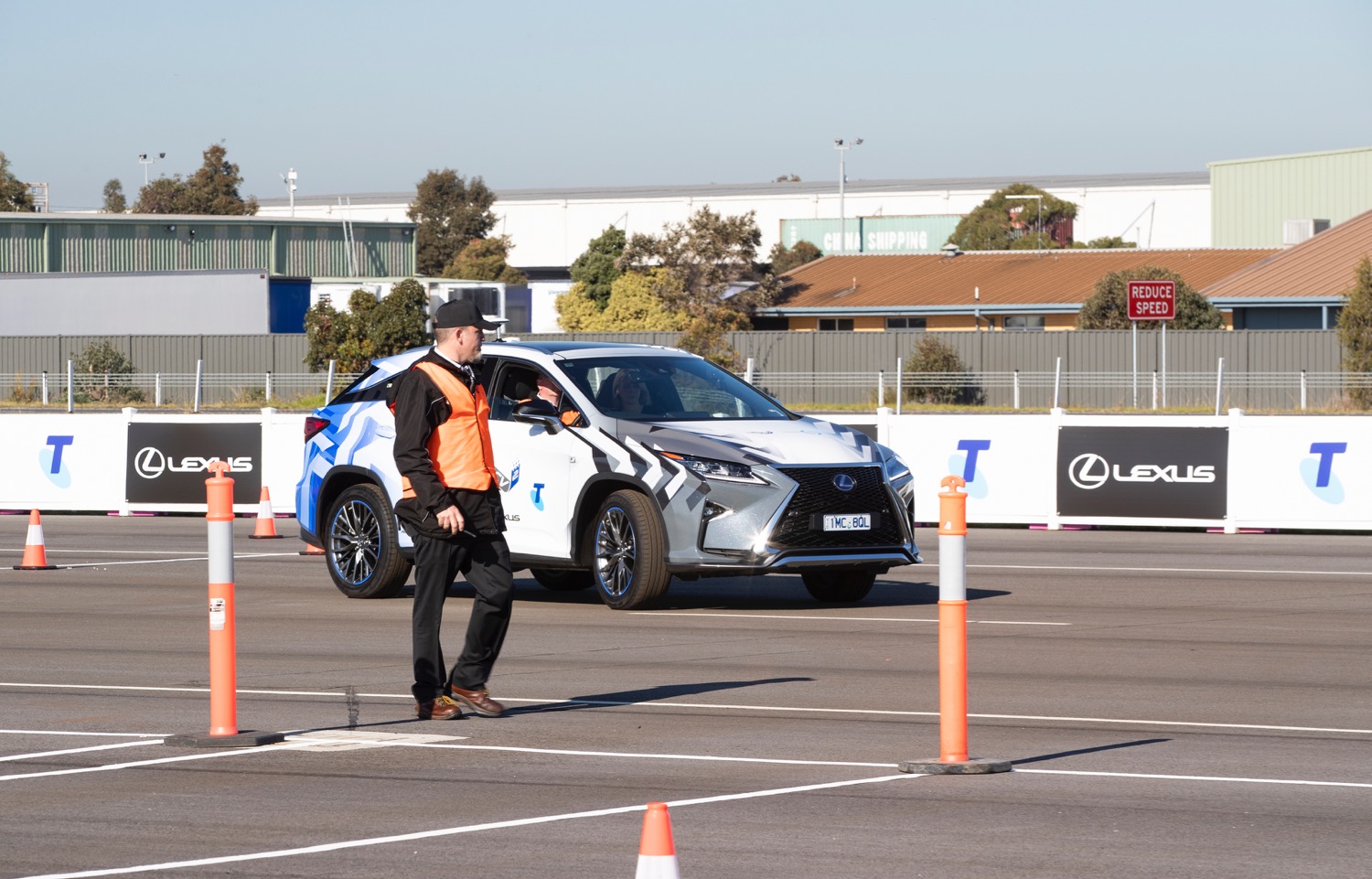
Beyond safety, a larger network of vehicles will be able to ease congestion and increase flow.
“It is part of our company’s global commitment and dedication to safety first and our pursuit of a global vision to lower traffic fatalities to zero and to reduce congestion, emissions and fuel consumption,” said Thompson.
“This vital project is all about saving as many lives as we can as soon as we can and making the experience of driving more fun as we make it safer.”
For now, the technology is on trial in Victoria, and the two Lexuses are equipped with thousands of dollars of specially-built electronics that are not feasible for production cars. But with the installation of connected infrastructure it is not hard to see that the rule makers are expecting vehicles to begin shipping onto our shores with the technology in the not too distant future.
The 2019 Genesis G70 3.3T knows its competition well, at least that’s what its claimed acceleration times suggest.
With a 3.3-litre twin-turbo V6 propelling it with 272kW and 510Nm, Genesis claims the rear-drive compact sedan can blast to 100km/h from rest in as little as 4.7 seconds.
We brought it along to Winton Raceway during Bang For Your Bucks 2019 to unleash it down the dragstrip and test those claims. Here’s how it turned out.
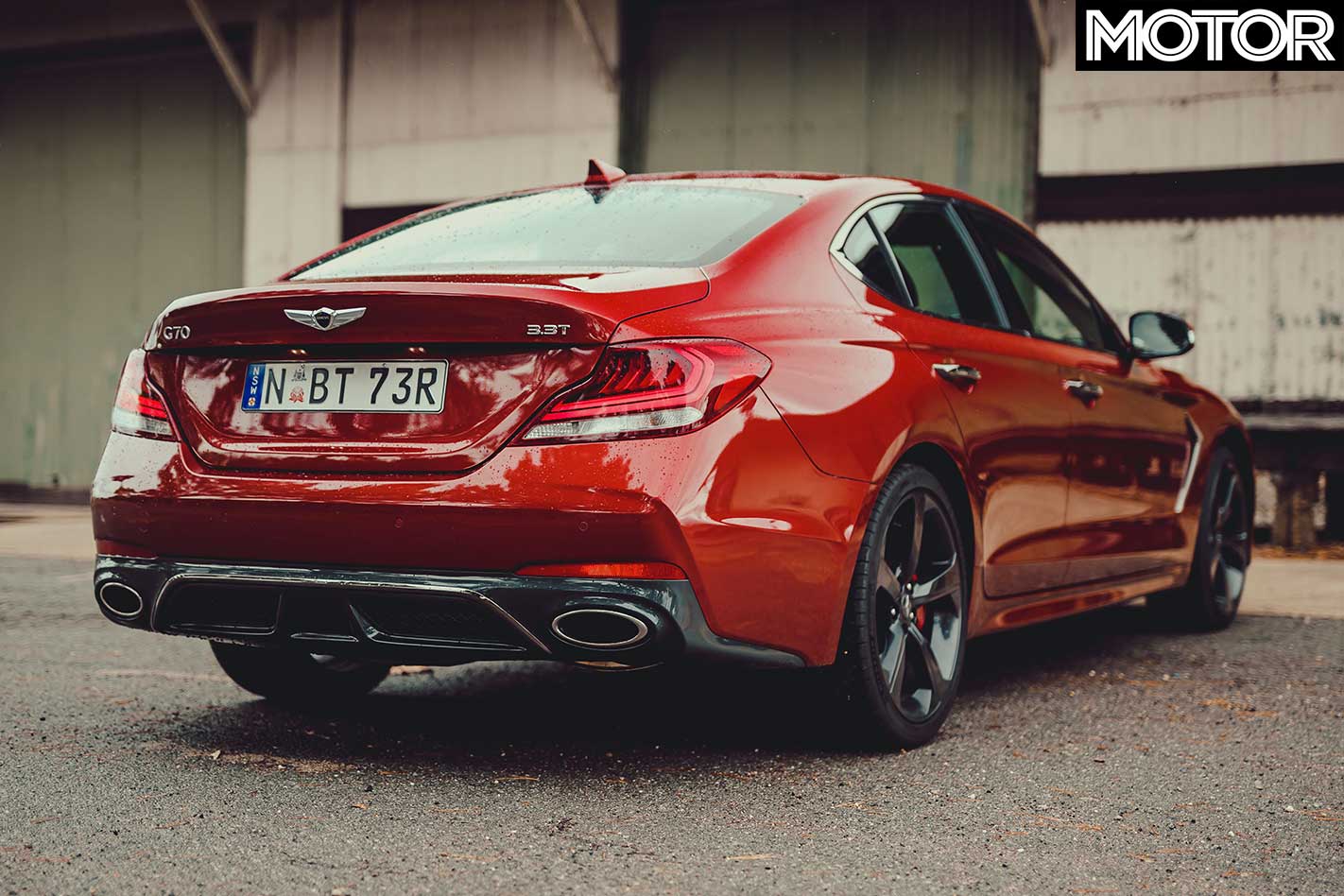
That’s some tenths adrift of its claimed time, suggesting it did not receive the best conditions. After all, we launched a Stinger 330S to 100km/h in 4.92sec and across 400m in 13.06sec at 177.78km/h last year. The G70 has the same powertrain, better Michelin rear tyres and less overall weight.
We used launch control to reap the time and left its eight-speed automatic transmission in Drive. It was more effective than rolling away from the line, a technique that added a tenth of a second to both measurements.
Note, we used a GPS-tracked Driftbox without applying the rollout function.
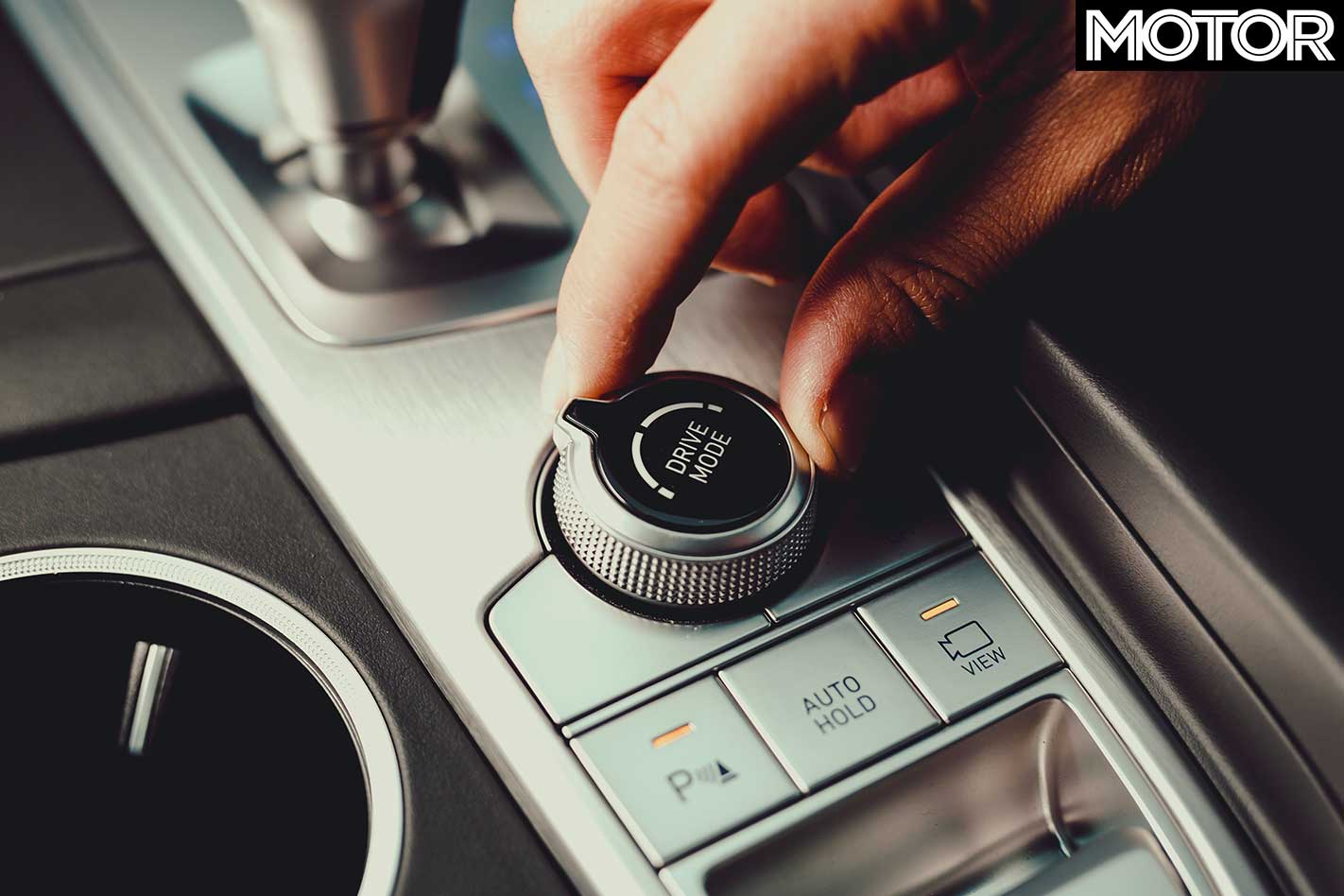
If its stability systems are anything like the Kia Stinger’s, then the launch control function not only stalls rpms at a set point but manages wheelspin off the line. That might have been the problem, as we reckon more slip could have helped it accelerate from the line.
Still, it’s monstrous compared to similarly priced rivals like the new 2.0-litre BMW 3 Series, Mercedes-Benz C300 and Jaguar XE R-Dynamic.
Infiniti’s Q50 Red Sport, which has logged a 4.89sec 0-100km/h sprint and 13.00sec 0-400m time before, is the only exception.
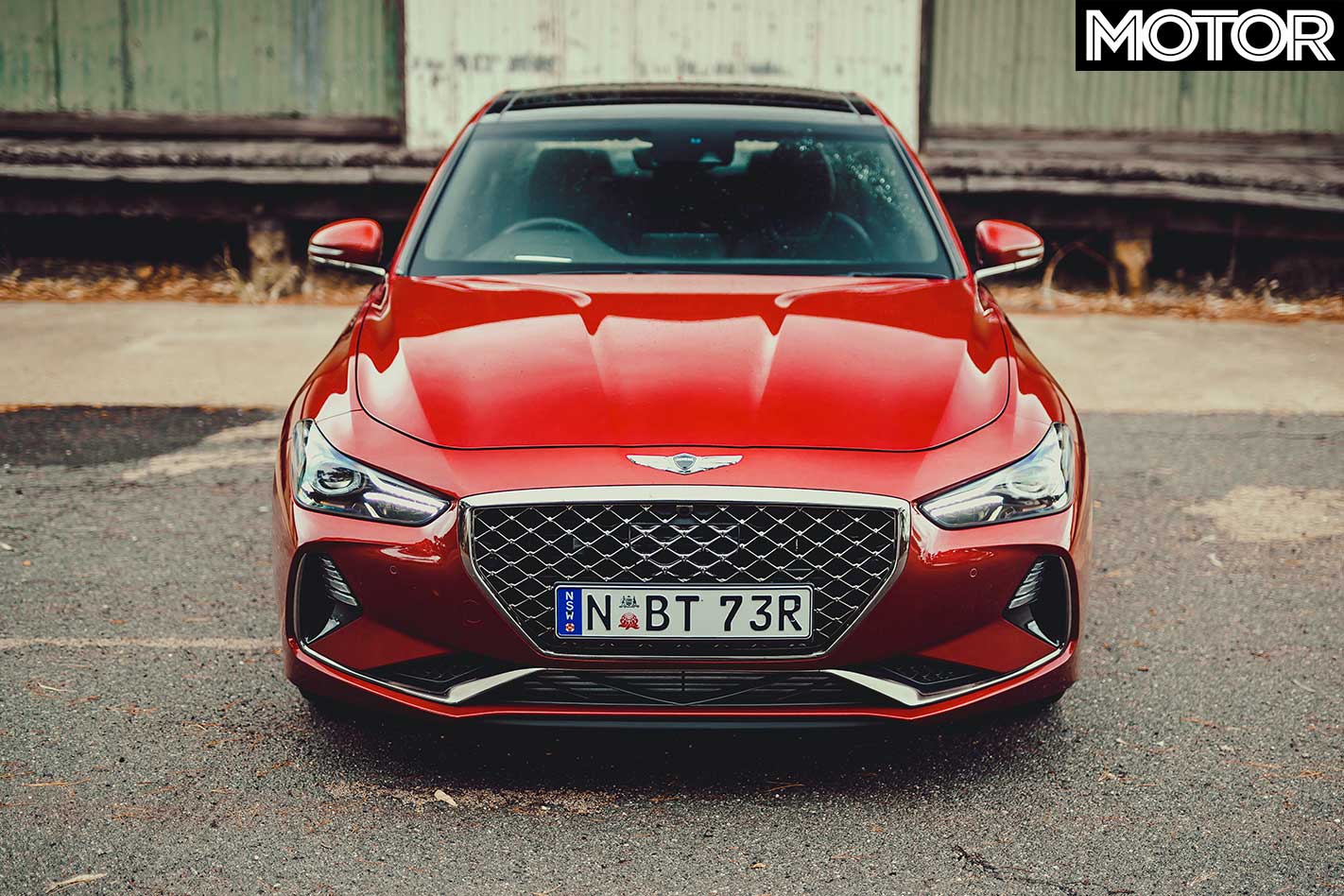
Impressively, it’s almost lineball with the Audi S4’s times we recorded at BFYB in 2017. Its all-wheel drive 250kW/500Nm drivetrain registered a 4.95sec/13.12sec/173.64km/h.
It also blows away the previous generation BMW 340i Luxury Line’s tested 5.51sec/13.57sec.
Catch the full Genesis 3.3T review in MOTOR magazine’s August issue, with an extensive road test and performance data, when it hits stands July 25.
