
In what could be bad news for car makers with long-term lithium contracts, the price of the metal looks set to take a dive.
The big news is the result of a 15-year research program led by the Chinese Academy of Sciences to figure out how lithium extraction can be improved. And it looks like they have cracked the code.
An essential ingredient for batteries used in electric vehicles, the metal is extracted from lithium-containing salar brines but the current process is complex and very costly. However, the Chinese Government reports that the academy has found a new cost-effective method which will see the price of lithium drop to around $3400 per tonne.
Naturally, the Chinese are reticent to detail exactly how the new process works, but the financial repercussions of streamlining the extraction process are easy to quantify. Industry reports suggest the spot price is currently between $17,000 and $29,000 per tonne, indicating a potentially huge reduction in the material costs to build batteries.
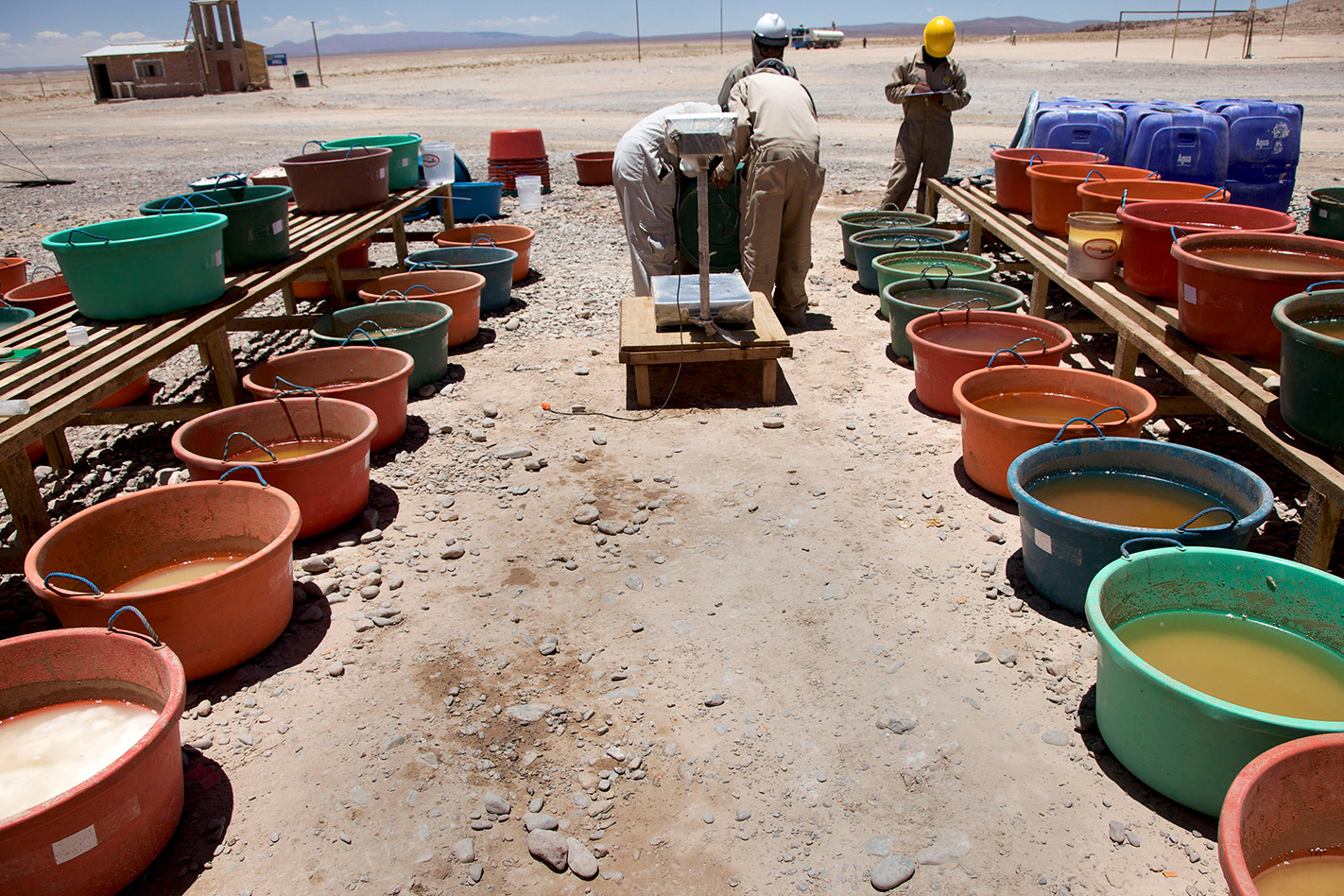
Before the current method of extracting lithium from brines, it was refined from mineral ore at a considerably higher price point, so the development of more efficient extraction is logical.
But car makers have been bullish, with BMW locking in long-term deals to secure costs before increased electric car uptake pushes prices higher.
“The aim is to secure the supply [of lithium] all the way down to the level of the mine, for 10 years. The contracts are ready to be signed,” said BMW’s Head of Supply, Markus Duesmann said in 2018.
The German maker also recently locked in a five-year deal to source cobalt from Australia and Morocco for five years – another expensive metal used in batteries.
Labor’s $57 million plan to relaunch local car manufacturing isn’t enough
Speaking with Wheels, Volvo vice president of product and launch, Anders H. Gustavsson agreed that the cost of batteries was tipped to head north.
“You cannot just say the battery quality and chemistry will not be developed. Of course it will be developed. We will find new ways to find the unique methods to produce a battery,” he said.
“Will the price go down? That I doubt. But that’s my personal reflection. I think the cost will be a difficult one, a very difficult one. With suppliers we are working with now they see a very high cost base.”
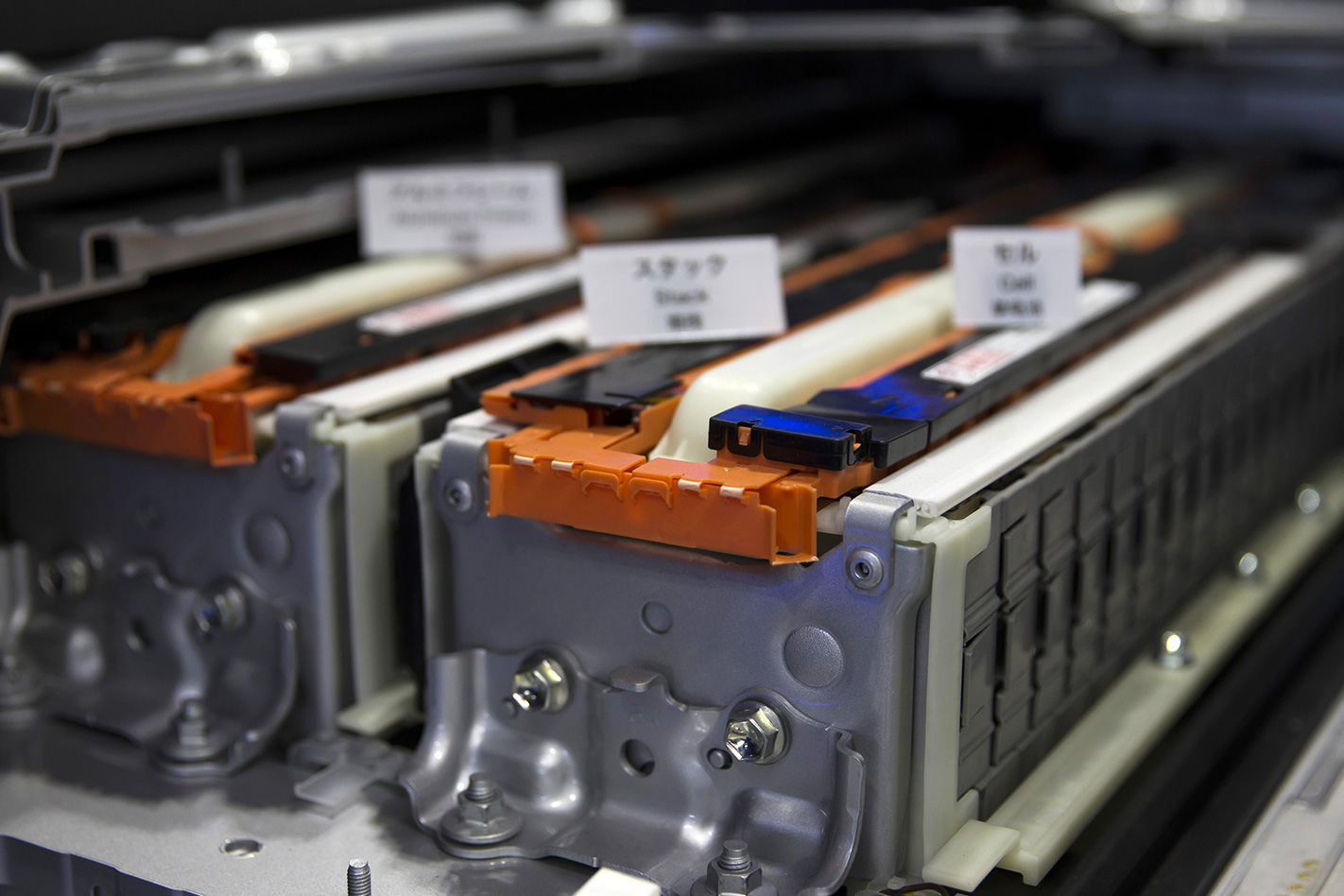
However, this latest Chinese-led breakthrough could tip the scales. Chinese company Qinghai Lithium Industries is already using the new method to produce cheaper lithium. With batteries the most expensive part of an electric vehicle at a cost of around $25,000 for a 90kWh pack, cheaper lithium will be a key ingredient to cheaper EVs.
And it will prove an important step if proposed electric vehicle targets in Australia are to be realised.
If you’re anything like us, you’ll have grown bored of all the Federal Election talk months ago. But the fact remains; there are some very contentious issues on the table regarding cars.
We’ve kept abreast of everything car-related that’s been a talking point in the lead-up to tomorrow’s vote, so if you need a refresher on where the parties stand, read on:
First of all we discussed Labor’s 2030 EV policy and the fact that while it’s a step in the right direction (and certainly goes a lot further than their Liberal counterparts), there are elements of it that may seem overly optimistic.
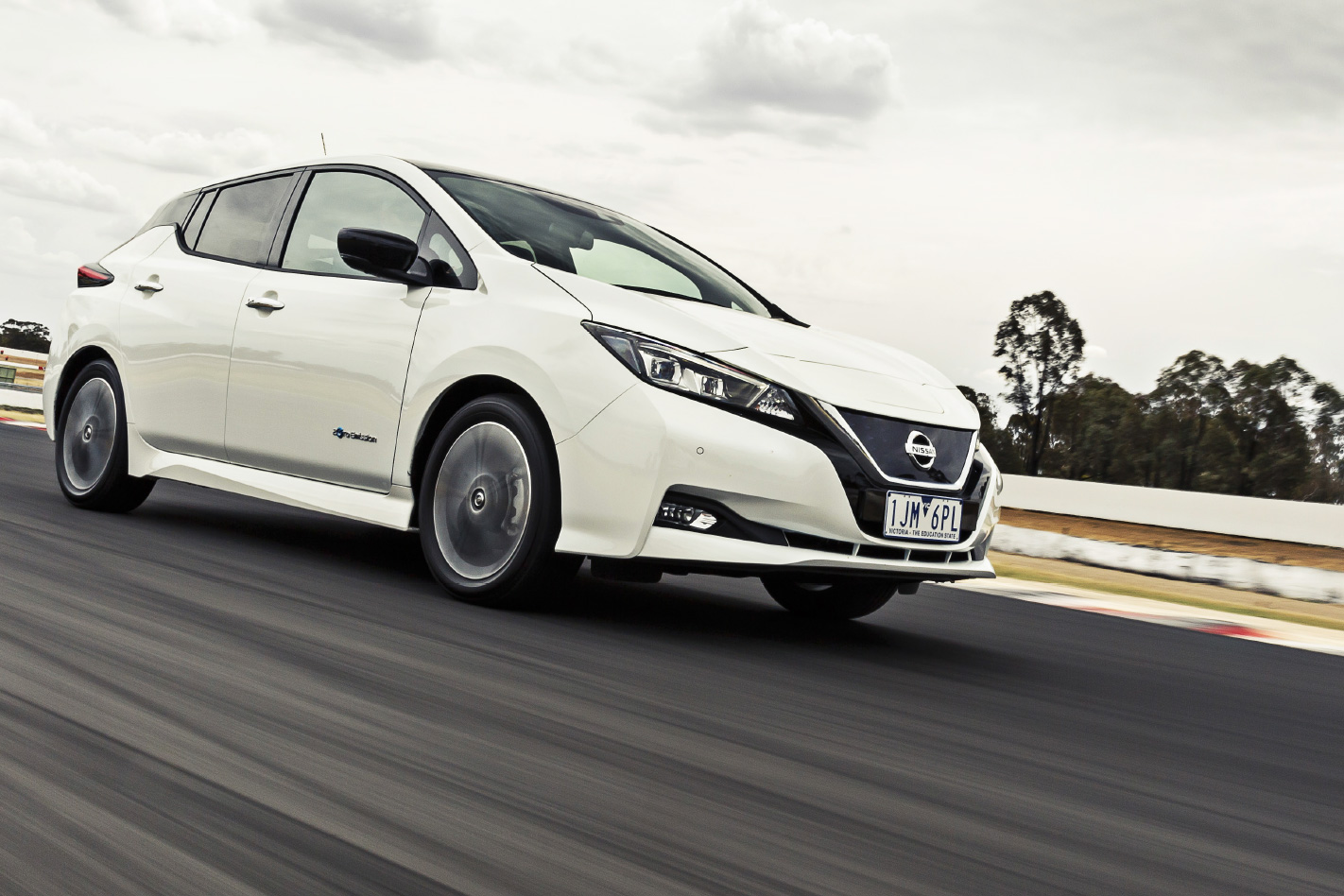
And speaking of EVS, David Bonnici compiled an excellent round-up of all the current frequently asked questions surrounding electric vehicles, clearing the air of all the errors and mis-truths that have been spouted by politicians by politicians of both sides.
Scott Morrison caught headlines by claiming EVs will kill 4WDing. Continuing by saying opposition leader Bill Shorten wants to ‘force Australians out of 4WDs’, then erroneously claiming that EVs aren’t capable of towing a trailer or be able to get a family to their favourite camping spot.
Labor then proposed to pump millions into our fledgling local electric vehicle manufacturing industry, insisting that we could restart Australian manufacturing by focusing on electric car development and lithium-ion battery production, utilising the country’s vast reserves of the rare mineral.
Bill Shorten and Scott Morrison then locked horns in a televised debate over electric cars, with Cameron Kirby fact-checking the claims made by both party heads.
Big news broke when the Labor party furthered its proposal to restart local car manufacturing, announcing that they’ll allocate $57 million to the cause. It was suggested that if elected, Labor would use the money to fund a research and development initiative to develop an electric car industry in Australia.
This was also spoken about at length with Andy Enright and Scott Newman in the WhichCar Weekly podcast too.
And following the announcement of Labor’s $57 million plan to relaunch Aussie manufacturing, Cameron Kirby took a closer look at the details of the plan – saying the plan remains far-fetched.
Lastly, Alex Rae and Tony O’Kane delved deep into the campaign policies of every party contesting the election, filtered out those with car-related platforms and summarised them all in Wheels’ handy guide to 2019’s Automotive election promises. Want to know who is actually promising what without having to endure any political spin? Make sure you read it before you cast your vote.
Welcome back to ‘Classifieds of the Week’, something we run every couple of months (yes, we know) when we start spending too much time window shopping at our sister site TradeUniqueCars.com.au.
It’s pretty self-explanatory, so… let’s hook in.
1985 Toyota AE86 Sprinter Trueno
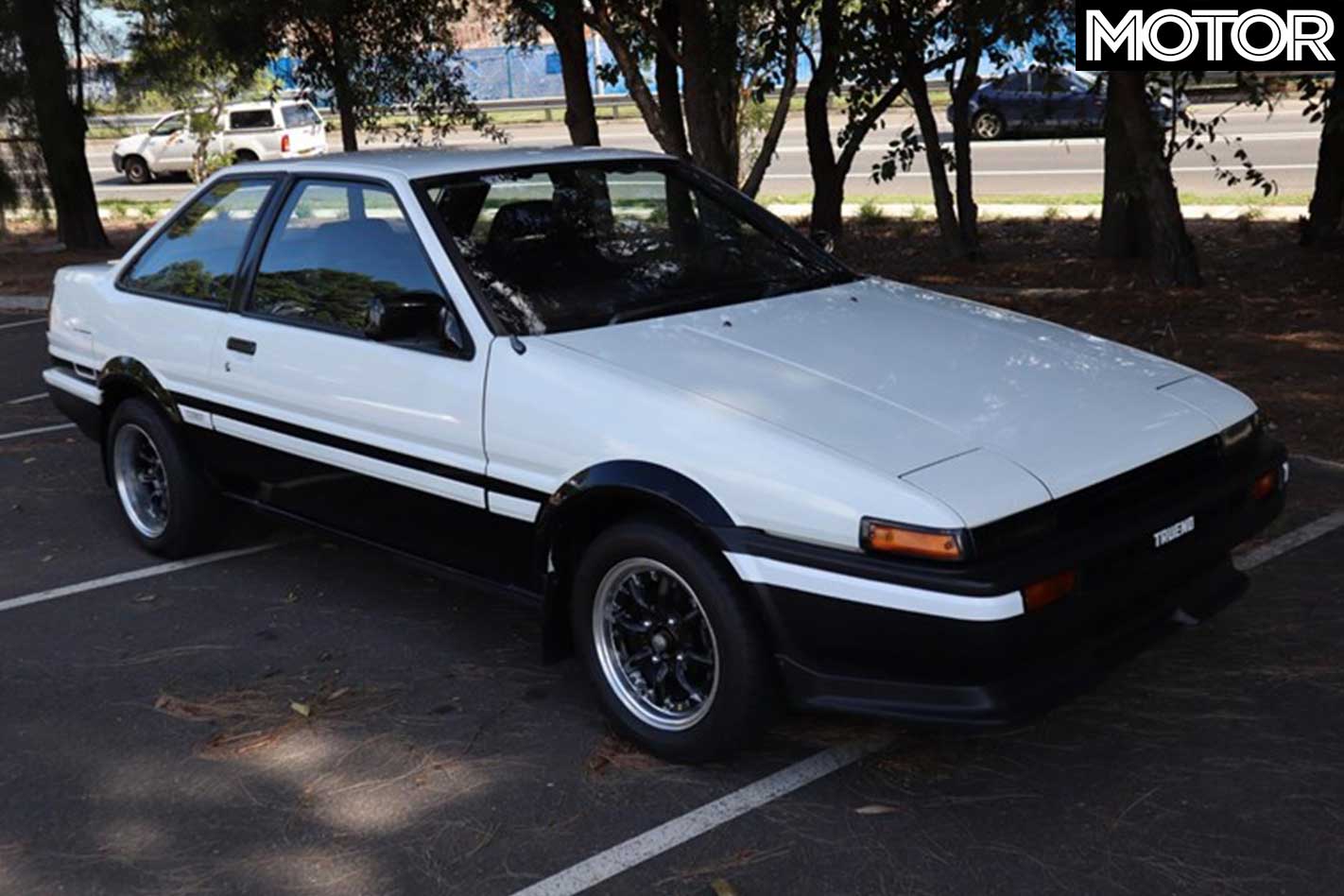
But give the classic Anime Initial D a watch, or bring the car up to any JDM/ Japanese car fanatic, and you’ll begin to see the point. Or just sit in one and give its pedal a tap to hear that 1.6-litre 4AGE sing.
With just 68,500 having been covered in this example since 1985, and with it having spent two decades in dry storage, there’s probably not a lot of risk in this particular example. It’s also a proper coupe, rather than a liftback/hatch, so it’s a less common spot on the street.
1998 Porsche Boxster
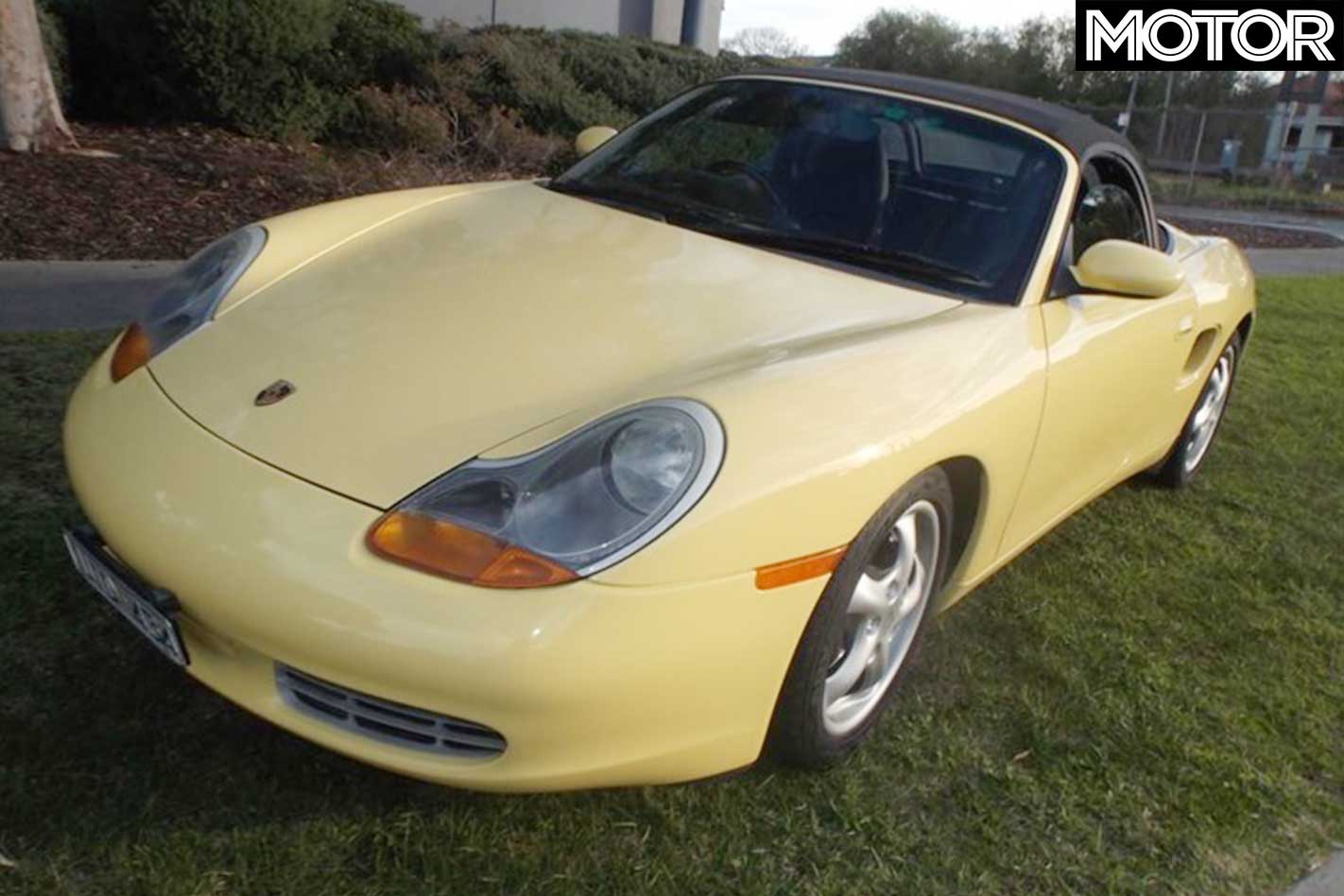
$22,500? A Porsche less expensive than a Toyota? What’s going on? It turns out this is just the going rate for an early Boxster. In fact, it’s towards the upper end.
A full service history with other paperwork, a manual transmission, never tracked, never crashed, all-original… but it’s also ‘Banana Ice Cream Yellow’.
With no kays listed on this Boxster, we’d want to have a proper look at this car before putting money down. But if it’s as pristine as the listing claims, you can start budgeting for a respray.
1993 Mitsubishi 3000GT
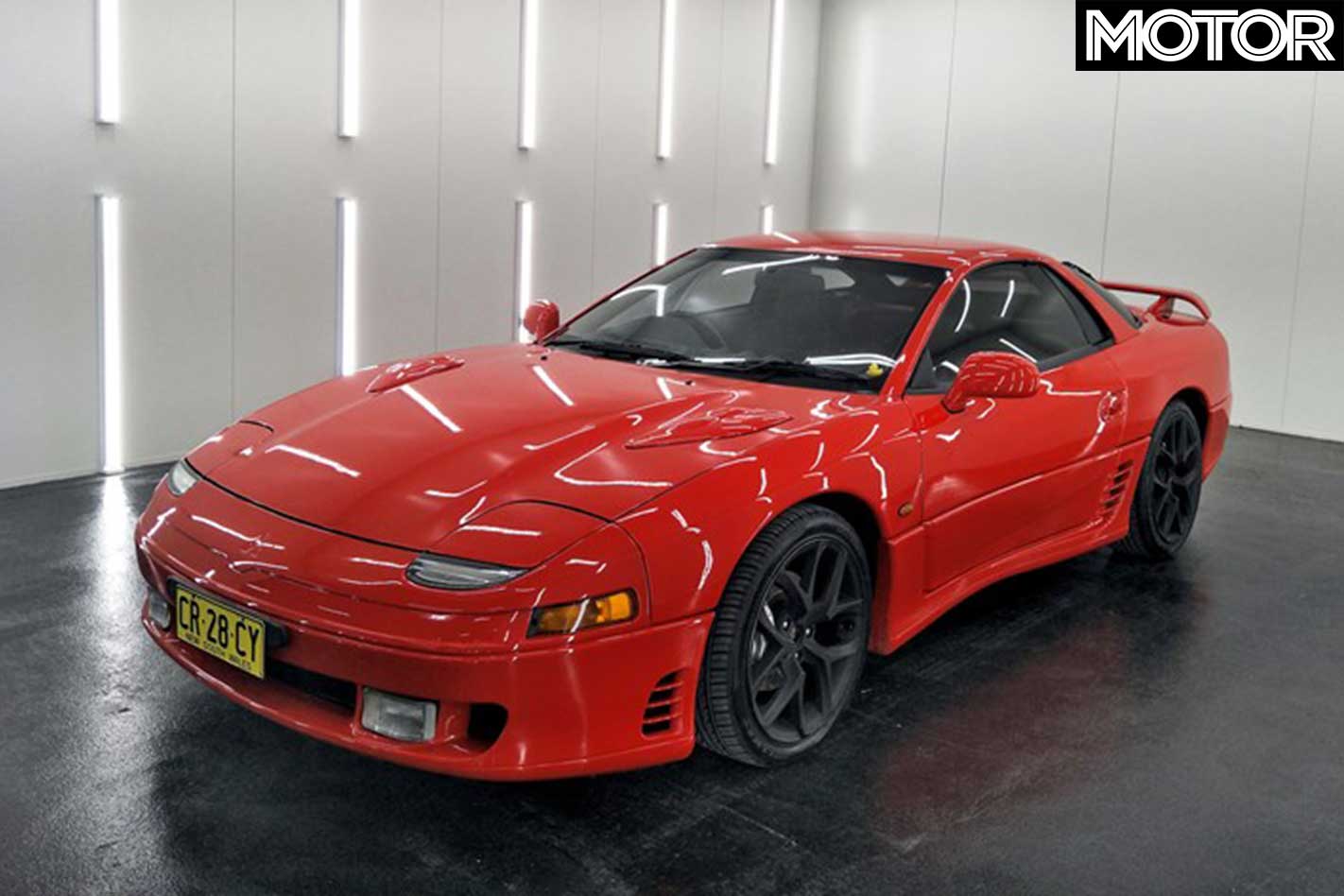
A twin-turbo V6-powered Japanese sports car with a tricky AWD system and supercar style. What’s not to like? Aside from its 1720kg kerb weight and almost six-figure price when new, that is.
Luckily, this one’s travelled a fair bit… er, 245,000km according to the listing, but that means it can be yours for just $28,000.
The owner says he’s put a lot of work into the car, with a colossal list of work included in the listing.
1992 TVR Griffith
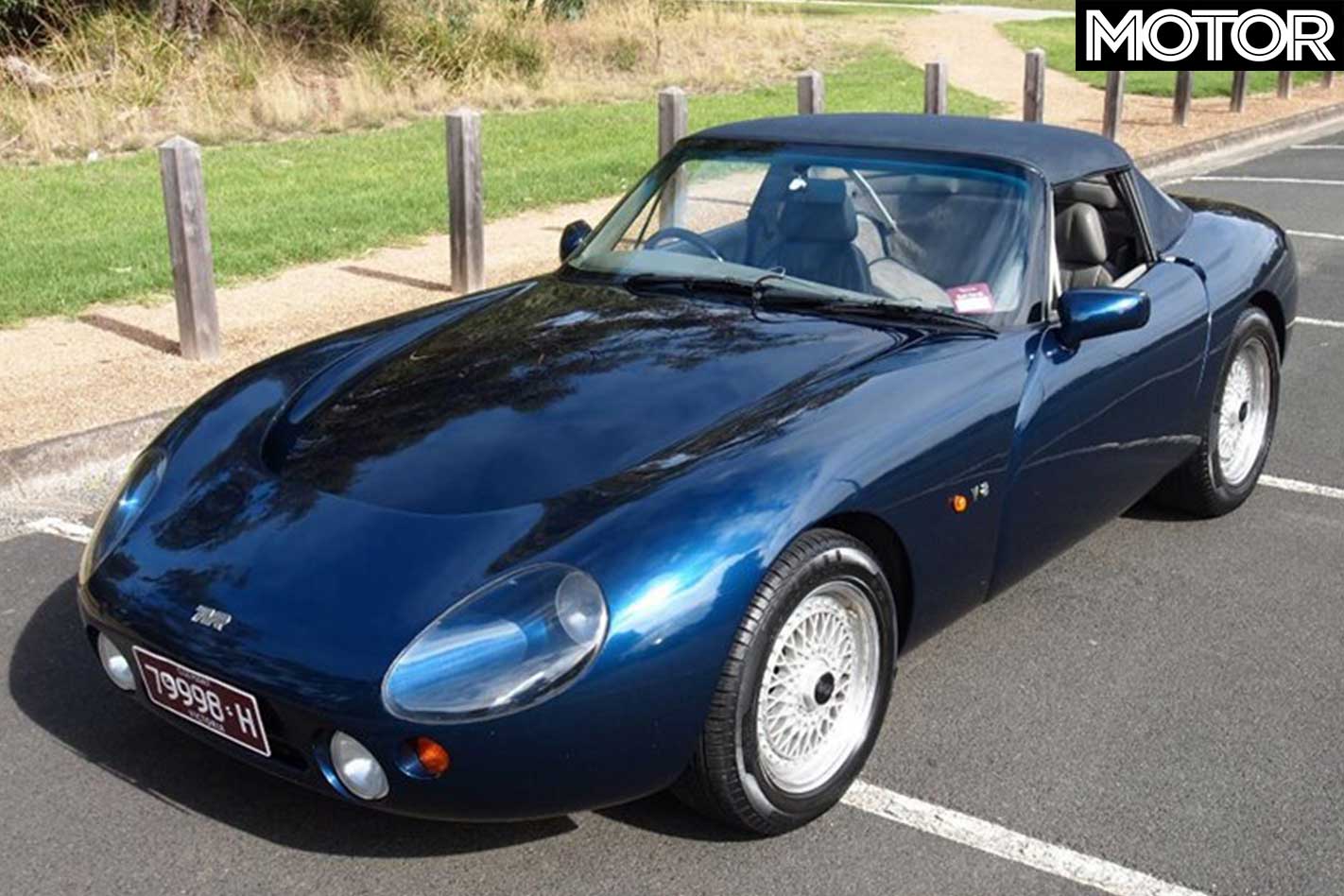
Have you ever wanted an MX-5 with a 4.3-litre Rover V8? If you have, that’s a terrible idea and you should buy a TVR Griffith instead.
For $39,900, you can pick up a tidy example with a roadworthy certificate and only 30,700km showing on the odometer.
Though it’s a 1993 model, it was brought to Australia in 1996 and has lived here since.
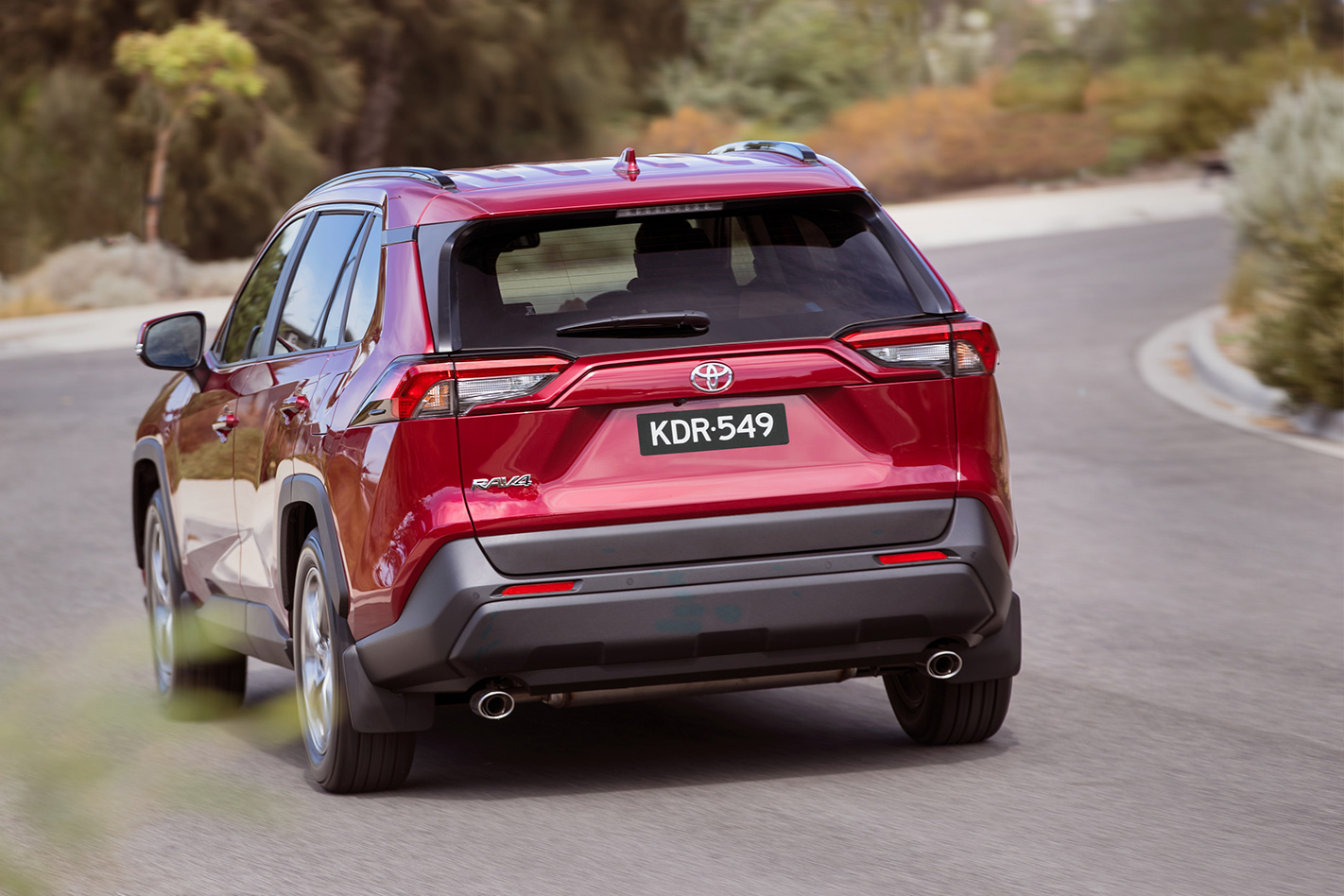
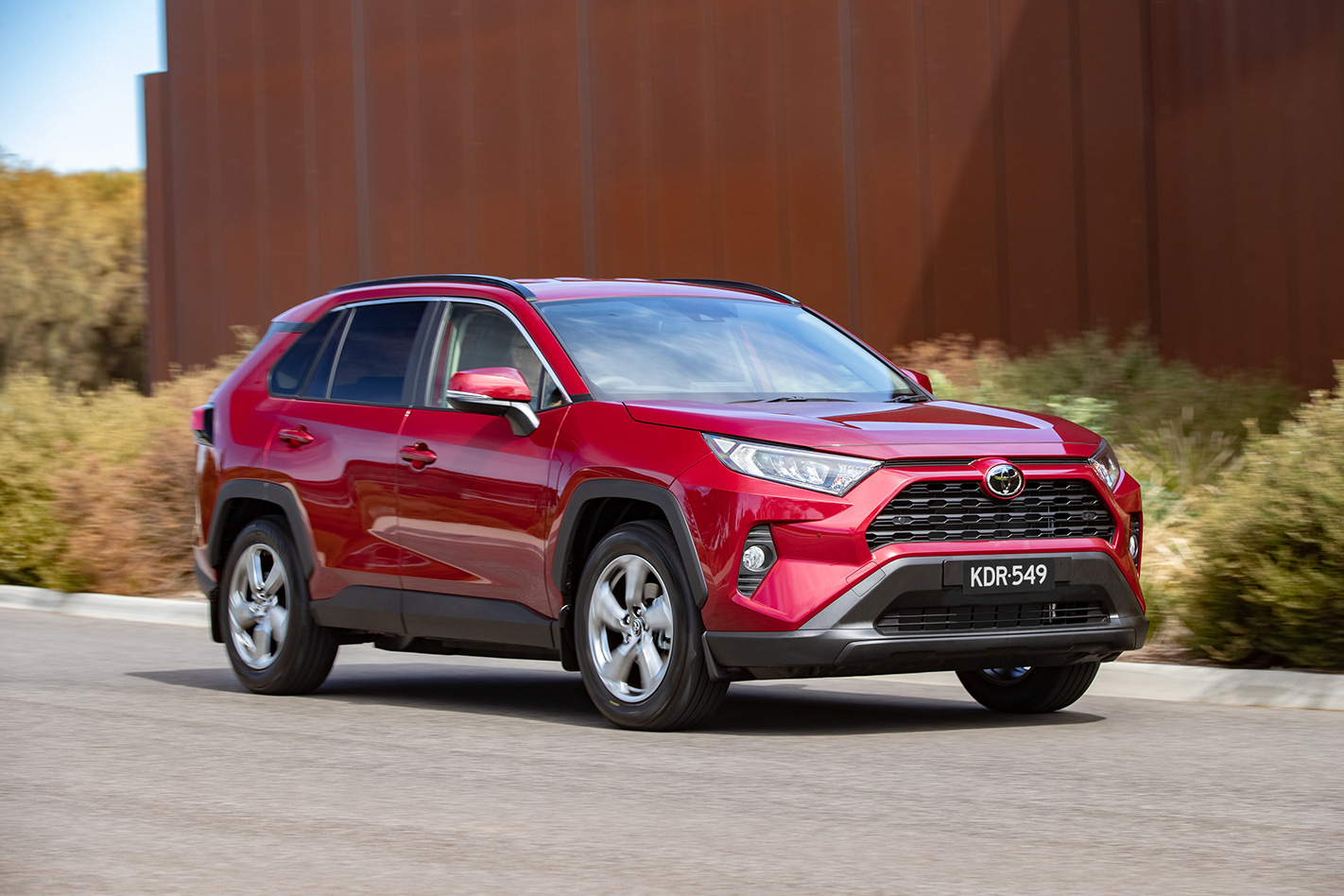
The Wheels Verdict: In a broader, model-wide sense, RAV4 has leapt from being a class also-ran to being right up the pointy end, but you still need to pick the correct model for your driving needs. If those requirements include fully loaded family touring, it’s likely this 2.0-litre front-driver is not the sweet spot; you’re likely to be much more satisfied by spending the extra money on the more muscular and frugal hybrid powertrain.
Conversely, if you’re looking for that second car that will mainly fulfil urban round-around duties, this GXL front-driver could be all the RAV4 you’ll ever need.
WHAT IS THE TOYOTA RAV4 GXL?
The fifth generation of Toyota’s pioneering, segment-defining mid-size SUV, offered in an extensive range of four spec levels and three powertrains for a total choice of 11 models. Here we’re focussing on the model without the hybrid assistance of an electric motor and battery; instead it’s powered by a 2.0-litre four-cylinder atmo petrol engine with CVT transmission driving the front wheels.
WHY WE’RE TESTING IT
Based on the sales performance of the outgoing RAV4 and market-dominating force that is Toyota, this new model has the potential to be a best-seller in this medium-SUV segment.
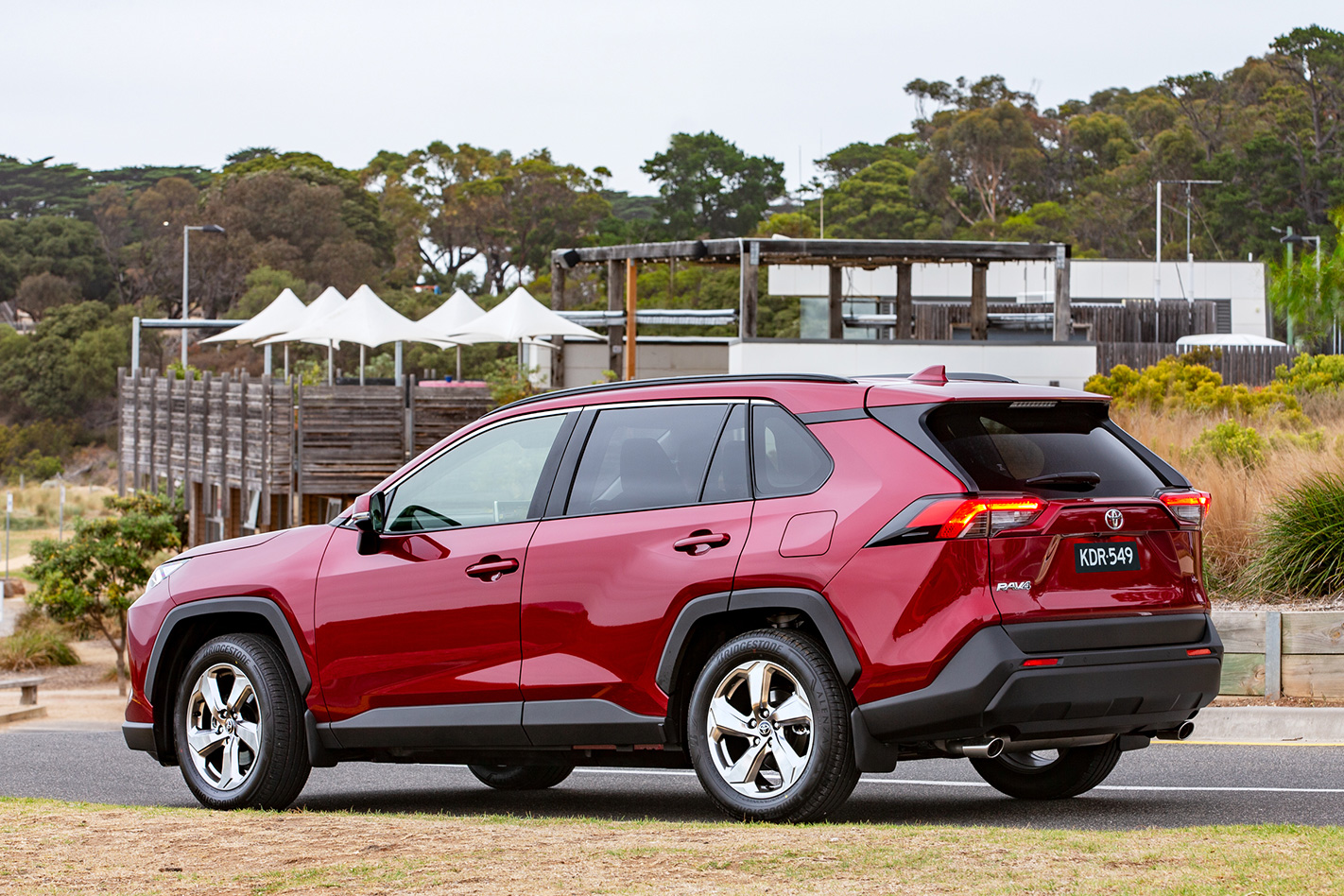
TOYOTA RAV4 GXL REVIEW
It’s taken five generations for Toyota to offer hybrid power to what has been the world’s best-selling SUV, and the company is not about to squander that advantage with elitist pricing tied to high spec levels for the petrol-electric drivetrain.
No, you can have the 163kW, 221Nm hybrid system for $3500 more than the basic petrol powertrain in the entry-level GX grade, making it within reach for most buyers in the medium-SUV segment.
Such is structure of the 11-model RAV4 range, Toyota expects 40 percent (at least) take-up for the Hybrid.
But what about non-hybrid versions of the new RAV4? Even if the take-up of the Hybrid is a hefty 40 percent, that still means the (slight) majority will elect for petrol-only power, so does deleting the motor and battery kill the spark?
Well, first impressions for anyone who’s never driven the hybrid will be mostly ambivalent, because the 2.0-litre doesn’t feel particularly different from other contenders in this class when you’re just pooling along the suburbs. This revised engine runs a high 13:1 compression ratio in the Atkinson cycle, is fed by both port and direct injection, and is up a healthy 20kW on its predecessor. Further, Toyota’s unique approach of mating a conventional auto first gear with a CVT helps mask ⎼ initially at least ⎼ the comparative lack of torque and the inclination for that droning, band-slipping syndrome to which CVTs are prone.
But 203Nm can only take you so far, metaphorically speaking, and the relative lack of torque quickly becomes apparent the moment you ask more of the throttle pedal, or venture outside of suburbia with a few bodies on board. A torque-to-weight ratio may sound a bit technical, but its real-world effects are brought into stark relief in the non-hybrid RAV4.
You, plus, let’s say one other adult and two early teens, will add around 280kg to the RAV4’s payload, taking the overall weight with fuel to something close to 1850kg, and you’ll feel it when trying to overtake on inclines. Wide-open throttle and less-than-hushed noise follows. It’s not awful at high revs, but it is a bit frenetic and not especially pleasing on the ear. More concerning is the effect on overtaking performance, where you need to pick your opportunities way more judiciously than when in an SUV with more torque.
At least dynamically, the GXL front-driver claws back points, especially on typical Australian B-roads. We drove briskly in the hills above Adelaide, and were consistently surprised at just how adept this chassis set-up is dealing with our lumpy bitumen. Frankly, there was almost a momentary mental disconnect at glancing down at the Toyota logo on the steering wheel boss and then feeling how adroitly the car was performing over challenging surfaces.
No RAV4 in the history of the nameplate has been able to retain this sort of composure over local B-roads. Every dip, wallow and rut is dispensed with utter disdain, the damper tune never heaving, or needing a second rebound stab at regaining composure.
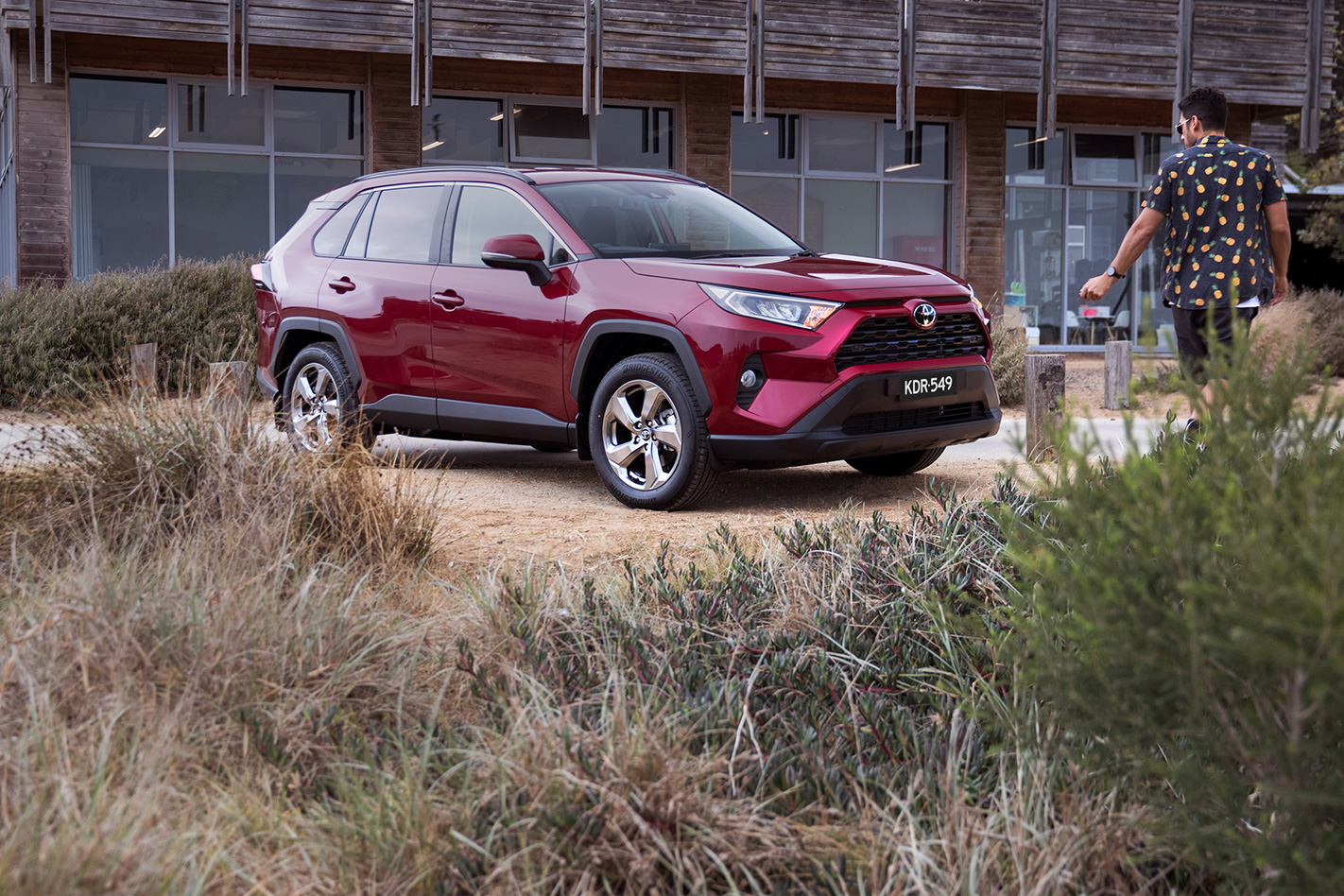
But as for traction, that’s a different story. Granted, our testing was in the wet, massively exacerbating the differences between the FWD set-up and the hybrid AWD. But the inescapable fact is the front-drive car will scrabble and push and activate its electronic systems at far lower velocities than the Hybrid AWD. Yes, the FWD car still does have commendable grip levels thanks to the excellent Bridgestone Alenza rubber, but if you’re a keen driver who wants to crack on in slippery conditions, the FWD set-up demands you ease your expectations in terms of turn-in and power-down ability.
As for efficiency, this RAV4’s official consumption number is 6.5L/100km, a handy improvement on the 7.0L/100km of its equivalent predecessor. But that number of 6.5, as frugal as it sounds, is still well above the official number of 4.7L/100km for the Hybrid model, and our real-world testing suggests you’ll have a far greater likelihood of coming closer to the Hybrid’s number than you will of achieving parity with this model. With a heavy skew on urban driving, expect to use at least high-sevens in the petrol-only RAV4.
So what about equipment, when you’re opting for the GXL spec instead of the next-rung-up Cruiser? Well, the shortfall is not too brutal. Bluetooth phone and media streaming is standard on all models, though smartphone mirroring via Apple CarPlay or Android Auto remains off the menu for all RAV4s until a running update arrives toward the end of this year. Thankfully, mirroring will be available as a retrofit for cars sold between now and then.
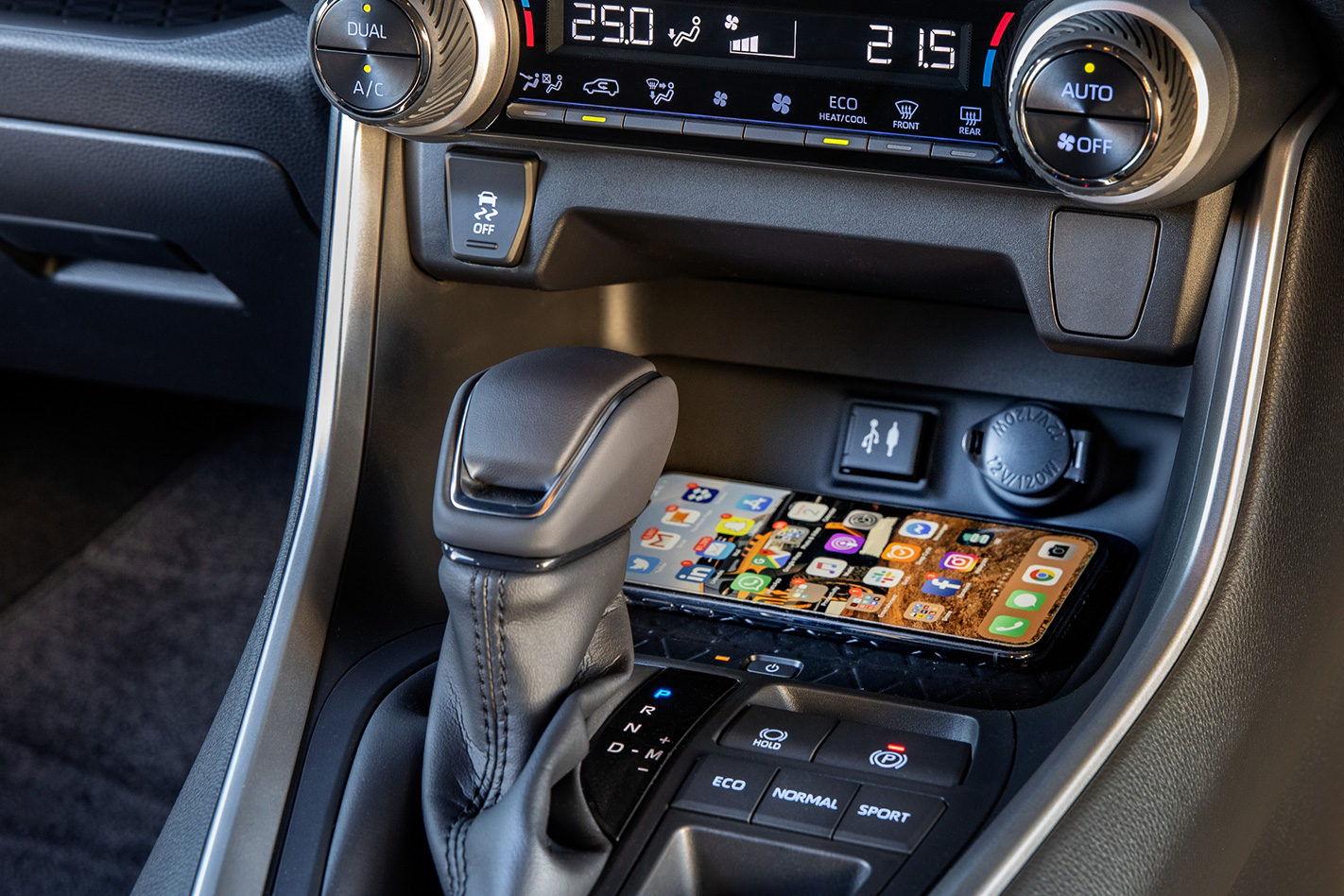
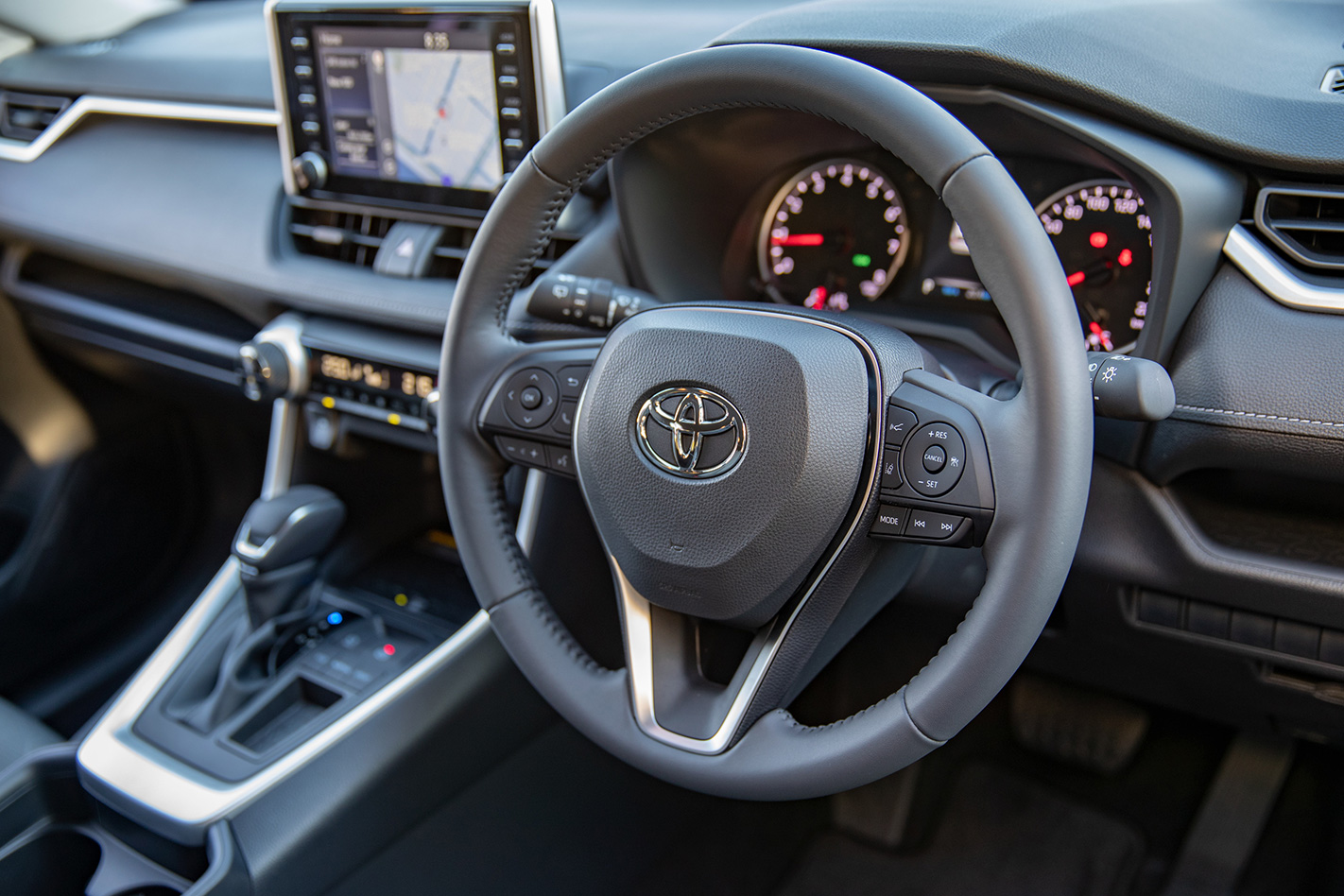
GXL gets dual-zone climate control as well as a wireless phone charger at the base of the centre stack, while audio comprises a non-name six-speaker set-up; you miss out on the far punchier, superior-sounding nine-speaker JBL audio system fitted to Cruiser and Edge models.
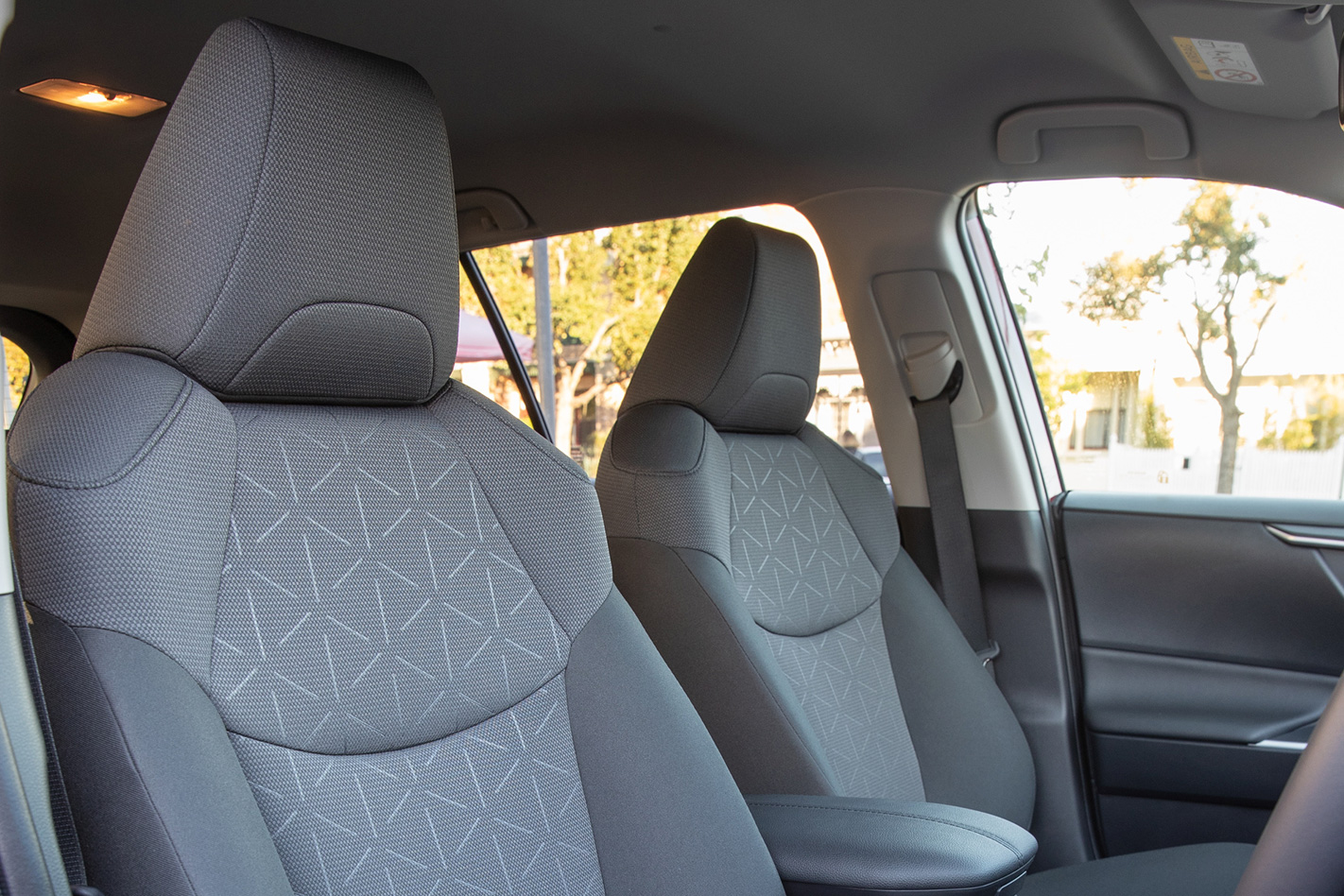
You also need to settle for cloth upholstery and manually-adjusted seats in the GXL, forgoing the the Cruiser’s heated front seats with 10-way electric adjustability for the driver.
Active cruise control, collision detection and AEB are standard on all cars, along with seven airbags, a rear-view camera, lane-departure warning, blind-spot monitoring, rear cross-traffic alert, front and rear parking sensors, speed sign recognition and auto high beam.
GXL and above also gets you the more advanced active cruise control that can operate all the way down to 0km/h, allowing stop-start traffic jams to be negotiated with cruise control taking care of your speed and separation to traffic.
The more advanced active cruise control also brings lane-keep assist, which helps steer the car to keep it within lane markings when cruise control is switched on. That system isn’t available for the GX, given its different cruise control set-up, so consider that another tick for the GXL.
So, in the wash-up, the petrol GXL does come with a few caveats. For owners simply looking for their RAV4 to do fairly undemanding urban duties, it’s not hard to see why a saving of $3500 will look pretty appealing. However, for everyone else expecting a fair bit more real-world performance and powertrain capability ⎼ not to mention greater efficiency ⎼ that extra spend will be one of the better investments you’ll make.
RIVALS
Mazda CX-5 Maxx Sport FWD, Subaru Forester 2.5i-L, Honda CR-V VTiE, Holden Equinox, Ford Escape Trend FWD
TOYOTA RAV4 GXL PRICE AND SPECS AUSTRALIA
- Model: Toyota RAV4 GXL petrol FWD
- Engine: 1987cc 4cyl, dohc, 16v
- Max power: 127kW @ 6600rpm
- Max torque: 203Nm @ 4800rpm
- Transmission: CVT
- Weight: 1545kg (estimated)
- 0-100km/h: 9.8sec (estimated)
- Economy: 6.5L/100km
- Price: $35,640
- On sale: Now
A new touring car championship, TCR, is making its Aussie debut this weekend.
Here’s everything you’ll need to know about the new category as it joins the local motorsport landscape.
What is TCR?
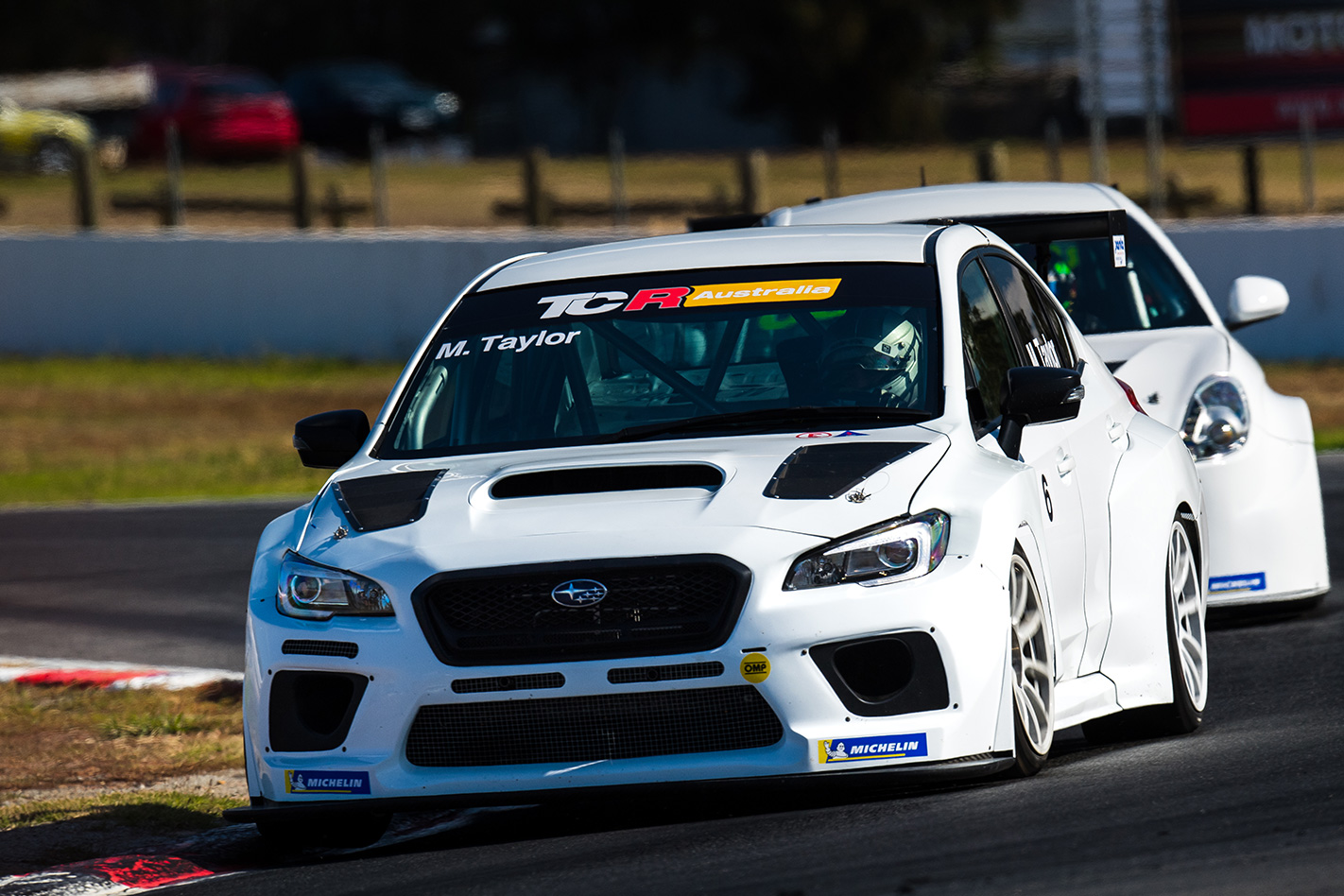
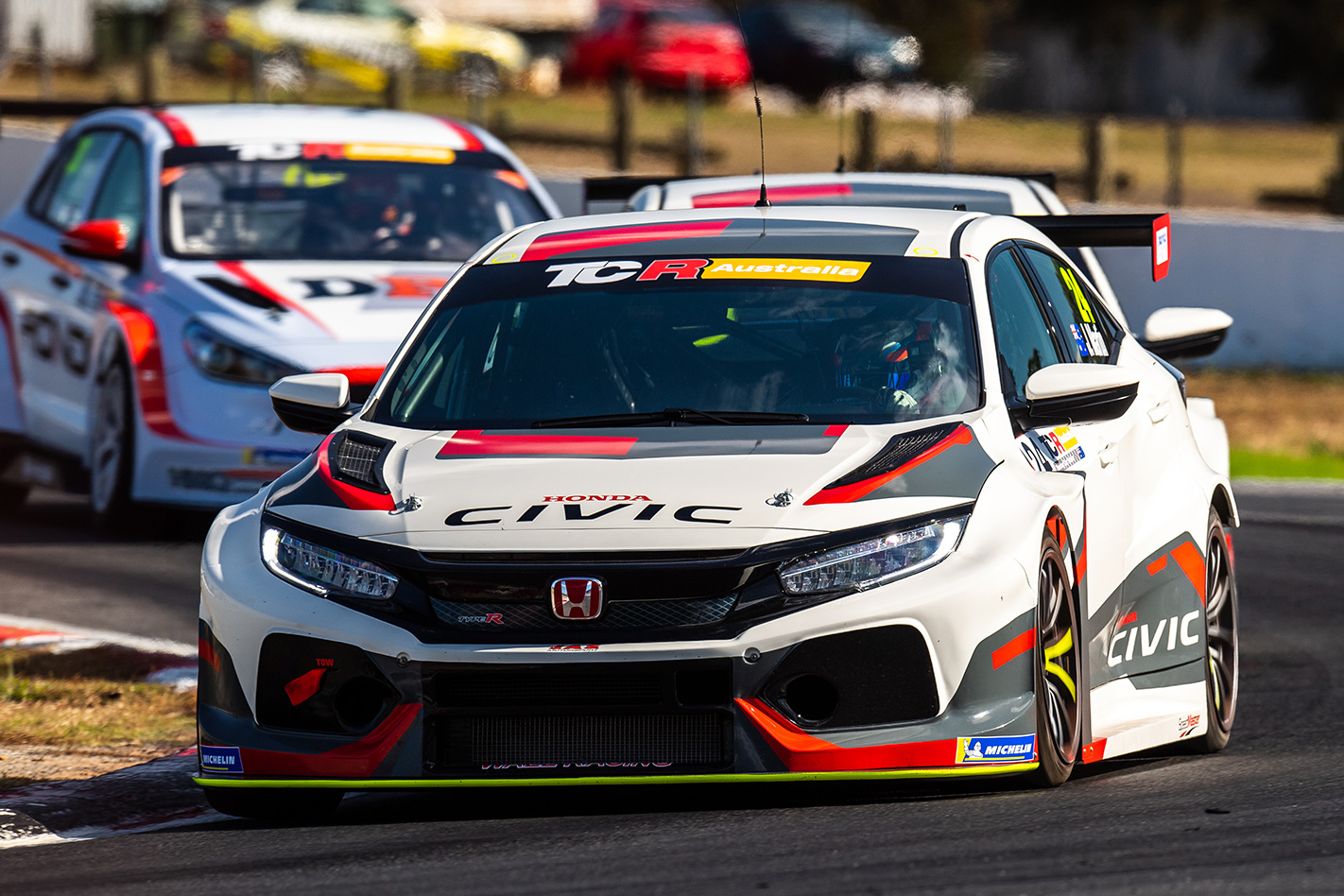
TCR is a global formula, much like GT3, with different championships across America, Europe, and Asia. The formula is simple: C-segment hatchbacks and sedans with production chassis and 2.0-litre turbocharged four-cylinder engines driving the front wheels.
Performance is capped using Balance of Performance (BoP system like what is used in GT racing) to ensure competition is tight.
How do I watch?
TCR Australia has signed a free-to-air TV deal which will see all races shown live on SBS.
You can also watch the races online in a free livestream which is hosted on the category’s official website.
If you want to watch the cars in person, each of the seven rounds in 2019 will take place as part of the Shannons Nationals, which also includes other categories such as Australian GT, Sports Sedans, Porsche GT3 Cup Challenge, and Formula 4.
Why should I care?
TCR promises to be an affordable and hard-fought championship. Using BoP means no one team will have an unfair advantage, and the relative affordability of the cars means drivers won’t be averse to bumping panels.
The category manager has also put $250,000 of prize money on the line for the first champion, so the stakes will be high.
Who is involved?
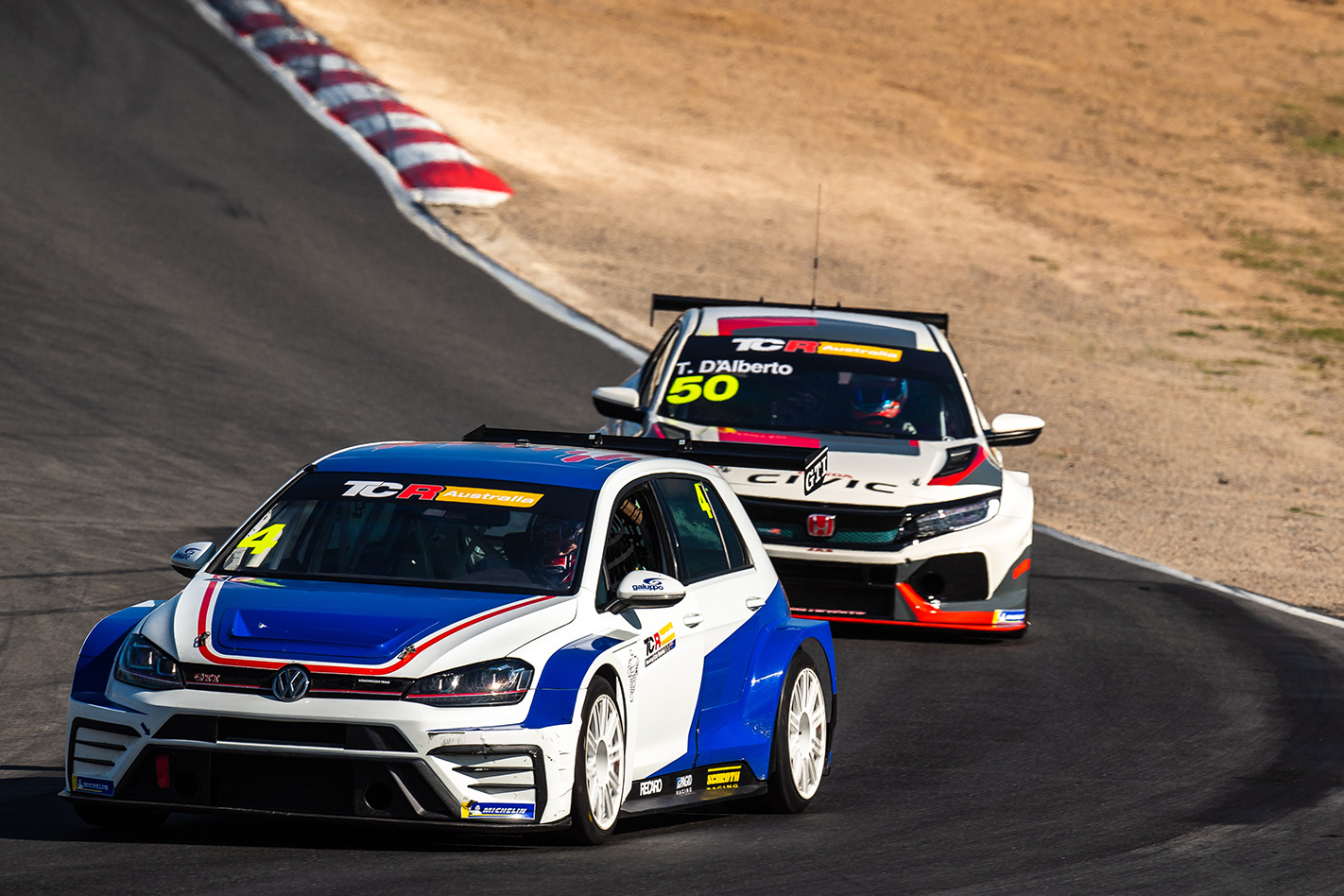
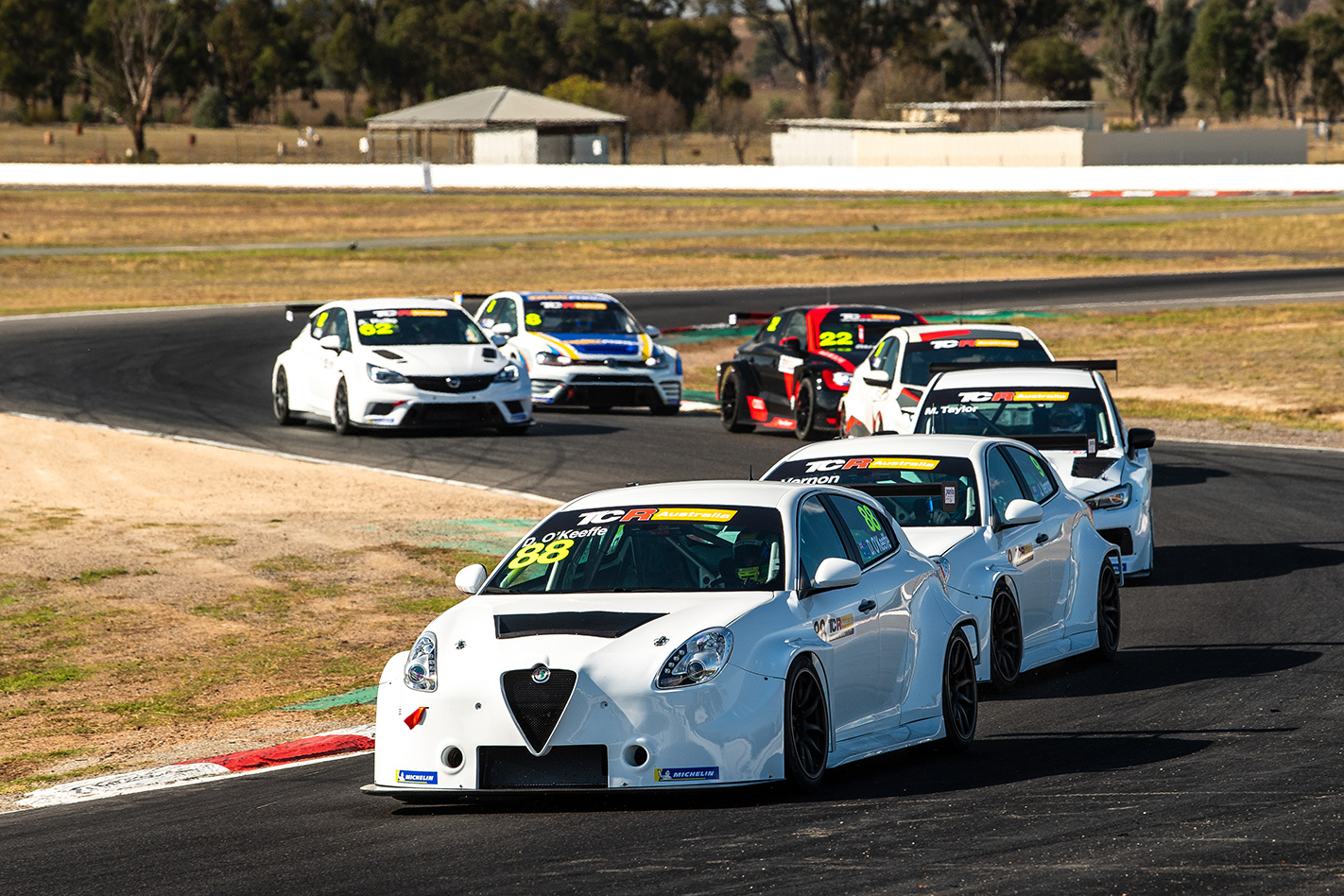
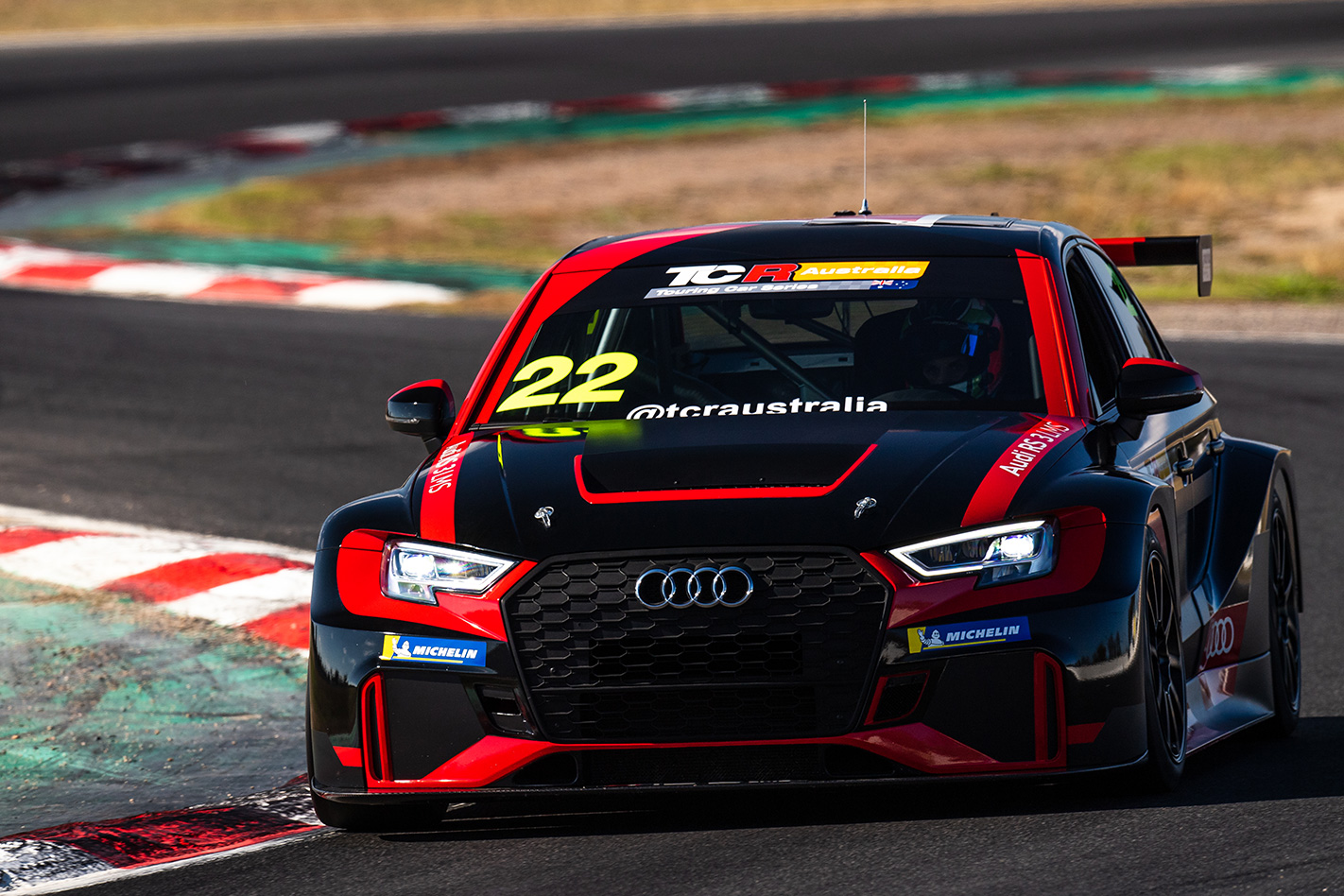
In total 17 cars from eight manufacturers will take part in the debut series. Competing cars include the Honda Civic Type R, Volkswagen Golf R, Renault Megane RS, Alfa Romeo Giulietta, Hyundai i30 N, Subaru WRX STi, Opel Astra (badged as a Holden), and Audi RS3 LMS.
Stalwarts of Australian motorsport Garry Rogers Motorsport and Kelly Racing are both fielding four cars apiece, while Honda Australia has thrown its official support behind Wall Racing.
Drivers include gun hot shoes like Tony D’Alberto, Chris Pither, James Moffat, Jason Bright, Nathan Morcom, Alex Rullo, Andre Heimgartner, and factory Audi driver Rik Breukers.
Young guns Chelsea Angelo, Dylan O’Keefe, Jimmy Vernon, and Will Brown are also competing.
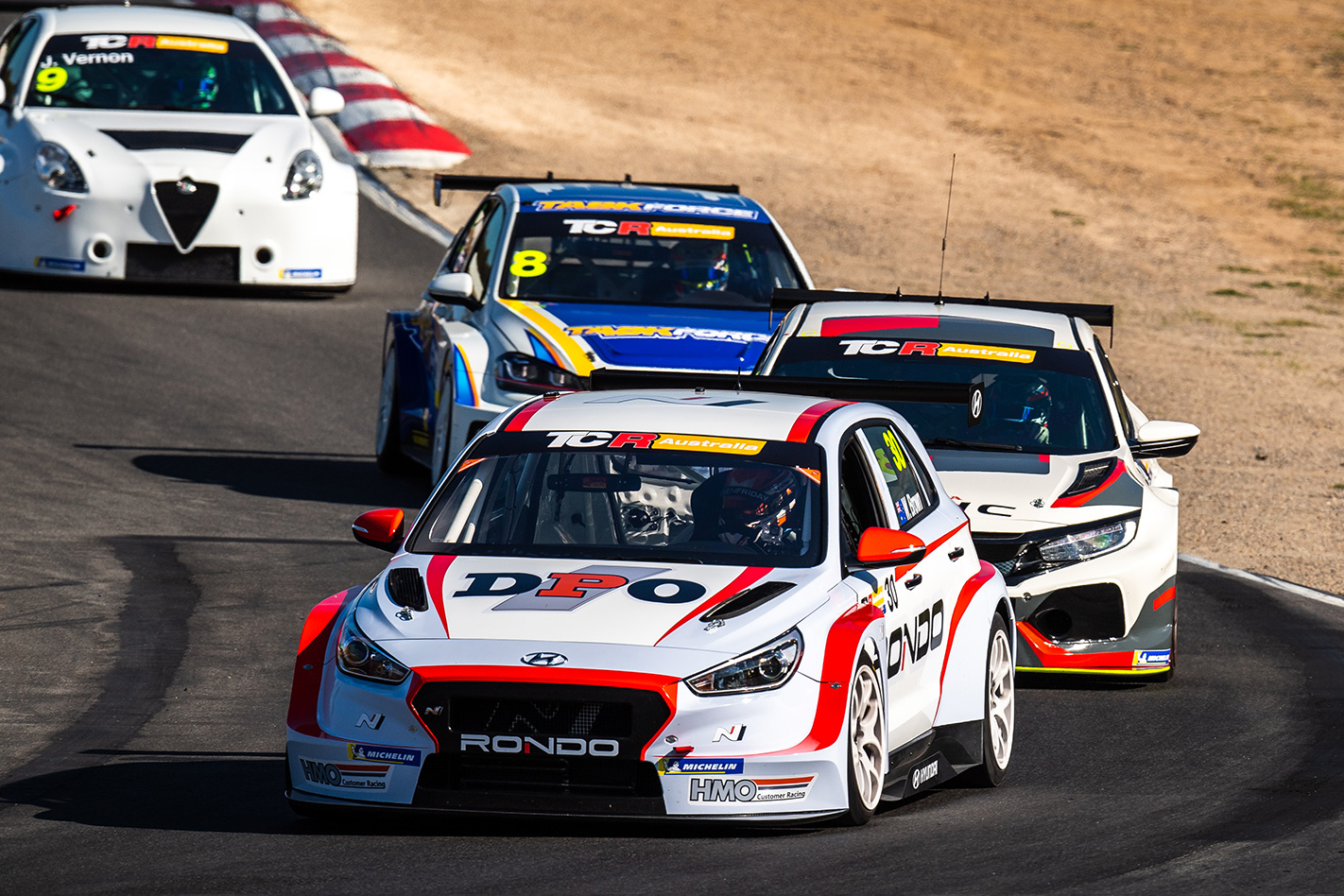
Rally ace Molly Taylor has even been lured from dirt to tarmac for the inaugural series.
TCR Australia is run by the Australian Racing Group, which is headed by former Volvo Cars Australia managing director Matt Braid, while former Supercars CEO James Warburton is a non-executive director.
Is it going to replace Supercars?
No. The category has no plans to replace our premier motorsport series, Supercars. However two supercars teams are involved, along with a full-time Supercars driver.
TCR does answer many of the complaints levelled by fans at Supercars, though, so it might be worth tuning in this weekend for the opening round at Sydney Motorsport Park.
De Tomaso will return from the dead. And, fittingly, it’s chosen this year’s Goodwood Festival of Speed as the place to herald its revival.
If the brand doesn’t ring a bell, one car should remind you: the Pantera. Born in 1971, and powered by a mid-engine Ford V8, it’s just one of many beauties the Italian-based firm designed and manufactured since 1959.
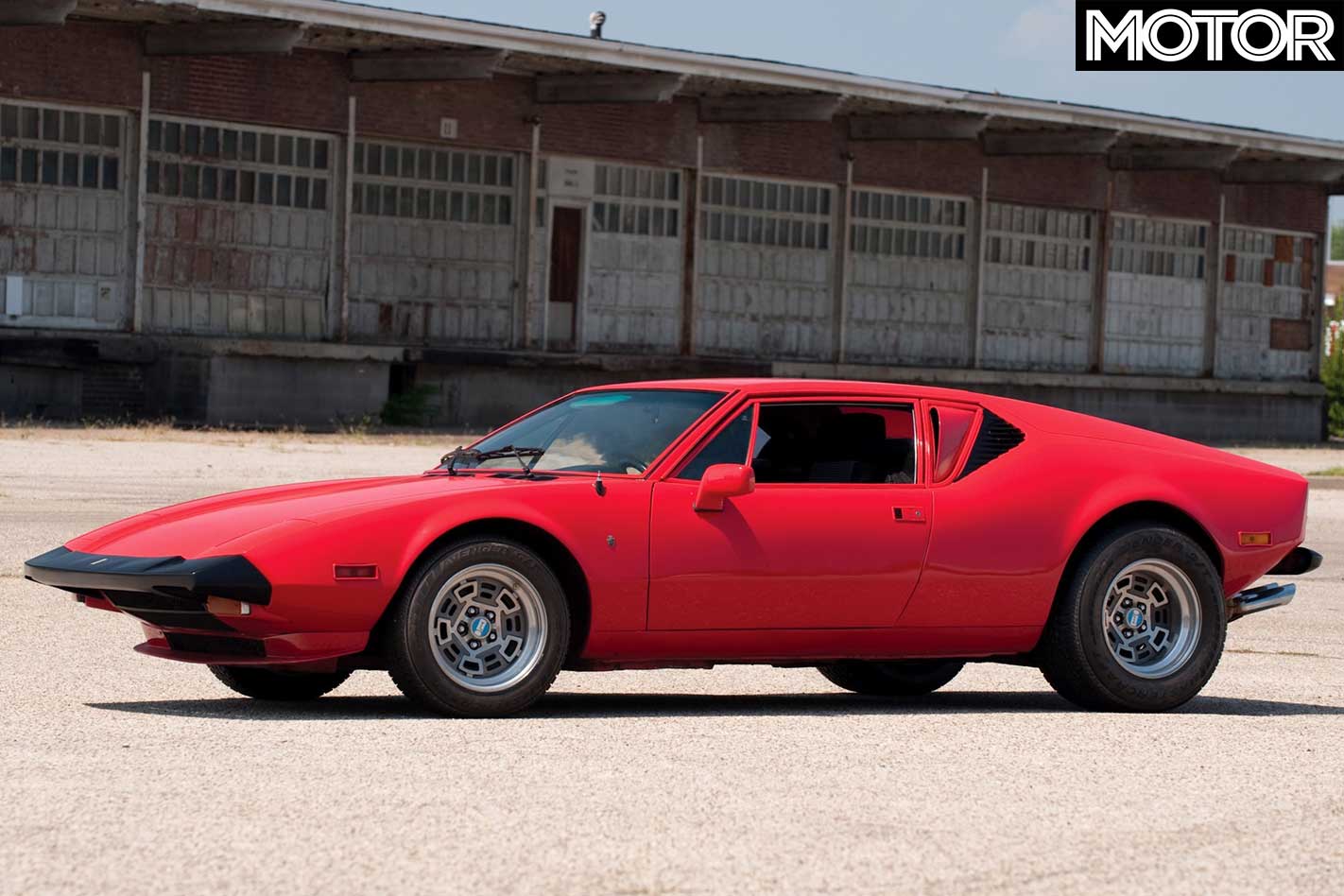
The news comes from the company’s Instagram page, DeTomaso Automobili, that merely says we will see a “return of a legend” on July 4, 2019 – the date the Festival of Speed kicks off on Lord March’s driveway. It also drops another hint with the tag “#ProjectP”.
That tag, of course, refers to a car that Norman Choi promised for the brand’s 60th anniversary. Choi is CEO of Apollo Automobil, yes, the company building the insane V12-powered IE, and also behind Ideal Team Ventures. That’s the company bought the brand rights to De Tomaso in 2014 for a reported $1.05m Euro (AU$1.70m).
There’s some crossover here, with HWA (Merc-AMG racecar gurus and engineers behind the IE) rumoured to be doing work on De Tomaso’s new Project P. Aside from speculation, though, all we have on the project so far are images of a camouflaged prototype that look Pantera-ish.
Either way, it’s exciting news for De Tomaso, especially considering what it’s been through.
Founded by Argentinian Alejandro de Tomaso who emigrated to Italy fleeing political prosecution, he started a company that built sports cars after driving in F1 and failing to start his own team. The mid-engine Vallelunga was first, then the Mangusta and later came the Pantera.
Along the way it collaborated with design house Ghia and figures like Marcelo Gandini, who penned the Lamborghini Muira. So the pedigree is there.

It’s just the business side of it all that’s been struggling. It went bankrupt in 2003, was purchased in 2009, then went bankrupt again in 2012. It was almost bought in 2014 by a Swiss company before the deal went through, then ended up in Choi’s hands in 2015.
It won’t be long before we see if they’re good ones.
Mini’s unleashed its most powerful models ever – the new 2019 Mini JCW Clubman and JCW Countryman.
The brand has overhauled its four-wheel drive John Cooper Works variants with extensive upgrades to their engines, drivetrains, suspension and chassis structures.

Underscoring this are new 2.0-litre engines that jump outputs from 170kW/350Nm to 225kW and 450Nm, representing an increase of 55kW and 100Nm. These are achieved with a petrol particulate filter complied to Euro 6d regulations.
Put through an updated eight-speed transmission the Clubman wagon is claimed hit 100km/h from rest in 4.9 seconds with launch-control. The higher-riding Countryman does it in 5.1. That’s an improvement of over a second in both cases and breathing down a Golf R’s 4.8-second claim.
Engineers have used a reinforced engine crankshaft, bigger main bearing, unique pistons, rods, and vibration damper to realise this power increase. But that’s only what they’ve changed within the block.
They’ve dropped each engine’s compression ratio from 10.2:1 to 9.5 to fit a bigger turbo, with blow-off valve, and installed fancy direct ‘multi-hole injectors’ downstream from a new intake duct.

The upgraded ancillaries continue with a new sports exhaust system, complete with 95mm tips on the Clubman and 85mm ones on the Countryman. Meanwhile, their cooling systems are also heavily upgraded.
Drive is still through four wheels, offered in 19-inch and 18-inch diameter, but now through a new front LSD aided by an upgraded DSC system.
Complementing this, Mini’s also re-tuned each car’s steering, spring, camber and damper settings to suit its upgraded chassis. A 10mm lower right height is used on both the standard suspension and adaptive damper equipped cars.

Body-wise, each car has new bracing, construction and powertrain mounts, while the brakes are bigger, too, with discs measuring 360mm at the front and 330mm in the rear in between four-piston calipers all around.
Much of the exterior’s carried over save for some tweaking of the rear bumper and new-for-2019 Union Jack taillights.
We’ve contacted BMW Australia on when the ultra-buff new JCW Countryman and Clubman should arrive and will update you on further details in due course.
It only takes a handful of corners for any one of this trio to yank a similar initial reaction out of you: “wow”. Not in a take-your-breath-away-and-call-your-mates kind of way, but more of a silent, sharp intake of air.
This feature was originally published in MOTOR’s January 2011 issue
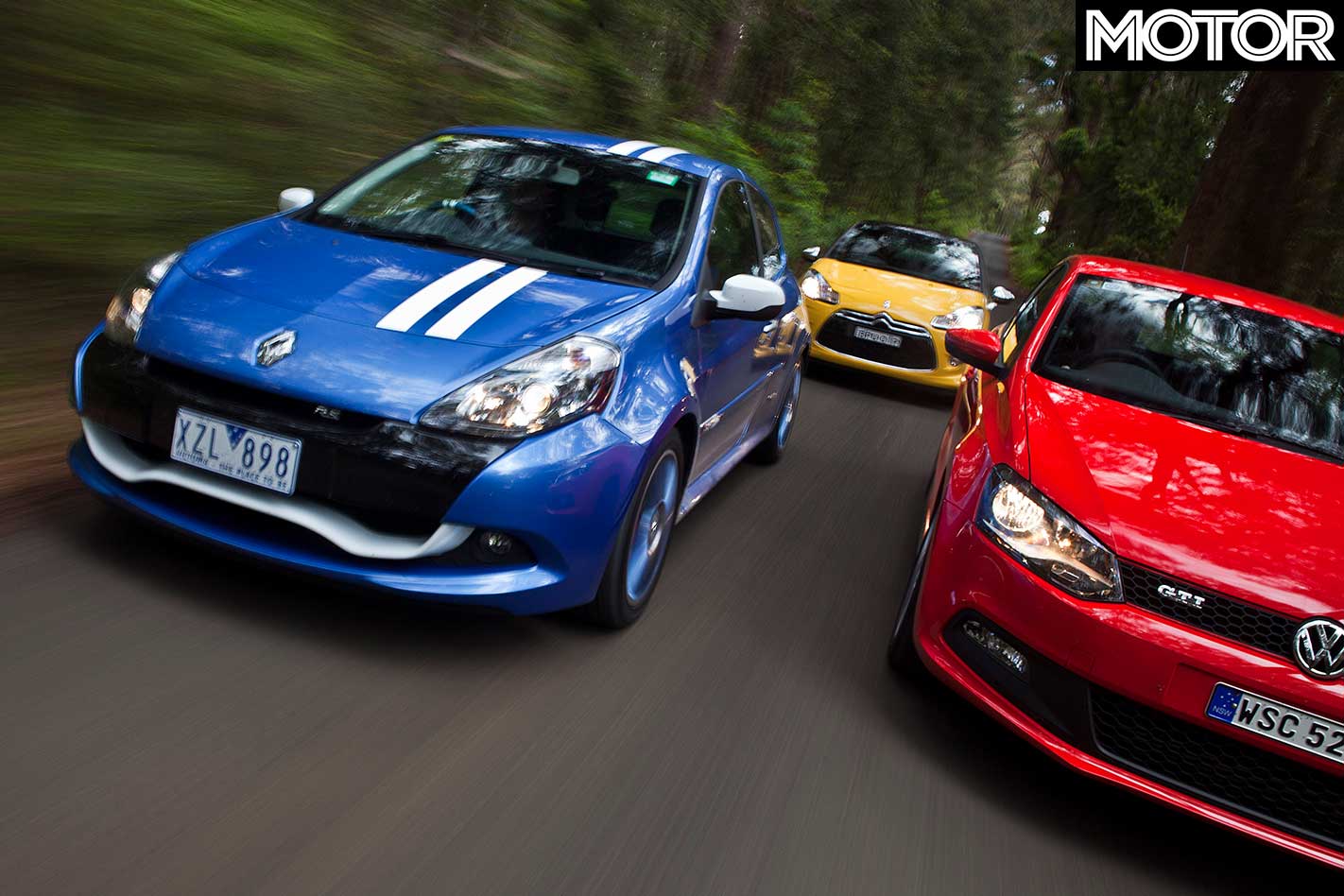
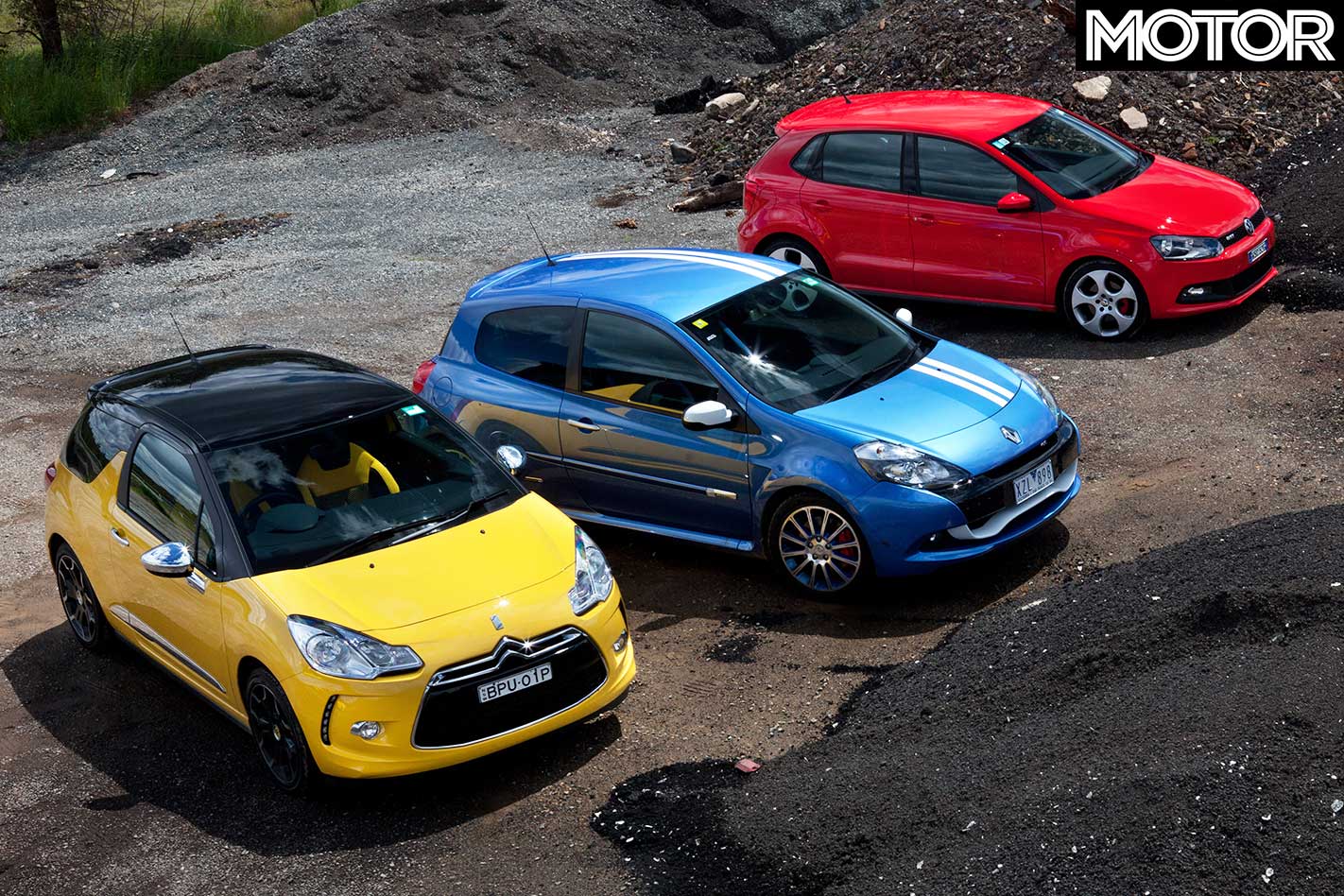
The Citroen DS3 results in creased corners of the mouth and a solemn nod. The new Polo GTI yanks out raised eyebrows and wide eyes. The Renaultsport Clio Gordini does a bit of both, and adds pursed lips and a little whistle. Call them the measures of the gaps between what you were expecting from them and what they actually deliver.
Bona-fide performance, then? Yes. Mind you, there are mid-range tiddlers out there – think Peugeot 207 GTI, Ford XR4, the old Polo GTI – that start to push reasonable, $30K-odd money. Or, at least they used to. They’re now all defunct. Good, yes, but we’re talking high-rent pace in pretty low-rent packages.
Splurge on this new crop of premium super-mini and you get all, or at least a fair chunk, of the build quality, comfort, refinement, materials, finish, spec, tech and pace you expect from larger luxo performance cars, yet squeezed into a sub-hot-hatch package. And for their mid-$30K to $40K ask, you’d want wow factor in the deal.
BMW’s Mini set the mould, and Europe’s running hard with a ball that the Japanese (and, with its canning of the GTI badge, Peugeot) could’ve caught but so conspicuously dropped. This trio assembled here are super-mini sharp-enders, and it’s quite clear after a couple of days and a thousand kays apiece that the yardstick for mega-tiddlers has been raised by its newest purveyors.
This little niche segment has expanded into its own diverse universe: Alfa MiTo Quadrifoglio Verde, Fiat 500 Abarth, the up-coming Audi A1, et al. And all three assembled here clearly cut their own paths.
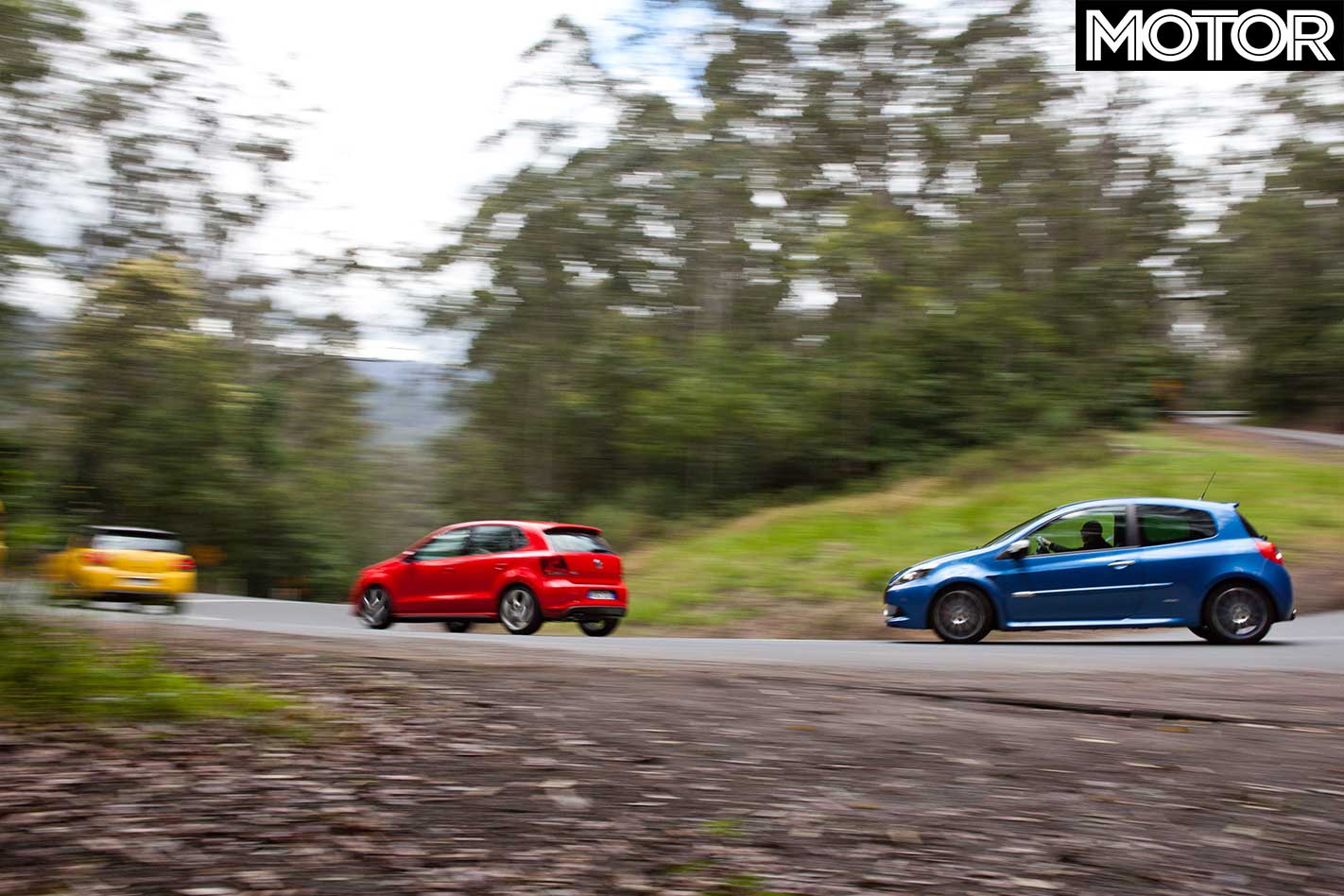
The Clio drips old-school Renault racing heritage. The Polo taps into big brother Golf GTI’s all-round goodness to an obsessive, and even clinical, degree. And the DS3 pretty much throws convention out the window and carves its own flamboyant, style-driven trail.
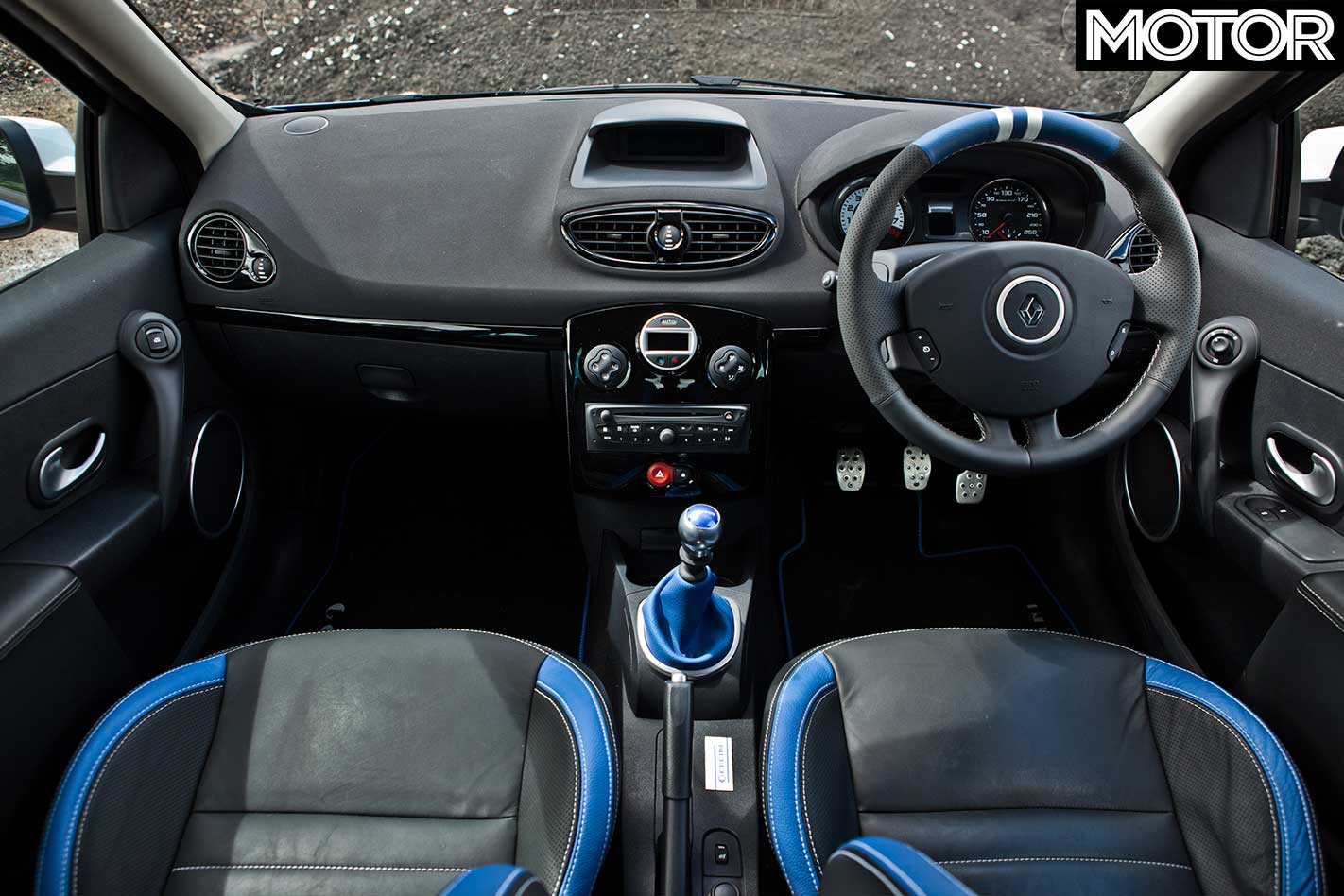
Each is based on a lesser stablemate, but it’s the French pair that lay on the most visual fanfare. The Clio Renaultsport 200 Gordini Edition, to give its full name, apes its famed Gordini-fettled, rally-racing ’60s ancestors in a fussy and ostentatious manner.
Its white-stripes-over-sorta-French-blue is a real attention-grabber, even in the presence of the retina-roasting Citroen. Stare at the tri-tone nose for a while and it starts look a bit, erm, amphibious. Add white mirrors, the trick rear ‘diffuser’ with a pair of stainless exhaust tips, silver-frosted detailing (door handles, badges) and ornate BeBop 17-inch rims and you’ve got a lot of visual overload.
Inside the assault continues, with Had-Enough-Blue-And-White-Yet? Trim accents, art deco-style treatment to the gearknob, badges and carpets – key indicators that you’ve stumped up for a new spin on the Clio RS. Important that, because strip away the French retro-racer duds and it’s the same 200 Cup underneath. Not that it’s a bad thing.
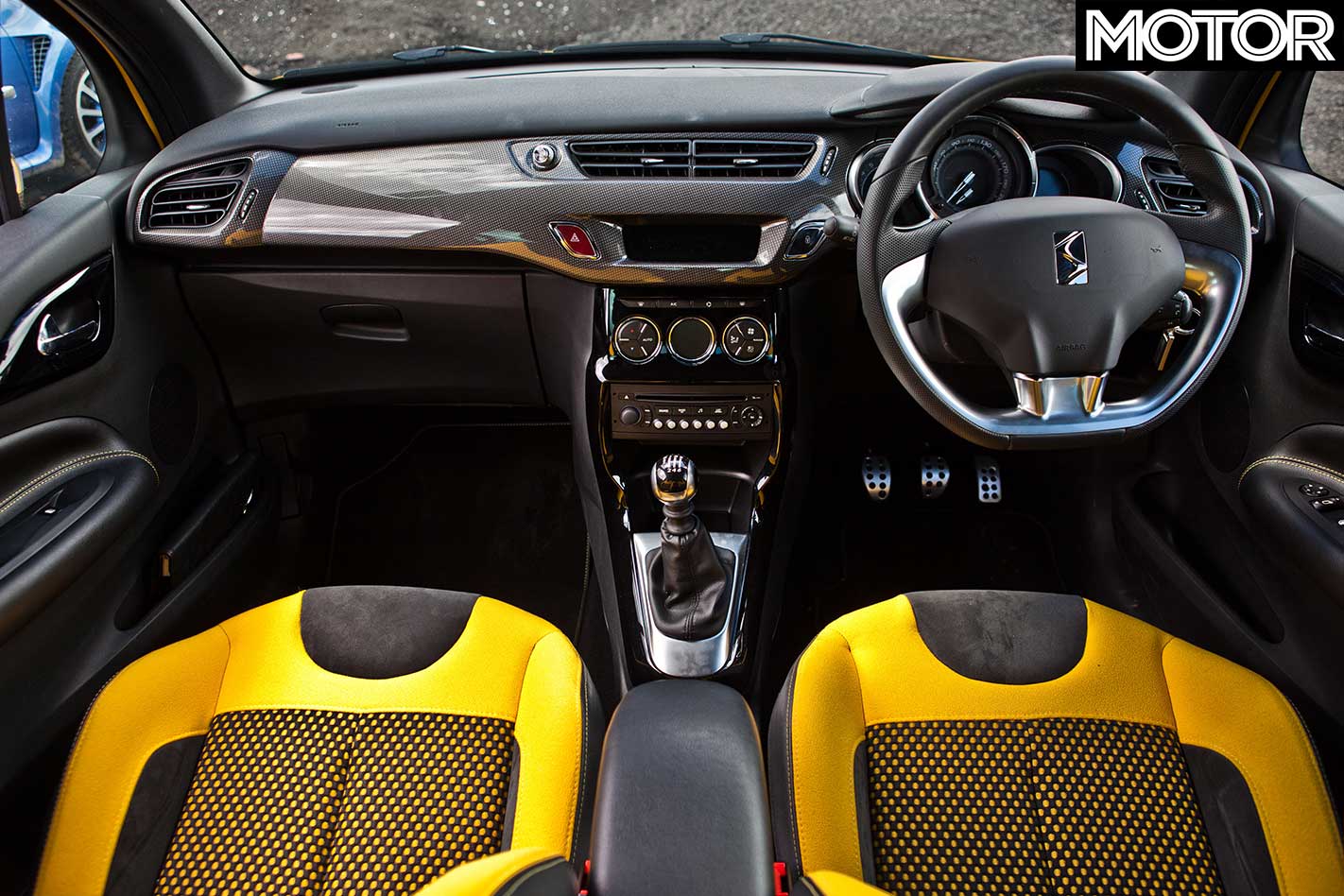
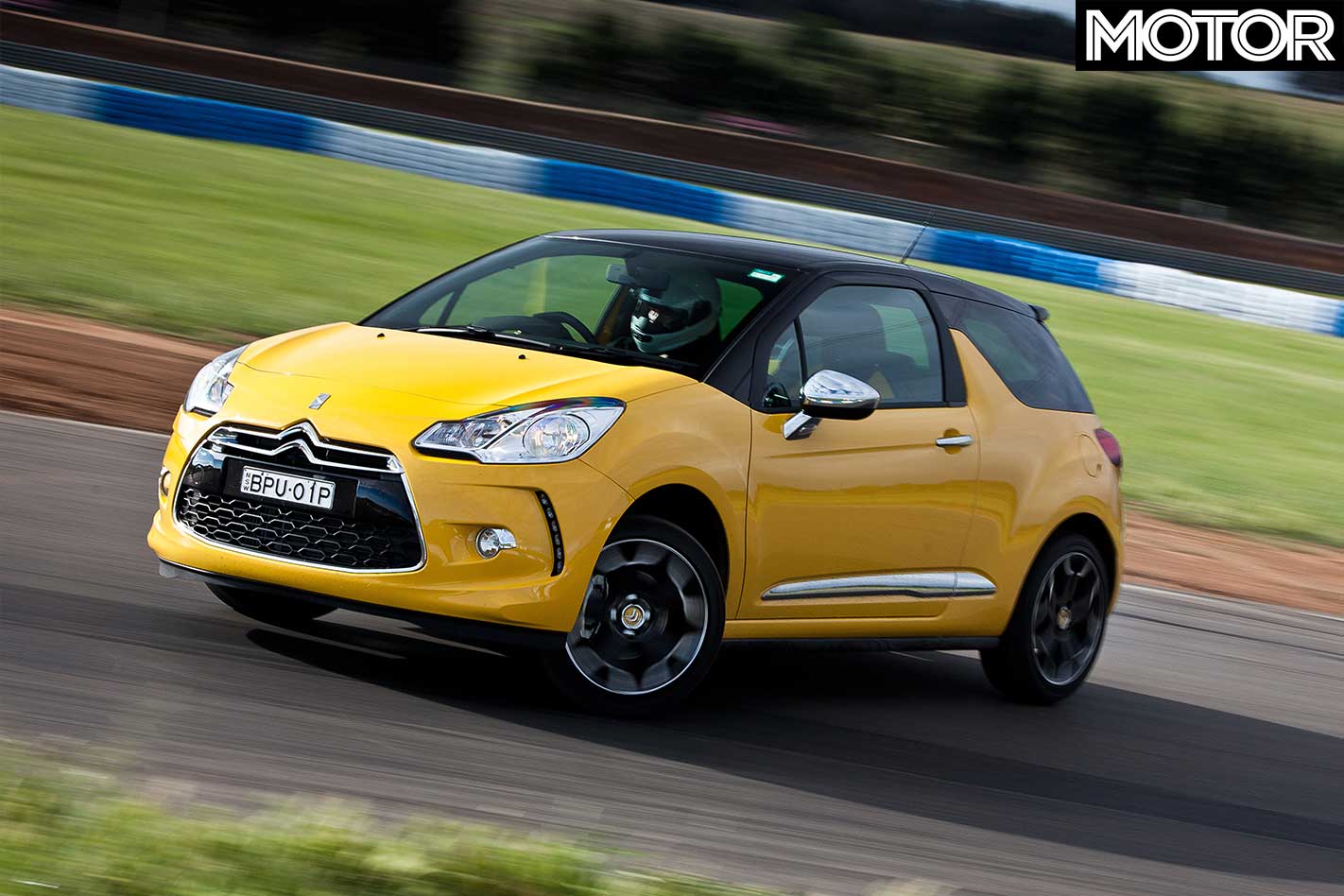
Nor are restraint and cohesion the C3-based DS3’s strong suits, particularly in Black-On-Blazing-Lemon, probably the most garish of the six mixed and matched roof/body/dash/trim/rims colour combinations on offer in Oz. And there’s chrome. Lots of it.
Thankfully you’re not stuck with a fashionista combination. Want something less Liberace-like? Trust us, in drabber body colour choices (grey, white, black or white) it’s a lot less Sex In The City.
But regardless of colour choice, the DS3 is the antithesis of the Clio; new-school and ultra-modernism. The cabin’s funkier than James Brown, complete with sports watch instrumentation, ski boat seat styling and a dash panel made from a chunk of (optional) carbonfibre-like material that could be ripped off to fashion your own yacht. Beauty. Eye. Beholder. Someone loves all this stuff…
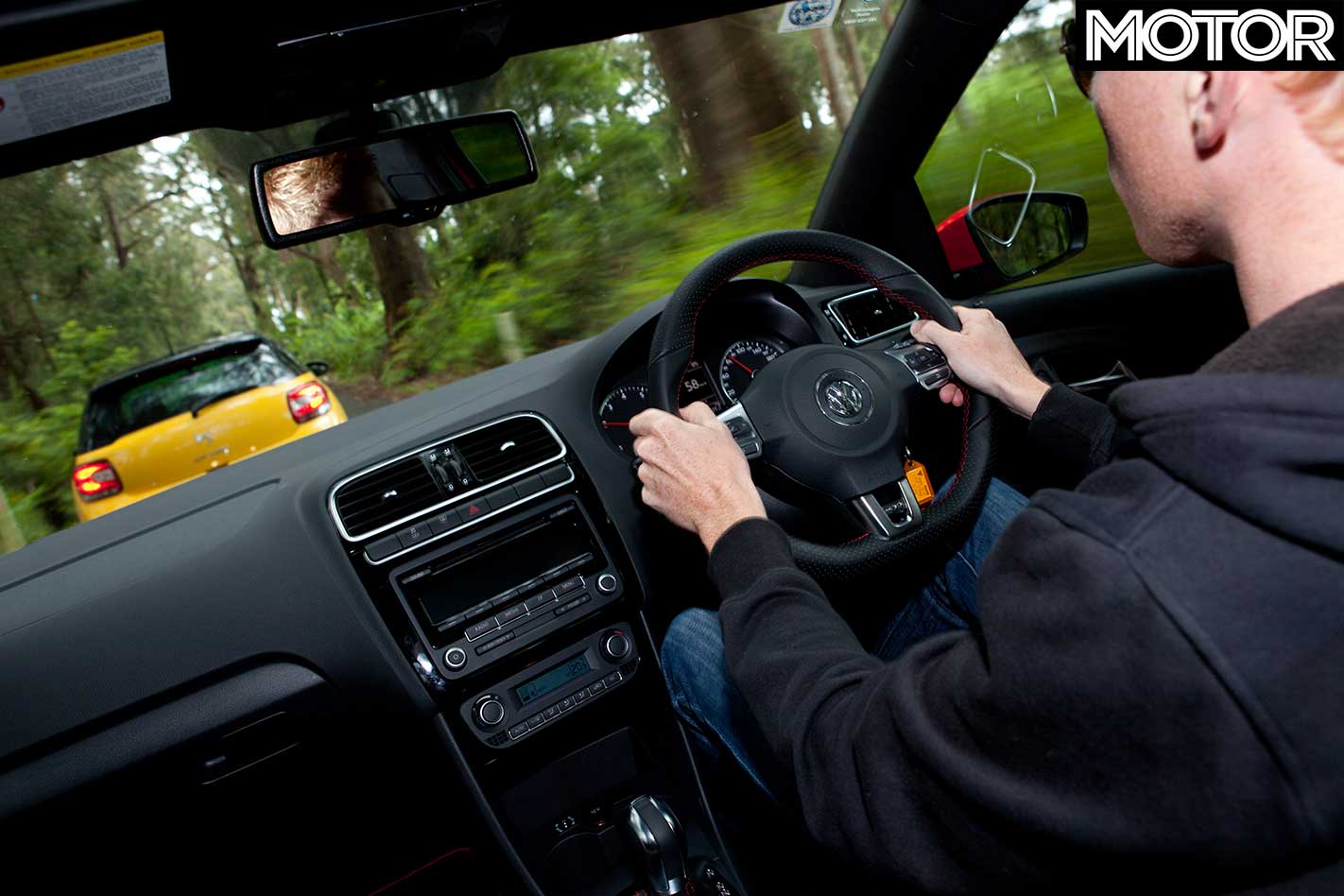
Then the Polo fronts up and, well, disappears in this company. Styling is neat, clean, cohesive, and as bland as oatmeal. The smart, updated corporate face is almost lost in its conservative look, particularly in the done-to-death GTI red and those plain-Jane 17-inch alloys that look low-rent compared with this French pair.
The Polo’s restrained, mature cabin, however, feels the class act of the three. Most of the effect is down to the Golf GTI-derived tiller, lifting the richness inside, and there’s a crisp neatness and classiness (despite it lacking the Clio’s leather) lifting the game. Its French rivals, by contrast, feel a bit chintzy and juvenile.
The Polo is also the most comfortable and naturally ergonomic inside. The Clio’s dumpy upright seating and lack of wheel adjustment is fine for a short burst of action, a chore for long-haul touring. The DS3, though, has a much more natural, low-slung seating, if afflicted with that typically French quirk of having a very shallow footwell: a presumption that every owner is under five-foot tall.
And while all literally stretch the definition of ‘mini’ – the Clio’s feels as large as the old Megane – all three will struggle to shift four adults without a pitstop to the chiropractor for the rear passengers. And both three-doors require contortionist talent to access the rear pew.
When it comes to setting a fire under the driver’s seat, though, the Gordini’s Clio 200 Cup underpinnings have long been the benchmark. There’s an admirable purity in that Renaultsport has stuck with the hard-revving naturally aspirated four-banger which, at 2.0-litres, outdoes its force-fed rivals by 0.6L (GTI) and 0.4L (DS3).
There’s a glorious, swelling roar as you swing the Clio’s needle to 7100rpm and summon all 148kW – the highest output of the trio – and cut-out doesn’t arrive until 7800rpm, at which point you’ve already heard the shift buzzer prompting the next cog in the six-speed manual ’box.
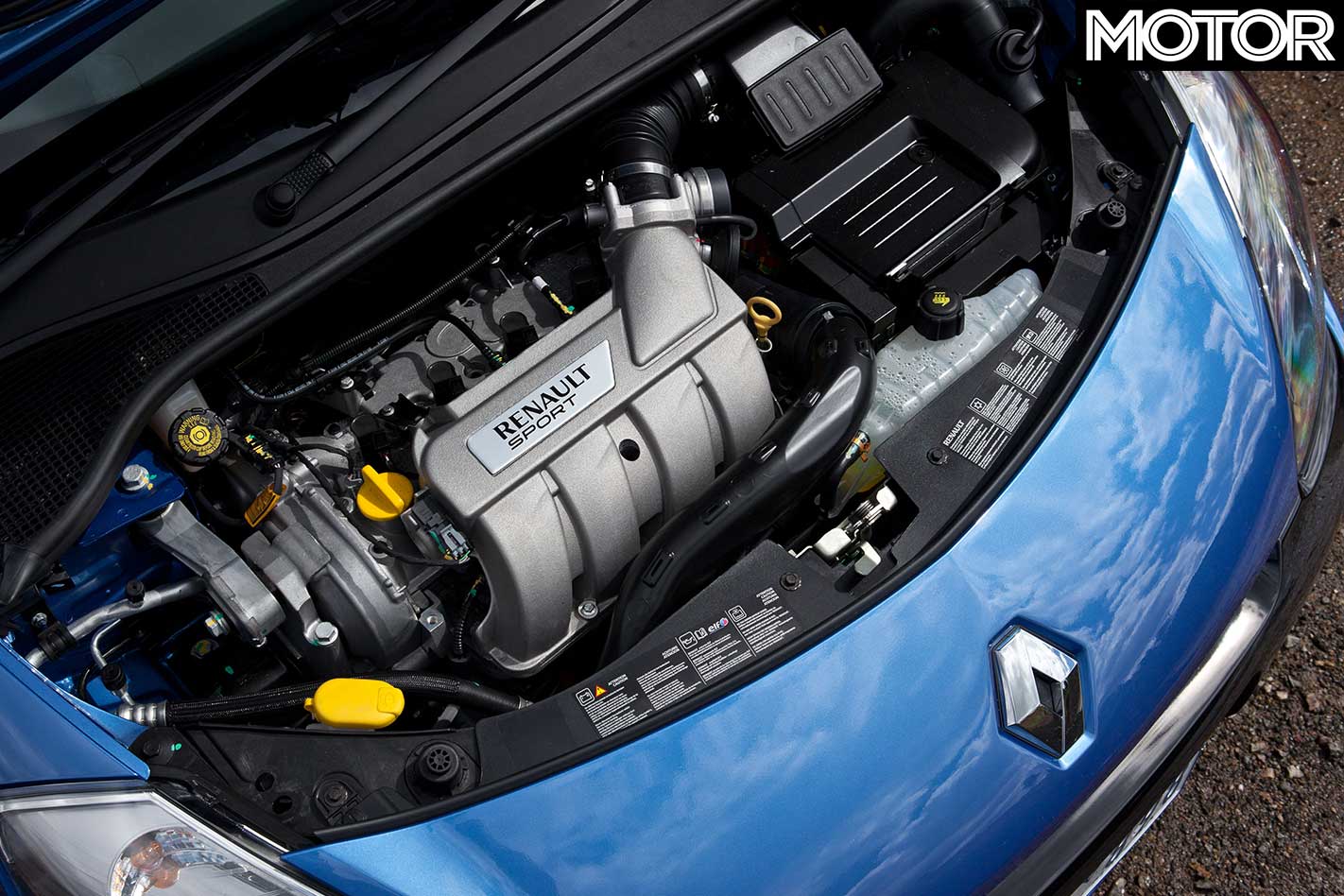
It’s a classic case of exhaust roar, broad rpm and super-close gear ratios that makes the Clio so satisfying to dig into. Its 215Nm torque peak doesn’t arrive until 5400rpm, yet its plenty tractable down low, and the energy just seems to swell as the revs rise and the exhaust snarl gets louder. Wonderful.
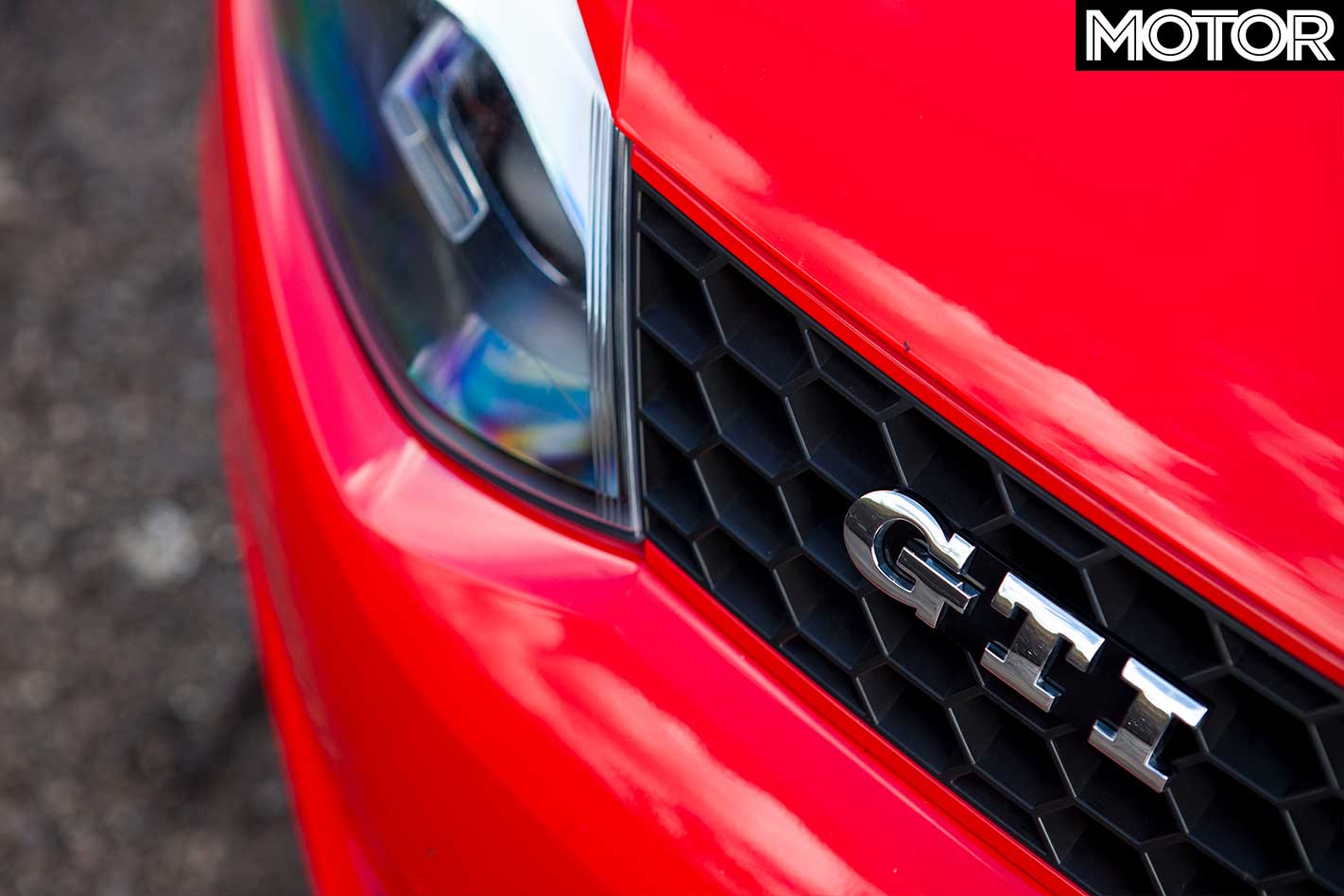
The Polo’s twincharged – supercharger for low-rpm, turbocharger for high-rpm – 1.4-litre four is a smoother character, with a much quieter note, but there’s still a satisfying richness underfoot. Low-end urge is more robust than the Clio’s, with 250 supercharged Newtons manning the decks from just 2000rpm, and all 132kW are on call at 6200rpm. That VW can extract so much shove right throughout the rev range from such a small capacity is nothing short of miraculous.
The fact VW has matched the engine to a seven-speed DSG twin-clutcher is indication enough that just because the GTI is small, it’s not a car done by halves. This ’box is a sweet match for the 1.4, offering a ratio spread close enough to not catch the twin-blown engine out, but casual enough to tick along without fuss (at 2400rpm) at a 110km/h highway cruise. At the same road speed the Clio buzzes away a frantic 3300rpm like a giant, mobile blue and white beehive.
The DS3, equipped with a six-speed manual gearbox, easily matches the GTI for effortless highway cruising. It mills along quietly and stridently at 2400rpm at 110km/h, but ups the ante in on-command rolling response.
On paper, the 1.6-litre litre Mini Cooper-derived four is 10Nm down on the GTI’s torque, but all 240Nm are available from just 1400rpm and, from there, it’s a case of response, response, response. Squeeze the throttle anywhere, anytime, and the DS3 just wants to make keen, crisp forward progress. Interesting, because the manual’s ratios don’t feel as low-geared as the Clio, and surely they’re not as closely packed as the Polo’s seven forward cogs.
And right here is the conundrum. Both the VW and Citroen pile on the pace more effortlessly – and with less fanfare – than the Clio. On one hand, in our modern torque-hungry world, this is a favoured trait. But the Clio clings fast and hard to an old-school hot-hatch purity that demands grabbing a car’s scruff and wringing the bejesus out of it. That you must dig into the Gordini harder and longer during a spirited punt is not only fun, it’s pretty much the point of the hot hatch exercise, innit? And given the stonk on tap it rewards well.
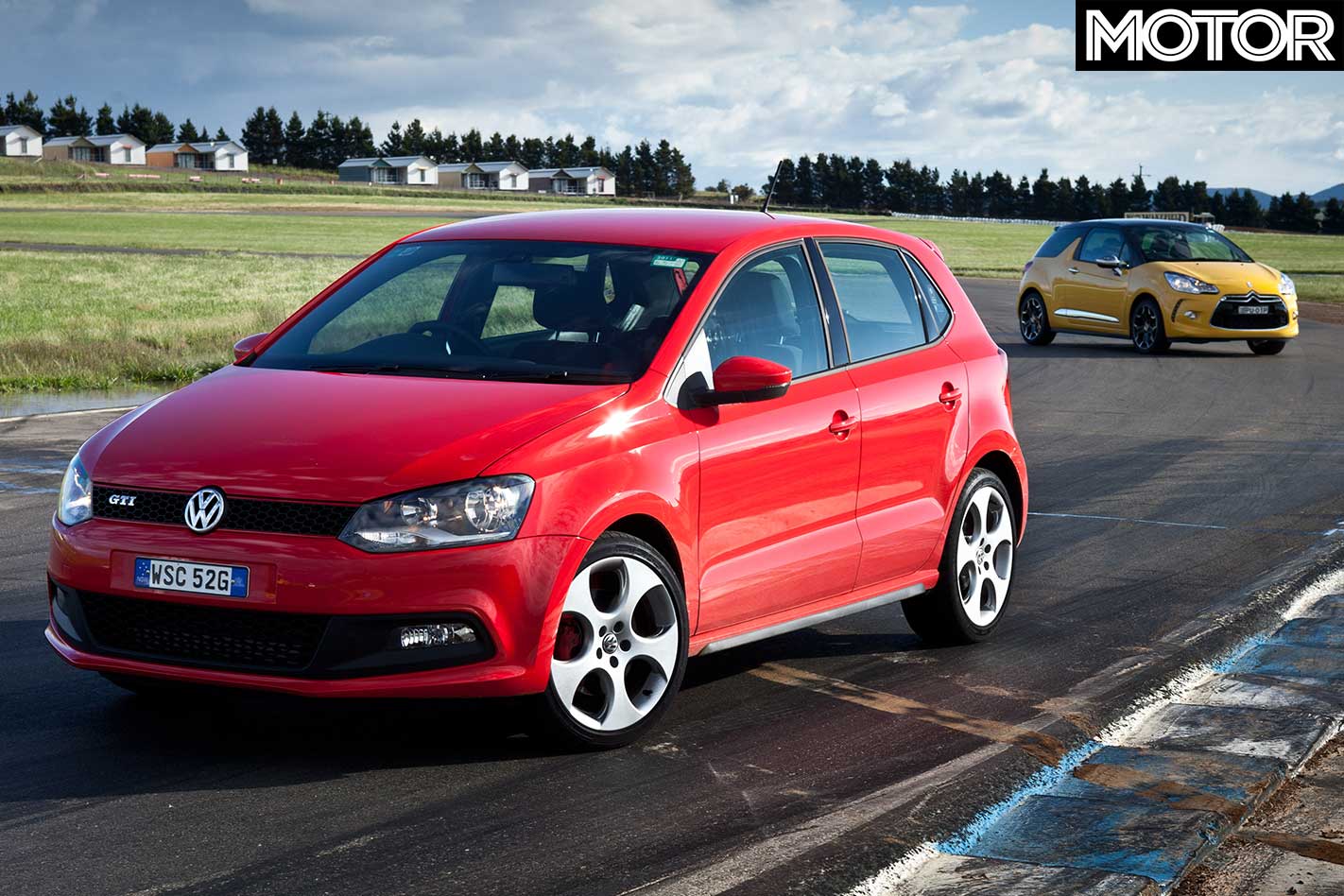
So the head says that the GTI and DS3 should be applauded for the robust, effortless shove well suited to their sporty all-rounder pretensions. And the heart says the Gordini should garner equal applause for sticking to its focussed ‘thrash me’ go-kart character.
At best, for a majority of daily driving and cruising, the Clio is a chore. On the Hume from Sydney to Wakefield Raceway, in Goulburn, it’s near sadomasochistic. The sharp steering, with little sneeze factor off centre, you get used to, and you can just live with the beehive engine note without reaching for the Panadol. But it’s the ride that’s the killer. It’s firm enough to make an Evo X feel casual, but unlike an Evo, which becomes more bump-compliant the faster you go, the Gordini goes from annoyingly jiggly to bucking bronco-like as speed rises.
In stark contrast, long-haul touring is much more five-star in either GTI or DS3, and the VW treads the nicest line between ride comfort and chassis control. Carrying speed, the DS3 feels a touch vague and a little floaty, and a smidge less tied down to the road.
Of course, the Clio is infinitely happier the moment its 215mm Continental ContiSportContact 3s step onto Wakefield’s hotmix. And you rightly expect a dominant performance from its hardcore Cup-fettled character in its natural hunting environment. Surprisingly, no.
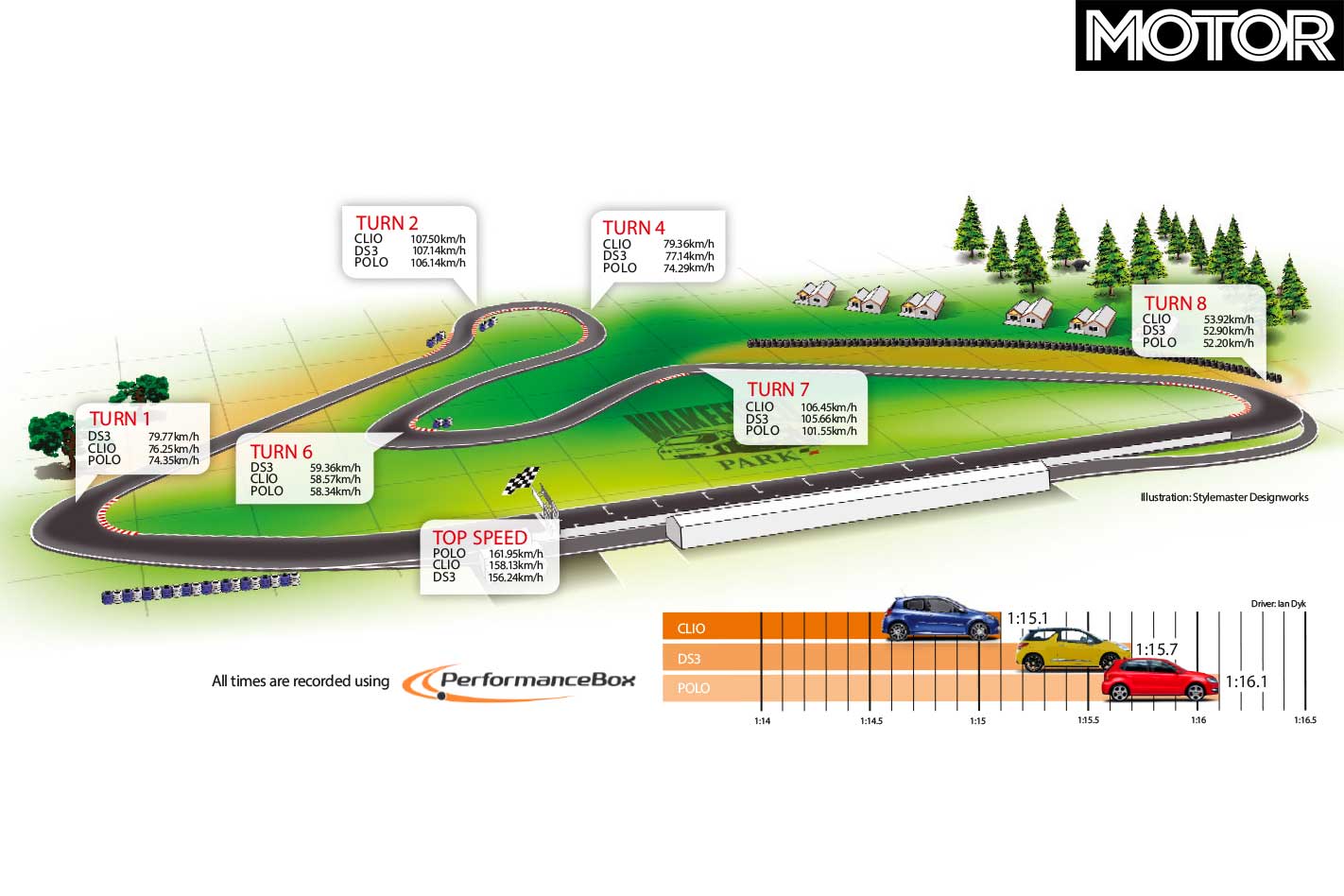
The DS3 – the on-paper underdog – goes first, rattling off a 1:15.7 best. Then the Clio is let off its leash to set a benchmark: a 1:15.1 on its third flier. Drizzle arriving, track greasing up noticeably, the GTI pulls a quite remarkable 1:16.1, especially given deteriorating track conditions. (Sydney’s November rain killed any straight-line performance testing at Sydney Dragway.) Not the result we expected.
The surprise circuit performer is the DS3. Its soft-edged everyday feel and respective 33kW and 17kW deficits to the Clio and GTI had suggested a lack of talent that evidently fronts up once the heat’s on.
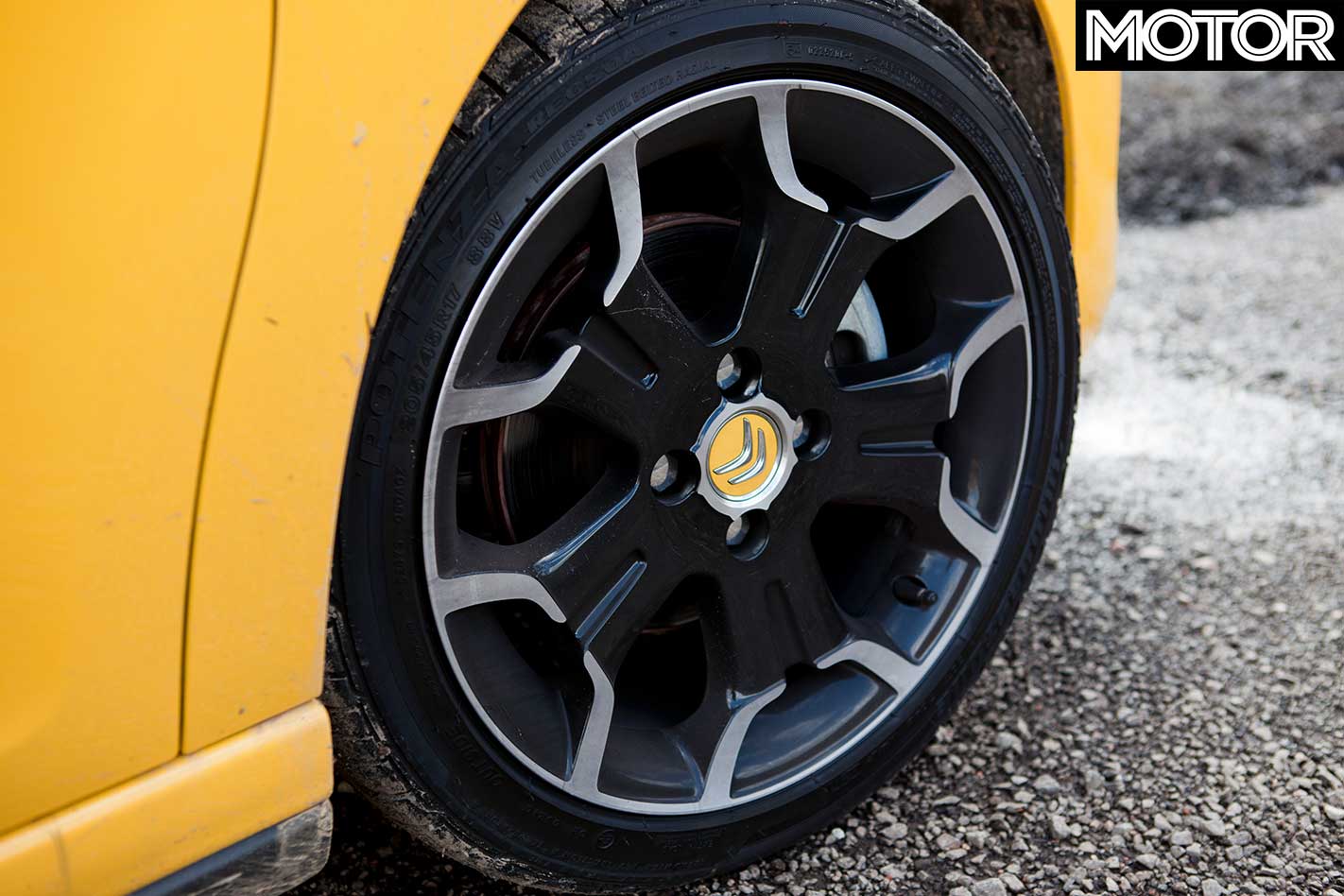
Its broad and useable torque really pays dividends when it’s exiting a corner. But there’s more. It can milk a lot more lateral grip from its meagre 205mm Bridgestone Potenzas than the GTI can from wider 215mm Dunlop SP Sport Maxxs (and neither are a tardy tyre). Lift-off hard enough into a tight bend and the nose grips and tail skips to a degree that you can almost drift it through sideways.
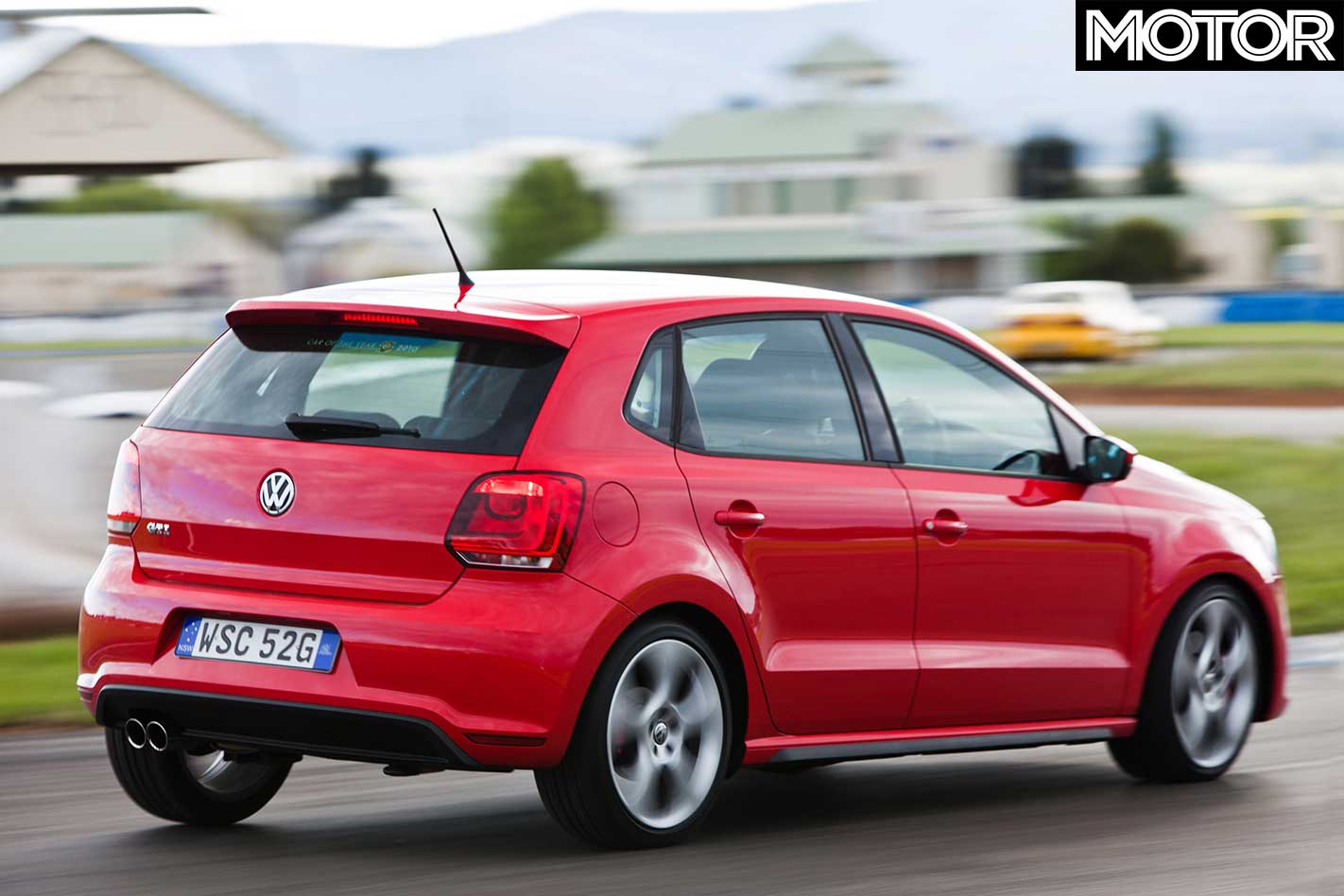
The sweetly matched – at least, on track – twincharged donk and DSG provide GTI’s seamless delivery, but it’s finely polished dynamics where the Polo has really transformed. In some situations its feels more responsive and agile than even its Golf GTI big brother.
Sure, we expected the Clio to be quickest, but its 0.6sec advantage is hardly a dominant one. But, boy, it’s a hoot. It demands the most driver application and delivers the most grin-inducing returns.
You can lean on it harder for longer. You grab its scruff, chuck it around, and it rewards with higher levels of dynamic agility and feedback. It turns in sharper, recovers grip more keenly, and has an innate balance that allows some ridiculous corner entry theatrics. You swap cogs more frequently – it’s a cog higher on its rivals in most corners – the engine note is more satisfying, and its exclusive and whopping four-pot front Brembos offer power and precision par excellence.
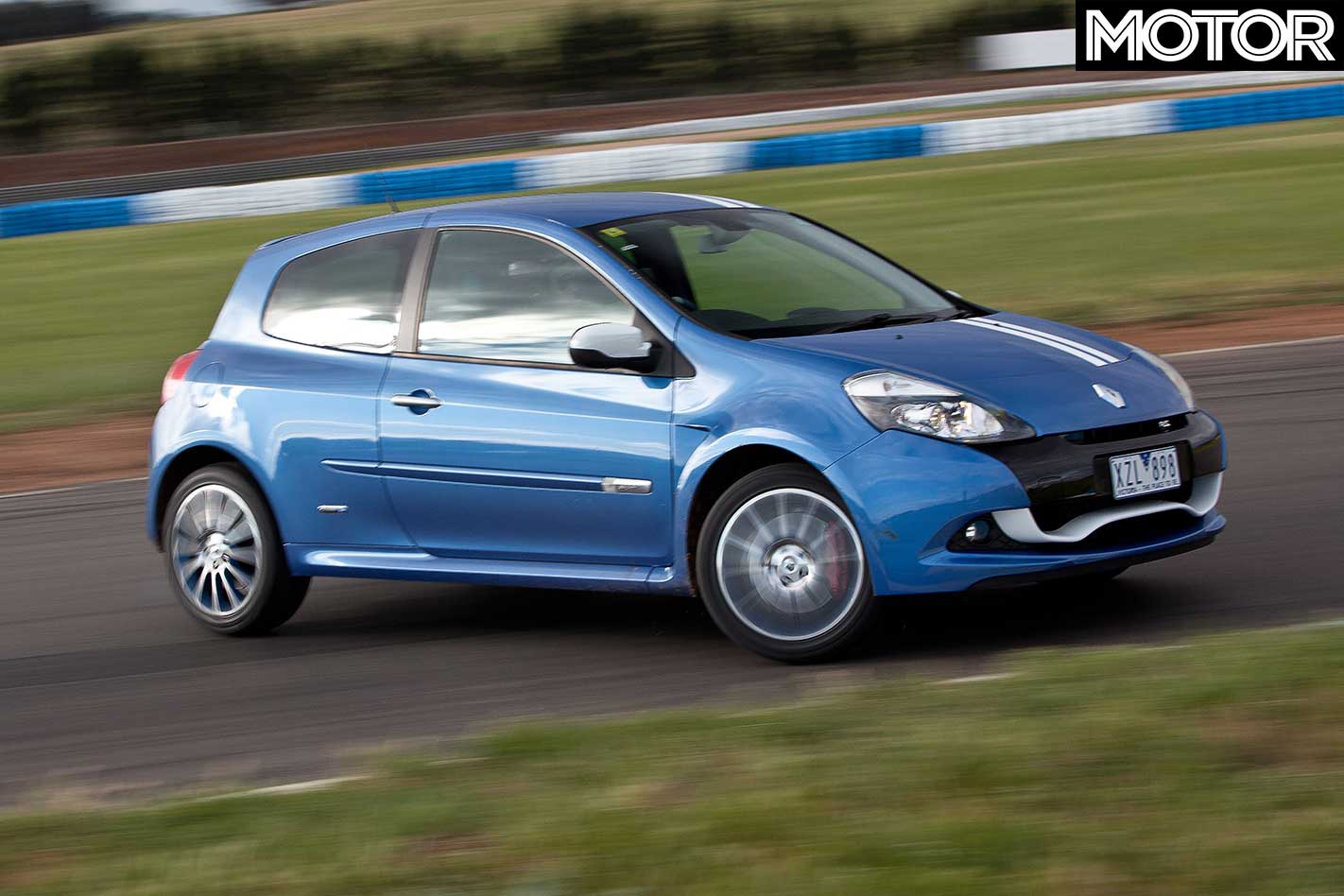
Most front-drivers demand a fair degree of understeer mitigation. The Clio, however, loves to pivot on its front end and let the tail do the dancing. It feels both quick and exciting. For feel-good vibes, few cars are this much fun for times when you want to kiss ripple strips.
There are a couple of cracking road loops that drop steeply and sharply through the valleys of NSW’s Southern Highlands. The round trip down and back demands tractable grunt, prodigious braking ability and chassis precision everywhere in order to maintain a spirited pace. It’s here that chinks in the armour come to light with a lot of clarity. And all three are bloody quick on every curve and line.
Though the GTI lacks the Clio’s front-end point, it has brilliant steering: very linear, beautifully weighted, and communicative. The DS3 has slightly less point and purchase when pushed but it still steers with accuracy and, with its extra compliance and nice adjustability, tracks an assertive course wherever it’s pointed. Anyone who’s written off electric power steering as dull and wooden should have a steer of any of these three. They’re all super impressive.
The taut Clio chassis is the edgiest of the three, skipping over mid-corner bumps, always lively and demanding more driver input. But the grip is such that you can lean on it that much harder and, with those brakes, dive deeper into an apex. The GTI and DS3, though, find the limits of their more moderate stopping power much quicker.
Bottom line is, they’re all seriously brisk, at least in context of their size, their tiddler origins, and their meagre price in The Grand Scheme. There’s a lot on offer for under $40k.
What goes against the Gordini is the downside of its singular focus: real-world ownership compromises. Especially given that, at $39,140, it asks Golf GTI money. Besides, does ‘Gordini’ mean anything to Joe Average Aussie who’s after an affordable, small-sized firecracker?
The DS3 bundies on at $35,990, including 17s and chrome fetishes.
And the GTI? The list of standard gear – bi-xenons, seven-speed DSG – is impressive for its meagre $28,900 ask. That’s a whopping $7K and $10K cheaper than the DS3 and Clio respectively! And it’s really the first Polo offering a convincing, shrunken Golf GTI experience.
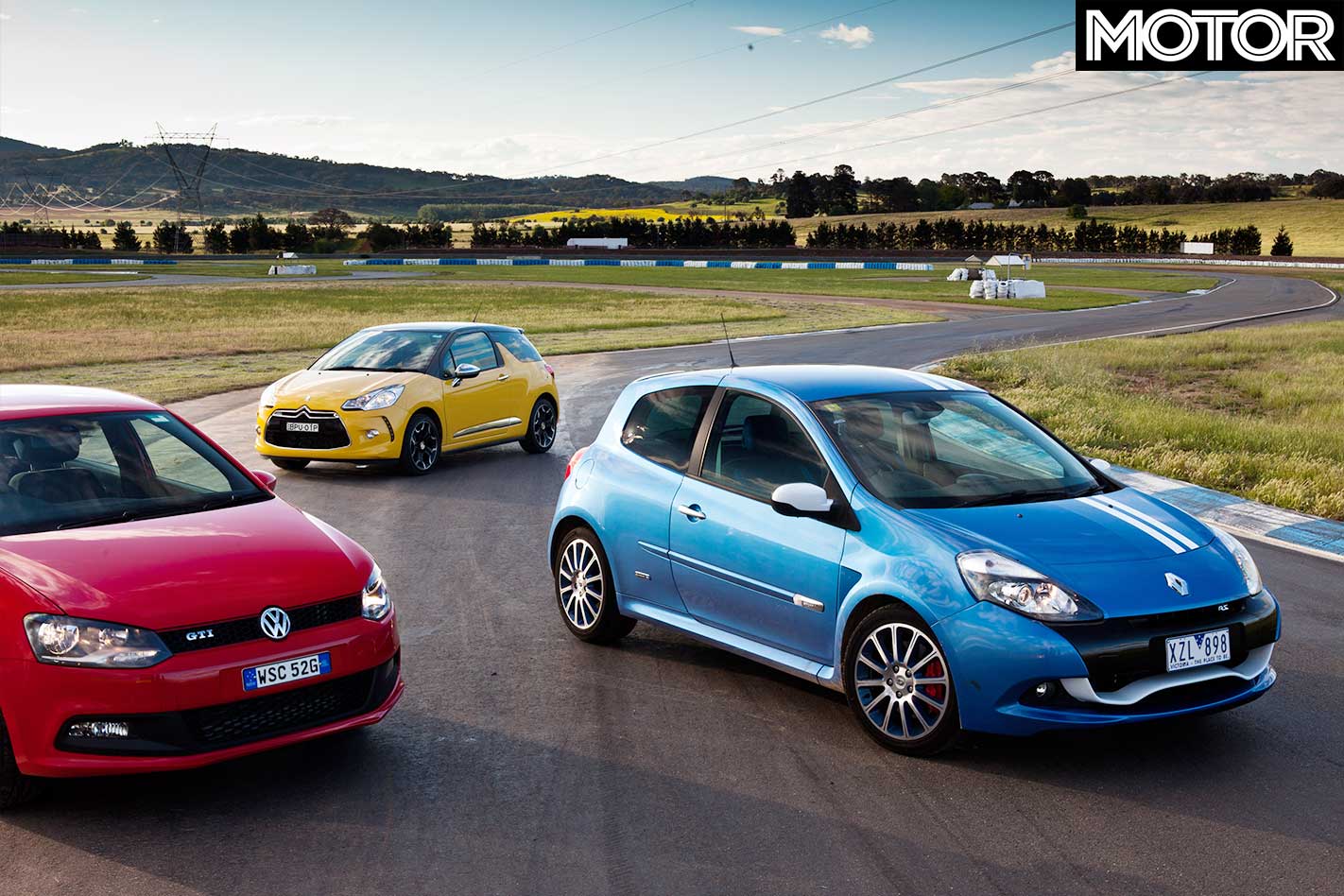
And, let’s not forget, it’s as quick as its French rivals, too. Its all-round goodness gives it the top spot in this shootout, by the slimmest of margins, and if only under pragmatic and rational analyses.
Truth is, the trio is so diverse, with each nailing their aims with impressive conviction, that it’d be wrong to choose one over the other for ‘rational’ reasons. And if you’re forking out your hard-earned for a super-mini, best choose whichever one feels best and appeals the most. They’re all good. Great, even.
And you’ll add a raised eyebrow, solemn nod or quiet whistle whichever way you decide to go.
Fast Facts
| u00a0 | Citrou00ebn DS3 | Renault Clio RS200 Gordini | Volkswagen Polo GTI |
| Body | 3-door, 4-seat hatchback | 5-door, 4-seat hatchback | |
| Drive | front-wheel | ||
| Engine | 1598cc inline-4, DOHC, 16v, turbo | 1998cc inline-4, DOHC, 16v | 1390cc inline-4, DOHC, 16v, turbo & supercharger |
| Bore x Stroke | 77.0 x 85.8mm | 82.7 x 93.0mm | 76.5 x 75.6mm |
| Compression | 10.5:1 | 11.5:1 | 10.1:1 |
| Power | 112kW @ 5800rpm | 148kW @ 7100rpm | 132kW @ 6200rpm |
| Torque | 240Nm @ 1400rpm | 215Nm @ 5400rpm | 250Nm @ 2000-4500rpm |
| Weight | 1156kg | 1204kg | 1189kg |
| Power/Weight | 97kW/tonne | 123kW/tonne | 111kW/tonne |
| Transmission | 6-speed manual | 7-speed dual-clutch | |
| Suspension (f) | struts, A-arms, anti-roll bar | ||
| Suspension (r) | torsion beam, coil-springs, anti-roll bar | ||
| L/W/h | 3948/1715/1483mm | 4017/1763/1484mm | 4064/1682/1500mm |
| Wheelbase | 2464mm | 2585mm | 2456mm |
| Tracks | 1468mm (f); 1471mm (r) | 1520mm (f/r) | 1443mm (f); 1434mm (r) |
| Steering | electrically assisted rack-and-pinion | ||
| Brakes (f) | 283mm ventilated discs, two-piston calipers | 312mm ventilated discs, four-piston calipers | 288mm ventilated discs, two-piston calipers |
| Brakes (r) | 249mm discs, one-piston calipers | 300mm discs, single-piston calipers | 232mm ventilated discs, single-piston calipers |
| Wheels | 17 x 7.0-inch (f/r) | 17 x 7.5-inch (f/r) | 17 x 7.0-inch (f/r) |
| Tyres | Bridgestone Potenza RE050A; 205/45 R17 88V (f/r) | Continental Sport Contact 3; 215/45 R17 87W (f/r) | Dunlop SP Sport Maxx; 215/40 R17 87V (f/r) |
| Price | $35,900 | $39,140 | $28,990 |
| Pros | Overt flair, original styling, strong engine, potent handling | Still the sharpest tool in the super-mini toolbox, fun factor | Polo GTI finally feels like “Honey I Shrunk the Golf GTI”, value |
| Cons | Not the most mucho jigger, patchy fit ‘n’ finish in places | Lacks comfort of DS3, its basically a pricey sticker pack | Bland styling and rims, lacks a bit of sharpness and grip |
| Rating | 8 out of 10 stars | 7.5 out of 10 stars | 8.5 out of 10 stars |
Track Data
Whodini?
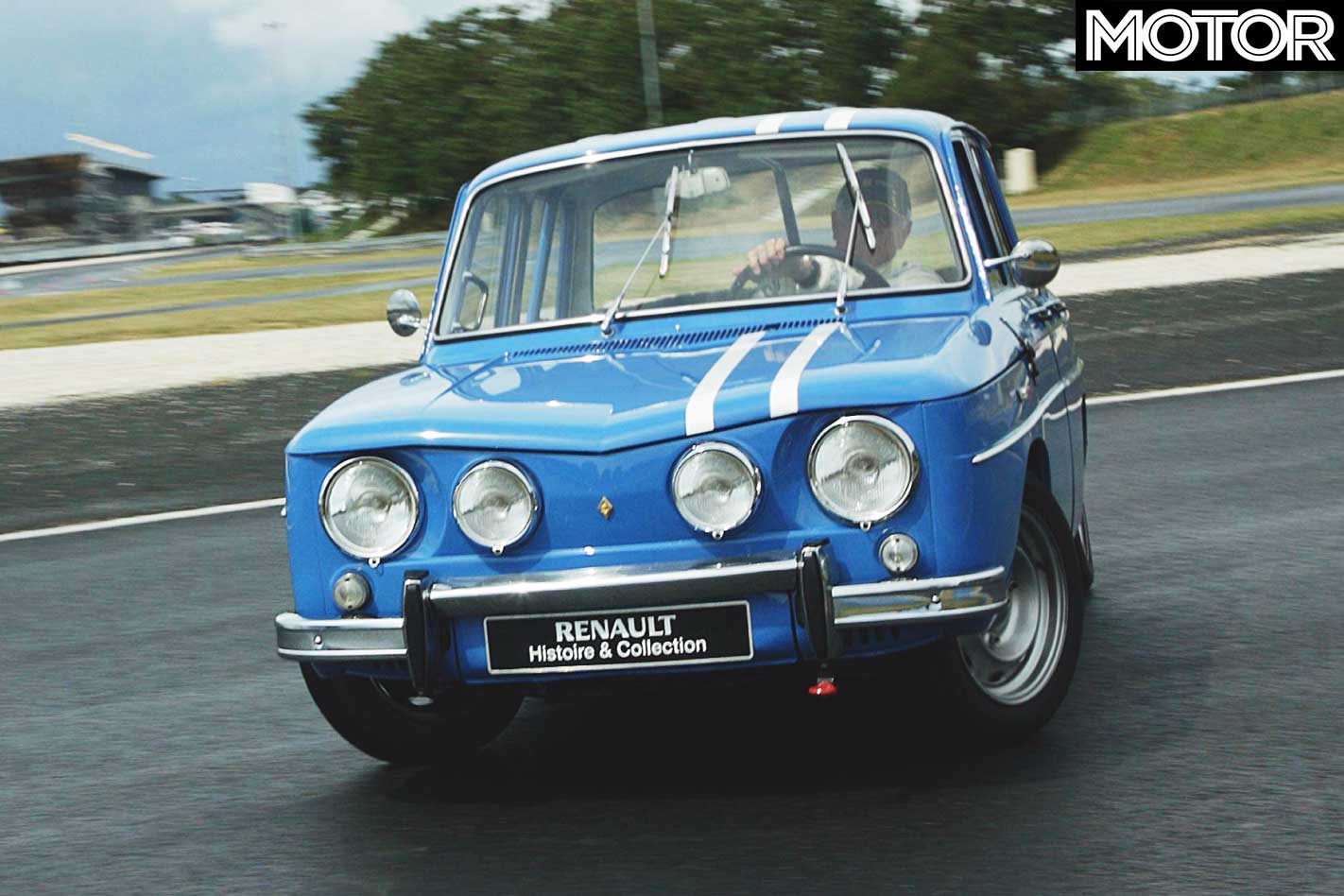
ITALIAN-BORN Amedee Gordini was a skilled mechanic before trying his hand at Grand Prix and Le Mans racing in France in the 1920s. In the ’50s, Gordini sports car brand went on to meagre success in Formula One, both solo and in a tie-up with Simca.
The engine tuning legend was in his 60s when he sold his company to Renault (1962), which applied his expertise, and namesake, to a series of red-hot Dauphine, 8 and 12 racers.The R8 Gordinis, in particular, are legendary, virtually dominating rallying in the mid-’60s, and gave birth to a one-make race series for 1300 versions, thus creating Gordini ‘Cup’. Gordini-branded Renaults also competed in 24 Hours of Le Mans.
The iconic blue’n’white R8s (above) of the mid-’60s boasted a close-cog five-speed and engine tunes of up to – wait for it – 77kW!
Introduction
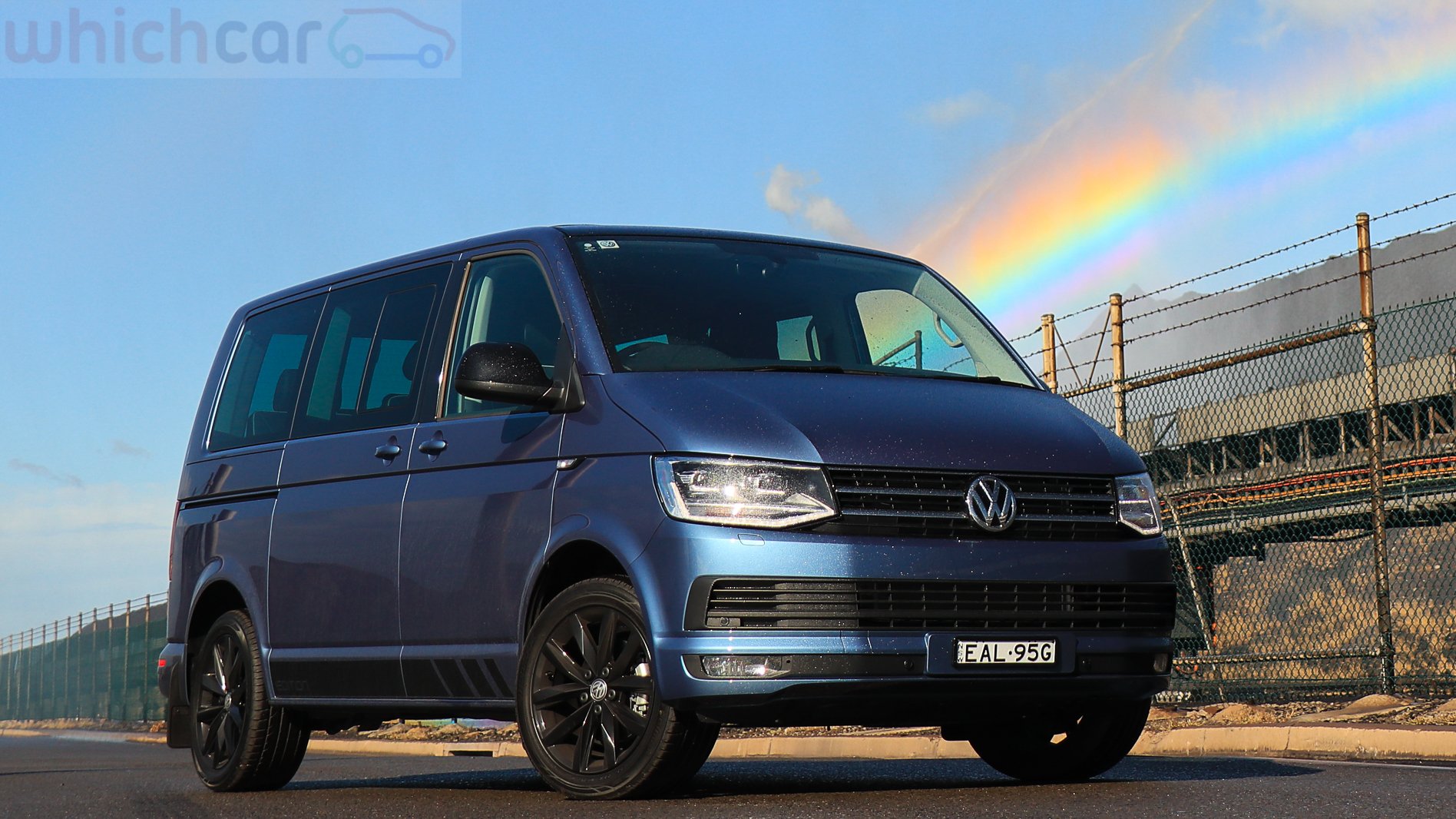
Hands up if you owned, have ridden in or knew someone who has owned a Volkswagen Kombi at some stage in their lives. Quite a few of you, right? The beloved VW wagon held a prominent place in the hearts of many Aussies, and that’s why I reckon this Multivan Black Edition attracted as much attention as it did in the week I had it.
Underneath it’s just a light commercial van, sure, but there’s just something about the notion of a modern Kombi that really pushes people’s buttons.
Style
The VW Transporter T6 range was born in the 2015, which spawned not only commercial variants but a continuation of a small range of passenger-friendly versions like the Caravelle and the Multivan.
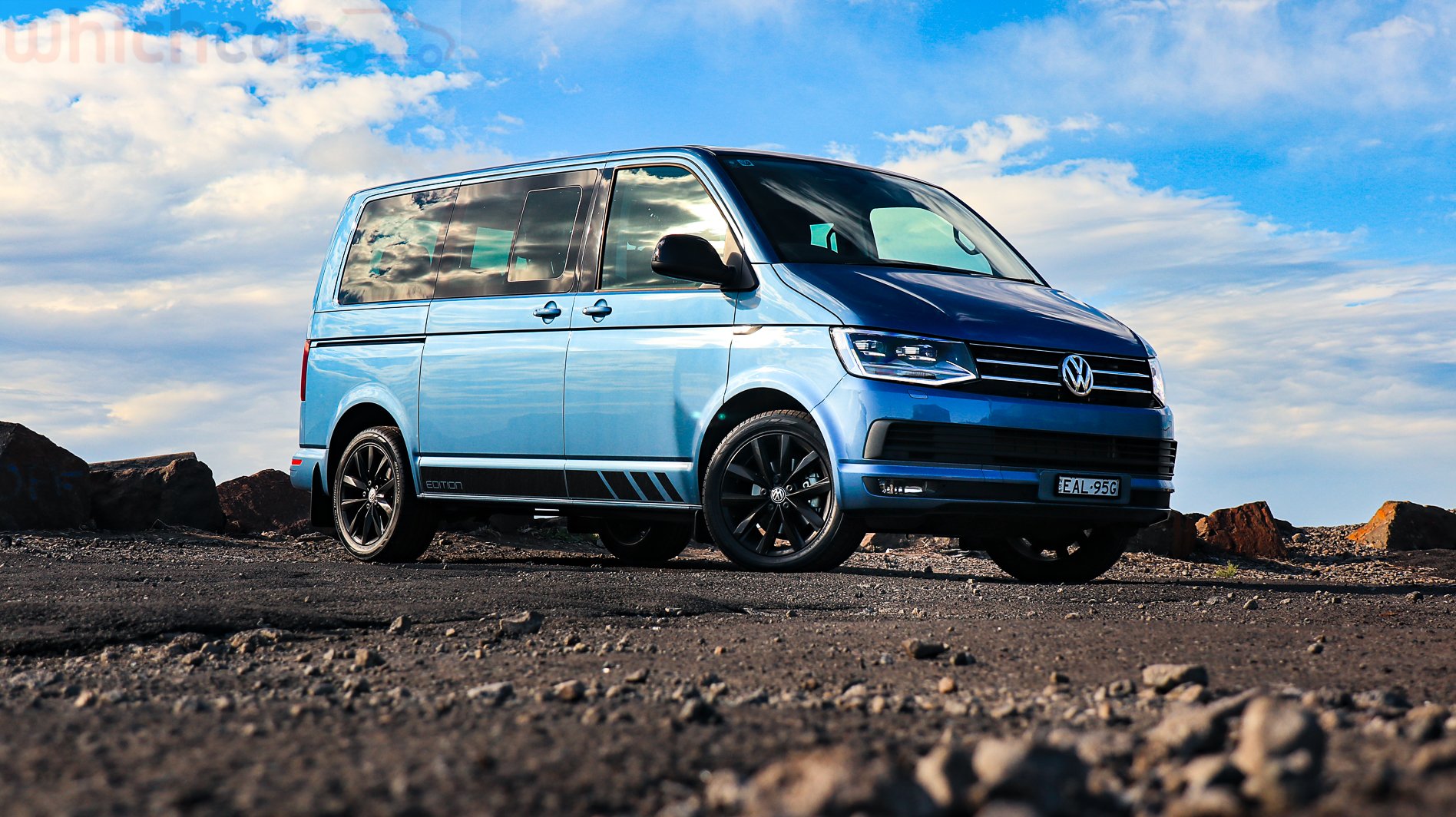
At its heart, the T6 is primarily designed to carry stuff, so it’s big and boxy, with large door apertures, a simply massive tailgate and loads of headroom.
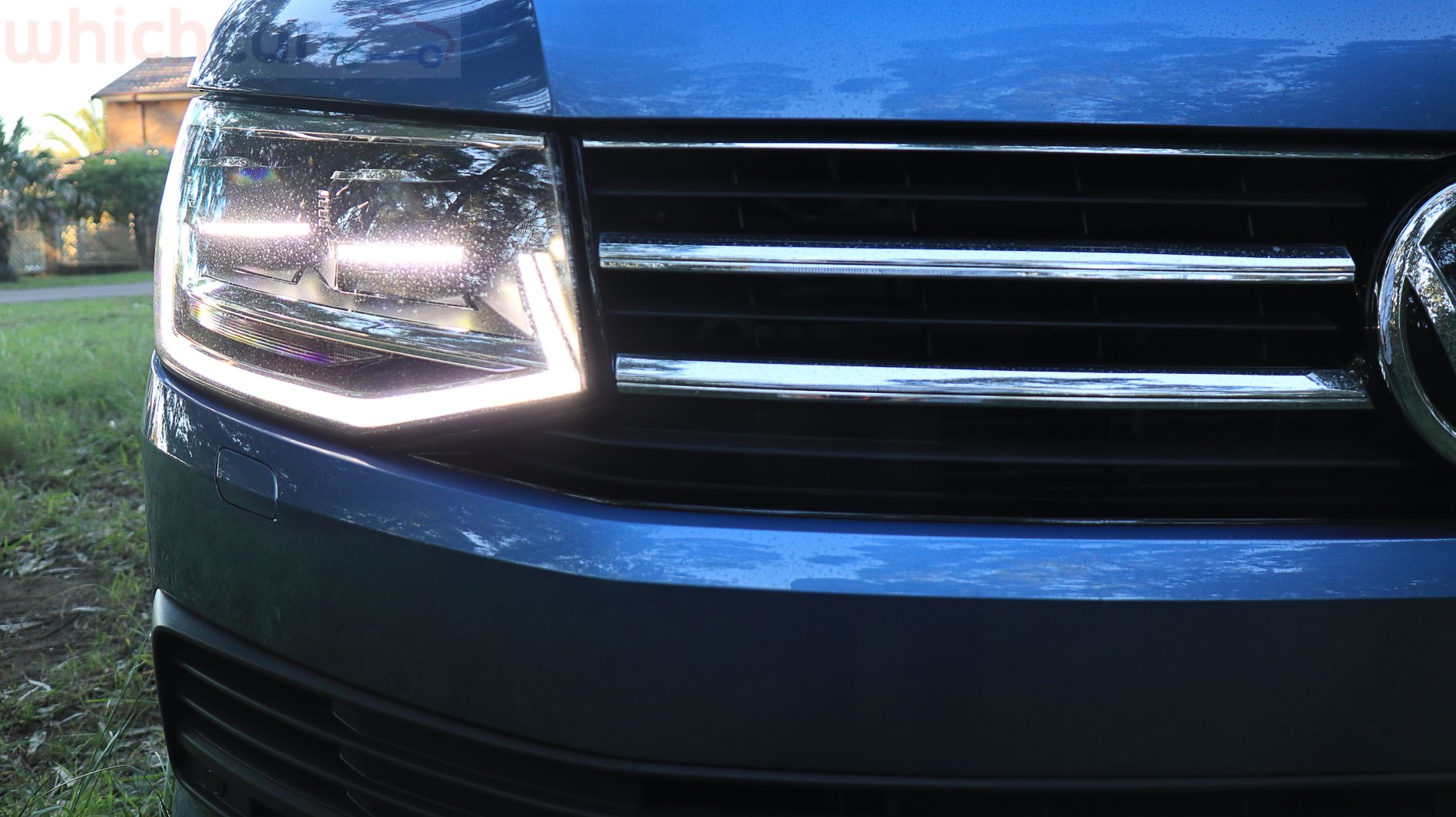
Its exterior shape, though, avoids being little more than a box on wheels, thanks to the sharp cut of its cab-forward design and half-decent front end treatment, which is lifted by the Multivan Black’s LED headlight signature.
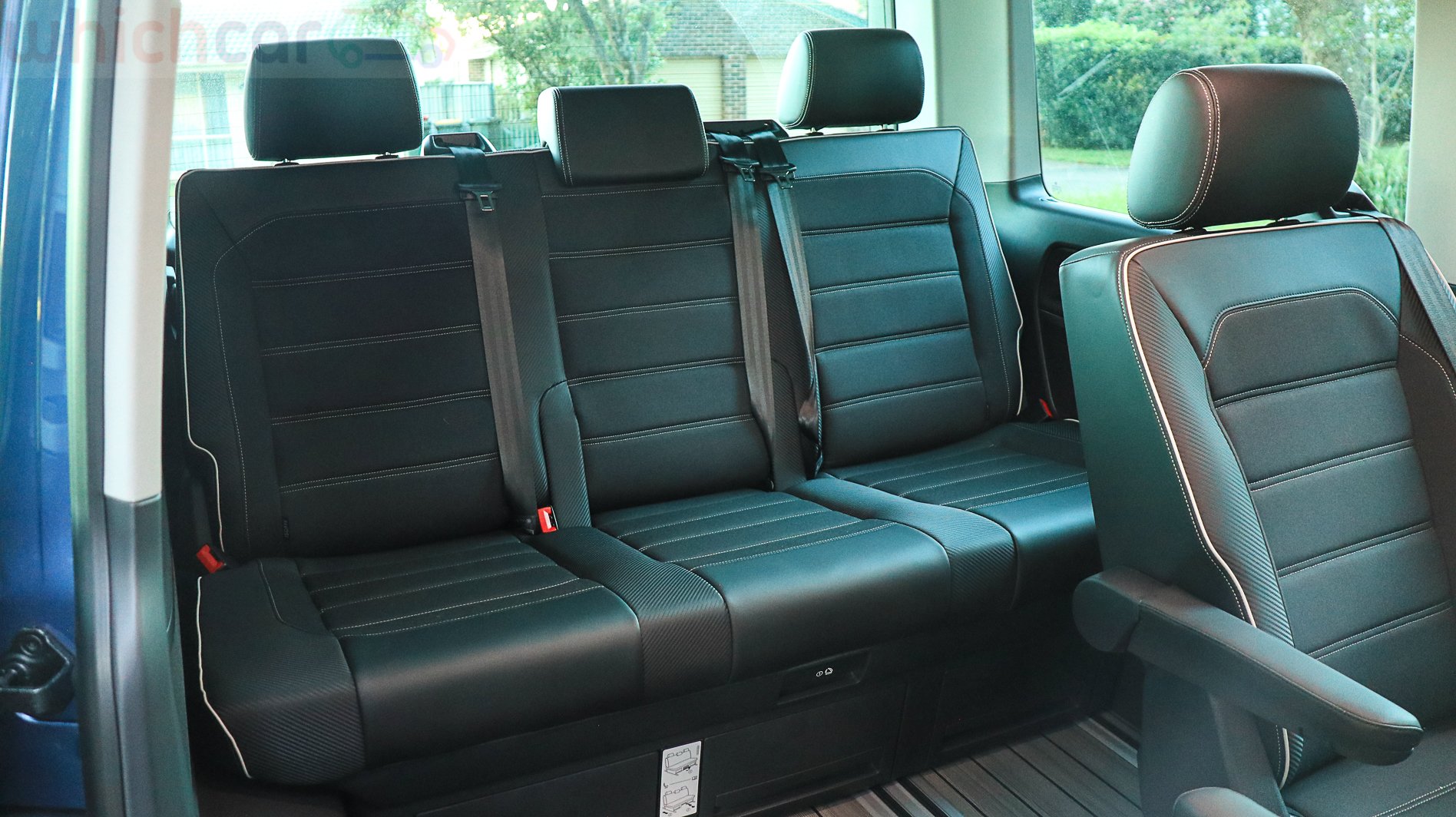
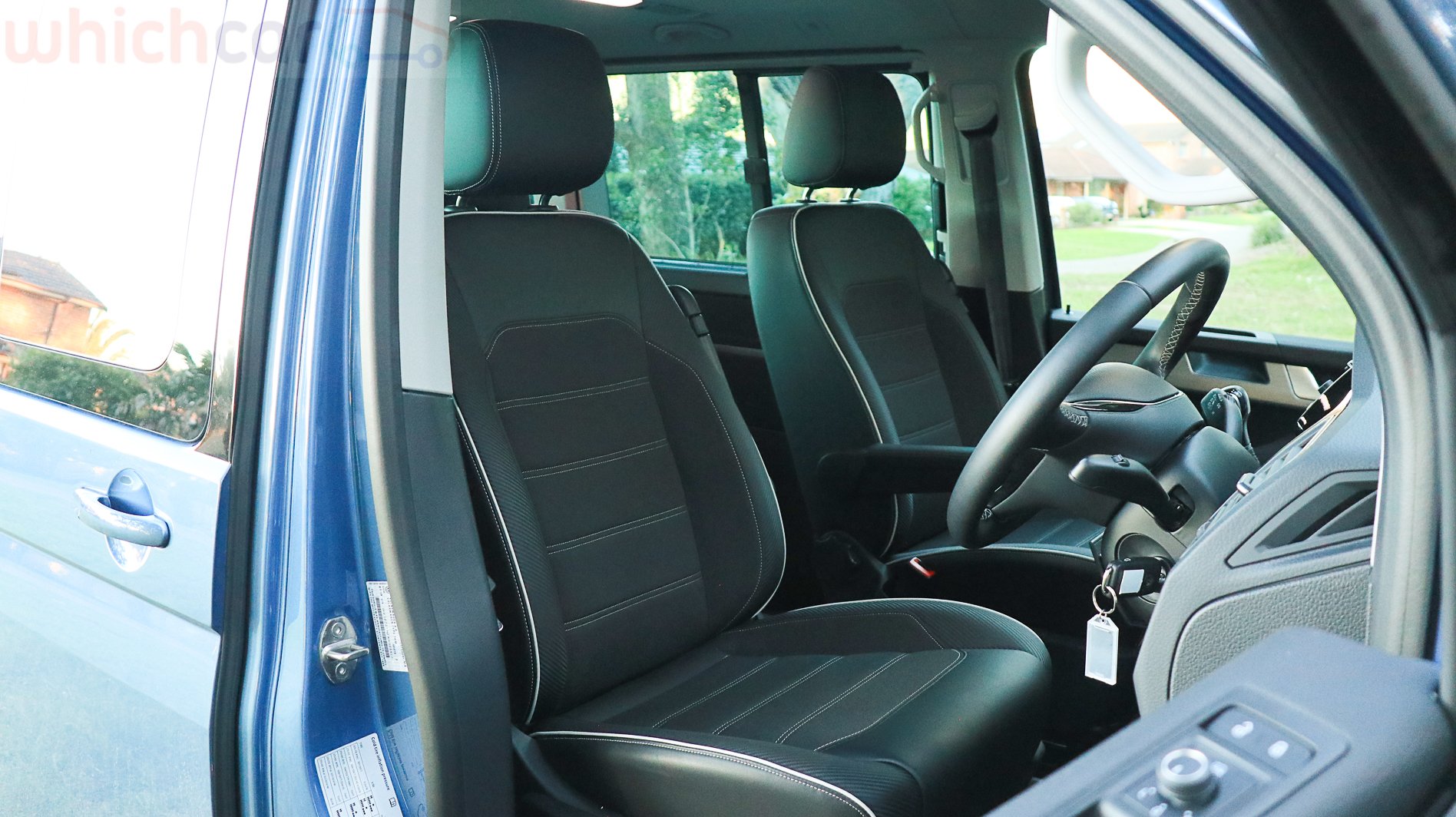
The interior has been lifted with the addition of really nicely-trimmed seats and faux parquetry flooring… but it’s still a commercial van at its heart, with slide-out drawers for cupholders up front and a few other design compromises to live with. On the whole, though, the Multivan Black Edition makes a decent case for the tag of ‘new Kombi’.
Price and specs
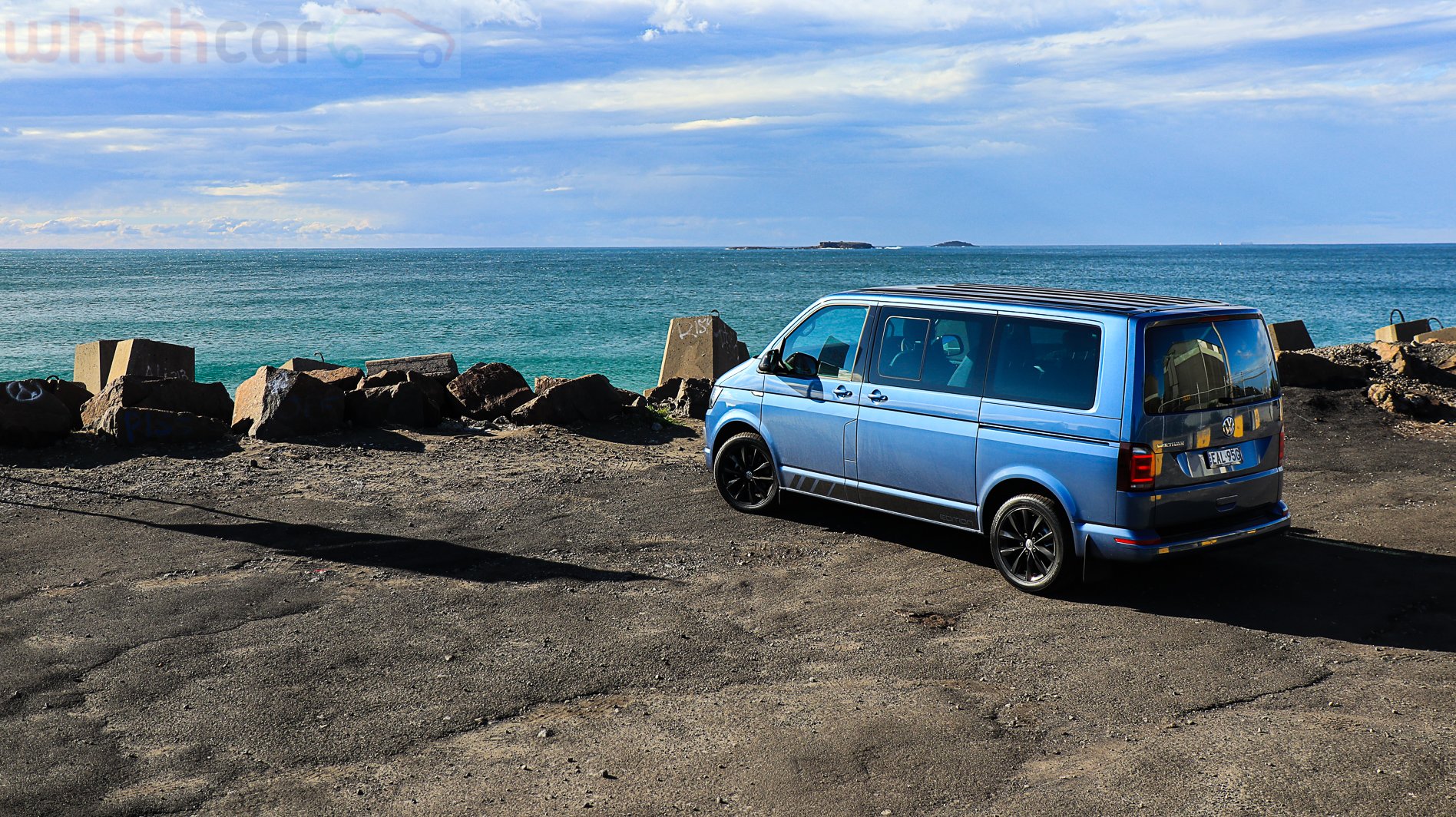
Using the seven-seat Multivan Comfortline TDI340 as a base, the Black Edition – which will cost $63,900 driveaway – scores lowered suspension and revised shocks, along with a new front anti-roll bar and black 18-inch rims. The Multivan also gains speed-sensitive power steering.
In the cabin, there’s a multifunction display with Apple CarPlay and Android Auto, while the electric tailgate’s opening height can be set and memorised. The Multivan’s parking sensors can also tell the driver if there is enough space to open the tailgate without hitting anything.
The Multivan sports a 103kW/340Nm 2.0-litre, four-cylinder turbo diesel engine that drives the front wheels via a seven-speed DSG. It comes in six colours (Cherry Red, Candy White are free, and metallics including Acapulco Blue, Tumeric Yellow, Reflex Silver and Indium Grey are $1720), and it also scores a gloss black roof and B-pillars, black cloth seats with contrasting seams, black-trimmed indicators and ‘Edition’ decals.
Size
Big. Huge. Enormous, even. It’s nearly five metres long and about 1.9m high, while its massively long wheelbase of three metres gives the Multivan a character all of its own.
For its seven passengers, there is space in abundance; however, in this 2/2/3 configuration, it’s surprisingly not that practical when it comes to cargo space. Luckily, the rearmost three-seat bench and the two second-row captain’s chairs can be shuffled or even removed completely, allowing for much more cargo than the current config allows.
It’s got 826kg of payload capacity, speaking of cargo, and it can also tow up to 2500kg of braked trailer.
Safety
Because it’s based on a commercial vehicle, the Multivan hasn’t been tested by safety body Euro NCAP, which means there is no ANCAP score, either.
However, VW hasn’t skimped on passive safety, adding front and side airbags up front, full-length curtain airbags across the second and third rows, four ISOFIX baby seat mounts and tether points for all five rear seats.
It also added a reverse camera and sensors front and back.
While it scores a multi-collision braking system that’s designed to clamp the anchors in the case of a crash, the Multivan misses out on the low-speed AEB and lane-departure warning that’s offered on higher grades of Multivan like the Executive.
Warranty and running costs
Volkswagen offers a five-year, unlimited kilometre warranty on the Multivan, and suggests service intervals of 15,000km or 12 months.
A three-year pre-purchased fix-price service plan costs $1639 for three years – about $400 than a Golf, by way of comparison – or $3090 for five years.
Against a claim of 7.7 litres/100km on the combined fuel economy cycle, we posted a figure of 9.8L/100km over 344km. The 80-litre tank will get you a theoretical range of 1000km, and should cost around $120 to fill.
Comfort
If space is what you crave, then the Multivan ticks all of the boxes. It’ll take seven people in comfort, but you’ll have to be clever with seating if you want everyone to bring a suitcase, such is the layout of the seats.
Modern commercial vans are becoming more car-like with each passing generation and the T6 is no different. The dash isn’t digital and the multimedia is last-gen stuff, but other than that, you could easily be in a Volksy passenger car in terms of ease of use.
There are a couple of clues that you’re in a van; it’s a big step up to get to the front two seats, while the odd cubby holes around the place speak to the lack of a centre console bin.
As well, the single USB port is hidden away in the glove box, and there are no ports in the rear anywhere.
There is dedicated roof venting for back seaters, though, along with plenty of bottle holders.
The seats themselves are supportive and comfortable on longer stints, and the fold-down armrests are surprisingly useful. Some found the control pedals to be a little high for comfortable use, and the long-levered park brake can be awkward to use. Overall, though, the Multivan is a great companion for a longer trip.
On the road
The Multivan Black Edition’s claim to fame is that the suspension has been made over. It rides 20mm lower on stiffened springs and revised dampers, while the anti-roll bars have also been beefed up.
There’s an electronically limited slip diff as well as variable-rate steering, while those 18-inch rims wear tyres that are more passenger saloon than parcel carrier.
The result of all this trickery is that you have a van that… well, still feels like a van, but a much nicer one. Its huge wheelbase gives it a distinct character, but the steering changes give the Multivan an impressively light feel at the wheel. The stiffer springs don’t ruin the ride, which is key, though I reckon the shocks could be 10 or 15 percent firmer without mucking things up.
The 2.0-litre single-turbo diesel is a willing enough performer off the line thanks to the seven-speed dual-clutch box, but it can run out of oomph when faced with a big hill. It’s still a 2.1-tonne van with the aerodynamics of a fridge, so you can’t expect miracles.
Around town, there’s the issue of the Multivan’s size when it comes to picking a parking spot, and the fact that it’s 0ver 1.8m high might give you pause in some city-centre parking stations. Driving it in city traffic is no bother at all, though, with great visibility, easy steering and well modulated braking.
On longer stints, the Multivan is stable, impressively quiet in the cabin and comfortable to drive, though it’s easy to miss things like adaptive cruise and AEB.
Verdict
VW is reluctant to let the Kombi association out of the cage – but the fact that we drove the Multivan for the first time at a Kombi rally shows me that the company knows the market that the Black Edition points to.
The fact, too, that hundreds of people pored over, poked and prodded the van during that day – and I had several people stop me to ask what I was driving – says that the spirit of the Kombi is still alive and well.
At nearly $64,000, it’s not cheap, but it’s practical from a people and gear point of view, it’s a comfortable tourer and it’s more than okay around town. And what price can you put on the cool factor?
Where others have tried and failed, the Adelaide-built Brabham BT62 is a triumphant return of Aussie ingenuity and manufacturing (albeit on a small scale).
The coming V8-powered hero is the brainchild of racing legend David Brabham, and continues the legacy of his father, Formula 1 driver Jack Brabham.
With this ground-hugging supercar set to go into limited production for both road and track uses, it’s a good time to reflect on some less fortunate designs that sadly never made it beyond the test track.
Cadillac Cien
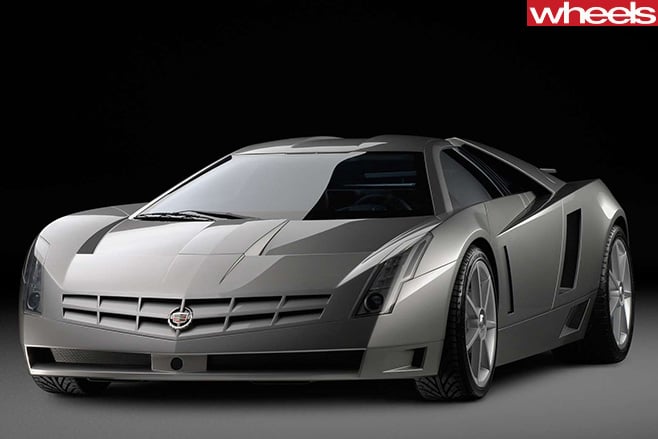
Despite the Cadillac badge, it was designed in England at GM’s Advanced Design Studio, which installed a 7.5-litre V12 producing 559kW within the carbonfibre shell and chassis.
The Cien, which was never intended to go beyond a prototype ‘marketing tool’, had a top speed of 350km/h and did 0-100 in 3.5sec.
Seventeen years later its angular lines appear to have inspired the current Cadillac range.
Chrysler ME Four-Twelve
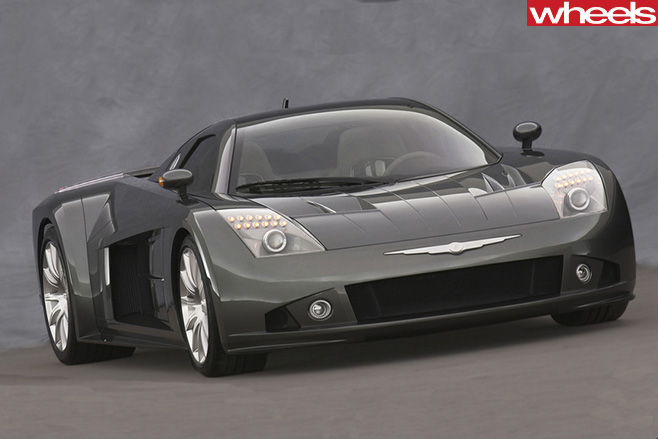
Like most supercars, the Chrysler ME Four-Twelve was a mid-engined, two-seat concept car, powered by a 6.0-litre AMG-derived V12 that produced 633kW and could propel it to 100km/h in 2.9sec.
It seemed headed for production but was killed off in 2005 because Chrysler couldn’t justify the costs. Some reckon the real reason was because this would have given the Mercedes SLR McLaren a good view of its twin exhaust pipes, which wouldn’t have pleased the suits in Stuttgart.
Jaguar C-X75
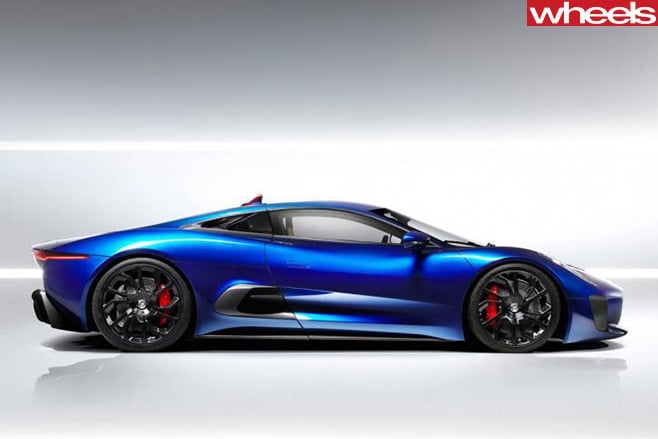
A hot-looking two-seater that sent 580kW to all four wheels, the C-X75 had a top speed of 330km/h and did 0-100km/h in 3.3sec.
Instead of a normal petrol engine to recharge the batteries, Jaguar decided on using two diesel-fed micro gas turbines.
Despite plenty of effort and a decision to drop the gas turbines for a more conventional engine, the global financial crisis meant there weren’t enough people willing to shell out more than $1 million for what would have been an incredible car.
Joss JP1
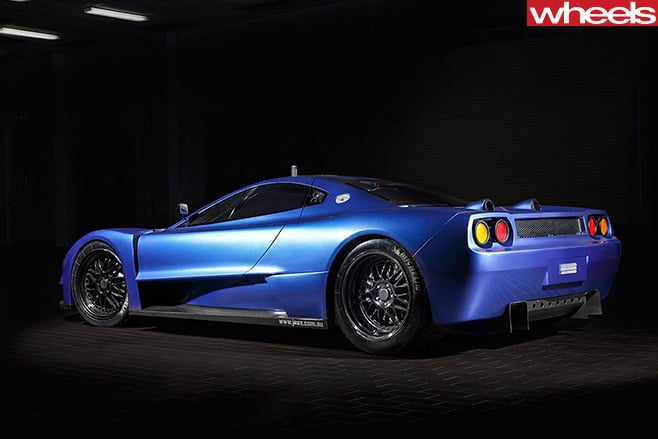
Launched in 2004, the 5.0-litre V8-powered Aussie ‘Ferrari killer’ looked great, could do 0-100 in less than three seconds and reach a top speed of 340km/h.
However, key financial backing wasn’t forthcoming by the time production was meant to commence in 2013. It was almost reborn as a race car to compete in Targa Tasmania, but this required $500,000 in crowd-funding that also didn’t eventuate.
Sadly, the only way you’ll get to drive this thing is on the virtual roads of Project Gotham Racing on X-Box 360.
Holden Hurricane
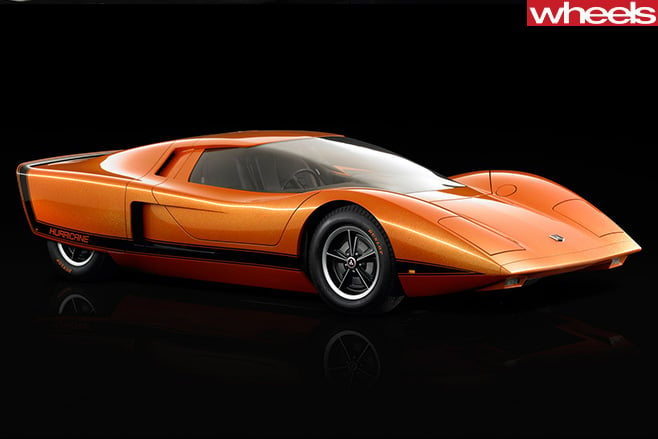
The mid-engined Hurricane was way ahead of its time.
The two-seat, fibreglass concept car featured a rear-view CCTV camera, digital speedo, climate-control air-conditioning and a ‘Pathfinder automatic route indicator’ at a time when cassette decks where the pinnacle of in-car gadgetry.
An electro-mechanical powered canopy swung forward and the occupants climbed into powered seats that rose up for easier access.
It was powered by an experimental 253 V8 engine that sat just forward of the rear axle. While the Hurricane was never slated for production, many a Holden lover has spent the past 47 years wondering, what if…
Hulme F1
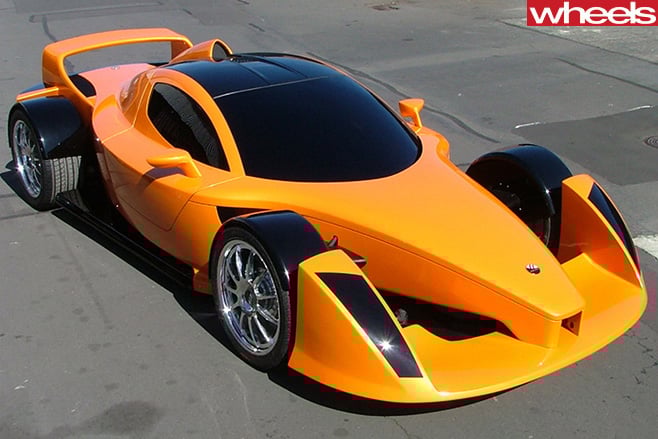
This race-inspired ‘open-wheeler’ developed in Auckland by Hulme Supercars is designed to have a 521kW (700hp) supercharged engine.
An idea of what could have been can be seen with the prototype Hulme CanAm, an open-topped track car powered by a 447kW (600hp) Chevy LS7 V8 that pushes it from 0-100 under three seconds. Imagine what those extra 100 horses would do.
TVR Cerbera Speed 12
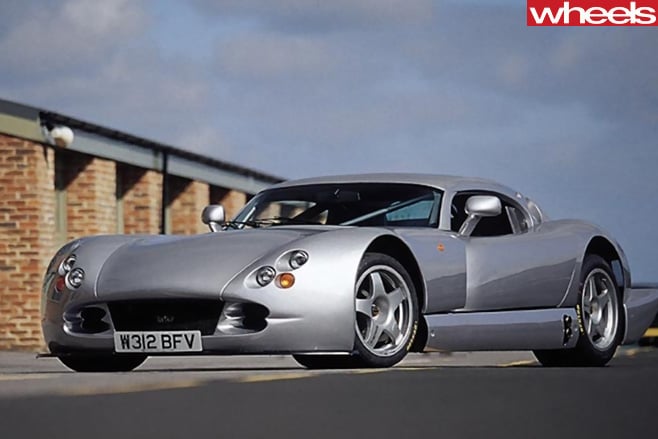
First created in 1996 as Project 7/12 (after its 7.7-litre V12 engine), it was symbolic of the Cool Britannia era, when confidence and cash were more in abundance than sense.
It was built for GT1 racing, but regulation changes meant this was no longer viable so the project went ahead as a road car. This actually allowed it to be more powerful because the engine didn’t need to be governed to meet racing regulations – apparently it produced more than 700kW on the dyno before blowing.
But the project was finally shelved when, despite holding a decent number of orders, TVR owner Peter Wheeler took one home and declared it “unusable on the road”.
Volkswagen W12
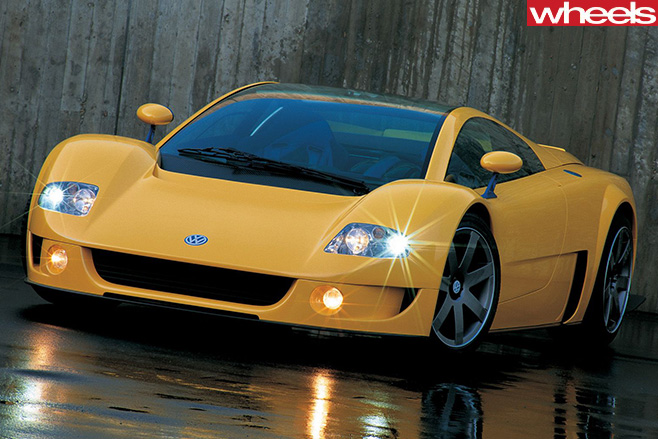
What started out as the W12 (12 cylinders in W formation) in 1997 developed into the Nardo, which turned heads at the 2001 Tokyo Motor Show.
By then the mid-engined W12 was pumping out 441kW, did 0-100 in 3.5sec and reached a top speed of 357km/h. It was named after the Nardo test track in Italy where in 2002 it broke all manner of records when it travelled 7740km at an average speed of some 323km/h. Despite demand, the closest it got to production was when Volkswagen introduced it as the ‘LeVanto TDI Hybrid’ on its Facebook page in 2015, but that was a cruel April Fool’s joke. Who says Germans don’t have a sense of humour?
While the W12 was never to be, its DNA can be found in the Bugatti Veyron.
