
If you think Aussies are mad for dual cabs, then South Americans aren’t far behind. The Sao Paulo motor show in Brazil keeps throwing up utes and trucks, including the world debut of Volkswagen’s Tarok concept – and now Ford has offered up a spin on the Ranger.
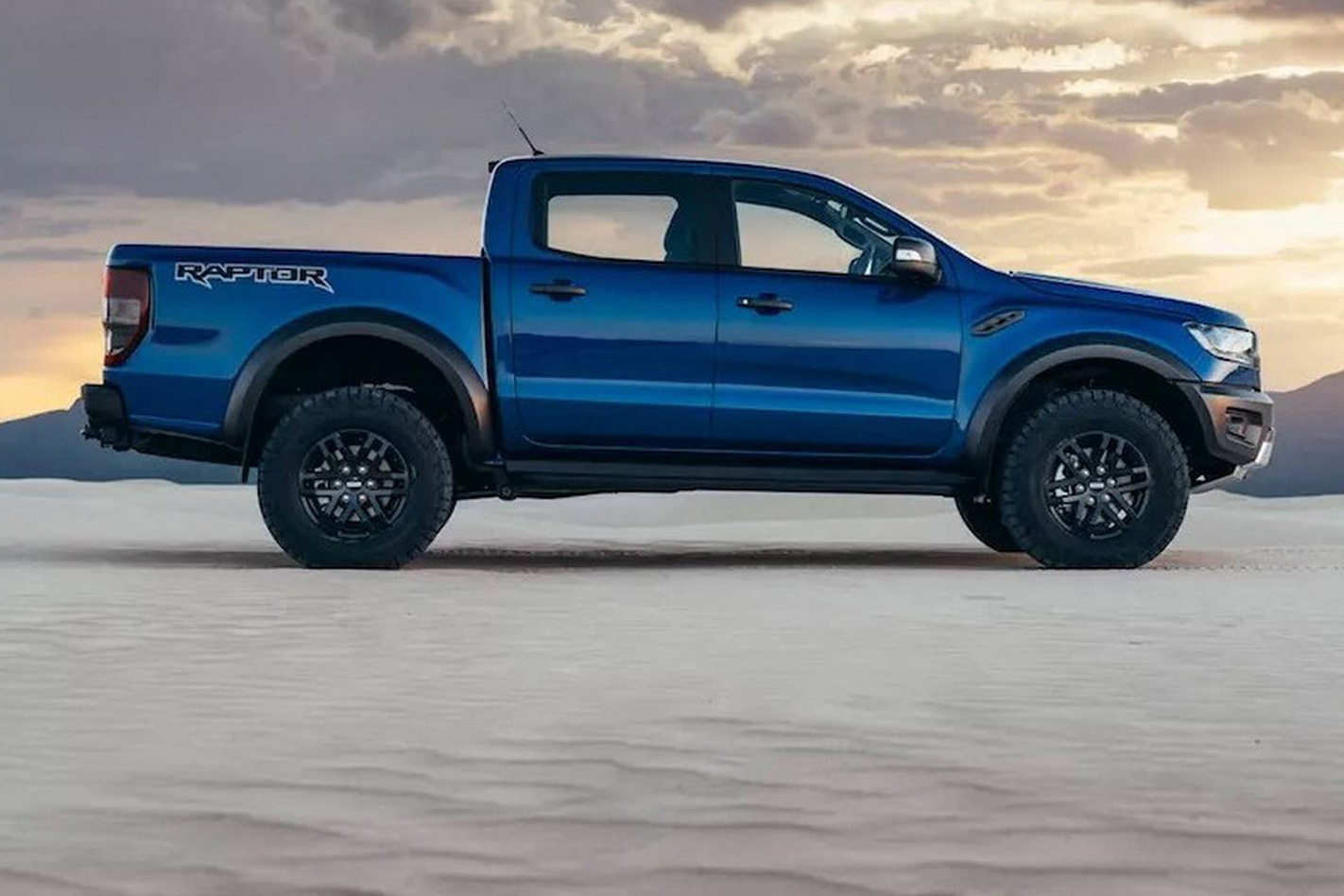
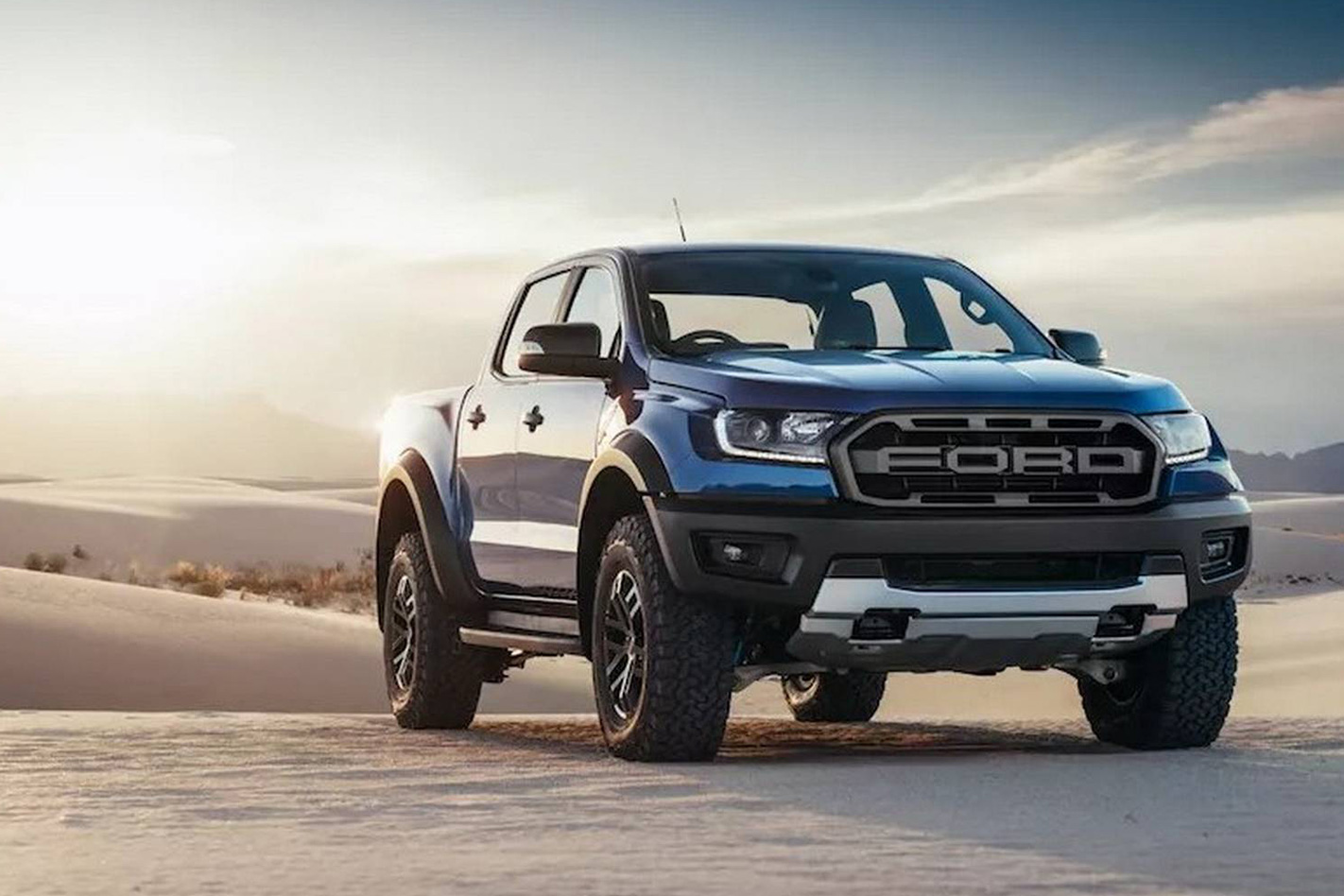
Called the Storm, the concept basically parrots the external looks of the $74,990 Ranger Raptor, including the massively flared guards, unique rims teamed with Pirelli Scorpion tyres (instead of the Raptor’s BF Goodrich KA2s), a customised sports bar and a new front bash plate.
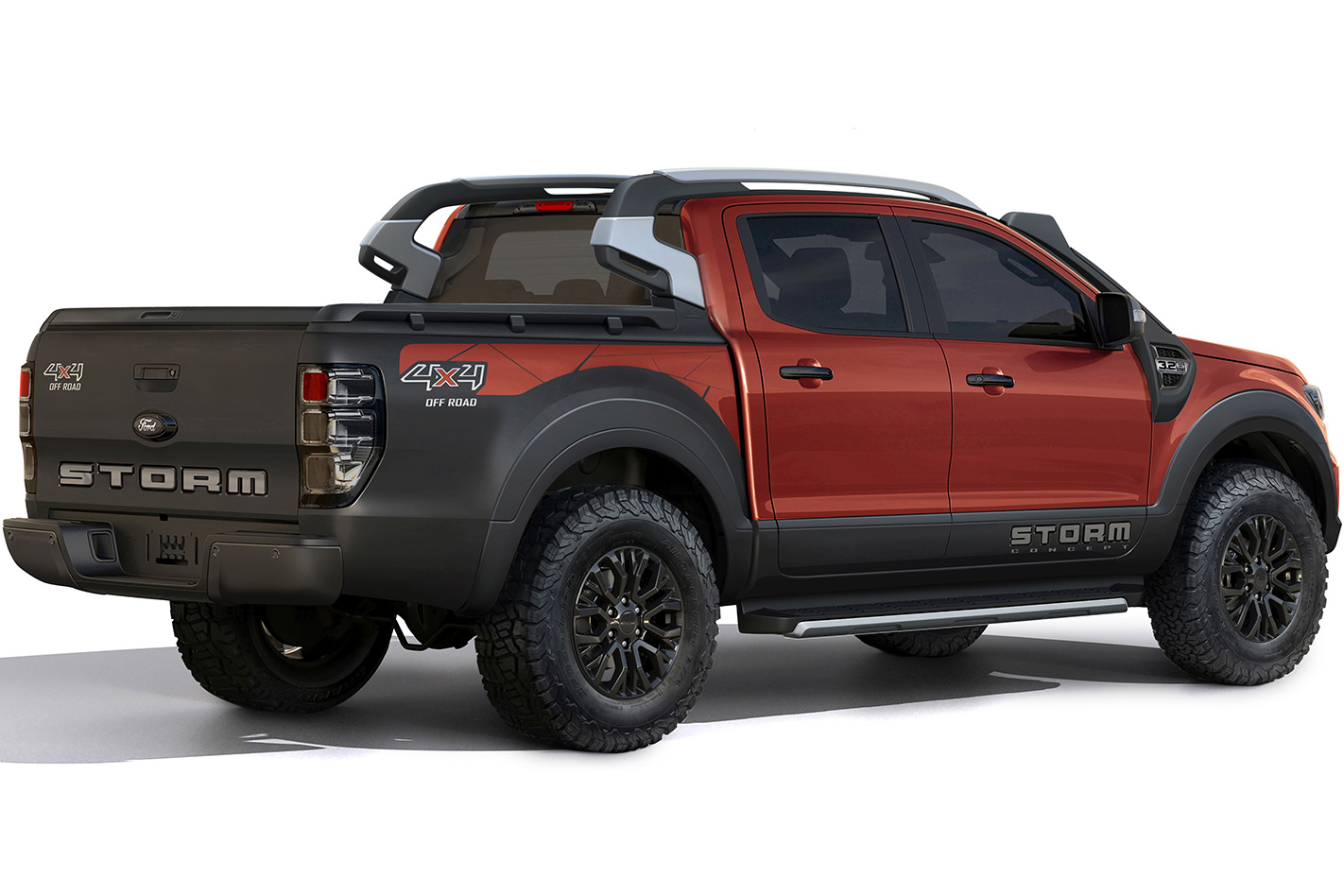
What’s missing, though, are the bits that give the Ranger Raptor its teeth; namely, the heavily revised suspension system, strengthened chassis rails and 2.0-litre twin-turbo diesel engine/ten-speed auto driveline – the Storm has the standard 3.2-litre five-cylinder turbo diesel/six-speed auto powertrain.
We asked Ford Australia whether a Ranger that simply wears the visage of the Raptor would have a place in its line-up, but product communications manager Damion Smy explained that while the company recognised the fact that there’s a healthy aftermarket industry for cars like the Ranger, the bespoke nature of the Raptor means that it’s difficult to offer items like flared guards to fit regular Ranger versions.
“In terms of accessories, we’re keen to offer and develop them, but for ultimate capability, we now have the Raptor,” he told Whichcar.
“It’s more capable than any kit we could offer, and it’s fully warrantied, too.”
The Ranger Raptor, for example, has wider front and rear tracks (axle widths), a bumper that’s bolted directly to the chassis rails, completely different suspension mounts and a different tray, complicating any efforts to share parts across the various models.
However, Smy didn’t closes the door on the notion of the brand’s own skunkworks operation, Ford Performance, offering parts for local Rangers.
“I wouldn’t rule out Ford Performance Ranger parts for Australia,” he said. “The market is going to dual-cabs, and that appetite is still growing; that could possibly spawn more Ford Performance products that could apply to these vehicles.”
The Australian-designed and developed T6 Ranger goes on sale in the US in 2019, which will also have the knock-on affect of igniting an aftermarkets parts avalanche from the biggest 4×4 market on the planet.
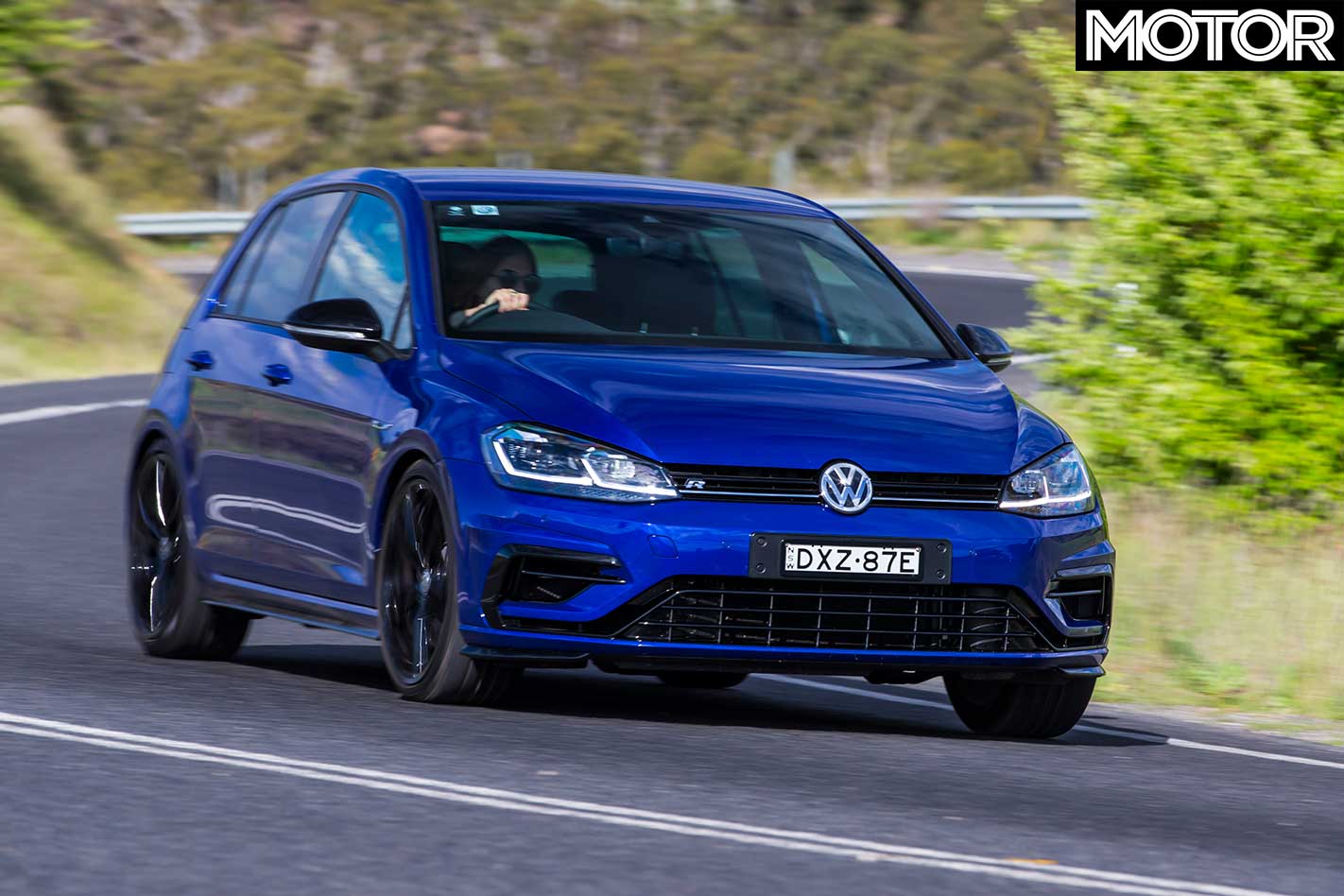
Volkswagen Australia is pushing for more performance models from Germany’s R division, something the brand’s HQ is increasingly receptive to.
At the launch of the 2019 Volkswagen Golf GTI and R, MOTOR spoke with Todd Ford, Volkswagen Australia’s product manager specialising in performance models.
“They’re fairly recently under new management with a clear directive to broaden the range of R models.”
The new management mentioned by Ford is one Jost Capito, formerly the head of Volkswagen’s WRC program.
In fact, Capito recently confirmed this push for more models in an interview with the UK’s Car Magazine, saying “…the current target and objective is to make R a wider and more recognised brand.”
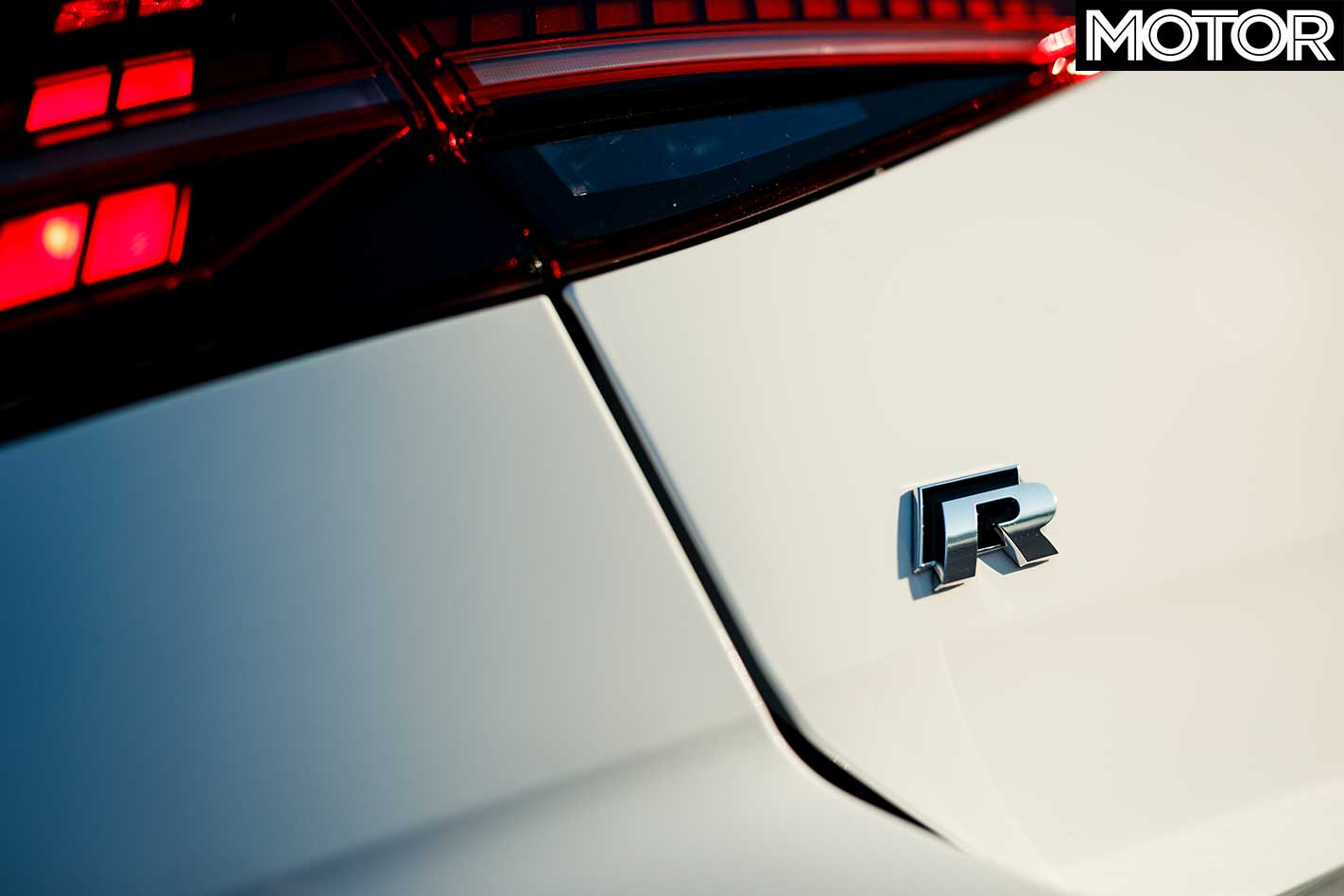
According to that interview, it’s expected an R version of Volkswagen’s new T-Roc will be on the way next year.
If a small SUV can become Volkswagen’s next performance model, chances are Australia will be near the front of the line for allocation.
Australia is the third largest market for R cars worldwide, Todd Ford tells MOTOR, adding that Volkswagen’s R division pays close attention to what VW Australia is interested in.
“We certainly share [Australia’s enthusiasm] with them during every visit… we’ve clearly said we want to see the ‘R treatment’ on bigger cars, and looking to the SUV market,” Ford says.
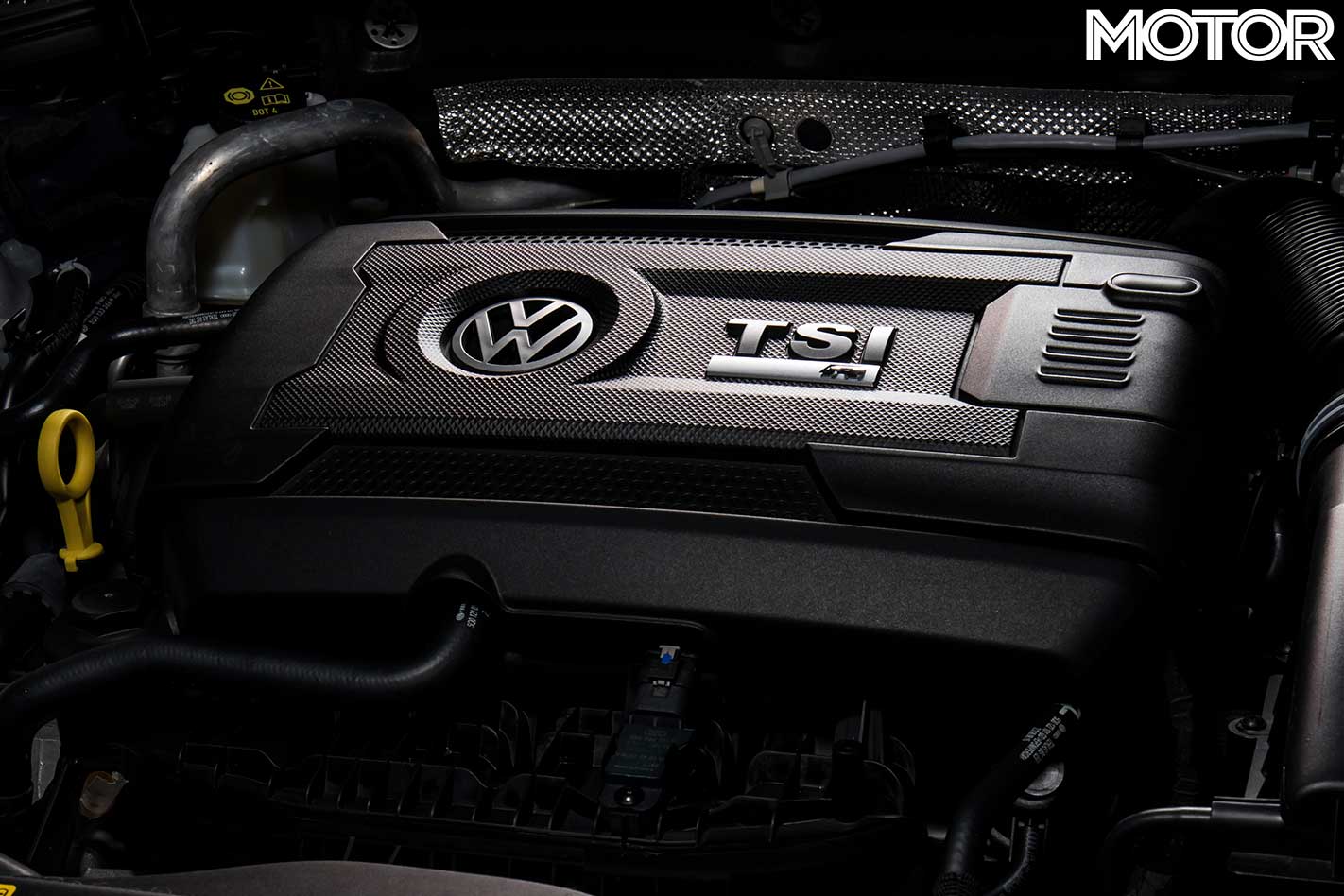
He adds that a Tiguan R would be “a no-brainer” given Australia’s apparent love of SUVs.
“For our market, we’ll basically put our hands up for any performance model like that.
“A Tiguan’s definitely one we’ve pushed with them, and we’d love to see the return of something larger in the passenger space for an R model.”
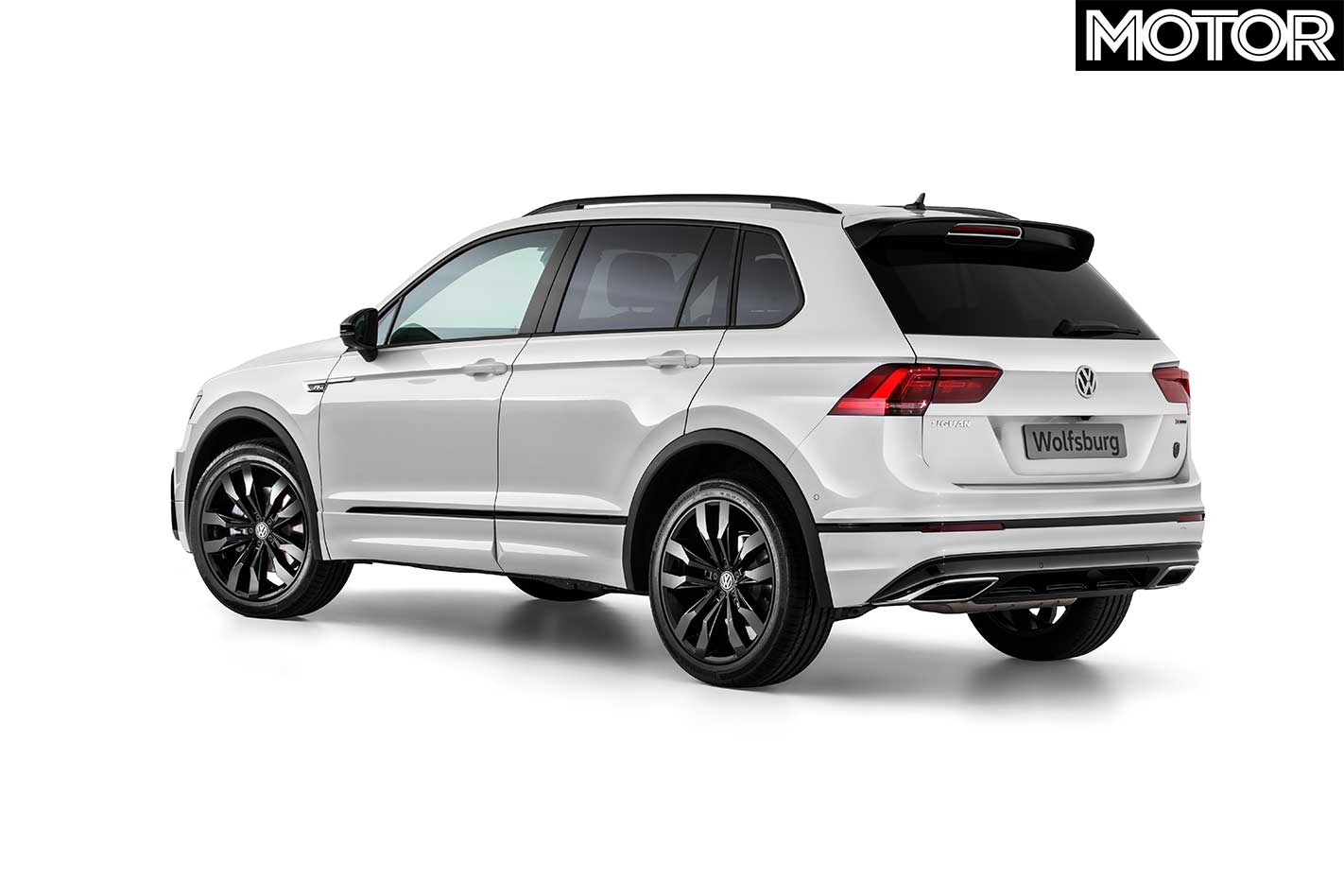
Volkswagen Australia has already marked its new Golf model year with the Golf R Special Edition, a limited run of 400 Rs which feature R performance enhancements such as a lighter Akrapovic exhaust, Pretoria alloys, and cross-drilled brakes.
HE’S THE man who put the small Victorian town of Castlemaine on the map – and then repeatedly tried to blow it off the map with machines like his street-registered, 2250kW aero-engined ’55 Chev, the 27-litre V12 Warman Special, a twin-supercharged 7.0-litre Model T Ford … and around 30 similar automotive affronts over a period of five decades.
Castlemaine is known as ‘The Street Rod Centre of Australia’. It was Rod Hadfield, 72, who moved to the town in his early 20s, that proclaimed it so.
“When I first came here, they were building rods, but it was all underground,” he says. “I decided to start Castlemaine Rod Shop and advertise it and not be afraid to admit it – that if you’re driving a modified car, there wasn’t something wrong with you.
“I got all these signs made, got permission to put one up on every entrance into Castlemaine … we had a two-year permit to do that. And 35 years later, they’re still there.”
Castlemaine was fertile ground for rodding. “It wasn’t any trouble at all to find a suitable car to build a rod out of,” Hadfield says. “The wreckers had 10 acres of ’33 and ’34 Fords, and because of the gold rush, we had foundries and machine shops and pattern makers. So the talent was here, as well as the material.”
Hadfield soon met Eddie Ford, one of the nation’s true Rodfathers who’d been part of a seminal, six-month expedition to the US rod scene in 1966 and was publishing Custom Rodder magazine from his farmhouse.
“Eddie was looking for somebody to build his early Ford F100 with an independent front end and stuff. I said I was prepared to have a go.”
Hadfield then built a Ford Anglia rod, documented in a series in the magazine. It helped build Hadfield’s profile as an innovative and talented constructor. Castlemaine Rod Shop was established to build components for customers – and cars to promote the business.
“We were making components and making everything possible so the customer could do the majority of work themselves,” he says. “A lot of shops would build someone a turnkey car and take their money, but I approached it that they were enthusiasts, and they’d like to be able to do it themselves.”
The throttle really opened on Hadfield’s Castlemaine Rod Shop in the 1980s. “At our peak in the late-’80s, we had 22 on staff. In the early-’90s I started my major machine stop; I had metallurgists, machinists, welders, draftsmen. We could do just about any job.”
Hadfield’s own cars showed staggering imagination, innovation and craftsmanship. Among the better known is Final Objective, a ’55 Chev coupe with a supercharged V12 Rolls-Royce Merlin engine – and full Victorian rego.
Then there’s the Warman Special, built on a lengthened 1932 Cadillac limousine chassis, with a hand-fabricated, polished alloy streamliner body, and powered by a Rolls-Royce Meteor V12 tank engine. How does it drive? “Oh, you’ve just got to keep your wits about you. It’s just like driving any other Warman …”
Hadfield’s daughter Allison has recently catalogued the cars, and her family’s hot rodding history, in The Mad Scientist of Australian Hot Rodding: Rod Hadfield (Renniks Publications).
Hadfield and wife Carol sold the Castlemaine Rod Shop a number of years ago, but continue to be active in hot rodding, both through their Stubtech engineering business and the Hadfields Hot Rods museum at their home in Chewton, just east of Castlemaine.
“There’s about 20 cars there,” Hadfield says. “It’s not a business, it’s just if people want to come in and have a look, they give me $5 and they can spend the rest of the day there. There’s even a broom in the corner if they want to bloody stay around.”
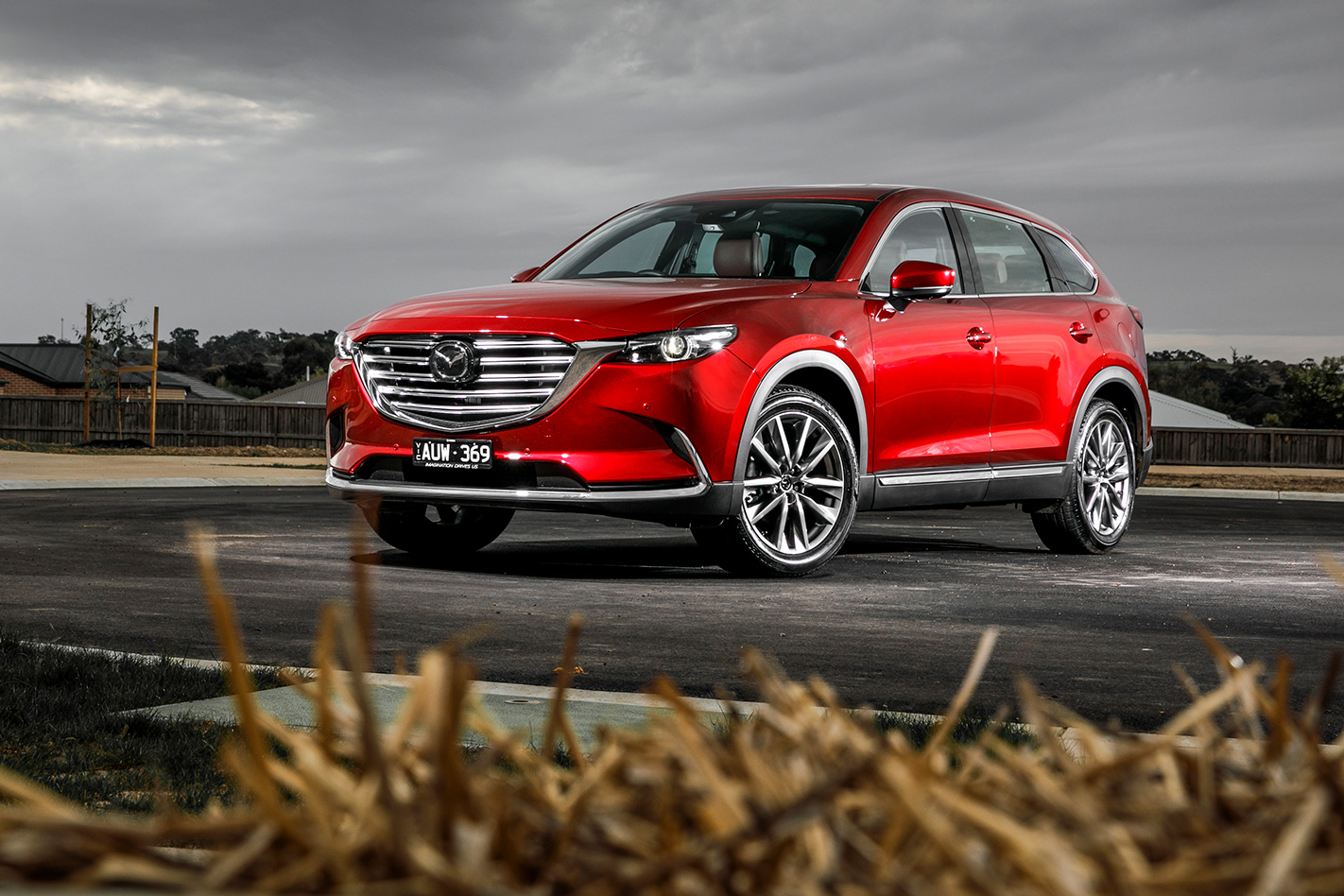
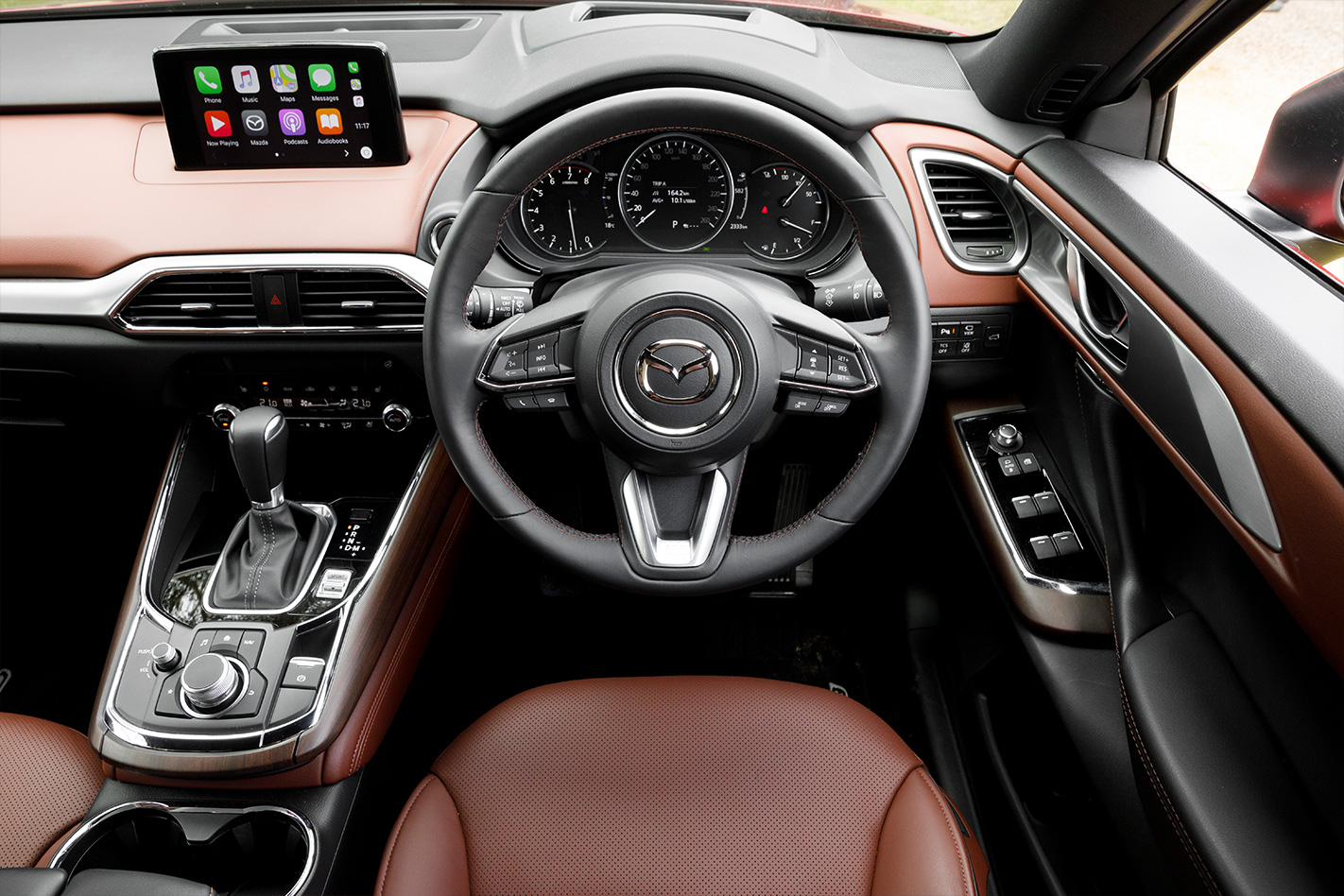
The Mazda CX-9 brought elegance to the mainstream large SUV market, and a recent update has taken that to the next level with the new top-spec Azami LE. The new luxo flagship adds Nappa leather upholstery and hand-crafted woodgrain trim for a truly premium feel.
The 2017 Wheels Car of the Year set a new standard for the mainstream seven-seat SUV segment – which also includes the Toyota Kluger, Holden Acadia, Skoda Kodiaq, Hyundai Santa Fe, and Kia Sorento – and the Azami LE just set the bar a little higher.
PRICING
The Mazda CX-9 is available in five grades, Sport, Touring, GT, Azami, and Azami LE, all of which are powered by a gutsy 2.5-litre four-cylinder turbocharged petrol engine, with all variants except for the Azami LE available in front- and all-wheel-drive.
The 2019 Mazda CX-9 range is priced as follows:
- CX-9 Sport FWD – $44,990
- CX-9 Sport AWD – $48,990
- CX-9 Touring FWD – $51,390
- CX-9 Touring AWD – $55,390
- CX-9 GT FWD – $59,390
- CX-9 GT AWD – $63,390
- CX-9 Azami FWD – $60,990
- CX-9 Azami AWD – $64,990
- CX-9 Azami LE AWD – $66,490
The price includes everything and the only available options are two special paint colours. That said, Soul Red Crystal and Machine Grey cost just $300 more than the other five colours.
The CX-9’s turbo petrol engine is reasonably efficient considering the Azami LE’s 2.0-tonne mass, with an official combined consumption of 8.8L/100kmm, though that might still seem a little high for anyone getting out of a diesel SUV.
The Mazda CX-9 is covered by Mazda’s five-year/unlimited kilometre warranty.
Detailed information about the entire CX-9 range can be found in the Mazda CX-9 Range Review
STANDARD FEATURES
The Azami LE comes with an extensive equipment list including:
- Six-speed automatic transmission
- Adaptive cruise control
- 8.0-inch infotainment screen with rotary controller
- Android Auto /Apple CarPlay
- Digital radio (DAB+)
- Satellite navigation
- Three-zone climate control
- 360-degree reversing camera
- Front and rear parking sensors
- Auto-folding powered door mirrors
- 20-inch alloy wheels
- Autonomous emergency braking
- Driver attention alert
- Lane-keeping assistance
- Head-up display
- Traffic sign recognition
- Dusk-sensing headlights
- LED daytime running lights
- Rain-sensing windscreen wipers
- Windscreen de-icer
- Keyless entry/start
- Power-operated tailgate
- Sunroof
- Nappa leather upholstery
- Heated and ventilated front seats
- Heated steering wheel
- Bose stereo system.
SIZE
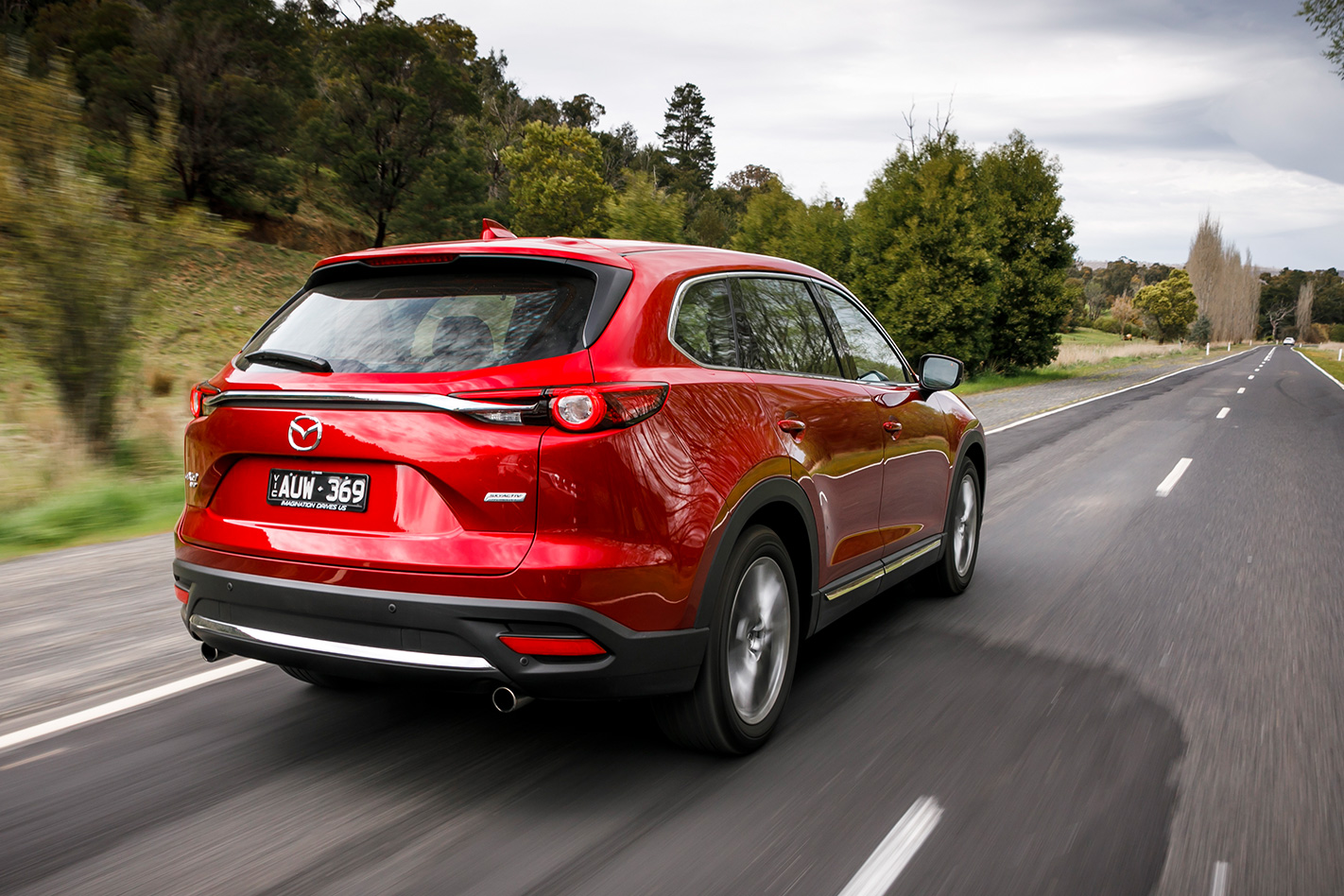
The Mazda CX-9 takes its ‘large SUV’ tag seriously, with its 5.1m length, 1.97m width and 2.93m wheelbase that makes it a little harder to park than, say, the Toyota Kluger which measures 4.89m long by 1.93m wide.
But it’s cavernous inside, with excellent head and knee room, including in the third row that comfortably accommodates two adults.
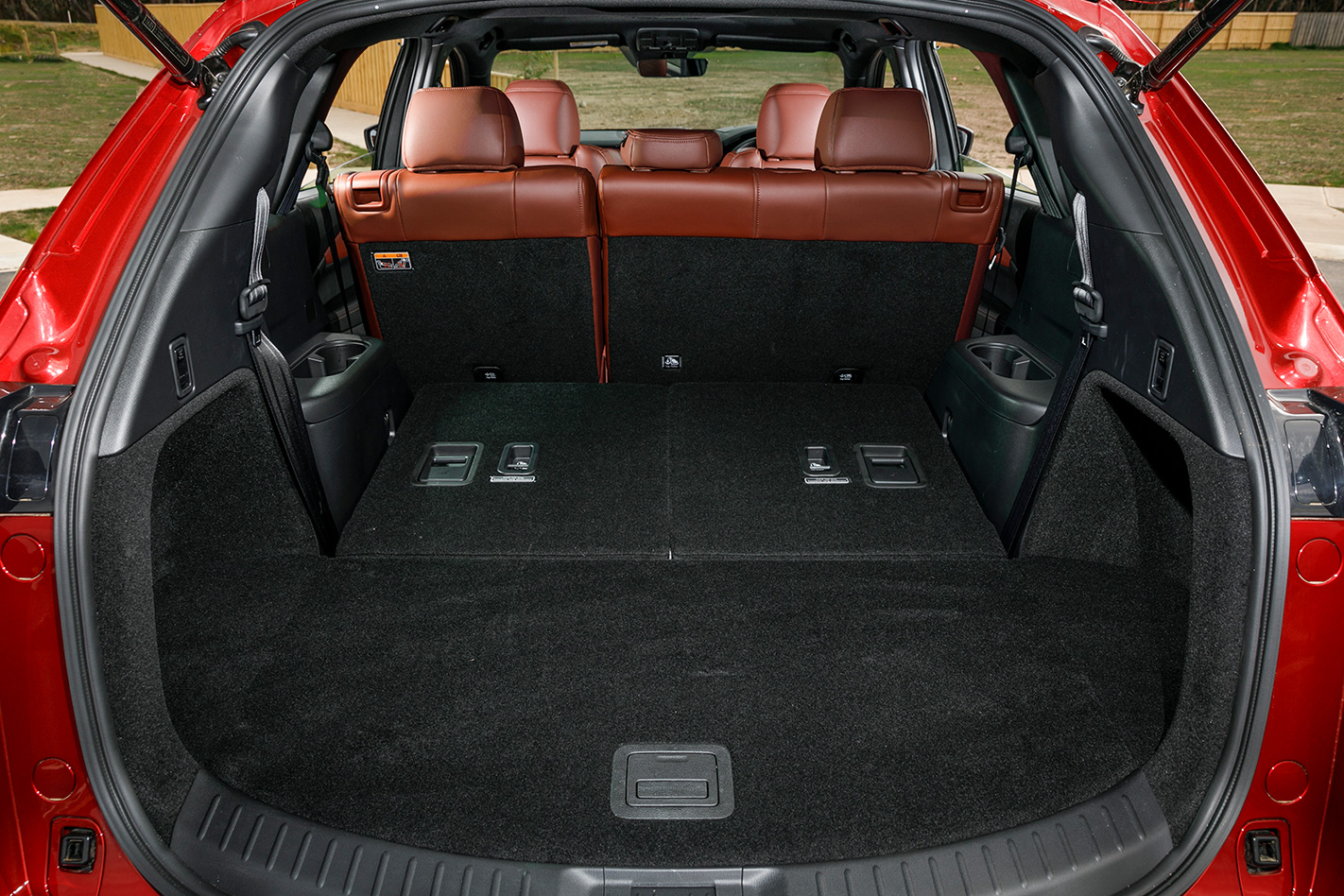
Boot space with three rows in use is a handy 230 litres, with the third-row seats offering a 50:50 split to add extra cargo. Folding the entire third row down brings a considerable 810 litres behind the 60:40 split second row seats. With all rear seats down, the CX-9 will hold up to 1641 litres behind the front seats.
SAFETY
The CX-9’s size and strong body structure with side-impact door beams combine with six airbags to protect occupants well in the event of an accident, though you have a decent chance of avoiding that with autonomous emergency braking that operates at speeds up to 160km/h.
Other active safety features include lane-keeping assist, driver attention alert, rear-cross traffic alert, and blind-spot monitoring that can spot a car about to overtake you swiftly from up to 50 metres behind.
The CX-9 is also equipped with roll stability control, that mitigates the chance of a rollover, and trailer stability assistance which acts to minimise trailer sway when towing, while parking is made safer with a 360-degree camera view and front- and rear-parking sensors.
The Australasian New Car Assessment Program (ANCAP) awarded the Mazda CX-9 its maximum five stars for safety, in July 2016.
COMFORT
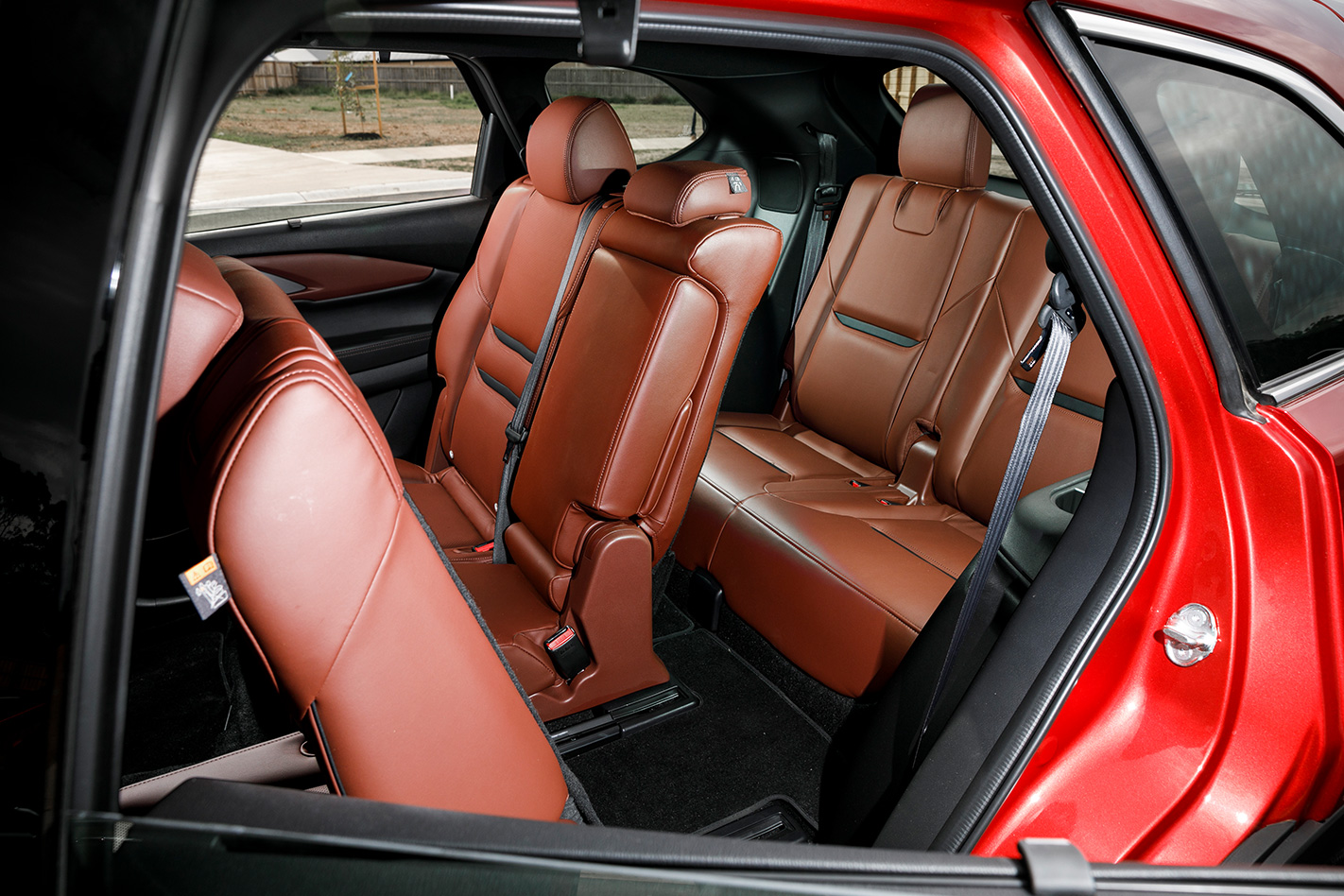
The Azami LE takes the CX-9’s acclaimed comfort levels a step further with the premium Nappa leather upholstery that makes it feel like a more expensive European SUV.
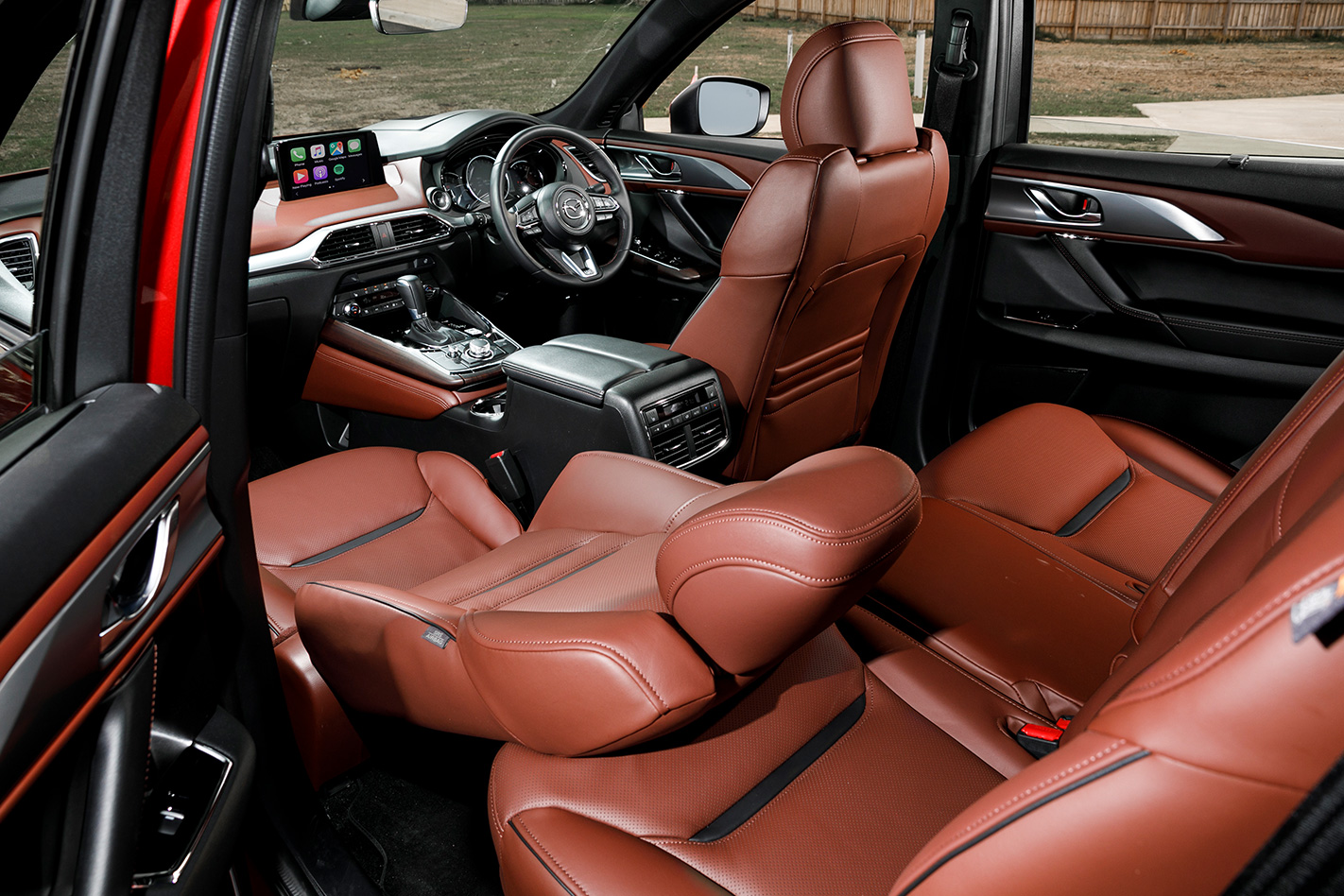
The spacious cabin feels welcoming with plenty of leg and elbow room in the first two rows, and the front seats gain additional creature comforts including powered settings and seat heating and ventilation.
Second-row passengers benefit from raised seating that affords excellent forward and side vision, separate climate control panel and vents, and a fold-down centre arm rest comprising two cupholders and two USB sockets.
The third-row seats are roomier than most of the CX-9’s rivals, and will accommodate two average-sized adults comfortably over moderate distances. Legroom can be altered sliding the second row forward and there’s a sufficient gap under the seat in which to slide your feet. The wide rear door opening means you don’t need to be a contortionist to climb in or out of the third row.
The coupe-like roofline sacrifices the ability to install separate air vents in the third-row, however the second-row vents do a good job of heating or cooling all the way to the back.
The interior is well put together with quality materials including soft-touch plastics, chrome brightwork and woodgrain trim, while the presentation of the instruments and controls is both classy and intuitive.
Ride comfort is also excellent, with supple but well-controlled suspension that glides over bumps, tyre, wind and engine noise is blocked out so effectively you’d be forgiven for thinking the CX-9 has double glazing.
ON THE ROAD
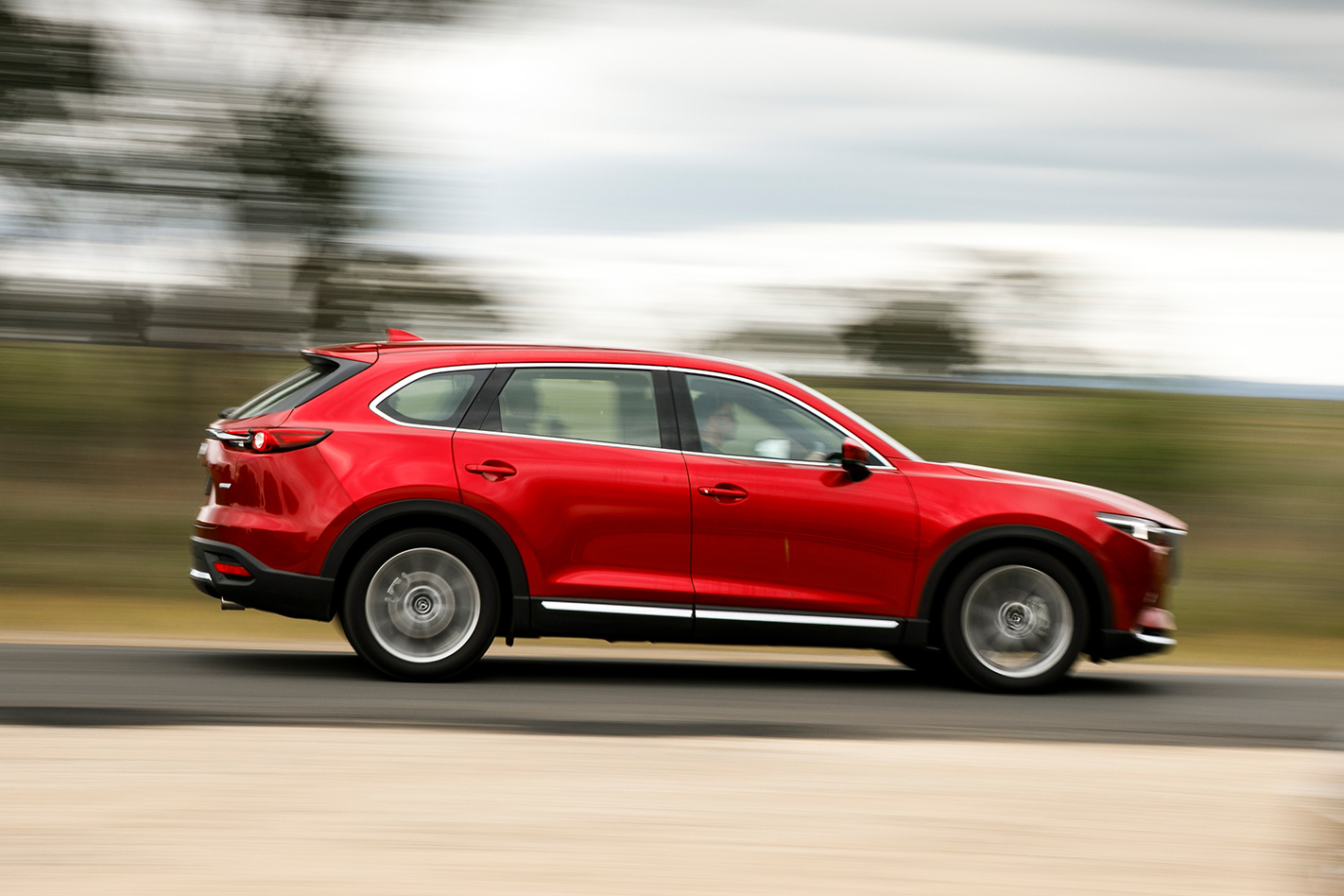
The CX-9’s size and AWD traction helps it feel incredibly well planted on the road.
It’s surprisingly nimble too, with slick steering and multi-link rear suspension that provides an excellent compromise between comfort and handling, even on the bigger the 20-inch wheels.
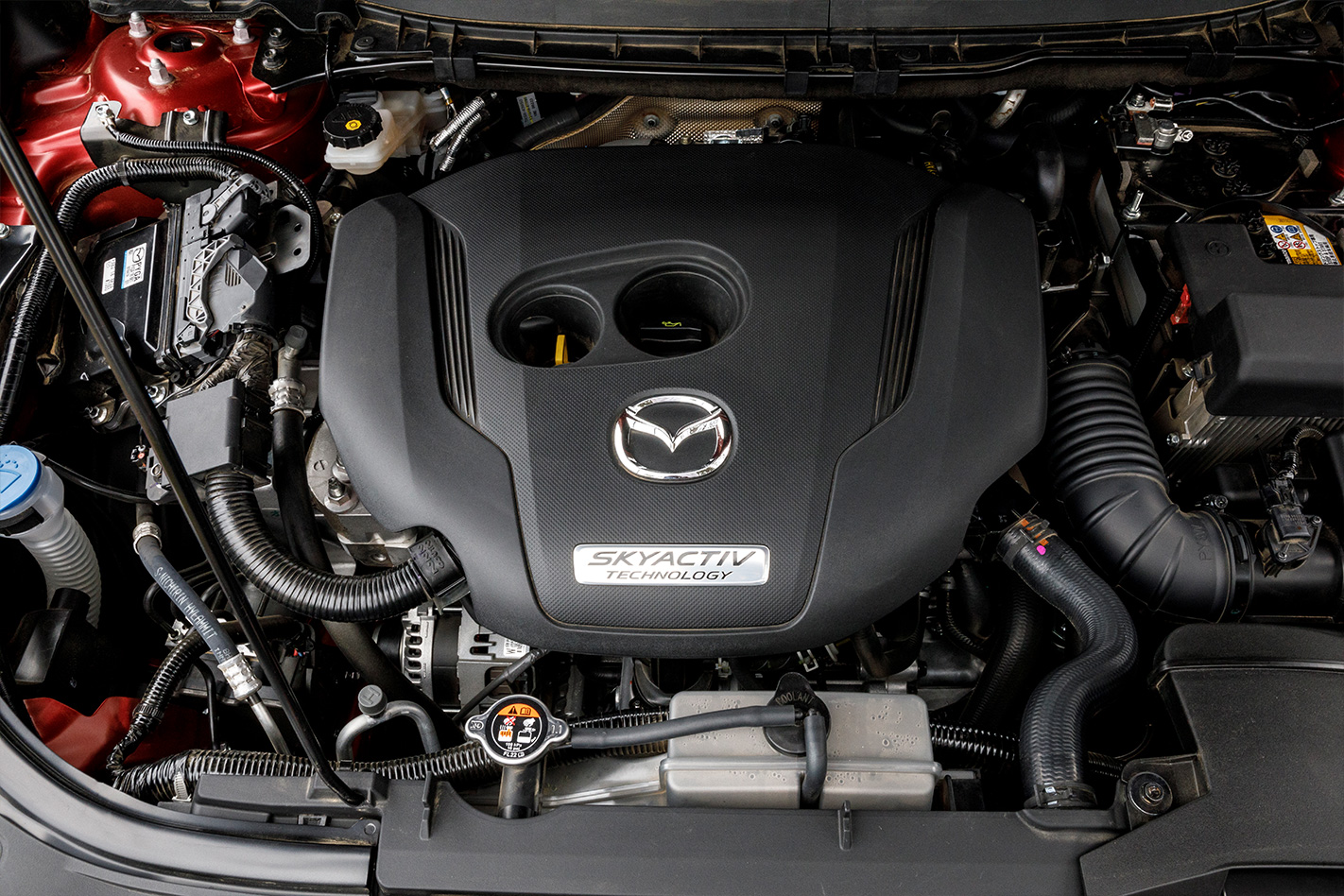
The 2.5-litre petrol turbo engine responds well at all speeds and even has a sporty note when at the upper reaches. It’s a lively engine that teams well with the six-speed automatic to give the CX-9 a surprising turn of speed and overtaking ability.
Its size and 2.0-tonne heft is more evident when braking, with the pedal feeling a little spongy when coming to a stop from highway speeds.
The AWD system is excellent on gravel, muddy or snowy roads, but the low ground clearance and sporty wheels aren’t conducive to very rough tracks.
For owners with a trailer or caravan, the Mazda CX-9 Azami LE has a 2000kg braked towing capacity.
THE VERDICT
The Mazda CX-9 Azami LE doesn’t just feel premium, it is premium.
It drives well, feels stately and ticks all the boxes for anyone seeking a sophisticated family SUV, while being priced less than entry-level luxury branded seven-seaters lacking similar levels of safety and comfort as standard.
The extra $1500 isn’t too much extra to pay over the Azami – the Nappa leather and hand-crafted woodgrain both looks and feels good and you’ll be glad you spent a little more when it comes to resale time.
What stands out?
Holden’s Captiva is a large SUV that is priced near many mid-sizers, which places it among the least costly wagons that offer seven seats. It has effective turbo-diesel and V6 petrol engines, a high level of standard equipment, and smartphone integration via Apple CarPlay and Android Auto.The Captive was replaced by the Acadia in October 2018, resulting in sharp run-out pricing for the three remaining Active, LTZ V6 and LTZ diesel variants. Newer Captivas are also available as used-car bargains, so this review includes all 2016-2018 variants, including those no longer available as new by November 2018.
What might bug me?
Perhaps concerns about safety for the rearmost passengers. Head-level curtain airbags protect passengers in front and second-row seats from side impacts, but do not cover those in the third row.Driving after a puncture. A spare tyre is only optional, and it is narrower than the other tyres on the car – which limits the recommended top speed to 80km/h if you need to use it. If you do not option the spare tyre there is a standard repair kit. If buying a used Captiva be sure to check whether or not it has a spare tyre.
What body styles are there?
Five-door SUV-style wagon only. All seat seven. (Previously, the least costly of the LS variants seated only five.)The Captiva comes in front-wheel drive and all-wheel drive versions.It is classified as a large SUV, lower priced.
What features do all Captivas have?
A 7.0-inch touchscreen, with connectivity for mobile devices via Bluetooth. Holden’s MyLink, with Apple CarPlay and Android Auto (which allows you to operate your phone and use some of its apps, among them navigation apps, from the touchscreen). Steering wheel and voice controls for your phone and the sound system.Cruise control and a leather-wrapped steering wheel, adjustable for height and reach. Headlamps which switch on automatically at night or in tunnels.Automatic transmission, and seating for seven.Dual-zone air-conditioning (which allows the driver and front passenger to set temperatures independently). Windows tinted to reduce sun penetration. Daytime running lamps illuminated by power-efficient LEDs, which make you more visible to other drivers.Smart key entry, which allows you to unlock the car by pressing a button on any door provided that the key is nearby (for example, in a pocket or bag).A reversing camera, and rear parking sensors.Aluminium alloy wheels (they are lighter and more stylish than steel wheels).Six airbags. Anti-lock brakes, and electronic stability control – which can prevent or help control a skid. (For the placement of airbags, and more on Captiva safety features, please open the Safety section below.)Captivas sold after July 2018 are covered by a five-year unlimited kilometre warranty. Prior to that the Captiva was covered by a three-year, 100,000km warranty.
Which engine uses least fuel, and why wouldn’t I choose it?
The 2.2-litre turbocharged diesel engine is the most fuel-efficient, consuming as little as 8.5 litres/100km in official tests (urban and country combined) with its mandatory auto gearbox.For power, the diesel occupies the middle ground between the hard-pressed 2.4-litre petrol engine that is the only alternative in the Captiva LS, and the more sophisticated 3.0-litre petrol V6 available in the Captiva LT and LTZ.One reason you might not get the diesel in an LS is that it costs more to purchase and to service than the 2.4 petrol. But it is better to drive.A reason why you might not get the diesel in an LT or LTZ is that it also costs more to purchase than the petrol V6 available in those models, which arguably is a better powerplant for the Captiva.The V6 is smoother and more powerful. But it uses about 25 per cent more fuel than the diesel even in the official tests, and the difference will be greater if you access its extra acceleration around town, in hilly terrain or when towing.A V6 Captiva LT AWD averaged 14.4 litres/100km in a real-world comparison of seven-seat SUVs conducted for the October 2016 issue of Wheels magazine, making it the least fuel-efficient of 10 cars reviewed.The petrol Captiva LS is available in front-wheel drive, five-seat form with a six-speed manual gearbox. A six-speed auto gearbox is optional.All other Captivas come only with a six-speed automatic gearbox.(Power outputs and all other Holden Captiva specifications are available from the Cars Covered menu, under the main image on this page.)
What key features do I get if I spend more?
Spending as little as possible on a Captiva will get you a Captiva LS, with cloth seat trim, 17-inch wheels, and the 2.4-litre petrol engine, driving the front wheels only. Spend more and you can have the stronger diesel engine.For about the same price as an LS diesel, you could choose instead a special edition LS Active. It comes only with the 2.4 petrol engine but adds some luxury features, namely part-leather seat trim, roof rails, a power-opening sunroof, and 18-inch wheels with lower-profile tyres (which arguably look sportier). Again, only the front wheels are driven.Spending more again for a Captiva LT brings you all-wheel drive and the option of specifying the more powerful V6 petrol engine (or the diesel). Like the LS Active, the LT has 18-inch wheels, roof-rails, and a sunroof. The seat trim reverts to cloth, however.The most expensive Captiva, the LTZ, has 19-inch wheels fitted with tyres of an even lower profile. Seat-trim returns to part-leather, with the front seats heated and the driver’s seat power adjustable. Parking sensors have been added at the front. The LTZ also gains two active safety features: a blind spot alert, which warns of other vehicles alongside out of view, and a rear cross-traffic alert, which helps you avoid carpark bingles.By the time the Captiva entered its runout phase in October 2018, only the Active, LTZ V6 and LTZ diesel were available from Holden showrooms.
Did any upgrade have a down side?
The ride in an LTZ is slightly less comfortable than in other models because of its big, low-profile tyres. Those tyres could also cost more to replace.White and red were the only standard colours, with all others costing extra.
How comfortable is the Captiva?
Some drivers might prefer bigger numerals on the speedo and tacho, but most controls in the cabin are easy to reach and use.While most new cars have audio controls on the steering wheel, the Captiva also has ventilation controls, further reducing the need to take a hand off the wheel.Up front the seats don’t have much lateral support, which can have you sliding around through corners. But the seat bases are quite long, for decent under-thigh support.The large-diameter leather-wrapped steering wheel feels unwieldy at first and yet the steering is still quite heavy around town and when parking. However, the weighting helps it feel responsive and reassuring at freeway speeds.Firm suspension on the Captiva means you feel bumps more than you would in most other vehicles of this size and weight.Grumbling from the four-cylinder diesel engine when it is idling intrudes into the cabin, which is a quiet place otherwise. The four-cylinder petrol is smoother but gets noisy when driven hard. The V6 is the smoothest engine of the three.
What about safety in a Holden Captiva?
Anti-lock brakes, stability control, six airbags, a reversing camera, auto-on headlights, and LED daytime running lights (which help other drivers see you), are part of the safety package on all Captivas.There are two airbags directly in front of the driver and front passenger; side airbags to protect the two front occupants at chest level from side crashes; and side-curtain airbags running alongside the front and middle-row seats, which protect heads from side impacts.The curtain airbags protecting the heads of front and rear passengers do not cover those in the third row of seats, however.The Captiva LTZ (only) has a blind-spot alert, which warns you if another car is alongside when you prepare to change lanes. And its rear cross-traffic alert adds some safety when backing out of parking spaces, by letting you know if a car is about to cross behind you.Autonomous emergency braking is not available on any Captiva.The Australasian New Car Assessment Program (ANCAP) rated front-drive versions (only) of the Captiva at its maximum five stars for safety in December 2011, when it was named the Captiva 7.
I like driving – will I enjoy this car?
The four-cylinder petrol engine is short on power for propelling such a big car. You may find yourself pushing the accelerator pedal a long way just to keep up with traffic in a petrol Captiva LS or LS Active. That can also keep the transmission busy, as it changes gears frequently in an attempt to maximise acceleration.Throw in high noise levels when you drive it hard and this is the least satisfying engine on offer.The diesel engine, available in all Captivas, feels noticeably stronger when climbing hills or carrying a full load. It takes a moment or two to develop power when you accelerate from a standstill.The V6 petrol available in a Captiva LT or LTZ feels more enthusiastic and delivers the best performance. Nevertheless it is short on grunt when you first press the accelerator at cruising speeds, needing to be spun fairly hard before satisfying acceleration arrives.The bigger tyre and wheel combinations provide more grip and cornering accuracy. However in all versions there is mild kickback from the steering if you encounter bumps in the middle of a corner.All-wheel drive versions of the Captiva are light-duty off-roaders designed mainly for on-road use. Should you venture off road without the optional spare tyre, you could be left with a puncture that is not repairable with the supplied repair kit.
How is life in the rear seats?
The middle row seats offer plenty of head and leg room for adults. And having an almost flat floor and wide centre seat means getting three adults across the rear is not the compromise it can be in some other big SUVs.In the rearmost seats, space is harder to find – particularly for big feet, which don’t fit easily under the seat in front. Head room here is better suited to children than adults, although knee room isn’t too bad, albeit with adult knees forced quite high due to the raised rear floor.As with many big SUVs, the three child-seat anchor points are set up for the middle row of seats. That makes it hard to get people into the third row of seats when the child seats are fitted.
How is it for carrying stuff?
With all seven seats in use, the remaining boot space is tiny: expect to fit a couple of soft overnight bags.With the third row seats folded, the boot floor is fairly high but broad and long, making it good for prams or plenty of luggage.The floor also matches up with folded middle row seats to create a long, flat cargo area behind the front seats if required.The middle row seats split-fold 60/40 while the back row is 50/50. Folding the seats is easy, too, with each requiring the pull of a single lever.You can also fold the middle-row seat-bases up against the backs of the front seats, making a deep well ideal for, say, sliding small bikes across the car.The diesel and V6 petrol versions are rated to tow the biggest trailers, with claimed capacity of 2000kg. The four-cylinder petrol models are rated at only 1500kg.
Where was the Captiva made?
All Captivas were produced in South Korea.
What might I miss that similar cars have?
More grunt with less thirst, from a turbocharged petrol engine. The Mazda CX-9 offers this, for example.Automatic emergency braking, which can apply the brakes if the car detects a looming obstacle ahead – typically another car that has slowed suddenly. This is standard on the CX-9 and Hyundai Santa Fe, and available on the Kia Sorento, Toyota Kluger, and Nissan Pathfinder, Skoda Kodiaq, and the Captiva’s replacement, the Acadia, for example.A power-operated tailgate, which can be raised or lowered with the press of a button. This is available on the Acadia, CX-9, Kluger, Santa Fe and Sorento, for example.Curtain airbags that cover all three rows of seats, as fitted to the Acadia, Kluger, CX-9, and Pathfinder, for example.Other cars you might consider include the Nissan X-Trail and Mitsubishi Outlander. These are smaller (they’re classified as mid-sized SUVs) but they have seven-seat versions that are near Captiva prices.
I like this car, but I can’t choose which version. Can you help?
The Captiva LS represents seven-seat value and does without the additional weight of the four-wheel drive system. But we would opt for the diesel engine, which is more fuel efficient and nicer to drive than the four-cylinder petrol.At the time of writing in November 2018, the Captiva had been replaced by the Acadia, resulting in runout pricing with discounts and below retail drive-away deals.
When did Holden replace the Captiva
The Captive was replaced by the new Holden Acadia in October 2018.It proved to be a successful model for Holden since first arriving in 2006, before becoming the Captiva 7 with a major update in 2011 (distinguishing it from the smaller Captiva 5). There were minor tweaks every 12-18 months, including some changes to equipment levels early in 2015.In January 2016, Holden revived the original Captiva nameplate, dropping the 7 from the name and the Captiva 5 from the range. The refreshed seven-seat Captiva gained a restyled nose, a 7.0-inch touchscreen on all variants, and better device connectivity with Apple CarPlay and Android Auto. Blind-spot and rear cross-traffic warnings were added to the LTZ.About August 2017 Holden dropped the five-seat option and manual transmission from the LS trim level, so that seven seats and an auto gearbox became standard for the 2018 model year.A five-seater named the Equinox replaced the five seat-Captiva in December 2017, while the seven-seat Acadia sealed its fate in October 2018.
BMW’s M2 and M5 Competition brawny brace are replacing ‘standard’ versions of the high-performance pair in showrooms this month, and fans of the M2 and M5 will need to dig deeper into their pockets for an example to call their own.
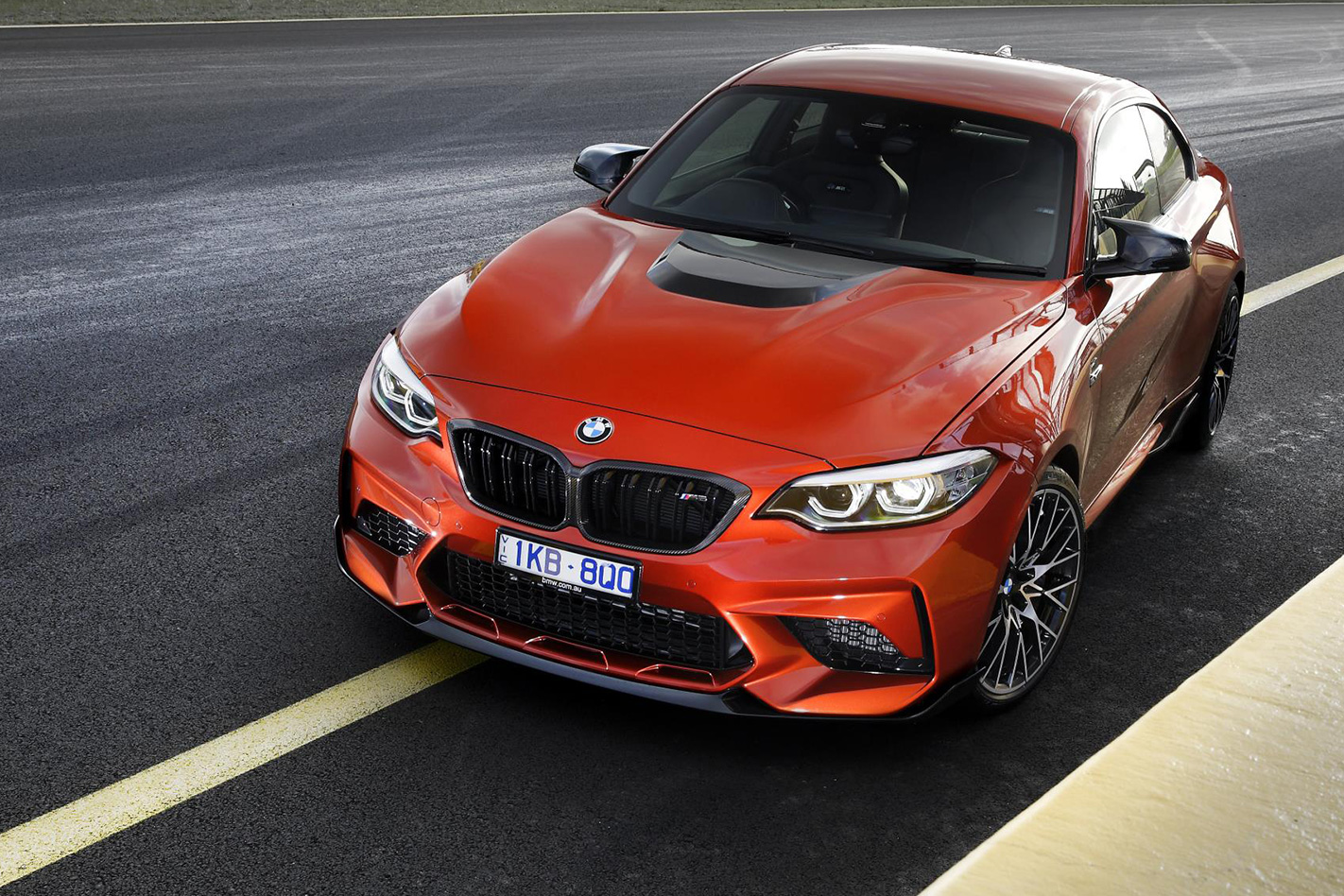
However, both M2 Competition and M5 Competition add significant performance-enhancing extras for an incremental increase in pricing.
Kicking off the M2 line-up, a new Competition Pure nudges out the previous $93,300 M2 Pure for an asking price of $99,900 – matching the price of the now superseded ‘regular’ M2. The most affordable and equipment-lite version is available with either standard seven-speed automatic transmission or a six-speed manual for no extra cash.
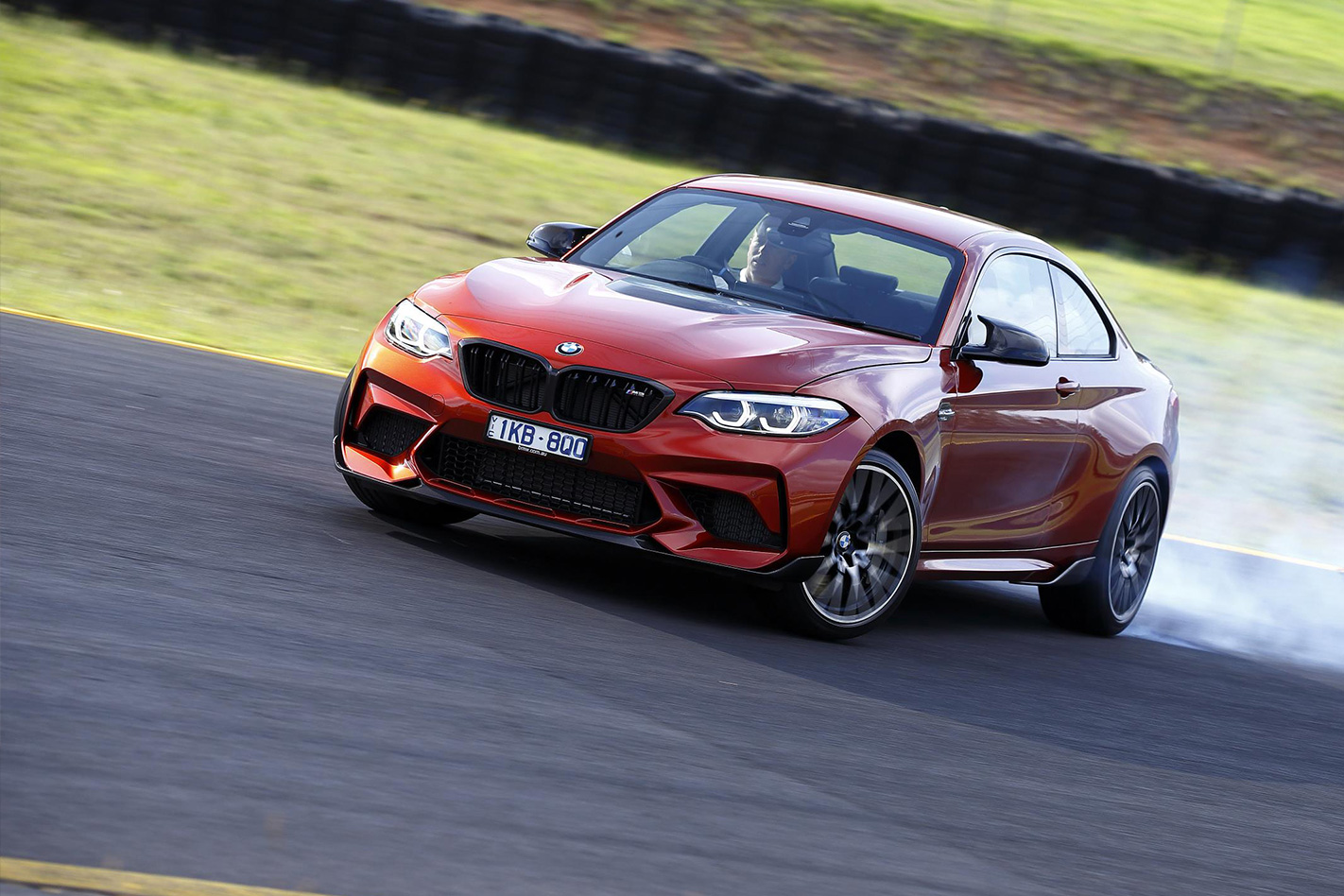
Above that, the more handsomely-equipped M2 Competition costs from $104,900 marking the first time the M2 has breached the $100k ceiling since it was launched locally in 2016. The flagship is available only as an auto.
At the same time, the M2’s bigger sister has undergone a similar shake-up with the M5 Competition now the only option in the 5 Series range, replacing the previous ‘standard’ M5.
Grabbing an example of the enhanced M5 Competition will cost you $229,900 – that’s an even $30,000 more than the outgoing non-Competition M5.
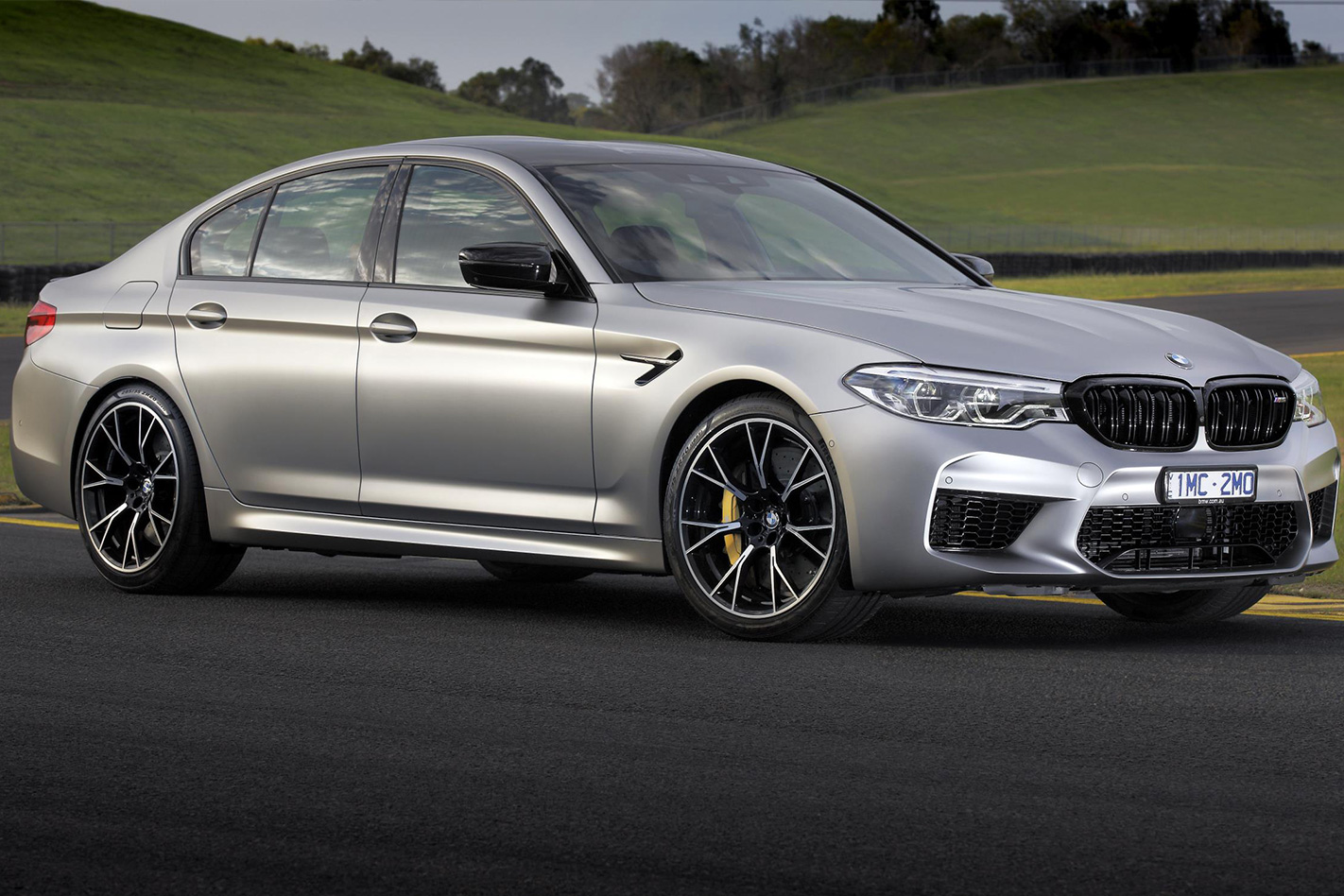
In the case of both M2 and M5 Competition, boosting the budget does bring a hearty dose of performance-enhancing features for the extra cash.
Opt for the most affordable M2 and you’ll get a version of the small coupe that winds up the power from 272kW to 302kW, while torque rises by an extra 85Nm. That’s enough to shave the zero to 100km/h dash down to 4.2 seconds when the dual-clutch auto is bolted in.
It also gets a fat bodykit, beefier brakes with six-piston calipers at the front end, a torque-vectoring active M-differential for managing the extra performance and a revised suspension set up.
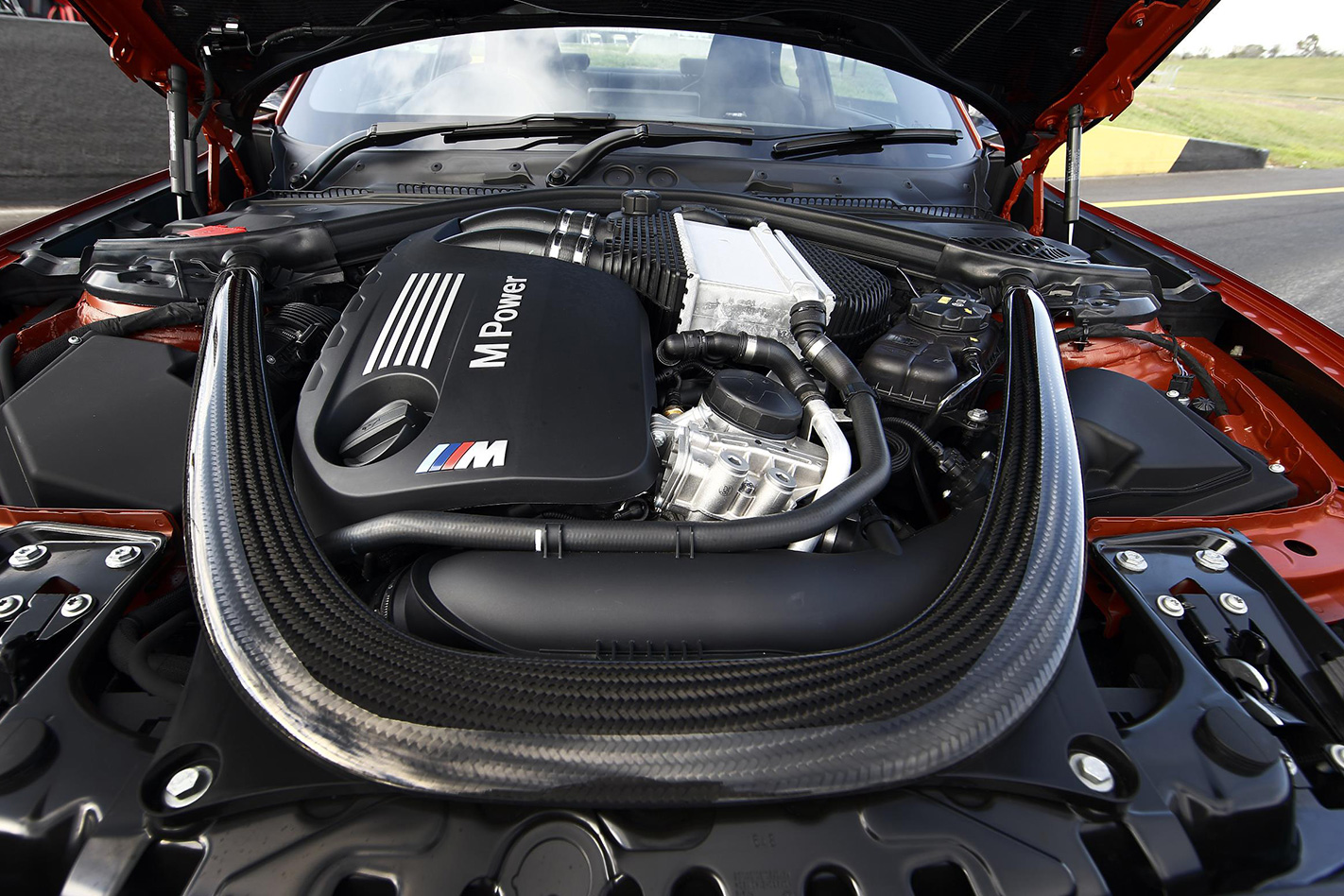
Step up to the more expensive M2 Competition and a handful of equipment that was deleted for the purists version gets added back in. Manual seat adjustment is upgraded to electric, Comfort access allows door unlocking without pressing a button, a standard seven-speaker sound system is upgraded to the Harman Kardon option, and LED headlights get adaptive beam technology.
On the outside, the Pure is identifiable by its 19-inch double spoke wheels, while the top-shelf M2 has Y-spoke design rims of the same diameter.
BMW M5 Competition replaces standard M5 in Australia
As for the M5 Competition, its 4.4-litre turbo V8 gets a 19kW tune up over the now-discontinued vanilla version, taking power up to 460kW. That boost chops the 0-100km/h benchmark down to a lightning 3.3 seconds. Torque is unchanged at 750Nm.
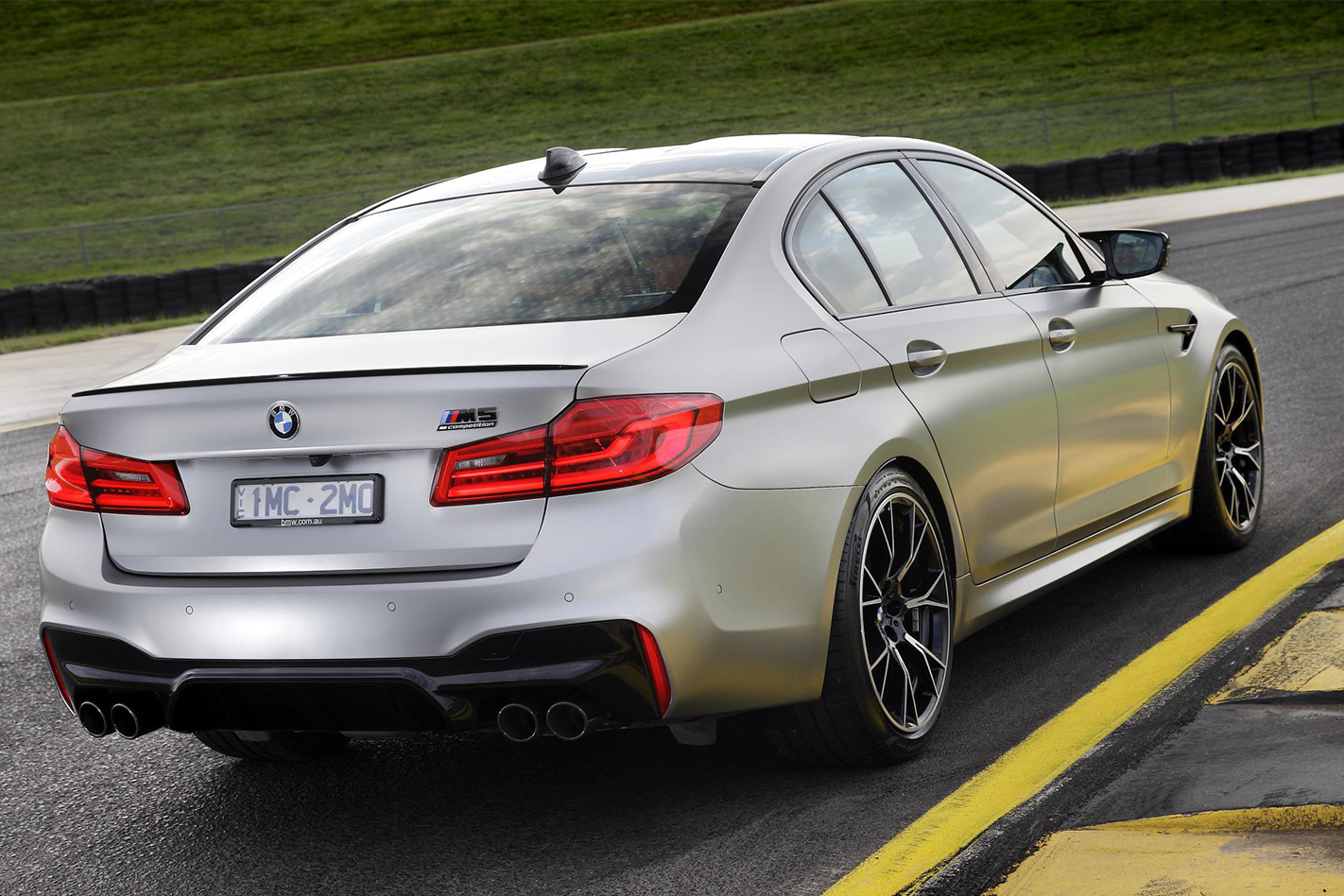
Compared with the sub-$200,000 version, the Competition scores petrolhead features including a suspension overhaul, more powerful brakes, a unique 20-inch wheel design, more vocal exhaust system, and interior embellishments such as top-quality leather with the M-colours embroidered in.
PRICING
- BMW M2 Competition Pure (manual and automatic) – $99,900
- BMW M2 Competition (automatic) – $104,900
- BMW M5 Competition – $229,900
Lexus Australia will launch its first-ever compact crossover, the UX, later this month with pricing that starts at an ultra-keen $44,450, giving the Japanese luxury automaker a proper rival to European competitors like the Volvo XC40, BMW X1 and Audi Q2 at long last.
The UX range will open with the base UX 200 Luxury, which at $44,450 lobs in at $3.5K above the CT 200h Luxury hatchback and takes up position as Lexus Australia’s second-most affordable model.
The UX 200, powered by a 126kW/205Nm 2.0-litre petrol inline-four and driving the front wheels exclusively through a new CVT transmission (an engine/drivetrain combo borrowed from the Toyota Corolla), will be offered in three grades: base Luxury, and high-spec Sports Luxury or F Sport.
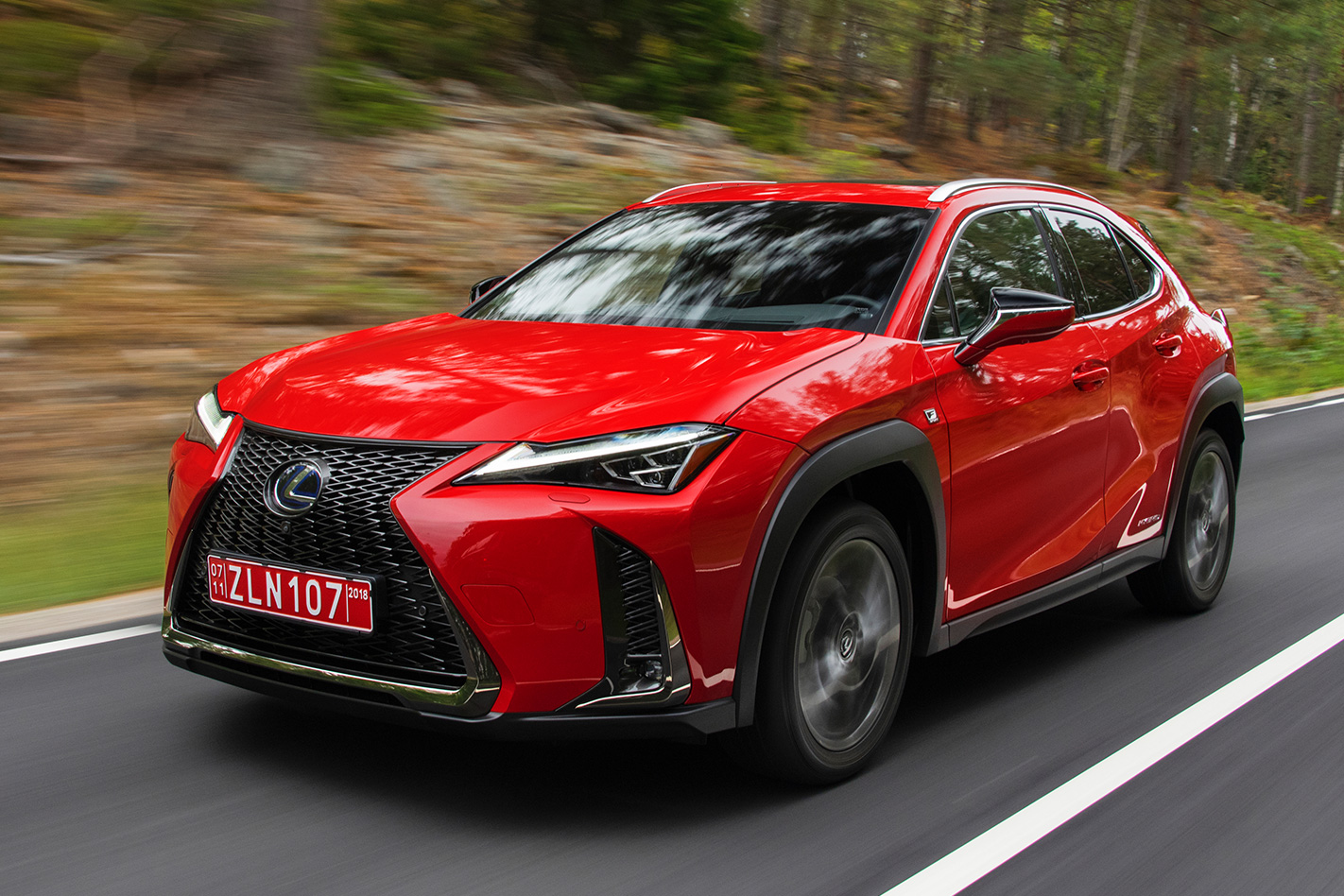
The F-Sport is technically the flagship, however at just a $450 premium over the Sports Luxury the price gap between those two is much less pronounced than the $8550 jump from Luxury to Sports Luxury. Instead, Lexus expects the two higher grades to be complimentary choices – more opulent and understated at the Sports Luxury level, and more extroverted and dynamic in F Sport guise.
The UX 250h follows the same variant structure, except with a 131kW 2.0-litre petrol-electric hybrid powertrain taking power to the front wheels and a $3500 premium over its petrol-only counterpart.
Those same hybrid mechanicals can also be had in all-wheel drive form with an electric motor under the boot driving the rear wheels, however that model is only available in Sports Luxury or F Sport trim and comes with an additional $4500 tacked onto the UX250h 2WD range’s price tags.
As for fuel consumption, the UX 200 range consumes a claimed 5.8 litres of 91RON on the combined cycle, while the hybrid UX 250h burns 4.5 L/100km in FWD form and 4.7 L/100km with the heavier AWD option.
LEXUS UX FEATURES
Lexus has adopted an equipment-rich strategy from the base model upward, with the Luxury grade boasting niceties like a 10.3-inch infotainment system with touchpad controller, integrated satellite-navigation, an eight-speaker audio system with digital radio, a 7.0-inch LCD instrument panel, leather-upholstered steering wheel, 17-inch alloys and heated wing mirrors. Decent, right?
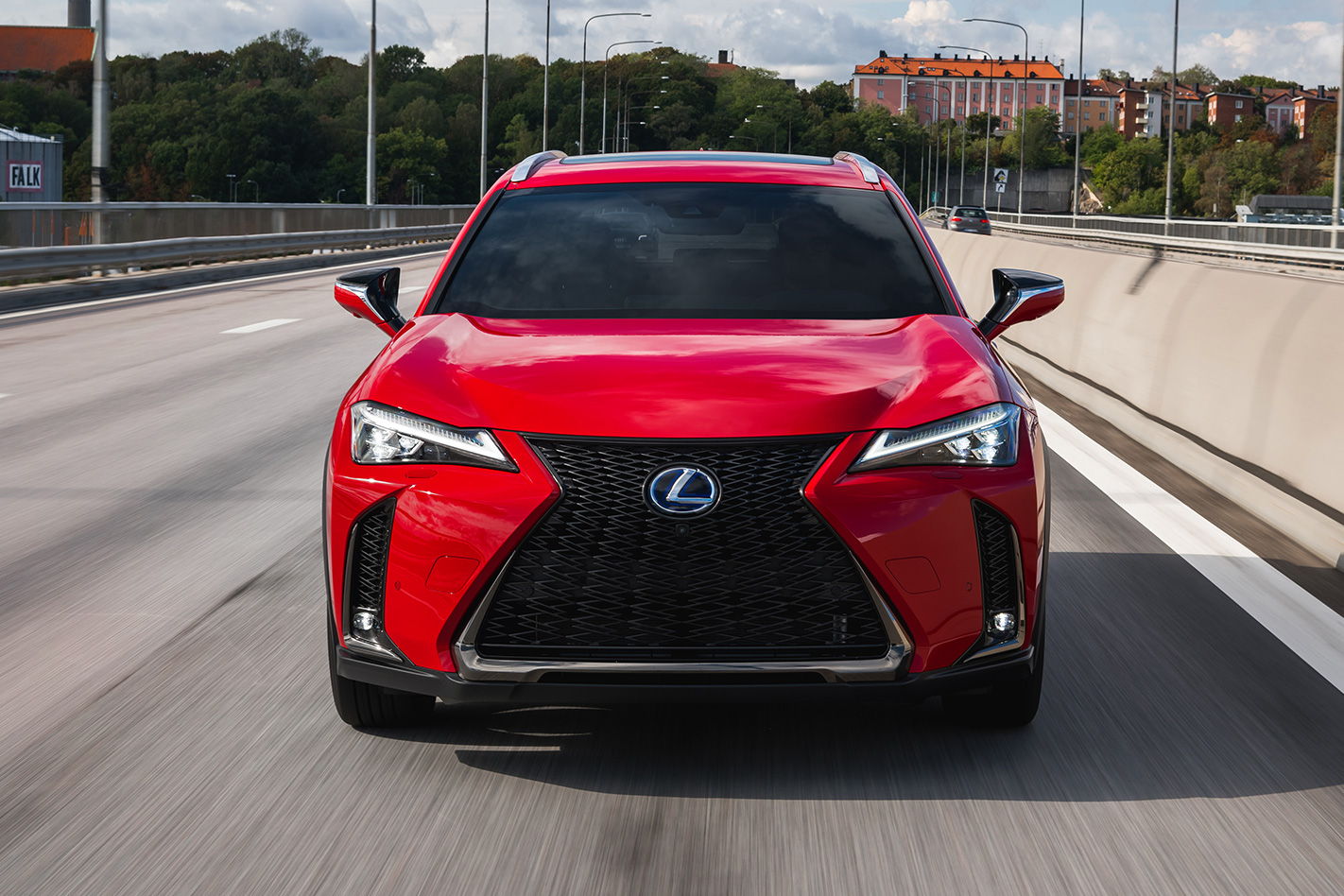
Well the standard equipment list doesn’t stop there. There are LED headlamps, LED tail lamps, and LED fog lights, not to mention a power-adjustable steering column (something you don’t normally see at this end of the luxury market), an acoustically-insulated windscreen, active cruise control, roof rails, plus power-adjustable and heated front seats. Keep in mind we’re still discussing the base model UX 200 Luxury.
Provision for smartphone mirroring seems to be the only notable omission.
Standard safety equipment includes eight airbags, collision warning system, AEB with pedestrian detection, speed sign recognition, blind spot monitoring, reversing camera, parking sensors and rear-cross traffic alert.
The Sports Luxury grade adds leather upholstery, 18-inch alloys, ventilated (as well as heated) power-adjustable front seats, a 13-speaker Mark Levinson audio system, wireless phone charging, adaptive high-beam, power-operated tailgate and higher-grade cabin trim.
Meanwhile, the more athletic-looking F Sport receives unique bumper, grille and 18-inch wheel designs, along with adaptive dampers, a rear performance damper, five drive modes, sports seats, alloy pedals and a unique steering wheel treatment – but misses out on the Sports Luxury’s Mark Levinson audio.
Want even more? A range of enhancement packs are available that can add features like a moonroof or head-up display, or bring features like the Mark Levinson stereo into the F Sport, or add the power tailgate and wireless charger to the Luxury variant. See below for more details.
LEXUS UX PRICING
Available for order now, the UX 200 and UX 250h officially enter showrooms toward the end of this month with pricing as follows:
- Lexus UX 200 Luxury – $44,450
- Lexus UX 200 Sports Luxury – $53,000
- Lexus UX 200 F Sport – $53,450
- Lexus UX 250h Luxury – $47,950
- Lexus UX 250h Sports Luxury – $56,500
- Lexus UX 250h F Sport – $56,950
- Lexus UX 250h AWD Sports Luxury – $61,000
- Lexus UX 250h AWD F Sport – $61,450
LEXUS UX OPTIONS
Luxury:
- Enhancement Pack 1 – $1550 Adds power tailgate, wireless phone charger, alloy scuff plates, privacy glass, cornering lamps, headlight washer
- Enhancement Pack 2 – $4050 As per Enhancement Pack 1, with moonroof
- Enhancement Pack 1 – $2500 Adds moonroof
- Enhancement Pack 2 – $5600 Adds moonroof, head-up display, panoramic view monitor, smart key card, 13-speaker Mark Levinson audio
- Enhancement Pack – $3500 Adds moonroof, head-up display, smart key card
The late Gerhard Mitter, who raced for the Swabian team in the 1960s, said there were three factors that made Porsche stand out from the rest. “The cars are extremely light, the engine sits close to the driven wheels, and the controls feel like extensions of the driver’s arms and legs.”
This feature was originally published in MOTOR’s December 2004 issue
Thirty-five years on, Mitter’s assessment still stands. And while the latest incarnation of the Boxster is above all else a festival of high-tech gadgetry, the iconic roadster still incorporates the brand’s trademark virtues: light weight, strong grip and intuitive controls.
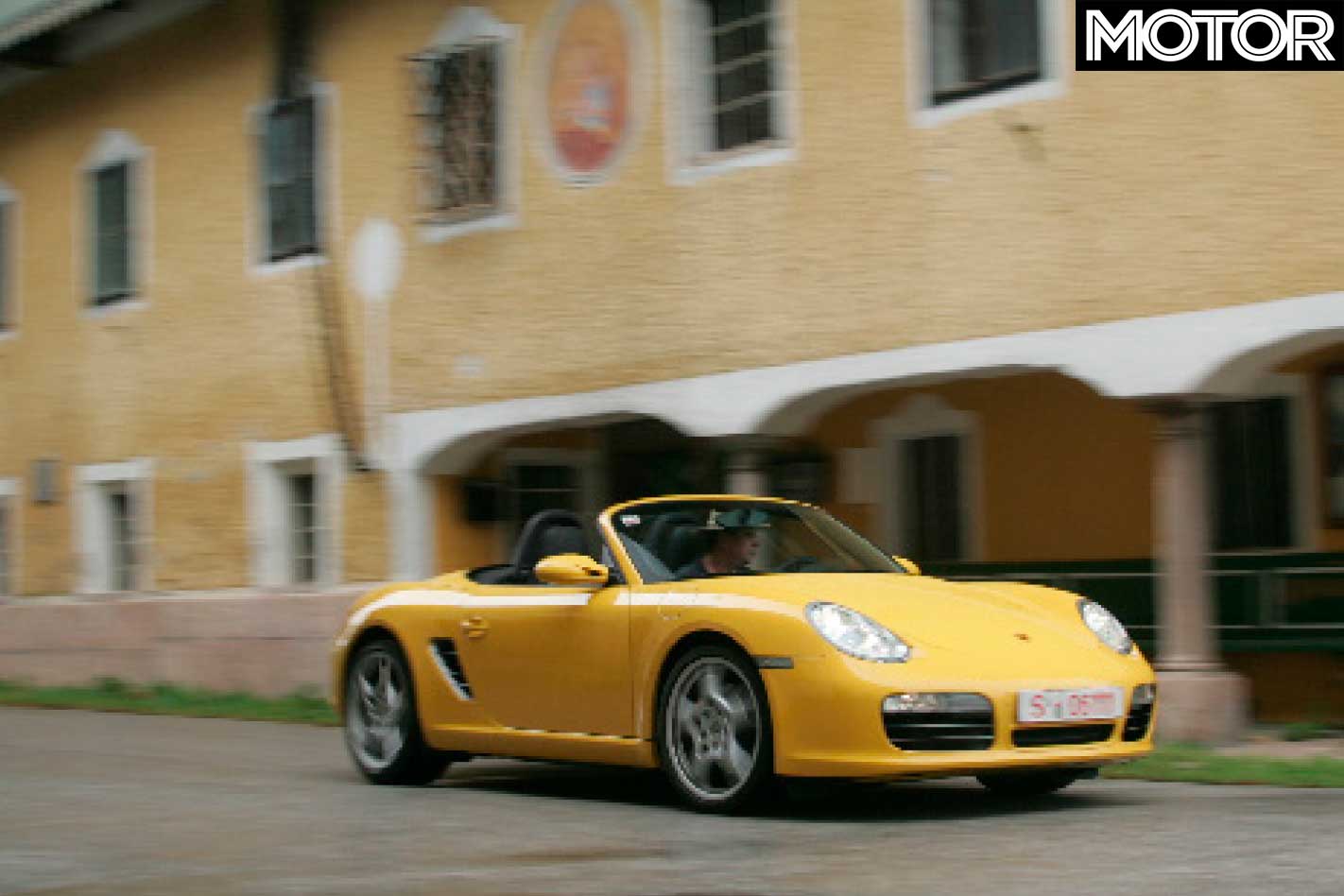
According to Porsche, the idea was to freshen up the Boxster without making its predecessor look old. And while the new Boxster borrows heavily from the 911, the goal was to grow the gap between the two.
The mildly flared wheel arches, to incorporate a wider track, give the car a more dynamic stance, the sculptured rear broadens at the shoulders and the revised front skirt, incorporating larger air intakes, borrows from the look of the 911 Turbo.
Inside, the Boxster S adopts the busy centre console from the 997 911 Carrera S. Bespoke items include the gearlever, a set of redesigned dials with sporty white faces for the Boxster S, chrome-rimmed circular air vents, as well as repositioned pedals and seats offering more head and legroom. The redesigned cockpit has brought the Boxster into line with the high-standard of design and quality of materials used in the new 911.
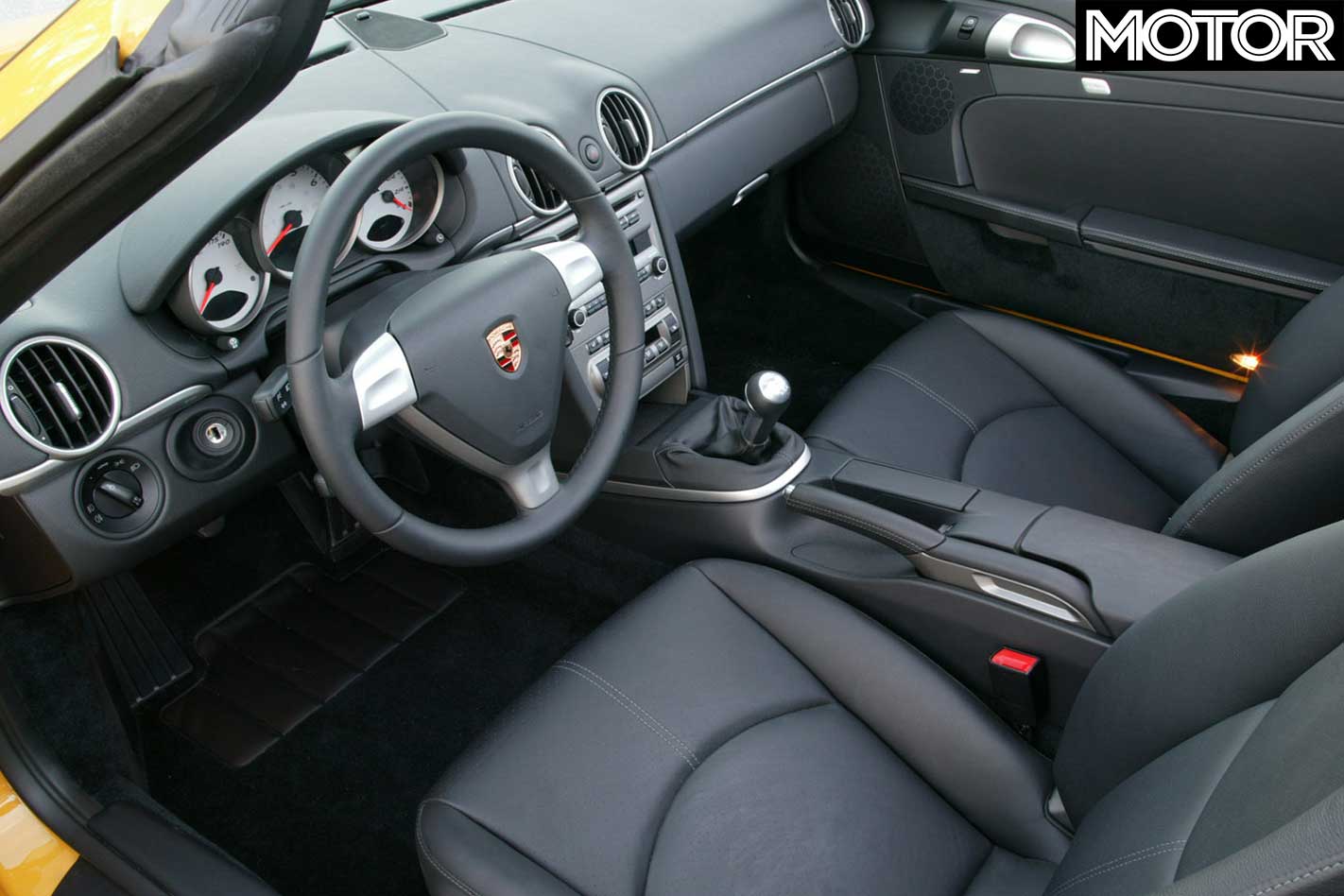
Part of the extreme Boxster makeover included making the driving position less cramped. The steering column adjusts in reach and height, the pedal box has been moved forward a fraction, the seat can be pushed further back and lower down, and is available with optional dynamic side bolsters for better lateral support.
To offset the good work done to the interior, and take away from the minimalist feel, Porsche designers have crammed more buttons, knobs, switches and monitors into the dash than there are on the control deck of Captain Kirk’s daily driver, the USS Enterprise.
It’s not all bad, though, and some of the more welcome innovations include a bigger glove box, a DVD-driven sat nav system, a re-engineered, power-operated roof with three, instead of two layers (as per the outgoing model) of fabric and a heated rear window, four side airbags (two in the doors, two in the seats), taller headrests and a more effective, transparent wind deflector.

Power output for the Boxster is pegged at 206kW, up from 191kW in the previous model, yet the difference is almost imperceptible. This hike in power helps the 2005 Boxster jog from 0-100km/h in 5.5 seconds, eclipsing the car it replaces by 0.2 seconds. Equally marginal, top speed has increased from 264km/h to 269km/h.
On paper, at least, there’s not much separating the 2005 Boxster and the outgoing model. But in terms of torque delivery and throttle response, the uprated 3.2-litre flat-six offers more urge, feedback and immediacy than the model it replaces.
Fitted with a new air-filter and a revised exhaust system, there’s a noticeable reduction in back pressure, and the two-stage intake plenum helps to boost low to mid-range torque as well as the Boxster’s willingness to rev. As a result, maximum torque of 320Nm, (up 10Nm from the previous model) is available between 4700rpm and 6000rpm. As per the outgoing model, peak power is made at 6200rpm.
And there is no better place to sample the full-volume symphony of a boxer engine than on a sweeping hill, where the intake rasp and the full exhaust roar roll along like the sound of distant thunder.
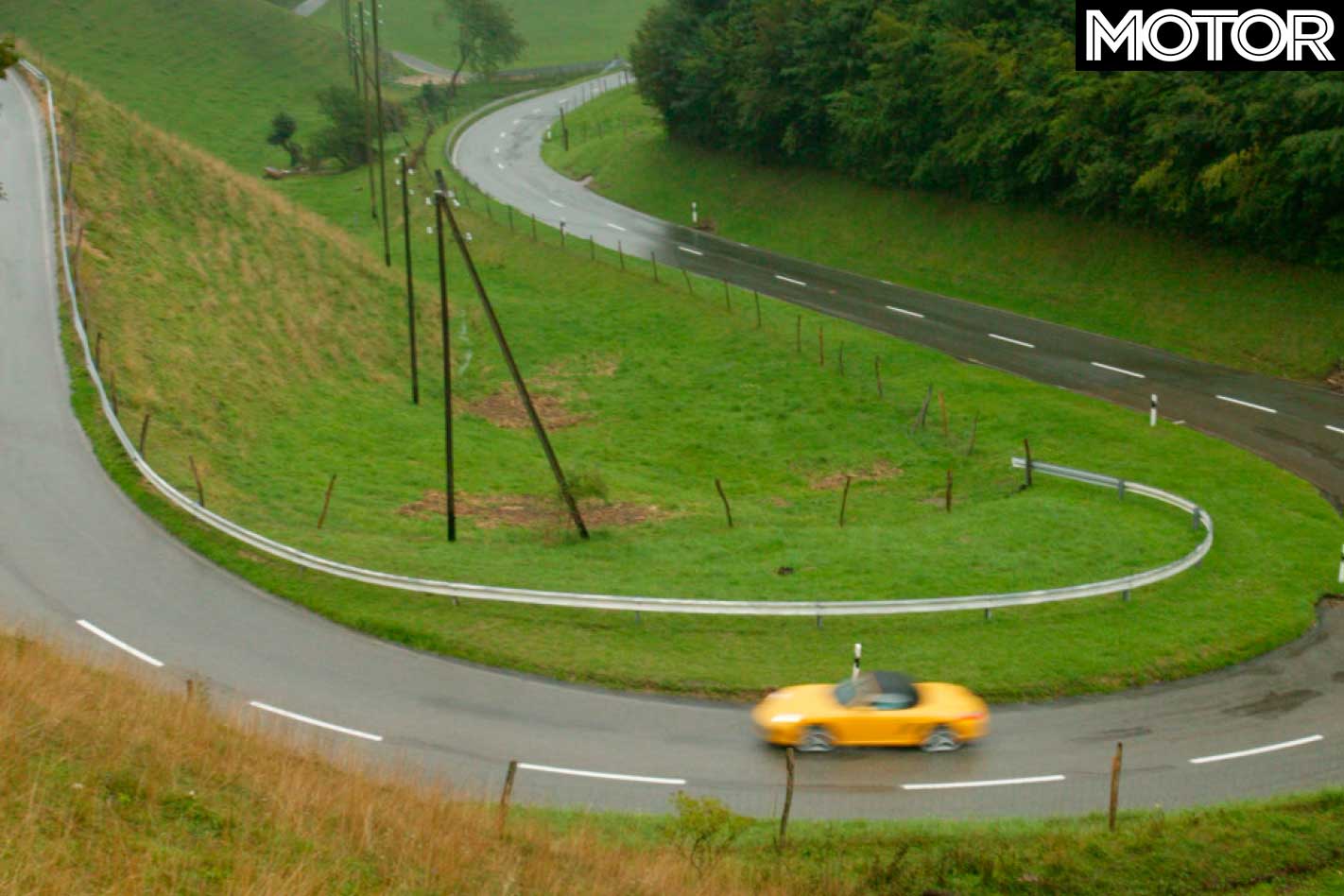
Despite perching on the optional 19-inch rims, the suspension tremble and the occasional front-end pitch we remember from last year’s Boxster, have all but disappeared. And at regular road speeds the Boxster is quite composed.
Who would have thought the usually rev-hungry 24-valver would happily lug up a hill in fourth without running out of breath? Only through hairpins does it beg for a lower ratio.
According to Porsche, the throws of the six-speed gearbox have been shortened by 15 percent. And while the shift action is lighter than before, there is room for improvement in terms of accuracy. The recalibrated steering becomes quicker and more accurate the more lock you wind on.
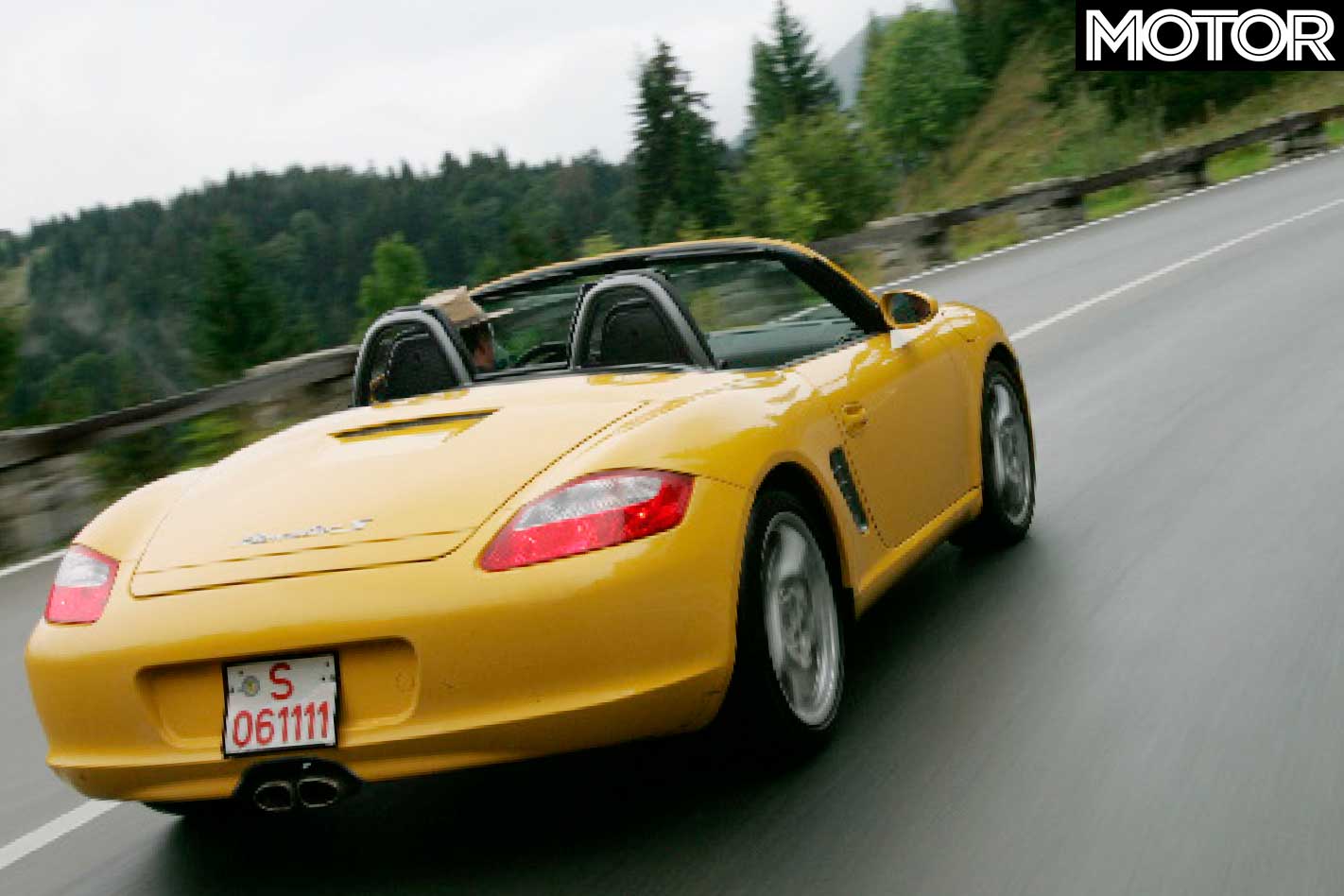
With Porsche Stability Management (PSM) standard, we recommend you tick the box for the optional Porsche Active Suspension Management (PASM). This allows the right amount of fun to be had without causing more ham-fisted drivers to make a mess of a corner.
Basically, PASM is able to adjust the suspension to suit the road and driving conditions. In Sport mode, every sense is on alert as the Boxster S turns from composed to angry, fighting every steering input, snapping at every imperfection in the road and pitching and yawing its way through uphill switchbacks.
Drop back into ordinary PASM mode, though, and the car becomes more composed, feeling more cooperative and stable. Along with PASM it’s worth opting for the Sport Chrono Package, which allows a more aggressive setting for PASM and PSM.
Through uphill twists and turns and on our less-than-perfect roads the 19-inch Michelins are more of a handicap than an asset, exaggerating understeer and promoting oversteer. However, on smoother sections one could feel the benefit of the wider track and the revised, lightweight suspension.
More rigid, and therefore more precise, with minimised camber changes and accurately defined toe-in tolerances, the new suspension geometry results in sure-footed roadholding, cornering grip and greater response to steering and throttle orders.
Although the optional 19-inch boots give the Boxster plenty of bling-appeal, they tramline more, and are less comfortable for daily driving duties than the standard 18-inch wheels, which are also more stable when driven at the limit.
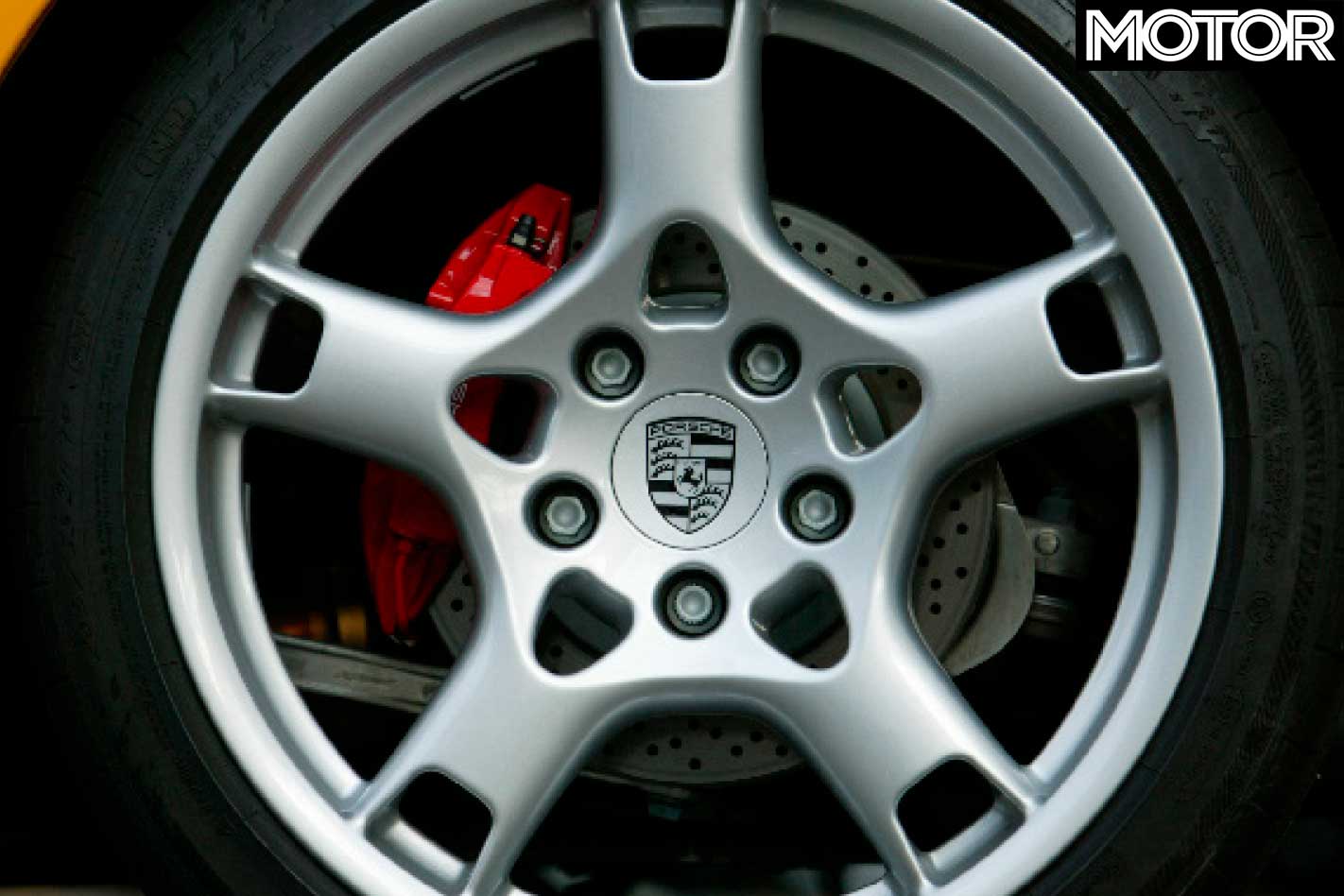
For everyday driving, the standard steel discs are sufficiently powerful and responsive enough. Now cross-drilled, and of a larger diameter in the rear, they are also quieter and less temperature-sensitive than the brakes on the previous model. Ceramic discs are now an option on Boxster S, but are not required unless you plan on lots of competitive driving.
Another option we can live without is the Tiptronic gearbox. It works well enough in manual mode but adds eight tenths of a second to the 0-100km/h dash, takes away 8km/h of top speed and affects fuel consumption.
Despite the wider body and the fatter wheels, which enlarge the Boxster’s frontal area, the drag efficiency figure has been pared down from 0.32 to 0.30. At the same time, axle lift has been reduced by 30 percent, thanks to a flush-fitting underside, ground-effect aprons and a lot of wind tunnel work aimed at improving directional stability at high speed.
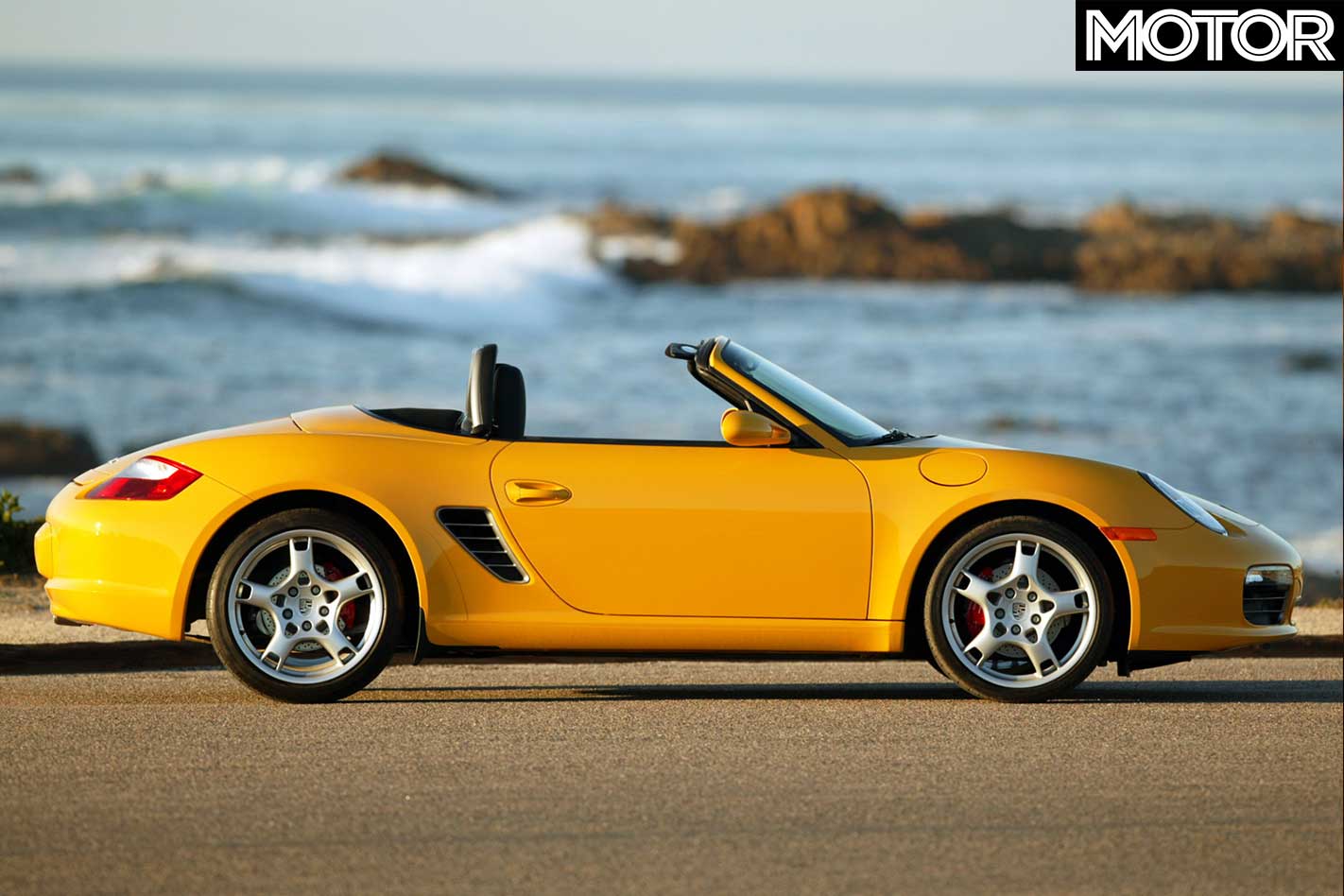
The transition from old to new is not quite as sensational as the step from 996 to 997 911. But the Boxster S has become a better all-rounder and a more complete sports car than the previous model. While Porsche is proud of the sportier character and the more up-market presentation, we were particularly impressed by the blend of smoothness and ability, the mix of balance and performance.
And unless you insist on the stiffest PASM setting and the most extreme tyre size, the mid-engined two-seater will happily suppress the edgy handling and the bone-jarring ride in exchange for a much broader band of competence.
More capable than its predecessor, the new Boxster S is a more pure Porsche and a more desirable roadster. Porsche has succeeded in making the best better. The legendary Gerhard Mitter would have loved it.
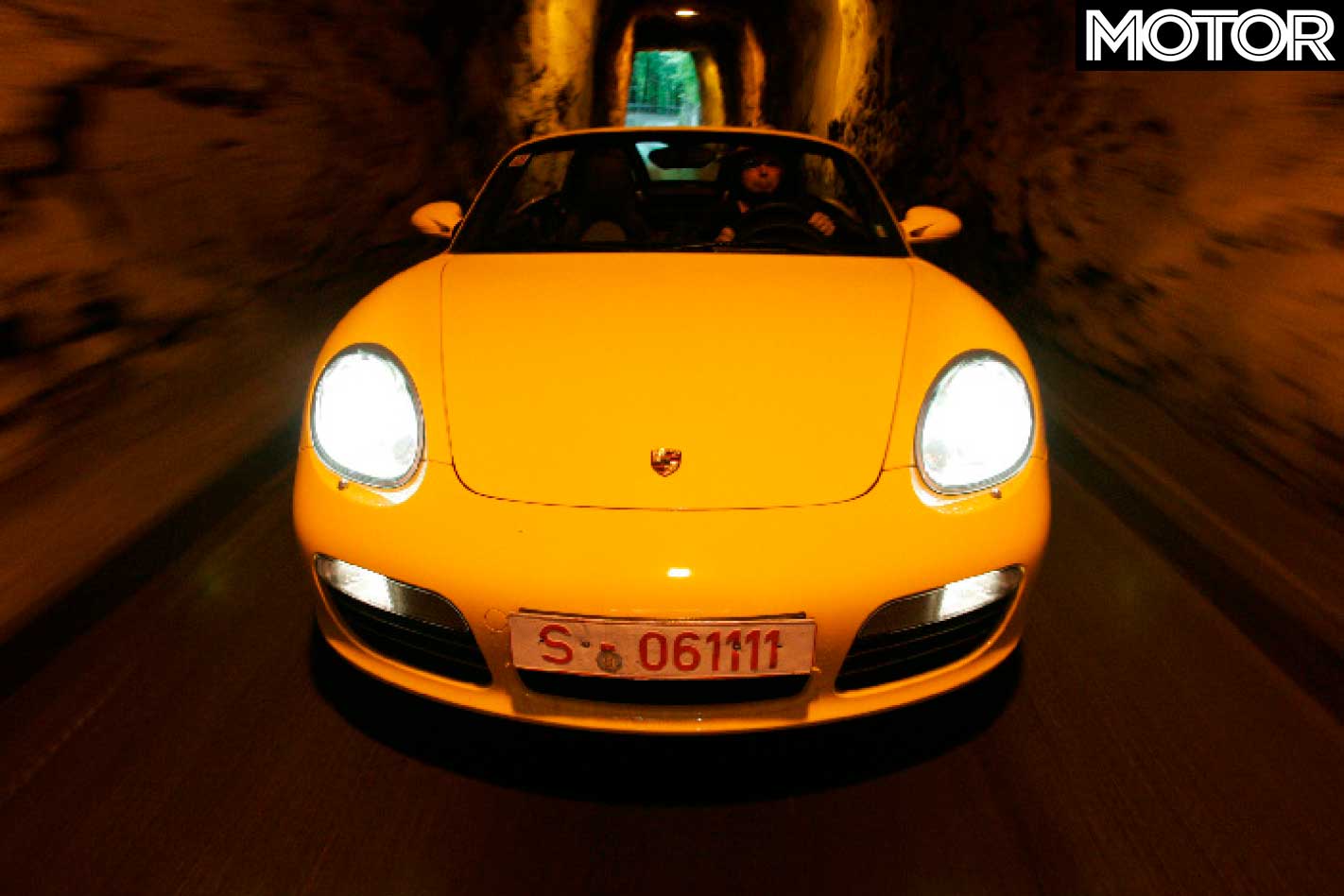
FAST FACTS 2005 Porsche Boxster S
BODY: 2-door roadster DRIVE: rear-wheel ENGINE: 3.2-litre, DOHC 24-valve flat six POWER: 206kW @ 6200rpm TORQUE: 320Nm @ 4700-6000rpm COMPRESSION: 11.0:1 BORE/STROKE: 93.0mm x 78.0mm WEIGHT: 1345kg POWER-TO-WEIGHT: 153kW/tonne TRANSMISSION: six-speed manual SUSPENSION: MacPherson struts, coil springs, anti-roll bar (f & r) L/W/h: 4329/1801/1295mm WHEELBASE: 2415mm TRACK: 1486mm (f); 1528mm (r) BRAKES: 318mm cross-drilled & ventilated discs, four-piston monobloc calipers (f), 299mm cross-drilled & ventilated discs, four-piston monobloc calipers (r); ABS WHEELS: 18 x 9.0-inch (f), 18 x 10-inch (r) TYRES: Michelin Pilot Sport; 235/40ZR18 (f), 265/40ZR18 (r) FUEL: 64 litres, PULP PRICE: $135,000 (est)
BMW sniffs an opportunity for its third-generation Z4 roadster. In its reinvention, specifically in M40i range-topping guise, it could well plug the gaping hole in six-cylinder roadster enthusiasts’ lives left by the demise of the flat-six Porsche Boxster and Cayman.
Yeah, we know there are boosted V6 versions of the Jaguar F-Type and Mercedes SLK, but those cars can’t hold a candle to the latest Porsche 718’s chassis. Can the Z4’s? BMW certainly thinks so.
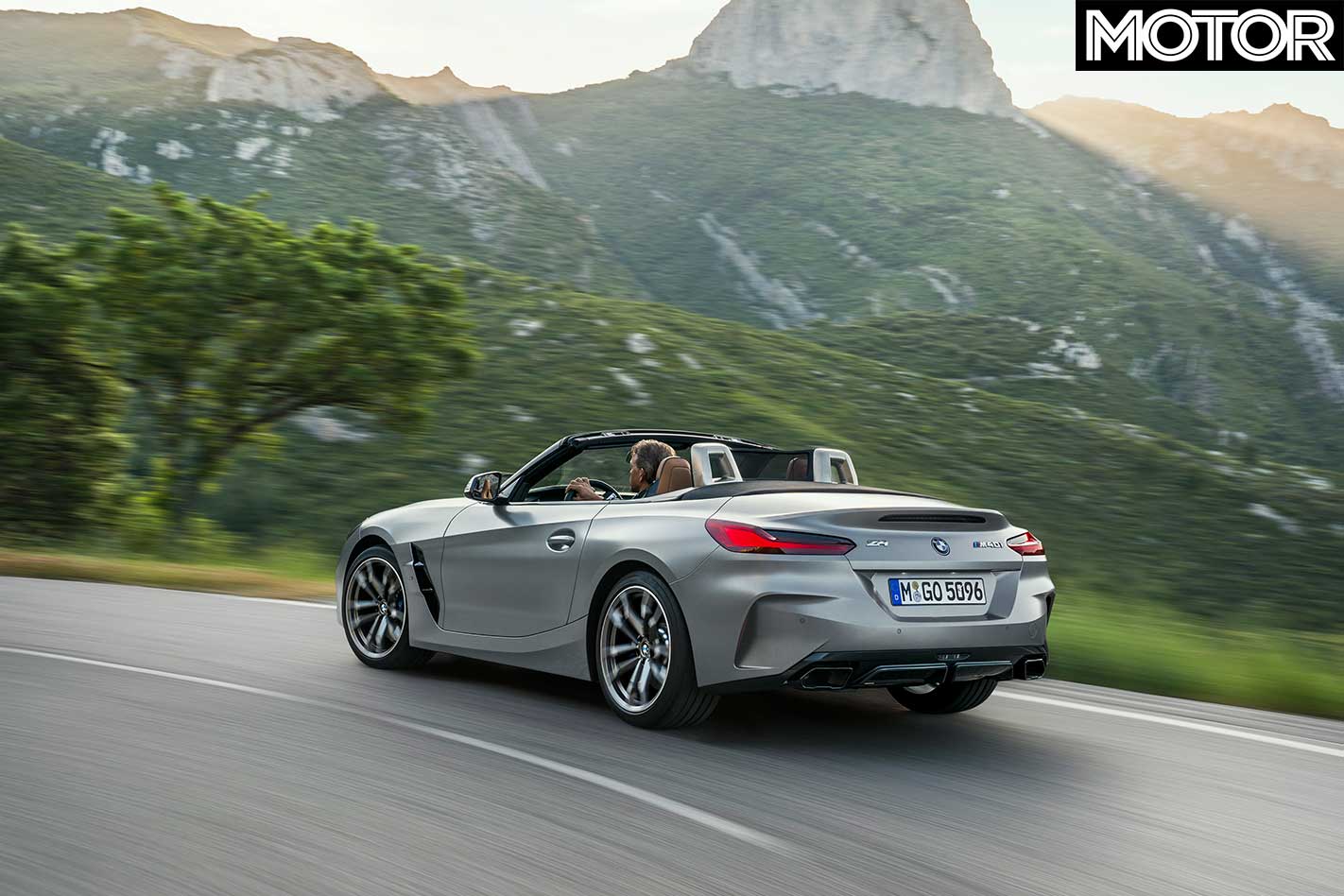
The previous Z4 was a soft pudding of a car, but you get the sense that the engineers in the company were given more of a say this time around. The new model is 85 millimetres longer, 74mm wider and 13mm taller; while the front and rear tracks have been increased by 98 and 57mm respectively.
So far, nothing too unusual, but then you’re told that the wheelbase has been shortened, giving the Z4 an all-square stance on the road, with the chassis team’s eyes firmly set on the centre of the target marked ‘agility’.
To make the most of the layout, BMW focused on the rigidity of the body, creating the stiffest structure of any open-topped car it has yet produced. On top of that, the lardy, high-mounted folding hardtop of the previous Z4 was binned, in favour of a light new fabric roof. That not only reduces overall weight, it also helps bring the centre of gravity down and, as a side benefit, it neatly folds away (at speeds of up to 50km/h) in front of a much-enlarged boot space (in just 10 seconds).
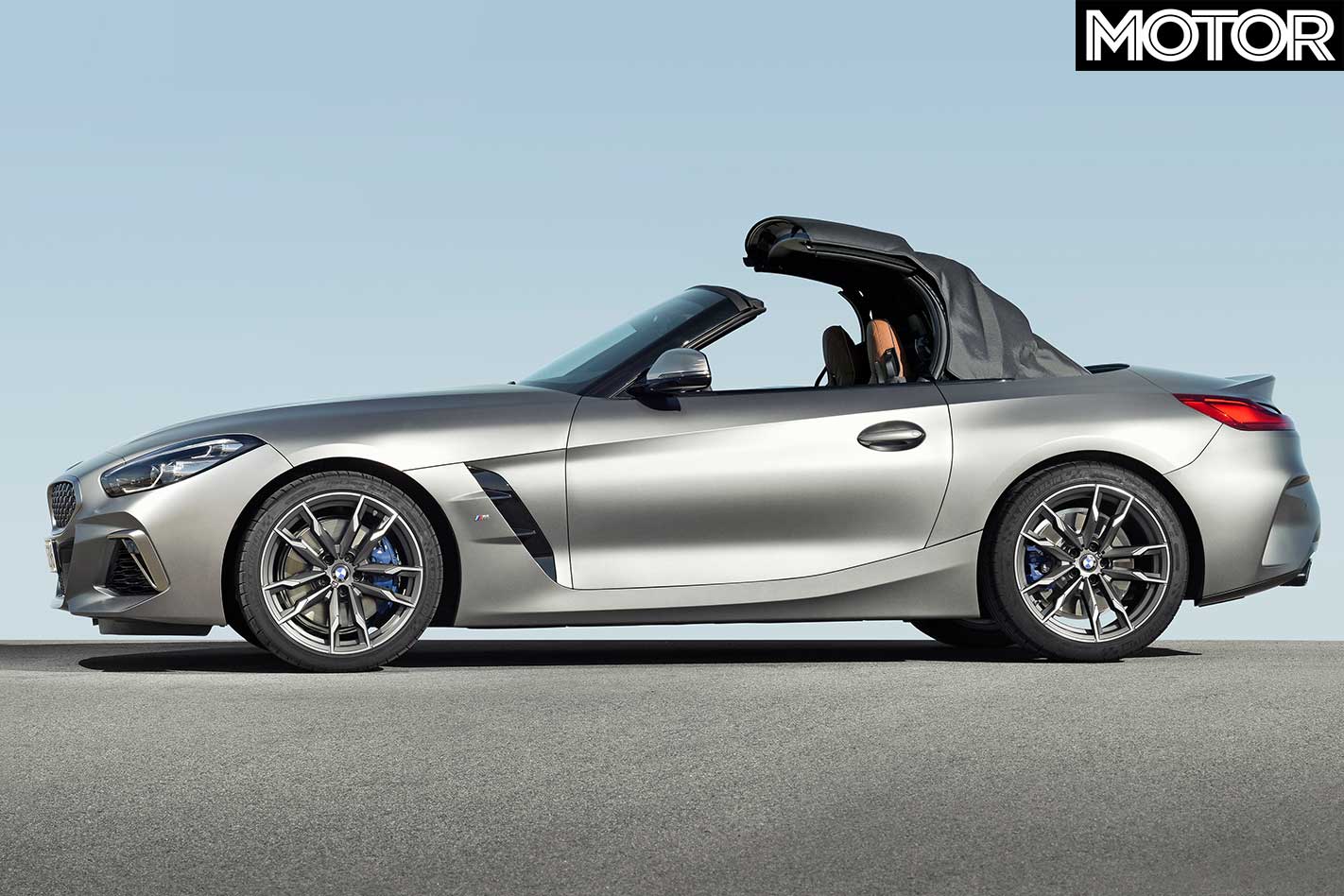
It’s black as standard or Anthracite Silver as an option. The latter works particularly well on the Z4 M40i, which gets the usual Cerium Grey details found on a BMW M Performance Vehicle – though they’re admittedly lost when put up against the Frozen Grey paintwork of the test car.
Still, your eyes will be too busy digesting the weird new kidney grille mesh up front and the protruding aerodynamic breathers behind the front wheels to worry about trim colours, though we reckon there’ll be universal approval for the muscular rear end and high-tech LED lights.
The keen-eyed will note there are mixed tyre sizes front and rear, which is the case across the whole Z4 line-up – and again reinforces our sense that the engineers were listened to for this car’s development.
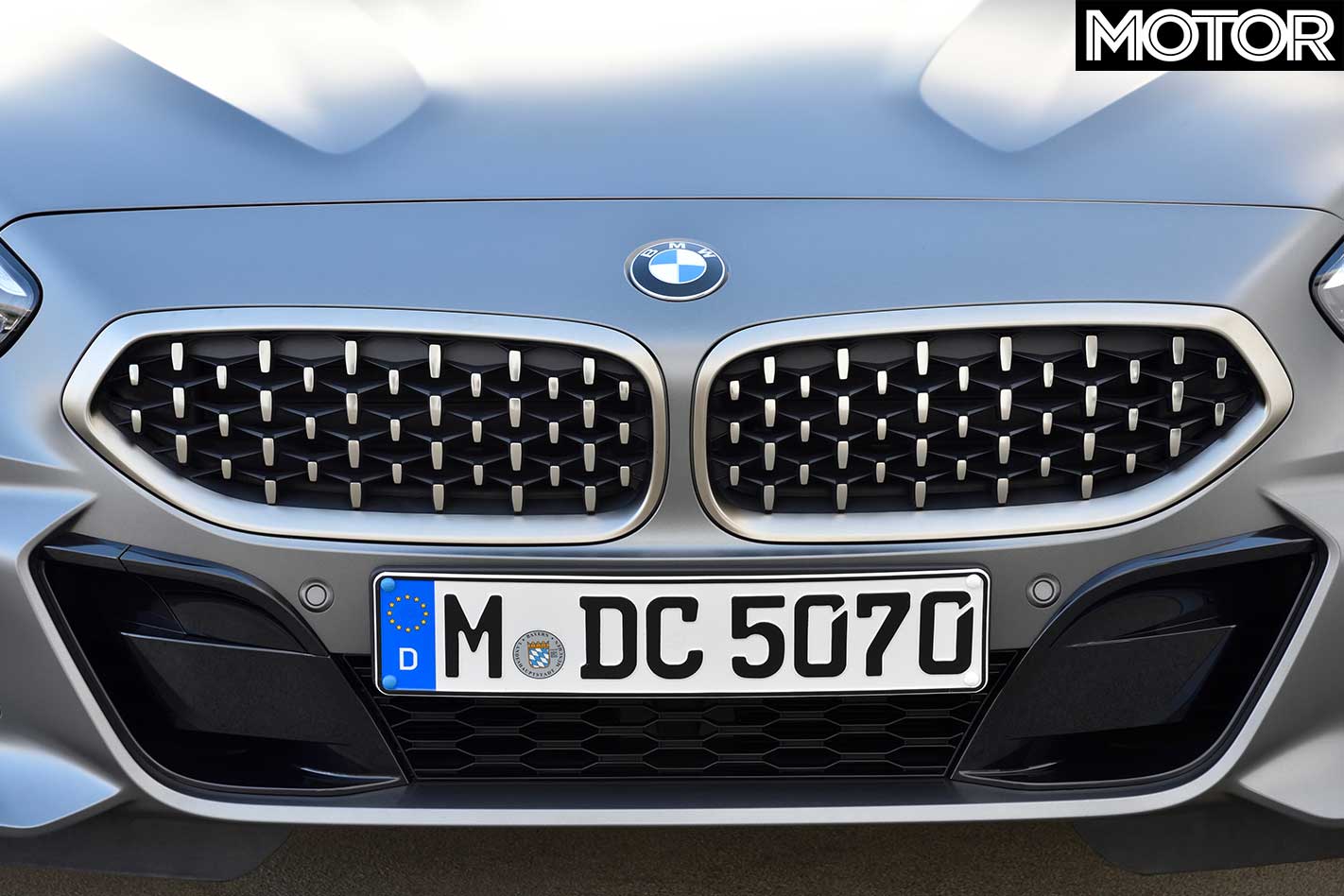
There’s more technical goodness underneath as standard in the M40i, including Adaptive M Sport suspension with electronically controlled dampers, M Sport brakes and, perhaps most importantly of all, an M Sport differential on the rear axle. All Z4s send their power to the back through the latest development of BMW’s excellent eight-speed Steptronic automatic transmission.
This comes with tactile gearchange paddles behind a high-quality three-spoke M-branded steering wheel in the M40i. The rest of the cabin is neatly styled and beautifully put together. You sit down low with plenty of adjustment in the seats and steering wheel.
While the new Z4 is civil with its multi-layer roof in place, you buy a roadster to drive it with the wind in your hair, right? What’s more, you’ll want to do that to let your ears have unhindered access to the exhaust note.
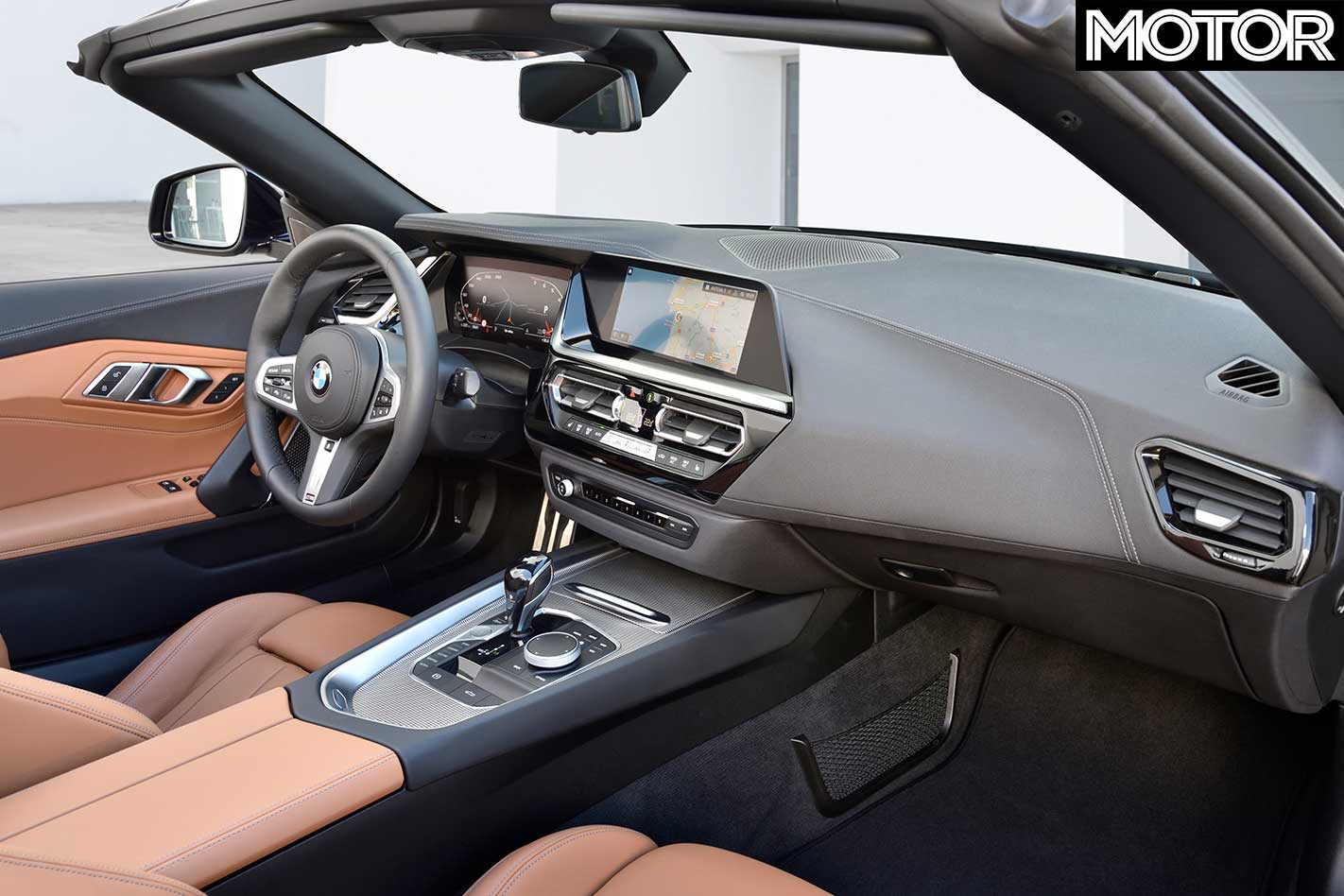
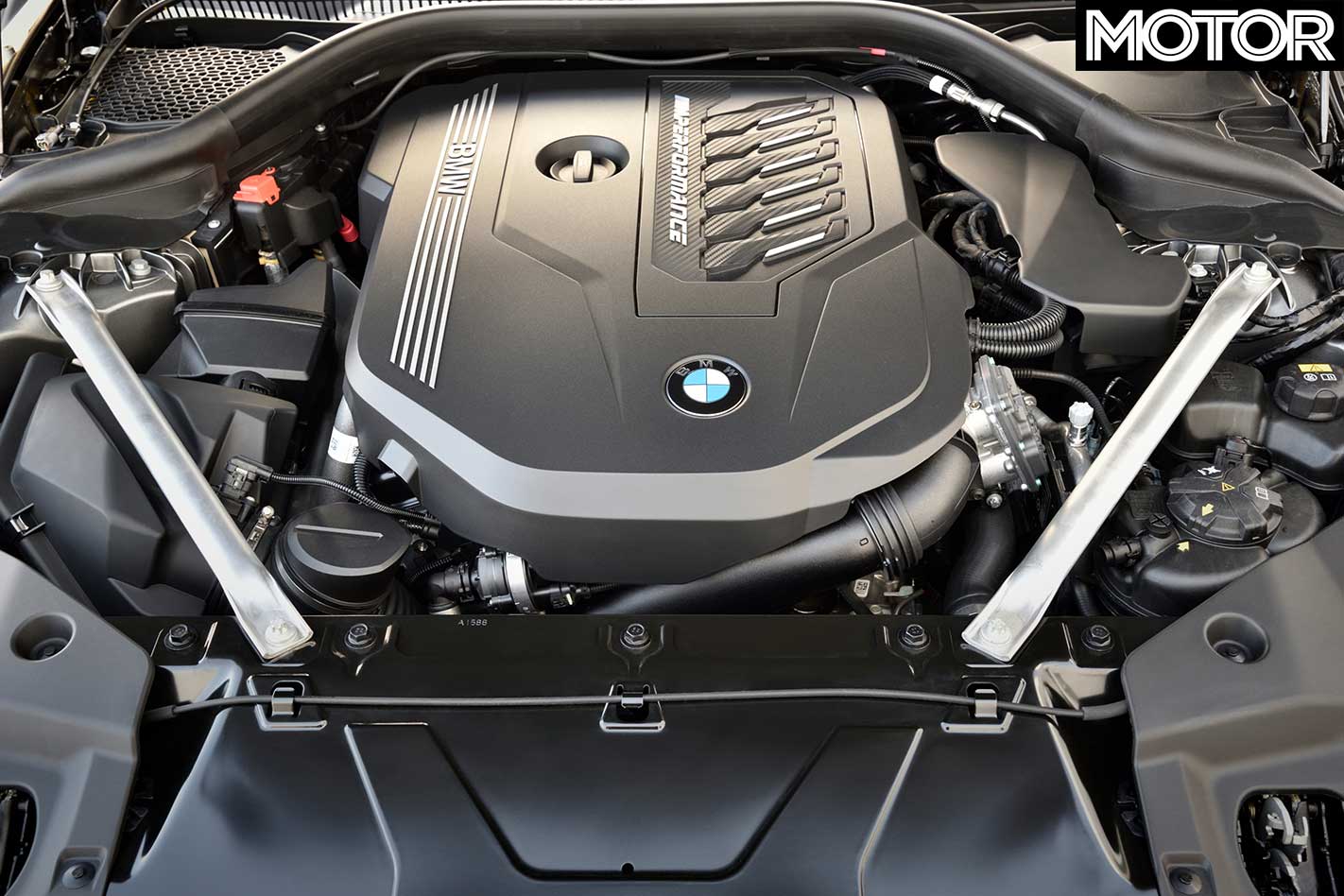
It’s a sonorous tune that only a straight-six could sing, even a turbocharged one. There’s 250kW of power from 5000-6500rpm and this engine really does encourage you to go looking for it all with a purposeful, yet cultured snarl, the soft limiter not kicking in until 7000rpm. Not that you need to use that much of the rev counter, as there’s a chunky 500Nm of torque produced from 1600-4500rpm, making the M40i feel rapid regardless of engine speed or gear selected.
That’s especially the case if you choose Sport or Sport Plus driving modes, as everything sharpens up noticeably, banishing memories of the previous Z4 to history. The Sport Plus setting is particularly aggressive in terms of throttle response and gear selection.
The best news though, is that the adaptive damping never turns the car into a denture-loosening mess; sure, it ramps up the firmness and body control in the Sport modes, but not at the expense of composure over rougher surfaces. This means you can still use the Z4’s performance to the full, even when not on a smooth road. In Comfort mode it’s relaxed, too, making for a good long-distance cruiser.
Last, but certainly not least, is that M Sport differential, a fully active unit, the operation of which is mapped to the driving modes. In Comfort mode, this attempts to keep the rear of the car stable at all times, while enhancing traction. It does that to a certain extent, though even so, if you’re clumsy with the throttle on the exit of a dusty or damp junction, there’s a momentary twitch from the rear, ensuring you know which end the power is being sent.
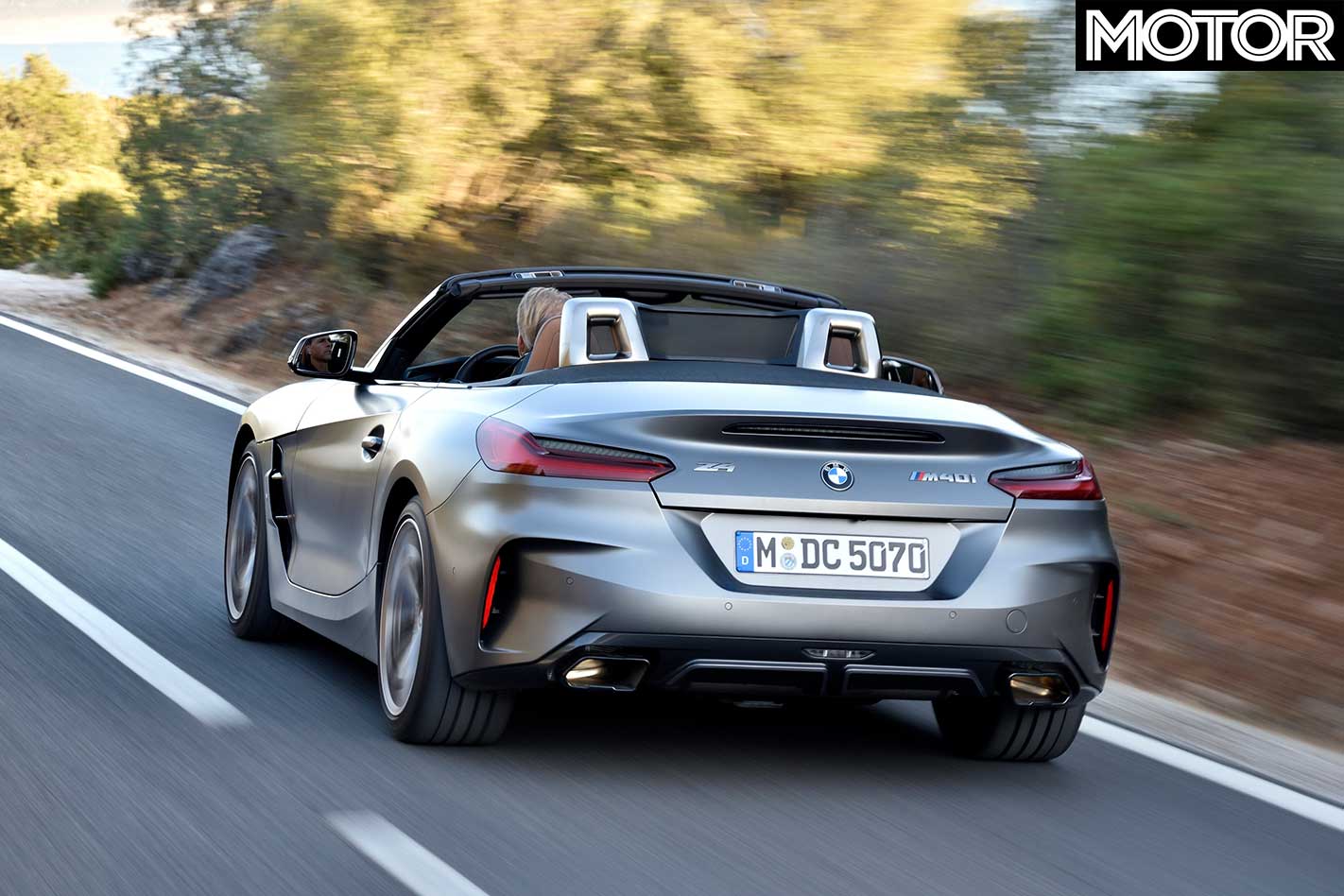
On the move it’s never nervous, however, and it takes a little provocation to push beyond that initial movement, especially on dry tarmac. The differential allows for a more ‘dynamic’ stance on the exit of corners if you’re in one of the Sport modes, as you’d hope, and this reveals a delicious balance to the whole car.
You can really lean on the outside tyres and get on the power incredibly early, letting the differential do its thing. What’s more, on the approach to a corner and on initial turn-in, it can also help make the Z4 feel ‘pointy’, adding to the overall sense of agility. No doubt the variable sport steering adds to that, as it’s a variable assistance and ratio system.
Feedback isn’t bad, though would be better with a thinner steering wheel rim. The brake pedal is reassuringly firm, even after a spirited drive, allowing you confidently mete out as much braking force as you need.
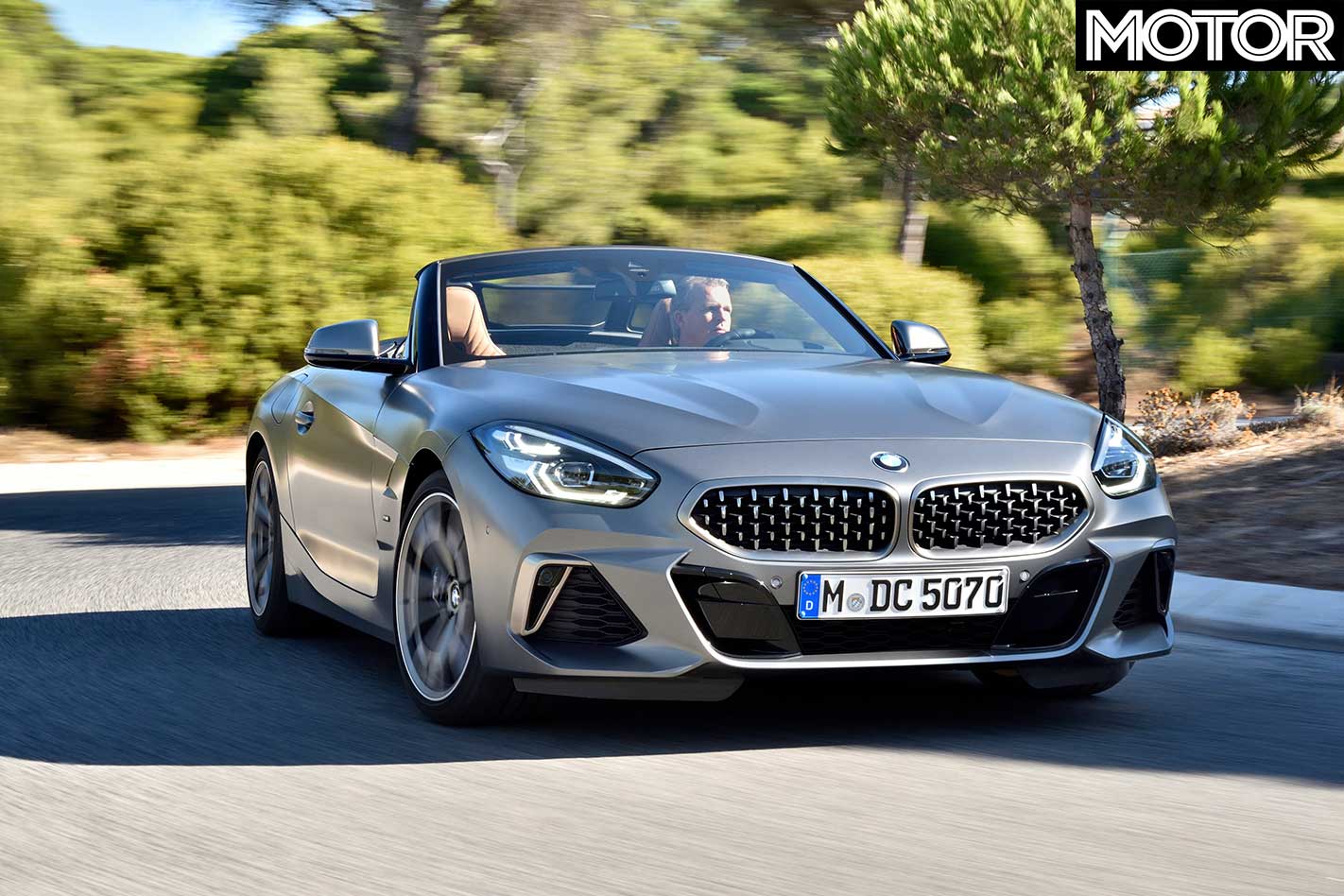
And confidence is a word we’d use to summarise the new BMW Z4 M40i. This is an incredibly polished product from the Germans, mixing quality with the latest interior technology and the usual desirability of a drop-top roadster with rear-wheel drive. BMW has managed to incorporate all of that while giving its new Z4 a chassis that is clearly developed with the enthusiast in mind. Especially so in the M40i.
Still want that Boxster?
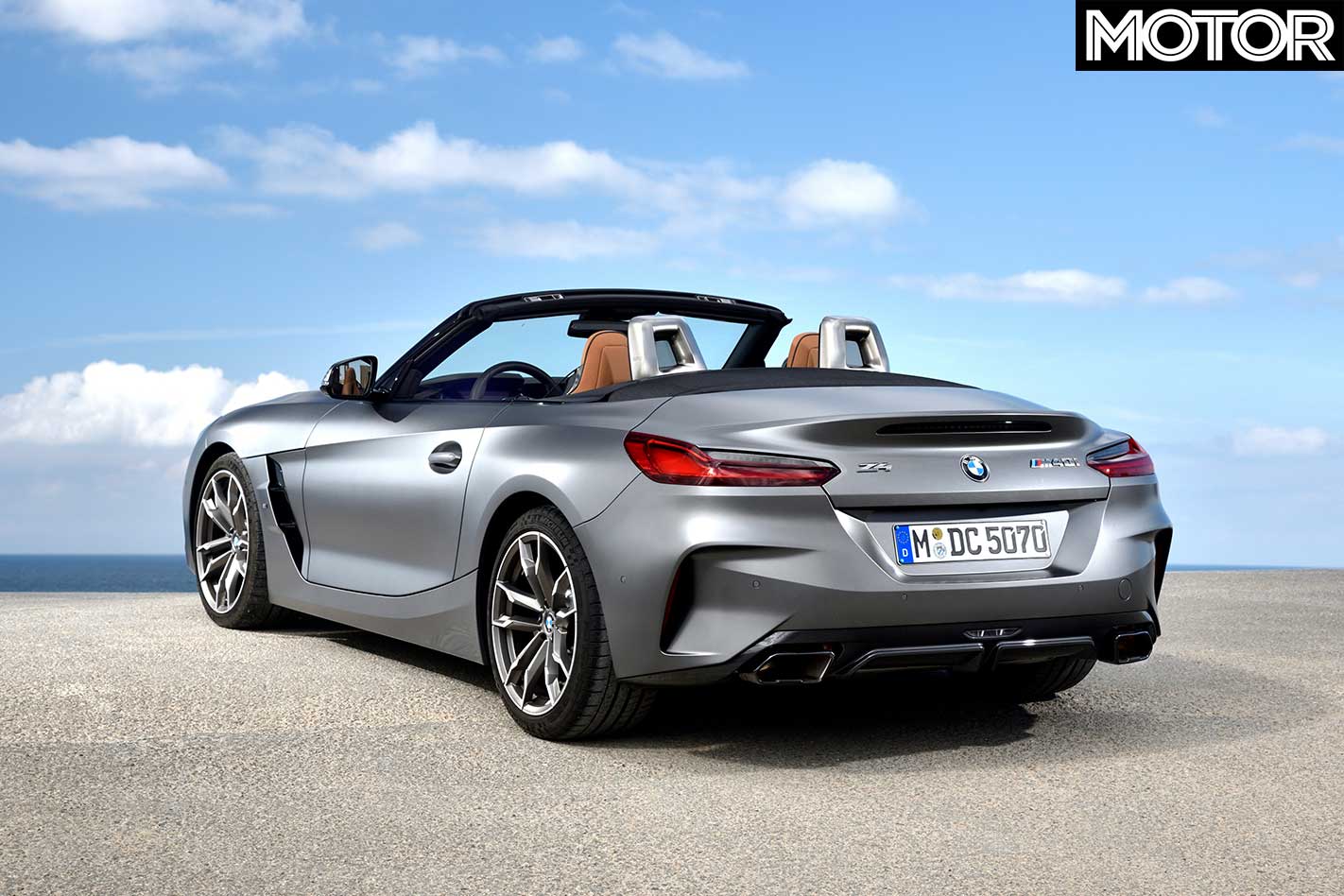
2019 BMW Z4 M40i SPECS: Engine: 2998cc inline-6, DOHC, 24v, turbo Power: 250kW @ 5000-6500rpm Torque: 500Nm @ 1600-4500rpm Weight: 1500kg (est) 0-100km/h: 4.6sec (claimed) Price: $120,000 (est)
The Nemesis
2.0-litre turbo flat-4, RWD, 220kW/380Nm, 0-100km/h 4.7sec 1335kg, $119,960
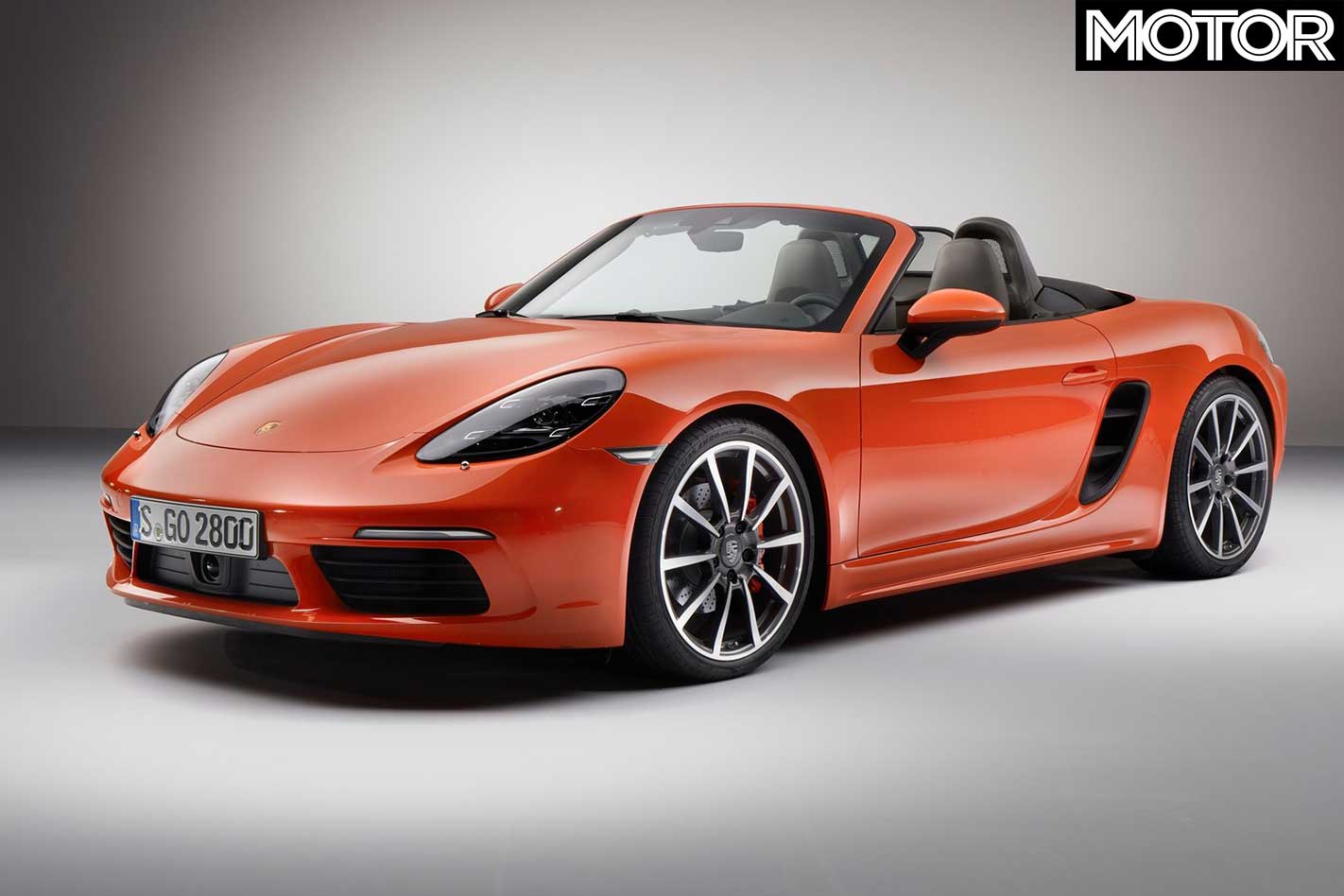
Down on power compared to the Z4 M40i (and its more expensive S sibling), the Boxster brings razor sharp handling to the topless battle and it’s every bit a driver’s car.
“Because it’s there,” was all the justification George Mallory ever needed to climb Everest. Our aspirations are a good deal more modest than old George’s – and we’re banking on a more gratifying outcome – but the rationale is much the same. Why would you drive from sea level to Australia’s highest coach road? We’d prefer to ask why wouldn’t you, especially when that road, from Lakes Entrance on Victoria’s Gippsland Coast to the alpine resort of Mount Hotham, is quiet, testing, beautiful and irrefutably there.
For most of us, the route to Hotham involves a schlep down the Hume before drawing a bead on Bright and then tackling countless switchbacks up to the snow. The road less travelled from the south is a very different proposition, a little more cryptic in its relief, teasing in and out of deep forest and high altitude plateaus, and the car we’ve chosen for the drive is also a vehicle that takes a little time to key into.
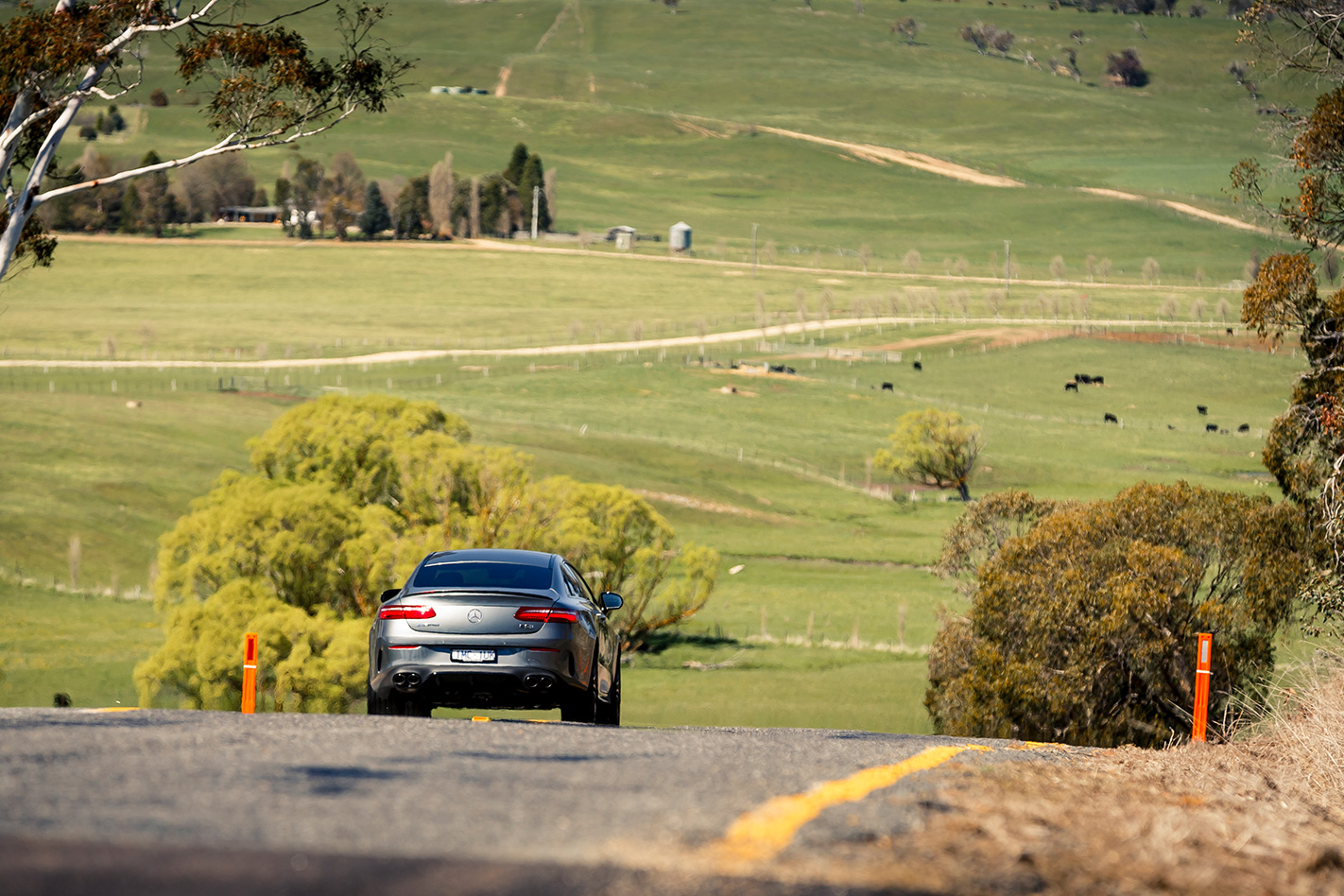
It’s been over two decades since Mercedes-Benz last sold a car with a straight-six engine. The C36 AMG was the first co-developed model between Mercedes and its recently acquired go-faster arm from Affalterbach, and it spawned a little-known E36 sibling before being replaced by V8-engined 43 models within 24 months. Since then, straight-six superiority has been undeniably claimed by the mob down the road in Munich. The latest E53 AMG Coupe not only marks the return of the straight-six, but also includes mild hybrid tech, four-wheel drive, an electric compressor and a nine-speed transmission. New game, new rules.
Oil and gas rigs dot the horizon, shimmering through the haze like a raiding party of Wellsian Martians. Lakes Entrance is dressed to impress, all crisp spring sun, pert Norfolk Island pines and dazzling cabin cruisers on round trips to nowhere in particular, piloted by satchel-skinned sixty-somethings. The E53 Coupe blends in well here. There’s something about it that smacks of reward; an undemanding and elegant piece of self-congratulation. It’s inoffensively mannered, mystifyingly mute and almost entirely lacking the spiky character and dynamic honing we’ve come to expect of the latest generation of AMG coupes. You could waddle from your forty-foot Sunseeker Portofino, jump into the Merc and hardly register the transition.
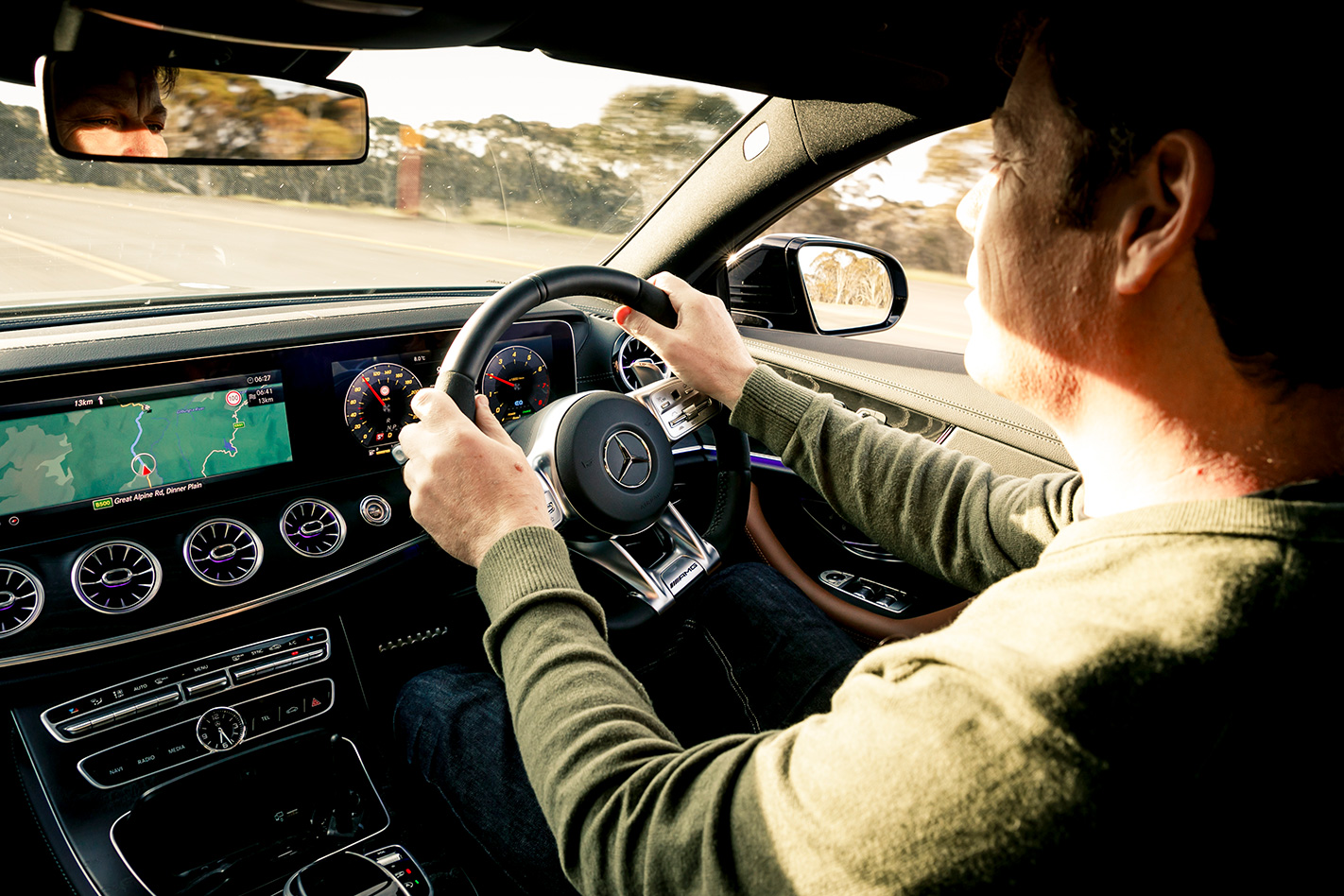
That said, we’ve driven here in Comfort mode, the endlessly tedious A1 made bearable by the E53’s molasses ride quality, indoor-outdoor airiness of that pillarless body and the unremitting consideration of the cabin, with its sumptuous touch points, endlessly configurable screens and telepathic sensor array. The initial run up to Bruthen offers a gentle warm up, climbing up the inland scarp slope from Lakes Entrance and making first acquaintance with the Tambo River, a watercourse we’ll get to know very well over the next hundred kilometres, before the stream temporarily arcs off to the east.
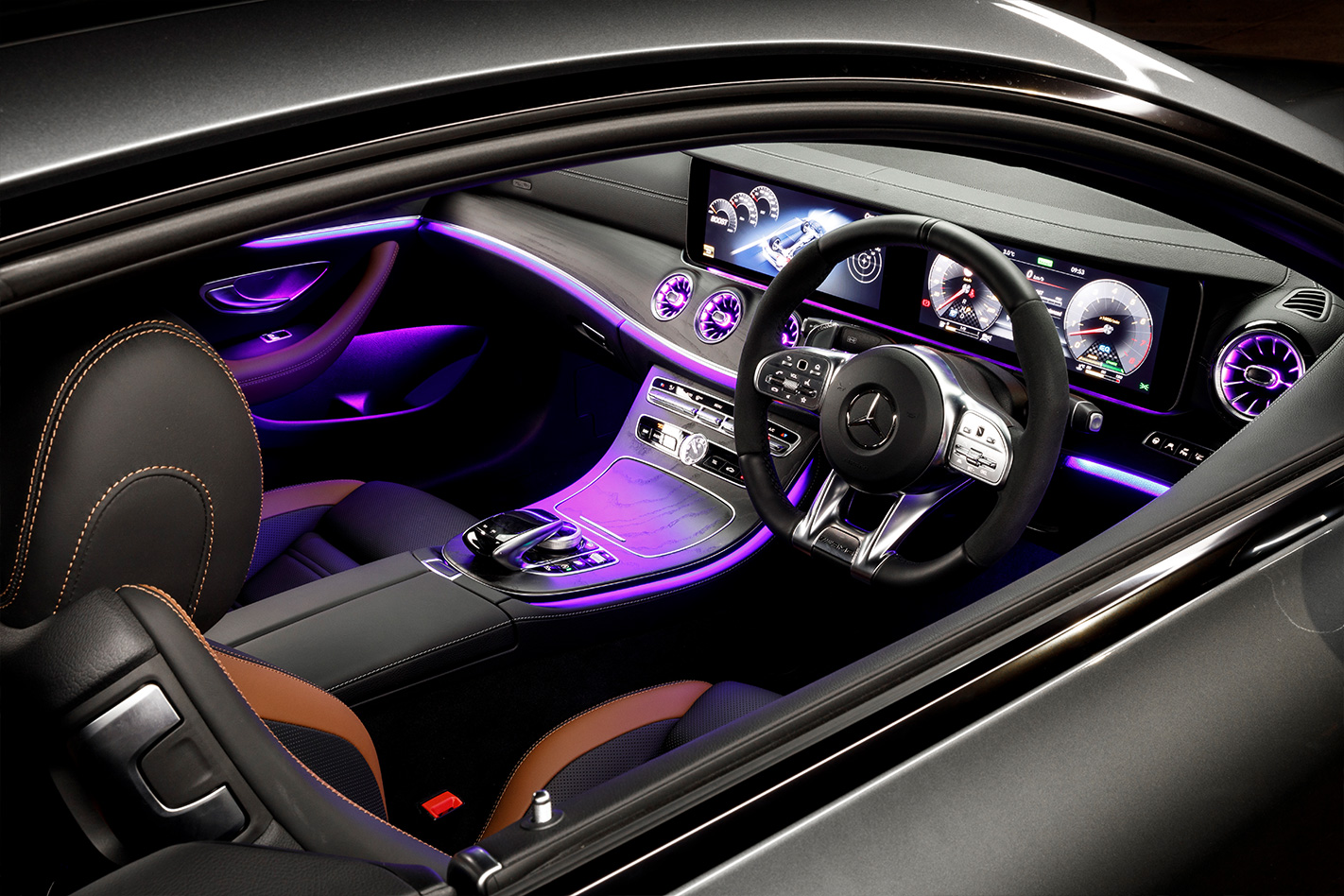
The E53’s softer settings ease it into an effortless flow on these austral stretches of the Great Alpine Road, a languid throttle map and conservative transmission calibration seeing it indolently slur into higher gears early. The engine, with its slightly uncouth cold idle, warms to the task, the electric motor nestling between engine and gearbox delivering a seamlessly smooth swell of torque to 2500rpm, with the electric compressor filling any residual lag for another 500rpm. The 48v electrical system and integrated starter-alternator give the E53 the softest idle stop system I’ve ever encountered. Starting the car requires a button press and the engine is instantly at idle, with no cough of starter motor whatsoever. The Yokohama Advan Sport tyres are actually quieter on coarser surfaces, smooth bitumen causing their sipes to sing a little, up a semitone of harmonic frequency on the crown of the road, down one when cambering towards the gutter.
We pick up the queues of poplars marking the watercourse just south of Tambo Crossing. A horseshoe of red rock rises to our left as the road drops into a natural amphitheatre. This seems as good a time as any to snick the mode selector into Sport+ and give this boulevardier a prod. The result is instantly transformative. The air suspension firms up, the exhaust reports for duty, stability control eases back a notch, the throttle becomes noticeably more incisive and, best of all, the transmission no longer lazily upshifts. Above 4500rpm, the engine note hardens and by 5000rpm it’s hauling hard, building an addictive purity of timbre. Peak power arrives at 6100rpm, all 320kW of it, after which the 6500rpm redline places a curfew on the fun. Switch into manual and the tight spacing of the gears allows you stay in this zone, where the E53 insouciantly shrugs off its 1925kg bulk through sweepers.
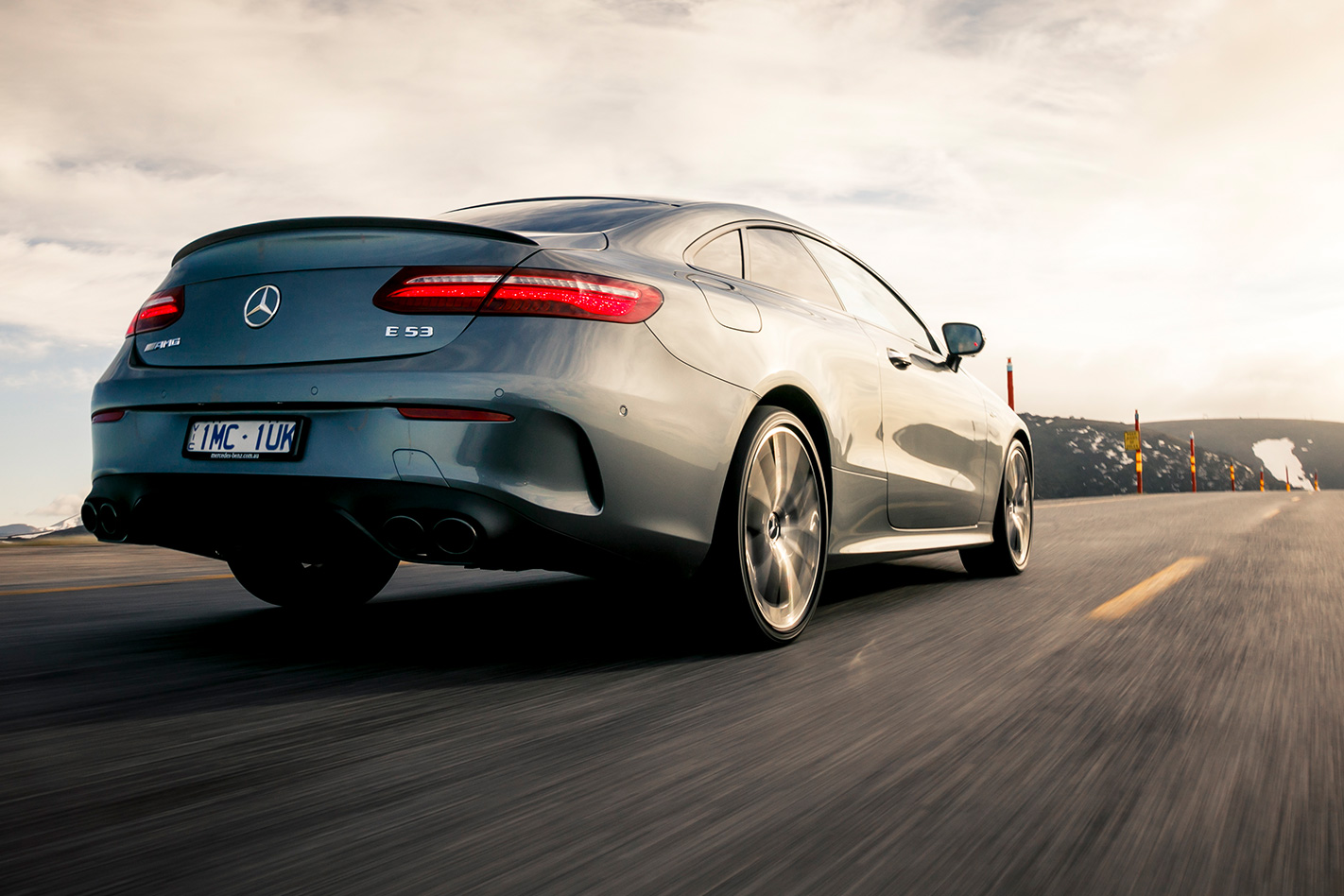
Corner radiuses tighten inexorably as the road climbs, and we jink off the Great Alpine Road for a tougher assignment, through the sassafras-choked snake that is the Cassilis road, all hasty patching, root bumps and coarse chip. Here you need to manage the AMG’s weight a little more judiciously, carefully synching your steering inputs against the hysteresis of its pitch and roll axes. Big throttle openings allow you to hear the electric motor at work; a faint whine accompanied by instant 100% fills on the boost gauges. That triad of motor, compressor and all-wheel drive propels the E53 out of tighter corners with real verve but little drama. If you’re looking to smear inky traces of carbon black up the road, balancing throttle against steering, sign up for a C63 instead.
The road burst out of the trees on the high pastures just beyond the ghost town of Cassilis, with its depleted gold reefs and scorched remnants of the 1939 fire that drove away the remaining inhabitants trying to scratch a living from the exhausted terroir. Pointing arrow straight at hills so green they look draped with snooker table baize, the road rollercoasters through cattle paddocks punctuated by stark gums and centuries-old game trails burnished into tan halfpipes contouring to the near horizon. You’ll catch a glimpse of wedgetails through the glass roof – barn doors with beaks lazily circling on invisible thermals – before you rejoin the B500 just outside Omeo.
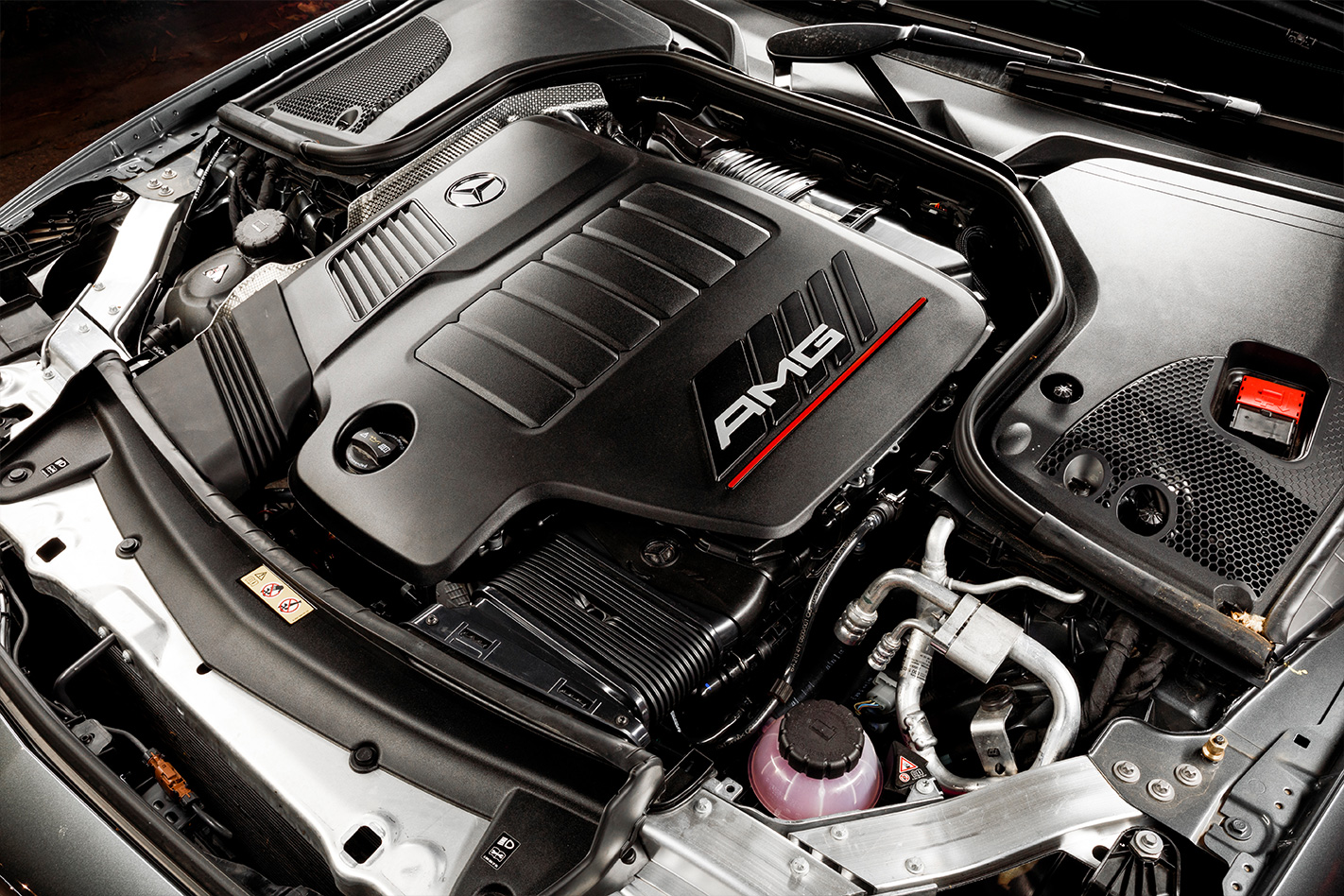
From here the road climbs, in great undulating steps, each downslope a few metres shorter than the climbs, so altitude arrives slyly. Taking stock of the dynamics of this car isn’t easy chiefly because its bandwidth is so great. Its shortcomings arrive at the extremes of its envelope, which isn’t so surprising. In Sport+, the 2.6-turn lock-to-lock steering could use more heft and so immersive is the soundtrack that you yearn for a few more revs at the top end. When cruising, the ride is good on these optional 20-inch wheels, but I can’t help wondering how much better it’d be with the standard 19s with their more benign sidewalls. Setting the suspension to a softer tune and dialling everything else up to maximum attitude in the car’s Individual mode seems to hit the sweet spot.
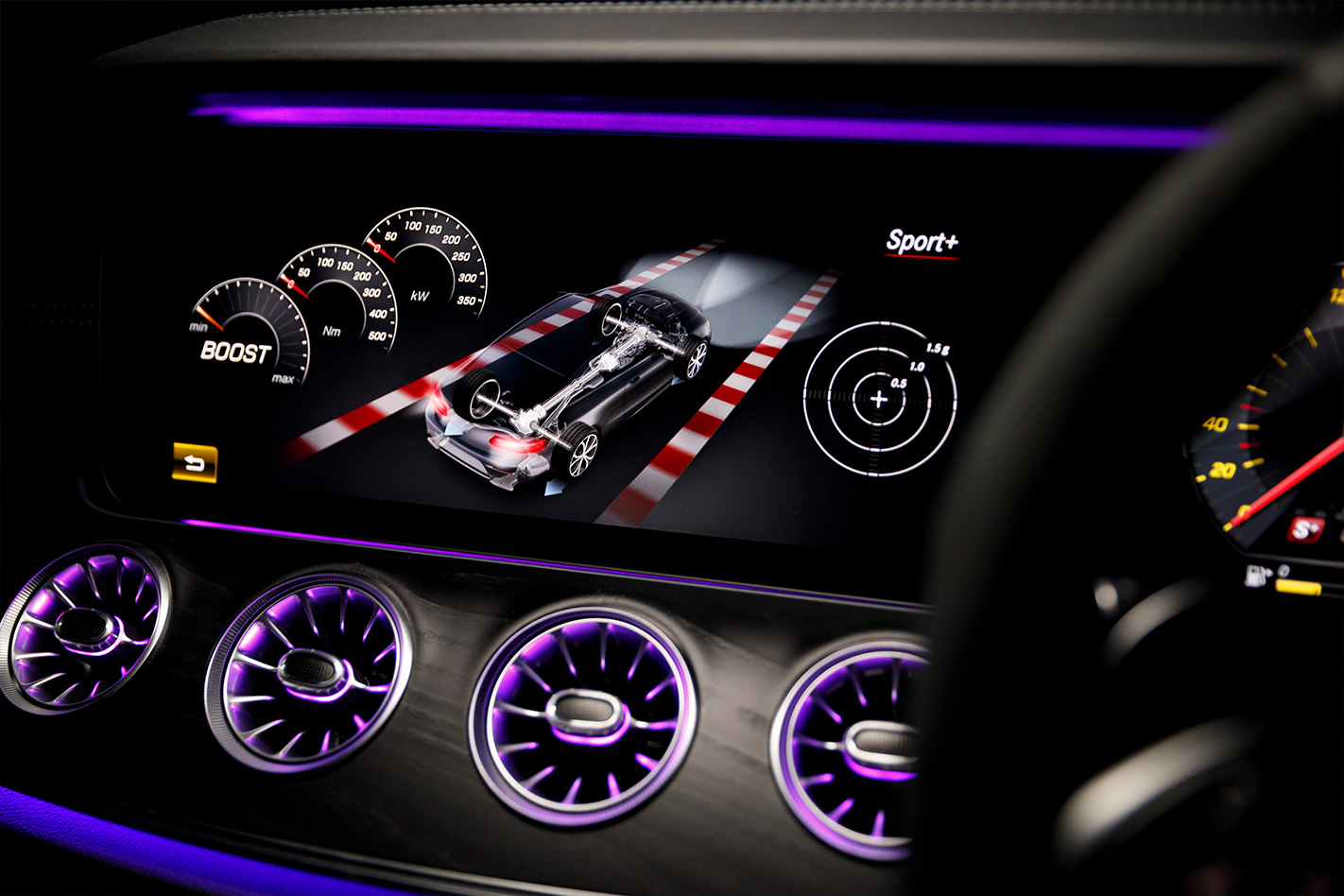
I’m still no fan of the clumsy wand gearshifter, but accept that centre console real estate is, these days, often prioritised for infotainment controls. Speaking of which, it’s also a shame this car doesn’t come with MBUX, the brilliant operating system seen in the A-Class. Instead we get a late version of the COMAND architecture with no touchscreen functionality. It works well though, and it’s hard to fault materials quality, with neat stitching, a high-carpeted transmission tunnel and an extravagantly delicious leather and Alcantara-trimmed sports steering wheel.
Snow gums begin to dominate the roadside with dusty glimpses of spring snow patches still clinging gamely to the south-facing slopes. The straggling carbuncle that is Mount Hotham Alpine Resort hoves into view, deserted but for a gang of currawongs systematically redistributing the contents of a dumpster. We keep going, past what has to be the most scenic view of any police station in Australia, cheekily punt the redline through the corrugated iron-lined tunnel and round a final few corners until we’re at 1845 metres above sea level on the highest coach road in the country. Marked by a surveyor’s cross, it’s the finish line of this particular road trip, and we’re here just as the sun dips down beneath the deep blues of the rolling foothills, a series of pastel slides growing darker to the western hinterlands. The snowfields of Mount Feathertop and the Razorback glow rosily luminescent as photographer Jacobs gears up for the hero shot, the E53 ticking and pinging cool in what feels like the final breath of winter.
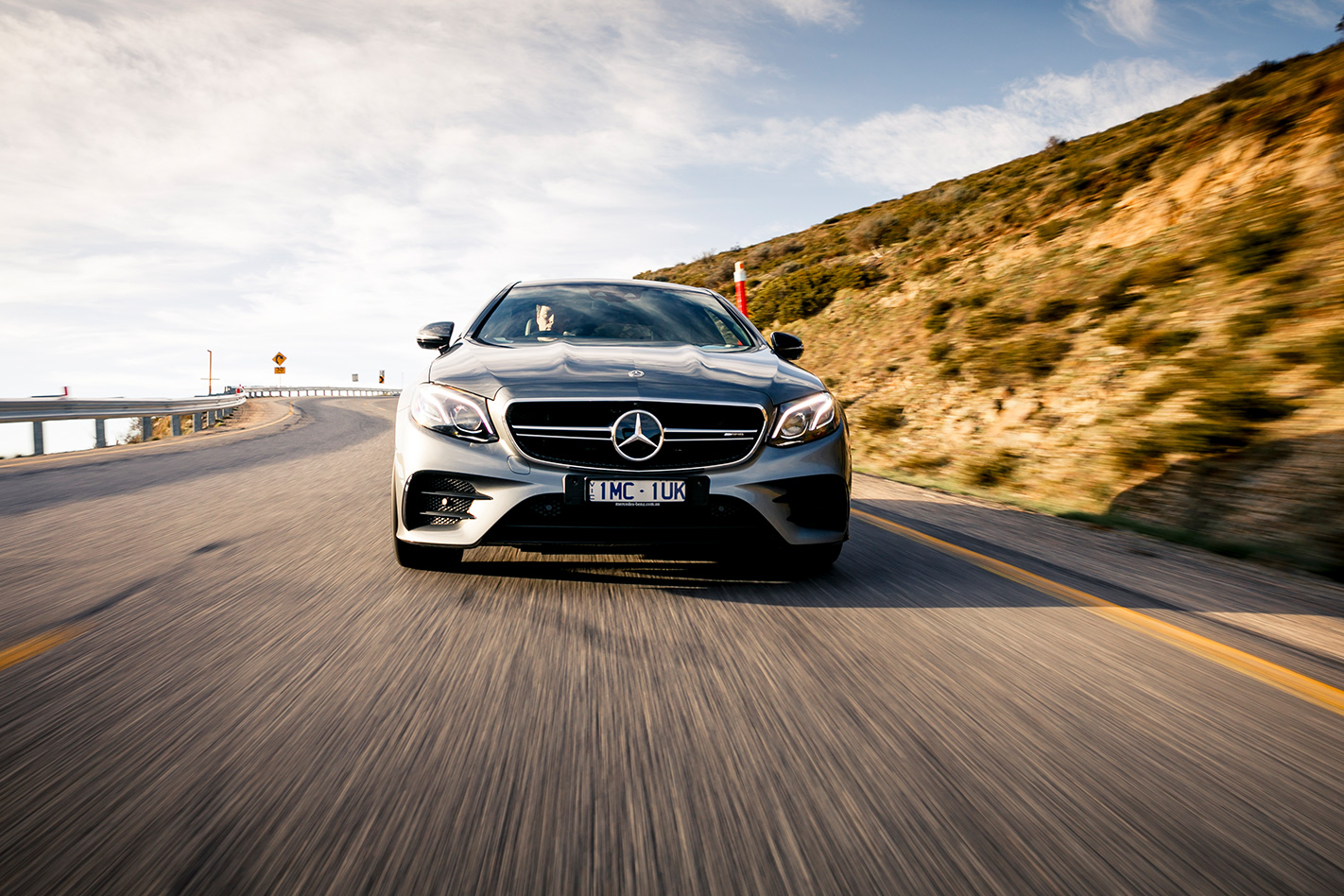
There’s a lot to this car, certainly more than I initially gave it credit for. The powertrain is a delight, almost a victim of its own brilliance in that it leaves you wanting even more. It’ll certainly require a huge technical leap for Munich to match it in BMW’s forthcoming 8 Series. The Bavarians will also be hard-pushed to equal the considered and measured loveliness of the Mercedes-AMG E53 Coupe, with its complex character that rewards time and distance. The eye-widening adrenalin spike of the E63 sedans might well be an easier sell to power-junkie Australians, but as an everyday proposition, I’d choose the left-field E53 Coupe without hesitation. The road less travelled might be a beguiling proposition – and more often than not there’s a solid reason why the traffic goes elsewhere – but every once in a while it turns up something you’d rather keep to yourself.
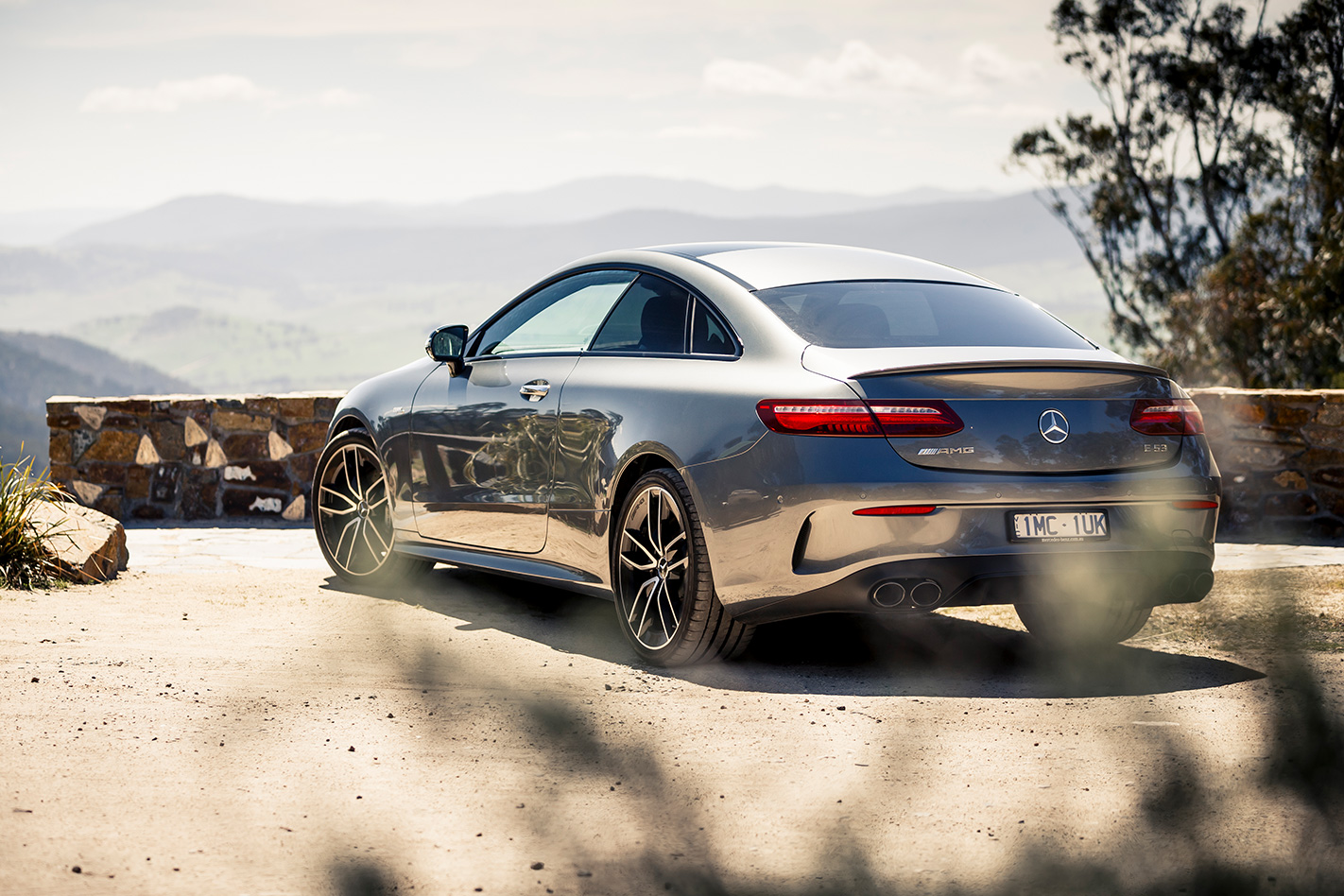
SPECS
Model Mercedes-AMG E53 Coupe 4Matic+ Engine 2999cc, inline 6cyl, dohc, 24v, mild hybrid, turbo, electric s/c Max power 320kW @ 6100rpm Max torque 520Nm @ 1800-4800rpm (770Nm system torque w/e-motor) Transmission 9-speed automatic L/W/H/WB 4853/1860/1430/2873mm Weight 1925kg 0-100km/h 4.3sec Economy 8.7L/100km (claimed) Price $172,790
