
YOU CAN make HSV’s managing director Tim Jackson wince simply by describing the work his company does on the Chevrolet Camaro as a simple conversion.
The truth of the matter is the task of ensuring Camaros roll off HSV’s Clayton production line with the steering wheel on the right side (literally) requires significant re-engineering from Australian workers.
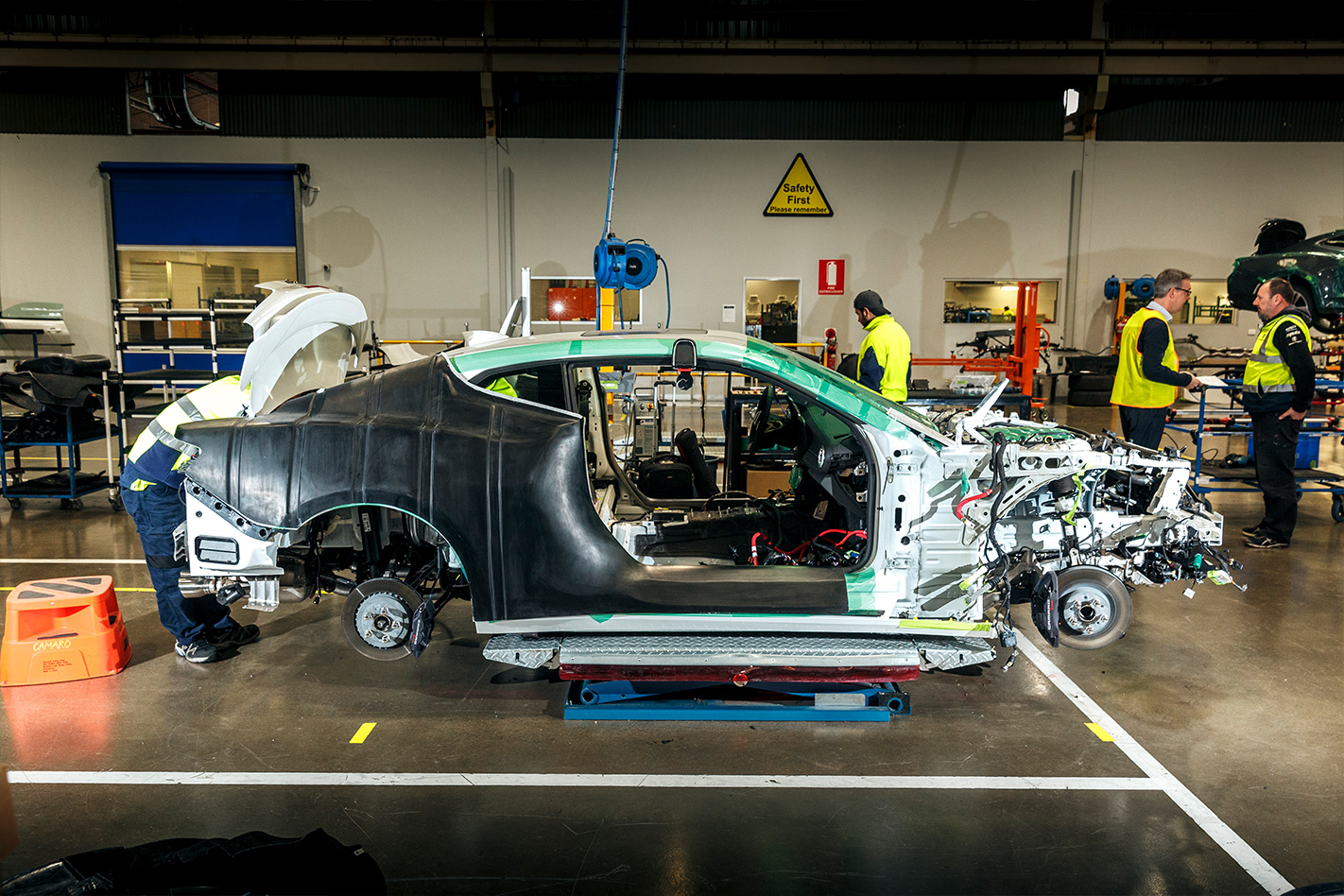
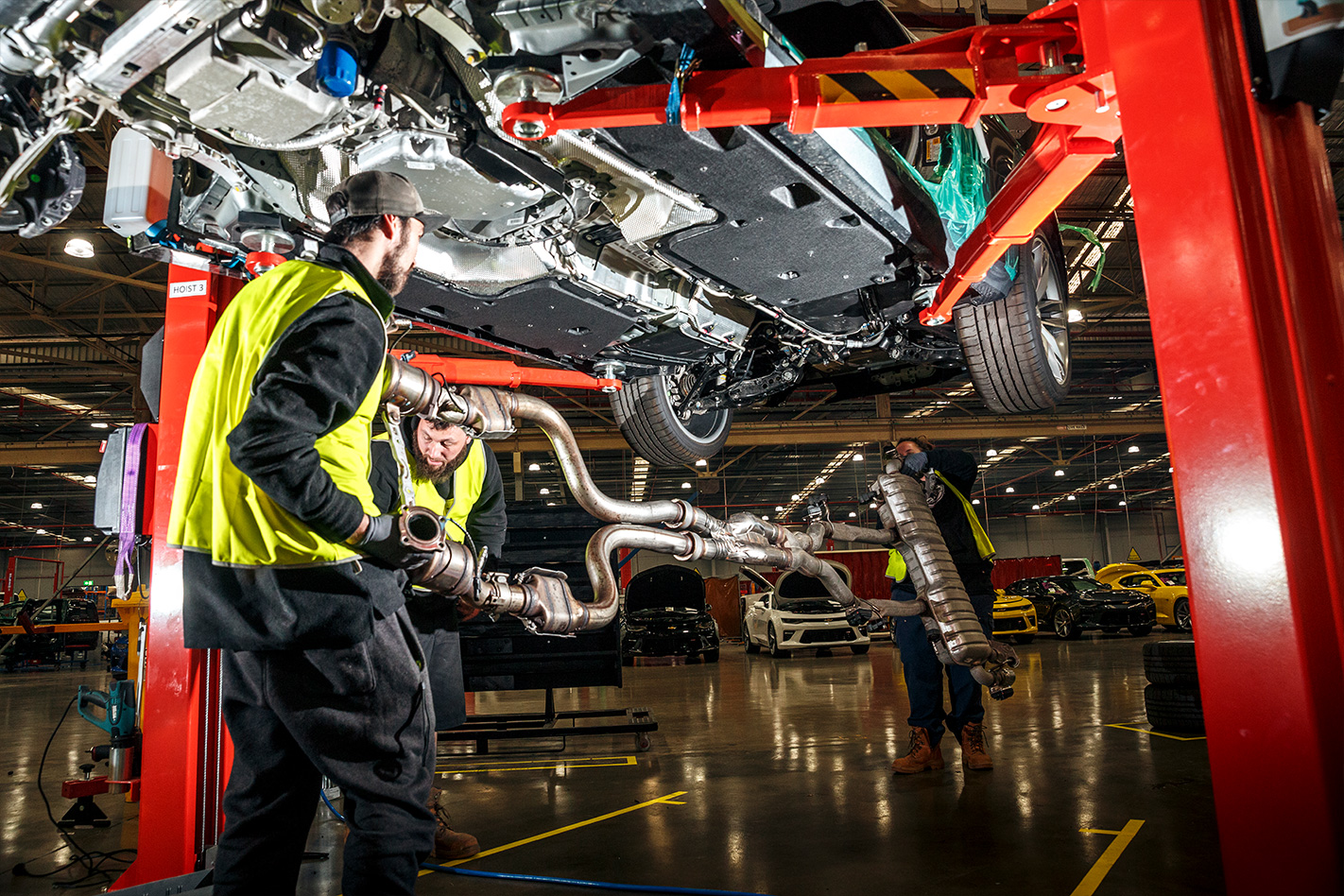
Wheels was invited to HSV’s Clayton factory for an exclusive look at what goes into the ‘re-engineering’ process, and what we witnessed was impressive.
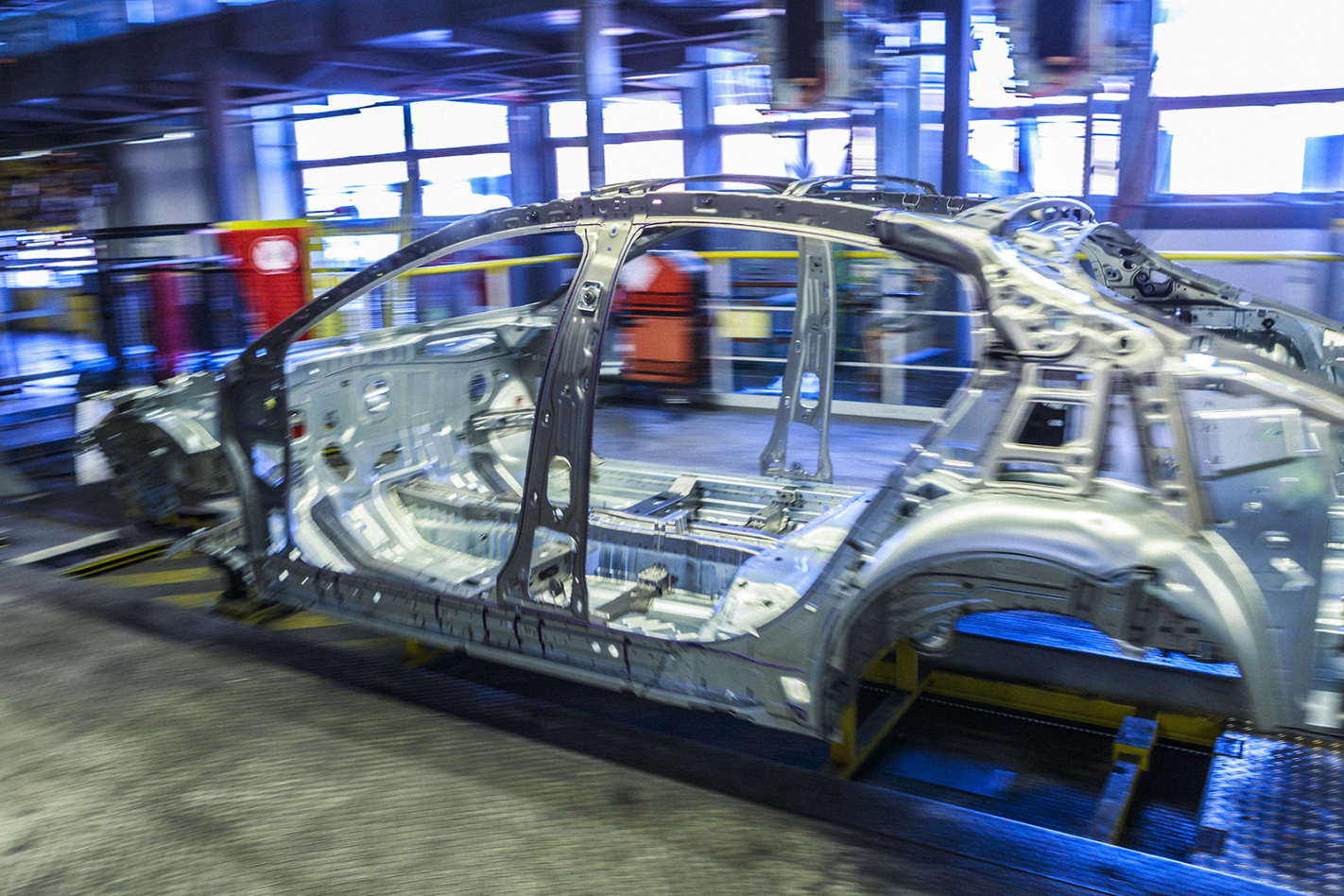
HSV claims 357 new components were designed, developed and sourced for the program, with only the Camaro’s front and rear glass, rear suspension assembly, differential and fuel tank left in place during the shift from left- to right-hand drive. Everything else is removed, and we really mean everything.
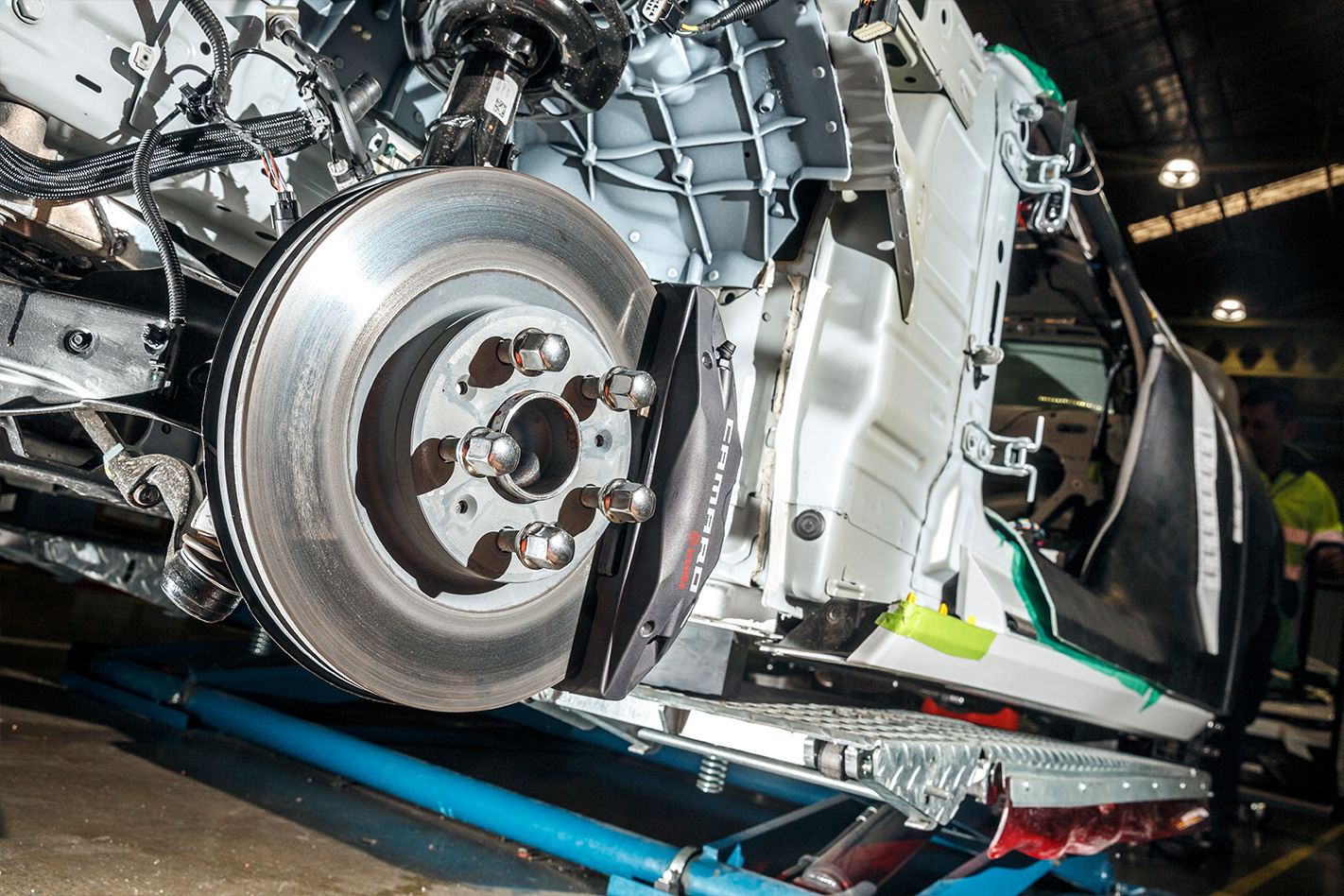
In total, there are nine different build stations the Camaro must progress through during its re-engineering.
First, the doors and bonnet come off, the interior is stripped out, AC degassed and wiring harness removed.
Second, the wheels are taken off, a new harness is put in, the rear interior refitted, exhaust disconnected, brake, boosters and air-con, fluids extracted, dash removed, front fascia and guards off.
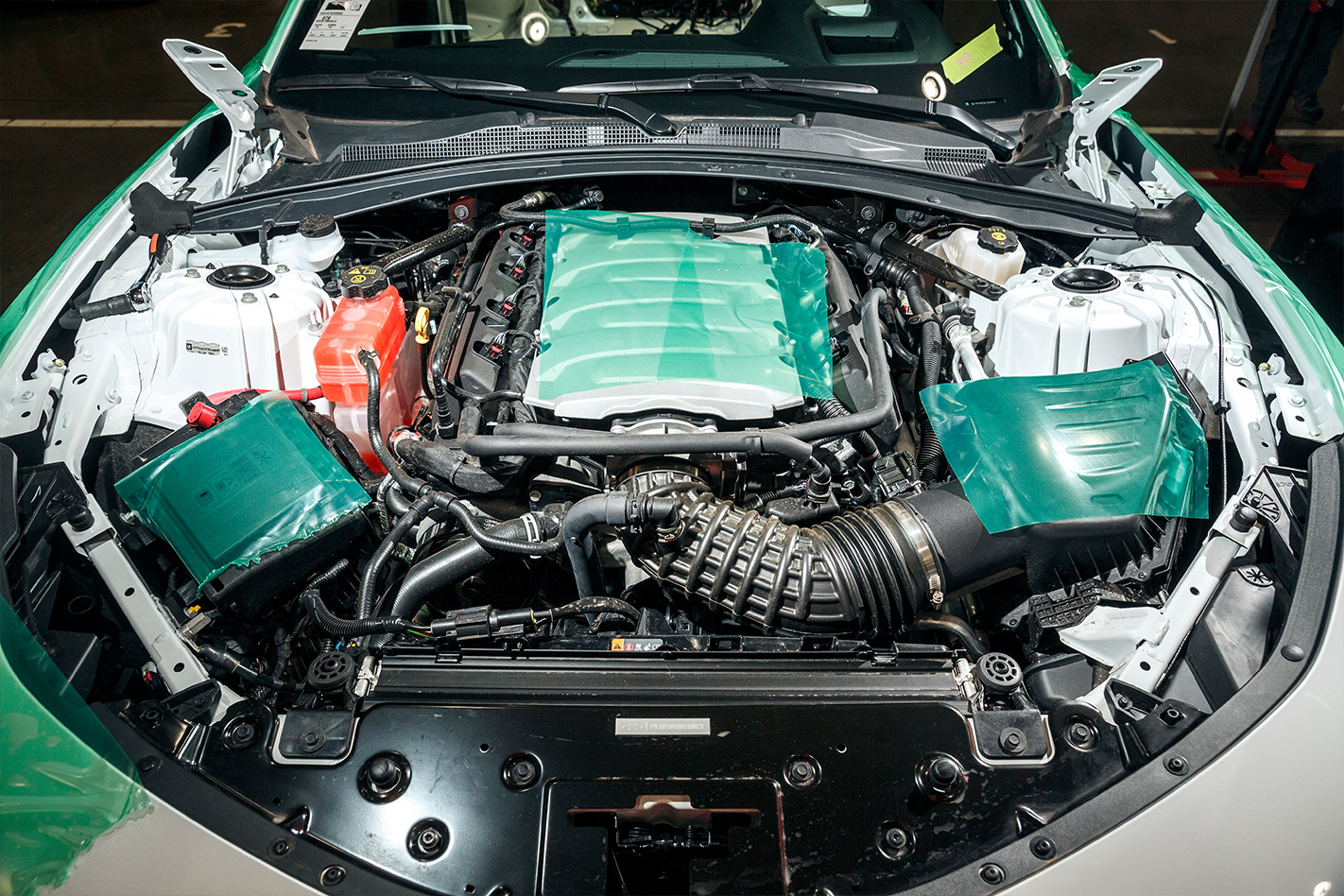
For the third station the engine is removed and RHD parts fitted, firewall modified, front clip on, engine in, connect drivetrain and rear brakes, refit exhaust, wheels on.
Fourth is reconnecting wiring to the engine, RHD instrument panel in, front interior fitted, plumbing reconnected, fluids filled, interior and doors fitted. At this point the Camaro is driveable again.
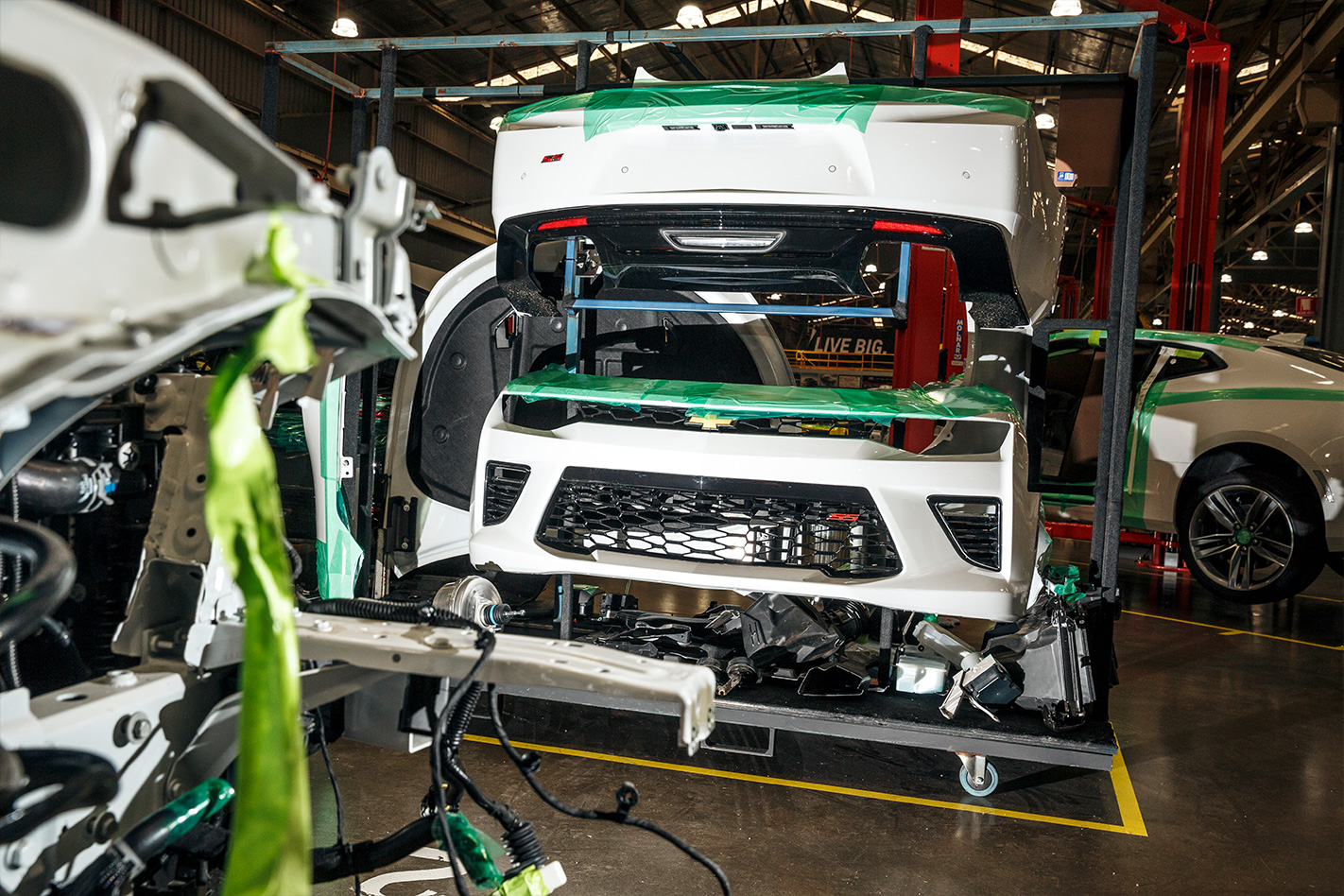
Fifth is a refit of the front fascia, guards, bonnet, wipers, and headlights. Check for fault codes and troubleshoot.
The sixth station involves the Camaro being run over the bump track to settle suspension, before moving onto the seventh part of the process which involves a wheel alignment.
At the penultimate stage is a road test, with a second fault code check. Finally, the ninth station involves a full GM quality check.
HSV also submitted four Camaros for crash testing to ensure the car’s validation locally.
Investment from HSV in the project has been significant, with the company going all-in following the end of Holden production locally.
“Not including the testing equipment that we’ve brought on board, as a stand-alone program, the Camaro is at least $10m worth of work across joint development, engineering time, crashing cars and so on.” Jackson told Wheels.
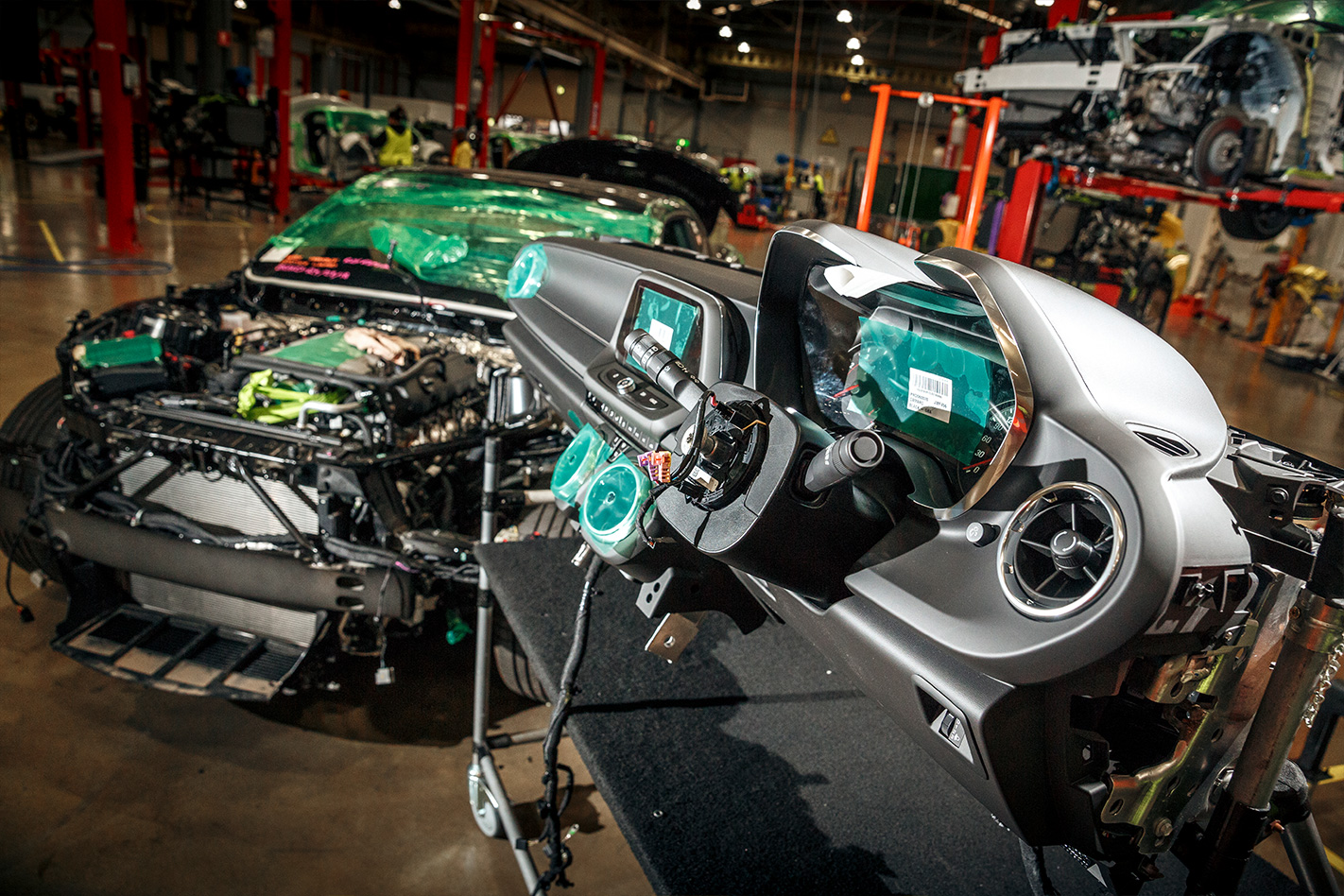
A full feature which goes in-depth into the re-engineering process will appear in the November issue of Wheels, on sale November 1st.
Until then, enjoy this gallery which gives a glimpse of the work being conducted to allow the bow tie badged V8 coupe to prowl Aussie roads.
Here’s what you’ll find inside:
- 2018 Season So Far – all the excitement on-track and off that has made 2018 one to remember!
- Mick Doohan’s fantastic five – we look back on the 20th anniversary of Mighty Mick’s five world championships!
- 2019 revelations – Six very good reasons to look forward to the 2019 season!
- Support races – Supersport and Superbikes previews and entry lists
Plus:
- Your Day by day guide to all the action
- Profiles of all teams and riders
- Off-track entertainment guide
If Mercedes-AMG’s new E53 is anything to go by, Stuttgart wants to loosen BMW’s hold on the high-performance straight six.
It’s unsheathed an all-new 3.0-litre straight six engine that will power a good chunk of AMG 43 and 53 models going forward. We drove a detuned version recently, albeit in the CLS450, and were impressed.
Yet it didn’t howl as we had hoped. Admittedly, it didn’t need to, as the CLS didn’t have an AMG badge. But this new E53 does. It’s the hottest coupe in the updated E-Class range, while in sedan form it replaces the E43 as a stepping stone to the full-blown E63.
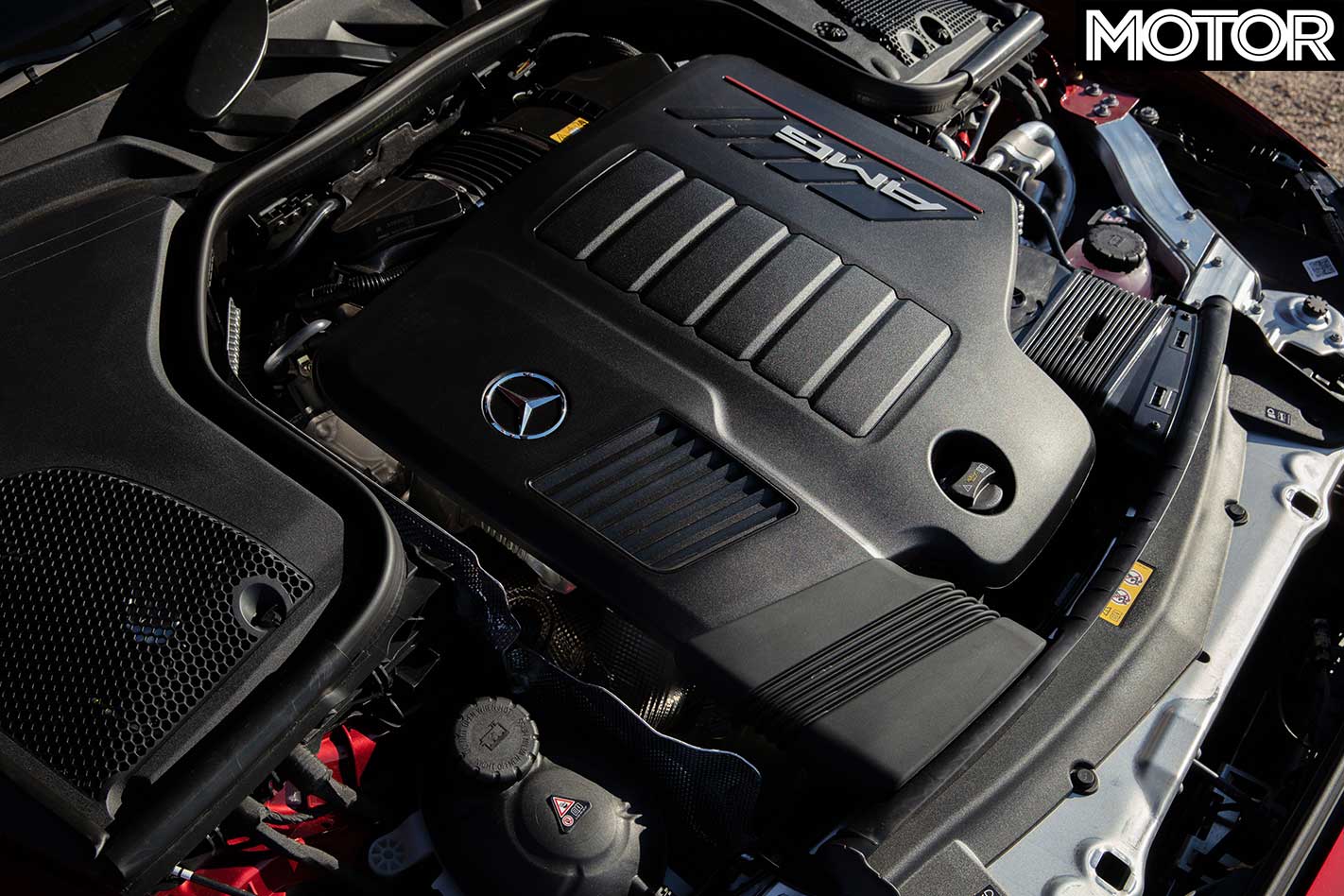
It is AMG’s first inline six since the C36 ceased and took on a V arrangement in 1999. It also comes with a hybrid system, another new frontier for AMG’s late product. Yep, you read right, a 48-volt electric motor sits around this engine’s output shaft in the bell housing. AMG calls it EQ Boost.
While BMW loves straight sixes for their turbine-like thrust, the M256 engine at the core of the E53’s powertrain was developed for efficiency. It lacks any belt driven ancillaries. It has less top-end components to crank over than a V6 and it even has a particulate filter, like diesel engines.
The AMG version of the engine has a higher redline and scores an electric supercharger. It makes 320kW/520Nm, but its outright figures depend on where you are in the rev range.
The electric motor can contribute 16kW/250Nm and bulks outright torque to 770Nm from 1800rpm. But because its assistance ends at 2500rpm, the extra 16kW doesn’t contribute to peak power, which is delivered at 6100rpm.
The supercharger fattens low-end urge in a different way. It sucks charged air from the turbo then blows it into the inlet tract to aid spool. Its assist lasts only 500rpm longer than the EQ boost, to 3000rpm, but it’s effective. Acceleration is strong, almost Tesla-like, and tests the limits of the car’s rear-wheel grip when you stomp the throttle from standstill.
Soon enough, though, power is redistributed to the front tyres via all-wheel drive. The E 53 hooks up, charging forward with urgency all the way to its 6500rpm redline. That might seem low for the short-stroke engine, but there’s a nice gravelly howl, even if some of the noise comes from the speakers, punctuated by deep burps on upshifts (or explosive pops on overrun) that characterise each climb to its summit.
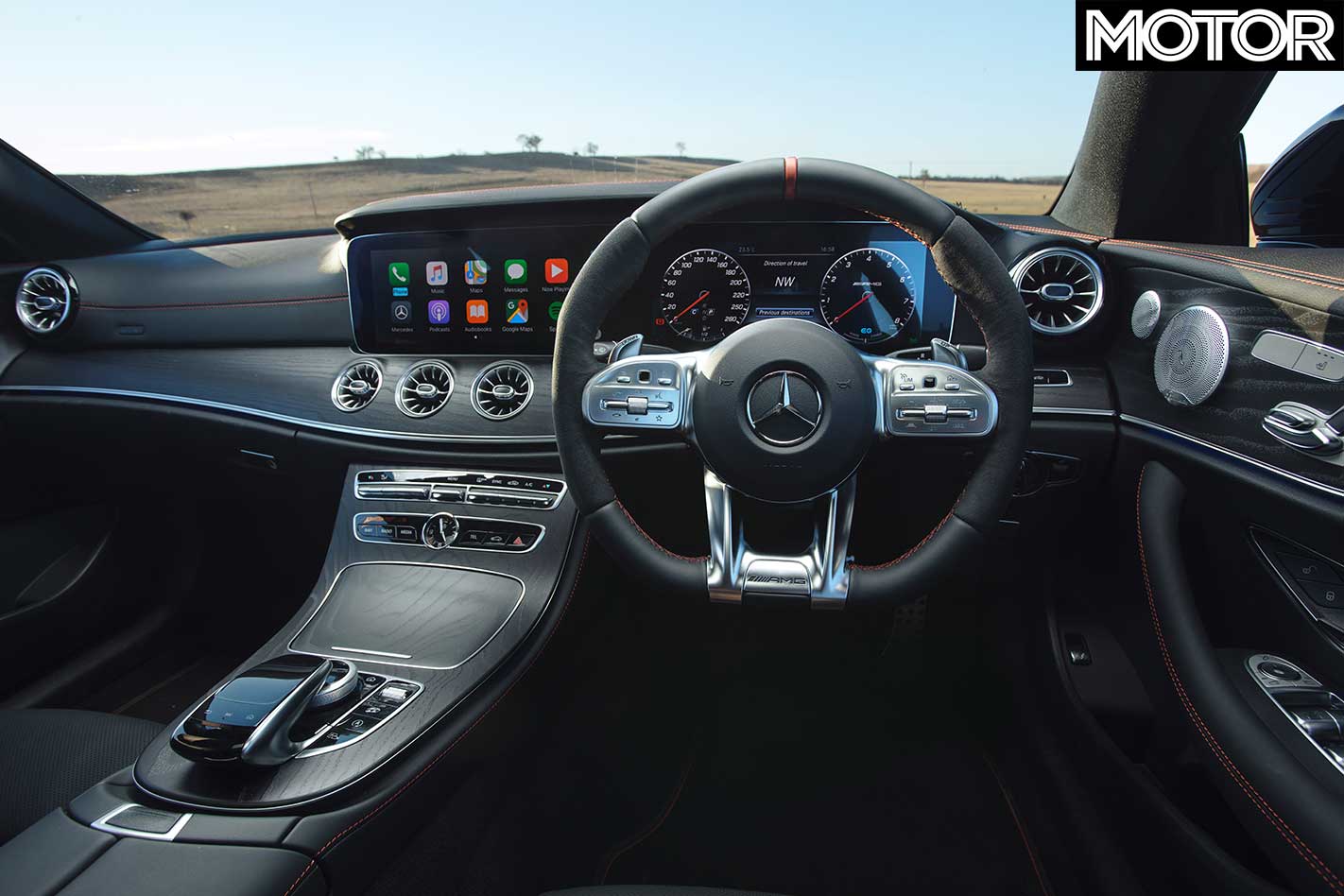
Its nine-speed automatic shifts it along with crisp and quick gear changes. Mercedes-Benz claims 0-100km/h falls in 4.4 seconds, though that may be generous as the hybrid system adds mass – the E53 coupe tips the scales at 1895kg. The equivalent sedan is 80kg heavier than before.
At cruising speeds the automatic hunts for higher gears to curb thirst, even in Sport mode, and use the generous torque on offer. But what most cements its GT credentials is the beautiful ride. The AMG tuned air suspension keeps the E53’s mass in check and absorbs impacts with finesse so its 20-inch wheels rarely crash, even when it ramps up the spring rate in its Sports and Sports Plus.
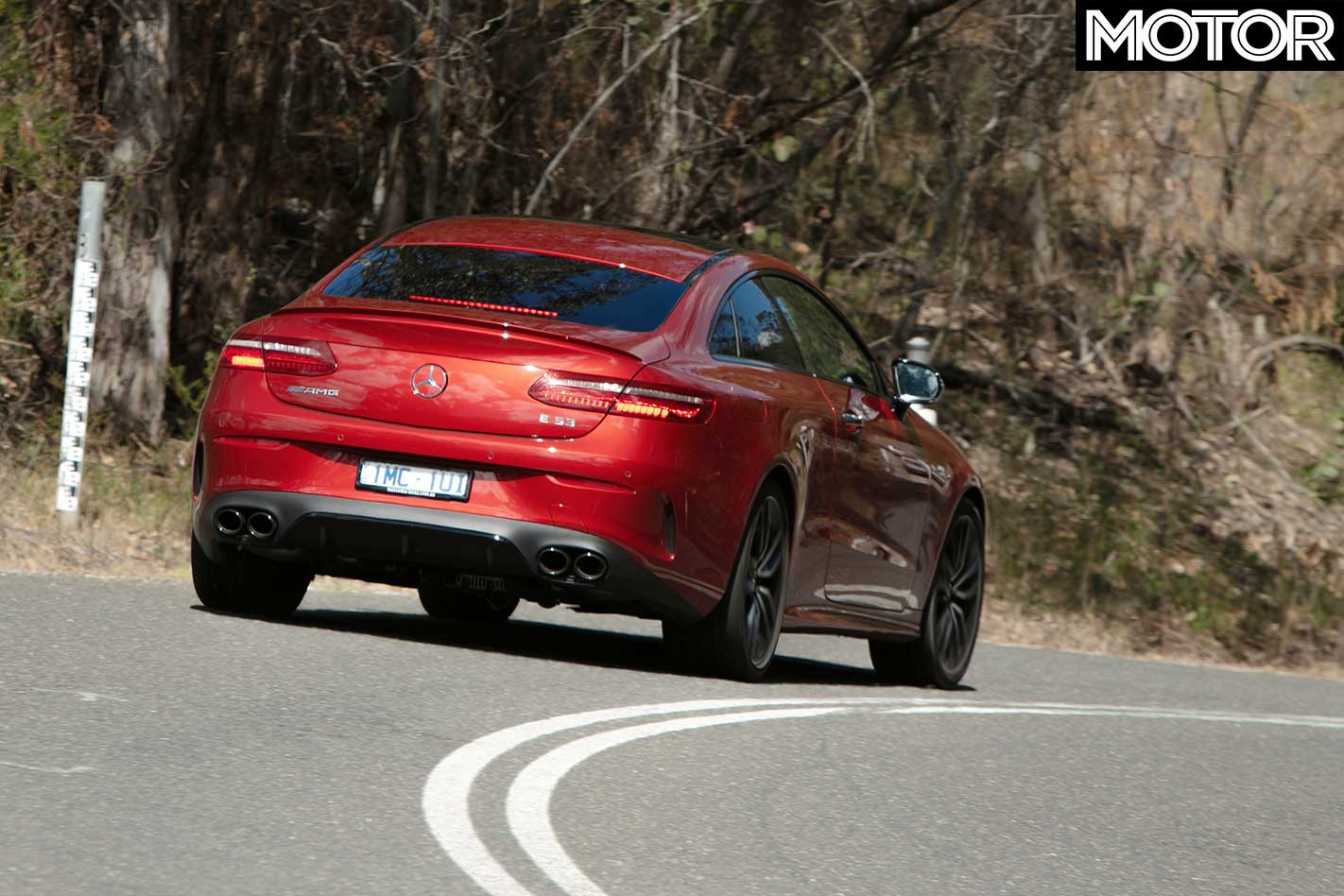
The E53 isn’t the watered down E63 you might have hoped for on a winding road, though. Its brakes bite softly and the front-end is fairly mute. Mid-corner speed is lower than you’d expect from 245mm/275mm rubber and when you try to drive out under power its stability system shuts things down earlier than expected.
If you’re looking for a well-optioned E-Class coupe with a bit of poke, then the AMG 53 makes a good case for itself within the range. It’s expectedly sumptuous, spacious (up front), and well appointed inside. A gorgeous S-Class inspired steering wheel arrives is new, while the huge digital screen behind it is undeniably effective in displaying information. The pillar-less glasshouses also add an extra sense of occasion.
At $172K, it easily justifies the $23,500 extra over an E450 coupe almost on equipment alone. BMW, too, will be challenged to produce an 8-Series that can hit 100km/h from rest in under 4.4 seconds for that money. Audi have the RS5, but that’s comparing apples to oranges.
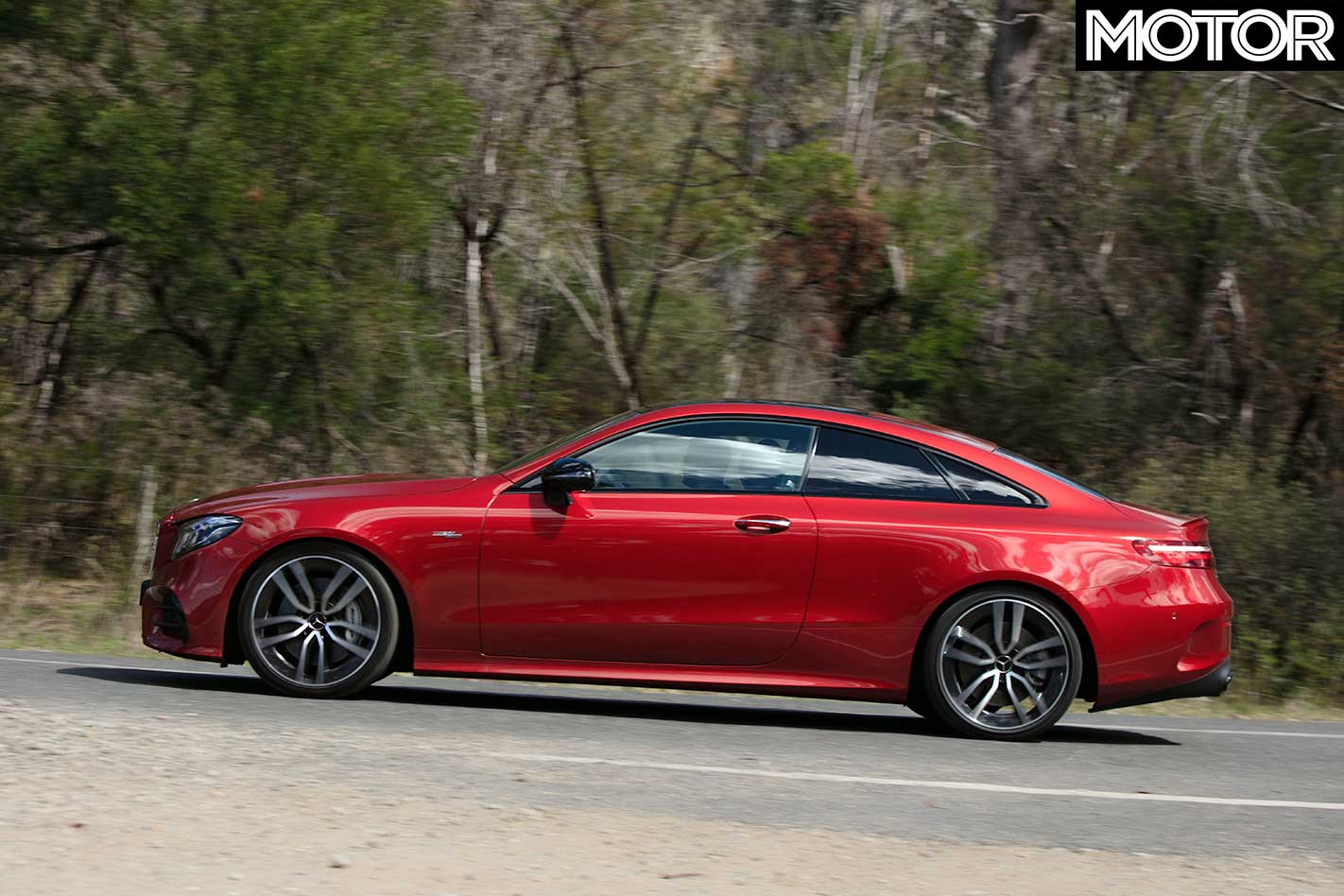
The biggest challenge the E53 faces is an expectation of what an AMG product should deliver. It’s not the missing link between the regular range and the crazy E63 we love as it’s too inert on winding roads.
But if the aim is to inject some aggro into the E-Class without spoiling its GT qualities then the E53 Coupe does well. We love its ‘shrunken S-class’ looks at the rear end and the cosseting ride. Its hybrid operation, too, is unnoticeable, which is sorta the point. To lose these qualities to solve its other flaws would be a heavy trade.
More importantly, it’s proven AMG makes a great-sounding six with its cylinders in a row. Your move, BMW.
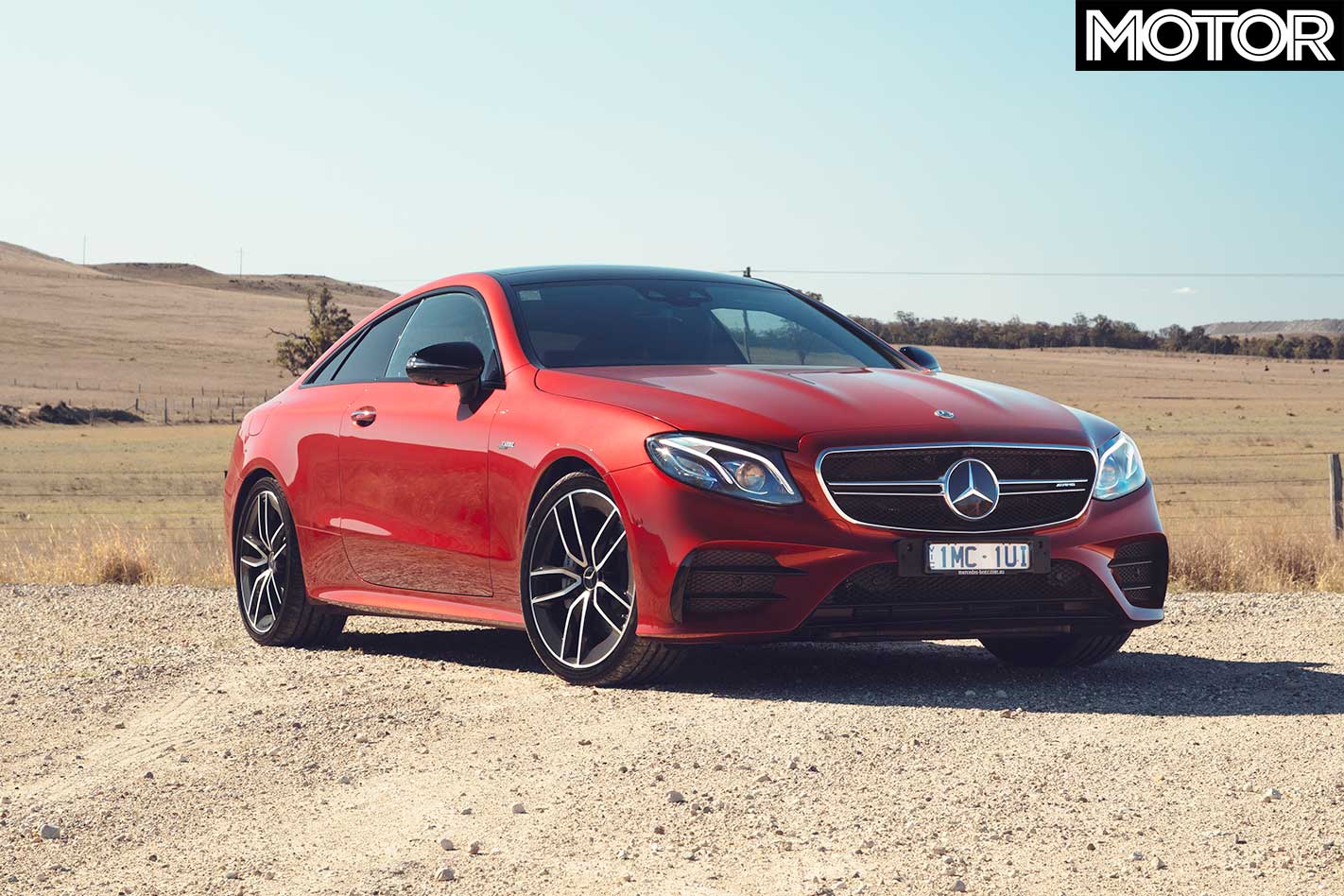
2019 MERCEDES-AMG E53 4MATIC+ SPECS Engine: 2999cc inline-6, DOHC, 24v, turbo, s/c, e-motor Power: 320kW @ 6100rpm Torque: 520Nm @ 1800-4800rpm (770Nm 1800-2500rpm with electric motor) 0-100km/h: 4.4sec (claimed) Weight: 1895kg Price: $172,790
In the space of 20 years, BMW’s line-up of SUVs has grown from a single offering of the sole X5 in 1999, to a diverse range of six high-riders that has now grown to seven with the arrival of the X7.
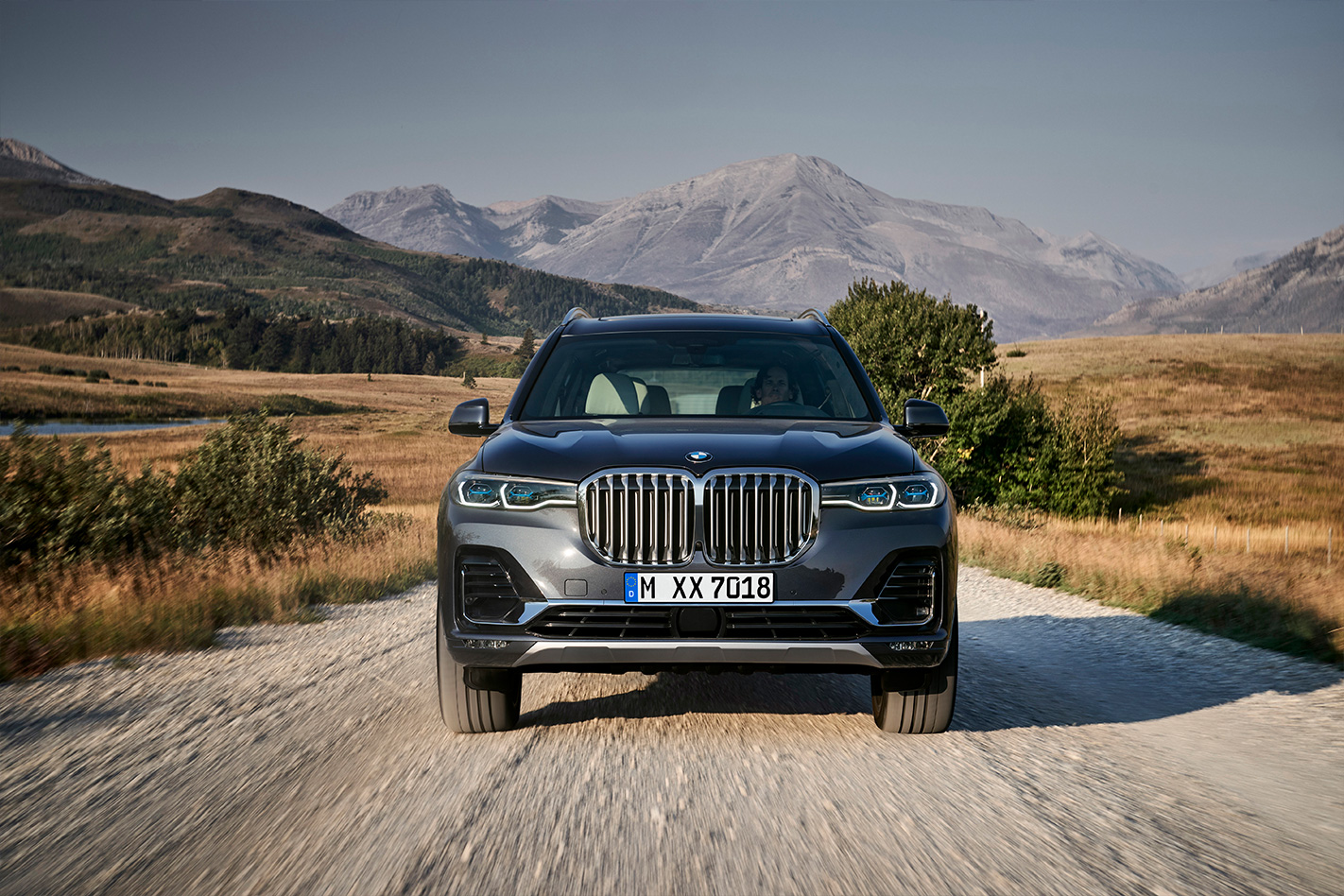
Sitting at the top of the Munich brand’s SUV pack in the scale and luxury stakes, the X7 pertains to bring the palatial pleasantries of the brand’s flagship 7 Series sedan, but with the addition of all-terrain ability and more voluminous cabin space.
At last, the German car maker can compete in the upper-large SUV segment where Mercedes has been largely unchallenged with its GLS offering, until now.
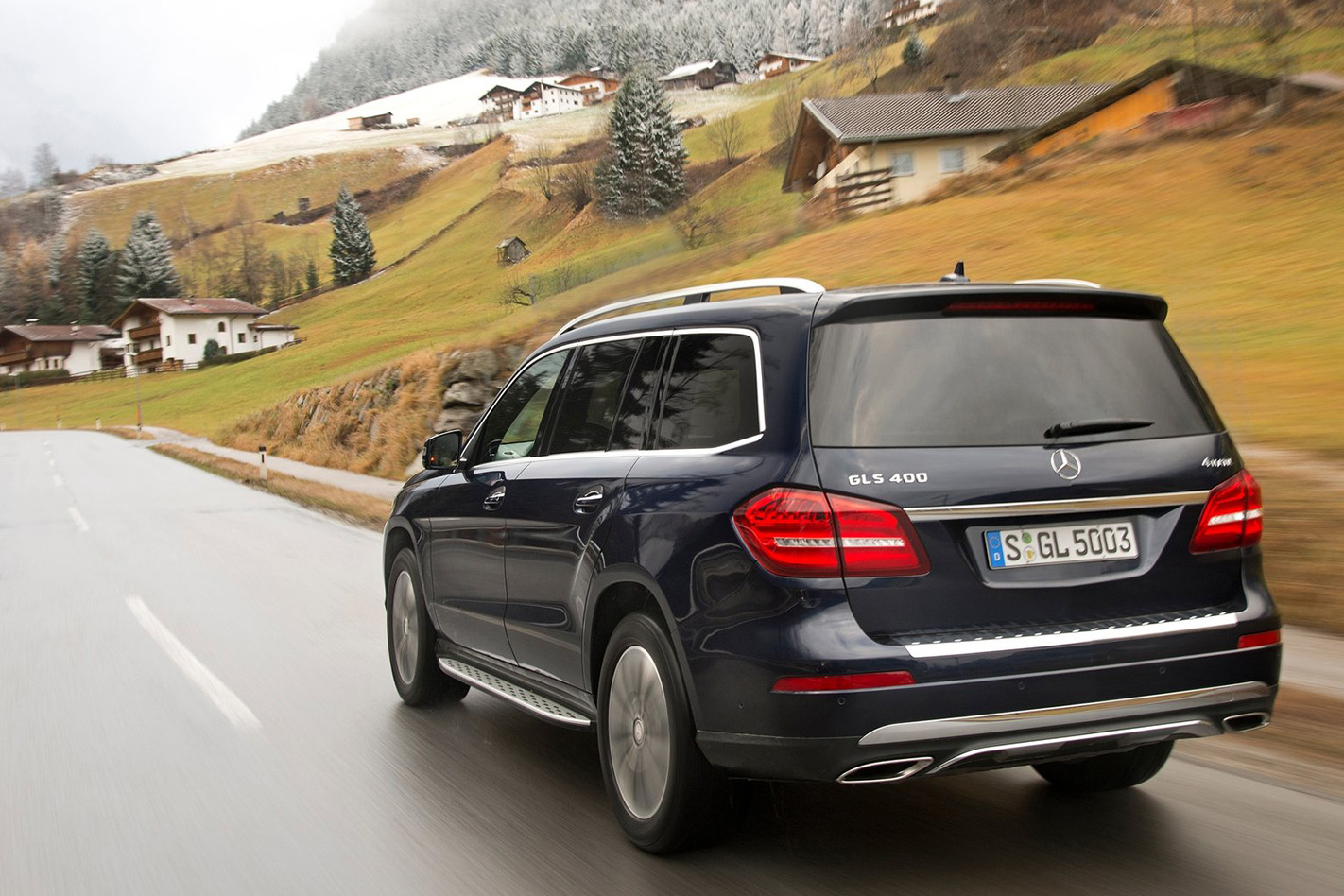
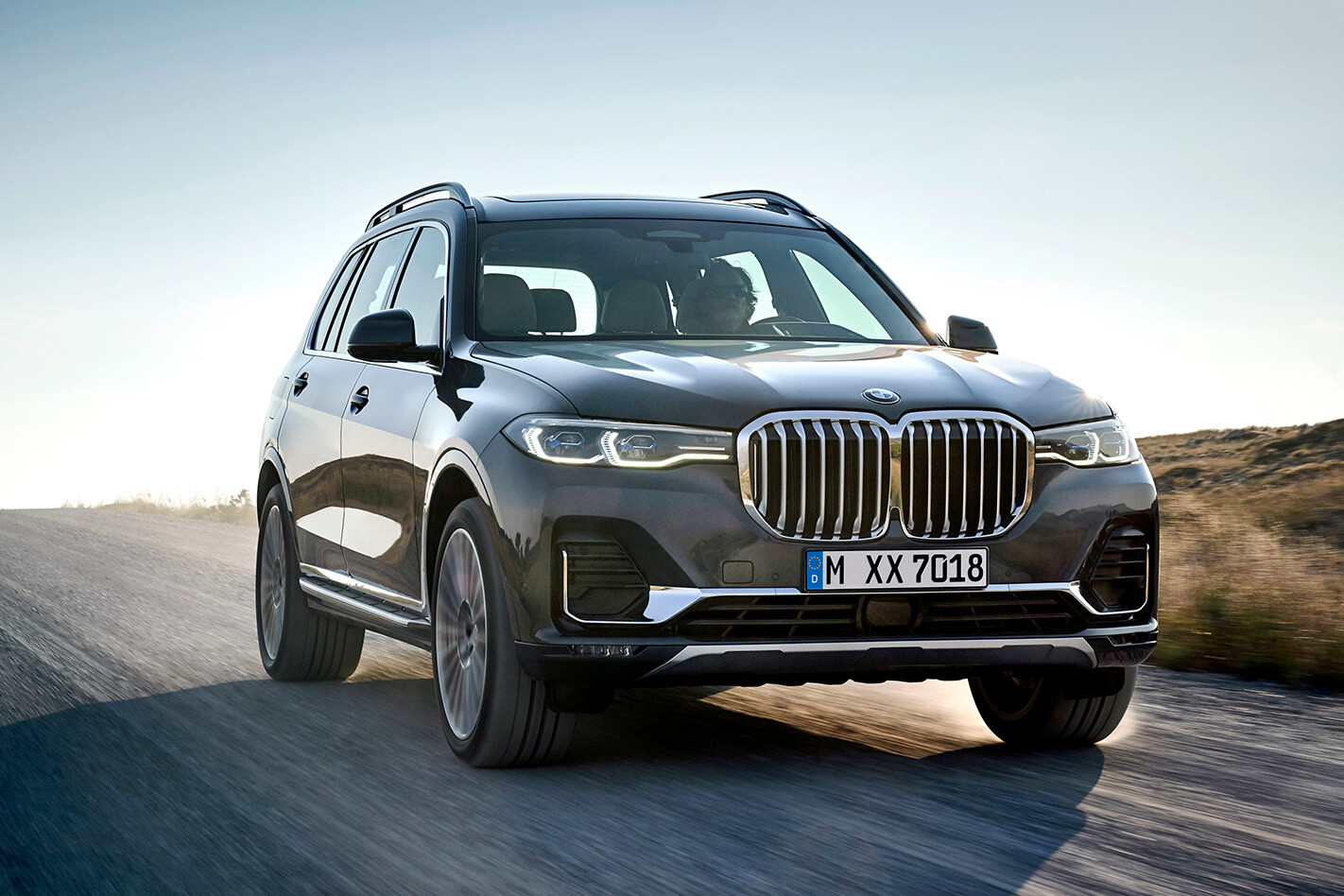
Now BMW has revealed the first juicy details regarding its newest and largest model to date, here’s how the range-topping X7 xDrive50i compares with the equivalent GLS 500 on paper.
Dimensions
Overall, the BMW is longer and wider measuring a whopping 5.15m long and an even 2.0 metres wide compared with the Mercedes, which is 20mm shorter and 18mm narrower. However, the X7 maintains a sportier stance on the road with a 1.8m height – nearly 50mm lower than the GLS.
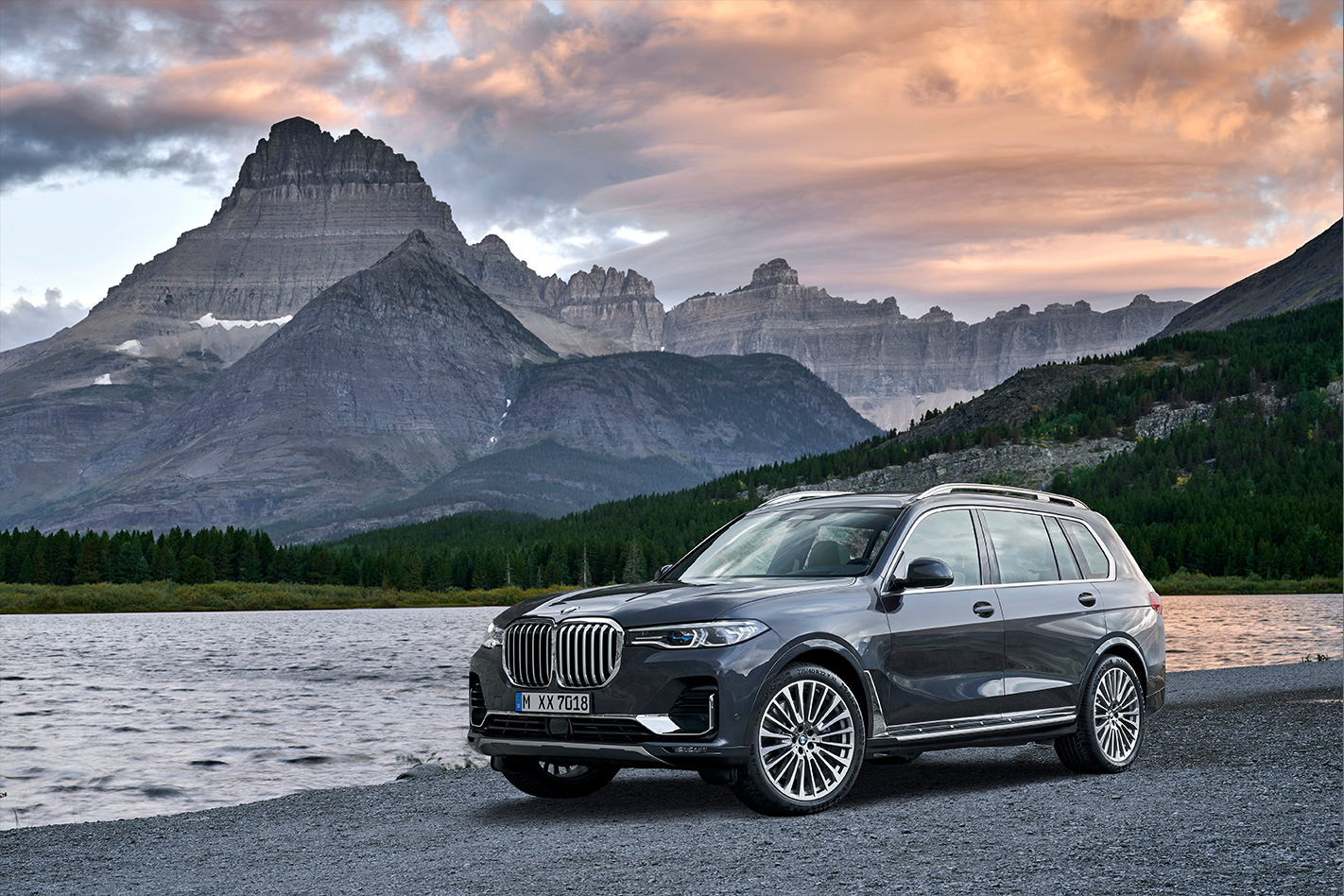
The BMW also has the longer wheelbase at 3.15m versus the 3.08m Merc. Typically, a longer wheelbase frees up more space in the cabin but reduces the so-called ‘breakover angle’ which is a gauge of the car’s ability to avoid grazing its belly on obstacles when off road.
Speaking of which, the Mercedes has a ground clearance of 195mm, while the BMW sits 221mm above the road. That said, both models feature air suspension as standard, which can be raised or lowered according to driving conditions, including off-road scenarios.
Despite the differences in size, the pair is fairly evenly matched for heft, with exactly in the featherweight. The BMW tips the scales at 2460kg while the Merc is carries a little less at 2445kg.
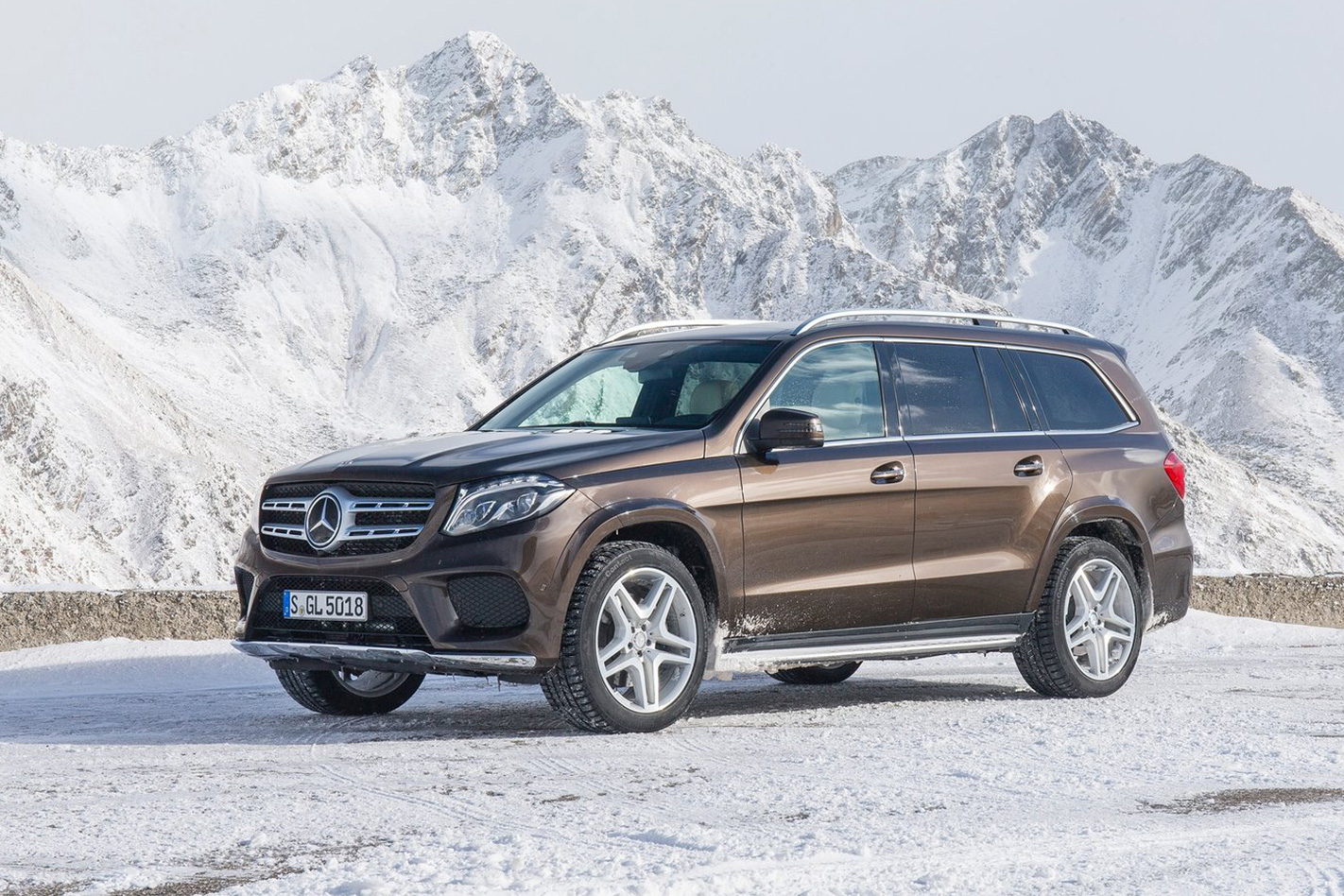
As you might expect from such large vehicles, cargo capacity is generous. Both models offer seven seats but with second and third rows folded, the BMW load area can swallow a monstrous 2120 litres or 326L with the full seating capacity, while the GLS offers 2300L and 295L respectively. Both offer a compromise somewhere in between with just the third row folded.
Performance
Both models are powered by a turbocharged petrol V8 coupled to automatic transmissions and four-wheel drive.
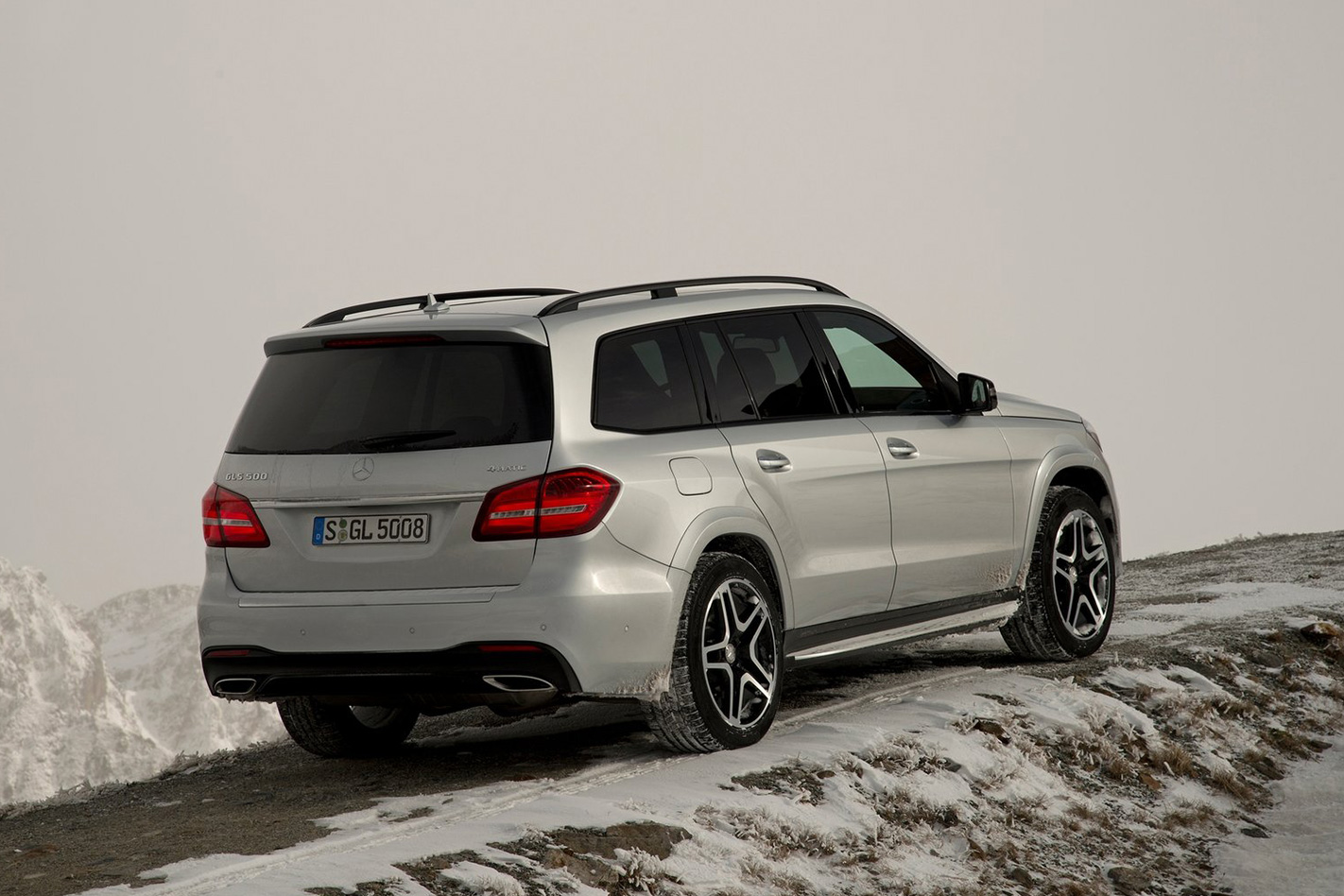
For the GLS, Mercedes has fitted a 4.7-litre engine which produces 335kW/700Nm and can accelerate the big SUV to 100km/h from standstill in 5.3 seconds. That power and performance comes at a cost however, and average fuel consumption is rated at 11.3 litres per 100km.
The BMW X7 weighs in with a smaller 4.4-litre turbocharged engine but manages a similar power and torque figure of 340kW and 650Nm. Accelerating to the 100km/h benchmark takes 5.4s. Despite feeding fewer cubic centimetres, the BMW V8 is slightly thirstier than the Merc, using 11.4L/100km.
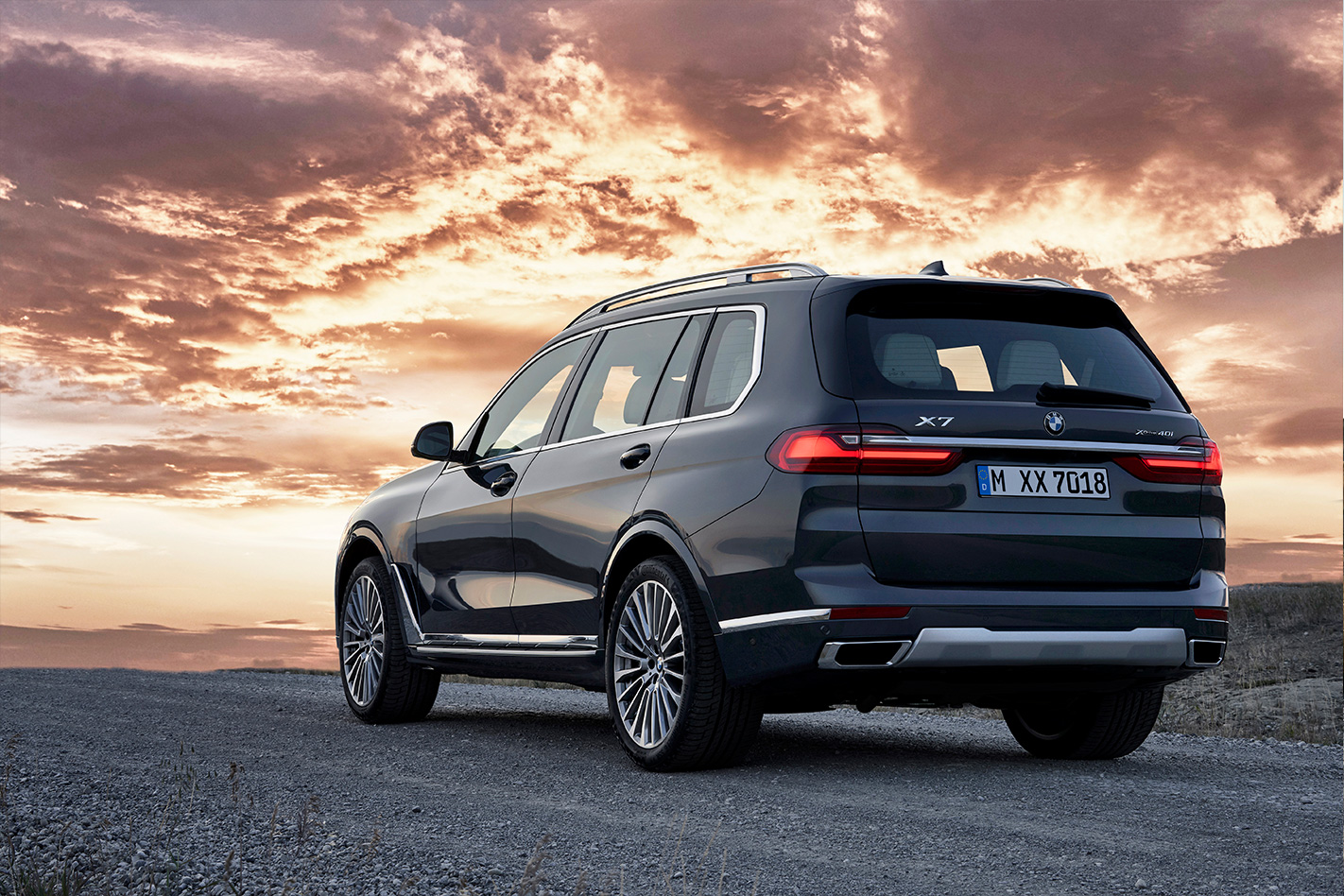
While the BMW has an eight-speed automatic, the Mercedes adds in one more ratio for a total of nine speeds.
Features
While the BMW is factory-fresh and completely new to the segment, Mercedes’ contender has been doing the rounds for a lot longer and, with only a facelift to keep it fresh, is showing its age in some areas.
Instead of conventional gauges, the BMW’s instrument cluster is a 12.3-inch fully digital display and is complemented by a second touchscreen of the same size for the central information and entertainment system. The Mercedes, however, has analogue gauges with a central screen that is only accessible via the Comand dial and switches.
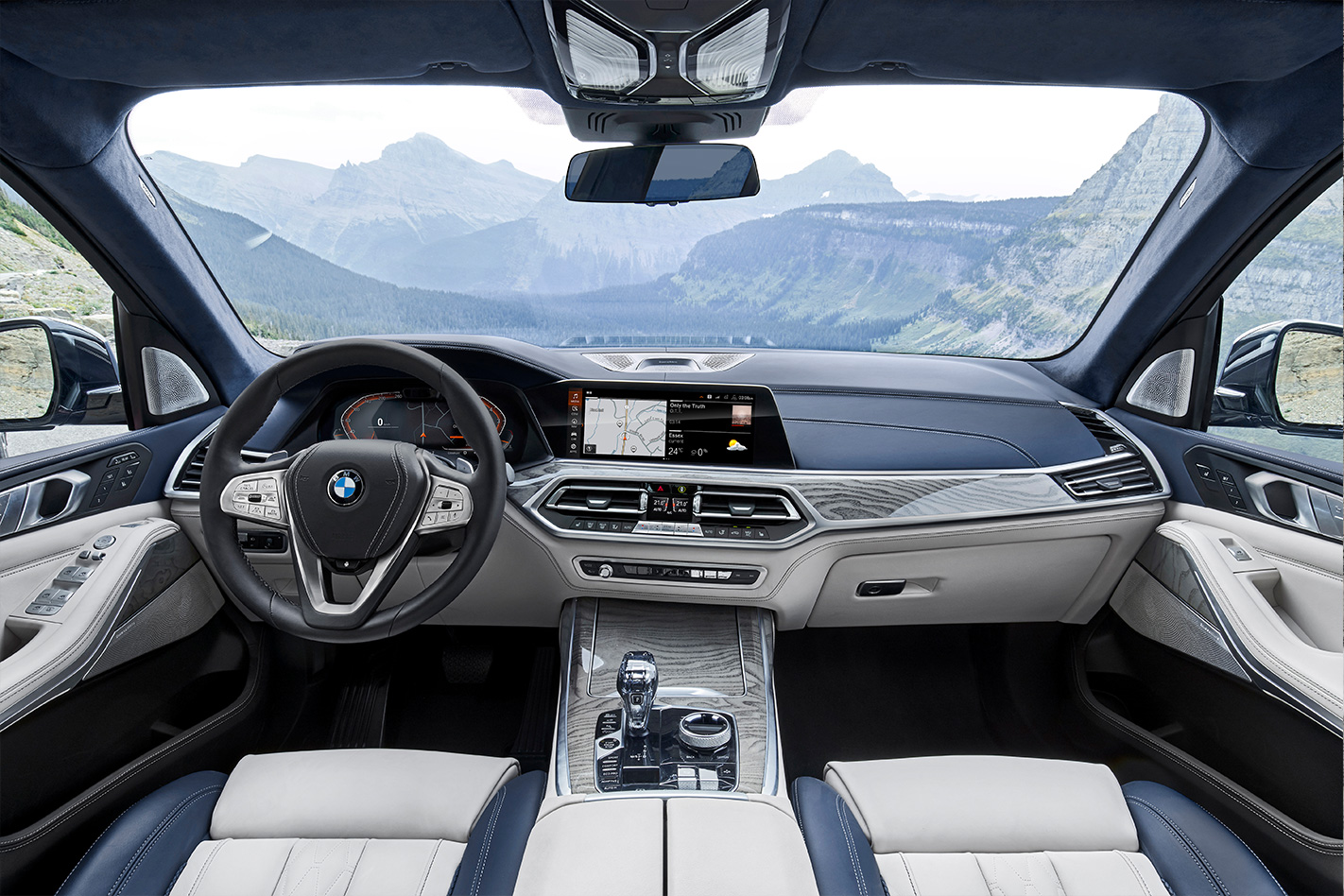
Seven seats are standard in both models but BMW offers an optional ‘comfort seat’ option for the second row, which converts three seats into two luxurious spots.
Both models offer alloy wheels sized from 20- to 22-inches and, as is commonplace with the premium European brands, there is an extensive range of customisation options on offer for those with a larger budget to spend.
LED headlights are standard in both cases with adaptive beam technology, as is high-grade leather upholstery and a range of interior trims.
Mercedes’ Dynamic Select Controller offers six driving modes including an off-road setting, while BMW’s equivalent also has a number of driving modes including four all terrain settings for a wide range of challenging surfaces.
BMW’s relatively new iDrive operating system offers an ‘intelligent personal assistant’ which allows the driver to control many of the vehicle’s functions and features using conversational speech and hand gestures. Mercedes’ new MBUX system offers similar levels of interaction, although the GLS has not been equipped with this evolution as yet.
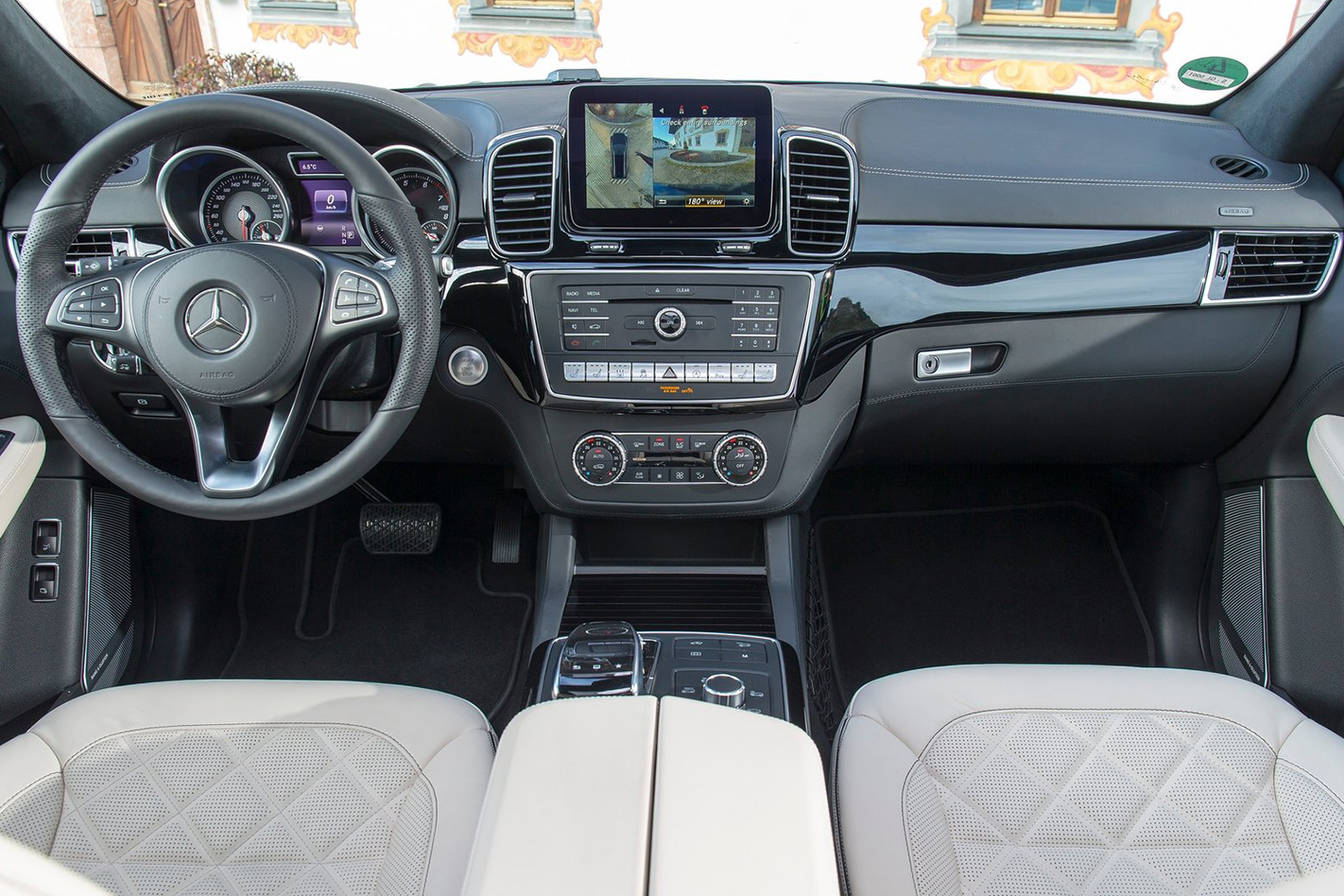
Mercedes has kept the GLS safety systems up to the minute and it’s on an even keel with the BMW when it comes to driver assistance technology. Autonomous emergency braking, adaptive cruise control that works in stop-and-start traffic, driver fatigue monitoring, lane keeping assistance, blind spot monitoring and cross traffic alerts are standard fare for both.
Other variants
For now, the 4.4-litre V8 version of BMW’s X7 is the range-topping option and the highest-performance variant. Mercedes however, offers a version of the GLS from the coveted AMG stable. With a 5.5-litre turbo V8, the AMG GLS 63 takes power and torque up to 430kW760Nm with a corresponding drop in acceleration to 4.6s, while fuel consumption rises to 12.3L/100km.
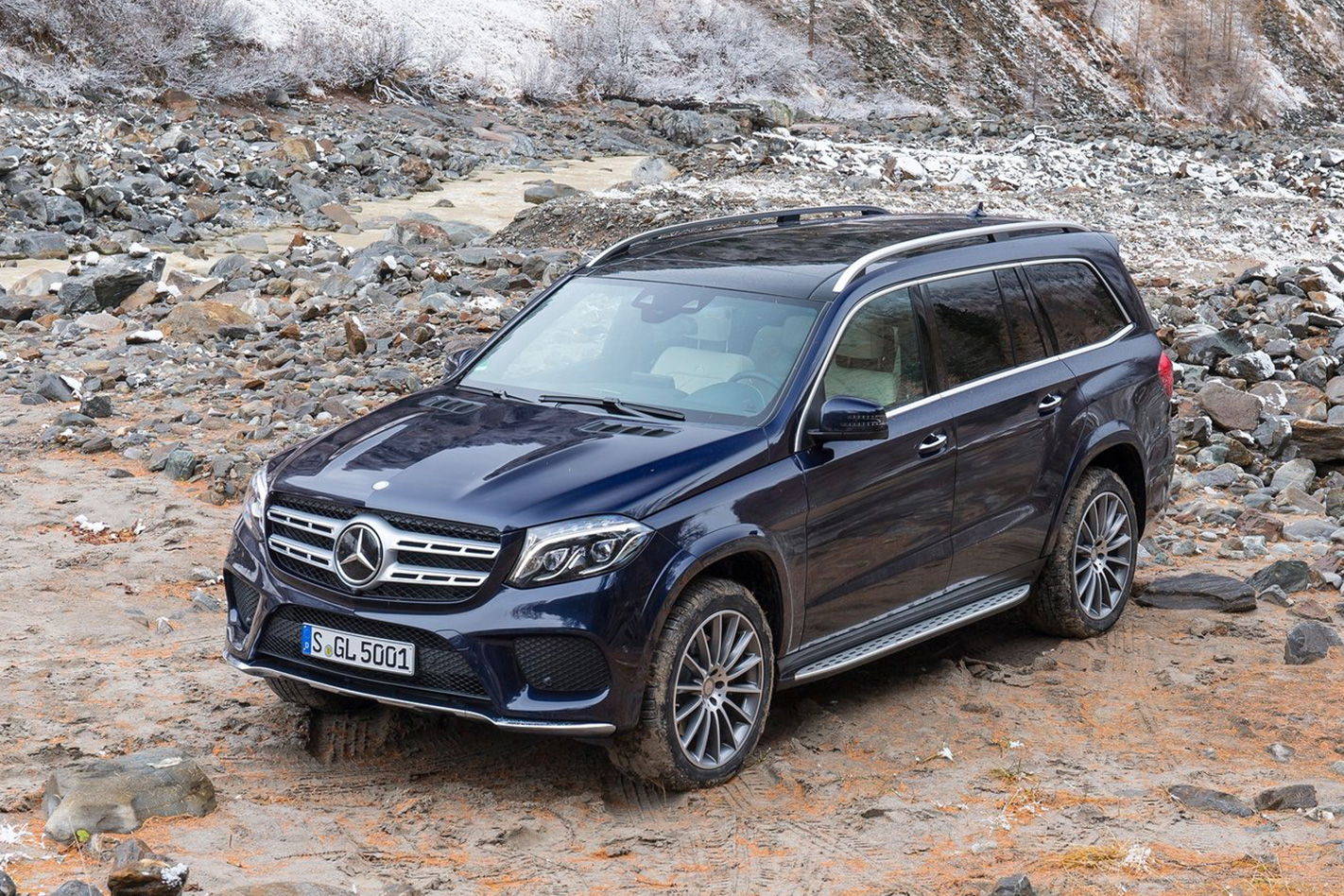
Both brands offer a more frugal six-cylinder diesel variant. The BMW X7 M50d produces a hefty 760Nm of torque but uses as little as 7.0L/100km, while the Mercedes GLS 350d develops 620Nm at a cost of 7.6L/100km.
BMW also offers a six-cylinder turbo petrol X7 to flesh out the middle of the range.
Price
BMW is yet to confirm exact X7 local line-up details, including pricing but, as is typical for the German arch rivals, you can expect the X7 to align closely with its Mercedes equivalents.
The GLS range kicks off from $119,100 for the 350d, a Sport version of the diesel adds $19,000 to the asking price, the GLS 500 costs $165,500, while the AMG GLS 63 rounds out the range at $222,100.
Is the 430kW/800Nm output combo in your previous-gen AMG E63 S leaving you wanting more?
You could turn to a tuner like Brabus to scratch your horsepower itch, but there’s another option fewer people are aware of.
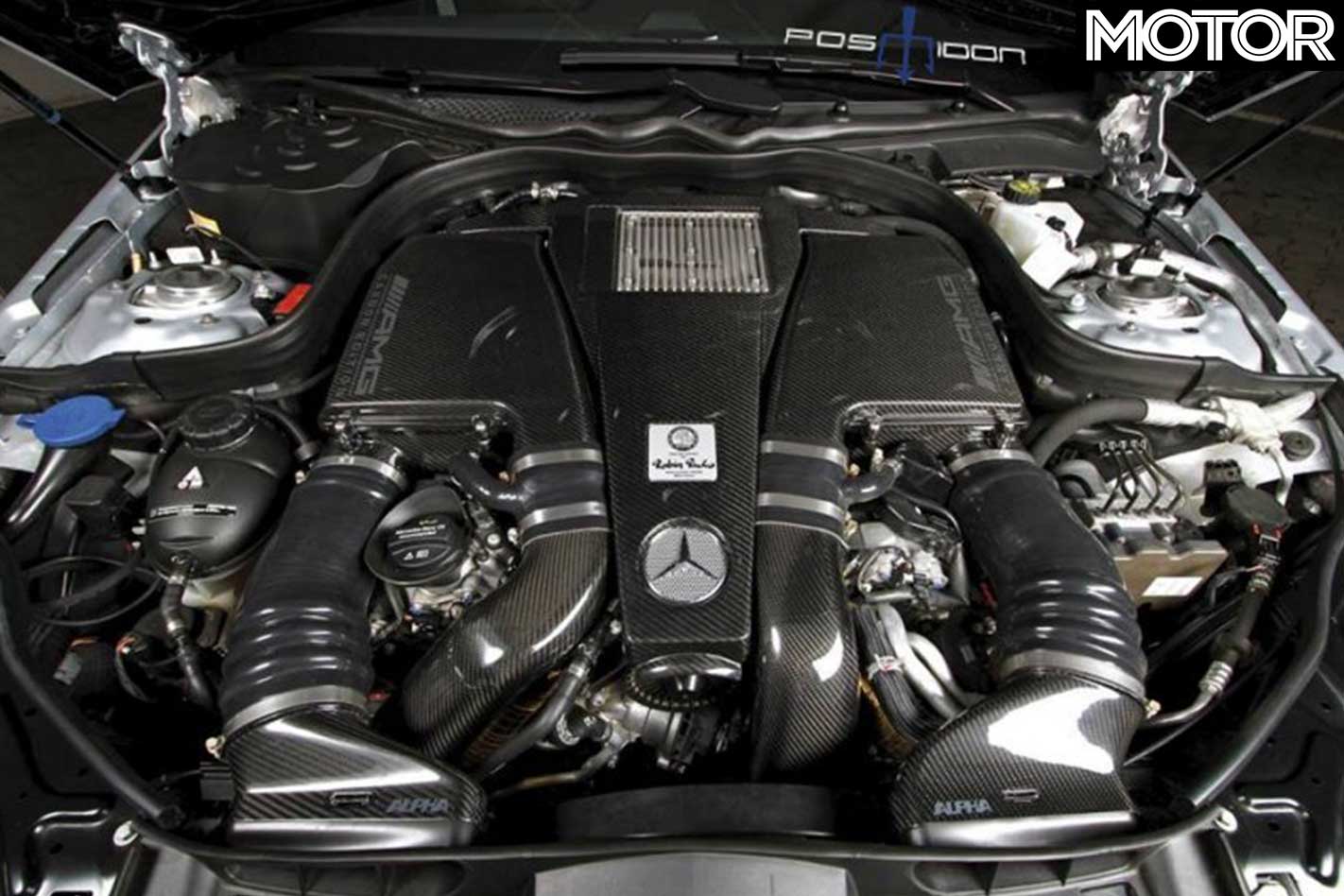
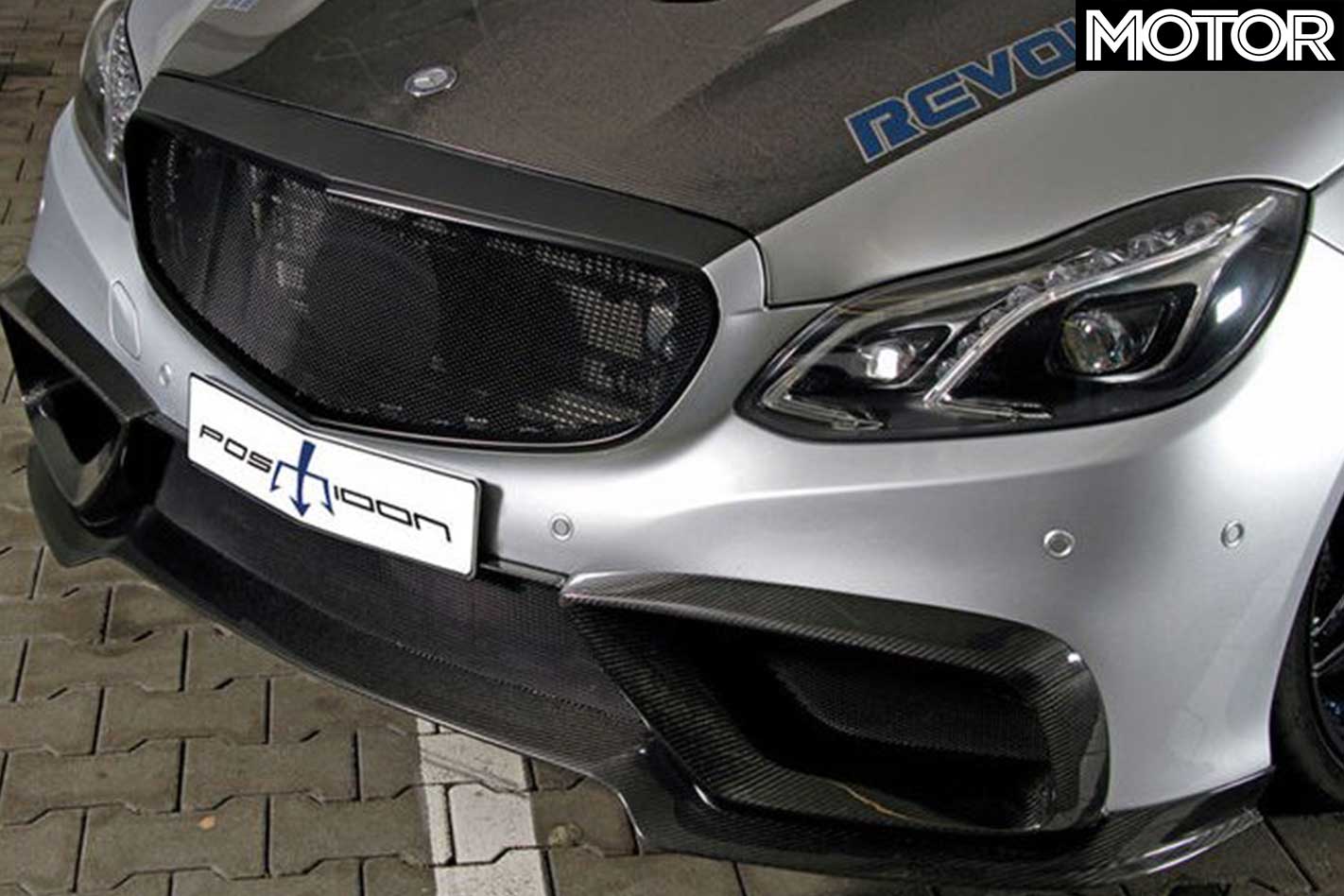
German tuner Posaidon has developed an upgrade package for the W212 generation of AMG E63 which increases outputs to a whopping 750kW and 1400Nm. That’s not far off the 761kW produced by the AMG One hypercar.
“The considerable serial output of the current Mercedes-Benz E63 AMG should be quite sufficient for most uses. Should be,” Posaidon says.
“There are a surprising number of performance fans who can never get enough of such a potent vehicle.
“We will gladly take care of this wish and by targeted measures generate so many additional horsepower in the E-Class that no wish will remain unfulfilled at all.”

Posaidon’s RS850+ is actually an evolution of another pack, the RS850, which replaces the turbocharger’s compressor and its exhaust, the car’s full exhaust system, plus adding electronic and mechanical gearbox reinforcement and ‘racing-sport’ limited-slip differentials.
Improved cooling, racing spark plugs, and an electronics re-tune are also necessary. In the ‘standard’ Posaidon 850 kit this produces 627kW and 1300Nm.
The 850+ kit uses all these hardware changes, but increases the optimisations through tuning for the extra ‘oomph’.
Posaidon says in E63 S form, the 850+ kit makes a 0-100km/h sprint doable in 2.8 seconds, and increases the top speed to 370km/h.
Conveniently, Posaidon also sells a replacement speedometer which displays up to 380km/h.
GM Holden Chairman and Managing Director Dave Buttner says his first 60 days at Fishermans Bend has revealed the scale of his task to win back local hearts and minds.
But the former Toyota Australia chief, who was lured out of retirement this year to help revive Holden’s fortunes, said he believed the company has the right portfolio, and access to diverse range of vehicles and brands to ensure it can meet the demands of discerning Australians.
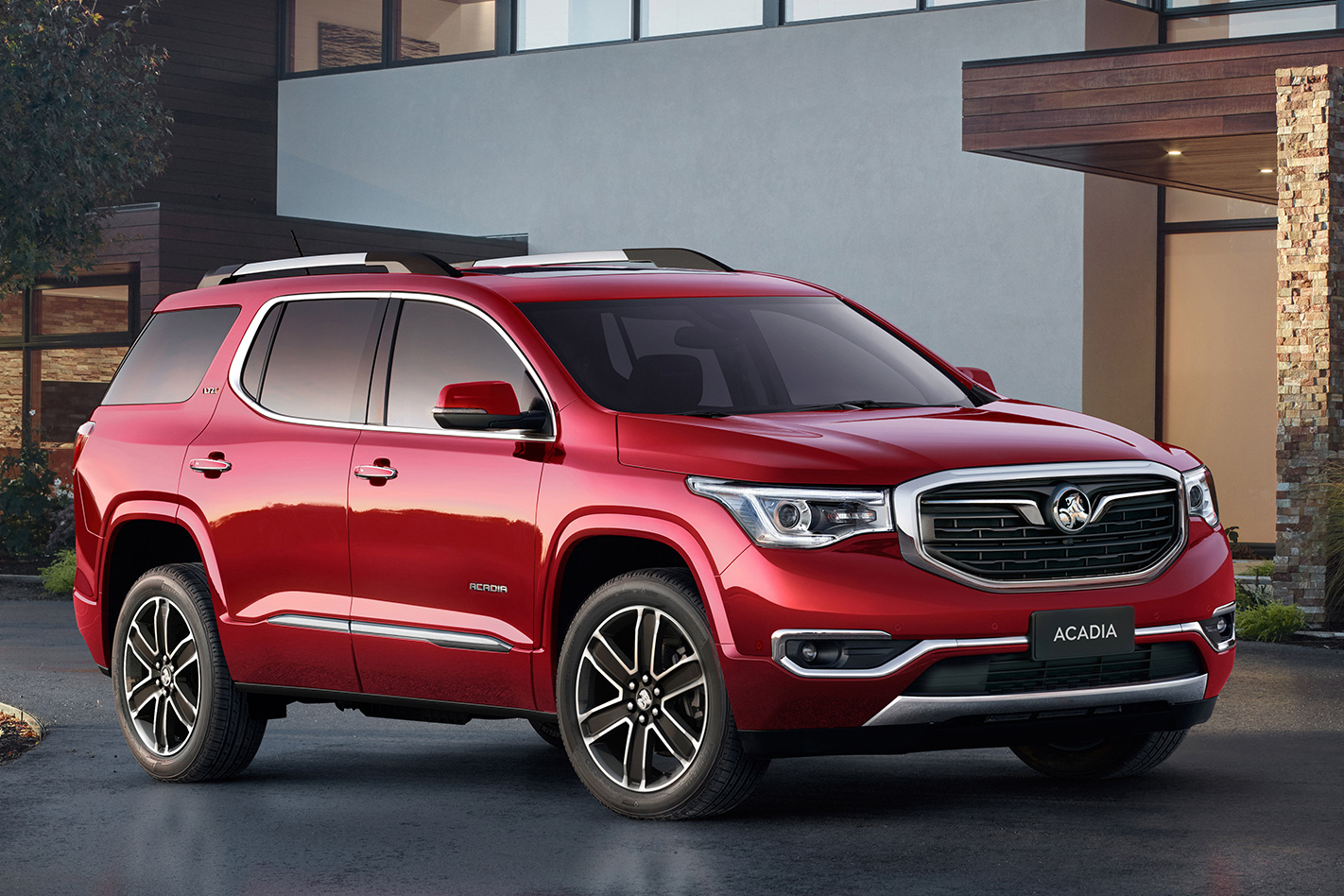
Speaking with WhichCar at the launch of the new GMC-built Acadia seven-seat SUV, Buttner, who has ordered a freeze on the production of some models to clear a growing stockpile, revealed one of his first major challenges was to put the entire Holden range in people’s minds when looking to buy a new vehicle.
With so much focus on the Commodore, many buyers weren’t aware of all the other Holden models on offer, particularly its stable of SUVs, he said.
“I could confidently say that it’s the probably by far the best portfolio that Holden has had for a long time, and the key issue … is that the awareness of our product is not as high as it needs to be.
According to the new chief, Holden has continued to change with the marketplace that has seen passenger car sales slump at the expense of SUVs, however it’s yet to make major inroads in each SUV segment.
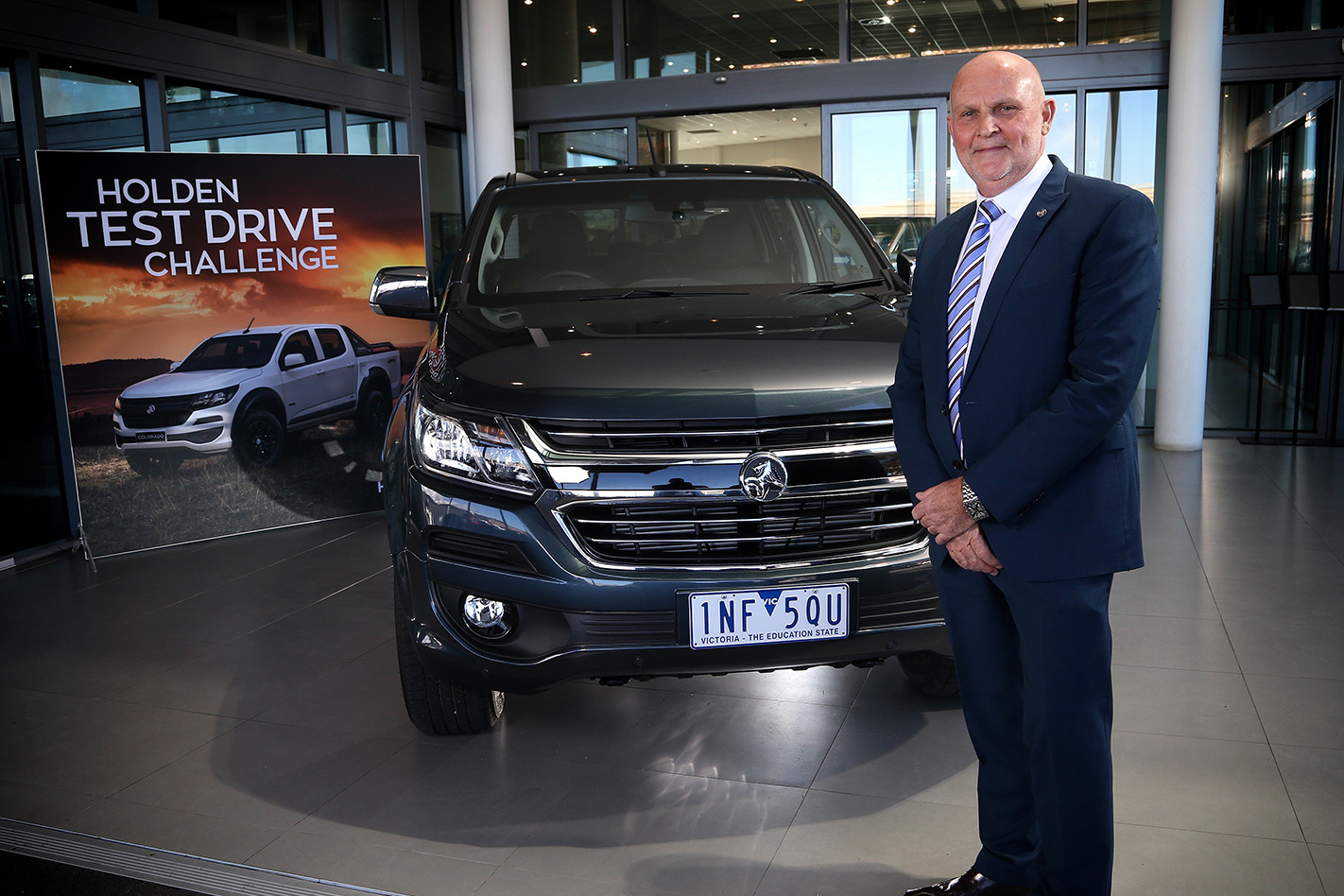
“We’ve got the Trax, Equinox, Calais Tourer, Acadia and Trailblazer so it’s a pretty good stable of products. But if you did a survey amongst family and friends and asked them ‘what cars does Holden sell in Australia?’ they probably wouldn’t be able to come up with all of those name brands. So that’s about awareness, we just have to create that awareness. Awareness leads to consideration.
“So there’s a lot of work to do. We need to tell people who we are, what we stand for, and we’ve got the products.”
Buttner believes that, despite the backlash that followed the end local Commodore and Cruze production, there is still plenty of trust in Holden.
“My sense is that for a certain part of the Commodore faithful it will be difficult to move on. I think 30 percent of the buyers were V8 buyers and they will be the ones that will find it the hardest to move on.
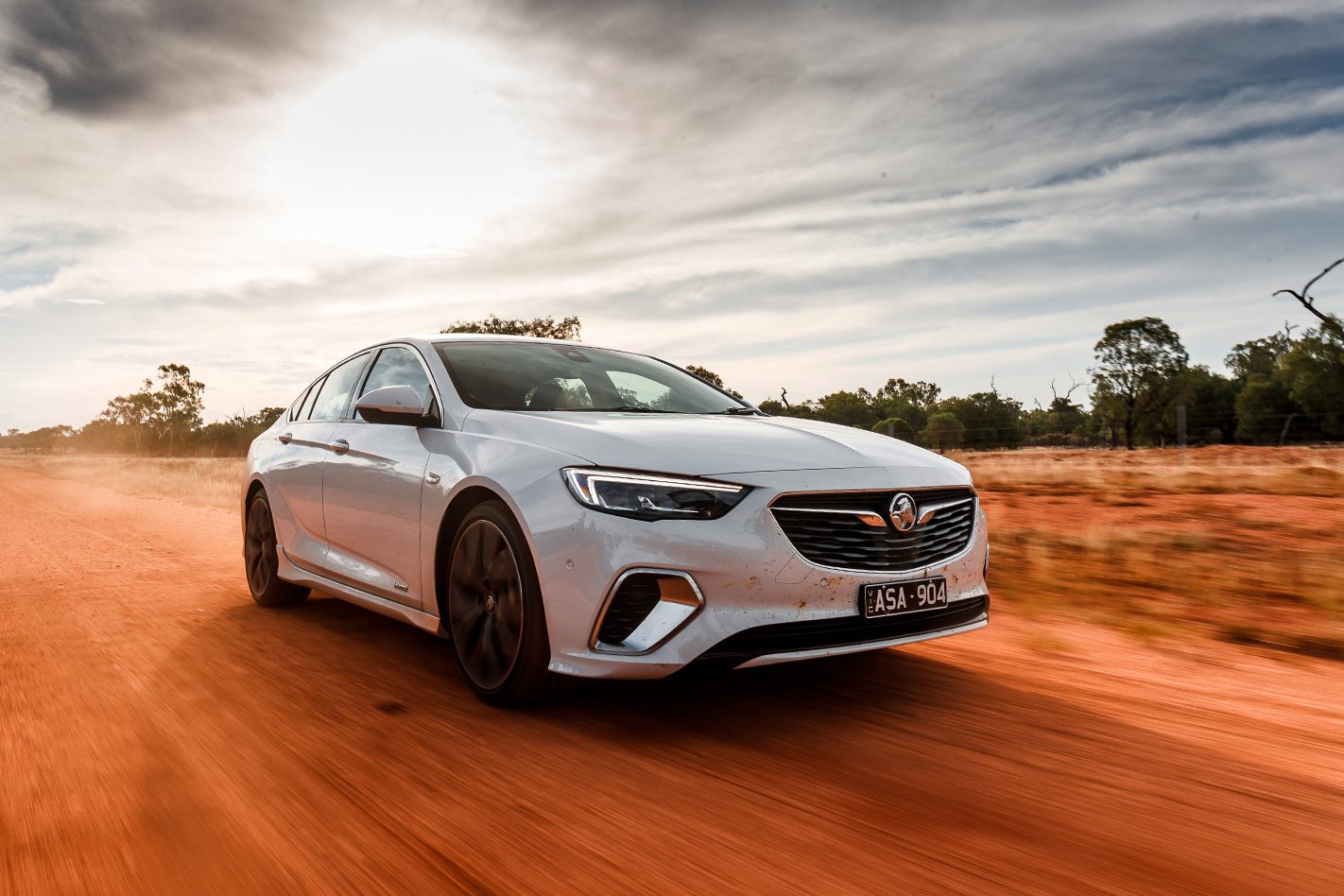
“The Commodore that we’re now importing, I believe frankly, is probably the best Commodore that we’ve ever sold in this country from a specification point of view and styling. Slowly I’m sensing the tonality of comments change.
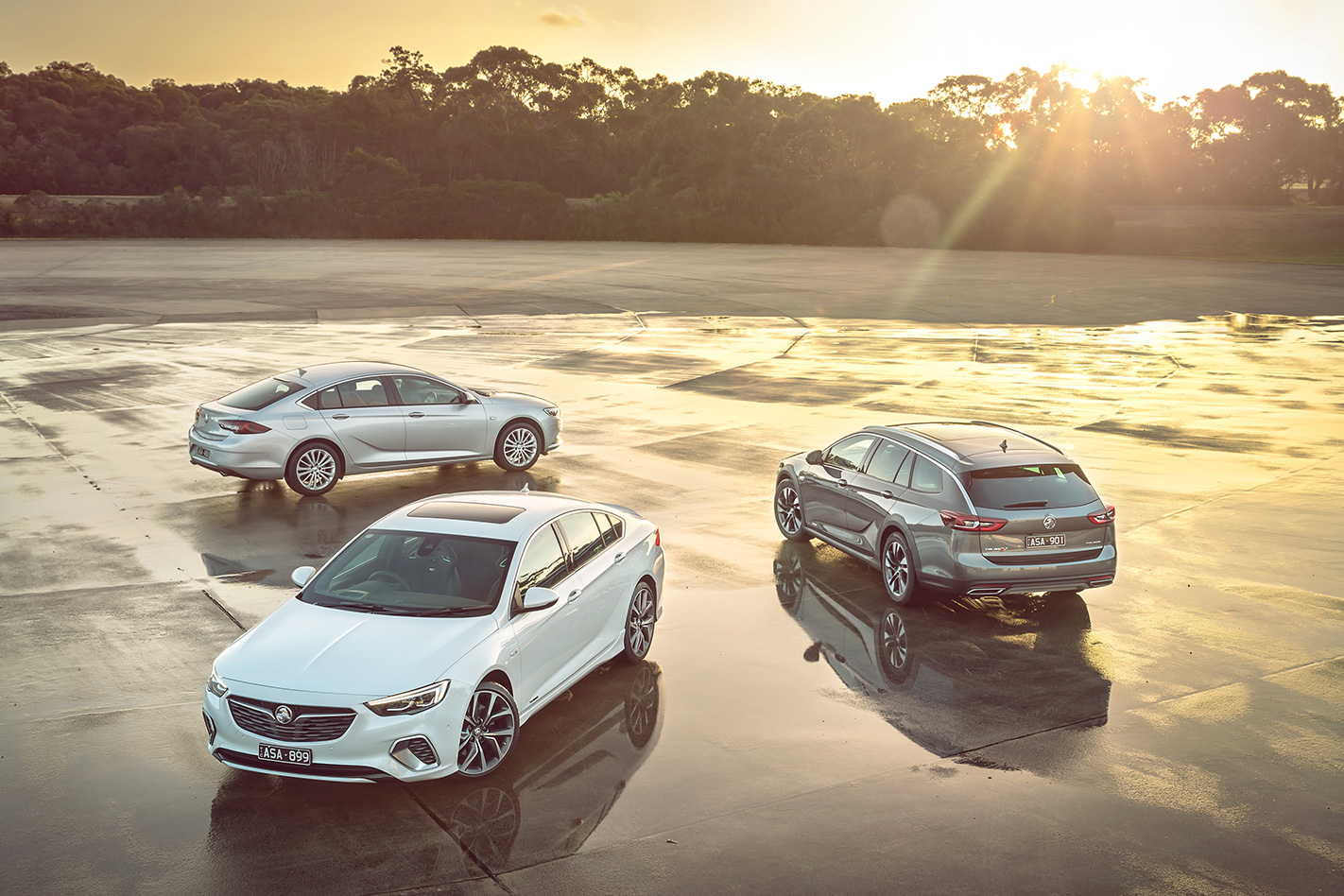
“That certainly helps the brand, when people speak positively about your product then people feel a bit more ‘I’ll go have a look at that’. But if they’re hearing negative comments all the time then psychology takes over and they tend to steer away.”
And what of Holden’s long term prospects? Buttner said his initial dealing with GM executives during his first visit to Detroit convinced him that the company has a strong future as a vehicle importer and developer.
“I was quite buoyed by the positivity towards Australia and the strong desire to provide a product to make us successful in Australia,” he said. “If you get in early enough at the platform development stage, and it’s designed in both right- and left-hand drive, then really the world’s your oyster in terms of what you can bring in.
“That really excited me and reinforced a lot that I believed and learned when I did the due diligence before accepting the role. To go there and just see what’s happening in the world of R&D and design just made me think ‘yep’ we’re on the right track.”
THE Jeep Grand Cherokee Trackhawk is an exercise in excess, with the Dodge Hellcat engine wedged behind its snout producing 522kW and 868Nm for supercar-slaying performance.
Well, for one Texan, that wasn’t quite enough. By now you should be familiar with John Hennessey and his tuning company, which has a reputation for fettling already powerful cars to produce unhinged monsters.
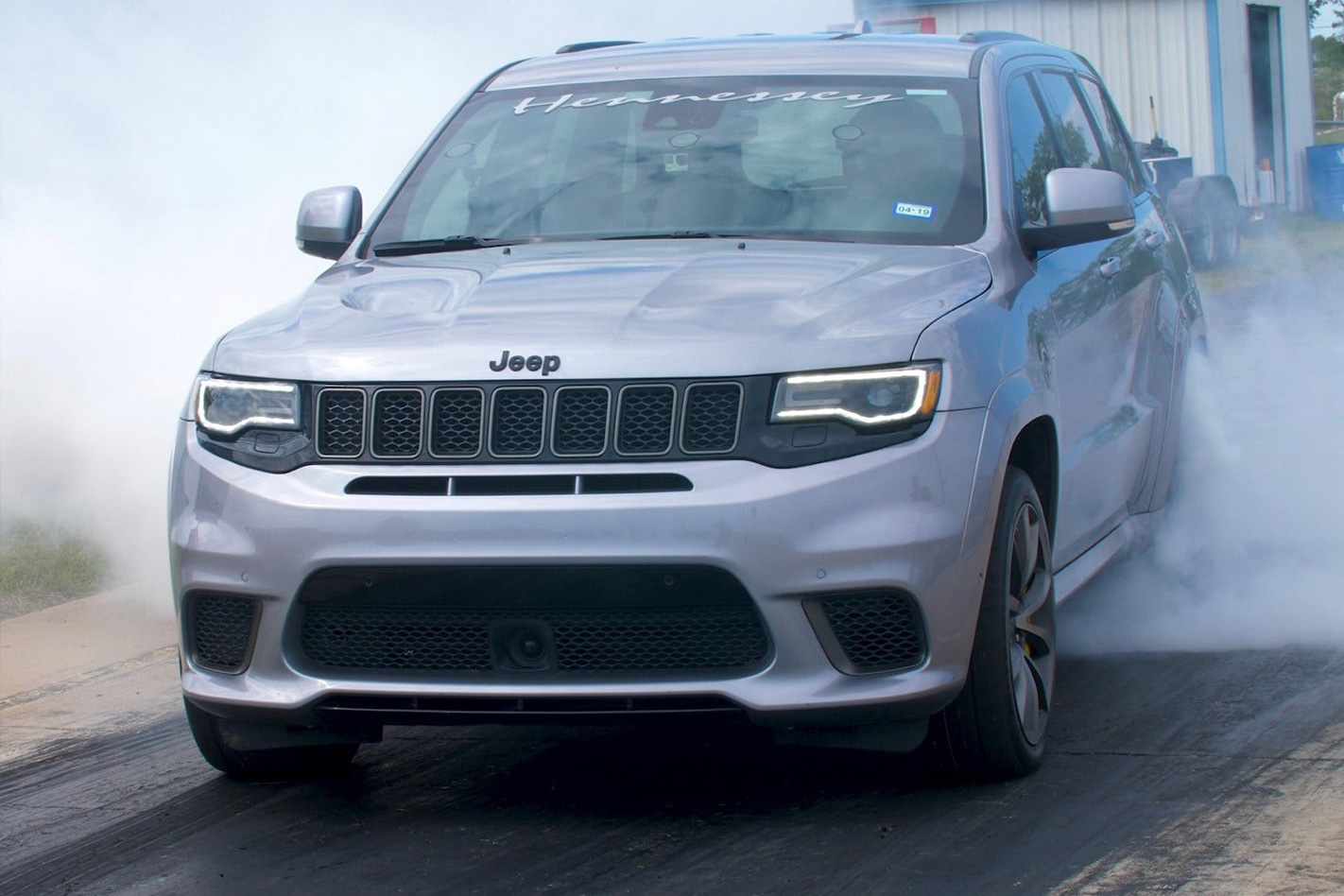
His latest creation is the HPE1200 (catchy name), which is a kit available for the Jeep Trackhawk. And the results are, well, predictably eye-opening.
The HPE1200 involves fitting upgraded pistons, rods, ported cylinder heads, a new camshaft, long-tube stainless steel headers, and a larger 4.5-litre supercharger – the latter of which pumps 22psi of boost.
The end result is a dyno-tested 748kW, along with 1209Nm of torque. Hennessey calculates this to be 895kW/1491Nm at the crank.
The upgrade drops the Trackhawk’s 0-60mph (97km/h) to 2.3 seconds, while the quarter mile is taken care of in 9.6 seconds at 233km/h.
When we performance tested the standard Trackhawk at Winton earlier this year, we cracked the quarter mile in 11.6 seconds, with a trap speed of 186km/h. The 0-100km/h sprint was reeled off in 3.7 seconds.
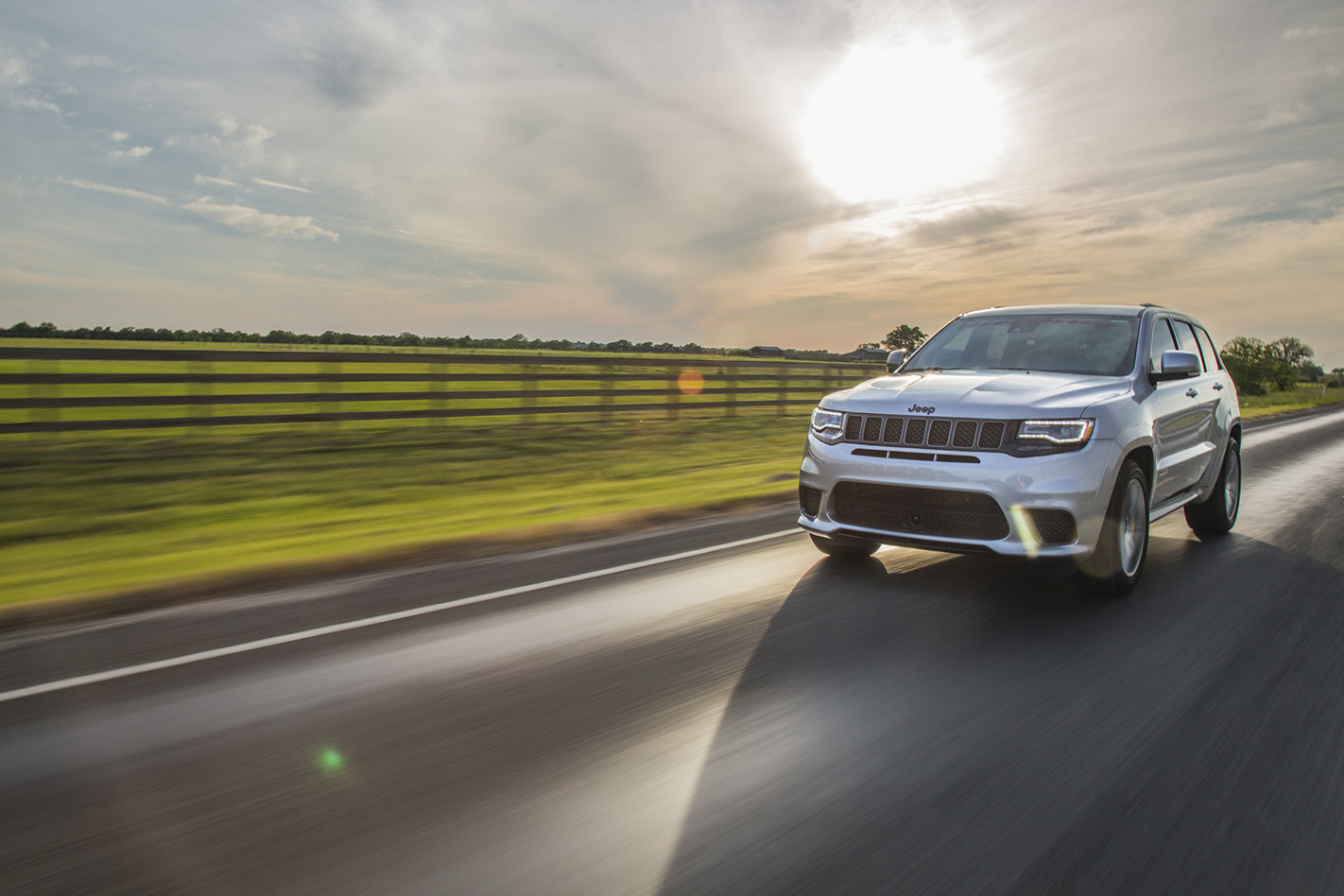
With that context provided, Hennessey’s upgrades become all the more staggering, cutting a full two seconds of the 400m dash.
For further comparison, a McLaren 720S takes around 10 seconds the complete the quarter mile. Same goes for the 515kW Porsche 911 GT2 RS.
We should mention that our test of the Trackhawk – which, admittedly, included time on Winton’s rallycross track – obliterated the record for single day fuel-consumption on a Wheels test, with deputy editor Andy Enright reporting 49.7L/100km. We don’t even want to think about the size of the fuel bill the Hennessey would produce, particularly since it’s tuned to guzzle 109-octane jungle juice.
And there’s a caveat to the incredible straight-line performance achieved by the Hennessey Trackhawk. Its numbers were achieved with Nitto 555R 275/40R20 drag radials fitted to each corner. Not exactly street-appropriate rubber.
Want one? Hennessey is building just 24 HPE1200s, setting you back US$179,000 (A$250,657) each, or a miserly A$280 per kW.
It’s a bargain when you consider you’d be able to embarrass McLaren 720S owners for half the price.
Holden has made an extraordinary decision to stop production of many of its popular models, including the Holden Commodore mid-size hatchback and wagon, and the Holden Equinox SUV, affecting factories as far flung as Germany, Thailand and Mexico.
The order to stop the boats delivering more new cars was made to address a worsening stock crisis due to slow sales.
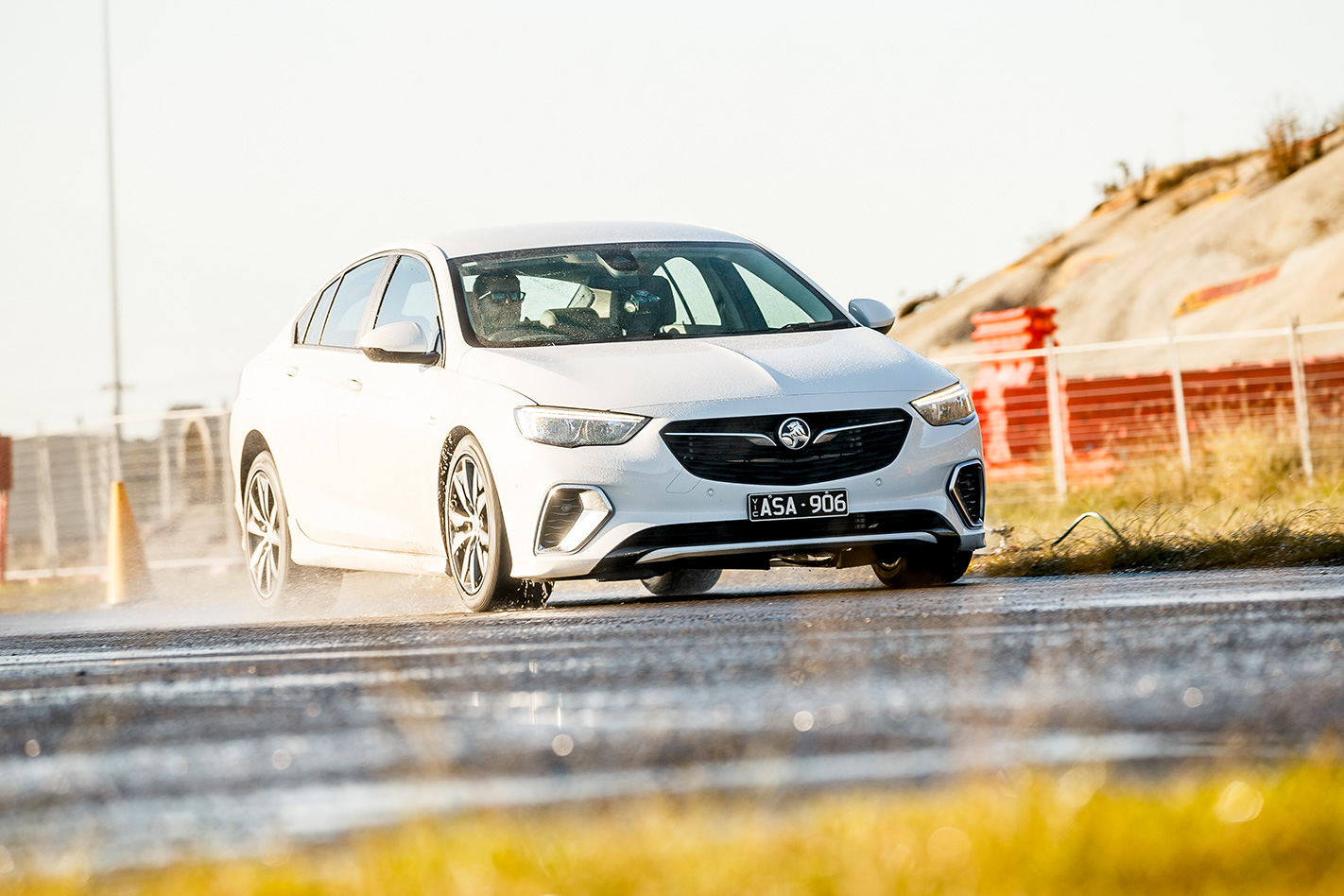
Fresh from its worst ever sales result – just 3927 cars in July – and months of market share below 5 percent, recently appointed Holden boss Dave Buttner has negotiated to halt production and deliveries of crucial models to clear existing stock.
Holden has thousands of cars gathering dust in paddocks and holding yards, a result of excess orders before anyone predicted the dire position the brand would be in once it ceased local manufacturing late in 2017.
“The sales were going like that,” Buttner says, motioning to the ground. “… and the tap hadn’t been turned off, so the production’s still coming towards us – and that horrified me as an old [product] planner.”
“We’re trying to get back to a reasonable stock carry level by the end of the year, so we can get into the new year in a healthy position.”
Buttner’s request to turn off much of the supply had the support of General Motors executives in Detroit, who hired the former Toyota Australia chief to try to turn the Holden brand’s fortunes around in what has been its most challenging period.
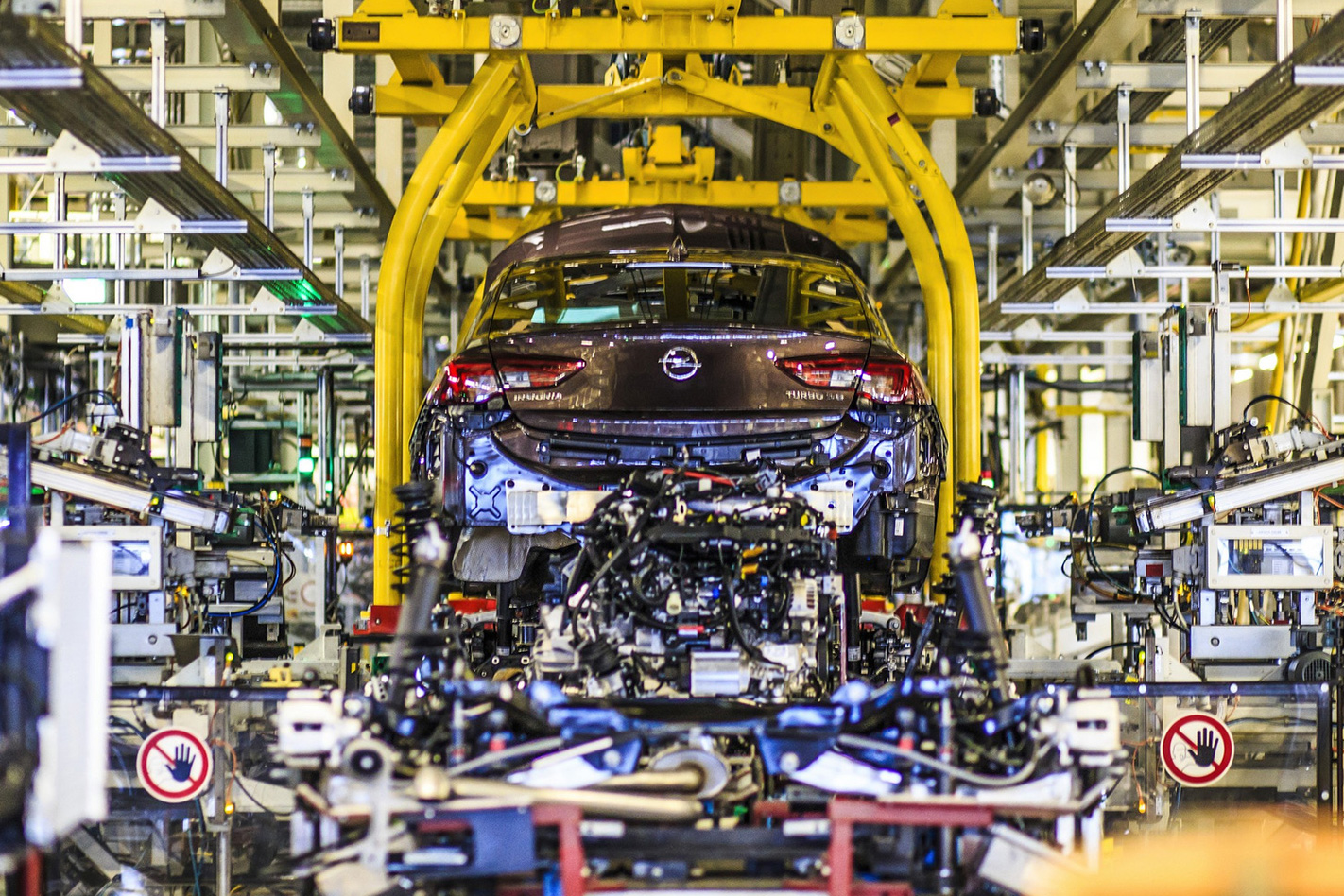
With some Commodore models, Holden has requested the Opel factory in Germany (a factory now owned by the parent company of Peugeot and Citroen) not to build cars until 2019.
Similarly, the Equinox SUV has also been put on hold to address its poor sales position; in the first nine months of 2018 Holden has sold just 3621 Equinoxes. That’s about as many as top-selling competitors sell in six weeks.
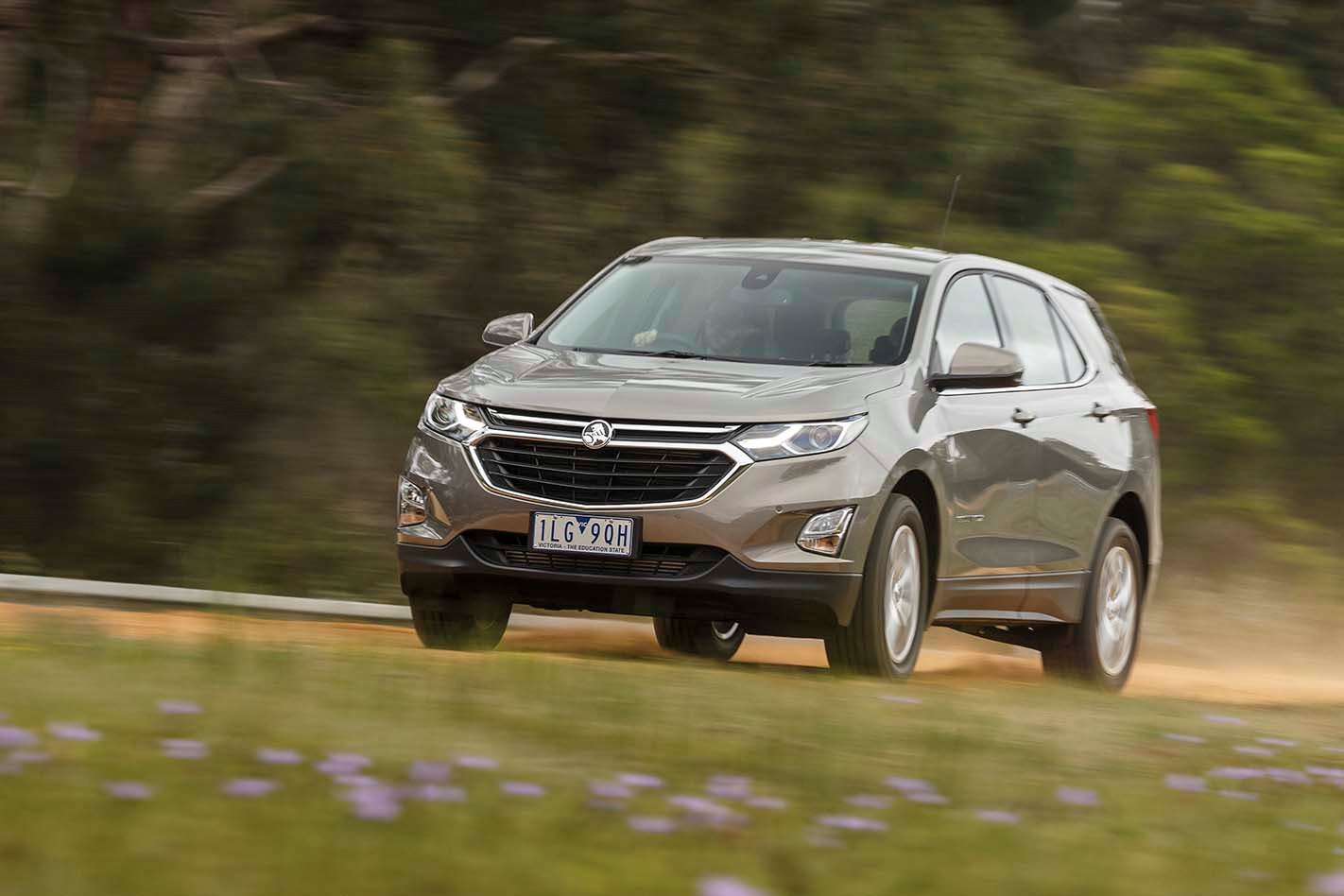
Buttner says stopping the boats – in turn putting pressure on factories to deal with lower production levels – is about being realistic and accepting Holden has an uphill battle to build sales.
“If you don’t recognise the state of your sales and own up to it quickly you’ve got a pretty huge pipeline coming towards you.
“We’ve looked at the whole portfolio, looked at what our standard stock should be … it was just a normal sales stock rundown … it’s not rocket science.”
But Buttner is adamant the slowdown in orders is a one-off about positioning the brand for challenges ahead.
“You have to be able to turn production down, but the idea is that you don’t have to do that often,” he says. “This is a fairly unique situation where we allowed the stock to keep coming towards us. Being an old manufacturing guy I’m fully cognoscente of the burden that puts on a manufacturing plant.
“We’ve had good cooperation from the plants but it wouldn’t be something I’d like to repeat on a regular basis because from a credibility point of view you don’t build it by doing that.”
It’s understood Holden has recently been clearing some cars produced in 2017, which is far from ideal in the last quarter of the year.
What do you think? Share your opinion in the comments below.
Kia Australia has revealed launch timing for its long-awaited turbocharged Picanto GT, now set to arrive in local showrooms in January 2019.
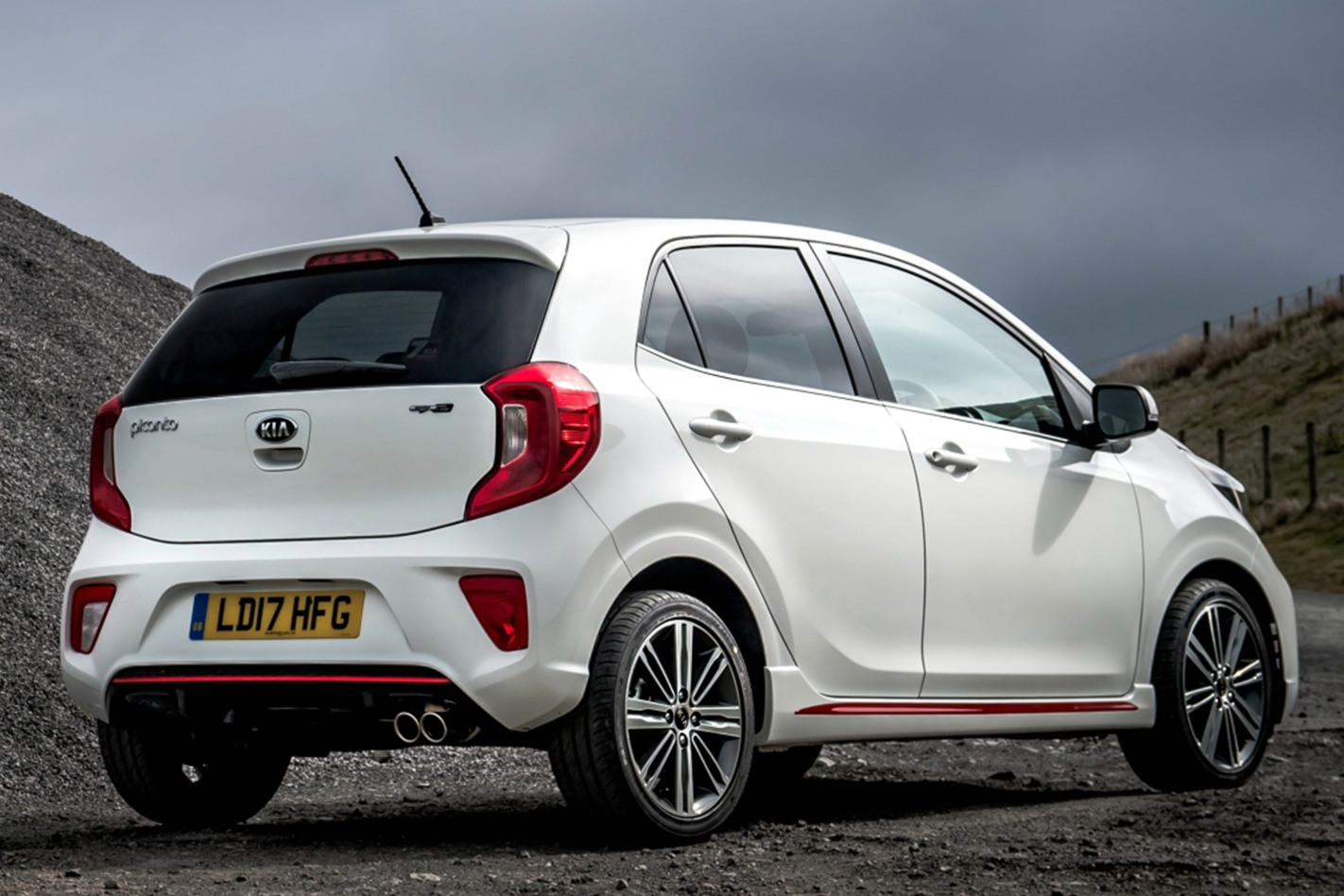
With a 73kW/172Nm 1.0-litre turbo three-cylinder engine taking the place of the regular Picanto’s 62kW/122Nm 1.2-litre naturally-aspirated four-cylinder, the Picanto GT will offer a genuine performance boost over its vanilla-flavoured cousin – and will likely wear a pricetag that will give it the title of ‘most affordable performance car’ in this country.
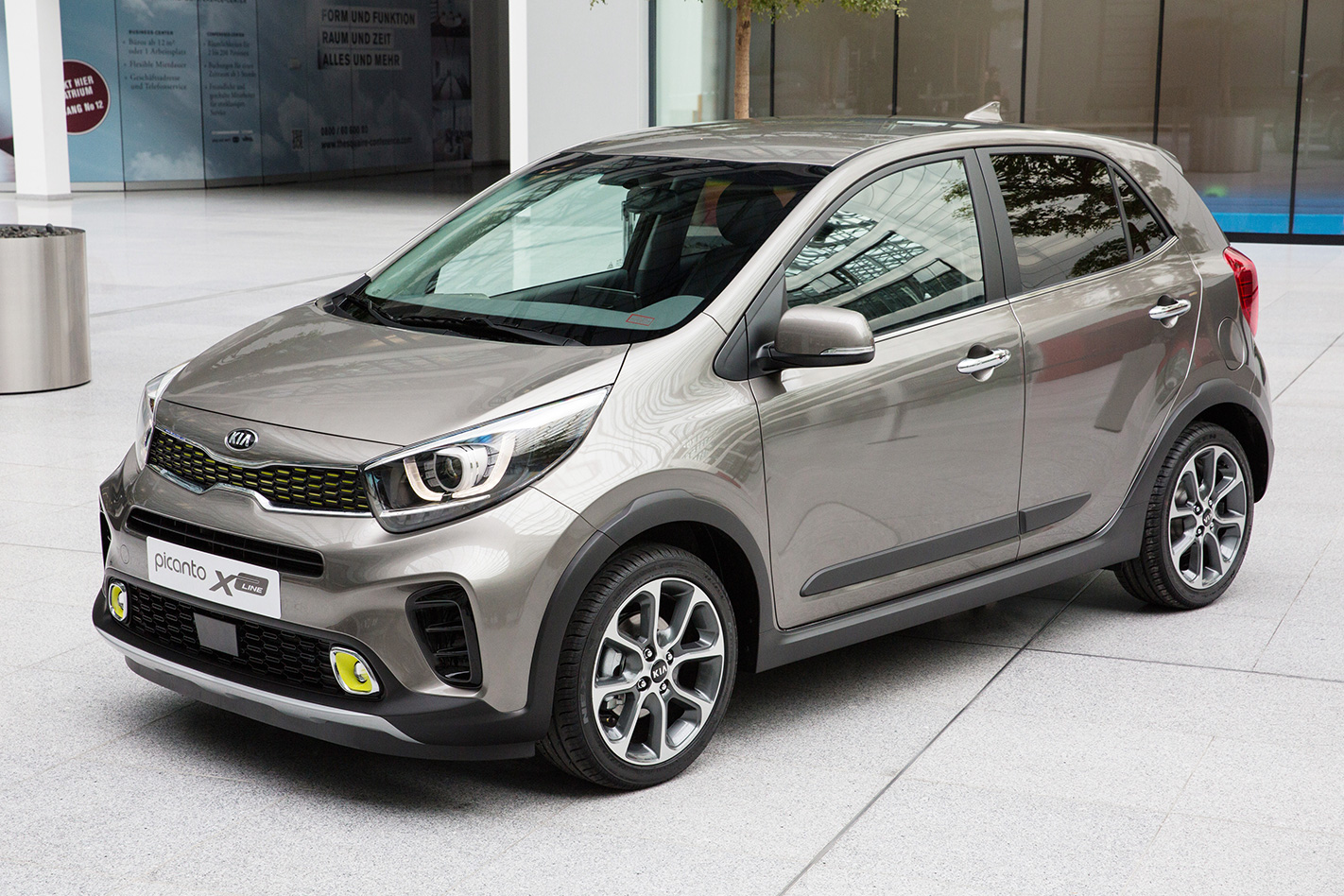
But a sportier option isn’t the only thing Kia Australia has in store for the Picanto line. The company is also expected to introduce a crossover-style variant to its smallest model range, in the form of the Picanto X-Line.
“There will be the Picanto GT 1.0-litre turbo and there will be another model for the Picanto arriving around the same time, at the Australian Open,” said Kia Australia spokesperson Kevin Hepworth. “Those cars will arrive late January.”
The Picanto GT will bring some extra spice, for sure, but its X-Line sibling may find traction amongst buyers keen to get into something with a more rugged aesthetic. With sales of smaller SUVs currently booming, the decision to bring the X-Line variant here could be an astute move on Kia Australia’s part.
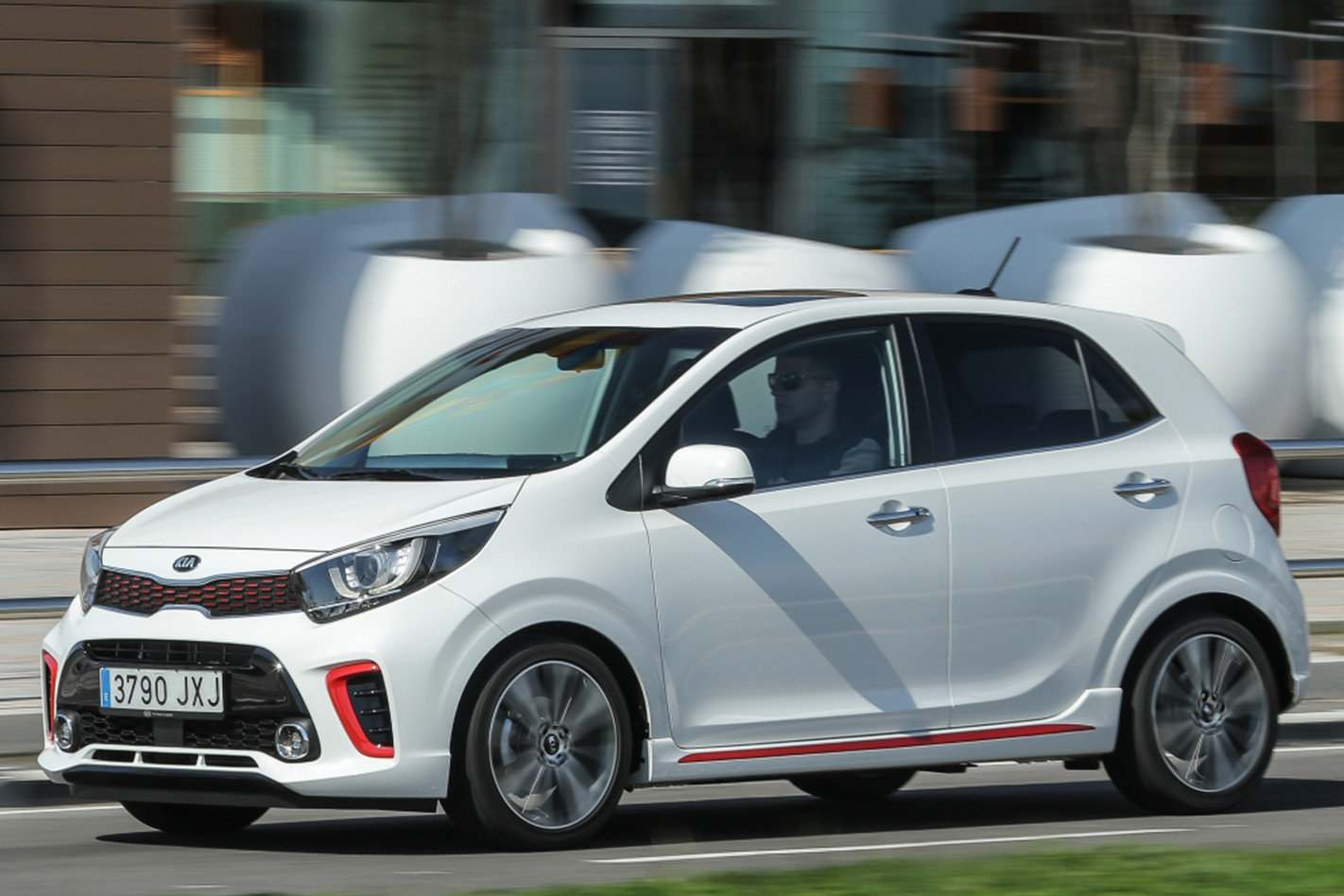
Revealed at the Frankfurt show last year, the Picanto X-Line gets 15mm more ground clearance along with durable-looking black plastic cladding around its wheelarches, bumpers and sideskirts. In Europe it’s offered with the GT’s 1.0-litre three-cylinder and a choice of a five-speed manual or four-speed auto, and records an average fuel consumption of 4.5L/100km. Its outdoorsy image is strictly cosmetic though with no availability of an AWD-equipped driveline.
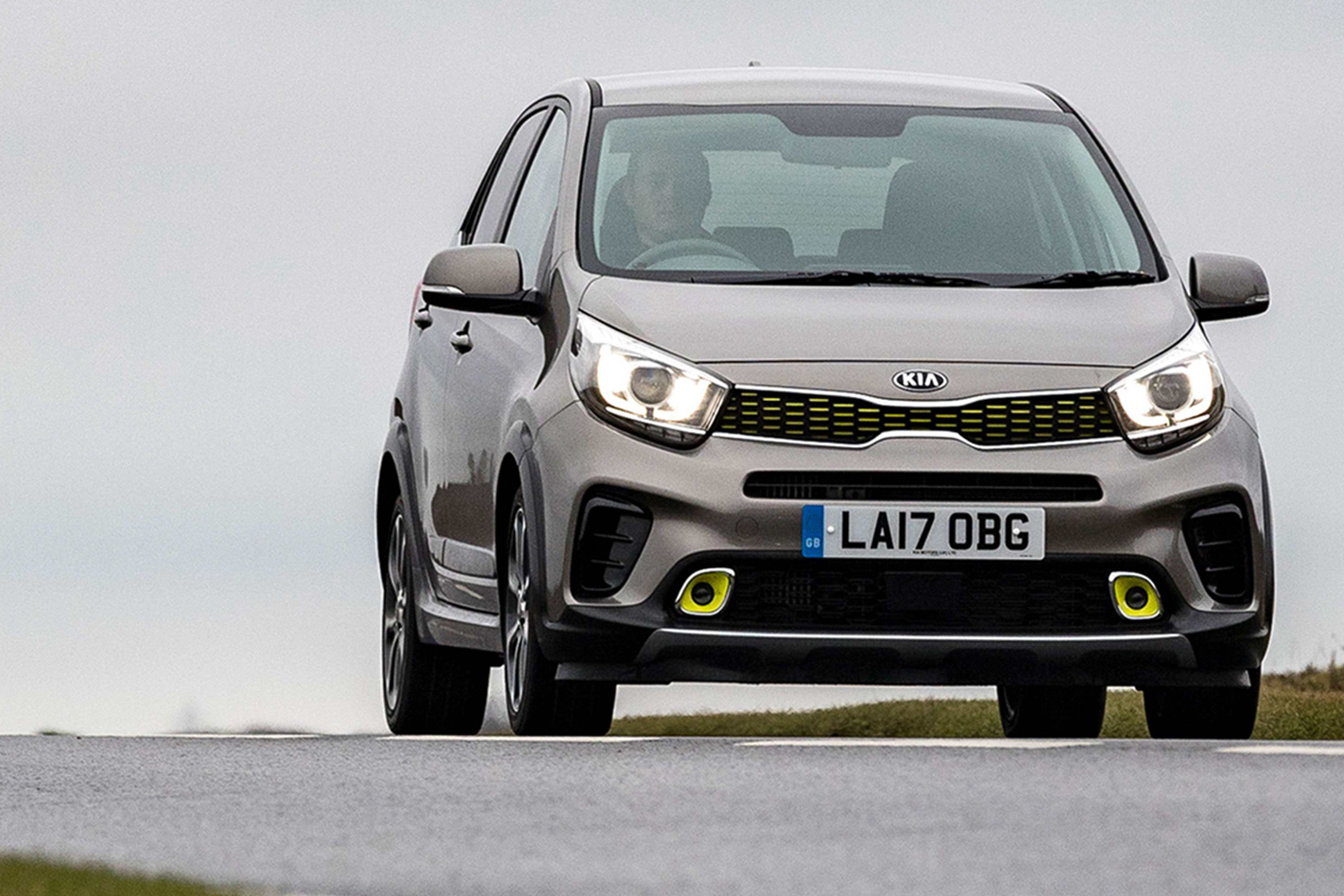
Australian specifications are still yet to be confirmed, and pricing for the Picanto GT and X-Line won’t be announced until closer to launch. The GT will be offered with both a five-speed manual and six-speed automatic. Given the current Picanto range tops out at $17,490 for the Picanto GT-Line automatic, a sub-$20K starting price for Kia’s pint-sized performer doesn’t seem outside the realm of possibility.
The Picanto X-Line will likely be marketed as an Australian Open special edition, as part of the automaker’s long-running sponsorship of Australia’s premier tennis event.
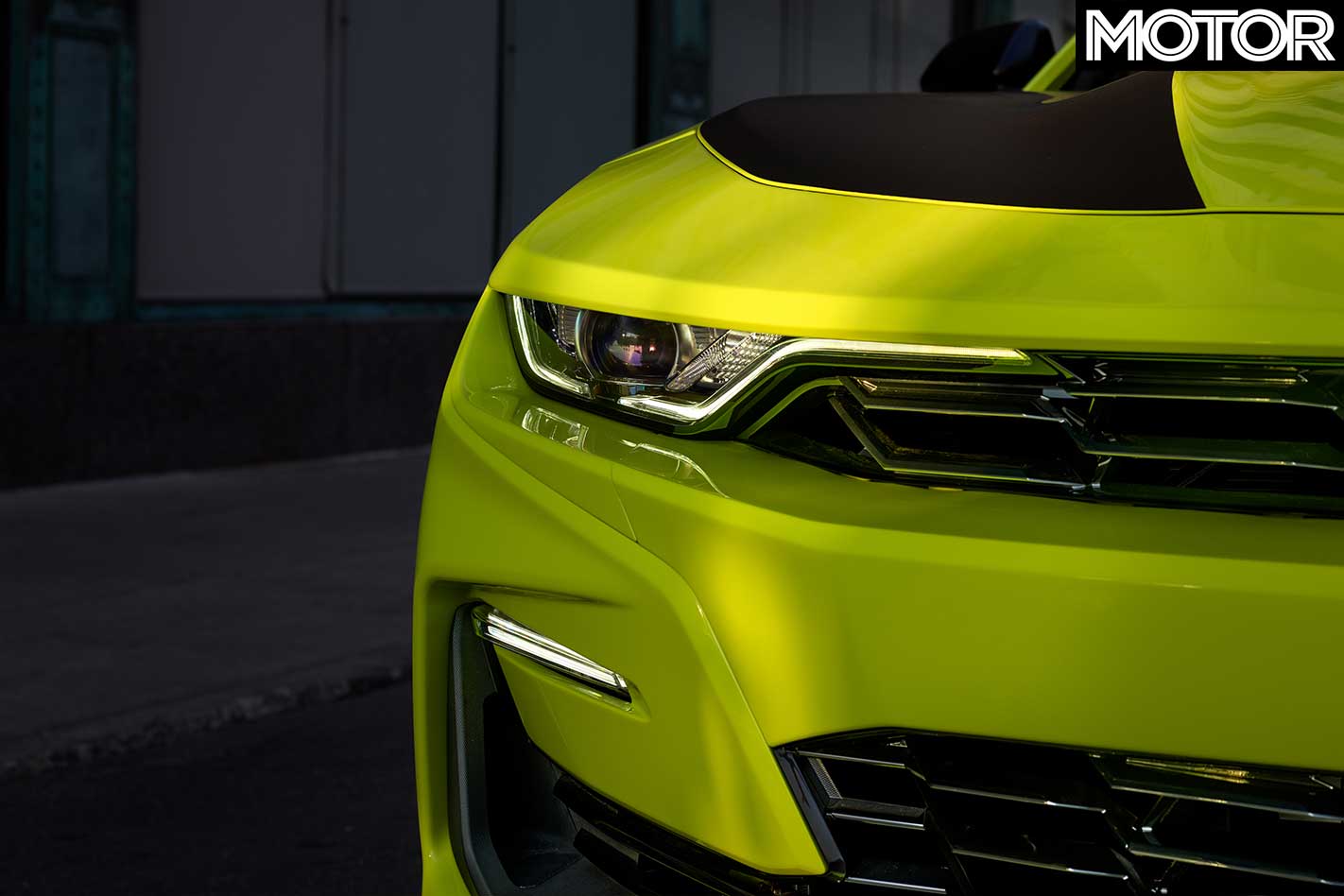
The 2019 Chevrolet Camaro SS divided opinion upon its reveal with a new front end featuring the risky ‘flow tie’, a relocation and alteration of the Chevrolet badge.
Now, Chevrolet has revealed a show car for SEMA in the form of a Camaro SS highlighting its revised front end and a new colour – Shock Yellow.
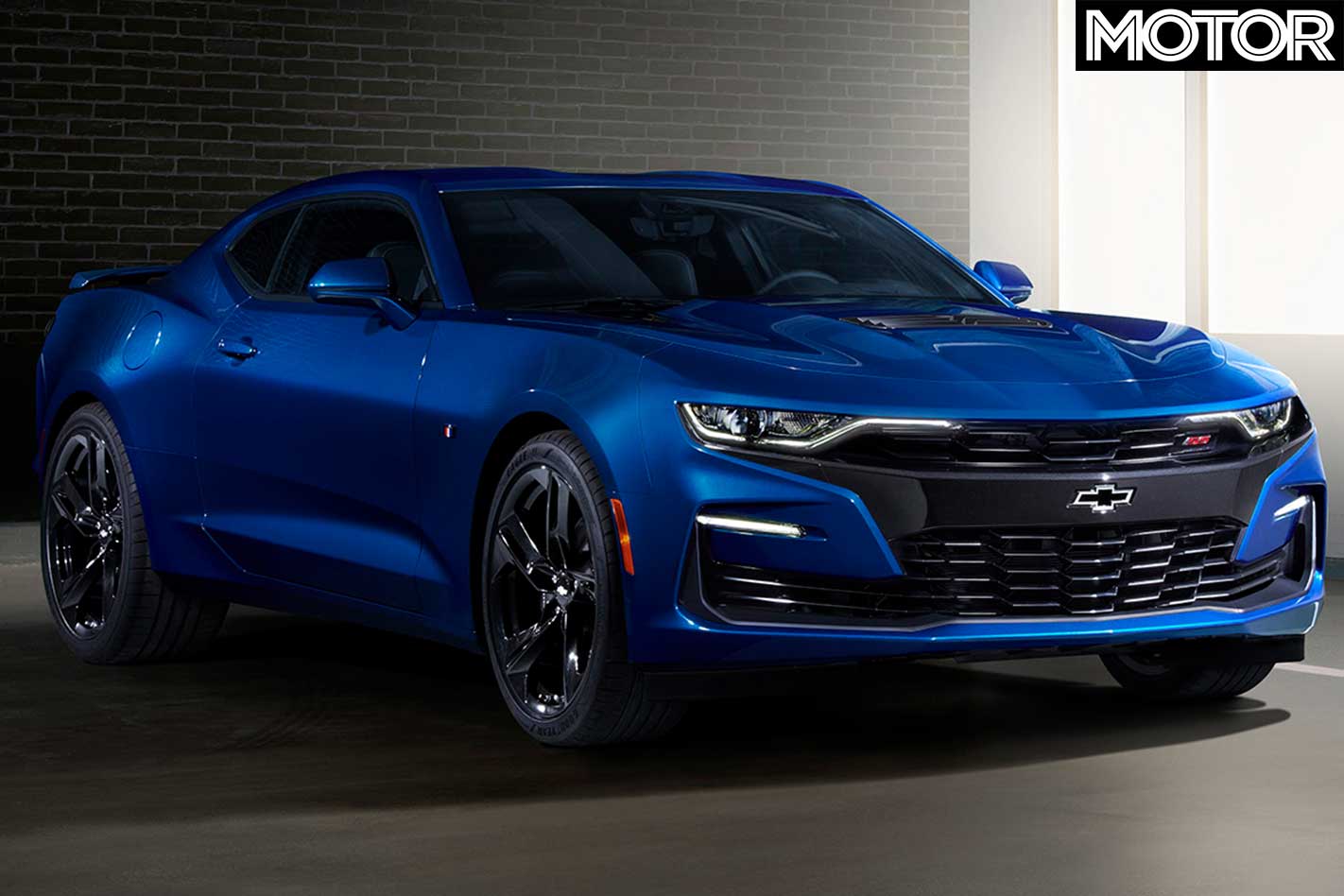
The new front end is what is more likely to draw fans back in, however, as it places the Chevrolet badge firmly back where it previously lived – between the headlights in the grille rather than on the middle of the front bar bodywork.
The front bar also now features the same painted colour as the rest of the body, rather than being a contrasting black trim element.
Chevrolet Marketing director Steve Majoros says the Camaro is customisable with a host of performance parts, though he doesn’t confirm whether the re-styled front end will become a reality for buyers.
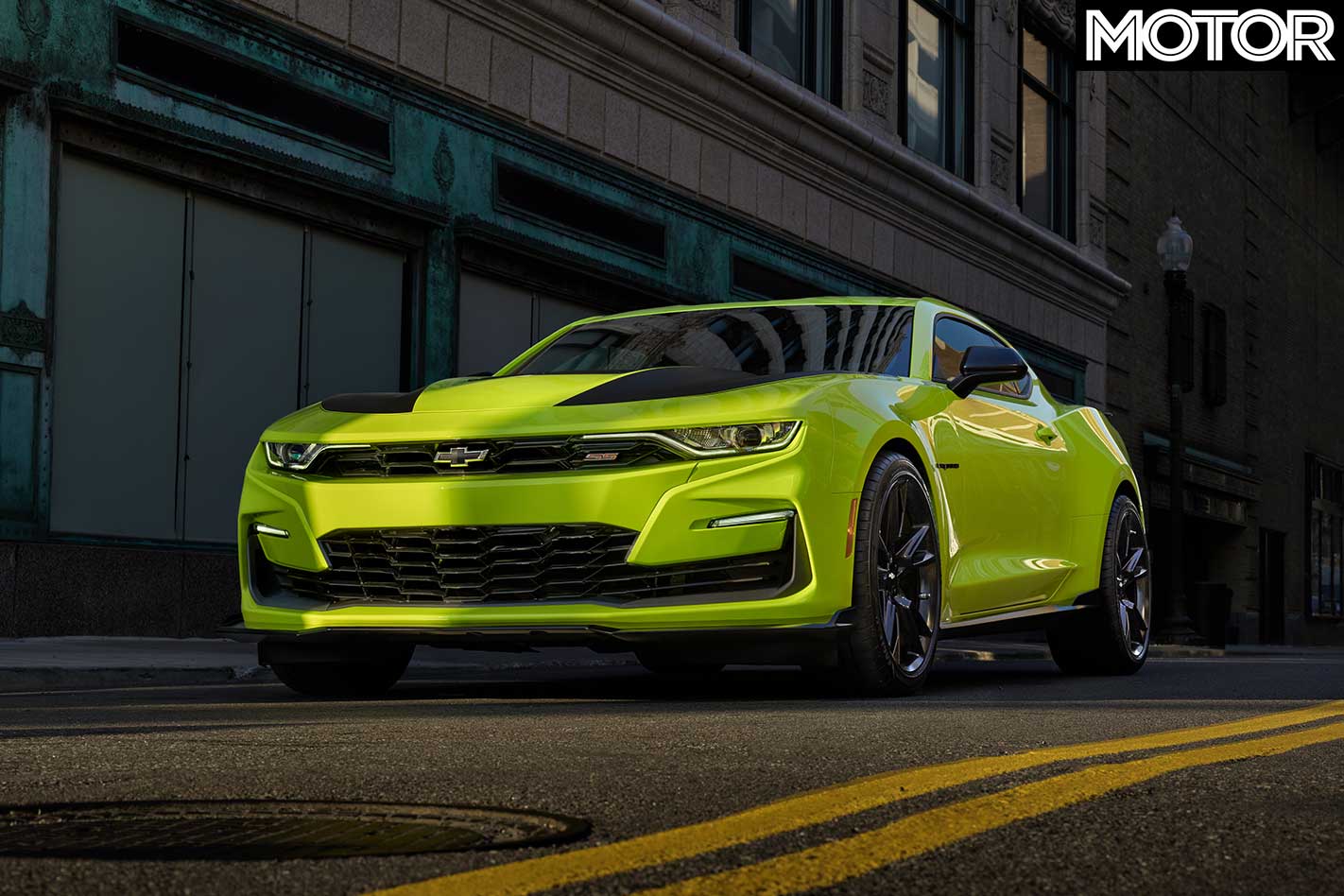
Given its similarity to the more traditional ‘Camaro look’ and the reaction to the ‘flow tie’, it’s possible this new badge and front bar arrangement might be made available.
“There’s a fresh look for the 2019 Camaro, which is restyled, reinvigorated and offers more choices and new technologies,” says Majoros.
“It’s the perfect canvas for personalization, and the new Shock color and available accessories demonstrate only some of the possibilities customers have to make the Camaro entirely theirs.”
Options that Chevrolet has confirmed for the 2019 car include a black wing spoiler and black badges, cold-air induction, Recaro seats, Brembo brakes, and 1LE-dervied suspension upgrades.
Australian availability for these parts will likely be subject to HSV’s intentions, but only once the next generation Camaro arrives in Australia.
