
LEWIS HAMILTON cruised to victory under lights in Singapore, at a venue where many expected Ferrari and Red Bull to dominate.
The plans for Hamilton’s usurping of the preconceived running order were laid in qualifying, when he put on a masterclass to steal pole from Max Verstappen and Sebastian Vettel.
Where the trio started is where they would finish the Singapore Grand Prix. However while Hamilton had it relatively easy at the lead of the race, Verstappen was forced to work for his second-place finish.
The Dutchman was on the dirty part of the grid, and Vettel got a run heading through the first complex of turns, but couldn’t make a pass stick.
However, the Ferrari driver drained his entire battery on the long run to turn five, slipping past the Red Bull in the nick of time before a Safety Car was called.
Bernd Maylander was summoned to the front of the field as Esteban Ocon’s Force India laid mangled and broken following contact with the circuit’s unforgiving concrete walls.
Ocon was the first and only DNF for the race, crashing at turn three after a bump from his teammate Sergio Perez that was awfully reminiscent of the pair’s multiple clashes last year.
As the official F1 safety car driver, Maylander has now led the fourth-most number of laps at the Singapore Grand Prix, overtaking Nico Rosberg after his 18th appearance in 11 grands prix at the venue.
Vettel held onto second during the opening portion of the race while the field played a game of tyre management on the hypersoft compound. Ferrari attempted to perform an undercut on Hamilton, but it backfired when Vettel was fed back out behind lapped traffic.
The situation then got worse for Vettel, who was on the ultrasoft compound, when Verstappen exited pit lane ahead of the Ferrari wearing the harder soft compound.
The 20-year-old Red Bull driver was battling with a powertrain that wanted to select neutral at part throttle, but Verstappen held onto his second place position to the end of the race.
Valtteri Bottas finished fourth behind Vettel, but ahead of Kimi Raikkonen, and Daniel Ricciardo. Fernando Alonso, Carlos Sainz, Charles Leclerc, and Nico Hulkenberg rounded out the top 10.
The most entertaining part of the 61-lap affair was Sergey Sirotkin’s antics in the bottom half of the field.
The Russian driver was ahead of Sergio Perez for most of the first half of the grand prix, much to the Mexican’s chagrin.
The Force India driver finally passed the Williams at the halfway point of the race, but with the red mist fogging Perez’s visor, the faster driver moved hard left, causing a collision with Sirotkin. Perez was handed a pit lane penalty for his efforts.
Then it was Kevin Magnussen’s turn to tussle with the Russian. The pair were duelling when race leaders Hamilton and Verstappen arrived on the scene.
The two backmarkers did little to abide by the blue flags, allowing Verstappen to close in on Hamilton. Despite a look down the inside by Verstappen as he and Hamilton lapped traffic, the order at the lead of the race remained unchanged.
Kiwi Brendon Hartley was the third and final driver to rub shoulders with Sirotkin, with the Williams driver being handed a five second penalty for almost forcing the Toro Rosso into the barriers.
Hamilton now has a 40-point lead over Vettel with just six grands prix left in the championship. With only 25 points available for a victory, the odds are being stacked against Vettel in the fight for a fifth world title. There’s still aglimpse of hope for Vettel insofar as he can win if he finishes the remaining races first, with Hamilton consistently second. His fate is, for the time being at least, in his own hands.
However, in Formula 1 you can never be assured of victory, as Vettel knows all too well.
JAMIE WHINCUP and Paul Dumbrell were unchallenged during 161 laps of running at Sandown to clinch the opening race of the Supercars’ enduro season in dominant form.
The duo led home Red Bull Holden Racing Team teammates Shane van Gisbergen and Earl Bamber who finished second, while Craig Lowndes and Steven Richards made it a clean sweep of the podium for Triple Eight Race Engineering.
A second place in the 500-kilometre race helped van Gisbergen extend his championship lead, while earning Bamber a podium for his Supercars’ debut.
Whincup and Dumbrell were untouchable throughout the race, leading from the start, and only conceding first place during the pit stop cycles. The duo lapped all but the top 12 finishers during the race.
It wasn’t as easy for the second and third placed finishers, who started in the middle of the pack following a pair of chaotic qualifying races on Saturday. Bamber and Richards worked hard in the early portion of the race, handing their cars over to van Gisbergen and Lowndes inside the top five.
The podium sweep is the first for any team in Sandown 500 history.
Scott McLaughlin and Alex Premat finished in fourth place, holding off polesitters David Reynolds and Luke Youlden who couldn’t pass the DJR Team Penske car despite a late-race pace advantage.
McLaughlin stated he and Premat “got properly smoked” by the Triple Eight trio.
“If it wasn’t for the safety car, they probably would have lapped the whole field,” he said following the race.
Ford teams began to air worries about an aero disadvantage to the Holden ZB Commodore over the weekend. The new Commodore appeared to have a straight-line speed advantage over the ageing FG X Falcon, which gave the Holden crews the upper hand on Sandown’s pair of long straights.
With Bathurst having a similar focus on top speed, the Ford crews will be scratching their heads looking for a solution before the next race.
There were a number of impressive drives through the field, in particular Garth Tander and Chris Pither, who dropped to dead last following contact on the first lap. The pair then put their heads down and pushed on, finishing in ninth place by the end of the race.
Finishing in second place allowed van Gisbergen to extend his championship lead over McLaughlin, with 55 points now separating the pair.
Whincup is still third in the points’ standings, with a 338 deficit to his teammate heading to Mount Panorama.
The next race of the season is the Bathurst 1000 on October 7.
THE LOSS of Australian new vehicle manufacturing was always going to hurt in more ways than one, but as the former flood of locally made products turns to an inevitable trickle, it has unexpectedly accelerated the volume drop in the overall car market.
In July 2018, Aussies bought 85,551 vehicles compered with 92,754 in July 2017, down 7.8 per cent. That drop of 7203 includes 4755 fewer local Ford, Holden and Toyota models, or a dribbling 65 local sales versus a still-considerable 4820 in the same month last year.
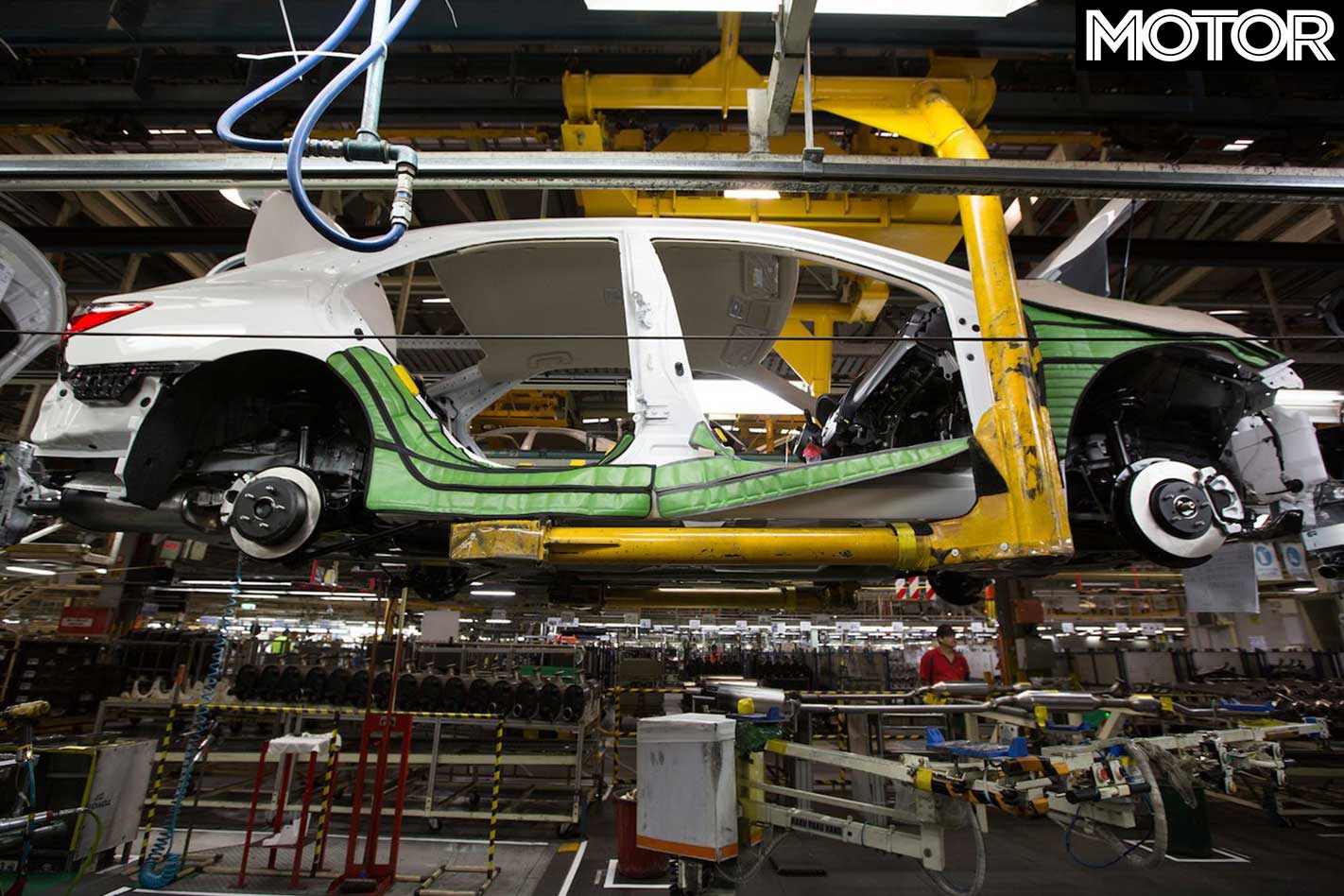
To put that latter number into further context, had it been reached again this month it would have still left Australian cars as the fifth most popular country of origin behind a dominant Japan (27,370) and Thailand (21,387), South Korea (11,864) and then Germany (6967).
Speaking of which, imports have dropped 2448 units comparing July 2017 with July 2018, but year-to-date there has been an extra 27,973 sales of offshore-made products, from 659,074 to 687,047 and up 4.2 per cent overall. This only further highlights that the lack of any continuing Aussie cars has resulted in a total fall, because the overall market is down from 692,306 by the seventh month last year to 691,073 this year, a drop of 0.2 per cent.
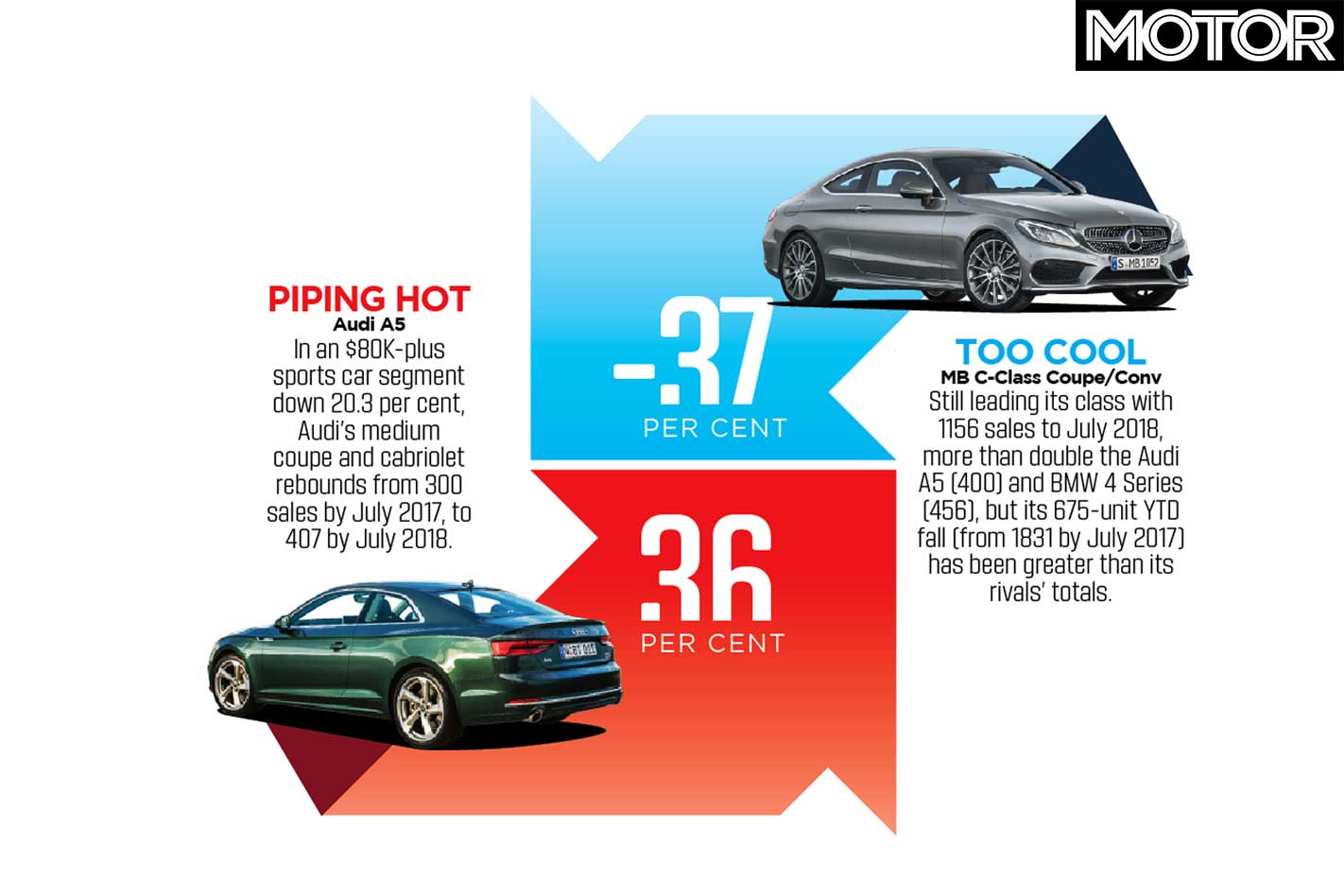
Drilling down further, Holden more than Toyota is to blame. Only 41 last VFII Commodores were sold in July, along with 516 units of ZB, leaving the nameplate to plunder 65.9 per cent versus July 2017 and 52.8 per cent year-to-date.
The Camry has fallen 44.8 and 37.4 per cent respectively, but still with more than double Commodore’s monthly (1317) units. And being less reliant on one model has left Toyota up 1.4 per cent year-to-date.
Holden? It’s down 24.8 per cent.
As car nuts, we’re obsessed with power. It dominates almost every discussion, we empty our wallets in pursuit of more and it’s the figure that matters most for any new fast car.
Honda knows this, but while the original NSX became the supercar benchmark in many areas, thanks to Japan’s ‘gentleman’s limit’ of 206kW, outright performance wasn’t one of them.
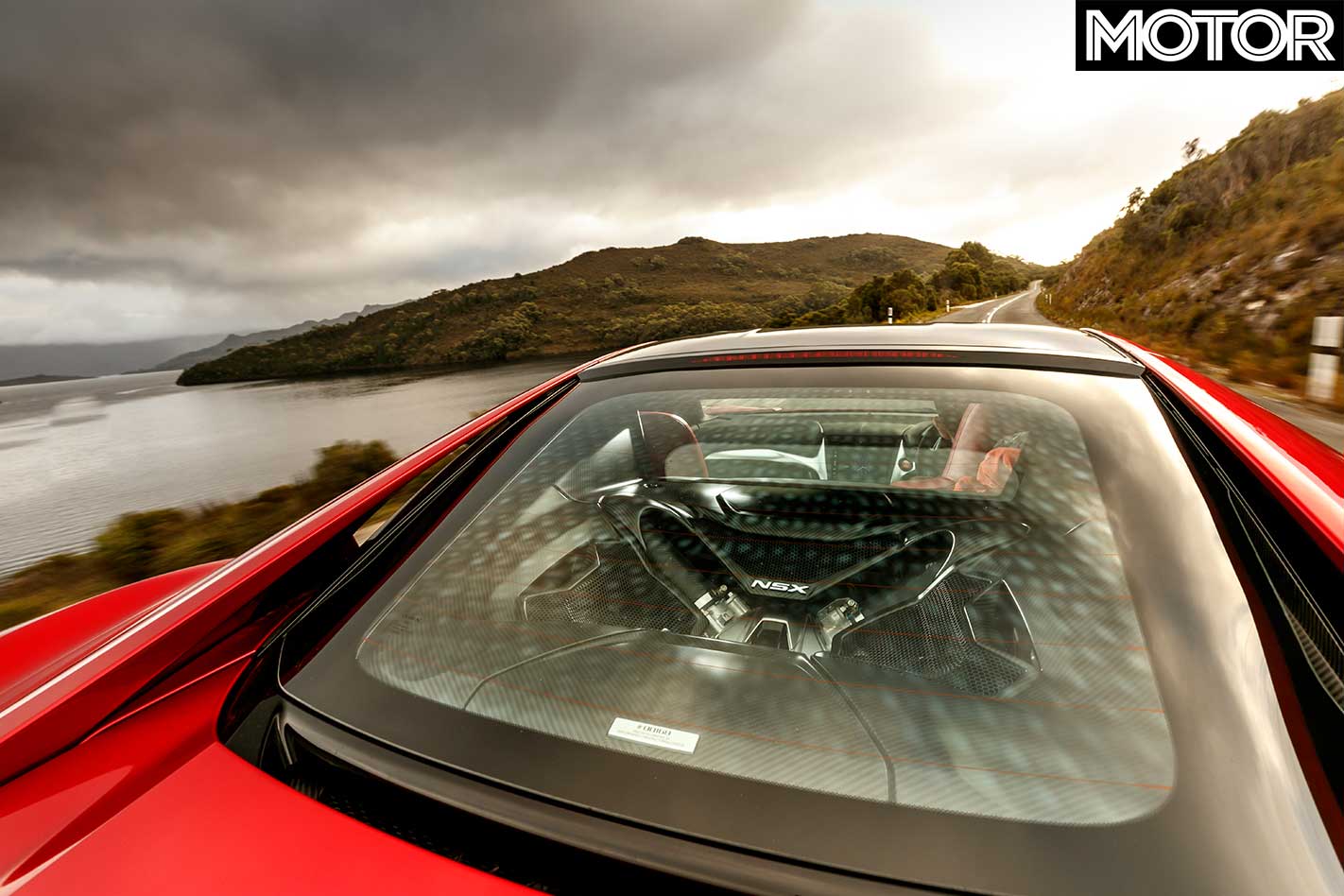
It wasn’t going to make the same mistake twice. The second-generation NSX was tasked with reviving Honda’s performance reputation; it needed power to match the absolute best. Its 3.5-litre V6 is not only boosted by two turbos for 373kW/550Nm, but augments this with a trio of electric motors. Combined, these power sources produce an impressive 427kW/646Nm.
Relatively impressive, that is. We car enthusiasts know nothing of real power. This road trip will take us to a destination which produces 432,000kW at full tilt. It isn’t quite as quick as the NSX; Honda’s hybrid hero hits 100km/h in around 3.0sec and tops out at 308km/h, whereas our target can only move a maximum of 20mm, because it’s 140m tall and 198m long.
At its completion, the Gordon Dam was Australia’s tallest, today standing fifth on the list. This year marks 40 years since the Gordon Power Station that accompanies it began providing clean hydro-electric power to up to 25 per cent of Tasmanian homes, so to pay tribute it seemed appropriate to take a supercar that at least pays lip service to reducing emissions.
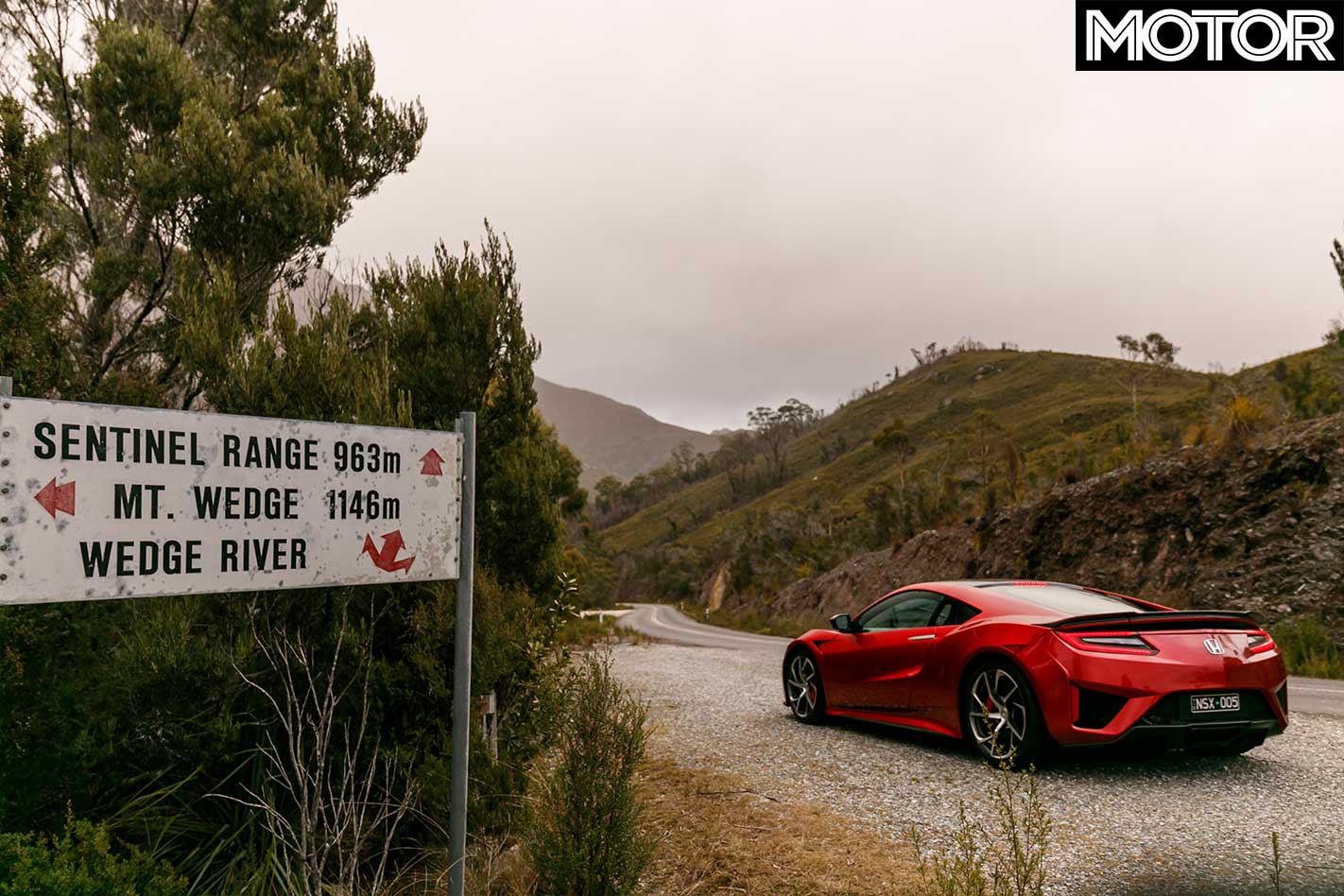
Honda’s new supercar doesn’t have an EV mode as such. Creeping out of the Hotel Grand Chancellor’s underground carpark, it can only operate silently in short bursts before the V6 chimes in. Our timing is fortuitous; a week ago massive storms flooded this carpark, drowning every car within – we would’ve needed scuba gear to retrieve the NSX.
Extraction still isn’t easy. It requires edging down the shallower entrance ramp into oncoming traffic to avoid scraping the expensive carbon front lip; thankfully, few Hobartians are awake at this pre-dawn hour. Ah, the glamour of supercars. It must be said, though, that the NSX looks a million bucks, which helps lessen the sting of its $420,000 price tag.
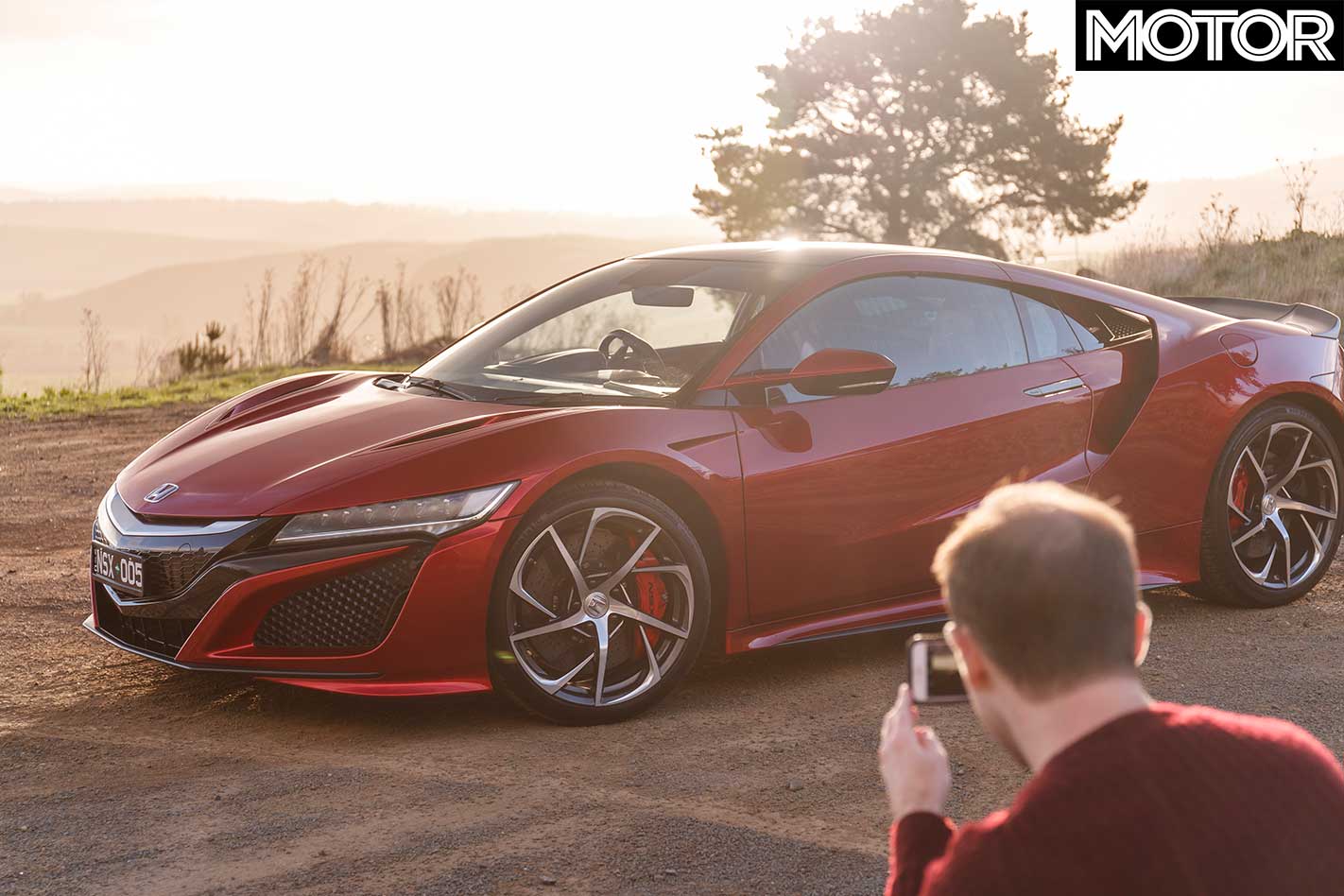
It’s small, 80mm shorter than a Porsche 911, but its width and (lack of) height instantly mark it as exotic and the Valencia Red paint is so rich and deep it’s like you could swim in it.
The overall shape is quite conservative, but some of the details, particularly around the nose, have a concept car’s glitziness. It needs some flash; it’s tempting to think of the NSX as Japanese, but it was primarily designed and developed in the US, which is expected to be its biggest market.
A giveaway is the seats: wide and well-supported, they feel quite high, but you sit so low to the ground it’s an illusion created by a very low dash. The materials are beautiful, let down only by HVAC and sat-nav lifted from a Civic.
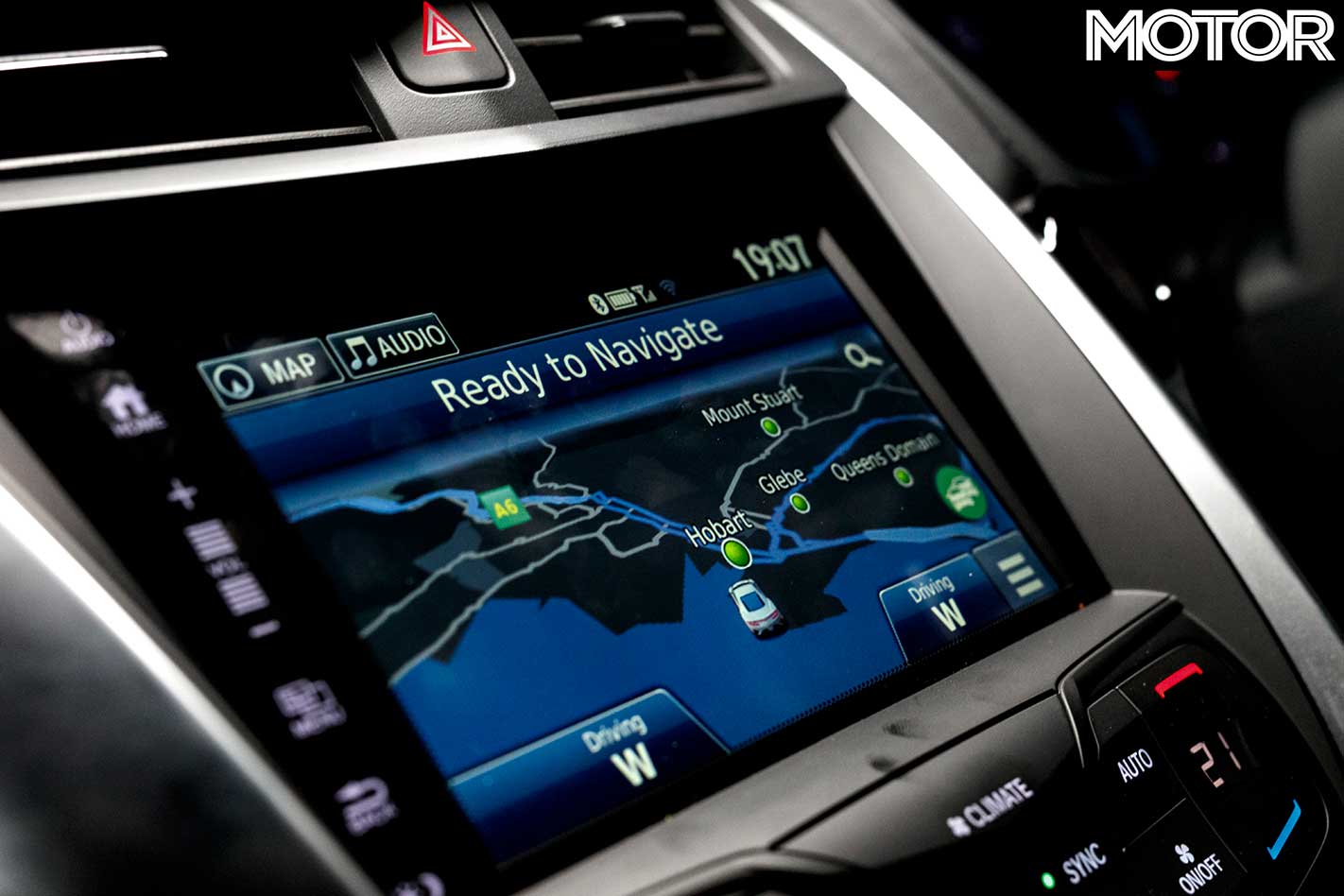
The semi-quartic steering wheel also feels a little large and is very fat where your hands rest, making the paddles a stretch. I’m not sure the interior is exotic enough for the price tag, but it does feel extremely well made, the advantage of a mass market manufacturer making a supercar.
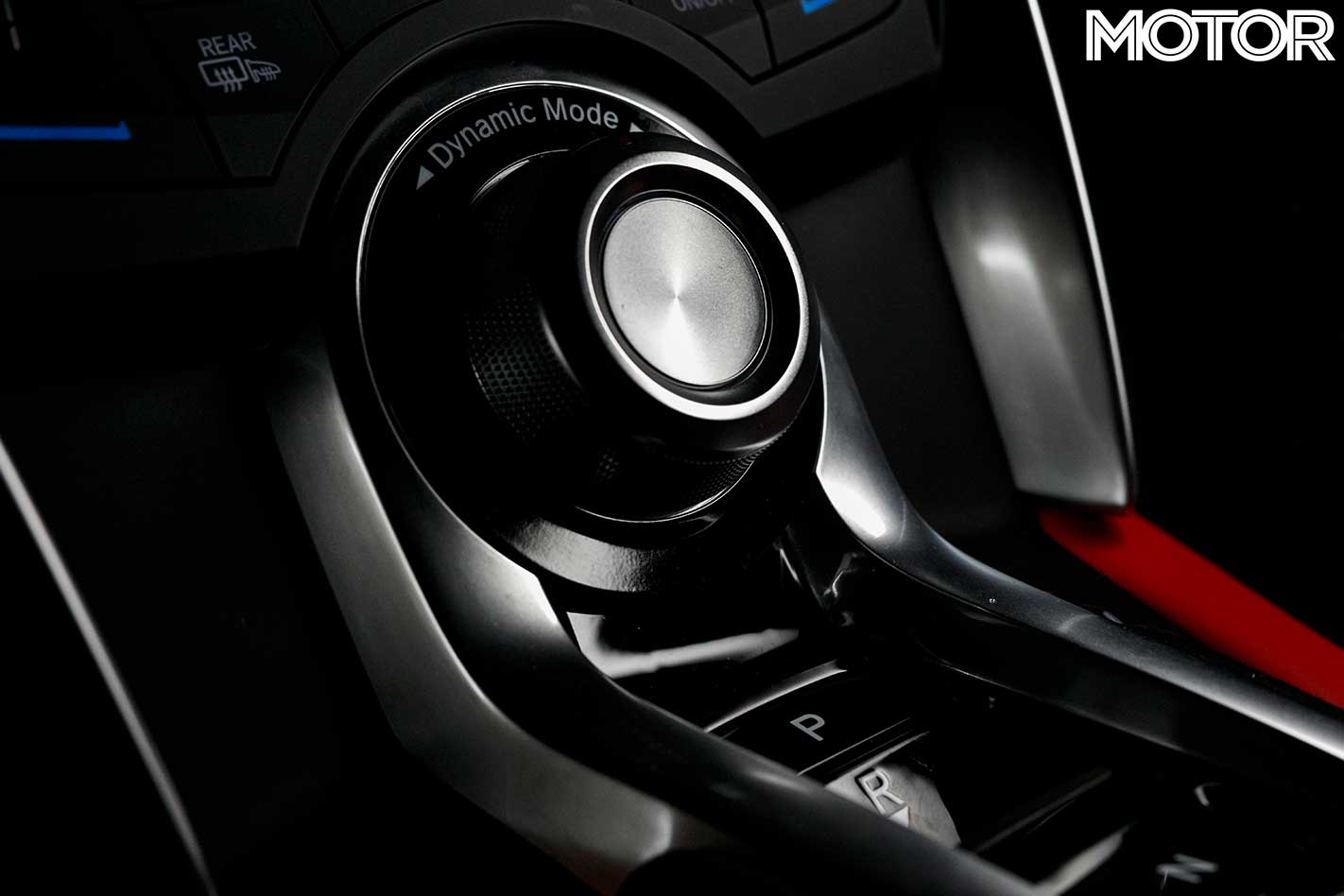
The dash is dominated by the drive mode selector, but the default Sport is sufficient to escape Hobart. The NSX quickly impresses. The ride is firm but compliant, forward visibility is excellent, the steering beautifully weighted, the brakes nicely progressive and there’s just enough noise from the engine behind to remind you you’re driving something special.
New Norfolk provides the final opportunity for fuel before heading west; we’re likely to need every one of the NSX’s 59 litres. The countryside begins immediately, the B62 following the River Derwent before we turn left onto the B61 and continue into Maydena, a tiny hamlet (population 245 as of 2006) once known for timber and mining, now one of the world’s premier mountain-biking destinations.
Prior to 1964, the road ended here, Tasmania’s rugged south-west accessible only by boat, foot or aeroplane. Despite its remoteness, the region was identified as the most suitable for a large hydro-electric scheme. Early assessment was completed by flow recorders in the Gordon River and aerial survey, but the arrival of helicopters in the mid-1950s allowed survey work to be completed more quickly and in greater detail.
The dam’s current location was found to be ideal, but it was 80km from the nearest road. Construction began in January 1964, with the intended route set by chains dropped from helicopters. It was brutal work. The crews were flown in by helicopter and worked out of tents for a month at a time, battling unforgiving terrain and vicious weather.
The south-west of Tasmania is an inhospitable place; the average annual rainfall is four metres and if the weather was bad the helicopters couldn’t fly, isolating the crews. For one six-week period it rained every single day.
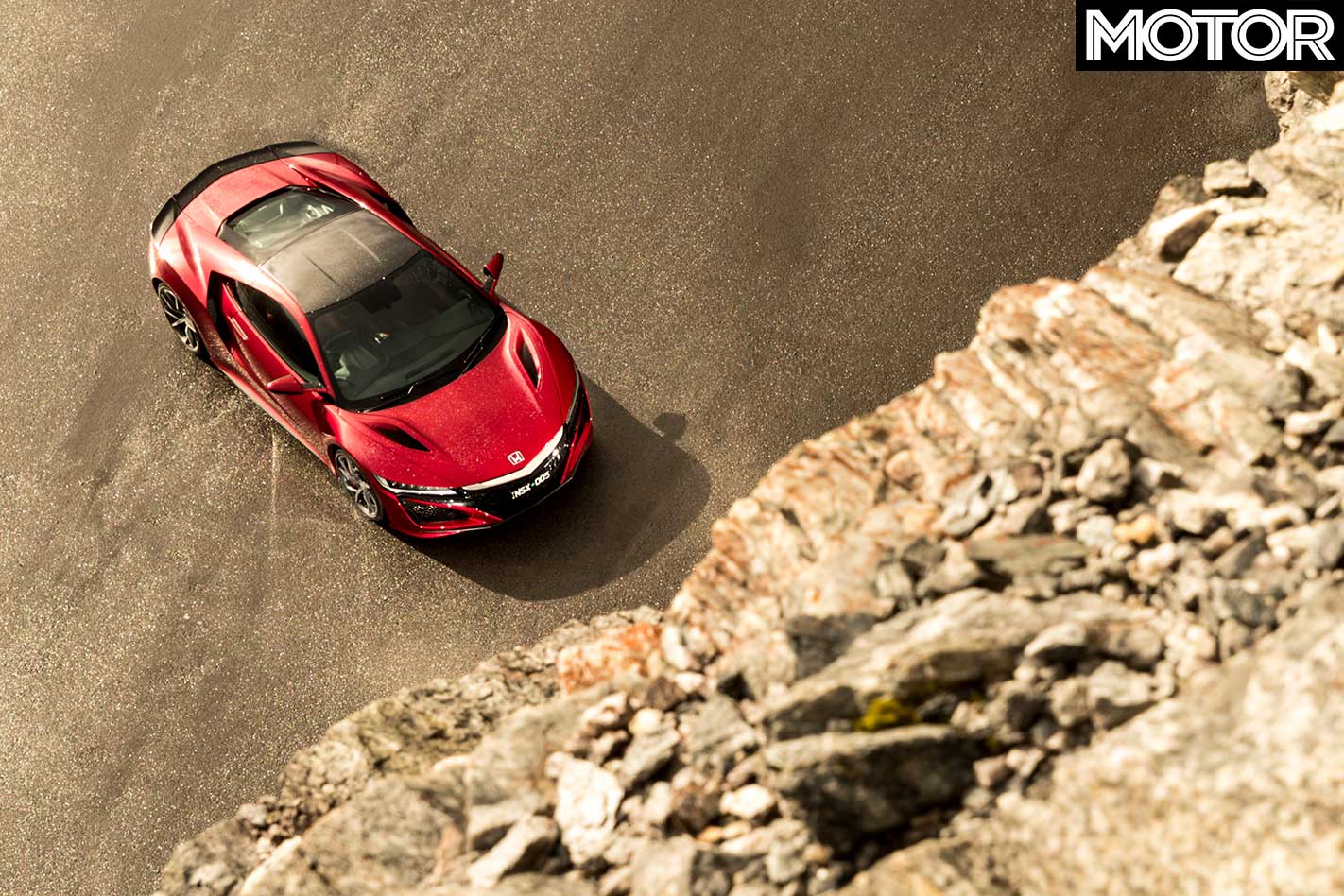
Construction took three years. It was unlikely their intention, but those hard-working crews created one hell of a driving road. For 50km it winds its way through lush forest, constant high-speed sweepers interspersed with long straights and the occasional tight bend. The rain is intermittent but the road always wet, conditions the NSX relishes.
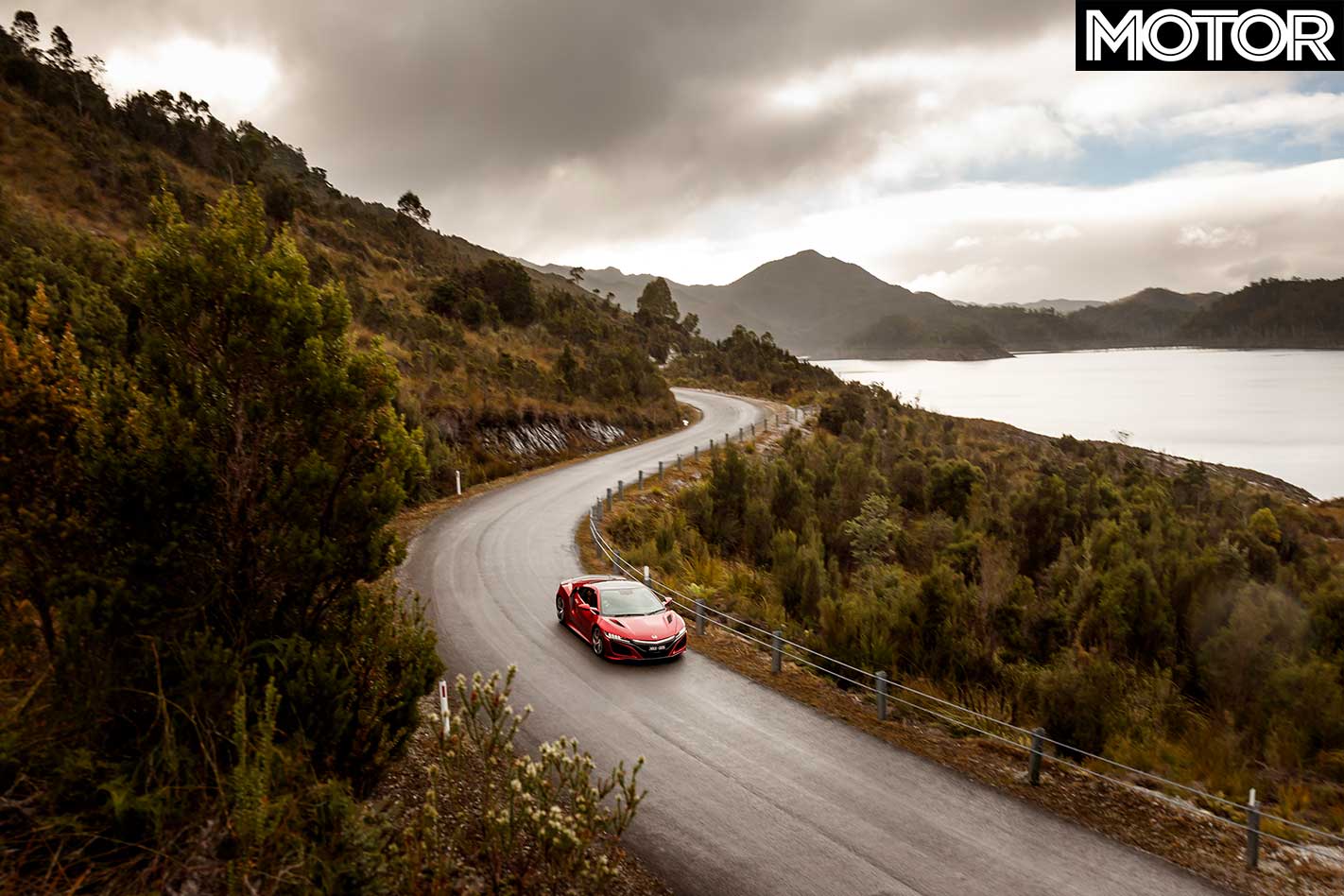
Even on this shiny, mossy tarmac it’s difficult to approach its limits, the Continental ContiSportContacts extracting unlikely levels of grip from the slippery surface. Only the occasional clumsy application of trail-braking edges the rear wide, ESP quickly mopping up the ensuing slide.
Traction is absolute, there are no sudden stabs of oversteer like you’d experience in a 911 Turbo or GT-R in conditions like these, the front electric motors pulling the car from a corner before the engine has had the chance to overcome the rear tyres.
Sport remains the drive mode of choice. The steering isn’t particularly communicative, but its weighting and accuracy is of great benefit as the NSX is so wide it fills the entire lane.
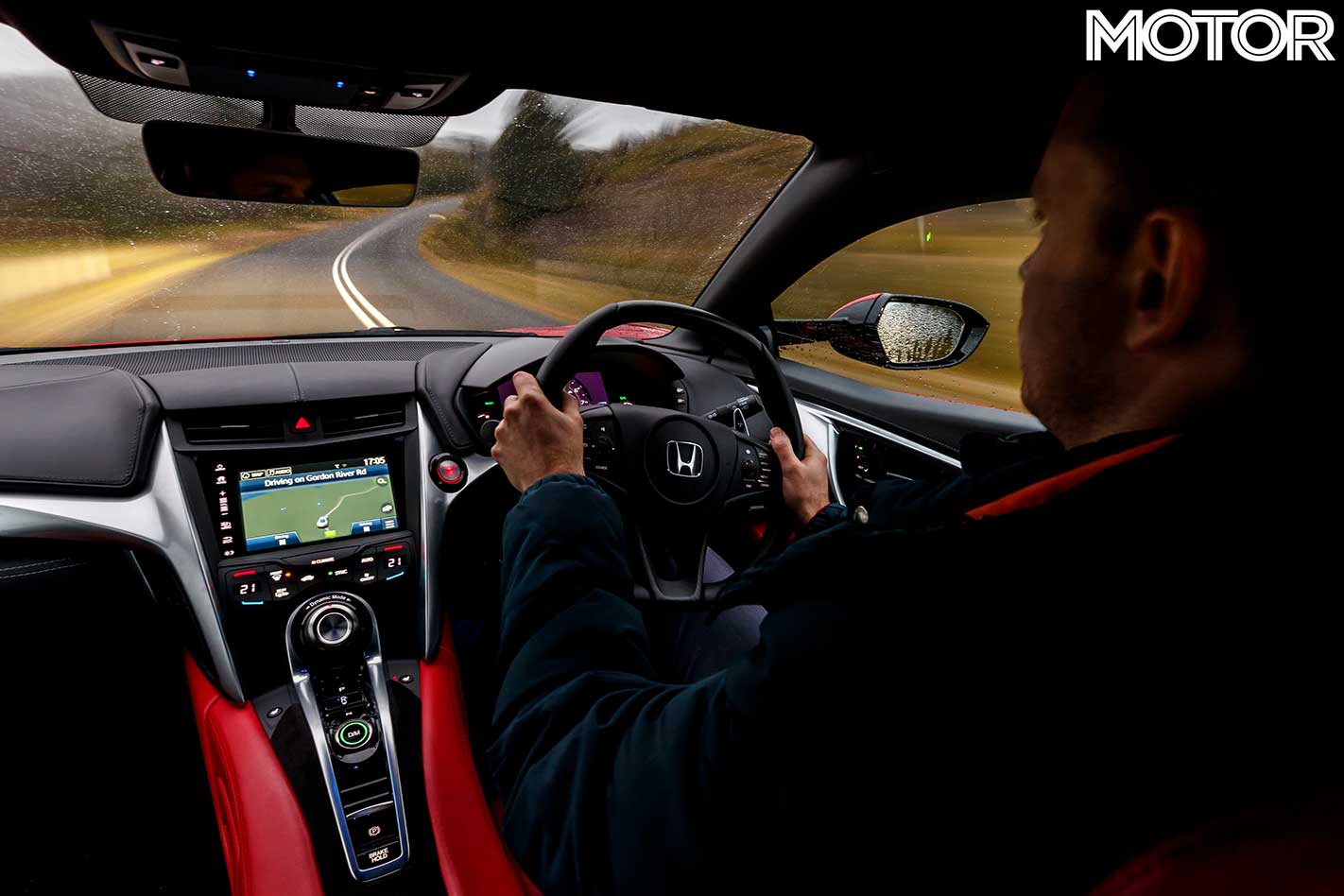
Of particular note are the brakes: the combination of carbon-ceramic discs, energy recuperation and brake-by-wire should result in a pedal with all the life of a parliamentary budget debate, but there’s real feel with the added bonus of free power as every application tops up the 72 battery cells wedged between the passenger compartment and engine bay.
The chassis has tremendous poise, with an agility that belies its 1780kg kerb weight, but the experience is a little prescriptive on the road. There’s so much grip that driving quickly becomes a game of brake, turn, go; push really hard and the NSX will occasionally pivot sharply mid-corner, an unusual trait that’s presumably the effect of the independent front drive units. It’s very impressive, but not particularly involving, though there aren’t many tight corners to really dig in.
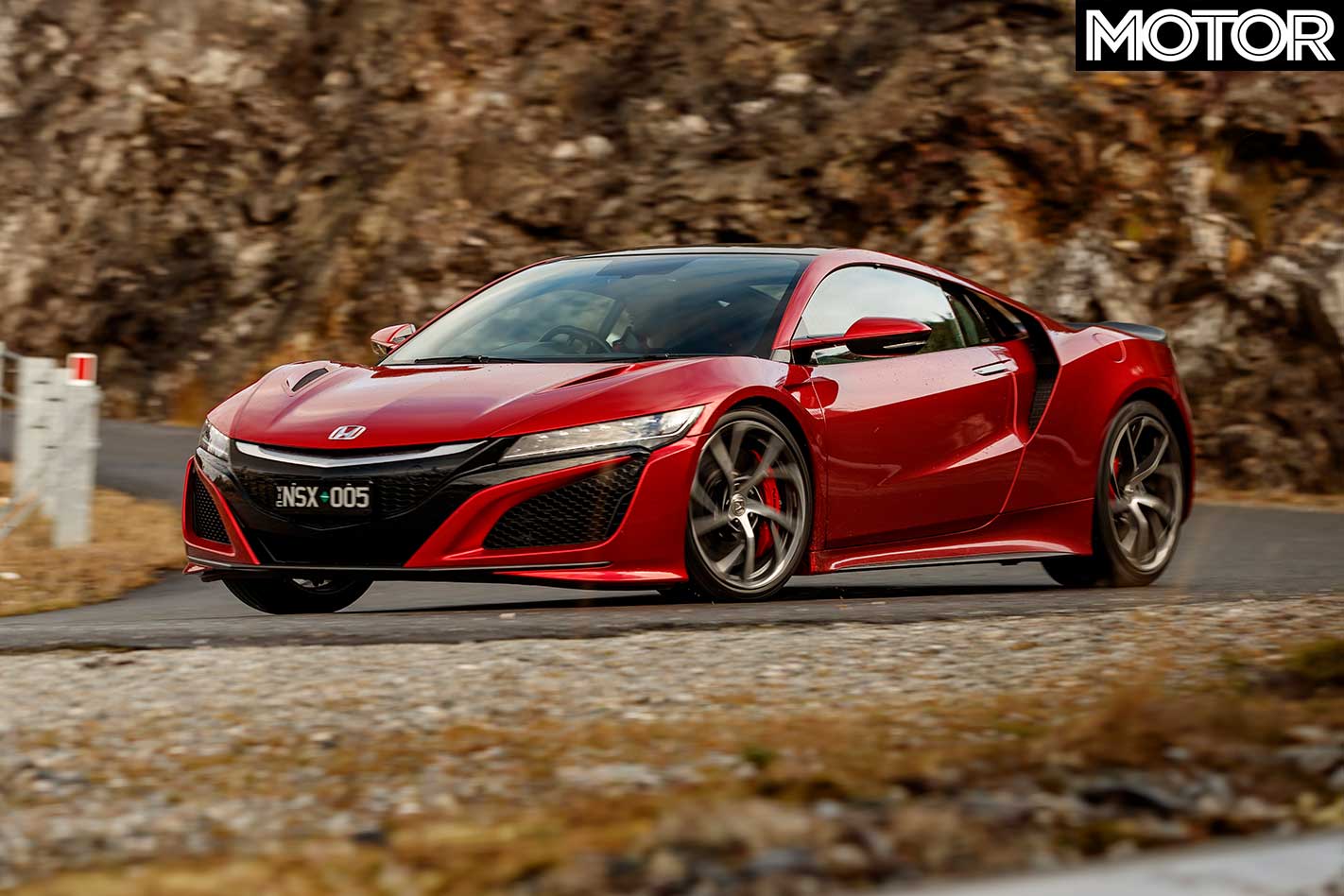
Of greater frustration is the inability to meld the various drive modes. Selecting Sport Plus to sharpen throttle response and loosen the ESP slightly also adds steering weight and stiffens the suspension.
The former is unnecessary given the default setting is excellent, but the latter makes Sport Plus virtually unusable on these roads. The damping isn’t necessarily too stiff, it’s like there’s not enough travel to absorb the bumps, the NSX skipping and hopping all over the road; driving at speed on this somewhat gnarled West Tasmanian tarmac feels akin to being trapped in a tumbler dryer.
Abruptly, the scenery changes, the dense forest disappearing to reveal a breathtaking vista. The Sentinel Ranges loom ahead, overlooking a vast grassy plain, the mountain tops shrouded in mist. It’s the sort of scene in which a dinosaur or two wouldn’t look out of place. It’s also bitterly cold.
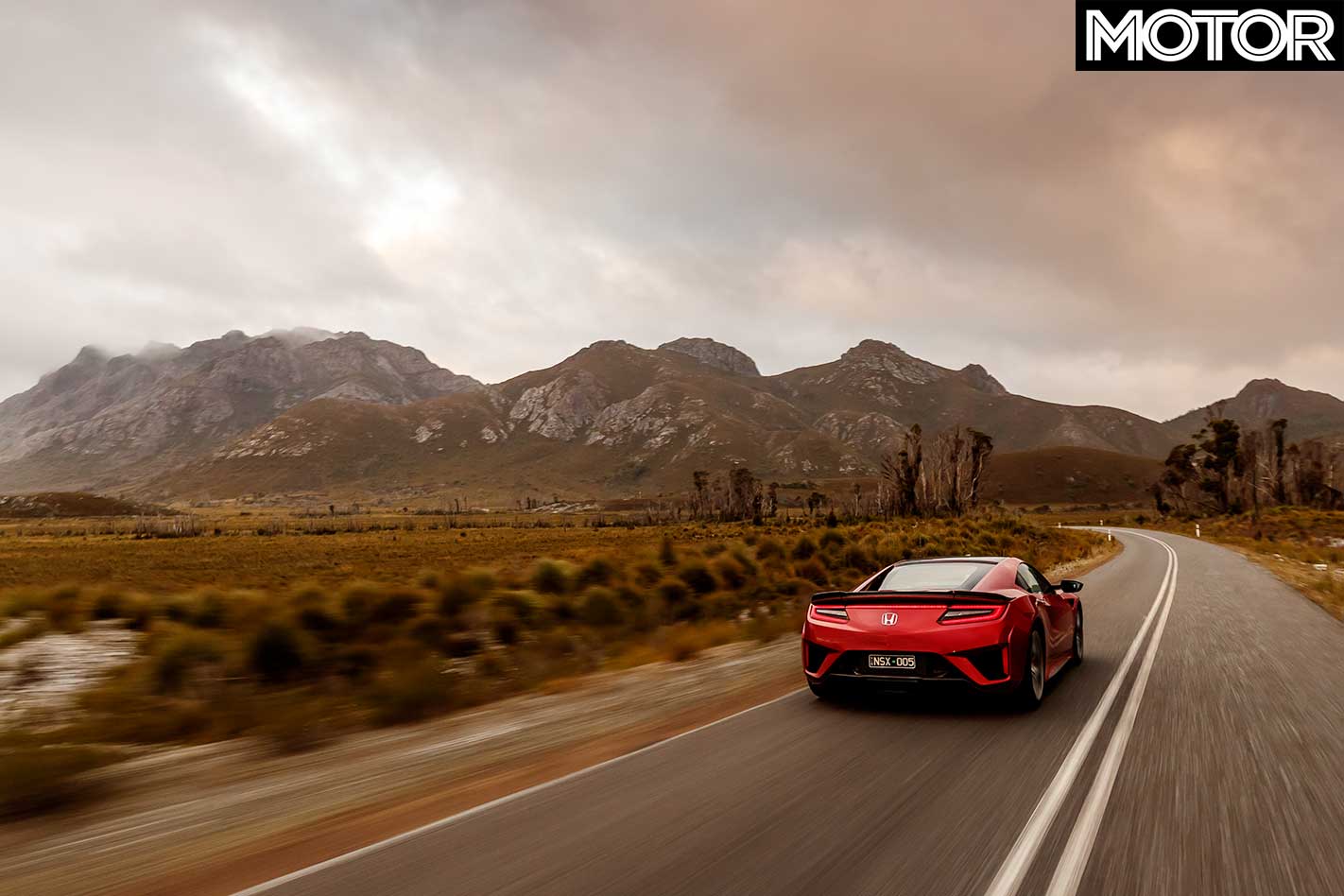
There isn’t much luggage space in an NSX, the front being full of electric motors and the middle full of occupants and engine. A tiny 110-litre boot at the rear can accept a couple of small bags, but its proximity to the engine cooks anything placed within. Not too practical, but currently very welcome as it’s pre-warmed our jackets nicely.
The smoother surface and wider, more open sweepers across the grasslands offer a chance to experience the savage speed of the NSX. At its release, Honda refused to release performance claims, saying only that its hybrid supercar’s acceleration was “competitive”. We scoffed, assuming that meant the NSX couldn’t match its rivals, but the ruthless efficiency of its drivetrain refutes this ignorant assumption.
Its off-the-line punch makes three seconds flat from 0-100km/h feel accurate and the way it sustains the pace suggests high-10sec quarters.
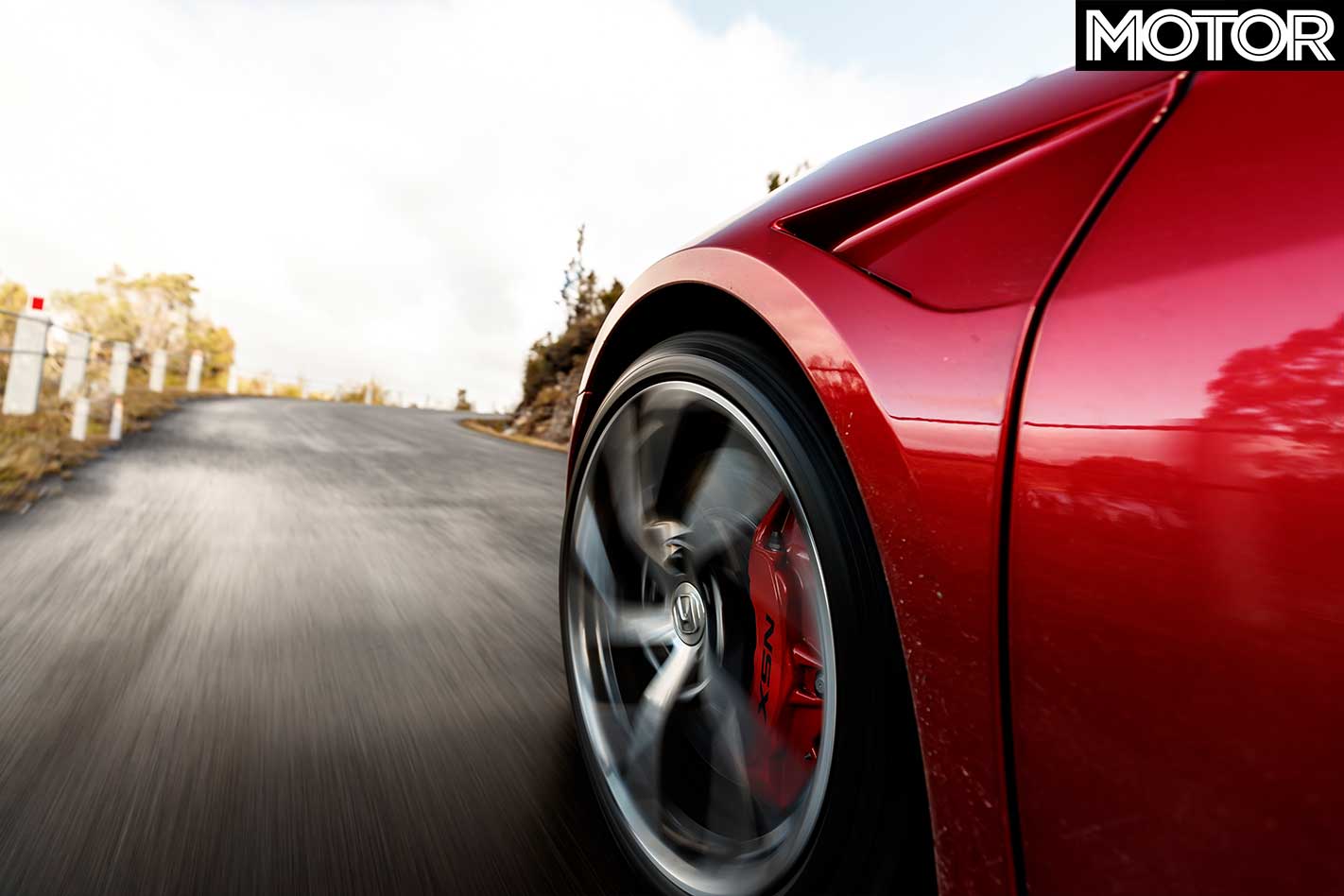
The NSX’s power feels similar to its competitors, but its delivery is unique. No combustion engine can match the immediate response of electric motors, the instant torque delivery whipping your head back against the seat.
With those batteries filling any holes in the torque curve, the V6 revs keenly to 7500rpm and makes an angry howl on the way there. But if the powertrain is great, the gearbox is incredible, almost certainly the world’s best. Shifts are instant and seamless and the ratios tightly stacked; even with nine gears the engine is spinning at 2000rpm at 115km/h.
Extending the NSX quickly has us in Strathgordon, a town built to operate as a base during the construction of the dam. Today, we seem to be its only inhabitants, but at its peak in the mid-1970s it housed 2000 people and had its own shopping complex, school with 230 students, sports centre, heated indoor swimming pool, butcher, hairdresser and post office.
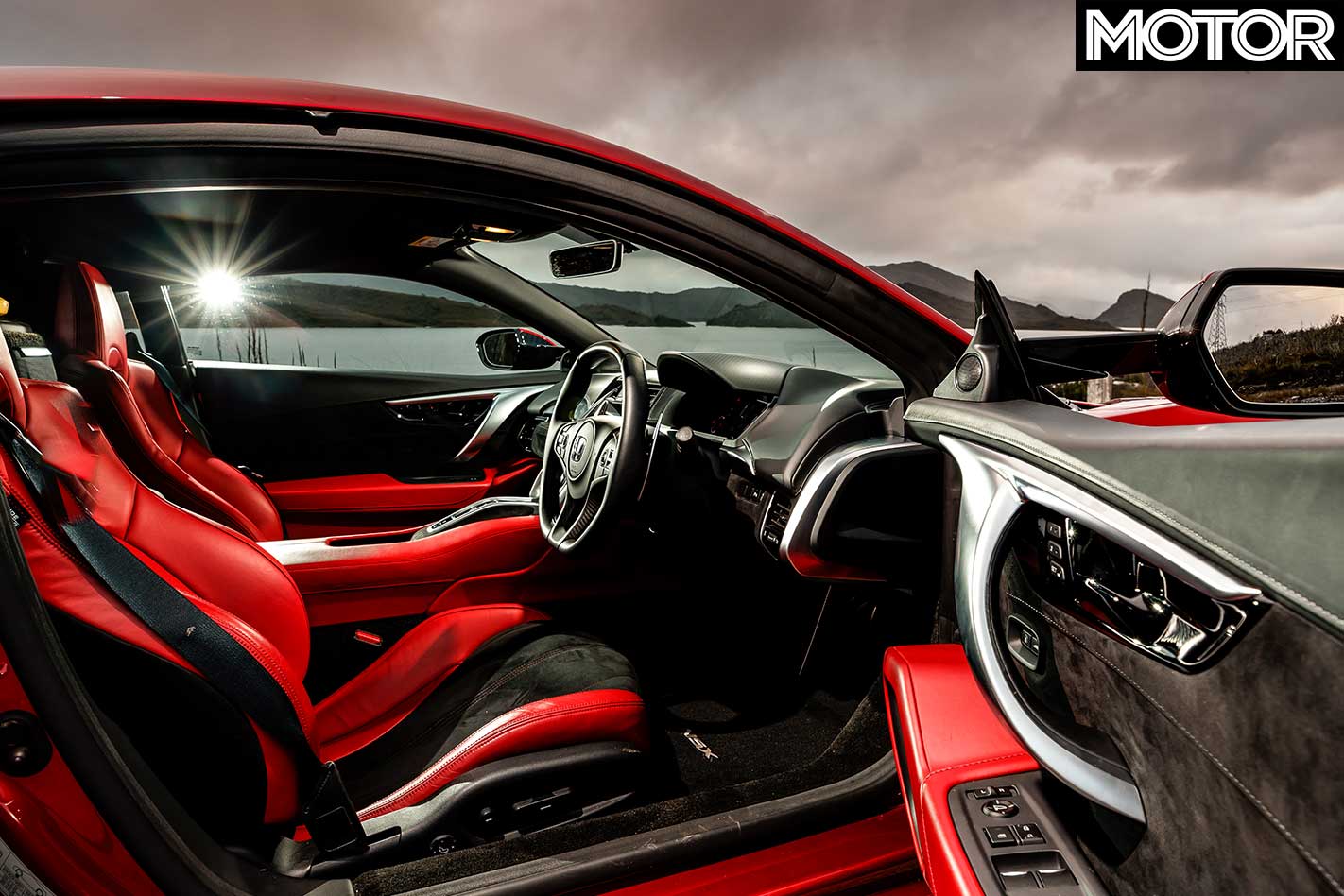
Many workers brought their families; those who didn’t lived in the singlemens’ quarters which could house 640 people. Sadly, not all of those could fit at the bar, which could only seat 500 people at a time (seriously).
Drinking was a popular pastime to unwind. Shifts were between 10 and 12 hours in length and any complaints about the weather were met with the motto: “if you want to keep warm, keep working”.
The Gordon Dam was not a straightforward project. Before construction could start the river needed to be diverted down a 340m-long tunnel. The asymmetric walls of the gorge made the shape of the dam crucial for strength and stability, the engineering team, led by Dr Sergio Giudici, settling on a double-curvature arch design, meaning the dam is curved horizontally and vertically.
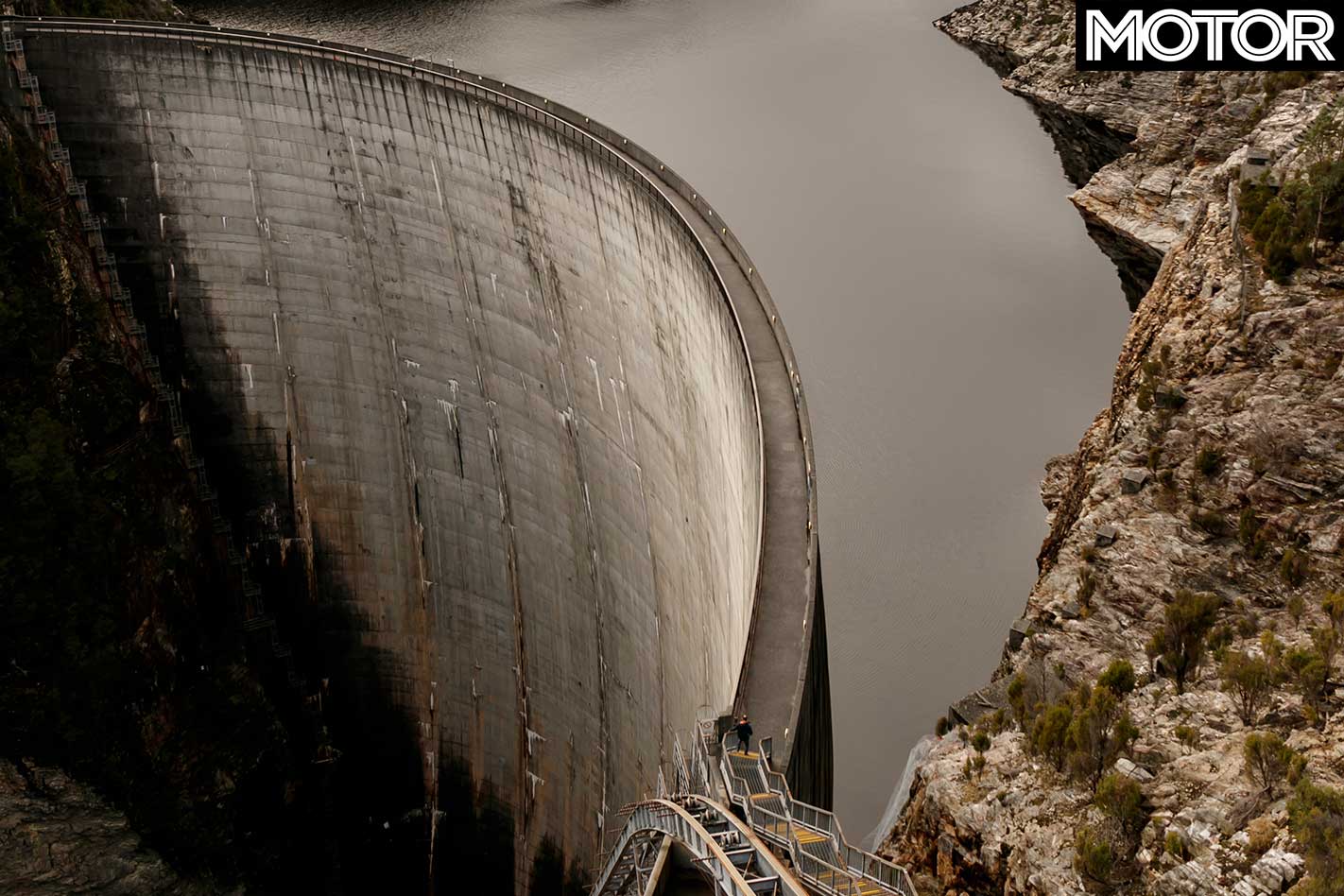
It uses the force applied by the water to compress and strengthen the dam, Lake Gordon transferring half a million tons of pressure into each side of the gorge. With a surface area of 272km2, Gordon is the largest lake in Australia, its maximum capacity of 12.36 million megalitres four times that of Victoria’s Lake Eildon.
The dam itself is twice the height of the next tallest double-arch structure and contains 154,000m3 of concrete, the first pour occurring on 19 January 1972, and the final on 25 November 1974. Engineers say it will theoretically last forever.
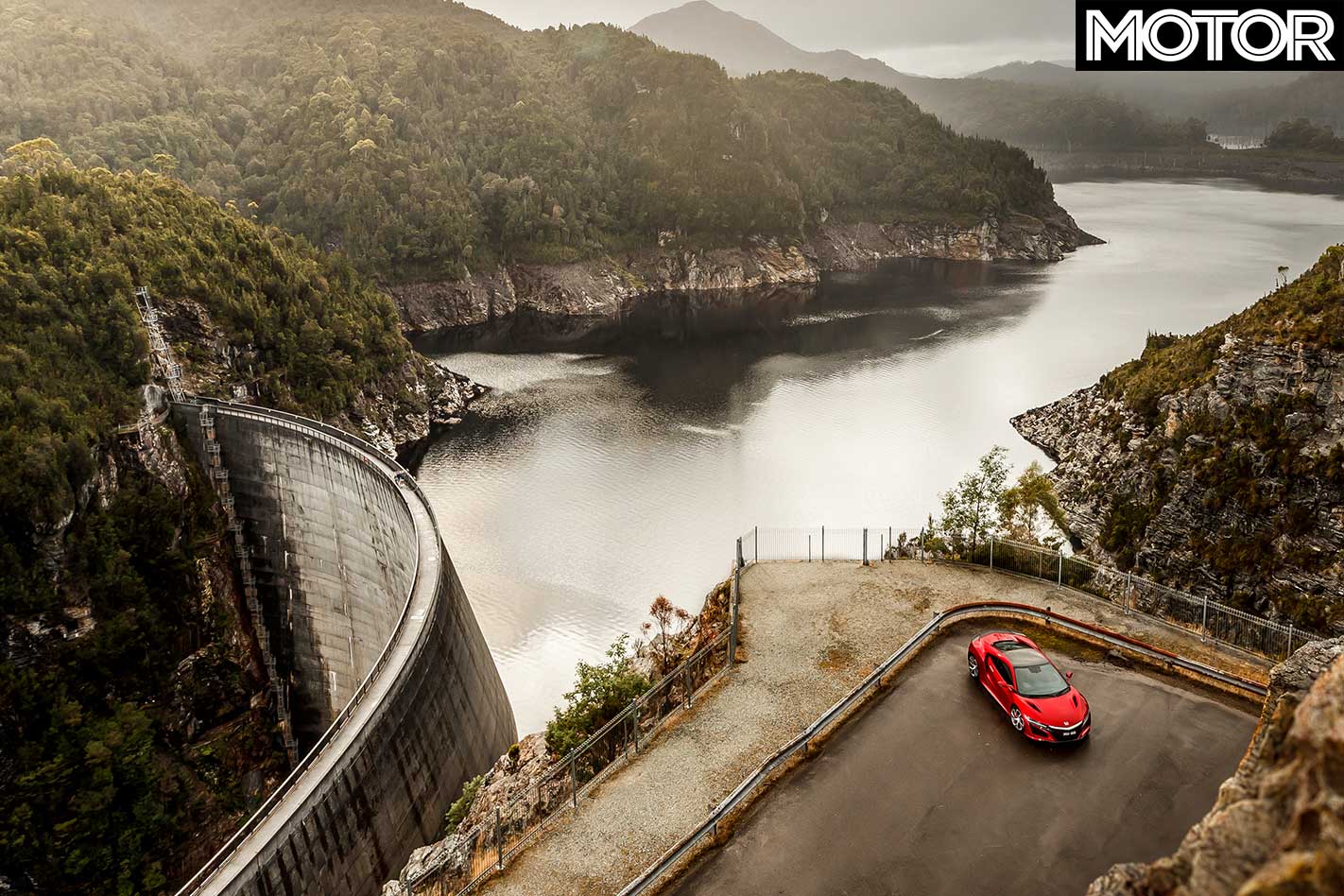
Impressive as it is, the dam’s only job is to hold back the water. The true work is done by the Gordon Power Station hidden 60 stories underground. An enormous room, 95m long by 45m wide by 38m high, was excavated to house the turbines, the first two spinning into operation in 1978, the third a decade later. It’s a humbling place, an incredible example of human ingenuity located in a scene of astounding natural beauty.
We could’ve come here in any car, but to do it in an NSX feels right. The Gordon hydro-electric scheme was built to provide generations of Tasmanians with power in an environmentally sustainable manner. In a strange way, Honda’s battery assisted supercar is performing the same role. By incorporating hybrid drive, it proves car nuts needn’t give up on their obsession with power just yet.
*A big thank you to Peter Kapeller for his help with this story.
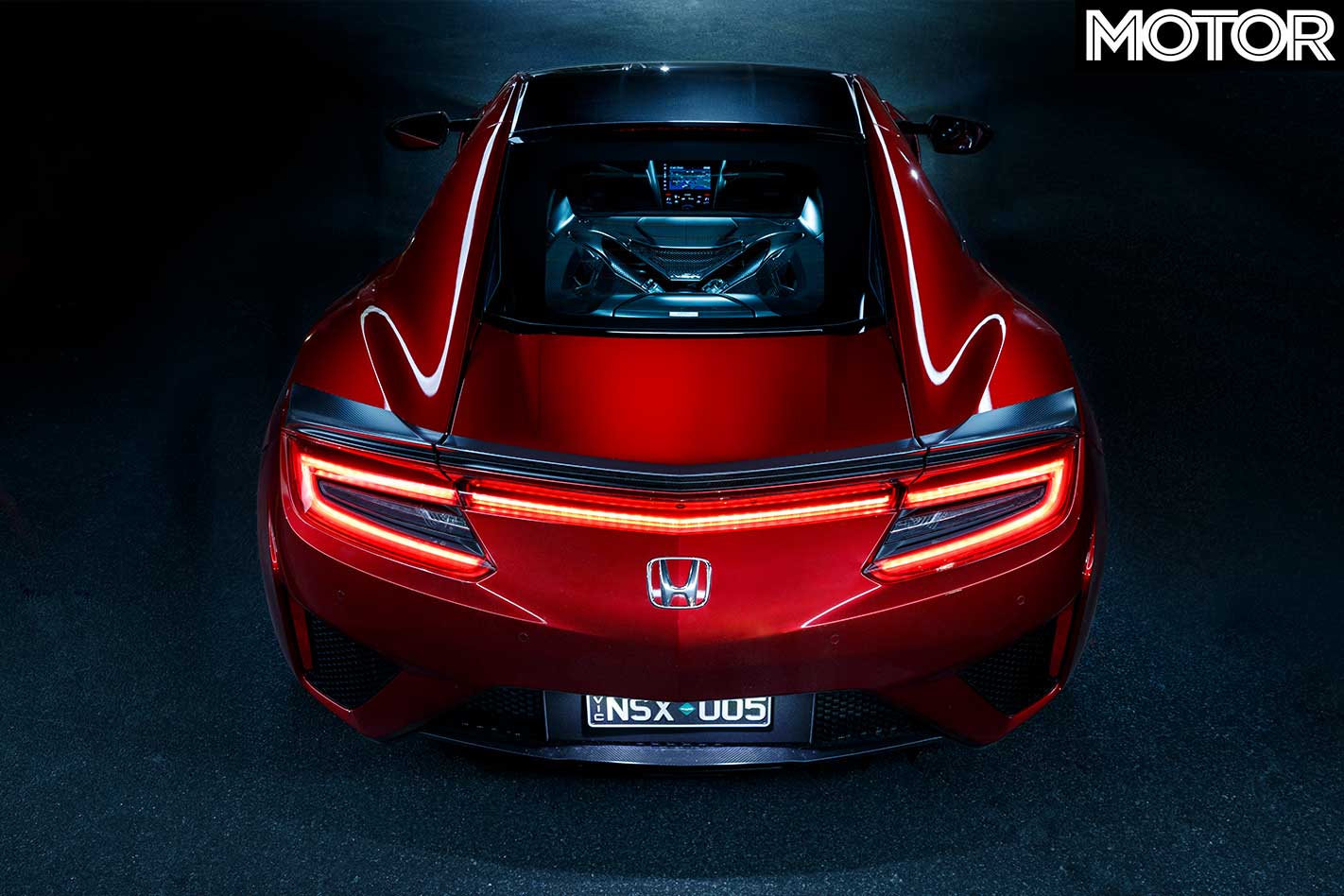
FAST FACTS 2018 Honda NSX
BODY: 2-door, 2-seat coupe DRIVE: all-wheel ENGINE: 3493cc V6, DOHC, 24v, twin-turbo POWER: 373kW @ 6500-7500rpm TORQUE: 550Nm @ 2000-6000rpm BORE/STROKE: 91.0mm x 89.5mm COMPRESSION RATIO: 10.0:1 ELECTRIC MOTORS: twin drive units (f); direct-drive unit (r) ELECTRIC OUTPUT: 90kW/293Nm SYSTEM OUTPUT: 427kW/646Nm WEIGHT: 1776kg POWER-TO-WEIGHT: 240kW/tonne TRANSMISSION: 9-speed dual-clutch SUSPENSION: double wishbones, adaptive dampers, anti-roll bar (f); multi-links, adaptive dampers, anti-roll bar (r) L/W/H: 4487/1939/1204mm WHEELBASE: 2630mm TRACKS: 1656mm (f); 1618mm (r) STEERING: electrically assisted rack-and-pinion BRAKES: 380mm carbon cermic discs, 6-piston calipers (f); 360mm carbon ceramic discs, 4-piston calipers (r) WHEELS: 19.0 x 8.5-inch (f); 20.0 x 11.0-inch (r) TYRES: Continental ContiSportContact 5P, 245/35 ZR19 (f); 305/30 ZR20 (r) PRICE: $420,000 ($430,000 as-tested)
PROS: Amazing gearbox; hybrid integration; pace; looks CONS: Price tag; rough road composure; a bit prescriptive RATING: 4 out of 5 stars
Winding your way into tassie’s wild west
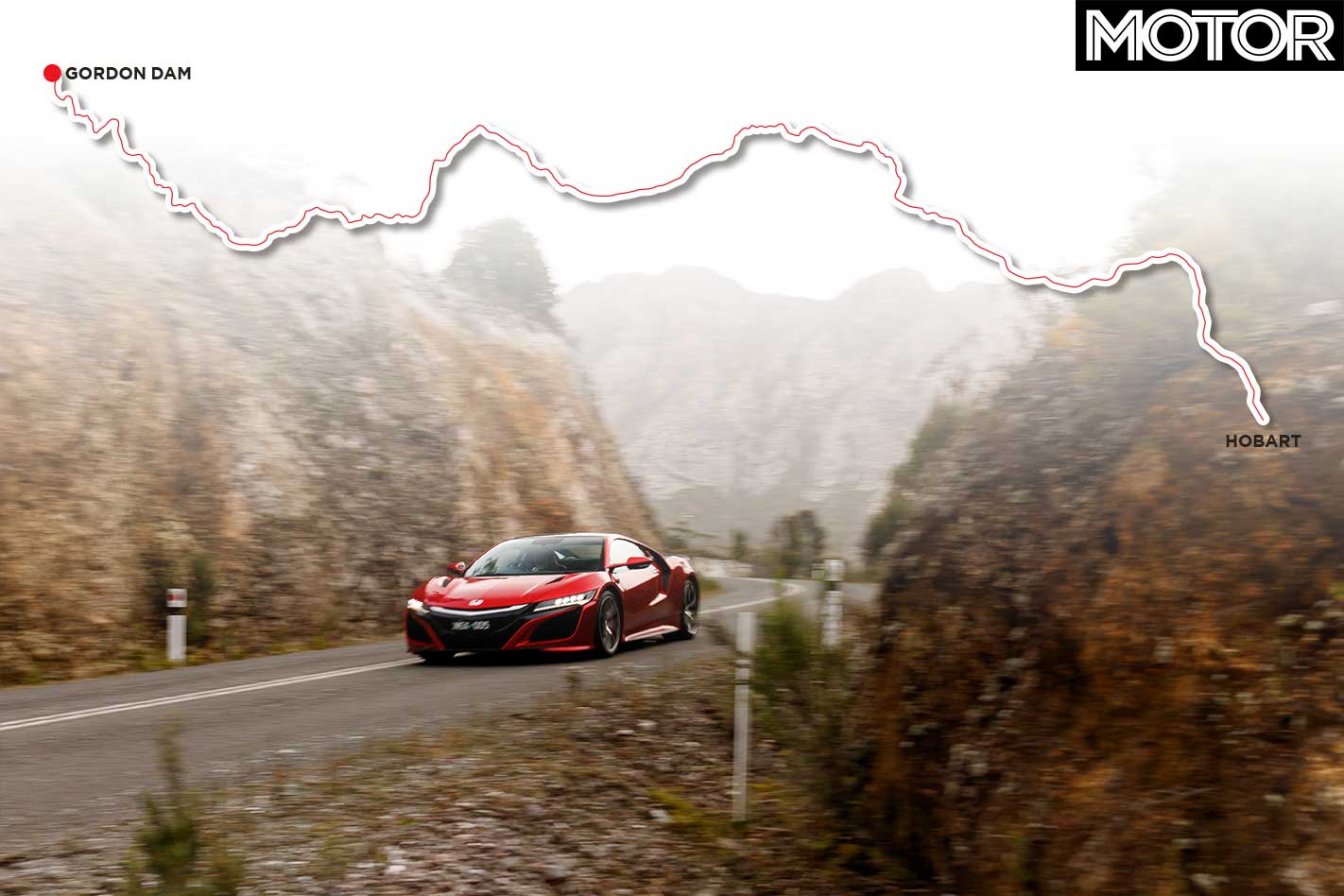
The road to the Gordon Dam is the only stretch of tarmac in the entire south-west corner of Tasmania. To get there, head north out of Hobart on Highway 1 before continuing on to the A10 at Granton.
As mentioned in the story, New Norfolk is your final opportunity for 98RON. Continuing on to the B62 takes you through the ironically named town of Plenty on to Bushy Park and Westerway. Here you turn left onto the B61, which runs all the way to the dam, though if you have the time, shortly after the turn-off a quick side expedition to Russell Falls is well worth it, particularly after heavy rain.
In total, the return journey is about 350km, but expect it to take most of the day with stops for photography.
THE field for Wheels Car of the Year has rarely, if ever, been stronger than that assembled for the 2019 showdown. Last year’s finalists, the Alfa Romeo Giulia, the Skoda Kodiaq and the Volvo XC60 subtly morph into the Stelvio, the Karoq and the XC40, so right there you have a trio that many would consider likely to go deep into the competition.
Mass market favourites like the Toyota Corolla and the Ford Focus just can’t be ignored, and the massive 50-car long list contains some cars that could easily come up on the rails and spring a few surprises. The Hyundai Santa Fe and Volkswagen Polo have both won big Wheels comparison tests, so we’re aware of their credentials going into the competition.
Would you bet against a victory for BMW with its new X5? Mazda’s CX-8 also demands to be taken seriously, especially given that its sister vehicle, the CX-9, measured up very smartly against the judging criteria of function, safety, efficiency, value and technology to take the win in 2017.
One car will emerge at the end of an intense week and it’ll deserve the accolades. Many extremely good vehicles will have fallen by the wayside. Here are 10 cars that have undoubtedly caught the eye of our testers in the lead-up.
Alfa Romeo Stelvio
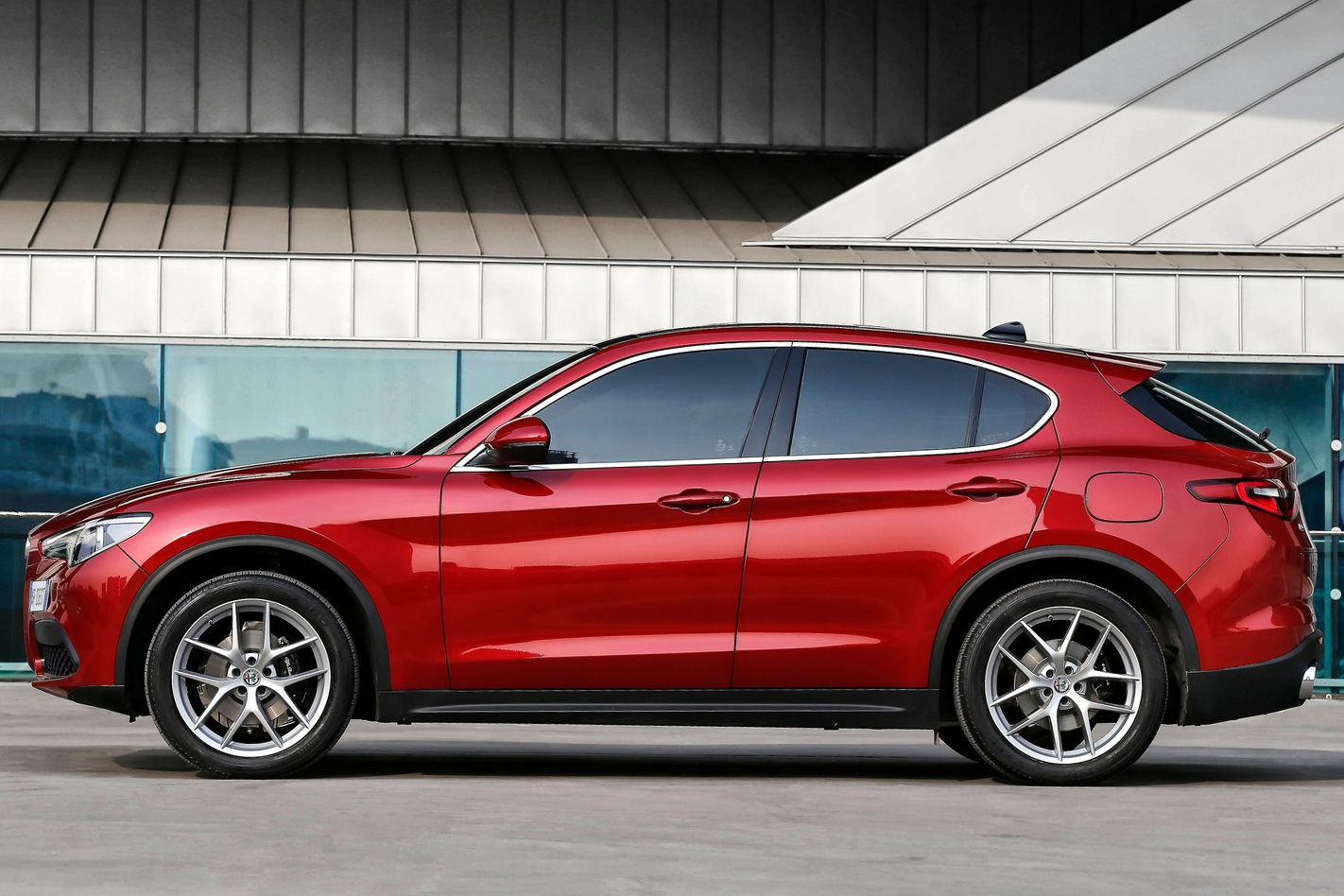
We loved the Giulia and first drives of the Stelvio show it cedes little dynamically to its sedan sidekick yet gains the traction advantage of all-wheel drive. Whether it can overcome the quality issues that saw the Giulia fall at the last could be key.
Alpine A110
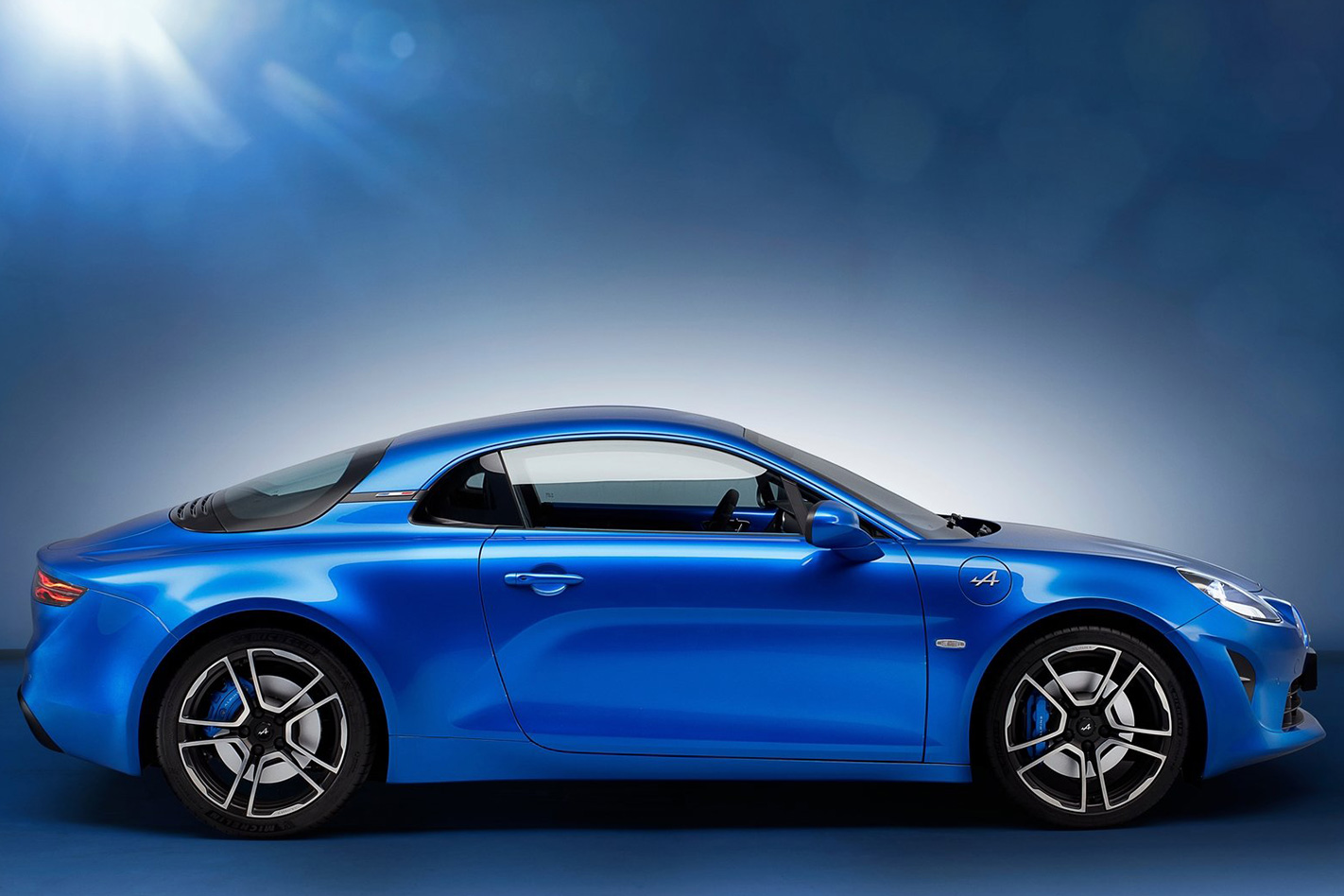
The notion of a Porsche Cayman rival that’s lighter, cheaper, purer and arguably better to drive is one that ought to wield real clout. Sports coupes don’t always shape up well against the judging criteria but the A110 could prove a riotous exception.
Chevrolet Camaro
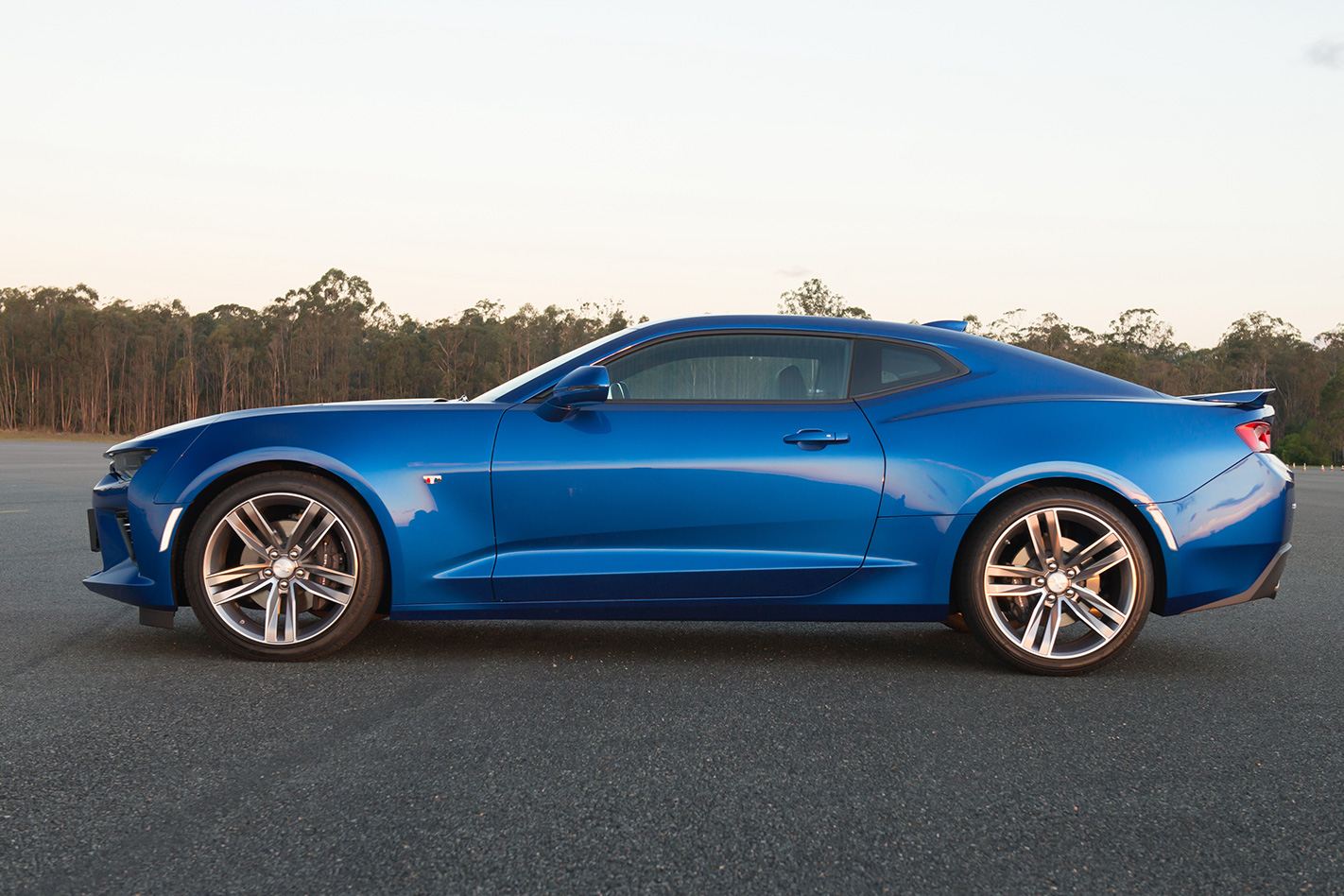
As much as we love technological innovation, there’s a place in our hearts for a big old V8, especially when it’s wrapped in the bodywork of Chevrolet’s Camaro. HSV’s right-hook handiwork may see the Camaro muscle its way into contention.
Jaguar I-Pace

Serious respect to Jaguar for being the first of the big manufacturers to put its money where its mouth is and try to stick it to Tesla. The disruptive I-Pace is an EV with both clout and character and could well win over our hard-bitten judging panel.
Lamborghini Urus

Does the world need a Lamborghini SUV? Not really. Do we want to drive one? Hell, yes! A quarter of a century has elapsed since Sant’Agata last built an SUV – and we deliberately use that term loosely – so this one ought to be a belter.
Mercedes-Benz A Class
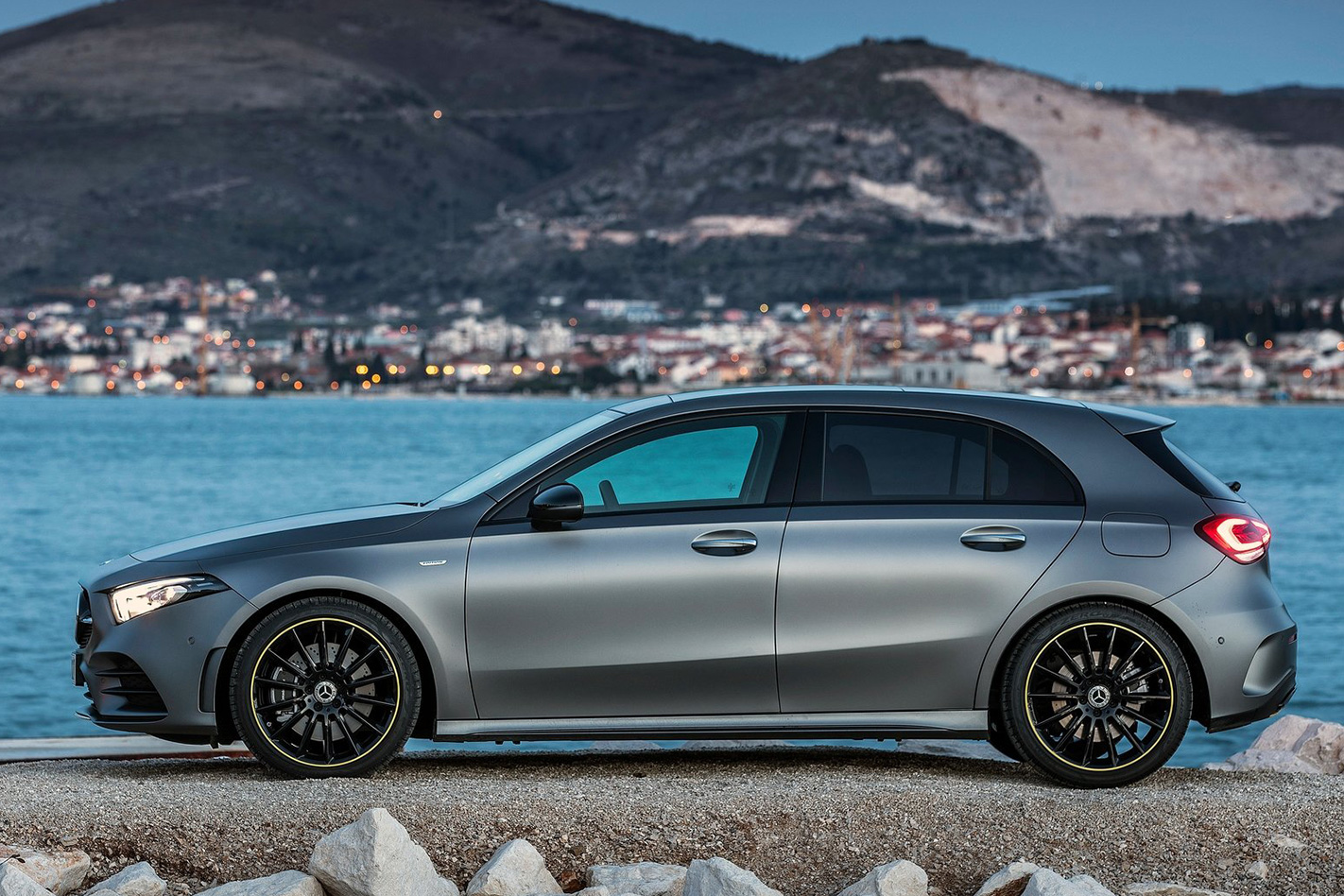
Why can’t small cars be as well finished and equipped as big ones? If customers are willing to pay for the privilege, why shouldn’t an A-Class feel like an E-Class? That was Merc’s logic and its beautifully built baby could well prove a game changer.
Skoda Karoq
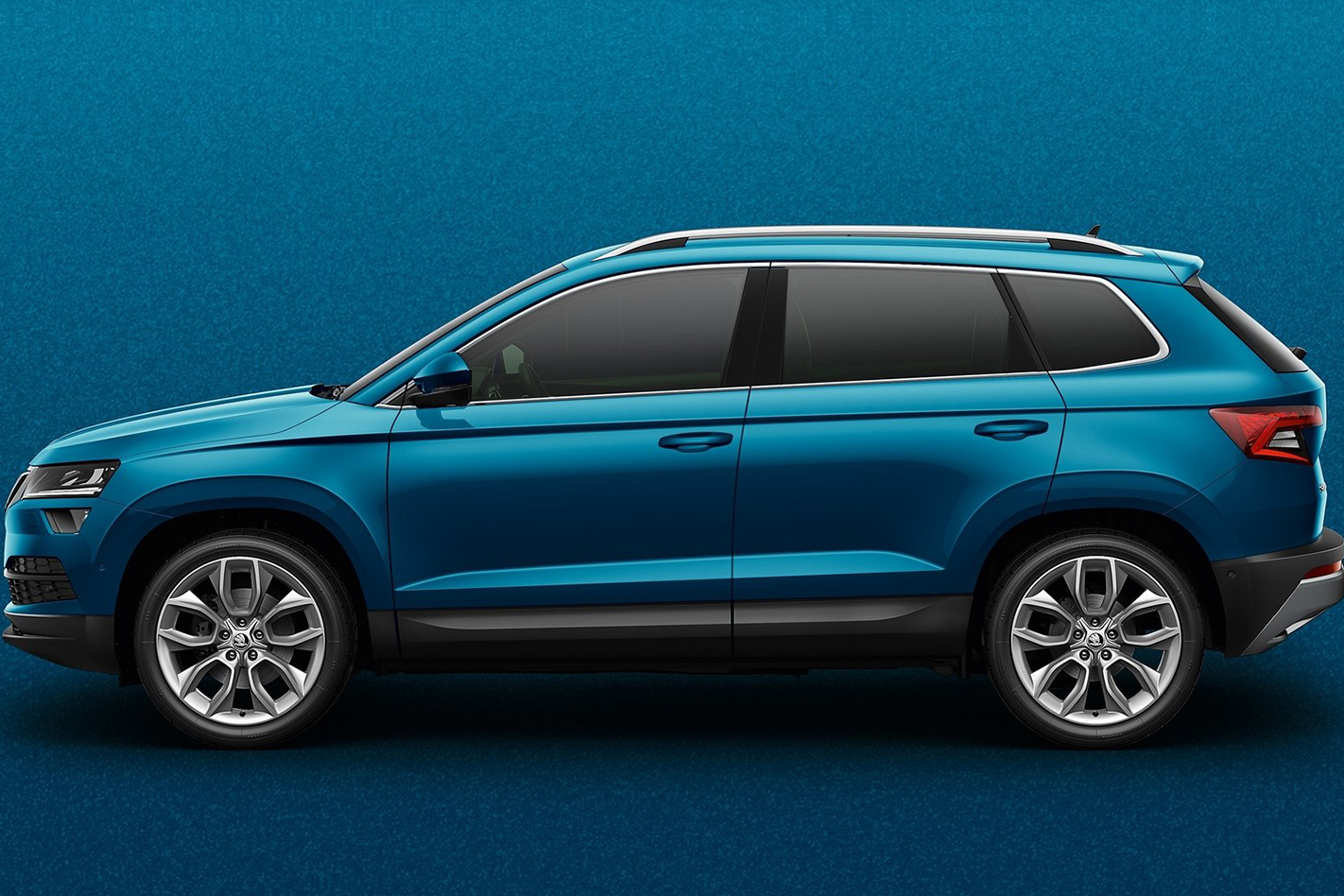
Distil the qualities of the brilliant Skoda Kodiaq into a smaller package, make it more accessible and give it the same thoughtful attention to detail and you end up with a compact SUV that plugs straight into the meat of the judging criteria.
Suzuki Jimny
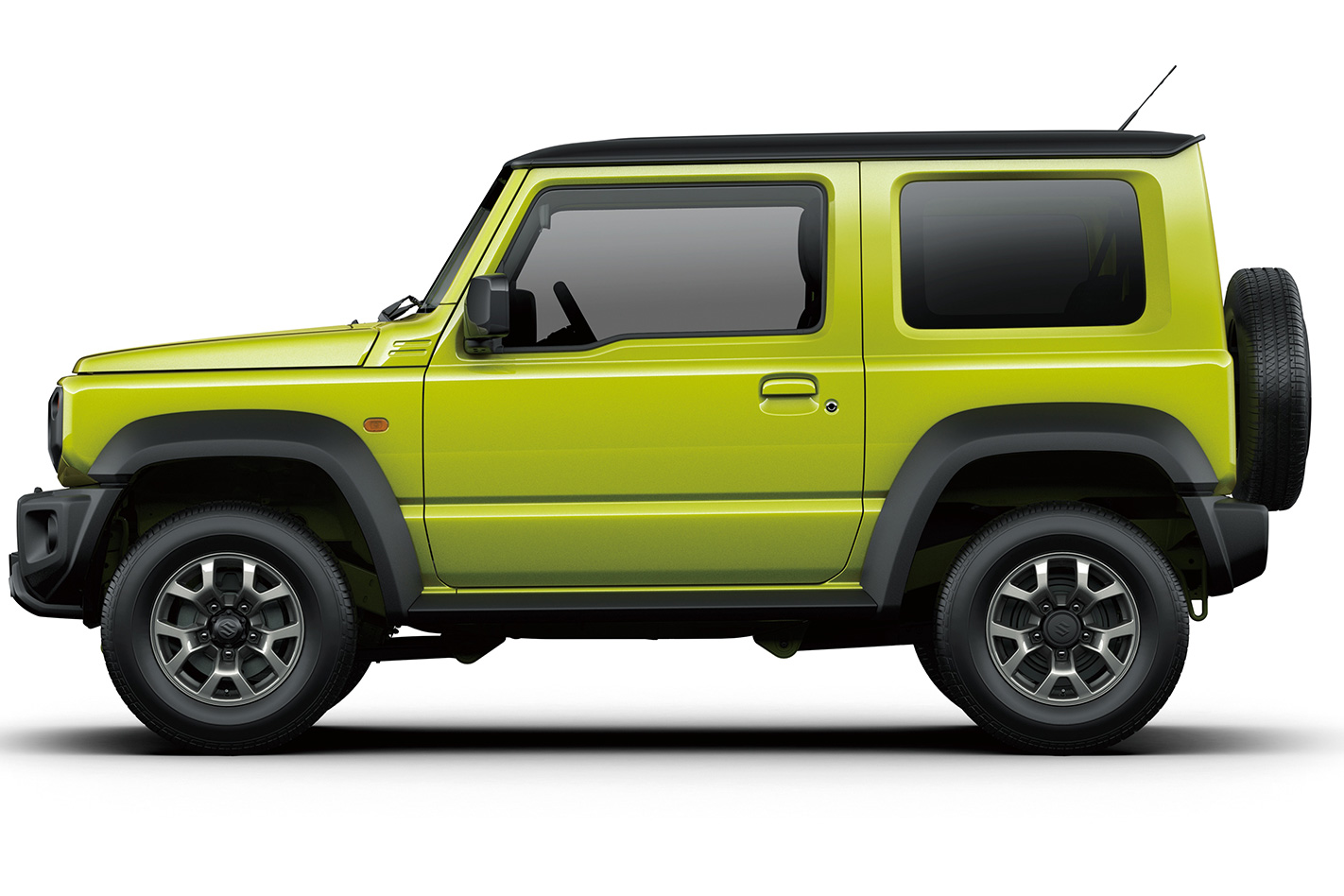
As long as it’s in the country in time, the Jimny could be a big hit at COTY. Promising the usual cheery indestructibility with a welcome veneer of interior modernity, the little Suzuki could take down some big reputations.
Toyota Corolla
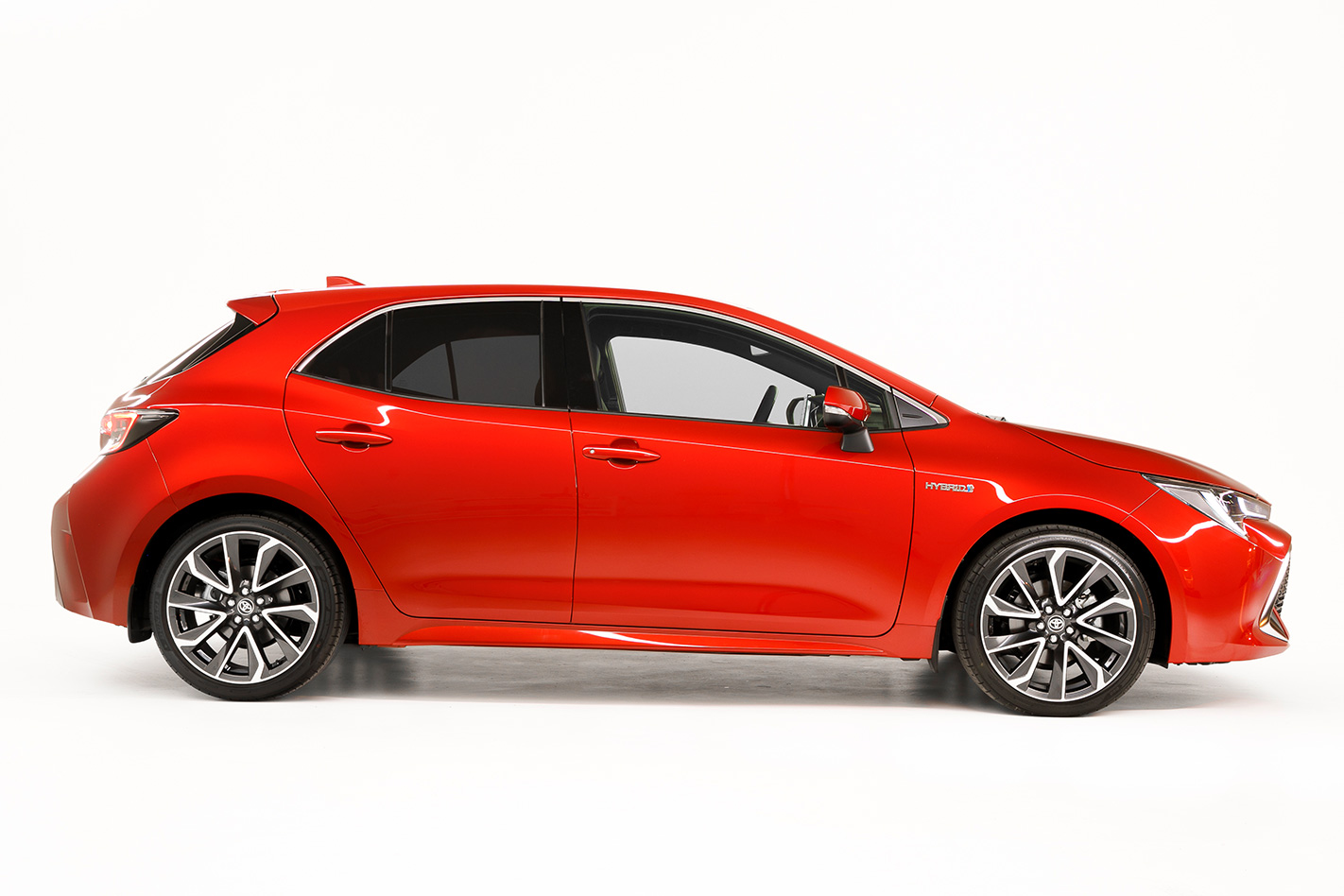
What looks likely to be Australia’s bestselling passenger car aims to prove that registrations alone aren’t enough. The Corolla has become sharper and better equipped in its latest generation, indicative of the renaissance underway at Toyota.
Volvo XC40
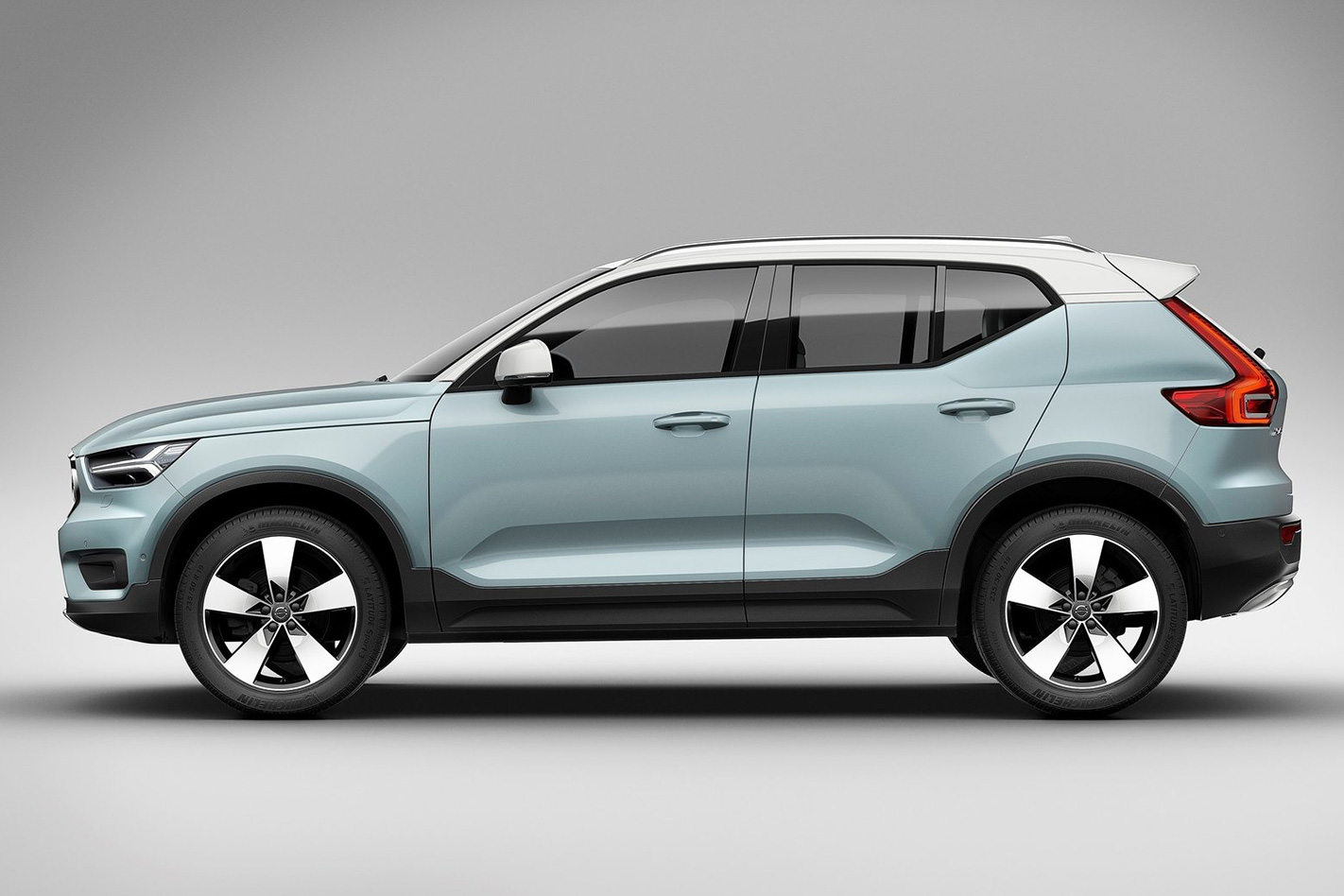
We gave the XC40 the nod in a recent comparo against Audi Q2, Jaguar E-Pace and BMW X2, so we know it’s made of pretty stern stuff. Whether it can go all the way at COTY like its supersized sibling last year is the biggest question left hanging so far.
Entry-level premium hatches don’t tend to move the MOTOR meter much. The new Mercedes-Benz A200 uses a torquey 1.3-litre turbo four to produce a useful 120kW/250Nm, but with a claimed 0-100km/h time of 8.0sec it’s no performance car.
However, option the $3190 AMG Exclusive Package and your A200 not only scores two-tone leather, dual-zone climate, ambient lighting and ventilated front seats, but the dampers become adaptive and the standard torsion-beam rear suspension is replaced by a multi-link setup.
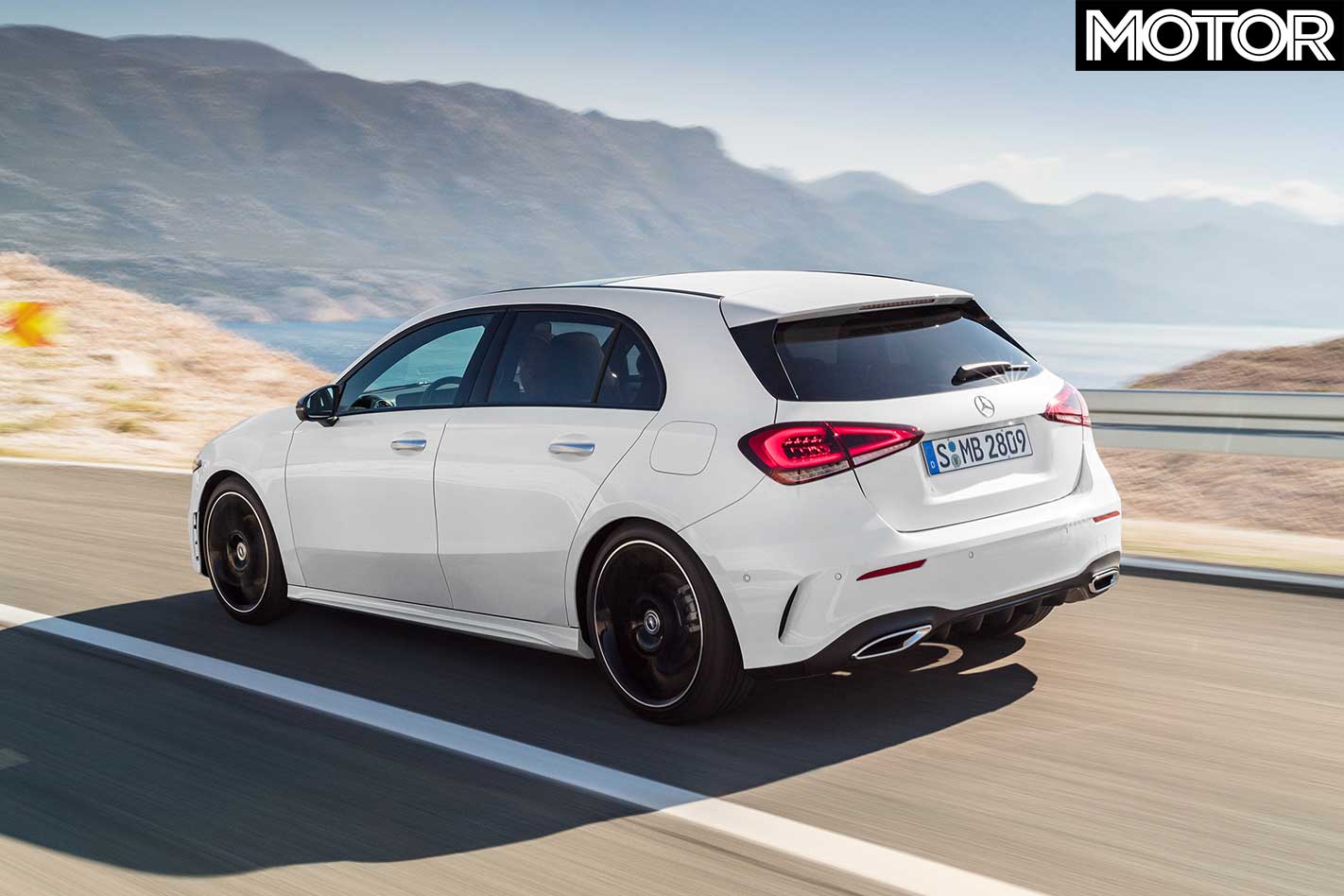
This configuration will underpin the forthcoming A35 and A45, so this is our first opportunity to sample the chassis of two very hotly anticipated future models. The news is promising.
Forget the handling side of the equation, the fancier suspension so transforms the standard A200’s fidgety, reactive ride that it’s a must-tick option (or could be made standard).
So equipped, the A200 becomes a calming, refined premium hatch that’s succesfully righted its predecessor’s wrongs –bigger boot, easier access, more space – while introducing a flash interior and next-gen technology.
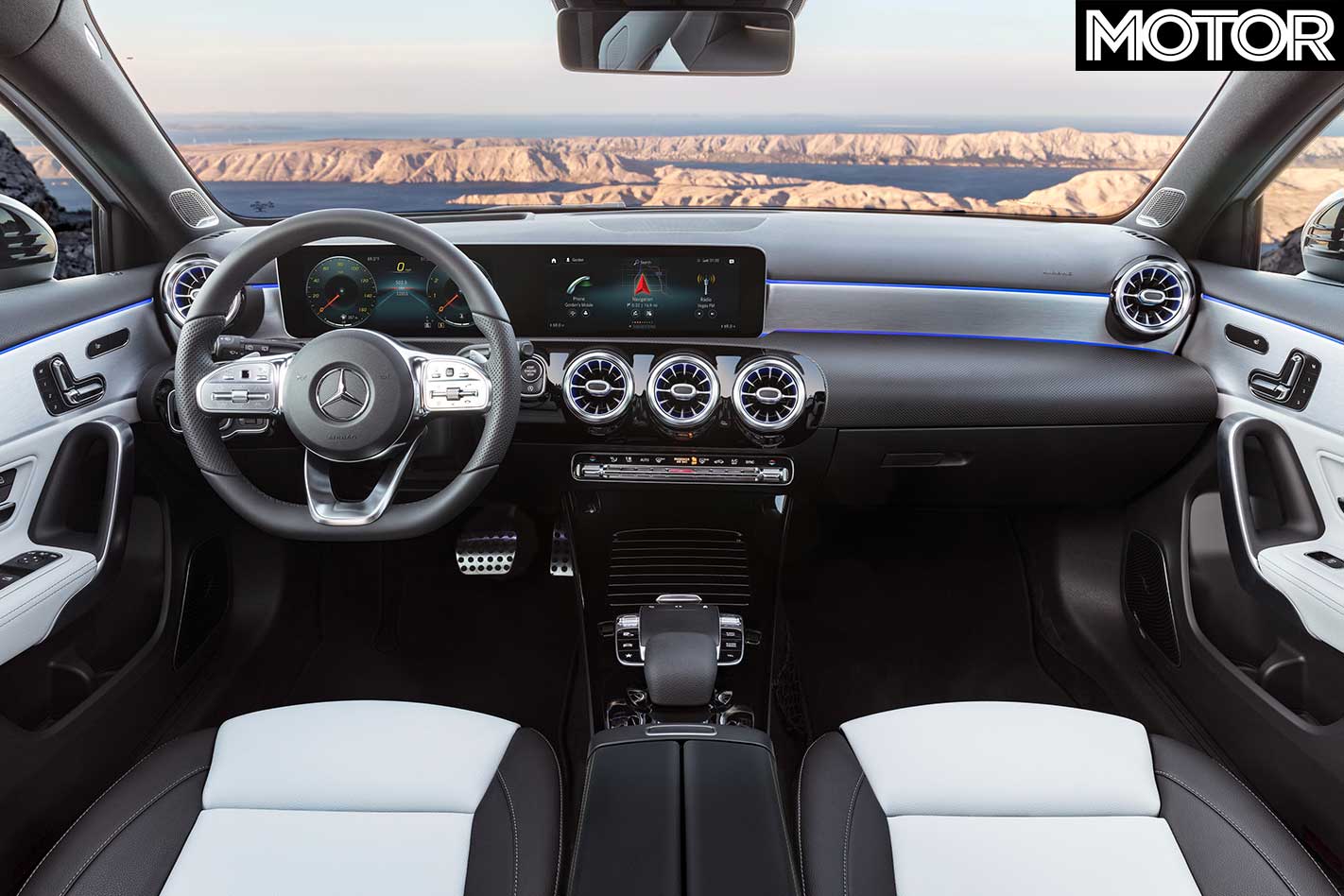
It’s a talented handler, too, with crisp steering, plenty of grip yet a pleasing amount of adjustability at the limit. Now it just needs, say, double the power…
2018 MERCEDES-BENZ A200 SPECS: Engine: 1332cc inline-4 turbo Power: 120kW @ 5500rpm Torque: 250Nm @ 1620rpm Drive: FWD Weight: 1300kg Price: $47,200
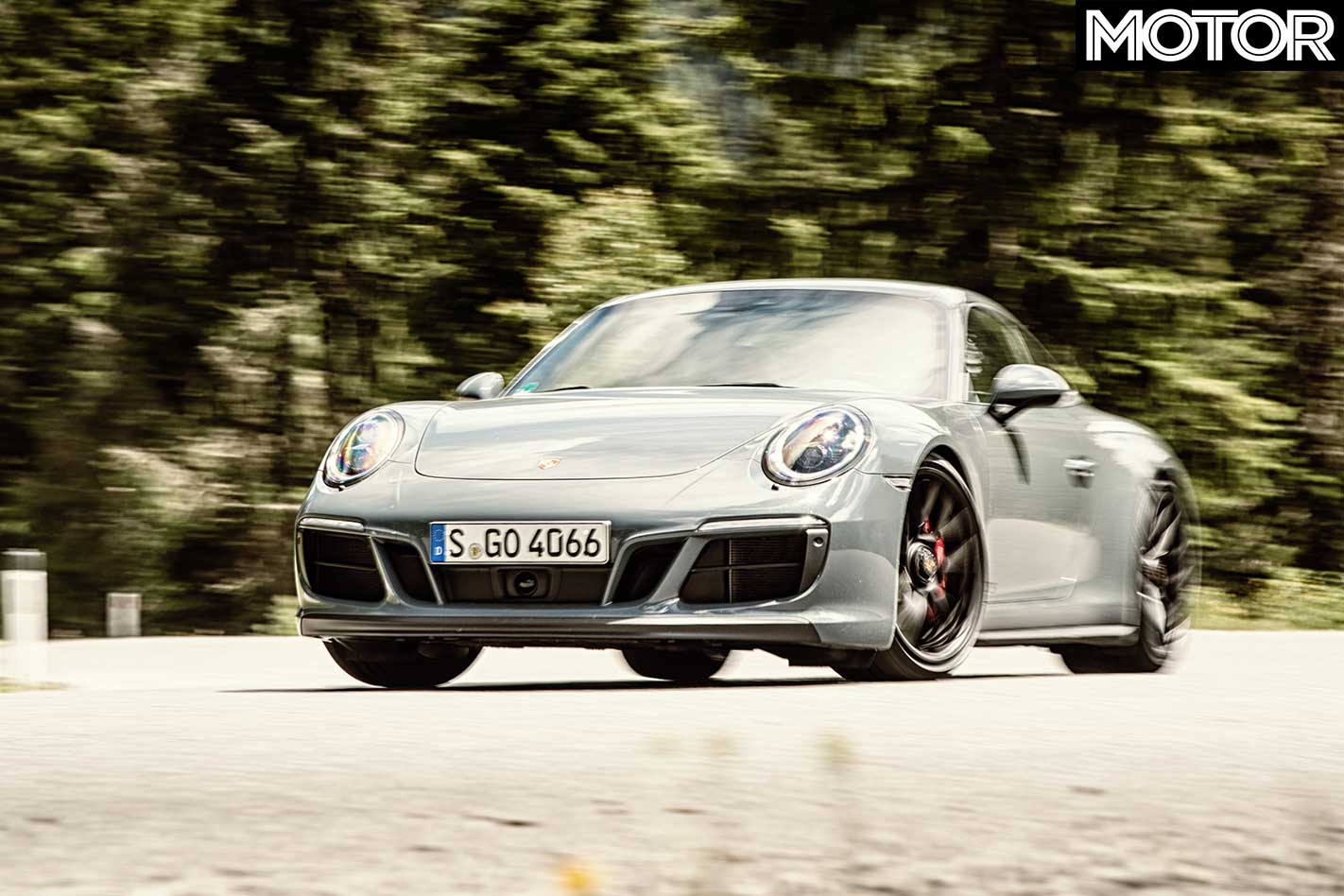
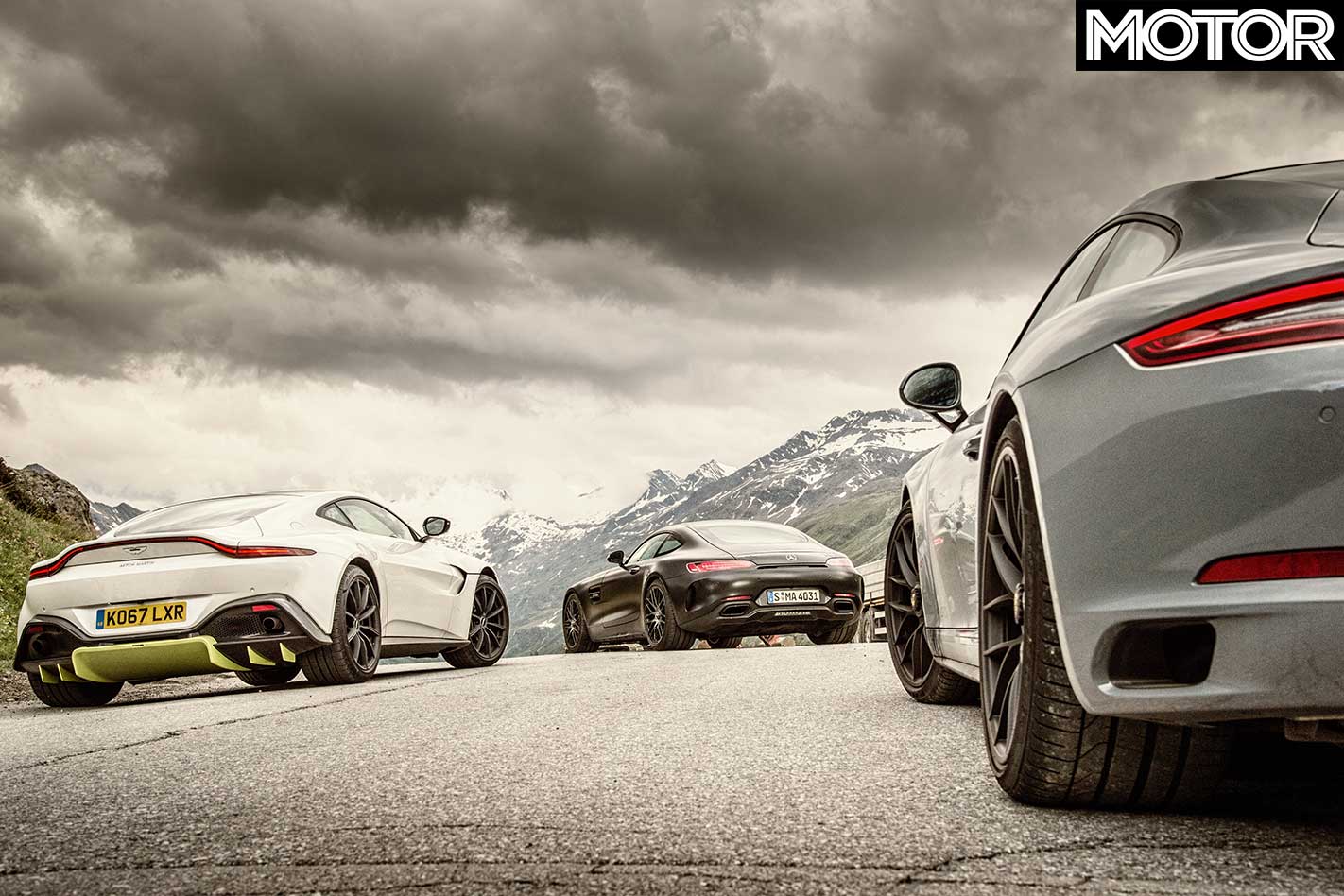
Joining the Italian and Austrian Alps is a winding road about as idyllic as you can get for three super coupes. A menacing triple treat (made up of the venerable Porsche 911 Carrera 4 GTS, the hulking Mercedes-AMG GT C and the new kid, the Aston Martin Vantage) sit idle, awaiting a spanking.
However, before the tempo gets serious, we take the chance to explore the lightly trafficked terrain at a leisurely pace; call it a recce run, if you will. Sighting stray cattle and avoiding the gaze of the authorities is paramount.
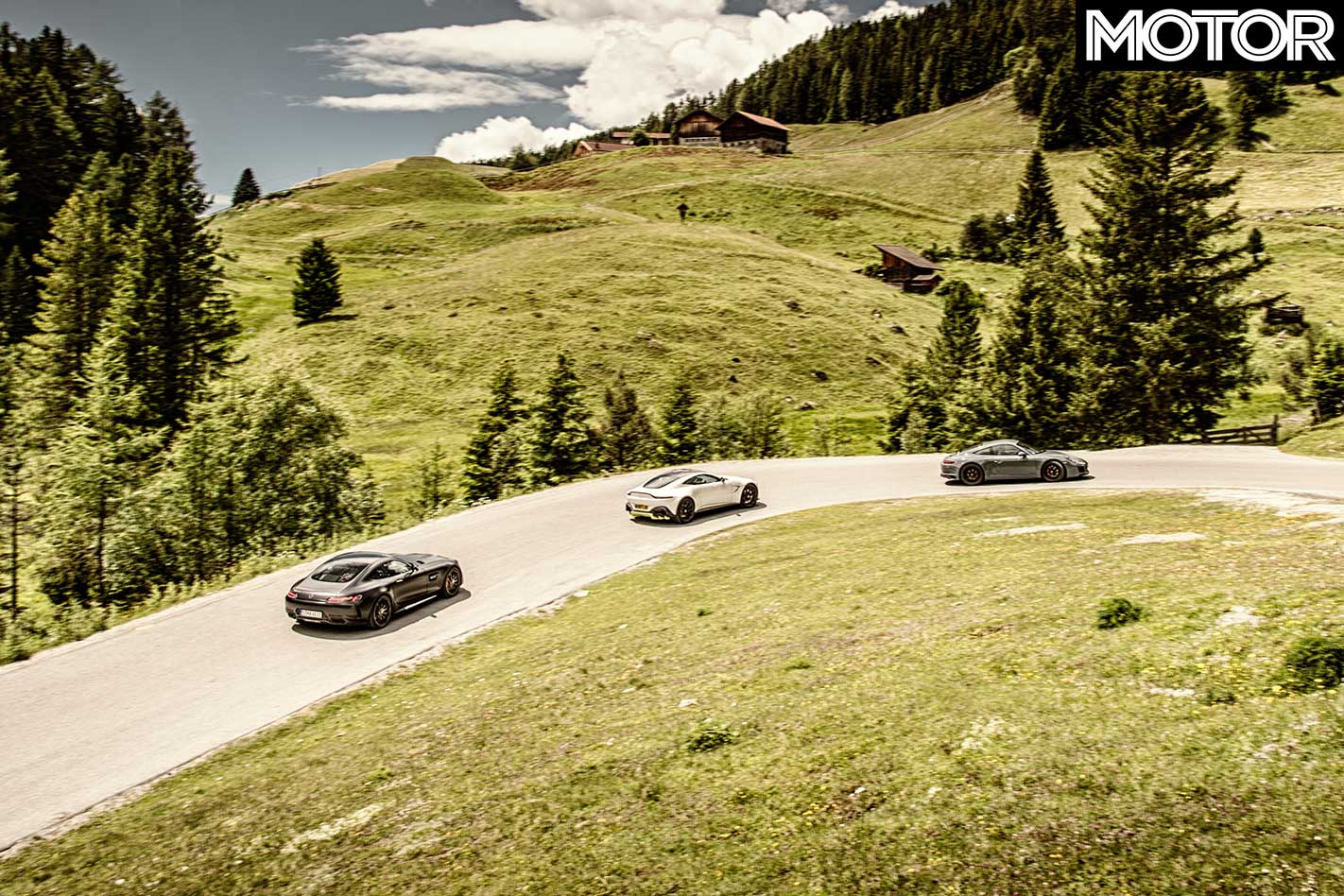
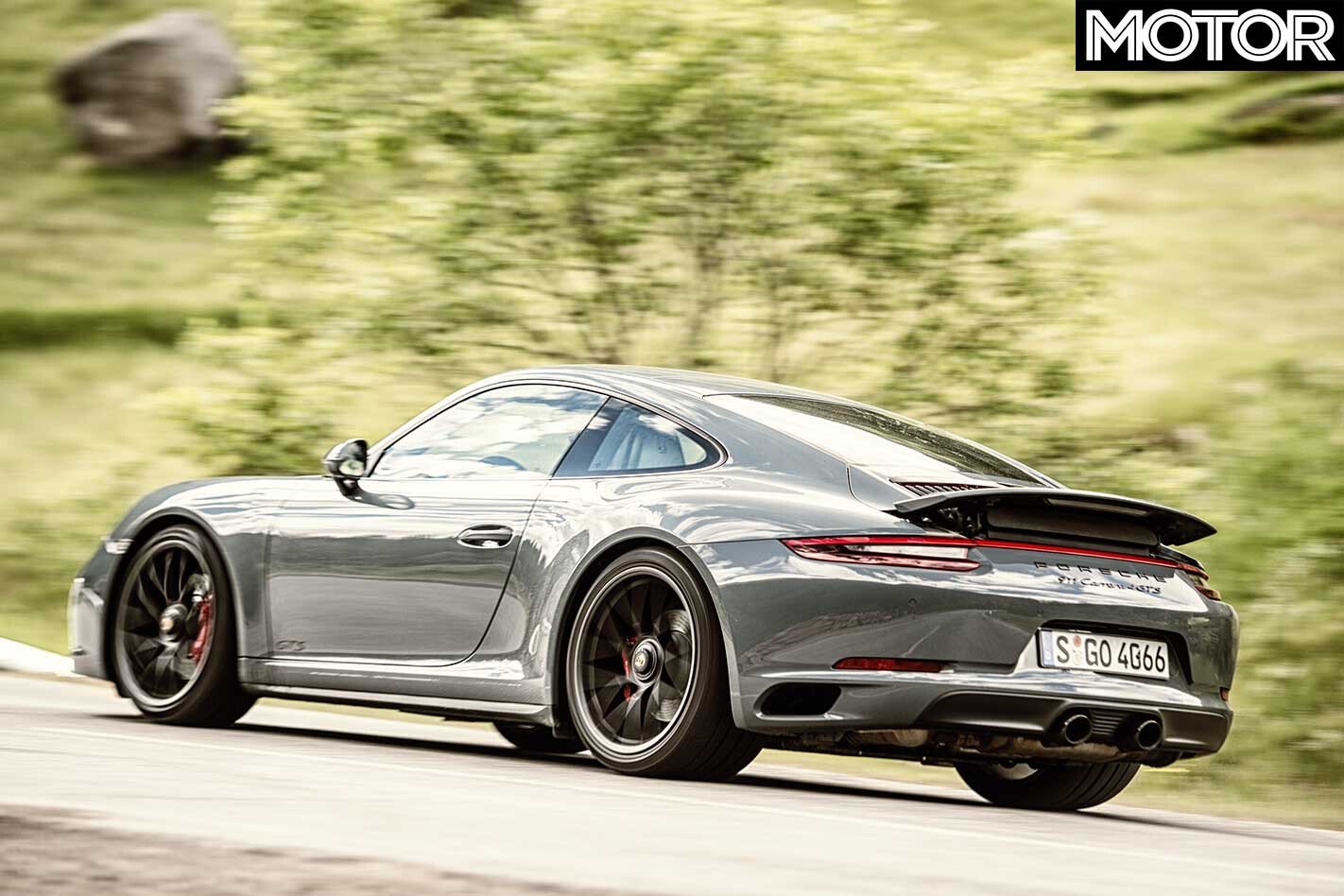
Heading the pack, the Porsche 911 Carrera 4 GTS stampedes away with its trademark upshift histrionics. It’s equipped with dispensable all-wheel drive and indispensable seven-speed PDK. The latter is light years more rewarding than a manual gearbox (yes, we can hear the gasps already).
Next, the new growler from Affalterbach, the AMG GT C, is scrambling itself into position before it takes off and storms away with such a loud noise that children would need earplugs.
Lastly, the even more vocal and melodic metallic white Aston Martin Vantage joins the trio as the newest offering, before it too spirals out of sight, leaving the initial esses behind.
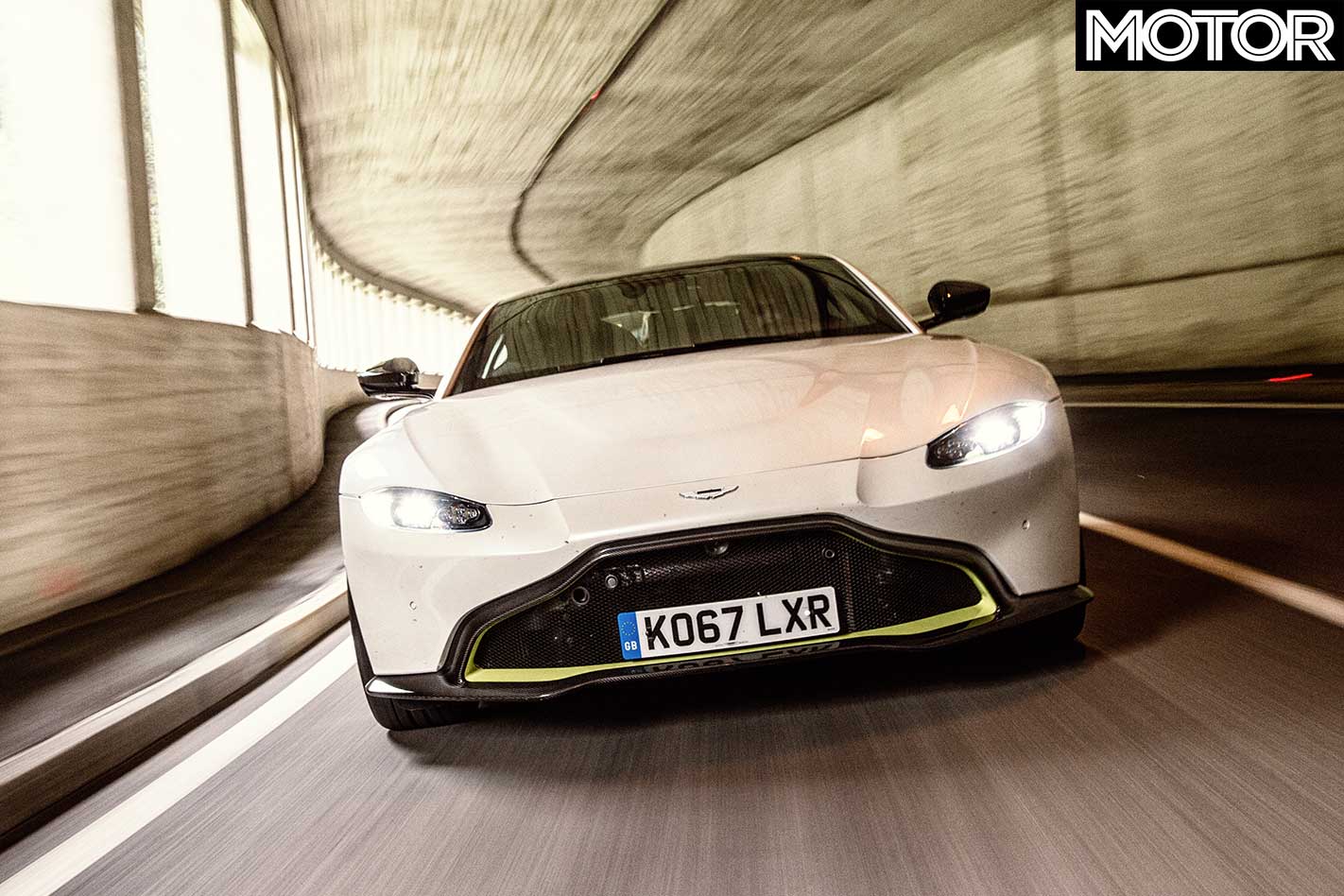
In an ideal world, this comparison would have also included a mid-engined protagonist like the soon-to-be-facelifted Audi R8 or the McLaren 540C, but they weren’t available at the time. While the AMG GT S would be a better fit in terms of raw figures, it can’t hold a candle to our GT C with Dynamic Plus pack and carbon-ceramic brakes.
Unexpectedly, the least expensive combatant is the newest, with Aston’s Vantage coming in at $299,950. Following that is Porsche’s runout 991-generation model before the 992, with the Carrera 4 GTS commanding a $305,990 price tag. The other newcomer, the AMG GT C, is the heavy hitter at $316,500.
Outright performance isn’t the only deciding factor in this comparison. All three contestants are one negligible tenth apart in the dash to 100km/h, with both the Porsche and the Aston sharing a 3.6sec time and the AMG coming in at 3.7sec. Yet, the Merc has the highest top speed at 320km/h.
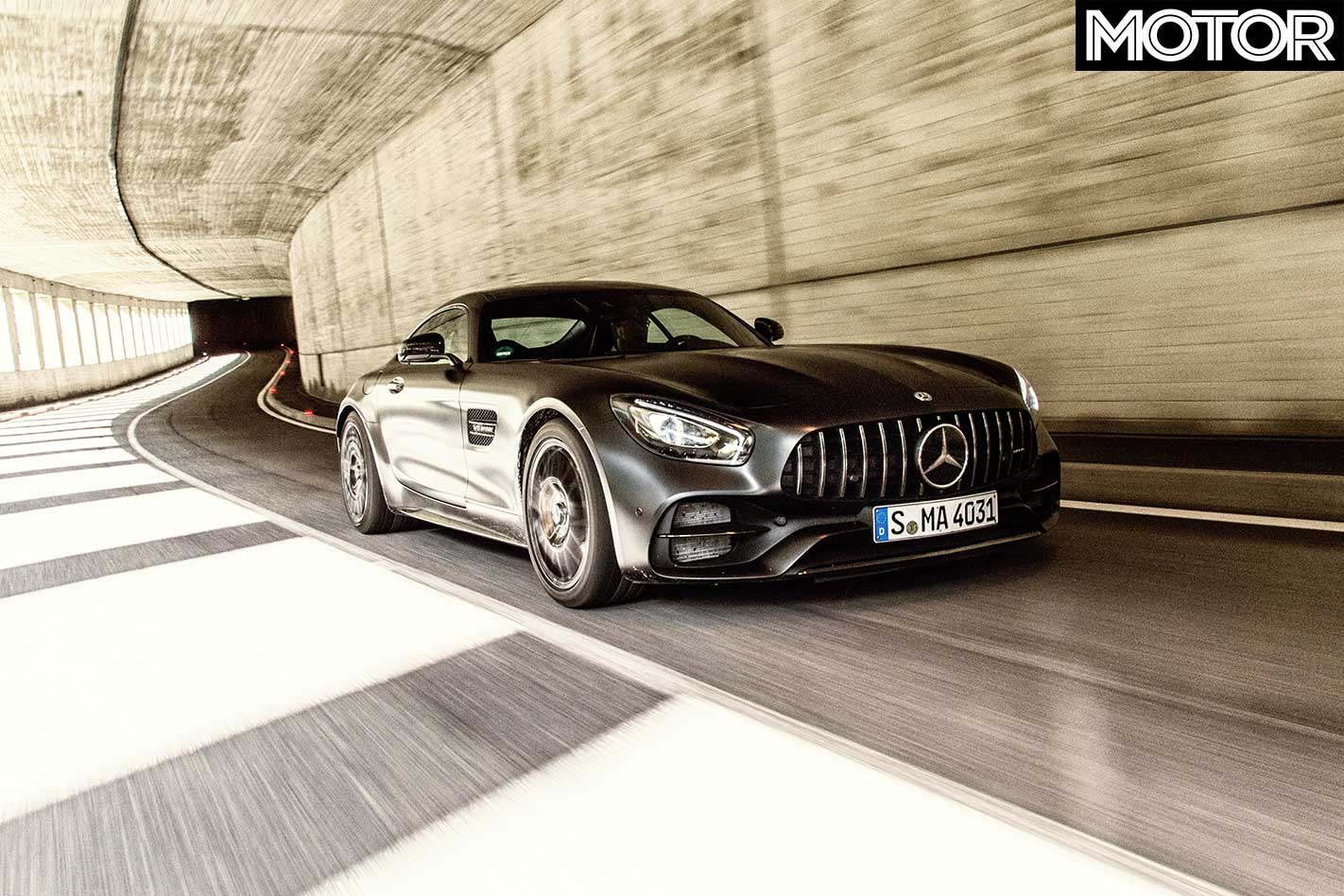
There’s not much in it as far as power and torque are concerned, either. The twin-turbo flat six lays down 331kW/550Nm, but it propels the lightest car, which carries 130kg less weight than the 1625kg, 410kW/680Nm GT C. Aston claims a dry weight of 1530kg for the 375kW/685Nm Vantage.
Sense of occasion ranks high on the list of buyer motives when you’re spend around $300K on a car. As far as the exterior appearance goes, the sheer presence of the Vantage triggers about twice as many smartphone cameras as the AMG.
The mega Merc is still a sight to behold, but the Aston garners far more love than its mechanically similar rival. Interestingly, no-one even looks twice at the staid, familiar Porsche.
The story changes inside, however. The white wonder is a bit of a disappointment. Ho-hum surfaces, dated ergonomics and uneventful instrumentation abound. The 911 is better made, it also has better seats and a roomier cabin.
The AMG tries to impress with a majestic dashboard, plenty of electronic trickeries and an expensive ambience. However, the seat travel is unnecessarily compromised by the rear bulkhead and the ultra-wide transmission tunnel is a bit of an annoyance in form, function and overall design.
Although all three are fully loaded variants, the 911 lacks the available rear-wheel steering. The Edition 50 AMG arrives in an intimidating all-black outfit, while the Aston has thousands spent on its carbon-fibre jewellery. Complete with a sunroof and comfort seats, the Porsche is kind of an antidote to the big, bad Benz. The Aston sits in the middle, a GT cruiser with the soul of a sports car.
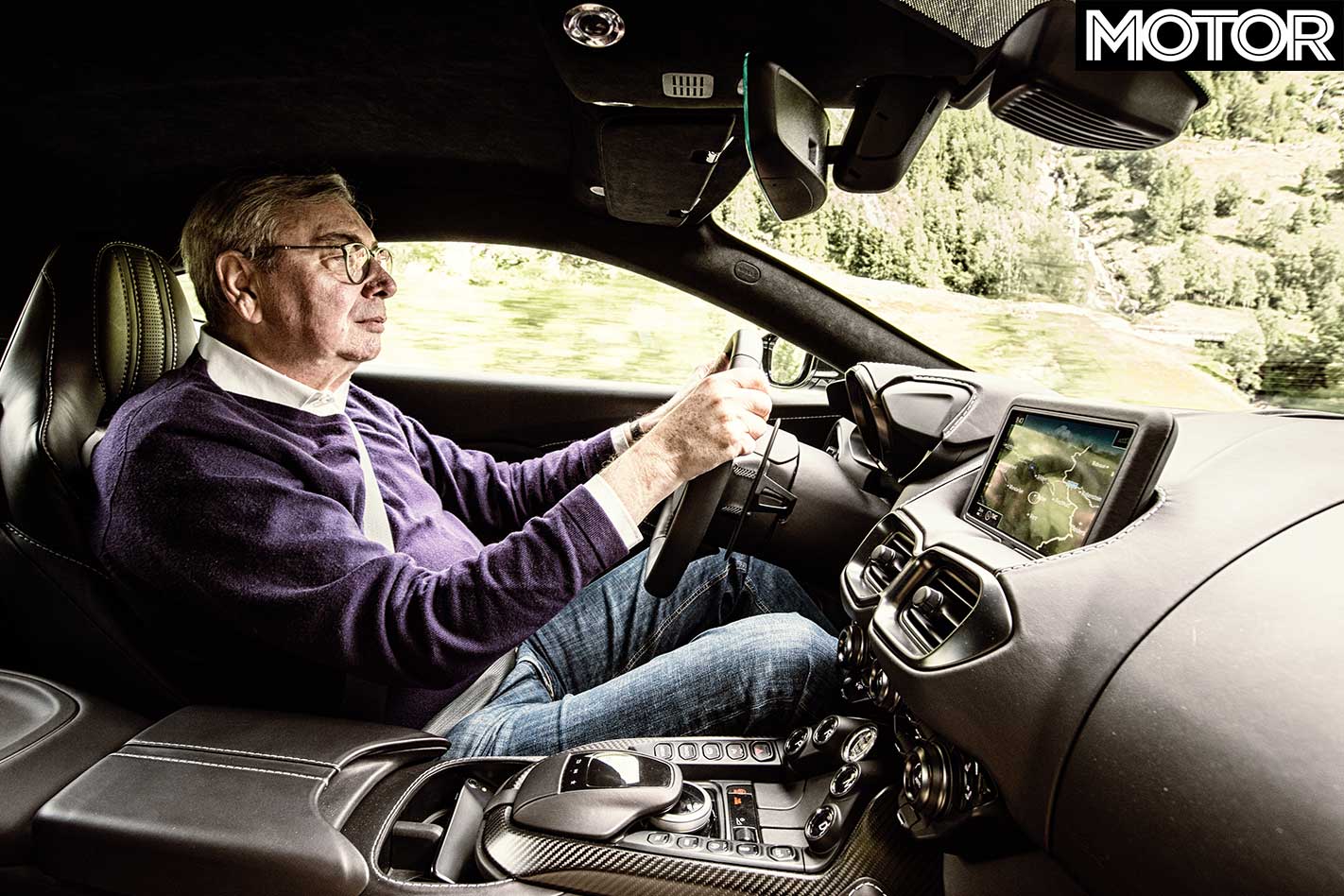
It’s early in the day, and so far the pace is more mildly spirited than attack mode. After all, the Michelins and Pirellis need warming up, the brakes are still grabby from a frosty night and our brains need to fully tap into the experience.
Although visibility is good and you can see for miles ahead in some places, the surface is swathed in all kinds of blacktop. Some corners are off-camber and there’s water from the glaciers sporadically sprinkling the road. Downhill, every section is good for third or fourth gear. Changing up to fifth is feasible, but 200km/h is stretching the friendship with the authorities – even in car-loving Italy.
What does make a lot of difference here is size, weight distribution, engine and transmission characteristic, chassis tuning and the overall driver environment. Not surprisingly, the 911 feels like coming home – after all, it’s been around for yonks.
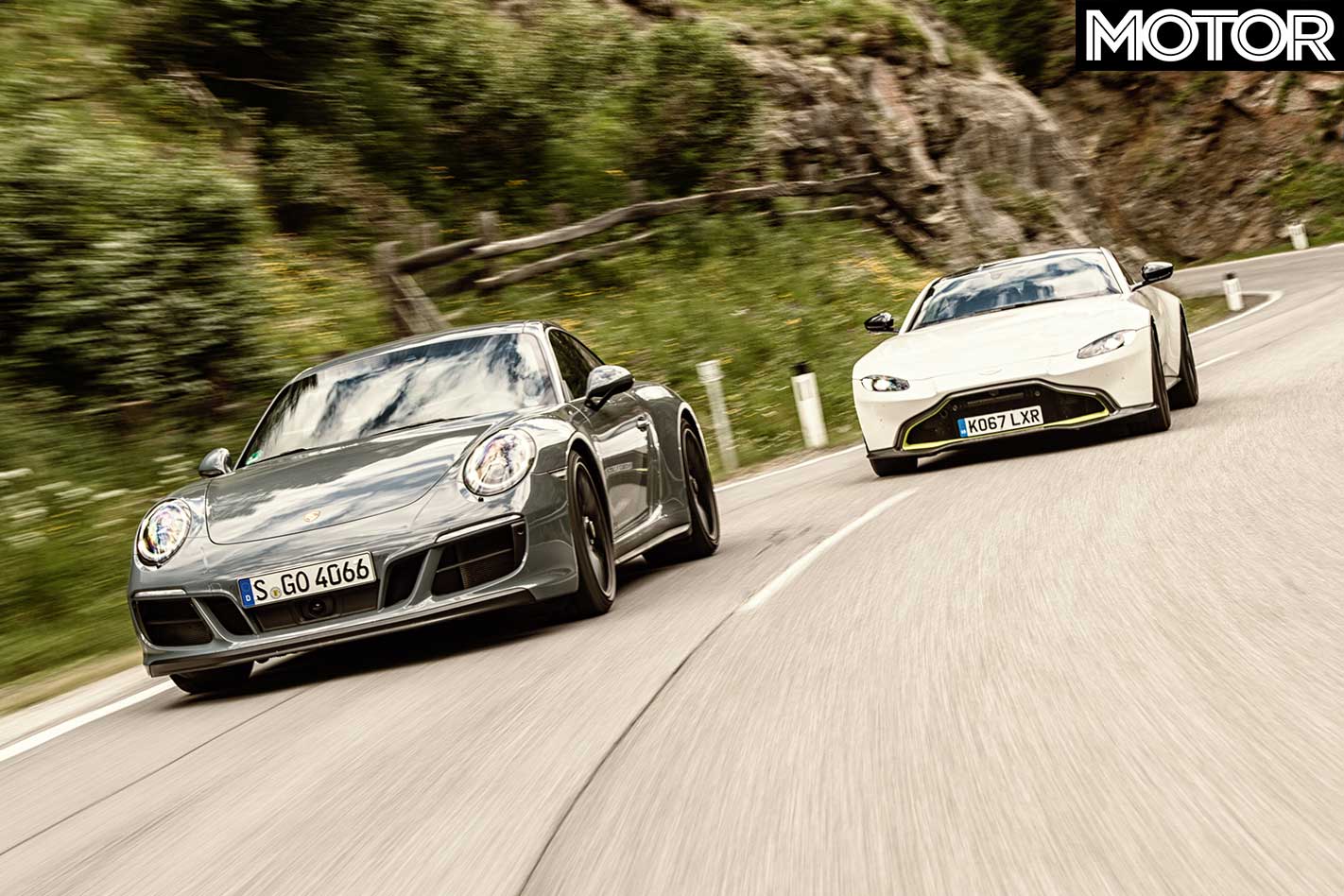
Despite certain updates like the semi-contemporary infotainment system and a choice of driving programs, the rear-engined coupe is still pleasantly old school in the way it looks, feels and does its job. On tight and winding roads, you quickly appreciate the more compact dimensions, the lighter weight and the comparatively comfortable suspension, which has a confidence-inspiring, feel-good factor about it.
To measure up to the GT C, you’d better see a coachbuilder who specialises in extended sizes because this car has a 3XL rear track, shoulders too broad for automatic car washes and an epically long bonnet. The rearward cabin creates a classic coupe silhouette, which is great for cruising down the likes of 5th Avenue (or Chapel Street, Down Under) with the gearbox locked in first gear.
However, as soon as you hit the open road, the margin for error decreases as rapidly as the GT C moves. The Aston isn’t quite as bloated (actually, make that muscular) as the Benz, but it, too, shifts at an astonishing rate as it peppers the wheel arches with noisy gravel picked up from the soft shoulder.
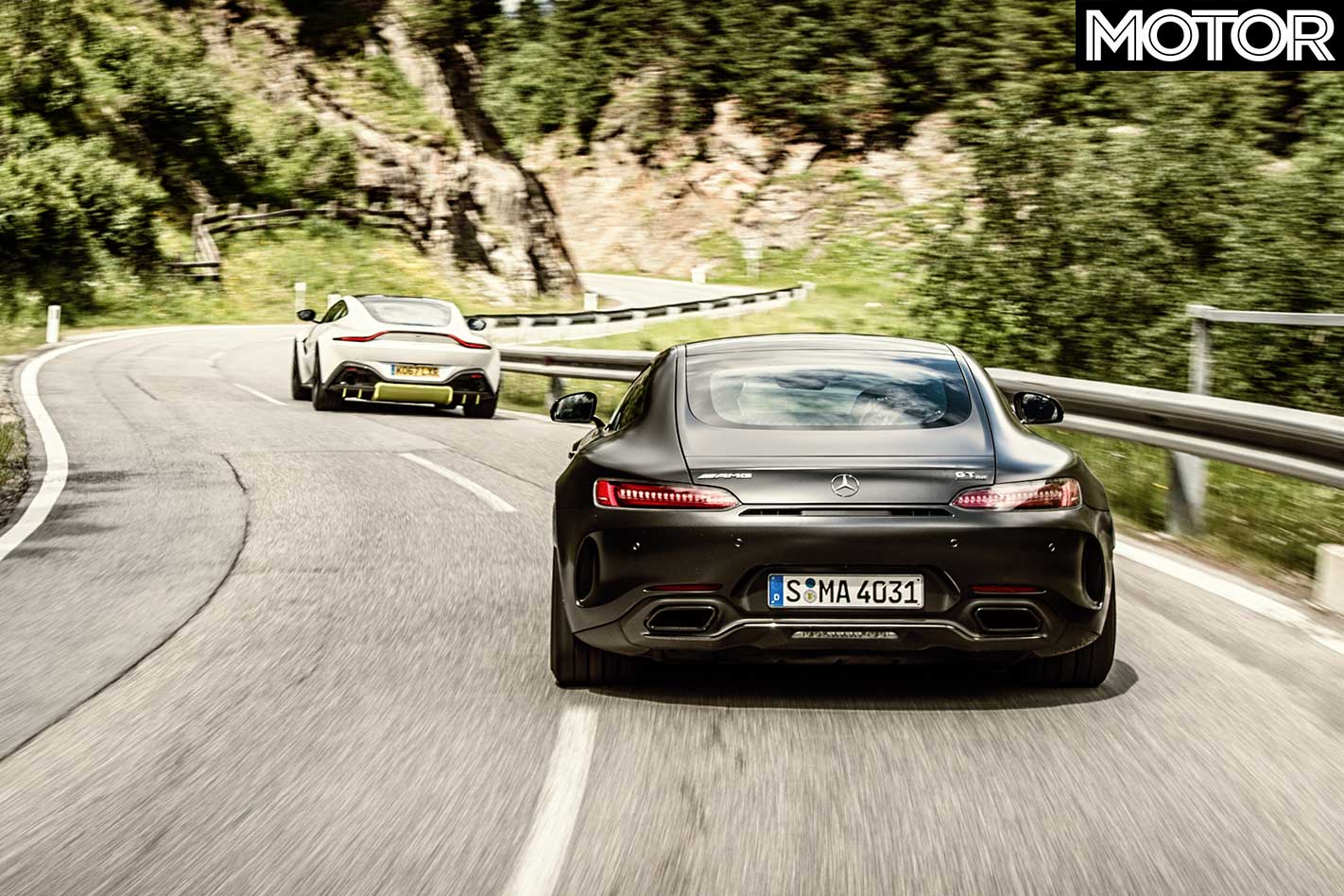
With ESP in handling mode or switched off altogether, both front-engined coupes dance along the edge of adhesion, so a racetrack beckons to really test their wares.
The Aston has the most complete transmission by a whisker. It’s a no-frills, eight-speed transaxle automatic supplied by ZF. It might seem like run-of-the-mill stuff, but it’s a quick-shifting set of cogs, which adapts nicely to the pre-selected modes (Sport, Sport Plus or Track).
The seven-speed dual-clutch fitted to the GT C may be a blink of an eye faster, and it can certainly change gears with greater ferocity, but downshifts tend to be lumpy. And after a hard day’s work, the test car developed an odd take-off hiccup – which was gone the next morning.
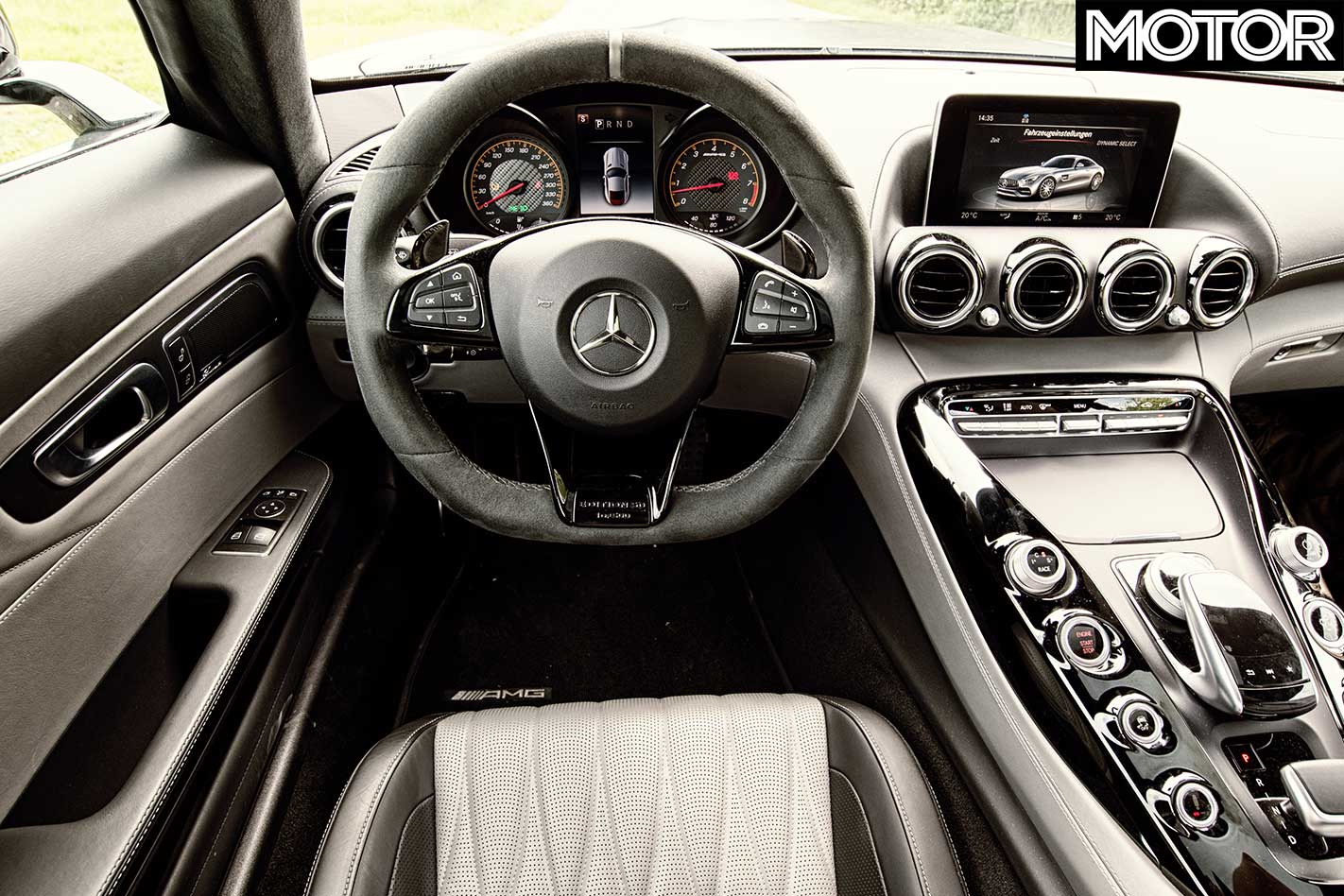
The PDK installed in our 911 has a lot going for it. However, Porsche sadly chose an emissions-based calibration, which selects the tallest gear and goes coasting whenever possible. This might be okay for a VW Golf, but it is at odds in a sports car, despite its prompt response on kick down.
Given the PDK’s behaviour is controlled by the drive mode, selecting Sport or Sport Plus does change the car’s personality markedly. Yet it can go too far and there’s a tendency for it forget it has a fifth, sixth or seventh gear.
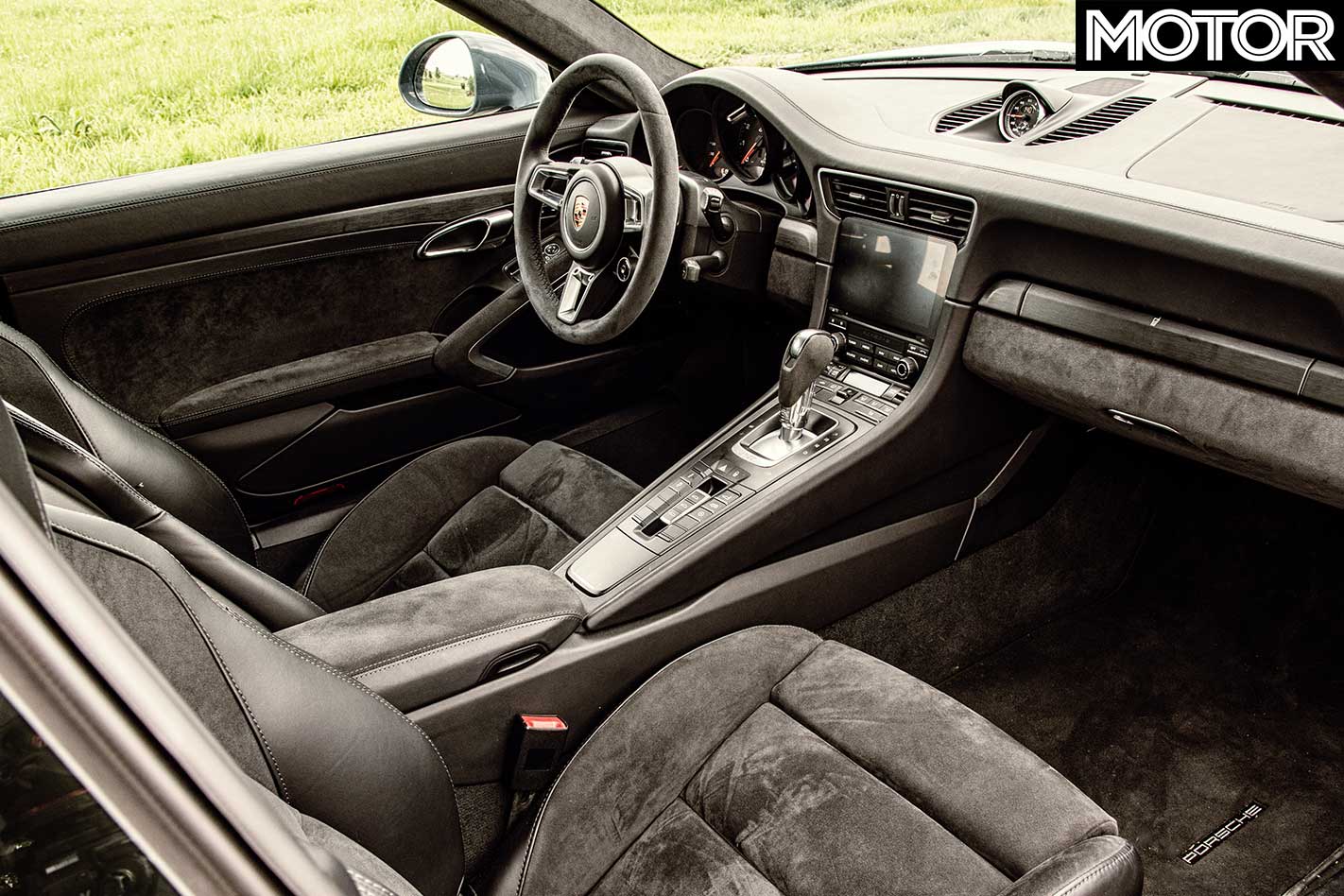
Below 2000rpm, none of the three engines are eager to burst into life. However, get closer to redline in all three and the theatre is much more lively – especially in the V8-powered coupes. If you want to frighten your entire street, and not just your next-door neighbour, hit the respective exhaust buttons. The result is absolute unabashed puerility, even though the decibel attack does not quite match the overkill acoustics mustered by the Italians.
Fast descents are a baptism of fire for steering, suspension and brakes – especially the brakes. While carbon-ceramic discs never made much difference in numerous 911s I have driven, the copper-toned high-performance calipers that glisten behind the wheels of the Benz combine amazing stopping power with inexhaustible stamina.
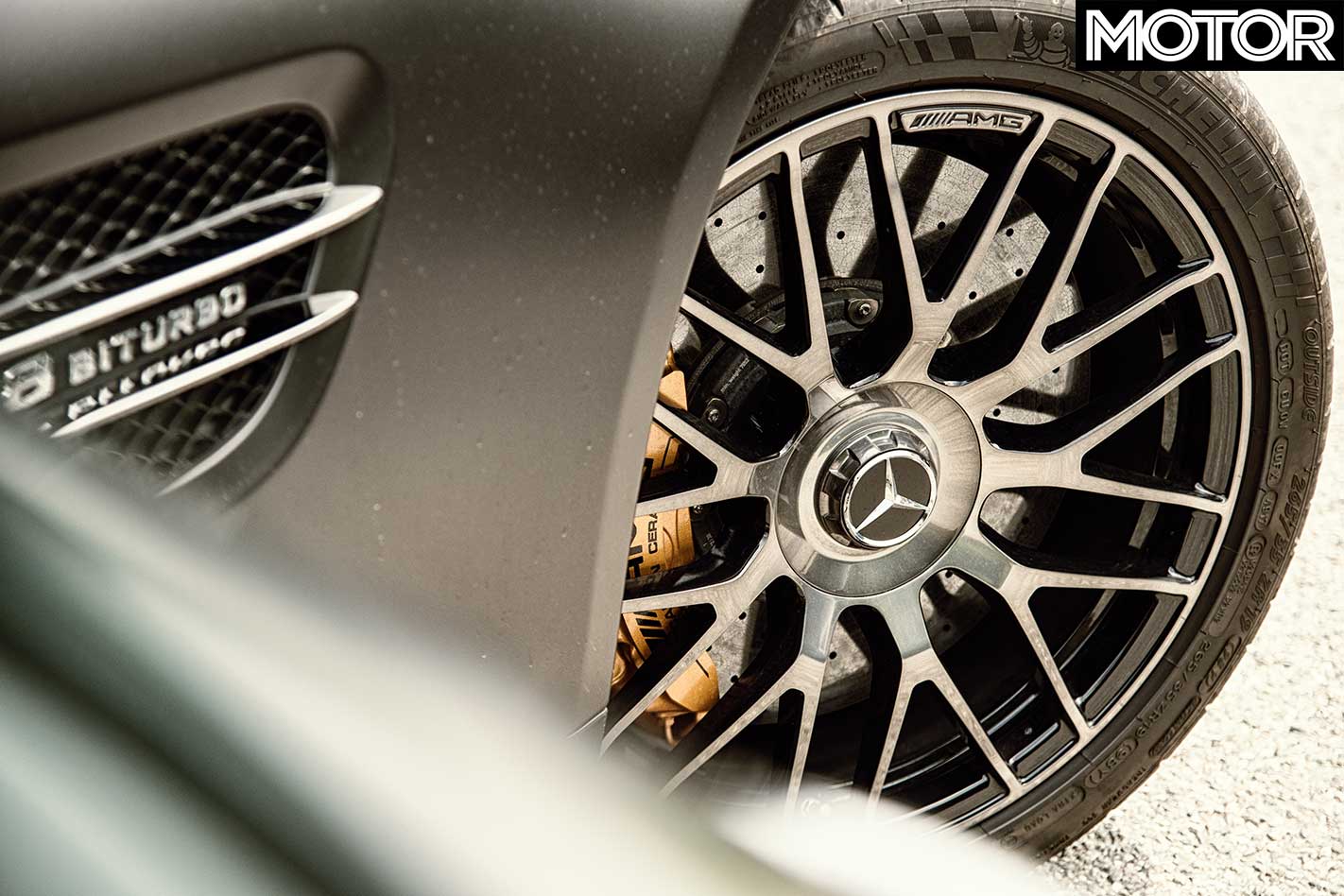
Pedal pressure and travel never vary, and given the front-end turns in without veering off line, braking deep into bends soon becomes second nature. The Vantage does all that, too, but not with quite the same self-abandonment. It requires warm tyres and hot brakes to provide the kind of brutal deceleration that tests your neck muscles.
Juggling mass and momentum is particularly effortless in the Porsche until ABS intervention interrupts play early, which happens quite frequently in this company and is due to the lighter front axle load.
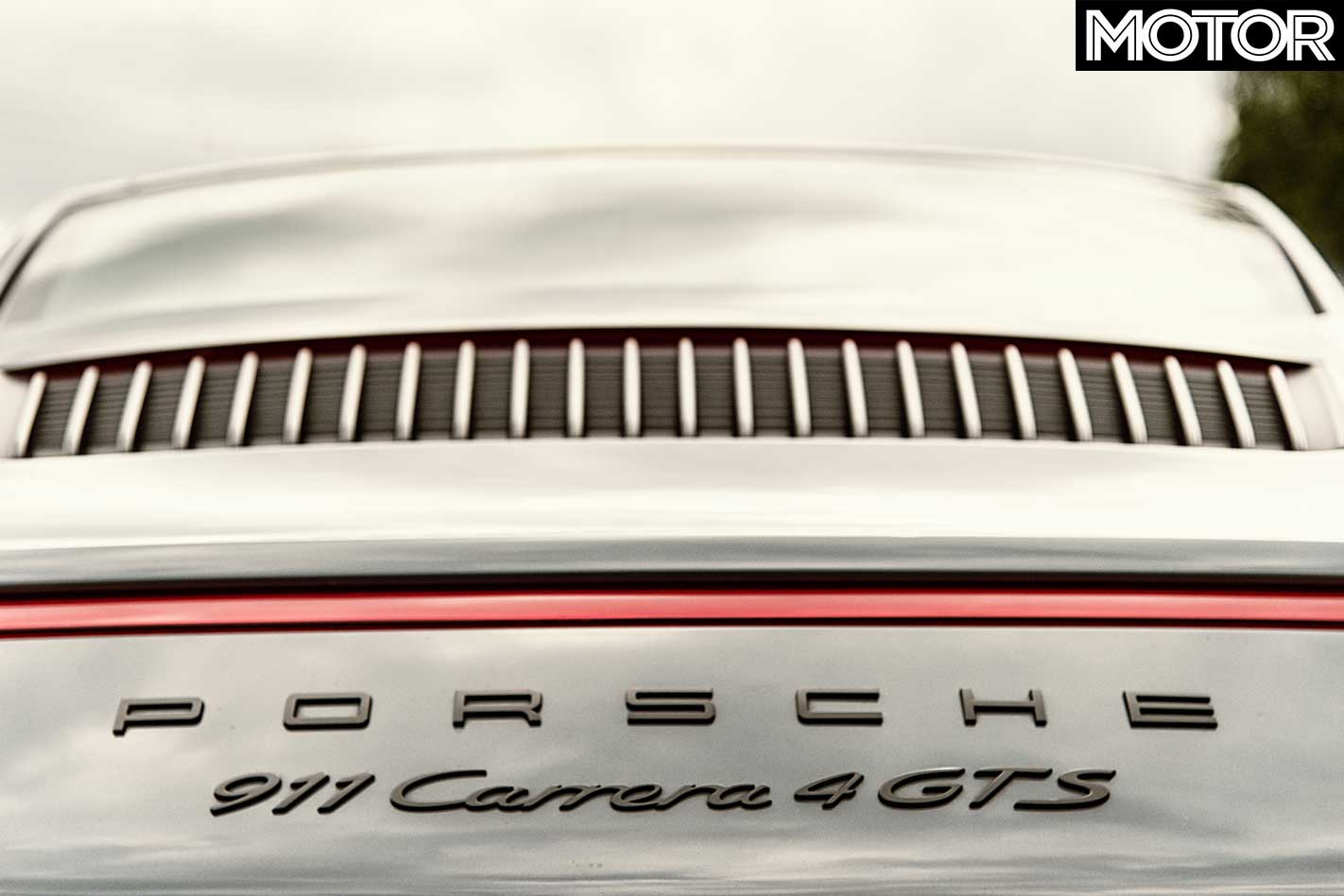
The little turn knob attached to the steering wheel of the 911 GTS offers the choice of four driving modes, plus a boost button. It will, for 20 seconds, unleash even more torque. But unless your commute includes sections of the Nordschleife, this feature is little more than a gimmick.
The GT C, too, can be preconditioned by a mode selector in the centre console and via direct-control buttons tweaking the dampers and ESP. Again, the extreme polar opposite settings – Comfort and Race – are of little use for fast stints on back roads.
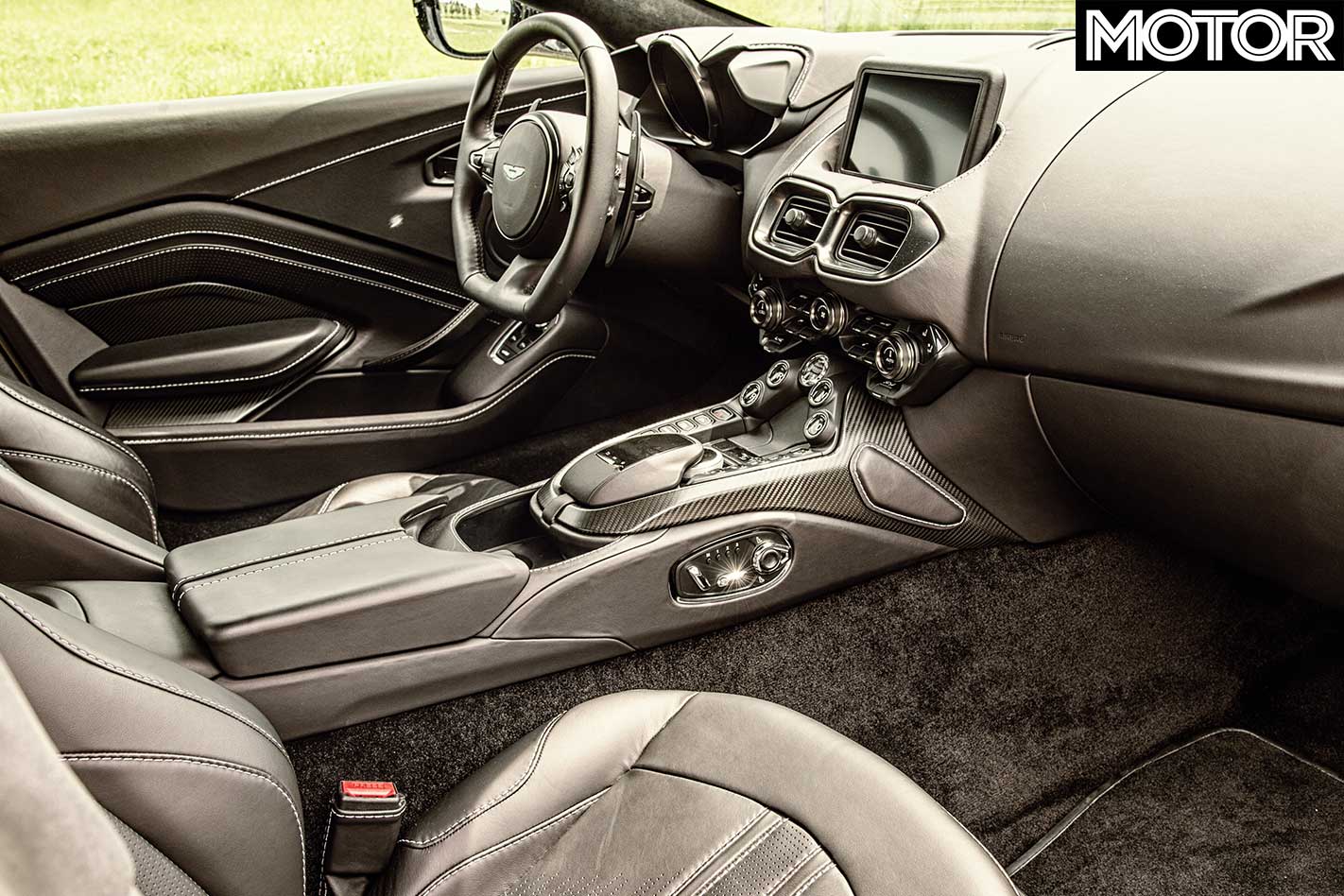
In principle, the way you calibrate the Vantage’s DNA is the most logical and ergonomically friendly. Access is via two three-way buttons on the steering wheel. One is linked to the dampers, the other to the drivetrain. Sport, Sport Plus and even Track are okay for Sunday blasts, but the ESP needs to be addressed separately via one of 15 buttons grouped around the touchpad and Command controller. Yes, the infotainment system is yet another item supplied by Mercedes-Benz.
With the transmissions in manual, the dampers in Sport and the ESPs relaxed, we arrive at the top of the next pass. On smooth tarmac, there is very little between these three. Leading the understeer chart is, perhaps unsurprisingly, the Porsche. But that’s more down to the Carrera 4 guise, which is more devoted to rocketing you off the line and all-weather traction.
Even with all the electronic interfaces zeroed in, four-wheel drive remains fully active. So power oversteer is a matter of skill, courage and, ultimately, space. You need more of it to catch the front-end, which is prone to run wide before being coaxed into anything akin to a drift. Sadly, although the test car came with lowered PASM suspension and 20-inch wheels, it did not, as already mentioned, have the available rear-wheel steering.
In terms of steering precision, directness, damping and progression, there’s no problem from Affalterbach, Gaydon or Zuffenhausen. But throw in other variables like response, weight and self-centring and the characteristics differ greatly.
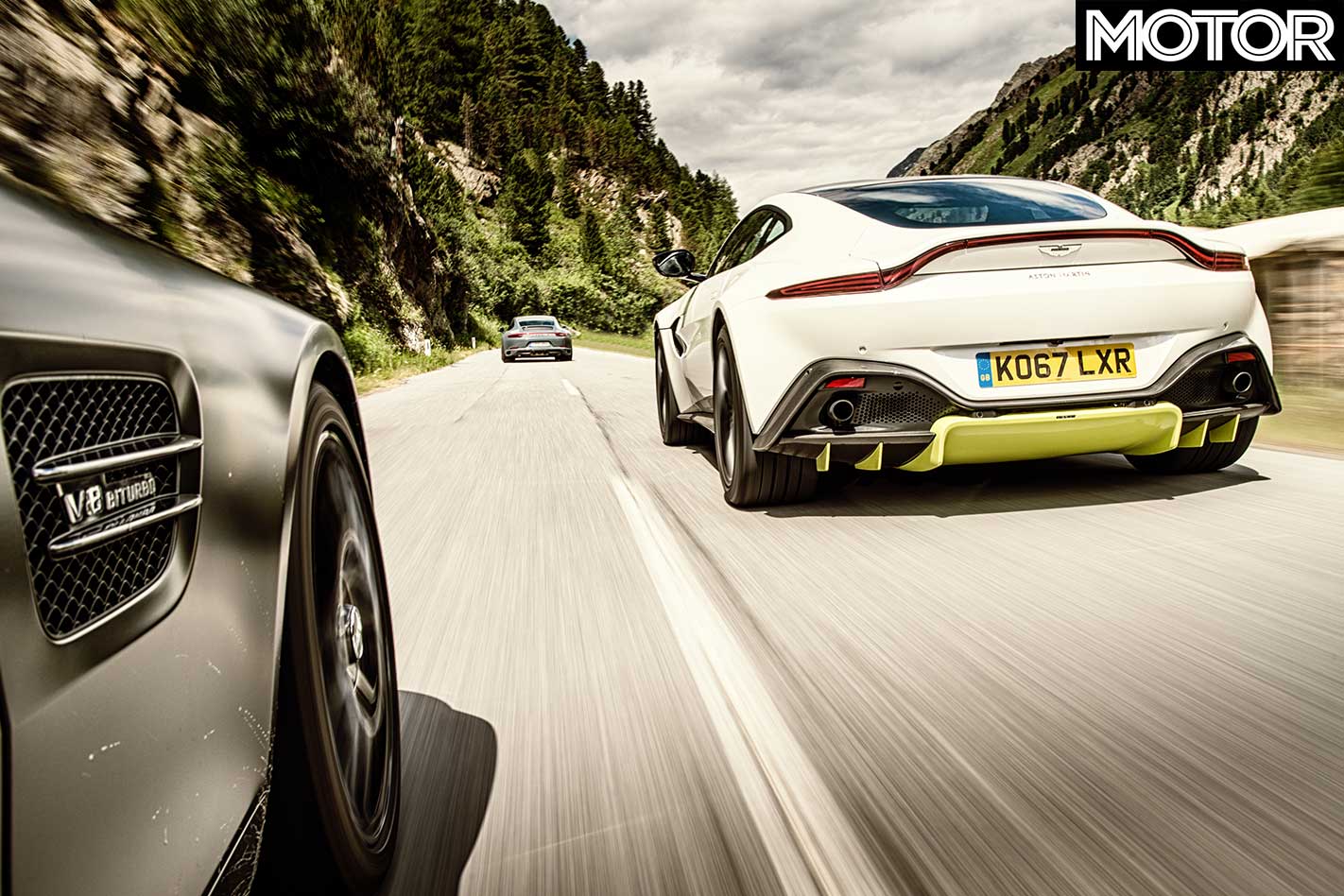
The AMG guys like the helm to be stoic, stable and firm, at least around the straight-ahead position. It makes the GT C feel less wayward on bumpy turf. However, as soon as you turn in with vigour, the hotline between the front wheels and the driver’s hands fades just a little, triggering a dash of indifference and an unexpected lightness.
In the quest for a firmer, more positive feel, we switch to the Vantage – only to frown at its silly quartic steering wheel. The rack, tuned by the Brits and not the Germans, does turn in a tad more progressively, is a touch stiffer and marginally less artificial overall. Having said that, changing direction in the 911 GTS is a more consistent task as there’s no filter; it’s effortless and responsive. It’s the best of the breed on this test.
The middle leg of the journey is a true test – the most challenging of the two days. It’s a mixed bag of variables, including wide-open straights, narrow crests framed by the panoramic sky and freshly laid asphalt.
The corners are fast and slow – the weather transitions from drizzle to pristine sunshine. The surface is of note, because on these billiard-table-smooth roads, all three muscled-up coupes score 11 out of 10 for unbridled entertainment and fail-safe driveability.
However, when it’s time to really sort out what’s what when the going gets tough, even the most established player shows incremental cracks in armour. The 911, as nimble and as involving as it is, baulks at deep ripples and patchwork terrain where the front axle acts more restless than it should.
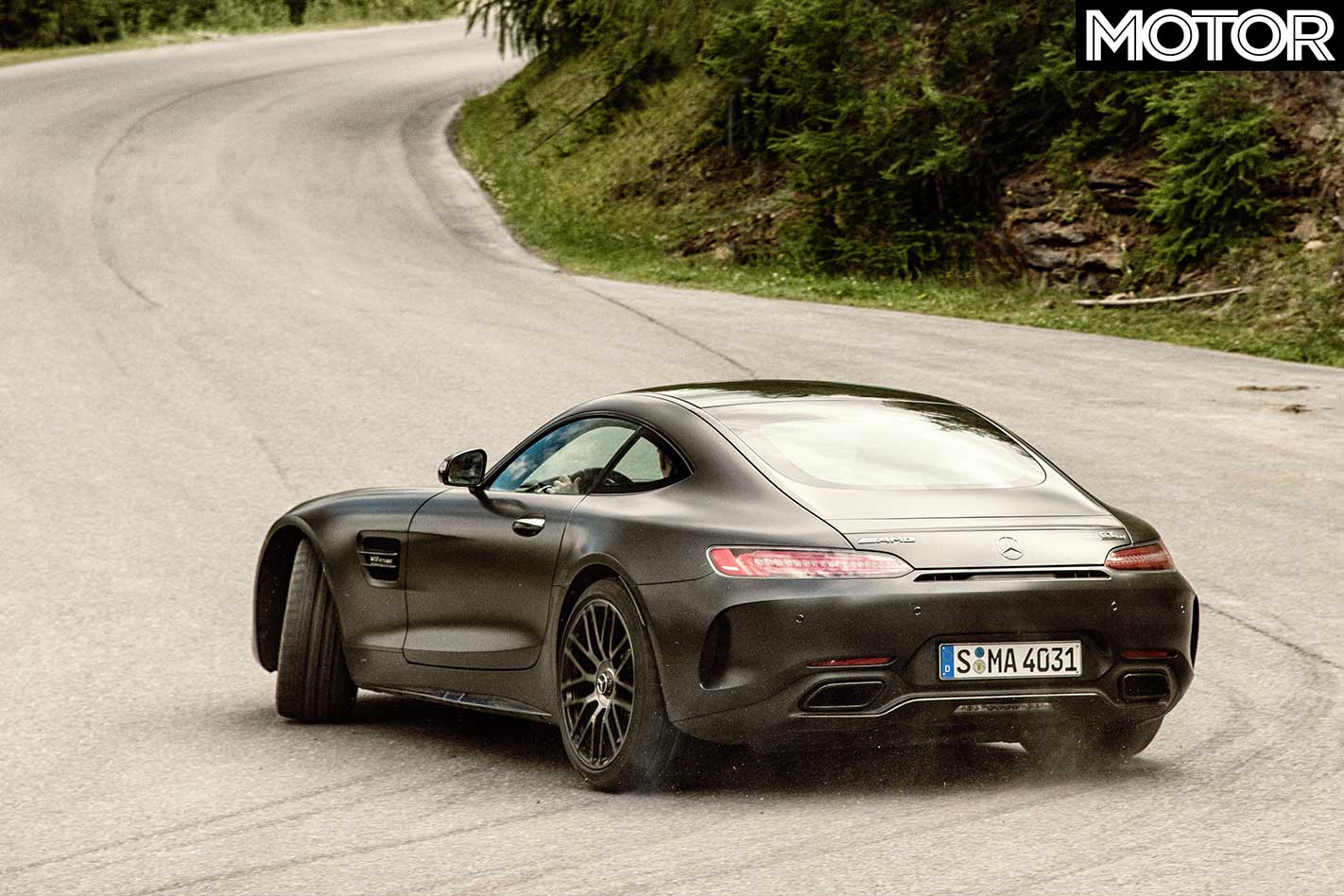
The black beast curtails confidence with a terrible low-speed ride, chronic tramlining and that busy rear axle. The remedy is to work the trick chassis as hard as you can, bringing the long nose into play and extracting all you can from the standard rear-wheel steering and torque vectoring differential.
In more ways than one, the Vantage wants to be the jack of all trades. It catches the eye and makes all the right noises. It feels just at home in racing overalls as it does in a three-piece suit and it rules the fast lane while challenging the best on a twisty road.
But there are caveats. Sans tech wizardry like rear-wheel steering, all-wheel drive, high-performance brakes, active aerodynamics, air suspension and adjustable anti-roll bars, the new Aston is, in essence, a sports car of generations past.
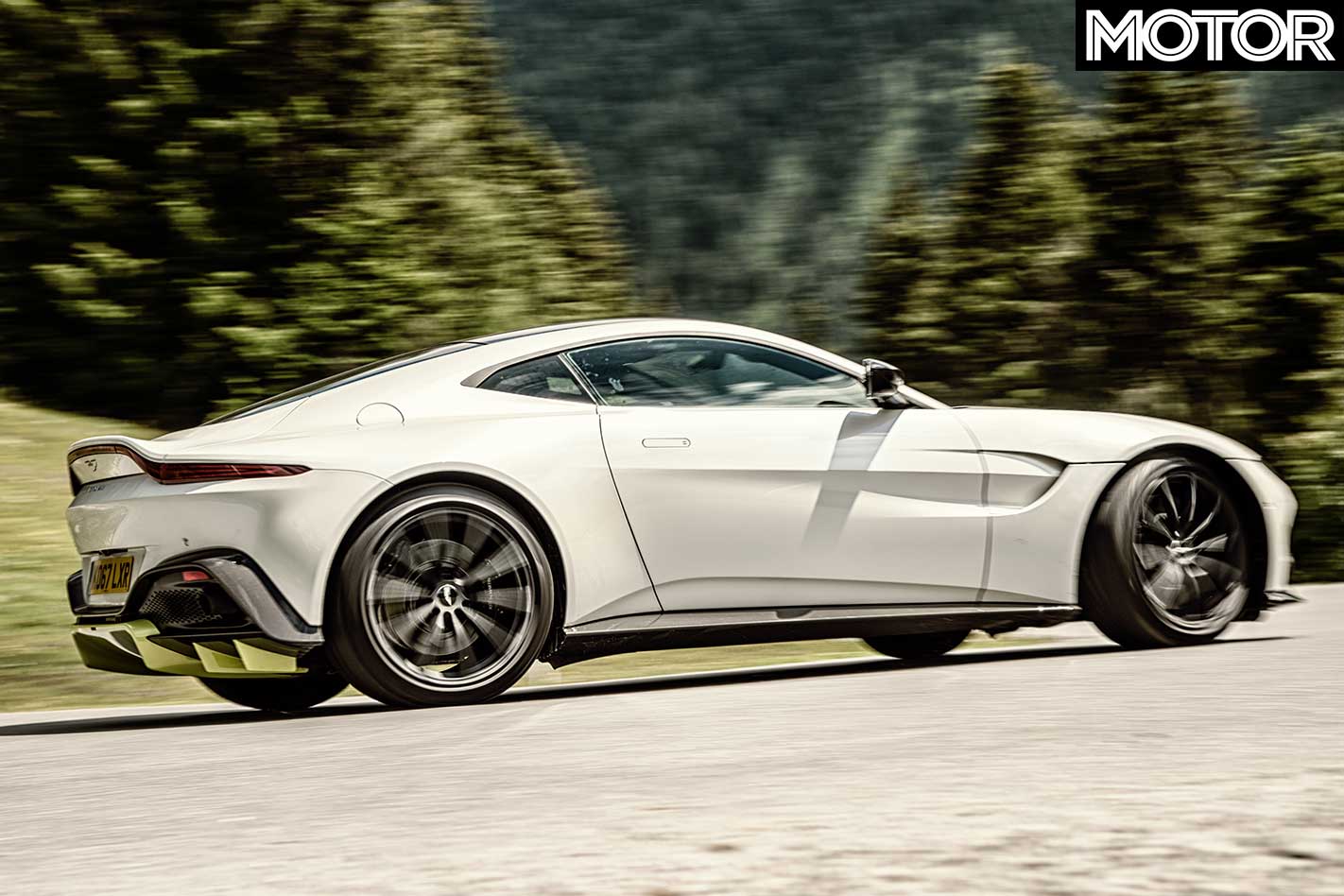
Still, it goes like stink, it wags its tail at every roundabout and it is pure dynamite in the 200-300km/h speed bracket. It genuinely feels fast in the way a 594kW/958Nm Challenger Redeye does. Trouble is the Vantage’s suspension comes across as somewhat undersprung and overdamped.
Crack the whip on curvy, uneven terrain and you better brace yourself for vertical kicks, which make the baby Aston’s rear end tap dance until the ESP cuts in (which is late depending on the mode selected). It needs a tad more compliance to be truly great.
As a finale to the trip, winding our way down into a valley of green is mesmerising. Run after run we turn into the parking spot with sizzling brakes, crackling exhausts and sticky tyres. The reward is a grin that stretches from ear to ear. Picking a winner and a loser out of this pack seems like it’s going to be a tough task. So which is best?
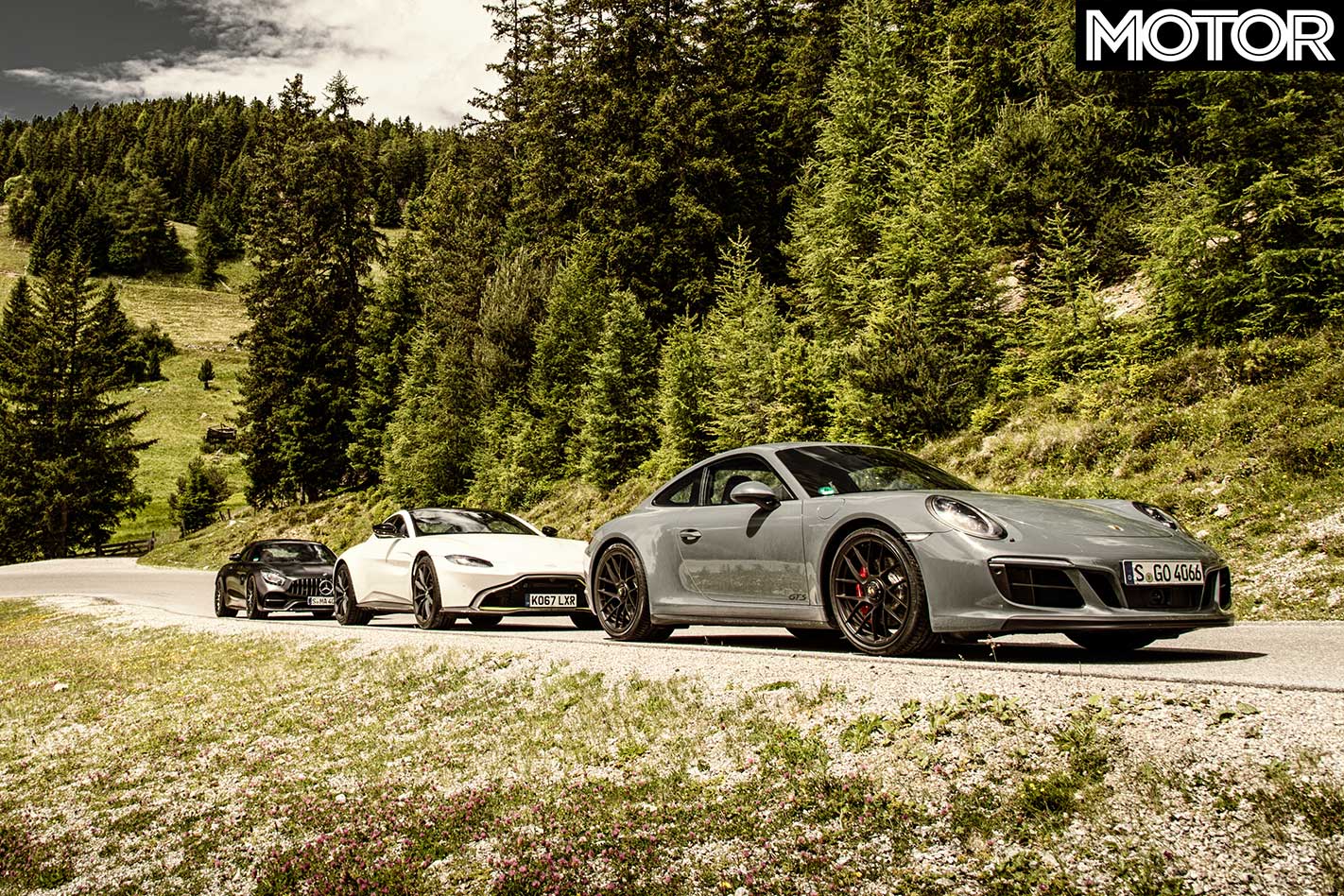
The two V8-engined rivals are close in terms of concept and ability, but the Porsche is a different animal. It applies unique tricks to achieve similar goals. The Vantage isn’t much smaller, lighter or cheaper than the DB11. To qualify for the middle step of the podium it needs a more forgiving ride, a better balanced suspension setup and work done on the interior.
The GT C wins the street-cred debate hands down. It is truly a modern-day muscle car that excels in many areas and it oozes hooliganism the instant you hit the exhaust button. We adore it for that, but it’s not the winner.
That accolade goes to the venerable 911. It’s a true classic, one boasting a timeless design and an impossible engineering concept honed to greatness. True, the Carrera 4 GTS is more underdog than overachiever in this company, and yet it wins by a short head for all the reasons that make this icon so iconic.
| u00a0 | Aston Martin Vantage | Mercedes-AMG GT C | Porsche 911 Carrera 4 GTS |
| Body | 2-door, 2-seat coupe | 2-door, 2-plus-2 coupe | |
| Drive | rear-wheel | all-wheel | |
| Engine | 3982cc V8, DOHC, 32v, twin-turbo | 2981cc flat-6, DOHC, 24v, twin-turbo | |
| Bore x Stroke | 93.0mm x 92.0mm | 91.0mm x 76.4mm | |
| Compression | 10.5:1 | 10.0:1 | |
| Power | 375kW @ 6000rpm | 410kW @ 5750-6750rpm | 331kW @ 6500rpm |
| Torque | 685Nm @ 2000-5000rpm | 680Nm @ 1900-5500rpm | 550Nm @ 2150-5000rpm |
| Power/Weight | 245kW/tonne | 252kW/tonne | 221kW/tonne |
| Transmission | 8-speed automatic | 7-speed dual-clutch | 7-speed dual-clutch |
| Transmission | 1530kg (dry) | 1625kg | 1495kg |
| Suspension (f) | struts, adaptive dampers, anti-roll bar | ||
| Suspension (r) | multi-links, coils, adaptive dampers, anti-roll bar | ||
| L/W/h | 4465/1942/1273mm | 4551/2007/1288mm | 4528/1852/1284mm |
| Wheelbase | 2704mm | 2630mm | 2450mm |
| Tracks | N/A | 1678/1695mm (f/r) | 1541/1544mm (f/r) |
| Steering | electrically assisted rack-and-pinion | ||
| Brakes (f) | 400mm ventilated discs, 6-piston calipers | 390mm carbon-ceramic discs, 6-piston calipers | 350mm ventilated discs, 6-piston calipers |
| Brakes (r) | 360mm ventilated discs, 4-piston calipers | 360mm carbon-ceramic discs, 4-piston calipers | 330mm ventilated discs, 4-piston calipers |
| Wheels | 20.0-inch (f/r u2013 widths N/A) | 19.0 x 9.0-inch (f); 20.0 x 12.0-inch (r) | 20.0 x 9.0-inch (f); 20.0 x 12.0-inch (r) |
| Tyres | 255/40 R20 (f); 295/35 R20 (r) | 265/35 R19 (f); 305/30 R20 (r) | 245/35 R20 (f); 305/30 R20 (r) |
| Tyres | Pirelli P Zero | Michelin Pilot Super Sport | Pirelli P Zero |
| Price | $299,950 | $316,500 | $305,990 |
| Pros | Eye-catching design; V8 soundtrack; handling | Modern-day muscle car; rear-drive dynamics | Steering; overall handling; straight-line pace |
| Cons | Ergonomic interior flaws; indifferent ride quality | Low-speed ride quality; inconsistent steering | AWD not necessary; weight penalty; 992 incoming |
| Rating | 4 out of 5 stars | 4 out of 5 stars | 4.5 out of 5 stars |
Dual-cab 4WD utility vehicles are one of the hottest new car segments in Australia today. In fact six of the top 30 new cars sold in Australia are dual-cab utes, thanks to their inherent versatility and ability to switch between weekday work trucks and weekend family lifestyle vehicles. Here’s our run-down of the top nine dual cab utes on sale in Australia right now, as judged by the experts at Wheels Australia.
1. Volkswagen Amarok V6
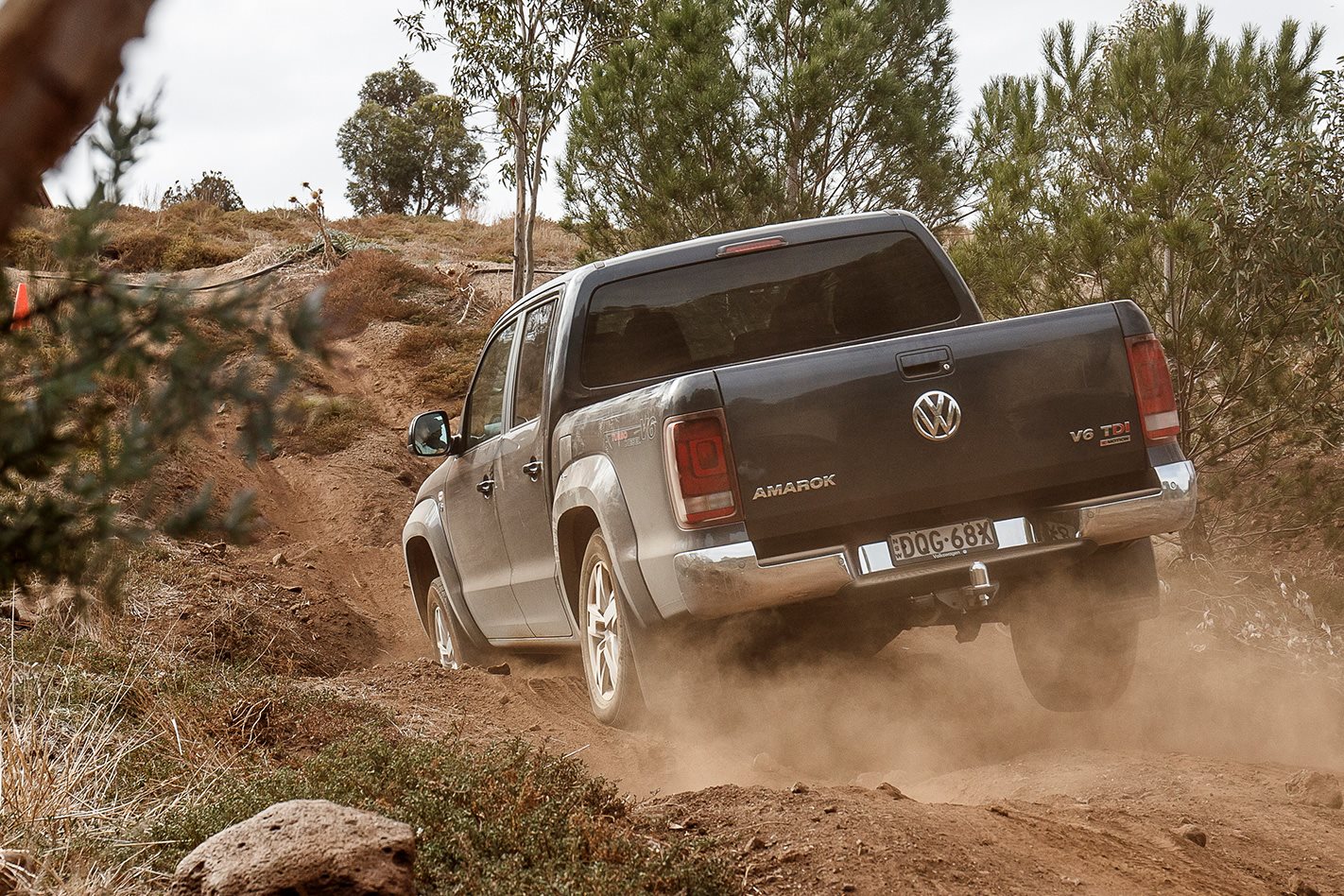
What’s the old adage about it being tough to get to the top, even tougher to stay there? Whatever it is, no-one has told the Amarok. It may not have youth on its side, but the Amarok still trumps all else in terms of on-road refinement and off-road capability.
2. Ford Ranger
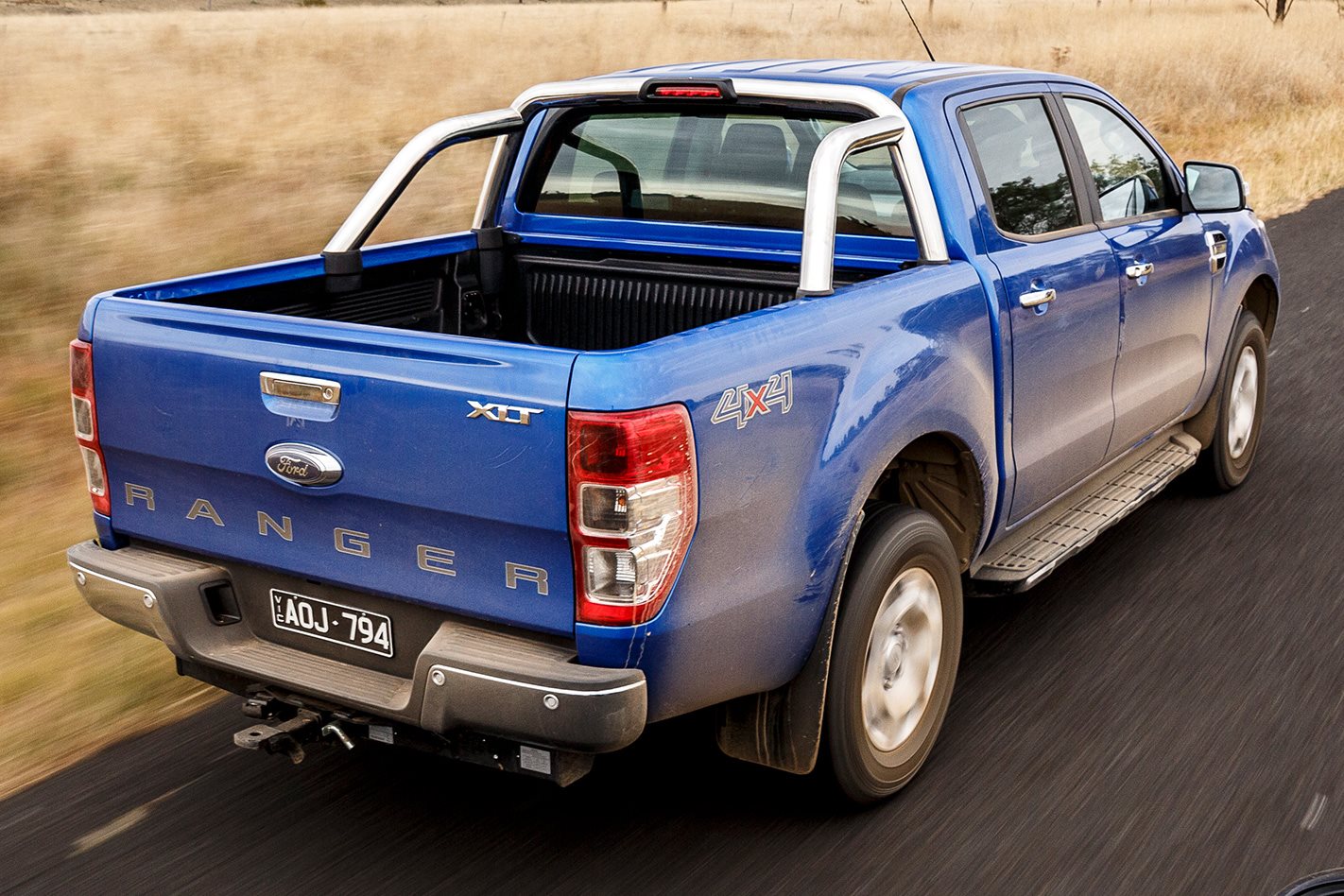
In this post Australian-vehicle manufacturing world, the significance of the Ranger’s massive success – both critically and commercially – is more profound than ever, seeing as it is now the only new vehicle left in production anywhere on earth designed and engineered here.
3. Mercedes-Benz X Class
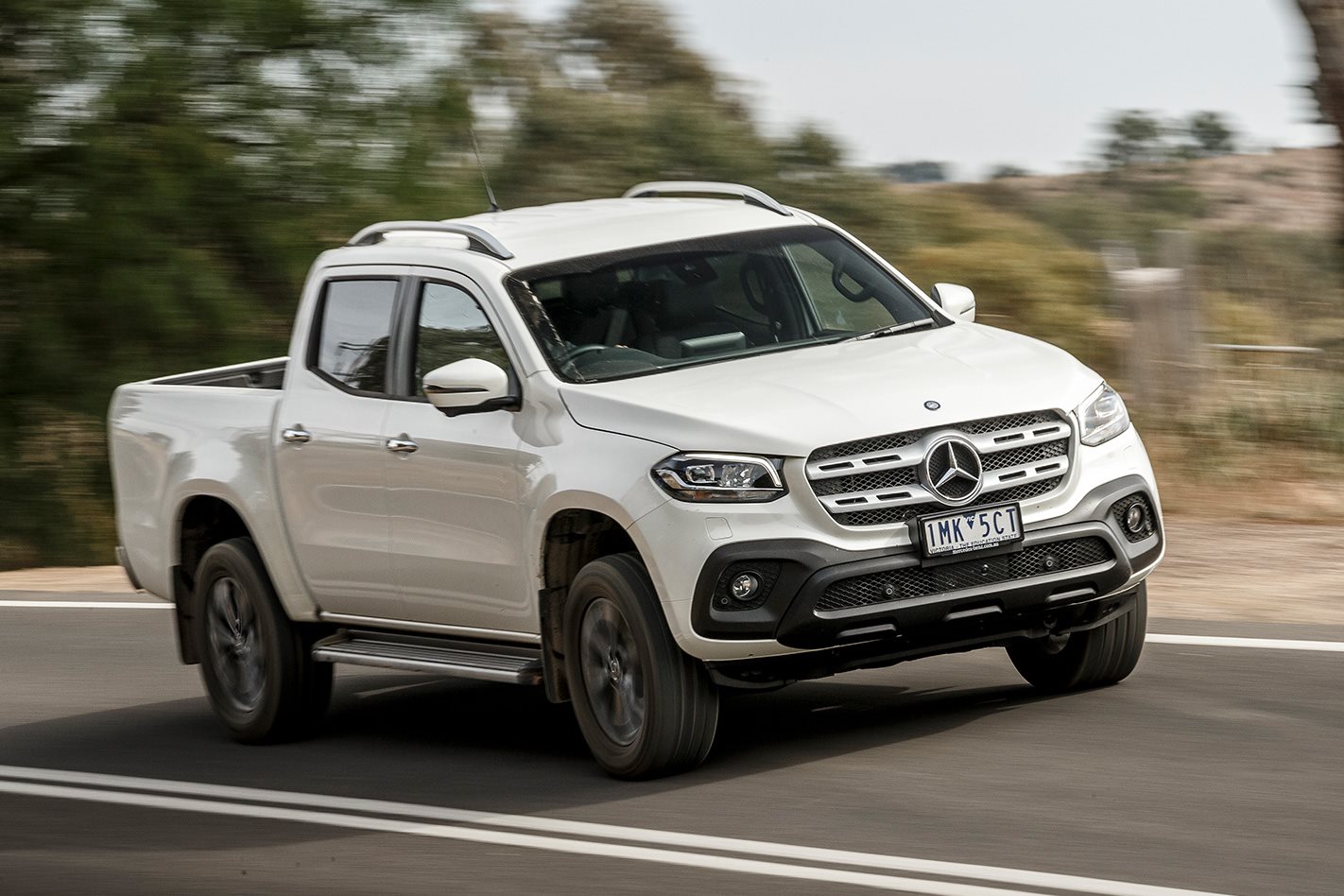
On plenty of levels the X-Class feels well overdue; given the mostly average standard of dynamics, presentation and safety that’s pervaded this class. Merc’s engineers have done a super-impressive job, given their starting point was the lacklustre Navara.
4. Holden Colorado
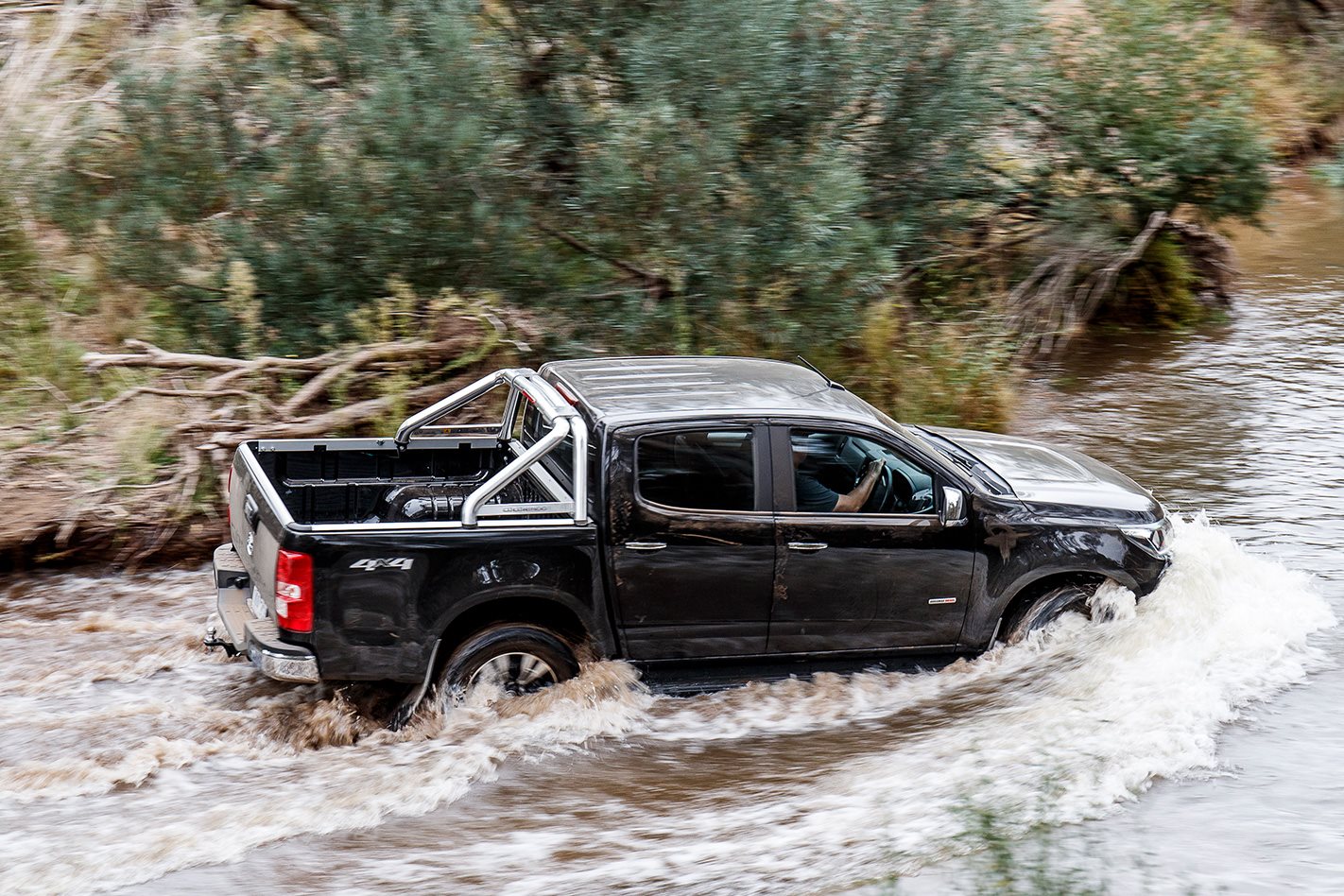
While all eyes are on Mercedes-Benz’s newcomer and Volkswagen’s V6 powerhouse, let’s not overlook what is arguably the most significant of the bunch, the underrated Colorado. Where the Colorado’s ride and NVH levels previously relegated it among the also-rans, the facelift has had a profound effect elevating comfort and perceived quality in one swoop.
5. Mitsubishi Triton
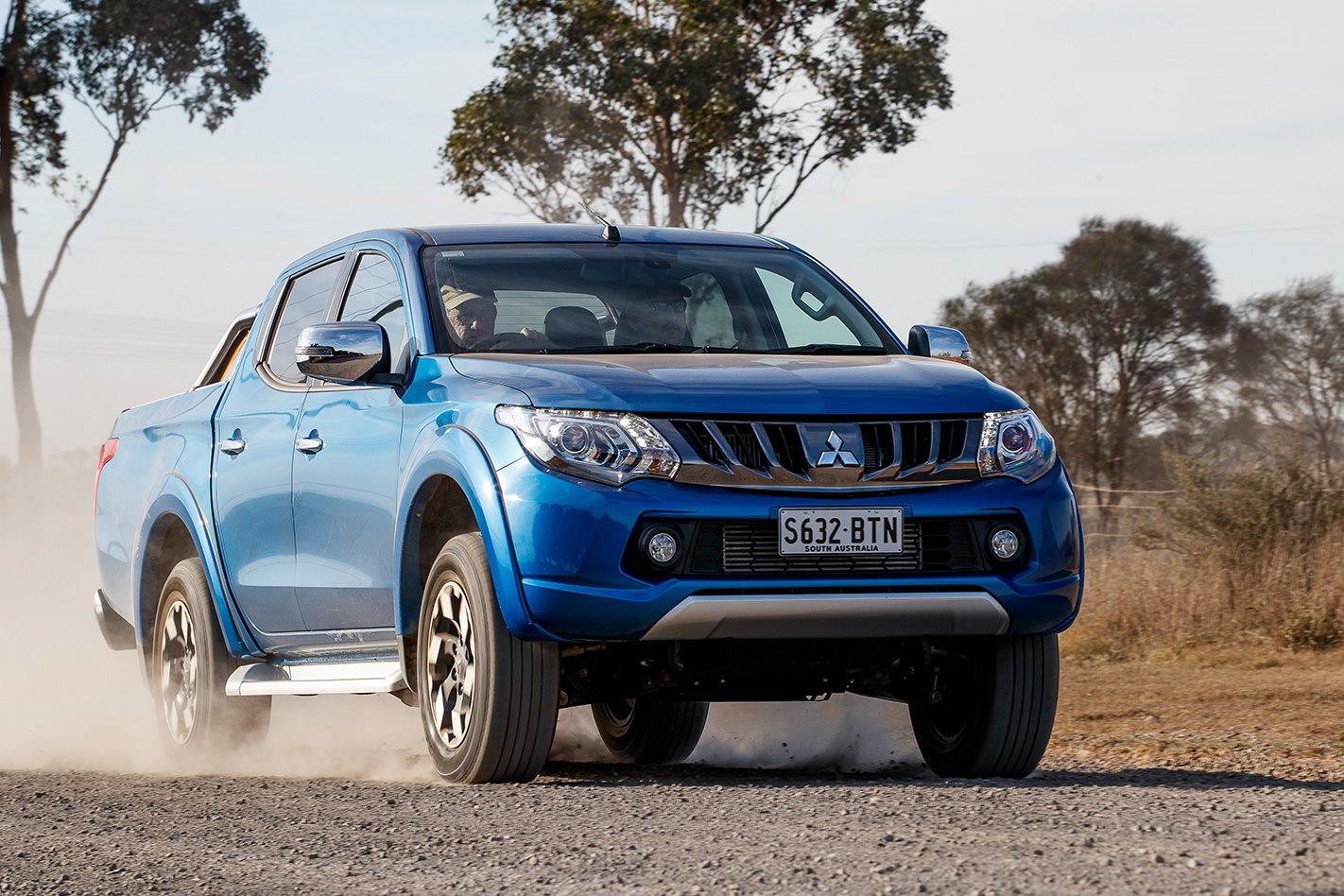
Look past the styling and even a cursory glance at the Thai-made Triton Exceed’s spec sheet will reveal several compelling truths. At $48,000 all-in, the range flagship comfortably undercuts most mid-level rivals, and then packs a wallop with sat-nav, leather, heated front seats, climate control, reverse camera, Apple CarPlay/Android Auto, DAB+ digital radio, HDMI port, paddle shifters, keyless entry/start, HID headlights, side steps and a sports bar. It’s classic more-for-less marketing.
6. Mazda BT-50
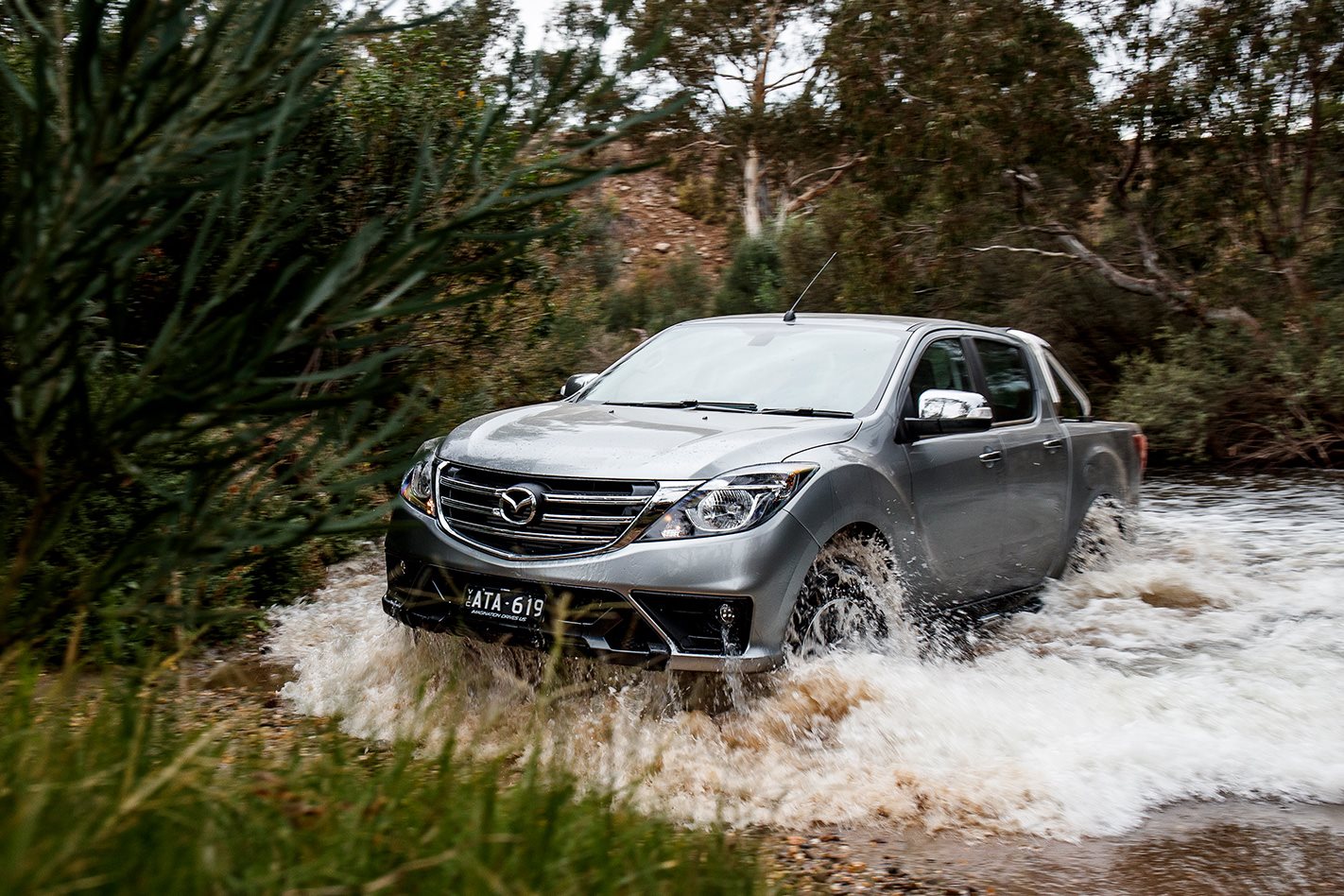
On smooth roads, the BT-50’s dynamics warrants us calling it a ‘driver’s truck’, with weighty steering and a surefooted chassis. The simple and intuitive interior is arguably the most car-like of the line-up in its design – albeit that of a decade-old Mazda – and there’s value everywhere including the ample second-row space and knee room as well as a pleasantly supportive cushion.
7. Toyota Hilux
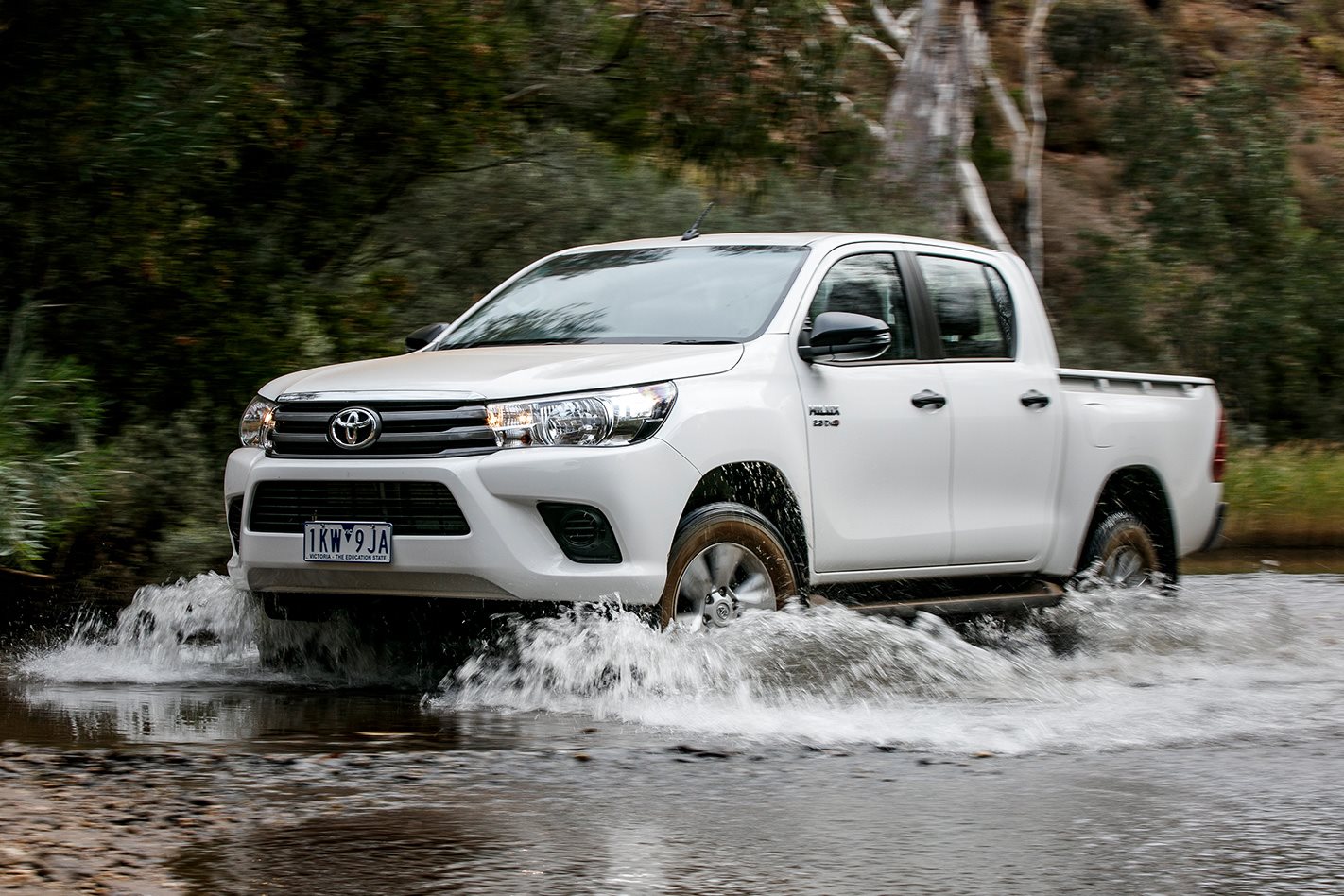
Unbreakable? Well, anecdotally, a Hilux is more unkillable than Keith Richards, and if you do have a problem somewhere remote, you will no doubt have a better chance of having it sorted in a Toyota than any other brand. Then there’s the excellent off-road ability delivered in part by its exceptional rear wheel articulation and very effective traction control. And let’s not forget the proven resale.
8. Nissan Navara
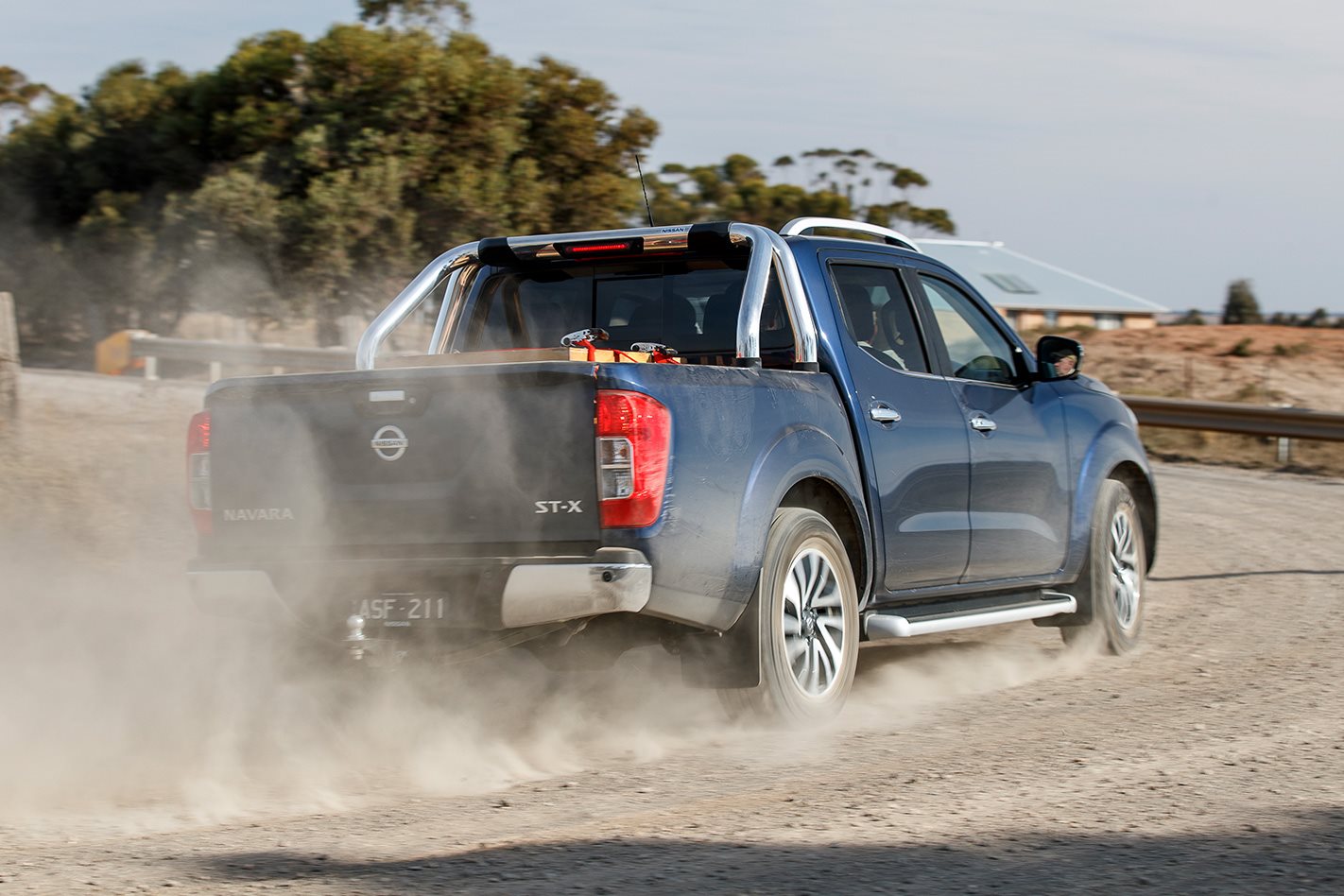
Nissan’s SUV know-how is obvious in the sheer practicality of the Navara, be it the plentiful storage, pull-out cupholders, rear-seat air vent fitment, hardy (yet not cheapo) upholstery and a powered sliding pane in the rear screen.
9. Isuzu D-Max
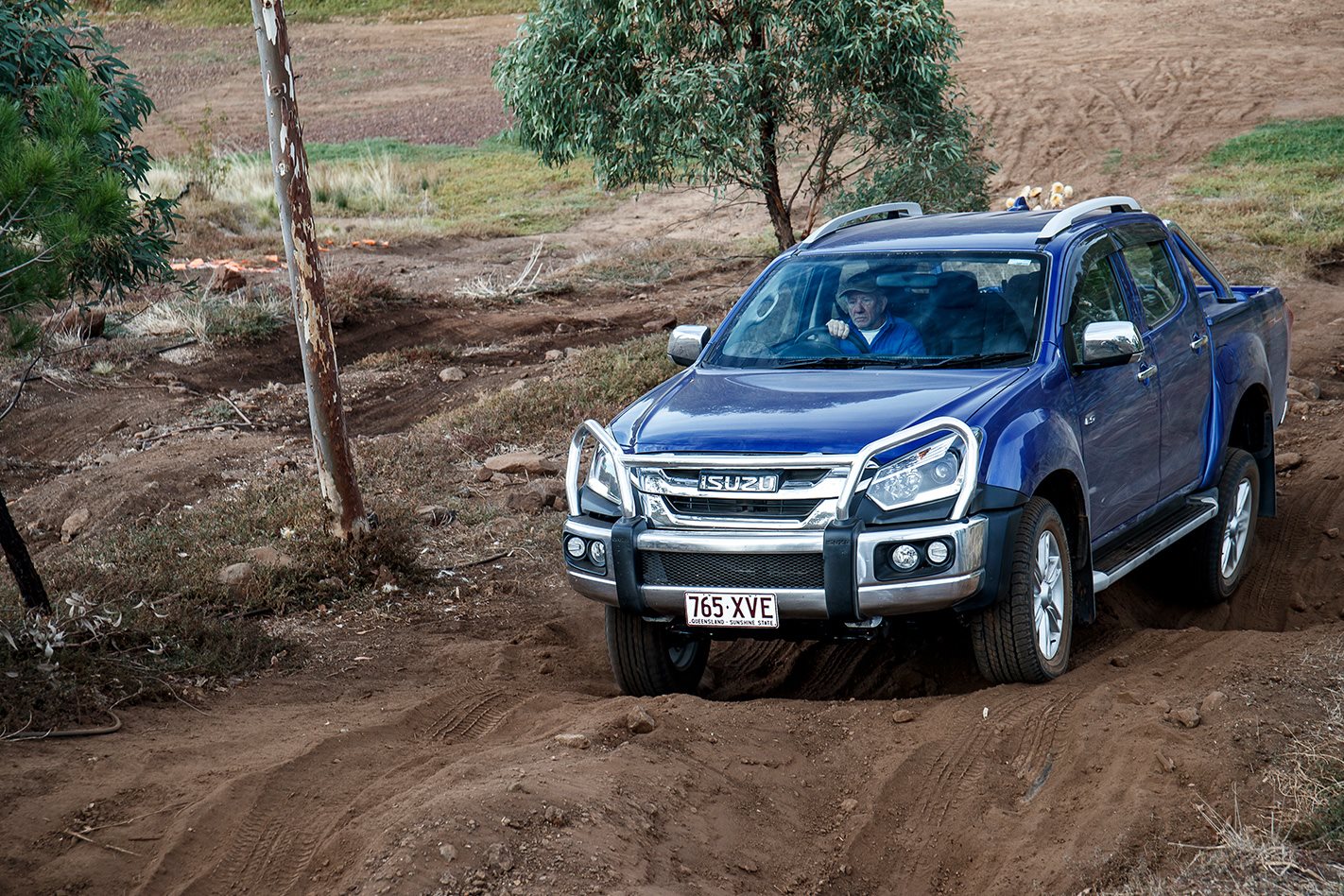
The Thai-made pick-up received a thorough makeover only last year, with a fresh face, extra gear, a stronger yet more efficient powertrain, a quieter interior and extended service intervals backed up by capped-price servicing. It’s easy to understand why sales are up 20 percent this year.
Holden’s new boss has only been in the job for four hours, his first day scheduled to be a whirlwind of dealer meetings and internal briefings.
But right now, the 64-year-old is fronting the press, our recorders thrust towards his chin, the dance of hard questions, honest answers and deflected responses about to begin. You’d forgive him for feeling apprehensive. Overwhelmed. Afraid, even. After all, there’s no escaping the reality of the situation he’s willingly walked into, or the magnitude of the (impossible?) task ahead of him.
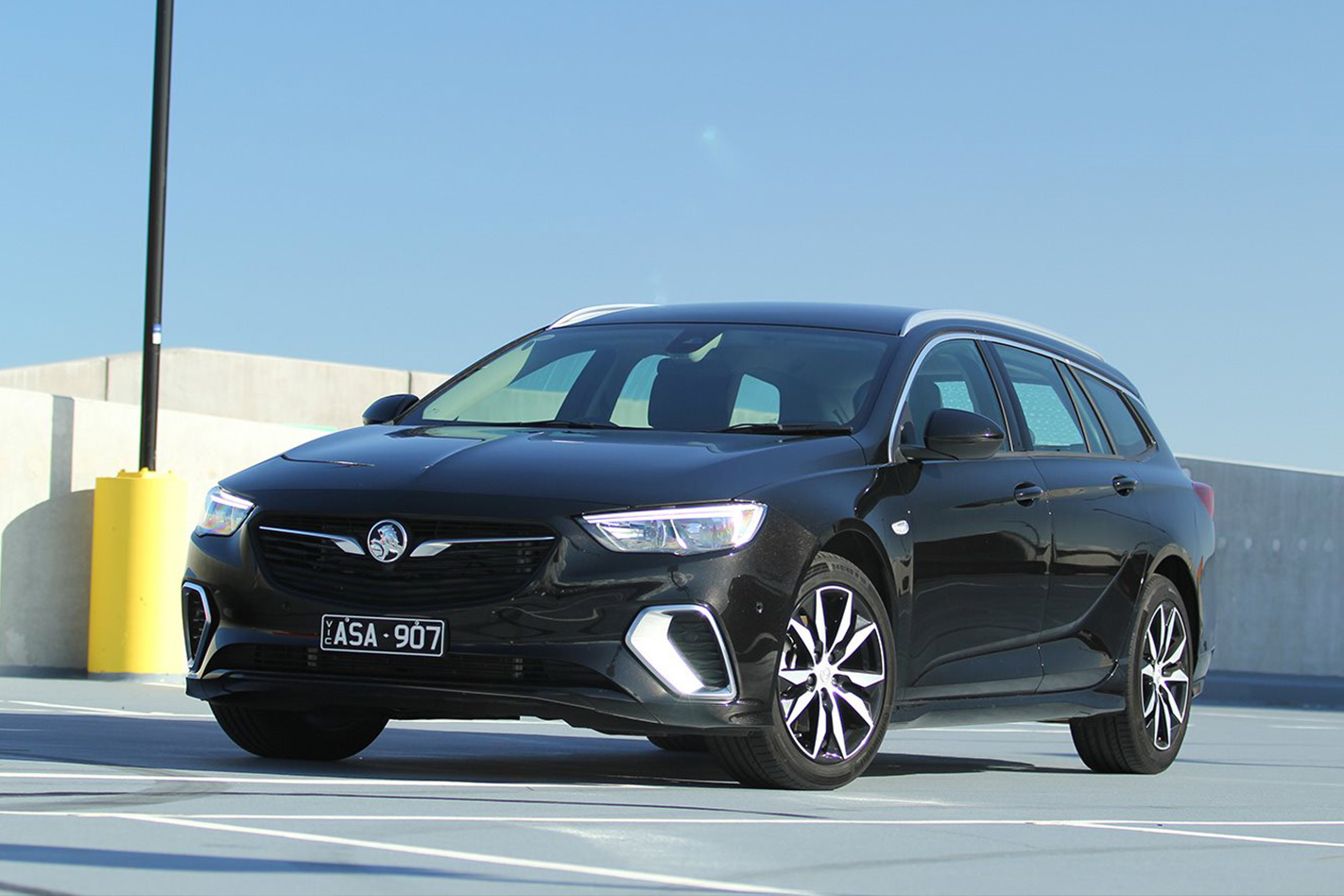
As disastrous years go, Holden’s has been a doozy. In March it recorded its worst monthly sales figure since the company’s inception in 1948, a stinging result only made worse by its July number, which at 3927, was even lower. Falls from grace don’t get much more spectacular. Holden’s market share now sits at 5.3 percent, half of what it was just five years ago, and a shadow of the glory days in the early 2000s when it lounged at 21 percent.
Even more sobering is the fact that of Holden’s entire product portfolio, only Colorado and Commodore are within the top five of their competitor set. “Surely that’s proof that Australia has fallen out of love with Holden,” argues the media scrum.
Holden’s attempt to radically redefine the brand has only compounded the problem. Strange advertising campaigns, mediocre product short on showroom appeal, and the lack of a successful long-term strategy has meant the Lion Brand hasn’t only failed in its desperate bid to reach a new, younger customer, but alienated a large portion of its loyal fan base. Buttner’s appointment is the first piece of good news in a long while; a decision that, finally, no one can take a shot at. Holden’s own PR team seems stunned, saying, eyes wide, “Wow, we got Buttner!”
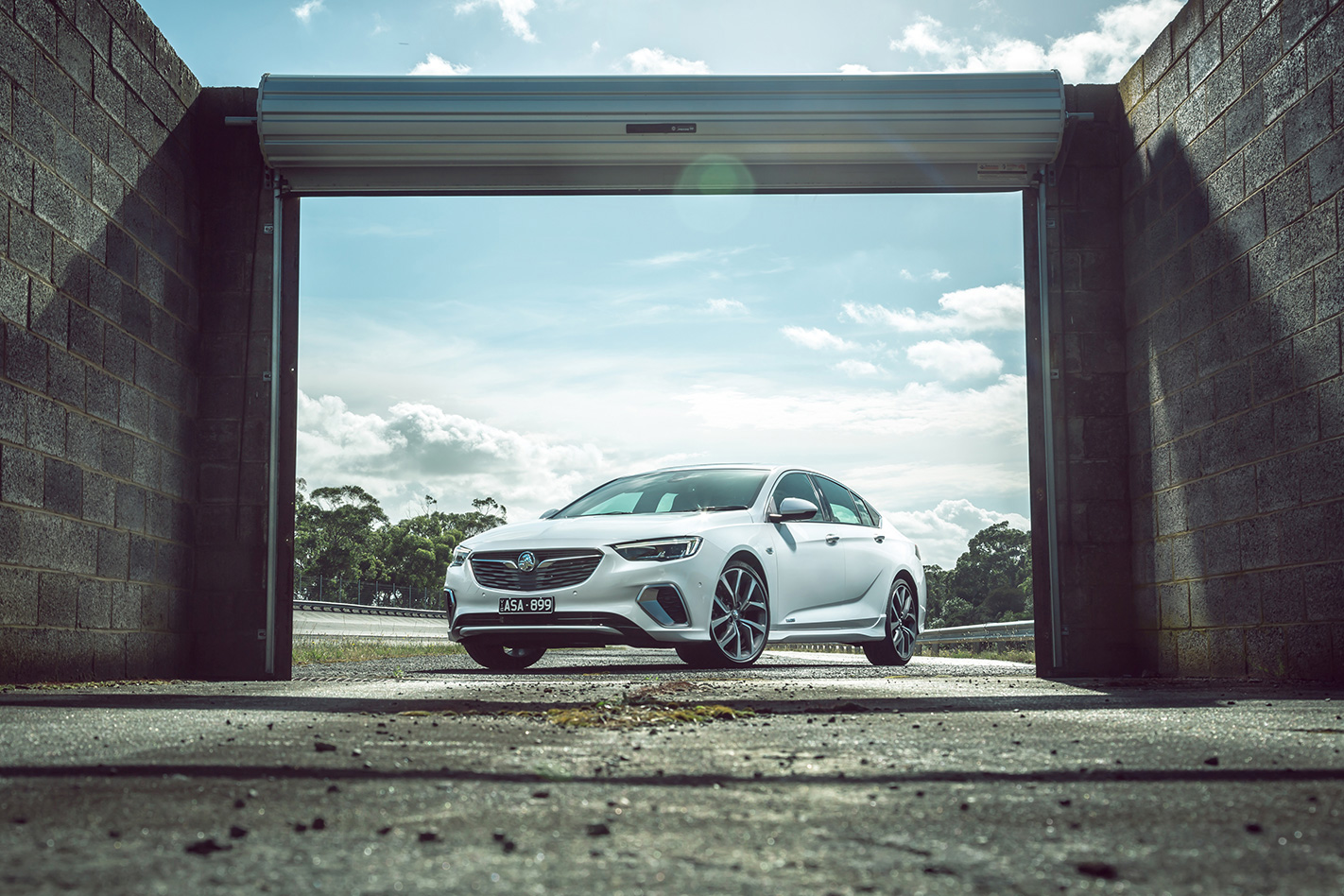
That’s a lot of pressure to place on one person, though Buttner’s track record is impressive. A former MD and 30-year veteran of Toyota (he actually retired in December 2017), Buttner is an Aussie who has risen through the ranks of Australia’s most successful car brand. He knows what’s it’s like to be number one and brings a reputation for being supremely organised, hard working and diligent. He’s no stranger to pressure either, having worked with top-level Japanese execs on the shuttering of Toyota’s Aussie manufacturing facilities all the while under intense media scrutiny.
Holden presents an altogether different challenge, however. It isn’t a company that requires managing on the way down but one in dire need of a firm, charismatic hand to push it back up. It needs a leader willing to blue with Detroit, to argue for better product, and to galvanise, and possibly rationalise, Holden’s 200-strong dealer network. Interestingly, other importers with similar market share such as Kia, Honda and Volkswagen have 134, 107 and 105 dealers respectively.
Buttner has given himself 60 days (likely 30 by the time you read this), to visit Holden’s dealers and stakeholders before he implements his plan to arrest the slide. Throughout our interview he remains unflappable, slowly and systematically outlining his desire to unify the company, to create a clear strategic direction built around Equinox and Acadia, and to reconnect with Holden’s fan base while simultaneously appealing to new customers.
He also speaks openly of his own passion for Holden (a bond fostered by his Holden-buying father) and his conviction that the brand still holds a strong connection to Australians.
I think he’s right. It may have lost its way slightly but to many people, including me, Holden still feels like Australia’s own. We want it to succeed. To turn the corner, to once again create great cars that suit our roads and tastes.
After years of turmoil, Buttner’s arrival provides the first glimmer of belief that it can.
Mercedes-Benz’s X-Class is the first vehicle from a luxury automaker to push into the increasingly popular dual-cab utility segment, and though there’s a the three-pointed star on the front, Benz’s ute is designed to be a work-ready device rather than something you’d drive to the opera.
Based on the Nissan Navara but more than just a lazy re-skin, the X250d Power we’ve got here is an upper-spec version of the four-cylinder X-Class range that provides a little more luxe while retaining plenty of tradie appeal. Scroll through the gallery above to learn more.
