
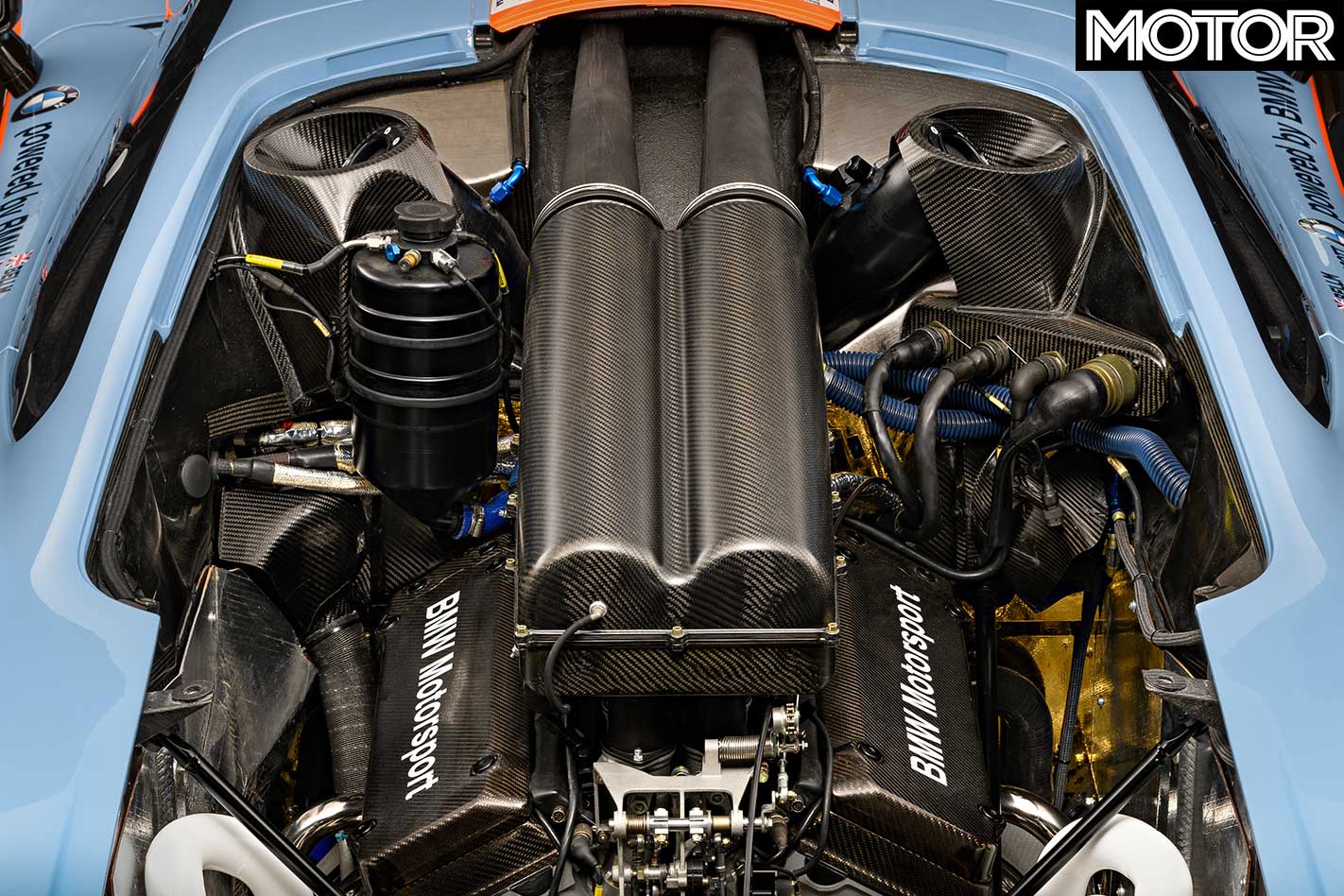
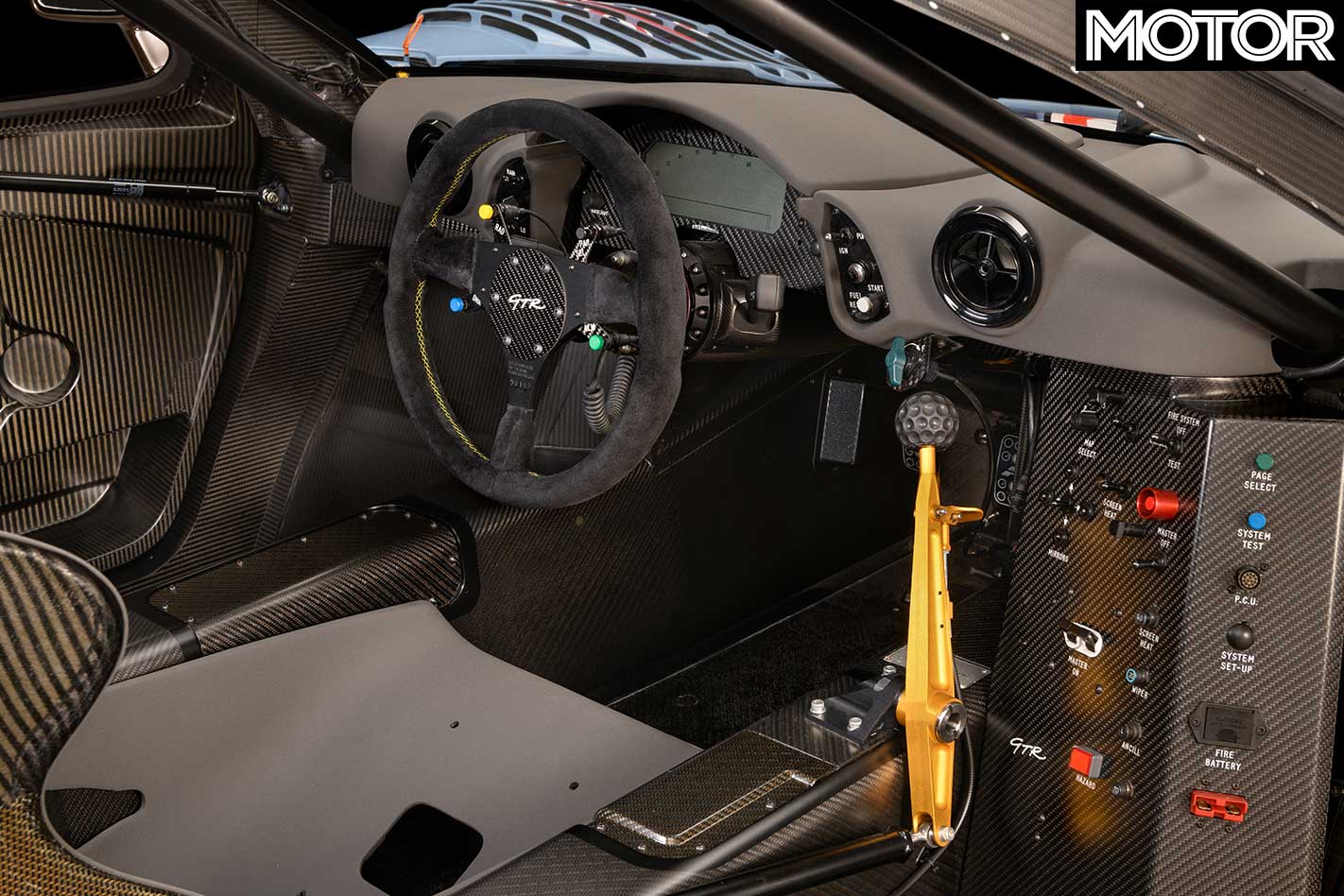
McLaren has revealed a fully restored 1997 F1 GTR Longtail which has been given the ‘F1 Certified’ treatment by McLaren Special Operations (MSO).
It is being used to herald the beginning of McLaren’s factory programme to authenticate McLaren’s F1 supercars, in the hopes of maintaining the originality of each vehicle through MSO.
Managing director of MSO Ansar Ali says the F1 GTR which was used for the first restoration is quite a special one.
“The car is the exemplar of everything that the new certification programme stands for and we are proud to have ‘25R’ as the very first McLaren F1 Certified car.”
The ‘25R’ Longtail is on with a fairly high-end racing career, having competed for the Gulf-Davidoff (thus the livery) in GT racing and at Le Mans in 1997.
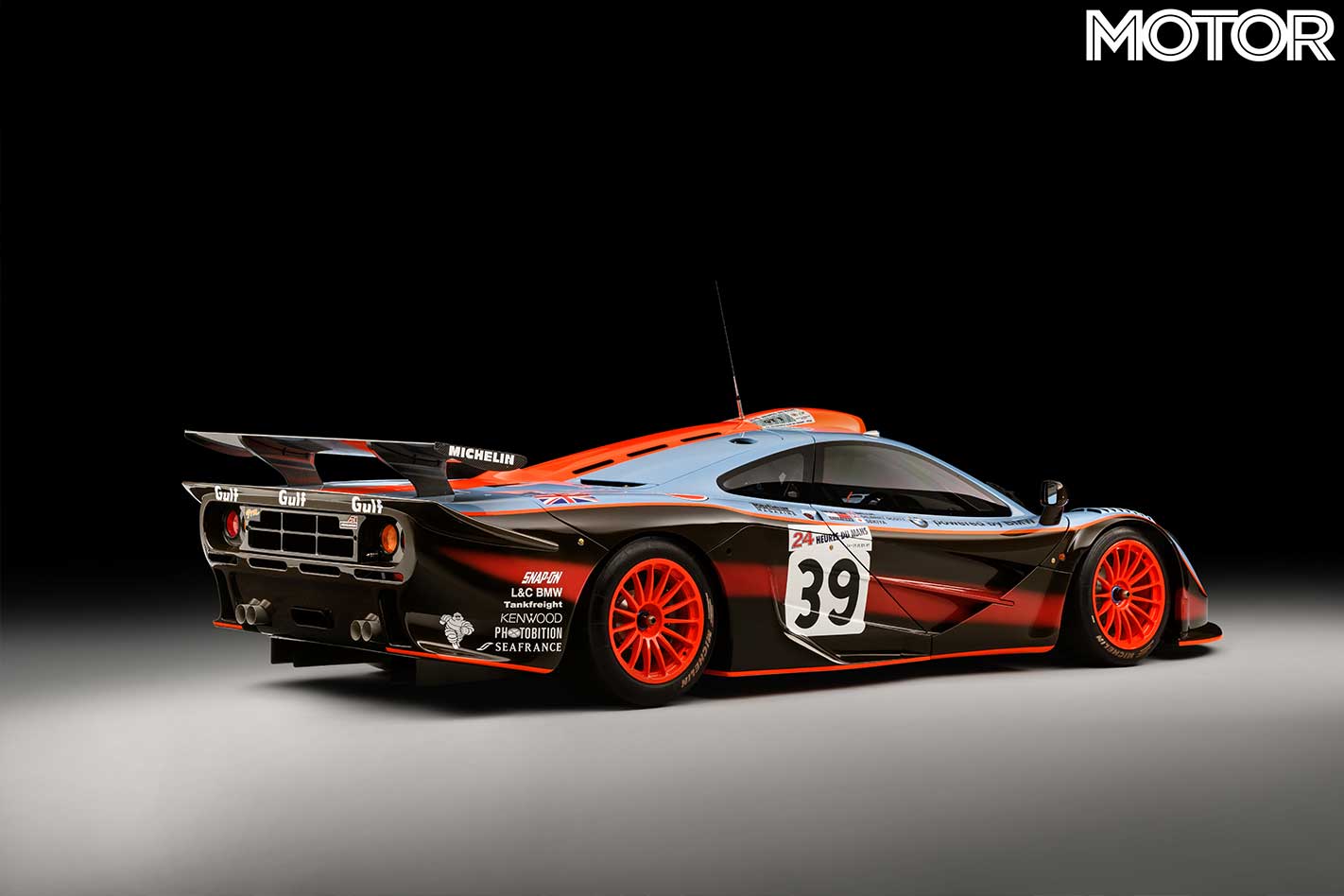
It caught fire during the endurance race that year, but was repaired and sold to a team in Japan where it raced until 2005.
McLaren says it was the last F1 GTR ever to compete in a contemporary race series after a race at Fuji Speedway.
McLaren Automotive CEO Mike Flewitt says 25R was a perfect opportunity to show off what MSO is capable of in terms of restoration.
“McLaren cherishes its rich heritage of iconic and world-beating cars such as the F1,” says Flewitt.
“’25R’ presented us with a unique opportunity to demonstrate this by restoring it to precisely how it was when it raced at Le Mans in 1997, thus ensuring its future.
“Maintaining the integrity of these historically significant cars is paramount and F1 Certified will play a big role in allowing us to do that for the peace of mind of owners today as well as preserving a wonderful heritage for future generations of car lovers.”
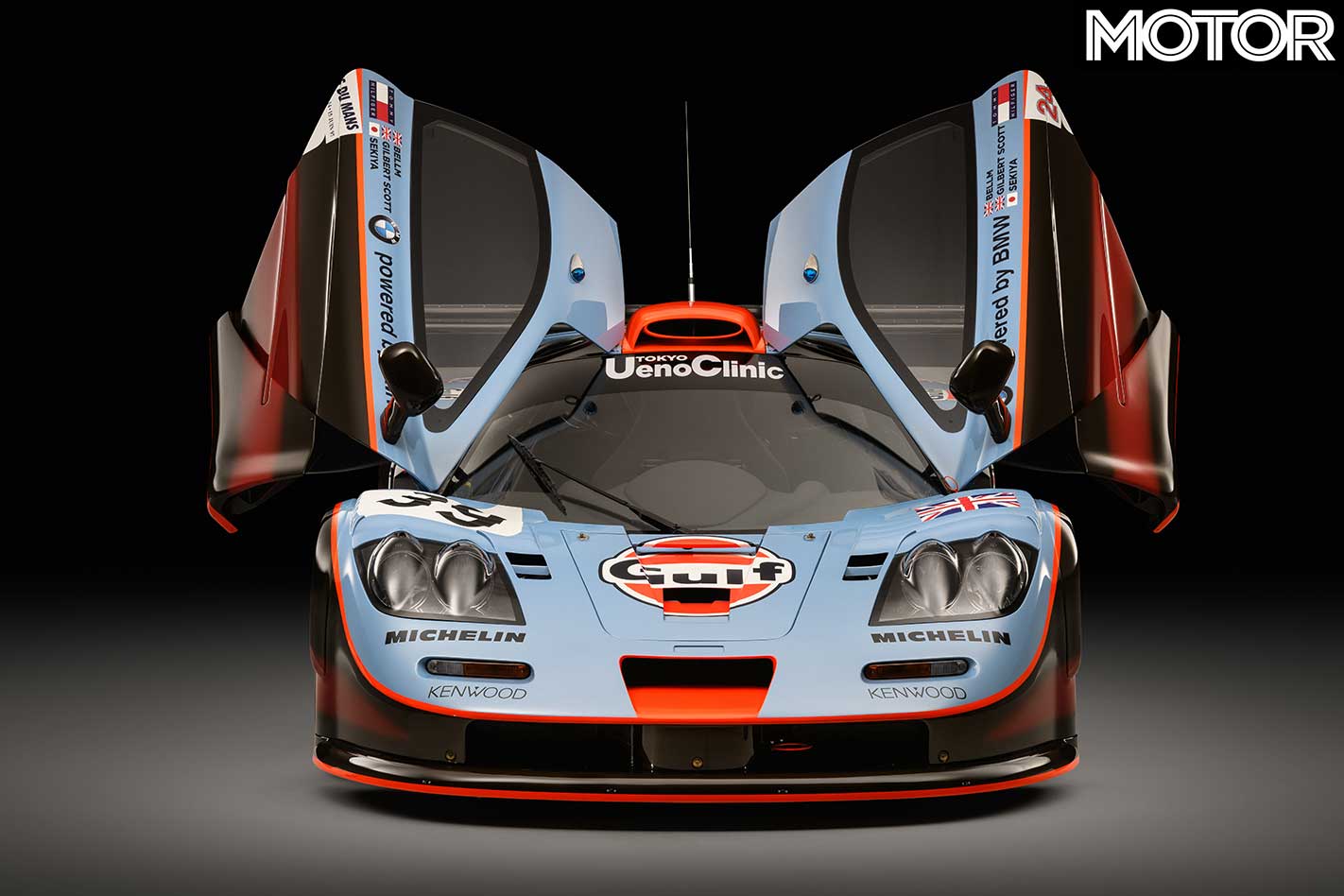
All the parts used in the restoration for this car are from pre-June 1997, meaning it’s in the same condition it would have been leading up to Le Mans that year, while the only non-McLaren part in the car is the blue roof light which was added to the car or the race.
Every one of the surviving McLaren F1s built between 1993 and 1998 (64 road cars and 28 GTR race cars) is eligible for the MSO F1 Certification program.
Porsche is synonymous with circuit racing success, most notably its 19 wins at the Le Mans 24 Hour.
It’s no stranger to winning on other surfaces, though, and recently confirmed its commitment to off-road pursuits with the release of the Porsche Cayman GT4 Clubsport rally car concept, pictured above, which performed safety car duties at this year’s Rally Germany.
In tribute, let’s count down Porsche’s five best rally cars.
5. Porsche 924 Carrera GT
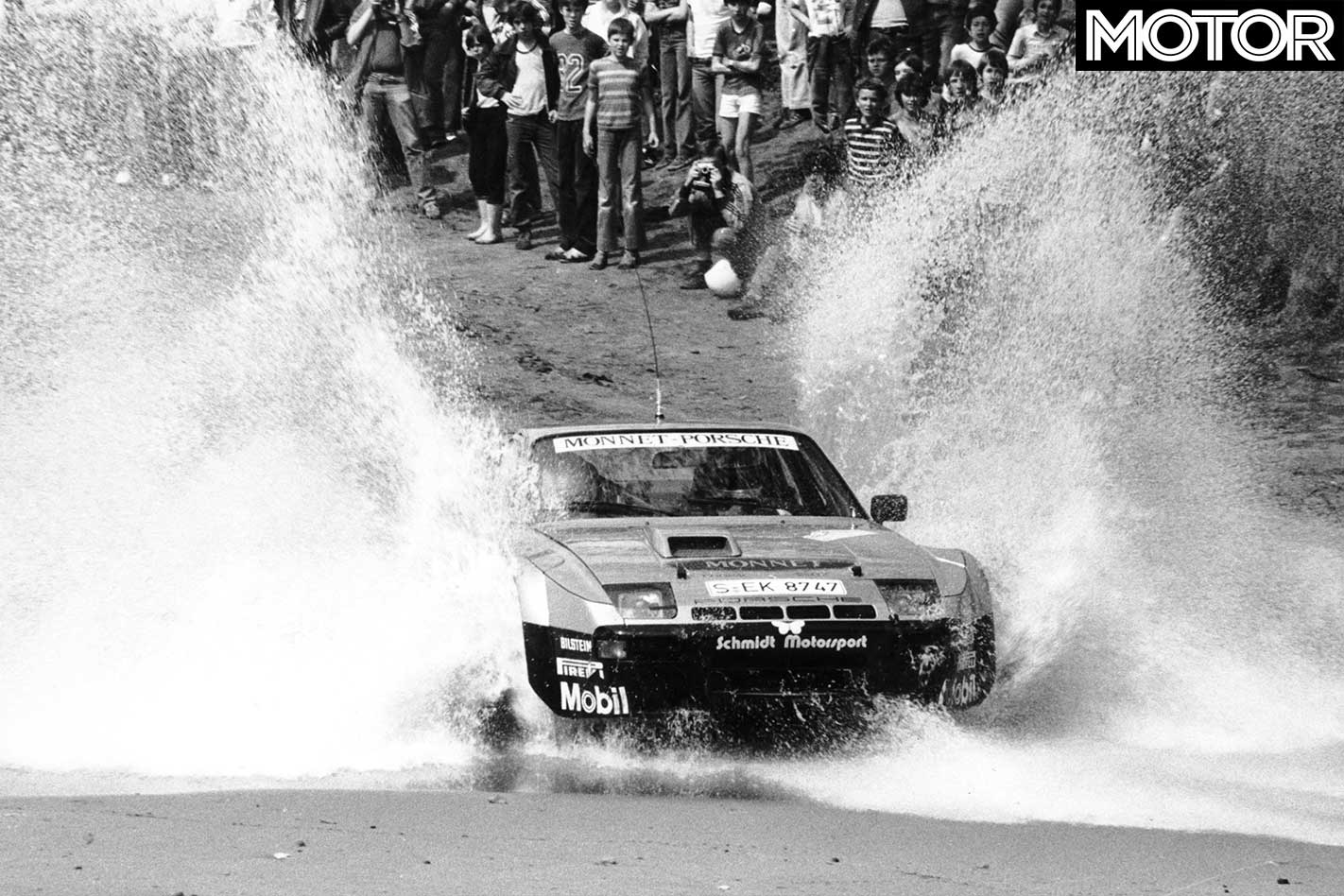
In 1980 Walter Rohrl won the World Rally Championship and immediately signed with Mercedes to spearhead its WRC campaign. Learning it was not going to be competitive, Mercedes cancelled the program, leaving the reigning world champion unemployed.
Porsche stepped in and Rohrl drove a number of German national championship rallies with a 924 Carrera GTS, a turbocharged homologation special of Porsche’s entry-level sports car.
4. 1978 Porsche 911 SC 3.0
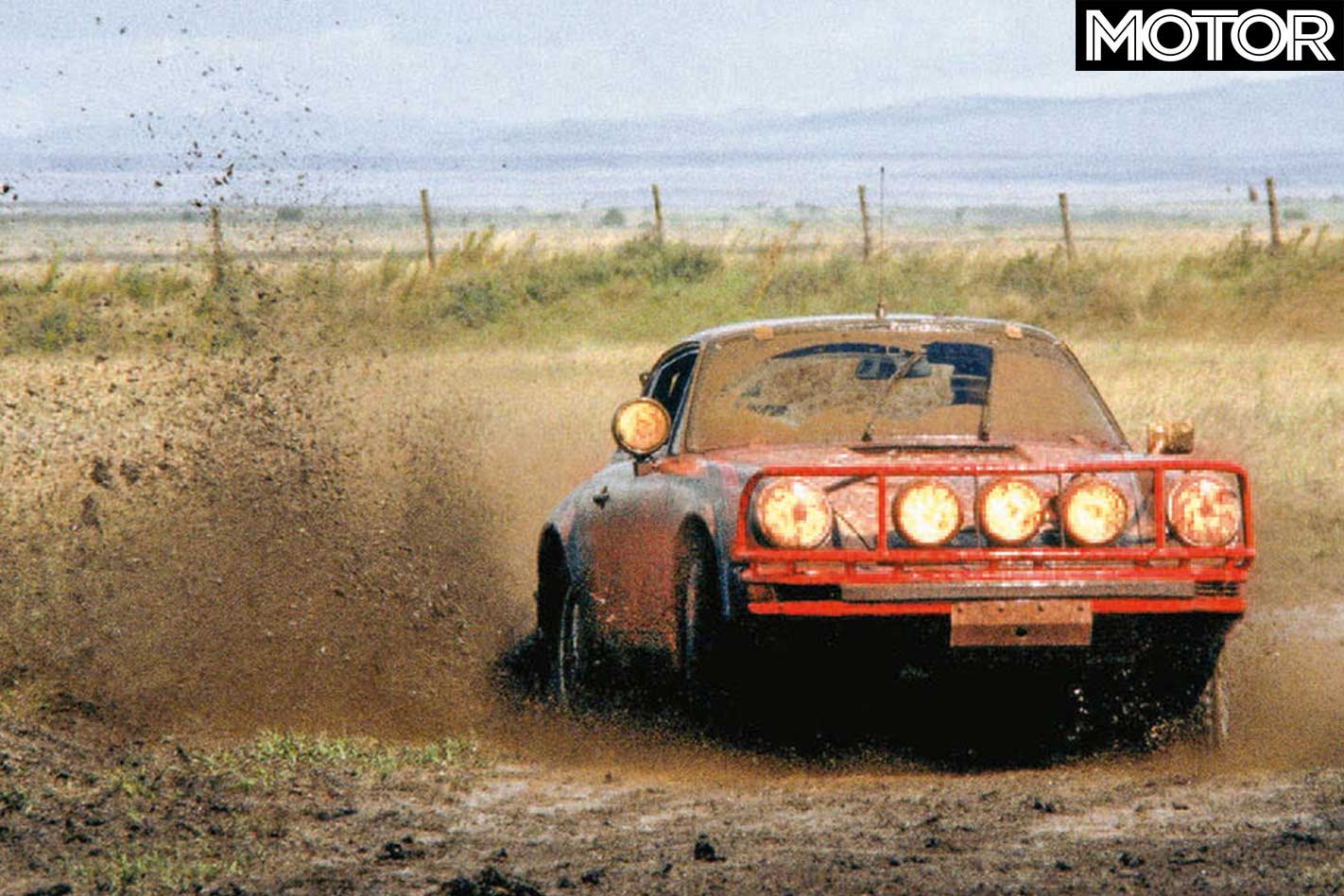
Porsche tasted success early in 1978, Jean-Pierre Nicolas winning the Monte Carlo Rally in a privately-entered 911. Meanwhile, the factory team had its sights set on the gruelling Safari Rally, held over 5000km of brutal East African terrain.
Two 911 SC 3.0s received lifted suspension for 28cm of ground clearance, a reinforced bodyshell, underbody protection, a 110-litre fuel tank, 16-litre water tank and 20-litre oil tank. Sadly, the best they can do is second and fourth, a Peugeot 504 taking victory in the hands of – guess who? – Jean-Pierre Nicolas.
3. 1981 Porsche 911 SC 3.0
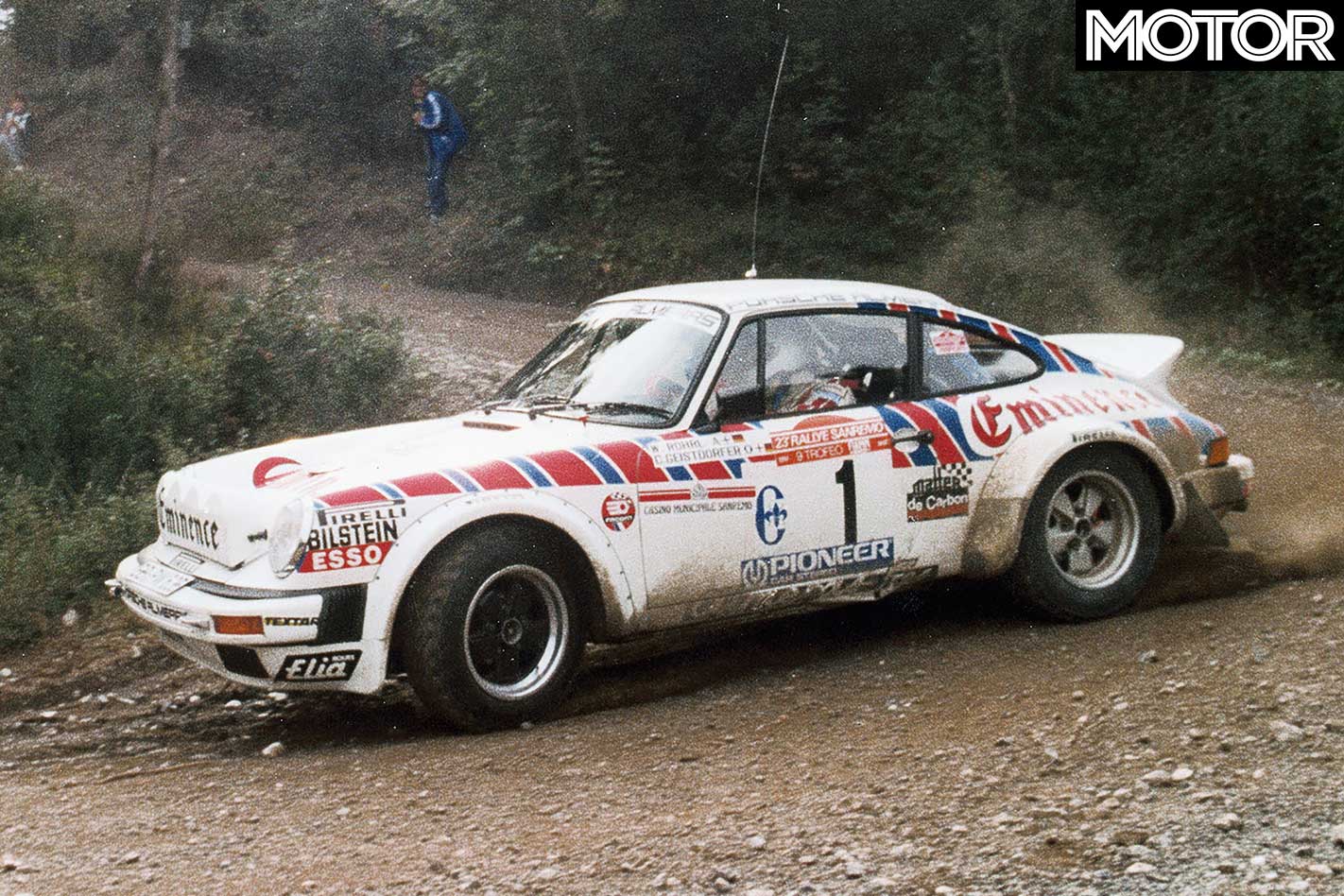
Walter Rohrl’s Porsche outings in 1981 gave him an idea: would it be possible to beat the all-conquering, all-wheel drive Audi Quattros in a two-wheel drive car? A 911 SC 3.0 was prepared for the mixed-surface (gravel and tarmac) San Remo Rally.
Rohrl led after the early tarmac stages but the Audi’s traction advantage took over on gravel. Nonethless, the 911 didn’t lose as much time as expected but sadly a final charge never eventuated as a broken driveshaft forced retirement. Rohrl rated the breakdown as the most disappointing in his whole career, but would drive the car 30 years later at Targa Tasmania.
2. Porsche 959 Dakar
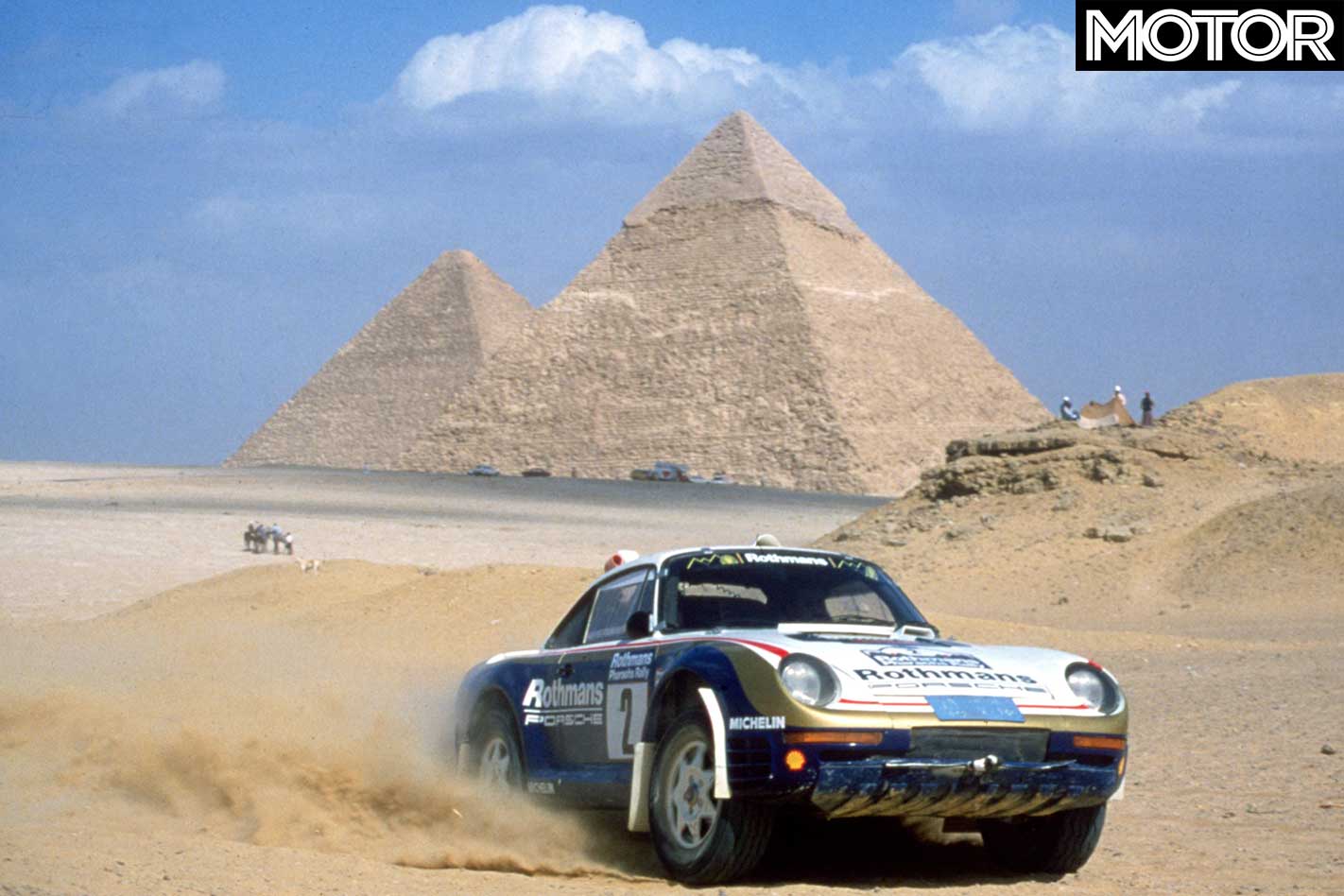
With the cancellation of the Group B racing regulations, which had been the intended home of Porsche’s new 959 supercar, the company turned to endurance rallying to prove the talents of its high-tech wunderkind.
Porsche had won the 1984 Paris-Dakar in a 911 RS/SC 4×4, but after an extensive 1985 test program, including victory in the Rallye des Pharaons (pictured), two 959s were entered in the 1986 Paris-Dakar, Rene Metge (also winner in 1984) securing victory ahead of Jacky Ickx.
1. Porsche 911 S 2.0
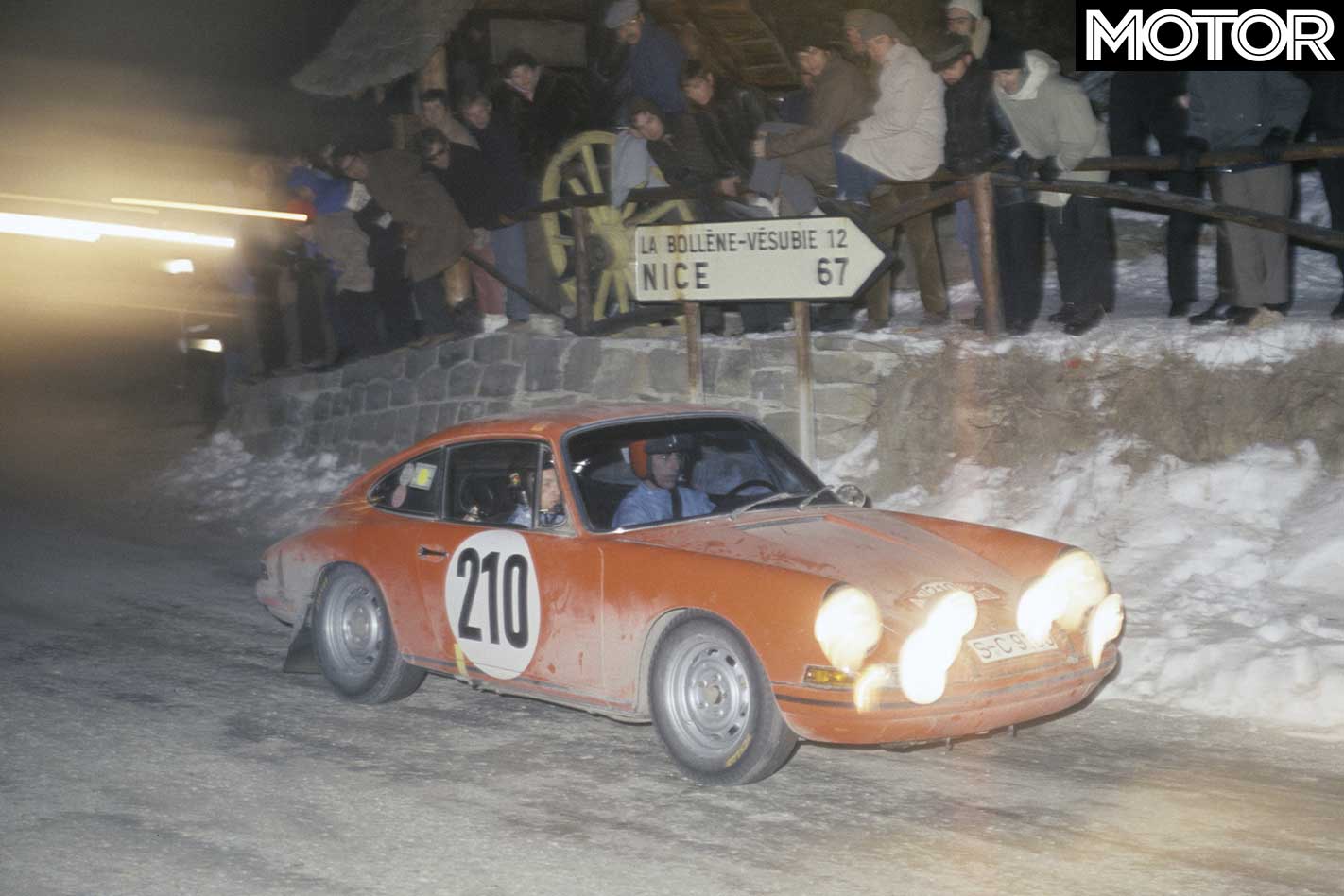
Porsche first entered the Monte Carlo Rally in 1965, but it would be 1968 before it took victory, sports car ace Vic Elford winning ahead of teammate Pauli Toivonen (father of Group B legend Henri), both driving 911 S 2.0s.
It was the beginning of a Monte 1-2 hat-trick, Bjorn Waldegard, who would go on to become the first ever World Rally Champion in 1979, winning in 1969 and 1970 ahead of Gerard Larrousse. The result proved that this sports car could conquer the rough-and-tumble world of rallying.
LEWIS Hamilton was calculated and determined on his way to victory at the Italian Grand Prix, clashing with fellow title rival Sebastian Vettel on the first lap of the race.
Ferrari’s rabid fans turned out at Monza in force, and were rewarded on Saturday when Kimi Raikkonen became the fastest man in F1 history to score pole, while Vettel made it an all-Maranello front row.
The Finnish driver held onto the lead into the first corner of the race with a clinical start. Vettel slotted into second, but Hamilton got a handy slip stream exiting Curva Grande and made a move around the outside of the German heading into the next chicane.
Vettel’s Ferrari understeered into the side of the Mercedes-AMG, sending him into a spin, and down the running order.
Meanwhile, Brendon Hartley was the meat in the sandwich between Stoffel Vandoorne and Marcus Ericsson heading to the first corner, with the Kiwi’s front right tyre being ripped from the rim in the process, prompting a safety car.
At the restart Raikkonen couldn’t stop Hamilton’s slip stream advantage heading to the first turn, but the Briton didn’t lead for long, with the Ice Man sliding back into the lead after Curva Grande.
It was another tough night for Australian F1 fans, with Daniel Ricciardo started dead last on the grid following a series of engine upgrades.
The Aussie was starting to make his way through the field when his new ‘C-Spec’ Renault engine gave up the ghost, forcing a mechanical retirement. The stoppage is Ricciardo’s fourth DNF in six races.
Mercedes-AMG and Ferrari’s pit crews began a game of cat and mouse, attempting to bluff the other into pitting. Eventually Ferrari bit the bullet, bringing Raikkonen in from the lead of the race for fresh tyres.
Hamilton put in a number of scintillating laps in an attempt to gain an advantage, but it was to no avail, with the Finnish driver retaining first place after the Mercedes-AMG driver pitted.
Valtteri Bottas and Max Verstappen had been battling for much of the race, before Mercedes kept the Finnish driver out for an extended first stint. While the move put Bottas behind Verstappen on corrected order, it allowed the Mercedes driver to hold up Raikkonen, and back the Ferrari driver into Hamilton’s grasp.
Once Bottas pitted Raikkonen did well to lead for a handful of laps, but his tyres were blistering and Hamilton soon pounced heading into the first turn.
Hamilton didn’t miss, overtaking Raikkonen cleaning, before disappearing into the distance.
Behind the leading duo, Bottas clawed his way back underneath Verstappen’s rear wing, attempting a number of passes on the Dutch youngster.
The pair came to blows during one such attempt, with the Red Bull driver squeezing Bottas onto the grass. The move earned Verstappen a 5 second post-race penalty, and despite crossing the line in third, fell to fifth in corrected final standings. Bottas scored the final podium position.
Despite his first-lap spin, extra pitstop, and damaged car, Vettel still managed to charge through the field to cross the line in fifth, 40 seconds ahead of Romain Grosjean. The Ferrari driver was elevated to fourth following Verstappen’s penalty. It was the first time Vettel has been off the podium at Monza since joining the Maranello team.
The final lap marked 215 grand prix laps in total led by Hamilton at Monza, who now and equals Schumacher’s record of five victories at the Temple of Speed. By finishing second, Raikkonen now has a century of podium finishes in F1.
Hamilton now leads the drivers’ championship by 30 points, while Mercedes-AMG has 415 constructors’ championship points to Ferrari’s 390.
We certainly don’t blame shoppers for gravitating toward the status quo. After all, if the bulk of the country’s car buyers favour a certain vehicle, then it surely must be a good thing, right?
However there’s still value in casting your net a little wider. Do so, and you might find yourself with something with a little more polish for not a lot more cost.
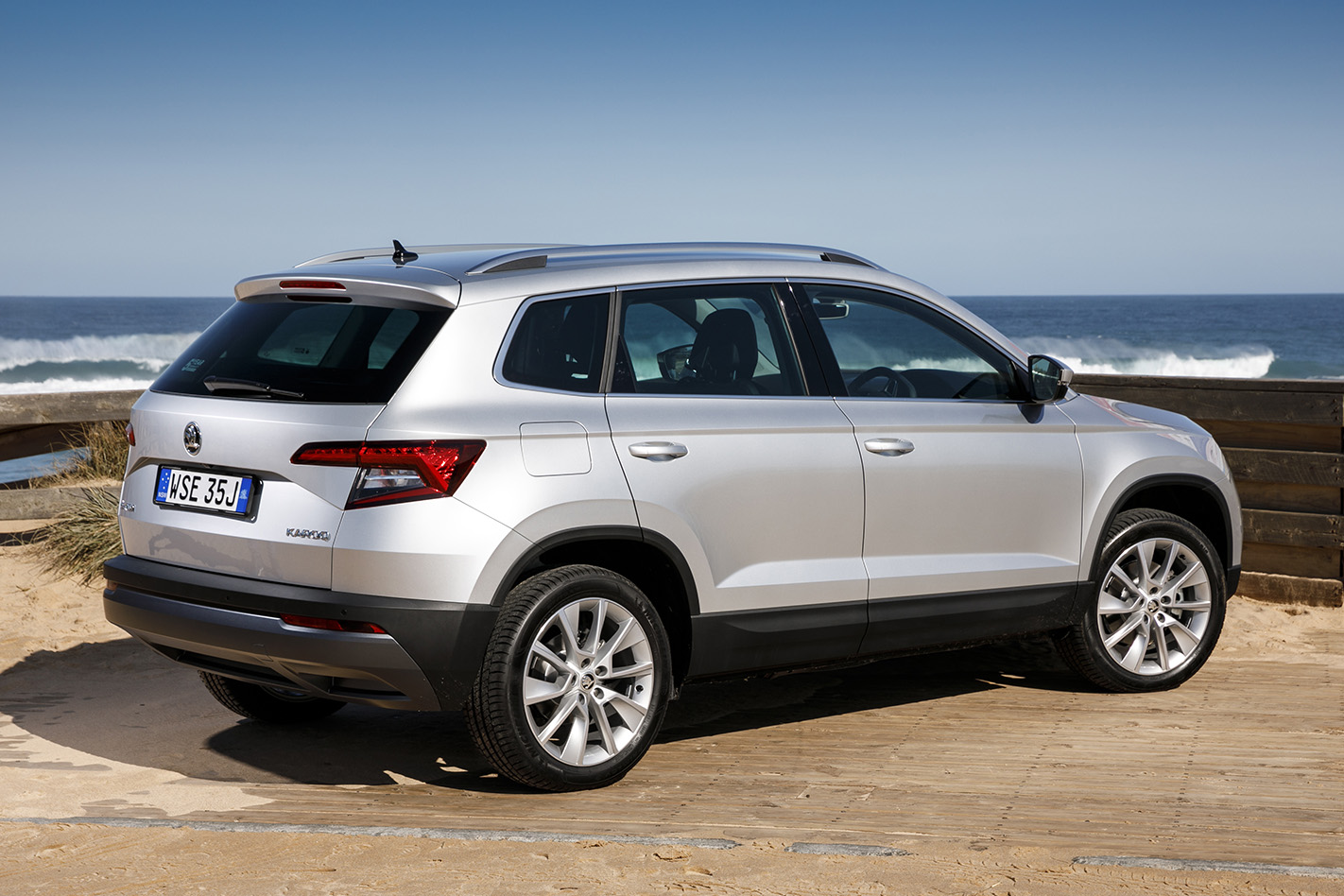
Case in point: the newly-arrived Skoda Karoq and the still-fresh Peugeot 3008 Active. As European options in a medium SUV segment that’s largely dominated by Korean and Japanese manufacturers, the Czech-built Skoda and French-built Peugeot are often overlooked, but with the former retailing at $32,290 and the latter starting at $36,990 they’re nevertheless compelling value against a large number of mid-to-high-spec Asian competitors.
We threw them against each other in a battle of the mid-SUV wildcards to see which high-riding European wagon makes the stronger case.
VALUE
The Karoq range opens under $30K, however that attention-getting $29,990 price-tag is attached to the six-speed manual, not the automatic-equipped model that most buy. Opt for the auto and the price of entry rises to $32,290.
The Karoq is only available in one grade for now, but you’ll need to tick a couple of option boxes. One is the $1700 Travel Pack to add blind spot monitoring, lane departure warning, rear cross traffic alert, a powered driver’s seat and heated front seats. The other is the $3600 Premium Pack, which brings leather upholstery, nice-looking 18-inch alloys, LED headlamps, front and rear parking sensors and a powered tailgate. Our test car was equipped with both, plus metallic paint, which brought the total retail price to $38,290.
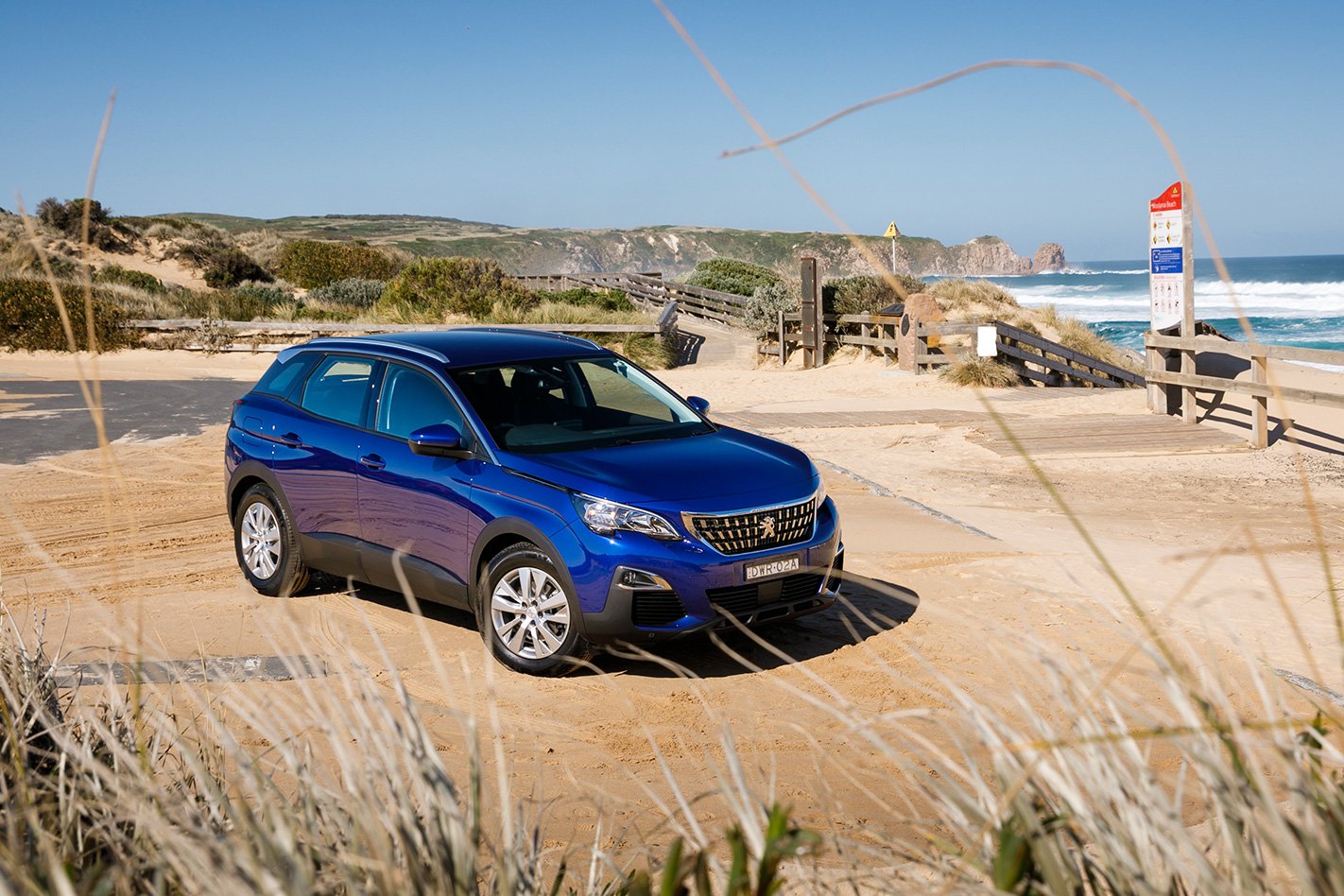
The Peugeot 3008 Active is better equipped as standard, so there’s less need to reach for the option sheet. Its base price is higher as a result – $36,990 for the Active – but remember that’s for a well-equipped auto-only. With the additional cost of metallic paint, the as-tested of our 3008 came to $38,180. With just $110 between the two when specced to a very similar level, the Czech-built Skoda and French-built 3008 are astonishingly close in price.
As far as fuel consumption goes, the Peugeot burned 9.2L/100km during our testing while the Karoq consumed 9.6L/100km. After-sales care is an identical 5 years/unlimited kilometres of warranty for both, and servicing intervals are set at 12 months/20,000km for the Peugeot and 12 months/15,000km for the Skoda. That difference is moot for most Australians, with our average annual usage amounts to 14,000km.
While the Peugeot would appear to have an advantage here, that’s eroded by high scheduled servicing costs. Prices alternate between $466 and $789 for the 3008 Active 1.6 petrol, while the Skoda’s services range between $288 and $583 depending on where you are in the servicing schedule.
STANDARD FEATURES
The fairest comparison is only possible by optioning the Karoq to the level described above, but when you do the question of “which is better equipped” largely comes down to which features you value more than others. The Karoq boasts a powered tailgate and 18-inch wheels thanks to the aforementioned Premium Pack, features that aren’t on the Peugeot 3008 Active, but the Peugeot counters with standard-issue integrated satellite navigation and a wireless phone charging pad.
Active cruise control is standard on all Karoq models, however, and ‘surprise and delight’ features are more abundant on the Skoda too, things like an integrated umbrella compartment under the front seat, a removable LED torch in the boot area and a pair of tablet holders to help keep backseat travellers entertained. They don’t necessarily make the Skoda a better car to drive, but they certainly make it a more liveable vehicle.
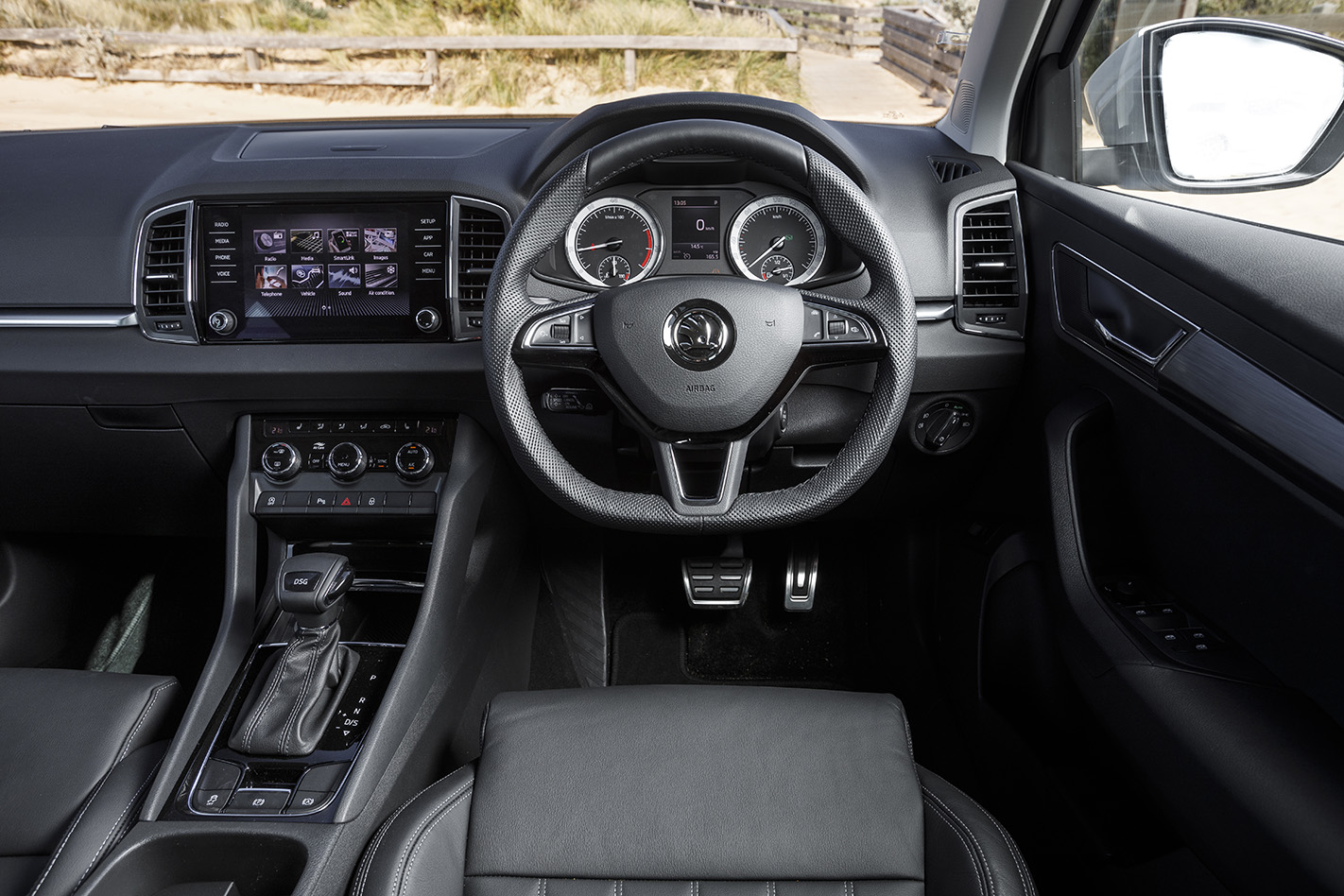
And while Skoda doesn’t make satellite navigation standard-fit on the Karoq, it has at least brought smartphone mirroring functionality to the car’s otherwise superb 8-inch colour infotainment display. Peugeot’s touchscreen is a decent bit of gear, but if you can live with plugging your smartphone into the Skoda whenever you need to navigate somewhere we’d give the Czech the nod for this round.
SIZE
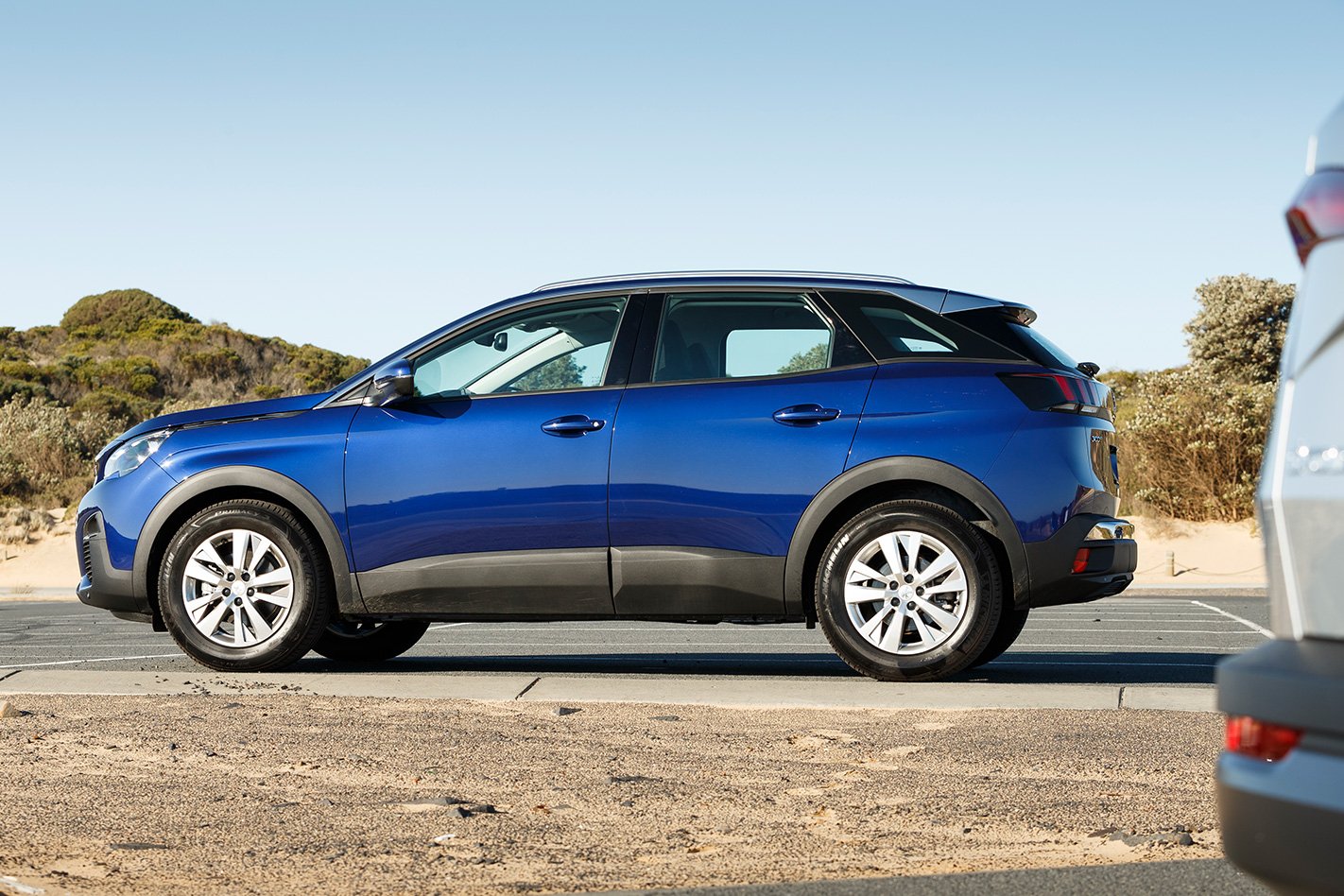
Both are similarly sized, with the Peugeot occupying a 4447mm long and 1826mm wide footprint and the Karoq measuring 4382mm in length and 1841mm in width. Both are five-seat wagons too, so the differences are in the details. The Skoda feels more spacious thanks to a more generous glasshouse that lets in more light, and it has a cool party trick that allows it to make better use of its size.
With the rear seats in place the Karoq’s cargo capacity measures 479 litres, expanding to 1605 litres with the backrests lowered, which puts it behind the 3008’s 591-1605 litre measurements. However the second row of seating not only folds forward to expand cargo space, it can be removed entirely to transform the Karoq into a two-seater van with a huge 1810 litres of stowage.
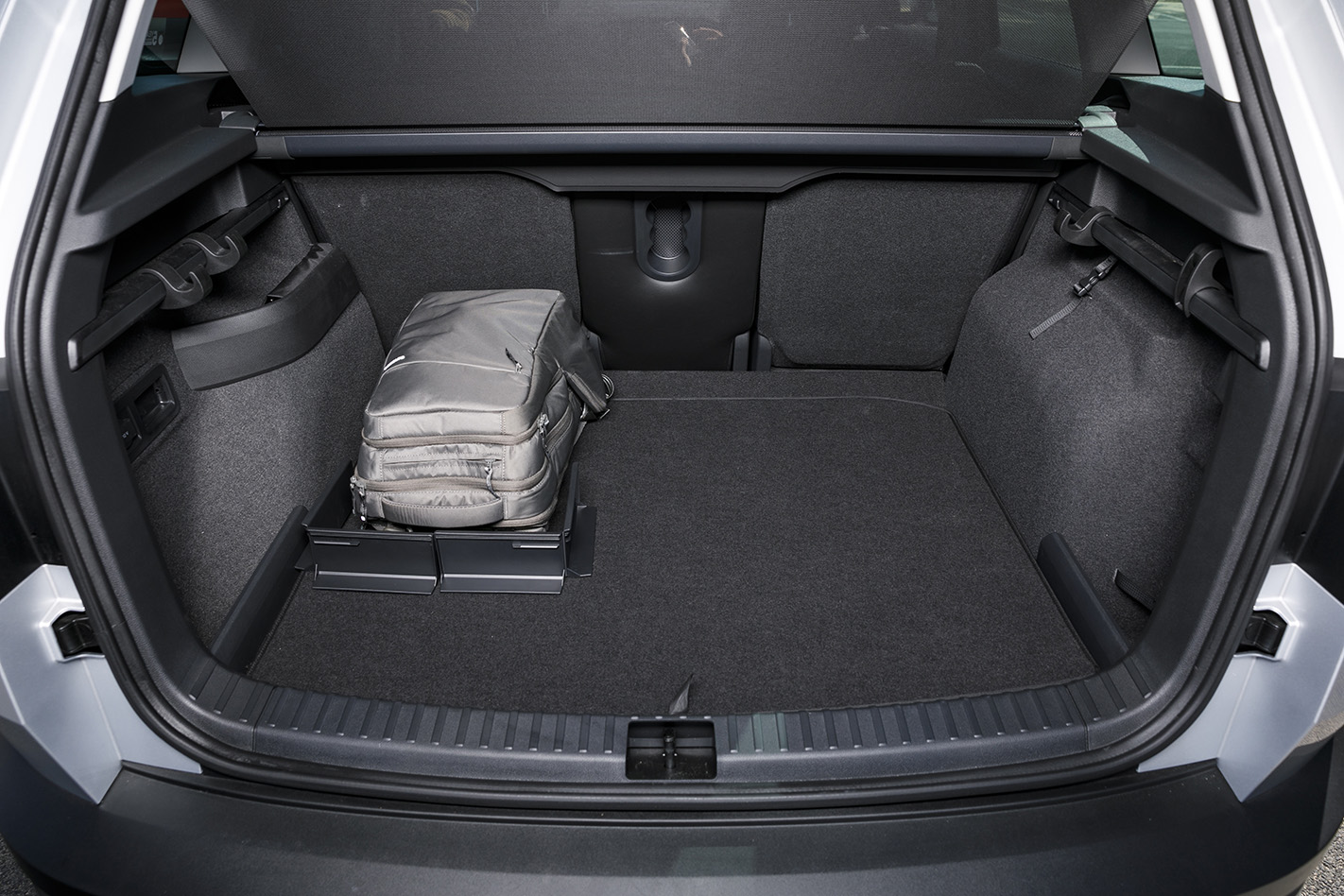
The storage options are further boosted by a pair of sturdy rails either side of the load area that allows extra shopping bag hooks to be clipped on, and a pair of removable velcro brackets keep even small backpacks secure in the boot. For its sheer versatility, the Skoda scores highly.
SAFETY
Both cars cater to the safety-conscious, with autonomous emergency braking, stability control, traction control, ISOFIX child seat anchorages fitted across their ranges as standard.
The Skoda boasts an extra airbag (for the driver’s knees) to take its total to seven while the Peugeot makes do with six. The Skoda has yet to be rated by independent crash test authority ANCAP. The 3008 has been awarded a five-star crash safety rating by ANCAP.
COMFORT
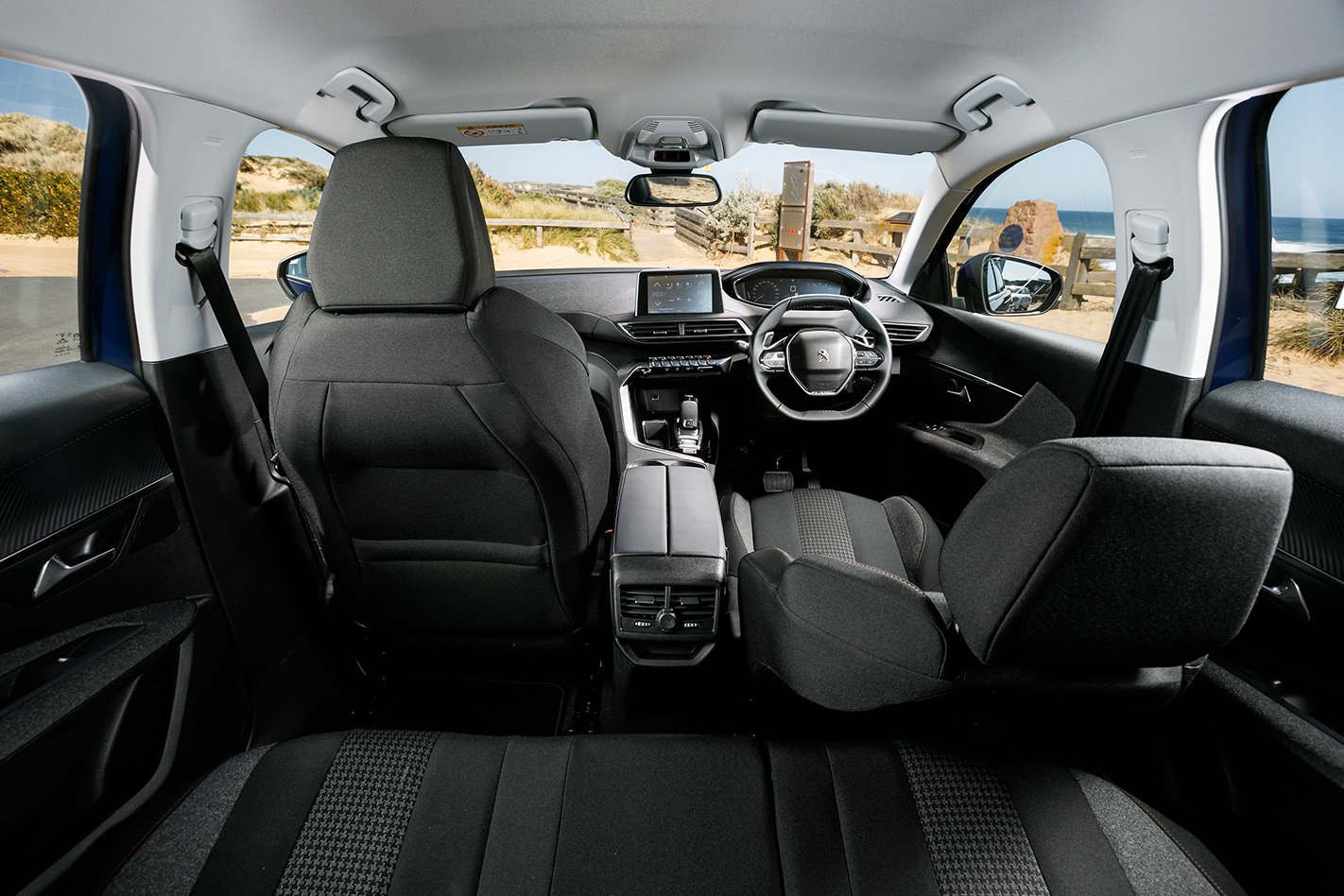
The Peugeot edges ahead of the Skoda thanks to slightly more supportive seat cushions in the front and rear, along with greater legroom for backseat passengers. There’s also the profound difference in cabin ambience to consider. Both feel like they’ve been bolted together with plenty of love and care, so build quality is line-ball, but it’s the Peugeot that impresses most thanks to its breathtaking cabin design that looks and feels far more premium than the Skoda’s handsome – yet very sober – interior treatment.
And while our Skoda test car came with optional leather seats, we were more impressed by the comfort and feel of the Peugeot’s classy-looking houndstooth fabric upholstery. There’s a flair and charm to the Peugeot’s cabin that elevates it above the Skoda for aesthetic appeal. It’s not for everyone, but if you want to feel like you’re climbing into something special every morning it’s hard to look past the Peugeot.
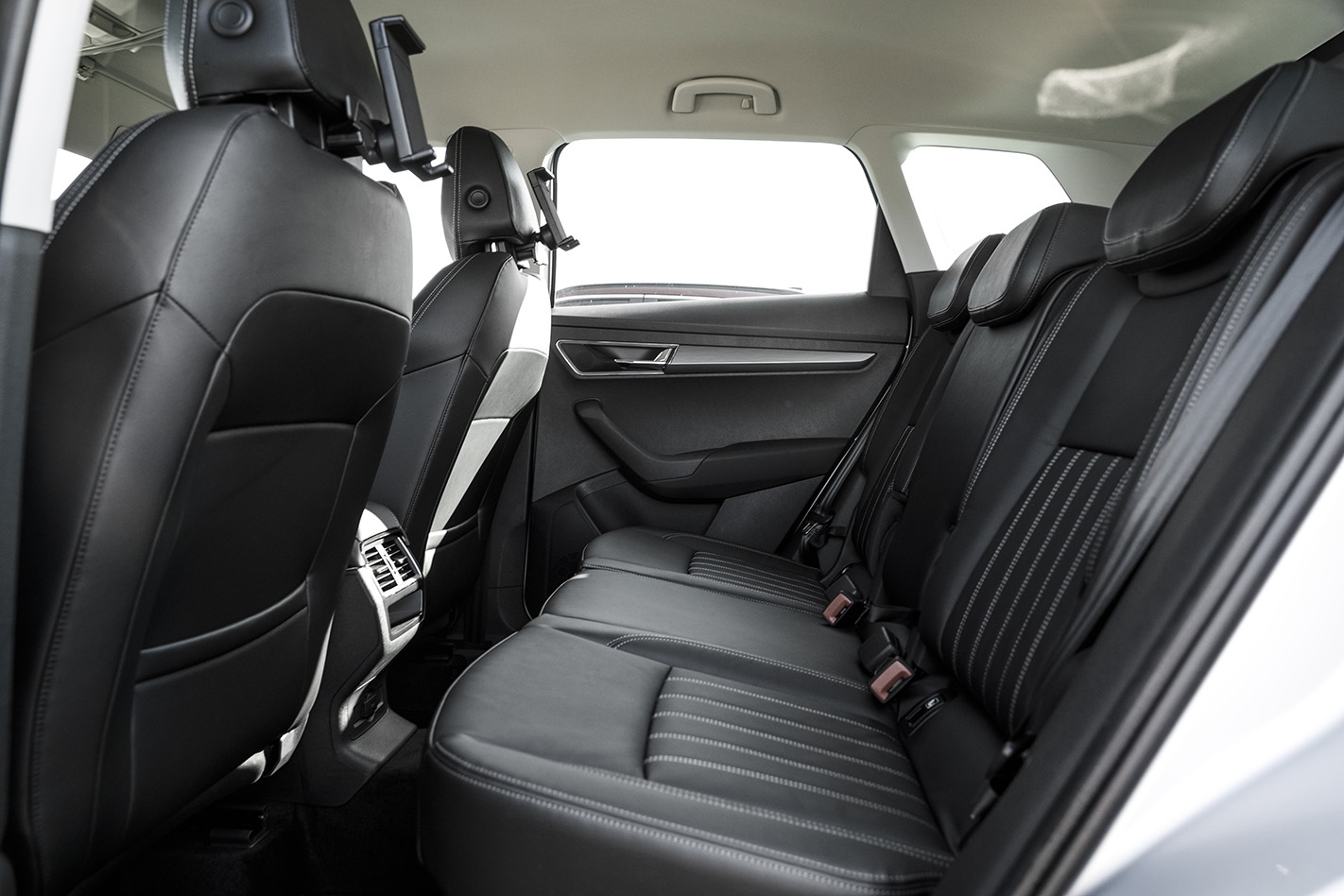
The Skoda is not without merit though, with a cabin that feels much brighter and airier courtesy of a more generous glasshouse and the absence of privacy glass. It’s definitely crafted to cater to family buyers as well, with an elevated rear bench that gives even smaller children a decent view through the front, tablet-holders ahead of each outboard rear seat, and bigger rear door openings to ease entry and exit.
ON THE ROAD
Both contenders are at the pointy end of the segment when it comes to handling competence, and both are blessed with engines that perform strongly despite their small displacements. The pair each tip the scales under 1.4 tonnes apiece, which helps them make the most of their admittedly modest power outputs – 110kW/250Nm for the Skoda, 121kW/240Nm for the Peugeot.
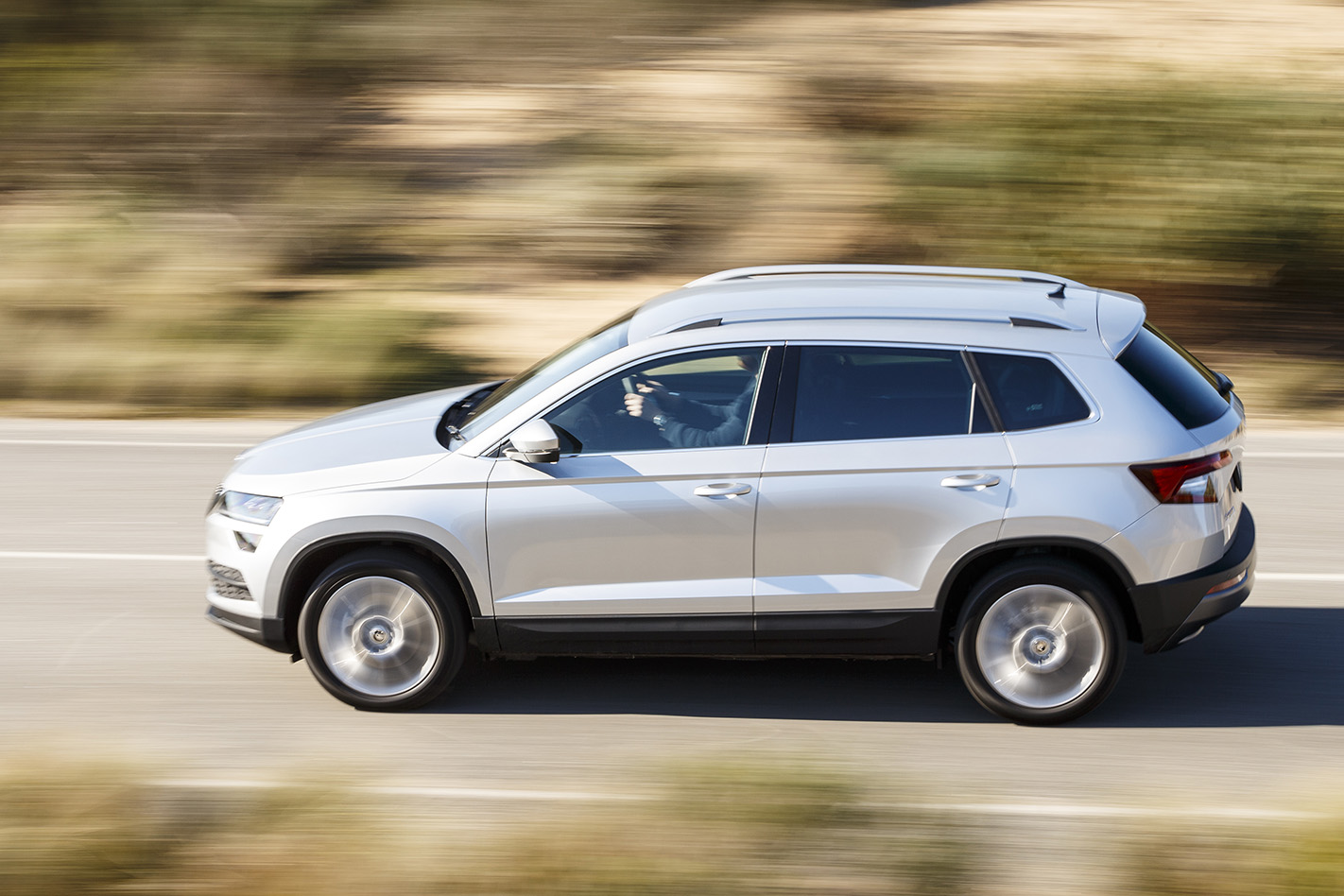
The Peugeot is fractionally faster to 100km/h from standstill, hitting triple-digit speeds in 9.3 seconds versus the Skoda’s 9.5 seconds. Its sportier edge flows through to its chassis as well. Big bumps are dispatched without fuss but there’s a firmness to its bump response that’s unexpected given its meaty sidewalls and 17-inch wheels. That nature is at least in harmony with its steering, though, which feels fast and reactive thanks to that small-diameter steering wheel and a superbly calibrated front suspension.
The Karoq’s steering is accurate but very light in its weighting and less engaging as a result. Its dynamic scorecard was good, and while it pushed into understeer slightly more readily than the Peugeot and exhibited more body roll, it’s nevertheless far from a sloppy handler. There were few complaints about its ride comfort either, with big bumps being ably absorbed by its MacPherson strut front and torsion-beam rear suspension (a layout shared also adopted by the Peugeot).
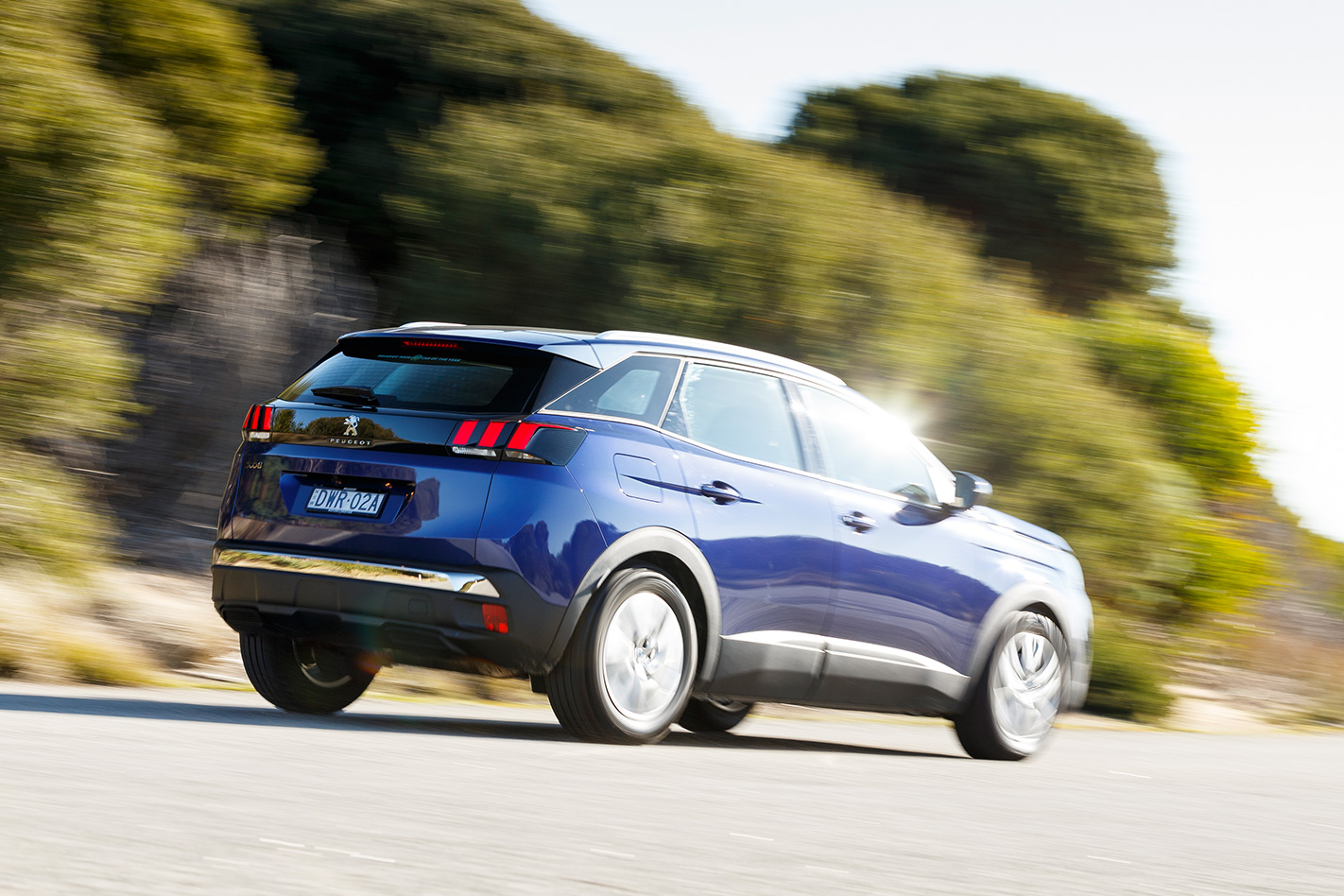
The difference between the two on the road boils down to this: The Skoda Karoq feels exactly how you’d expect a fairly light five-seater SUV wagon to feel, but the Peugeot 3008 adopts a more athletic persona and drives more like a hatchback – a somewhat sporty hatchback, at that.
The only area where that wasn’t the case was the transmission. The Peugeot’s conventional six-speed auto works great, with smooth take-up from standstill, slick shifts and intelligent shift mapping that compliments the engine. The Skoda’s seven-speed dual clutch auto is the inverse – beautifully crisp gearchanges when you’re pushing it hard, but occasionally unwanted jerkiness when dealing with start-stop traffic.
VERDICT
For its lovely interior, engaging and agile chassis, faultless driveability, commendable fuel economy and handsome styling, it’s hard to go past the Peugeot 3008 Active.
It’s the connoisseur’s choice in this segment, and judging by the small numbers of them currently on Australian roads, one of the better-kept secrets. It satisfies most of the core criteria that the average mid-size SUV buyer would likely have (with perhaps the exception of having AWD), but goes even further by wrapping it up in a body and interior that simply makes you feel good. SUVs need not be boring boxy wagons, and Peugeot has proven that.
That’s not to say the Skoda is without merit. It’s a close-run race between these two, but the only issues that really detract from the Karoq’s proposition are its higher fuel consumption, low-speed transmission refinement and the need to tick options to put it on even pegging with the 3008 Active. It’s still good buying, but it’s very much a head-over-heart decision. The Peugeot, on the other hand, is a car that you can actually feel emotional about.
Heathcote, near Bendigo in central Victoria, is not exactly a tourist hot spot.
This review was originally published in MOTOR’s June 2007 issue
It’s probably nice enough if you like caravanning and visiting bowls clubs; so, definitely no hot spot, then. But 18 klicks north of Heathcote is a drag-strip. Again, it’s no glamour and, in the midst of the worst drought in living memory, it’s a dust-bowl punctuated by a few sheds, some dodgy-looking carports and a quarter of a mile of hotmix.
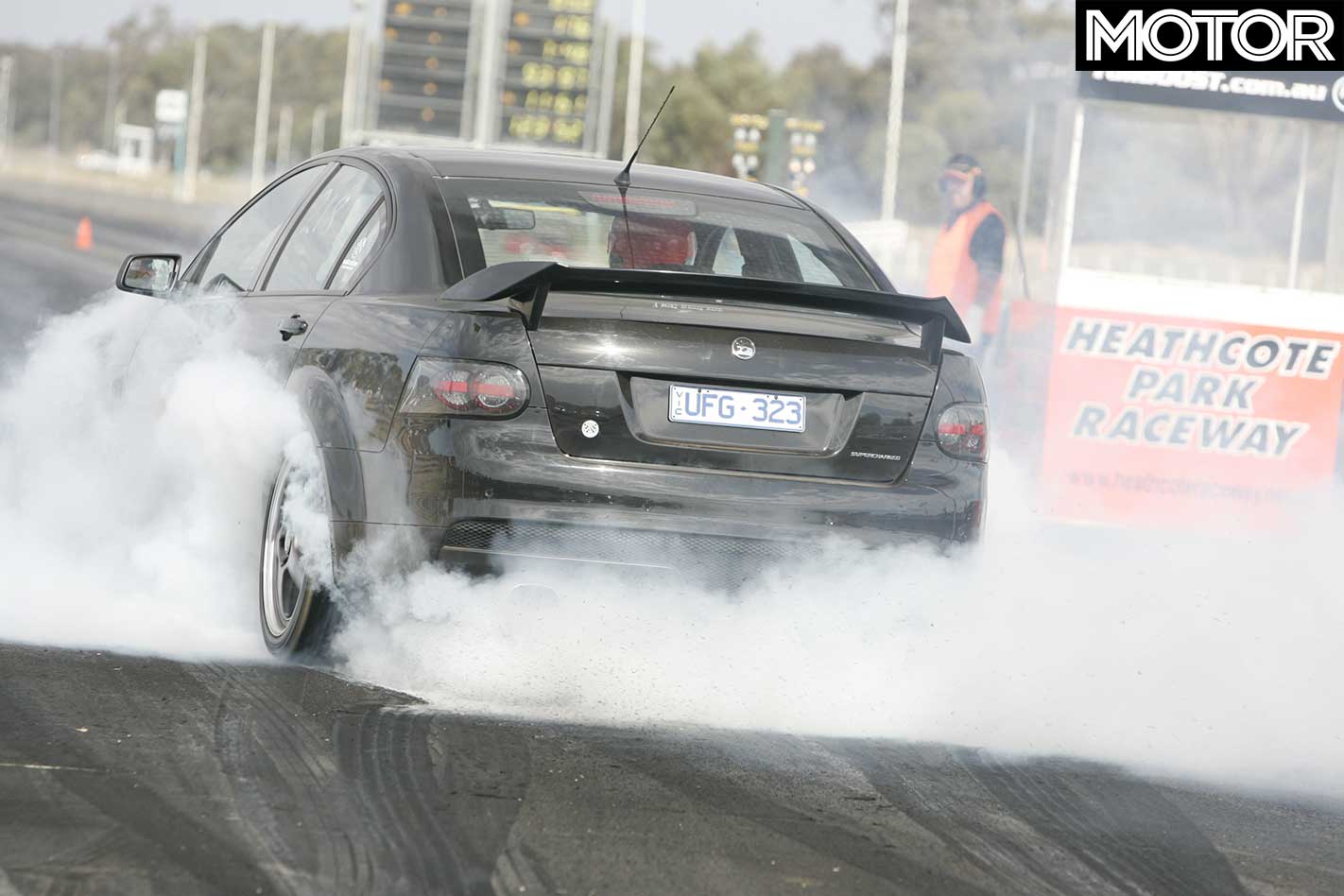
I’m here because I’ve heard a whisper that there’s a black VE Clubsport R8 due to arrive, complete with every Walky option – including the intercooled huffer. Ain’t it funny how a car that’d stop a train in Civvy Street barely raises an eyebrow when it’s parked with a few dozen mutants like the utes I was talking about? In fact, I walked past the VE Clubby once (maybe twice, I don’t know for sure) before I clocked the sticker on the rear quarter glass.
Just as well I found it in the pits, though, because out on the track, it was the same story. You just can’t compare a fair-dinkum streeter (the Clubbie) with a bunch of thinly-disguised race-cars (those damn VZ utes). Not when the latter are pasting down low-10s and the Clubsport is in traction hell on its road tyres and struggles to make a low-13.
I’m starting to wonder why I’ve bothered with this 400km round trip through Highway Patrol County to breathe dust and watch a car I’m due to drive in two days get a walloping at the hands of people who still think all food should be yellow (or else why would they serve up the things they do at such events?).
Two days later, back in civilisation where food is different colours and some people even wear shoes that lace up, and the Walkinshaw Clubsport strikes a rather more impressive pose.
Just for starters, it’s not covered in dust and, parked in Walkinshaw Performance’s workshop, it looks the absolute bollocks. This car is, more or less, what would happen if you wheeled an R8 into the WP bunker and ticked pretty much every box. From its bonnet scoop to its suspenders to its jocks and socks, the Walkinshaw touch is evident everywhere.
Where do we start? Okay, what about the suspension? The standard R8 shocks are retained, but the coils are re-rated with plenty – and I mean plenty – of spring in their step. Ride height is 25mm lower and some new rear bump-rubbers are part of the package. Stoppers are the celebrated AP Racing calipers with six pistons up front and four out back.
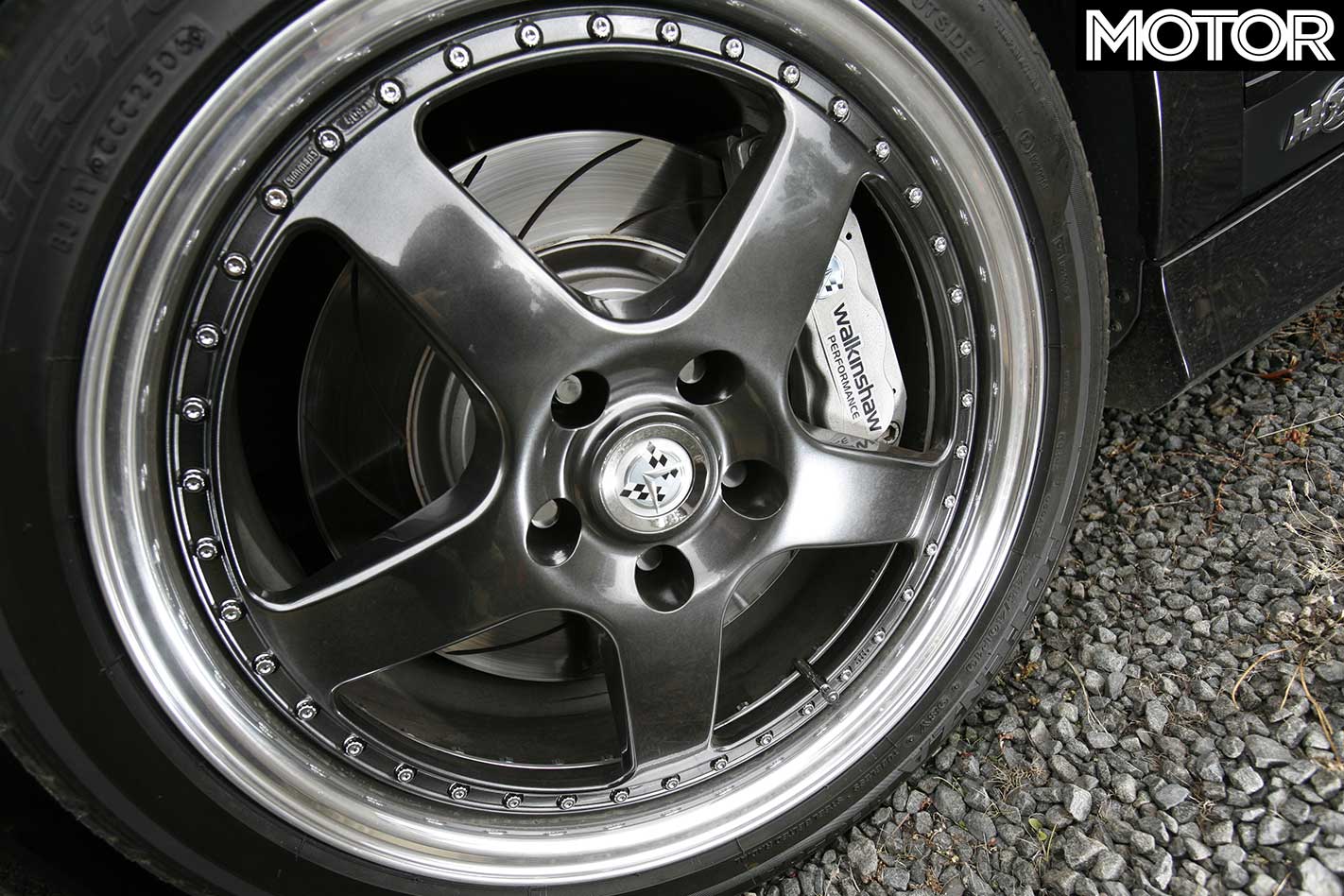
The good news, though, is that on an R8, you don’t have to pay for new rotors as the APs are compatible with the OE discs. And just to make the most of the new hardware, a set of Goodrich braided steel brake hoses is also fitted to this car. Nineteens are a cinch, this time Simmons composite rims running 245 fronts and 275 rears.
Under the lid, the big news is the positive displacement blower that sandwiches an intercooler between itself and the inlet manifold, yet is still compact enough to clear the stock bonnet.
It runs a modest seven pounds of boost and comes with its own calibration and a dyno sheet from the WP rolling-road. Keeping the air up to the LS2 is a low-restriction air filter element that is matched to the airflow needs of the blown engine. Out the noisy end, there’s a stainless-steel exhaust system from the cats back, complete with etched oval tips bearing the WP logo.
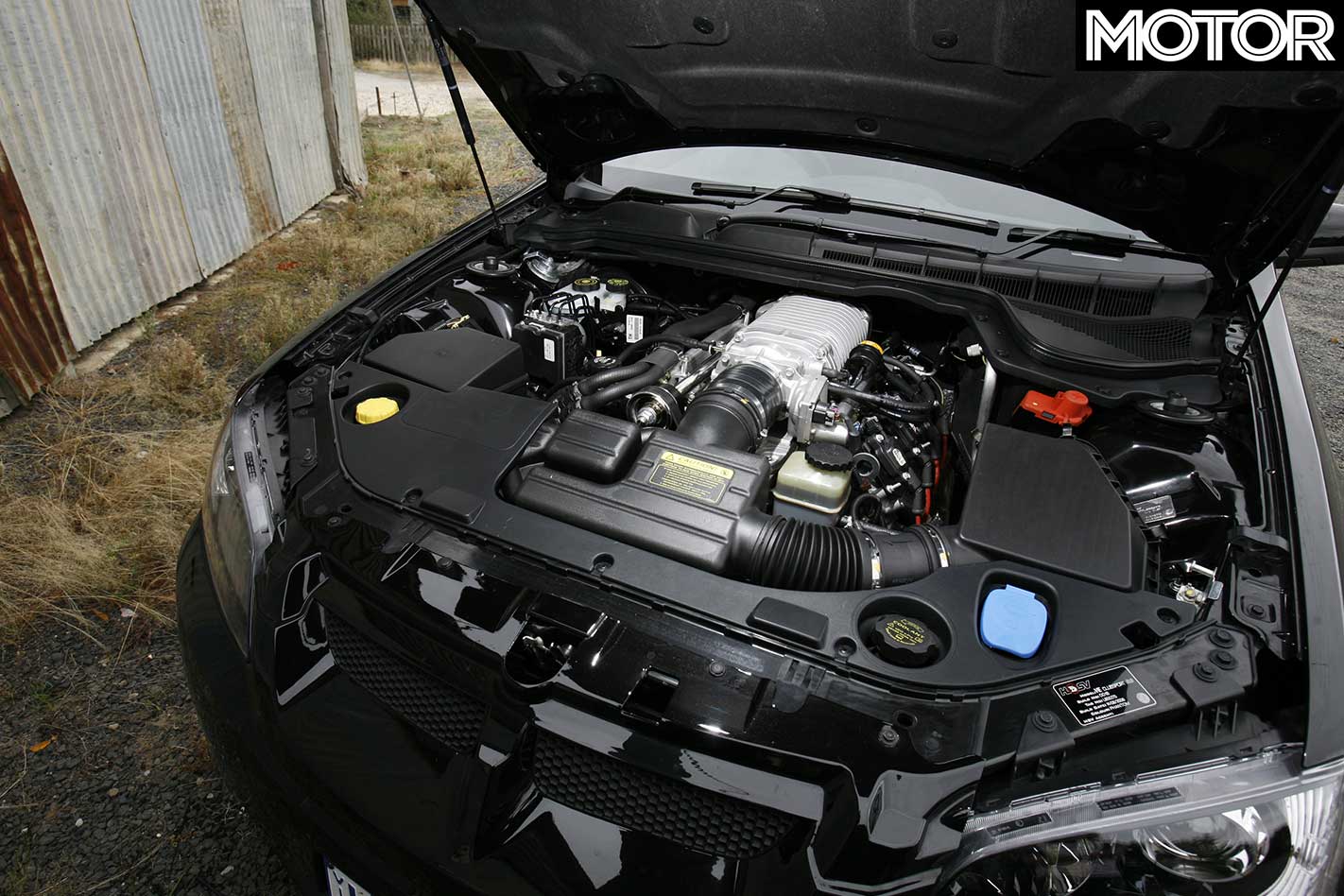
The window-dressing stuff amounts to the fog-light covers that look kind of cool, sill-plate trims with a WP badge that looks like it fell off a cheap footy trophy and that bonnet scoop that does bugger-all aside from adding weight to the bonnet. Yep, it’s a dummy. Fortunately, those dress-up bits are the only elements of the car that are hitching a ride, and everything else is there for a very specific reason.
But is it all an improvement over the standard Clubbie R8? Erm, maybe not. We’d have to take exception with the new suspension tune, for one. The rear-end is a fraction slappy over pimply little joins in the road surface but it’s the front end that really doesn’t feel right.
Hit a slightly raised bridge or clumsy join in the bitumen at the right speed and the front end crashes through the whole car. It almost feels like the cross-member is about to jump into your lap and it’s not just short, sharp bumps that upset it, either.
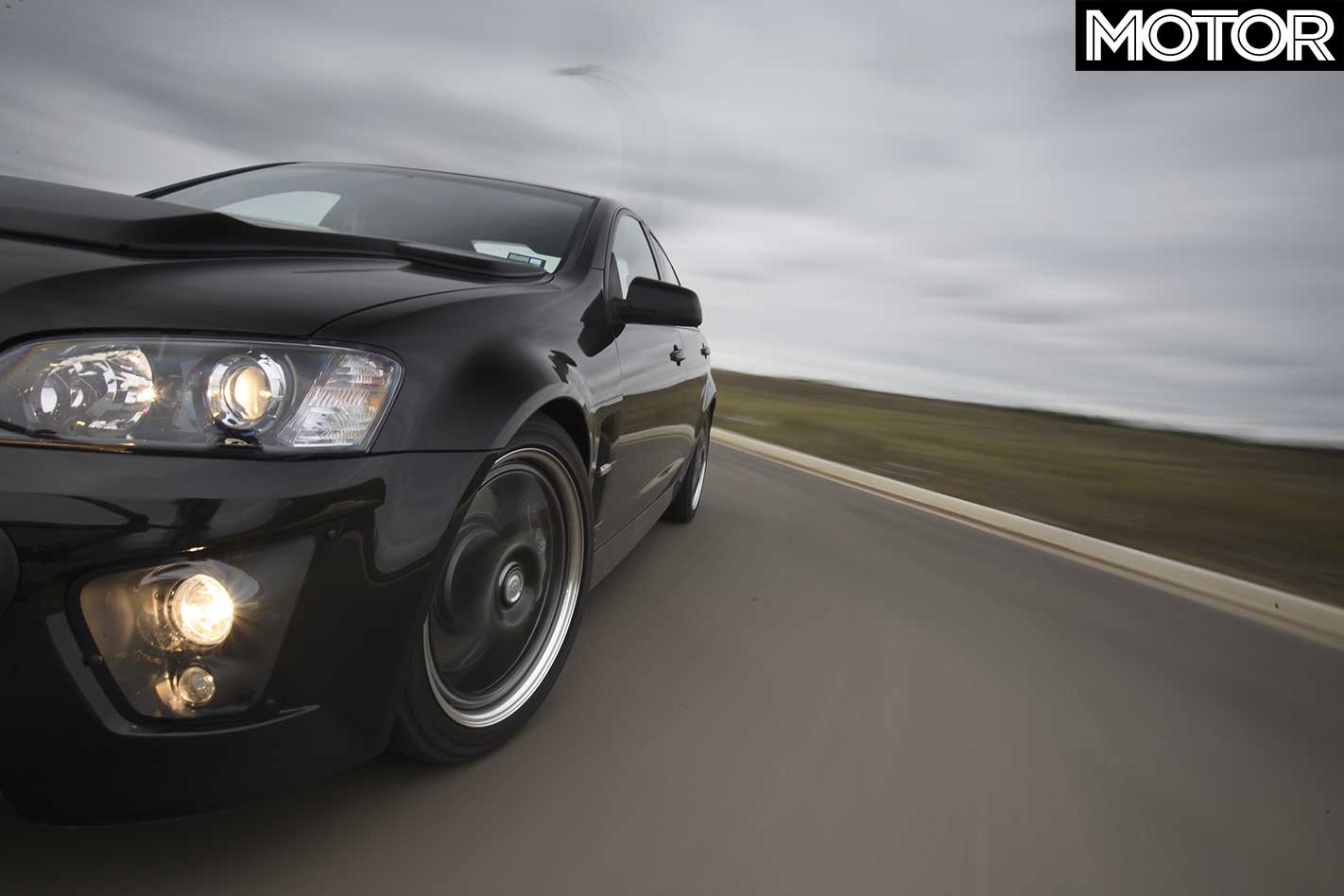
Despite its apparent firmness, we still found the front bump-stops a couple of times at moderate speeds through bigger dips with sharp-ish approaches. Feels to us like the new spring rates aren’t matched too well with the stock dampers, so maybe a bit of fiddling would put it right. And let’s not forget that the 19-inch tyres have about the same sidewall depth as a kid’s three-wheeler, so there’s probably a bit going on there, too.
In any case, this is all a moot point if you were simply going to leave well enough alone in the suspension department and save your dough for anchors and blowers. And in the case of the new picks, we’d have to say go for it. The pedal feel is great (the braided lines help there) and the retardation is brilliant. If you’re tempted to take your Clubbie trackside, then the APs should be high on your wish list.
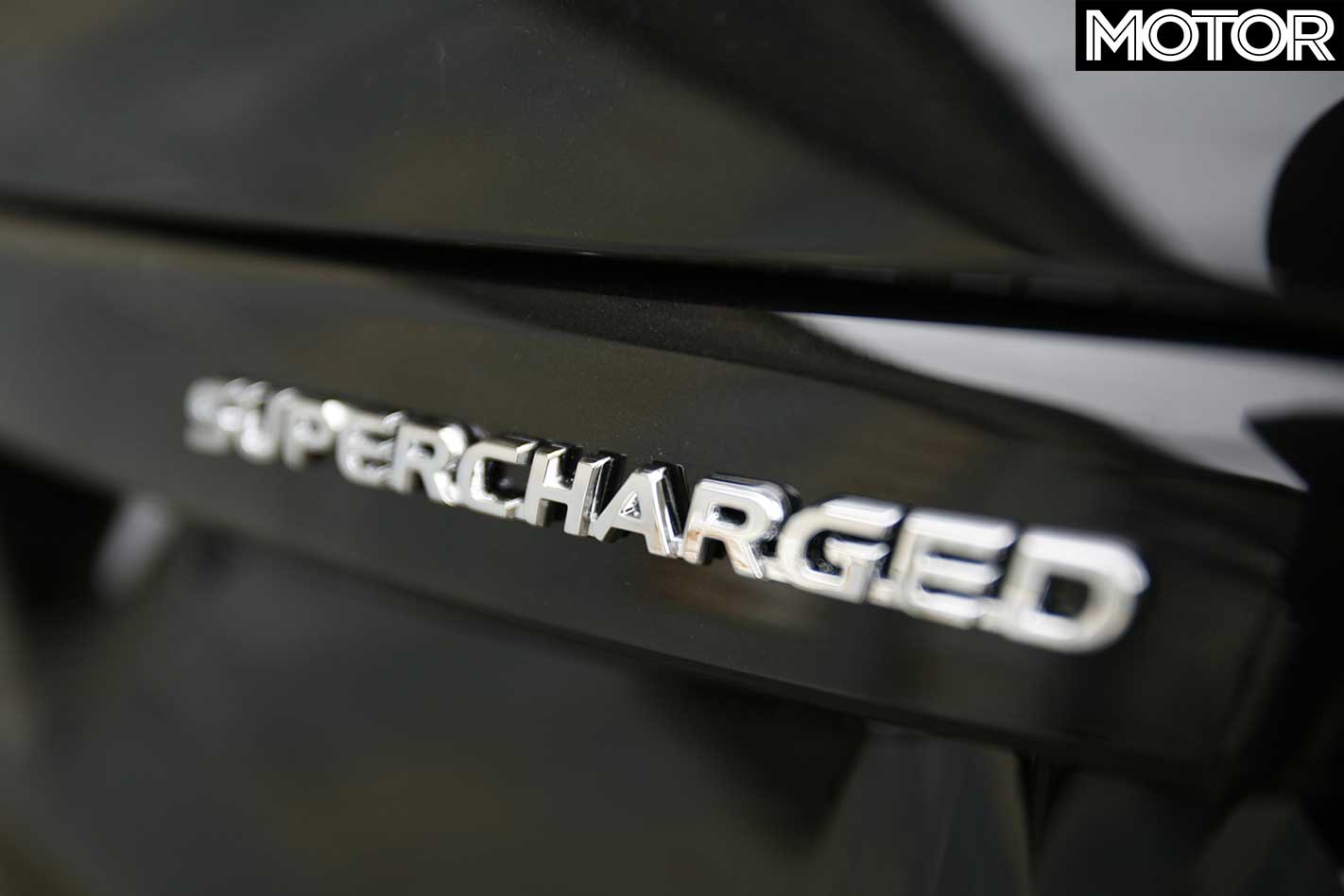
And whether you’re a race-track junkie or just somebody who likes to pedal a quick car, then you want the supercharger, you really do. The installation is neat, looks factory and has the added bonus of some exposed spinning bits to keep the pub factor sky-high.
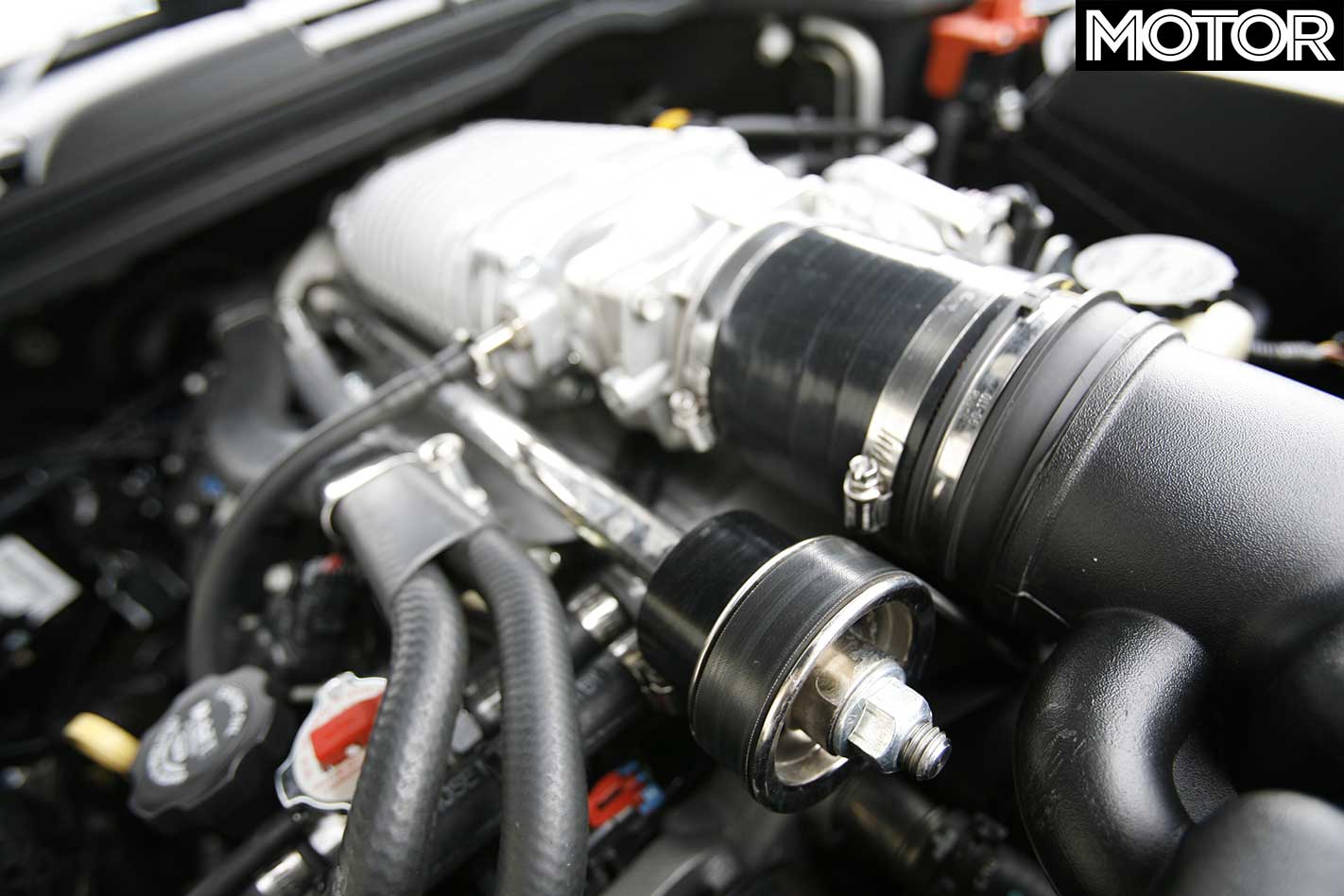
The set-up uses the standard system of a serpentine belt running everything from the front of the engine. But the blower is driven from the rear of its housing, so there’s an exposed layshaft that takes drive from the front of the engine bay to the rear, complete with polished shaft and beautifully crafted aluminium bearing housings. Lovely.
The big surprise is not the engine’s outright power (although there’s plenty of it) it’s the sheer torque of the thing. It’s brutal. First gear is largely irrelevant but for the fidgety paddle clutch that this particular car was fitted with. Clog on in fifth and it feels like you’re in fourth. Fourth feels like third and so on… you get the idea. And bear in mind that we’re talking about a car that is hardly lacking in the goolies department in the first place.
The gearshift is still a bit baulky and the clutch needs to be all the way home to avoid extra clunks, but you can potter around all day in third gear, running the mill down to about 1250rpm before it gets grumpy on you. Even then, it’s only a bit of a rumble through the chairs that tells you to change down and more throttle fixes it anyway.
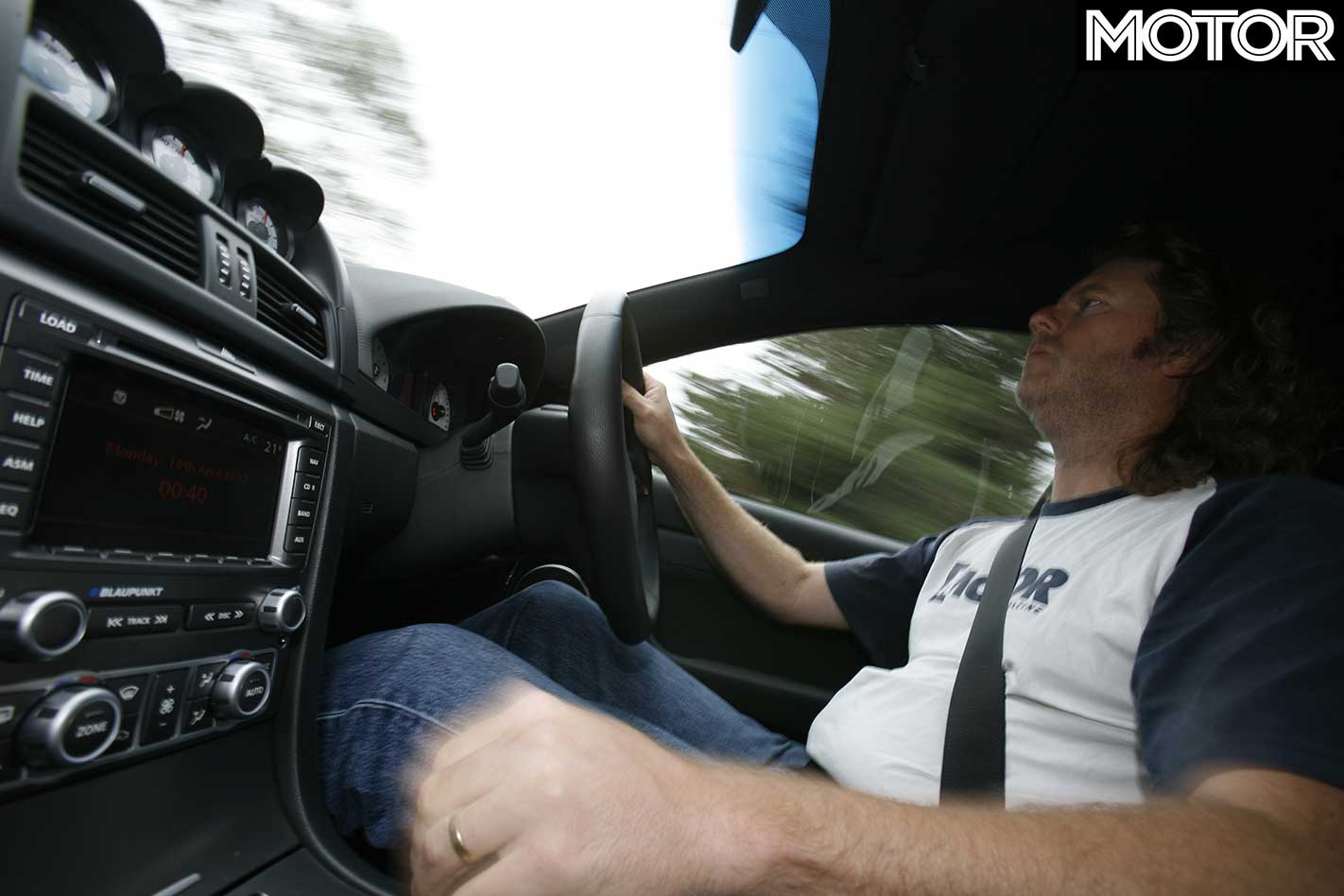
But it’s not all about grunt; this is a motor that never ever gives up on you. Wind it out in third or fourth and it feels like it’ll never stop accelerating. It bashes into the limiter with enough force to unbalance the chassis (so don’t do it mid-corner) and grabbing another gear just starts the show all over again.
For all that, it’s not the least bit peaky or temperamental and the only observation from the jump seat was that the car seemed a bit aggressive on the throttle. Sorry pal, but that’s what happens when near enough to 380kW hooks up through sticky tyres.
That’s a good number by anybody’s standard, but the truth is, you’d probably stump up for the blower, purely for the soundtrack.
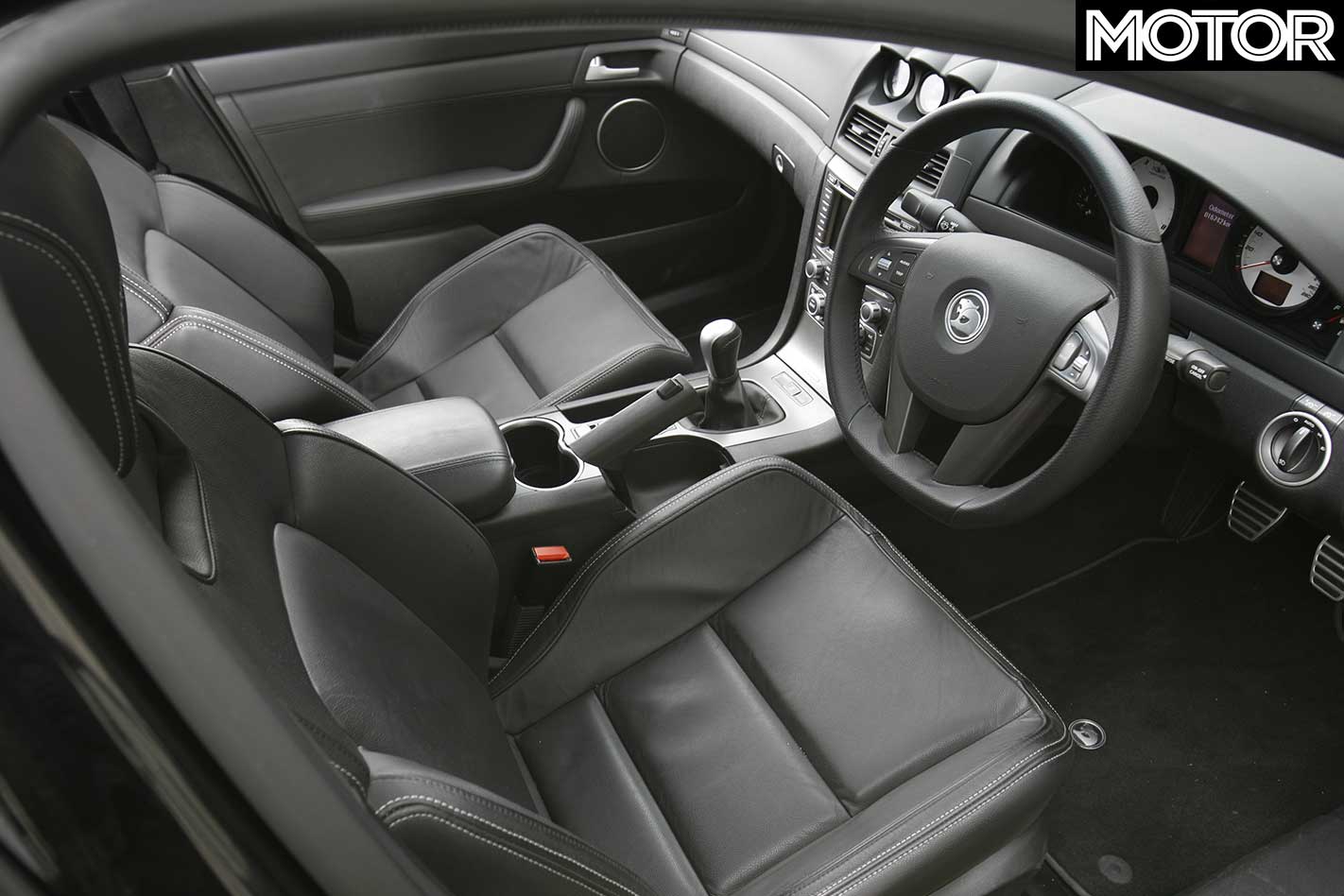
I’ve driven plenty of supercharged cars before; some blowers have contributed nothing to the soundscape, others have made the right sort of noise. But I can’t remember a single one that has given me the tingles like this one.
Gas it up at idle and you’ll hear a cheeky little squeak. Blip it between downshifts and there’s a manic yelp that could be the artist formerly known as Prince caught in a rip.
But the best bit is when you let the LS2 off its leash big time. It starts to yodel proper at about 2000rpm and from there it builds and builds in both pitch and urgency till it’s a whiny, nasally message of mechanical hatred and evil.
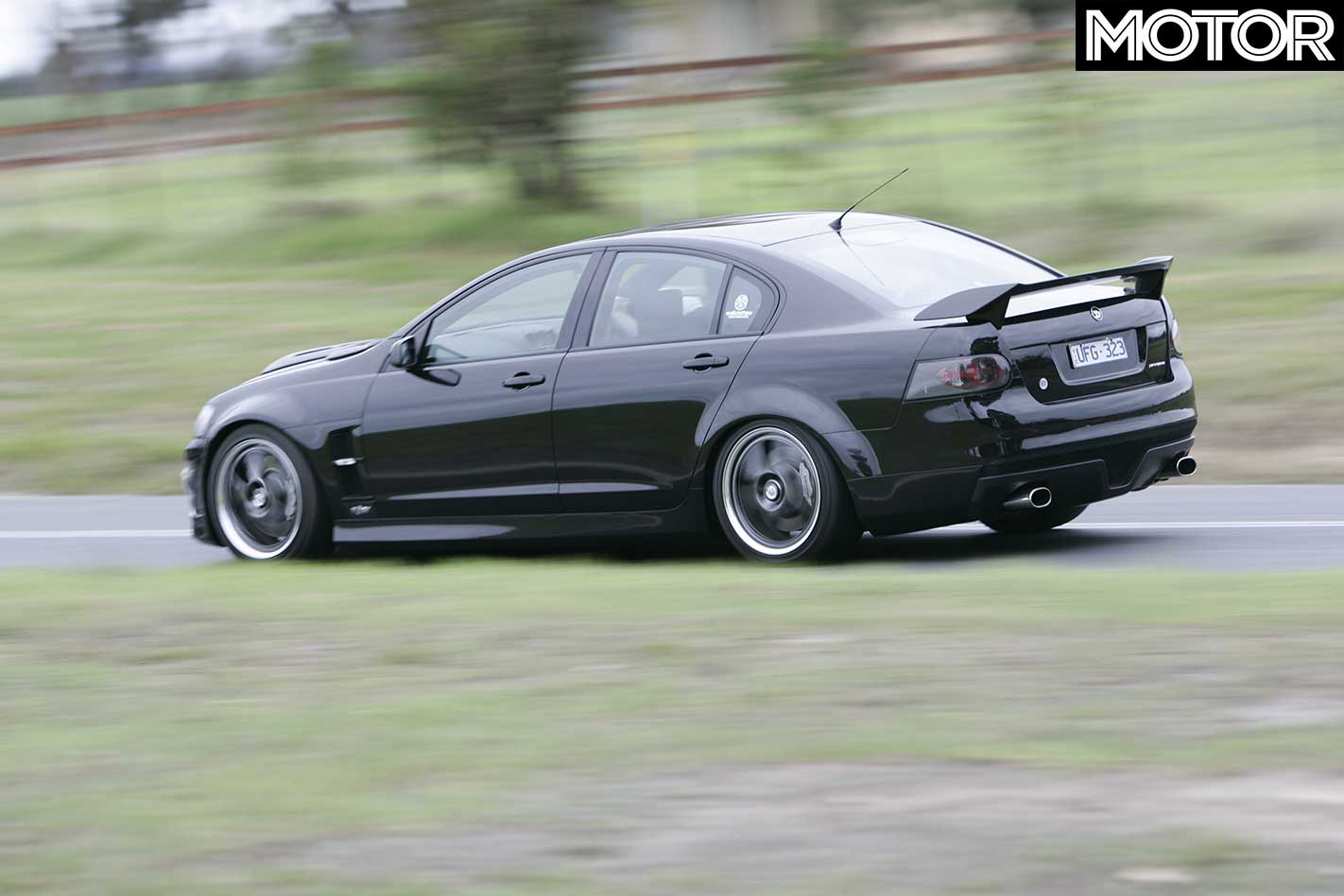
It reminds me of my recurring-fantasy-noise of having Pauline Hanson’s head in a wood-vice while Mother Theresa hammers six-inch nails through the bloodnut’s arms and legs. Pleeeaaaassseeeee eeeeexplaaaaaaaiiiiinnn. (Was that out loud?) Anyway, take it as read that getting up the blown Clubbie is an aural treat of major proportions.
There’s a bit more yap from the big-bore exhaust and even the odd bang and pop on the over-run, but I just know I’d never get sick of that blower whine. And because at legal speeds in top gear you’re below the warble-threshold, it won’t do your head in on long trips.
The WP-modded R8 is more than just a quick car. It has the brakes to match the mill and the VE Commodore’s essential smarts to make such a powerplant a viable way to go. Force-feeding a six-litre V8 would have seemed like crazy-talk a few years ago. Maybe it still is, but if this is crazy, give me a key to the asylum.
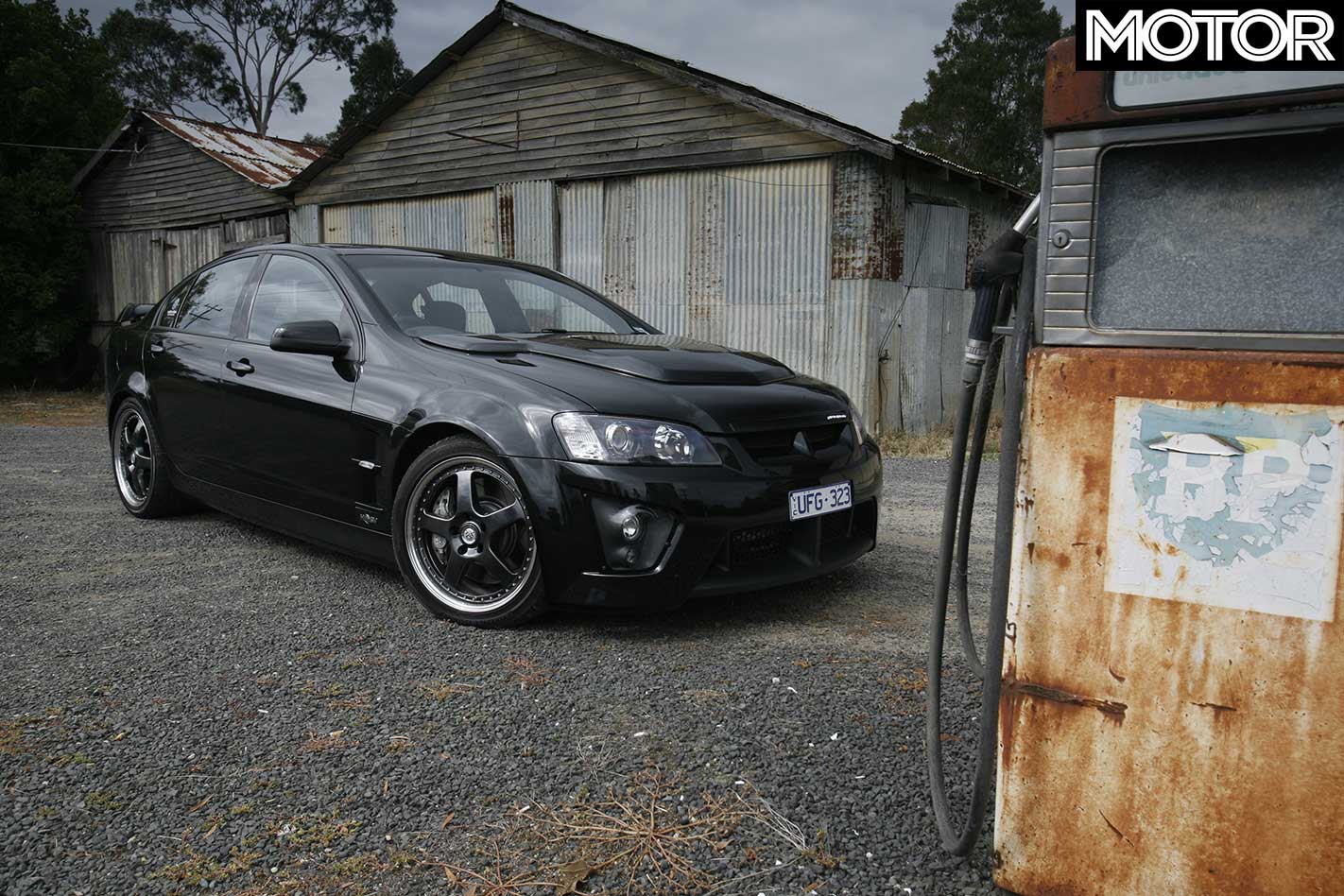
FAST FACTS 2007 Walkinshaw Clubsport R8
BODY: 4-door, 5-seat sedan DRIVE: rear wheels ENGINE: 5967cc 90-degree V8, OHV, 16v BORE x STROKE: 101.6 x 92.0mm COMPRESSION: 10.9:1 POWER: 380kW @ 6500rpm TORQUE: 695Nm @ 4300rpm WEIGHT: 1842kg POWER-TO-WEIGHT: 206kW/tonne TRANSMISSION: 6-speed manual SUSPENSION: struts, A-arms, anti-roll bar (f); multi-links, coil springs, anti-roll bar (r) L/W/H: 4943/1899/1468mm WHEELBASE: 2915mm TRACKS (f/r): 1592/1590mm BRAKES: AP Racing 365mm ventilated discs, six-piston calipers (f); 350mm ventilated discs, four-piston calipers (r), ABS, EBD, ESP TYRES: Bridgestone Potenza RE050A; 245/40R19 (f), 275/35R19 (r)
LIKES: Tremendous torque, fantastic soundtrack and awesome brakes DISLIKES: Suspension not matched well, but HSV spec is decent enough RATING: 4 out of 5 stars
Street Sleeper
Not everybody wants the full body-kitted HSV experience. In fact, with an engine like the blown six-litre, we’d be inclined to make the end product as stealth as possible. The shot then, would be to start with a plain-wrapper V8-equipped VE Commodore. And the cheapest of those is, let’s see, the Berlina at $44,990, although a manual SS is the same money, so it’s your call.
Either way, you’d spec it with the AP calipers (which would require replacement discs and 19-inch wheels of some sort, but you could keep it discreet). As far as the blower goes, the L98 in the Commodore uses a different intake manifold to the HSV engine, so the blower itself is slightly different.
According to Walkinshaw Performance, though, there’s not as much in it as you might think and there’s absolutely nothing wrong with the L98’s cylinder head design.
The Holden camshaft would be the limiting factor, say the blokes in the know, but a replacement cam tailored to the pump’s characteristics would soon have it breathing like a good ’un and for not much more than $60k, you’d have yourself a real giant killer.
Those of you who have been paying attention will know that I’m travelling at the moment; driving my 30-year-old Ginza army tank up and down Australia. As a result, I’m eating out a bit more.
Now, when you’re at home and decide to treat yourself, you usually have a pretty good idea of where you want to eat as well as what’s likely to be on the menu. But in a new town, that’s not the case.
And it’s here that The Speaker of the House and I often come to an impasse. My solution is simple. I walk along till I find a restaurant that looks like it might have something I want. I then go inside, arrange myself at a table and perform a simple transaction: They give me the food. I give them the money. Nobody gets hurt.
Not The Speaker. Until she has scrutinised every menu from every eatery she’s not content to make a call. So I stumble along behind her, secretly scoping out the breakfast menu, since experience tells me that by the time she’s come to a decision, it could easily be next morning.
Anyway. At one place up the coast recently, she spied a calamari dish. Now, when it comes to seafood, I’m a junkie. But I also take a fairly simple approach. Drag a squid out of the water, crack it on the bonce, drain the ink, cut it into strips and grill it lightly. Serve. Enjoy.

But this particular restaurant had also decided to ruin the whole thing by slathering poor old Squiddly Diddly with sweet chilli sauce. Now, just as ham and pineapple isn’t a real pizza and an SUV isn’t a real four-wheel drive, sweet chilli sauce is not real chilli sauce. It’s a sticky, sickly, toxic fluid designed to appease the juvenile tastebuds of food-tards everywhere. It has no place on lunch.
The Speaker senses my tension. Okay, she says, scratch the squid, but at least look at the chef’s suggestions. Why, asks I? Why would I trust the judgment of, and accept a suggestion from, a person who puts sweet chilli sauce on something previously edible? The bloke wants a smack in the head with a dead squid. I hope it’s Gordon Ramsay.
And it’s not just restaurants. I get like this with car makers, too. As in, I don’t want a sporty coupe designed by the same team that thought hot-rod-style suicide doors were the right thing to do. Remember the Mazda RX-8? A disappointing car in so many ways, but those stupid backward-hinged rear doors were the icing on the goof-cake. And even though I loved the rotary engine, those weirdo doors put me off the whole concept.

And while I can appreciate an offset bonnet-scoop, I kind of have a personal rule that a car should possess a minimum degree of symmetry. With the result that I really bunch my panties at the thought of a car that’s a coupe from the driver’s side and a sedan from the kerb. Do I like the Hyundai Veloster? Depends on how you look at it. Literally.
I’m just not mentally ready for that level of novelty, I guess. Same as a kale smoothie, I reckon.
Nor do I want a muscle car with a hot-hatch engine. Stand up Mustang EcoBoost. Of course I love muscle cars (natch) and hot hatches (double natch), but I don’t want a combination of the two any more than I want a fruit-salad kebab. I have to be honest here and say that the blown four-pot Pony is actually a good car. But that engine in that car is never going to make it on to my menu.

Strangely, I don’t have the same negative response to the new Commodore with its front-drive and four-cylinder engine flying in the face of decades of rear-drive and V8 shunt. Because the new Holden is simply different to the old Holdens. It’s a trip into the future, rather than a romp through Stooge-Town.
Thing is, the four-banger tail-dragger ZB is the version I’d buy, mainly because I can’t see the point in the all-paw V6 version. When the uncomplicated, cheaper base model works so well, isn’t the extra weight, complexity and cost just a layer of something you didn’t need?
I mean, if it’s already edible, why the hell would you dip it in sweet chilli sauce? Unless it’s a mango parmigiana, of course. ’Cos that’d totally make sense.
Australia will be one of the first markets in the world to receive Lexus’ all-new UX crossover, with the high-riding hatchback set to arrive on our shores before year’s end – and potentially before December.
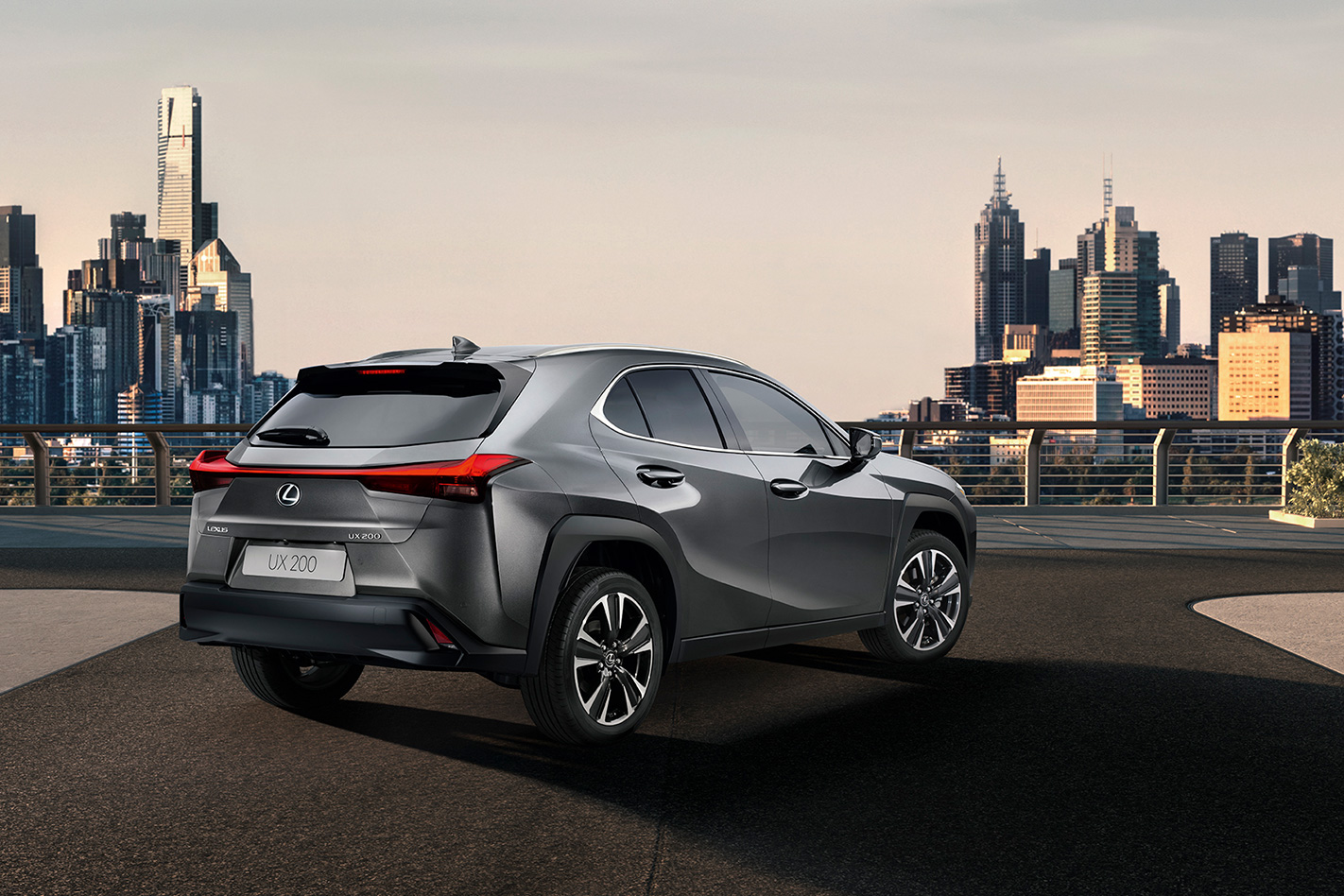
The UX is new territory for Lexus. Right now the smallest SUV offering the Japanese luxury marque sells is the RAV4-sized NX, and the UX will slot in neatly beneath it. Not only does that allow Lexus the ability to bring a more affordably-priced option to its SUV stable, but it can finally capitalise on booming demand in the small SUV segment.
The head of Lexus Australia Scott Thompson said interest in the Lexus UX was already high. So far more than 600 expressions of interest have been registered online, and Thompson expects the arrival of the UX to accelerate annual Lexus sales in Australia beyond the 10,000-car mark for the first time. Given the company sold around 8800 cars in 2017, that means the UX will inject around 1200 sales in its first full year on the market. Not enough to give it top-seller status (that title goes to the NX right now), but enough to comfortably put it in the top four within Lexus’ showroom.
Its success will naturally hinge on its price tag. Pricing and features have yet to be confirmed by Lexus Australia, but WhichCar understands the range will follow the same three-variant strategy employed by most of the company’s other models, with a Luxury grade positioned at the entry-point and an F Sport and Sports Luxury sitting above the Luxury as sportier or more opulent options respectively.
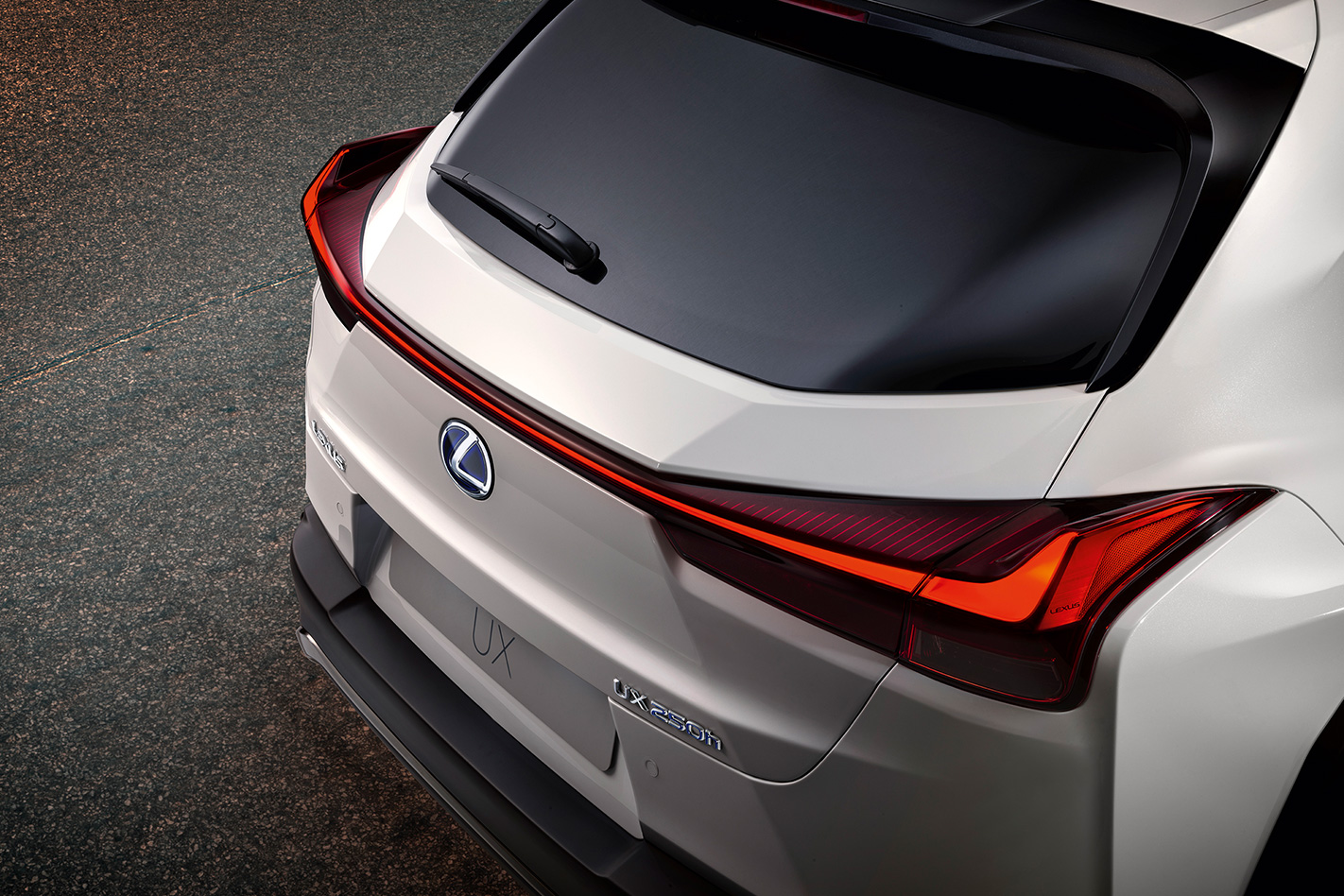
Though official pricing isn’t locked in, the company is eager to ensure the Lexus UX has plenty of separation to the two products that bookend it: the aging CT 200h hatchback, which starts at $40,900; and, the NX 300 that’s priced from $54,800 in Luxury form. With that in mind, a starting price in the mid-$40K region seems reasonable for the Lexus UX.
The challenge for Lexus now is how much equipment it loads into the entry-level UX Luxury. All we know right now is that 17-inch alloys will be standard on the Luxury, with 18s on the F Sport and Sports Luxury, but the finer details are still being hammered out by Lexus Australia. That said, with the Audi Q2 available from $41,800, odds are high that even the base model UX will be loaded with equipment to give it a competitive advantage.
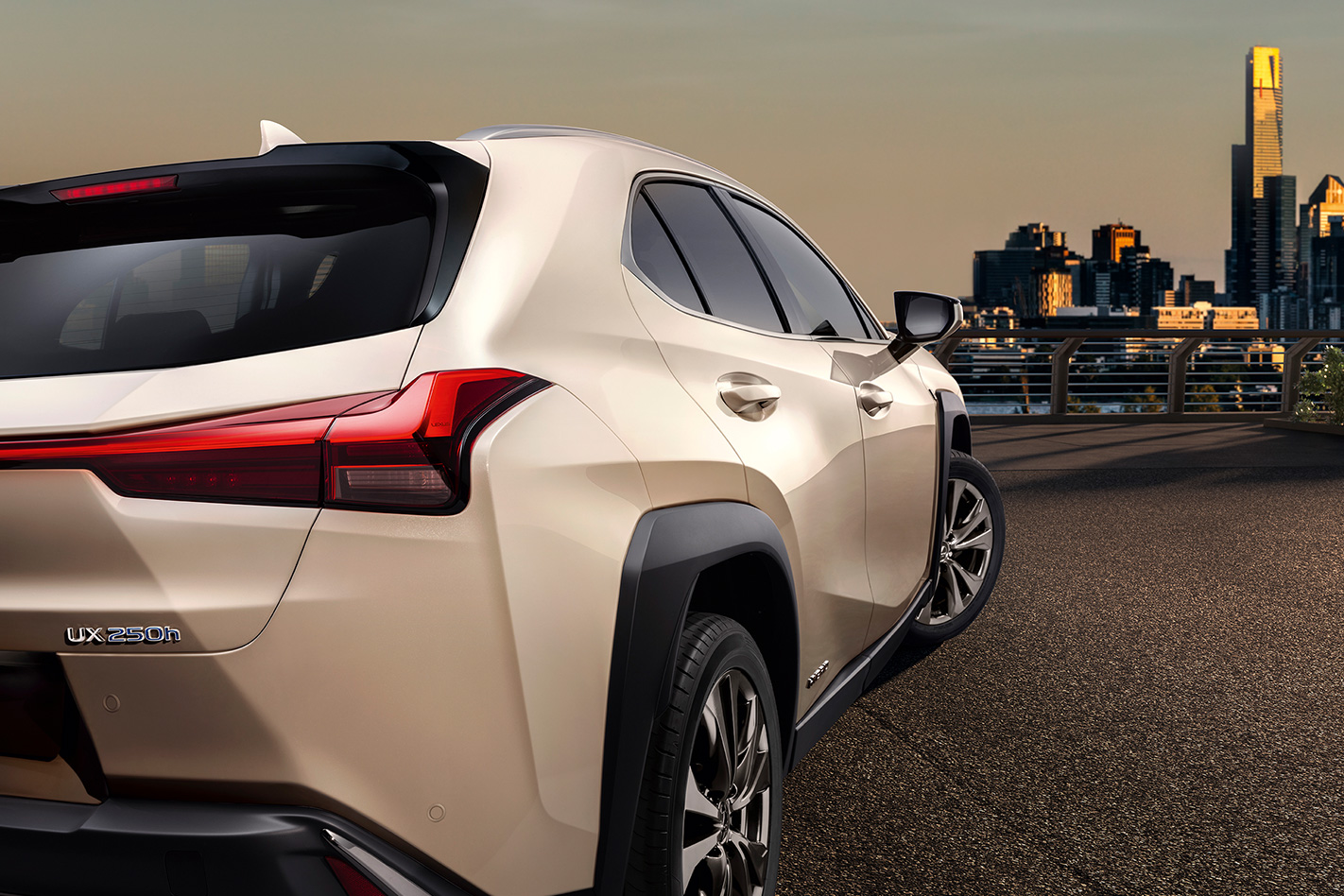
Feature-count is arguably the UX’s trump card. Standout features available overseas include an electronic instrument panel, a powered tailgate, colour head-up display, wireless phone charger, all-LED headlamps, a power-adjustable steering column, keyless entry, 360-degree parking cameras, adaptive cruise control, lane-keep assist and the latest version of Lexus’ infotainment interface.
Mechanically, the UX is available with two powertrains – a 2.0-litre naturally aspirated inline four with 126kW and 205Nm (which is shared with the just-launched Toyota Corolla) on the UX 200, or a new 2.0-litre hybrid with 131kW of total power (107kW from the engine, 24kW from its electric motors) and 180Nm for the UX 250h.
All-wheel drive is available, but it’s exclusive to the hybrid thanks to power being delivered to its rear wheels by an electric motor, rather than a conventional propshaft and differential.
Built atop the same GA-C platform that now underpins the Toyota Corolla, Prius and the C-HR, the UX features a stiff bodyshell, aluminium exterior panels (front quarter panels and door skins), and a multi-link rear suspension. Compared to its closest cousin, the C-HR, the UX differs substantially both inside and out, with cabin packaging altered by the UX’s much lower hip-point for the front occupants, its unique bodyshell and completely different cabin furnishings. A re-skinned Toyota, this is not.
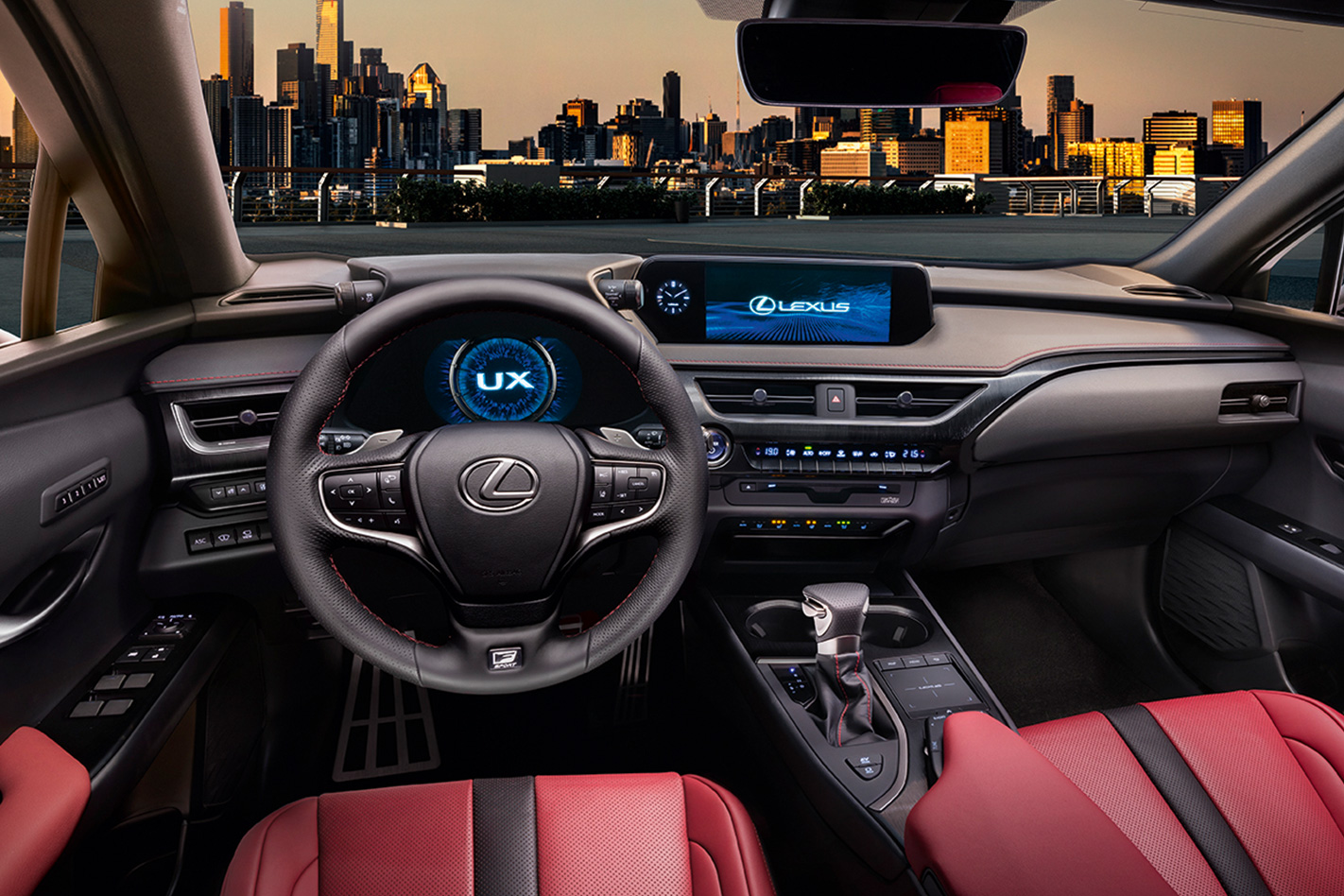
The differences continue beneath the skin, with the UX boasting its own unique steering tune and suspension calibration. Opt for the F Sport model, and the UX’s undercarriage is augmented further by adaptive dampers that can deliver both better compliance or a sportier drive, depending on driver preference.
THE COVERS are coming off Mercedes-Benz’s Tesla-fighting EQC all-electric SUV next week, ahead of an Australian arrival in “very late” 2019. Here are seven facts you need to know about the Model X and Jaguar I-Pace rival:
1. It’ll spawn a family
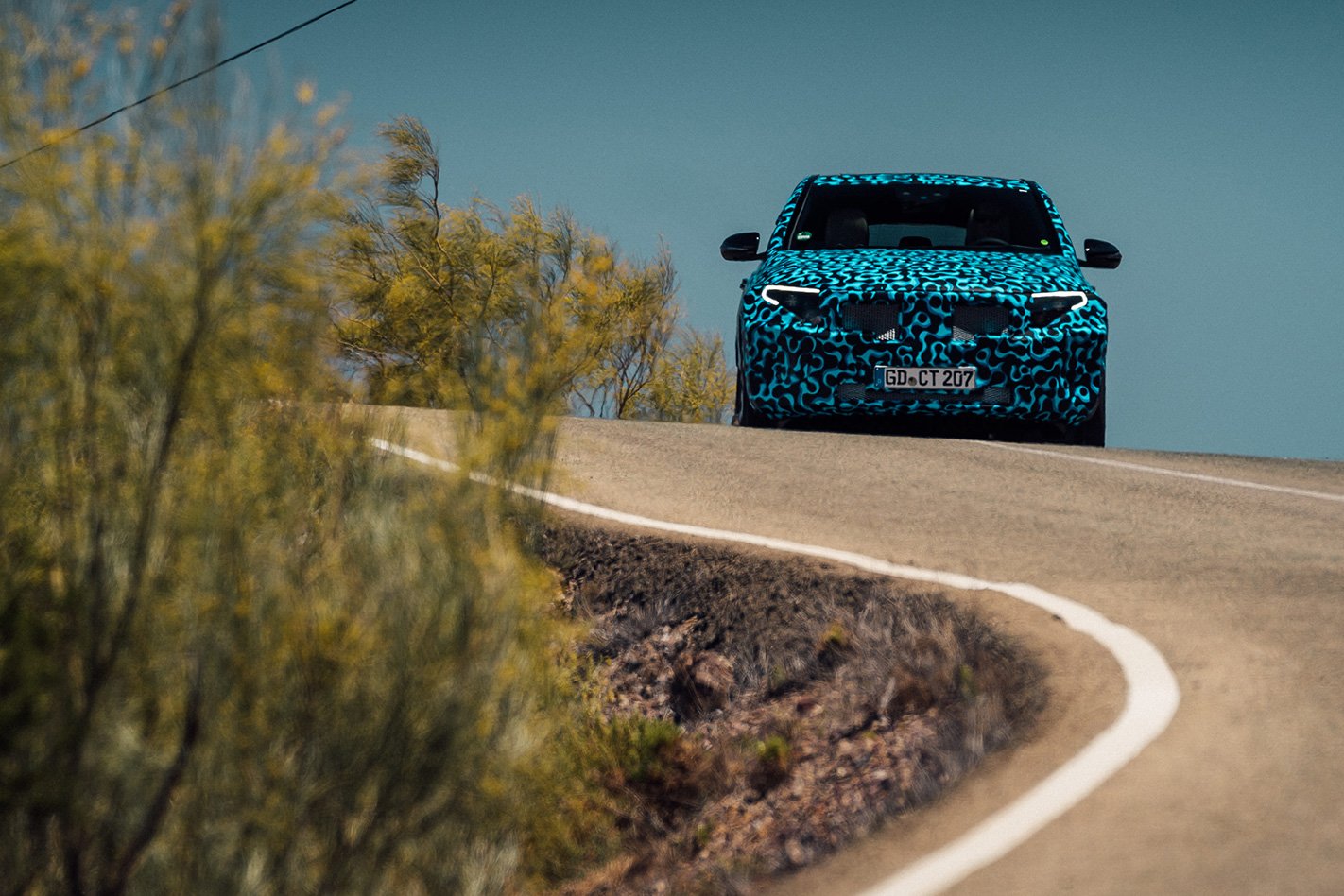
The EQC is just rain drop before the flood for Mercedes-Benz, with its arrival heralding the first production vehicle for the new EQ sub-brand. This new sub-brand will then expand to include fully-electric equivalents of Mercedes’ current product range all the way from A-Class to S-Class. It’s expected the EQC will be followed by an EQA hatch in 2020.
2. The numbers are impressive
Okay, so here are the raw stats we know so far. The EQC will be powered by a 400-volt lithium-ion battery pack which stores “more than 70kWh” of electrical energy. A pair of identical electric motors will sit on the front and rear axles, delivering a total maximum power output of 300kW. According to EQC engineers, the vehicle’s battery contributes 600kg to the total vehicle weight of circa 2300kg, but it’ll still crack 100km/h from a standstill in “less than 5.0 seconds”. Range? Around 480km.
3. It’ll ditch some conventions, while observing others
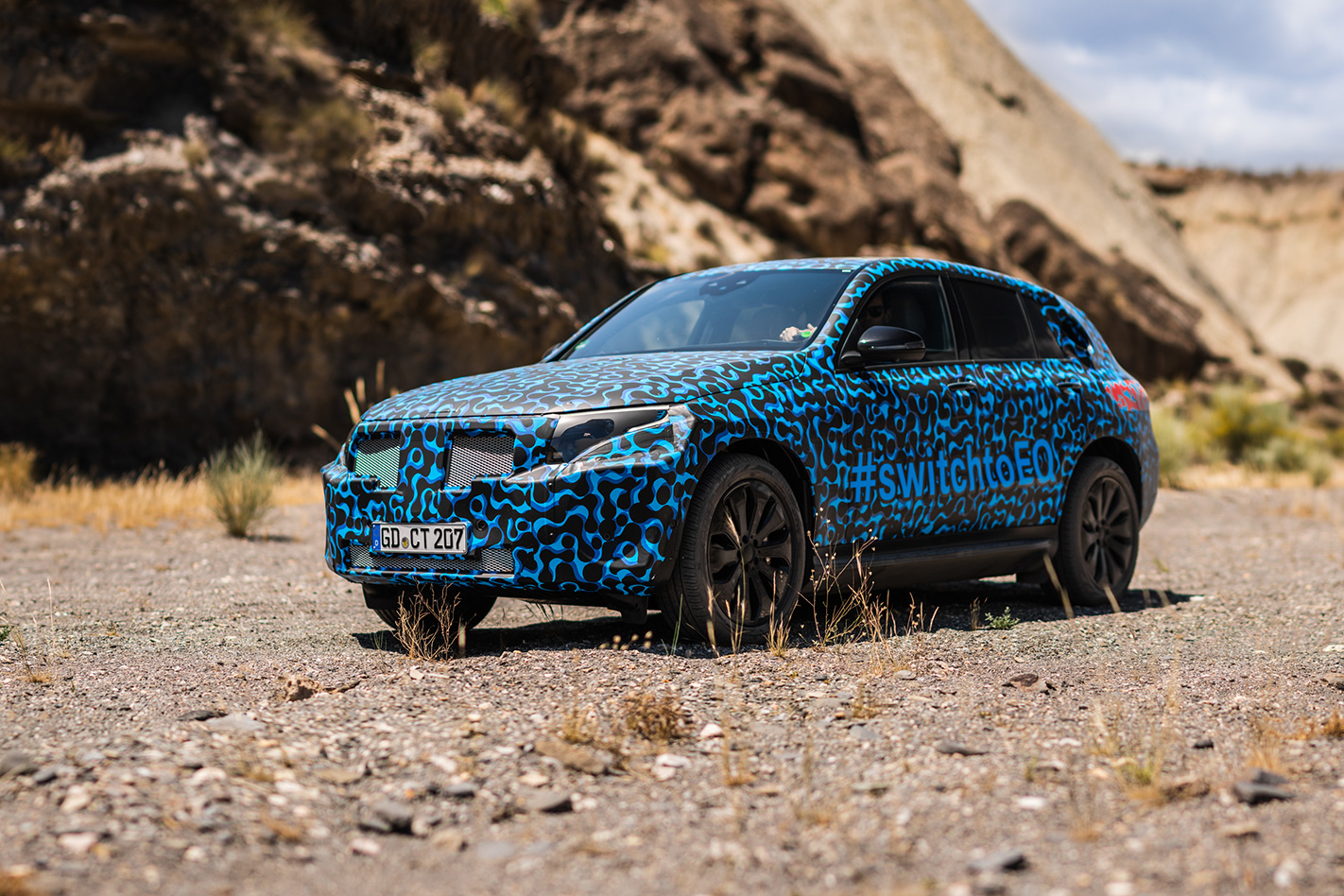
Unlike the Jaguar I-Pace, which tears up the design tropes associated with its combustion-powered siblings, the EQC’s design language is recognisably Benz, with a body shape not dissimilar to its closest relative the GLC-Class. While the car won’t be revealed in full until early next week, Mercedes teased some of the vehicles designs online, including the unbroken rear brake lights that run across the width of the car. While this has become a popular performance car design cue, Mercedes has used a similar style at the front of the EQC, with an LED lighting strip running along the top of the grille beneath the bonnet and between the headlights.
4. It’s been engineered with a next-gen chassis
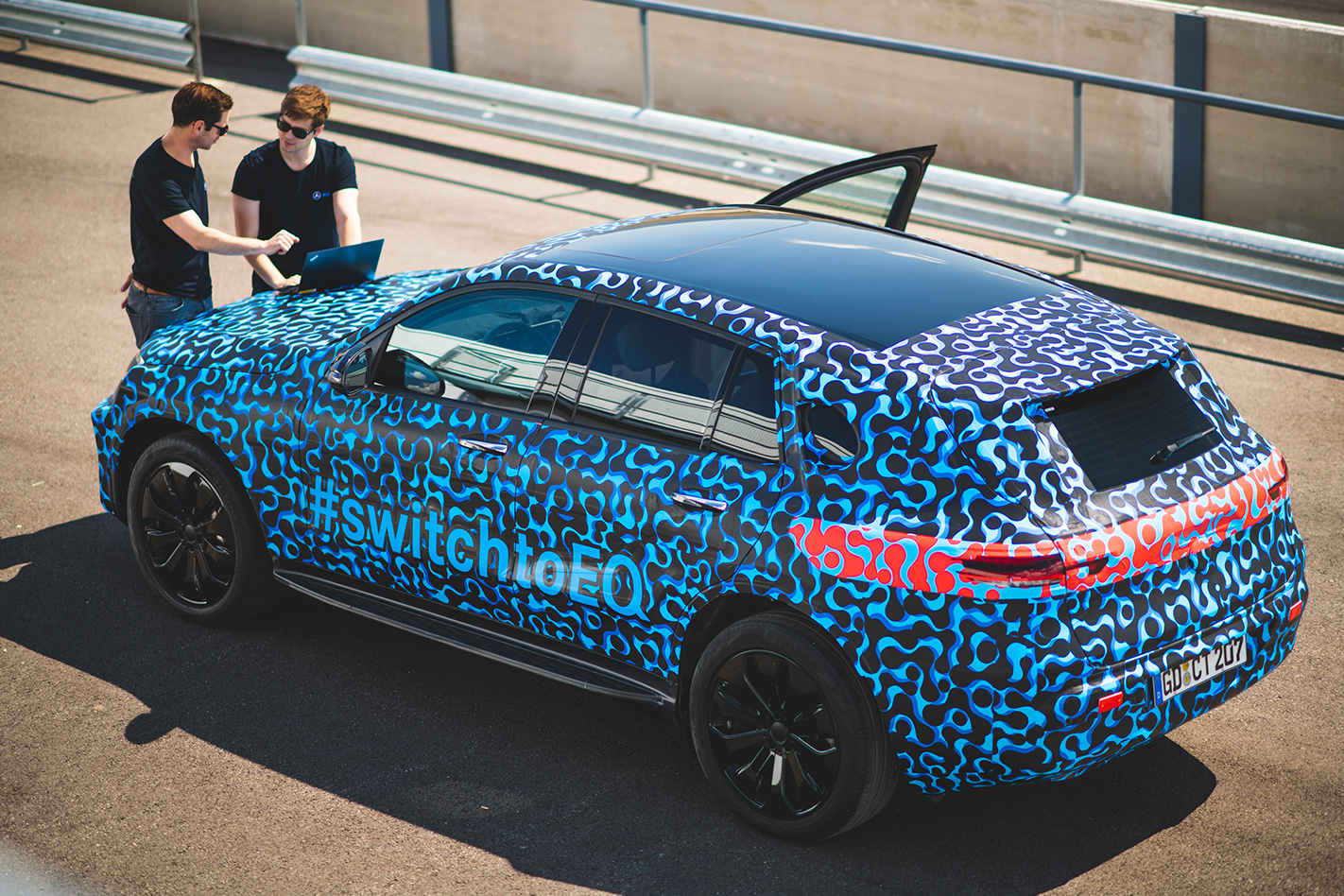
Underpinning the EQC is an entirely new platform, dubbed the Electric Vehicle Architecture (EVA). The platform is expected to underpin the entire EQ family, and is constructed from a combination of hot-formed high-strength steel and aluminium. In terms of size the EQC will sit between the GLC-Class and GLE-Class.
5. There is some tricky tech in the wiring
Part of the new architecture is a cutting-edge wiring loom which allows the EQC absolute flexibility in the way it divides its power between the pair of electric motors. The loom connects the motors on the front and rear axles, and can send up to 100 percent of system torque to either end as required, meaning the EQC can be all-wheel-drive, rear-wheel-drive, or front-wheel-drive, as decided by the sensor pack and software.
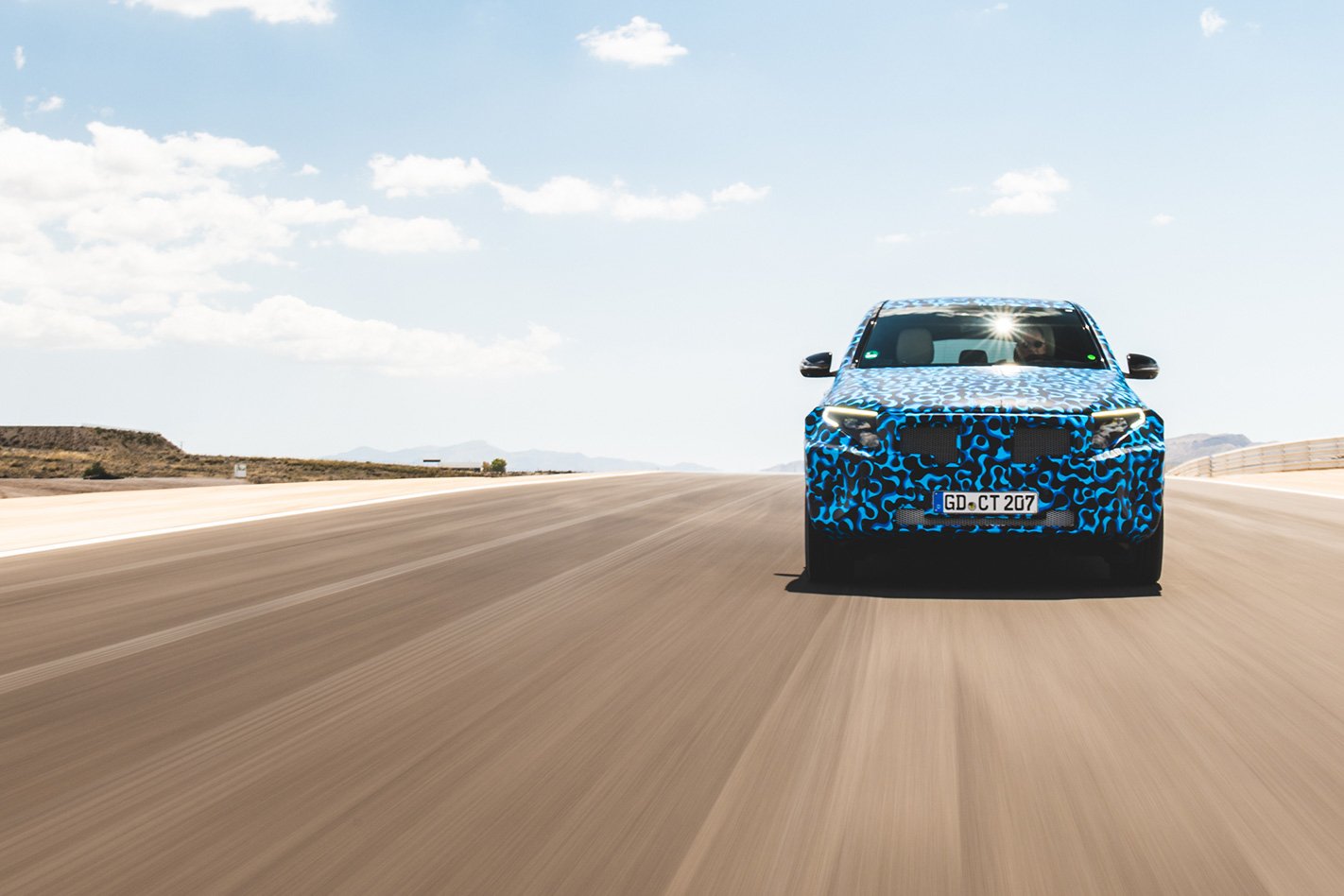
6. Being slippery is a big focus
Tricky aerodynamics are no longer the sole dominion of track-focused hypercars, with the EQC spending plenty of time in a wind tunnel during development. Merc engineers have attempted to make the SUV’s body as aerodynamically efficient as possible, reducing ride height, concealing the windscreen wipers beneath a flap on the trailing edge of the bonnet and replacing a superfluous front grille with a flat panel. With no requirement to route an exhaust, the underside of the car can be cleaner with smarter airflow management towards the rear.
7. There will be plenty of unique features
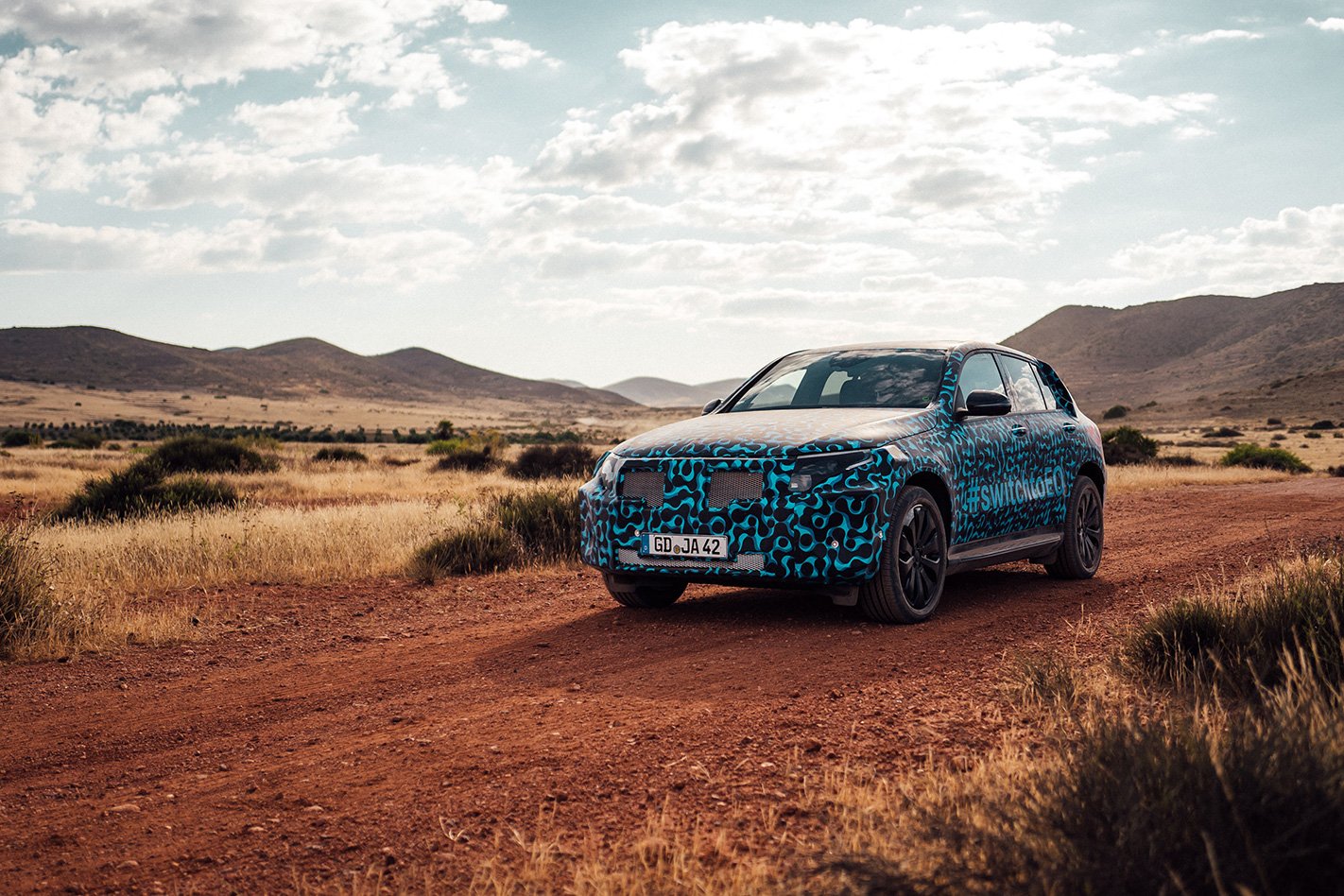
Mercedes engineers have worked hard to set the EQC apart from its established rivals. At release, the vehicle will have a number of unique features, such as steering wheel paddles that allow the driver to alter the level of regenerative braking through four steps (the Jaguar I-Pace, for example, has only two levels). Mercedes-Benz is also developing a smart driving mode that will rely on sensor fusion technology to adjust the level of regenerative braking automatically according to road and traffic conditions, using data from radar and video camera systems, as well as digital maps.
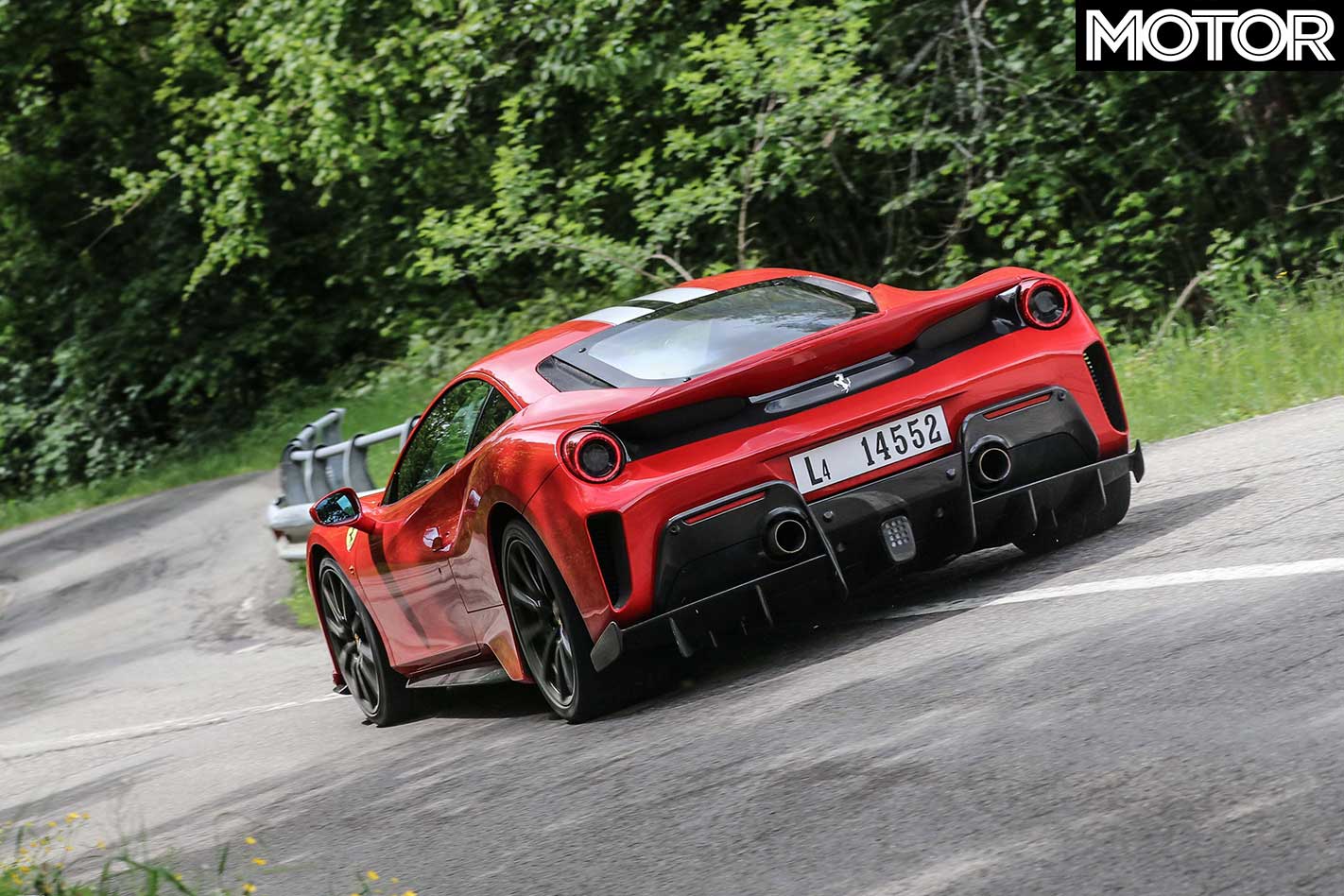
Ferrari is so determined to stop turbochargers from sucking the drama out of its venerable engines that it’s devised plans to basically reinvent the technology. The Italian outfit recently logged a patent in Europe detailing a unique turbo system that, if executed properly – on engines such as those in the 488, seen right – will blow away convention and the competition.
However, before we dive into the juicy details behind Ferrari’s uninspiringly titled ‘Method To Control An Electrically-Operated Turbocharger In A Supercharged Internal Combustion Engine’ document, let’s cover the basics.
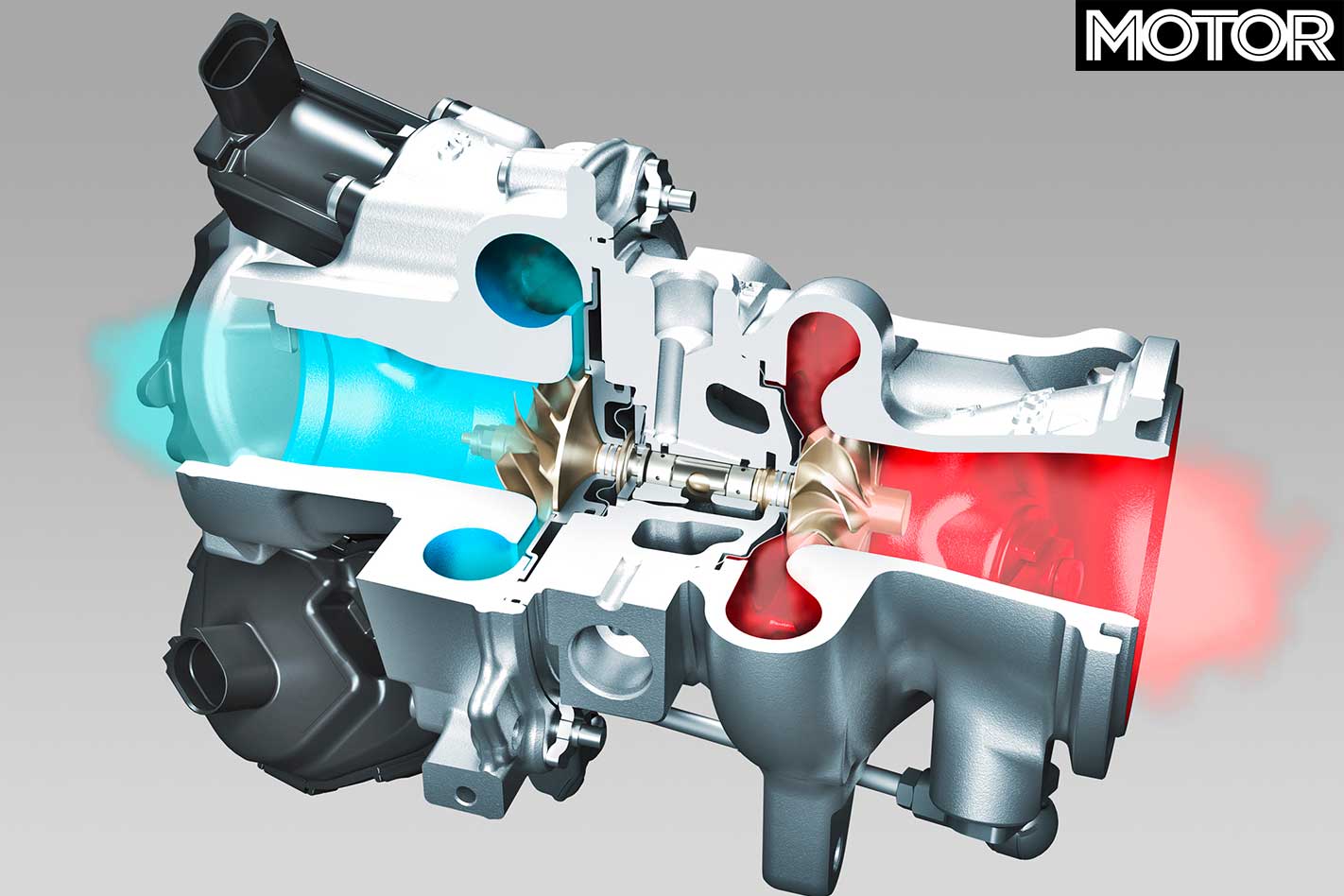
Living in a snail-like housing, this is connected to another fan, in another snail-like housing very nearby, by way of a shaft. This other fan, the compressor, pumps air into the engine. More air, more fuel, bigger bang, more power.
Traditionally, there are costs. Response is one, efficiency another, then there’s making it all fit in the engine bay. Yet perhaps most important to a company like Ferrari, which prides itself on the cry of its atmospheric engines, is sound. This, and throttle response, has kept its engineers up at night.
And so, in what could be one of the happiest petrol-electric marriages thus far, Ferrari has used electricity to split the turbocharger. In this patent, Ferrari ditches the turbine-compressor shaft and divorces the two parts completely. Instead, the compressor is now driven by an electric motor, allowing it to reach a desired rpm (and boost figure) as fast as that motor can deliver it (almost instantly).
There’s still a turbine but it now spins a generator. This generator charges a battery, which supplies juice back to the compressor’s motor.
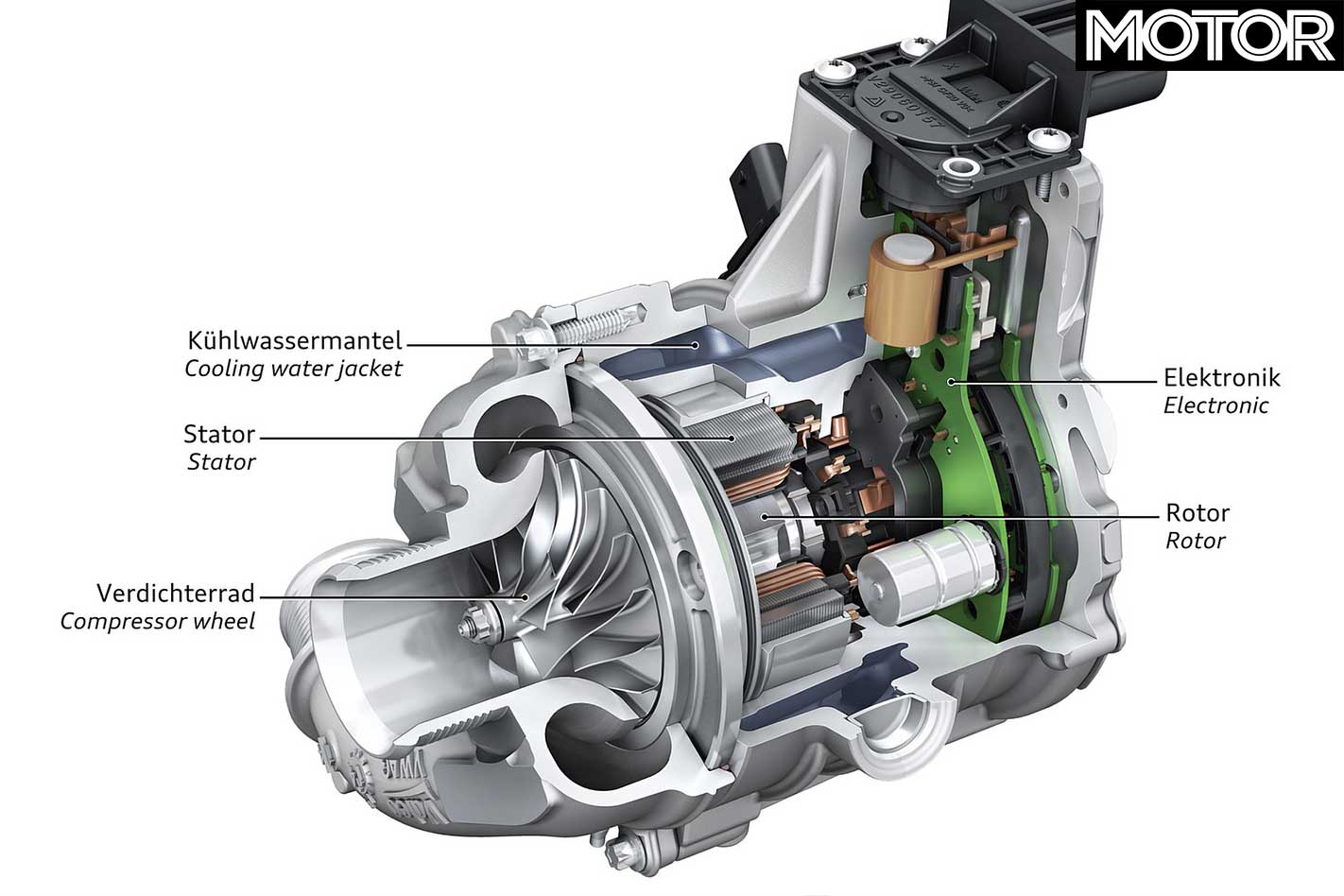
So smart yet so simple, huh? This also allows both components to be designed without any compromises needed to accommodate the other’s goals (boost, flow, efficiency) but the real advantage is the turbine’s generator can charge the battery pack even when boost isn’t needed.
On top of that, if there’s enough electrical charge (which is always the case in higher rpms, according to Ferrari), the generator’s resistance can be eased to quicken exhaust flow and “increase the intensity of acoustic emission”. Which makes us want to get up and dance about in a jig.
It’s all very clever. And electric turbocharging isn’t all that’s similar to Ferrari’s F1 tech here, as the patent outlines an extra electric motor nestled in the car’s drivetrain. It’s hooked to the same battery as the turbine and can either assist charging it, or drain it to deliver a power hit directly to the wheels, F1 KERS-style. Expect big power from such applications.
In doing this, Ferrari has envisioned turbocharging with very few downsides and given us a glimpse into what might transpire in the following years. While there’s no way of telling how far this technology has been taken within its engineering wings, it’s a blueprint that shows how Ferrari might deliver on the promise of ultimate performance and its commitment to more hybrid vehicles.
Importantly, it reveals what’s possible for fast cars in a turbocharged, electrified world. Bring it on.
A Championship Winning Idea
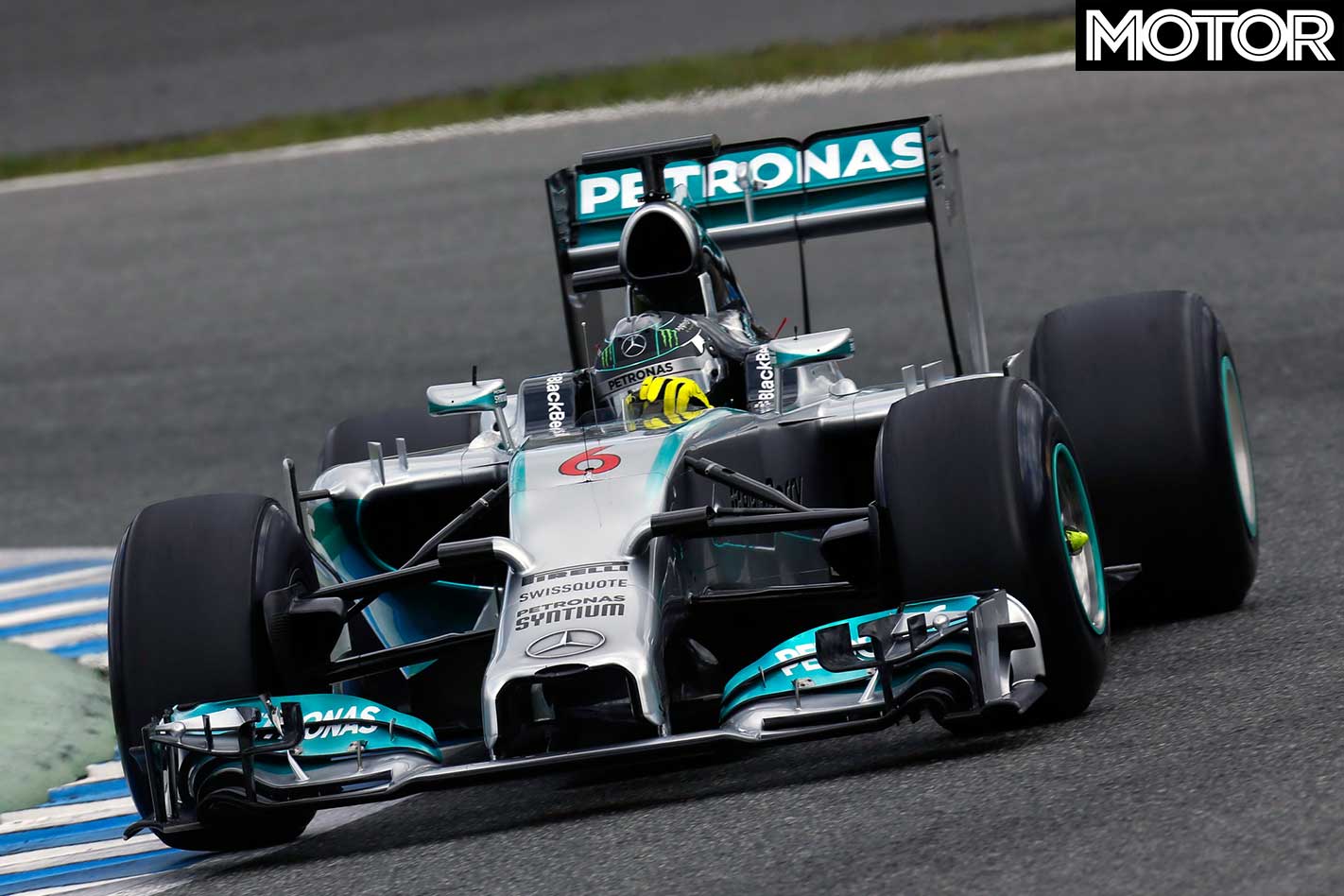
Mercedes-AMG has also experimented with splitting the turbocharger, but in its Formula One cars – and to devastating effect. With Formula One’s hybrid turbo era forcing an MGU-H on teams, Mercedes-AMG saw the opportunity to split the turbine and compressor on either end of the 1.6-litre V6 in the W06 racer. The shaft remained and ran in between the engine’s valley and through its generator/motor.
By doing so, Mercedes gained crucial advantages, with a cooler compressor gifting the team more reliability and power. It also shrunk the required cooling gear, which thinned the car’s bodywork and reduced drag.
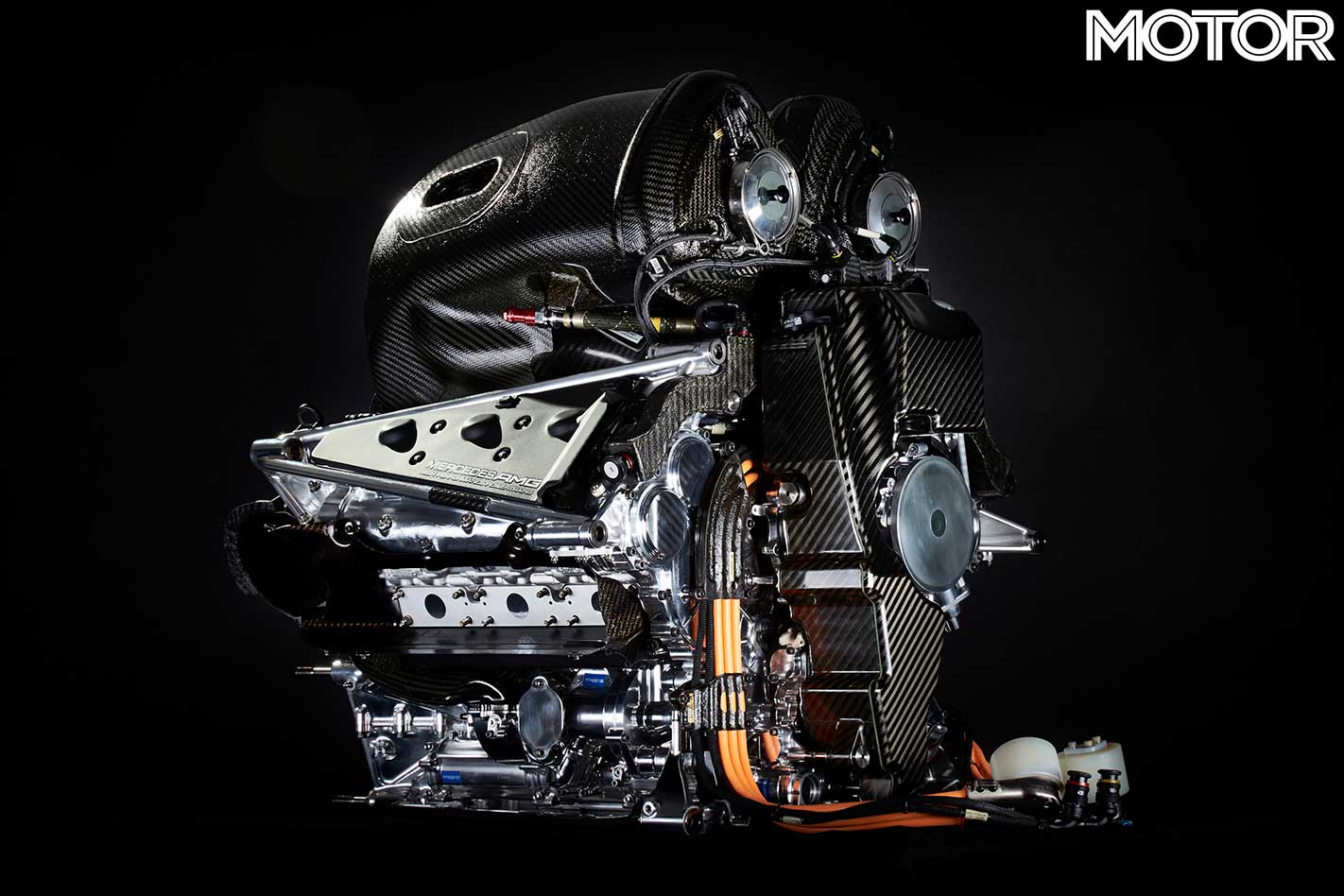
Initial press shots of Mercedes-AMG F1’s power units actually featured a completely different turbocharger and MGU-H design to disguise its idea. The technology, though, has become much more public after Mercedes-AMG announced its road-going Project One hypercar will launch with a de-tuned version of its F1 power unit.
How Ferrari’s split electric-turbocharger will change the game
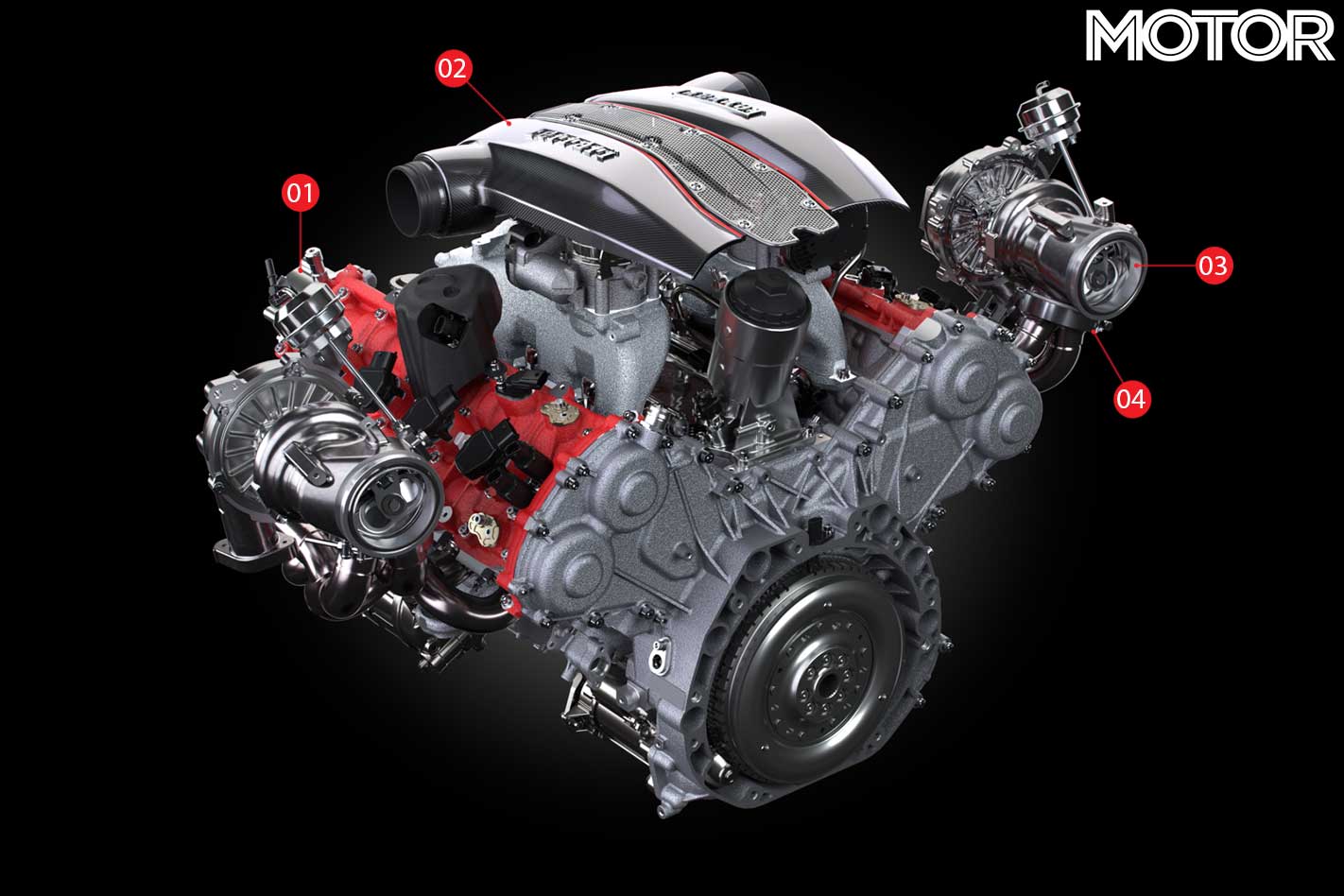
01 – IT WILL SOUND BETTER A microphone in the cabin near your ear will help determine how much extra growl the turbine needs to make, says Ferrari. Since it’s fully manipulated by the software controlling the turbine and generator, it also can be tuned with different maps for each drive mode.
02 – IT WILL PACKAGE BETTER Separating the turbine and compressor creates new packaging options. The compressor can now be isolated from exhaust components, shrinking cooling needs, and radiator sizes, and can be placed upstream closer to intake manifolds.
03 – ECONOMY GAINS The turbine can now capitalise on the extra space by being situated away from heat-sensitive parts. Exhaust manifolds can be lengthened for efficiency, which reduces back pressure, enabling leaner fuel ratios and improved economy.
04 – SHOCKING GENIUS It’s an inspired idea that melds the concepts of electric supercharging with the MGU-H tech (Motor Generation Unit Heat) that Ferrari uses in F1. Fabrizio Favaretto, head of hybrid and rear-engine systems, is credited as the inventor.
In the tech industry, ‘vapourware’ describes products that get hyped but never actually appear. Sadly, most sports car start-ups deserve the same description. Too often we get a press release announcing a new player or the rebirth of a famous old name, a launch party and an image or a clay model, but ultimately no car.
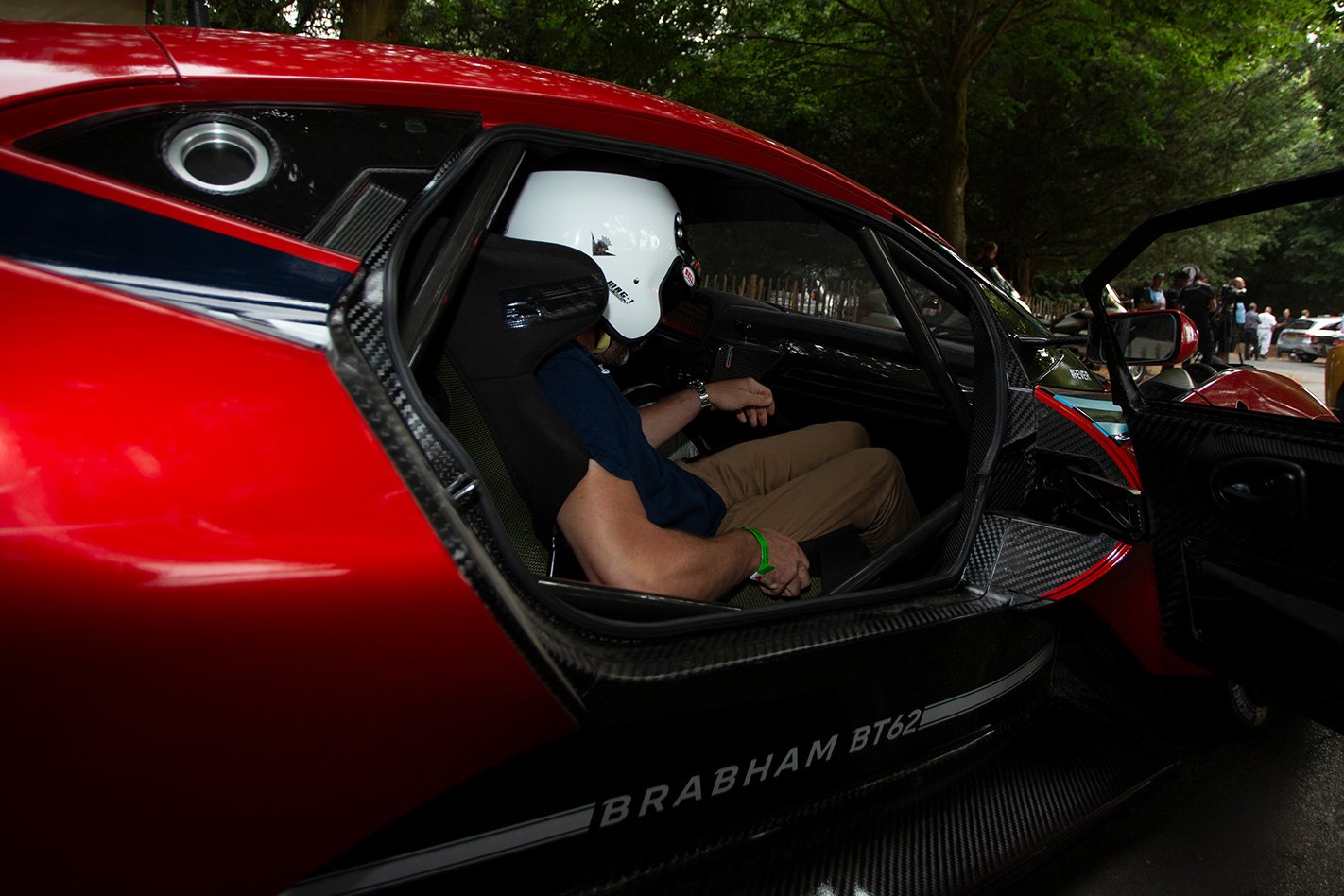
But the only vapour emanating from Brabham Automotive is curling gently from the twin tailpipes of its new BT62 track car as it idles on the start line at the Goodwood Festival of Speed, just three months after it was unveiled at Australia House in London. David Brabham is already strapped in, and motions me into the passenger seat. “Come on in, mate,” the Le Mans winner says. “Welcome to the office. Sorry it’s so bloody hot.”
The recent welter of low-volume, high-power, extreme-price track-only specials from the established supercar makers might feel a little irrelevant to most of us, but the Brabham may have caught your attention for a) coming from the family of Black Jack, Australia’s greatest-ever racing driver, and b) being built in Adelaide just as the rest of Australian car-making shuts down. After the Agera, the Senna and the Huayra, the Shraya would have made a good name for an Aussie-built supercar. But the BT62 continues the Brabham Racing naming convention that ran from 1961 to the stillborn BT61 of 1992, and seems appropriate given Brabham’s plan to return to racing with a Le Mans entry using a variant of this car in a couple of years. A road car could follow within five.
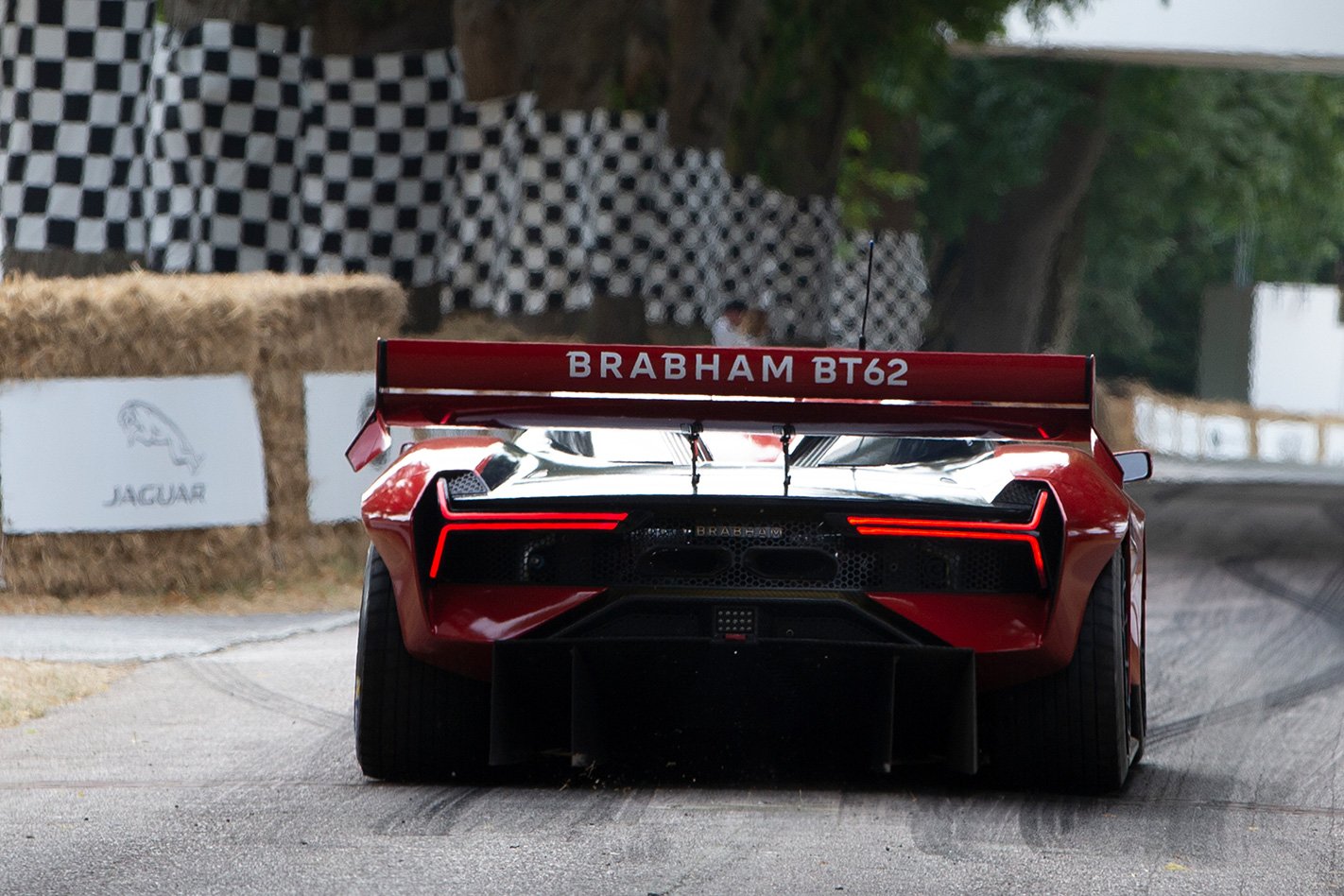
So the BT62 is a race car made slightly more accessible, rather than a road car made more extreme like the Senna GTR. It has a steel space-frame chassis with carbon panels, is powered by a 5.4-litre atmo V8 making 522kW and 667Nm, and drives the rears through a six-speed Holinger sequential gearbox. The block is sourced from an OEM but so heavily modified they’ve taken their name off it, and it’s billed as a Brabham engine. David won’t say where it’s from, but the rumours say Ford. It only has 932kgs to shift, but also the drag required to generate 1200kgs of downforce with a lot of passive aero.
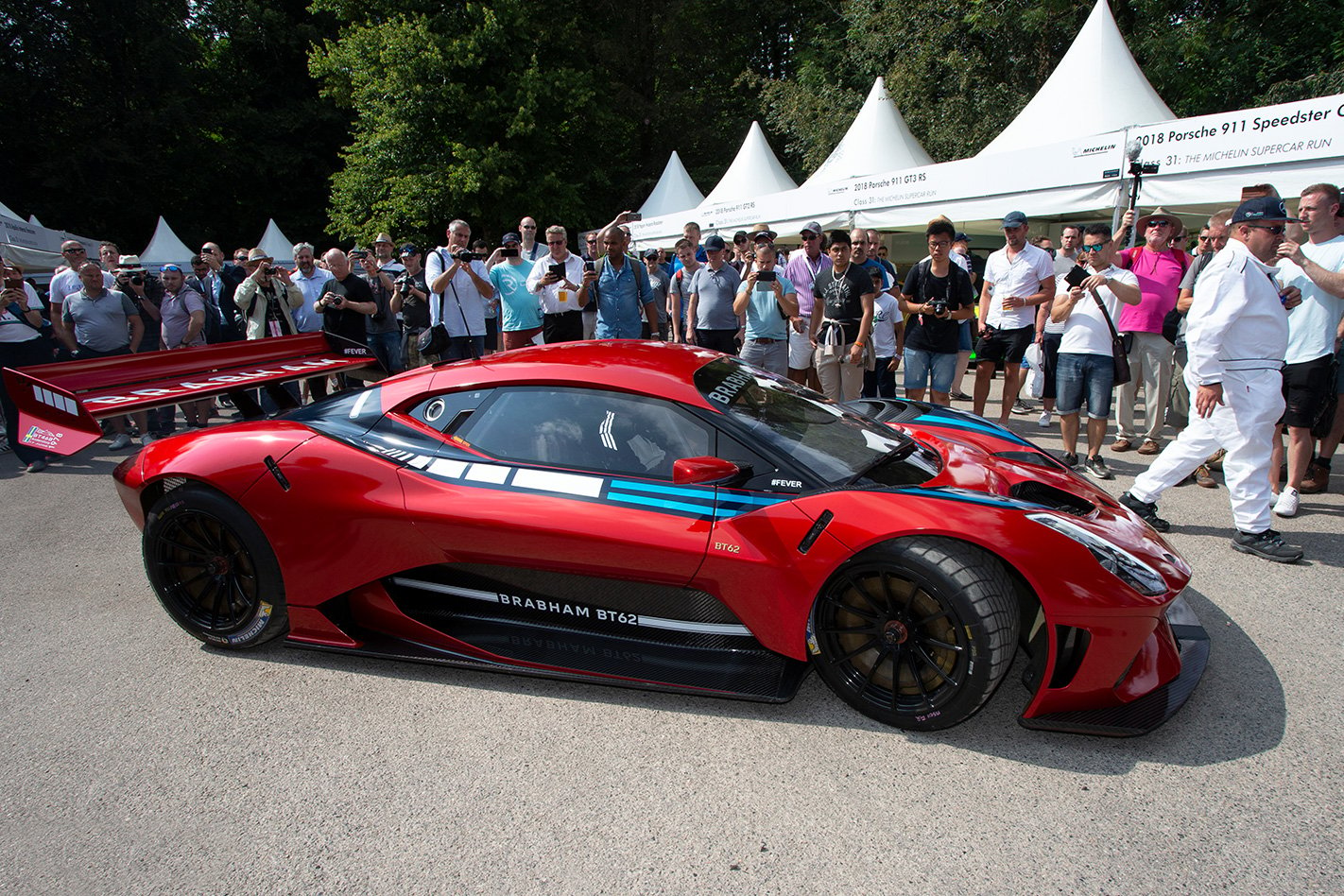
Look past the brutal wing and splitter and there’s a pretty shape beneath, with hints of McLaren in the rear haunches and BMW i8 in the detached bodywork forms around the pinched-in waist.
This is one of two running prototypes: 70 will be made, with the first 35 offered in the liveries of Brabham’s 35 F1 winners. This one bears the colours of Gordon Murray’s mad BT46B ‘fan car’, which won once at Anderstorp, Sweden, 40 years ago before being banned. It was one of Brabham’s finest moments, and the livery is playing well with a knowledgeable Goodwood crowd. The weave of the carbon bodywork is clearly visible through the paint, as it was on the bonnet of an F40 30 years ago. You wouldn’t find that on a McLaren, but there’s a pleasing, race-car honesty and simplicity about it, and it won’t change for production.
To get in you fling the featherweight, carbon and acrylic door wide open and lever yourself past the roll cage, though the aperture itself is big enough to be practical. The cockpit is stark, of course. The seats are nearly recumbent. David has a rectangular race ‘wheel’ ahead of him with the usual buttons and manettini, and 3×5 block of switches angled towards him from the central console. There’s a 12.0-inch instrument screen ahead of him with expensive-looking graphical clarity, good enough for a ‘normal’ supercar. Below that are a knob to adjust the brake bias and a lever to move the pedal box, which is a small work of engineering art on its own, set on a little carbonfibre plinth so your heels can rest at the right height without the weight of a complete false floor.
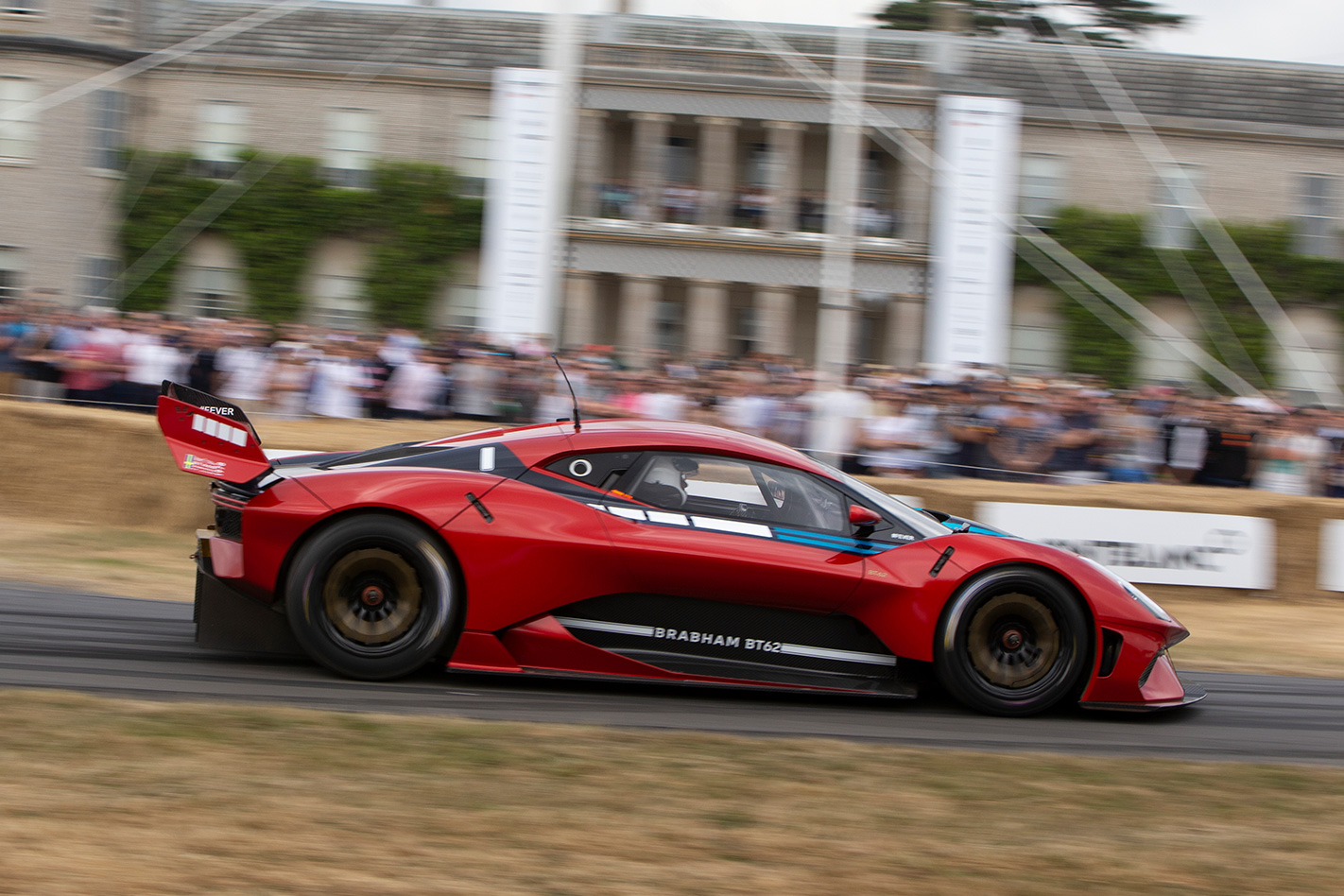
I’m not about to give you a definitive verdict based on a one-minute fang up the hill at Goodwood and a leisurely descent, mostly in neutral. But you still learn plenty. Beyond the simple fact that Brabham kept the project so secret and have delivered a running prototype so soon, it’s impressive that the car will do eight runs up the hill today in 30-degree heat and stop-start conditions less than perfect for a race car without missing a beat. As David rolls us up to the start line it’s also much more refined than I was expecting, with less noise and fizz from the engine penetrating the cabin, and less of a thwack to the back of the head as the gears go in.
The BT62 may have road-car manners, but as the marshals wave us off it’s instantly obvious that it’s race-car fast. The clutch is only required to get the car away, and David rolls us off the line before getting deep – though probably not all the way – into the throttle. Still, he and his car are plainly ohhhhhh-shit quick, the revs on that big display still leaping up long after anyone sensible would have braked for the looming first right-hander. Just as I’m taking a possibly final look down at my legs he hits the six-pot carbon-ceramic stoppers and we’re dancing through the corner before getting hard on it again up the straight outside Goodwood House. The noise never gets shrieky or painful: just a lovely, loud, old-school V8 rumble overlaid with the whine of the transmission. With the Ohlins dampers providing a sweet ride over Goodwood’s imperfect tarmac, the complete experience is terrifying but surprisingly comfortable, like sitting in premium economy in a freefalling aircraft.
But is it worth $1.8m, before taxes? The good news is that there’s no luxury import tax to pay, as the BT62 is made in Australia, and not legally a car anyway.
You’re also not just paying for the car but for a driver development program with four days each on four different tracks and David giving the instruction. Because Brabham hasn’t (yet) built a road car of its own, few people have driven one, so you’re joining a very select and often fairly famous club. And judging from the way David is mobbed as he tries to walk around Goodwood, that name, once on a par with McLaren and Lotus and Ferrari, still counts for a lot.
