
In the US in the 1960s, professional ten-pin bowlers earned, on average, double what professional footballers did. In 1963, America’s top ranked ten-pin bowler Harry Smith was paid more than baseball MVP Sandy Koufax and NFL MVP Y.A. Tittle… combined.
In 1964, ten-pin legend Don Carter signed an endorsement deal with ball maker Ebonite for $1 million – about $8 million today, adjusted for inflation – which was 200 times what Arnold Palmer made from his endorsement deal with golf outfit Wilson. Bowling in America was big business.
Then the bubble burst. And now big money in bowling is when a kids’ party orders 20 hot dogs at once.
So the news that Lewis Hamilton will be paid eleventy million for the next couple of seasons in no way proves that the future of F1 is golden. Years from now, Hamilton and co will be relegated to brain teasers at pub trivia nights.
Even Hamilton knows F1 is on a slippery slope (not literally, that would actually make it more interesting at this point) – pushing for a two-year contract instead of three: “I personally wanted to do two. We were talking about doing three, but … it didn’t make sense for me to commit into the unknown.”
Sure, because he wouldn’t want to find himself caught out with nothing but a hundred million dollars to fall back on.
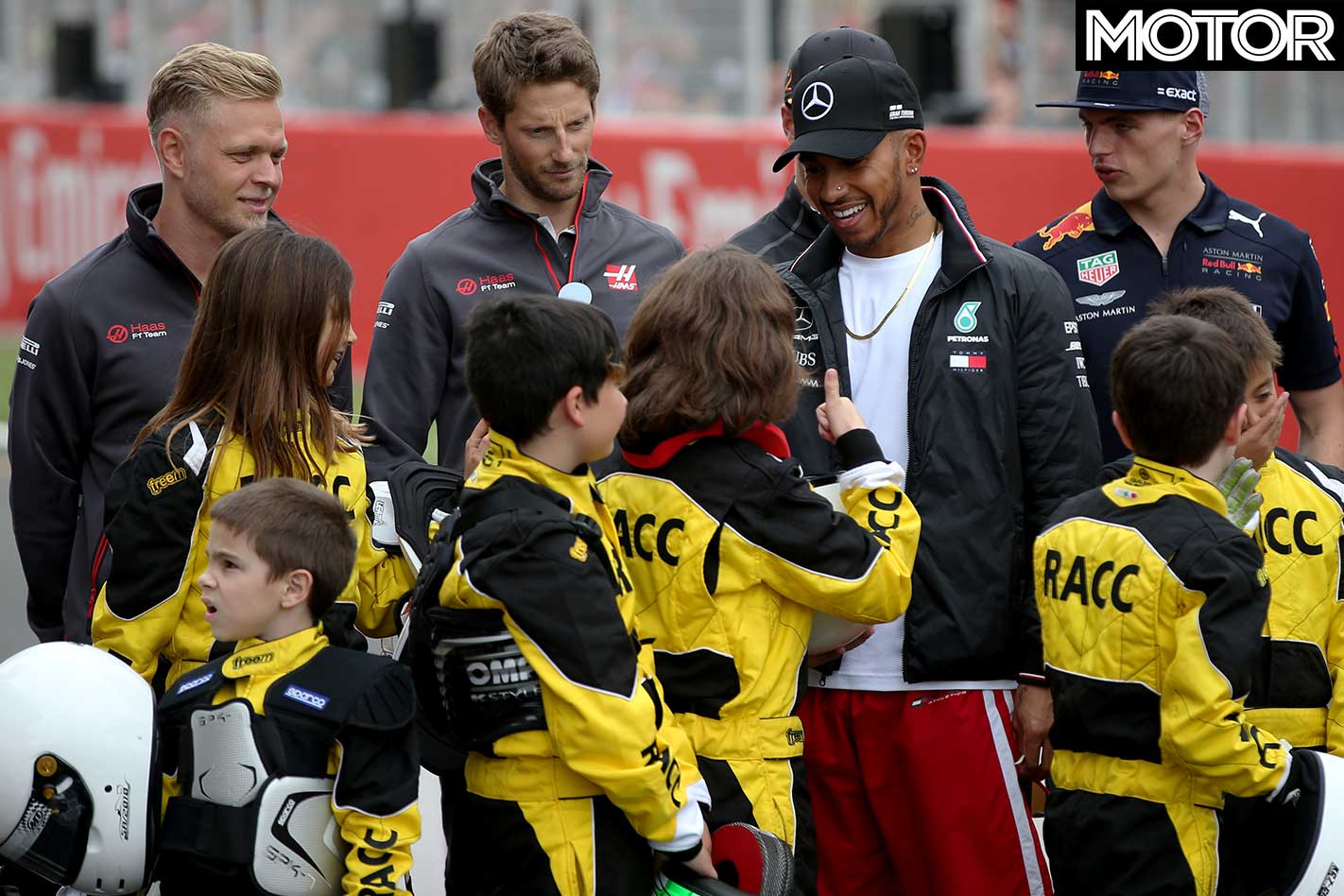
You already know motorsport is in decline – beyond the uncertain future of F1, NASCAR is haemorrhaging viewers faster than its viewers are haemorrhaging liver cells, and in Australia we seem to be on a steady decline from V8 Supercars to Supercars to Cars to No Cars to Track Development Application.
Experts and pundits have all sort of theories as to the causes – it’s the TV rights, it’s the competition with other sports, it’s the safer, aka less exciting nature of racing. But the real reason? It’s that toddlers are annoying. They are. God love them, the adorable little bundles of joy, they are the future of our planet and the apples of all our eyes.
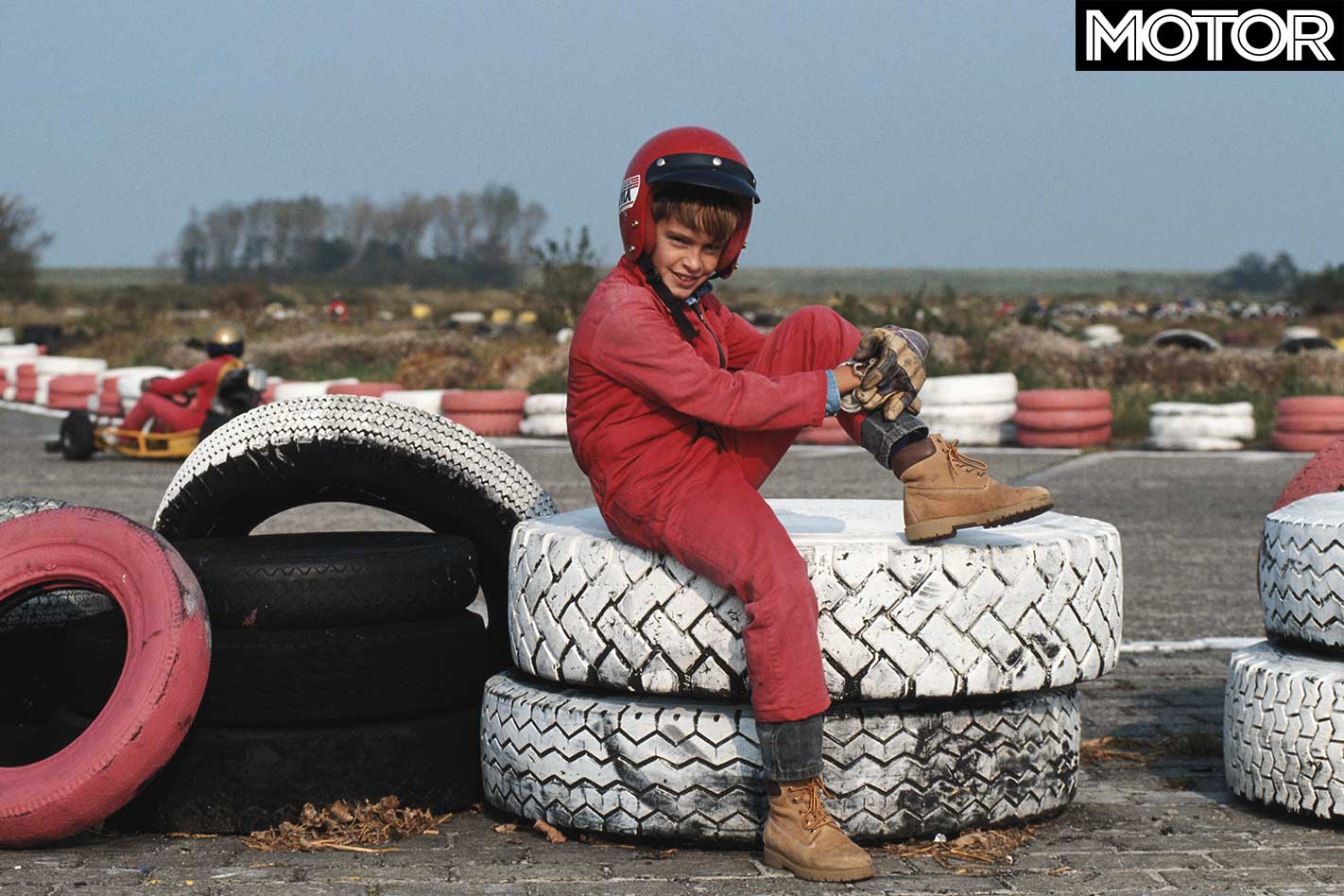
But lord are they annoying. And exhausting. Unless you exhaust them first, wear them out and send them into an afternoon coma to at least give you time to down a couple of stiff drinks and stiffen the sinew for when the irritating little treasures wake up again.
So parents have to enrol their tots in little gymnastics or little soccer or little athletics or little whatever, to tire the little buggers out.
The youngest age kids can start competing in karting in Australia is seven. Seven! They’re practically adults by then! They’re old enough that you can leave them at home alone, knowing that if someone tries to break in, your karting-age child will be able to defend the house using blowtorches and tarantulas.
By the time children are old enough to start karting, they’re either already enmeshed in another sport, or else they’re little butterballs sinking deep into the couch cushions playing MarioKart instead, and the touch of sunlight on their skin causes them to shrivel up and smoke like Nosferatu.
Parents can’t wait till their kids are seven to get them into sports. Parents need activities to exhaust their kids when those kids are at peak-annoyance – so we need to be able to get kids started in motorsport sooner. The younger the better. What could go wrong?
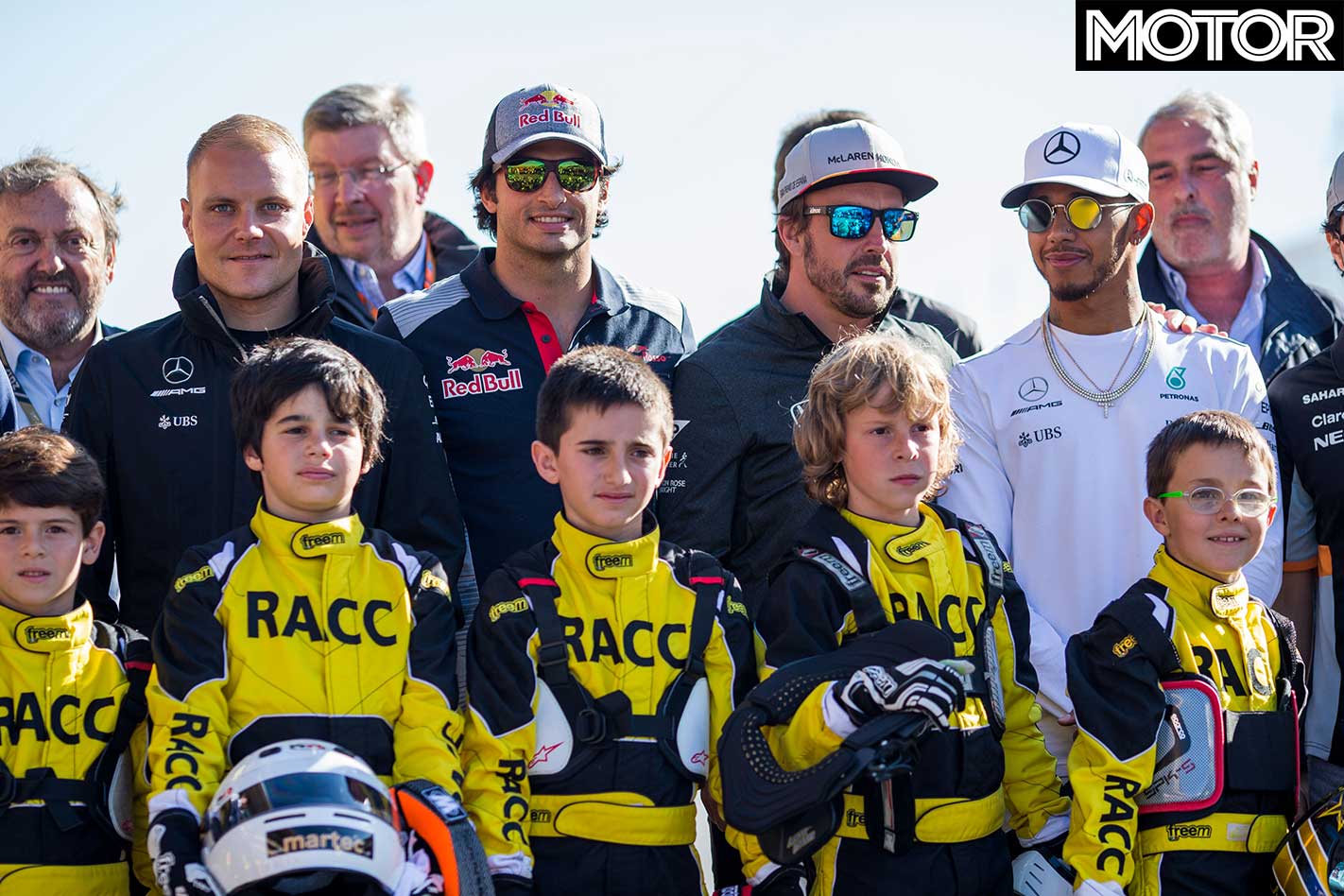
And anyway, sending your kids into karting only puts them on track to become Formula One drivers, and by the time they’re old enough to compete in F1 (say, 11? 12? How old is Max Verstappen again?), who knows if that’ll even be a thing any more.
We need racing for kids. Quarter midget racing is clearly awesome – quarter midgets being the junior level of speedway, not the military version of a house elf; it’s little kids racing one-quarter-size scale versions of open-wheel midget racers. Outstanding – but it only exists in two states, Queensland and Victoria.
What we really need in Australia is to reignite the passion for Supercars – and taking the concept from quarter midgets, what we need is to build a quarter-size Mount Panorama, and put kids in quarter-size touring cars, doing a quarter the speed – so, say 75km/h – down a quarter-length Conrod Straight. While a paddock full of four-year-olds set fire to quarter-size Portaloos. Who wouldn’t want to watch that?
August – September
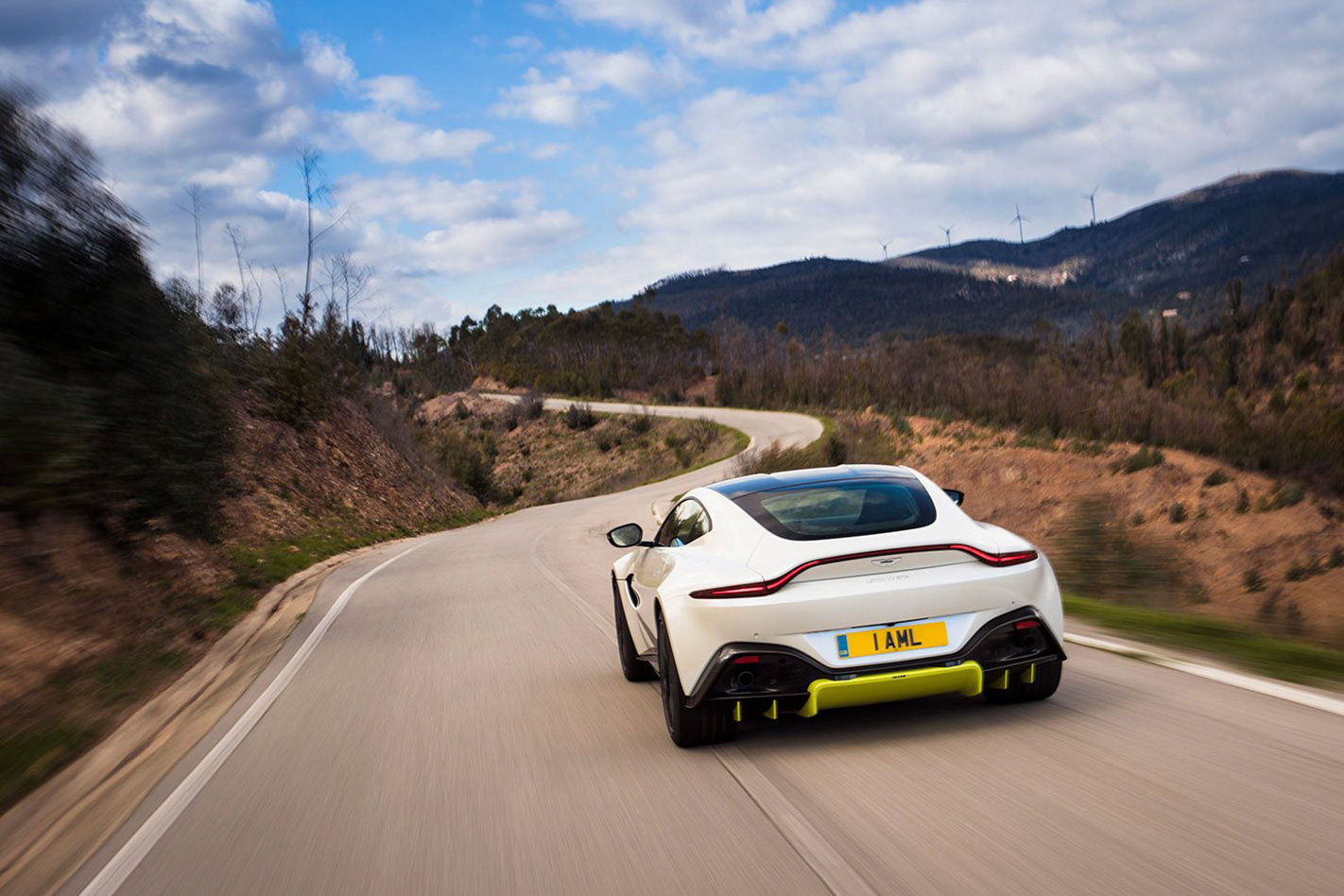
Aston Martin Vantage and DB11 Volante; Audi A7 Sportback; BMW i8 facelift and i8 Roadster; Chevrolet Camaro; Hyundai Tucson facelift; Land Rover Range Rover P400e plug-in hybrid; Mazda CX-3; Mercedes-Benz A-Class; Renault Megane RS280; Subaru Forester; Toyota Corolla; Volkswagen Mk6 Polo Beats and GTI, and Tiguan Allspace.
October – November
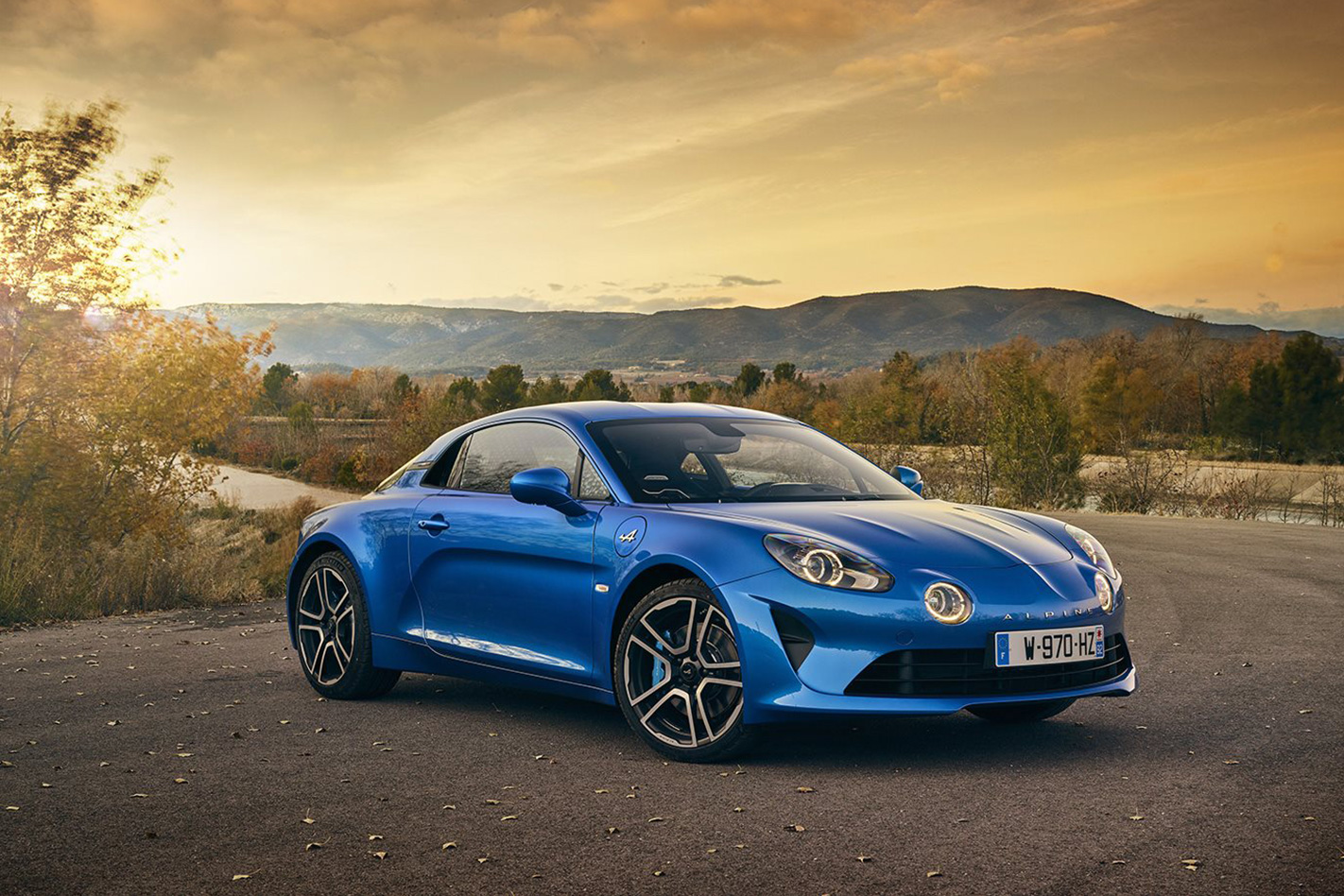
Alpine A110 coupe; Audi RS5 Sportback; Bentley Continental GT coupe; Ford Focus, Mustang Bullitt and Ranger Raptor; Genesis G70 and G80 sedans; Holden Acadia; Hyundai Ioniq hybrid, plug-in hybrid and EV; Jaguar I-Pace; Mazda MX-5 update and CX-9 facelift.
Suzuki Jimny – Due December
If the cushy new Mercedes G-Class is too soft for you, then Suzuki has a hardcore alternative. The first new Jimny in 20 years channels a glorious slice of back-to-the-future engineering. An all-new ladder-frame chassis, coil-sprung three-link live axles at both ends (with a new steering damper to minimise “road shock”) and a dedicated high/low-range gearbox mean the Jimny will remain an off-roading legend when it lands here at Christmas. Flat windows, a side-hinged tailgate and round headlights retain the iconic look, while touchscreen multimedia, AEB, and speed-sign recognition keep Jimny fresh. A new 1.5-litre atmo four (weighing 15 percent less than the old 1.3) will be the sole engine at launch, tied to either a five-speed manual or four-speed auto.
Ford Focus – Due November
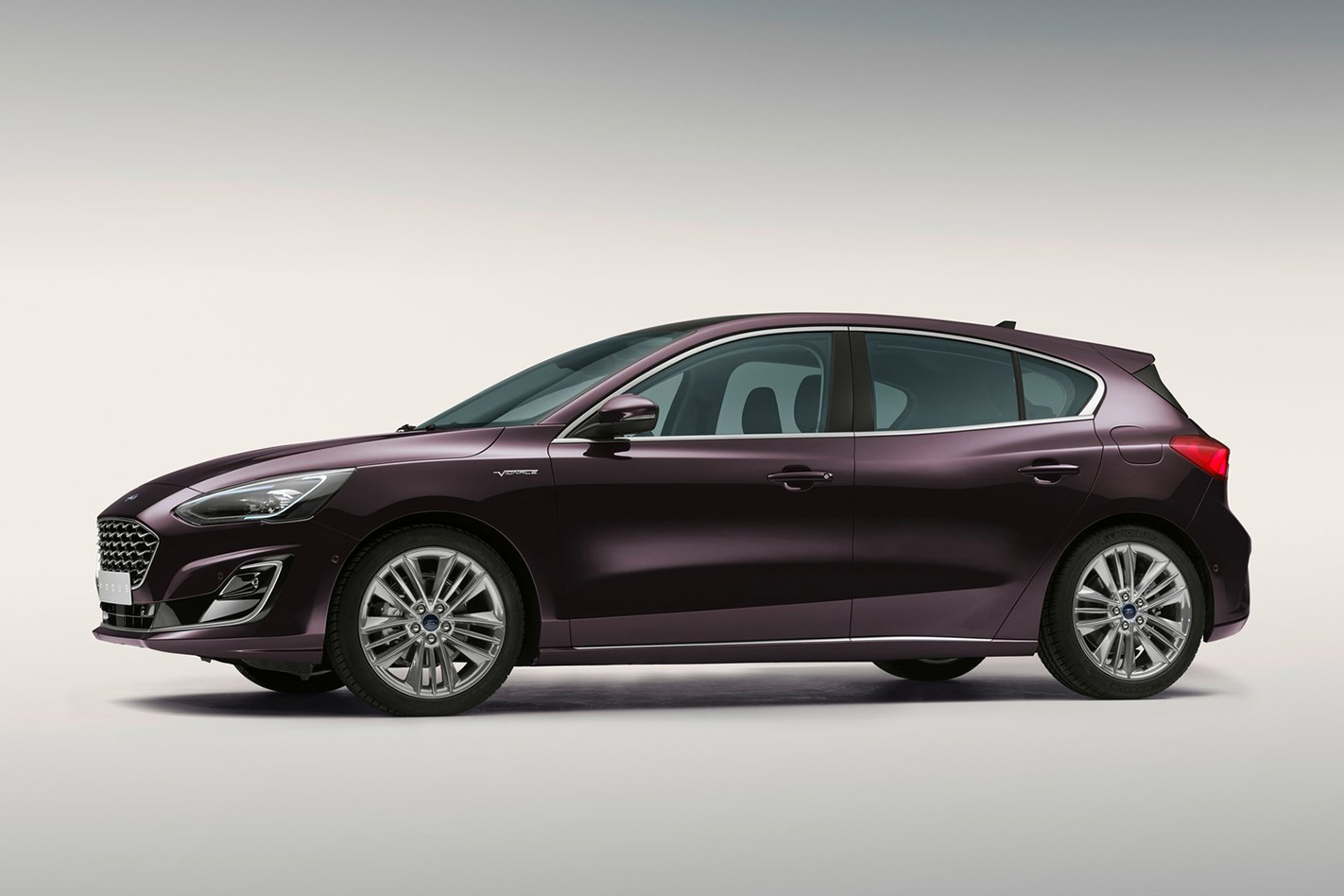
Underpinned by a new-generation C2 platform (with either torsion-beam or multi-link rear suspension set-ups), Ford’s fourth-gen Focus will debut here with a broad range of models late in the year. Hailing from its German factory (not Thailand), the Focus’s headline engine will be a new 1.5-litre turbo-petrol three-pot shared with the new-gen Fiesta ST (due 2019), tied to eight-speed automatic or a six-speed manual ’boxes. Likely to be offered in hatch, sedan and wagon bodystyles, as well as a sporting ST-Line variant, Aussie cars will get standard AEB and lane-keep assist.
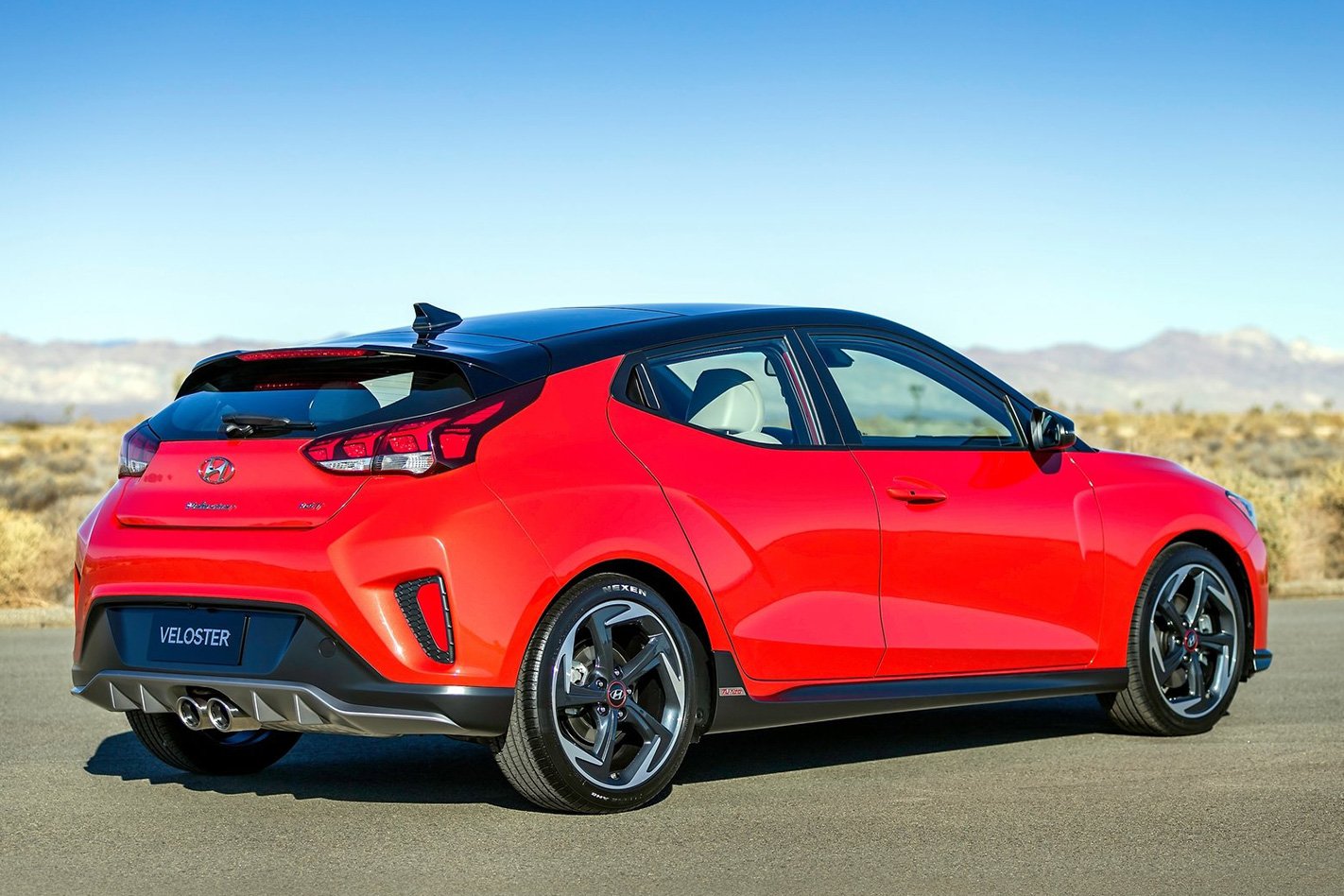
Hyundai Veloster – Due December
Following an unexpectedly successful debut run, Hyundai’s follow-up Veloster should be here by December, mirroring the i30 and Elantra’s powertrain line-up. That means an entry-level 2.0-litre naturally aspirated four with manual or automatic ’boxes, and an up-spec Veloster Turbo with a 150kW 1.6-litre direct-injection turbo, six-speed manual or seven-speed dual-clutch options, and multi-link independent rear suspension. Nothing concrete on the hot-shot Veloster N though. It’s currently only built in left-hand drive.
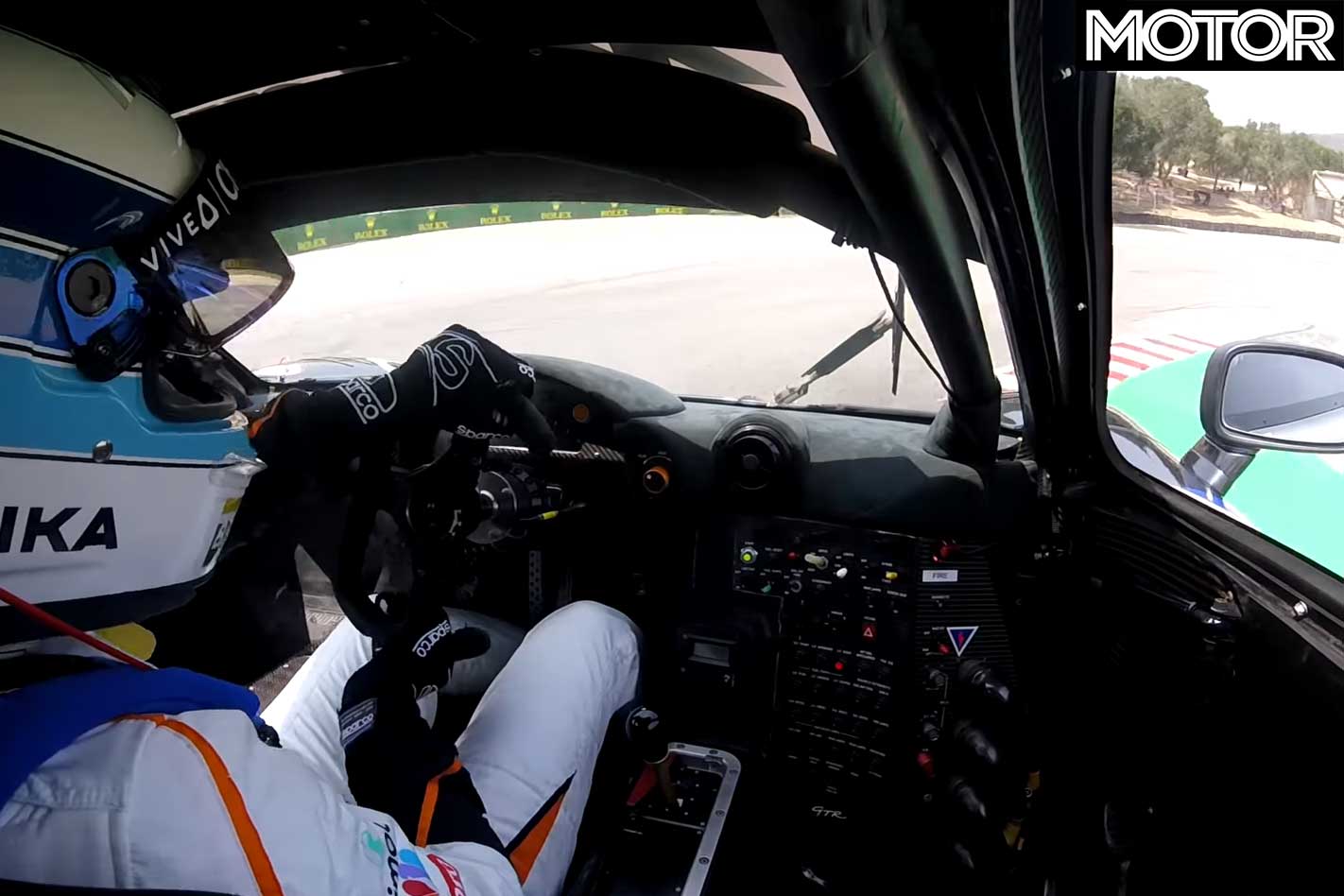
Two-time F1 champion Mika Hakkinen meets McLaren’s 1995 Le Mans-winning F1 GTR. What more could you want? A racetrack? How about Laguna Seca?
If you haven’t watched it already, we’re talking about the six and a half minutes video of Hakkinen punting the iconic McLaren race car around one of America’s most reknowned racetracks.
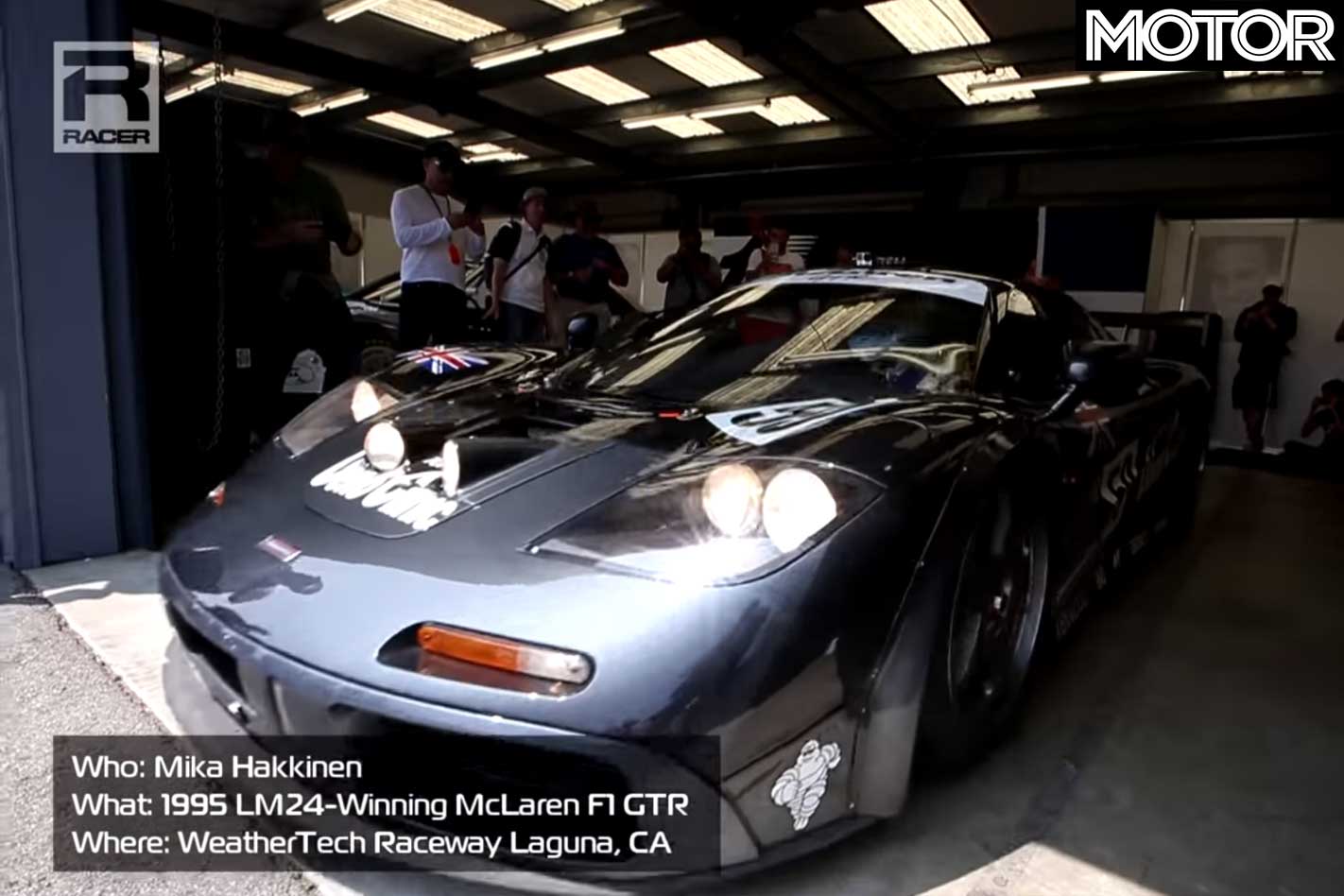
The Flying Finn of Formula One is the man who took out the last two titles of the 20th century, the 1998 and 1999 F1 Driver’s Championships, driving for McLaren.
So it makes sense for McLaren to trust him in the driver’s seat of what is likely one of the most valuable cars in its collection.
Upon McLaren’s Le Mans debut, this car crossed the line first. McLaren details the remarkable victory in a 20th anniversary recollection of the 1995 Le Mans race:
“Our famous win at the 24 Hours of Le Mans in 1995 was unprecedented.
“Not only was the McLaren F1 GTR essentially a road car competing against purpose-built prototype racers, but it was also the first entry by McLaren in the world-famous endurance race.
“Yet we finished 1st, 3rd, 4th, 5th and 13th, and we remain the only manufacturer as of 2015 to win Le Mans at the first attempt.”
Yannick Dalmas, Masanori Sekiya, and JJ Lehto were the three drivers piloting the F1 GTR in 1995, delivering a victory that would also kick-start the McLaren chapter of the race team Lanzante’s history.
But enough of that, enjoy the video!
Dyson, a company more readily associated with bagless vacuum cleaners, has revealed details of a $360m investment in Wiltshire in a factory and test facility in England to equip it to develop a range of electric vehicles, the first of which is due to be delivered in just four years’ time.
The company has already acquired the old Hullavington Airfield site in Wiltshire and the latest plan outlines a renovation of two vast World War Two hangars to create a state of the art production capability. Some 400 staff have already moved to the site after a A$150m investment into a new technology centre at Hullavington.

A further three buildings are on course for delivery over the coming months, providing an additional 15,000m2 of testing space. The second phase of the plan includes over 16km of vehicle test tracks for vehicle development and verification. In addition there’s over 45,000sqm of development space which could house an additional 2000 staff.
The vehicle testing facility will comprise a Dynamic Handling Track, a Vehicle Stability Dynamic Platform, an Off Road Route, a Hill and Handling Road Route, a Fast Road Route (the initial proposed EV has a top speed of 160km/h), and a series of test slopes.
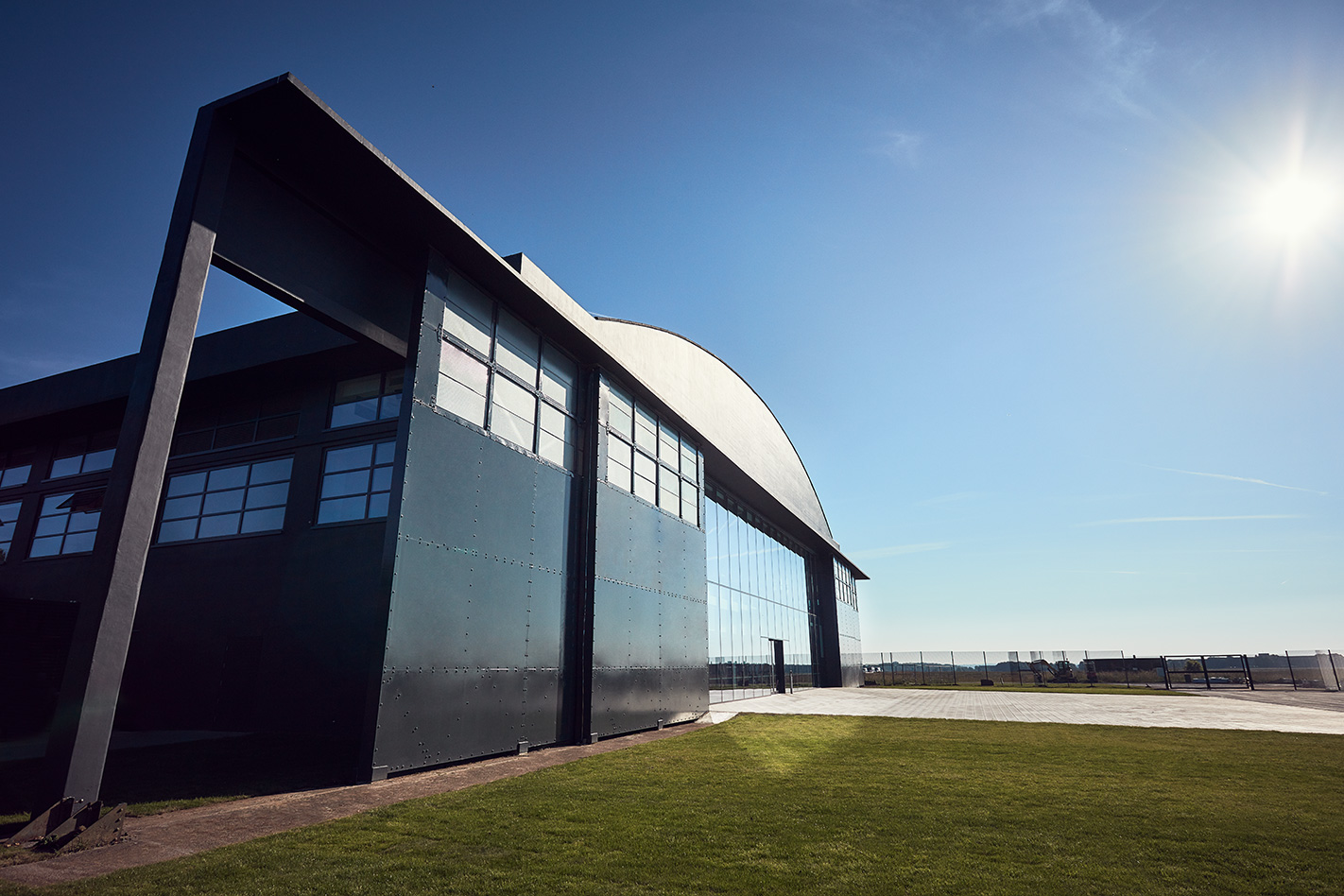
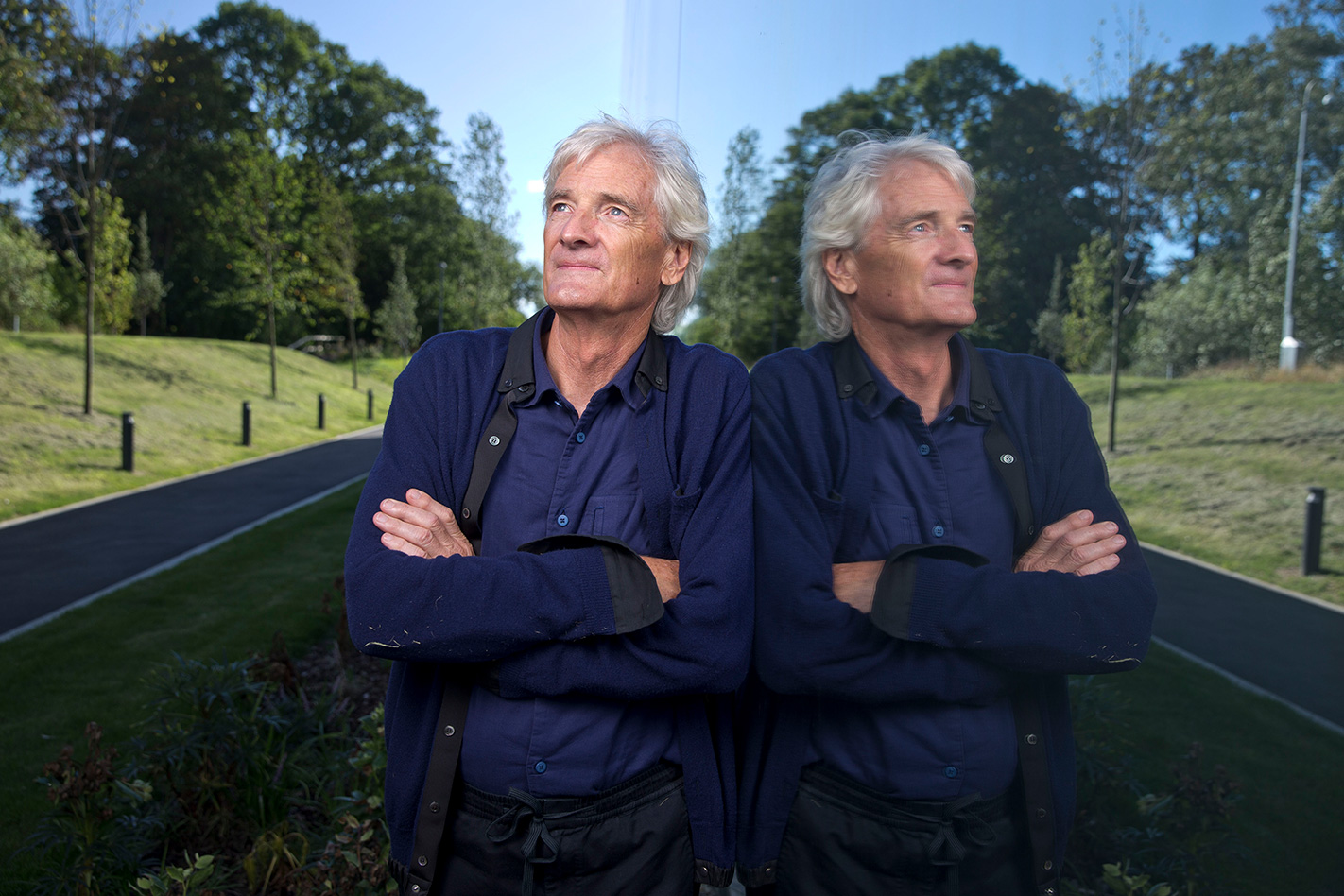
Jim Rowan, the CEO of Dyson, said: “Our growing automotive team is now working from Dyson’s state-of-the-art hangars at Hullavington Airfield. It will quickly become a world-class vehicle testing campus where we hope to invest £200m (A$360m), creating more high-skilled jobs for Britain. We are now firmly focused on the next stage of our automotive project strengthening our credentials as a global research and development organisation.”
In September 2017, Dyson admitted that the company had been developing an electric vehicle for the past three years as part of an ongoing A$3.6bn investment into BEV personal transport. The company has an established record of developing solid state batteries, motors, vision systems, robotics, HVAC and aerodynamics, with the EV project pushing the company to develop new high-speed motor technology, machine learning technologies and artificial intelligence competencies.
Hulla Back
Hullavington Airfield was built in 1936, opening the following year as a flight training school with a grass airstrip. By 1940 RAF Hullavington was a key site for launching Mosquitoes, Spitfires, Lancasters and Blenheims to give the Nazis a jolly good pranging. Met Office were also stationed here, the Balloon Operations Squadron only being disbanded in 1995 when it was safe to say that the German threat had receded significantly.
The buildings on site are architecturally notable, the influences from Blomfield and Lutyens, Le Corbusier and the Bauhaus school. The airfield was only used for gliding operations between 1992 and 2016 when Dyson acquired the land.
A few weeks ago LEGO revealed its newest product, a 1:8 scale model of the Bugatti Chiron you could build at home. Now LEGO’s taken it to the next level.
Overnight it revealed a 1:1 version of the French hypercar which it had built using more than 1 million LEGO Technic pieces, 2304 of which are LEGO’s little electric motors.
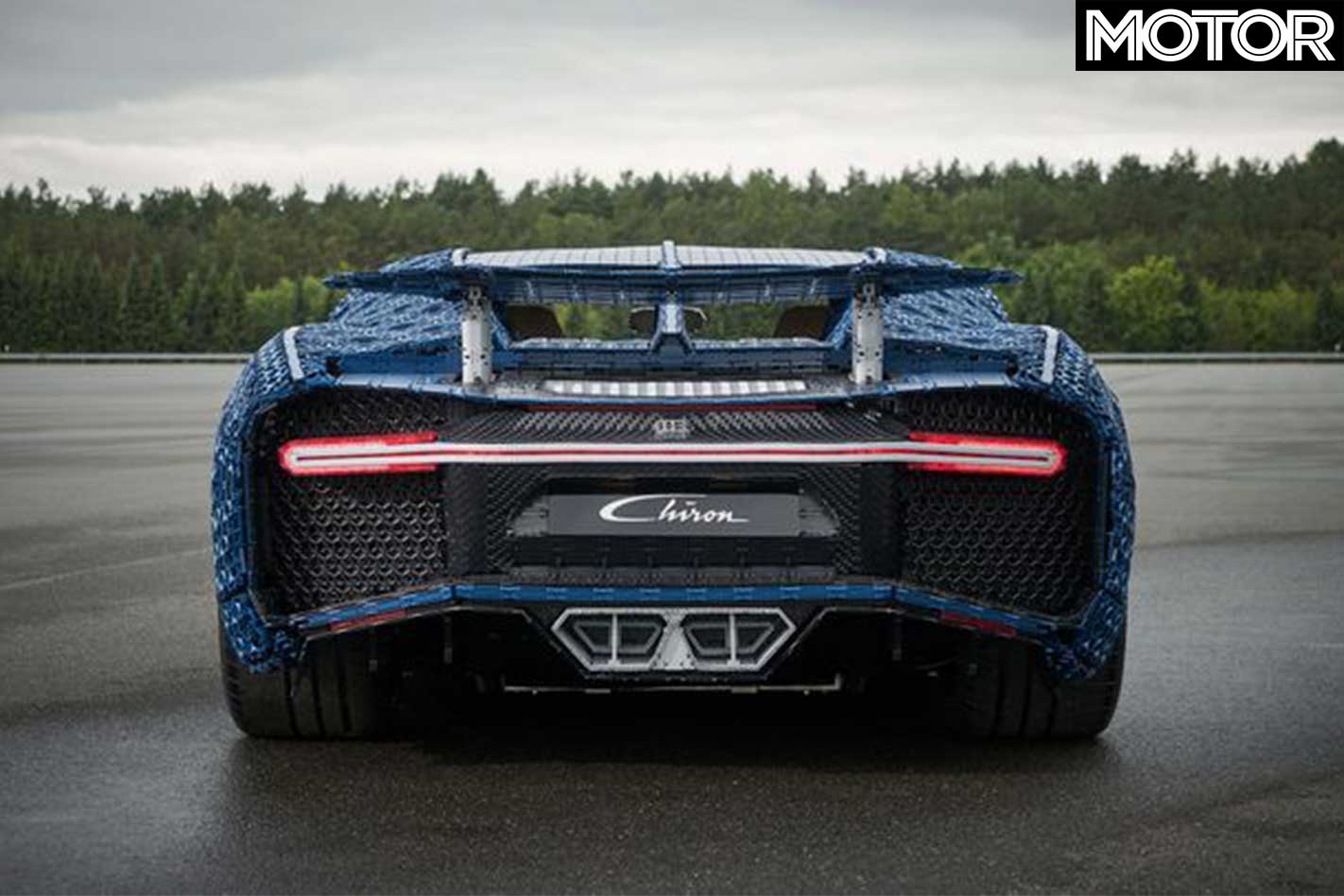
Those motors allow the car to drive, with a ‘theoretical’ total of 3.95kW and an estimated 92Nm of torque.
Though it weighs much less than a real Chiron at just 1500kg, it is only able to hit 20km/h. That’s significantly slower than a real Chiron, which claims a top speed of 420km/h with a limiter. But what’s 400km/h to a car built of LEGO?
LEGO says no glue was used in building the Chiron, which took 13,438 man hours in development and construct to complete. It’s even got a functional rear spoiler and a speedometer made from Technic parts.
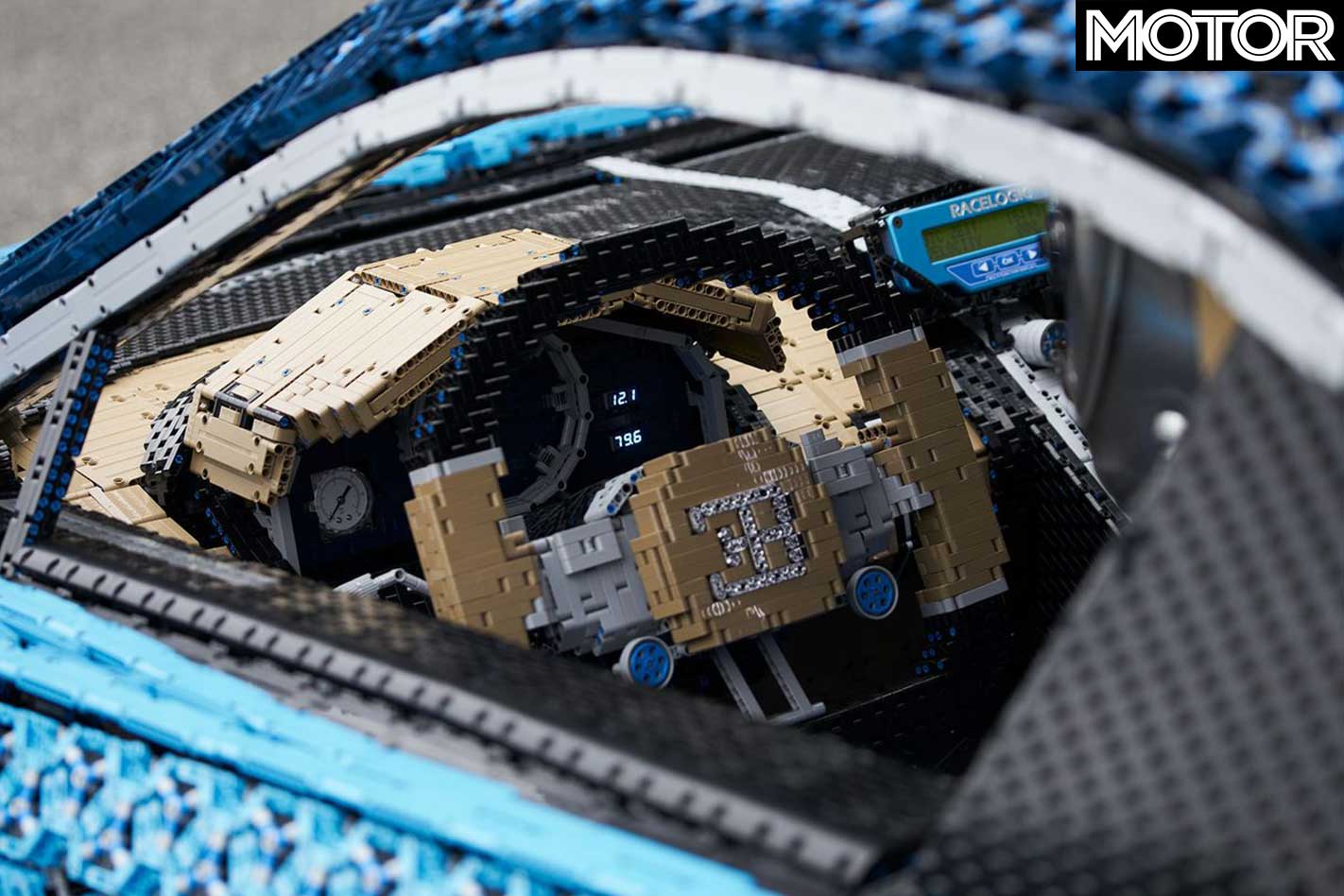
“The idea to build a real-size 1:1 Technic version of the Bugatti Chiron originated within the LEGO Technic design team,” LEGO says.
“Designer Aurelien Rouffiange and the team had just completed the 1:8 scale model of the Chiron and began to debate what the ultimate challenge for the LEGO Technic building system would be.
“A full-size, self-propelled vehicle seemed to provide the toughest test.”
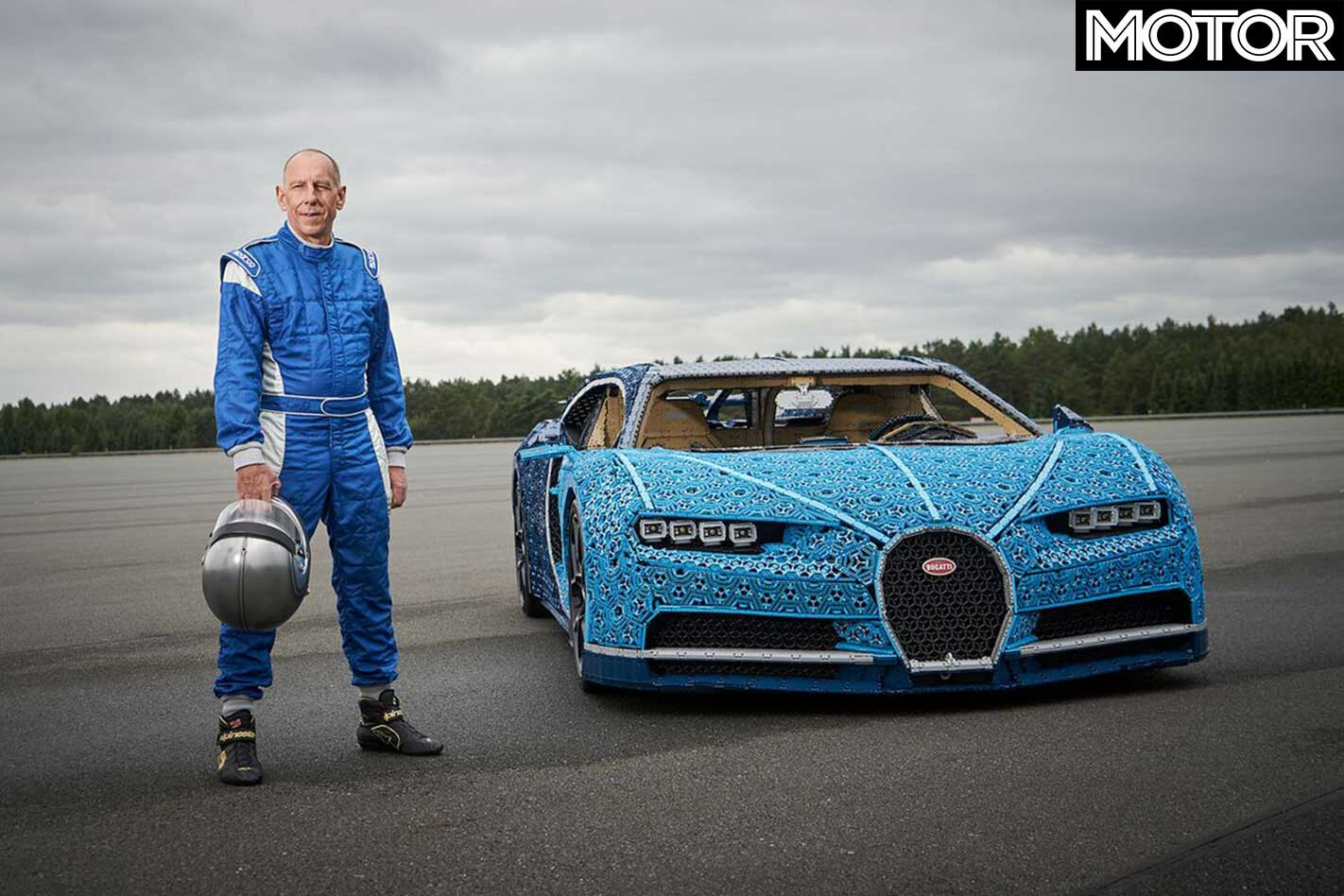
To test the car’s driveability, LEGO took it to the VW Group Ehra-Lessien test track, which is where Bugatti tests the Chiron.
LEGO adds: “We were even more excited when Bugatti’s official test driver and former Le Mans winner, Andy Wallace, agreed to test drive the Technic version of the Chiron on its first drive.”
If you haven’t already, watch the video at the top of this story. It’s impressive to see the car rolling, even if the voiceover and epic orchestral seems a little overzealous for a 20km/h top speed run.
A US study into the rise of ride hailing and car sharing services has found that three-fifths of the urban dwellers polled no longer think owning a vehicle is important for their mobility needs.
The survey, conducted for Autotrader in the USA, polled 1250 consumers on their car ownership and mobility habits, and found that while we still rely on owning cars for mobility, the future is likely to be very different.
Generation Z (12-22 year olds) was least likely to associate vehicle ownership with mobility, with more than half (55 percent) saying that owning a car is not important for their transportation needs.
By comparison, only 34 percent of Generation X (37-53) and just 28 percent of Baby Boomers (54-72) felt the same way.
These numbers are higher in comparison to a similar 2015 poll, which means the pendulum is swinging inexorably in favour of alternatives to car ownership.

The survey’s lead analyst, Michelle Krebs, said “the trend line for these programs could drastically alter this industry over the next five to 10 years”.
Almost half of all respondents also believe the cost of owning or leasing a vehicle is too high, and that “more consumers are prioritizing technology solutions that provide easy and more cost-effective mobility over traditional vehicle ownership”.

Awareness of ride-hailing services like Uber are extremely high, 88 percent said they are aware of this option regardless of where they live. The awareness of car sharing, on the other hand, was only at 54 percent, suggesting that accessibility and market fragmentation is holding this ownership alternative back.
Just 25 percent of respondents were aware of car subscription options, where you lease a vehicle but can swap it for a different type of vehicle on a weekly or monthly basis.
WALLET, house keys, car keys, phone: they’re the four things you probably grab when you head out of the front door, but Bosch is looking to lighten your load by incorporating all the functions of your car keys onto your phone, while adding some intriguing new functionality.
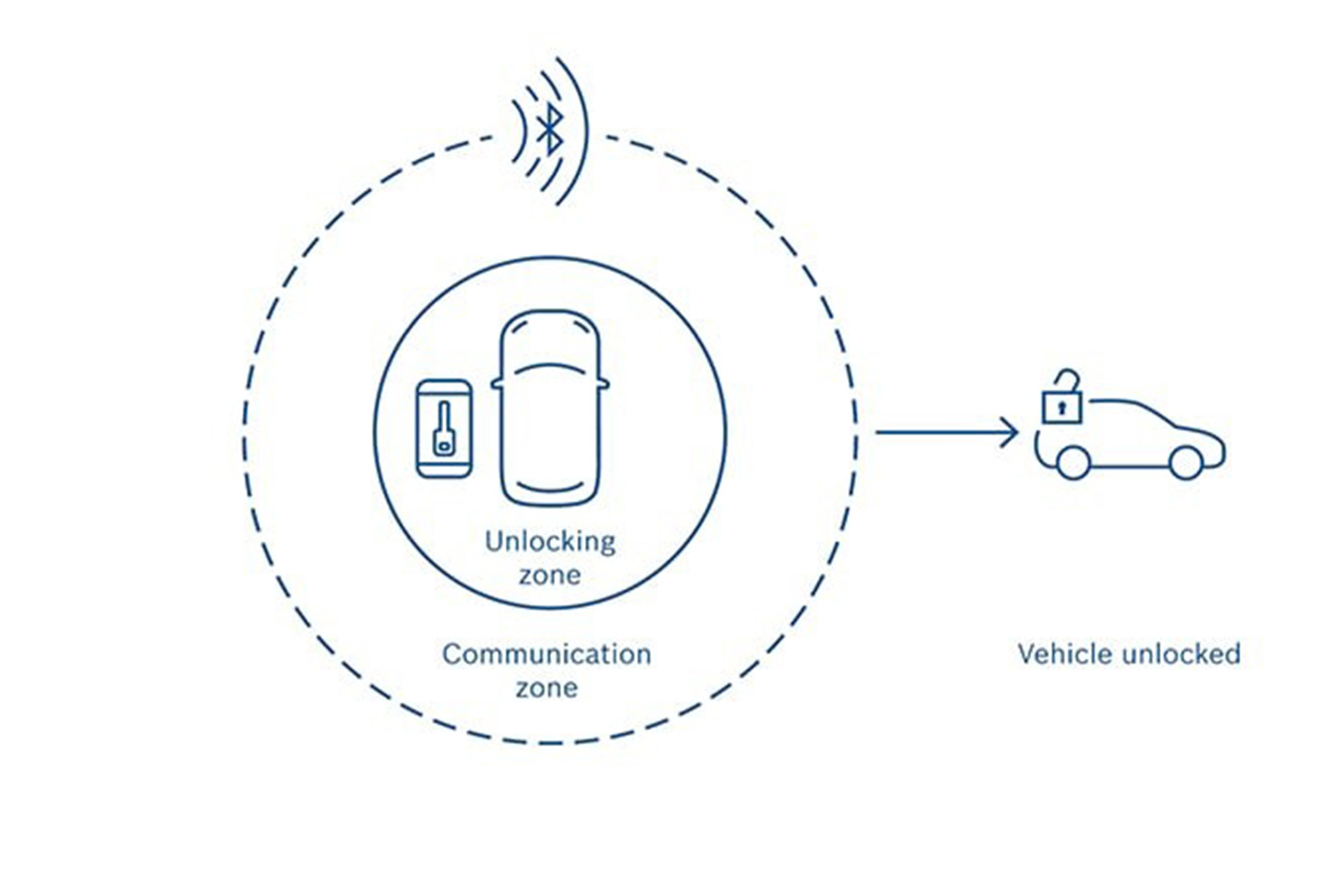
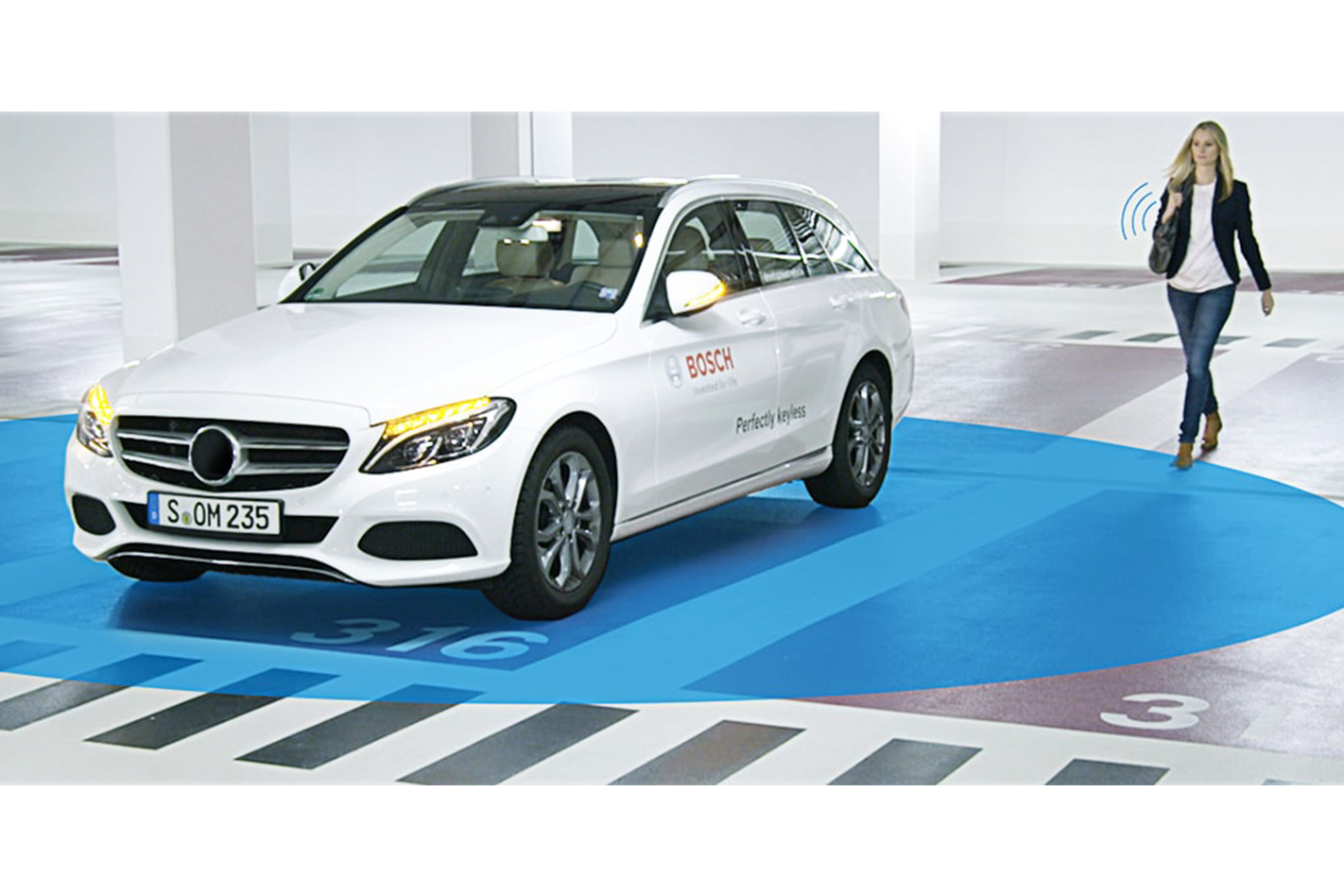
The Perfectly Keyless app works by using Bluetooth Low Energy to detect when your phone is approaching your vehicle, then unlocking the vehicle when you get in close proximity. Compatible with any Bluetooth-equipped smartphone, the app also allows users to send a ‘virtual key’ to friends should they need access to the car.
Bosch is unveiling the latest version of this tech at this year’s IAA Commercial Vehicle Show in Hannover. Before the technology arrives in your pocket, car manufacturers will need to get on board, installing proximity sensors and a control unit as hardware additions to their vehicles. These sensors measure how far away the driver’s smartphone is from the car. They also register what direction the driver is approaching from. The control unit administers the digital security key and ensures that smartphone, cloud, and vehicle systems communicate smoothly.
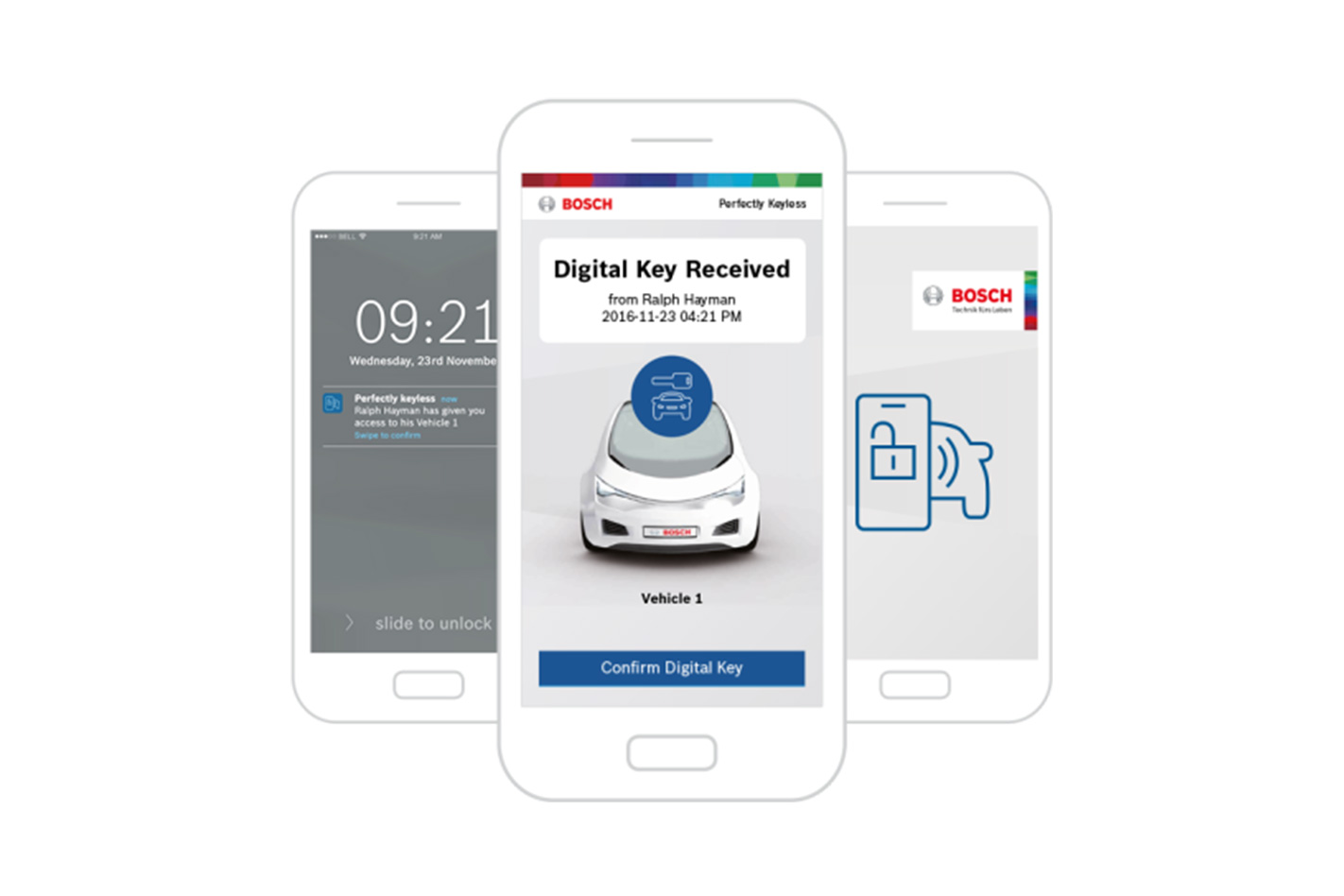
Of course, there’s the worry that if you lose your phone, drop it down the dunny or simply run out of battery that you’ll be locked out of your car. Bosch has been working on a solution to this. If the smartphone is lost, and the app with it, the digital key can be deactivated online. This blocks access to the vehicle. Get yourself a replacement phone and it can be connected with the vehicle and a new unique security key generated.
Modern keyless entry systems work by fitting the physical key with a chip, but car sharing services have fast-tracked the development of app-based digital keys. With Perfectly Keyless, the system also locks the vehicle as the phone moves away. Sending a digital key to a friend or a service department can be done for a pre-determined time, allowing the car to be driven within a limited location. It’s also possible for the car to recognise your key and adjust the seating and mirrors to your preset positions.
Mark Jackman, Bosch Australia’s Regional President of Automotive Electronics, explained the system’s backstory. “This is a global application that was conceived here in Australia and adopted by the parent company. The work has been divided up between here and Germany, with Australia responsible for the hardware development,” he said. Bosch is currently working with vehicle manufacturers in multiple countries to forge an integration path for the hardware in forthcoming vehicles. “I’d say we’re about two to three years away from being production-ready,” confirmed Jackman.
The list of items made virtually redundant by your smartphone is pretty lengthy. Think MP3 players, torches, satnavs, walkie-talkies, map books, compact cameras, e-readers, pocket calculators, bike computers, personal organisers; the list goes on. Now it looks as though your car keys will be next.
BMW has revealed it’s working on a convertible version of the recently-debuted 2019 BMW 8 Series.
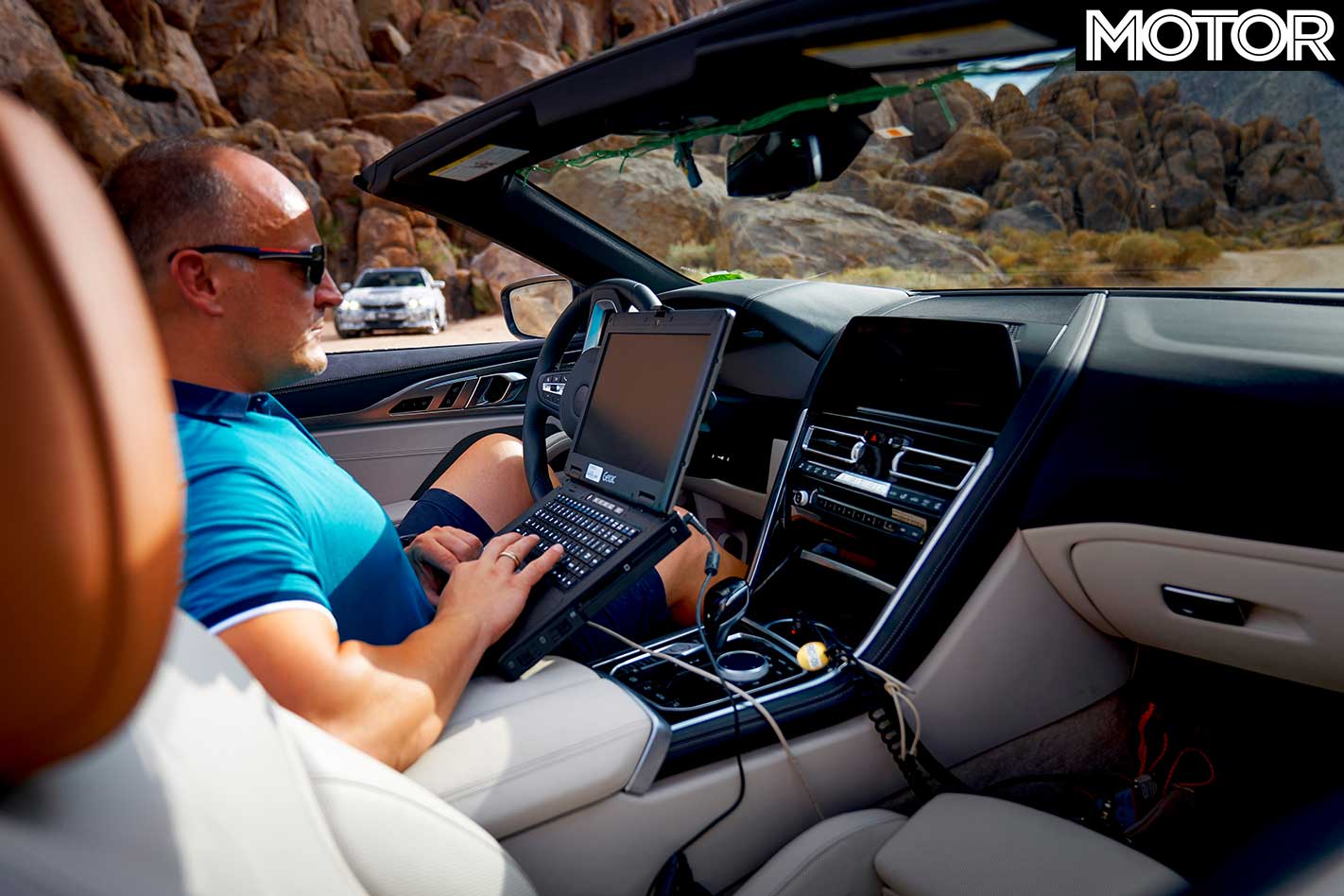
Testing in the Nevada desert, the drop-top 8 is wearing full camo, with only the interior and soft-top roof undisguised by black and white patterns.

BMW says the development program for the 8 Series convertible has also undergone testing at the Winter Testing Centre in Arjeplog, Sweden, and at BMW’s proving ground in Southern France. Of course, the Nürburgring is also on the cards.
“With intensive function trials and test drives between Las Vegas and Death Valley in the USA, the critical phase in the series development for the new BMW 8 Series Convertible has now begun,” a BMW release says.
“Temperatures of more than 50 degrees Celsius, extreme dust formation on the edge of the desert, stop-and-go traffic on the Las Vegas Strip, gravel tracks around Mount Whitney and long-distance journeys between the Pacific coast and the Rocky Mountains characterise the challenging test programme for the new BMW 8 Series Convertible on its way to series maturity.”

It’s uncertain which variants will be available without a roof, though it’s likely the top-spec (until the M8 arrives) BMW M850i will be the first 8 convertible revealed.
That would likely give the M850i convertible the same 390kW and 750Nm 4.4-litre twin-turbo V8 as the coupe, as well as BMW’s xDrive all-wheel drive system and a kerb weight north of 1890kg.
Despite the camo, we suspect it’ll look much like its ‘tin-top’ sibling. As we’re not sure when the 8 Series is landing in Australia, we expect to find out more details from BMW Australia in the near future.
Stay tuned.
Holden sold just 12 locally made vehicles in July 2018 – including seven utes, three Commodores and two Caprice – but the figures clearly don’t tell the whole story here.
According to a list of new and demo vehicles available, there are a staggering 130 SS V Redline models, 15 Motorsport Editions and 14 base SS grades still available in dealerships. All have fewer than 100km showing, mostly unregistered but listed as new or demo stock.
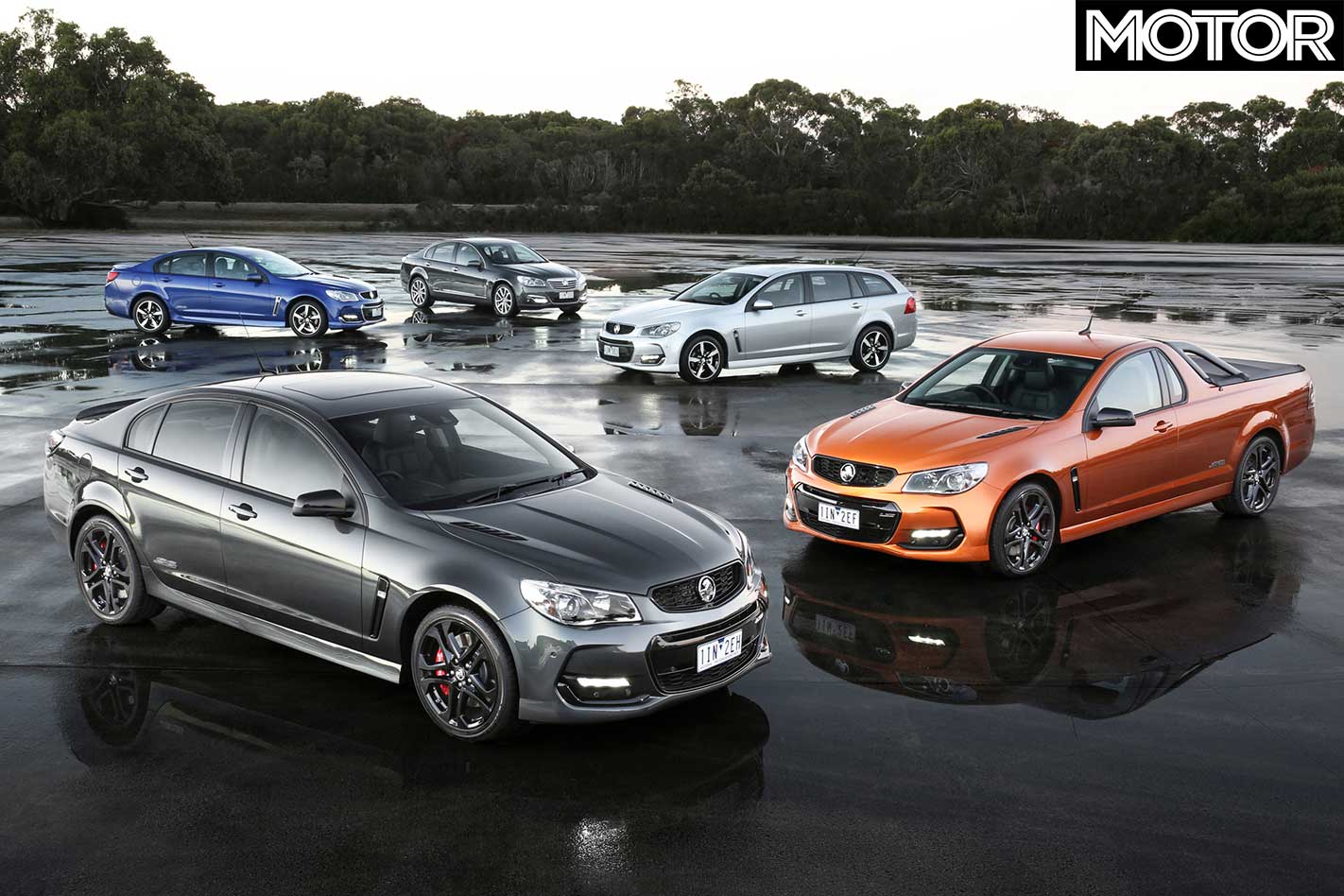
MOTOR has reported on this before, but it wasn’t expected that a cumulative 165-unit backlog of brand new vehicles would be still on-sale as total Holden volume tanks, and the new ZB Commodore manages a dim 554-unit monthly haul. But the mark-ups provide clues.
The most affordable SS V Redline sedan was spotted at $53,490 plus on-road costs, $1000 below the new recommended-retail price, however an incredible 50 vehicles have been priced between $61,490 and $69,990 – in some cases plus on-roads, in others driveaway.
Meanwhile the entire 15 Motorsport Editions are priced between $69,990 and $76,490 plus on-roads – with one dealer spruiking a ‘new car’ as ‘run-out stock’ for $75,118 driveaway.
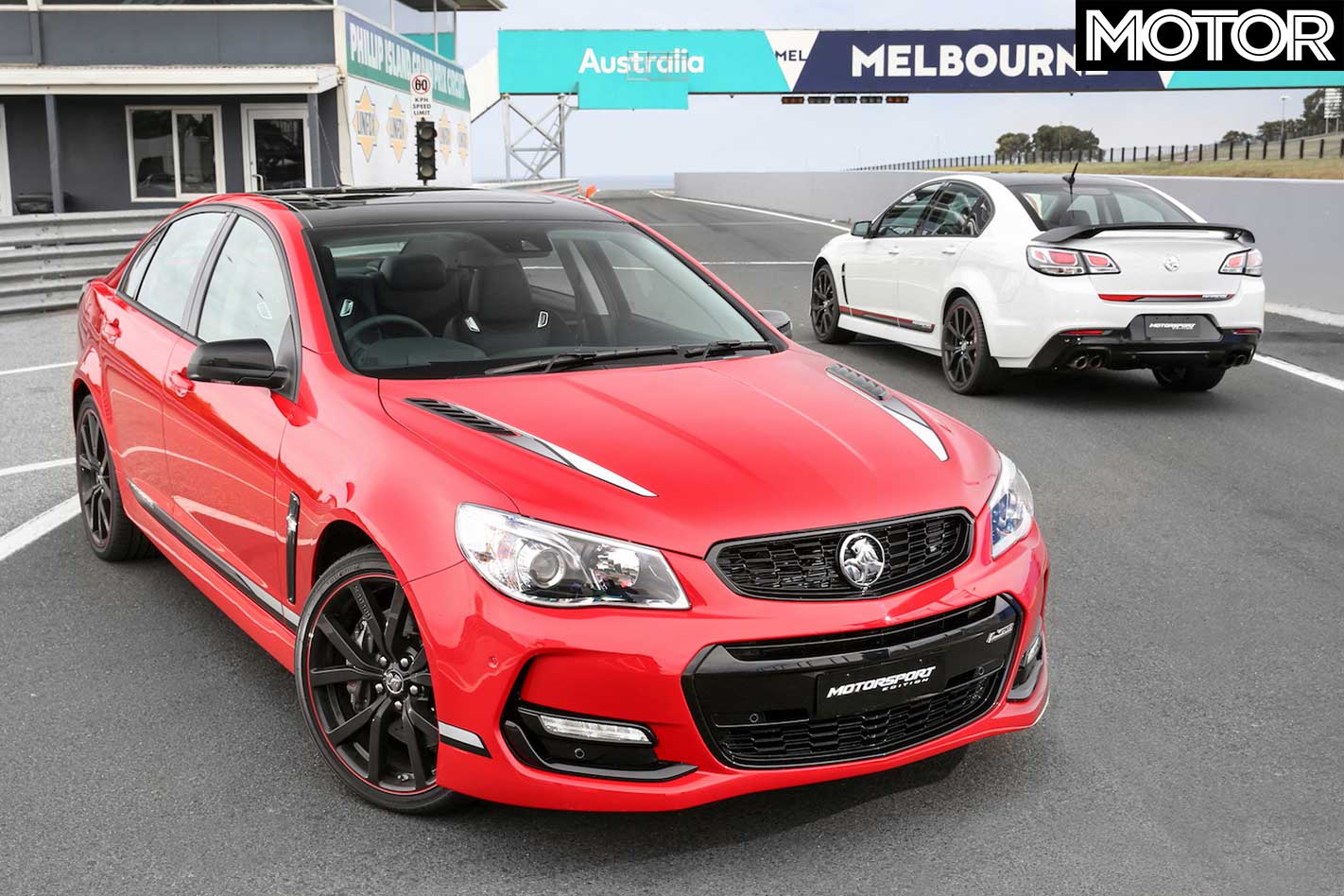
These are mark-ups of in some cases between $10K and $15K over recommended retail, at the same time as discounts of $3600 to $7000 are being given to the new ZB Commodore.
The most affordable new or demo 2.0-litre turbocharged four-cylinder Commodore LT available asks $28,886 driveaway with 12km showing, a $7104 discount of Holden’s formal $35,990 driveaway deal. And while a boggo model grade with 17-inch alloy wheels isn’t usually MOTOR territory, it’s arguably the ZB pick with an SV6-challenging 190kW/350Nm.
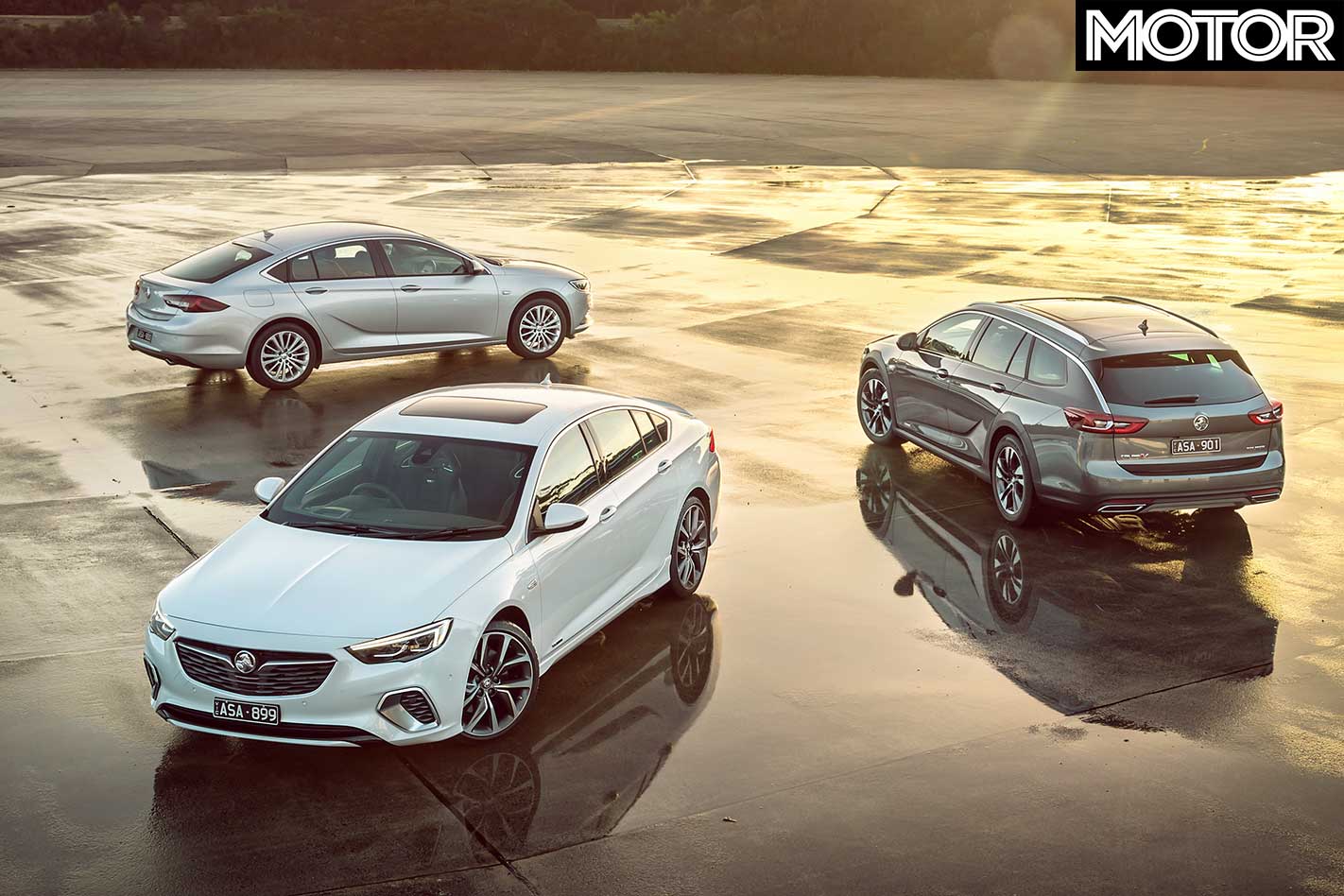
Okay, you actually want a modern day SV6? The Commodore RS turbo with the same engine can be found from $33,990 driveaway with 45km showing, a $5000 discount off retail. Upgrade – though it is actually a downgrade these days – that spec to the all-wheel drive, 3.6-litre naturally aspirated V6 version for $38,888 driveaway, $3602 off the retail price.
If the new German import isn’t a ‘real’ Commodore to some, then at least you may get the last laugh, because a turbo-four ZB is a better drive than old SV6 – even if, we agree, the new V6 is far from good enough as a semi-sporty successor for the V8-powered VFII icons.
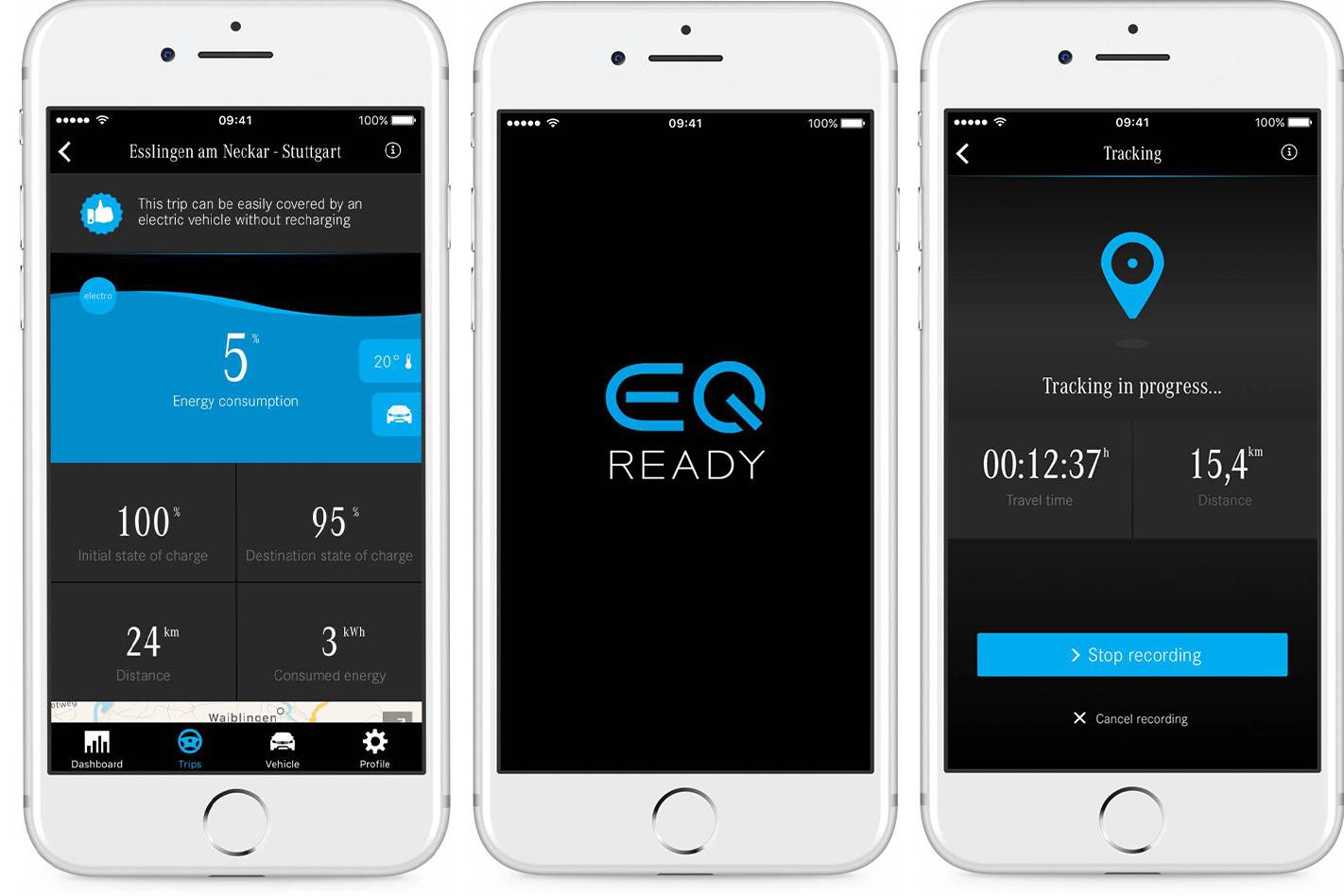
A new app aims to help motorists identify the right time to switch to an electric car or hybrid. EQ Ready, an app developed by Mercedes-Benz, has now arrived in Australian smartphone stores, 12 months after it launched in Europe. It monitors driving habits by recording real journeys, and compares energy usage against similar data gathered from hybrid and electric cars.
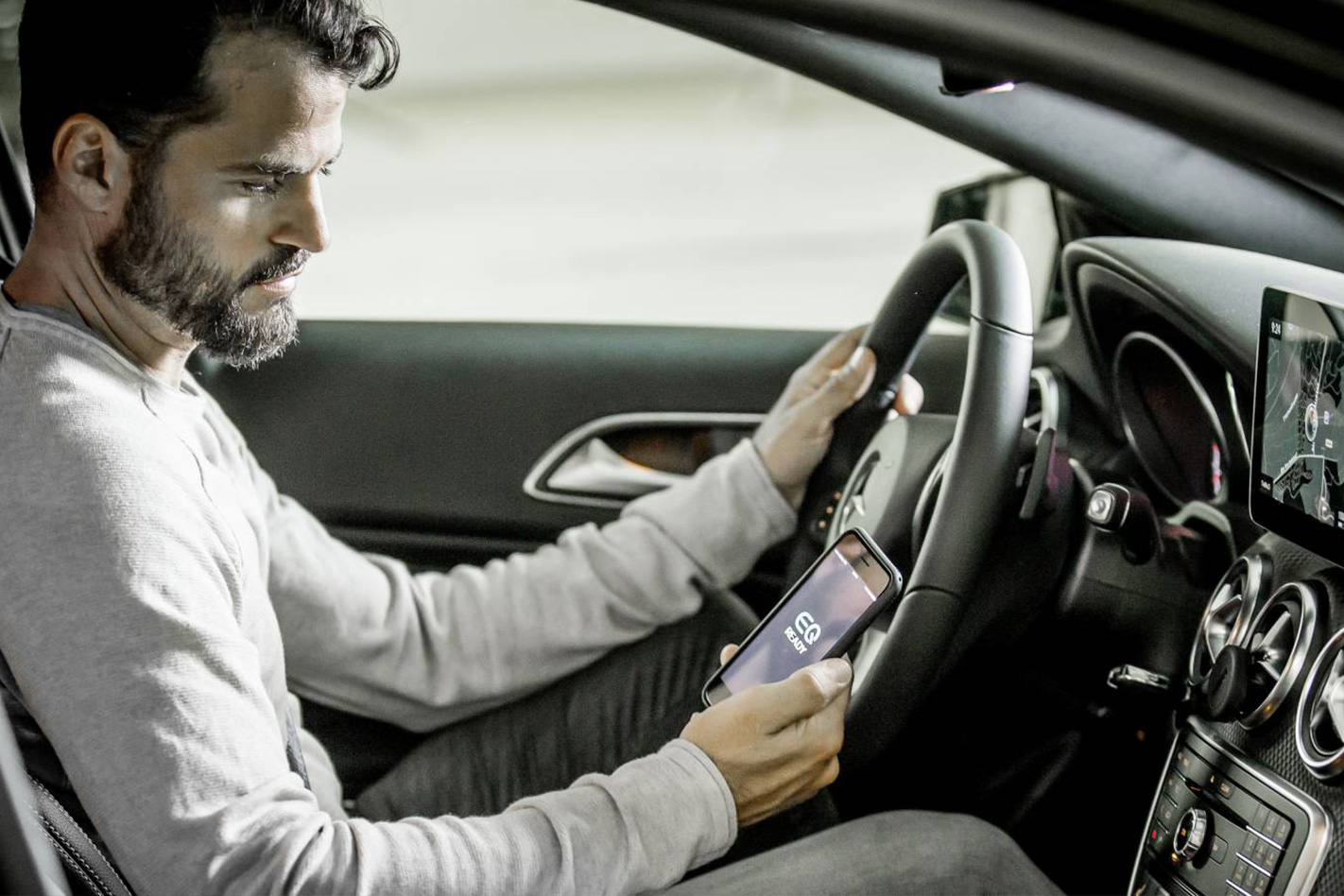
The app records speed and acceleration, stops and longer breaks, and also ambient temperatures and altitude to calculate the range and energy consumption. This data is then transmitted back to Mercedes-Benz for comparison against similar hybrid and electric cars.
Mercedes is quick to point out that privacy is a key consideration of the app. “To stop a journey being recorded, the user can disable the tracking feature at any time. The app also regularly reminds the user that data are being recorded.”
Mercedes-Benz involved customers and even its own board members in the app’s development phase. The general conclusion, says Mercedes-Benz’s Wilko Stark who heads up the department that developed the app, “is that electric cars and hybrids in e-mode are much more suitable for everyday use than most people believe”.
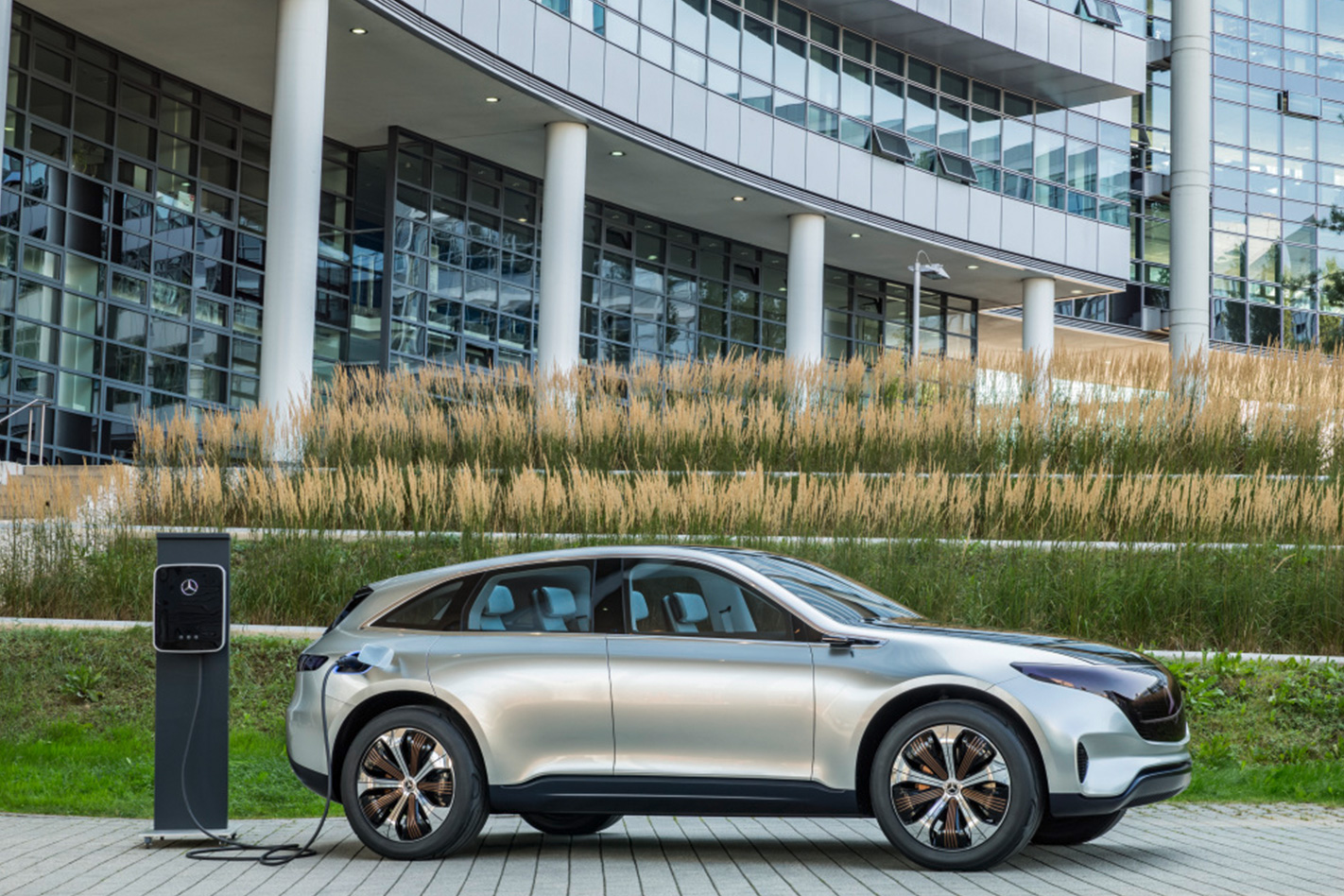
The EQ Ready app is part of Mercedes-Benz’s new EQ electric mobility brand launching this month in Europe with the EQC fully-electric SUV. The EQC will be one of up to 50 pure electric, plug-in and hybrid models the carmaker has promised to launch by 2022.
So far, Mercedes-Benz has revealed two fully-electric models, the EQA electric and the EQC compact SUV.
The EQA, which will be a rival for the Tesla Model 3 when it goes into production in 2019, is being touted as an ‘electric athlete in the compact segment’. It has a three-door body and a hot-hatch-like 200kW of power from two electric motors (one on each axle). Mercedes claims it can sprint from rest to 100km/h in five seconds, and has a driving range of 400km on a single charge.
The EQC rival for the Tesla Model X and Jaguar I-Pace is due in the first half of 2019, and appears to be more practical and more powerful than the EQA. This five-door SUV-like wagon has 300kW of power from a bigger battery pack, though this does add weight to the car; early prototypes tipped the scales at more than 2300kg (for comparison a similarly sized Mercedes GLC five-door SUV weighs around 1,800kg.
