
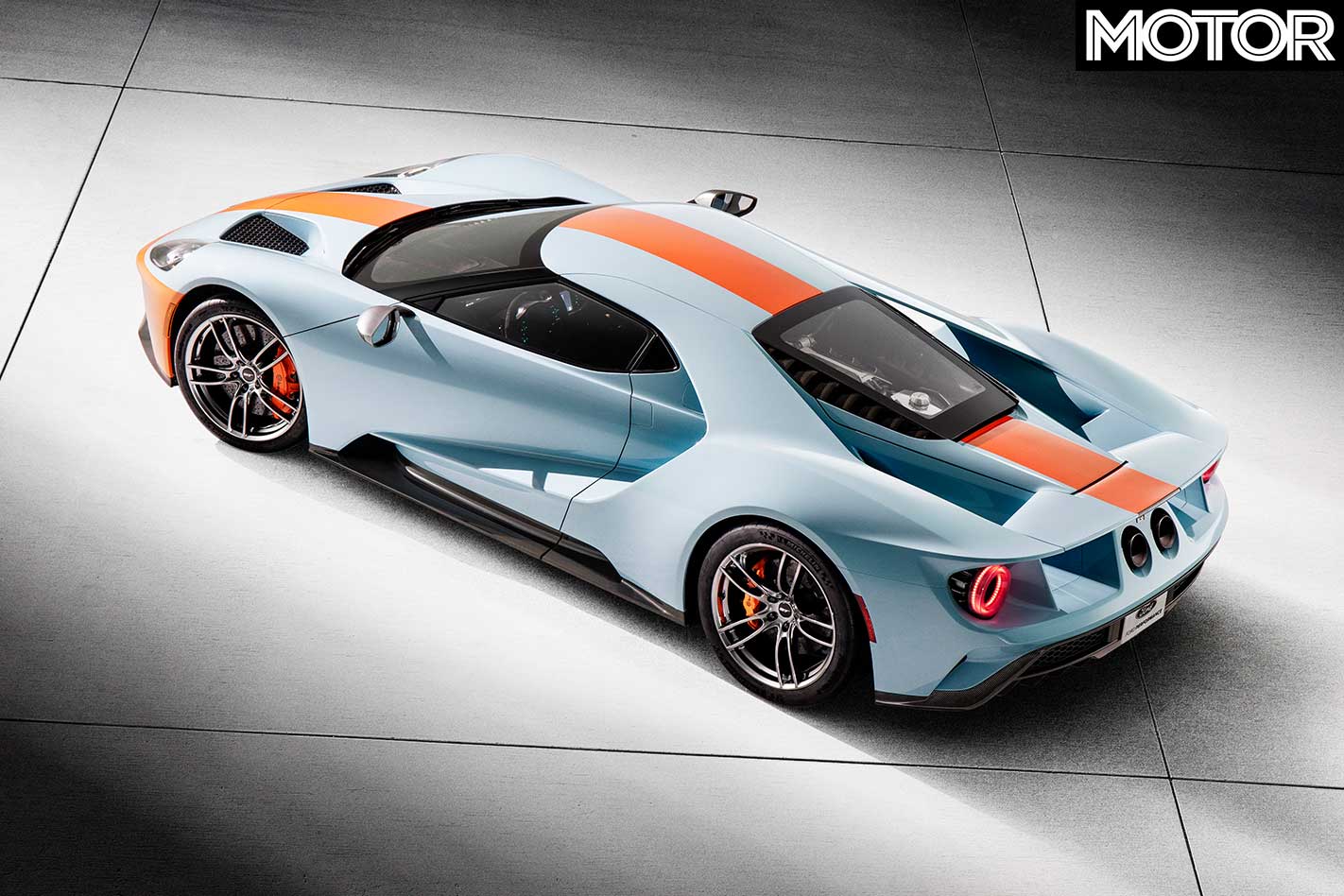
Ford has announced it will honour the 50th anniversary of the Le Mans winning 1968 Ford GT40 by offering the 2019 Ford GT in a limited Heritage version, wearing the same Gulf Livery (and number ‘9’ on the doors and bonnet) as the car of 50 years ago.
Ford says it will also offer the Ford GT Heritage Edition in 2020 with the racing number ‘6’ on its livery to represent the second win achieved by the same car, which had changed its number from year to year.
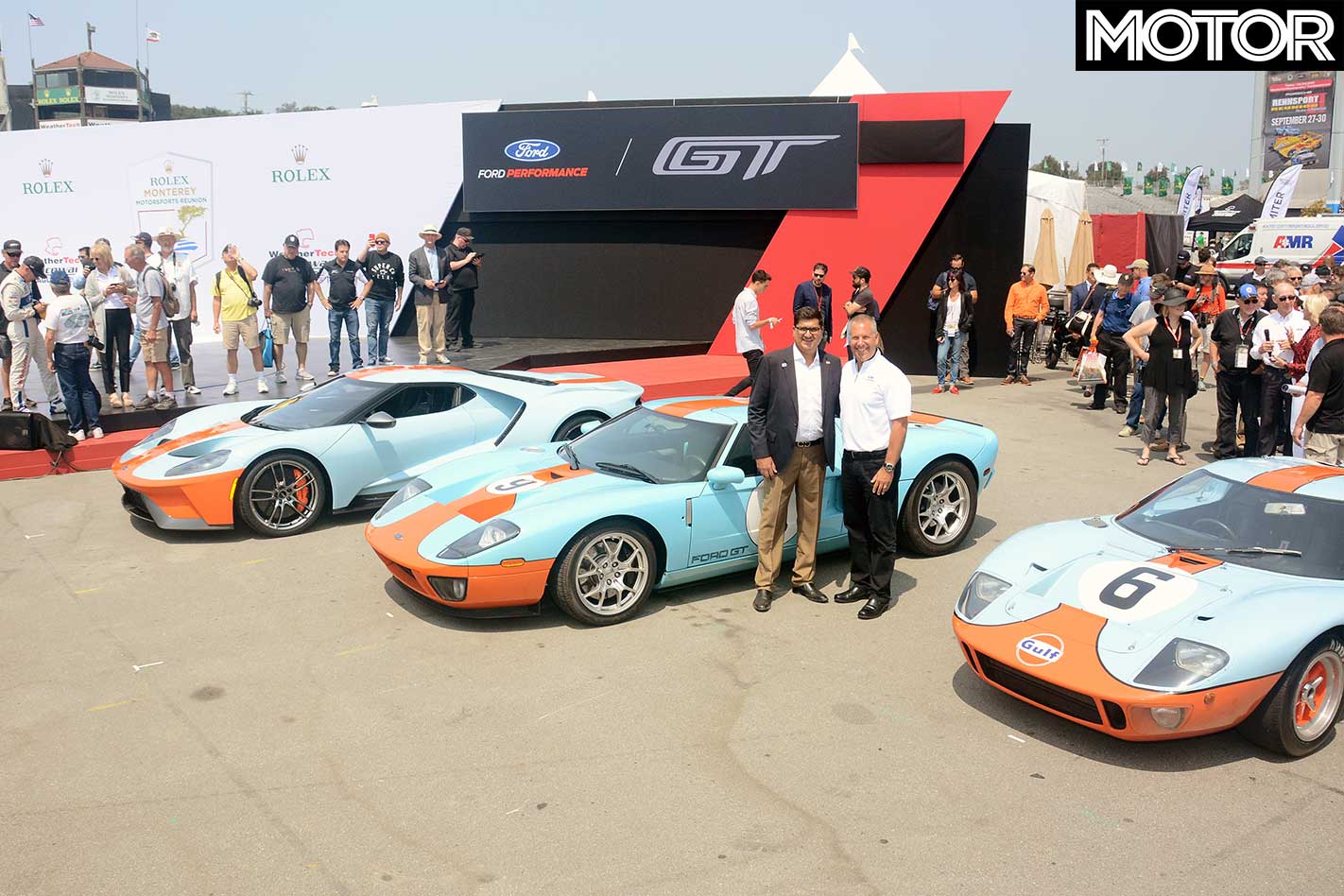
Ford says the specific Gulf Liveried car was known as chassis No. 1075, and was one of just a few chassis to achieve repeat victories in the 24 Hours of Le Mans.
In 1968 it was driven by Mexican racer Pedro Rodríguez and Italian-Belgian racer Luciano Bianchi, who died the next year in testing for Le Mans. In ’69 the same GT40 was piloted by the legendary Jacky Ickx and the UK’s Jackie Oliver, one of the founders of the Arrows race team.
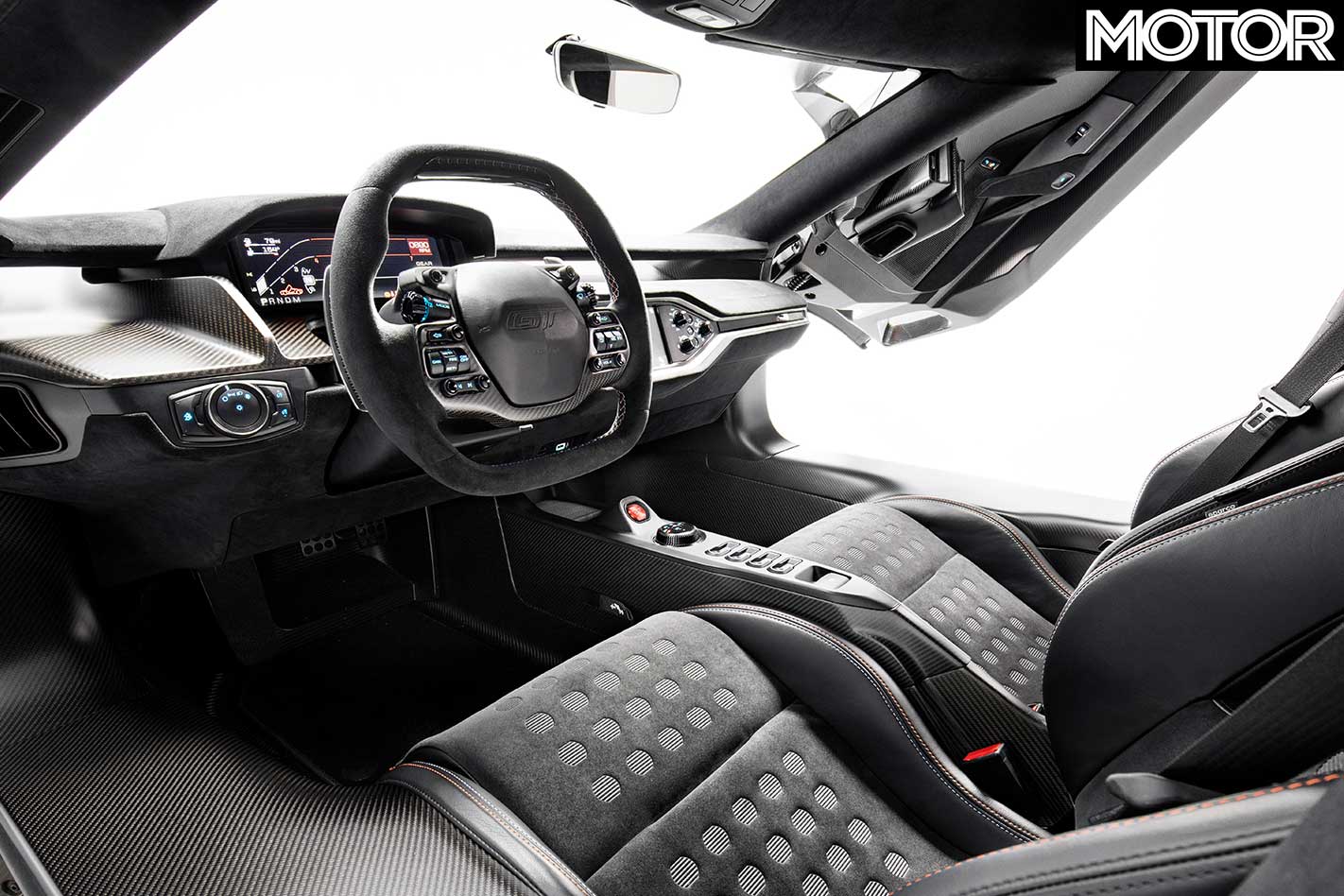
Exposed carbon fibre can be seen across both interior and exterior of the Ford GT Heritage Edition, with carbon fibre door sills, air register pods, and centre console inside complementing the carbon A-pillars and accents outside.
“Many view the Gulf Oil paint scheme as the most famous in motorsports,” says Joe Hinrichs, Ford president of global operations.
“The 1968 GT40 quickly became a global sensation after beating its European competitors on the track four times in a row, and in honour of the 50th anniversary of its win, we’re paying fresh tribute to the original with a new heritage limited edition.”
Gulf Oil Lubricants India managing director Ravi Chawla echoes Hinrichs’ sentiment, positing that neither car or livery might have been as famous without the association of the other.
“The Ford Marque has played a major role in creating Gulf’s place in motoring and motorsporting legend and the same is true in reverse.
“Every Gulf outright victory at Le Mans has been Ford-powered and of course Gulf Ford GT40s took the latter two wins of Ford’s four consecutive victories at Le Mans from 1966-1969.”
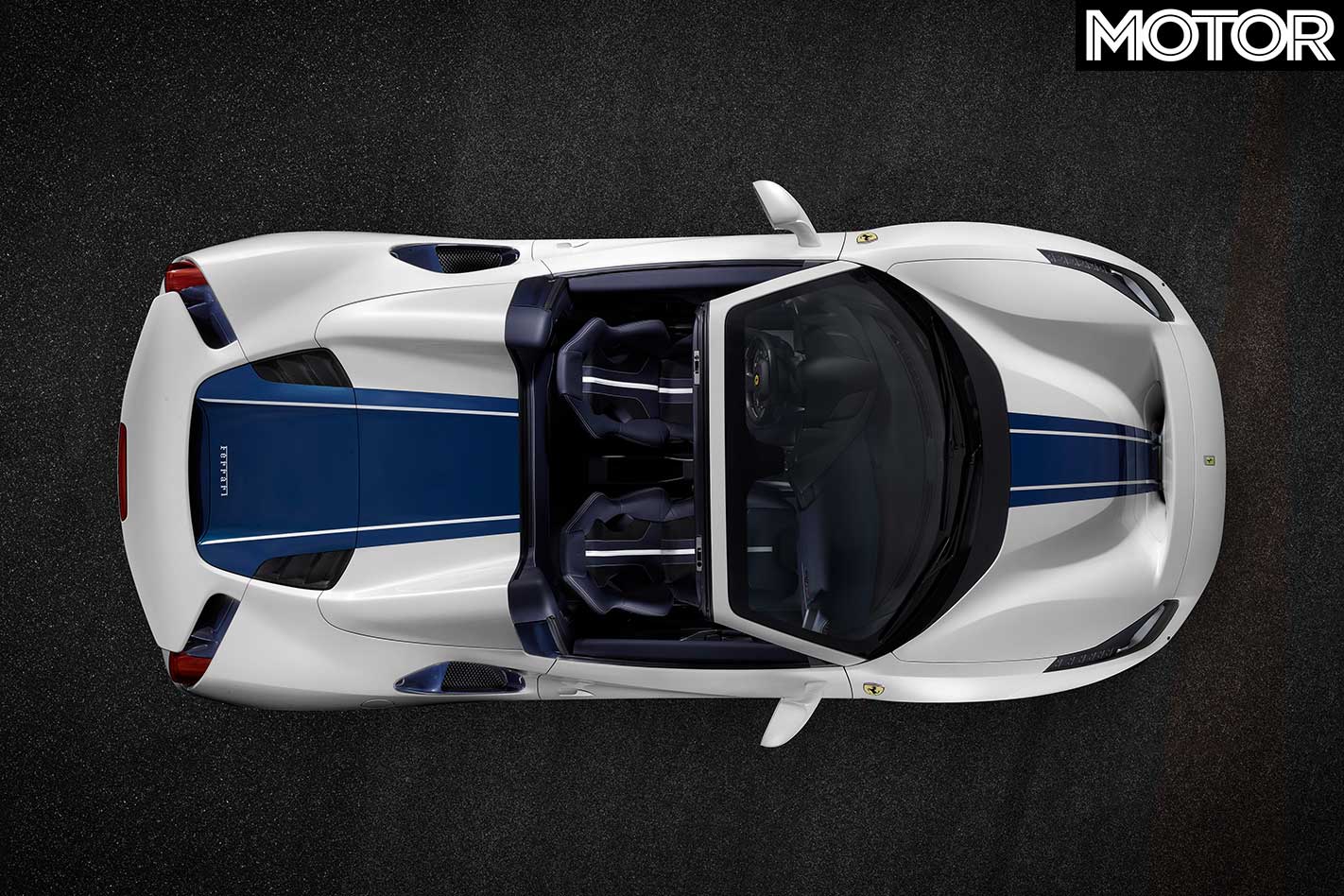
Ferrari has pulled the covers off its latest model, the 2019 Ferrari 488 Pista Spider.
It’s the 50th drop-top Ferrari has built in its seven-decade history, and the second model to utilise Ferrari’s most powerful V8 ever, after its roofed sibling.
The 3.9-litre twin-turbo V8 still produces 530kW/770Nm, which Ferrari says lets the Spider hit 100km/h in 2.85 seconds (identical to Porsche’s claim for the GT2 RS, oddly enough) and 200km/h in 8 seconds flat.
This is possible thanks to plenty of weight-saving, Ferrari says, which has resulted in a dry weight of just 1380kg.
Carbon fibre and Alcantara are present throughout the interior particularly, but elements such as door pulls and carpets have been replaced with lighter alternatives, in this case pull-straps and aluminium foot plates respectively.
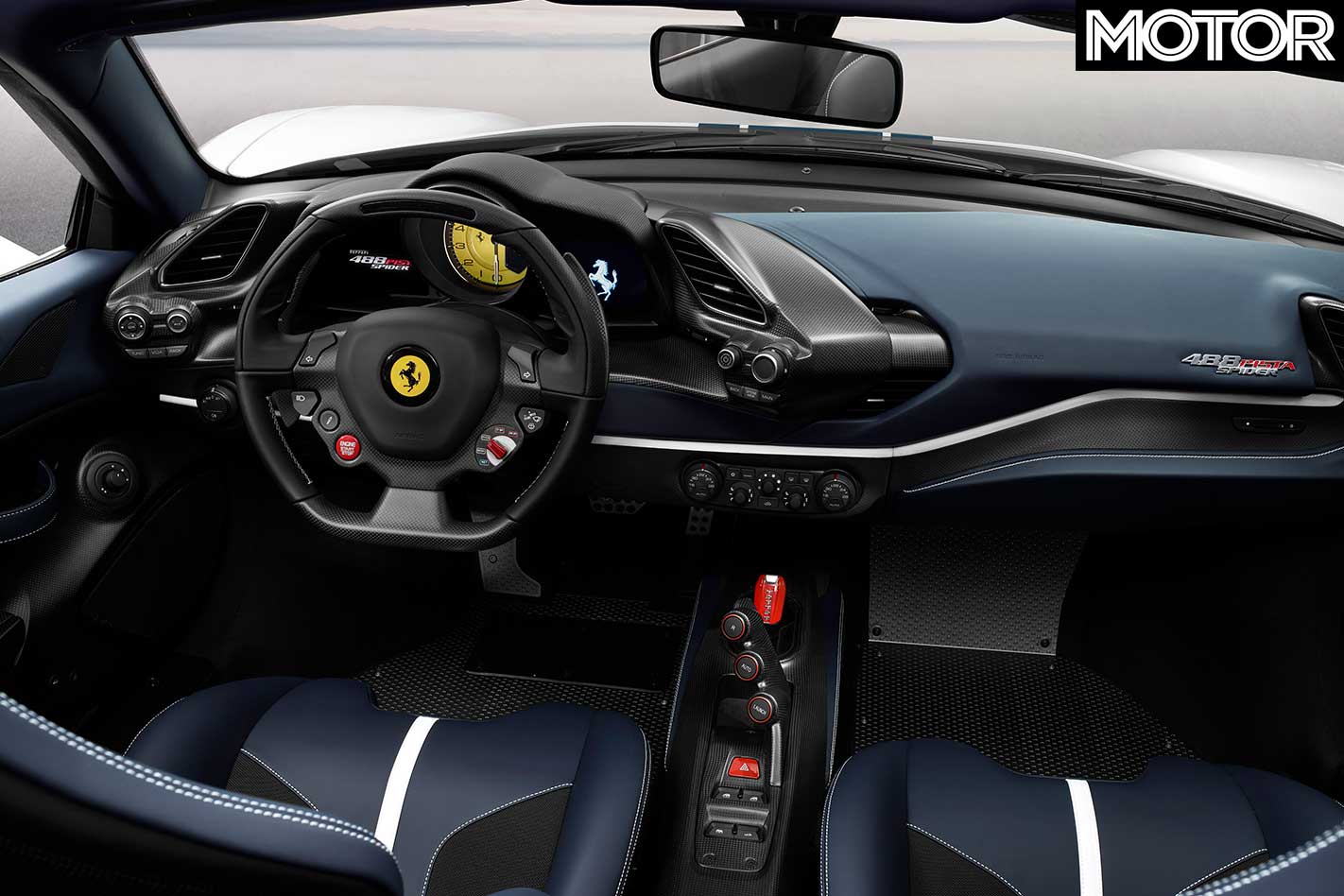
On its design, Ferrari states the Pista Spider had to be more than just a 488 Pista coupe without a roof.
The wheels are also designed with eight-saving in mind, Ferrari says the optional 20-inch carbon wheels are 20 per cent lighter than the standard alloys.
“The Ferrari 488 Pista Spider represents the natural development of the defining design of the coupé version,” the company says in a release.
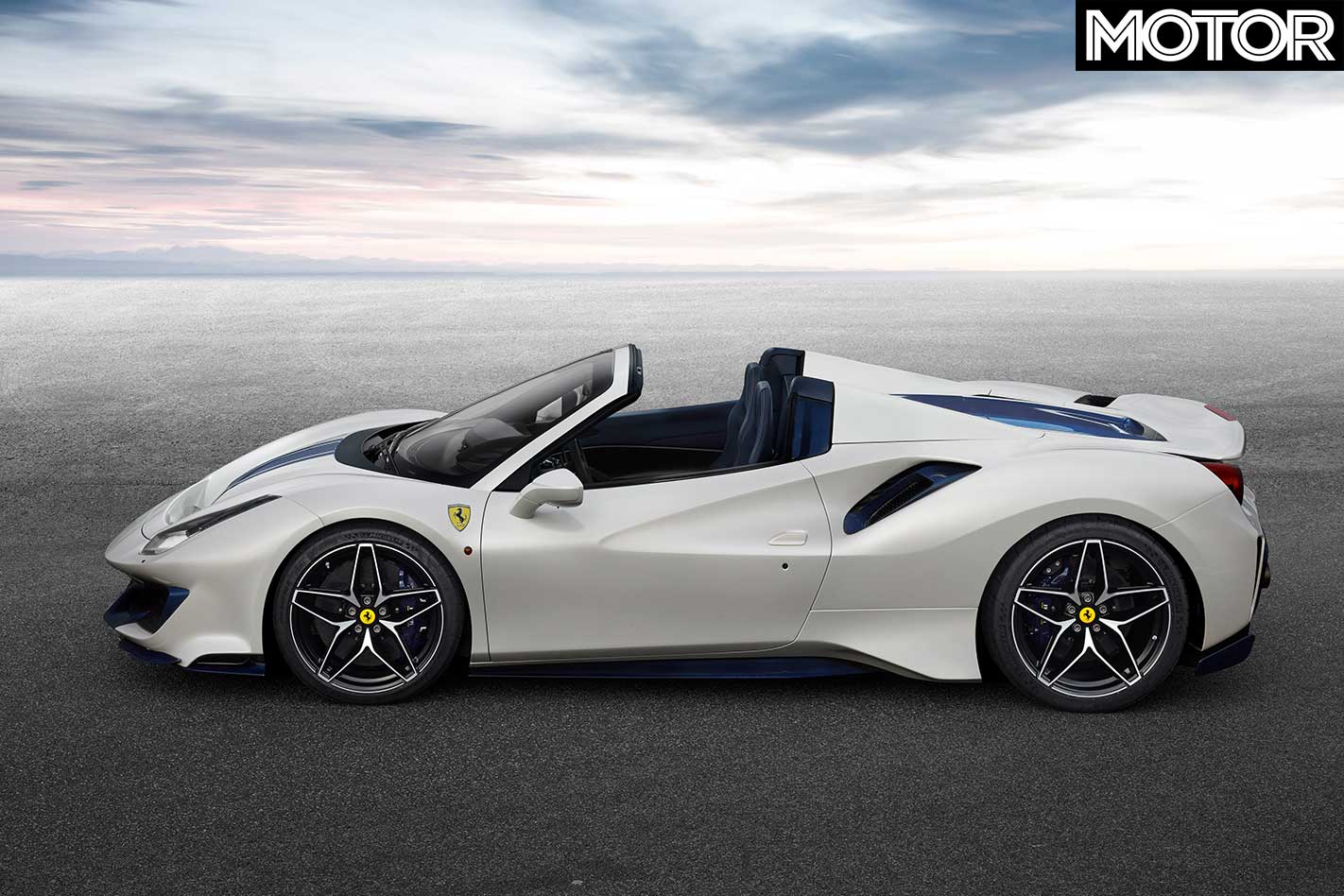
“The Ferrari designers’ primary objective was to maintain unaltered the perfect marriage of aerodynamic efficiency, purity of form and racing spirit.
“This concept is underlined by the characteristic central livery which runs the whole length of the car, expanding towards the rear where it finishes at the end of the rear wing next to the spoiler.
“This continual expansion of the stripe recalls the movement of the airflow and exalts the lines of the car.”
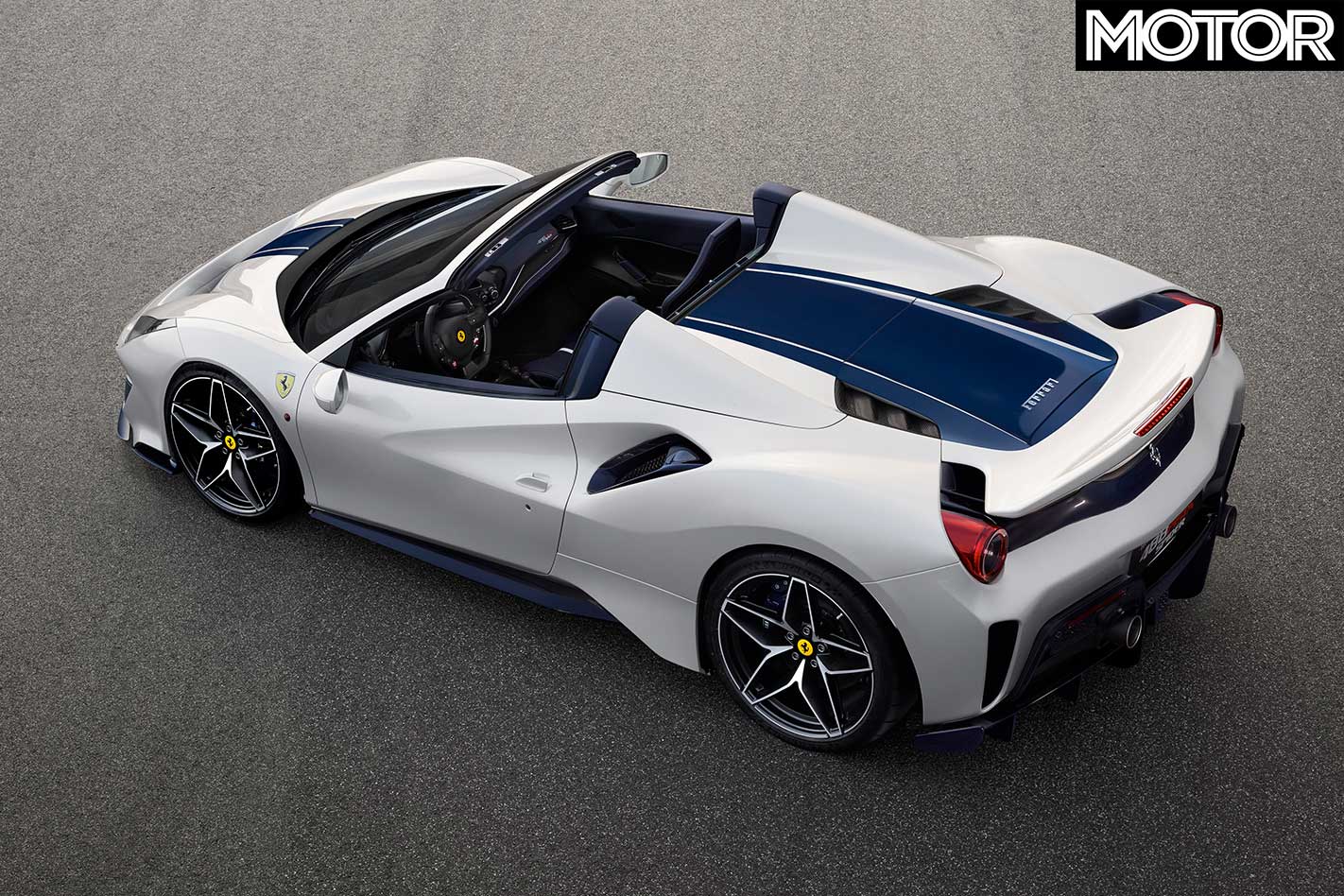
Ferrari says the reveal of its latest open-top in the US was timely, given America’s particularly strong penchant for drop-top Ferraris.
Australian availability and pricing is yet to be confirmed.
FROM the diminutive CX-3, to the ageing segment stalwart the Nissan Qashqai, buyers looking for a crossover in Australia can be spoiled for choice to the point of confusion.
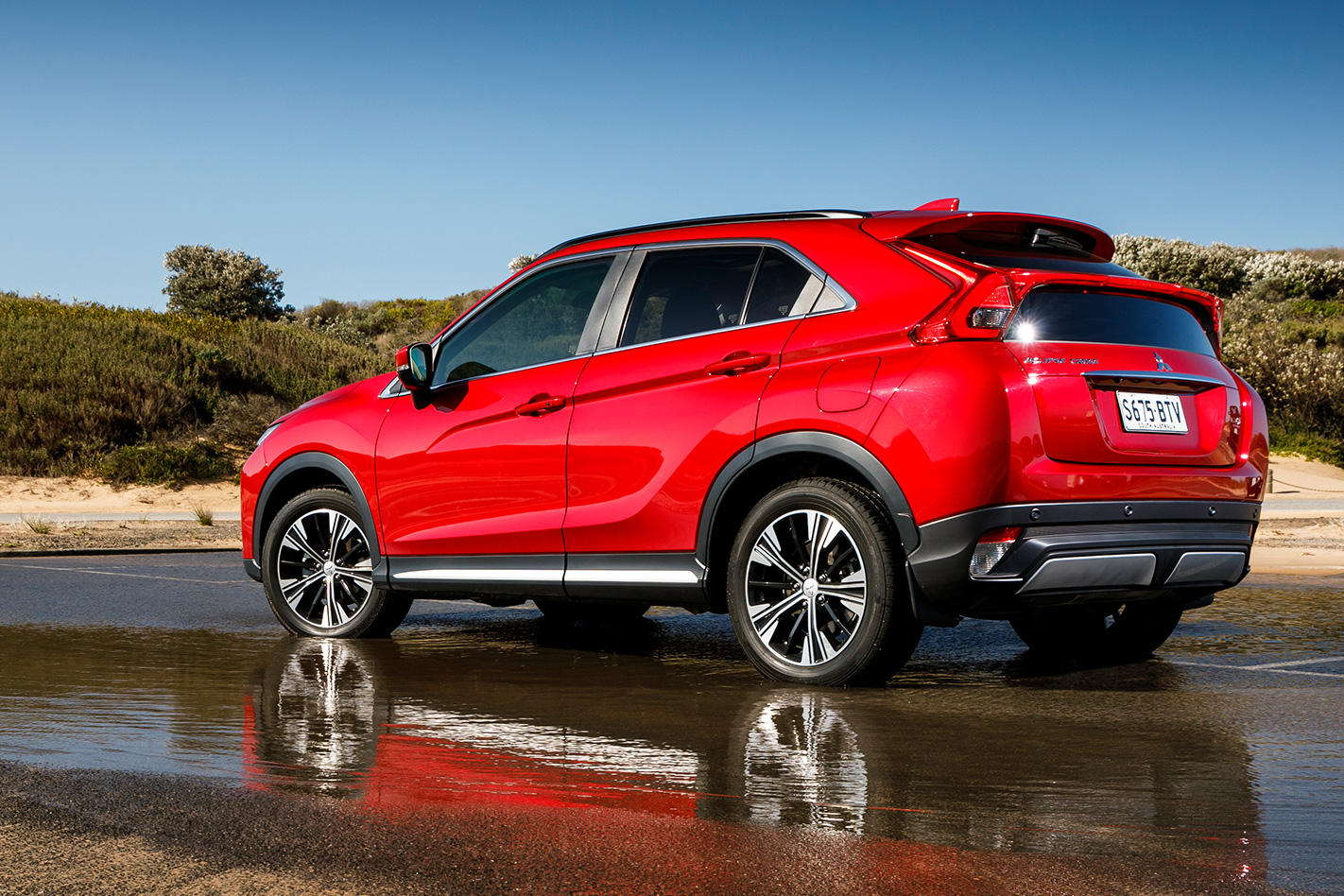
Skoda and Mitsubishi have this year added their respective all-new models the Karoq and Eclipse Cross to the fray.
The duo represent two different ways to fillet the small crossover fish, with distinctly European and Japanese flavours. The fundamental layout of the two cars – a petrol four-cylinder engine driving the front-wheels means that both enter the market with aggressive pricing and represent high-riding alternatives to typical family hatches.
PRICE AND EQUIPMENT
Verdict: Mitsubishi
The Skoda Karoq is the fresher of the pair by a couple of months. This Czech Republic-built crossover has a single variant available in Australia at launch, the $32,290 110TSI DSG 2WD. However, our test car was fitted with the $1700 Travel Pack and $3600 Premium Pack, ballooning the as-tested price to $38,290.
That makes the Eclipse Cross Exceed 2WD the cheaper of the two in our comparison, with the Mitsubishi wearing a $36,000 sticker price, and as-tested tag of $36,890 thanks to optional premium paint.
As tested, both cars are laden with features. Without optioning additional packs, the Karoq offers adaptive cruise, driver fatigue detection, dusk-sensing auto high beam lighting, keyless entry/start, rain-sensing wipers, rear-seat tablet holders and ‘Varioflex’ individually-removable rears seats.
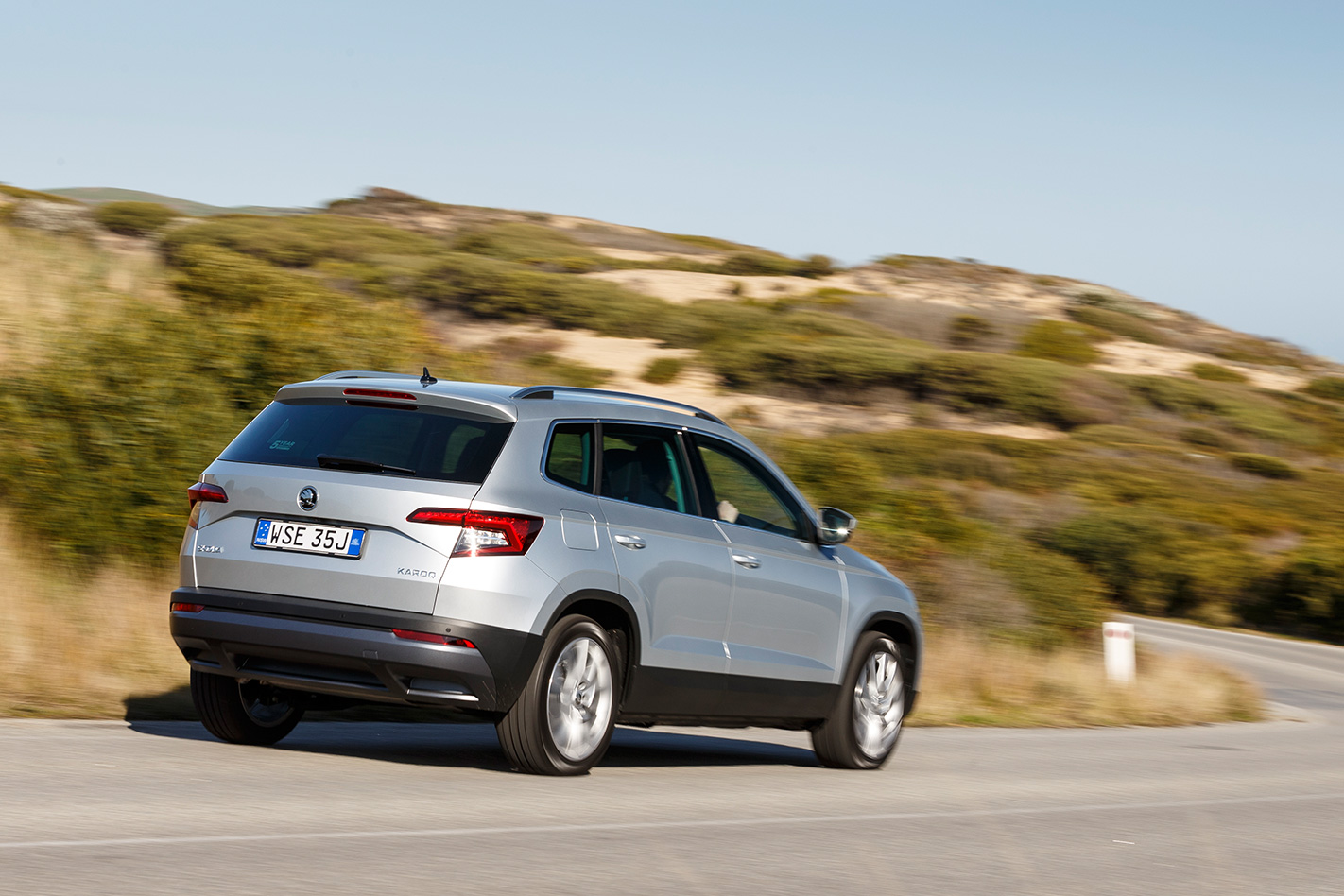
Ticking the box for the Travel Pack will add lane-keep assist, blind-spot monitoring, rear cross-traffic alert, a powered driver seat with memory, heated front seats, and auto folding and dipping mirrors to the equation. The Premium Pack includes adaptive LED headlights, leather trimming, front sensors, a powered tailgate and 18-inch alloys.
Mitsubishi matches our optioned Karoq on nearly all features as standard, with the exception of the powered tailgate and Skoda’s nifty tablet and in-door rubbish bins, but adds a heads-up display and dual sun-roofs to the equation.
It also must be mentioned that while both cars are fitted with an adaptive cruise control system, they are not created equally. While the Skoda’s does an impressive job of adjusting speed steadily, and keeping pace with the vehicle in front, the Mitsubishi’s automated adjustments are binary in their application with little subtlety.
Purely on a value for money equation, however, the Mitsubishi edges the European offering.
INTERIOR AND CONNECTIVITY
Verdict: Skoda
Questions of styling will often come down to personal preference, but for us, the interior of the Karoq is one of the Volkswagen Group’s best-looking MQB interiors outside of the Audi stable.
Thanks to the optional Premium Pack, the interior has a cohesive and elegant feel similar to a high-spec Tiguan. The cabin would be a pleasant home for long trips, with firm and supportive seats, and a deep glasshouse.
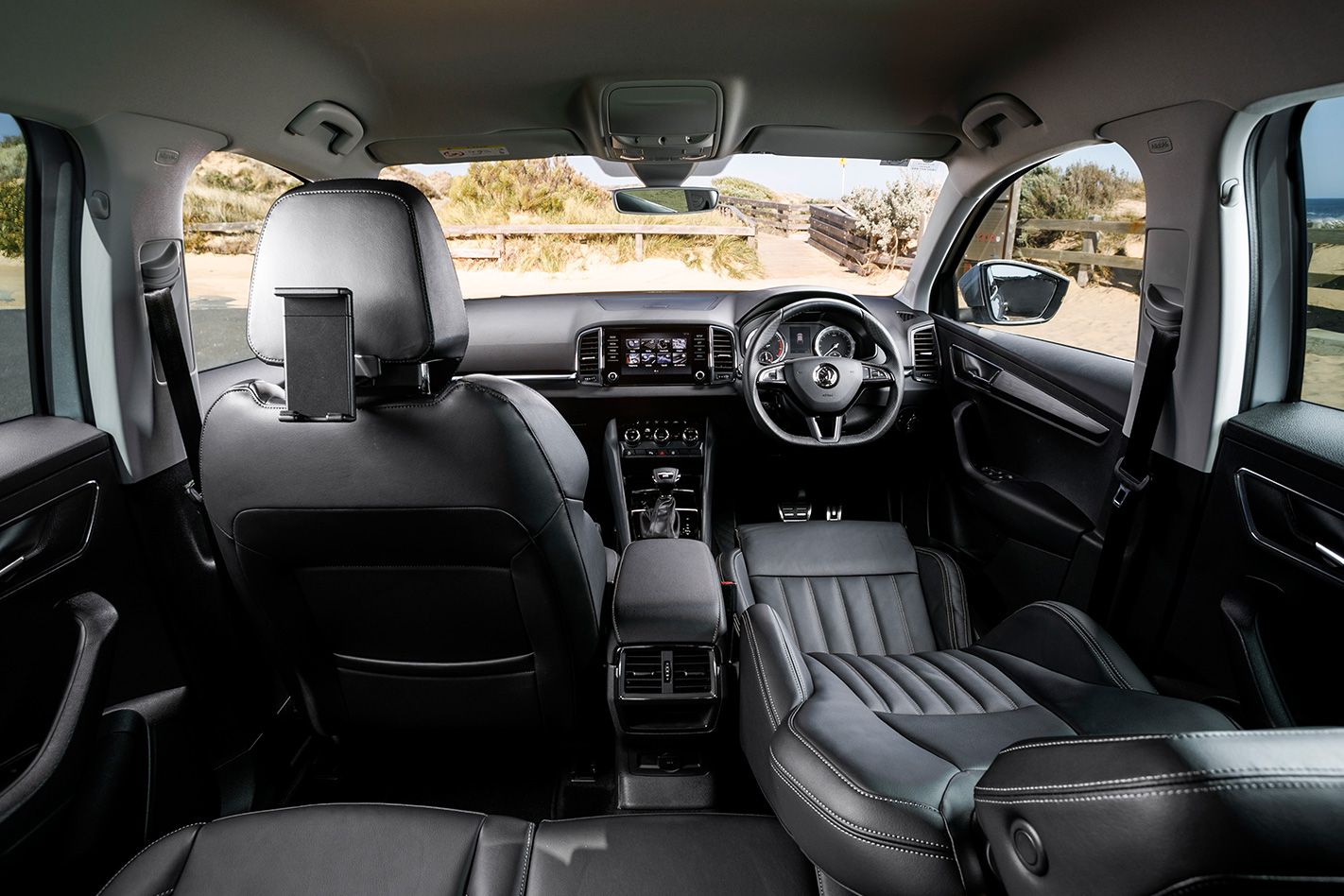
Infotainment is taken care of through an 8.0-inch touchscreen, with Apple CarPlay and Android Auto, but just a single USB slot is available.
The interior of the Eclipse Cross is combination of contradictions. The styling of the dashboard is a big improvement over previous Mitsubishi offerings, but is let down by sub-par infotainment graphics on the 7.0-inch touchscreen.
Likewise, the materials used can feel cheap, and the seats lack under thigh support.
Younger rear occupants will be thankful for the higher perch, and there is copious legroom offered thanks to the sliding pew, but headroom is cramped for adults.
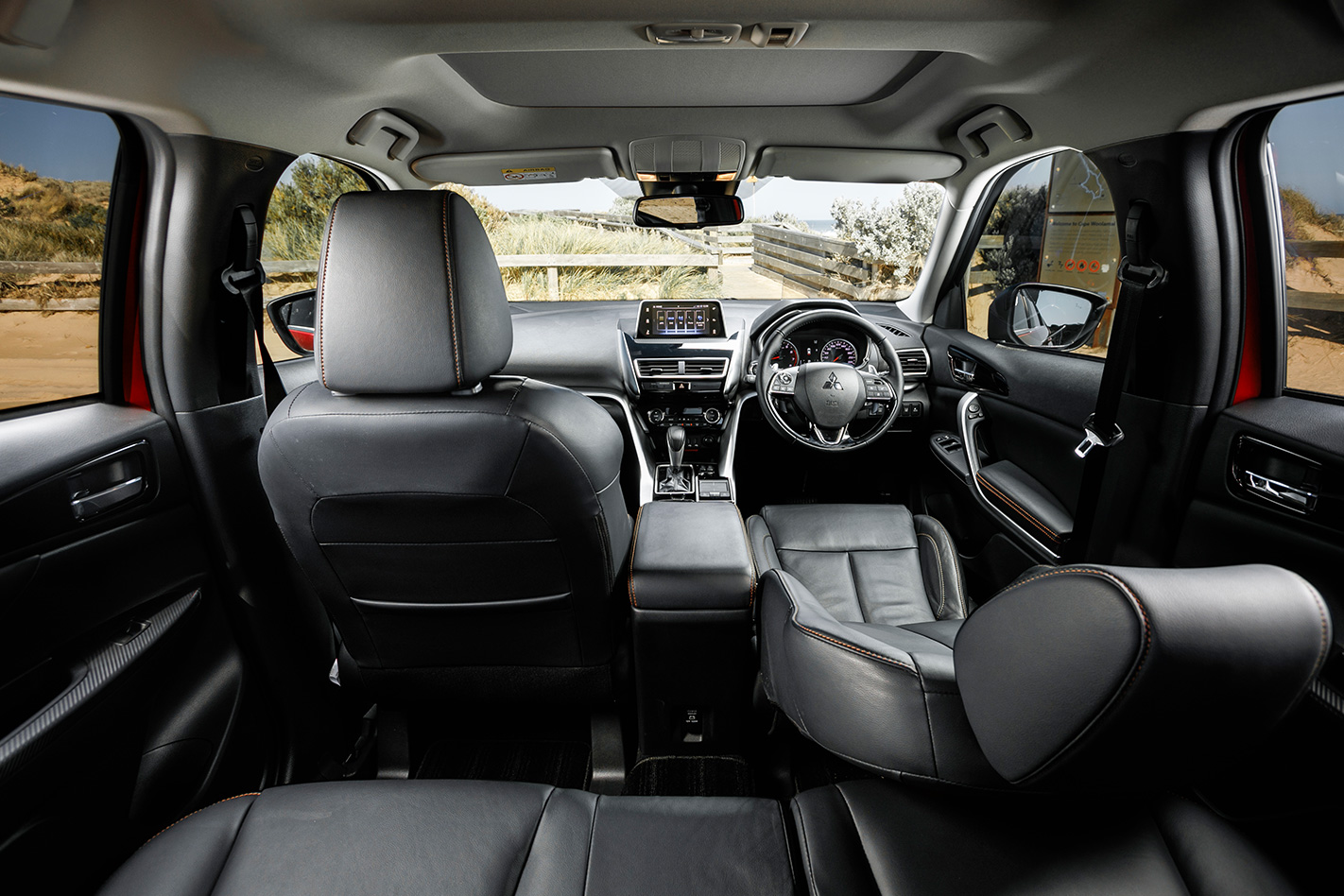
While both offer Apple CarPlay and Android Auto smartphone mirroring, in-built sat-nav is omitted. However, with smartphone saturation at an all-time high in Australia, many buyers won’t notice the exclusion, as better, more intuitive phone apps such as Google Maps and Waze can be operated through the touch screen.
Due to the quality of the materials used, and ease-of-use of the infotainment, the Skoda edges the Mitsubishi.
RIDE AND HANDLING
Verdict: Skoda
The Skoda is an impressive dynamic offering, with a faithful, almost playful front end, while the chassis is tautly sprung and provides ample grip.
While a torsion-beam rear suspension is used, there is impressive comfort when loaded with four adults, with the edge to many bumps smoothed out. However, it is during low-speed city driving when the Skoda falls short, with an abrupt harshness at times.
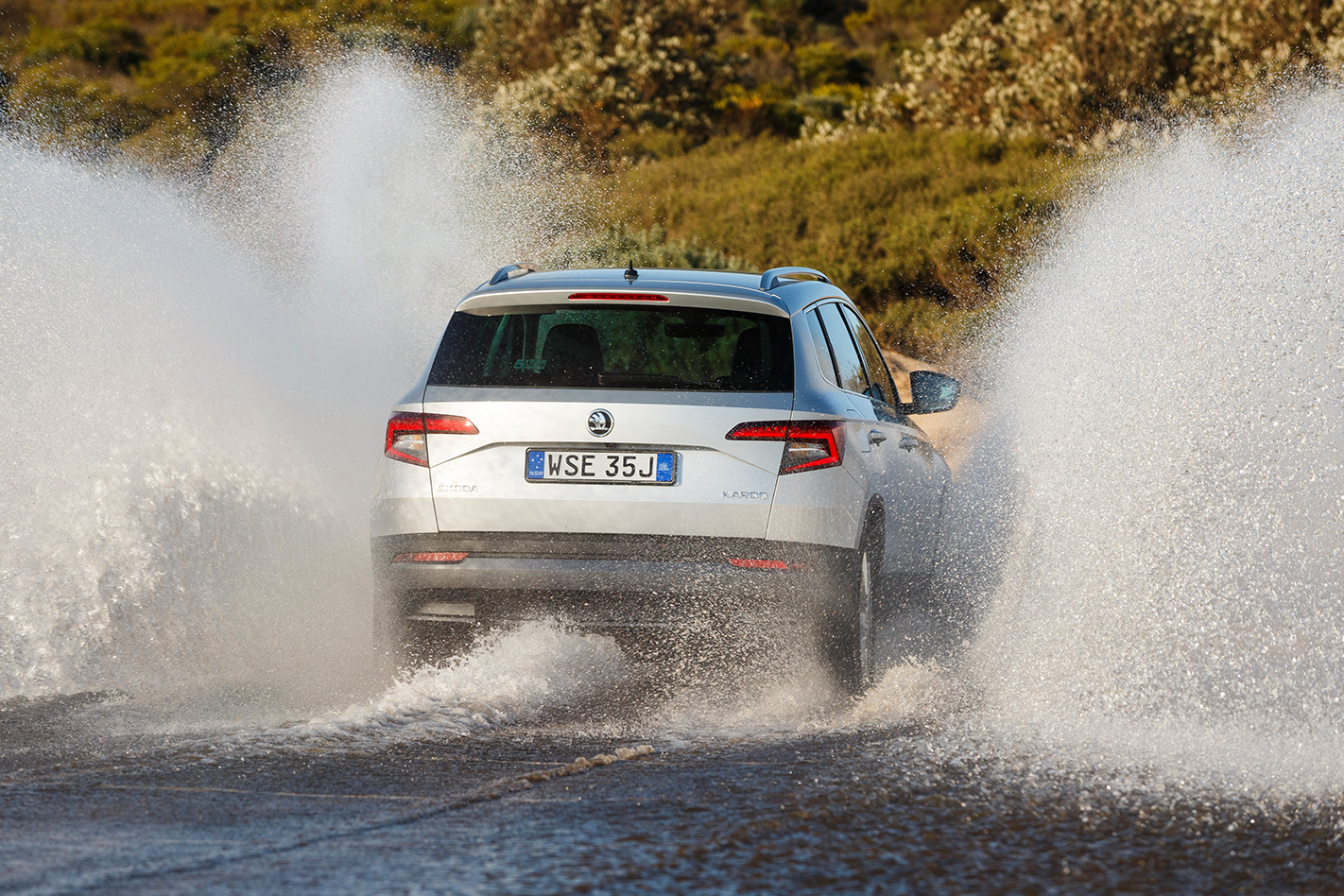
Despite the small stumbles, the Skoda still eclipses the Mitsubishi, which feels undercooked in many aspects.
Steering in the Eclipse Cross is unnervingly numb, which combined with a choppy ride and looser roll response makes for a driving experience that doesn’t always inspire confidence. The suspension is both harsh and noisy, and rear seat occupants are tossed around on rougher roads.
PERFORMANCE AND ECONOMY
Verdict: Skoda
Both cars are fitted with turbocharged 1.5-litre four-cylinder petrol engines. In the Skoda 110kW and 250Nm is sent to the front wheels via a seven-speed dual-clutch transmission.
The Mitsubishi transfers an identical power figure to the front treads via a consistently variable transmission (CVT).
Understandably both perform broadly similarly in a straight line, with the Mitsubishi recording a 9.4-second 0-100km/h sprint to the Skoda’s 9.5-second time.
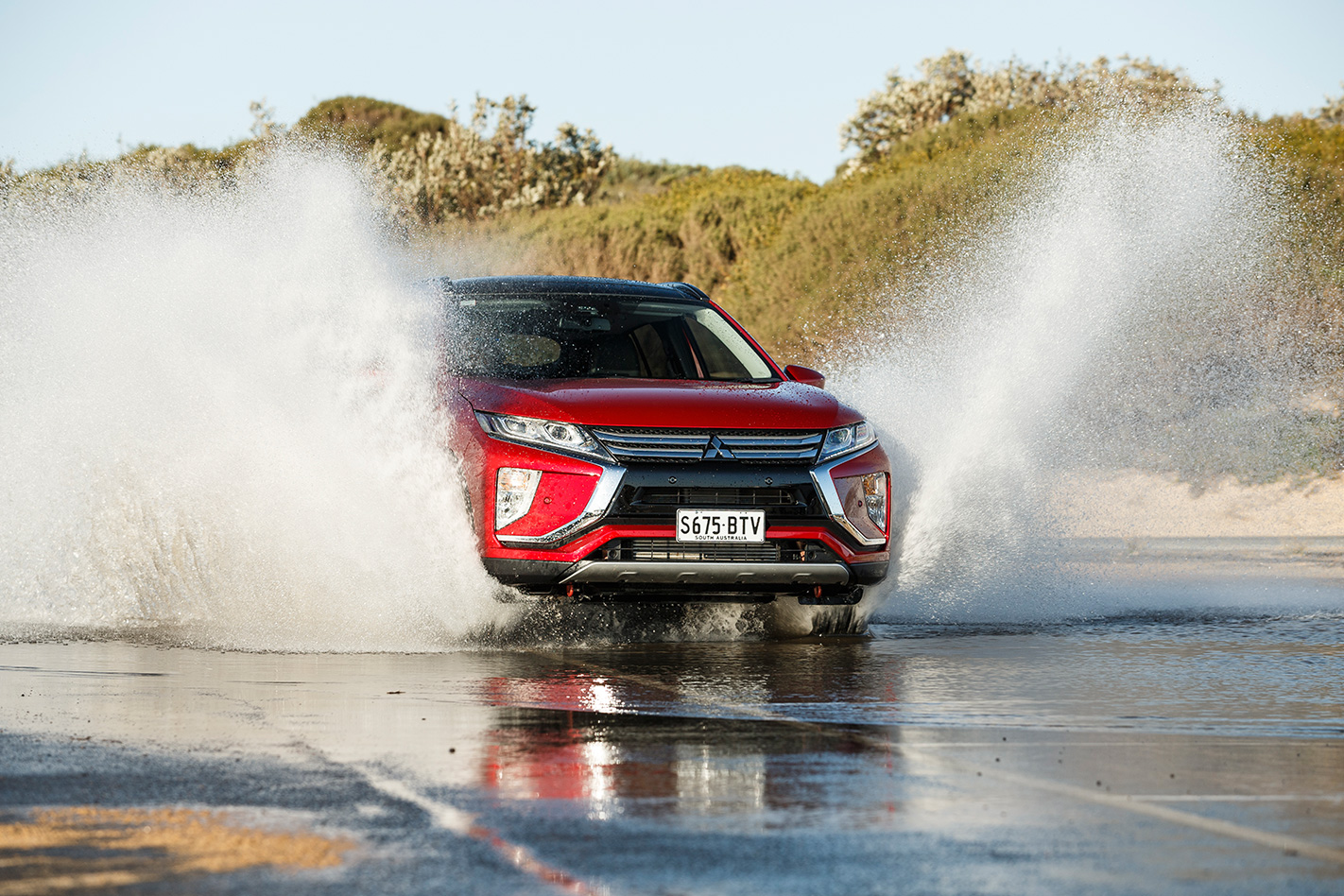
However, rolling acceleration is a different matter, with the Mitsubishi taking 6.9 seconds to shift from 80-120km/h, while the Skoda shaves almost a second off that mark.
The Karoq’s powertrain feels tractable, with plenty of grunt throughout the rev range, although getting it off the line cleanly isn’t always easy, as the DCT transmission doesn’t enjoy being wound-up in advance as you might with a torque-converter auto.
Mitsubishi’s CVT is one of the better on the market, but despite being smooth and unobtrusive for its design, it’s no match for the dual-clutch in terms of enjoyment. It does manage to avoid the worst CVT mismatches of noise and acceleration though.
Due to its heavier weight, the Mitsubishi drank 10.5L/100km of fuel on our test, compared to the Skoda’s 9.6L/100km. Both are creditable figures for test driving, but few marques tend to get close to MQB-chassis Volkswagen Group products in terms of efficiency.
VERDICT
While both cars are only a couple of months old, there is a cavernous gap in terms of refinement, with the Skoda offering a polished product with but a few niggles such as its modest standard equipment count and imperfect low-speed ride.
However, it is in another class compared to the Eclipse Cross, which aside from an impressive features list, feels undercooked in its chassis development, with harsh ride and handling characteristics. Couple that with a lower quality interior and the Karoq claims an easy scalp.
Mitsubishi Eclipse specs
Model: Mitsubishi Eclipse Cross Exceed 2WD Engine: 1499cc inline 4cyl, dohc, 16v, turbo Max power: 110kW Max torque: 250Nm Transmission: CVT Weight: 1490kg 0-100km/h: 9.4sec Economy: 10.5L/100km Price: $36,890 On sale: Now
Skoda Karoq specs
Model: Skoda Karoq 110TSI DSG Engine: 1499cc inline 4cyl, dohc, 16v, turbo Max power: 110kW Max torque: 250Nm Transmission: Seven-speed dual-clutch Weight: 1318kg 0-100km/h: 9.5sec Economy: 9.6L/100km Price: $38,290 On sale: Now
Honda has updated its hybrid supercar, the NSX, to have a slightly different look and revised chassis tuning which the company hopes will make the NSX more dynamic.
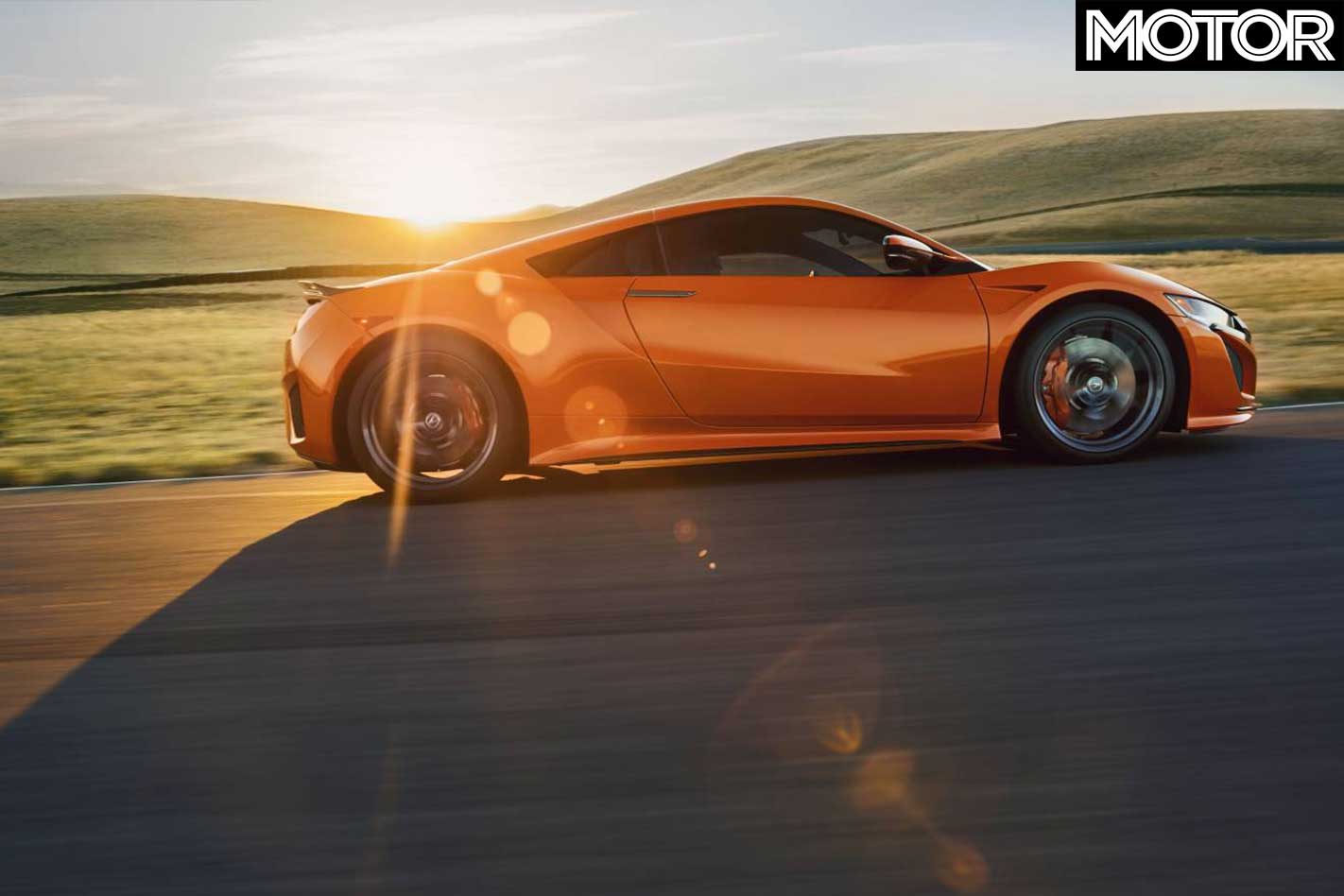
The 2019 Honda NSX will also be seen in a new colour, Thermal Orange Pearl, named for the Thermal Club racetrack in California.
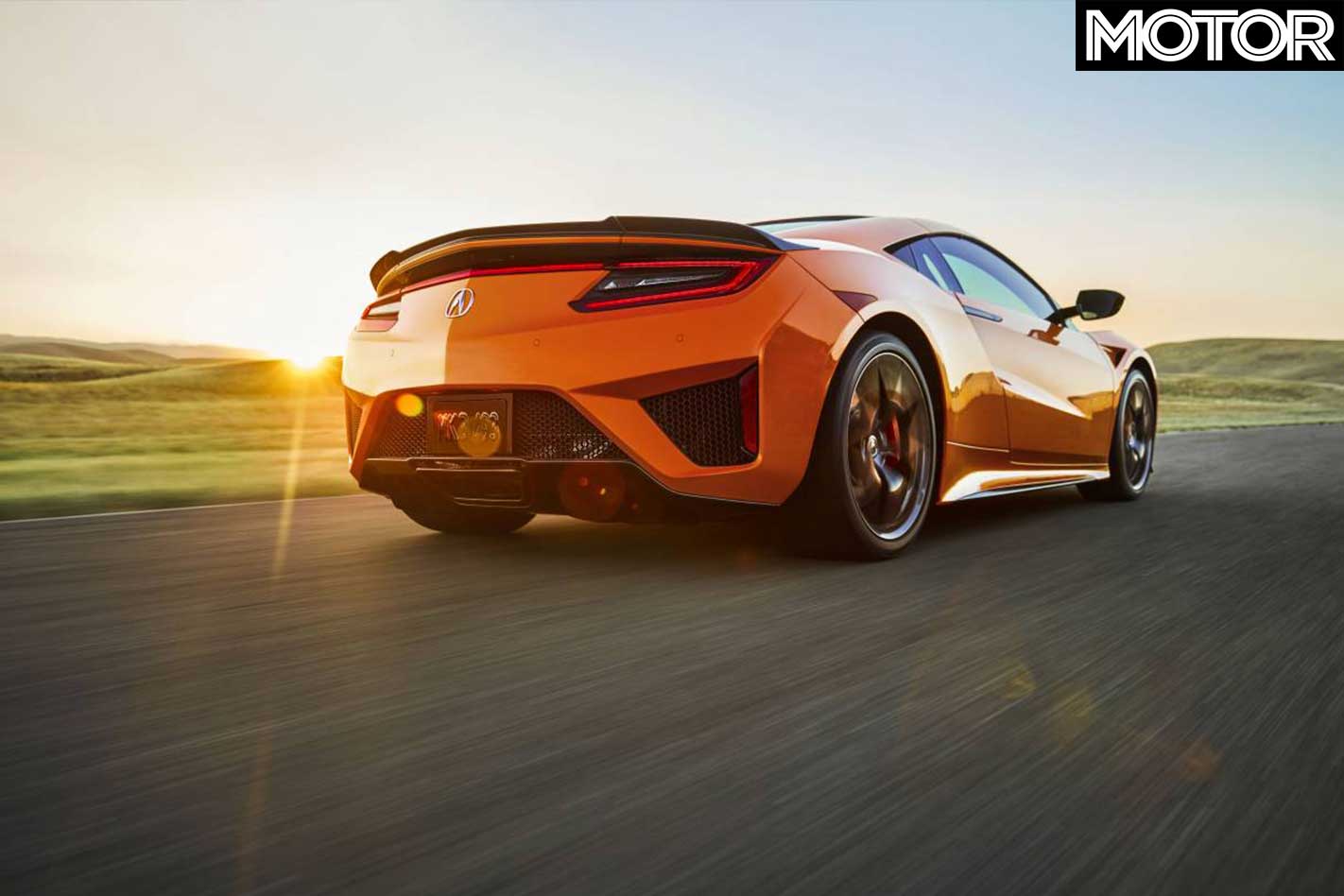
Painted in that colour, or whatever each individual car is painted, will also be some of its trim that was previously chrome, most notably the front grille accent.
Honda says the carbon ceramic brakes can now be fitted with orange calipers to match.
But most importantly for drivers, the 2019 NSX scores an upgraded chassis which Honda hopes to “enhance vehicle dynamics.”
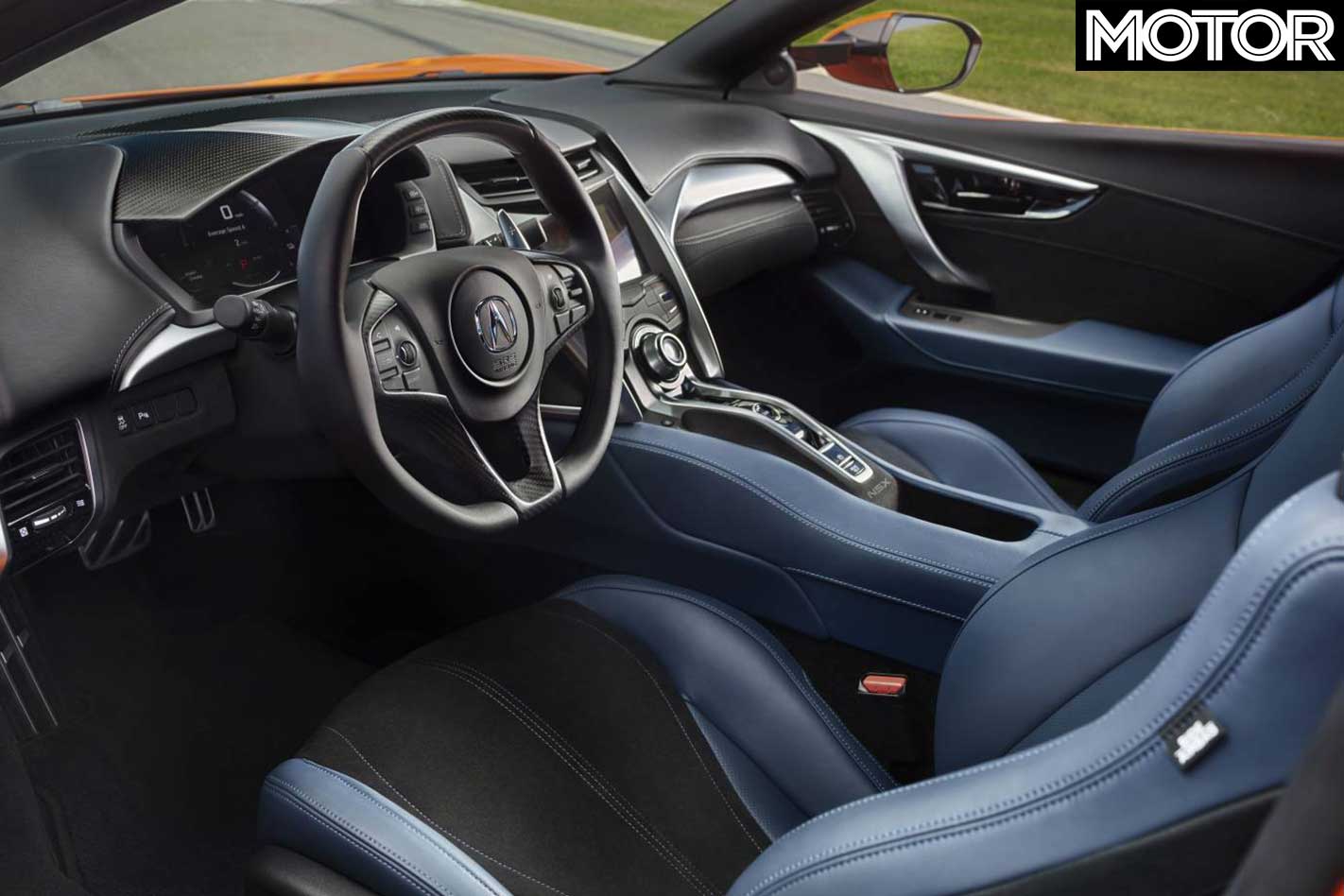
“Chassis enhancements include larger front and rear stabiliser bars, increasing stiffness by 26 per cent at the front, 19 per cent at the rear, and 21 per cent stiffer rear toe-link bushings. Rear hub rigidity has increased by six per cent.”
While the NSX’s mid-mounted 3.5-litre twin-turbo V6 and front electric motors still total an output of 427kW and 646Nm, alterations to the system and its peripherals have been undertaken to assist the updated chassis in being more driver-focused.
“Software calibrations to the NSX’s power unit, active magnetorheological (magnetic, essentially) dampers, electric power steering and VSA settings capitalise on this new hardware, as well as the grippier tyre setup.”
The tyres Honda is referring to are special Continental SportContact 6s developed for the NSX, which replace the ContiSportContact 5P on the previous generation.
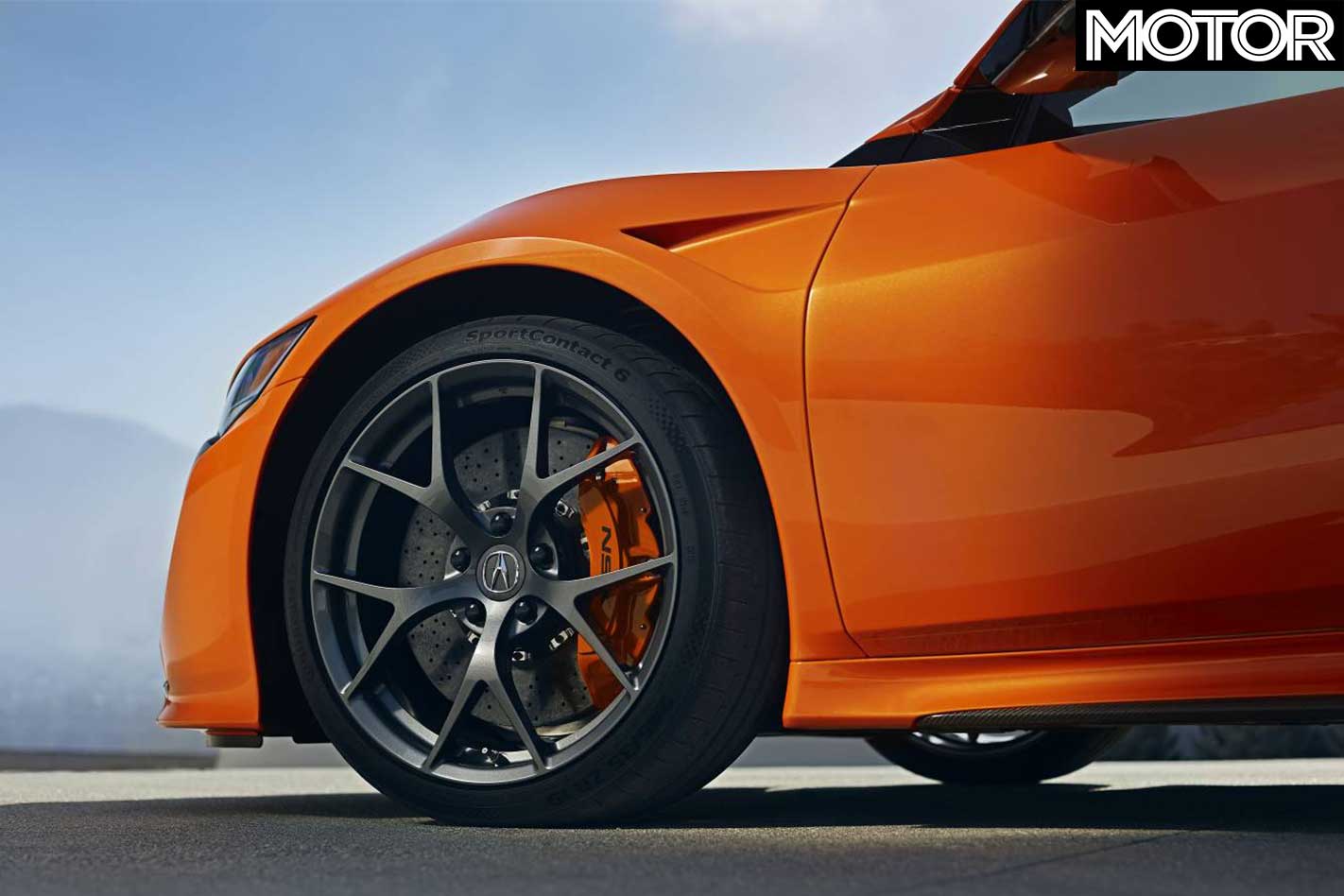
Honda says these changes allow more driver control oversteering through throttle application, and have improved the NSX’s lap times at Suzuka Circuit by almost two seconds.
In Australia, pricing for the updated Honda NSX will remain at $420,000, with pearlescent colours Casino White and Thermal Orange costing an additional $1500, and Nouvelle Blue Pearl and Valencia Red Pearl (which are made with Andaro nanoparticles) are priced at $10,000 each.
The 2019 Honda NSX will be available for order in Australia from September 1, 2018, with local deliveries set to begin in early 2019.
It has stood these last 35 years, an eminence grise among all those interested in how fast a car can lap a circuit. Six minutes and eleven seconds: for three and half decades it has been the measure, an expression not only of the concept of speed, but skill, technology and courage, distilled down into a concentrate and expressed in number form. It is, of course, the lap record set by Stefan Bellof in a Porsche 956 at the Nurburgring in the 1983 1000km race, the last time top-level sports car racing competed at the world’s most revered and feared track.
Except it’s not the lap record. And not just because of the extraordinary goings on I was privileged to witness on June 29th this year, but because it never was. Bellof did lap the track in 6:11.1, but only in qualifying. In the race, without qualifying boost and tyres, the best he could manage was 6:25.9, and as lap records are always taken from the race, that is where the real mark has always lain.
And to some there it remains to this day: whatever double Le Mans and five-time Nurburgring 24hr winner Timo Bernhard and Porsche achieved with their 919 Evo that day in June, it represents the fastest ever lap of the Nurburgring’s Nordschleife 20.8km northern loop, not the lap record.
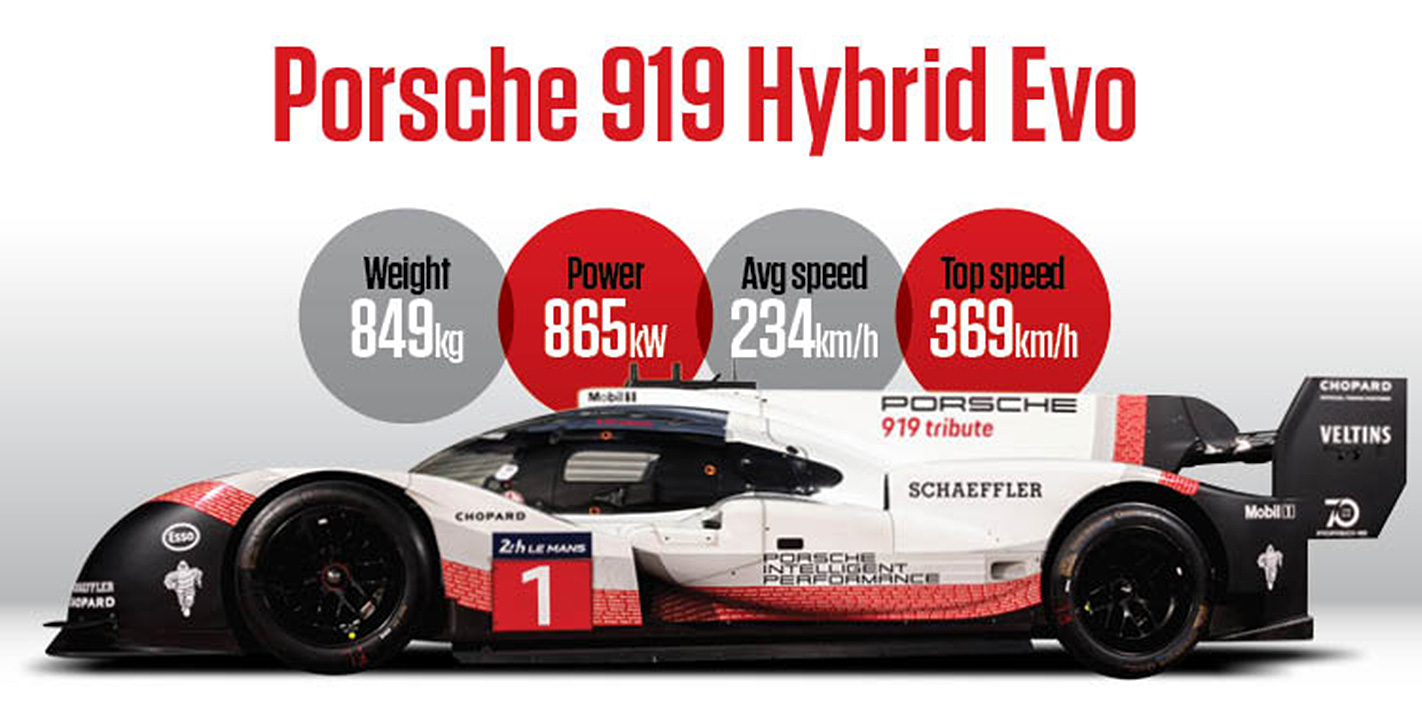
Of course, there have also been the naysayers who point out that the 919 Evo may be a racing car, but not one that can race because it has been developed from the 919 Le Mans car with no regard for any regulations. Its 2.0-litre engine has been uncorked via an unrestricted fuel flow that allows it to produce 535kW. And with an increase in the amount of energy the car can recover, the electrical output was raised by 30kW to 330kW. Most significantly, however, it can not only run any wing pack Porsche likes, but also incorporate full active aerodynamics so straight-line drag can be decimated too. This is how the Evo gets to deploy half as much downforce again as that boasted by the 919 WEC car, yet still goes quicker down the Nurburgring’s main straight than its sister ever went at Le Mans.
Okay, so the car is not eligible to compete in any category. But someone still has to get in and drive it around one of the world’s most dangerous sporting facilities at an average speed most people will not even have driven at, even briefly, just in a straight line.
Yet perhaps most impressive is the way Porsche chose to go about this challenge. Usually when a car manufacturer wishes to set a Nurburgring time, it is done in complete secrecy so that if anything goes wrong or the car is just not quick enough, no-one need ever know of the failure. But for its attempt to break the Nurburgring lap record Porsche has invited a handful of journalists from around the world to witness the attempt first-hand. Win or lose, stand or fall, there will be no hiding from it.
The night before we gather and have dinner with the team. Timo is not only there, he’s happy to chat. I take 15 minutes of his evening during which I ask him how big an achievement breaking the record would be compared to winning Le Mans. Annoyingly he’s so modest and clearly in awe of what Bellof did he’s keen only to point out that what he is about to do is far easier than what his late countryman did all those years ago.
So I ask him how hard he is going to push. A few weeks earlier team-mate Neel Jani had done a lap of Spa 0.8sec quicker than Lewis Hamilton’s pole time from last year’s Belgian Grand Prix which was fairly astonishing but … “at Spa we knew what the target was and how hard Neel needed to push to break it. It was absolutely on the edge everywhere. Here you cannot drive like that: the kerbs are too high and if you make a mistake, well, in a car as quick as this, you can’t really afford to make a mistake…”
And there is some comfort in that: everyone knows that with the firepower at Bernhard’s disposal, breaking Bellof’s time will be easy. Thereafter the only question is by how much. He can take reasonable precautions and still come away with the job done.
Even so there is still a rather sobering moment later in the evening when we are all asked not to broadcast or publish any information in the event of an incident until its true extent can be reliably ascertained. And we all know what is being alluded to here. Even if he doesn’t go at ten tenths, this is a serious and seriously dangerous undertaking and while no-one discusses it, everyone knows it.
The following morning we assemble at the T13 gate, but Bernhard is nowhere to be seen. I ask team principal Andreas Seidl where he is. “Preparing himself,” he replies.
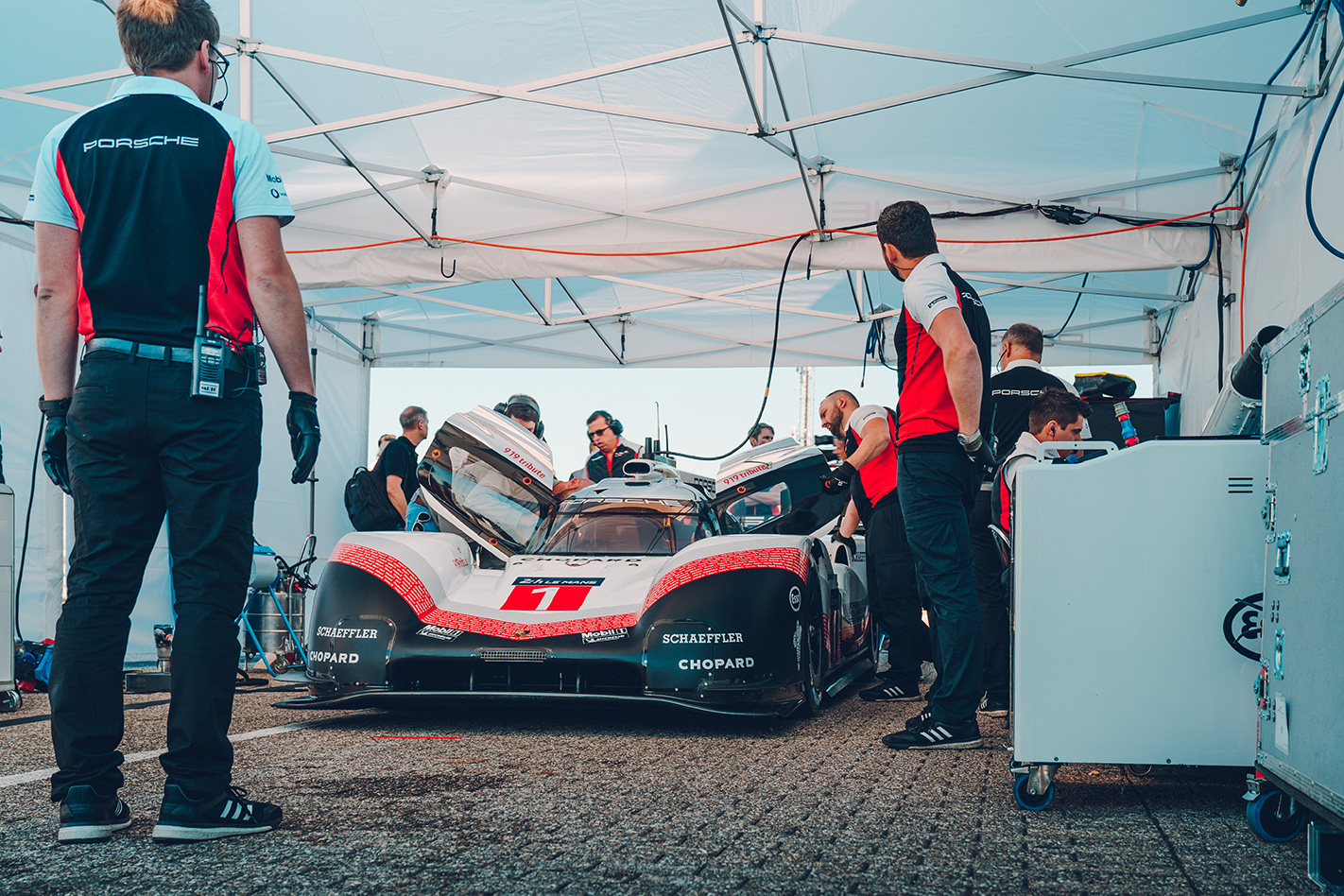
Up close the 919 Evo looks formidable. It’s quite small but the aerodynamic modifications and the deletion of its redundant headlights make it look like some sightless creature from a dystopian future. This is actually the chassis that retired from the lead at Le Mans last year, with only four hours of the race left to run.
Soon Bernhard appears from the innards of a truck, trim and compact in his 919 Evo overalls, his brow and jaw firmly set. He means business.
The track opens at 8:00am and thereafter every second will count. It’s already warm and getting warmer, and Porsche’s calculations suggest that by 9:30am the track temperature will shift the Michelin qualifying slicks out of their peak operating range. Given that Timo must come in after every lap, change tyres and fiddle with the set-up, time is very short.
He goes out and does an exploratory run. I watch from the Pflanzgarten where he passes me at ridiculous speeds, but he’s not trying at all. The lap is around 6min 40sec, not that much faster than a GT2 RS.
So new slicks go on and he has another go. This time he crosses the line after just 5min 31sec and all our jaws fall to the floor as one. He’s not just beaten the record, he’s smashed it into a billion pieces. I approach Porsche Racing PR chief Holger Eckhardt to congratulate him, but he says, “No, no. He’s still warming up.”
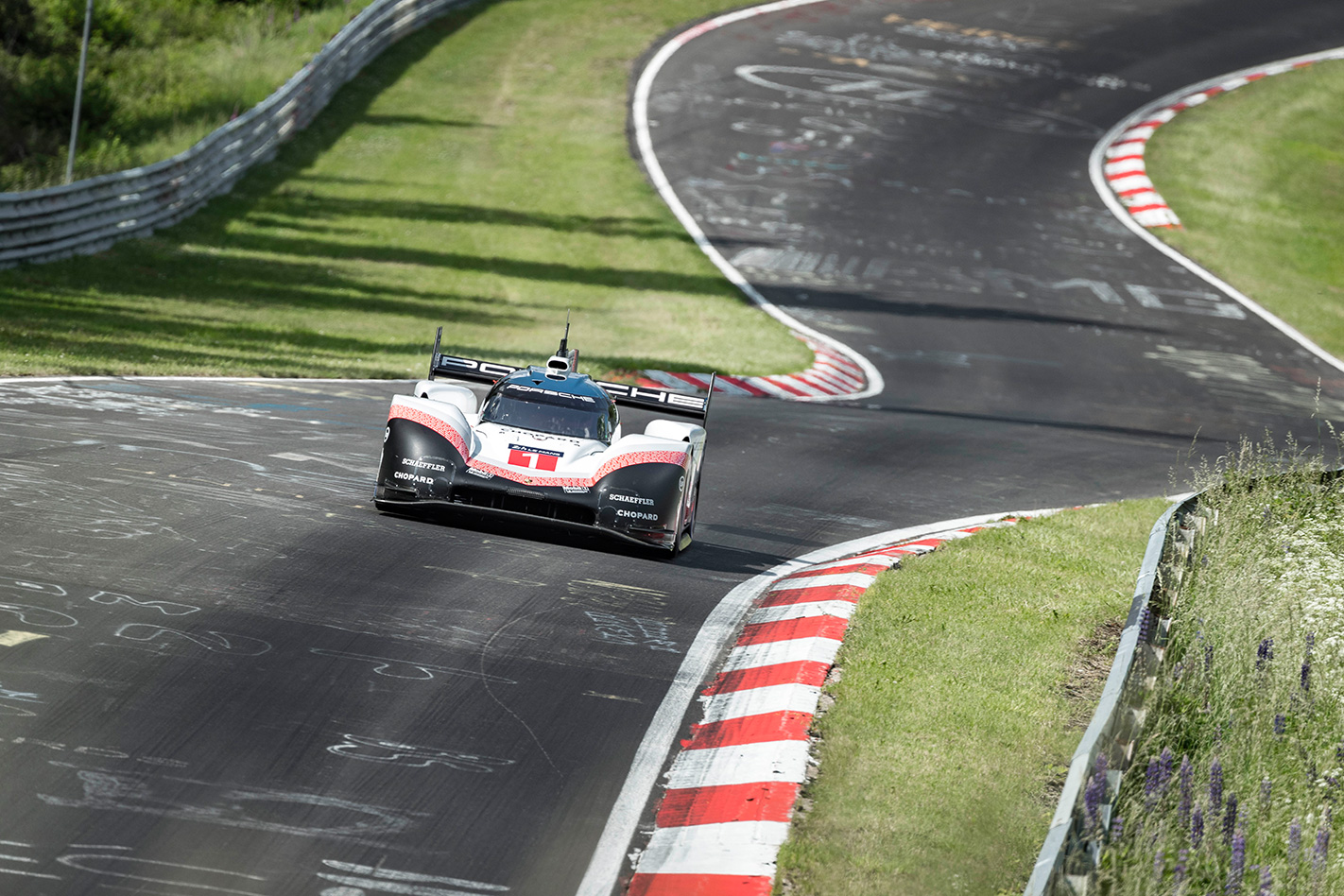
The next run is no warm up. Timo is weaving furiously even in pit lane as he drives the wrong way around the circuit for a kilometre, just so he can get a good run up. He flashes past, disappears off in the Eifel mountains and silence descends.
Seidl stands nervously by the timing screen. This project has been his baby ever since Porsche quit endurance racing at the end of last year, and whatever else the 919 Evo does, he knows what we know: this is the big one.
Timo returns carrying barely believable speed into the last turn and blasts across the line. He’s done a 5min 24sec lap and at last the tension dissipates. It turns out the target was to take a full minute off Bellof’s race record lap. Bernhard climbs out of the car; the job is done.
Or maybe not. A few minutes later he returns, tyres are out of their blankets and he’s being strapped back in. For all his intentions to not push too hard, the racer’s instinct has prevailed. He’s going to put it all on the line. Within a minute he’s gone again.
The wait is agonising, but soon we can hear the ugly blare of the 919’s engine as the car hurtles down the straight. Almost immediately he’s with us, slithering across the kerbs and over the line to record a lap of 5min 19.546sec. The place erupts. There is laughter and there are tears. More than anything there is relief, not just at a mission accomplished in which the team did something no-one else had ever come close to achieving before, but more at the knowledge that car and driver were still in one piece.
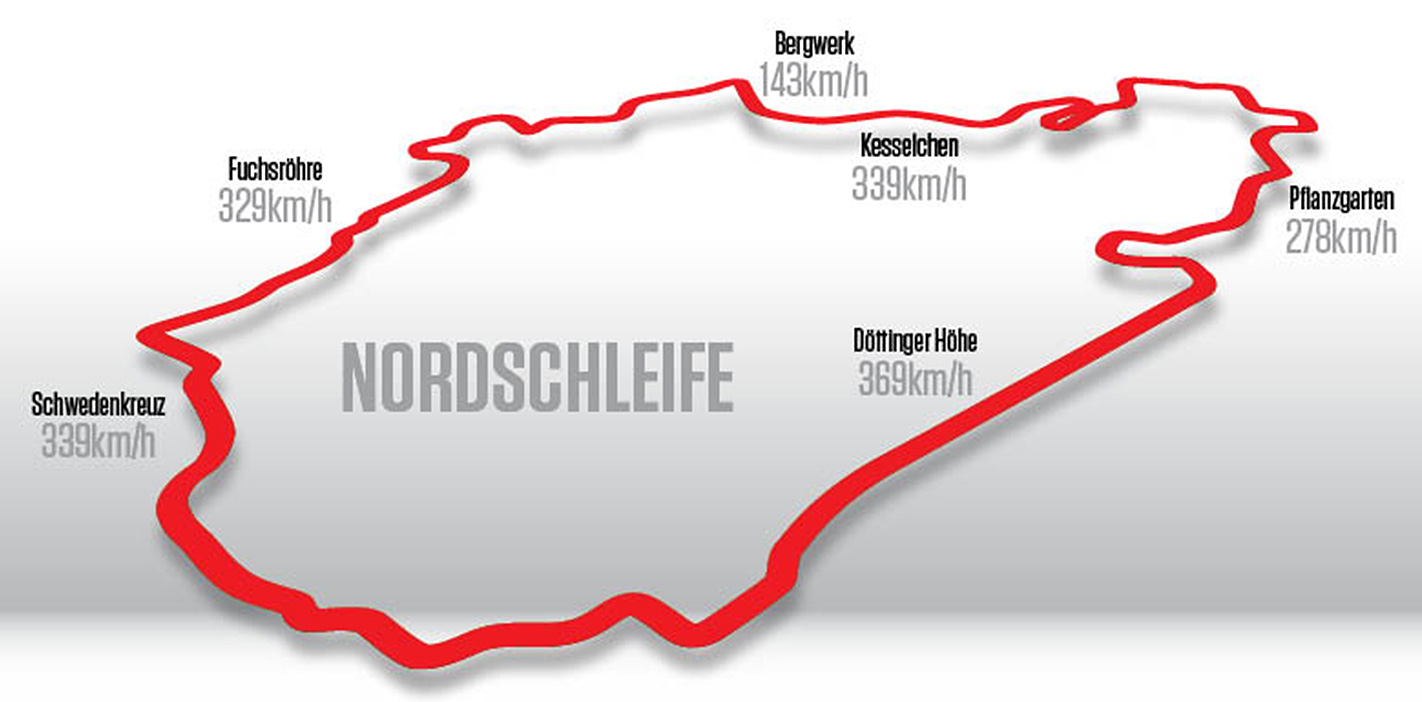
And then the data gets crunched. The car’s average – average – speed over that lap was 233.9km/h. It turned into the crest at Schwedenkreuz at 322km/h, and blasted down the straight at 369km/h.
Perhaps most bewildering of all for those who know their way around this place, Bernhard hit the compression at the bottom of the Foxhole at 328km/h and never even thought of lifting.
I’d like to say now that it will take a little time for me to get my head around such numbers so as better to appreciate what Porsche and Bernhard achieved that day. But the truth is I never will. Fact is, the harder I think about it, the more incredible it becomes. Had I not been there myself I might even have struggled to believe it. But I was, and the memory will be with me for the rest of my days.
It’s interesting to note that, so far as I am aware, the Nordschleife in its fabled configuration was in fact used for just one major motor race – that 1000km event in 1983. All other races, including all the F1 races were held on the combined northern and southern loops.
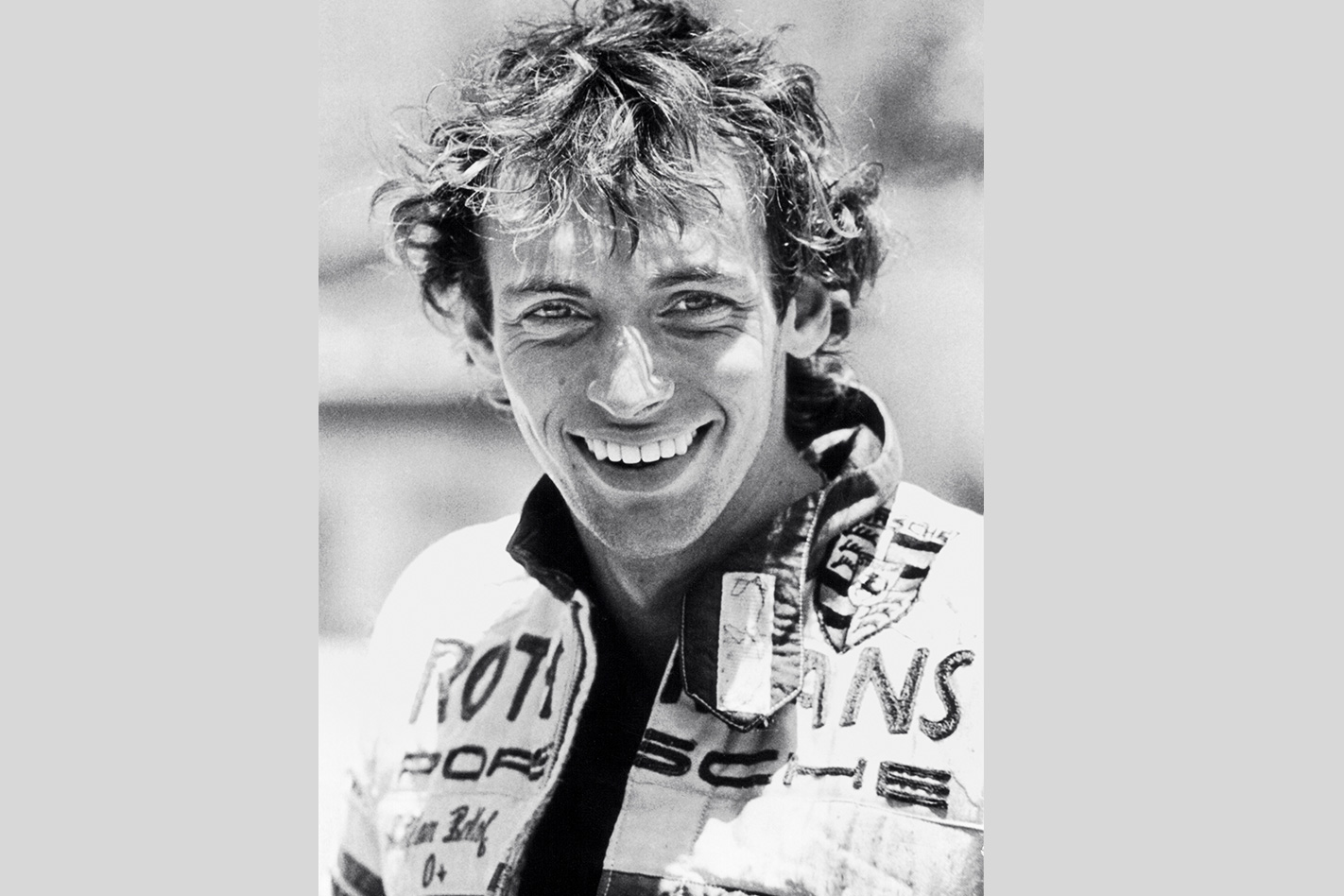
Black day at Spa
Stefan Bellof was just 27 when his Brun Motorsport Porsche 956 made contact with the works Porsche 962C driven by Jacky Ickx at Spa in 1985.
Bellof, a fearsomely quick and talented driver, was lining up a pass on Ickx through the infamous Eau Rouge kink. The impact was monumental, and the young German didn’t stand a chance. It cut short a potentially brilliant career: Bellof was in talks with Ferrari for an F1 seat for the 1985 season.
It’s as Australian as a Vegemite-smeared kangaroo drinking Bundy from a shoe, and it didn’t take long for the locals to spot Holden’s lion badge far from home in middle Tennessee.
To any other road-users, this truck load of large SUVs might look like a normal clutch of GMC Acadias, but car-spotting social media group V.I.S.I.T. noticed they wear the Holden badging and unique face destined for Australian showrooms.
Holden has not yet finalised a local launch date for the model any more specifically than the fourth quarter of this year, but the consignment suggests the Captiva replacement will be rolling on red dirt sooner rather than later.
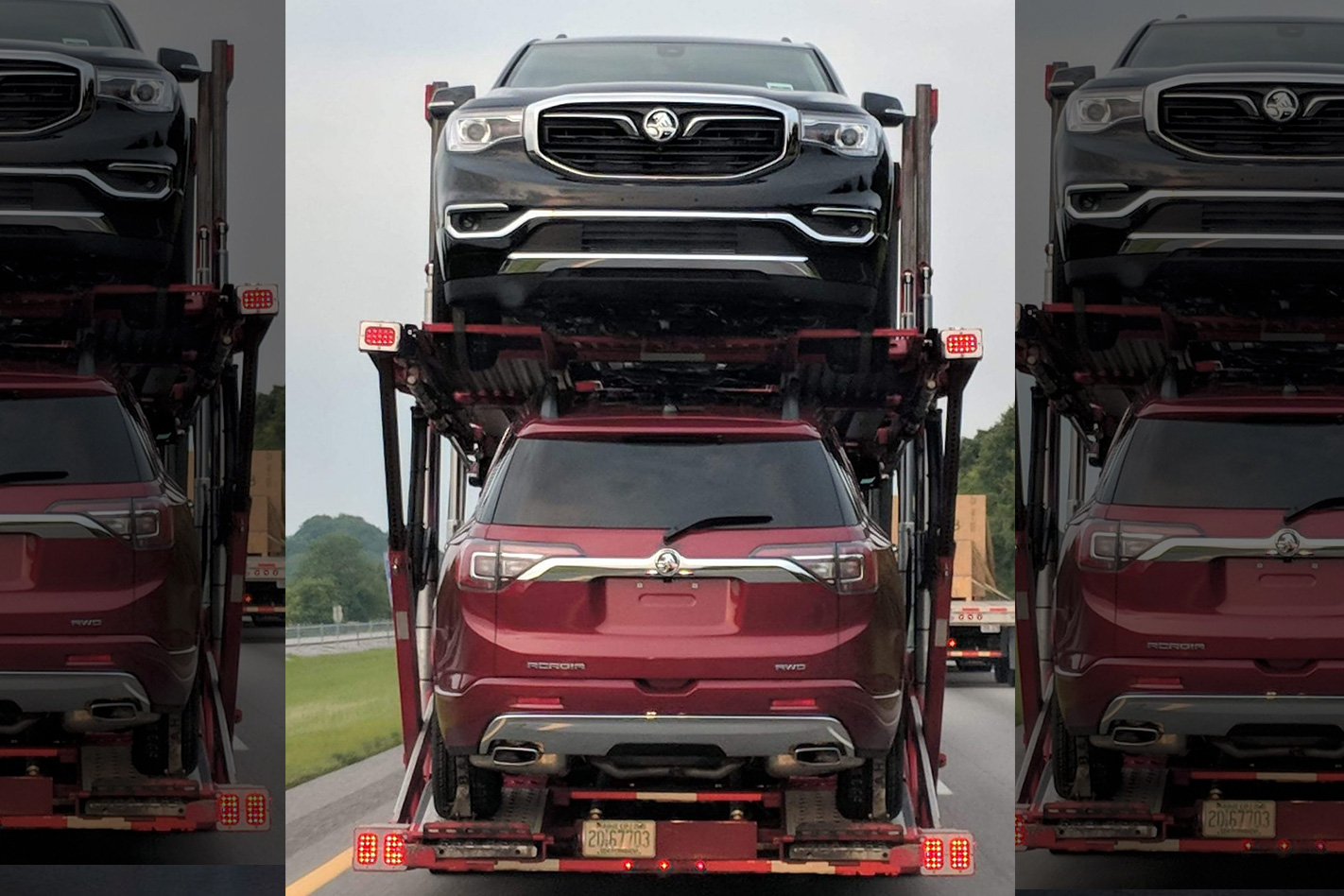
The car maker already has a fleet of 16 Acadias doing the rounds on local roads as part of a Captured Test Fleet program, but the vehicles spied in transit on US roads will be among the first delivered to Australian customers.
All Australian Acadias will be produced at GM’s factory in Spring Hill, in the heart of Tennessee whiskey country where the early examples were spotted, before being shipped Down Under.
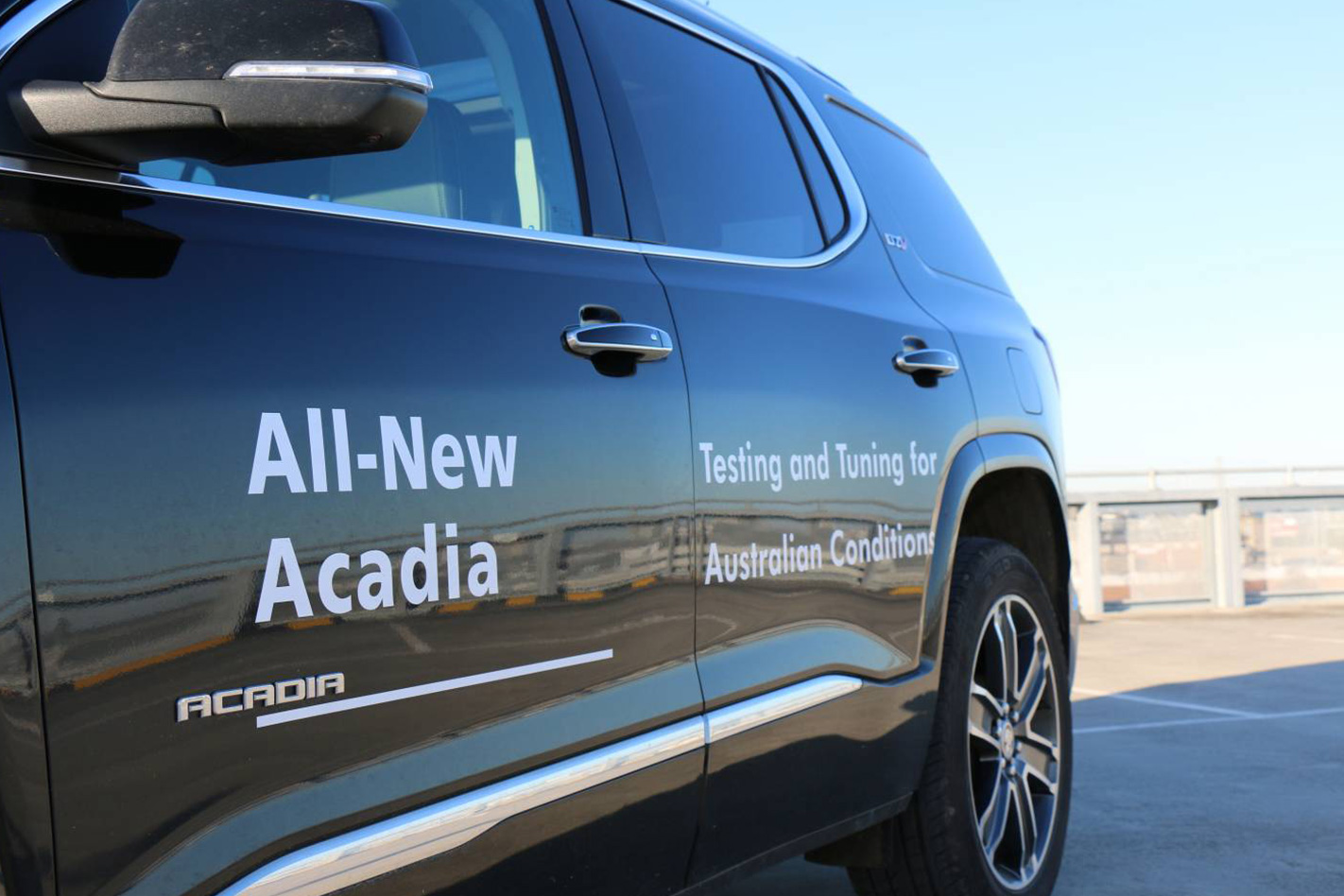
When it gets here, the Australian-fettled Acadia will be the first vehicle offered locally that has been pinched from the GMC pool, and is a continuation of the company’s pledge to exploit General Motors’ global portfolio – including all brands – after production of the locally-built Commodore ceased in 2017.
The fresh Acadia has the potential to significantly boost volume for Holden, stepping into the seven-seat large SUV segment against the likes of Ford’s Everest and the Toyota Kluger.
The ageing Captiva is long in the tooth but continues to attract a respectable audience with almost 3400 sold to the end of July this year, and its replacement will be expected to improve on that performance if it is to earn its keep.
MORE: Holden Acadia Range Review MORE: Holden Acadia Specs, Range & Price
Ever wondered what it would be like to drive your house? The Infiniti QX80 provides some clues.
At more than 5.3 metres long, over 2 metres wide and almost 2 metres tall, it dwarfs virtually everything else on the road, even other SUVs. Thankfully, the heavily revised styling is much more cohesive than the elephantine original.
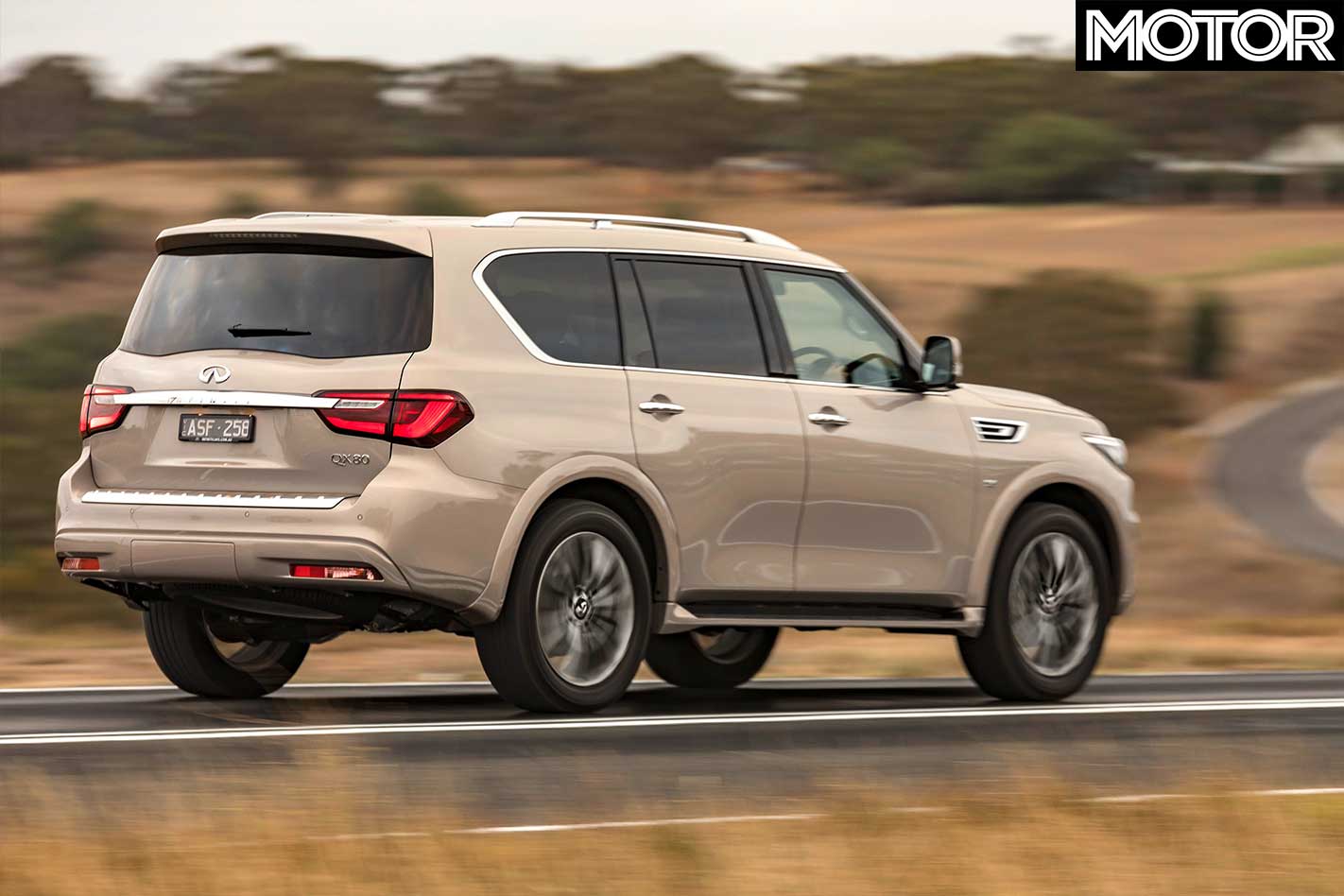
The upside of the QX80’s size is plenty of space. Even the third row can accommodate adults, so if you need to transport seven in comfort then the Infiniti has you covered. Relative comfort, anyway, as the lumpy ride quality means this monster is no magic carpet – with a full load, it’s possible the ride would improve.
Dynamic prowess is surely irrelevant for a car that weighs almost 2.8 tonnes, but though the steering is light and slow, it feels relatively secure.
The sweetest part of the QX80 package is undoubtedly its 5.6-litre V8. Even lugging this much weight it sounds sweet and provides plenty of acceleration – in something 1000kg lighter it would be truly superb. Judging by the gauge fuel use seems okay, but then you learn the QX80 has a 100-litre tank.
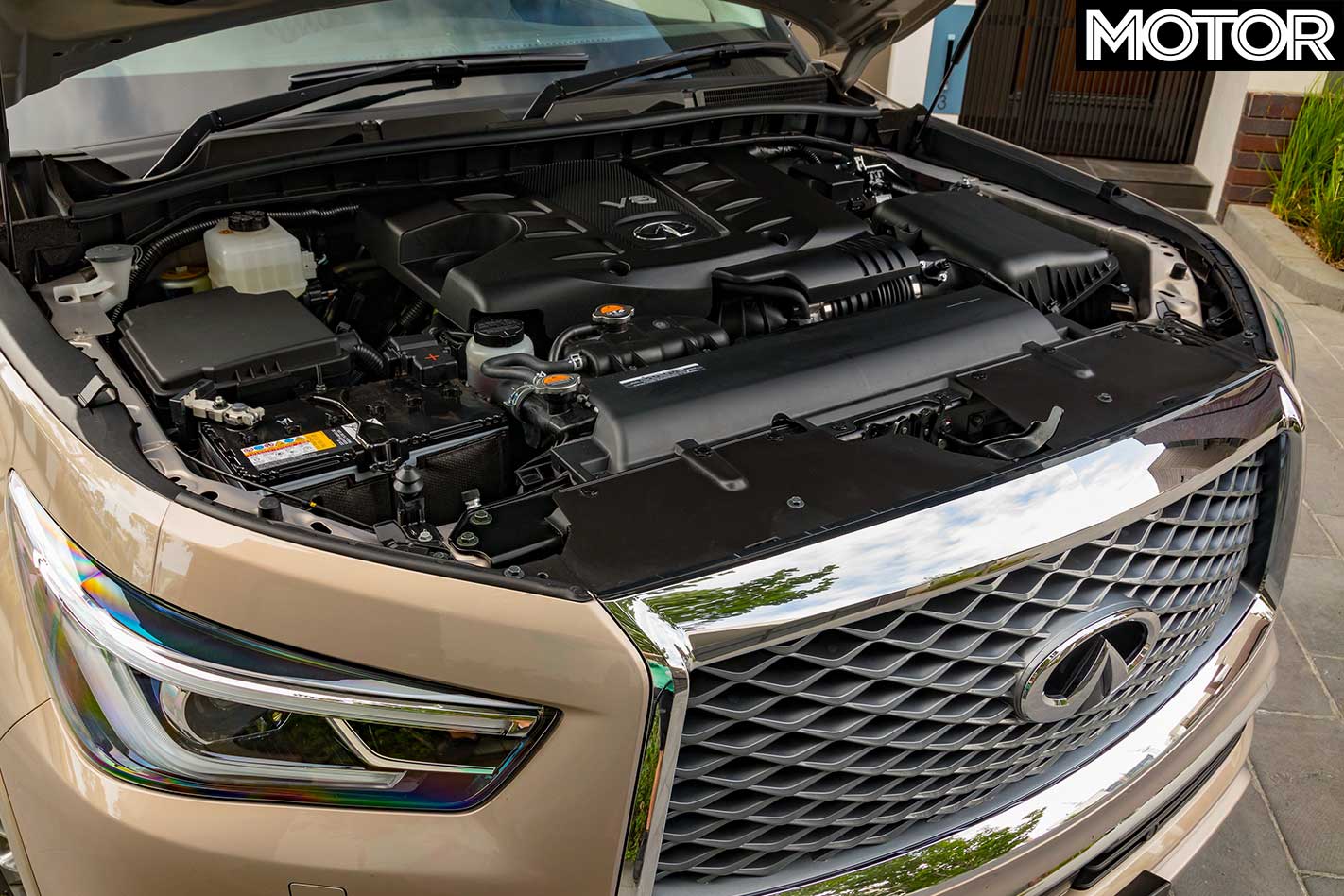
Essentially, if you need lots of space, have your own fuel station and if your idea of luxury is plastic wood and shiny leather, this Infiniti could be for you.
For everyone else, buy an Audi Q7.
2018 INFINITI QX80 SPECS: Engine: 5552cc V8, DOHC, 32v Power: 298kW @ 5800rpm Torque: 560Nm @ 4000rpm Weight: 2783kg Drive: AWD Price: $110,900
THE CHAOS started instantly at the Belgian Grand Prix, which was eventually won by Ferrari’s Sebastian Vettel, from Lewis Hamilton, and Max Verstappen.
The most exciting action of the entire 44-lap grand prix happened during the first handful of corners, with a three-car crash quickly followed by a race-changing pass for the lead of the race.
On the run into the first corner of the race Nico Hulkenberg misjudged his braking for the first turn, punting Fernando Alonso, who was then launched over the top of Sauber’s Charles Leclerc. All three drivers retired on the spot.
Amid the carnage, Daniel Ricciardo was collected, losing his rear wing in the process, before his Red Bull made contact with Ferrari’s Kimi Raikkonen. Both drivers were forced to eventually retire from the race.
Hamilton had started from pole following an unexpectedly wet qualifying, and led Vettel initially through Eau Rouge.
However, the Ferrari “sailed” past the Mercedes on the Kemmel Straight thanks to the benefits of a slip stream. The timing was fortuitous, with yellow flags waved and the safety car called onto the track, neutralising the stoush, which Esteban Ocon and Sergio Perez were also involved in.
Hamilton misjudged his timing on the restart, and was unable to pounce on Vettel in the same manner, and the remaining 40-laps were a case of tyre management for the leaders.
Valtteri Bottas had started at the rear of the grid due to engine penalties, and scythed his way through the field to eventually finish fourth. Despite carving through the field, the action was minimal, with most passes a display of extra power and DRS rather than driver skill.
Perez rounded out the top five for the newly renamed Racing Point Force India on the team’s technical debut after being saved from insolvency during the mid-season break.
Vettel now closes the gap to championship leader Hamilton to just 17 points.
The victory increases Vettel’s win tally to 52, moving him past Alain Prost to third on the all-time list.
Formula 1 will return next weekend at Monza for the Italian Grand Prix.
Mercedes-AMG leads Ferrari in the constructor’s standings by 15 points.
WHILE many car makers scramble to make underperforming and ageing models appealing, Hyundai is faced with the opposite problem when it comes to the Tucson.
Even though the mid-sized SUV was introduced three years ago, its popularity has defied almost all new model trends and continues to attract 1500 new customers each month.
A ‘mid-life’ update is probably a little late if the model is locked onto the company’s typical five-year lifecycle, but any changes must be carefully planned to avoid knocking the strong performer out of its orbit as one of Australia’s favourite cars.

WHAT IS IT?
A mildly updated version of the popular Hyundai Tucson with a light exterior and interior refresh. Overall pricing has crept upwards but the extra cash brings a revised chassis tune, upgraded interior features and a new eight-speed auto for the diesel.
From launch, the mid-range Active X was only available with petrol power but it too now has a diesel offering, while a renaming of the entry-level Active to Go is the only other significant range reshuffle.
WHY WE’RE TESTING IT
Hyundai appears to have nailed the mid-sized SUV recipe if the Tucson’s local reception is any gauge so our focus will be on the relatively small changes for this 2019 update.
An upgraded information and entertainment system, revised chassis and new transmission need to boost perceived value without upsetting the apple cart, if strong sales are to continue for another two or more years.
MAIN RIVALS
Kia Sportage; Mazda CX-5; Nissan X-Trail; Toyota RAV4

THE WHEELS VERDICT
REALISTICALLY, Hyundai didn’t need to do a lot to maintain the Tucson’s momentum. That’s not to say there is a single car brand that can afford to be complacent in Australia’s fearsomely competitive market, but the SUV has aged well over three years and showed no signs of losing attention.
However, a little slap and tech appears to suggest Hyundai is not resting on its laurels.
The entry-level Go model is probably the version that fleet managers and government agencies will buy for someone else to drive. While the excellent turbo petrol, seven-speed Tucson is still easy to recommend, the addition of an eight-speed auto has elevated the diesel variant to the top of the pack if you can stretch the budget.
PLUS: Sweet turbo engines; superb eight-speed auto; cabin space and finish MINUS: Wheezy atmo petrol; safety is extra for entry variants; no navigation for Go is ironic
THE WHEELS REVIEW
IT WAS a dark day when the Carlton United Brewery lowered the strength of Victoria Bitter to a measly 4.6 percent and I’m not embarrassed to admit that, for a few months in 2012, my fridge was stocked with something brewed in Adelaide. But I was not the only disgruntled stomach-guided liquid-bread enthusiast and after sales of the iconic brew dropped off a cliff, the company bowed to consumer pressure and reinstated the original hearty octane rating of 4.9 percent.
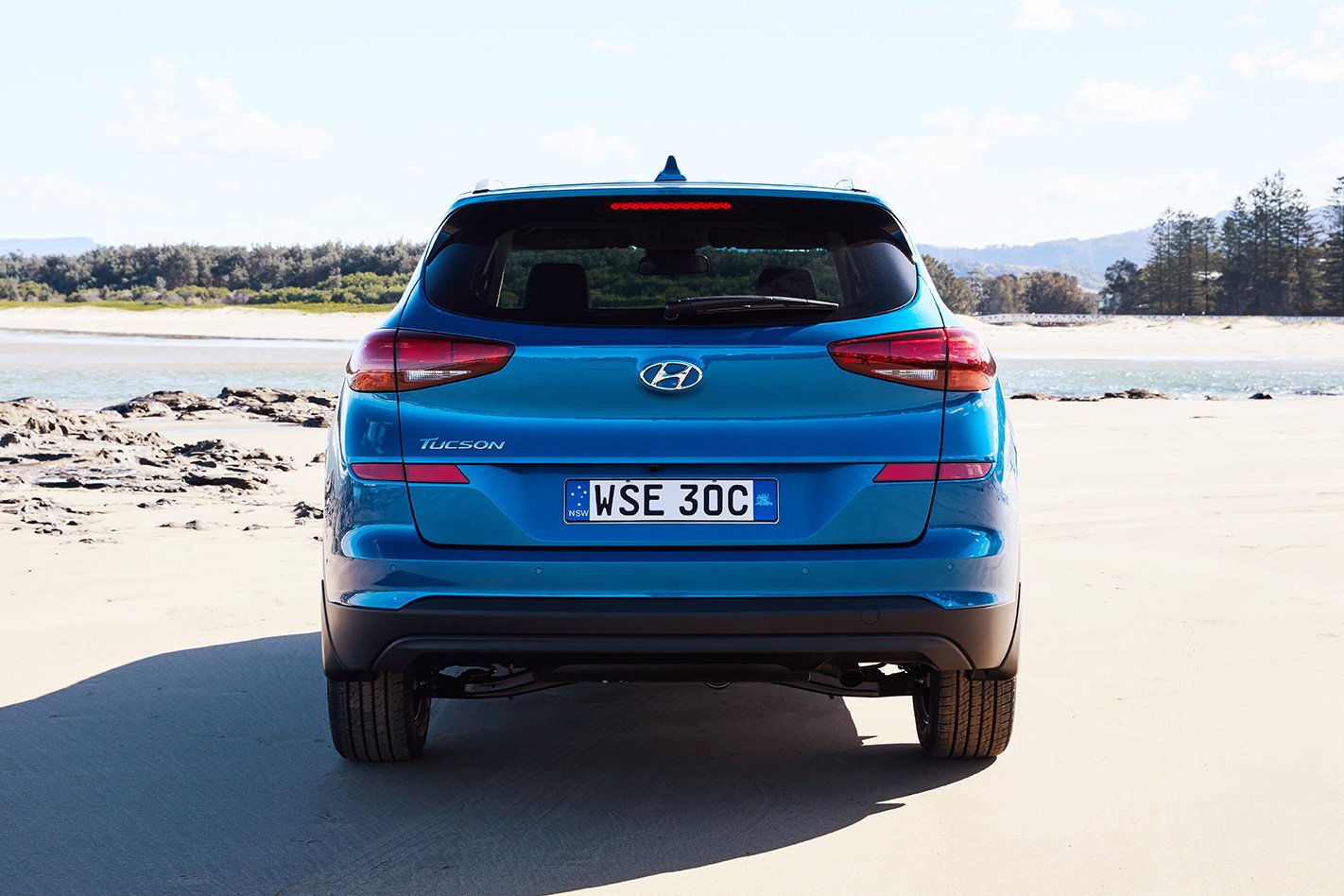
Thankfully though, no one had to paraphrase a well-known adage and inform Hyundai that, if something isn’t broken, it’s usually a bad idea to try and fix it – precisely the reason the 2019 Tucson mid-sized SUV update has been kept deliberately mild. It might have launched three years ago, but sales have hardly faltered after a strong start, with a very healthy 11,770 registrations to the end of July, ranking it as the fourth most popular vehicle in its class this year.
On the outside, a front-end nip-and-tuck has introduced the company’s ‘cascading grille’ to the model, flanked by redesigned headlights and it’s a similar treatment at the tail with a more lozenge-like light lenses. Re-sculpted tailgate and side graphics are blink-and-you’ll-miss-it changes.
You won’t fail to notice a new central ‘tablet’ type touchscreen however, which highlights an interior update and maintains linearity with the all-new Santa Fe big SUV sister. Even the smallest 7.0-inch unit gives the dash a real lift and brings some compelling features including smartphone mirroring, while the 8.0-inch version is the business with navigation among other extras. Both screens are fast and intuitive to navigate.

As you might expect, hubcaps, a plastic steering wheel and cloth seats in the entry version are reminders that you spent less, while a choice of leather upholstery colours with heating that extends to the steering wheel are calling cards of the top-end Highlander. In all cabins though, the Tucson is roomy, light and well screwed together.
But the big 2019 changes come in the form of a suspension retune in the name of better NVH and a new transmission bolted to diesel versions.
There’s still a bit of roar on coarse surfaces but the Tucson has a road manner that is easy to live with and a ride that recovers well over even punishing surfaces. The front driver is a little lacklustre in handling and performance when coupled to a six-speed auto and the 122kW/205Nm petrol. As before the unchanged 1.6-litre turbo is a livelier pick with 130kW/265Nm and a seven-speed dual-clutch and AWD, but the diesel is now the real star.
It gets a new eight-speed auto that is sophisticated and bunches the ratios tightly. The new box makes the very best of the smooth and quiet diesel for energetic acceleration coupled with all-wheel drive for confidence, even on cold and damp Victorian roads.

If the Tucson range was found in the fridge section of your local bottle shop, the entry-level Go would be sold by the slab; 24 cans of SUV at a price you won’t flinch at. Spend a little more however, and the Elite and Highlander versions represent something you’ll savour and enjoy.
As before, the more affordable Tucson variants continue to offer a benign package of value and practicality that will appeal to the budget or fleet buyer. But with the strong 1.6-litre turbo, the addition of the superb eight-speed auto with diesel combo, and a tech update, the more premium end of the line-up is very much a full strength proposition.
2019 HYUNDAI TUCSON CRDi ELITE SPECS
Model: Hyundai Tucson 2.0 CRDi Elite Engine: 1995cc 4cyl, dohc,16v, turbo Max power: 136kW @ 4000rpm Max torque: 400Nm @1750-2750rpm Transmission: 8-speed automatic Weight: 1707kg 0-100km/h: N/A Economy: 6.4L/100km Price: $43,150 On sale: Now
SHANE van Gisbergen is the new Supercars’ championship points leader heading into the endurance season.
The Red Bull Holden Racing Team driver won Saturday’s 100-kilometre opener at Tailem Bend, before following up with a second on Sunday.
His teammate Jamie Whincup ensured it was a one-two finish for the factory Holden squad on Sunday, winning the 200-kilometre race in dominant fashion after finishing fourth the day prior.
Dubbed ‘Australia’s Nurburgring’ the $120 million Tailem Bend facility impressed, with over 40,000 fans turning up for the track’s Supercars debut.
The V8 Touring Cars didn’t run on the full 7-kilometre-plus GT circuit, instead running the shorter ‘National’ layout.
Drivers were challenged by the flowing but technical course, and many struggled to stay on track during Friday practice.
Nissan had a positive day on Saturday with Rick Kelly and Michael Caruso finishing second and third for the opening race.
David Reynolds impressed on Sunday, finishing on the podium behind the Red Bull duo.
Scott McLaughlin’s weekend was one to forget, with a fifth and 10th place finish a disappointing result for himself and the DJR Team Penske team.
DJRTP principal Ryan Storey admitted McLaughlin’s struggles were linked to the hard tyres being used for the weekend, with the team unable to find the setup sweet spot.
The admission is worrying news for Ford fans with the Bathurst 1000 looming, where hard tyres are mandatory.
McLaughlin’s woes meant his 89-point championship lead at the start of the weekend was completely obliterated come Sunday afternoon.
The harder tyre choice also meant tyre degradation was almost non-existent, hampering the on-track action during the event.
Van Gisbergen now heads into the endure season as the championship leader, with 19 point in hand over McLaughlin.
Whincup is third, 362 points behind his teammate, while Lowndes is fourth and 549 points adrift. Reynolds rounds out the top five in the championship with a 565-point deficit to the leader.
The two championship protagonists got into a stoush during qualifying for the opening race, with McLaughlin baulking van Gisbergen who was on a flying lap, before the Holden driver returned the favour.
With less than 20 points separating the pair, the pressure will be on for the start of the endures at the Sandown 500 next month.
