
Several luxury and sports car manufacturers have passed on the now-annual cut in the Luxury Car Tax (LCT) threshold, however only the thirstiest premium or performance cars cop the drop, with efficient hybrids and electric vehicles (EVs) remaining as costly as ever.
From July 1 this year buyers will have to pay 33 per cent in tax for every dollar spent over a $65,094 threshold. That compares with $64,132 from July 1 last year, a difference of $962 –or given one-third of that is $317.50, it should equate to about that saving for buyers of any vehicle pricier than the threshold. Except it doesn’t for vehicles that use less than 7.0 litres per 100 kilometres, where the cap remains stagnant at $75,526 for the second year running.
This has been reported before, however now manufacturers such as Audi, BMW, Lexus, Mercedes-Benz and Porsche have passed on those savings to applicable vehicles.
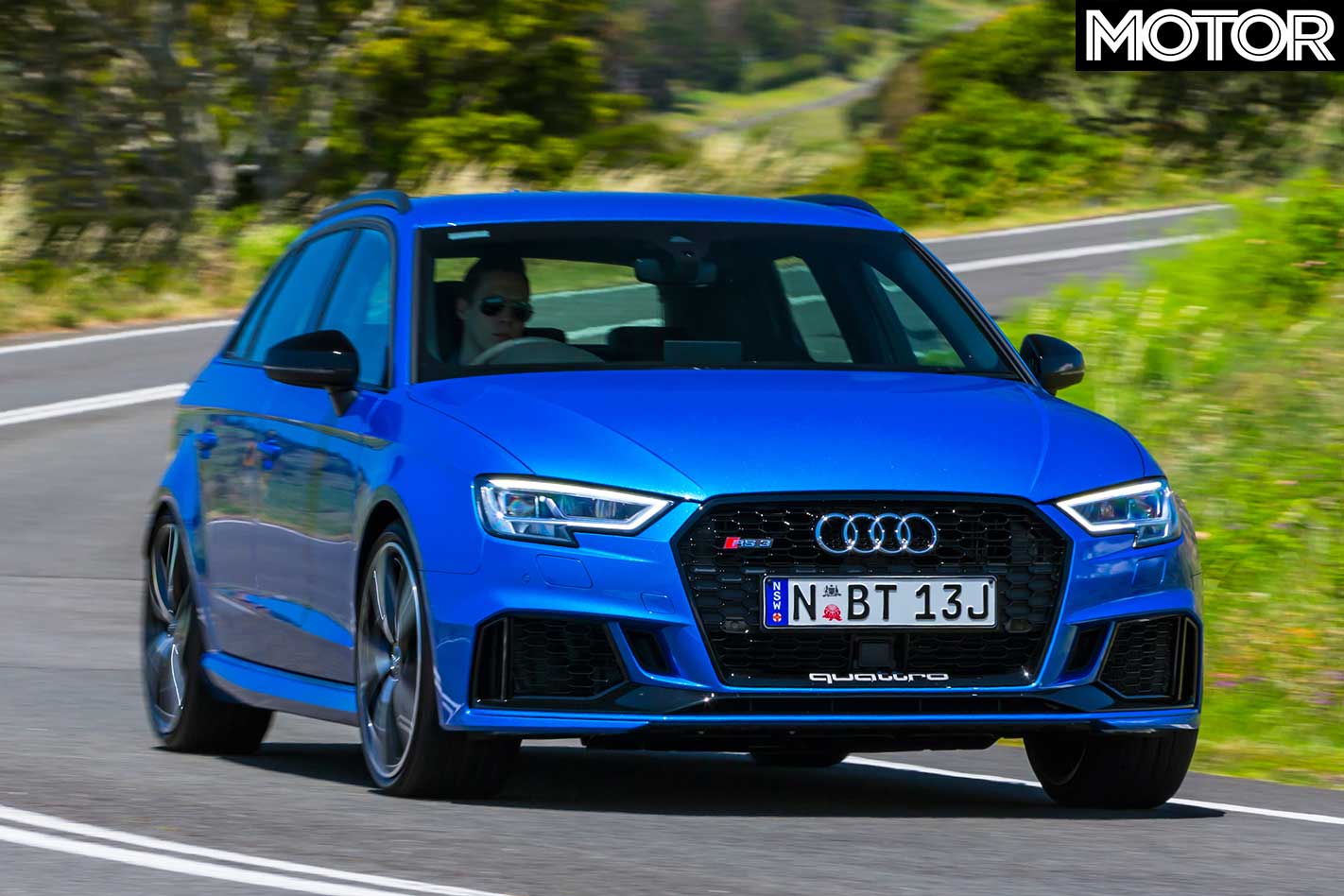
The upshot is that an RS3 Sportback drops by $371 to $80,240 plus on-road costs, the same amount deducted for all thirstier-than-7.0L/100km Ingolstadt vehicles right up to the derivatives of R8 including the V10 RWS now costing $299,129 (plus orc).
In camp BMW an M240i coupe drops by $371 to $77,629 (plus orc), but while an X6 M cops that cut and now costs $197,629 (plus orc), its far more fuel efficient X6 M50d sibling – 11.1L/100km versus 6.6L/100km – retains a $162,200 (plus orc) sticker.
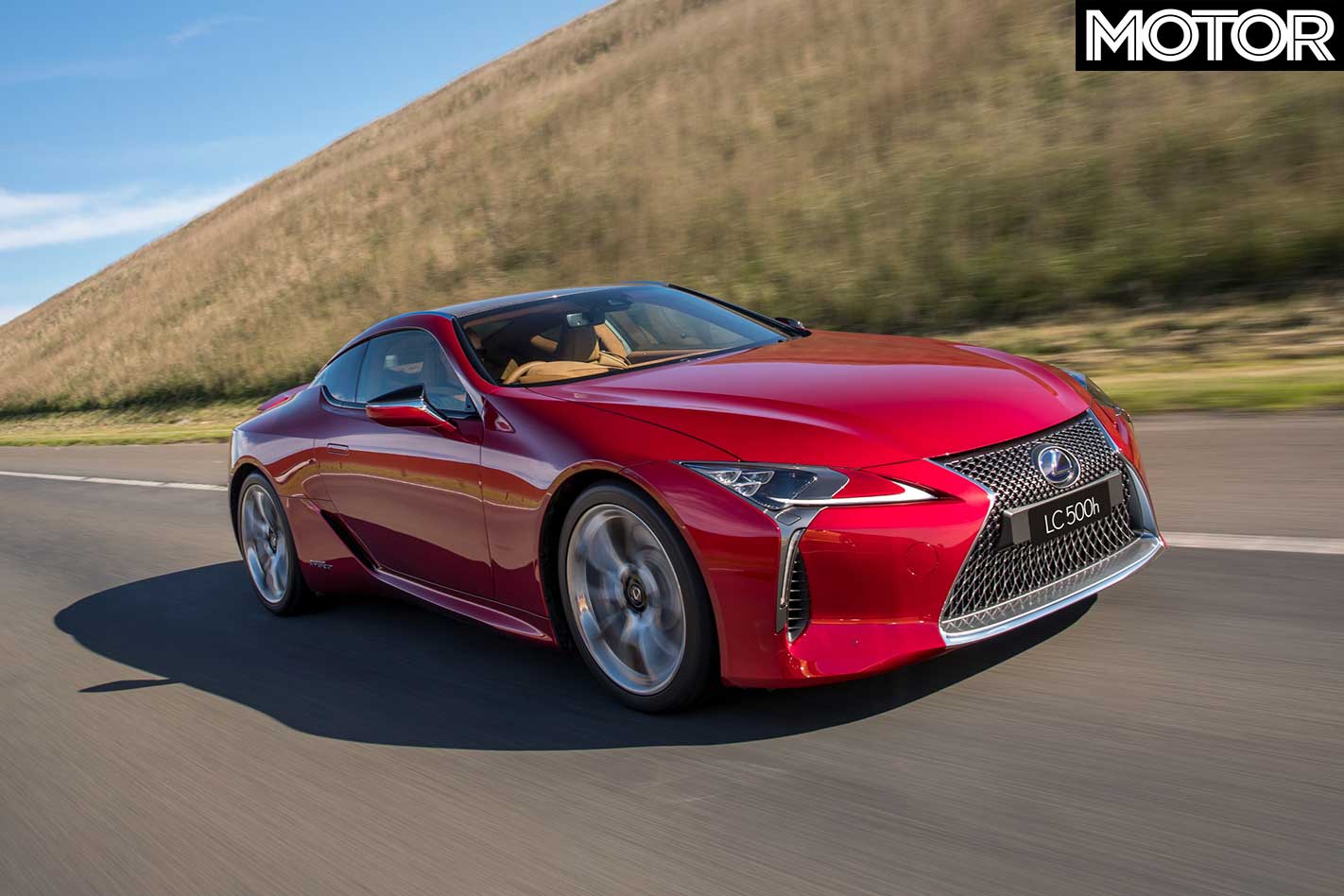
And it gets even more backward. The 5.0-litre V8-powered, 11.6L/100km-rated Lexus LC500 will now be $371 cheaper at $189,926 (plus orc) but its 3.5-litre V6/electric motor-equipped, 6.7L/100km-rated hybrid sibling must still ask $190,000 (plus orc).
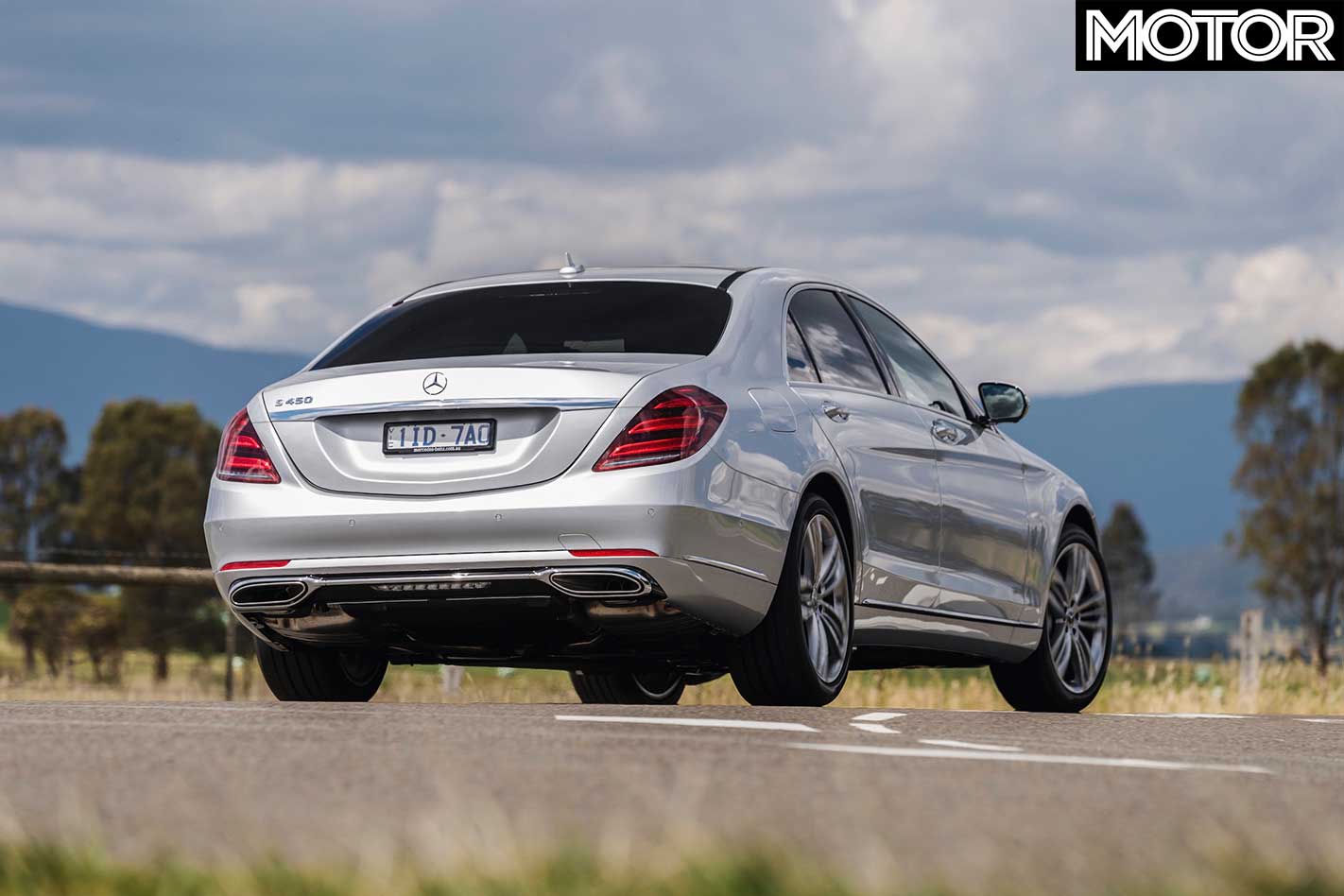
Likewise, a Mercedes-Benz S450 L remains unchanged at $227,500 (plus orc) because it sips 6.9L/100km, but an S560 drops $371 to $269,630 (plus orc) because it chugs 8.2L/100km.
Porsche has been most generous with cuts, with a Boxster manual falling $400 to $114,900 – but again, a 9.4L/100km-rated Panamera Turbo drops by the same to $384,100 while its 2.2L/100km-stickered Panamera Turbo S E-Hybrid sibling remains at $460,100 (plus orc).
All brands this the LCT is madness, and many are claiming that this former protectionist policy – once alleged to have been strategically positioned above a Ford Fairlane/LTD and Holden Statesman/Caprice – now especially has no right to exist.
With the current federal government attempting to procure a European free trade agreement, Continental-based premium brands have said that the LCT will not be able to exist if free-trade is implemented.
Until such a time, we can only shake our heads at the way an Australian government makes thirstier cars cheaper and efficient new technology no less expensive than before.
WHILE all eyes are on Mercedes-Benz’s newcomer and Volkswagen’s V6 powerhouse, let’s not overlook what is arguably the most significant of the nine vehicles here, the underrated Colorado.
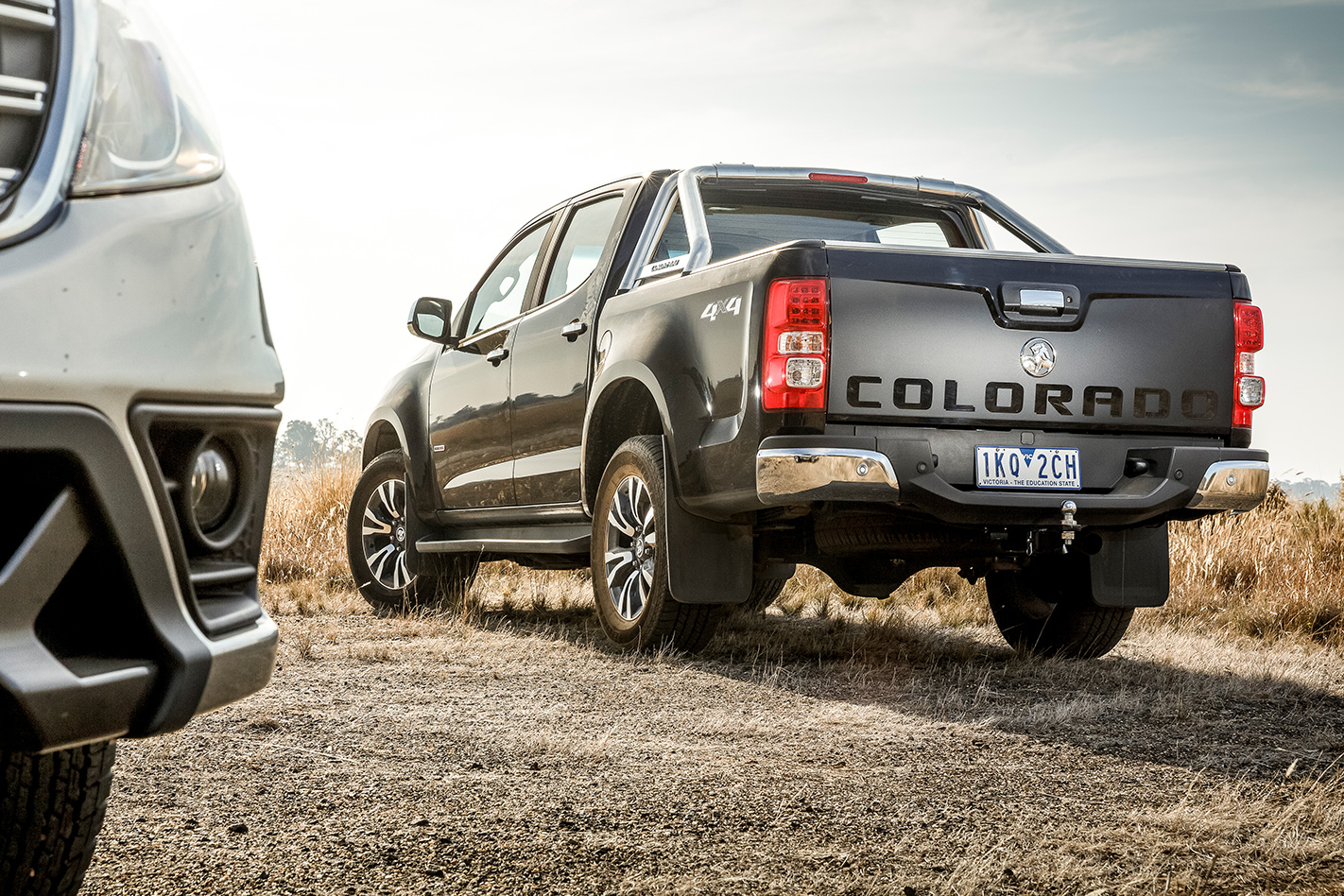
With sliding sales in Holden’s traditional segments coinciding with fresh potential found in the dual-cab ute arena, the Colorado could be the Lion brand’s saviour. And the heavily updated version absolutely has the credentials to do that. Completely revamped in 2016, it received far more than a few USB ports and a shot of Botox, bringing forth dramatic improvements that still stack up well even against more recent arrivals. Let’s call it the rebirth of Colorado.
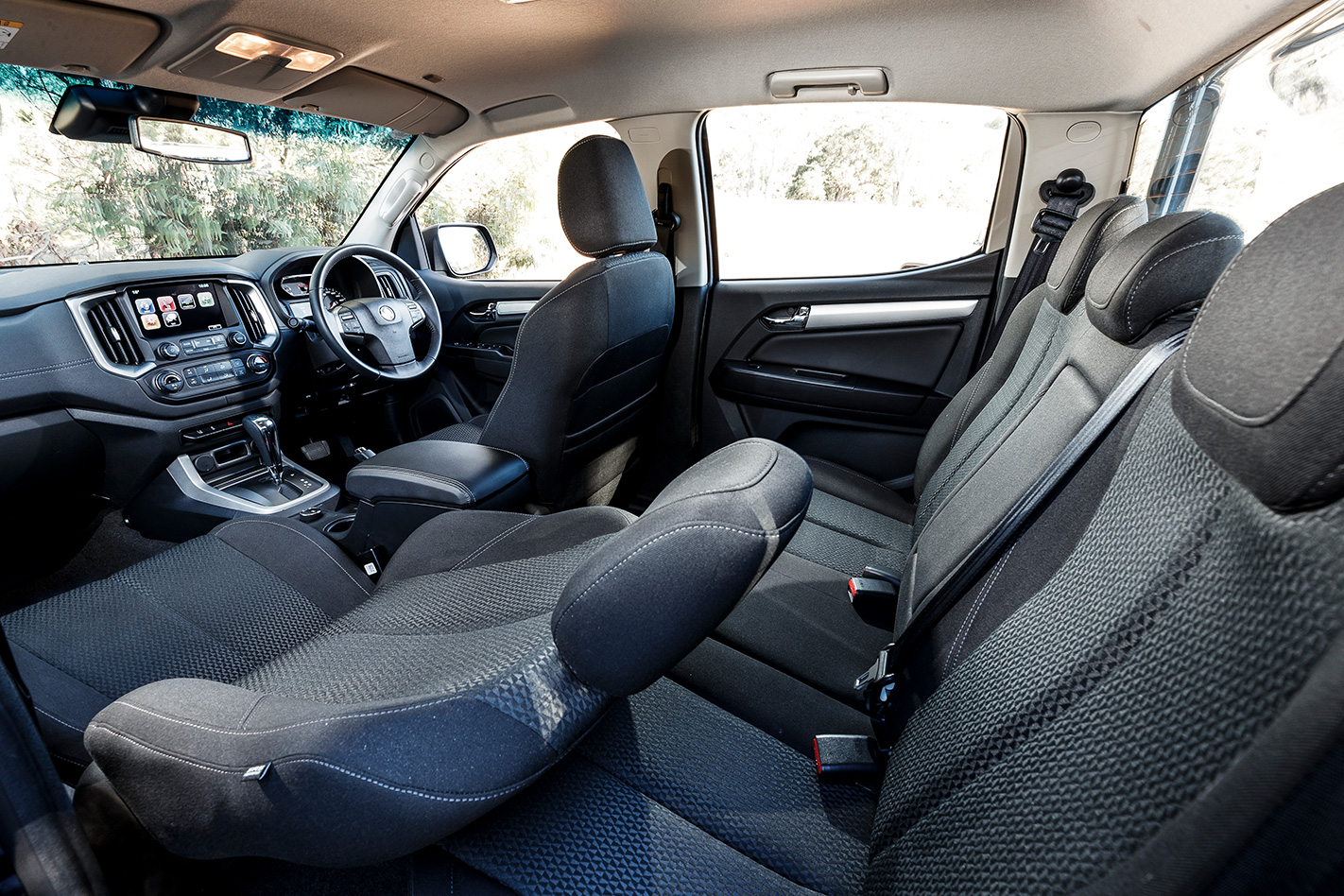
For starters, a cabin rethink brings an attractive and very functional dashboard that’s suitably chunky yet thoughtfully presented. Broad, supple front seats provide plenty of support, and while the (ugly) steering wheel lacks reach adjustability like the Ranger and others here, the driving position should be fine for most folk. There’s also heaps of internal storage options, ventilation is excellent, and the rear seat is surprisingly accommodating – bar a backrest folding mechanism that requires two people to operate.
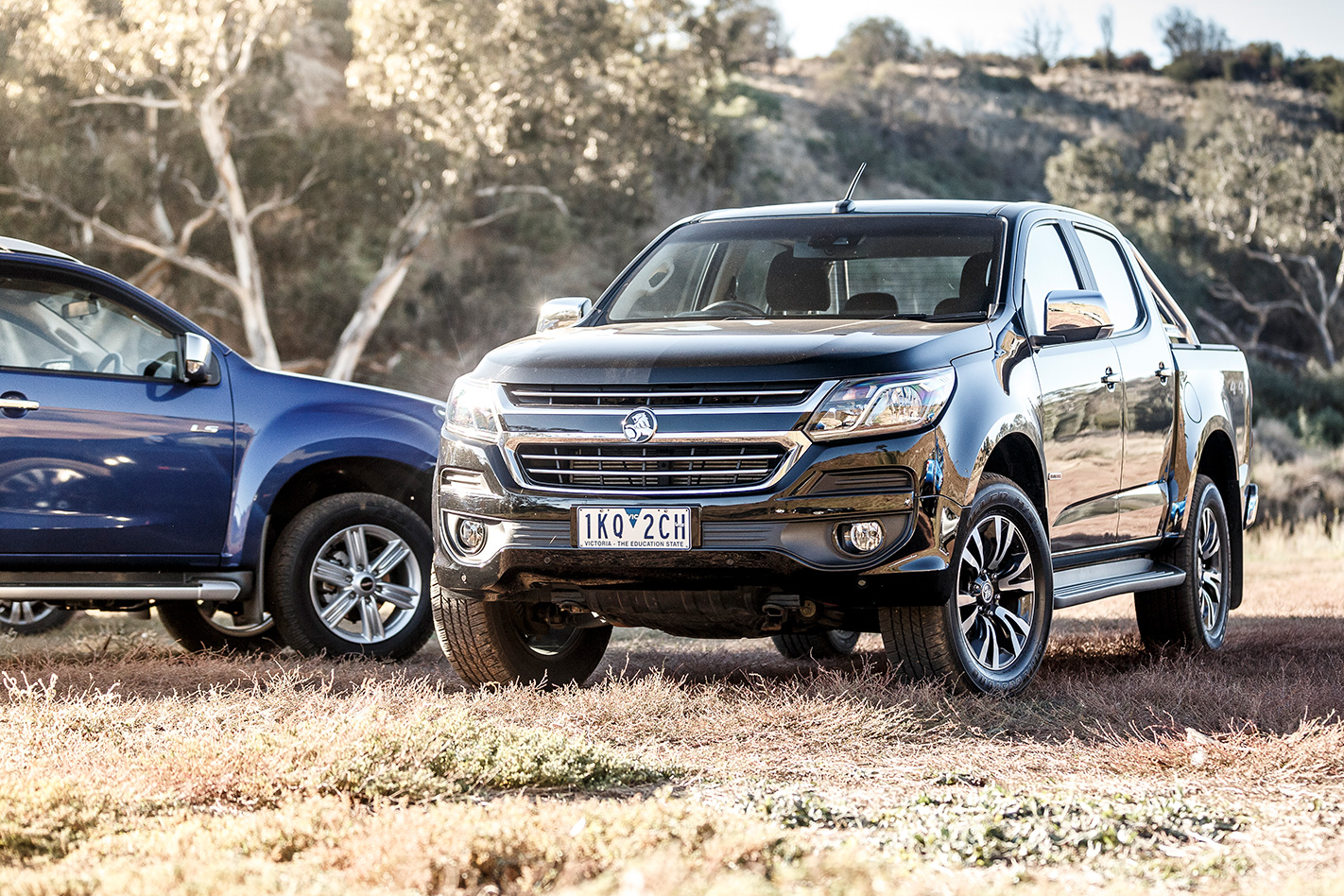
Then there’s the revised chassis – including new transmission and suspension mounts, and upgraded springs and dampers – which has made a resounding difference. Where the Colorado’s ride and NVH levels previously relegated it among the also-rans, the update has had a profound effect elevating comfort and perceived quality in one swoop. The 2.8-litre Duramax diesel – actually a VM Motori lump – still sings a familiar, clattery anthem, but it sounds as if it has been buried under a few more blankets courtesy of superior road-noise insulation.
With 500Nm, the Colorado shines among the four-pots with strong pulling power from very low revs. We managed the 0-100km/h dash in 9.5sec, which might not sound like much in an era when small hatches can crack 8.0sec, but the Hilux couldn’t better 11.2. And the Holden is frugal to boot.
The Colorado also gains marks for competent handling and (comparative) dynamic refinement. Yes, the unladen ride is firm, just like most one-tonners (apart from Amarok), but a tuned-to-Australian-taste chassis really handles our environment with unexpected aplomb and no nasty shocks. While the steering is a tad too light in the dead-ahead position, there’s zero rack rattle and the Colorado’s high-speed handling – particularly on changing surfaces – is right up with the segment best. The Lang Lang suspension honing should make the most one-eyed patriot proud, even if this ute hails from Thailand.
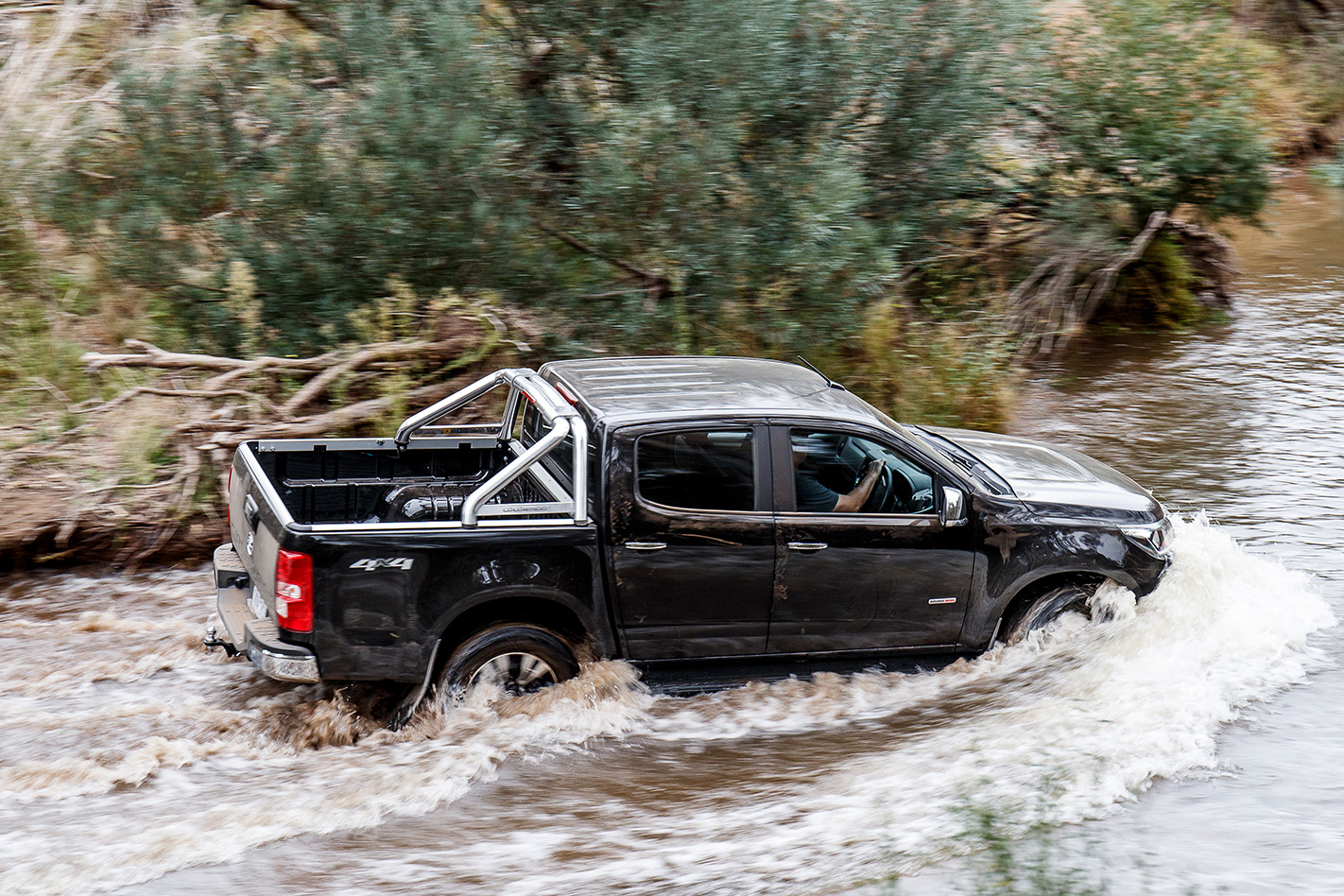
As a value proposition the Holden continues to punch hard, with a five-year warranty on top of the $52,690 LTZ’s generous flash for the cash, which includes electric front seats, a sports bar, Apple CarPlay, navigation, remote window opening, remote start, hill-descent tech, forward collision alert, lane departure warning and tyre-pressure monitoring.
When away from the beaten trail, the Colorado sits in the middle of the pack with decent off-road ability. While it can’t brag the outright suspension travel of the Amarok, Hilux, Ranger or BT-50, and lacks a locking differential, it offers excellent traction over more slippery surfaces. Towing capacity is more than adequate, too, with the Holden’s readily accessible torque and stable chassis holding station with the class leaders.
The localisation of the Colorado has resulted in a pick-up that is far better than any previous version, elevating it to a highly respectable fourth position in this Megatest. The more time we spent with the LTZ the more obvious its many strengths (with few weaknesses) became. If only buyers in this segment invested the same scrutiny, for Holden’s sake at the very least.
SPECS
Price $52,690 Engine 2776cc 4cyl, dohc, 16v, TD Power 147kW @ 3600rpm Torque 500Nm @ 2000-2200rpm Transmission 6-speed automatic Dimensions (L/W/H/W-B) 5361/1872/1800/3096mm Weight 2121kg Tray capacity 1029kg Braked towing capacity 3500kg Unbraked towing capacity 750kg Ground clearance 215mm Tyres Bridgestone Dueler H/T 265/60R18 Test fuel average 9.8L/100km 0-100km/h 9.5sec 80-120km/h 6.9sec 100-0km/h 46.8m
Need more info?
Read the Wheels Dual-Cab Ute Megatest Introduction
The Contenders
# 9 Isuzu D-Max LS-T
Rough ’n’ ready appeal pales when polished rivals are better at going bush too
#8 Nissan Navara ST-X
Tough and reliable aren’t enough as Navara wilts on price, spec and comfor
#7 Toyota Hilux SR+
Unbreakable? Possibly. Unloveable? Sadly, yes, as mediocrity is allowed to prevail
#6 Mazda BT-50 GT
Still in the fight, but ultimately overshadowed by its high-flying fraternal twin
#5 Mitsubishi Triton Exceed
A strong and likeable mid-fielder where consistency and value are king
#4 Holden Colorado LTZ
Colorado raises its game right when Holden needs a hero
#3 Mercedes-Benz X250d
Arrives carrying great expectations; delivers only a modest load
#2 Ford Ranger XLT
Continuous improvements make the only truly Australian-conceived ute world class
#1 Volkswagen Amarok V6 Sportline
Quiet achiever doesn’t have youth on its side, but still shows how it should be done
There are plenty of cars and carmakers out there most people haven’t heard of, and Vector Motors falls right into that category.
The company was originally founded by Gerald Wiegert in November 1988, eventuating in the creation of a few supercars which are rarely spoken of here in Oz.
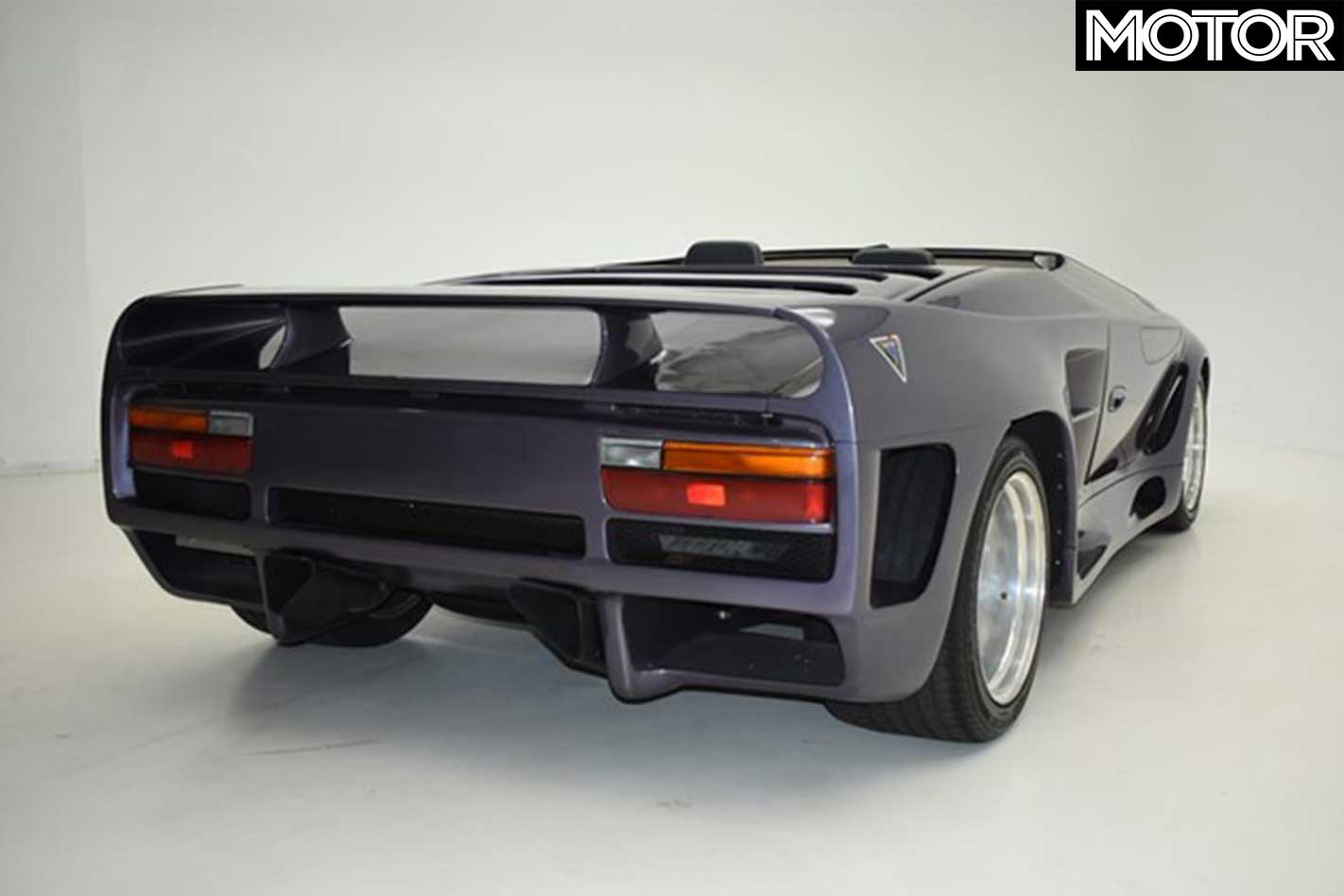
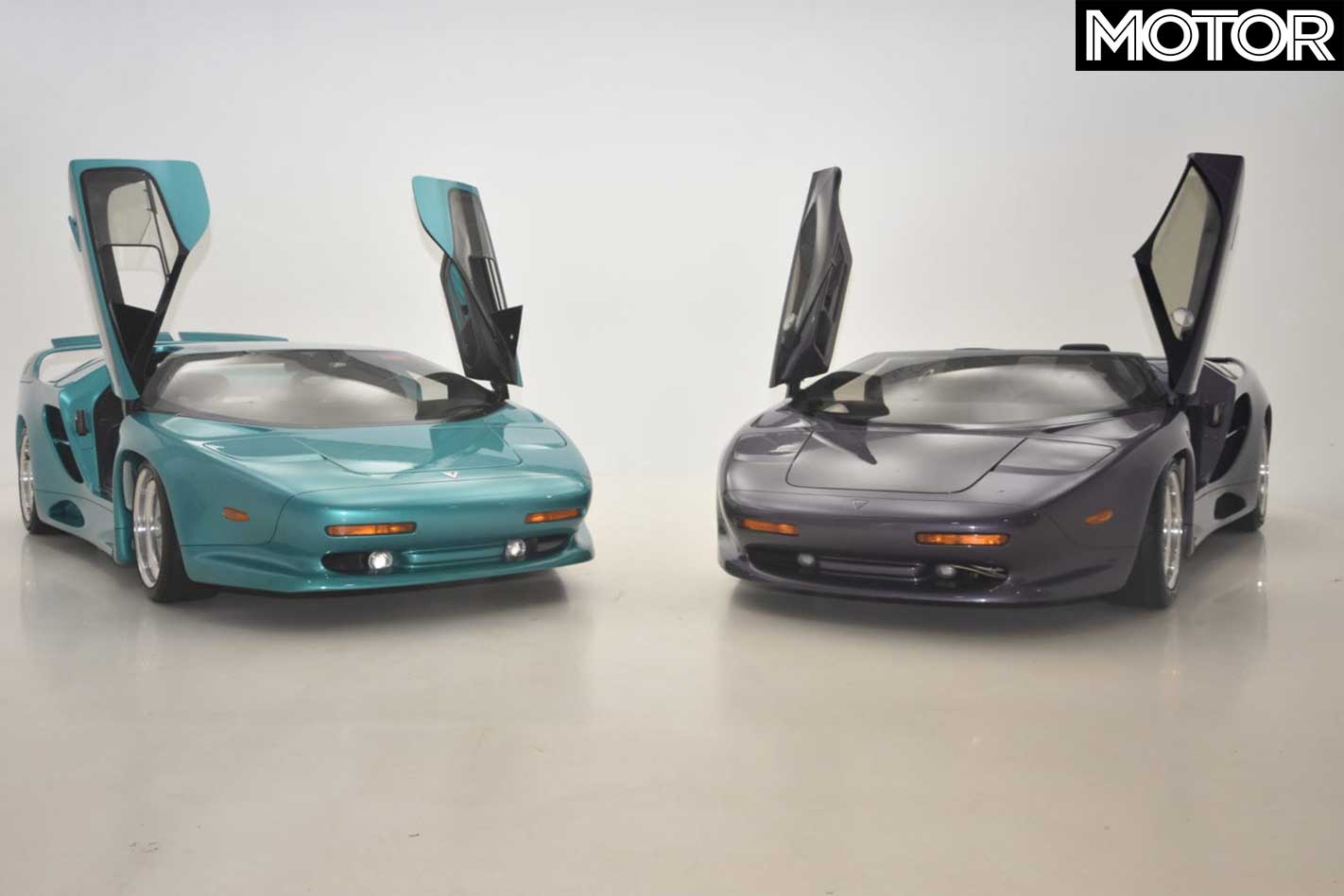
One such car, or the prototypes for one, are now up for sale at DuPont Registry.
The Avtech WX-3 coupe and roadster are being offered for the (we’re not sure if good or bad) price of USD$3.5 million, or AUD$4.816 million to us.
duPont says the estimated new prices of prototype these cars in 1993 would have been around $850,000 each.
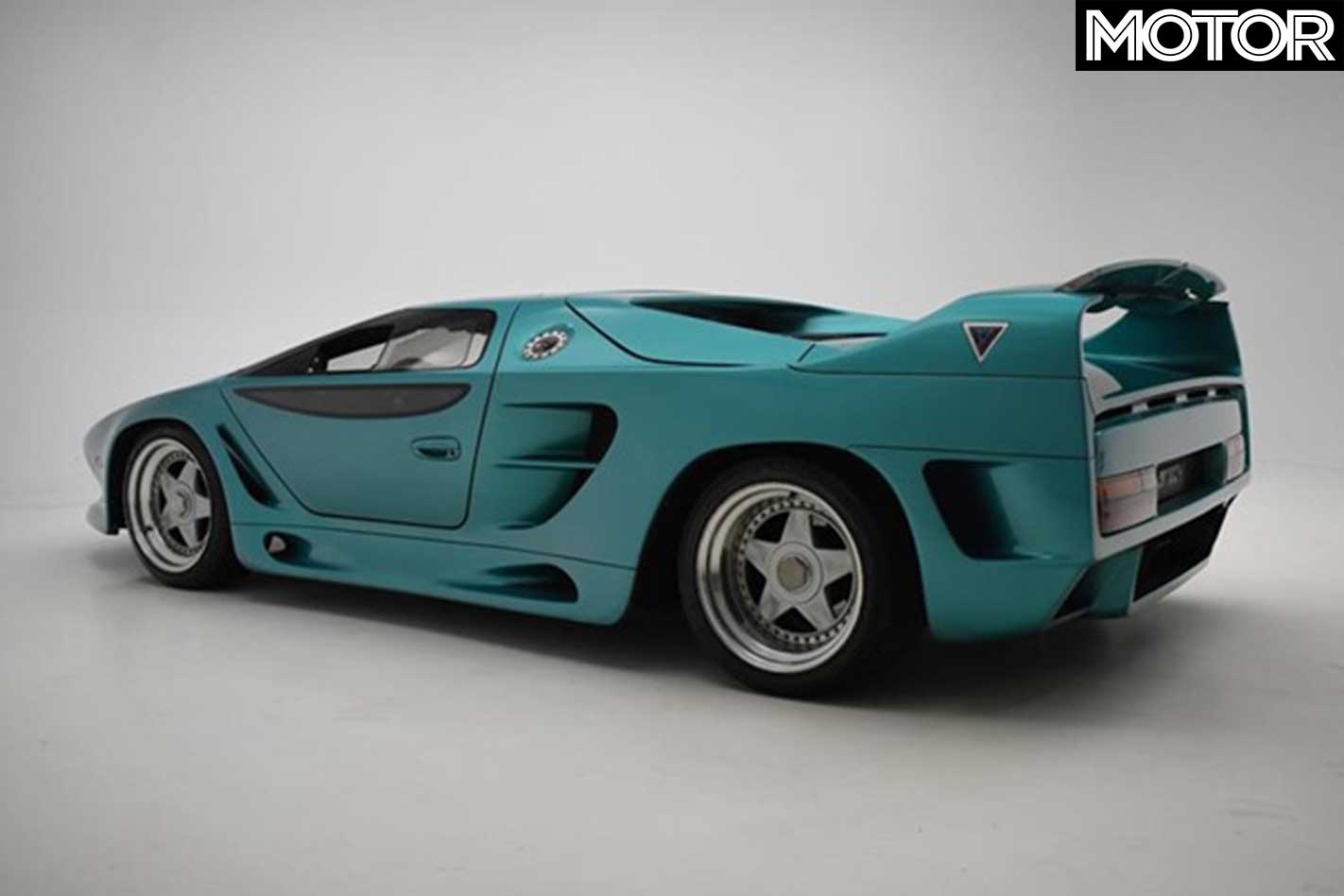
Twin-turbo 7.0-litre V8 engines live in the rear, and both cars have 3-speed automatic transmissions.
The interesting news for those who can’t afford the prototypes (the sale also includes shares in Vector) is that the money from the sale will go towards funding development of the Vector WX8 Hypercar, which was initially announced in 2007.
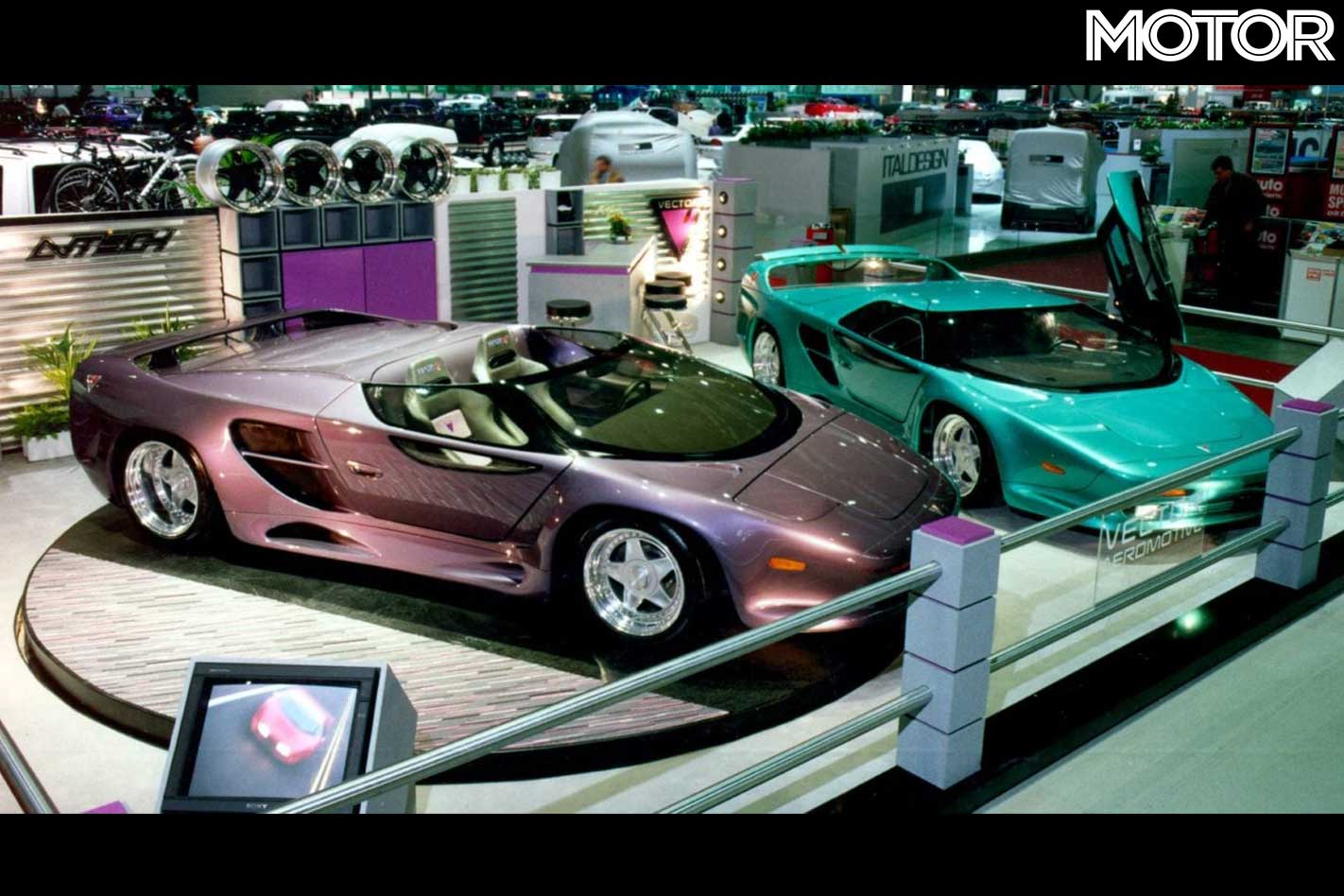
“Vector Motors Corporation will sign a 12 or 24-month buyback provision on both Vectors with a bonus upside for what was paid by purchaser or exchange for stock in The New Vector Motors Corporation for double what was paid in a sales transaction, as these two Vector Prototypes are priceless as related to Vector Legacy and History.
“Funds from the sale of these two Vectors will be applied towards the all-new Vector WX8 Hypercar Prototype construction that is currently in process.”
Vector had high hopes for its WX8 back then, and its well-dated website (with amazingly ‘90s promo shots, below) claims the car was to have either a supercharged 7.8-litre V8… or a 10-litre twin-turbo V8.
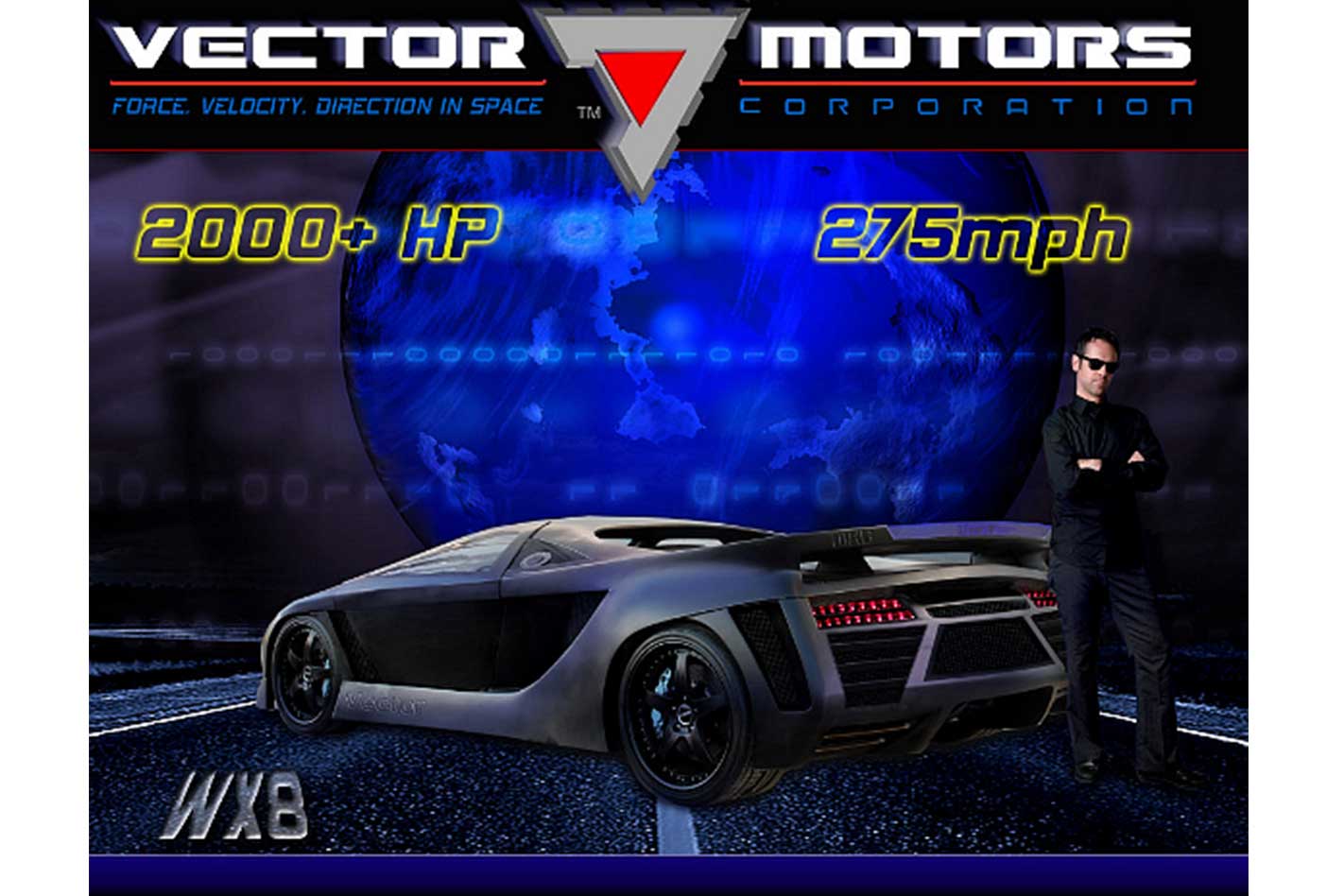
The 10-litre car claimed 1378kW+, and a 0-60mph (0-97km/h) sprint in “2.3 to 3.5 seconds.”
Obviously, as this was decided on more than a decade ago, times (and hopefully Vector’s 0-60mph time guesswork) have changed.
We’ll wait until the WX8 actually exists before we even guess what it’ll be like.
THE WAY we use our cars and the number of vehicles the average Aussie household needs are on the brink of dramatic change with the proliferation of alternative mobility options in our major cities.
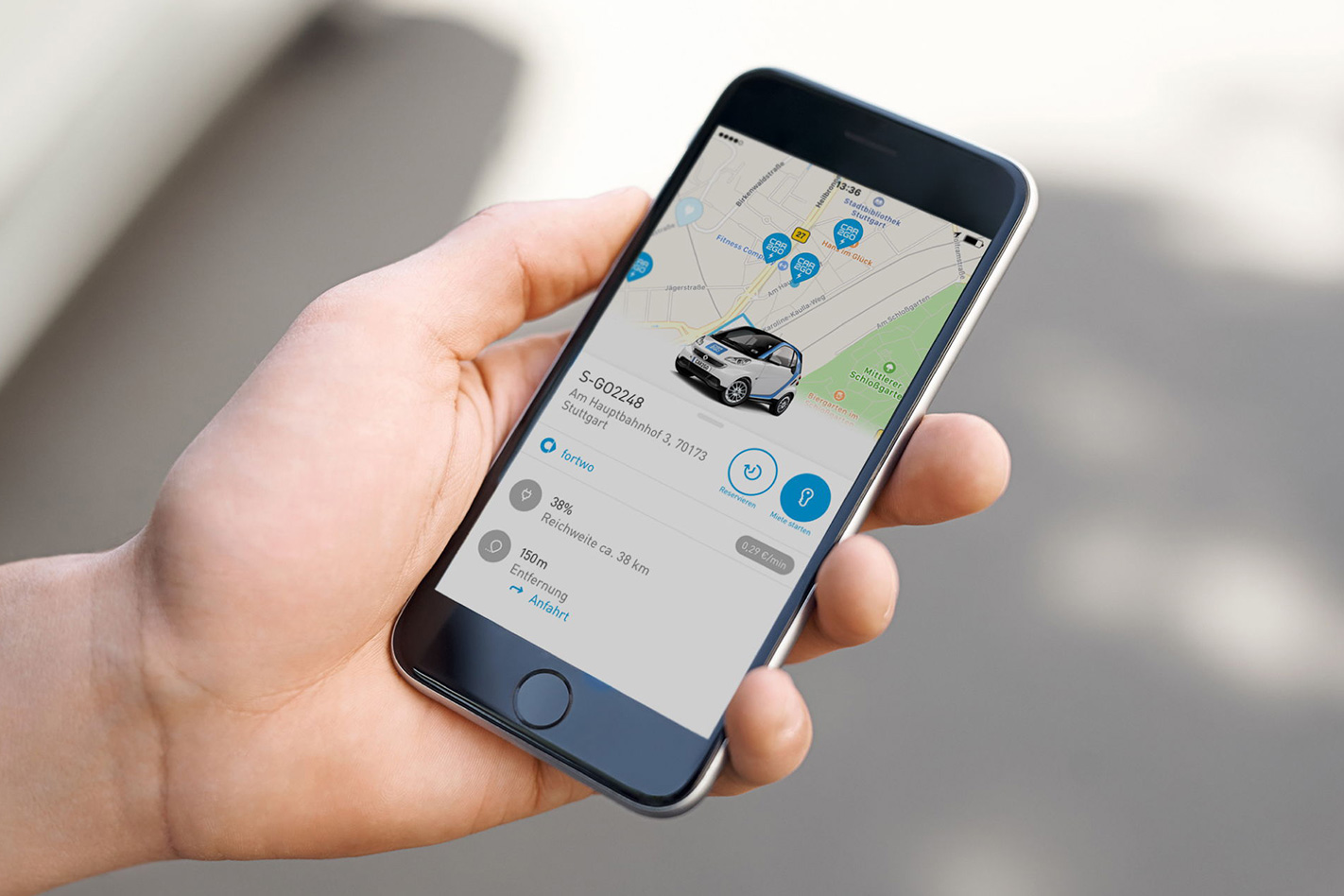
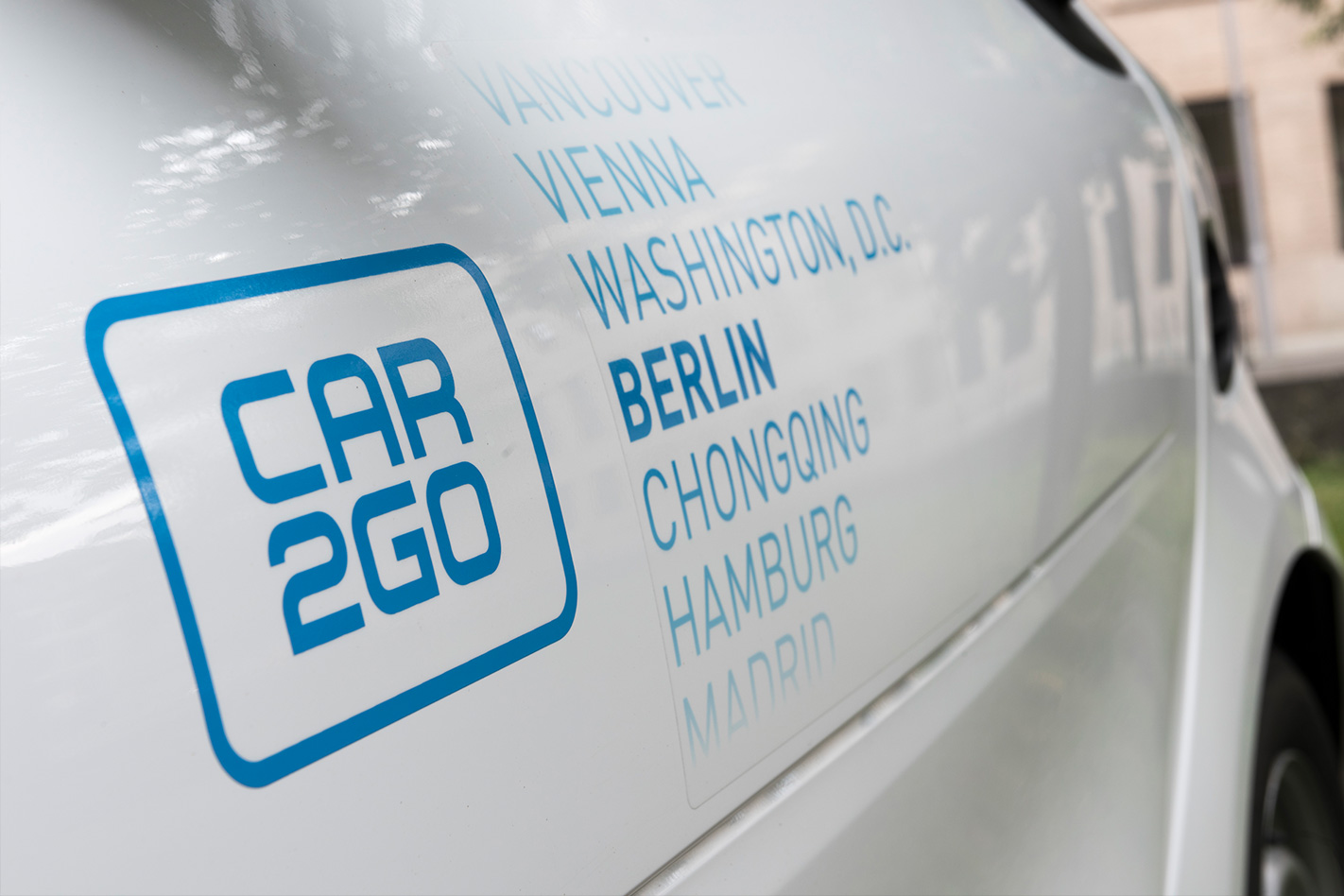
The world’s largest car sharing company, Car2Go, is sizing us up, with a view to launching on the east coast of Australia as soon as next year. The Daimler-owned enterprise would introduce hundreds of Mercedes-Benz vehicles to our roads for the use of members, potentially removing the need for thousands of privately owned cars.
Australia is yet to see the arrival of a free-floating car-sharing venture, which allows vehicles to be picked up and dropped off anywhere, without the limitation of assigned parking spots located in potentially inconvenient places. The format is something Car2Go pioneered almost a decade ago, and now provides to 3.2 million users in 28 cities globally.
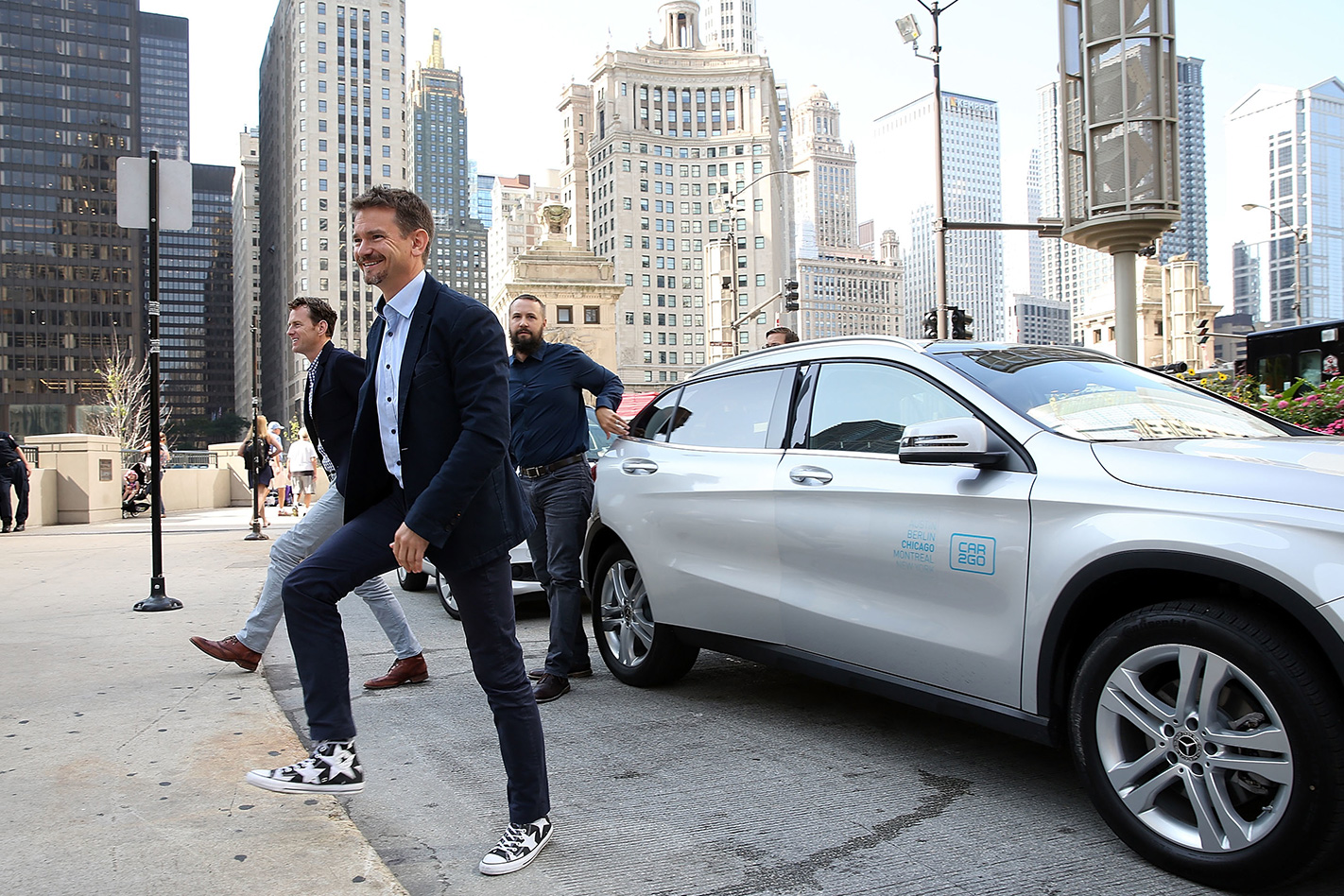
Sydney, Melbourne and Brisbane hold the most potential here according to Car2Go Europe CEO Thomas Beermann, whose team first explored the possibility of an Australian launch back in 2013. This time around there’s greater engagement from state governments. The next hurdle is coordinating local municipalities.
“The area we operate in covers between 50 and 150 square kilometres depending on the city. Melbourne and Sydney are very decentralised. Sydney is made up of 45 councils, Melbourne has 20-something, and we need a parking regulation which covers all of them.
“For us, you can start your rental at Point A and stop at Point B and they can be two totally different councils. That’s what is unique of this service.”
With an agreement in place the likelihood of launch is “very, very high”, and possible within six to nine months of that happening, says Beermann.
So how would it work?
“If we look at Sydney, we would end up with a business area a little below 150km². We would put between six and eight vehicles per square kilometre to have sufficient availability. This means about 1000 vehicles. Melbourne, more like 70 to 80km², and more like 500-600 vehicles.”
Toyota says three-year warranties are here to stay … for now
A mix of A-, CLA- and GLA-Class vehicles would make up the fleet. Renting one in existing overseas markets costs more than mass public transport, but less than a taxi or Uber. According to Beermann, Australian cities have the same key characteristics as continental European ones to make the service work.
In cities of a similar size to Sydney, shared cars average eight rentals a day and a total moving time of four to five hours. That’s five times the private car average. This has a significant impact on the availability of parking spaces, especially during the day. In Berlin car ownership among adults has declined to 35 percent. In Australia it is above 60 percent.
“We don’t see ourselves as the solution, we see ourselves as part of the solution. Car ownership will always play a major role in Australia because of the distances you have to cover. But I think for urban travel, usage of the private car will reduce.”
The Honda Civic range has received a mild facelift in the US that provides a glimpse of what we could expect when the Australian line-up is updated next year.
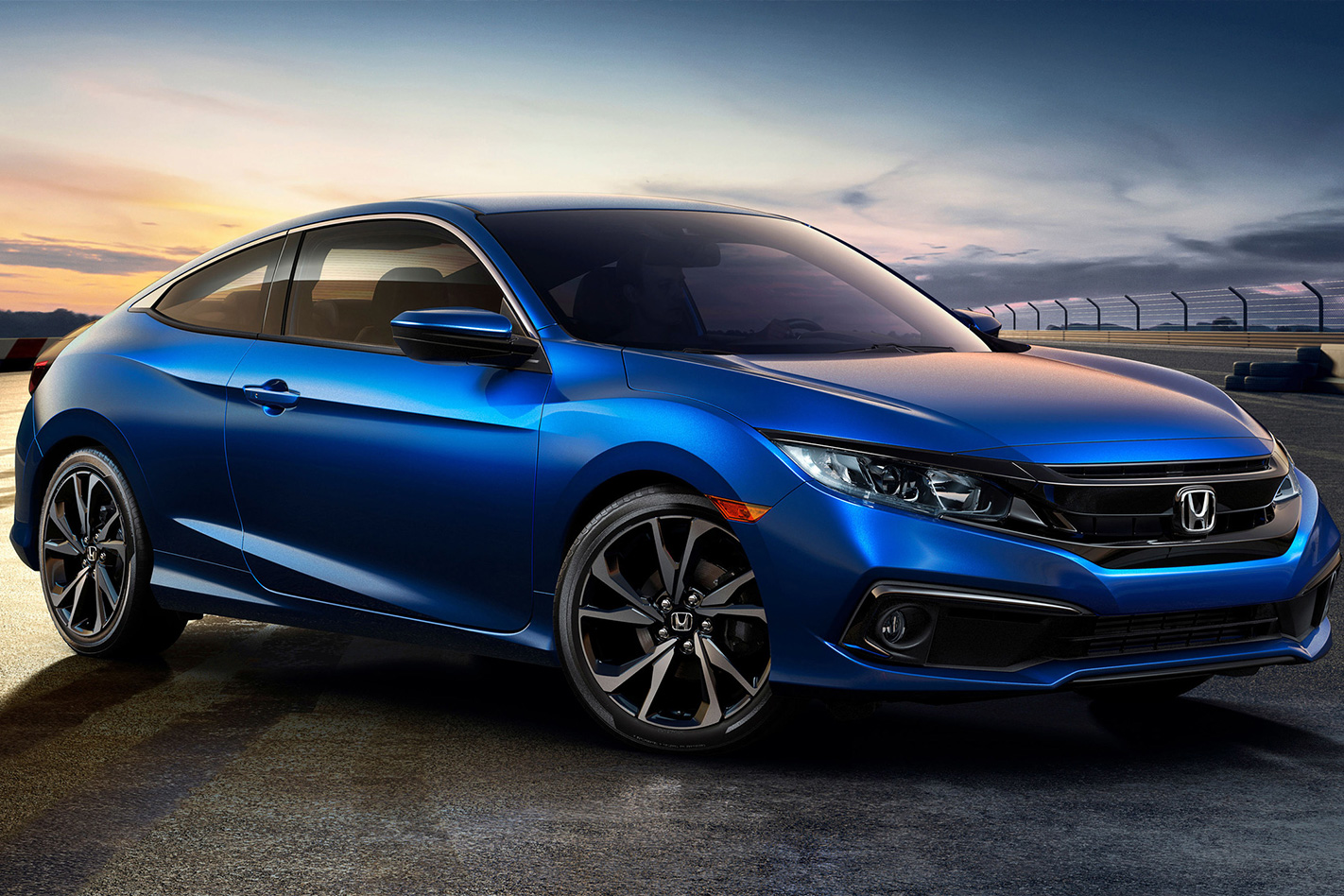
Styling tweaks include a fresh-looking piano-black grille treatment now common across all hatch and sedan variants and flanked by redesigned headlight units. The lower bumper has also been enhanced with the front splitter now blending seamlessly with an elegant chrome-trimmed fog-lamp surround.
The 2019 US Civic range will also come with autonomous emergency braking as standard as part of the latest Honda Sensing active-safety package that also includes lane keep assist and adaptive cruise control.
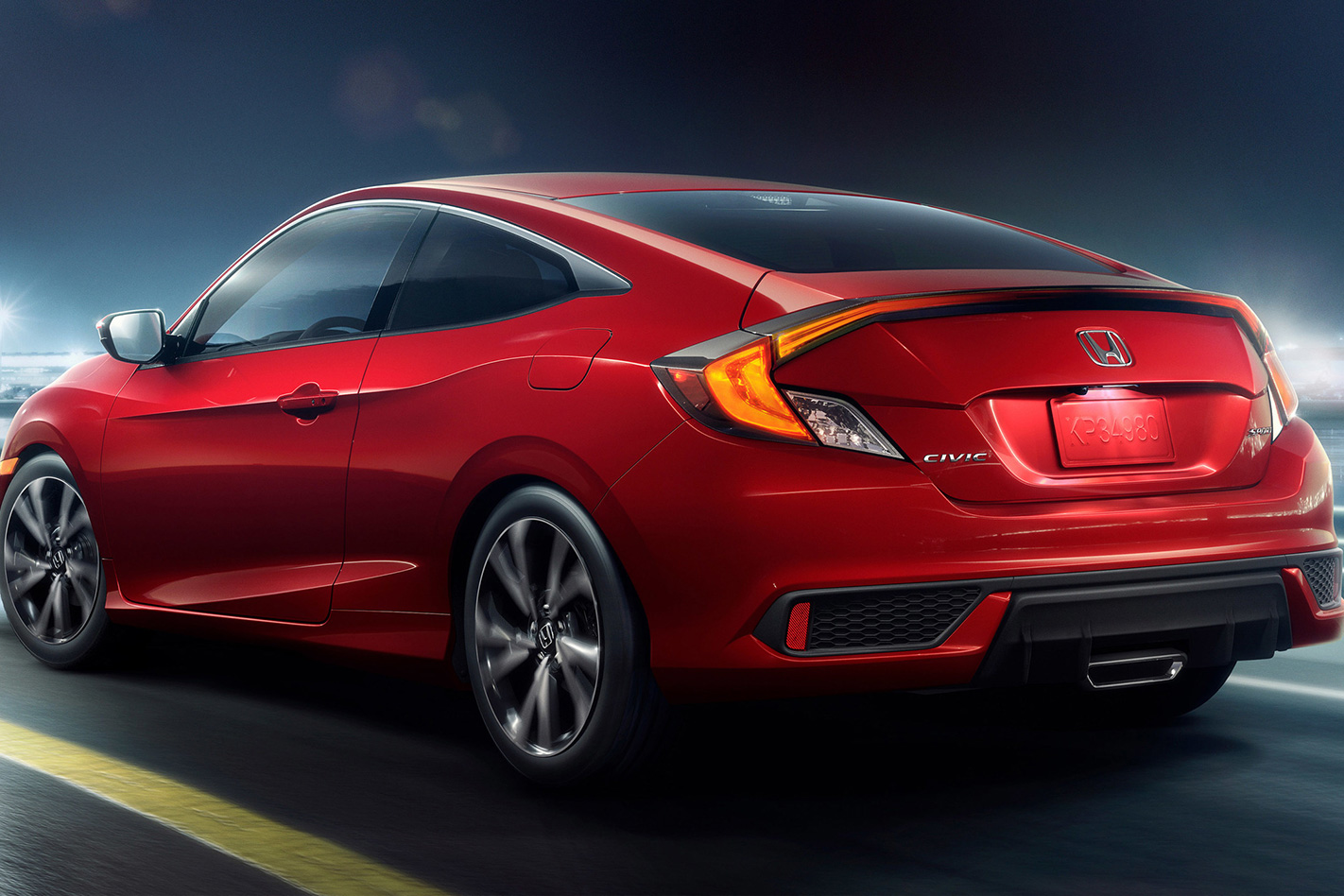
The range also gains a revamped infotainment system that does away with one of our long-standing Civic bugbears, a conventional knob replacing the the annoying touch-sensitive volume slider that was difficult to operate while driving.
It’s too soon to say whether these exact changes will make their way to the Australian range, which is built in Thailand. But a Honda Australia spokeswoman told WhichCar that the Civic is due to receive an update next year that will include modest styling changes.
After the 2018 Honda Civic Type R became the fastest front-driver around the Nürburgring back in early 2017, Honda devised a plan to achieve the same feat at some of Europe’s other famous tracks.
In the last few months, the Type R has hit the blacktop at Magny-Cours, Spa, Silverstone, Estoril, and the Hungaroring with a series of pro drivers
The Nürburgring record built hype around the car before it was even available here, and since then the Civic Type R has gone on to amass plenty of accolades, including becoming the only car to win both of MOTOR Magazine’s major events, Performance Car of the Year and Bang For Your Bucks.
So, here’s a brief of each record Honda now holds thanks to the Type R.
Magny Cours, Esteban Guerrieri, 2:01.51
At the 4.4km GP circuit of Magny-Cours, WTCR driver Guerrieri made the Civic Type R look right at home while nudging the two minute mark with what actually looks like quite a calm lap.
We wonder if the botched shift at 1:36 (in the video above) could have shaved a little more time off the lap.
Spa-Francorchamps, Bertrand Baguette, 2:53.72
The relatively long 7km Spa-Francorchamps circuit took less than three minutes to traverse with Super GT and LMP2 driver Bertrand Baguette at the wheel.
In 2016, Honda’s previous Type R ran a 2:56.91 at Spa under guidance of 2012 WTCC champ Rob Huff.
Silverstone, Matt Neal, 2:31.32
Neal tops 208km/h during his lap of the 5.89km GP loop at Silverstone.
“Where I found the real advantage of the Type R was really in the high-speed corners,” Neal says.
“Into corners like Copse and Stowe at the end of the Hangar straight, you can carry big entry speed with supreme confidence.”
Estoril, Tiago Monteiro, 2:01.84
Speaking of high speed, Monteiro tops Neal’s 208 with a nudge of 223km/h at the end of Estoril’s long straight. The 4.2km track
“The Type R is very stable and has very good braking efficiency and an amazing engine so it just feels like you are driving a race car.”
Hungaroring, Jenson Button, 2:10.19
Rounding out the Type R Challenge, Button tackled the 4.38km track in Hungary. It was a little special for both him and Honda.
“We came here to the Hungaroring, where I won my first F1 race in 2006 with Honda, to set a new front-wheel drive production lap record in the new Type R, and I’m very happy that we did it!”
His biggest praise for the Type R seemed to be its manual gearbox, something he appears to wish was a more regular appearance in modern cars.
“The manual gearbox works really well. Most cars these days don’t come with manual boxes, so it’s nice to have that manual feel. You always feel a lot more connected to the car.”
Mitsubishi has kicked off its annual Diamond Days sale that brings sharp driveaway pricing, a seven-year warranty, free servicing and up to $2000 worth of freebies to selected SUV and Triton Ute variants.
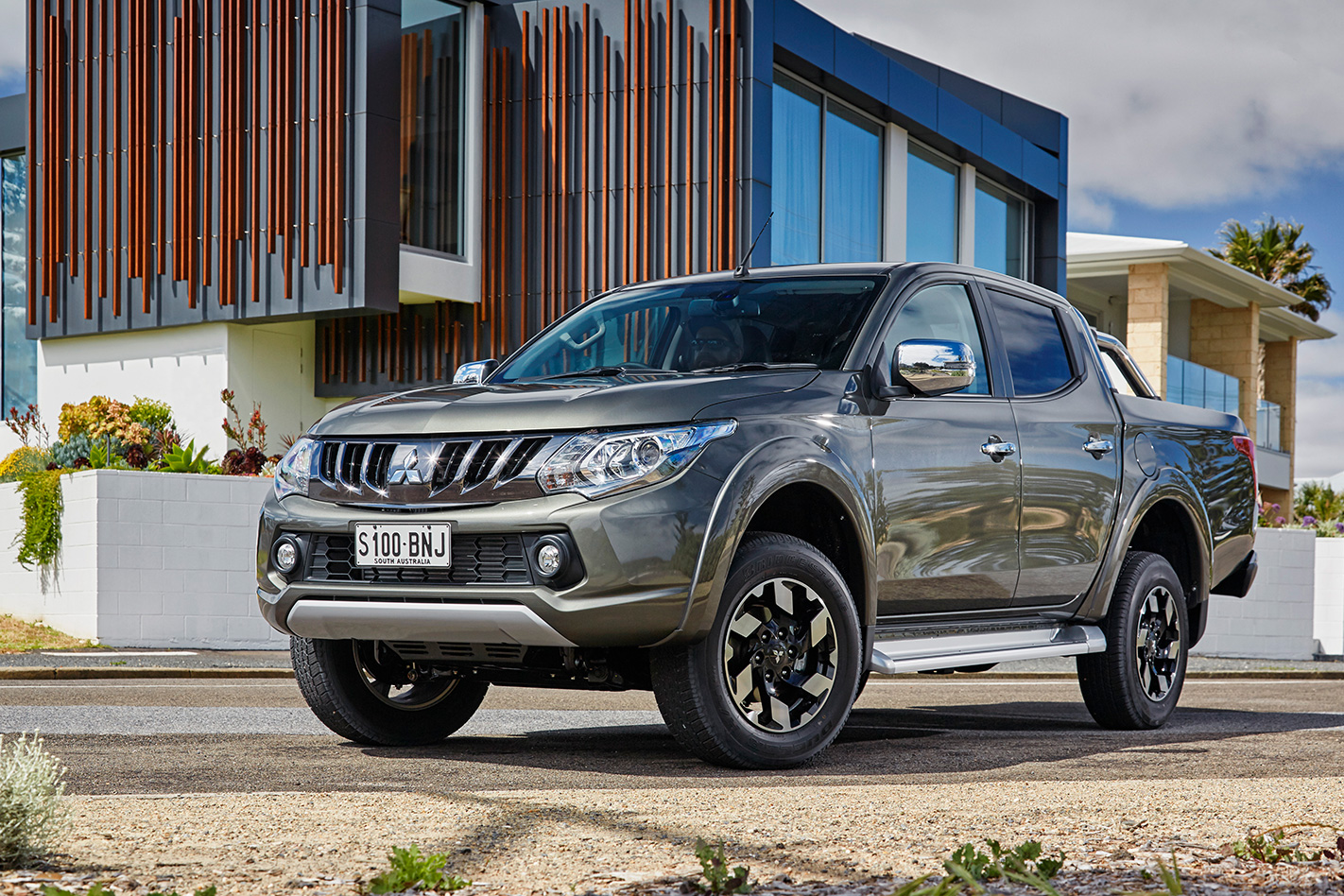
Triton buyers in particular will benefit most, with most dual-cab variants gaining a $1500 worth of genuine accessories, with the family-friendly Exceed 4WD Auto coming with $2000 worth of extra kit.
The deal, which also includes 4WD manual versions of the Triton GLX, GLX+, and manual/auto 4WD GLS and Blackline, also includes a seven-year warranty and two-years free scheduled servicing on top of driveaway pricing.
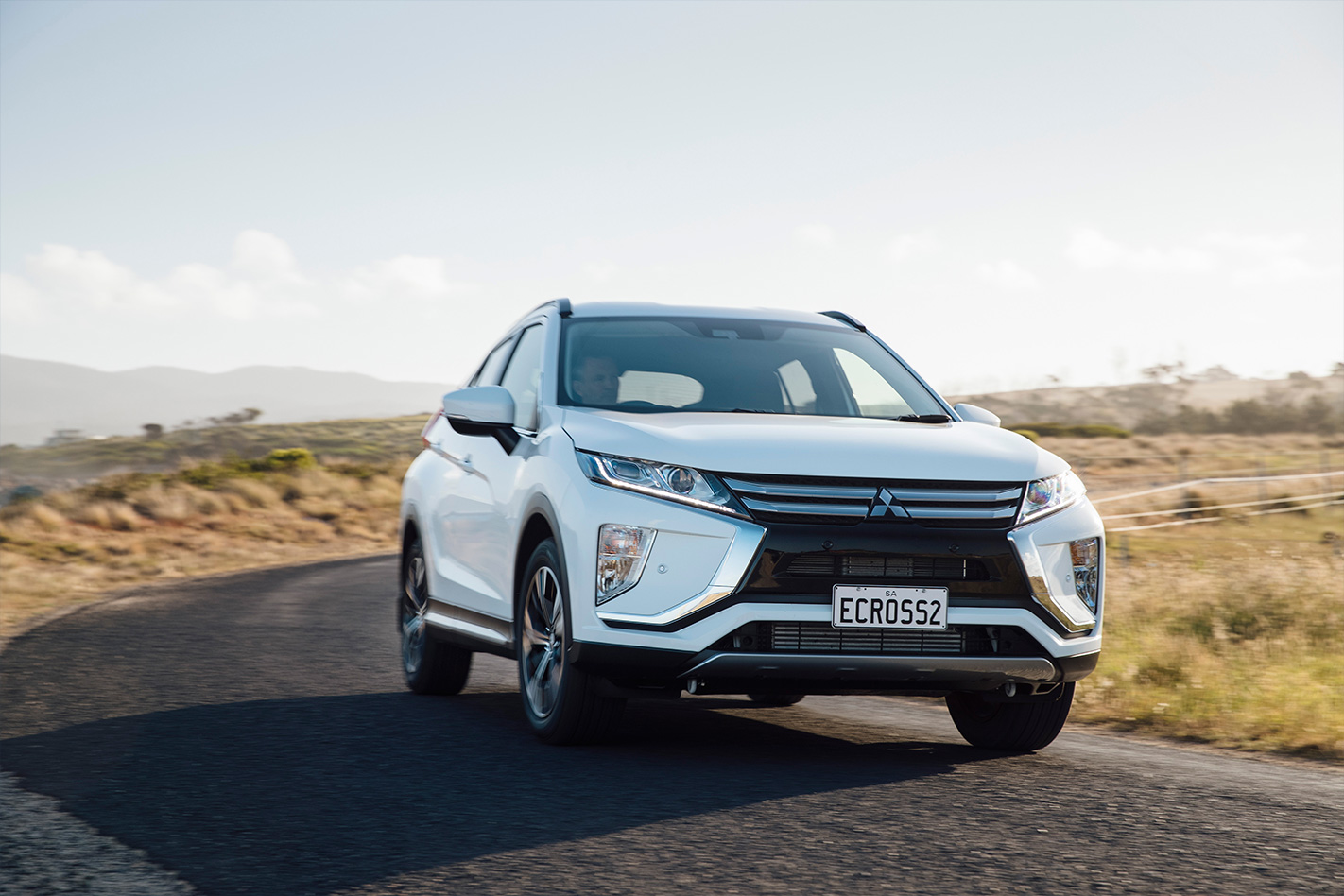
The extended warranty and free scheduled servicing also applies to entry-level SUV variants, with the Pajero GLX and Pajero Sport GLX also gaining $1500 worth of accessories, with that number reducing gradually for the Outlander ES 2WD manual ($1000) and LS versions of the ASX and Eclipse Sport ($750).
The seven-year warranty adds two years and 50,000km to Mitsubishi’s standard five-year/100,000km period, while the free servicing will occur at 15,000km/12-month and 30,000km/24-month intervals.
Diamond Days offers do not extend to other Mitsubishi models and variants not mentioned above, including the upper-spec SUVs, Lancer, Mirage and Outlander PHEV.
The Mitsubishi Diamond Days sale ends on August 19.
WHAT IS IT?
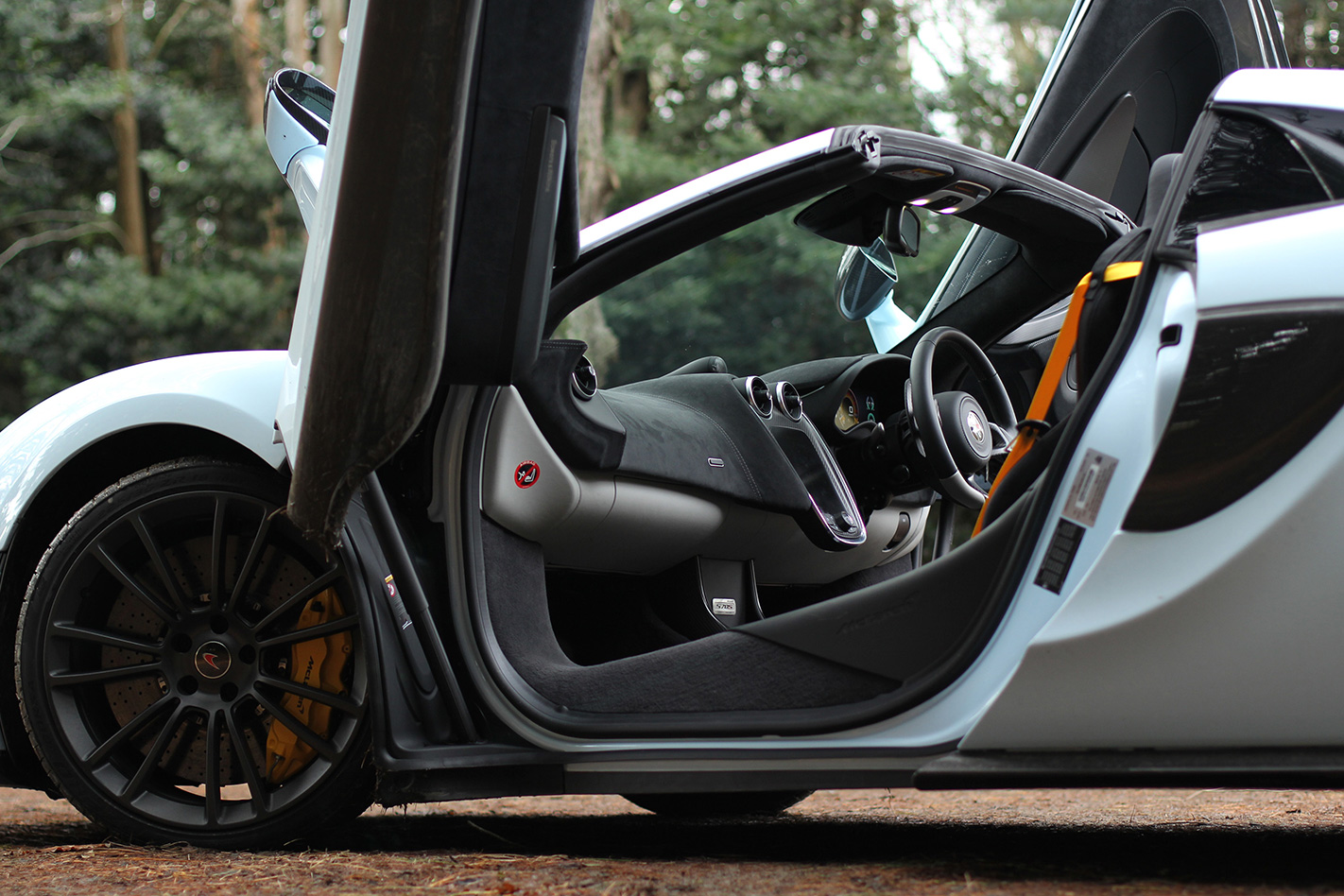
It’s a McLaren 570S with a retractable hardtop, but with all of the important stuff intact. That means the same 3.8-litre twin-turbo V8, the same power and torque outputs, the same zero-to-hundred and the same top speed… provided the roof is raised.
WHY WE’RE TESTING IT
McLaren says the 570S Spider carries few compromises relative to its hard-top sibling, but the burning question is whether driving topless brings new kinds of thrills to the 570S experience.
MAIN RIVALS
Ferrari 488 Spider, Lamborghini Huracan LP610-4, Audi R8 Spyder V10 quattro, Porsche 911 Turbo Cabriolet
THE WHEELS VERDICT
Going sans roof is the best way to enjoy McLaren’s Sports Series line-up, thanks to the better acoustic experience it offers. Unlike some rivals, going for the convertible doesn’t really cost you anything in performance either, making the 570S Spider a win-win proposition – if you can afford the extra initial outlay.
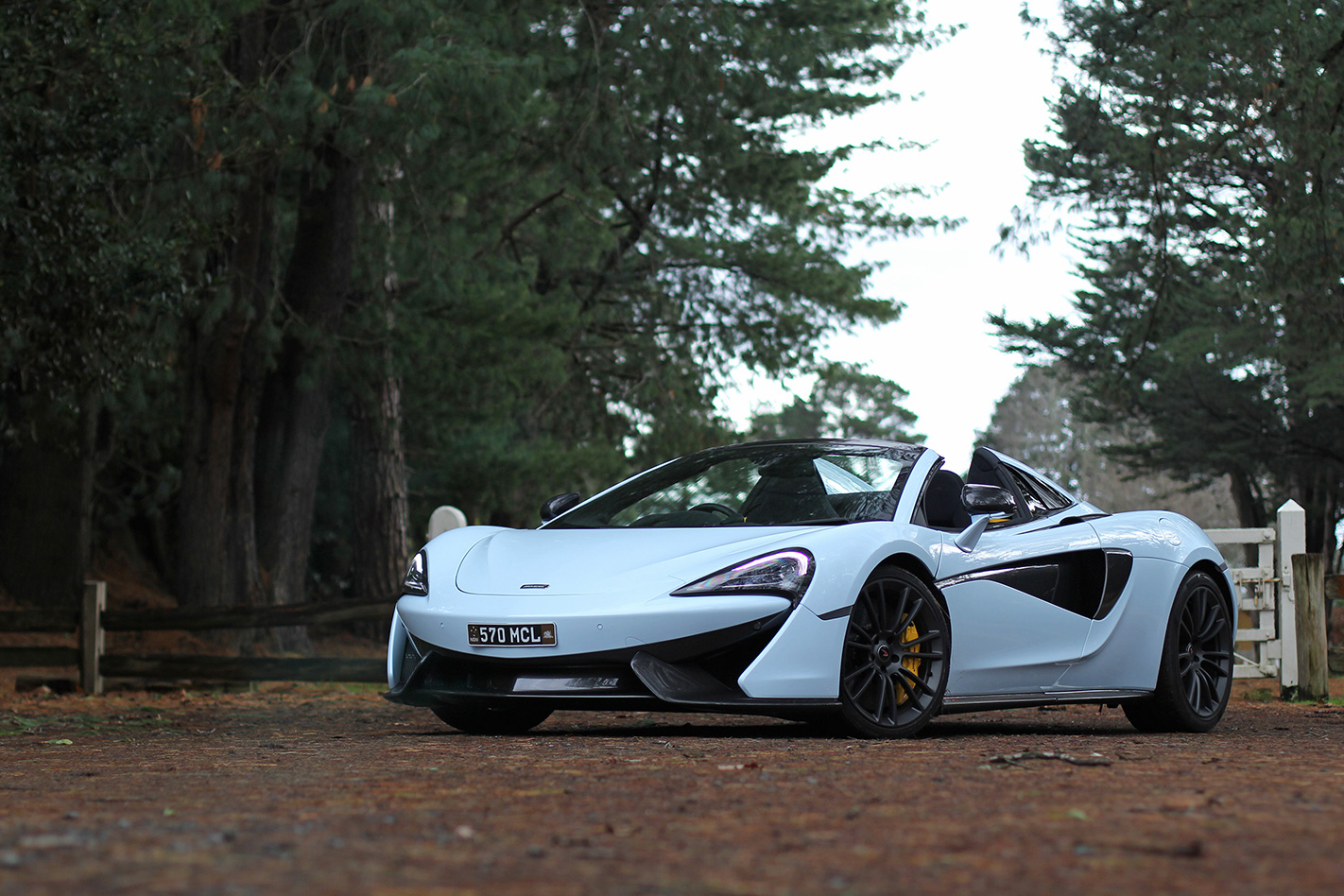
PLUS: Better access to its sound than Coupe, superb balance of handling and ride comfort, few tangible compromises compared to Coupe MINUS: Engine note still lacks aural appeal, considerable increase in cost over Coupe
THE WHEELS REVIEW
IT’S CURIOUS that one of McLaren’s most ‘affordable’ models (there’s some definite sarcasm there) is also one of its most tactile, engaging and appealing offerings. Simple minds might think of an entry-level convertible as being the poser’s choice, but in reality it’s closer to being the connoisseur’s darling.
Don’t get us wrong. There’s little to dislike about the bigger-armed options in McLaren’s three-tier product portfolio, whether it be the 720S that sits in the mid-level Super Series or the truly fearsome Senna that resides in the lofty Ultimate Series, but by the same token the 570S Spider that lives in the entry level Sports Series is no junior burger. If anything, it packs an equal amount of emotional pull as its brethren, and its performance is arguably more accessible – and enjoyable as a result.
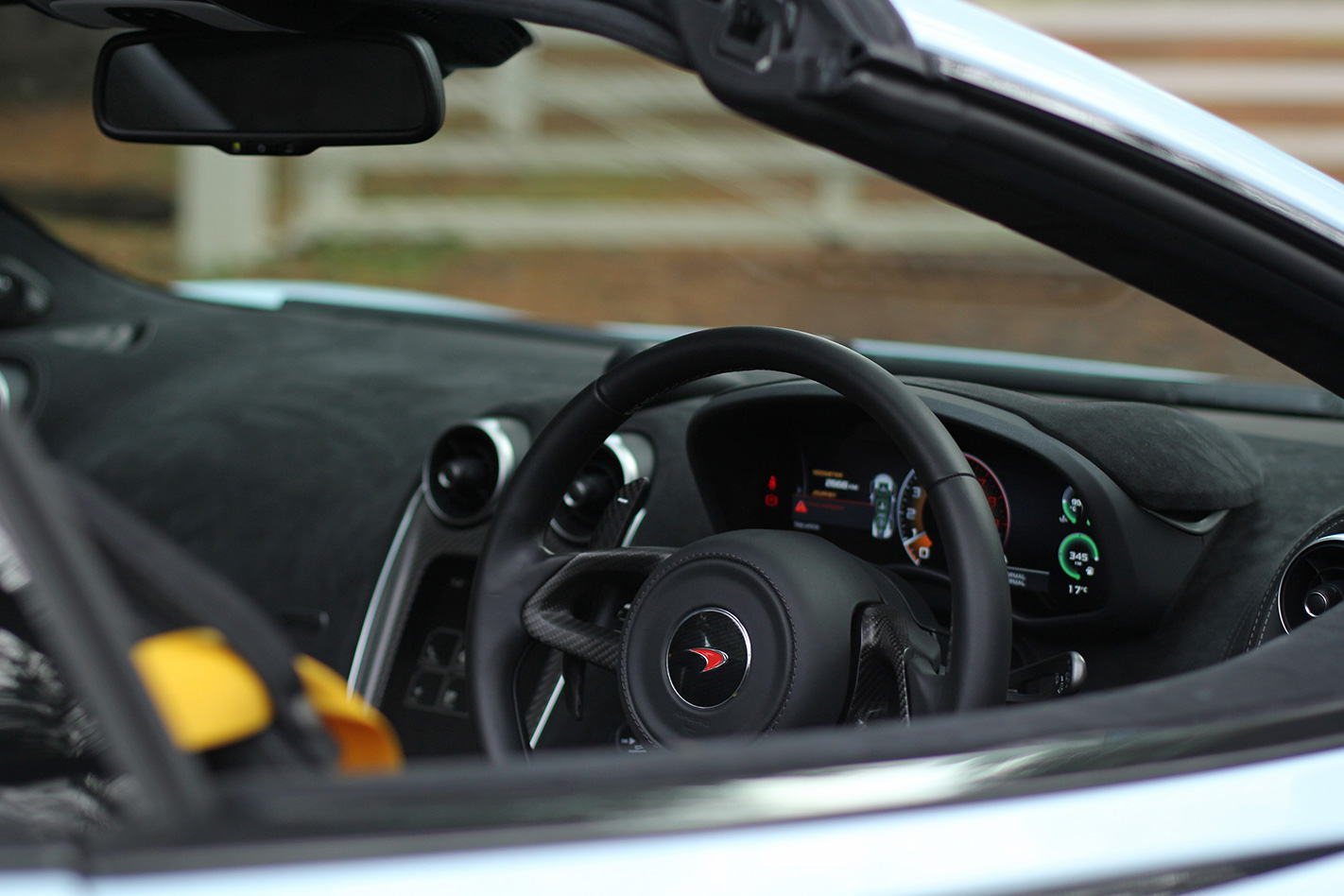
As with all McLarens the 570S Spider is built around a carbonfibre tub, and its torsional rigidity is such that top-down scuttle-shake is non-existent. The power-retractable hardtop goes up or down in 15 seconds and adds 46kg of extra mass over a 570S coupe, but that’s minuscule. More importantly, the Spider’s 0-100km/h stat of 3.2 seconds is identical to the coupe’s, and so is its roof-up top speed of 328km/h. So much for convertibles being the compromised choice.
What’s more, the roofless Spider delivers something that roof-having McLarens tend to lack – some semblance of sonic satisfaction. An independently-retracting rear screen throbs in more engine noises when the side glass is up, or brings plenty of cross-flow when the windows are wound down, (and there’s also a small amount of storage under the roof’s tonneau cover that’s perfect for slipping a briefcase or soft bag into).
The exhaust note still remains unique amongst the V8 supercar set. Though the 570S’ 3.8-litre is built around a flat-plane crankshaft, like a Ferrari 488, the noise it emits from its twin tailpipes is almost rotary-like in its harmonics and tone. Roof-down, the hiss of both turbochargers cramming air into that 3.8 is punctuated by the faint sneezes of the recirc valves as you lift off, which is nice, but whether the resulting noise is pleasant or not is still highly subjective. Work it hard enough, though (and make sure the Powertrain toggle is set to Sport), and the exhaust will eject warzone sound effects on gearshifts and the overrun.
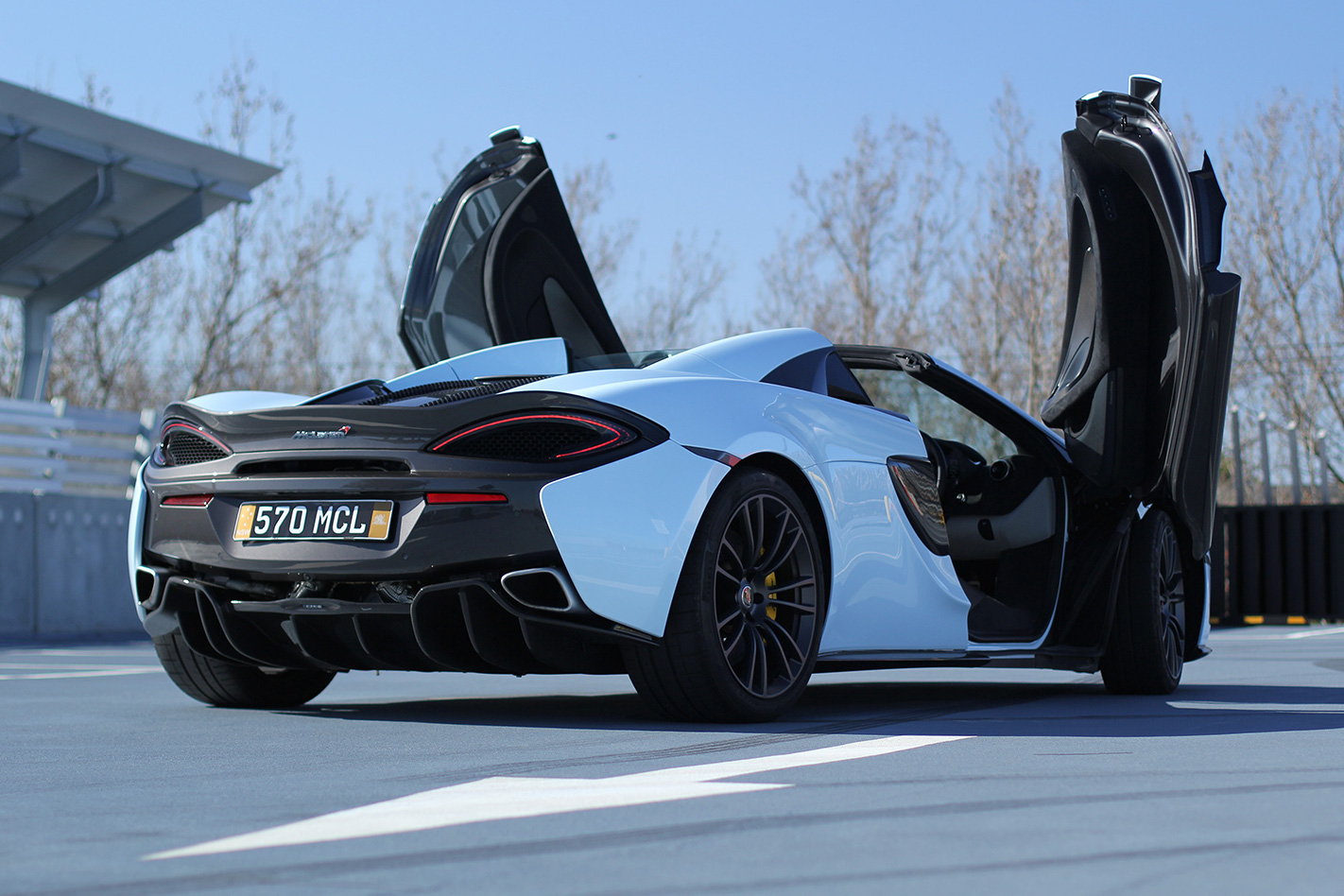
Granted, a 720S sounds angrier, but where a 720S is a grit-your-teeth-and-pray type of driving experience, the 570S Spider is far friendlier. It’s a McLaren that doesn’t leave you scared and sweaty, but is still road-crushingly fast.
On the road it seemingly shrinks, glove-like, around the driver. The steering is light but communicative, and virtually falls into the road’s camber with the slightest of nudges. The suspension works best on twisty roads when in Normal or Sport mode, but unlike many supercars the 570S isn’t spine-shatteringly firm when dialled up to Track. Its traditional anti-roll bars and conventional multi-mode dampers might not have the technological sophistication of the hydraulically-linked undercarriage in the 720S, but it still retains plenty of pliancy over rough ground.
Front-end grip is massive, and only turns to understeer at truly silly speeds. You can play with its balance though, especially if you trim the (ultra-smooth) stability control into its more permissive Dynamic mode. Hook in hard with the steering and you can use the inertia of that mid-mounted V8 to swing the tail around slightly, and the transition to oversteer is less spiky than you might expect. It’d be a hoot on a racetrack, where there’s more space to exploit.
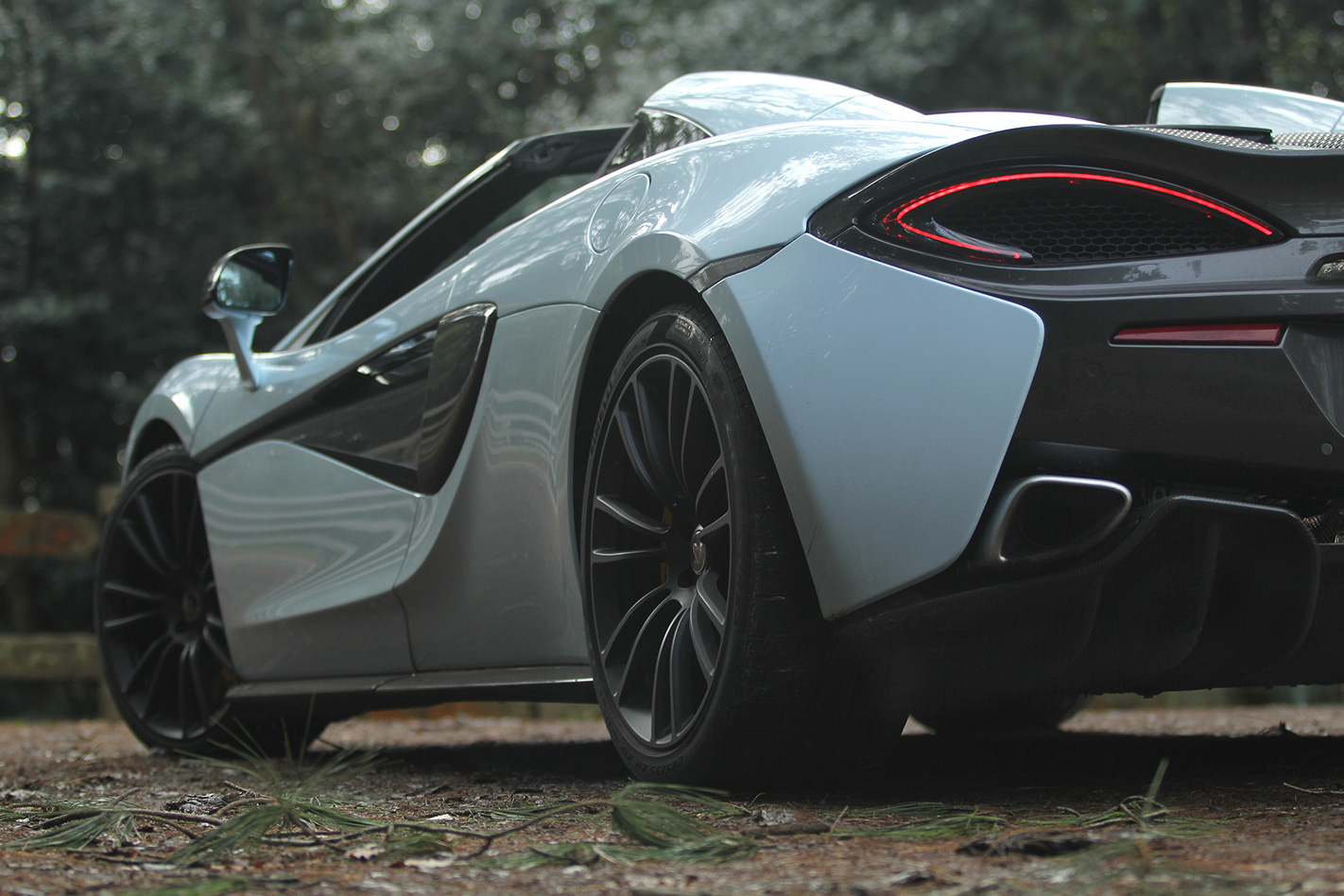
The twin-turbo 3.8 litre V8 might be at the lower end of McLaren’s horsepower spectrum, but it’s all relative. Its performance is mega when wound beyond 2500rpm where both turbos are at full puff, and with the redline not appearing until 8000rpm there’s a fat powerband to exploit. The seven-speed dual-clutch also manages to be civil enough for daily use, though its take-up is predictably snatchy in stop-and-go driving. Those see-saw shift paddles are a neat trick though, allowing one-handed control of both upshifts and downshifts.
But the best part about the 570S Spider is just how effortless it is to switch from boulevard cruising to back-road blasting. It’s docile and comfortable when the Handling and Powertrain toggles are rotated to ‘N’ (for Normal), but transforming it into a more hard-edged vehicle is as simple as twisting both knobs a click or two to the right – and with those two switches located high and forward on the centre console, right where your left hand naturally falls, customising the 570S’ behaviour can be done entirely by feel.
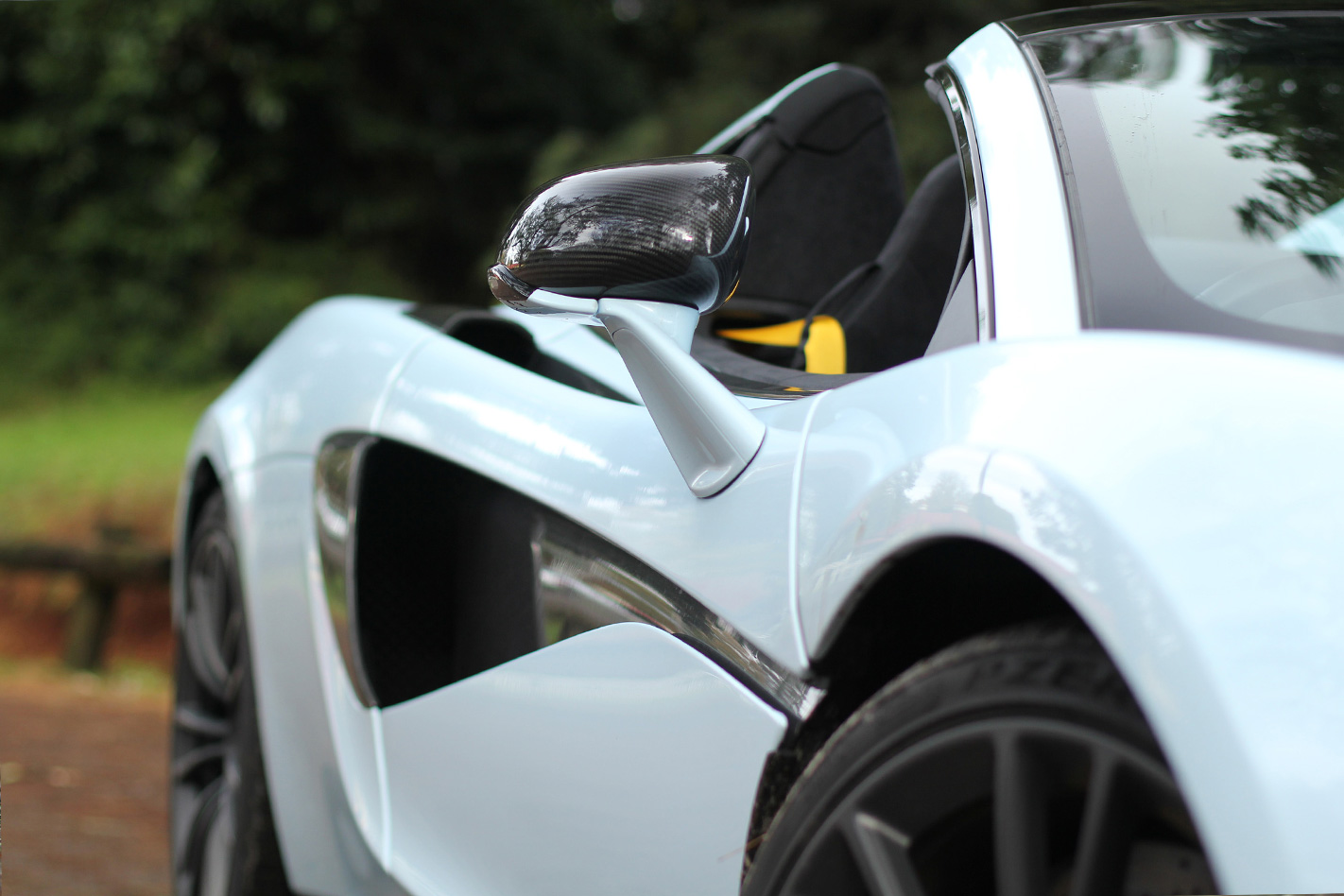
And speaking of which, there’s only really one ergonomic failing in the 570S Spider’s cabin – the controls for the (cost optional) power seats are located on the bottom cushion itself, between the seat and the centre console. Curious placement, given the rest of the interior and its switchgear are so thoughtfully laid out.
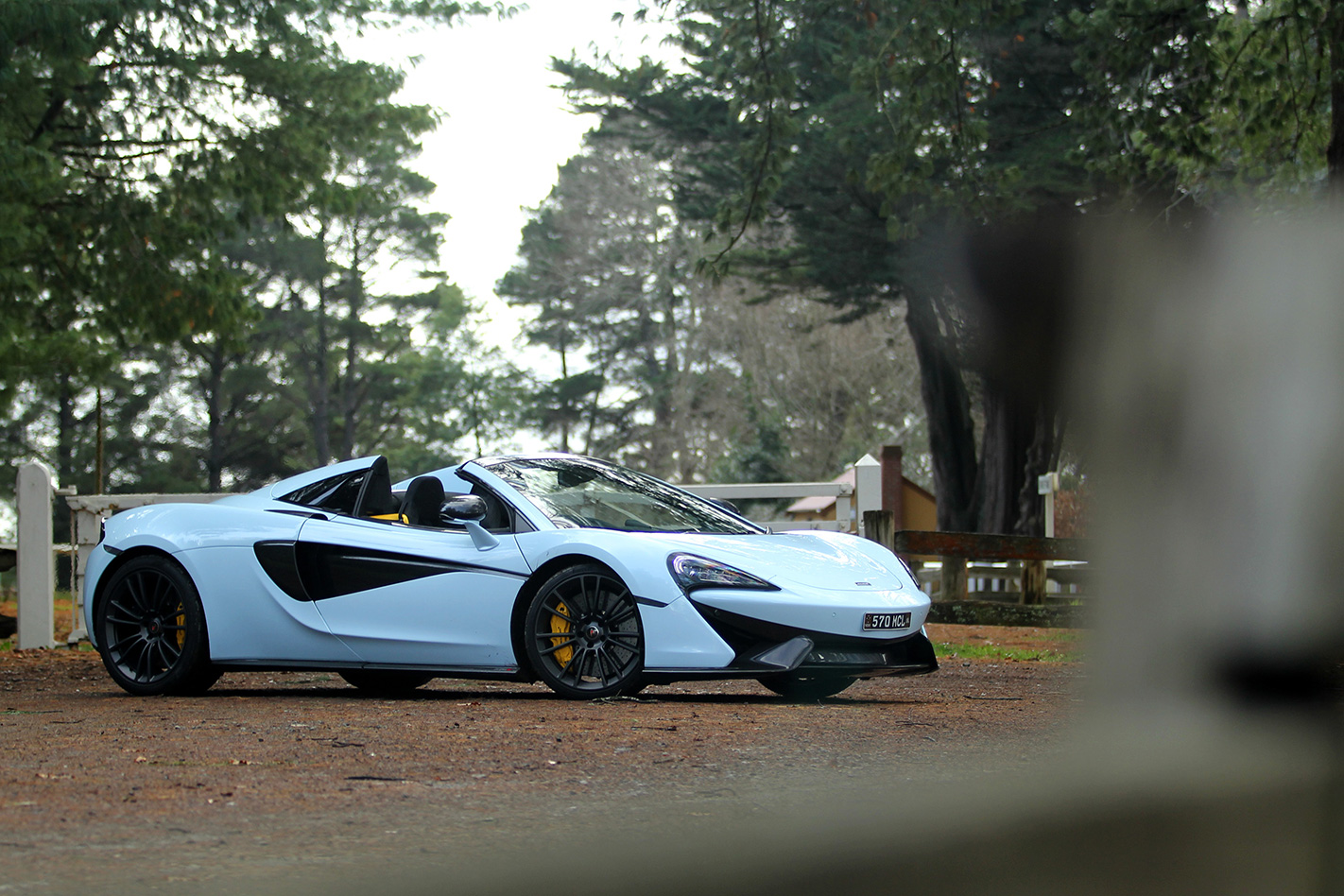
But on the whole, the 570S Spider works with you. Unlike some supercars it doesn’t fight you, and few mid-engined rivals feel quite as user-friendly as the McLaren. The Spider’s ability to throw some sunlight on your scalp and send more decibels to your ears enhances the base 570S experience and introduces hardly any downsides, and perhaps the only real stumbling block you’ll encounter is whether going topless is worth the considerable $40,750 premium over the Coupe.
SPECS
Model: McLaren 570S Spider Engine: 3799cc V8, dohc, 32v, twin-turbo Max power: 419kW @ 7500rpm Max torque: 600Nm @ 5000-6500rpm Transmission: 7-speed dual-clutch Weight: 1498kg 0-100km/h: 3.2sec Fuel economy: 10.7L/100km (claimed) Price: $435,750
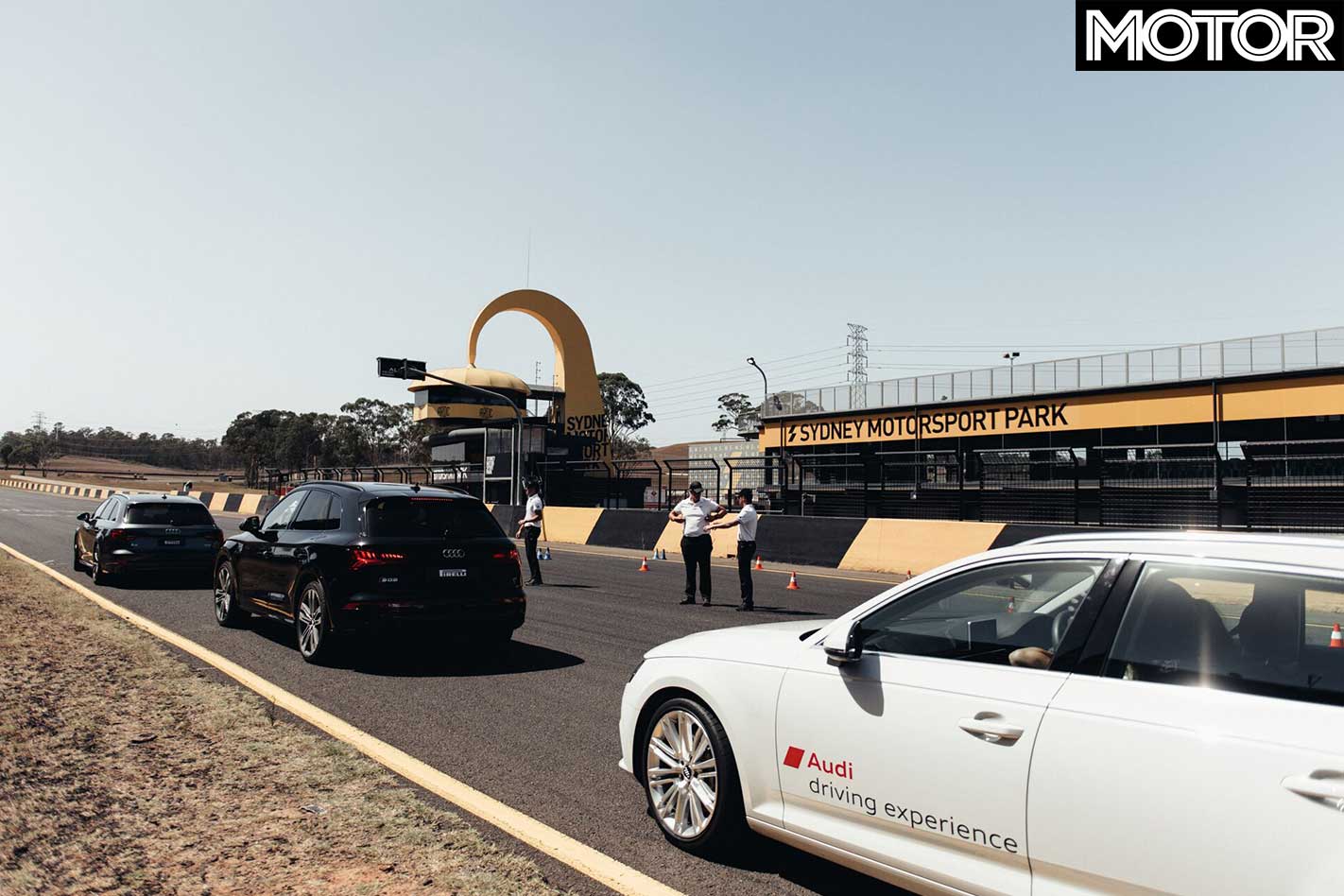
If you could choose one Aussie race track on which to drive an Audi R8, picking anything other than Phillip Island would mean you’re missing out on something special.
Which is why I was pleased to discover that’s where I’d be heading to participate in the Audi Sport Driving Experience.
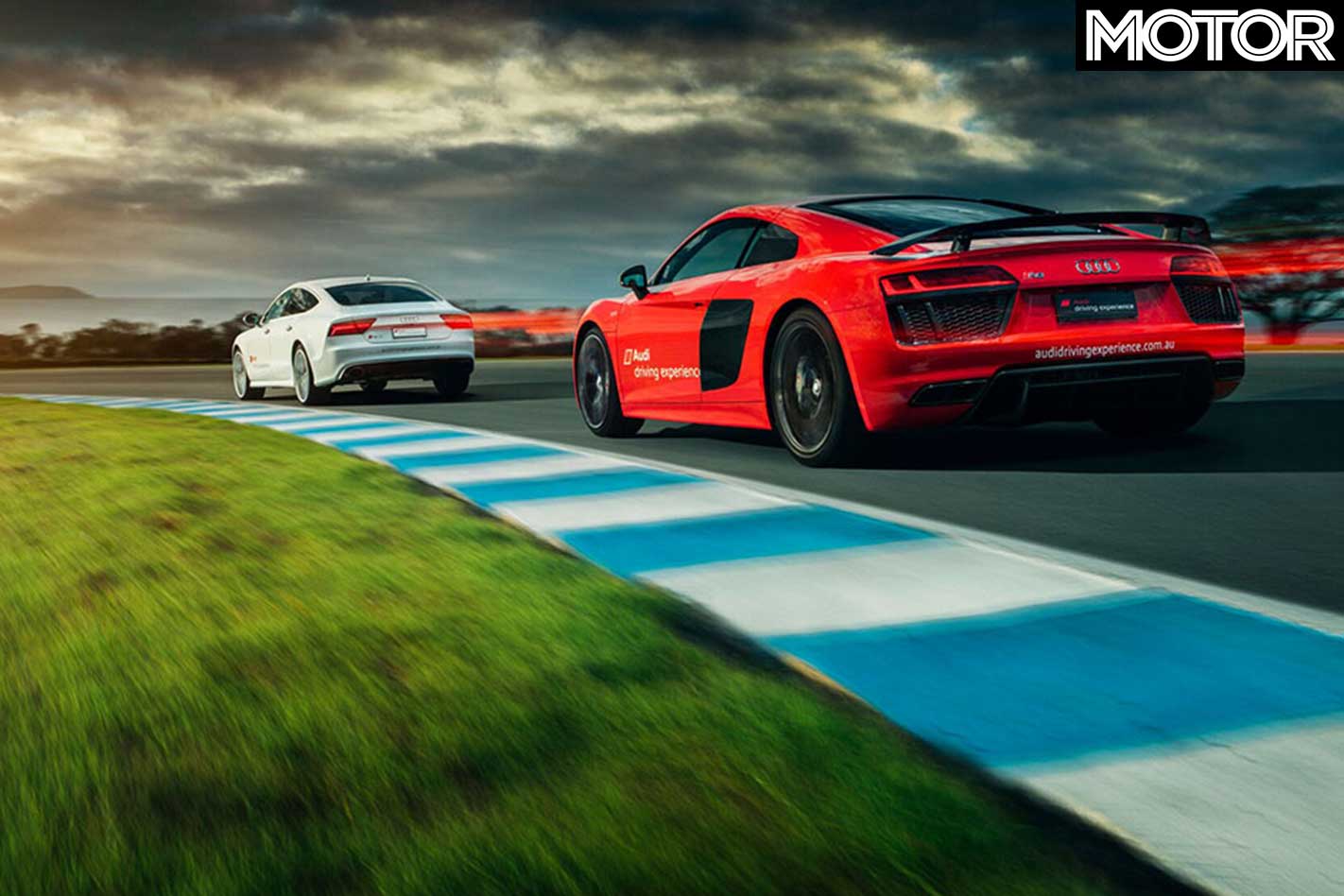
Usually you’ll find the likes of Steven Johnson, Dean Canto, Luke Youlden, or Garnet Patterson at the wheel of your guide car, helping you be your best and fastest self.
I should point out that I was particularly lucky on the day I participated in the course – only two other people were in attendance, meaning we essentially had one-on-one coaching with Johnson, Patterson, and Chris Pither.
Also present, as always, was Steve Pizzati, racer and professional driver who hosts and heads up the Driving Experience program, and is set on making drivers as good as they can be.
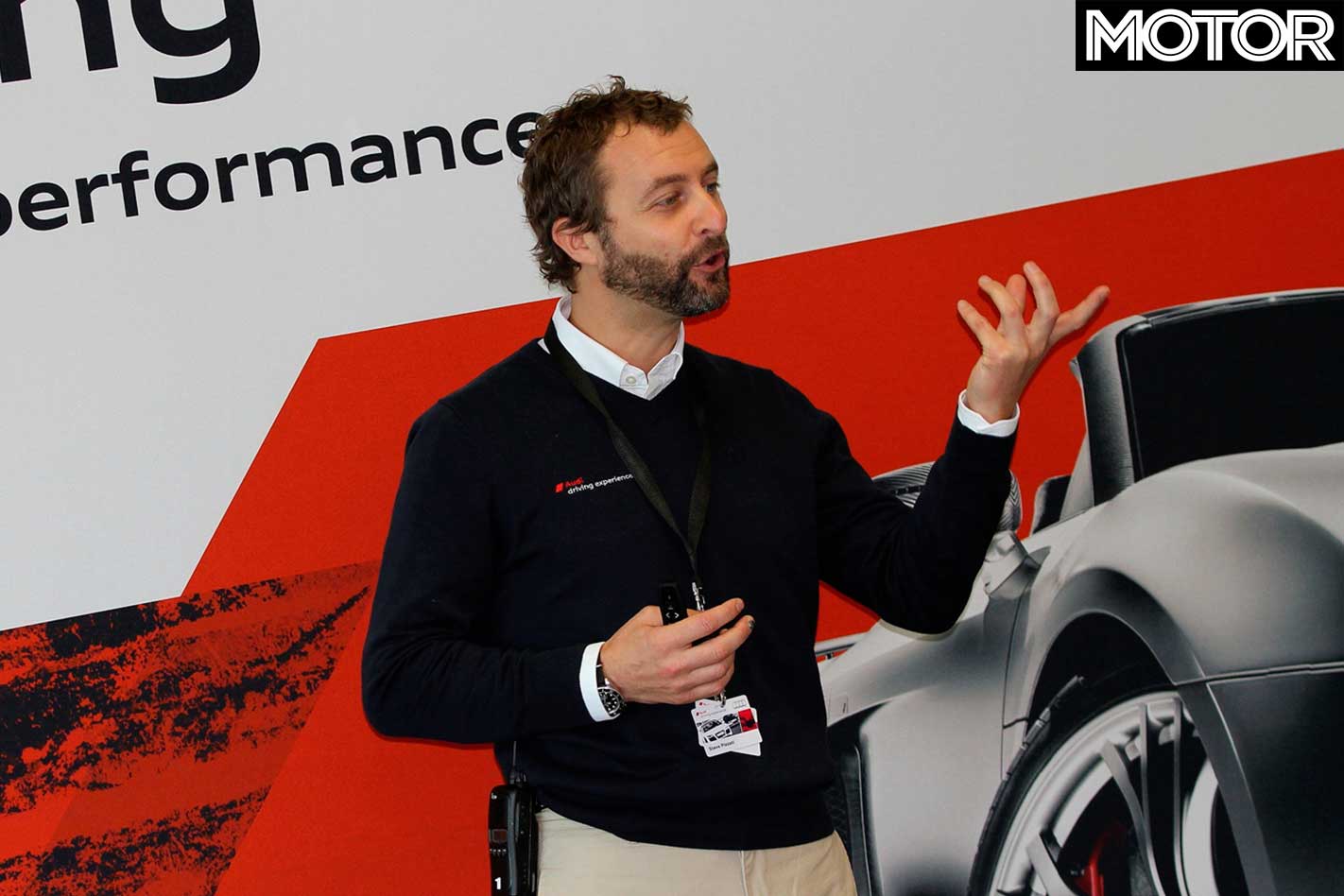
There are plenty of chances to pick his brain about driving, and anything else car-related you might want to ask – as long as you don’t mind a bad (in the best way) joke here and there.
Anyway, before lapping the track in Audi Sport’s fast metal, we had a morning of honing our skills and pushing quattro’s capabilities to the limits.
In an RS6 and an R8 – yes, the first exercise involved a V10 supercar – we practiced last-minute ABS swerving, driving at up to 100km/h and following a direction from instructors to turn left or right into a marked lane with very little time to react.
The purpose of this, aside from the driver training element, is to show the capability of Audi’s cars.
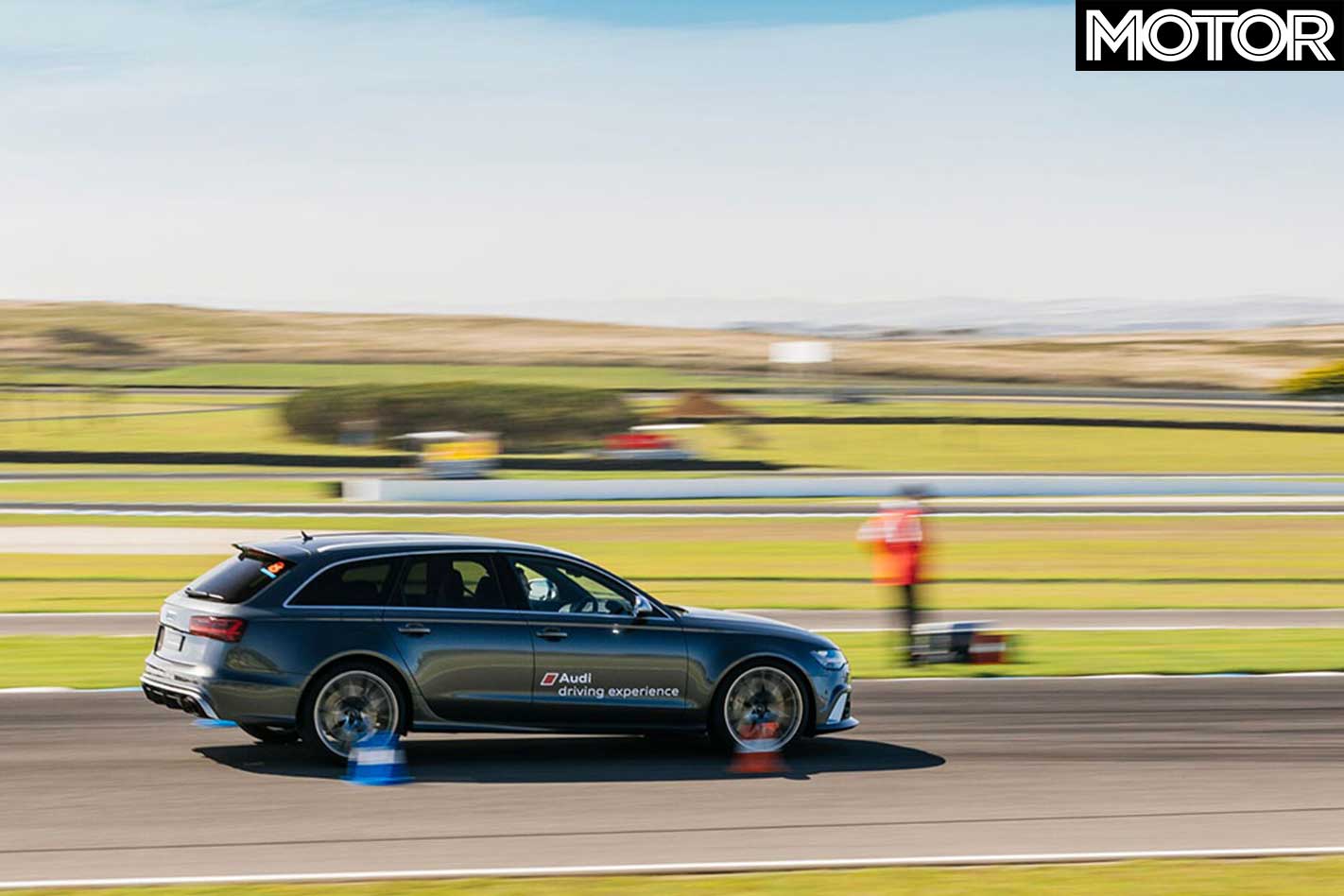
Audi absorbs much of the cost of running its Driving Experience into marketing expenses, so it makes sense that it wants to show off how good its cars can be – especially when only $3000 is helping Audi pay to hire P.I, more than a dozen staff, and run its fleet, as was the case on this particular day.
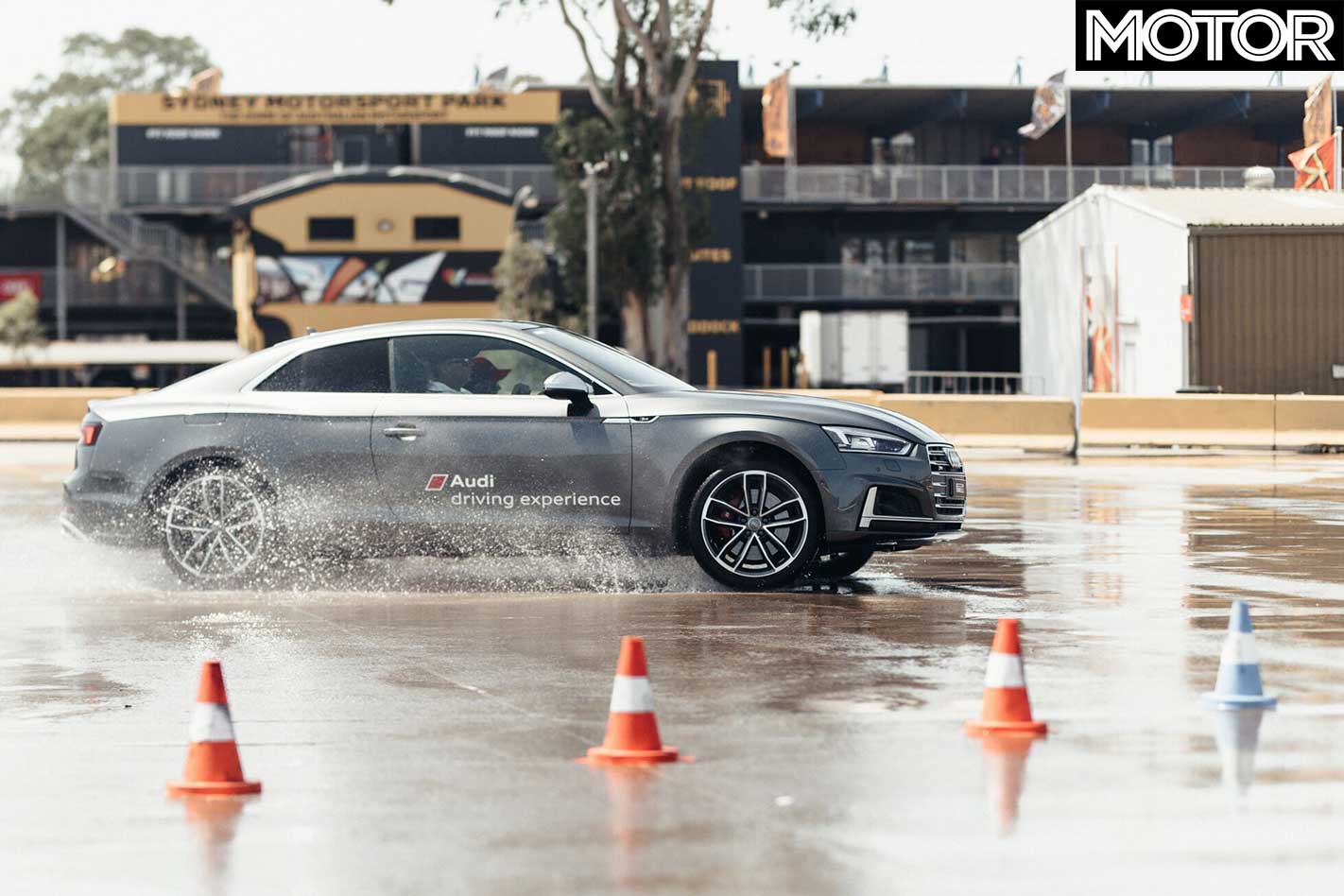
Next up, a bit of sliding was in order. In RS6s and RS5s, the two paying attendees and I were directed to switch off all the electronics and deliberately swing the rear end out in a 180-degree turn on the wet skidpan, then try to hold the slide to avoid spinning.
Sliding an AWD V8 wagon is more fun than, but also harder than you’d think – at least that was what I found. Driver training is a good eye-opener when it comes to discovering your own limitations.
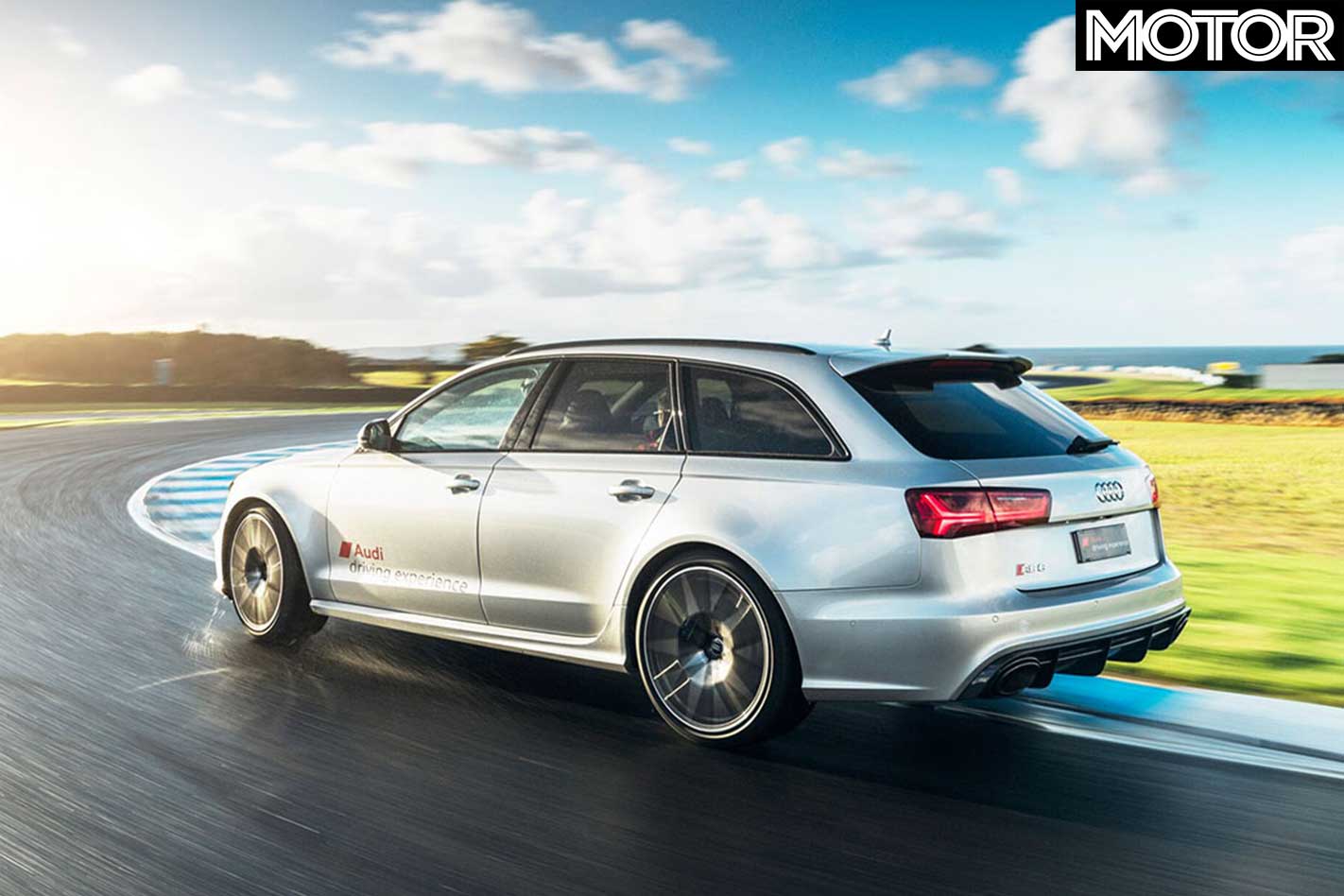
The last exercise for the morning was an emergency lane-change, without time to brake before an obstacle. Picture it like you’re driving along an 80km/h road when a car pulls out in front of you suddenly, but it’s only one lane each way and there’s a car coming the other way. Except all the cars are cones.
With the exception of a couple of cones knocked over by someone who wanted to push the limits a little (which is exactly what this day is about), we all managed to avoid colliding into the imaginary cars, owing to the fact that even a 2-tonne wagon can be nimble enough to get you out of a sticky situation.
After lunch – which has been of excellent quality at both Audi drive days, by the way – it was time to hit the track for some laps.
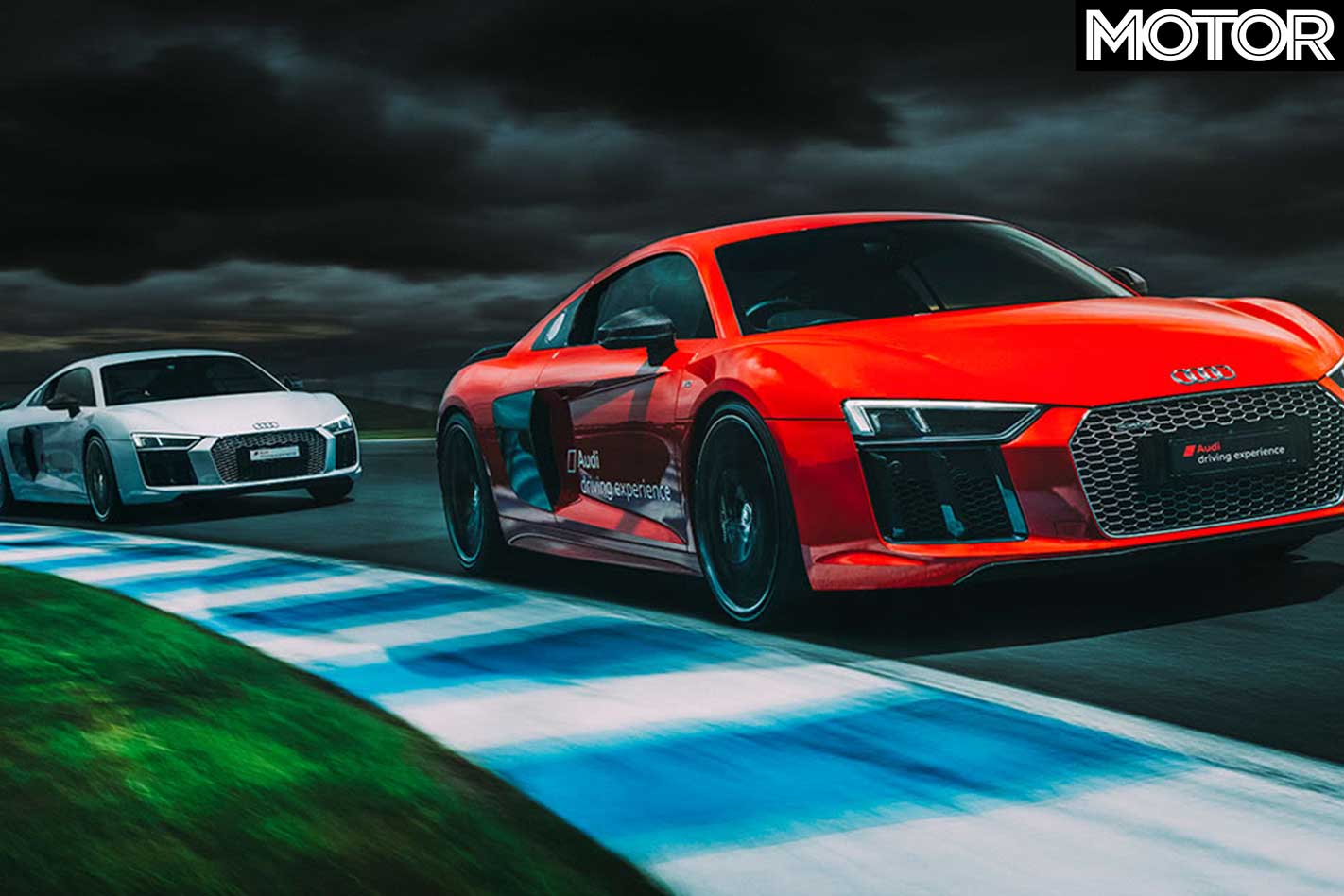
Riding shotgun with Pither and Patterson a few times between laps was a good way to see exactly where the lines and braking zones are, though once you’re in your own car it becomes more of a judgement of your own skill, where the guide drivers are happy to hold back a little if you play a corner safe.
After finishing the Audi Advanced course and spending the morning getting to know the RS range, confidence was high enough to properly tackle The Island, starting with the RS5, and working through the whole range of other cars present (RS3, RS6, TT RS, and of course R8) until I had lapped P.I. almost 20 times, all the while threatened with heavier and heavier rain.
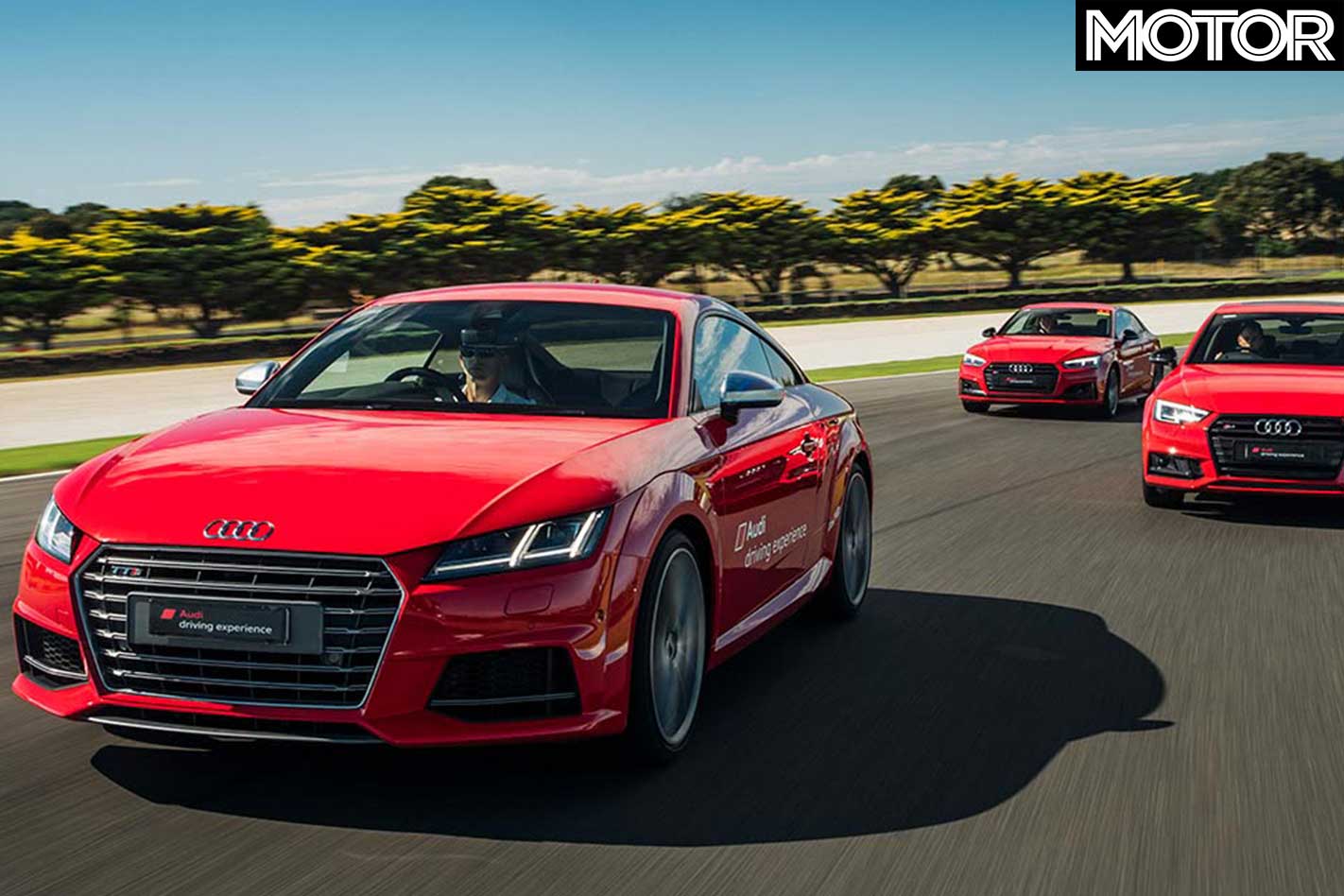
There’s not much that’ll get your blood pumping more than braking hard at 240km/h in the rain with another car in front of you.
Finally, to wrap up the day, a quick competition in the form of a timed wet motorkhana let us put our skills to the test, traversing cones in an RS5 and TT RS, trying to tackle the slides and resulting traction control that come with driving hard in the wet. The good news here is that everyone in attendance ended up on the podium.
For $1500 (plus the $999 for the Advanced program, a prerequisite for the Sport day), the program strikes me as hard-to-beat value. You come away a better driver, with advice from some of the best drivers in the country, and you get to drive the fastest Audi has to offer at Australia’s best permanent circuit.
If you can afford the cost, it’s something you won’t regret.
A couple of weeks back my day started with a news bulletin featuring a frustrated and upset police sergeant attending a double fatality in Queensland.
It was distressing viewing, both to see someone so affected by his daily work but also to see him pose the question “What do we have to do?”, the frustration and confusion at the ineffectiveness of the road safety message boiling over.
Australia’s road safety problem is clear and it has little to do with drugs, alcohol, speed or fatigue. Australians can’t drive. This in itself is a huge issue, but what’s even more worrying is that we think we can.
In response to that initial news story MOTOR ran an online poll. More than 1000 people responded and 90 per cent of those rated themselves seven or above (10 being the best score). The specific breakdown was: 10 (23%), 9 (14%), 8 (32%), 7 (21%), 6 (6%), 5 (2%), 4/3/2 (0%), 1 (2%).
It wasn’t the world’s most scientific poll. It’s possible that by a statistical fluke the vast majority of people that responded are above-average drivers. I doubt it. I think the numbers are an accurate reflection of the problem outlined above. “It’s everyone else who can’t drive, not me.”
I may be part of the problem; I think I’m a pretty good driver. I initially went for an eight before dropping it to seven on the basis that I get distracted far too much (the curse of the modern driver).
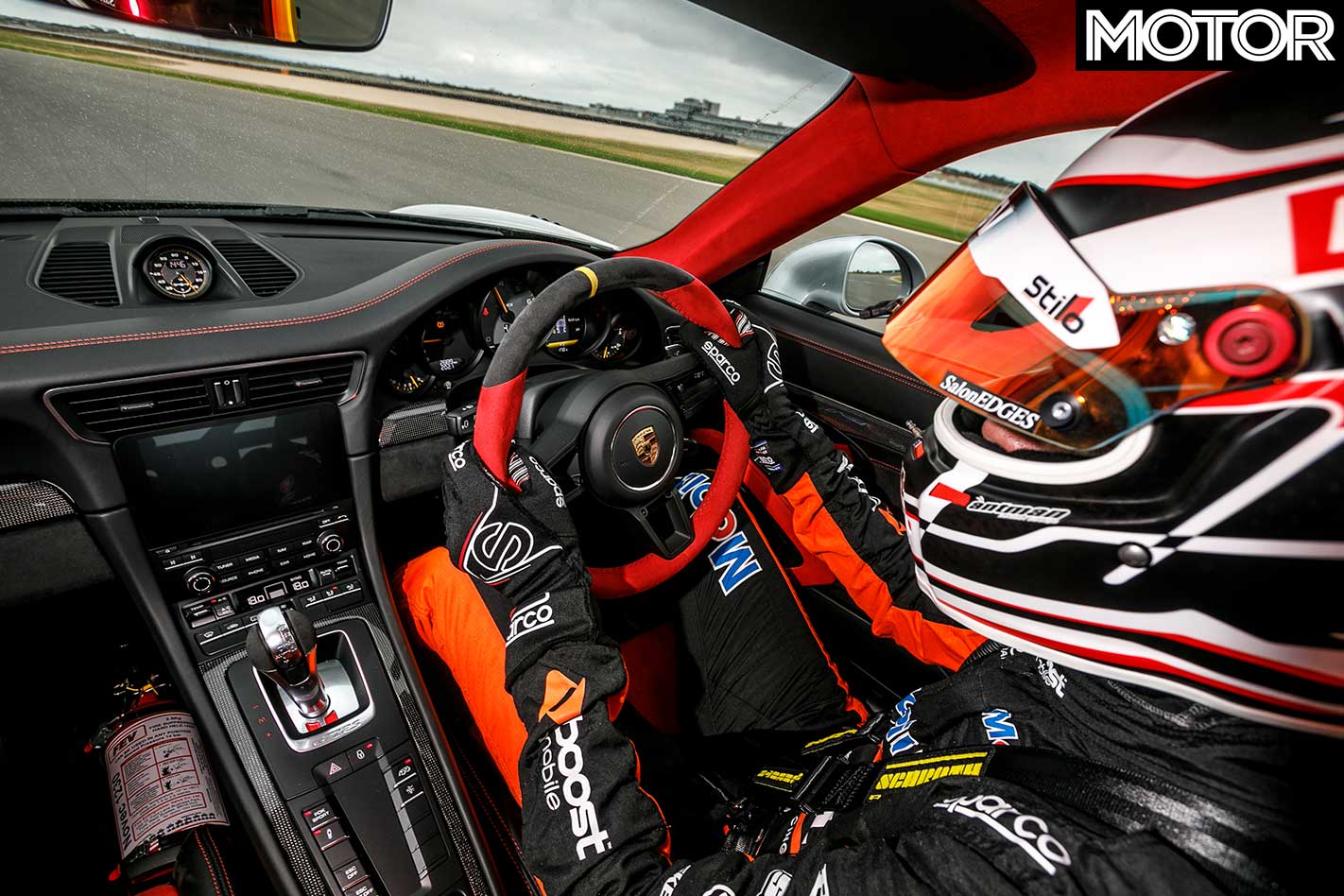
In my defence I’ve spent more than a decade trying to achieve that number, attending regular Defensive, Advanced and High Performance driving courses with Audi, Porsche, John Bowe Driving, Evolve Driving and Performance Driving Australia along with a decade of club and state-level motorsport.
My point is that even with a higher level of training than most, at times I still feel all at sea. Like everyone, I make mistakes; however, training allows you to 1. Make fewer mistakes 2. Recognise those mistakes earlier and 3. Take appropriate action more quickly. It’s this training that is sorely lacking in Australia.
Attending those courses, you realise most people have no idea of the basics: how to sit in a car to maximise comfort and control, how to hold the steering wheel properly and how to perform the most rudimentary tasks that may one day save the lives of themselves and others.
One of the first activities at any driving course is an emergency stop. Many who attempt it for the first time don’t even push the brakes hard enough to activate the ABS; those who do frequently don’t understand why the brake pedal is pulsing and remove their foot again. Either way, a lack of basic knowledge results in an easily avoidable accident.
The reason it makes me so angry is actually a very simple and selfish one: I enjoy driving and all over the country great driving roads are being neutered by ever lower limits thanks to our road safety authorities’ myopic obsession with speed.
Here’s a statement that’ll warp their brains: on a dry, straight, clear road in a modern performance car (M5, C63, GT-R take your pick) there is absolutely nothing dangerous about a well-trained driver doing 200km/h or more. Note the number of qualifiers in that sentence. Conversely, in a crowded, slippery carpark 30km/h could be deadly. Context is everything.
Those who can drive are being punished for the ineptitude of those who can’t. I can’t ride a horse, but if I fall off and break my neck my equestrian inability shouldn’t mean galloping is banned and all passionate horse-riding enthusiasts be limited to walking speed.
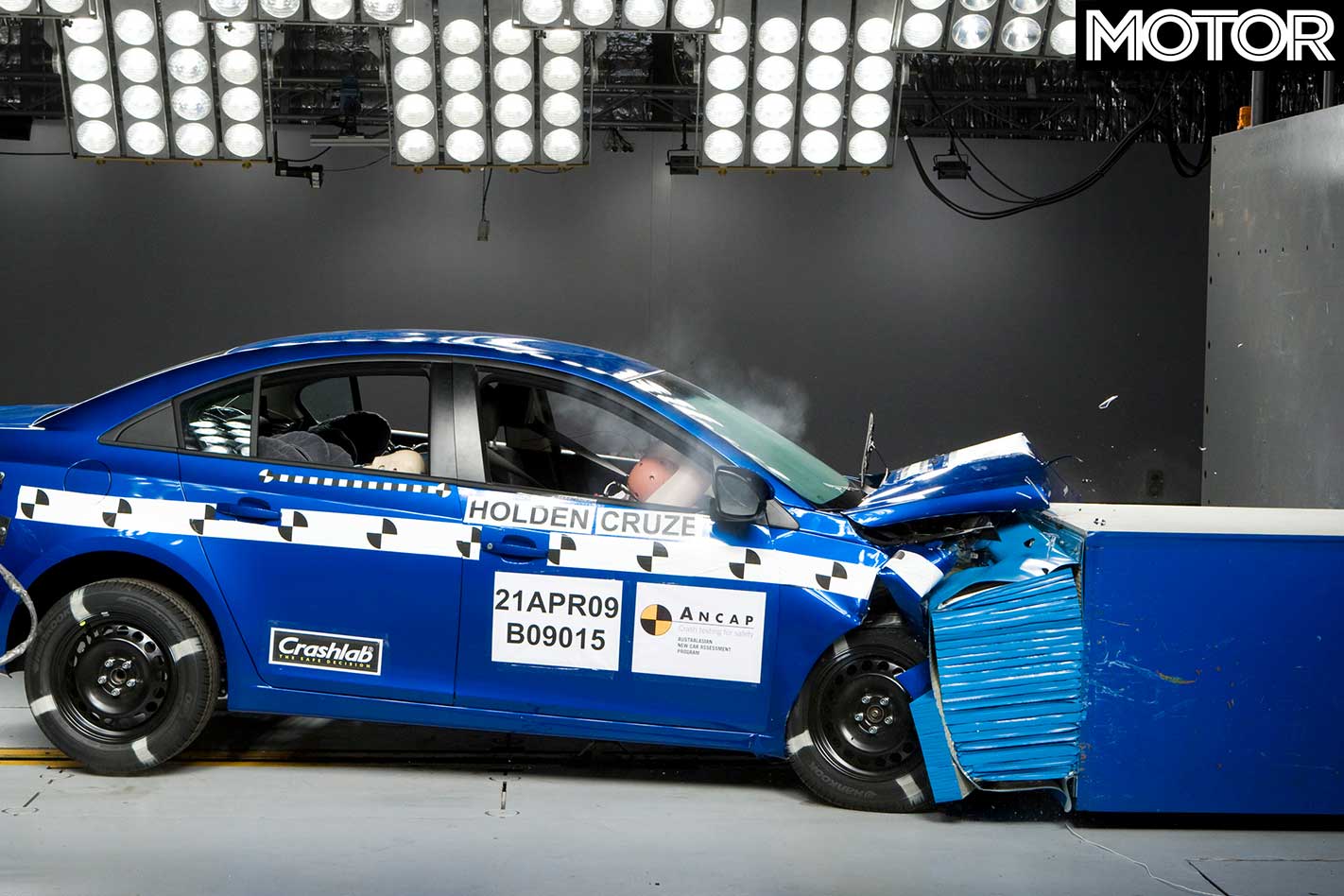
There are statistics galore that ‘prove’ “5km/h more doubles this” and “wipe off 5 halves this” but numbers can say whatever you need them to. Authorities point to the steady decline in road fatalities as proof their methods are working and it’s true, road deaths have dropped over the decades: 3583 (1976), 2888 (1986), 1970 (1996) 1292 (2016).
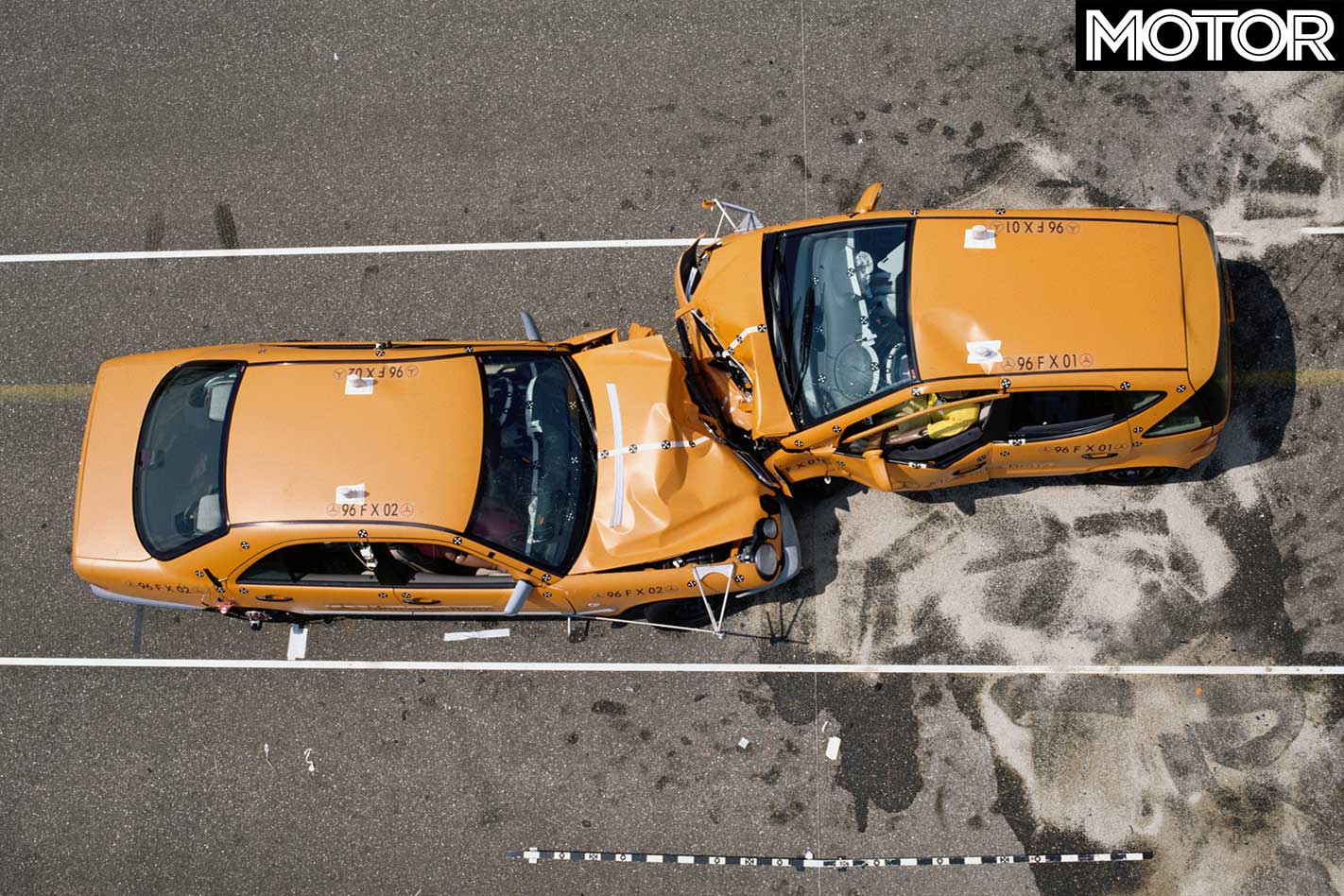
I would argue that drop is almost entirely down to the incredible improvement in vehicle safety. Compare the road fatality figures to the number of people hospitalised due to road accidents (i.e. serious but non-fatal crashes).
In 1989, the first year data is available, 28,460 were hospitalised, a number which dropped to 21,519 by 1997. Since then, though, the figure has steadily increased to 35,552 in 2014 (the last year with available data). Fatalities are dropping, but serious crashes are more frequent.
Instead of the tired ‘Speed Kills’ rhetoric, it’s time the conversation was led by proper experts, people like Ian Luff and Steve Pizzati (to name just a couple), people who have dedicated their careers to driving at the highest level and teaching others to do so.
To his credit, our distressed sergeant delivers a similar message. “Take responsibility for yourselves,” he says, “It’s a serious business driving on the road,” stating that three fatal crashes had occurred in virtually the same spot over last 12 months with driver error being the predominant factor each time.
So we know the problem, what’s the solution? Simple: education. The first thing that needs to happen is to take driver training out of the hands of parents, relatives, siblings and friends and put it into the hands of trained professionals.
If your child wants to play tennis or piano or learn to paint, what’s the first thing you do? Ring someone who’s able to teach them properly. However, when it comes to driving, one of the potentially most dangerous activities anyone will undertake, home-schooling is fine. Remember the poll? Everyone thinks they can drive.
Driving lessons are expensive, but there’s no reason the program can’t be government subsidised. According to the Bureau of Infrastructure, Transport and Regional Economics, on average about 220,000 new drivers are added to Australian roads each year. A slightly flawed figure, as older drivers also disappear, but it’ll suffice to make a point.
Let’s give every one of those new drivers a $10,000 education. It doesn’t solve the existing driver problem, but new drivers are over-represented in accident statistics. Total cost: $2.2bn. That might sound like a lot of money, but an Australian Automobile Association report put the cost of Australian road trauma in 2015 at $29.7bn. According to an Australian National University study, in 2016 it was $33.16bn.
Based on these figures, if this world-class driving education results in just a 10 per cent reduction in accidents it’ll have paid for itself, not to mention the lives saved and reduction in social costs.
Alternatively, we can do nothing and the enormous improvement in vehicle safety will probably lead to a reduction in road deaths, if not accident rates. But until the root cause is addressed, we’re going to continue to see distressed and upset police officers on our screens.
Sources: – BITRE Yearbook 2017 – Australian Infrastructure Statistics – The cost of road crashes in Australia 2016: An overview of safety strategies – Car accidents cost Australians almost $30 billion a year
Do you agree that the real problem on Australian roads is the people behind the wheel?
Tell us your thoughts below.
