
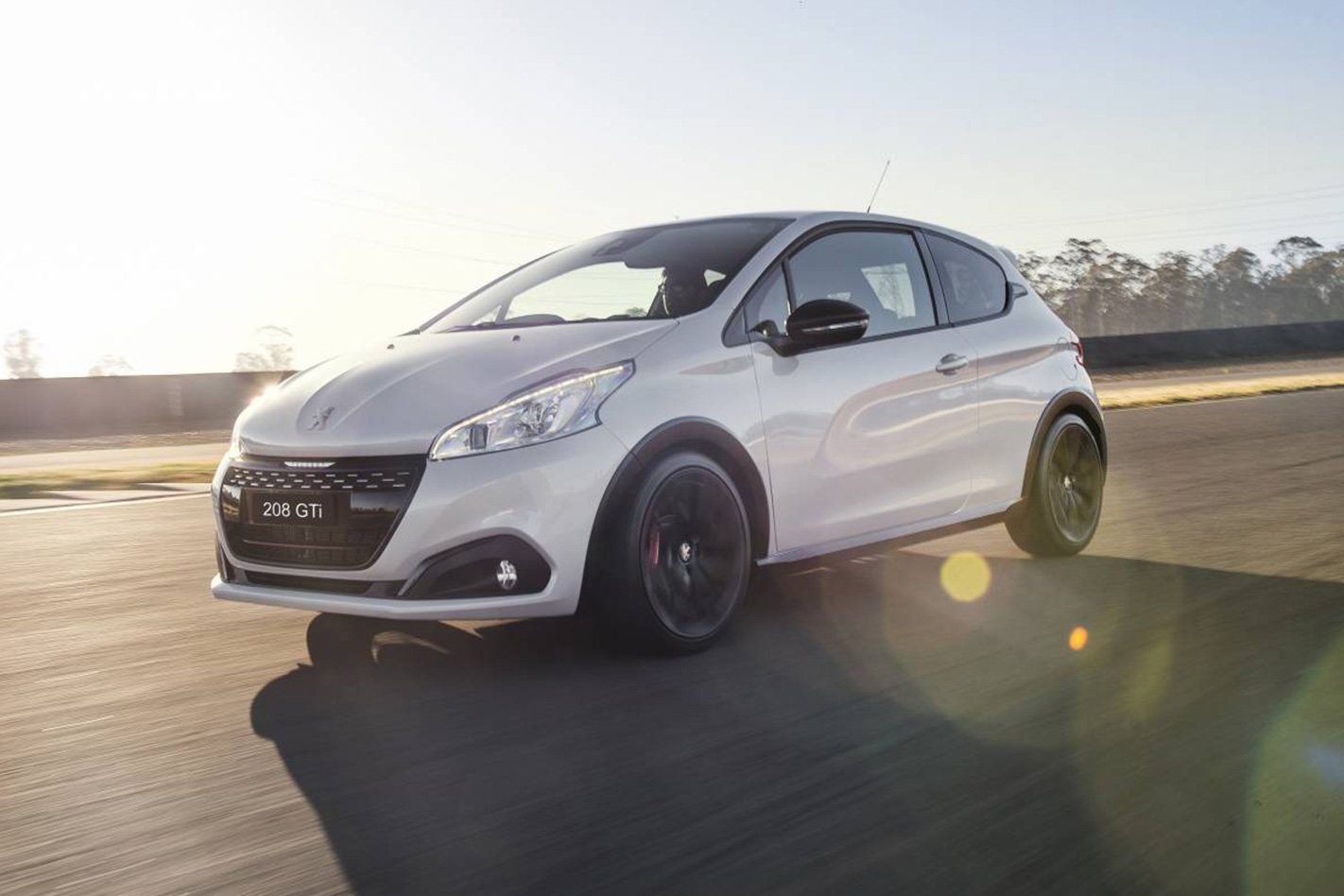
PEUGEOT has crafted an even more potent version of its 208 GTi hot hatch dubbed the Definitive Edition, which gains a selection of driver-focussed mods as well as autonomous emergency braking – a first for the French GTi family.
The special 208 GTi has been created to send off the celebrated model, which has racked up five years in Australia and is due to go out of production later this year. Want the ultimate iteration of the 208 GTi? Perhaps get in quick, as supply will be strictly limited to just 20 examples locally.
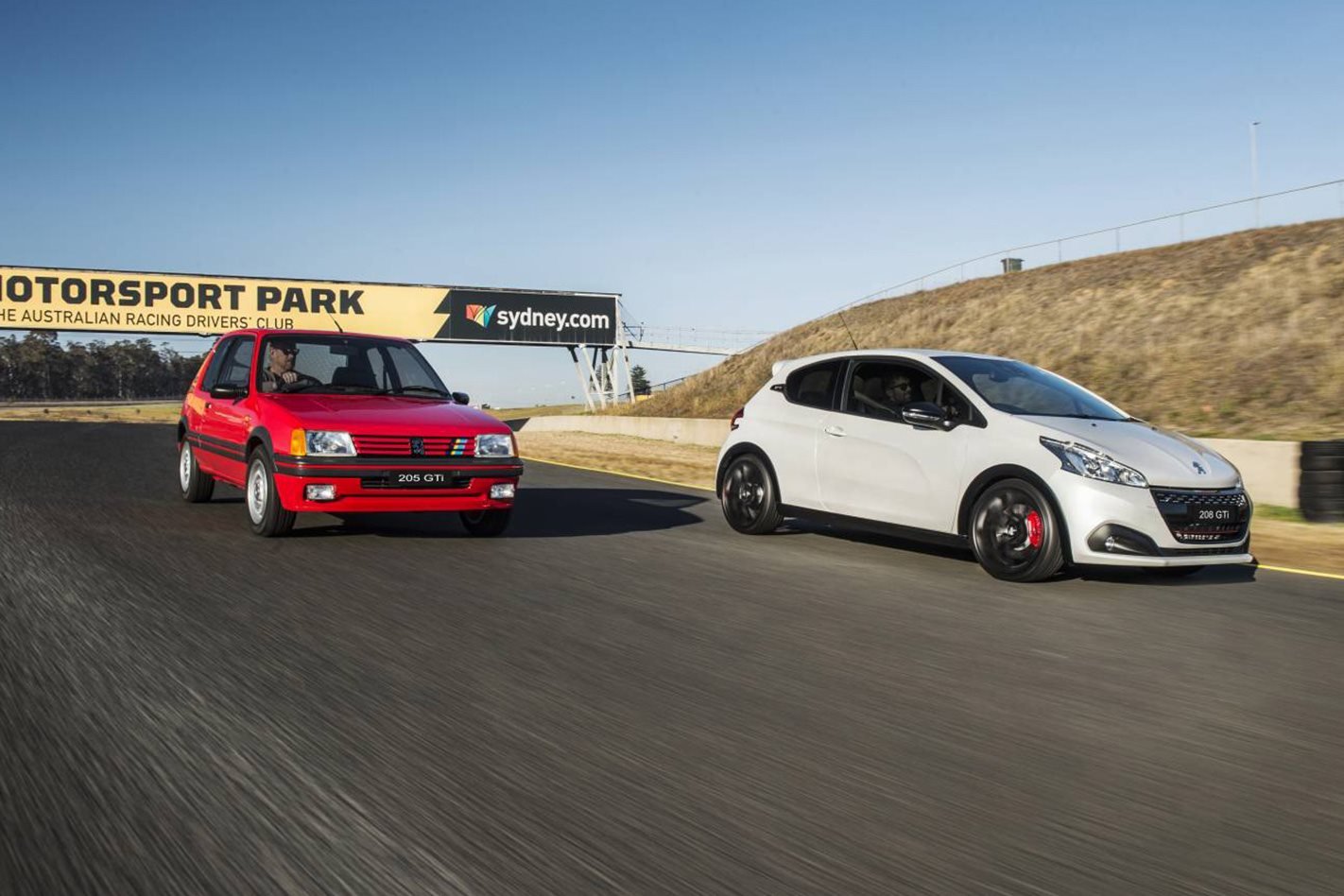
Pricing kicks off at $33,990 driveaway representing an approximate $2000 increase over the standard 208 GTi which retails for $29,990 before on-road costs. That said, the limited edition 208 adds in a host of goodies for your extra cash.
Power from the 1.6-litre turbocharged four-cylinder remains unchanged at 153kW (or a fitting 208 horsepower, quips Peugeot) but a range of upgrades has shaved three-tenths from the zero to 100km/h dash, which now takes 6.5 seconds.
The extra pace is largely due to the fitting of a Torsen limited-slip differential, improving traction in a straight line as well as in the twisty stuff, while a unique exhaust system was also installed for better engine response across the rev range.

A revised suspension system has not only been lowered by 10mm, but Peugeot engineers also widened the Definitive Edition’s track by 22mm at the front axle and 16mm at the rear for increased stability and a more planted stance.
Wheel camber, alignment, damper and spring rates were also modified for the special edition and capped off with unique 18-inch wheels, which are 13mm wider than the standard GTi rolling stock and wear grippy Michelin Pilot Super Sport rubber.
Vehicle electronics were also significantly revised. The Pug’s stability program was remapped to optimise the effect of its new diff, while engine management was recalibrated to match the less restrictive exhaust system.
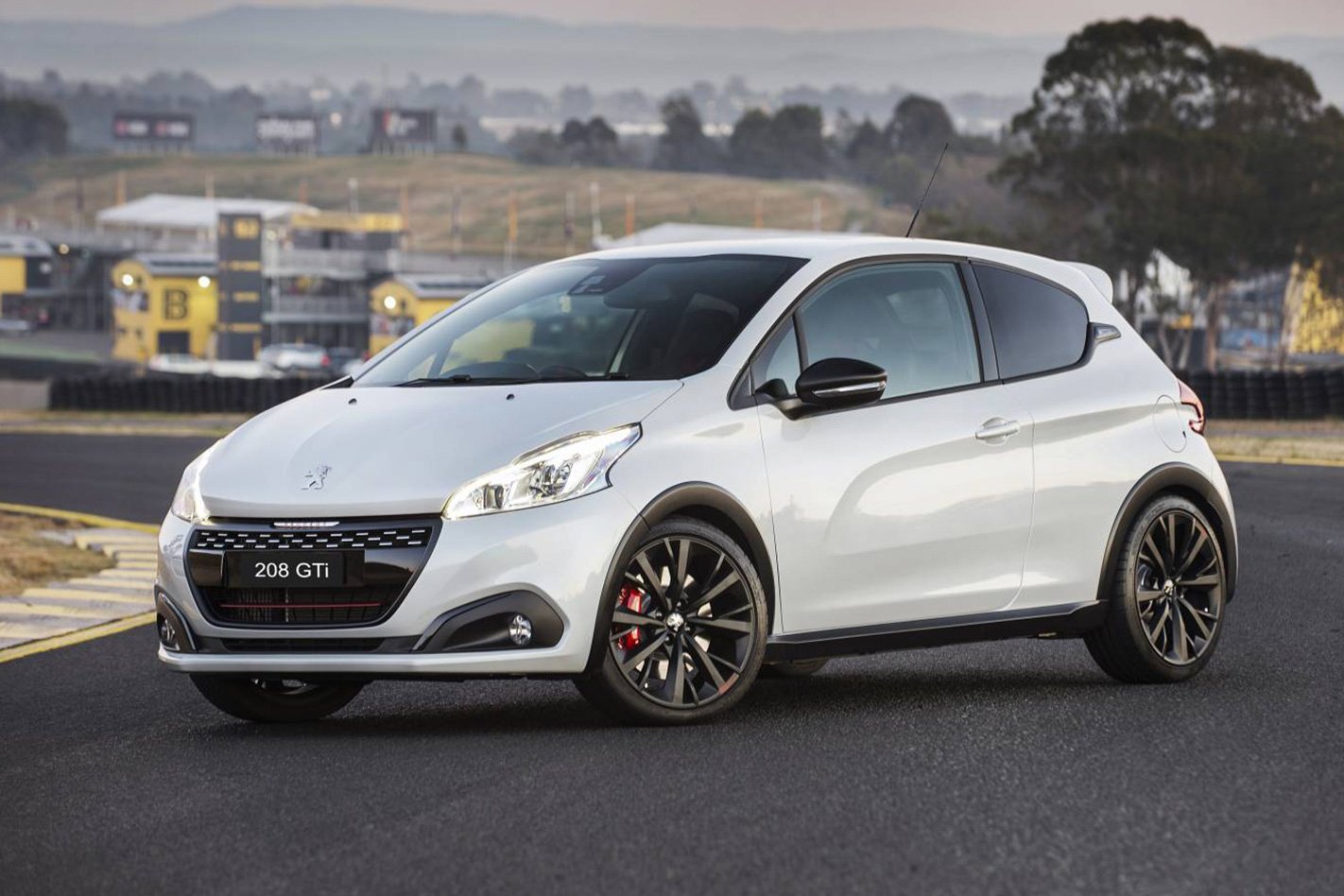
Stopping power is also boosted with larger 323mm front disc brakes and four-pot Brembo calipers, but if the driver doesn’t hop on the middle pedal quickly enough, AEB is also standard with the Definitive Edition. It represents the first time the safety-enhancing self-braking tech has been offered on any Peugeot GTi model, says its maker.
Weight has been minimally reduced with the replacement of the spare wheel in favour of a tyre inflator kit.
Come home in an example of one of the strictly limited Definitive Edition GTis and your neighbours will know you spent the extra moolah over the standard version thanks to a number of aesthetic changes.
Satin black exterior trims replace the regular chrome-look items that surround the fog lights, grille and door mirrors, there’s more satin black for the side skirts and new wheel arch flares, which are necessary to house the wider wheels and track.

Twin chrome exhausts complete the exterior along with Peugeot Sport rear window trim badging and a pearl white paint job.
On the inside, the Definitive Edition gets specially developed sports seats upholstered in Alcantara with red stitching and more Peugeot Sport branding, which is also found on the red floor mats. There’s more matching red for the seatbelts and pin striping for the door handles.
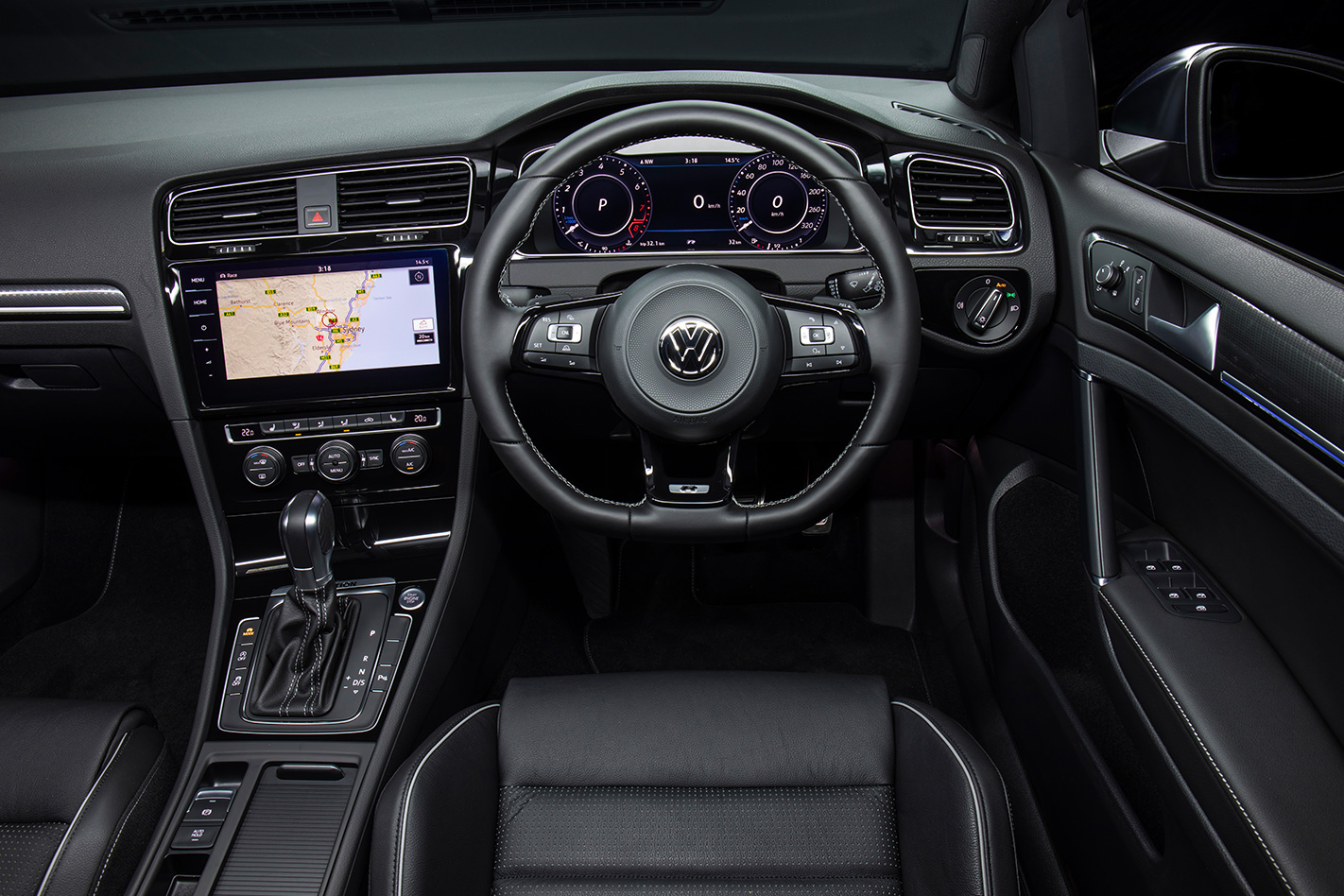
The all-wheel drive Volkswagen Golf R has been subtly repositioned in the market with a little more value thanks to VW Australia’s adjustment of its drive away pricing for remaining 2018 model year stock.
While each variant’s specifications still remain unchanged, Volkswagen’s local arm has lowered its pricing to list drive away prices where they were previously ‘before on-road costs’.
Its 2.0-litre engine still produces the same 213kW/380Nm outputs and fit-out doesn’t change either, but the lower price adds extra points to the value equation.
While the figures are slightly up (in most cases only marginally) from the previous listings, it now means each price is a more accurate indication of what the car will cost after fees and dealer charges.
Chances are, depending on your state and ability to haggle, 2018 models in the Golf R range will now cost noticeably less to buy.
Starting at the lower end of the cost scale, the manual (yes, the Golf R remains available with three pedals unlike its front-driven sibling) Golf R Grid is to cost $48,490 drive away, while a DSG-equipped Grid sits at $50,990 drive away.
The grid also comes in wagon guise, which is DSG-only and will set buyers back $52,990. Again, that’s drive away.
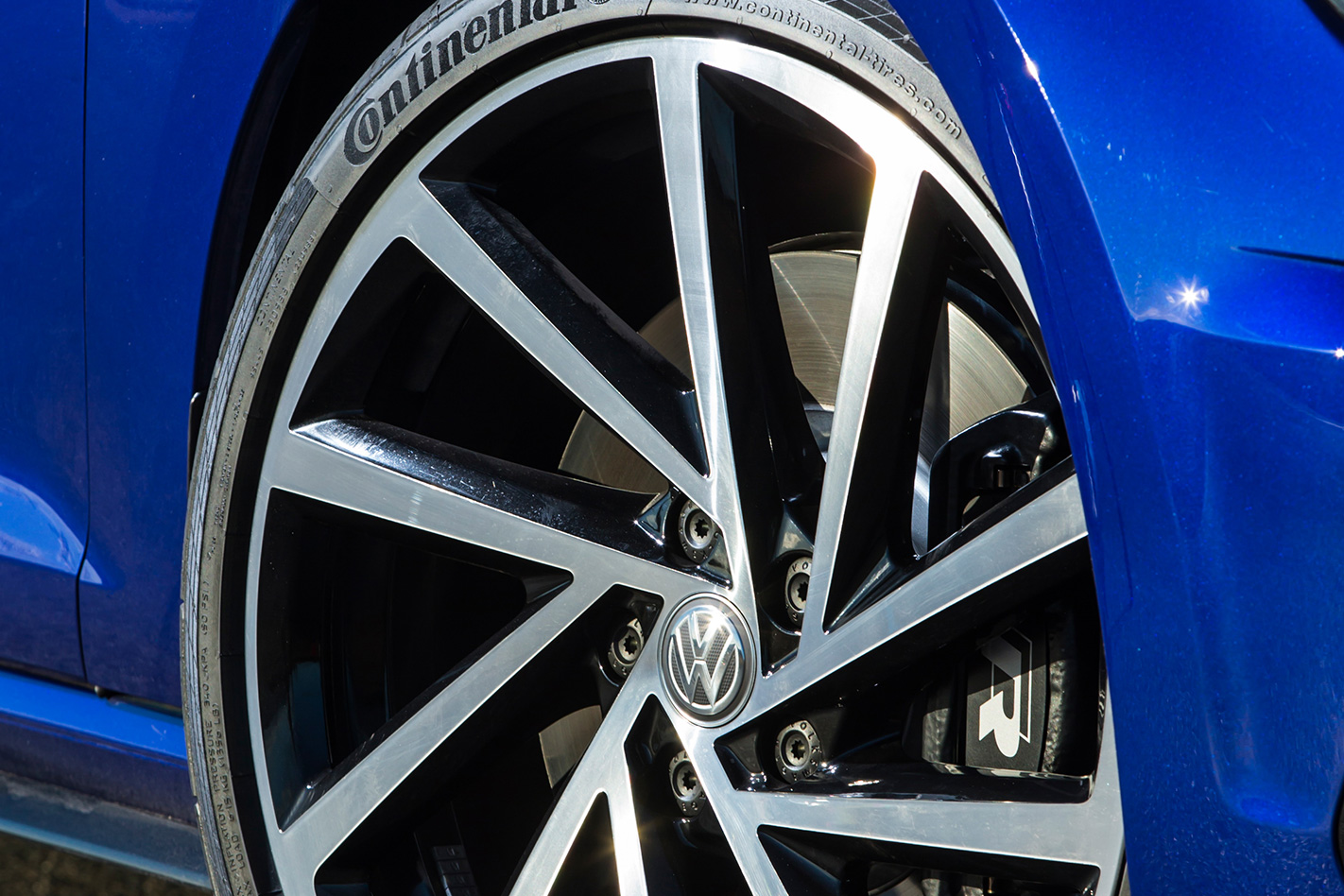
$54,490 will score you a standard manual VW Golf R, which comes with all the updates, features, leather seats, and new Mk7.5 equipment that the Grid ditches, while an extra $1500 is changed for DSG (as is the standard difference between manual and DSG in the R range).
The Wagon guise for a standard Golf R (again, DSG-only) costs $58,990 DA, which is the same as the price for a Wolfsburg Edition Golf R hatch with DSG.
The Wolfsburg Wagon is the most expensive in the range, coming in at $60,990 drive away.
Volkswagen’s Golf GTI is set to become a DSG-only proposition as of October when the updated version of the ‘do-it-all’ hot hatch arrives.
Set to be priced at $45,490, the 2019 GTI will receive the specs and equipment from the GTI Performance Edition as standard, meaning the third pedal is to disappear from the showroom.
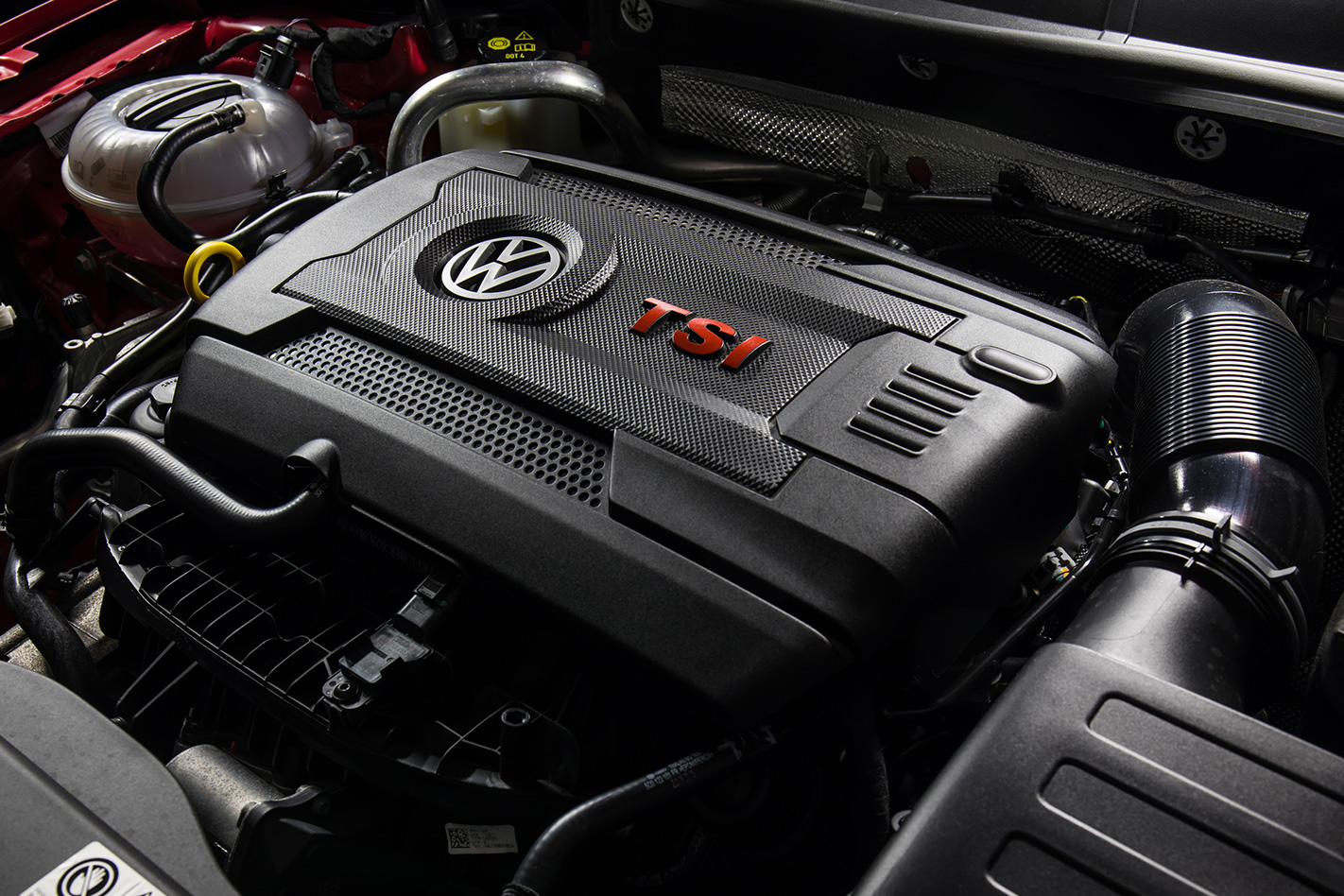
There’s good news, though: the updated GTI will score the 180kW/370Nm tune as standard, along with the electro-mechanical front differential from the Performance Edition, and the same ventilated front and rear disc brakes from the VW Golf R.
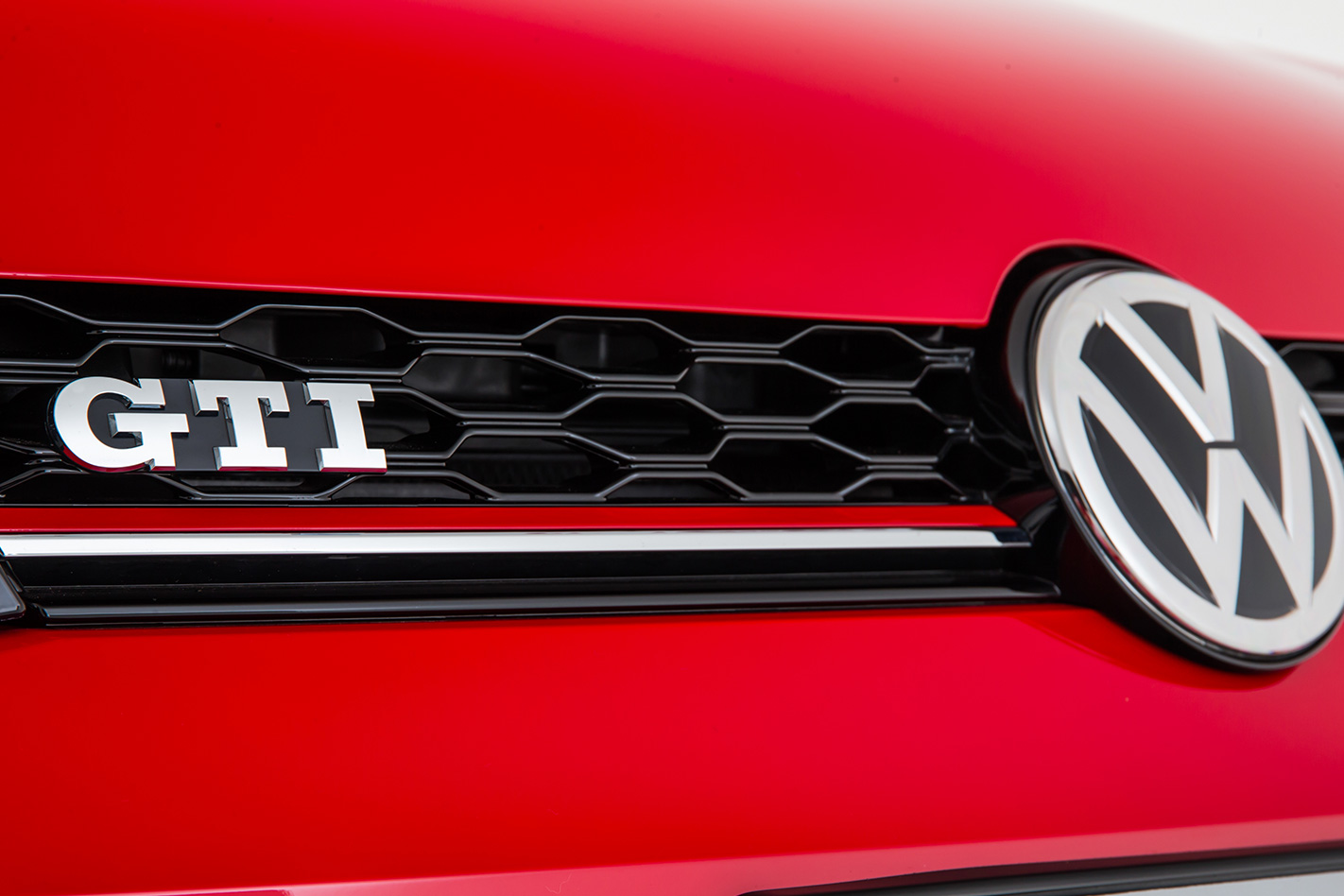
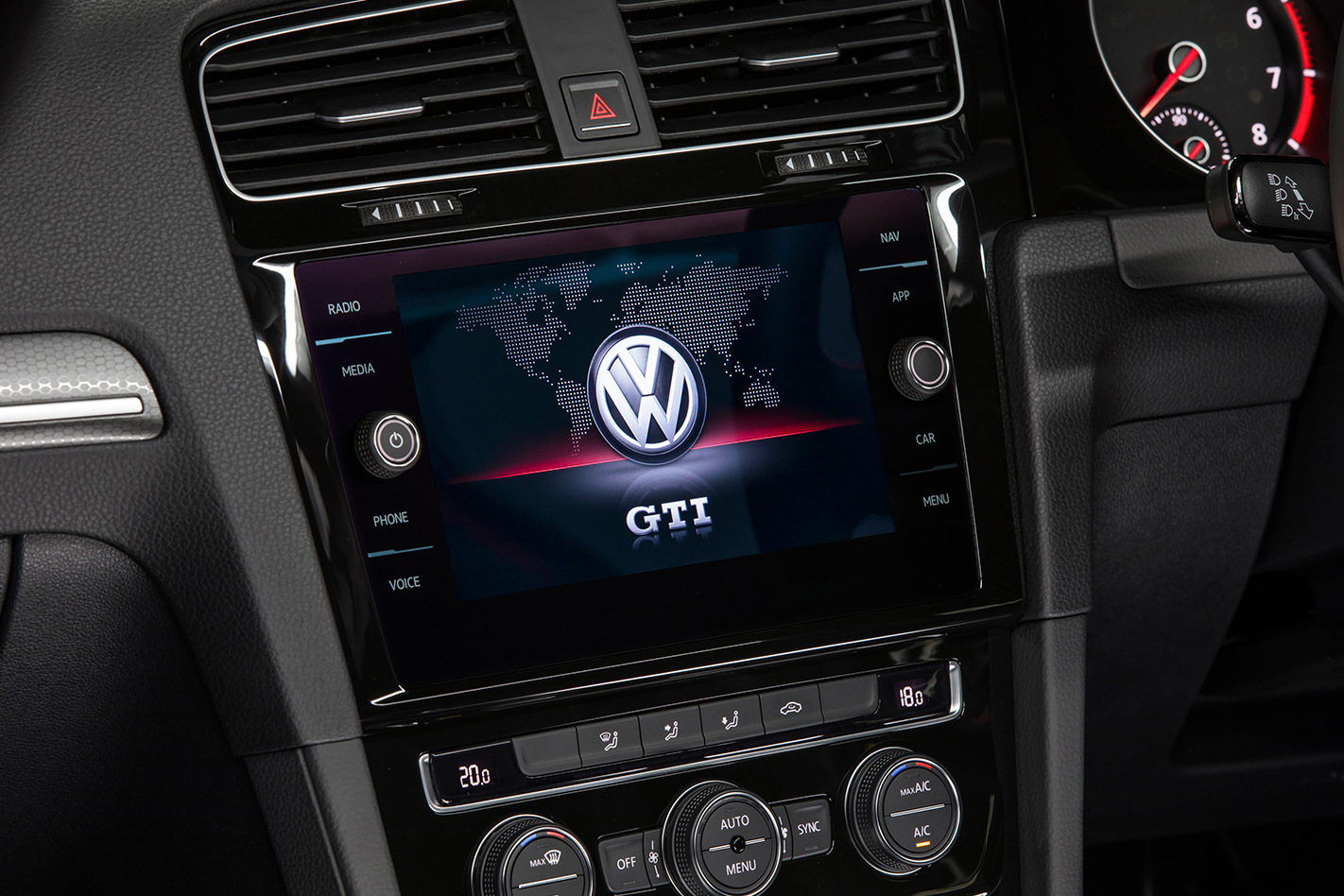
Premium metallic and pearlescent paint is a $500 option, while the $2,300 Sound & Style package adds 19-inch alloys, a 9.2-inch sat-nav, gesture control for infotainment, voice control and a Dynaudio Excite premium sound system.
Also available is the $3,900 Luxury pack, which adds a panoramic sunroof, heated leather seats (which ditch the iconic clark tartan) with electric adjustment, and a memory function for the exterior mirrors.
The three-door (and manual) VW Golf GTI Original is still available while stocks remain, while VW Aus also says stocks of manual five door GTIs remain.
VW Australia marketing manager Ben Wilks recently said the alteration to the GTI came due to changes in the Worldwide Harmonized Light Vehicles Test Procedure in Europe, but that the move to DSG only was one that fit with customer demand.
“This GTI embodies what customers want.”
While the GTI moves on from the three-pedal way, the Golf R will remain available as a manual as of its next model year. Stay tuned for 2019 pricing and specification of the Golf R.
The Dodge Demon is already a monstrous thing, with 626kW and 1044Nm in its highest output mode.
But the people at Hennessey Performance aren’t content with this, having previously announced pack to up the Demon’s outputs to 772kW/1092Nm and even stating it can wind the 6.2-litre supercharged Hemi up to 1110kW.
The version in these videos is the former, known as the HPE1000, and it sounds mental. The newest of the clips by Hennessey (top) is the best look at the car we’ve had from the firm so far, with an ‘unnamed’ employee taking the car for a spin.
“The 2018 Demon is a street-legal rocket from Dodge, but we wanted to take the car’s impressive track times to an industry leading level.” said John Hennessey when the pack was announced.
“Over the past several months we have worked to develop a low 9 second drag car that our customers can drive to the track, put on an impressive show with blistering 1/4 mile times, and then drive home in complete comfort.”
A 4.5-litre supercharger replaces the stock unit atom the 6.2-liter donk, and components in and around the engine are upgraded to handle the extra shove.
Headers and a new exhaust system help produce the thunderous wall of sound heard in the videos above.
All of this, Hennessey claims, results in a 0-100km/h time of about 2 seconds (0-60mph is in 1.9, apparently), and a quarter-mile run of 9.14 seconds.
The HPE1000 upgrade for the Dodge Demon comes with Hennessey’s one-year/12,000 mile (19,300km) limited warranty, but only 50 are to ever be built.
SSANGYONG is gearing up to offer a bespoke range of accessories for Australia’s discerning and particular demands with locally tuned chassis set ups and a range of tough-truck additions that will boost the appeal of its all-terrain range.
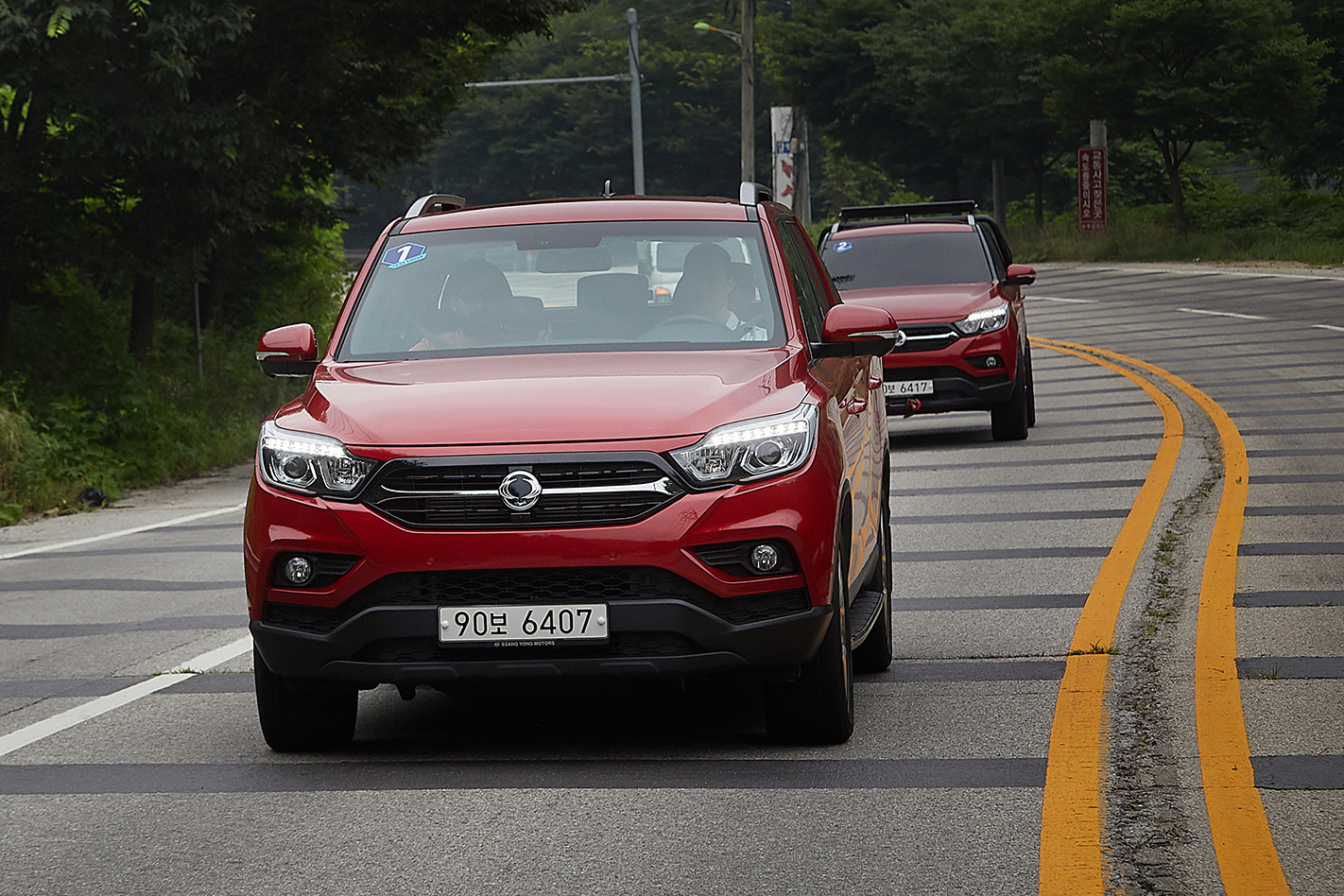
Following the lead of fellow South Korean brands Hyundai and Kia, the revenant SUV specialist has confirmed that it will tune its model’s suspension to better suit both Australia’s unique motoring landscape and the habits of the drivers that go there.
But in a multi-pronged assault on the SUV and one-tonne market the car maker will also offer a range of customisation kits that will grab the attention of the hardcore off-road or outback touring enthusiast.
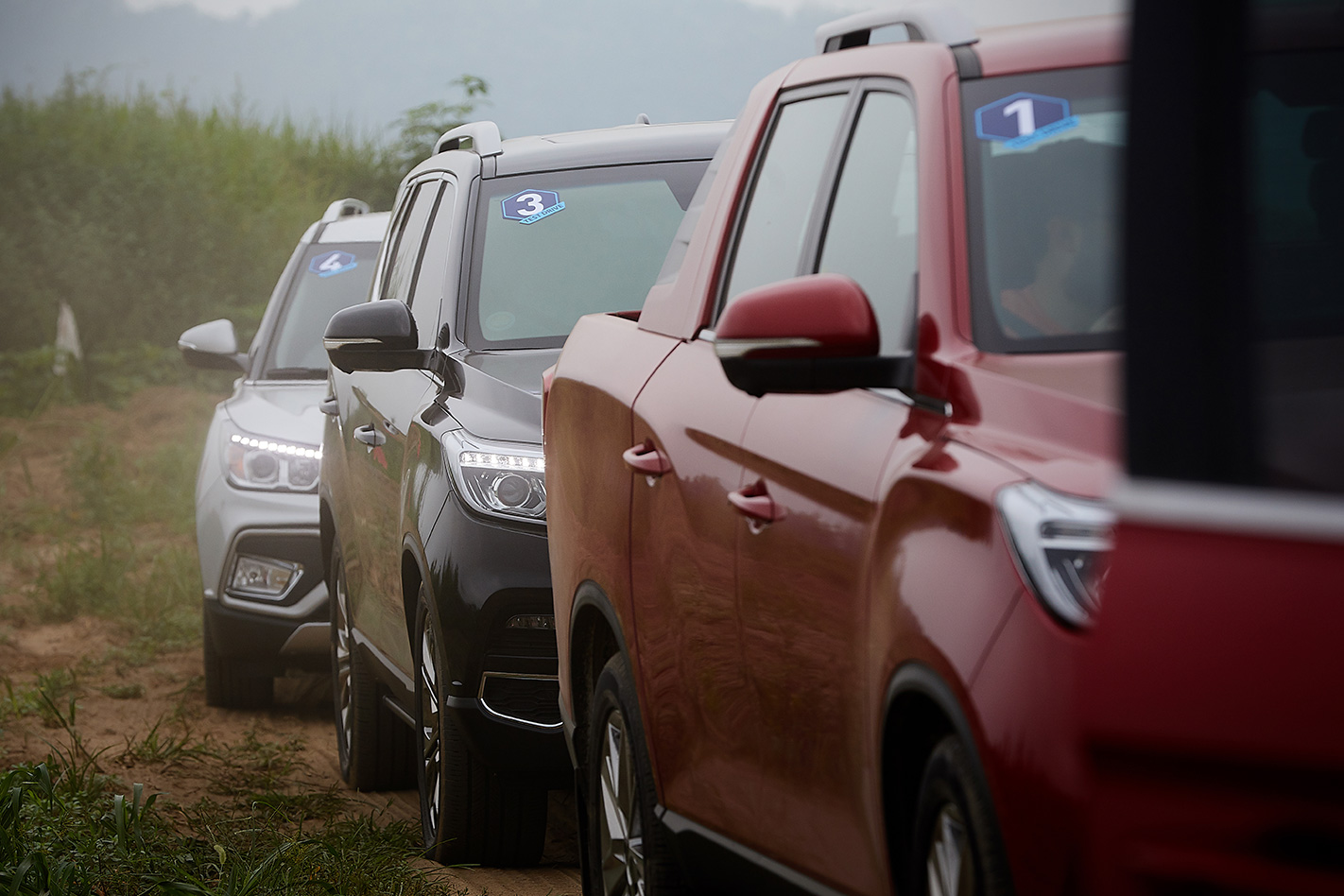
Speaking to Journalists in South Korea, SsangYong Motor Company export senior executive director Daniel Rim said a fleet of development vehicles would soon be making their way to Australia to start local chassis fettling.
“We are shipping cars to Australia to get the tuning development started,” he said. “We’ll have cars on the ground next month.”
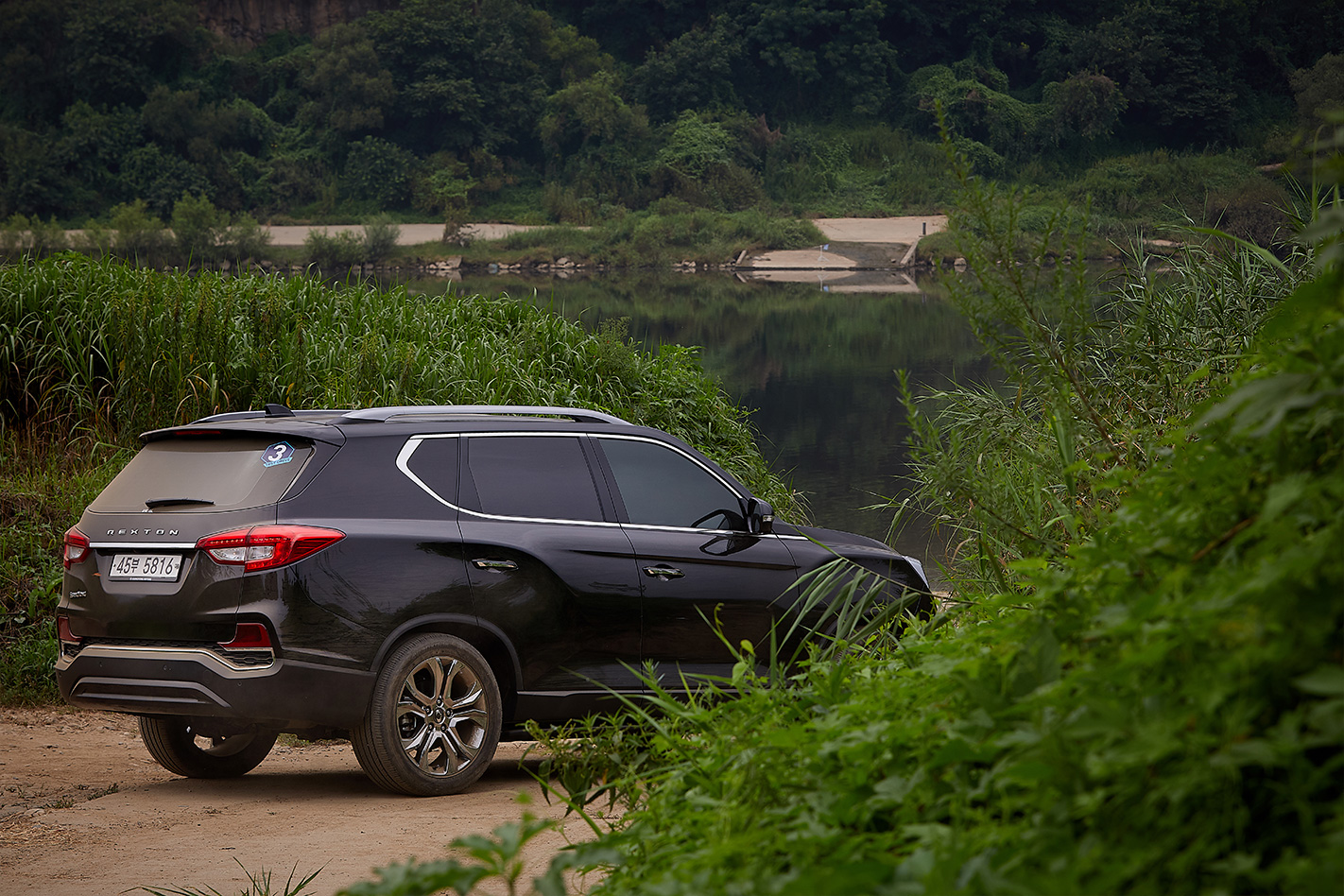
The introductory range is comprised of Musso one-tonne ute, Rexton large SUV, Tivoli small SUV and its big-booted XLV sibling.
In the case of Hyundai and Kia, the value of a bespoke Australian suspension tune is widely known and, if SsangYong executes the operation as successfully, the four-model range that will reintroduce a retail presence in November will have an extra string to its bow.
Freshly appointed SsangYong Australia managing director Tim Smith said the company was still finalising the contractor that will complete the local tuning, but the result will be a set up different to other key global regions the US and Europe.
“There’s different markets that we target and that initial phase of suspension and tuning for Australia,” he said. “So it will be locally tuned. We haven’t got a supplier yet but we’re looking at a couple.”
The range of customisation options will be the second sweetener in the deal for the SsangYong line-up, particularly for Australia’s tough dual-cab ute fraternity.
With vehicles such as the Ford Ranger and Toyota Hilux proving that local fans have a significant pot of disposable income to throw at modifying their trucks, Smith said the company would be targeting these enthusiasts with a range of extras to boost practicality and looks.
“Accessories are a good source of profitability,” he said. “The Australian average (pick-up customer) spends around $3000 per vehicle, so we definitely want to capture that opportunity and another strength that we have is that we distribute all over the world and can go into global sourcing. We are going to develop canopies in cost effective countries like Thailand, those are the countries servicing hardtops globally.
“Those are the sorts of things we’re taking about right now and we’re talking to head office and the engineers about what we can and can’t do.”
The exact catalogue of goodies is still being determined but is likely to kick off with the obligatory nudge bars, hard-top canopies and sports bars, but expand to include an affordable range of suspension lift kits, wheel and tyre packages and even additional lighting.
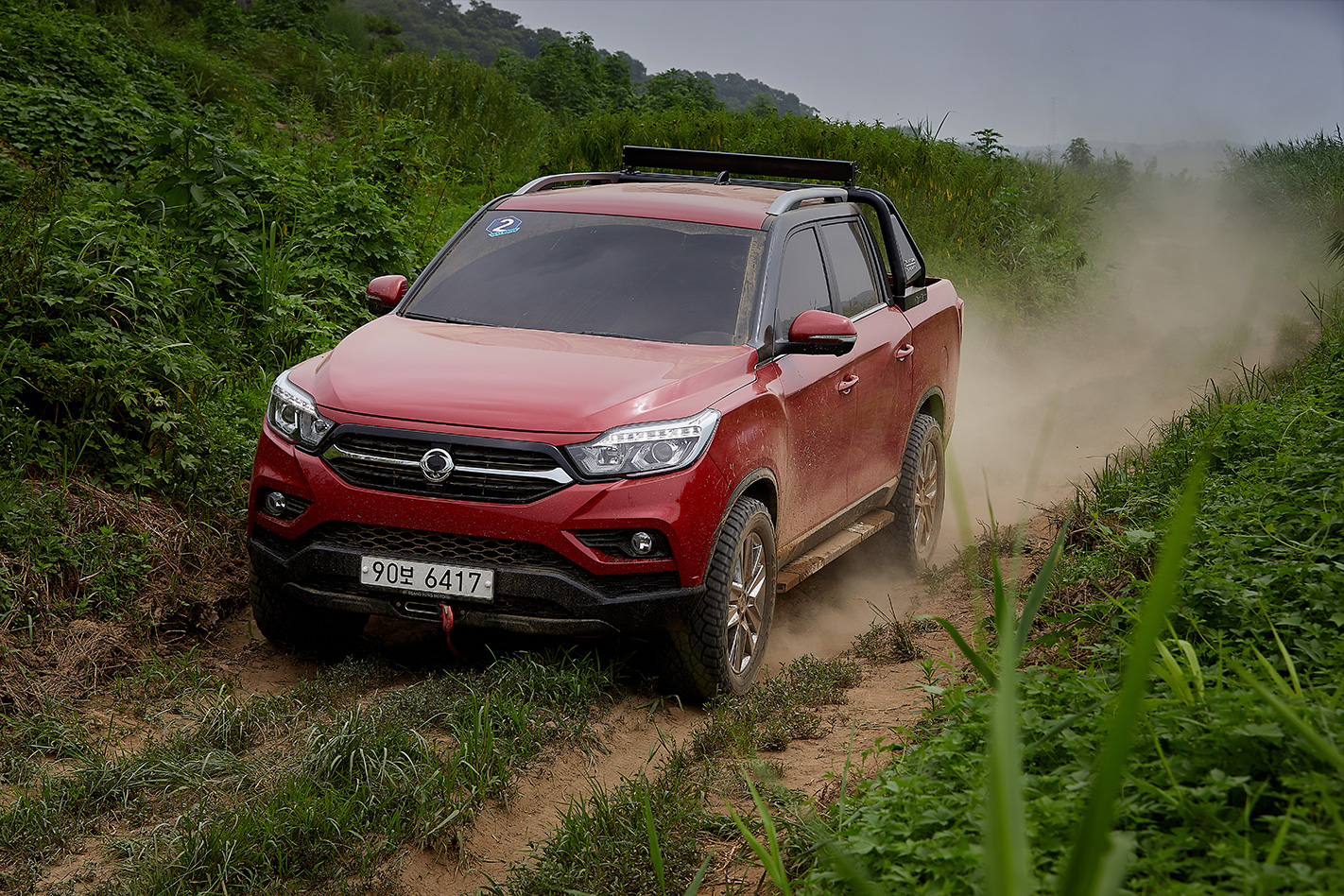
During our visit to SsangYong’s native South Korea we got a chance to steer an example of the Musso decked out with a lift kit, knobbly Cooper rubber, unique sports bar and even a winch tailored to seamlessly fit the front bumper.
If the company can deliver vehicles that offer the same appeal and allure locally, there will be a new compelling one-tonner to bump gloves with a competent line-up of dual-cabs on red dirt.
IT HAS been ten years since BMW last offered an M-based variant of a Z4, and that seems unlikely to change if reports from Car and Driver are accurate.
With the advent of the next-generation model – which is set to be unveiled at Pebble Beach Concours d’Elegance in two weeks’ time – fast approaching, BMW’s head of M-division, Frank van Meel, has suggested that the already-confirmed M40i variant is likely to be the Z4’s most muscular engine option for the foreseeable.
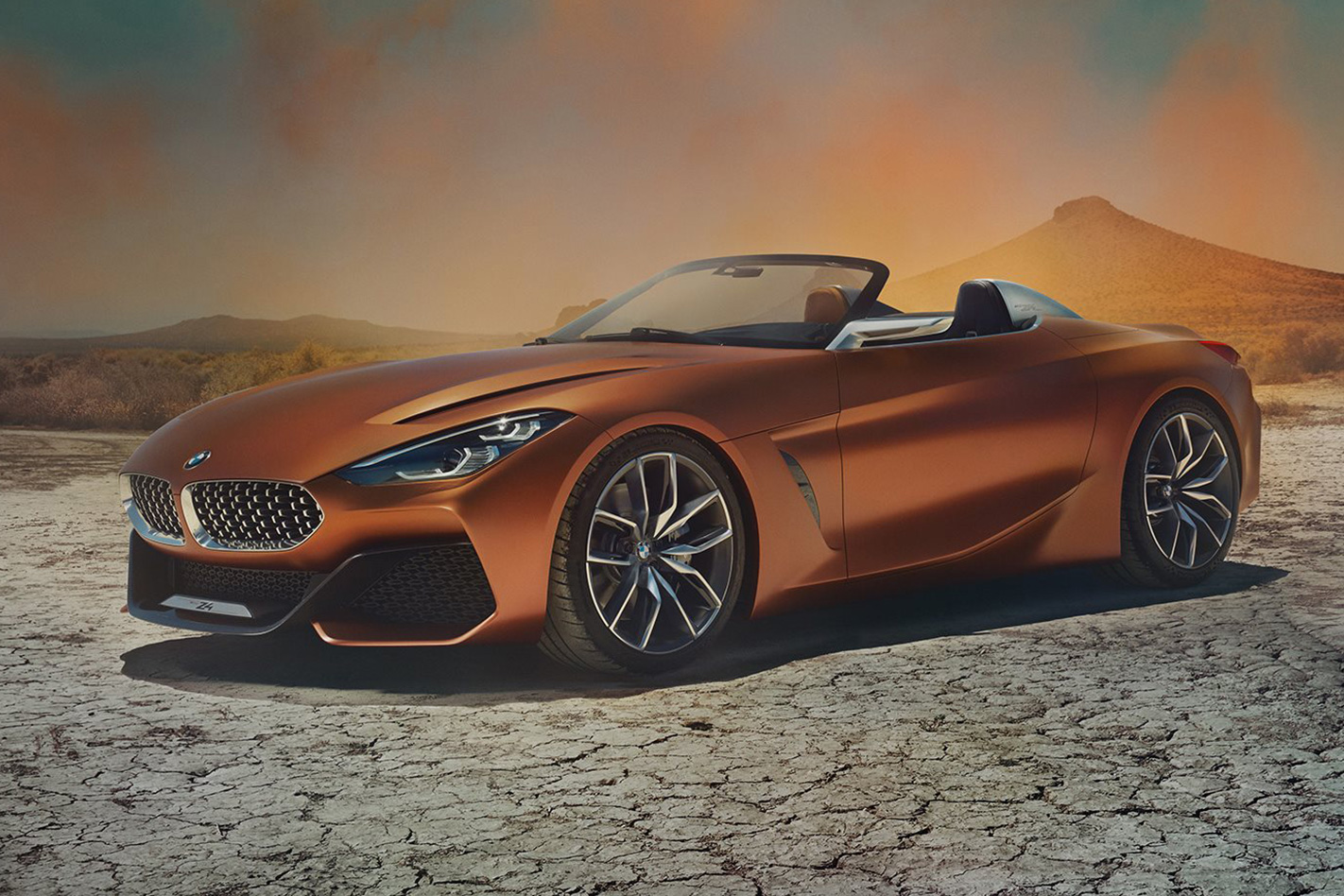
“I think the M40i is the perfect positioning regarding performance of that car. It’s quite close to the M2, so we’re really happy with the overall concept of that car being an M40i” van Meel said at the recent M2 Competition launch in Spain.
Although BMW aren’t keen on offering a fully-fledged M car, the planned Z4 M40i will bridge the gap between what was previously offered, the Z4 sDrive35is (which had no backing from the M division other than sharing an engine with the 1 Series M Coupe of 2011) and a genuine Z4 M successor.
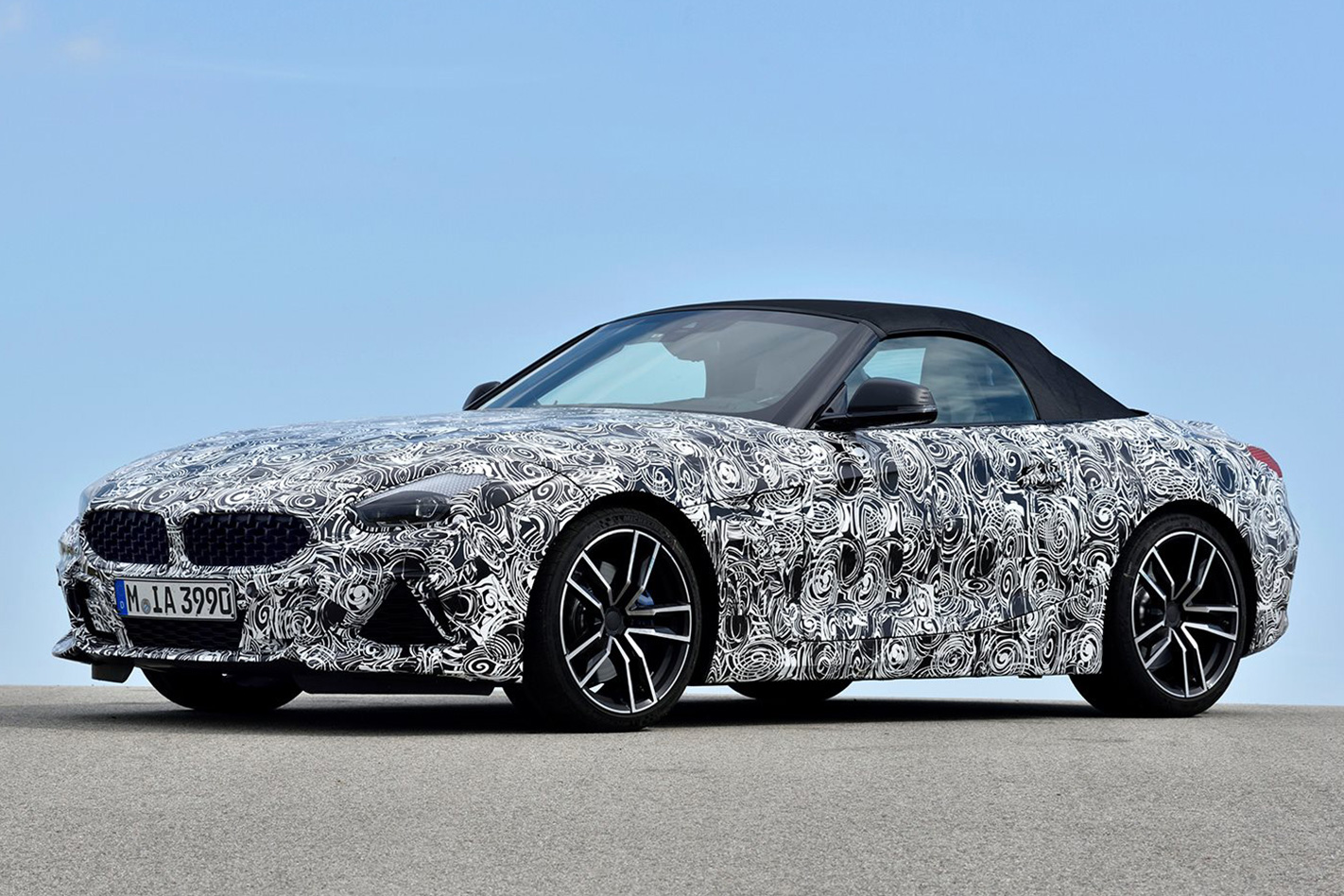
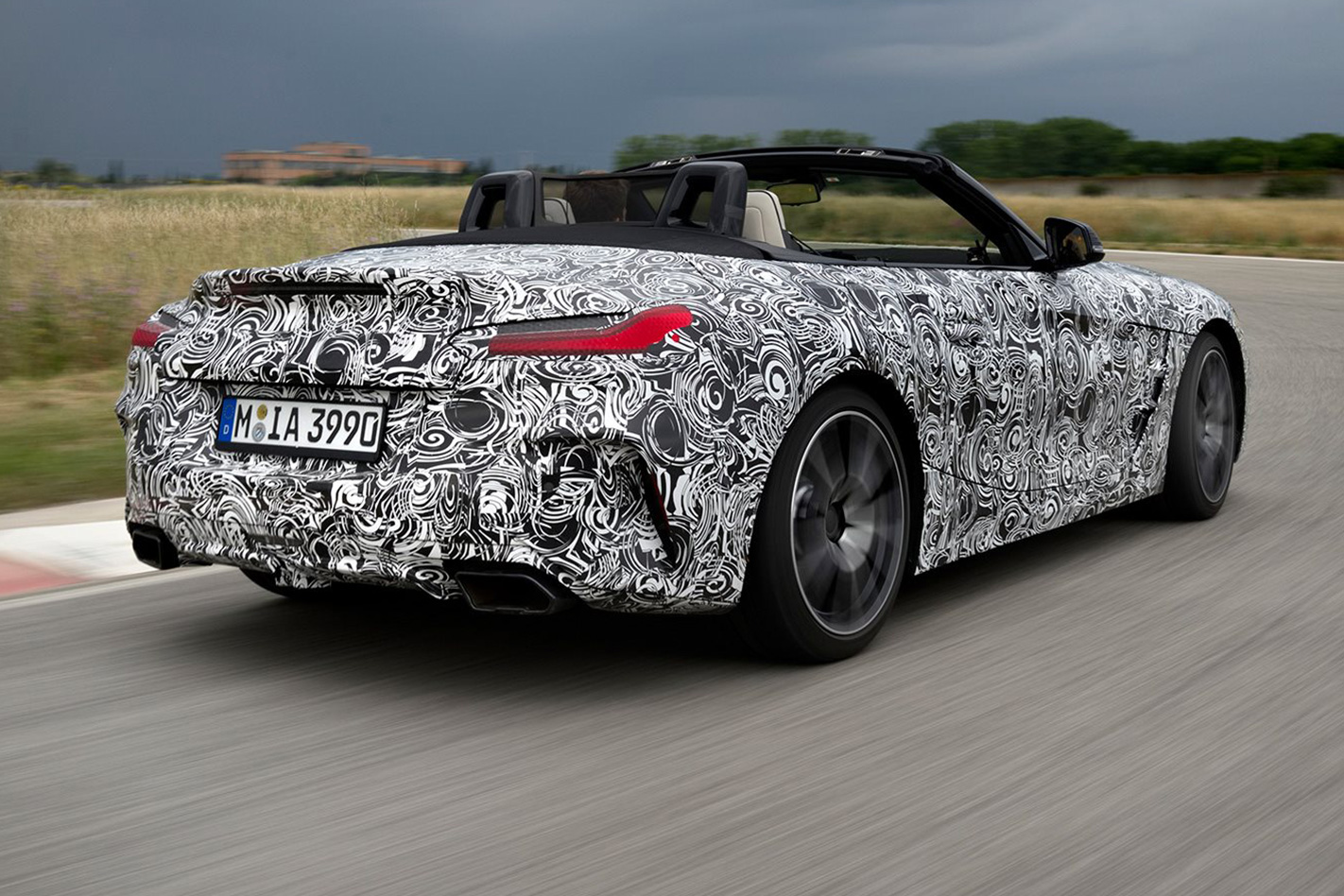
The powerplant that will feature in both the new Z4 and the closely-related Toyota Supra will be the 3.0-litre single-turbo straight-six, codenamed B58, which is found in other current M Performance products like the M140i and M240i. In its most powerful form in the M240i, the B58 generates 250kW and a grunty 500Nm.
But while the automotive world is eagerly awaiting the arrival of the reborn Toyota Supra, the hype around the new Z4 is burning at a much steadier rate. Should BMW have poured cold water on the idea of a Z4 M so soon, or is the halo effect from its existing stable of M cars already strong enough?
The whistle has blown on half-time for 2018, so it’s time to chalk up the winners and losers of the sports car and SUV market, placing sales numbers aside and looking mainly at trends.
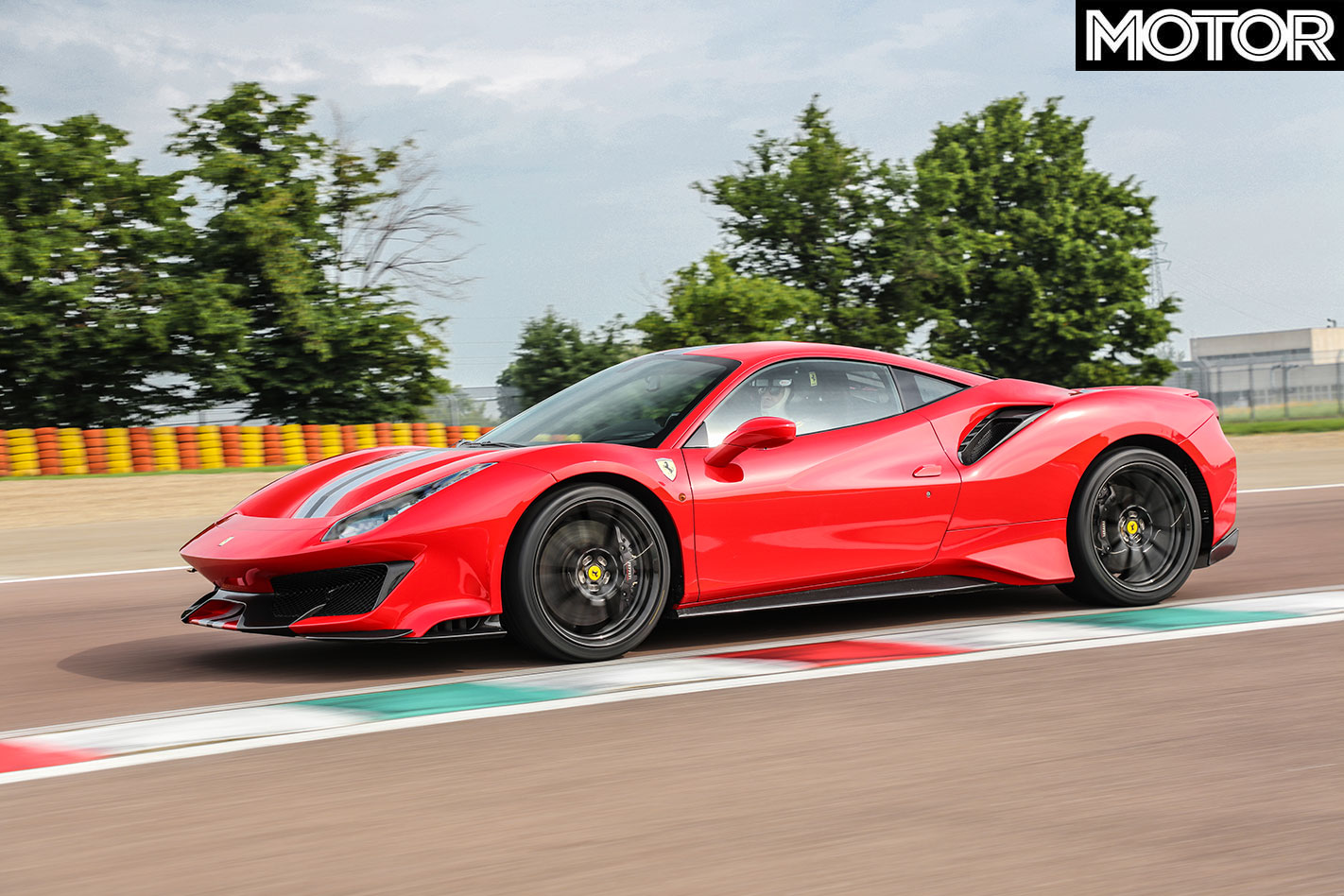
Performance cars over $200K are steady, up 1.9 per cent, on the back of Ferrari, Maserati, and Porsche’s 911 two-doors all being up by around a quarter year-to-date, but offset by McLaren falling by about the same, and Aston Martin and Audi’s R8 holding steady.
Then there’s the sub-$80K class. Oh dear. It is down by 42.4 per cent, owing to Ford Mustang, Mazda MX-5 and Toyota 86 falling by almost exactly that percentage, and dragging the class with it. Abarth’s 124 Spider is trending even worse, down 55.9 per cent.
About the only sadder segment is the large car class. Not only are 5 Series and E-Class sedans down by at least a third after a stellar 2017, but Holden Commodore, Jaguar XF and Lexus GS sales have halved. Meanwhile, Hyundai’s Genesis is on pause, leaving the 1084 units of Kia Stinger as a lone bright light.
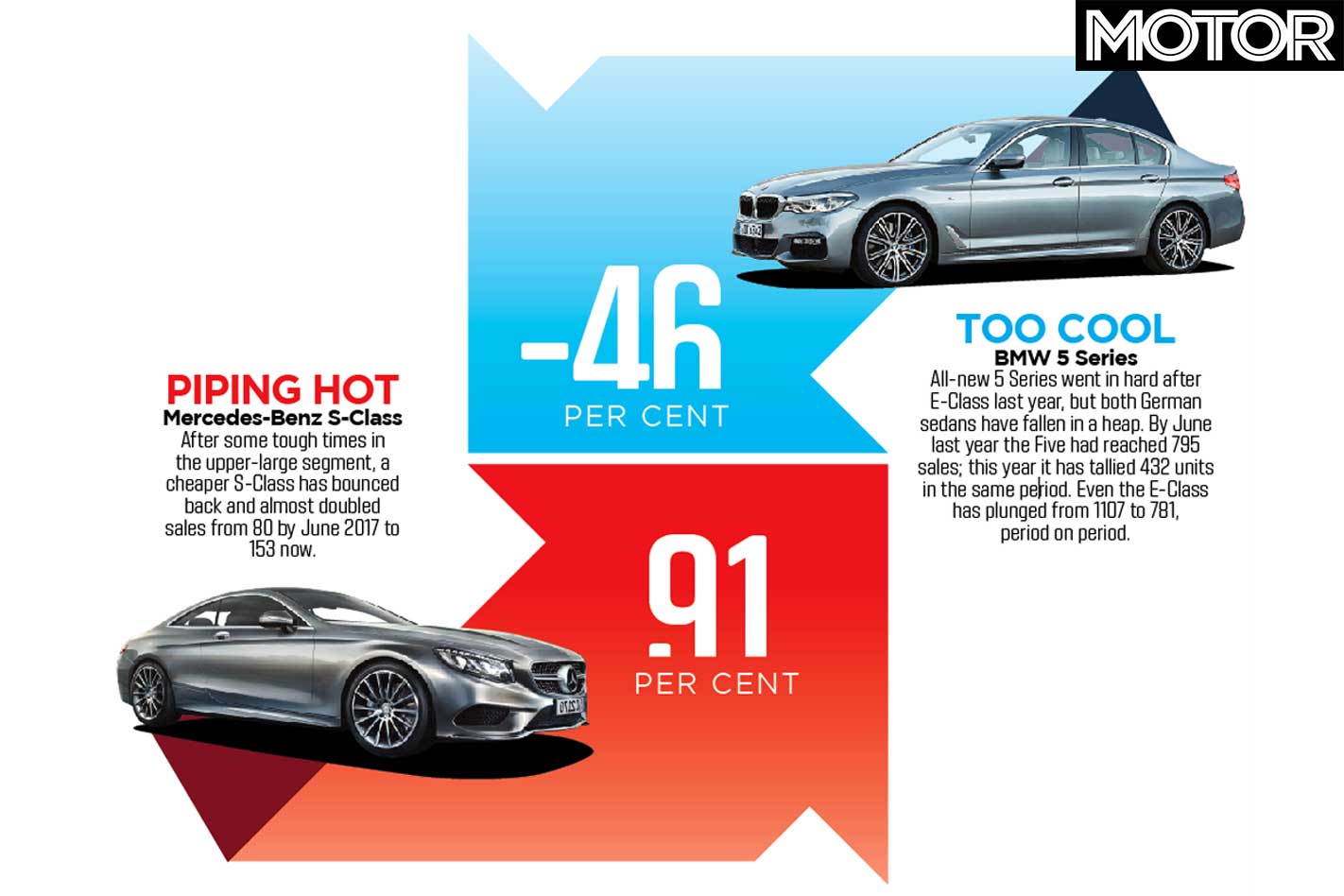
And best not summarise that SUVs are all the rage, either. While Audi Q5, BMW X3, Merc GLC and Volvo XC60 have added half to their volume this year, the larger Q7, X5/X6, GLE and XC90 have tumbled by between 12.1 and 46.2 per cent. In short, premium medium SUVs win and premo-large SUVs lose out.
GT cars? Yep, Japan Inc has been responsible for plenty of them. The Skyline GT-R is perhaps the most notable, but you’ve also got to pay respect to generations of Mazda RX-7s, Mitsubishi EVOs and plenty more.
This feature was originally published in MOTOR’s March 2004 issue
But what about true exotica? Where are the J-built competitors to Ferraris and Lamborghinis? Where’s the Japanese equivalent to a 911 or Boxster?
Nope, for a country so well known for looking at what the rest of the world is doing and then having a lash at it themselves, the Japanese have been conspicuously quiet on the subject of exotic motors.
Except Honda. Since as far back as the very early ’90s, Honda has been building the NSX, which, on the basis of its intent, design and performance, really is the full nine exotic yards. When you consider Honda’s long-time links with Formula One, it’s no real surprise to learn that it alone figured it had the credentials to build Japan’s first supercar.
Even broken down into bite-sized chunks, the NSX is a complicated piece of work.
For a start, Honda realised that if it wanted the thing to be taken seriously, it needed to have a mid-mounted engine. Stuff like that is not negotiable when it comes to supercars, although Porsche might like to disagree on the basis of its 911 GT3, and Mercedes-Benz would probably cry foul on behalf of its SLR McLaren. But you get the idea.
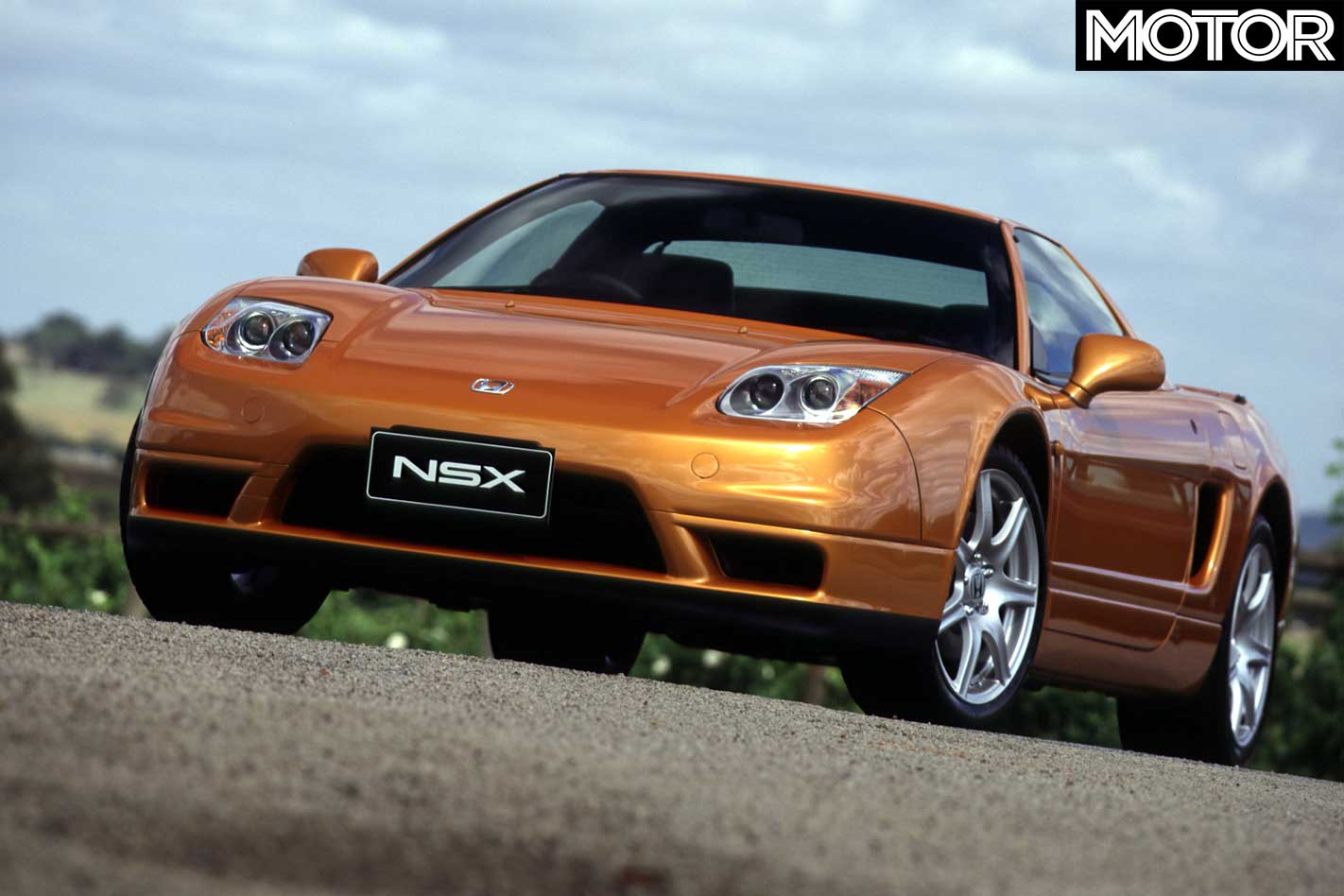
Four-wheel independent suspension by upper and lower wishbones also had ‘supercar’ stamped all over it, and the NSX was one of the first (if not the first, I dunno) Hondas to be fitted with the company’s increasingly common electrically assisted power steering.
Figuring that a four-cylinder was never going to cut it, and realising that it knew more about V6s than V8s, Honda went down the V6 route. That meant the car would never have the stratospheric power output of a bent eight, a V12 or even a V6 with a pump bolted to it, so weight reduction became the name of the game. To that end, the NSX copped an all-aluminium body, saving as much as 200kg over the equivalent body in steel.
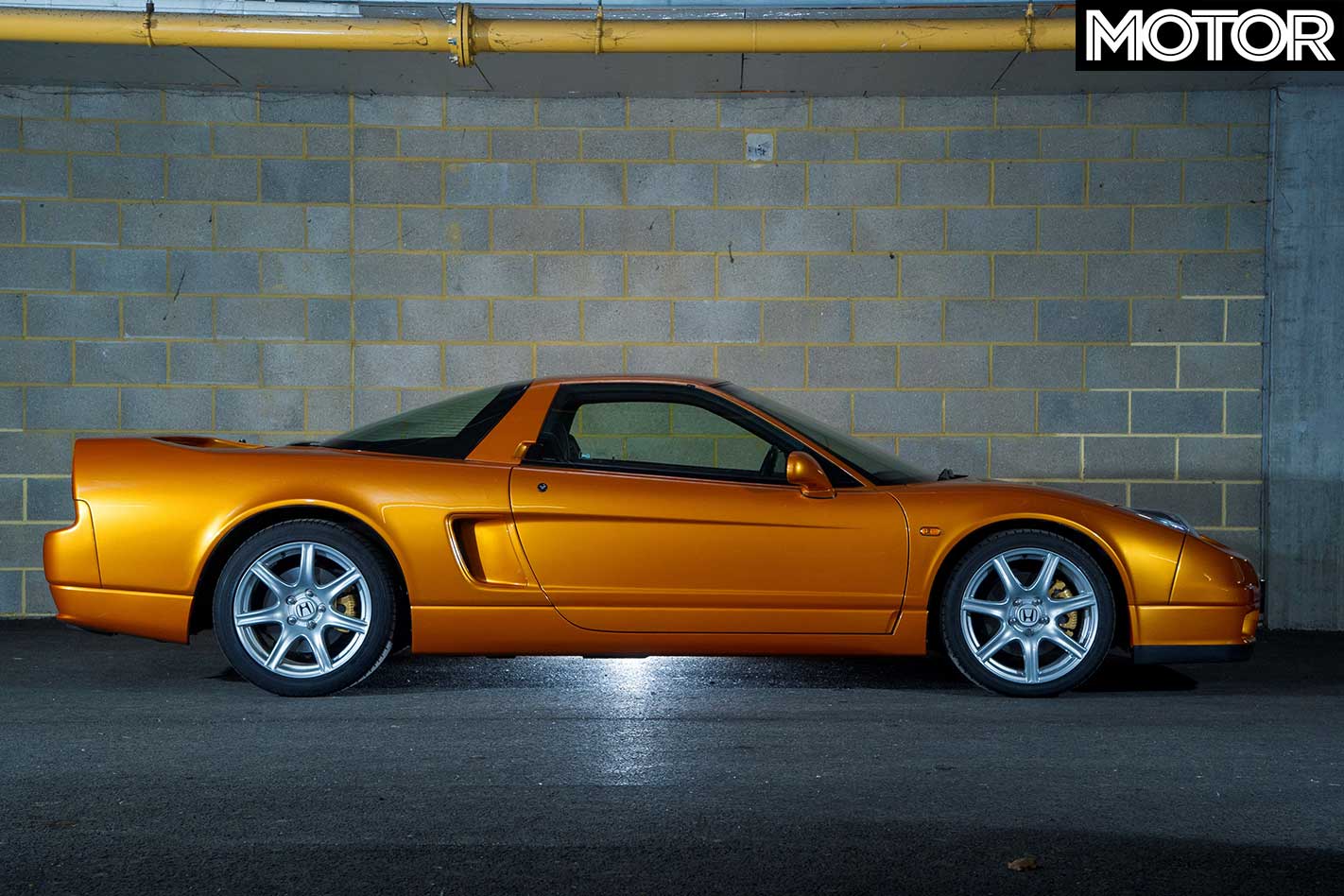
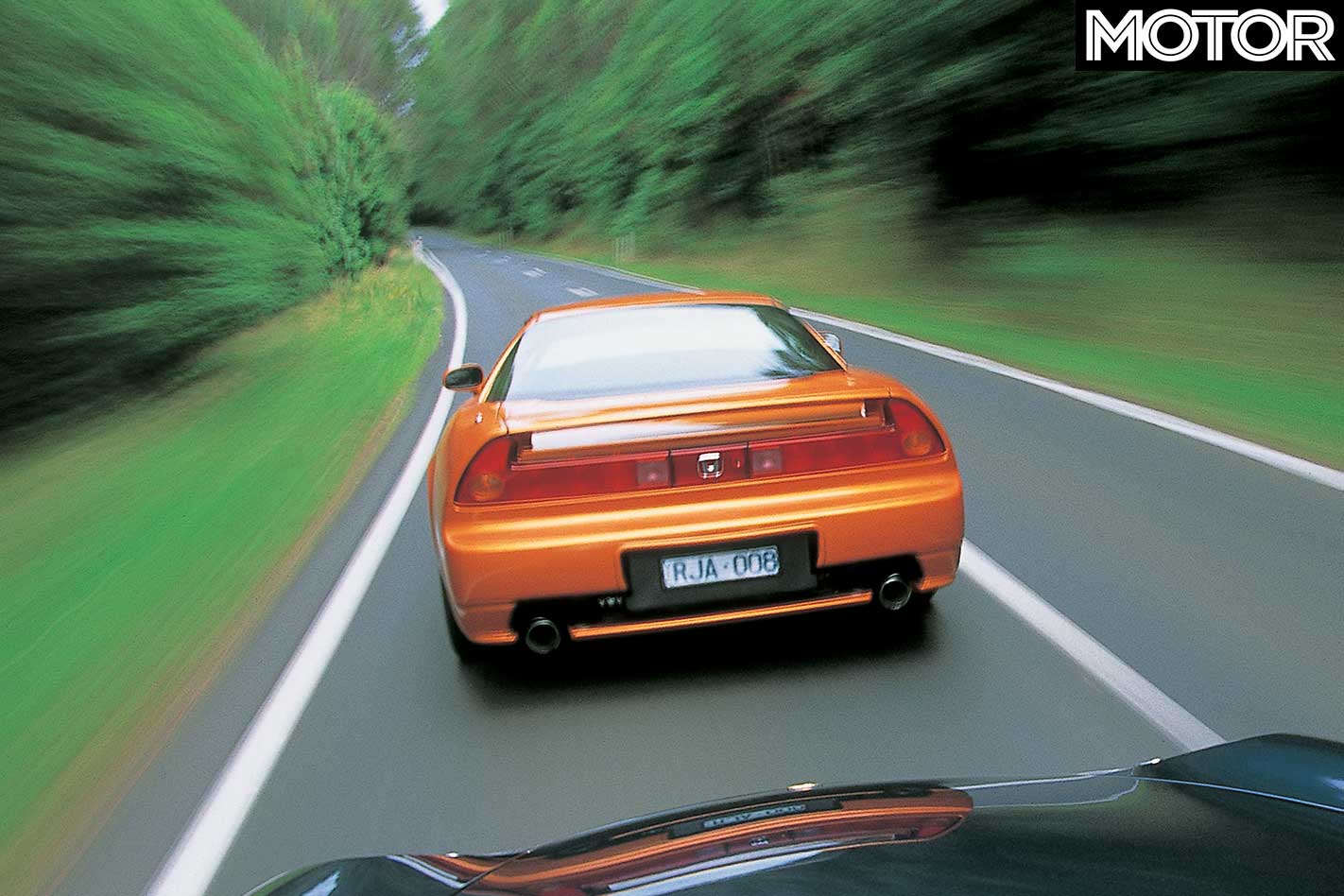
The muscular haunches, sloping nose and cab-forward design – as well as the detail stuff – place the NSX firmly in exoticar territory, and while it might lack a little aggression from some angles, it’s certainly pretty enough. There’s a bit of Le Mans racer in there, too, just for good measure, and you’d go a long way to find anyone who didn’t find the overall look pretty provoking.
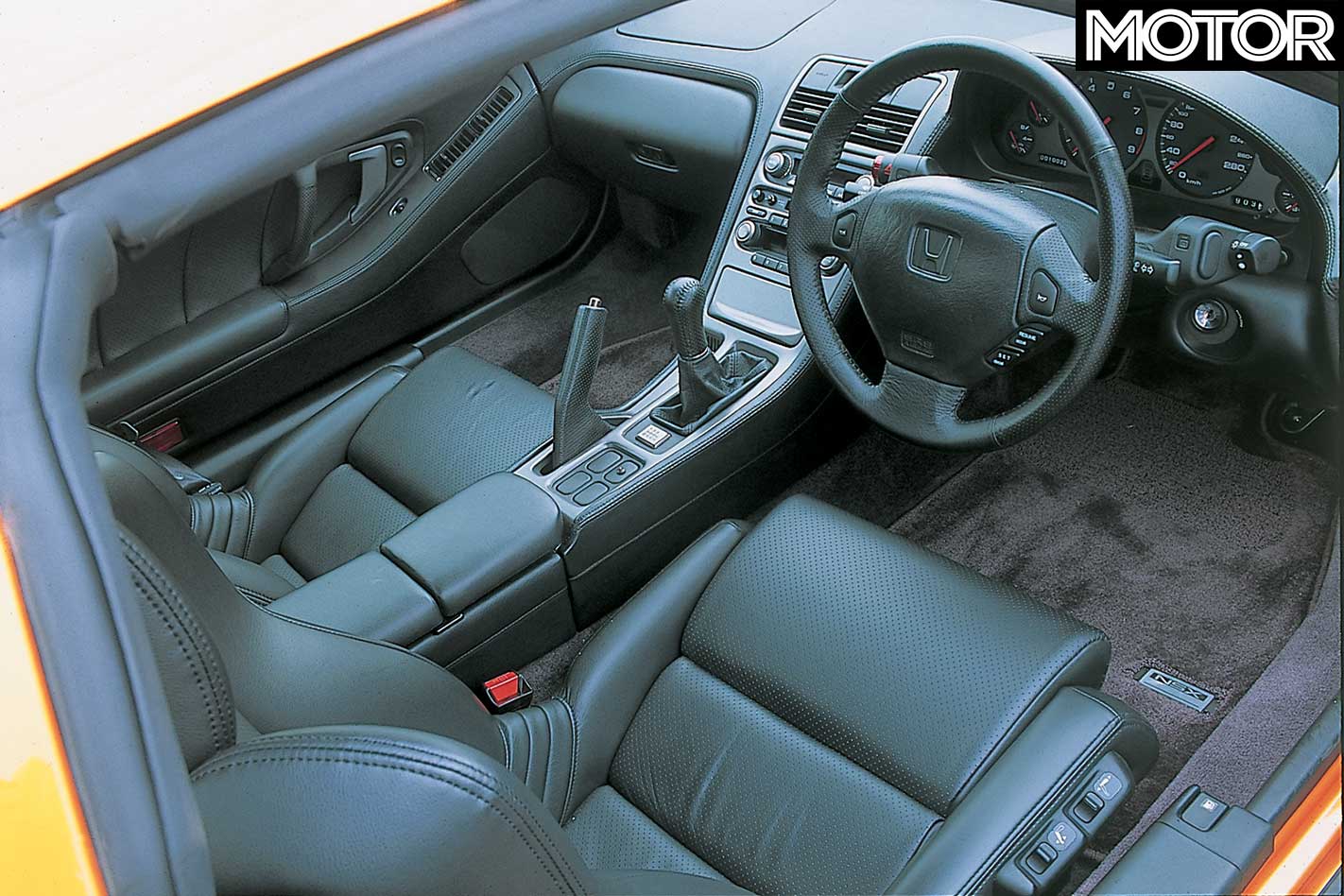
Inside, there’s just enough generic Honda stuff to be a bit disappointing, although at least it’s logically laid out and utterly ergonomically sound. You sit low, with the fairly high waistline making the cabin feel cosy, the seats offer plenty of the right kind of support and the big dash pod stares back at you, even if it doesn’t have the chrome bezels and flickering white needles of a trad supercar.
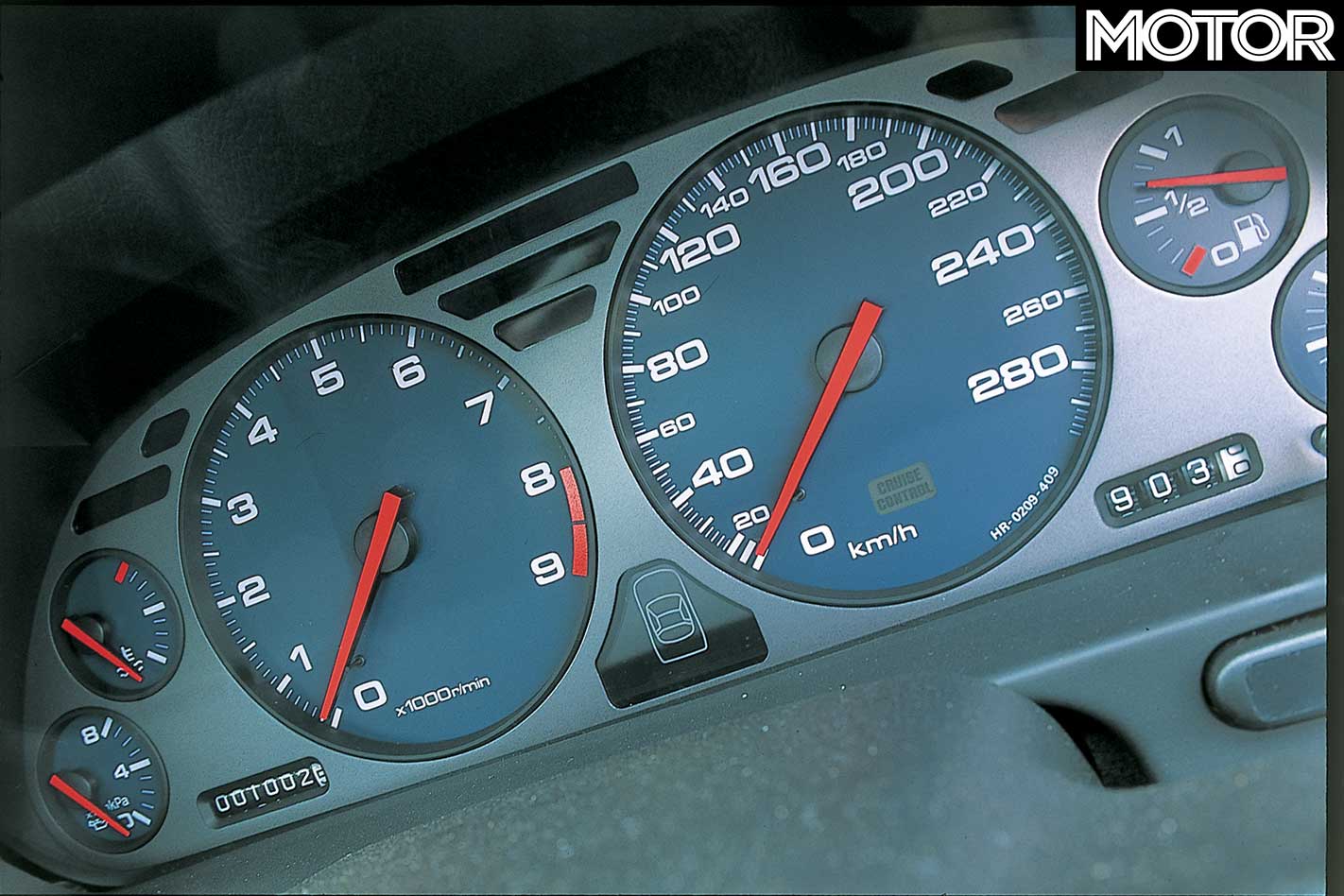
Under the aluminium engine cover lurks Honda’s feistiest engine ever to grace a four-wheeler (to that point in time, anyway). In its original form, the engine measured 2977cc thanks to an oversquare 90 x 78mm bore/stroke relationship. That meant it could produce relatively big numbers provided you revved it – no hardship with a stirring 8000rpm redline.
On a 10.2:1 compression ratio, it made 188kW at 6800rpm and 284Nm at 5400rpm. Obviously, then, she was a revver and not a slugger, judging by that torque peak.
Transmission choices amounted to a five-speed manual and a four-speed automatic (with a column-mounted shift stalk) although why anybody would have bought the auto is beyond us. Then again, Porsche sells an awful lot of Tiptronic 911s and Boxsters, doesn’t it?

It got some under-lid tweaks in 1997, when the capacity was punched out to 3179cc via a bore-out to 93mm (stroke remained at 78mm). Power (on the manual only) jumped to 206kW at 7300rpm and torque climbed to 298Nm at 5300rpm. And just to make the manual even more tempting, Honda upgraded the tranny to a six-speed.
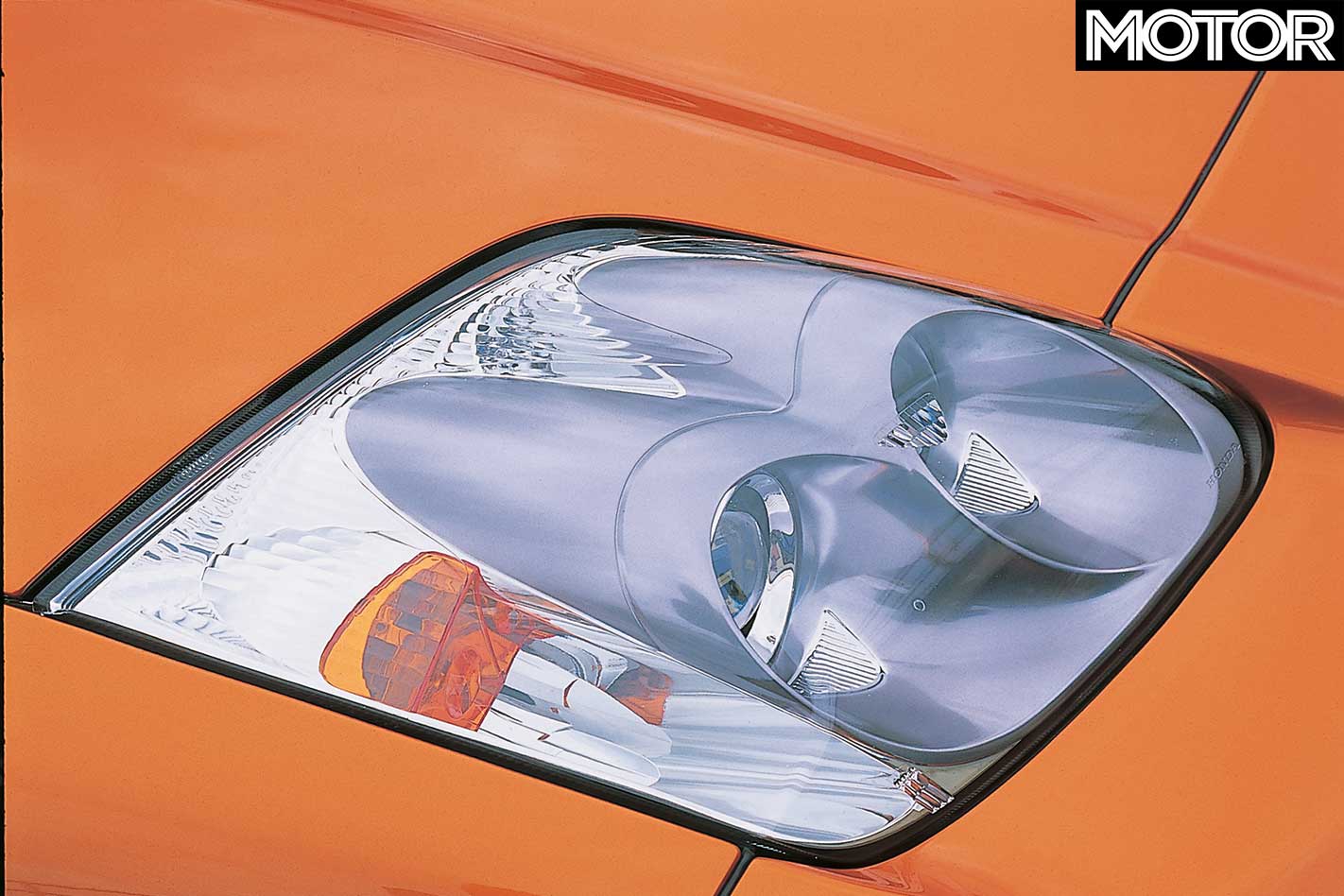
The only real change to the styling formula came about in 2002, when the body was revised slightly to include fixed headlights and a slightly more modern look (although, overall, it was looking a bit dated by then).
Driving an NSX will be, depending on where you stand on the whole supercar thing, either a revelation or a mild disappointment. For those who don’t like over-centre clutches, floor-hinged pedals, peaky motors with zip flywheel effect and noisy induction set-ups, the NSX is going to be a breath of fresh air. But for those who don’t mind suffering for their art, the NSX is a bit too close to being like a bigger, faster Civic. But it’s hard to criticise a supercar for being civilised and easy to drive. So we won’t.
But we would point out that if you’re after a truly visceral experience, then an NSX isn’t going to deliver that. Think ‘sanitised’ without the nasty connotations. Maybe ‘clinical’ is a better word.
Either way, you won’t get the wholegrain rasp that is a 911 flat six, you won’t get the fidgety steering that is a Boxster, you’ll miss out on the throttle response of a V12 Ferrari and you can forget about the gated shifter of a Lambo. You will, however, go very fast from point A to point B. But is that enough?
A lot of people are put off the idea of owning something as specialised as an NSX on the basis of unreliability and running costs. But in an age where even Ferraris are reliable and well built, you can pretty much count on NSX ownership being relatively angst-free.
Servicing should take place every 10,000km, but if you’re not doing at least 20,000km a year, then an oil change and minor service should be carried out every six months.
The dollars charged for this will vary depending on the kilometres covered, but 40,000km is the biggie because the screw-and-locknut tappets have to be set at this point, and getting them wrong does not bear thinking about. That said, a little top-end noise from the quad-cam engine is to be expected.
The timing belt needs to be changed every 100,000km or five years (whichever comes first) and that service should still come in at under a grand (but only just). Body repairs aren’t impossible, but they need to have been carried out by somebody who understands aluminium and can work with it. Not all panel shops can.
Workshops we talked to reckon they see the odd clutch come in for replacement (they just wear out), rear tyre life is chronically short (geometry) and there’s the odd weep of oil from the cam plugs. Nothing serious, just annoying. Sounds like a typical Honda to us.
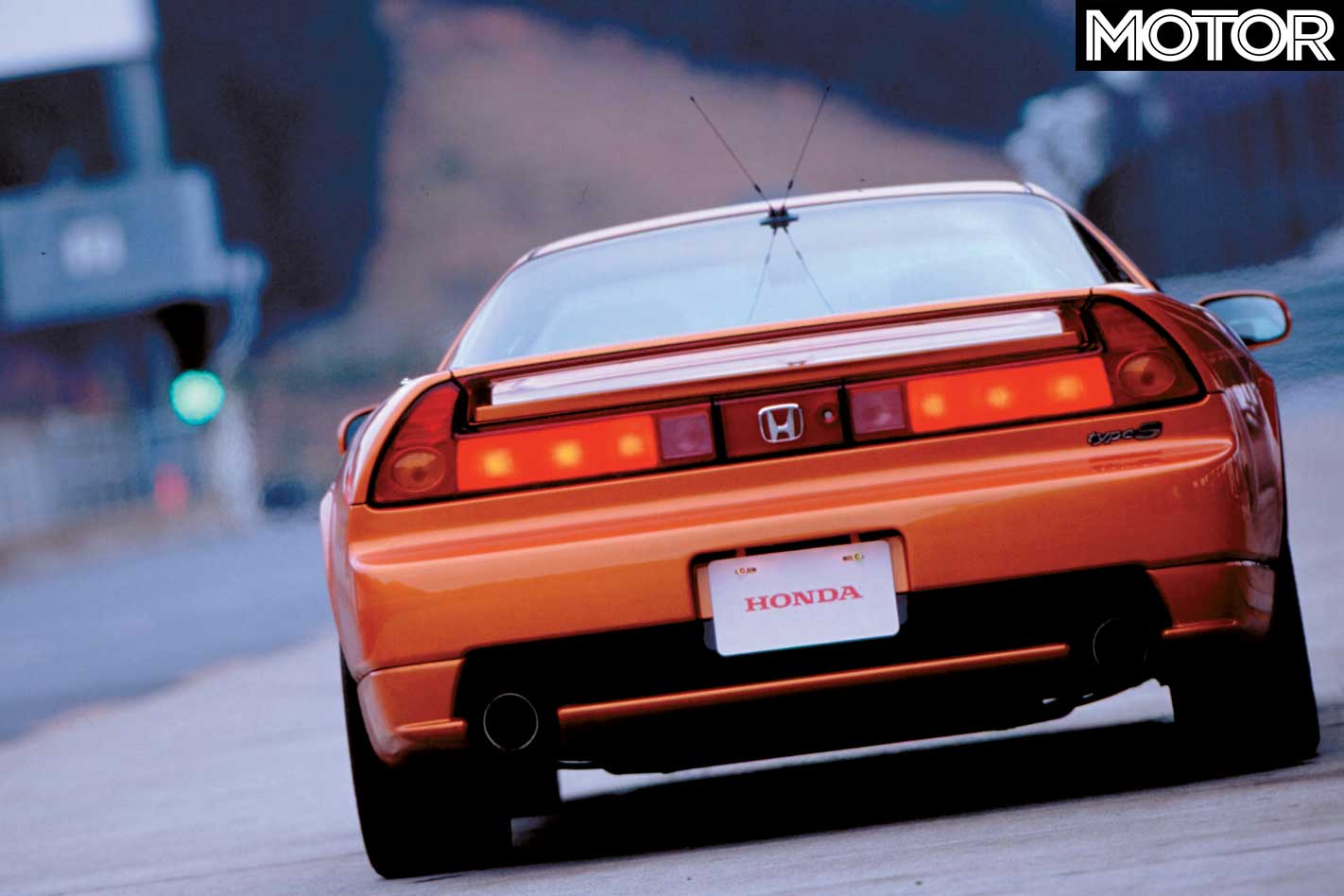
They Said It
“Never before has a road car given me the experience of Formula One like the NSX.” – Paul Ellis, June 1995
“It is slick and devastatingly quick, yet makes few demands of the driver. Quite simply, it is a performance car of excellence, but dispatches day-to-day driving duties without question.” – Jonathan Hawley, May 1997
“The NSX is a beautifully balanced car, primed with poise and agility like a cat bounding through a house.” – Paul Ellis, June 1997
FAST FACTS 2002 Honda NSX
BODY: 2-door, 2-seat coupe DRIVE: rear-wheel ENGINE: mid-mounted 3.2-litre DOHC 24-valve V6 POWER: 206kW @ 7300rpm TORQUE: 298Nm @ 5300rpm BORE/STROKE: 93mm x 78mm COMPRESSION RATIO: 10.2:1 WEIGHT: 1425kg POWER-TO-WEIGHT: 145kW/tonne TRANSMISSION: 6-speed manual SUSPENSION: double wishbones, coil springs, anti-roll bar (f); double wishbones, coil springs, anti-roll bar (r) L/W/H: 4430/1810/1175mm WHEELBASE: 2530mm TRACKS: 1510mm (f); 1540mm (r) BRAKES: 298mm ventilated discs, four-piston calipers (f); 303mm ventilated discs, two-piston calipers (r), ABS WHEELS: 17 x 7.0-inch (f), 17 x 9.0-inch (r), alloy TYRES: Bridgestone S02, 215/40 ZR17 (f), 255/40 ZR17 (r) PRICE: $254,000 (in 2002)
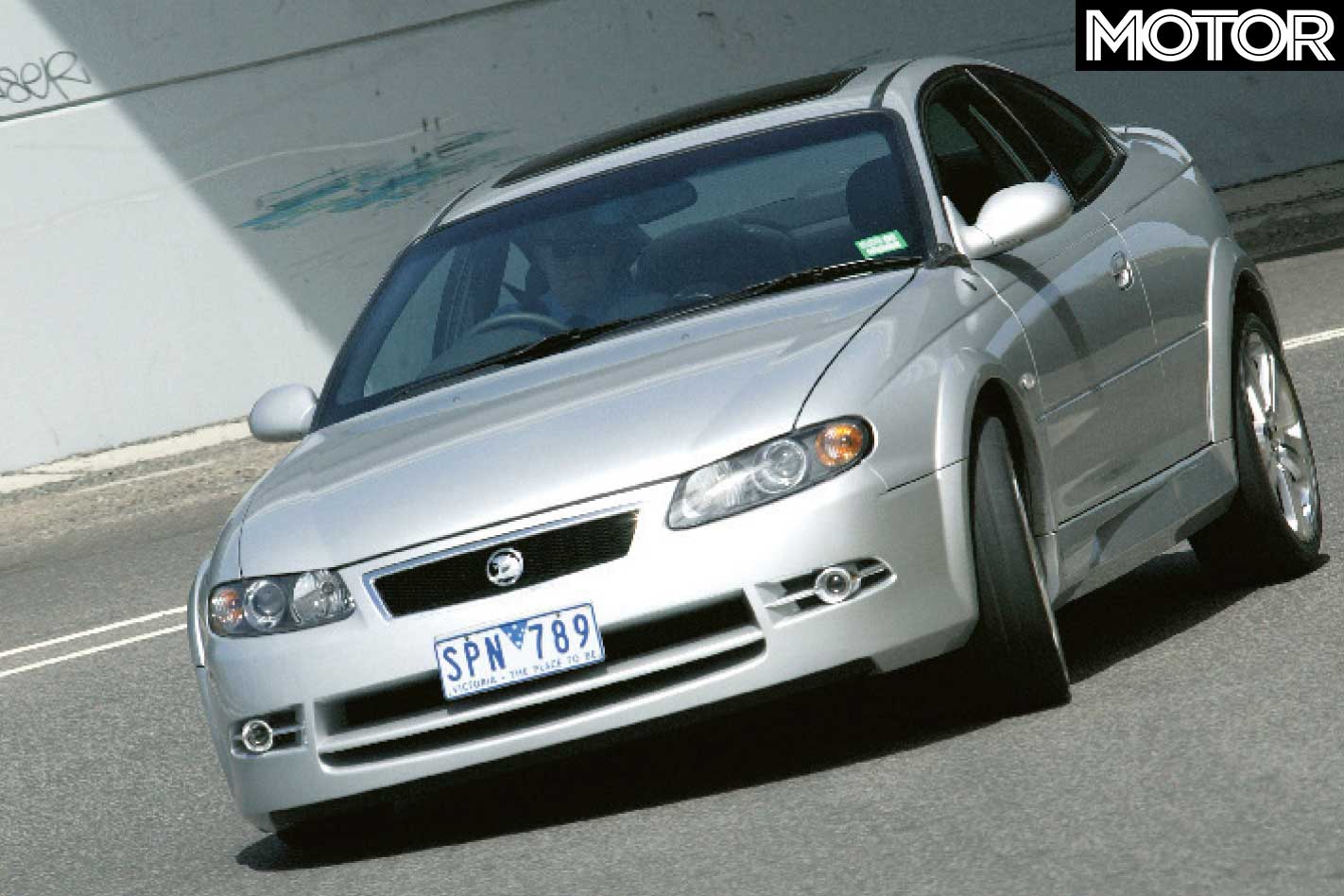
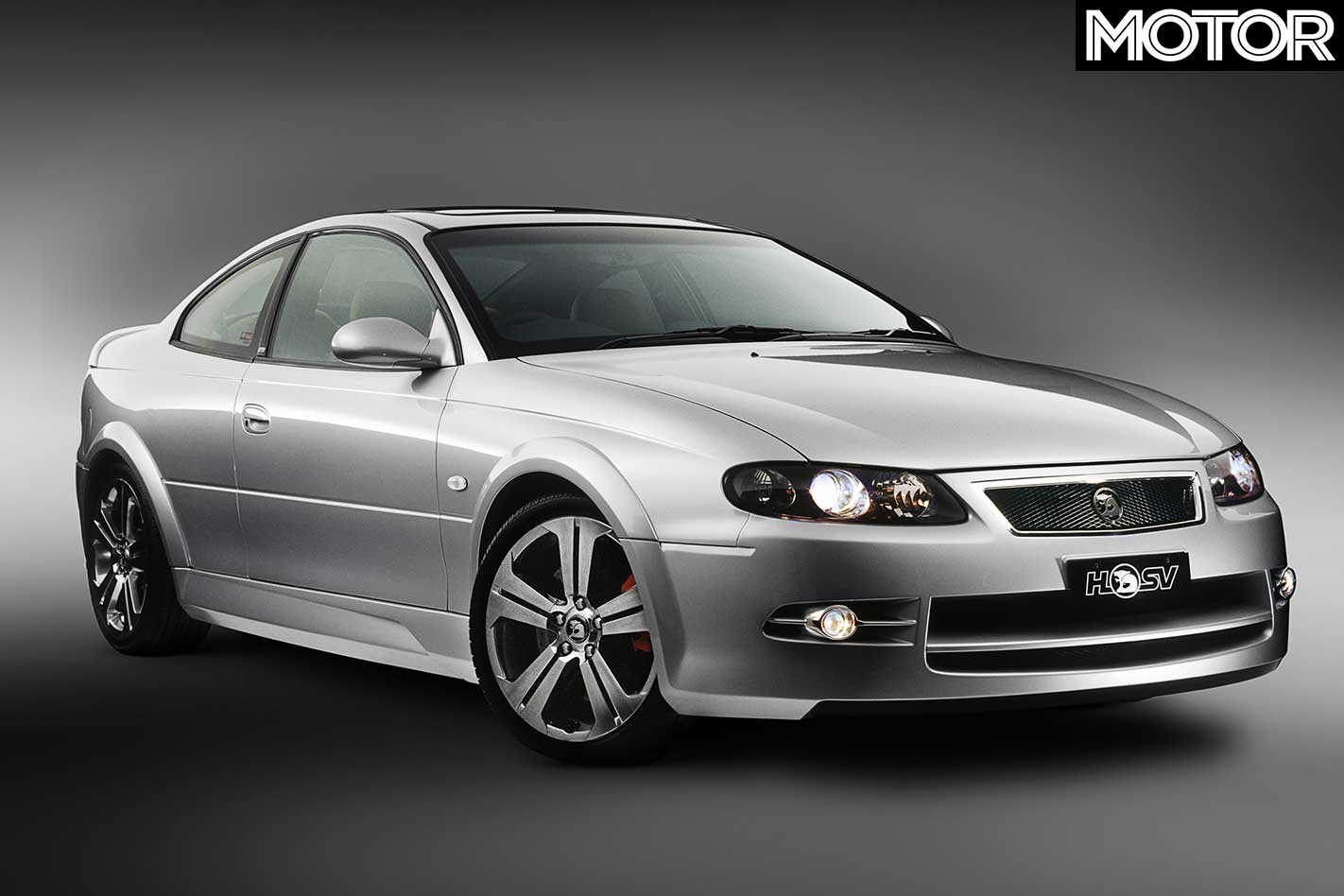
Seen any HSV Coupes getting around with little wheel-arch flares tacked on? Then chances are you’ve already spotted a Coupe 4 doing some development kliks.
This feature was originally published in MOTOR’s March 2004 issue
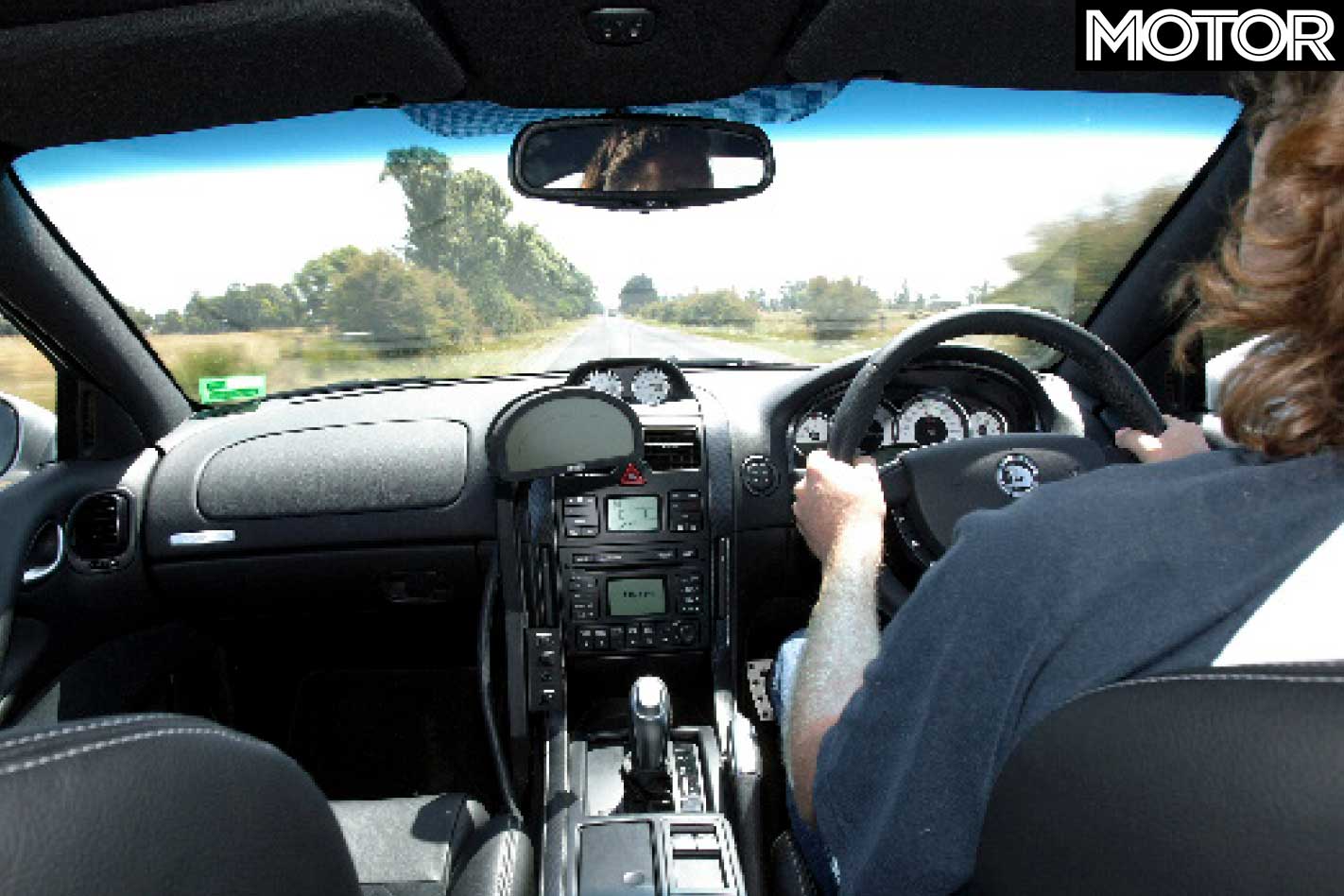
Yep, Oz’s first home-grown all-wheel-drive performance car is reality. How do we know? Because we’ve nailed HSV’s white-coats to a chair and grilled them at length, and we’ve seen the cars ourselves getting around the ’burbs. Oh yeah, nearly forgot to mention: we’ve also driven the bugger.
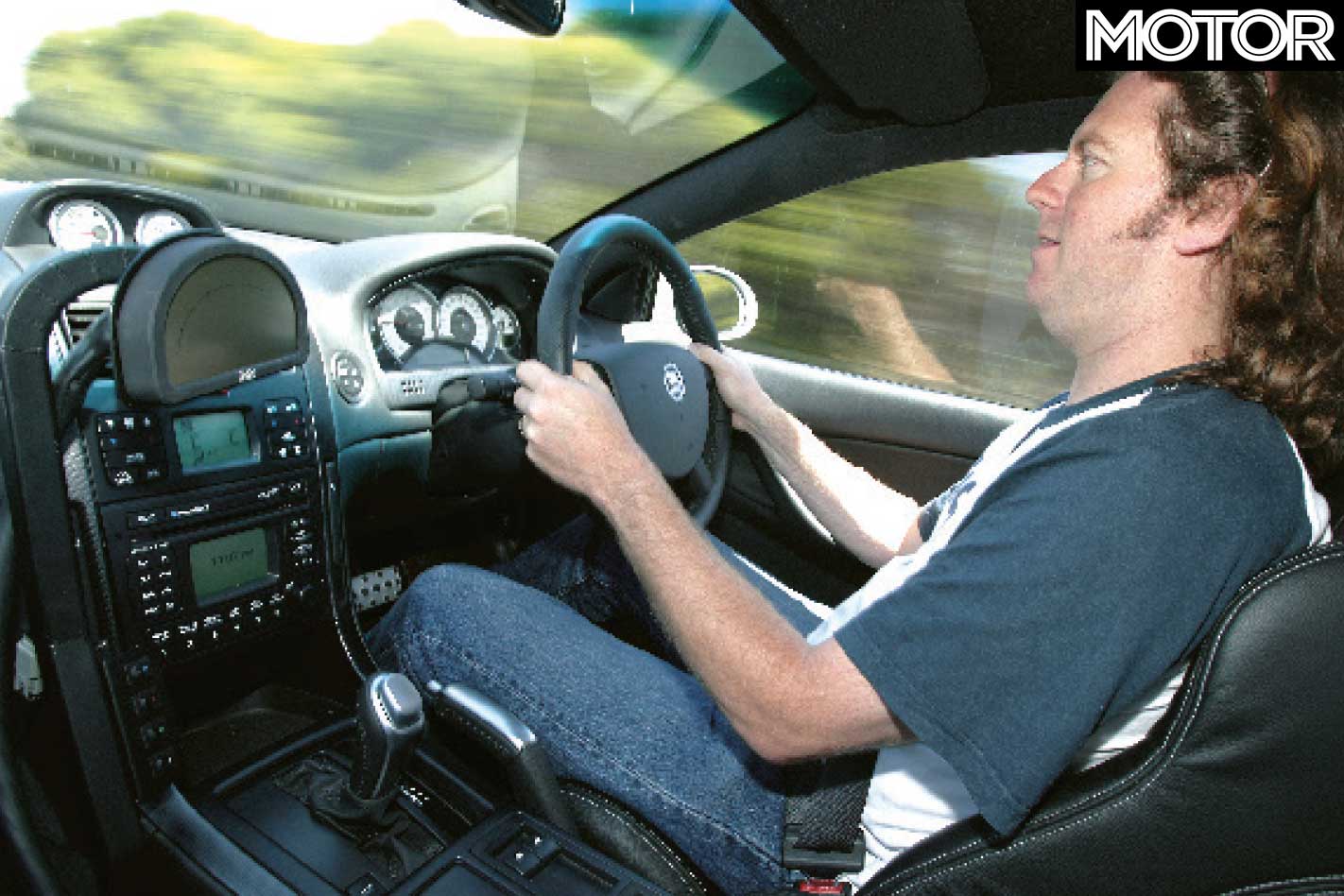
Well, aside from anything else, it’s important to remember that the Coupe 4 marks the Australian industry’s move into the big time. A large-capacity, all-wheel-drive performance/luxury four-seater was previously the preserve of brands like Audi, and maybe Jaguar and Subaru if you include the X-Type and Liberty B4 (now GT). And it’s not like you just talk management into the idea and then sketch up such a device.
See, attempting to make an all-wheel-drive performance car from something like the Holden Adventra was never going to be easy. In fact, a lot of engineering houses would have thrown their set squares in the air and hidden in the bogs until the marketing department had moved on to something easy – such as three-wheeled, methane-powered commodes.
But the Australian industry is not known for head-in-the-sand stuff, so the job of turning a soft-roader into a hard-noser was green-lighted and suddenly it was clipboards at 10 paces.
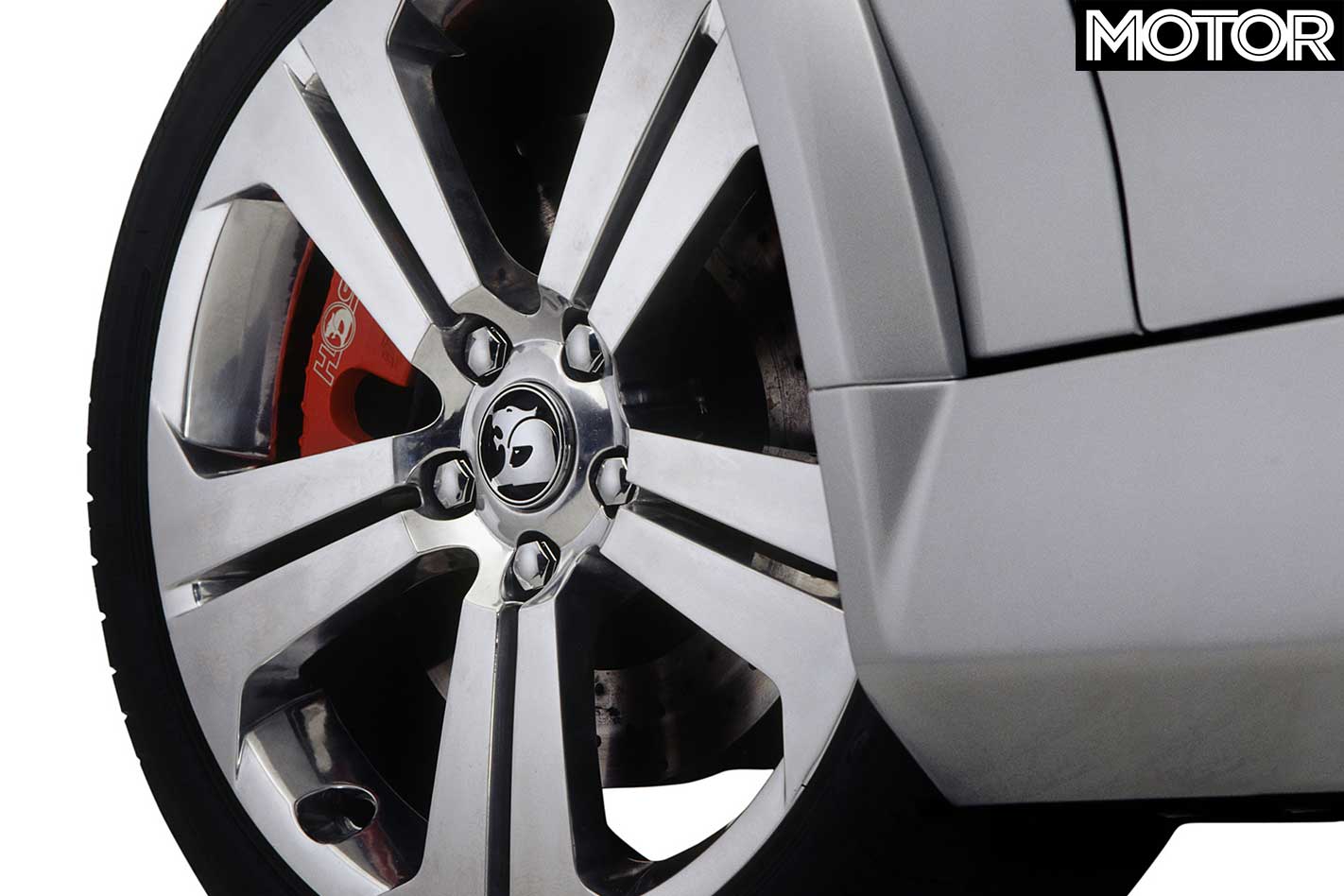
Meanwhile, the fact that the end result – in componentry terms – is more or less equal parts HSV Coupe and Holden Adventra (or Avalanche, if you like) shouldn’t come as a massive surprise. But while that’s a broad-brush picture of the finished product, the detail stuff is far more interesting.
The front suspension has been treated to plenty of Coupe 4-specific bits and pieces. The front struts, with their specific lower mounts to account for the front driveshaft, are similar to the Adventra’s units, but the low-boy’s items are obviously shorter and run different valving. There are also different lower control arms to drop the ride height, while the front cross-member is a straight lift from the Adventra.
The rear end is still the subject of some fiddling and fettling and the overall specification isn’t yet signed off. But either way, bank on modified rear trailing arms from the Commodore sedan, the mods mainly contributing to a wider track.
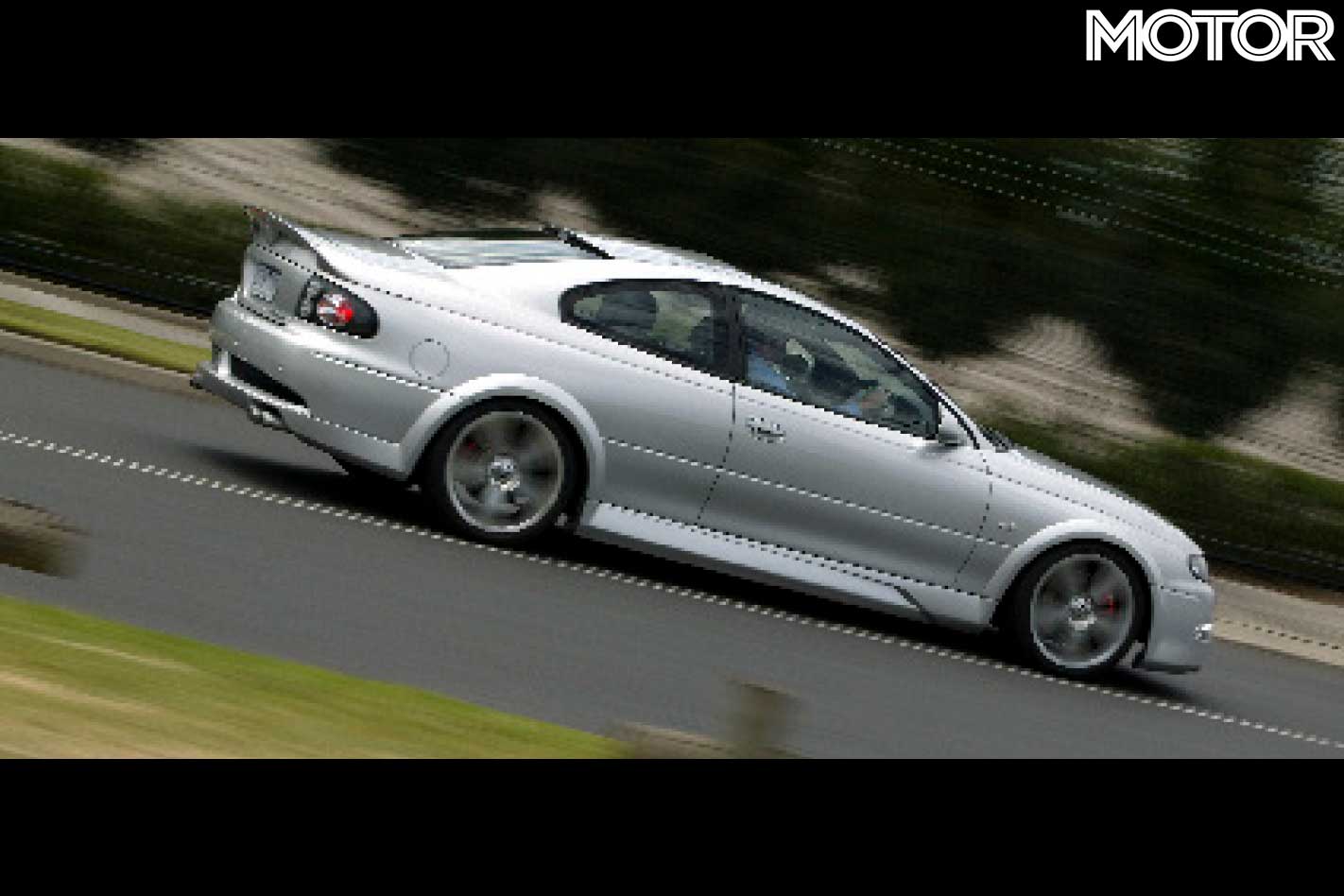
According to HSV engineering boss John Clark, the biggest job in making it all work is not, as you might have imagined, packaging all those whirring driveshafts, but getting the bodywork to cover it all.
“The biggest hurdle is getting clearance in the rear fender inner and outer panels,” he says. “Our solution has been to plasma cut the panels and roll them while the shells are still at Elizabeth. Then they’re put back on the line to get the full dip treatment and away we go again.”
That panel work is also why the Coupe got the three-diff trick first; the sedan would have required reworking the wheel arches and rear doors. But come on, Clarky, surely making a high-ride soft-roader into a bitumen-sucking handler can’t have been easy?
“Yeah, obviously there were suspension hurdles. And the bulk of the work in that department has been to get the grip we wanted and the suspension geometry we needed.”
And packaging, er, issues?
“Um, well, it’s pretty tight in the engine bay now. Some more space would be nice, but given the engine bay we have to work with, we’ve had to redesign the headers to clear driveshafts and other componentry. That’s why the power will be 270kW [the same as the Avalanche] and not 285, but we’re still in the development stages there, so nothing’s finalised.”
What is decided for now is that the Coupe 4 will be offered only in four-speed automatic form. Essentially, the six-speed manual doesn’t mate with the Adventra-derived transfer case and the projected volumes probably won’t justify the development costs, given the type of buyer HSV is eyeing up with the Coupe 4.
Speaking of which, about 30 punters have already stumped up the deposit based on a $95,000 (roughly) sticker price, with dealers expecting stocks about June this year.
Given that price tag, it’s no wonder she’ll carry plenty of fruit. Although the final trim specs are still up in the air, speculation is that the Coupe 4 will probably come in somewhere between Senator and ClubSport trim.
But, says Clark, it will definitely be its own thing. And with all-paw grip in an IRS, low-ride platform, a thumping great V8 mill and an Aussie badge, you really can’t argue with that.
That point is hammered home when you back-to-back the Coupe 4 with, say, a GTS. Yes, the newbie still feels like an HSV product, but it really is different (subtly, anyway) from the 300kW sedan.
For a start, you can feel a bit more damping in the front end of the Coupe 4, a necessity given the extra unsprung mass. And while the rear-wheel-drive GTS needs a reasonably supple rear end so it can paste its power down, the Coupe 4 doesn’t need the same squat factor.
So the rear end is substantially firmer in the Coupe 4 (and is a better match with the more heavily damped front end in the process). And while smaller bumps and ripples don’t have a noticeably huge effect on ride quality, bigger lumps and holes come through the seats more faithfully.
There’s not much to pick between the Coupe 4 and GTS in steering-feel terms, but there’s no doubt that the former has pretty eager turn-in, provided you adopt the ‘slow in, fast out’ style that suits all-pawers so well. There’s a bit less weight in the wheel of the Coupe 4 than in the GTS, too.
Maybe a racetrack will unearth some tendency to understeer, but at road speeds it ain’t gonna be a problem, and the upside of the tauter ride is a flatter cornering style, helped by the wider track.
The big difference at the tiller is a slight (and I mean slight) tendency for the steering to feel woolly when you’re right up it in the lower gears. It’s about the only time you feel that the front hoops are doing some of the driving (there’s a static 32/68 front/rear torque split), though, so it’s not really a problem.
Frankly, if HSV has deliberately tried to make an all-wheel drive that doesn’t instantly feel as though the front wheels are contributing to the power delivery, it’s succeeded admirably.
As for the power fall-off, well, I’m damned if I can really pick it. You do notice a bit more weight at times, but, like any LS1, she feels well fit once you’ve got a few revs on board. Hopefully I’d be able to pick 15kW gone AWOL in something like a Hyundai Accent, but in an HSV, where 15 is only about six per cent of the total output anyway, hairs don’t split easily.
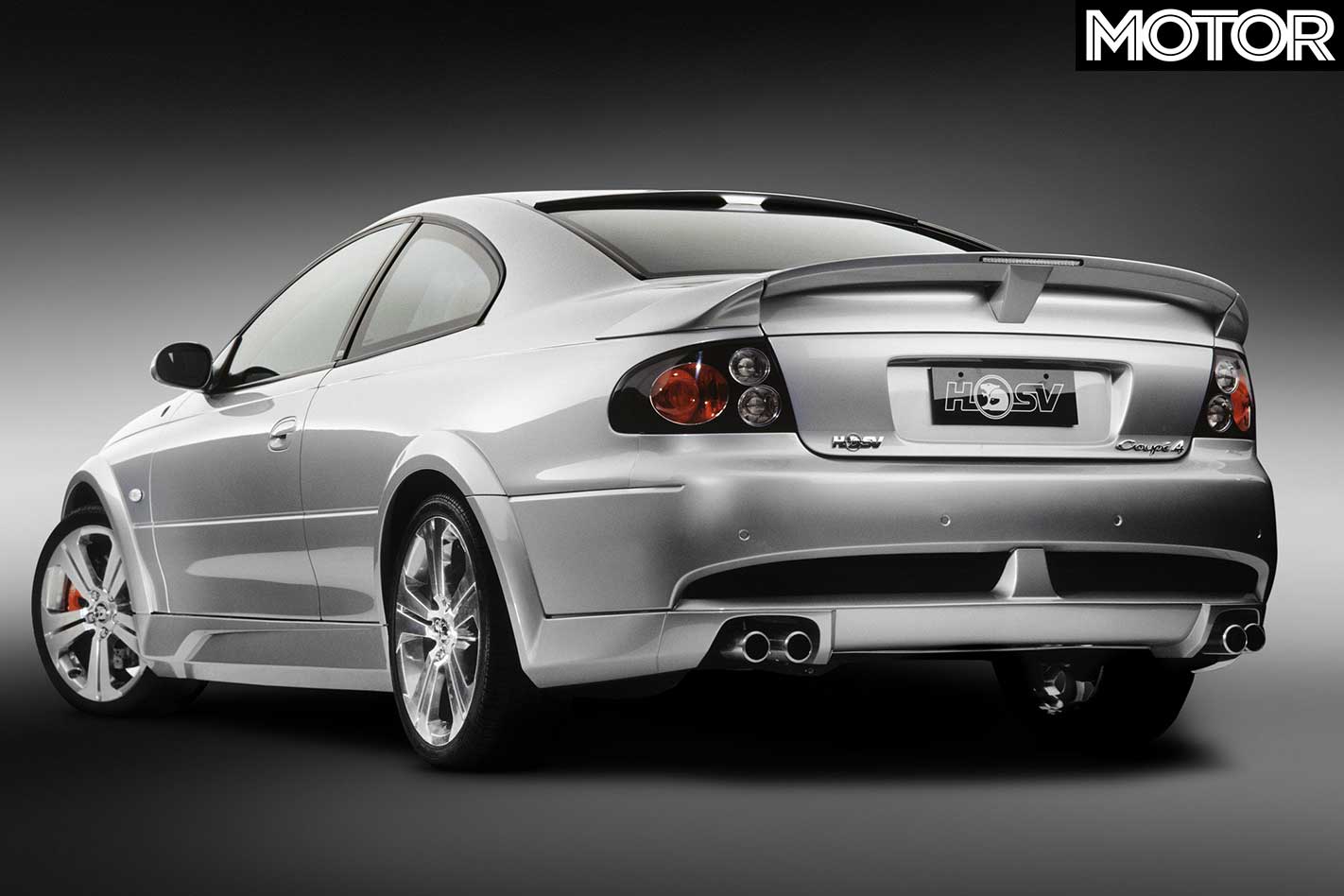
All up, the revised platform has yielded a car with a 60mm wider track front and rear and a turning circle bigger than the original Coupe’s, but the same as a Commodore wagon. So kerb mass has jumped by between 140 and 150kg, and power has fallen – hardly a conventional forward step. But grip is grip, Dorothy.
So, the big question is: will the extra weight and lower peak power output be enough to cancel the extra launch potential afforded by the all-wheel-drive grip? Good question, grasshopper. The Correvit awaits the Coupe 4, so stay tuned.
Mod Squad
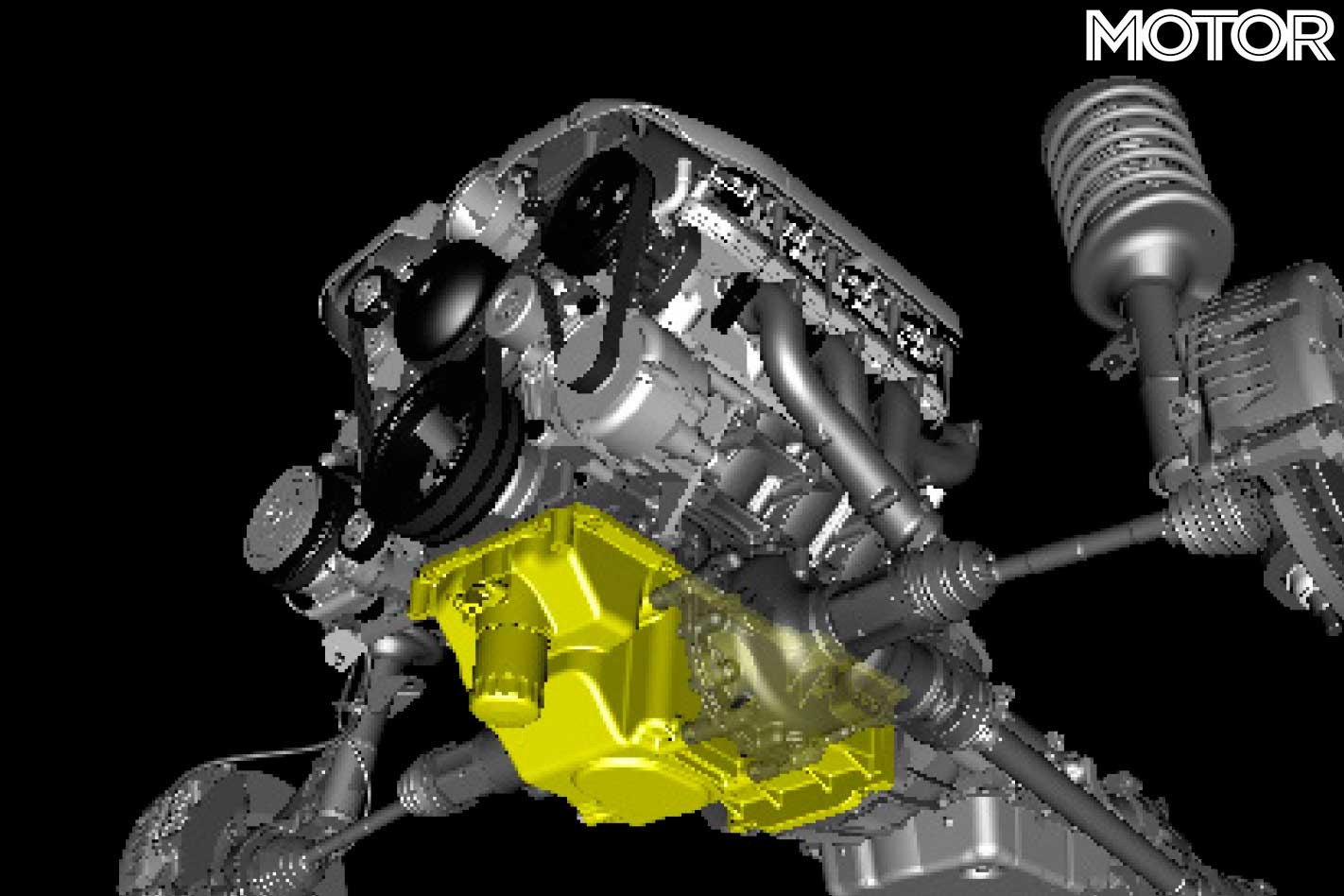
So what’s the best way to go: start with a low-ride all-wheel-drive system and adapt it to a high-ride application, or, as HSV has done, the other way around?
According to HSV’s engineering manager John Clark, it’s a moot point anyway, because the Holden-derived system was always designed to build crossover vehicles (specifically the Adventra) first and anything else second.
“So our low-boy – as we’re calling it – is a next-step program, not the original concept for the driveline,” he says. “Either way, I don’t think it would have made any difference to what we ended up with.” What’s more relevant, says Clark, is that the system was developed into an AWD set-up from a rear-wheel-drive platform, including the north-south engine placement.
That’s why there’s been no borrowing of technology from boardroom buddy Subaru, because Fuji Heavy’s knowledge is of adapting front-drive platforms [east-west engine and relatively simple rear axles] to AWD. Sorry, said Holden at the time – not relevant to what we’re trying to do.
Maybe Audi’s quattro system, with its north-south engine installation, might have been more enlightening, but nobody at Clayton’s fessing up to pulling an S8 down to its jocks and socks for a look-see. But while HSV will be the first of the locals to market with a low-ride all-paw, the engineering that’s gone into the project has been a 50/50 joint venture with Holden.
“Both companies have had about 10 engineers each working on the platform at each stage of the program,” says Clark. “A joint program was the only way we could have done it.”
Five Landmark all-paw coupes 1 – Audi Quattro – brought AWD to rallying, and wiped the floor 2 – Porsche 959 – a late ’80s technological tour de force 3 – Bugatti EB110 – a flop, but capable of around 335km/h 4 – Jensen FF – gets credit for being the pioneer 5 – Nissan Skyline GT-R – Japan’s greatest GT ever
Spreadin’ it Around
Just as we speculated when the Adventra was announced, you don’t go to this sort of trouble and expense for a single model.
Thus far, the Adventra’s all-wheel-drive system has found its way into the Cross8 and HSV’s Avalanche, with an HSV version of the Cross8 already on the drawing boards. But where else can we expect the driveline to crop up?
Well, like we said, the only reason the coupe got the treatment before the sedan is all to do with the bodywork mods needed. But presumably the next model Commodore will be designed with rear wheel arches that can swallow the wider track, and that opens up all sorts of possibilities. How about a Commodore SS sedan with AWD?
And if that were to eventuate, suddenly the volumes might just make financially viable the R&D needed to make the six-speed manual fit between the diffs.
Export-market Commodores are another likely recipient, although whether the set-up is suitably compatible with left-hook is another matter.
And then there’s Ford, which, with its Territory crossover waiting in the wings, is poised to revolutionise its big-car range (should it choose to). The RTV ute, which now gets a locking diff and jacked-up suspension, would be a natch for the Territory’s driveline. And if the idea of an all-wheel-drive XR6 Turbo doesn’t float your boat, get thee to a taxidermist.
FAST FACTS 2004 HSV Coupe 4
BODY: 2-door coupe DRIVE: all-wheel ENGINE: front-mounted 5.7-litre pushrod 16-valve V8 POWER: 270kW @ 5700rpm TORQUE: 475Nm @ 4000rpm BORE/STROKE: 99.0mm x 92.0mm COMPRESSION RATIO: 10.0:1 WEIGHT: 1802kg POWER-TO-WEIGHT: 150kW/tonne TRANSMISSION: 4-speed auto SUSPENSION: MacPherson struts, coil springs, anti-roll bar (f); semi-trailing arms with toe links, coil springs, anti-roll bar (r) L/W/H: 4789/1840/1397mm WHEELBASE: 2788mm TRACKS: 1610mm (f); 1615mm (r) BRAKES: 2336mm grooved and ventilated discs, two-piston calipers (f); 315mm grooved and ventilated discs, single-piston calipers (r), ABS, EBD WHEELS: 19 x 8.0-inch (f & r), alloy TYRES: Pirelli P Zero, 245/35 ZR19 (f & r) PRICE: $95,000 (est)
AN INCREASING number of Victorian drivers believe that driving over the speed limit by a small margin is acceptable.
The Transport Accident Commission (TAC) in Victoria has released its annual Road Safety Monitor survey for 2017, which canvassed the opinions and behaviours of 1742 of the state’s drivers.
It found that Australians have become less accepting of the government’s ‘low tolerance’ approach to speed enforcement, with more Aussies believing that driving 5km/h over the posted speed limit should be allowed.
A third of respondents to the survey believed driving at 105km/h in a 100km/h zone is acceptable – an increase from 24 percent in 2013.
The same margin of error wasn’t as acceptable at lower speeds according to the survey, with only 13 percent of respondents believing driving at 65km/h in a 60km/h zone was okay. However, this is still an increase from the eight percent who shared the same view in 2013.
Despite the increasing acceptance of speeding, the vast majority of Victorians say they wouldn’t fess up driving above posted limits themselves.
Just six percent of survey respondents admitted to speeding at least half of the time in 60km/h zones, while nine percent said they speed in a 100km/h zone to the same frequency.
Self-reporting of speeding just ‘some of the time’ fell from 35 percent to 30 percent in 60km/h zones, and from 36 percent to 32 percent in 100km/h zones between 2013 and 2017.
More worryingly, a third of those surveyed admitted to using a mobile phone while driving during the three months prior. A similar number (34 percent) said they had been behind the wheel of a car while feeling drowsy during the same period.
While 33 percent admitted to ‘passive’ distractions while driving, such as reading a text message or answering a phone call, 18 percent said they had written a text message or made a phone call behind the wheel.
Less than 10 percent of respondents admitted to driving under the influence of either illicit drugs or alcohol.
Six percent said they had driven while knowing or thinking they were over the legal blood alcohol limit, while the equivalent of two percent admitted to taking recreational drugs and then driving a vehicle soon after.
According to the TAC, “those who report to do these behaviours are disproportionately males aged 18-25 or 26-39 [year’s old], although these behaviours are apparent across all groups to some extent”.
“Males aged under 40 [year’s old] typically rate their perception of danger lower than other groups,” the study added.
On a scale of 1 to 10, Victorian’s rated driving with an illegal blood alcohol level the most dangerous behaviour (9.5), ahead of driving while drowsy (9.2) and using a handheld phone (9.0).
Victorian’s also thought riding a bicycle on urban roads was more dangerous (6.8), than driving a few kilometres over the speed limit in both 100km/h (6.2) and 60km/h (6.1) zones.
