
TELL ME ABOUT THIS CAR
Mini introduced the F56 generation of its iconic, sporty hatch in 2015, and this year introduces a tech-heavy update that makes an even closer connection between car and smartphone. It also gains a new gearbox that better suits the long-held Mini ethos of being a fun-to-drive hatchback.
Here, we’re driving the cheapest Mini that money can buy, the $29,900 Mini Cooper three-door hatch powered by a turbocharged 1.5-litre three-cylinder engine. This car is the new entry point for the range after an even cheaper version called the Mini Cooper Ray was dropped from the line-up ahead of this “life cycle impulse” – that’s Mini-speak for a mid-life refresh.

STRENGTHS
- The entire Mini Cooper range now comes with a standard reversing camera. This is a big help, because visibility out of the hatch’s rear window is limited.
- The centre screen that controls the multimedia unit and some of the Mini’s settings is now a touchscreen. It’s a big improvement over the twist-and-click rotary controller that the previous car used.
- The Mini Cooper now comes with an improved digital interface. The British brand is owned by German behemoth BMW, and borrows its software to enhance the user experience. It’s not quite the cutting edge tech that has rolled out in some more modern BMWs, but it’s proven and good. It even has real-time traffic information for the sat-nav system
- It still drives like a Mini. You’ve probably heard of the brand’s go-kart-like handling? It’s still there, even in this base car. If you like driving, you’ll like the way this Mini handles.
- The newly added seven-speed dual-clutch automatic gearbox is a pearler. Dual-clutch autos have the benefit of being fast and smooth to change gears at speed, and that only improves the sense of fun you can extract from the Cooper. It’s much better than the gearbox it replaces.
- The thrummy, characterful three-cylinder engine is slightly more fuel efficient, but hasn’t sacrificed any performance, producing 100kW and 220Nm.
- It’s still very much a Mini. Updates tend to include tweaks to the body plastics as designers try to improve stance or visual aggression in the eyes of buyers. Little has changed on the exterior of this Mini, and that’s the way customers seem to like it.
- Apple CarPlay is free. BMW generally charges for it, but Mini has decided to chuck it in to every version of the Cooper for nix. And you don’t need a cord to connect to it.
- Every Mini now comes with an inbuilt SIM card that can alert the car maker if you have a crash. It can then feed information back to a call centre letting an operator know how severe the crash was using information such as how many airbags have fired. That information is then passed on to emergency services.
WEAKNESSES
- Straight-line performance is adequate rather than great. Speed builds slowly, and you won’t be winning many traffic light sprints – you’ll have to look good going slow.
- The dual-clutch auto is brilliant when you’re moving, but less so if you’re trying to finesse entering a tight car park. Low-speed manoeuvres are beset with some clutch grabiness, so the car will lurch slightly in response to throttle inputs.
- In-cabin storage space is limited. There’s a small tray in front of cupholders that render the storage space unusable if coffee cups are placed in them. The central armrest can swallow a mobile phone and not much more.
- You don’t get paddle shifters mounted on the steering wheel to control the gearbox. They’re standard on the $7000 more expensive, and more powerful, Cooper S.
- Mini sells a five-door hatchback version of the Cooper that may be more practical as a family car.
- The interior is not the best in the game. Mini still uses a lot of hard plastics that don’t quite fit the premium feel the brand presents with the exterior.
- The rear seats are very cramped.
- There’s no Android Auto support. Mini says most buyers who visit its website to shop for a car browse using an Apple smartphone, so that’s the direction they’ve taken.
- Prices have gone up slightly. One of the boasts of the Mini Cooper introduced in 2016 was that it was significantly cheaper than the model it replaced. This facelift erodes some of that price advantage. But you do get more for it.
ANY RIVALS I SHOULD CONSIDER?
Audi A1, Citroen DS3, Fiat 500, Volkswagen Polo
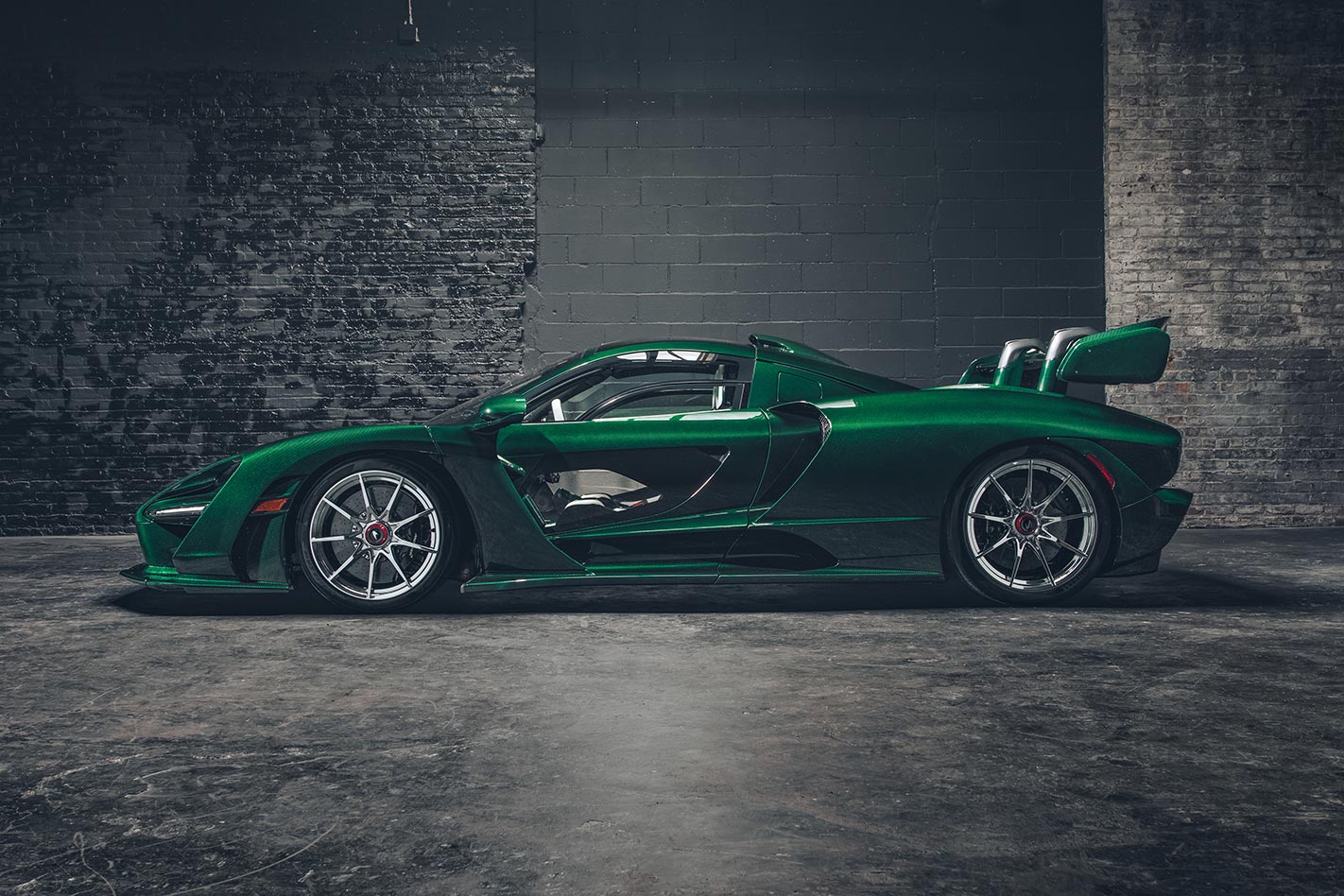
McLaren has delivered its first Senna to the United States and it’s an absolute stunner.
Its owner is flamboyant Cuban-born, New York-based car collector Michael Fux. Fux is known for favouring outlandish custom colours – he has a purple Rolls-Royce Phantom Drophead Coupe and fuchsia McLaren 720S – but his Senna is much more restrained.
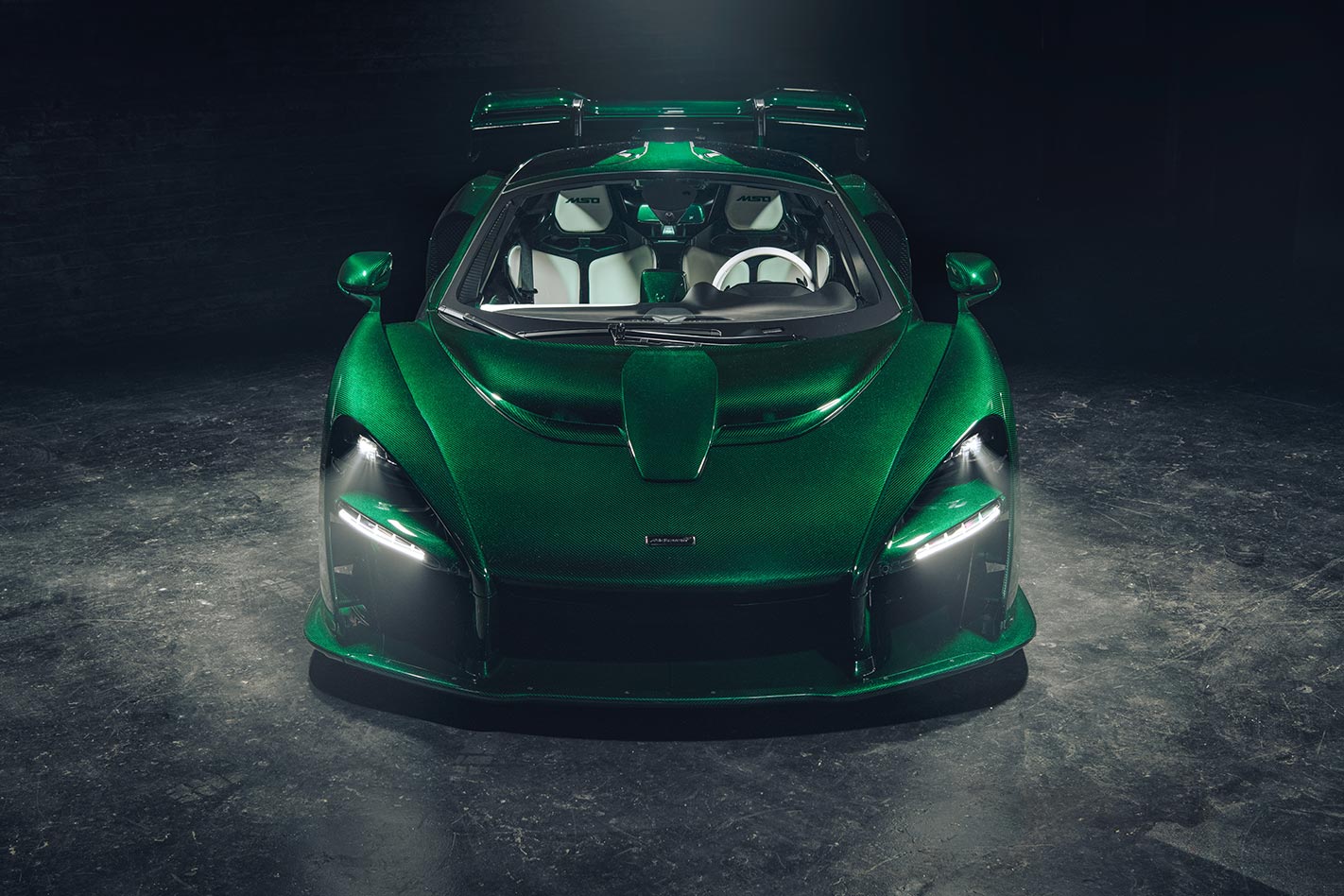
McLaren claims it takes almost 1000 hours to produce the 67 separate parts that comprise the Senna’s complicated bodywork. Providing a contrast to the body are the centrelock wheel nuts painted red (right) and blue (left).
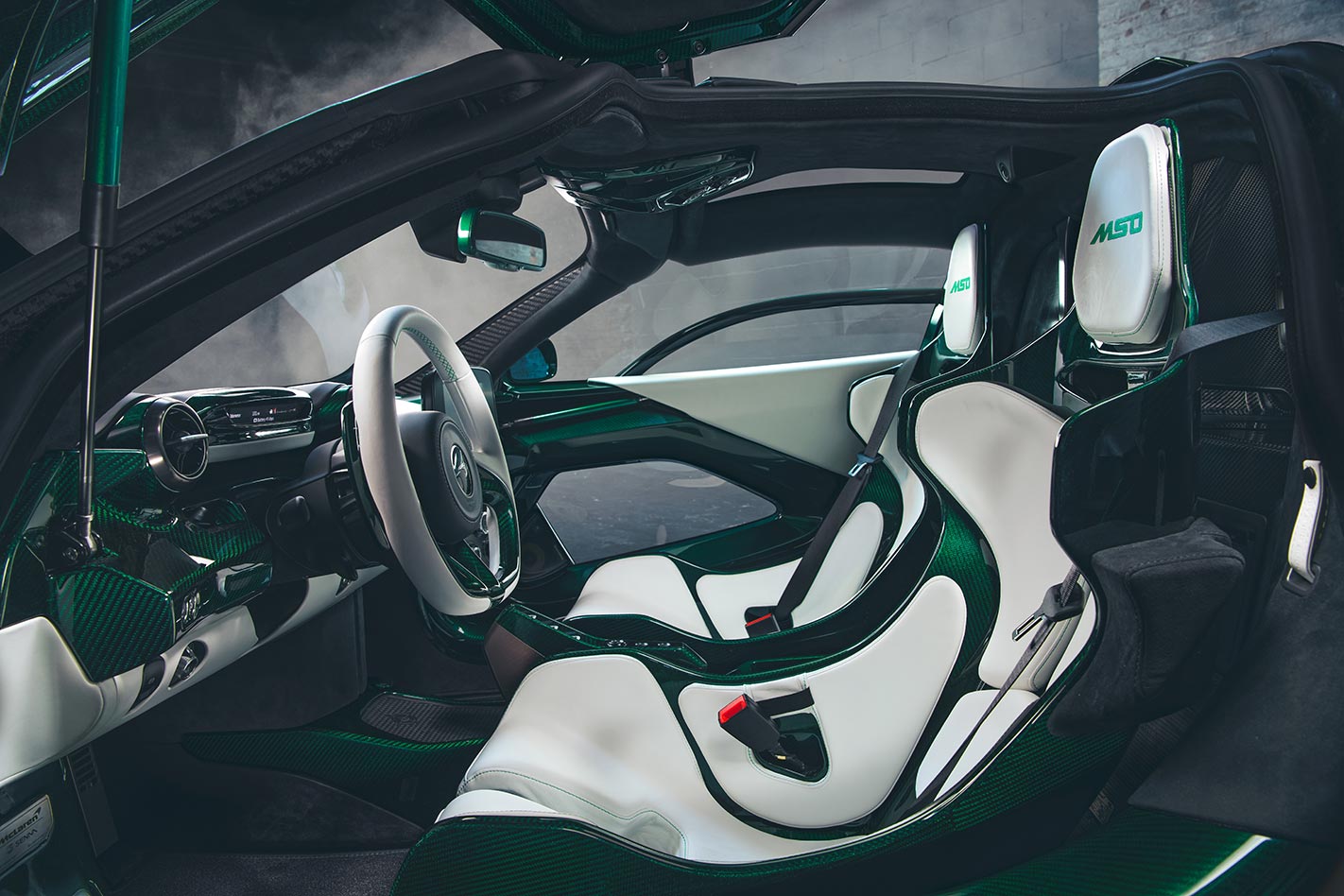
According to McLaren, around one-third of the 500 Sennas built have been bought by US customers and Fux’s unique example will make its public debut at The Quail, A Motorsports Gathering, an event held during Monterey Car Week.
Fux has also confirmed he is one of the 106 customers to be receiving the forthcoming McLaren BP23 hypercar.
HYUNDAI has revealed its i30 N Line in Europe overnight in a move that will offer i30 N-derived hot hatch visuals, but with only some of the performance bite to match.
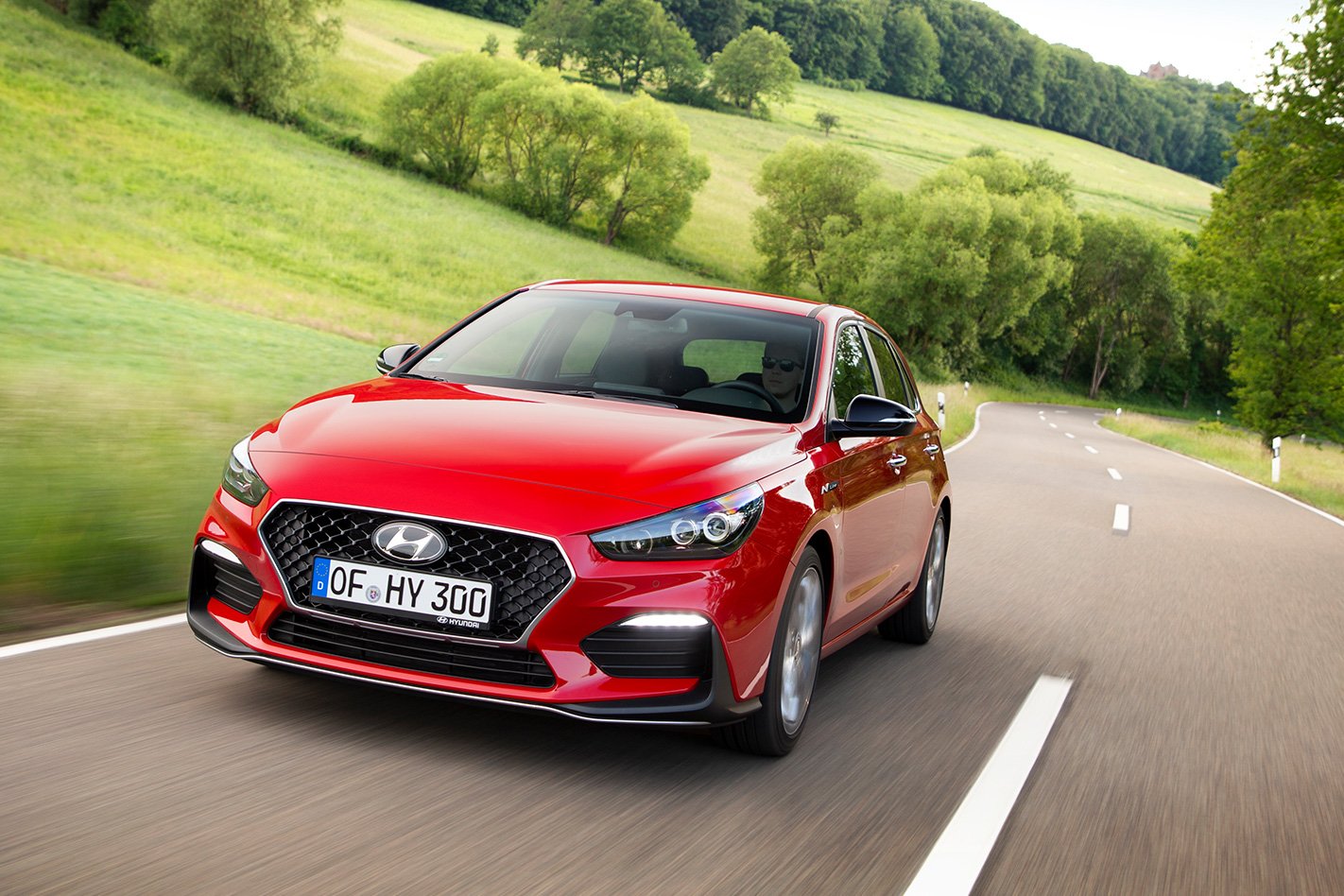
The car is expected to come to Australia, but Wheels believes it could wear an N Sport badge when it arrives here, if a trademark dispute between Hyundai and Nissan can be resolved.
Combining the visuals of the i30 N hot hatch with the drivetrain and suspension of models better suited t the school or shopping run, Hyundai is hoping the N Line will appeal to customers wanting more visual flair, but who don’t have a penchant for performance.
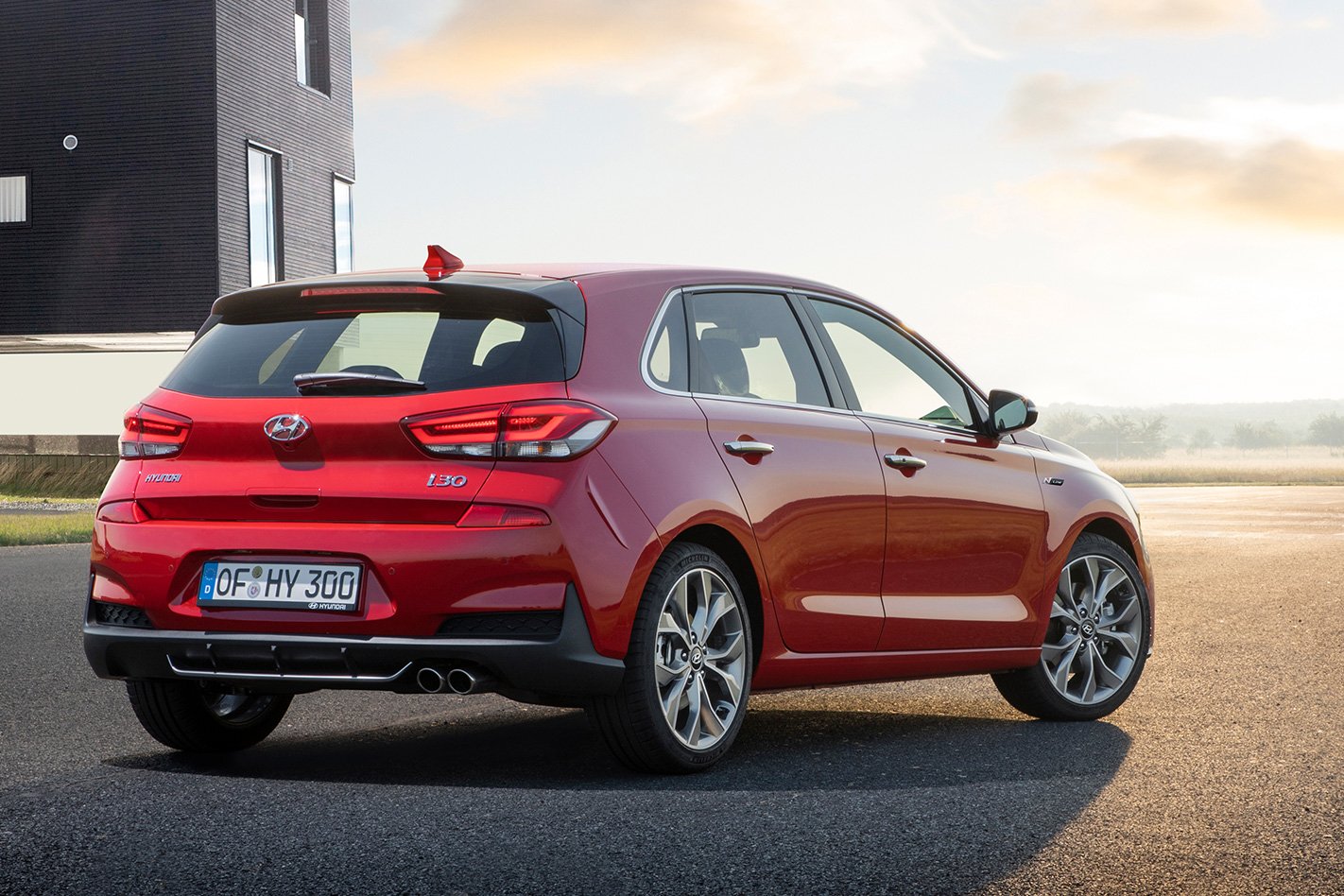
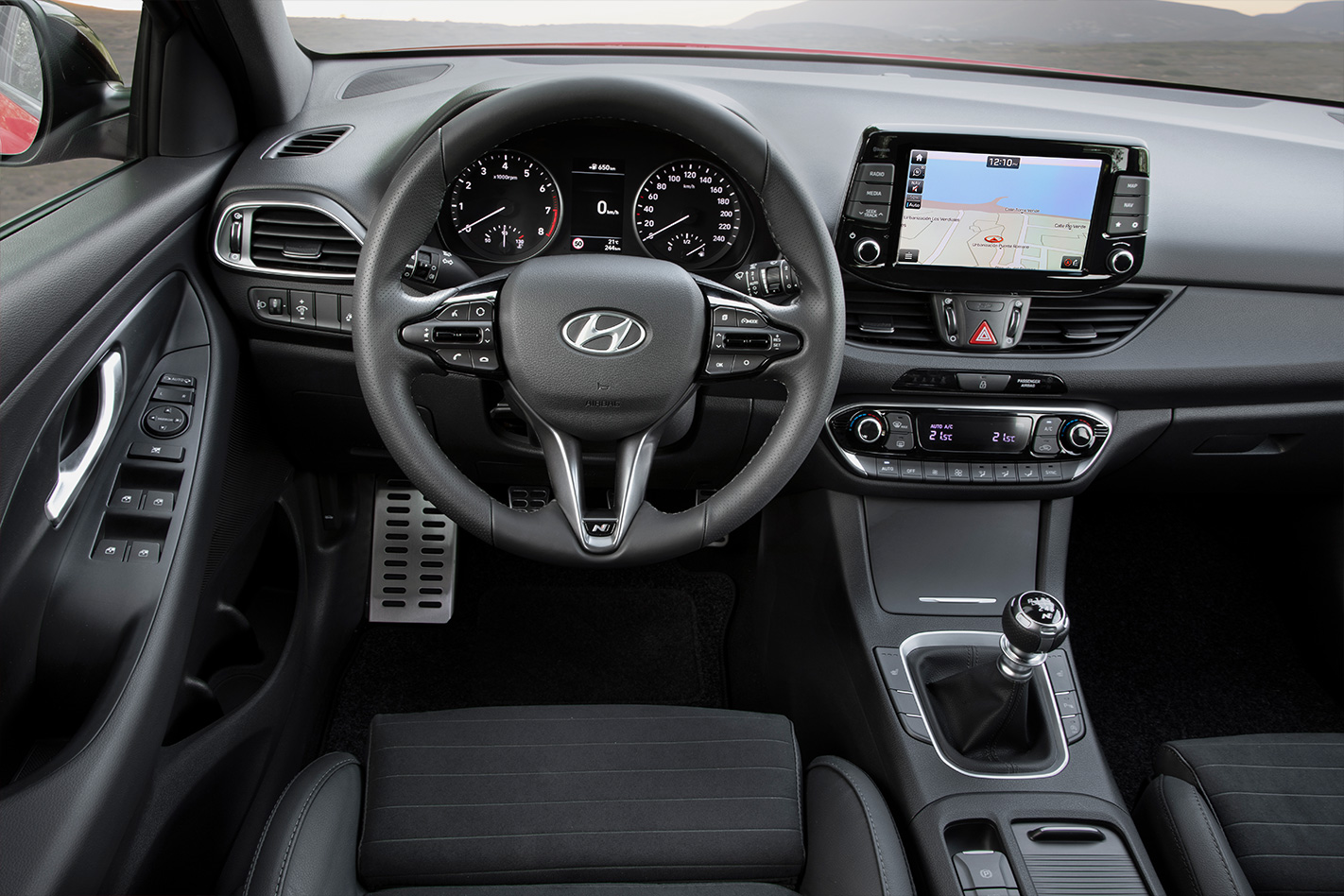
The rear of the i30 N Line sports dual exhausts, while inside the cabin there are N-branded sport seats along with metal pedal inserts, a perforated leather sports steering wheel, and a gear shifter that also wears an N logo.
European buyers can choose between a 1.4-litre turbocharged petrol engine that’s not available in Australia (we get the atmo 2.0-litre version) and 1.6-litre diesel version.
Hyundai says while the N Line misses out on the full-throated 202kW/353Nm turbocharged 2.0-litre engine developed for the firebrand i30 N, the new variants will have a livelier engine response and revised suspension for a sportier driving experience compared with the existing mainstream line-up.
In Europe, the cars will be shod with Michelin Pilot Sport 4 tyres as standard, with larger front brakes.
NISSAN and Hyundai are in a war of words – well, a letter and a word – as the brands fight for the name they each want to give warmed-over versions of their cars.
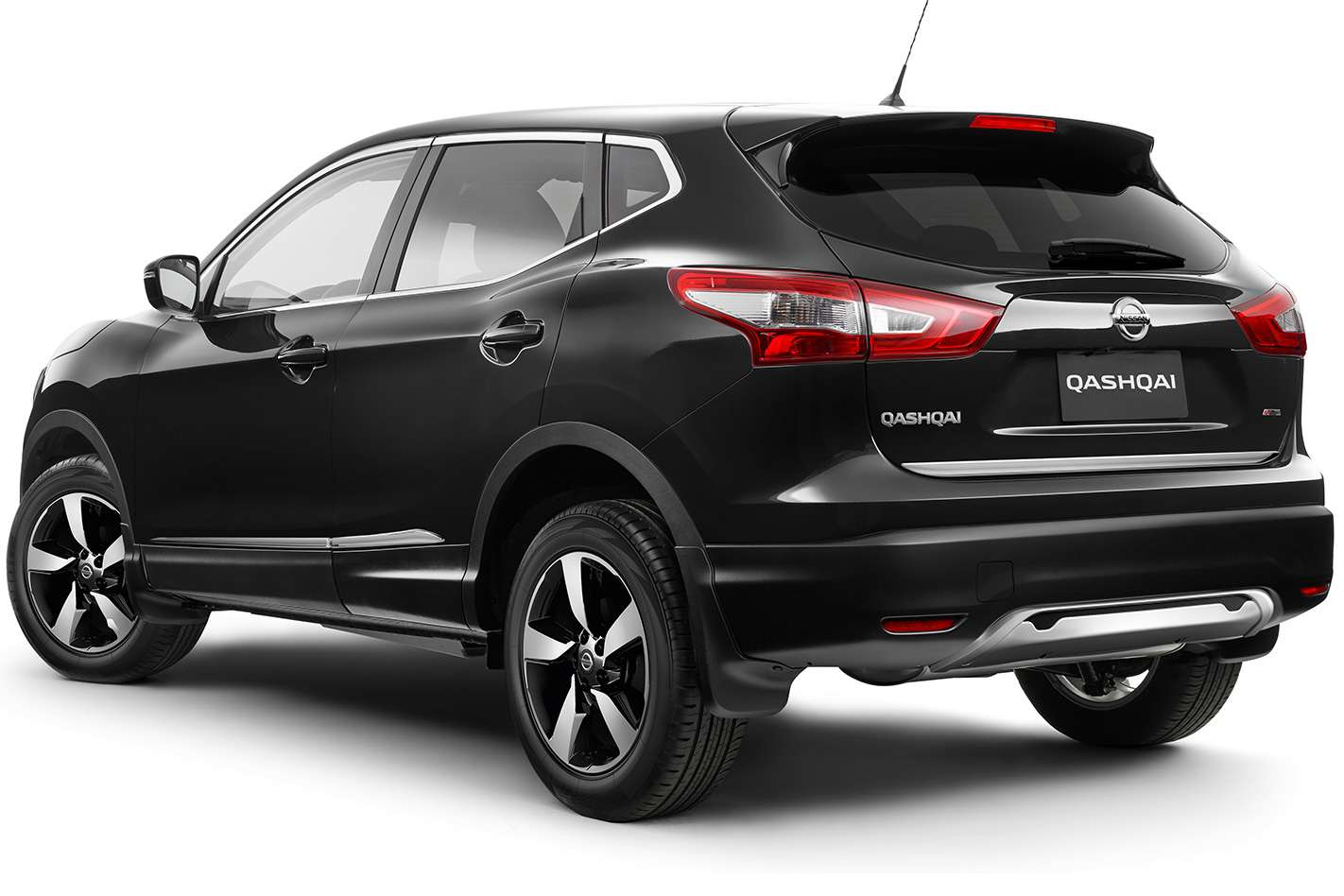
The two brands have engaged in a tit-for-tat battle for trademark rights over the use of the words “N Sport” and “N-Sport” appearing on the bodywork of vehicles they have already sold, or will one day sell, in Australia.
Nissan started introducing “N Sport”-badged versions of its vehicles in around 2016, sporting tougher-looking wheels and darker trim package to boost the popularity of its stronger-selling models, the Navara trade ute and X-Trail mid-size SUV, and the slow-selling Juke.
Hyundai? Well, it hasn’t officially launched anything with an “N Sport” badge on it yet, but it has flagged big plans to bring in a more sporty look for its model line-up, including aero kits, wheels and beefed-up suspension – but no engine enhancements – under the N Line name, not N Sport.
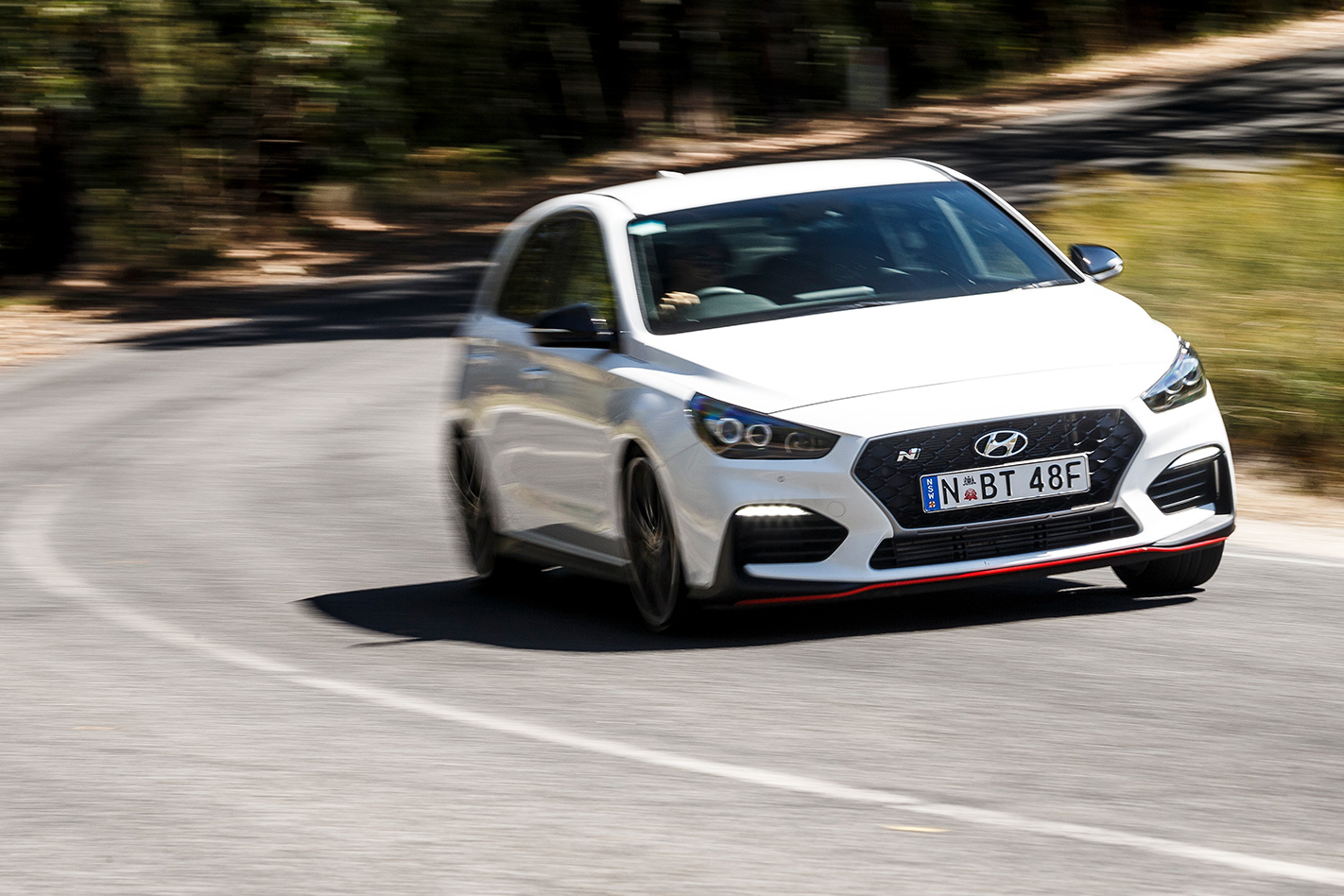
Nissan was first to file for a trademark to cover the “N-Sport” brand in 2016, about the same time we started confirming rumours that Hyundai was working on its first N-badged model; the 202kW turbocharged 2.0-litre four-cylinder i30 N. Within months of Nissan lodging its application, Hyundai had fired in a protest – but only after countering with its own trademark application for its version of the “N Sport” badge.
Hyundai has been granted a “cooling off” period as part of its trademark application process – it’s something we saw in the trademark dispute between Ford and Toyota over the word “Edge”. If you remember that saga, Ford wanted to use the Edge name here for its don’t-call-it-a-Territory five-seat Territory replacement using the badge found in other markets. But Toyota had already stuck it to versions of the Corolla and Hilux, owned the trademark over the name here, and said a polite “no”. So we have the Ford Endura, instead.
History has since repeated itself for Ford, with Toyota’s Hino truck division owning rights to the name “Raptor” here. Ford wants to bring in a version of the Ranger trade ute wearing the same name. That dispute is yet to play out, although Ford has officially filed for the trademark, indicating a resolution could be near.
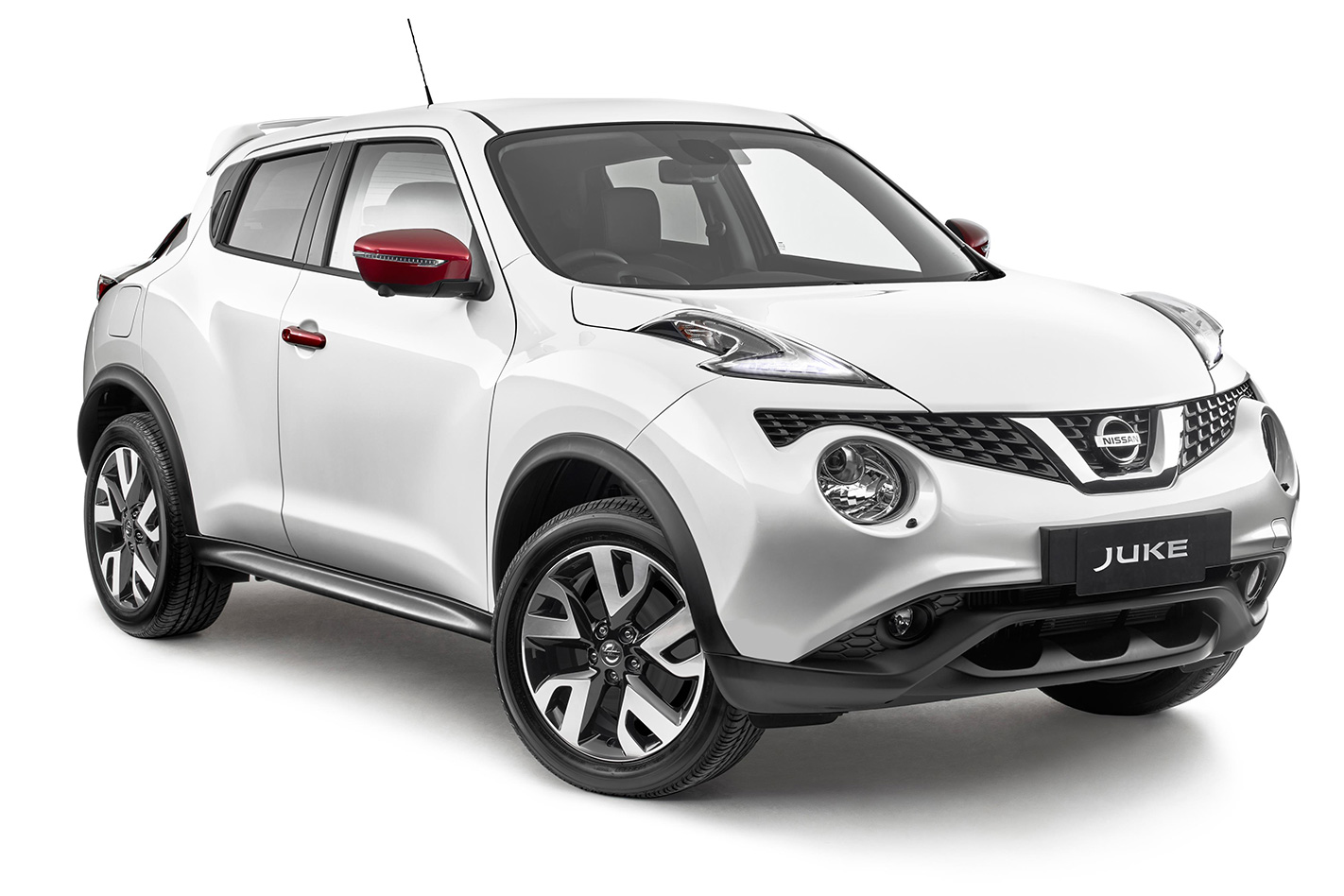
Nissan told Wheels it was “in ongoing discussions with Hyundai regarding the opposition of the N-SPORT trademark”. Hyundai has declined to comment.
The next stage in that trademark dispute arrives on August 18 – almost two years to the day since Nissan lodged its application.
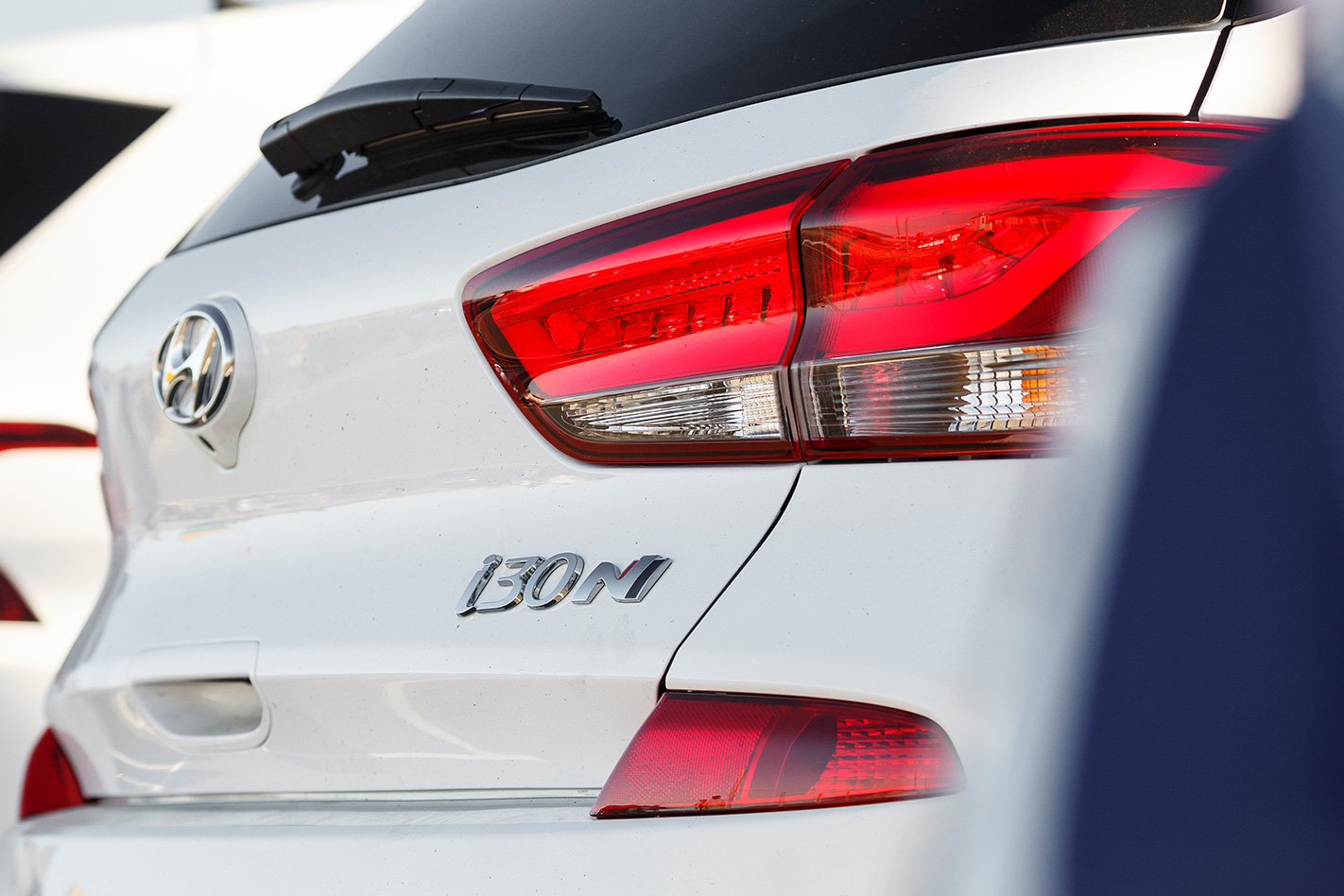
Days after Hyundai lodged its protest at Nissan’s bid to grab N Sport, Nissan applied for another trademark application for a badge wearing the N Sport name. Hyundai is disputing that one, too, with the next stage of the trade mark’s application due on August 14.
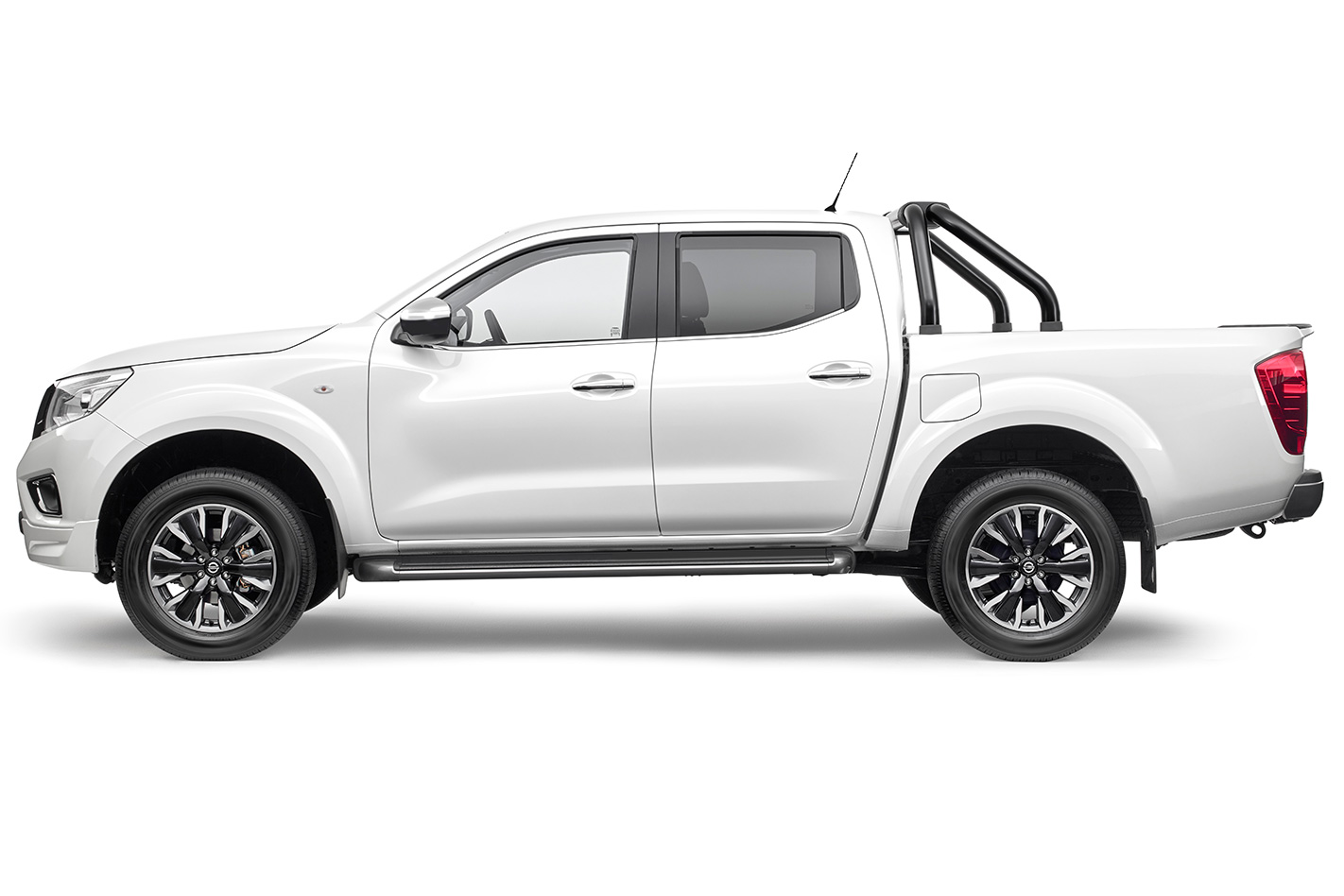
But wait, that’s not the end of it. Remember Hyundai’s application for a trademark over the N Sport badge we mentioned earlier? The Korean car maker is struggling to snare it after a series of “adverse” reports – ones that argue against the trademark being granted in the manner of Chevrolet’s struggles to trademark the Corvette badge here – have delayed its processing, with a decision on the badge’s fate deferred. In the latest move, Hyundai has sought an extension of time, delaying any decision even further.
High hopes ignited for this Peugeot 308 GTi when Luffy drove the 250 version at Winton two years ago. He bailed from the car extolling praise with words like “great” and labelled it the day’s “surprise”.
This track review was carried out in conjunction with MOTOR’s Bang For Your Bucks 2018
They grew after when, by witchcraft, voodoo, or some magic for this 270 variant, Peugeot squeezed another 16kW from its turbocharged 1.6 litres. That means it’s good for 125kW per litre, a figure 1kW shy of a Ferrari 488 GTB twin turbo 3.9-litre V8’s own specific output.
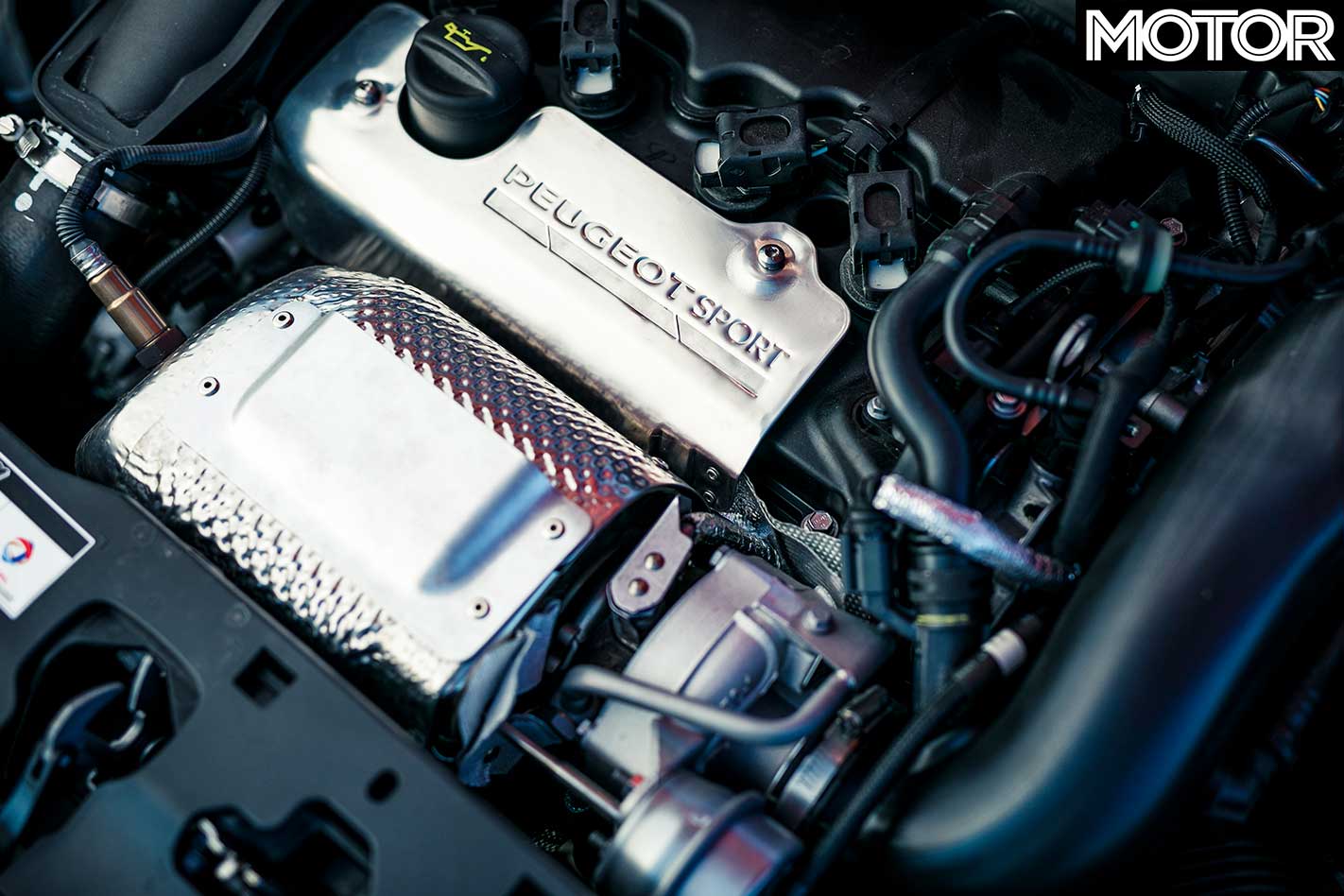
Adding to its hype, the real draw for the 270 is in the fact Peugeot recently shaved a fair chunk off its price. At $45,990, it’s four grand cheaper than before and would be only $1K more expensive than the 250 if that variant hadn’t been axed in favour of a more streamlined 308 line-up.
Somehow, though, all these things didn’t help it mow the competition as expected. Yes, it’s crushed all other front-drivers on track, bar one special Honda, as well as a couple of all-wheel drive weapons. And as you can clearly see in the photography it works its contact patches like a ballerina, lifting one to press on another, to hammer its way to the fourth highest average cornering speed of 81.07km/h.
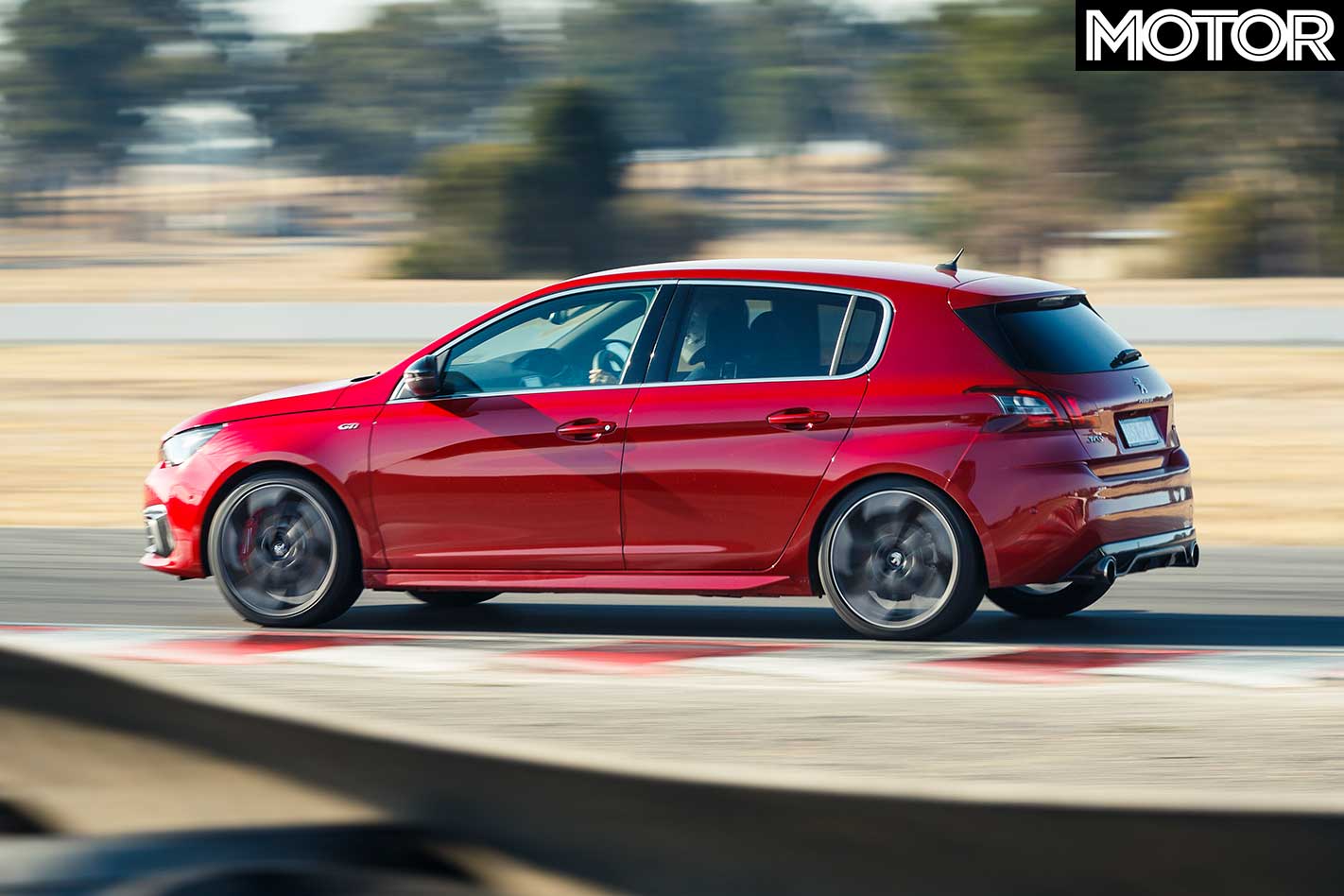
But the allure starts to fade in braking zones. Despite massive 380mm front discs slicing four-piston calipers, its stopping distance of 34.99mm ends lineball with the Subie WRX STI. That’s by no means bad, but can be seen as average considering the Pug’s weight advantage.
Nor could it muster any decent pace along the drag strip, trailing the less powerful Golf GTI Original from the line and only catching it by the strip’s end. Then there’s the experience of actually driving it. It’s no doubt effective, as all judges unanimously agreed it can cut a lap time without even peeking at the Driftbox.
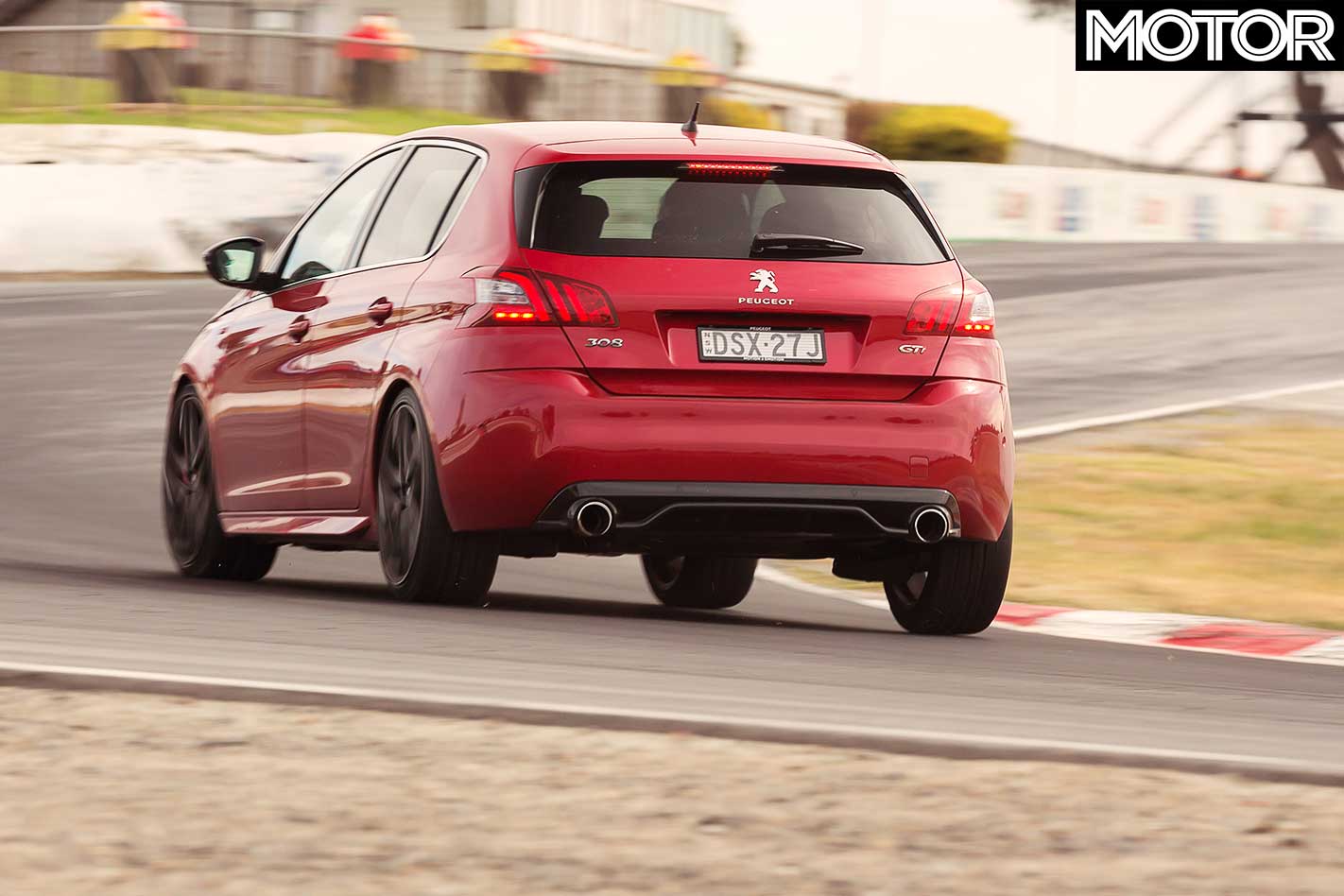
But so many different things erk different people. If it’s not the control weightings or brake feel, it was either its iffy ergonomics or dodgy dash design – why, Peugeot, does the rev dial spin anti-clockwise? And that’s reflected in its rather average ranking.
It’s all a shame, because the 308 shouldn’t be overlooked. It’s solidly built, hugely fast, and expertly engineered. We’d happily tell someone to consider it over a Golf GTI if they’re looking for something different. But as it turns out, it couldn’t manage the performance it wanted here. Let’s hope that doesn’t dampen Peugeot’s hopes in the future.
Peugeot 308 GTi 270 BFYB 2018 Results – 7th place
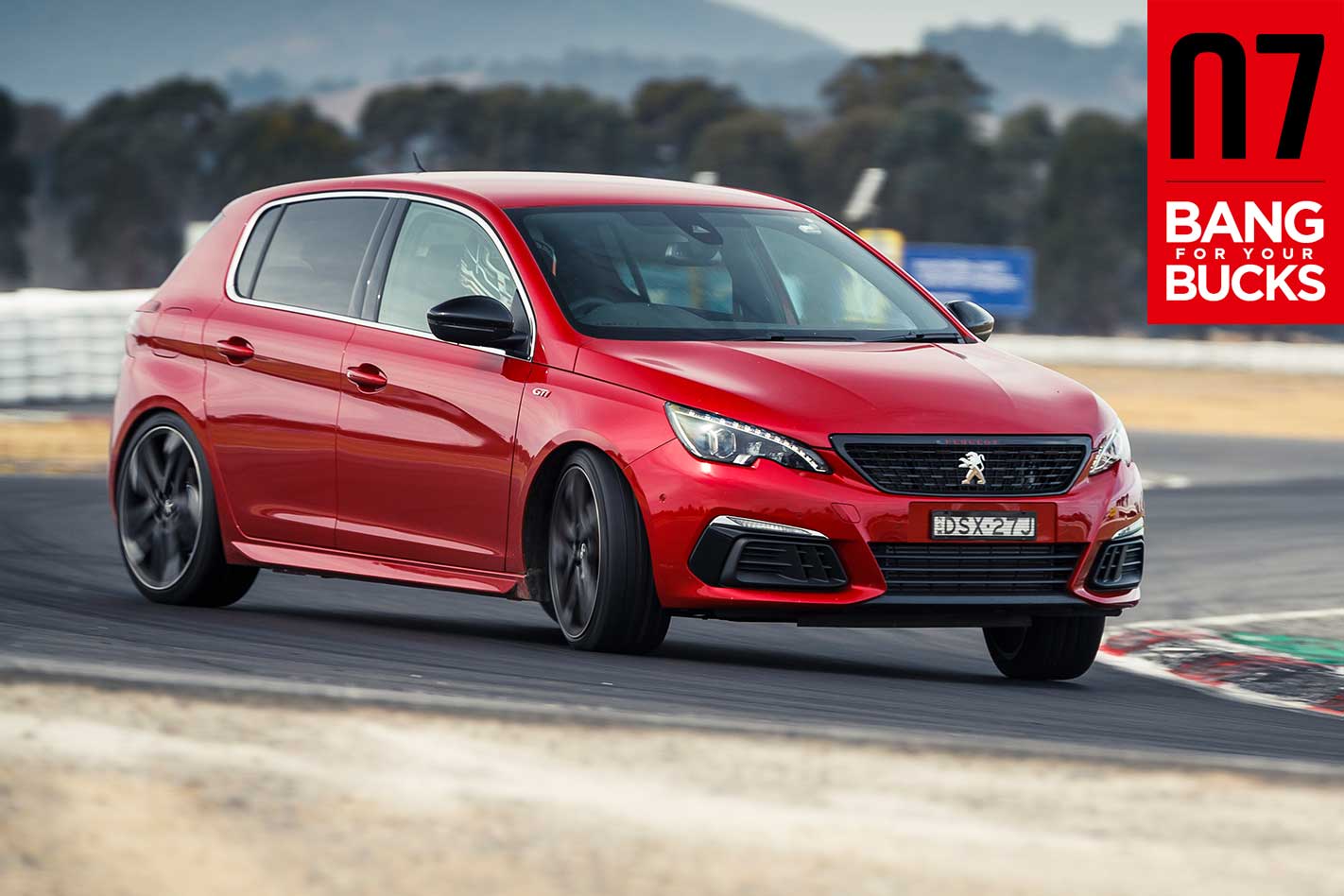
0-100km/h: 6.50sec (10th) 0-400m: 14.41sec @ 166.67km/h (9th) Lap Time: 1:38.20sec (4th) Price: $45,990 Bang Index: 135.9 Bucks Index: 109.2 BFYB Index: 123.9
Judges’ Comments
Warren Luff – 10th “The 308 GTi is really fast on the limit. It does everything so well – it’s so positive in the front-end and it has a lot of grip. The engine’s torquey and has great driveability; there are so many things that are good with it. But then there’s so many things that are very annoying. With my seating and steering-wheel position I can’t see about 80 per cent of the dash. But its on-track performance is second to none, in that regard it’s a class act.”
David Morley – 9th “Ergonomics aside, the 308 is a towering performer”
Dylan Campbell – 11th “World’s most underrated hot hatch – if you can get used to the controls”
Scott Newman – 9th “Does the numbers, but control weights are all a bit off”
Louis Cordony – 12th “I wanted to love it. The chassis is clearly capable, but it failed to truly talk to me”
FAST FACTS 2018 PEUGEOT 308 GTI 270
BODY: 5-door, 5-seat hatch DRIVE: front-wheel ENGINE: 1598cc inline-4, DOHC, 16v, turbo BORE/STROKE: 77.0mm x 85.8mm COMPRESSION RATIO: 9.2:1 POWER: 200kW @ 6000rpm TORQUE: 330Nm @ 1900-5500rpm WEIGHT: 1205kg POWER-TO-WEIGHT: 166kW/tonne TRANSMISSION: 6-speed manual SUSPENSION: struts, coil springs, anti-roll bar (f); torsion beam, coil springs, anti-roll bar (r) BRAKES: 380mm ventilated discs, 4-piston calipers (f); 268mm solid discs, single-piston calipers (r) WHEELS: 19.0 x 9.0-inch (f/r) TYRES: Michelin Pilot Super Sport; 235/35 R19 (f/r) PRICE: $45,990
Bang For Your Bucks 2018
 The Contenders, Judges & Criteria
15 of the hottest new fast cars under $100K roll up to take on our famous formula. Which will be number 1?
Nismo is an abbreviation of Nissan Motorsport, so surely its tweaked 370Z would feel right at home on a racetrack? Yes and no.
This track review was carried out in conjunction with MOTOR’s Bang For Your Bucks 2018
Its firmer suspension, grippier rubber, stiffer bodyshell and bigger brakes certainly delivered against the stopwatch, Luffy recording a stunning 1:36.9sec circuit of Winton, a mere second behind the turbocharged (and decidedly newer) hot hatches from Ford and Honda and good enough for a clear third on the day.
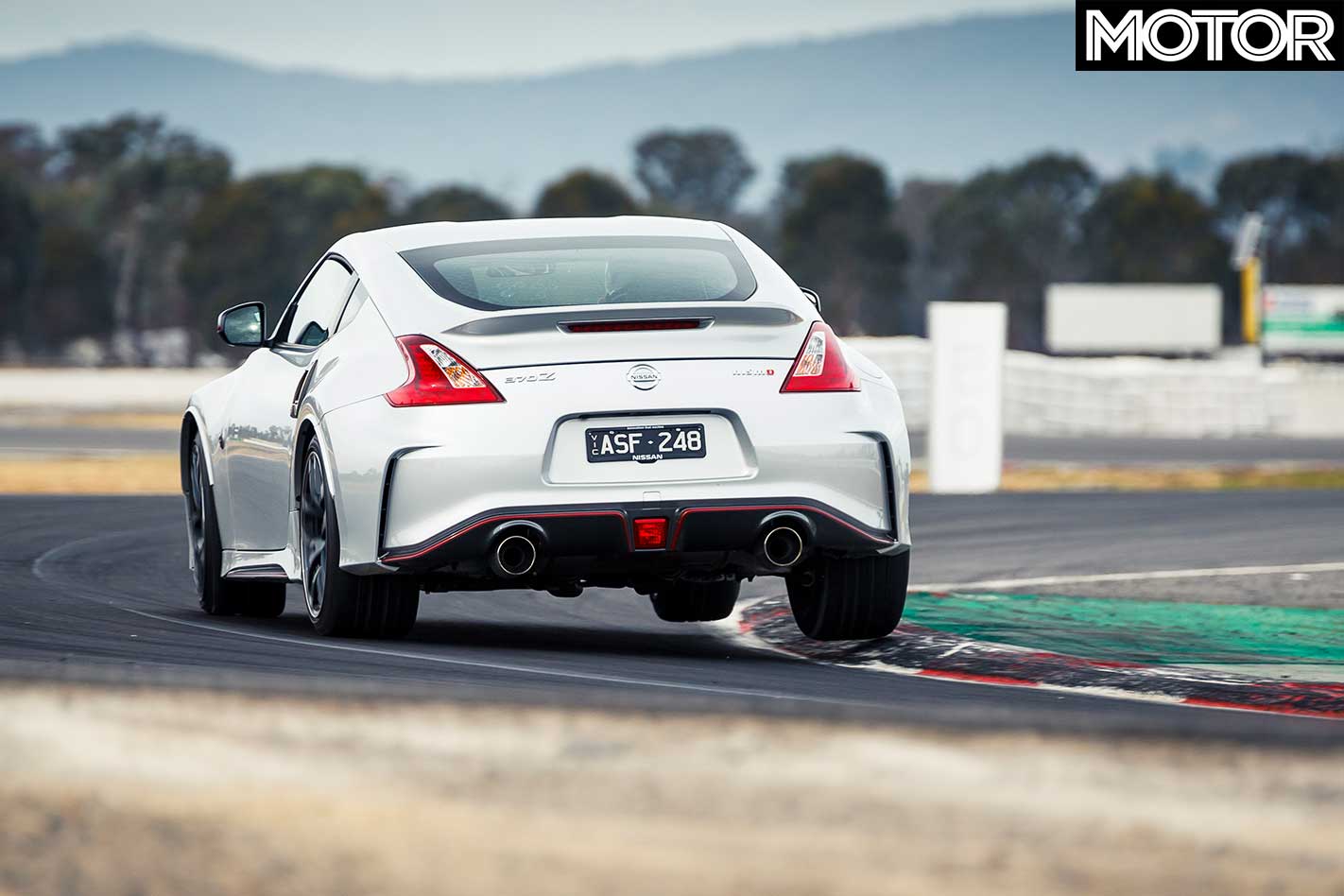
On the drag strip it wasn’t quite so impressive, but 5.87sec to 100km/h and a 14.07sec quarter mile at 167.17km/h isn’t too shabby, its relative lack of torque only beginning to show at the top end.
Surprisingly, it also sounded the business from outside, doing a damn good impression of an E46 M3 (seriously!) as it howled its way around the track, its sharp, metallic song being music to the ears of bystanders.
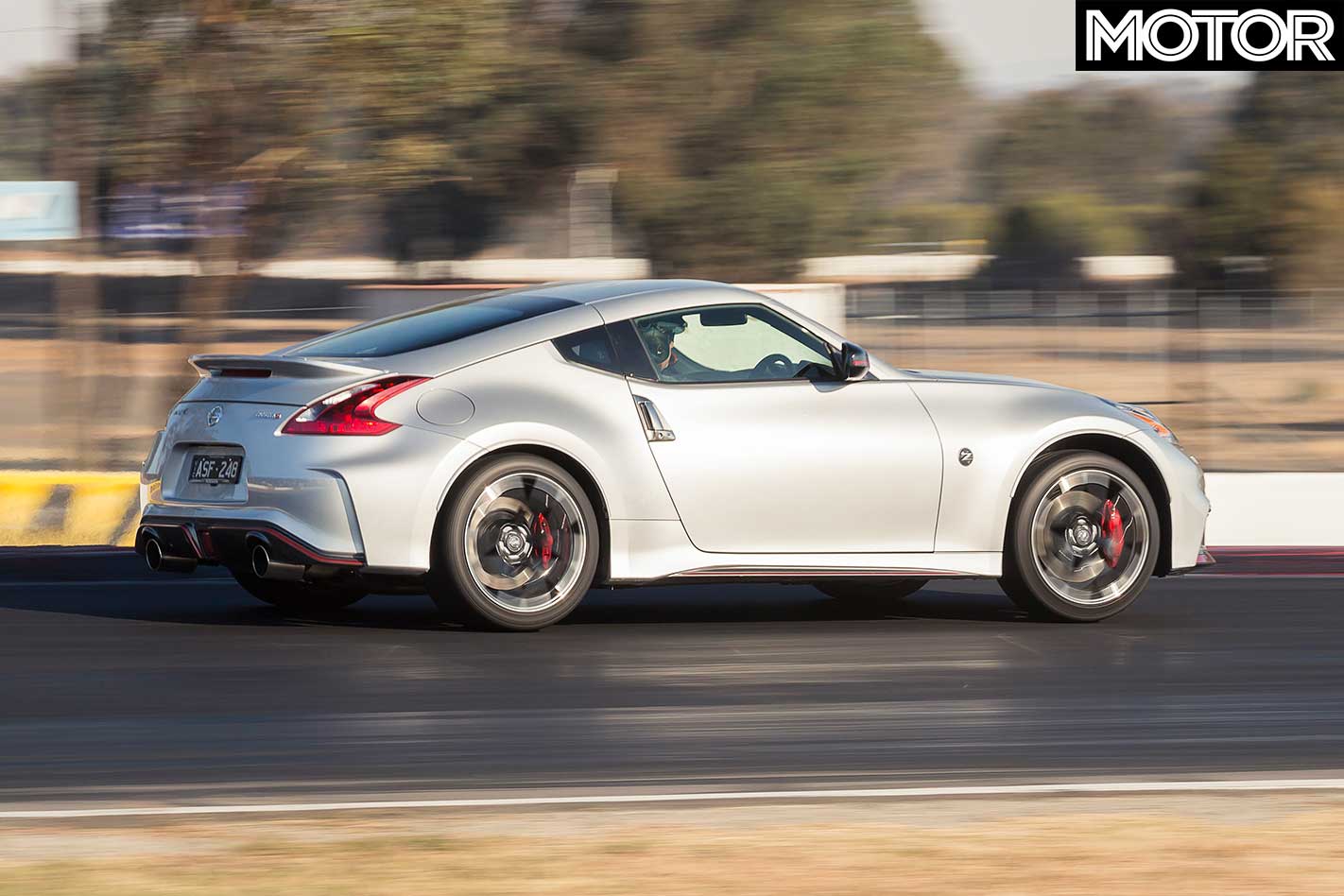
This only makes it all the more frustrating that from behind the wheel the Nismo sounds like an asthmatic vacuum cleaner, feeling harsher and more strained with every rev from 6000rpm to the 7500rpm redline.
Despite lacking any great enthusiasm for revs, the engine is effective and the gearing well-suited to Winton. The gearshift is far from buttery smooth, but it is at least short in throw.
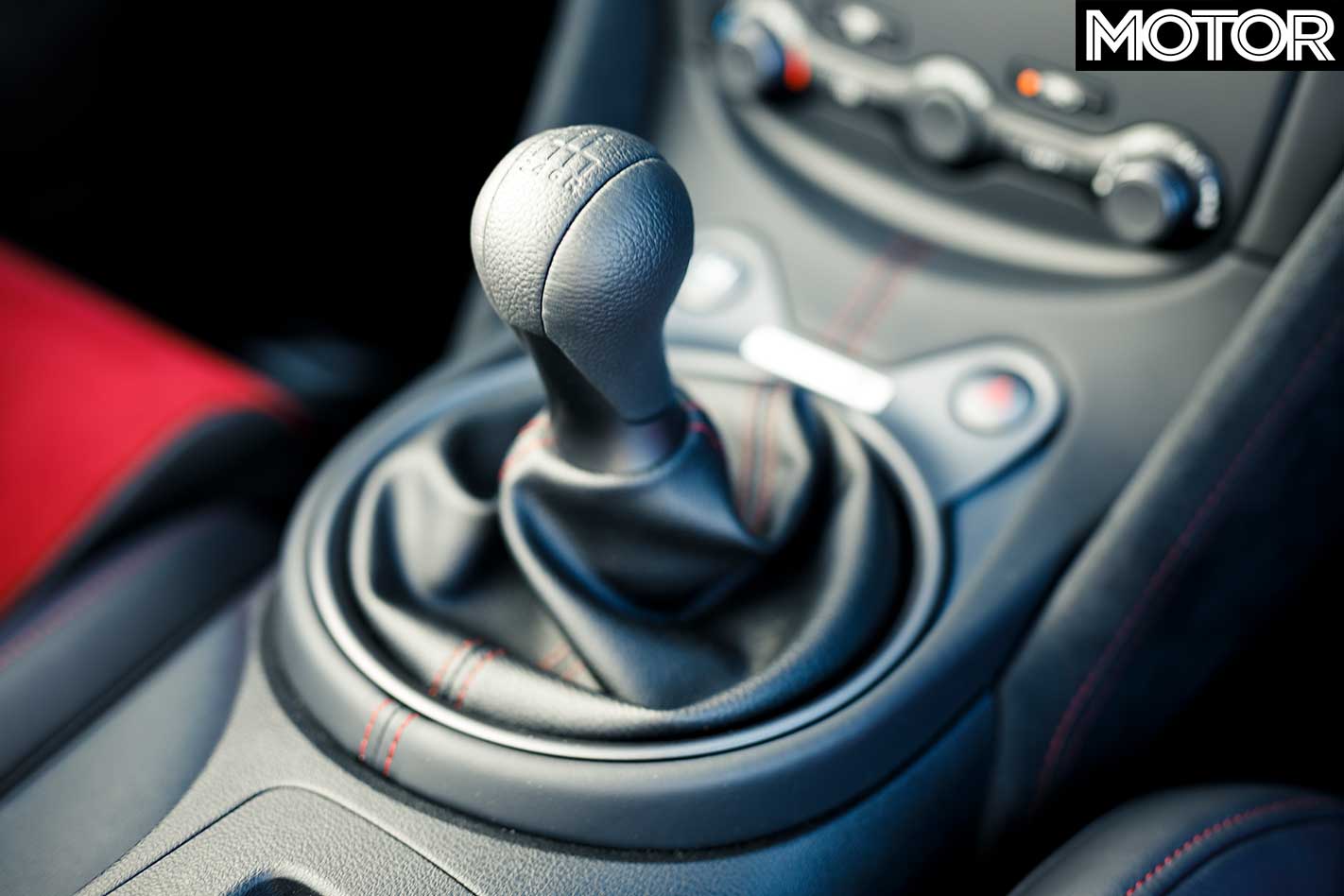
As much as it’s painful to admit, Nissan’s auto-rev function on downshifts is absolutely flawless and allows you to gain crucial metres under braking, safe in the knowledge you can simply select the next gear at any time and the computer will sort out that tricky heel-toe thing.
Unfortunately, this electronic wizardry only removes another layer of driver involvement from what is a fairly one-dimensional driving experience. A powerful, naturally aspirated rear-drive coupe on a racetrack should result in a smile a mile wide, yet the 370Z Nismo has, in DC’s words, been “smothered in grip”.
Wearing Dunlop SP SPORT MAXX GT 600 tyres measuring 245/40 front and 285/35 rear, the Nismo just doesn’t have the power or ability to generate enough speed to stress its sticky boots. As a consequence, you simply barrel into corners as fast as you can then mash your foot to the floor on exit – there’s little finesse required.
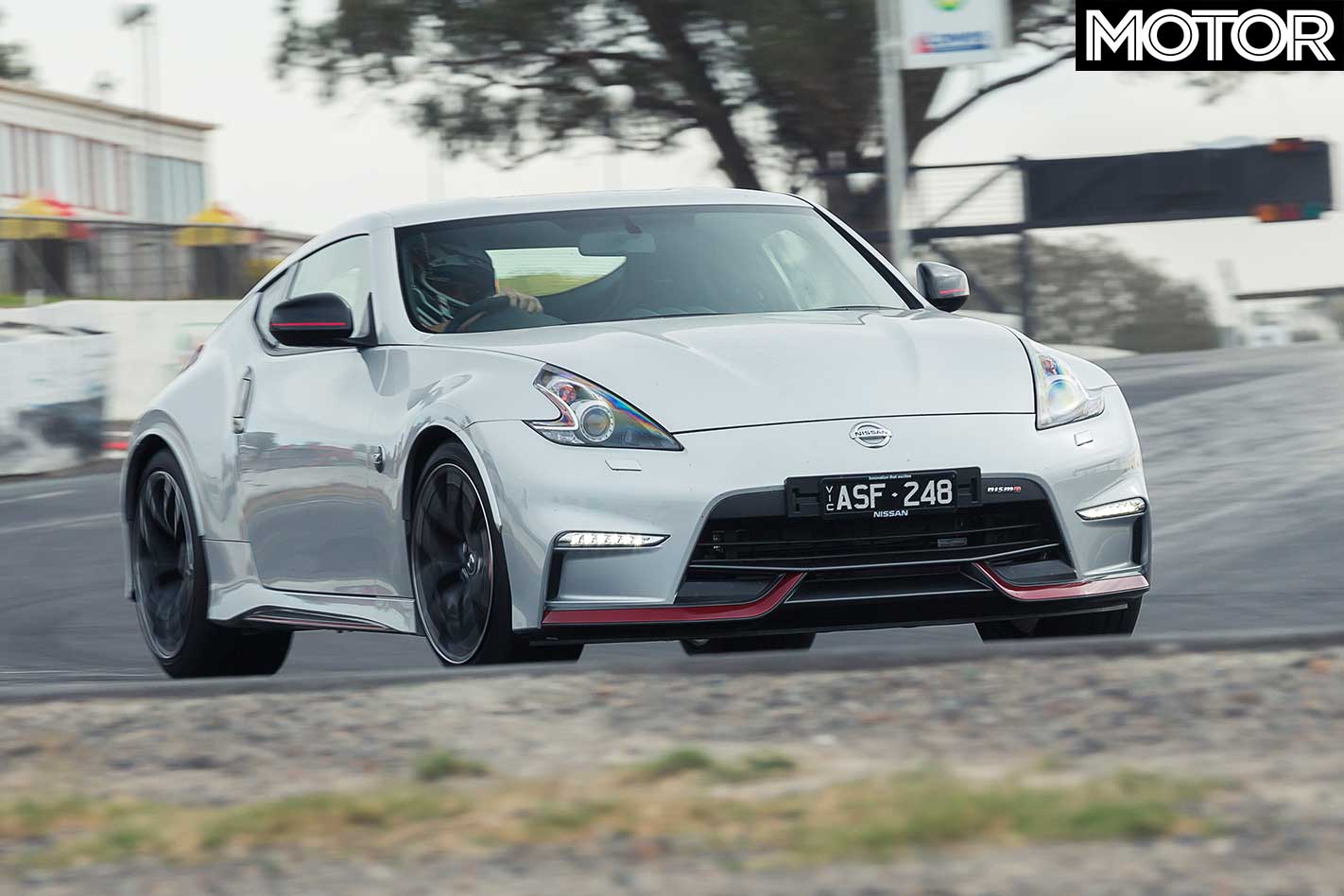
At a very fast track this stability might be an advantage, but at Winton the 370Z just wasn’t that entertaining. Our resident racer was a fan, placing it 6th, but every other judge was less impressed, ranking it either second- or third-last.
Nissan 370Z Nismo BFYB 2018 Results – 8th place
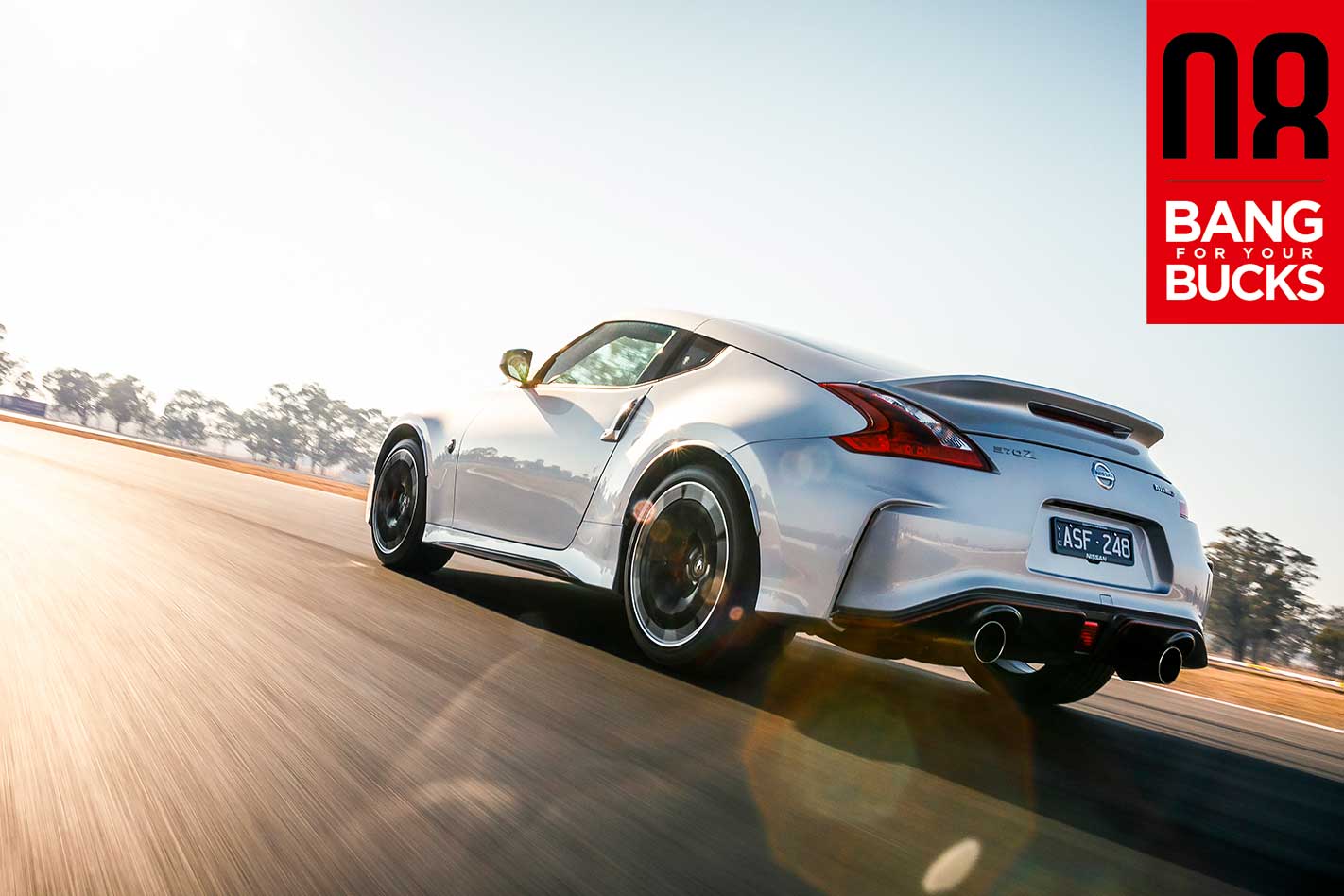
0-100km/h: 5.87sec (8th) 0-400m: 14.07sec @ 167.17km/h (8th) Lap Time: 1:36.90sec (3rd) Price: $61,490 Bang Index: 154.9 Bucks Index: 81.7 BFYB Index: 121.9
Judges’ Comments
Warren Luff – 6th “Out of all the cars here it’s probably the easiest car to produce that kind of lap time. Probably the only thing that makes the car nervous is the ABS. It’s like it has a bit of a trigger on the inside wheel and causes the car to pull a little left-right, which upsets the car. Still, the mechanical grip and the amount of lateral grip this car has is phenomenal. The gearbox is good, while the engine probably feels a little raw and unrefined.”
David Morley – 14th “Zed’s dead, baby. ”
Dylan Campbell – 13th “Smothered in grip, like a bad meat pie with tomato sauce”
Scott Newman – 13th “Substitutes handling for grip. Quick but not very pleasant”
Louis Cordony – 13th “A car that continues to hit and miss at MOTOR. Fast, but a bit numb”
FAST FACTS 2018 NISSAN 370Z NISMO
BODY: 2-door, 2-seat coupe DRIVE: rear-wheel ENGINE: 3696cc V6, DOHC, 24v BORE/STROKE: 95.5mm x 86.0mm COMPRESSION RATIO: 11:1 POWER: 253kW @ 7000rpm TORQUE: 363Nm @ 5200rpm WEIGHT: 1467kg POWER-TO-WEIGHT: 167kW/tonne TRANSMISSION: 6-speed manual SUSPENSION: A-arms, coil springs, anti-roll bar (f); multi-links, coil springs, anti-roll bar (r) BRAKES: 355mm ventilated discs, 4-piston calipers (f); 350mm solid discs, 2-piston calipers (r) WHEELS: 19 x 9.5in (f); 19 x 10.5in (r) TYRES: Dunlop Sport Maxx GT 600; 245/40 R19 (f); 285/35 R19 (r) PRICE: $61,490
Bang For Your Bucks 2018
The Contenders, Judges & Criteria
15 of the hottest new fast cars under $100K roll up to take on our famous formula. Which will be number 1?
Three months after the Mission E Cross Turismo starred at the Geneva Motor Show, Porsche rolled out the concept car for MOTOR to test on real roads, in real traffic.
However, we’re under strict instructions to go easy on this hand-built, multi-million dollar one-off. So, no sub-5.0sec 0-100km/h runs, no full-throttle hooliganism, and easy-does-it cornering in deference to the soft-compound 275/40 R20 off-road rubber.
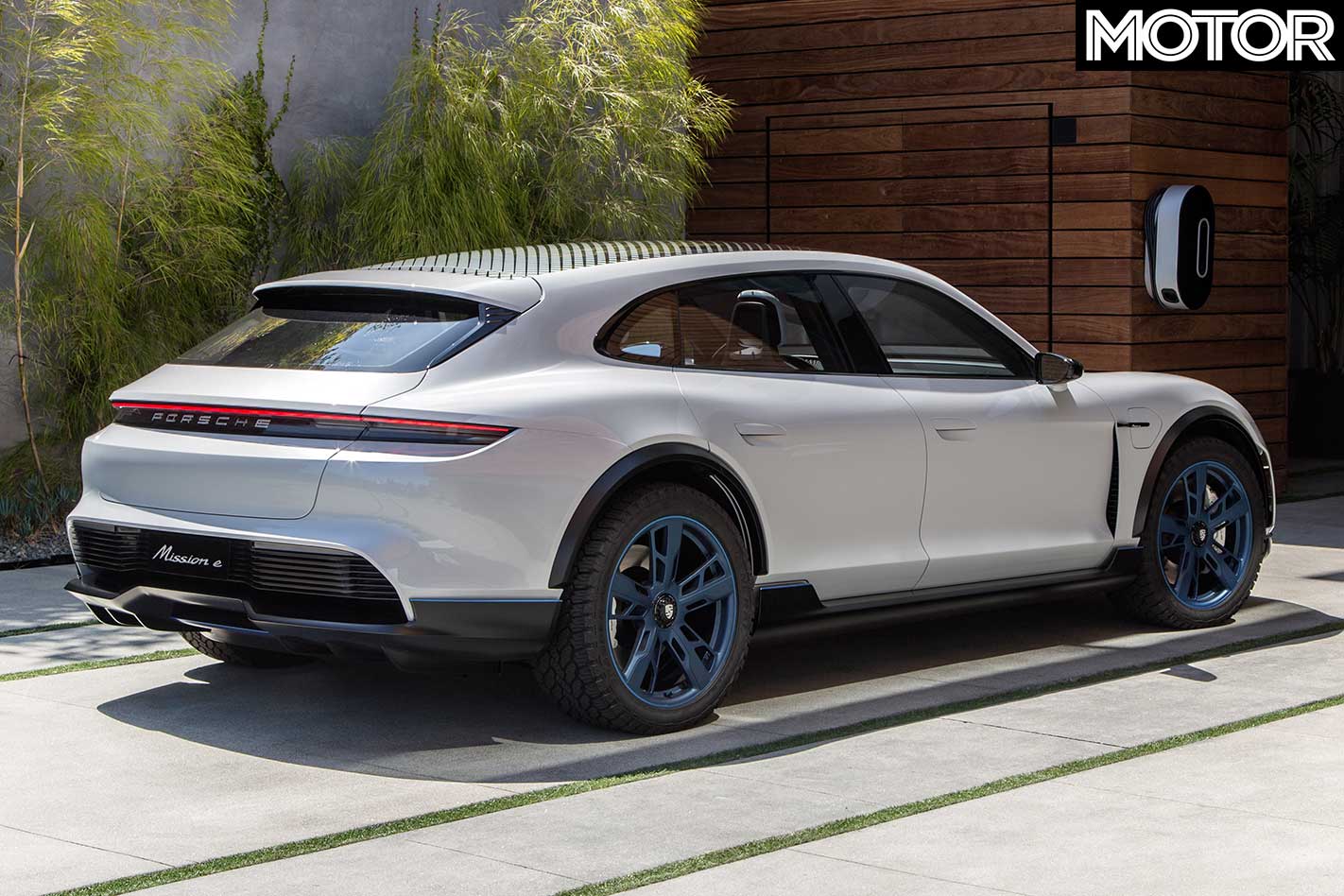
“One motor up front, one motor in the back, all-wheel drive, under-floor battery pack,” he smiles. Missing are air suspension, rear-wheel steering, and the sound generator that will mimic a switchable exhaust. “At this early stage in the development process we are, of course, not yet running on maximum power and torque,” Weckbach adds.
So, to protect pre-production components, first gear is bypassed and we’ll be in second at all times, and instead of the promised 440kW there is only around 330kW to play with.
You can search the E Cross in vain for a starter button, but given this is a cutting edge car there is a small on-off touch pad to the left of the steering column, which sets things in motion – or is that e-motion? And the transmission lever, labelled PRND, has now been moved to the two o’clock position behind the wheel.
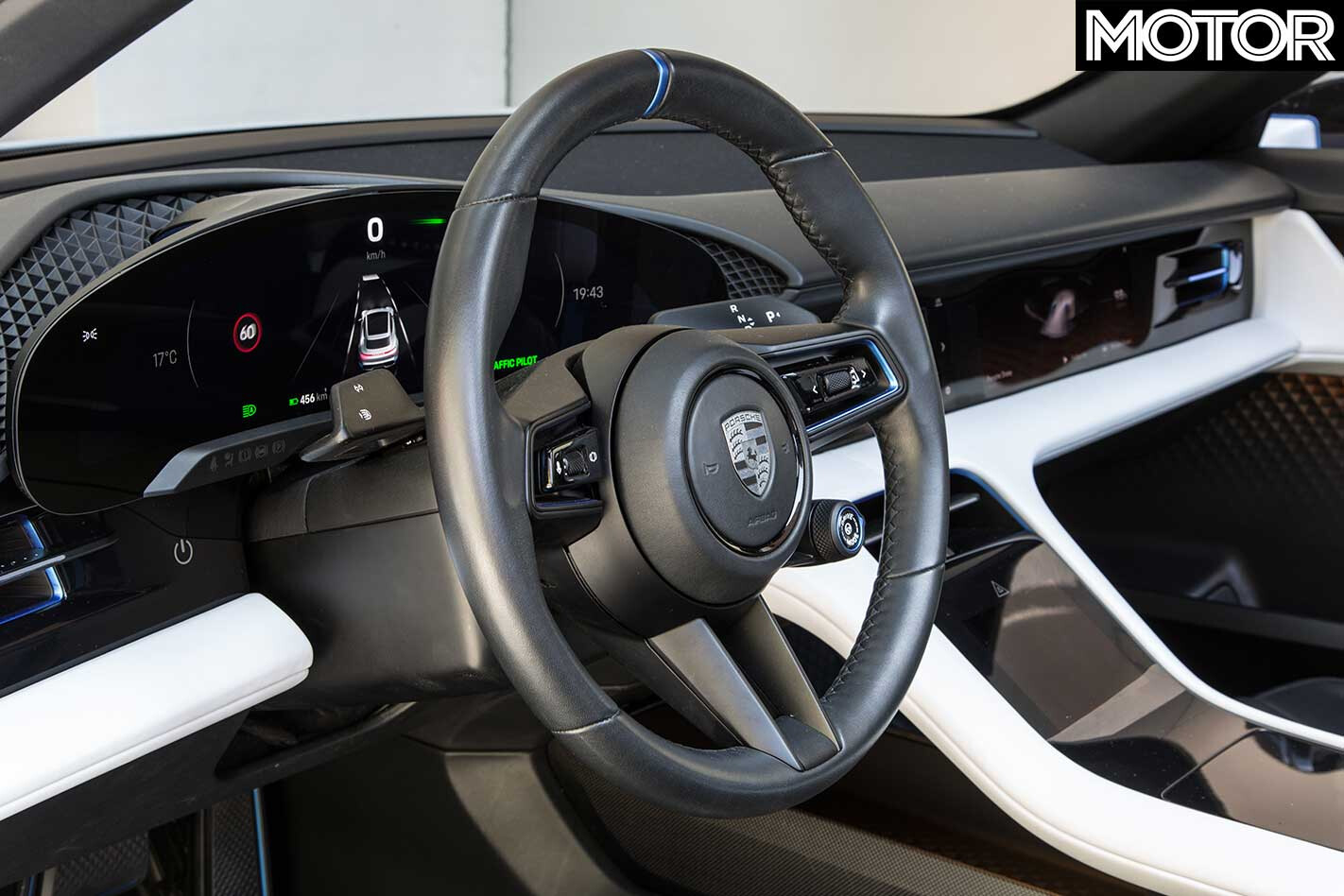
That sounds pretty banal, but the driving menu can be spiced up by selecting one of five modes: Normal, Range, Sport, Sport Plus and Individual. Not yet confirmed are Eco, Wet and Off-Road settings.
Normal is all about lift-off coasting, Sport and Sport Plus are self-explanatory. Range (reportedly to be around 500km) does its best to quash get-home anxiety, while Individual lets you tweak suspension, steering, stability control, drivetrain and soundtrack to your preference.
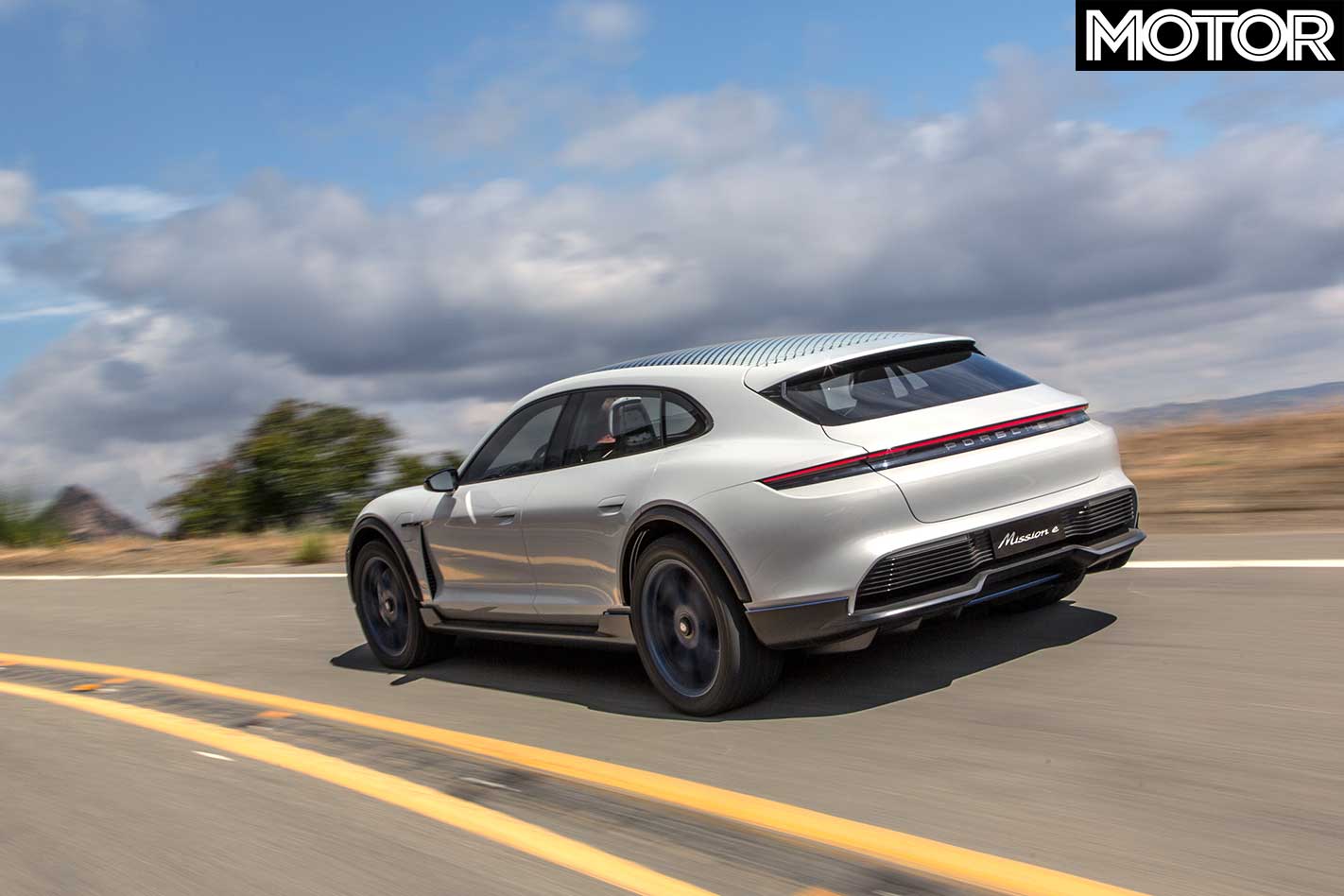
On the winding backroads in the hills above Malibu the electrically-assisted steering sets new standards in terms of weight, damping, precision, speed and turning circle. With a low centre of gravity – better than any 911 – and near-perfect weight distribution, the car feels firmly planted, as if on a magnetic field.
Torque vectoring is by all-wheel drive, brake actuation, and an optional electronically controlled rear side-to-side diff lock. Stopping is controlled by a complex deceleration apparatus that combines conventional (or optional carbon ceramic) brakes with a single-speed energy recuperation device, but don’t expect a fancy three-step, one-pedal system.
“One pedal is not our philosophy,” stresses Weckbach. “This is a proper sports car; its mission is untamed acceleration and instant torque, not lift-off braking.”
Speaking of untamed acceleration, flooring the throttle flattens every climb; it’s physical, immediate, and awe-inspiring and Porsche is claiming a 0-100km/h time of under 3.5sec. But the driving public is still a long way from fully adjusting to E-cars and novice E-drivers will, no doubt, flinch when close to 1000Nm of torque gives them an almighty shove in the back.
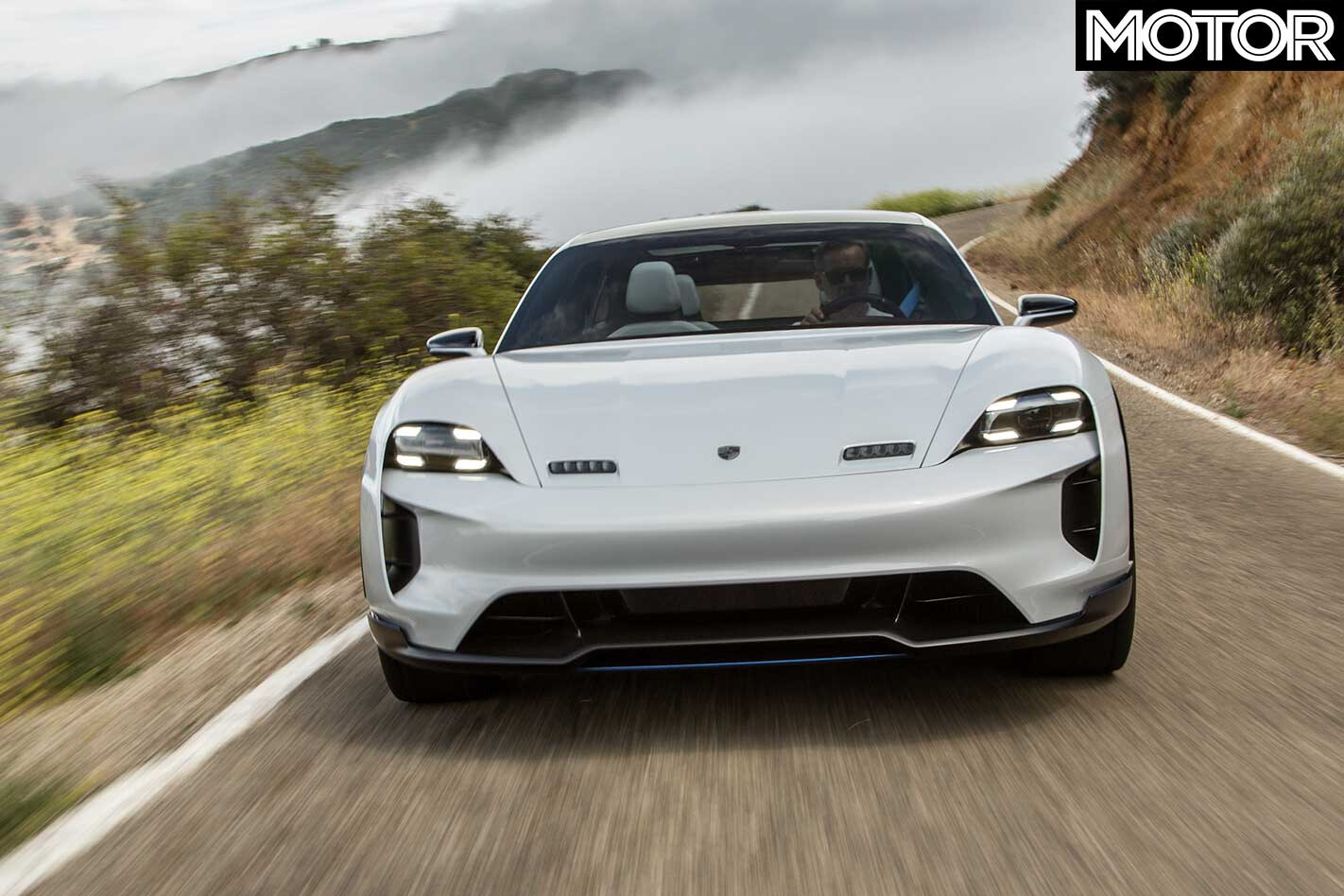
Rushing from corner to corner, you can still hear the wind, the squealing tyres, the bee-bop of the Panamera-derived suspension and occasionally grating brakes, but the batteries, transmissions and motors are all but noiseless. It’s a new driving world, but Weckbach reassures me that the future of Porsche will be familiar.
“A plug-in Porsche must drive and perform like a Porsche fitted with a combustion engine,” he stresses. “It must sustain long, flat-out autobahn stints without overheating. Repeatability is key when it comes to full-throttle acceleration. The main dynamic parameters have to remain through the entire battery charge span. Only when the warning light comes on, under certain conditions, performance may be compromised for range.”
That’s reassuring, and for one precious moment on a sunny California day, high-end BEVs like the Porsche E Cross Turismo, er Taycan, seem to have only virtues and no downsides.
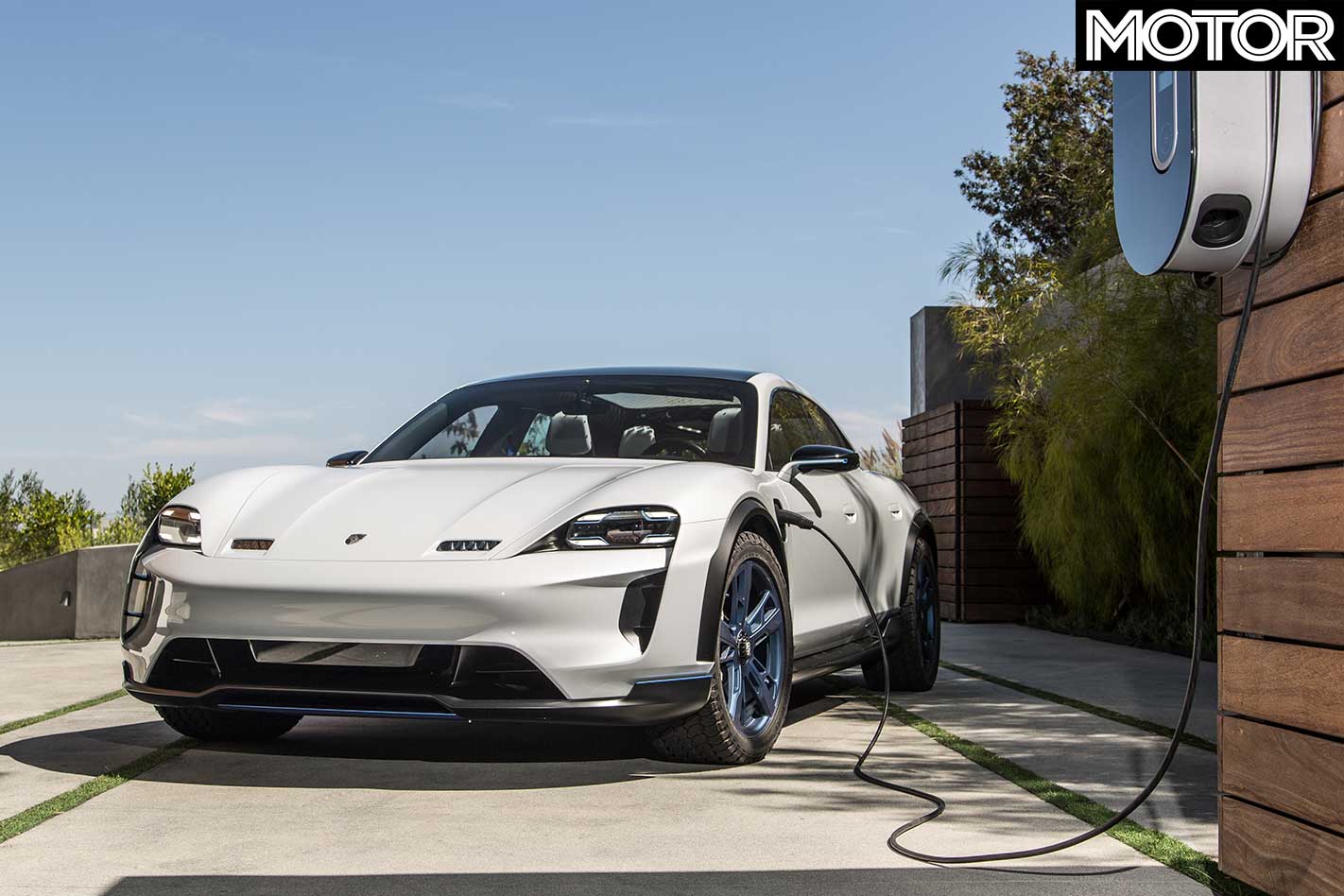
2018 PORSCHE MISSION E CROSS TURISMO CONCEPT SPECS: Engine: Twin synchronous electric motors Power: 440kW (approx) Torque: 850Nm (approx) 0-100km/h: 3.5sec (claimed) Weight: 2150kg Price: TBC
Rating: 4 out of 5 stars Like: Blistering, immediate acceleration; huge torque; reasonable 500km range Dislike: Cramped interior; compromised headroom; complex dash ergonomics
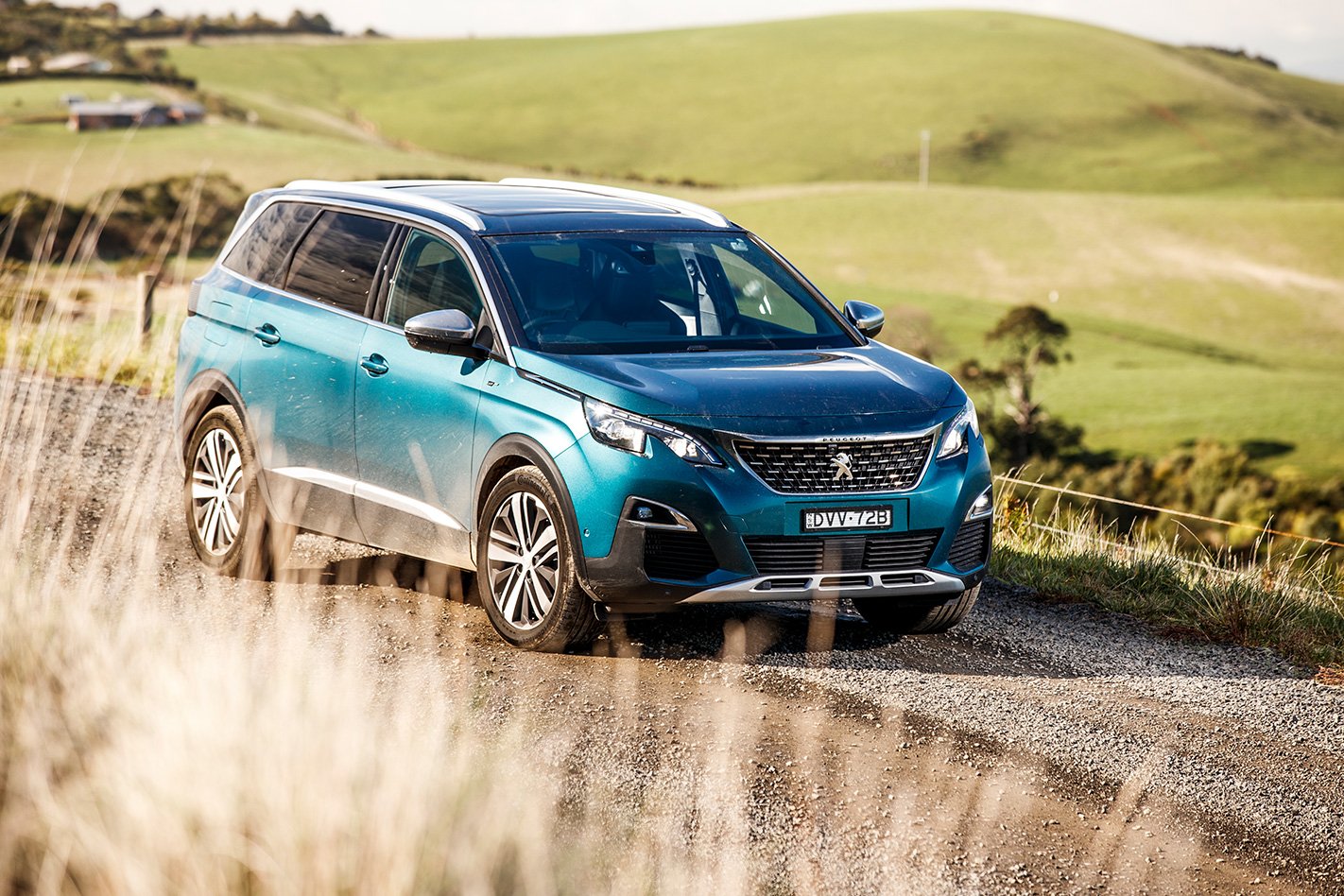
We have already established that the Peugeot 5008 is a commendable seven-seat SUV that sacrifices a little practicality in the name of style, design and to be that bit different, and it deserves recognition for daring to swim against the current of more mainstream boxy SUVs.
There are plenty of white-goods-people haulers in the market, but the pretty Pug offers something for the more aesthetically conscious customer with a unique design inside and out.
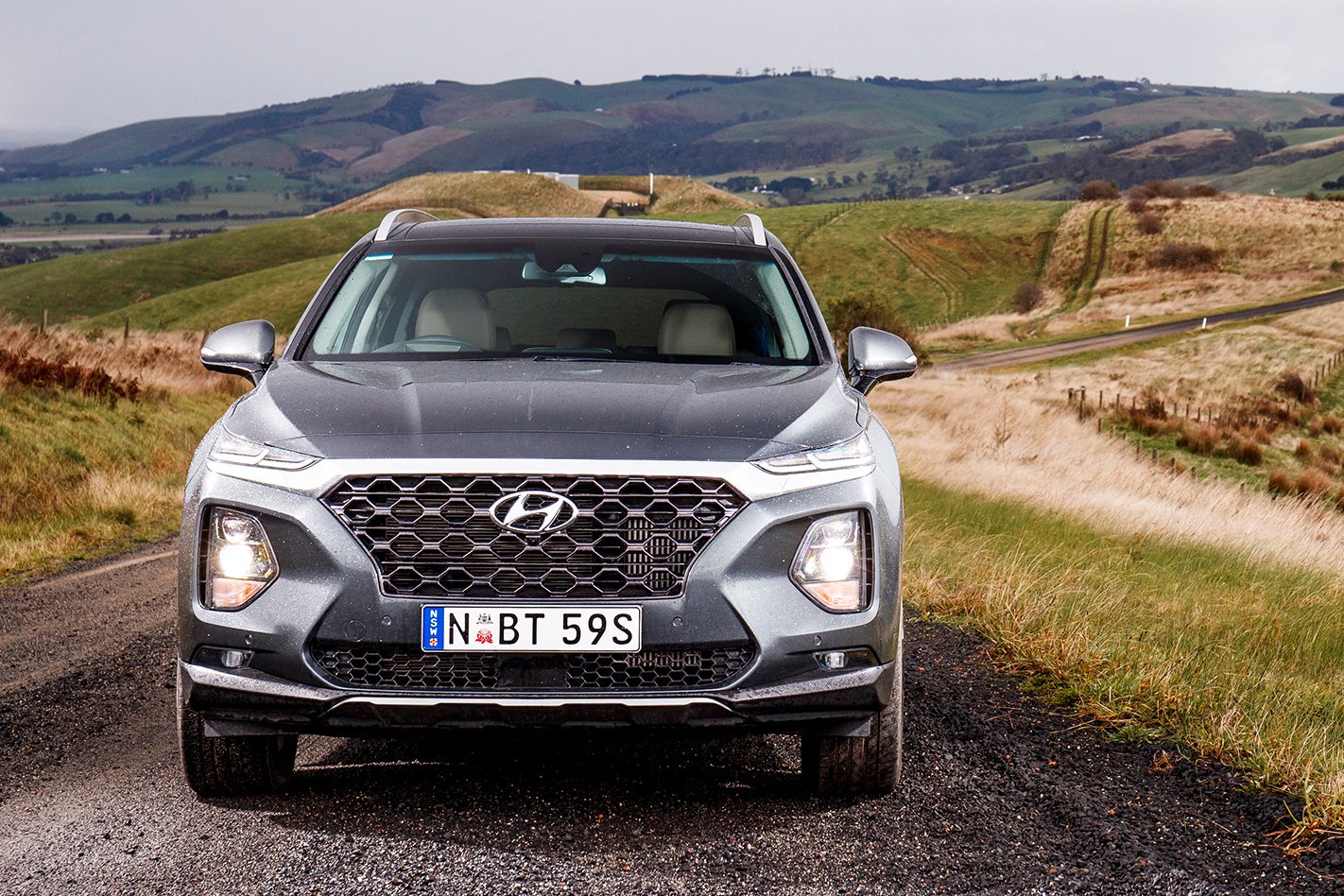
On the other hand there is the Hyundai Santa Fe, which has typically represented a more no-frills approach to large SUVs while still offering a good value package of practicality.
But the South Korean brand is realising something of a styling renaissance with SUV models including the Tucson and Kona placing emphasis on looking more memorable, while still upholding Hyundai’s value principles.
Both manufacturers offer entry-level versions powered by petrol engines but we focused on the most premium variants with diesel power under the bonnet.
So we pitched the latest version of the resoundingly popular Santa Fe against the niche favourite 5008 to see if a more style-driven Hyundai can learn a lesson in European design, while still offering the all-rounder package that Aussie buyers have come to expect.
Price and equipment
Peugeot 5008 If you’re trying to stand out as the leftfield manufacturer among conservative company, then nothing says unorthodox quite like an electric scooter stowed in its own boot-mounted charging cradle. The e-Kick electrically assisted scooter is an eye-watering $1700 option that we think will find a very limited audience – perhaps the ‘e’ stands for esoteric, but nicely highlights the French car maker as a free thinker.
Once the preserve of concept cars, the fold-up conveyance clicks together in seconds and allows up to 12km of zero-emissions scooting for those final few kilometres that the 5008 can’t cover, such as a pedestrianised metropolis for example.
Base price for the 5008 GT is $54,490 and includes two ‘interior ambience’ choices as part of the i-Cockpit, which changes the cabin lighting, dynamics and even the interior fragrance. As the names suggest, Boost imparts a more energetic atmosphere, while Relax uses more serene lighting and a corresponding air freshener scent.
A 12.3-inch digital screen replaces more conventional analogue gauges, viewed over the top of the steering wheel (not through it), complemented by a central 8.0-inch touchscreen.
The driver’s seat gets eight-way electric adjustment, both front seats are heated, the second row gets window blinds and a pair of airline-style tray tables and the third row of seating folds flat or is completely removable for boosted boot space.
A hands-free power tailgate can be operated with a foot swipe under the rear bumper and as the top-spec 5008, 19-inch wheels are standard, as are LED headlights, chrome look door mirrors, wheel-arch extensions and GT badging to complete the exterior looks.
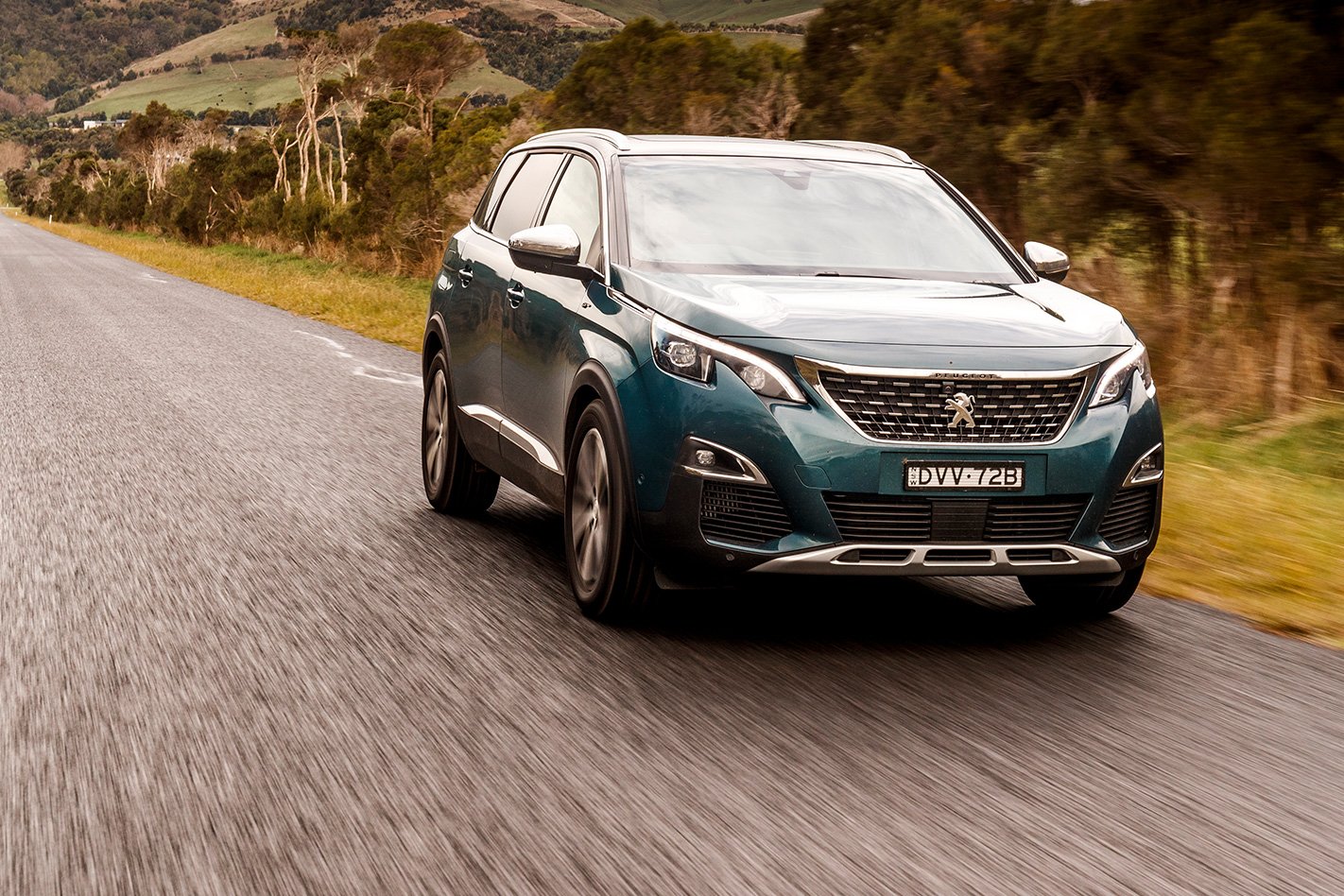
In addition to the legally required safety systems, the 5008 has a 360-degree camera with parking sensors front and rear, autonomous emergency braking, speed sign recognition, lane-keep assistance with blind-spot monitoring and Isofix child seat mountings for two seats. ANCAP is yet to award the 5008 with a safety rating.
For what it’s worth, we could live without the way-over-the-top door-open siren that sounds more like a space station fire evacuation alarm.
Peugeot’s Grip Control is standard for entry Allure and GT Line bringing more all-terrain grip but is a no-cost option for the GT as it adopts the smaller 18-inch wheels.
Beyond its final-kilometre scooter option, the Pug was specced up with a smart Nappa leather interior with quilted pattern (replaces the standard Alcantara and artificial leather), a panoramic sunroof for an extra $4000 and a posh lick of paint for $690.
Hyundai Santa Fe At $60,500 before on-road costs, the Hyundai Santa Fe Highlander kicks off a little pricier than the Peugeot but packs in more standard kit.
Like the Peugeot, the Hyundai has a central 8.0-inch touchscreen, but the instrument cluster is only partly digital and flanked by more traditional gauges. It does, however, double up with a head-up display.
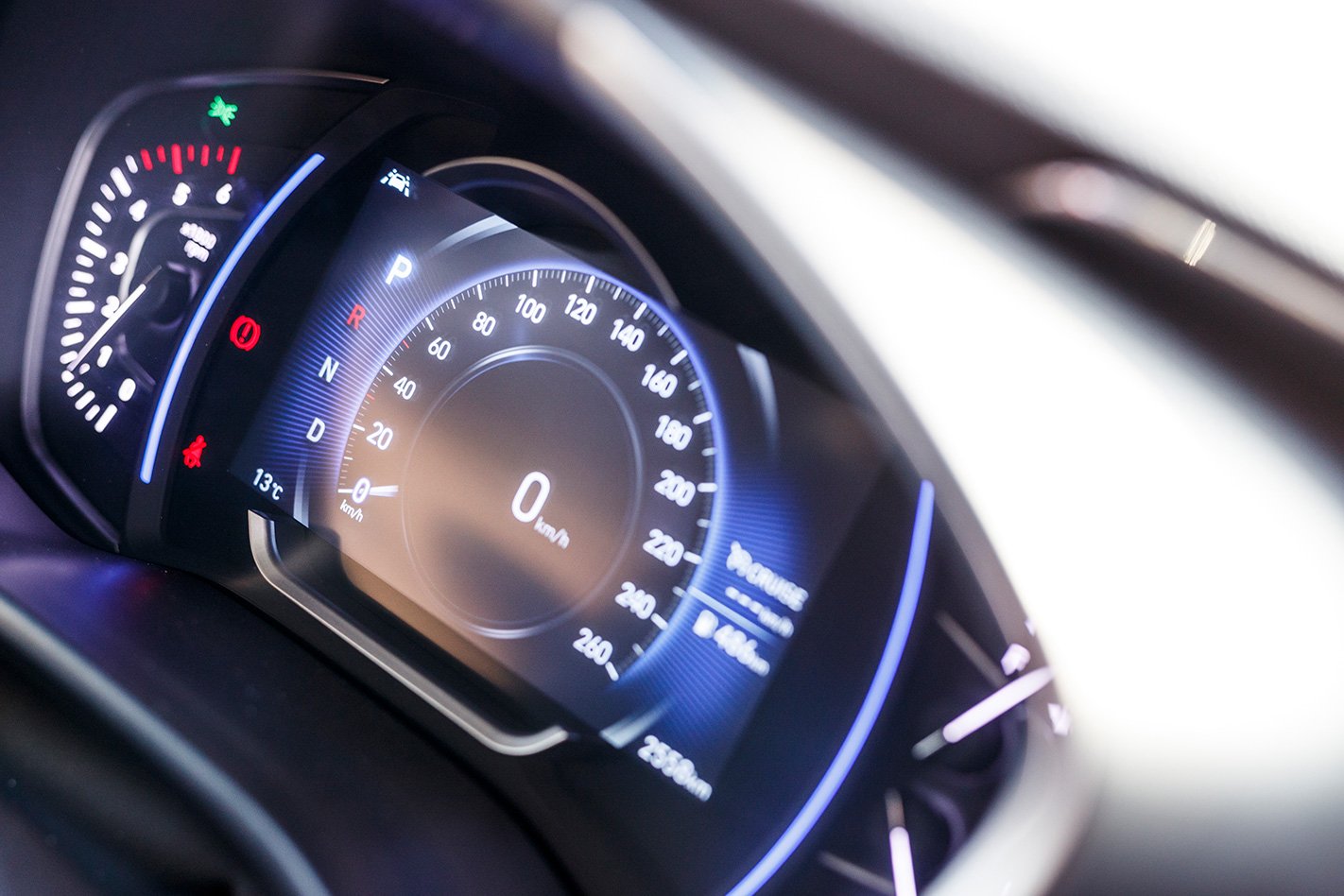
A hands-free power tailgate is also standard but, unlike the Peugeot, you don’t have to pay extra for the panoramic sunroof or leather – albeit only part-leather in the Hyundai.
The Hyundai also trumps the Peugeot with 10-way driver’s seat adjustment and eight-way adjustment for the passenger too. Both front seats have heating, with cooling ventilation as well, and the second-row seating and steering wheel also get heaters.
If heated seats are a must in the Santa Fe then the Highlander range-topper is now your only choice, with the previous-gen Elite heated seats now relegated, to the displeasure of some existing customers.
Second-row occupants do not get their own climate control panel, but there is a basic controller for the third row, while all passengers benefit from an air ioniser incorporated into the dual-zone climate control.
Safety highlights match the Peugeot almost exactly, though the Hyundai is also yet to be awarded an ANCAP rating.
Winner: Santa Fe
Interior and connectivity
Peugeot 5008 A majority of the Peugeot’s fans will doubtless be drawn to the excellent exterior styling, but the European flair continues through to the cabin as well with an unorthodox layout that loses little practicality by being stylish.
Peering over the top of the steering wheel (negating the need for head-up display, says Peugeot) and a tachometer that counters the clockwise rotation of the speedo takes some getting used to but otherwise, the design is intuitive and ergonomic.
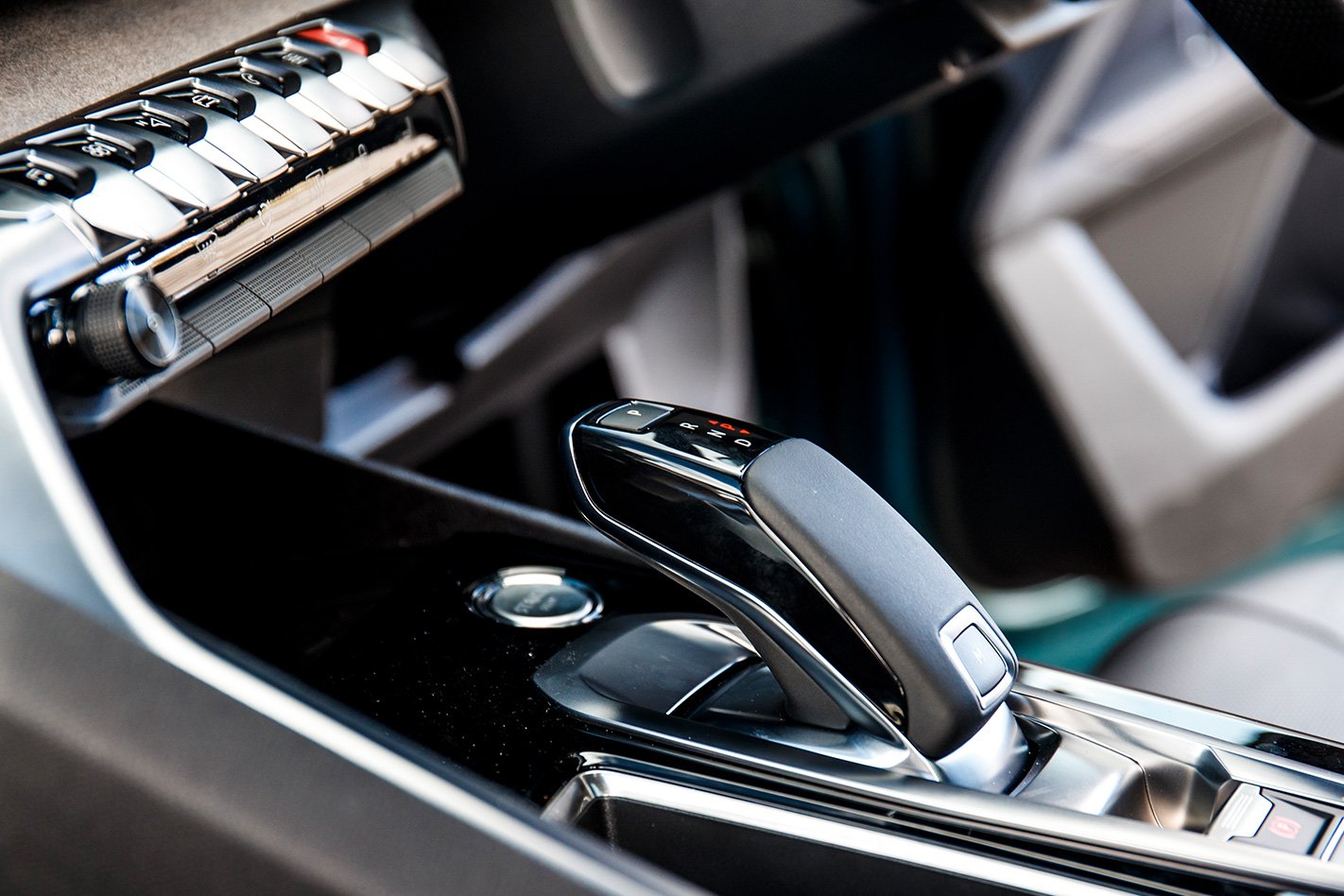
We particularly like the easy-to-use but pretty switchgear, ambient lighting that emanates even from the sunroof frame and the use of top quality and unusual materials throughout.
Annoyingly, some switches seem to be a little ignorant and need a prolonged or repeated push to get them to obey including the start/stop button, gear selector, rear wiper and even the horn.
While the second row has limited headroom, it is comfortable and well-appointed with sliding bench and adjustable back rest, the third row of seating is not such a viable proposition for adults or really anyone other than small children. With two extra seats, the 5008 is certainly a seven-seater by definition but relatively small dimensions for a three-row SUV seriously limit its practicality as a people mover.
If our car wasn’t fitted with the optional panoramic roof, we suspect front seat headroom would be severely limited as well.
Compared with the Hyundai, the Peugeot is 59mm shorter, 36mm narrower and has 44mm less height and that translates to a smaller cabin in every dimension except its boot. 780 litres compares with 547L for the Hyundai. Those figures expand to 1940L and 1625 respectively with the second-row seats folded away.
Charging devices and keeping a small fridge powered for example will not be a problem in the Peugeot with three 12-volt sockets scattered about the 5008 cabin, a pair of USB sockets for the second row and two more up front.

Navigation, Apple CarPlay and Android Auto mirroring is standard, along with wireless device charging in the front, digital radio and Bluetooth connectivity.
Hyundai Santa Fe There was nothing really wrong with the cabin of the previous-generation Santa Fe but nor was there anything particularly memorable about it either. For this version however, the South Korean car maker has made major changes and the result is a huge step forward in design and ergonomics.
What appear to be limited to frivolous styling touches in the form of segmented dash, door and seat panelling actually turn out to be ergonomically excellent additions to the cabin and the layout is well thought through. A random angular pattern to the speaker covers, seats and dash insert bring a more contemporary look along with unusual materials such as the almost tweed-like roof lining.
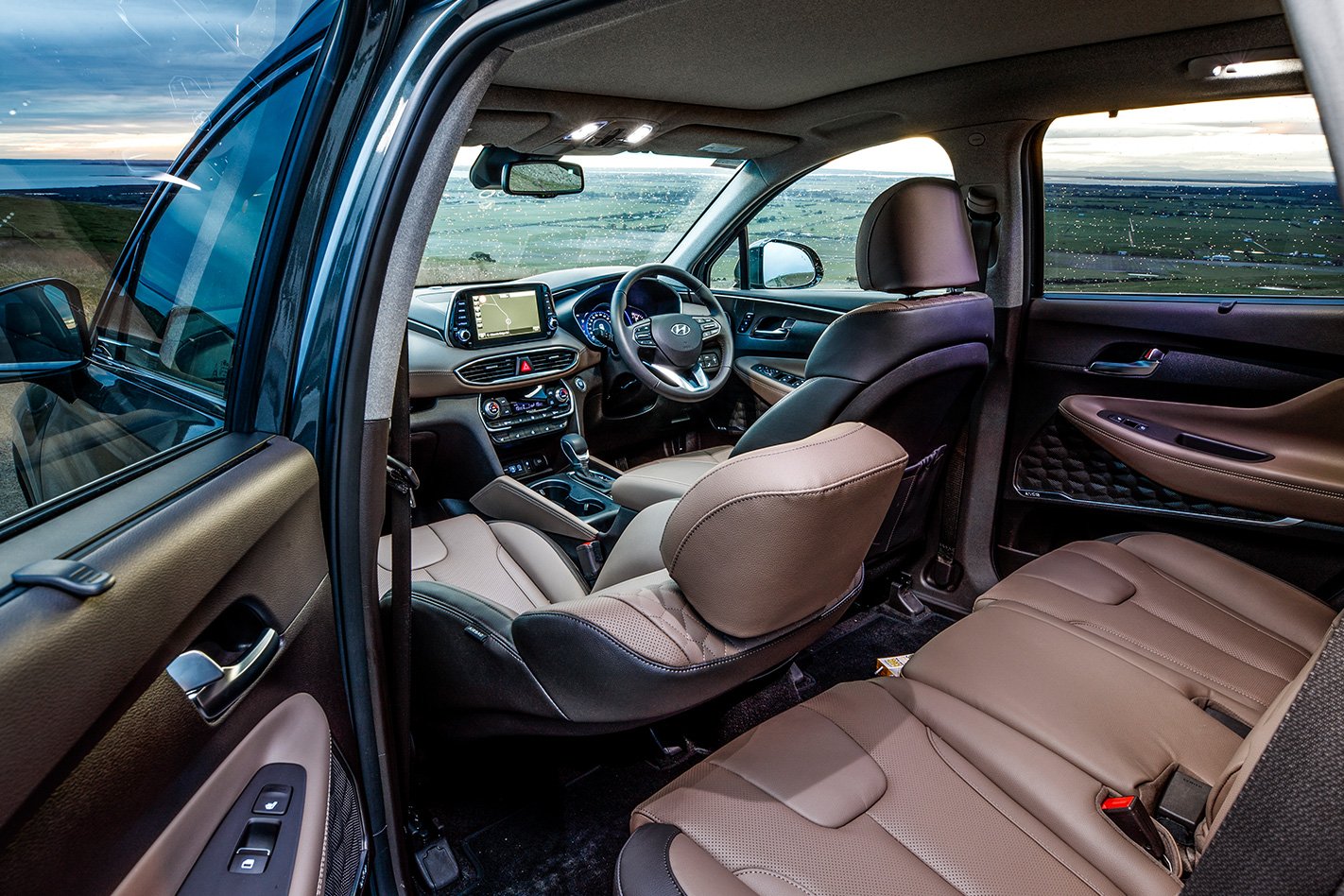
With its more generous exterior dimensions, the Santa Fe is somewhat of a second-row champion in the segment with ample space and great comfort features including seat heaters, sun blinds and two USB ports.
But the good news continues into the third row where the pair of seats can realistically accommodate adults for shorter journeys. They are also easy to access thanks to an electrically sliding second row.
Technology features well too with an almost identical kit list as the Peugeot including Android Auto/Apple CarPlay, navigation, Bluetooth and digital radio, but ups the audio ante with a ten-speaker stereo courtesy of Infinity.
Winner: Santa Fe
Ride and handling
Peugeot 5008 With a kerb weight of 1631kg, the 5008 is somewhat of a lightweight in the segment and that translates to a nature that driving enthusiasts will appreciate. There’s a real confidence to the front end grip and body-roll is minimal even when being fed through corners fast.
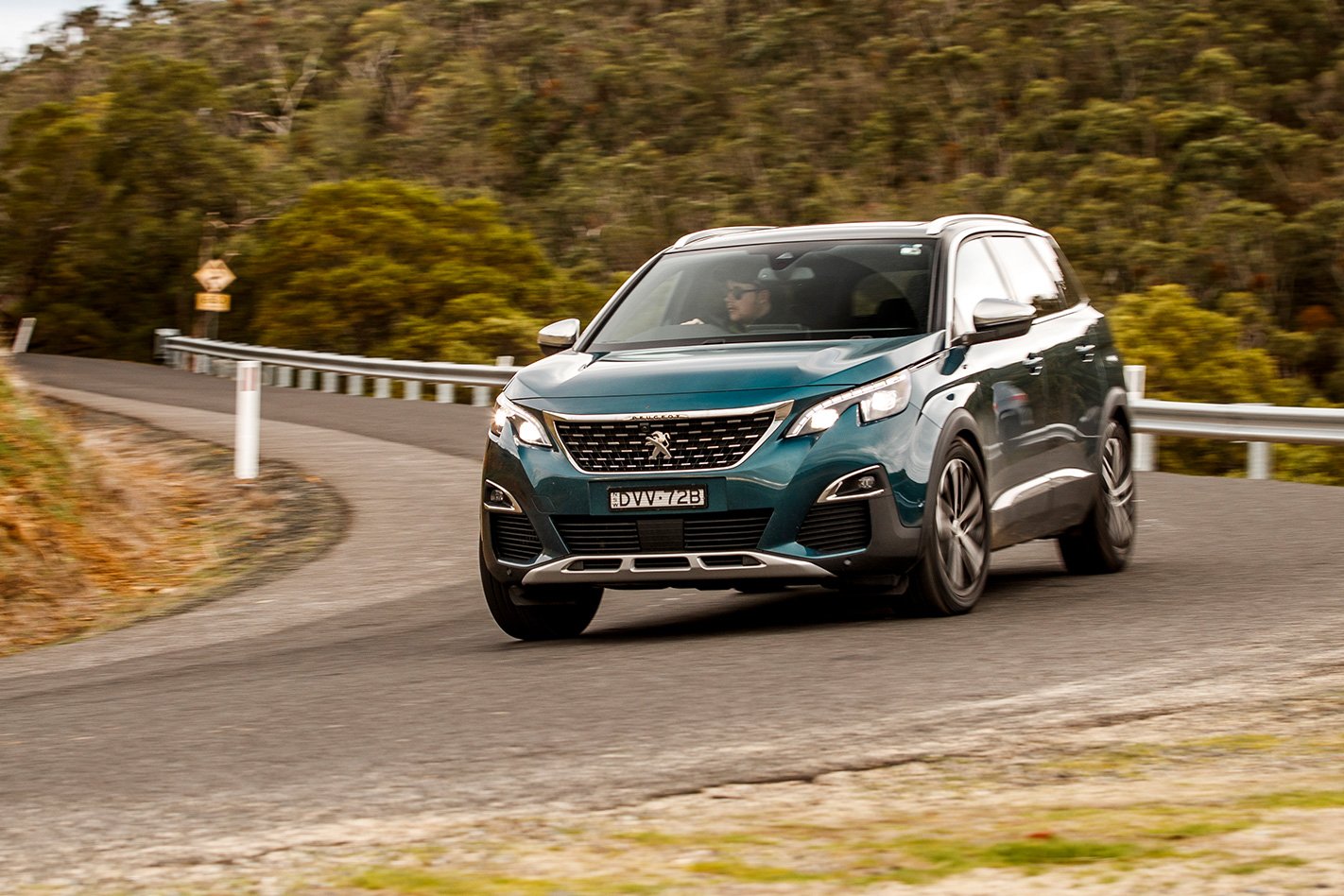
The low weight also helps the 5008 to recover well from mid-corner bumps and its more car-like height keeps the centre of gravity low for a confident stance when carrying pace.
In Sport mode the extra steering weight combines with the dinky steering wheel for a genuinely involved drive if a little synthetic in feel.
Decent dynamics come at the cost of a firmer ride, but it’s not distracting and the lower ride height reduces the ‘head toss’ of some large SUVs that sit higher above the road. Another cost will almost certainly be all-terrain ability, particularly as the Peugeot is not available with four-wheel drive. However, it is unlikely any 5008 owner would consider fording anything much more serious than a small creek or venturing far on unsealed roads, which the Peugeot will handle just fine.
Hyundai Santa Fe You might expect the relatively large and heavy Hyundai to languish behind the Peugeot’s light-footed road manner, but it has another surprise up its sleeve here too.
It may be close to two tonnes, but the big Hyundai hides its weight admirably in corners and has an obedient front end with surprisingly sharp turn-in. Retracing some of the roads covered in the Peugeot, we found ourselves carrying more speed in the Hyundai such was its dynamic stability and confidence.
Only its brakes, which required a really good push to start scrubbing pace effectively, hinted at the significant mass. Otherwise, the Santa Fe’s dynamics have significantly grown up for the new generation.
When cruising, the Hyundai’s manners are as sophisticated as the previous-generation model and, although its loftier ride height prompts more head-toss than the Peugeot, it is the more cosseting of the cruisers.
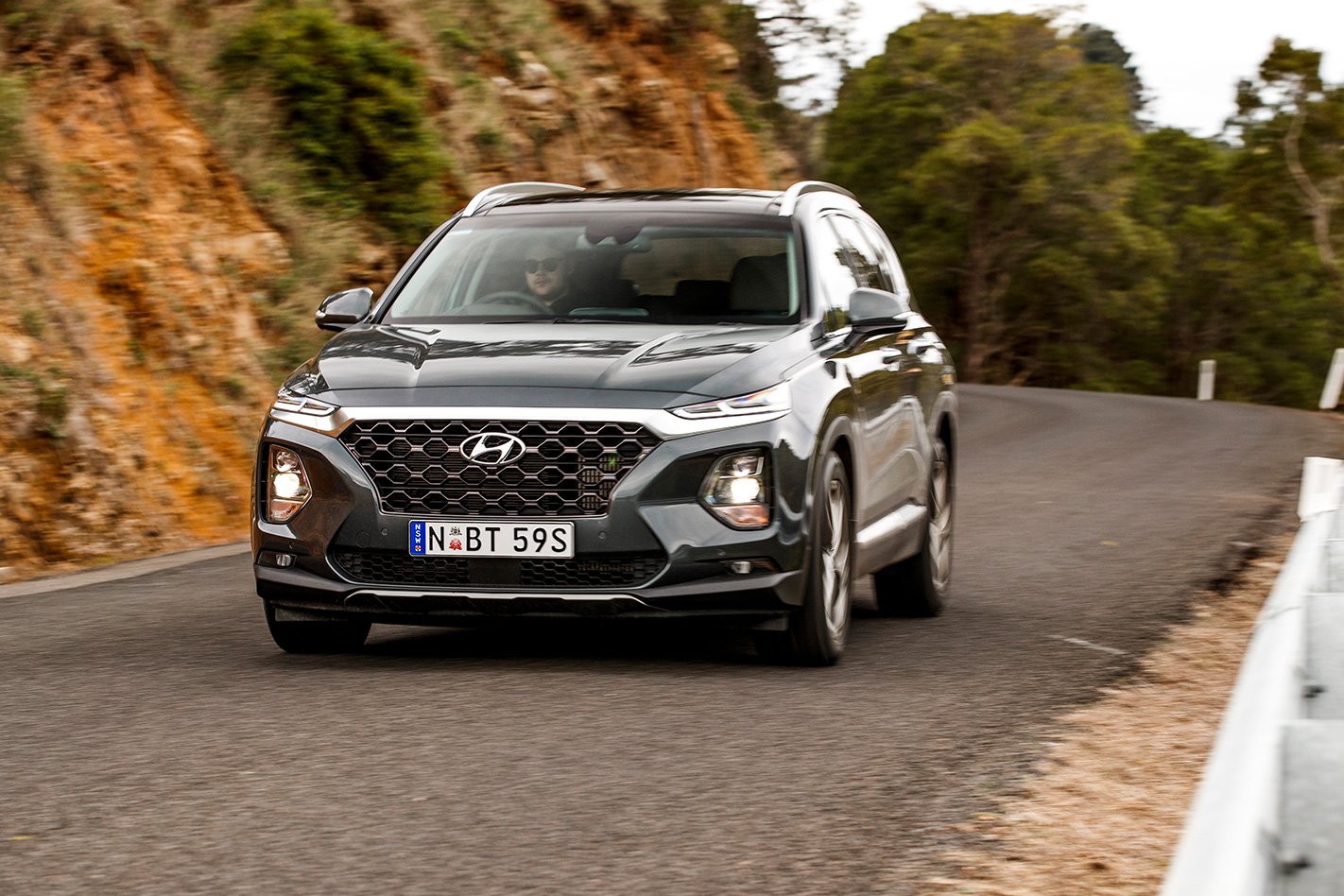
That extra altitude also adds to a more commanding position on the road with excellent visibility and allows confident control of its large proportions.
Our only qualm with the steering would be the irritating lane-departure assistance that nibbles annoyingly at the steering long before the wheels threaten to wander outside of a lane. The function can be switched off, but it defaults back on whenever the ignition is switched off.
Winner: A tie
Performance and economy
Peugeot 5008 The Peugeot is equipped with a 2.0-litre four-cylinder turbocharged diesel producing 133kW and 400Nm and while that’s not the most powerful in the segment, the bantam 5008 is one of the lightest at 1575kg.
As a front-wheel drive, the smaller French offering is around 300kg lighter than the Hyundai, which has an obvious impact on comparative fuel economy. Peugeot states the official combined consumption as 4.8L/100km, but over varied driving styles we managed to use an average of 7.8L/100km.
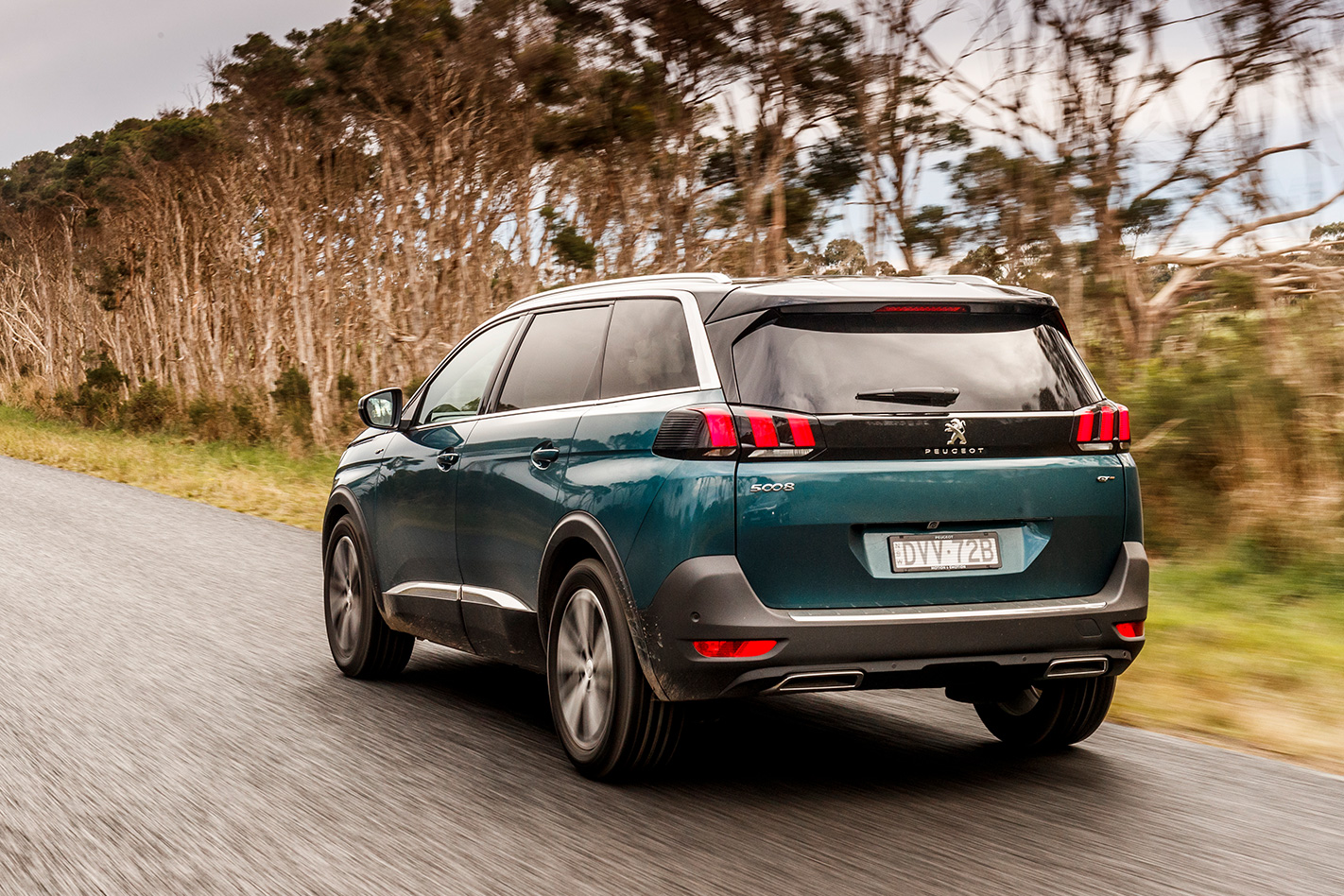
Idle stop/start technology helps to increase range, but can be late to restart and prompted us to reach for the cancel button when approaching busy roundabouts. Combined with a little transmission and turbo lag, the Pug can feel a little lethargic off the line.
Once up to speed though, the refined engine punches on adequately and even sounds good when the driving mode is flicked to sport, pumping a little augmented enhancement through the speakers.
Hyundai Santa Fe The Santa Fe weighs in with a larger 2.2-litre four-pot turbodiesel with a beefier 147kW/440Nm output. With four-wheel drive to get prodigious torque to the ground, the Hyundai feels faster off the mark, but recorded an identical zero to 100km/h time as the 5008, doing the dash in 9.5 seconds.
Perhaps the answer is in the delivery, with the Hyundai’s peak torque found at 1750 rpm while the Peugeot takes a little more stirring to 2000 rpm. The Hyundai’s transmission also feels a little more eagre and the full 440Nm is always on tap allowing sprightly progress and instant torque.
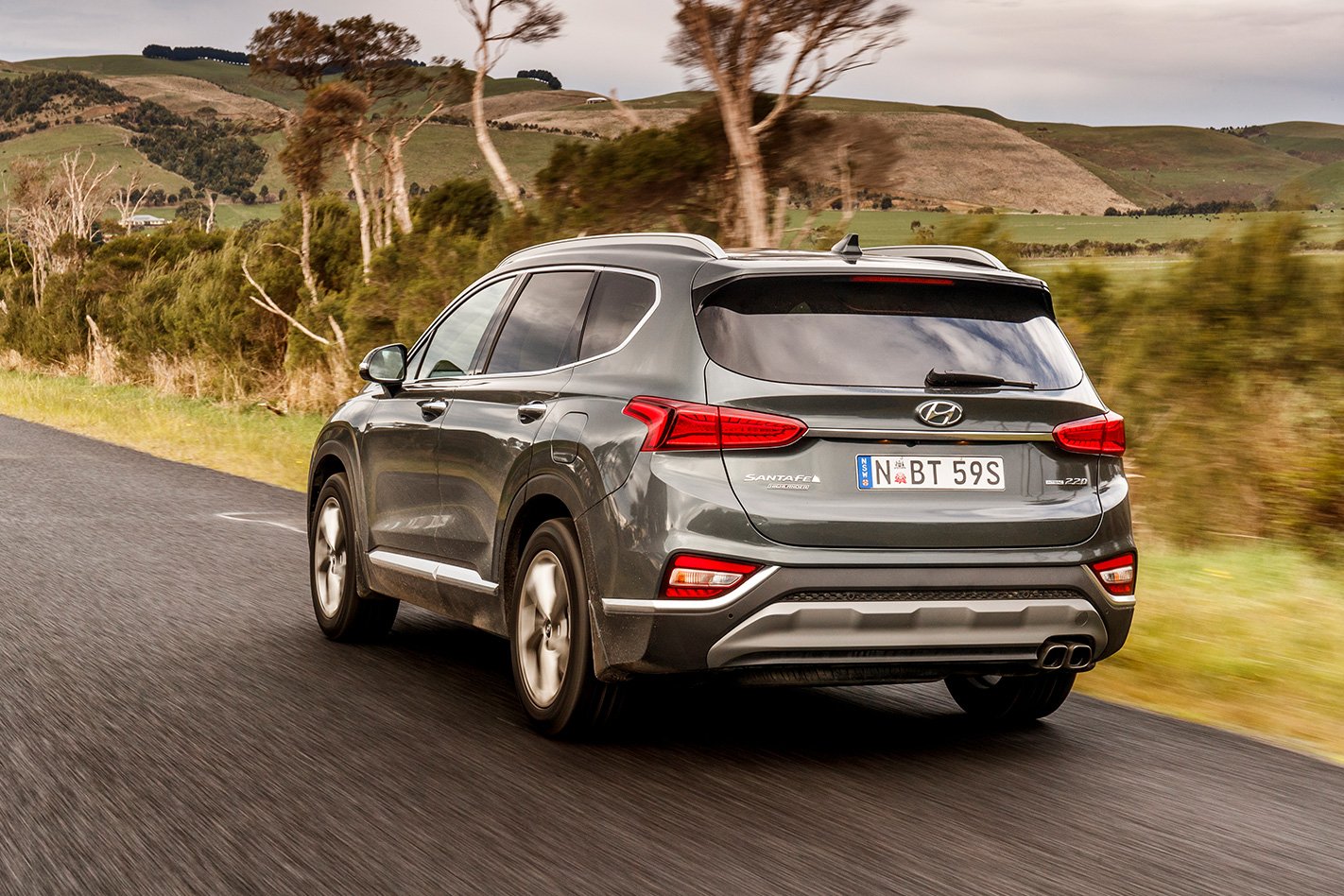
Like its slightly underwhelming brakes, the Hyundai also reveals its weight in an appetite for diesel. While its maker claims a figure of 7.8L/100km, we managed a consumption of 11.4L/100km, although the route took us through some significant climbs and more enthusiastic driving.
Winner: 5008
Warranty and servicing
Peugeot 5008 At launch, Peugeot was offering a five-year warranty for the 5008 but, as of March this year, that reverted to the usual three-year 100,000km deal. However, since then it has returned to a five-year offering that now covers all passenger vehicles in the range for unlimited kilometres.
You’ll also get a three year paint warranty and 12-year corrosion guarantee.
The 5008 has long servicing intervals of 20,000km and Peugeot’s service price promise caps the price of scheduled maintenance work. A first visit to the dealership will cost $446, while the second trip at 40,000km costs $757.
The first 100,000km or five years of 5008 ownership (whichever comes first) will cost $2878 in planned maintenance.
Hyundai Santa Fe The Hyundai matches the Peugeot’s five-year unlimited-kilometre warranty.
Santa Fe owners are also offered the first service at one month (or 1500km) for free, but after that, servicing costs are covered by a ‘lifetime service plan’ although customers need to apply for a quote online using their vehicle’s VIN. It’ll also throw in a navigation update plan for no extra cost.
Winner: 5008
Verdict
The Peugeot 5008 is a compelling proposition in the expanding seven-seat SUV market. Its standard of styling and design has clearly not gone unnoticed with more rival brands placing greater importance on aesthetics, but without compromising function. Hyundai is a case in point.
But there’s no doubt that the French contender is guilty of a little style over substance. In isolation, its practical features are excellent, but it is handicapped by overall size which limits cabin space and its fundamental use as a seven seater.
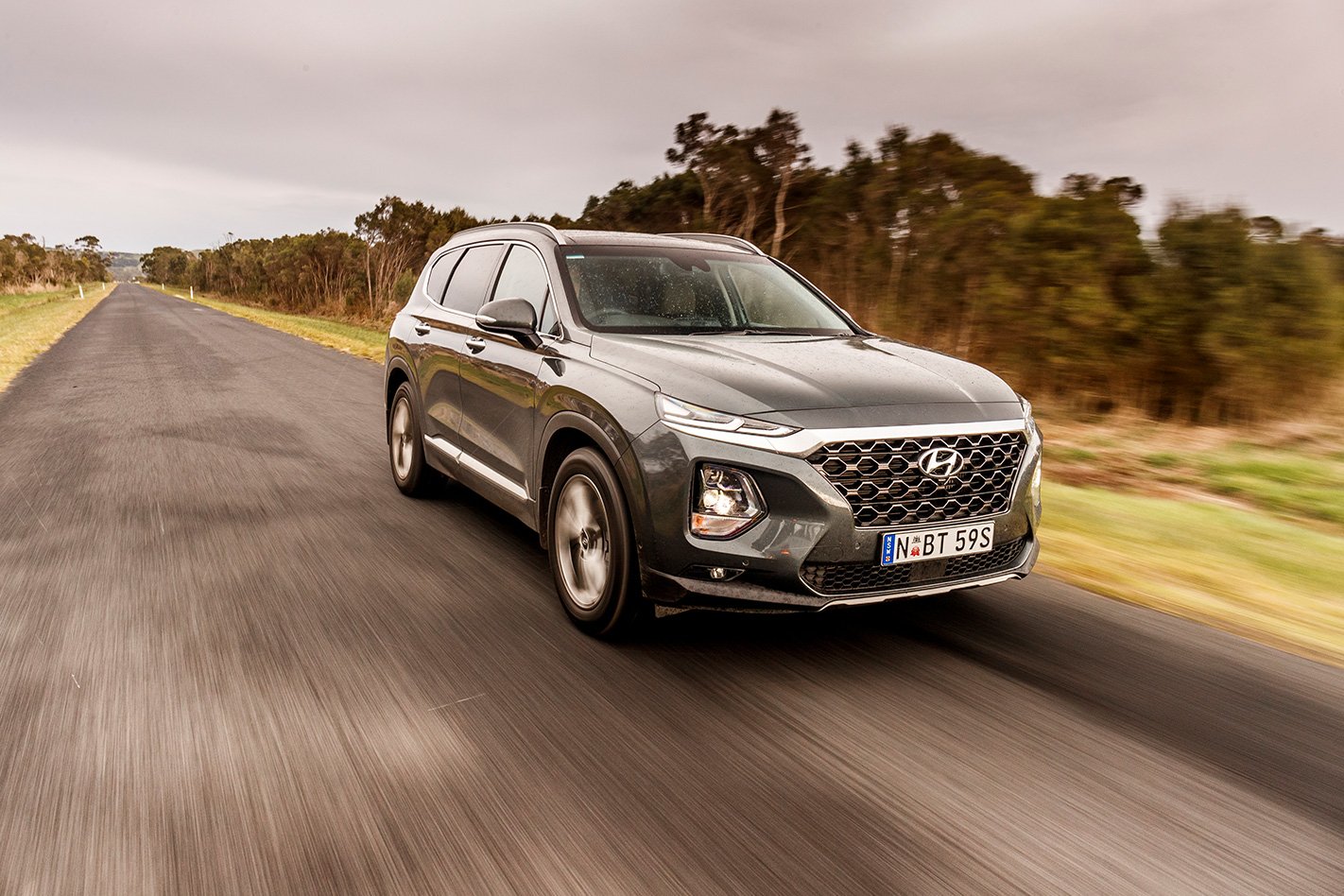
The Santa Fe, on the other hand, brings a little more scale and the result is a handsome machine inside and out, which also fulfils the role of a people mover better.
But it’s not a complete defeat by the Korean. The 5008’s smaller proportions and lower weight also bring efficiency dynamic and manoeuvring advantages over the heftier contender.
If driving dynamics, fuel efficiency and ease of use in metropolitan environments is high on the list, the Peugeot offers an accomplished high-rider wrapped up in beautiful packaging.
But if long-distance touring over changing terrain and hauling more than five people is a regular occurrence then the Hyundai is the one for you.
Critically though, both brands seem to be taking notes from each other’s strongest features and that’s good news for the whole segment and consumers alike.
Following the international launch of its all-new Megane RS, Renault has just announced the range will now be bolstered by a new Trophy variant.
Like previous generations, the Trophy will flesh out Megane RS performance levels with more grip and grunt, while also upgrading the cabin to suit the car’s focus on ten-tenths stuff.
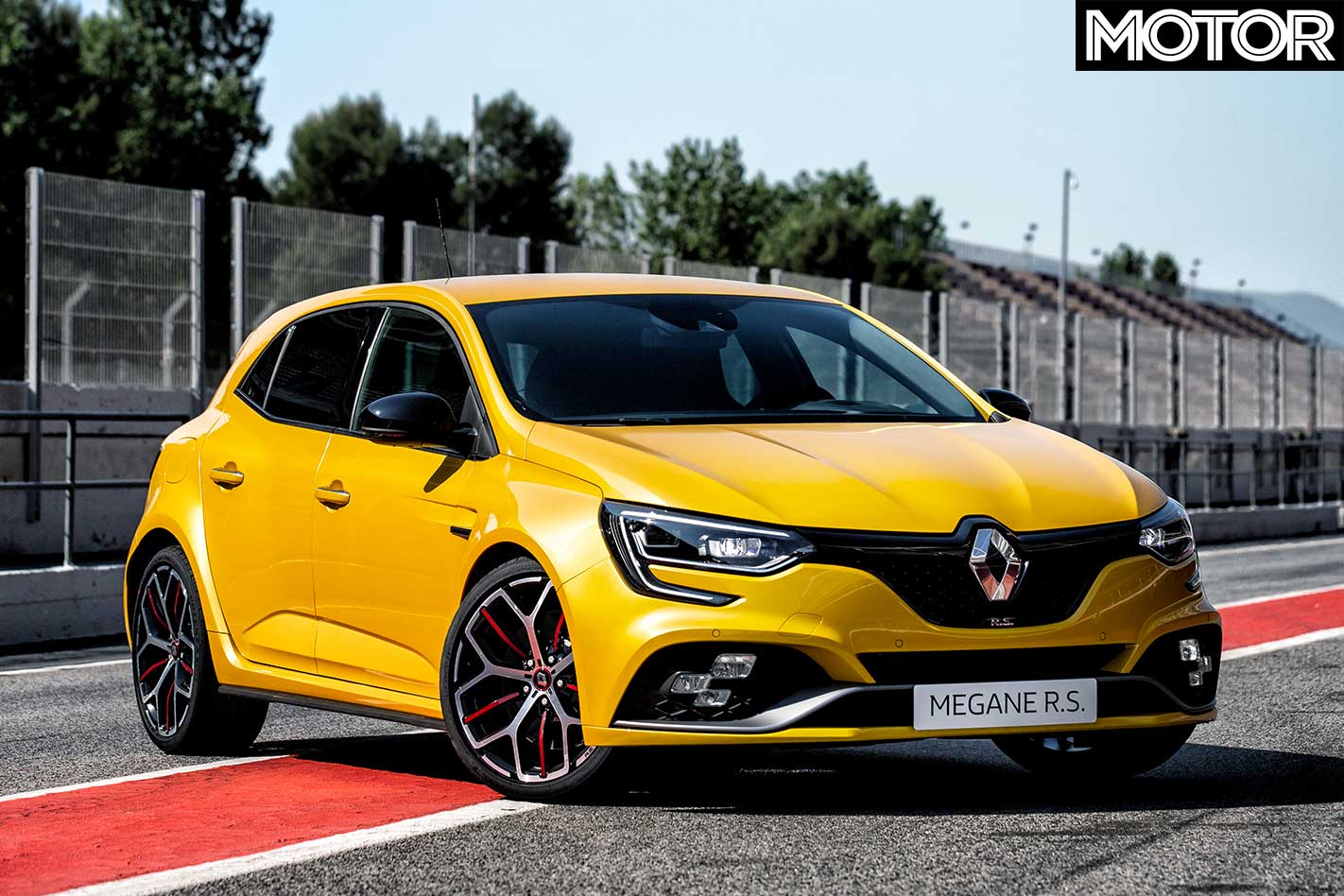
Headlining the news is a bump in power, where the car’s all-new turbo 1.8-litre four belts out 220kW and 400Nm, or 15kW and 10Nm more than standard.
Then to build upon the Megane’s Cup Chassis, that is already brimming with a Torsen LSD, firmer bits, specialised bump stops, and two-piece front discs; the Trophy comes with new ‘Jerez’ 19-inch wheels and some very special options.
The first is a set of new optional Recaro seats, finished in Alcantara, which will be joined next year by lighter ‘Fuji’ 19-inch wheels with special Bridgestone S007 rubber.
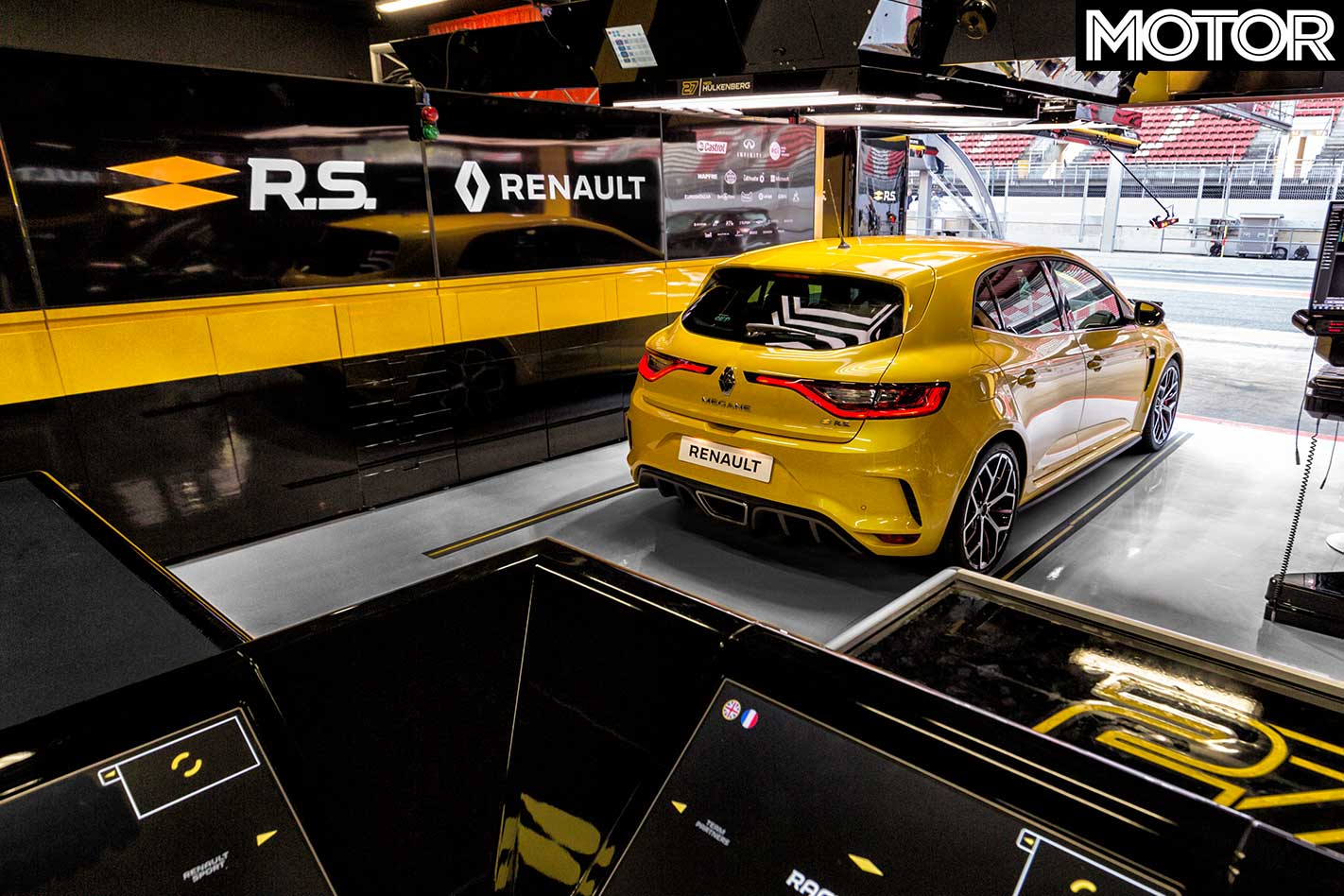
Like any new hot hatch, the Trophy’s highlights are in the details. For instance, power and torque have risen in the face of more stringent Euro “6d-Temp” emissions, thanks to a new ceramic bearing within the car’s turbine. It claims it’s three times more efficient than the part it replaces.
The exhaust, too, welcomes a bi-modal rear silencer that helps increase flow after the new particulate filter needed to comply with emissions. Renault says specific “mapping” also means Trophys equipped with the six-speed dual clutch gearbox won’t be penalised on power, either. It gets the full 220kW/420Nm like the six-speed manual transmission.
Meanwhile, the new optional ‘Fuji’ wheels lose 2kg each, meaning the Trophy sheds 8kg of rotating mass on top of a Cup chassis equipped Megane. This cuts its unladen kerb weight to 1419kg, and lifts its power to weight ratio to 155kW per tonne.
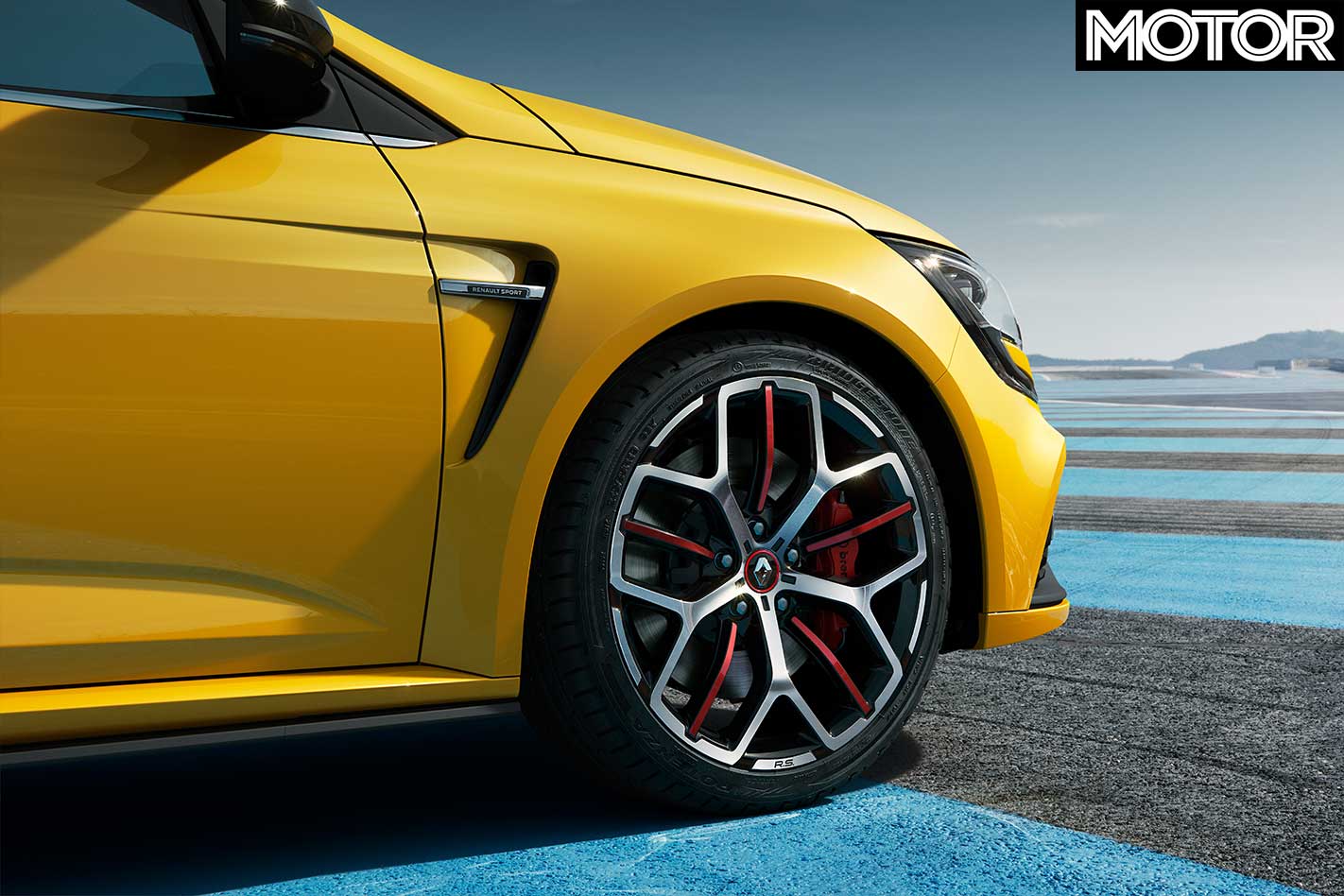
This level of thought continues inside where its optional Recaro seats sit 20mm lower. Renault Sport has also worked with Bridgestone to unlock what it claims as more direct steering feel through the tiller on those S007s. The car’s four-wheel steering system remains untouched.
Visually, you will spot Trophys by way of it’s the Jerez wheels’ red spokes and the discreet ‘Trophy’ sticker on its front bumper blade.
Range-wise, it’ll obviously sit above a manual 205kW Megane RS with Cup chassis, which is set to cost Aussies $45,980 when it arrives this September.
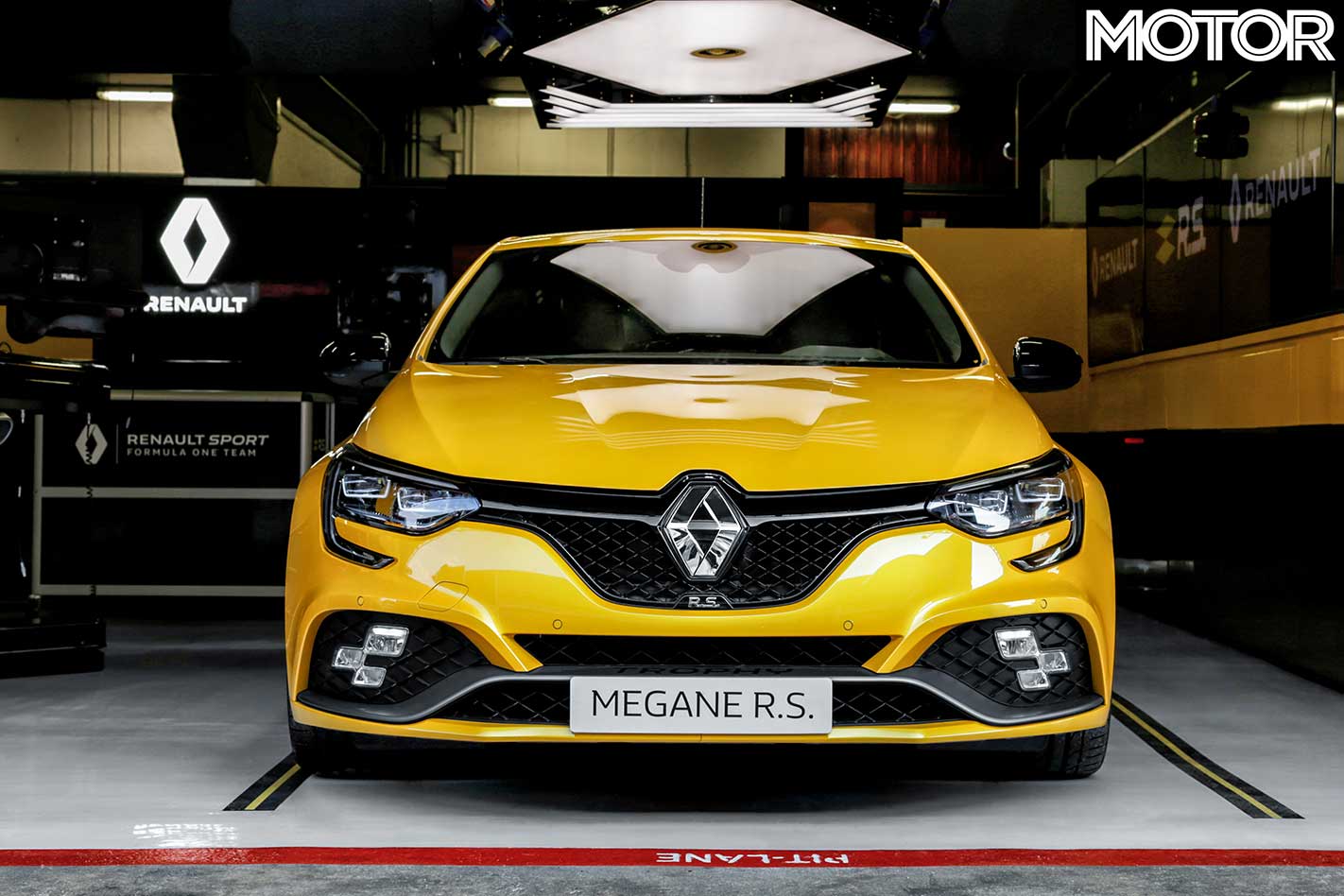
Renault Australia says it’s too early to know what the Trophy will come with standard here and how much it will cost, however, Honda’s move to price the 168kW-per-tonne Civic Type R at $50,990 should keep it around that ballpark.
Expect it in showrooms the latter half of 2019.
Porsche has shown the facelifted update of its best-selling Macan SUV getting down and dirty in the mountains of Lesotho.
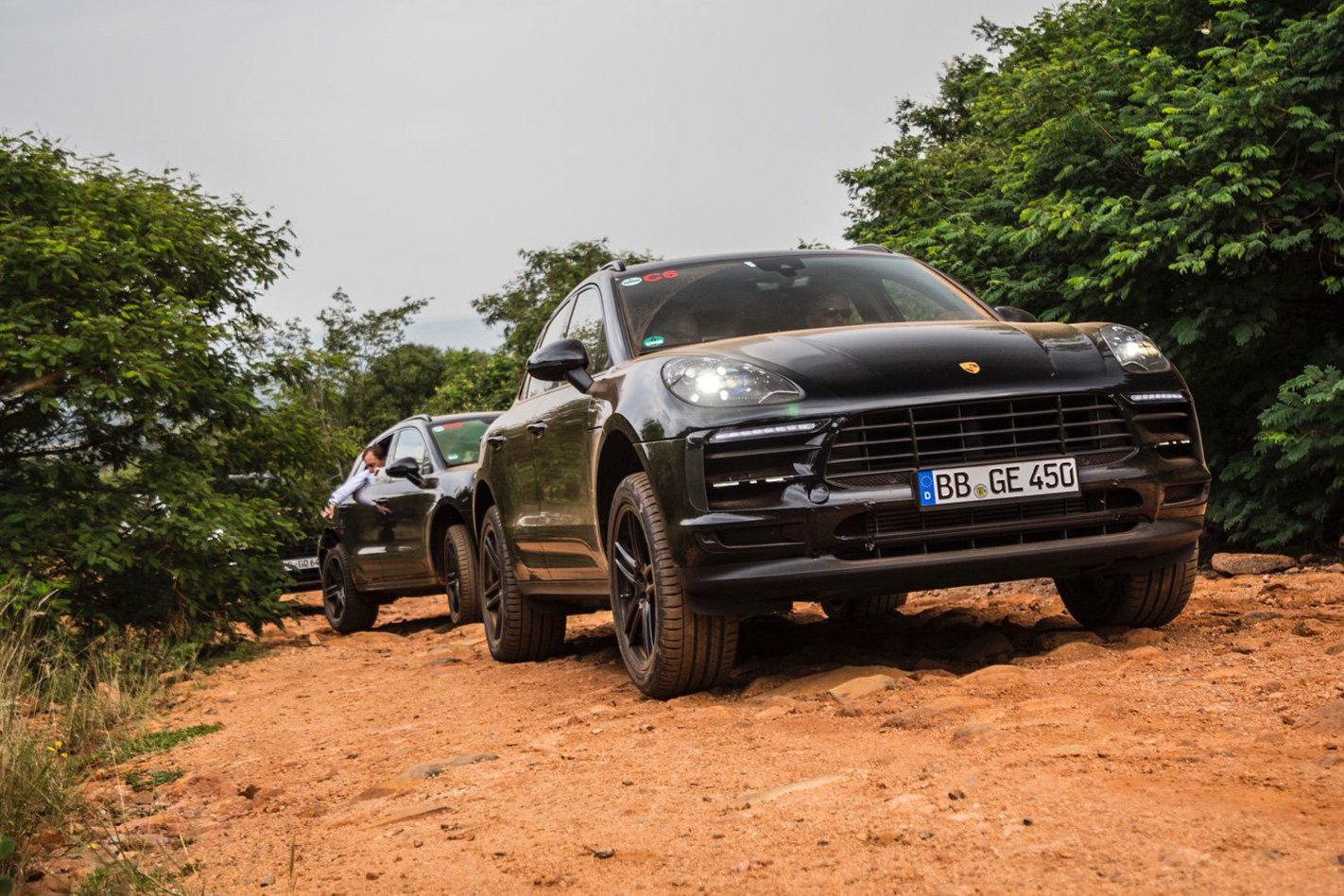
Undergoing final testing before its debut in China in next week, the Macan’s testing regime saw it trek up to an altitude of 3400 metres above sea level, after proving itself on neighbouring South Africa’s rough asphalt, gravel roads and mountain passes.
All components, new or old, were subjected to the high-altitude testing at the hands of the development crew. In the pictures we can even see Porsche’s “sports car masquerading as an SUV” traversing rocky inclines in a display of its off-road potential.
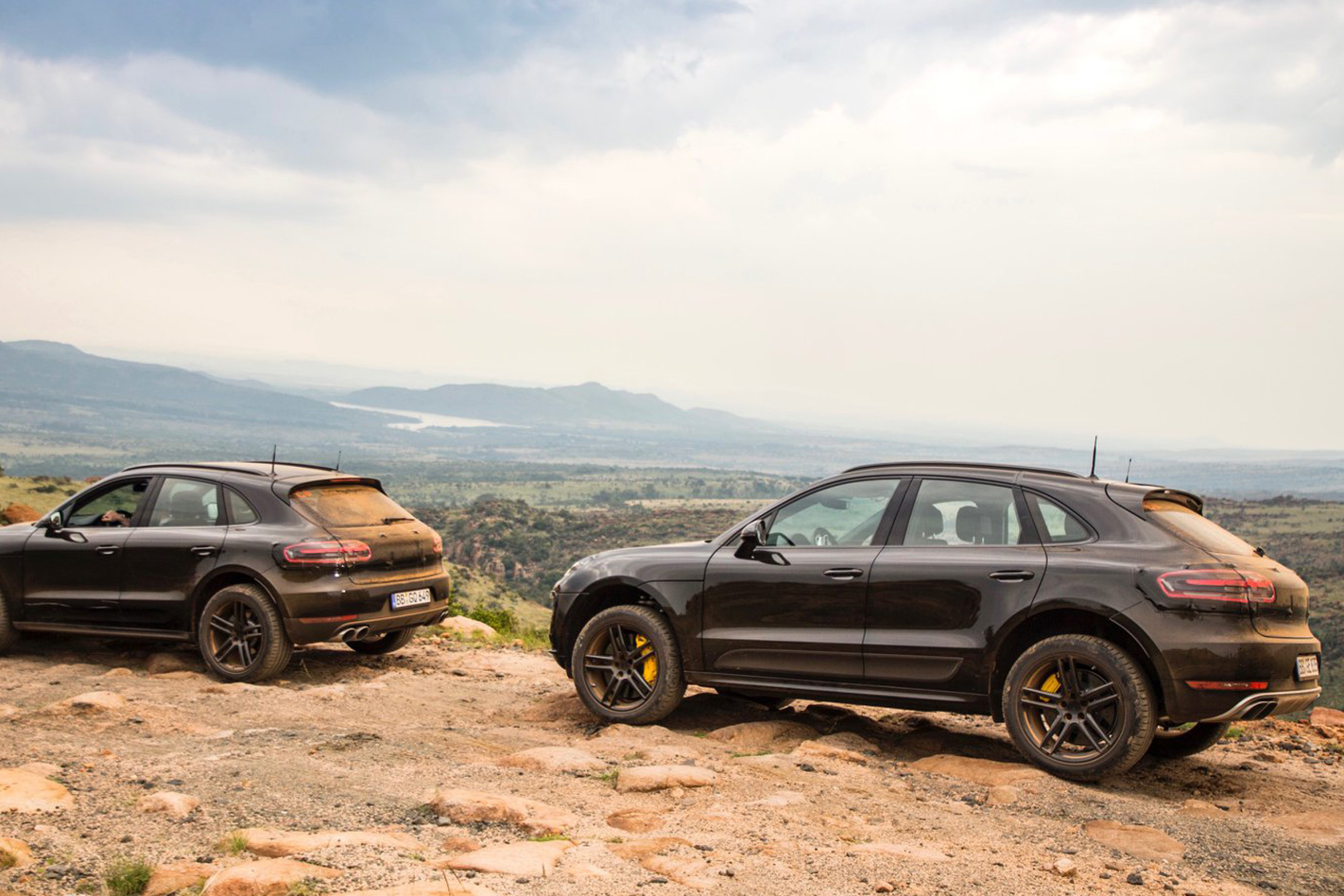
Porsche is expected to first show the new Macan at the end of this month at a market launch in China, before a European reveal in the coming months – most likely at the Paris Motor Show in early October.
The Macan is the German carmaker’s best-selling model, with 350,000 delivered worldwide since it was introduced in 2014. This latest version has some big shoes to fill.
In order to build upon its success, Porsche is expected to revise several aspects of the Macan to bring it in-line with its updated competition. All models are expected to gain power bumps, and with the diesel-engined offerings likely to be dropped with the 2.0-litre four-cylinder turbocharged petrol donk taking its place as the most economical option.
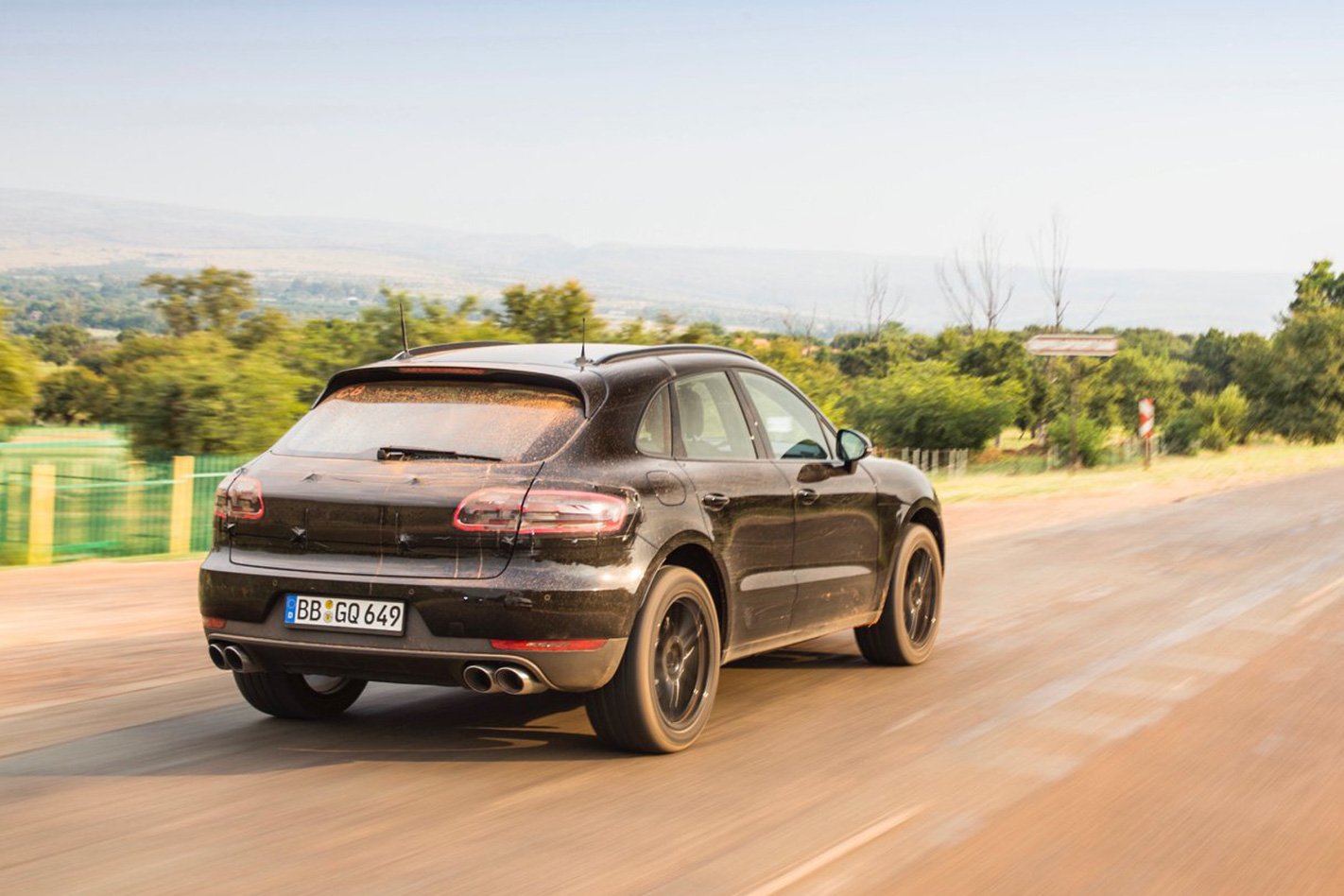
Images don’t show what’s going on inside the car, but previous spy shots indicate that we’ll see a larger, revised infotainment system set inside an updated dashboard.
In true Porsche fashion, the exterior design is set to remain largely unchanged – save for a few design elements like the full-width tail lights that span the boot and updated headlights similar to those on the recently updated Cayenne.
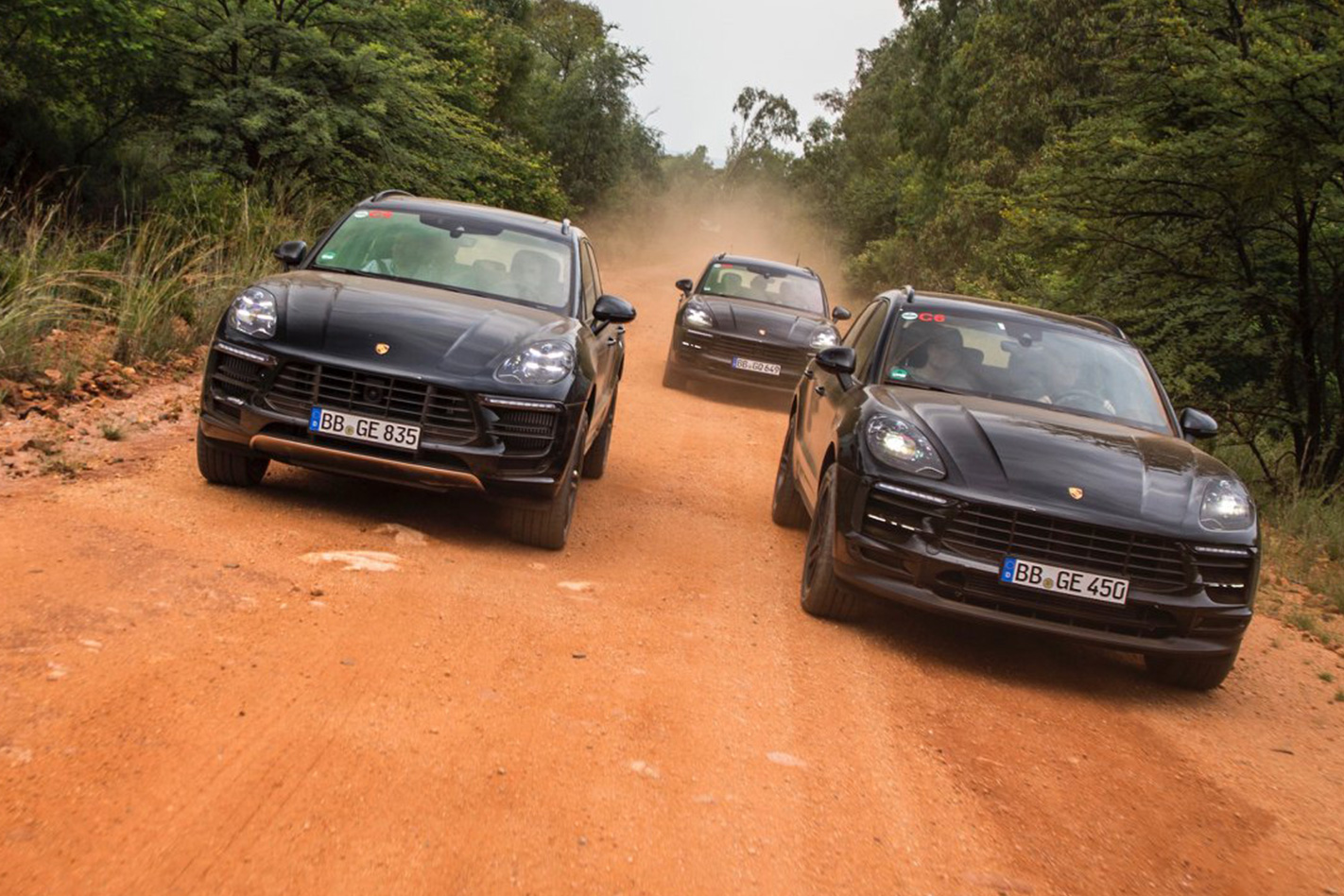
With these latest teaser images showing a very thinly-veiled Macan, we’re sure to see a reveal very soon – so stay tuned for more details in coming weeks.
