Last year Australia made the smallest improvement in vehicular emissions since vehicle emission records started in 2002, data from the National Transport Commission reveals.
The data shows the average vehicle emissions from all Australia’s new cars sold last year came in at 182g/km of carbon dioxide.
That’s only a 1.0g/km improvement over 2016’s result, and the smallest reduction since records started in 2002.
Not surprisingly, Australia’s taxi fleet had the lowest average emissions at around 145g/km, a significant improvement over the previous year.
Regular Aussies stagnated in improving emissions, with private buyers having an average output of 176g/km, the same as in 2016.
Business buyers had a slightly worse average, 186g/km, but improved its lot by 1.0g/km, while government buyers were the least clean and green at 199g/km – which was nevertheless enough to record a 2.0g/km improvement over 2016’s figures.
The federal government fleet had a slightly higher average emissions than state and territory governments, the Carbon Dioxide Emissions Intensity for New Australian Light Vehicles 2017 report says.
The worst-performing car for the year, according to the data, was the V12-engined Aston Martin Vanquish, which was recorded as being just shy of 450g/km.
The best of the mainstream cars was not Australia’s best-selling passenger car in 2017, the Toyota Corolla, with around 150g/km; instead, it was the number two best-seller, the Mazda 3, at around 140g/km.
Two of Australia’s best-selling vehicles last year, 4×4 versions of the Toyota Hilux (about 230g/km) and the Ford Ranger (about 240g/km), were both at the wrong end of the cleanliness scale.
The big utes, however, were outdone by the Australian-made Holden Commodore. It posted an average figure of more than 250g/km, not helped by the popularity of its thirsty V8-powered version in its final year of manufacture.
Holden no longer sells a V8-engined model, so next year expect it to improve on the 219g/km average figure it recorded in 2017. That figure was enough to make it the worst of the individual brands. Emissions from its popular Toyota Hilux fighter, the Colorado, didn’t help either, contributing 243g/km to the automaker’s tally.
Compared with Europe, Australia is dragging the chain on lowering emissions. The average vehicle emissions in the EU for the same period came in at 118.5g/km, and even Europe’s worst performer, Estonia(134g/km), was leagues ahead of Australia.
In contrast, German luxury brand Audi (145g/km) was the best, although its Australian showroom average was still well behind Europe’s worst.
A surprise was Mercedes-Benz, which increased its showroom-wide emissions by 2.0g/km to 159g/km.
Dodge is creating a wider Charger model lineup by offering extensive updates and some changes to its popular four door sedan.
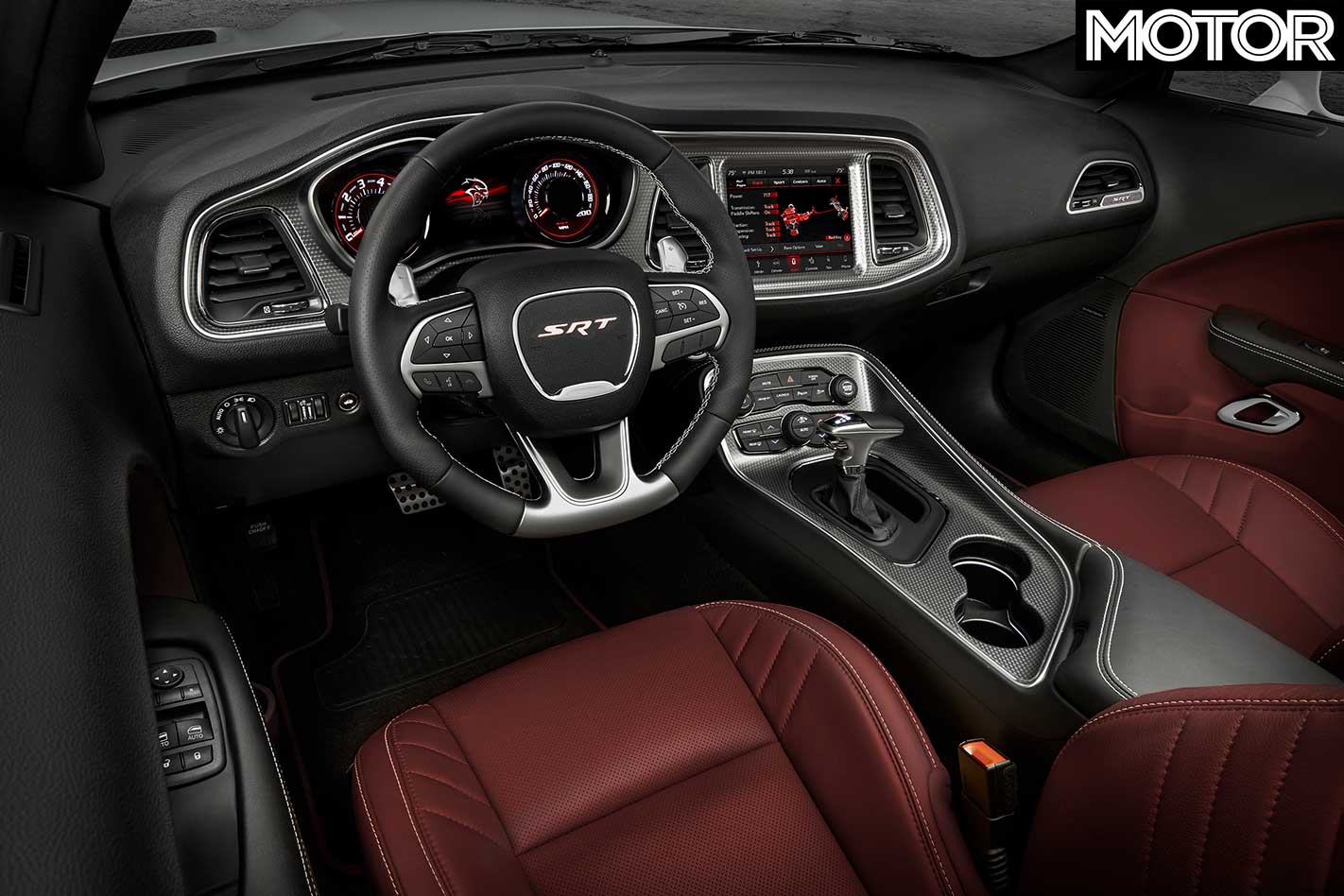
The Dodge Charger SRT Hellcat, which retains its beastly 527kW supercharged 6.2-litre V8, will feature a new performance grill with duel air inlets to force cooler air into the engine bay and through to the supercharger.
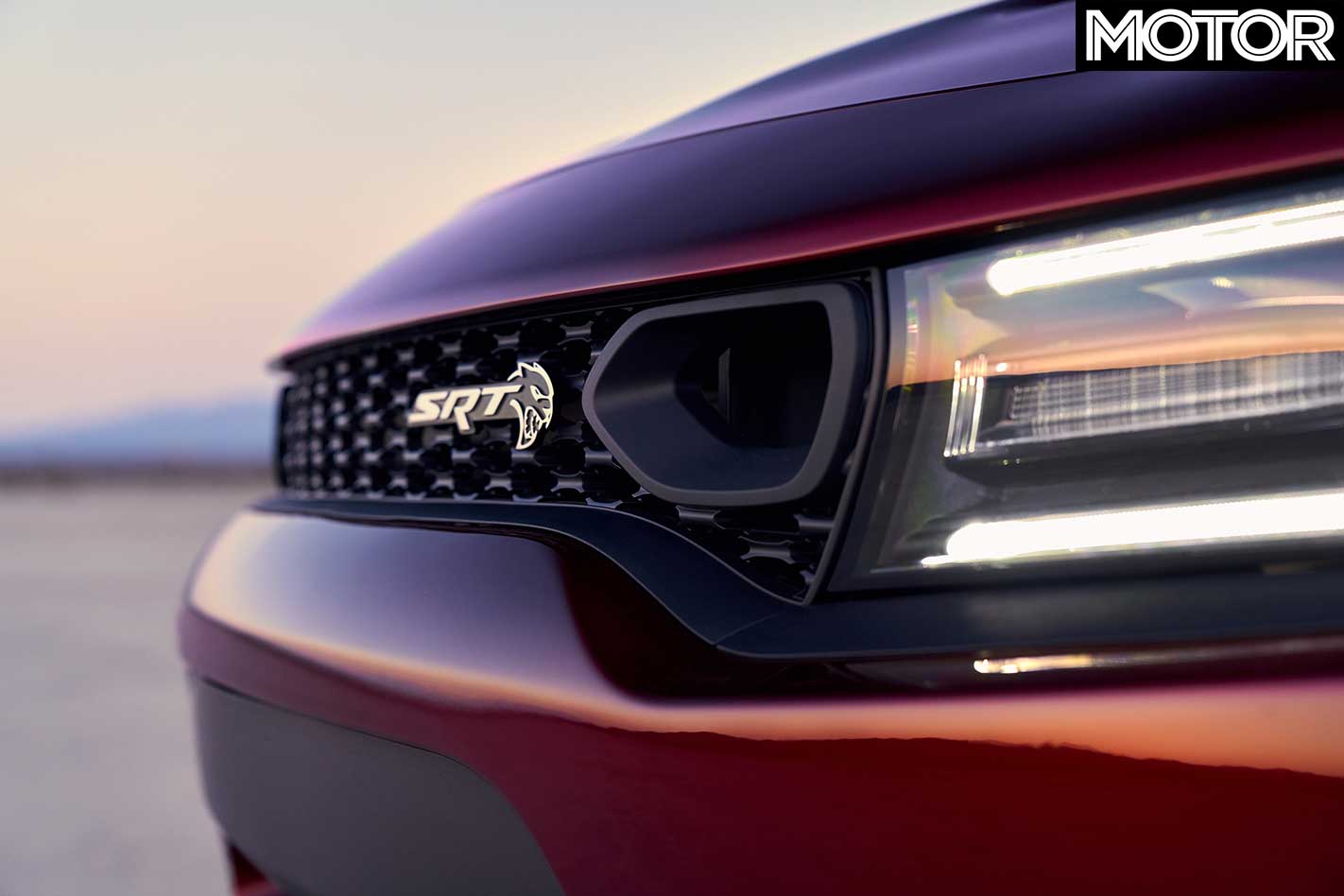
The car will also feature a line-lock mode which engages the front brakes for burnouts and a torque reserve to prefill the supercharger to assist acceleration from a standing start.
Once the car has been powered down, an after-run chiller will feed cool air to the supercharger as the engine temperature steadily decreases.
The Charger R/T Scat Pack will return for the 2019 year, also featuring line-lock and launch assist technologies. The Scat Pack will also feature duel air inlets like the Hellcat but will use a less powerful 362kW V8 which is naturally aspirated rather than supercharged.
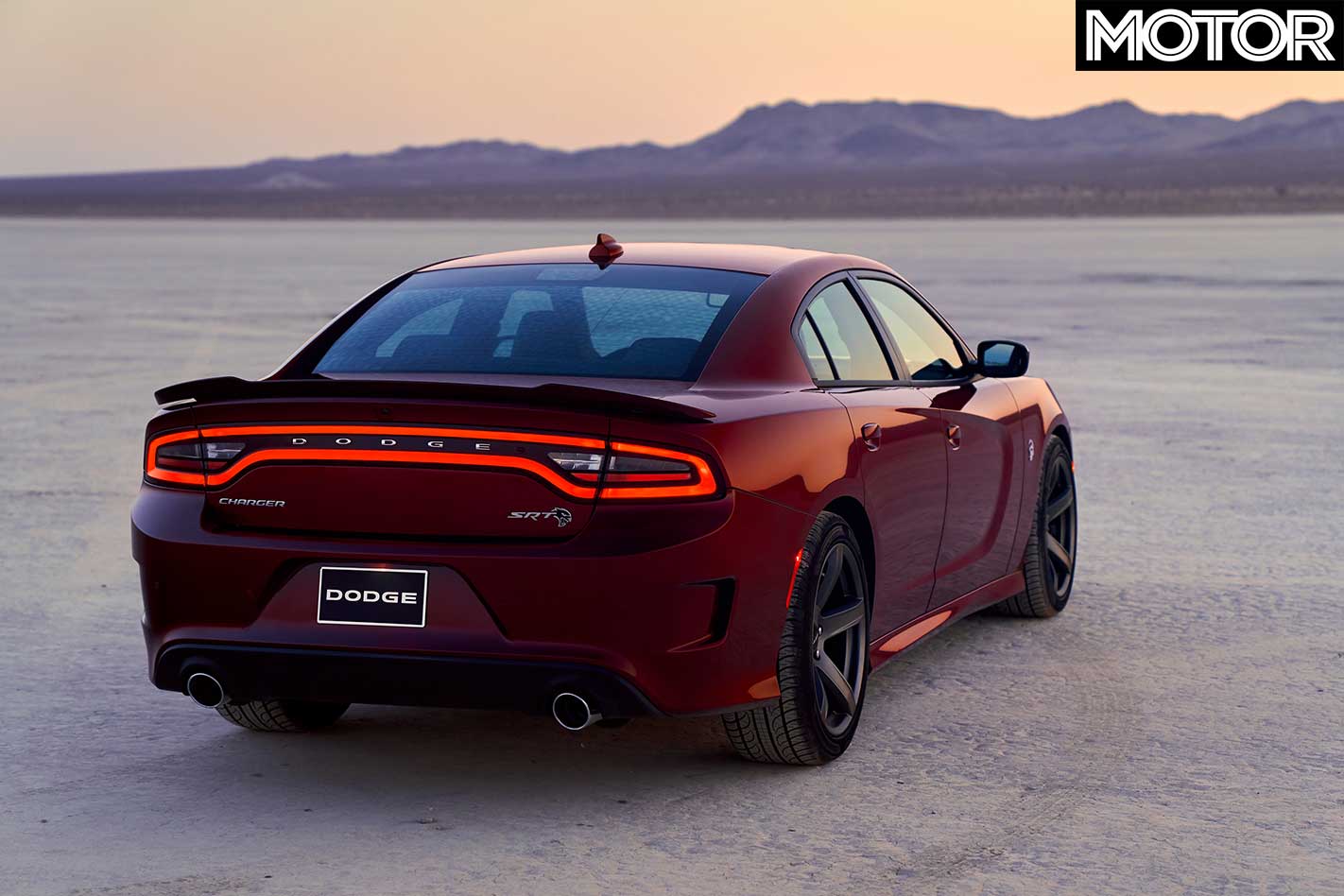
Arguably the biggest change to the Charger lineup will be the introduction of all-wheel-drive in an SXT model. This model will feature an atmo V6 engine with 224kW and an 8-speed automatic transmission.
A cold weather package will be available which will add heating elements to the steering wheel, as well as driver and passenger seats.
Despite utility vehicles selling remarkably well in the United States, Dodge has seen much success in sales of Challenger and Charger models, so much so that the brand says sales from these two models have increased 70% since 2008.
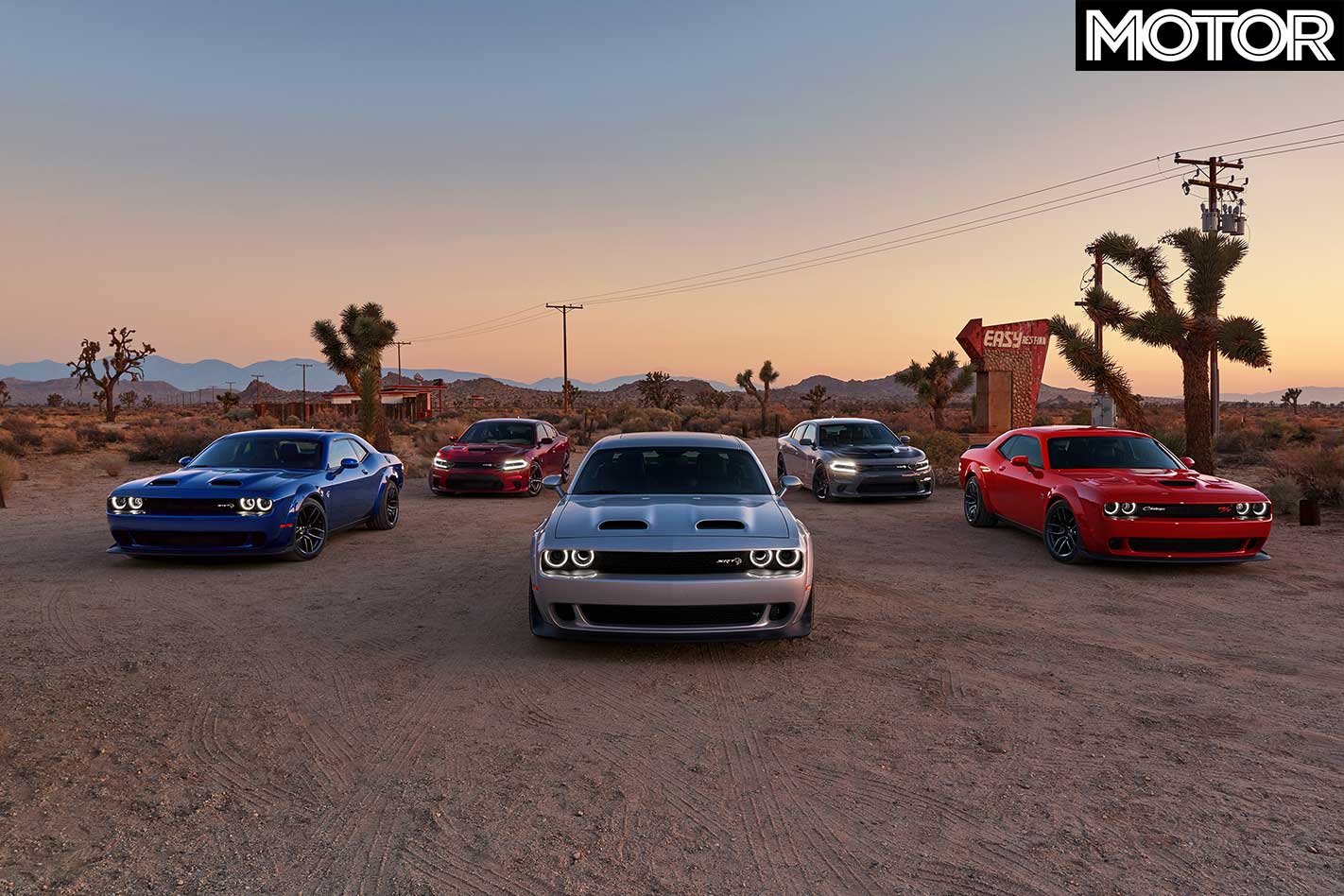
The Charger is on trend to be the leader of the large car segment for the fifth year running in 2018 and Dodge says it intends to keep it that way.
Orders open in the US for the Charger models in June 2018 with first deliveries of the new 2019 model to begin in the third quarter of 2018.
NISSAN HAS joined forces with design house Italdesign to build an “ultra-limited” prototype vehicle and the result is this, the GT-R50 by Italdesign, a no-limits version of the current ‘R35’ which celebrates the 50th anniversary of both the GT-R badge and Italdesign.
Based on a 2018 GT-R Nismo, the one-off design study will make its debut in Europe next month, and was developed, engineered and built entirely by the Italian design and engineering company.
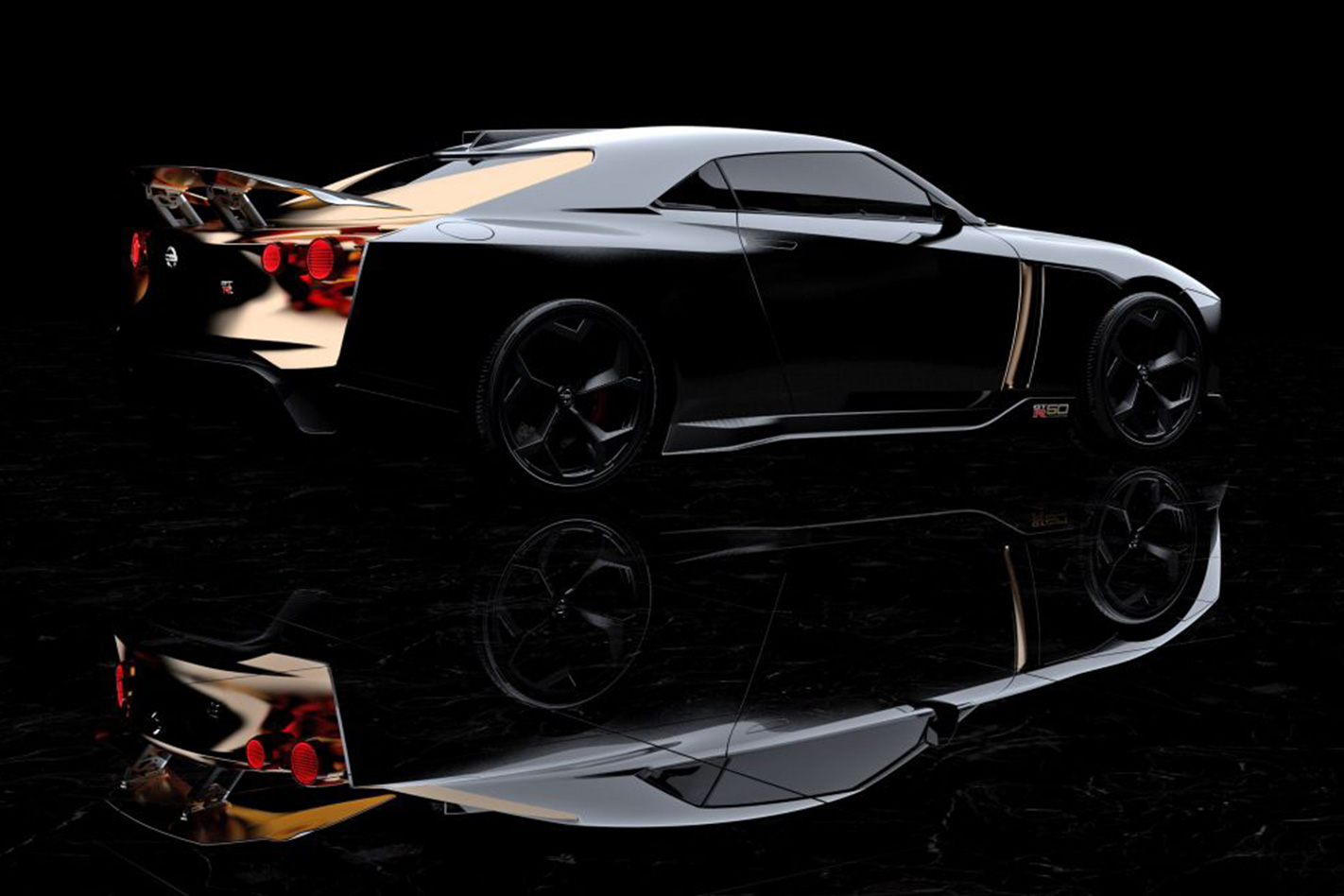
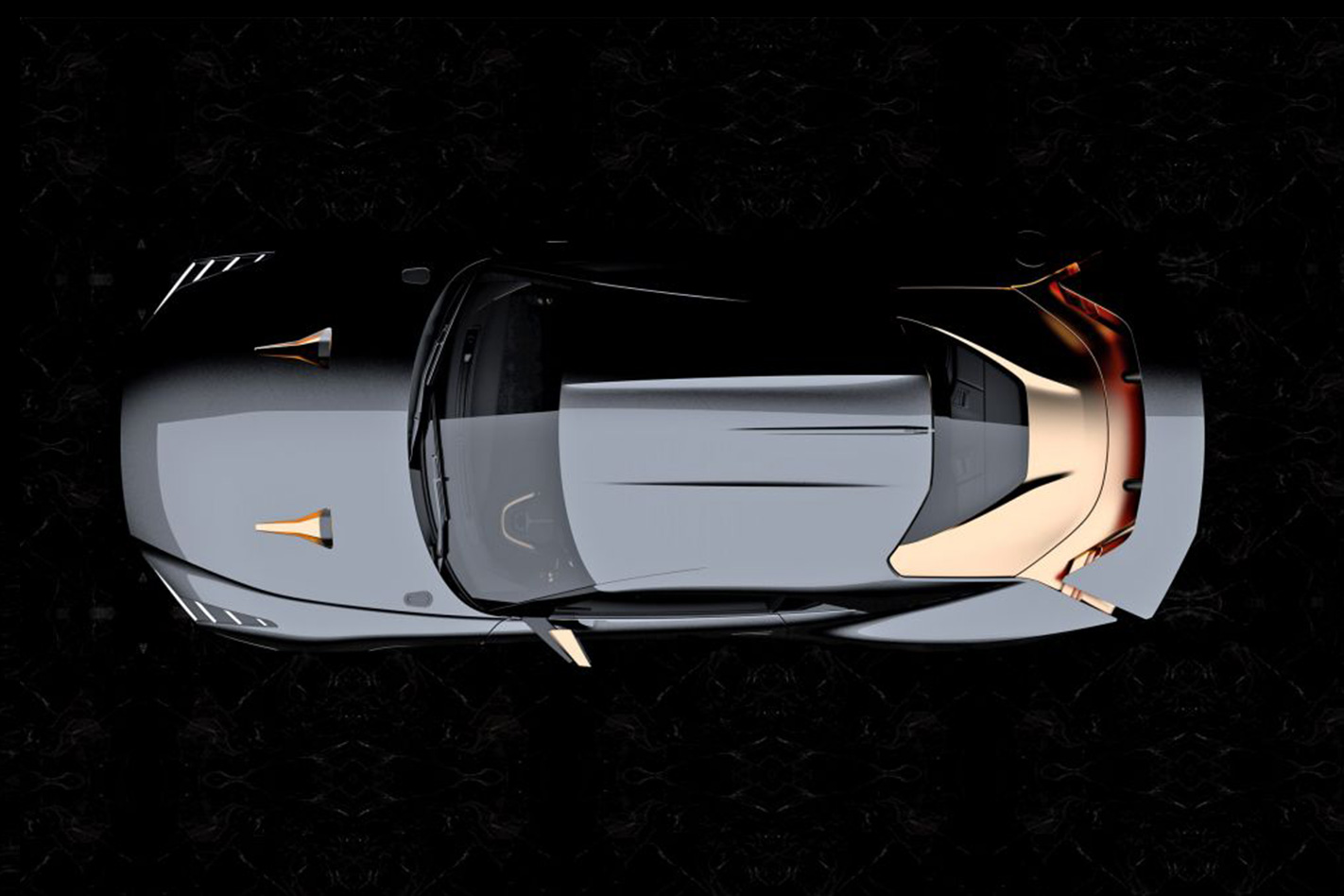
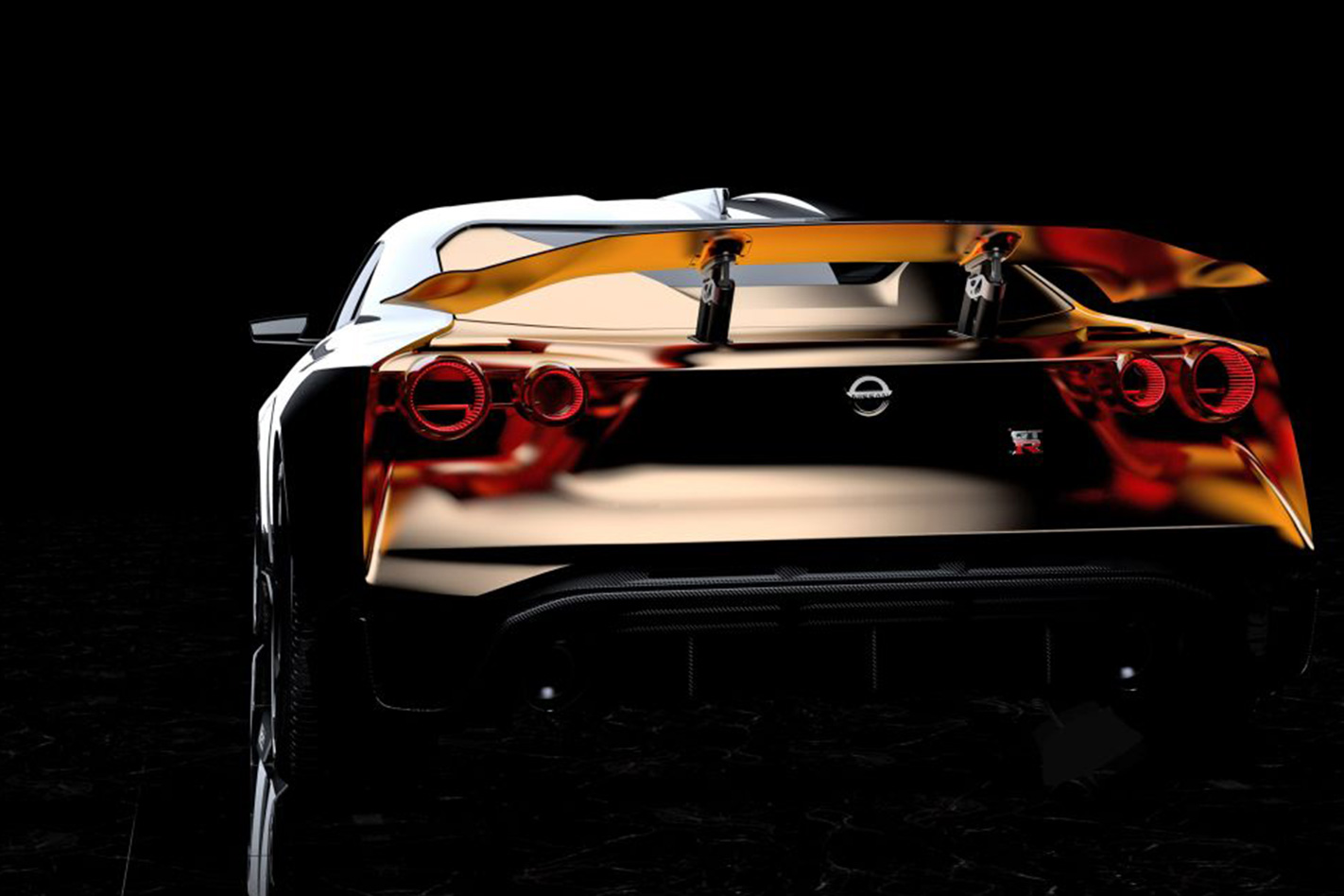
The GT-R50 has a redesigned front and rear, along with a roofline which has been lowered by 54 millimetres. A large active rear-wing has been fitted as well, rising from the boot-lid on two uprights.
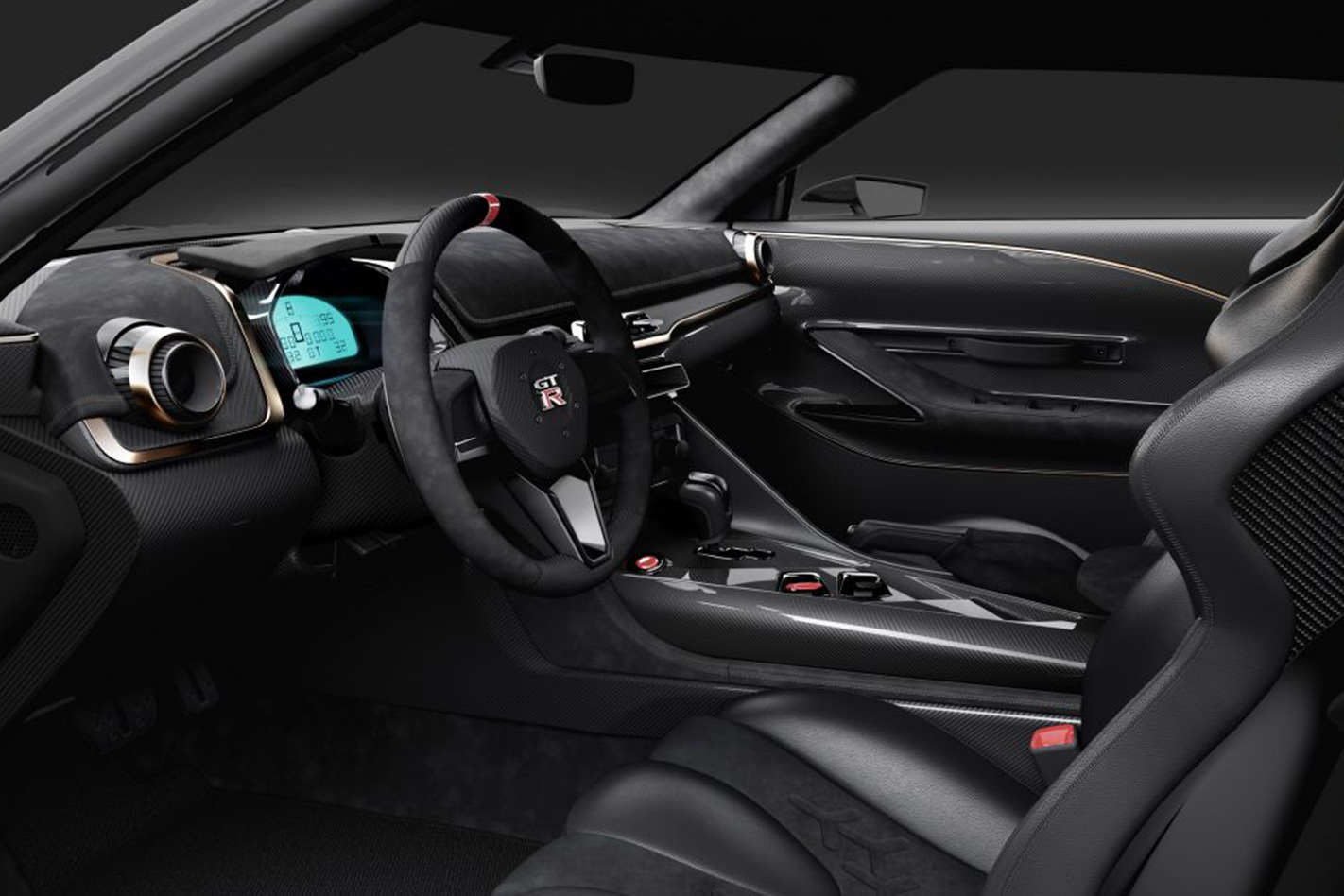
Rolling on 21-inch custom wheels, the GT-R50 has also received extensive work inside the cabin, with carbonfibre proliferated liberally, along with a bespoke steering wheel and central hub.
It’s not all just aesthetic tweaks though, with the 3.8-litre twin-turbo V6 engine being boosted to 529kW and 780Nm.
The upgraded power is thanks to GT3-spec turbochargers lifted from Nismo’s race car, larger intercoolers, heavy-duty crankshaft, pistons, connecting rods and bearings, high-flow piston oil jets, revised camshaft profiles, higher-flow fuel injectors, and optimised ignition, intake and exhaust systems.
Bilstein also fitted a continuously adjustable damping system for the suspension, while the wheels are wrapped in Michelin Pilot Super Sport tyres, measuring 255/35 R21 in the front and 285/30 R21 in the rear.
“How often do you get to ask, ‘What if we created a GT-R without limits,’ and then actually get to build it?” said Alfonso Albaisa, Nissan’s senior vice president for global design.
“This is a rare window in time when two big moments intersect: 50 years of Italdesign shaping the automotive world and 50 years of Nissan generating excitement through our iconic GT-R. So to celebrate this convergence, Nissan and Italdesign created this custom GT-R to mark 50 years of engineering leadership.
“Although this is not the next-generation GT-R, it is an exciting celebration of two anniversaries in a provocative and creative way – wrapping one of Nissan’s best engineering platforms and Japanese design with Italian coachbuilding”.
The electric car revolution is finally arriving, but it’s at the wrong end of the market.
Don’t get me wrong, electric cars are great. The unique attributes of battery propulsion provide some major advantages over petrol power, but sadly most seem fixated on the instant torque hit that enables eye-opening yet largely irrelevant acceleration times.
Contrary to what YouTube would have you believe, the most impressive aspect of a Tesla Model S isn’t its speed. Instead, it’s the calming silence of its operation, its impressive ride and the way its ‘skateboard’ drivetrain liberates unbelievable amounts of interior room.
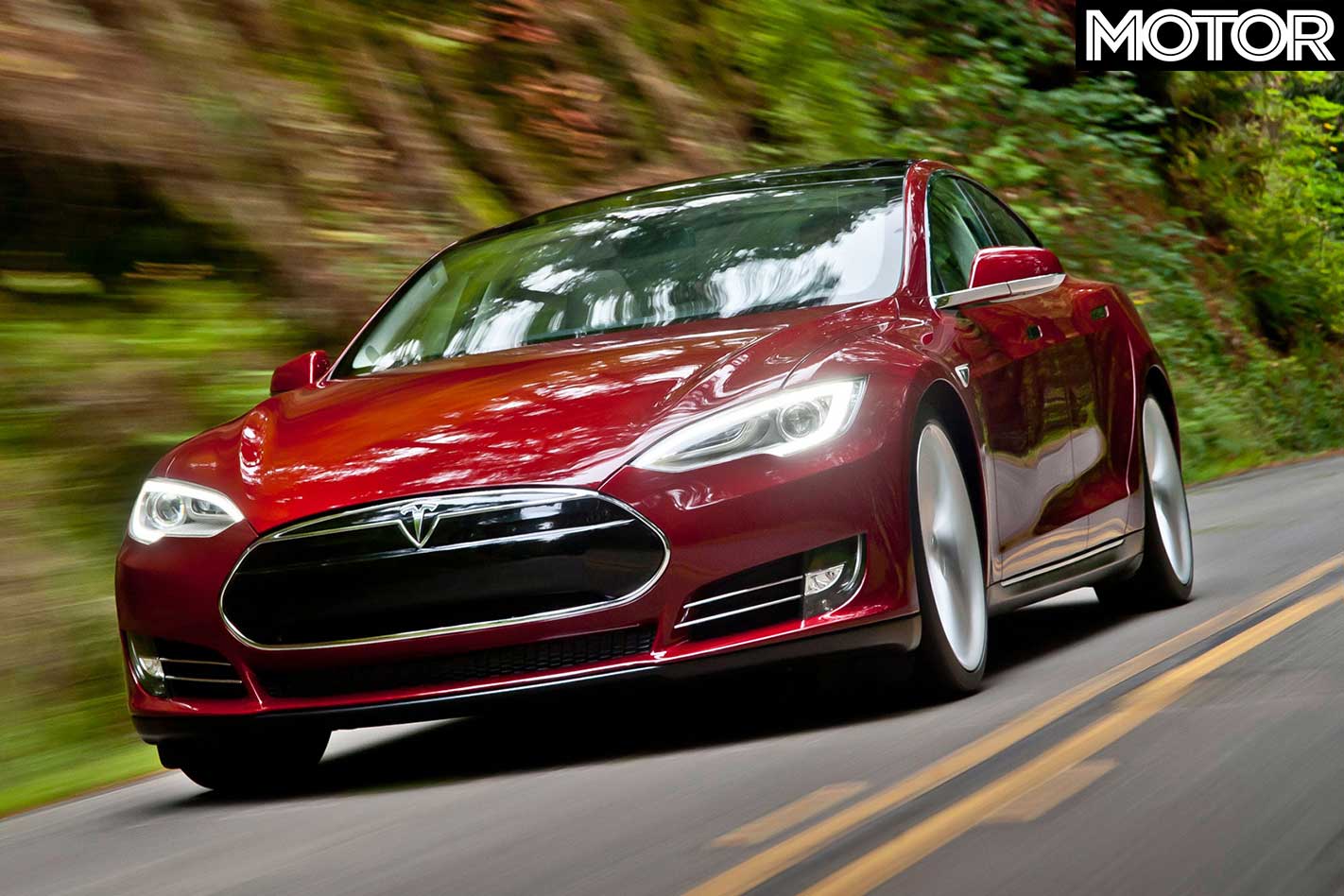
SUVs could be next. Range isn’t a problem if you’re just doing the school run or taking the kids to soccer, and imagine how many children you could squeeze in without needing to work around engines, transmission tunnels and fuel tanks.
Unfortunately, manufacturers keen on adding a sporting halo to their future electric models are starting at the performance end of the spectrum, giddy at the thought of putting 0-100km/h in 2.whatever in the marketing brochure.
Outright speed won’t be an issue for the EV performance car. VW’s ID R Pikes Peak monster shows the potential of the technology, yet it also highlights its major issue. Noise, or rather the lack of it.
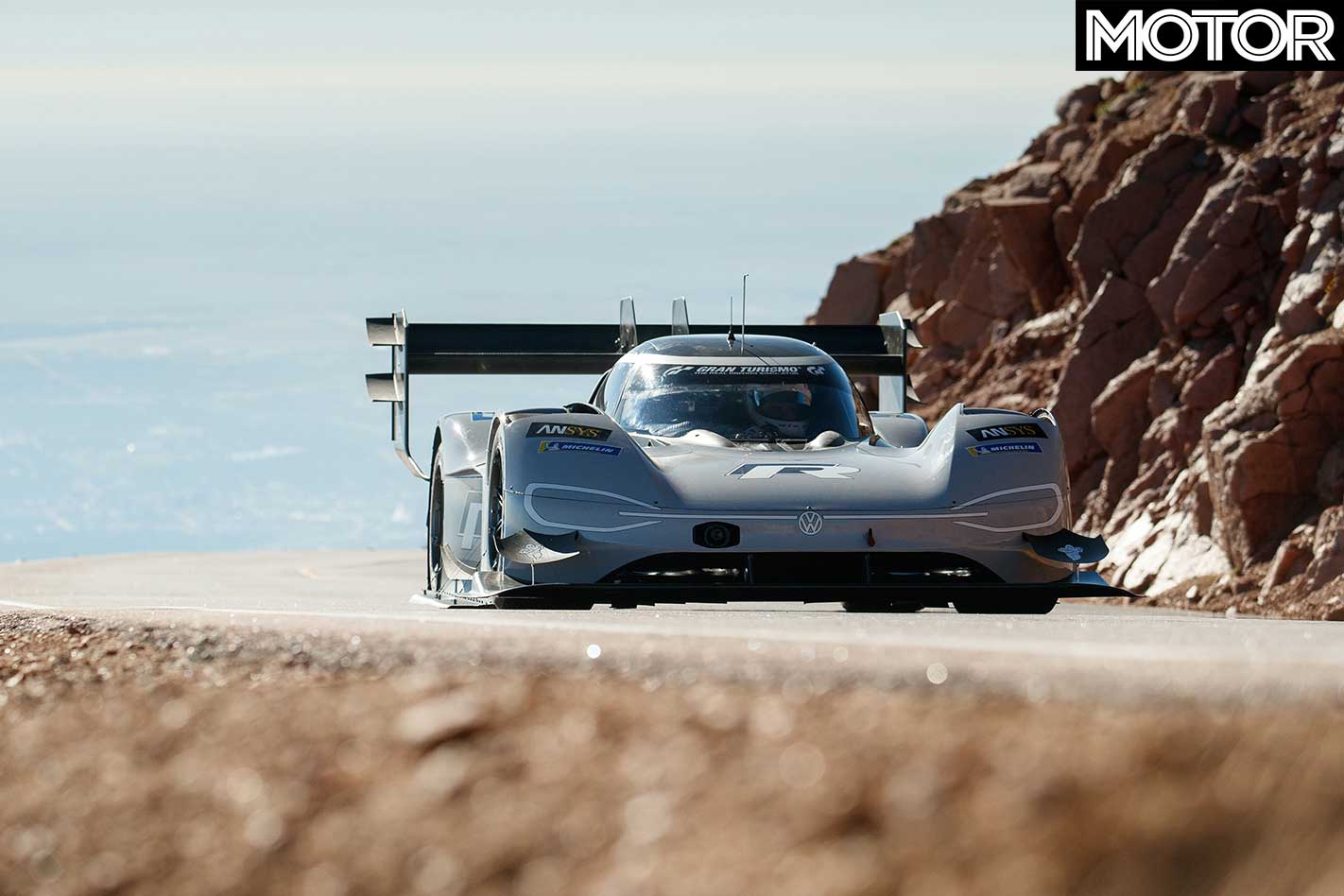
You don’t realise just what a crucial role sound plays in the driving experience until it’s absent. In fact, I’ll go so far as to say it’s THE single most important factor to the enthusiast. Any rally fan knows this. You might only see the car for a few fleeting seconds, but you’ll hear it for minutes, tracing the driver’s every movement from the rise and fall of the engine note.
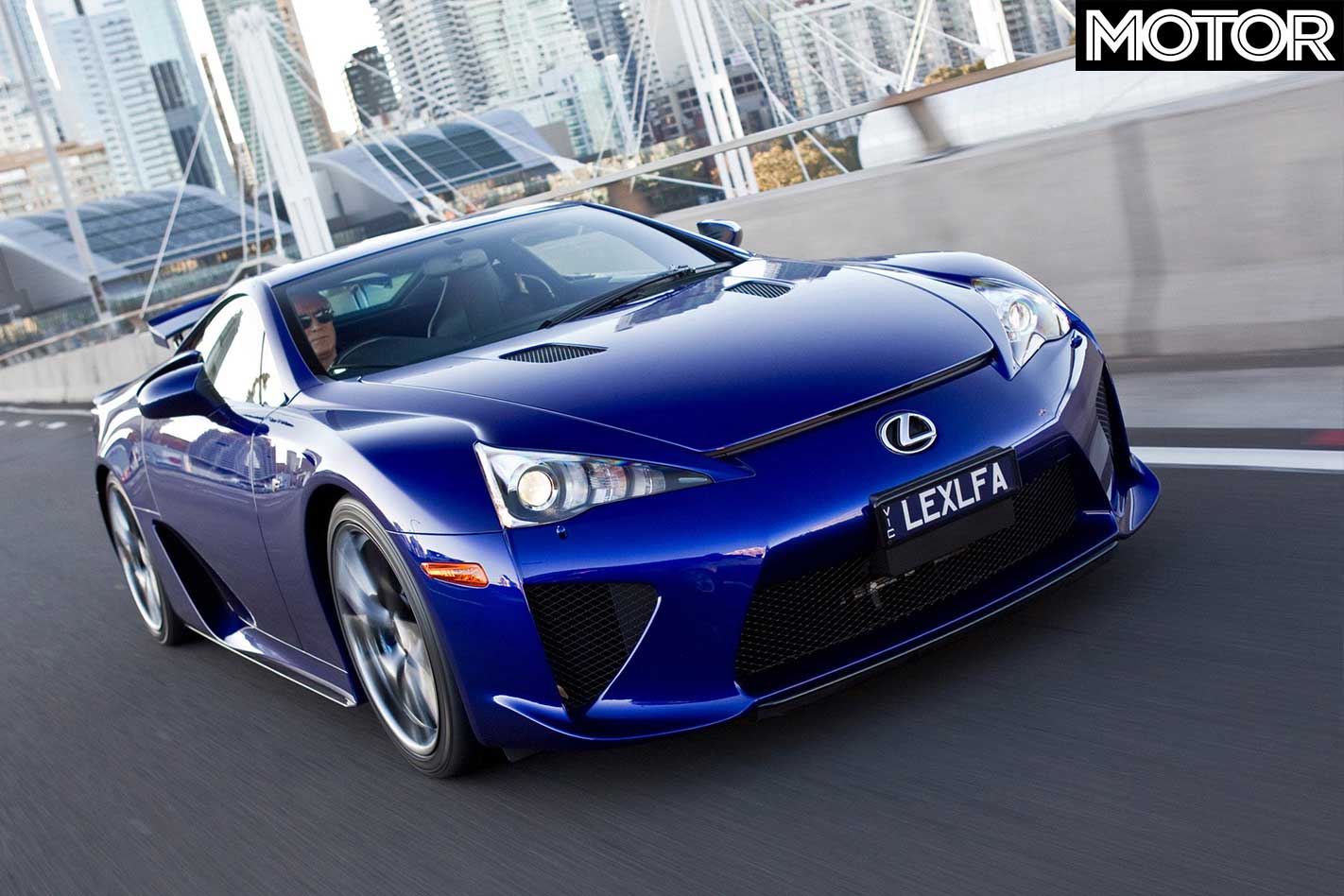
So many of my road testing memories are inextricably linked to sound, whether it’s the chugga-chugga of a C63, crisp snarl of a VF II Redline, wail of a Lexus LFA or all-encompassing scream of a 911 GT3. What will I remember from the Lotus Evora GT430 I drove this week? Almost certainly the fact that it’s the loudest road car I’ve ever driven, its outrageous V6 howl splitting my face in an ear-to-ear grin.
There is a solution that marries the apparently contradictory ideals of environmental responsibility and spine-tingling soundtracks – hybrids. For so long a dirty word, it turns out that the hybrid drivetrain could be the saviour of the aurally exciting performance car.
Early hybrid systems had laughably short EV-only ranges, but the latest generation have enough juice to allow most drivers to complete their daily tasks on battery power alone. This is important, as it’s not impossible that in the medium-term future non-EVs will be banned from urban use.

Once clear of the city centre, however, the press of a button fires up the screaming internal combustion engine, the batteries now plugging gaps in the torque delivery and providing instant punch out of corners – it’s the best of both worlds.
Maybe I’ll be wrong. Perhaps the jaw-dropping acceleration and razor sharp handling provided by all-electric sports cars will be ample compensation, but I can’t help but wonder whether the problem of commuter car pollution should be tackled first.
After all, most people won’t care less whether their car is powered by electricity or petrol, but I do. I suspect you do too.
WHEN it comes to catching first sight of a brand new European supercar, Melbourne probably wouldn’t be your first choice to set up as a spy photographer. But before we’d even seen pictures of the car in its undisguised state, Aston Martin had invited us to a sneak preview of its box-fresh DBS Superleggera range-topper.
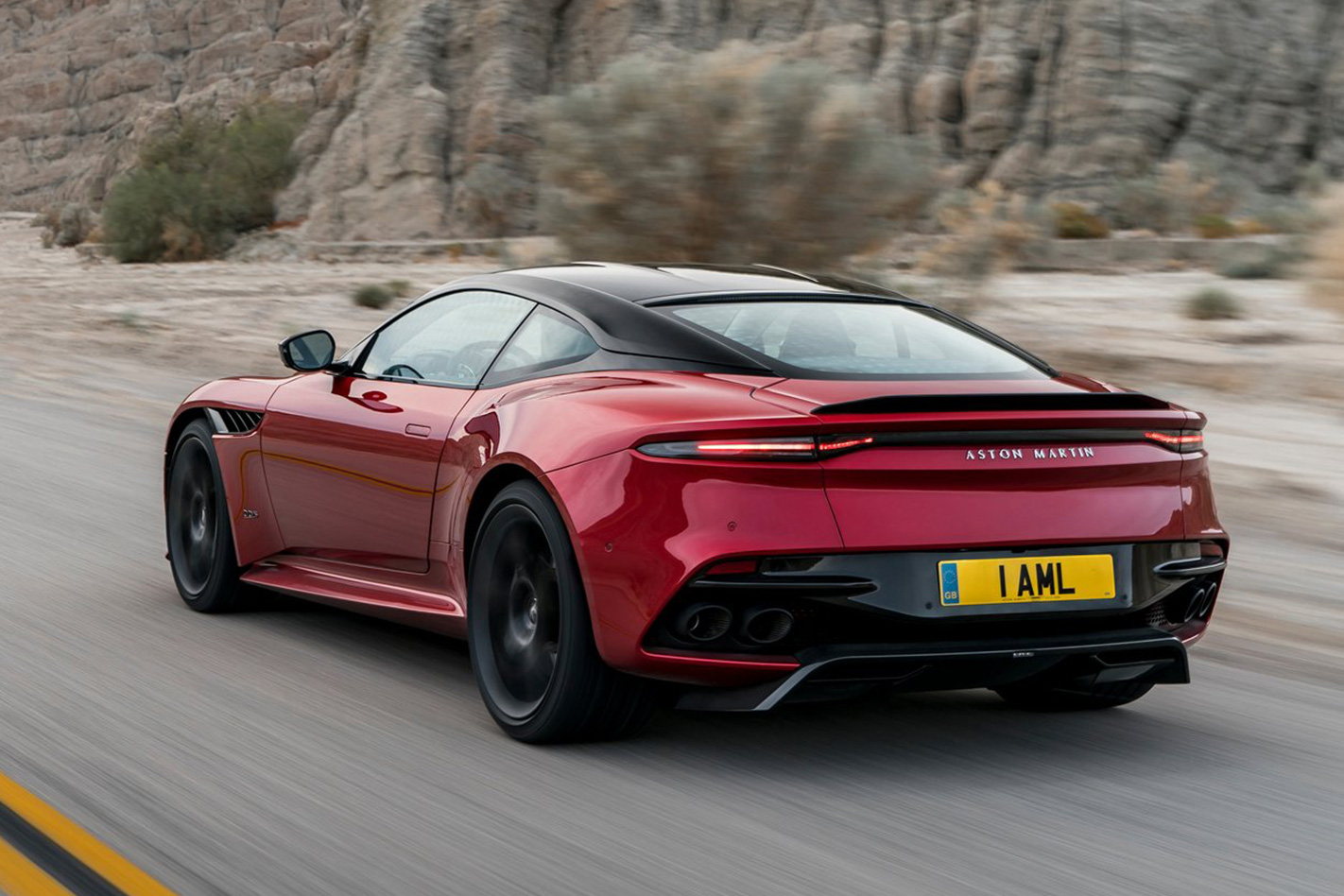
This was over a month ago now and we’d been sworn to secrecy in the interim. I wasn’t even allowed to snap a few pictures to show the rest of the crew back in the office, and the level of secrecy that Aston Martin had gone to in order to spirit the DBS into the country must have been pretty extreme to escape the all-seeing gaze of fan pages like Melbourne Car Spotters.
Getting treated to the full Aston Martin customer experience at the dealership in Swan Street, Richmond was quite something for somebody who has never bought a new car any more exotic than a Golf, but better than that was the opportunity to get up close and personal with a vehicle that will help burnish Aston Martin’s brand equity still further.
If you’d like to see a whole lot more of the 533kW/900Nm monster, click on the video above.
IT SEEMS sensational reports of the Alfa Romeo 4C’s untimely global death may have been a little overcooked, with its maker this week confirming that it is only North America that will have to bid farewell to the bantamweight carbon-bodied Coupe.

Initial reports had painted a gloomy picture for the little two seater – introduced in 2013 to defibrillate the company’s uncertain long term prospects – with the news that the Coupe version would be killed off as early as this year.
However, Fiat Chrysler Automobiles (FCA) has since told US publication thedrive.com that it is only production for North America that has ceased and the rest of the world need not panic for now.
“While the 4C Coupe is no longer in production for North American market, it remains in production for all other markets,” it said.
The hype followed a misconstrued statement by FCA CEO Sergio Marchionne during Q&A at the Capital Markets Day in Balocco earlier this month, in which he appeared to sound the 4C’s death knell following changes to registration policy.
“The 4C has some technical limitations in terms of… approval outside the US and Europe, so it has a limited future, as it will no longer be possible to register it and have it approved”.
According to Marchionne, the registration hurdle concerns one of the 4C’s key selling points and its ultra-light carbonfibre construction. “For structural reasons, because of the monocoque,” he said, but homologation in other global markets appears to be unaffected, allowing its continued sale outside of the US.
Indeed, FCA Australia has confirmed to Wheels that the model in both Coupe and Spider varieties is still available for the foreseeable future. Furthermore, a 2019 update is expected to fully douse rumours that its days are numbered. You’ll have to wait on official confirmation for those details, but a few creature comforts excluded from launch are expected as part of its update.
Since launching, 246 4Cs have found homes in Australia, with 194 of those represented by the Coupe. The Spider, which arrived later has sold 52 to the end of May this year.
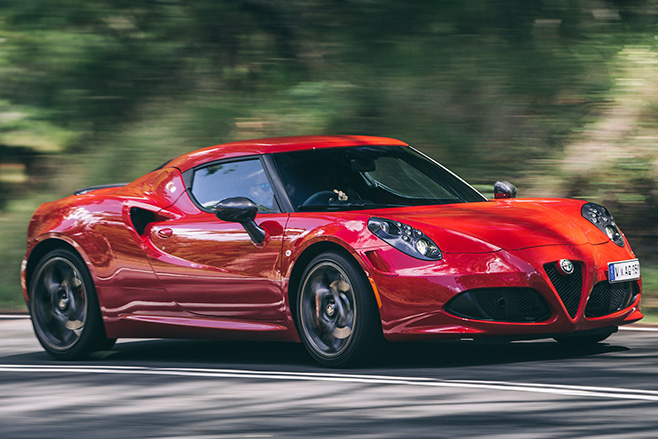
Even if reports that the Coupe was on the chopping block were true, it perhaps should come as no surprise as the six-year old model is probably about two thirds the way through a typical sports car’s life cycle and “a limited future” could be justifiably applied to any model generation by definition.
A replacement however, is almost certainly not going to happen with the company confirming its plans to focus on a more ‘roid-pumped 8C and revenant GTV as the Alfa’s high-performance flag-bearers for the future.
Nonetheless, the press coverage has highlighted that, like any sports model, the 4C will one day be put out to pasture – if you are a fan of the unique carbon-tubbed rocket, now might be the time to slap down a cheque.
Although, if it follows the typical circa 10-year lifecycle of specialised sports models, you may have as many as another four years to think about it.
Most car manufacturers publicise their new car with a press release or test drive event, but Aston Martin went just that step further.
As part of the 24 Hours of Le Mans celebrations, Aston Martin hosted a support race featuring its high tech track racers, while also debuting its new Vantage GT3 and GT4 track cars.
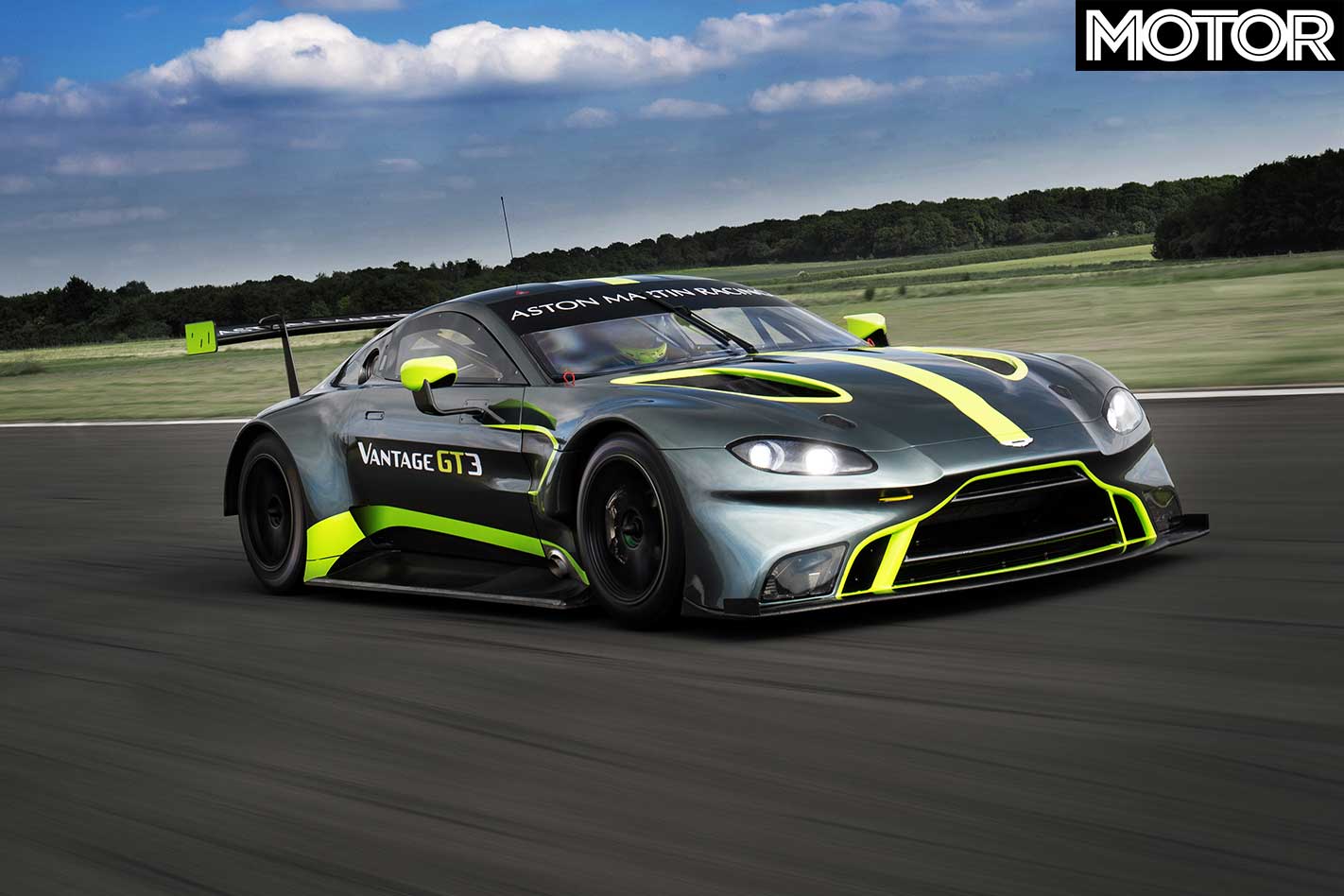
The Aston Martin Vantage GT3 features the now widely used Mercedes-AMG 4.0-litre twin-turbo V8, but this one has been tinkered with and optimised by Aston Martin Racing.
The engine produces a significant 399kW and 700Nm of torque. The V8 is linked to a 6-speed sequential gearbox and features four-way adjustable Ohlins dampers and Alcon brakes.
The Vantage GT3’s big brother, the Vulcan, also featured in the special festival race for Aston Martin.

Gone is the twin-turbo V8, now replaced by a powerful V12 engine, pushing out 611kW in the highest power mode. Again power is connected to the wheels through a 6-speed sequential gearbox.
The car weighs just 1350kg, making the Vulcan one seriously fast bit of kit. The car will accelerate to 100km/h in around 3 seconds.
The 45-minute race at Circuit La Sarthe featured 38 Aston Martin cars. Celebrities including former Le Mans winner Martin Brundle and Olympic gold medal winner Sir Chris Hoy raced alongside Aston Martin CEO Andy Palmer.

“This will be particularly special partnering Sir Chris Hoy in a beautiful Aston Martin Vantage GT4. Chris is a good friend and handy on the pedals in every respect.”
The race was won by Top Gear presenter Chris Harris and British racing driver Peter Dumbreck, who is infamous for backflipping a Mercedes CLR at Le Mans the day after Mark Webber.
The new Dodge Challenger SRT lineup is headlined by a car that’s ‘possessed by the Demon’.
Called the 2019 Dodge Challenger SRT Hellcat Redeye Widebody, the new halo Challenger puts to use the Hellcat engine in a similar tune to that of the Demon, with 594kW and 958Nm.
Dodge is claiming it has the quickest production muscle car 0-60mph (97km/h) time nailed with the Redeye Widebody, coming in at 3.4 seconds. The Demon, however, had a claimed 2.4sec run to the 100km/h mark.
Over the quarter-mile, Dodge says the Redeye Widebody will only take 10.8 seconds, clocking 210km/h along the way. It’ll top out at 327km/h.
Dodge says it has used the largest factory supercharger for the Redeye at 2.7-litres – the same size as that on the Demon. The boost pressure was also upped to 14.5psi from 11.6, and the redline was lifted to 6500rpm.
Joining the Redeye Widebody will be a ‘standard’ version of the Redeye, as well as a Hellcat and Hellcat Widebody.
The four models are only separated by a few tenths on the strip, with the Hellcat Widebody taking 10.9 seconds, the standard Redeye 11.1 seconds, and the standard Hellcat 11.2 seconds. Top speeds are all upwards of 310km/h.
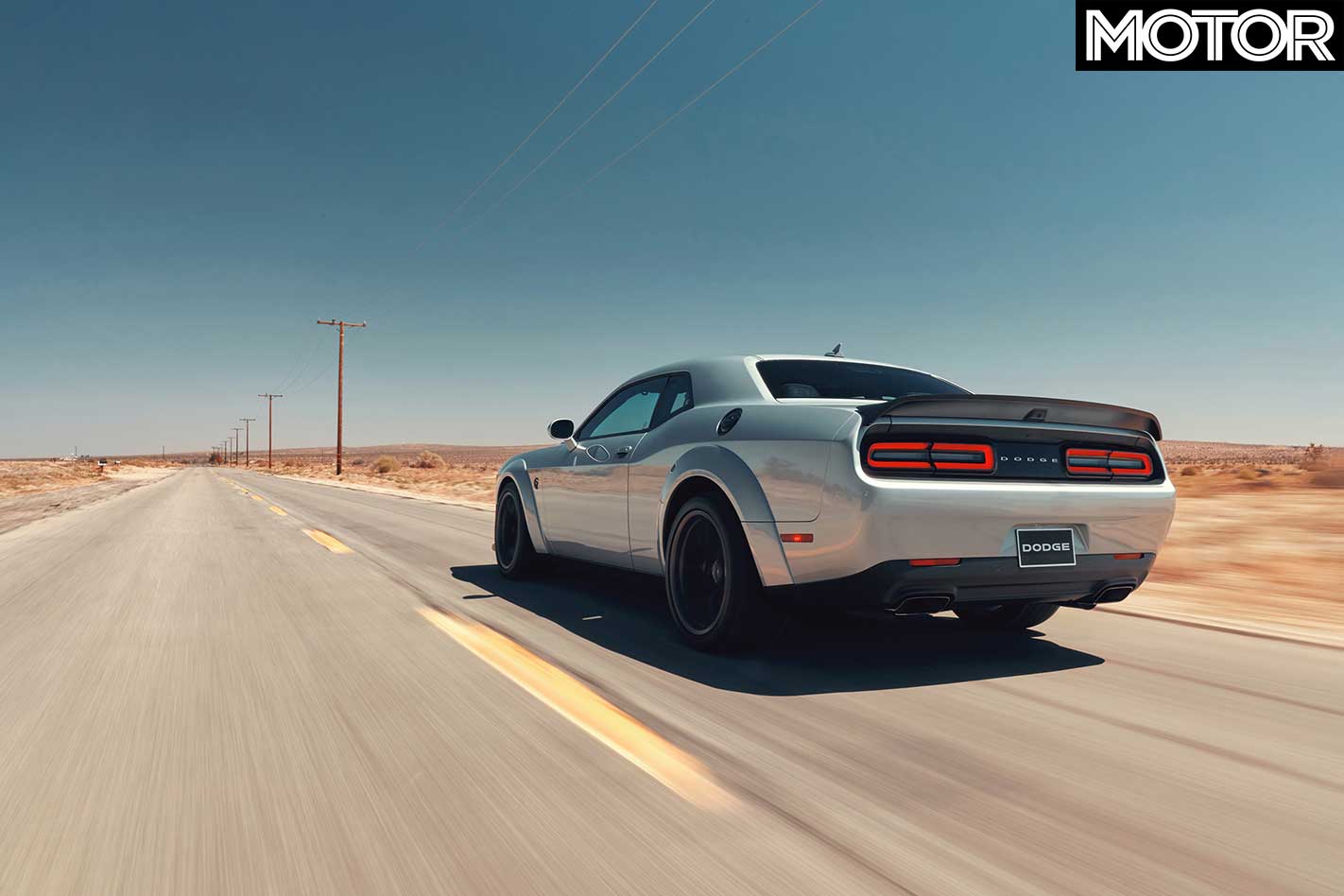
As well as the technical upgrades, the exterior design has been tweaked to include cues from classic Mopar cars of the 1960s and ‘70s like the 1970 Dart Swinger and 1971 Demon.
Head of FCA US passenger car design Mark Trostle says taking classic and historical Dodge design elements has made the 2019 Challenger not only more functional, but also more appealing.
“We designed the SRT Hellcat Challenger’s new dual-snorkel hood to focus on another key historical Mopar design element and pay homage to our past with a modern interpretation that looks even more sinister.”
The twin bonnet scoops function as cooling and induction intakes, with the left one leading directly into the engine (and supercharger’s) air intake.
Production is set to kick off in Q3 this year, with US deliveries expected to start late in the year.
THE McLaren 600LT – the most powerful, fastest, track-focused but road legal Sports Series performance coupe from the exclusive British sports car brand and Formula 1 constructor yet – has finally arrived.
Billed as the “next chapter” in the longtail story, its price tag – yet to make its conversion to Australian dollars – includes a day of driver training showing new owners how to extract the most from the sports car.
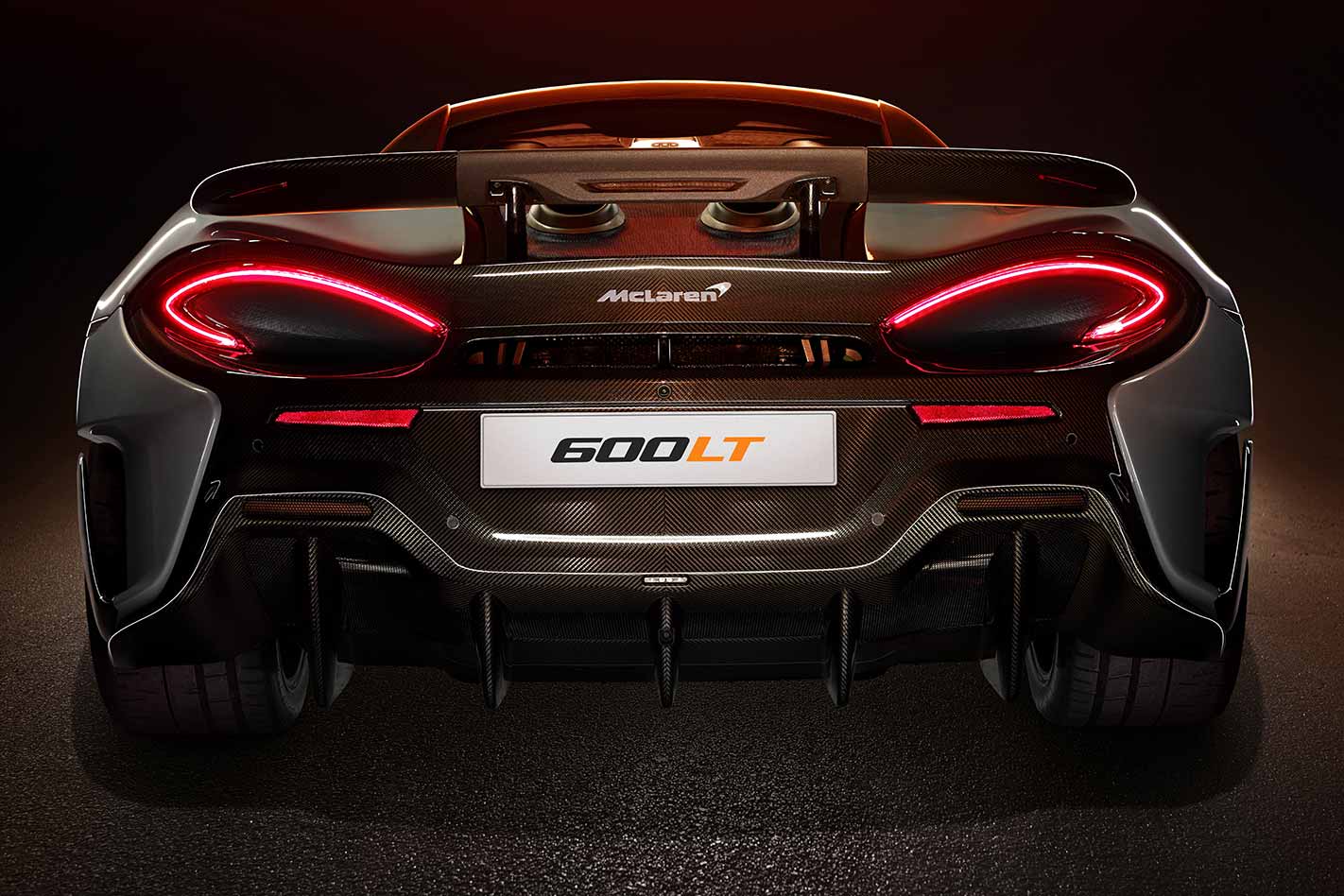
And as speculated, it has Porsche 918 Spyder-style top-exit exhaust pipes that not only save weight, but look the business.
Those pipes connect with a twin-turbocharged 3.8-litre V8 using an uprated cooling system and reduced back pressure in an exhaust system that is even shorter and more extreme than that of the McLaren Senna.
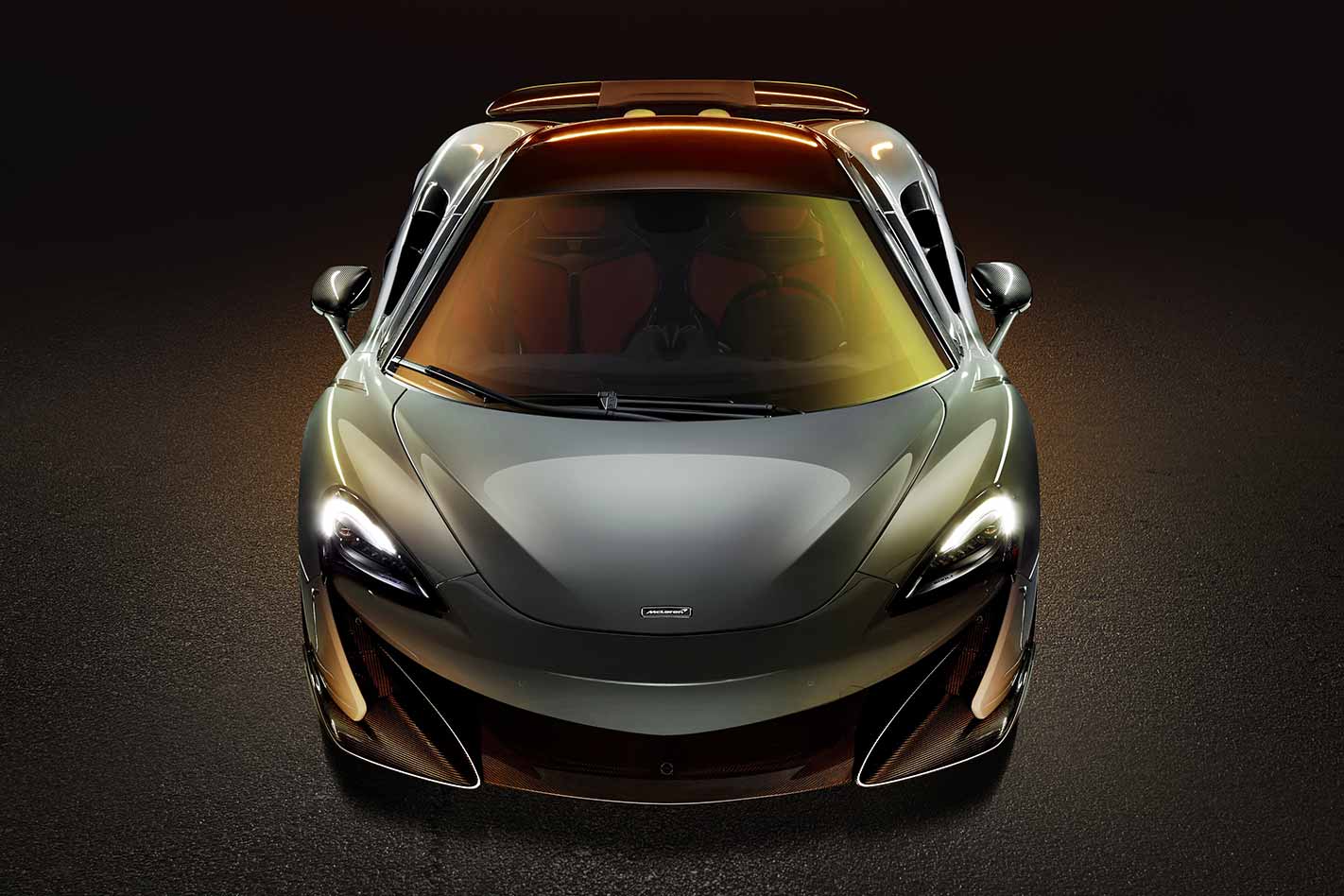
McLaren hasn’t said how many of the 600LTs it will hand-build, although production will start in October, and wind up about 12 months later. It said the 600LT’s specialist carbon fibre body panels would “also ensure that it is significantly rarer than its Sports Series brethren”.
Little is also said about how this McLaren will drive, although the superlatives flow with vigour. “The new carbon-fibre bodywork and large rear diffuser deliver substantially increased downforce to further enhance the 600LT dynamic experience, especially on a track,” McLaren said.
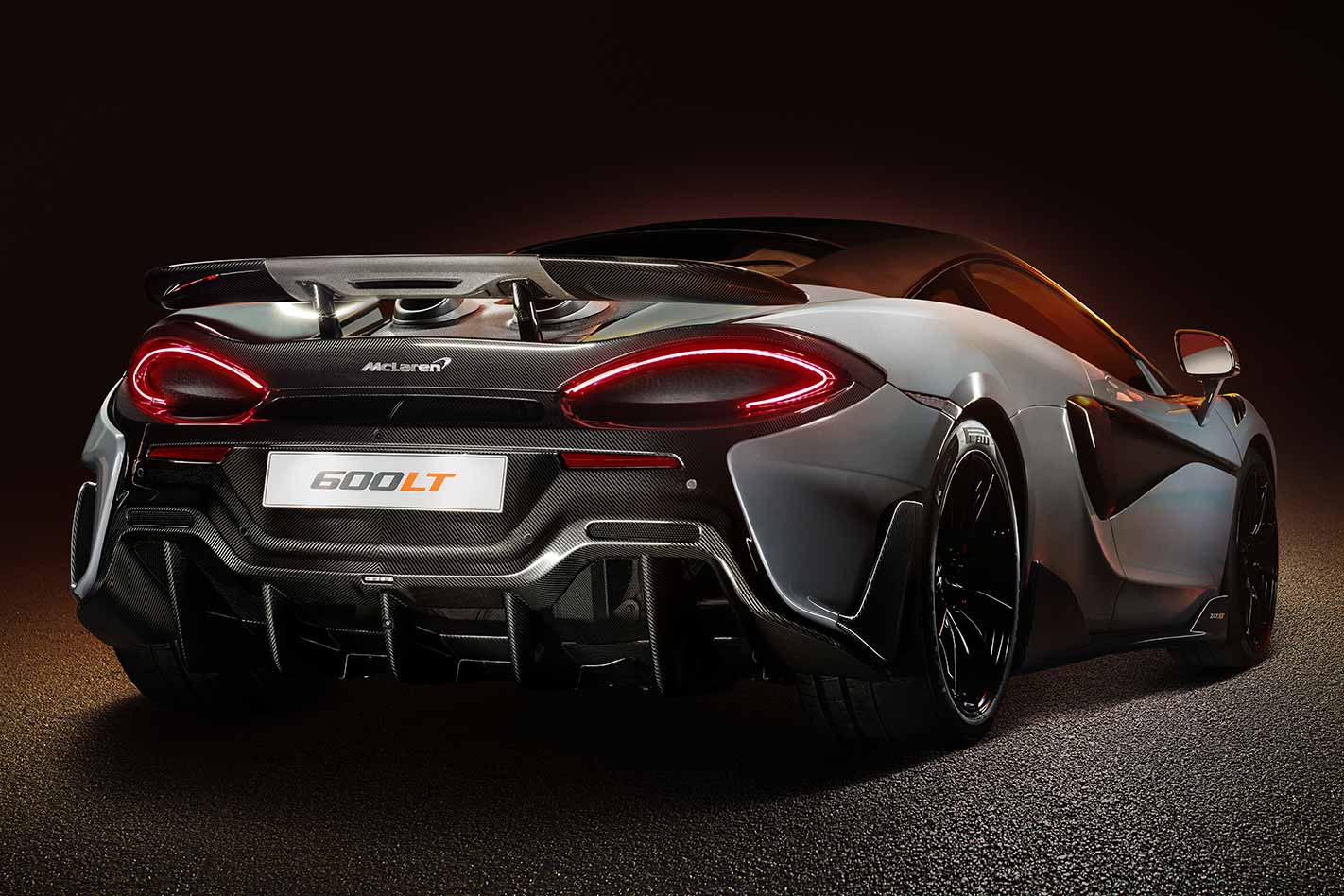
It said the the new model “features the forged aluminium double-wishbone suspension and lightweight braking system from the second-generation McLaren Super Series; bespoke, track-focused Pirelli P Zero Trofeo R tyres; quicker steering; sharpened responses from the throttle and brake pedals; significantly firmer engine mounts and exhausts that are mounted virtually behind the driver’s shoulder to bring the incredible sound of the powertrain into the cabin”.
There’s no word yet on Australian pricing.
If you’ve been to a motor show lately, you’ll have seen a concept car. These days, we tend to look at them and think: Oh, that’s nice. But I bet it’ll never be built.
This feature was originally published in MOTOR’s January 2012 issue
And you’d (mostly) be right. And even if the concept in question does make it to production, chances are it won’t look anything like it did on the show stand.
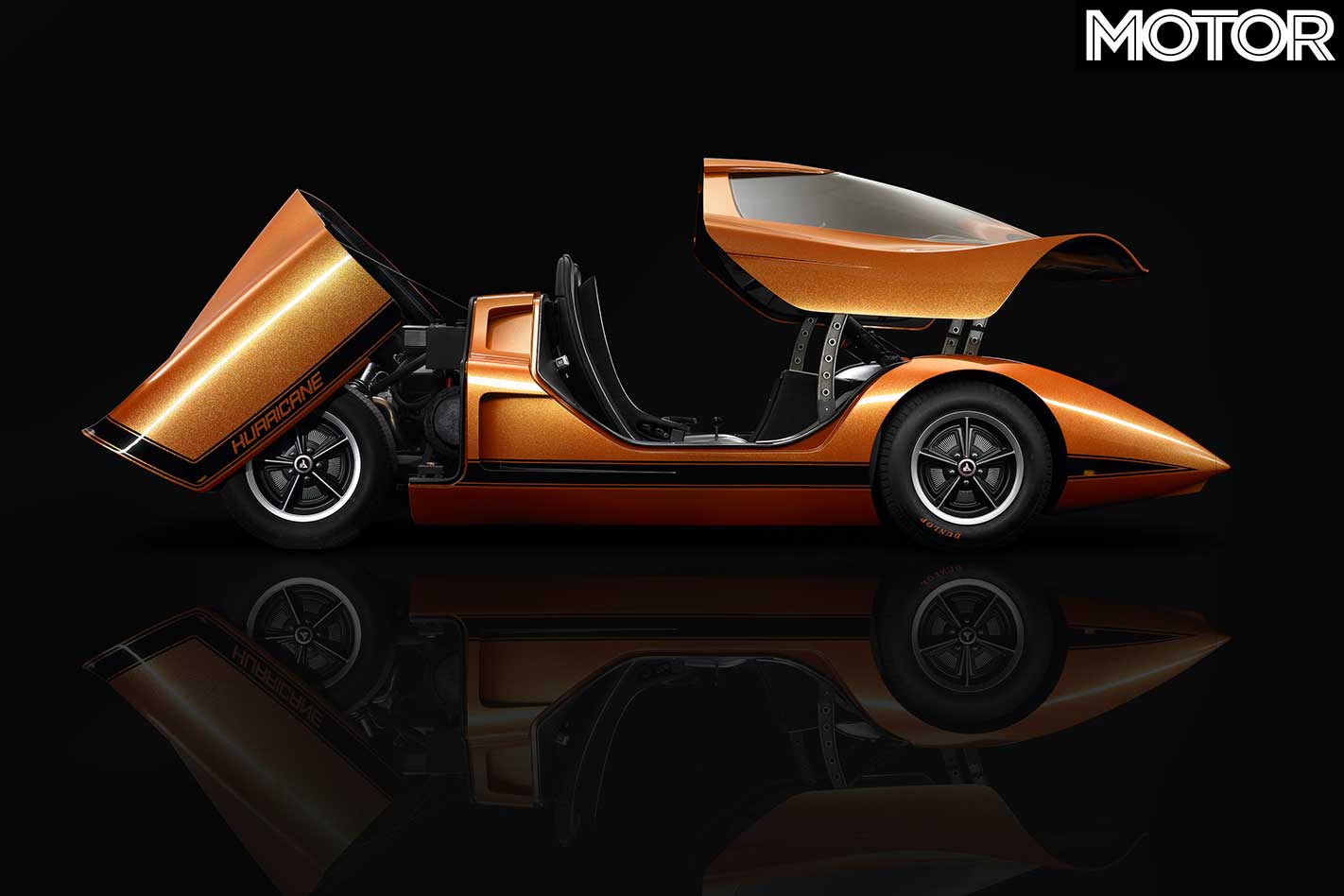
Okay, in some respects it turned out to be a future that didn’t eventuate, but back then, we didn’t know as much as we did today and, as a result, concept cars – even wild ones like this – were firmly in the realm of the possible.
As Holden’s design boss, Mike Simcoe puts it: “Back then, we didn’t know what we didn’t know”.
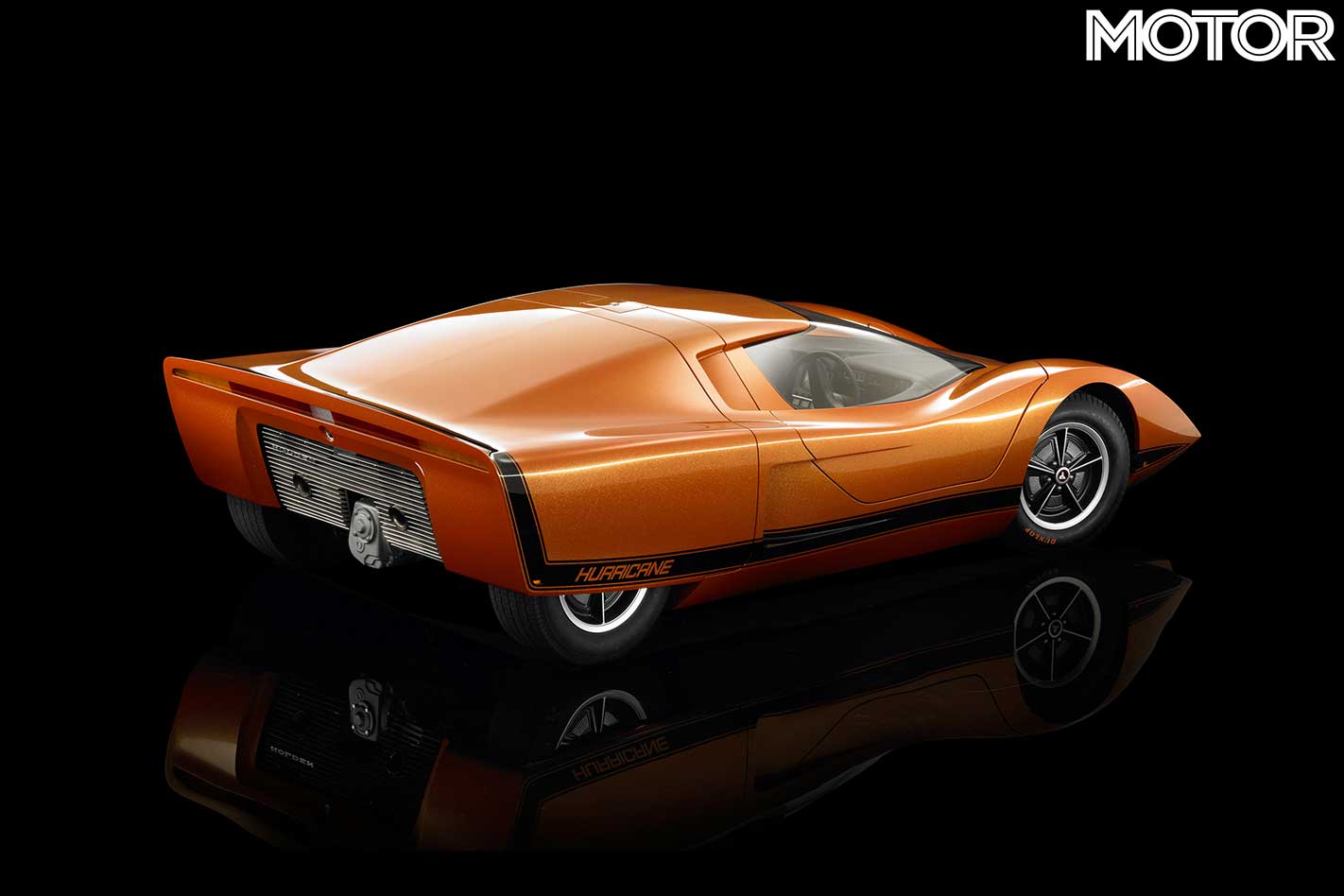
And he’s spot on. See, in an industry without a deep knowledge of what was technically possible, what consumers would really pay for and without too much of a worry about the environment, motoring’s horizons were a long way off in ’69. And the Holden Hurricane was not only proof of that, it was taken very seriously indeed.
And without wishing to paint the good people of 60s Australia as simpletons, the black and white world of 1969 was a very different place. For instance, back when the Hurricane broke cover, the Apollo 11 mission was still weeks away from landing Neil Armstrong and his buddies on the moon.
Holden as a car-maker was just 21 years old (an EH Holden was still a five-year-old usdie) and the Hurricane was the world’s first peek at the locally-designed V8 engine. Your average Holden still didn’t come with carpets and had to be unlocked with the key, one door at a time. Hell, even the famous Melways Melbourne street directory was in just its third edition.
And then along comes the Hurricane with on-board navigation. The nice people at Melways must have had a cow.
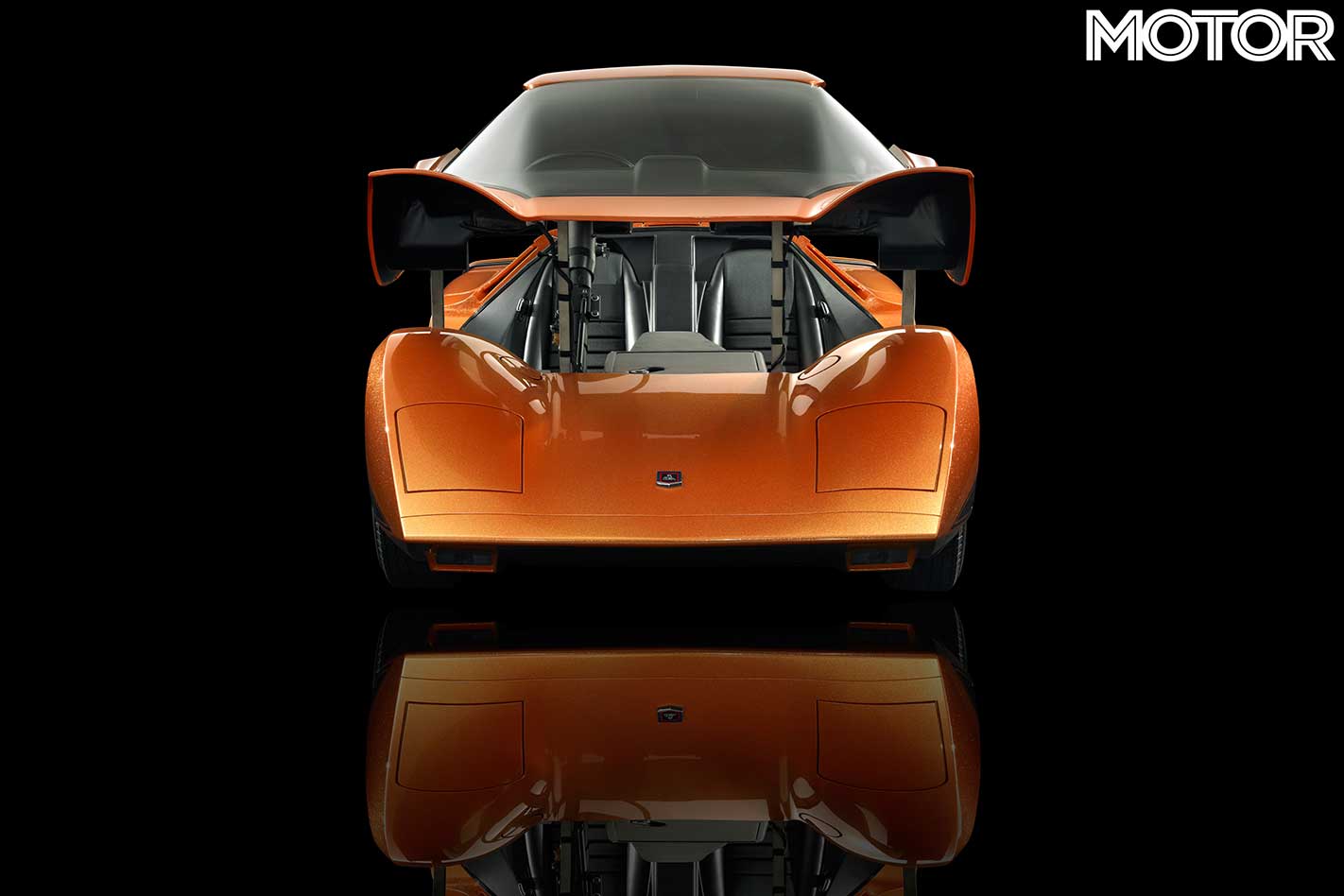
But there was more…much more. The Hurricane didn’t have doors, it had a canopy that rose on hydraulic struts. It had disc brakes at each end and they were even oil cooled.And at a point in history when the Lamborghini Miura was re-writing the supercar blueprint with its mid-engine and transaxle gearbox, the Hurricane featured exactly the same layout.
There was air-conditioning (which it needed because there were no opening windows) and the whole thing smelled of Dan Dare and Buck Rogers (ask your grandad). Even Mike Simcoe admits it was a ‘spaceship’.
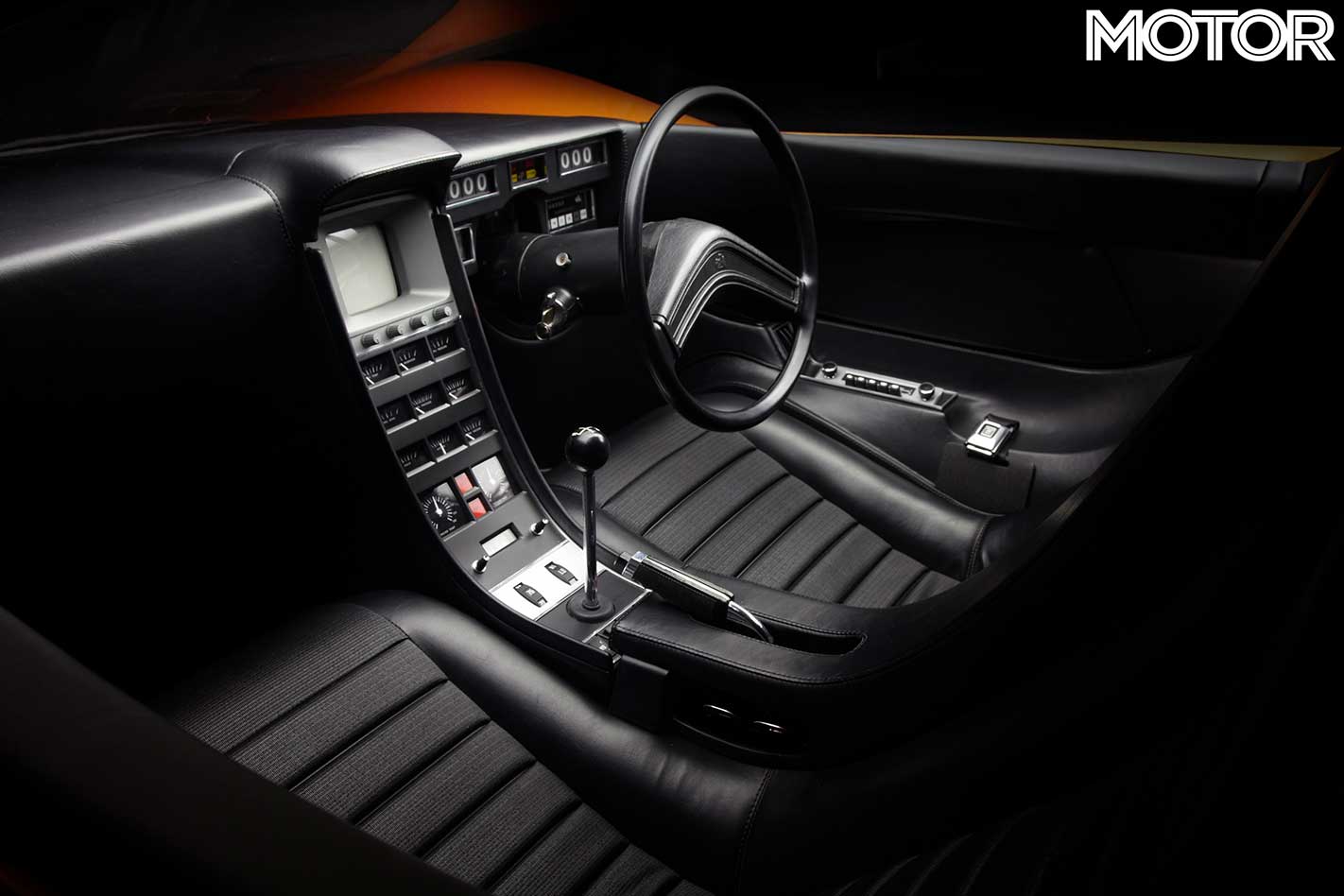
But that’s selling it a little short because for the stuff like the Perspex canopy that didn’t get up, some vital elements really did point the way for future Holdens. Take the on-board navigation, for instance.
At a time when the only satellites whizzing around the planet were The Moon or covert military jobbies hoisted up there by the superpowers at the height of the cold war, the Hurricane obviously couldn’t tap into those.
So, instead, it used a system based on magnets which flashed directions to the driver via a screen on the dashboard. Sound like a familiar interface? Apparently, the military still uses the Pathfinder system, as it became known, in some form.
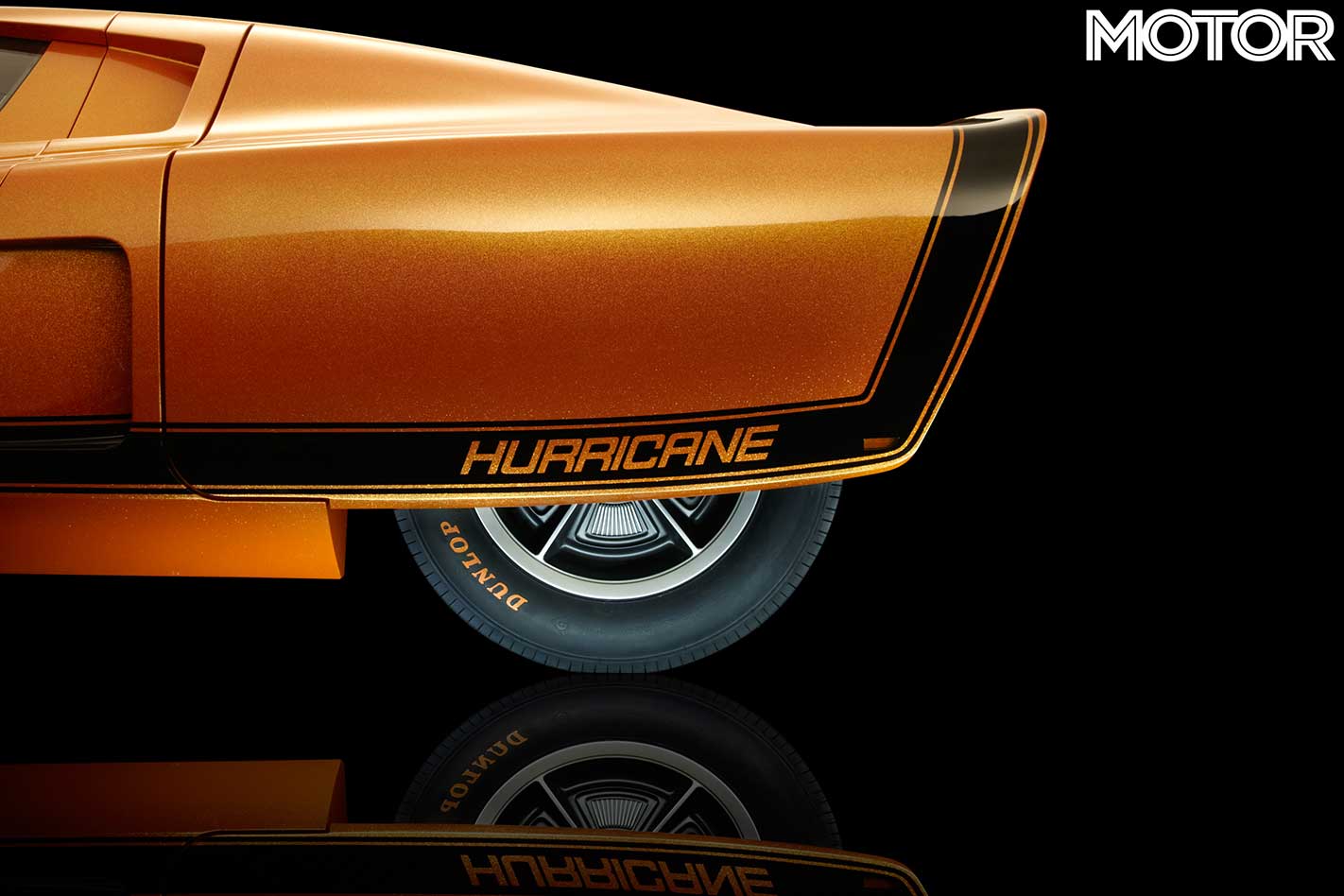
And what about the Hurricane’s inertia reel seat-belts at a point in automotive history when ye olde lap-sash units were just becoming standard kit. In the front only.
And Australia was leading the world in this stuff. Because the Hurricane had no rear window, Holden pre-empted the SUV market by a good few decades by installing a reversing camera. Okay, it was actually a closed-circuit TV set-up, but it did the same job.
The engine was a prototype version of the good old 253 cubic-inch (4.2 litre) V8. With a pair of valves per cylinder and all cast-iron construction it was middle-of-the-road tech for the time, but in Hurricane spec it made a healthy 300 horsepower compared with about 150 horsepower (on a good day) when it finally reached production that same year and found its way into the engine bays of HT Kingswoods and (mainly) Premiers.
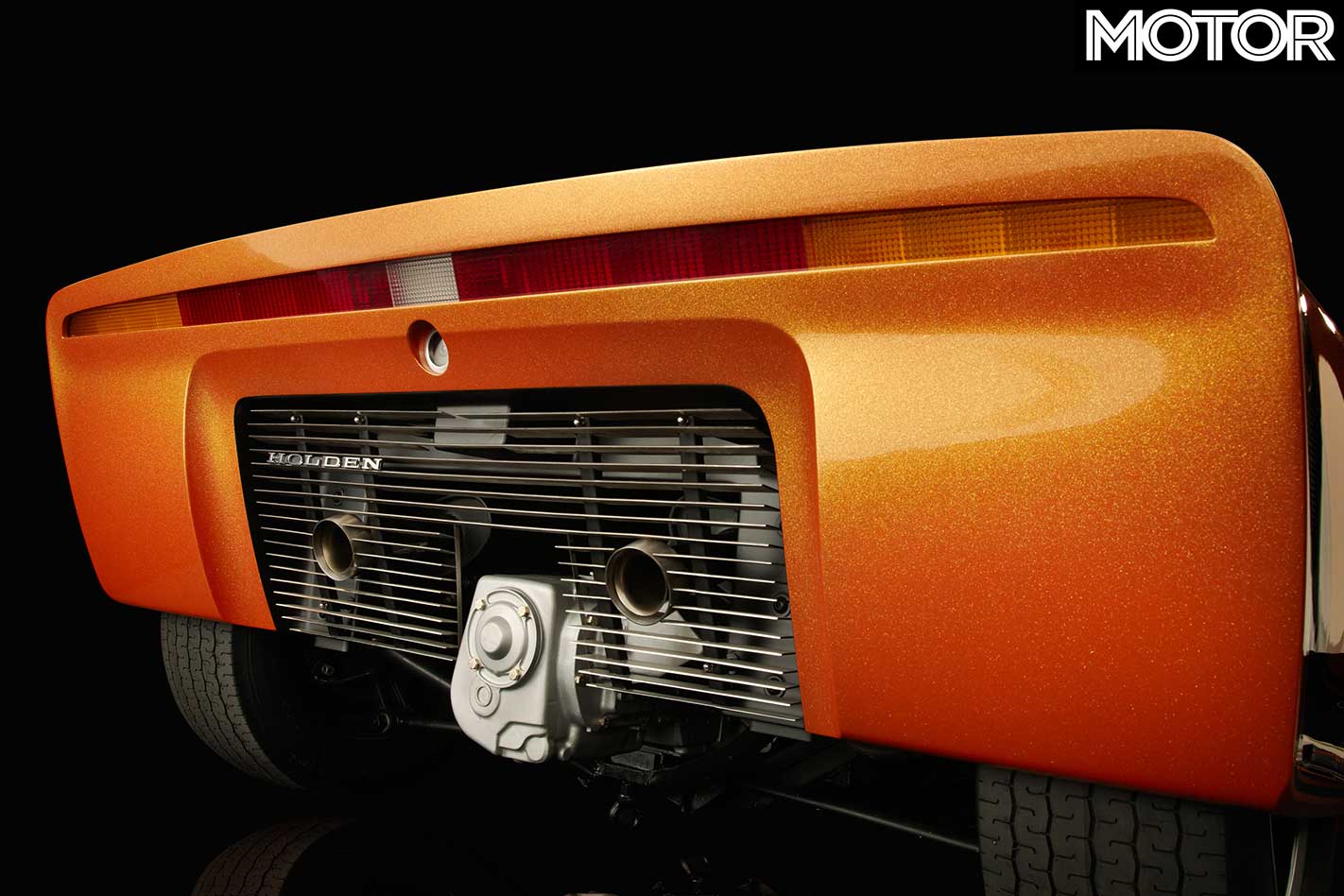
The transaxle was more exotic but rather than simply opt for a buy-in like a Porsche five-speed unit, Holden actually made from scratch a transaxle based on the standard four-speed manual fitted optionally to its production cars. Nobody I’ve talked to can remember who did this, but rest assured it’d be one hell of a job and the blokes/blokettes involved deserve big respect.
The oil-cooled disc brakes were another in-house design and even the alloy wheels were cast within the family to a design specific to the Hurricane.
Funny thing is, while we now expect everything from concept show cars to race cars and even flash road cars to be transported in fully enclosed, dust-proof big-rigs, the Hurricane was hauled around on nothing more exotic than an open trailer towed by whatever the experimental department had lying around at the time.
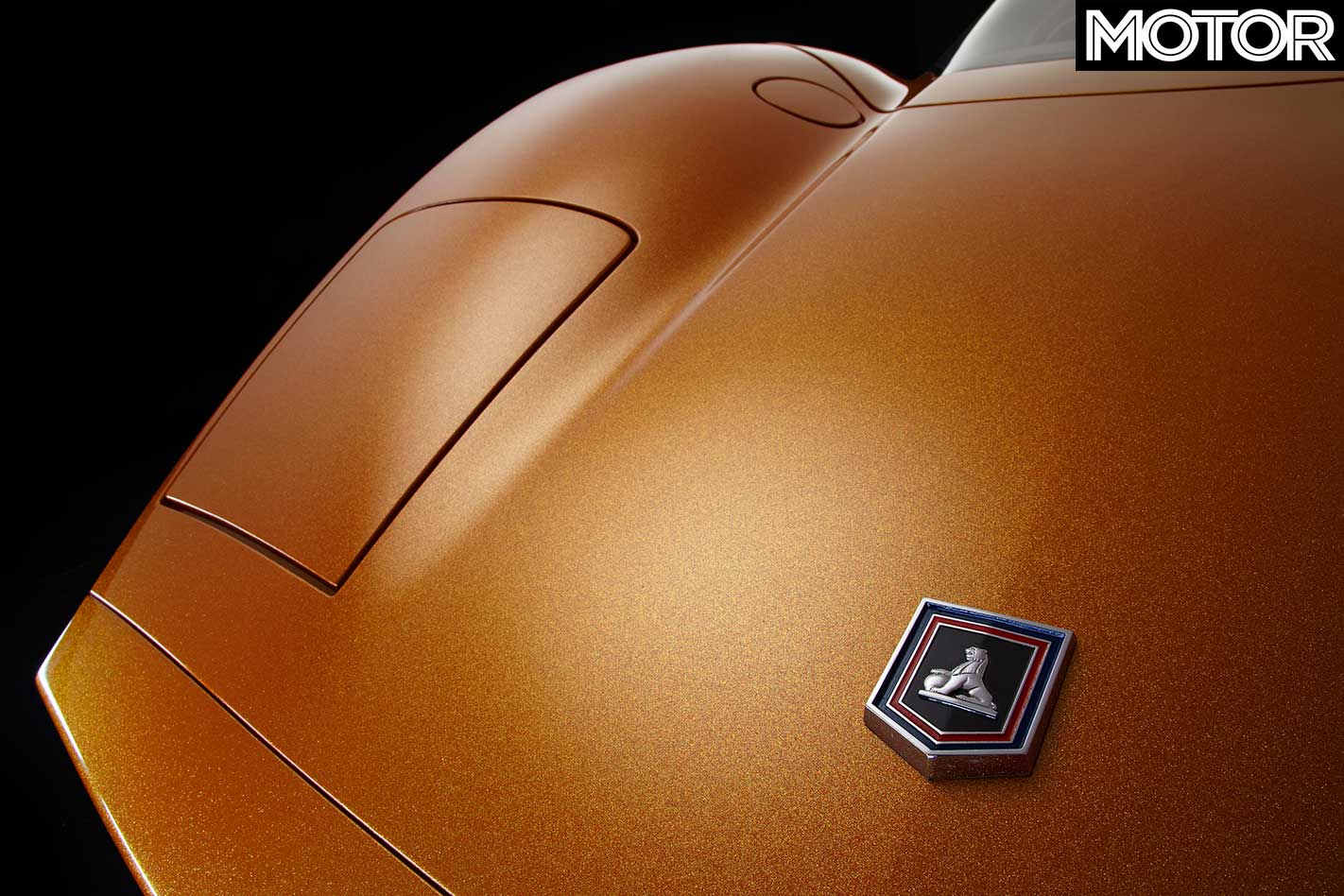
And you can forget high-tech laser-lit show stands and unfeasibly skinny girls in lycra pyjamas, the Hurricane was set up for display at not just big city car shows, but also regional events and dozens of agricultural shows where it often featured in the pig-judging shed.
In fact, it was in just such `an old cow shed’ that a much younger Mike Simcoe recalls seeing the Hurricane for the first time at the Royal Melbourne Show of 1969.
Of course, like anything else that relies on its gee-whiz factor to earn its keep, the Hurricane eventually drifted out of Holden’s corporate consciousness and was shelved in a warehouse somewhere. It eventually found its way into a private collection on the NSW-Victorian border where it then sat for many years, covered in dust tucked up in a dark corner somewhere.
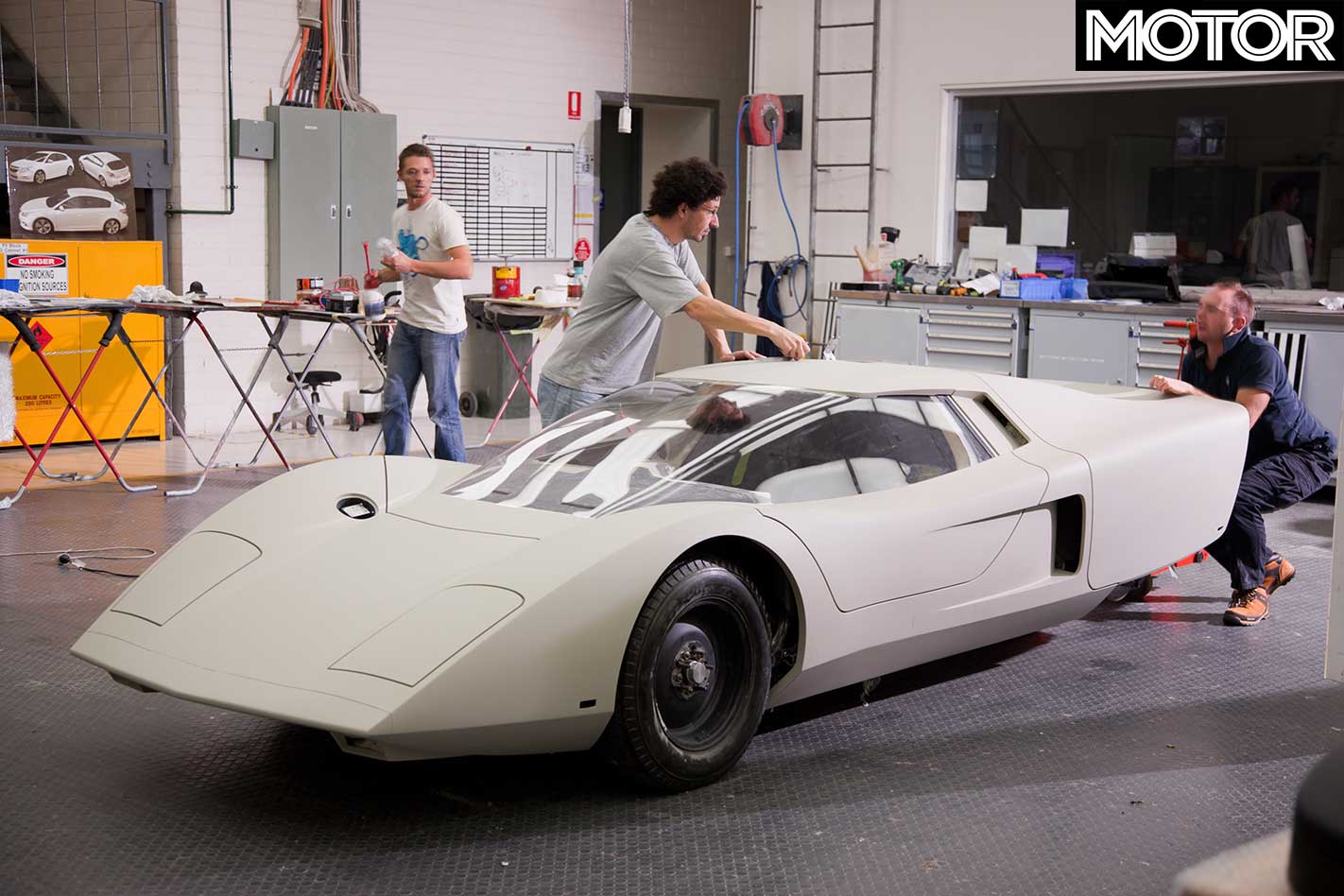
But eventually, somebody recognised the significance of the RD001 (its internal code-name) and it was dragged back to Melbourne in 2006. That was when a full-scale restoration by a team of true believers within Holden’s experimental department was started and the Hurricane was returned to its former unquestioned glory.
Some parts were missing and had to be remade and some of the well-meaning but less-than-perfect previous restoration work by a group of apprentices many years ago had to be undone before the project could proceed.
Even the original paint colour – that acid-trip metallic orange – was but a memory, but luckily, somebody from the company that mixed the paint back in 1969 recalled (or rediscovered) the formula and was able to brew up a new batch.
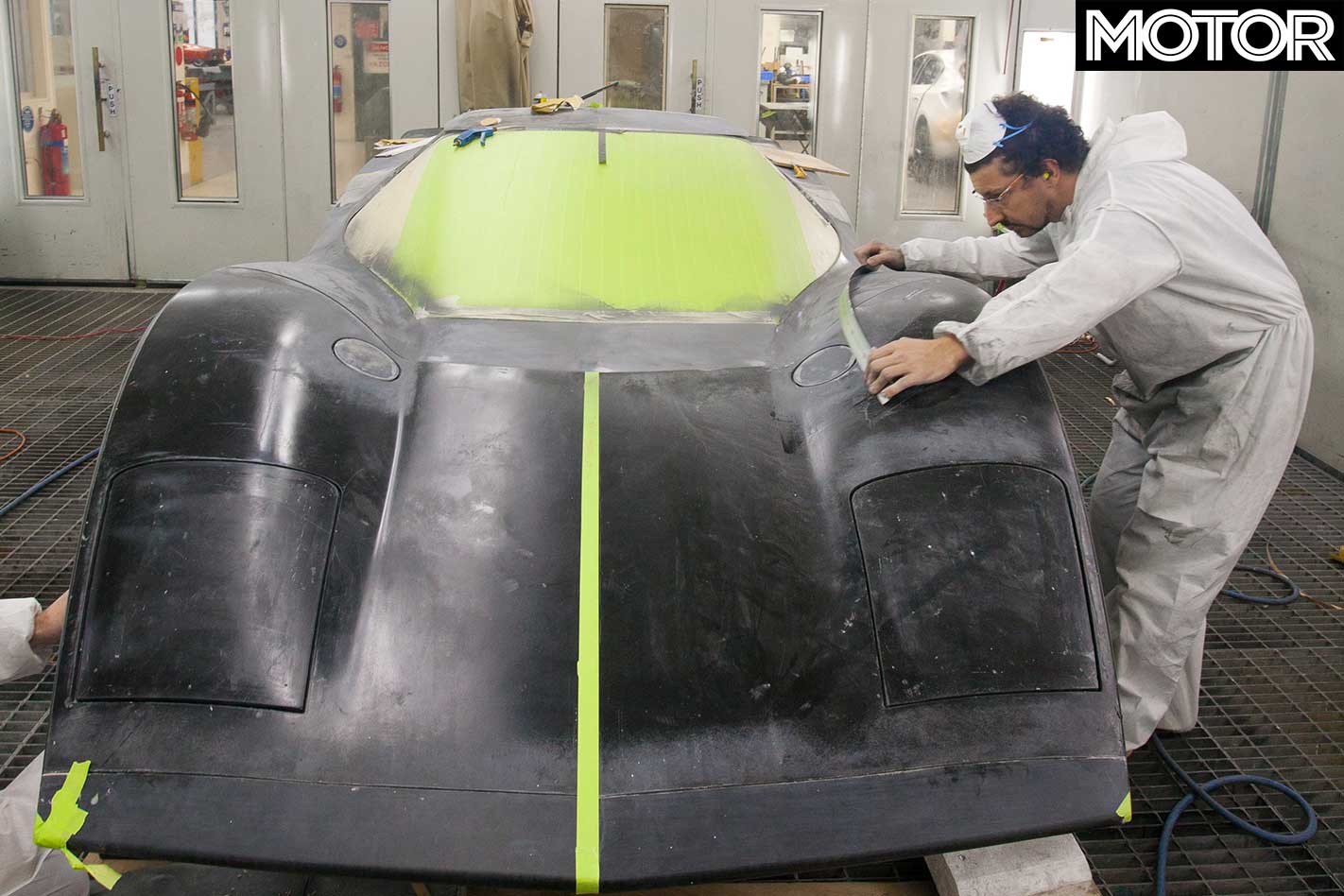
So anyway, there we were a few weeks ago when the rebuilt Hurricane was unveiled to a breathless public and hundreds of Holden employees who’d been given ten minutes off to come and watch the old girl be officially recommissioned.
We heard it fire up outside and then watched as it rolled into Holden’s head office main building. The canopy took an age to open and all the while, that sweet little V8 was idling away with a distinct cammy lope that probably sounded as good 40-plus years ago as it did that day.
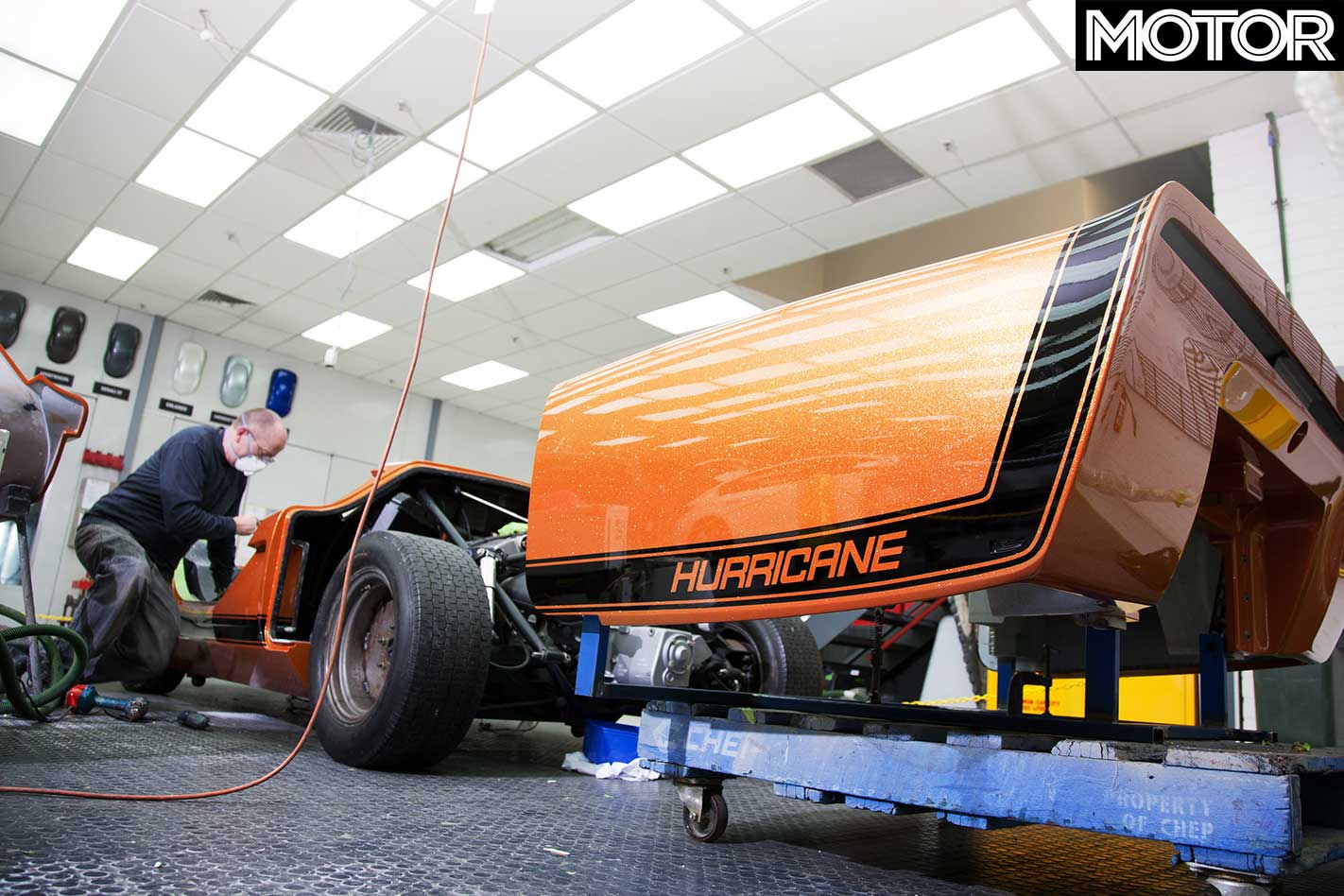
I’m not one for applauding cars when they’re unveiled at motor shows and what-not, but I got ‘em out and banged ‘em together like a rube in a cow shed for the Hurricane.
Now I’m after Holden for a drive in the thing. I’m hopeful, too; probably about as hopeful it’ll happen as Holden is determined that it won’t.
But a man can dream can’t he? The fact that the Hurricane was ever built at suggests that, yes, he bloody well can. And bloody well ought to.
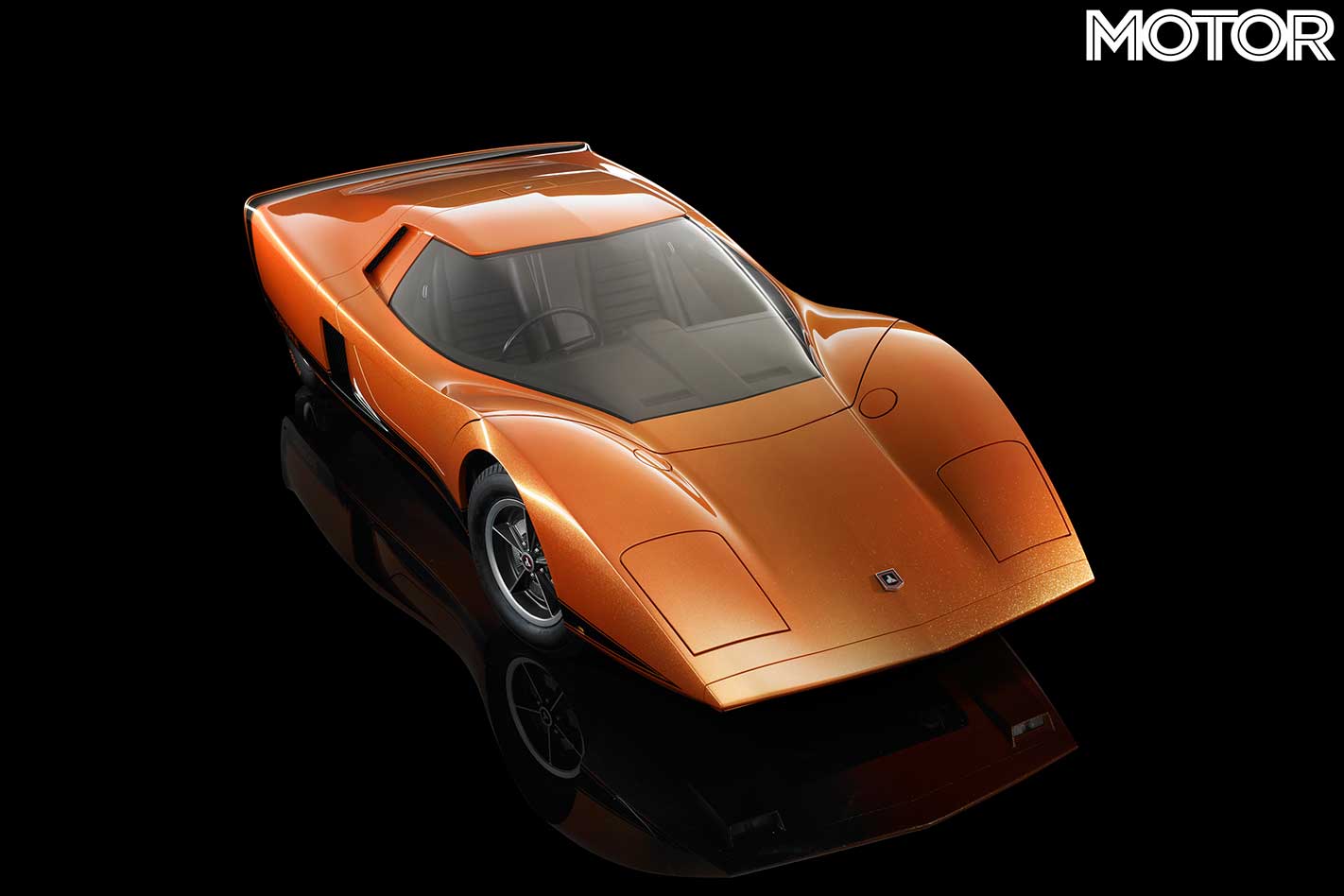
THE GOOD
1 – Still the One A one-off, you’ll never be next to another one at the lights. Plus it holds a super significant place in Holden history.
2 – First Aussie V8 The 253-cube (4.2-litre) V8 was in service from 1969 through to 1984, so there’s a heap of parts to keep it running.
3 – Supercar looks Falcon Phase III? Stillborn GTR-X? No – the Hurricane takes the title as Australia’s only genuine supercar.
THE BAD
1 – Museum piece The car’s cultural significance also means it’s almost too valuable to drive. It should be in a museum.
2 – Anonymity It’s so rare that if you did drive one, no one would know what you’re in. That may be a plus for some people.
3 – Costs? Repair costs? Getting the Hurricane insured or repaired should the worst happen to it would cost an absolute motza.
Holden’s dream machines
Okay, so the Hurricane was the first ever Holden concept car, but it sure as eggs wasn’t the last.
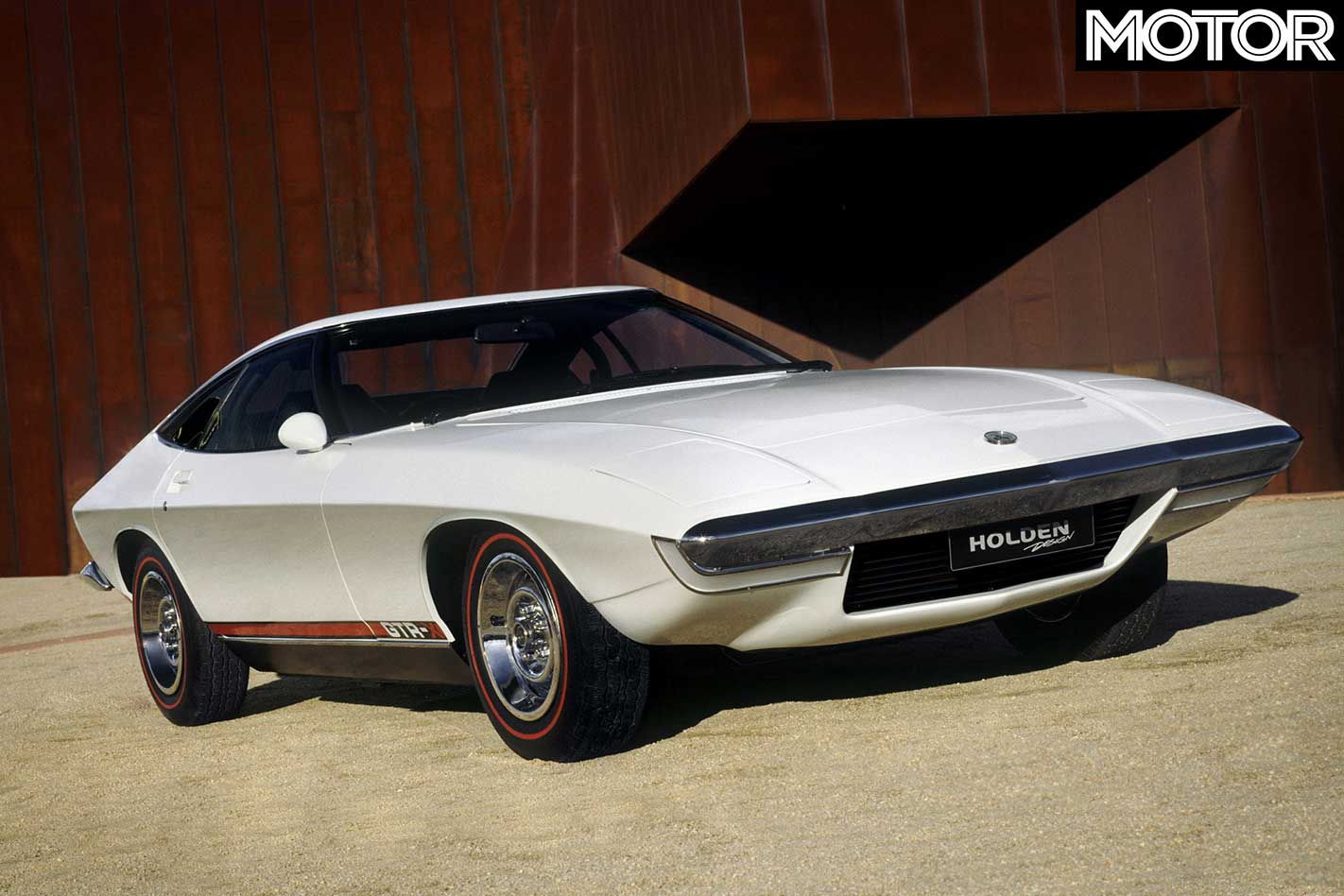
Other notables include the Torana GTR-based GTR-X which wasn’t as dramatically styled as the Hurricane but was probably a lot closer to a production reality. It used the LC GTR’s hot 186-cube inline six and four-speed box. I nearly got to drive it once, too, until some berk reporter from a TV station was given first go (aint that the way of things) and torched the clutch. Goose.
Then there was the Torana concept we saw in Sydney a few years back and who could forget the one that didn’t get away, the latter-day Monaro concept of the late 1990s that was so passionately received that Holden was virtually honour-bound to build the bugger.
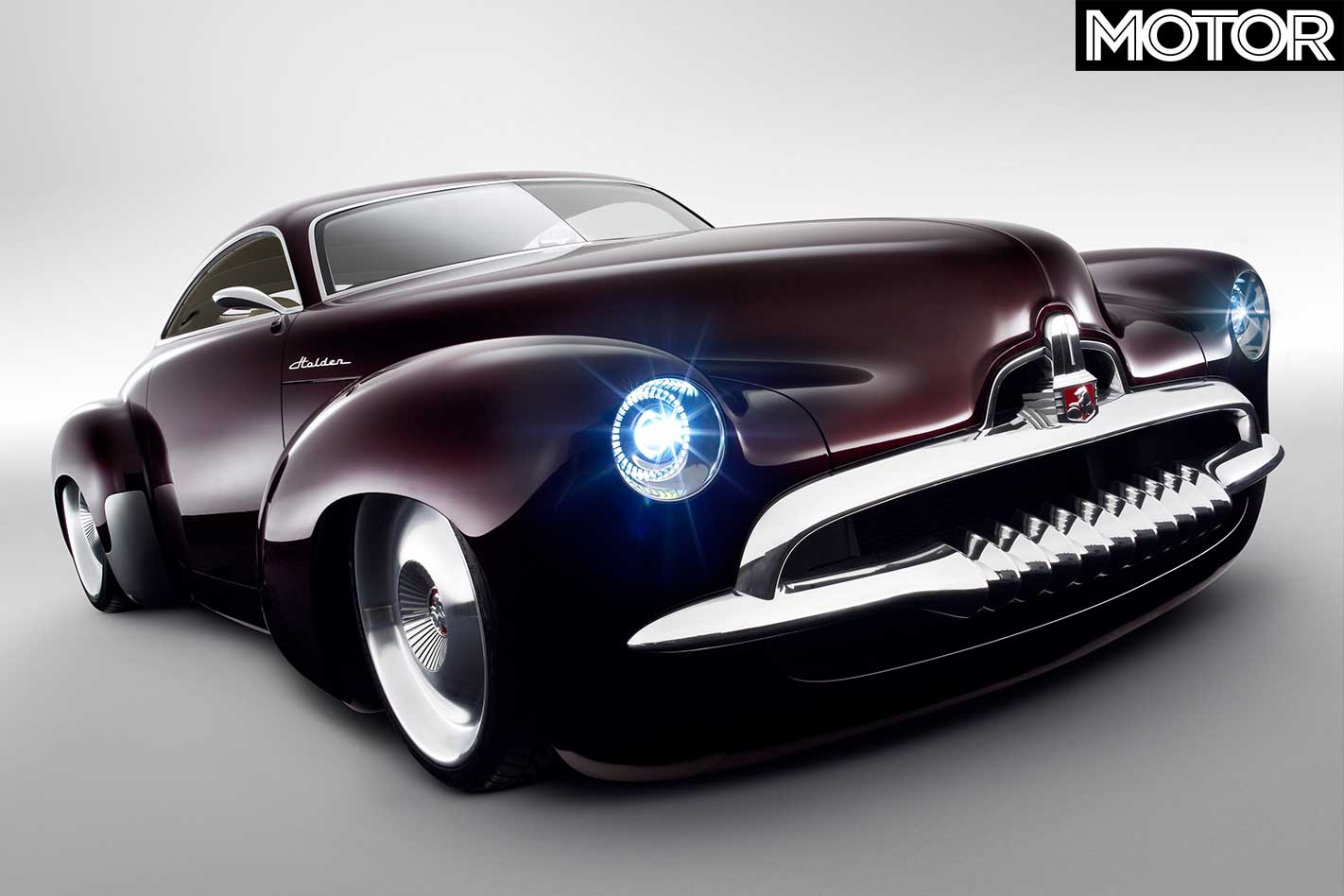
Most recently, the motor show-stopper from Holden has been the Efijy, that mad, 40s/50s-inspired creation that recalls the lines of the second-ever production Holden, the FJ. And don’t tell me that it’s not the real deal because its body was made not from steel but from fibreglass…because so was the Hurricane’s.