
The arrival in Australia earlier last year of the fifth-generation Honda CR-V coincided with the model surpassing 8.7 million sales in more than 130 countries including this one, where the soft-roader has been a consistent strong seller and category standard-setter since launch in October 1997.
Ten years and four generations on from the arrival of that first model, the versatile Honda has become a familiar mainstay of our Aussie motoring landscape, and a trusted favourite of drivers won over by its versatility, affordability, reliability and efficiency.
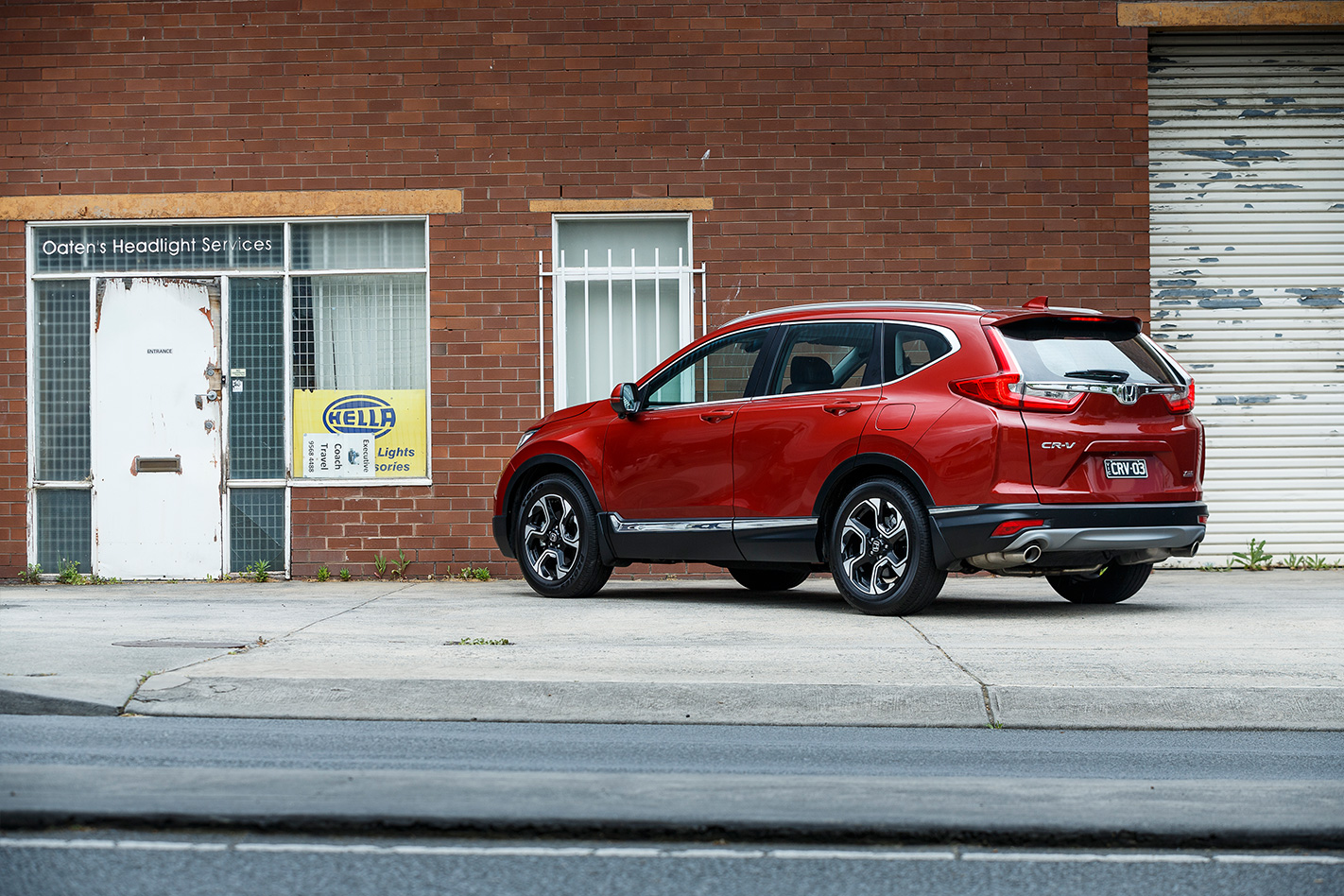
The new model builds on that legacy of roominess and flexibility by introducing, for the first time, a third-row of seats in one version, a move which has corresponded with increased dimensions and a subtle positioning shift from ‘compact’ to ‘mid-size’ SUV.
The extra space and third row is designed, in part at least, to attract families left pondering the bewildering array of models on offer in this ultra-competitive segment, which is precisely why we find ourselves introducing CRV-03 as the latest Bulmer family long-termer.
Honda’s PR man seemed a little nervous handing over the keys, noting with no sense of irony whatsoever that our last long-termer, the Audi Q7 was “significantly bigger than the CR-V so the third row could be an issue if your kids are over the age of six or seven.”
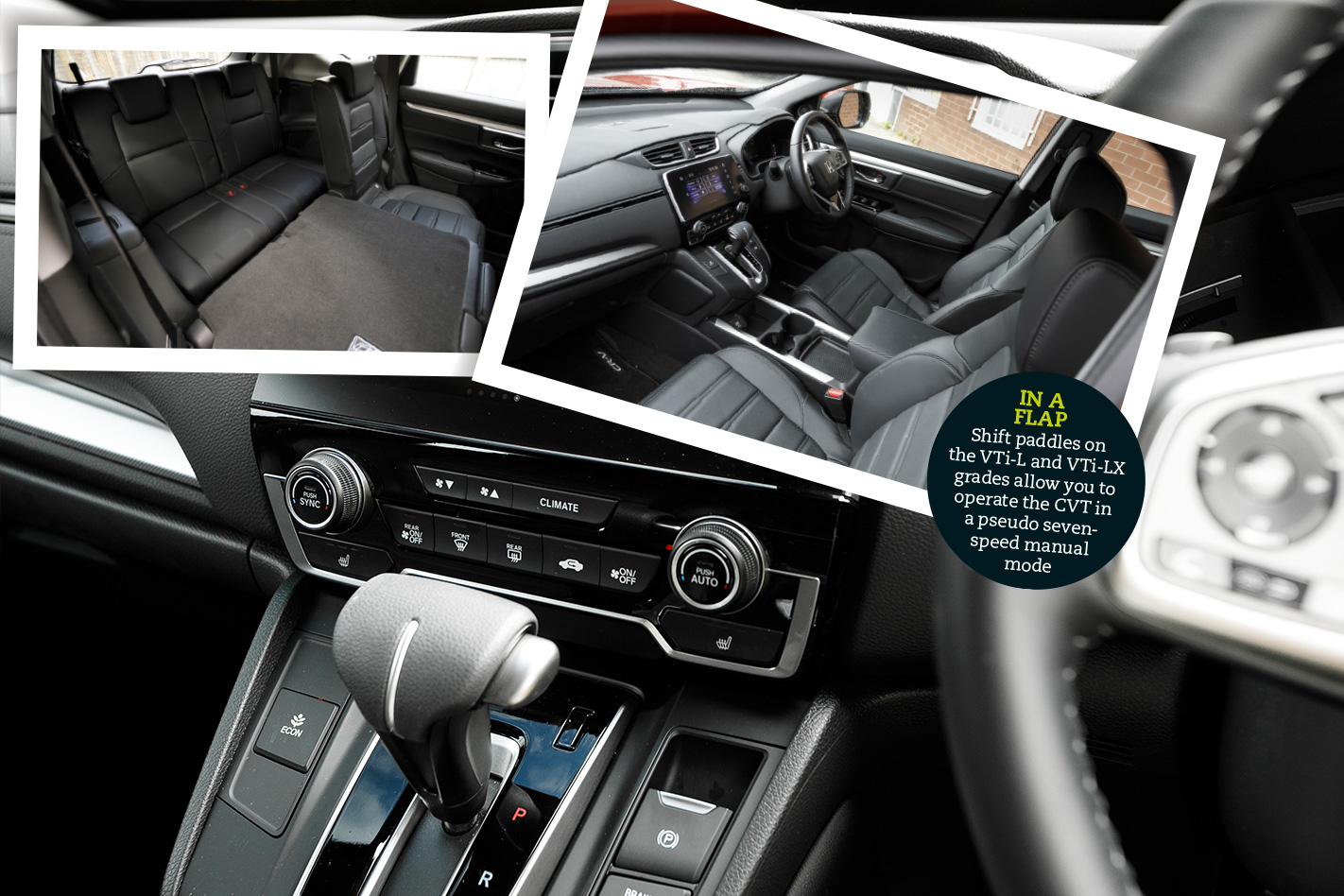
While there’s no denying the dimensional differences between the gargantuan Audi and the mid-size Honda, nor the limitations of the CR-V’s tightly packaged third row, we are nonetheless happy to adopt this newly enlarged Honda as part of the family.
Fact is, with the Bulmer girls having notched up their 14th and ninth birthdays respectively, the third row doesn’t see a lot of action anyway, and is really only needed for occasional use, so that’s definitely not a deal breaker.
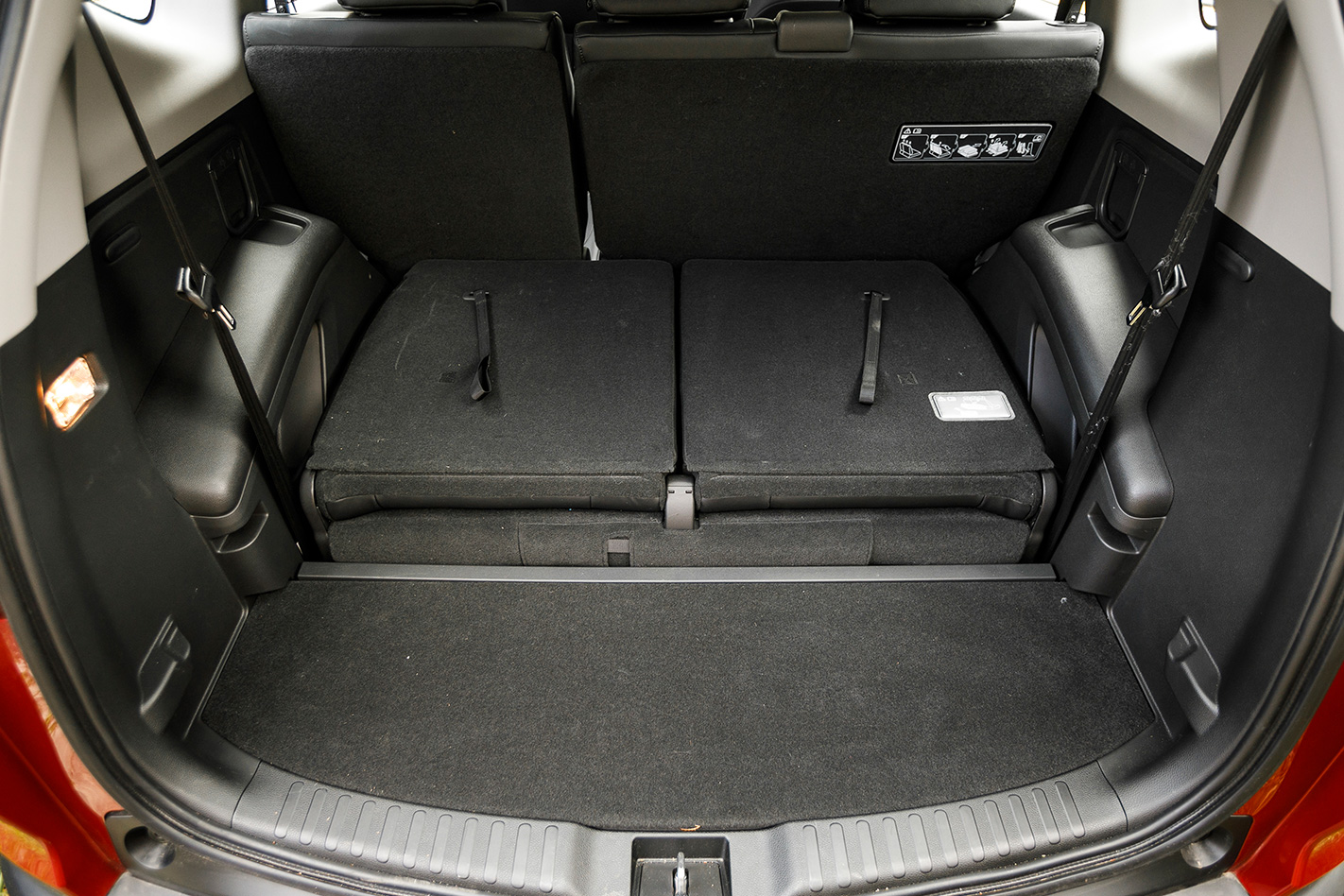
What may be, however, as we get further into our time with the CR-V, is the fact the third row doesn’t fold flat with the floor, instead sitting several inches proud of the luggage bay. This will no doubt have a deleterious impact on our ability to cram ridiculous amounts of unnecessary luggage into the boot on our next family road trip.
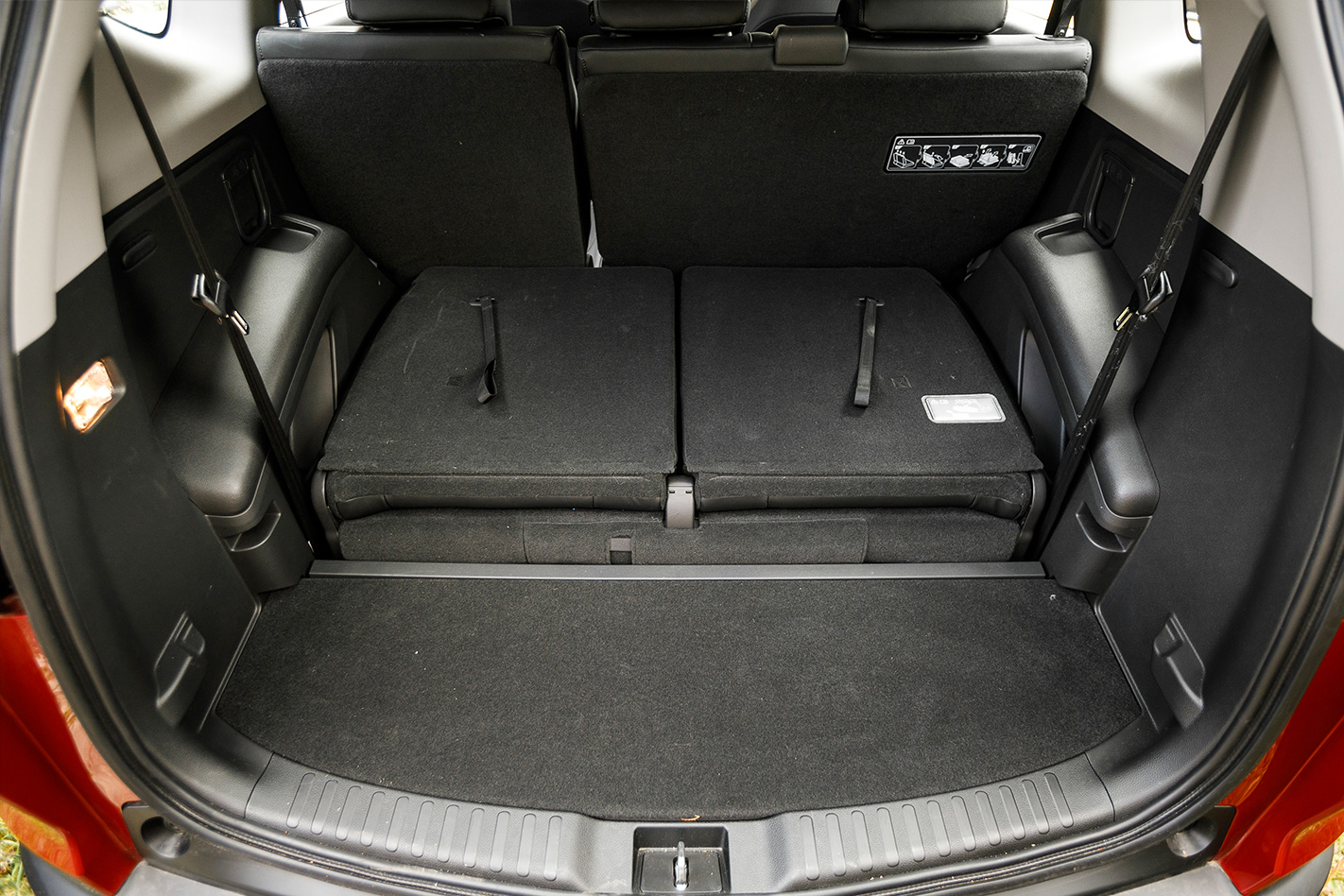
On the plus side, beneath the seat is a full-size 18-inch alloy, so all will be forgiven if we get a flat. As it stands, CRV-03 is designated a VTi-L, which means it’s the only seven seater in the four-tiered range, costs a reasonable $38,990, and sits above the base VTi and mid-spec VTi-S, but beneath the range-topping $44,290 VTi-LX.
The latter comes standard with AWD, while all-paw traction is a reasonable $2200 option on top of the VTi-S’s $33,290 base. However, if you must have seven seats then the VTi-L is your only option, and it in turn is only available with front-wheel drive.
We won’t know if that’s a problem until we’re bogged somewhere, but for most people, AWD is a nice to have, not a must have – and $2200 buys a lot of fuel … or perhaps one vehicle recovery.
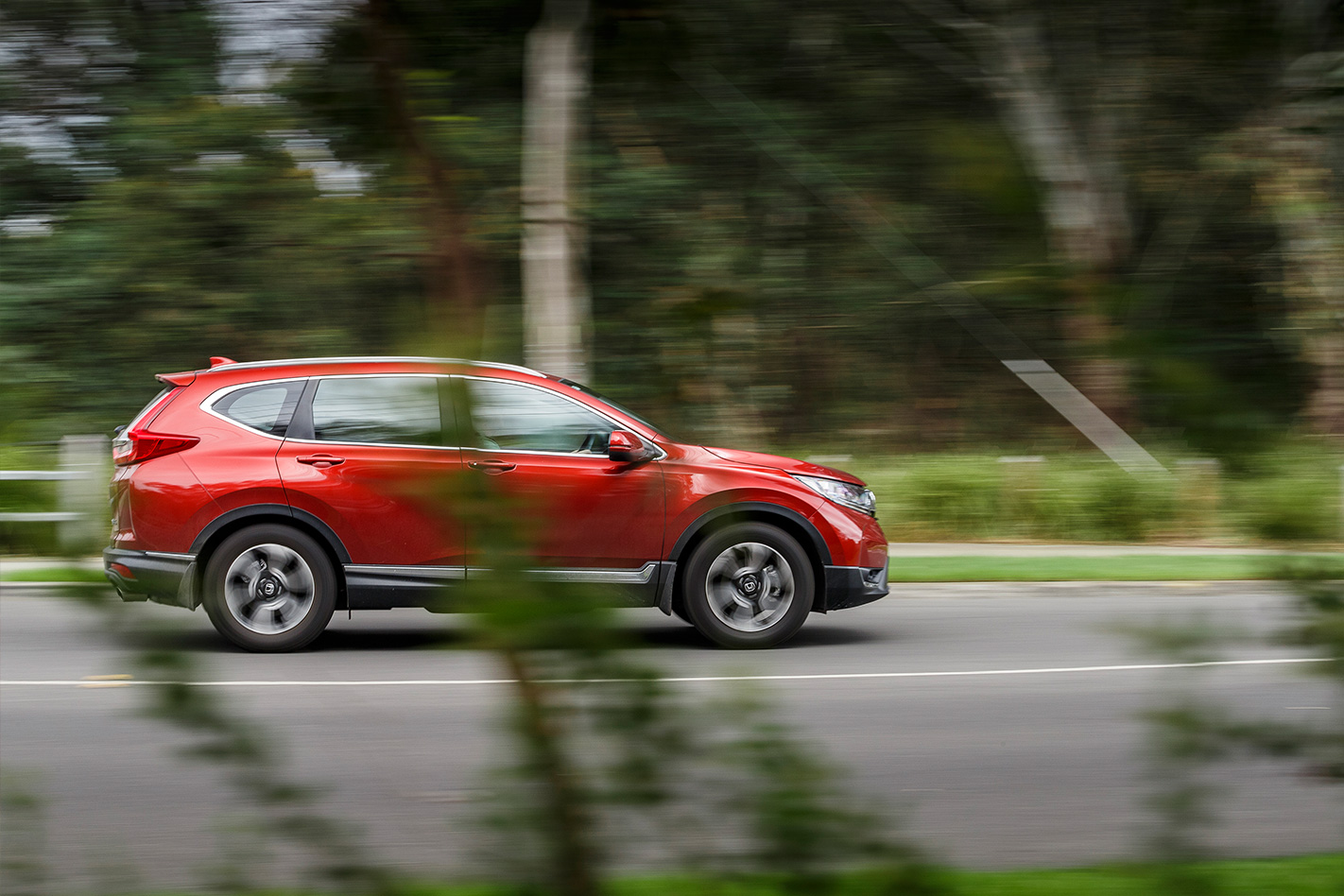
All variants in the new range are powered by a 140kW 1.5-litre turbo four-cylinder mated to a CVT and even the base VTi comes equipped with such niceties as keyless entry, dual-zone climate control, a reversing camera, a 7.0-inch display screen with Apple CarPlay and Android Auto, tyre pressure monitoring and trailer stability assist.
The VTi-S adds 18-inch alloys, a power tailgate, sat-nav, front and rear parking sensors and a lanewatch driver alert function. Stepping up to the VTi-L brings all of this plus the third row of seats, a panoramic sunroof, part-leather trim, heated front seats, rain-sensing wipers, and an eight-way adjustable driver’s pew.
Sadly, the latter has already been the source of some minor family discord, with the wife and children having discovered to their horror that they have to adjust the front passenger seat manually.
Oh the shame.
Update #2
Like millions of other working-class Aussies, economic necessity means I’m forced to endure a grinding cross-town commute twice a day, five days a week.
An upside for me, however, is that I get to do it in a wide range of cars and can spend at least some of those otherwise lost 60 minutes considering various aspects of vehicle performance.
Judging by my fellow motorists this discipline is not nearly as popular as talking or texting on the phone, picking one’s proboscis, or doing your nails, but it works for me.
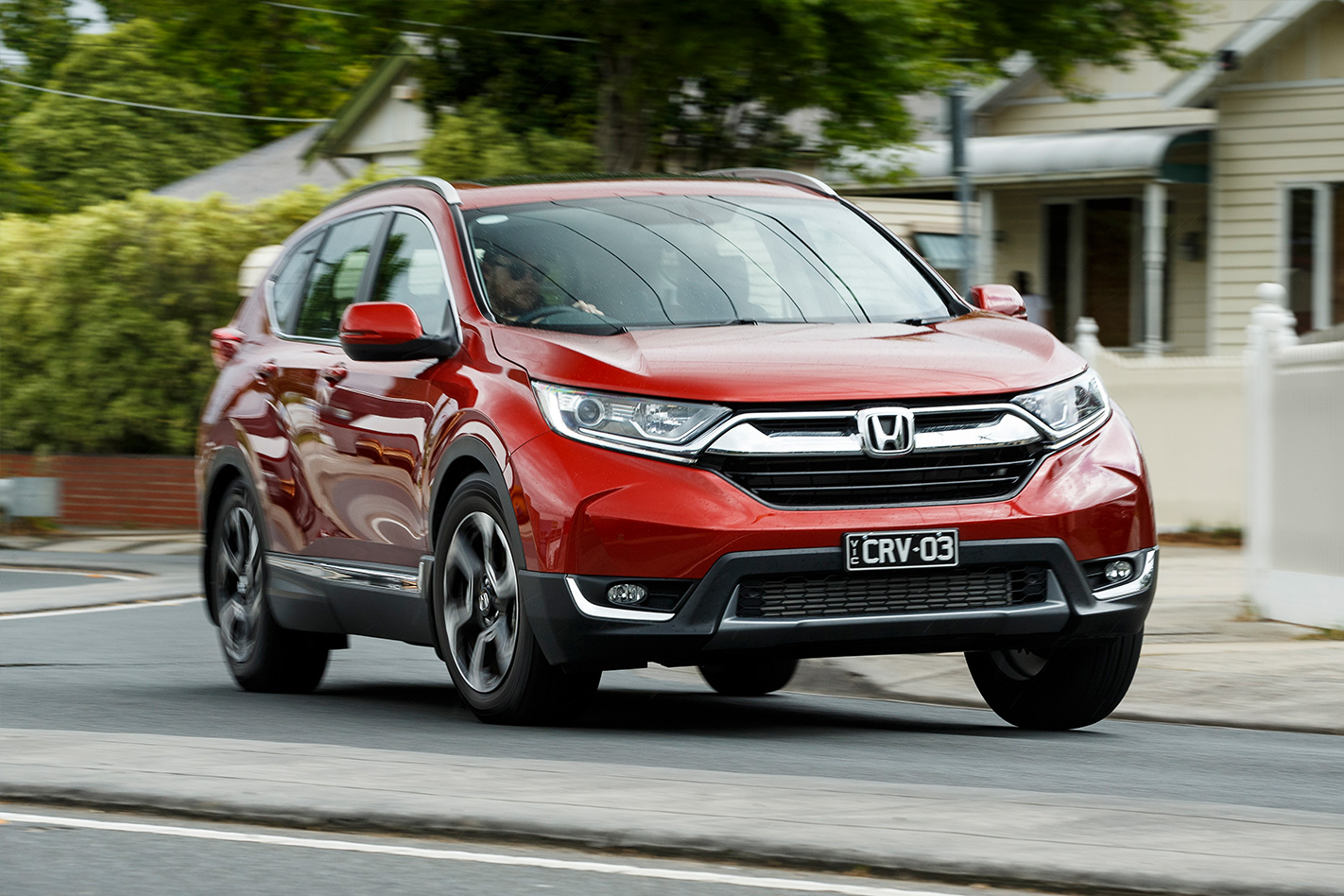
My drive starts in the tree-fringed north-east of Melbourne and, depending on the chosen route, often includes the first 15 minutes traversing an undulating back road, laced with an assortment of hills, twists, turns and even the odd ’roo or fox sighting.
It’s bumpy too, so an insightful test of suspension set-up, steering precision and tyre grip, while also being far more engaging than the mundane multilane alternative.
It’s a road that shows up both some key Honda CR-V strengths – notably compliant ride quality, good tyre grip and torquey hill-eating ability – while also revealing weaknesses, such as its slow steering, leisurely turn-in and soft rebound damping.
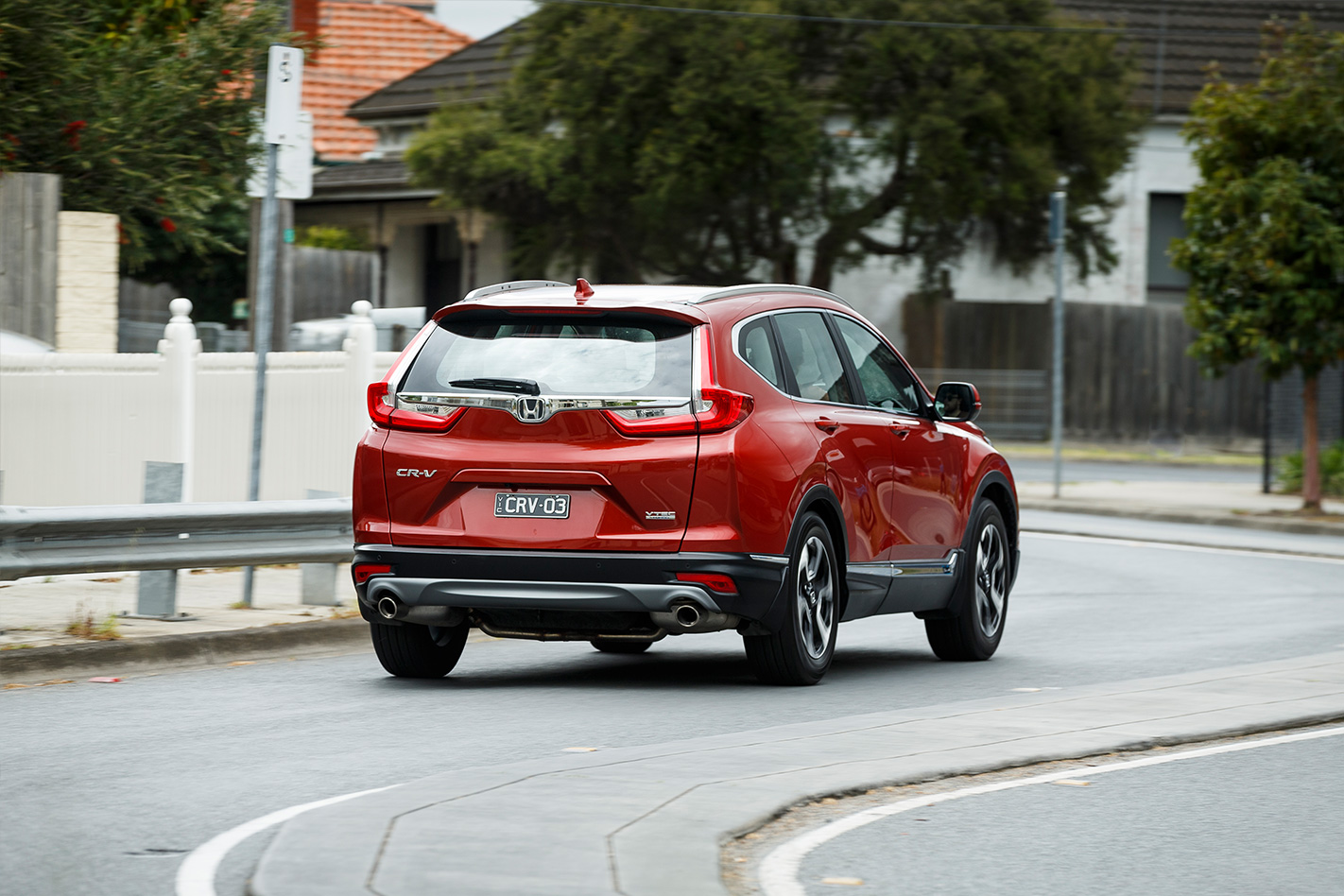
To be fair, the CR-V is a compact family wagon and not really the sort of machine to go corner carving in. There’s no question that the dynamics are perfectly safe, and utterly predictable, and that’s what the people who buy a family SUV like this want, along with the utility.
While the reborn Civic Type R and NSX supercar show that Honda clearly has its mojo back with regards building dynamically sharp performance cars that can dissect corners with surgical precision, the CR-V shows the Minato-based conglomerate operating in an altogether different space on its broad spectrum of products.
I doubt I’ll ever become an ardent fan of the CVT transmission but, in tandem with Honda’s torquey, turbocharged 1.5-litre four-cylinder, the CR-V has won my respect for the way it effortlessly eats inclines on my morning run. The droning engine note that’s a fact of life with CVTs isn’t exactly desirable, but you can’t fault the way the transmission keeps the engine pinned in the meat of its torque curve, hovering between 2000-3000rpm and delivering instant acceleration without the pause, kick-down and flare of a traditional torque converter auto.
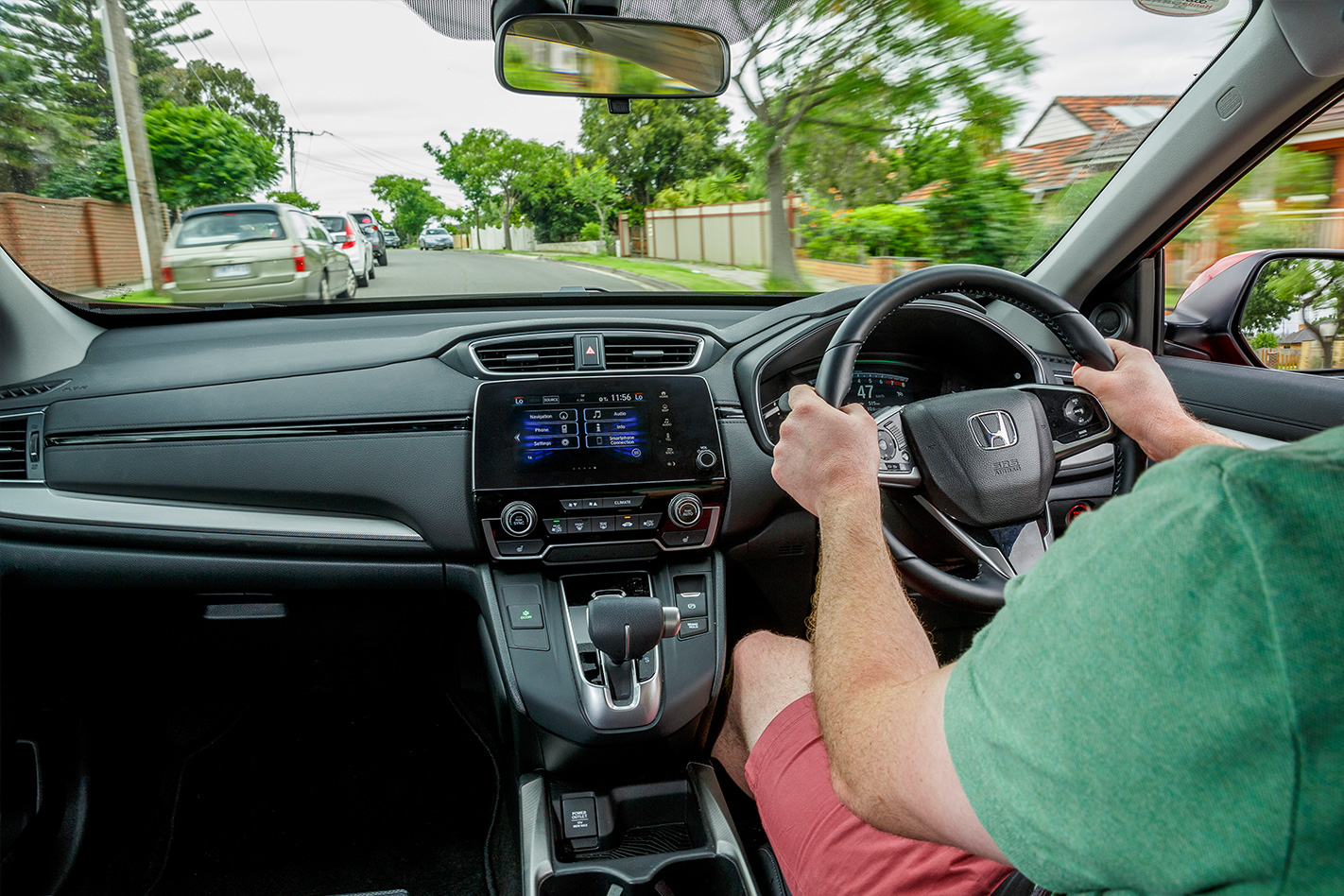
Surprisingly, in an era where start-stop technology is rapidly becoming the norm, the CR-V doesn’t feature it.
There is an eco-mode switch located next to the hi-mount transmission lever, but I’ve yet to seriously try it. However, with fuel economy running consistently in the mid-10s, it’s evident that its absence isn’t exactly hurting the Honda’s efficiency.
By the time my 30km morning commute is nearing the one hour mark I’ve been at the wheel long enough to appreciate the excellent comfort and support of the front seats, as well as the high driving position and terrific all-round visibility from within the airy cabin, if not the in-car hygiene habits of my fellow commuters.
Update #3
GIVEN how long we spend at the wheel of our cars, a comfy driving position is almost as important as getting our hands on one of those fabled mattresses or pillows that the late night TV spruikers promise will change our sleep patterns forever. Dial 1-800 NOW!
Thankfully, the days of ‘Italian Ape’ driving positions, characterised by gorilla-length arms and stumpy legs, have largely been consigned to the dustbin of history. But despite huge advances in ergonomics, the occasional turkey still gets through. Our own Ford Falcon was one of them, with the swansong FG/FGX featuring a steering wheel that sat in your lap and could never be adjusted high enough.
Car engineers and designers will tell you there are all sorts of mitigating factors that lead to such compromises (most involving inherent conflicts between car engineers and designers), but regardless of the source, the end result is usually the same; a driver constantly fiddling with seat and steering position in a vain attempt to get settled.
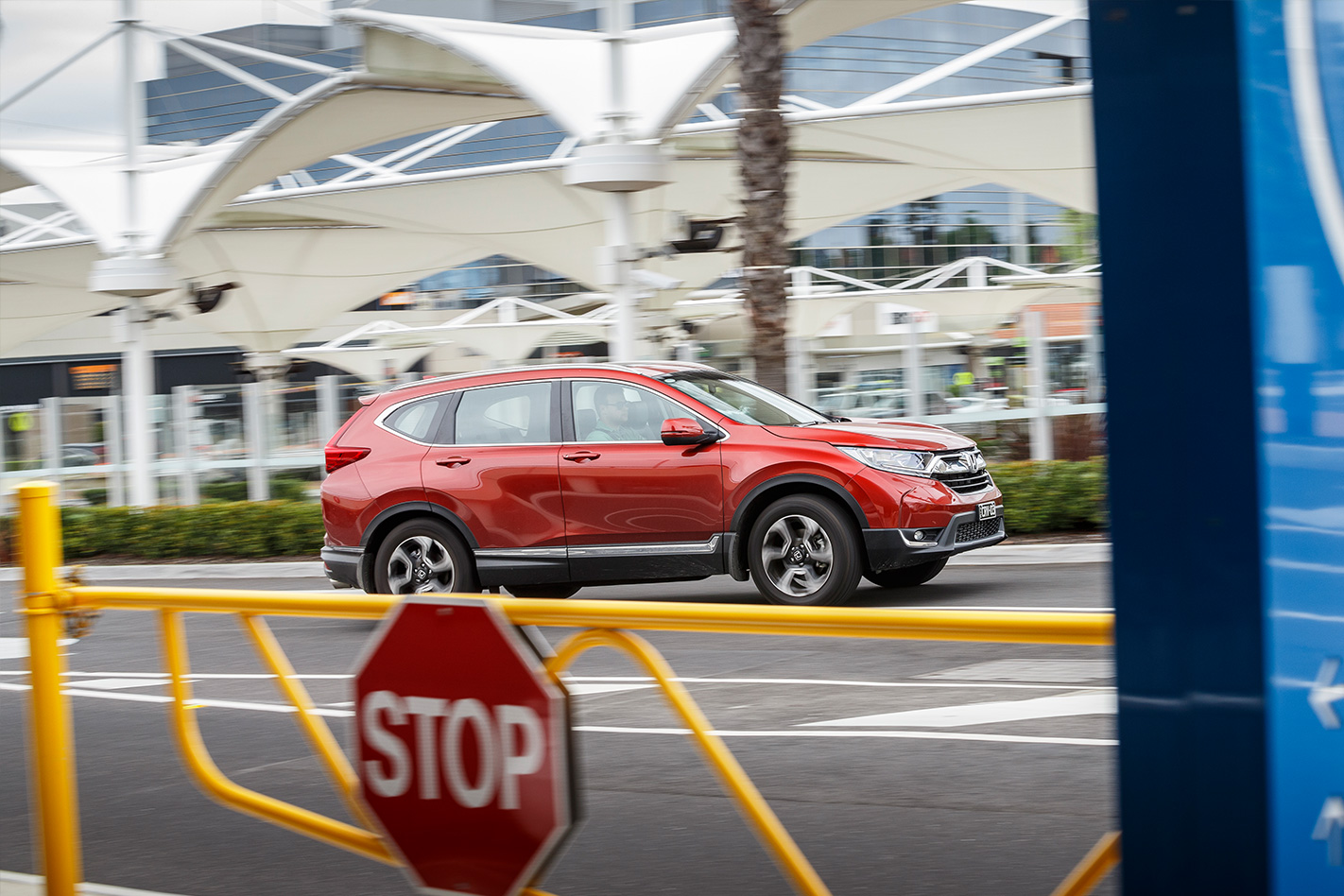
I have a rule of thumb that if I can’t get comfortable in the first couple of minutes, the driving position is probably flawed and I should just accept my lot and stop fiddling.
Fortunately, there are no such issues with the Honda CR-V, which has one of the best driving positions of any car I’ve steered in a long while. It helps that the extra ground clearance and high roof enable an elevated seating position that makes getting in and out especially easy, but once in position, it’s quickly apparent that a lot of effort has gone into ensuring the driver remains comfortable.
My second-from-top spec Honda CR-V VTi-L has the usual range of electric adjustment for the driver’s seat, and manual reach and height adjustment for the leather wheel. But the seat shape and structure is also notable for keeping me feeling fresh and not bent out of shape after several hours at the wheel.
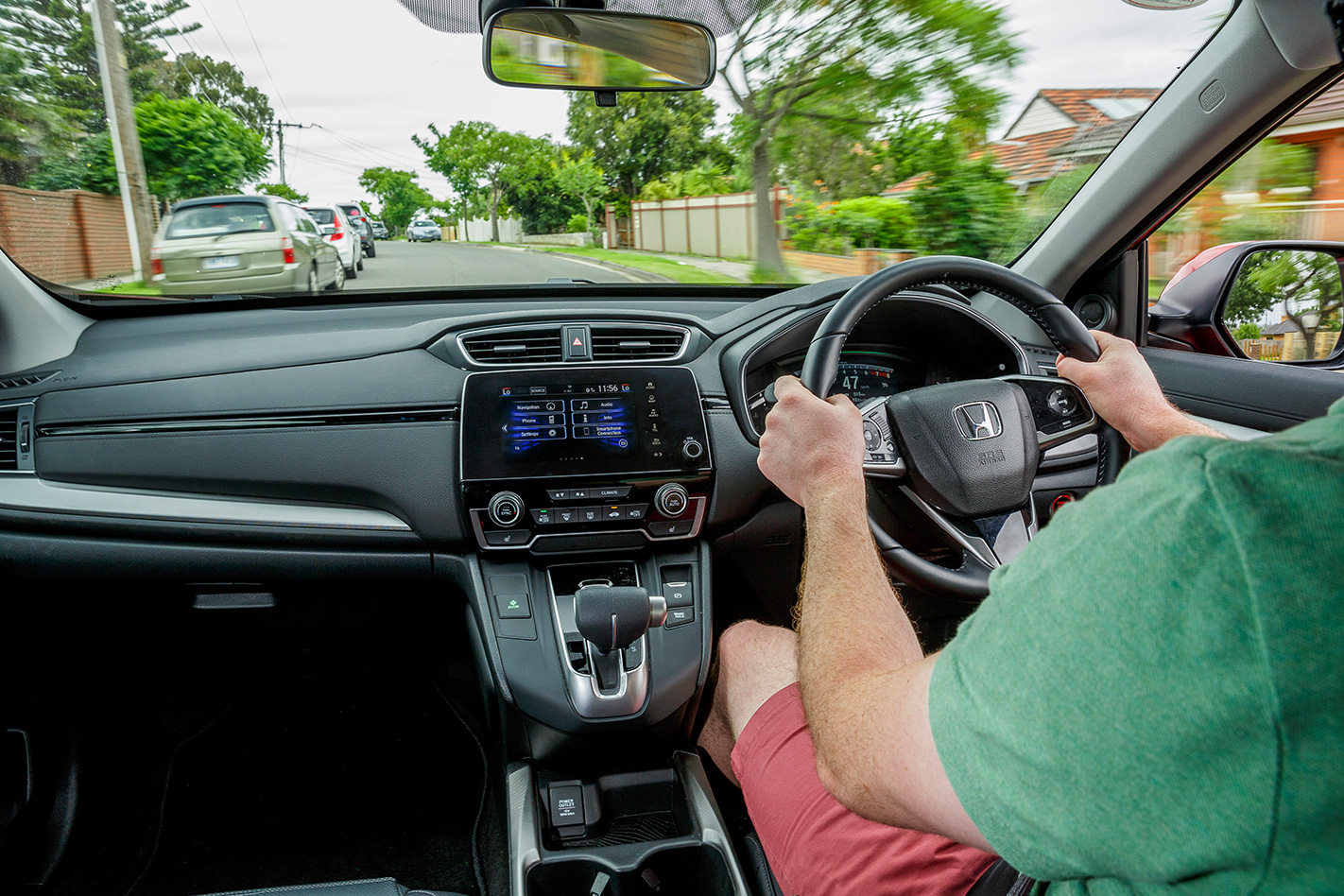
With its high driving position, supportive leather buckets, big windscreen and extensive glasshouse, the Honda CR-V boasts superb visibility that helps keep all occupants in a comfortable state of mind.
In combination with the panoramic sunroof, the CR-V feels remarkably airy, a fact that often makes it our first choice for a family drive, even if there’s a sportier or more prestigious set of wheels available.
Unfortunately, the compliments don’t quite extend to the third row, which has to make do with a small triangular window and accommodation that’s a squeeze, even with the second row slid forward.
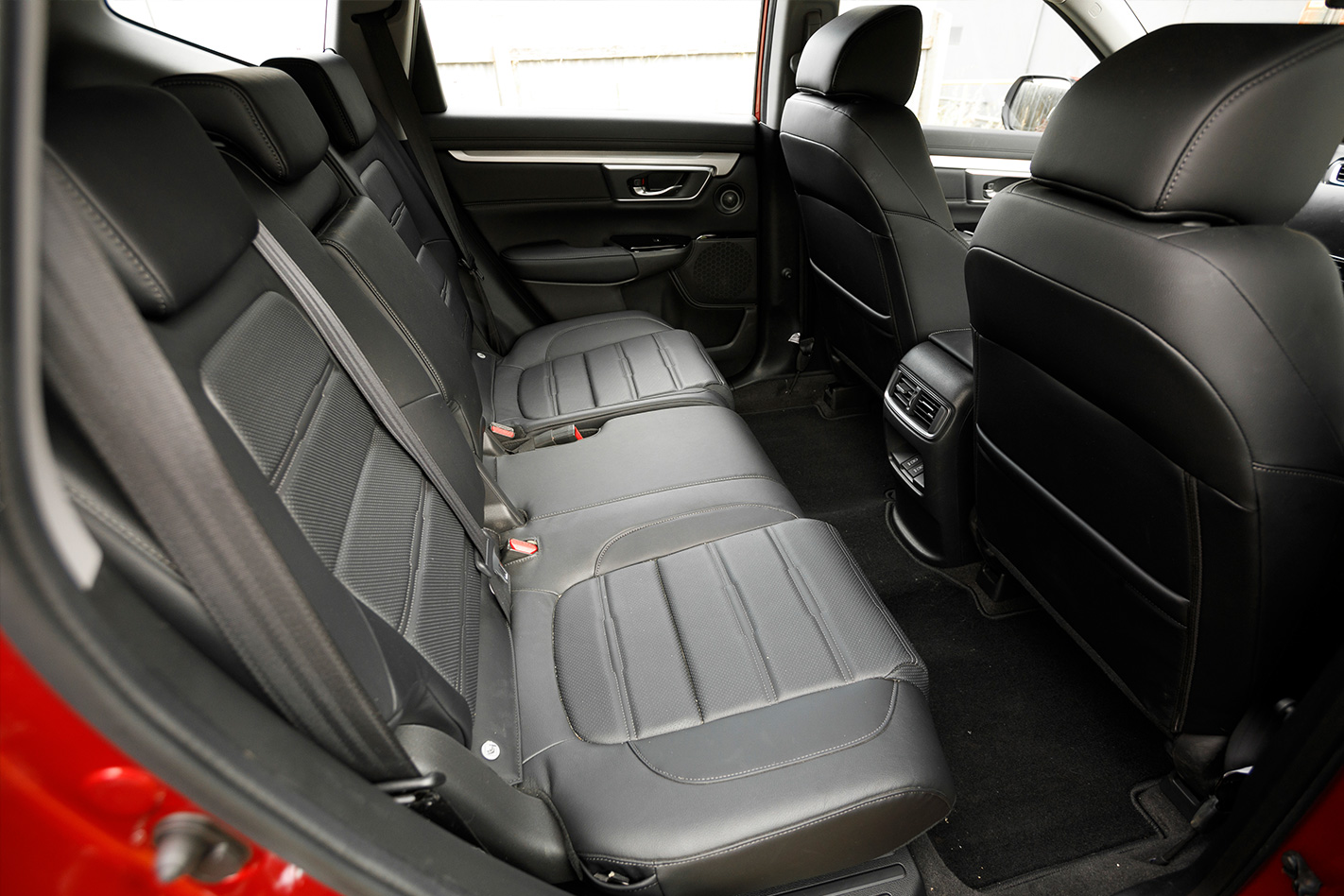
On the plus side, second- and third-row occupants do get the benefit of individual air vents and temperature controls overhead and boy is the air-con good. With the thermostat set to ‘freeze’ and the fan to ‘wind tunnel’, you can barely hear the little beggars shivering and complaining about the compromised seating position.
Harden up kiddies, back in my day…
Farewell
YOU KNOW a long-termer has connected with you in a deep and meaningful way when you find yourself crunching the numbers to see if it can replace your regular family wheels on a permanent basis.
Such is the impression the Honda CR-V has had over the past four months, slowly working its way into my head and heart so that I now find myself seriously investigating the option of permanent ownership. Or, rather, my accountant is doing so on my behalf.
Yes, it’s really that good. Or, perhaps more accurately, it’s that good a family car.
So, what is it exactly about the CR-V that makes it so well suited to claiming a permanent place in the family driveway? First, its right sized: like many nuclear-families of two adults and two kids – one a teen and the other a tween – we don’t really need something as vast as a Mazda CX-9.
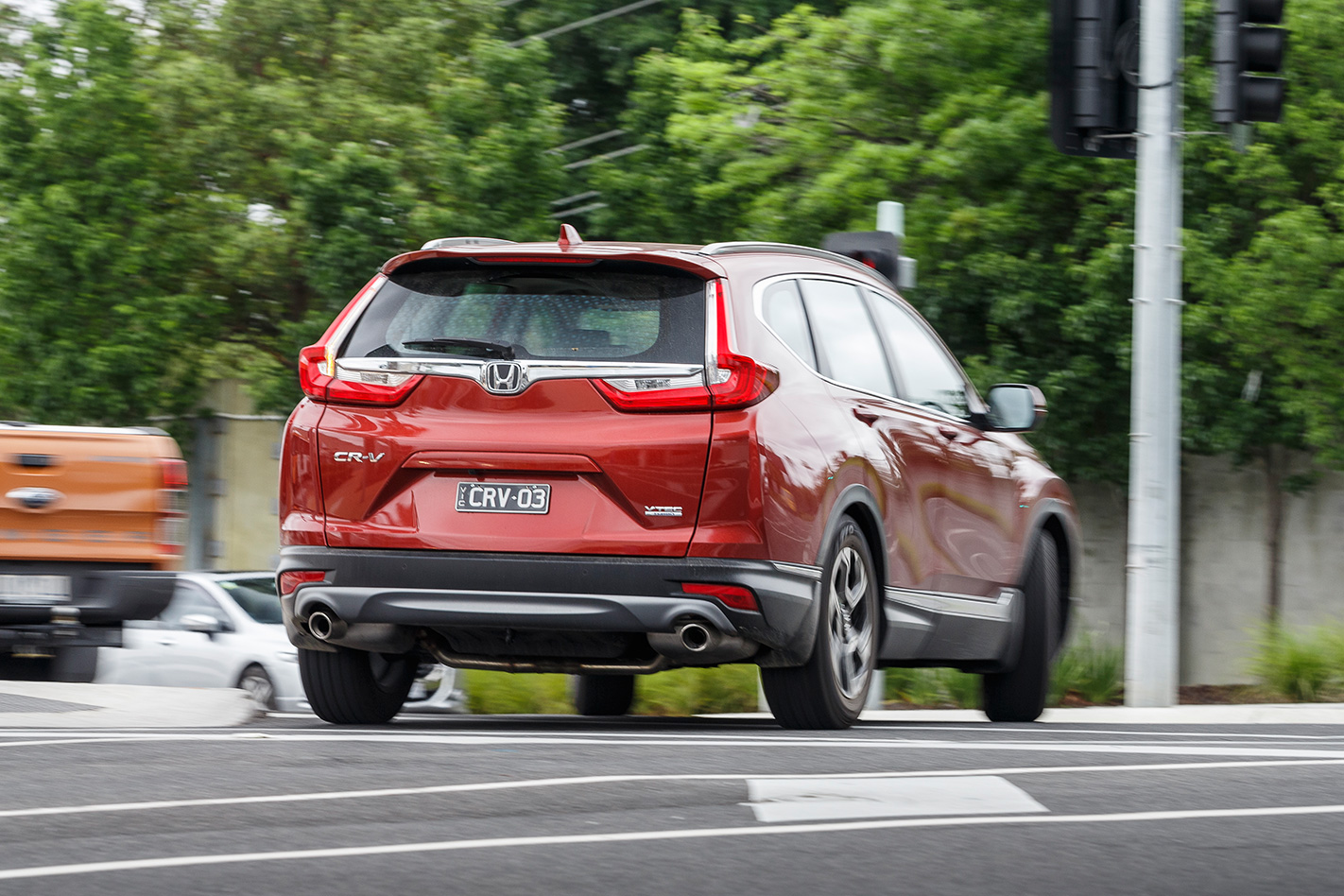
Of course, there are always exceptions, where you find yourself wishing for a few extra cubic metres of boot space while cramming for an annual holiday, but for the most part we’ve found the CR-V’s standard 472-litre luggage bay perfectly adequate. Plus, its mid-sized exterior dimensions make it far easier to park than full-sized rivals.
Within that nicely detailed and well-proportioned exterior is a spacious and beautifully built interior, with VTi-L specifics that include a panoramic sunroof, part-leather trim, heated front seats, rain-sensing wipers, and an eight-way adjustable driver’s seat. On the downside, the front passenger seat is manually adjustable, which seems a little grim given the $38,990 price tag.
| Read the Wheels review next: 2018 Honda CR-V DTi-L review
Accommodation in the first and second rows is excellent, so too visibility, while good ergonomics ensure everything is easy to find and operate. Case in point is the range of well thought out storage options; things like large door pockets that can hold a full-sized drink bottle; multiple storage nooks for phones, wallets and keys; a deep centre console for larger objects; and a clever little sliding tray atop the console to avoid losing items to the void below.
Ease of ingress and egress is equally important to families and the Honda is a test case for how to design an SUV that makes the business of getting in and out of its comfortable pews especially easy. This is particularly the case with the CR-V’s second row, accessed via clever rear doors that swing open to a near-90-degree angle.
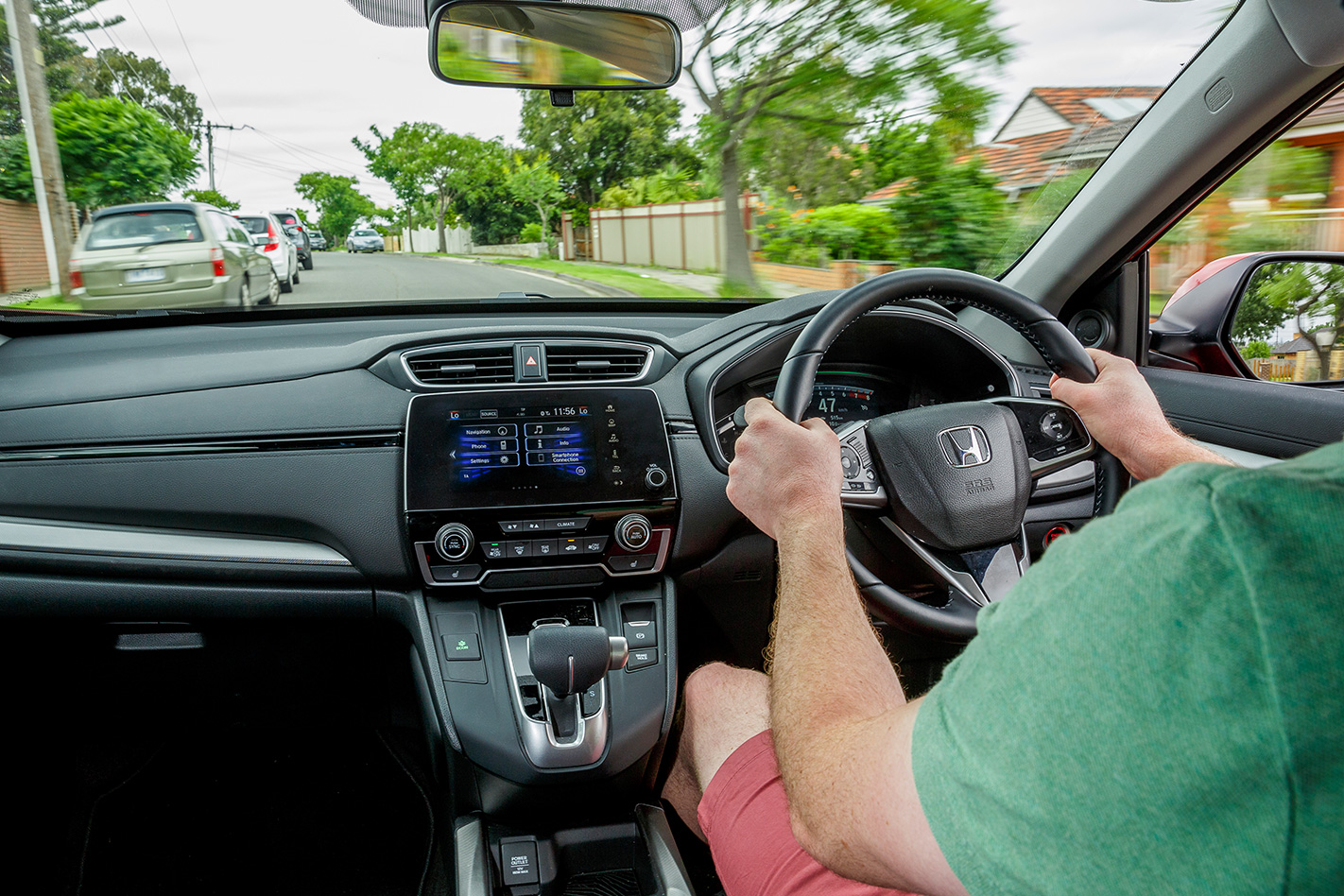
The VTi-L is the only variant in the current CR-V range to feature a third row of seats, which Honda has cleverly shoe-horned into this generation courtesy of a 40mm wheelbase stretch. It’s handy, to be sure, but anyone buying a CR-V and thinking of putting teens or tweens back there should know that it’s pretty tight, and such a move could increase said teen’s legendary moodiness.
Of course, roominess and build quality are both important, but the CR-V must still deliver on the fundamentals of good ride, handling and performance. There are no major issues here, although the suspension set-up definitely prioritises ride comfort over corner carving and initially comes across as a little soft, with electric power steering that’s a bit on the slow side. However, the more you drive the CR-V, the more confident you become pressing on, and the more you realise that it’s endowed with fundamentally sound dynamics.
This helps bolster the Honda’s safety credentials, which are then backed up by a strong suite of active safety aids including ABS with EBD, blind-spot monitoring, lane keeping, stability assistance for car and a trailer, tyre pressure monitoring, front and side airbags plus full length curtain airbags for all three rows.
More advanced electronic safety features, including AEB are available only on the top-spec VTi-LX. It’d be nice to see Honda bring these features down into its lower-spec models, as rival Mazda has, but there’s no argument in my mind that the CR-V is anything but a safe place to put your family.
Performance from the 140kW/240Nm 1.5-litre turbocharged four-cylinder is decently brisk, and with the engine’s maximum torque delivered from a low 2000rpm, the CR-V is a gutsy, effortless performer. That’s despite the engine being paired exclusively to a CVT transmission which, while aiding thriftiness, doesn’t add much to the driving experience. I remain lukewarm about the technology.
Not so the 7.0-inch touchscreen with Apple CarPlay and Android Auto, which quickly became a favourite with the kids, who kindly monopolised the Bluetooth audio streaming connection, to the detriment of my Slim Dusty collection. Sadly, four USB ports meant their phones were rarely in danger of dying either.
And it’s on that sad note that we bid sayonara, or rather “Laéw-jer-gan,” to Honda’s Thai-built and thoroughly impressive family SUV. I await the accountant’s verdict as to whether we can have a new family car or not, but regardless of whether he green-lights it, I’ll have no hesitation in recommending the CR-V to friends as a fine family hauler, one with a depth of quality that will leave owners satisfied long after the new-car smell has gone.
I FEEL slightly ashamed to admit this, as though I should be writing these words with my head bowed, eyes averted and twisting my foot in the dirt, but Iu2019ve never bought a new car.I’ve helped others do it, and taken joy in advising them on spec and trim levels, but for myriad reasons (headlined by a crippling dread of depreciation), I’ve always gravitated towards second-hand metal when it came to my own wheels.
This means I’ve never experienced that ‘new-car feeling’ – the heady combination of elation, suspense and fear that comes with making a significant financial investment – so it was a thrill when, after agreeing to loan Wheels this searing yellow Lexus LC500 for three months, Lexus suggested I collect the car as a real customer.
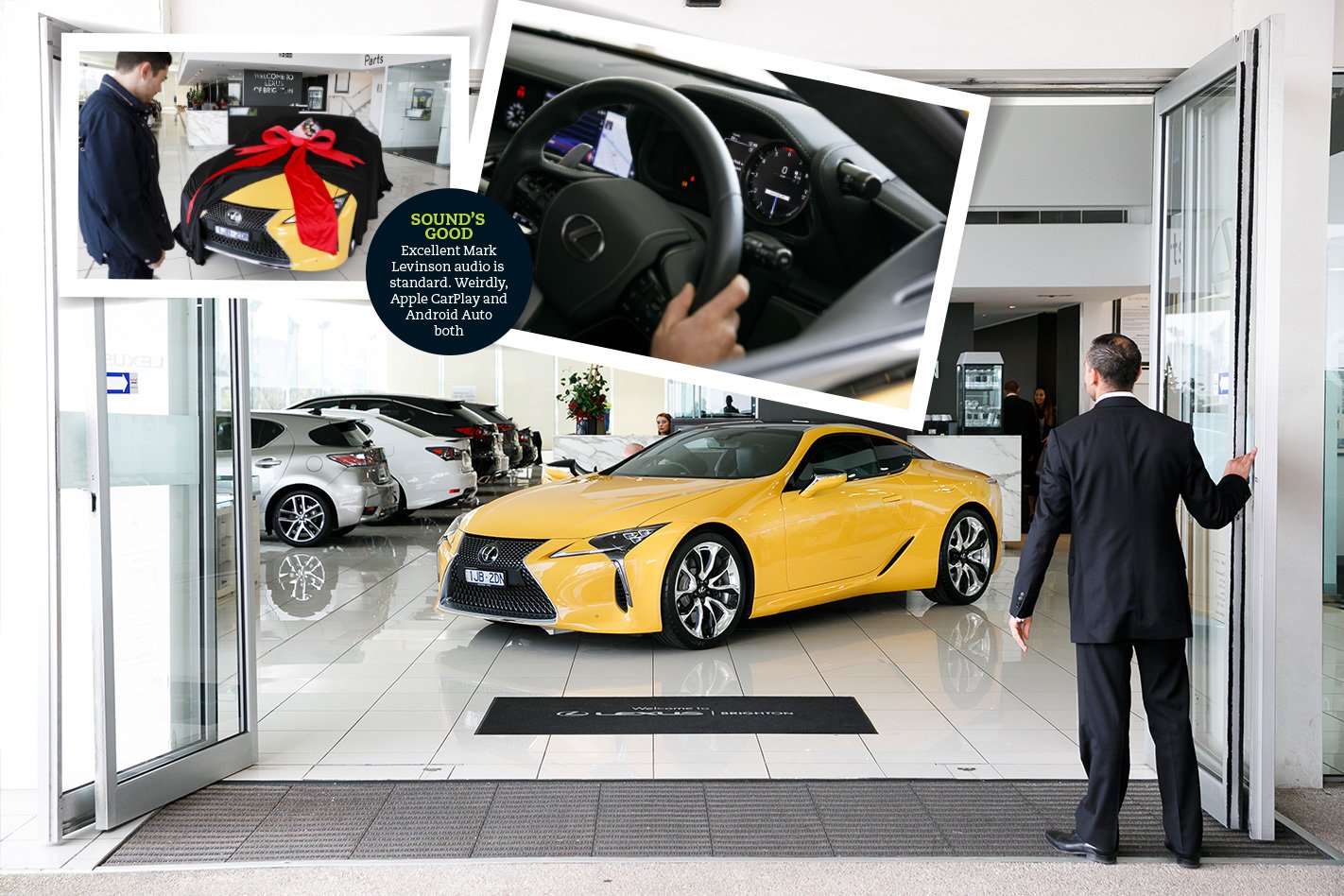
Toyota’s luxury arm is renowned for its dealership experience, so taking delivery would allow me to see if that reputation is deserved, as well as scratch a personal itch.
My LC500 is cloaked in a shiny black cover when I arrive at Lexus Brighton, and even with its details shrouded, the big rear-drive coupe oozes intent. Long, wide and classically proportioned, it’s also imposingly vast in the metal (overall length is 4760mm, while width is 1920mm).
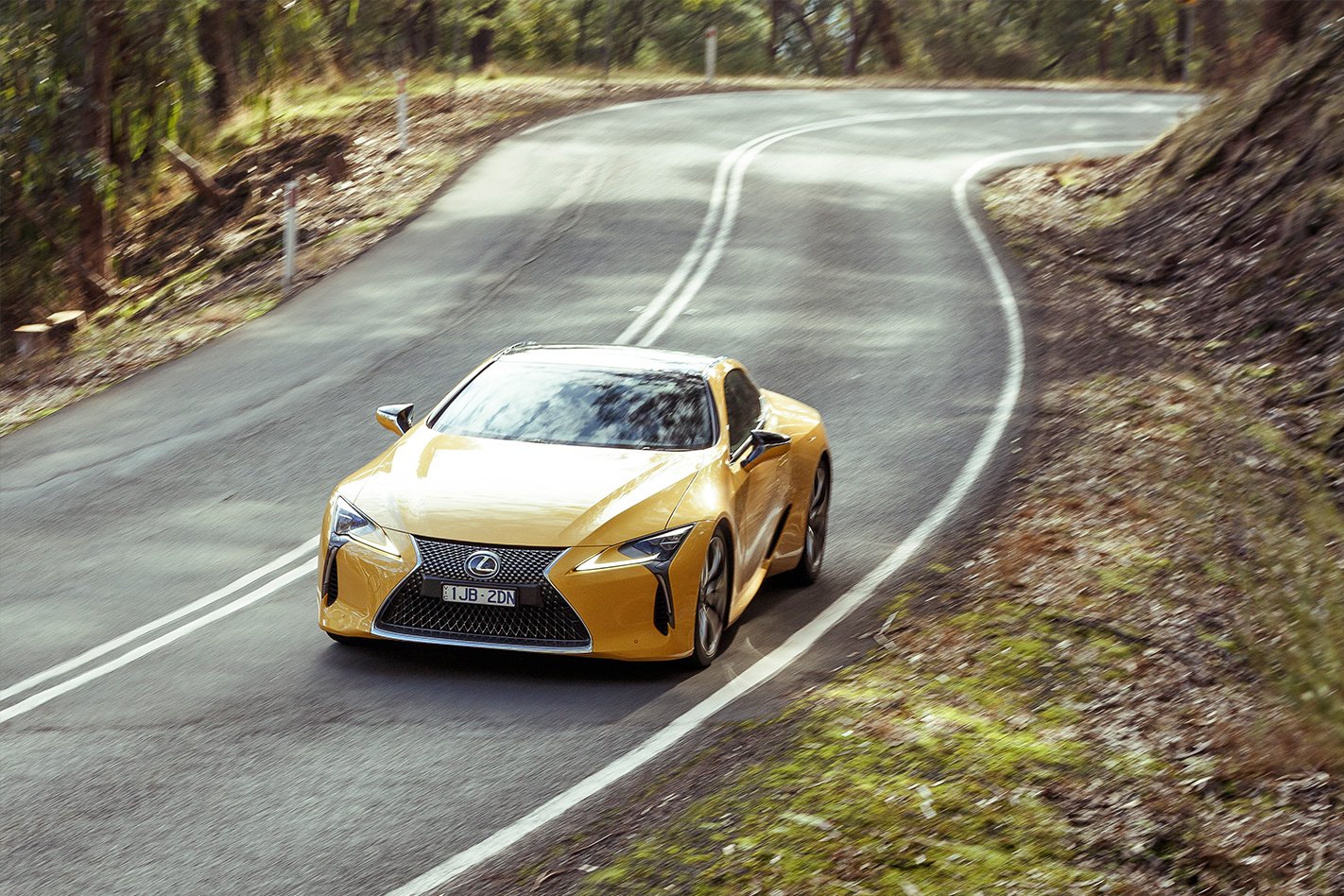
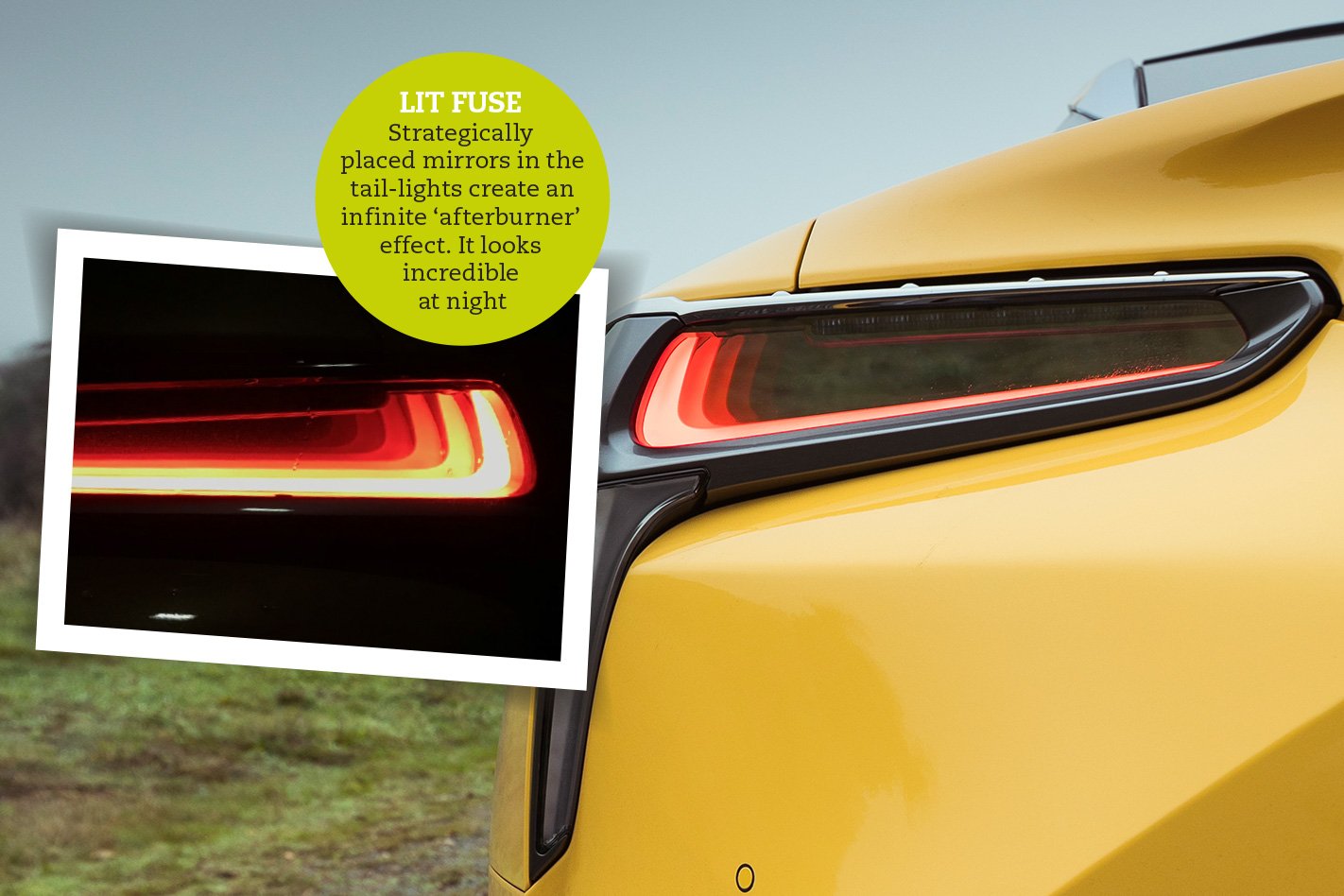
Peeling away the cover enhances the drama. Yellow wouldn’t be my first choice (I think silver is more cohesive as it helps disguise some of the LC’s heavy-handed detailing, like the chrome finish atop the tail-lights) but there’s no denying its impact – I can’t think of a car this side of a Lamborghini that makes more of a visual statement.
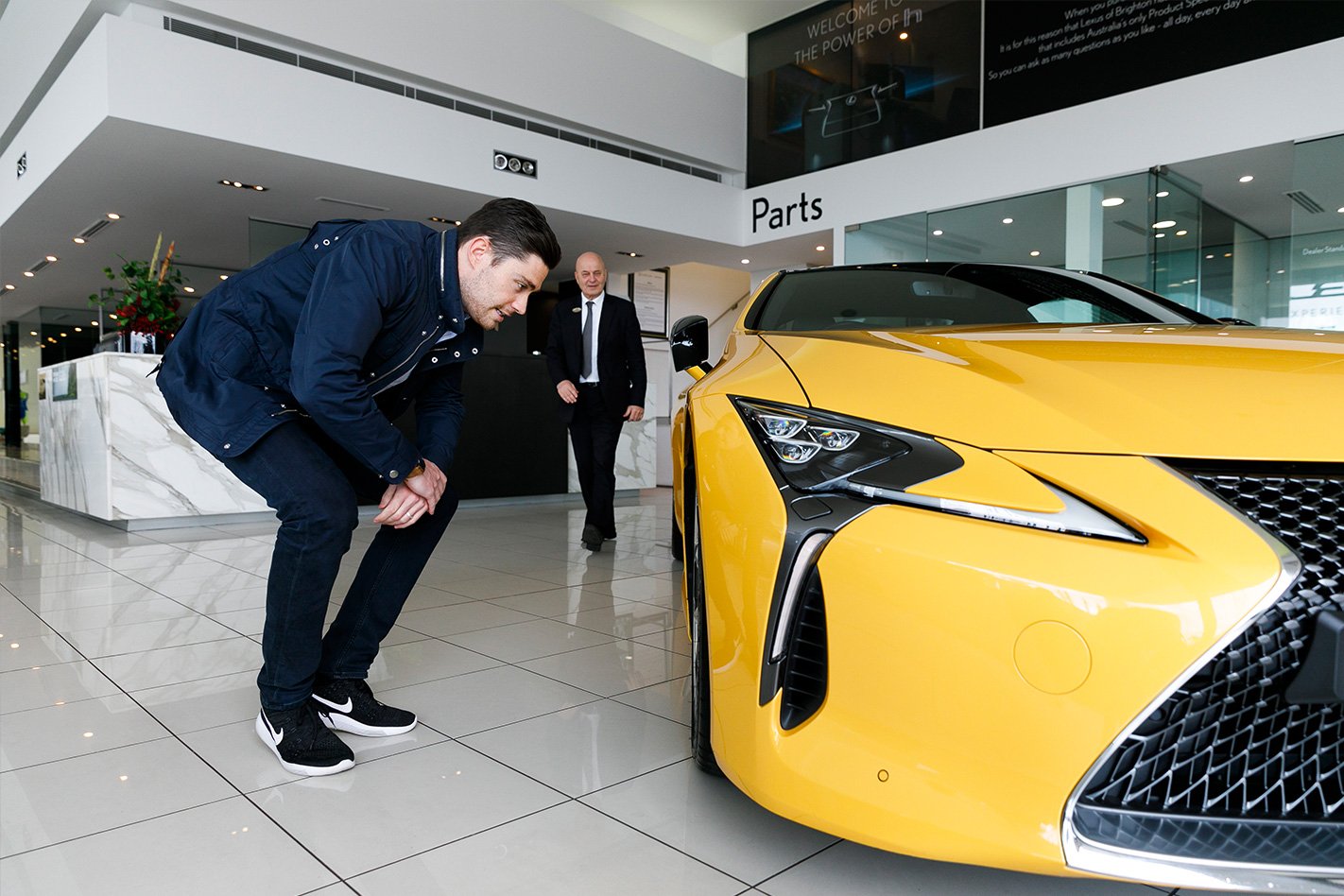
Bernard, who has a heavy French accent, a penchant for Italian motorcycles and an obvious passion for the LC, conducts the handover process. It begins with a walk around the exterior, where I take in the enormous 21-inch wheels (shod with Michelin rubber 245/40 front, and 275/35 rear) and discover the hidden boot release button (disguised inside the right rear tail-light) before we slip into the cabin.
If the exterior is all about impact, things are much more restrained inside my example.
Coloured leather options are available, but here it’s black-on-black from floor mat to roof lining, and that’s exactly how I’d spec it. First impressions are bang on too: the driving position is low and natural, the leather seats supple and supportive (as well as heated and cooled) and the fit and finish is staggering.

Material quality is another highlight, as is the digital dash that glows white when Sport+ mode is engaged, which is an obvious nod to the LFA supercar.
The only negative is the same fastidious attention to detail has been applied to the LC’s infotainment system, with confusing results.
Lexus has persisted with its maligned touch-pad controller rather than a touch-screen (at least the dorky mouse is gone!), but the real problem lies with the infotainment software. It’s a maze of menus and sub-menus and provides the only hiccup of the handover process when Bernard gets lost down a rabbit hole while explaining the sat-nav. Fingers crossed things improve with practice.
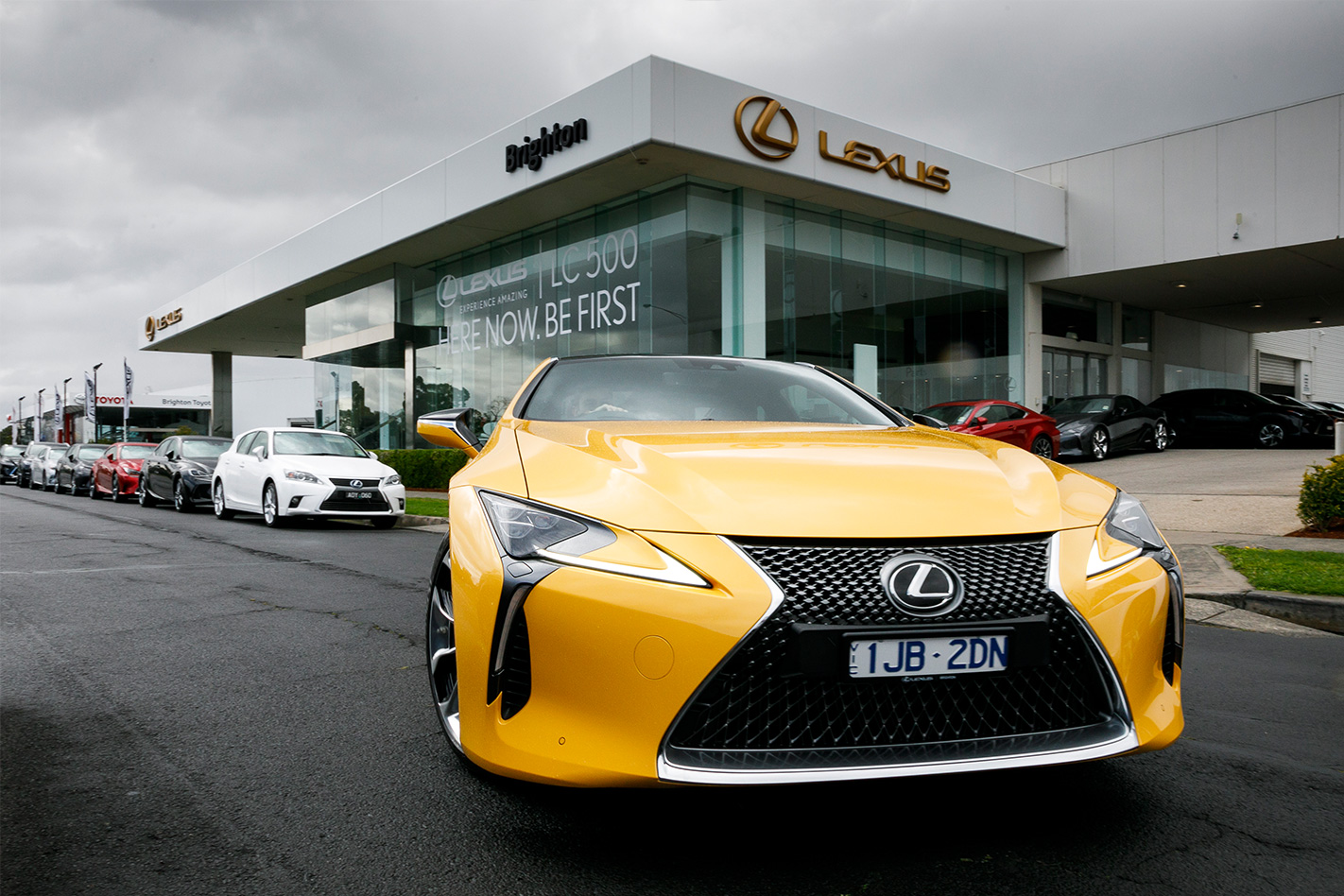
Happily, driving the LC is much more intuitive. As the first Lexus to utilise the company’s all-new Global Architecture – Luxury (GA-L) platform, it feels impressively rigid and refined at city speeds with a surprisingly supple and controlled ride, but it’s the old-fashioned 5.0-litre quad-cam V8 that dominates the experience.
Crisp, muscular and with an insatiable appetite for revs, it sounds brilliant and has a noticeable step change in volume and timbre as the tacho sweeps past 4000rpm. Yet the noise and effortless performance are only part of what makes driving the LC such an experience.
The remainder comes from the looks and reactions its concept-car design generates from other road users and pedestrians. It makes you feel special, and that’s exactly what a new car should do.
It’s going to be a good three months.
Update #2
SOMETHING good is happening at Lexus.
After years of building cars designed to appeal to the rational side of our brains, or to people who enjoy golf and lawn bowls, the company is steadily shaking free of its snoozer shackles.
My first encounter with this shift in philosophy came a few years ago at the launch of the then-new Lexus RC F in America. Lexus had taken the bold step of holding the event at a circuit, and while the RC F wasn’t quite as sharp as a BMW M4 or AMG C63 (blame a circa 2000kg kerb weight), its rev-hungry V8 and desire to blaze its rear rubber to smithereens left an indelible mark.
It wasn’t just exciting; it was fun too.
Then came an entire day at Sandown with a Lexus LFA, which didn’t just vaporise any preconceptions I had about the brand, but forever etched the howl of ten screaming cylinders into my brain as the digital tacho crested 9000rpm.
My bright yellow LC is further proof that the foundations are shifting, if gradually, at Lexus HQ. While last month was spent in Comfort mode, where I marvelled at the hushed cabin and surprisingly supple and controlled ride on those huge, concept-car wheels, month two has seen me explore the LC’s angrier side by toggling the drive-mode selector to Sport+.
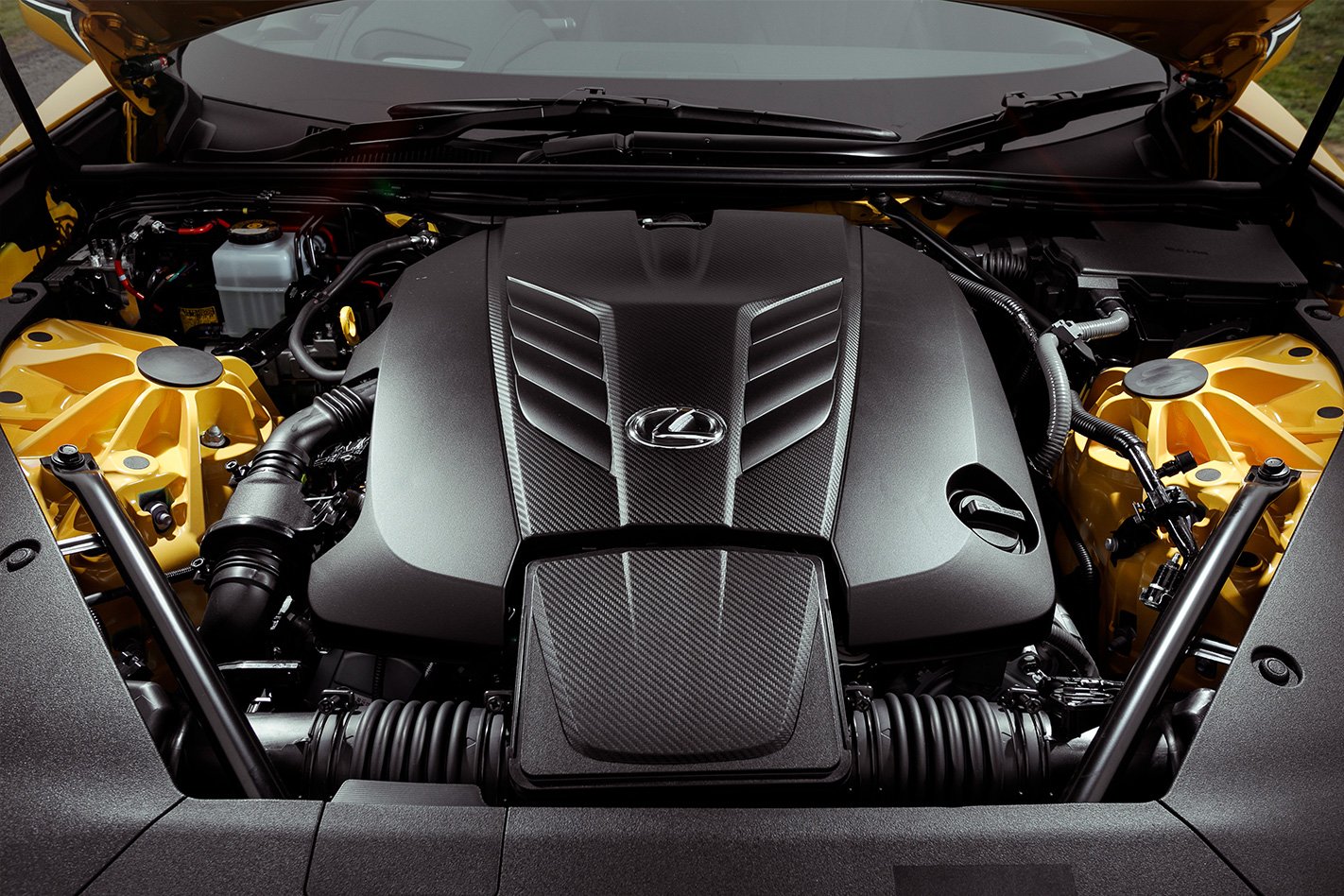
The change it brings is dramatic and unexpectedly shouty. Suddenly the big 5.0-litre V8, which had been happy to quietly rustle into life and slip effortlessly through city traffic, feels razor sharp and, with your right foot planted, verges on manic. Even the 10-speed automatic gearbox comes to the party, with upshifts hammered home with an authority and speed that isn’t far off a dual-clutch.
The real highlight, however, comes when you pull the left shift paddle and discover downshifts aren’t just as fast, but are surprisingly crisp. The noise is brilliant too: I’ve found myself cycling through the gears just to hear the big V8 roar and then crackle and gargle on the overrun.
It has soul this engine.
Lexus could have followed the downsizing trend and fitted the LC with the twin-turbo V6 found in the new LS, but I’m glad it didn’t. The V8 gives the LC the personality it needs to match its futuristic styling. It feels like a muscle car which, given its hefty 1920kg kerb weight, wide 275-section rear tyres and healthy thirst, it kind of is.
And who’d have thought that about a Lexus?
Update #3
IT CAN be cruel and pitiless, COTY testing. Having run this long-term LC500 for the previous two months, I was keener than most to see how the big Japanese muscle car would perform at our toughest week of the year.
I was, justifiably I’d say, optimistic of the LC’s chances. Striking to look at, superbly made and luxuriously comfortable, it’s even possible to argue the LC is decent value considering its wow factor, size, quality and performance.
The addition of the Hybrid model, which uses a fiendishly complex powertrain to boost performance and economy, appears to have COTY’s technology criterion covered off too.
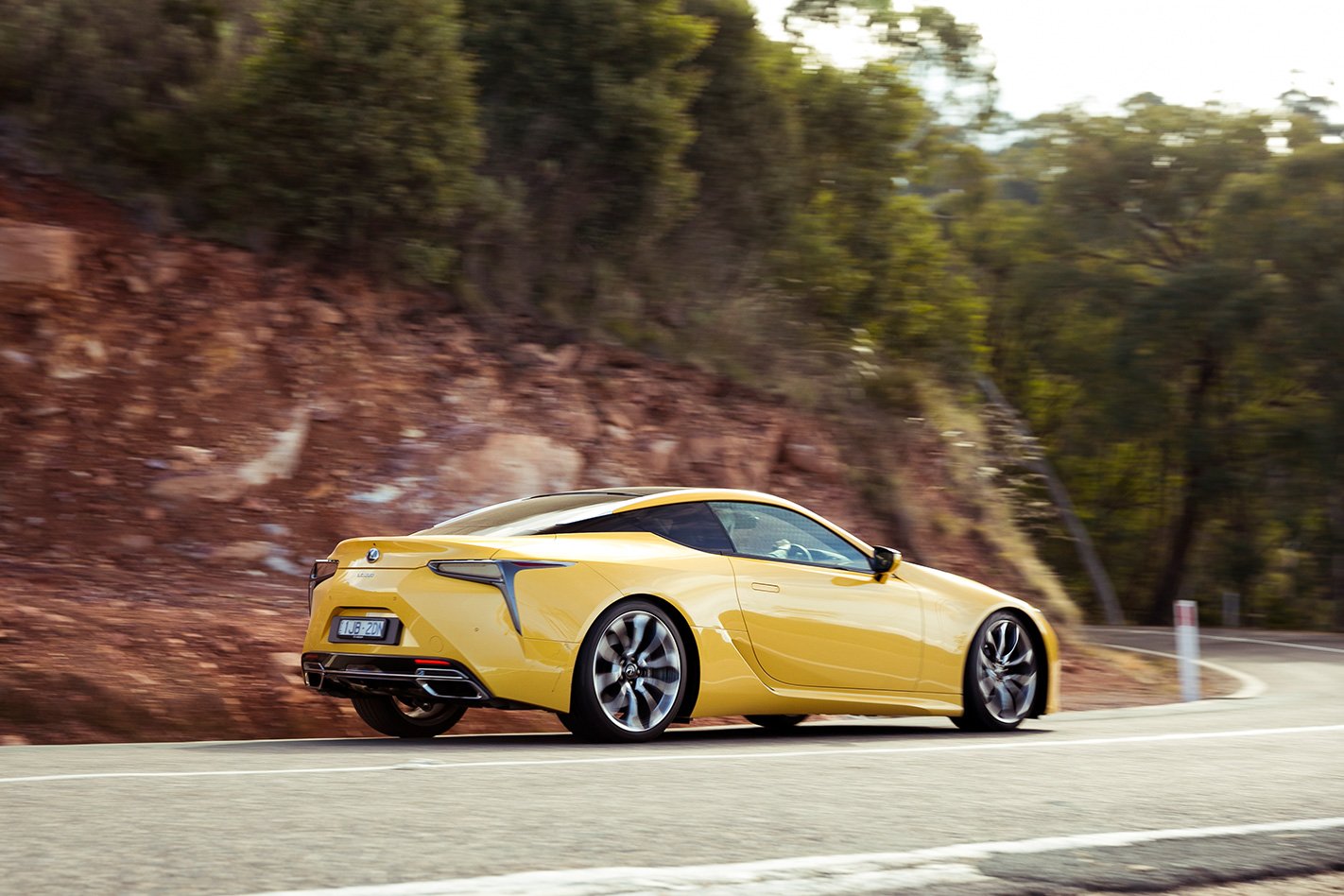
It seems counter-intuitive, I know, given its instant visual appeal, but it’s the nuances and quirks that make the LC so interesting to live with and, by comparison, make other cars feel a little one-dimensional.
The endless maze that is the infotainment system, for example, which was baffling and complicated initially, has become a challenge and a surprise as I continue to discover new shortcuts and menus even after months of use. And I love that all the dials and buttons feel metallic and expensive, like a high-end hi-fi.
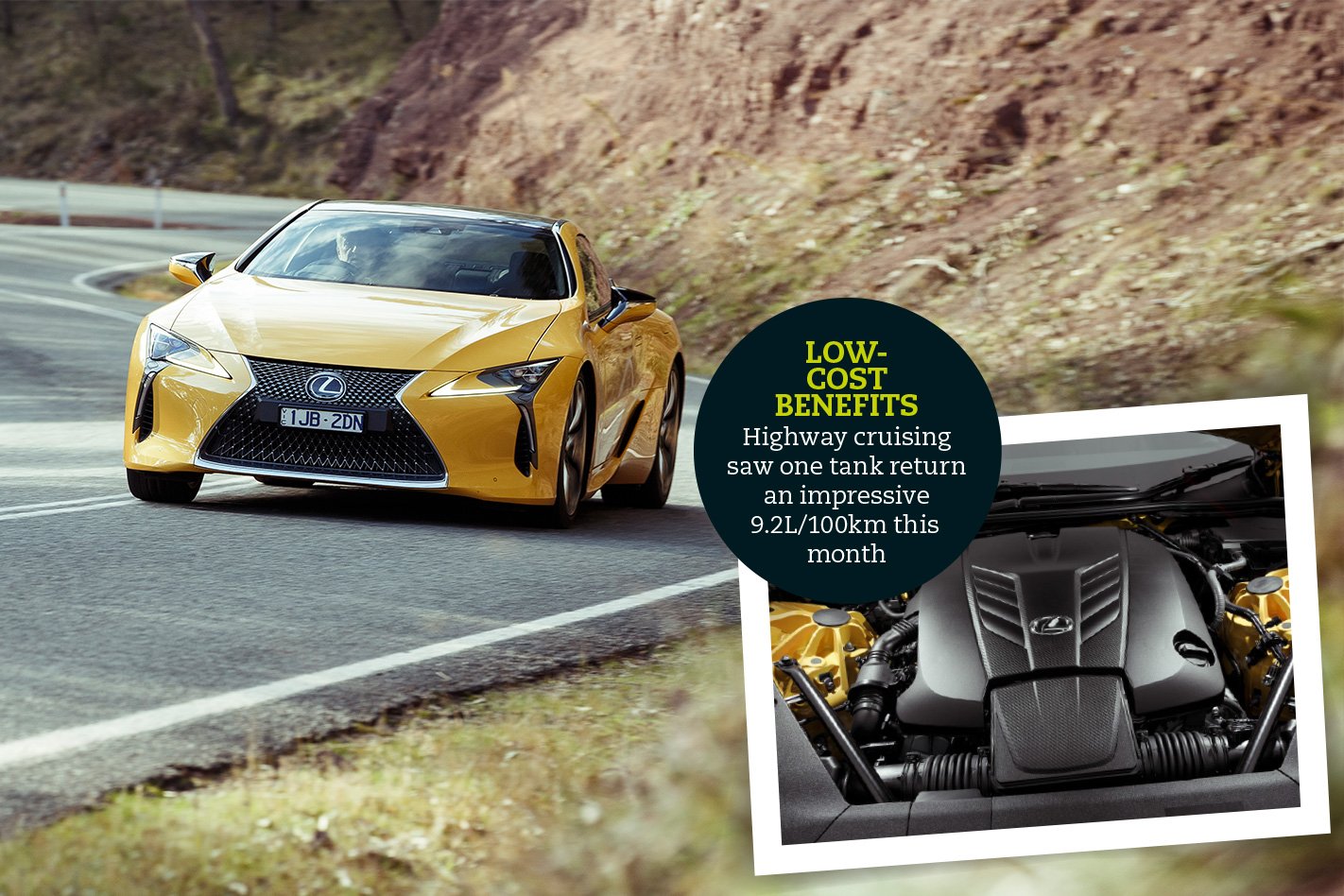
Even the dynamics have surprising bandwidth, with each driving mode (including a Custom setting I only discovered this month that allows optimal configuration of chassis and powertrain) revealing different shades of character and ability.
It’s a car with layers, and that’s partly why I’ll be so disappointed to see it go. Having occupied my driveway for three months, come next week, my yellow LC500 will be replaced with a red one that, beyond the colour change, should look identical bar a small ‘h’ added to its badging.
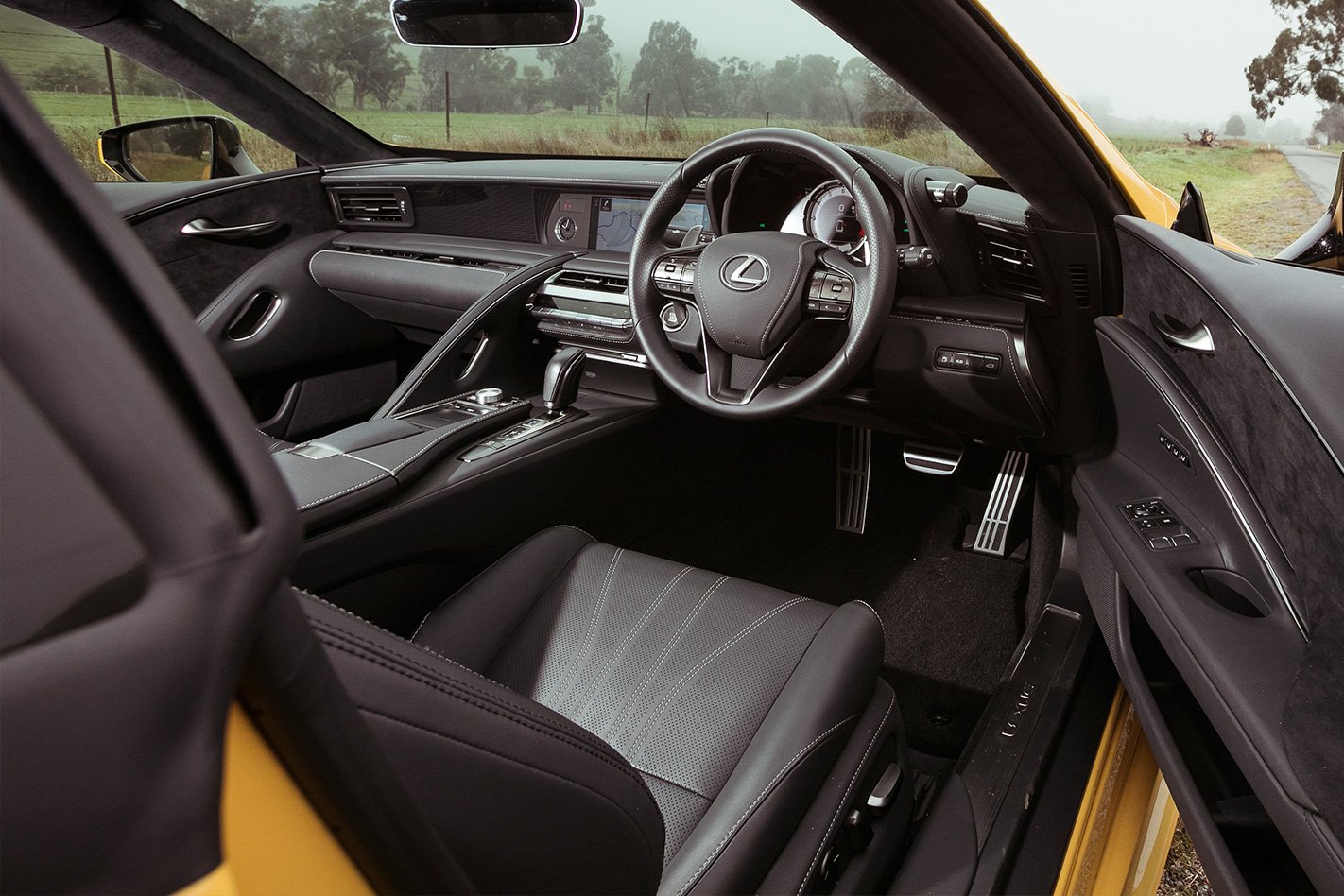
I fear I’ll be taking a step backwards. Here’s hoping I’m wrong.
Farewell
AS MUCH as I’d like to think I’m immune to the common human failing of making poor decisions, the arrival of this rather beautiful red Lexus LC 500h proves that alas, I am not.
Having spent the last three months in the burly, brilliant and rather boisterous V8-powered Lexus LC500, the decision to swap it for the hybrid version for the final month of the LC’s long-term loan seemed a smart one.
After all, the two cars are identically priced and the hybrid’s complex drivetrain intrigued me. Can an aspirated V6 petrol mated to a lithium-ion battery and electric motor really compare to the character, noise and fire-and-brimstone performance of the V8? And if it couldn’t, would it deliver enough of an efficiency boost to justify the sacrifice?
It doesn’t take long to realise that, despite its identical exterior appearance, the hybrid is a very different proposition to the V8. The changes are subtle at first. The starter button, for example, is a bluey-purple colour, not silver like the V8’s, and prodding it doesn’t bring the deep burble of internal combustion I’m used to, but eerie silence.
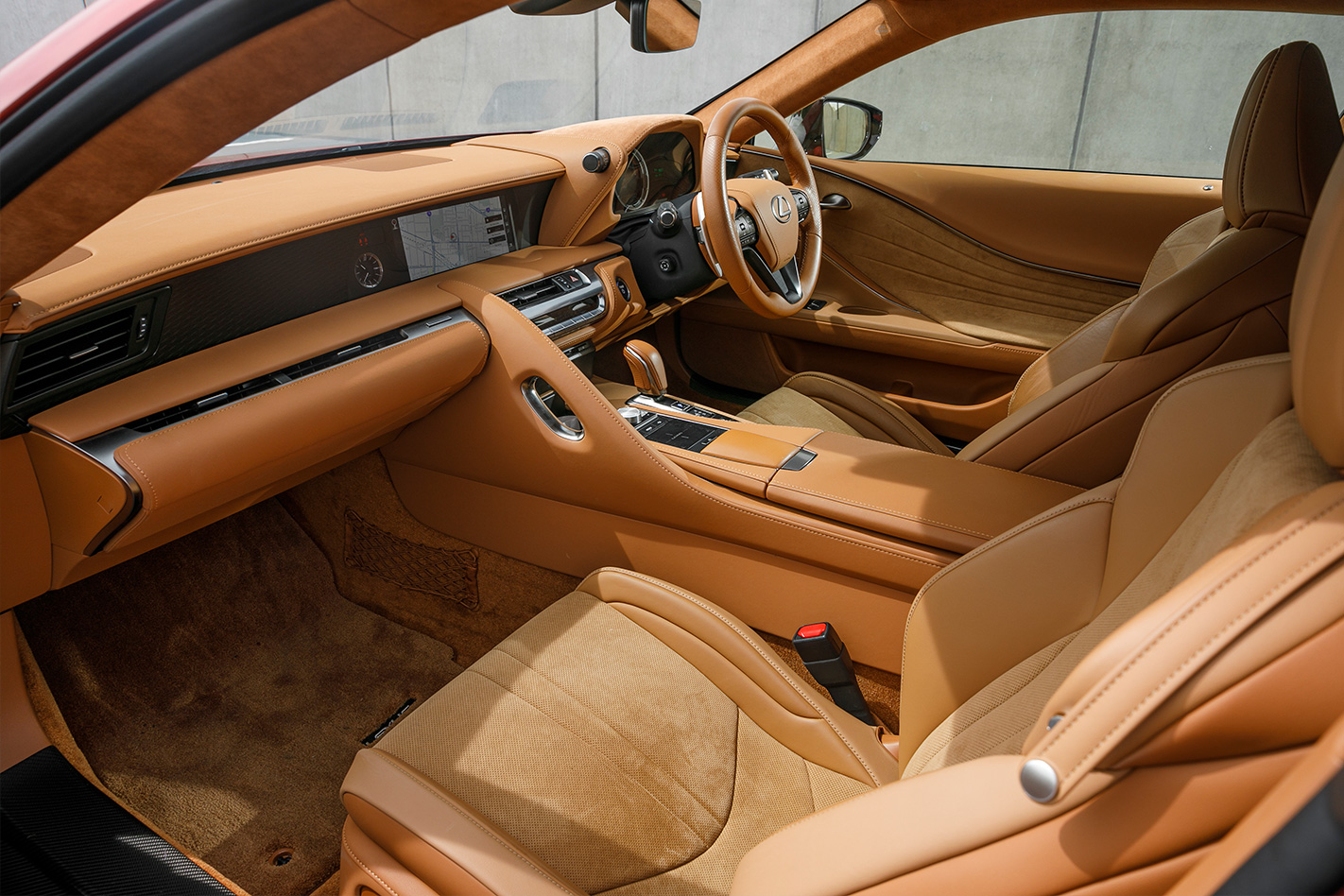
This continues as I roll out of the carpark but then, as I feed in more throttle to join the traffic flow, the charmless drone of the V6 ignites with a jolt. The brake pedal feels different too, with that trademark Toyota hybrid fizzing sensation at the top of the travel.
Even the steering, which is darty in comparison, takes some adjustment, thanks to its variable-ratio rack that comes as part of this particular car’s optional Enhancement Package.
The $15K pack also adds four-wheel steering, an active rear wing and some interior tweaks, such as replacing the V8’s sublime leather seats with heavily bolstered cloth pews, which for my frame at least, aren’t as comfortable. Small differences, sure, but combine them and the hybrid feels a noticeable step backward from the V8; a feeling magnified by the fact that the rest of the car feels so familiar.
Further exploration of the powertrain as I accelerate onto the freeway only solidifies the realisation that I’ve made an error in my decision-making process: I should have driven the hybrid first, then the V8.
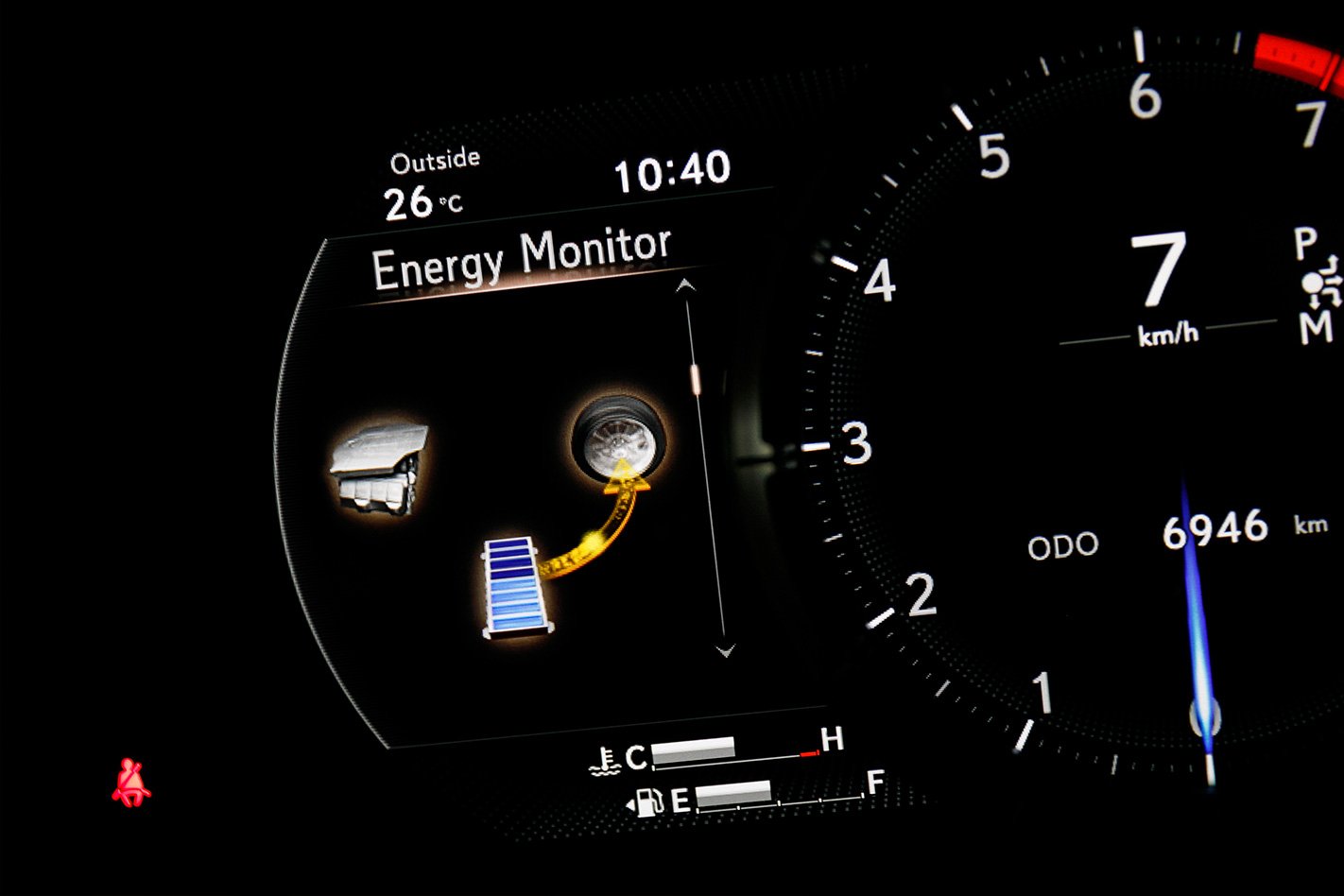
While much of the LC core goodness remains – head turning looks, brilliant build quality, surprising value and excellent ride comfort – constantly comparing the hybrid to the V8 only highlights its shortcomings. Had I driven them the other way around, perhaps I’d be less disappointed.
Weeks of familiarisation haven’t softened my resolve either. While surprisingly swift, especially off the line, thanks to its instant electric shove, the 264kW/348Nm hybrid lacks the theatre and rush that makes the LC 500 so engaging.
There’s none of the V8’s effortlessness either, with squeezes on the throttle exposing the V6’s lack of torque (the 500h also weighs about 50kg more) and slower downshifts from the hybrid’s complex gearbox, which combines a conventional four-speed automatic with a CVT. It has little of the crispness or intuition of the V8’s 10-speed torque converter automatic and occasionally delivers unnatural feeling, slurring upshifts where revs don’t quite match the road speed or throttle position.
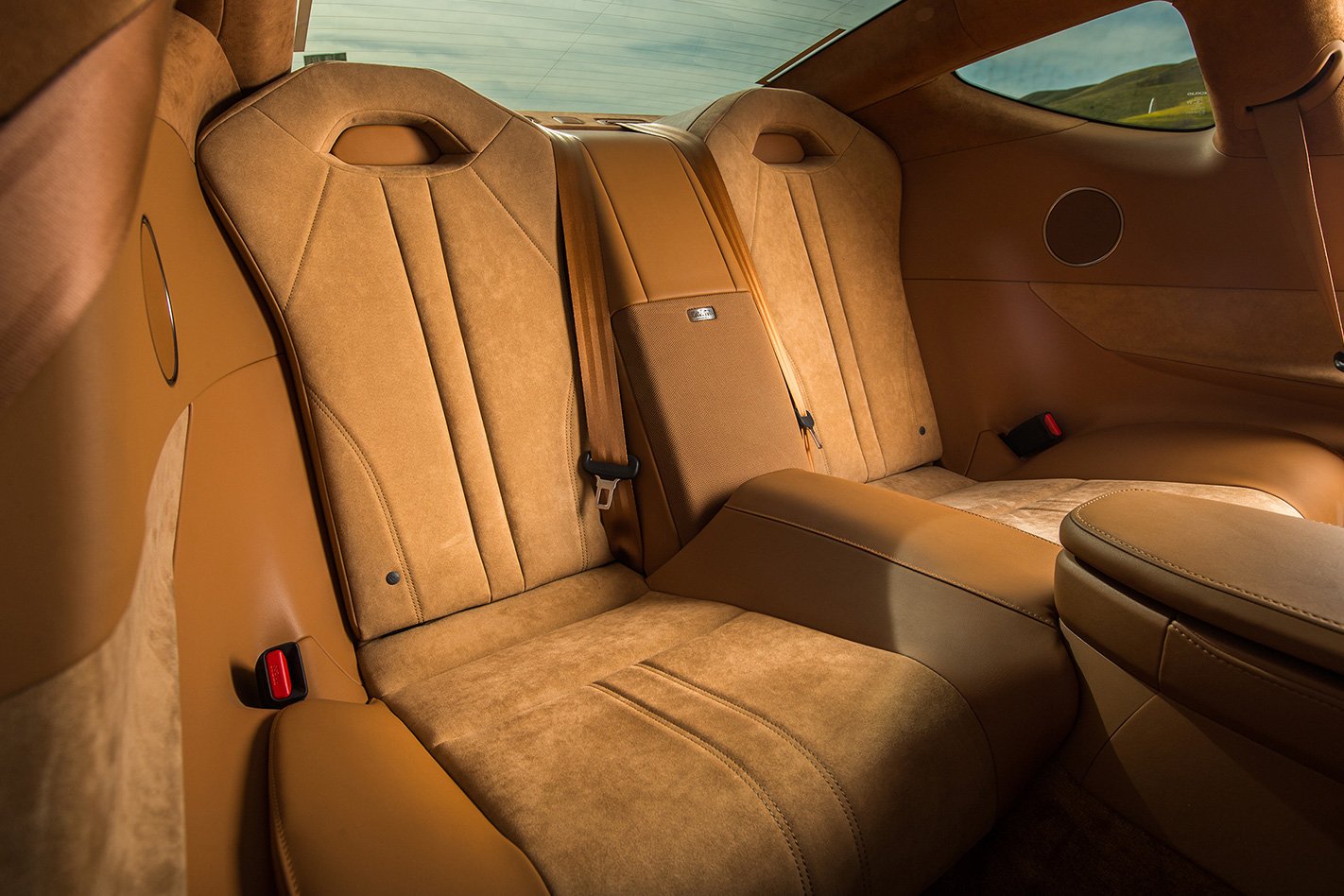
I’m not convinced by the $15K Enhancement Package either. The standard seats are better, so is the variable rack and I could take or leave the four-wheel steering, which does deliver a welcome manoeuvrability boost at low speed, but can feel a heartbeat behind the rest of the car when driving quickly.
So the V8 is the LC to buy, but even with the hybrid’s less satisfying powertrain, both models retain an appeal and personality that’s quite unlike any other car. Core to this are those outlandish looks, which, even after four months, still deliver a thrill every time I walk up to the driver’s door.
The only real LC negatives are the overly complicated infotainment system and the shallow boot (172 litres in the hybrid; 18L less than the V8), but even these can’t detract from what is a unique, soulful and engaging sports coupe that, like most Lexus performance cars, only gets better the more time you spend with it.
Buckle Down Seatbelt belt, $27

Carbon Cravat bow tie, from $62

Bentley golf club set, from $4380

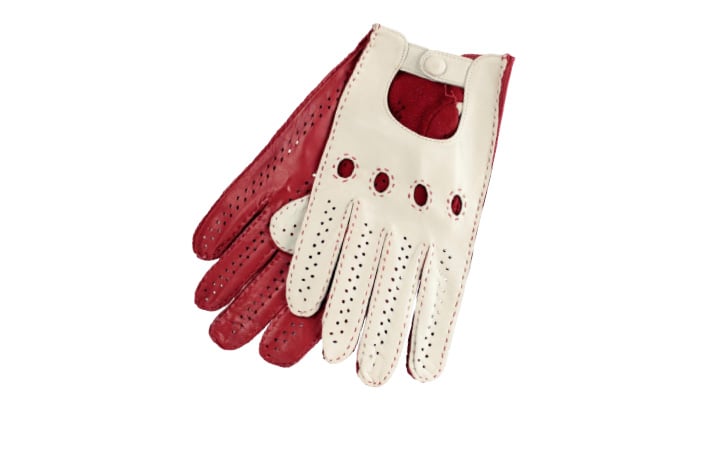
Baby Driver driving gloves, $125
Watches
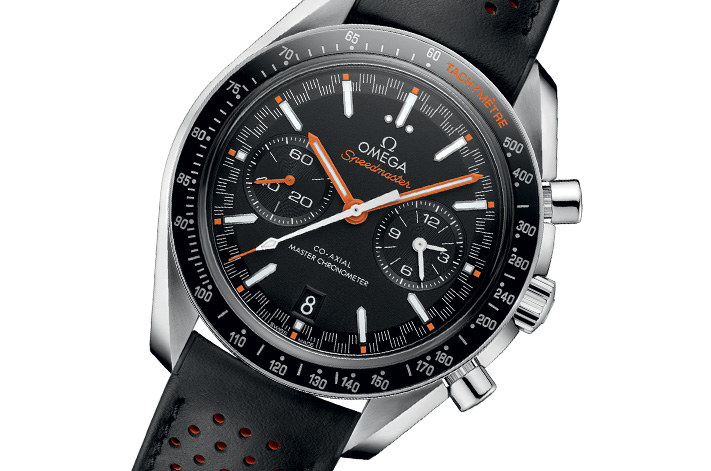
Omega Speedmaster Racing Master Chronometer, $11,300
Seiko Prospex SRPC49K, $750

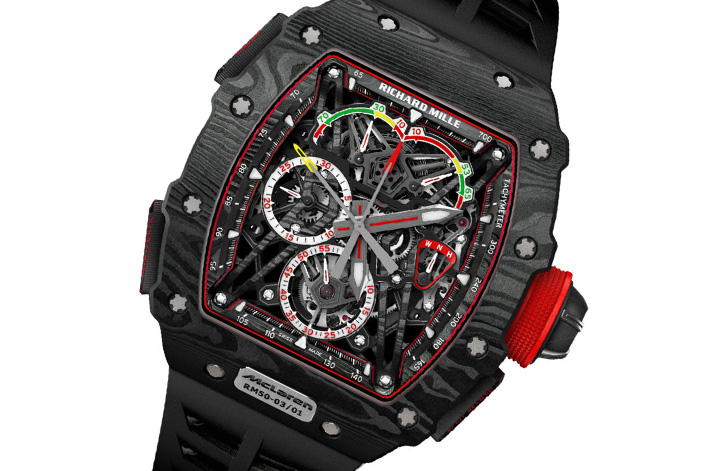
Richard Mille RM 50-03, $1,300,000
The closeness of the relationship between Aston Martin and James Bond is evident from the tyres adorning the DB11: Bridgestone Potenza S007. Coincidence? I think not.
Despite dalliances with Lotus and BMW, Aston has been inextricably linked with everyone’s favourite spy. The connection has done wonders for the British brand’s image, but hasn’t actually helped it make any money. The DB11 has.
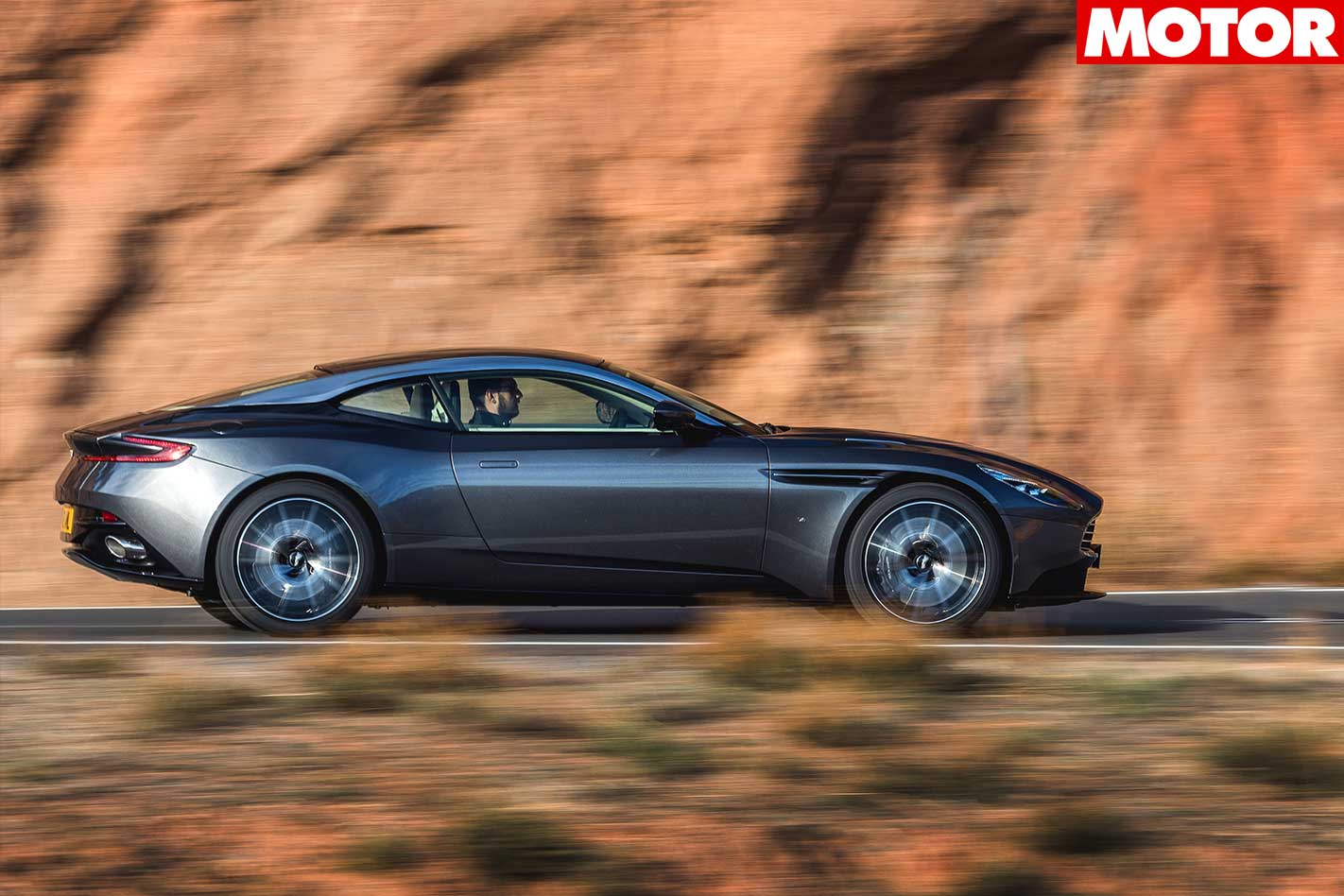
We’ve finally managed to get our hands on the first fruits of Aston’s Second Century Plan on local roads to ascertain whether the DB11 is more Goldfinger or A View To A Kill.
Initial reservations regarding the styling disappear in the metal, though it’s possibly a colour sensitive design. It’s well-proportioned with some lovely details, an impression that carries over inside.
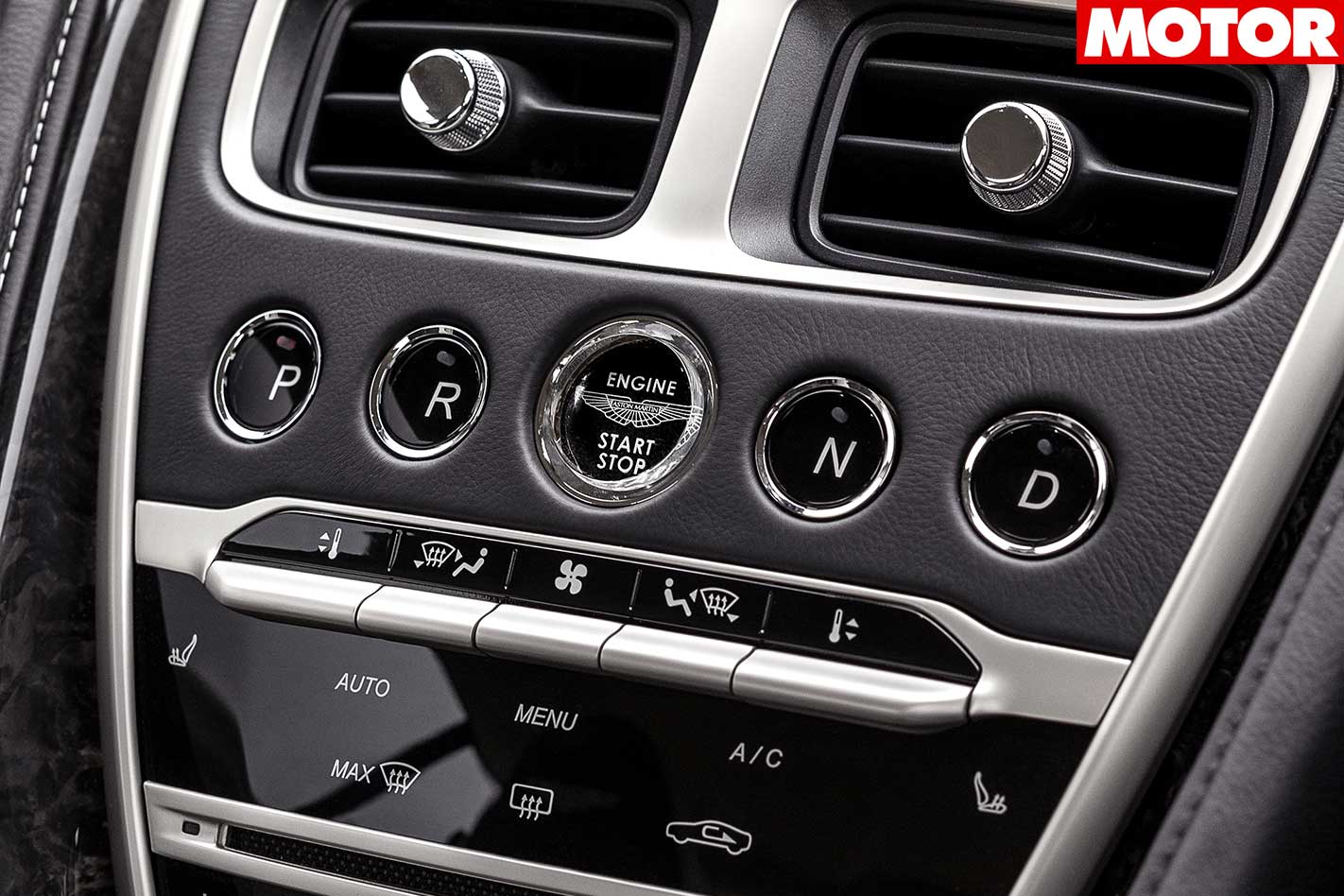
The interior contains enough leather to make a dairy farm nervous and while the electronic architecture is now sourced from Mercedes, evidence of the partnership is limited to the infotainment system controller and indicator/wiper stalk.
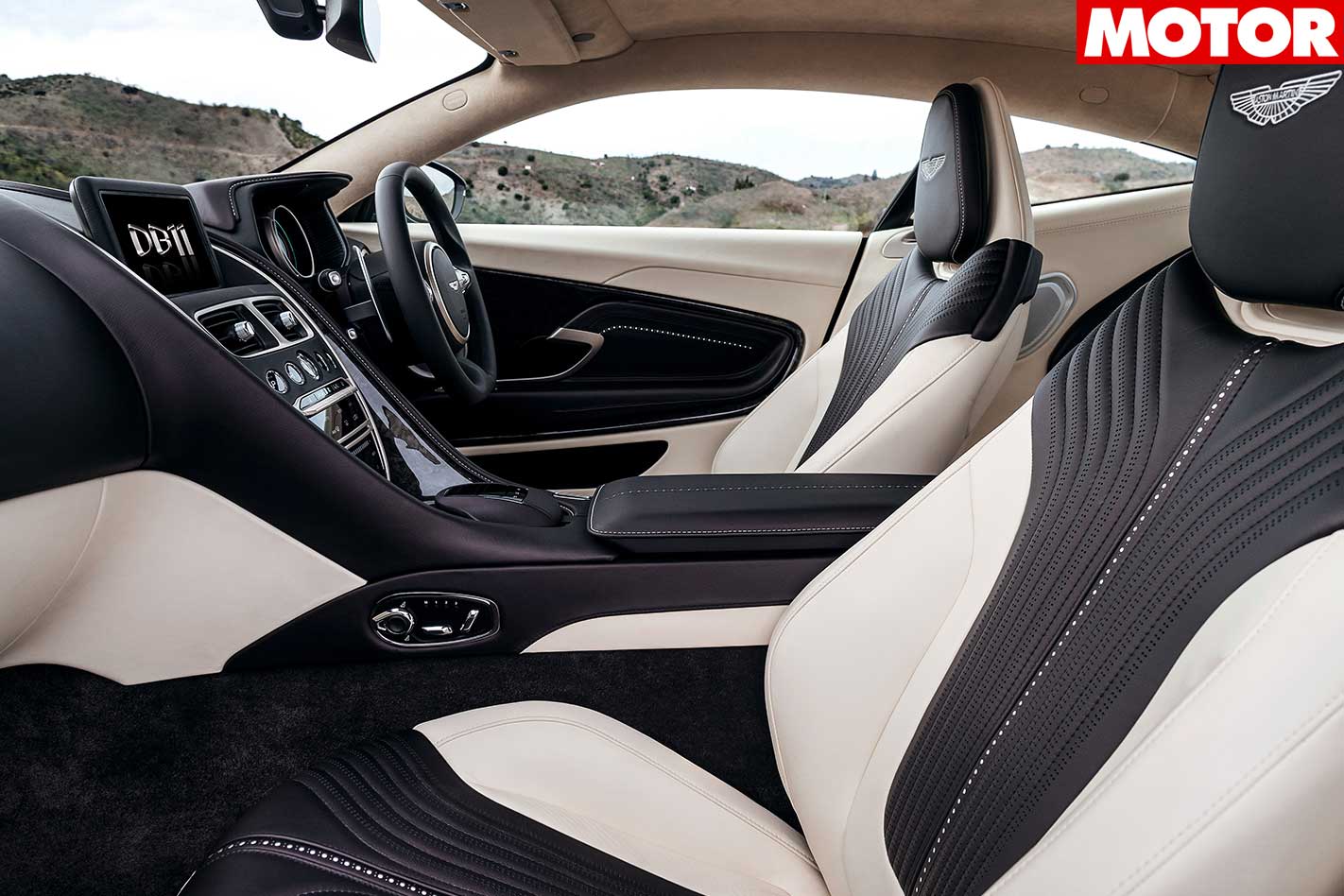
Located just near your thumbs on that steering wheel are two buttons which alter the attitude of the DB11; the left one controls damper stiffness while the right one adjusts the powertrain, both with three modes to choose from.
Unlike most performance cars, which attempt to run the full gamut from everyday cruiser to hardcore track warrior – with varying degrees of success – Aston offers only different levels of comfort.
The upside to this compliance is plenty of feedback from the chassis, though with 295mm rear rubber the transition to oversteer can be quite sudden – thankfully it’s easily held with the ESP’s Track mode flattering any mistakes.
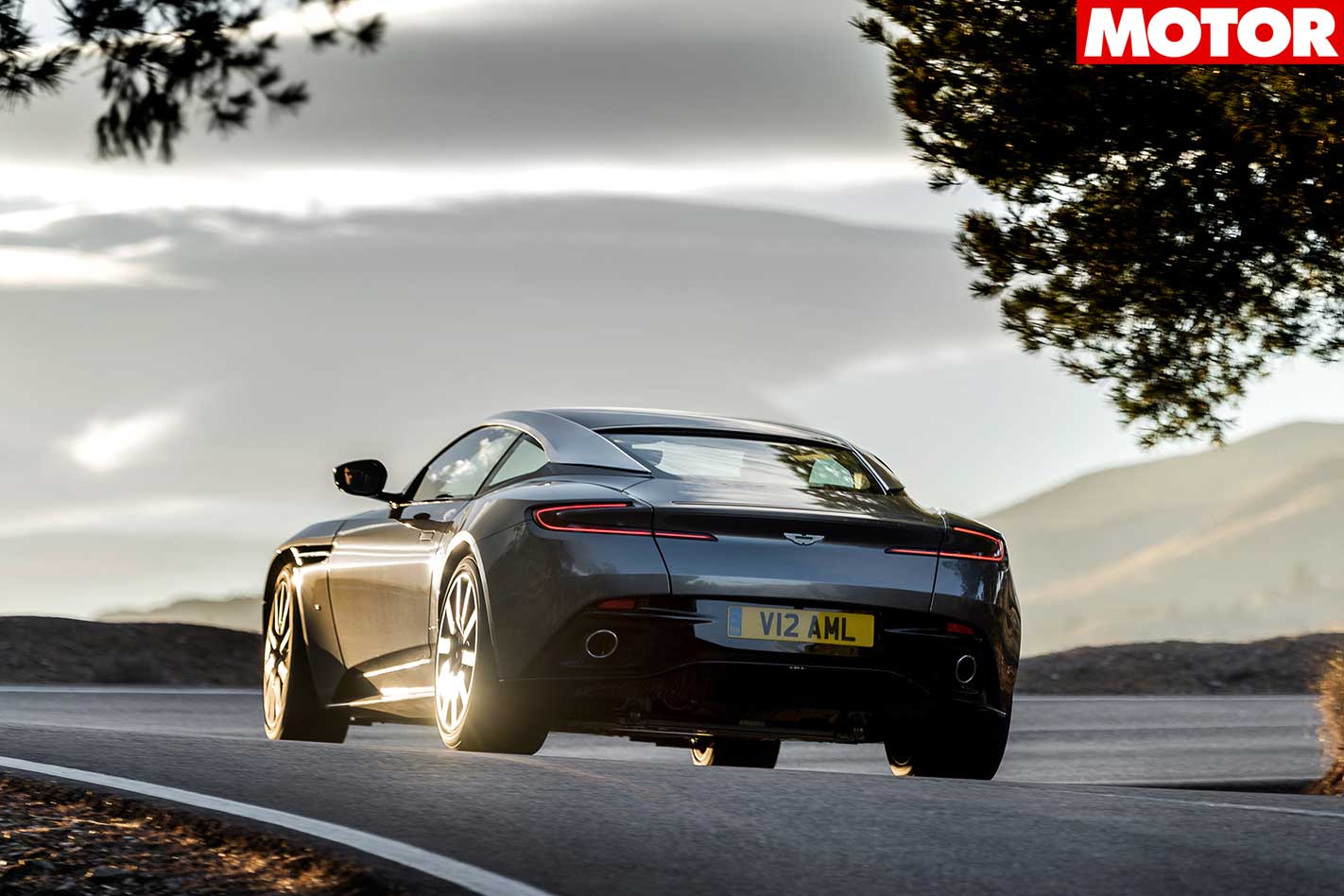
Unlike its AMG-sourced V8s, the DB11’s 5.2-litre twin-turbo V12 is all Aston and it’s fabulous. The linearity of its power delivery means it doesn’t necessarily feel as potent as its 447kW/700Nm and 3.9sec 0-100km/h numbers suggest, but acceleration is ample and the noise wonderful.
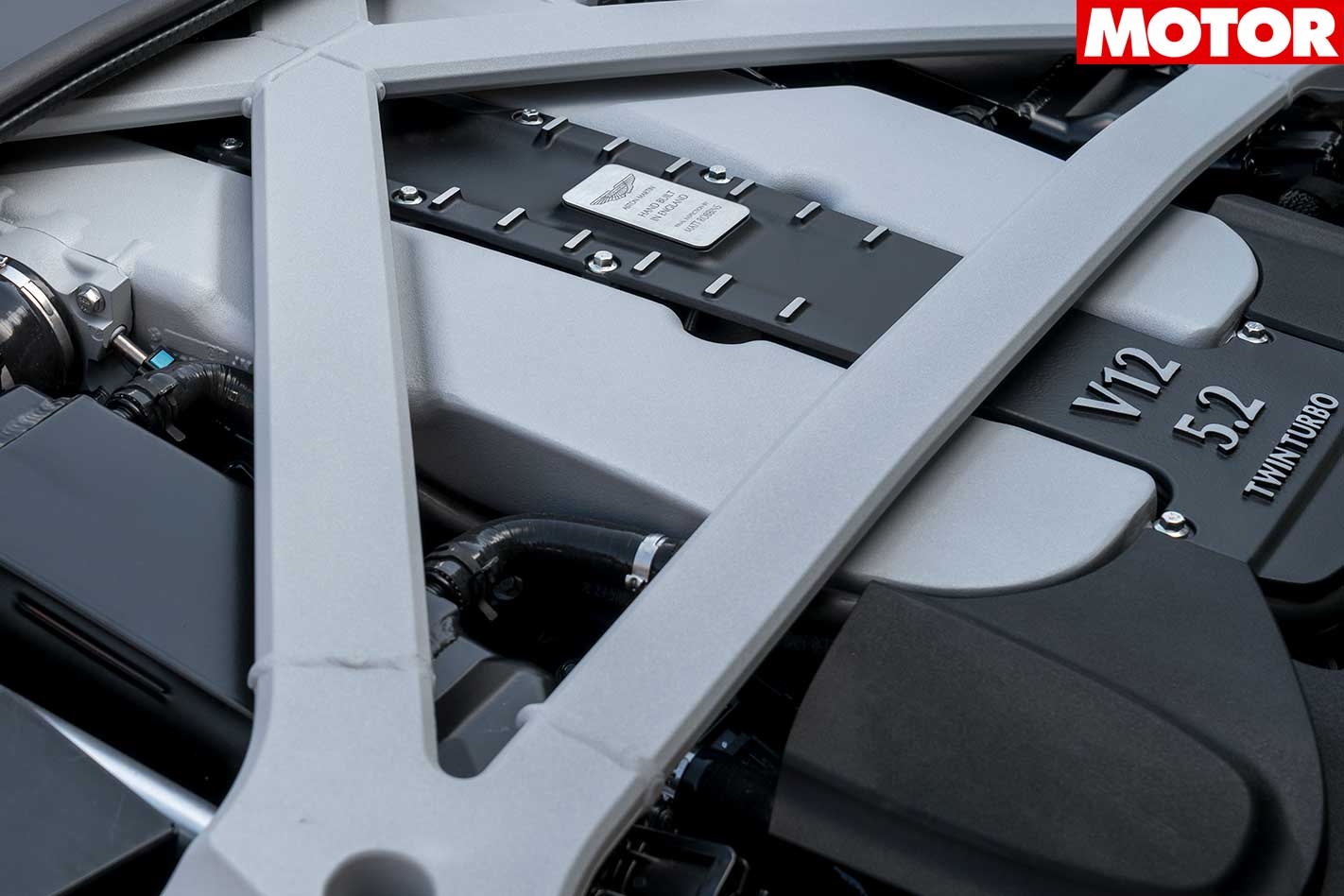
This beautiful engine is attached to a ZF eight-speed transaxle automatic which is the perfect partner; it may not have the slick shifts of a dual-clutch but its smoothness in all circumstances is ample compensation. The only chink in the powertrain is a strange mechanical wheeze on deceleration.
If you’re after a hairy-chested, balls-out sports car, the DB11 is not for you. There’s every chance it would feel all at sea on a track, however, it happens to be one of the finest road cars I’ve ever driven.
Powerful, comfortable, evocative, if I had to choose something to drive to Sydney the long way in tomorrow, this Aston would be very high on the list.
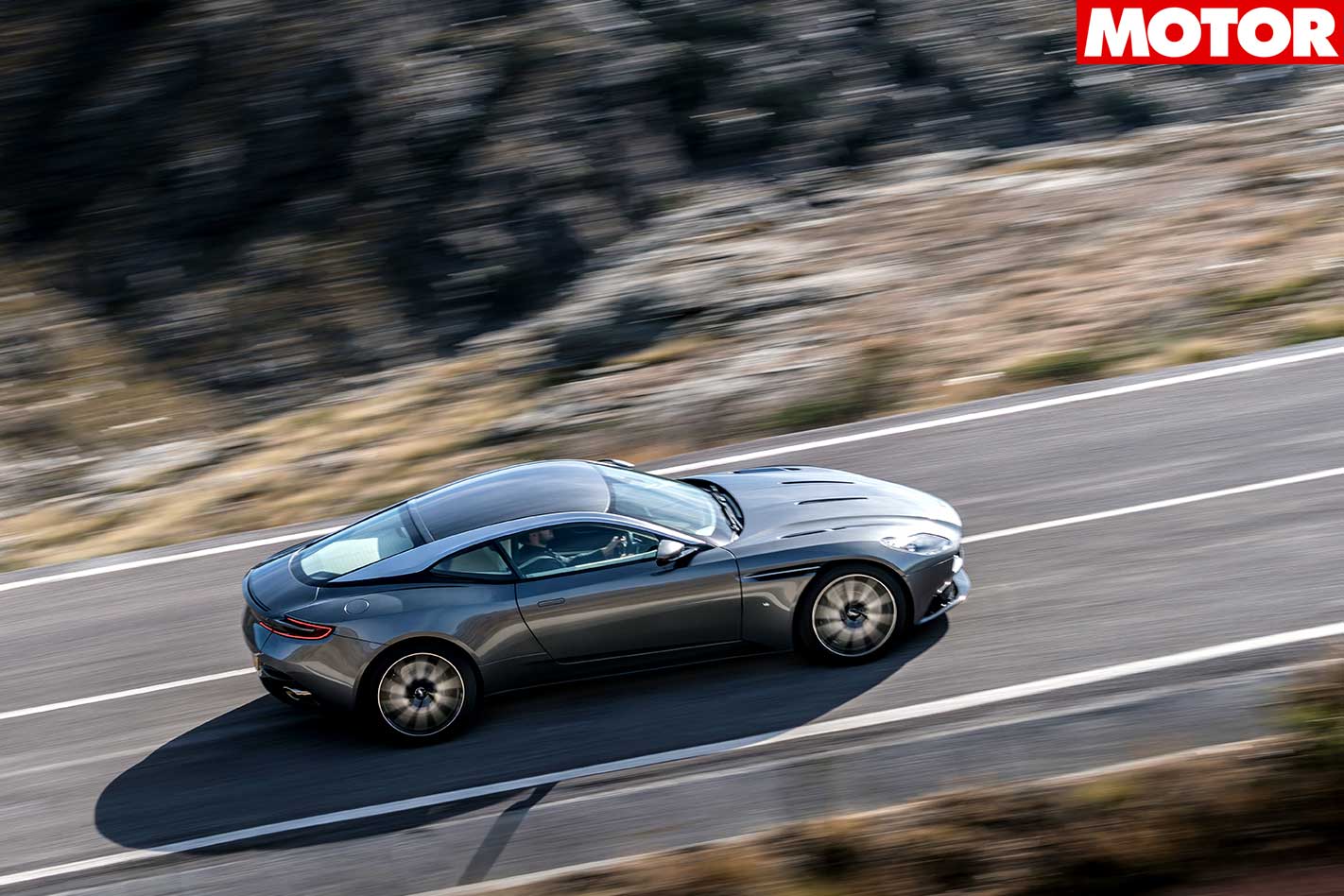
2018 ASTON MARTIN DB11 SPECS: Engine: 5204cc V12, DOHC, 48v, twin-turbo Power: 447kW @ 6500rpm Torque: 700Nm @ 1500-5000rpm Weight: 1770kg 0-100km/h: 3.9sec (claimed) Price: $428,032
Like: Beautiful V12; great noise; lush ride; handling balance; luxe interior Dislike: Couple of Mercedes interior bits; too soft for ultimate driving thrills Star Rating: 4.5 out of 5 stars
Gran Turismo Sportivo. Grand Touring Sport. Growly, Tough Street-thug. Whatever ‘GTS’ means, it’s merely incidental.
This feature was first published in MOTOR Magazine’s August 2008 issue
What matters is the public’s undying affection for a red three-lettered badge supplementing Holden’s lion-and-stone emblem (or HSV’s lion and race-helmet) that symbolises Australia’s talent for creating giant slayers.
Pre-GTS, a Holden was nothing more than half-a-dozen cylinders in a traditional five/six-seat sedan or wagon. The very best of them – the 1967 four-speed manual HR 186S – could manage just under 18-dead for the quarter mile and almost see 100mph (161km/h), but the bent-eight GTS left the HR languishing in the exhaust trails billowing from its rear pipes.
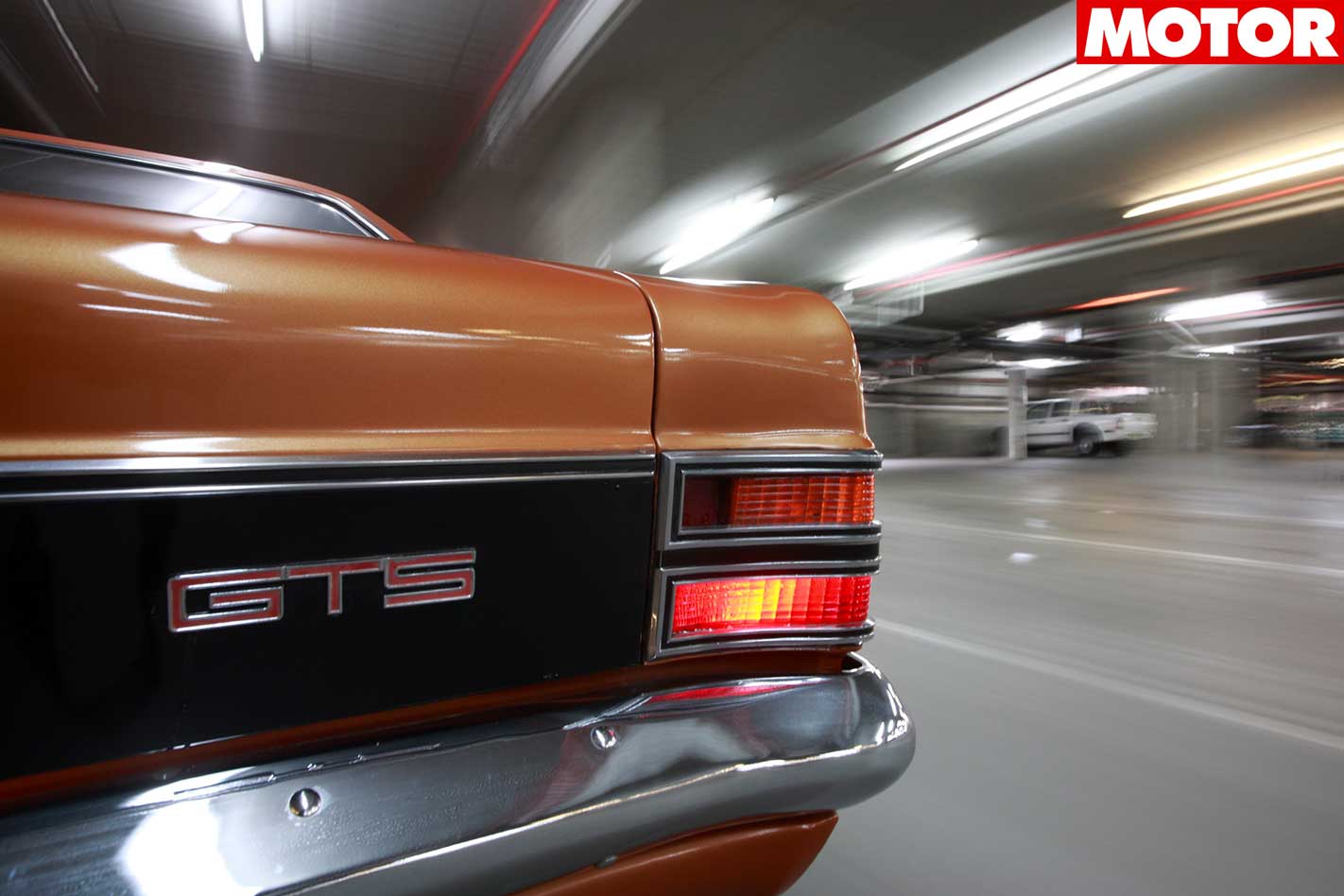
In just 14 months, engine output had more than doubled. Morals campaigners must have freaked. It’s funny how history repeats itself, however. Here we are, exactly 40 years later, and things have come full circle.
When HSV launched the C4B-engined GTS in 2000 – after seeing the badge disappear completely between 1979 and 1992 – its M5-beating 300kW was a new Aussie muscle-car record, and a stark contrast to the 215kW it sported in 1995 (VS GTS) and 200kW in ’92 (VP GTS).
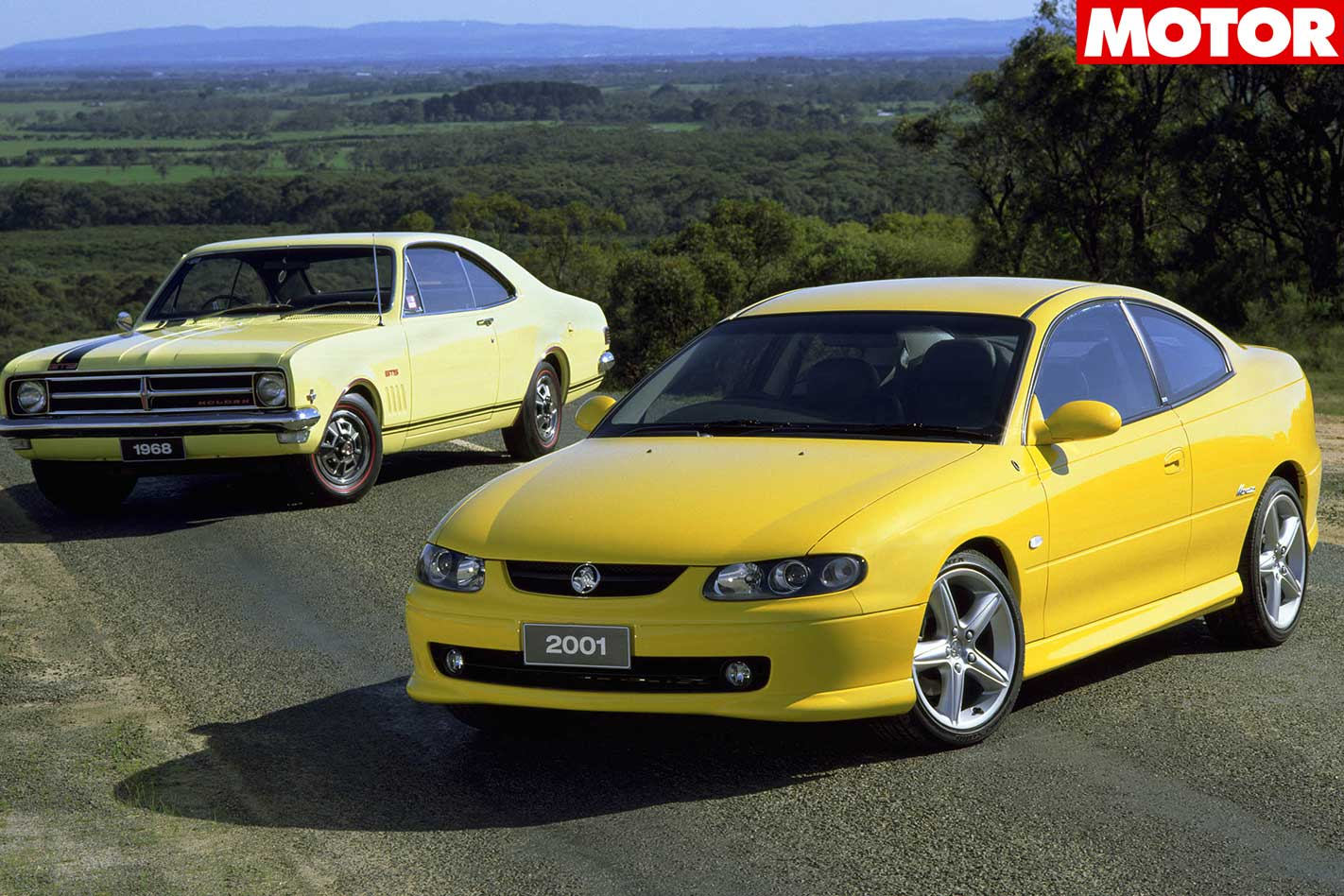
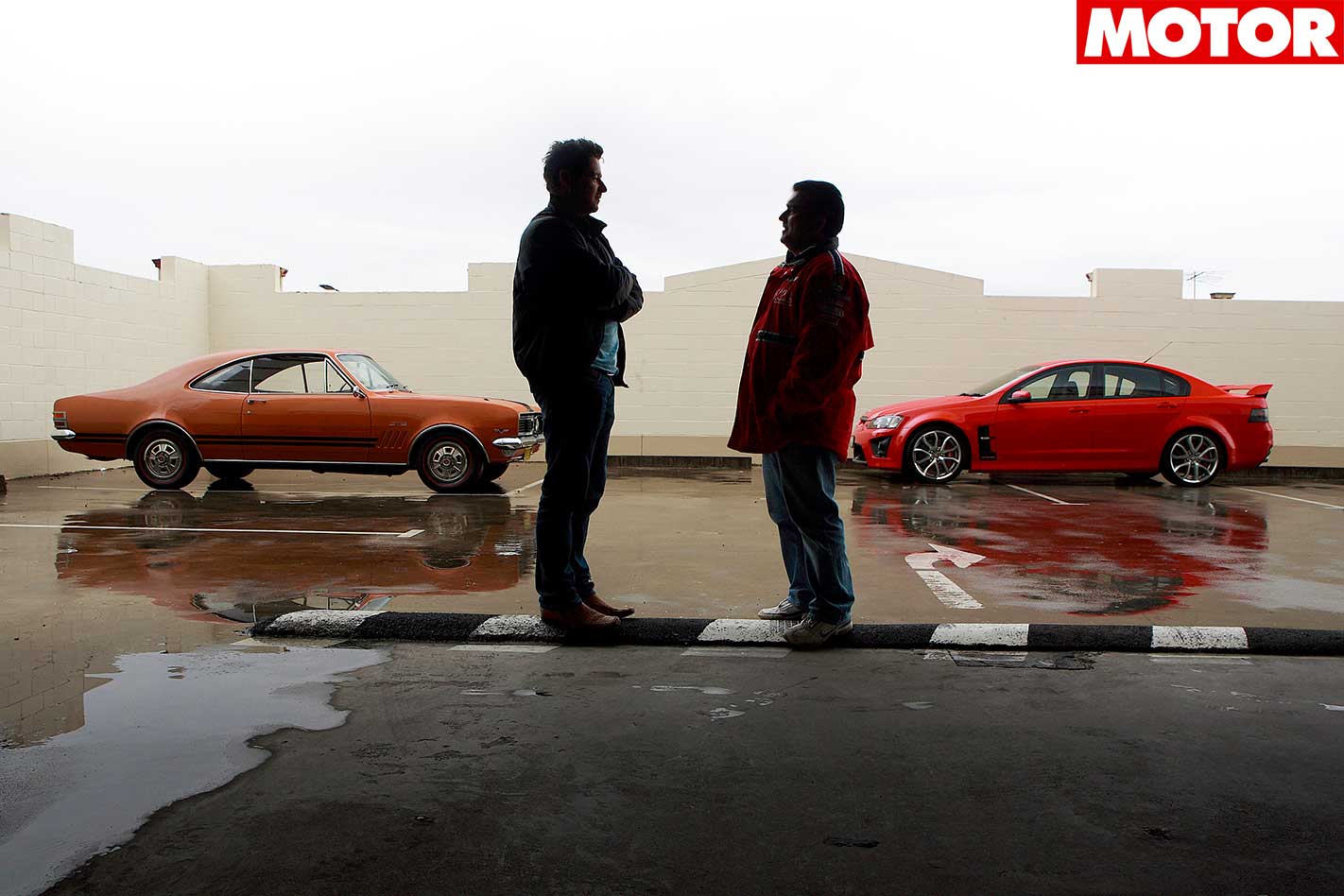
To find out, we thought we’d compare the finest of the original GTSs with the latest and greatest. As the ’69 HT Monaro GTS 350 was to the ’68 HK, the current 2008 E-series GTS is, superficially, just a re-engined version of the landmark ’06 variety. But, like the HT 350, it’s recognised as the finest of its type – a subtle but worthwhile enhancement of a totally new-generation car.
The similarities don’t end there. The defining characteristic of a muscle car is its engine and both the HT and VE use Chevrolet bent-eights. And, would you believe it, they’re both from entry-level Corvettes.
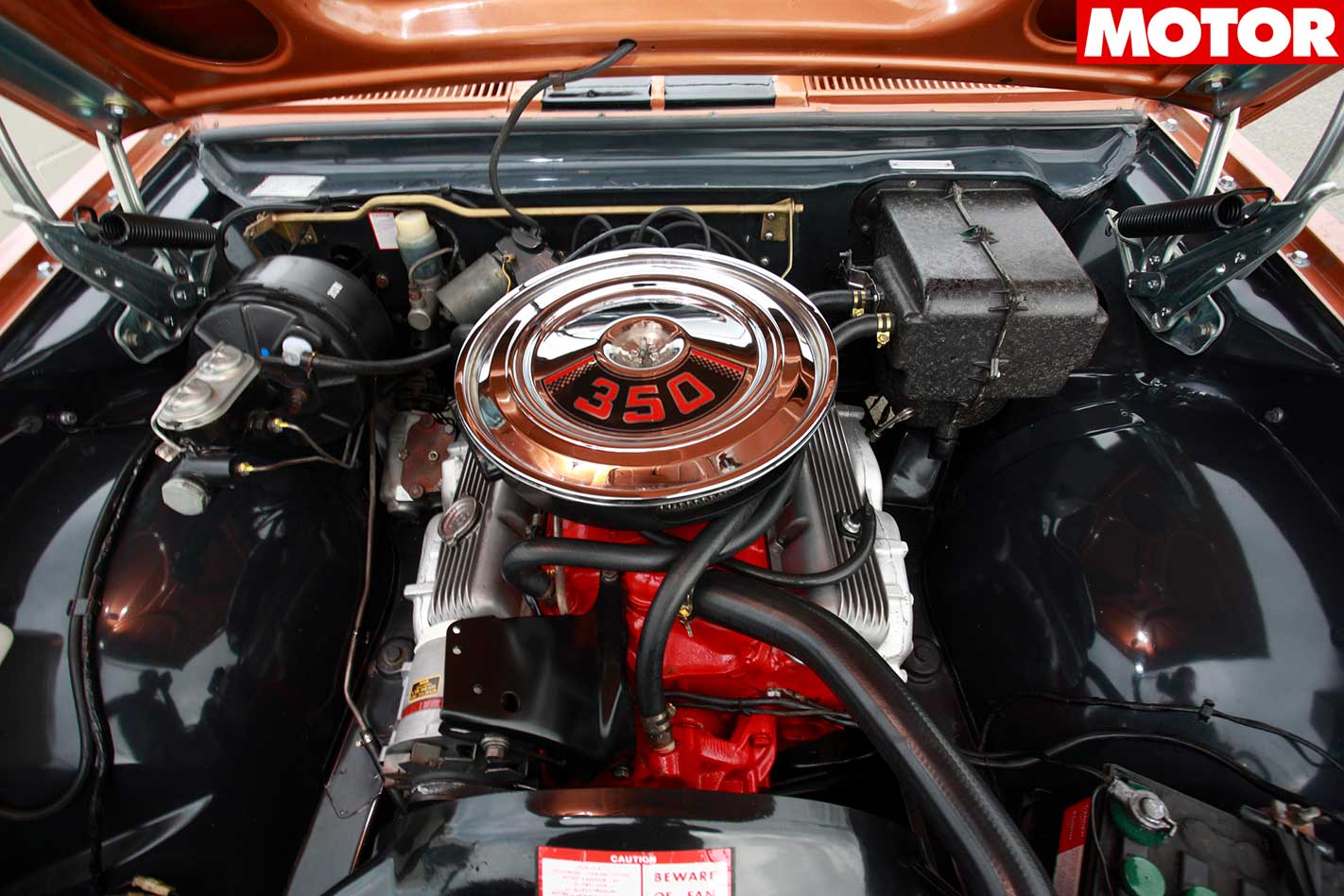
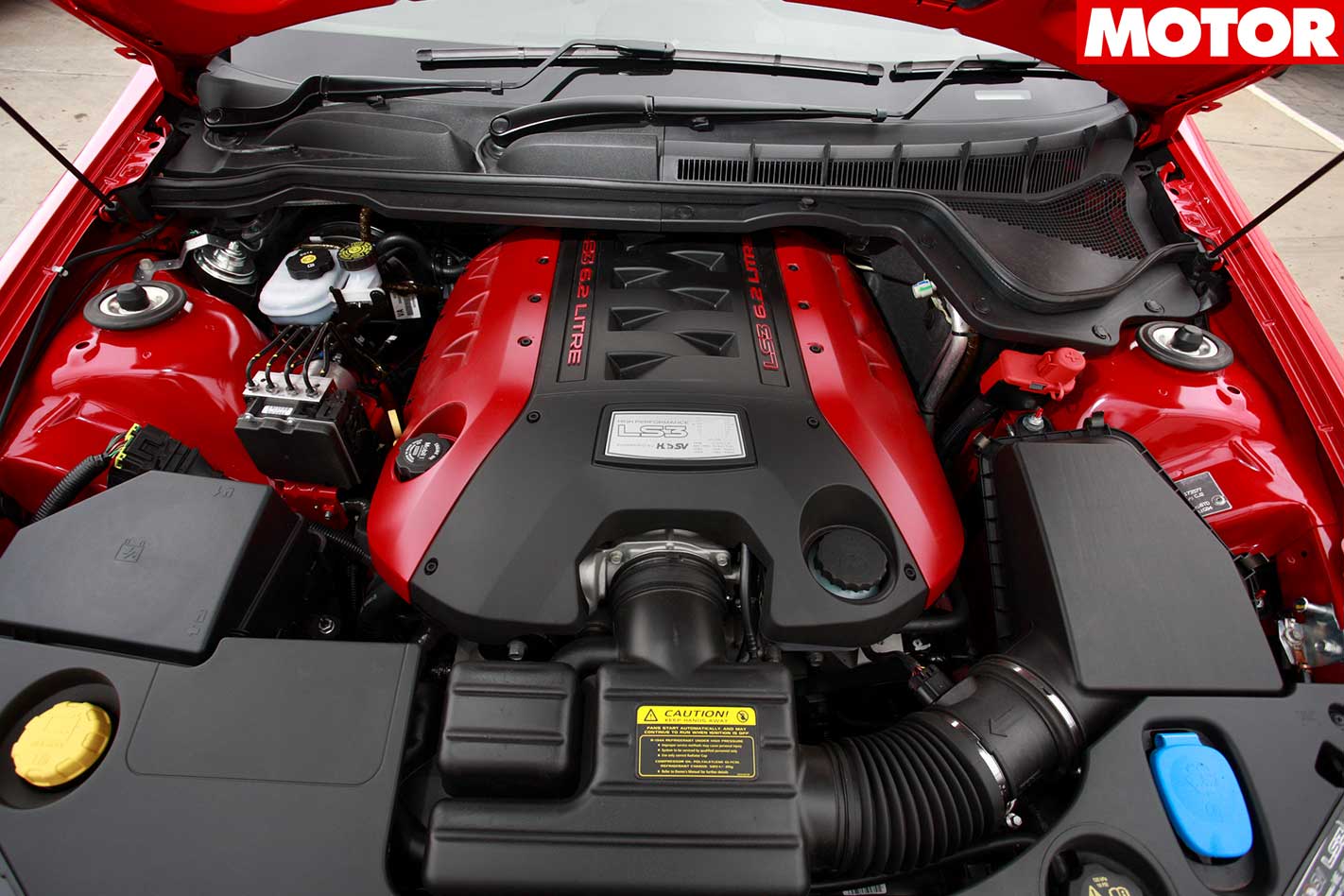
Just about the only Chevy that didn’t run the 350 was the rear-engined Corvair, and for very good reason. In an era where most Yank metal is front-drive and V6, the ’08 GTS’s 6162cc LS3 V8 holds a far more exalted position.
It’s a ’Vette engine, simple as that. Indeed, only the 7.0-litre LS7 (Corvette Z06) and record-breaking 6.2-litre supercharged LS9 (Corvette ZR1 and Cadillac CTS-V) breach the LS3’s position in GM’s current V8 hierarchy.
Climbing into the HT Monaro is an elegant affair. You depress a simple push-button door handle, slip around its lengthy frameless doors and need not avoid chunky seat bolsters to rest your posterior in its cool, low-back bucket seats.
This example (owned by Sydney bloke, John Bertuzzi) features standard grained-vinyl seats, not the optional houndstooth cloth (in black/white or black/red), and they’re surprisingly comfortable, though the under-cheek padding doesn’t have quite the support it would’ve ‘back in the day’.
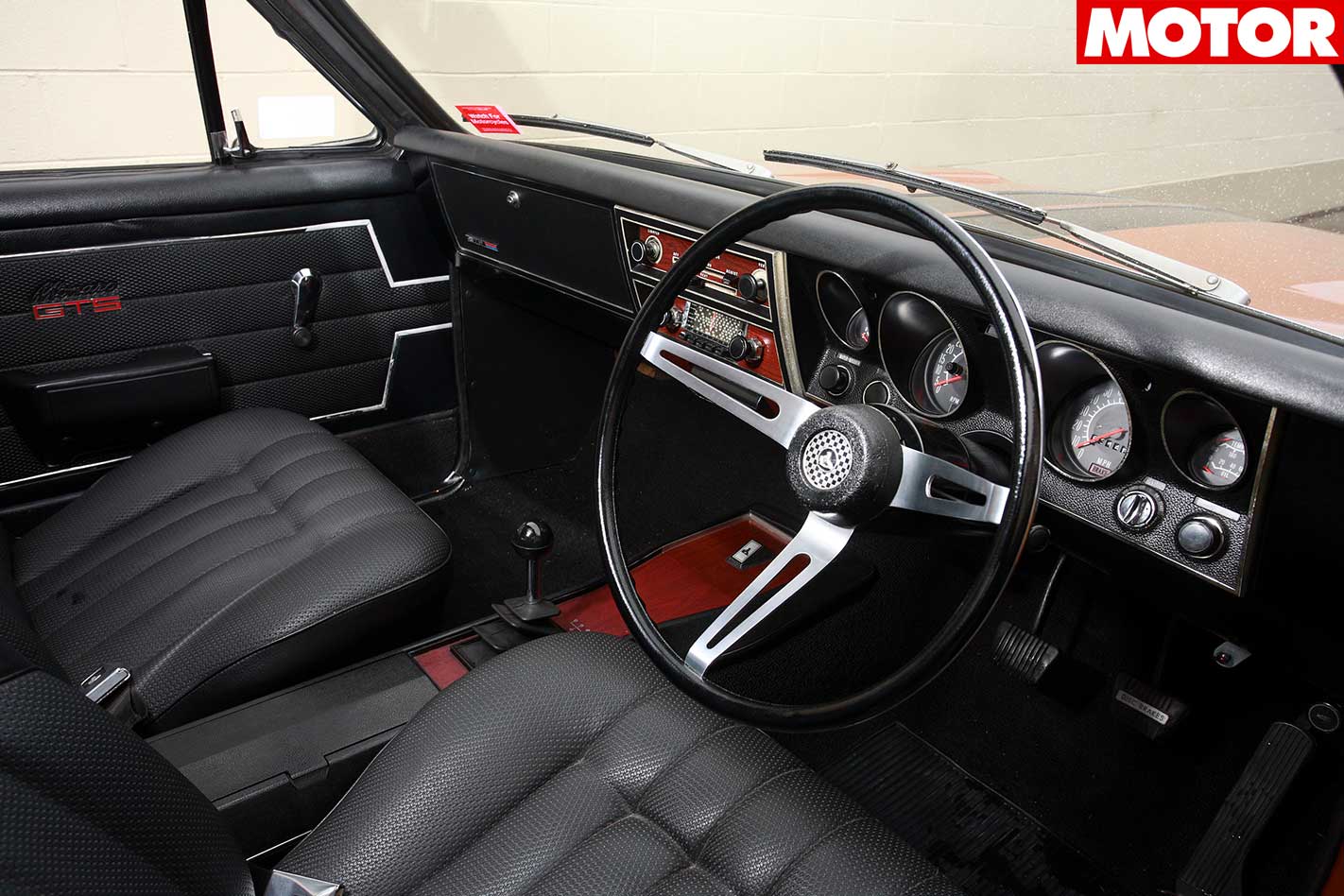
The dashboard’s controls are not only clearly marked, but also illuminated, and vision is, well, brilliant, at least to the front and side. Despite having a slightly bigger rear window than the HK Monaro, the HT’s vaguely hippy, vaguely Opel Rekord Coupe lines mean that shapely, but somewhat obstructive rear metal is classic form over function. Which is one thing the HT clearly shares with the VE.
Holden’s two-year-old Commodore shape looks as taut and aggressive as it did on day one, but its beautifully proportioned form is achieved at the expense of vision in most directions. Up front, the annoyingly thick A-pillars are a stark contrast to the HT’s slender, unobtrusive numbers, and without parking sensors, only the rear spoiler lets you know where the VE ends.
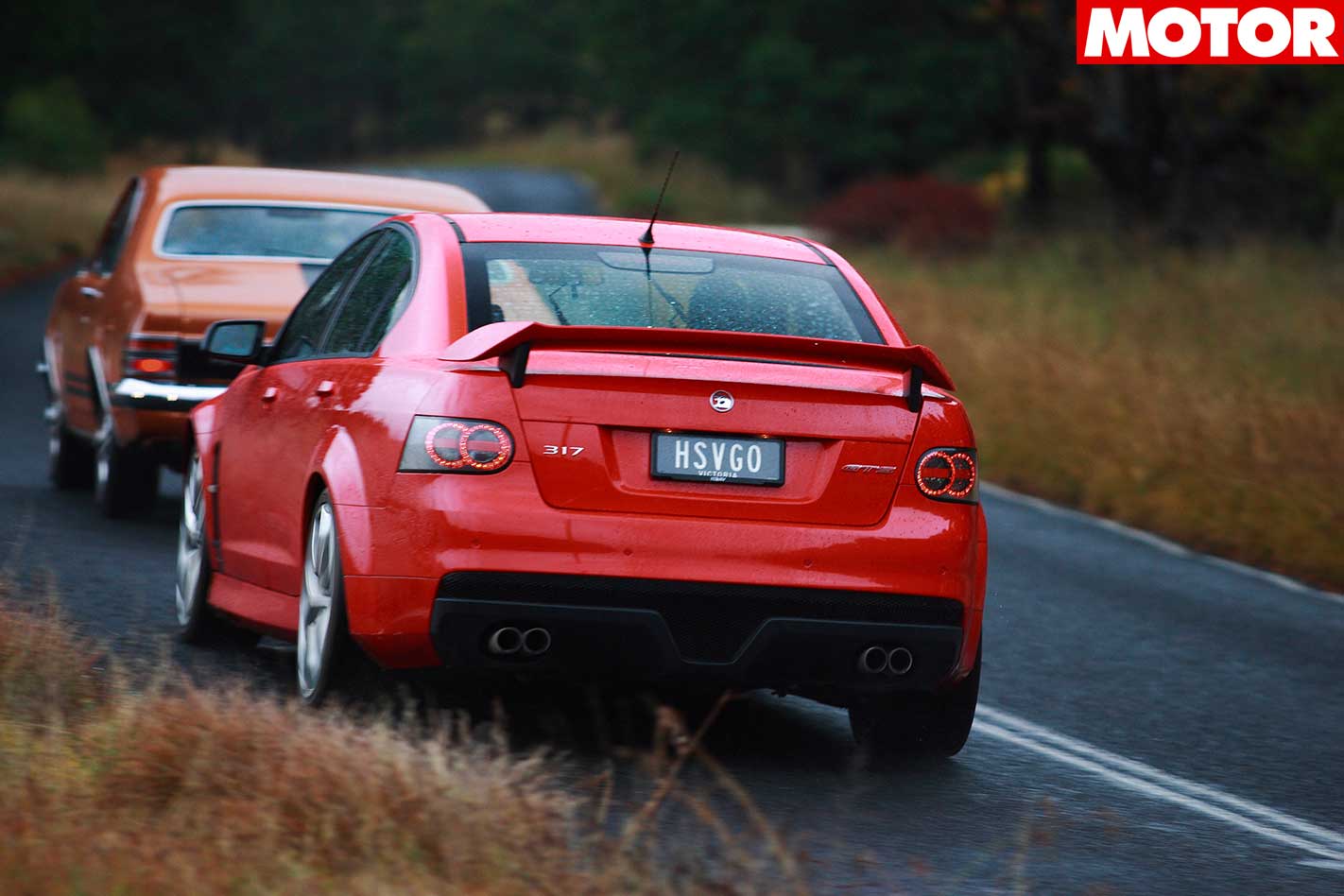
Seated behind the HT’s chequered-flag wheel hub, you can actually see the ignition slot, mounted on the dashboard to your right, like a Porsche 911’s, not hidden on the steering column like a Commodore’s. But where the VE simply fires and flies, the HT isn’t so simple.
That stubby gearstick might sit in the right place, but the reaction levers required to make the four-speed’s indirect shift linkage work mean that skipping gears (say second to fourth) feels clunky, and throttle-blipping on downchanges is a virtual necessity.
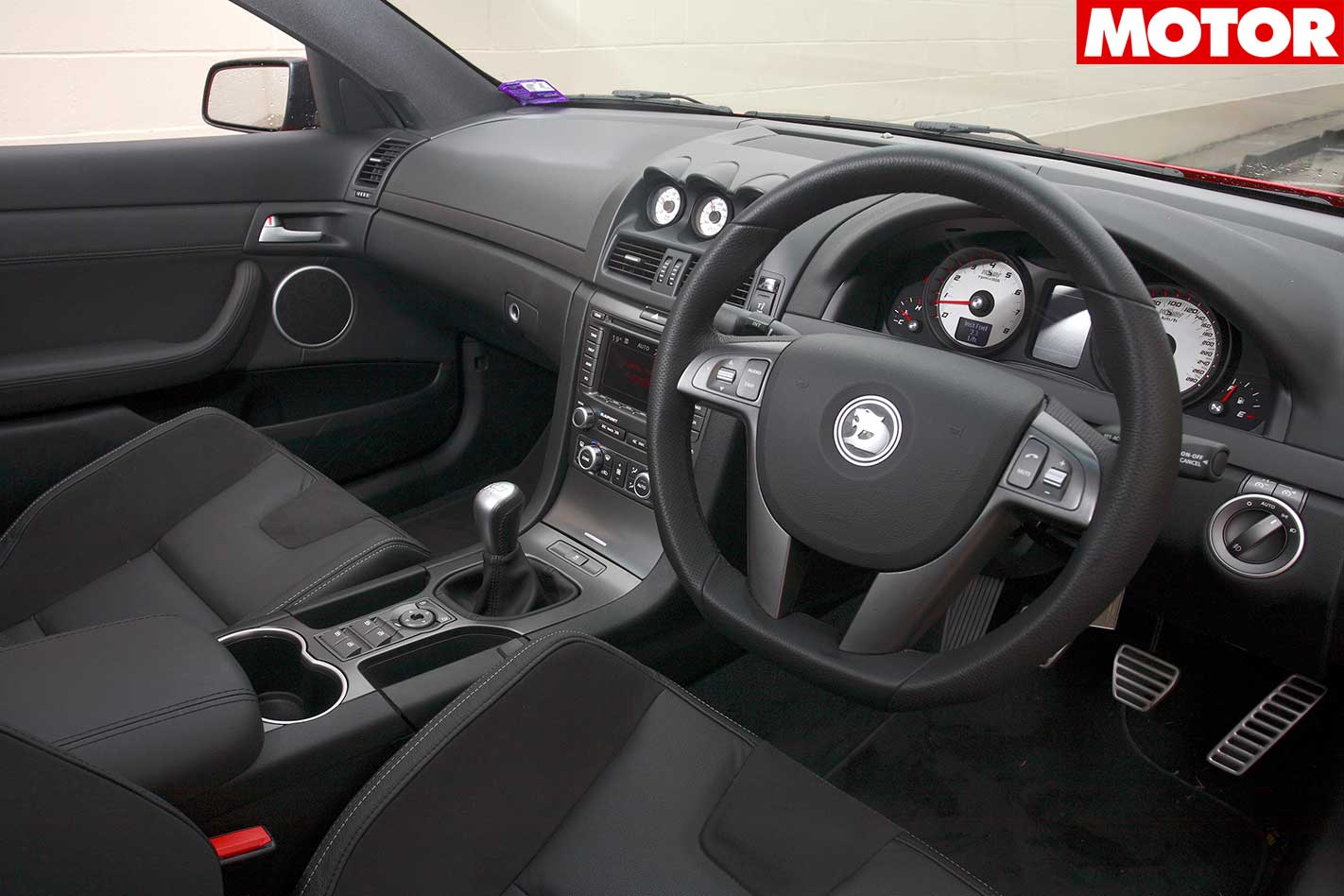
On the move, though, the HT’s four-speed feels almost sporty, particularly considering the only old Holdens I’ve ever driven are three-on-the-tree manuals with no synchromesh on first. The shortish shift throw suits the stubby lever, but the great-looking steering wheel’s thin rim feels totally at odds with the GTS 350’s Bathurst-winning status.
There’s no feel or connection at all at straight ahead, in fine recirculating-ball tradition, but the steering improves once the HT is loaded up in a corner, though it still demands a fair amount of trust.
To combat the wheel’s anorexic girth, you tend to rest your thumbs on and partly steer with the real-metal spokes, but you’re better off relying on information from the HT’s chassis for true directional info.
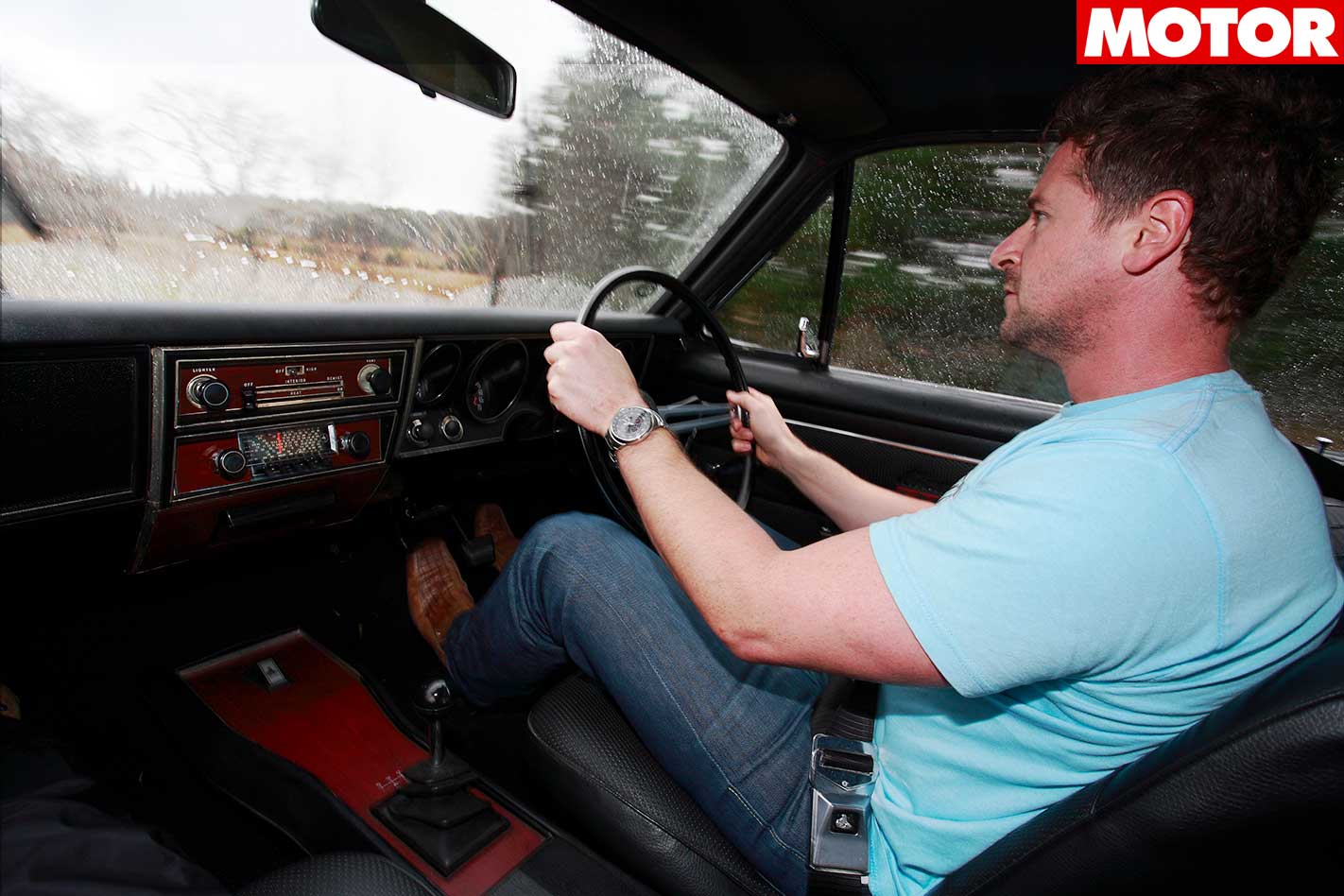
Throttle travel is long, making heel-and-toeing bloody difficult, and throttle response via a mechanical cable to its four-barrel Rochester Quadrajet carburettor simply doesn’t compare to the instant enthusiasm of the electronic-throttled LS3.
But bury the accelerator deep into the firewall and the HT really hauls from 3000 to 5000rpm, accompanied by some cranky, old-school induction and fan noise, backed by a proper V8 exhaust note.
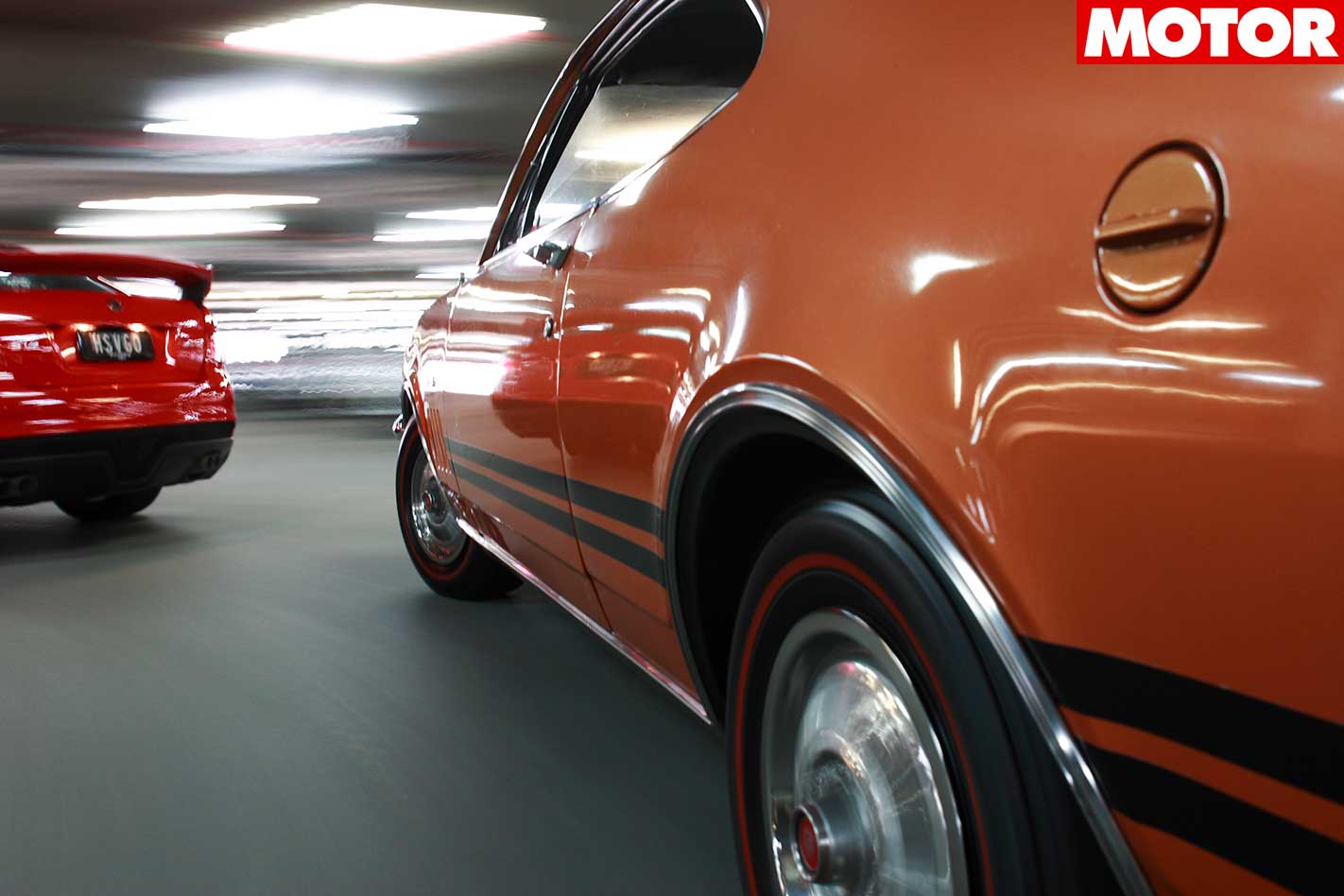
At the old ton, she’s reasonably loud – in terms of both engine and wind noise – which is what you’d expect of a 40-year-old car, but also totally at ease and mightily stable. And this is in teeming rain. Only the two-speed wipers (slow and glacial) can’t keep up. And possibly the fairly weighty brakes if you really had to lean on them.
But at what was once a legal open-road speed, you can hear, feel, smell, even taste, the big-hearted HT 350’s Bathurst pedigree. All those senses convey what was once considered incredibly fast. That a new one would approach 135mph (217km/h) with the 2.85 diff and plenty of empty road is entirely believable. And still worthy of celebration.
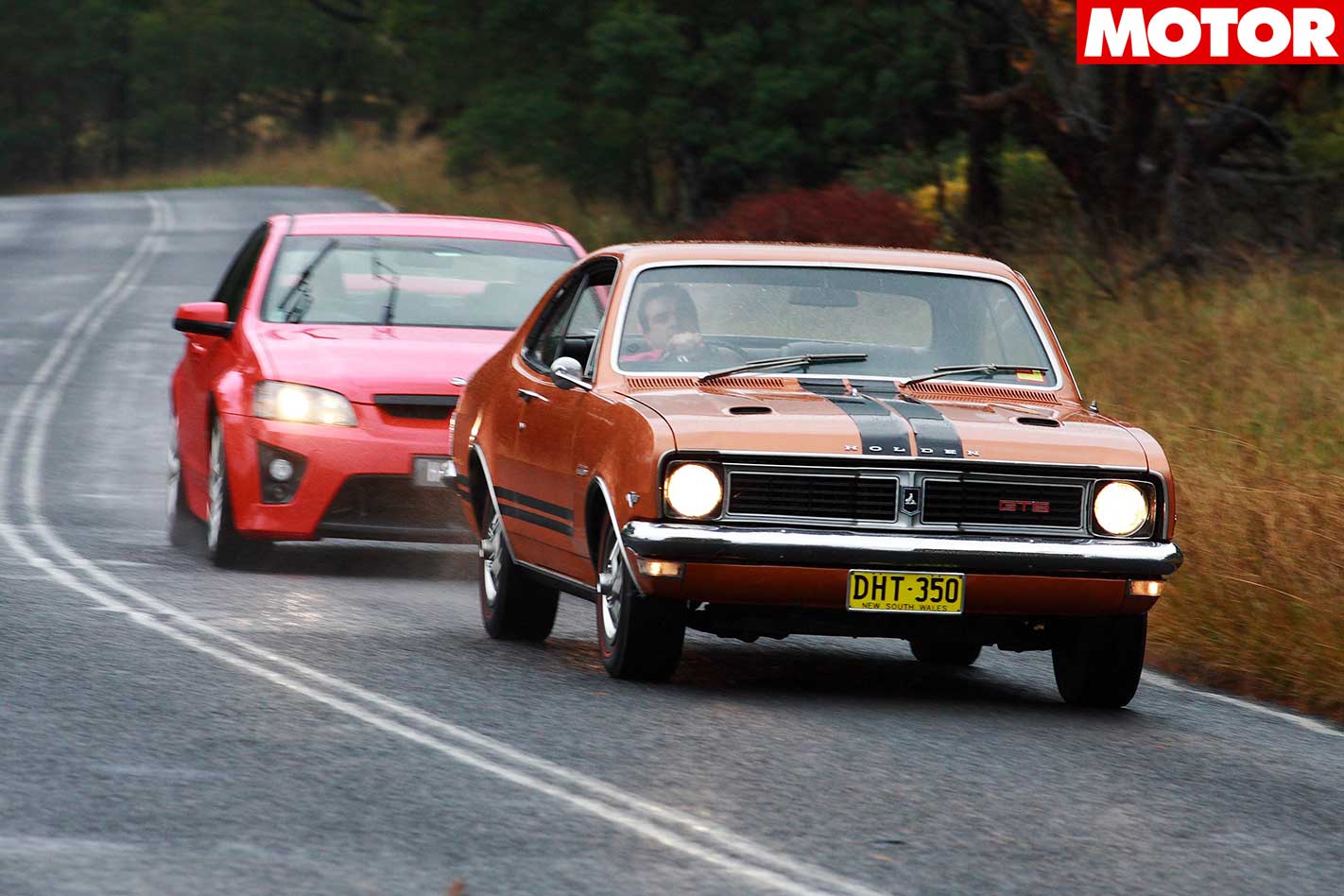
It still sounds like a petrolhead’s V8, but there are no rough edges anymore. No uneven idle, no induction roar, nothing even remotely agricultural. The 2008 car is a thoroughly modern, wonderfully accomplished and deserving benefactor of that red three-lettered badge. Best of all, it still has character. Six-point-two litres of it.
At the height of GM’s (and America’s) glorious power war of ’69, Australia’s efforts went totally unnoticed, even though for us, that year was the start of a frenetic, and now legendary, three-year period of domestic muscle-car development. Today, we’re Lutzy’s best mate and everyone knows about the rear-drive V8s from down under. And we’ve hit a muscle-car sweet spot to rival the glory days of four decades ago.
Here’s praying this time it never ends.
BEST OF THE ‘GTS’ BREED
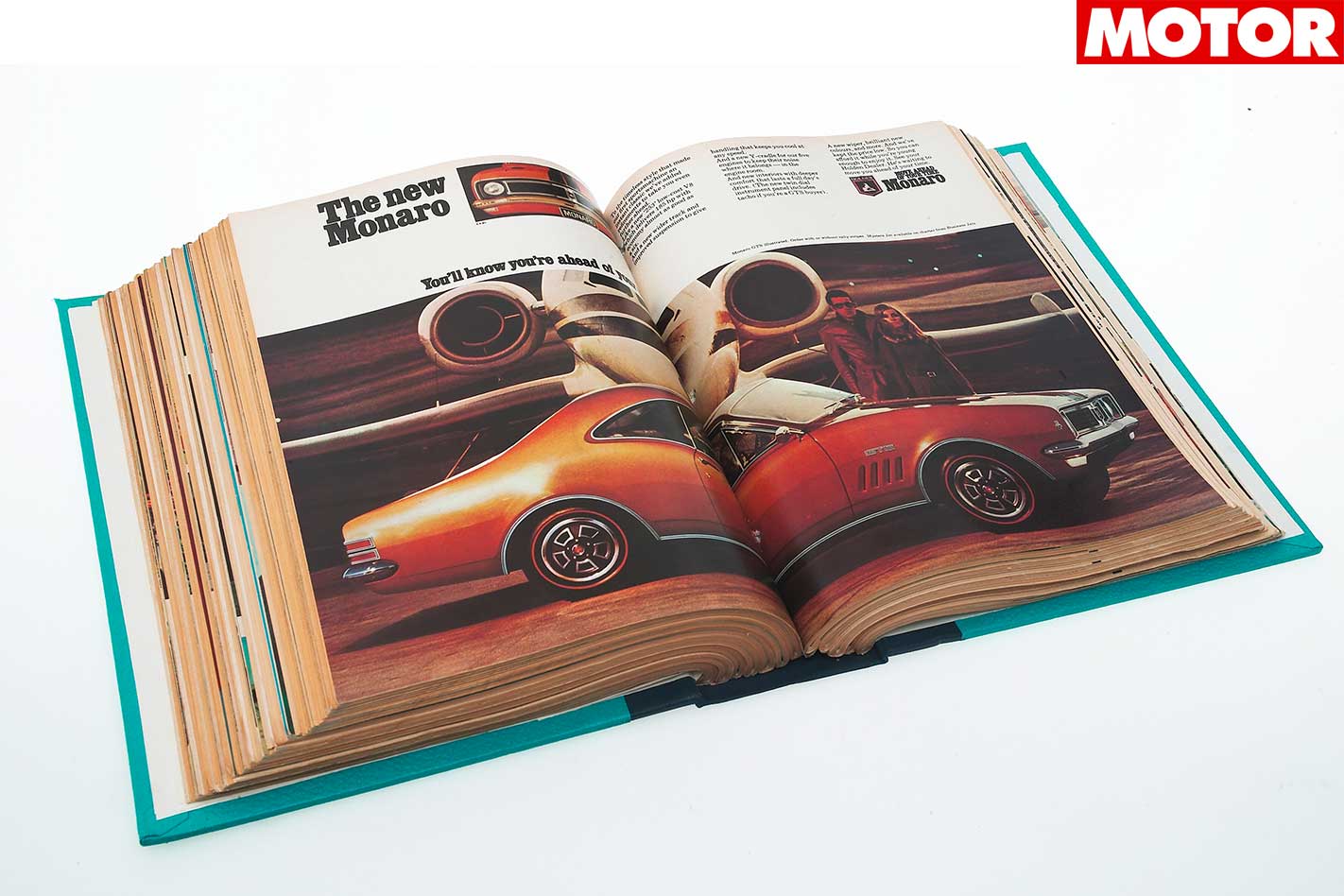
The original 1968 HK GTS 327 looks purer, but isn’t as fast or as well-sorted, while the softer 1970 HG GTS 350 has the lairiest colours, but had ceded its Bathurst racing focus to the LC Torana GTR XU1.
Our October ’69 test, headlined ‘Mightiest Monaro’, gushed over the HT 350’s “brilliant” performance. “It is an excellent-handling car with good brakes, sharp steering and immense controllability generally.” It wasn’t until the 1977 HZ that another GTS revived the HT 350’s driver appeal. But not its grunt.
FAST FACTS
| u00a0 | 1969 Holden HT Monaro GTS 350 | 2008 E-Series HSV GTS |
| BODY | 2-door, 5-seat coupe | 4-door, 5-seat sedan |
| DRIVE | rear-wheel | rear-wheel |
| ENGINE | 5734cc 90-degree V8, OHV, 16v | 6162ccu00a090-degree V8, OHV, 16v |
| MATERIAL | iron head/iron block | alloy head/alloy block |
| BORE/STROKE | 101.6 x 88.4mm | 103.25 x 92.0mm |
| COMPRESSION | 10.25:1 | 10.7:1 |
| POWER | 224kW @ 4800rpm | 317kW @ 6000rpm |
| TORQUE | 515Nm @ 3200rpm | 550Nm @ 4600rpm |
| WEIGHT | 1504kg | 1829kg |
| POWER/WEIGHT | 149kW/tonne | 173kW/tonne |
| 0-400m | 15.7 sec (tested in Oct ’69) | 13.5sec (tested in July u201908) |
| TOP SPEED | 209km/h (est) | 250km/h (limited) |
| TRANSMISSION | 4-speed manual | 6-speed manual |
| GEAR RATIOS | 2.54/1.80/1.44/1.00 | 3.01/2.07/1.43/1.00/0.84/0.57 |
| FINAL DRIVE | 3.36 | 3.70 |
| SUSPENSION (f) | upper A-arms, coil springs, anti-roll bar | struts, A-arms, magnetic dampers, anti-roll bar |
| SUSPENSION (r) | live axle, leaf springs, radius rods | multi-links, coil springs, magnetic dampers, anti-roll bar |
| L/W/H | 4694/1824/1397mm | 4943/1899/1468mm |
| WHEELBASE | 2794mm | 2915mm |
| TRACKS | 1483/1483mmu00a0(f/r) | 1592/1590mm (f/r) |
| STEERING | recirculating ball | power rack-and-pinion |
| BRAKES (f) | 270mm solid discs, single-piston calipers | 365mm ventilated discs, four-piston calipers |
| BRAKES (r) | 254mm drums | 350mm ventilated discs, four-piston calipers |
| DRIVER AID | N/A | ABS, EBD, BA, ESP, TC |
| WHEELS | 14 x 6.0-inch; steelu00a0(f/r) | 20 x 8.0-inch (f), 20 x 9.5-inch (r); alloy |
| TYRE SIZES | 215/65R14 96Hu00a0(f/r) | 245/35R20 (f),u00a0275/30R20 97Y (r) |
| TYRE | Bridgestone Turanza GR-50 | Bridgestone Potenza RE050A |
| FUEL/TANK | 98 octane/114 litres | 98 octane/73 litres |
| PRICE (in 2008) | $3995 (1969) | $76,990 (2008) |
| PROS | Iconic form, pillarless sides, highway grunt, noise, character | Presence and proportion, V8 meat, balance, seats, character |
| CONS | Vague steering, recalcitrant gearchange, thin wheel rim | Crap vision, plasticky dash, non GTS-specific wheels |
| RATING | 8.5 out of 10 stars | 8.5 out of 10 stars |
- Part One: Ride Em Mustang
- Part Two: Stars And Gripes
- Part Three: Meeting The Neighbours
- Part Four: Pony Training
- Part Five: Stang On Track
- Part Six: Parting is Such Sweet Sorrow
Part One: Ride Em Mustang
AN ‘EVERYMAN’S’ car (or ‘every-person’ in 2017) is something that harbours appeal in all sectors of society, oblivious to race, gender, social status or upbringing.
The original Mini was one. The Type 1 Volkswagen was another. And you can add the sixth-generation Ford Mustang to that list.
Even in brash Triple Yellow, beefed up with black multi-spoke 19s, this Ford Mustang GT makes people happy. Kids take photos of it, adults want to talk about it, and other motorists regularly give me the thumbs up when I’m driving it. Hell, it even makes me happy.
There’s something about sitting behind the Mustang GT’s vast, bulging bonnet and hearing the rumble of its enthusiastic V8 that acts as a tonic for a rubbish day.
It’s a good-time companion; a bit rough around the edges, sure, but always up for some fun. And literally impossible to hate.

While this 4784mm-long coupe is the polar opposite of my old Holden Spark long-termer for manoeuvrability – 12.2-metre turning circle anyone? – the Mustang’s size somehow isn’t really an issue.
A wheel-twirling ‘Comfort’ setting for the electric steering certainly helps when trying to wedge it against the gutter (without kerbing rims) in Newtown’s narrow back streets, but its rear wheels are easy to place relative to those chunky muscle-car hips and decent-sized exterior mirrors help, though they don’t auto-fold when the car is locked (via touch points on the handles).
Unless there’s a setting I’m yet to discover, the mirror-fold switch on the driver’s door needs to be manually pressed every time the Mustang is parked.
You do need to get used to the Mustang’s girth though. Unlike my other Ford – a gargantuan 1963 Galaxie with more glass than Centrepoint’s viewing platform – its proximities are hidden far from the driver’s eye-line, and because you sit deep in the Mustang’s confines, at the mercy of its protruding front end, there’s definitely an initial feeling of intimidation that must be overcome.
But once you learn to trust the Mustang’s agility, and the purchase of its ‘integral link’ independent rear end (providing the 255/40R19 rear tyres are warm), it really does shrink around its driver. It’s a pity the Mustang’s steering wasn’t developed by Ford’s European arm. It has three settings – Comfort, Normal, and Sport – and so far I’ve used all three.
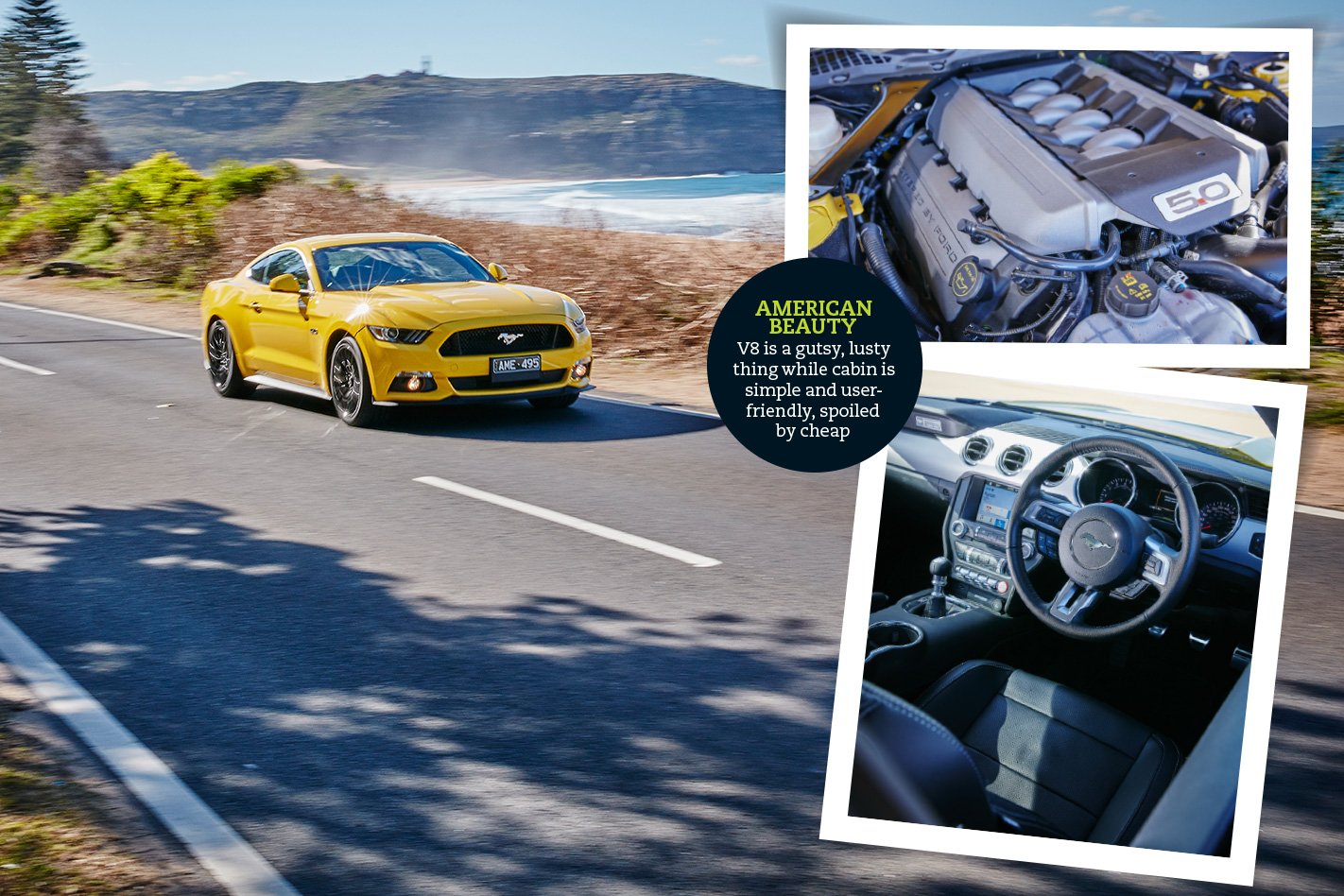
The first suits parking, the second is the most ideal for urban driving, and the third gels best when spanking the Mustang through corners, yet all three deliver a muffled feel that’s weirdly lacking in crispness and proper connection. I have a few other disappointments too.
The ‘Shaker’ stereo sounds a little confused, lacking in clear staging and genuinely meaty bass, and the Mustang’s six-speed Getrag ’box is a gritty, reluctant thing when cold (though quick and positive when primed).
There’s also a fat chance of carrying adult-sized people in the rear ‘seats’ for more than a few minutes. Despite Ford’s claims, the Mustang isn’t a four-seater – it’s a two-plus-two at best – though thankfully the rear backrests fold, usefully extending the Stang’s rather generous boot.
So for two people willing to embrace the Mustang GT’s likeable personality, there’s so much to like here. And in the coming months, perhaps more so when the sports exhaust, short-shift gearchange, and a few other Ford Performance extras now available through Ford dealers get fitted. But we’re off to a good start.
And I don’t even mind the yellow anymore.
Driven to drink
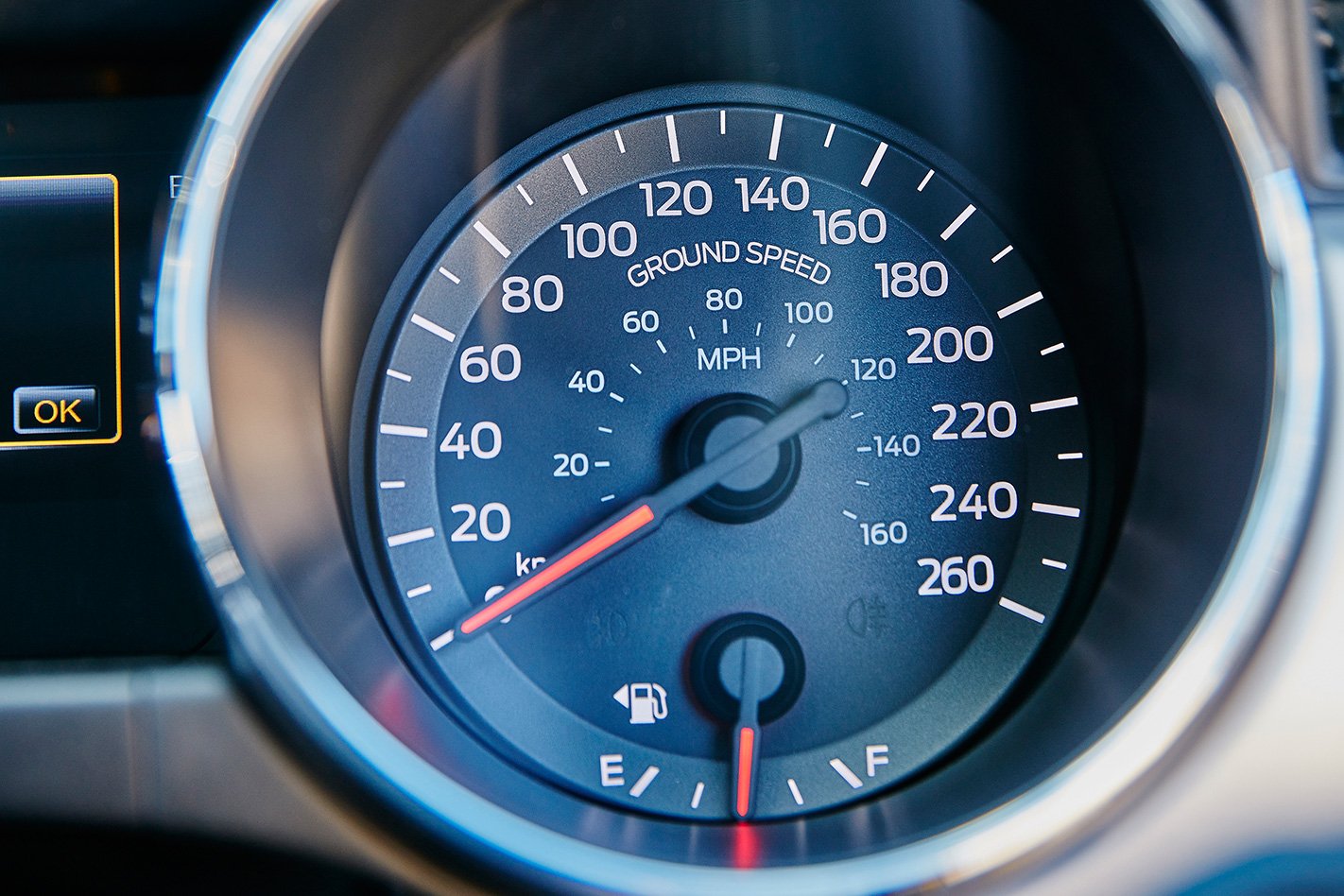
Parsimony is not the Mustang’s forte. A fuel consumption average of 16.5L/100km for its first 1000 kays disguises the fact that its first urban tank yielded a manly 24.8L/100km. Some highway cruising while on holidays brought the next tank down to 13.2L/100km, though I’ve rarely seen the Mustang’s trip computer drop into the 10s.
A smallish 61-litre fuel tank also reduces range, though a very tall sixth gear (not really useable until at least 70km/h) attempts to compensate.
Getting the show rolling
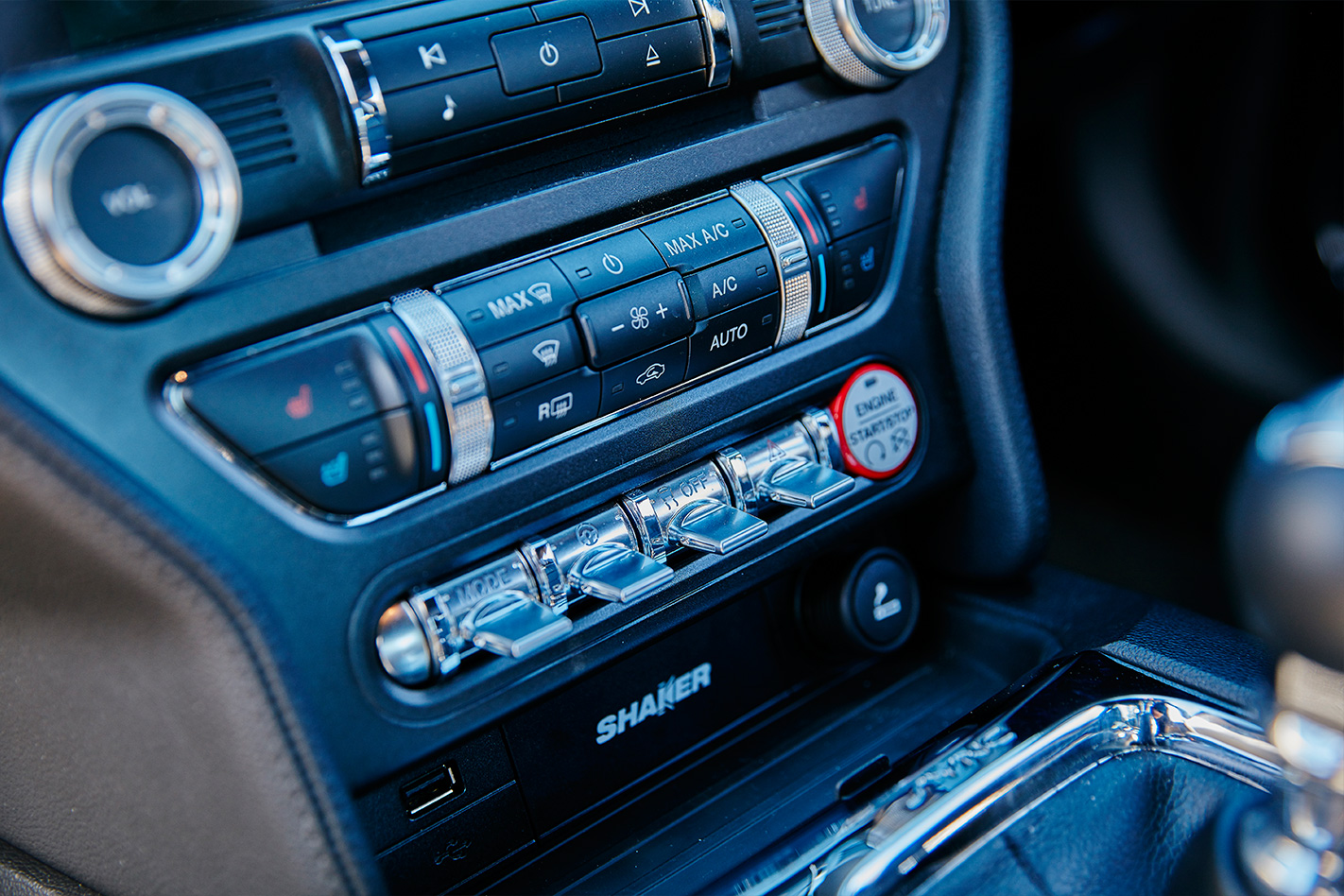
My start-up process in the Mustang is as follows: clutch in (bless her cotton socks, she’s a ‘stick’), depress the start button, electrically unfold the mirrors, flick the Drive Mode toggle to Sport (for superior throttle response), then flick the steering toggle to Normal.
Sounds laborious, and it is compared to simply jumping in and blasting off, but it’s a ritual that has become part of my Mustang experience and will be until this baby goes back in six months time.
Part Two: Stars and Gripes
AS SPRING’S arrival offers salvation from the depressive effects of the cold, and life’s rollercoaster of emotion shows signs of levelling out, this bright-yellow companion has rarely failed to keep my mood cheery.
The colour helps, of course, but approaching the Ford Mustang GT’s handsome face and muscular hips each morning always adds some sunshine to my day. There’s a welcoming familiarity to clasping its door handle and hearing the clack of its slick keyless entry system, followed by the ‘thunk’ of its large frameless door shutting and the rustle of its window re-sealing itself closed.
Indeed, sitting low in the ’Stang is like being bear-hugged by a chunk of metal, reminding me that everything is going to be alright … even if we hit a telegraph pole sideways and test the MY17 Mustang’s 6.88 points (out of eight) for the NCAP pole test.
Despite the media kerfuffle over a door unlatching itself after this severe perpendicular clobber, Euro NCAP offered a slight exoneration in its own words: “protection of the chest was adequate and that of other body regions was good”.

This brings me to the elephant in the room for any current Mustang – its overall NCAP score. Currently, the Aussie MY17 model rates just two stars, while Euro cars ordered from July 2017 get three stars (due to standard AEB, an active bonnet and other passive safety features due here with the Mustang’s 2018 facelift).
Alterations to airbags have reportedly since cured part of the problem and next year’s facelift will sport a lower grille and bonnet line for pedestrian protection. But the main issue is the rear seat for children in booster seats. “If we ripped that thing out of the 2018 car we’d get five stars,” commented a good-humoured source at Ford Australia.
The Mustang is a heavily style-driven coupe and delusions of treating it as an everyday four-seater are pure fantasy, kiddies included.
That said, I endured a stint in the back seat the other day. A life-affirming Sunday cruise to Sydney’s Berowra Waters cafe with a Porsche-owning mate doing the steering was followed by a four-up strafe to test the Mustang’s muscle-car cred.

Wedged into the back-left pew, hands gripping the cushion between my legs, the Euro purists extended the hearty V8 and came away impressed with its chassis’ chuckability. Sitting stooped and hanging on for dear life, I was actually okay; I reckon a sub-180cm adult could endure a back-seat sentence for 20-30 minutes, even while being thrown about like a hacky-sack.
But it was the Mustang GT’s character that ultimately shone through. Even accounting its occasional driveline snatch, muffled steering, and fidgety ride, there’s something deeply likeable about this car – enough to make grey skies turn blue.
Baby’s got yellow eyes
In many other markets, the shark-gill-inspired slashes in the Mustang’s inner headlight sections act as its daytime running lights, but not in Australia. Apparently we have no specific design rules relating to the brightness or location of DRLs, but UK-market models do.
And because Australia’s Mustangs are European-spec, just like the UK’s, our ’Stangs use their yellowy fog lights instead as DRLs, radiating a touch of ironic ’90s car culture in the process. Hopefully, that situation changes with Mustang’s imminent MY18 facelift.

Part Three: Meeting The Neighbours
THE DEFINING moment in the Ford Mustang’s 53-year career – and arguably the car-chase moment of all time – has to be the epic 10-minute sequence in Steve McQueen’s 1968 film Bullitt. Gratuitous oversteer, axle tramp, smoking rubber, jump shots, public endangerment – Bullitt delivers the works.
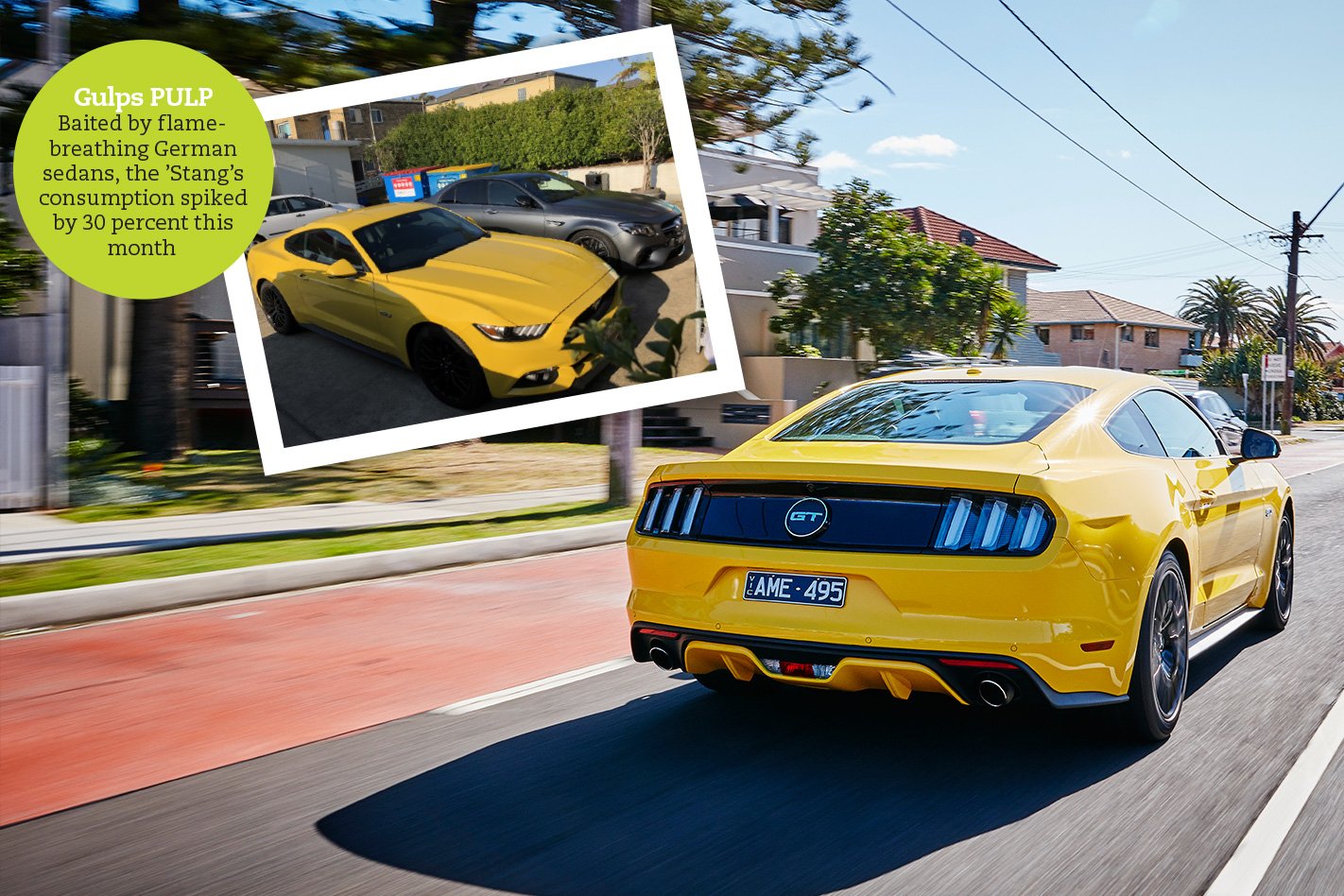
So it was an interesting exercise putting some of that drama into a modern context. Cue my yellow Mustang GT long-termer in pursuit of AMG’s latest sedan superstar, a Mercedes-Benz E63 S 4matic. Not a fair contest by any means, with an even greater straight-line disparity than there was between McQueen’s ’68 Mustang GT and the brutal 7.2-litre Dodge Charger R/T he was pursuing, but it was a great test of the Mustang’s full-bore dynamic ability.

As could probably be expected of such a value-focused coupe, today’s Mustang GT is no high-tech surgical carving implement. But at times it comes bloody close.
There’s so much amusing goodness generated from the superb poise and fluidity of the Mustang’s multi-link rear end that memories of the old live-axle model’s hideous axle tramp and bump steer are but distant nightmares.
Absolutely flat out in an attempt to keep the E63 in sight, the Mustang revealed a few frayed edges. Much as the standard Ford damping doesn’t quite work in day-to-day situations – the Ford Performance set-up fitted to the Herrod Mustang I drove earlier this year is both more compliant and better-controlled – neither does ultimate body and wheel control when bounding through bumpy, snaking corners.
But the Mustang’s chassis has rhythm, and there’s an honesty to its grippy and encouraging nature that goes a long way to making up for its lack of ultimate finesse.
Other not-so-slick finer points include Brembo-clamped brakes that pull up well but can feel a little soggy underfoot when worked hard, and the Mustang’s three-mode steering.
At slower speeds, there’s a viscosity either side of straight ahead that feels totally unnatural in the context of the chassis’ innate agility, yet if you leave the steering in Normal mode on bumpy roads, there’s enough turn-in bite to join all the dots handling-wise. Chuckable and adjustable, yet also forgiving. Just what you want in a V8 manual fun machine.
You can tell there’s headroom in the engine department too. I love the low- to mid-range induction rumble from the 5.0, but it runs out of puff as it approaches the 7200rpm cut-out and there isn’t enough exhaust entertainment to back up the Mustang’s buff styling.
It’s a sound basis to work with, though. And definitely the fittest, finest Mustang since Bullitt was tearing up cinema screens in a smoke haze.
Part Four: Pony Training
IN THE often-subliminal game of life that revolves around ‘mine is bigger than yours’ chest-puffing, the bloke in the white Ford Mustang GT clearly had more sperm in his tank … or whatever competition was playing out at that moment on Sydney’s Elizabeth Street. And definitely more rumble from his rump.
For a split second, I wanted his life. Then I remembered that my manhood was about to be similarly enhanced by the Ford Performance exhaust system waiting to be assembled at Thompson Ford in Parramatta, thereby making AME-495 a bit less L-AME in the noise-output department.
A full peak-hour trawl north, on the Friday before Newcastle’s V8 Supercars extravaganza, provided a superb example of just how tractable and effortless the V8 manual Mustang is in heavy going.

Not once did I wish it was an automatic, but several times I yearned for more exhaust crackle and a better ride – both of which should (or will) be solved by the cache of Ford Performance bits being bolted to its undersides.
Besides a slightly lower, even tougher ride height, the only visual difference will be a pair of black 4.0-inch exhaust tips framing the Mustang’s rear diffuser. And the probability that my Newtown neighbours will be even more thrilled about the 6am wake-up call they get every time I punish myself at the gym before work.
But I’m getting ahead of myself. In its current stock-as-a-rock state, I have developed an almost brotherly bond with this yellow Mustang. I love admiring it, hanging out in it, playing games with it, and even defending it in critical company. Finessed it isn’t but loveable the Mustang GT most certainly is.

Even in heavy traffic, I managed to get the trip-computer average down from 25.2L/100km to low 15s on my slog north, though I suspect the Mustang’s woeful economy is because I can’t help unleashing its guttural induction burble. That means plenty of pedal travel at lower engine revs in this atmo bent-eight.
What won’t be getting fitted, however, is a short-throw gearshift upgrade. Notchy as the regular mechanism can be, if you press from the top of the clutch pedal and time everything perfectly, there’s an underlying slickness to its movement that I really don’t want to lose.
If experience with Rob Herrod’s supercharged Mustang is any guide (featuring a similar Ford Performance suspension package to what will soon feature here), I definitely won’t miss the stock Mustang’s ride.

It’s quite ‘springy’, lacking in compression and rebound control, and that can make the GT’s chunky 19s feel pattery on bad roads. And that can corrupt steering crispness too, or what little there is.
You get used to all of it but there’s promise of much better just around the corner. And my inner bogan is begging for it.
Track marks
Mustang’s optional FR3-M9 Track Handling Pack ($4130 including fitting) is a comprehensive rethink of its entire suspension set-up. Lowered progressive-rate springs, new front struts, revised upper strut mounts, new anti-roll bars, rear dampers, rear toe links and toe-to-knuckle bearings are the guts of it.

If you option the Track Handling Pack at purchase time, it’s covered by Ford’s normal three-year, 100,000km warranty. But if you add it later via a dealer, as in our case, warranty is 12 months or 20,000km.
Part Five: Stang On Track
FR3-M8 SOUNDS like the sort of made-up name a non-driving, non-car person concocts when attempting to pay-out jargon-talking petrolheads like us, always to zero effect.
But in this instance, of our beloved Ford Mustang long-termer, FR3-M8 is legit – the typically American naming code for the Ford Mustang GT’s Track Handling Pack.
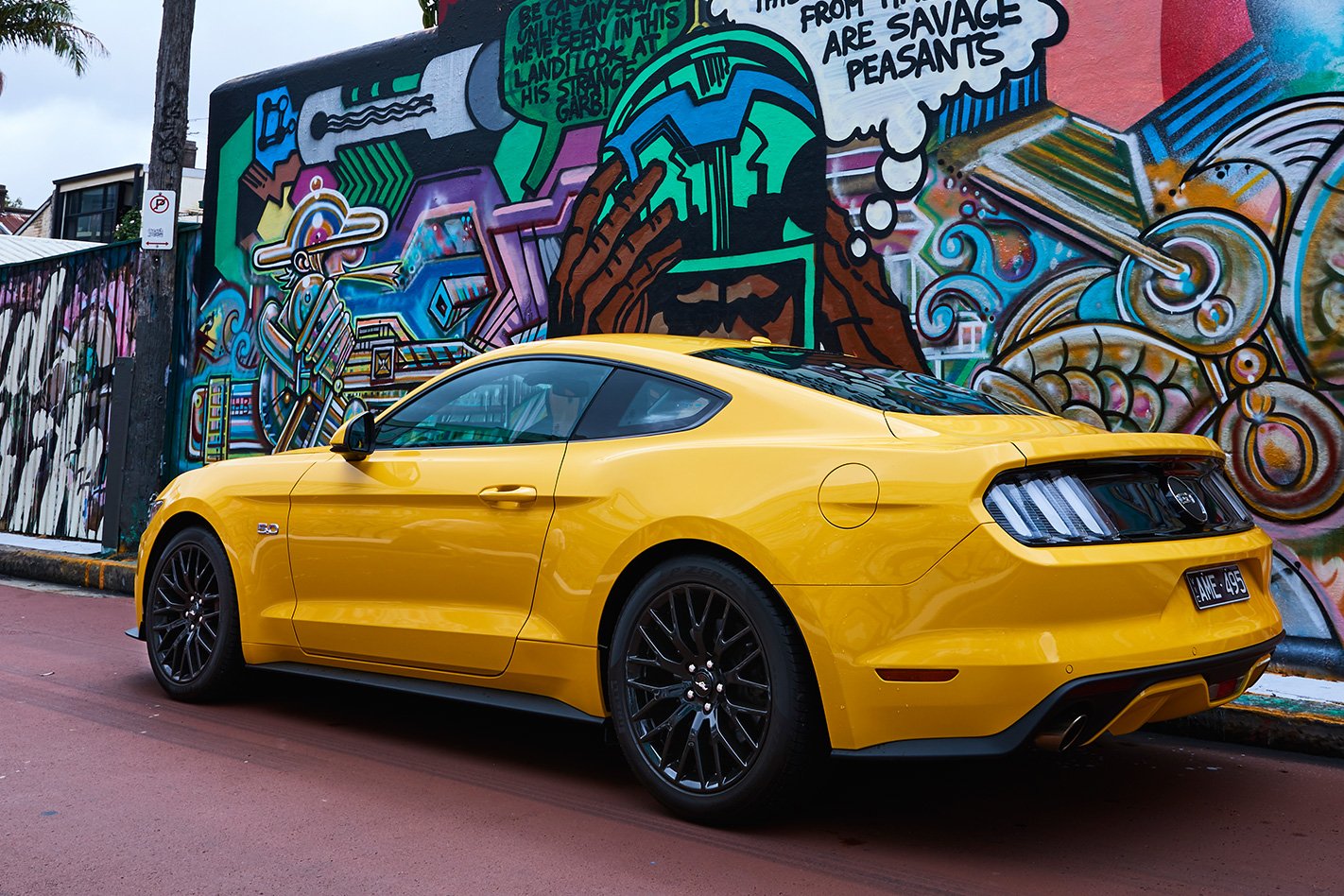
All $4130 worth (including fitting) of lowered, progressive-rate springs, new front struts and revised upper strut mounts, new anti-roll bars, rear dampers, rear toe links and toe-to-knuckle bearings have done very good things to the Mustang. Firstly, sitting 25mm lower, it looks bloody tough, even wearing the stock black 19s.
And secondly, its springy ride and pattery wheel control have disappeared in favour of an ultra-disciplined ride reminiscent of something Renault Sport would produce. In other words, uncompromising but not uncomfortable.
As for the Ford Performance exhaust system – a mandrel-bent 2.5-inch stainless steel arrangement from the cat’ back – it probably should be standard on every Mustang GT. A cold start sees a luscious rumble as the 5.0-litre V8 spikes to 1500rpm or so, then as you pull away, the cabin is filled with the bassy exhaust meat the regular car’s rich induction noise has been crying out for in accompaniment.
Beyond 6000rpm, the difference between stock and souped-up is much less noticeable, the bigger rear pipes failing to free up much in the Mustang V8’s upper reaches.
But given I drive AME-495 predominantly in the city, low- to mid-range muscle is what I’m all about. There’s little in the way of overrun crackle, though given there’s no tricky flap work, I can live with that.

The reworked suspension brings a significant reduction in bodyroll, though I don’t think the Mustang’s transition into oversteer is quite as friendly as it used to be. And while the steering has gained some firmness, it still lacks crisp feel to bolster this bruiser coupe’s dynamic credentials.
On an efficiency high note, sluggish holiday traffic and multiple roadworks on the Sydney-Newcastle M1 saw the Mustang’s trip computer display an all-time low of 9.6L/100km over the double-demerit holiday break. That’s what a lazy 80-90km/h in sixth gear will do to a V8.
The full tank ended up averaging 12.8L/100km (thanks to much blatting during Sydney’s blissful every-bastard-is-up-the-coast new-year period), and it’s unlikely the new exhaust will realise any worthwhile reduction in fuel thirst. But I no longer have to drive the Mustang as hard to gain some aural pleasure from it, and that’s surely going to make some level of difference.

What’s looming, though, is the return date for AME-495. And a long, indulgent farewell drive over the Blue Mountains to NSW’s western plains, perhaps with a Mount Panorama vista thrown in for good bogan measure.
Child’s play
My seven-year-old niece is in love. She asks me if I’m bringing the Mustang from Sydney, always comes out to greet it, and has even had a steer in it, of sorts.
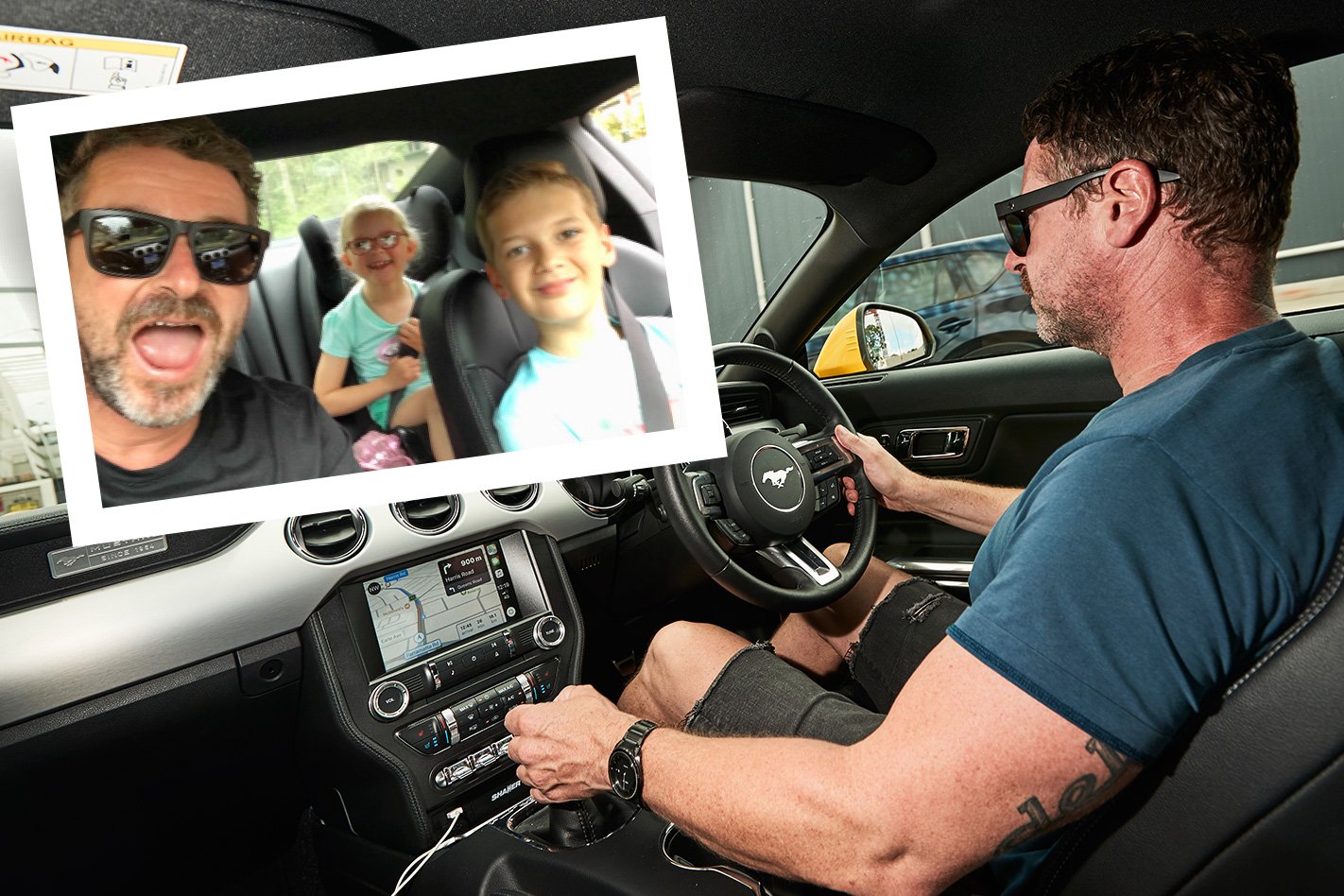
Riding in the back on her booster seat to Caves Beach, oblivious to the two-star ANCAP rating (due to poor head protection in side impacts for kids in the rear on booster seats…), her giggles as I chirped the rear tyres on 1-2 and 2-3 shifts warmed my heart. As for my 10-year-old nephew riding shotgun; he couldn’t care less. Maybe you’re born with it.
Part Six: Parting is Such Sweet Sorrow
FINESSE isn’t what you buy a Mustang for. In fact, finesse isn’t something you’d associate with any generation of Mustang, including this fifth-gen example. Yet Ford’s loveably flawed, feel-good two-door somehow gets away with it. Call it deployment of the character card, and a shopfront window reflection to show just how damn ballin’ you look in a muscle car like this.
Eight months in, I still feel slightly warm and fuzzy clasping the Mustang’s chunky door handle and lowering myself into its broad, heated-and-cooled perforated-leather seats.
Long gone is the slight intimidation I first felt staring over its double-humped dashboard and bulging bonnet, unaware of its extremities and worried I was going to kerb its multi-spoke black 19s. Instead, a level of trust was quickly built, along with an unwavering admiration for the many things this now-departed Mustang V8 manual Fastback coupe does well.

A meaty induction growl, well-defined and mostly slick gearshift quality, brilliant air-con, reliable voice recognition, an easy-to-master control layout and the unexpected versatility of a big boot with a split-fold rear backrest make for a grand coupe that doesn’t demand too many compromises for its fast roofline.
And it is quick, this 306kW/530Nm Mustang GT, even though the Ford Performance exhaust system that arrived not long before Christmas failed to give the overdriven sixth gear any real backbone, or indeed any noticeable increase in oomph, let alone a reduction in its prodigious fuel thirst thrusting from one traffic light to the next.
Merely the bassy rumble at low-to-mid revs a bent-eight like this deserves.
What about the not-so-special parts of Mustang ownership? Well, the fact the ‘built with pride in Flat Rock, Michigan’ sticker on the left rear window always looked slightly askew speaks volumes for the Mustang’s solid, if far from sophisticated, construction.
Both the front fogs and rear light lenses would fill with water vapour every time I washed it, and the money saved on carpet meant it never reached far enough up the toeboard to completely cover the blue sound deadening underneath. But nothing fell off or failed to work, and even the American (read budget) cabin plastics failed to really bother me after a while.

From day one, my main gripe was the Mustang’s steering, though the full FR3-M8 Ford Performance suspension fitted alongside the fat exhaust did slightly improve its connection while enhancing its response. Weirdly, it feels most crisp in Comfort mode. Normal is slightly muddy much of the time, while Sport can make your thumbs ache, as it did on my farewell fling over the Blue Mountains and through the Megalong Valley.
For all its ham-fisted reputation and meathead connotations, this tweaked Mustang is anything but. With far superior wheel control and much less vertical bounce through bumpy corners than a stocker, this yellow GT is now much easier to pedal quickly. It sets itself up beautifully when turning in to corners, pointing its long nose at the apex while hunkering down in the rear.
There’s a really nice balance between power, grip and handling poise that makes this bent-eight Mustang by far the best of its breed. You need to be subtle when applying opposite lock though, given there ain’t a heap of feedback coming through its dished three-spoke wheel, and the widely spaced pedals make it difficult to heel-and-toe on downshifts if you’re only a size 10.

Having seen the facelifted Mustang in the flesh, I already know I’m gonna miss the super-tough front of this pedestrian-busting original. And it’ll be slightly weird not seeing a bright-yellow Fastback looking super-tough out on the concrete divide of my challenging neighbourhood streets.
Hell, I didn’t even mind parking it, and if that doesn’t prove our relationship had progressed to a more intimate level, then I don’t know what would.
Ford Mustang GT Date acquired: July 2017 Price as tested: $65,704 This month: 402km @ 15.6L/100km Overall: 3167km @ 17.8L/100km
WITH THE well of locally built, V8-powered Holden Commodores dry, Holden Special Vehicles has shifted its focus to tarting up a rising Aussie favourite, the dual-cab ute.
HSV’s new line up consists of two modified pick-ups, the Holden Colorado Sportscat by HSV and the Sportscat + (yes, also ‘by HSV’). Neither has engine modifications, which potentially makes them easier to engineer than say out loud.
But, despite the pearl-clutching that followed the announcement, getting off the beaten track isn’t actually new territory for HSV.
The Clayton operation has worked on Holden products outside of its usual V8, rear-drive Commodore domain since it began in 1988, even creating some non-Commo concepts.
Some of these creations were ahead of their time, with bodykits, sticker packs, and mild mechanical changes now par for the course with car manufacturers – often labelled as ‘special editions’ with inflated prices.
Here are some of our favourite, almost forgotten HSVs.
HSV SV1800 Astra
In 1988, the Holden Astra was the product of a successful model-sharing agreement between Nissan and Holden, with a GM engine and Aussie panels paired with Japanese transmission.
Based on the LD-series Astra the SV1800 officially had the same 79kW and 151Nm as the Holden (which was class-leading at the time), though the HSV warming over added extractors and a sports exhaust to the naturally aspirated 1.8-litre four.
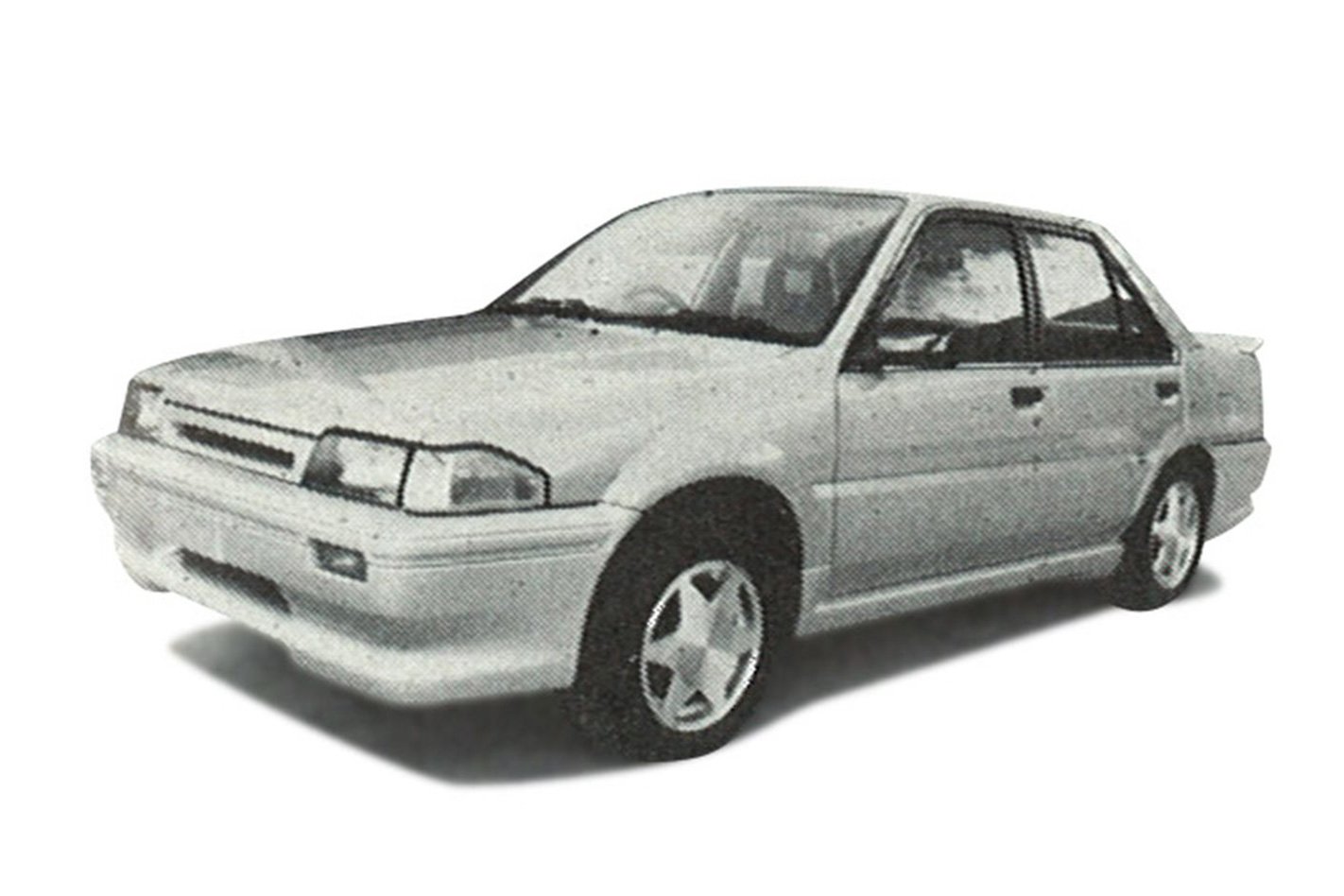
The tenuous racing relations didn’t translate to big SV1800 sales however – just 65 HSV Astras drove away from Clayton in a mix of sedan and hatchback.
HSV Avalanche/XUV
While technically based on a V8 Commodore, this ahead-of-their-time duo from HSV was ultimately destined to fail.
The HSV Avalanche and XUV were jacked-up ‘all-road’ products based on the Adventra LX8 crossover and Crewman Cross8 utility respectively.
In HSV form both were powered by the iconic 5.7-litre LS1 V8, sending 270kW (up from 235kW in the Holden) and 475Nm via a four-speed 4L65-E automatic and permanent all-wheel drive tuned to send 62 percent of the power to the rear wheels.
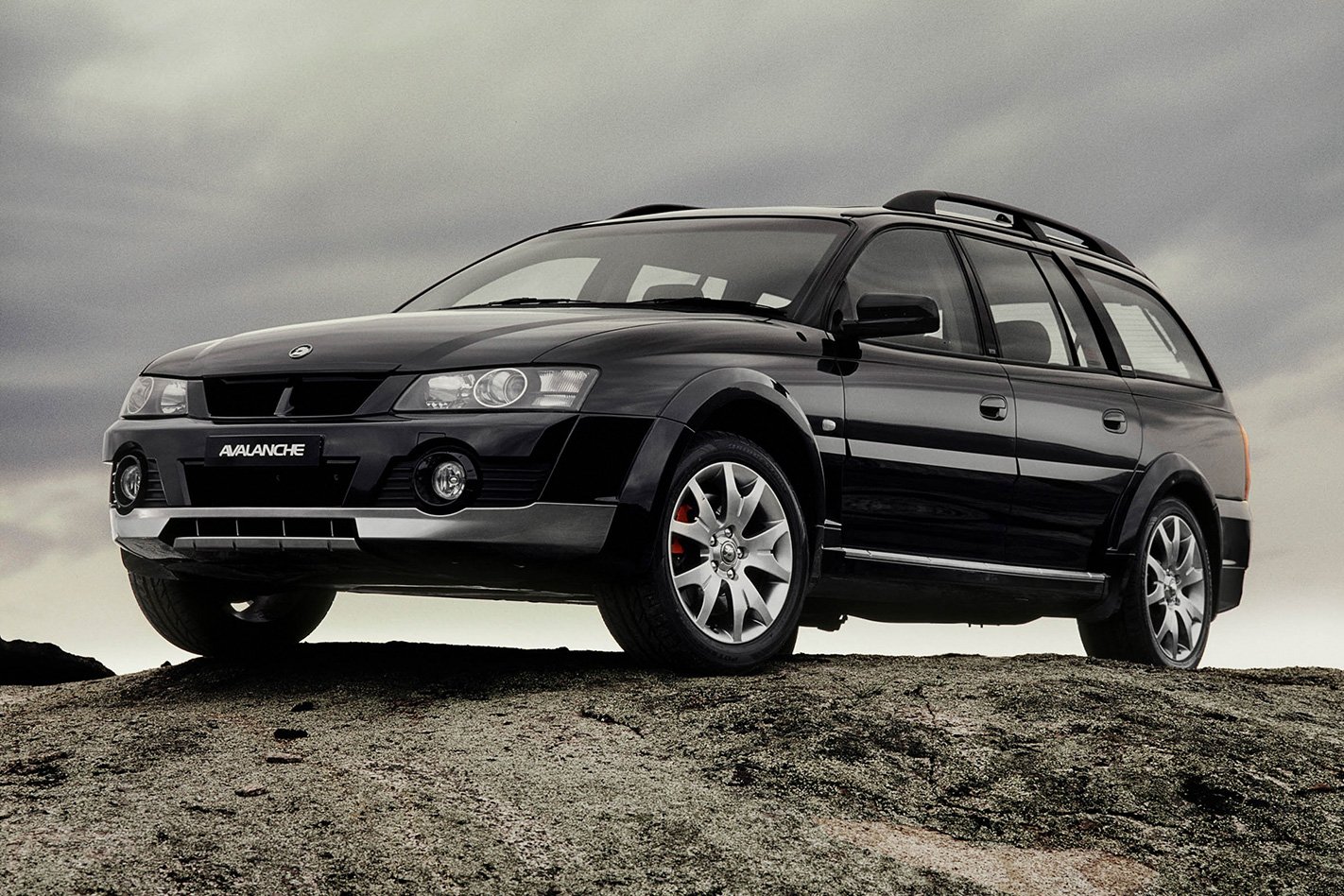
On paper the Avalanche, at least, seemed a tantalising prospect – a full-size V8-powered wagon with a rear-biased all-wheel-drive system. But it was hampered by the fact it weighed a portly 2026kg.
Additionally, the AWD system made the front axle too wide, which hampered HSV’s exhaust header design, in turn hurting the Avalanche and XUV in the power stakes.
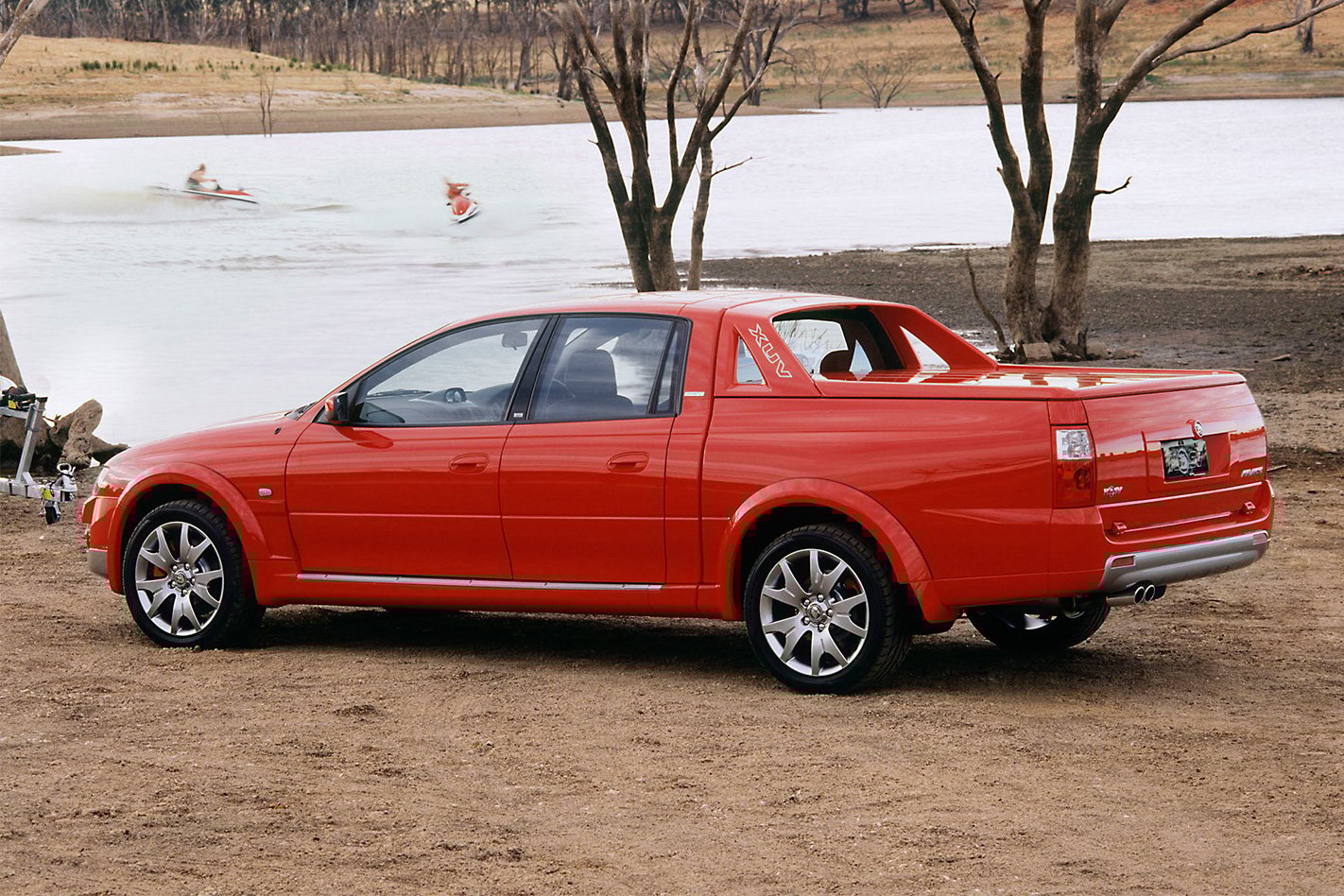
However, the second-gen Avalanche/XUV models are rather rare, having only been built over nine months between April and December 2005.
These later examples can be differentiated from the original models thanks to a re-profiled front bumper.
The Avalanche and XUV, along with all of Holden’s V8 Commodore-based all-wheel-drive products, were discontinued as GM phased out the 5.7-litre LS1 due to tightening Euro 3 emissions regulations. Poor sales performance, thirsty fuel consumption, and impractical dimensions also contributed to the car’s demise.
HSV VXR Turbo
The VXR Turbo is a fine example of HSV whacking its badge on a car, before clocking off early.
Beyond a rebadging of the UK-sourced Vauxhall Astra VXR, all the work for the VXR Turbo was done by HSV’s de facto siblings at the Opel Performance Centre (OPC).
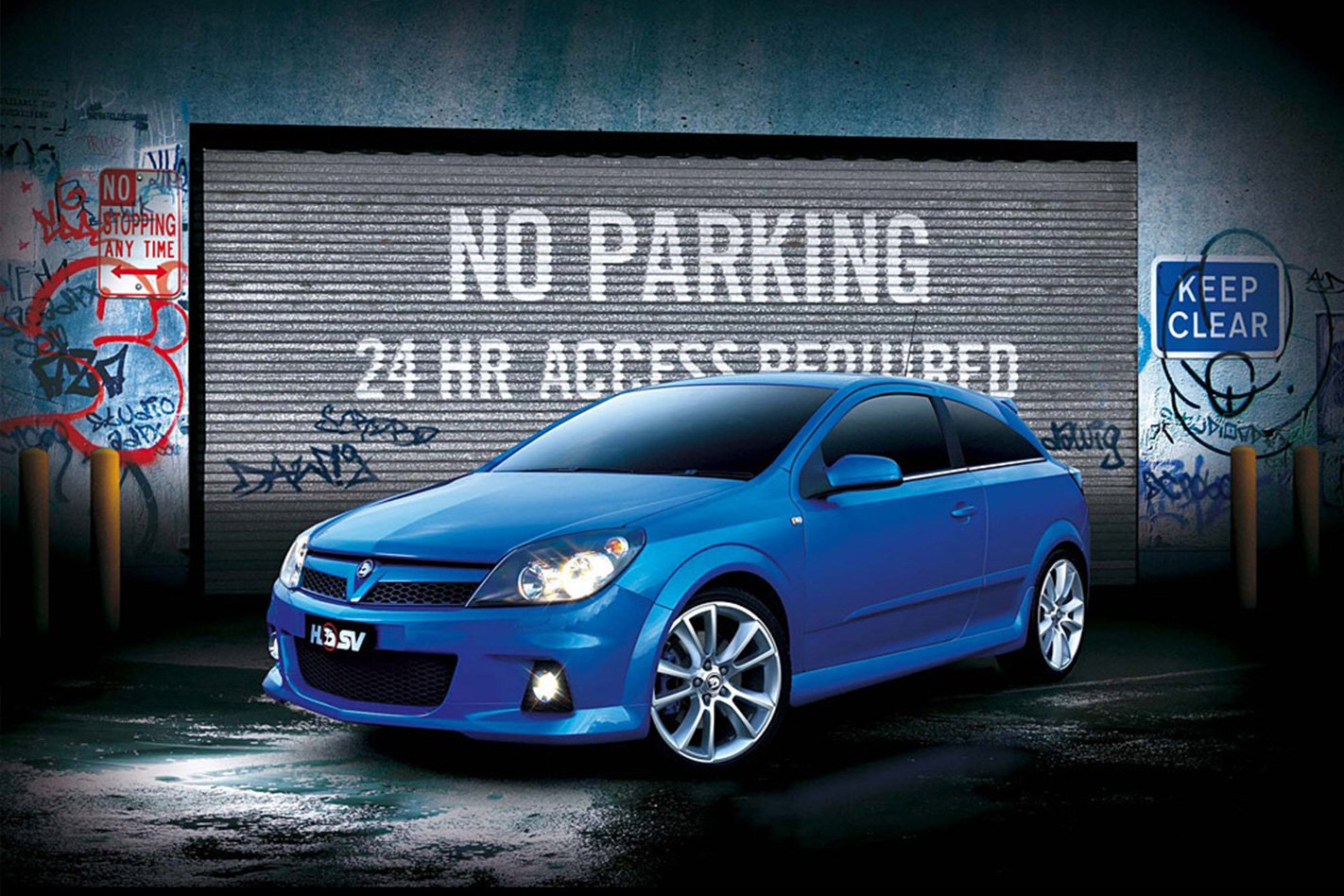
In 2008, a year before the model bowed out, a Nurburgring edition was launched, with more power, and improved brakes and suspension. Again, HSV’s input was stretched to putting a total of six badges on the car. Is it tea time already?
Holden Jackaroo HSV
The team at Clayton knew they’d rolled the arm with this one to the point that it wasn’t branded as a full HSV model, instead being dubbed the Holden Jackaroo HSV.
Released in July of 1993, the Jackaroo was a rebadged Isuzu Trooper.
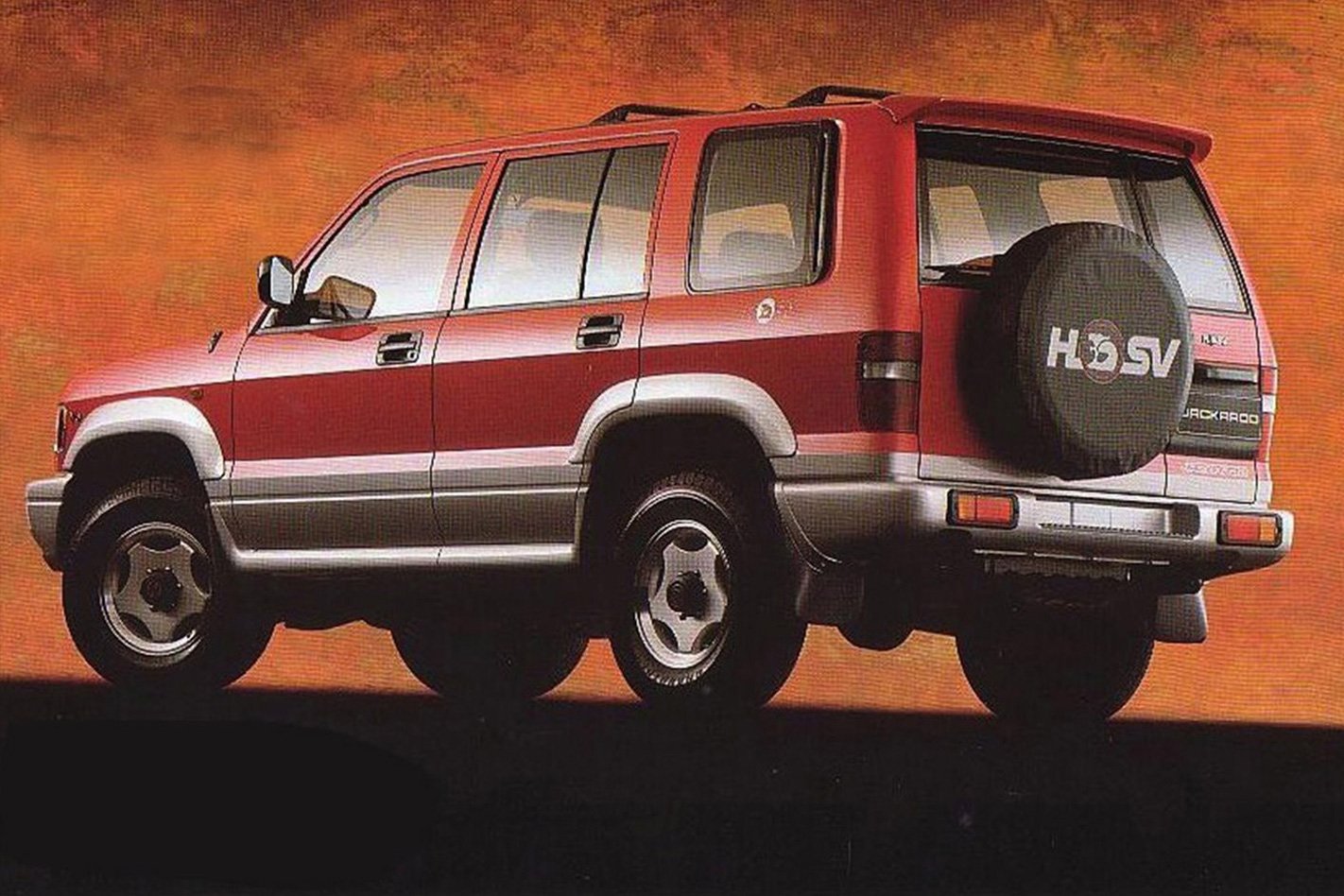
The then-impressive 3.2-litre V6 under the bonnet was untouched, and the only other mechanical change being a set of alloy wheels of a style similar to VP Clubsport with which the HSV Jackaroo fleetingly shared showrooms.
HSV VN convertible concept
While the other four cars on this list could be bought in a showroom, the VN convertible was just a concept car. Thankfully.
The 1989 concept was built as a feasibility study, and featured a front-end that would eventually become that of the VP Commodore.
The one-and-only concept car, resplendent in the era’s Lion ‘n’ Helmet racing livery, now lives at the National Holden Motor Museum in Echuca, Victoria.

We keep a running list of the world’s great engines, and the Audi and VW megopolis seems to have an unnaturally high number of them. Bugatti’s mind-boggling W16, for one. Then there’s this here thing.
This review was first published in MOTOR Magazine’s February 2006 issue.
The S4 has always been a car to like – full of character in a most un-Audi way – but we always craved something with a harder edge. Something to take on the M3 or even the C55.
Well, it’s here. And then some. The same-sized V8 now puts out 309kW at an atmospheric 7800rpm to cut a second off the S4’s 0-100km/h time, down to 4.8 seconds and heading into properly fast country. That’s a 56kW leap – and there’s not a turbo- or super-charger in sight.
Instead, Audi dug into its Le Mans program to give the RS4 FSI direct-injection technology to get what they needed out of the same block. It also let them boost the compression ratio and punch the redline to the roof.
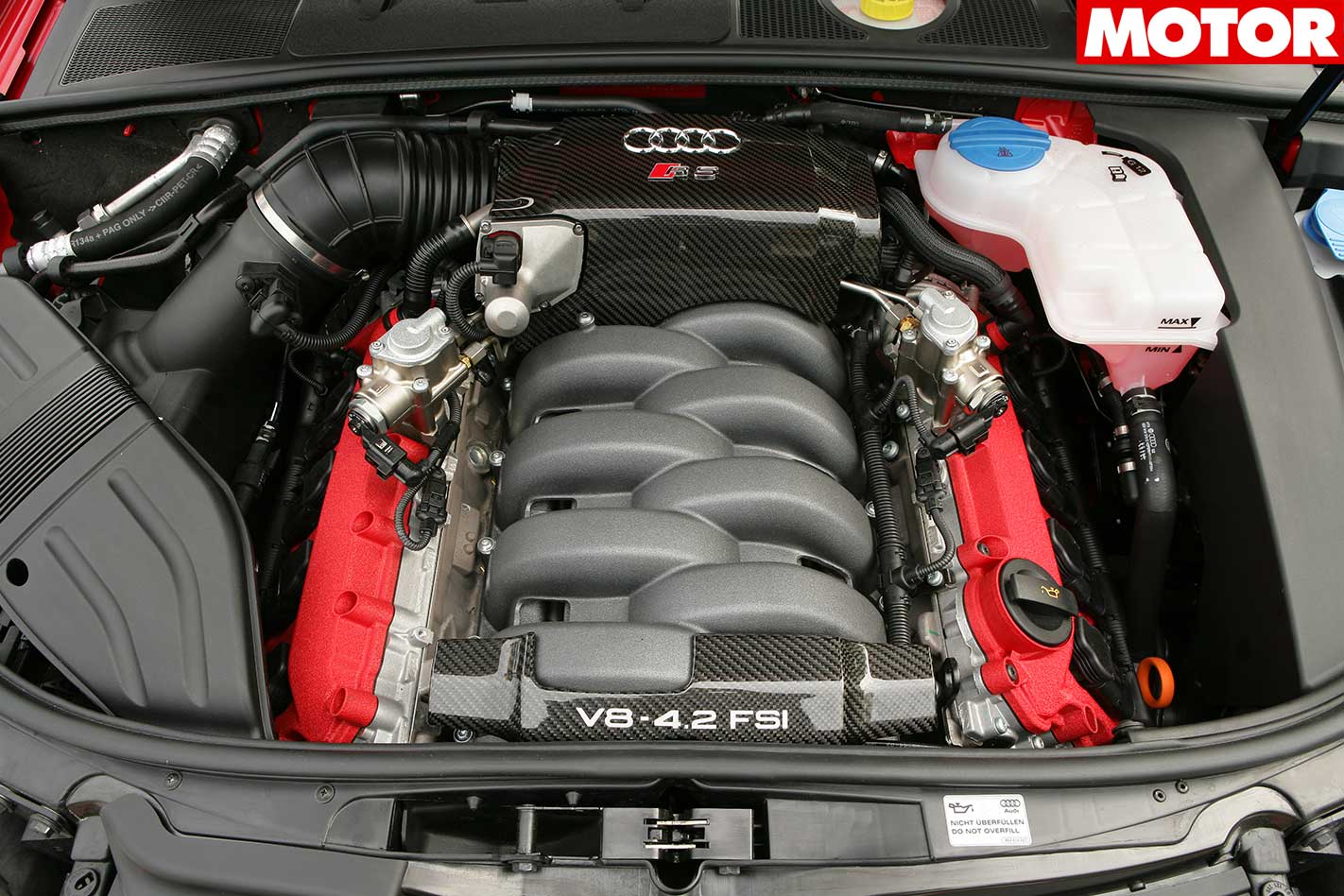
But it’s the sound! It’s glorious and angry; it promises violence and delivers in triplicate. The thing picks up and drops revs so quickly and accurately that if feels like it runs no flywheel, and the rumbling snarl is something to behold. Get it past 4000rpm with the taps cranked to the stoppers and it becomes a race engine; ripping at the air and flinging the RS4 at the horizon.
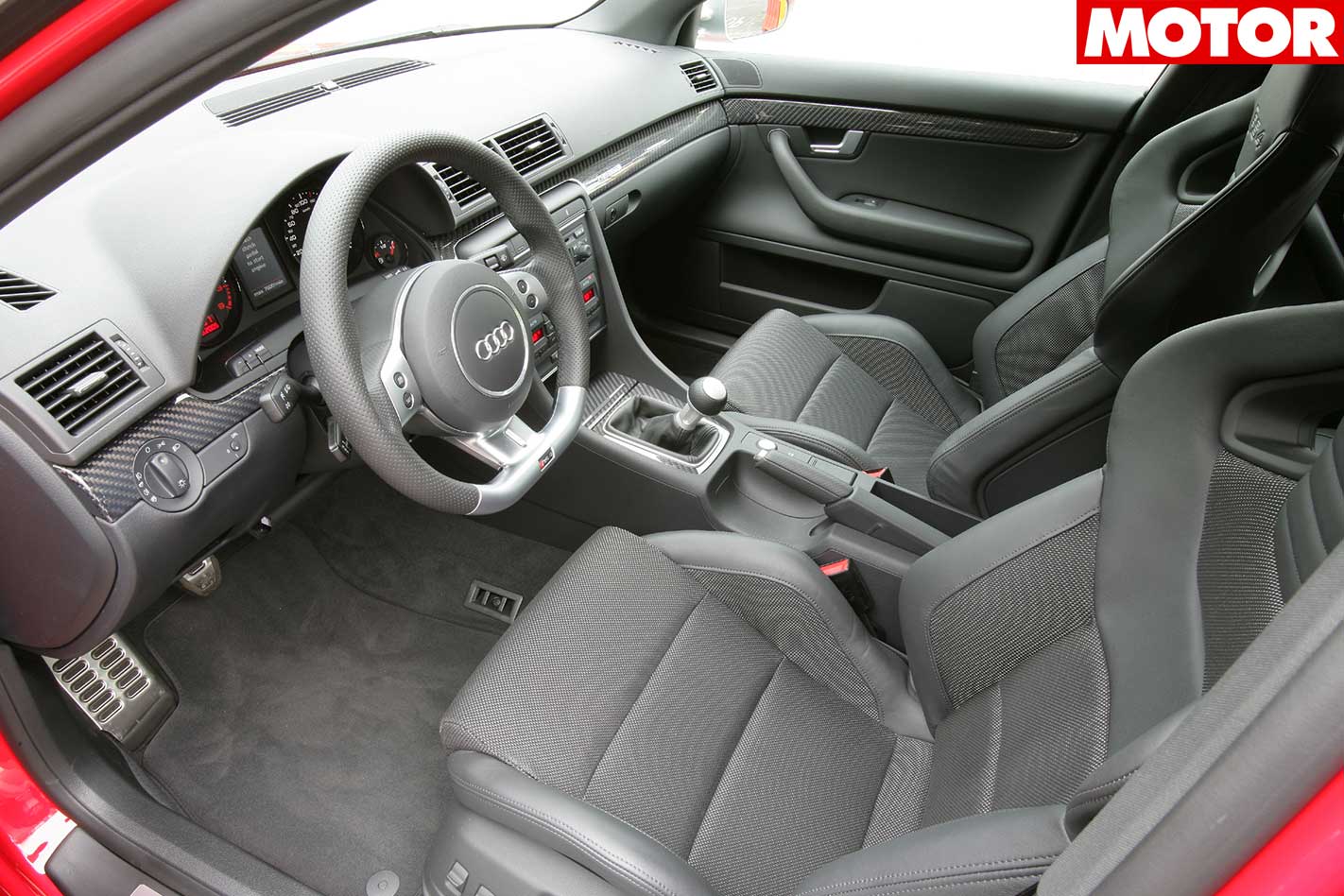
All this and it’s got a proper six-speed manual. No wussy DSG technology here (that’s from the engineers, not us!). It’s a proper, man’s car, and this is how it should be driven.
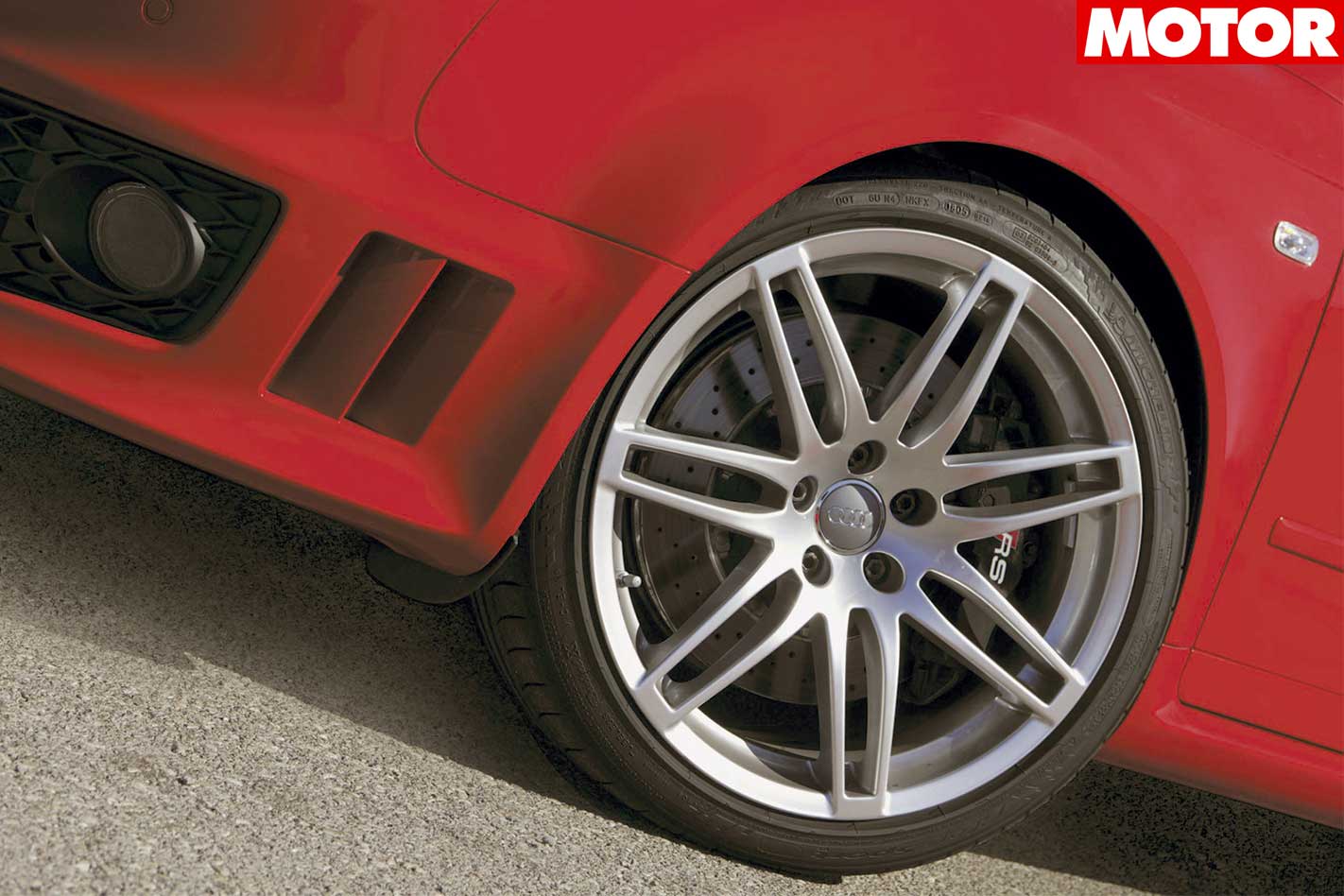
The 365mm front brakes are astonishingly potent, the Torsen centre diff normally punches 60 percent of the drive to the rear wheels and those two facts alone scream its intent. It’s chuckable and it’s even fun. In an Audi?
Then there’s the way you can disable the safety nets. You can ditch traction control without turning off the ESP, but when you flick off the second stage, you’re on your own to play with the car’s awesome abilities as you’d like.
And you will like. A lot.
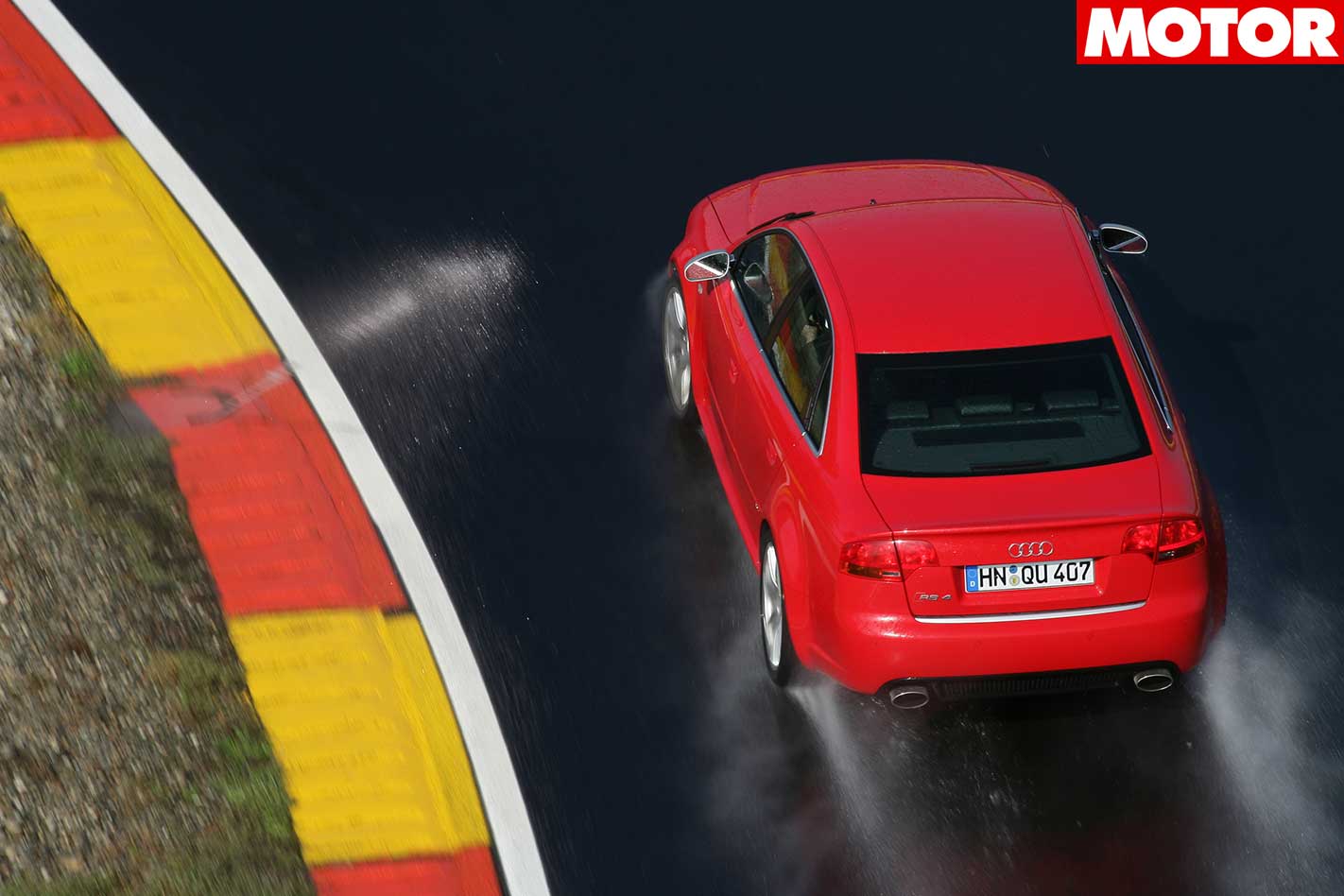
ENGINE: 4.2-litre DOHC 32-valve direct-injection V8 POWER: 309kW @ 7800rpm TORQUE: 430Nm @ 5500rpm WEIGHT: 1650kg DRIVE: all-wheel
WHAT IS IT?
The flagship pocket rocket of the Fiat 500 range, with a turbo 1.4 under its snout and a host of uprated suspension components and brakes.
WHY WE’RE TESTING IT
Late last year, the price tag on the Competizione was slashed significantly. The downside is a lot of the previously standard gear was releagted to the options list. We jump back in for a spin to see if anything is missing with the out going standard features.
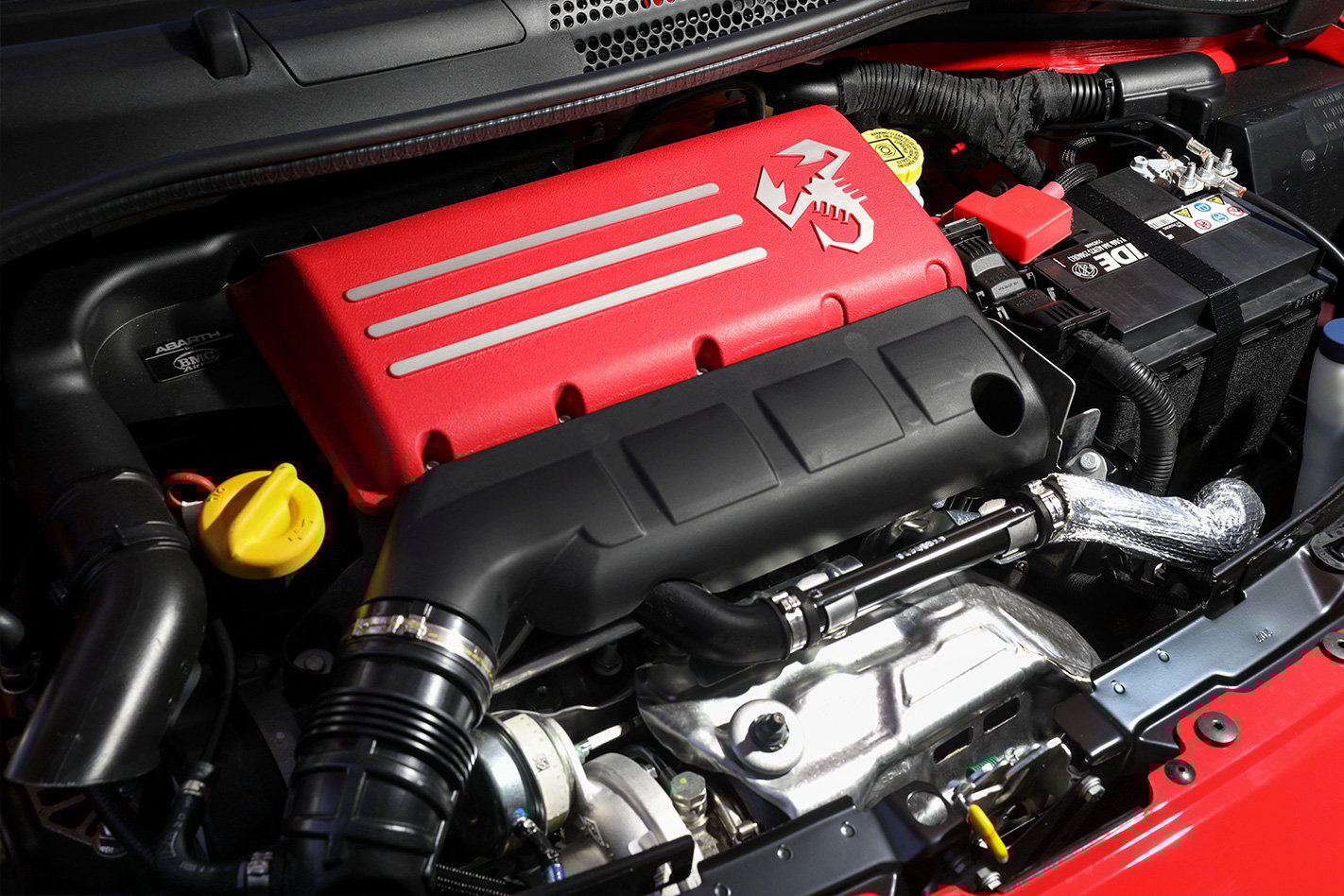
Ford Fiesta ST, Volkswagen Polo GTI, Peugeot 208 GTI, Renault Clio RS
THE WHEELS VERDICT
Save yourself $5000 and you could put the entry-level 595 on your driveway, but with just 107kW to its name, a muted exhaust note, sloppy manual gear-shift, more brake pedal travel and adaptive suspension on only the front axle, the more affordable Abarth feels like a close relative to the Fiat 500 donor. The Competizione, on the other hand, feels like a distant, athletic cousin.
Plus: Unmistakable looks; serious performance; brilliant exhaust note Minus: Crippling ride;tiny fuel tank; weird driving position;poor cabin storage
THE WHEELS REVIEW
LET’S cut straight to the chase. Even with a recent $8000 price chop, there is still only one car in the sub-compact hatchback segment that costs more than the Abarth 595 Competizione, so you’d expect to feel quality and value at virtually every touch-point in the little Italian, right?
Hop aboard, though, and you’re met with a cabin not far removed from the $17,990 entry Fiat 500. Some hard plastics, a tiny touchscreen and only one-way steering adjustment forces a seating position not unlike that of a Land Rover Defender. At least the utterly fantastic Sabelt carbonfibre racing seats redeem the situation to a degree. But wait, they’re a $2000 option.
Then there’s the practicality; or lack of it. Technically, there are four seats but the full capacity is only possible when the front row is occupied by Rhesus monkeys; the 185-litre boot is large enough for perhaps a swimming costume, and the only cabin storage is sufficient for a phone. But you shouldn’t attempt that because it will fall out at the first corner and get lost under the seat.
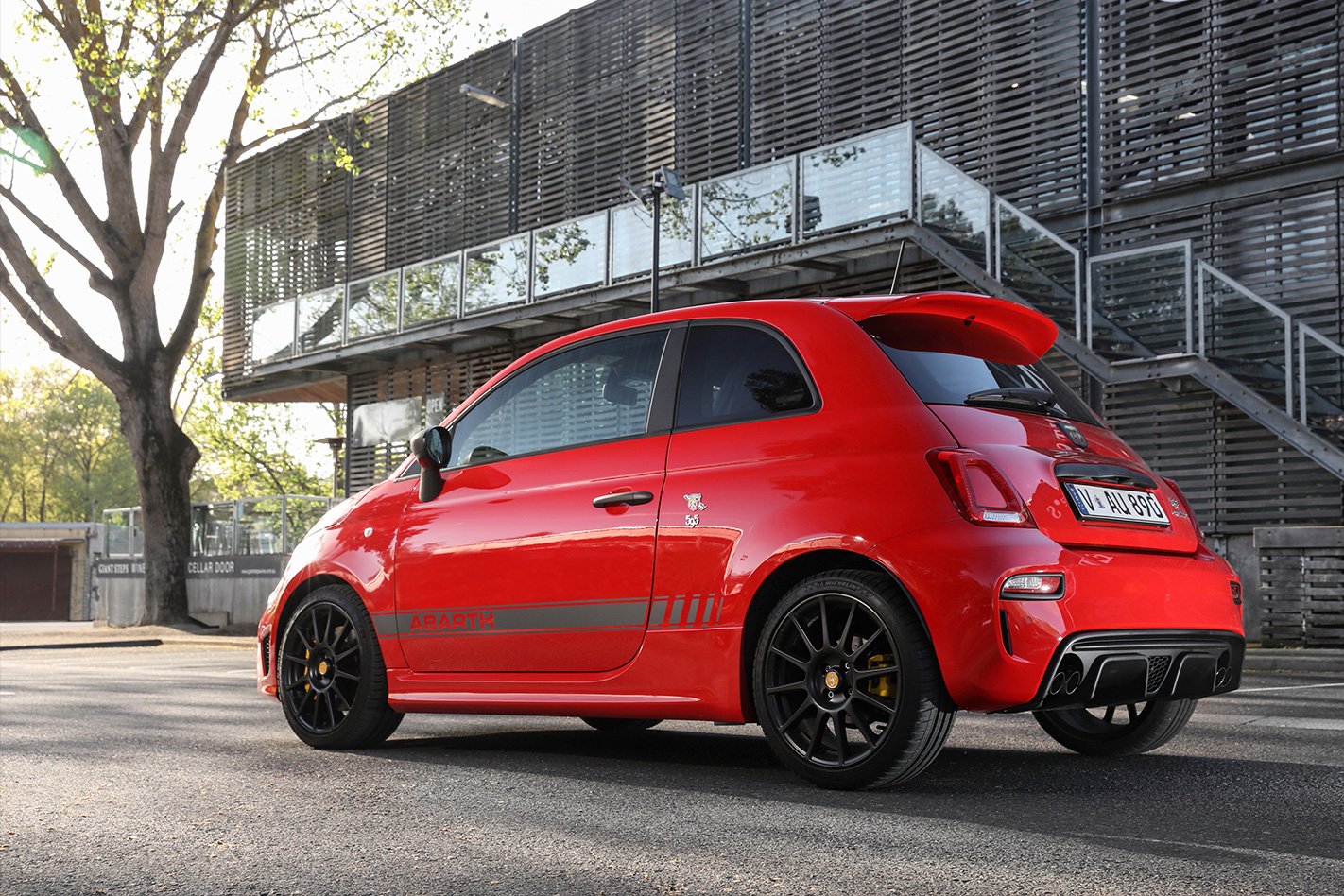
Click the notchy five-speed manual gearbox into first, give the 595 everything and it’s like you’ve stamped on its tail. With a bantam kerb weight and bags of front-drive traction, acceleration is lively in all lower gears and accompanied with a manic exhaust note from the standard Monza sport system.
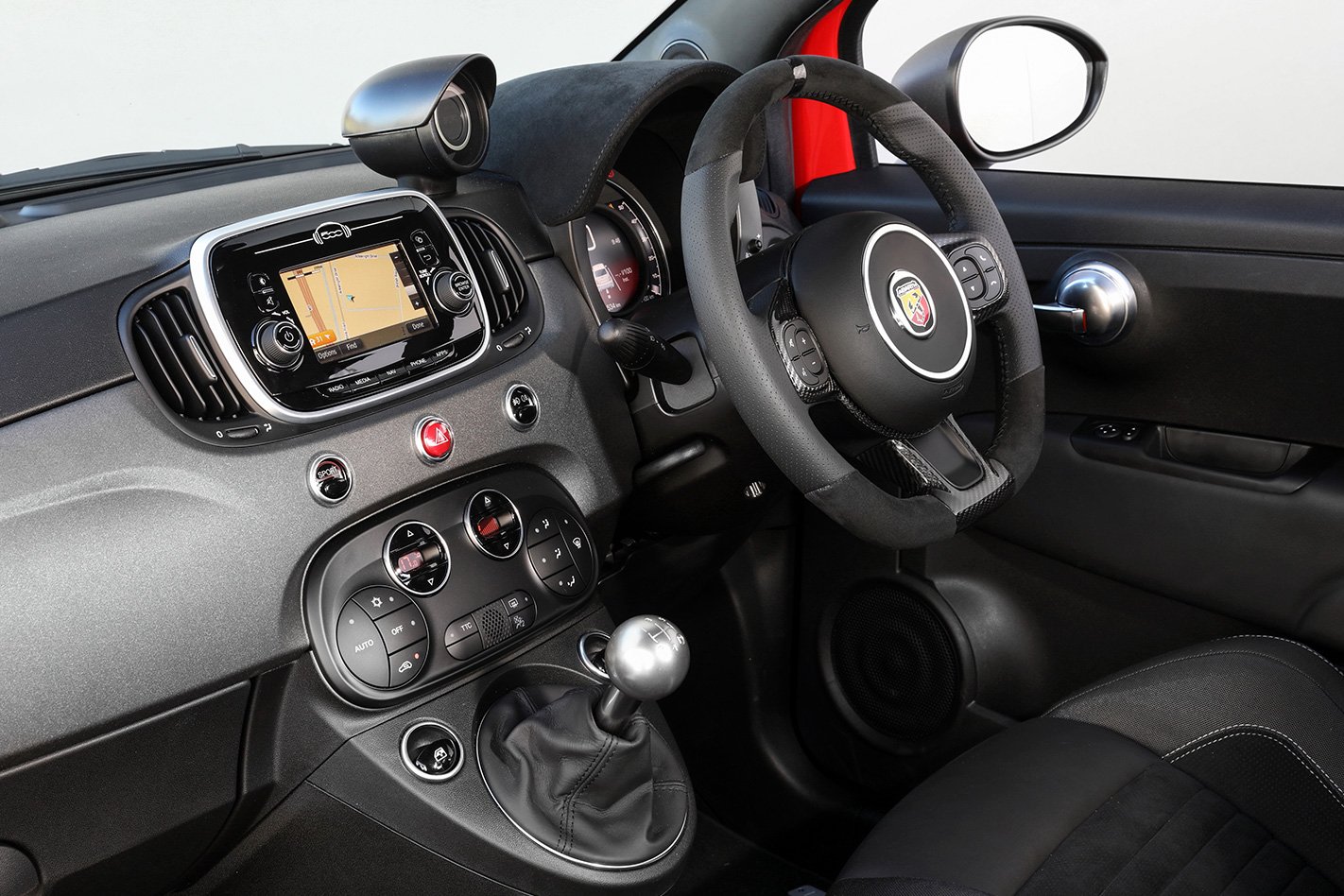
Yes, the 595 Competizione is pricey, and yes it has quirky Italian flaws you might not forgive another brand, but the result is a hugely likeable, almost human quality. Whether you are piloting the Abarth through your favourite roads or simply admiring its unique looks, the 595 Competizione will never fail to make you laugh out loud in delight and disbelief.
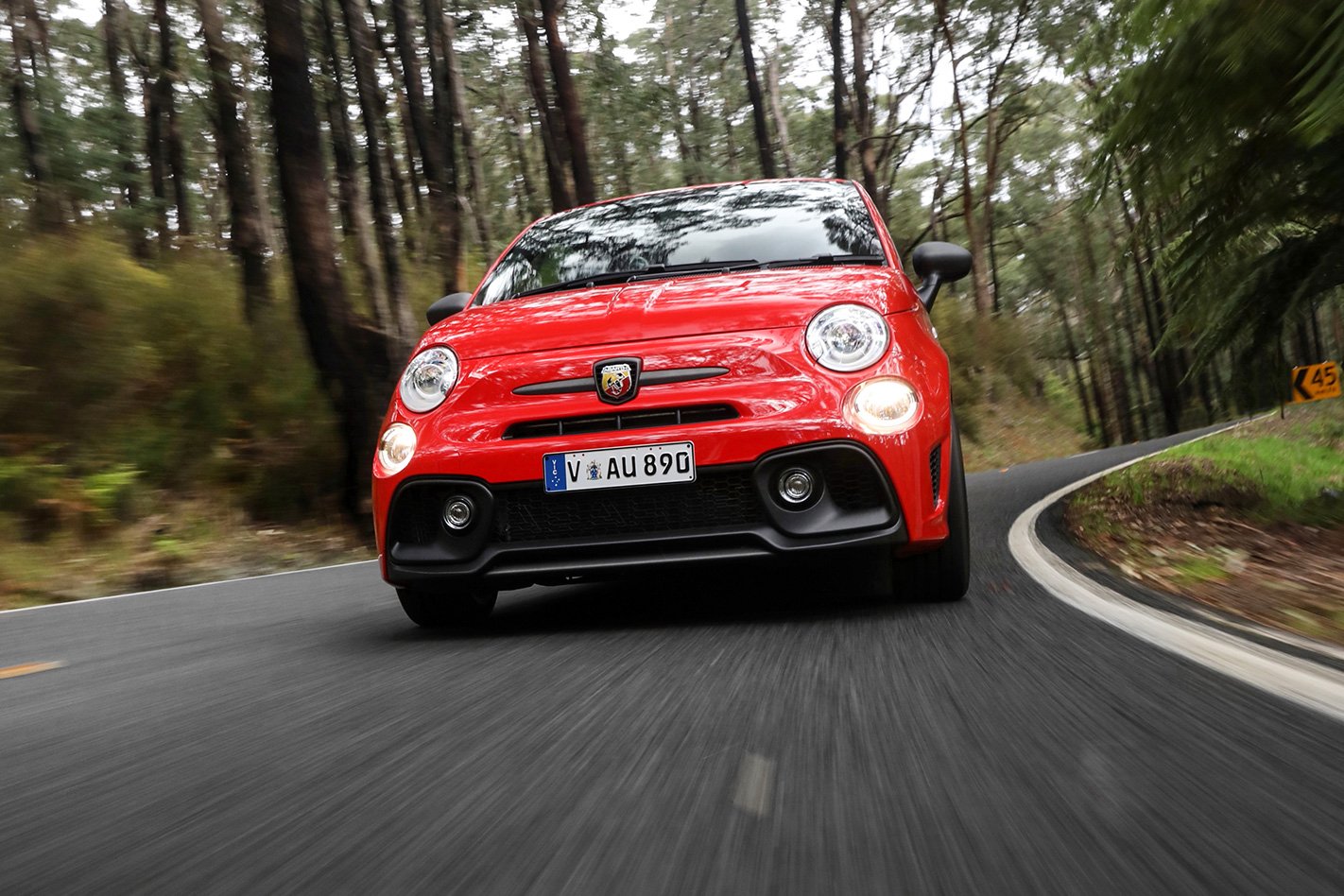
Abarth 595 Competizione Specs
Model: Abarth 595 Competizione Engine: 1368cc 4cyl, dohc, 16v, turbo Max power: 132W @ 5500rpm Max torque: 205Nm @ 3000rpm Transmission: 5-speed automatic Weight: 1045kg 0-100km/h: 6.7sec (claimed) Economy: 6.0L/100km Price: $31,990 On sale: NOW
When you read the letters ‘GTI’, whether it’s in the first sentence of a car review or on the grille of a hatchback, you think ‘Golf’ – don’t you? I bet you just have.
Because while Volkswagen has been trying to for more than two decades now, it has never quite successfully developed its defining hot hatch identity into a proper performance sub-brand. However, now there’s a new and more concerted bid to turn ‘GTI’ into an established family of models, spearheaded by the go-faster version of the sixth-generation Polo.
As this car’s key creators will tell you, VW has sort of toyed with the idea of a proper, smaller-sized GTI on previous attempts, committing to cars midway through a model life cycle and adapting existing mechanical platforms for the purpose rather than designing them from scratch. But no longer.
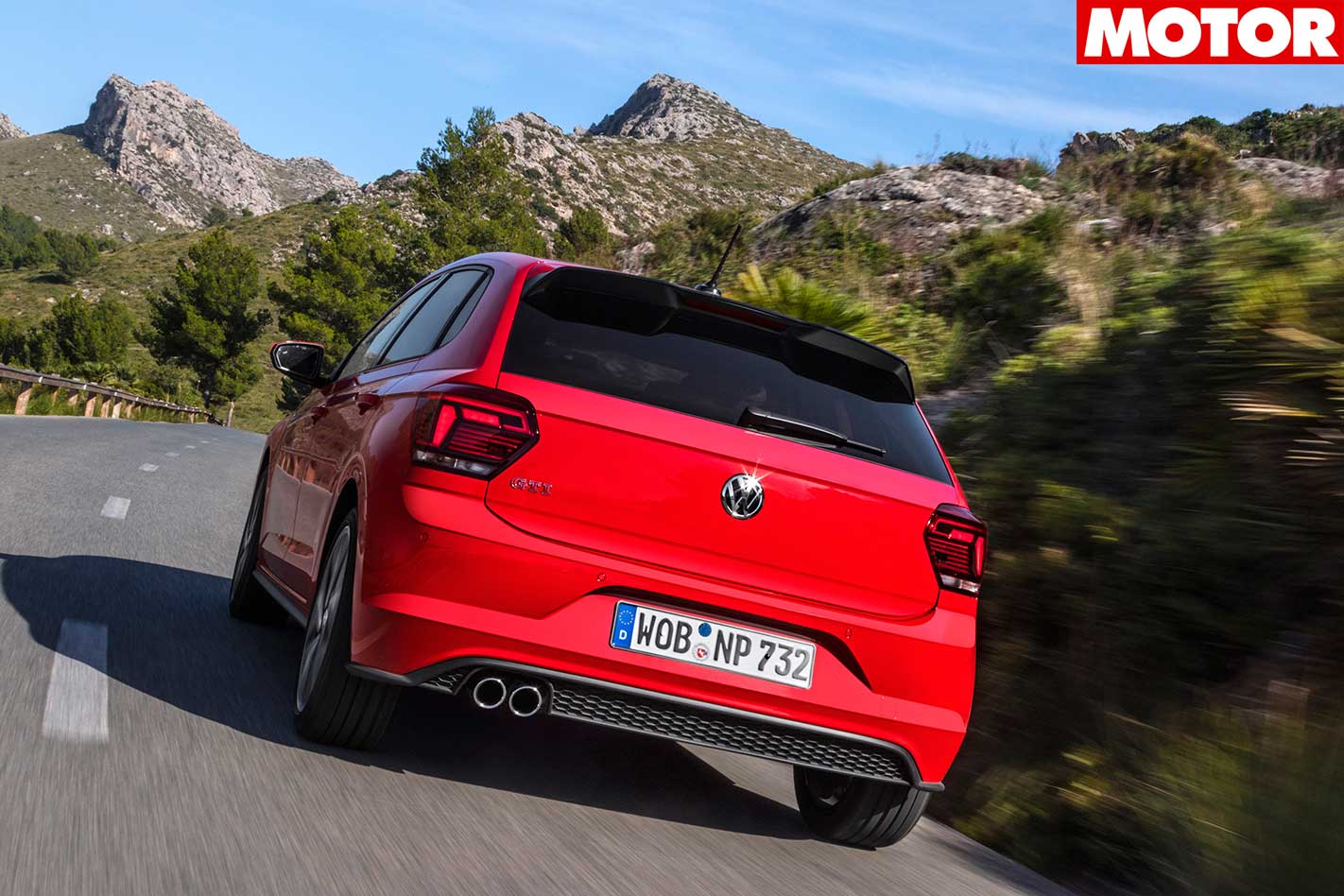
It will be available first with a six-speed paddle-shift DSG gearbox, or with a six-speed manual later. It gets lowered, stiffened springs, uprated anti-roll bars and upgraded passive dampers as standard; but it can be had with switchable Sport Select suspension as an option (which isn’t DCC adaptive damping as such, but instead describes shocks with two lots of compression and rebound settings that you can chop and change between electronically via the car’s driving modes).
Compared with the standard Polo, the GTI also has completely different front suspension knuckles, a stiffer torsion beam at the rear, re-rated suspension bushings, and entirely different axle geometries and roll centres. It’s a proper piece of performance engineering.
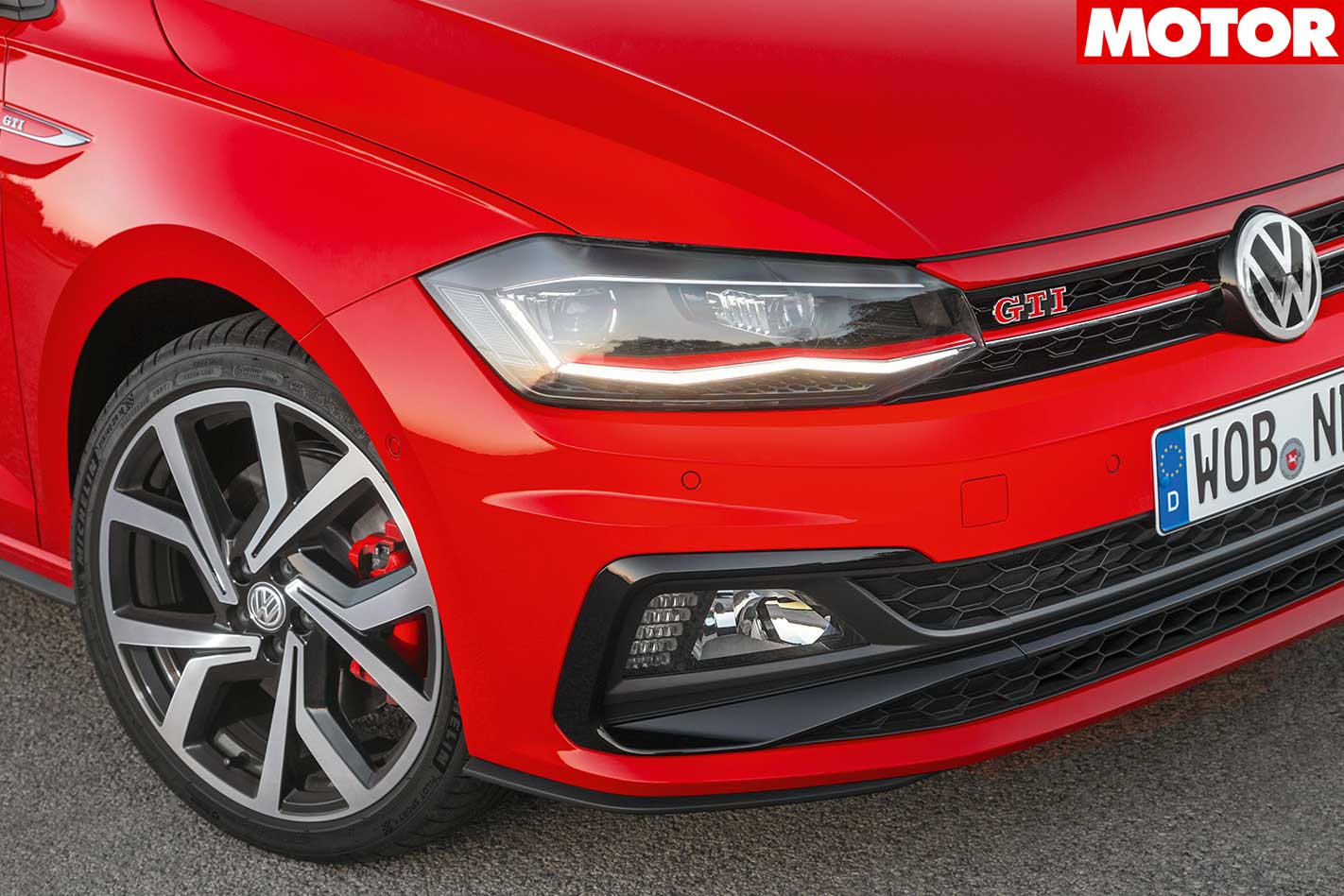
If this Polo GTI turns out to be the first truly worthy of the badge, Schebsdat may be an important reason why. He has quite the CV.
Schebsdat’s career started at Ford in the mid-1990s, where he learned his trade from acknowledged masters like Richard Parry-Jones and Lotus’s John Miles. The first car he worked on from a clean sheet was the original, epoch-making Focus.
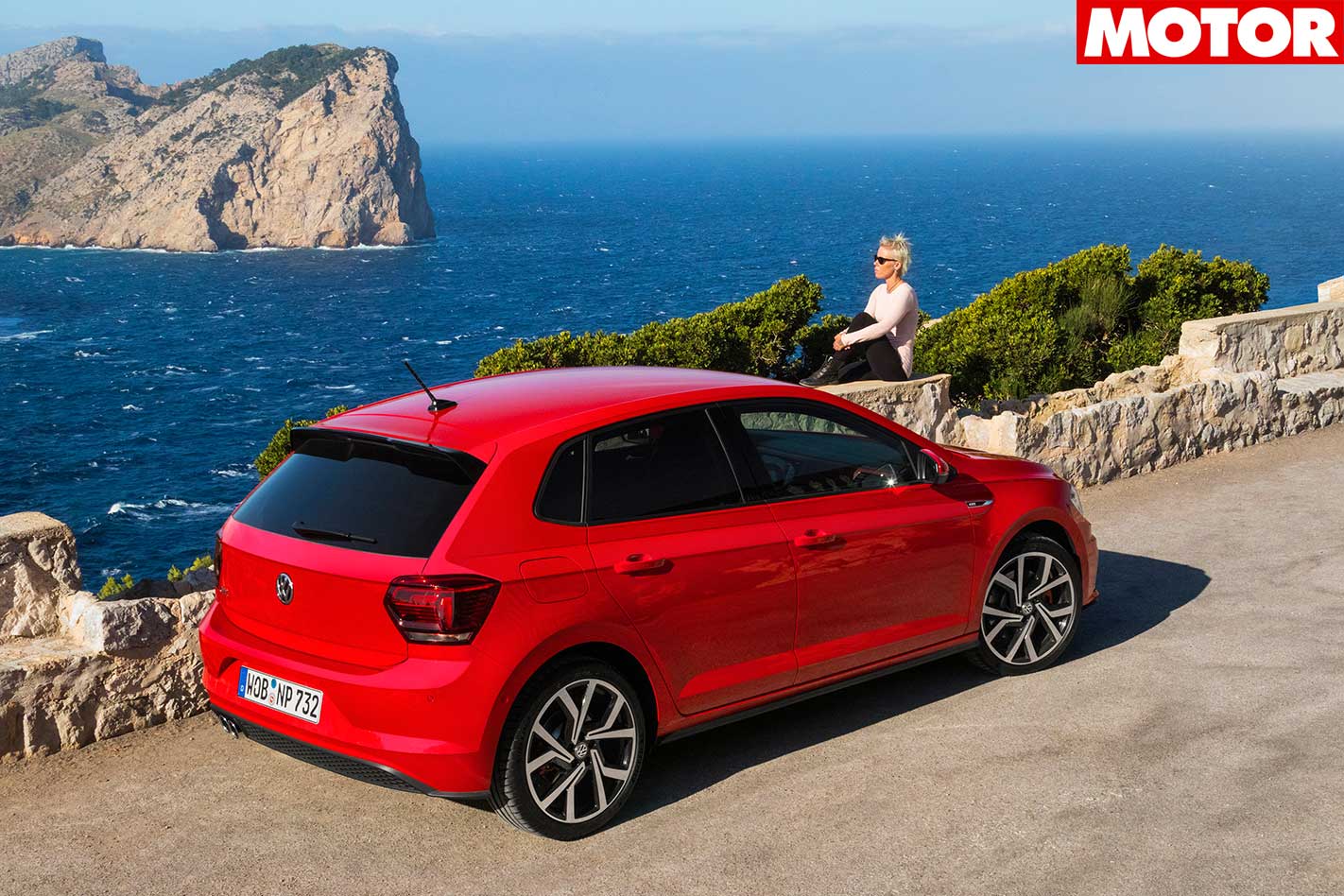
Before we get too carried away, we should remember that Schebsdat was creating a GTI, not a Renault Sport RS or a Ford ST – and those three letters have come to stand for a particularly drivable, pragmatic and rounded blend of affordable performance over the past decade or so – and not by accident.
So the fact that this new hot Polo isn’t as firm-riding or as pointy and lively in its handling as the last Ford Fiesta ST probably won’t surprise you. That doesn’t mean it’s not a giggle to drive, though, or that it’s missing too much in the way of pace, grip, dynamic purpose or performance flavour. Far from it.
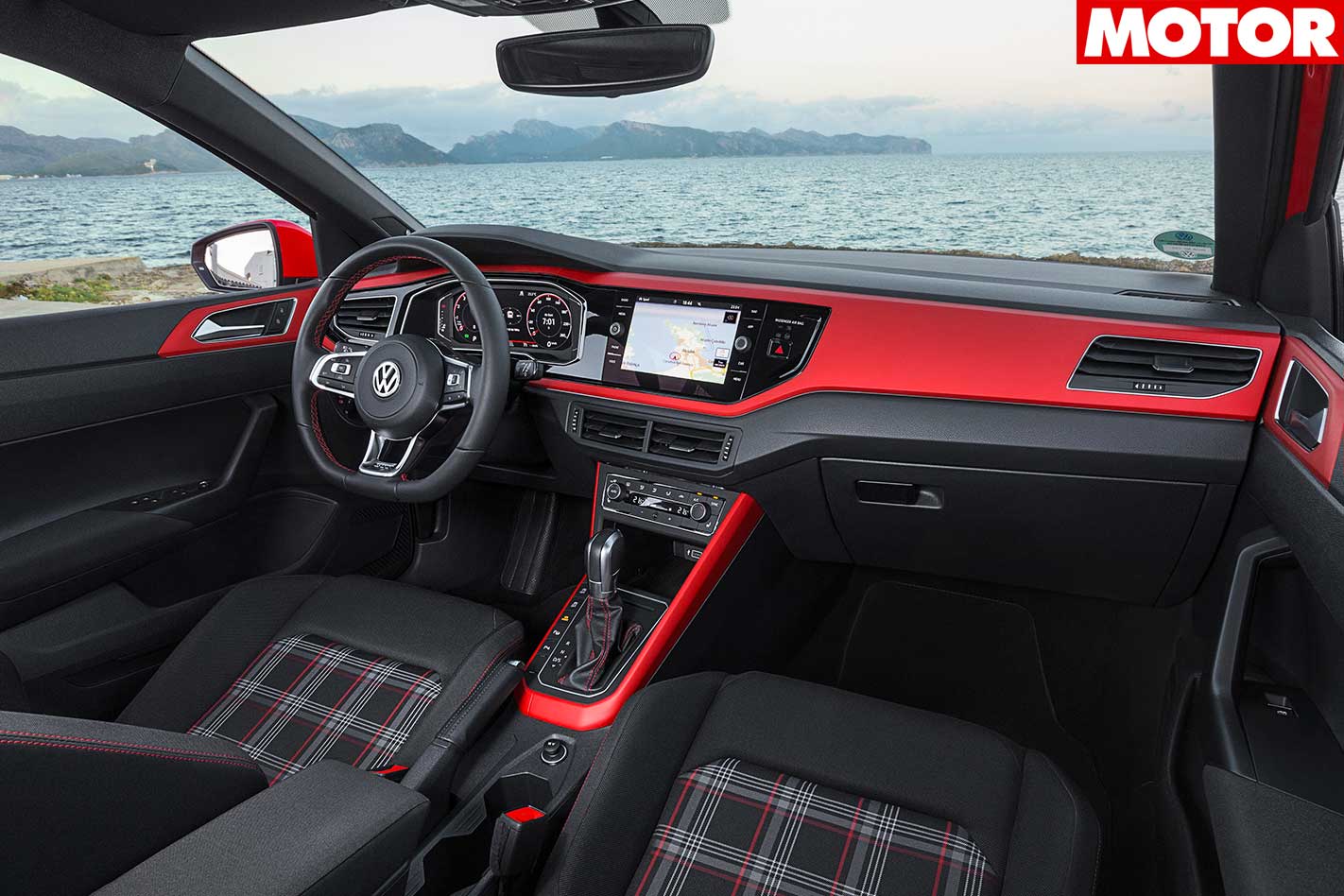
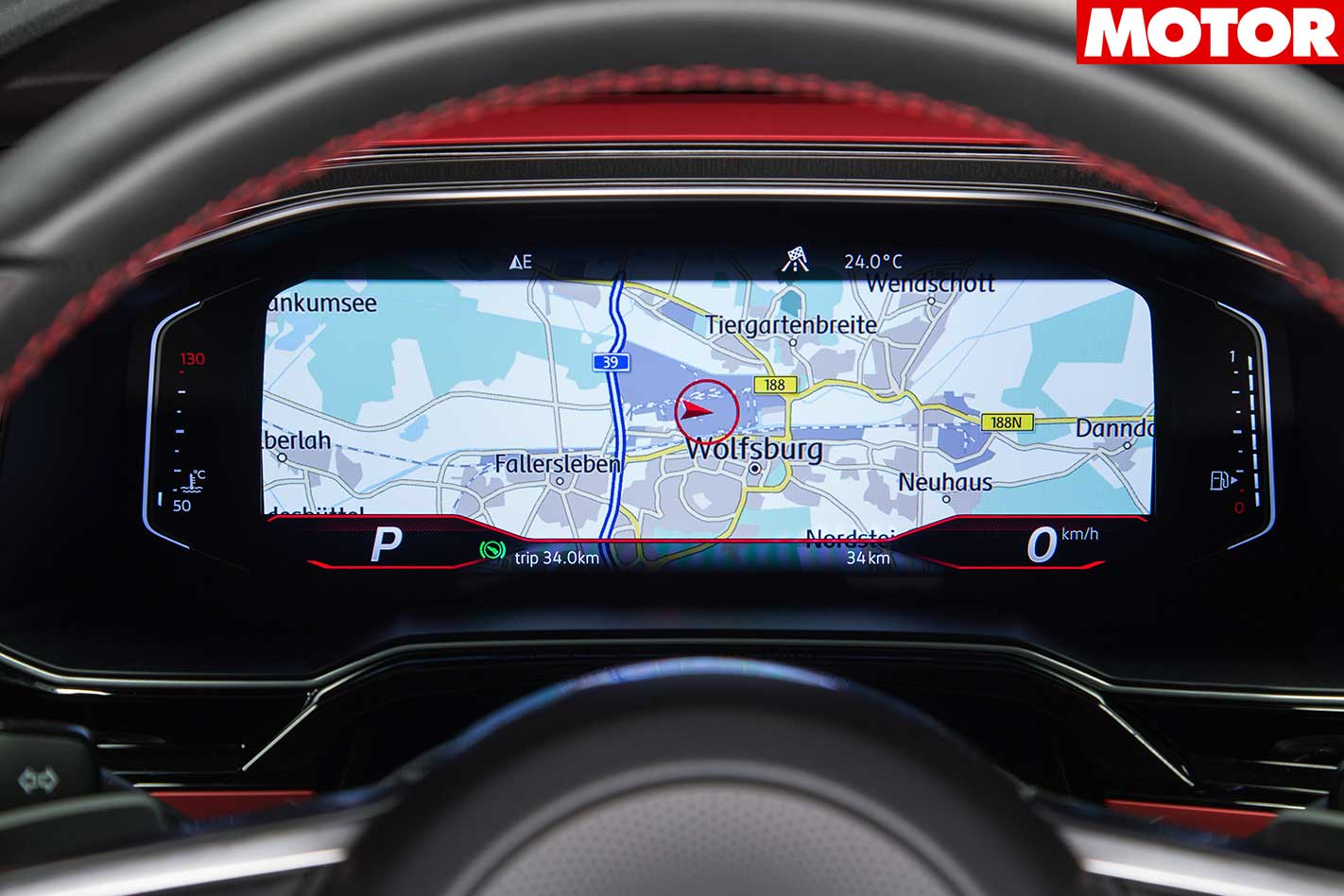
Clark plaid cloth sports seats go with the territory, of course, and although the Polo’s are a touch small and short in the cushion, they clench your backside very comfortably and securely enough, and they look great. In front of you, if you’ve paid extra for them, are VW’s Active Info Display digital instruments in new second-gen form.
The driving position feels promisingly low and purposeful for a compact hatchback, and you can’t quibble with the equipment available (eight-inch touchscreen infotainment system as standard) nor the car’s very impressive standard on perceived quality.
If it didn’t, you get the impression that it wouldn’t have been signed off as a modern GTI; because today’s GTI drivers want the option, at times, of not being jiggled, wearied, bothered or asked to invest much in the driving experience of their cars.
Cycle into Sport mode, though, and things change a fair bit. The sports exhaust doesn’t exactly bellow or zing, but it rasps with a certain crackling menace that serves as the right sort of accompaniment to the car’s brisk turn of mid-range pace.
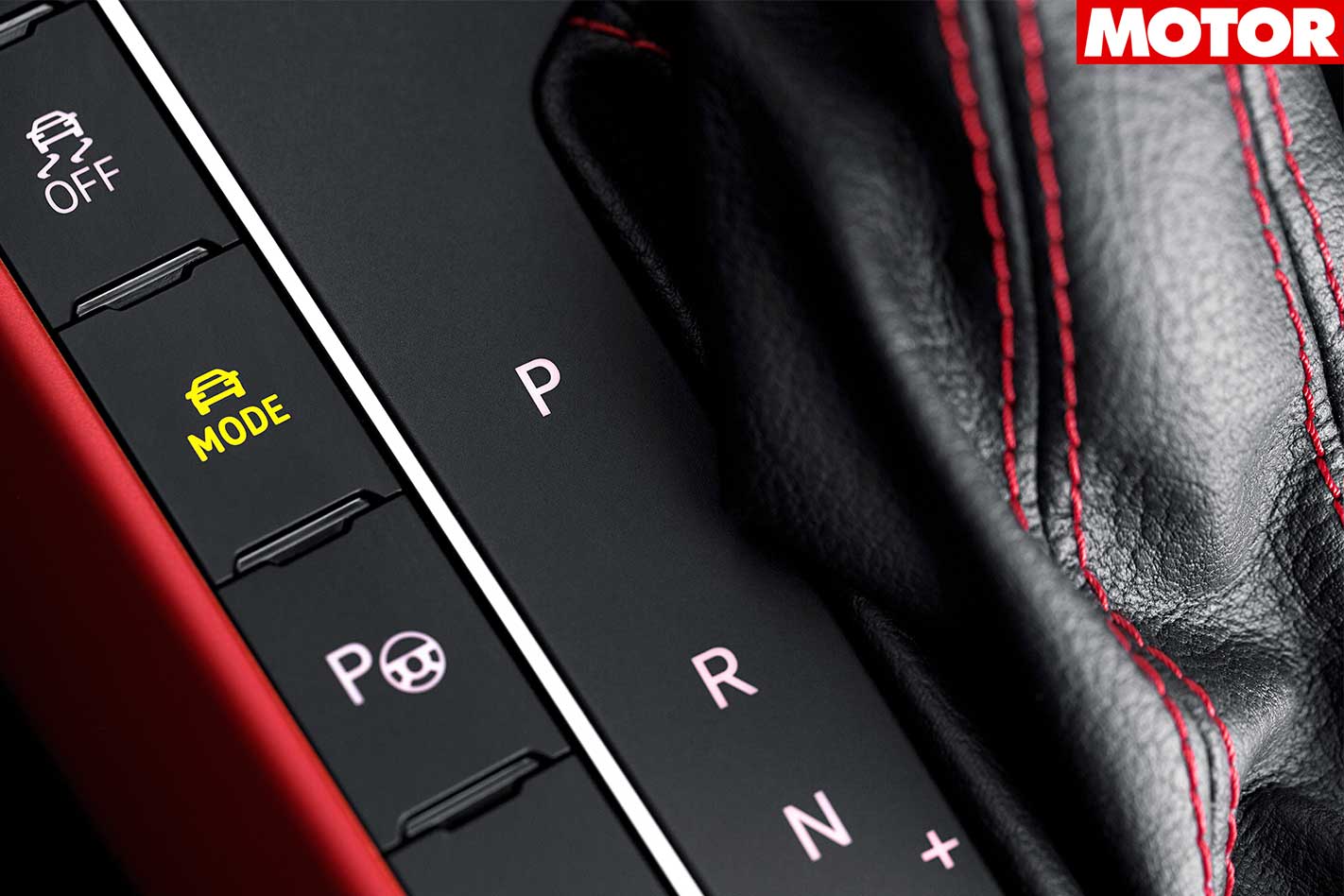
The GTI’s six-speed DSG gearbox has the familiar manual mode in which it’s quick-shifting and, for the most part, it gives you a dependable sense of close control over the driving forces going into the front axle both under power and on a trailing throttle.
It won’t hold onto a gear at the very top of the rev range even in manual mode, though, shifting up automatically well short of the marked 6500rpm redline. And even in manual mode, the kickdown switch at the bottom of the accelerator pedal’s travel isn’t frozen out from proceedings.
One way or another, then, you can have shifts foisted on you in this car, which is a bit annoying and a mistake that is unlike VW to make.
Not many have more peak torque than this, though – something that allows the GTI to make short work of the meat of its rev range and makes it easier to drive quickly than most of its rivals.
The fact that its ride is fairly moderately tuned, supple even, in Sport mode also makes it particularly well suited to fast, undemanding road driving, although it doesn’t make it feel soft or inert on a tight racetrack.
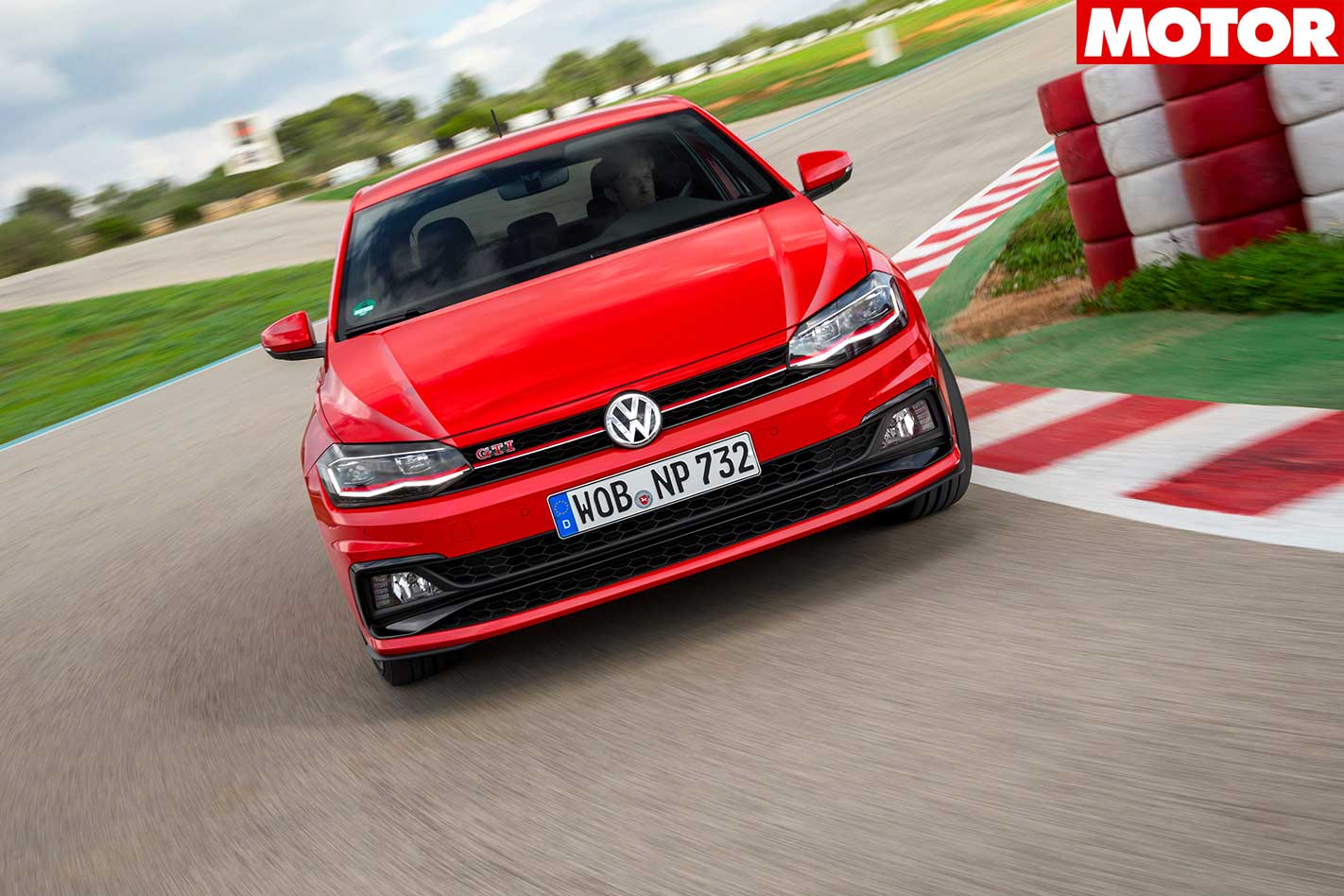
Here, VW’s investment in hardware gives the Polo GTI reserves of grip and composure, in both wet and dry conditions, that mark it out as a true driver’s car. You can lean on the outside wheels as hard as you like through a fast bend without running out of handling balance. Hustle the car into a slower one on trailed brakes and feel the rear axle arc gently, but usefully wide to neutralise your cornering line.
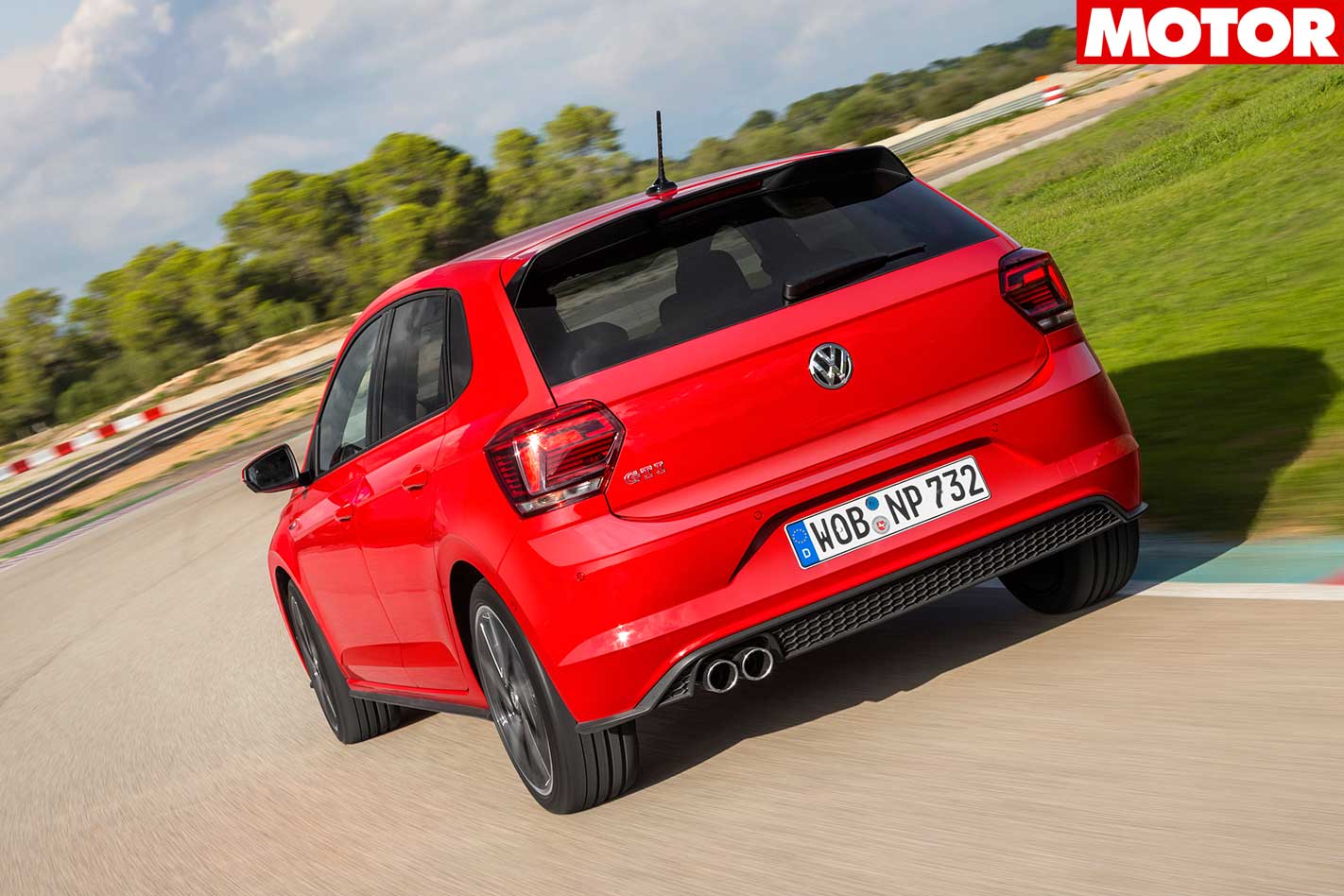
Just as on the Golf GTI, the Polo’s stability control system isn’t fully switchable, but the ESP-Sport mode gives you enough freedom to make for a really involving and intrusion-free track drive. It also just about reins in the inevitable consequence of 320Nm at the front wheels when you’re too keen, yet it does so pretty untidily at times.
Ultimately, what results is undoubtedly the best GTI-badged driver’s car delivered by VW outside of the Golf range. It’s a hot hatchback with more credibility than any Polo before it. It’s a proper GTI.
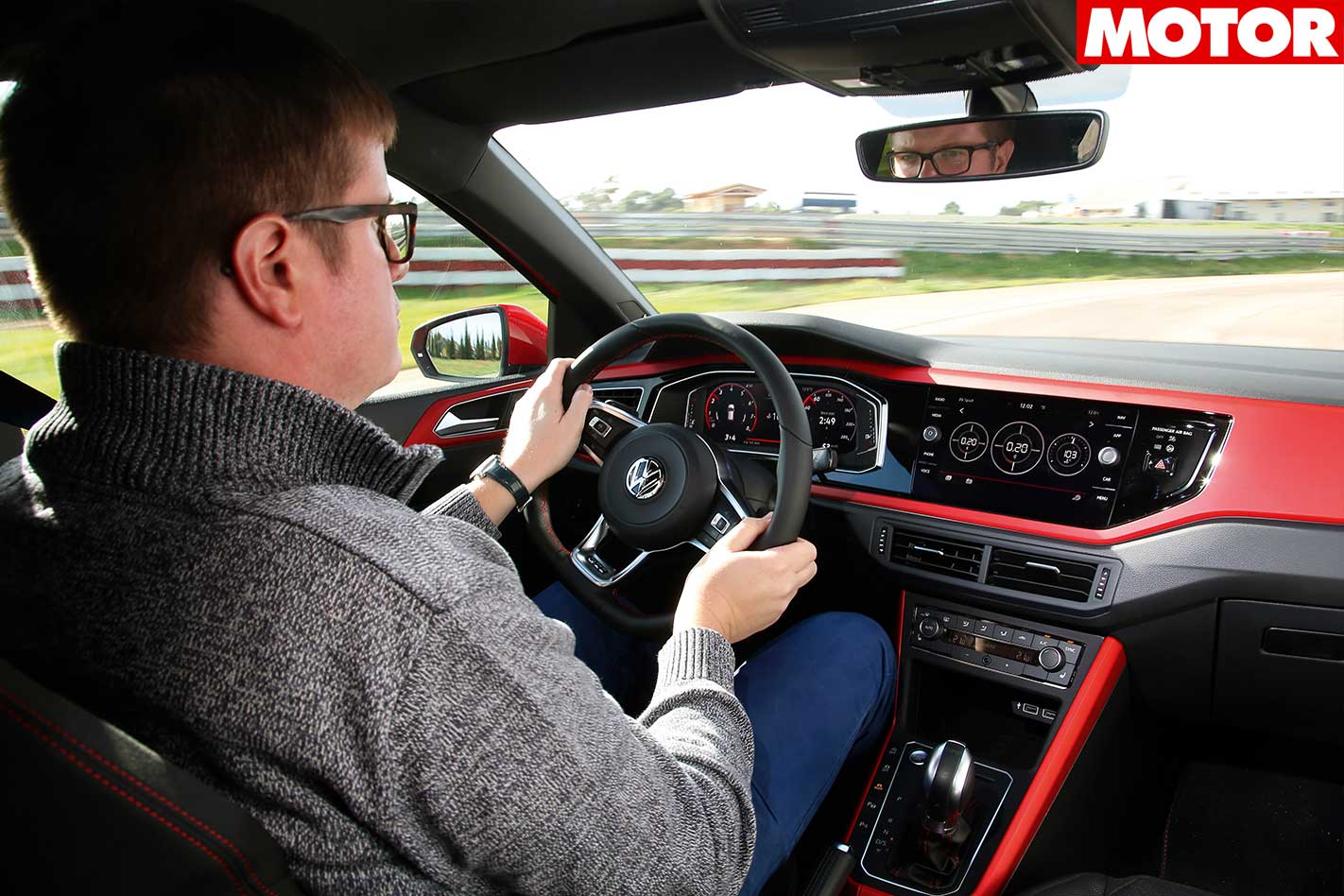
Cars at the affordable end of the hot hatchback spectrum are at their best when they’re a bit less grown up than this. Driver thrills that are accessible, performance flavour that’s abundant and instant, and handling that’s compelling at real-world-relevant everyday speeds.
These are the things that the greatest and most compelling examples do well. And I’m not sure that miniaturising the Golf GTI’s dynamic character, while that trick has been successfully pulled off here for the very first time, has given us a car that can quite outstrip any of its rivals in those key areas.
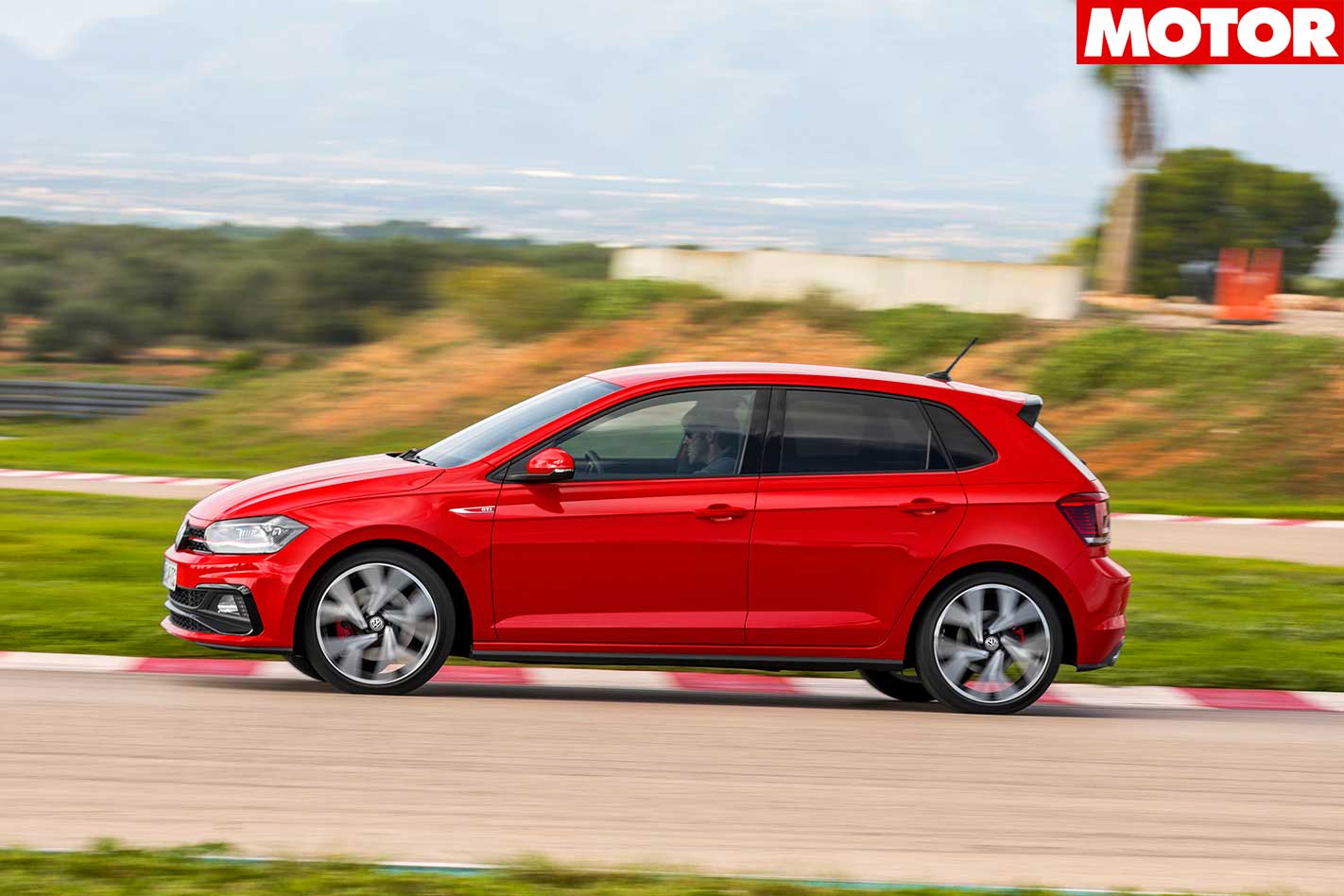
That all said, if you would care to drive one of these smaller cars every day, you’d probably see the appeal in the Polo GTI.
It would have been quite a coup if VW had taken on the best in class at their own game and won here but, in fact, it has brought something new to the fast small-hatch table that is classy, desirable, practical and rounded enough to wear the GTI badge very comfortably indeed. And it’s no dynamic half-measure, either.
NEXT LEVEL Fancy the rally version?
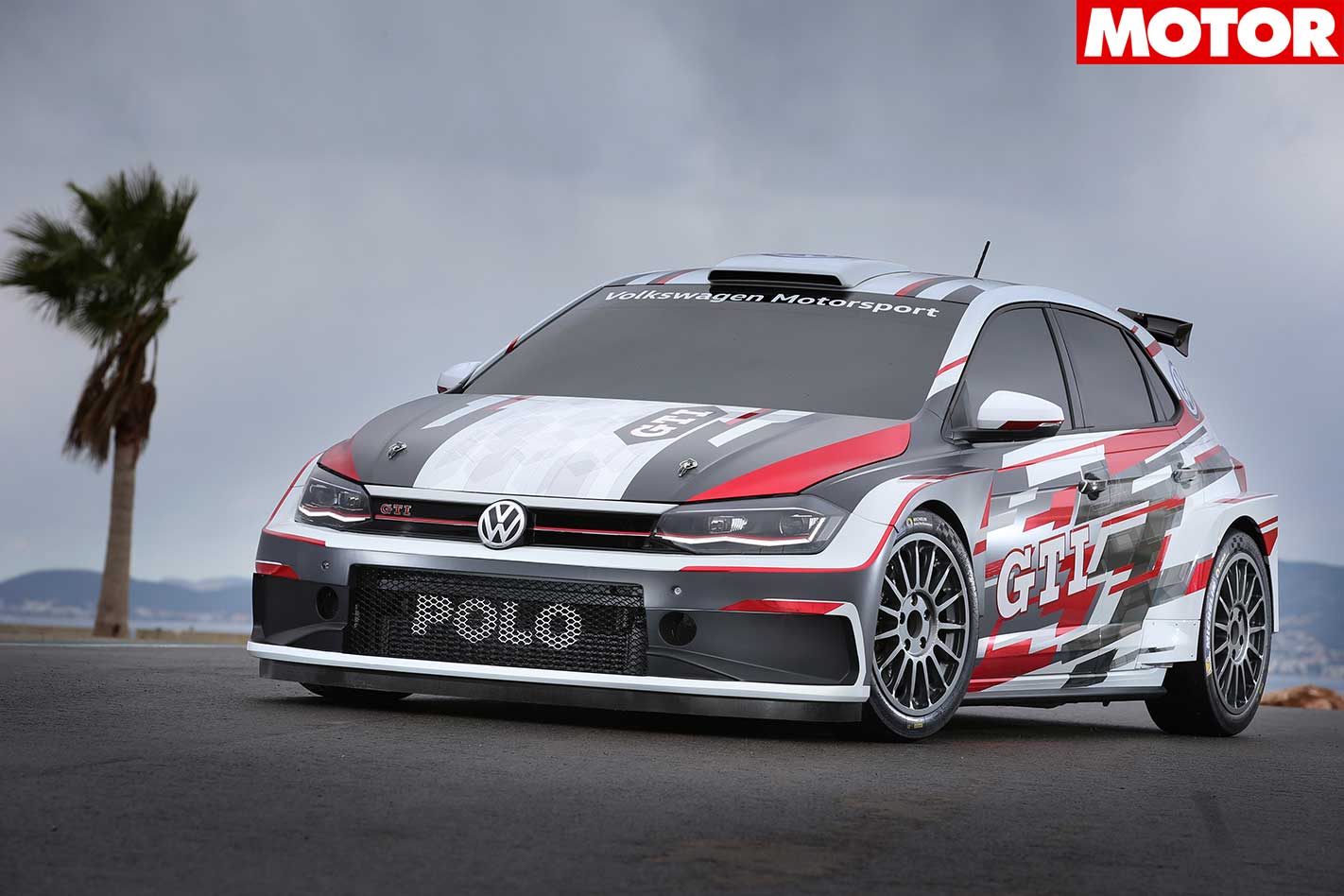
To satiate your hankering for rally glory you can purchase a 200kW/400Nm Polo GTI with pumped guards, a five-speed sequential gearbox, full roll cage and permanent all-wheel drive.
Built to the FIA standards of the R5 category, the 1320kg Polo GTI R5 will launch from rest to 100km/h in 4.1 seconds despite downsizing to a 1.6-litre four-cylinder turbo engine. With wider tracks and aero additions, it’s visually a very different beast to the road car. The mega Polo will set you back in the region of $300,000.
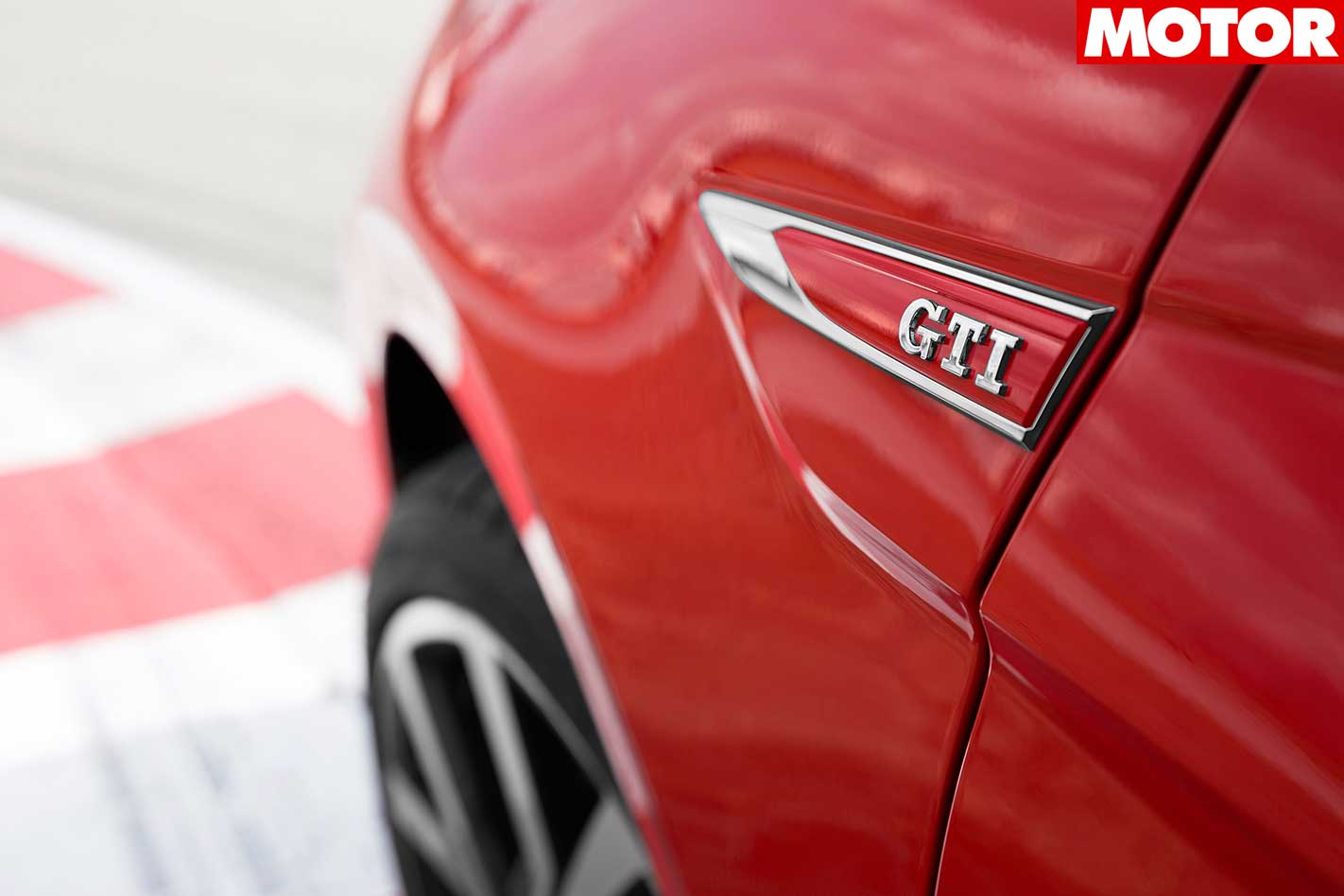
Likes: Golf GTI formula miniaturised; easy to live with Dislikes: Bit sensible; not as hardcore as some rivals Rating: 4 out of 5 stars
