‘Compliance Pack’: Not the sexiest name for a modified car, is it. I mean, what happened to ‘Thrust-o-Tron’ or ‘Helldeath 2000’?
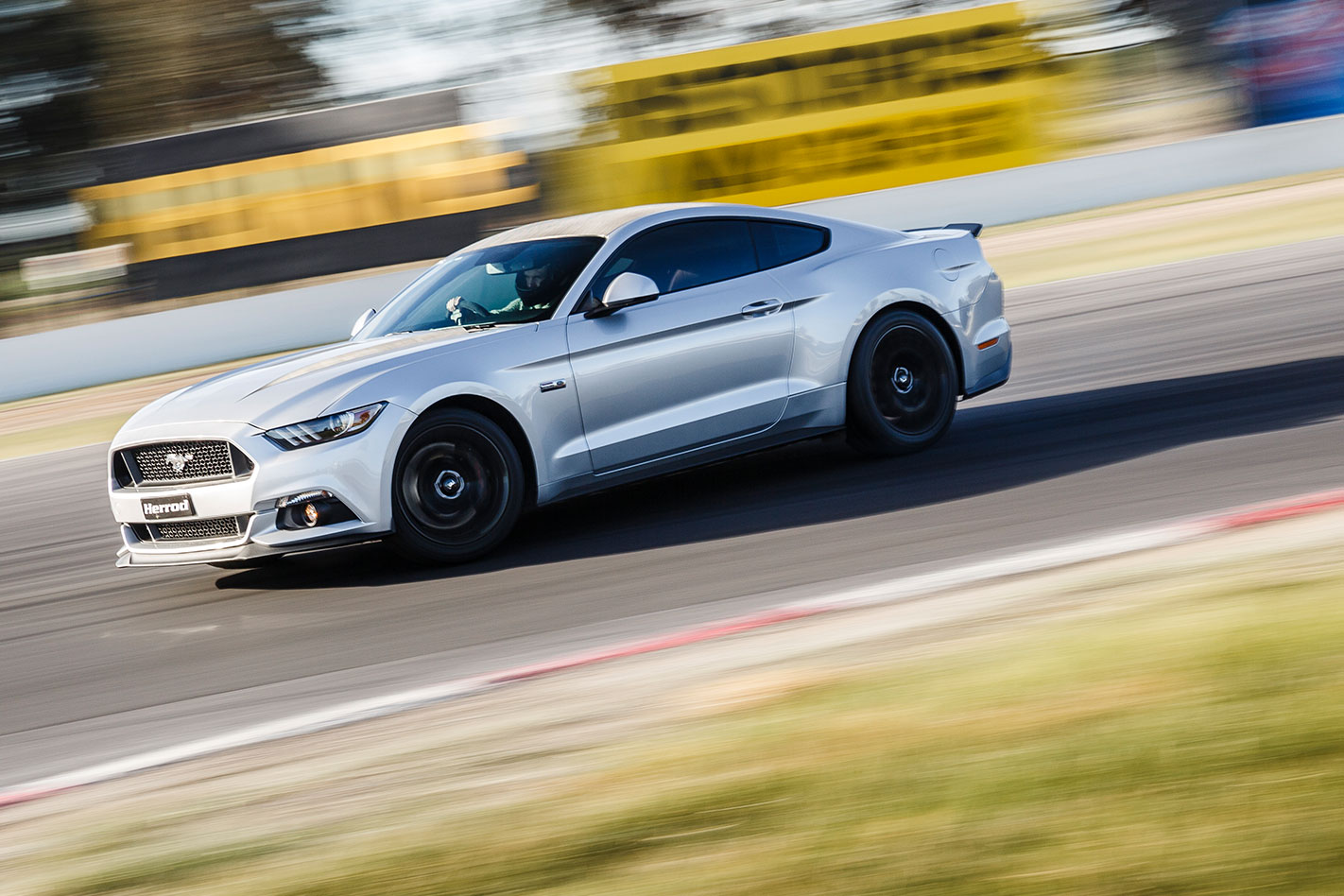
Yet, the Herrod Performance entrant is hardly what you’d call a shrinking violet in any other way and, besides, the name alludes to the fact that, as the work of a fully-fledged secondary manufacturer, the Herrod car is 100 per cent legal.
Provided, of course, you only ever give it the berries somewhere like Winton, of course, because hold it flat from rest on the Queen’s Highway, and it’ll cease to be legal about 4.6 seconds later. Stay into it and you’ll have covered 400m in 12.4, which is a top-four result in both those disciplines.
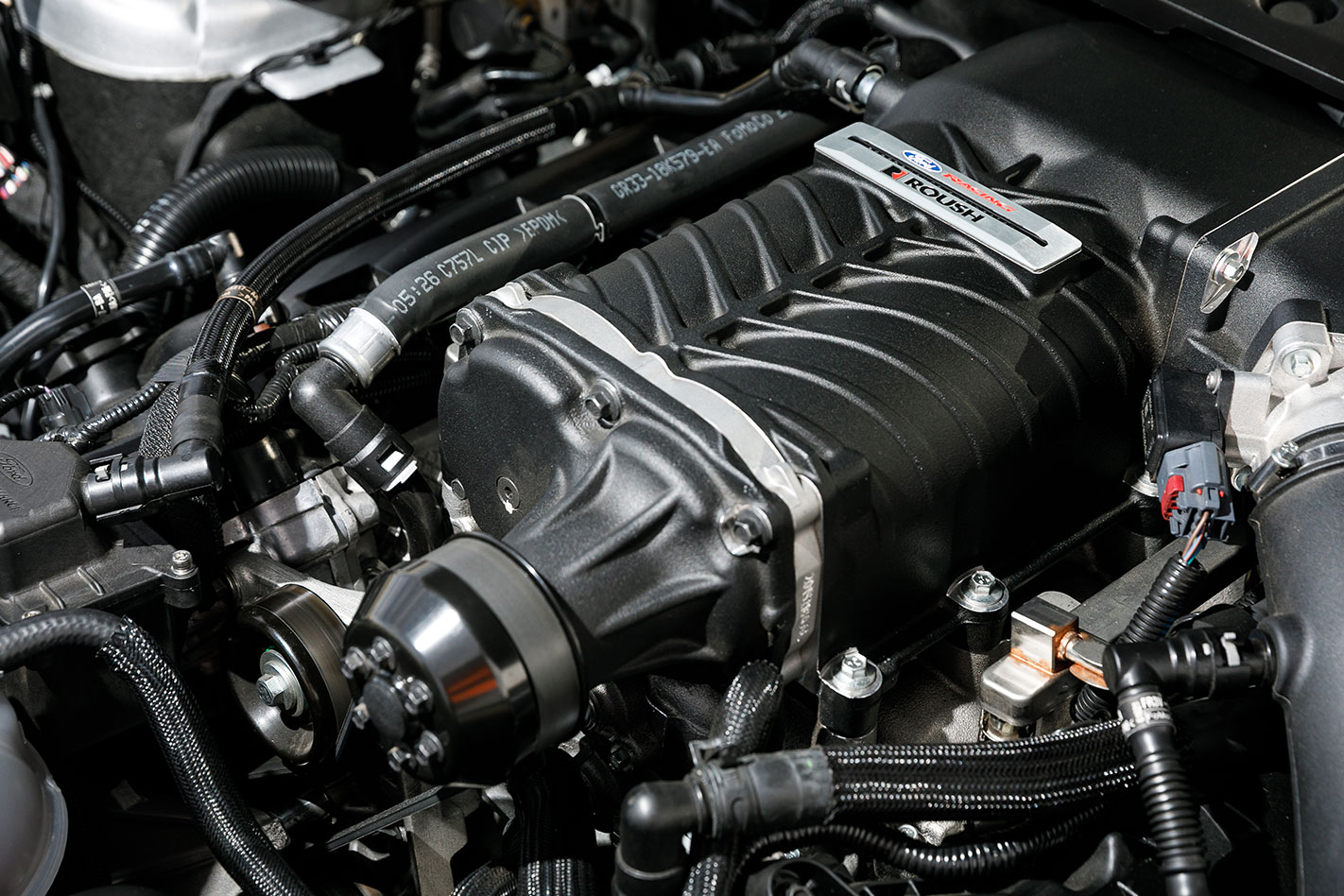
The conversion includes an intercooler that gets sandwiched between the intake manifold and the blower and there’s a cat-back exhaust and a Ford Motorsport tune of the ECU. Without a dyno on site, we’re inclined to take Rob Herrod’s word for it when he says the output is 450kW at the wheels.
Boost is locked in at a maximum of 6psi, but the pressure is indexed for each gear in the six-speed auto, ensuring that no components are stretched beyond their comfort zone as engine speeds crank up.
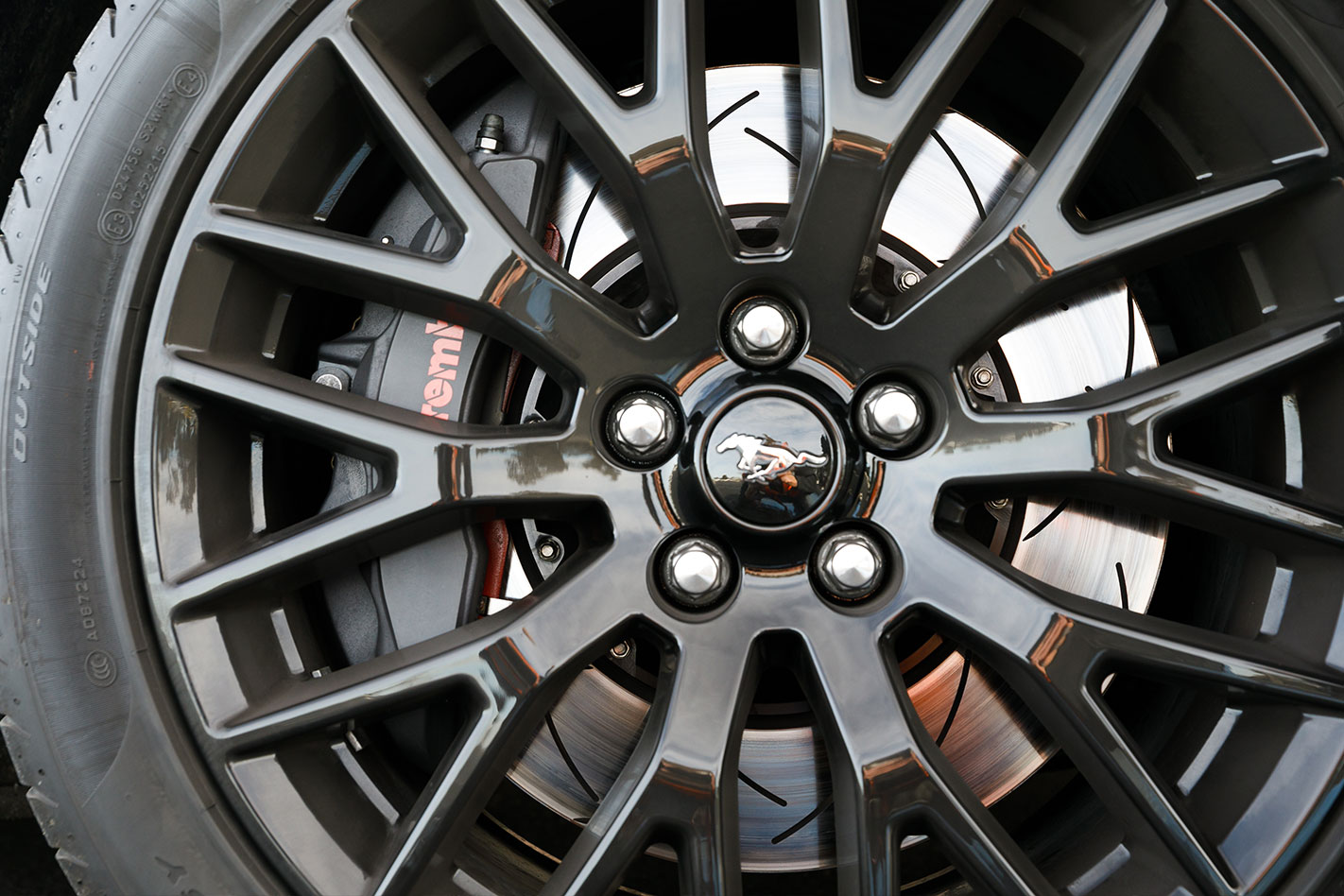
Because the car in this form is 100 per cent complied, there’s not the same scope for messing about with those items. That’s for the aftermarket and personal taste to sort out, says Herrod.
The idea is to reduce deflection of the shaft when all those ponies hit home, but it means that there’s a slightly gravelly feel invading the cabin on full-bore launches. But again, it’s not a criticism, it’s an observation and it’s all because tuners like Rob Herrod know what a hiding any car in Hot Tuner can be expected to face.
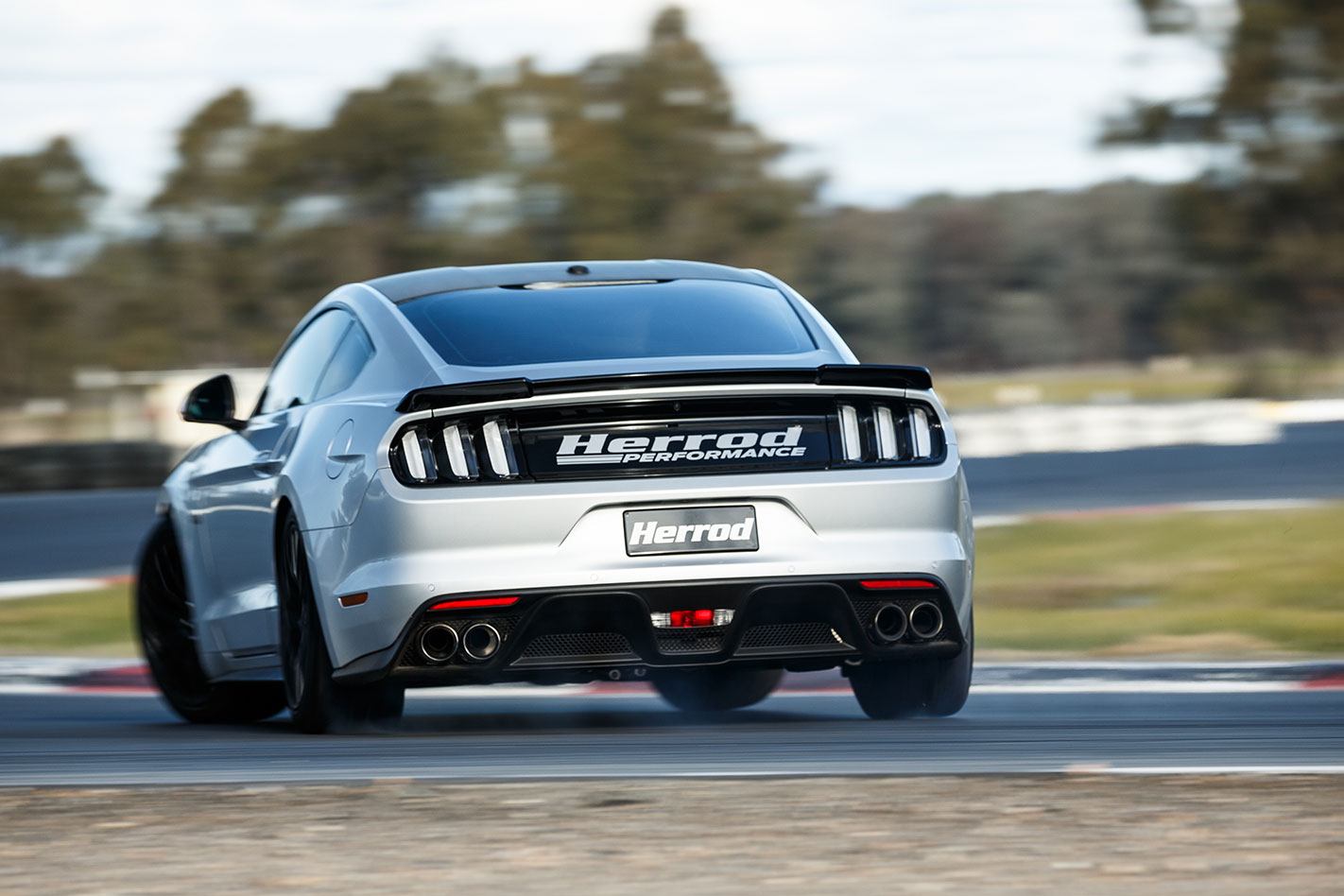
And while the engine has the real big horses stacked up high, it’s still porky enough down low to feel fast from any revs. It’s just that when you do release the hounds, not much is gonna stay with it. Or anywhere near it.
Beyond that, however, the Herrod car is remarkable for just how close to a stocker it sounds and feels. And when you consider what it’s capable of, that’s a big part of its attraction, especially to the type of geezer who can buy and immediately modify a brand new Mustang GT.
WARREN LUFF SAYS:
“For as long as we’ve been doing Hot Tuner, Herrod Performance has been coming along with some great cars like this Mustang.
“It’s not always about trying to chase a lap time or a number down the strip, Herrod brings what customers drive on the road.
“This car does everything right while still being an everyday road car. It’s not about being a track-day special.
“Full credit to Herrod as they’ve produced another great vehicle.”
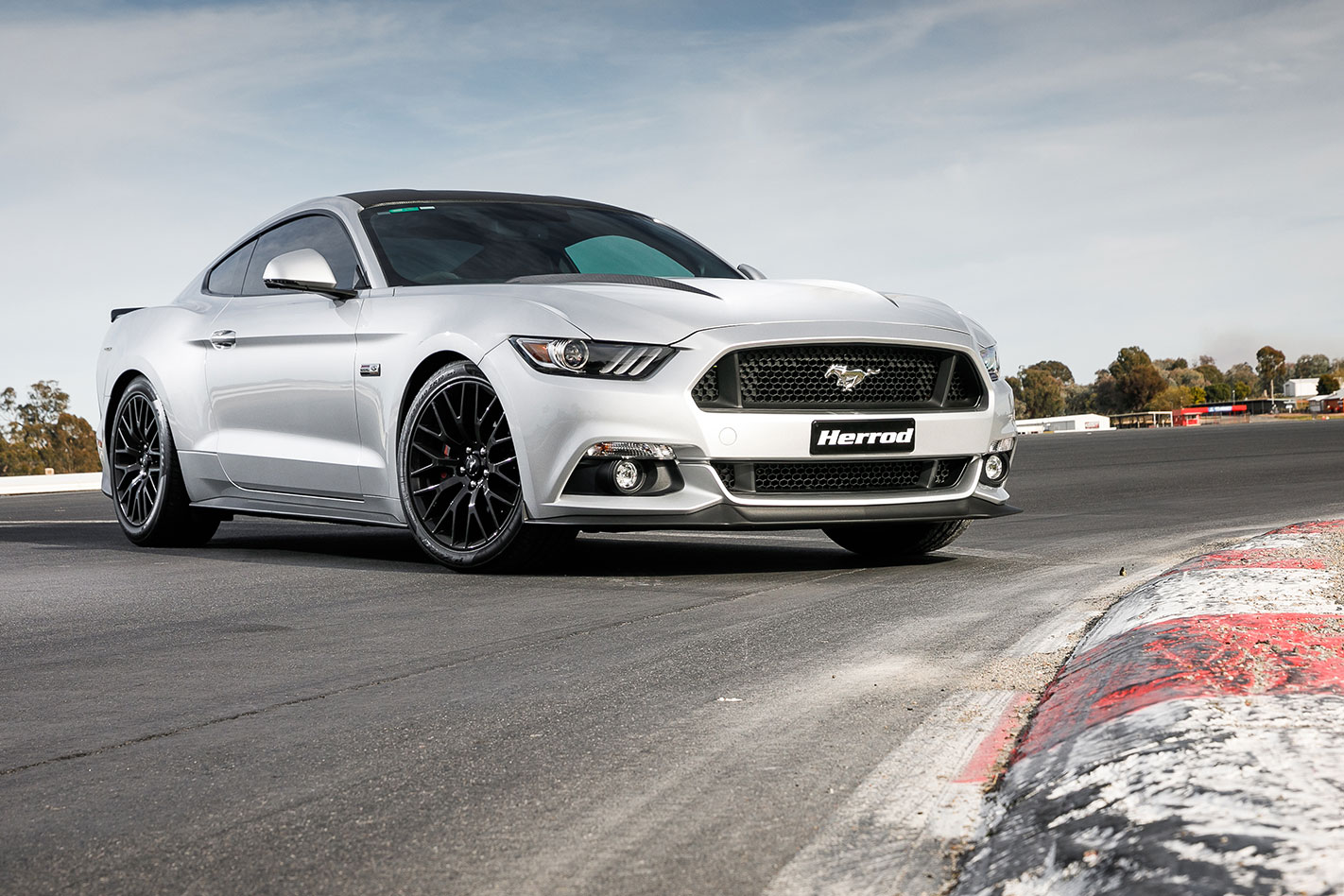
HERROD PERFORMANCE MUSTANG COMPLIANCE PACK SPECS
Power: 507kW Torque: 730Nm
0-100km/h: 4.59 seconds 0-400m: 12.40 seconds 80-120km/h: 2.2 seconds 100-0km/h: 39.0 metres Lap Time: 1:35.0sec Apex km/h: 81.79km/h Lap V-max: 205.32km/h 400m V-max: 198.58km/h
Engine: 4951cc V8, DOHC, 32v, supercharger Gearbox: 6-speed automatic Suspension: struts; anti-roll bar (f); multi-links, coil springs, anti-roll bar (r) Brakes: 380mm ventilated discs, 6-piston calipers (f); 330mm ventilated discs, single-piston calipers (r) Wheels: 19 x 9.0-inch (f); 19 x 9.5-inch (r) Tyres: 255/40 R19 (f); 275/40 R19 (r); Pirelli P Zero
PARTS AND PRICES
Compliance Pack: $21,500 Optional Extras: $4000 Total Mods Cost: $25,500 Vehicle Cost: $59,990 Total Cost: $85,490
JOCHEN HAAB sees like a car.
Having spent years poring over radar and camera data, Mercedes’ driver assistance guru seems to instinctively know what his car can and can’t see.
“The radar knows that trees are a certain percentage water, a certain percentage cellulose. They have a predictable radar return. The camera doesn’t know what a tree is, they all look different,” he says.
Spend any time with him and you start to see like a car too.
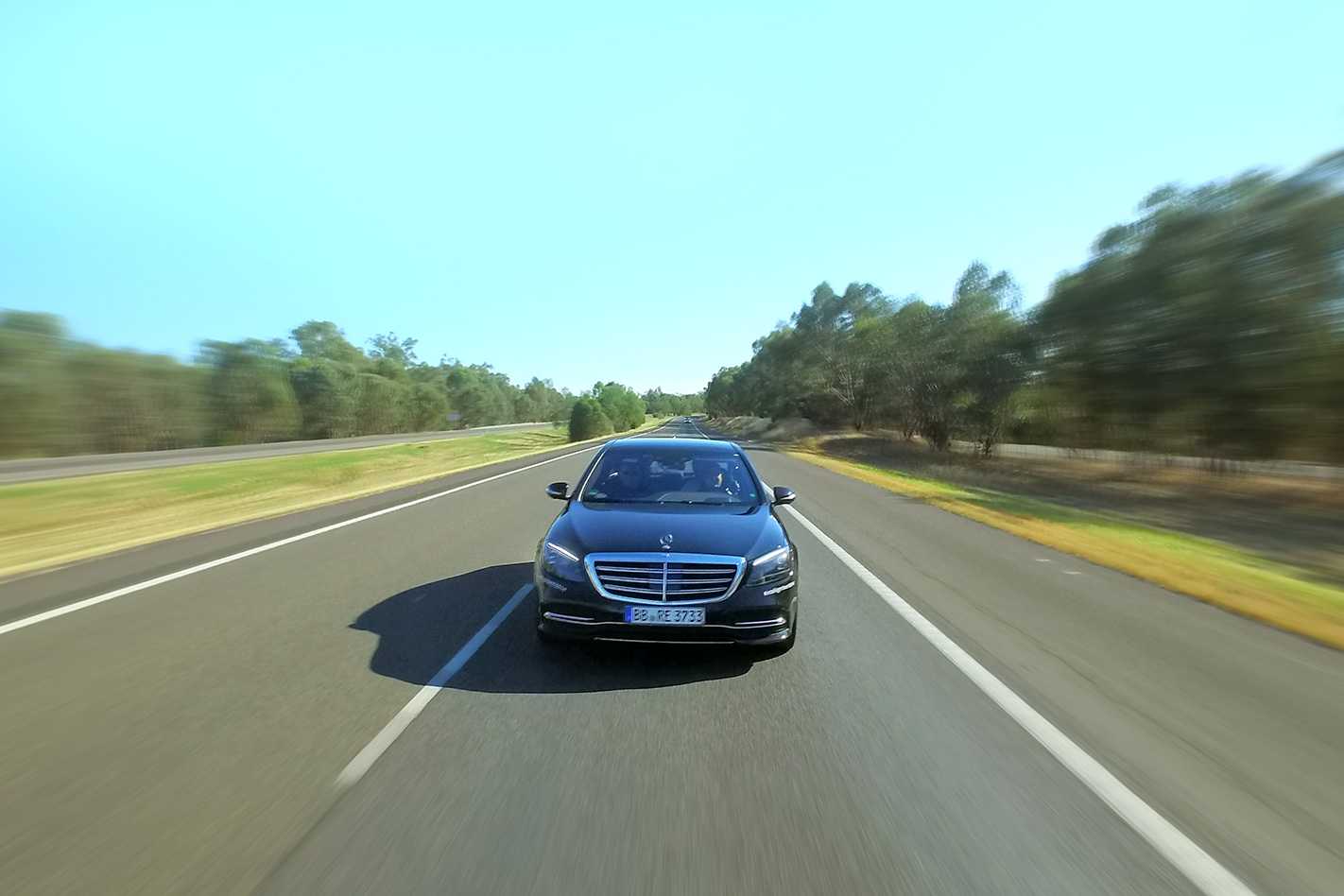
Three years ago, this technology seemed like black magic in a Tesla Model S. Now we get a similar suite of technology fitted as standard to a Honda Civic, albeit dumbed down for mass consumption.
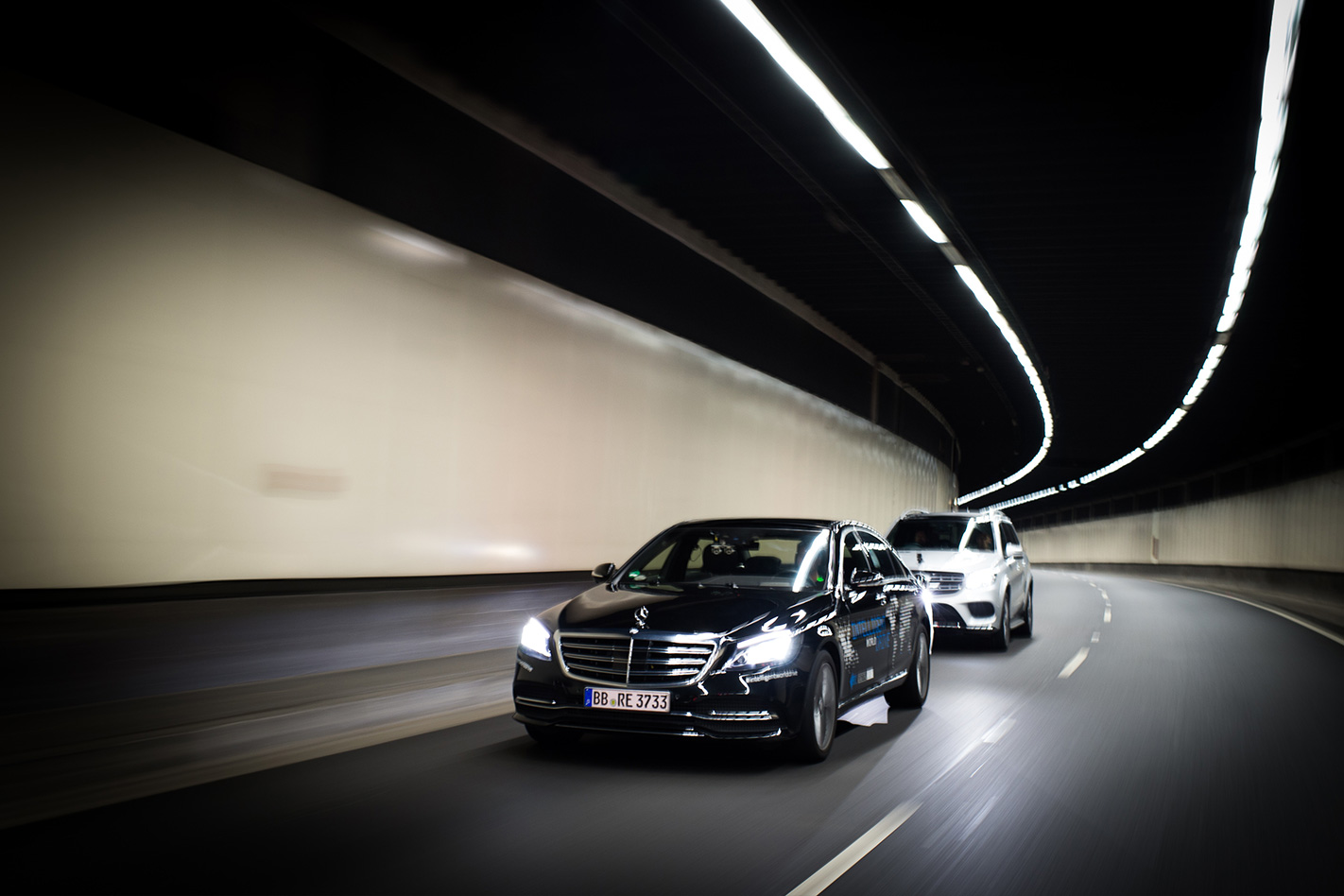
We’re here today to help Mercedes in its validation program, riding shotgun in a car packed with computers on the home leg of a drive from Sydney to Melbourne.
We’re tracking a part of the Hume Highway that Mel Nichols immortalised for Wheels in his classic ‘HO Down the Hume’ yarn, albeit at a more sedate pace. Haab’s brief is to see how the car copes with Aussie conditions, improving the mapping data along the way.

“Australia is a pretty easy place to work with autonomous cars. The roads are open and the speed differentials between cars are not great,” he explains.
“There are some anomalies, like cyclists on the major highways, digital speed limit signs that change shape and as for Melbourne’s hook turns…” He trails off and shakes his head. “The hook turn alone will probably mean Melbourne won’t be in the first phase of autonomous car trials. It’s complicated, but describable, so we can solve it. It’s just that it takes resources to do that.”
As impressive as the Benz is, driving down a well-marked highway in bright sunlight is, technically speaking, easy.

The current state of the art is represented by the forthcoming Audi A8 that boasts Level 3 autonomy, that is, it can drive itself on highways and traffic jams at up to 60km/h.
Level 4 trials, where fully autonomous vehicles can conduct themselves in strictly geofenced areas, are under way with the first retail products likely to go on sale by 2022. But Level 5, where the car is fully autonomous anywhere and the driver is optional, is still presenting huge challenges to software engineers, hook turns notwithstanding.
The sheer pace of change is the market dynamic that’s shaking out the hindmost.

Despite public records in California showing that Waymo performed 600,000 miles of testing in the state last year – more than 30 times as much as all the other testers combined – a technological step-change has meant the company, and, indeed, Mercedes-Benz, is faced with merging two divergent design philosophies.
The current approach for self-driving start-ups is an artificial neural network, used to emulate the way a human brain functions.
‘Deep learning’ accelerates the way an autonomous car takes on new information, ingesting vast amounts of data to create more sophisticated algorithms than the more traditional rules-based approach that Waymo spent years developing.

Upping the stakes to this extent has stretched both software and hardware developers. Handling the deluge of sensor data from cameras, radar, lidar, and ultrasonic units has seen new power partnerships such as that between Intel and Mobileye emerge.
Processor giant Nvidia has been the computing power behind Tesla’s Autopilot system but its latest AI computer, codenamed Pegasus and due in late 2018, has been designed specifically for Level 5 vehicles and can number crunch roughly 10 times quicker than the company’s current boards.
This allows the Pegasus’ four deep learning processors to handle a terabyte of bandwidth each second. That still may not be enough. Level 5 autonomy requires multiple levels of redundancy in order to ensure safety and Nvidia estimates that this level of computational power is 50 to 100 times more than the capabilities of today’s autonomous cars.
Google has hoovered up microsensor business Lumedyne, crowdsource traffic app Waze and a stack of other mapping/sensing businesses: Keyhole, Endoxon, Image America, Digisfera, Where2, Zipdash, the list goes on.
Integrating these businesses while defending intellectual property is a huge issue for Google, as is litigation over purportedly stolen IP with Uber.
The German car manufacturers are developing ways of cutting Google out of the loop, while recognising the difficulty of doing just this.

Audi has established Autonomous Intelligent Driving (AID) GmbH, a division that has opened its doors to cooperation with partners in the automotive and IT sectors.
In effect, it’s plotting a similar pathway to how digital map company HERE has evolved. Audi, BMW, and Daimler bought the former Nokia unit for $2.9 billion in a bid to reduce any possible dependence on Google and Apple; the latter’s VoxelNet system promising to revolutionise the effectiveness of lidar.
Going head-on with these tech giants is a high-risk strategy, but if successful, will also be likely to head off challenges from upstarts like Baidu, the Chinese search engine juggernaut, which has also announced a US$1.5bn investment in its Apollo autonomous vehicle software.

A survey by Pew has revealed that 56 percent of Americans say they will not ride in a driverless vehicle, 81 percent believe the technology will destroy jobs and 30 percent fear that driverless cars will make roads more dangerous.
Yet the true driverless car is still some way off.
“I’d estimate Level 5 will come in western cities at some point late in the next decade,” Haab says.
“This car has the feel of Level 3, but in order to build a genuine Level 3 car, you need redundancy of systems. You currently have two braking systems. With Level 3 you need redundancy of parts like steering,” he says before admitting he’s not certain how Audi has cracked this issue with its forthcoming A8.
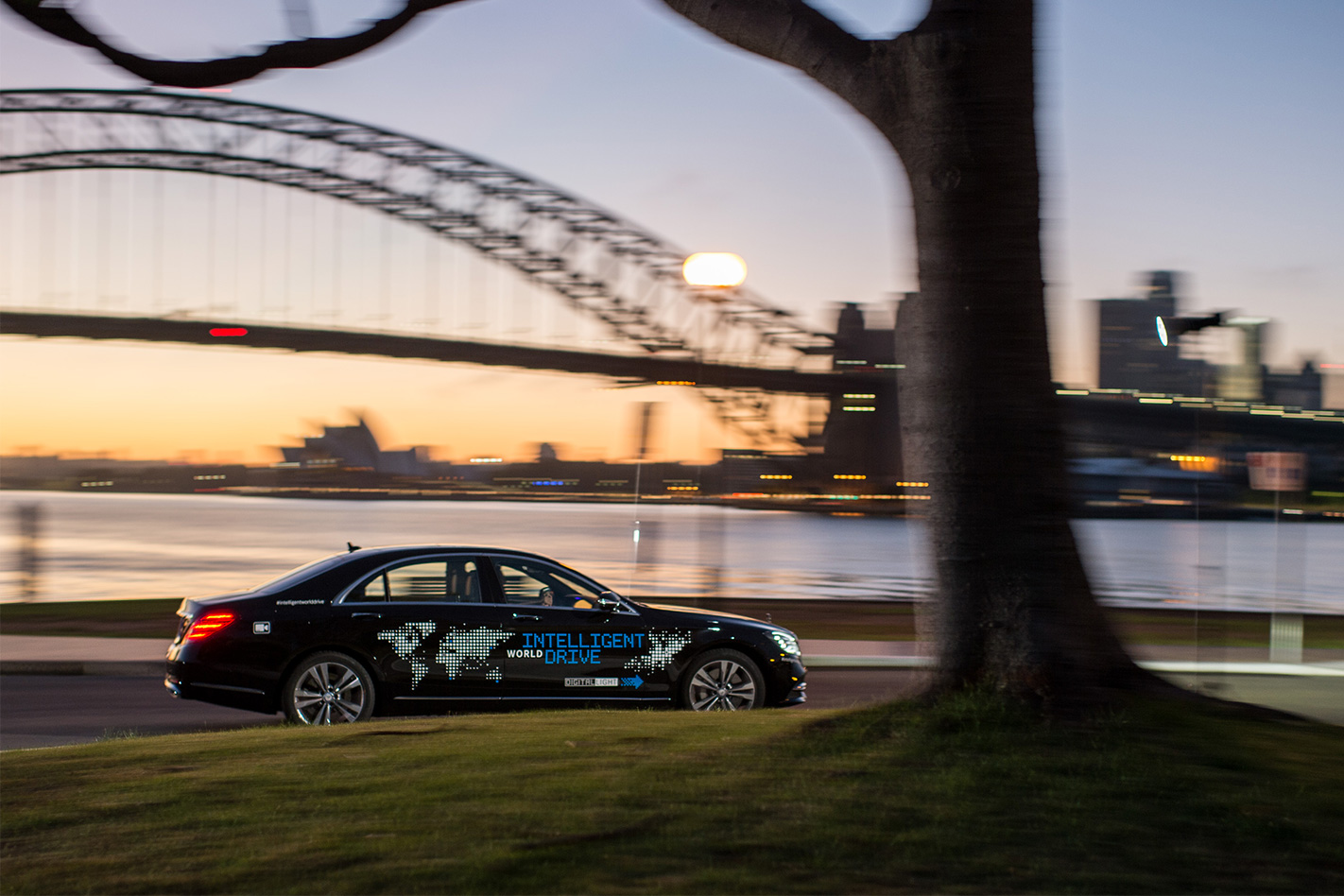
The data logger in the boot of our car records 70,000 data channels, storing 6GB of data every 30 seconds. “At higher automation, the map is a basic sensor,” says Haab.
His brow furrows as he scans his incoming data while the S-Class blitzes past a logging truck, noticing when the monitor eventually fuses radar and camera signatures. It’s fascinating to see the car think, but it’s also sobering to understand the current limitations of this tech.
So yes, the future’s coming. Just don’t expect it tomorrow.
HARLEY Earl moved into his new office in GM’s vast Warren Technical Center on Friday, September 16, 1955. Almost 61 years and six vice presidents of design later, Michael Simcoe pulled up his chair behind the same huge cherry wood desk on Friday, July 1, 2016.
In true Groundhog Day style, the office remains visually identical across the six decades.
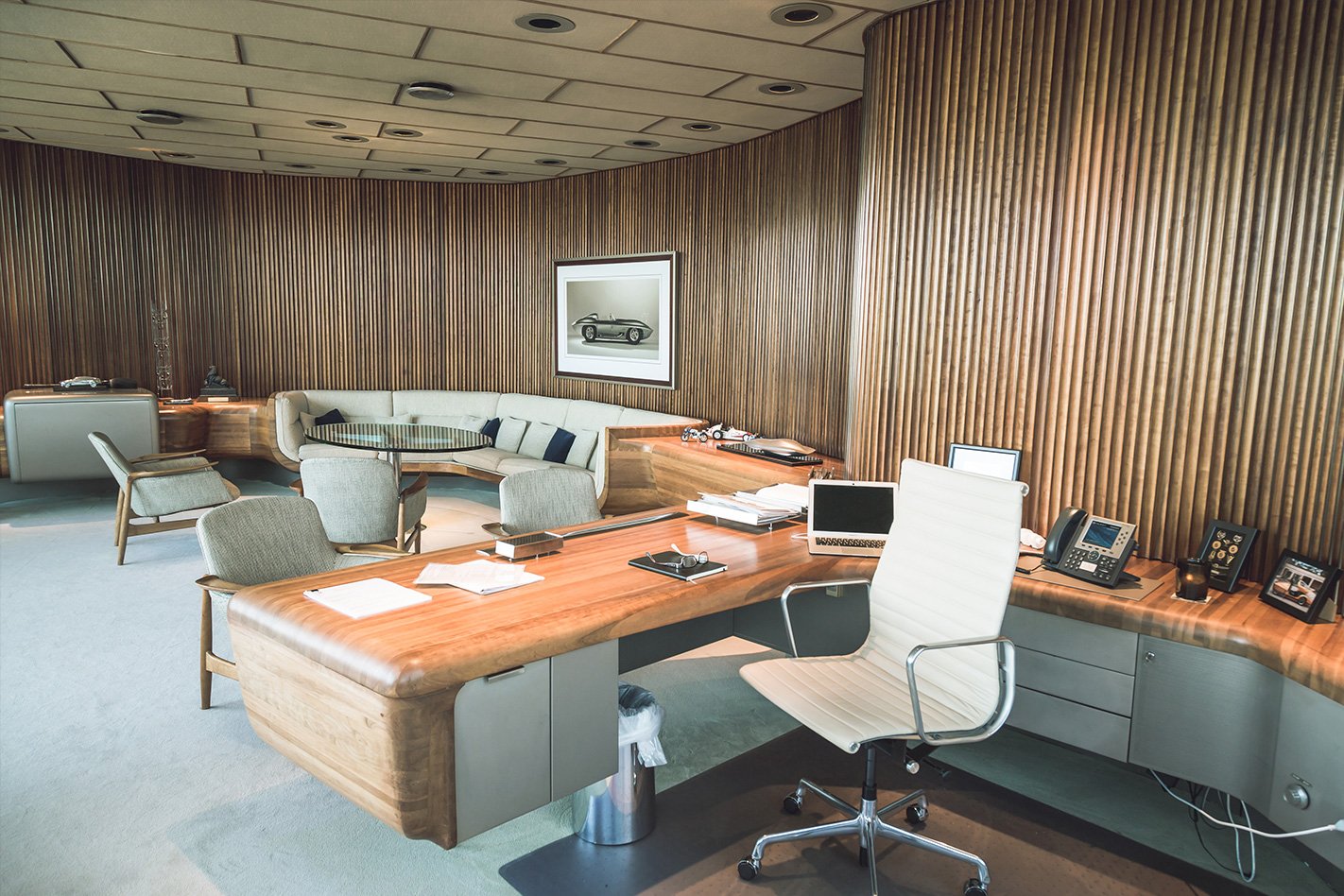
Only the mostly hidden updated equipment and technology provide a clue that this is 2017 and not 1955. To this day the spacious, corner executive suite, delivering the finest view of the 287-hectare Technical Center campus, with its 20-metre high, silver hemispherical domed styling auditorium and 9.3-hectare lake, remains one of the world’s great offices.
Nobody was surprised when, in 2014, GM’s Warren Technical Center was added to the list of USA National Historic Landmark buildings that also includes the Statue of Liberty and the White House.
“I’m just the current occupier,” says Simcoe. “The custodian; so it’s also my job to maintain it.” Mike pauses, before adding, “It is the best office in the world.” No argument from me.
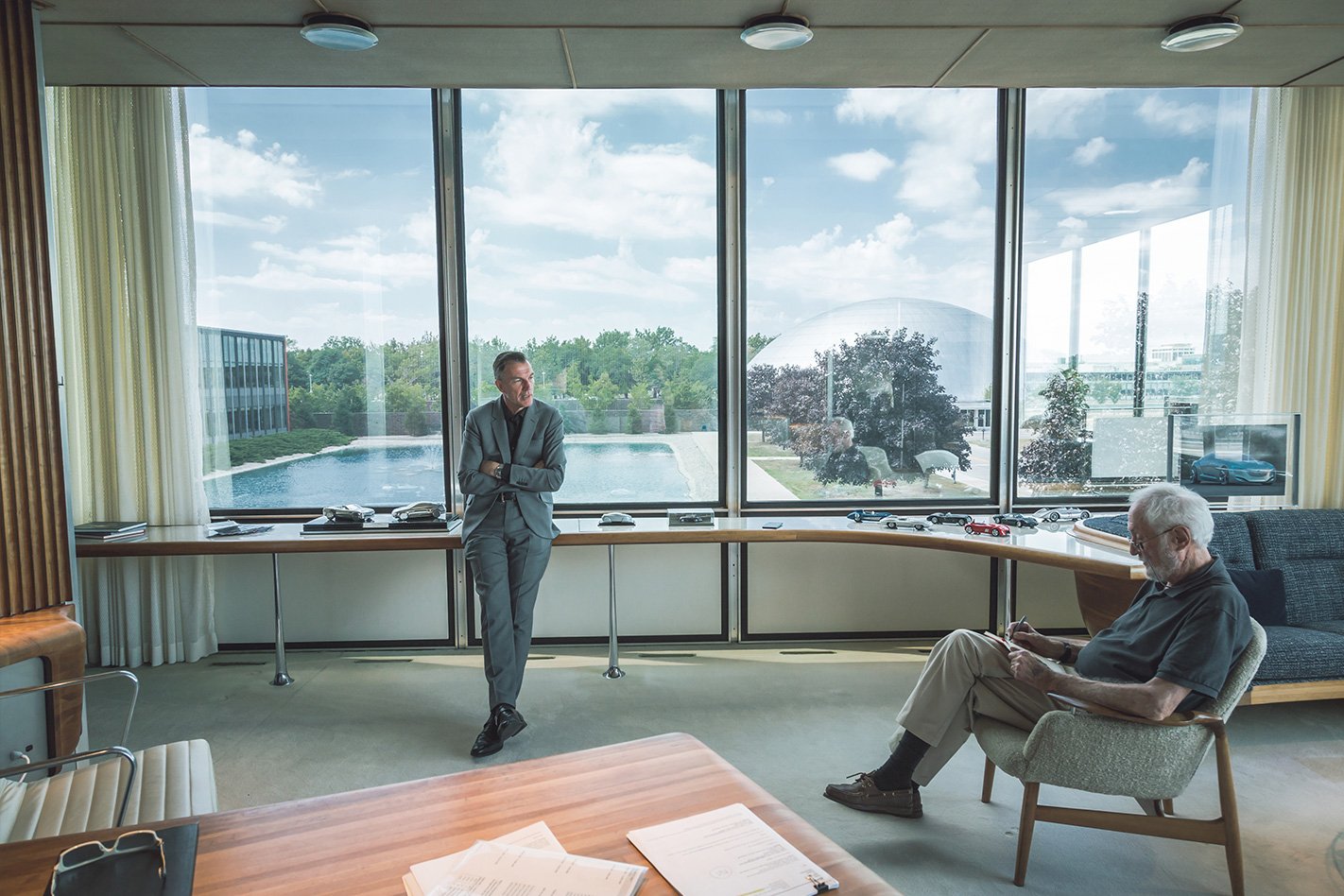
To get to Simcoe you must pass through a central entry area with space for two administrative assistants. The two main offices are separated by a serpentine wall, rambling from the bathrooms (in the rear area) around the exquisite desk which almost encircles a seating area for meetings, and eventually rolling past a TV console to the entry. All the non-glass areas are undulating curves.
Cherrywood-finished walls are lined by individual vertical strips of ribbed aluminium; the ceiling is covered in beige fabric, cross-hatched with cherry strips. The glass coffee table can be raised electronically for meetings, a desk lamp rises from its flush position at the push of a button, while low down on the side of the desk are radio, light and temperature controls. In 1955 this was a technological fantasy, its beauty undiminished in 2017.
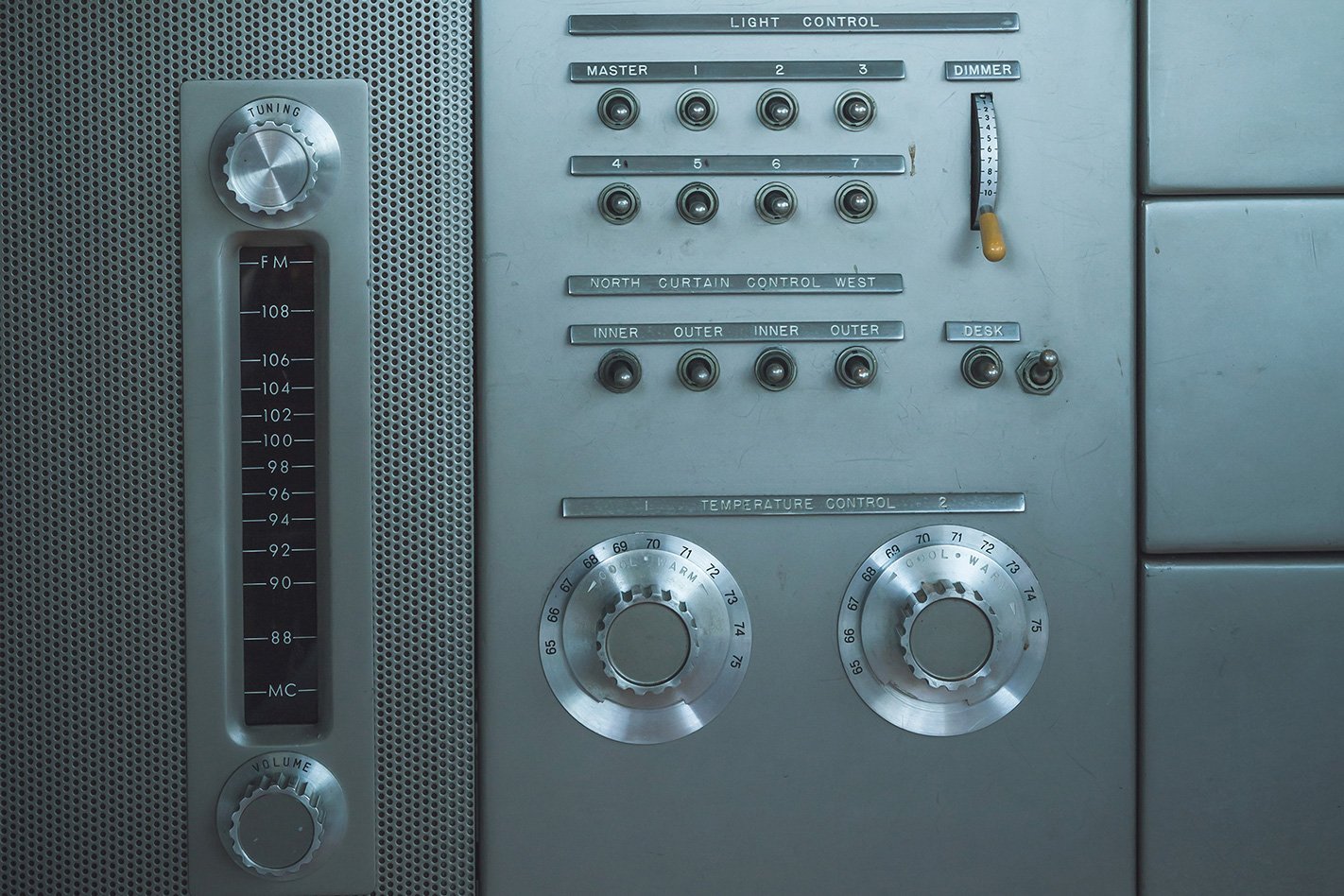
According to Chuck Jordan, the fourth VP of GM design, “Mister Earl [as he was known to all who worked in design] wanted his desk and the interconnecting furniture to simulate rounded, wooden die models.”
“Everything in here is quite deliberate” says Simcoe. “The sense to it all, the height of the furniture. You’ll notice, if you sit in a seat in front of the desk and I’m sitting in mine, you are sitting lower.”

GM engaged famous architects Eero Saarinen and Associates to conceive the 26-building facility. Even today it all looks amazingly modern. Engineering staff began occupancy in July 1949. The last building constructed was for Styling with studios for each of the GM Divisions: Chevrolet, Pontiac, Oldsmobile, Buick, Cadillac and GMC Truck and Coach, as well as Frigidaire and other non-automotive divisions.
Photographer Wielecki is enchanted by the office, its detail and especially the desk. He works steadily while Simcoe and I talk. I notice a model of the Holden Coupe 60, the proposal for the third generation Monaro.
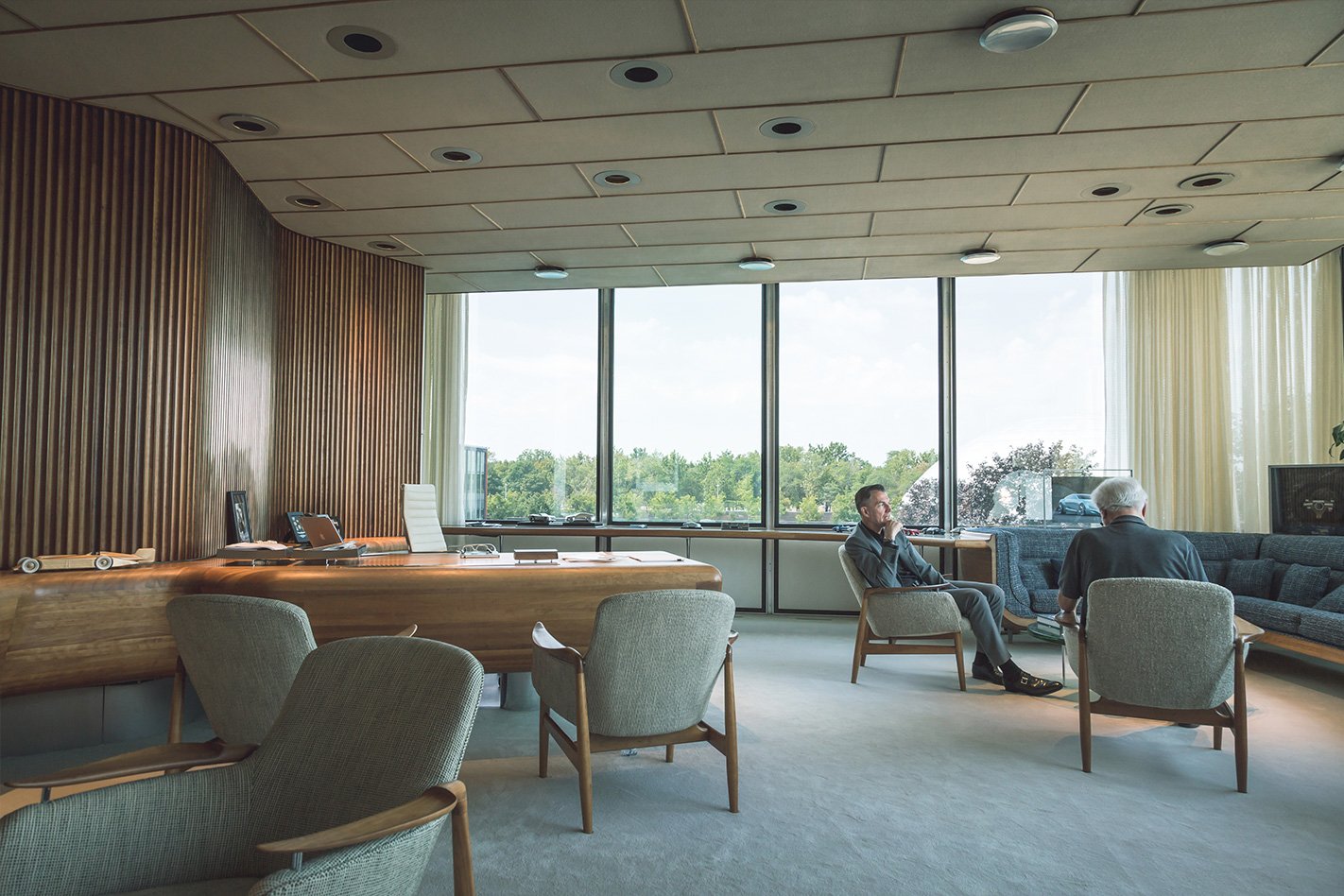
Arriving in Warren around 6:15am, Simcoe estimates he spends about 20 percent of a normal 12-hour day in the office; less time than in his previous role as head of GM’s Asia-Pacific design where, with Detroit operating 15 hours behind Melbourne, he was required frequently for telephone conferences.
“I’m either in meetings here on site or at the engineering centre four or five times a week and that determines how much time I spend in the studios.”
Mark Reuss, Simcoe’s boss and chief of all product development, also has an office in the design building.

What, if any changes has Simcoe dared make to Earl’s office?
“None. Oh, my God. Basically you come in here with your family photographs, models and a comfortable chair.” He grins. “It’s a Herman Miller chair, suitably tall so that I can look down on people.”
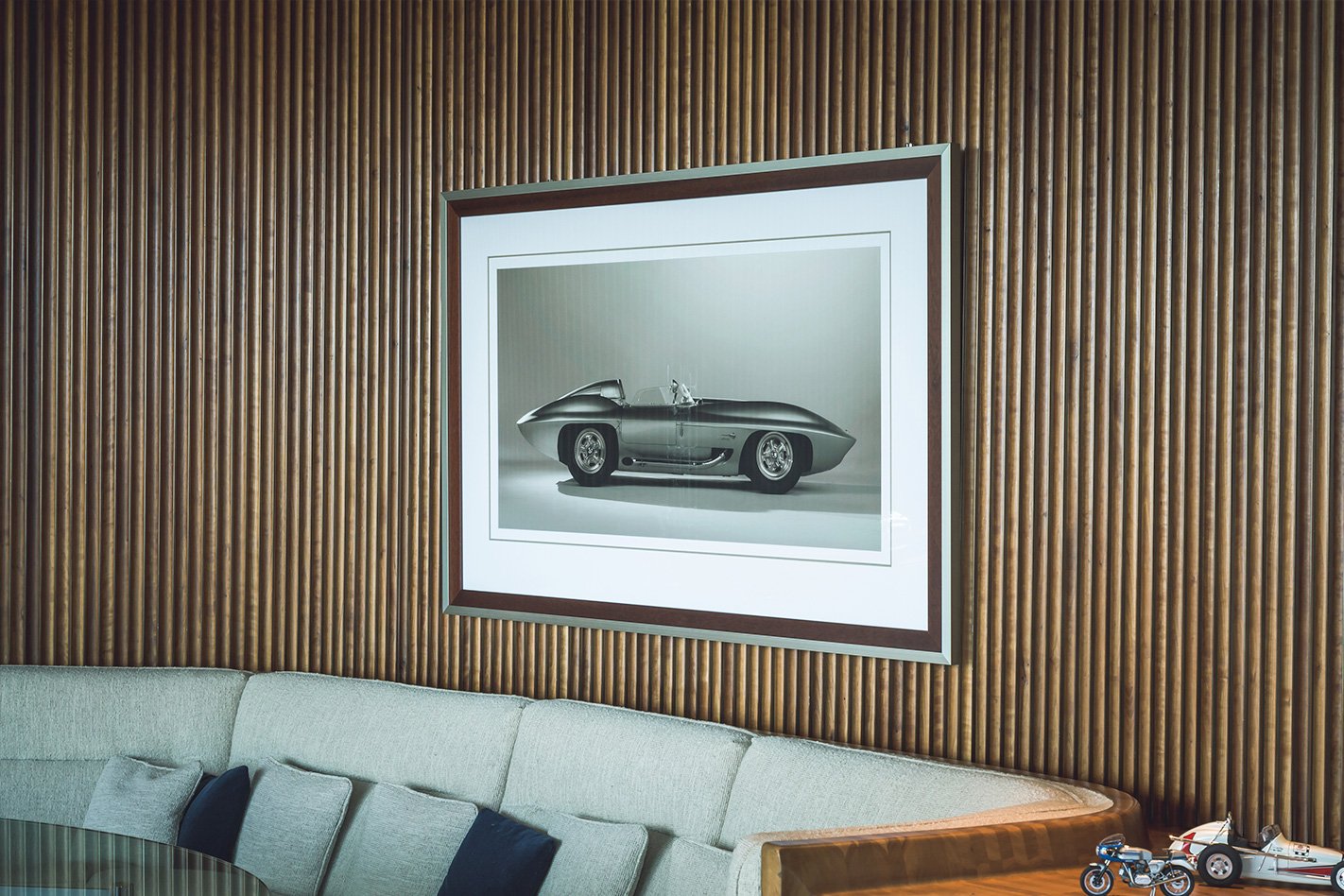
“It’s an interesting intersection between where the Italians were and where Mitchell wanted to go,” explains Simcoe. “The very simple aero forms, like Alfas, were an interesting mix of Europe’s aero ideals and Mitchell’s desire to create new forms.”
Simcoe took over on July 1, 2016 though he had moved to Detroit in mid-May the same year for a transition period with former boss Ed Welburn. What changes has he made as head of design?
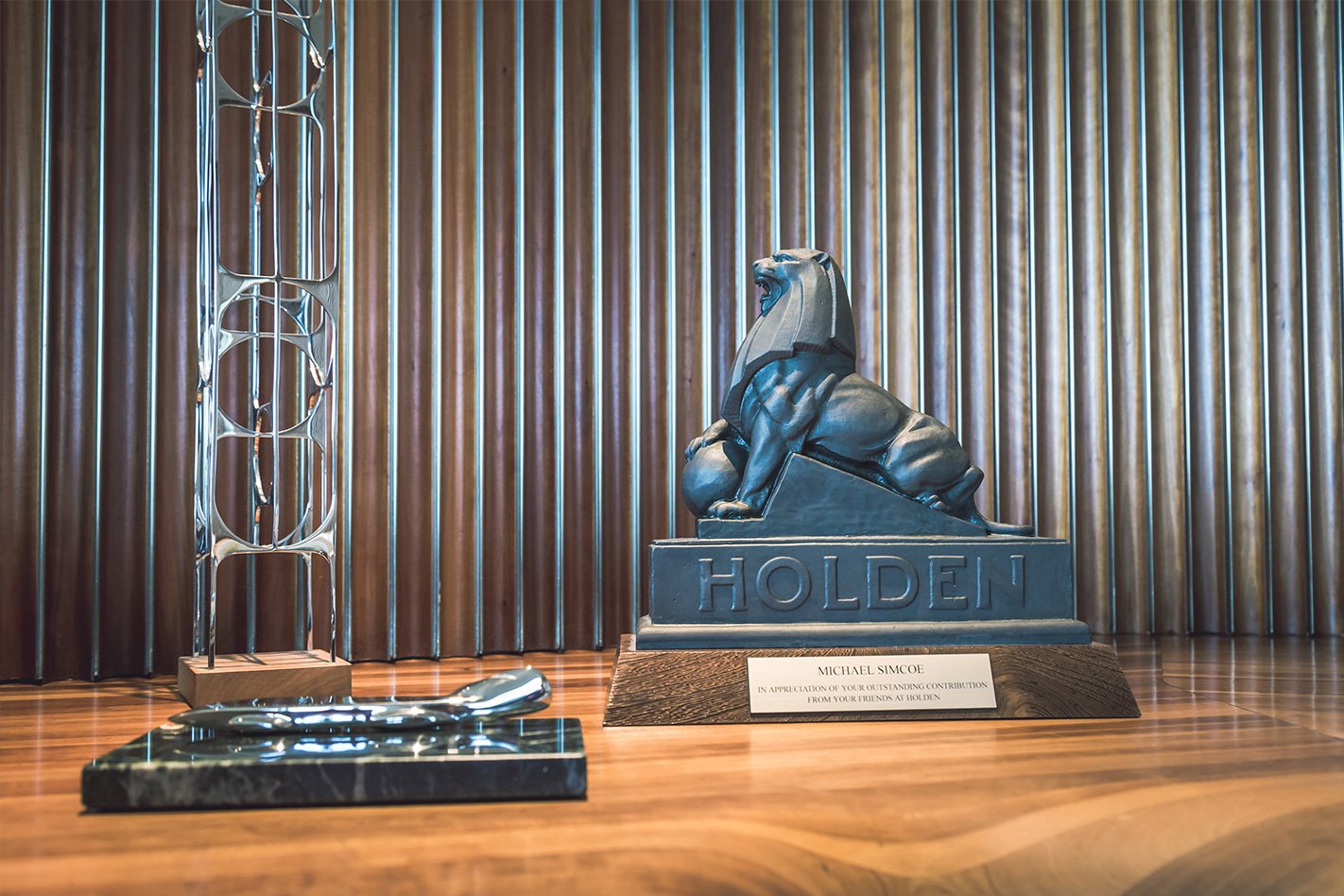
Then he gets serious. “Mostly the intent was to come in and not rock the boat too much. The team here are hugely competent and very creative so to come in and de-stablish the place would have affected that. What was important was to keep everyone going in the same direction and doing the programs they were already doing. We made some structural changes that I was aware needed changing and we’ll make more over time.
“In some ways I’ve been an insider [he worked in Detroit for six years in the 2000s] and have always had a network over here. I knew some of the things that people were concerned about and had an opportunity to change them. But not big sweeping changes. It’s my job to provide direction to a team of people who know what they are doing. I need to keep them inspired and enabled.”
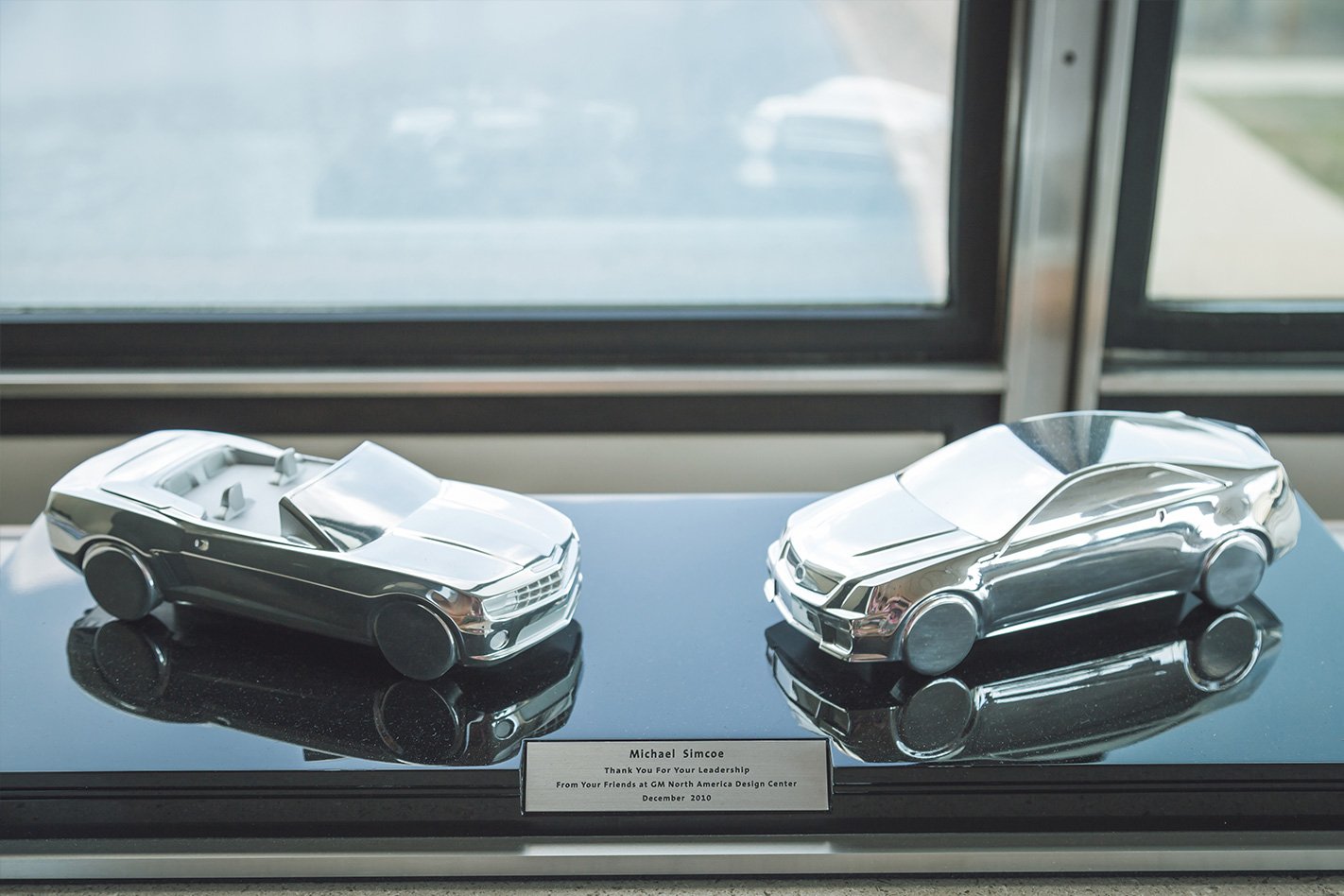
“I’m not going to tell you. I’ve got ego enough to come in and want to change some things. The biggest impact was stopping a program because it wasn’t doing what it needed to do, not in a design sense but other things were impacting design so we stopped and reset it.
“In the dome right now there are [he counts] about 20 full-size vehicle models. It’s a study around variants of one architecture.
“When Mark [Reuss] and I sat down and talked about my role and what he was expecting, it goes back to what he knows of me. I’m relatively pragmatic and I like design to be total design. Designers are not stylists; they are designers and they are holistic in their impact on a vehicle. If we can’t influence the design architecture of the vehicle, the quality of the vehicle and the function of the function of the vehicle, then we are not doing our job.
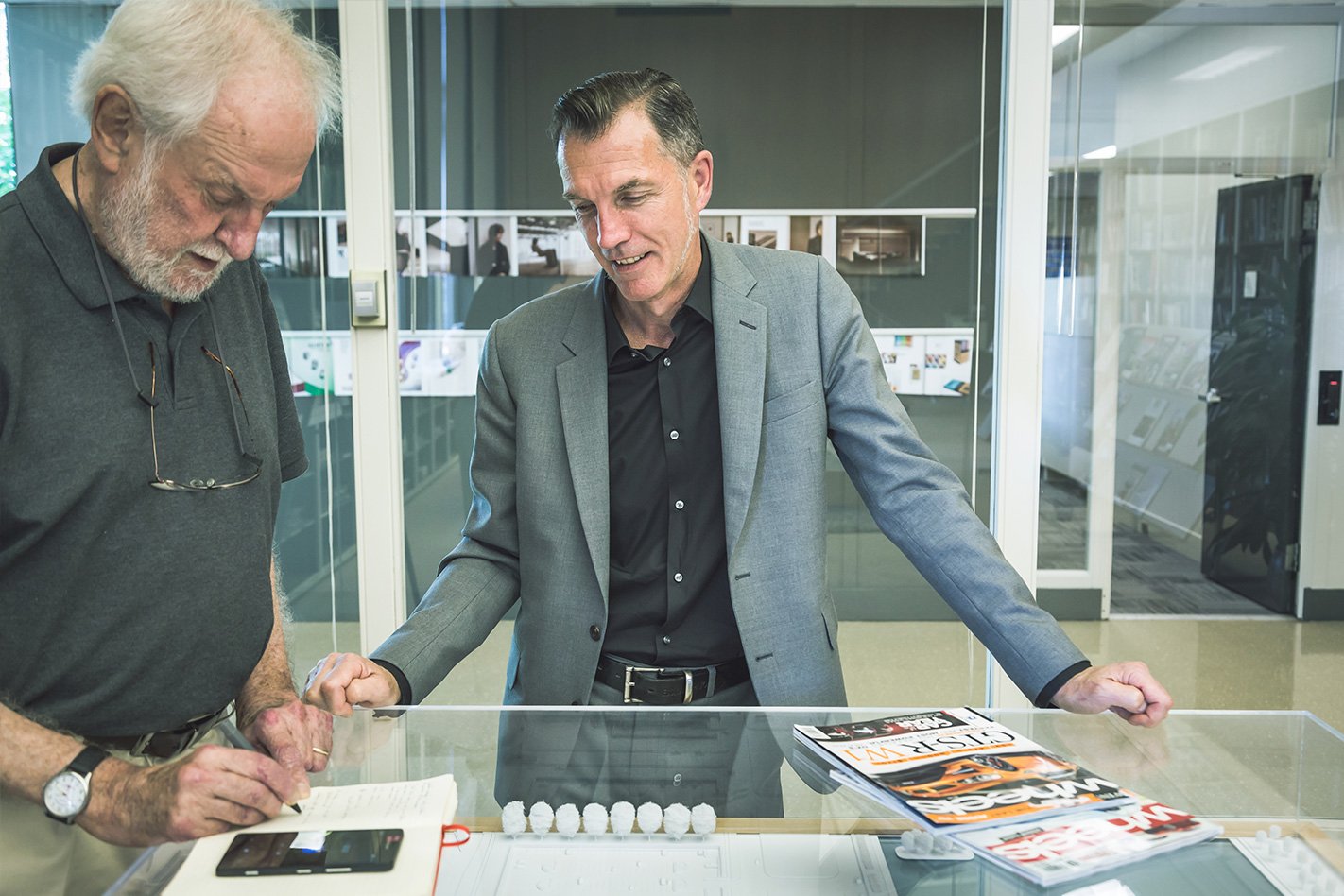
Are there designers who don’t understand proportions?
“Over the years there have been people who have been stylists in the truest sense. It hasn’t held them back because they are usually supported by competent people. Nobody who fails lasts very long. There are stylists and there are designers. You need a good mix of both in a team.
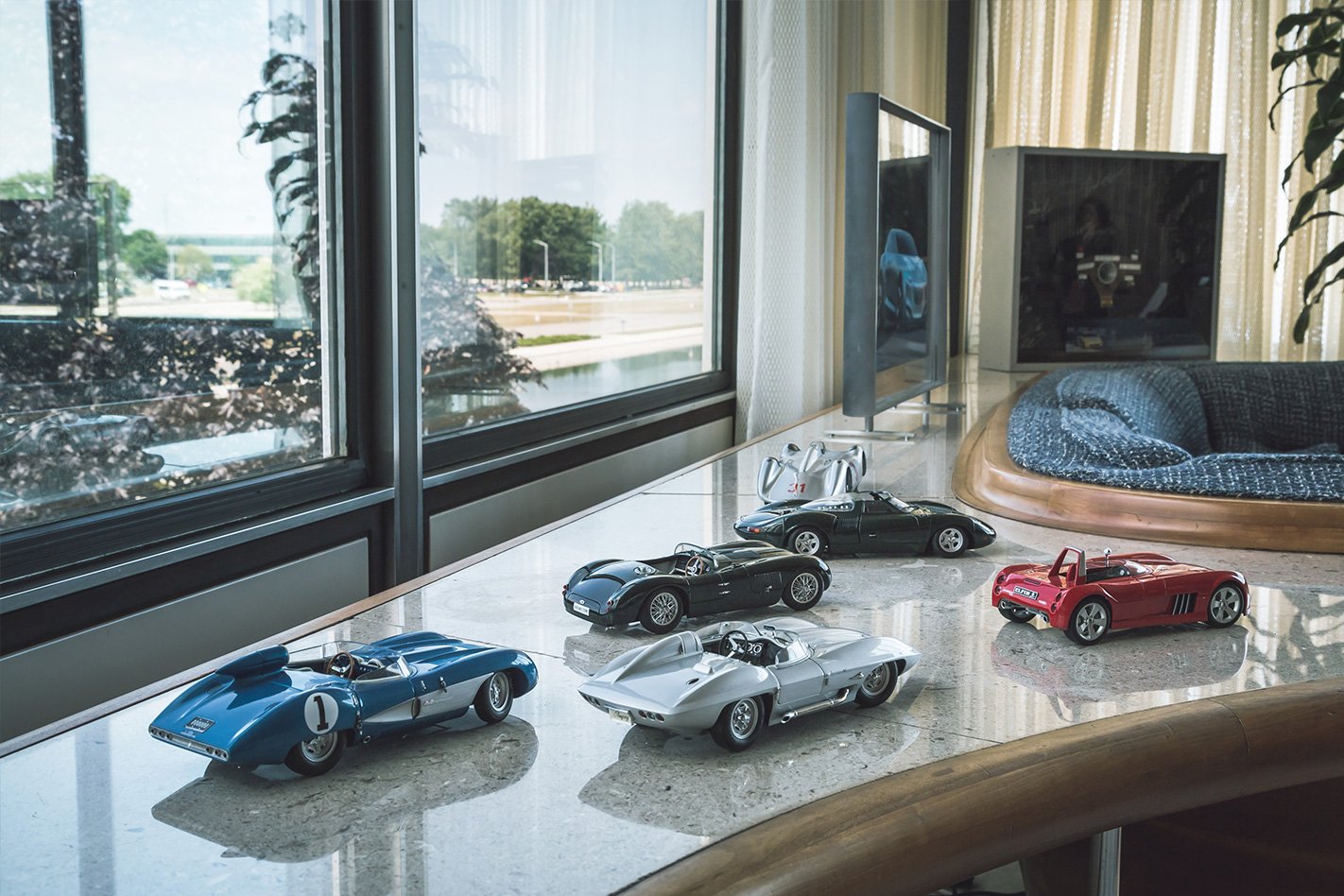
Where does Simcoe see design heading in the future?
“Design is at a nexus. You hear all the talk about autonomous and electrified vehicles, while legislation is getting more serious. There is this notion that designers are going to lose their role because autonomous cars are going to take over. That is a nonsense. The reality is designers create experience, create emotion, customers will always want that. We are a long way from a world where there won’t be choice.

Does he see a convergence between sedans and SUVs?
“That would be giving away secrets. No matter what happens, whether the market moves towards more and more SUVs, we are going to need to become more differentiated. Customers are conscious of style and the need to feel different.”

“You have to applaud them for trying to be different. What was very odd and very awkward is being worked through more interpretations and becoming more realistic. It is hard to criticise people for being brave or different. At the same time you have to have a level of judgement that is better than some of the things on the market.”
Among GM’s rivals, who does Simcoe believe is achieving the best aesthetic result?

I ask about GM’s coming new design studios.
“The nice thing about the new building [which opens in 2020 to double the studio size] is its location behind the dome. It is in a style that honours and respects the cadence of this building, without trying to ape it.”
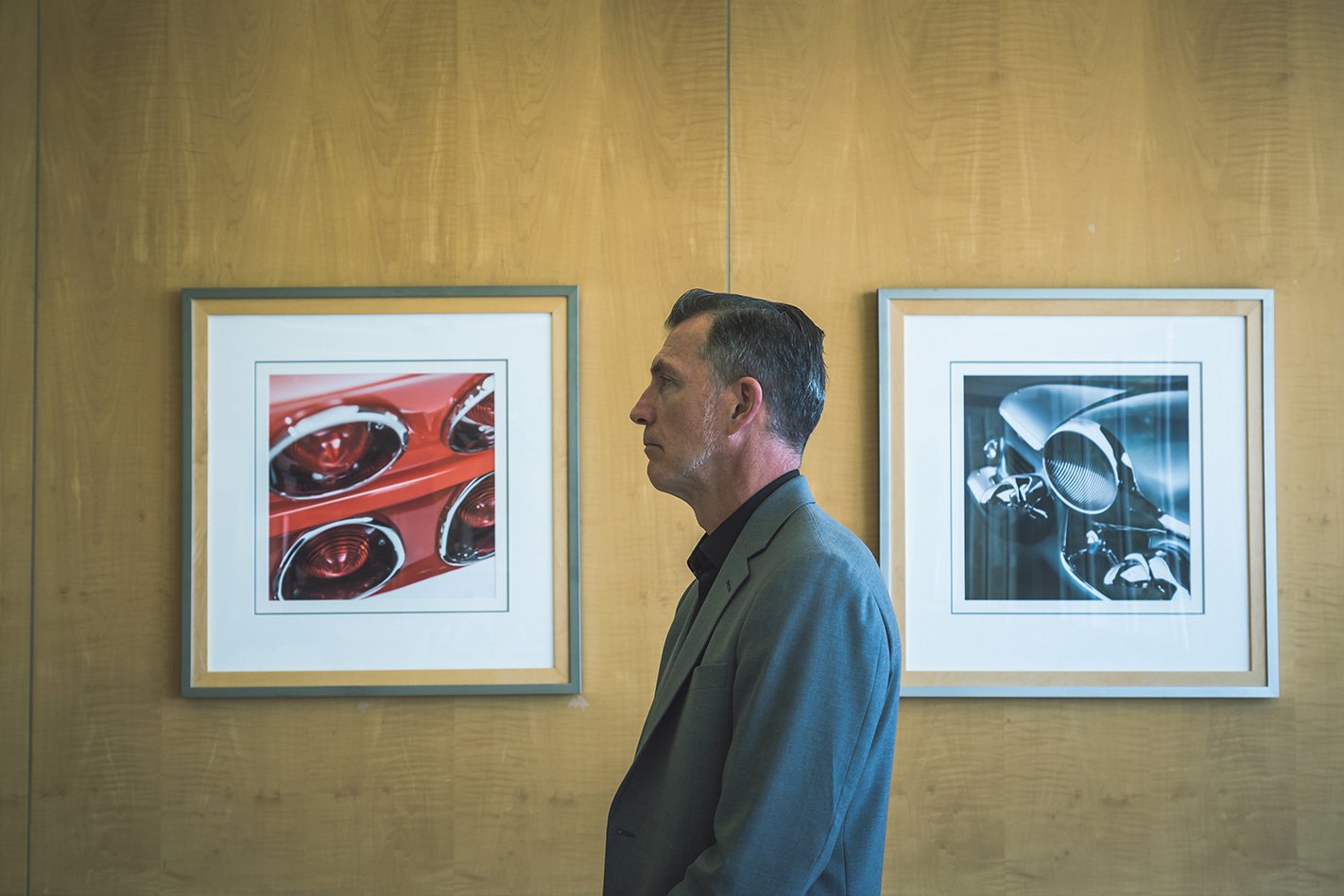
“The interesting thing about this office is that it is always different,” says Simcoe. “The light is different, the soft shapes, it lights up differently every day and has different light signatures within the room itself. I open the curtains and it feels like the bridge of an aircraft carrier. It’s a very commanding position. I think that was intentional.
“This is a very nice place to be.”

Never take a knife to a gun fight? Yeah, well, on the surface that might seem to be the case here.
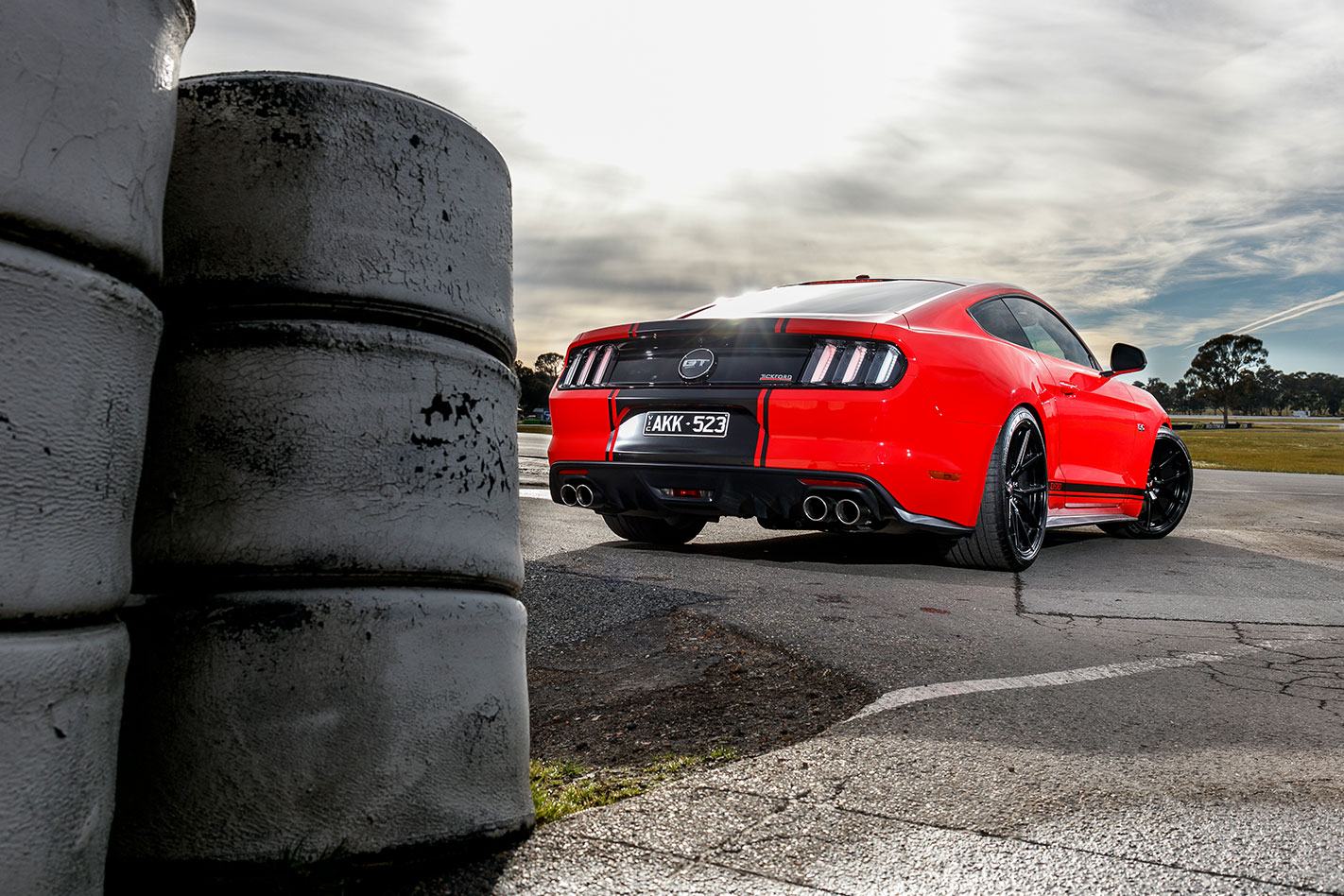
See, the Tickford 360 is one of the least modified of all the cars at Winton for this momentous occasion, so you can imagine that it’s gonna have its backside handed to it.
Where many of the other Mustang GT-based contenders have blowers making boost, the Tickford approach is rather more restrained.
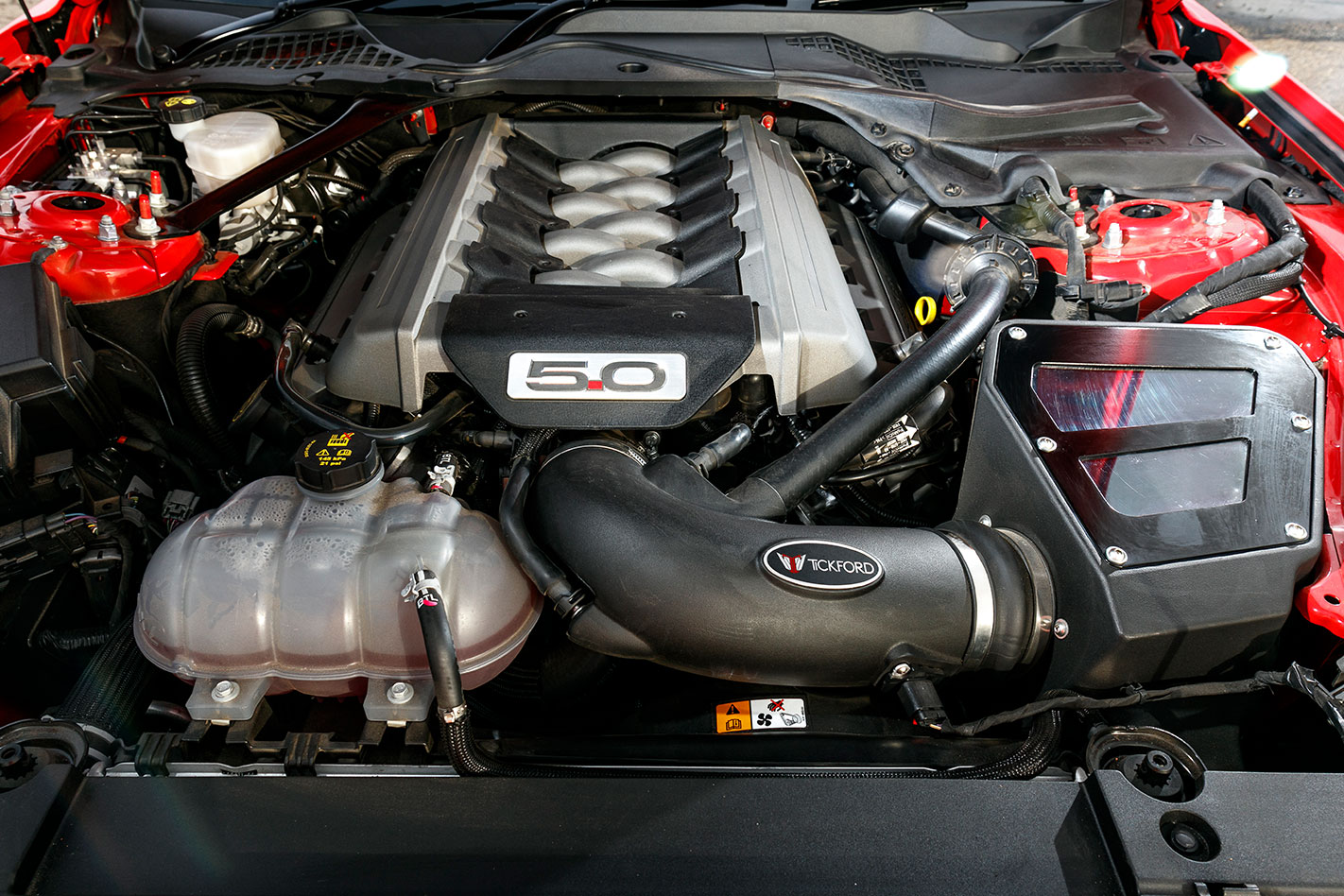
Like the Tickford EcoBoost model, you can also add 20-inch wheels and tyres, firmer suspension packages and a bunch of interior glitz, but it’s those modest engine tweaks that set the mood for this car.
And when you break down the numbers, the thing acquits itself pretty well. Okay, the stock braking hardware means it’s nothing special in that particular sphere of endeavour, but even a Mustang on the standard stoppers hauls up better than some of the modded cars without enough heat in the rotors.
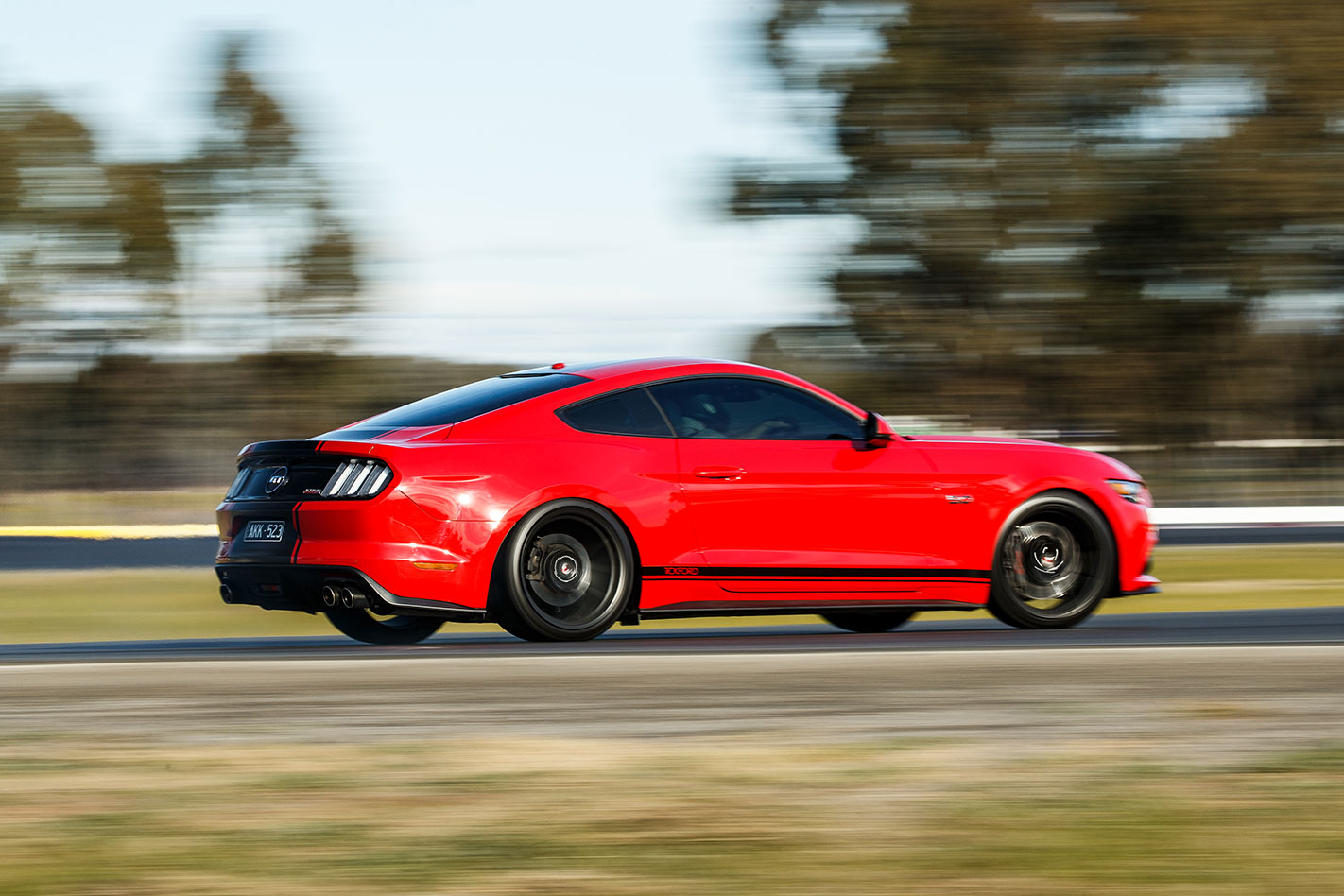
What this all proves is that provided you’re starting with a good basic platform (which the Mustang undoubtedly is) you don’t necessarily have to spend up huge to make the thing a contender. What you need to do is spend that limited money in the right places, and that’s what’s going on here. Oh, and put a maniac like Luffy in the right-hand seat; a bloke who doesn’t need much help from the car itself to be rapid.
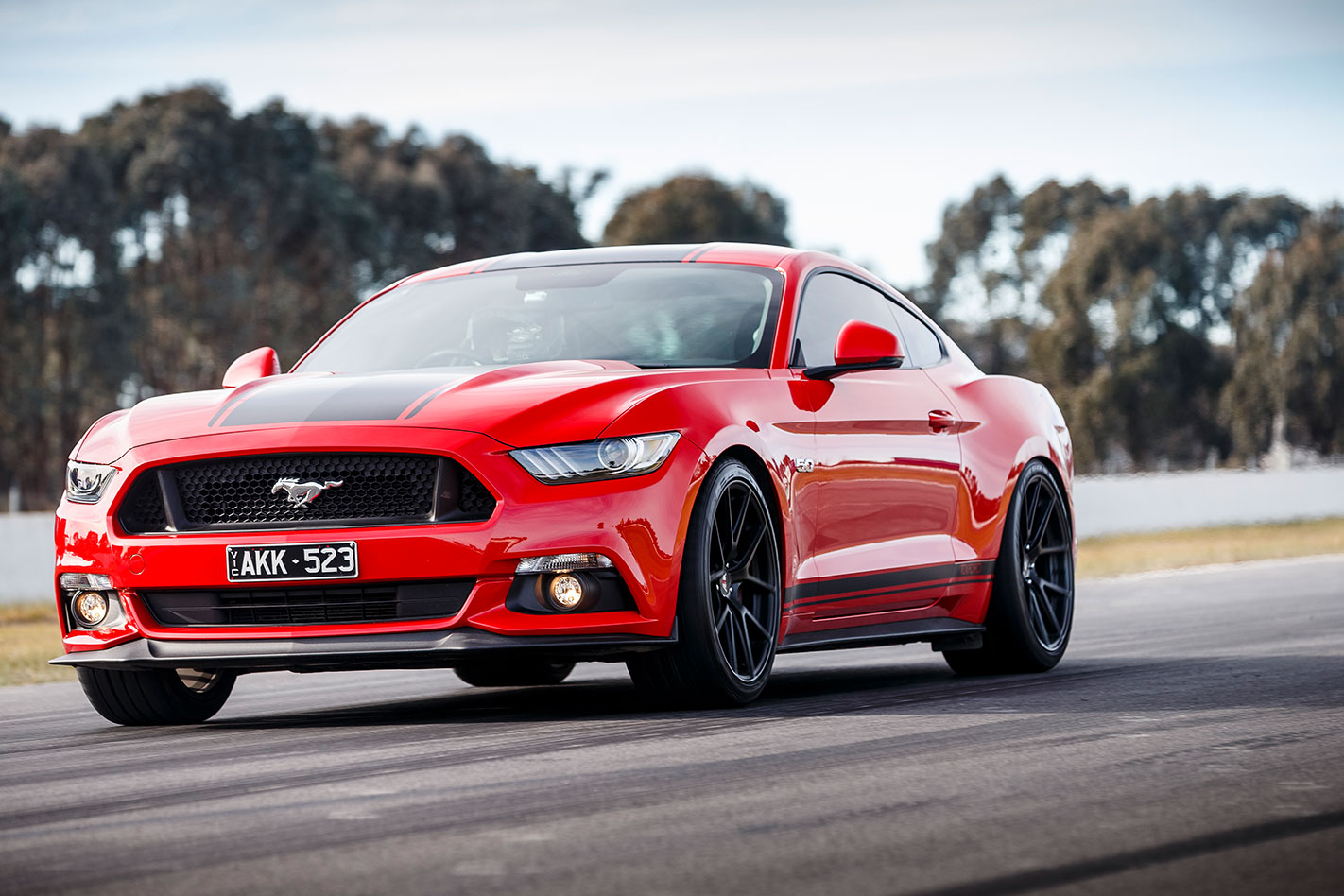
Again, when it’s Luffy at the controls, that probably doesn’t matter so much, and I’d be prepared to say that the gap between the really fast cars here and the Tickford would be greater with you or I doing the driving. Then again, the Tickford isn’t as confronting on a brute power basis, so who knows?
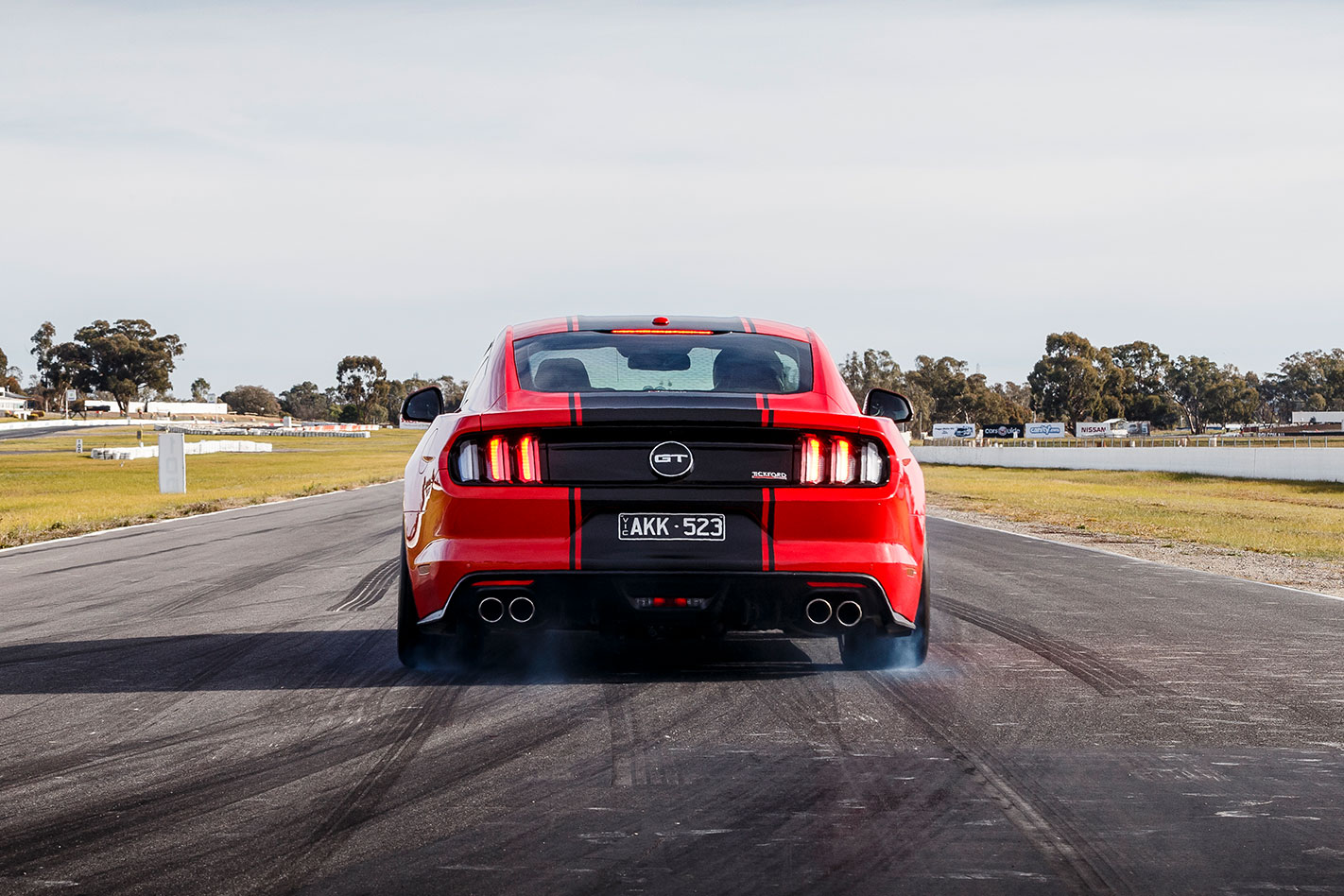
And if the 360 package isn’t enough for you, fear not; the operation has a Ford Performance/Roush blower kit in the works which promises no less than 500kW of power and 739Nm of torque.
Frankly, I really liked the sound and feel of this here atmo tune and, for me – and for most other folks if they’re being honest – this would be plenty. Although maybe I’d tidy the chassis up a bit with a dash of extra firmness, but beyond that, this is very happy days.
WARREN LUFF SAYS:
“Like I said about the other Tickord, it feels like how it should have come from the factory. On track it’s a great car to drive without being too stiff.
“One of the things you see with tuner cars is they go too stiff with the suspension and it actually doesn’t help.
“At Winton, you need the car to have some compliance, some roll and some pitch to be able to get the best out of it and this car certainly does that well.”
TICKFORD MUSTANG 360 POWER PACK SPECS
Power: 360kW Torque: 585Nm
0-100km/h: 4.95 seconds 0-400m: 13.09 seconds 80-120km/h: 2.9 seconds 100-0km/h: 38.0 metres Lap Time: 1:36.0 seconds Apex km/h: 83.53km/h Lap V-max: 186.40km/h 400m V-max: 180.52km/h
Engine: 4951cc V8, DOHC, 32v Gearbox: 6-speed manual Suspension: struts; anti-roll bar (f); multi-links, coil springs, anti-roll bar (r) Brakes: 380mm ventilated discs, 6-piston calipers (f); 330mm ventilated discs, single-piston calipers (r) Wheels: 20 x 9.5-inch (f); 20 x 11.0-inch (r) Tyres: 265/35 ZR20 (f); 295/30 ZR20 (r); Dunlop Sport Maxx GT
PARTS AND PRICES
360 Power Pack: $7500 Exhaust/Diffuser: $3990 Wheels/Tyres: $4500 Suspension: $3990 Total Mods Cost: $25,990 Vehicle Cost: $59,990 Total Cost: $85,985
Even after the 1980s proved to us that greed was not, in fact, all that good for us, the game was still going on in the 1990s. And, basically, if you didn’t have a supercar in the ’90s, you just weren’t in the game.
This feature was first published in MOTOR’s February 2011 issue.
Ferrari had its outrageous turbocharged V8 F40, Lamborghini was still fiddling with its Diablo and Porsche was doing all sorts of wild and crazy things with 911 derivatives, such as the 959. Jaguar had its aluminium honeycomb, venturi-bottomed XJ220 to lose money on, too.
And, long before the mammoth Veyron, even the Bugatti brand was dragged out of retirement to front the entirely forgettable EB110, which was to supercar success what Tonya Harding was to sportsmanship.
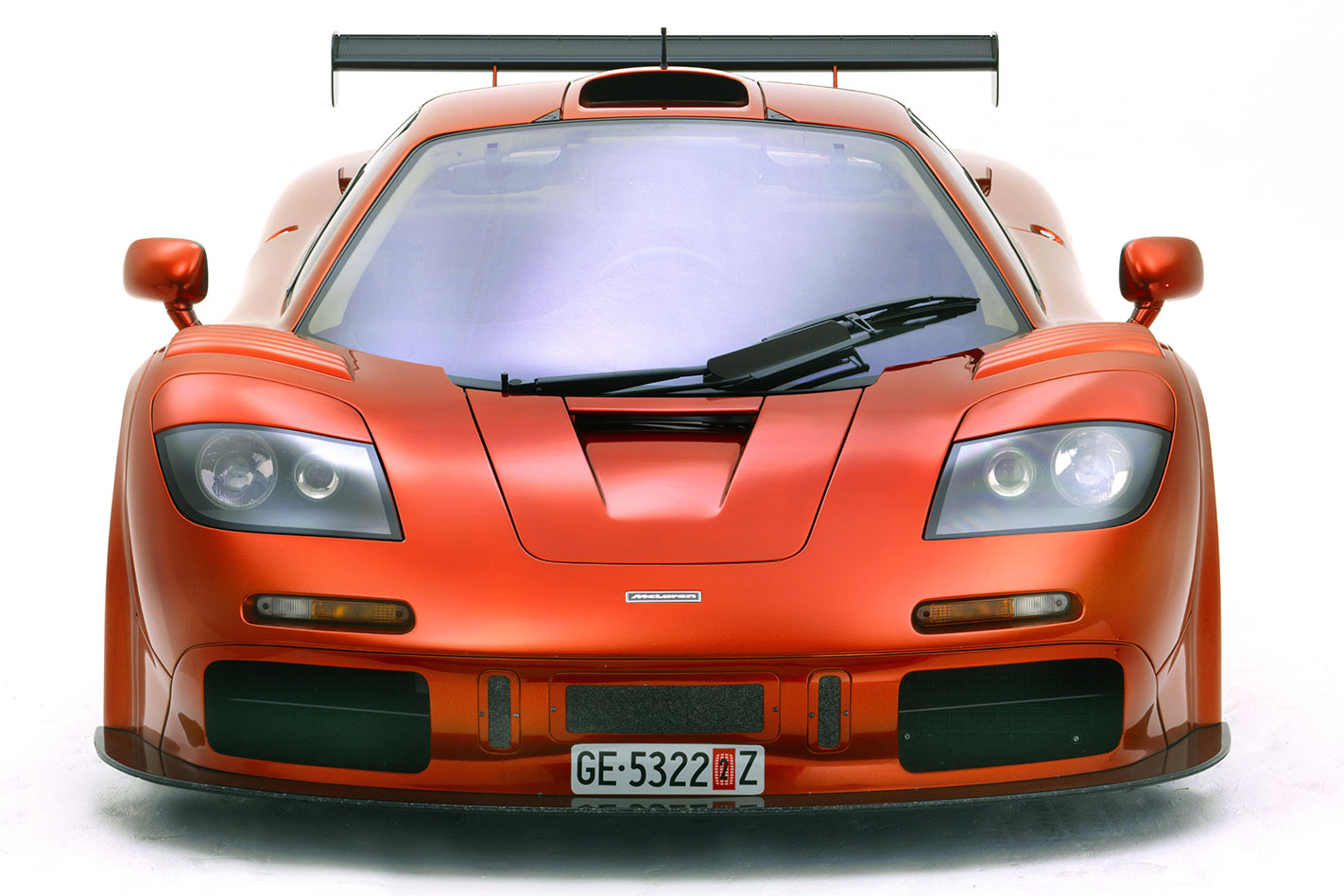
Above and beyond all of those was just one car; the legendary McLaren F1.
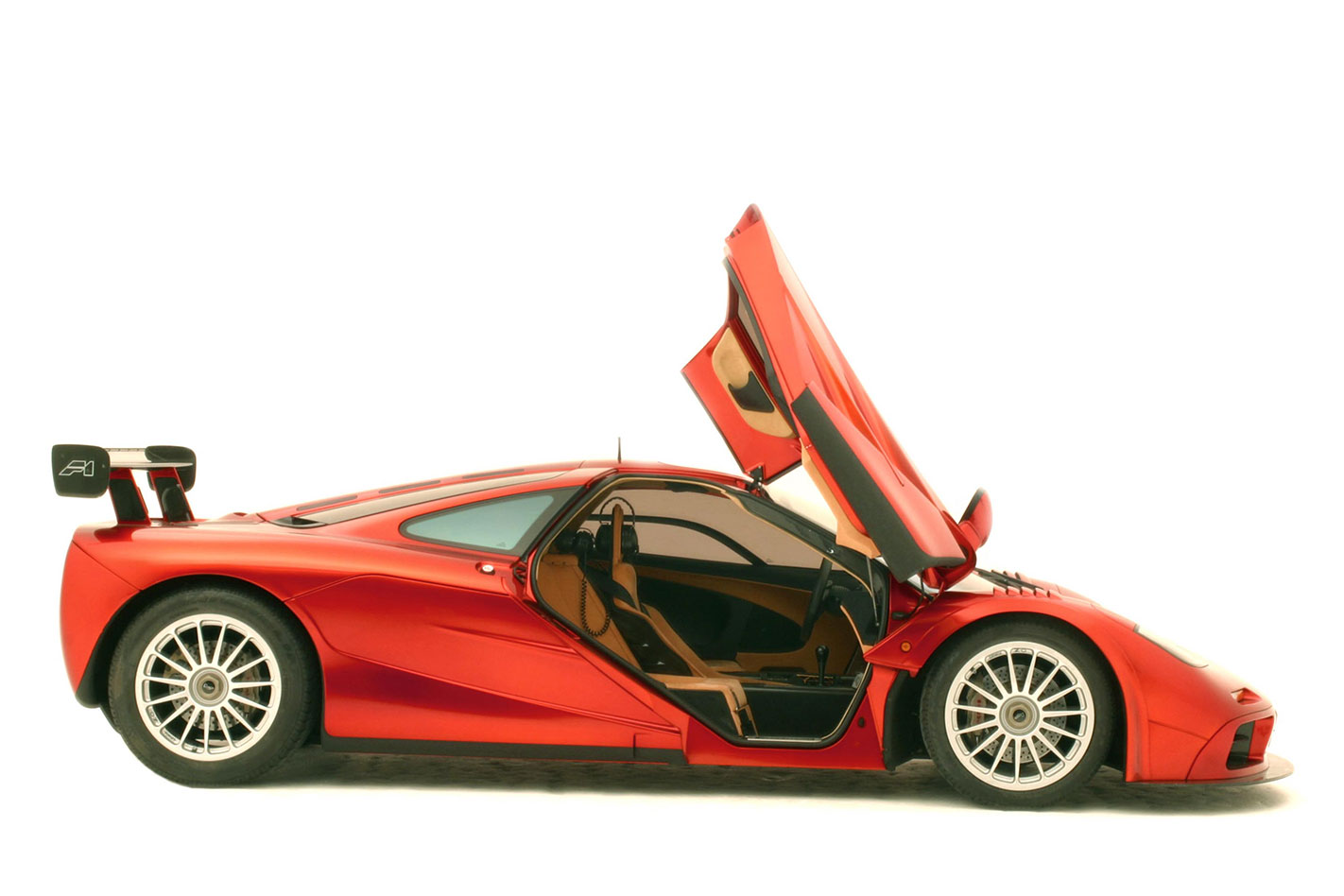
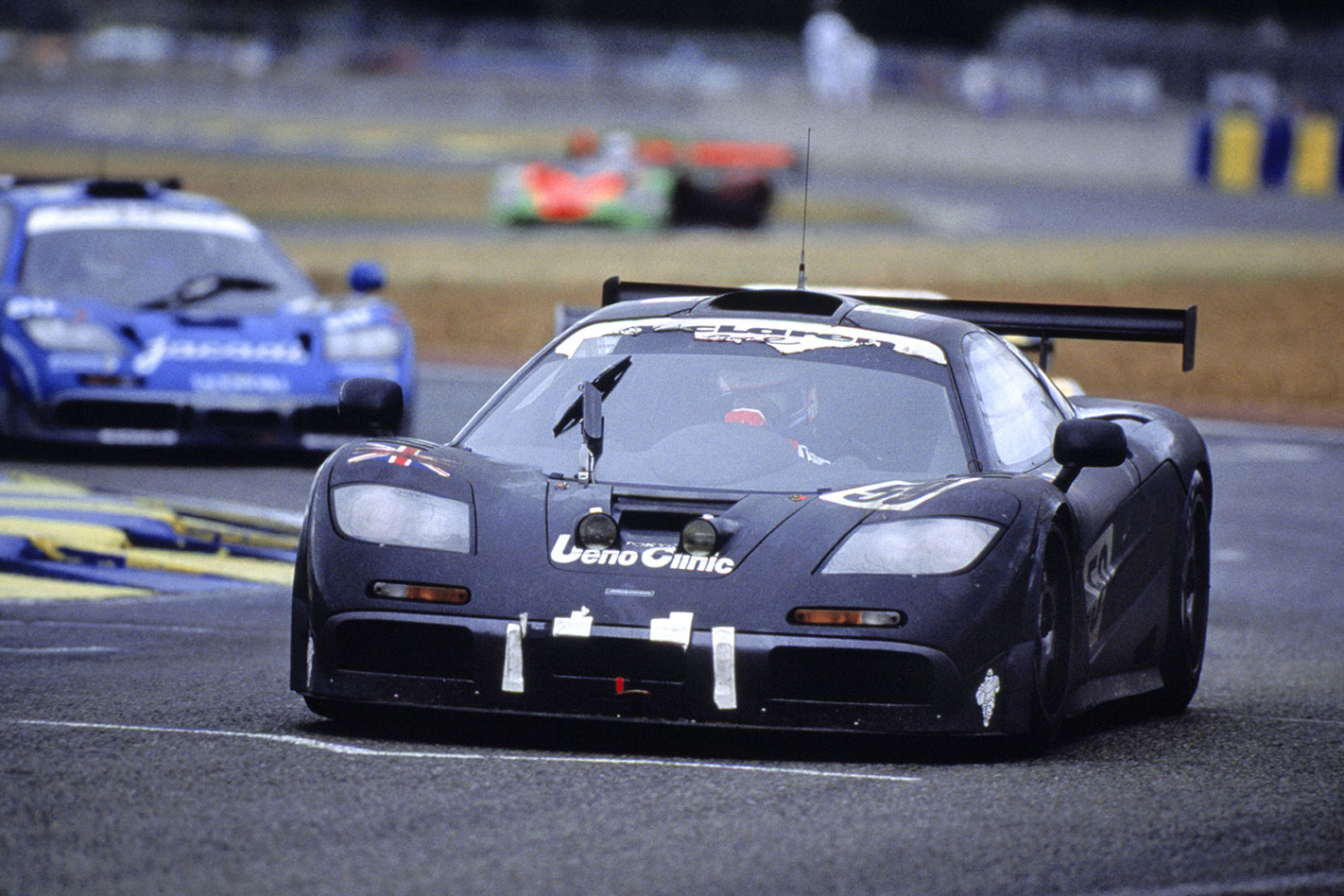
For years, nothing could touch the McLaren for what it could do and the way it did it. The F1 won Le Mans and creamed the best of the rest on street. And it did so for years and years, long after its contemporaries had passed their use-by date.
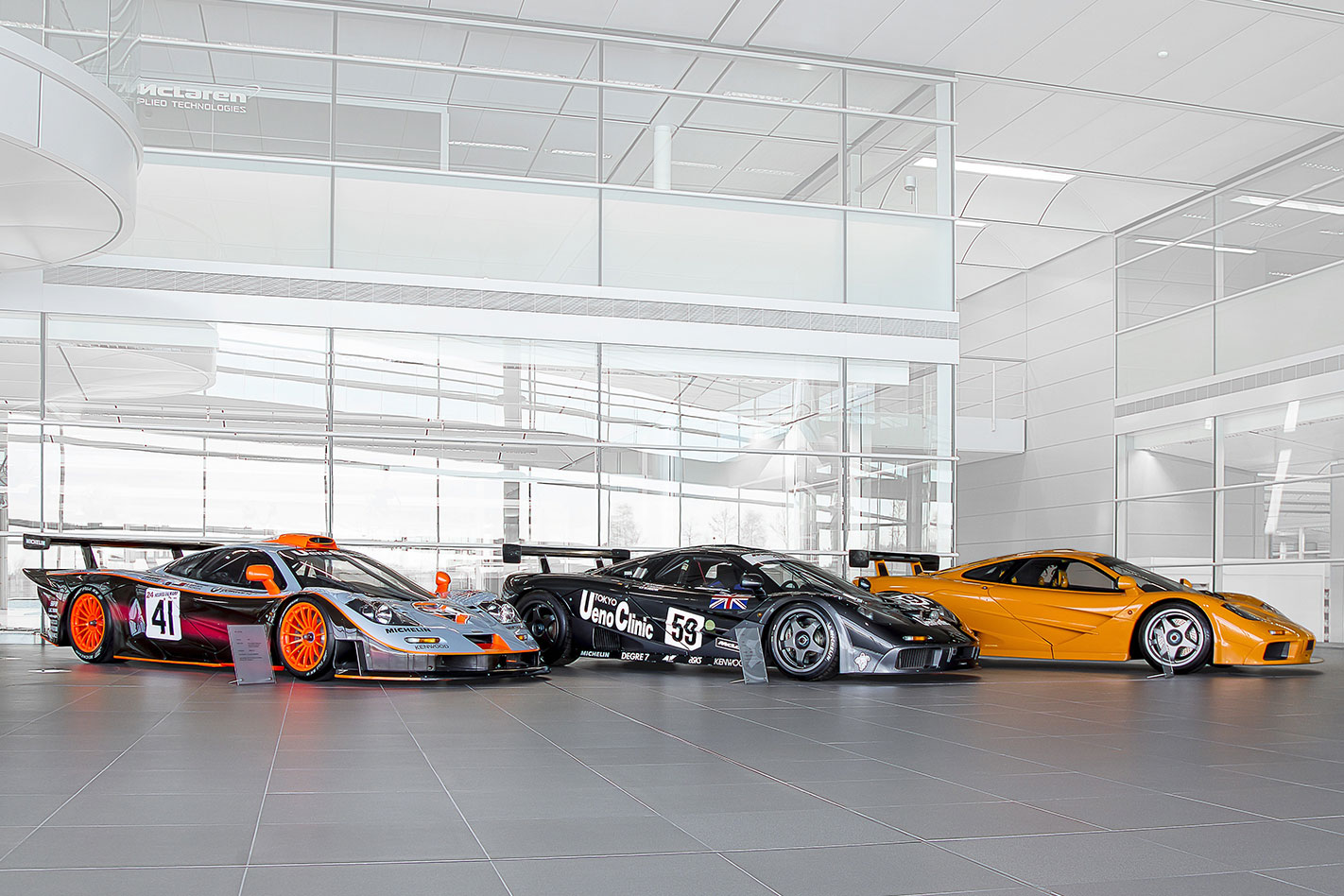
Ironically, part of the McLaren’s appeal was the fact that, in some areas, it wasn’t as outrageous as the competition.
Murray, for instance, always insisted that the car be non-turbocharged in the interests of driver control and overall reliability. And to that end, he also specified an engine that had been tried and proven before it was ever slotted between the rails of the sleekly-styled McLaren.

And that’s more or less how the F1 came to have a BMW V12 in its engine bay. Even then, it wasn’t as simple as that. At 6.1 litres, the F1 engine was bigger than the unit BMW used in its own cars and made 461kW at 7400rpm. And that was good enough for 0-100 in about 3.5secs and a top-end whack of 387km/h with the rev-limiter removed.
The rest of the development is fascinating, too.
And the F1’s safety credentials were first tested in 1993 when a test driver wearing shorts and a t-shirt rolled a prototype and walked away.
Later that year, the first production cars were ready and the world went absolutely bonkers for the thing. Mind you, it’s easy to see why.
Aside from that monster engine, the driveline consisted of a six-speed transaxle with a triple-plate carbon clutch.
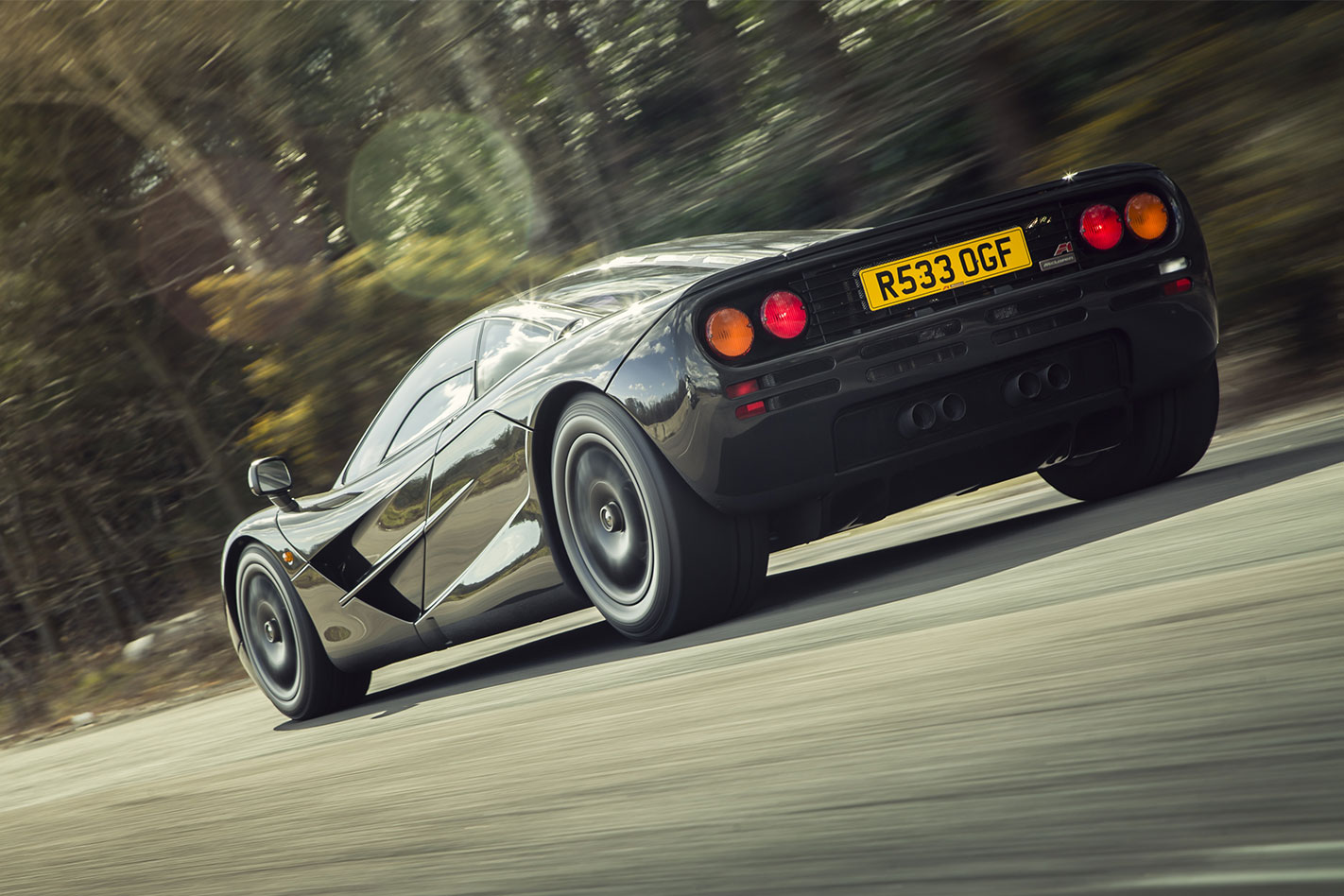
Naturally, there are double wishbones front and rear but the mass-centre of the car was designed to be equidistant from the front and rear roll-centres. And that, in a nutshell, means that the F1 doesn’t need anti-roll bars.
Then, of course, the F1 was the first production car to use a carbon-composite monocoque bodyshell.
Crazy little fact-ettes are everywhere, too; stuff like the central driving position, with a passenger’s chair mounted aft of and to each side of the driver’s pew. It meant that getting in and out was a bit trickier, but there’s nothing like sitting smack dab in the centre of the car for a feeling of control.
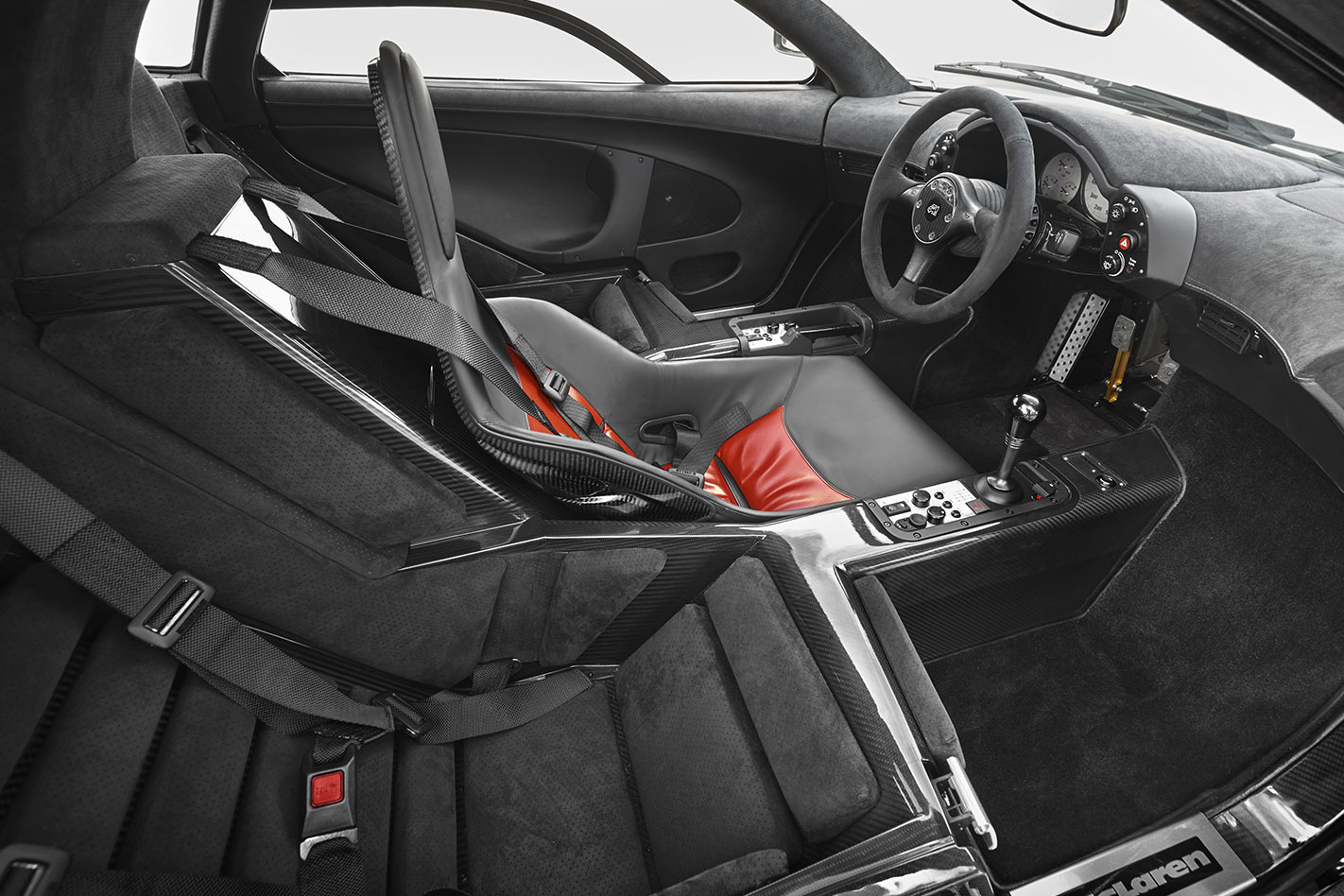
Keeping engine heat away from those composite panels required a super reflector. So Murray specified gold foil, naturally. Apparently there’s 25g of gold in each McLaren F1 road car.
It just goes on and on.
As a road car, the McLaren really shone, no question about that. But it also proved itself a very capable production-class racer as well.
But other cars also have racing pedigree, so why all the mystique surrounding the F1?
Well, the car’s actual abilities speak for themselves and there’s no doubting its credentials as a true supercar.
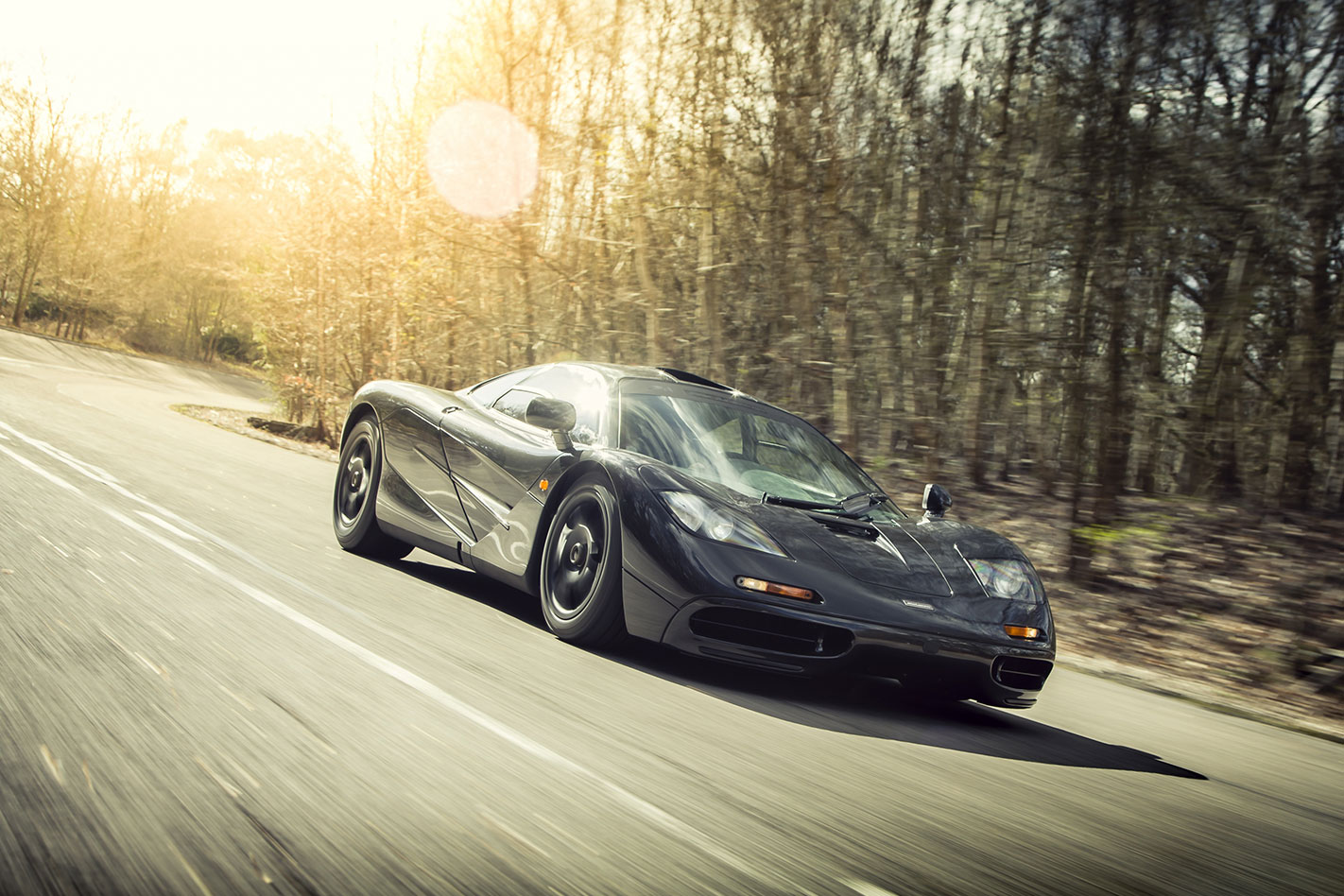
Another part of the magic is that the McLaren looked, and still looks, absolutely stunning. Even though it uses some classic supercar styling cues, like the overall wedge shape, it’s a much better looking car than either a Ferrari Enzo or the imposingly styled Bugatti Veyron. And while Lambo Murcielagos and Ferrari F430s are like excuses in a call-centre (everybody’s got one), the McLaren is still a pretty rare bird.
Yet there’s another thing the legendary F1 possesses. Perhaps most of all, the McLaren is seen as the work of a single, dedicated bloke. Gordon Murray knew what he wanted and knew how to get it. But more than that, he actually went out and bloody well did it. And that gives the F1 a distinct set of human qualities that other production supercars just seem to have missed out on.
Where do I Get One?
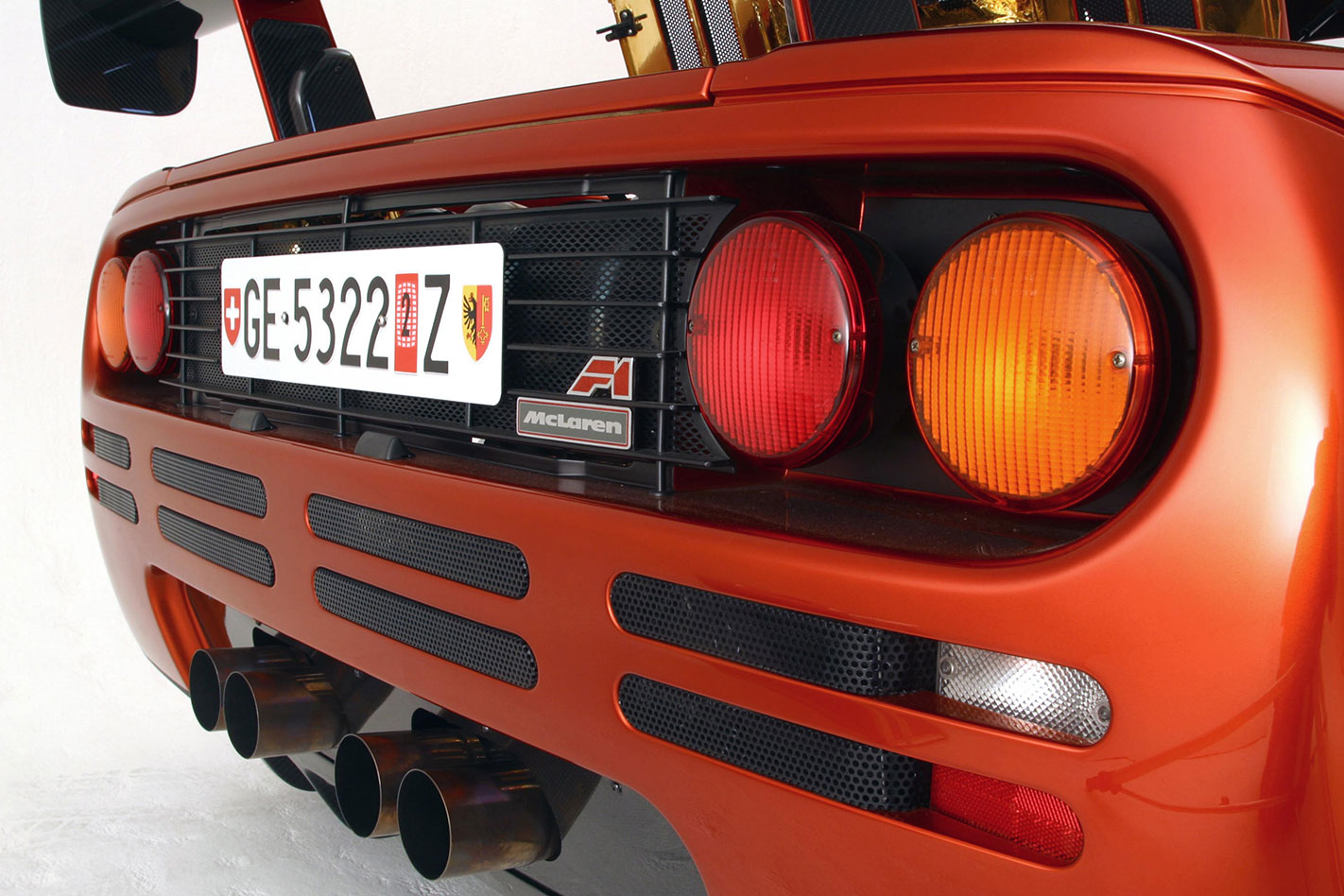
THE GOOD
1 – ABILITY The F1’s performance is everything you’ve ever imagined and then some. Apparently, they handle and stop, too.
2 – RARITY Exclusivity on four wheels doesn’t come much more gilt-edged than when you’re in a McLaren F1.
3 – MONEY MAKER As auto investments go, the F1 has got classic written all over it. There’ll always be a market for these things.
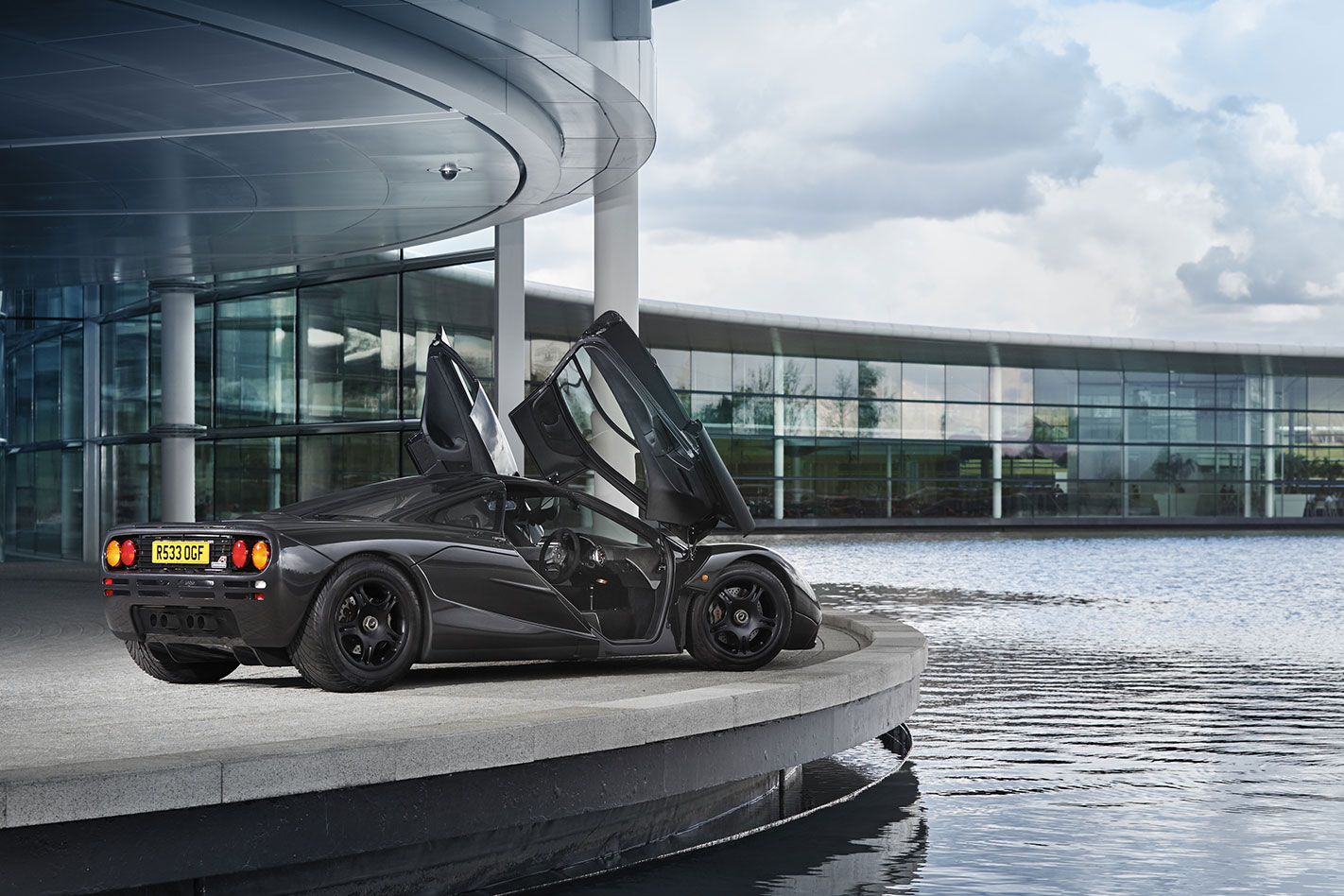
1 – SELF SERVICE Servicing doesn’t happen at K-Mart Tyre and Auto. Ditto for parts should, God forbid, you ever bend it.
2 – INSURE THIS! Getting insurance will probably be a cinch if you are over 70 and can get both parents to sign the forms for you.
3 – HANDS OFF! Valet parking? Don’t think so. Try trusting anyone or parking this baby anywhere − ever.
What is it?
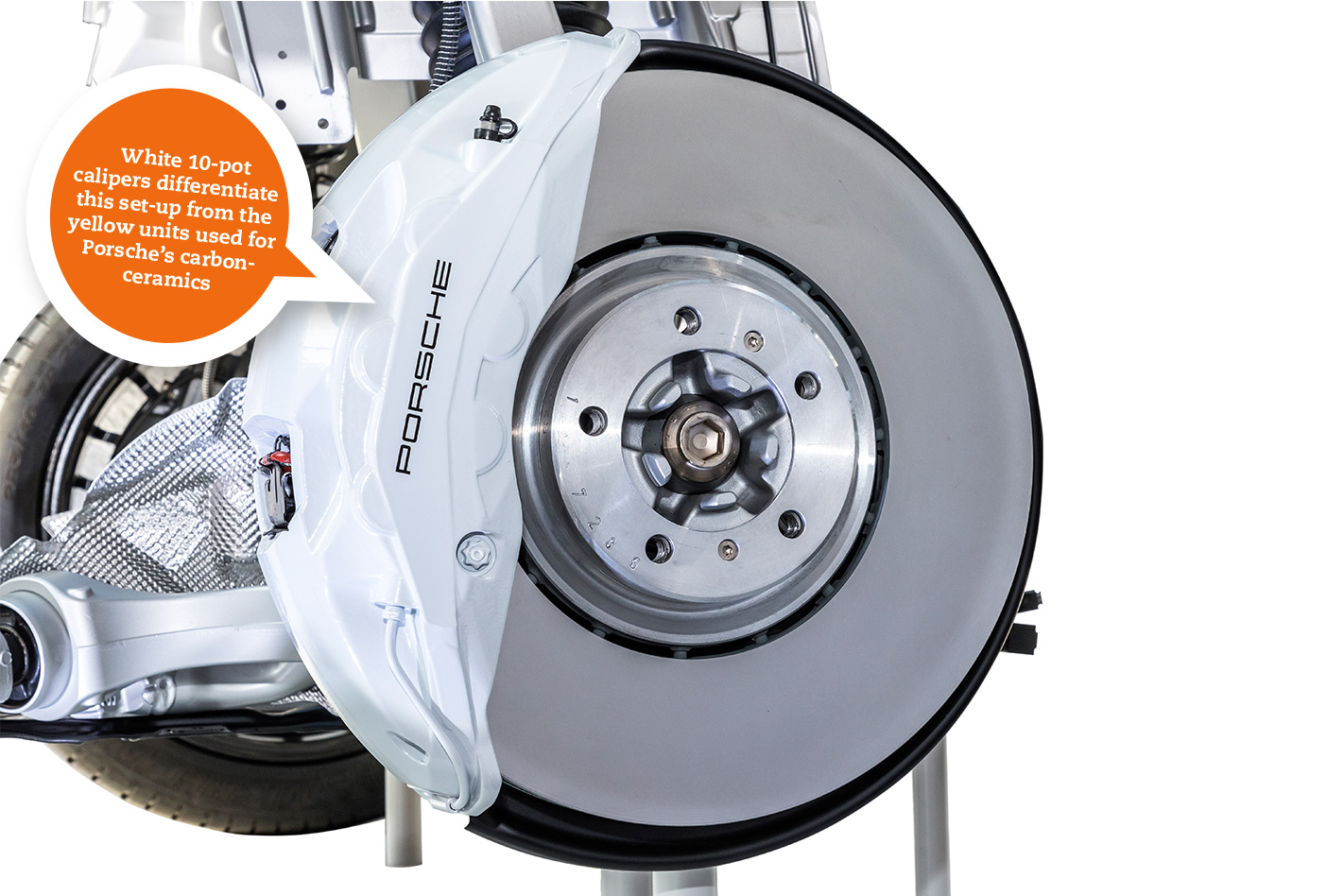
A regular cast-iron brake disc that has undergone a complex plating process to coat the surface with an ultra-hard layer of tungsten-carbide. The technology has debuted on Porsche’s third-generation Cayenne SUV but will soon appear on other models and is likely to spread to other brands as well.
How does it work?
A layer of tungsten-carbide, 100-microns thick, is applied to the friction surfaces of a regular cast-iron brake rotor in a powder form through a thermal spray process.
On contact, the very high temperature and velocity forces the ultra-hard compound to bond to the disc, creating a coating many times harder than the surface of a regular rotor.
Why does it matter?
Tungsten rotors resist wear longer than conventional iron versions and can last up to 40 percent longer, says Porsche. That offers a cost benefit that can offset the higher price of production. Importantly, the highly heat resistant coating maintains a more constant temperature and has a higher friction coefficient for more predictable braking performance under hard and frequent use.
Further, the reduced rotor wear also keeps wheels free from dust for longer. Not only are cleaner wheels more attractive but after a few kilometres of use, the discs polish to a mirror finish to further improve aesthetics. And if left for extended periods will not rust like conventional uncoated iron.
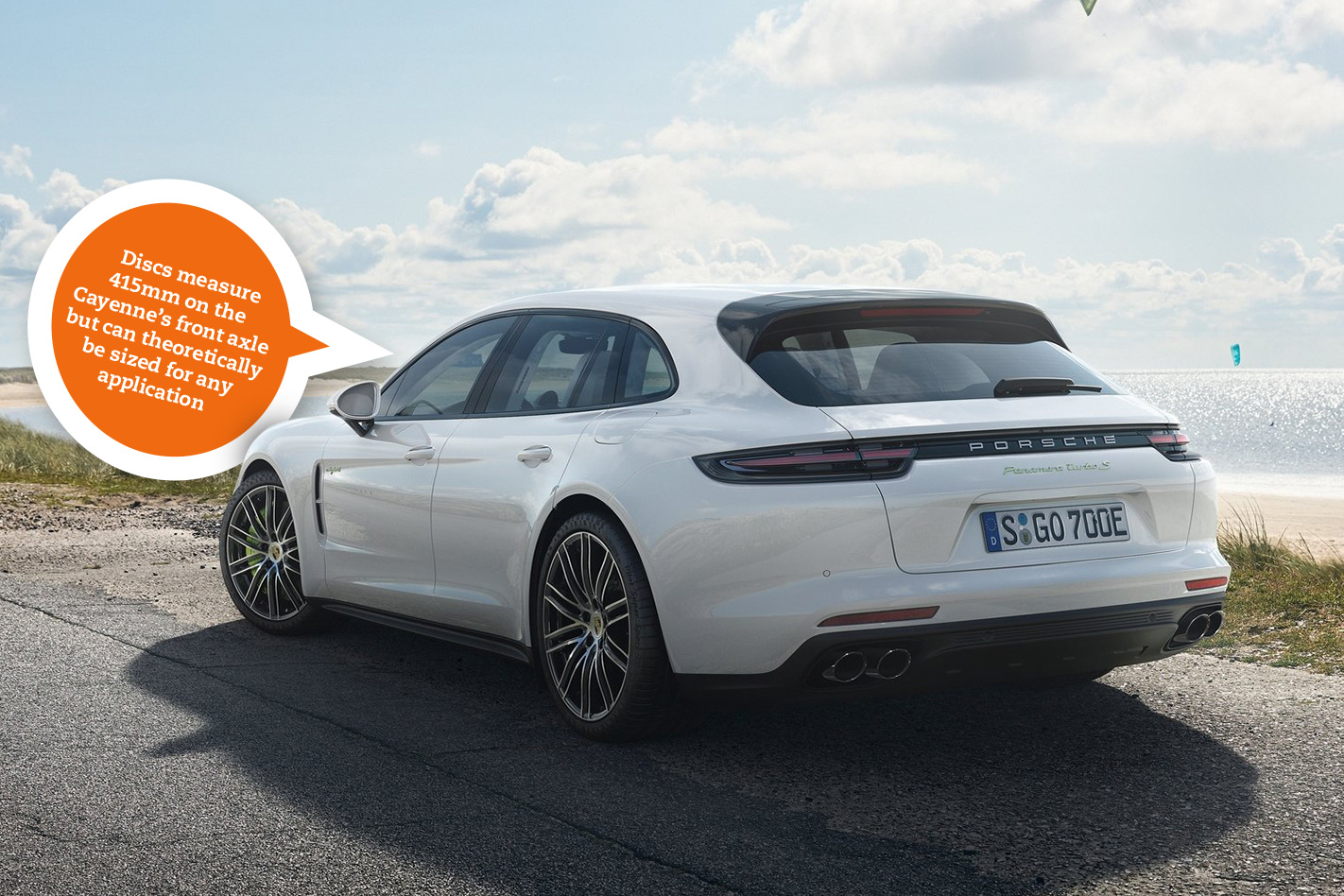
In return for Porsche’s participation in developing the tungsten brakes, the German car maker has exclusive rights to the proprietary technology for approximately one year. In that time other models will adopt the special discs offering a higher-performance option somewhere between conventional iron and carbon-ceramic in terms of both efficiency and price.
After that though, the new tech is up for grabs for any brand with the cash.
GHOSTS. Somewhere out here in the grey pre-dawn light are ghosts.
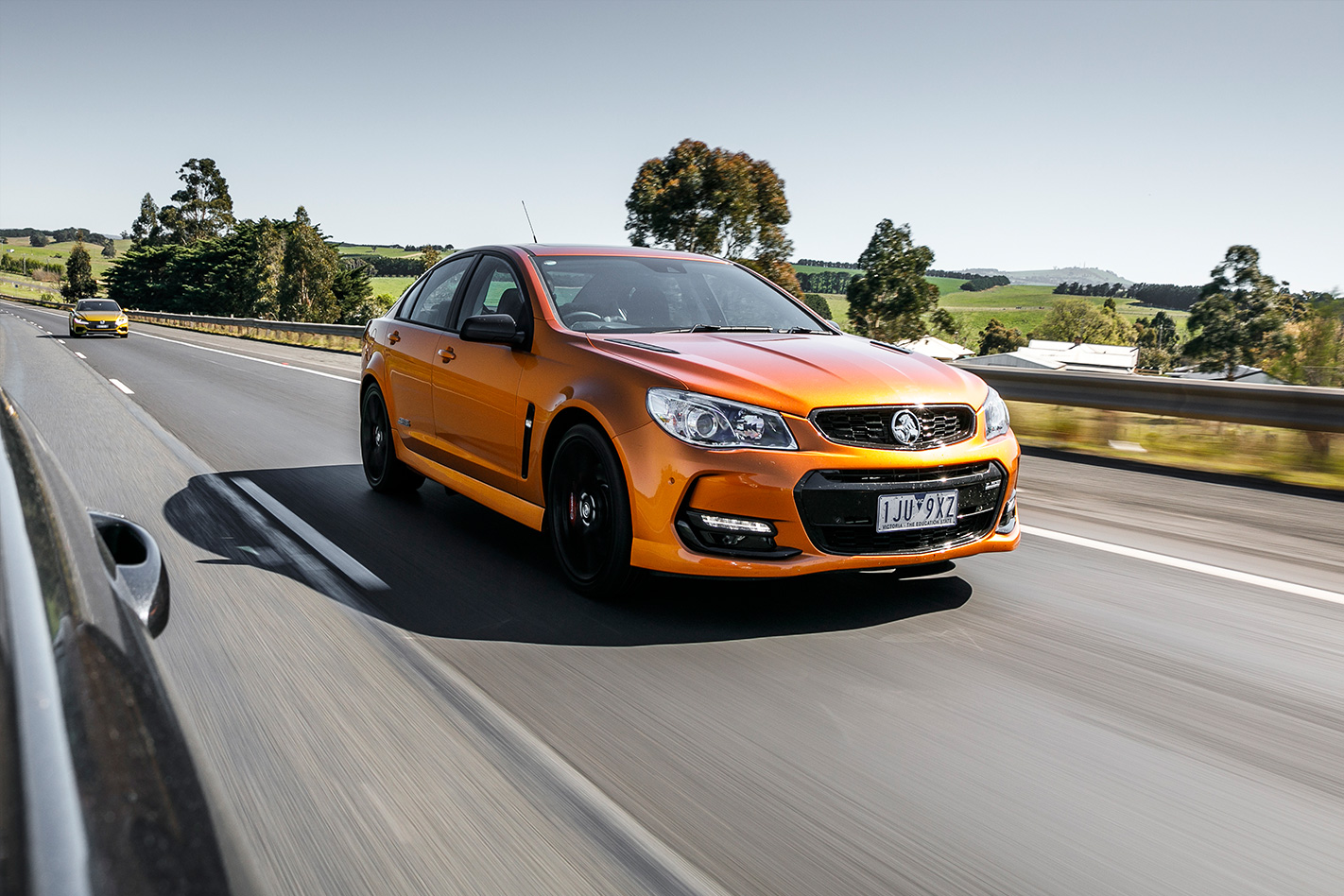
An unbroken line of ’em, stretching back nearly four decades who’ve stood at a bowser before, refuelling Australian-built Commodores, jotting down records, meticulously checking tyre pressures and fluid levels before subjecting the car to the rigours of a Wheels road test. And I’ll be the last of them.
Booking a Holden Commodore SS-V Redline on the week that local production wrapped up was always going to be loaded with poignancy but, truth be told, we’re probably not going to tell you a whole lot that you didn’t know about this car already. Its role this time round would be largely contextual, here to provide a counterpoint to two Young Turks that deliver a decisively different skill set.
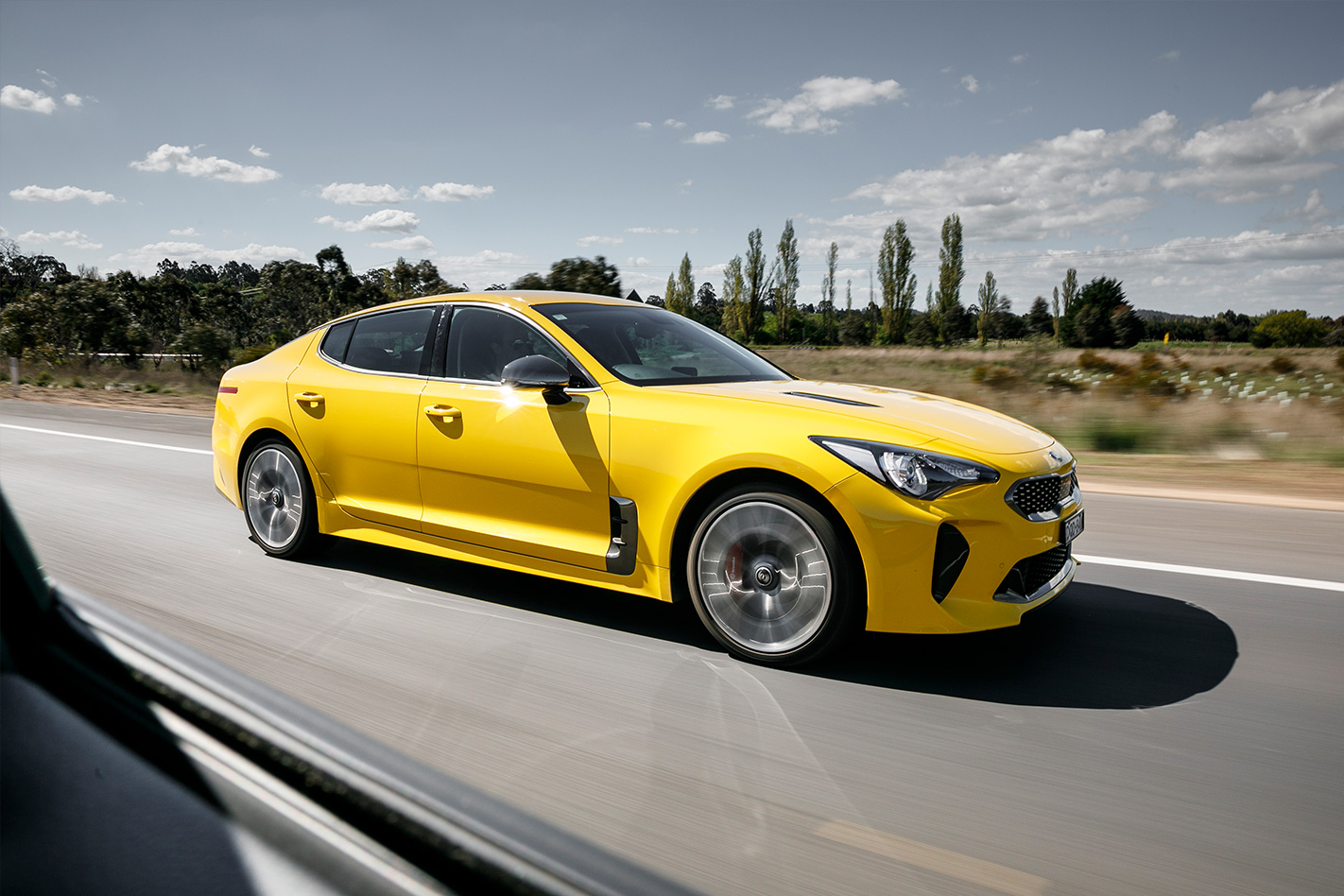
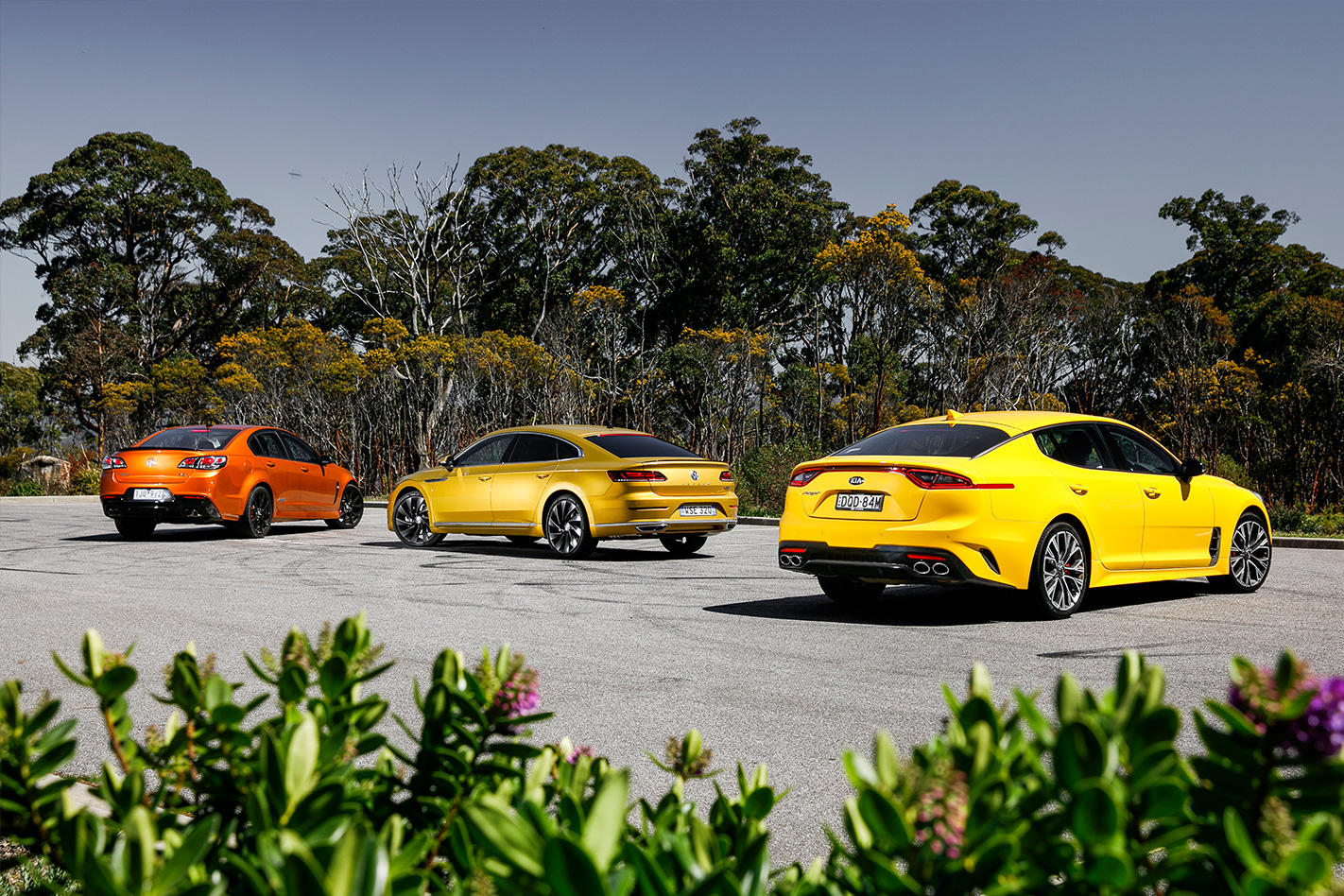
While the range-topping Stinger GT has attracted the lion’s share of press coverage, the mid-spec 330Si could well be the sweet spot in the range. Priced at $55,990, it gets the same 272kW twin-turbo V6, driving through an eight-speed automatic and limited slip diff’ to a set of 19-inch rear wheels, but does without the complex adaptive suspension system.
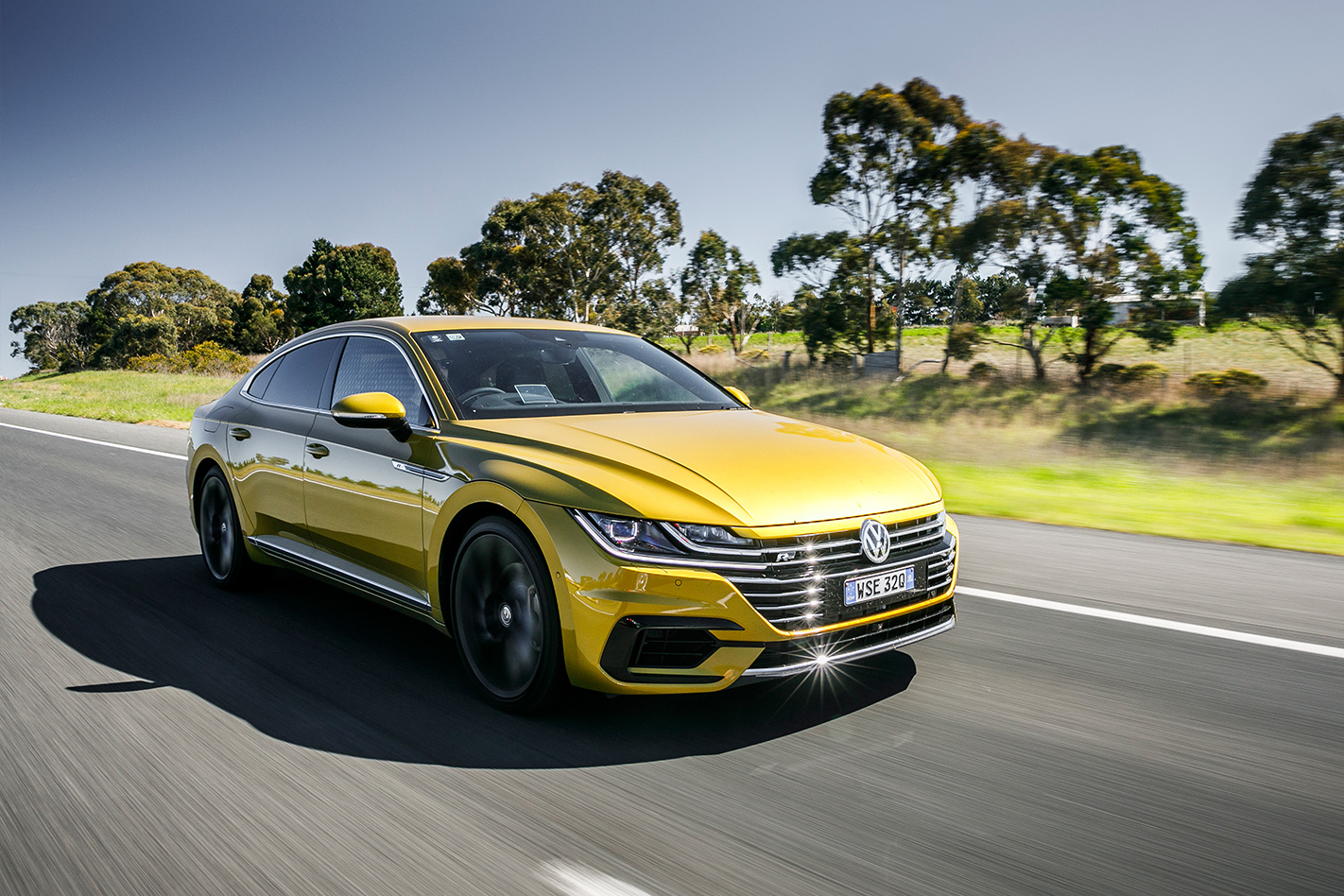
With on-demand all-wheel drive, an adaptive suspension system of stupefying bandwidth, and a mildly detuned version of the Golf R’s four-pot firecracker under the bonnet, the Arteon looks and feels like a business-class upgrade from the other two and, despite the Stinger being finished in retina-cremating Sunset Yellow, the lantern-jawed Volkswagen turned the most heads.
There’s not a bad angle on it and some of the detailing, such as the way the LED headlamps morph into the grille, the visual effect of power in the haunches, the shape and tension in the flanks, and the sculpted front wheelarches softly busting through the clamshell bonnet line are deftly and confidently executed.
The Stinger’s not an ungainly thing per se, but it lacks the front-to-rear cohesion of some of Kia’s better designs such as the Optima and the Sorento. Even the latest Carnival expresses a more lucid aesthetic. It’s not lacking in visual punch, though.
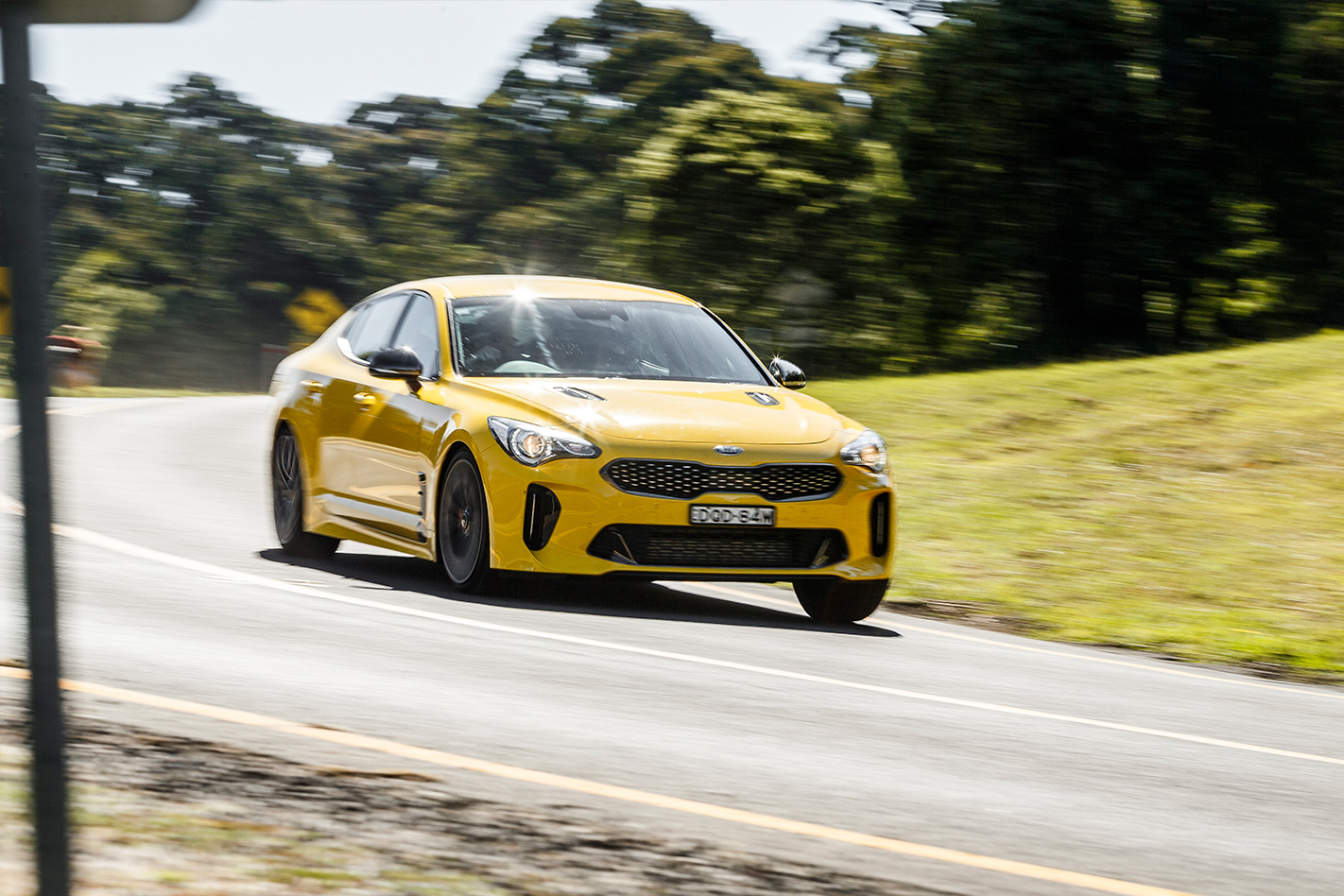
To a certain extent, the aggro styling and the well-publicised performance figures taint your expectations of how the Stinger will drive. Thumb the starter button and you expect something tightly wound, leaching testosterone from every orifice but it’s puzzlingly mannered. The engine note is librarian meek, the steering a thing of extravagantly lubed slickness and the ride about as lumpy as a drizzle of extra-virgin.
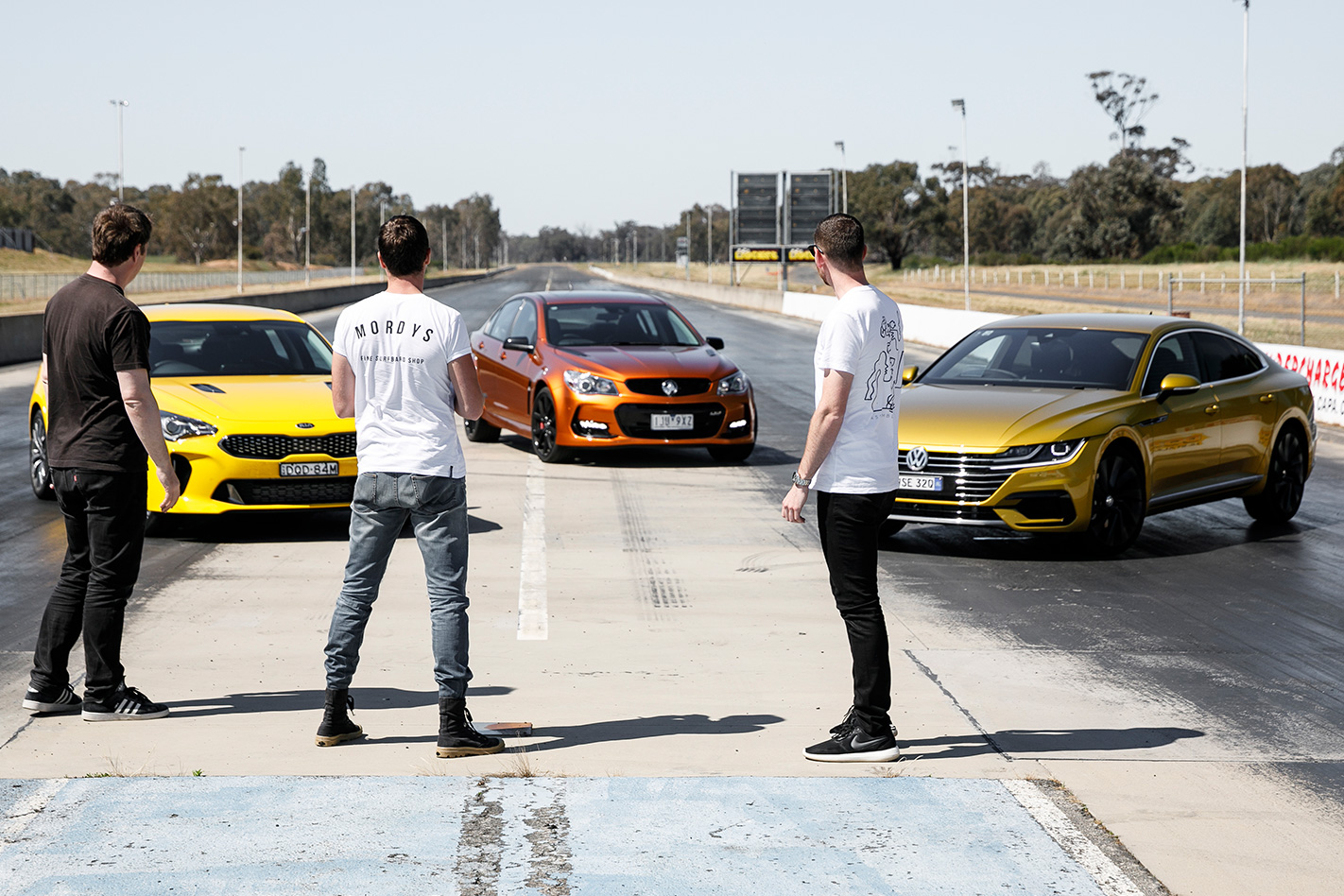
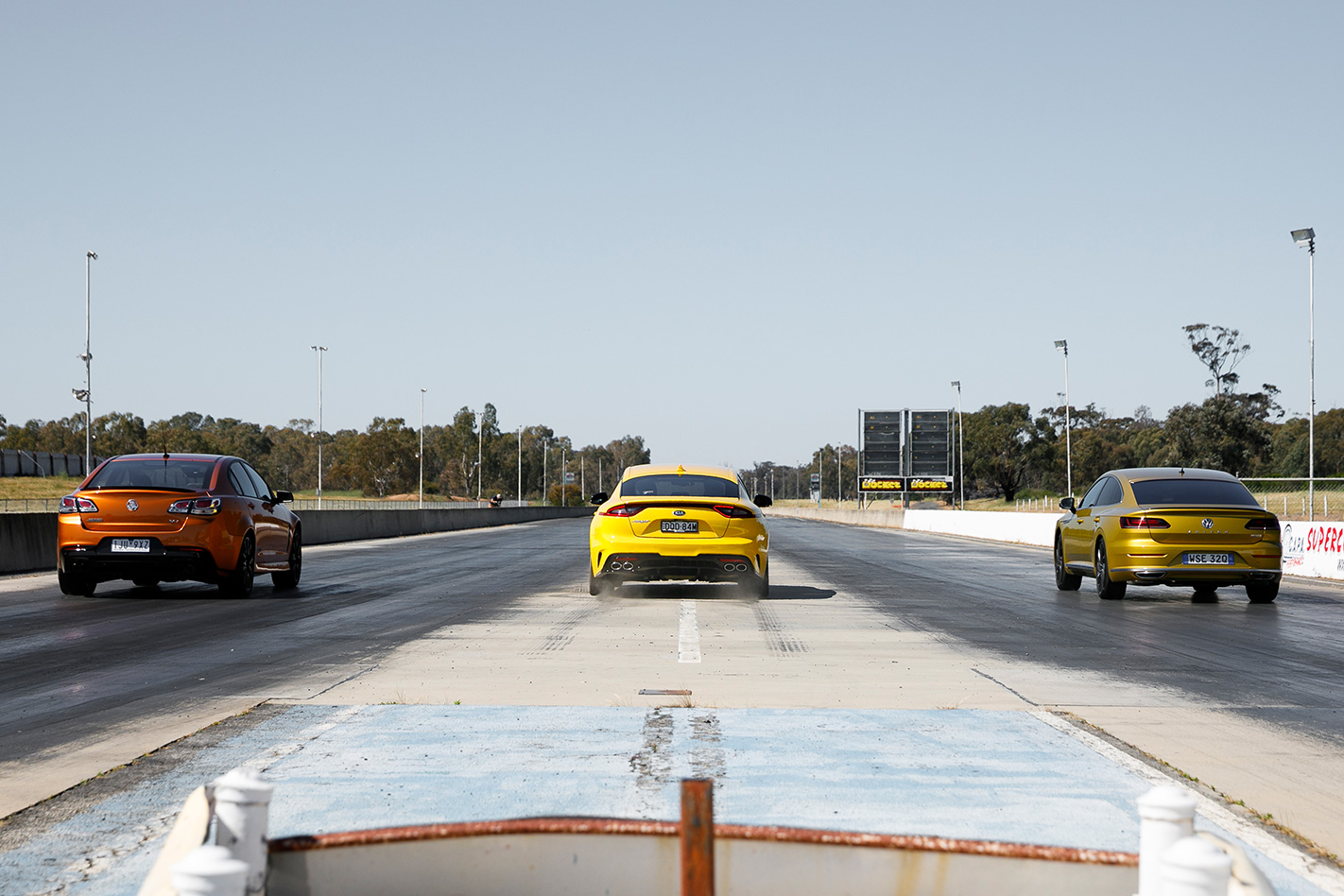
Viscerally quick, that’s what it is. On a give-and-take road, it’s the only one of the trio that has our testers getting out, eyebrows raised, blowing out their cheeks and shaking their heads. It’s worth underlining that this is a Kia that is virtually as quick out of the blocks as a Porsche 996 GT3. Launch control makes that repeatable too, 100km/h flashing by in 4.9s.
It’s eerily effective in the way that it smashes down the strip, ladling on great gobs of twin-turbocharged torque, the eight-speed transmission best left in fire-and-forget Sport mode. At 2000rpm, it’s making around 50Nm more than the Commodore, giving it an initial advantage the Holden can never claw back.
The Arteon always grabs the holeshot, though. Its combo of launch control and all-wheel-drive traction give it a clear nose up until around 70km/h or so. Beyond that, the Stinger’s sheer grunt tells but the Arteon is far from disgraced at the strip, our 5.4-second sprint to 100km/h bettering the manufacturer numbers by a couple of tenths and exactly matching the sprinting performance – on the day – of the Commodore. Still think the Arteon is out of place in this company?
A combination of a mighty front end and a singular traction advantage out of hairpins meant that nothing could pull away from the Arteon. Up the hill, it was a different matter of course, but in terms of outright chassis effectiveness, the Volkswagen had laid down a clear marker.
Choosing how to set up the Arteon isn’t the work of a moment. The DCC adaptive suspension system has no fewer than 14 settings to choose from, the extremes bookending the steel-sprung Stinger and Commodore. Set into Sport, it’s undeniably taut, with larger imperfections folding you at the solar plexus. Body control is imperious and you tend to drive the Arteon like a hatch, leaning cab-forward on that front contact patch and letting the rear end figure things out for itself.
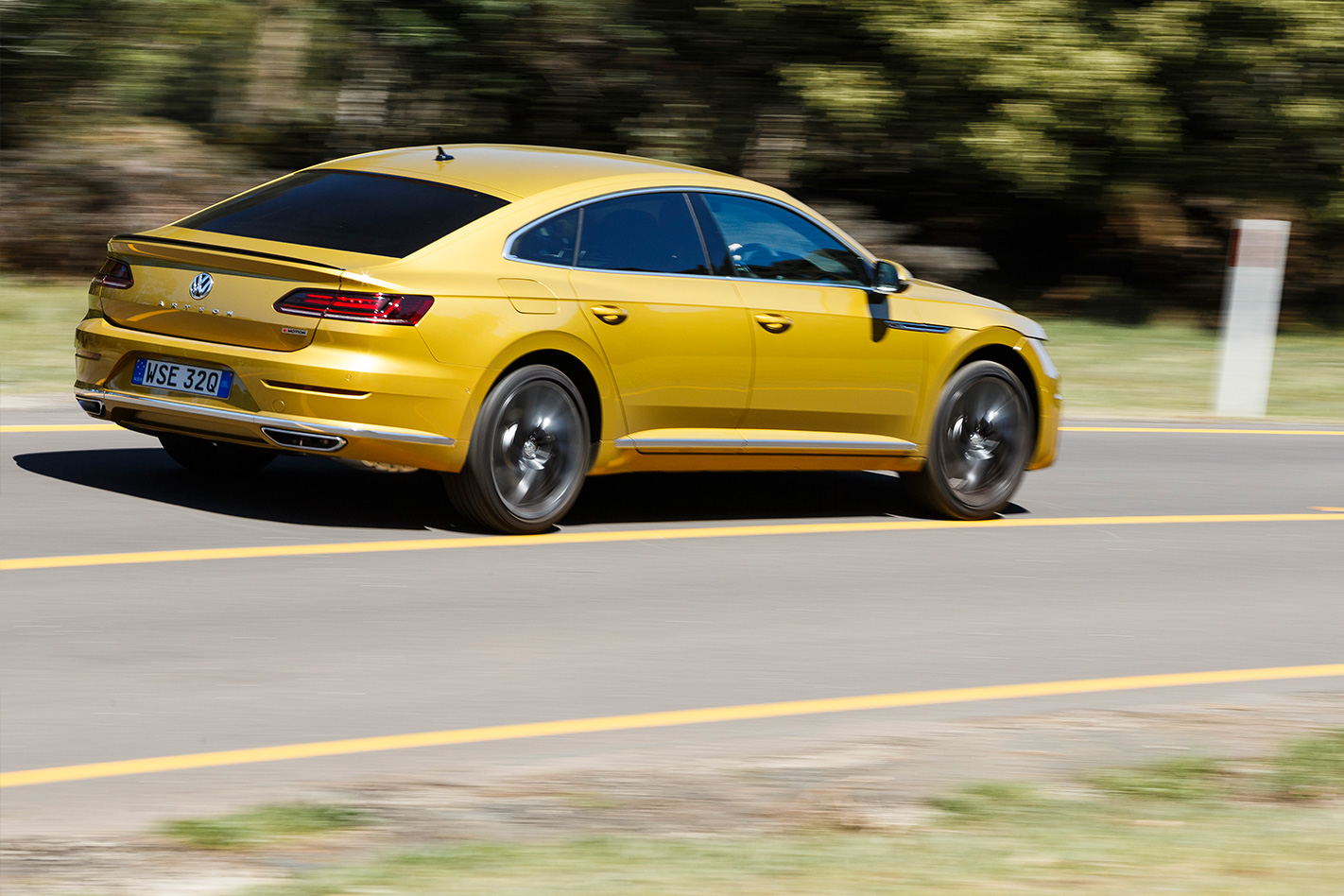
The four-cylinder lump growls gamely, the sound symposer injecting a subtle contrabass undertone into the cabin. Sport mode adds a bit of heft to the wheel, but it remains taciturn. The fun is in covering ground quickly and with smart munition precision. The neutrality and aloofness built into the chassis will appeal to those who don’t care to actively manage dynamic outputs. The Arteon rarely dictates an action to the driver so there’s little in the way of receive channel; you just keep the transmit button pinned.
Try to drive the Stinger in that fashion and you’re rapidly disabused of such an intention. Its body control isn’t as implacable, requiring a more sympathetic ebb and flow of inputs as the car breathes along the road. It’s more rewarding to feel the squat, sproing and roll of the Stinger’s chassis, the gentle clench/declench of its limited slip diff’, and modulate that almighty torrent of torque accordingly, but it’s rarely the quickest way along a scabby snake of bitumen.
The variable-rate steering, so glib and superficially impressive at city speeds, can take a moment of acclimatisation when really frogmarched through a bend. Driver reassurance isn’t helped by the fact that the Stinger refuses to hold a gear, the transmission software being overly keen to put its cape on and leap to your rescue when it’s often not required. Switch out all the driver aids and you can then ping a flabby feeling cutout. The stability control system hoodwinks you into thinking it’s off, but lurks constantly, waiting for a moment to indulge some suppressed superhero affectation if it thinks you’ve really stuffed up.
Like the Arteon, the Stinger can cycle through engine sound settings although Minimised, Neutral and Enhanced all sound much the same. The driving mode knob also alters settings for the steering weighting and engine/transmission settings. The Smart mode does a reasonable job of figuring out what you’re trying to achieve, but we left it in Sport most of the time which, as an aside, renders the digital speedometer in italic font. Nope, us neither.
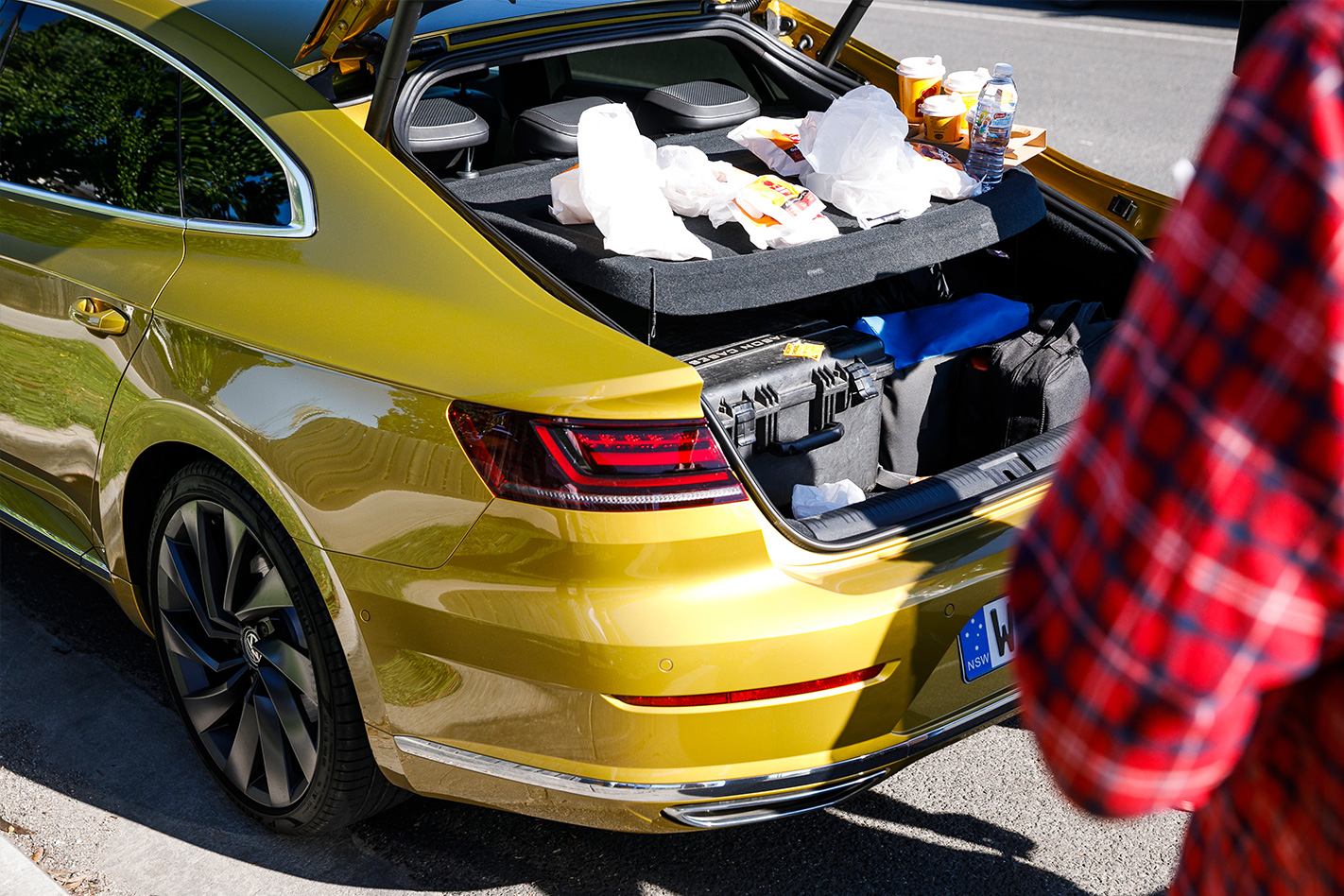
Both the Arteon and the Stinger feature liftbacks, the former’s item being a powered tailgate with a slick proximity feature that allows you to haul gear out and walk away before it closes itself. The 563-litre capacity of the Arteon aces the Stinger’s 406 litres, eclipsing the Commodore’s 496-litre boot in the process. The Volkswagen also delivers easily the most polished ride when set into its softest mode. It has other tricks too, offering the smartest suite of driver-assist functions, including an ability to pull the car to the hard shoulder and stop should it sense the driver is asleep, incapacitated or an inquisitive Wheels road tester .
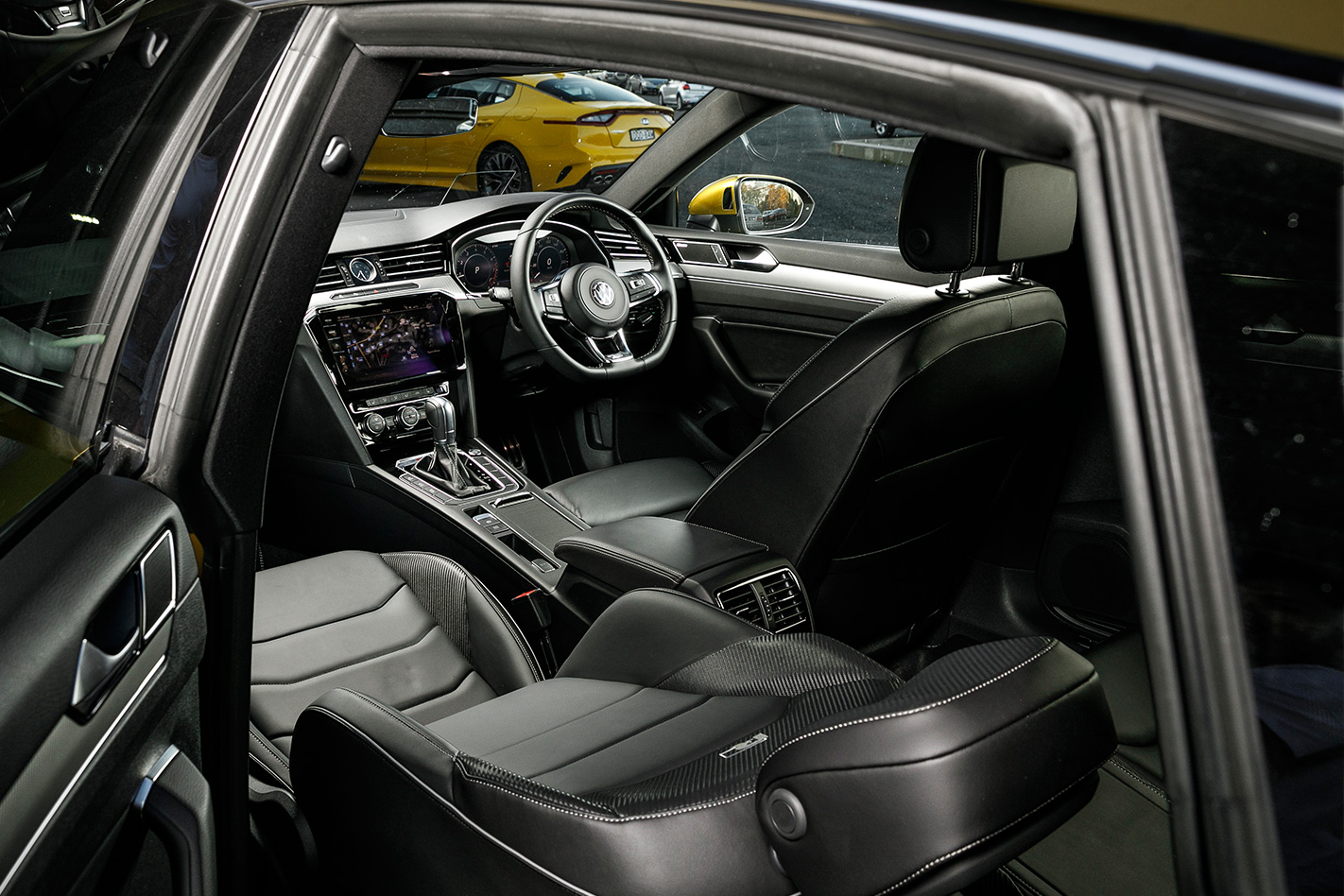
Travelling in the back of the Stinger isn’t a chore either. Like the Arteon, taller passengers might feel the pinch due to the arcing roofline, but while the Volkswagen has an airy pale headliner and a low window line, the Stinger’s upticked windows and unremittingly black interior make it feel a little claustrophobic.
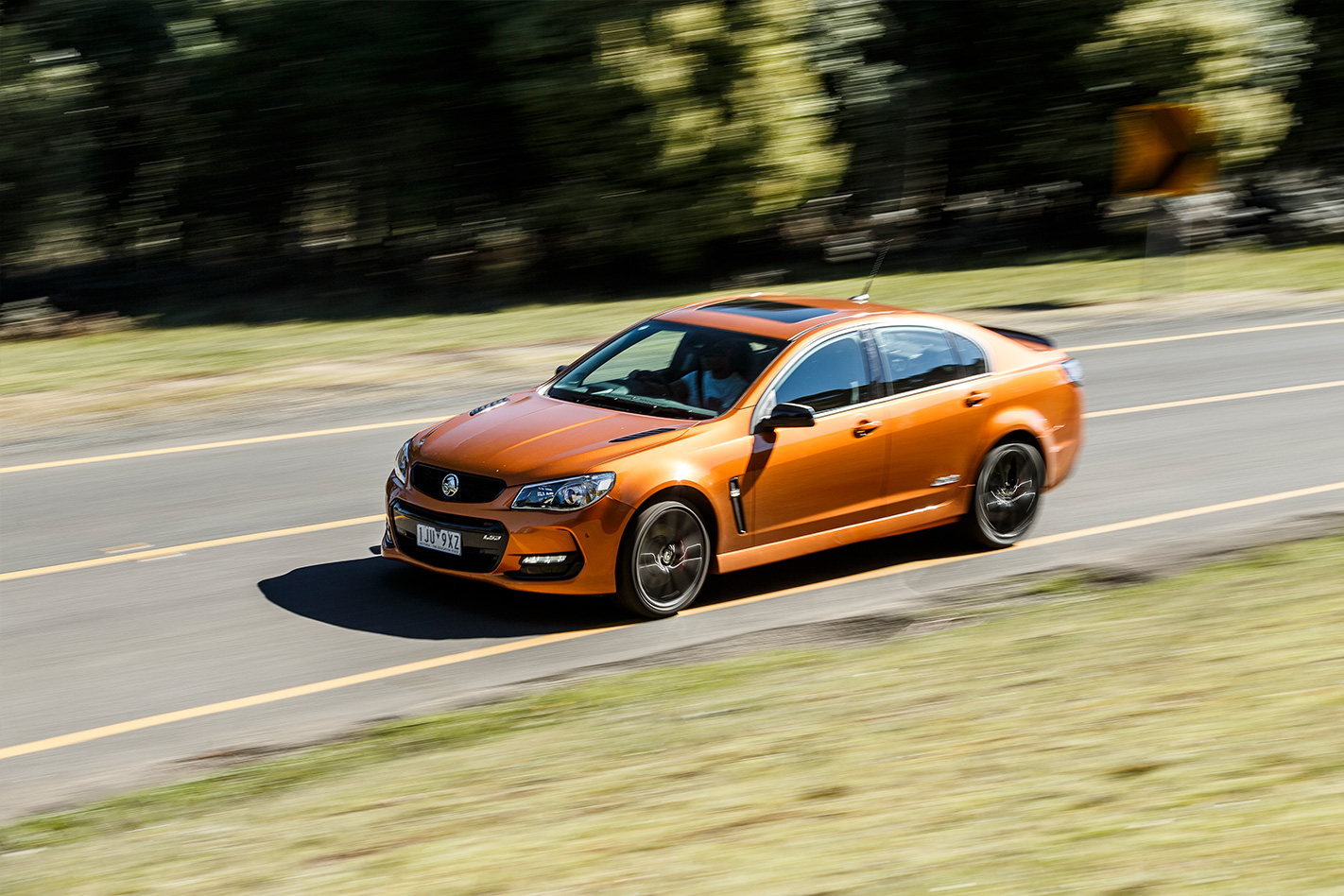
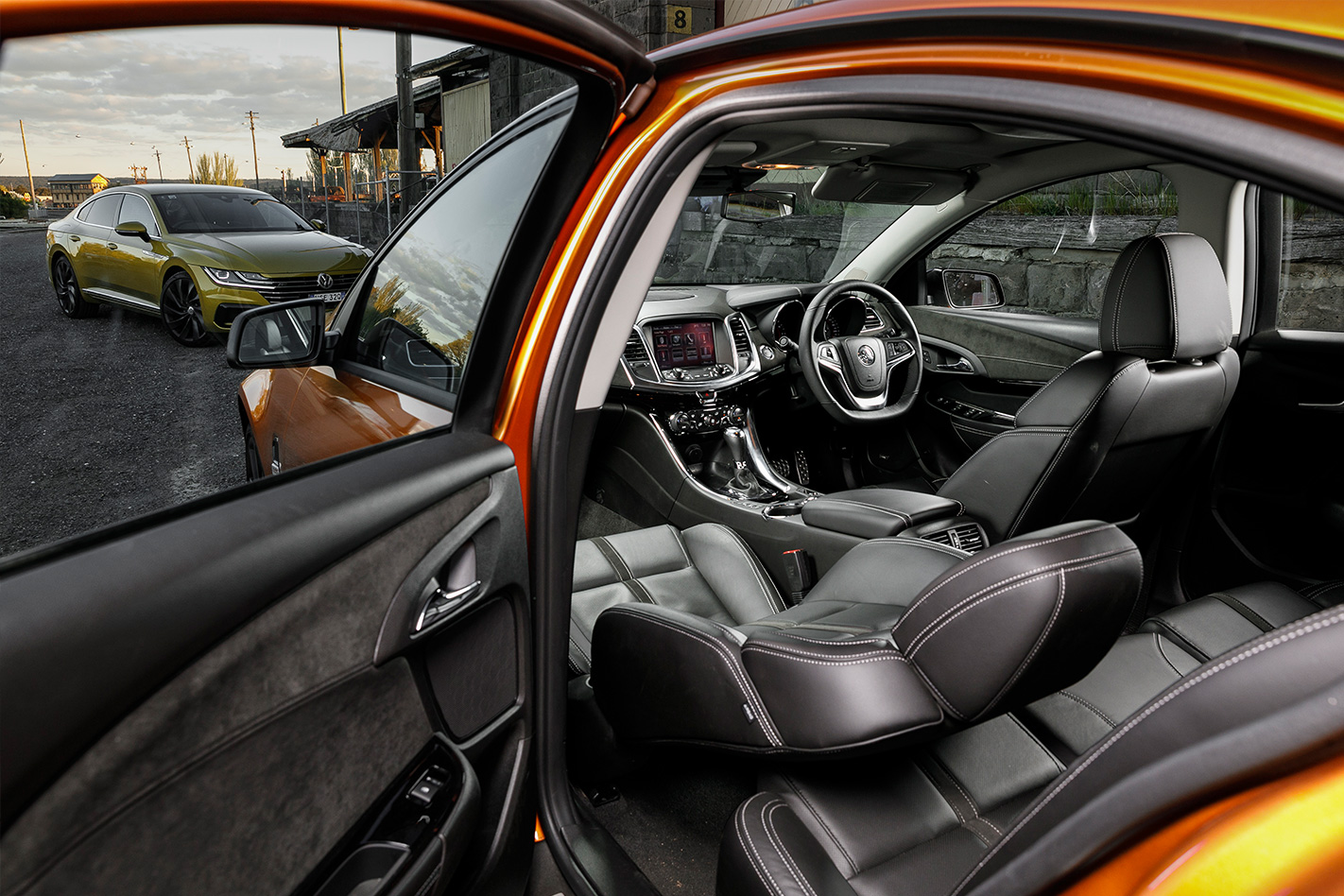
Neither can match the Commodore for sheer manspreading capacity inside. While the back of the SS-V might be lacking in features, you’ll forgive it that for the head, shoulder and legroom it affords. We love the Holden for the way it rides, even on 20-inch rubber. And for its evocative bent-eight fusillade. And its steering feel. And throttle response. And the way it’s the only car of the bunch that loves to be driven on the shift paddles. And, to be frank, a whole bunch of other things that still really matter to keen Aussie drivers.
Those looking for big-hearted thud and blunder will probably be disappointed by the mute Stinger and the slightly self-conscious Arteon. The VFII Commodore vacates that particular division as undefeated champ and as much as it’s a wrench to hand back the keys, dwelling on what might have been isn’t going to get us far. So which of the other two get the nod? For sheer capability and involvement, it has to be the Stinger.
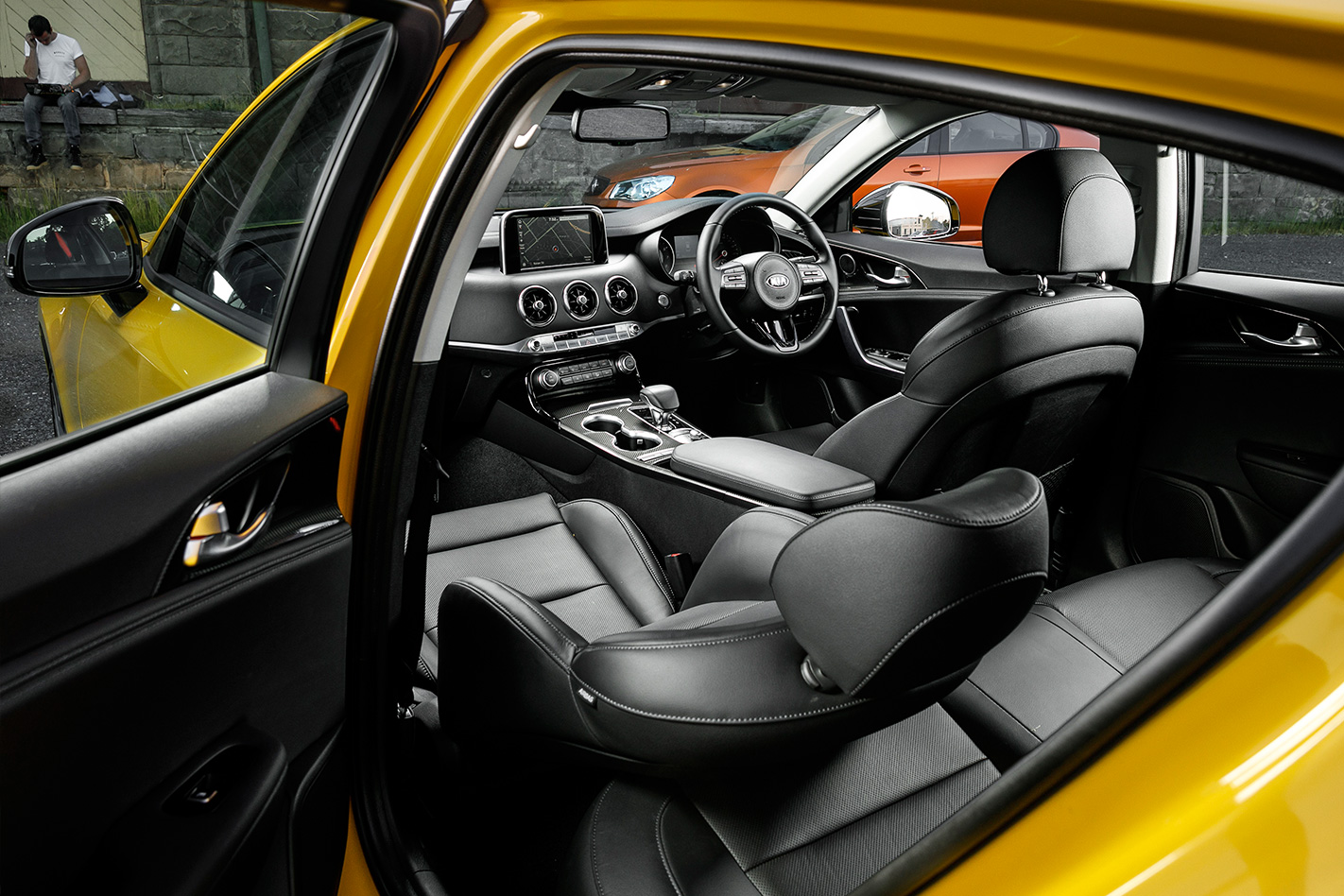
The Arteon 206 TSI R-Line emerges far from assaulted, however. In fact, it’s the surprise package of this comparison, dealing both rivals bloody noses in several key head-to-heads. As we brim the cars, record the final fuel figures and point the nose of the Commodore back towards Port Melbourne, it feels as if we’ve finally exorcised a few ghosts.
This farewell has lasted long enough. It’s a new game with new rules and a new cast, and the Kia Stinger plays it best.
One of the most enjoyable and surprising discoveries from this Mustang Shootout was that each car had its own individual personality.
You might think that applying similar modifications to identical base cars would result in a fairly small character spread, but each car’s sound and driving experience reflected the subtle differences in each tuner’s approach.
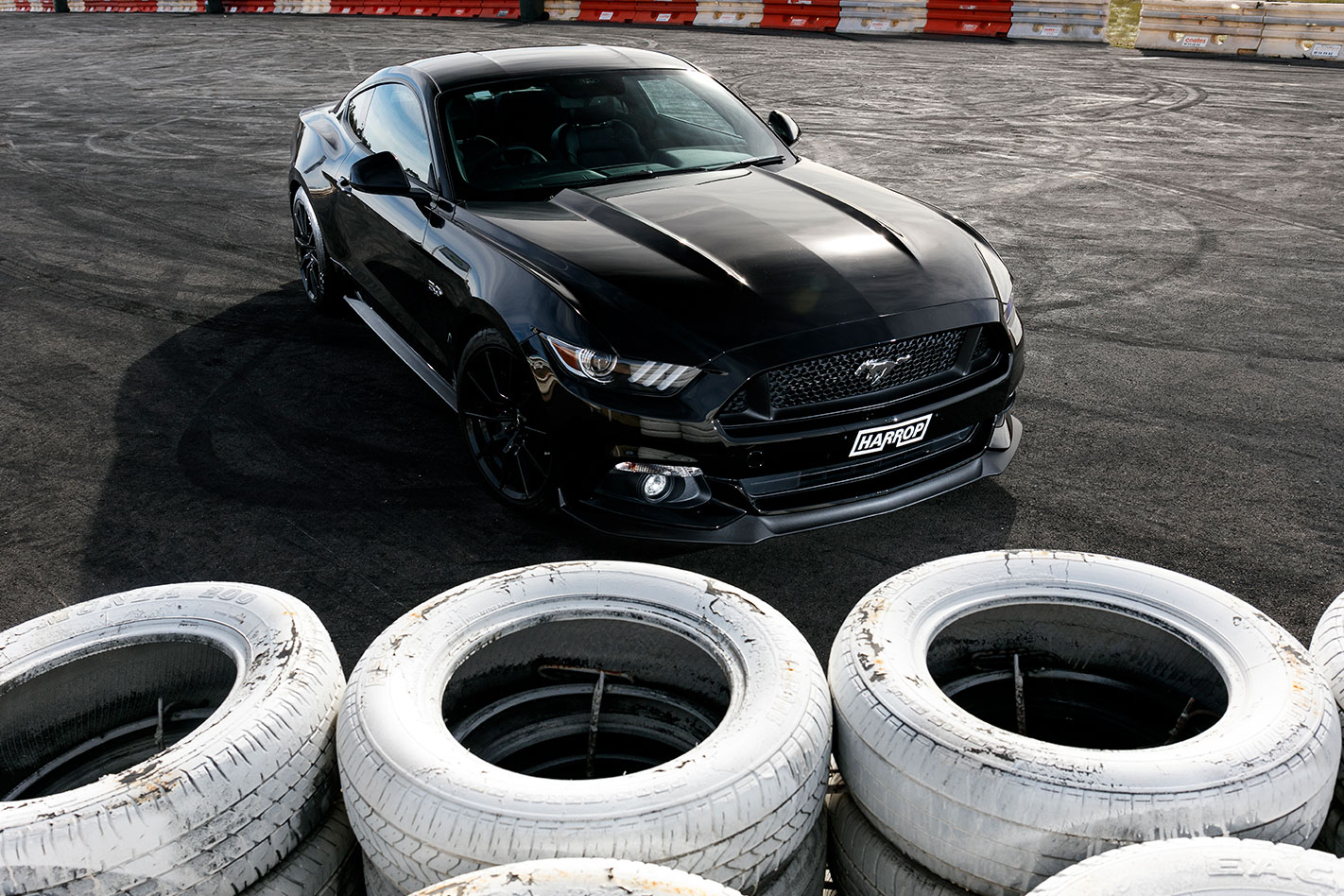
This is the joy of the aftermarket, being able to tailor a car to what each individual buyer wants from his or her Mustang. After all, everyone’s tastes are different, but personally the evil-looking black Mustang from Harrop is right up my alley.
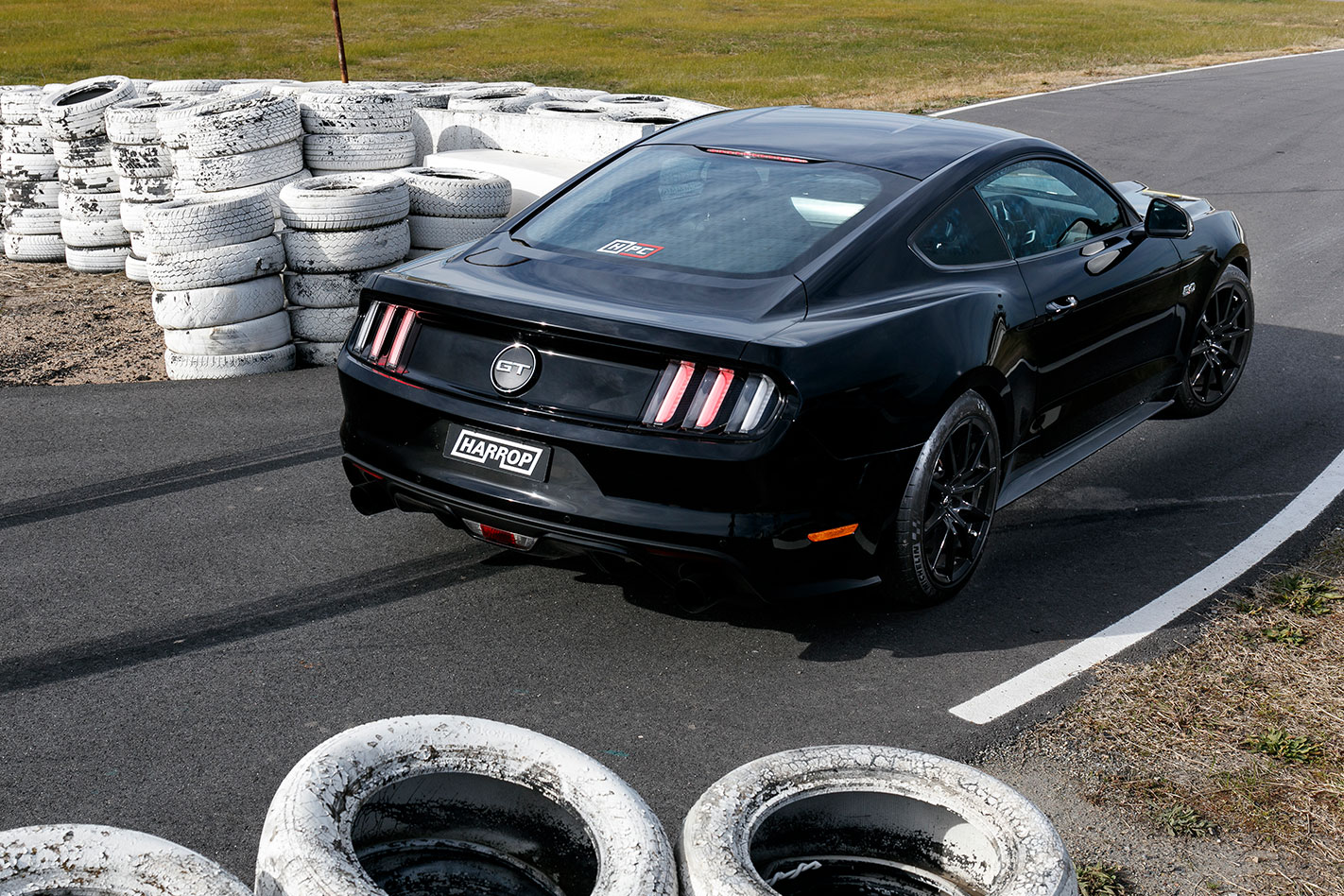
“I think it’s often underestimated, but the acoustics make such a big difference to the perception of the driver,” says Harrop General Manager, Heath Moore. Basically, if it sounds fast, it feels fast. The difference in this instance is that Harrop’s Stage 2 Package IS fast.
Engine modifications are limited to a cold air intake and full bi-modal exhaust, lifting outputs to 370kW/583Nm, but it was the only naturally aspirated package present to dip into the 12s (12.95sec) with its stonking 187.76km/h trap speed a full 10km/h faster than standard. Its 2.6sec 80-120km/h time was the class of the atmo field, too.
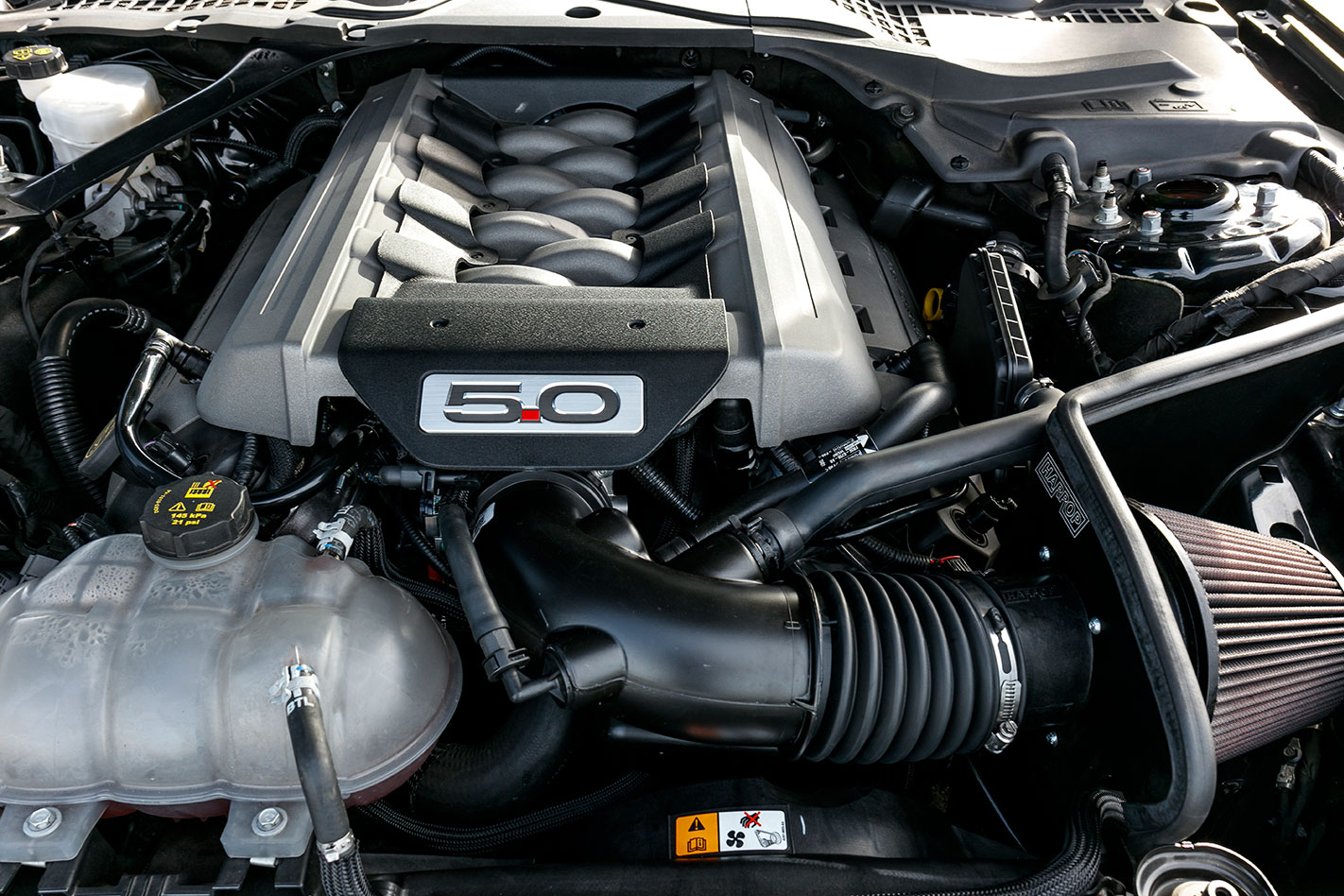
Harrop’s breathing mods have brought the Coyote to life; it feels much freer and revs to 7000rpm with enthusiasm where the standard engine can feel a bit laboured in its upper reaches. The gearbox in this 20,000km-old example is also lighter and less restrictive than the newer press cars we traditionally sample.
Harrop’s other modifications are limited to a set of Shockworks suspension and wider 19-inch wheels (10-inch front; 11-inch rear) wearing Michelin Pilot Super Sports measuring 275/35 front and 295/35 rear, a useful 20mm increase in tyre width over the standard Mustang at both ends.
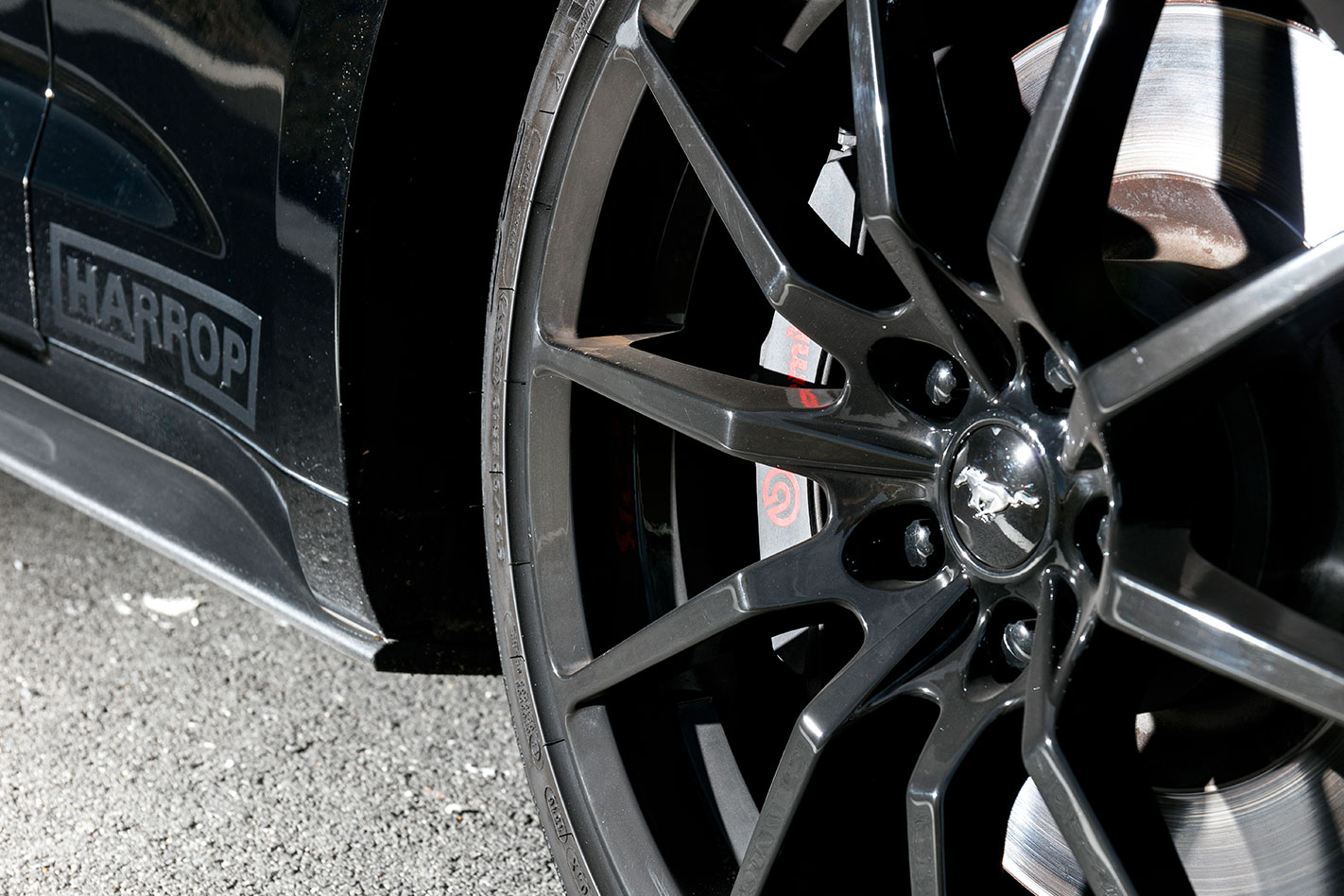
It certainly worked, with Harrop’s car demonstrating much sharper steering response, but the tweaks are possibly a step too far for track work. Combine this sharper front end with the extra power and oversteer is easily induced.
Fun to a point, but slides occur quite suddenly and the Harrop car retains the standard car’s difficulties with regaining lateral traction once it’s lost. According to Shockworks principal Brett O’Brien the Mustang is quite sensitive to setup, but it must be said that Harrop’s car is primarily focused on road use rather than circuit laps.
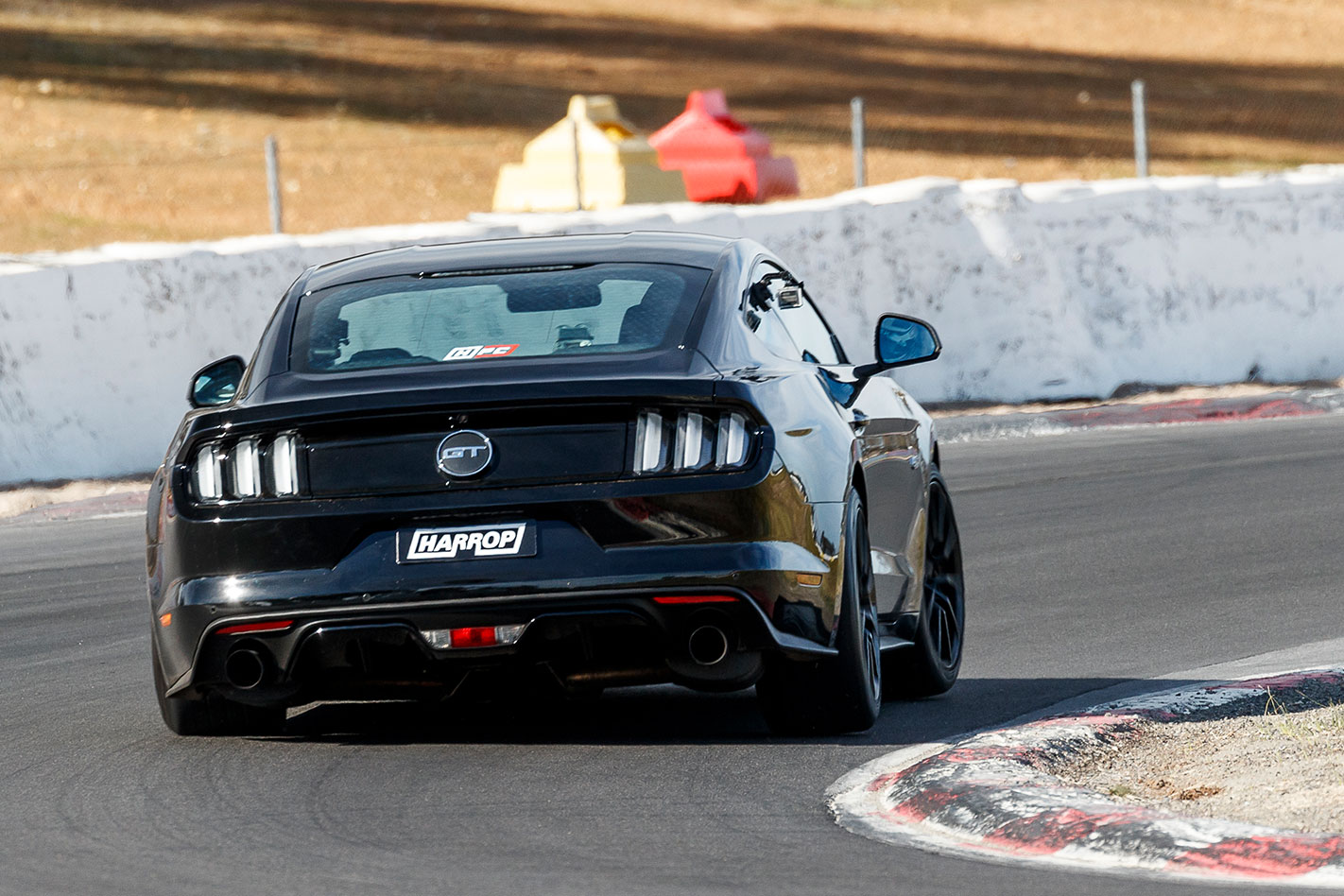
Smoke, flames, silence. “I think it’s oil surge that’s caused a bearing failure,” explains Moore. “I think there’s an issue with these motors in that the sump is inherently small and there’s no windage trays. The cars are okay to a point, but the oil strategy from the factory is not adequate for doing repeated laps.”
Unfortunate issue aside, there’s plenty to recommend turning the wick up on the standard atmo engine rather than going supercharged.
As addictive as a 500kW supercharged hit is, there’s a satisfaction to wringing out performance using every last rev, not to mention being able to use more of the performance more of the time.
WARREN LUFF SAYS:
“It has one of the best sounding exhaust systems here. It’s very reminiscent of a V8 M3.
“It’s had a flash tune and has a little more power than standard, but it’s really nice and linear through the rev range.
“Whatever they’ve done under the car (dynamically) has certainly made a big difference to the front end, but it still gets power down. It is a lot of fun to drive.”
HARROP MUSTANG GT SPECS
Power: 370kW Torque: 583Nm
0-100km/h: 4.98 seconds 0-400m: 12.95 seconds 80-120km/h: 2.6 seconds 100-0km/h: 39.25 metres Lap Time: 1:36.6 seconds Apex km/h: 82.34km/h Lap V-max: 190.86km/h 400m V-max: 187.76km/h
Engine: 4951cc V8, DOHC, 32v Gearbox: 6-speed manual Suspension: struts; anti-roll bar (f); multi-links, coil springs, anti-roll bar (r) Brakes: 380mm ventilated discs, 6-piston calipers (f); 330mm ventilated discs, single-piston calipers (r) Wheels: 19 x 10.0-inch (f); 19 x 11.0-inch (r) Tyres: 275/35 ZR19 (f); 295/35 ZR19 (r); Michelin Pilot Super Sport
PARTS AND PRICES
Stage 2 Package: $7392 Suspension: $3400 Tyres: $2400 Total Mods Cost: $13,192 Vehicle Cost: $57,490 Total Cost: $70,682
Stuttgart, early Thursday morning. Bleak weather, bright red car, 1200-odd clicks ahead of us. Germany to Cote d’Azur non-stop – a fast blast in search of the year’s first tan in Mercedes-Benz’s facelifted SL.
This feature was first published in MOTOR’s May 2008 issue.
There’s no doubt about it: the Benz designers ran the scalpel extra-deep on this top-of-the-line AMG version. The new SL63 certainly turns heads, but in some respects for the wrong reasons. Despite the three-pointed star, its single-bar grille looks generic General Motors and L-shaped headlamps mean they’re no longer an exclusive CLS trademark. The cluttered chin spoiler eats roadkill for breakfast and the wannabe SLR rear diffuser is quite simply one big, ugly piece of black plastic. First impression of the car? Thumbs down. Second impression? Thumbs up. So why the flip-flop?
Because now the SL63’s engine has fired and we’re moving. Promising intake rasp, serious punch, awesome transmission and better than expected ride. This is going to be fun.
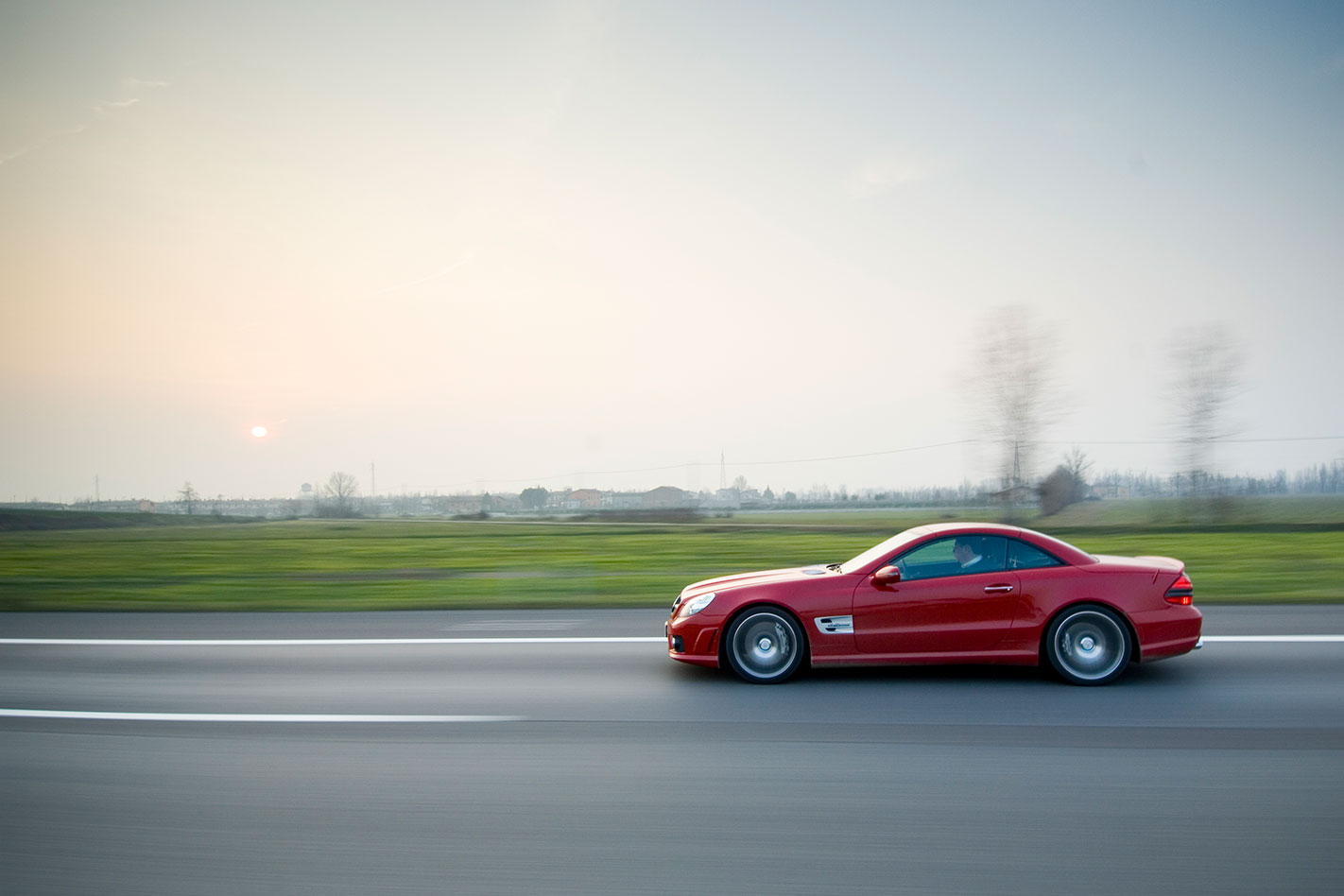
That’s why we stick to the German through roads, via Garmisch, which are thankfully almost empty this morning and, after only 275 kays, this also applies to the fuel tank. It confirms our suspicion that the variation between suggested and actual consumption can, in the case of the SL63, be 100 percent. The test car’s consumption over the trip worked out at 16.8L/100km. It had nothing to do with driver discipline or a green conscience. Now that both the French and the Italian authorities have started impounding vehicles caught travelling at more than 200km/h, one often has second thoughts about flooring the loud pedal…
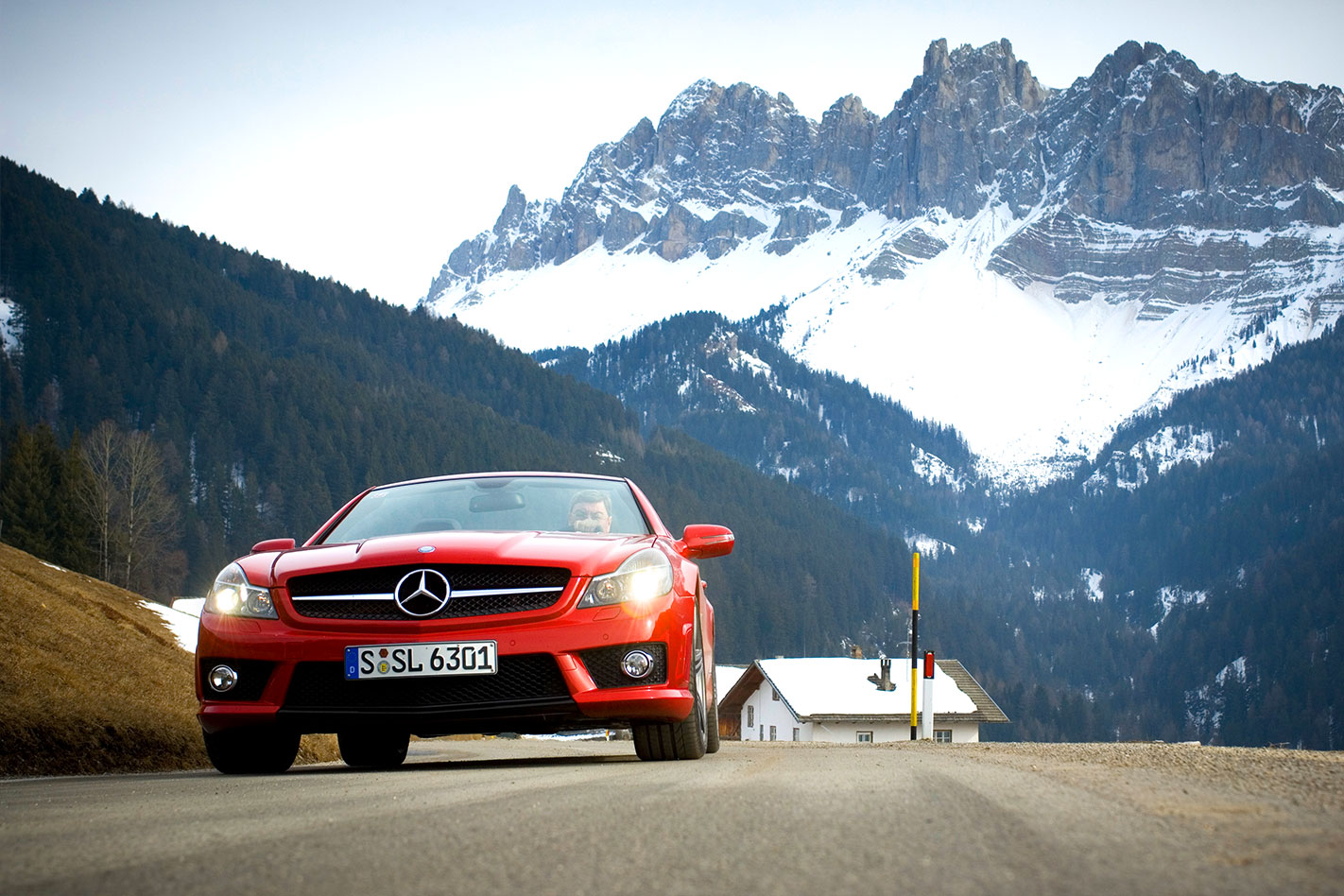
It is here that we devise a plan: instead of tip-toeing down the Brenner Pass in convoy with trucks and holiday traffic, we take a scenic shortcut through the Dolomites into Italy. In summer, once the snow’s melted, the most awe-inspiring link from Tyrol to Northern Italy is the Timmelsjoch Pass. It’s a drifter’s paradise with little traffic and downhills that test brakes and courage.
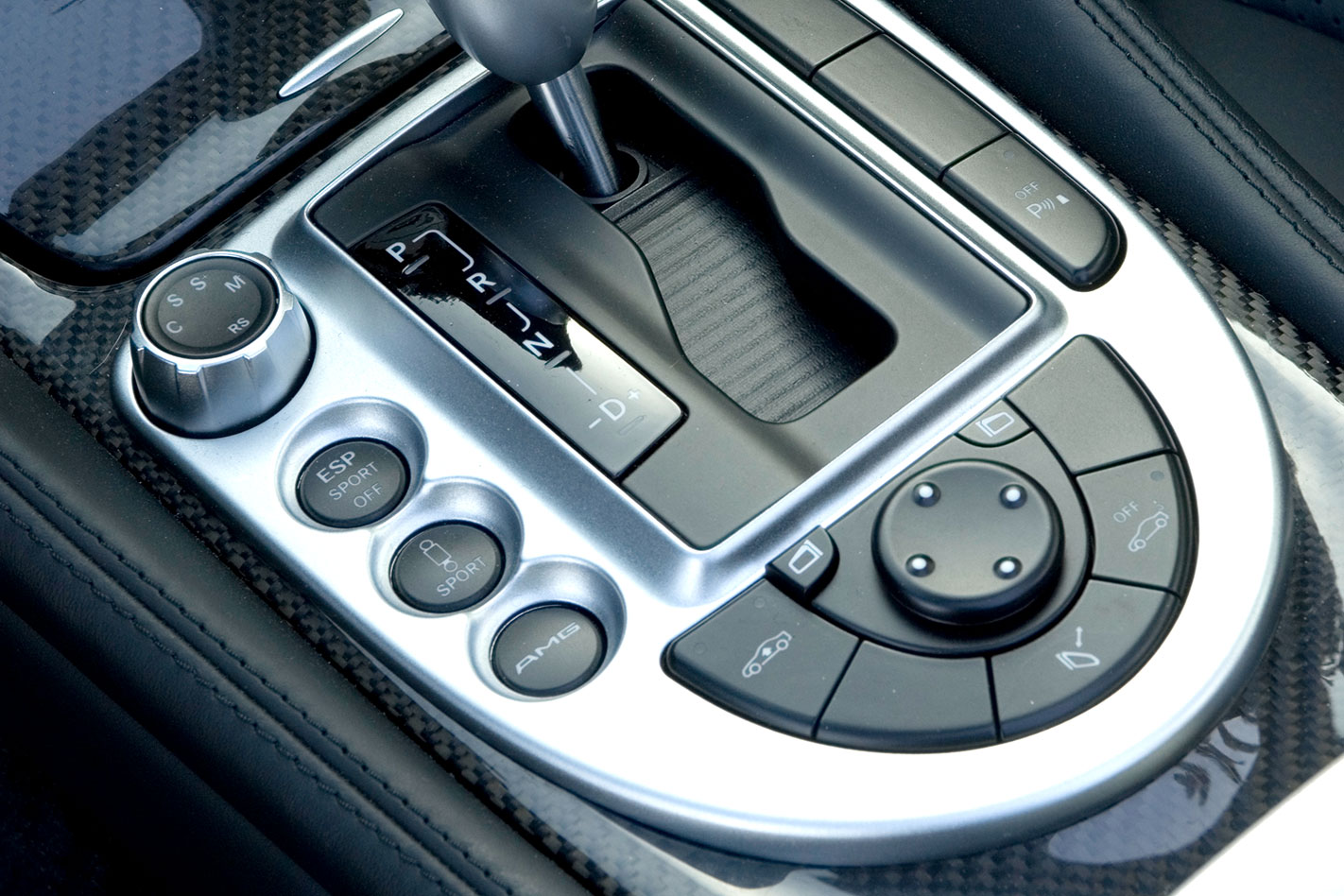
The most radical of the MCT settings is M. It holds the selected gear no matter what and is almost brutal in the way it juggles the ratios before flashing a mighty red warning light as the V8 approaches its 7200rpm redline.
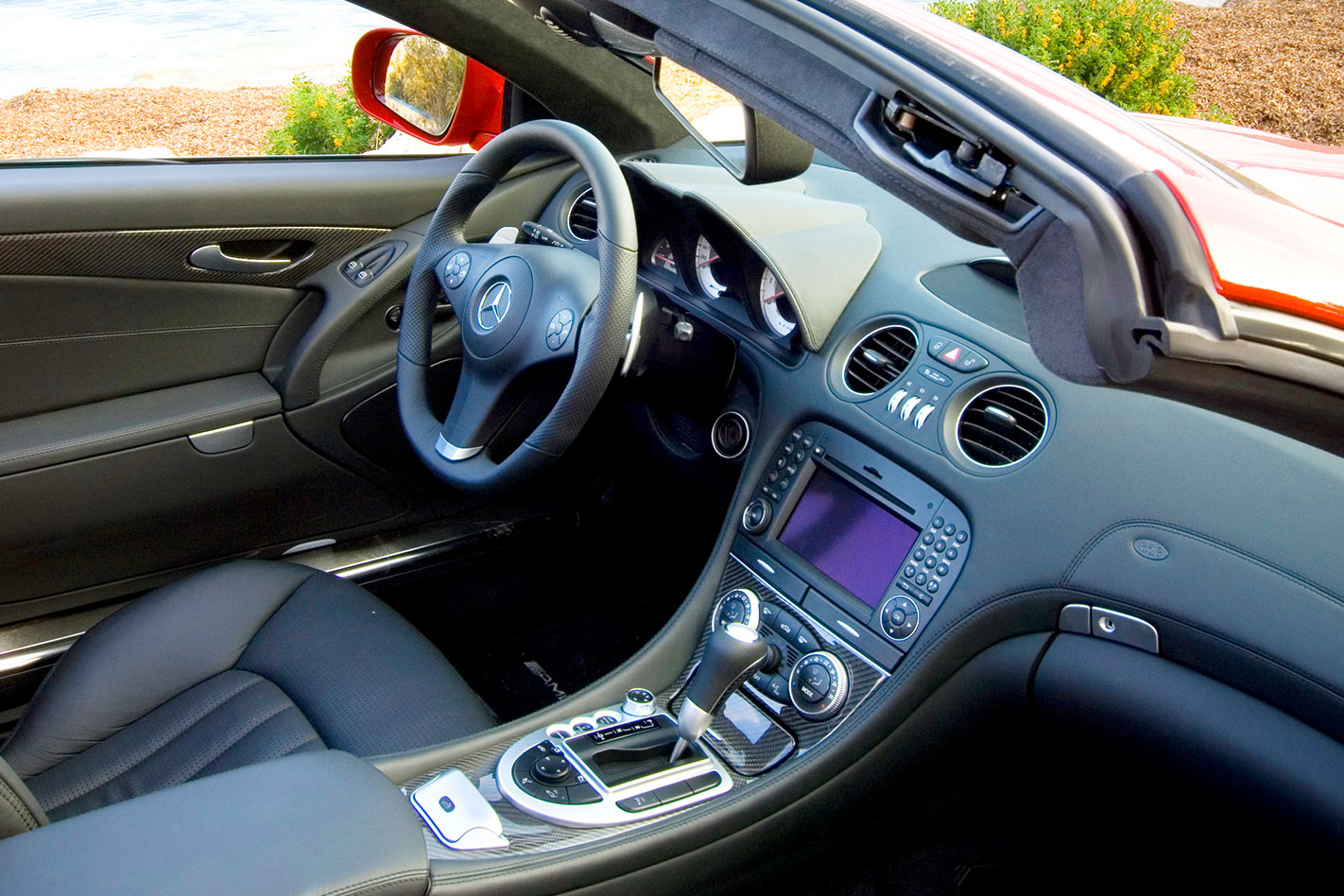
All it needs now are personalised intake/exhaust melodies, a burn-out program and an in-dash drift recorder with slide angles and a spin-out danger meter to the HUD…
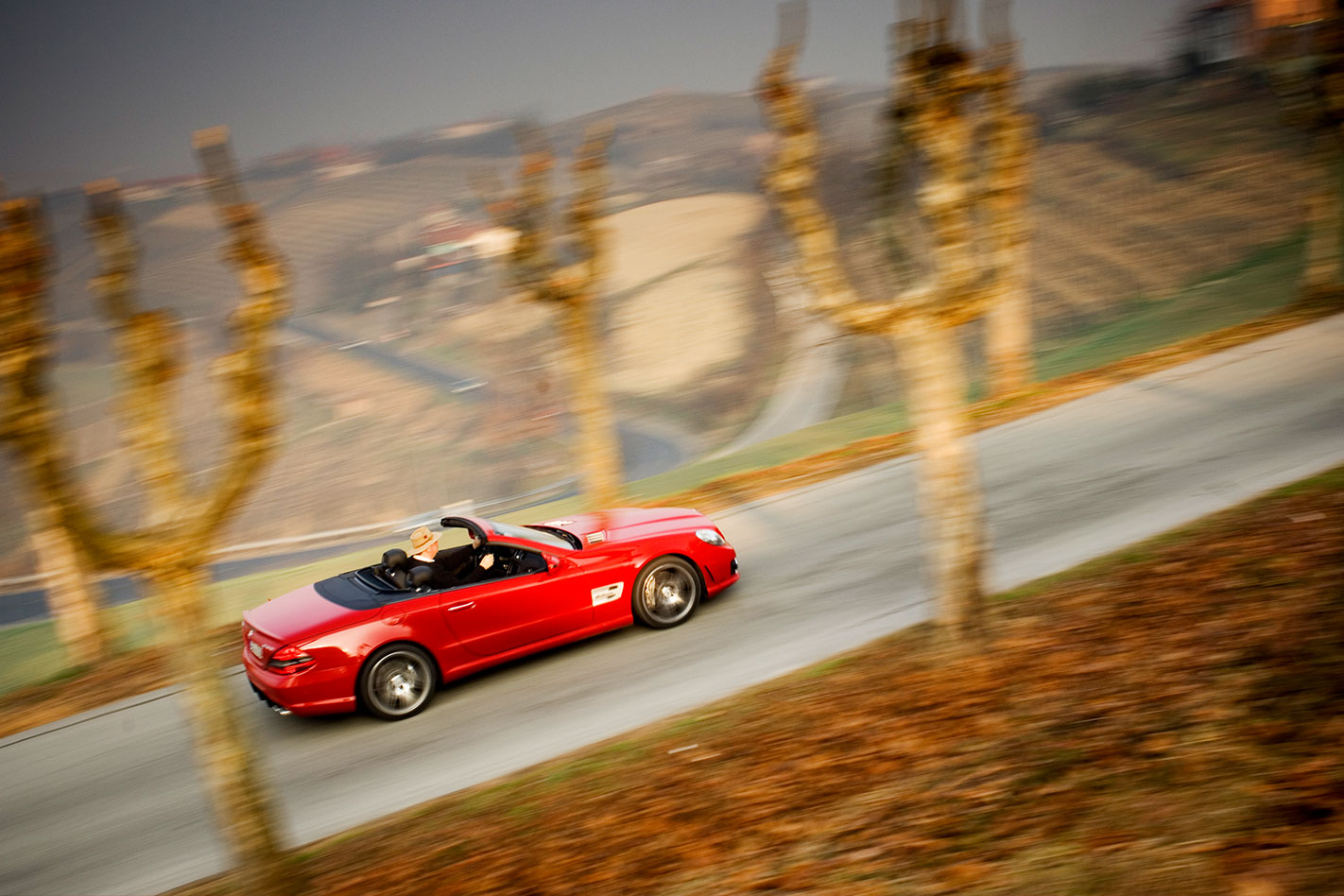
Autostrada Verona-Brescia, late afternoon. After 2987 emphatic direction changes, the head of the driver glows like the sunset we are about to relish. In pale contrast, the photographer’s complexion radiates that typical grey and dingy haze that surrounds the Po River – Italy’s longest.
Just as well Mercedes-Benz sent along a chase car with four fresh tyres. After all, the rear Michelin Pilot Sport Cups left plenty of signature marks on the yippee hairpins, the glorious second-gear esses and the wide-open third-gear sweepers. ESP Off is the obvious choice on this turf, although for maximum results and minimum damage you definitely want the road to be wide and the bends to be wide open. And where else but Italy do the Polizia pull over and wave you through with a double thumbs-up?
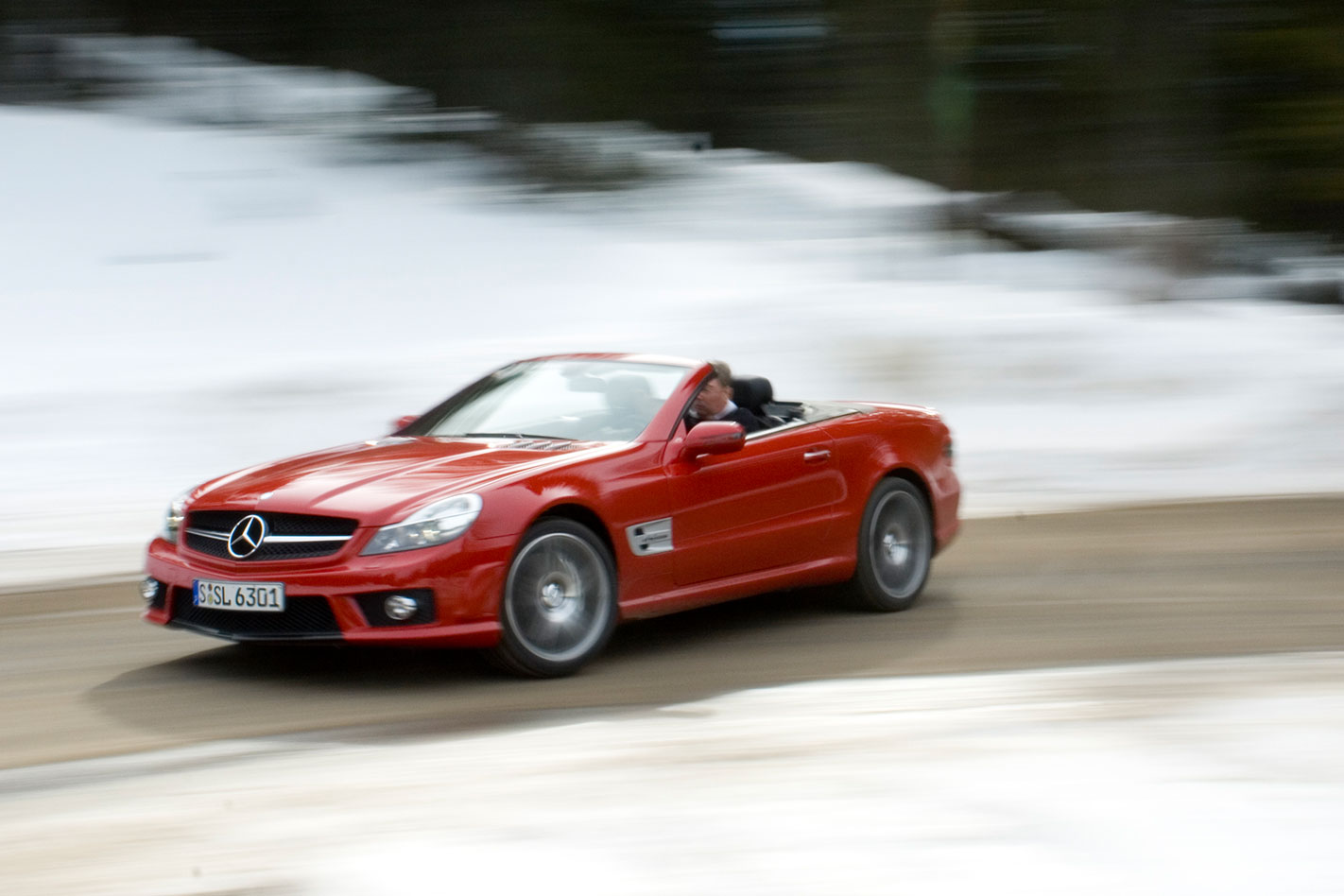
Extra money buys the AMG Performance Package with bigger brakes, a rear differential with a more aggressive 40-percent locking ratio, track suspension, race steering wheel and different cast-aluminium alloy wheels shod with (unchanged from the SL55) 255/35R19 tyres in the front and even fatter 285/30R19 software in the rear. We’d only take the enhanced traction diff and the larger-diameter front rotors.
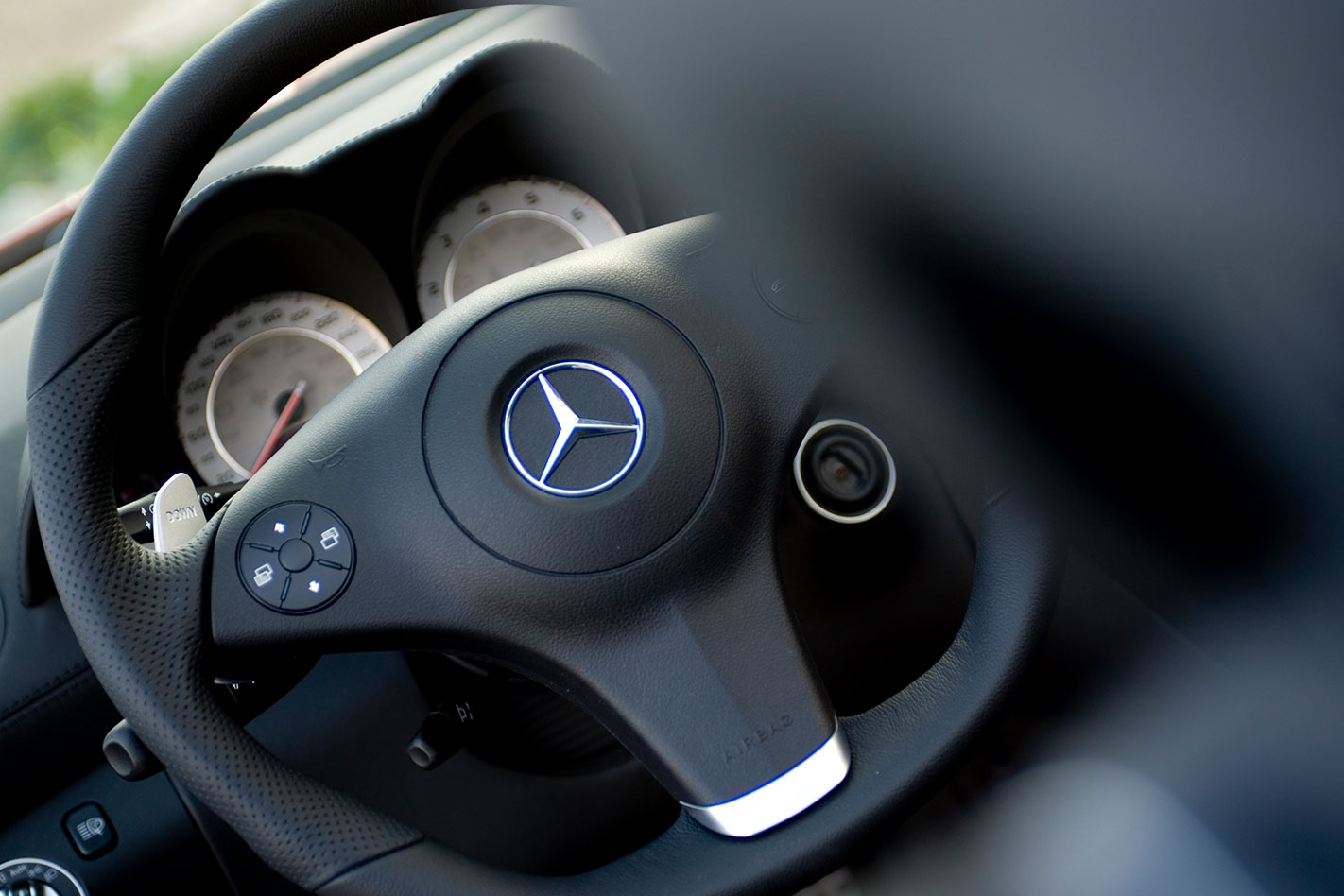
It’s not really the engine that makes the difference though. Instead, it’s the much more versatile and competent gearbox that scores full marks, while the updated chassis earns the latest AMG roadster a small but quantifiable edge in handling, roadholding and ride comfort. Credit, we find, is due to the magic transmission that automatically blips the throttle during downshifts and can slip from seventh into fourth or from fifth into second without ever dropping a cog. Praise also goes to the neatly balanced, tarmac-hugging ABC suspension, the reassuringly powerful yet easy to modulate 19-inch brakes, and the meaty steering which is stoic enough to hold course at 250km/h and quick enough to catch that notoriously wayward tail.
Instead of darting through darkness with eyes wide shut, we stop for dinner, bed and breakfast near the French border, high up in the hills above Ventimiglia. Over a bottle of Brunello or two, the crew is in no hurry to weigh the SL63’s pros against the cons. On the should-do-better list, we note the obese kerb weight (not much change from two tonnes), the considerable high-speed thirst, the increasingly complex ergonomics (the SL must still do without the single Comand controller), the relatively tight packaging for occupants and luggage, the noisy but not particularly talented voice of the big-bore engine and the rather loud AMG livery.
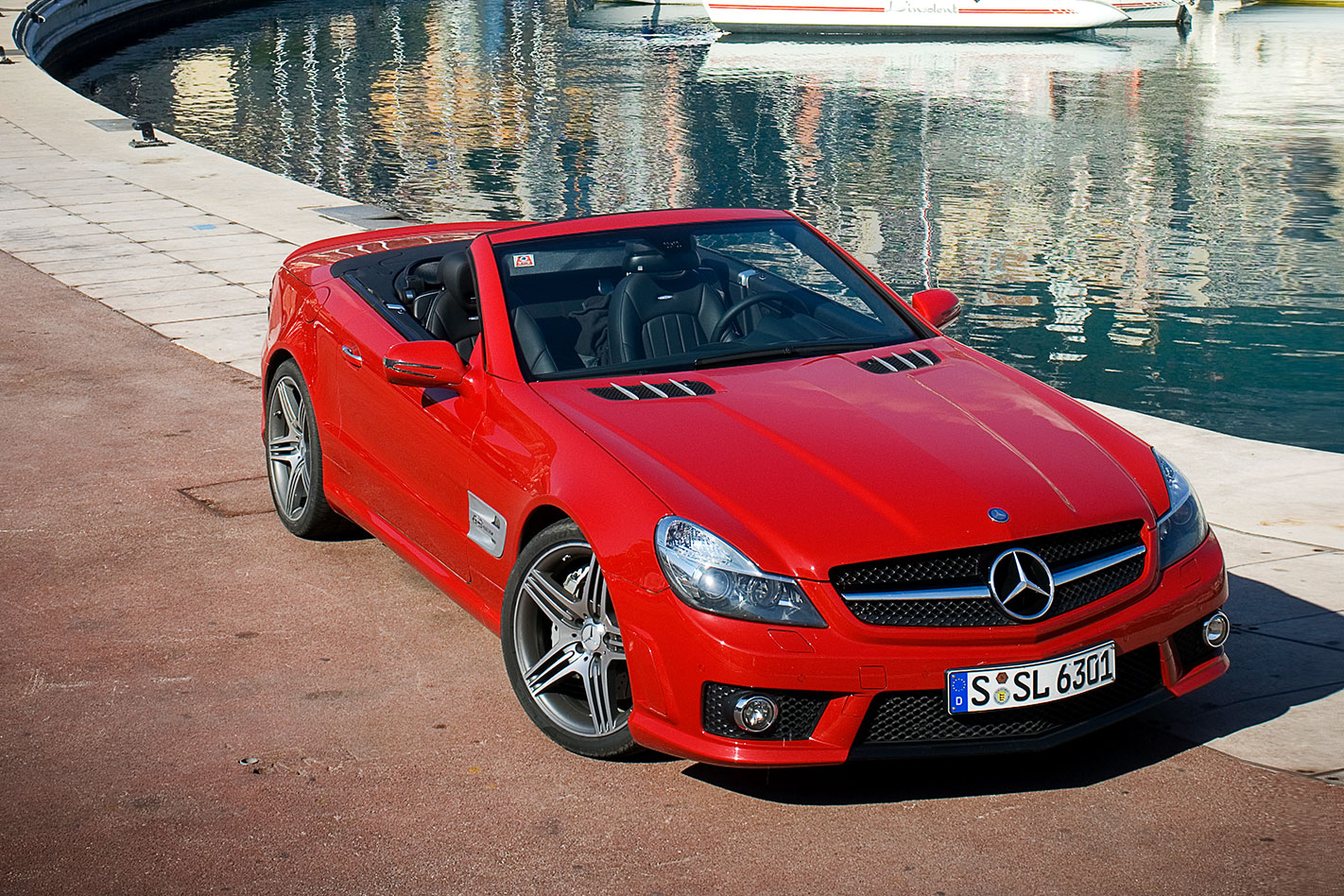
Friday lunchtime, al fresco at the Rascasse restaurant in Monte Carlo. Two happy sun worshippers are keeping a watchful eye on their chariot which hums an end-of-journey kerbside tune – exhaust crackling, engine sizzling on and off like an invisible jazz brush, leather and plastic audibly expanding and contracting at random.
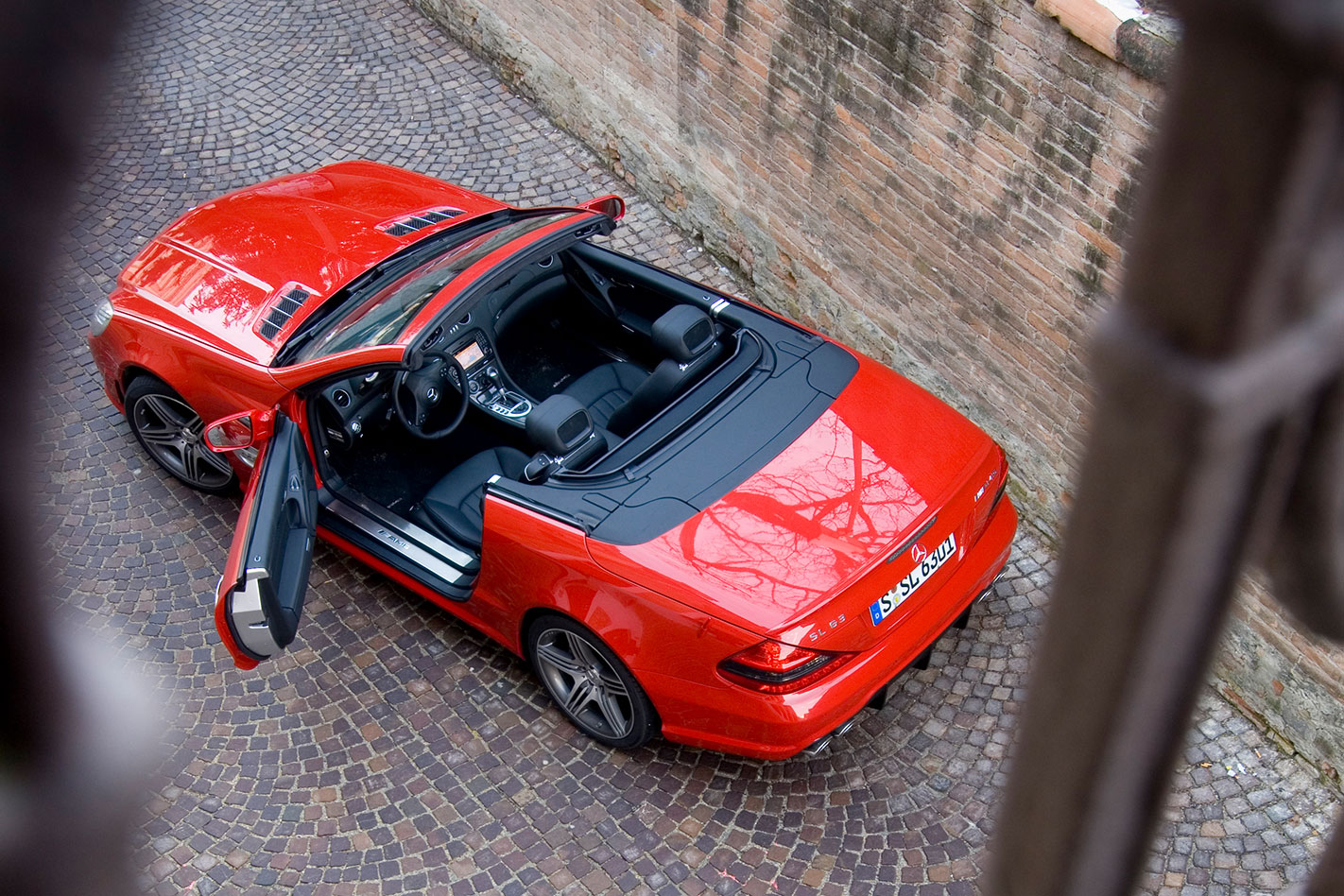
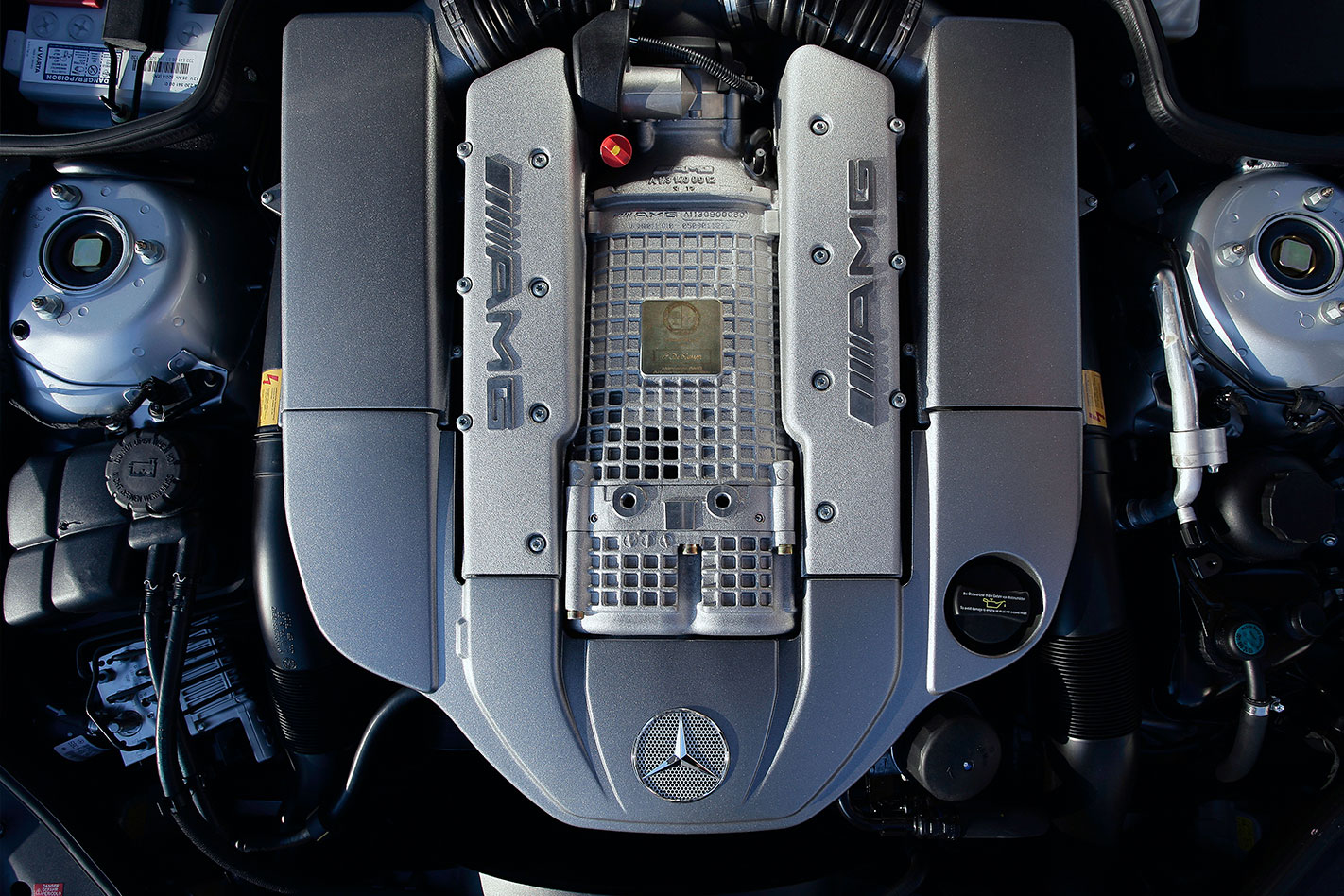
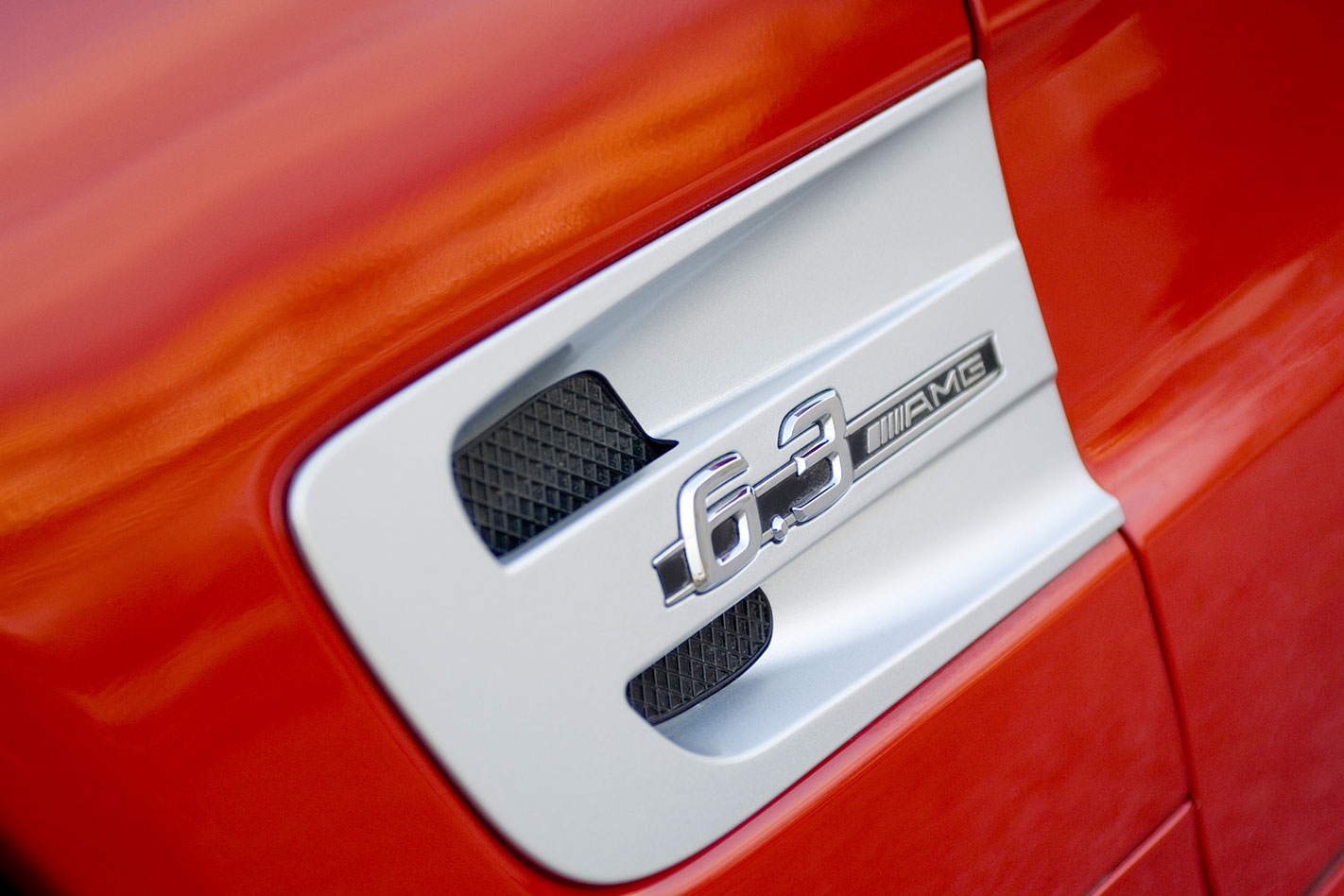
We could have, quite frankly, done without this facelift, and we simply cannot fall out of love with the 5.4-litre Kompressor overnight purely to embrace the new 6.2-litre unit that has replaced it. But on aggregate points, on all-round talent as well as on universal appeal, the SL63 AMG is indeed a step forward in the colourful history of the iconic two-seater Mercedes sports car which, long, long ago, stopped living up to its ‘Super Light’ moniker.
Bye-Bye Blower
When Mercedes-Benz launched its SL55 AMG hot-rod back in 2002, it created a sensation. Not only did this supercharged monster produce 368kW, but the thought of 720Nm impacting at just 2600rpm made your neck hairs stand on end. And the sound; the most anti-social, hellishly wicked V8 blare loads of money could buy … from a Mercedes!
FAST FACTS
LIKE: Superb transmission, suspension and brakes; serious punch DISLIKE: New engine overshadowed by SL55’s, generic front-end styling
It’s only been a couple of days in the office at MOTOR This year, but we’re already looking at car ads for things we can’t afford.
Take these for example, we could maybe afford one of them if we all put our money together.
‘Super Deluxe?’ you ask. The seller says it’s been optioned with a Moffatt/Hansford (yes, the racers) pack, plus look at how plush that interior is! It’s even got matching leather Recaros.
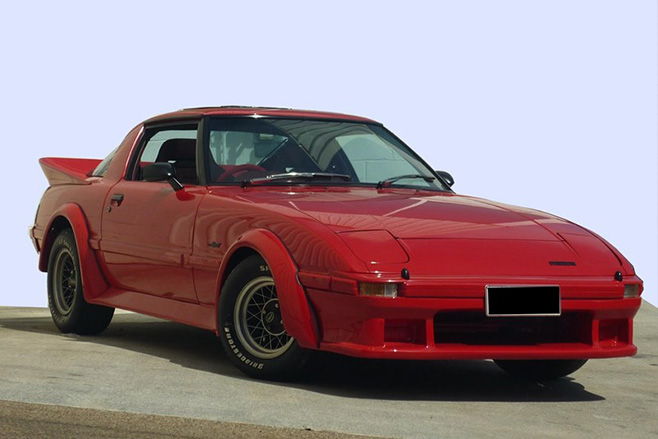
The $40,000 asking price doesn’t seem too bad for the thing, if it runs as well as the seller says.
Recently we wrote about a company in the US building officially licenced Eleanor Mustangs from Gone in 60 Seconds.
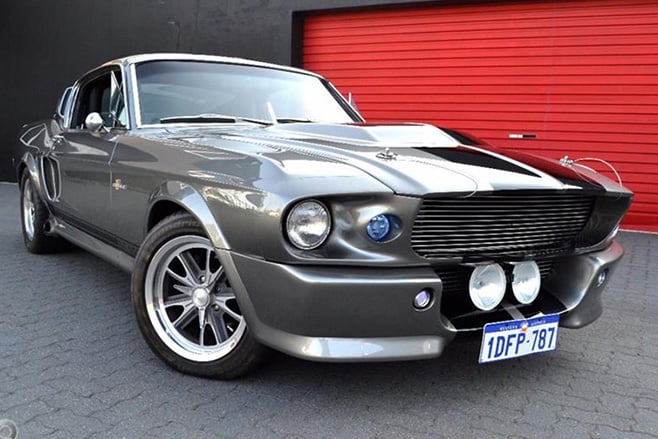
In the correct colour, and with 24,342km on the clock, its $187,000 asking price is steep… but it’s the only one around for sale.
2015 ALFA ROMEO 4C LAUNCH EDITION
“Absolutely pristine condition. Only 350 kilometres,” is exactly what you want to see written under a picture of a car on an ad. And this one looks the part.
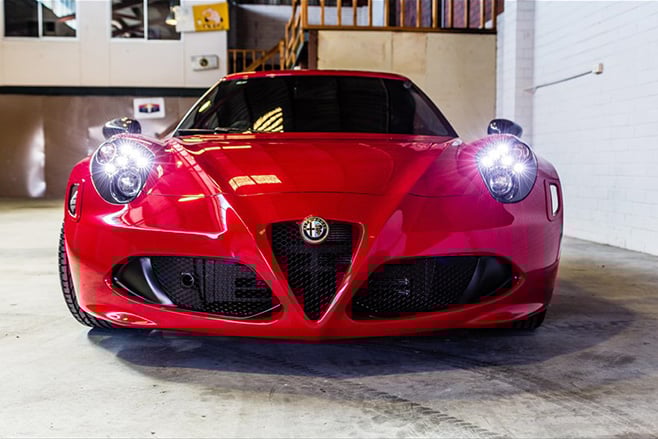
The $99,000 price tag also makes it the second-cheapest car on today’s list.
This ad is either amazing, or disappointing.
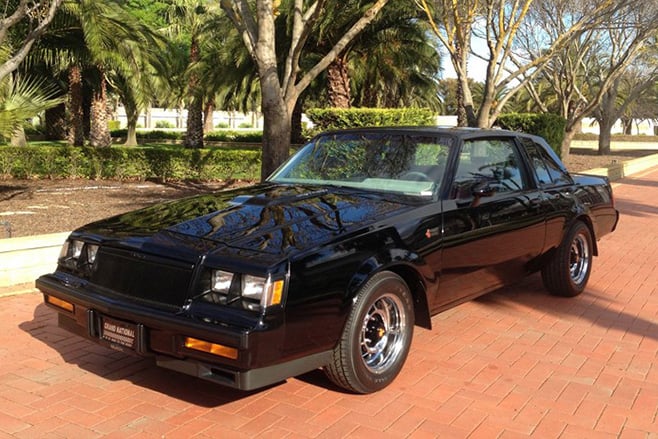
However, if it’s a ‘regular’ (but still cool) Grand National made to look like a GNX, it might not garner the admiration worthy of its asking price.
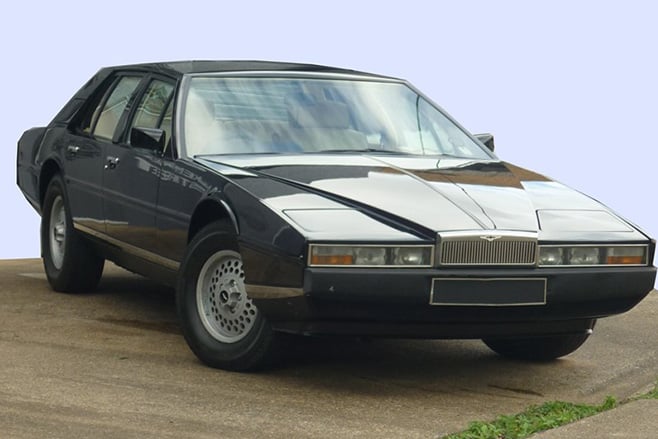
But its funky interior makes it endearing to us, as well as its bent eight under the hood.