
MOTOGP: Dovi edges Marquez in unbelievable Motegi duel
World title margin reduces to 11 points with Phillip Island up next weekend
In appallingly wet conditions, Ducati’s Andrea Dovizioso showed he is a genuine MotoGP world championship contender as he out-dared and out-sped the most adventurous rider of them all, Marc Marquez, in a Japanese MotoGP contest that will surely be remembered as one of the great ones.
Those poor souls who missed the grand prix at Motegi have deprived themselves of some of the most magical, indelible moments in motor sport, when the two title contenders defied the atrocious conditions and ever-receding grip levels from worn treaded wet-weather tyres abused by excess throttle use for 24 desperate and damp laps.
Now, with three races remaining in 2017, starting with Phillip Island next Sunday, Marquez’s points’ margin to Dovizioso has shrunk to 11. It is game on.
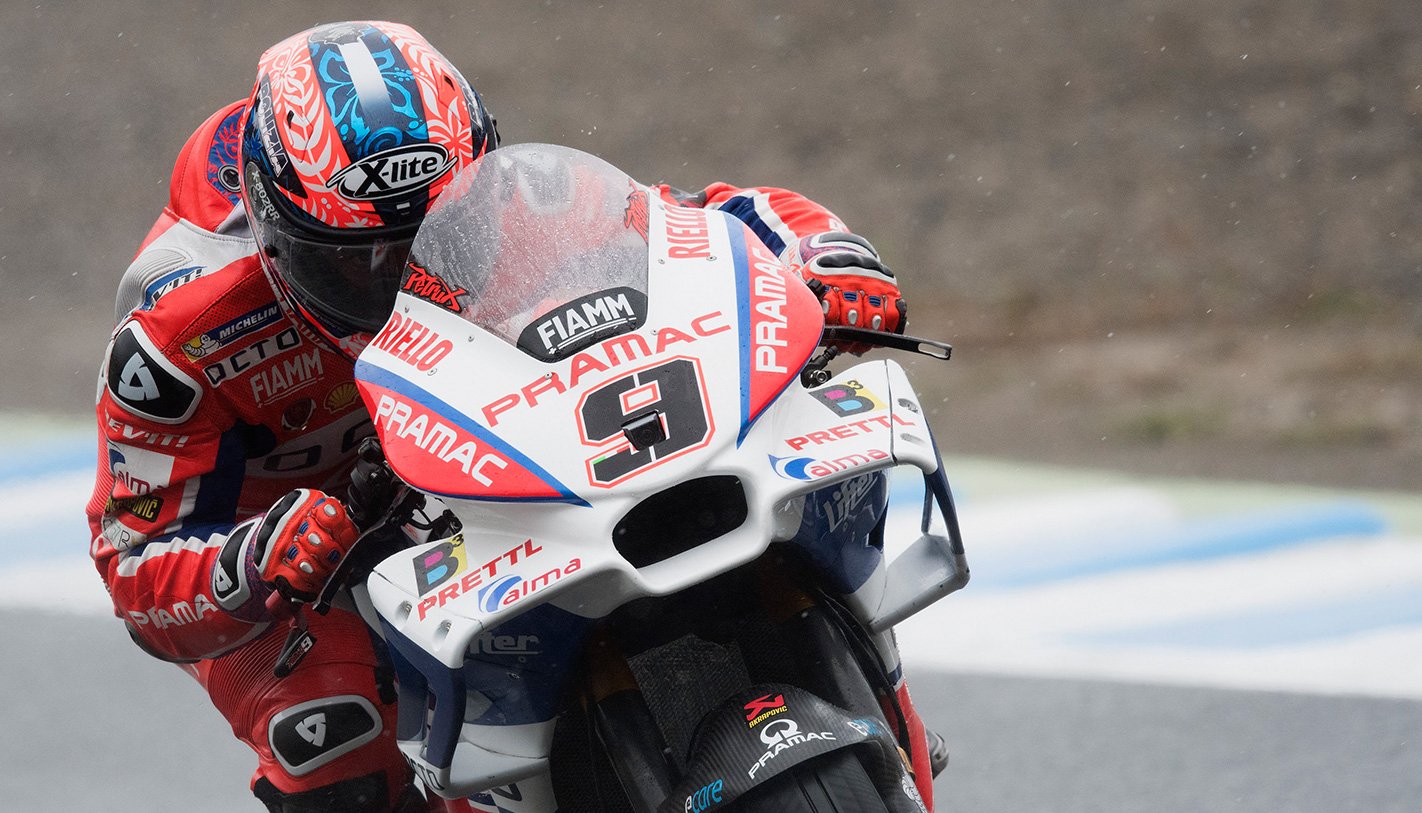
Long considered a good MotoGP rider rather than a great one, Dovi now has the chance to elevate himself among the elite.
At a saturated Motegi, where it rained solidly across the three days, Honda’s Marquez looked to have the edge on everyone. He dominated the wet practice sessions, but then said he sacrificed a shot at pole in order to get some laps on slicks on a drying track on Saturday.
He ended up slipping back to third fastest behind Tech 3 Yamaha’s Johann Zarco, who nailed a stunning pole position, and Pramac Ducati’s Danilo Petrucci.
Dovi was an unhappy ninth, four grid spots lower than his works Ducati team-mate Jorge Lorenzo.
Valentino Rossi qualified 12th after a practice fall which tested out his still healing leg, broken five weeks earlier.
Missing from the Motegi weekend was Aussie Jack Miller, who broke a leg in a training mishap after the previous race.
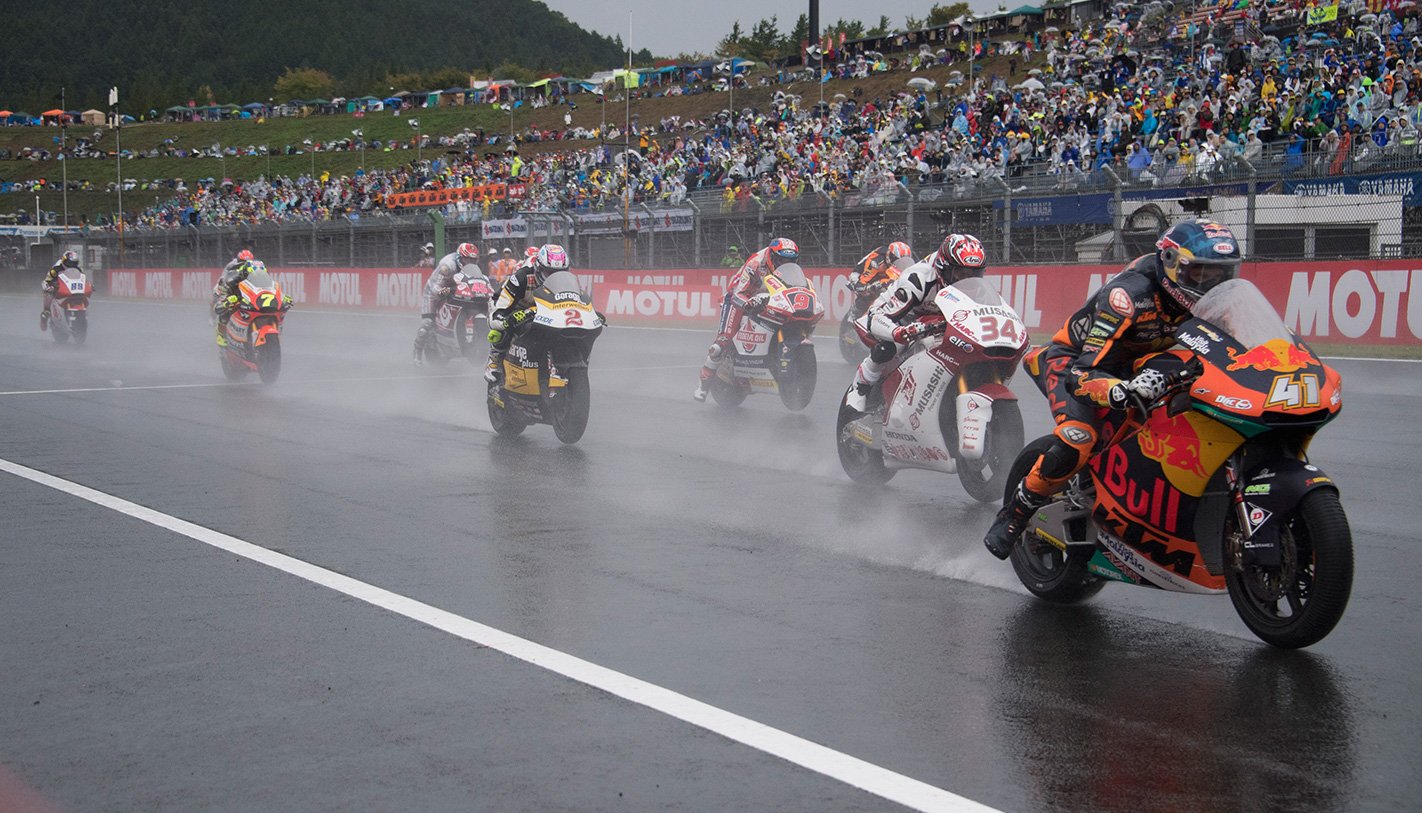
Dovizioso too made a speedy getaway to stay with the leaders.
Yet to nab a MotoGP victory, Petrucci hit the front on lap two with Marquez, Lorenzo, Dovizioso and pole man Zarco all looking busy.
But the Lorenzo flurry didn’t last and he was soon dropping back…sixth…seventh…eighth…ninth…
Rossi hit the deck early, and with 12 laps remaining, Marquez fired past Petrucci to lead, with Dovi hot on his tailpipe.
Suddenly the two title rivals were in tight company and vying for victory. Dovizioso surged beneath Marquez with six remaining but within three laps, the Spaniard had forcibly elbowed his way back to the front.
It was dramatic, high-stakes duelling. Warriors on two wheels. In mad conditions. At nearly 300km/h. The last lap brought watchers to the brink of incredulity as first the Ducati and then the Honda muscled to the slightest of advantages. Marquez looked to have enough to hold off the Ducati when a huge moment gave Dovi a chance.
The Italian closed on the back straight and dived under Marquez at the next corner.
Marquez is never beaten though, and slung his bike inside the Ducati in the Victory esses, nosing ahead…but only momentarily. Dovizioso, always so smooth, held the better line and could get on the gas earlier. He won by 0.25s. Petrucci was a heroic third.
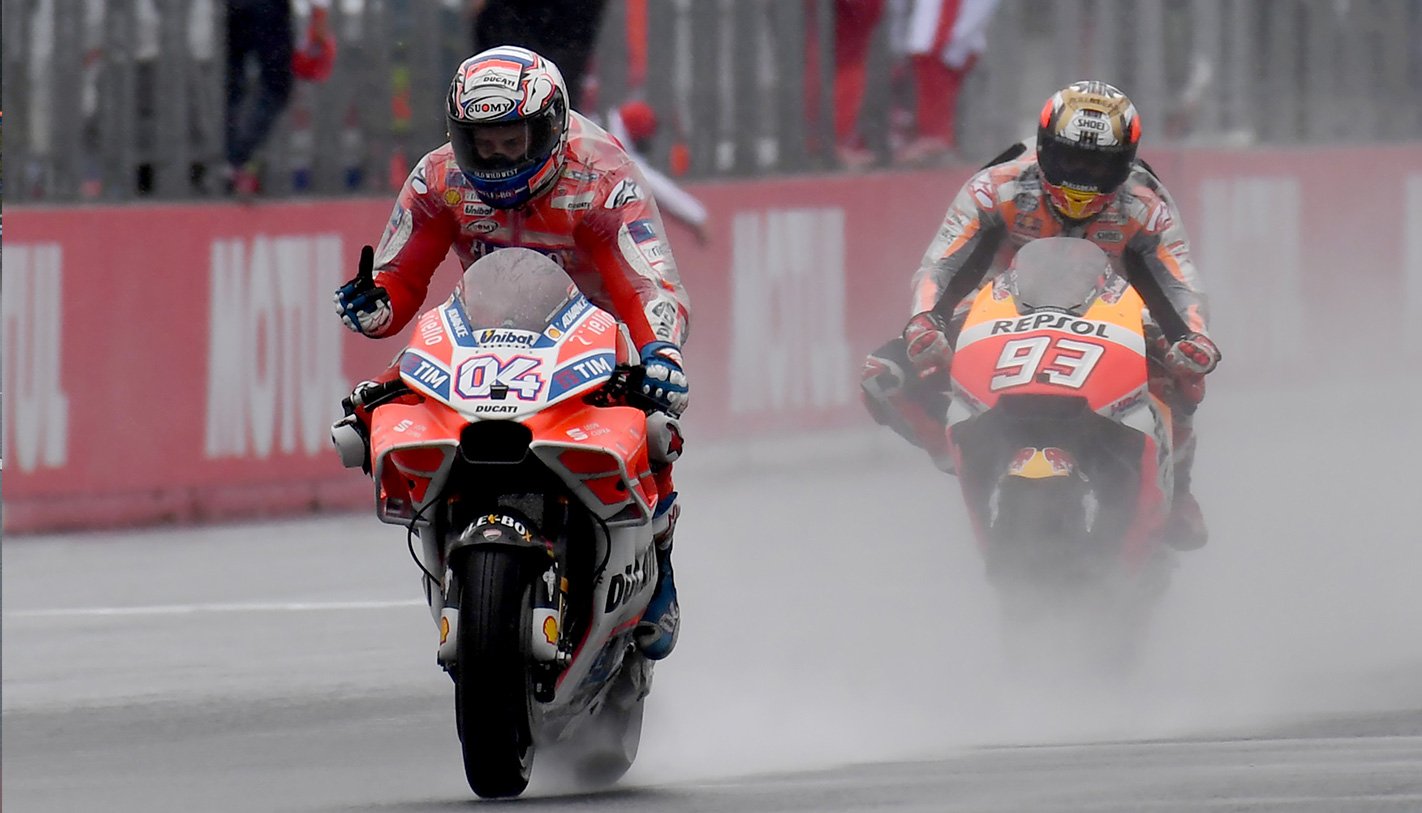
The two embraced in pit lane afterwards.
“It was an amazing race with the two guys fighting for the championship fighting for the win,” said Marquez. “I tried to push and be smooth but Andrea was very fast too for the entire race. Entering the last lap, I knew I had only a very small advantage ahead but then I made a small mistake in turn eight – well, quite a big mistake actually – and he caught me. After he passed he was very strong on the brakes and I wasn’t able to match him. In the last corner I tried again but it was not possible to pass him again. Today he did an incredible race and won but anyway I’m happy with our result as I was expecting him to be very, very fast here.”
But the Marquez family did manage a bold win in Moto2, where younger brother Alex (Marc VDS) delivered a wet weather masterclass. Stretching his advantage over the latter laps, Marquez was followed home by Xavi Vierge (Tech 3 Racing), who took his first podium, and Hafizh Syahrin (Petronas Raceline), the Malaysian landing his second podium in three races. Australia’s Remy Gardner was 12th.
Romano Fenati dominated Moto3. Niccolo Antonelli (Red Bull KTM Ajo) took second, his first podium since the beginning of 2016, with Marco Bezzecchi (CIP) taking his first rostrum finish in third and making it three manufacturers on the podium – Honda, KTM and Mahindra. Championship leader Joan Mir had a shocker, his priority being survival as he finished outside the points in 17th. He holds a big 55-point margin over Fenati but will be hoping for a dry track at Phillip Island.
Stunned Brendon Hartley called up to race a Toro Rosso in Austin
Finally the WEC champ and Le Mans winner gets his chance in an F1 grand prix
Eight years after last testing a Formula One car with Toro Rosso, New Zealander Brendon Hartley has received a surprise call-up to race with the team in next weekend’s USA Grand Prix in Austin, Texas.
The drive became available when Pierre Gasly was otherwise committed to racing in the last race of the Super Formula Championship at Suzuka.
Toro Rosso wanted to evaluate Hartley and others for a permanent seat next year following the departure of Carlos Sainz Jr to Renault.
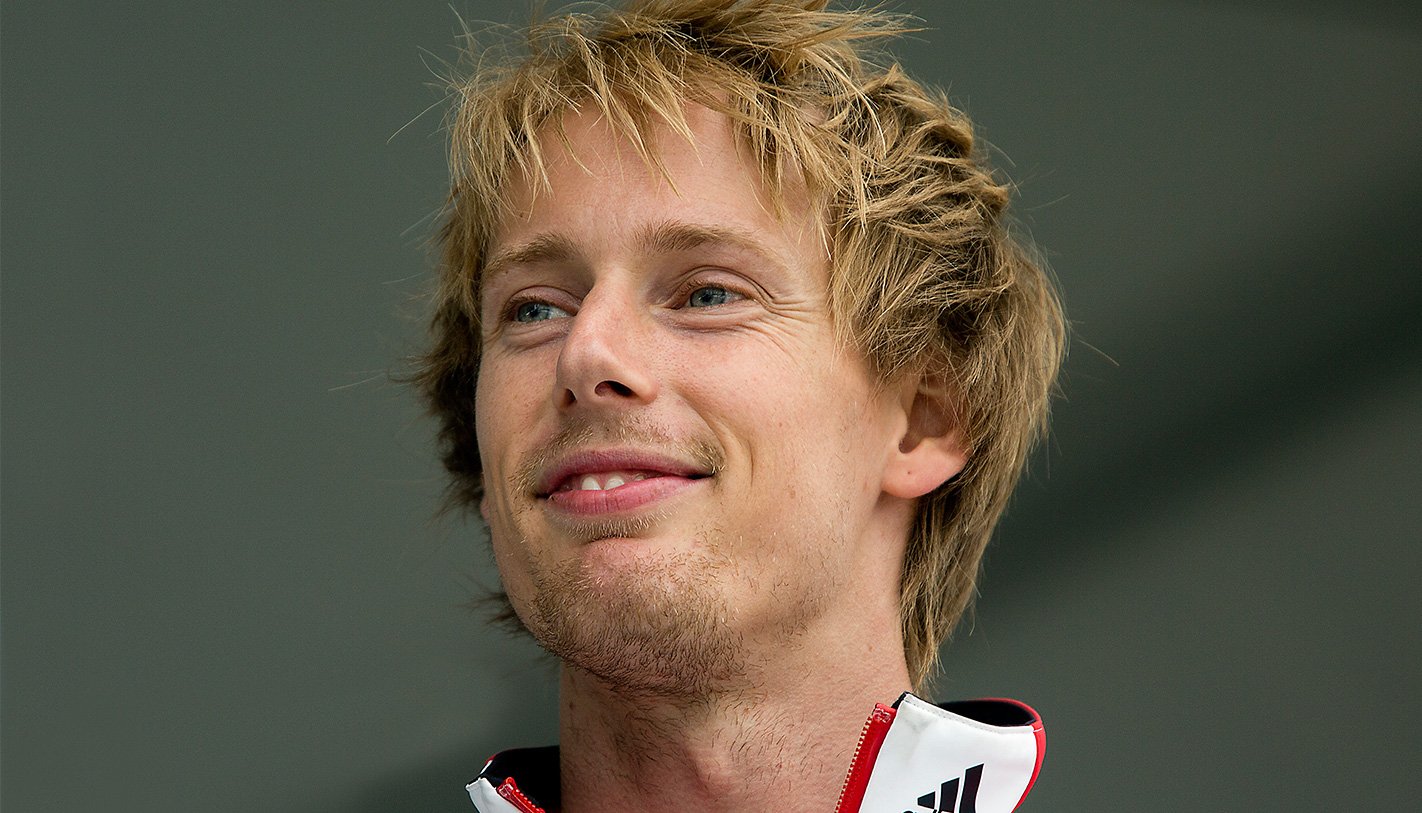
Hartley’s old team-mate in the Porsche WEC squad, Mark Webber, welcomed the call-up decision. Webber has long been an admirer of Hartley’s ability having watched him up close racing the prototypes.
Since his last association with Toro Rosso, the rangy Hartley proved successful in many different categories, including the Formula Renault 3.5 Series, GP2 Series and sports cars.
In the last three years he successfully raced the LMP1 Porsche in the FIA World Endurance Championship and in 2015 won the WEC world title with Webber and Timo Bernhard.
In June this year Hartley won the 24 Hours of Le Mans race with Porsche.
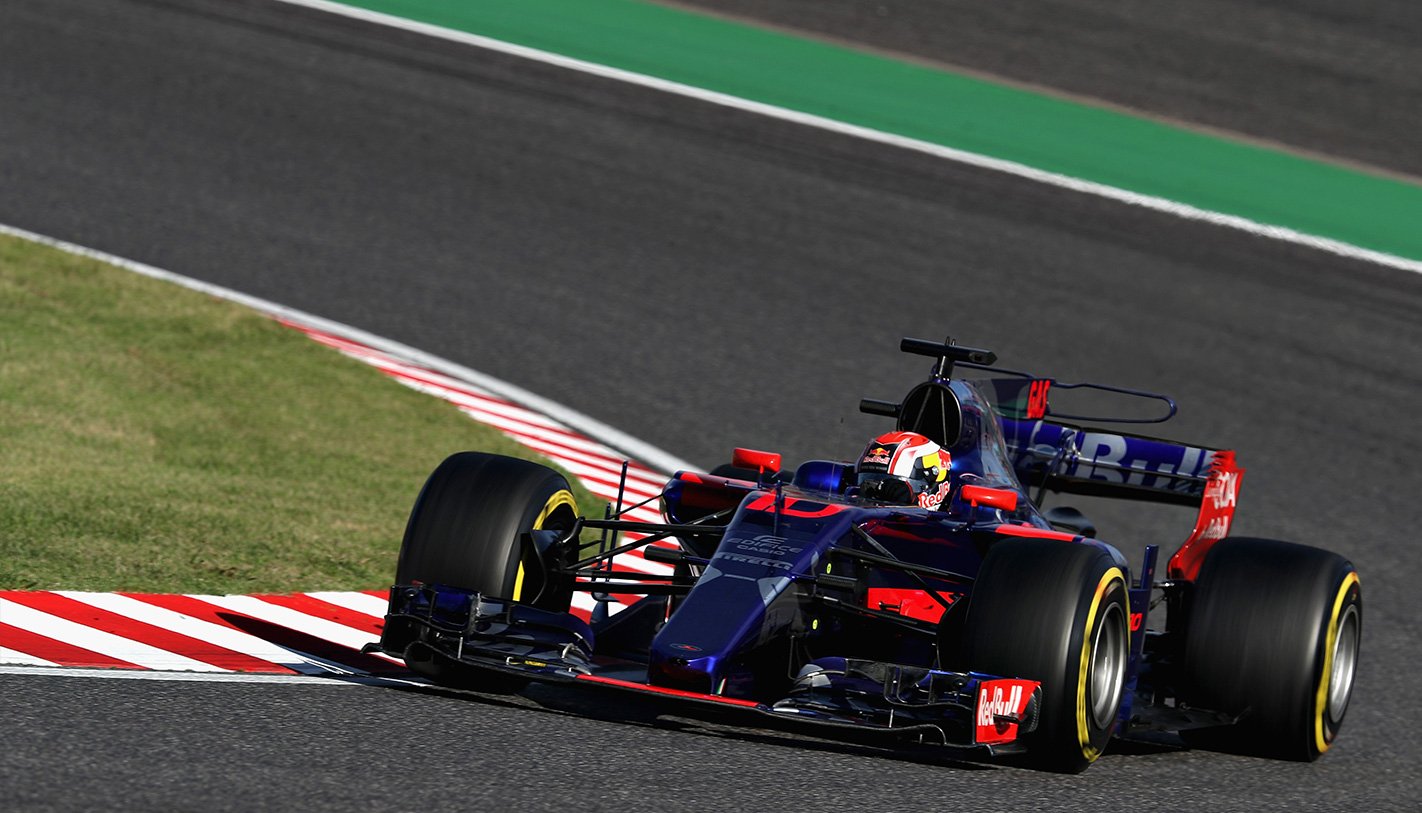
In a nod to the huge G forces Hartley can expect at Austin, F1’s Martin Brundle tweeted: “That’s what is technically known as ‘a baptism of fire’. Brendon will be a shirt collar size up when he leaves Austin. Good luck.”
Hartley will become the ninth New Zealander to race an F1 car, and the first Kiwi since Mike Thackwell in 1984.
Mawson’s tough Euro F3 finale
Hockenheim brings no joy to Aussie.
There were no bountiful gifts from the gods when Australian Joey Mawson wrapped up his European Formula Three Championship campaign in the finale at the Hockenheim.
The talented youngster, winner of last year’s German F4 title, has stomached a tough Euro F3 season with Van Amersfoort Racing, often outpacing his high-profile team-mates Pedro Piquet and Harry Newey but not attaining regular podiums and levels of consistency that marked his 2016 championship romp.
A third place at the Nurburgring was the 2017 highlight for Mawson as the championship fell into the grip of McLaren-backed Brit Lando Norris of the Carlin team.
As usual, qualifying tends to dictate race outcomes, and so it was at Hockenheim: starting the three races, respectively, in 15th, 12th and 11th.
In race one, Mawson made a good start moved up to 13th on the first lap, and this is where he finished. He was on his oldest tyres for this race, saving the newer tyres for the next two races where he would start higher on the grid.
Race two was a disaster when he was forced to start from pit lane after stalling on the grid. Mawson chased down the field, passed six cars and finished 15th.
Mawson started from 11th in race three at Hockenheim – the final race of the 2017 championship – and finished ninth. He placed 13th in the championship, admitted it has been a tough year and harder to deal with after the success of the 2016.
Mawson noted the big difference between F4 and F3 with overtaking much more difficult and slipstreaming much more important in qualifying
“We do not know what category Joey will race in next year” Mawson’s manager Gwenda Searle told Wheels. “This sport is based on high levels of funding so this is what will decide the future.” Mawson has been backed by a group of Australian business people this year.
Targa Great Barrier Reef announced
No, it won’t be held on the actual reef
The popularity of tarmac closed-road events shows no signs of losing momentum as yet another is announced – Targa Great Barrier Reef, a Cairns-based three-day rally expected to attract a field of around 200 cars.
Locked in for the next three years, the new annual event, is modelled on the world’s largest tarmac rally, Targa Tasmania, which has been held annually on the Apple Isle since 1992.
Targa Great Barrier Reef will be a round of the four event CAMS Australian Targa Championship, which also includes Targa North West, Targa Tasmania, and Targa High Country in Victoria.
The extension of the series into Queensland was made possible through a three-year funding deal by Tourism & Events Queensland and Cairns Regional Council with series organiser, Targa Australia.
The inaugural Targa Great Barrier Reef will run from August 31 to September 2 next year, and will visit all key centres in the picturesque, tropical north, , including Port Douglas, Innisfail and the Atherton Tablelands.
Like other tarmac events the entry will represent a cavalcade of motoring history from pre-war classics right through to the latest exotic supercars.
The cars will tackle 15 stages across more than 200 competitive kilometres on a course that covers more than 800 kilometres across Tropical North Queensland.
The event will start and finish each day in Cairns, with a Super Street Stage on the Saturday night.
Targa Australia Director, Mark Perry, anticipates the new event will draw on the usual core of entrants, amateur and professional as well as tapping into the lucrative Asian market due to the ease of travelling to Cairns.
WEC: Toyota takes 1-2 in incident filled Fuji race
Drivers’ title still to play for
Though out-paced by the Porsche competition in qualifying, Toyota Gazoo Racing fought back in atrocious conditions at Fuji Speedway to take a1-2 finish at the team’s home race.
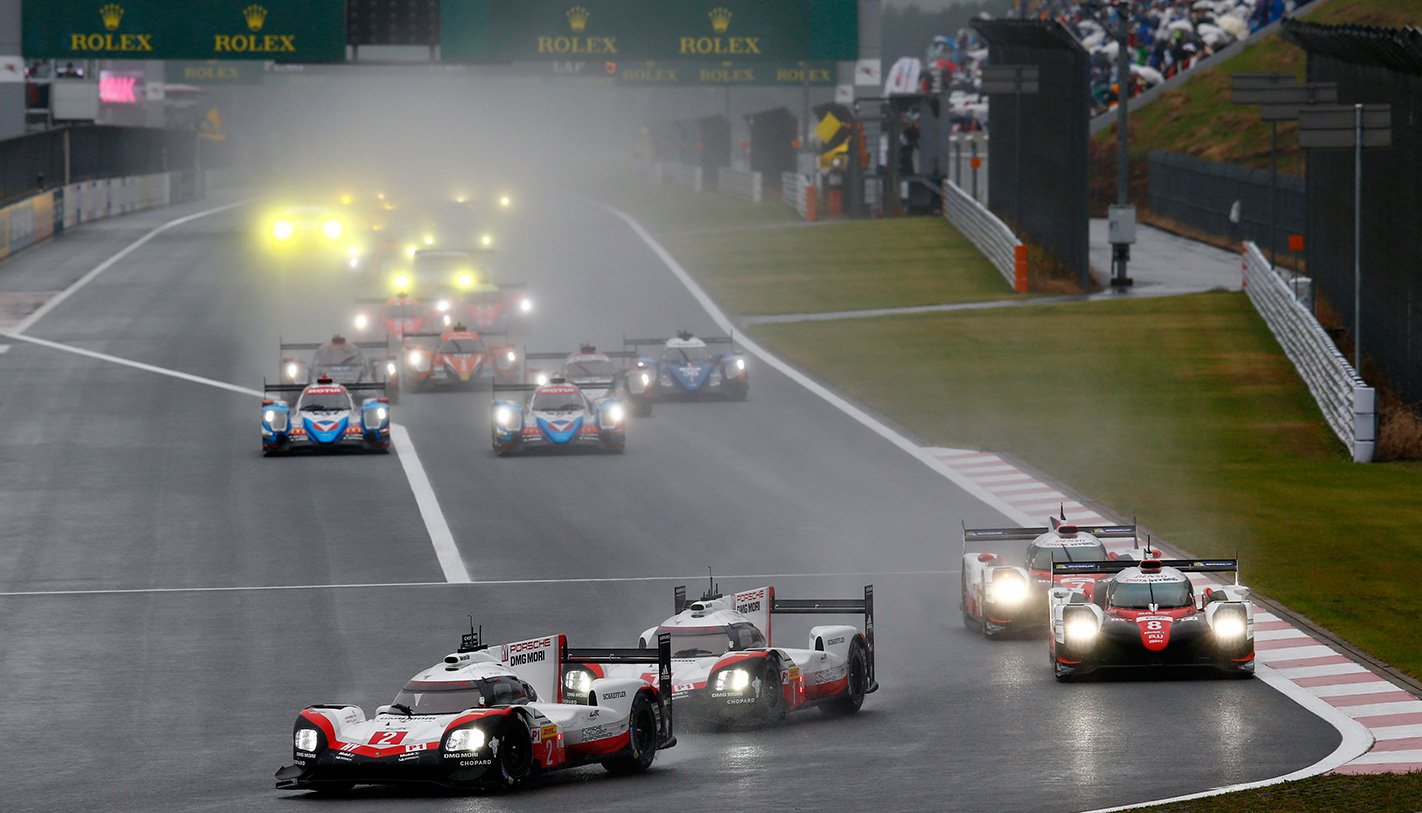
Toyota seemed to have a tyre performance throughout the weather-affected race which saw six Safety Car periods, one Full Course Yellow and two red flag periods in an eventful race.
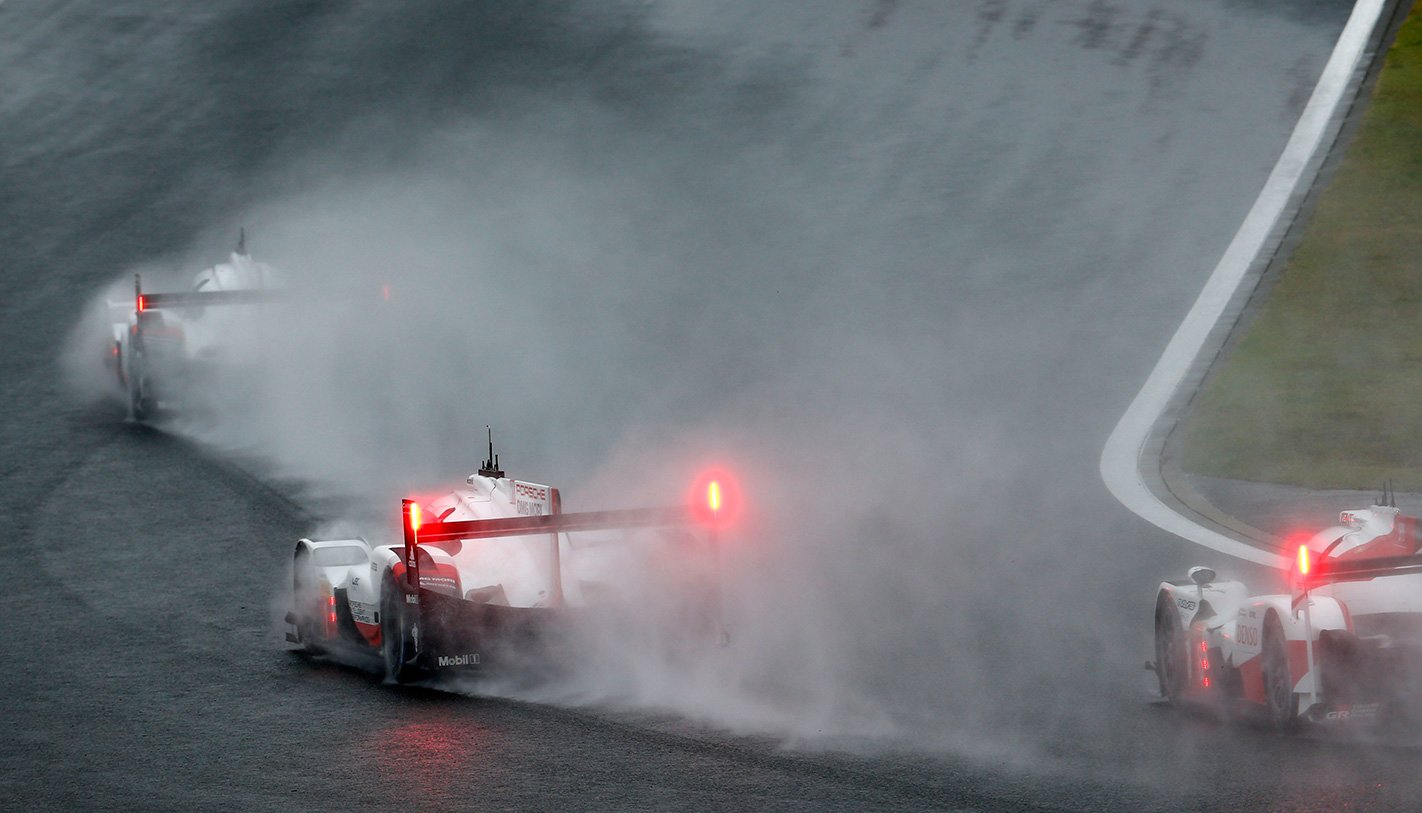
Rounding out the Fuji podium was the #1 Porsche 919 Hybrid driven by Andre Lotterer, Neel Jani and Nick Tandy.
HERE IN Australia, we had but a brief flirtation with the Volkswagen Scirocco. Introduced in 2012 and solely in range-topping R guise, it never really generated much traction with Aussie buyers.
Part of that was down to the fact that it hefted a near fifty grand price tag and had precisely half the driven wheels of the Golf R. The Scirocco was positioned locally as a compromise point between the three-door Golf GTI and the five-door Golf R, in effect replacing the three-door Golf R we never got.
But while it’s been a bit-part player on these shores, elsewhere the Scirocco’s history file is a bit more generously stuffed, making the announcement that production has ceased a bit tougher to stomach. The end came abruptly and with little fanfare. The company’s German website merely carried the message “The Scirocco can no longer be ordered with individual equipment. However, finished, already produced vehicles are available for you.”
The unusual thing about the Scirocco – a nameplate that stretches back 43 years – is that there’s never been a duff generation. With most cars you can point to a series that you’d avoid, where quality took a dip or dynamics went awry. Golf MkIII, Mercedes-Benz W210, Camry XV10, Falcon XF anyone? The three generations of Scirocco were all fundamentally good cars.
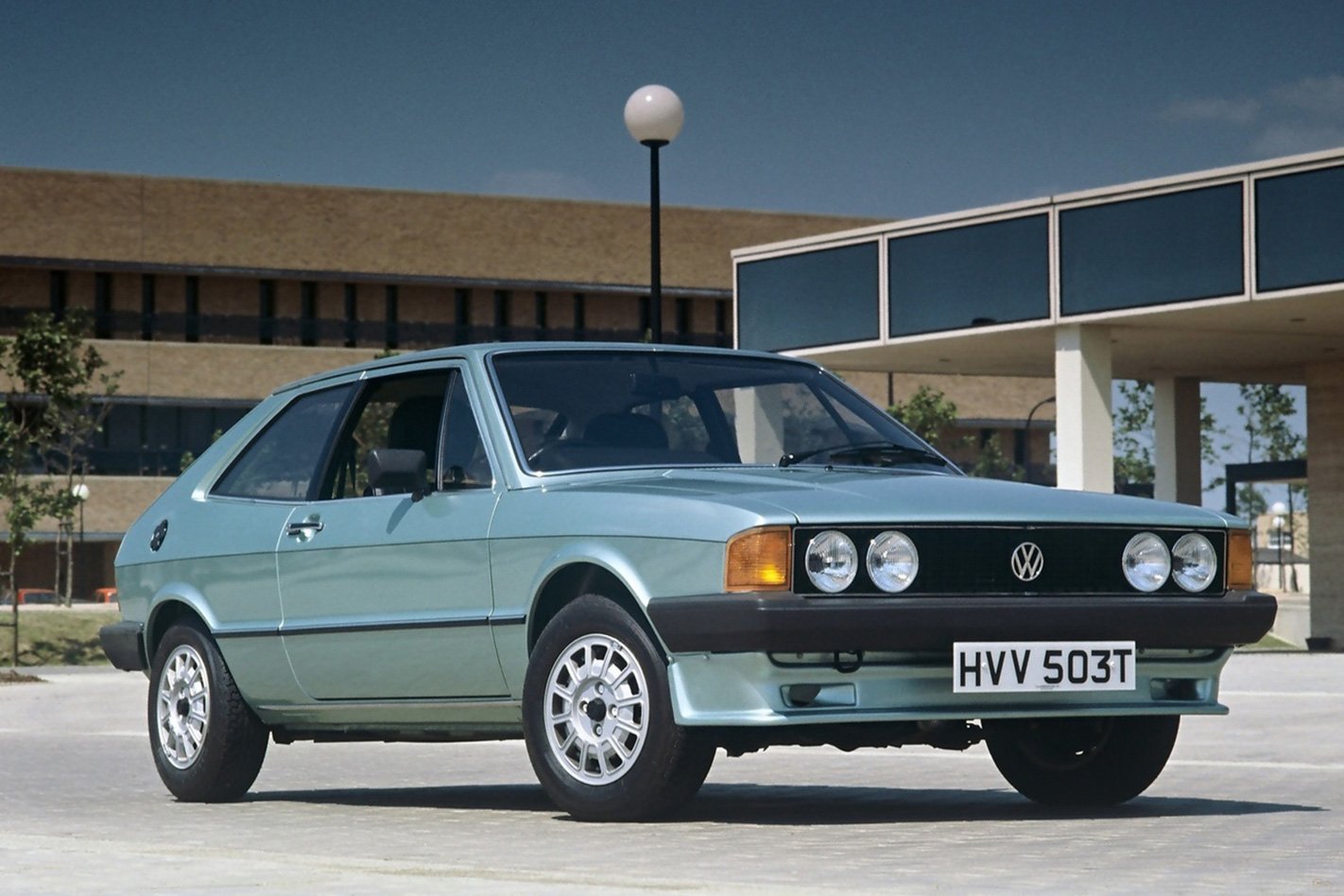
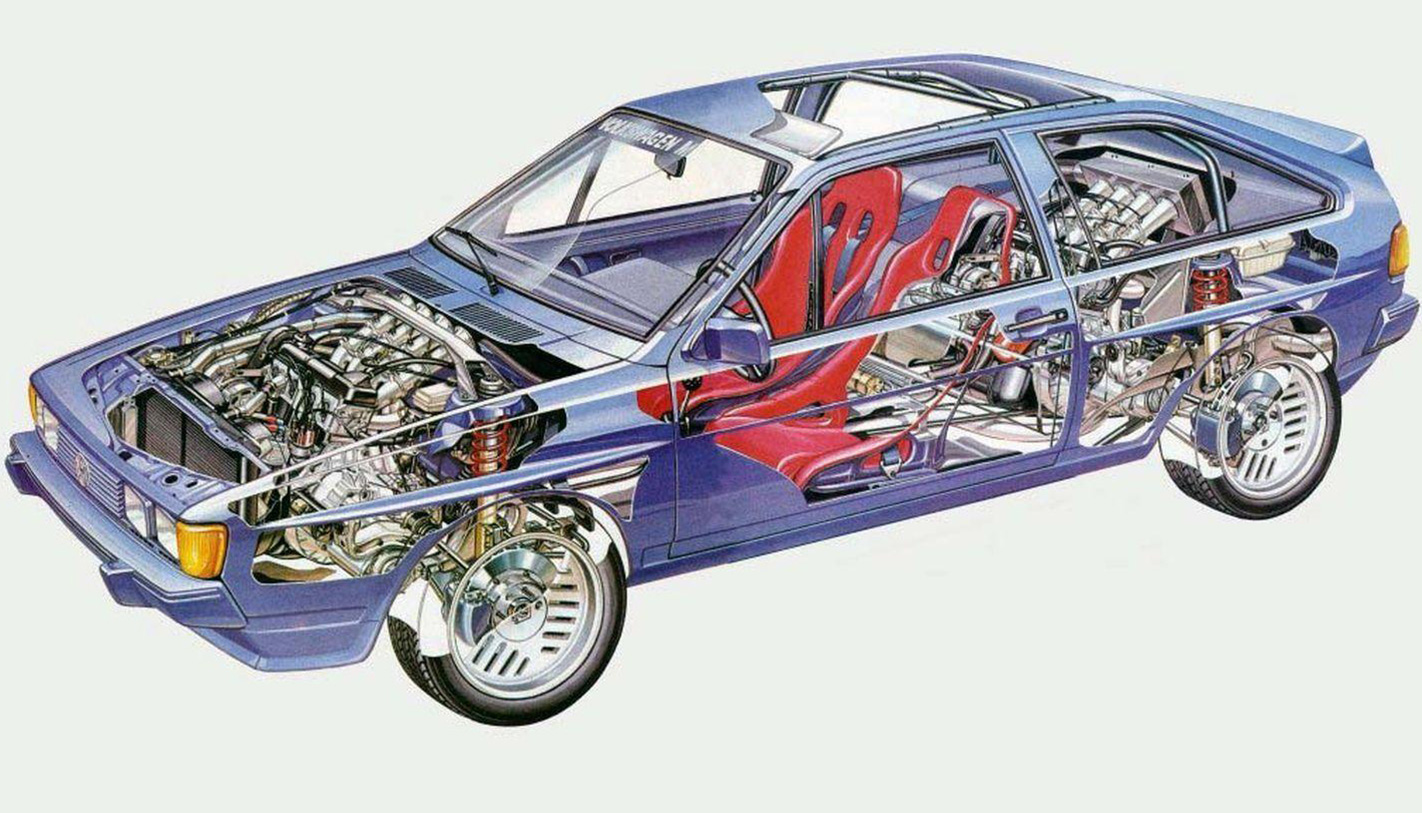
The Mk2 arrived in 1981, carrying a cleaner internally styled shape, but still bolted together at Karmann’s Osnabruck plant. In 1985, the 16-valve GTI version made production in some markets, but the 102kW car was far from the hottest Mk2. That honour goes to the crazy Scirocco BiMotor, which featured two 1.8-litre engines – one at each end – generating a system total of 268kW and capable of dispatching 100km/h in just 4 seconds. That was an utterly outrageous capability back in 1983, when the supercar benchmark, the Lamborghini Countach LP500 S, would take 5.9 seconds to 100km/h.
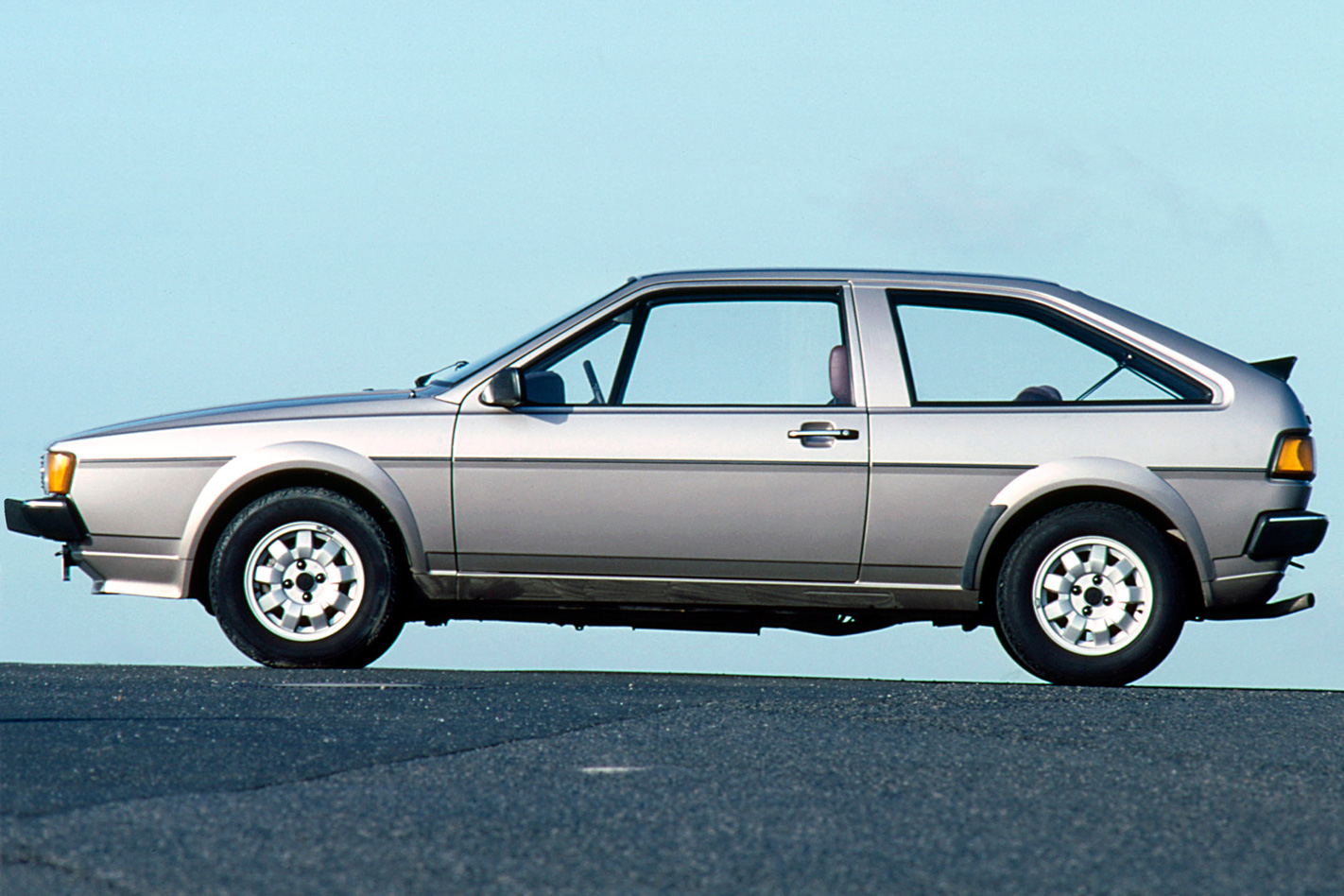
The Karmann factory did, for three years, build the Scirocco alongside its replacement, the Corrado coupe, a car that was lauded by car magazines but largely ignored by the car buying public. In 1992, the Scirocco nameplate was temporarily retired, and the Corrado bit the dust just three years later.
The first Scirocco offered with a diesel engine, the Scirocco Mk III might have been at its quickest with the 188kW R petrol, but the last of the final run of 150 Wolfsburg Edition models are the ones to target. Launched in March of this year, the run out edition had some work to do, given that during the whole of 2016, Aussie dealerships shifted just 261 Sciroccos. So if you want one, get in quick. There might still be some hanging around. And rest assured that you’re buying a classic nameplate that, if its predecessors are anything to go by, might realise you a few bucks in years to come.
It’s no secret Honda has – let’s be kind – taken a sabbatical from performance cars in recent years.
The global financial crisis hit it hard and booted fun off the agenda, but as a result its showrooms have been about as lively as a nursing home nightclub in regards to fast metal.
A new NSX kick-started the rehabilitation project, but $420,000 hybrid supercars live in rarefied air, as proven by the fact Honda Australia has sold just one so far. The car that really needs to revive Honda’s sporting reputation is the new Civic Type R.
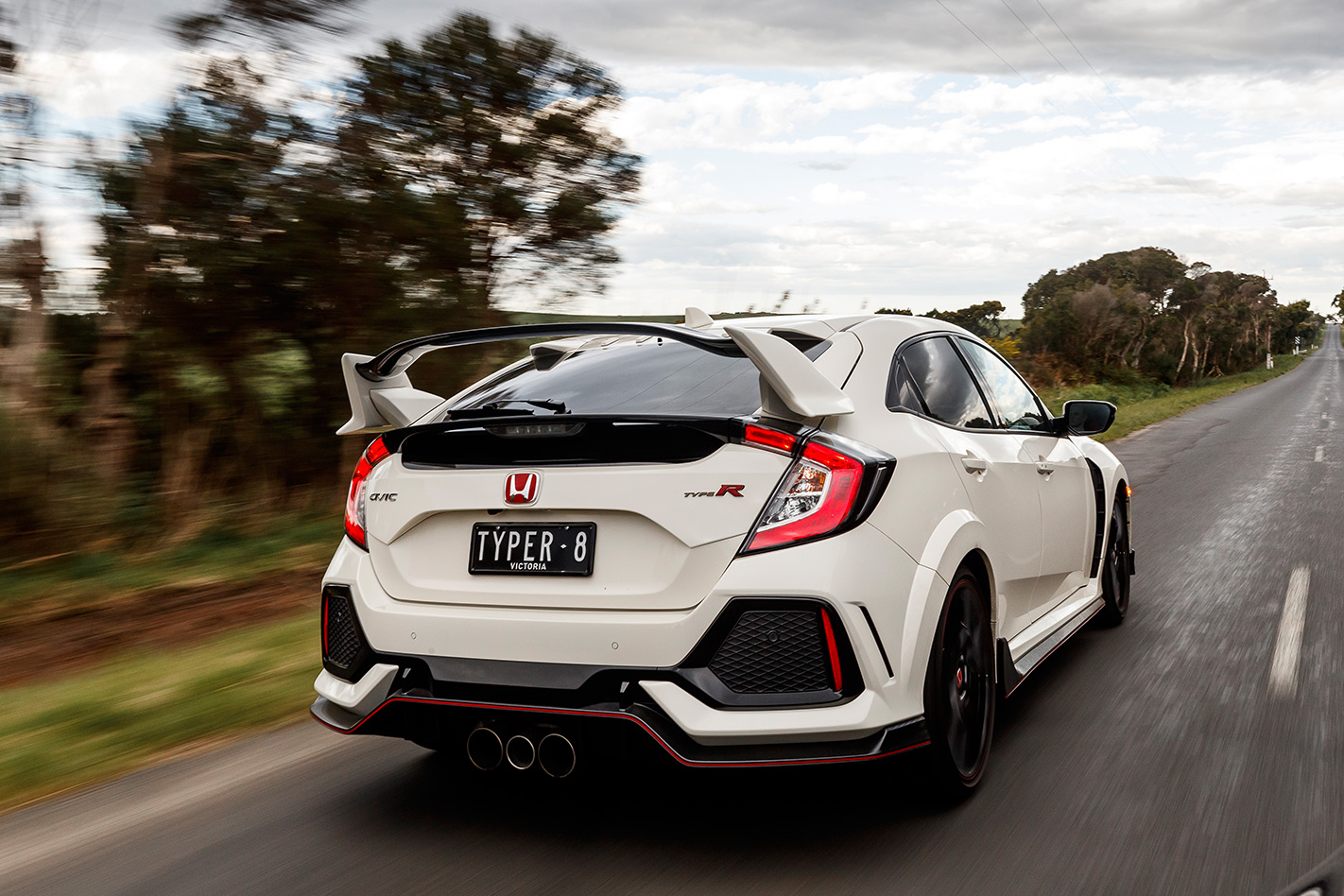
With such talented rivals, it’s going to need to be good. And it is. Honda has built a weapon of a hot hatch, a car that relishes being caned on a difficult road yet retains impressive everyday manners – it might look like a refugee from the Fast and the Furious movie franchise, but underneath those wings and vents is a grown-up and accomplished performance car.
It’s a very cohesive package. There’s incredible grip from the 245/35 Continental SportContact6 tyres, trick front suspension and a helical limited-slip diff ensure strong traction, the steering is quick and accurate and the Brembo brakes powerful with a beautifully judged ABS.
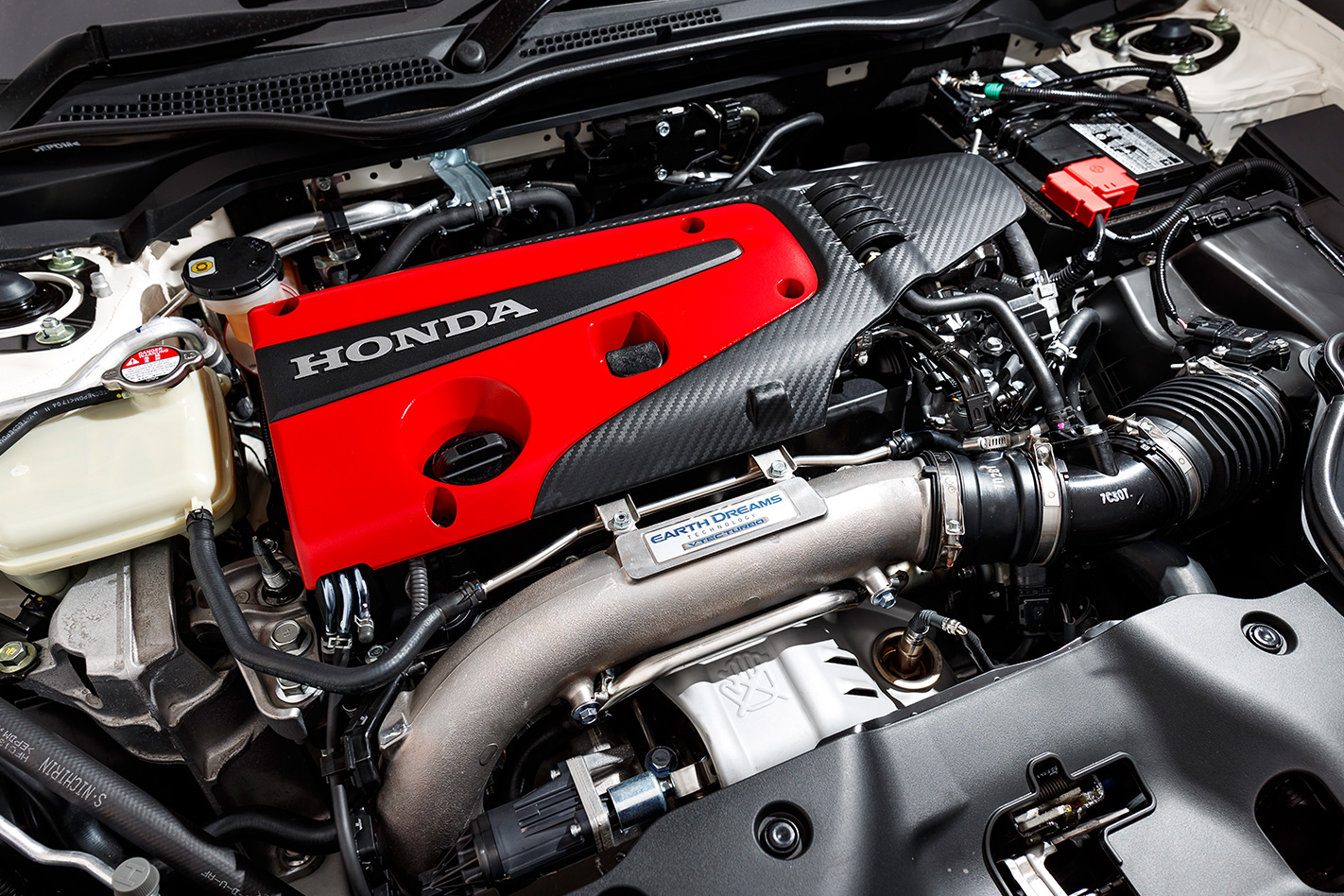
Despite feeding 228kW/400Nm through just the front hoops courtesy of a 2.0-litre turbocharged four there is no need for all-wheel drive – at least in the dry – with wheelspin only ever an issue at full throttle in first gear. Honda claims a 5.7sec sprint from 0-100km/h and we got close with a 5.82sec effort.
A six-speed manual is the only available gearbox but the ratios are close and the shift is excellent, not that you’ll necessarily need to use it too often as the engine offers a broad spread of power – it’ll kill a V8 Mustang from 80-120km/h in sixth gear – and great throttle response. This is a potent car.
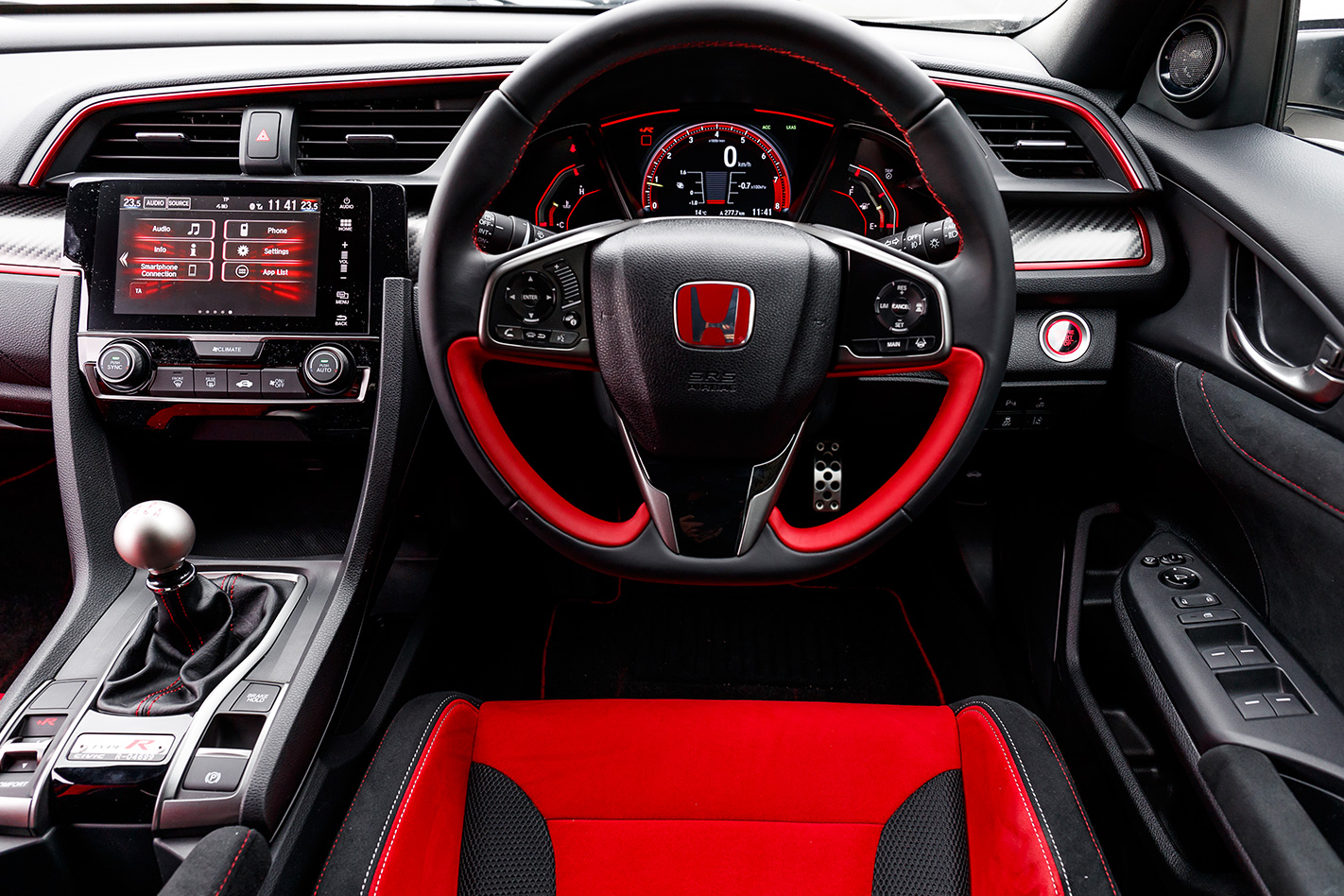
Where it does let the side down is inside. There’s plenty of room and the driver’s touchpoints – steering wheel, gearknob, pedals – are excellent, as is the driving position, however, the infotainment system isn’t particularly slick and many of the materials feel cheap. A similar complaint can be levelled at the Focus RS, but the latest hot Golfs are much nicer places to sit.
The new Civic Type R isn’t perfect, nor will it appeal to everyone; some won’t be able to cop the styling and if you like a car to dance around the Honda isn’t particularly interested. However, it’s one of the most impressive, rewarding performance front-drivers we’ve driven and a car that’s going to prove a stern test for the current hot hatch hierarchy.
4.5 stars out of 5
2017 Honda Civic Type R review Specs: Body: 5-door, 4seat hatch Engine: 1998cc inline-4cyl, DOHC, 16v, turbocharger Power: 228kW @ 6500rpm Torque: 400Nm @ 2500-4500rpm Weight: 1380kg 0-100km/h: 5.7sec (claimed); 5.84sec (tested) Top Speed: 272km/h (claimed) Price: $50,990
A REPUTATION for highly-strung, adrenaline-inducing atmo engines has been a core part of the Type R legend for decades, but the march of technological progress has seen a fundamental shift for Honda’s hero hatchback.
WHAT IS IT?
It’s the hot hatch of the moment – the hardcore, superfluously styled, yet surprisingly civilised Honda Civic Type R. This is the fifth-gen Civic to cop the Type R treatment, but only the second to grace Aussie roads.
WHY WE’RE DRIVING IT
Beyond the eye-wincingly expensive NSX, this is the most talked about Honda in years. But is the hype real? This is our first chance to test the Type R on local soil and to see if its manic front-drive layout is capable of delivering thrills to rival the Ford Focus RS and Volkswagen Golf R, which, despite costing similar money, send their power to all four wheels.
MAIN RIVALS
Ford Focus RS, Volkswagen Golf R, Renault Megane RS, Hyundai i30 N
THE WHEELS VERDICT
An exciting, rewarding and comfortable all-rounder that occupies a middle ground between the hardcore (read uncompromising) Focus RS and the polished and accomplished (yet aloof) Golf R.
Plus: Driver engagement; front-axle bite; shift quality; seat and ride comfort
Minus:Not much in the way of throttle adjustability; no individual mode; polarising styling; infotainment useability
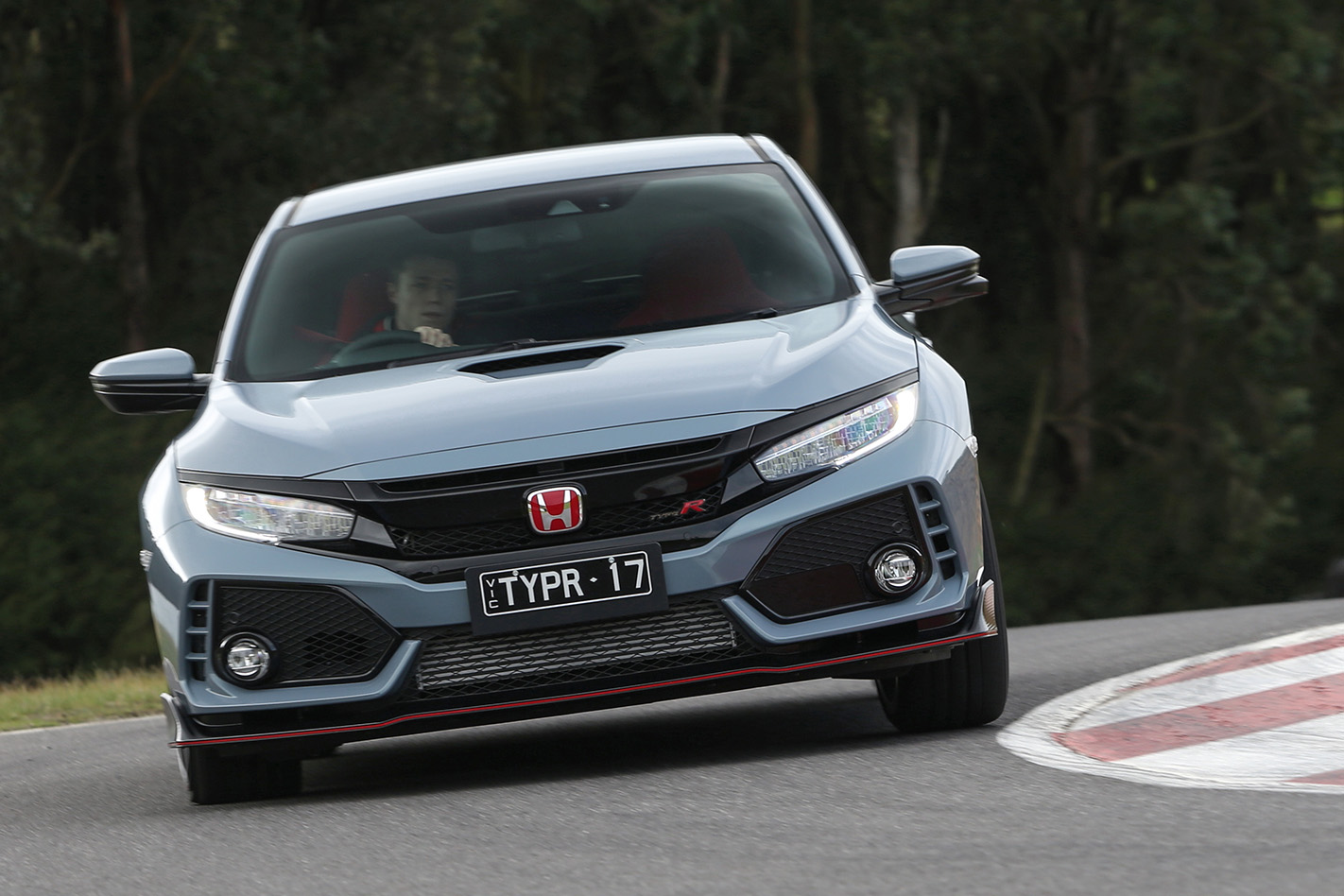
IT WAS the kind of road to make you wince. A piece of tarmac so gnarled, broken and littered with potholes and raised, snaking fissures that your body tenses instinctively as it prepares for an inevitable onslaught of tortured suspension, bouncing alloys and rack rattle.
The fact Honda’s mad-looking Civic Type R practically shouts its hardcore, performance-focused intent and rolls on the largest wheels in its class, wrapped in the lowest profile rubber, only intensifies the sense of anticipation as it rockets onto the road at 110km/h.

Don’t misread this dose of sophistication as a sign that Honda has dialed back on excitement, however. Ignoring the temptation to fit rear driveshafts means the 1380kg Type R is lighter than its rivals, and with a 228kW/400Nm turbocharged VTEC four-pot providing the propulsion, it feels properly brisk. At the strip, Wheels managed a 5.8sec sprint to 100km/h and a 13.9sec quarter at 172km/h.

There’s little in the way of lift-off oversteer; the rear axle preferring to follow the nose faithfully than wag about. Nor is it as chuckable, or as flamboyantly adjustable as a Focus RS, but drive it quickly and the Honda will still squeeze your adrenaline gland just as hard.

Sadly, things are less cohesive inside the Type R. While a spacious cabin, enormous 420L boot and comfortable and supportive bucket seats are clear highlights, clumsy ergonomics, an over-styled interior design and an unintuitive infotainment system are glaring weaknesses.

Specifications
Model: Honda Civic Type R Engine: 1996cc 4cyl, dohc, 16v, turbo Max power: 228kW @ 6500rpm Max torque: 400Nm @ 2500-4500rpm Transmission: six-speed manual Weight: 1393kg 0-100km/h: 5.8sec (tested) Economy: 8.8L/100km Price: $50,990 On sale: Now
No one was ever questioning whether the McLaren 720S is fast.
With a top speed of 341km/h thanks to a twin-turbo V8 putting out 529kW and 770Nm, the 720 is rocket-quick.
Add a 0-200km/h sprint of 7.8 seconds to that and you’ve got yourself a proper supercar.
But what about its rivals?
At a rolling race at Thunderhill Raceway, California, a 720S owner put up the challenge to a Ferrari F12tdf, a Porsche 918, another McLaren (the 675LT), and even a Bugatti Chiron.
With the rolling start being at around 70km/h, there’s no issue with tyres screeching off the line.
We’d have done standing starts, though…
First, the two McLarens go head to head, and it shouldn’t be a huge surprise that the 720S does in fact dispatch its sibling, but not as easily as you might think. Thanks to a slow gear change (the 720S hits the limiter in 2nd gear), the 675LT keeps up pretty well.
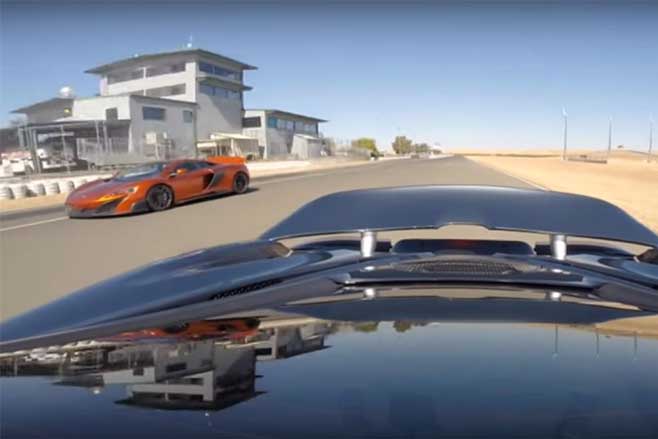
Plus, getting the air-brake action on camera is kind of cool.
Next, the Prancing Horse steps up to try and take down the 720S. Again, the 720S walks away and leaves several car lengths between them when it crosses the line.
It would seem the 7.9s 0-200km/h claimed for the F12tdf is hard to nail.
The Porsche 918, which is part of the ever-admired hypercar holy trinity, still loses to the 720S. though it’s close, the Macca comes out on top.
At this point you’re probably wondering if the VW Groups other representative, the Bugatti Chiron, keeps its reputation as the ultimate in speed.
That’s why you should watch this video, if not for the spectacle itself.
LIVING IN Pomgolia for 20 years hasn’t turned me into a Pomgolian, but I’ll admit to gaining a Pommified sheen. Blighty, bad weather and warm beer over two decades will have an effect, manifesting itself in a neon-white complexion, a one-pack (keg) gut and a few more chins than necessary. But anyone accusing me of being a Pom will find me taking a swing at them.
I’ve only recently returned to live in our great country after driving cars and writing about them abroad for too long. Despite that, even living in Westminster, home for me was always Petrie.
Petrie, in the northern suburbs of Brisbane, is the place I grew up, and there are some great driving roads in that area – out round Samford in particular, Mt Mee, north to Maleny and beyond. But I hadn’t driven in many other parts of the country before I left for Europe. The great road passes of the Alps are not unfamiliar to me – Stelvio, Simplon, Brenner, St Bernard, Grossglockner, I’ve been across the best of them – but a gaping hole was left in my Aussie road knowledge. It needed filling.
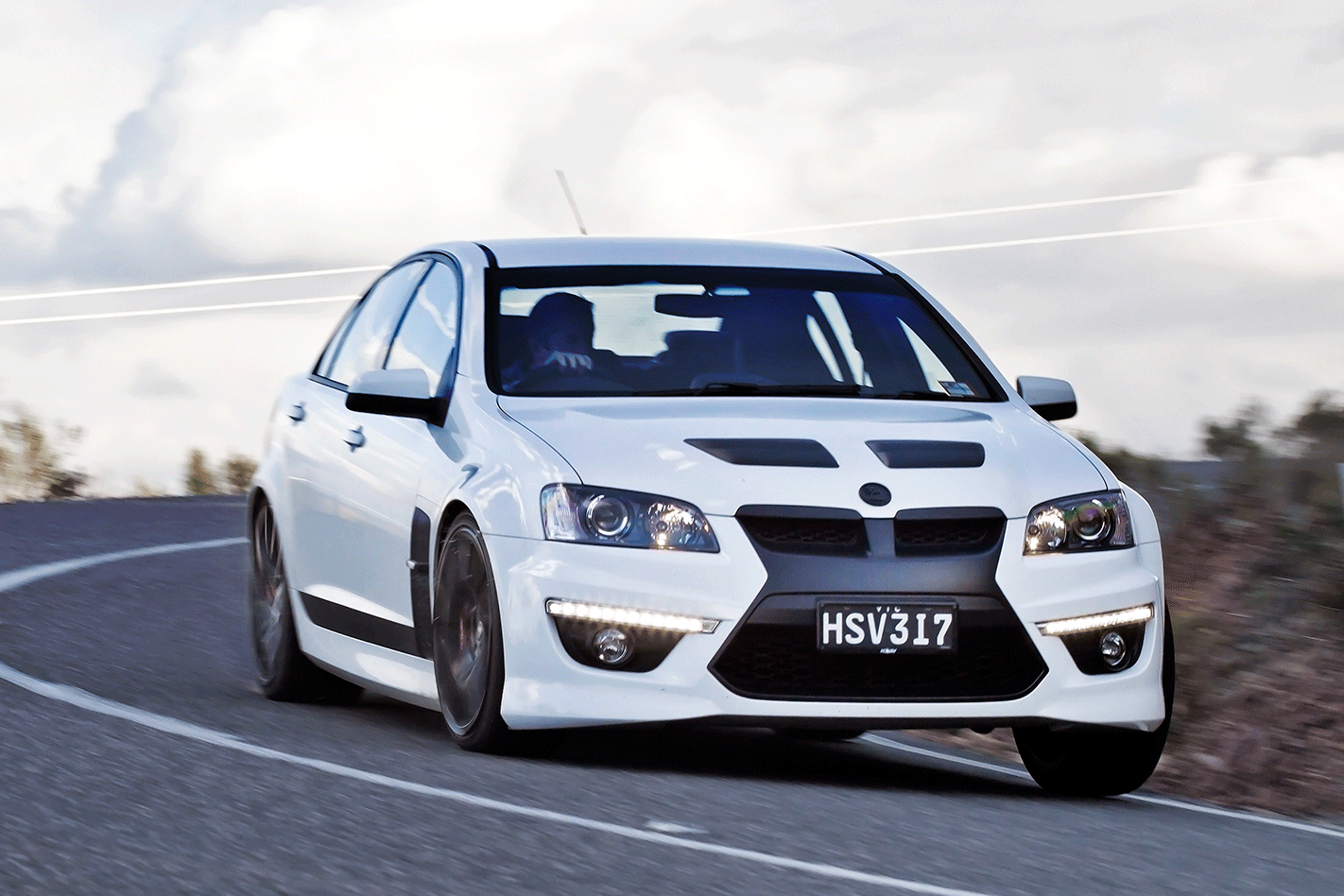
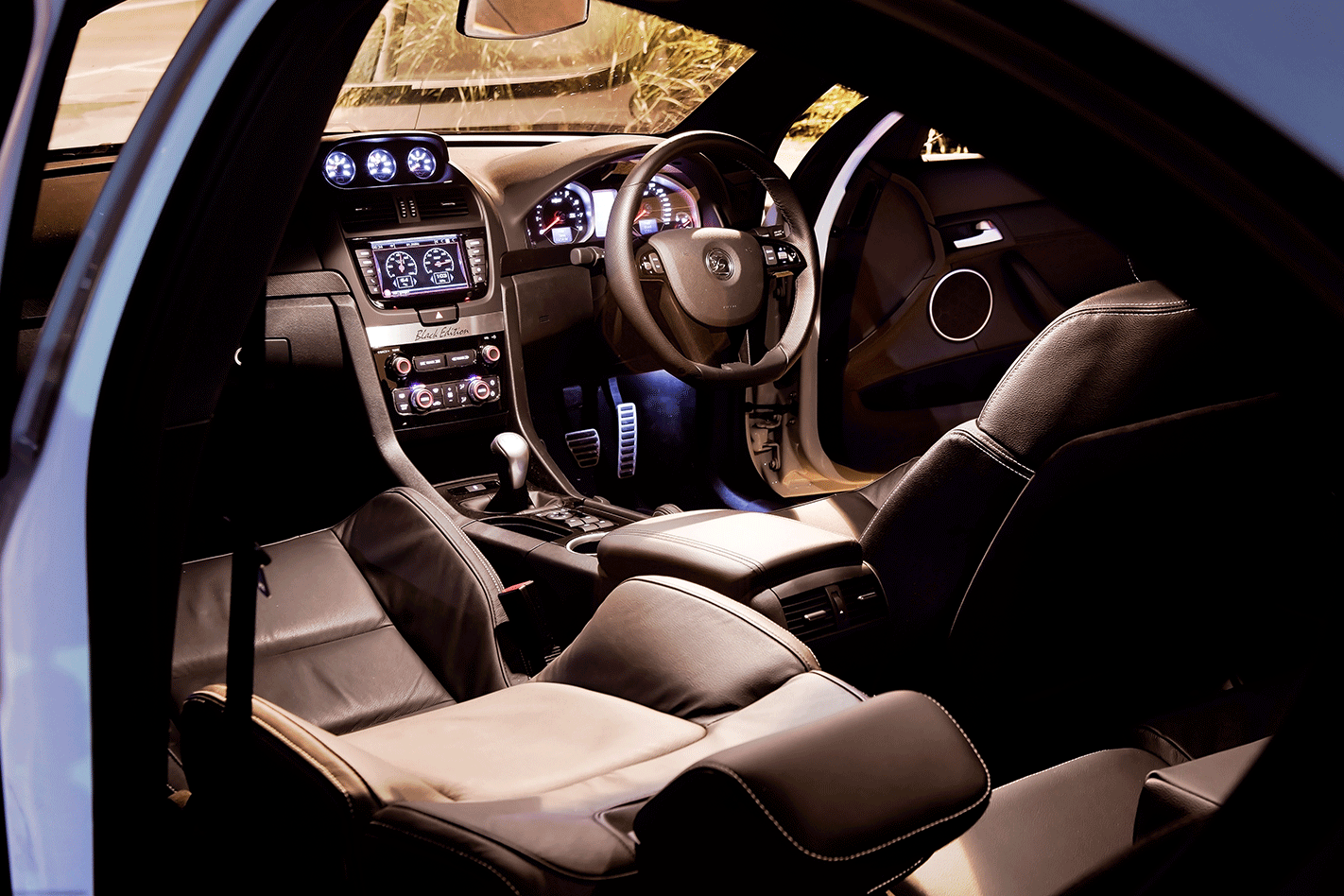
First impressions? Solid. A big flat-bottomed steering wheel for a big car – great, too-small wheels are a pet hate. Meaty rim but not too thick like in a BMW M3. Fussy dials, switches, graphics and dodgy plastics everywhere, but it doesn’t matter – I ran a Corvette C6 long-termer (with this engine) and the HSV’s build quality is a match for the ’Vette’s. The only rattle all trip came from the metal key fob badge.
Great seat, big enough for big blokes, well-shaped and body-hugging, smart leather trim. Spot-on driving position, wheel not too low. Seat not fully electric but that doesn’t matter either. Let’s hope the money’s been spent where it counts to justify this car’s $70K pricetag.
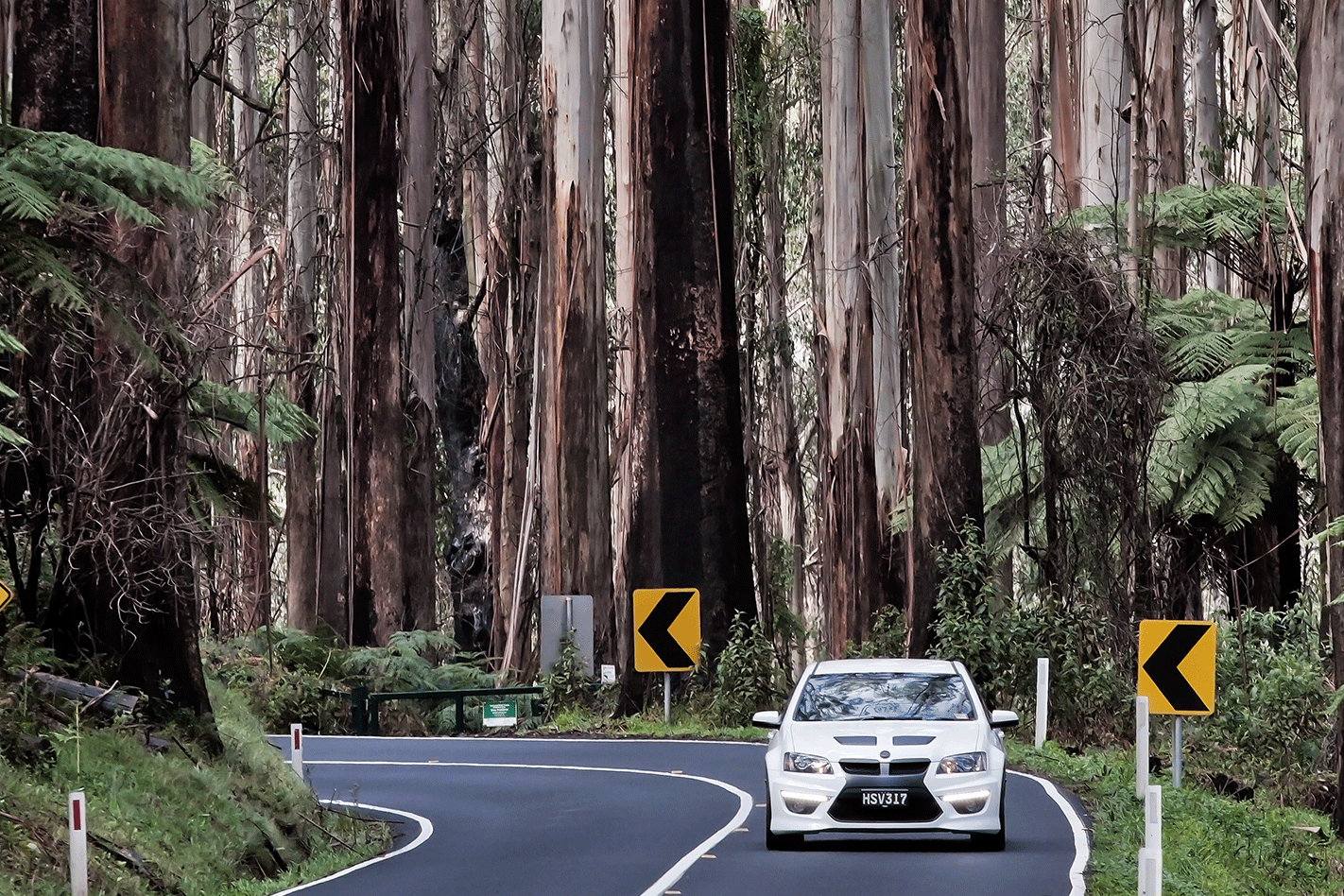
The Black Spur Road is damp and slick, and the Black starts feeding me plenty of information about what its tyres are doing as we tear through a spectacular mass of giant, bolt-upright ash trees and huge ferns, climbing the Great Dividing Range. This won’t be the first long stretch of beautiful scenery I’ll mostly ignore as I try to expose the HSV’s weaknesses. The Bridgestone Potenzas – 275/30/R20R rear, 245/35/R20 front – hang on grimly and silently.
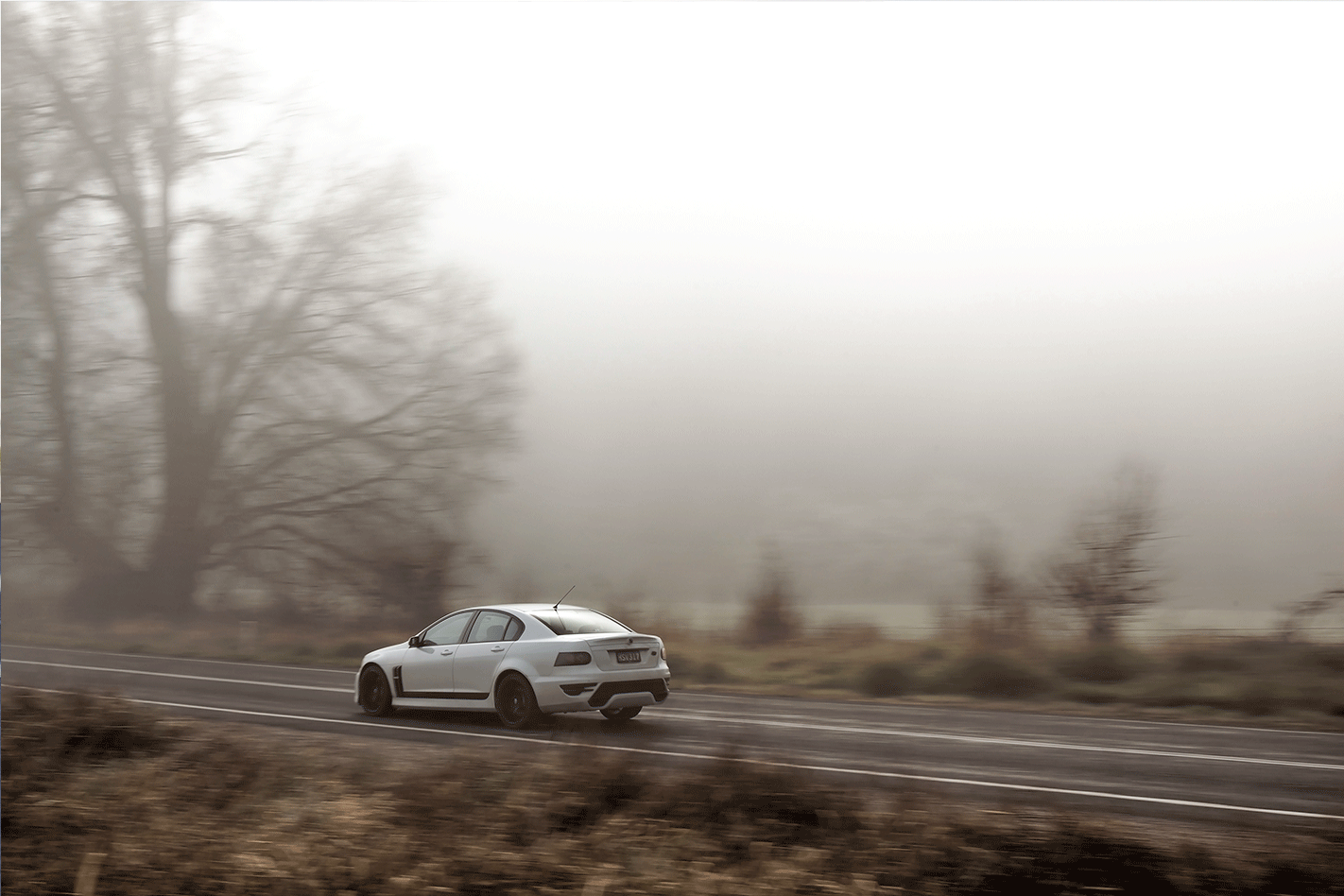
in this way the HSV is superior to any Aston Martin I’ve driven. Those things tend to squat and roll a little too much at the back, soft in the name of traction, but it leaves a question mark in your head.
There are no question marks in the Black. You commit, and it holds its line. World class. The HSV rides better than an Aston, too, more like a big Jag. Pomgolia is a fast-receding memory. Great talent has been at work here. The fundamentals are right with the Commodore underpinnings, of course, so hats off to the Holden guys, but HSV’s engineering team has taken it to a new level. Ride height is lowered by 20mm over the SS, springs are about
I begin thinking of the European chassis gurus I’ve met over the years and how impressed they’d be with the balance of this machine – Martyn Anderson and Dave Minter at Lotus, particularly. They’d like this car – and I’m told the GTS with the active dampers is even better. Looking forward to trying that thing. The steering is much better than I expected, too – a touch light and elasticky at the straight-ahead, but well weighted and easy to use when you get some lock on.
After the intensity of Black Spur, we trundle round to Bonnie Doon, wary of cops, and find plenty of ‘serenity’ down by the lake, which until recently had been bone dry in this area. Soon it’s forgotten as we tackle the Mansfield-to-Whitfield stretch (see breakout). Robbo knows his roads. Again, a mixture of low, medium and high-speed twisties, ideal for getting a feel for any car. And it goes on and on, I charge and charge for what seems like 10 hours. In Europe, the greatest roads are dotted with towns and other interruptions. Here, we have vastness and a proper marathon. Fantastic.
I’ve found the Killing Gear, too – fourth. The V8 is so smooth and tractable, you could easily slip the clutch and take off in fourth… I often let the car run down to tickover at 700rpm and pull out of smallish roundabouts in fourth, the engine not complaining, just pulling. But remember, at 35km/h-per-1000rpm, fourth runs to 233km/h at the 6650rpm limiter. The bi-modal exhaust opens around 3500rpm when you’ve got the hammer down, or about 120km/h in this gear, by which time the engine is only just getting into its stride.
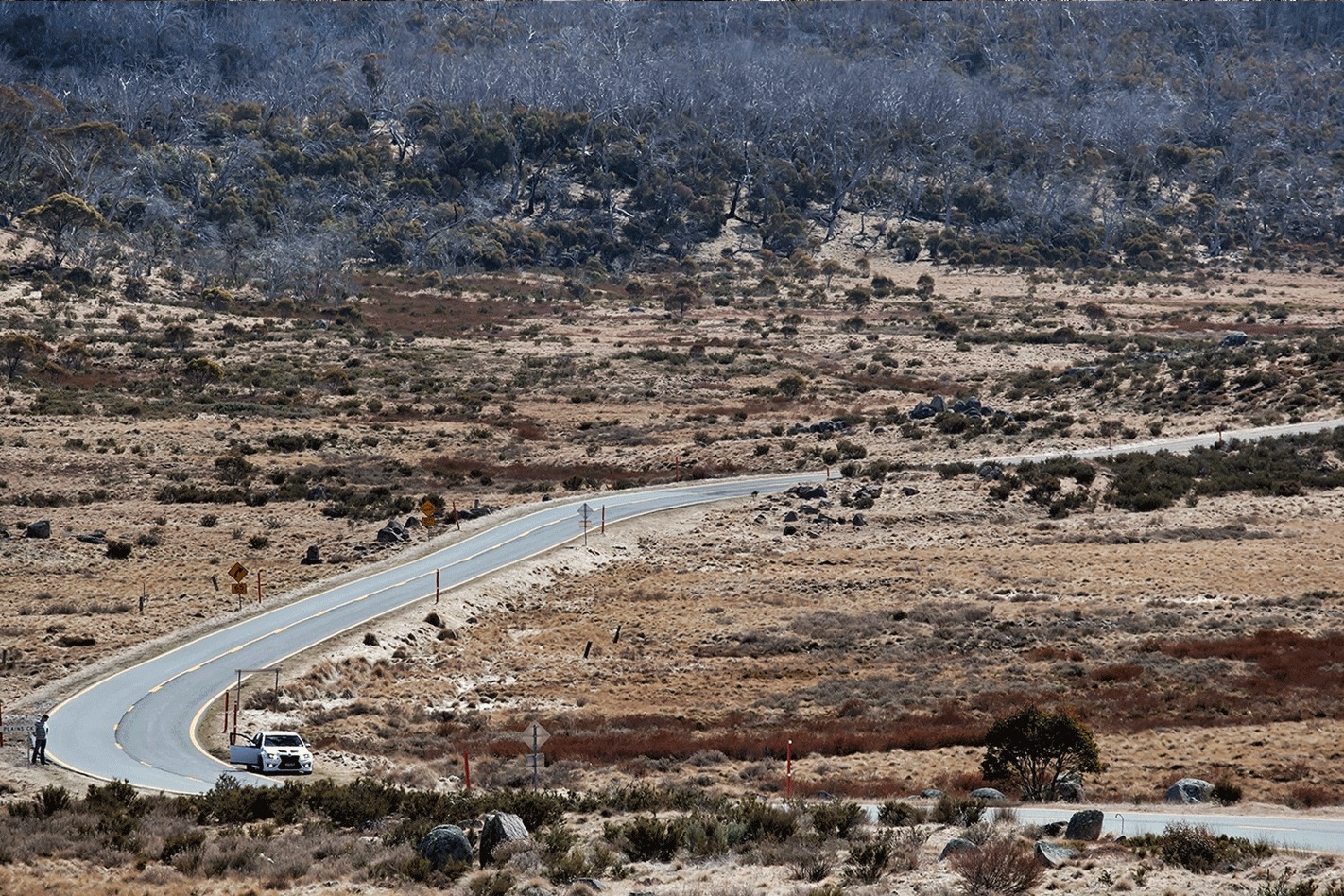
After relentlessly entertaining, undulating stretches past Myrtleford and up to Kiewa, and the faster, challenging section of B400 near the Murray, all tackled at night behind fantastic headlights, we are welcomed by Fiona at the Mountain View Motel, Corryong. We’re late, but she’s friendly anyway. Why can’t the French be more like this? I’m rapidly forgetting the French, too.
According to the trip computer, we’ve travelled 557.43km today, 8hr 27min of driving time, used 78.26 litres of fuel at 14L/100km. One of the best driving days of my life. I stand and look at the car under the motel lights for a few minutes, admiring its long dash-to-axle proportion, listening to it tick as it cools. European-style chassis prowess with brute US power in a big four-door package. Is there anything else on earth like it? Not at this sort of price there’s not.
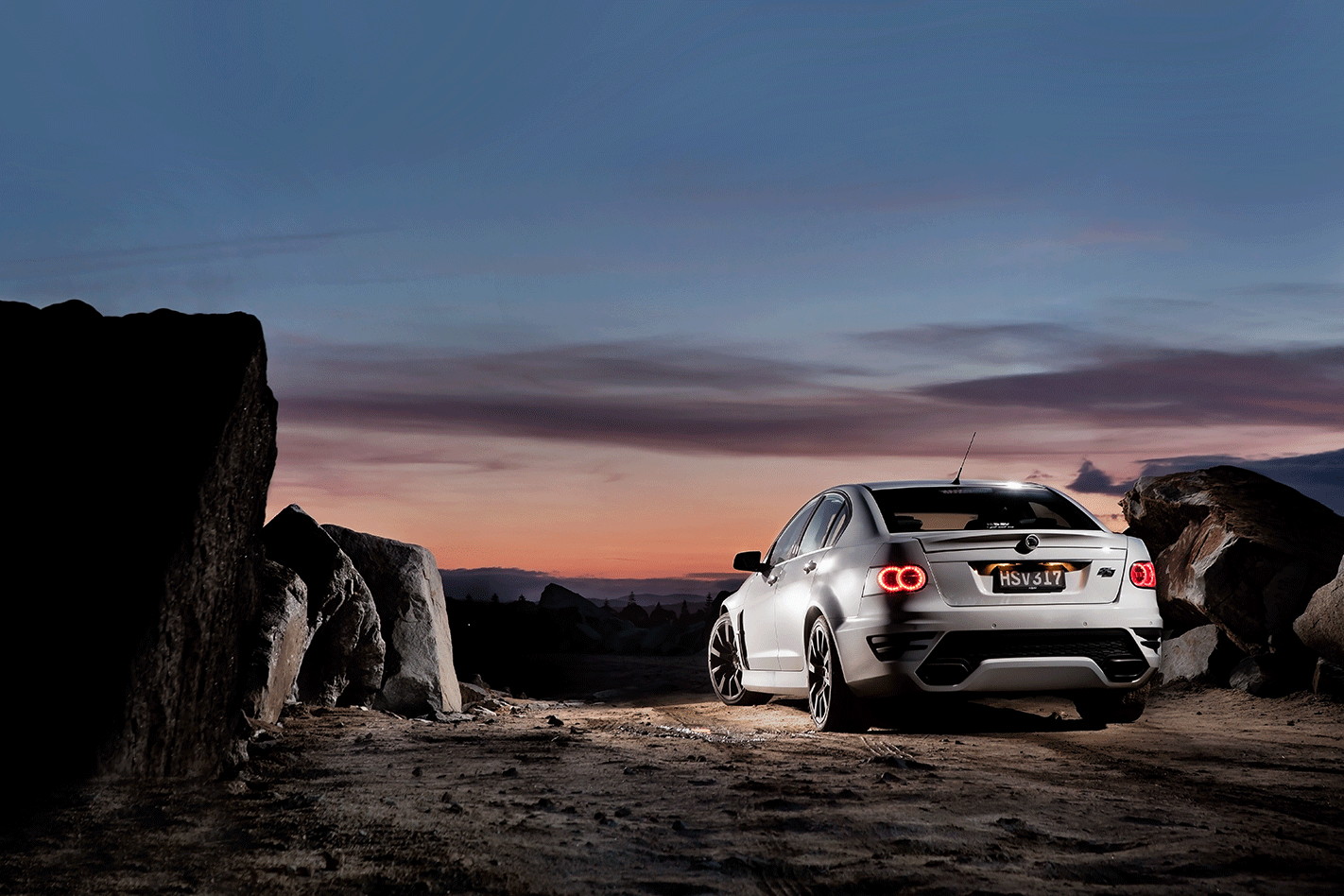
The Snowy Mountains Highway is truly one of the world’s great driving roads. At one point, I stare down a long, straight stretch and say to Thomas “I feel like doing some big, big speeding now – this car would only be pulling 3400rpm at 200km/h. The exhaust baffle would only just be opening … we could cruise at 220km/h on this road with ease.”
“Nothing’s stopping you, except jail,” he says. I slow down.
We reach Narooma at sundown and it feels like the Pacific Ocean is an end in itself, given our two days’ hard slog cross-country, corner after corner. Rather than take Robbo’s inland route – no doubt it’s phenomenal, but now? – we decide to wimp out and test the Black’s cruising ability on Highway 1. But the road proves entertaining yet again, and I punt the car through the night at good speed and attack corners yet again, all the way to Wollongong, which marks the beginning of our first cruise control stage since Melbourne.
We arrive in Sydney at 11pm. The trip computer reads 1471km over the two days, 21hr 29min driving time, 202 litres of fuel. At an average $1.50 a litre, that’s still only $150 each. Add the hotel and you’ve paid less than the cost of two seats on that flu-ridden Virgin 737. We saw no highway patrol cars.
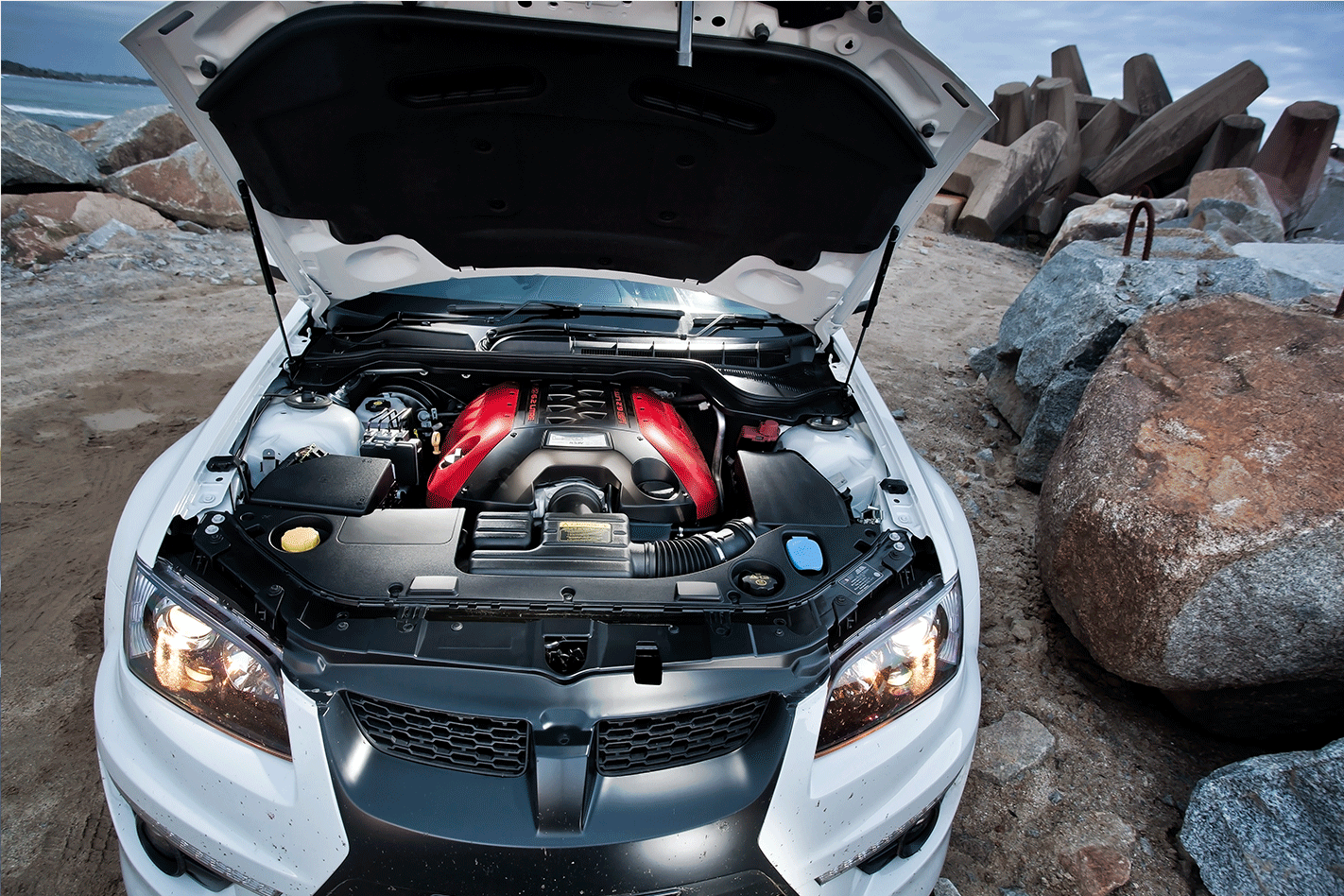
TELL ME ABOUT THIS CAR
Since 2011, the market for compact SUVs has exploded around eight-fold, but Hyundai has watched its Japanese rivals carve it up between them. A company normally renowned for the alacrity of its market responses has finally arrived at the party with the Kona, a car based on a modified version of the i30 hatchback platform. Vehicles like the Mazda CX-3, Mitsubishi ASX and Honda HR-V now have a very serious rival to contend with.
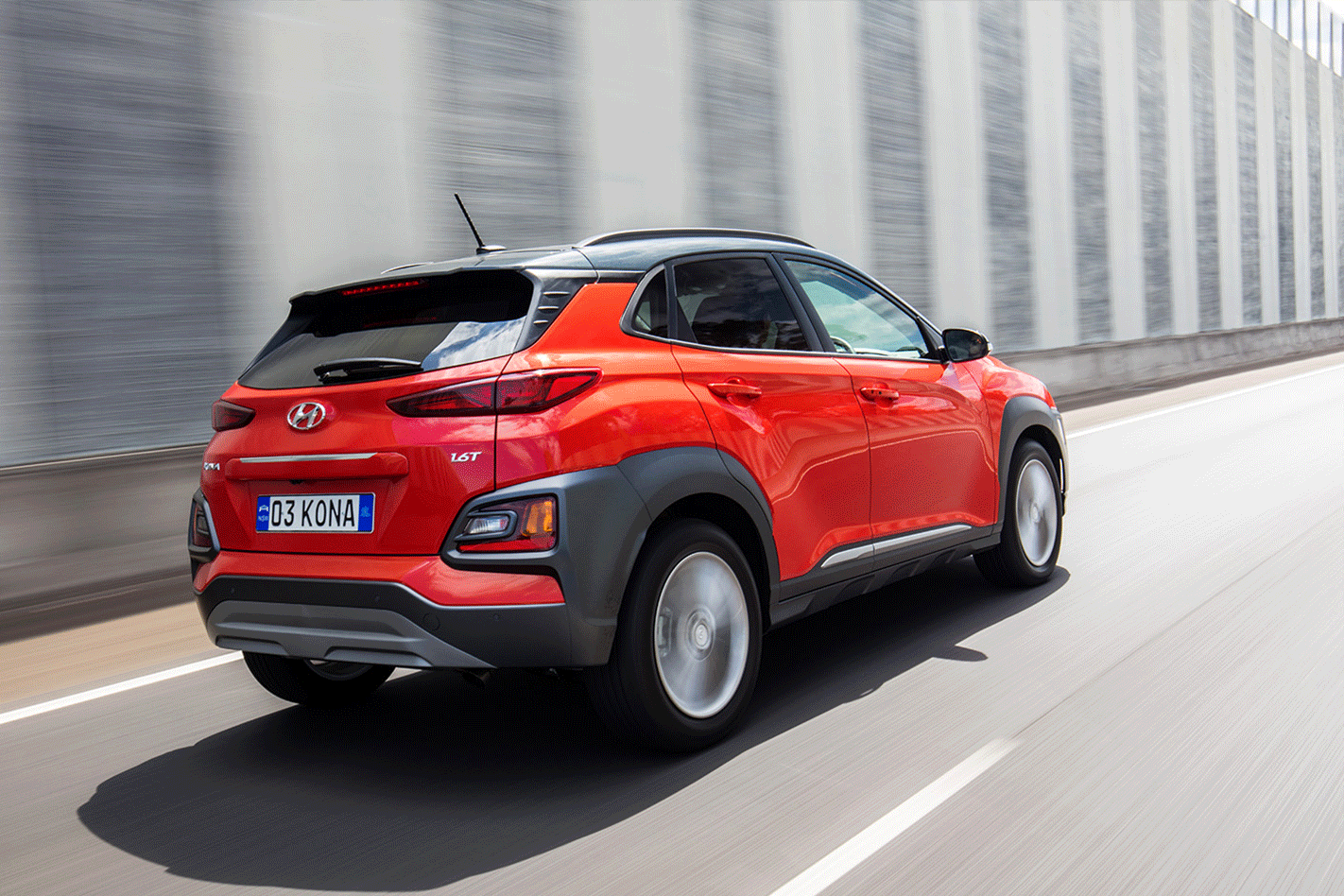
Forget that reputation Hyundai forged as being significantly cheaper than its rivals. Although the five-seat Kona is pretty well stuffed with equipment, prices start at $24,500 and top out at $36,000. As a rough guide, the 1.6T engine tends to add around $3,500 to the price of the 2.0-litre. There are three key trim levels, Active, Elite and range-topping Highlander and both engines are offered with all three trim variants.
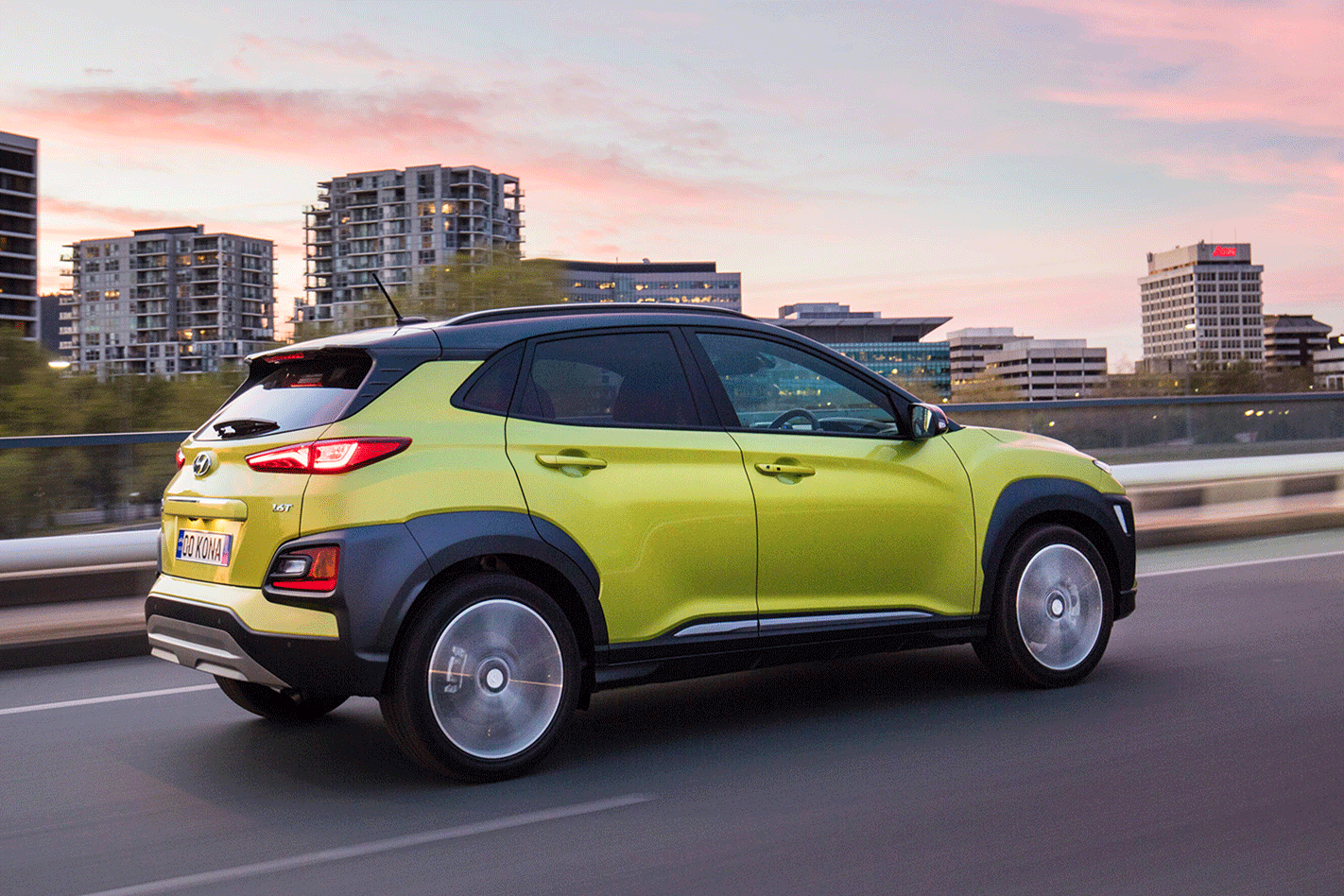
STRENGTHS
- The styling is bold and interesting, with split headlamps and daytime running lights, a strong-looking stance and rugged ‘body armour’ cladding.
- It’s surprisingly big inside. That wheel-at-each-corner look means that there’s a decent amount of room in the passenger cell. If you’ve tried a car in this class and found it a bit pinched, the long wheelbase Kona could make you think again.
- The 1.6-litre turbo engine has real pull and flexibility. All-wheel drive traction helps it to a 0-100km/h time of just 7.9 seconds.
- The brakes are hugely impressive, with real bite, great pedal feel and you can modulate them with real sensitivity.
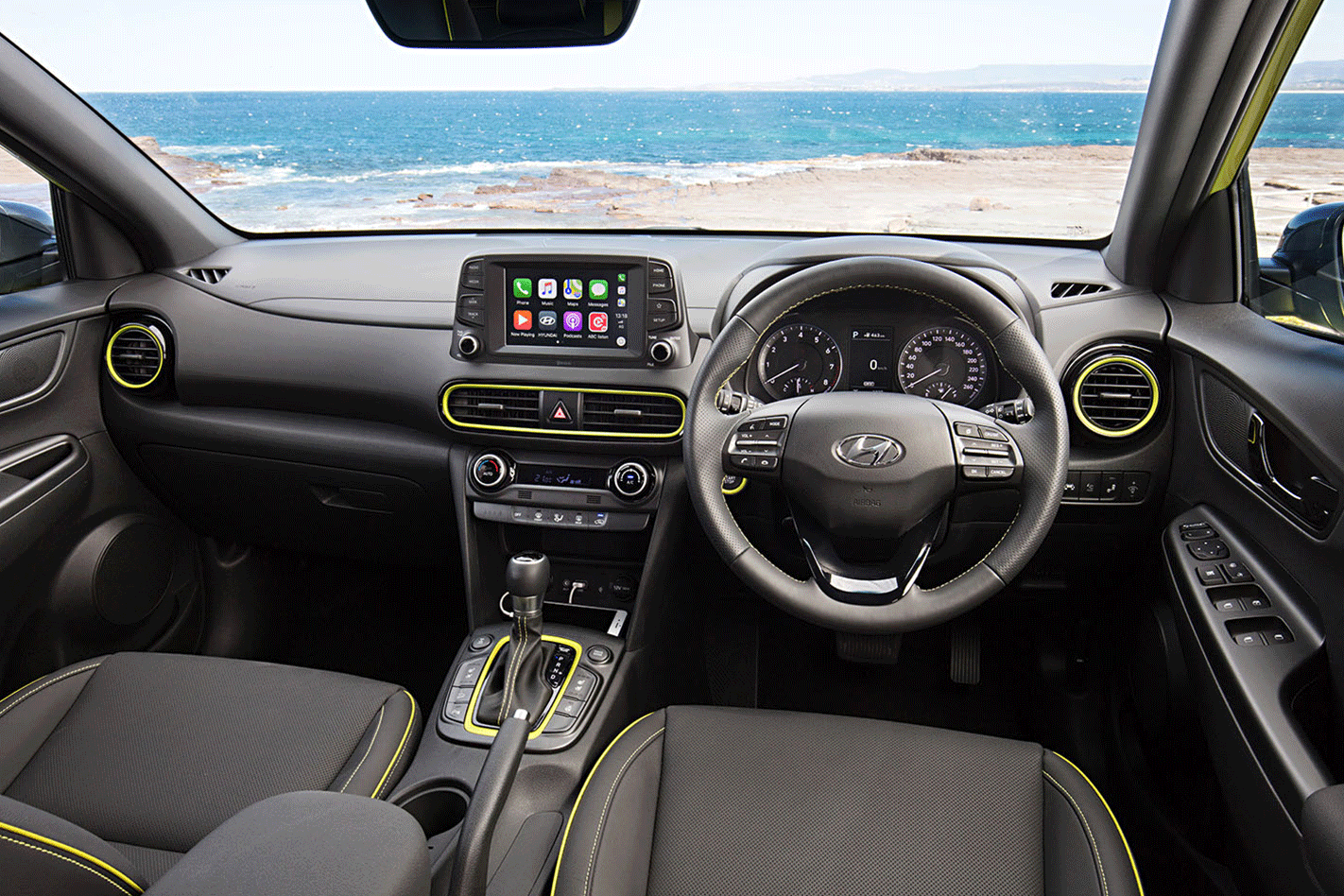
- There’s stacks of standard equipment. Even the entry-level car gets gear like a rear view camera, dusk-sensing headlights, Android Auto and Apple CarPlay connectivity, a touch screen multimedia system, and leather trim for the steering wheel and gear knob.
- The steering wheel controls are particularly sensible. You’ll be operating the phone, audio and cruise control functions without fumbling or taking your eyes of the road in no time.
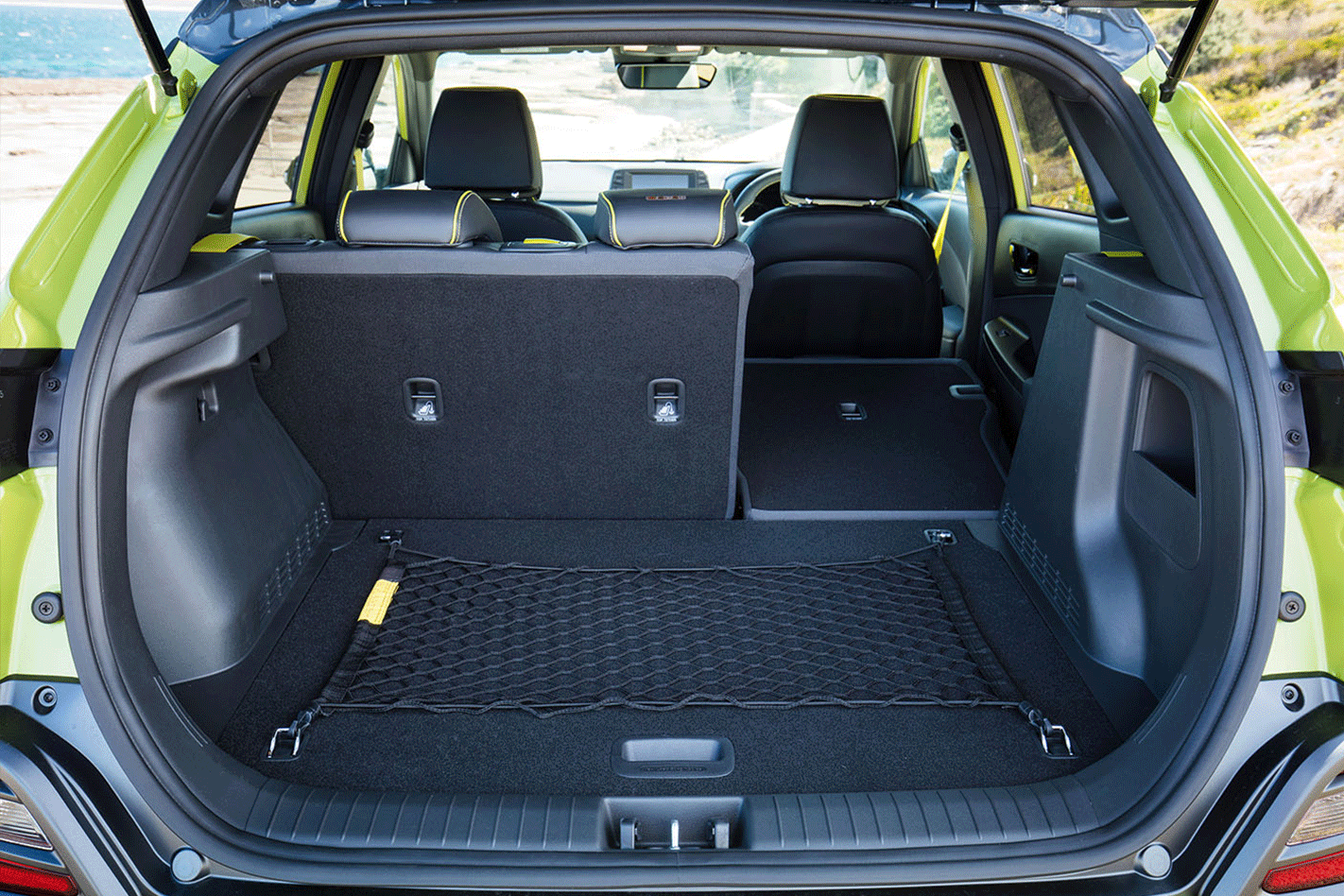
- The boot is a respectable size for a car of this class. At 361 litres with the rear seats and tonneau cover in place, it’s 11 litres bigger than a Mazda CX-3 for example, but still a good way shy of the 393-litre Mitsubishi ASX luggage bay.
- Go for the top Highlander variant and it gets Qi wireless inductive phone charging, heated and ventilated seats, a heated steering wheel, a head-up display, LED lights and 18-inch alloys.
- Autonomous Emergency Braking isn’t fitted as standard on the entry-level Active version, and to get it you need to pay $1500 for a safety pack which also bundles in gear like folding and heated mirrors.
- The ride quality on larger wheels is a little firmer than some might expect, but that doesn’t translate into CX-3-like beautiful body control.
- There’s a price to be paid for all that equipment. At the top end of the range, the Kona looks conspicuously expensive. Hyundai clearly has enough confidence in its badge equity to stand these prices up.
- The multispoke 16-inch wheels aren’t the prettiest alloys we’ve ever seen. Active trim buyers might well want to spring for the 17-inch alloys (as seen on the Elite trim), which will also net you superior Continental tyres.
- There’s no standard inbuilt sat nav available at any price. Hyundai reasoned that most buyers prefer to port the nav systems on their smartphones. We’re not so sure about that.
- It’s a big step up in price ($4500) between Elite and Highlander trim levels.
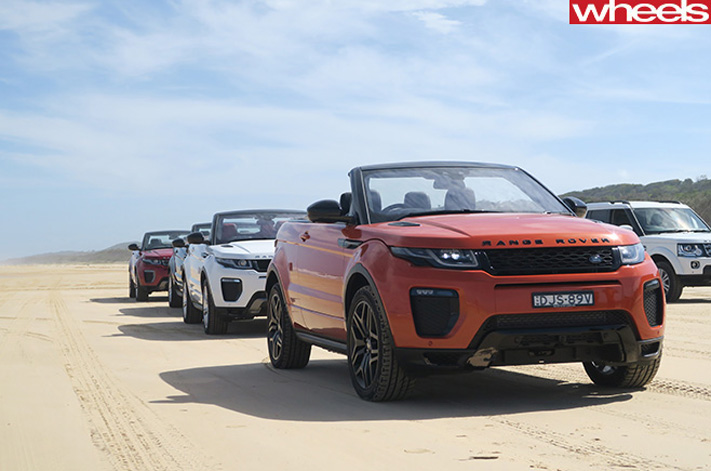
Nature abhors a vacuum, but not nearly as much as the top end of the car industry.
However small and unlikely the gap might be, a premium automaker will try to fill it. Even if the result – like the Range Rover Evoque convertible – has em’ rolling in the aisles.
Yet having one of everything makes a huge amount of sense to premium manufacturers trying to increase their volumes beyond long-since saturated segments.
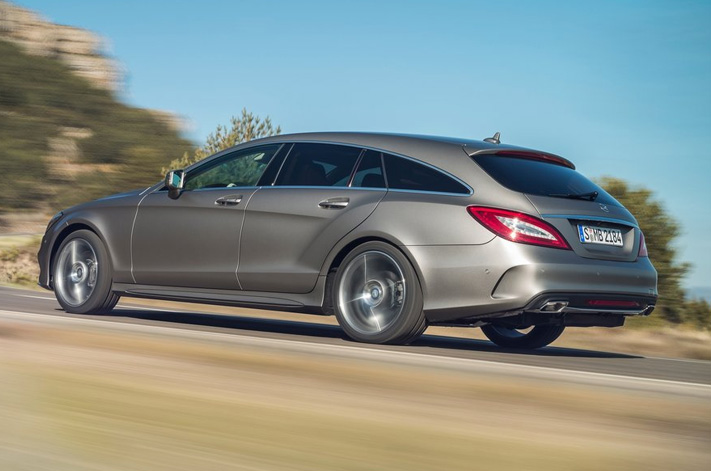
The logic is to have an answer to every question, to enable that slick sales executive to outflank any showroom objection. So if you go in to look at the BMW X5 and then decide it’s a bit too staid, you’ll be shown an X6. If that won’t fit in your garage, how about a BMW X4? Still too tall? Try this 4 Series Gran Coupe on for size. Meanwhile, Audi seems determined to offer a Q-badged crossover for every integer between 2 and 8 and, in the CLS Shooting Brake, Mercedes sells a wagon version of a four-door coupe that’s spun from a conventional sedan.
Sadly the cars most likely to find themselves in the crosshairs are the slow-selling coupe versions that, although appeal to enthusiasts, don’t work in Asian markets.
Model cycles are also likely to be extended, with Peter Mertens, Audi’s newly crowned head of R&D, admitting that cars will have to live for longer as resources are diverted into autonomous tech and electrification. Audi is also looking towards the idea pioneered by Tesla of incremental software upgrades during the life of a car to keep it feeling fresh, or even to unlock new functionality. Why change your car if, for a couple of grand, you can knock a couple of seconds off its 0-100km/h time, or unlock next-level autonomy?
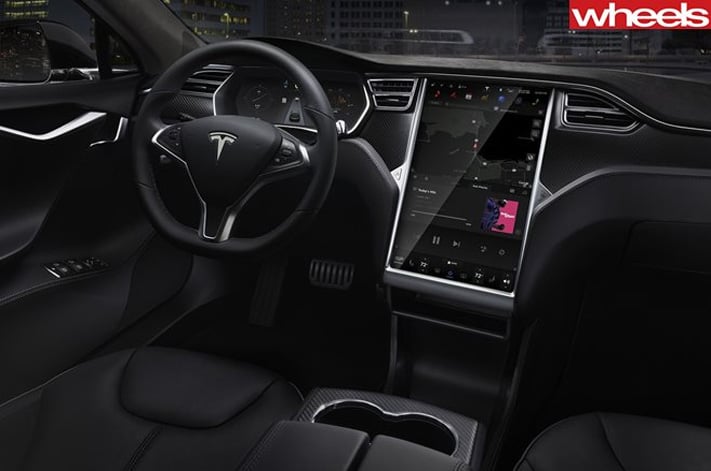
There’s also the increasing problem of buyer fatigue; the sense of seen-it-before that threatens to turn even the esoteric into conservative choices, like the fractional visual differences between an Audi A5 Sportback and an A7. It’s telling that Tesla has taken more than 300,000 deposits worldwide for the Model 3, a car that, beyond its clever EV tech, just looks like a regular hatchback.
Breeding like Mercs
Go back to 1980 and the Mercedes family tree looks positively sparse. The company sold just five model lines – the ‘W123’ sedan, S-Class, SL, G-Wagen, and – in microscopic volumes – the 600 Pullman. Between all body styles there were just eight variants. By 2000, that had risen to 10 lines (A-Class, C-Class, E-Class, S-Class and CL, CLK, SLK, SL, ML-Class and G-Wagen) and 13 body versions. In 2017, across all markets we have 15 model lines (excluding trucks) and 29 derivatives. Prizes if you can name them all.
IF [Luftwaffe chief and Nazi bastard] Hermann Göring was still alive, he’d drive one of those,” commented Herr Morley during his brief, but beautifully succinct appraisal of Mercedes-Benz’s re-engined, facelifted AMG SL.
This Performance Car Of The Year article was first published in MOTOR Magazine November 2008.
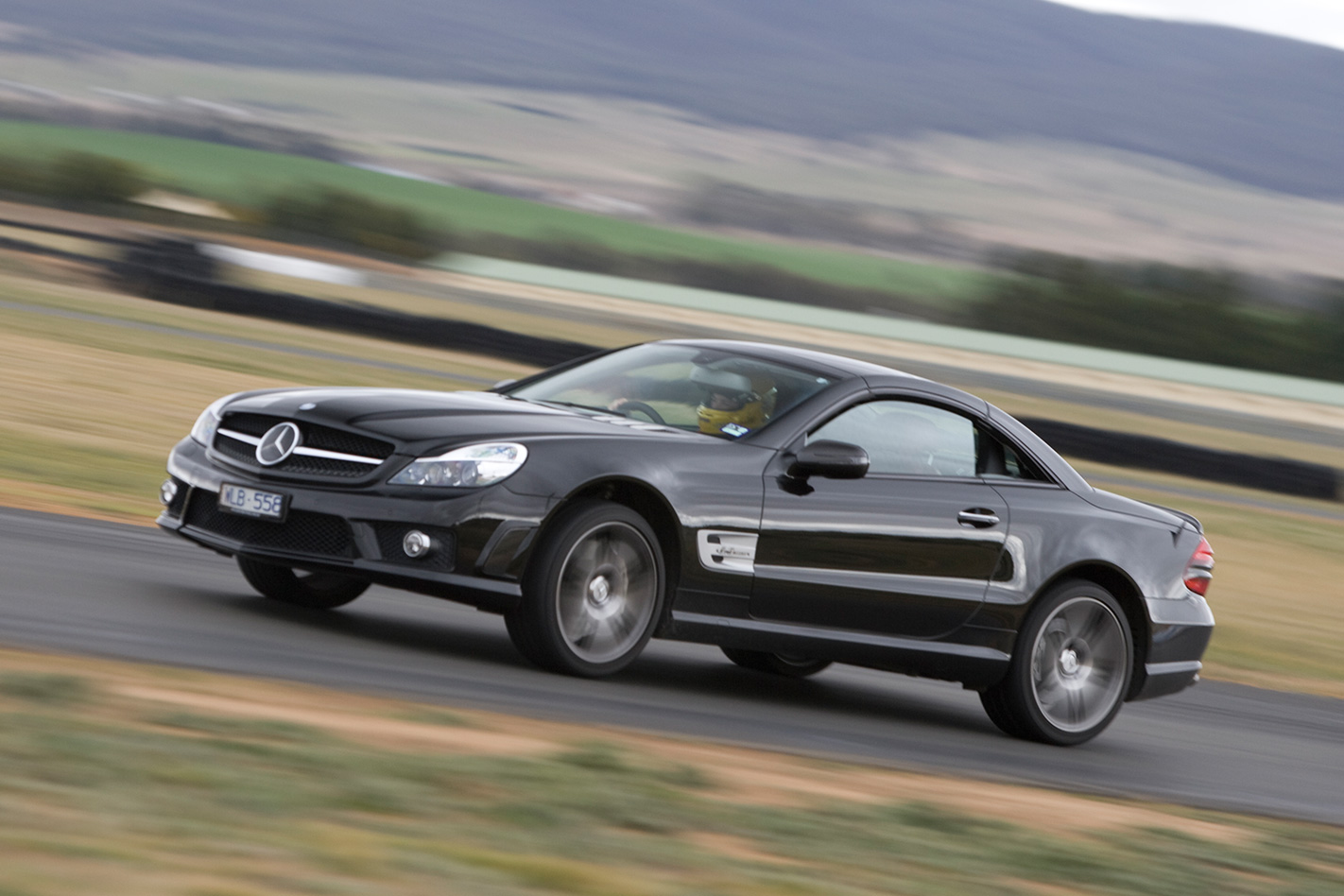
Simmering in metallic black, the new SL63 packs a mean visual punch, and it’s a look that it confidently backs up with real fighting talent. Indeed, this bruiser is such a riotous, outrageously addictive bundle of love/hate that it could shock the living crap out of any bully you’d care to name.
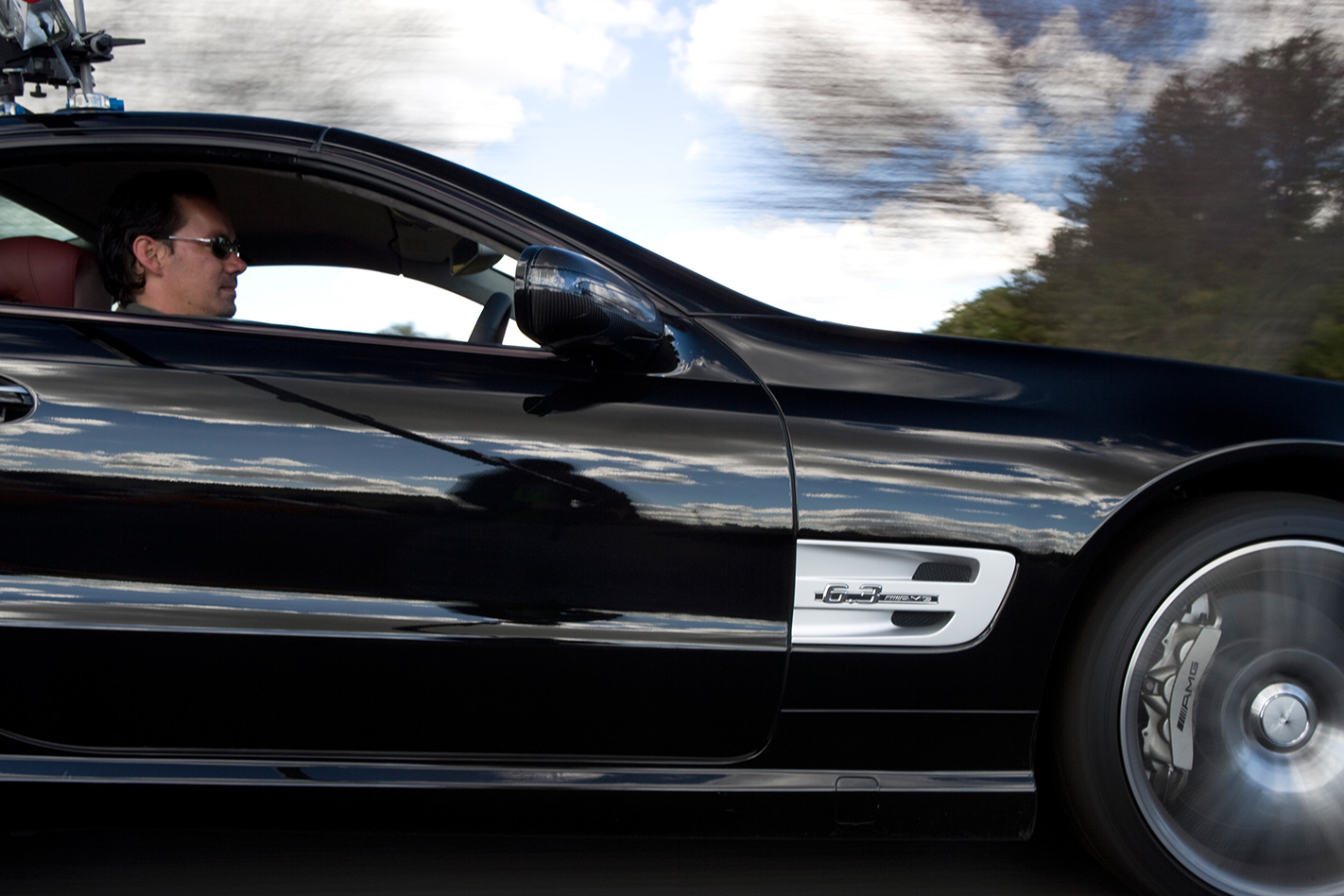
But the SL63 manages to be gob-smackingly brilliant at just about anything it sets its mind to, and shouldn’t be judged by its potential audience of ageing fat cats. Large and flabby the SL63 AMG most certainly is not. It weighs 1895kg, which is getting up there, but with 204kW/tonne working in its favour, the SL63 is a slingshot off the line.
Its new AMG Speedshift MCT seven-speed auto dumps a conventional torque converter for a wet start-up clutch in order to abolish slip and give instant response, and it has four drive modes – C (comfort), S (sport), S+ (sport plus), and RS (race start). And it kicks arse, namely that of BMW’s double-clutch.
Another party trick is launch control. Select ESP Sport, then Drive, stand on the brake and rotate the dial to ‘RS’. Click the right wheel-paddle to confirm you’re about to attempt to affect the earth’s rotation, then flatten the accelerator. Revs spike to 4000rpm, the SL63 primes, then rips out of the blocks like a bellowing jet.
It’s as brilliant as the M3’s launch control is rubbish, and even the clutch-dumped AWDs couldn’t match the SL63 to 60km/h. Then at the kay mark, at 240km/h, the SL63’s magnificent brakes rise to the occassion by consistently and effortlessly hauling it up. Same goes on the racetrack.
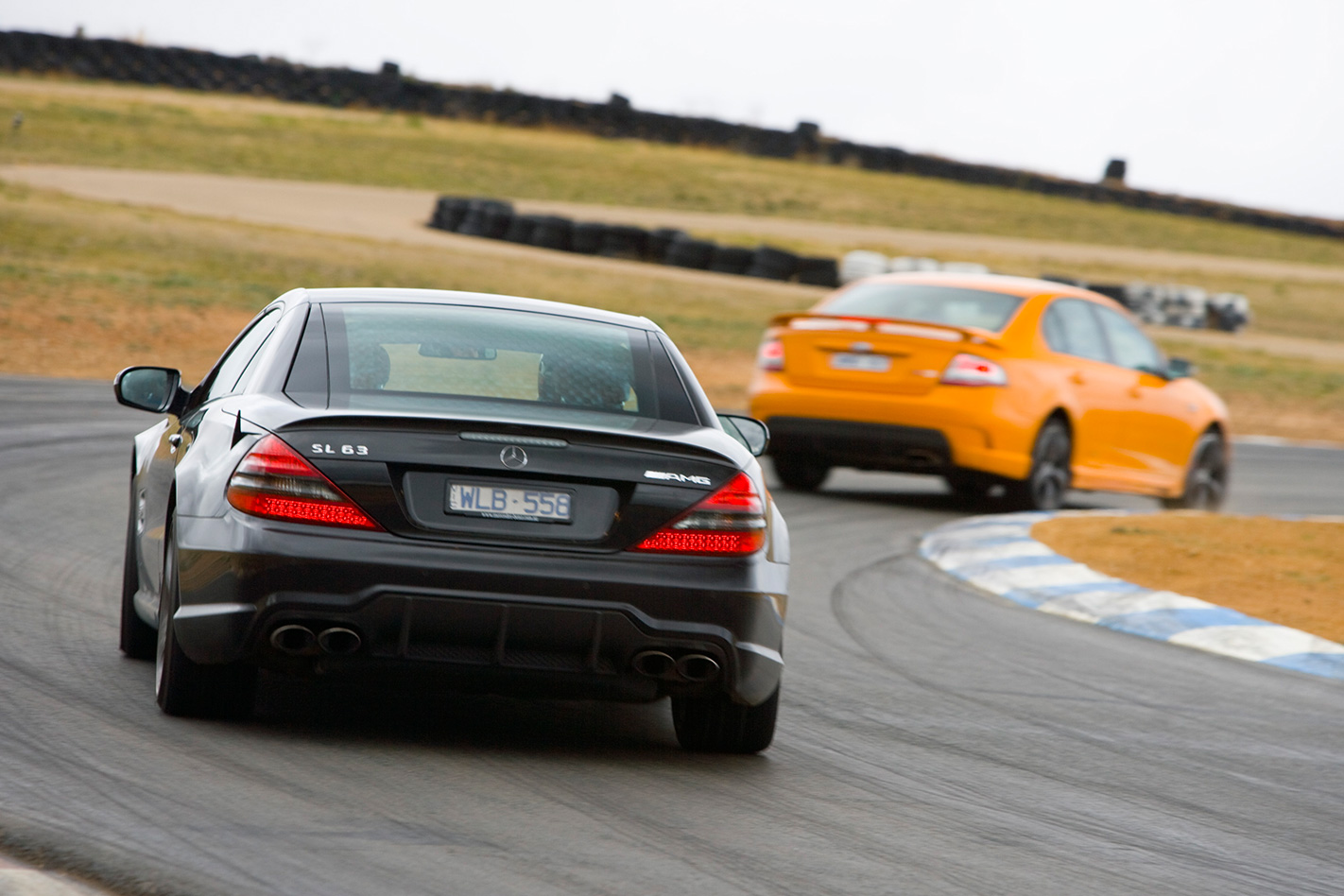
The new Direct Steer steering set-up must take some of the credit here, too, for its speed, feel, and accuracy. The SL55 was a fabulous car, but the SL63 manages to seriously exceed expectation. It’s a car whose electronics actually enhance the experience, but AMG’s bad boy has a visceral appeal that goes way beyond silicone chips. It has soul, brother.
PURELY AS a product, the FGX Falcon felt sadly ready to go, or at least be completely overhauled or replaced, and the smart Ford fans knew it.
Aside from a band of passionate employees who kept at it, Ford corporately had given up on Falcon long ago, letting it wither on the vine without the meaningful investment it direly needed. In the end, while the Sprints were a welcome last hurrah, a new generation Falcon was long overdue.
So it was hard and horrible to farewell the FGX Falcon, but more so as a symbol for what was lost with it, rather than the product itself. For me anyway. Unfortunately, I cannot say the same of the Aussie-built Holden Commodore. It’s a tragedy for the loss of jobs, national pride and the product itself.
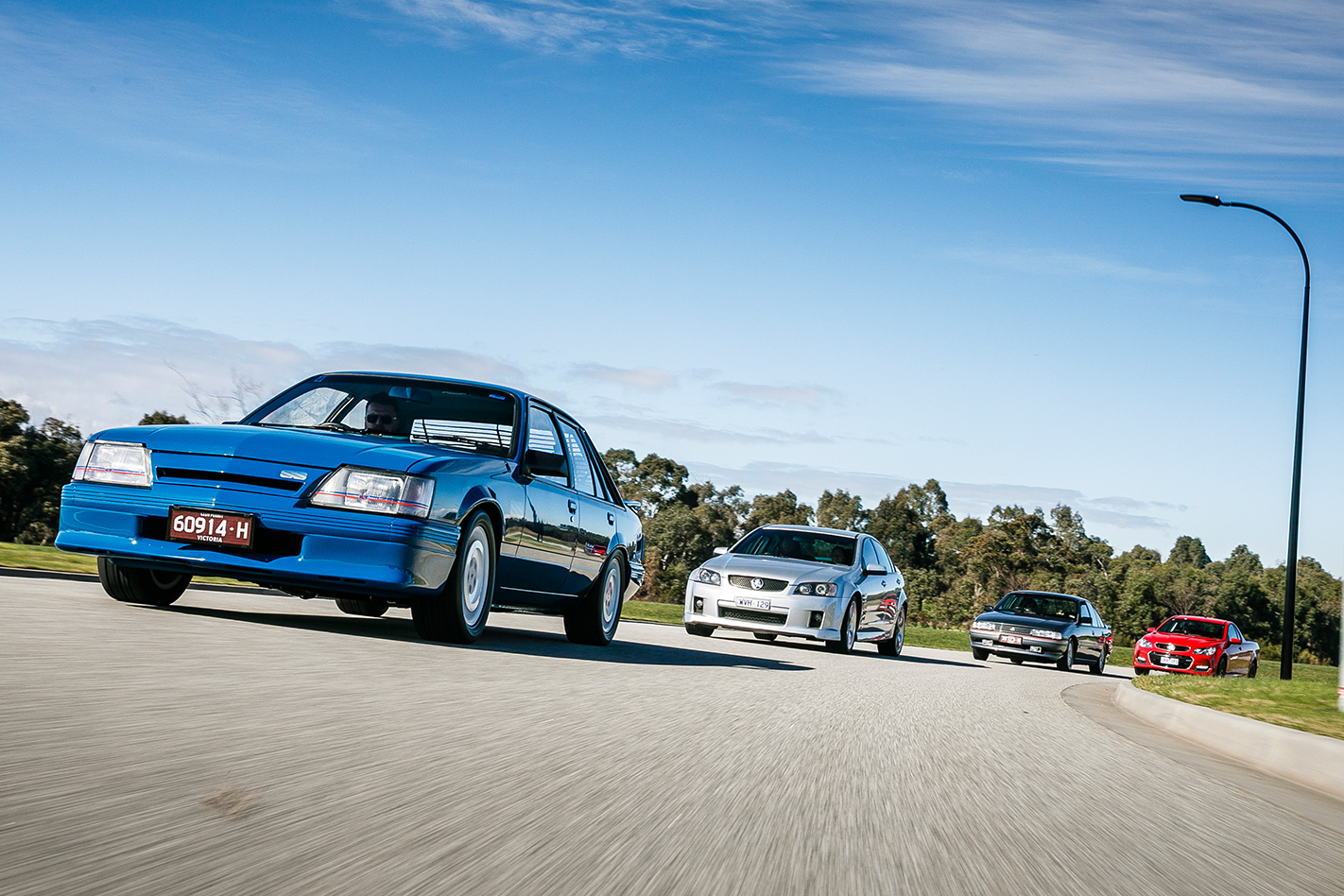
It’s the better muscle car. And yet the one from the country with just 24m people. What a waste it is for this car to be discontinued, and what a sad thing it is for the talented people who engineer and build it. I feel upset in a sense, but I also don’t understand the politics and economics of public investment in manufacturing.
Mostly, it just feels a bit surreal and I’m unwilling to accept that as of October 20, 2017, you can’t buy an SS Commodore anymore. It seems like a big, cruel joke someone’s pulling. But it’s very real. And of course, Holden is uniquely Australian in a way Ford never was, if nothing for perception.
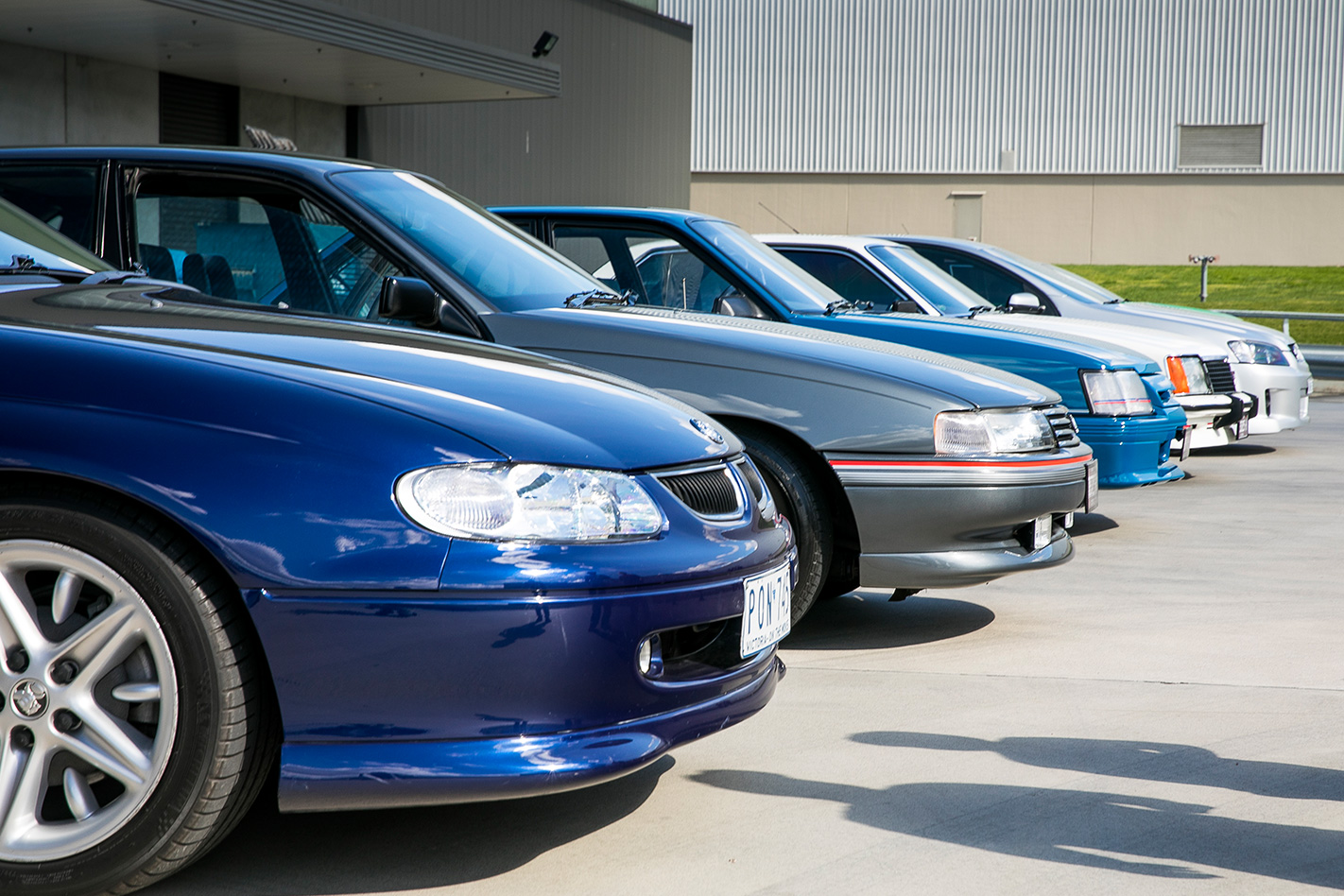
We’ve gotten the 10 best Commodores back together for one last blast; spoken to Mark Skaife and John Harvey; and even driven the ‘new’ one. We’re enormously proud of the stories we’ve gathered up, yet somehow also embarrassed we haven’t done more. In fairness, it was always going to feel that way.
