
With the Lamborghini Urus on the cusp of its official debut this year, the people behind the Raging Bull have decided to remind the world that this isn’t its first time at the SUV rodeo.
About 30 years ago, in 1986, the Lamborghini LM002 was revealed to the world, in all its V12 glory.
But the project started long before that.
Originally developed in the ‘70s as a project to create a high-performance off-roader for the military (then called the Cheetah, pictured below), the project was picked up again in 1981 by Lamborghini engineer Giulio Alfieri.
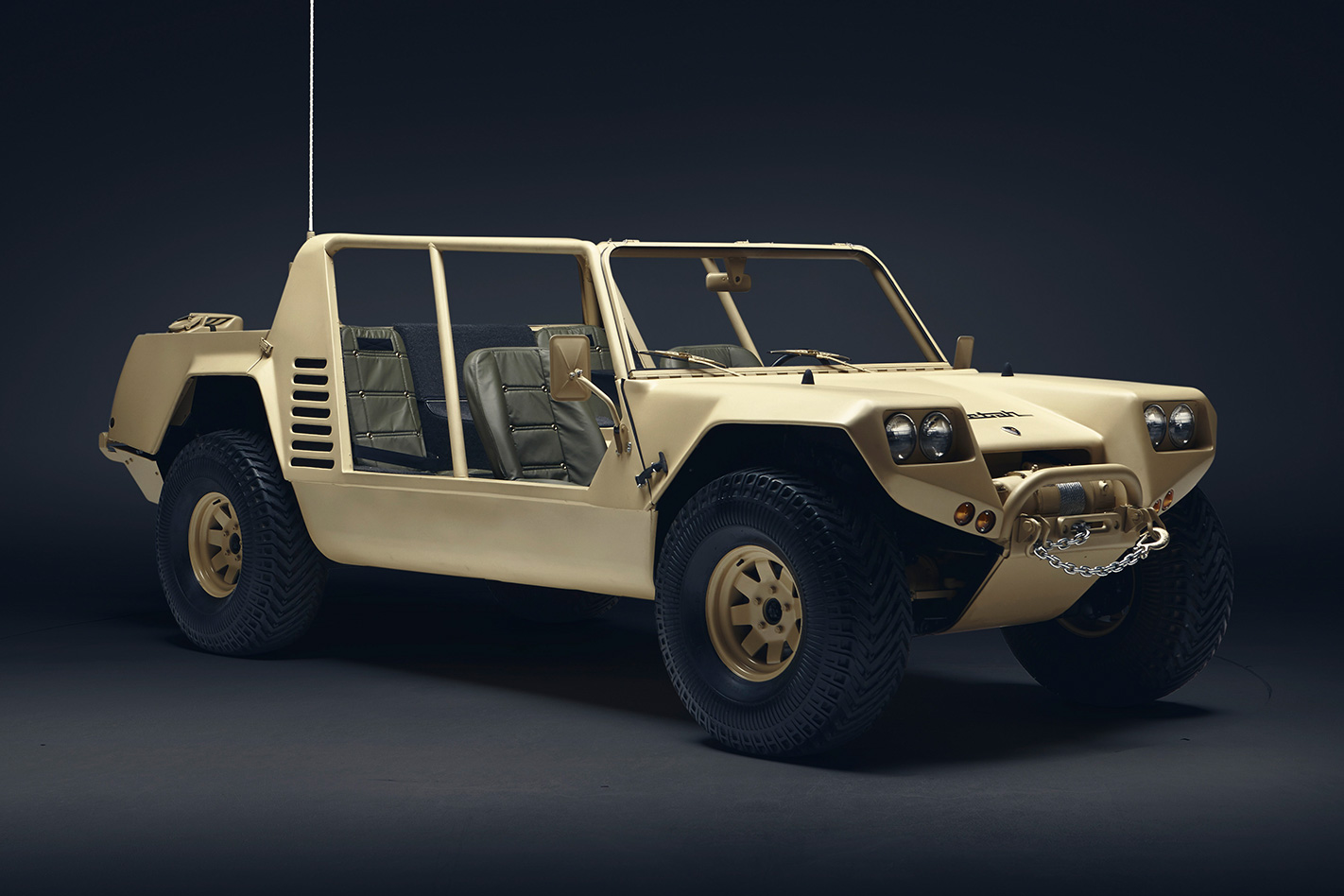
Finally, the LM002 came about with all the ingredients as we know them today. The V12 engine from the Lamborghini Countach, an aluminium and fiberglass body, and four-wheel drive.
Lamborghini says the LM002 is able to climb 120 per cent gradients, or slopes of about 50 degrees.
“Reaching speeds of more than 200km/h, the LM002 was equipped with specially-developed Pirelli Scorpion tyres, allowing ‘floating’ capabilities across soft surfaces such as sand, and highly durable in hot conditions,” Lamborghini states.
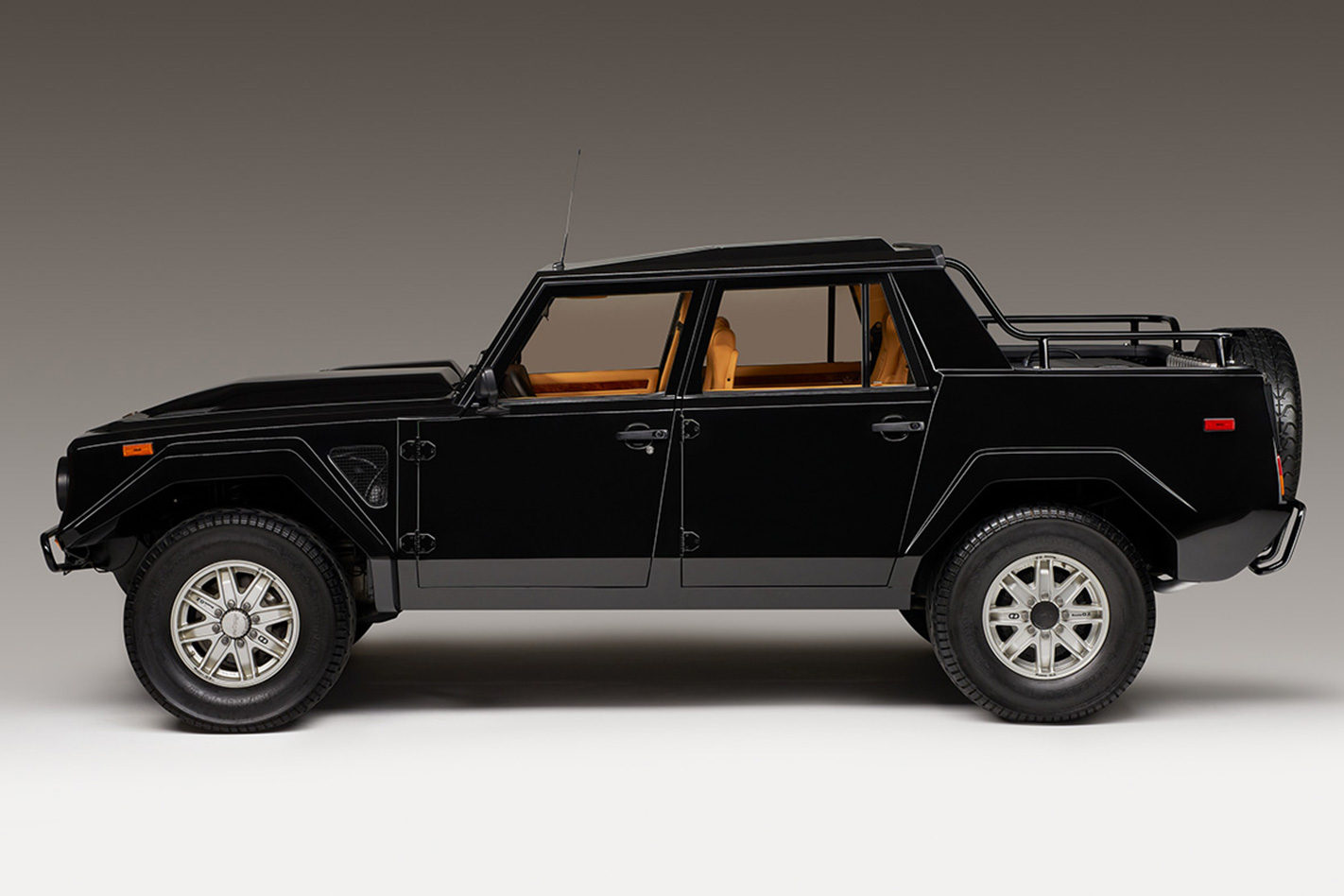
“Then the semi- assembled parts were shipped to Sant’Agata Bolognese for completion with the powertrain, mechanical parts, finishing, testing and delivery.
“A luxurious interior matching the individual needs of the customer completed the LM 002.”
Between 1986 and 1992, 300 units of the LM002 were built, and one still remains with Lamborghini in its heritage collection. A trip out of the museum has resulted in the videos and photographs you see here.
CITROEN attempts a style revolution for the light-car class and mostly succeeds, at a price.
WHAT IS IT?
The new B-segment light car from one of France’s longest established and historically innovative car companies.
WHY ARE WE DRIVING IT?
A visit to France for a separate launch event brought the offer of a short drive of the new C3 on a visit to Citroen’s design centre. It was a chance to battle Parisian traffic and have a decent run on a few busy autoroutes, for a sample drive only; far from a definitive road test.
MAIN RIVALS
Honda Jazz, Mazda 2, Ford Fiesta, Mini Cooper, Renault Clio, Toyota Yaris, Peugeot 208, Volkswagen Polo
THE WHEELS VERDICT
A stylish, perky and most endearing light car. The question of the price premium that comes attached to the style factor is one only prospective buyers can answer, because remember you can buy a class-above Holden Astra R for this sort of money. Then there’s the lack of low-speed engine and transmission refinement which may cause a few questions of its own.
PLUS: Funky looks stand out from the crowd; interior has a welcome dash of design flair and nice materials; mostly cheerful and accomplished to drive
MINUS: Engine vibrations at low rpm, transmission prone to jerkiness in traffic, no AEB
THE WHEELS REVIEW
IF ABSENCE really does make the heart grow fonder, then could it be possible that Australian buyers will be ready to clutch Citroen’s little C3 to their collective bosom when it arrives early 2018?
The C3 has been missing from Citroen’s Australian line-up since 2015, but with right-hand-drive production of the new model now commencing and a new distributor handling the Citroen and Peugeot brands locally, the time is right to re-enter the light-hatch segment dominated by the likes of the Mazda 2 and Toyota Yaris.
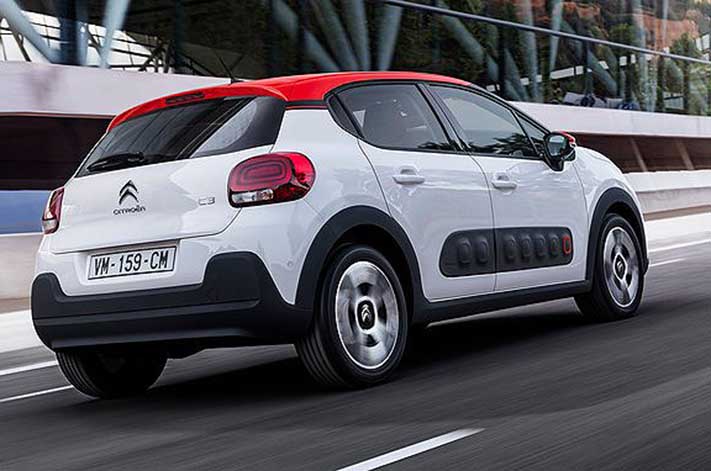
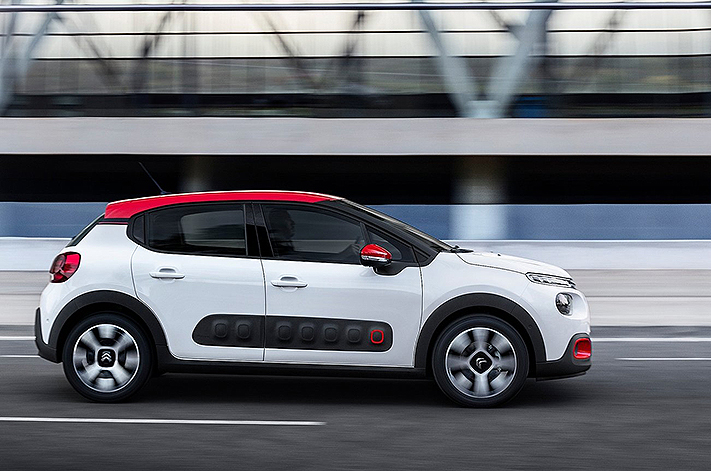
And the C3 does bring a dash of style and visual pizazz to this class. Offered (initially at least) in just one spec – the Shine, powered by the ‘Puretech’ 81kW/205Nm turbo-petrol triple – the C3 targets a buyer who finds a Mazda 2 perhaps a bit too conventional and uninspiring or the VW Polo too buttoned down and conservative. In short, a buyer who appreciates a bit of avant-garde design flourish, and is happy to pay a (in this case modest) price premium for it.
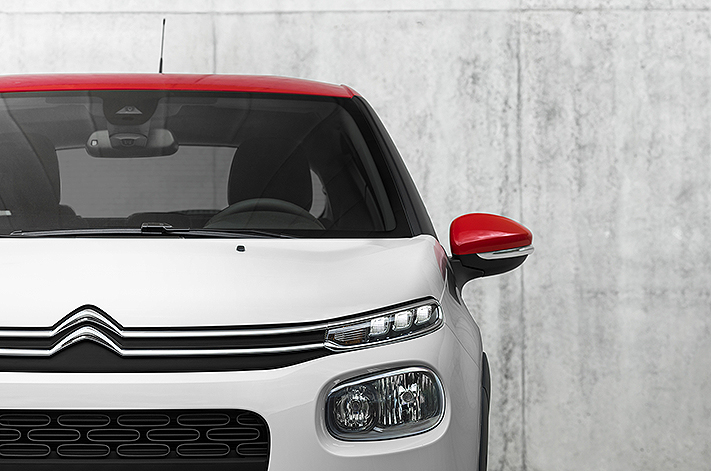
You’ll know instantly if the C3’s exterior exudes your kind of style. At the front, there’s Citroen’s slender LED daytime lights that merge with the familiar chevron badge, sitting above large driving lights, and lower down, a pair of deep-framed fog lights. The surfacing is curvaceous – “voluptuous”, as one designer described it – and there is of course vast potential for customisation via roof colour, mirror caps, wheels, and interior trim combinations.
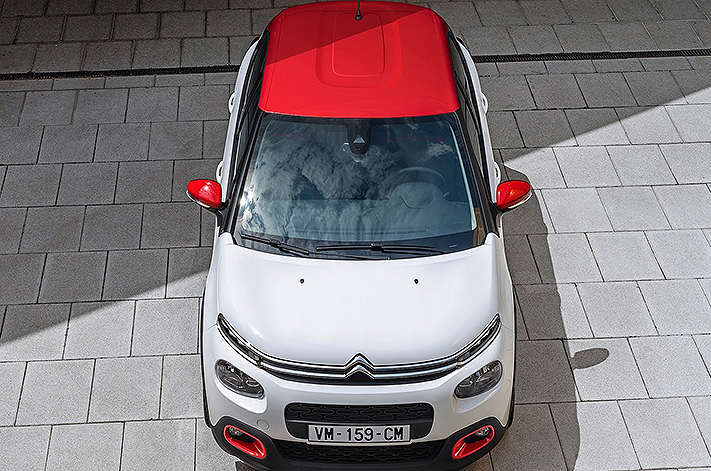
The AirBump things on the doors are carried over from the C4 Cactus; they’re Citroen’s playful way of saying, “Whoopsie! Carpark bumps do happen!” Or something like that. If you hate them and would rather pay some mobile ding-remover guy to straighten out your doors occasionally rather than drive around with your car wearing a sumo suit around its lower half, you can delete them. But really, the C3 sports sufficiently compact overall dimensions that your parking options increase and your risk of getting whacked can be reduced.
It rides on a 2539mm wheelbase with an overall length of 3996mm, making it around 60mm shorter than the dominant Mazda 2. Yet smart packaging means there’s enough leg, foot and shoulder room in the back for two average-sized adults if the front occupants are not giants, or it will easily take three small kids. Seat-up cargo capacity is 300 litres, ample for this class, and expands to 922 litres with seats folded.
That’s the practical stuff; what will attract arguably more attention is an interior that stands apart from the competition for design flair and clever flashes of upmarket-feeling materials to distract you from the fact that bigger, more costly bits, like the dash and door trims, are really not that costly at all.
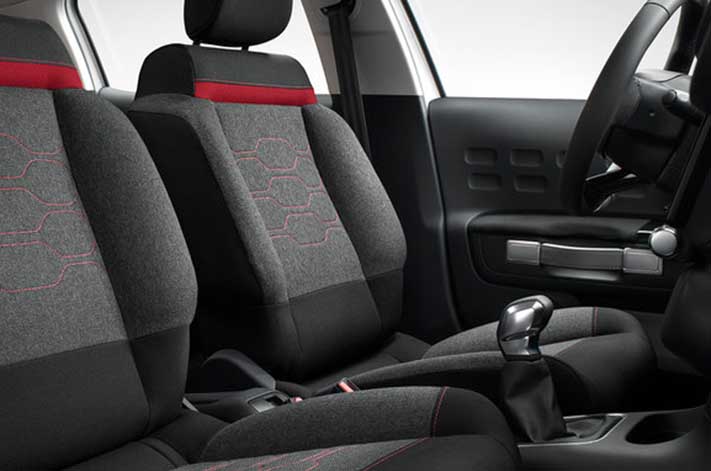
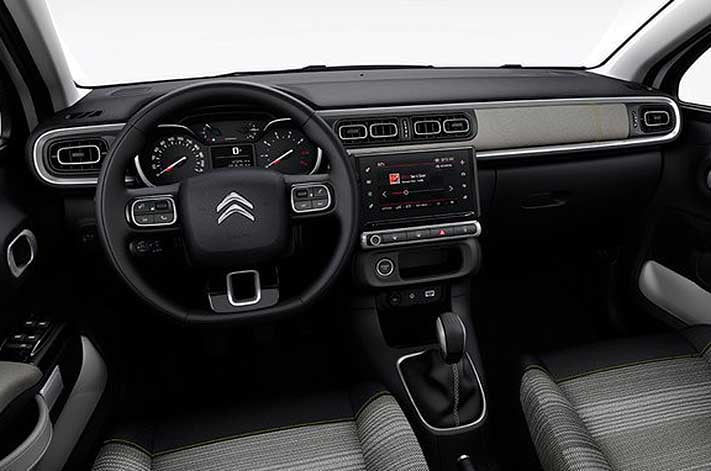
A long and slender satin-silver frame wraps a compact dash face, matched to a variety of optional fabric accents. Retro-looking low-set door-strap handles pull your eye away from the plastic. The seats, too, are fairly basic, and lacking side support, but not uncomfortable, and come trimmed to look like something a bit more upmarket. The horizontal bands of colour across the front seats’ upper sections are intended to visually increase the sense of space.
A 7.0-inch touchscreen sits in the centre of the dash and, along with the now-obligatory Apple CarPlay and Android Auto with MirrorLink, handles pretty much everything, including ventilation, meaning a dig into a sub menu to alter temp and fan speed, which may irk some.
On the options list (along with a $600 sunroof and metallic paint at $590) is a $600 feature called Citroen ConnectedCam, which sees a wide-angle HD camera positioned behind the rear-view mirror. Obviously it’s there to record accident evidence, but via an app downloaded to your phone, it also allows photos and videos shot from the car to be shared on social media: “Hey gang, check out me and my C3 being rammed by a drunk Russian truck driver! #vodkabreath”
But on the basis that just a few of you may care how the C3 drives, let’s talk dynamics. Steering that is feather light at parking speeds does gain a little more weight on the move, which is like saying air at sea level is a bit heavier than helium. But there’s delicacy and immediacy to the wheel’s motions, so no major complaint. Likewise the ride and body control, which, thanks to fairly soft damping, strikes an acceptable blend of loping compliance with contained roll when you lean on the C3’s front end.
We can’t vouch for how the torsion-beam rear end may behave at speed on bumpy Aussie country roads, so please, no hate mail if it does prove a little less than planted.
The powertrain, meanwhile comes with its own caveat. The 1.2-litre three-cylinder turbo-petrol is mated to a six-speed torque-converter automatic, but it’s a combo with two issues: First, the band of low-rpm vibration when moving away from standstill, and when coming on and off the throttle in slow-moving traffic. No-one expects otherworldly NVH from a car in this class, and triples are known for their inherent ‘thruminess’, but the engine in this installation is far vibier than in other models which use it, like the Peugeot 208 and next year’s C3 Aircross compact SUV. Likewise the slight shudder from the transmission when dropping ratios under brakes.
Then there’s the transmission calibration itself, which errs toward ultra-snoozy and econo-focussed. You really need to pre-emptively boot the throttle to wake things up and get a downchange, unless you move the selector to the manual mode and shift it yourself. Yes, there is a Sport button for a more aggressive calibration, and this does bring improved eagerness. But the problem lies with Sport’s insistence to hold gears once you’re done with accelerating and just want to settle back into a cruise, which gets irritating.
On the upside, the engine is a willing little thing once out of its early vibe zone, and enjoyable to spin through its range. It also has feisty, parping note which helps you to bond with it.
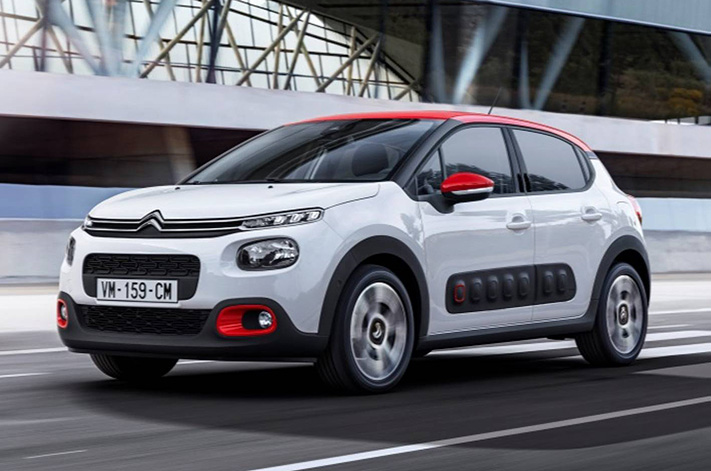
So okay, there is a slight sense that style trumps ultimate substance here, or at least that a final layer of mechanical polish is missing. But we suspect that won’t trouble the target market one bit, and as an antidote to bland, the C3 makes a welcome splash.
SPECS
Model: Citroen C3 Shine Puretech 110 Engine: 1199cc 3cyl, dohc, 12v turbo Max power: 81kW @ 5500rpm Max torque: 205Nm @ 1500rpm Transmission: 6-speed automatic Weight: 1190kg 0-100km/h: 10.9sec (claimed) Economy: 4.9L/100km Price: $22,990 On sale: Q1, 2018
With memories of the Evo X’s resounding category win in the recent BFYB shootout still fresh in our minds, Mitsubishi’s current front-line weapon arrived at PC08 carrying some weighty expectations.
This Performance Car Of The Year article was first published in MOTOR Magazine November 2008.
Familiarity breeds affection, so some say, and after spending a lot of time recently in all road-going Evo X combinations – there are three – we’ve become of the Lancer that is just as quick, but a helluva lot nicer all-round, than its predecessors.
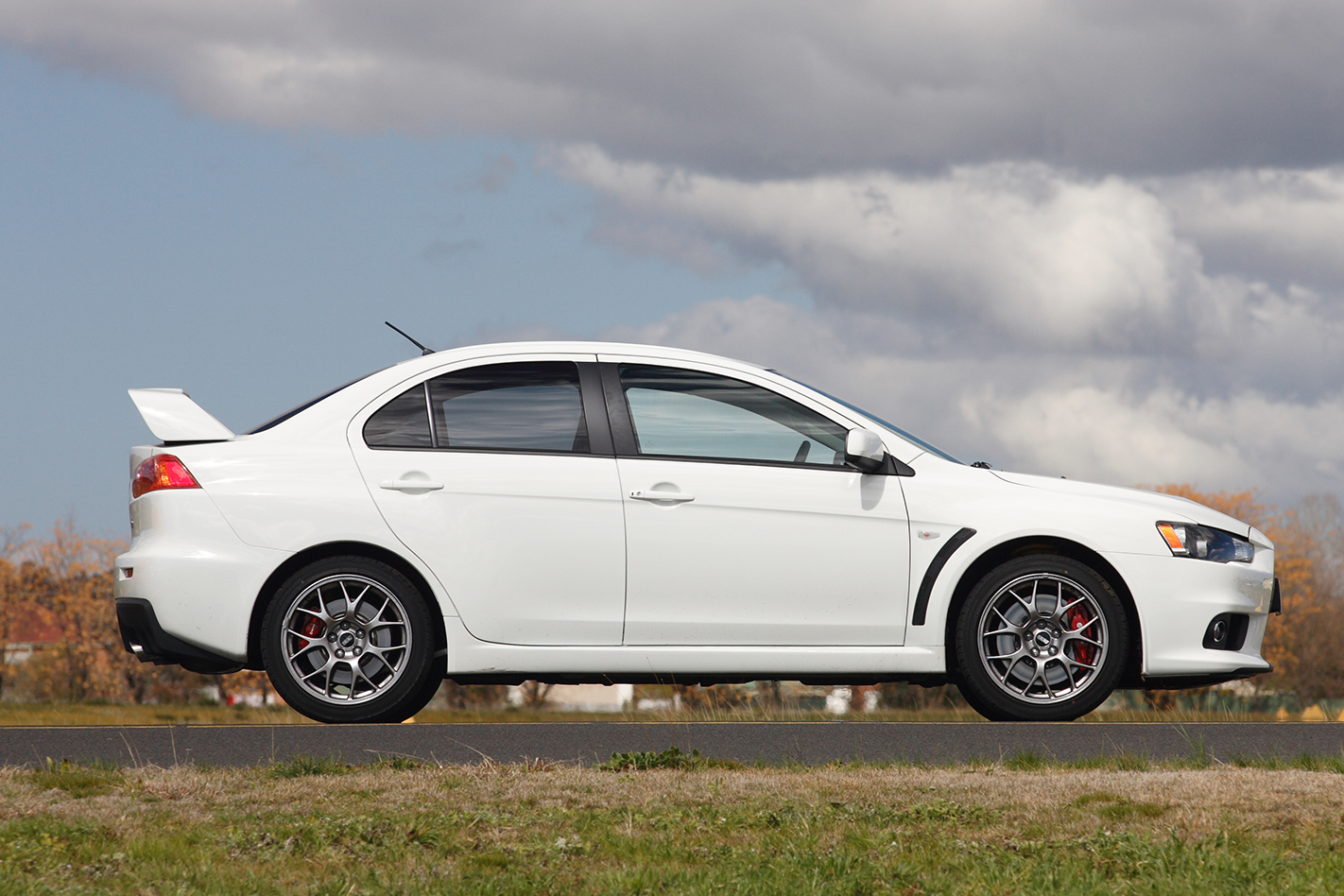
In other words, this jigger is mechanically identical to the top-spec MR version, but without the ‘flappy-paddle’ TC-SST (twin-clutch) gearbox, a unit that has polarised opinion in the MOTOR crew and seems to work brilliant only some of the time.
The five-speed drew fewer gripes, the only one being why it lacks an entire ratio over current manual gearbox convention and, as a result, the spread feels a bit long between ratios. On road you’d hardly notice, but around at Wakefield’s tight second and third gear confines it demanded a fair bit of hustling to keep the turbo four between its 3500rpm peak torque (366Nm) and claimed 6500rpm peak power (217kW).
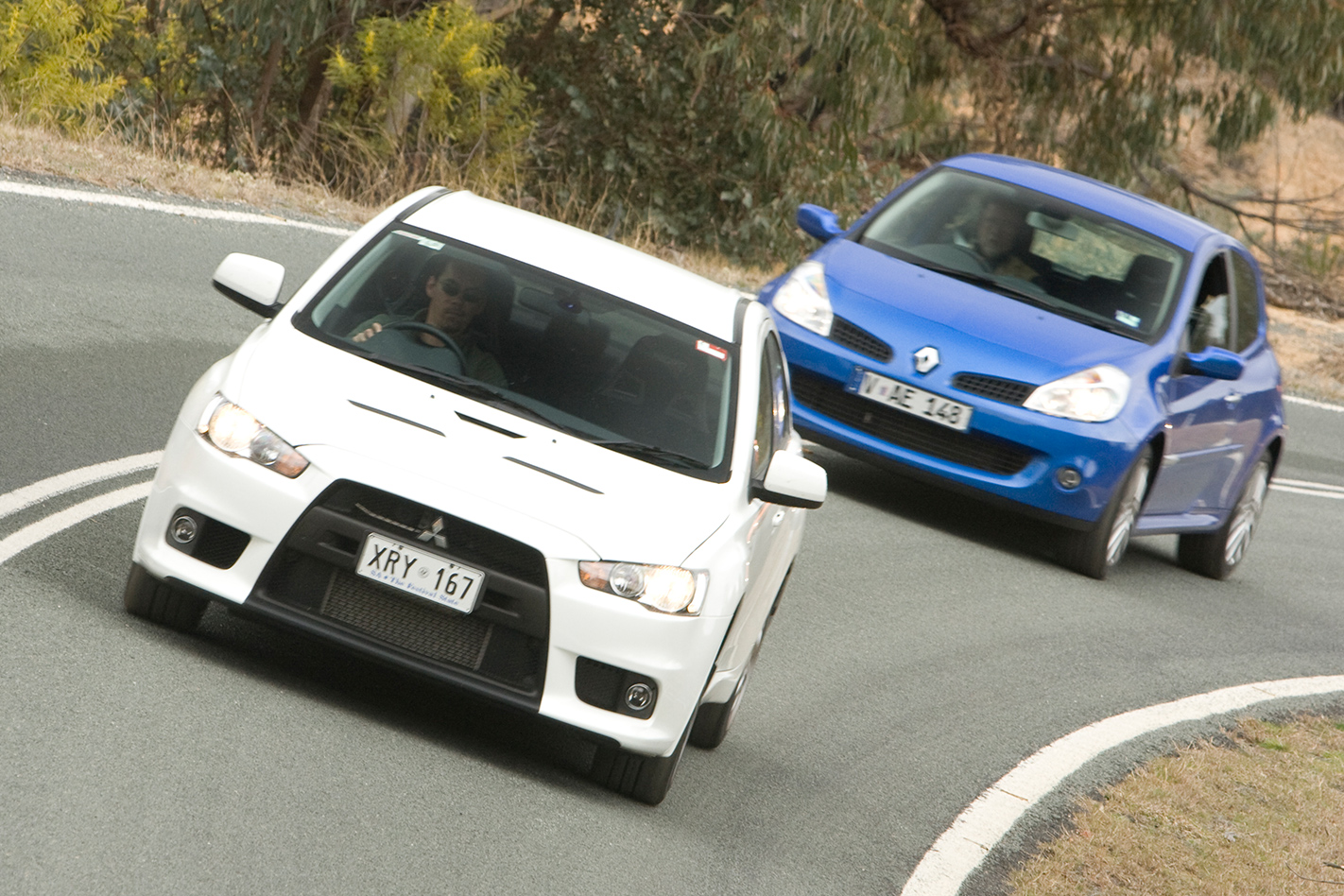
You can draw easy conclusions by the fact that the Evo’s 1:09.4 was fourth quickest around the circuit – a mere 1.7sec off the lead pace – but a lowly eighth fastest down the straight, but this actually paints only part of the picture.
Firstly, the no-brainer is that it could easy do with more than 217kW and 366Nm to haul its near-one-and-half tonne around: although with its 5.66 0-100km/h and 13.8sec 0-400m times at Coota show it clearly isn’t hanging about. But secondly – and something raised by more than one judge – was that the Evo could do with more lateral grip.
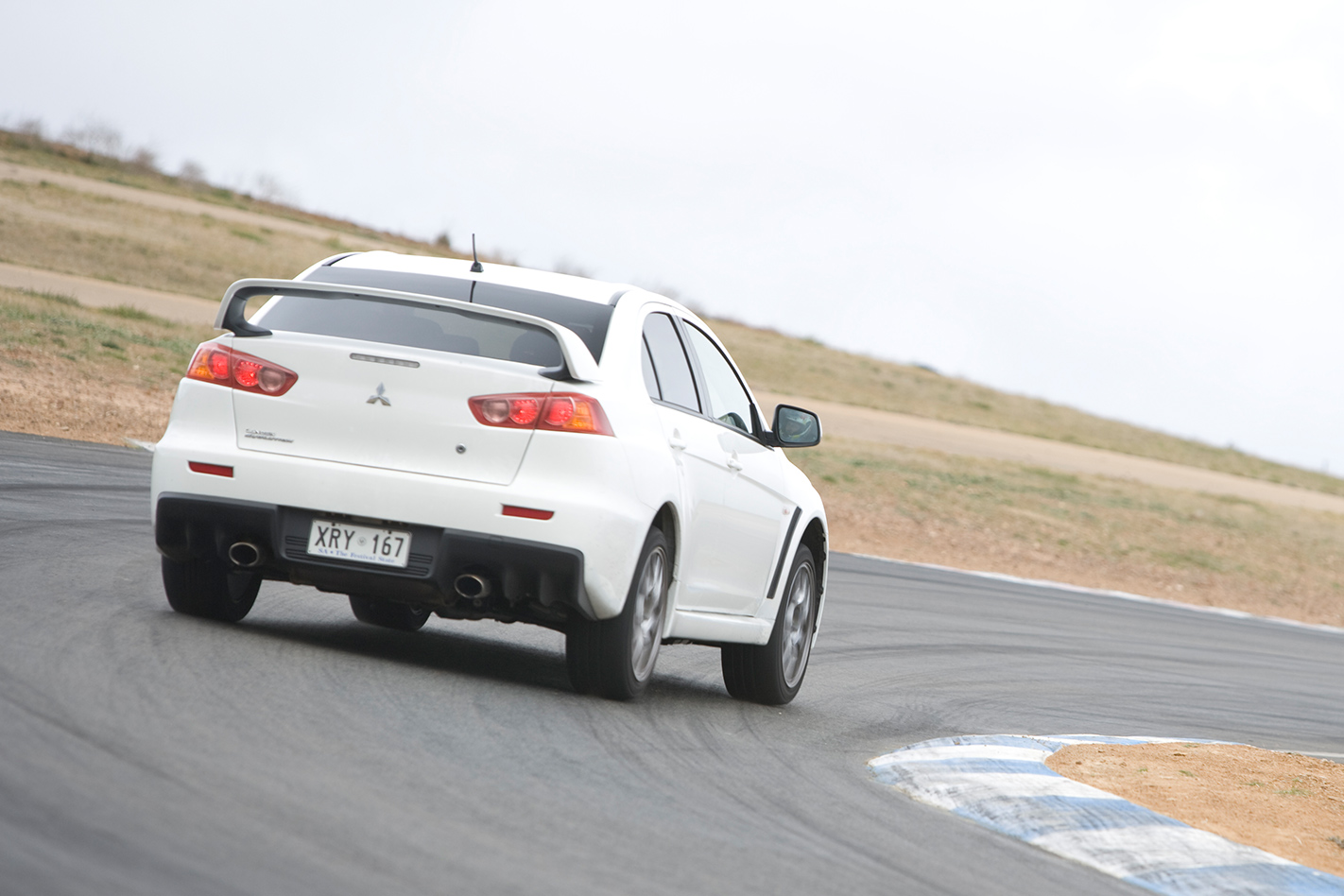
And the chassis’ fun-loving obedience masks the fact that many of Evo’s PC08 rivals were quicker through the mid-point of the curves, where they’d simply grip and go with less histrionics. However, throwing the Evo down our twisty, bumpy Canberra road loop proves that the handling package really shines in real world conditions.
The chassis’ compliance soaks up the worst surfaces; it maintains unshakable composure everywhere; the all-wheel-drive works miracles without any inhibition or protest, and it responds instantly to the ever-changing road conditions: all the stuff that just doesn’t translate into numbers on a page.
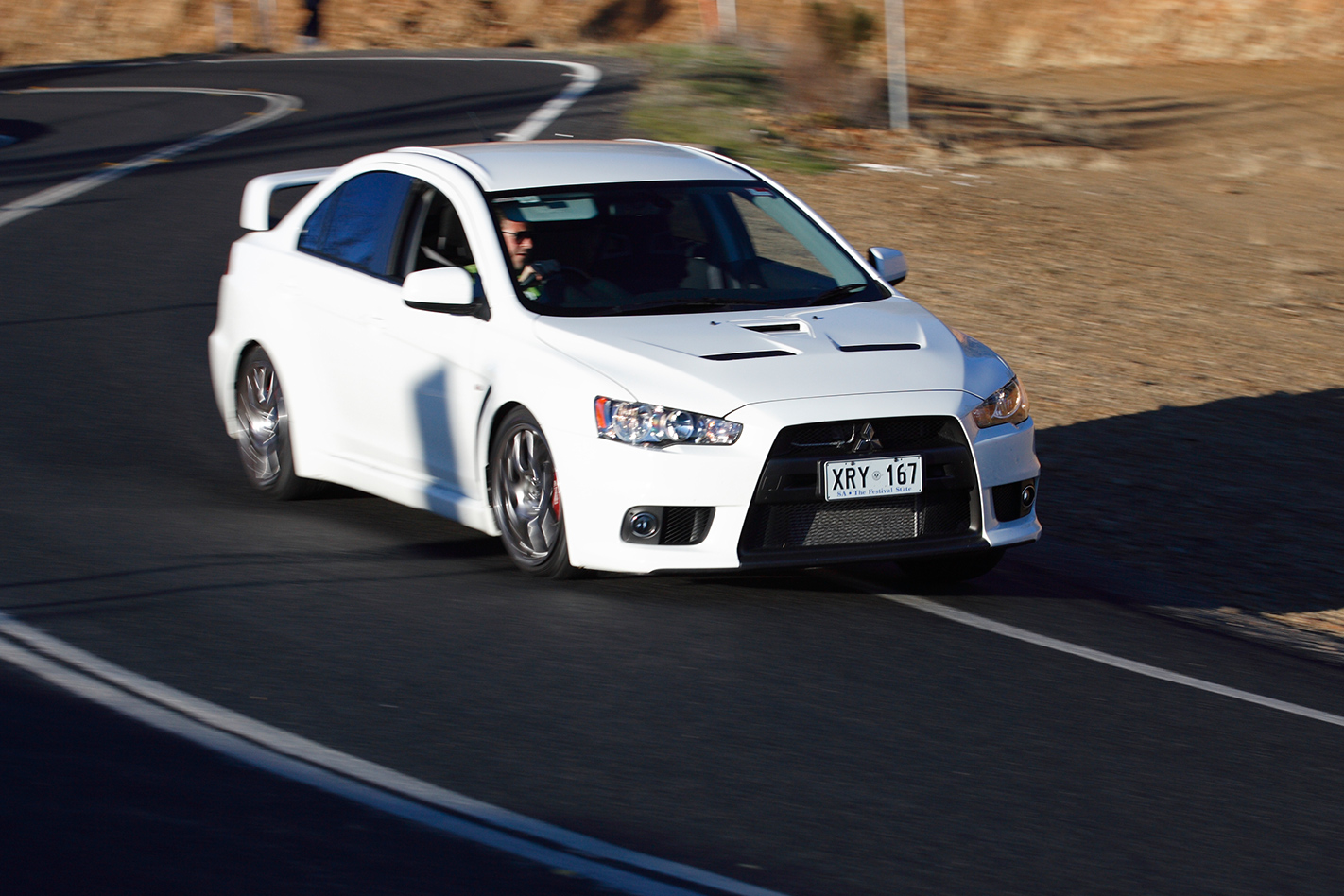
Thing is, the all-paw turbo-four German will set you back $106,050. The Japanese equivalent – with room for five adults, no less – asks for just $64,990.
REAR-WHEEL drive, two doors and a powerful, force-fed V8 is a recipe for guaranteed success in our books.
If you’re after something along these lines, the most obvious option available locally is the awesome Mercedes-AMG C63 S Coupe. Powered by a monstrous 4.0-litre twin-turbo V8, it’s essentially a high-end muscle car in a fancy suit. We’re big fans of its looks, noise, speed and dynamics on road and track and Aussie sales figures suggest that we’re far from the only ones.
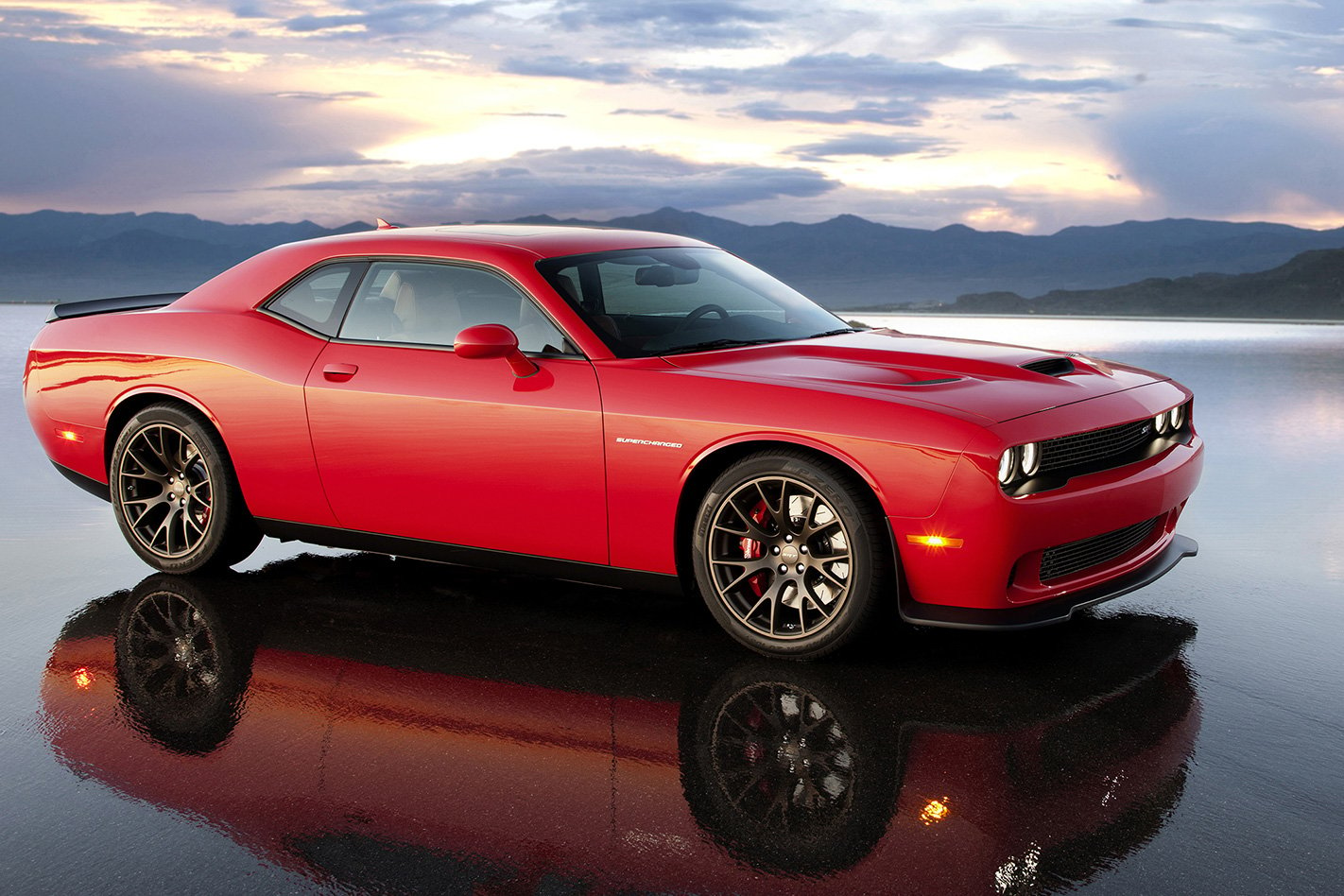
But what if you want real power? Not just the sort of power that can overthrow governments and rule countries, but enough power to conquer the universe. Thanks to Melbourne’s Crossover Car Conversions you can have a fully registered, right-hand drive version of Dodge’s berserk Challenger Hellcat.
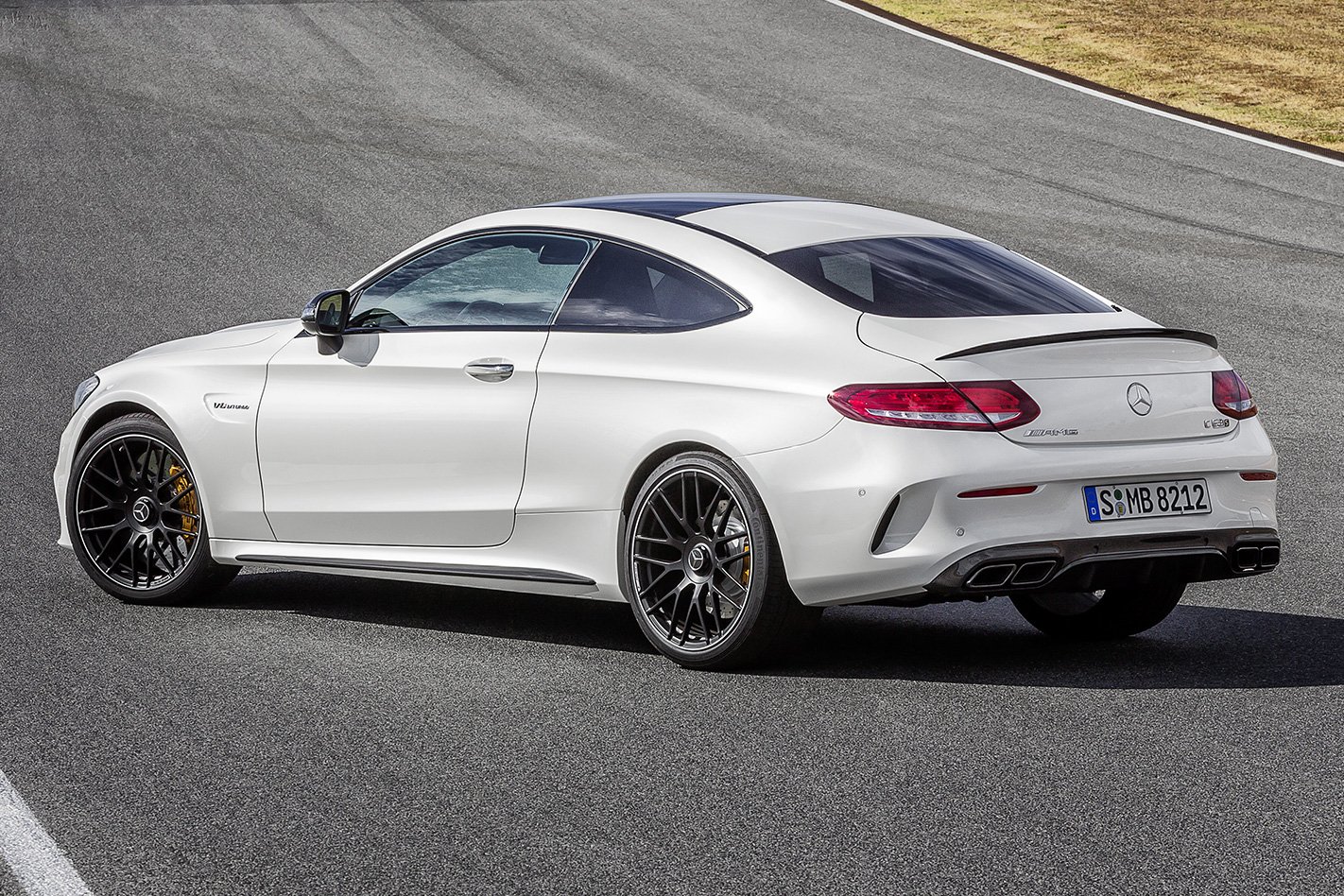
Not only is that a whopping 152kW/181Nm more than the similarly priced C63, but it’s more power than any production car on-sale in Australia bar the Ferrari 812 Superfast (588kW; $610,000), Tesla Model S P100D (568kW; $250,582) and Lamborghini Aventador S (545kW; $788,914).
| u00a0 | 2017 Merc-AMG C63 S Coupe specs | 2016 Dodge Challenger Hellcat specs |
| Engine | 3982cc V8, DOHC, 32v, twin-turbo | 6166cc V8, OHV, 16v, supercharger |
| Power | 375kW @ 6250rpm | 527kW @ 6000rpm |
| Torque | 700Nm @ 1750rpm | 881Nm @ 4000rpm |
| Weight | 1725kg | 2027kg |
| 0-100km/h | 3.9sec (claimed) | 3.5sec (claimed) |
| Price | $162,400 | $189,000 |
Here’s one we found on Trade Unique Cars
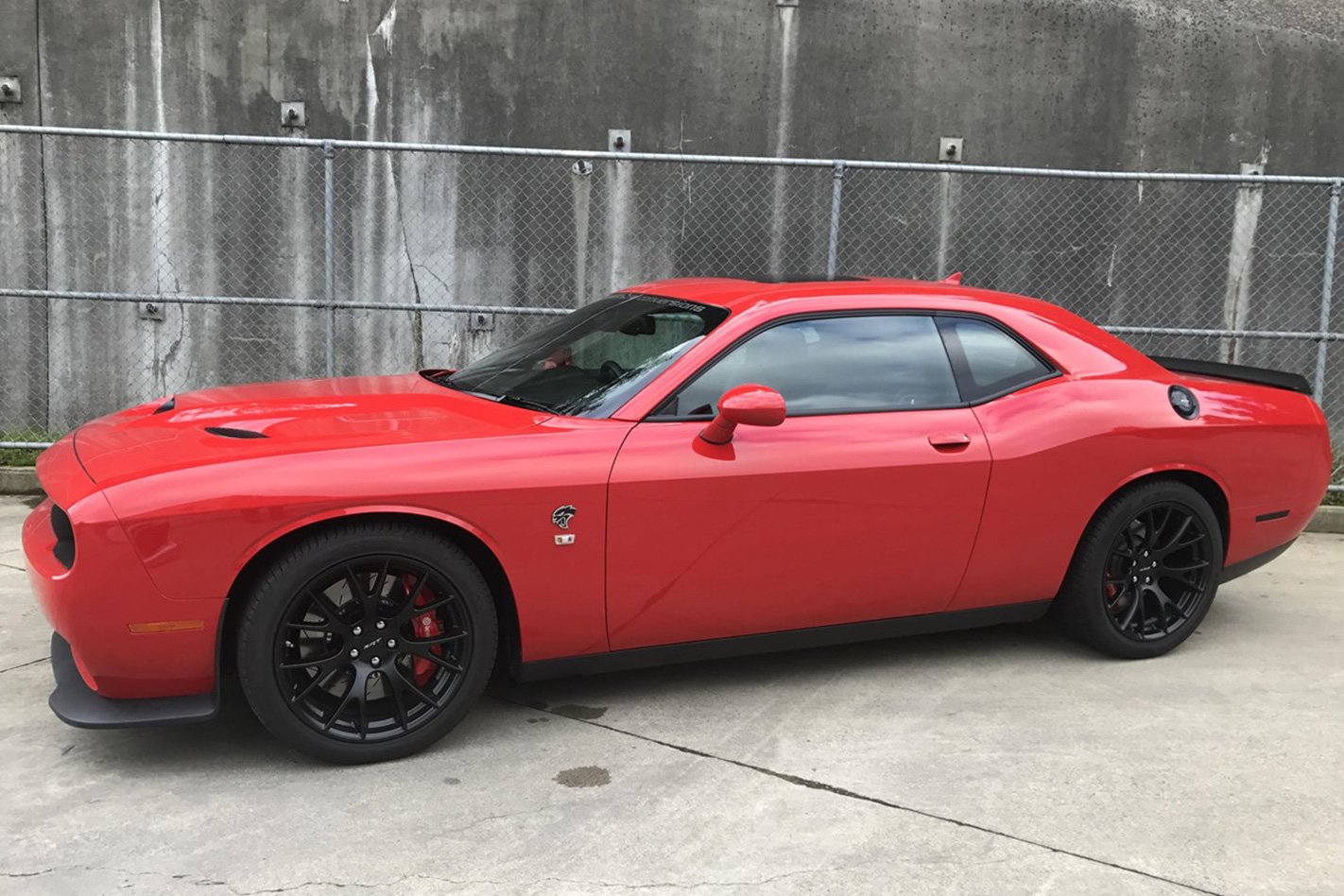
2016 Dodge Hellcat – 10km, manual, $189,000
Hellcats are few and far between in Australia, but Mustang Motorsport has this recently converted model available with a mere 10km on the clock, making it effectively brand new. Big money, but you’ll stand out!
MAZDA will debut two new concepts at this month’s Tokyo Motor show, previewing next-generation production vehicles.
The first, Mazda says “heralds the company’s next-generation products”, and is believed to be our first glimpse at a next-gen Mazda 3 hatch.
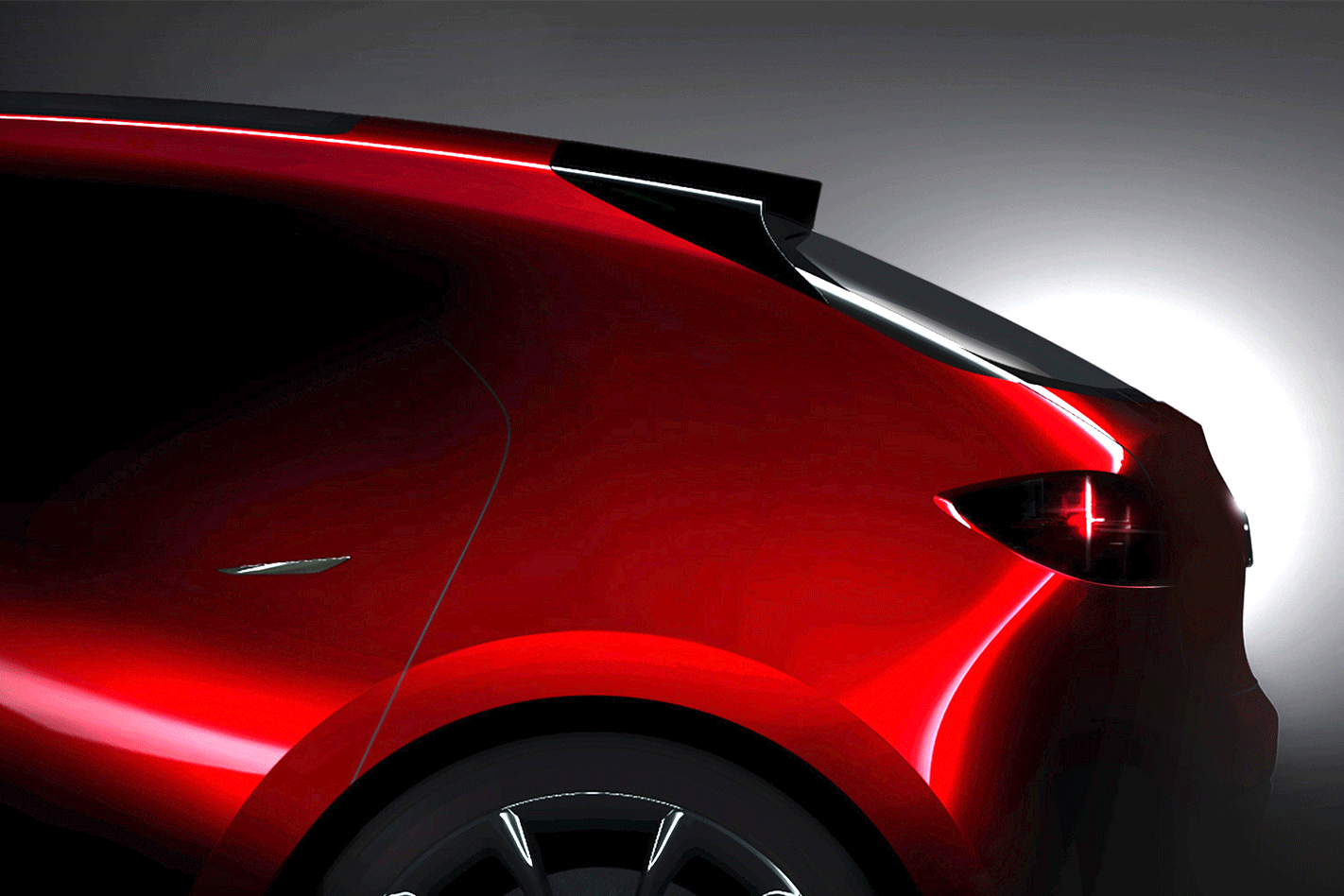
The current-gen Mazda 3 was launched in 2013. Assuming Mazda will stick to the industry’s usual cadence of six-year model lifespans, that means we can expect its replacement to arrive sometime in 2019.
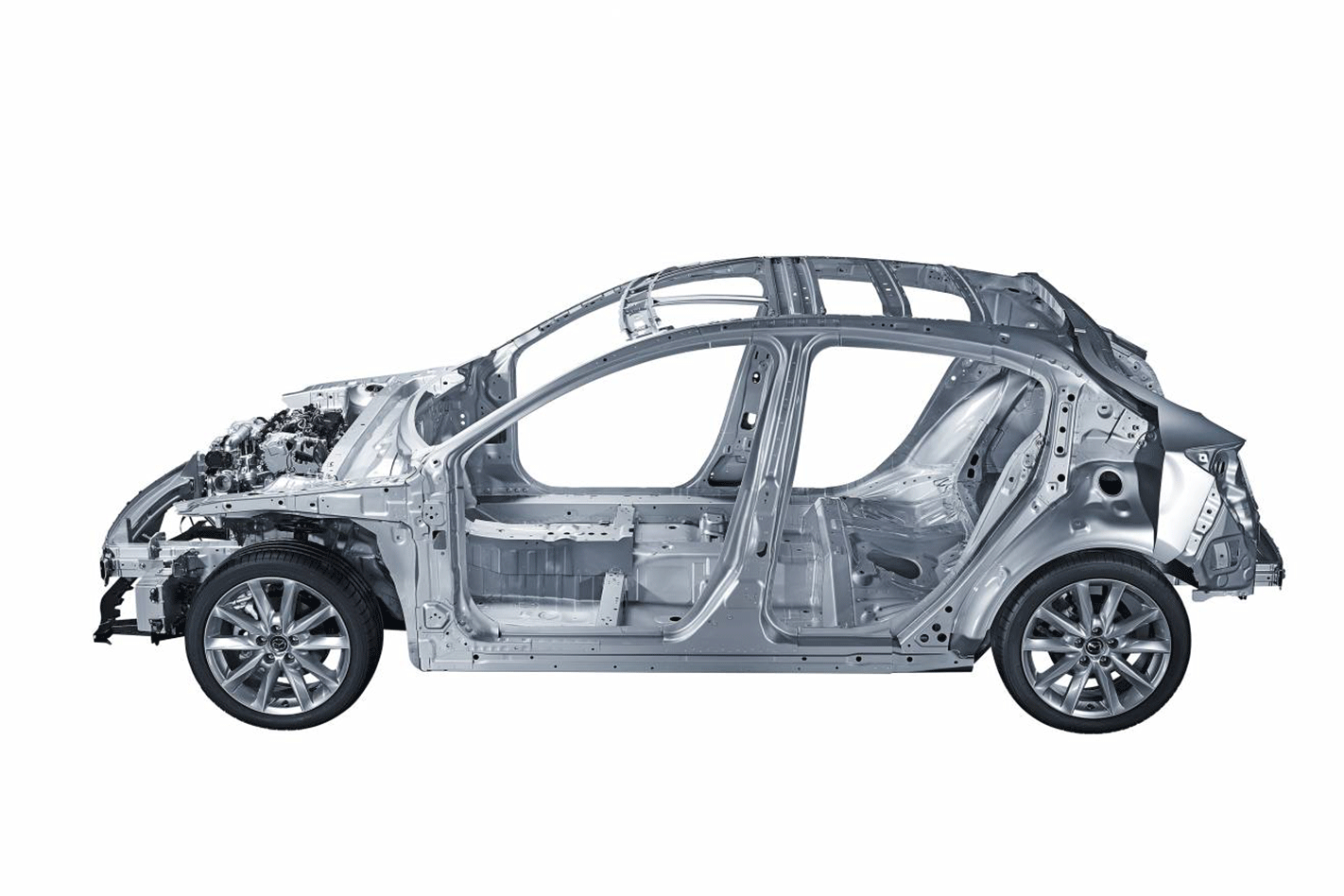
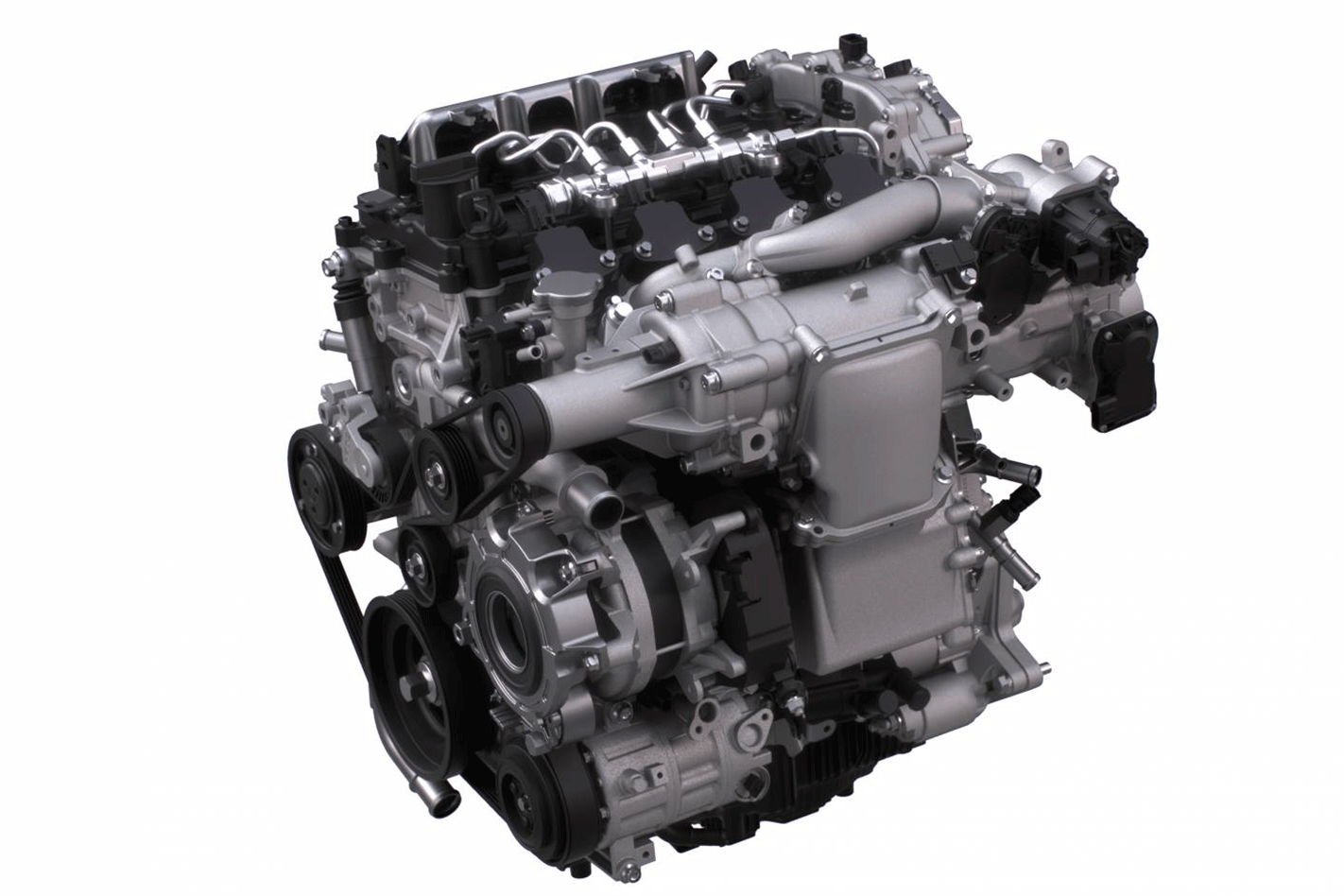
And that meshes well with what we already know about the SkyActiv architecture and high-compression, ultra-efficient SkyActiv-X engine that’s expected to reside beneath the new Mazda 3’s taut sheetmetal. Both of those technologies are scheduled to enter production in 2019, meaning the Mazda 3 will be the first recipient of the Japanese carmaker’s cutting-edge tech.
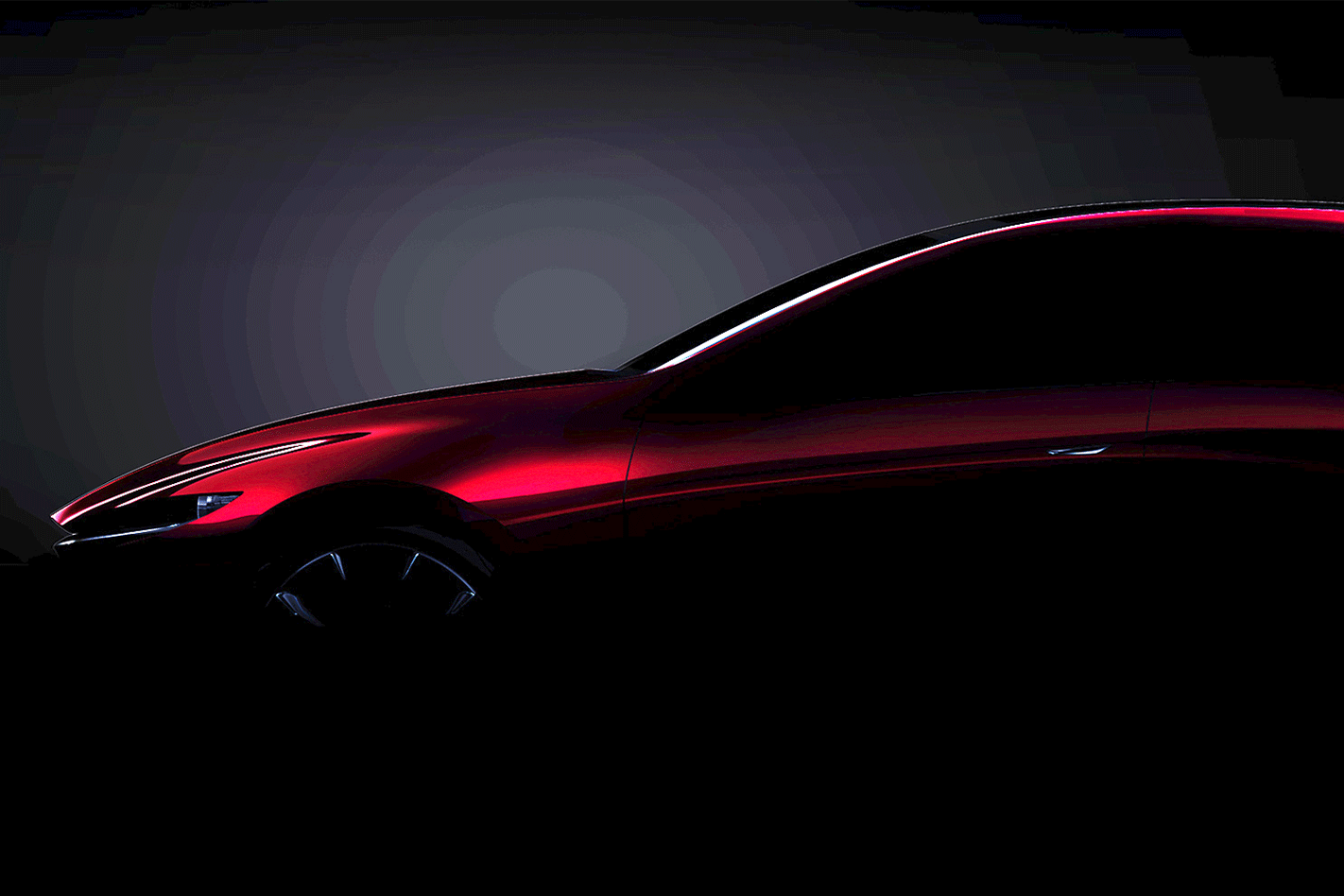
The three-row Mazda CX-8 will also be on display at the Motor Show, along with a special edition MX-5 Red Top, which features a special cherry red canopy and auburn Nappa leather interior.
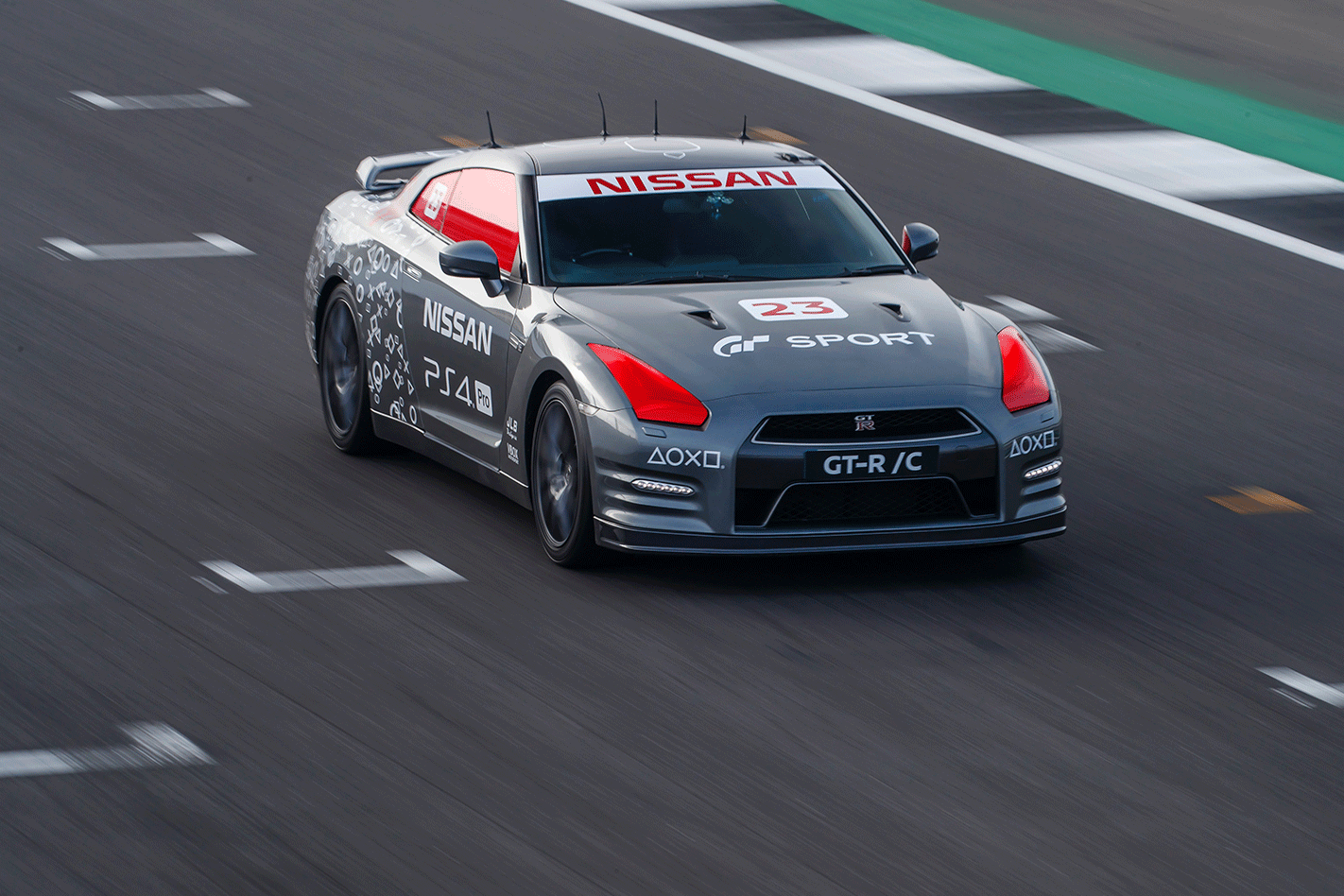
AS A child, there were few things more joyous than letting rip with a remote controlled car. Now, Nissan has built the R/C car to end them all – a full-sized GT-R.
|Alfa Romeo Giulia sets Silverstone lap record ‘blindfolded’
“The response from the car when using the controller was far more engaging than I thought it would be,” Mardenborough explained.
CAR makers including Honda, Mazda, Mitsubishi, Nissan, Subaru and Toyota are scrambling to discover if they were sold substandard iron used to make car parts including automotive gears in the latest scandal to rock Japan.
Kobe Steel, the third largest steelmaker in Japan, is facing accusations that it may have made up data on up to 20,000 tonnes of metal sold to about 200 clients – including car makers.
It means the company potentially sold steel with strength ratings that didn’t meet the quality standard promised to clients. The company claims the issue could stretch back a decade.
The scandal could also affect Ford and General Motors – behind a Japanese domestic customer, Toyota and Mitsubishi, the US-based car makers are Kobe’s biggest customers.
The Financial Times said Toyota had also found the affected material in the bonnets and rear doors of Japanese-made cars.
“We recognise that this breach of compliance principles on the part of a supplier is a grave issue,” the car maker said.
Nissan, Mazda and Honda have also confirmed they used Kobe Steel products affected by the scandal, and were running further investigations and safety checks, according to the newspaper.
It is not yet known if any cars on Australian roads are affected by the scandal, or how the lower-quality metal would impact owners.
The steel scandal comes in the wake of admissions from Kobe early this week that it had also noticed what it called “improper conduct” in a portion of its aluminium – some supplied for aircraft manufacturing – and copper products, shipped in the last 12 months.
AS THE Takata airbag recall saga rages on, Honda Australia has backed a call to cancel a car’s registration if it has not had faulty airbag replaced. Meanwhile, the company admitted that it is struggling to locate the final 20 percent of vehicles requiring the crucial update.
The idea of cancelling the vehicle’s registration was floated at a meeting between Australian Competition and Consumer Commission (ACCC) and Australian automotive executives in Melbourne earlier this week, as thousands of car owners continue to ignore calls to take their vehicles in for repair.The power to cancel vehicle registrations lies with the state governments, and Honda Australia director Stephen Collins said it will be impossible for it to replace the faulty inflators in remaining cars without their support.
“The ultimate solution is you can’t register your car, or sell it, unless it’s repaired,” said Collins.

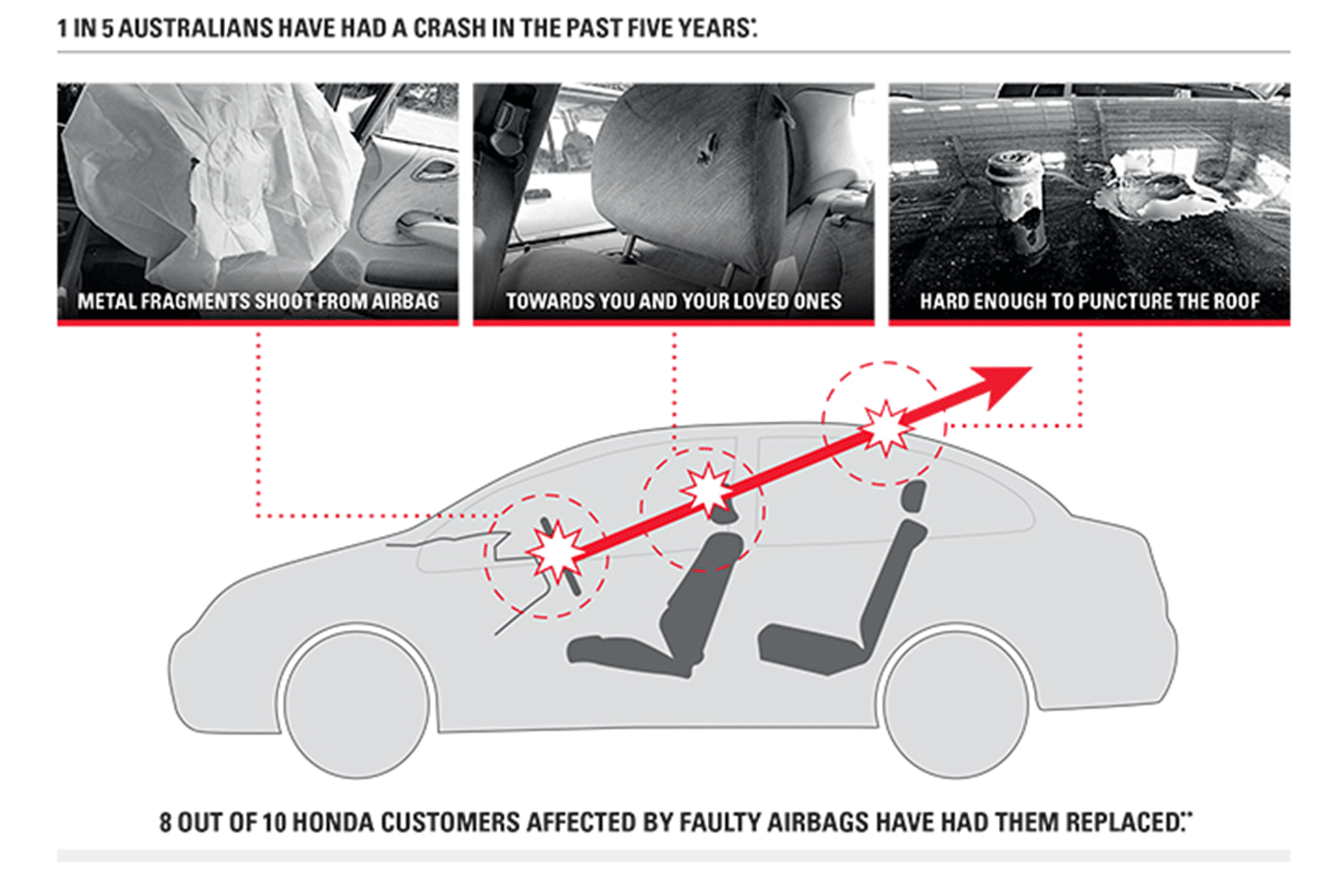
“We are urging customers of vehicles who service outside the Honda network to have their vehicle repaired, free of charge, as soon as possible.
“Unfortunately there are still some customers of affected vehicles who are simply not responding to repeated attempts by the company to contact them and have their airbag inflators replaced. We need to change this behaviour.
“We encourage all Australians, if they have a friend or family member who owns a Honda vehicle, to urge them to jump on the Honda Australia website to check if their vehicle is affected. If their vehicle has been recalled they must act on it, even if they don’t service with us. All repairs will be done free of charge,” Collins said.One of the biggest issues has been reaching customers in remote areas, so Honda has been sending repair teams as part of an outreach program.
The company even sent two technicians to Mt Isa to complete the repairs and others to Western Australia to reach customers in Kununurra, Exmouth, Karratha, Port Hedland, Broome, Newman, Esperance, and Tom Price; as well as Tennant Creek in the Northern Territory.
Honda is also targeting remote towns such as Whyalla and Broken Hill, and plans to send two mechanics from Adelaide to Port Augusta, Port Pirie and Port Lincoln in November.
It even plans to send repairers to Thursday Island at the top end of Queensland.
Elsewhere, Honda dealers are completing up to 7000 airbag inflator repairs per week with some service departments opening on Saturdays to facilitate repairs.
Customers can check if their Honda vehicle is affected through the recall webpages at honda.com.au/recall
The website has a Vehicle Identification Number (VIN) check tool to enable customers to see if their vehicle is affected.
Customers can also call the dedicated Honda recall centre on 1800 789 839 between 8 am and 9 pm Monday to Friday; as well as Saturday and Sunday 8.30 am to 5.00 pm.
Owners of other vehicles can check their manufacturer websites or the ACCC’s Product Safety Australia Recalls website to see if their car is affected.
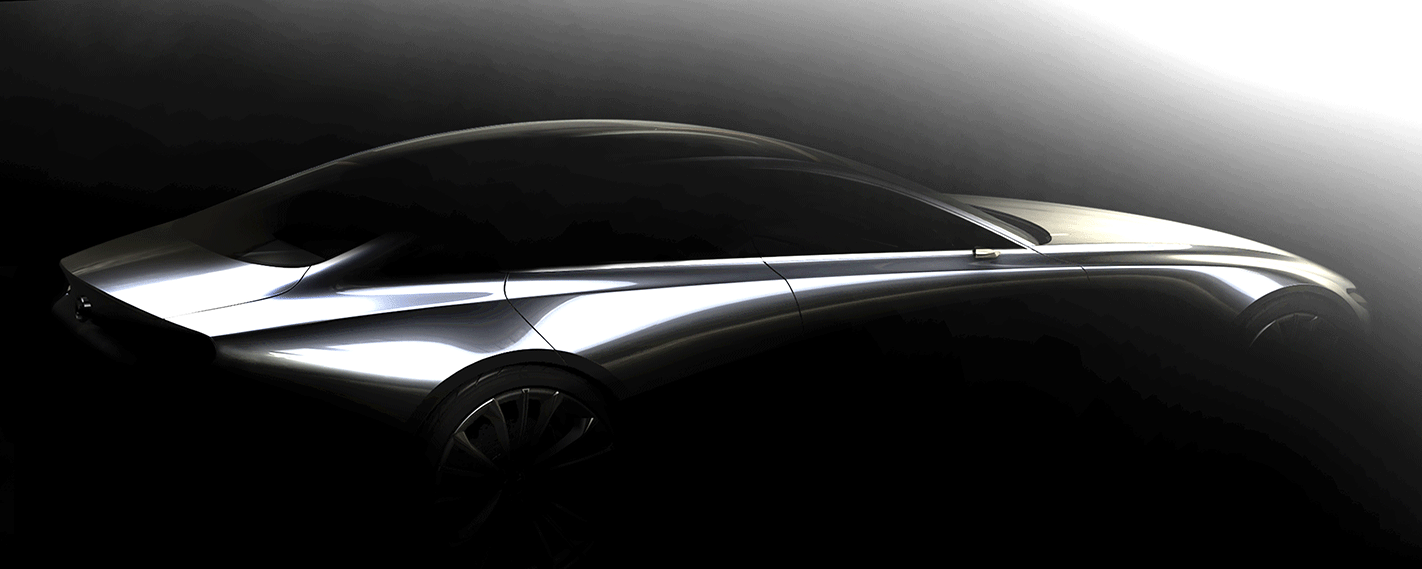
Mazda has announced it will wheel out two new concept cars at this year’s Tokyo Motor Show, with one showcasing a sleek, low-roofed sedan that hints at the next-generation Mazda 6 and the other foretelling the Mazda 3 hatch’s replacement.
Both flaunt the latest interpretation of Mazda’s Kodo design language, with smooth surfacing and taut curves that also recall the RX-Vision concept that was revealed at the 2015 Tokyo Motor Show.
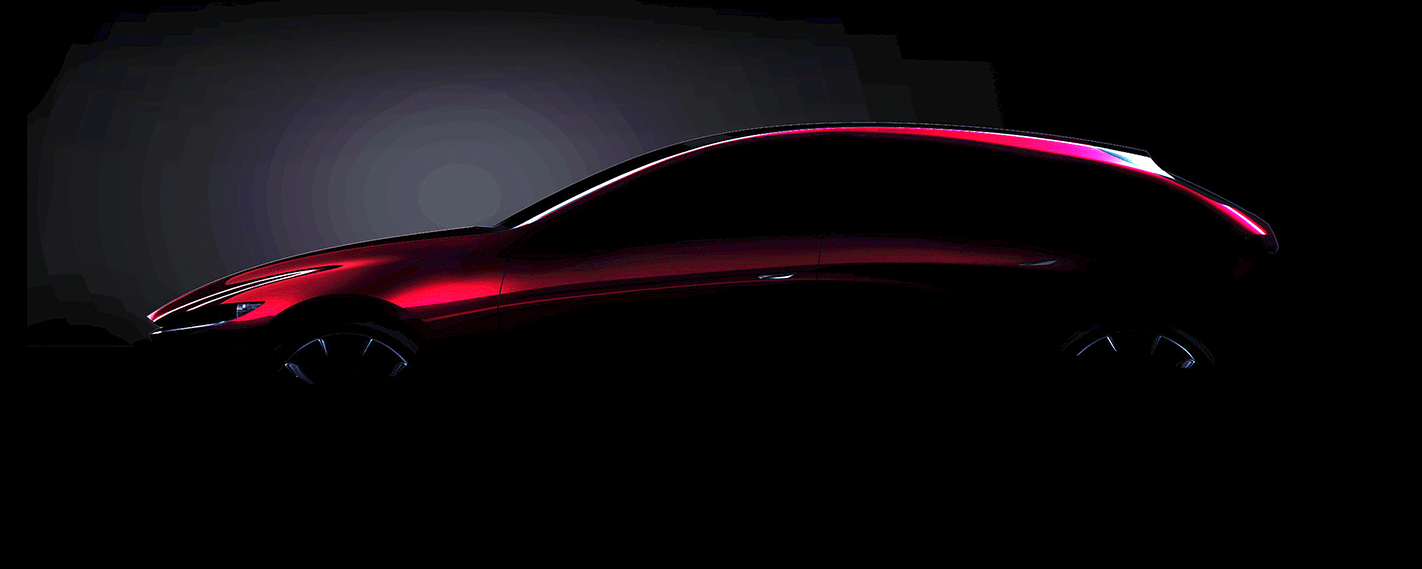
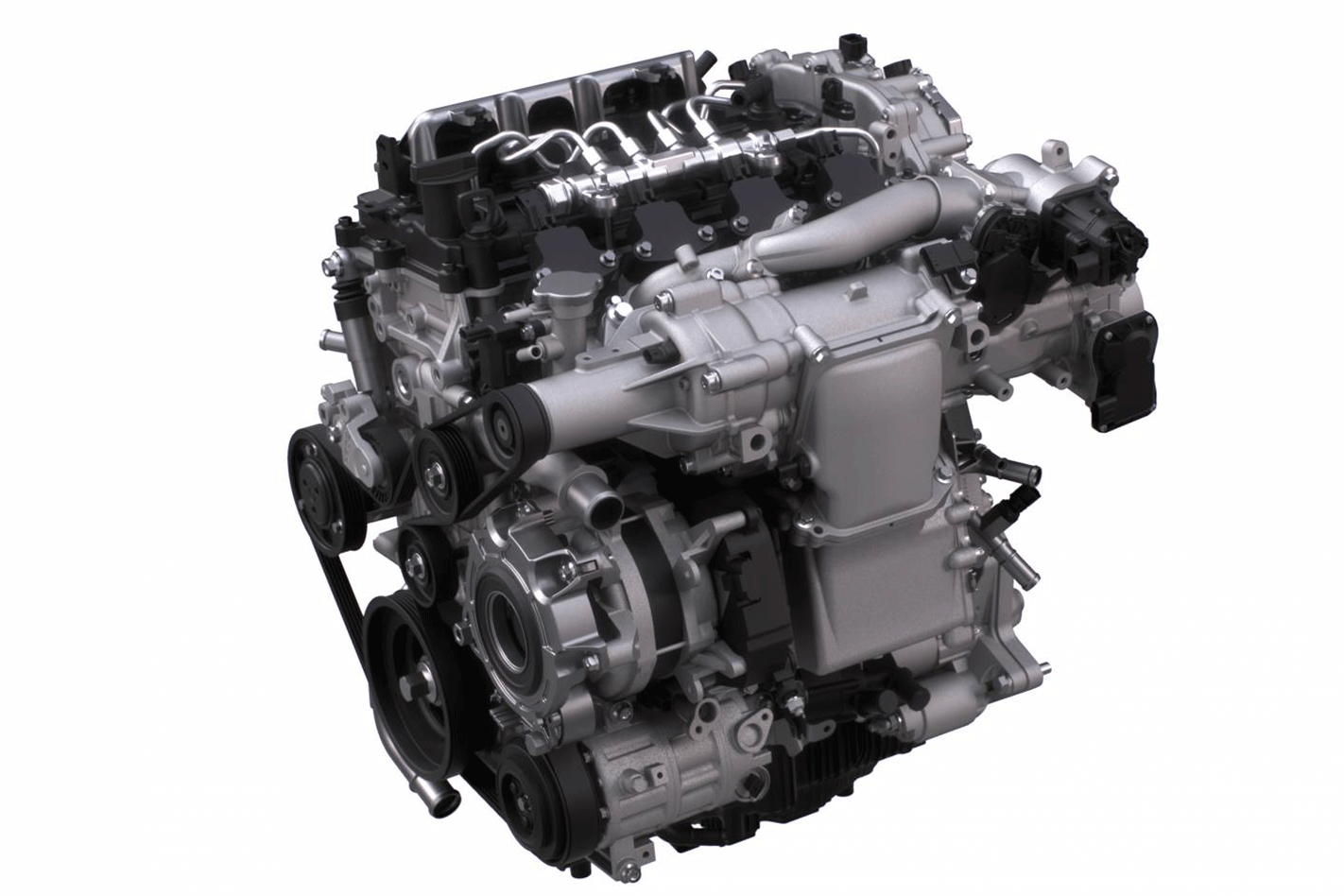
Mazda isn’t describing it as such, but the proportions and design of the “product concept” points toward it being the basis of the next Mazda 3. With the Mazda 3 that’s currently on sale having launched in 2013, expect the Tokyo Show car to morph into something more production-ready next year before launching globally in 2019.Mazda also confirmed that the Tokyo hatch concept will be built upon the company’s newest SkyActiv chassis architecture and be powered by its revolutionary SkyActiv-X compression-ignition engin– both of which are on track for a 2019 production debut.
If you’ve ever wondered how easy it would be to control a real car with a PlayStation controller, the answer is here.
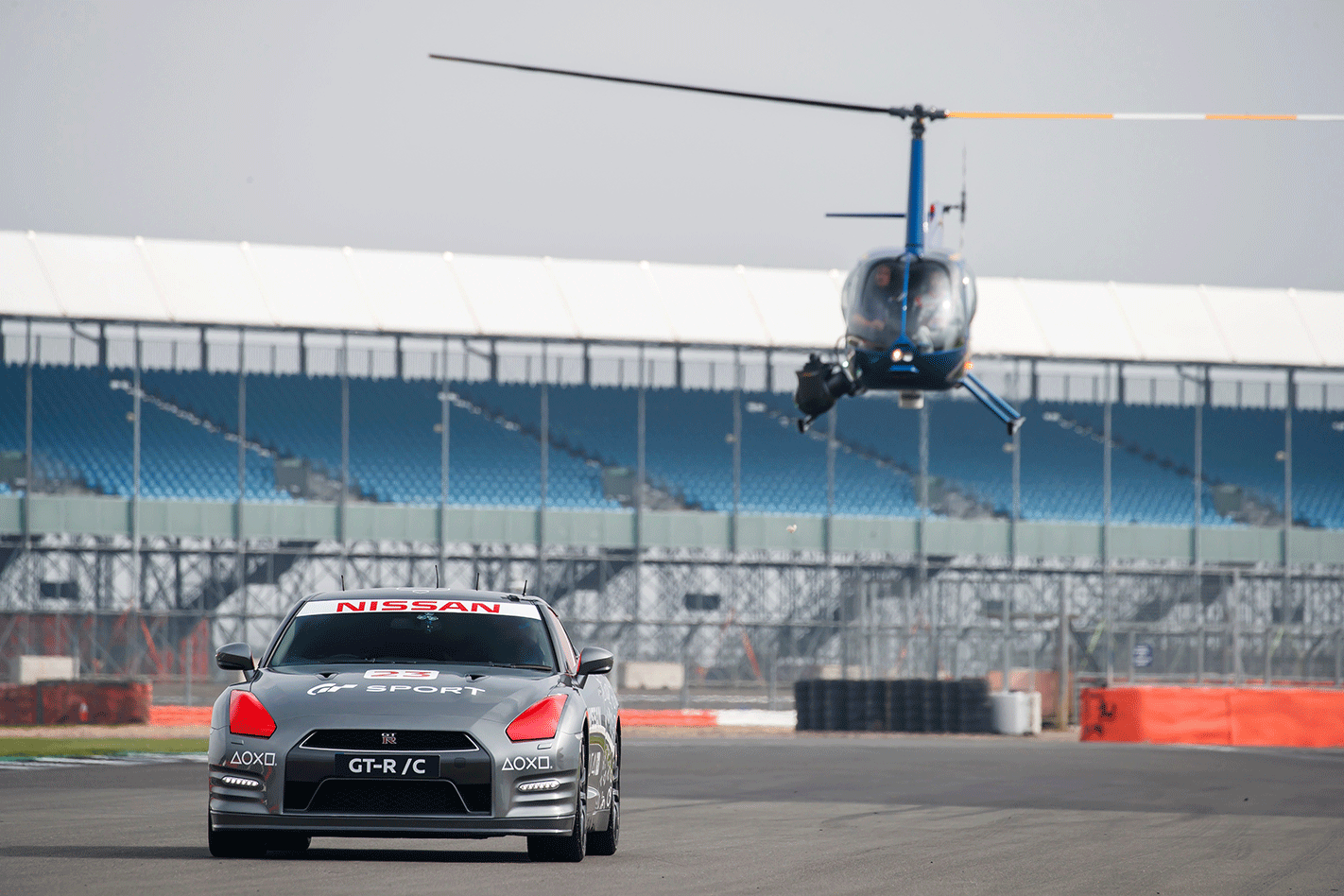
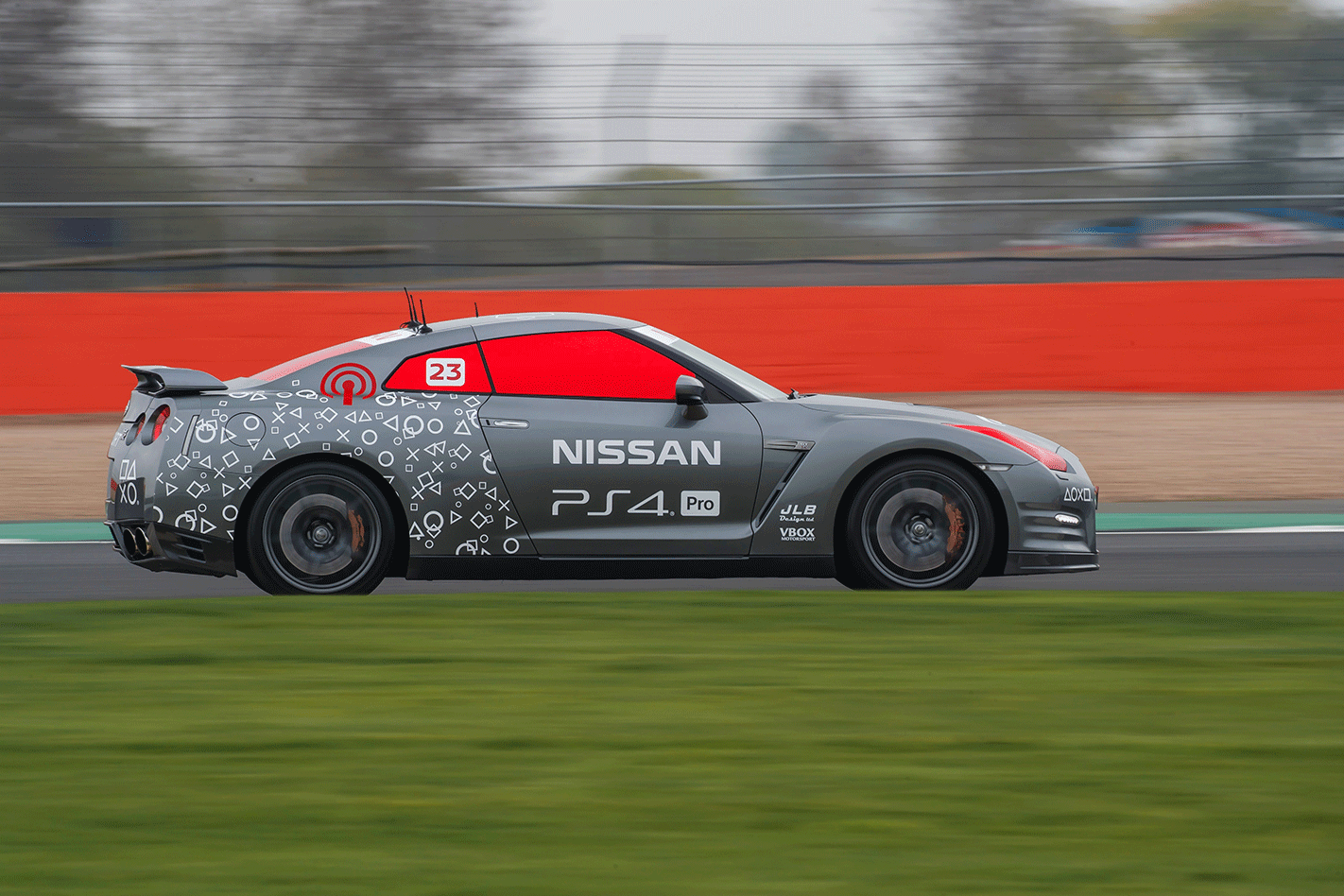
NISMO LMP1 driver Jann Mardenborough was handed the controls (in the form of a PS4 DualShock controller) to a Nissan GT-R at the Silverstone National Circuit.
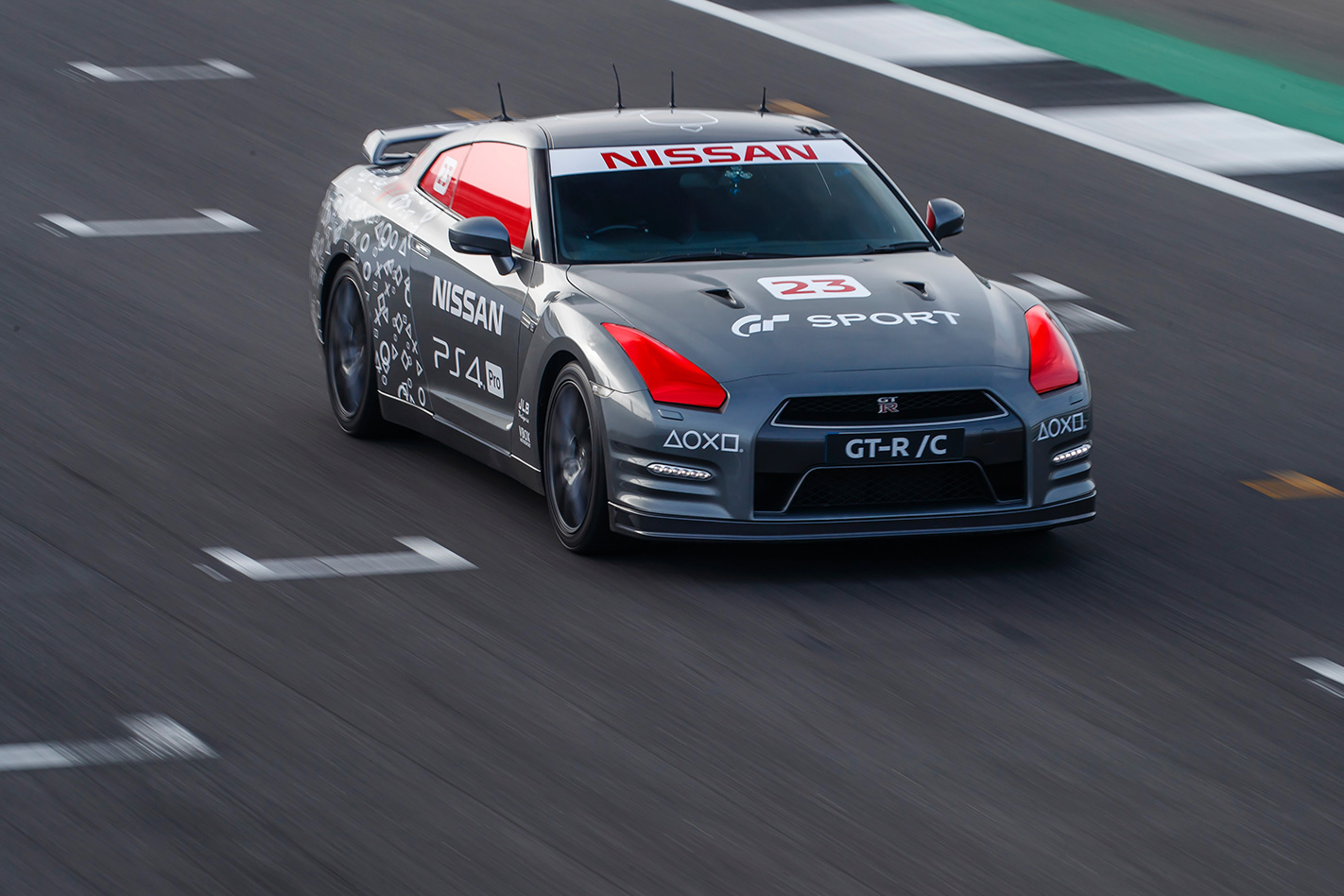
Then, since he wasn’t going to be running laps from inside the car, he jumped into a helicopter so he could keep track of the car as it ran the 2.6km loop.
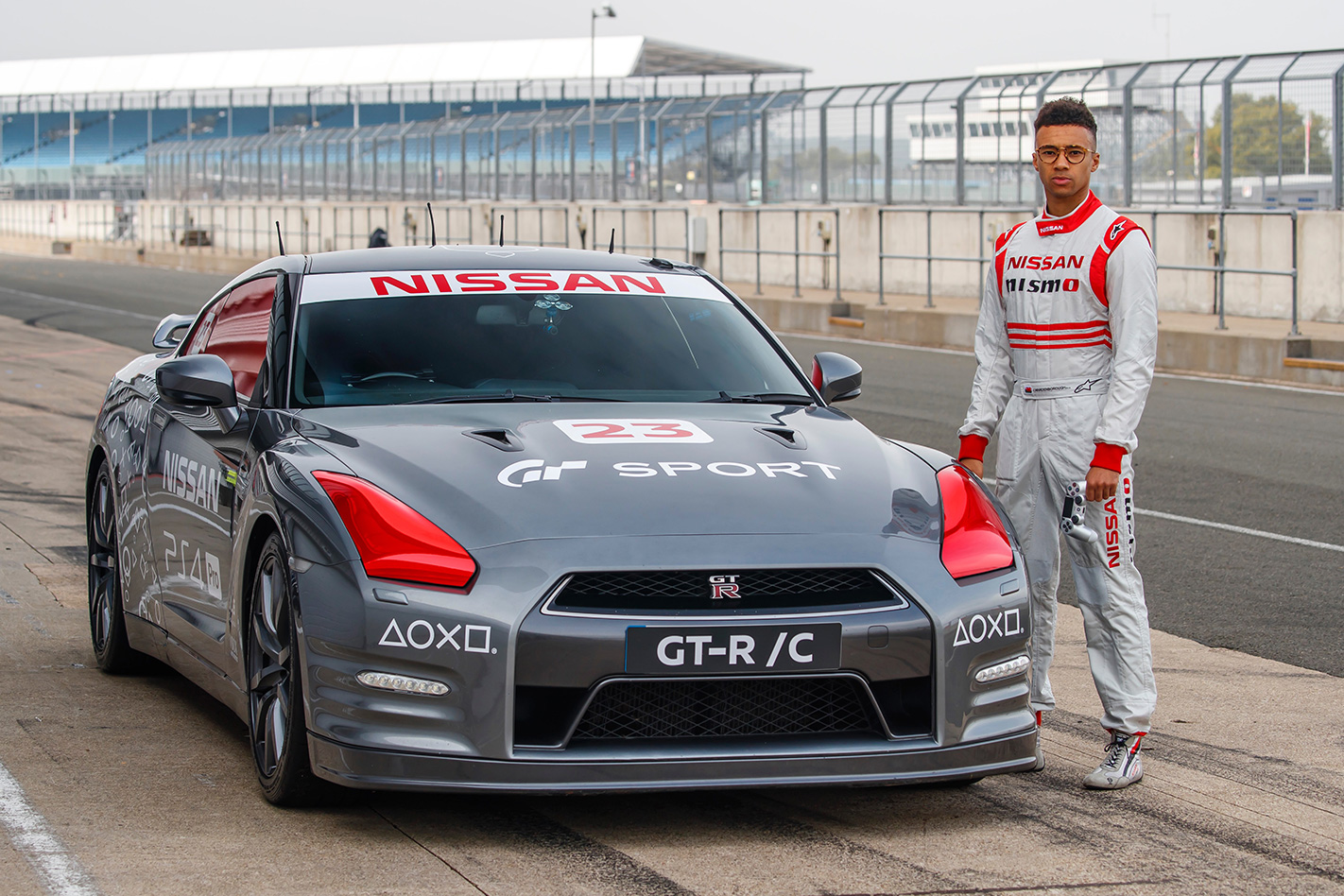
The fastest time Mardenborough achieved around Silverstone’s shorter National Circuit was a 1:17, which wouldn’t be too impressive if he was actually in the car.
For context, the video below is a Caterham running a 1:09.
But considering it’s not easy to make precise movements with a regular remote control car at the best of times, controlling a 357kW, 1740kg+ GT-R from a moving helicopter is impressive.
The car was a standard 2011 R35 GT-R which was modified by JLB Design in the UK and renamed the GT-R/C.
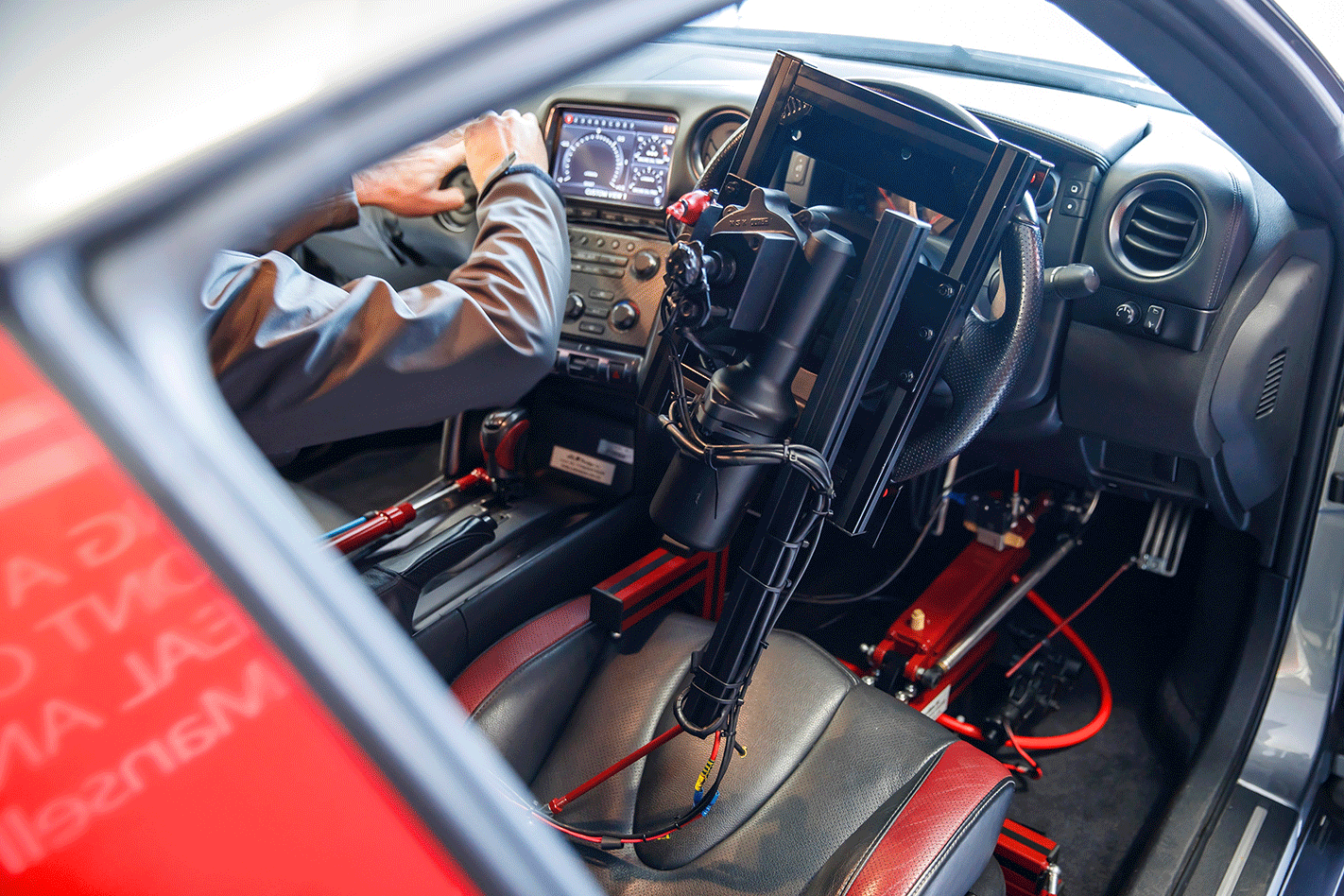
It was fitted with robotic arms to control the steering, transmission, accelerator, and brakes, while six computers in the boot updated the controls up to 100 times a second.
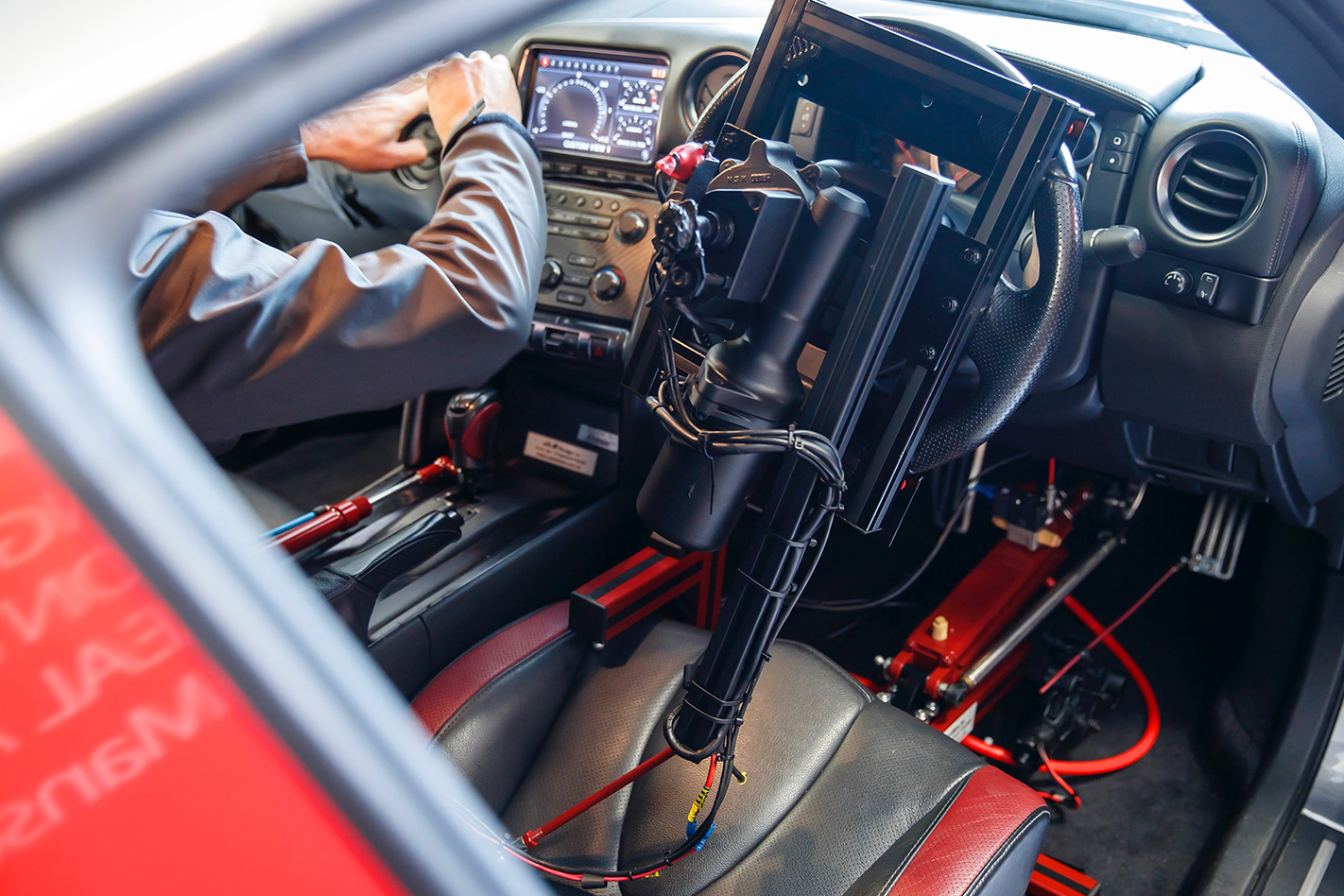
“We had to ensure the robotics would operate effectively during fast acceleration and deceleration as well as high cornering g-forces, deliver realistic and reassuring control of the car at all speeds, and maintain a robust connection between the car and the DualShock 4 over variable distances and with minimal latency in robot response times.
“I’m delighted to say all these challenges were overcome but it’s testament to Jann’s unique skillset that he was able to master the vehicle’s operation in a very short period of time whilst delivering some truly impressive lap times.”
“This was once-in-a-lifetime, truly epic stuff. The GT-R /C has brought my two worlds together – the virtual of gaming and the reality of motorsport – in a way I never thought possible.
“The response from the car when using the controller was far more engaging than I thought it would be. JLB Design has done an incredible job at making everything respond really well.”
