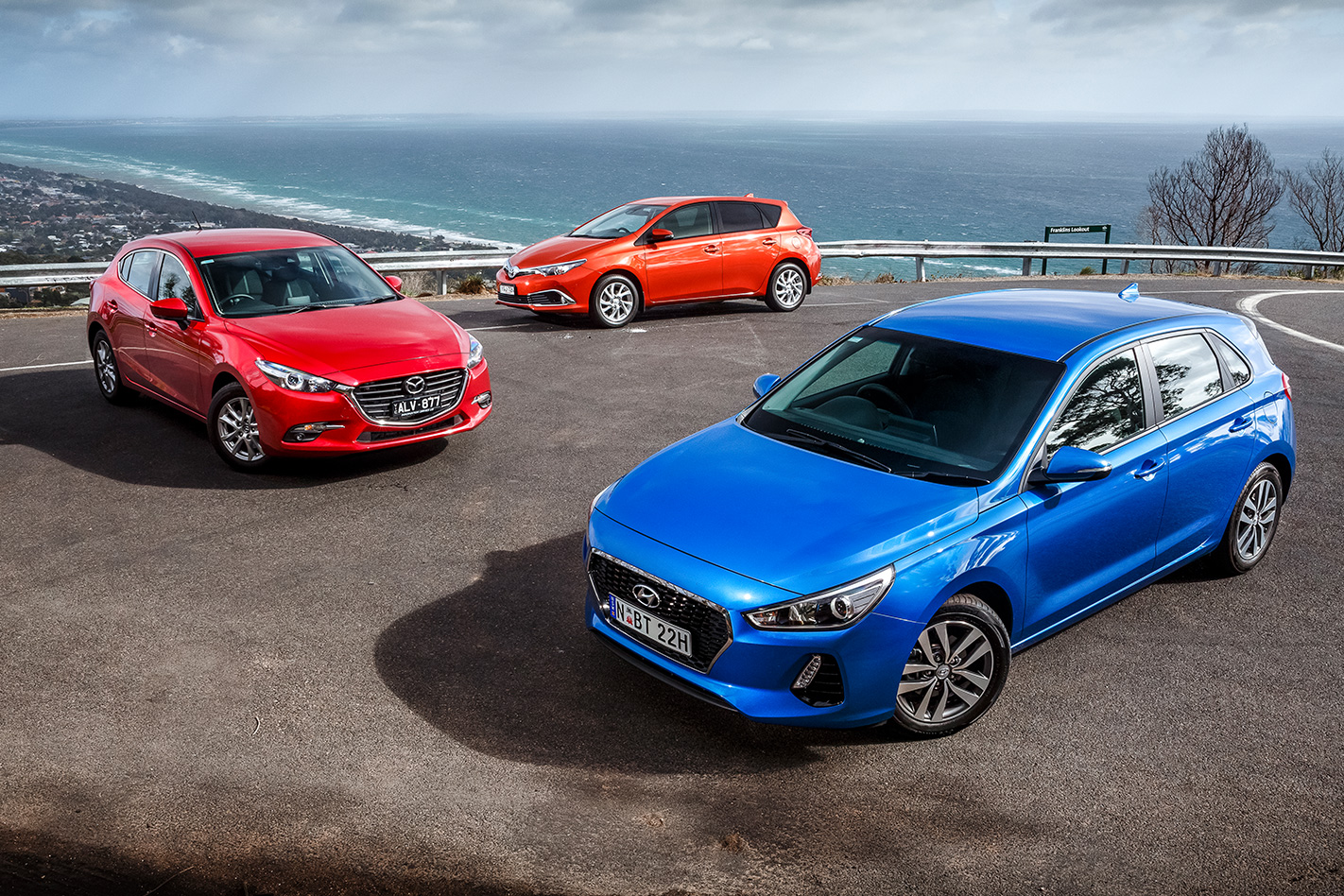
It’s not often that we get to drive a new car two years before it’s launched. It’s rarer still that we get to drive a car and aren’t told what it is even going to be.
Such is the case here, with Mazda referring to the chassis we’re driving as its Next-Generation Platform. The timings are such – and the test mules being bodied as the current Mazda 3s – that we can safely assume that this will be, initially at least, the next-gen 2019 Mazda 3.
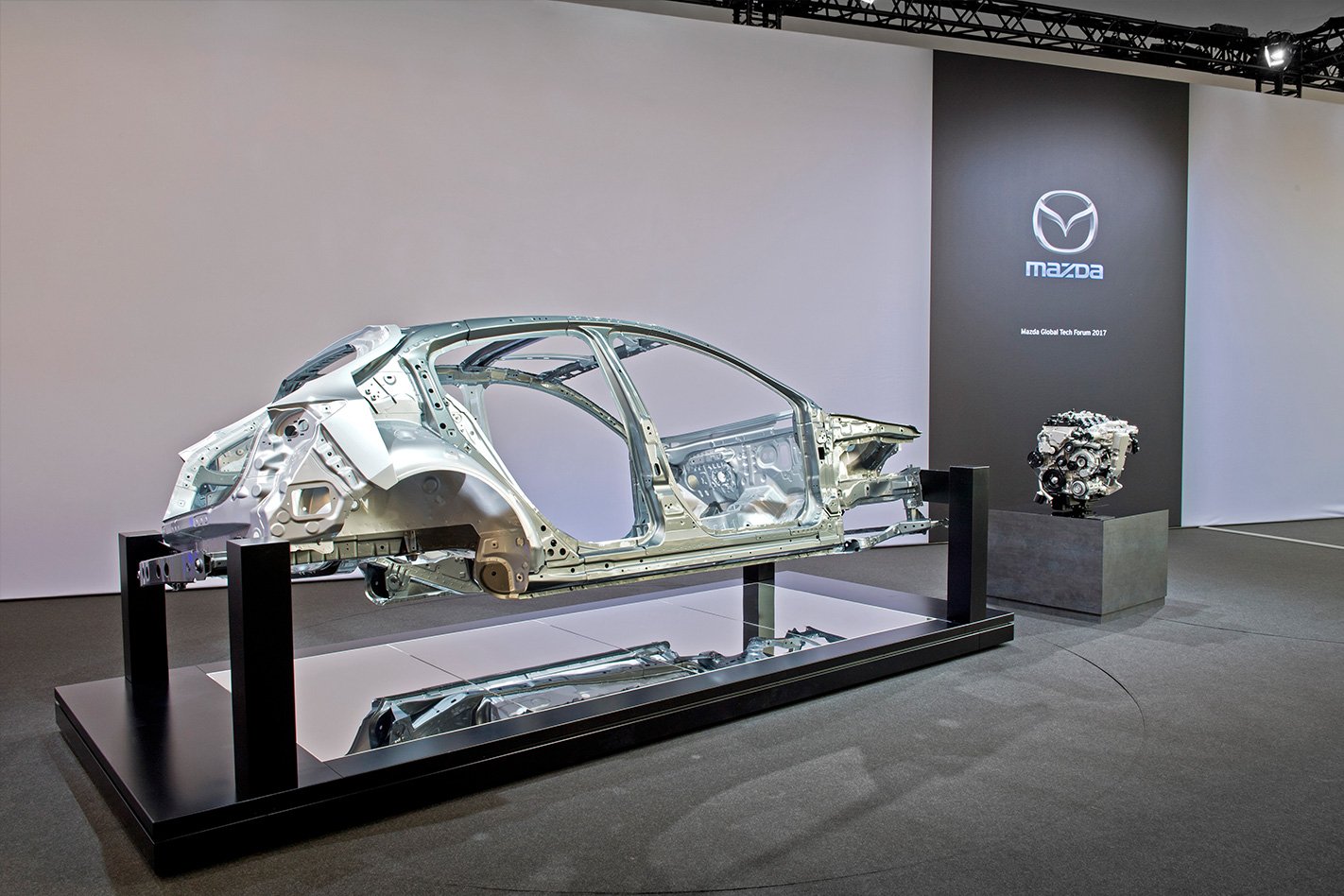
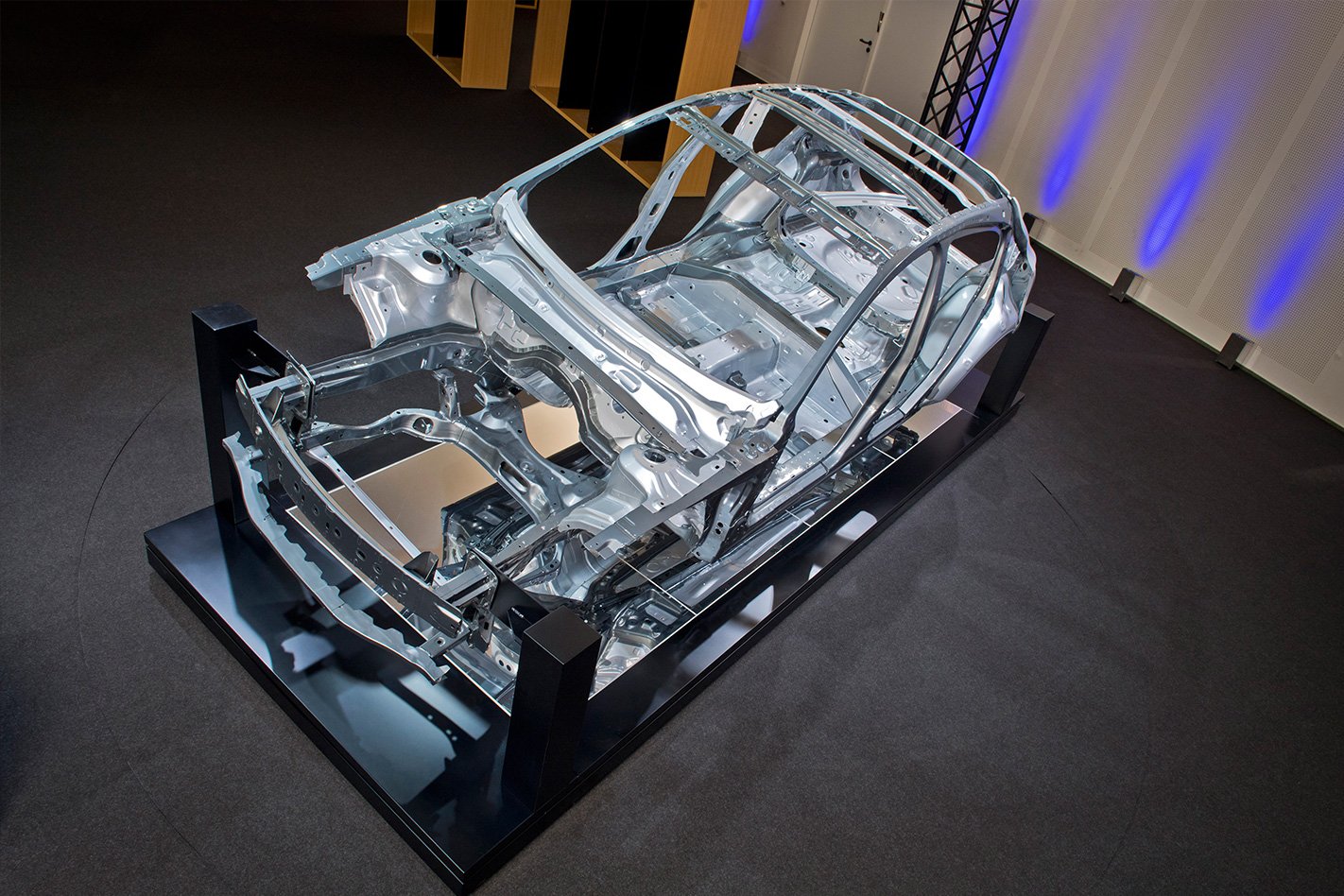
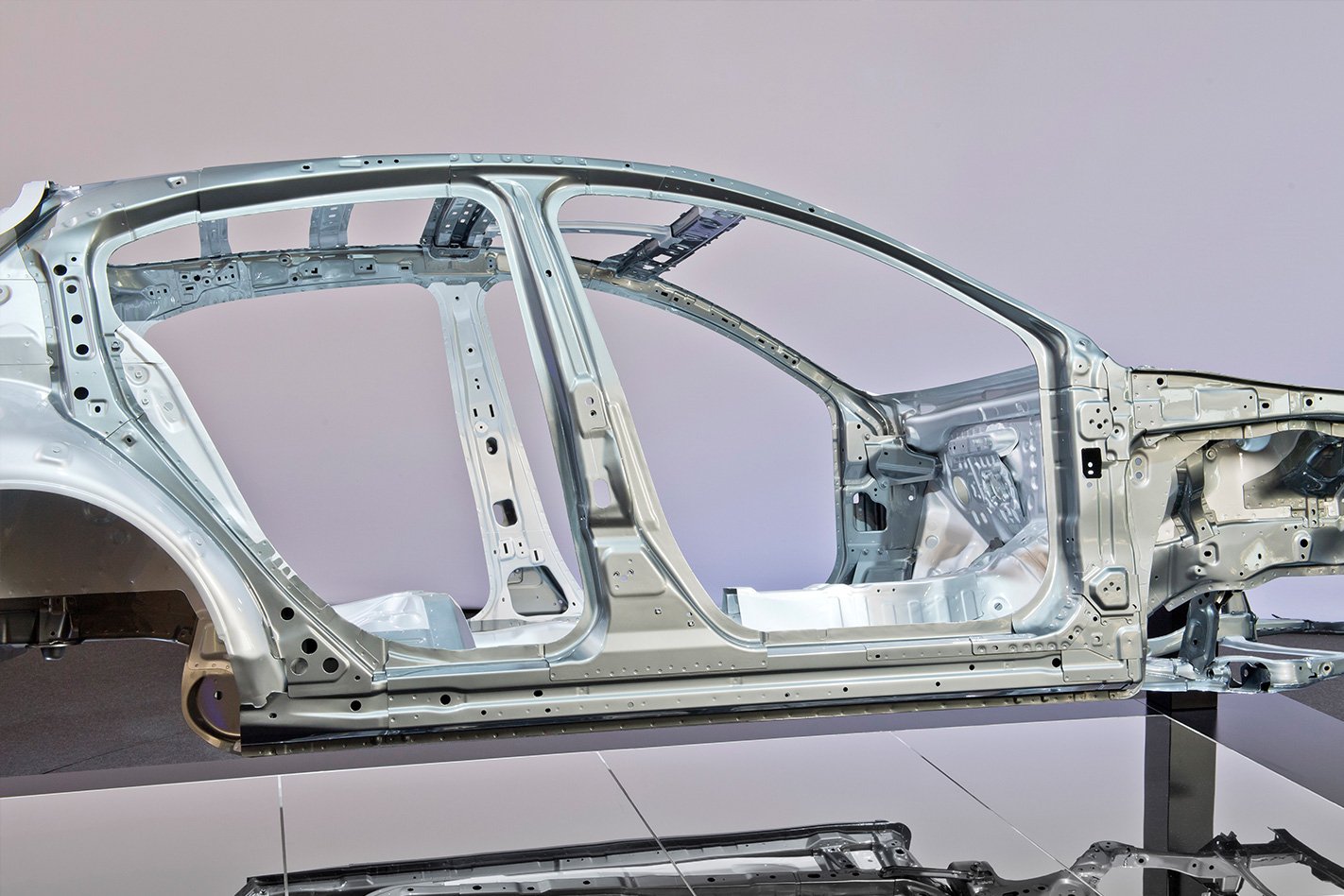
The development of this platform focuses on three key factors which we’ll look at in turn, namely a seat that moves together with the sprung mass of the vehicle, a body that transmits forces with minimal delay, and a chassis that helps mitigate the input of unsprung masses. Still with us? Good. It gets easier.
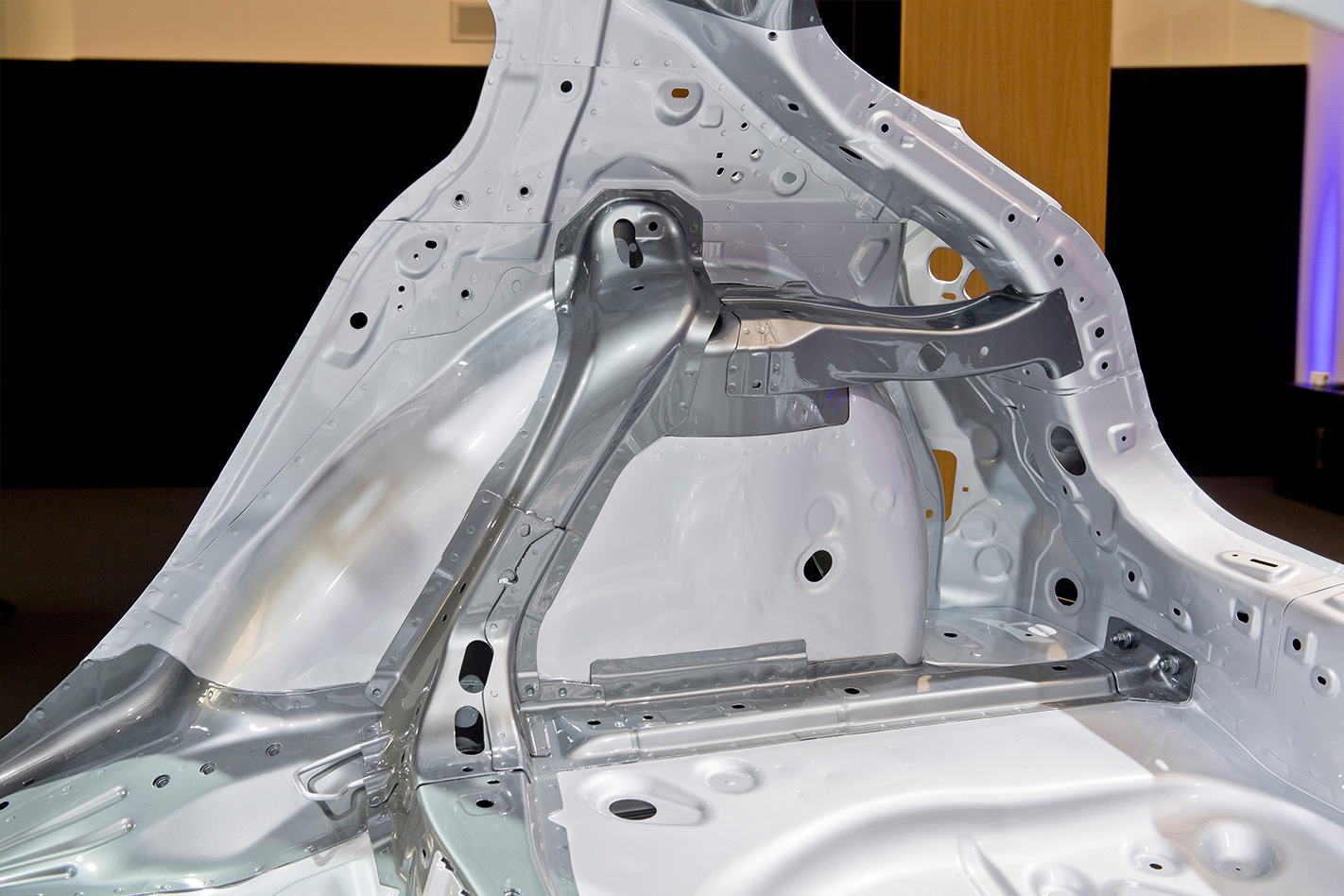
The seat frame is therefore reinforced in these key areas, the result being a reduction of up to 83 percent in lateral pelvic displacement. It still feels comfortable, but you’re aware that something is slightly different. Once you’ve set your driving position, you’re well supported and head toss – that annoying shaking and bobbing of your head that’s so prevalent in poorly-damped cars – is notably absent.
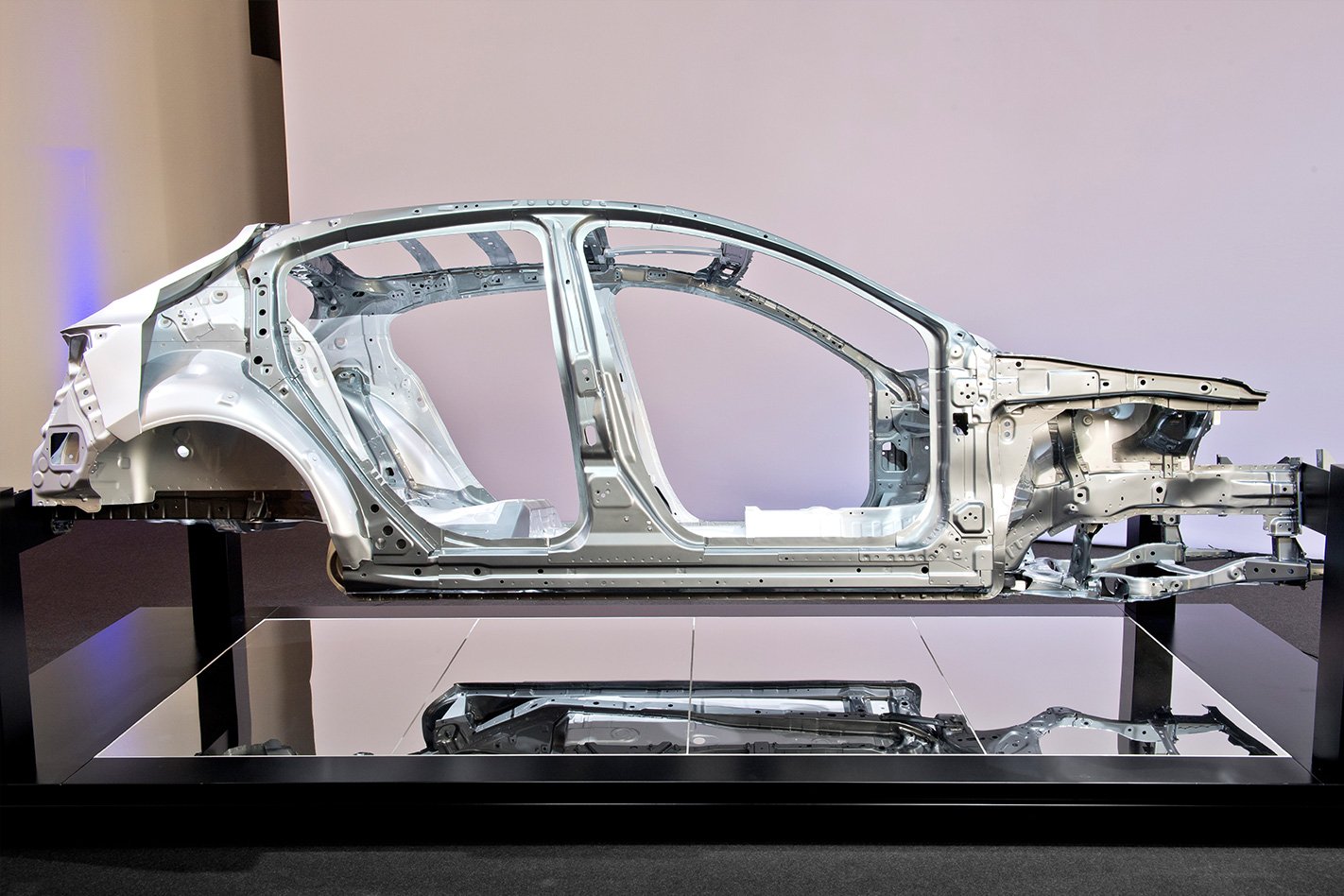
As well as improving body stiffness, it has worked to reduce noise, with 16 vibration-damping elastomer mounts inserted within the body structure that dissipate unwanted vibrations into heat energy. These damping nodes and bonds help reduce the rapidity at which noise signals change, something that our brains process as unpleasant. Slow that transition in the way that sounds change in either amplitude or frequency and the car is perceived as less acoustically harsh.
Sounds great doesn’t it? You’re probably waiting for the ‘but’ and we cannot lie, there’s a big one. Get underneath the car and it’s apparent that Mazda has replaced the previous generation 3’s multi-link rear suspension system with a torsion beam setup. When asked why, Hiroyuki Matsumoto, General Manager of the Vehicle Development Division said, “It is simpler. Simpler to tune.” Such expediency seems a shame. To have gone to the lengths Mazda has in order to build a class-leading chassis only to hobble the thing with a torsion beam rear when the car has built its reputation with a multi-link setup seems almost perverse.
Other aspects draw praise. The electrically-assisted steering feels quiet and accurate without delivering too much in the way of detailed communication about what’s going on at the front contact patch. The brake-by-wire system is also good, although a little calibration work still needs to be done in its pedal modulation. In terms of driver appeal, the chassis feels slightly shy of a current-gen Golf 7.5, rather just a tad better than the latest Hyundai i30, which means it’s very good, if not class leading. It’ll be interesting to see how the platform develops over time, but when paired with the fiendishly clever Skyactiv-X spark-controlled compression ignition petrol engine, the next-generation Mazda 3 might be one heck of an all-rounder.
AUDI has launched the second generation of its largest sun-loving four-seater.
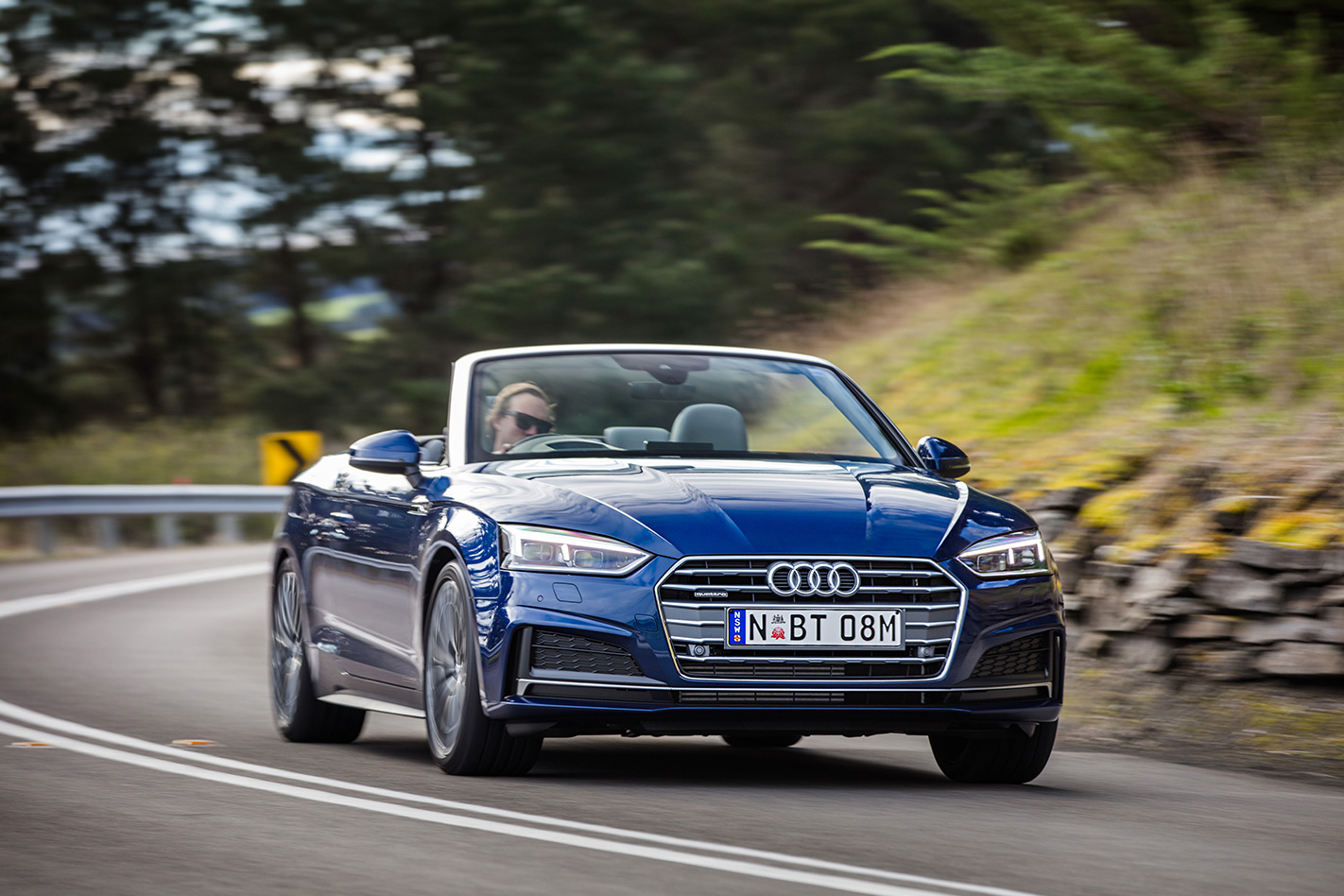
It’s not for everyone, but for those who like the option of transforming the Audi A5 into a sun lounge for the soul in 15sec, the new A5 Cabriolet is a welcome improvement.
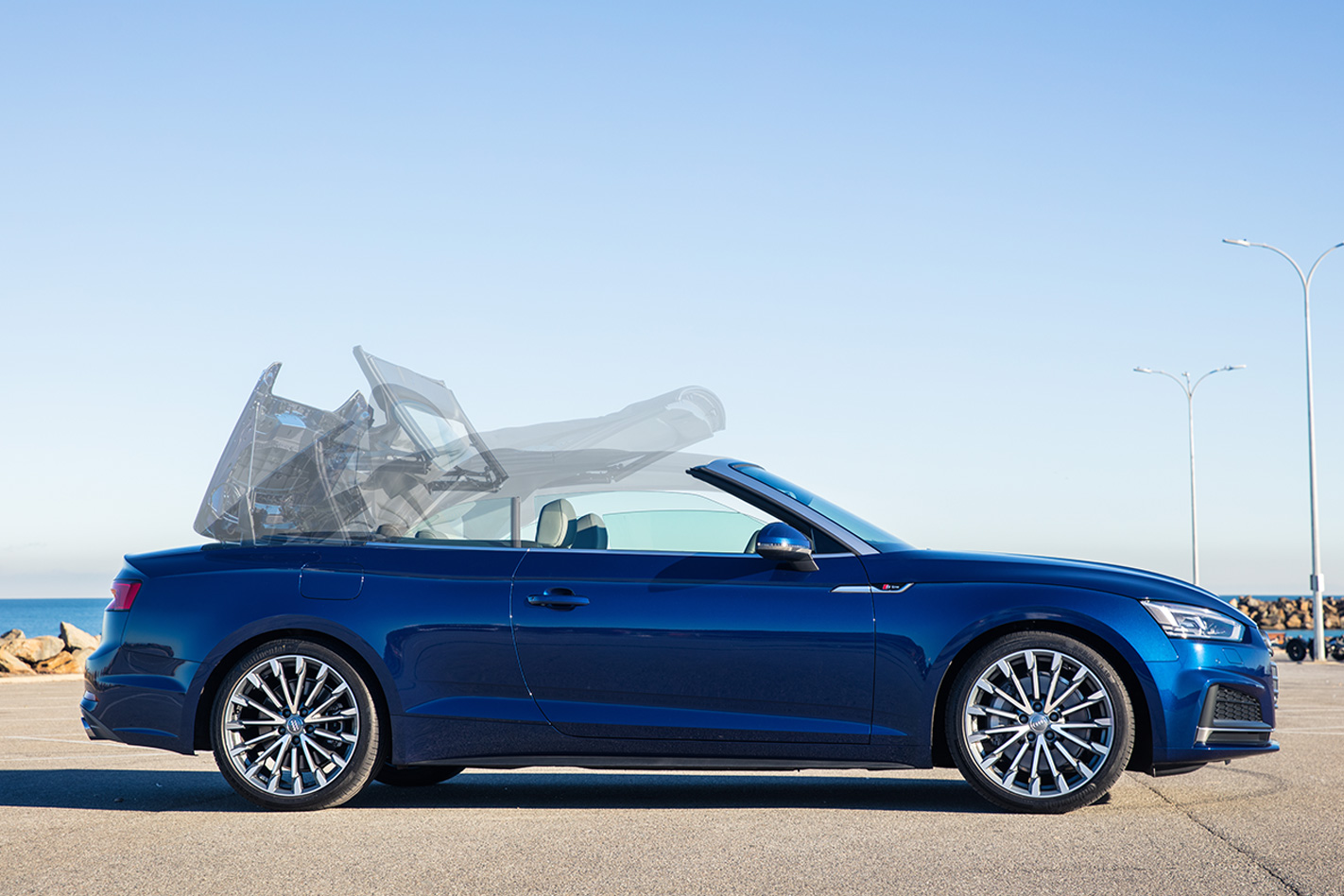
The second generation of Audi’s A5 Cabriolet. This generation drops the diesel engine — it only represented one in every 20 sales anyway — and sticks with two cooking petrol models with either front- or all-wheel-drive options.
WHY WE’RE TESTING IT
The new A5 Cabriolet spins off the same transverse MLB platform that underpins the Audi A4 sedan and wagon, and A5 coupe and Sportback. More high-tensile steel in the right places makes this generation much stiffer than the one it replaces, hinting that the dynamics of the softest A5 in the stable may have improved.
MAIN RIVALS
BMW 430i Cabriolet, Mercedes-Benz C300 Cabriolet
THE WHEELS VERDICT
The open air experience comes much quicker and over a wider range of operating conditions in the new and improved A5. And sometimes you’re better off shopping down the Audi range for the sweetest engine in the line-up.
MINUS: Expensive options; breezy, cramped back seat; corrupted ride whether or not the roof is up or down
THE WHEELS REVIEW
AUDI’S A5 Cabriolet is back, bigger, stronger, lighter, and with just two mainstream models on offer. Priced from $83,400 for the bum-dragging 2.0T – it drives nicely enough, but you’d get used to the front tyres scrabbling for traction – the quattro all-wheel-drive version is priced from $95,000. That’s more expensive than the old car by a couple of thou now that the former entry-level 1.8 TSFI is no more, but still less than what the main rivals will hit you up for. Add the $1846 metallic paint, $2500 S Line styling package, and $5600 Teknik pack (that adds LED headlights, a head-up display, and cracking 20-speaker B&O roof-down doof-doof system), and it starts to get a bit expensive.
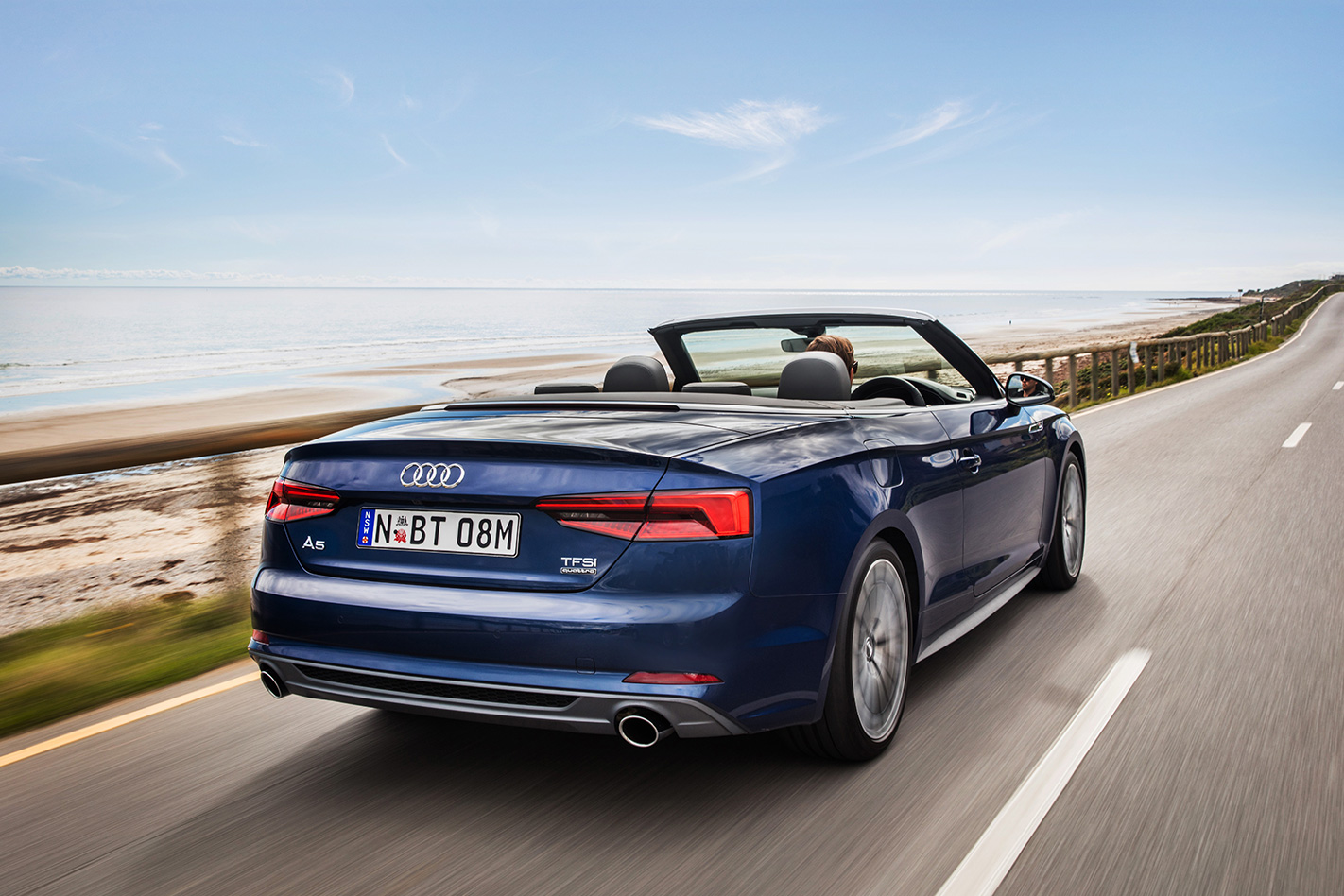
This generation will drop its new five-layer “K-fold” cloth roof in 15 seconds via a long press of the key fob, or a push-once-and-forget console-mounted button – though putting the roof back up requires constant finger pressure. You can also raise or lower it at speeds below 50km/h.
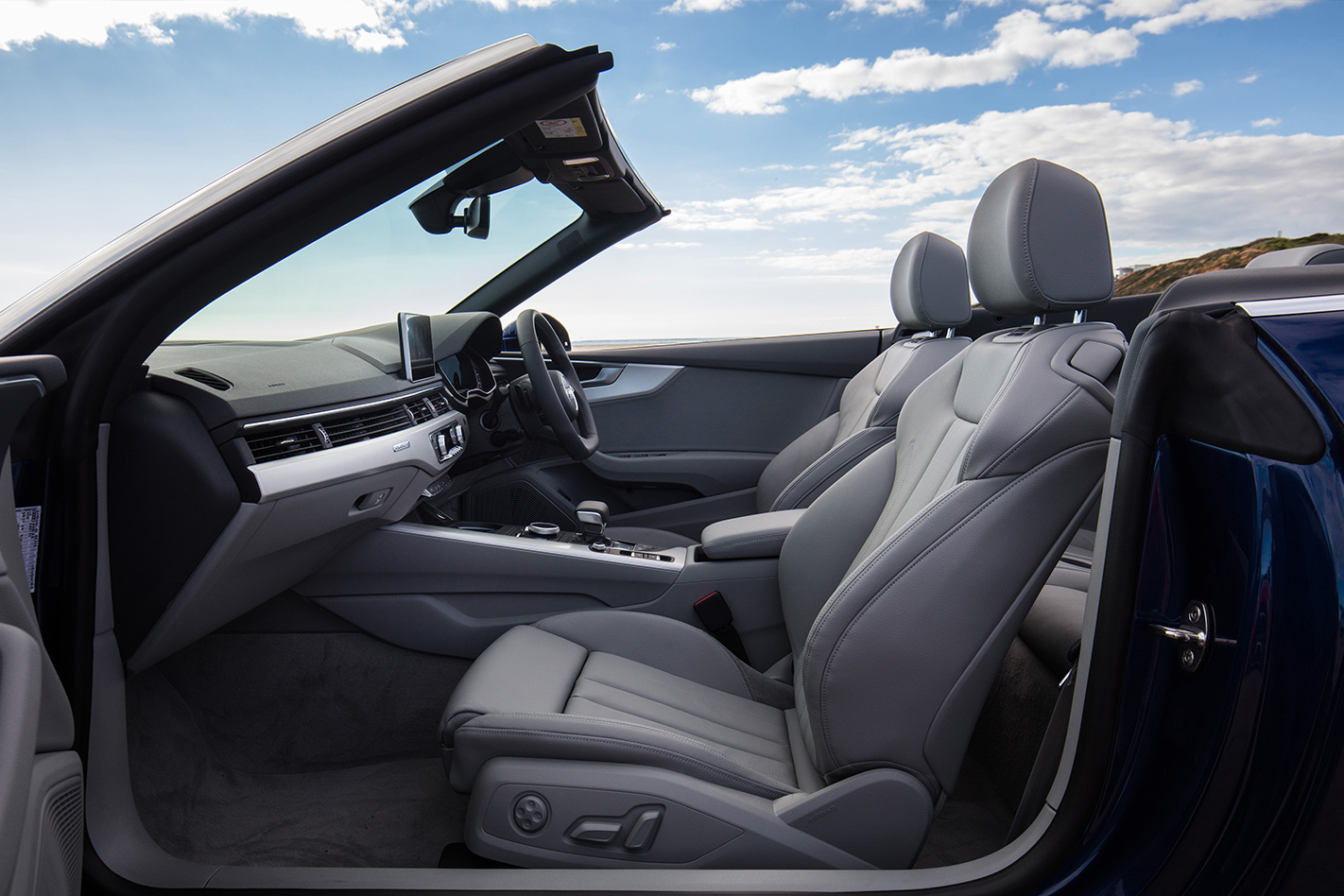
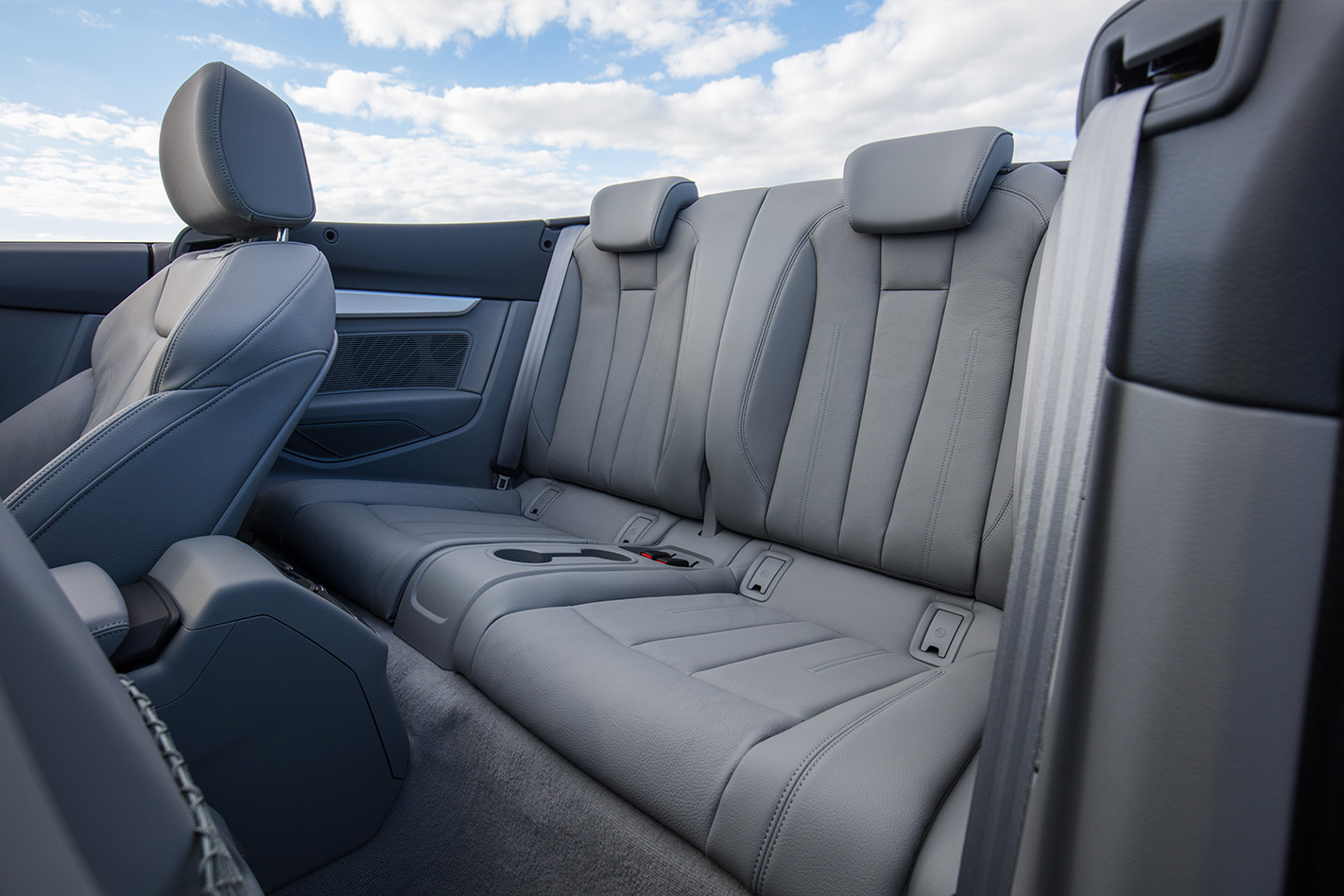
The more heavily sound-insulated cloth roof has a flatter rear window than before, and, in a neat little trick, reading lights for the two cramped back seats (they now have a whole 18mm of extra legroom) are built into the headliner. A pair of protective hoops will explode up from behind the rear headrests in the event that things go a little tits-up. The front seats have a built-in neck warmer that puffs harder when the roof is down, whereas microphones built into three different points in the seatbelt help the Audi deal with roof-down voice quality no matter how short, or tall, the driver happens to be.
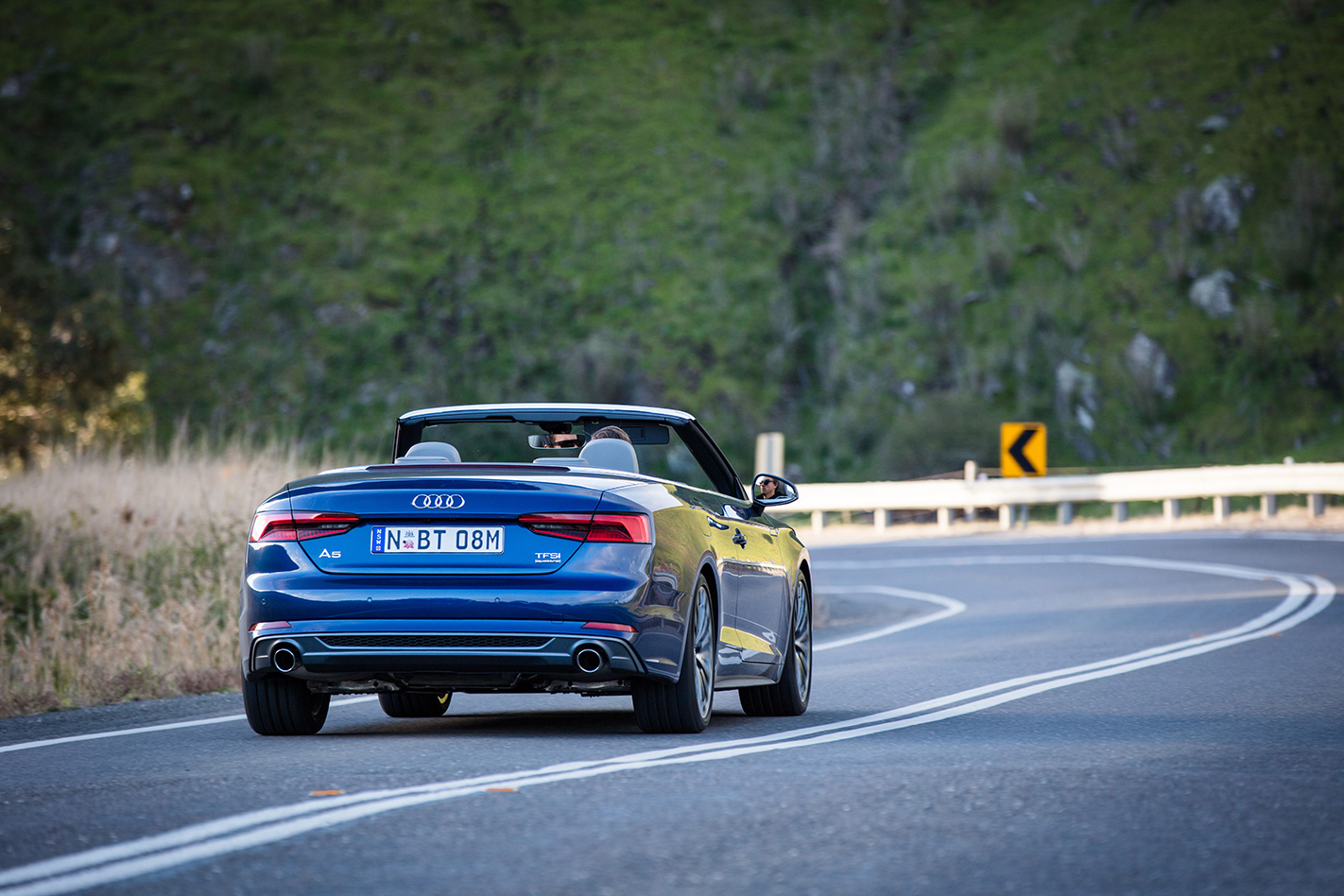
And yes, that’s where things do get jiggy. This version of the A5 uses Audi’s cracking Miller cycle four-pot producing 185kW and 370Nm, but tap it and the A5 cabrio will show you what happens when the rigidity the roof once provided is lost. Yes, it’s good for a cabriolet, but the firmly damped ride on the 19-inch Bridgestone rubber means the arse end will dance around in the rear-vision mirror. And every now and again a deep shudder will pass through the suspension as the front and rear ends lose their connection, roof up or down, and it only becomes more noticeable as the $2210 adaptive dampers firm up.
The previous-generation A5 Cabriolet was a niche seller, and against the more handsome, practical, and dynamically capable A5 coupe and five-door Sportback, it will likely continue to be that way.
Audi elected to not offer a diesel-engined version of the A5 cabriolet in Australia despite having one in the previous generation’s model mix. The car maker claims uptake of the oiler was “very, very low” – snaring only about one in every 20 sales – and the engine was better-suited to markets such as Europe where emissions targets shaped the sales mix. In other words, it wasn’t worth the bother.
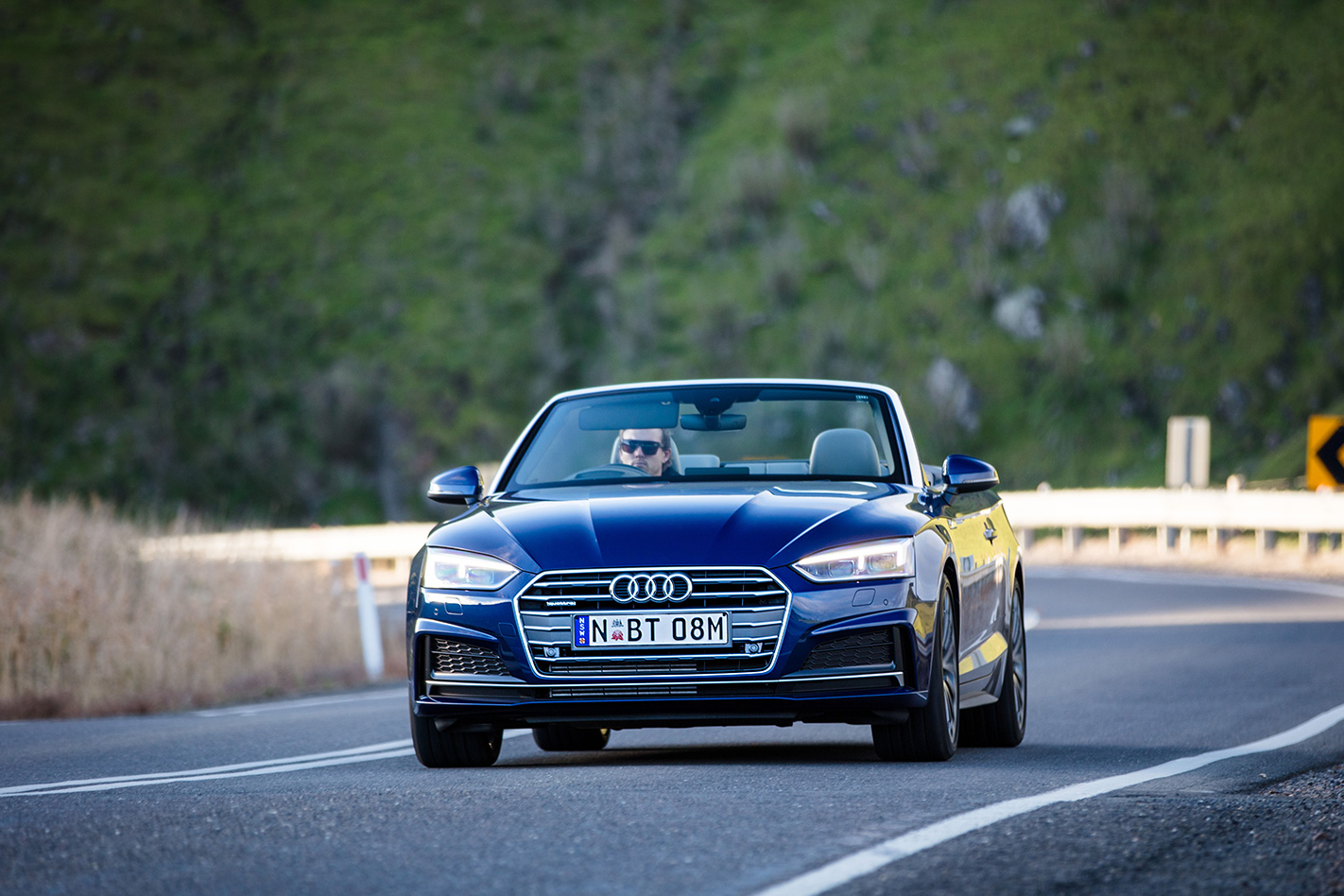
Model: Audi A5 Cabriolet 20 TFSI Quattro Sport Engine: 1984cc 4cyl, dohc, 16v, turbo Power: 185kW @ 5000-6000rpm Torque: 370Nm @ 1600-4500rpm Transmission: 7-speed dual-clutch automatic Weight: 1710kg 0-100km/h: 6.3secs (claimed) Economy: 6.7L/100km Price: $95,000 On sale: Now
WHAT IS IT?
More than just the flagship of Jeep’s Grand Cherokee range, it’s the world’s most powerful SUV, and, if you ignore Tesla’s Model X, the world’s fastest.
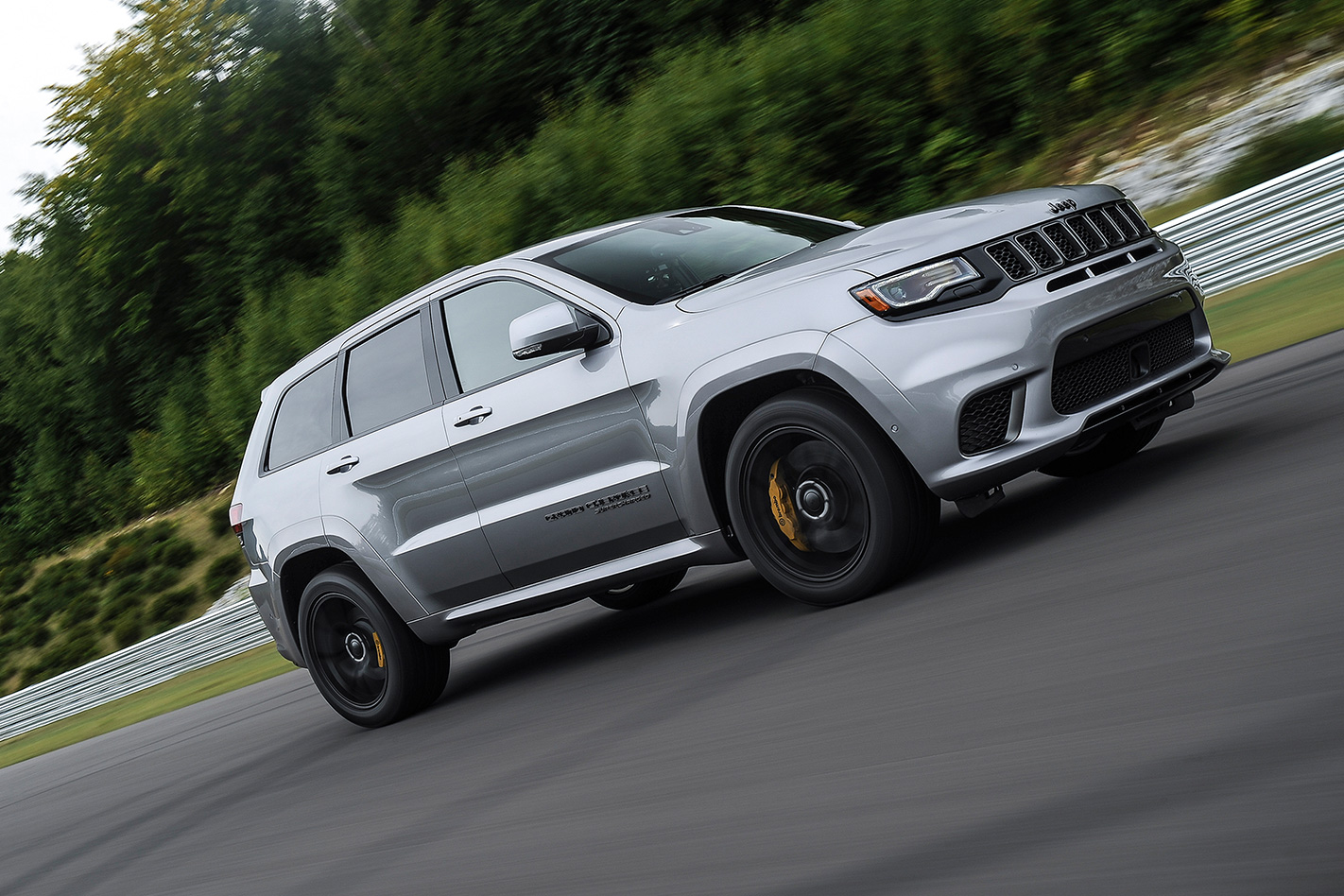
Trackhawk arrives in Australia in December, and Jeep thinks it may snare sales from buyers who would otherwise have bought an HSV GTS or top-spec FPV Falcon. So this was a chance to see if there may be a basis for that thinking. Oh, and who could say no to a seven hundred horsepower anything?
MAIN RIVALS
BMW X5 M, Mercedes-AMG GLE63 S, Porsche Cayenne Turbo
THE WHEELS VERDICT
Outwardly, a 522kW SUV with no real off-road ability would seem slightly nonsensical, but the Grand Cherokee Trackhawk is so well engineered, such a hoot to drive, and demands so few compromises for its outrageous performance, it may just change your mind. Think of it as a supercharged muscle car with an elevated driving position that carries five and their luggage, and it starts to make sense … sort of.
MINUS: Having to be on first-name terms with the bloke at your local servo; lumpy, restless low-speed ride; steering inert at moderate speeds; explaining its purpose to haters.
THE WHEELS REVIEW
IF YOU think the old “where do babies come from?” question brings a challenging conversation to have with a small child, give yourself an uppercut. It’s nothing compared to explaining to a curious kid about the rise of the ultra-performance SUV.
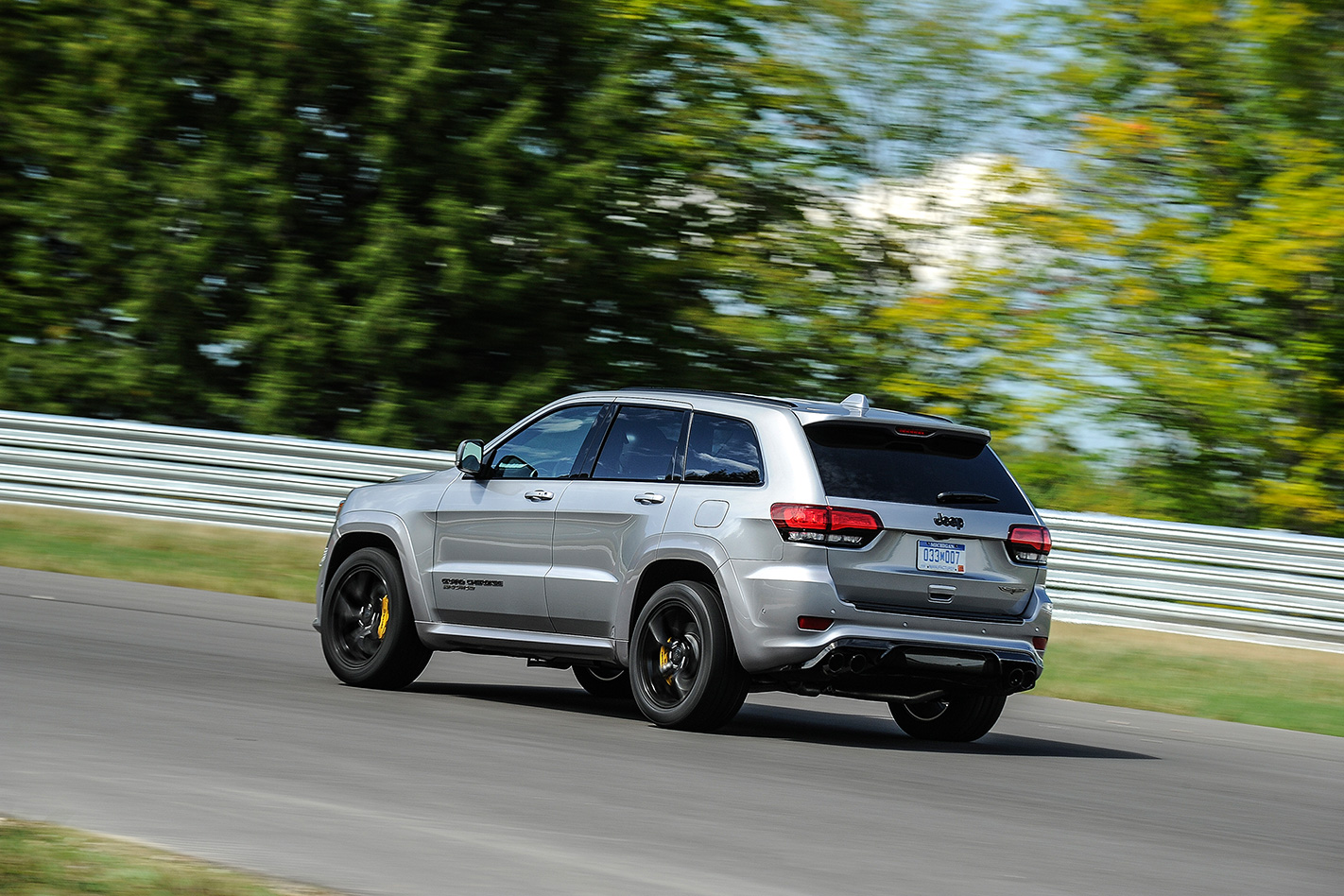
The correct answer is more like: “Silence, my child! Buckle up and prepare to have your tiny soul rearranged as I deploy seven hundred of Satan’s most unhinged horses!”
Okay, you may not speak in a God-like tone when kicking the Jeep Trackhawk where it loves it most, but I promise you will not sound like your regular self. Things change when you drive Jeep’s beast. Your walk becomes a strut. Your head may wobble, just a little.
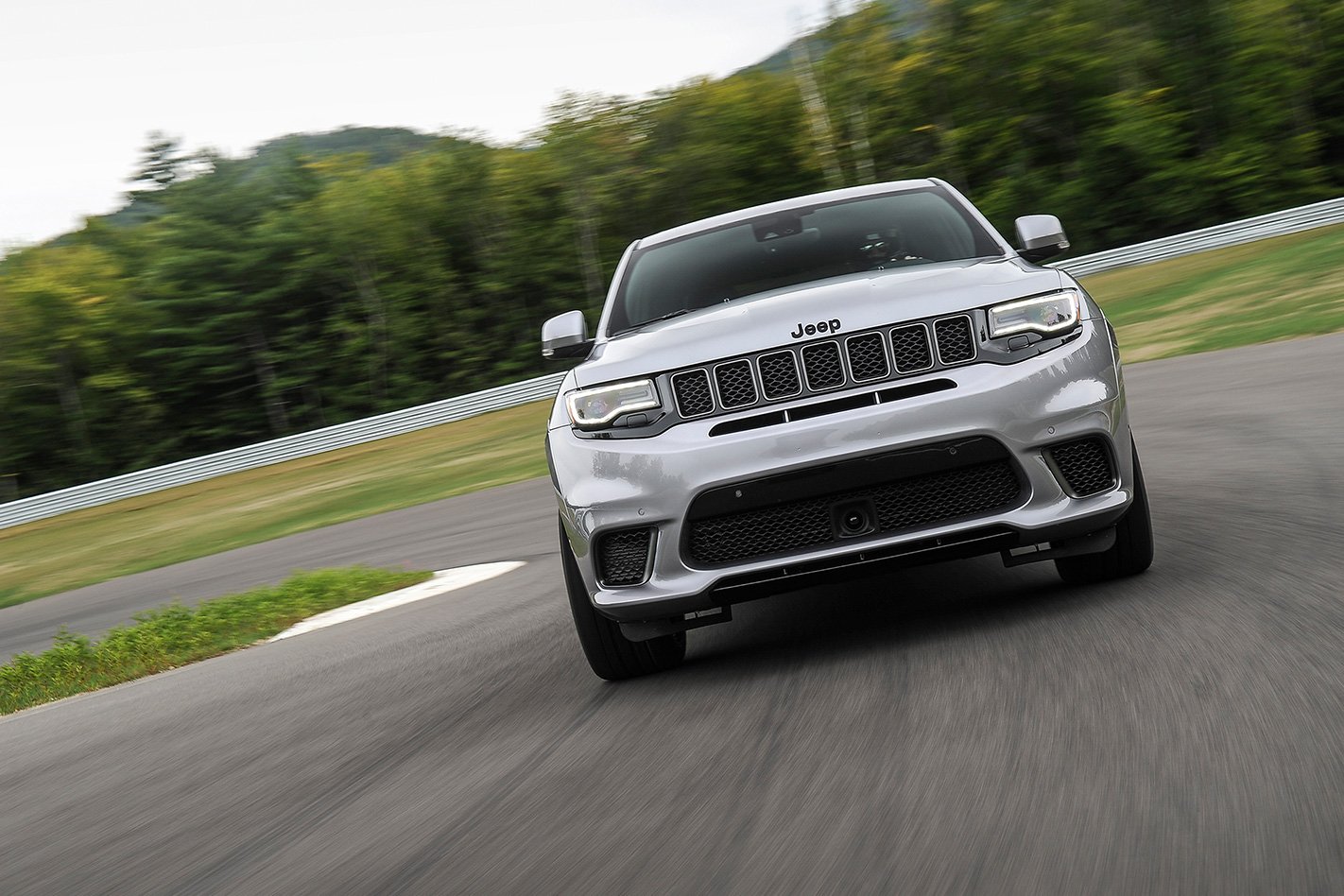
Not surprisingly, the low-speed ride is pretty lumpy, and the steering, no thanks to the massive 295-section front Pirelli P Zeros, is a bit inert at the straight-ahead, without much nuance or detail just off-centre.
The powertrain, though, does docility superbly. There’s a resonator to minimise blower whine on a light throttle, and the exhaust flaps keep things to a peaceful burble as you stroke it around. The shifts from the reworked eight-speed auto in default mode are slurred and unobtrusive, and as we settle into a 120km/h highway lope, the wind noise is well contained, and surprisingly, there’s minimal vocal intrusion from the tyres. This thing does family cruising without an issue.
Then we turn off down a gently twisting backroad, through the woods heading towards New Hampshire. There’s a chance to bury the throttle, and it’s like we’ve driven into a war zone. The blown Hemi erupts straight off the bottom, and cannons up through the rev range with an enraged fury. There may be blower whine, but you’ll struggle to hear it over the thundering exhaust note. It’s even more percussive than the sound from HSV’s LS9; more old-school street muscle than the more strident, motorsport-inspired intensity of the GM engine.
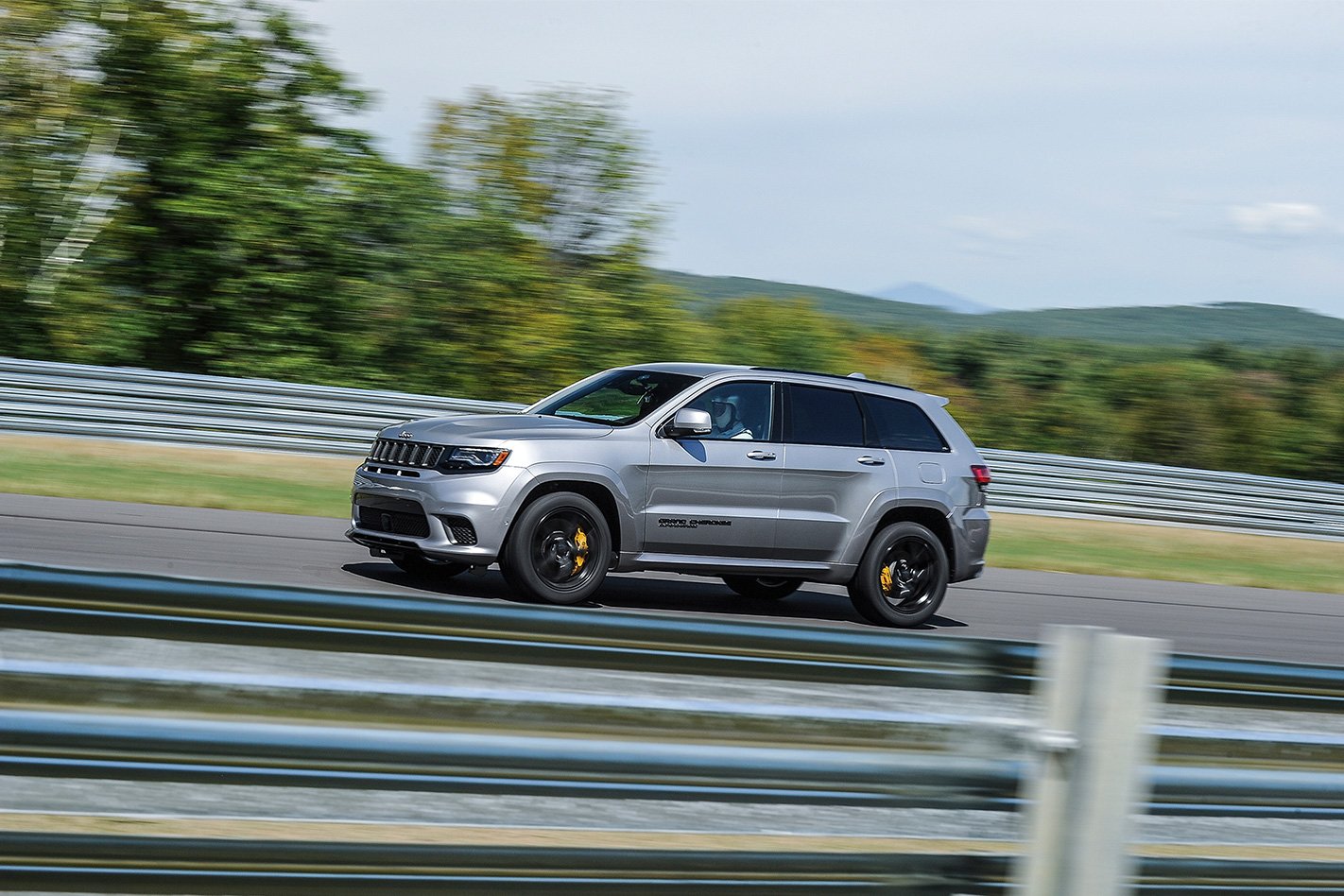
At a brilliant, wildly undulating private racetrack in New Hampshire, the Trackhawk is a hoot for the handful of laps it will cop before the brakes and tyres start to hate you. Set it to Race mode, to almost fully disarm the ESC, get the adjustable Bilstein dampers nipped down hard, and bring in ultra-fast shift mapping that thumps each ratio home with more back-jolting ferocity than anything this side of a Lamborghini Aventador S.
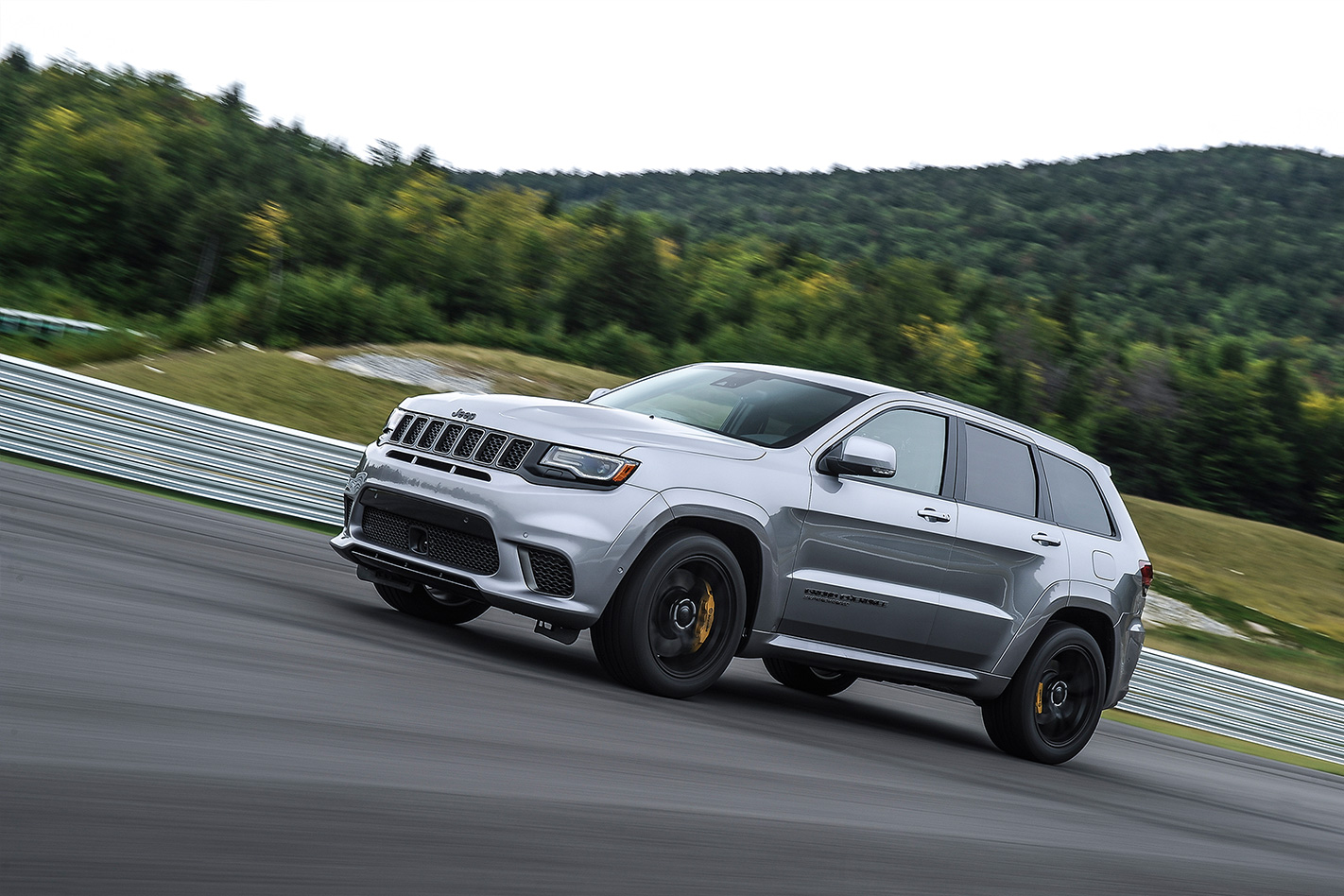
As a novelty act, it’s great fun, like ballroom dancing with a silverback gorilla. But as dad told son earlier, will anyone actually take the Trackhawk to trackdays? But let’s also be clear: the Trackhawk is no over-engined mutant. It’s more like that very loud band room you first set foot in – your first reaction is, “Whoa! Ear bleed!”. But then, after a short acclimatisation, the Trackhawk quickly starts to form a more cohesive whole.

Still, plenty of people won’t understand the Trackhawk. But in a world on the verge of being swamped by eco-weeniness; where we’re being worn down by incessant messages of efficiency and autonomy, surely it’s something to celebrate. It’s like one massive middle-finger to the movement that’s sweeping over us; a defiant, supercharged stand of obstinacy and outrageousness that, oddly, elevates it to a position of relevance. So in creating perhaps the world’s most pointless SUV, Jeep has actually delivered a vehicle we need now more than ever.
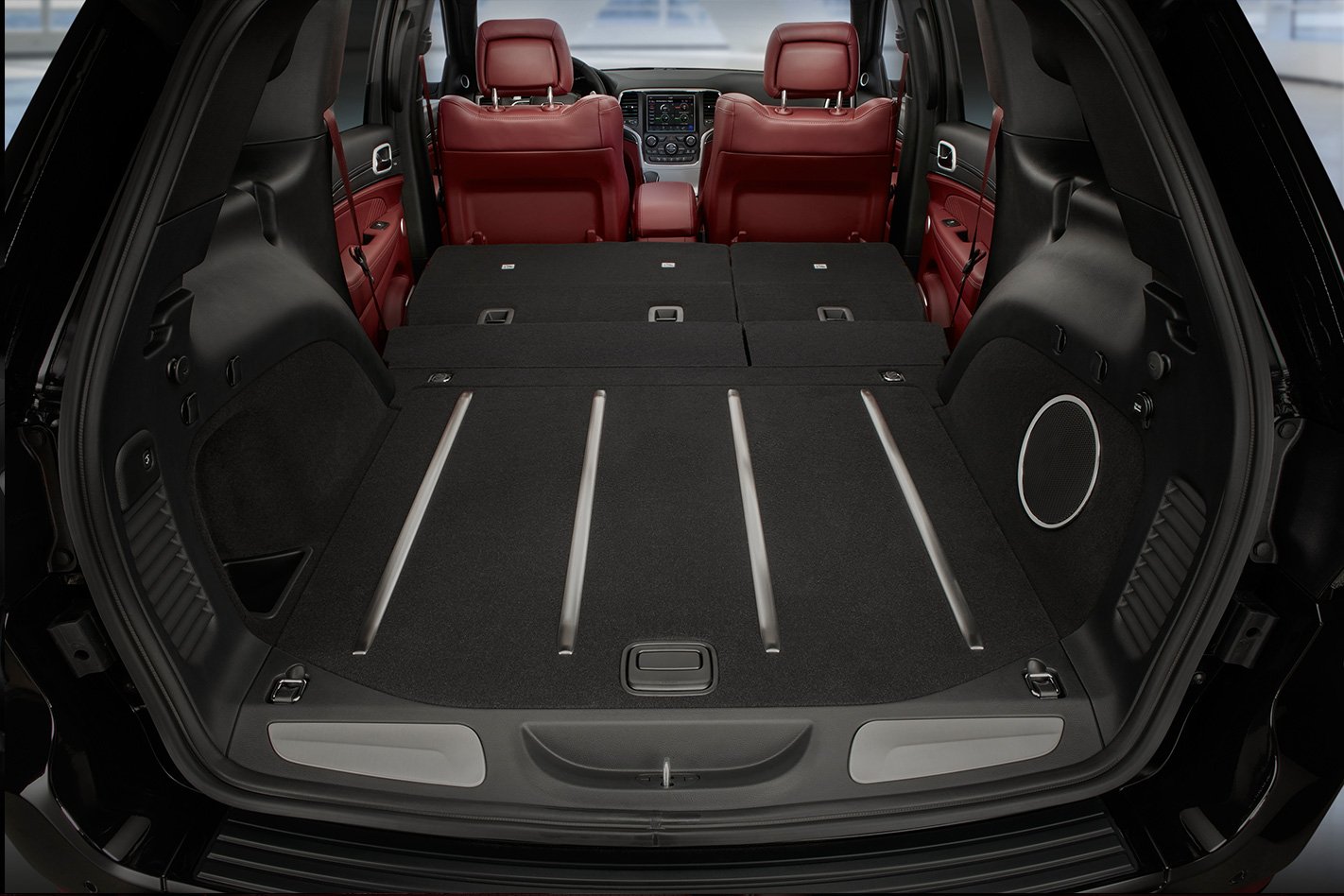
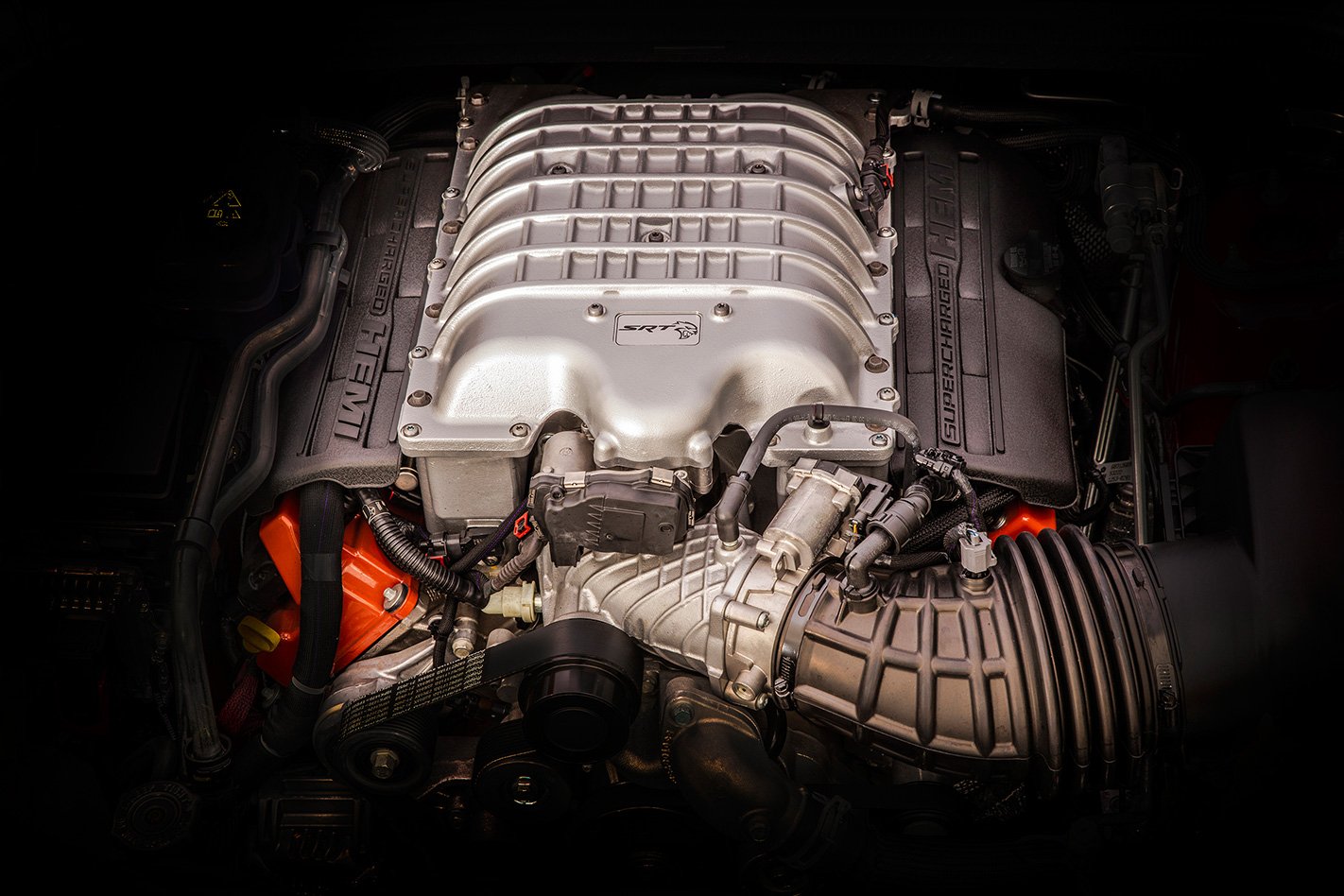
Trackhawk’s engine is lifted from the Dodge Challenger Hellcat, so it drips with motorsport-derived toughness. It runs a forged-steel crankshaft, forged-alloy pistons, powder-forged conrods, and alloy heads fitted with hollow-stem, sodium-cooled exhaust valves. The supercharger runs at a max speed of 14,600rpm to deliver full boost of 11.6psi.
Its twin-screw rotors are coated with a mix of polyamide and other nano resins to enable tighter clearance between the rotors. It’s a beast of a donk; its output comfortably eclipsing the 474kW/815Nm made by the same-size (and also supercharged) GM-sourced LS9 fitted to the GTS-R W1.
SPECS
Model: Jeep Grand Cherokee Trackhawk Engine: 6166cc V8 (90°), ohv, 16v, supercharger Max power: 522kW @ 6000rpm Max torque: 868Nm @ 4800rpm Transmission: 8-speed automatic Weight: 2433kg 0-100km/h: 3.6sec (claimed) Economy: 16.8L/100km (estimated) Price: $140,000 (estimated) On sale: December
Mitsubishi’s continuously evolving ASX has received another upgrade that brings an advance driver assistance systems (ADAS) package, while retaining the sharp pricing that has helped it top the small-SUV sales chart.
The 2018 Mitsubishi ASX also gains front and rear styling tweaks including LED daytime running lights (DRLs), SmartLink infotainment with digital radio and improved interior design, and functionality. Noise Vibration and Harshness (NVH) has also been reduced.
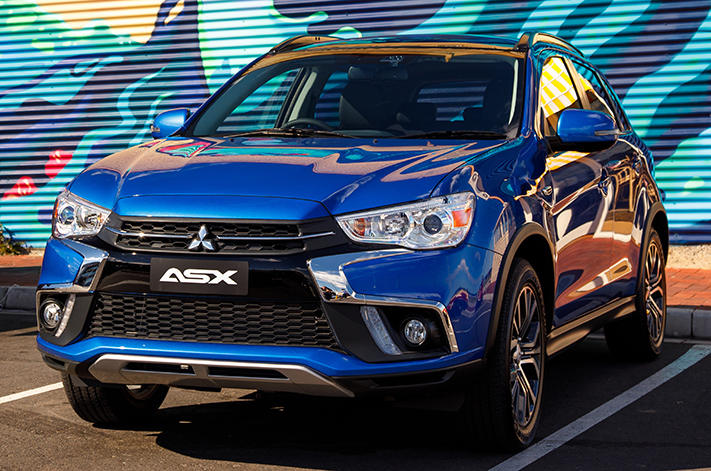
The subtle external changes include a revised front, as featured with the US model update in April that includes diagonal DRLs mounted next to the fog lights.
Changes at the rear include a new bumper and tailgate design.
Its cabin sees changes to the centre console including a new silver finish, soft-touch stitched leather knee rest, new-look automatic gear shifter, two USB ports, a mobile phone tray, and new armrest on top of a larger storage bin.

The ADAS package features Forward Collision Mitigation, Lane Departure Warning, and automatic high beam. ADAS comes as standard in the range-topping XLS variant and is a $1500 option with the petrol-powered LS 2WD auto, which also gains dusk-sensing headlights, automatic windscreen wipers and auto dimming rearview mirror.
Despite the changes, prices for the LS variants will be retained whereas the XLS variants rise by $500.
The 2018 Mitsubishi ASX is now on sale around Australia.
2018 Mitsubishi ASX pricing:
- ASX LS 2.0L petrol 2WD manual – $25,000
- ASX LS 2.0L petrol 2WD auto – $27,000
- ASX LS ADAS 2.0L petrol 2WD auto – $28,500
- ASX LS 2.2L diesel 4WD auto – $32,500
- ASX XLS 2.0L petrol 2WD – $32,000
- ASX XLS 2.2L diesel 4WD – $37,500
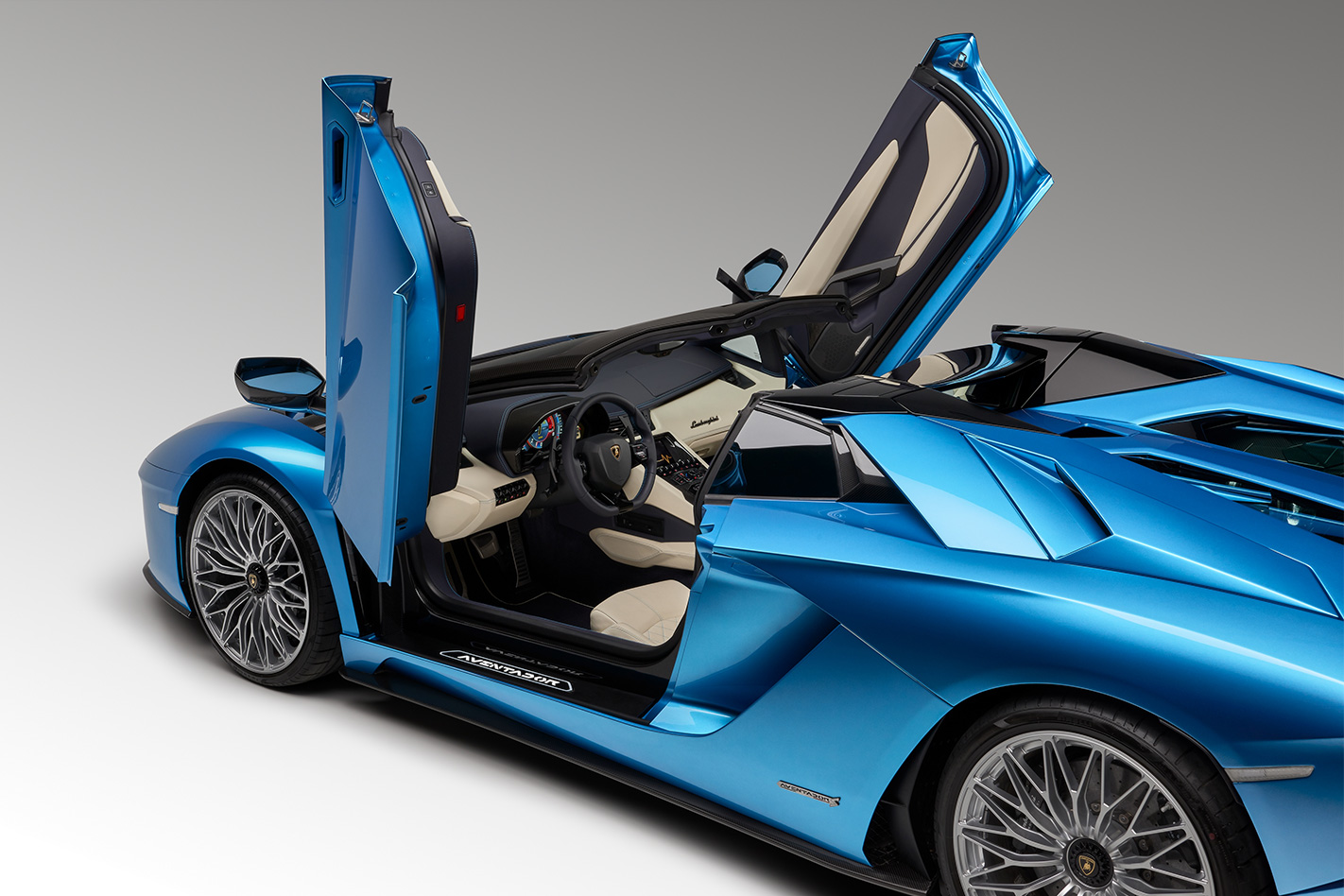
LAMBORGHINI has peeled the lid off the Aventador S to create an open-air Roadster version of its 544kW/690Nm V12 supercar, which will make a public debut at the Frankfurt motor show next week.
Propelled by the same 6.5-litre naturally aspirated V12 as the Aventador S coupe, the Roadster will be the most powerful drop-top available in Oz when it arrives next year.
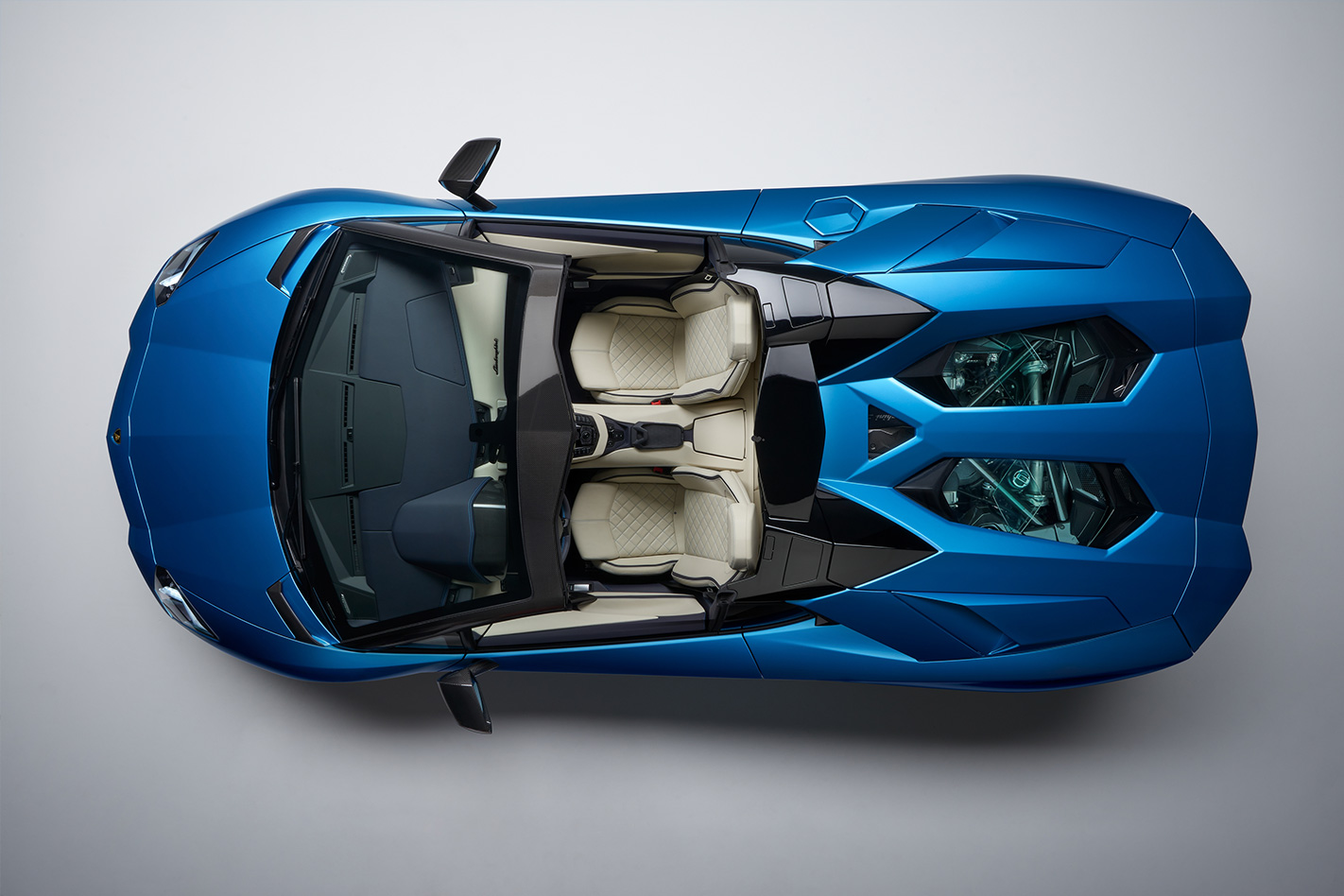
Unique styling changes for the Roadster, other than the targa-style roof opening, are most obvious at the rear, particularly when viewed from above. An ‘engine bridge’ runs over the rear hatch, from the window behind the seats to the back of the engine cover.
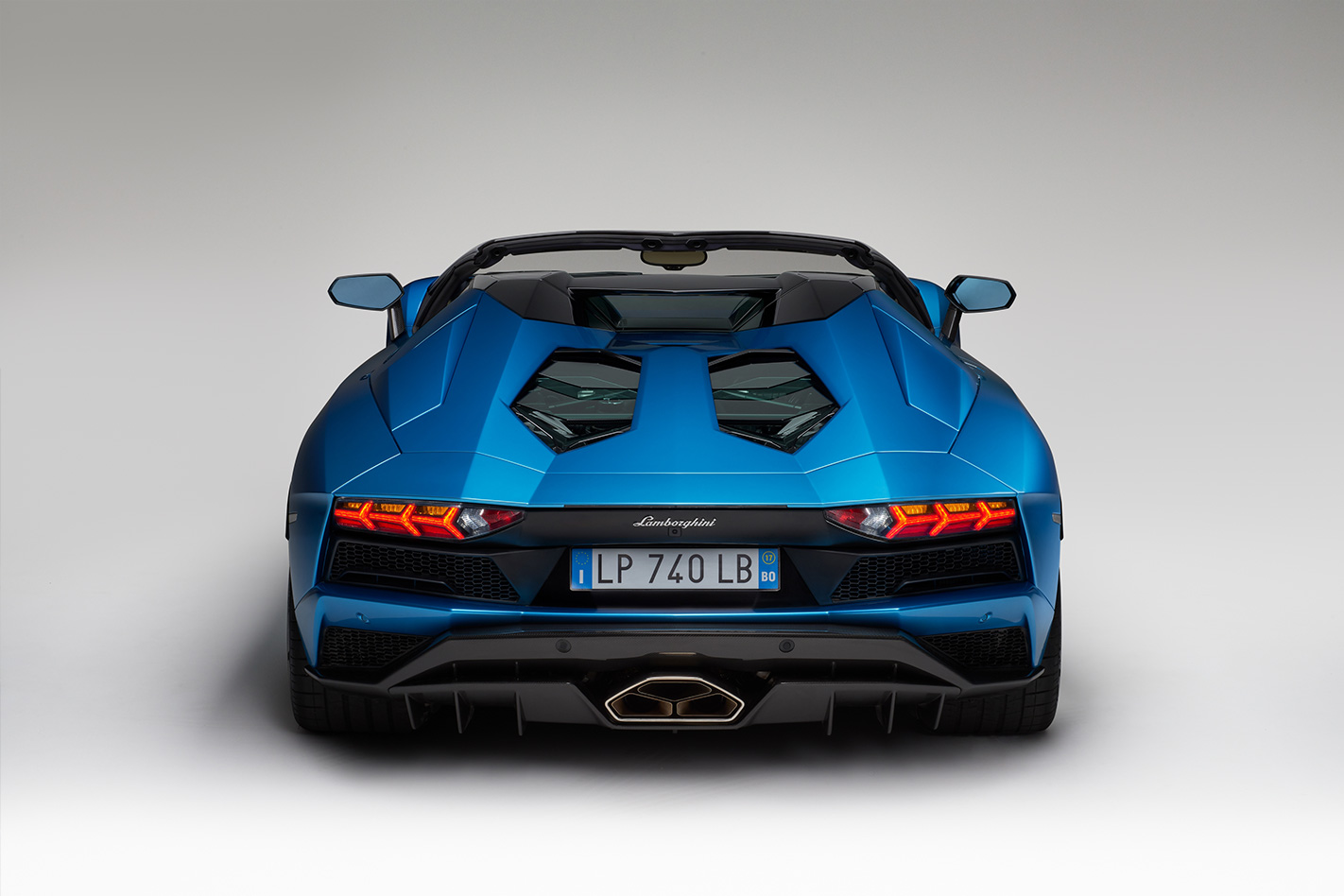
Like the Huracan Spyder, a glass panel behind the two seats can be retracted electrically to allow more of the riotous V12 soundtrack into the cabin. Conversely, with the roof open, raising the glass pane reduces wind buffeting.
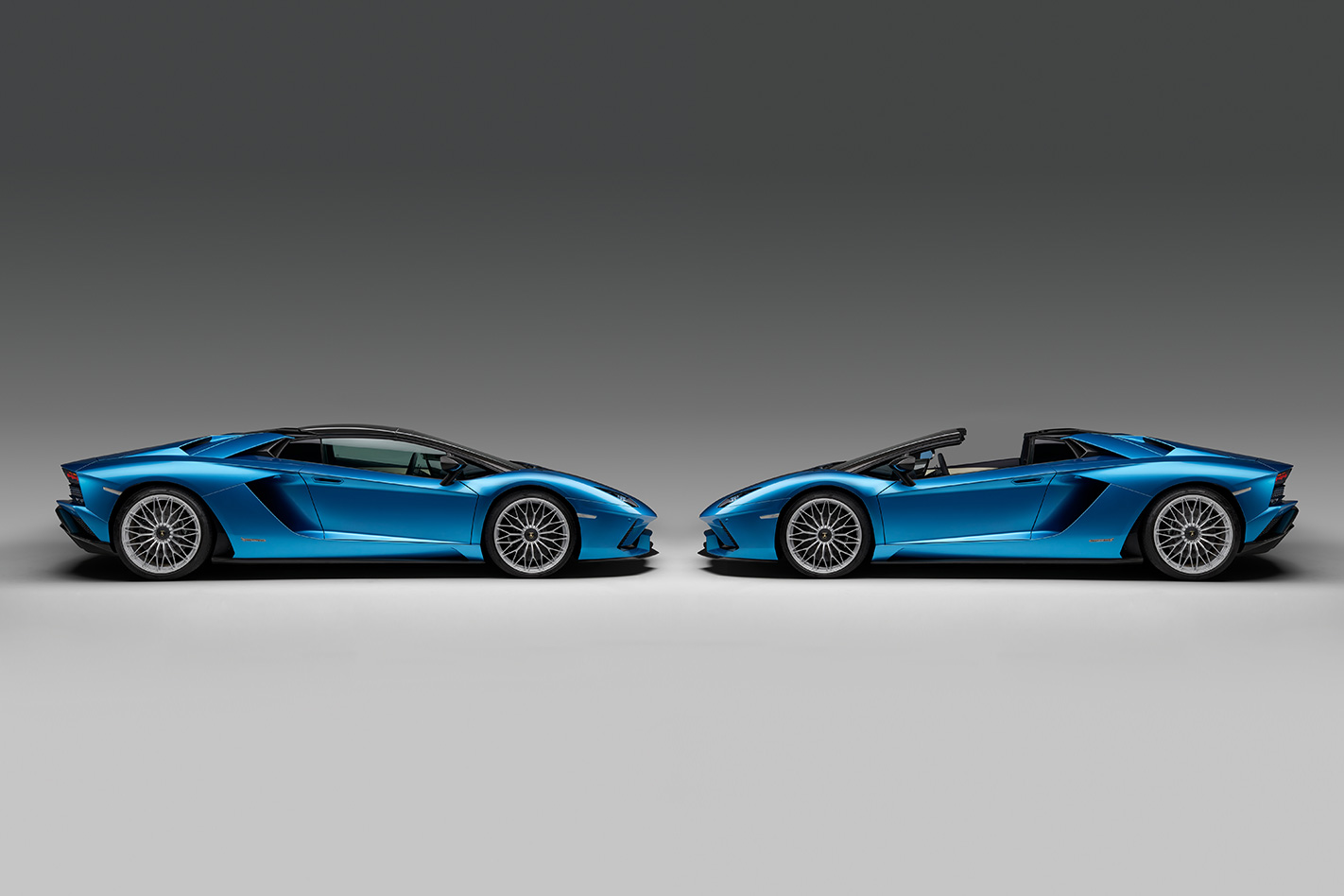
Other advancements that debuted in the acclaimed Aventador S coupe are carried over to the open-top Roadster, including four-wheel steering, adaptive suspension, an active rear wing, recalibrated engine, gearbox, and ESC tunes, and a customisable drive mode called Ego.
Overseas customer deliveries will start from February 2018, with an Aussie arrival expected shortly after that.
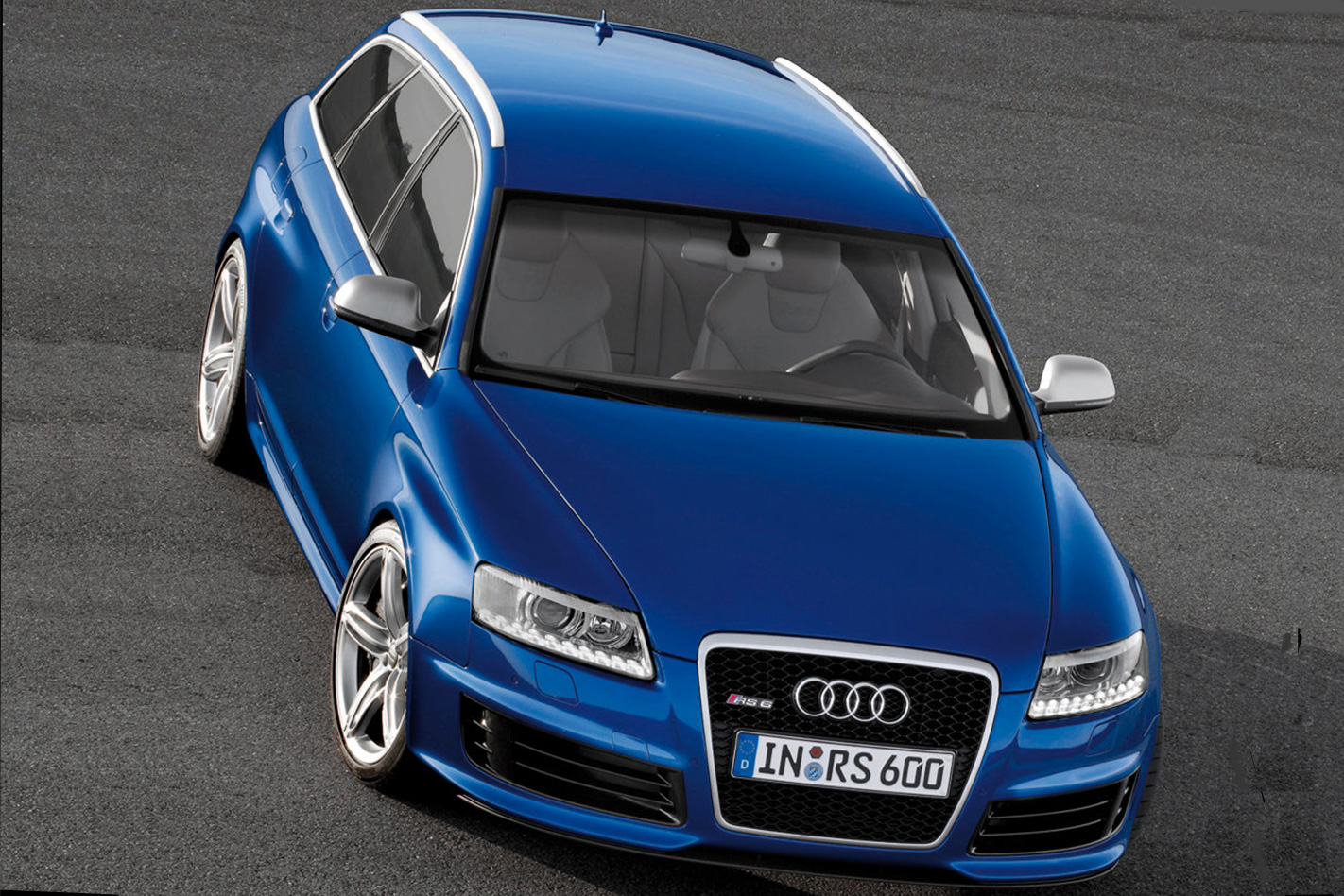
Nobody’s going to sledge you for skimping on the basics if you hand over a set of keys to an all-wheel-drive wagon boasting two turbos bolted onto a neat 10 cylinders, resulting in 426kW of power.
This article was orginally published in March 2008
Even if you’re not impressed by 580 old-school horses (they’re Clydesdales, too, not Shetlands), you should know that the Audi RS6 is no peaky, flash-in-the-pan performance car.
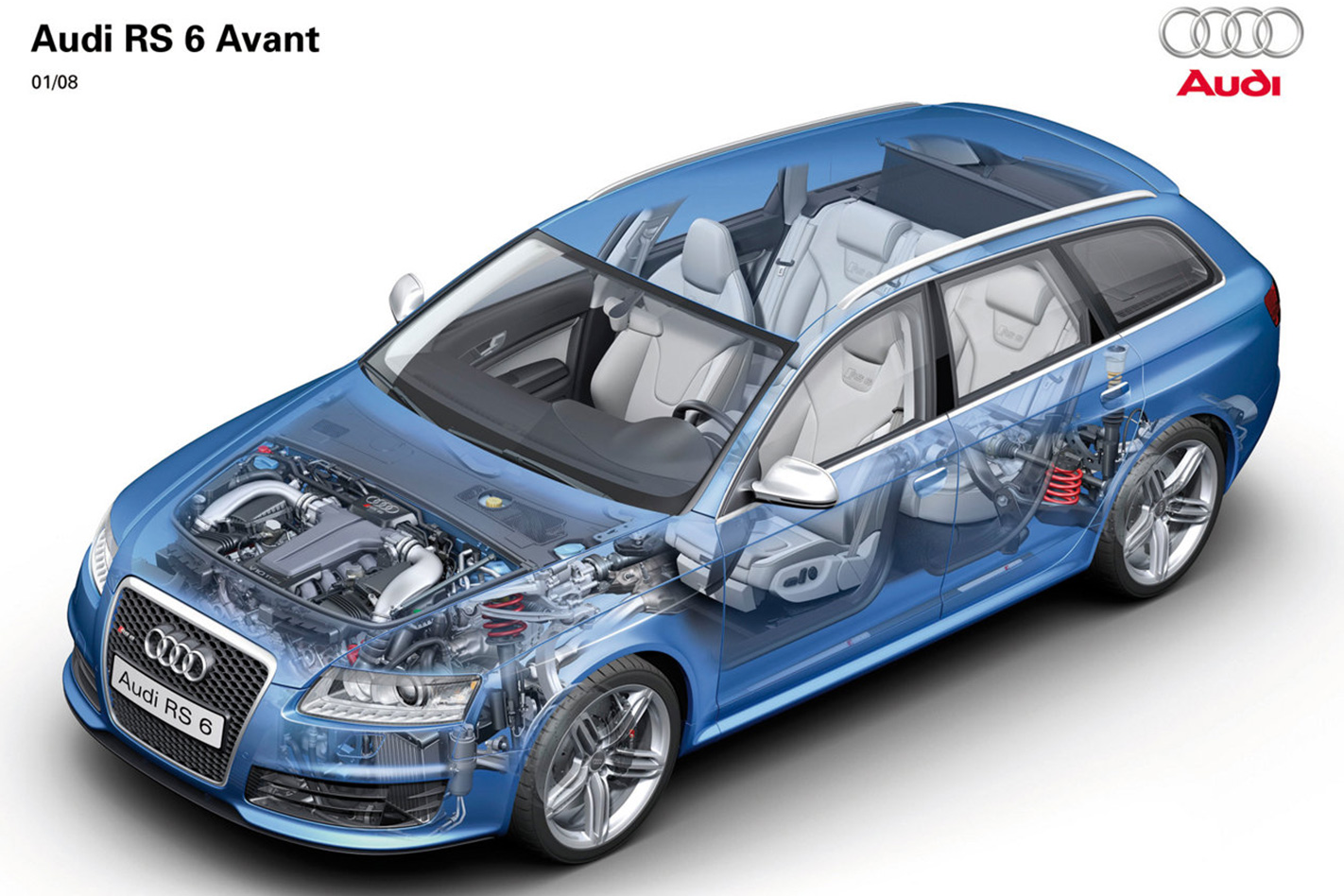
It idles at 800rpm yet in the instant it takes to reach 1500, it’s wrenching at the driveshafts with 650Nm of torque. And it keeps wrenching away with 650Nm until the power curve takes over at 6250 – so, nearly 5000rpm’s worth of 650 Newtons.
Calling it strong would be ludicrously modest. And, from the 6250 point, where the torque tapers away, the power plateaus in a flat line at the top of the range for 500 revs itself.
No production Audi has ever had this much power, but that’s not all. It’s a Lamborghini engine, all dry-sumped and strengthened in the middle of its range by the turbos, wrapped up in a package that can take the whole family skiing for a week. And even that’s not all. It’s not even a current production Lamborghini engine. It’s most of the next Lamborghini engine.
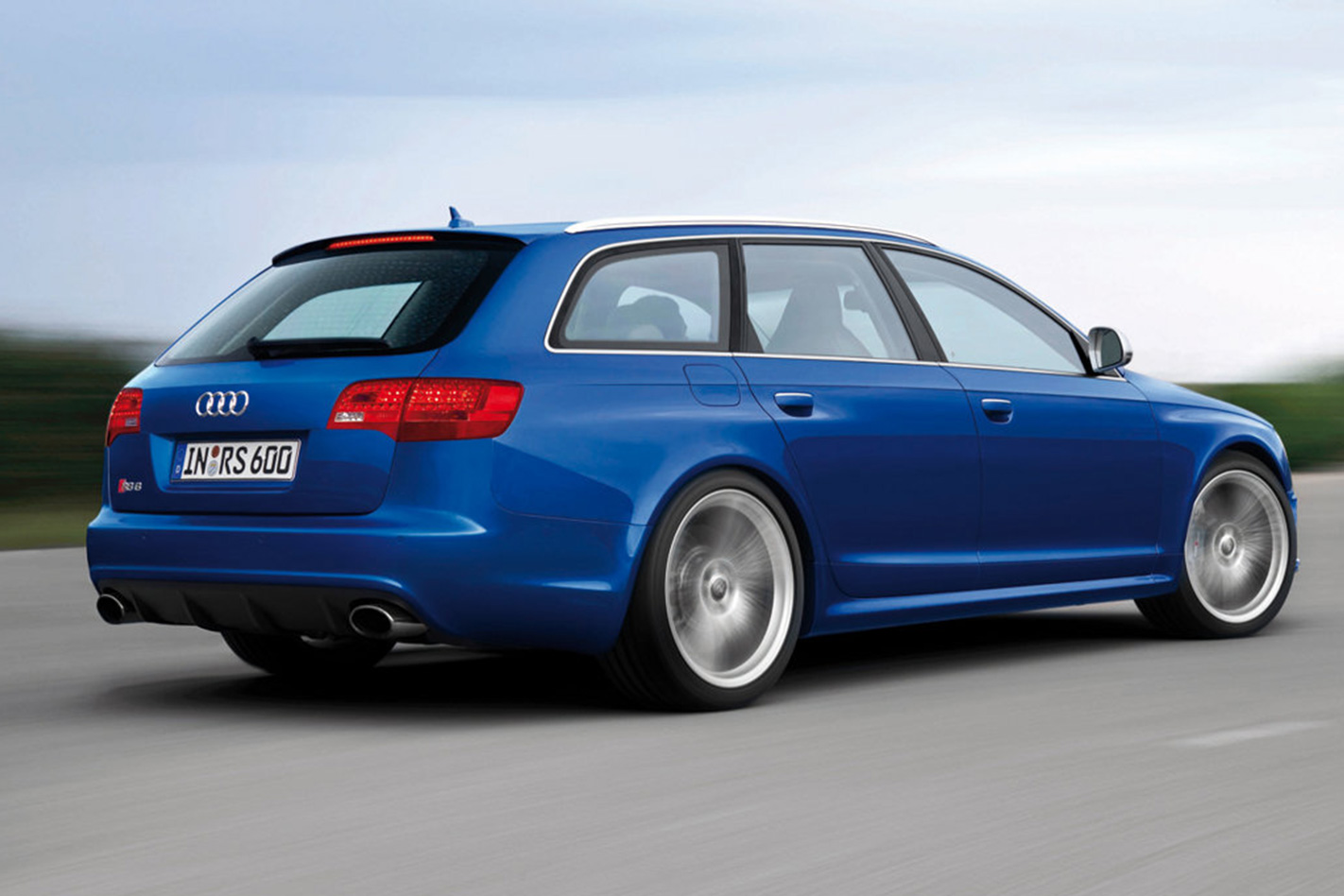
Big deal. Its suspension and chassis are so much more sophisticated than the old car that it rips around the Nordschleife more than 20 seconds faster (8:09, if you’re interested). And that’s the point.
There’s nothing subtle about the RS6 concept – it’s all about taking the already-brisk and luxurious S6 to ridiculously muscular levels. And it does it sensationally well, apart from one or two areas.
The first and most obvious negative is the engine note. At idle, there’s only a static moan leaking out of the twin rear pipes. Gentle stirring creates a slightly deeper groan, but it’s only when it’s properly booted in the guts that the V10 manages to exude some aural menace.
But if you’re inside when the V10’s cracked open – I mean, properly cracked open – the lack of a quality engine note won’t be uppermost in you mind. You’ll be adding your own sounds to the cacophony because the only word that adequately describes the way it moves is one you will shout involuntarily.
Even with all the electronic safety nets at high alert, the RS6 will still light up all four boots in a screeching chorus of terrified Pirellis as the engine cranks up. It instantly shoves you deep into its tight, boldly stitched leather eat and pins you there as the dotted white lines turn solid – then it shifts up swiftly, with a burbling fuel cut-out, and does it again. And again. And again.
A g-analyst trace on this thing’s acceleration would be disturbingly flat, right up to around 180-200km/h because it just never, ever lets up. The RS6 is so rapid – so pervasively and disconcertingly fast – that it takes a few kilometres for your innards and sensory perceptions to catch up.
The drive for this car is twisted into a new six-speed auto gearbox casing and through new Six Million Dollar Man innards – being stronger, faster, better. Its torque converter is locked up most of the time and it’ll shifts in 0.5sec – half the time it takes in an S6.
The only trouble is that, with the engine note so one-dimensional in its delivery, you end up striking the limiter rather more frequently than you want, especially in the lower gears.
The gearbox (and its fuel cut-out provides the warmest, bubbliest crackling noise the engine is capable of delivering) ends up repeatedly racing against the tacho needle to get its recoupling finished before the latter crashes into the limiter. It’s a race the crunching motor often wins and it means that, in first or second gear, you need to shift at around 6200 to beat the 6800 limiter.
The whole idea, according to quattro’s development boss, Stephan Reil, was to keep the RS6 better balanced on a track or on tricky corners, where hitting the limiter de-stabilises it less than the lost drive of an upshift. The philosophy of human trust isn’t complete, though, because it will still kick down, even in Manual mode, in response to a snapped-open throttle.
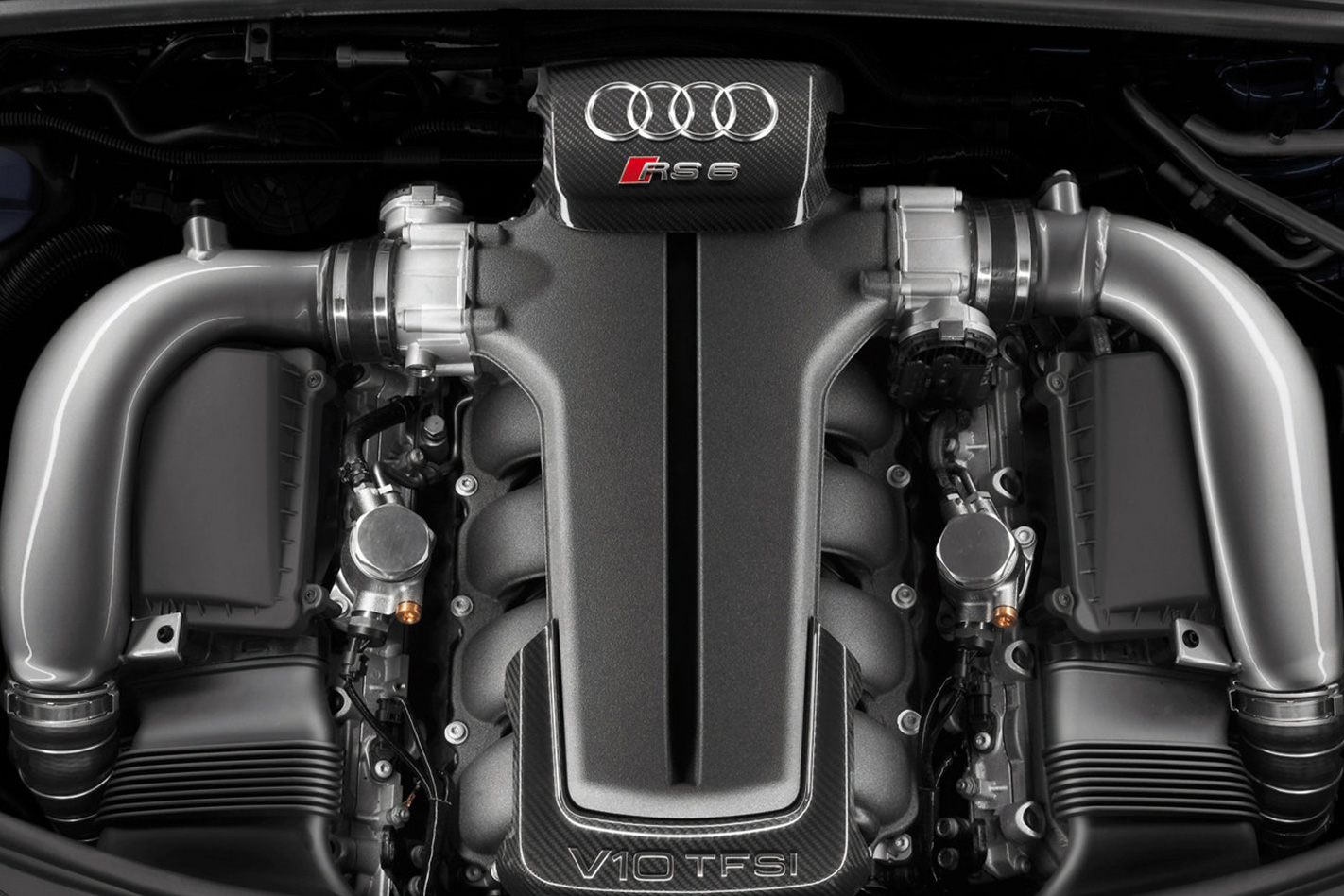
With the limiter removed completely, the engine is strong enough to pull to its redline in sixth gear – good enough for 330km/h. And Eiser knows. He was driving it at the time… It will also, according to Eiser, give between 400 and 450km of range out of its 80 litre tank – at 200km/h!
An engine like this brings into sharp focus every other flashpoint in a heavy car – brakes, tyres, balance, steering and suspension. The RS6 Avant is strong in most of these areas, but not quite integrated and it somehow doesn’t quite gel or flow harmoniously.
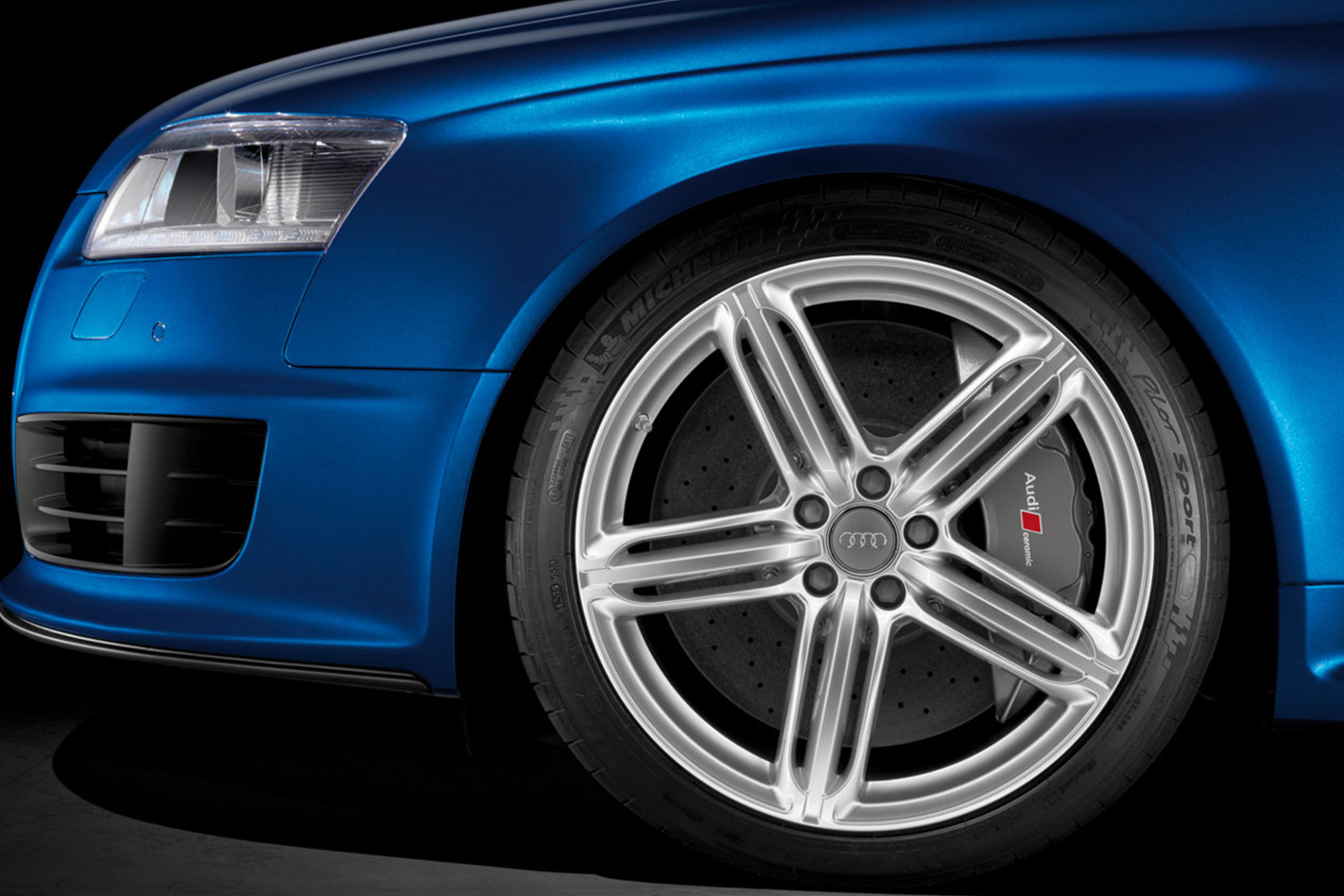
Its steering, for example, receives inputs from a fat, beautifully trimmed leather wheel (does anybody do better steering wheels than Audi?), but responds with heft rather than crisp dexterity. You can forgive it some of this because it uses fat Pirelli P Zero 275/35ZR20s to organise the diversion of momentum bred from 2025kg x 280km/h, but it could be better.
It could be a lot worse, though, and the improvement of the front end (while still restricted in its performance by Audi hanging all of this engine, plus ancillaries, in the fresh air forward of the front axles), is a major point of advancement.
There’s none of the rampant tram-lining the old car used to keep you awake with, even though the new car is on larger wheels and tyres. It’s also willing to tighten or loosen its line mid-corner, where its predecessor was the king of the one-liner.
Chassis wise, it’s also surprisingly grippy. A series of corners highlights, inevitably, the nose-heavy engine positioning, but on any given corner, long or short, the RS6 excels. It turns in confidently, picks up the throttle quickly (even faster in Sport mode, where the throttle mapping gives up to 30-percent faster pedal response) and leaves ripples in the bitumen on its way out.
The Dynamic Ride Control (to reduce roll and pitch) and adjustable dampers help, along with stretching the track widths 44mm at each end and stiffening the springs 12 percent over the S6. Still, most people will find the Comfort mode too gooey and the Sport mode too vertically imposing (except for track days), while the Dynamic mode is j-u-s-t right.
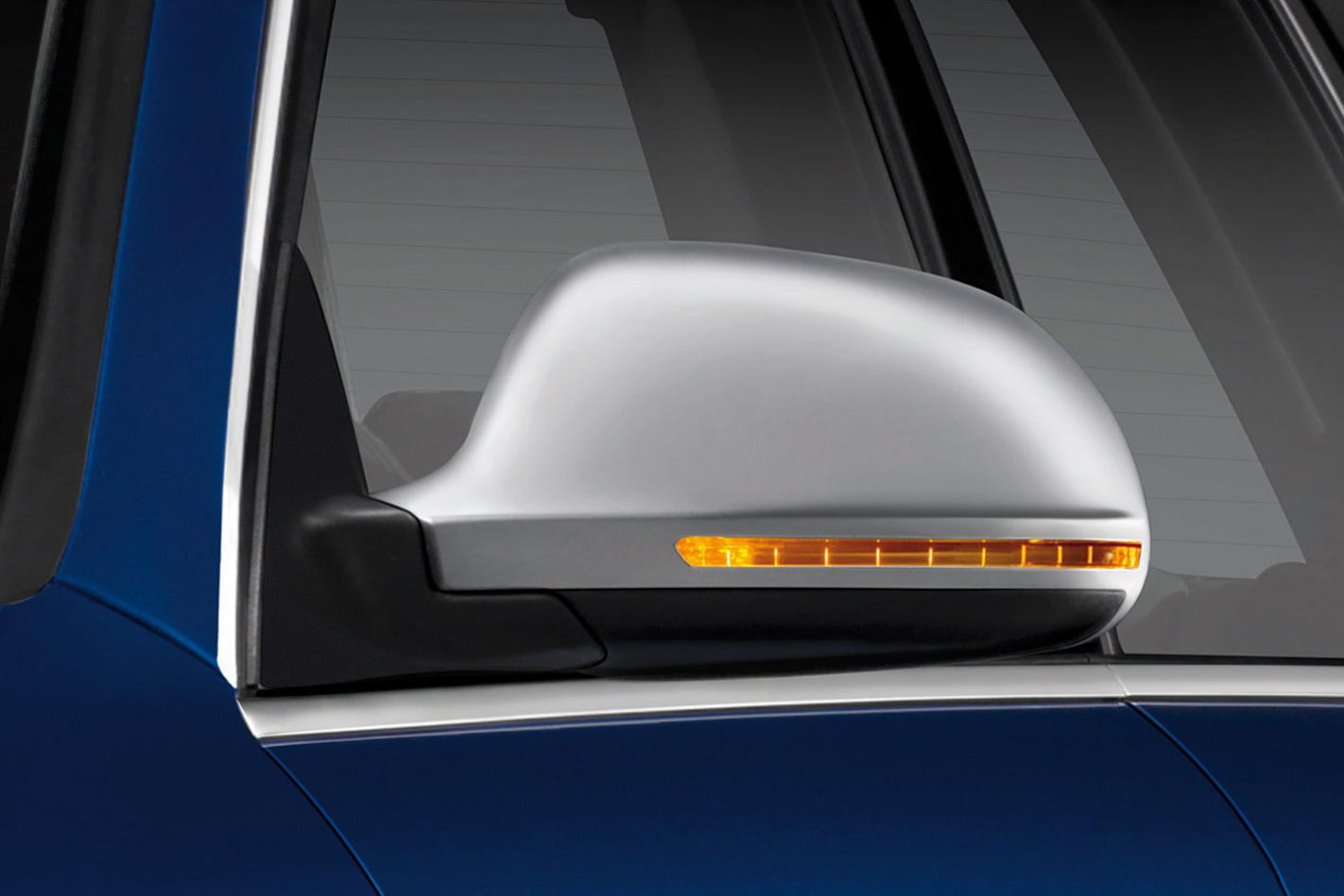
The ESP might work hard and often, but it also displays a new-found subtlety that – on public roads at least – convinces you of the value of retaining its services. Turn it off on track and the rear-biased corner-exit stance just becomes more pronounced. Ultimately, though, it’s not what you’d call nimble in its athleticism. It’s just very secure.
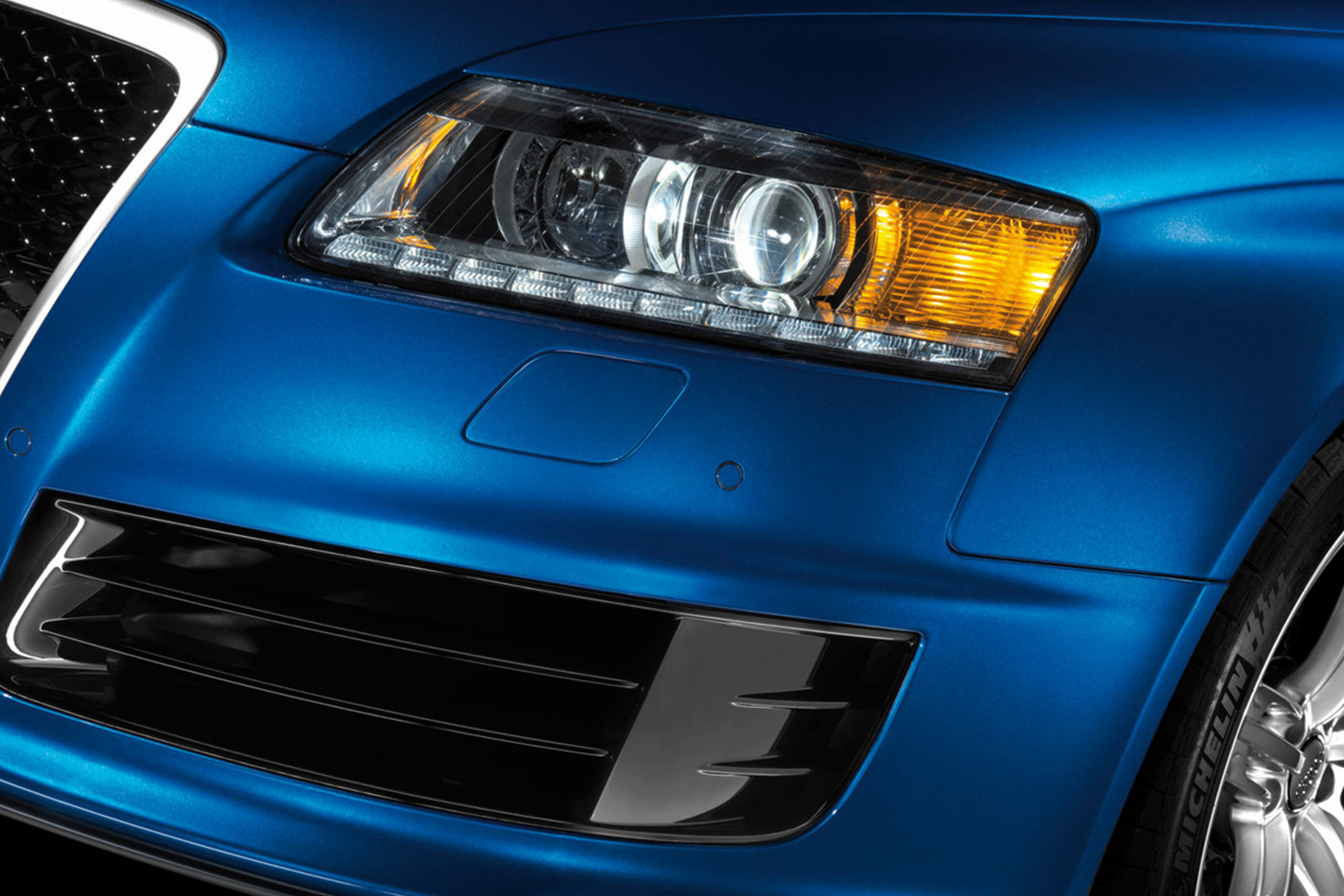
Oh, and the RS6 has an interior, by the way. It’s full of nice leather, sculpted seats and audio whiz-bangs but, for now, it’s hardly the point. Suffice to say the RS6 is superbly equipped, stylishly appointed, and nice to look at. It has everything you’d expect if you were buying an exclusive luxury car.
But you’re not. You’re buying an exclusive, practical luxury car that can, at the drop of a throttle, turn into a crushing, easy-to-drive, all-pervading monster.
Which is how it should be…
2008 Audi RS6 Avant Specs BODY: 5-door, 5-seat wagon DRIVE: all wheels ENGINE: 4991cc V10, DOHC, 40v, twin-turbos, twin air-to-air intercoolers BORE/STROKE: 84.5 x 89.0mm POWER: 426kW @ 6250-6700rpm TORQUE: 650Nm @ 1500-6250rpm KERB WEIGHT: 2025kg POWER-TO-WEIGHT: 210kW/tonne TRANSMISSION: 6-speed automatic SUSPENSION: four links, coil springs, electronic dampers, anti-roll bar (f); multi-links, coil springs, electronic dampers, anti-roll bar (r) LENGTH/WIDTH/HEIGHT: 4928/1889/1460mm WHEELBASE: 2846mm TRACK: 1614/1637mm (f/r) BRAKES: 390mm ventilated/drilled discs, eight-piston calipers (f); 356mm ventilated/drilled discs, single-piston calipers (r); ABS, EBD, ESP WHEELS: 19 x 9.0-inch (f & r), alloy TYRES: Pirelli P Zero SIZE: 275/35ZR20 (f & r) PRICE: $260,000 (estimated)
THE MOTORSPORT community is currently clapping their hands with glee like kids on Christmas morning.
Why? Well, the good folks from Porsche have confirmed that they are evaluating a return to Formula 1.
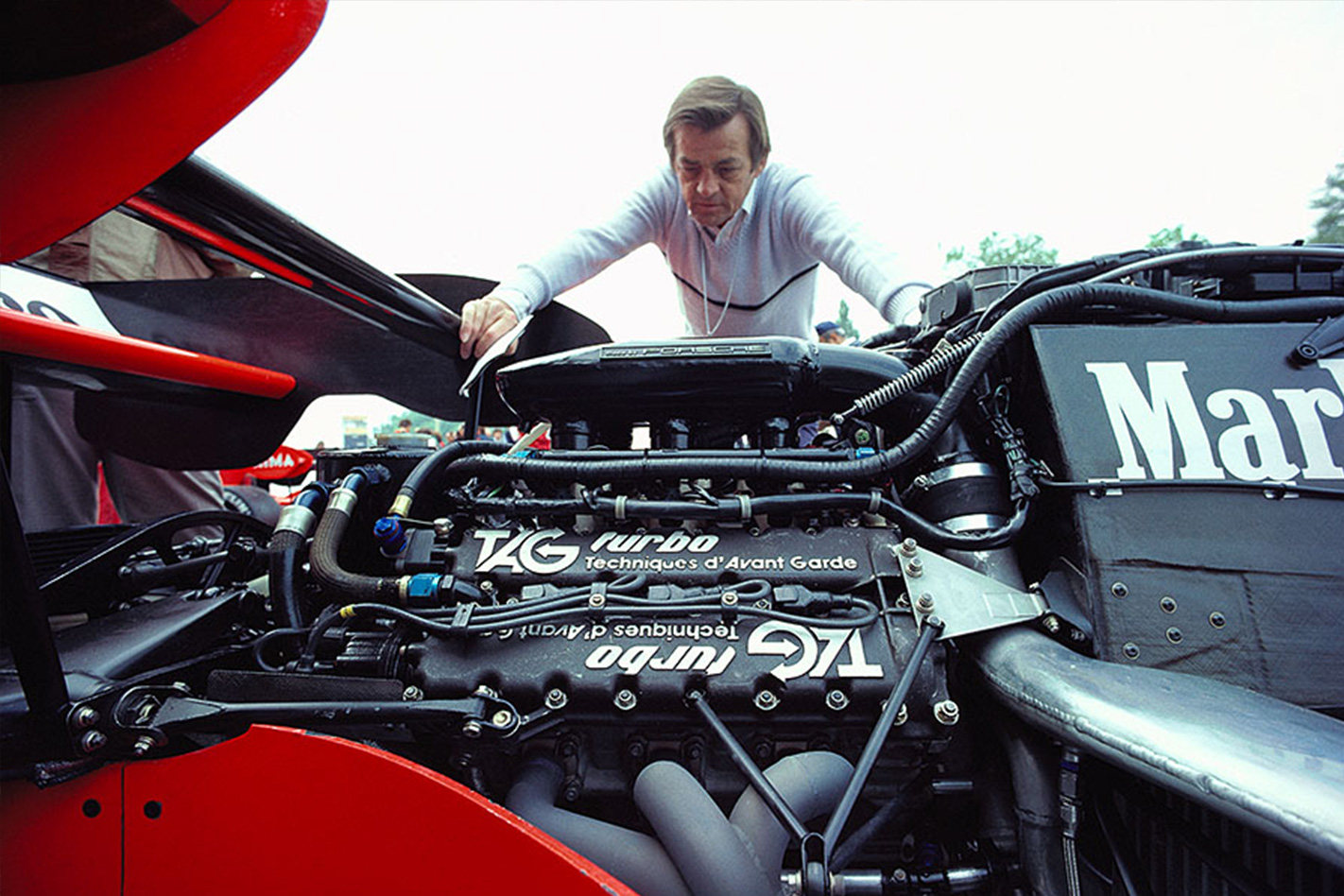
But Porsche and F1 go way back, with its TAG turbo engines (above) propelling McLaren to success between ’83 and ’87 (below). In recent times, Porsche’s Supercup one-make series runs as a support category at grand prix weekends in Europe (with Aussie Matt Campbell winning a pair of races so far this season).

Amongst its one-make and GT motorsport efforts, Porsche has committed to racing in the all-electric Formula E category from the 2019-20 season onwards. But it seems that’s not the only open-wheel series on the manufacturer’s radar.
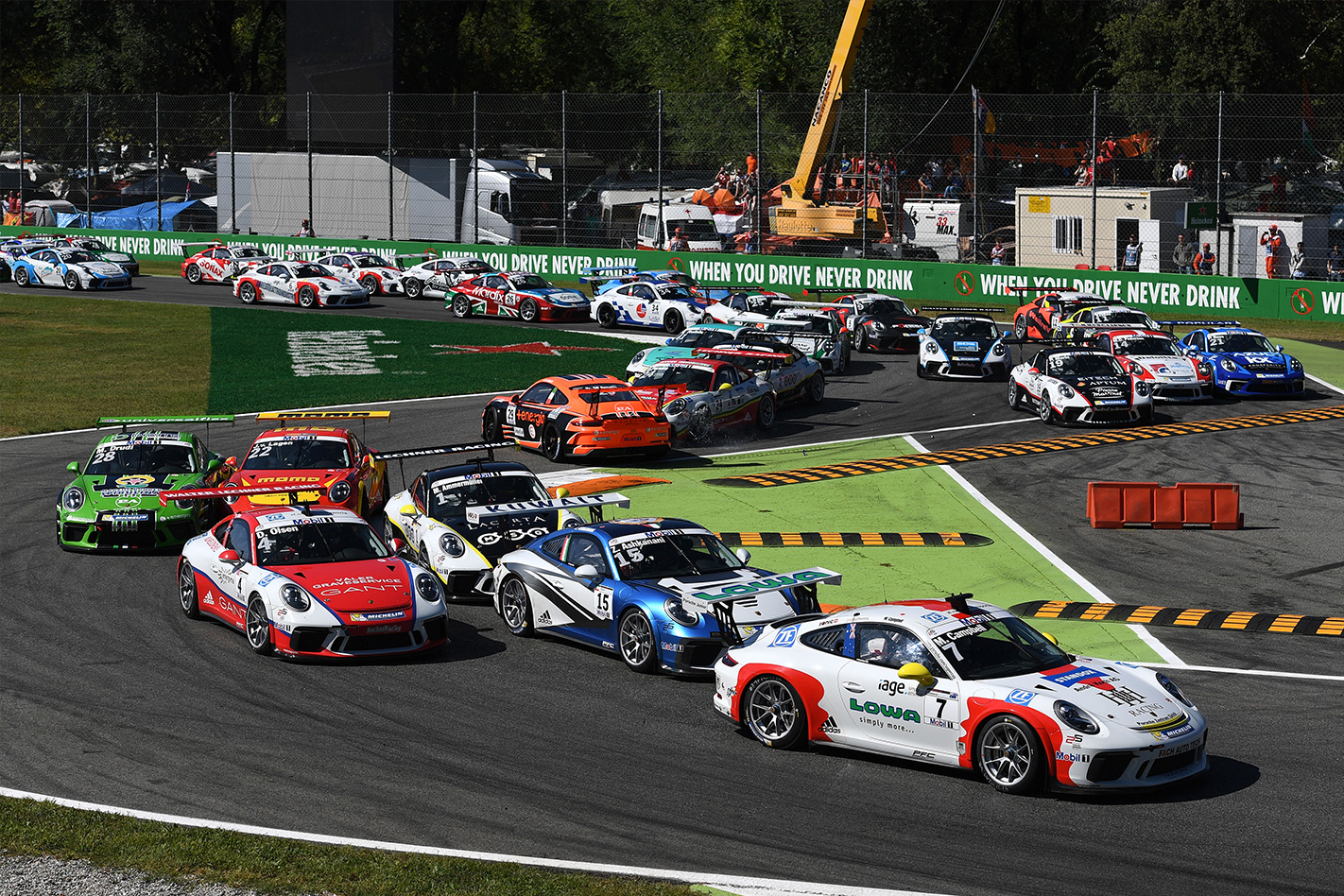
“As you know Formula E is very important for us now, and F1 is always a good topic to think about.
“And I think we are in quite good discussions regarding the new engine.”
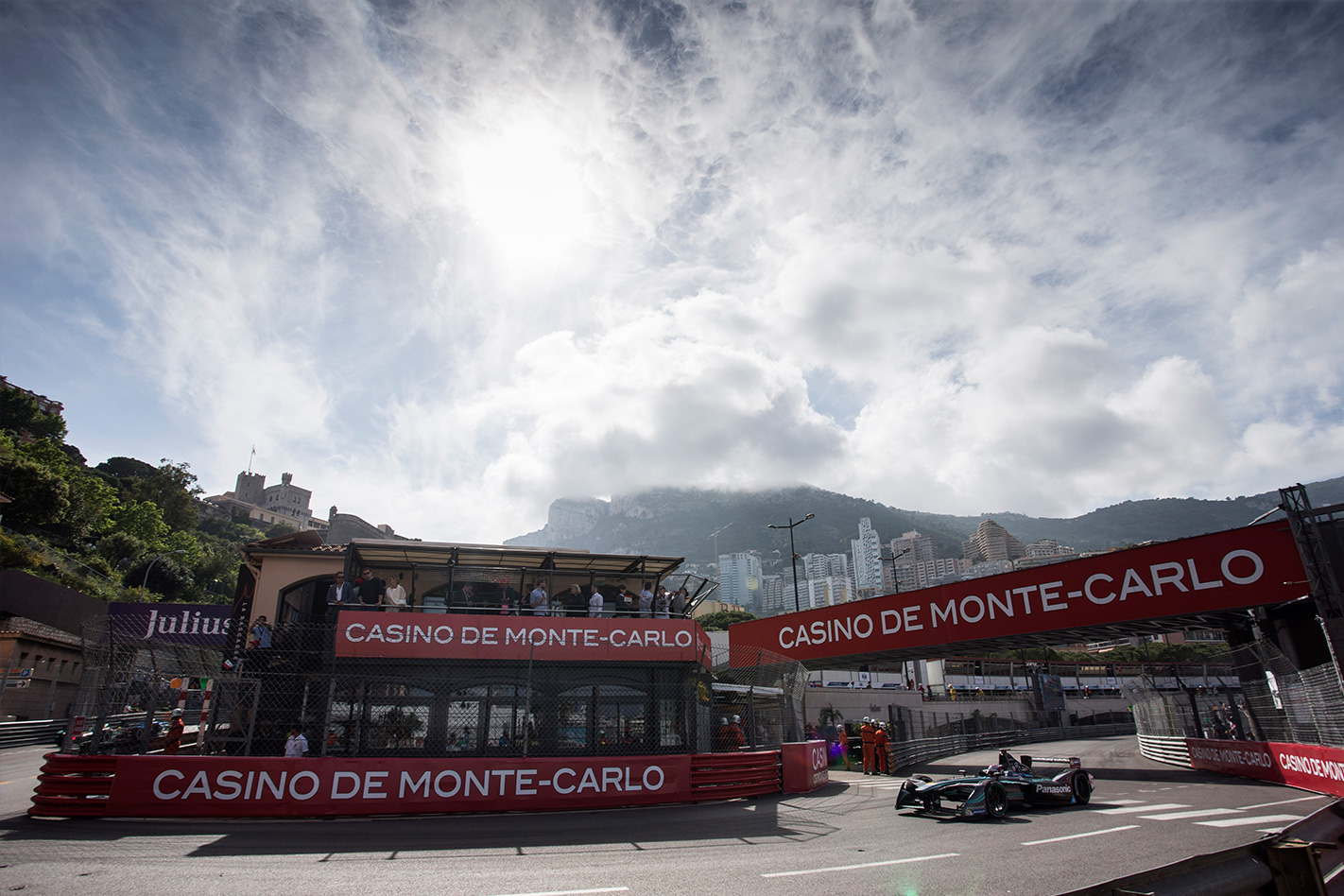
But before we get too excited, here are the three things Porsche needs in order to join F1 once again.
Cheaper engines
Currently, the most significant barrier for Porsche is cost. No one expects a return to Formula 1 to come cheap, but current costs in the series are out of hand – something readily admitted by series bosses.
So if F1 wants Porsche to return, it will need to minimise the cash required to supply a competitive unit. Its current strategy for curbing spiralling costs is restricting engine allocations, but that rule is also currently under the microscope.
When probed on his thoughts on a potential switch to twin-turbo V6 units for the championship (similar to those seen in IndyCar), Metschke replied: “Absolutely. We have to cut costs in F1, and it’s a good way to reach this target.”
Revised (and relevant) rules
A lower price of entry is one thing, but Porsche aren’t likely to return unless the rules are also relevant.
Don’t clutch your pearls too hard though, it’s unlikely they will desire anything more eco-friendly than what is currently implemented. On the flipside, a return to gas-guzzling monsters won’t make board members terribly happy either.
A turbocharged hybrid system remains the most likely option of any engine rule changes. However, unlike the current motors, any new rules will ensure the return of a more appropriate noise.
A willing partner
So, in a hypothetical world where F1 manages to sort its act out and implement fresh rules by 2021 that are both relevant to Porsche’s road car business and lowers the cost of joining the series, there is still one hurdle.
Porsche needs a team to partner with before it can return to the fold. Ferrari, Mercedes, and McLaren are all likely to be ruled out, as they are on-road competitors to Porsche. That leaves the likes of Red Bull, Williams, Sauber, and Force India.

However, both teams have existing supply deals with separate manufacturers. So before Porsche commits, it needs to secure a dancing partner.
And after all that, there is no guarantee for success, as the story of Honda’s recent return will tell.
Images of the BMW X7 iPerformance Concept have appeared on the Bimmerpost online forum ahead of its reveal this week, showing the concept SUV’s audacious front end, which is dominated by an outrageously large kidney grille that resembles an upskirt pic of someone sitting on a garden chair.
While you’d hope that front-end is toned down for the production version, along with the chrome right angles at the front and side, it’s worth remembering the American-built X7 is primarily designed for the US and Chinese markets, whose beholders of beauty aren’t universally known for their tact.
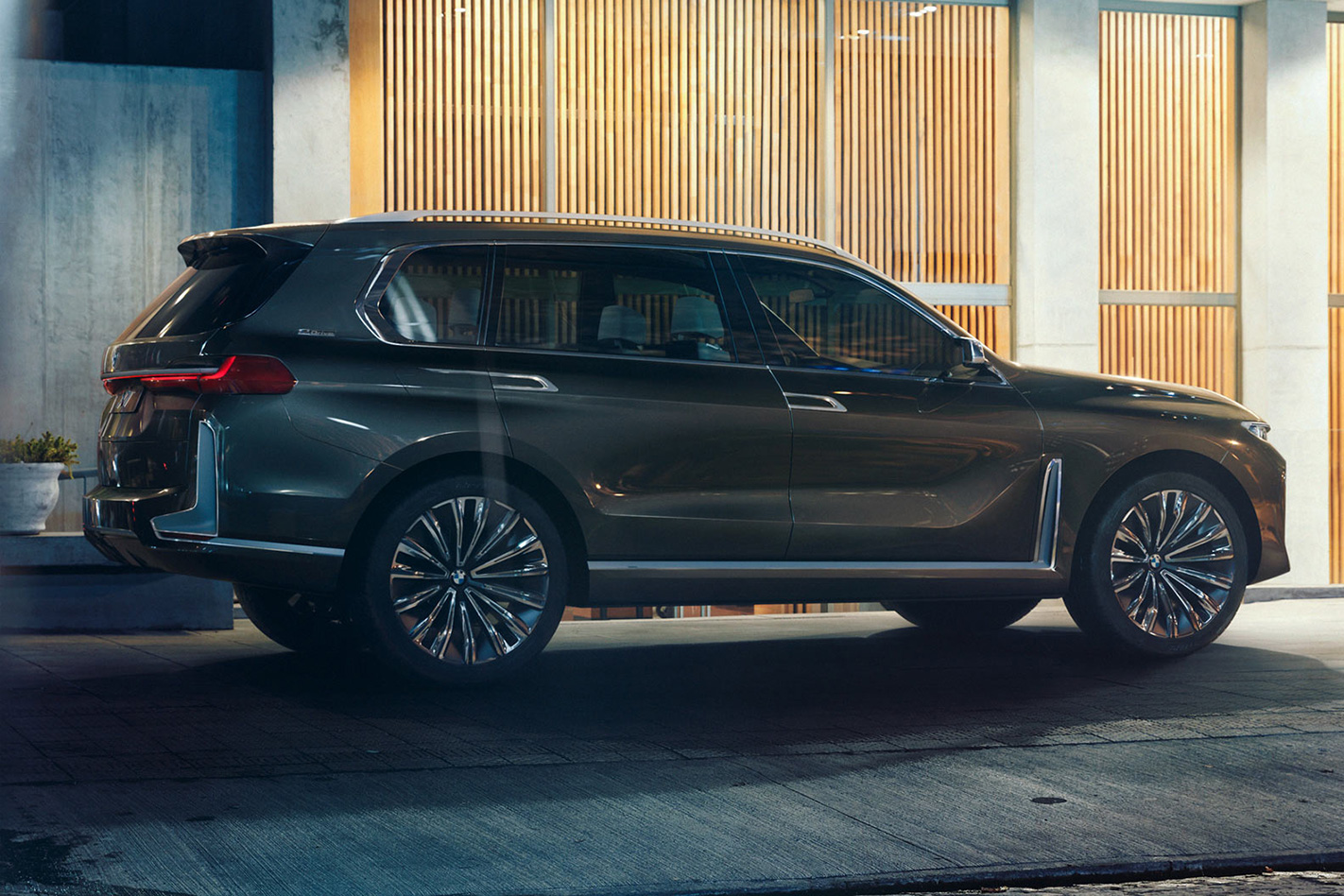
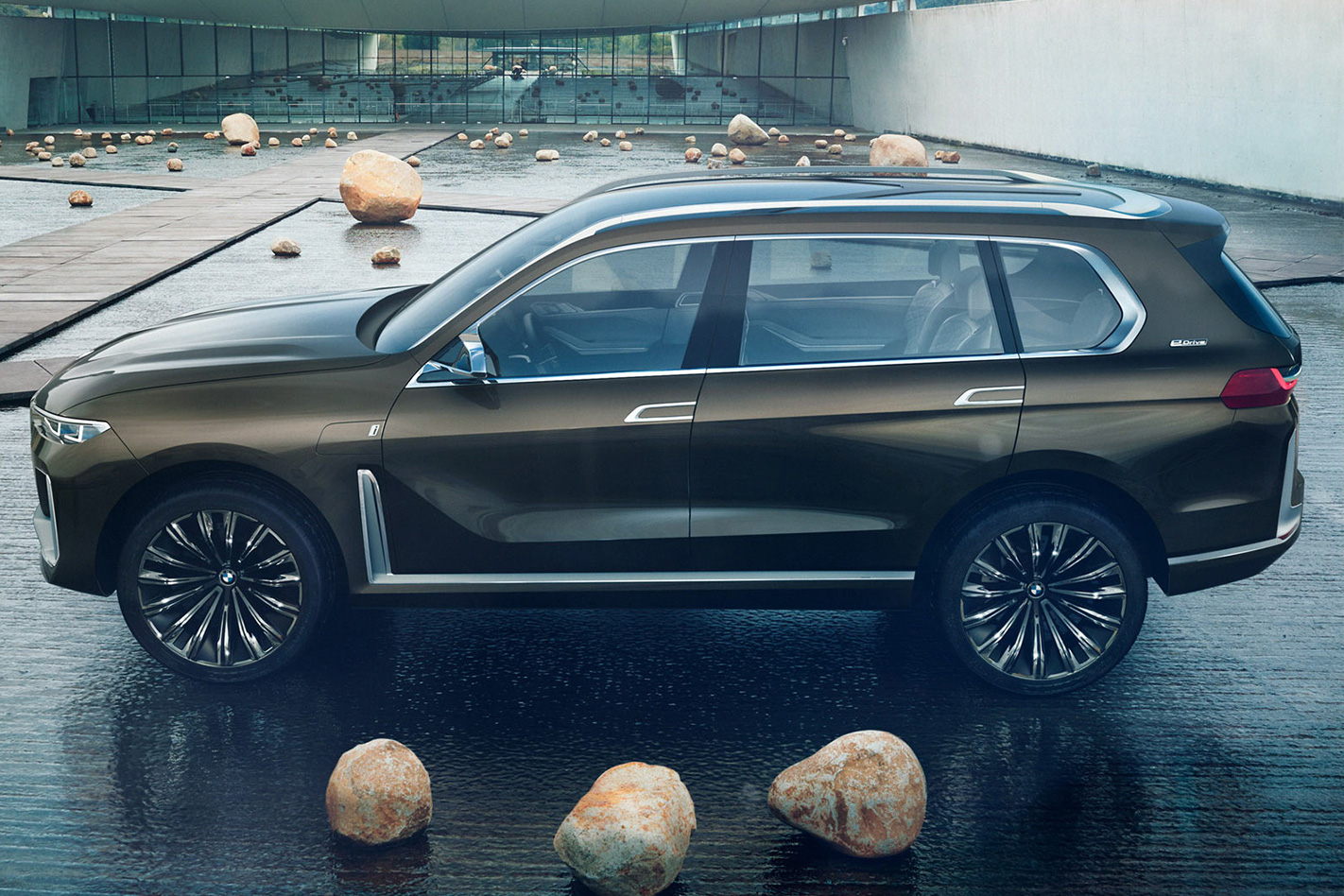
Its massive 20-plus inch wheels and stunning panoramic glass roof are other agreeable features, as are the flush door handles – though it’s questionable if they’ll be practical enough for the production vehicle. The slim side mirrors will probably be beefed up a little too.
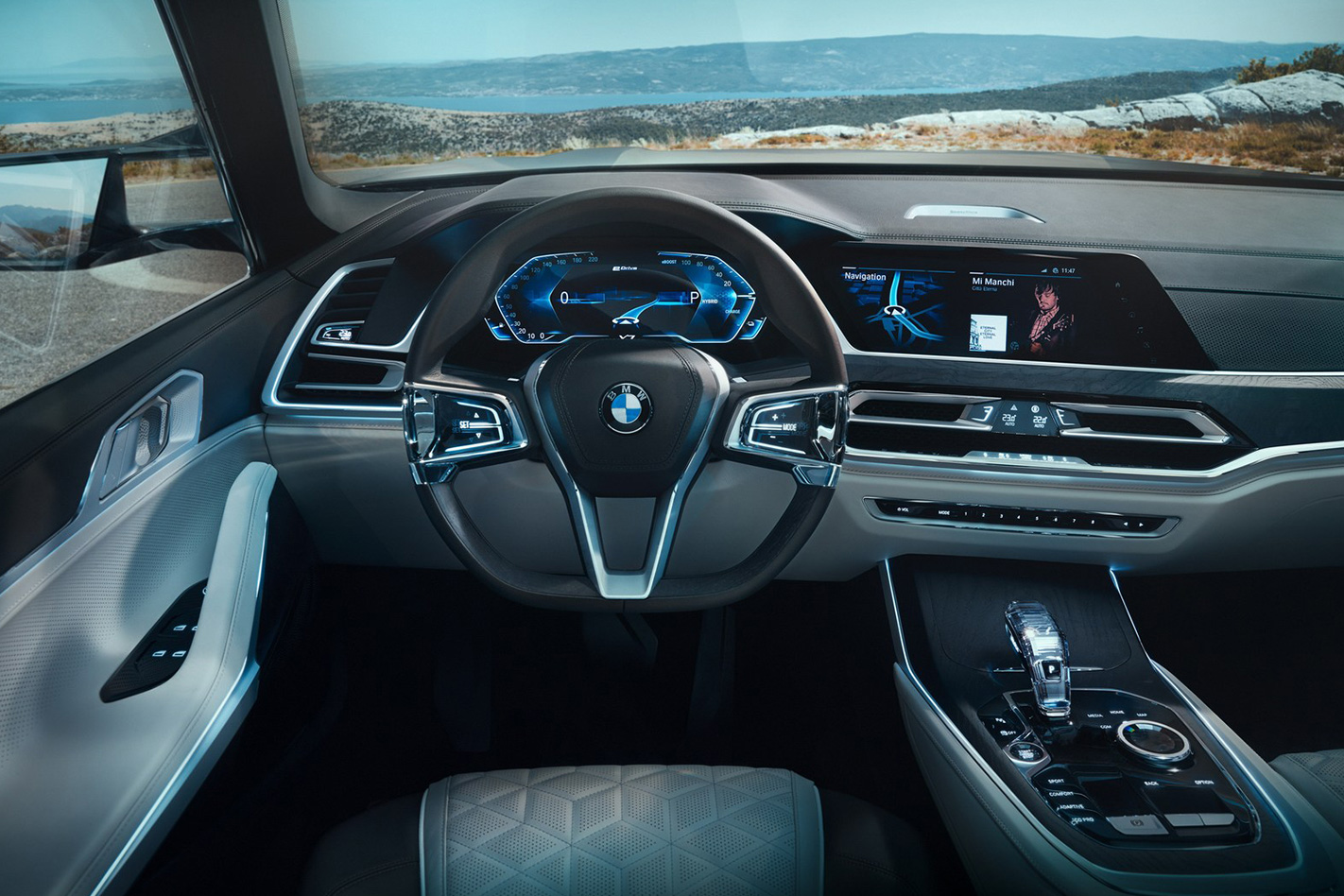
The luxurious interior looks production ready with nothing revolutionary apart from its attractive futuristic steering wheel. The dashboard is less cluttered than the 5- and 7-Series models’ thanks to its slimline air vents and infotainment screen that extends from the digital gauge cluster.
The third row is also clearly visible, and its extended length over the X5 means the rearmost seating positions should be reasonably spacious, though the thick D-pillar might restrict side vision.
In an effort to even more closely follow the lightweight philosophy of Lotus Founder Colin Chapman, the Evora GT430 has borne a new, lighter version, the Lotus GT430 Sport.
To achieve this Lotus lopped the rear wing from the standard Evora GT430, taking 10kg from its total weight and adding 10km/h to the Evora GT430’s top speed.
That means the Sport, with a kerb weight of 1289kg, can hit 315km/h. At that speed, you might miss the downforce the rear wing was providing.
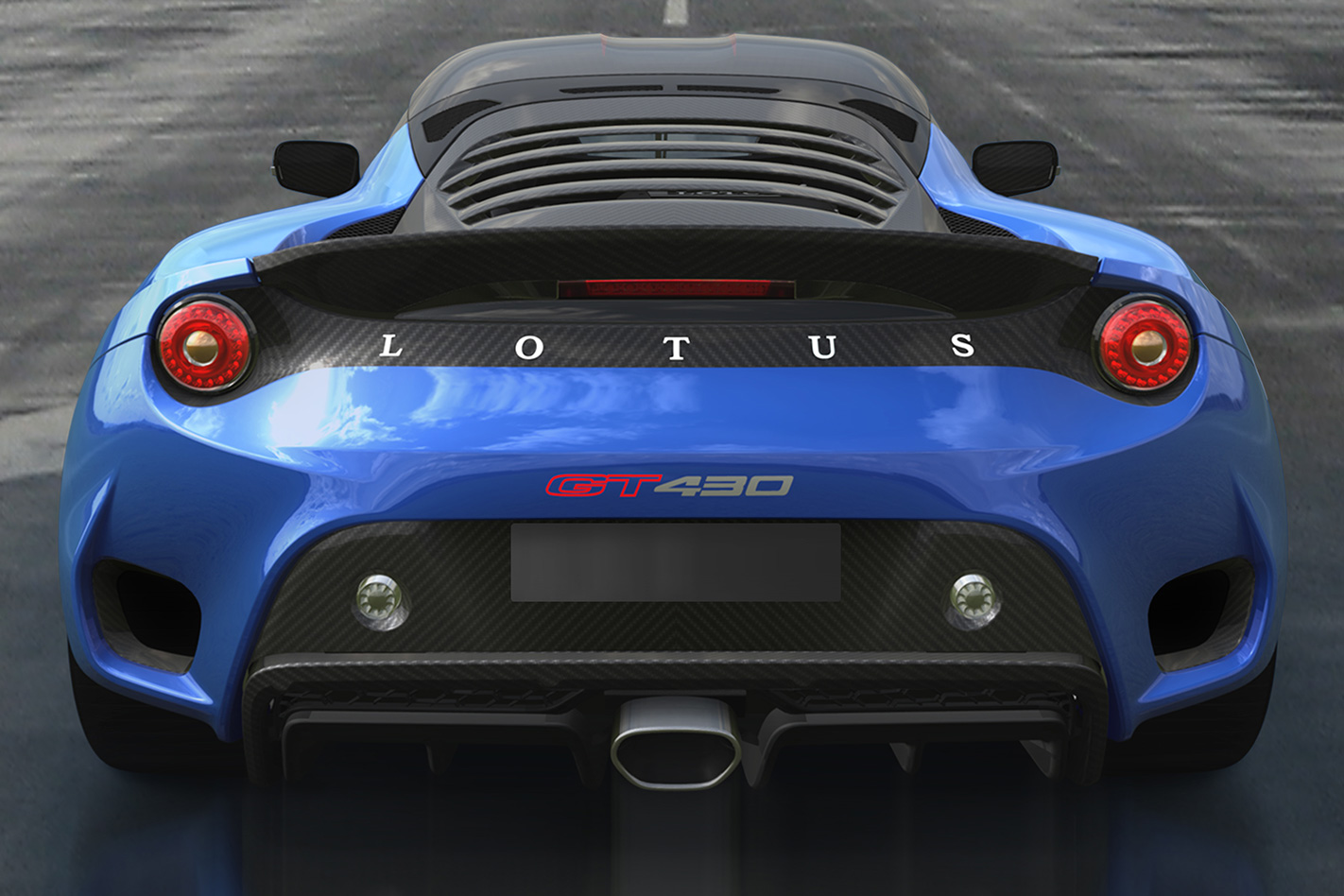
Also remaining the same is the output of the Edelbrock supercharged 3.5-litre V6 at 321kW and 440Nm, though the 6-speed auto cops an extra 10Nm over the 6-speed manual.
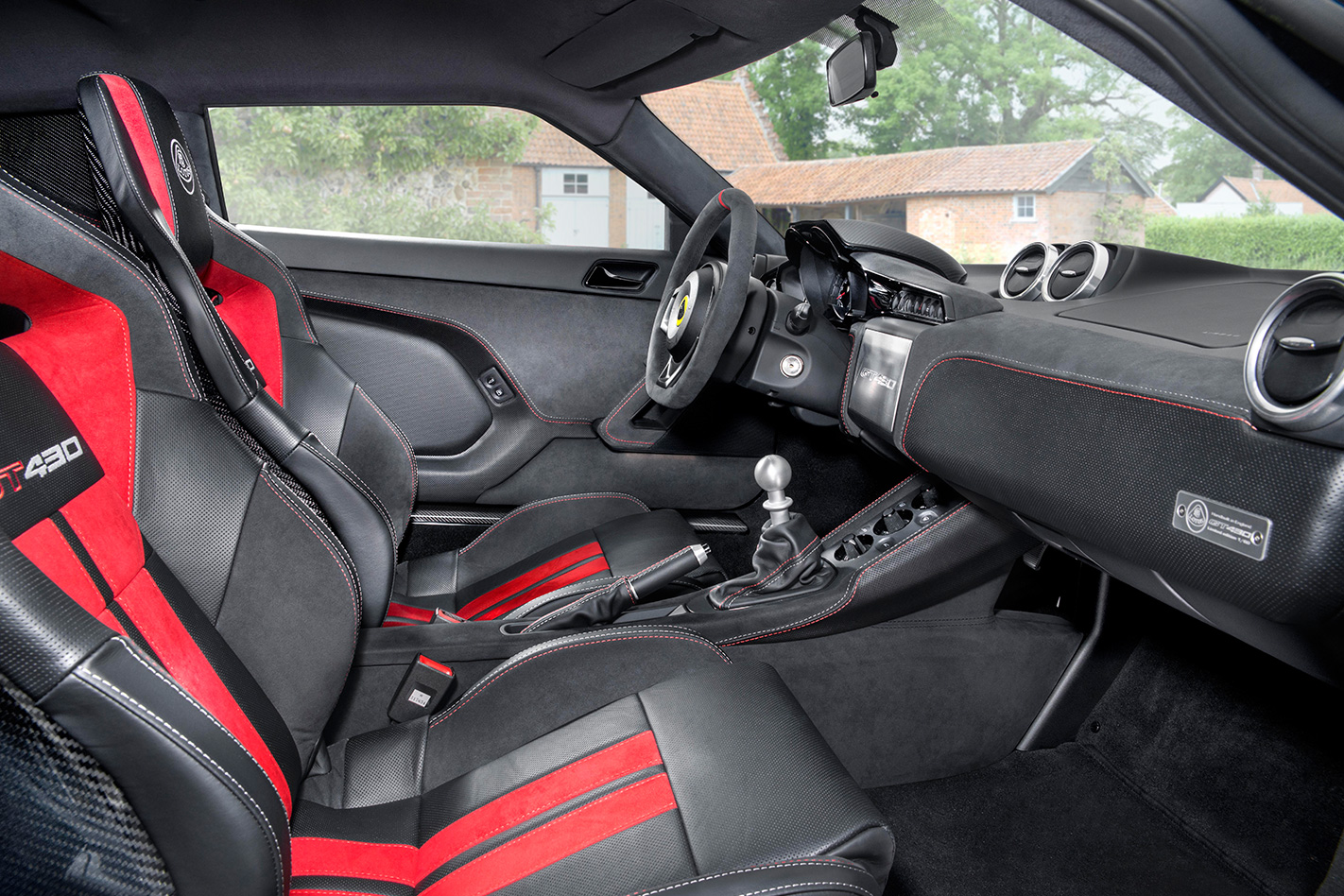
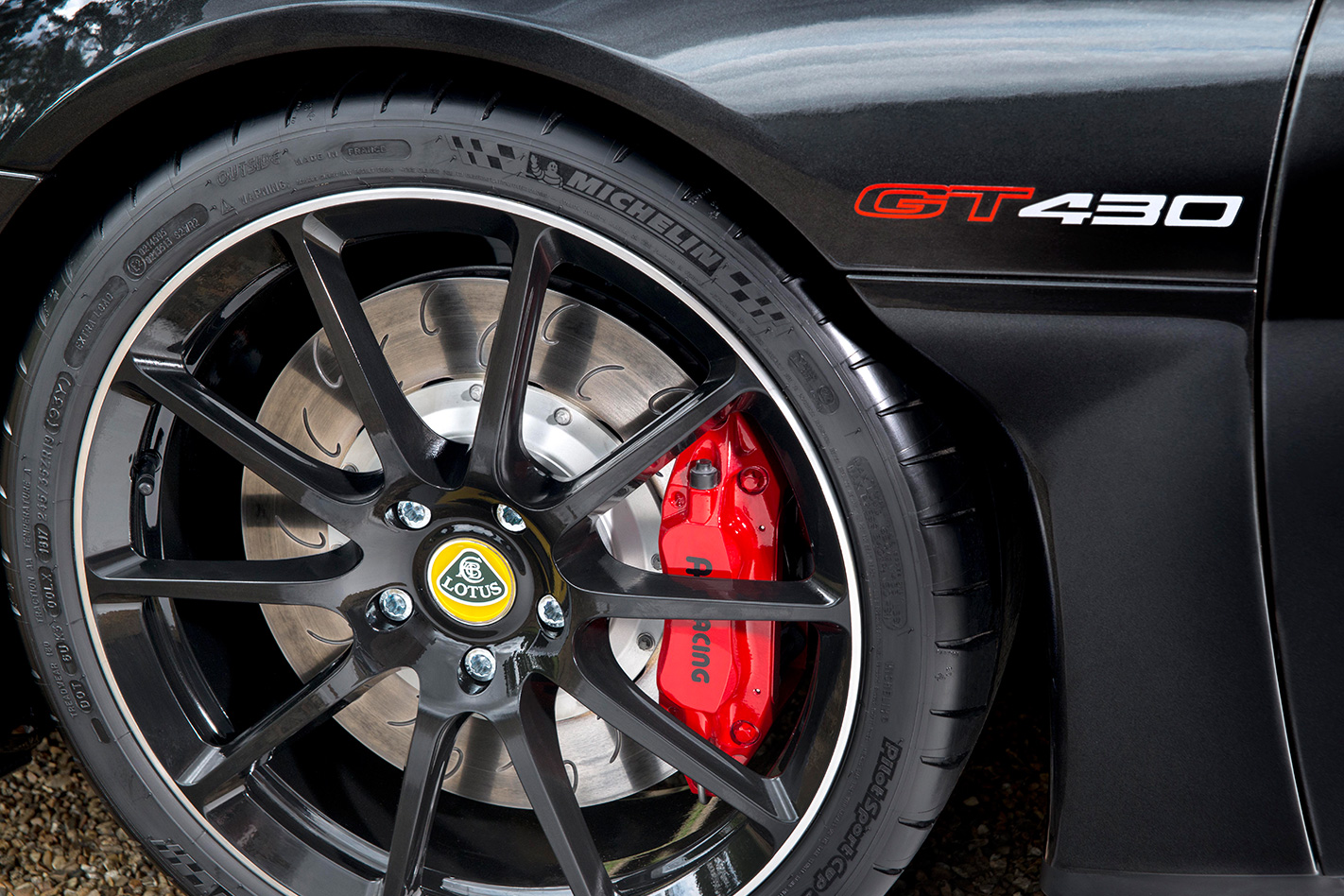
Lotus CEO Jean-Marc Gales says the Sport is a response to demand for a slightly more subtle-looking Evora.
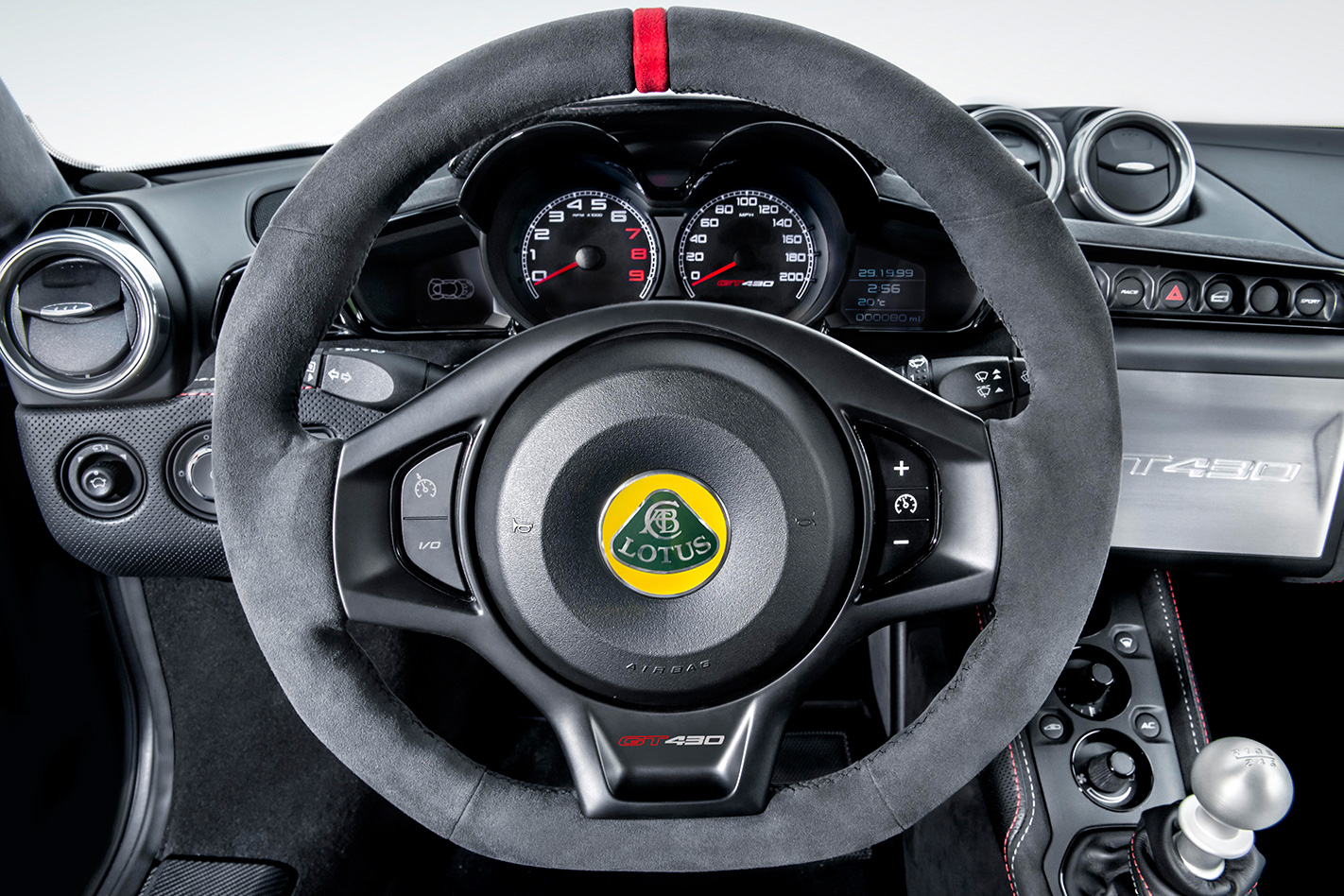
“With the Evora GT430 Sport, we have responded to this demand to add to the whole range of thoroughbred Lotus cars that are great on the track as well as supremely capable on the road.”
VOLUME-SELLERS are rarely sexy. No surprises there. If you’re reading this expecting the usual Wheels-style gloss, glamour and horsepower, you may be better served browsing our other content instead. But you know what? I bet you won’t.
Nearly one in five cars sold in Australia belongs to the small car category, and the three small hatches we have here are the most popular models of that segment: the Toyota Corolla, Mazda 3 and Hyundai i30.
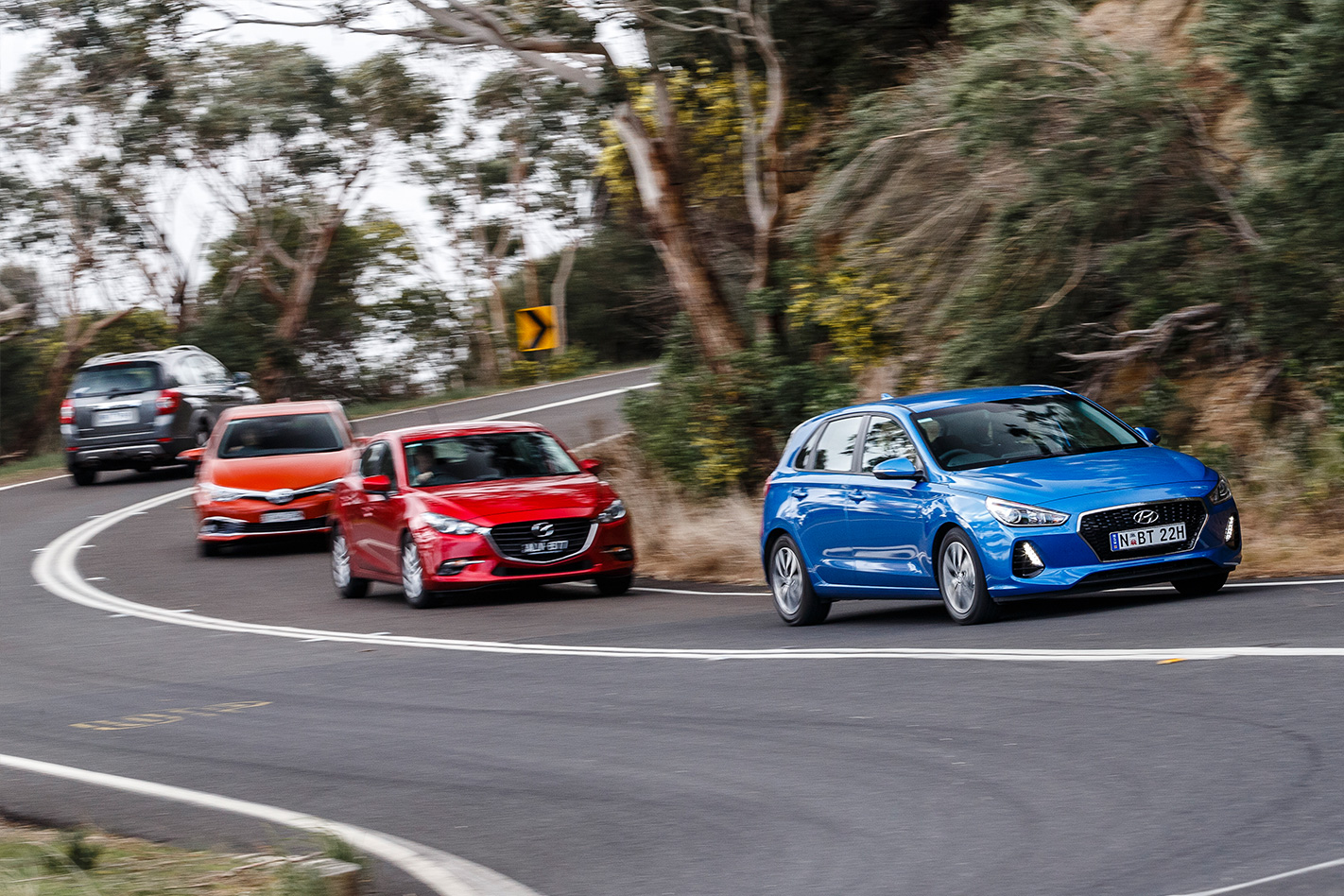
But which is the best? For years, the default answer to the question of “which runabout hatchback should I buy” has been “Corolla”, but the i30 Active’s $23,250 retail price is lineball with the Corolla Ascent Sport and the most popular Mazda 3 is $1640 above those two at $24,890.
The Corolla is further disadvantaged by its age, given it launched in its current generation in 2012. The Hyundai only arrived locally this year, while the Mazda 3 is only a year younger than the Corolla. Put the Mazda and Toyota side by side, however, and most would guess that the age gap is much broader than that.
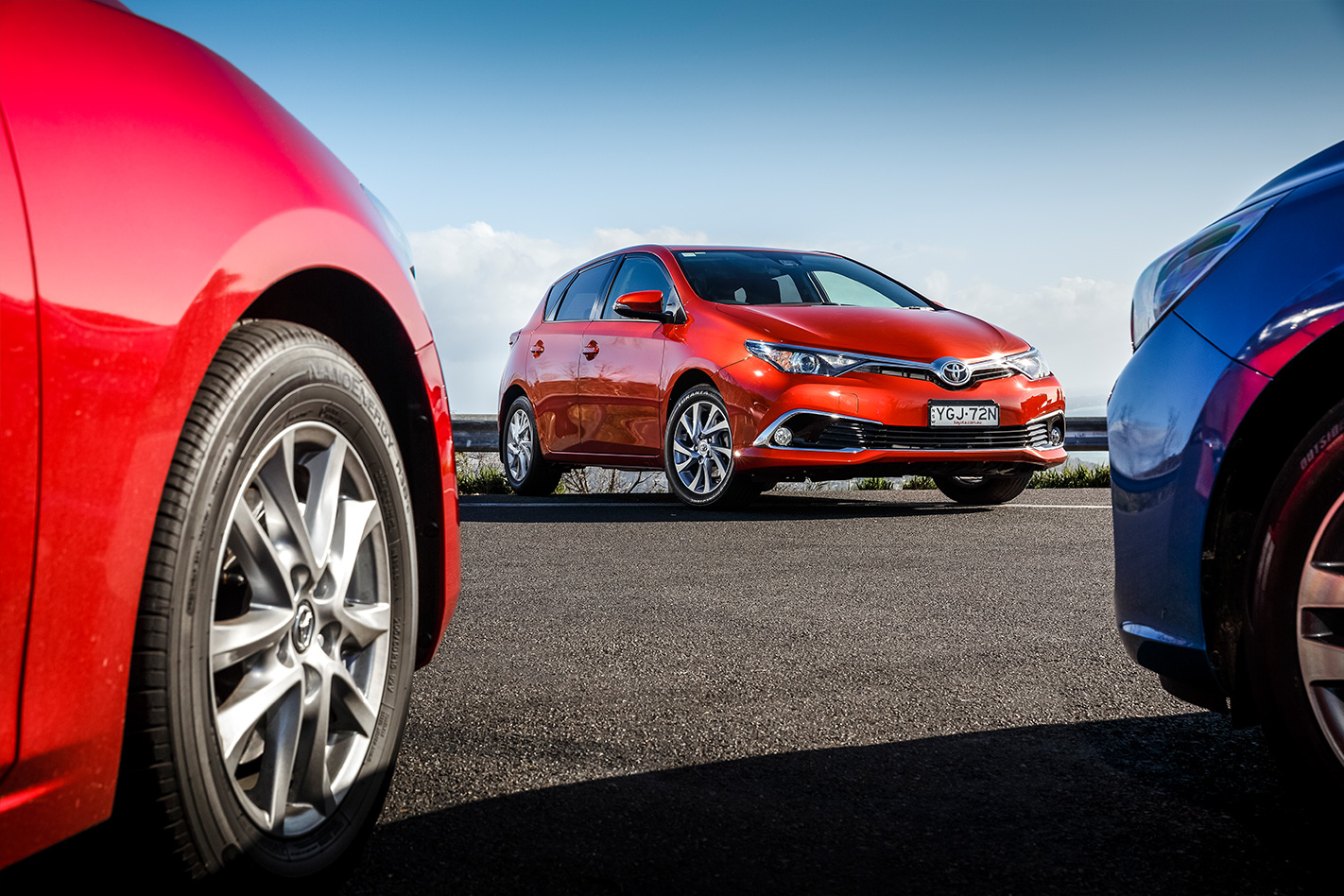
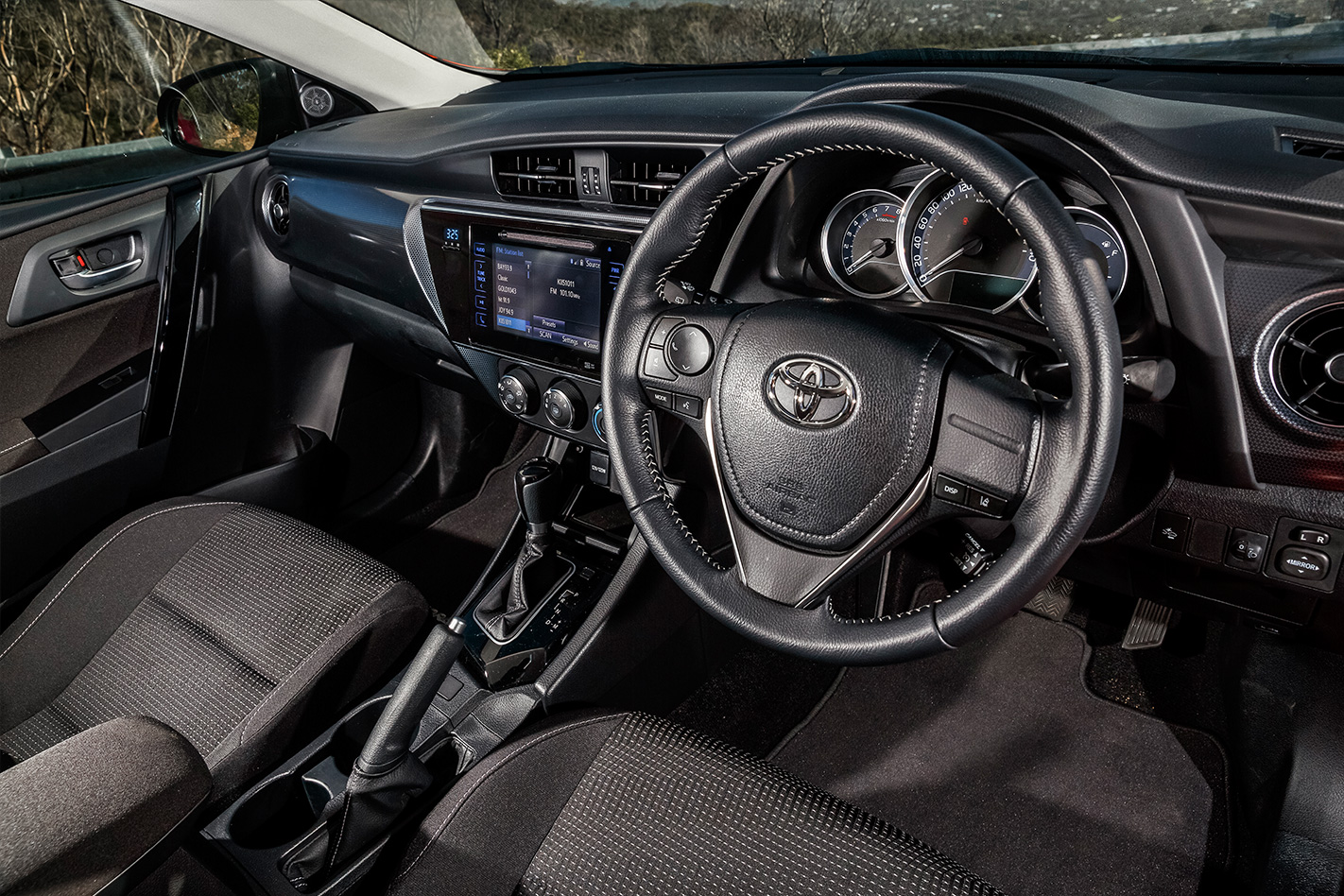
Infotainment stinginess costs the Corolla yet more points. A clunky touchscreen interface and low-set screen harm it ergonomically, while there’s no provision for any form of smartphone mirroring. Further salt in the wound is Toyota stinging you $1000 extra to put sat-nav in the Ascent Sport, a feature which is standard in the Mazda 3 Maxx and i30 Active. With the addition of the autonomous braking-equipped safety pack and premium paint, that takes the price of the Toyota on test to $25,450.
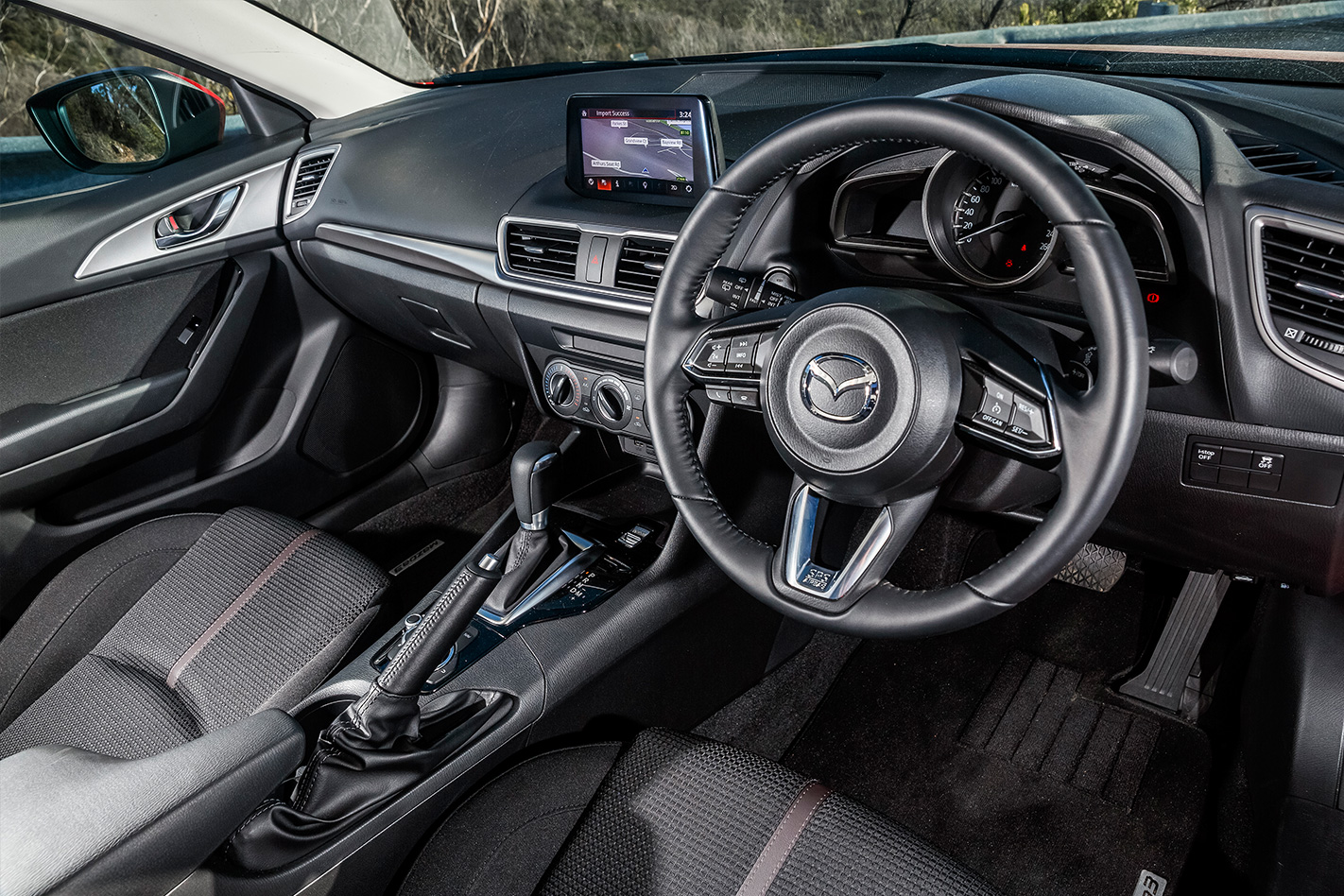
On top of that, the Mazda 3’s more cohesive interior styling, upmarket materials and finer-grained plastics give the Maxx – which is just one rung above the base Mazda 3 Neo – a borderline premium flavour that the Corolla can’t hope to equal even in its higher grades.
But we’re familiar with these traits, given both the Mazda 3 and Toyota Corolla have been on the market for around half a decade now. The newcomer is the i30, and it’s the spearhead of Hyundai’s campaign to catapult itself to the top of shopping lists without relying solely on mega-keen driveaway deals.
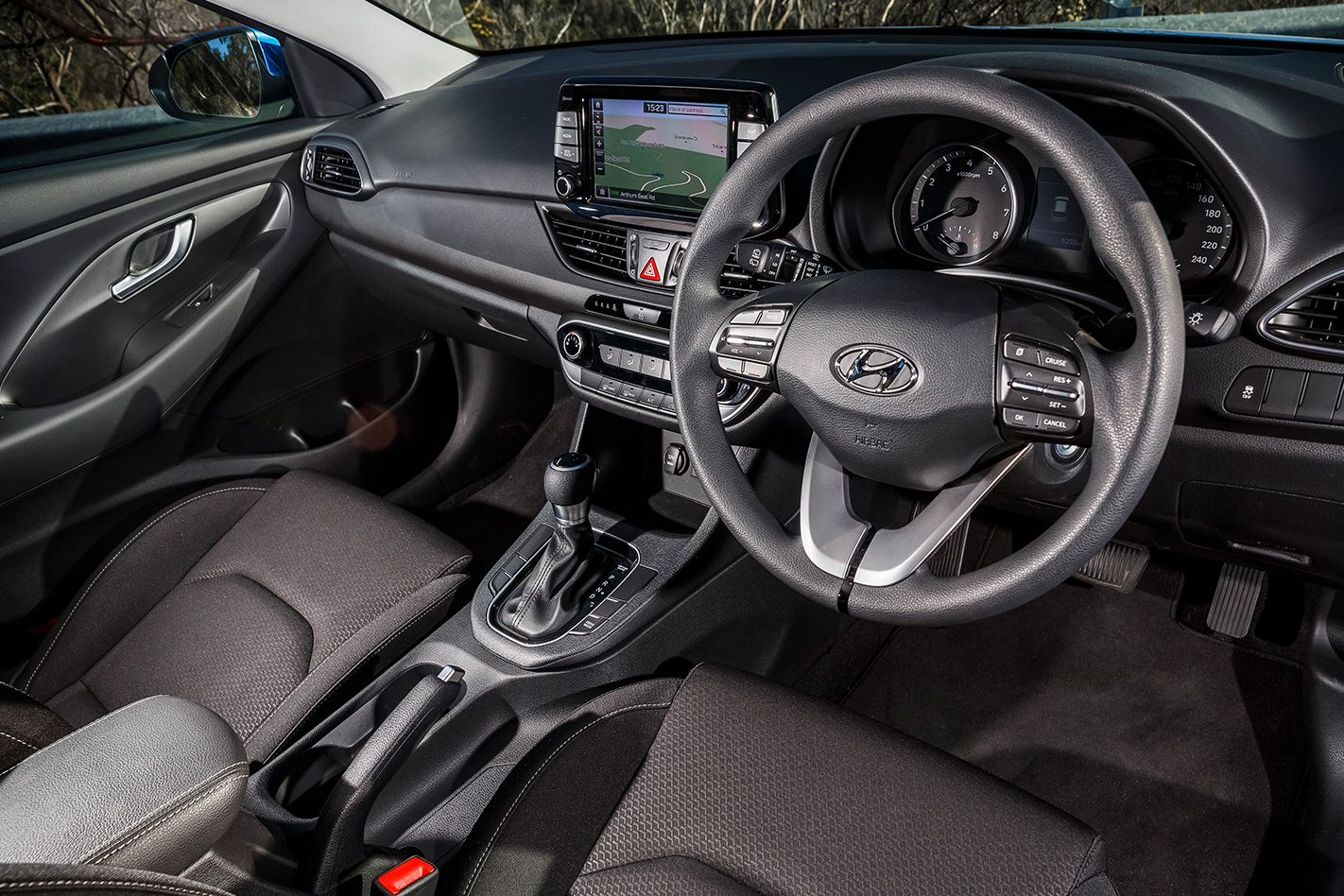
Big buttons, clear dials and an intuitive dashboard layout are other i30 virtues, though you’ll need to reach far to get to the leftmost buttons flanking that big screen. Not a huge complaint mind you, given controls on the steering wheel cover the same functions.
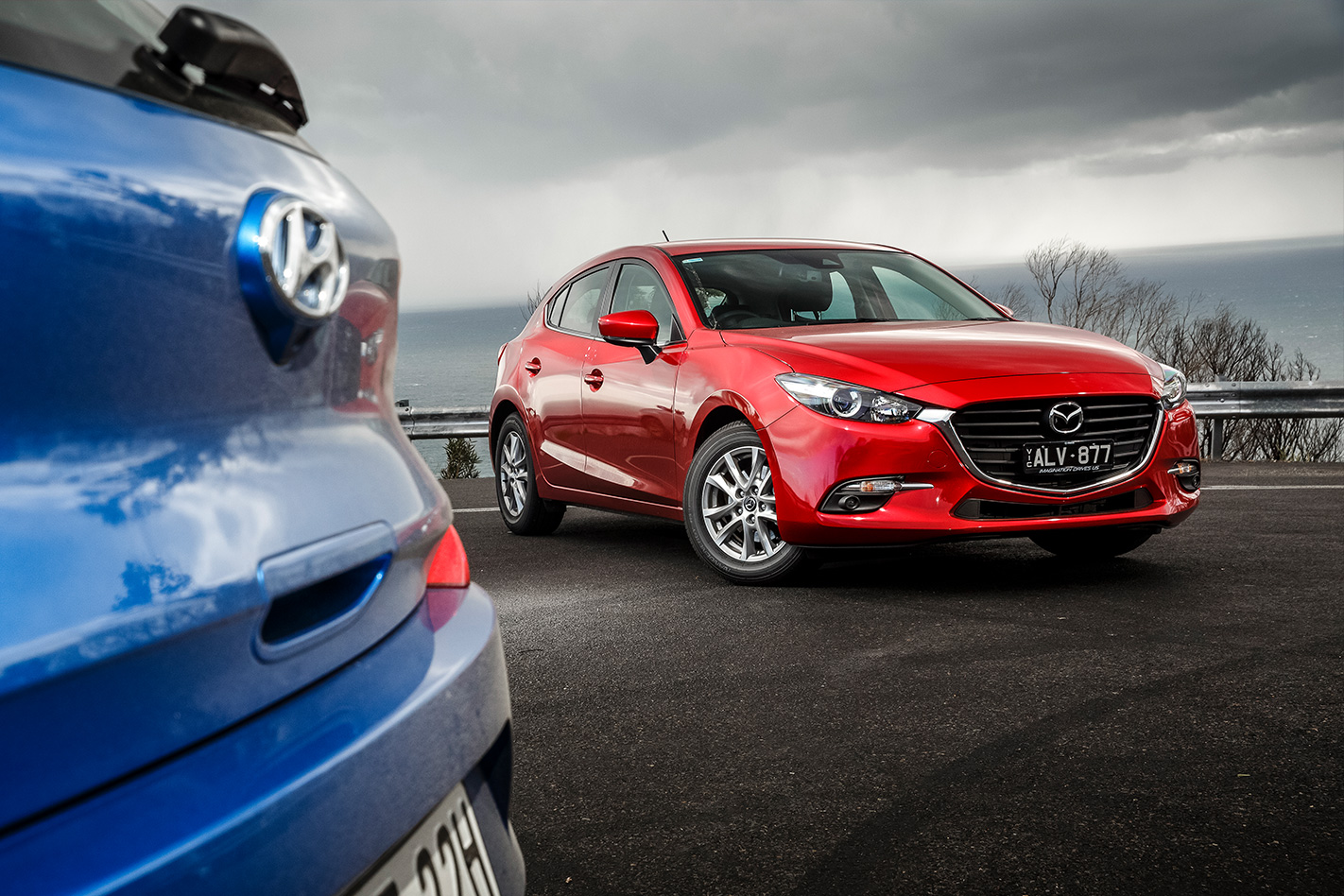
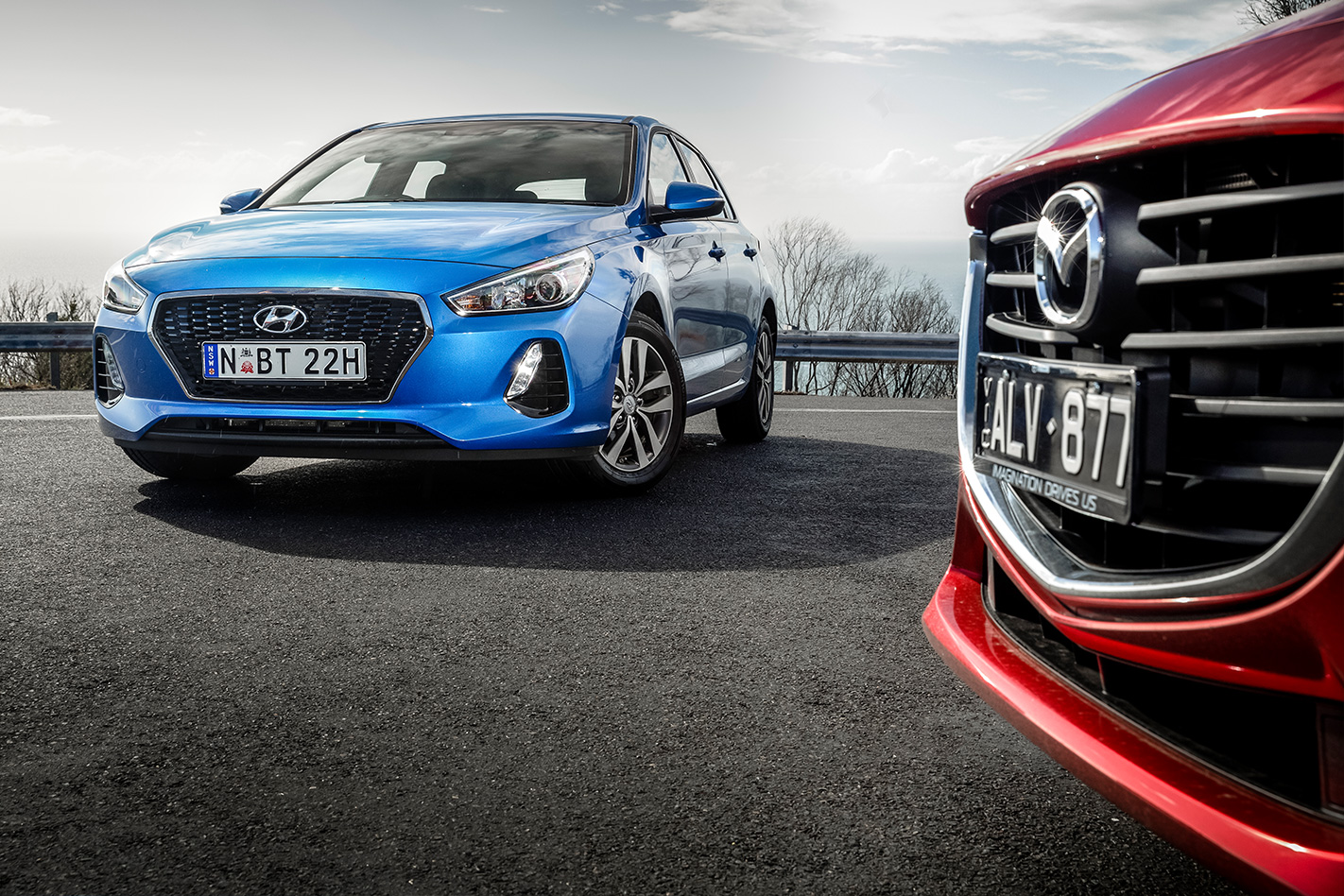
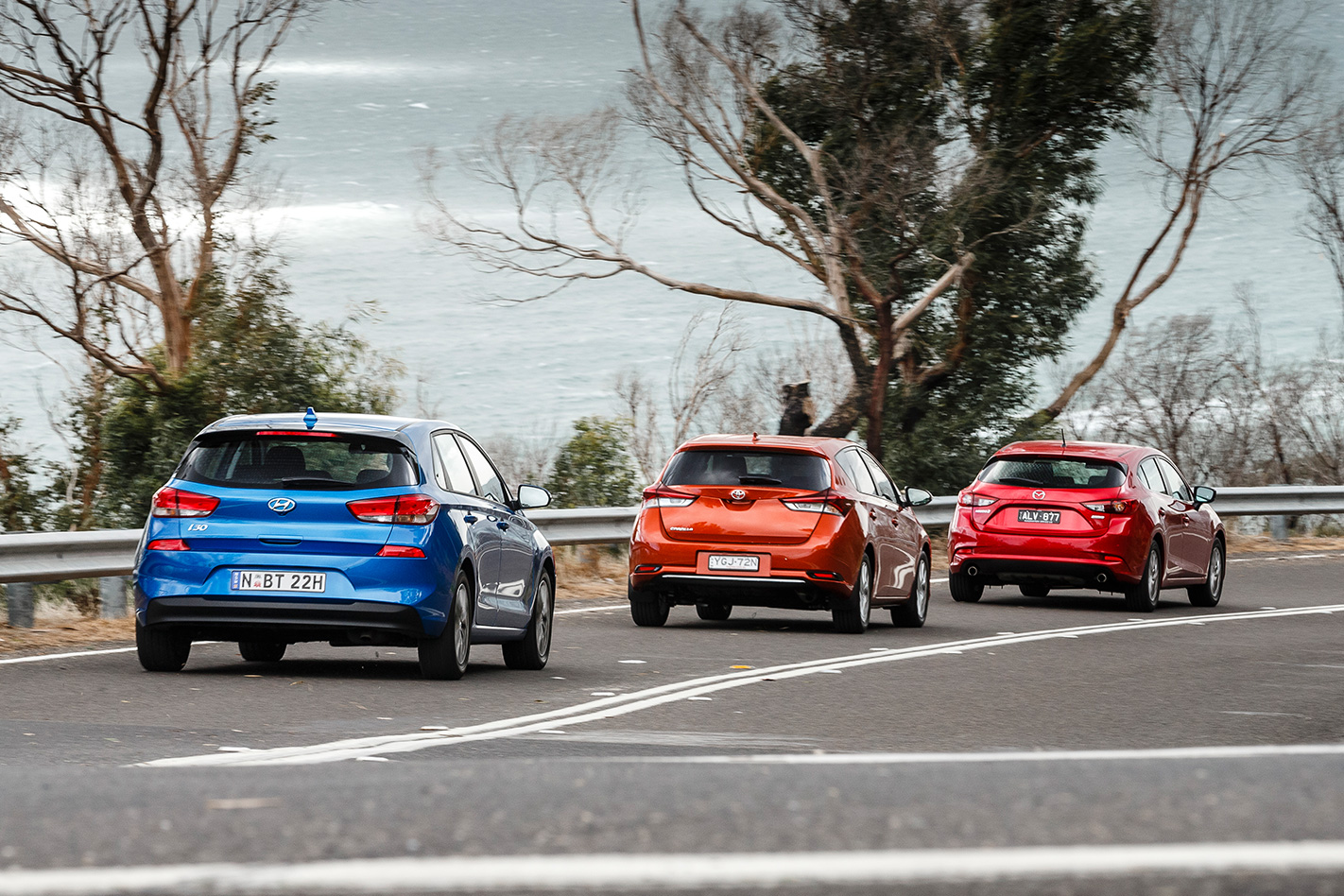
It’s a give-and-take battle inside each of these three, with the Corolla boasting the most space, the Mazda rocking the most sophisticated design and the Hyundai blessed with the most modern infotainment tech. It’s a different story on the road, with the ranking becoming clearer after spending time behind the wheel.
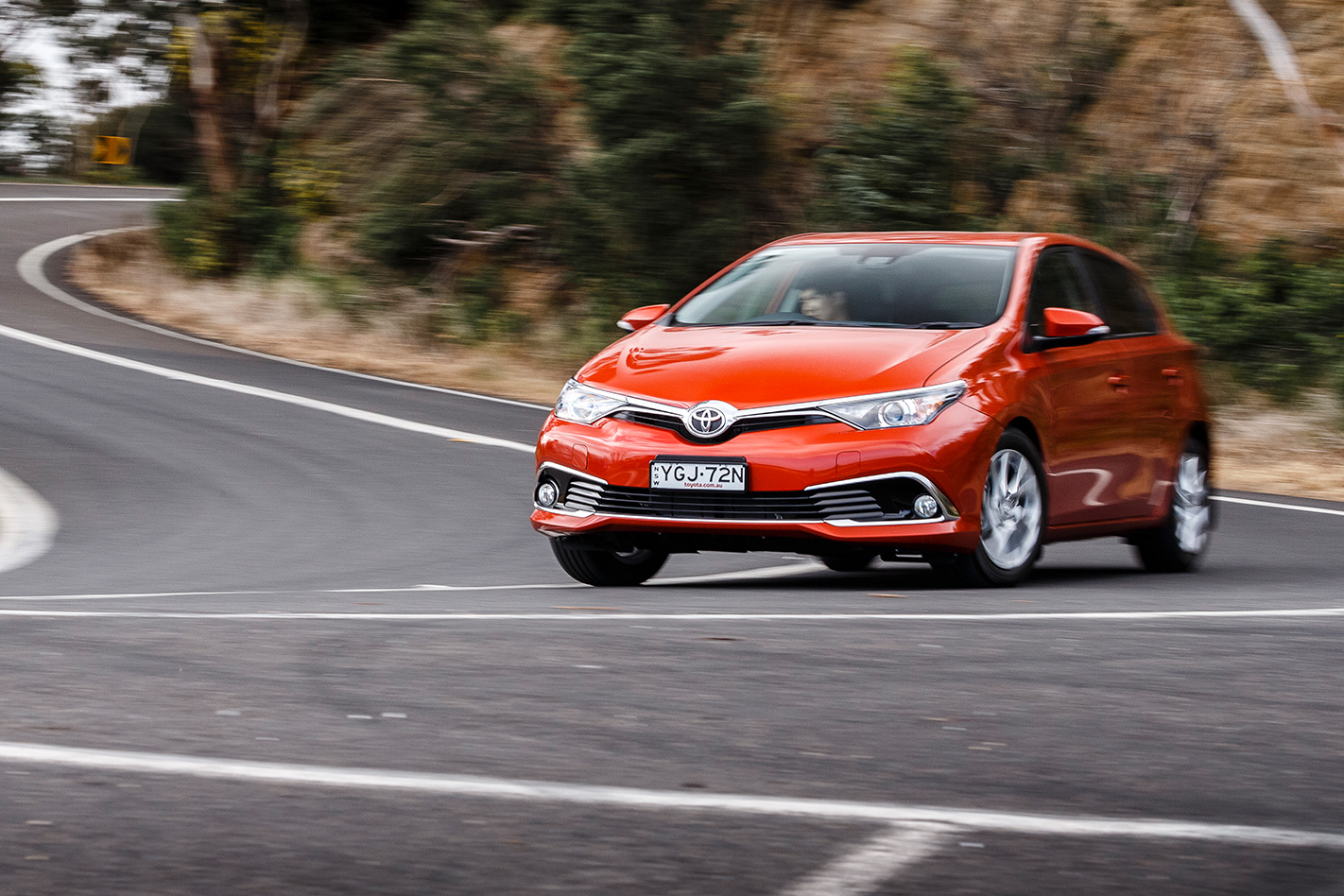
While the Corolla doesn’t completely shame itself around corners, it’s clearly not tuned with fast direction-changes in mind. Its slow steering requires a lot of input to get it to turn in, and though the Toyota is the only one in the group not to roll on efficiency-biased rubber (instead being shod with more upmarket Bridgestone Turanza ER300s), it was the most prone to understeer.
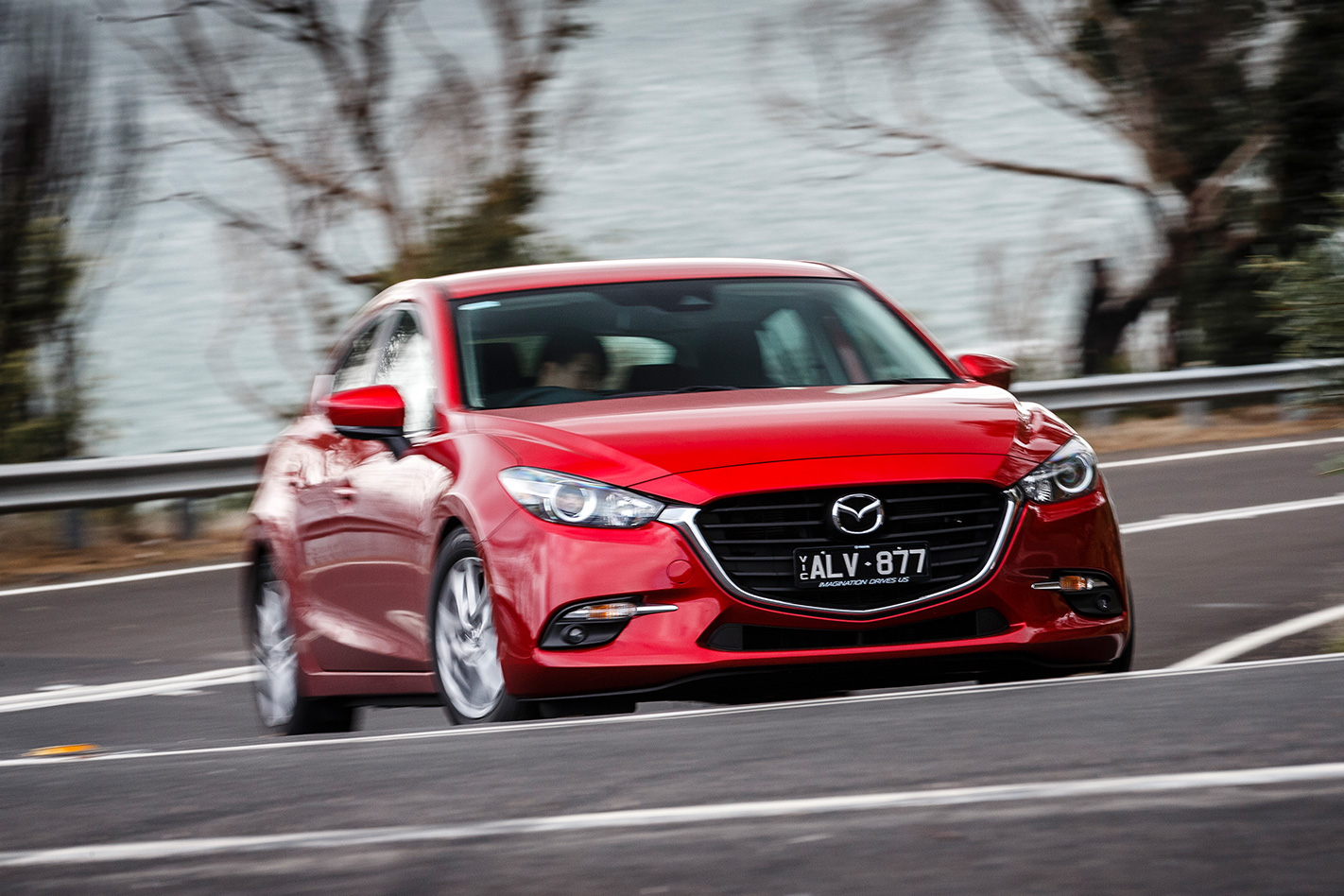
The Mazda 3 is commendably consistent when it comes to offering a full spectrum of performance. Its focused suspension is matched by an eager high-compression engine, which relishes revs and eggs the driver on through its rorty four-cylinder exhaust note. Mazda’s paddle-shifter-equipped six-speed automatic is a pearler too, with decisive shifts and a Sport mode that actually encourages spirited driving by holding revs higher and giving preference to lower gears.
But if you want the car that is the most well-rounded and the easiest to drive, look in the direction of the i30 Active.
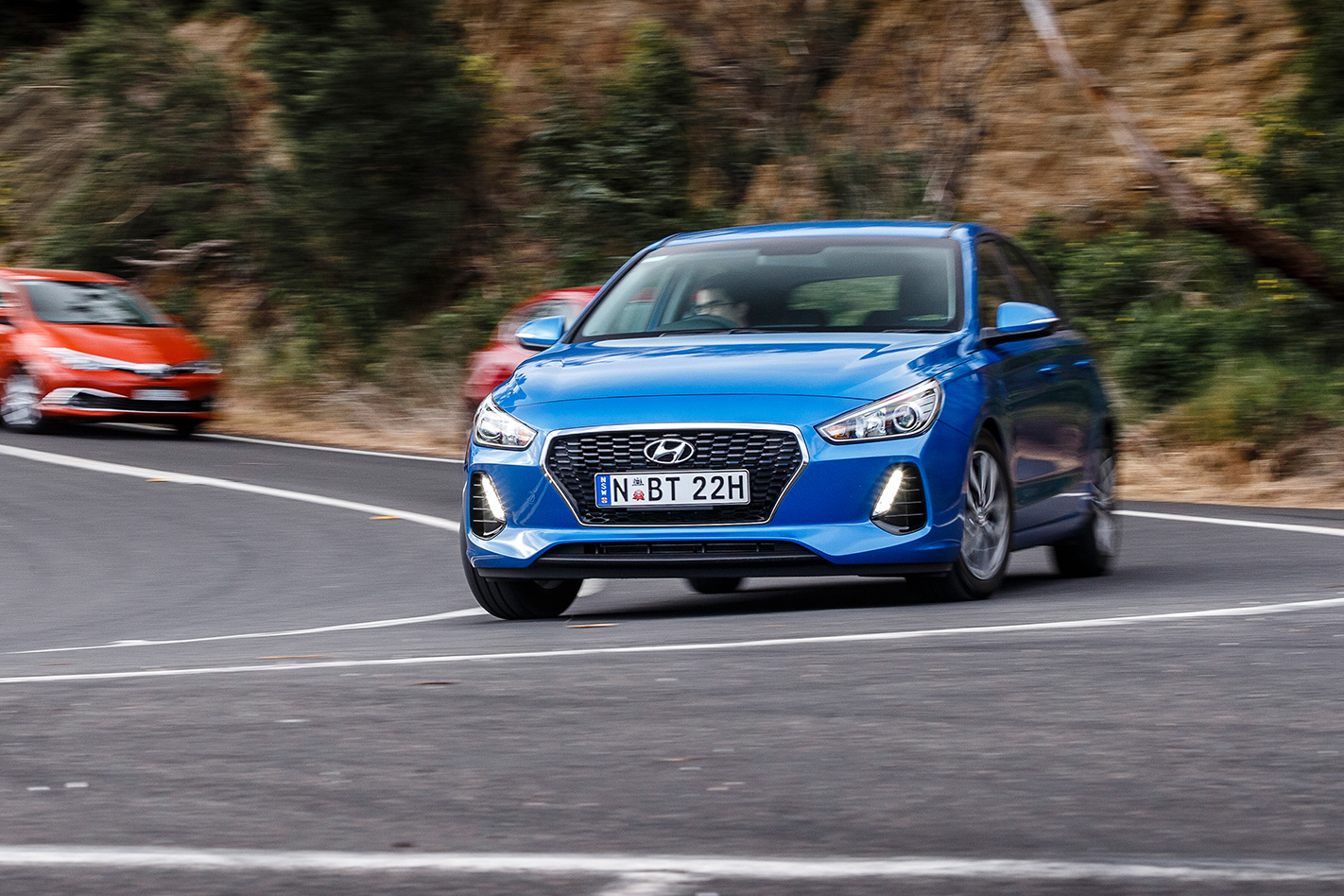
And that strong low-down urge is something the six-speed auto is eager to exploit, with a shift calibration that slips into tall gears as early as possible to keep the engine in the meat of its torque band – and keep fuel use down at the same time.
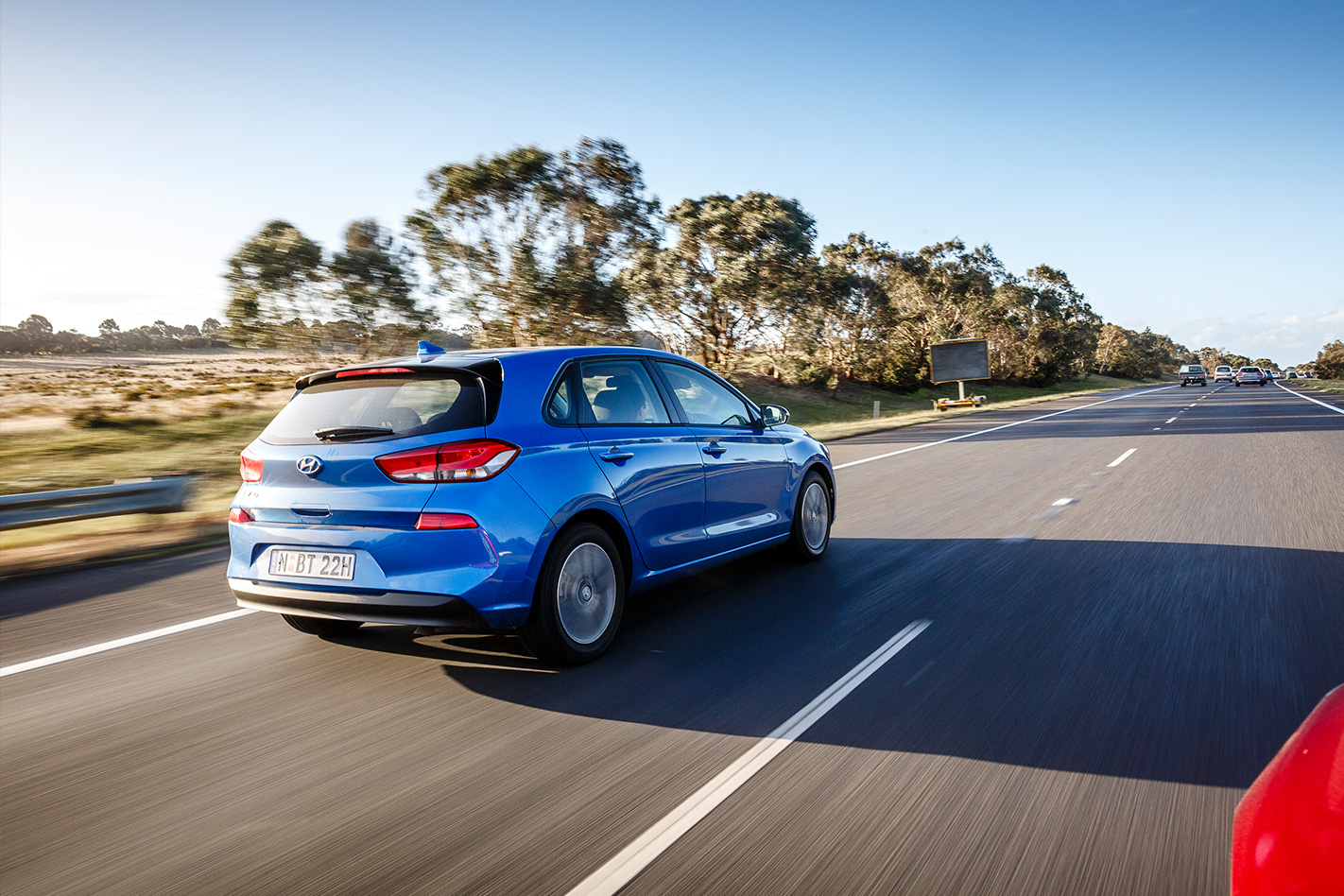
It’s not just powertrain supremacy that elevates the Hyundai. Its ride and handling offered the best compromise between ride and comfort, with some firmness at low speed giving way to a plusher ride at highway velocities. Even though its sidewalls are slightly shorter than the Mazda’s, the i30 exhibited greater pliancy over big hits. Hyundai makes a lot of noise about its locally-developed suspension calibrations, but it’s not just marketing spiel – the i30 has been adapted to Australian roads remarkably well.
The absence of autonomous emergency braking on the i30 Active’s spec list is hard to ignore, however, especially as it’s the volume-selling grade. Its bare urethane steering wheel may also have some owners cursing they didn’t spend more on the up-spec SR as well, which not only has leather on the rim but also brings AEB, a multi-link rear end AND a zesty 1.6-litre turbo. There’s a much wider gulf in specification between the base i30 and higher-grade petrols than there is in other small car line-ups, and that’s probably the Active’s greatest drawback.
But even so, when judged against its direct peers it’s the Hyundai i30 Active that’s the best of the volume-sellers. The Mazda 3 is a close second, but unfortunately for Toyota the days of the “Corolla is best” mantra are fading into distant memory.