
A massive overhaul of the World Endurance Championship (WEC) has been revealed with significant changes to the LMP1 prototype category, and an extensively revised calendar that leaves the 24 Hours of Le Mans as the final round of the series.
The changes are a reaction to the departure from the WEC of sports car racing stalwarts Audi and (at the end of this season) Porsche, leaving Toyota as the only manufacturer competing in the top level LMP1 class. Rumours suggest Toyota won’t stay if there is no serious competition from other manufacturers.
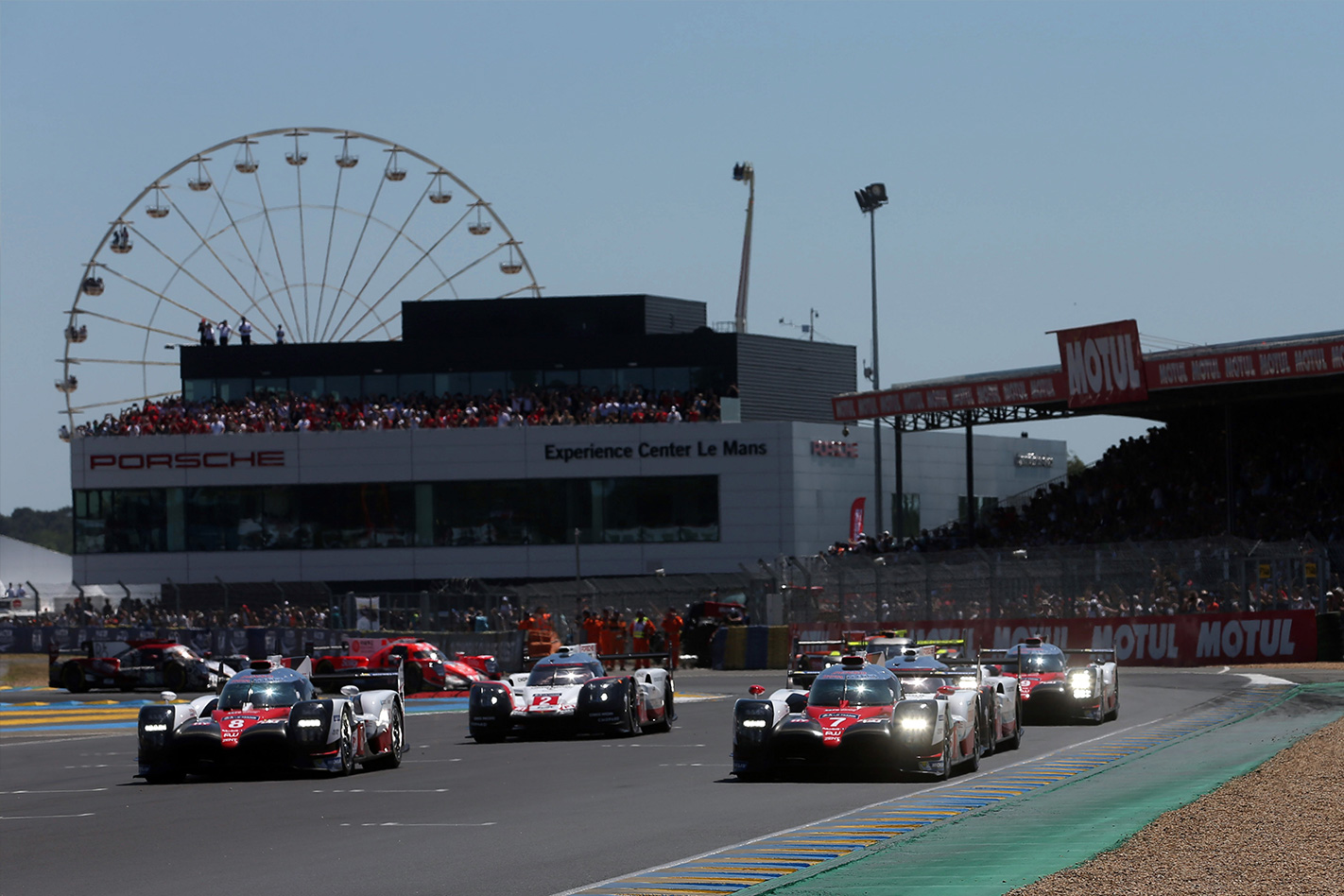
The plans include several innovative features to make the racing even closer, while also offering participants a viable and sustainable business model for the future. This means much-reduced costs.
Putting on brave faces, the FIA and ACO insist the withdrawal of certain manufacturers has offered an opportunity to accelerate the evolution process, which was already happening, and to develop an exciting and enticing vision for the future.
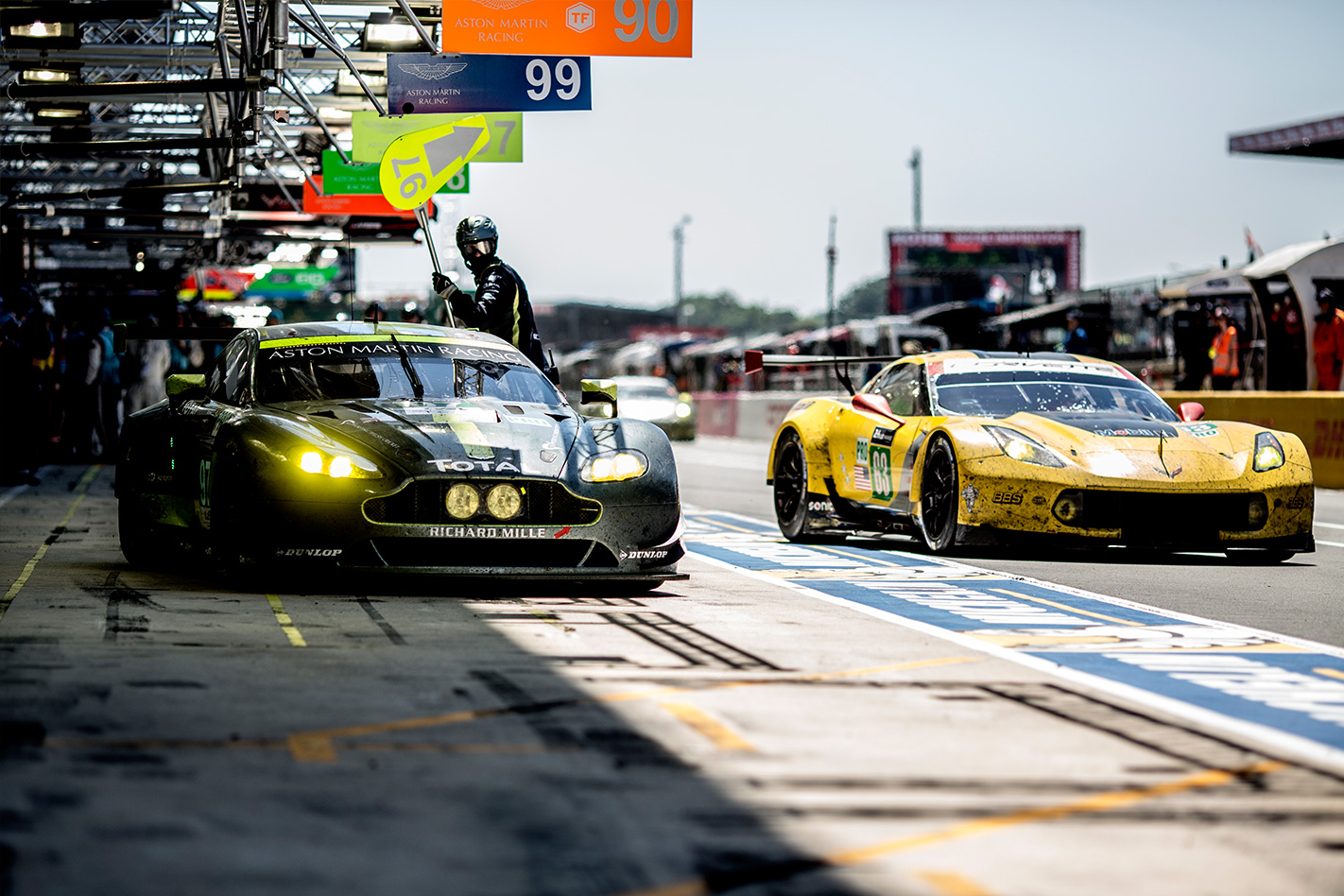
From 2018/2019, and the season following, all LMP1 prototypes will be treated equally, with performance levels of hybrid and non-hybrid (turbo and atmo) cars managed via equivalence of technologies, importantly allowing private LMP1 teams to compete with the manufacturer(s).
This means no competitor in LMP1 will be disadvantaged performance-wise (although obviously the hybrids will get tactical gains due to lower fuel consumption).
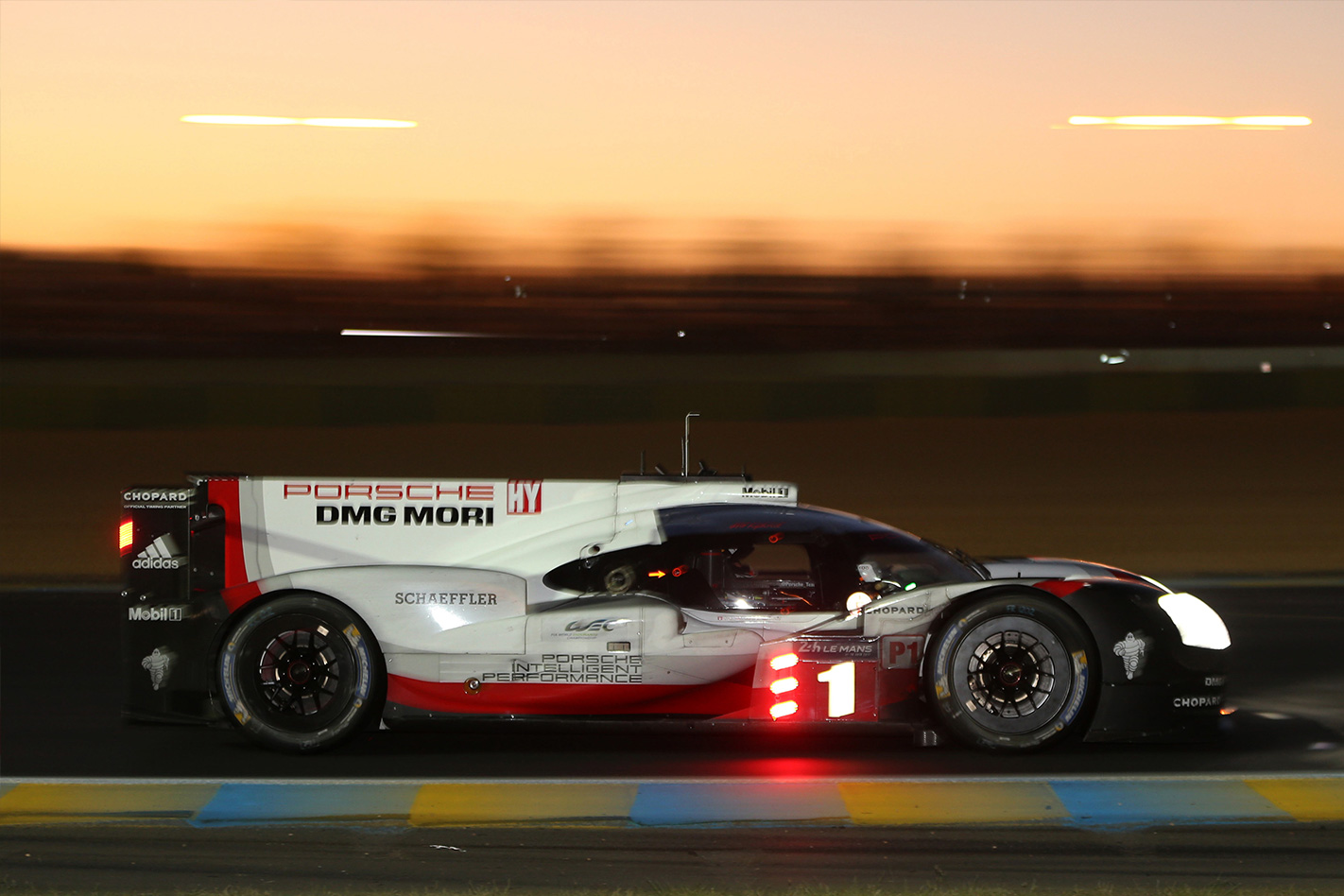
This transitional championship season includes the 6 Hours of Spa-Francorchamps twice and, even better, a double helping of the 24 Hours of Le Mans.
The 2019/2020 championship schedule will then reduce to a normal format of seven races closed by Le Mans.
WEC 2018/19 “super” calendar
• 5 & 6 April: The Prologue, Circuit Paul Ricard (FRA) **
• 4 & 5 May: WEC 6 Hours of Spa-Francorchamps (BEL)
• 16 & 17 June: 24 Hours of Le Mans (FRA)
• 13 & 14 October: 6 Hours of Fuji (JPN)
• 03 & 04 November: 6 Hours of Shanghai (CHN)
• February 2019: Place and event TBC
• 15 & 16 March 2019: 12 Hours of Sebring (USA) *
• 3 & 4 May 2019 WEC 6 Hours of Spa-Francorchamps (BEL)
• 15 &16 June 2019: 24 Hours of Le Mans (FRA)
Ricciardo overcomes huge grid penalty to finish fourth
Mercedes-Benz’s Lewis Hamilton has taken the lead in the Formula One world championship after capitalising on Ferrari rival Sebastian Vettel’s lack- lustre qualifying effort in the rain the previous afternoon at Monza.
Hamilton finished nearly five seconds ahead of Mercedes teammate Valtteri Bottas, who started fourth, while Vettel was never in the hunt, hanging on to third in his Ferrari, 36 seconds back on the winner.
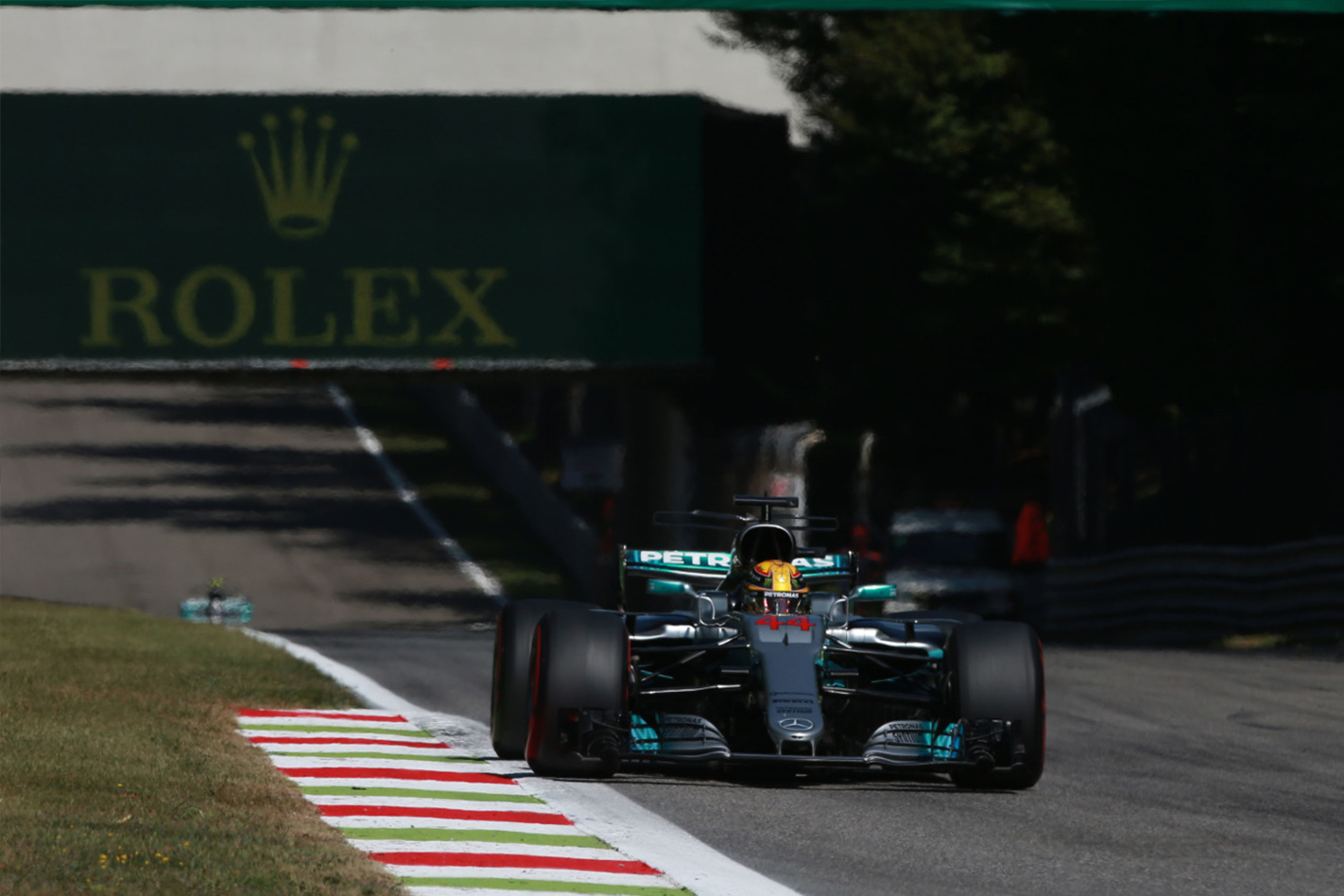
“Mercedes power is definitely better than Ferrari power,” Hamilton added defiantly, his only obvious mistake coming mid-race when, under no pressure, he slid wide and put two wheels in the dirt.
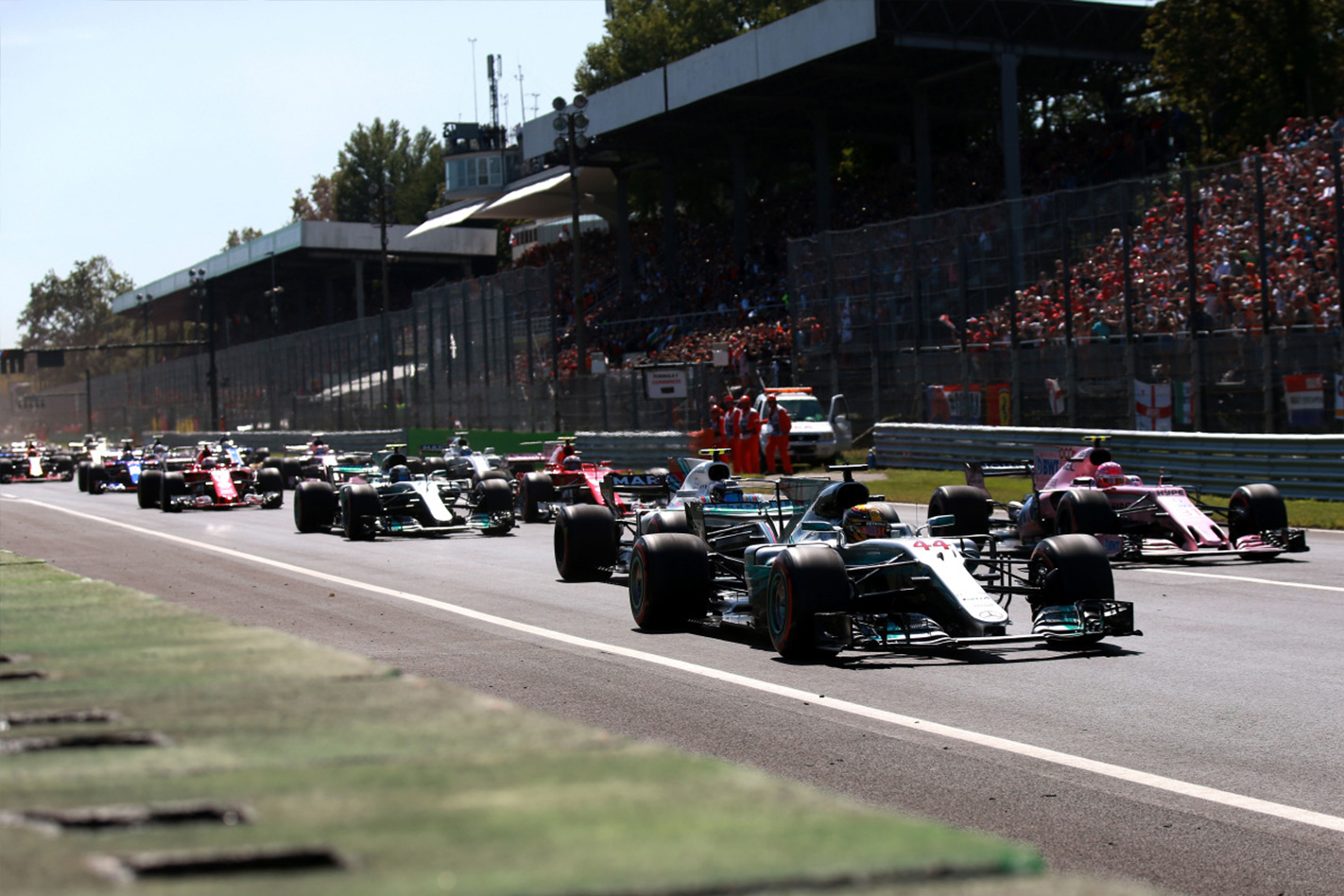
After Saturday’s relentless wet weather during qualifying shook up the pecking order, a raft of ludicrous grid penalties imposed on drivers who had key car components installed for the race were then applied.
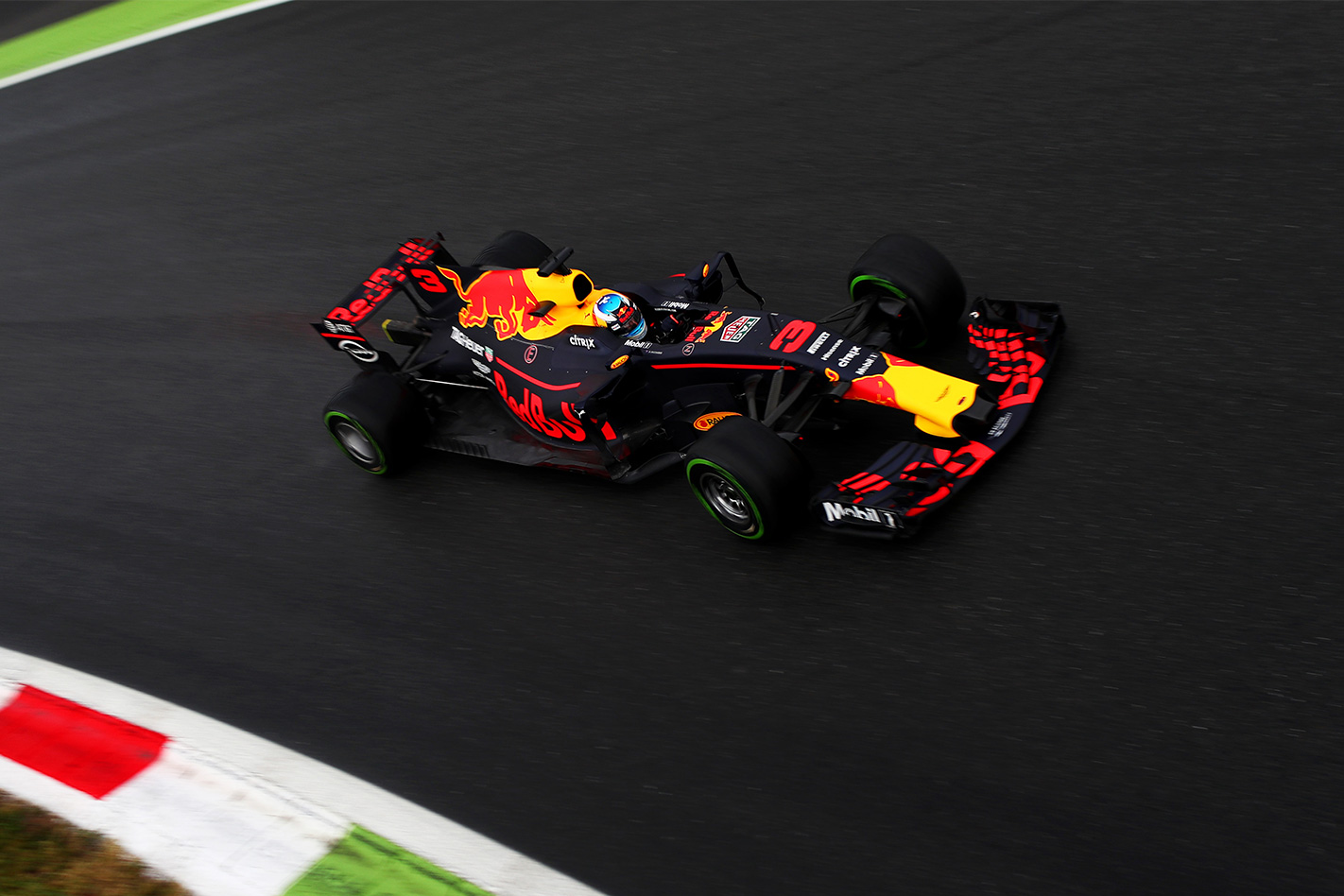
After lengthy delays and a heavy crash involving the Haas of Romain Grosjean, the first session of qualifying was halted, restarting very late (at 4.40pm), and still in rainy conditions.
Finally, Hamilton emerged on top after a truly impressive lap which got him ahead of Max Verstappen and Ricciardo, who for some time had locked out the front row.
What we could look forward to, hopefully, was Raikkonen and Vettel from fifth and sixth pushing desperately in the opening laps to get on terms with Hamilton. They also had to be leery of the inexperienced Lance Stroll, starting second in a Williams, and Esteban Ocon, third in a Force India (after the Bulls were penalised).
There was also the tasty prospect of the best overtakers in the business coming through from 13th (Verstappen) and 16th (Ricciardo).
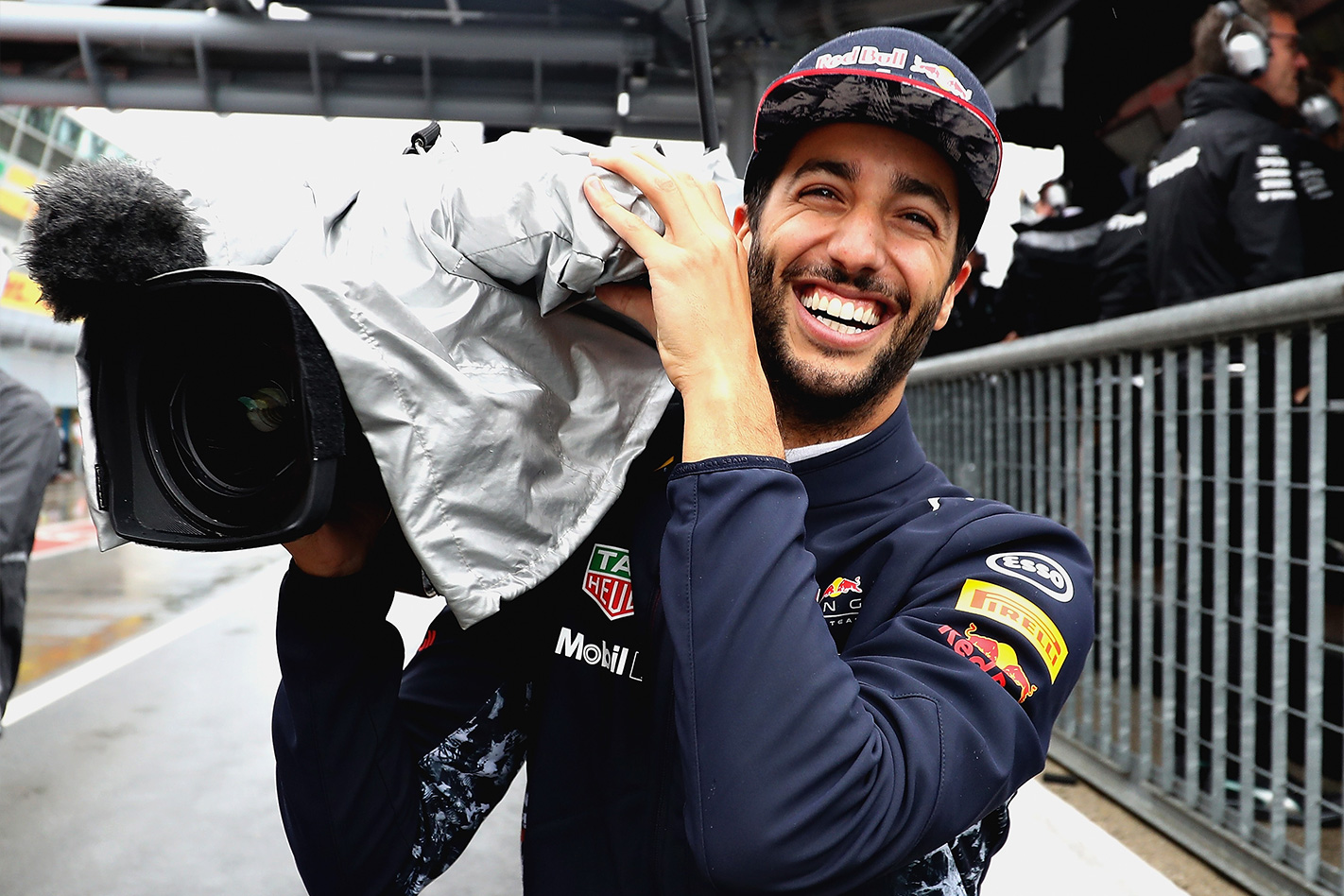
“I loved it out there today,” said Ricciardo after his stunning drive. “It was good fun. Two of my favourite races this year have been starting from the back…Silverstone and this one.
“Some good overtakes in the race kept me excited and I had some real pace in the end. I could see Seb and the thought of a podium was tempting me, so I was obviously trying to catch him right up to the end. The boys did the quickest pit stop and I also got the fastest lap so that’s very cool. You can almost call it a perfect day. We couldn’t have done much more from where we started.”
Behind Ricciardo, was Ferrari’s Kimi Raikkonen, the final victim of the Aussie’s adventurous overtaking. He started fifth and finished fifth.
Ocon was a good sixth, redeeming himself after the dramas with his team-mate at the Spa race. The two Williams drivers, Stroll and Felipe Massa were next, with Force India’s Sergio Perez ninth, and Verstappen grabbing the final point after an early stop to change a tyre damaged in a tangle with Massa.
Having won the last two grands prix, Hamilton leads the championship for the first time this season and has a slight three point margin over Vettel with seven races remaining. The next race is on the streets of Singapore, a layout that favours the Ferraris and is also good for the Red Bulls.
Wild Watkins Glen set up tense Indy Car finale
Championship leader Newgarden has a bad day at the office
Andretti Autosport’s Alexander Rossi held off Scott Dixon in a thrilling Grand Prix at The Glen 60-lap road course race, as the 2017 IndyCar Series championship tightened up with just one race remaining.
The one-time Formula One driver Rossi won the 60-lap race at Watkins Glen International from the pole, edging four-time Watkins Glen winner Scott Dixon (Ganassi Honda) by 0.9514 of a second at the flag.
Ryan Hunter-Reay finished third to give Andretti Autosport two podium finishers.
The win was Rossi’s second in the IndyCar Series after his victory in the 2016 Indianapolis 500.
Josef Newgarden, who held a handy lead going into the Watkins Glen race, finished way back in 18th after his Penske Chevrolet car was damaged in a collision leaving the pits.
The American’s lead has now shrunk to a mere three points over New Zealand’s Scott Dixon.
September 17’s double points season finale, the GoPro Grand Prix of Sonoma – another road course – will settle the championship with seven drivers still mathematically in the title hunt.
Helio Castroneves’ fourth at The Glen allowed the Penske Chevrolet driver to retain third in the championship, 22 points behind Newgarden.
Australia’s Will Power still has a chance. Sixth at Watkins Glen, he is fifth in the standings, 68 points from the lead.
Matt Campbell wins Monza Supercup
Second Porsche round victory for Queenslander
Australia’s Matt Campbell has stormed to his second Porsche Supercup race victory at Monza before returning home to drive with Shane Van Gisbergen at Red Bull Holden Racing in the Pirtek Enduro Cup.
Campbell, who won a Supercup race in Austria earlier in the season, has moved to third in the standings.
After qualifying was abandoned due to heavy rain, the Monza Supercup grid was based on Friday’s practice times. Campbell was fastest so he started the race from pole, his fourth in a dream debut season in Supercup.
The Carrera Cup Australia champion made a great start and was clear of the carnage that followed further back.
After a safety car period, Campbell again made a terrific jump and headed off to a slick win on one of the great tracks of the world.
The next Porsche Supercup race is the final twin-race event on the same card as the Mexican Grand Prix in late October.
Will Rally Australia be the title decider?
With this year’s unpredictable World Rally Championship being one of the closest in history, organisers of the final round, Rally Australia, are daring to hope that their event could be the title decider.
New-generation rally machines from Toyota, Hyundai, M-Sport Ford, and Citroën – faster, louder, and more spectacular-looking – have all had moments of glory this season, providing a tight championship tussle that has thrown up a variety of winners.
With three rounds remaining, the British-based M-Sport squad has edged clear in both the drivers’ and constructors’ title races after a strong performance at the Rally Germany, when Ford Fiesta drivers Ott Tänak and Sébastien Ogier, claimed victory and third place respectively.
With toughest title rival Thierry Neuville (Hyundai) experiencing a forgettable rally on strangely muddy tarmac in Germany, Ogier pulled 17 points clear at the head of the drivers’ standings, while a combined haul of 40 points increased M-Sport’s advantage in the teams’ championship to 64 points.
With Tänak mathematically still in the title chase, M-Sport boss Malcolm Wilson is worried about complacency hurting his squad.
“Historically, we have been in this position before and ended up losing it,” he noted.
Coming up next is Rally Catalunya on tight Spanish tarmac (October 5-8), then the dirt Wales Rally GB (October 26-29), before the fastest rally drivers and cars on the planet head to the New South Wales Coffs Coast for the final of the 2017 FIA World Rally Championship on November 16-19.
As one of Australia’s biggest motor sporting events of the year, it will attract a global television audience to follow the action over the forest, rural, and city special stages.
On the 25th anniversary of WRC in Australia, Rally Australia has entries from a bunch of local heroes from Australia and New Zealand striving to make an impact alongside the big stars in the FIA World Rally Championship.
Five of the region’s fastest young talents are keen to benchmark their ability and enjoy the chance to be part of a world championship event in their own backyard.
Australians Harry Bates, Molly Taylor, Brendan Reeves, and Nathan Quinn, and New Zealander Mike Young confirmed their entry plans. “They are proof there’s enormous talent in rallying in Australia and New Zealand,” said Clerk of Course. Harry, Molly, Brendan, Mike, and Nathan are all at different stages in their WRC journeys, but hopefully the experience at Rally Australia will turbo-charge their paths.”
The beauty of rallying is its accessibility – for spectators and competitors alike.
While it is impossible for anyone, even those with an international racing licence, to buy a car and hit the track in Supercars or Formula One, rallying even at the world championship level is open to any appropriately licensed driver/co-driver with a suitable rally car. I know. As a complete rally novice, with the similarly inexperienced co-driver Nick Senior, I did it in the Rally Australia round of the 1989 WRC on the west coast. We used a front drive Toyota Celica press car with a roll cage and safety equipment hastily added and the suspension beefed up. There we were, complete novices alongside Juha Kankkunen, Carlos Sainz, Markku Alen, and the rest. After Greg Carr took pity on us and sold us a copy of his pace notes, we headed off on our magical mystery tour. In a result more down to good luck than skill, we survived to finish 23rd outright.
So, yes, anyone can compete in a WRC round…
Hyundai’s factory driver Hayden Paddon is a great example of a driver from Down Under making it to the world stage. New Zealander Paddon broke through to win the Rally Agentina round of the WRC last year. Thousands of supporters will be in Coffs to watch Paddon try to win the nearest event to a home rally, on his favourite surface.
After a colourful free rally show and ceremonial start in the centre of Coffs Harbour on Thursday November 16, the 13th and final round of the WRC will cover a total of 318km across 21 competitive stages until the Sunday afternoon finish.
Friday will test drivers with all-new stages, re-located to the north of the coastal city service park. The Super Special Stage on the Coffs Harbour waterfront on Friday and Saturday nights – featuring actor and rally fan Shane Jacobson as guest commentator – will incorporate a new roundabout obstacle and an extra jump, giving spectators longer views of the cars.
A new Saturday afternoon stage, Argents Hill, will be the first of two televised live around the world. On Sunday, a 90-minute live broadcast from the Wedding Bells Power Stage will close the event and the 2017 season.
Dedicated spectator zones will be provided at several locations each day, offering excellent, safe vantage points and full facilities. Shuttle buses will be available from Coffs Harbour, or fans will be able to follow directions on Rally Australia’s free mobile app.
Nissan’s line of ‘Zed cars’ has become somewhat iconic, with the Datsun-badged classics appreciating faster than they’ll actually go, and the current Zed still round after an almost 9 year lifespan.
As the 370Z Nismo hit Aussie shores, we also discovered another modern Zed which was worth mentioning – the first production 350Z built. And it’s for sale. In Texas.
It’s was built in 2002 and has, in the 15-plus years it’s been around, only travelled 173 miles, or 278 kilometres.
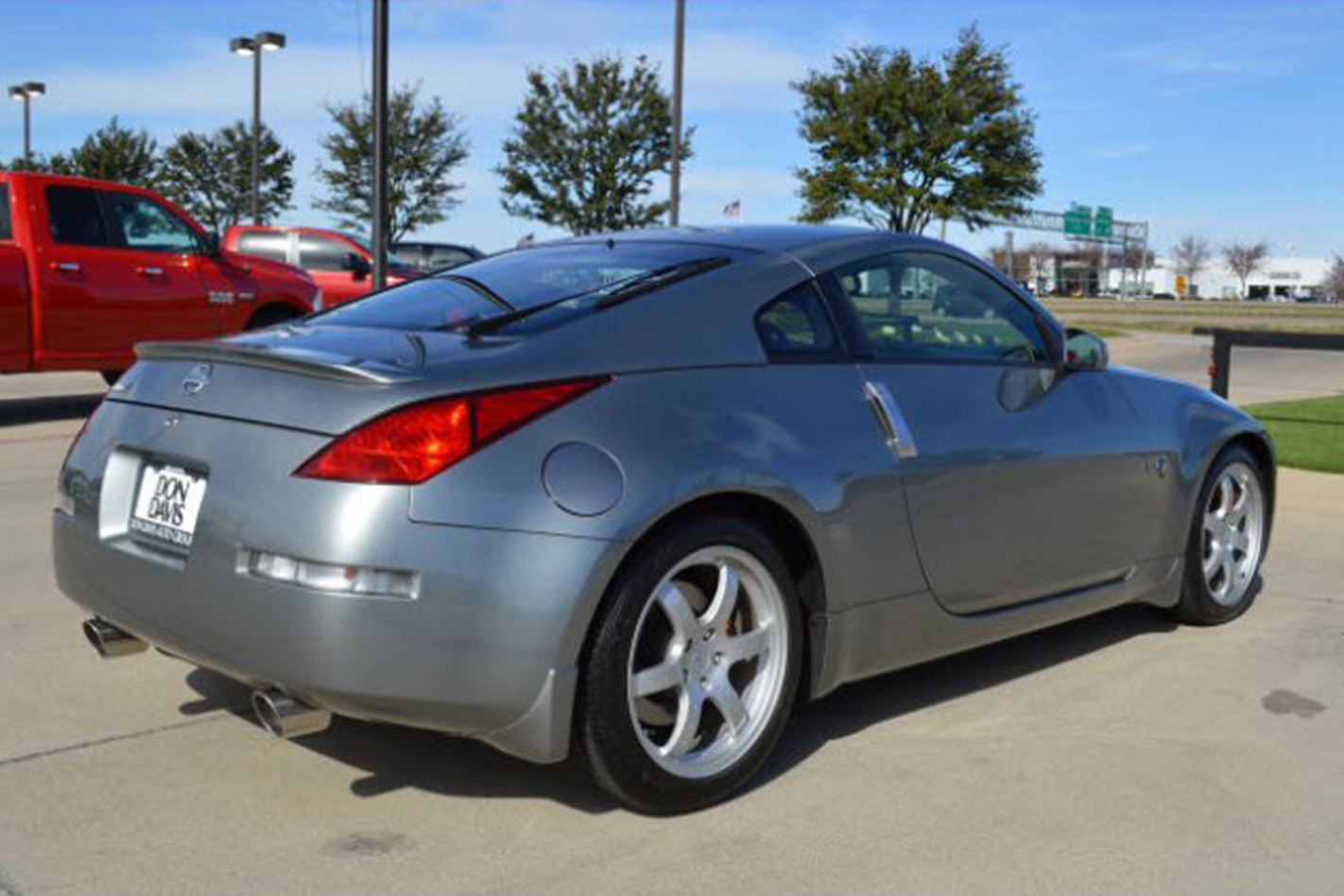
The dealer selling the car, Don Davis Nissan, says it’s been garaged its whole life and has “been very well taken care of.”
It’s not only special because it’s the first and in such good condition. It’s also a top-spec track package-equipped car.
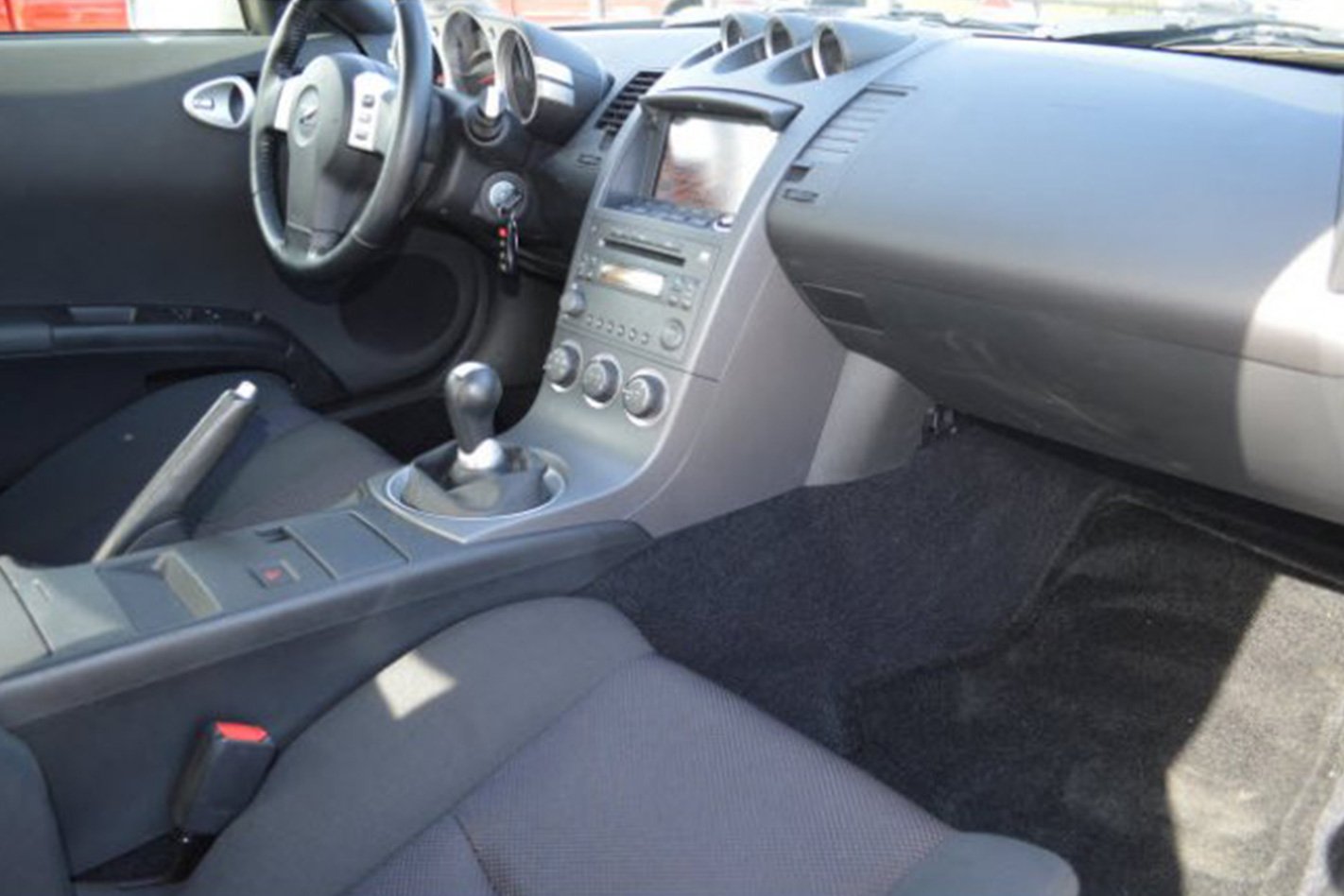
Despite VIN #0001 having barely been driven, it’s said to have a well-documented history, not that there would be a whole lot to document.
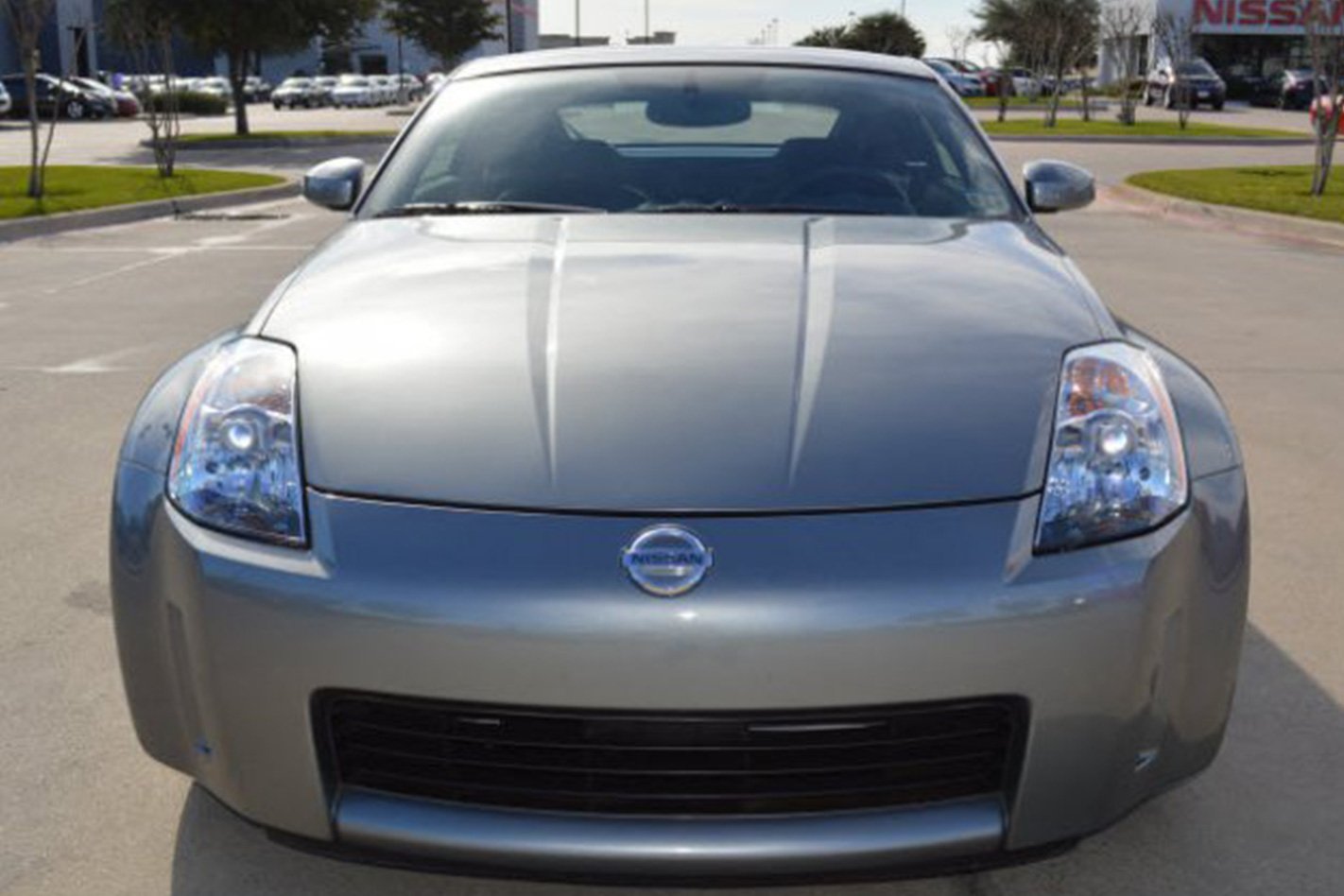
If you reckon importing a near-new 250Z could be for you, take a look at the listing from Don Davis Nissan.
WITH the Ford Falcon already gone and the V8-toting, rear-driven Holden Commodore not long for this world, the battle between Red and Blue is about to undergo a paradigm shift.
While the sales war has shifted from big sedans to dual-cab utes, (where the Ford Ranger currently trounces the Holden Colorado), the enthusiast battleground has moved to two-door coupes. Currently, Ford dominates that territory with its seemingly undefeatable Mustang.
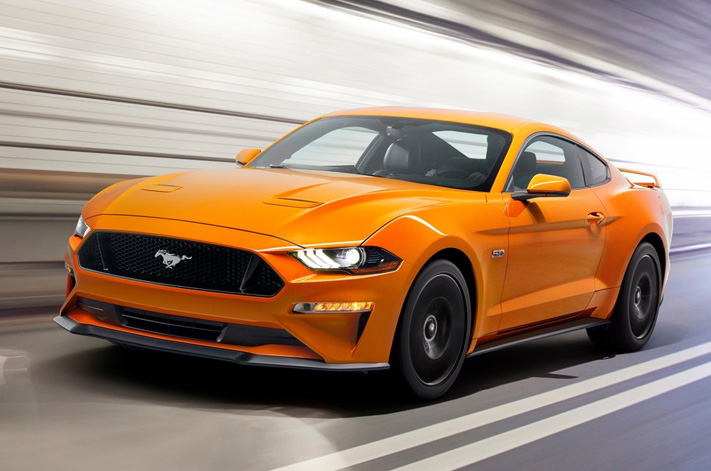
Wheels has it on good authority that both the Chevrolet Camaro and Corvette are heading for our shores in volumes greater than that achievable by the handful of grey importers that specialise in right-hook conversions of American muscle.
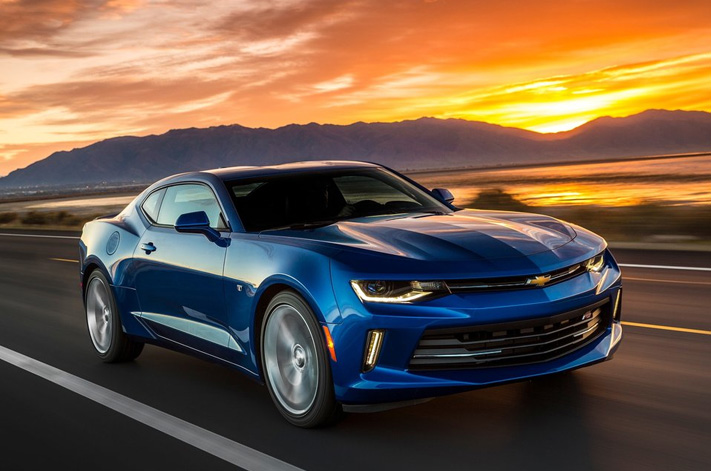
We’ll ignore the Corvette and its likely six-figure pricetag for the moment and focus on the more proletarian Camaro, and see how it’ll likely stack up against its natural rival, the Ford Mustang.
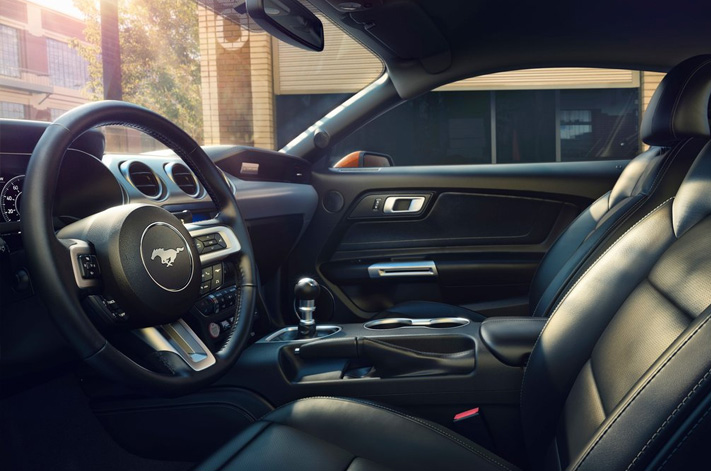
So, which would you rather? A 2018 Ford Mustang or Chev (Holden) Camaro. It’s a question that Aussie V8 fans will soon be debating, and a question that could even see defections from one camp to the other.
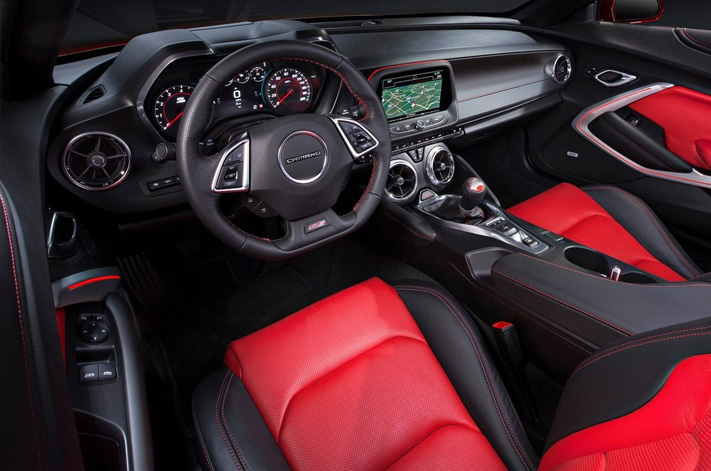
Here are the numbers.
Engine
Mustang: 5.0-litre naturally-aspirated V8
Camaro: 6.2-litre naturally-aspirated V8
Power
Mustang: TBA (current-gen: 306kW)
Camaro: 339kW
Torque
Mustang: TBA (current-gen: 530Nm)
Camaro: 616Nm
Transmissiom
Mustang: 6-speed manual / 10-speed automatic
Camaro: 6-speed manual / 8-speed automatic
Performance
Mustang: 0-97km/h (60mph) – 4.0secs
Camaro: 0-97 (60mph) – 4.0secs
Price
Mustang: TBA (current V8 fastback: $54,990)
Camaro: Estimated approx. $90,000
So, which would you rather have? Tell us in the comments below!
Audi’s RS5 Coupe is set to arrive in Australia in December with a base price of $156,600.
The two-door Gran Turismo will be the first RennSport model to sit on the new MLBevo architecture, which brings a new suspension layout for more dynamic handling that’s assisted by a 60kg weight loss over the previous generation.
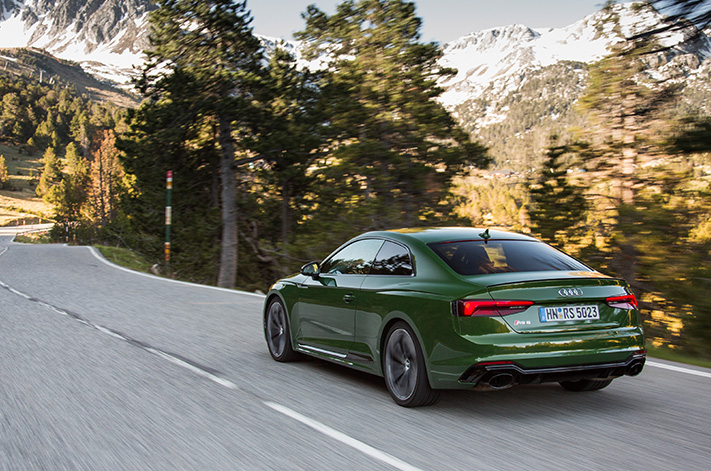
The powertrain is all new too, with the 2.9-litre twin-turbo V6 engine that produces 331kW and 600Nm (170Nm more than the previous model’s V8 donk) and is mated to an eight-speed torque converter automatic transmission that sends power to all four corners through a 60:40 rear-biased quattro all-wheel-drive system.
While the V6 engine is smaller than its V8 predecessor, it reaches full torque at a lower band – between 1900-5000rpm – resulting in 0-100km/h time of 3.9 seconds, 0.8 quicker than before.
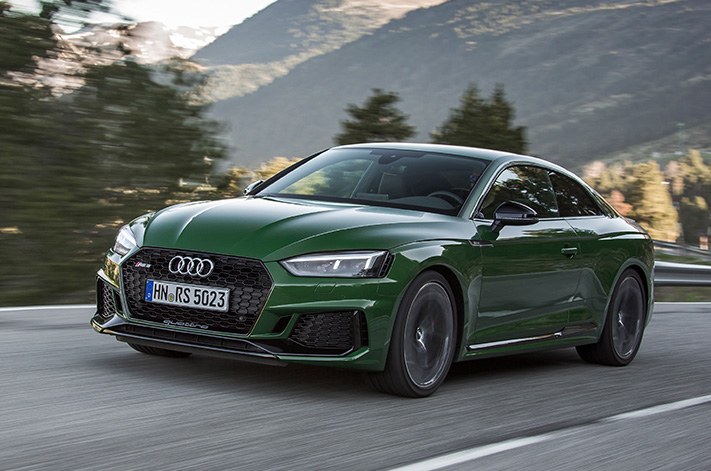
The RS5’s race inspired design include the gaping single frame hexagonal radiator grille, flanked by broad air intakes and bulging wheel arches which have been widened by 15mm but seem more pronounced thanks to its significantly lower stance.
Sporty accents include an RS-specific diffuser insert, oval tailpipes, surface-mounted spoiler lip and 20-inch wheels available in a variety of designs.
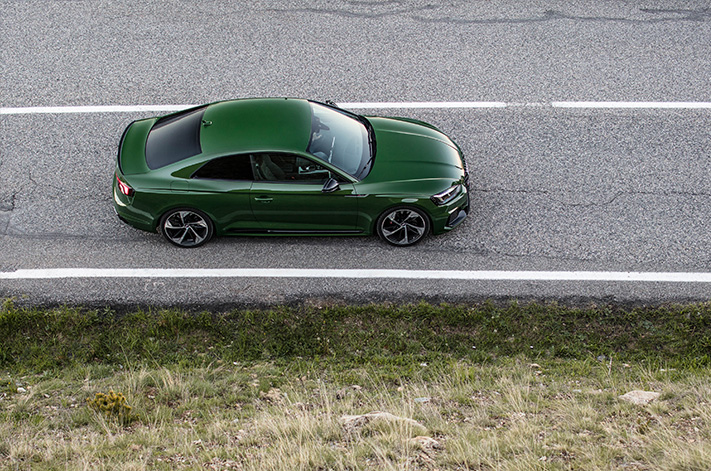
Sonoma green metallic is an exclusive paint finish available for the RS 5 Coupé.
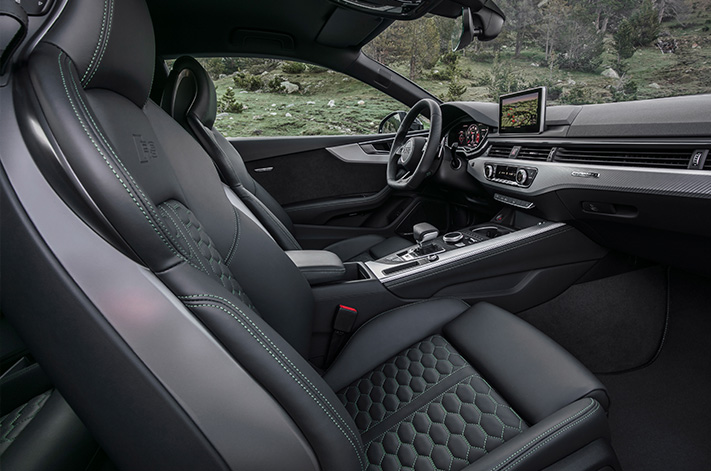
Inside, the RS5 Coupe is bathed in black with sporty details including Nappa leather RS sports seats, flat bottomed multi-function steering wheel and a smattering of RS logos on the seats, steering wheel, door sill trims and gear selector.
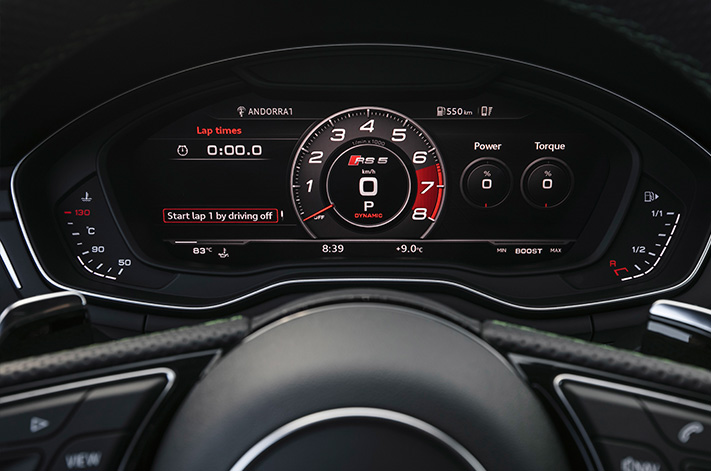
Audi ‘virtual cockpit’ cockpit, which display also features RS exclusive functions such as torque and g-forces, comes as standard kit along with digital radio and a premium Bang & Olufsen 3D sound system.
Other standard features include LED headlights, gloss black exterior styling package, panoramic glass sunroof, privacy glass and red-painted brake calipers, quattro sport rear differential, RS sports exhaust system and Dynamic Ride Control with adaptive dampers.
A GARAGE is a sacred place for a rev head. It’s a refuge to hide yourself away from the outside world, tinker on projects and give your pride and joy some love and attention.
They come in many different shapes and sizes. Some are large, some are small. Some are dark and grungy, some are so immaculate you could eat right off the floor.
And for some lucky individuals, their garages look just like these: garages that the rest of us can only aspire to.
Auto Motor Plex
Housing developments are pretty bland affairs for motoring enthusiasts. Oversized cookie cutter houses built as close to each other as possible, with garages only just big enough to squeeze your school-run SUV into.
Not the Auto Motor Plex. Here, each house is designed to the unique needs of the owner and his or her cars. It’s essentially a suburb dedicated to lovers of all things automotive.
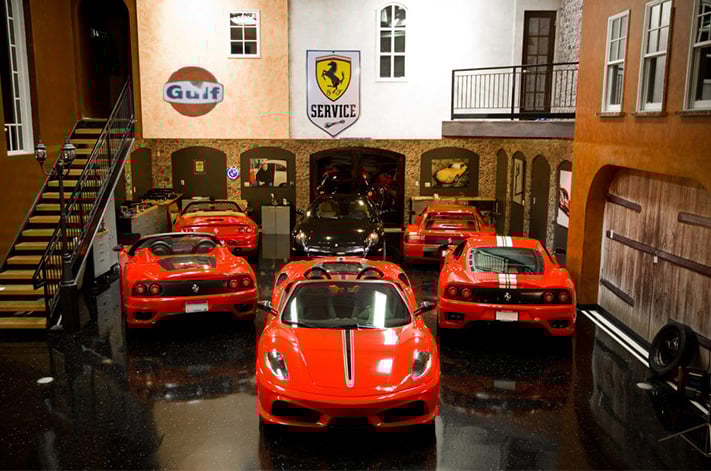
It’s probably safe to assume you won’t be getting a noise complaint for firing up your beast late at night in this neighbourhood!
Highlands Motorsport Park Apartments
Okay, so maybe having a massive garage space isn’t what you desire. Instead, you want to be able to house your race or track car, and be able to cur some laps as easily as possible.
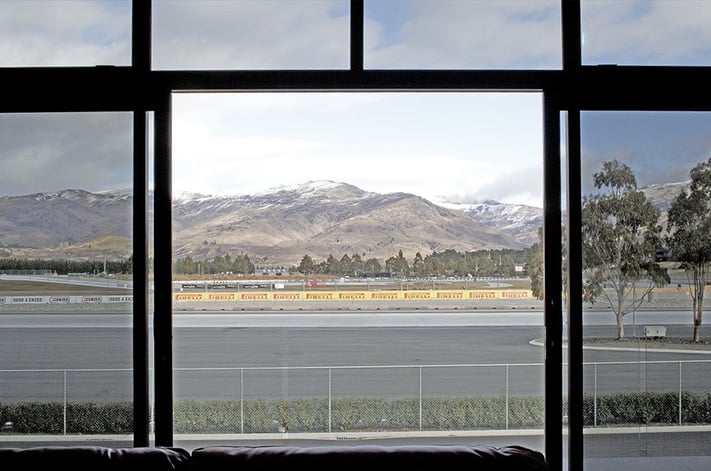
Highlands Motorsport Park is here to help. Just across the ditch in beautiful Queenstown, the complex is owned by motorsport personality Tony Quinn. For the unaware, Highlands is Quinn’s 4.1-kilometre personal racetrack, which he graciously opens to the public on occasion.
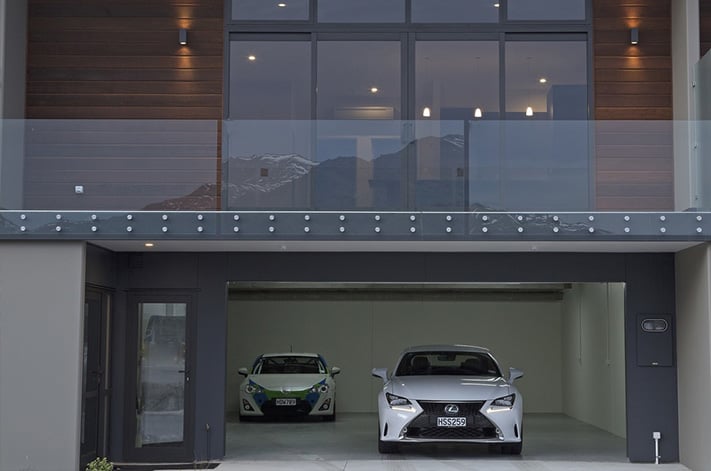
Oh, and fun fact, Mr Quinn’s personal apartment is located above the race control tower, with a Jacuzzi overlooking the track.
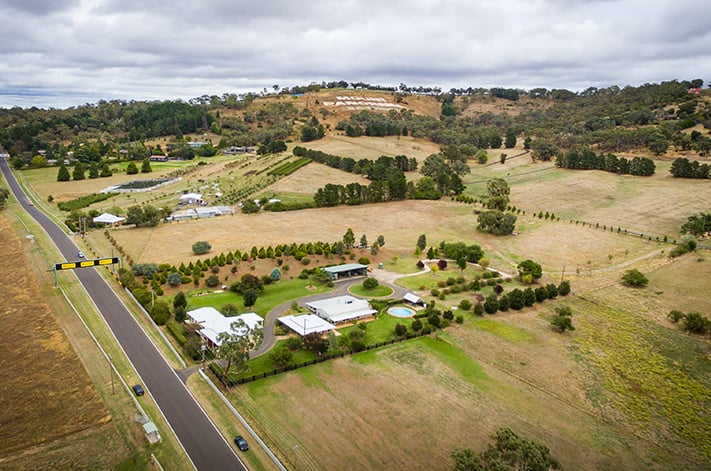
Perhaps the apartments at Highlands Motorsport Park aren’t quite roomy enough for you? Well, say hello to 505 Conrod Straight, the ultimate in housing for Aussie motorsport enthusiasts.
It was for sale earlier this year for $2.7 million. But for that, you get a pool, two separate dwellings, and a nicely sized garage. Oh, and you live on the most famous stretch of bitumen in the country.
Supercars on high
Maybe you don’t have room for a proper garage because you live in one of our bustling cities. Well, being confined to an apartment doesn’t mean you should give up on your garage gaols.
Take this lift for supercar owners for example. Now you can have a pair of cars in your living room, even when you live 30-stories up!
Built in Singapore, the lift allows owners to add the ultimate centrepiece to their apartment. However it won’t come cheap, with the units costing between $9.7 million and $24.4 million. Offt.
The Ferrari 512BB studio
Holger Schubert is an architect with a penchant for Ferraris. So to treat himself (and his car), he merged a beautifully minimalist studio apartment with a garage.
In it, he houses his Ferrari 512 BB, which the entire space is built around. Who needs wall art when you have a classic Ferrari to adore – not to mention a dwelling that is a work of art in itself.
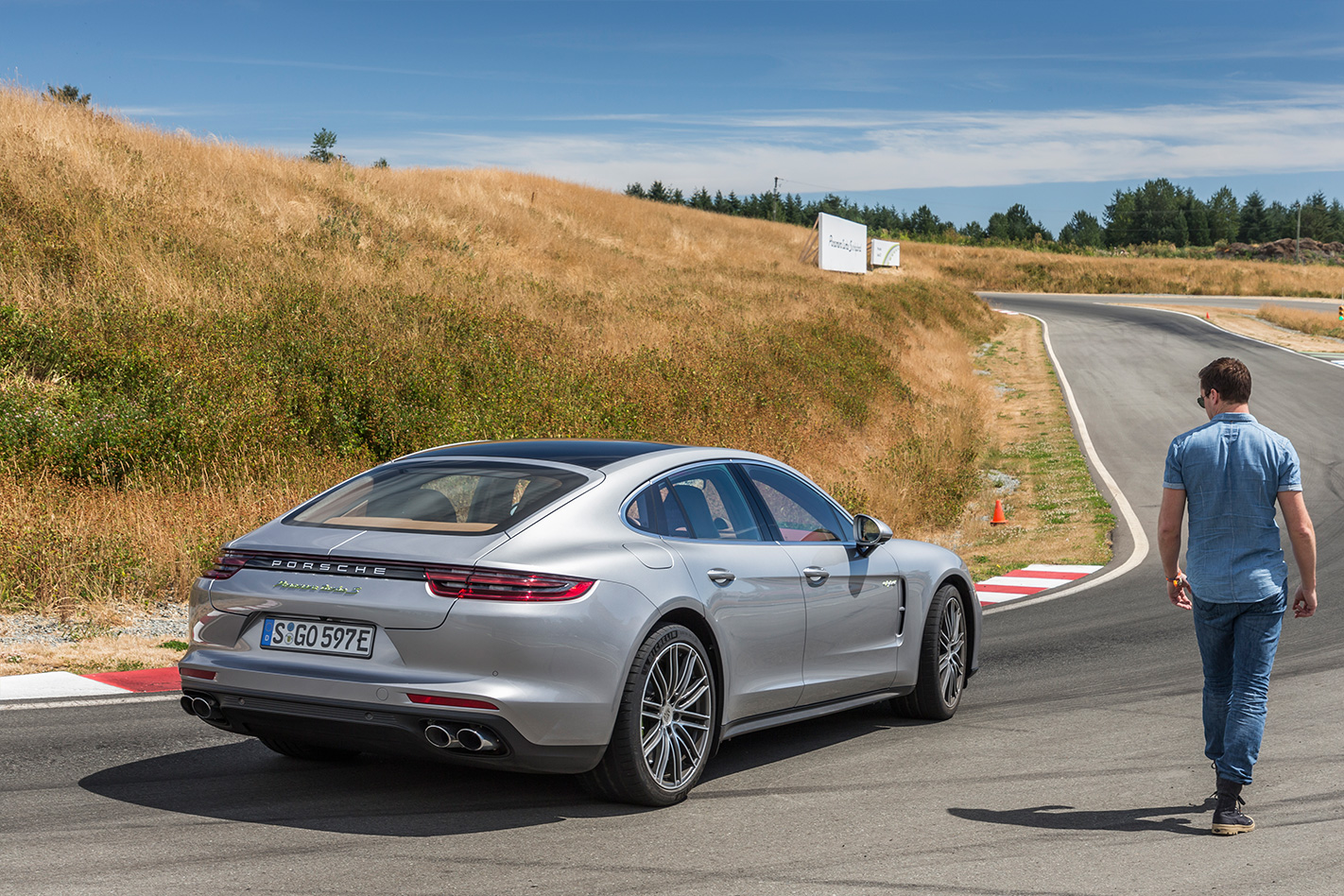
PORSCHE is not alone among revered sports car brands in taking the odd evolutionary turn that initially sits about as comfortably as a sandpaper scarf around a purist’s neck.
When the iconic 911 dropped its air-cooled engine for the 996 generation, for example, diehards ran around throwing their Nomex undies on bonfires. Then, more recently, when the entire Carrera range went turbo, Stuttgart flags were burned in the streets.
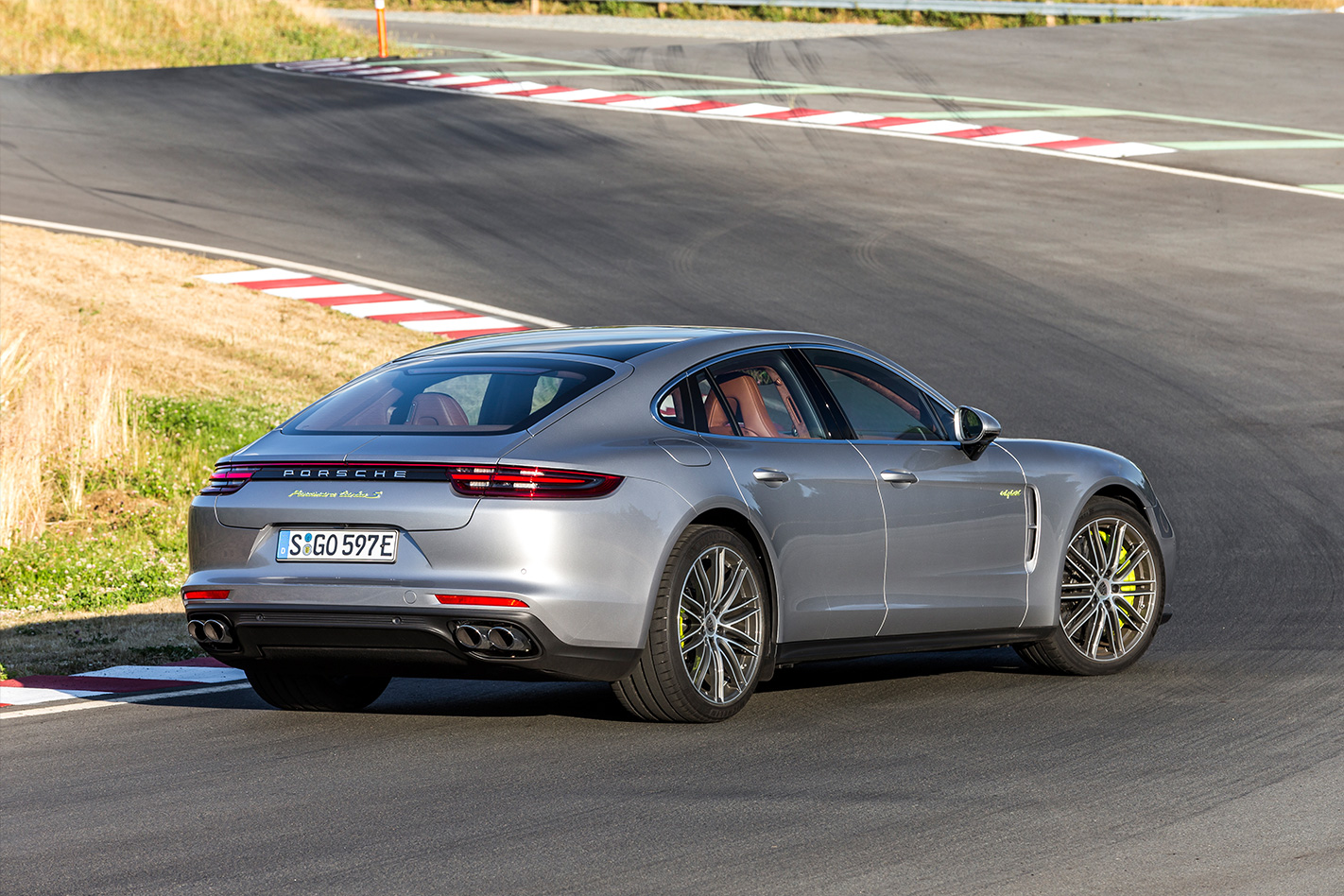
The Panamera took the converse approach by starting out with weird proportions that polarised Porsche punters right up until its replacement, thankfully, with a second-generation version that looks more like a 911 reared on a diet of growth hormones – proportionally lovely, just bigger.
This car is the new Panamera flagship; a balls out horizon eater that cements its performance credentials through the addition of an electrically assisted powertrain.
While the Panamera 4 E-Hybrid uses much the same electric hardware as this Turbo S E-Hybrid, that model plugs a gap between Panamera 4 and 4S; with its focus on minimal consumption. But with this range-topper, Porsche global communications manager Hermann-Josef Stappen explains that the company sets out to prepare fans for halo models that deliver electrifying performance from a battery.
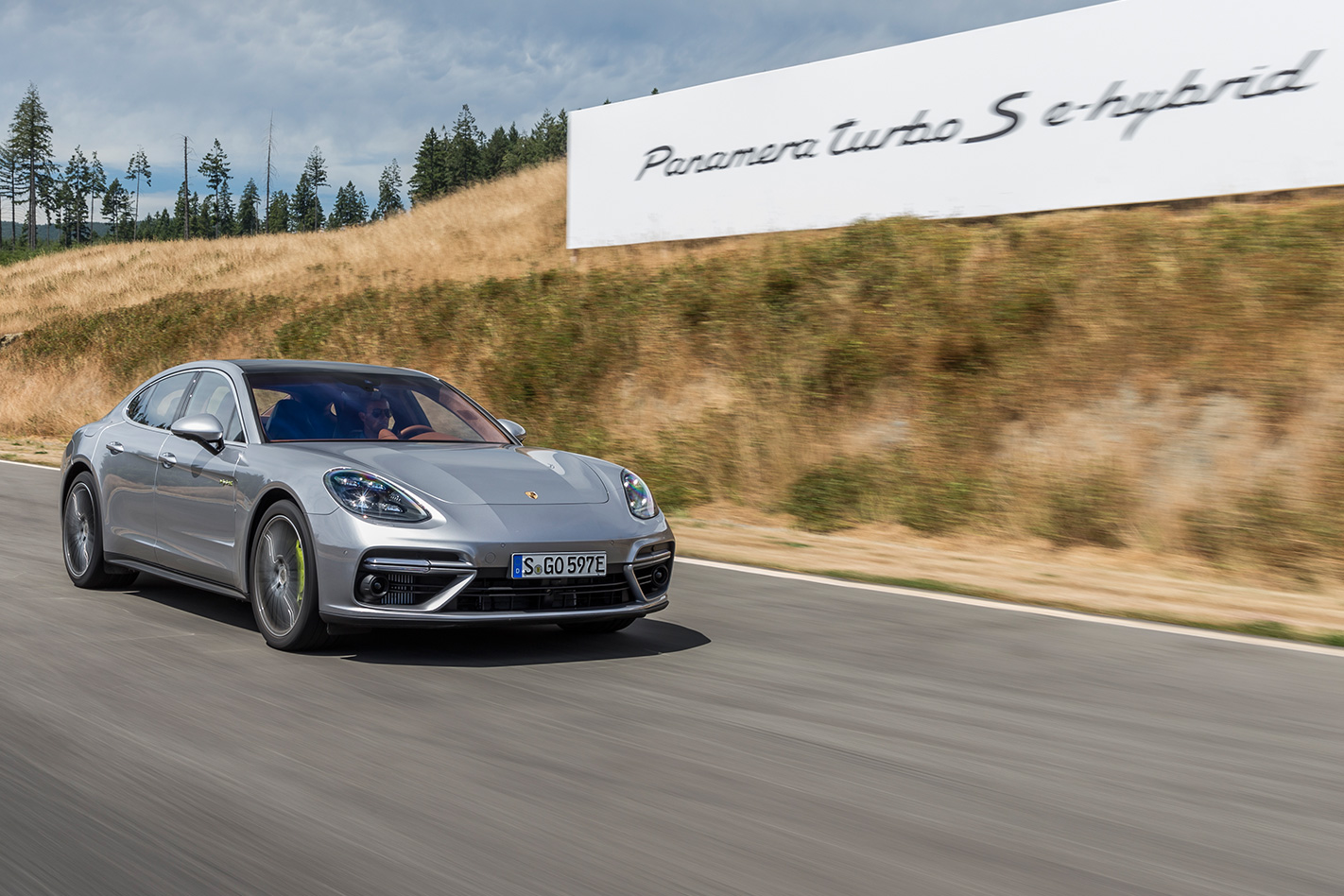
But before we get into how convincingly the Panamera Turbo S E-Hybrid delivers on its high-performance promise, let’s look at the hardware that sets it apart from the regular Turbo. In the combustion-only car, a 4.0-litre turbo V8 sends 404kW and 770Nm to all four wheels, but the hybrid Turbo S adds to this with a 100kW motor incorporated into the eight-speed dual-clutch gearbox, drawing from a 14kWh lithium-ion battery.
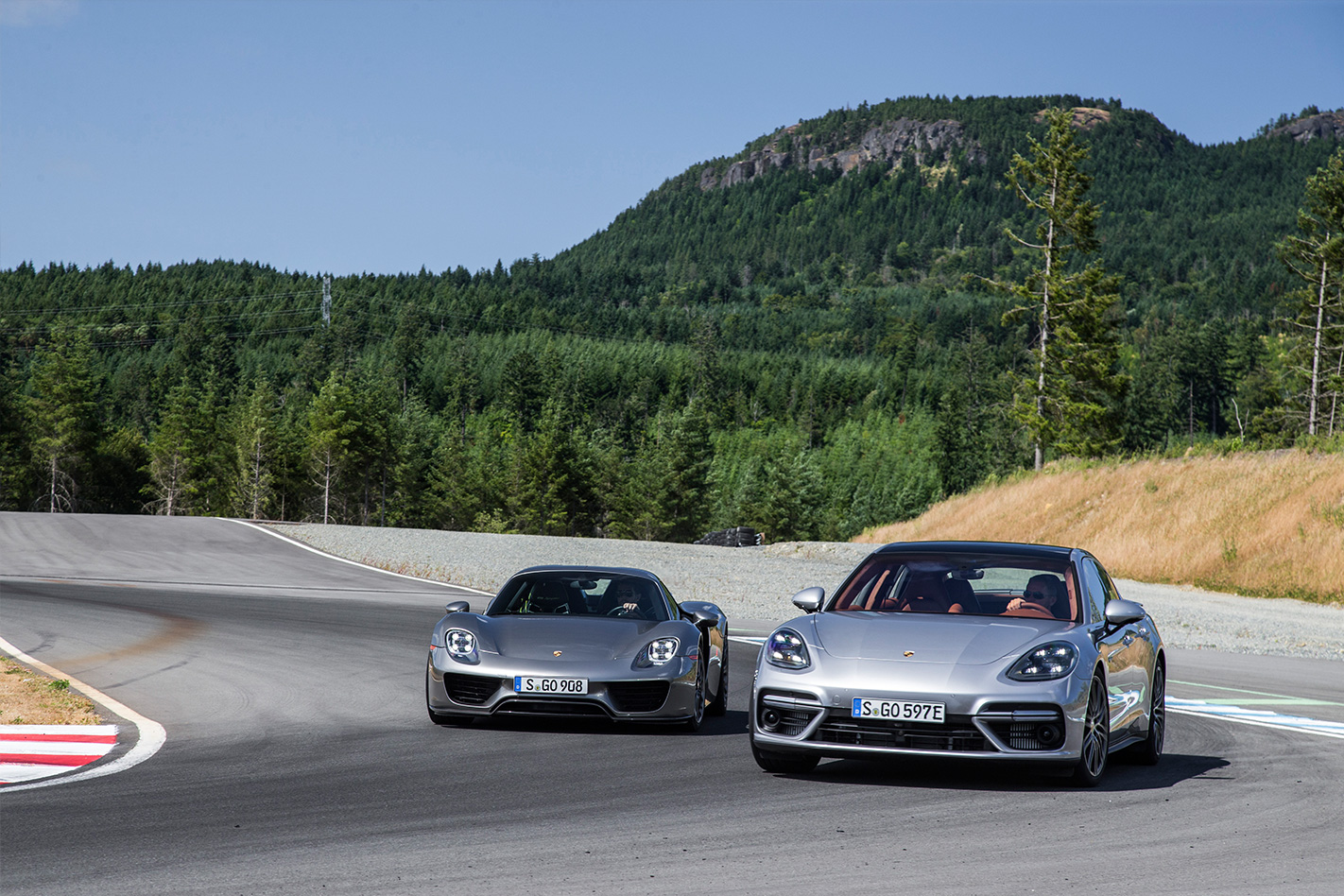
During our first blast in the hybridised Panamera Turbo S on Canada’s Vancouver Island we managed to temporarily bludgeon the fuel economy figure into the 20s, but in fear of Canada’s speed enforcement – even stricter than Australia’s, would you believe – most of our road driving was sedate, which brought a corresponding drop in thirst.
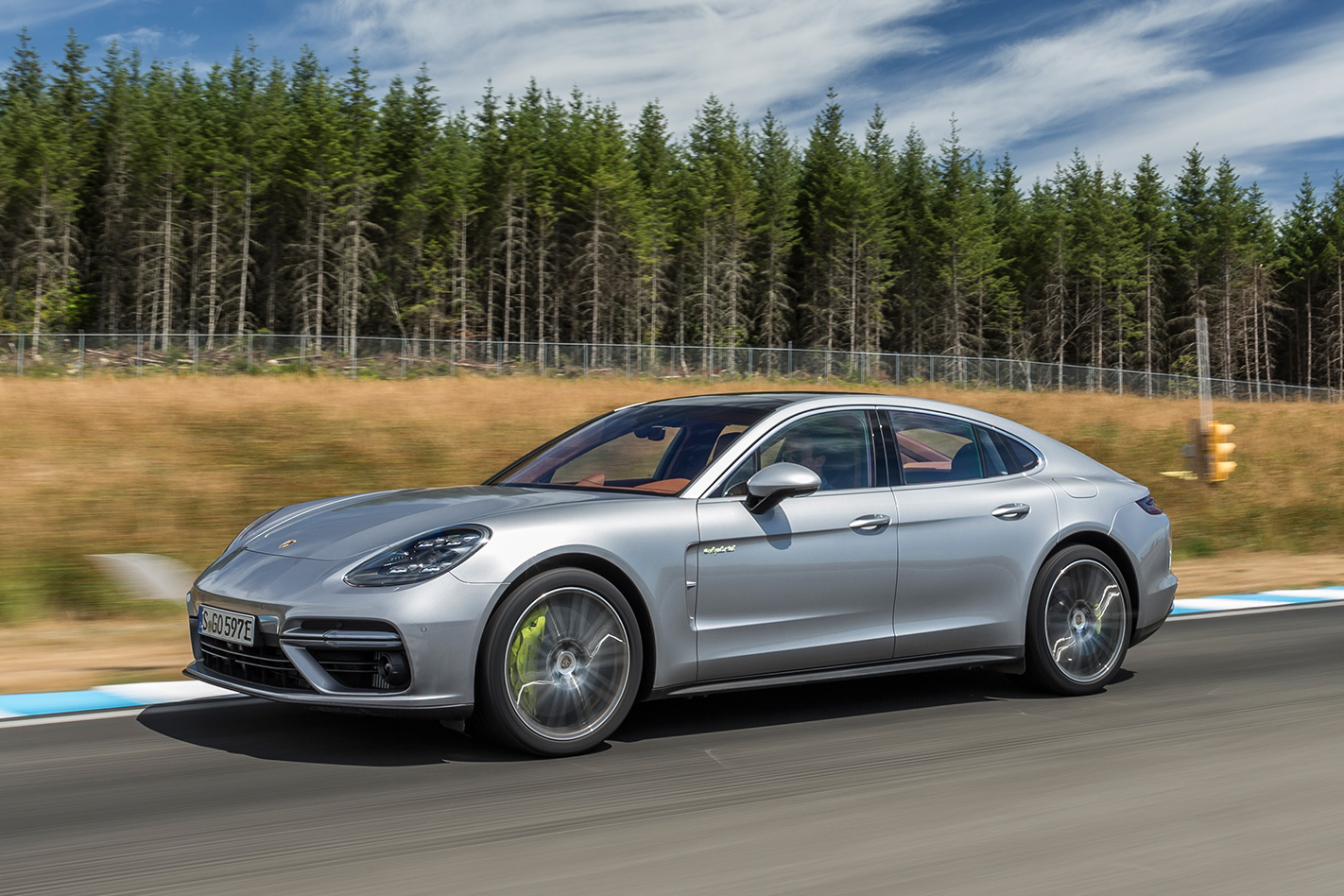
In default ‘E’ driving mode as prescribed by the steering wheel mounted selector, the accelerator has an obvious detent in its travel that politely discourages you from prodding through into its fossil fuel reserves, but turn the switch to ‘H’ and the notch in the throttle’s travel is removed.
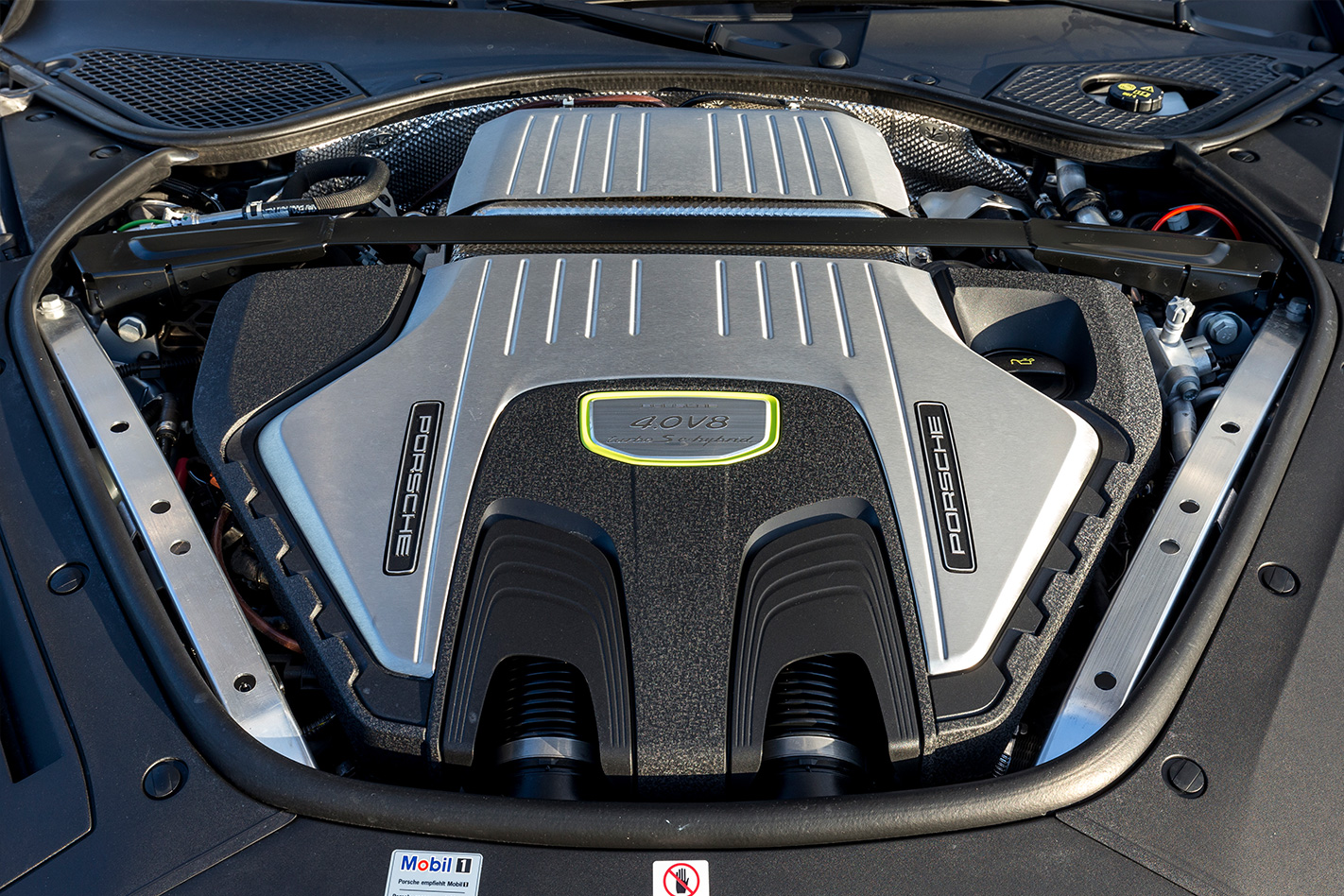
The 3996cc Porsche V8’s power is prodigious and the delivery broad, while the assistance of the 400Nm electric motor results in the most wonderfully muscular and willing powertrain.
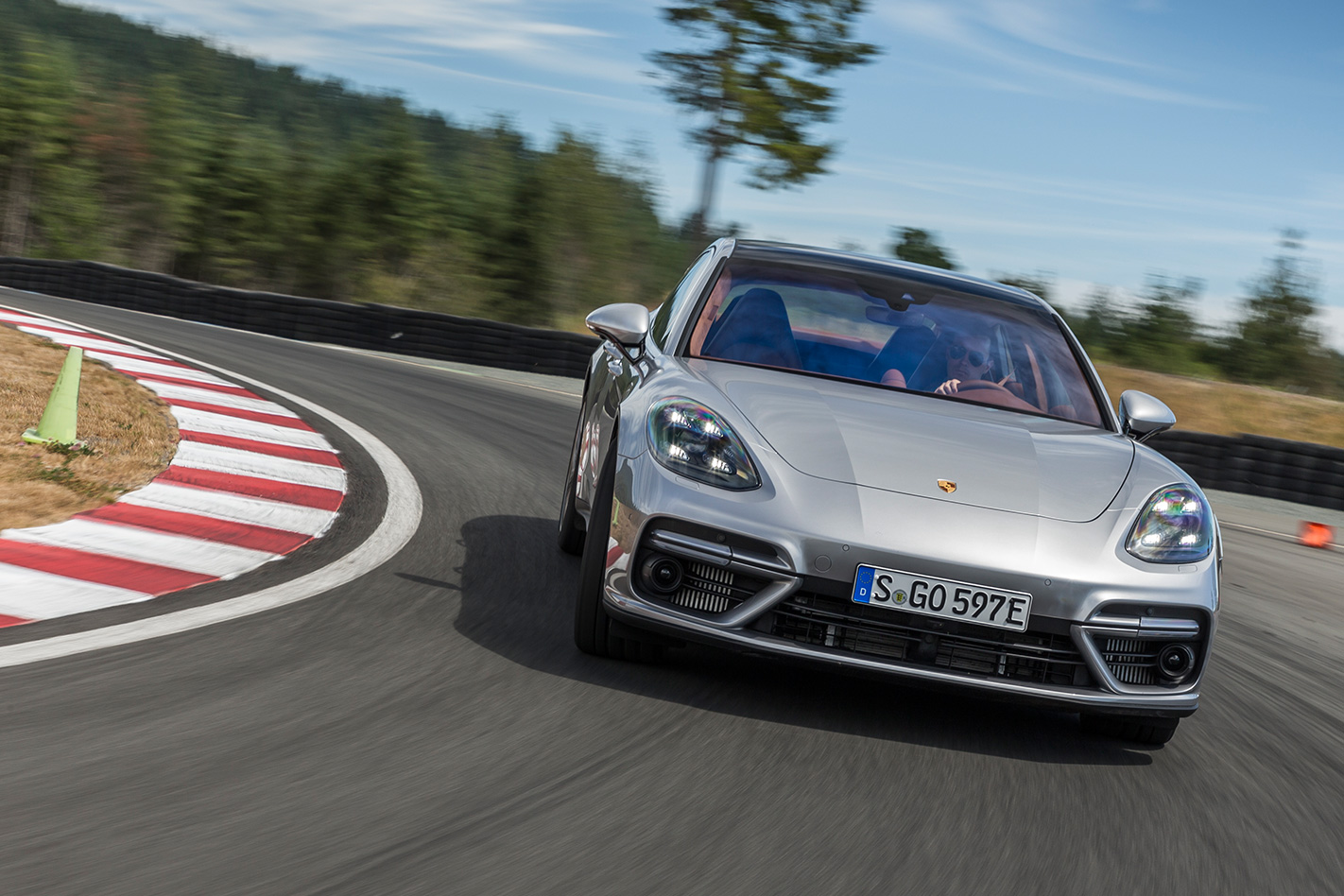
Despite its long 2950mm wheelbase and broad 1937mm body, the Panamera carves a surprisingly precise line. In tight turns, the optional four-wheel steering can be felt providing the effect of a shorter wheelbase, mid-corner grip is bountiful, and the standard-fit carbon ceramic brakes with monstrous ten-piston calipers provide terrific feel and unfading power.
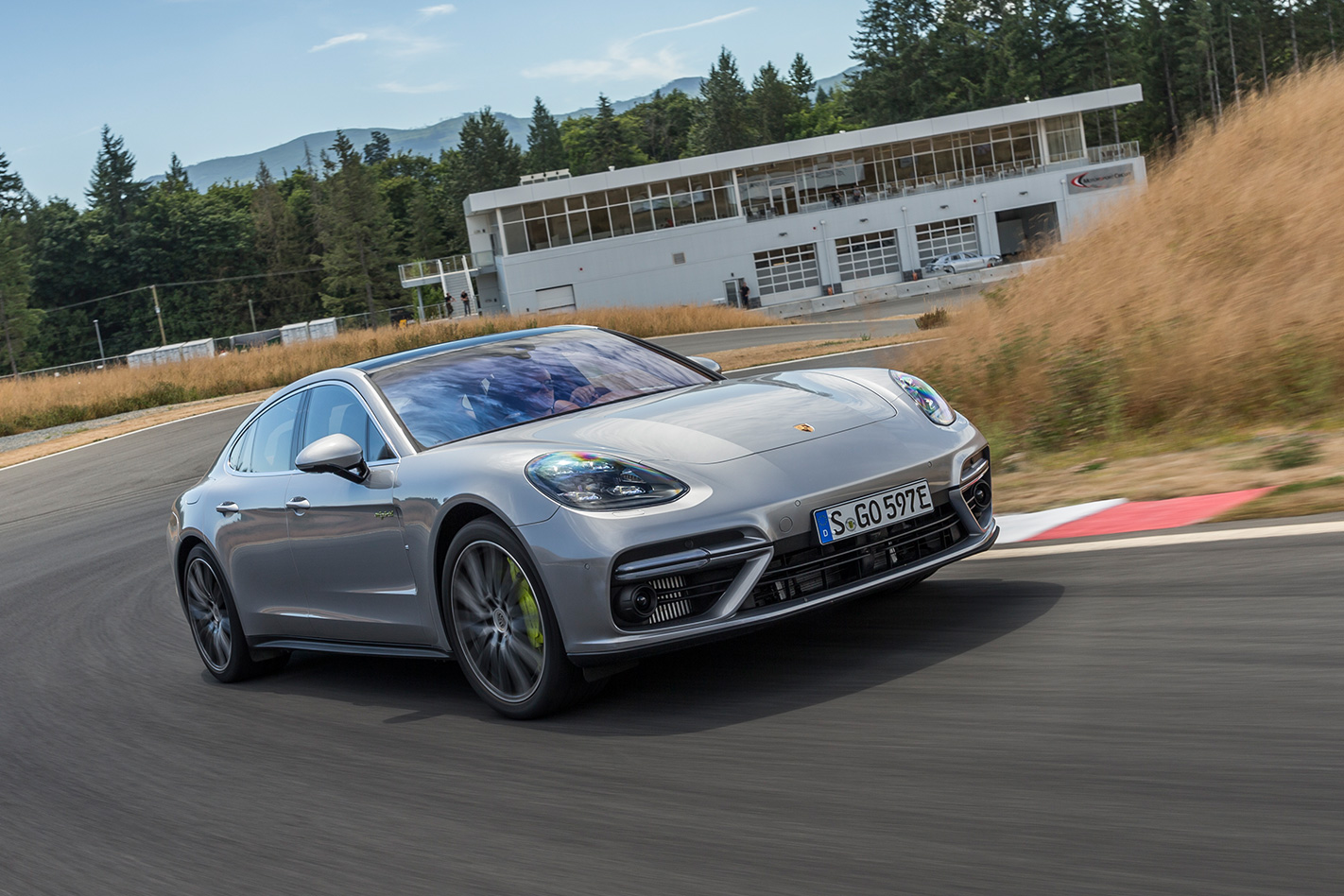
Under hard braking into the circuit’s steep descents, the tail can be shaken loose, revealing a delightful playfulness, yet it can be gathered up with the chatty steering in a manner that’s uncommon in cars of this weight and size.
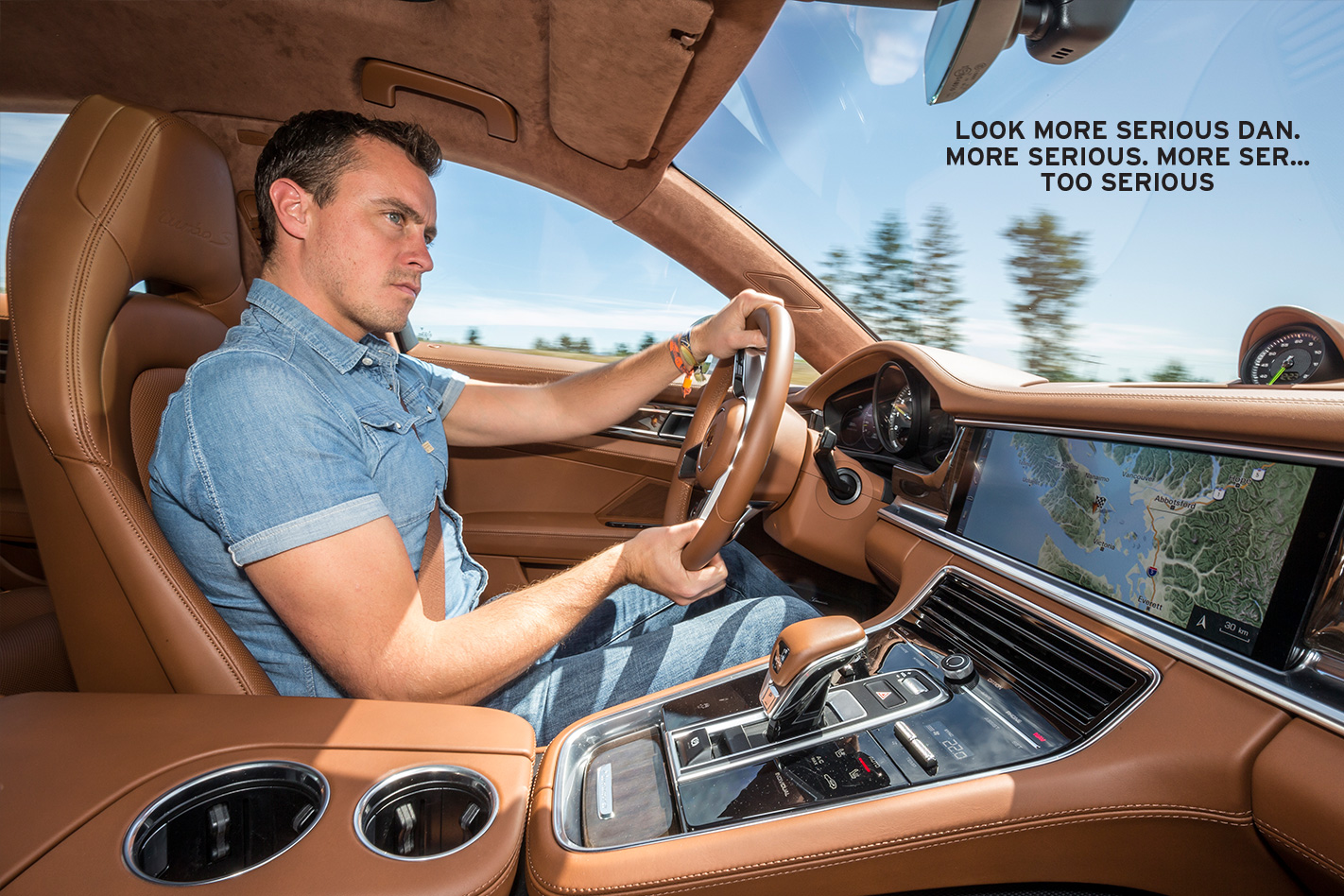
On Canada’s iconic pine-lined roads, the big four-seat proves to be an accomplished cruiser, which is precisely how most customers will use their Panamera. Although we didn’t do a back-to-back comparison, the Turbo S E-Hybrid’s ride seems just as polished as the Turbo’s and the comfort of the sports seats is stunning. Three-stage adaptive dampers and air suspension smooth all but the most offensive road imperfections and the cabin ambience is on a par with a BMW 7 Series or Mercedes-Benz S-Class.
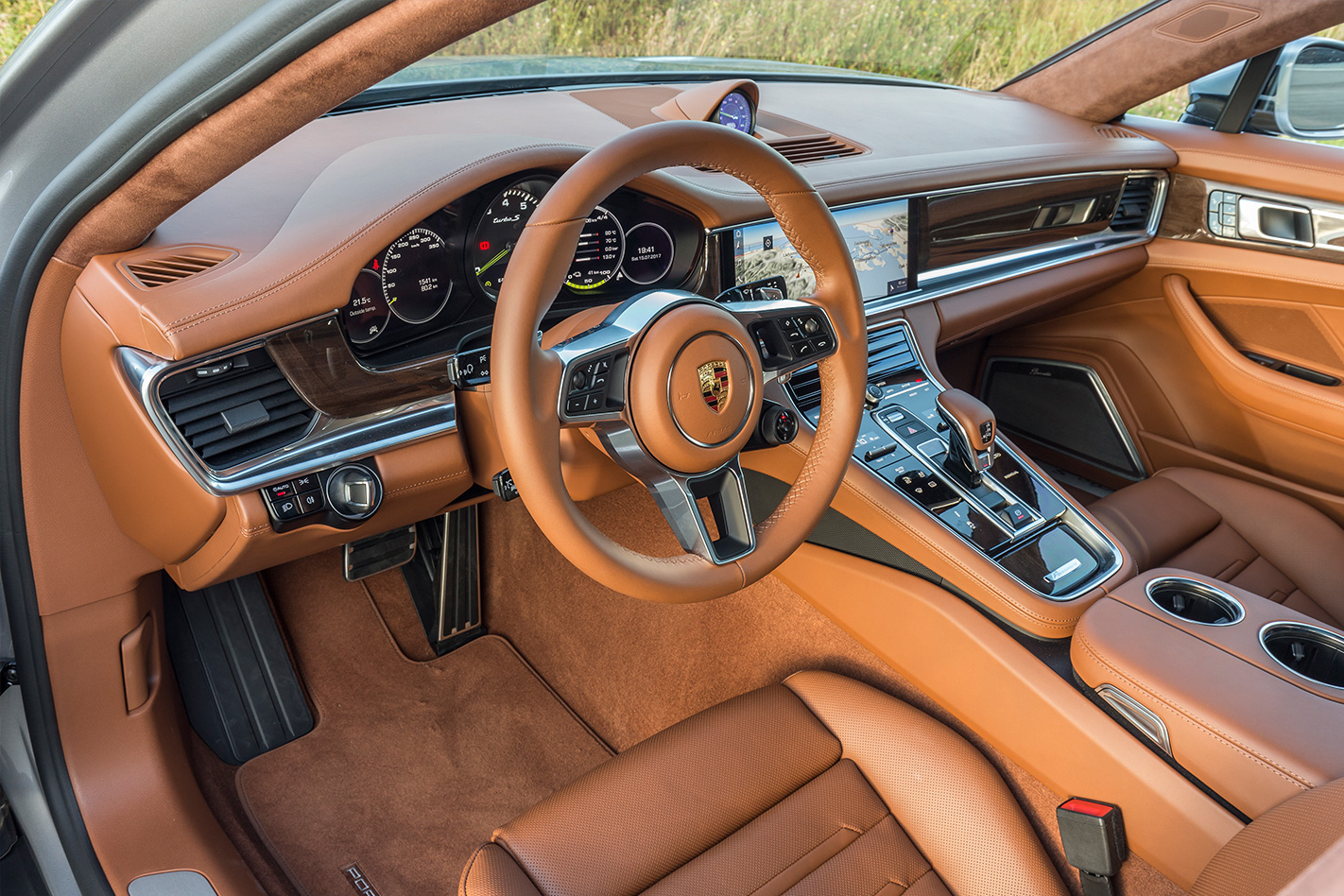
Quite where the Acid Green flashes will surface next in the Porsche line-up remains unconfirmed, but next year’s 992 911 seems a safe bet. Either way, the decision to begin the rollout of this new, performance-focused hybrid strategy with the Panamera as its ambassador, is a calculated move.
If the 911 had led the charge into electrified high-performance Porsches it’s likely to have caused seismic unrest, but thanks to the abilities of the company’s first hybrid range-topper, and its uncompromised teaming of performance and zero-emissions capability, Porsche’s electrified future is starting to make sense.
The BMW M4’s history is bloody confusing. The badge originally separated the M3 coupe from the sedan, creating two single-car ranges.
But when drivers started to learn that its spikey power delivery and firm chassis didn’t get along, BMW introduced the Competition variant with revised suspension to keep them out of fences. Yet, that isn’t where it ends.
The M4 Pure has broken cover, which shuns pricey options to score the Competition’s mechanical package and undercut the standard M4’s price.
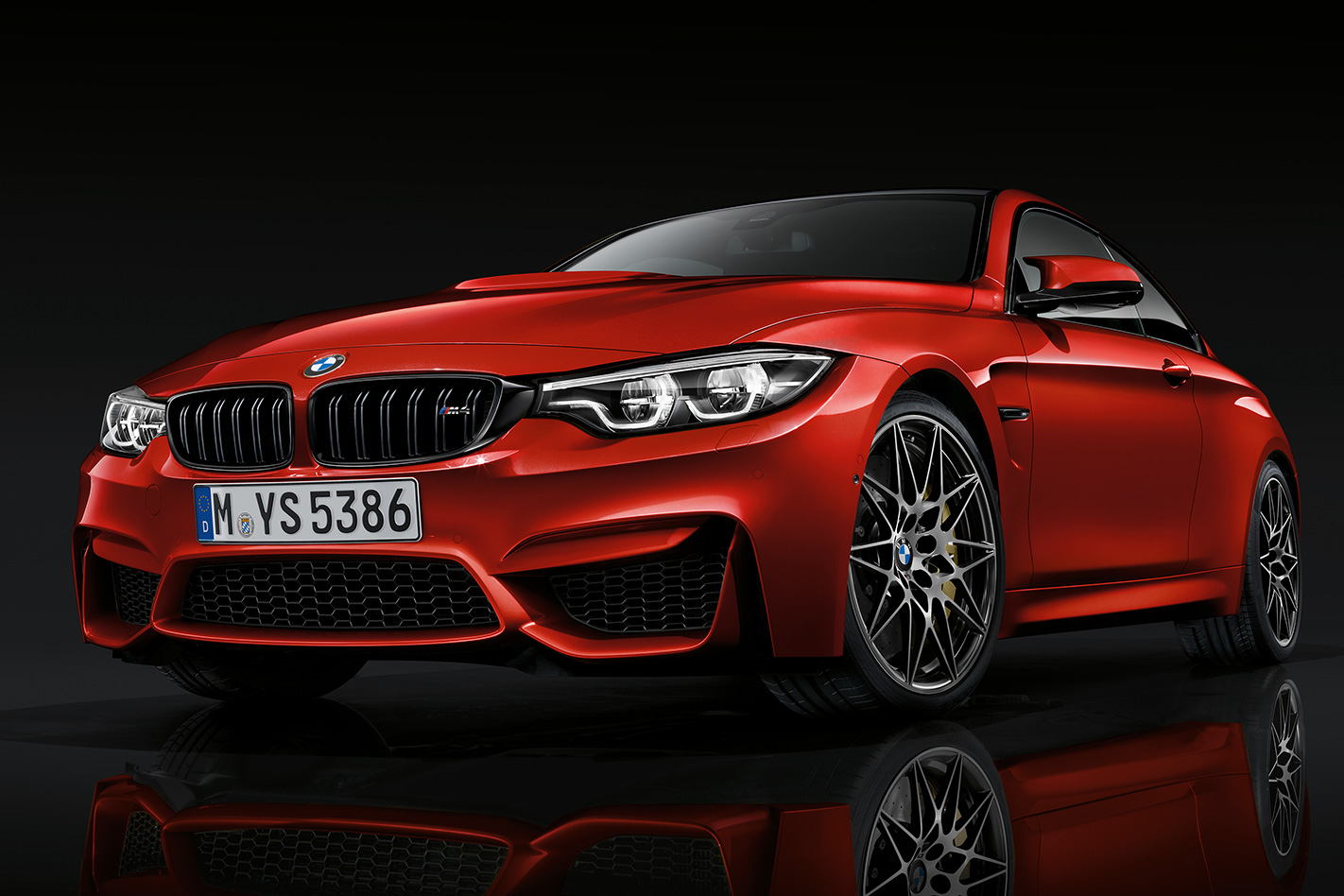
Part of what BMW calls a ‘life-cycle impulse’, the update adds redesigned LED headlights, tail lights, and new strip-like indicators. While new steering column stalks, touchpoint materials, and iDrive software feature inside, the updates are subtle. The new lights add extra suave.
Disappointingly, though, the digital-dash introduced to standard 4 Series models hasn’t migrated here, leaving its tacho feeling a bit dated by comparison. BMW’s Bluetooth Apple CarPlay, too, is still an option. Thankfully, prices haven’t budged range-wide, meaning you can get into a Competition-spec M4 for $139K with the Pure.
Which is bugger all for something still oh-my-god fast. We’re not huge fans of its firm low-speed ride, or the woolly steering, but show it respect and the Competition covers ground at a truly rapid rate.
Competition or not, though, no matter which one you pick the M4 remains huge performance for the money.
2018 BMW M4 Competition LCI review specs Engine: 3.0-litre I6 twin-turbo Power: 331kw Torque: 550nm Weight: 1497kg 0-100km/h: 4.1sec Price: $149,990
It was was back in 2015, somewhere inland from Coffs Harbour on the NSW mid-north coast, that former Wheels staffer Damion Smy and I exchanged u2018the looku2019. (No, not that look, people. Keep it clean. Family publication, etc.)‘The look’ was all that was needed to encapsulate one of the those ‘oh dear, what have they done?’ moments.
We were sharing a BMW X1 on the Australian media launch, and Damo was in the passenger seat. For the previous 20 minutes or so, as the craggy but fast backroads pitched the X1 around like a cork in a cranky baby’s bath, neither of us had spoken, but we were both thinking exactly the same thing.
Then came a fast, sweeping left, with ripples in the bitumen created by logging trucks lumbering through on baking hot days. The X1 unloaded a spiteful volley of rack rattle and pitched drunkenly in protest.
“Jeez-us,” said Damo, already popping on what would be his imminent PR hat, “who chose these roads for this launch?”
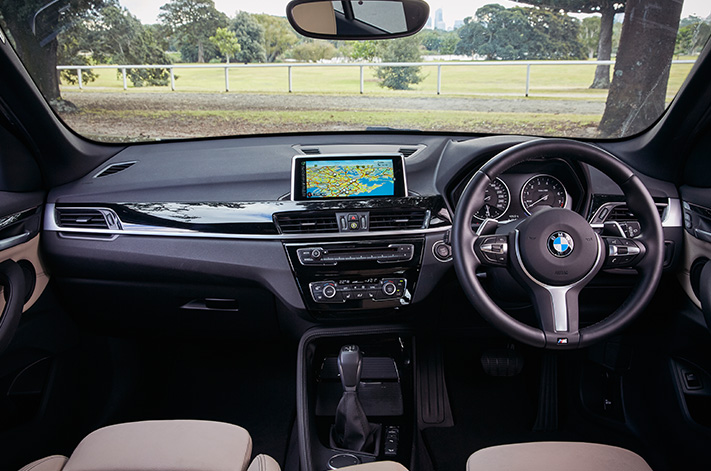
I thought the roads were perfect, because while it was clear that the then-all-new X1, on UKL architecture shared with Mini (and 2 Series Active Tourer) had plenty of virtues, its hard-driven dynamic composure and chassis absorbency on lumpy Aussie bitumen weren’t among them.
It transpired that the cars we drove on the launch were fitted with conventional passive dampers. Optional adaptive dampers (officially Dynamic Damper Control), BMW explained, would be available for customers ordering their cars at that time for just $690, and would be fitted to a subsequent fleet of press cars.
Which is a slightly long-winded answer for any of you who may have sniffed, “What’s with the X1?”
It’s here, adaptive dampers very much present and accounted for, to seek redemption for its performance on that launch program, and its fairly unceremonious first-round exit at 2016’s Car of the Year, due mostly to – you guessed it – a lamentable ride.
We’ll get to the dynamic assessment of the adaptive-damped chassis in due course, but first, to the basics.
Ours is the top-spec petrol of a four-strong X1 range. All are 2.0-litre turbo four-pots; a low-output diesel in front-drive, high-output all-wheel drive, and the same pairing reflected in two petrol variants.
Our BMW X1 xDrive25i pumps out 170kW/350Nm (up 29kW/70Nm on the front-drive sDrive20i) which hustles it to 100km/h in a claimed 6.5sec and uses 6.6L/100km in the combined-cycle test.
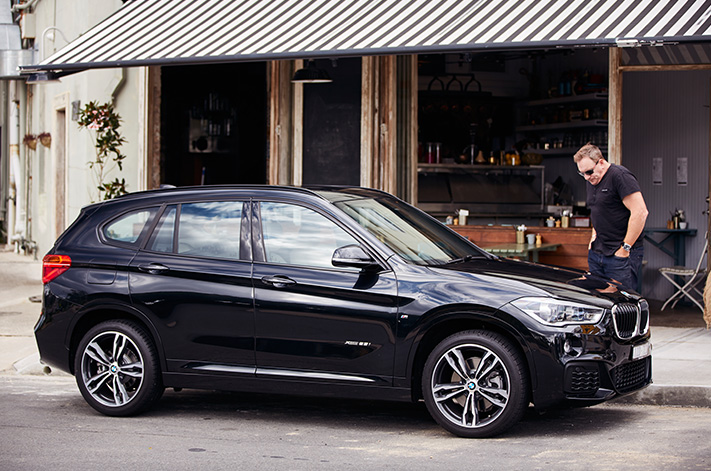
Without options, we could have been away for just over $60K plus on-roads, but happily our example is a bit fruitier. It’s armed with the M Sport package ($2300) bringing a different design of 19-inch wheel running 225/45 R19 Dunlop Sport Maxx run-flat rubber, sports seats with comprehensive electric adjustment, as well as extendable under-thigh support and heating, external M aerodynamic package, M Sport wheel with paddle shifters, and the all-important Dynamic Damper Control, among a few other trim and black-out changes. The only other option fitted to our car is the Black Sapphire metallic paint at $1190.
The level of standard equipment is high – this top-spec version comes standard with the Innovations Package (optional on lower variants) that adds active cruise control, head-up display, Navigation Plus, DAB+ radio, as well as the Comfort Package: keyless entry, auto tailgate, and heated electric seats. But naturally that didn’t stop me scanning the options list to see what might have been.
The main omission that caught my eye was the Harman/Kardon 12-speaker/360-watt amplification upgrade ($1190), which would have been nice, as the stardard system lacks a centre channel, and when played loud, delivers bass that’s a bit muddy and thuddy, rather than tight and tuneful.
On the upside, early impressions suggest the X1’s ride and body control are vastly improved on the adaptive dampers, and the powertrain, packaging, interior treatment and general liveability are all winning me over.
A great second start after a bumpy beginning.
Update 2
Former BMW M-boss firmly endorses Westerman’s quest to quell run-flat tyres
Have you ever had one of those ‘vindicated’ moments where you’ve pumped your arms in a V, and screamed, “I told you so!” into the face of the nearest person, regardless of whether they had any idea what you were suddenly so triumphant about?
No, me neither. But I did come close recently.
See, this relates to the BMW X1’s urban ride; specifically, how it deals with ruts, expansion joints and sharp edges on its 19-inch run-flat Dunlop rubber. I’d rate it as okay – much better than the Renault Koleos I ran prior to this car – but not great.
There’s a bit too much hollow-sounding thunking and thudding, which can intrude on the serenity provided by the slick, quiet powertrain. I suspect the stiff, highly reinforced sidewalls of the run-flat rubber are the primary culprit, based on previous experience, probably not aided by the low profile dictated by the 19-inch diameter.
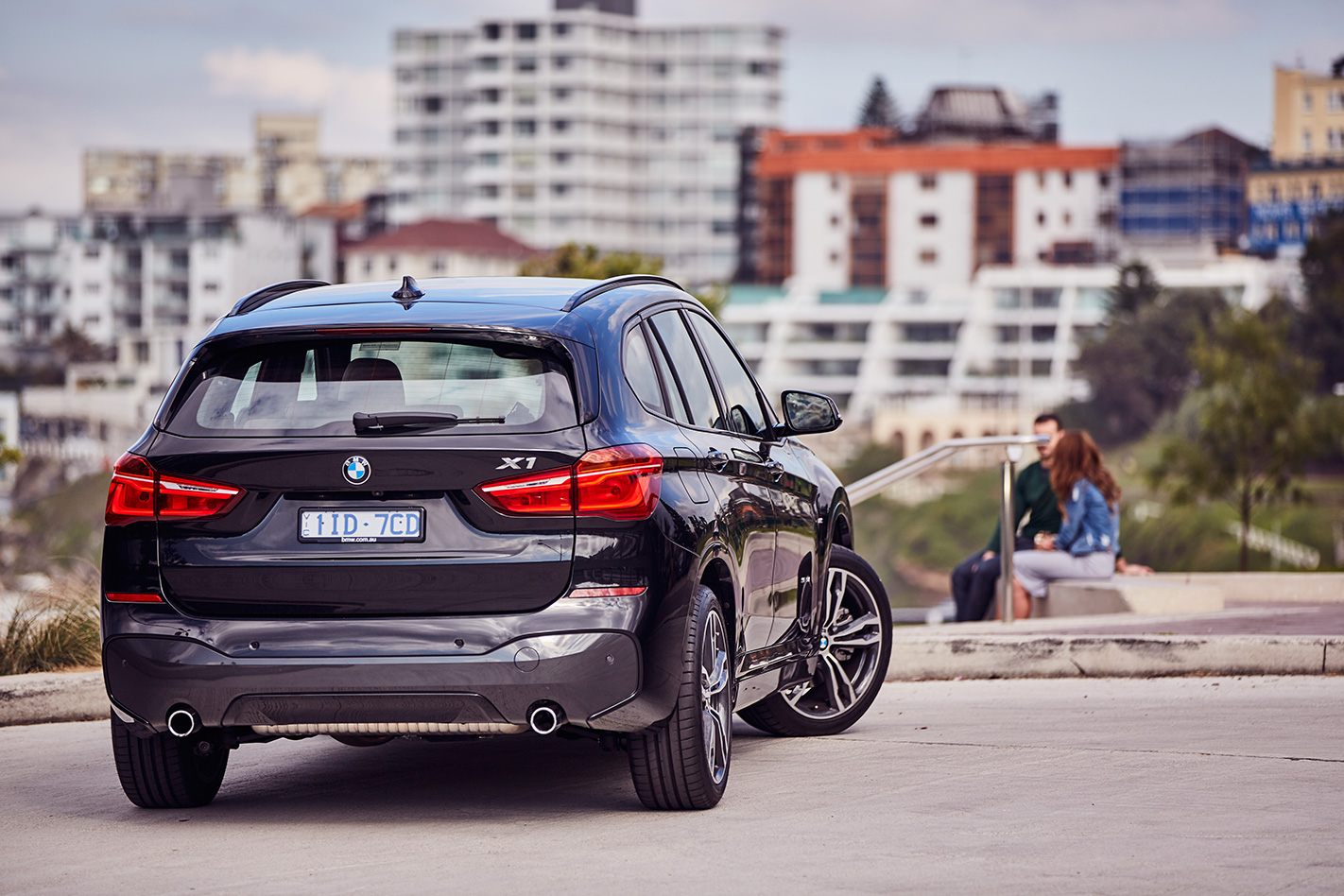
Anyway, only hours after pondering how the X1 would ride on conventional rubber – maybe 18s, rather than 19s – I found myself having dinner with Hyundai dynamics honcho Albert Biermann (see profile in July Wheels) and the subject of run-flats came up.
Biermann’s last job was boss of BMW’s M Division where, contrary to elsewhere across the range, run-flats were not fitted. “Why was this?” I asked the 61-year-old German.
He fixed me with his piercing blue eyes and answered, “I really don’t like run-flats. The way they impact the ride; they make spring and damper tuning a nightmare.”
I didn’t pull my shirt over my head and do a victory dance around the restaurant. That would have been ridiculous and undignified. But I did reach out, grasped his hand and whispered, “You’re a beautiful man.” Which may have creeped him out just a bit.
BMW argues that the safety and convenience factors outweigh any ‘perceived’ ride compromises on the mainstream models, and a fatality on Sydney’s Warringah Freeway in May would vindicate the company’s position that changing tyres on a dark, busy road can be potentially deadly.
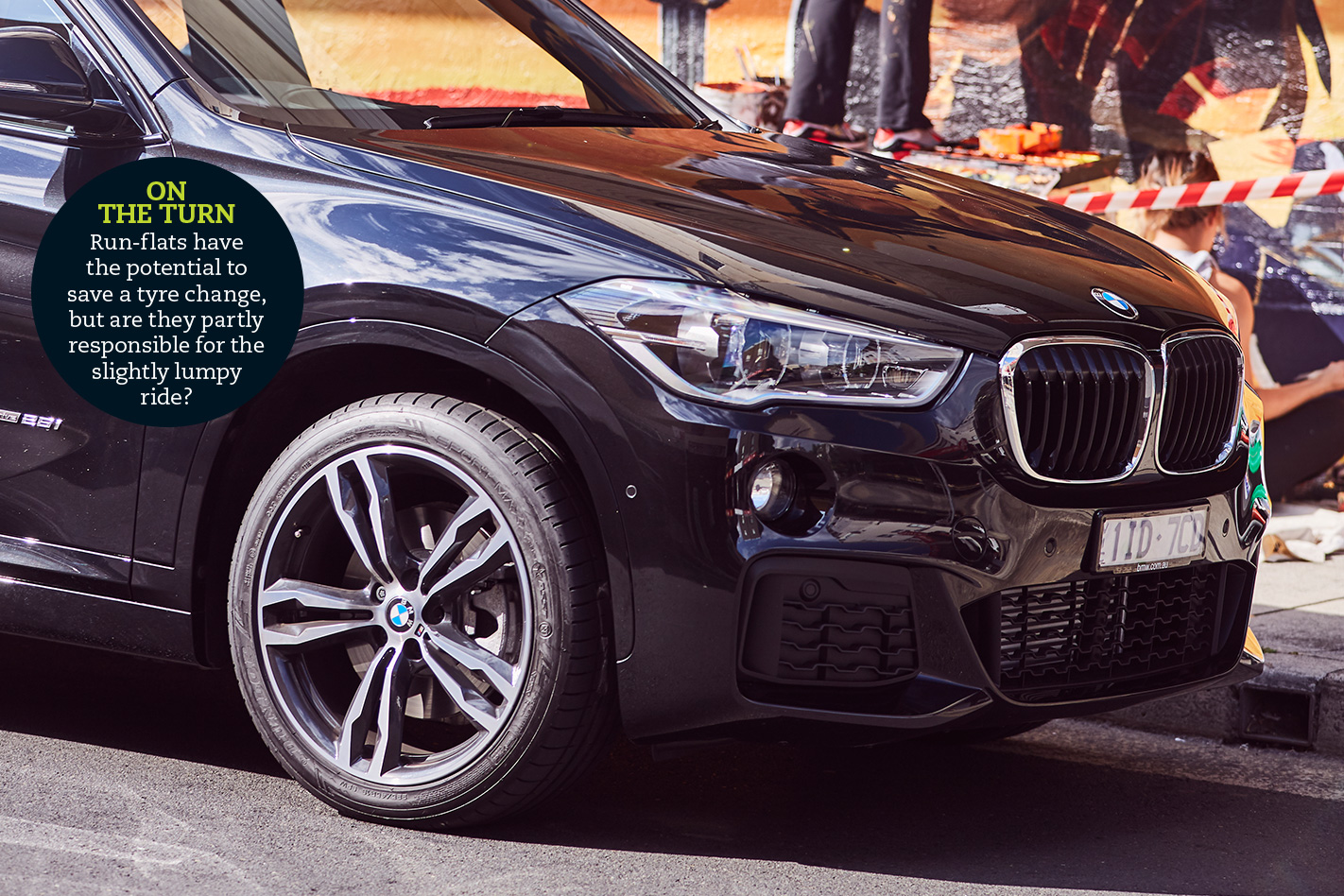
But the X1’s dynamics are otherwise so agreeable – it has alert, nicely weighted steering, controls roll well, and has sweet front-to-rear balance when loaded up through fast corners – that it seems a shame that the ride is compromised for the sake of a comparatively rare event like a puncture.
Ride quality on our shabby Aussie roads is something you’re acutely aware of on every outing, where as a puncture … well, when was the last time you had one?
If I owned this X1, I’d cash in the 19s, buy a set of 18s, and fit conventional rubber.
I’d carry a goo-inflation kit in the metro area, throw a space-saver in the boot for trips away, and know that BMW’s roadside assistance would be there to bail me out if I was in a spot.
A strategy firmly endorsed, incidentally, by a bloke who knows a thing or two about BMWs.
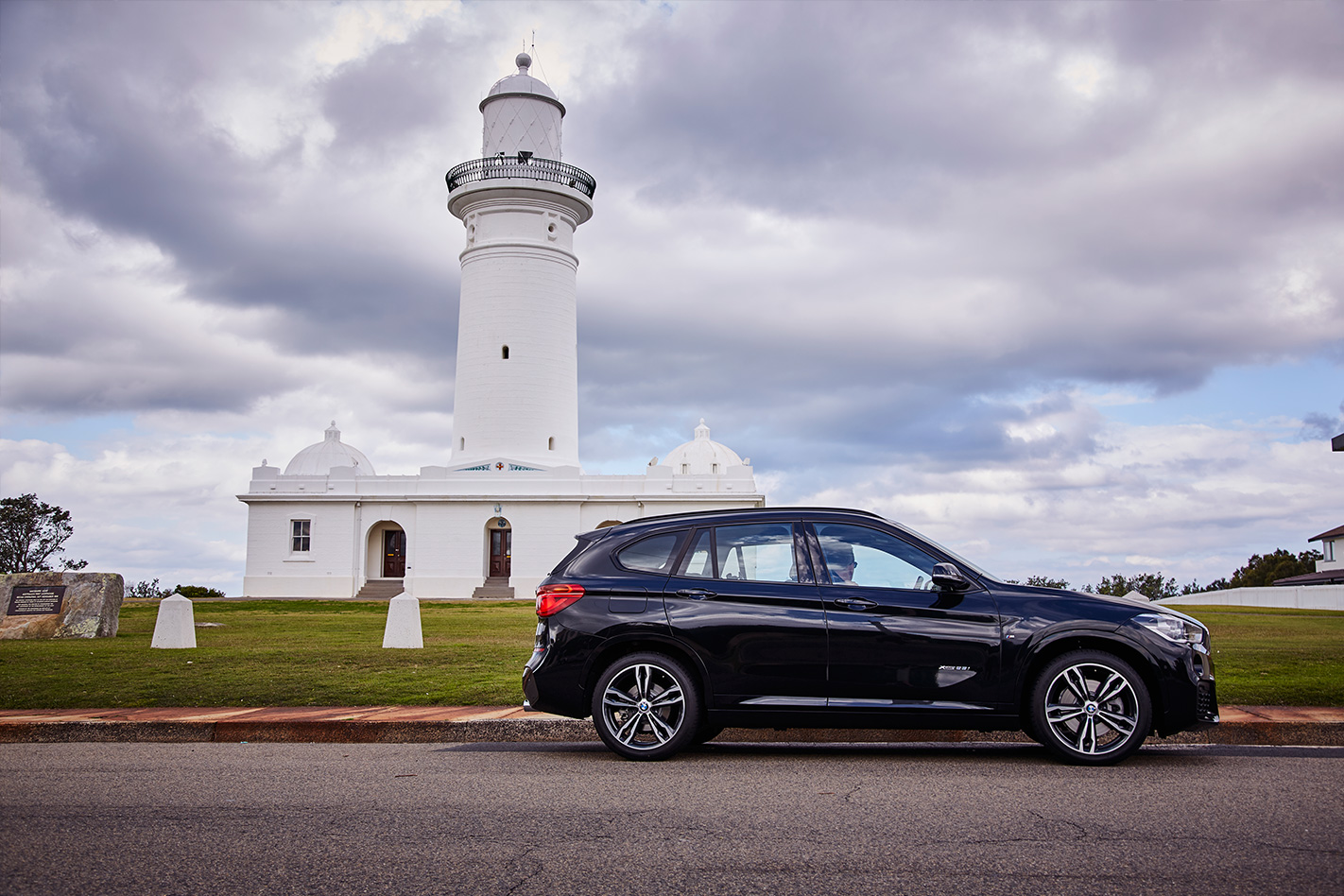
Update 3
BMW wants the X1 back, and leaves Westerman looking to fill the hole left in its place
IN THIS business in which I work, it’s seen as a badge of honour to own a car; one you don’t need, that you rarely drive, and receives none of the love and attention that you originally promised it.
It’s why the easiest way to spot me in a crowded room of motoring journos is to look for the rumpled bloke with the pebble-crete complexion and zero badges of honour.
The last car I did buy, purely for my own pleasure, was way back when my head of hair was thick, and my Nokia phone even thicker. It was an E30 BMW 323i, a car which did see ample love, at least until I was love-tapped into a stout tree on Sydney’s lower north shore.
Anyway, according to research regarding buyer loyalty, that car makes me a prime candidate to purchase another BMW, which is the hypothetical I find myself immersed in here, as the BMW X1 stands cleaned and fuelled, and ready to return to its maker.
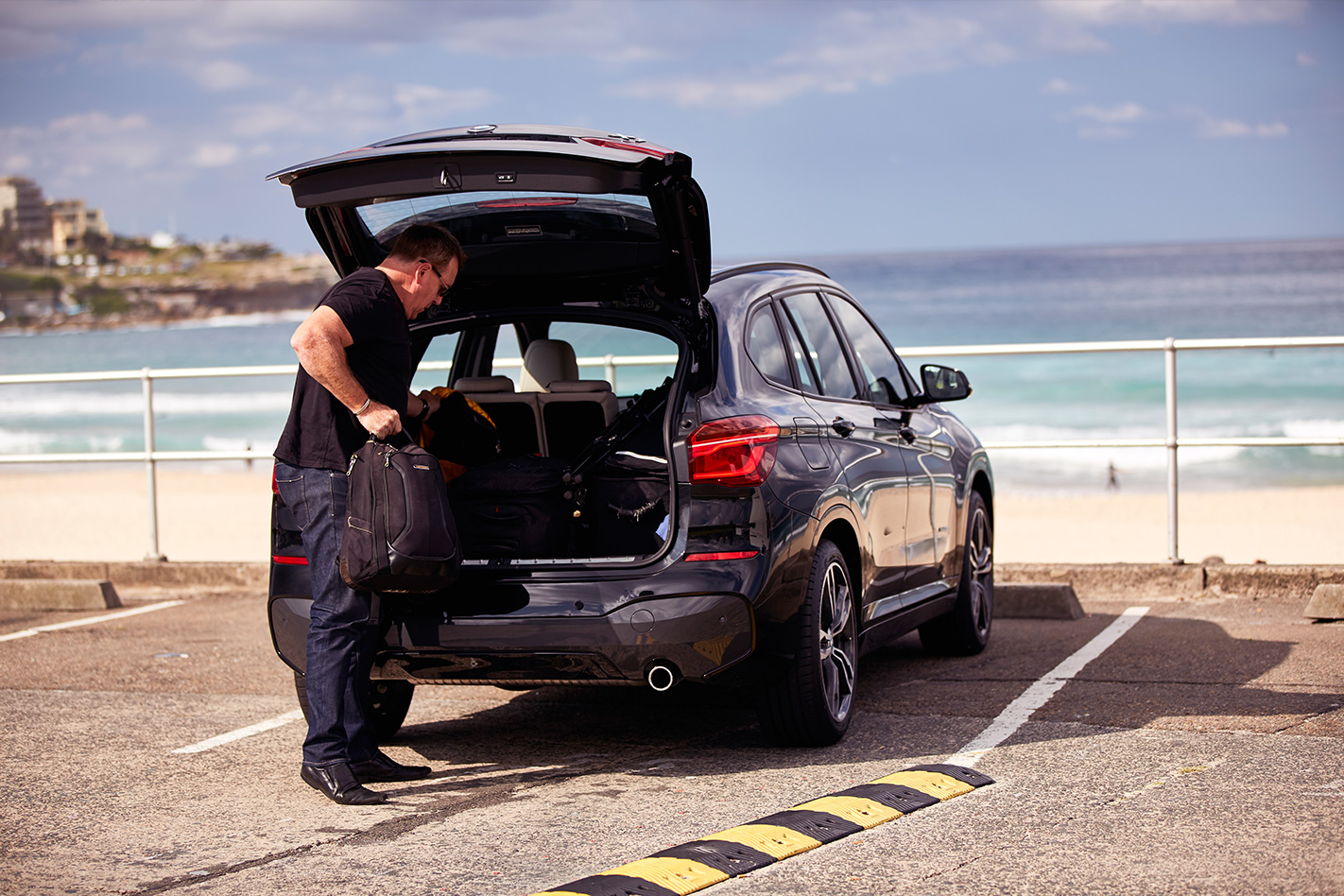
So would I? Let’s start with the positives, of which there are plenty. The overall dimensions and packaging were spot-on for me: ample load area with the seats folded, or sufficient room for my leggy teenage daughter behind my driving position. The X1 never feels cramped, yet is still sufficiently compact to feel wieldy in tight spaces.
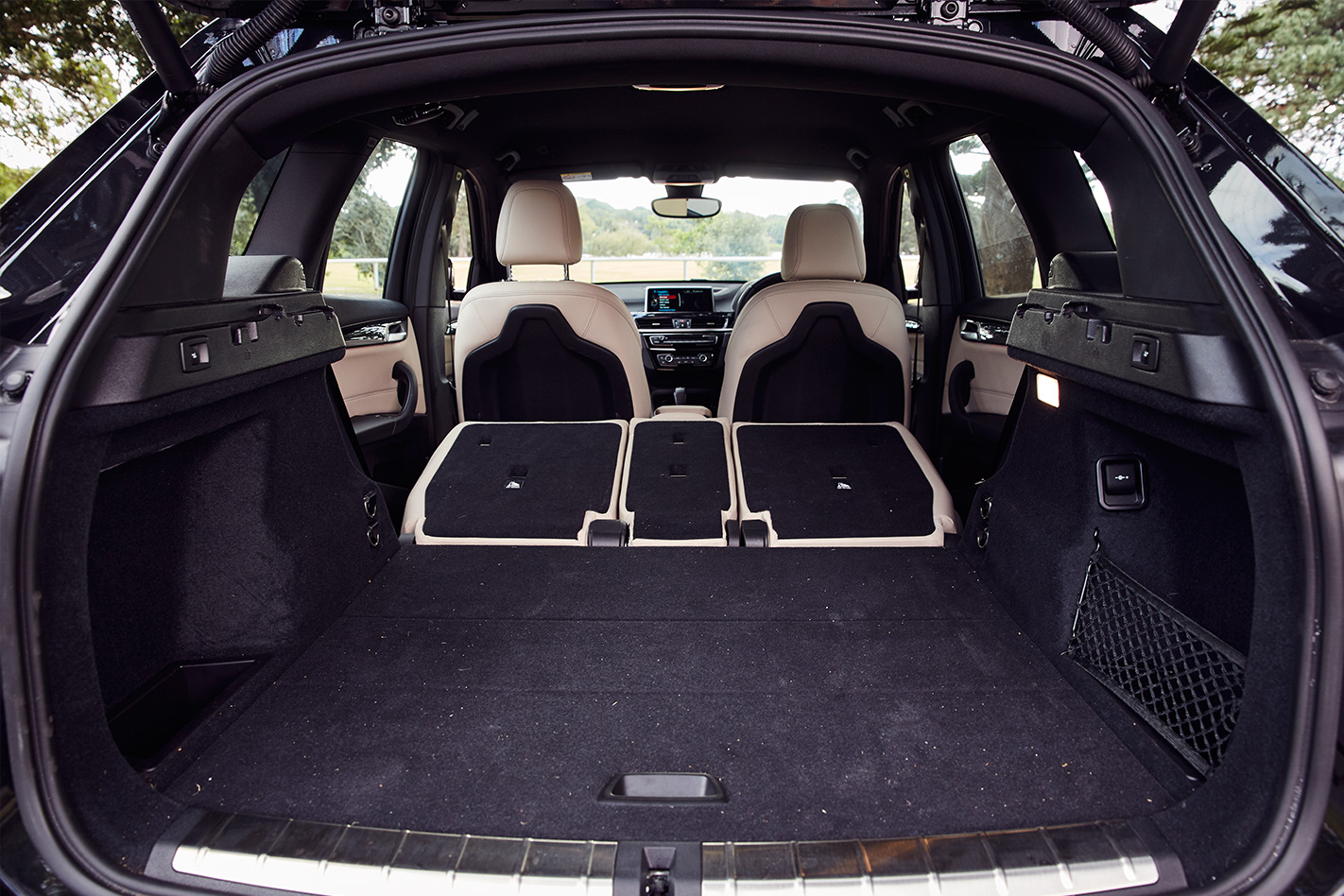
Then there was the feel-good factor, both literally in terms of seating and comfort, as well as that little inner glow when you slide into a well-built, nicely appointed car. I found the driving position, seat support, oddment storage, instrument clarity, and general user friendliness of the thing difficult to fault.
More credits in the powertrain department, too. The extra urge of the high-output 2.0-litre turbo was always nice to have. Its refinement and eagerness is superb. Perfect throttle calibration, super smooth, and happy to chase the 6500rpm redline.
It’s not overtly sporty sounding, but that was never an issue for me; I was happy to enjoy the near-lag-free delivery, plucking ratios via the paddles, and surfing along on that generous wedge of torque.
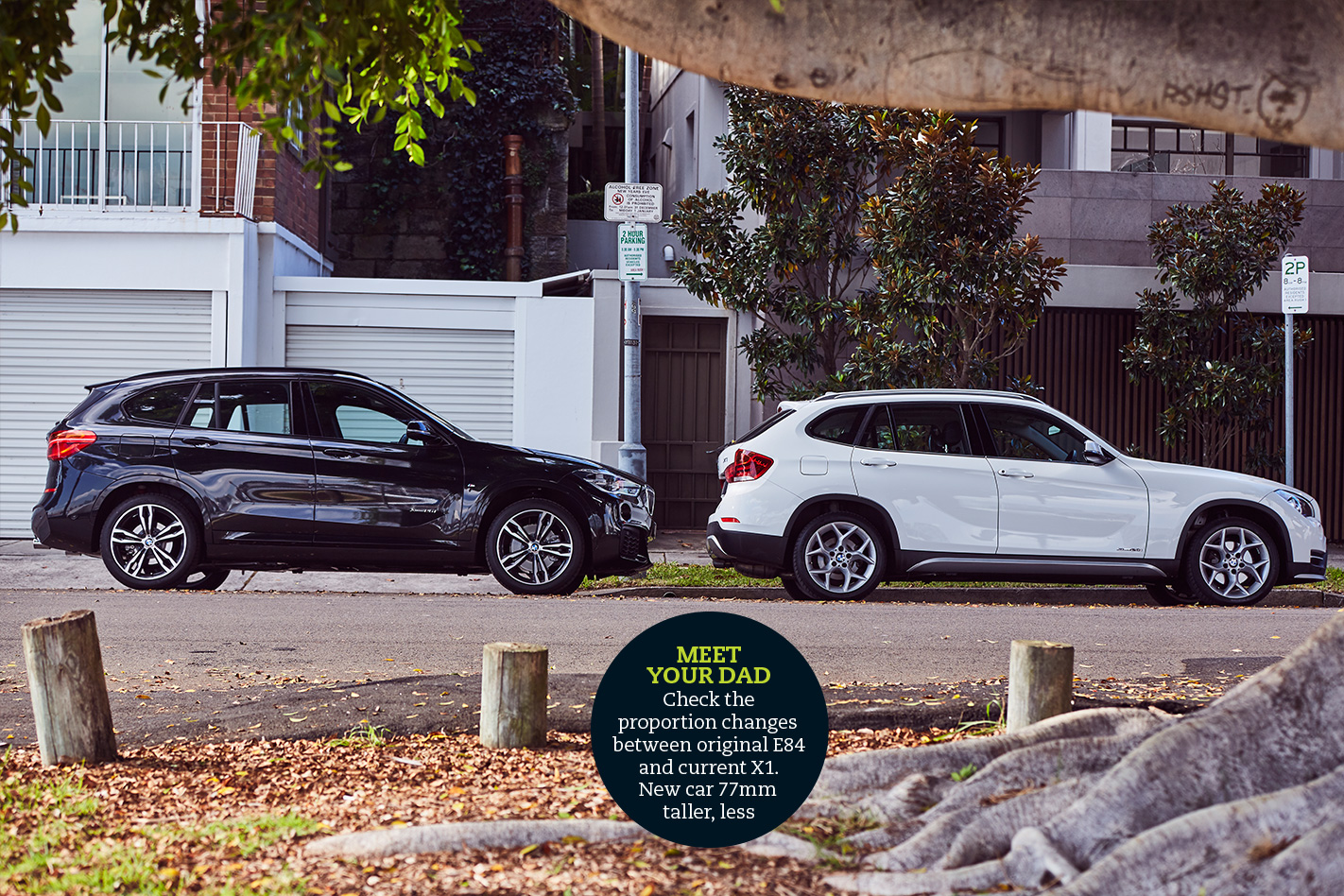
The thumpy ride is really the only dynamic demerit, and could be improved by ditching the run-flats. The steering is not perfect in terms of providing a completely natural connection, but it’s still very good – well-weighted, quick-witted, and with a reassuring self-centering action. Likewise the fine body control on the adaptive dampers; chassis essentials which should be standard, but are at least priced right.
All this sounds like a no-brainer, right? Apart from the small matter of its SUV-ness, that is. I never went near an unsealed road, and I suspect most buyers never will.
Which leaves me still as a committed rear-drive wagon lover, and eyeing the $14,000 more expensive 330i Touring as the current BMW I’d really love, but sadly don’t need.
Citroen’s quirky C4 Cactus has been missing a decent automatic gearbox since it launched in Australia, having been hobbled with an unrefined diesel-only auto offering since its arrival. That’s changed for the 2018 model year, however, with Citroen’s local arm finally giving the petrol-powered C4 Cactus a conventional 6-speed auto option.
The six-speed automatic is now available on the 81kW Cactus Exclusive, retailing for $29,690. Citroen has also removed the diesel from the Cactus family, making the French crossover now a strictly petrol-only offering.
“Set up for driving comfort and smooth gear-changing, the EAT6 gearbox also features two specific programmes, accessible from the controls in front of the gear lever,” Citroen says.
The automatic also offers a Sport shift calibration, as well as a Snow programme to help maintain traction on slippery surfaces.
If a standard C4 Cactus doesn’t stand out enough for you, there is also now a ‘OneTone’ special edition available.
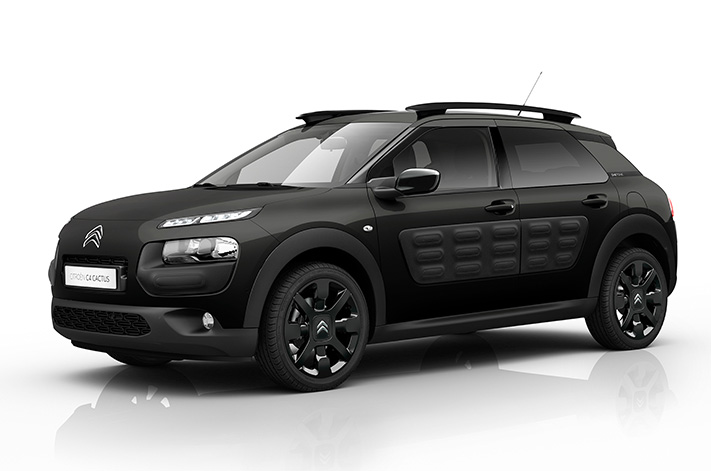
This limited edition car comes with the full range of equipment and features, along with unique colour schemes in either metallic obsidian black or pearlescent white.
The special editions are available with either a manual or automatic transmission, costing $27,490 and $30,190 respectively.
The cheapest Citroen C4 Cactus remains the manual, which costs $26,990.
There are a large number of styling options and extras available for the Cactus, with Citroen claiming the armour-wearing five-door hatch boasts a total of 23,184 unique combinations of colour and trim.
The Cactus is powered by a 1.2-litre turbocharged three-cylinder engine, producing 81kW and 205Nm.
