
This month, MOTOR has sated our hunger for supercharged muscle by pitting two hi-po tyre-fryers against each other!
But even if that’s not your bag, we’ve got plenty more where that came from. Here’s a look at the new issue of MOTOR, on sale now.
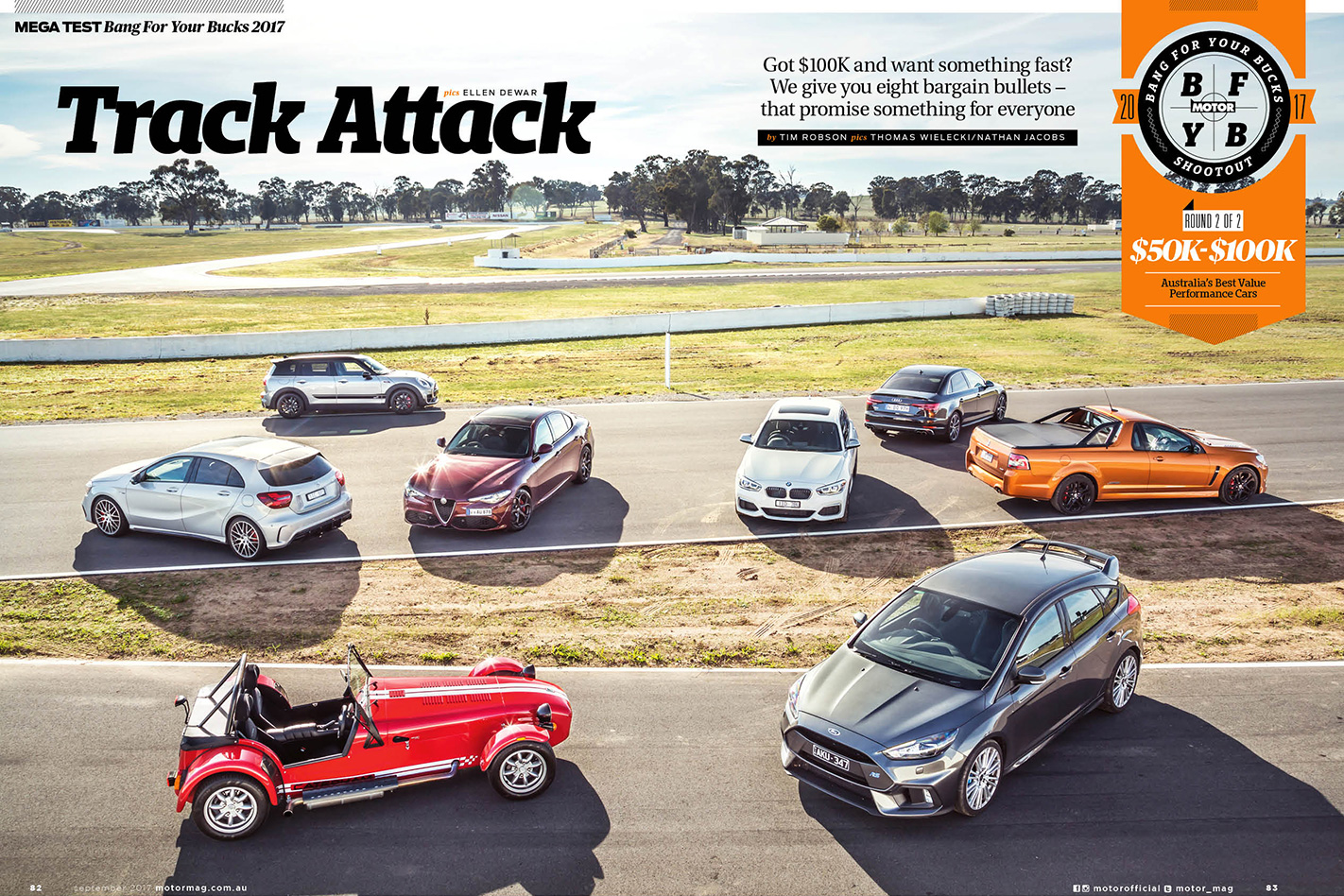
Oh, and we’ll let you know who took out this years coveted Bang For Your Bucks title!
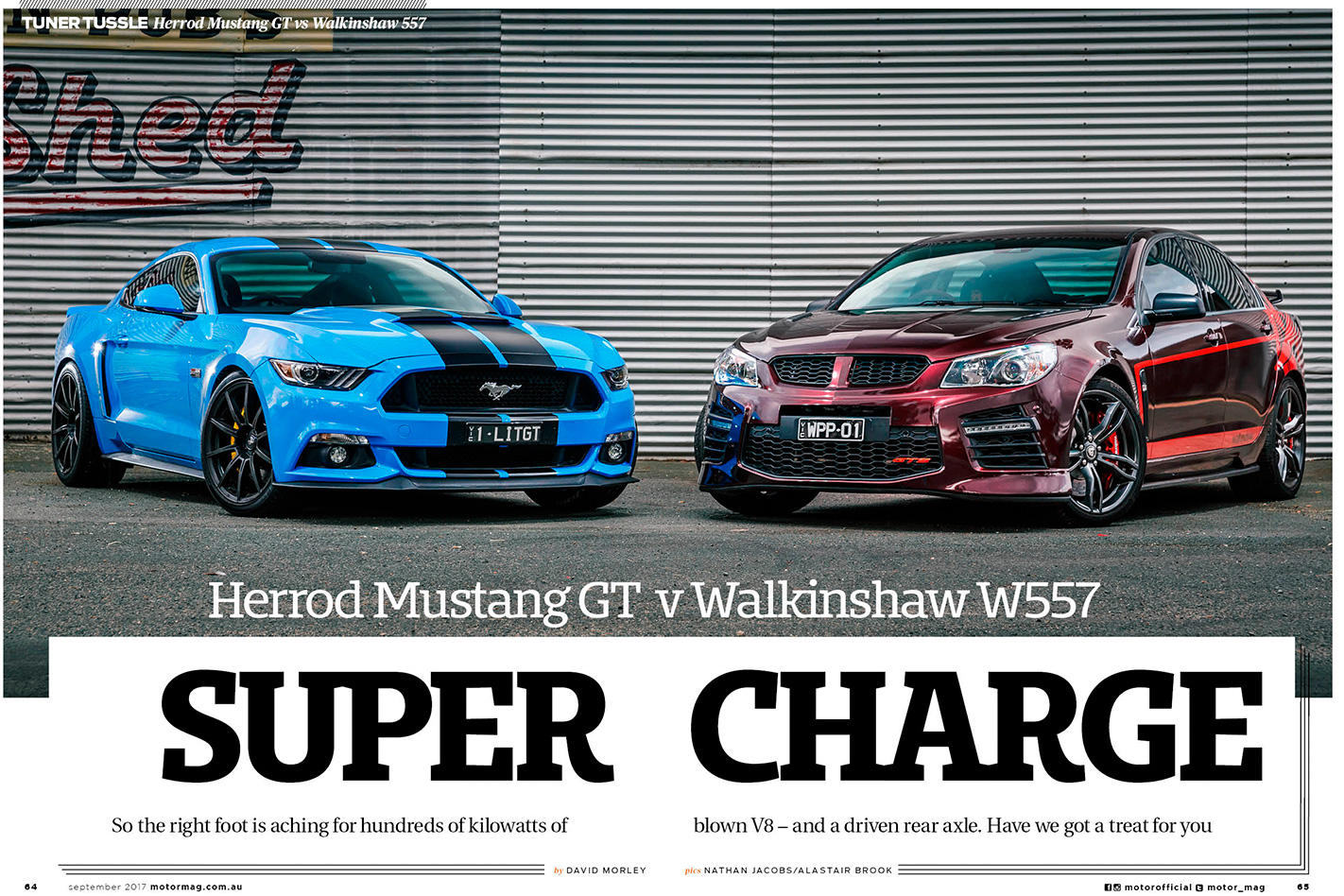
SUPERCHARGED | WALKINSHAW W557 vs HERROD MUSTANG GT: Got a craving for hundreds of killowatts at the disposal of your right foot, and the option of either a V8 Mustang tuned by Herrod or a HSV GTS fettled by Walkinshaw? Let’s see who comes out on top.
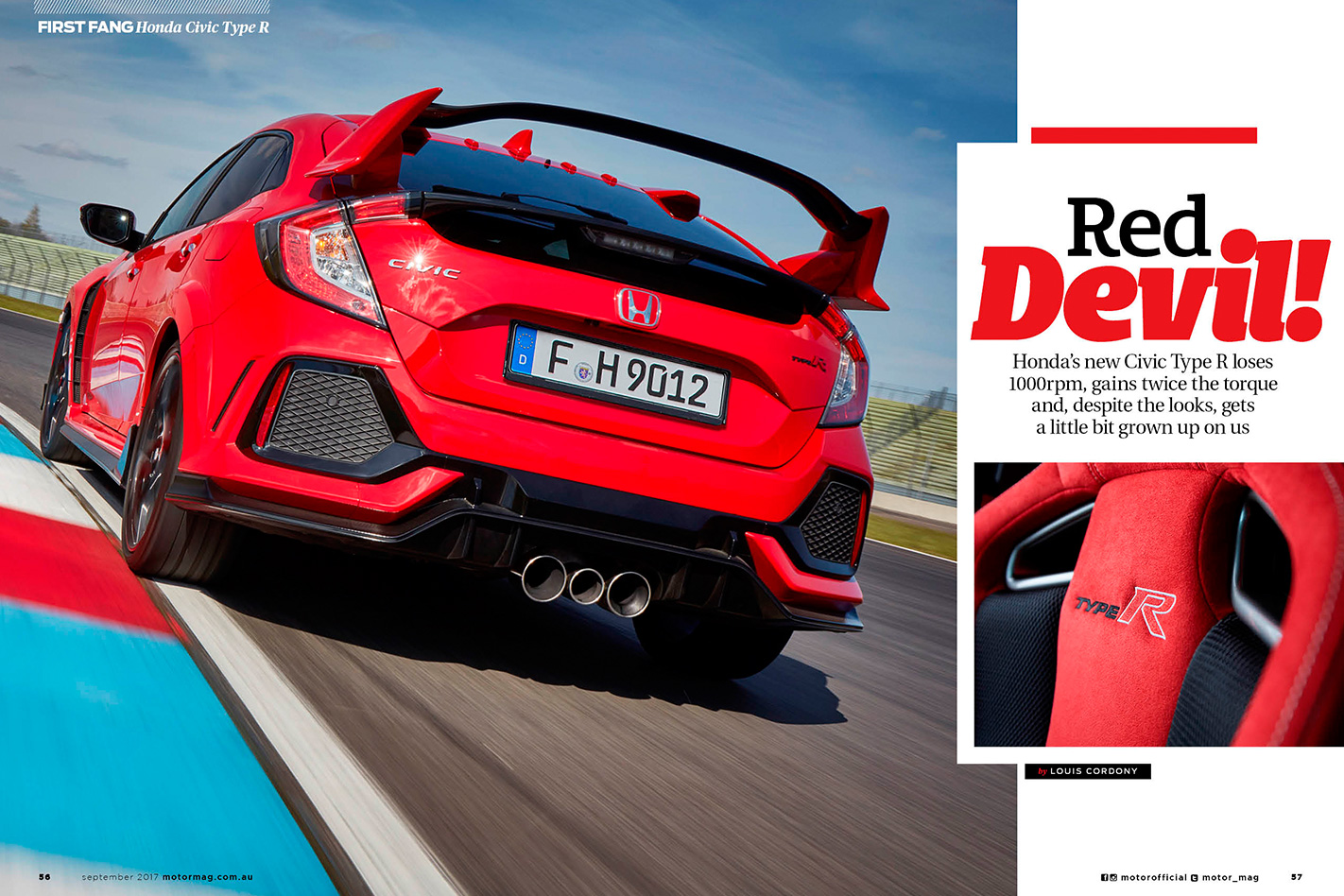
RED DEVIL | HONDA CIVIC TYPE R DRIVEN: With the much anticipated hot-hatch joining the fight at a very competitive stage, will the now slightly grown-up legendary red ‘R’ badge impress us? Or will it leave us regretting the flight to German to drive one?
Singer has undertaken a project to restore a 1990 911 for a long-time customer, and the first step was to work with Williams to create the ultimate air-cooled engine.
To give additional insight into the engineering marvel that is the Porsche air-cooled engine, they’ve also recruited the man who helped keep them running, Porsche engineer Hans Mezger.
The Mezger-designed 3.6-litre flat-six was modified to a 4.0-litre capacity, given four valves per cylinder, four cam-shafts, and aluminium throttle bodies.

On top of those and other impressive modifications, it revs to over 9000rpm, and is rated for 373kW. It’s got a fair bit more kick than its original 184kW.
The engine will power a 964 911, which will have its full specs, modifications and design revealed in September after its completion.
Signer founder Rob Dickinson says the project is being undertaken for one of Singer’s clients, Scott Blattner.

“Singer is delighted to be working with Williams Advanced Engineering and Hans Mezger to offer our clients a “next level” of restoration and modification services for their Porsche 911s.
“With careful and dedicated development, this iconic air-cooled engine has much to give both its existing devotees and a generation of new enthusiasts.”
Despite greatly altering certain mechanical components of classic Porsches, Singer says its work should never detract from the original machine built by the German marque.
“This incredible machine should never under any circumstances be referred to or described as a “Singer,” “Singer 911,” “Singer Porsche 911” or a “Porsche Singer 911,” or in any other manner that suggests that it is anything but a Porsche 911.”
That goes to show just how fanatical Singer is with the Porsche brand.
It seems like the Ford Focus RS only just landed on Australian shores but Ford is already preparing to say goodbye.
The Ford Focus RS Limited Edition, based on the overseas Option Pack, will be available in local dealerships from November 2017 priced from $56,990. The 500 Limited Editions will be the last Australia sees of the Focus RS for a while with a new-generation Focus scheduled for release next year. A new Focus RS isn’t expected until 2023 or 2024.
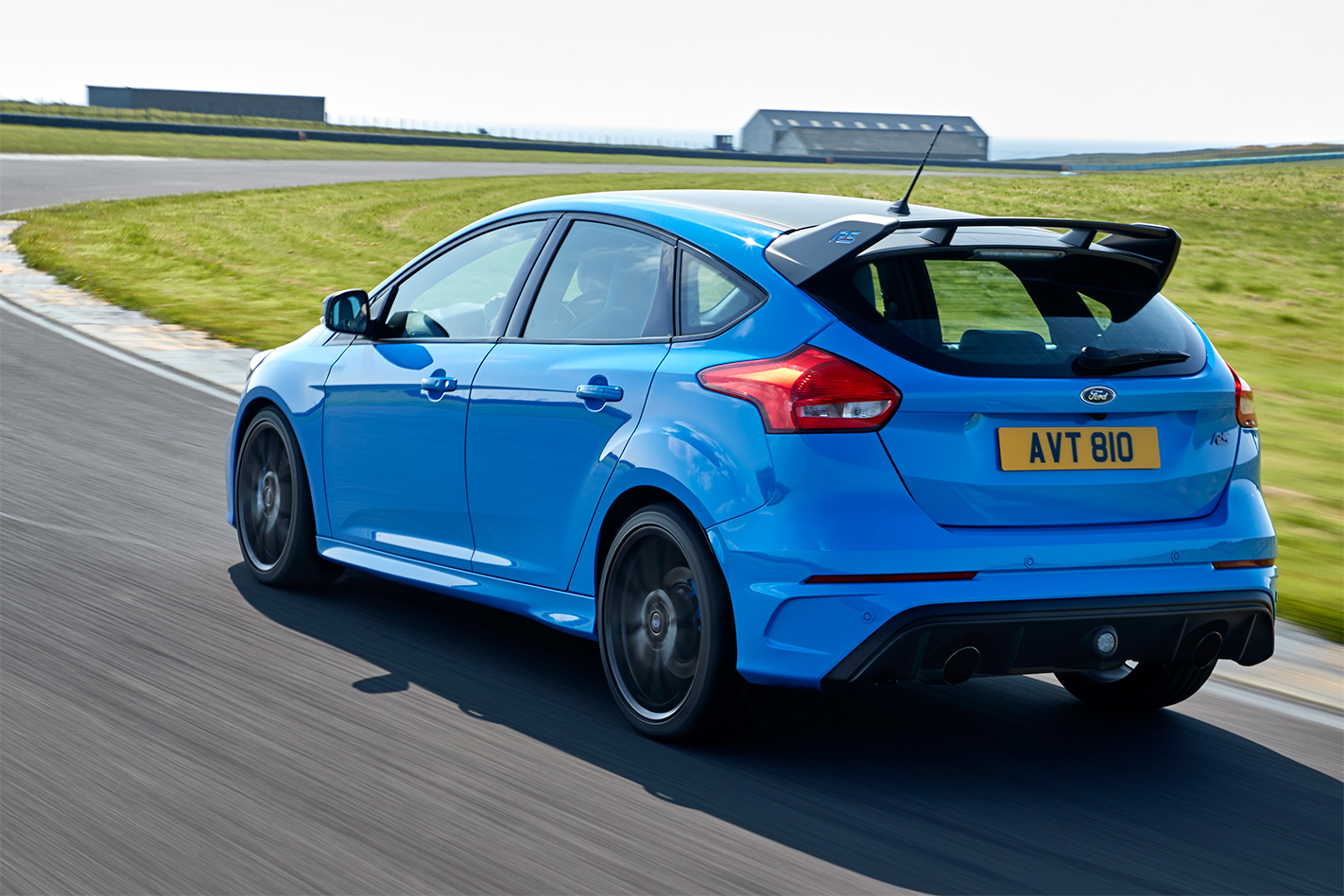
Last, but certainly not least, the Limited Edition scores a Quaife limited-slip differential for the front axle to further improve handling and traction, with Ford Europe’s Performance Director, Leo Roeks, claiming “The additional mechanical grip offered by the Quaife LSD will make it even easier to carry speed through a corner on the track, and maximise acceleration on the way out.”
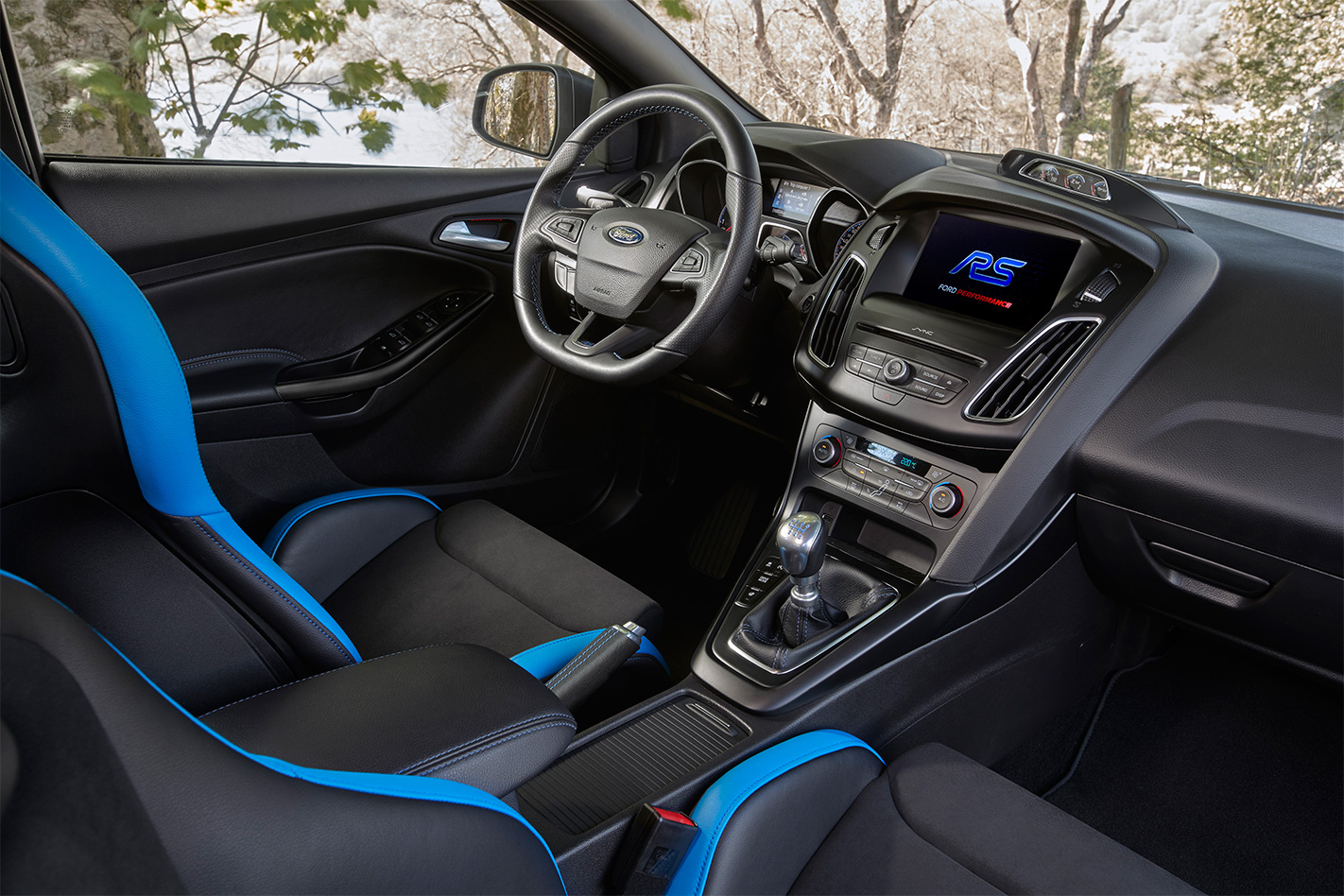
Just how much difference will the new differential make to Ford’s benchmark hot hatch? We’ll find out when we get behind the wheel later this year.
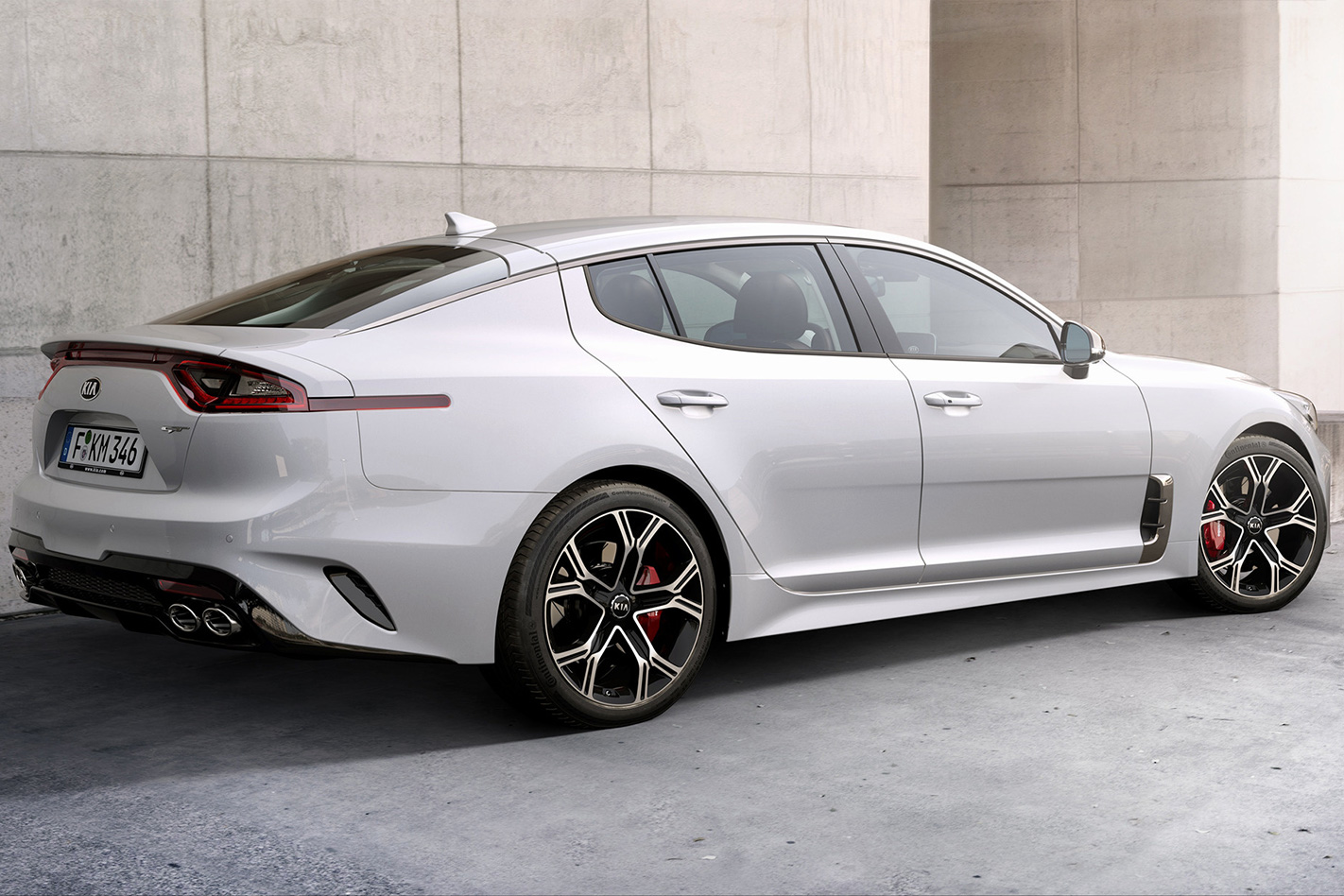
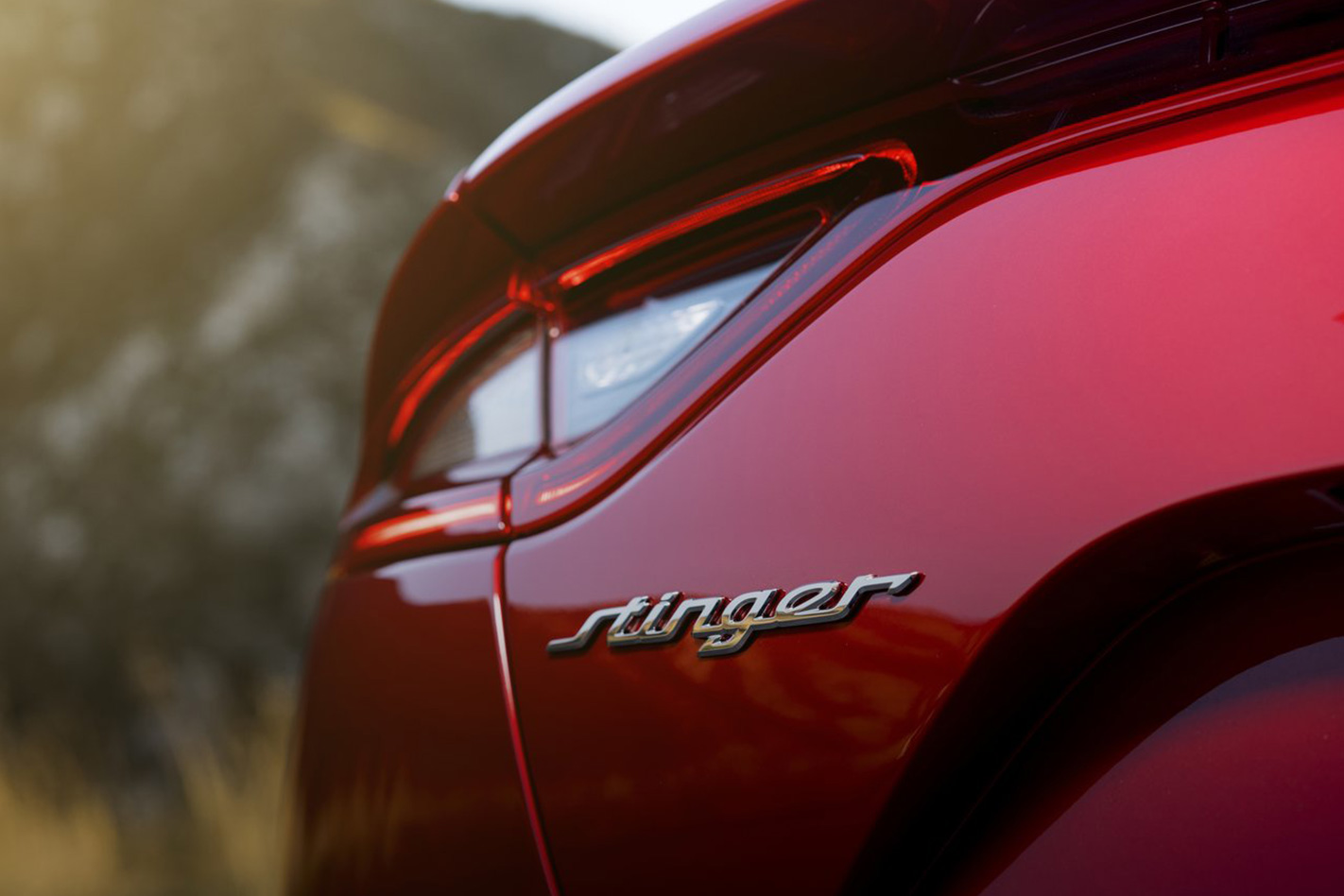
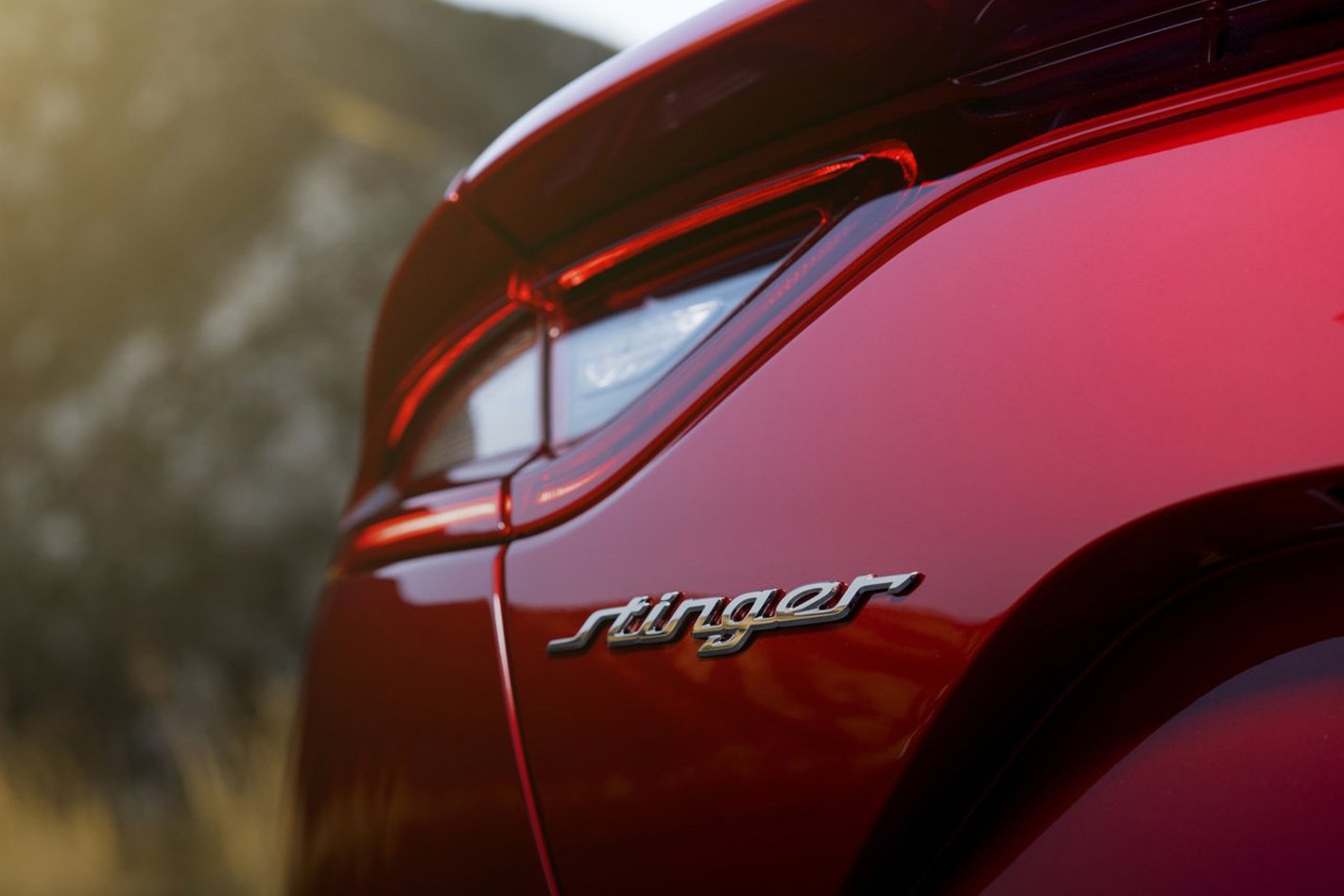
Kia’s confirmed its 3.3-litre Stinger will land in Australia for as much as $48,990.
The twin-turbo V6 powered sedan will land in three guises beginning with the S, moving through the Si at $55,990, and finishing with top-shelf GT at $59,990.
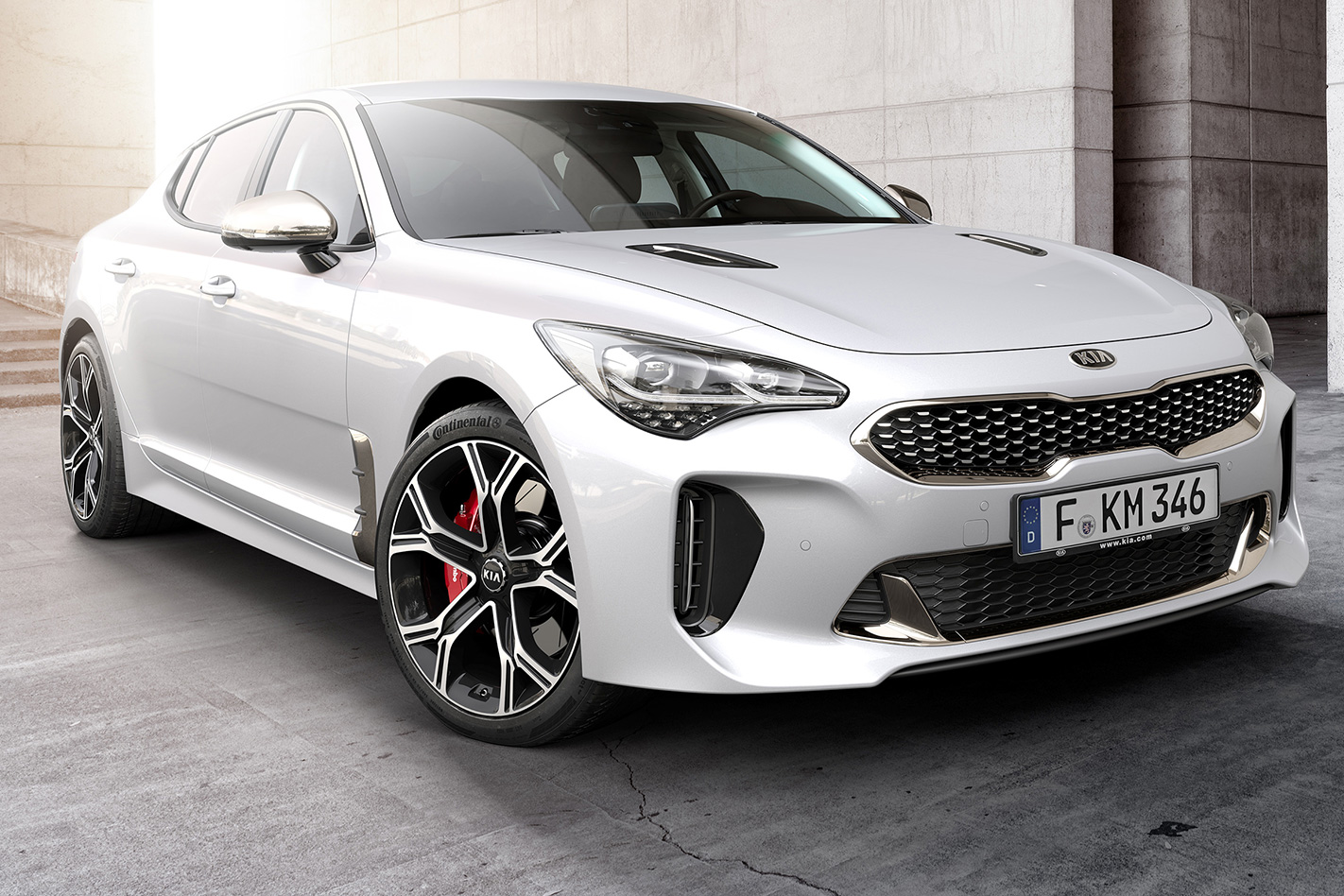
For reference an auto Holden Commodore SS is currently $700 dearer. And Ford’s Falcon XR6 Turbo with a six-speed auto bowed out at $45,690, or $3,300 cheaper, in 2016.
Kia won’t officially comment on how each model differs in specification but MOTOR understands a dealer bulletin leaked this year has already filled in the gaps.
Meanwhile inside all variants will at least feature push-button start, satellite navigation, cloth seats with leather bolsters, and Apple CarPlay.
The step-up from an S to Si in the Stinger range apparently brings 19-inch wheels, a larger sat-nav display, radar based safety tech, and a nine-speaker audio system.
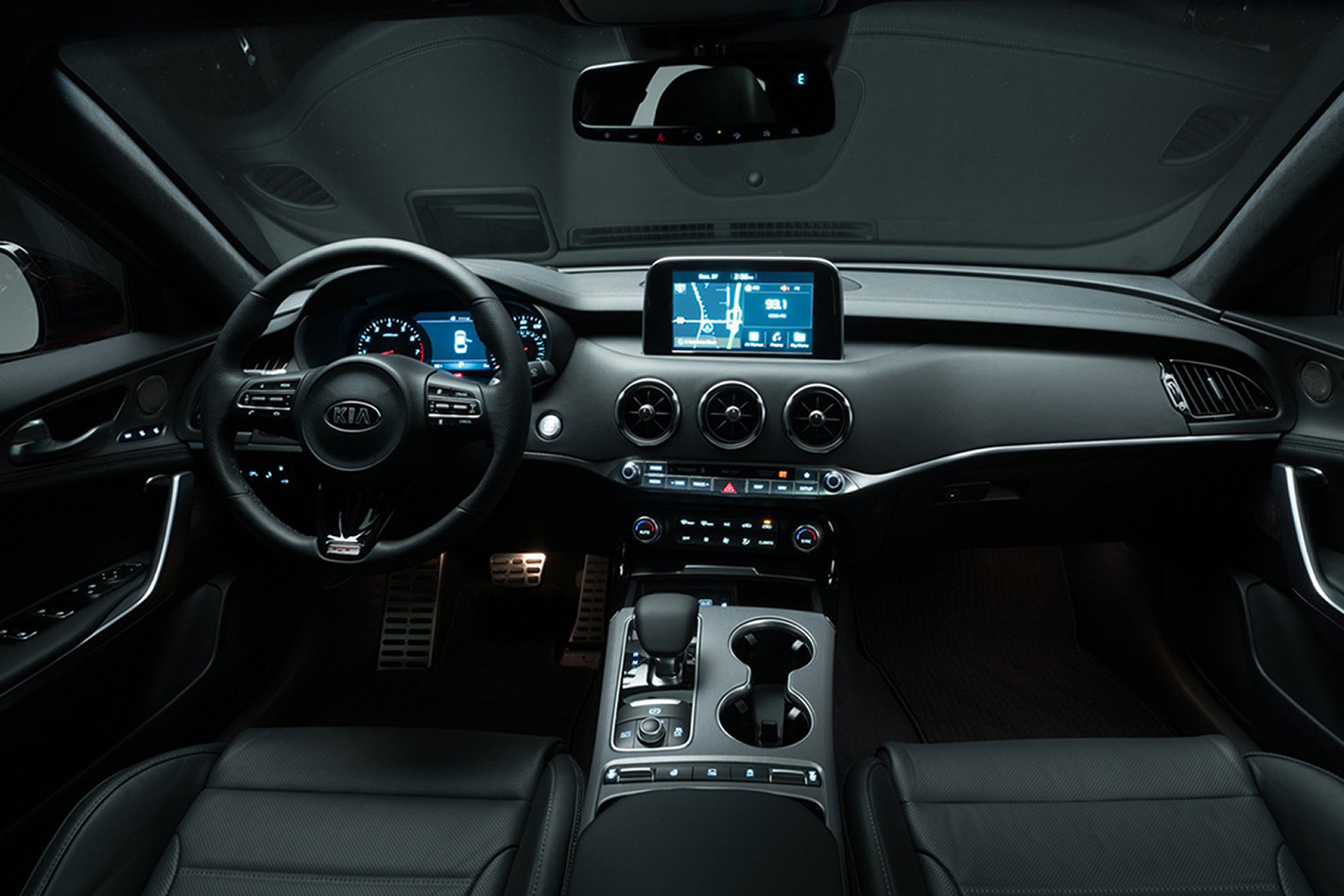
Kia won’t reveal how much the optional factory-fitted exhaust will cost, but says it will be reasonably priced and offer more “burble” than the JUN B.L aftermarket system we recently found.
Over 100 buyers have made deposits on the Stinger GT ahead of its launch this October, with the large majority demanding the full-fat GT.
Without wanting to divulge all details before the model launch Kia has promised details on the less hyped 2.0-litre turbo four Stinger are to come.
A MAJOR roadblock potentially stopping a future right-hand-drive version of the Chevrolet Corvette from coming to Australia appears to have been cleared – General Motors now has trademark approval for its badge.
However, it could mean any future version of the potentially mid-engined C8 Corvette, due on sale here from 2019, may need to wear a version of the badge that won’t feature on versions of the two-door coupe sold anywhere else in the world.
It’s been a long, expensive three-year fight to have the badge approved. IP Australia, the government body overseeing the approval of trademarks here, has finally given its blessing for General Motors to use the double-flag emblem showing a stylised Chevrolet bowtie – the reason behind why the trademark battle has waged for so long.
GM’s application was rejected on four separate occasions. IP Australia initially rejected GM’s application because the yellow-on-red bowtie used in the badge as part of a 2014 redesign too closely resembles the Red Cross, a symbol protected under international law and with deep ties to Australia’s wartime history.
However, as part of its approval, IP Australia has spelled out that the badge for the V6-engined Ford GT fighter will need to change if it is to come here.
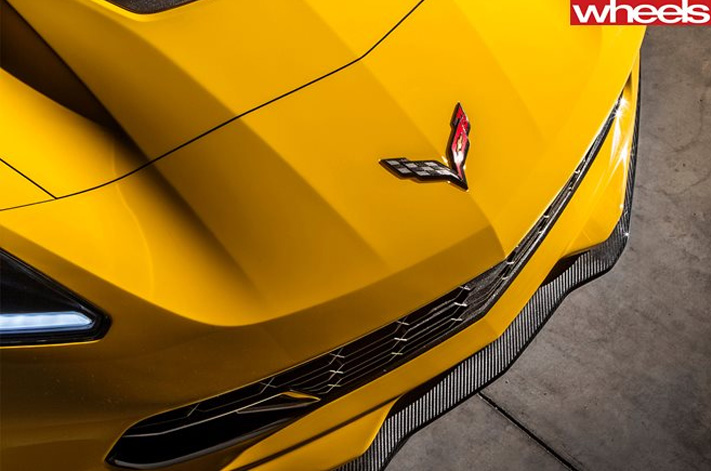
Alternatively, the Australian ruling could sway GM to make changes to the Corvette badge to minimise the chance that any other nations that respect the protection extended to the Red Cross symbol under the Geneva Convention taking similar offence to the bowtie.
Holden declined to comment on what the trademark approval would mean for plans to bring the bent-eight Corvette to Australia as a $150K-plus hero in its post-V8 Commodore performance line-up – one likely to include an all-wheel-drive, V6-engined Commodore VXR range-topper.
GM has invested more than $A300 million to update its Bowling Green plant in the US where the current C7 Corvette is built. The Corvette is the world’s longest-running, continuously produced passenger car with more than 1.6 million produced.
Given the expense of the mid-engined Corvette – GM has trademarked “Zora” here in a nod to engineer Zora Arkus-Duntov, the so-called ‘father of the Corvette’, who fought for a mid-engined version of the muscle car, but only ever built concepts of it – GM is believed to be working on a plan to sell the front-engined C7 Corvette alongside the C8 one.
It’s a tantalising prospect, isn’t it? Envisioning the perfect engine and then commissioning the best people in the motoring industry to design and build it.
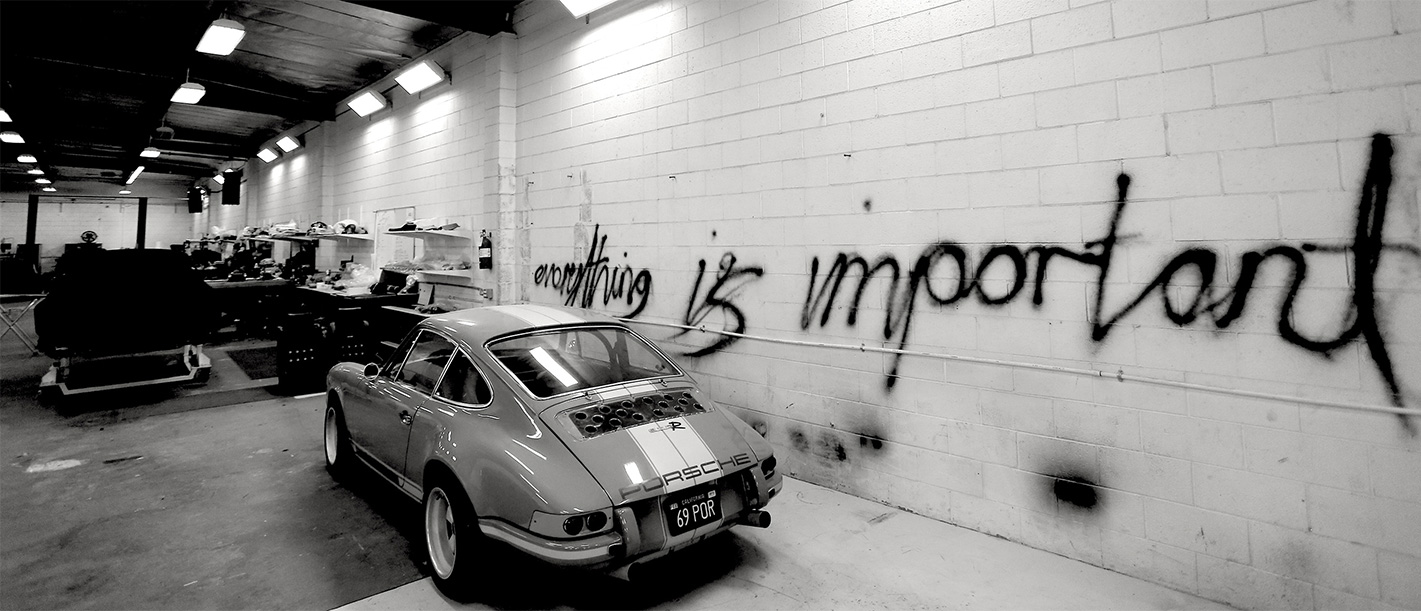
Californian classic Porsche recreator Singer Vehicle Design has responded to a request from a longtime customer and drafted Williams Advanced Engineering and legendary Porsche engineer Hans Mezger to do exactly that. And the result is just stupefyingly good.
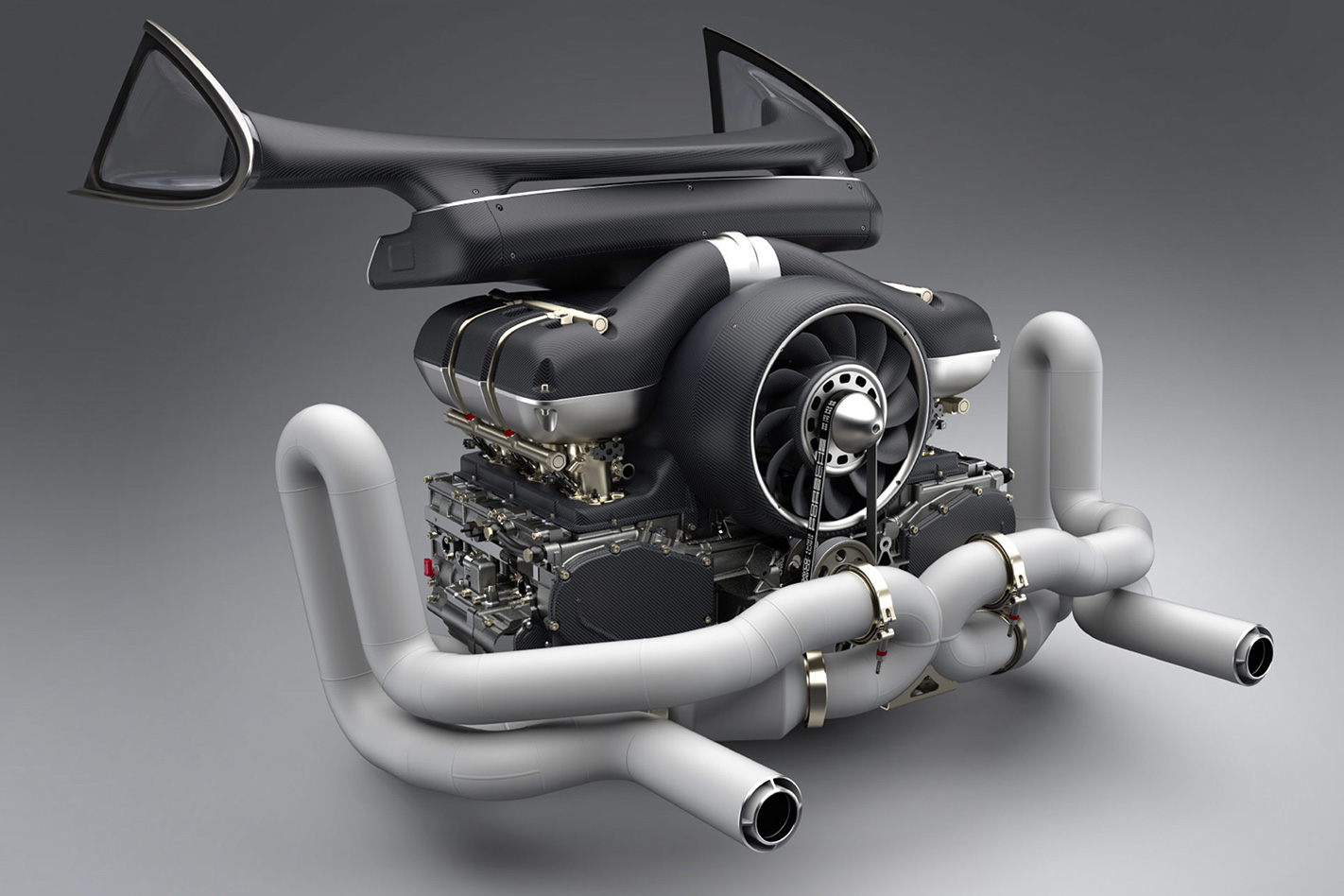
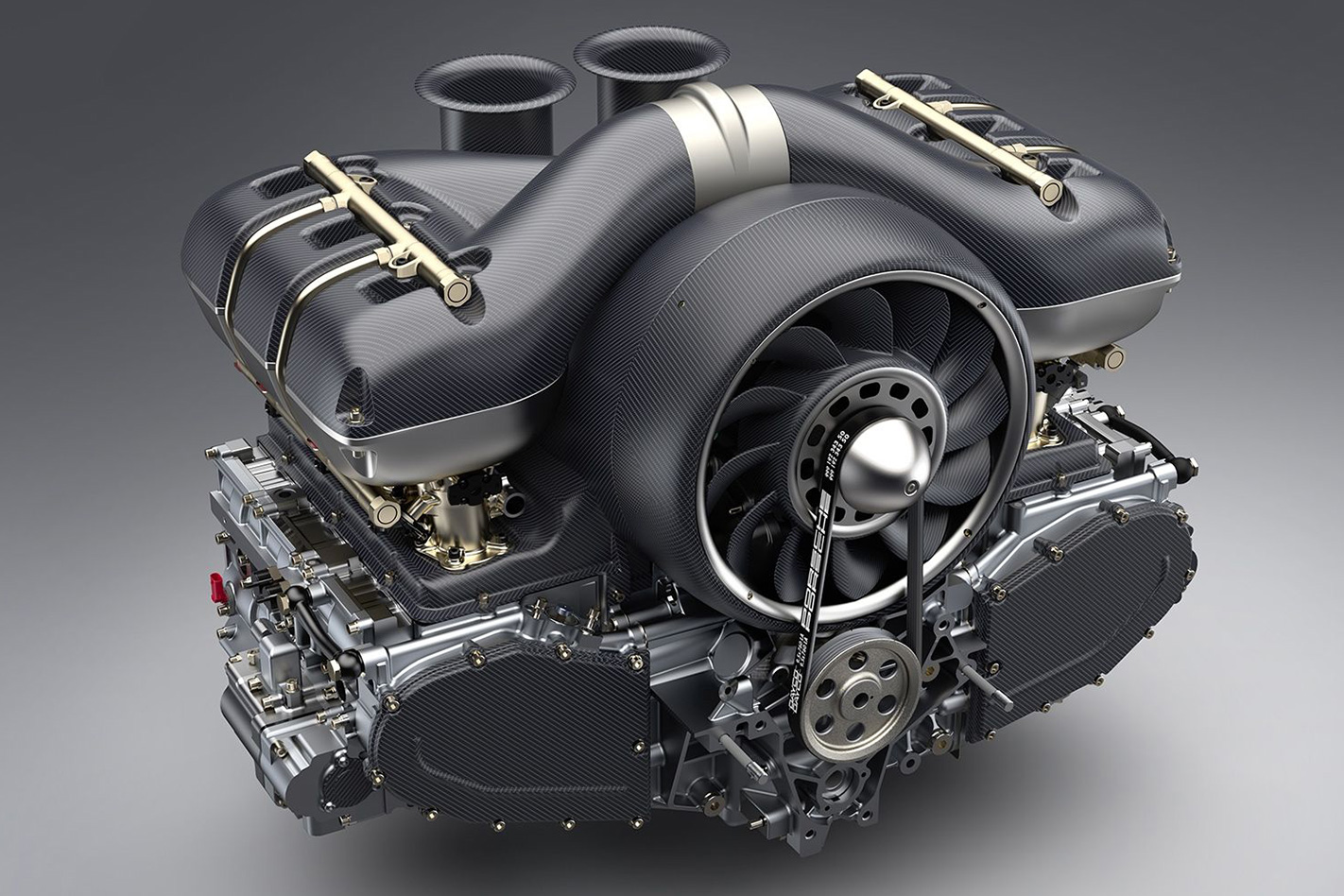
A four-valve head appears, as do titanium conrods, aluminium throttle bodies and dual oil circuits, lifting power from an original 184kW to a massive 373kW, that figure ultimately pinioned by a stratospheric 9000rpm redline. That’s in addition to the new carbonfibre airbox and resonator, the ram-air system and a titanium exhaust system.
These mods bring a new aesthetic to the usual Singer treatment. The beautiful individual throttle trumpets we’ve become used to have been covered by the carbon intake system, while the twin centrally mounted exhaust outlets have been replaced by a pair of pipes set further outboard.
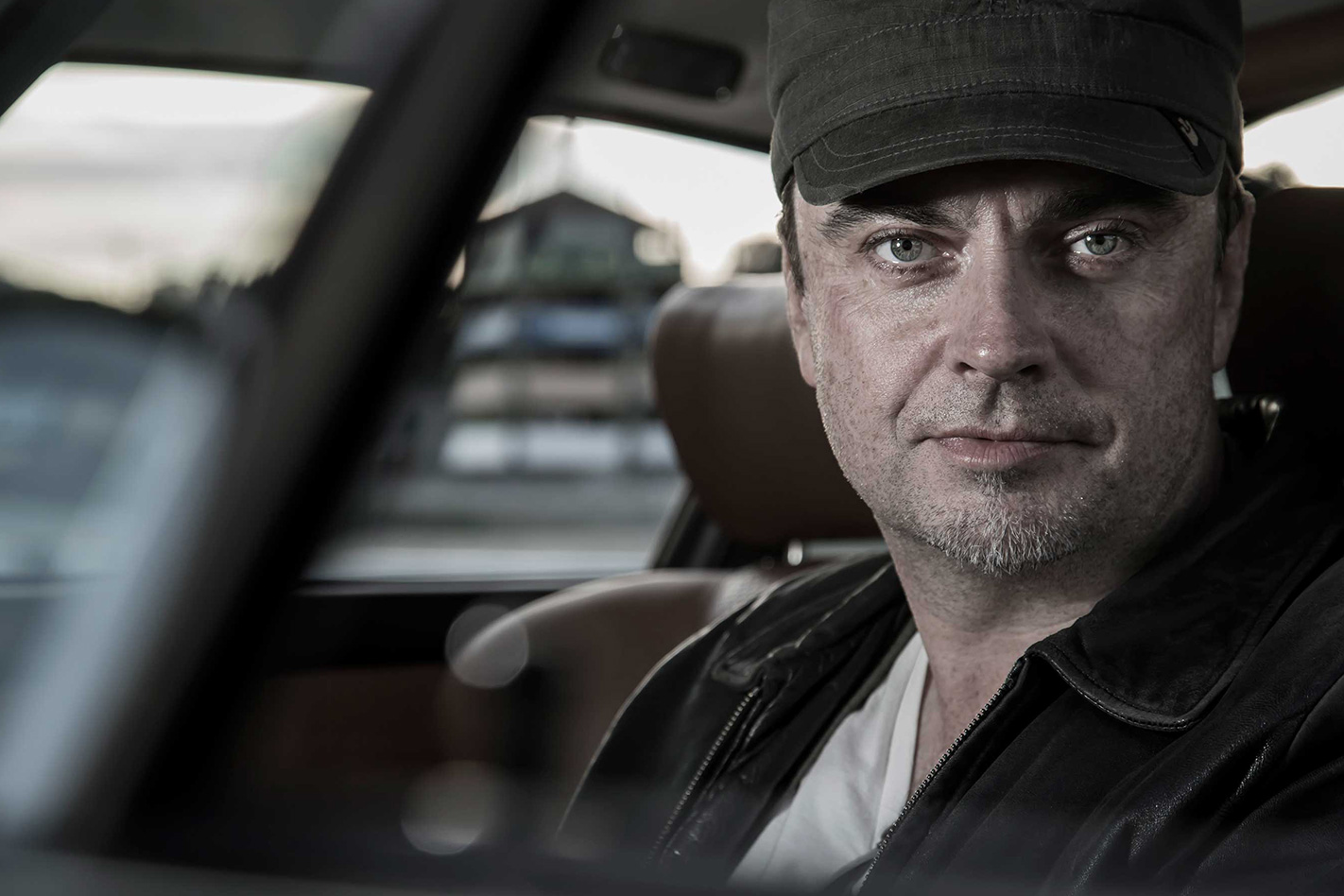
Rob Dickinson, the founder and CEO of Singer, masterminded this project at the behest of loyal client Scott Blattner. Developing a normally-aspirated air-cooled roadgoing unit with the power of a modern GT3’s engine hasn’t been easy but Singer’s customer base is attracted to this depth of detailed engineering.
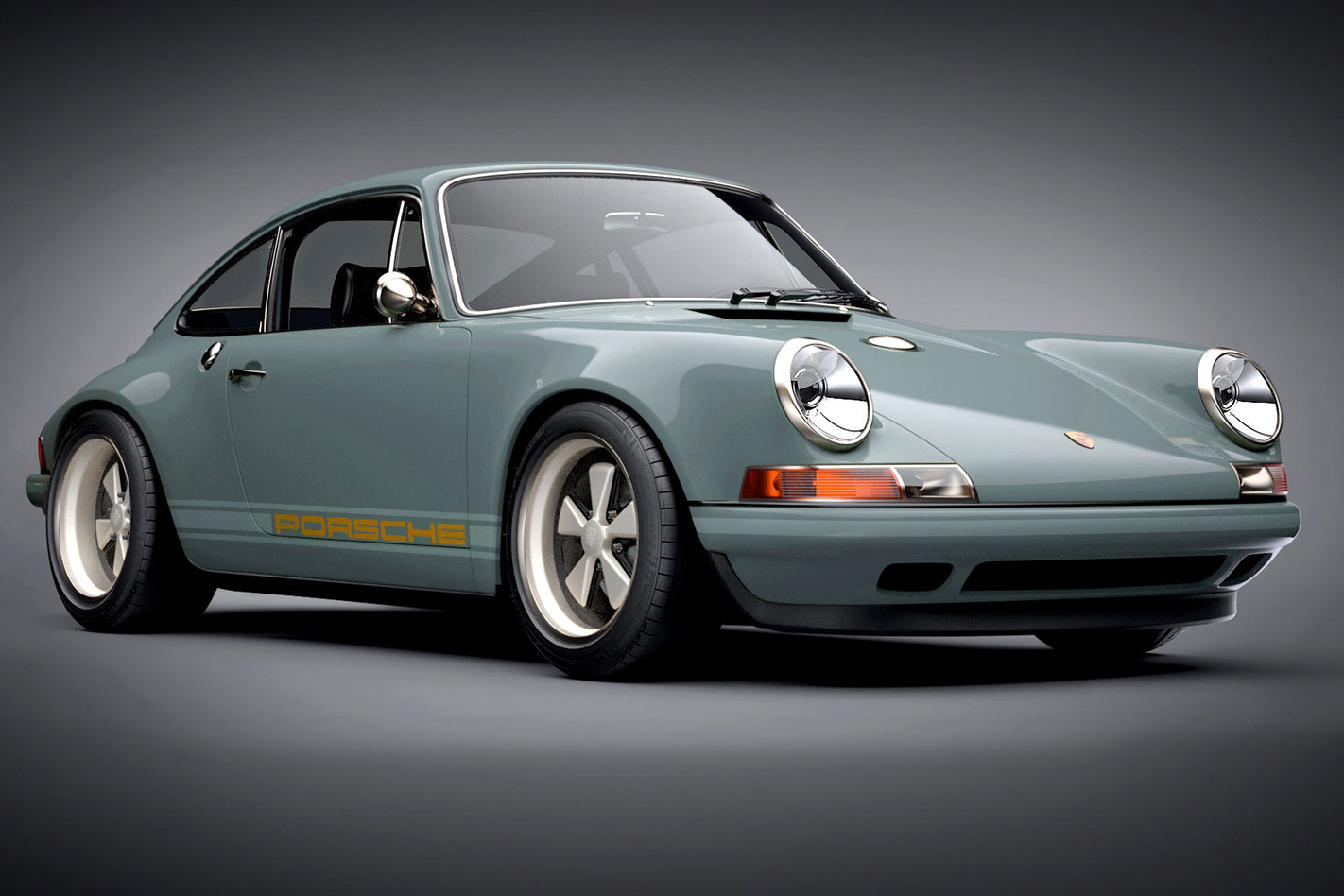
The average bill for a Singer-restored 911 currently stands in the region of USD$600,000, so a car with this engine would likely top the USD $1m mark. What price perfection?
Kia Australia has announced local pricing for the V6 versions of its eagerly awaited Stinger rear-wheel drive model.
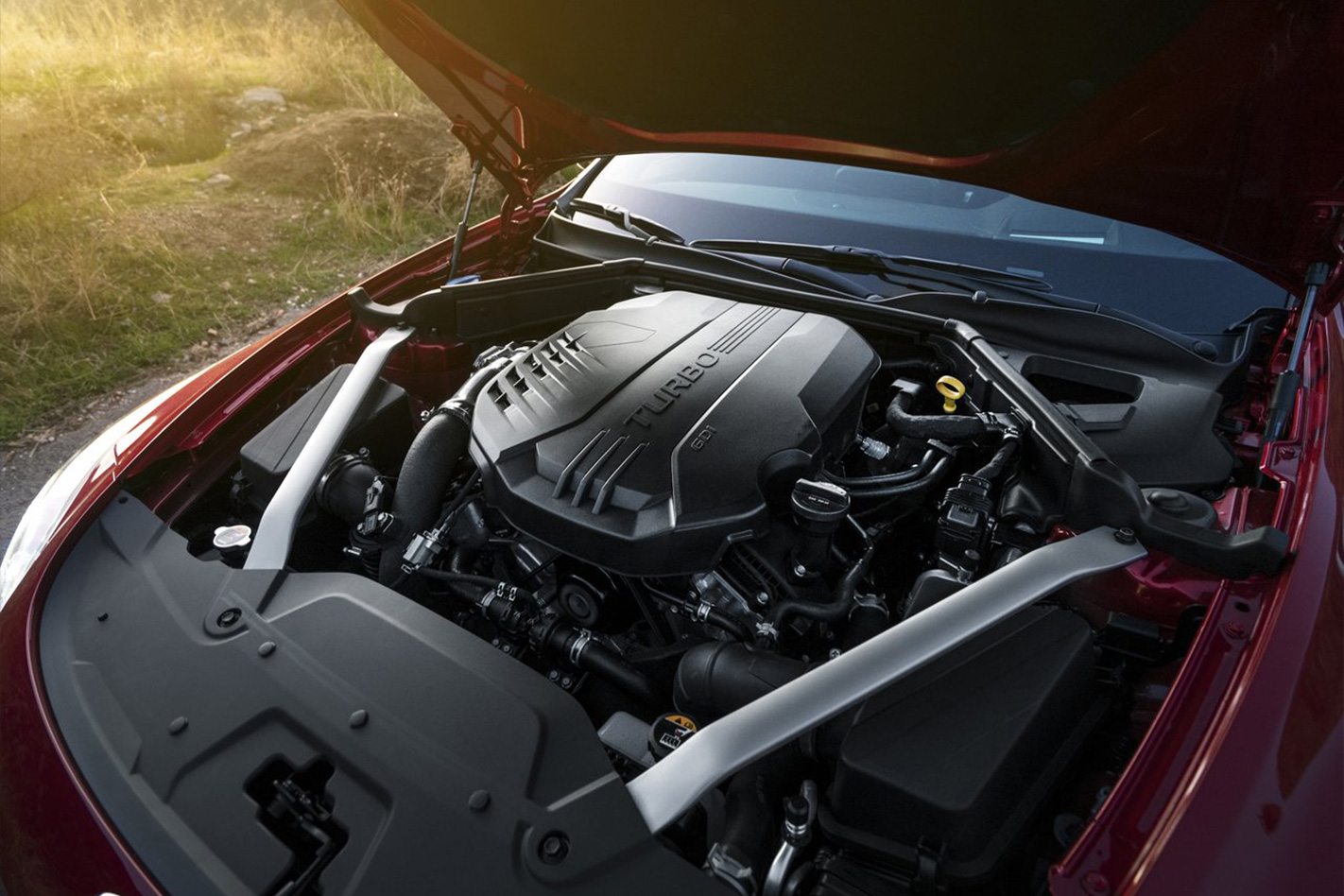
Prices for the 272kW/510Nm 3.3-litre twin-turbo Stinger start at $48,990 for the S, with the mid-spec Si costing $55,990 and the fully loaded Stinger GT priced at $59,990.
Pricing for the more affordable 2.0-litre four-cylinder model is in the final stages of being settled.
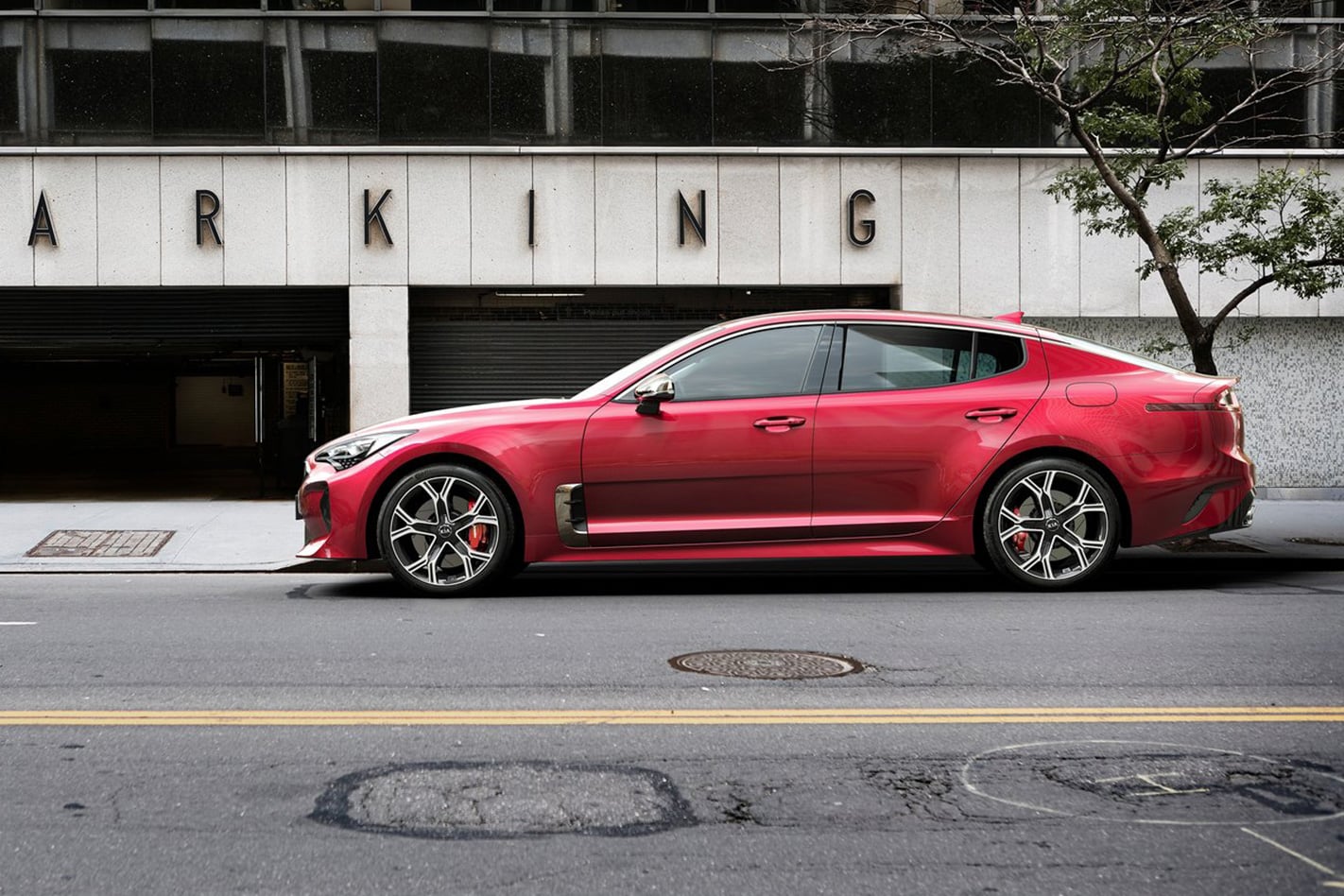
The V6 Stinger’s price and performance are roughly in line with a V8-powered, six-speed auto equipped Holden Commodore VF SS-V Redline, which comes in at $56,190 and fitted with comparable features to the Stinger Si.
All V6 Stinger models will boast a limited-slip differential as standard, Brembo brakes, variable-ratio steering rack, and keyless ignition/entry.
The Si and GT also get lane-keep assist, active cruise control, rain-sensing wipers, full leather trim, automatic emergency braking, and an 8.0-inch infotainment display, while the GT flagship gets higher-grade Nappa leather, driver’s seat memory, premium audio system, blind-spot monitoring, multi-mode suspension, LED headlamps, head-up display, sunroof, and a power-adjustable steering column.
Kia Motors Australia Chief Operating Officer, Damien Meredith said retail pricing has been set “to bring this car to as wide an audience as possible”.
“From the outset it was a goal to get a bi-turbo V6 into the market under $50,000. We have done that with room to spare.”
Meredith said the decision to announce the V6 pricing ahead of the Stinger’s October arrival was to provide confidence to the substantial number of customers who have already put down a deposit without knowing its final price.
“Almost all of the confirmed orders are for the 3.3-litre, so it makes sense to provide those customers with as much clarity as we can while they wait to take possession of their new cars.”
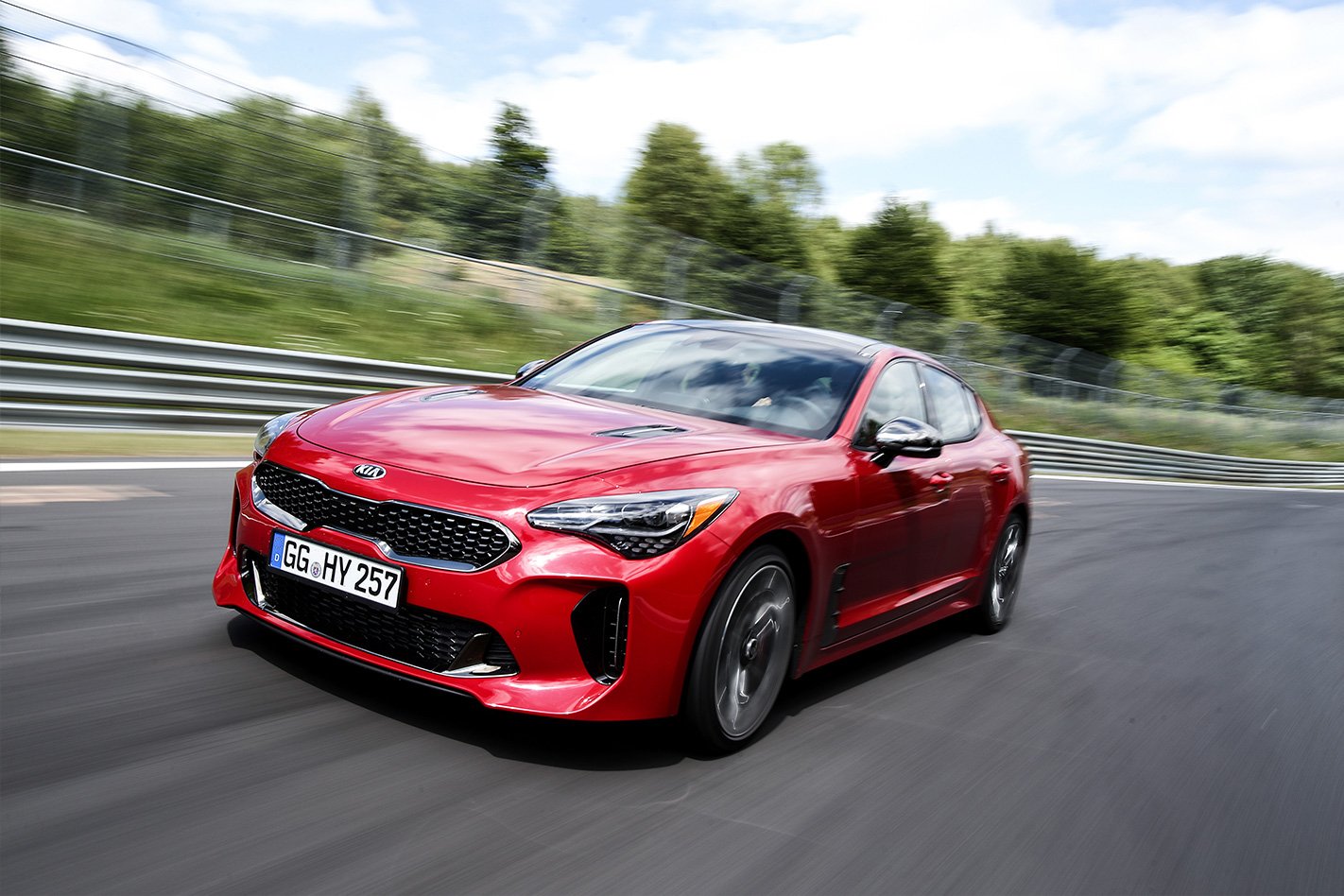
THE highly anticipated Kia Stinger GT will be on sale in Australia by the end of the year with a sub-$60,000 price tag.
The Stinger GT is a shoo-in to replace a hole left in the market by the outgoing V8-powered rear-drive Holden VF Commodore.
The flagship GT model will cost $59,990 to roll off the showroom. A Holden Commodore SS-V Redline with an automatic transmission currently costs $56,190.
While the GT flagship has attracted the most media interest, the entry-level V6 Stinger model available in Australia, the S, could well really stir the enthusiast market. With the same 272kW output as the GT and carrying a $48,990 asking price, the S also gets a standard limited-slip differential, Brembo brakes and the variable-ratio steering system. Pay $55,990 for the Si grade and this nets you full leather, AEB, a bigger 8.0-inch infotainment screen and a suite of driver aids such as lane-keep assist and adaptive cruise.
Pricing for the 2.0-litre four-cylinder Stinger is yet to be revealed, but Kia says it is “in the final stages of being settled”.
Kia Australia says the pricing for the Stinger was an important decision for the company.
“It was critical for us to bring this car to as wide an audience as possible … something I believe we have achieved with the pricing we have been able to settle on,” Kia Motors Australia Chief Operating Officer, Damien Meredith said.
“From the outset it was a goal to get the bi-turbo V6 into the market under $50,000. We have done that with room to spare.”
The Stinger range has undergone extensive local suspension tuning, and is one of the most anticipated cars of the year.
AUSTRALIA’S consumer watchdog has put the new-car industry on notice after slamming a “culture of repair” that has left owners saddled with chronically faulty vehicles.
The Australian Competition and Consumer Commission has today released a draft report into the new-car industry in the wake of two separate court cases aimed at helping new-car buyers that were sold faulty vehicles despite being protected under consumer laws.
The first, against Holden, has resulted in the car maker agreeing to the better treatment of customers who experienced multiple faults with their vehicles within 60 days of buying them. The second, against Ford Australia and its handling of faulty Powershift transmissions, is still before the courts.
“There is a dominant ‘culture of repair’ underpinning manufacturers’ systems and policies for dealing with car defects and failures, even where cars have known and systemic mechanical failures which would entitle a consumer to a replacement or refund under the consumer guarantees,” the ACCC’s draft report says.
“The widespread use of non-disclosure agreements when resolving consumer complaints suggests that consumers are not entitled to their consumer guarantee and warranty rights unless a non-disclosure agreement is signed when this is not the case.
“Nondisclosure agreements also substantially reduce information in the marketplace for new buyers about defects and safety issues that are common to a particular car,” it said.
However, it won’t be just the car brands that are likely to feel the ACCC’s increased scrutiny. The watchdog said it would also potentially go after dealerships.
“Manufacturers’ complaints handling systems, policies and practices that do not comply with the consumer guarantee requirements of the Australian Consumer Law will continue to be targeted through action by the ACCC and fair trading agencies, including enforcement action where appropriate,” it said.
“Such action may also address any instances of non-compliance by dealers. The ACCC is particularly concerned about manufacturers and dealers engaging in conduct that may be misleading or unconscionable.”
According to the ACCC, the commercial relationships between dealers and manufacturers, and the need to safeguard their financial positions, “can have the effect of denying or making it difficult for consumers to readily access the remedies to which they are entitled”.
The Federal Chamber of Automotive Industries, a united voice for almost all the car companies that sell vehicles in Australia, said it looked forward to working with the ACCC to “provide more information about the complex matters raised in the draft report”.
“The industry strives to deliver the best outcomes for its customers through offering world-class technology, safety, value and service to Australian consumers; a commitment which is underpinned by both consumer law and the manufacturers’ warranty and support mechanisms,” it said.
The ACCC’s draft report also questions the way that new cars are given fuel use ratings in Australia, and called for a review of the laboratory bench test – the current way a new car’s fuel use and emissions levels are set – to be revised to more accurately reflect real-world figures, the ones that buyers see. On average, real-world fuel use is about 20 percent higher than the official figures that new cars show on their windscreen.
As well, it will look at claims that the car maker’s restricted access to the information and data required to repair and service new cars is locking out independent servicing businesses.
The ACCC is inviting public comment on the draft report until September 7. The final report is expected to be released late this year.
AUSTRALIA’S consumer watchdog says it has put the car industry on notice after releasing a draft report looking into how new car buyers were being treated.
The industry study, released today after 12 months of investigation, suggests the Australian Competition and Consumer Commission will investigate whether it needs to beef up the level of protection given to new-car buyers.
“Buying a new car is a significant purchase for a consumer,” the ACCC said. “The purchase of a car and its ongoing maintenance account for around five per cent of total average household expenditure annually, typically making it second only to housing expenditure in importance.
“Well-informed consumers and competitive new car retailing markets are therefore likely to deliver considerable benefits,” it said.
The study was launched after “a number of concerns raised with the ACCC and other fair trading agencies about how new car retail markets are operating” – namely defects with vehicles, misrepresentations to buyers, and issues in post-sale service markets.
The industry is big money: the ACCC said new car dealerships earned about $64 billion in revenue last financial year. This financial year, about 40,000 dealerships and independent servicing and repairs are expected to earn about $18 billion, it said, while almost 11,000 crash repair businesses were expected to earn $6.8 billion in revenue.
The Federal Chamber of Automotive Industries, which represents the interests of car brands in Australia, was contacted for comment. The ACCC has already taken Holden to court over the way it handled multiple failures in one of its vehicles, while Ford Australia will appear before the courts later this month over similar issues.
According to the consumer watchdog, there are big differences between the way that new-car buyers are able to enforce their rights before buying a car, and after.
“The biggest obstacle to consumers not receiving the remedies to which they are entitled under the ACL [Australian Consumer Law] is the failure of manufacturers’ complaints handling systems and policies across the new car industry to adequately take consumer guarantees into account,” it said.
As well, it will look at claims that the car maker’s restricted access to the information and data required to repair and service new cars is locking out independent servicing businesses.
The ACCC has also indicated it will ask questions about the way that fuel ratings and emissions are gauged for new cars, which generally fall well below the real-world numbers that new-car buyers experience.
The consumer watchdog has opened the draft report for public comment until September 7. It is due to hand down its final report later this year.
