
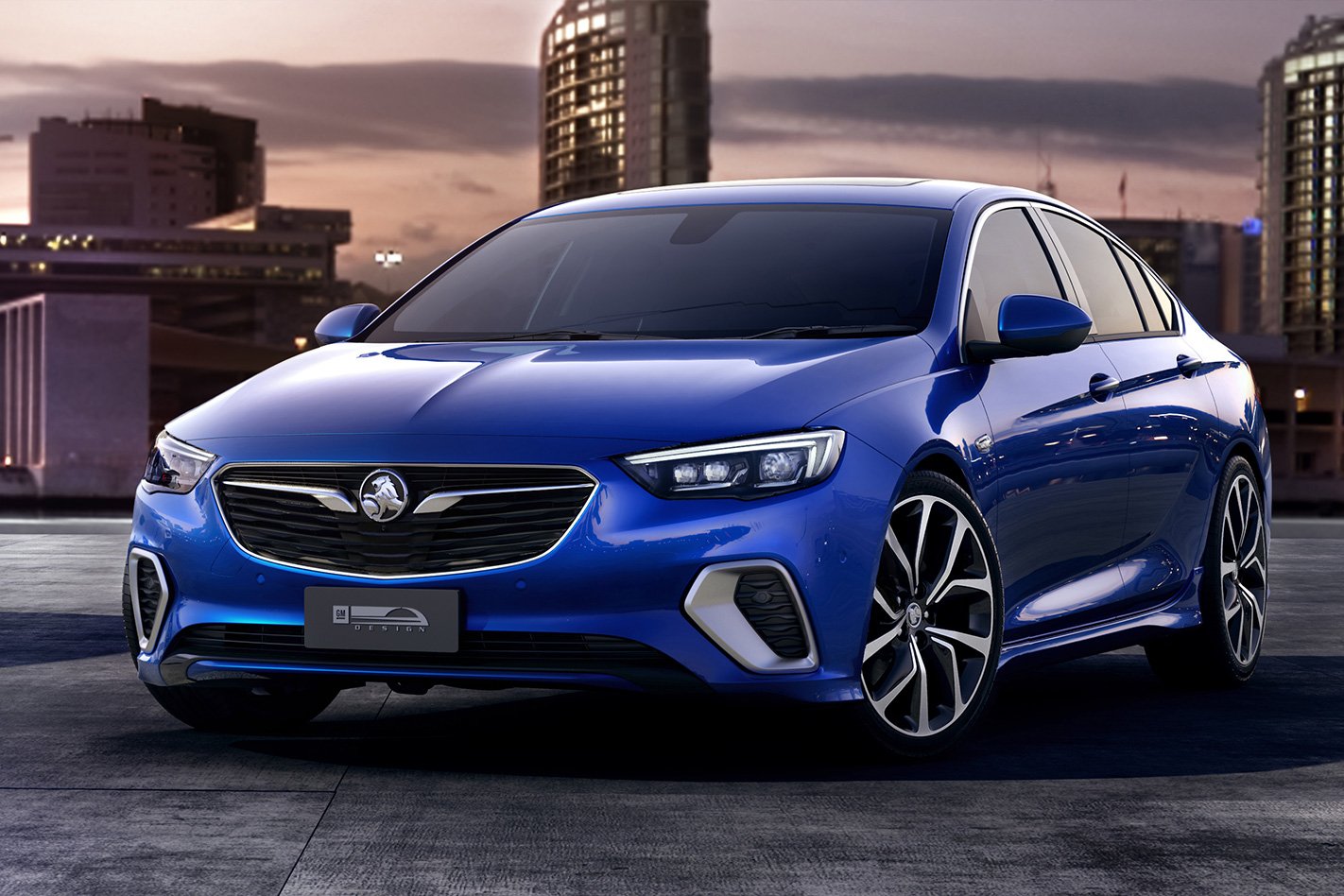
AUSTRALIA’S first fully imported Holden Commodore now has an official model code – the ZB.
It’s the first time the code has appeared in the public eye, with even Holden staffers only learning of the model code of the Opel Insignia-based Commodore in the last few weeks.
The name is a sweet irony in that the “Z” unintentionally farewells Zeta, the Holden-developed rear-drive platform that was to have swept the GM world until the global financial crisis and tightening emissions standards killed it off, while the “B” could be considered a nod to 1978’s original VB Commodore.
However, the model code’s origins are a lot less romantic. Holden vehicle development manager Jeremy Tassone told Wheels that Holden took the “Z-B” that Opel assigned the new-generation Insignia, and just removed the dash.
“Every program goes through this phase (of receiving a model code) at some point, but I guess this is one of the few programs that anyone really cares.”
The new Commodore has now had a couple of names associated with it. Internally, Holden’s engineering team have referred to the new Commodore as the “E2”, a reference to the Epsilon 2 architecture that underpins it.
It has also been known more colloquially as the “NG” Commodore, short for either “next generation” or “new generation”, to help Holden’s staffers differentiate the Opel-based product from the VF Commodore in internal communications.
The ZB model nomenclature also shares its roots with the 1968 Ford Fairlane, meaning future generations of the Commodore could follow in the steps of Ford Australia’s former long-wheelbase luxury model’s generational roll-outs.
Holden is in the final stage of developing the new Commodore – due on sale here in less than six months – and is now at the stage in its sign-off process it calls “post 100 percent”.
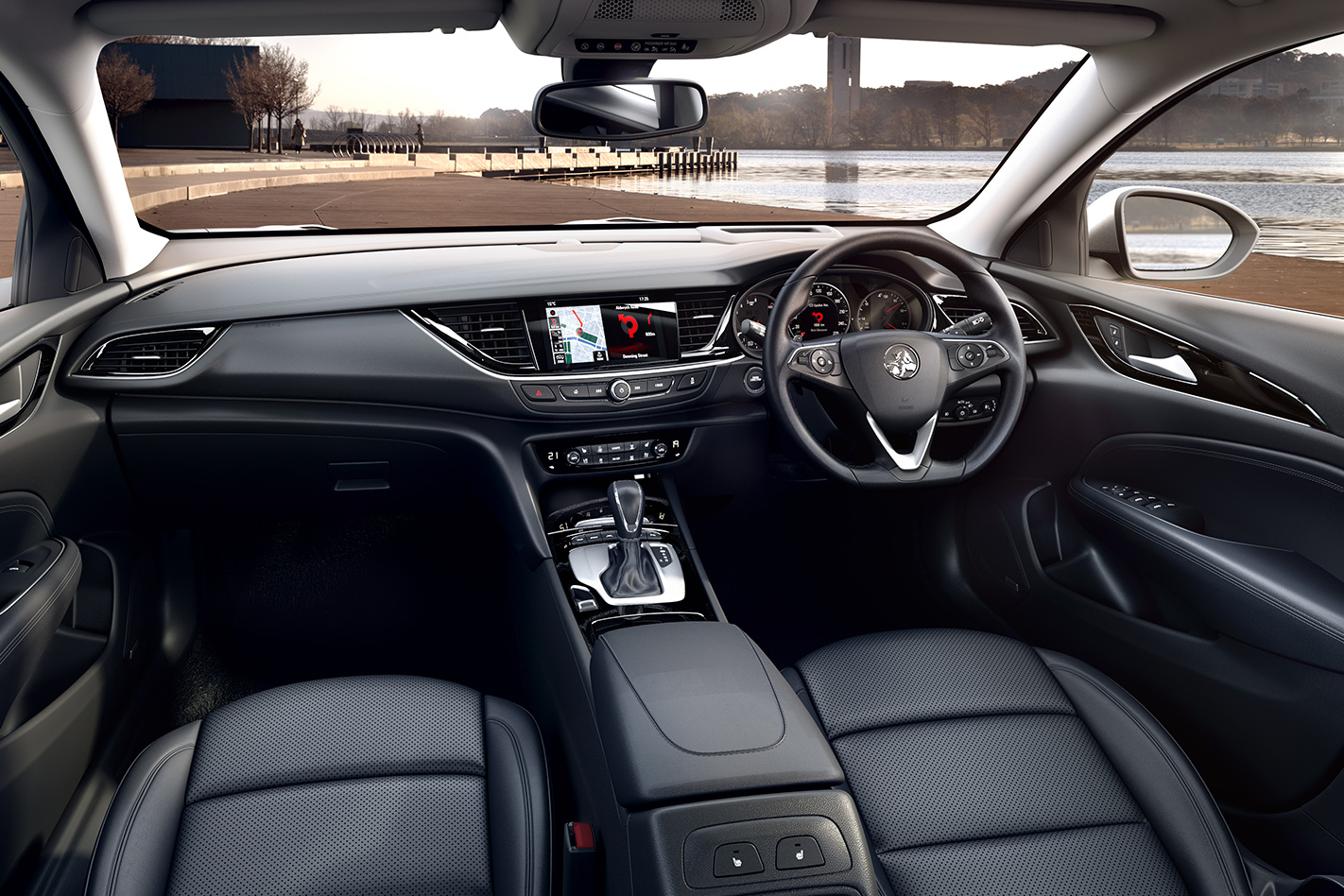
The ZB model code is part of the certification paperwork that Holden has to submit to the government as part of the car’s validation process.
Tassone said the lightly disguised Insignia-based Commodores that Wheels readers had spotted on the roads were carrying markings that showed they were early production builds, and not series production cars.
“At this stage, the first cars have come off the (Russelsheim, Germany) production line, all the gaps and margins, and all that aren’t where we need them to be, so there’s final tuning going on at the plant to get all the panel fit and finish, and all that stuff, just right.
“So in this stage, we like to put a bit of camouflage on the cars so that if someone walks past one parked in the street, they don’t look at it and say ‘oh, look at this thing, it has uneven gaps and all this sort of stuff’,” he said.
“By putting camouflage on it, this shows it is an engineering car, it’s not a production version.”
The last locally made Holden Commodore will come off the car maker’s Elizabeth production line on October 20, marking the end of almost 70 years of local manufacturing.
Wheels will produce a special edition in October marking Toyota’s exit from Australian manufacturing, and a bumper edition in November to mark Holden’s departure.
What stands out?
The Subaru WRX and WRX STi are powerful and rewarding performance cars that are also highly practical, thanks to a roomy small-sedan body. All-wheel drive makes them stable on slippery surfaces, and enhances handling. Good equipment and the Subaru reputation for reliability add appeal. Auto braking is available.
What might bug me?
A bumpy urban ride in the WRX STi, and to a lesser extent even in the WRX. Both models will feel unexpectedly firm compared with normal small cars, even though the blend of handling and ride comfort each offers is good for a high-performance car.Driving under 80km/h on the space-saver spare tyre, until you can fix your full-sized flat.
What body styles are there?
Four-door sedan only.The Subaru WRX drives all four wheels at all times. It is classed as a small car, lower priced – but most versions fall into the higher priced category.
What features does every Subaru WRX have?
Cruise control, a reversing camera, and dual-zone climate control, which lets the driver and front passenger set their own ventilation temperatures.Very bright and long-lasting LED headlamps and tail lights, which switch on automatically when it’s dark and shine into corners when you turn the wheel. Front and rear foglights. Windscreen wipers that operate automatically when it rains.An iPod-compatible AM/FM radio and CD infotainment system with a touchscreen, and USB and auxiliary inputs. A Bluetooth hands-free system for phone calls and audio streaming, and a voice control function.Buttons on the steering wheel for operating the audio system, Bluetooth and cruise control.A 5.9-inch multi-function display at the top of the dashboard, which displays the outside temperature, turbo boost pressure, fuel use and trip distance.A sports body kit, which includes a rear diffuser and a spoiler on the bootlid, a bonnet scoop that feeds air to the engine intercooler, and twin exhaust tailpipes. (These items improve the look of these cars, and distinguish them from the fourth-generation Subaru Impreza on which they are based.)Front sports seats (with bolstering to hold you in place when cornering hard), sporty bare-metal control pedals, leather-trimmed gearshift and park brake handles, and a leather-wrapped steering wheel.Seven airbags. Electronic stability control, which can help you control a skidding car. (For more on Subaru WRX safety features, please open the Safety section below.)In addition, every WRX with manual transmission comes with a limited-slip rear differential, which helps you maintain drive when cornering hard (by preventing the less-loaded inside wheel from spinning).And every WRX with automatic transmission comes with Active cruise control and the third-generation Subaru EyeSight suite of sensory safety features, which includes auto emergency braking and lane-keeping assistance.Seven paint colours are available, and they all come without extra cost.Every Subaru WRX and STi carries a three-year, unlimited kilometre warranty.
Which engine uses least fuel, and why wouldn’t I choose it?
The 2.0-litre turbo petrol four-cylinder engine in the WRX uses the least fuel, consuming 8.6 litres/100km in automatic form (official test, urban and country combined). With the manual gearbox, it uses about five per cent more.This is a powerful engine that allows quick acceleration and effortless overtaking. It is much more potent than the smaller turbo engines (and non-turbo 2.0-litre engines) found in most small cars.The obvious reason not to choose it is that you want even more speed and better handling from the WRX STi model. The STi has a 2.5-litre turbo petrol engine and uses about 20 per cent more fuel than the WRX. That is partly because it has about 15 per cent more power, and partly because the STi engine is an older design than the 2.0-litre WRX engine.In the real world, expect about 13 litres/100km from an STi, on average.The turbo 2.5-litre allows you to accelerate the WRX STi noticeably harder – and with even less apparent effort – than the already quick WRX.The WRX offers the choice of six-speed manual or continuously variable (CVT) automatic transmissions. The WRX STi comes only in six-speed manual form.Both these engines differ from nearly every other small-car four-cylinder in that they lie flat across the engine bay rather than standing up vertically (their cylinders are opposed horizontally). This places the weight of the engine lower in the car, which helps it steer more responsively. (The Subaru Impreza has a similar engine that is not turbocharged.)(Power outputs and all other WRX specifications are available from the Cars Covered menu, under the main image on this page.)
What key features do I get if I spend more?
The least costly Subaru WRX is called just the WRX, and it comes with cloth seat trim, a 6.2-inch central touchscreen, 18-inch alloy wheels, and the features in every WRX. A manual gearbox is standard. The extra-cost CVT auto adds EyeSight, which brings active cruise control and auto braking.Spending more for a WRX Premium gets you a smart key and a start button (which let you unlock and start the car without handling the key). There is a powered sunroof. Wipers switch on automatically when it rains. Seats are trimmed in leather, the front seats can be heated, and the driver’s seat is power-adjustable and has a memory for your settings.A combined satellite navigation and CD/radio audio system with a larger 7.0-inch touchscreen resides in the centre of the dash. It brings with it Harman Kardon brand speakers with a sub-woofer, an external audio amplifier, and satellite navigation.On both manual and auto WRX Premiums, there is also a Vision Assist suite of safety systems. These include a blind-spot monitor, and a rear cross-traffic alert. A high-beam assistant automatically dips the headlights for oncoming cars.Spending more again for a WRX STi brings better acceleration and handling, with some extra go-fast equipment but the loss of the Vision Assist pack.In addition to the more powerful engine, the features that improve performance include a driver-controlled centre differential (which allows you to adjust the balance of the car for fast cornering). There is also a limited-slip front differential, which makes the front tyres less likely to spin when you’re accelerating hard out of a corner. These features let drivers of modest ability safety deploy the car’s power on slippery surfaces, and bring traction levels that skilled drivers will relish.Bigger brakes with more effective six-piston calipers increase braking power and consistency, and firmer suspension settings sharpen the handling. The steering ratio is quicker, which means that turning the steering wheel has a bigger effect on the wheels – so that the car feels more responsive. And the wheel diameter grows an inch, to 19 inches.Inside, there are different sports front seats that offer much greater cornering support than those in the WRX – but are trimmed in a mixture of leather and Alcantara (fake suede) rather than the full leather of the WRX Premium. The driver’s seat is not power-adjustable, and there is no sunroof.You can pay still more for an STi Premium, which brings back the Vision Assist pack, full leather seat trim with front heaters, the power-adjusted driver’s seat with a memory, and the powered sunroof.The most expensive WRX is the STi Spec R, which is an STi Premium with front seats from specialist Recaro. These seats retain power-adjustment.
Does any upgrade have a down side?
The STi must be filled with super-premium fuel (98 RON), while the WRX can use cheaper, premium fuel (95 RON).Choosing an auto transmission WRX removes the limited-slip rear differential that is standard on manual cars.Choosing the more costly STi removes the option of an automatic gearbox: the STi is manual only. For that reason, no STi offers EyeSight.Paying more for an STi brings you more performance than you can wring from a WRX but also a less forgiving ride.
How comfortable is the WRX?
The stiff suspension on the WRX, which helps it handle corners with great grip and little body-roll, also means it rides much more firmly than a normal small car. The STi version is firmer still.The low profile tyres worn by both models also mean you feel sharp bumps such as joins in the road more than you would in a mainstream small car (which puts more rubber and air between the wheel and the road).The STi’s high-level handling therefore has a price you must bear during day-to-day driving: it is likely the bumpy ride will annoy you if you’re used to the smoothness of a normal small car. That is especially so if you do a lot of your driving in the city and the suburbs, rather than in the country or on twisty roads.The WRX is better than the STi as an all-rounder that will do routine city driving a lot of the time, and country road runs only occasionally. The ride is still very firm compared with a normal Impreza, but it is easier to live with than the ride of the STi, and the WRX still handles very well.Subaru says suspension adjustments for the 2018 model-year WRX (on sale from August 2017) were aimed at improving its ride comfort. Springs and damping settings were revised, front and rear.The WRX and STi are reasonably quiet inside, with low levels of noise and vibration from the suspension – for a performance car – and little wind noise. There is some engine noise, which is welcome, and some tyre rumble on coarse-chip road surfaces, which is not so welcome.The front seats in the WRX offer good long-haul comfort and superb side-support for cornering, and the controls are well sited. The seats in the STi offer even better side-support, but at a cost to ease of use – the side bolsters make them more difficult to get in and out of. That is not a problem for long trips, but it is annoying when you’re getting into and out of them a lot – while running around the city, for example.The steering column adjusts for tilt and reach, which lets you find a comfortable driving position.The interior of any WRX is well built, the quality of the seat trim is good and the steering wheel and gear lever are nicely designed and finished. The centre touchscreen and electroluminescent gauges are attractively presented.
What about safety in a Subaru WRX?
Every WRX and WRX STi comes with anti-lock brakes, stability control, seven airbags, auto-on LED headlights (which make you visible more reliably in poor light), auto wipers, a reversing camera, and seatbelt reminders on all five seats.The seven airbags are in the usual places: two directly in front of the driver and front passenger; one alongside each front occupant at chest level to protect from side-impacts; a curtain airbag down each side at head level protecting front and rear occupants; and a knee protection airbag for the driver.WRX (and WRX Premium) automatics also come with Subaru’s third-generation EyeSight active safety suite, which includes adaptive cruise control, auto emergency braking, and lane-keeping assistance, among other features.The auto braking relies on stereo camera-type sensors, is effective and city and highway speeds, and recognises brake-lights and pedestrians, Subaru says. It will warn you of an impending collision, and can apply the brakes automatically to mitigate or avoid it.A different sensory safety suite called Vision Assist enhances EyeSight on WRX Premium autos, and is supplied on its own with WRX Premium manuals and the STi Premium and Spec R. It includes a blind-spot monitor, which warns you if a vehicle is travelling in the blind spot over your shoulder, and a lane change assistant, which warns you if a vehicle is approaching quickly from behind in the lanes either side. A rear cross traffic alert warns you, when reversing, that another vehicle or person is about to cross your path.Vision assist also gives you Front-view and Side-view monitors, which can display views from, respectively, the front and the left side of the car. The front-view monitor, which uses a camera mounted on the grille, offers the potential to show you more than you can see from the driver’s seat (perhaps because a truck alongside you creates a blind spot).The Australasian New Car Assessment Program (ANCAP) awarded the Subaru WRX and STi its maximum five stars for safety, most recently in March 2014.
I like driving – will I enjoy this car?
The WRX is aimed at the enthusiast who wants a fast car that is practical. The result is a car with broad appeal. Most people will enjoy driving the WRX for its blend of speed, handling, day-to-day ease of driving, and passenger and luggage space. However the firm ride won’t suit those who prioritise comfort, and the power of the engine may seem fearsome at first.The engine power in both cars provides entertainment on its own. With both all-wheel-drive and a well-tuned suspension that lets the car respond directly and intuitively to the steering wheel, accelerator and brake, there is a great deal of fun on offer in the WRX, and even greater thrills in the sharper, quicker STi.On slippery surfaces, or when powering out of tight corners, the rocketing acceleration the AWD system allows is impressive.Both the WRX 2.0-litre turbo engine and the STi 2.5-litre offer a lot of power, much of which is available at low engine speeds – either of them will startle anyone who is used to a normal, non-performance small car.Both engines are satisfying not just for their outright performance, but for the effortless cruising and overtaking they allow, which means you can enjoy a WRX without incurring speeding fines.The smaller WRX engine takes a bit longer to build up to its best than the STi’s, which is immediately responsive to the accelerator. This heightened immediacy applies to most of the controls in the STi. Its brake pedal is more responsive, and the brakes feel more powerful. Its quick ratio hydraulic steering points the front of the car into corners sharply, with help from the taut suspension settings and low-profile tyres.Many enthusiasts will prefer the manual transmission. The CVT (in the WRXes only) makes it less fun to drive, although at least it has manual gear shift paddles.
How is life in the rear seats?
The WRX has plenty of leg room in the back – it is long for a small car, and that shows. A comfortable, well-angled base and backrest, and good shoulder and foot room, contribute to a comfortable rear seat.The seat can carry three passengers, with lap and sash belts for all.
How is it for carrying stuff?
The boot is quite big at 460 litres – not far short of the boot space in Subaru’s Liberty medium sedan. The boot can be expanded by folding the 60/40 split-fold rear seat.The WRX comes only in a sedan – Subaru no longer makes the more versatile WRX hatchback.
Where does Subaru make the WRX?
The Subaru WRX and STi are manufactured in Japan.
What might I miss that similar cars have?
Possibly the added versatility of a wagon body. Subaru offers a high-performance small wagon in the Levorg, which shares its engine with the WRX. The Volkswagen Golf GTi and Skoda Octavia RS are also available as high-performance wagons, for example.Support for Apple CarPlay and Android Auto, which put apps from a compatible smartphone on the car’s touchscreen and let you operate them from there. The Golf and Octavia have this, for example.Subaru’s own BRZ 2+2 coupe, and its Toyota twin the 86, are performance alternatives for those who don’t need the full back seat and big boot of the WRX. These well-tuned rear-wheel drive coupes are arguably more fun to drive than the WRX, even though they aren’t as powerful. The same could be said of Mazda’s lightweight, two-seat, MX-5.You might also consider the Ford Focus ST and Peugeot 308 GTi, or if American muscle attracts you, the Ford Mustang.
I like this car, but I can’t choose which version. Can you help?
The STi is our pick. It is superior to the WRX for enthusiast drivers, in terms of its handling, responsiveness and speed, and while it costs significantly more than the WRX, that’s also offset by the extra performance equipment it includes.However, if versatility is more important to you than sporting potential, a WRX auto will be easier around town and more comfortable, and brings you active cruise control, auto braking, and the other EyeSight driver aids.
Are there plans to update the Subaru WRX soon?
This Subaru WRX went on sale in 2014 and received a modest update in August 2015, for model year 2016. Key changes included a rise in wheel size for the WRX to 18 inches (matching the STi), and on Premium versions of both cars an improved infotainment system and the Vision Assist suite of driver aids.About July 2016, dual-zone climate control was extended to the WRX for the 2017 model year. On the manual WRX, the gearshift mechanism was adjusted with the aim of improving feel. WRX and STi Premiums got memories for front-seat adjustments.About August 2018 the WRX and STi received a facelift, with a revised nose, trim changes in the cabin, and the provision of full LED headlights that shine into corners. Among other changes were suspension revisions for the WRX aimed at improving comfort, and the addition of Subaru’s EyeSight driver assistance suite to WRX and WRX Premium autos. Wheel size on the STis increased an inch to 19 inches. An STI Spec R added power-adjustable seats from Recaro.A new-generation WRX is not expected before 2019.
JAPAN is the automotive equivalent of the Galapagos Islands – an isolated environment whose unique conditions have spawned some truly weird and wonderful creatures.
The oddest of the odd belong to Japan’s kei jidosha, a sub-species of car known for its tiny proportions and pint-sized engines. Measuring no longer than 3.4 metres, no wider than 1.48 metres, and no taller than 2 metres, kei cars these days are also limited to engines no bigger than 660cc and a maximum output of 47kW.
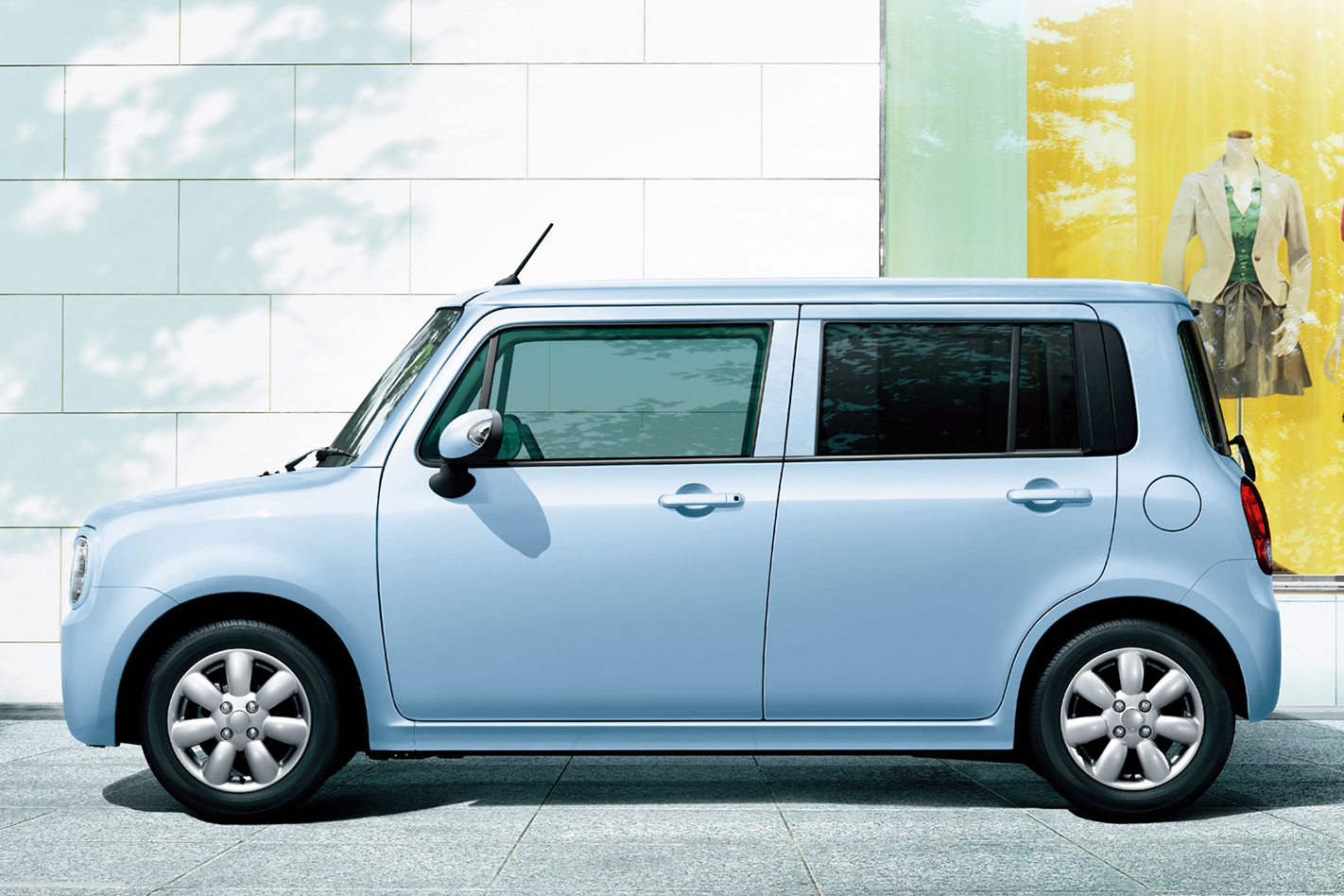
By packing as much internal space into as small of a footprint as possible, and with a miser-spec engine hauling it all, kei cars have proliferated in Japan thanks to hefty taxation of larger cars, tiny parking spots in urban areas, narrow streets, and high fuel prices.
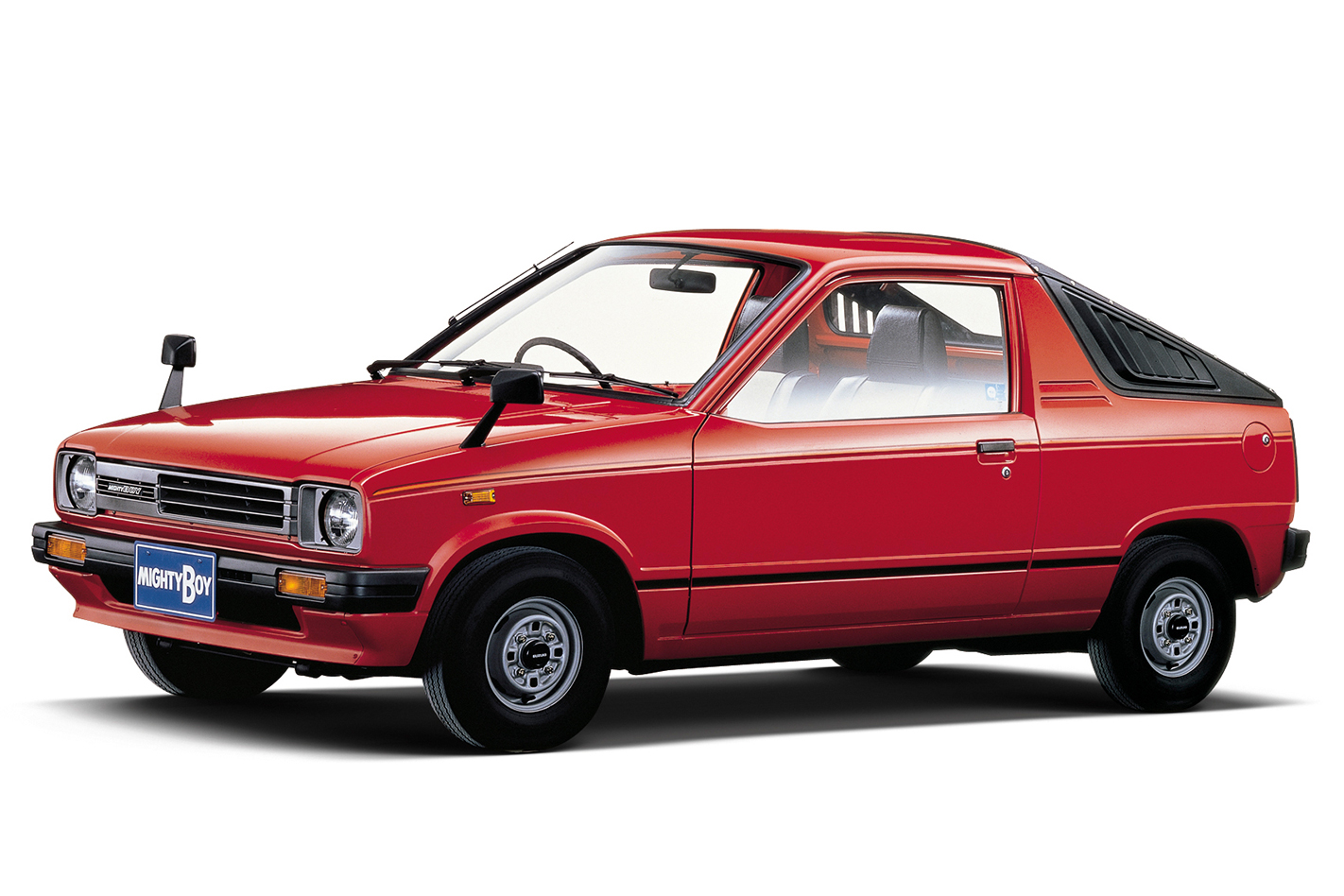
However, besides a few isolated exceptions, modern kei cars are strictly for domestic consumption only and have largely stayed within Japan’s borders. Only a few, like the Suzuki Mighty Boy, managed to venture overseas.
There are some good reasons for that, too. Governed by different regulations, kei cars are notorious for offering limited crash protection – one local executive of a Japanese car company described them to us as “quite dangerous” by Australian standards – and while they could feasibly be engineered to pass ANCAP crash testing, the cost of doing so would be “extreme”.
Besides that, kei cars are tiny. Truly miniscule, and built for smaller people as well – the average Caucasian would struggle to fit. Even though some kei cars offer surprisingly spacious interiors, components like its seat sliders, steering columns, and seatbelt anchorages are more suited to accommodate people of more compact proportions.
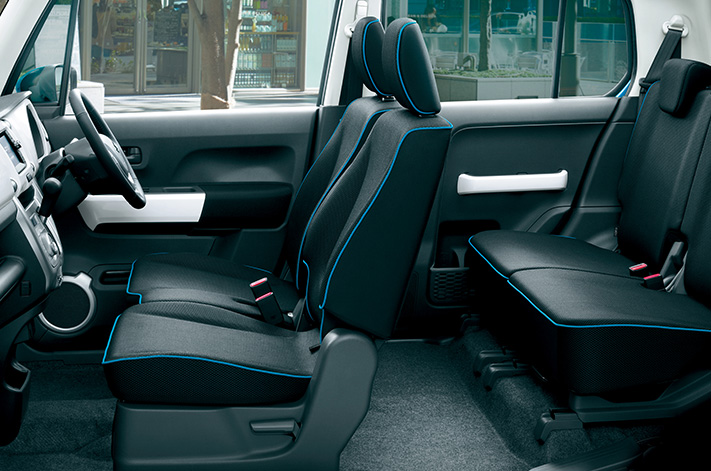
So don’t expect to see any keis making their way here anytime soon. We’ll have to admire from afar, and though the bulk of the kei class is made up of ordinary – and fairly miserable – two-box micro-hatches, throughout history there have been more than a few mutants that have attempted to splice sports car genes, or off-roader attributes, into kei DNA.
Here are some of the most interesting examples from Japan’s surprisingly diverse kei class, past and present:
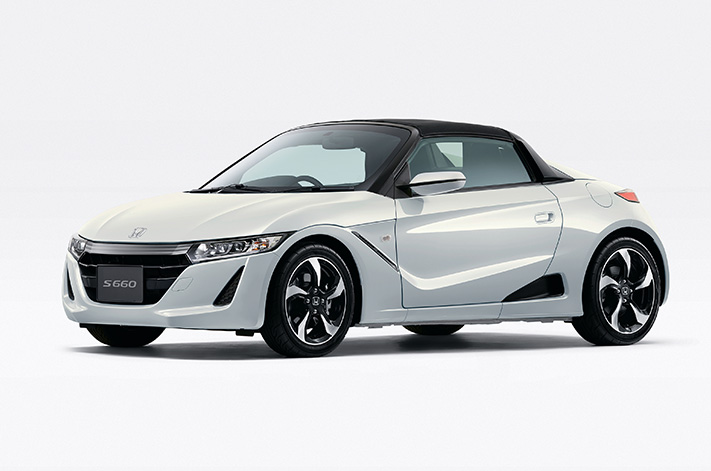
Honda S660
Where else to begin but with Honda’s supremely enticing S660. A sporty roadster with a mid-mounted turbo three-pot taking power to the rear axle, the S660 channels the spirit of the Honda Beat of the 1990s while also recalling the legendary Honda S600 and S800 sports cars of the 1960s.
You only get 47kW to play with, but that should be plenty to move its 830kg frame. Honda sadly has no plans to bring its mid-engined micro to Australia, but grey import options exist.
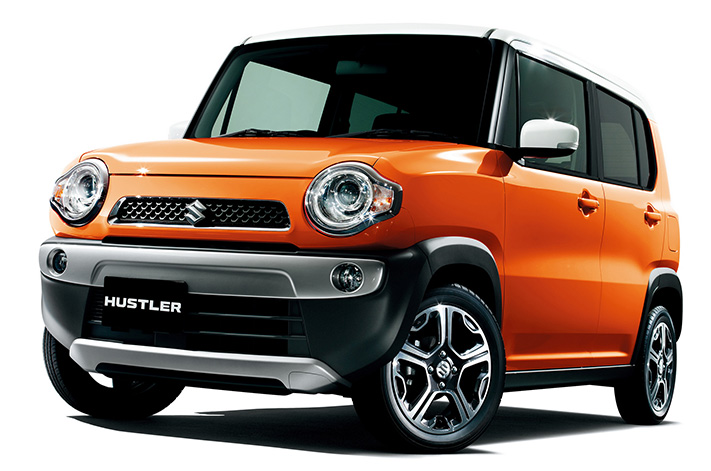
It’s called the Hustler. That’s cool enough in its own right, but the Suzuki Hustler also gets our vote thanks to its cutesy and charming baby-Jeep styling. Powered by your choice of an atmo or turbo 660cc three-cylinder, there’s also a 4WD option for those who actually want to take this one away from the big smoke.
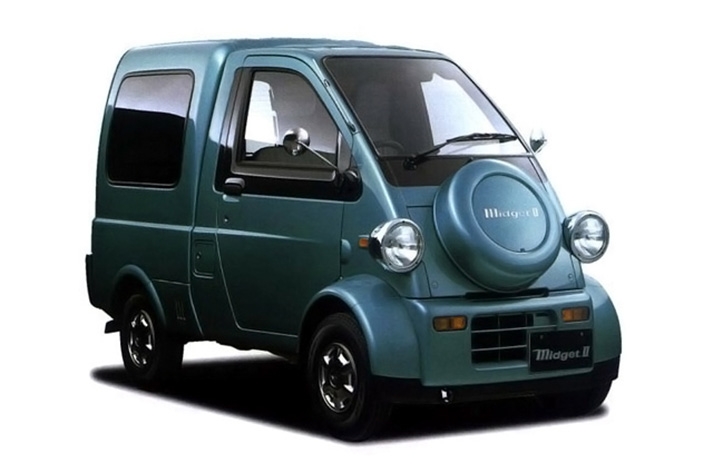
The theme of cool-but-slightly-questionable names continues with the Daihatsu Midget, a mid-engine, rear-driven, 1.5-seater ute that was launched in the mid-1990s. Brutally Spartan, the Midget had to mount its spare tyre on the front of the cabin as there was literally no other place to put it, and if you went for the manual option, the passenger seat was deleted to make room for the gear shifter and a clutch pedal.
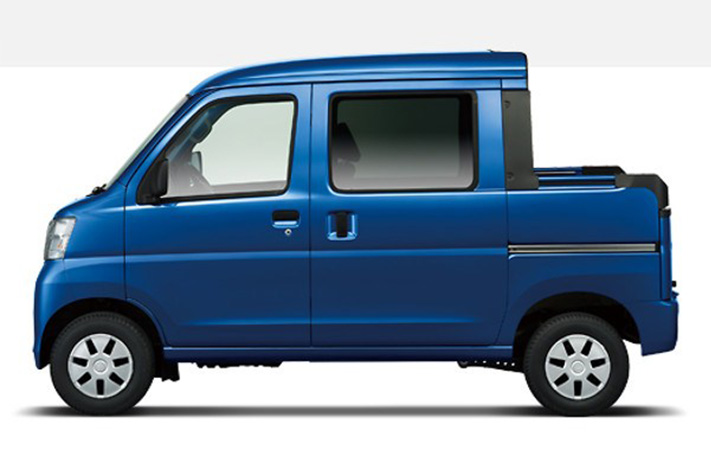
Daihatsu HiJet Deck Van
Australians are in love with dual-cab utes, but we wonder how the HiJet Deck Van, arguably the world’s smallest dual-cab, would fare in this market.
There’s enough room in the tub for a pot plant (maybe two if they’re small, three if you’re good at Tetris) and a rear bench that, in theory, can seat two adult humans, but the Deck Van is admittedly one hopelessly compromised vehicle. Still cool though.
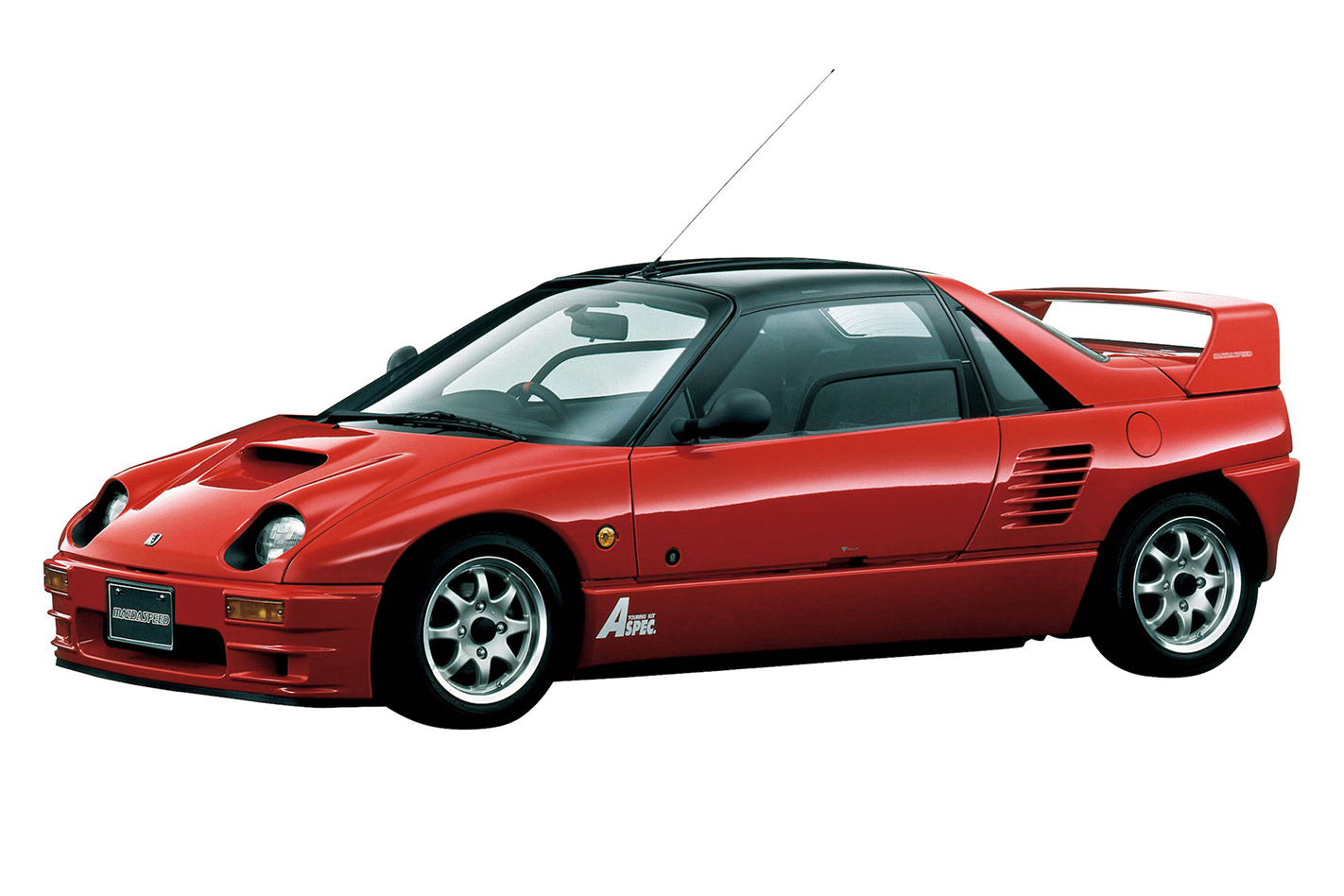
Remember Autozam? Of course you don’t! Mazda’s Japanese-market subsidiary specialised in rebadging Suzuki kei cars and smaller Mazdas like the 121 and MX-3 (and, weirdly, several Lancia models) but was unknown outside of Japan.
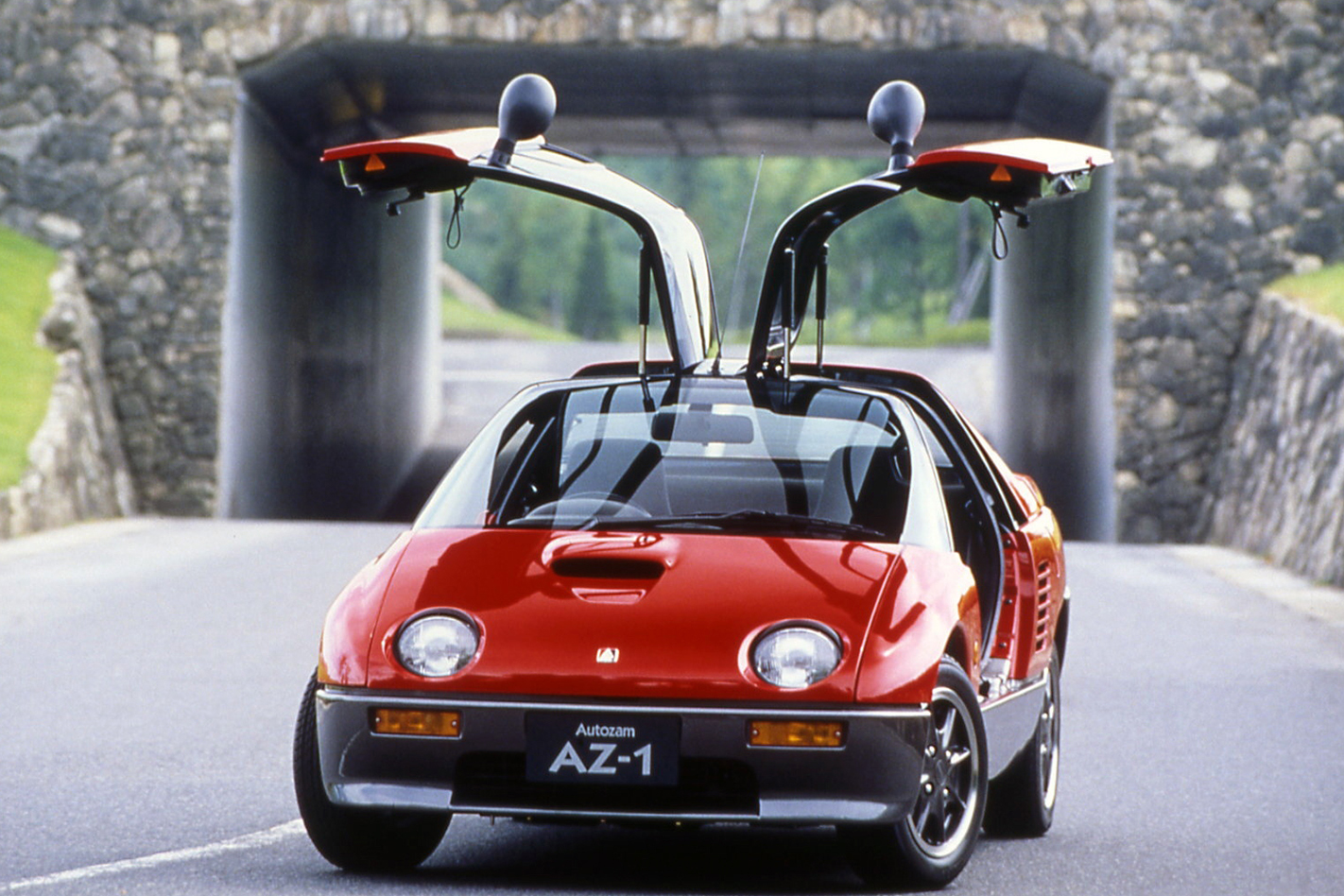
Rear-driven, mid-engined, and turbocharged – what’s not to love? Just like the Honda S660, only it looks like a gullwinged supercar.
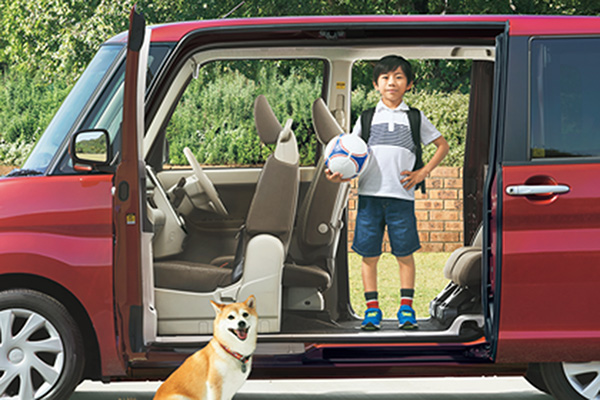
Daihatsu Tanto
Honey, I shrunk the people mover. Daihatsu’s two-box Tanto is largely representative of the bulk of kei cars sold in Japan, being a rectangular box with a stumpy bonnet and even shorter front and rear overhangs. With the mechanicals pushed to the very ends of the chassis, the Tanto prioritises passenger space above all else.
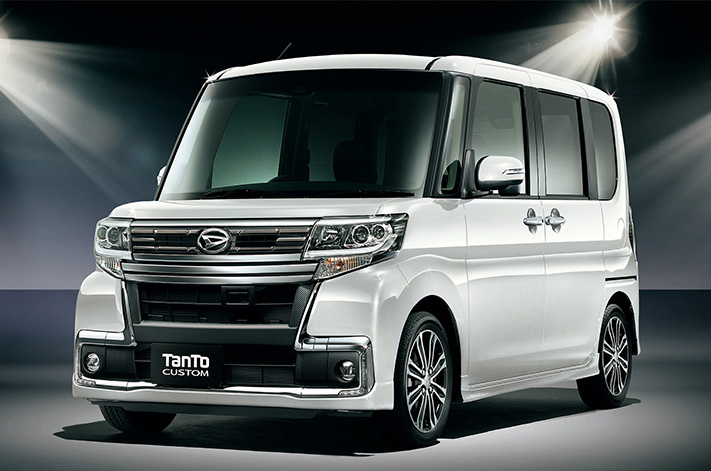
But the Tanto goes one step further in its quest to make itself a premier people carrier – there’s no B-pillar on the passenger side, which means even your most sumo-sized companions won’t struggle with entry or egress.
Power-operated rear sliding doors are another cool trick for this tiny van, but let’s not dwell too much on what the Tanto’s missing B-pillar means for crash safety…
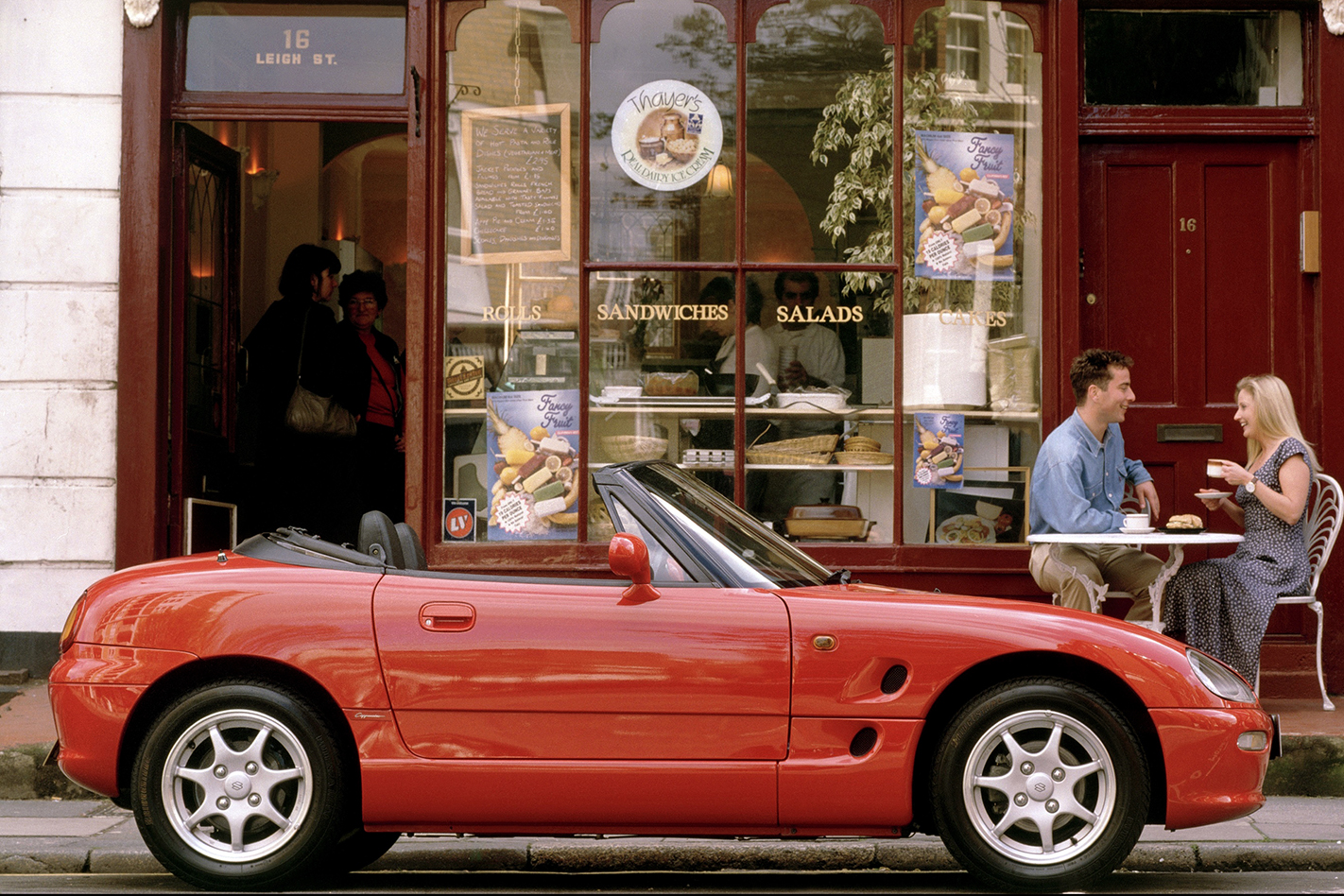
Suzuki Cappuccino
Front-engined, rear-wheel drive with a five-speed manual in the middle and bizarre targa-top-slash-fully-convertible roof overhead, the Cappuccino also had genuine sportscar genes thanks to alloy-armed double wishbone suspension front and rear and a claimed 50:50 weight distribution.
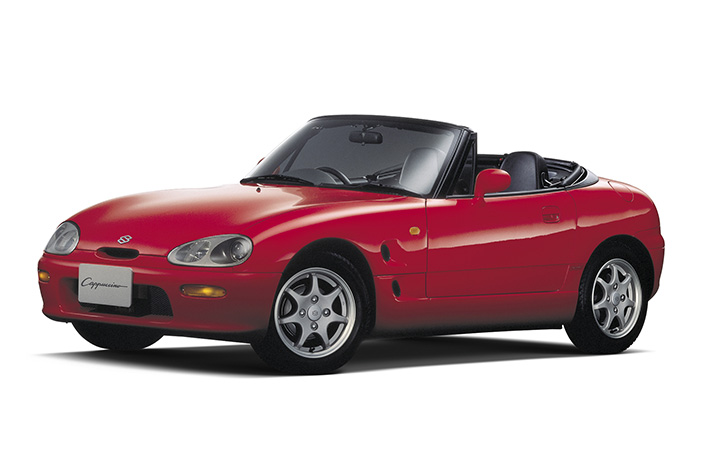
Good thing the Japanese auto industry was flush with cash in the late 1980s when the Cappuccino was being brewed.
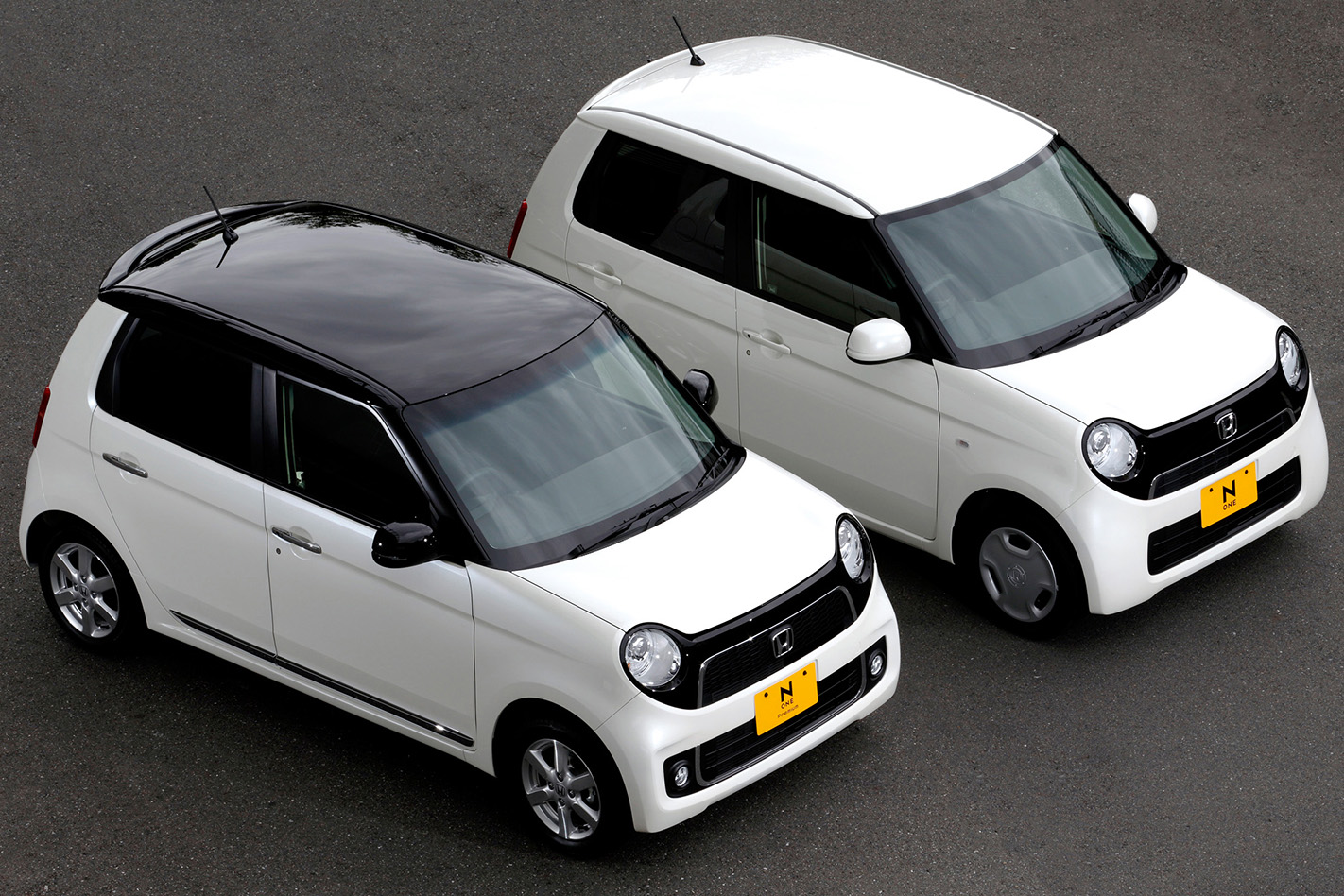
Honda N-One
The N-One is retro done right. As a pint-sized homage to the Honda N360, one of Honda’s first kei cars and one that actually came to Australia as the Honda Scamp, the N-One nails the brief by delivering a modern interpretation of the original’s 60s styling cues and silhouette.
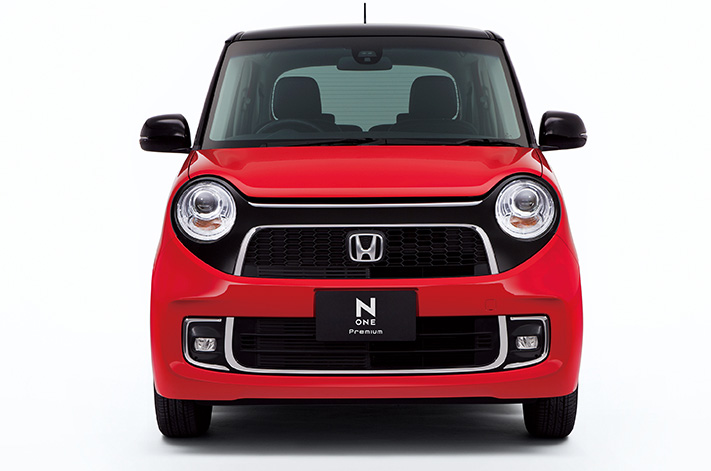
CVT-only, unfortunately, but a four-door config and much roomier interior makes it a more liveable device than the car it mimics. Unlike the original N360, though, the N-One isn’t going to get a local debut.
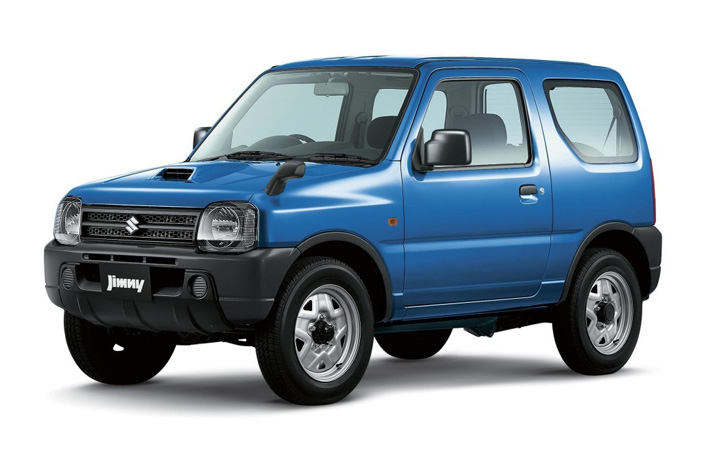
Suzuki Jimny
Yep, the Suzuki Jimny is arguably the most successful offroader of the kei jidosha, but is somewhat confusingly available both in kei and non-kei forms. The kei car has skinny tyres and a 47kW turbo three-pot, while the non-kei has fatter rolling stock, a bigger, more powerful, atmo petrol and is roughly equivalent to the Jimny that’s sold in Australia.
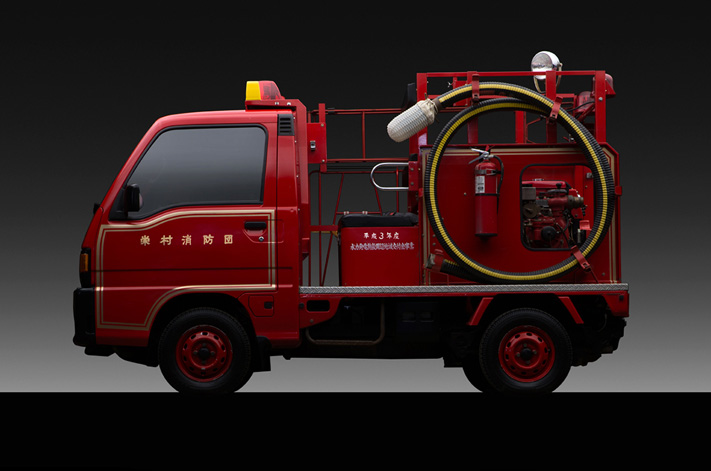
Subaru Sambar fire truck
Ever been to Japan and wondered how the local firemen get a pump unit down the more confined backstreets? Here’s how – a kei truck with a hose and pumps on the back. We’re not sure where the Dalmatian sits.
Though it may seem an unlucky number, 13 is exactly how many of the finest cars from Maranello will find themselves some very lucky new owners come the time of RM Sotheby’s next Monterey auction.
With estimated prices ranging from $12,631,000 to $113,700 there’ll be something for everyone. Er, as long as everyone has more than $113,700 that is.
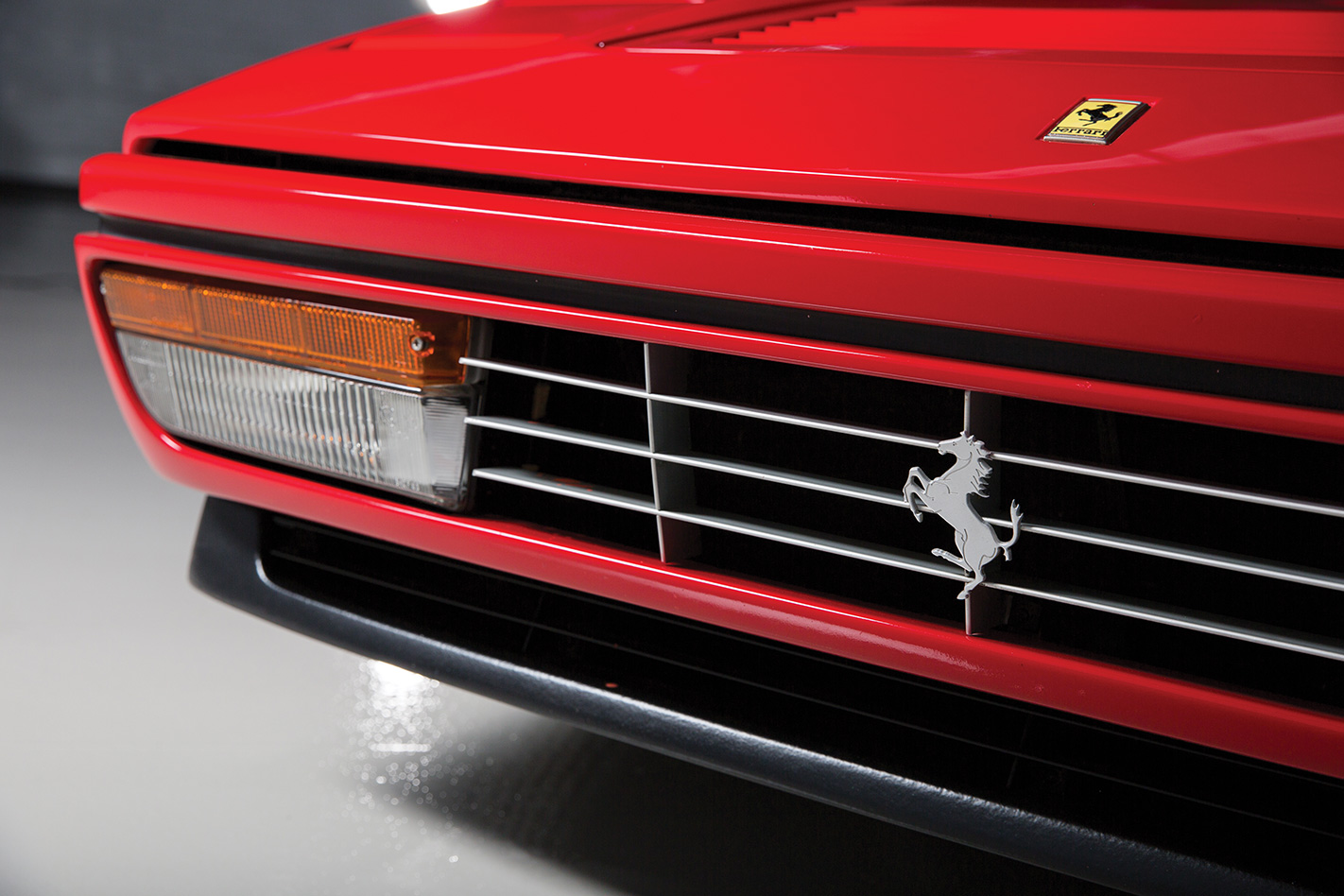
The headline act for the collection is a ’61 250 GT SWB Berlinetta, which RM estimates will find a new owner for over $10,736,000 AUD. It’s an example that has been restored to concours condition, and has only 79385 kilometres showing.
In between, there is an F40, a Dino 206, a 2005 Superamerica, and a 16M Scuderia Spider. There are pretty much no wrong answers in this multiple choice question.
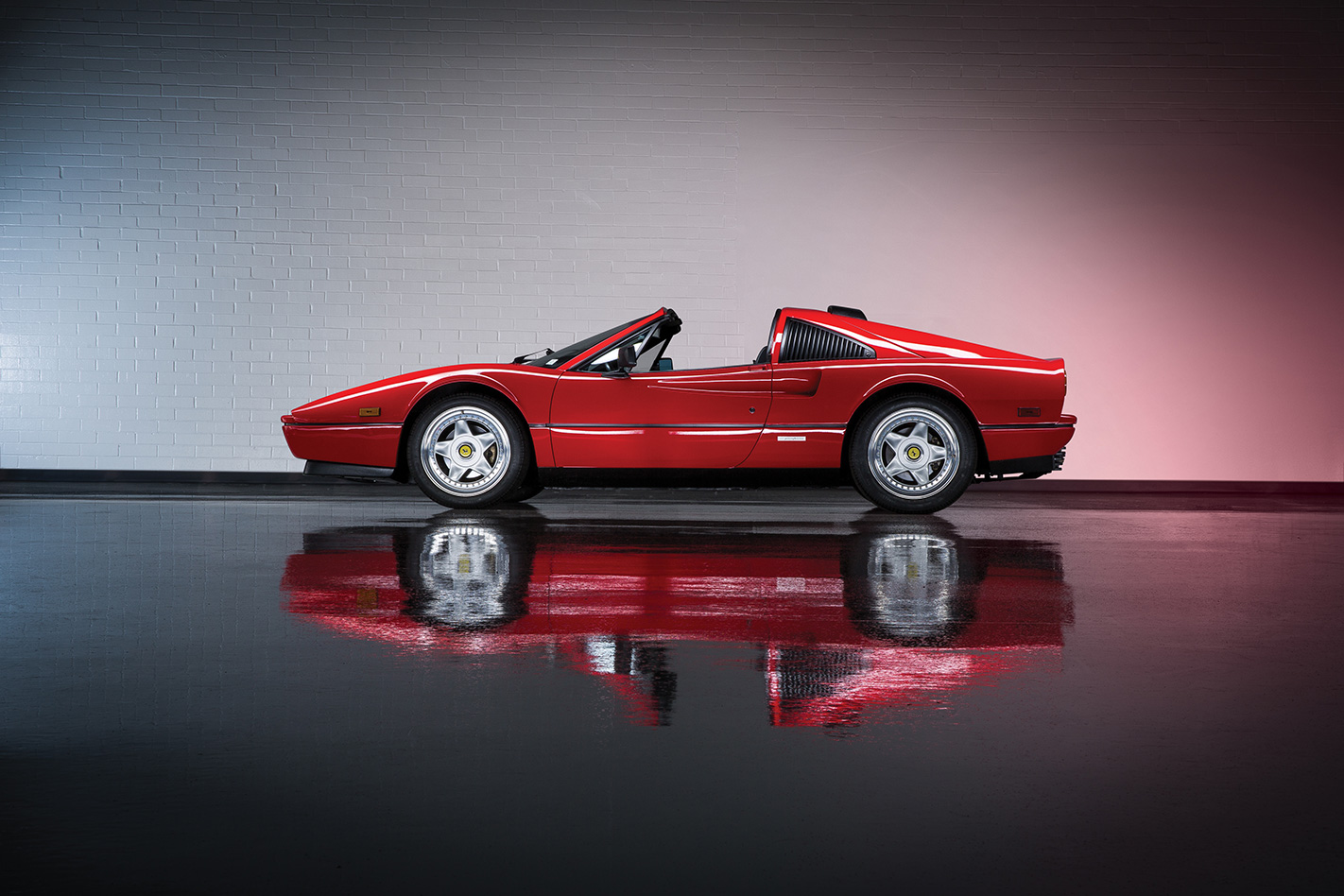
Someone could be about to pick themselves up a Prancing bargain.
Here’s a full list of the cars and their valuations, provided in USD by RM Sotheby’s:
1961 Ferrari 250 GT SWB Berlinetta – Est. $8,500,000 – $10,000,000
1967 Ferrari 275 GTB/4 Berlinetta by Scaglietti – Est. $2,750,000 – $3,250,000
1969 Ferrari Dino 206 GT – Est. $650,000 – $750,000
1991 Ferrari F40 – Est. $1,300,000 – $1,500,000 (Offered without reserve)
2011 Ferrari 599 GTO – Est. $700,000 – $800,000 (Offered without reserve)
1984 Ferrari 512 BBi – Est. $375,000 – $450,000 (Offered without reserve)
2005 Ferrari 575 Superamerica – Est. $375,000 – $450,000 (Offered without reserve)
2009 Ferrari 16M Scuderia Spider – Est. $350,000 – $400,000 (Offered without reserve)
1984 Ferrari 512 BBi – Est. $275,000 – $325,000 (Offered without reserve)
2004 Ferrari 360 Challenge Stradale – Est. $275,000 – $325,000 (Offered without reserve)
2009 Ferrari 430 Scuderia – Est. $250,000 – $300,000 (Offered without reserve)
1976 Ferrari 308 GTB ‘Vetroresina’ – Est. $175,000 – $225,000 (Offered without reserve)
1989 Ferrari 328 GTS – Est. $90,000 – $120,000 (Offered without reserve)
Photos courtesy credited photographers for RM Sotheby’s
Aussies love driving, partly because the open road is therapy in times like these.
Despite the nation’s finances, there are people still buying cars for drift, rather than entirely for thrift, factor. In fact, the fast car business here is booming. Every third Mercedes-Benz C-Class sold is wearing either a 43 or 63 badge.
We are among the greediest for Renault Sport models. And we’ve propelled the Toyota 86 into a sales success as its third most popular market.
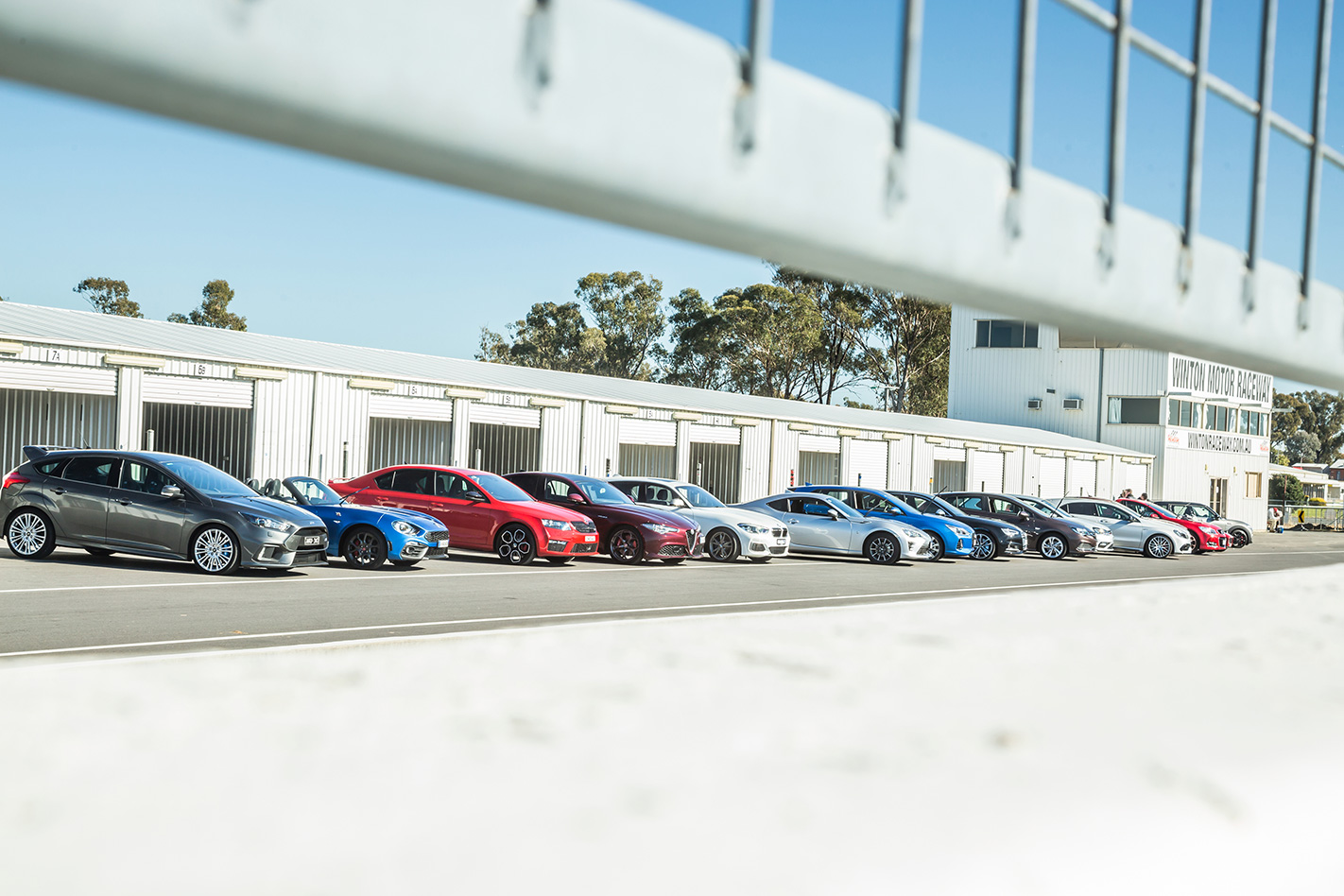
Well, the blocks that make up Bang For Your Bucks haven’t changed much since its introduction in 1994; there’s a field of cars, a set of judges, and an infamous formula. And like any good game, it’s made up by a whole lot of rules.
Next, we fence off the event with a $100,000 price cap, because Lamborghini Aventador customers aren’t really concerned with their water bill prices. We also restrict entry to performance cars, as even a P-Plater would rather take the bus than drive a Suzuki Alto.
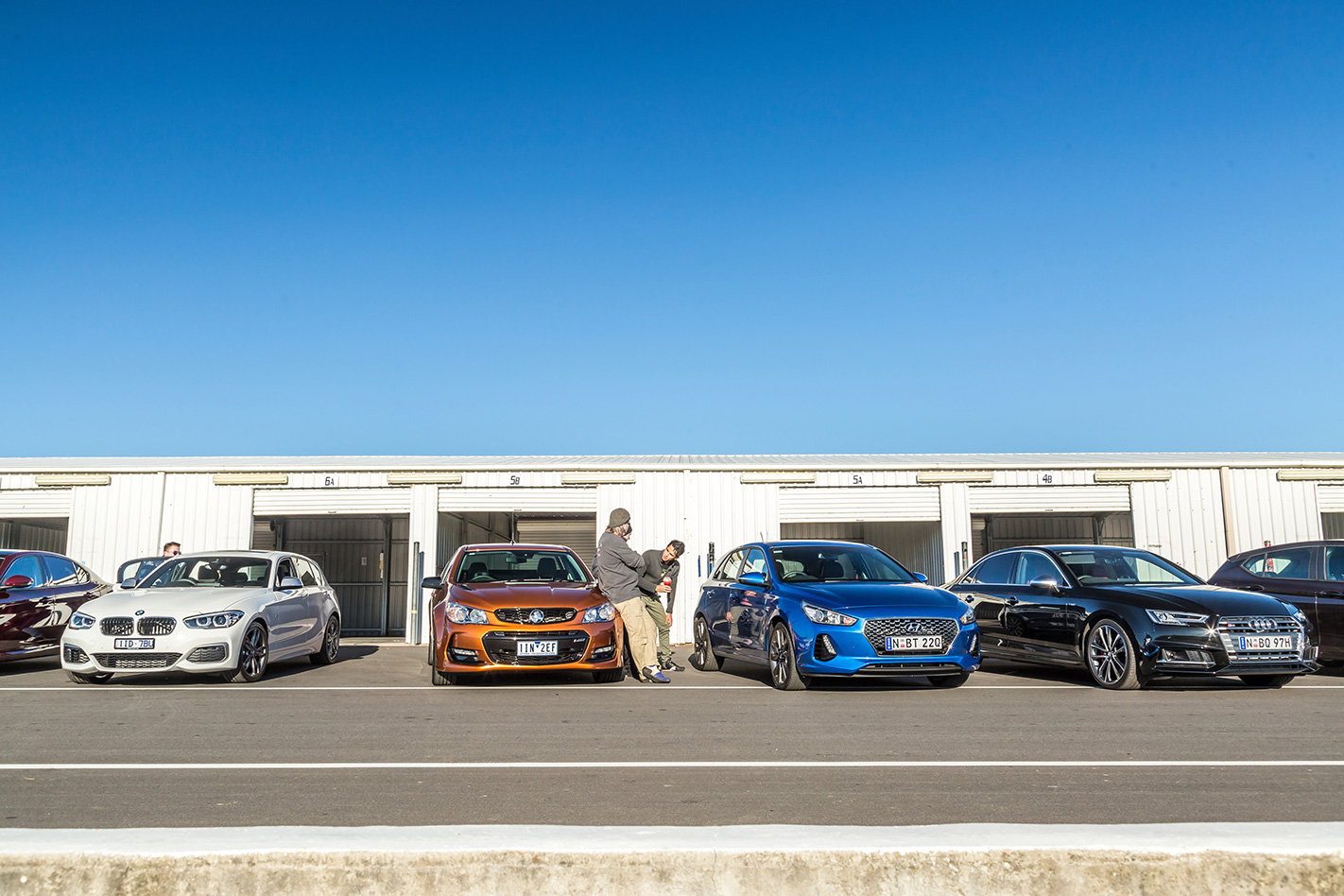
Nope, we’re looking for freshly baked drivetrains, newly budded differentials, or drastically shaven kerb weights. Price changes, too, will grant a car entry if it’s boosted its competitiveness.
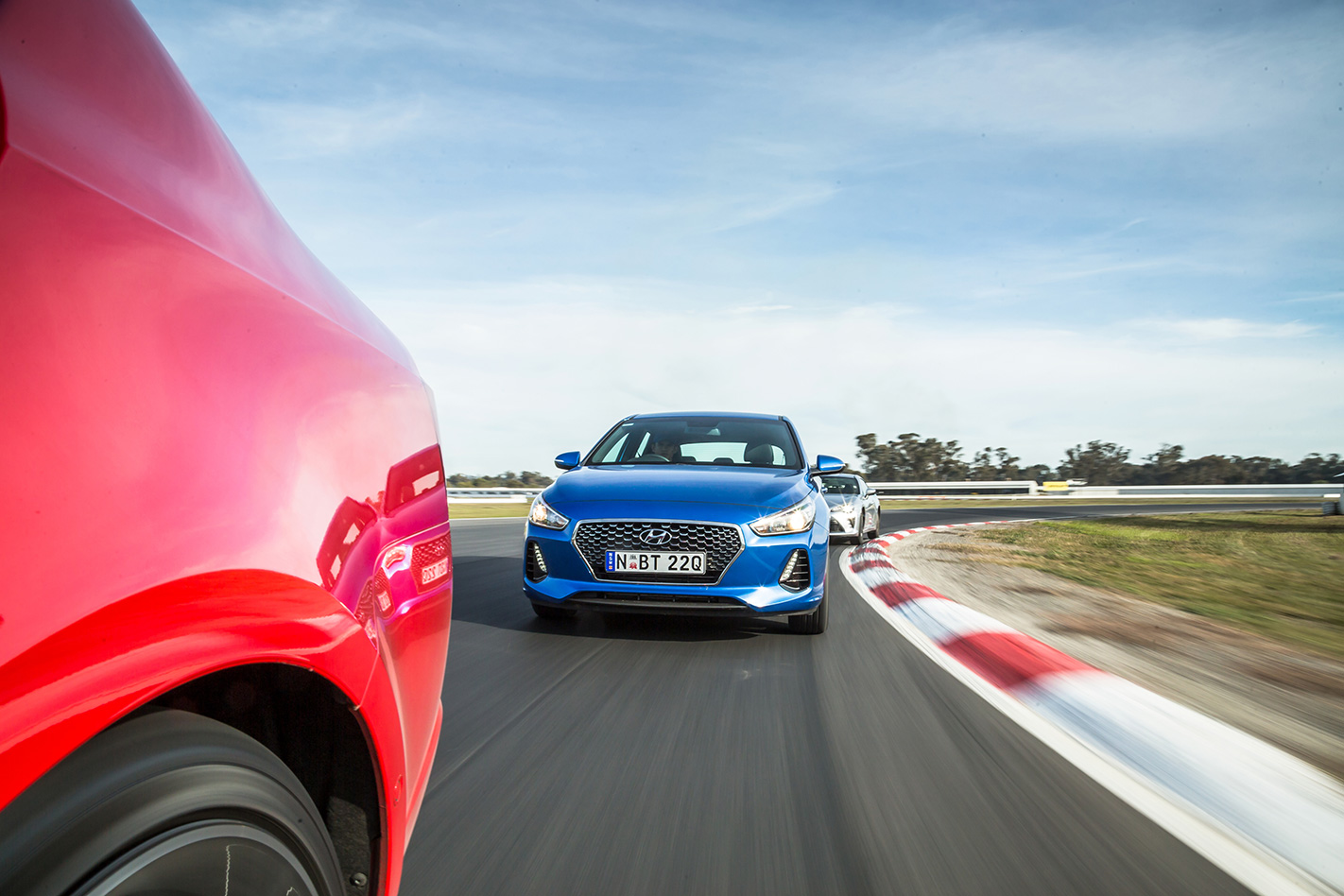
Like last year, we’ve split the field at $50K. And after slaying Audi’s RS3 Sportback and dusting off BMW’s M2 last year, AMG’s manic A45 faces new foes just as tough – maybe even tougher – in the $50K to $100K category.
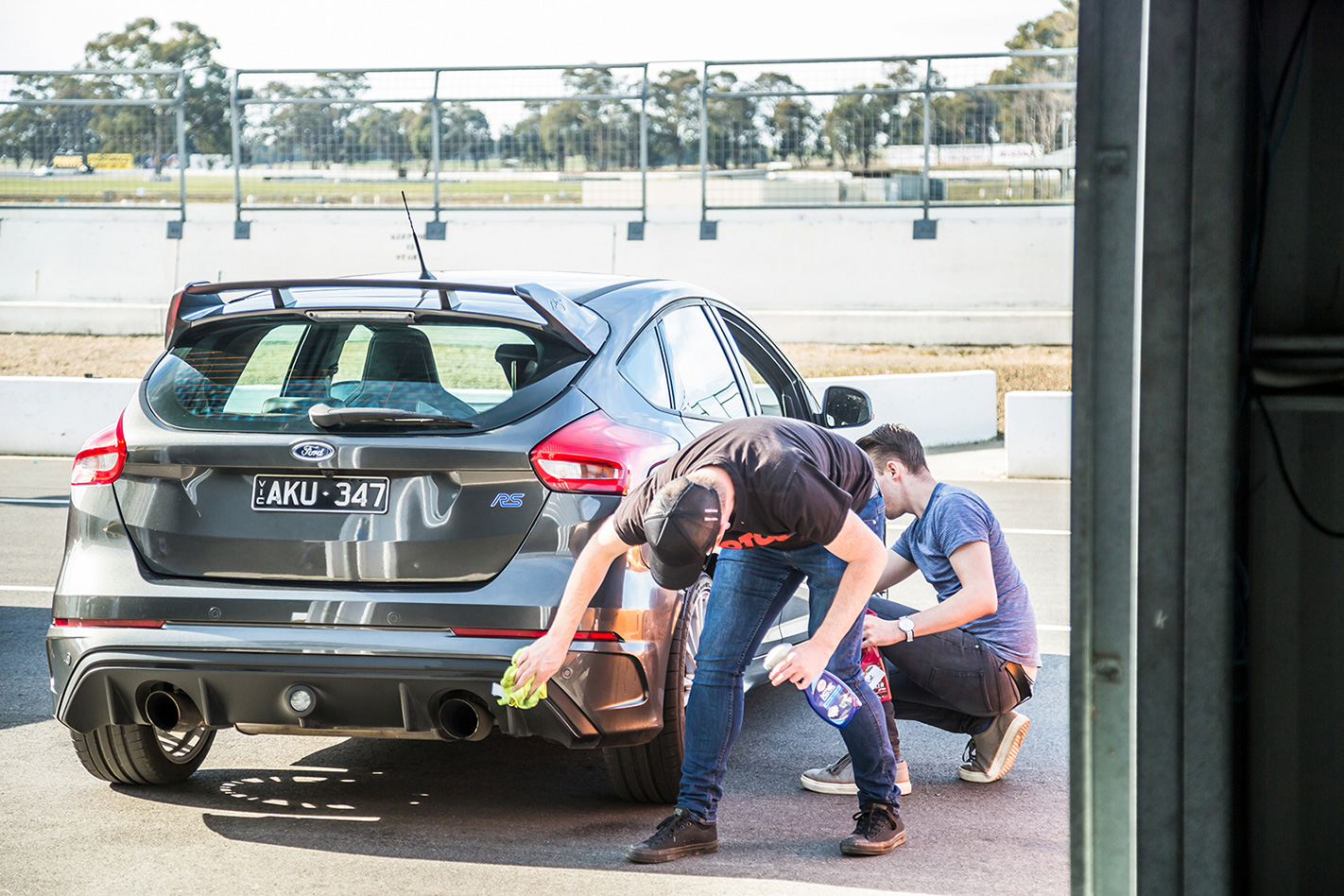
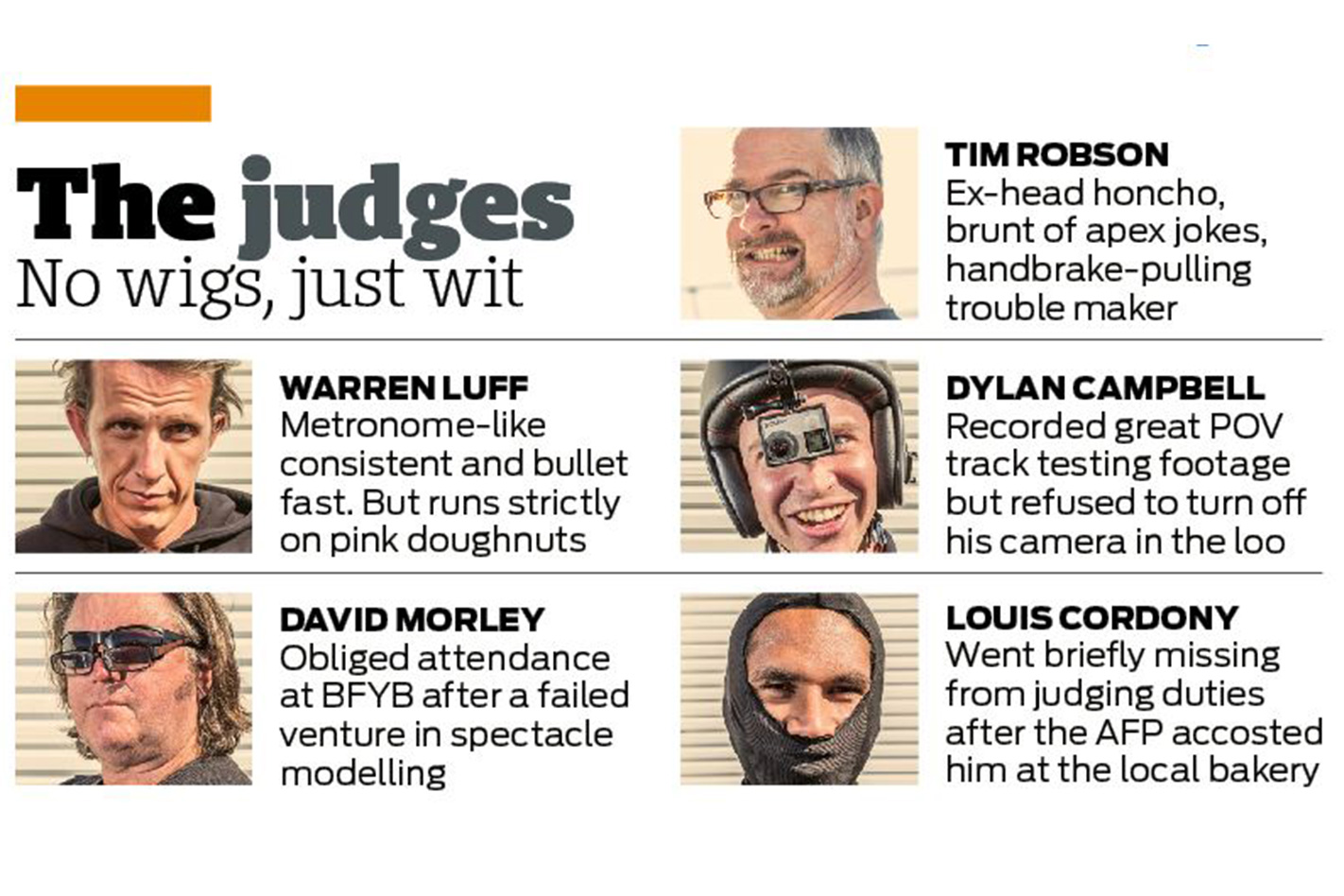
Of course, those less well-endowed in the Bucks department are always going to fare better than one with a heftier swing attached to its door mirror, but there’s a couple of contenders this year that are almost born to do well in an annual test that’s now in its 23rd year (incidentally, that’s the same length of time since David Morley visited a barber).
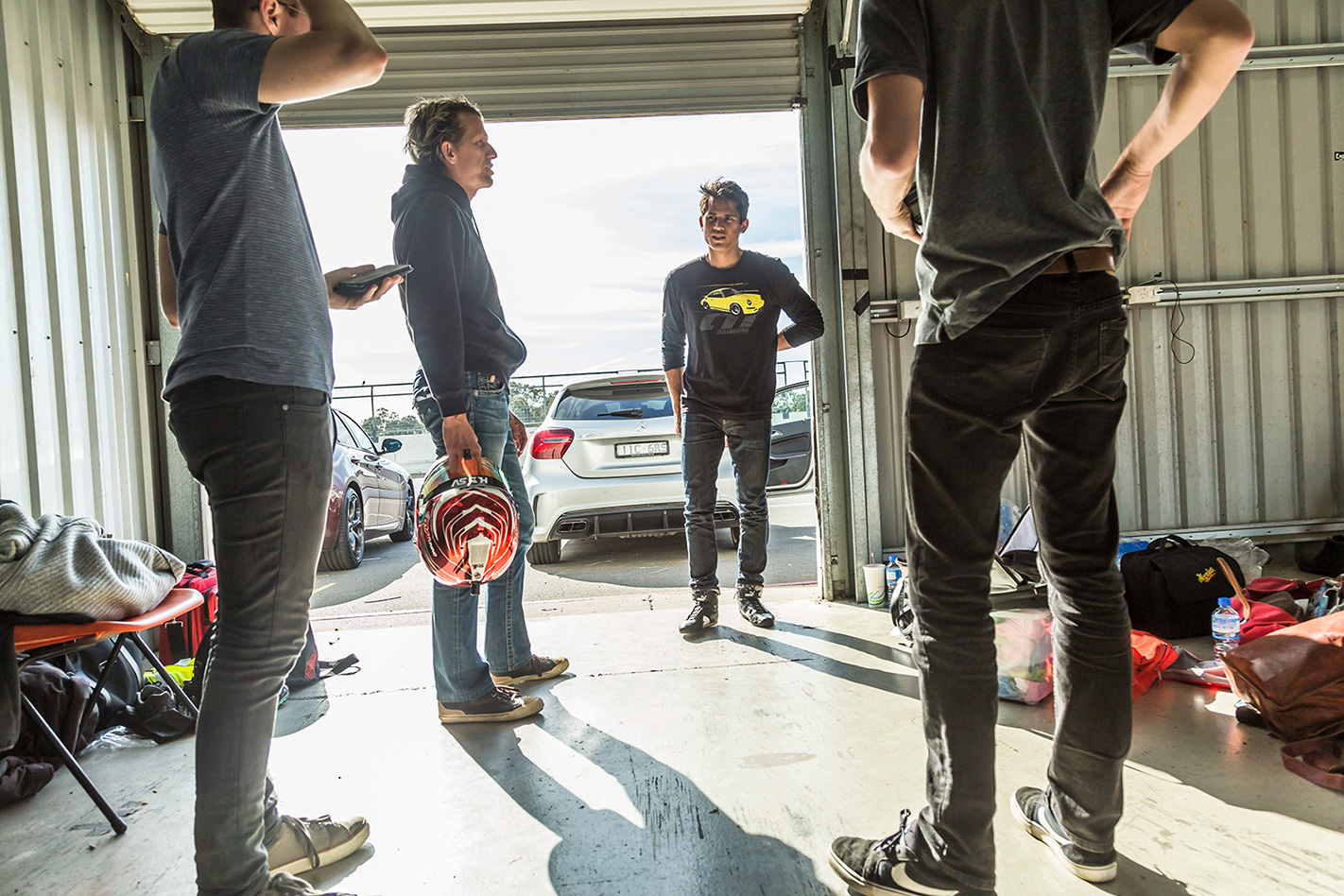
Its short, sharp nature draws out the best – and worst – from a chassis, while its short straights highlight power deficiencies quick smart.
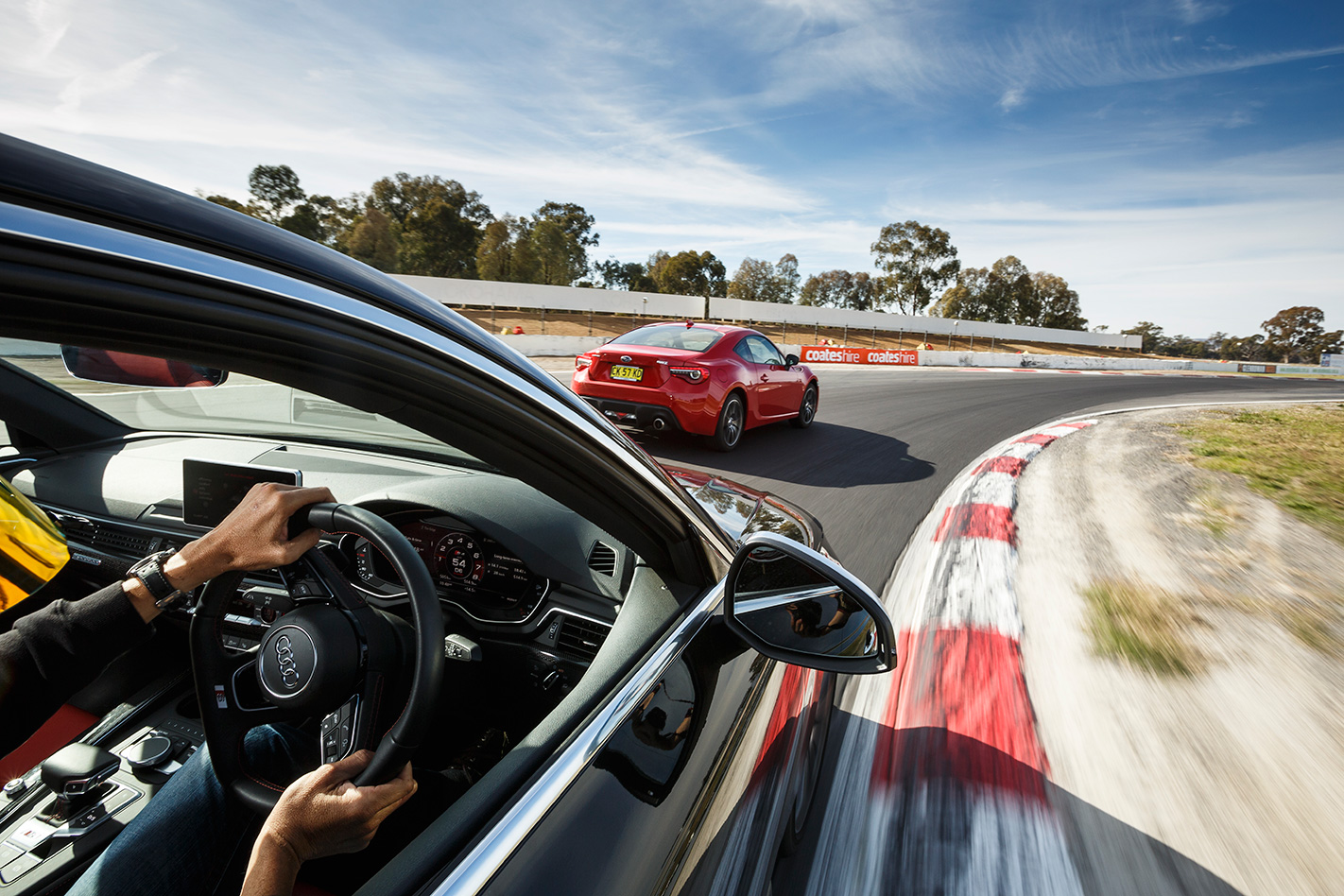
After that, our resident hot shoe, Luff, will pedal each car around the twisty, tricky Winton layout as only a Supercars race winner can.
Our remaining judges will use Winton not as a measure of how fast they can bury a car in a sandtrap, but as a venue to objectively sample each entrant on its relative merit in an appropriately safe way, and their opinions will make up 20 per cent of a car’s total.
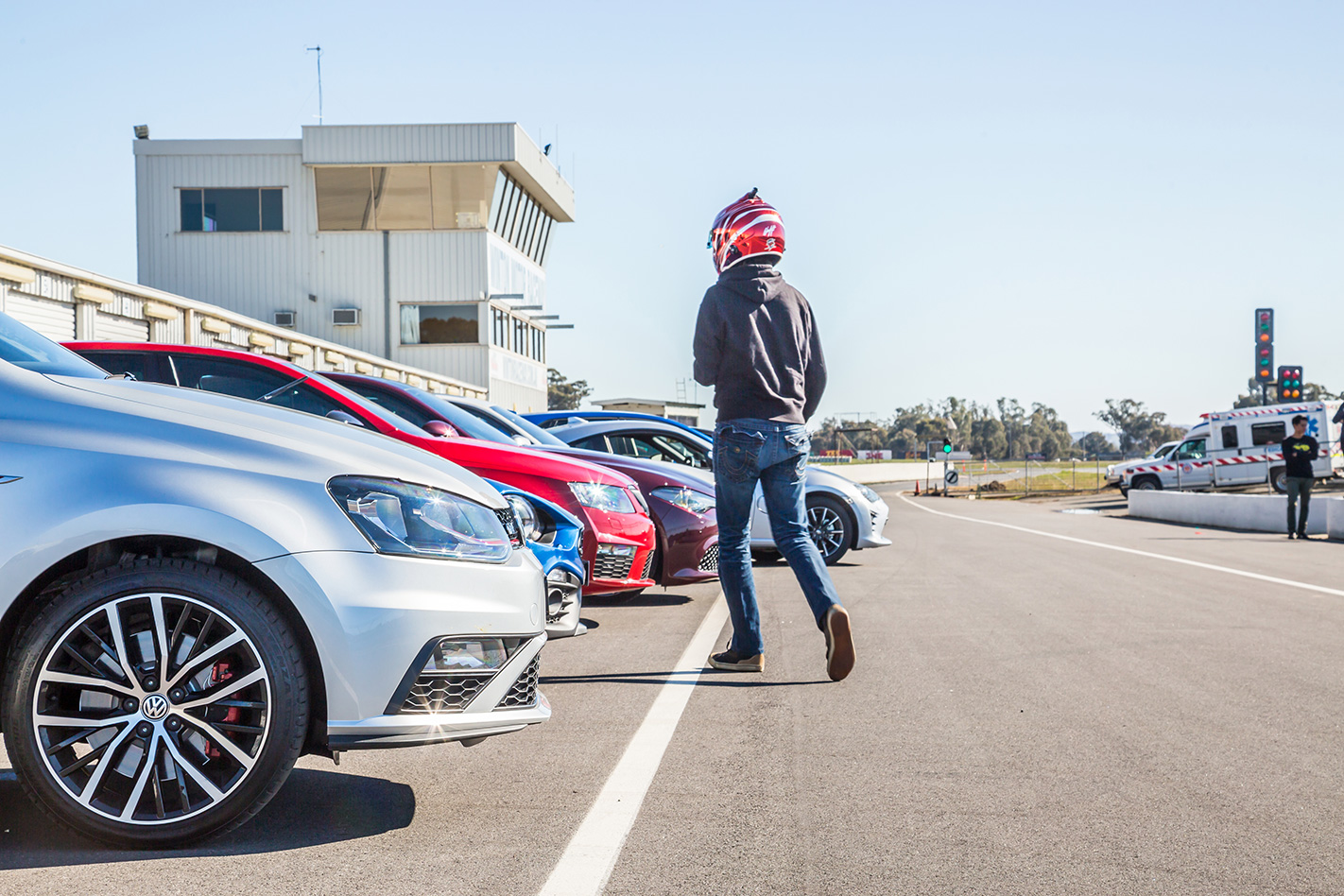
However, that’s enough background. Let’s find out what motley mass of metal has fronted up in 2017 to an uncharacteristically dry and sunny Winton to stand up and be banged? And, er, bucked?
Our sub-$50K contenders
Fiat 124 Spider Challenged by a relatively high price but brings the extra herbs to compensate
Holden Astra RS Harder charging turbo 1.6-litre and lightened chassis ripen it for competition
Holden Commodore SS Ute Tops the $0-$50K price list at $43,900, so it’ll need to be seriously fast to compensate
Hyundai i30 SR Scores Veloster SR-spec turbo engine in all-new generation update. Slight dark horse
Subaru BRZ Will rely on unique suspension tweaks to overcome its $3K price premium over the 86 GT
Skoda Octavia RS230 sedan Sneaks in the Golf GTI Performance’s LSD-tamed 169kW drivetrain for $5K less
Toyota 86 GT Updated car ups price, but is still the cheapest ticket to 86’s uprated engine and fettled chassis
Volkswagen Polo GTI Defending outright champ is back and still a genuine threat with 1.8-litre turbo four
Our $50K-$100K contenders
Ford Focus RS If this were a horse race, the Focus would be an unbackable favourite. No Cup tyres today, though
Mini JCW Clubman The latest iteration of John Cooper’s finest works is the biggest Mini ever
Holden Commodore SS-V Redline Ute It’s time to farewell an icon of BFYB – and we can’t think of a better way
Caterham Seven 275 Could this lightweight, retro-tech British beauty bring something new to the BFYB party?
BMW M140i New engine for our BFYB 2015 class champ – will it be what it needs to nab outright honours?
Alfa Romeo Giulia Veloce The reputation of a reborn brand rests on its pumped guards
Mercedes-AMG A45 A ferocious four-paw feral dressed in a Paul Smith suit. Back to crack skulls in 2016
Audi S4 Four-door sophistication that cleverly hides a surprising turn of speed and chassis talent
IMAGINE someone hacking an autonomous vehicle, and most of us would picture a nefarious hooded figure stooped over a laptop hammering out lines of computer code.
Well, it could be much easier and straightforward than that, if a recent study by researchers from the University of Michigan, University of Washington, Stony Brook University, and the University of California is anything to go by.
The group have revealed that hacking autonomous vehicles could be as simple as some well-placed stickers on road-signs.

These are integral to the success of autonomous vehicles, which require a vast array of cameras, lasers, and the like to ‘see’ its surroundings and understand what is happening.
Race to autonomy: who are the key players?
The researchers uncovered that the Deep Neural Networks could be tricked by a few simple block-like stickers.
To a human, the stickers, placed on a Stop sign, simply read as ‘LOVE’ and ‘HATE’, but the computer systems in an autonomous car will see it as a 45mph speed limit sign.
Now, it’s not like these stickers would completely alter the sign, in fact any reasonable driver would still see it as originally intended.
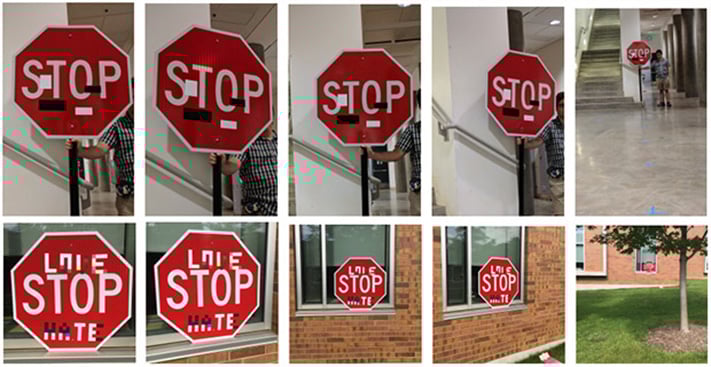
If you’re struggling to comprehend possible consequences, imagine an autonomous car approaching an intersection, and instead of seeing a stop sign, it reads a 110km/h sign and accelerates accordingly. Yes, that is bad.
The study reveals an autonomous car hacker could be someone as innocuous as a high-school prankster with a penchant for vandalism.
The full report can be read here, but it is fairly in-depth and technical. So be warned.
Think Group B and you’re probably beset with images of flame-spitting, mid-engined all-wheel drive hatches, all monster wings, distended arches and gaping intakes, pulverising great gales of air into submission; parting seas of spectators, eyes wide, screaming and cheering, pebbledashed with grit and bedecked from head to foot in dusty warpaint.
That sort of thing. You probably don’t think of a Mazda RX-7.
The reason for that is that Mazda missed the Group B boat. By the time it had designed and homologated its RX-7 Evo Works car, the powers that be had decided that Group B was too wild and dangerous and had canned the regs that had – for a brief moment – made rallying more popular than F1.
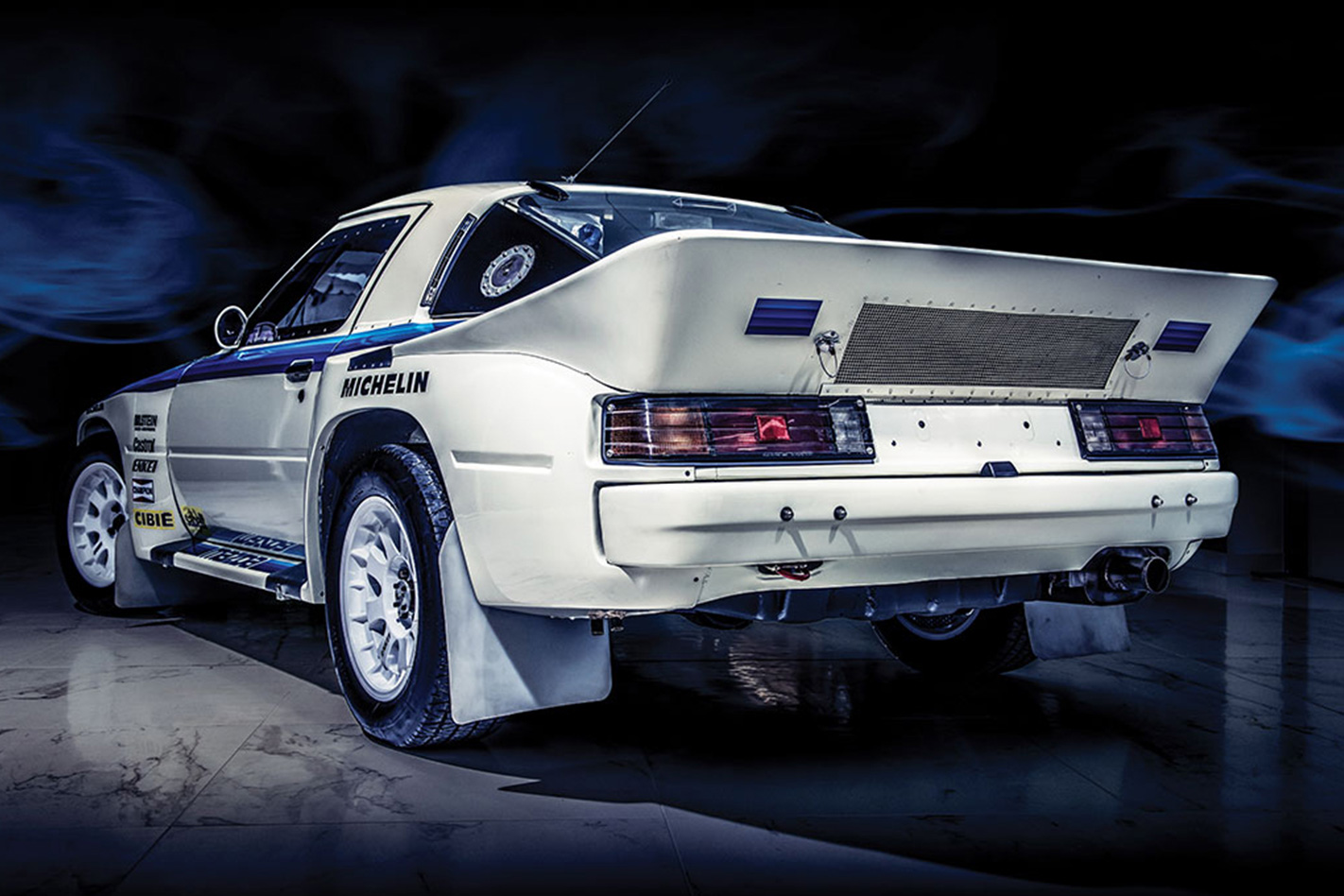
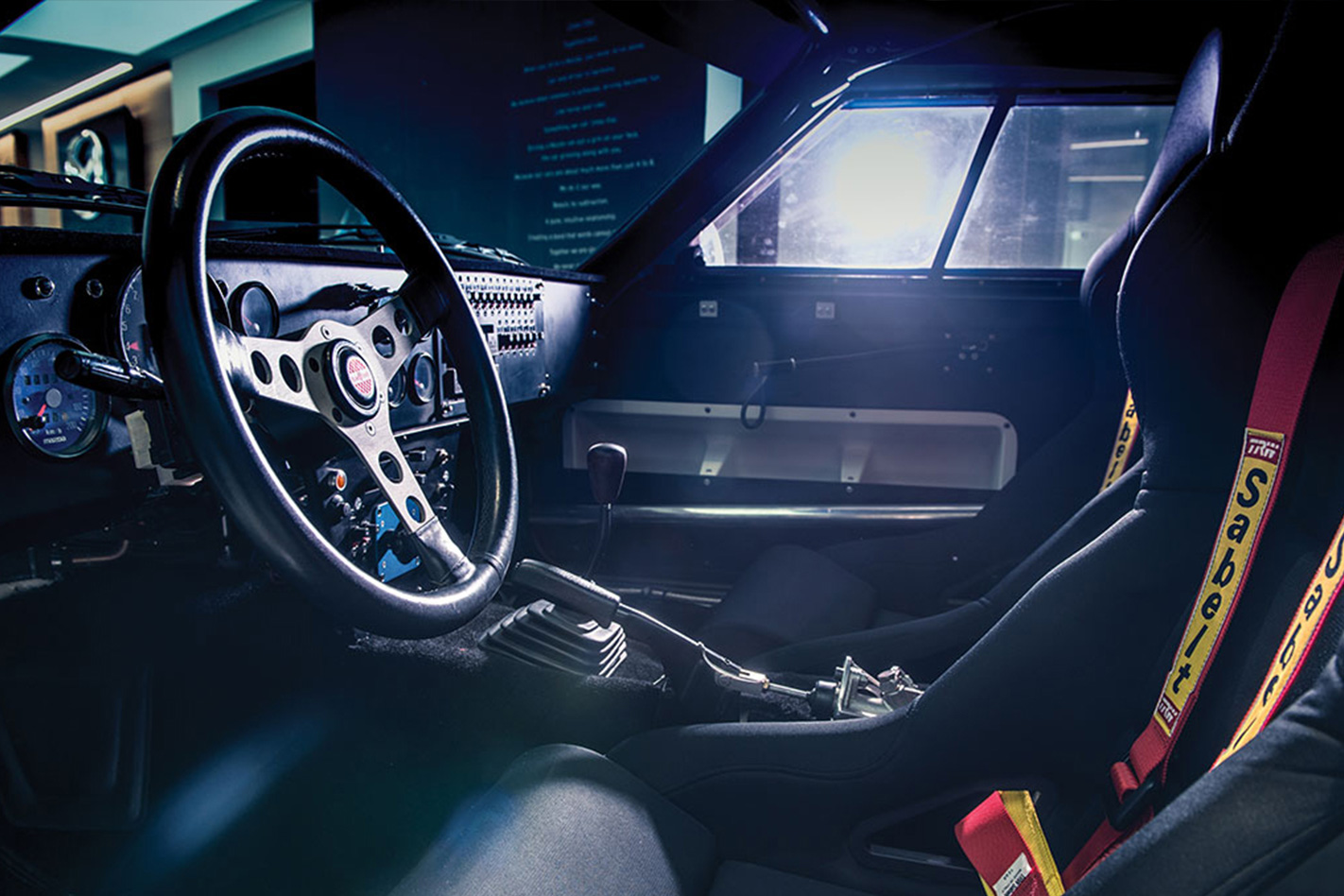
The detailing on this car is magnificent, with all the original stickers and fastenings. The peripheral-ported 13B twin rotor lump sits around 10cm further back compared to the production car, while the fuel lines run between the seats. That ducktail spoiler houses an oil cooler and all-up weight was less than a tonne. The Enkei magnesium alloys are period perfect and that monster six-cowl light pod on the front is the stuff of teenage revhead fantasy. Even the almost dainty NACA ducts on the bonnet are things of beauty.
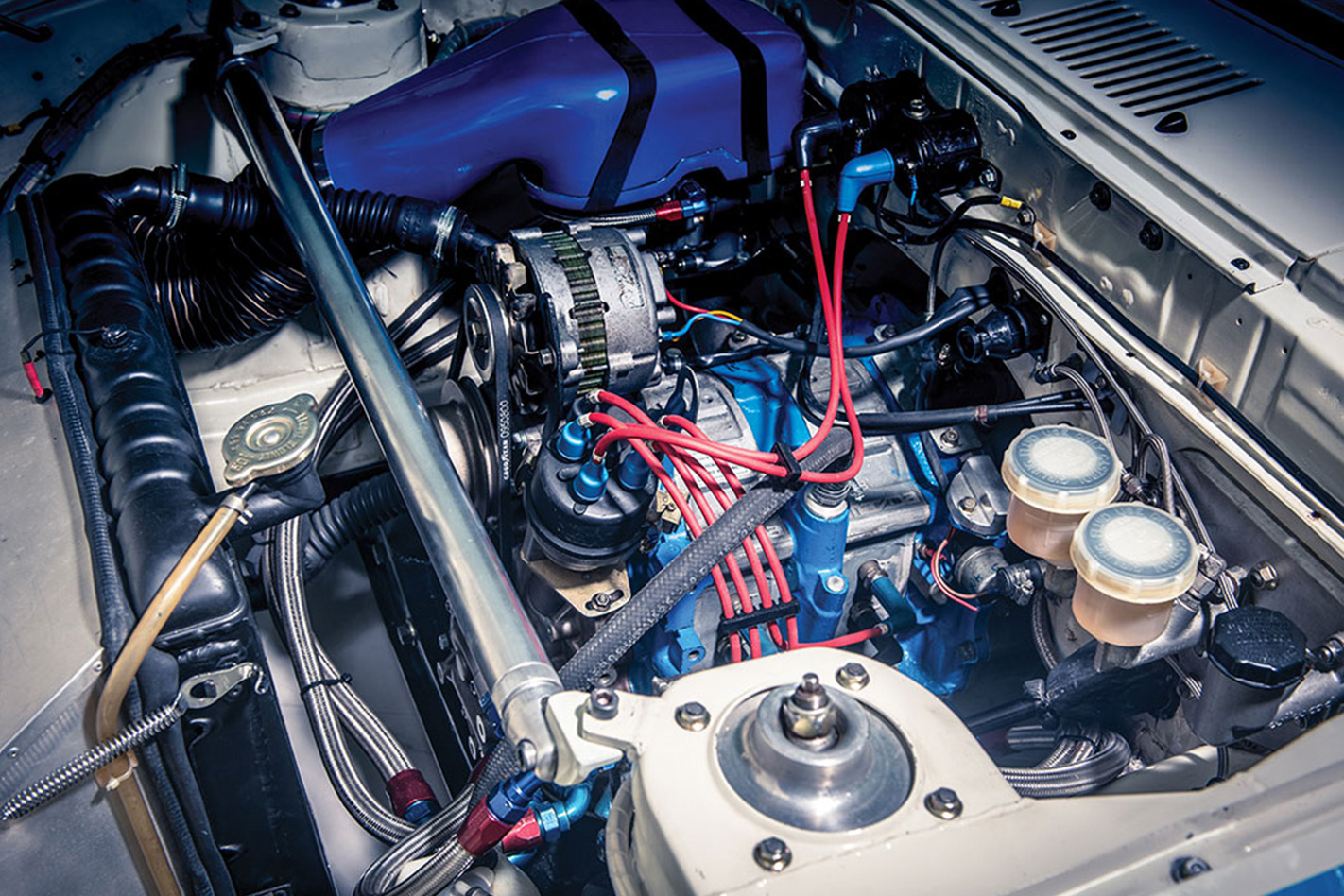
This particular car just sat in the dark at Mazda Rally Team Europe, a forgotten car that would never have succeeded in a rally category that had been killed at the stroke of a legislator’s pen. Nobody was interested in a car that was, in truth, a bit of an embarrassment to Mazda. It was shuffled off to the Swiss importer in the early 90s and then reappeared in Scandinavia before collector and rally nut David Sutton brought it to the UK. He took the car to pieces and reassembled it with an obsessive level of detail and now it’s being sold.
Join the bidding at RM Sotheby’s on 6th September.
AUSTRALIA’S first mainstream battery-powered car wearing a Hyundai badge is still potentially on the cards – and all because potential buyers are asking for it.
So far, only one of three versions of the Hyundai Ioniq is confirmed for Australia, the petrol-electric hybrid version of the Toyota Prius-sized sedan due late this year. However, Hyundai hopes to add a more fuel-efficient plug-in hybrid version some time in 2018, while an all-electric version capable of driving up to 200km on a single charge is listed as an outside chance for Australia.
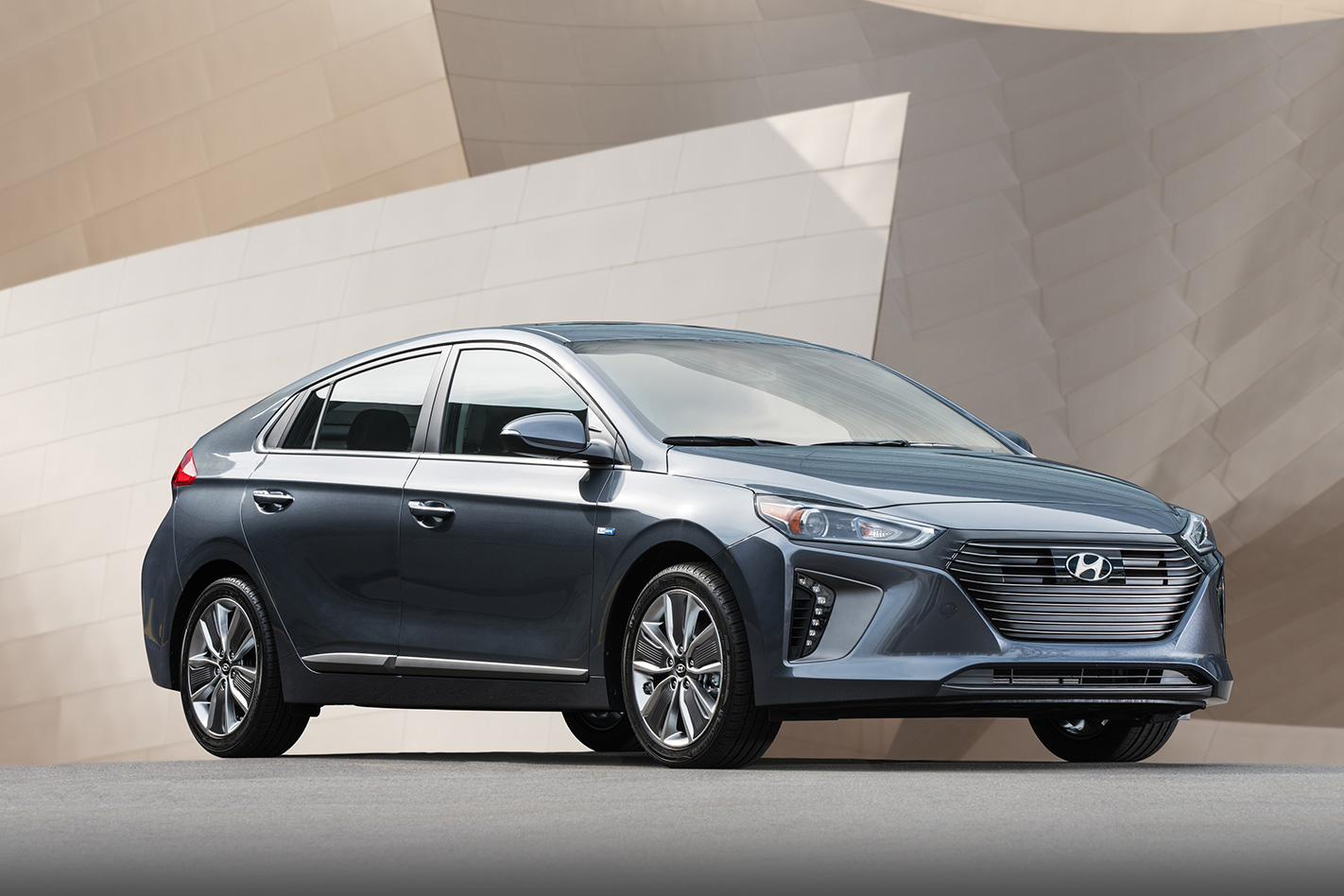
Hyundai Australia public relations manager Guido Schenken said potential buyers were already putting pressure on the Korean car maker to include the battery-powered Ioniq in the showroom.
“The electric version isn’t yet certain for Australia, but we’re getting a lot of people asking about it, especially from businesses and government,” he said.
The hybrid and plug-in hybrid versions of the Ioniq come fitted with Hyundai’s Kappa 1.6-litre four-cylinder engine sending drive to the front wheels via a six-speed dual-clutch automatic transmission. In its overseas tune, the engine produces about 78kW – roughly the same as a much smaller three-cylinder engine – and around 148Nm of torque.
However, combine that with the Ioniq’s 32kW electric motor tapping the batteries hidden under the rear passenger seats, and its serve of 172Nm of torque, and the Ioniq produces about 100kW, or about the same power output as a Toyota Corolla.
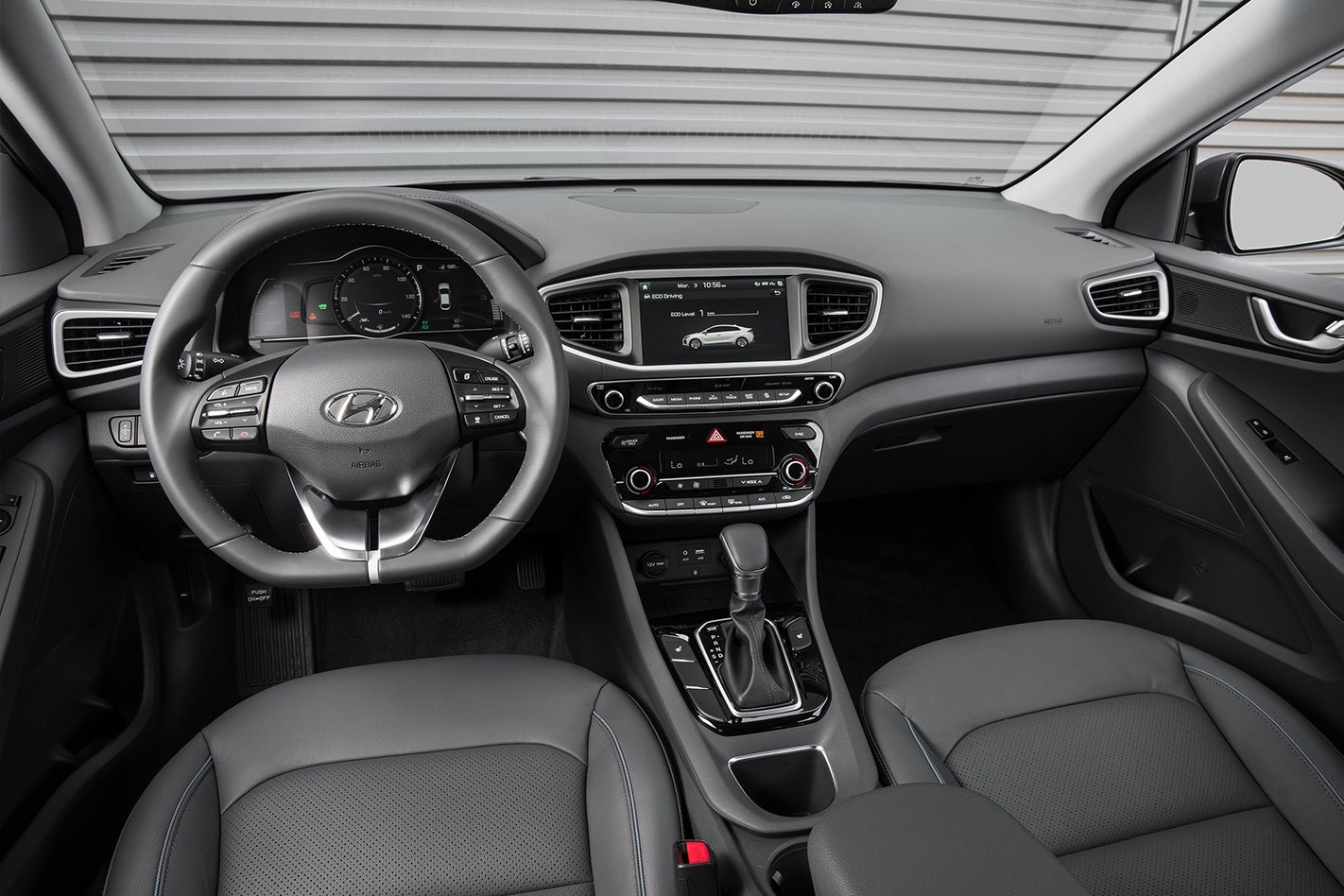
The plug-in version of the Ioniq replaces the 1.56kWh battery used in the hybrid with a larger 28kWh unit, and swaps out the less powerful electric motor for a larger 45kW one. The bigger battery is enough to give the plug-in Ioniq a 40km-odd all-electric driving range before the petrol engine has to kick in. It will cover around 200km, too, before needing either a recharge or a refill.
Noticeably, overseas versions of the Ioniq use a smaller, lighter, and more energy-dense lithium-ion battery. In contrast, the Toyota Prius – the Ioniq’s main rival – uses a heavier, bigger, less energy-dense nickel metal hydride one.
Hyundai hasn’t revealed many details about recharging times for the plug-in hybrid, but a fast-charging station will bring the battery up to 80 percent of capacity in just over 20 minutes.
The Toyota Prius range remains Australia’s best-selling hybrid car. The three versions – the Prius hatchback, Prius c small hatch, and Prius v seven-seat people-mover – accounted for almost 1400 of Toyota’s sales last year.
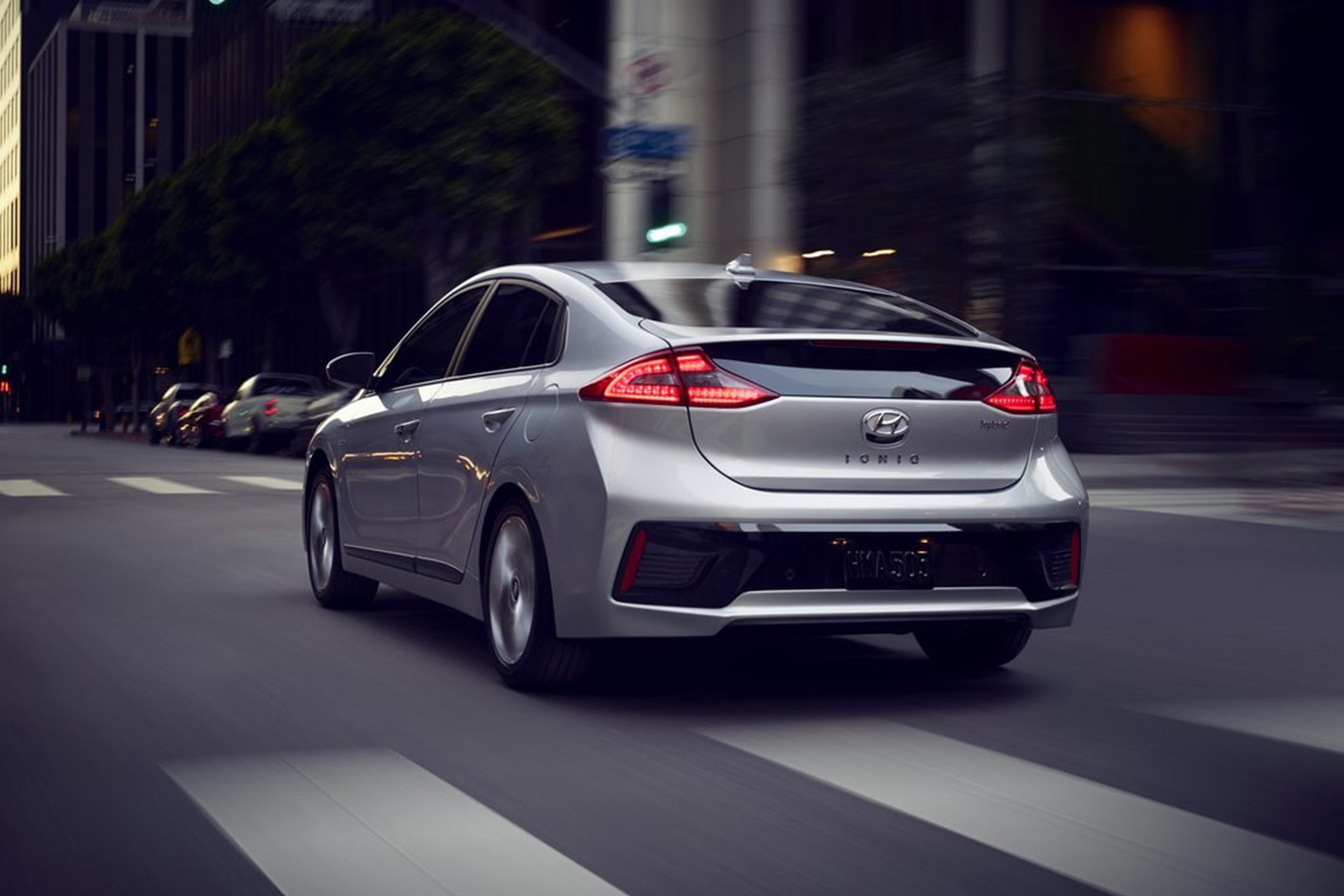
Other mainstream hybrid passenger cars on sale here include the Toyota Corolla, the Toyota Camry Hybrid – locally made until the Japanese car maker shuts down its Australian manufacturing arm in October – and the Mitsubishi Outlander PHEV.
Last month, hybrid and electric car sales in Australia accounted for one in every 100 sold during July. Sales of the more fuel-efficient vehicles are heavily weighted towards business, government, and fleet buyers rather than mums and dads.
Undisguised pictures of Volkswagen’s seventh-generation Jetta small sedan have been leaked online ahead of the car’s official unveiling, which is expected to be at the Los Angeles Auto Show in November this year.
The first unobscured view of VW’s next-gen Jetta was unearthed by Mexican publication Autologia.com.mx, suggesting the shots originate from the Puebla factory where Jettas destined for the United States and Brazil are built.
Unsurprisingly, the outed Jetta appears to wear a family resemblance common to other sedan models in the VW line-up, including the Passat and Arteon, which have a more dominant grille, darkened headlights with LED bar highlights, and sharp bonnet creasing.
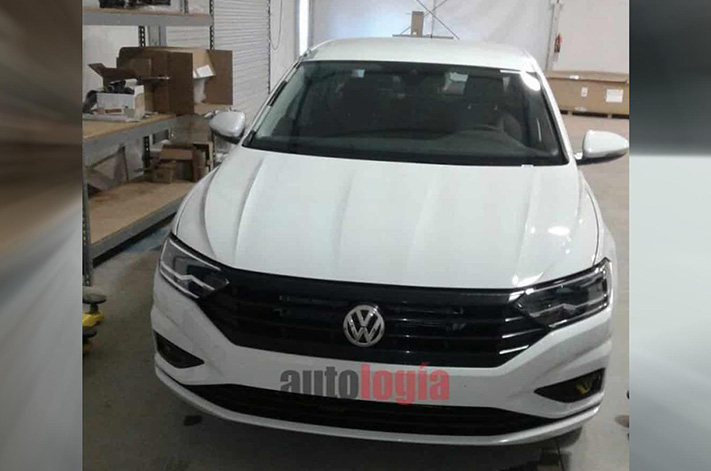
The spied car appears to be a lower-end variant or pre-production prototype with typical fleet features including unpainted door handles, steel wheels, cloth interior, and white paint. Nevertheless its bare shape and lines offers a good idea of what to expect in higher specification grades as well.
No technical information on powertrain or interior features accompanied the scoop, but it is known that the new version will roll on the MQB platform, which opens up a plethora of engine and transmission possibilities.
A carry over, or lightly developed, version of the current 1.4-litre TSI petrol engine that is offered in Australia is one possibility, as are a 2.0-litre TDI diesel and broad range of other engines in the current global catalogue, ranging from a 1.2-litre turbo petrol, up to a 2.5-litre five-cylinder.
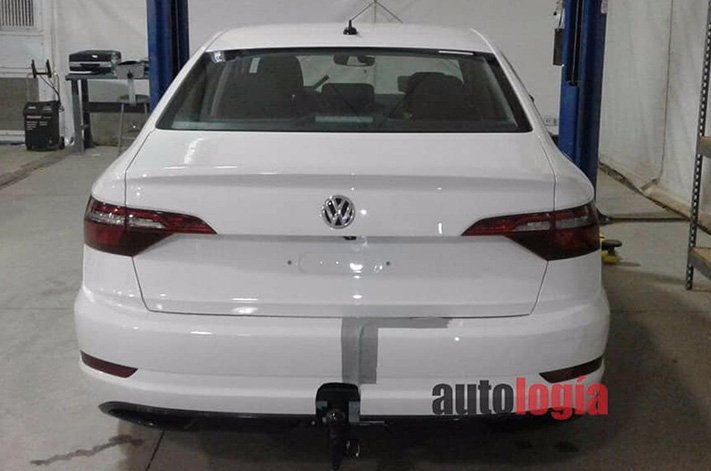
Until right-hand drive production is confirmed, the new-look Jetta will not be offered for the local market, but Volkswagen Group Australia corporate communications general manager, Paul Pottinger, explained that the business case also relies on being able to position the Jetta correctly in relation to its larger sibling.
“We would certainly consider it for the right price,” he said. “We now have a Passat that starts at a little over $34,000. If you consider that our cars generally sell at the top end of the segment, the average buying price for the outgoing Jetta wouldn’t have been much beneath that.”
With the popularity of Volkswagen’s Golf on local soil, the Jetta has always played second fiddle to its hatchbacked stablemate, but still manages to attract a solid audience with 733 registrations to the end of July this year. With its 7.5 update, the Golf sales momentum continues with 9999 examples sold in the same period.
Tokyo Drift, Initial D, and many others have ingrained in us the idea that Drifting is synonymous with Japanese motorsport.
And this video won’t change your mind. Meet Keiichi Tsuchiya, the ‘Drift King’ of Japan.
It shouldn’t be any surprise that there are plenty of videos of Tsuchiya drifting various cars, but this one of him in an AMG E63 S has us intrigued.
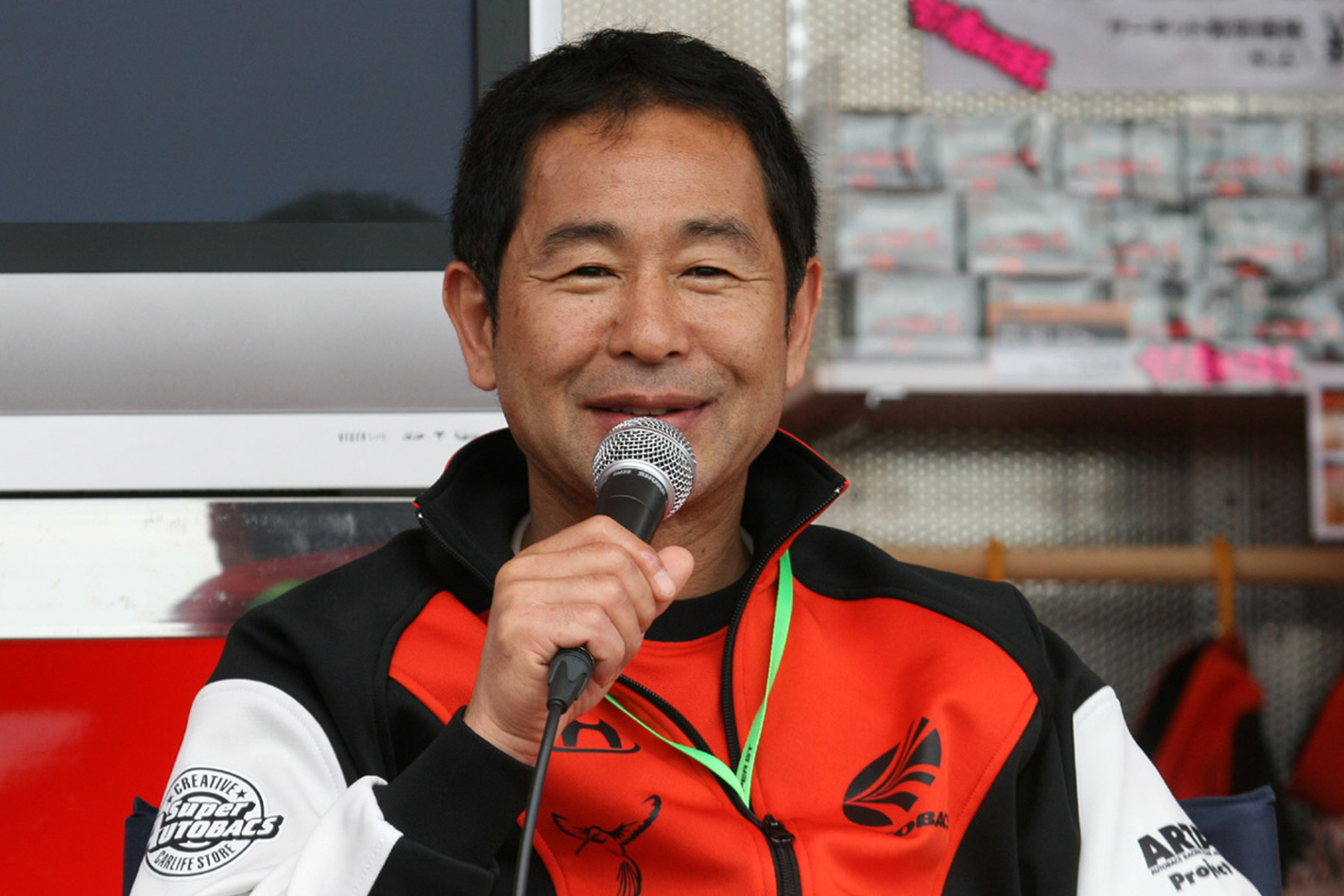
If for nothing else, this video is an example of pure drifting mastery from someone who started drifting before a lot of us were even born.
Still, it appears that the E63 isn’t as wild as we might have hoped. The drift mode can send all 100% of the car’s 450kW/850Nm to the rears, but there just isn’t enough smoke and noise from the car.
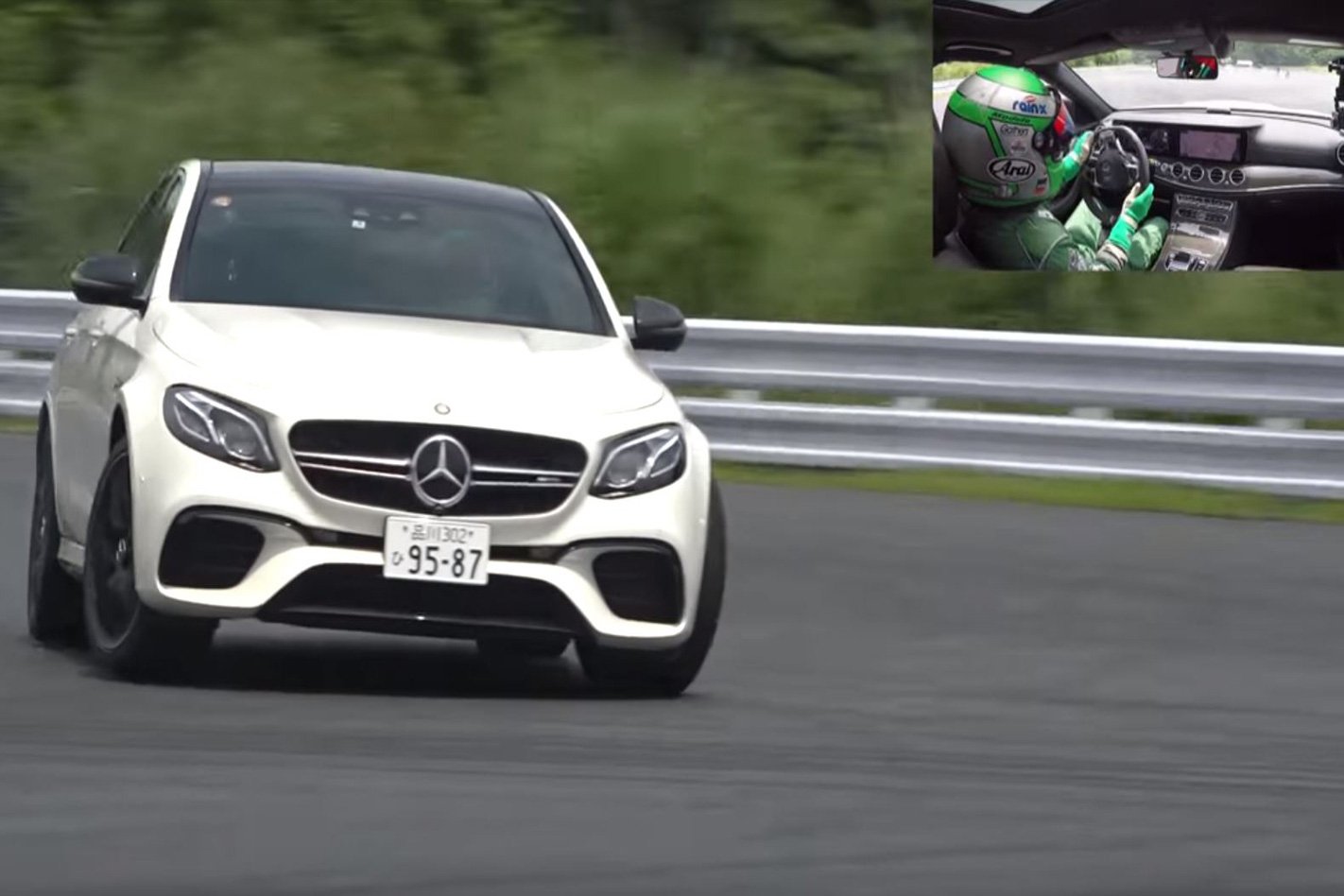
But if anyone was going to be able to get the most out of the E63 S’s drift mode, it’s Tsuchiya.
He’s been sliding cars around for decades, even in races that weren’t drift-focused, and his early life has a few parallels with the protagonist of the aforementioned Initial D. He was also a technical consultant for the series, as well as appearing via cameo in both Initial D and The Fast and the Furious: Tokyo Drift
He even drifts a now legendary Toyota AE86 which he has had since his career began.
That’s not bad for a 61-year-old. Then again, he’s basically the father of drift.
