
EUROPE will swap out the 2018 Holden Commodore VXR’s V6 engine for its version of the hot hatch in favour of a turbo 2.0-litre unit producing less power, but more torque.
Opel announced overnight that the engine will make its debut under the bonnet of the Insignia GSi set for an unveil at September’s Frankfurt Motor Show; a car that wears a very similar skin to that unveiled for the Holden-badged version equipped with a 3.6-litre V6 that will produce around 231kW/336Nm.
However, Europe’s version will have two big points of difference. First, the 2.0-litre four-pot it will use to send drive to all four wheels via the Twinster torque vectoring system will produce 191kW and a much beefier 400Nm. Second, instead of the Aussie version’s nine-speed auto, the hot Eurodore will use an all-new eight-speed auto – complete with steering wheel-mounted paddle shifters.
In fact, it was this drivetrain combination that was snapped at the Nurburgring, giving us our first hint that Holden may also be working on a more performance-focussed version of the closely related NG Commodore.
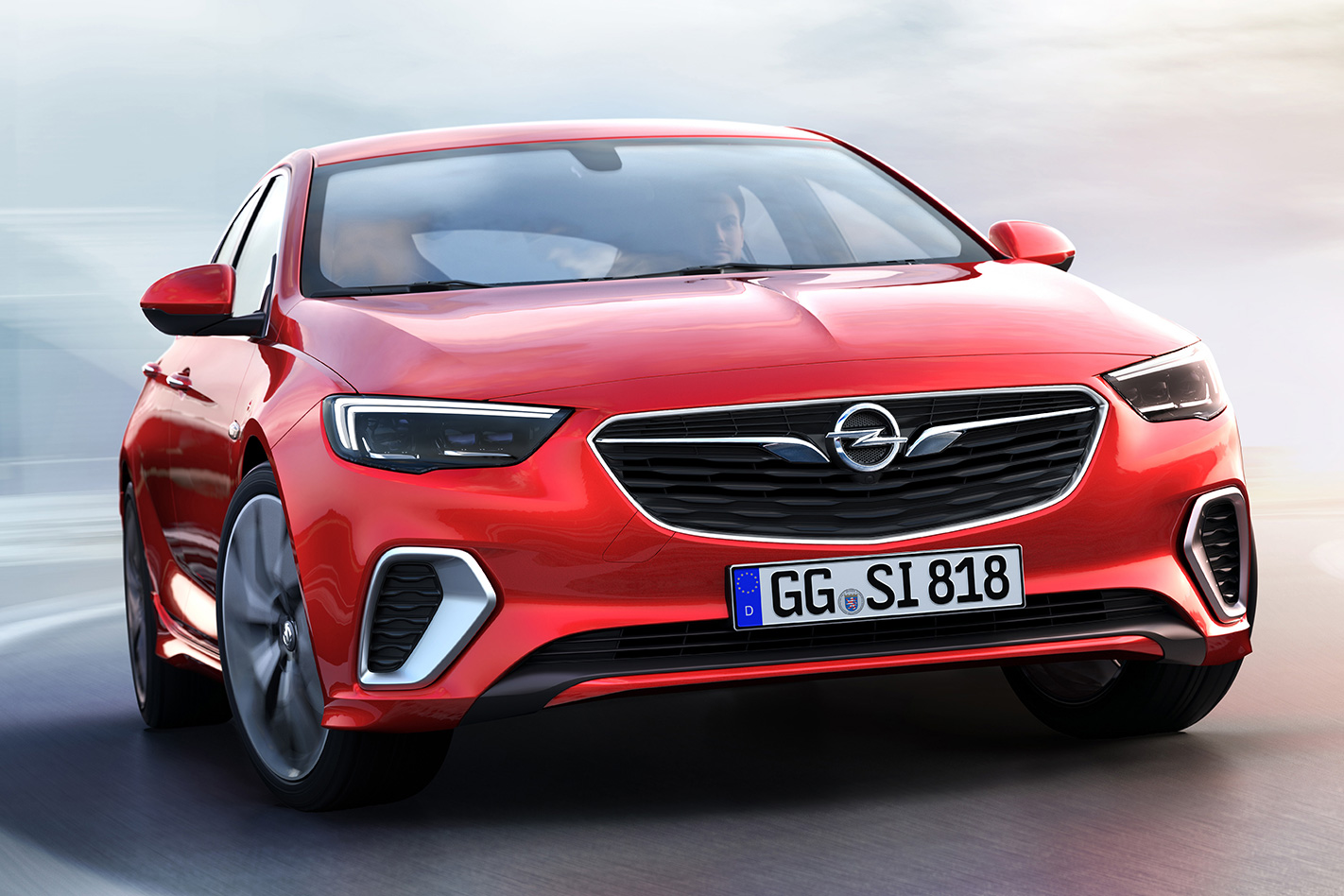
According to Opel, its engineers used the Nurburgring to develop an “all-new” chassis for the GSi. It sits 10mm lower on “special” adaptive shock absorbers to keep body roll to a minimum, and uses four-pot Brembo brake calipers wrapped around 345mm discs.
“The sports chassis, developed in combination with the extra grippy Michelin Pilot Sport 4 S tires and big 20-inch wheels, offers almost limpet-like levels of adhesion,” it said.
Inside, there’s the traditional sports-oriented tombstone front seats, with two leather trim options.
The big bonus for Euro hot hatch fans, though, is likely to be fuel economy. The petrol four-pot helps shed up to 160kg compared with the 2.8-litre turbocharged V6 Insignia OPC it will replace, meaning fuel economy will come in at around 9.0L/100km on the European cycle.
No fuel figures have yet been offered for the Holden-badged version ahead of its arrival here early next year. Europe will also have a diesel-engined version of the Insignia GSi offered.
WHILE it might not be an obvious comparison, both of these pragmatic RS-badged Audis come with a glorious soundtrack.
And with the upcoming RS4 to add two turbos, but lose two cylinders from its Porsche-sourced 2.9-litre V6, they could be some of the last truly aurally special Audis. Except, that concept is largely blown apart, thankfully, by the five-pot screamer in the Audi RS3 – now available as a booted, and backseat-friendly sedan.
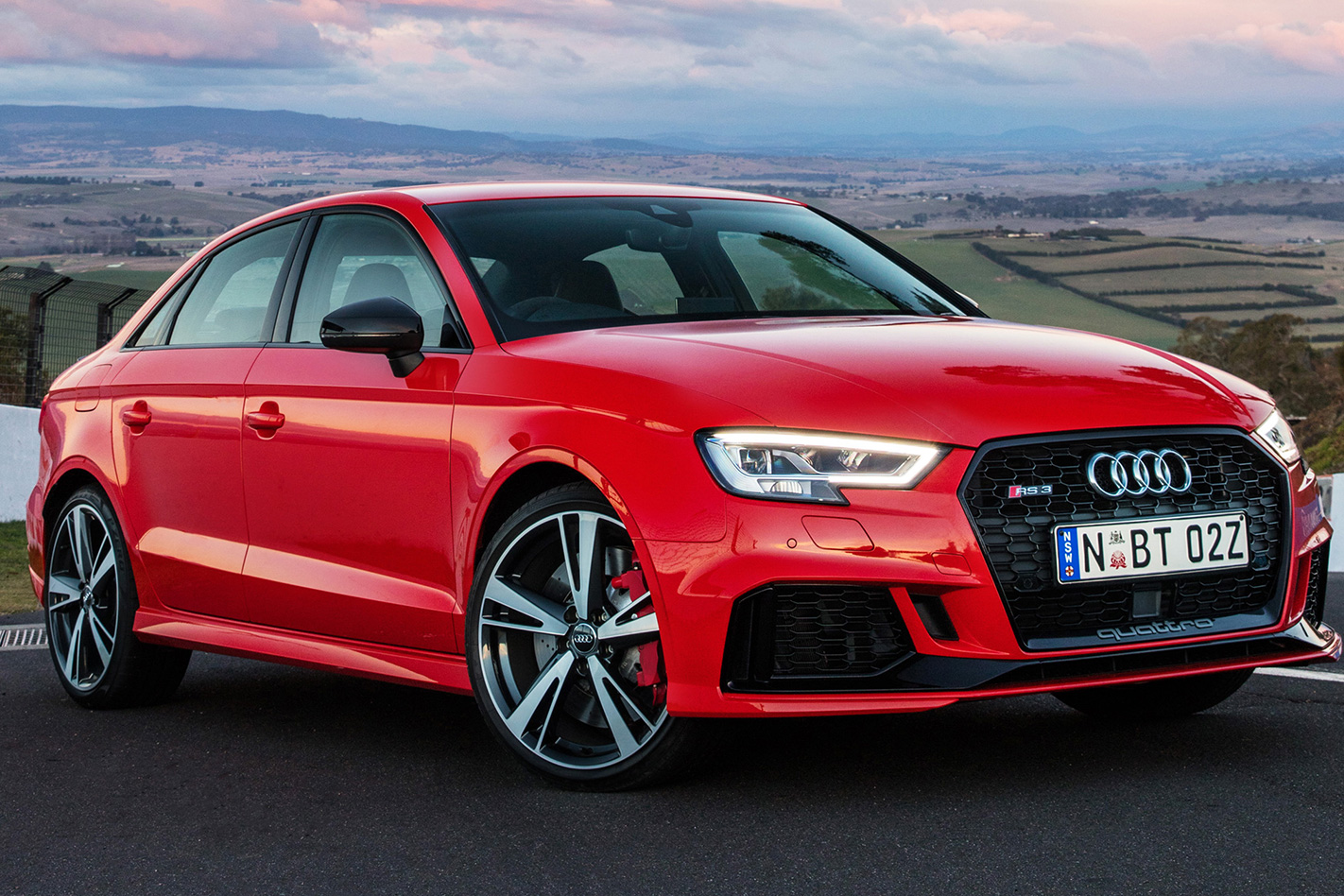
Such is the rate of progress that the new kid on the block offers oomph akin to a supercar of the not-too-distant past.
The RS3 will sprint to 100km/h in just 4.1 seconds – or, 0.6 seconds faster than the RS4. Both are aided by venerable quattro all-wheel drive, dual-clutch gearboxes and launch control, but the sedan’s lighter weight and extra torque wins.

The RS3 sedan, with its wider front tyres compared to the rear, makes a solid case as an effortlessly fast compact sedan. Its warbling heart is reason enough, yet it’s also entry into the realm of RS for less than $100K.
Although, as a last bastion of naturally aspirated V8 Audis, the sonorous RS4 makes a compelling case for a future classic – just keep your poor dog out of the back.
| u00a0 | 2017 Audi RS3 Sedan | 2013 Audi RS4 Avant |
| Engine | 2480cc inline-five, DOHC, 20v, turbo | 4163cc V8, DOHC, 32v |
| Power | 294kW @ 5850-7000rpm | 331kW @ 8250 rpm |
| Torque | 480Nm @ 1700-5850rpm | 430Nm @ 4000rpm |
| Weight | 1440kg | 1795kg |
| 0-100km/h | 4.1sec (claimed) | 4.7sec (claimed) |
| Price | $84,900 | $149,400 (new) |
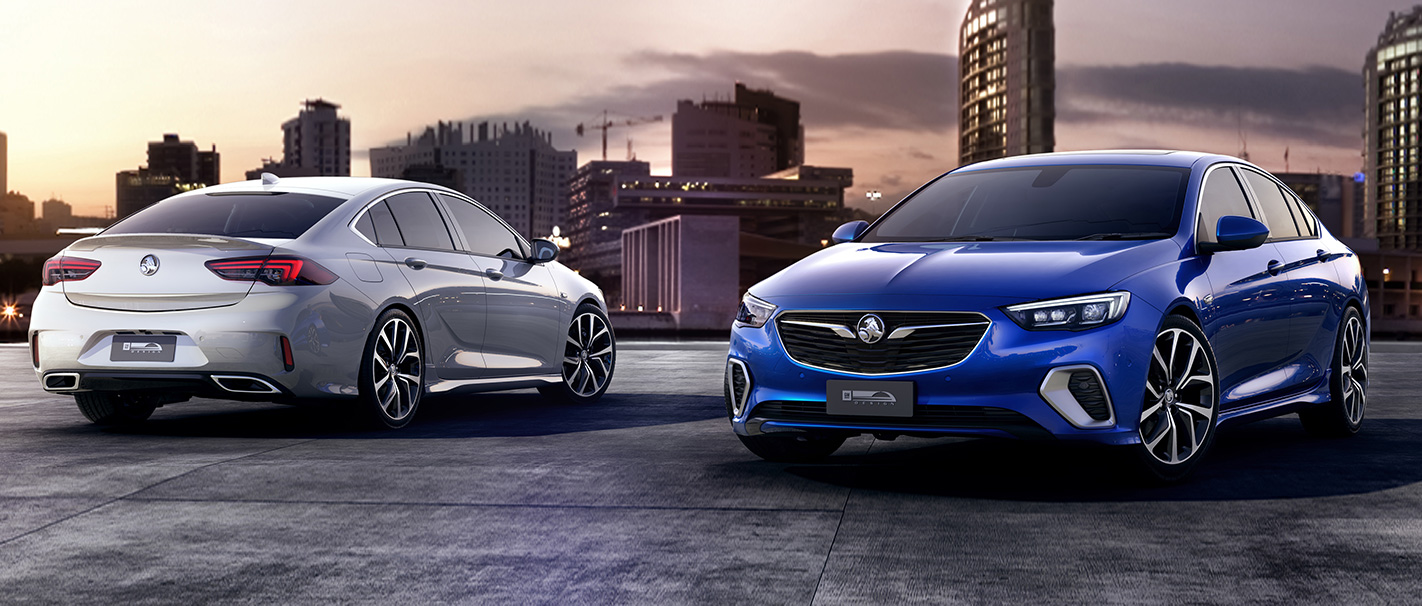
AFTER much speculation as to what badge the sports version of Holden’s next generation Commodore was going to wear, Holden has confirmed it will carry the VXR nameplate.
“It made sense for us to bring it into line with existing models like the Astra,” said director of communications Sean Poppitt.
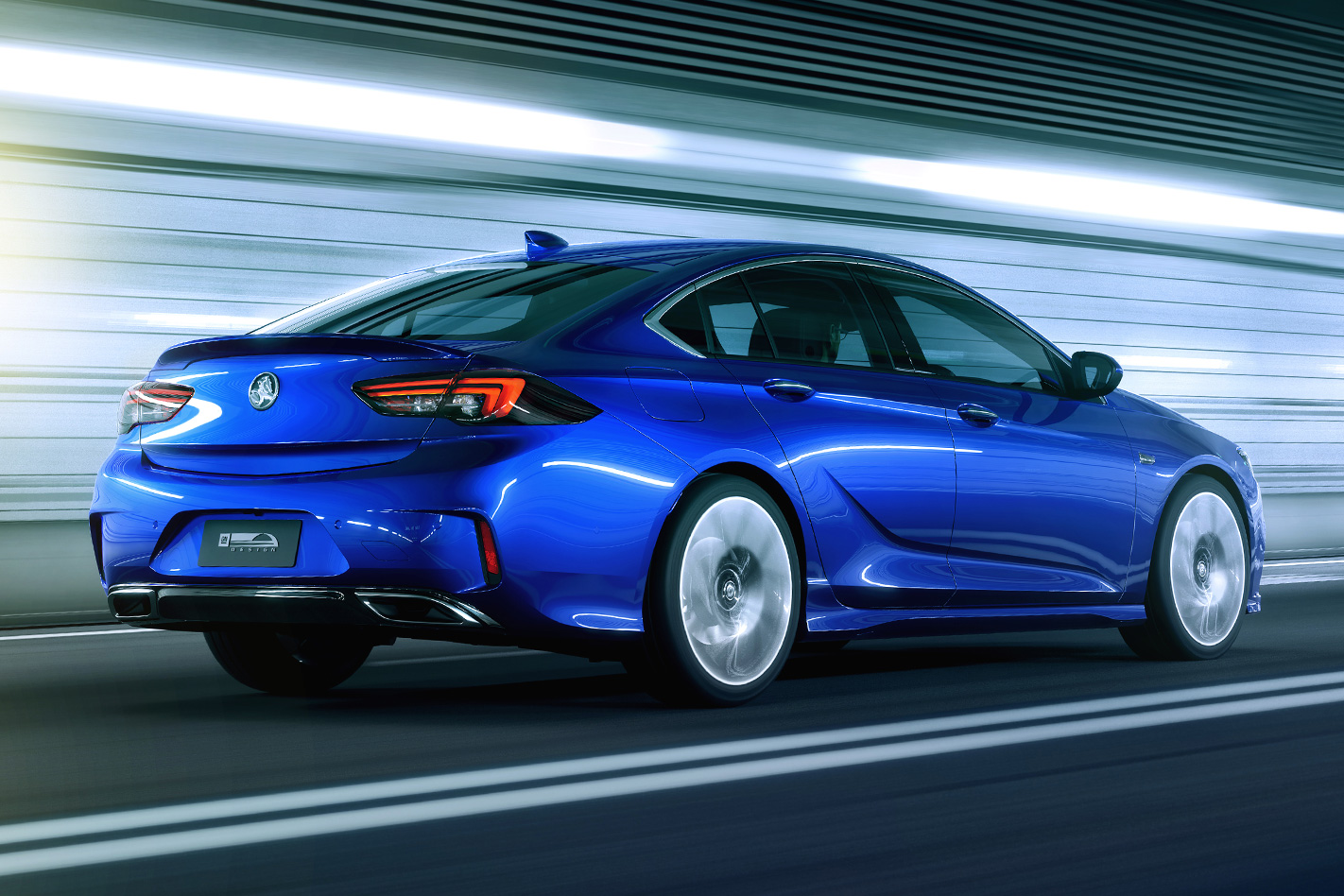
A press release from Holden also confirmed many of the specifications that Wheels published in our Summer edition of 2016. The 3.6-litre V6 powerplant’s peak power and torque outputs have been an open secret for some time, as has the choice of a nine-speed automatic transmission and a torque vectoring all-wheel drive chassis.
The SS badge first appeared on the Commodore with the VH in 1982 and has been the hero V8 Holden ever since (HSV is a different company), but prior to that, it first featured on the 1972 HQ SS, the badge gaining popularity with the launch of the 1976 LX Torana SS. This was one of only two occasions that the SS badge appeared on something without a V8 in the snout (the other being the VT SS with the supercharged L67 V6). From the VH Commodore onwards, the SS badge was a permanent feature.
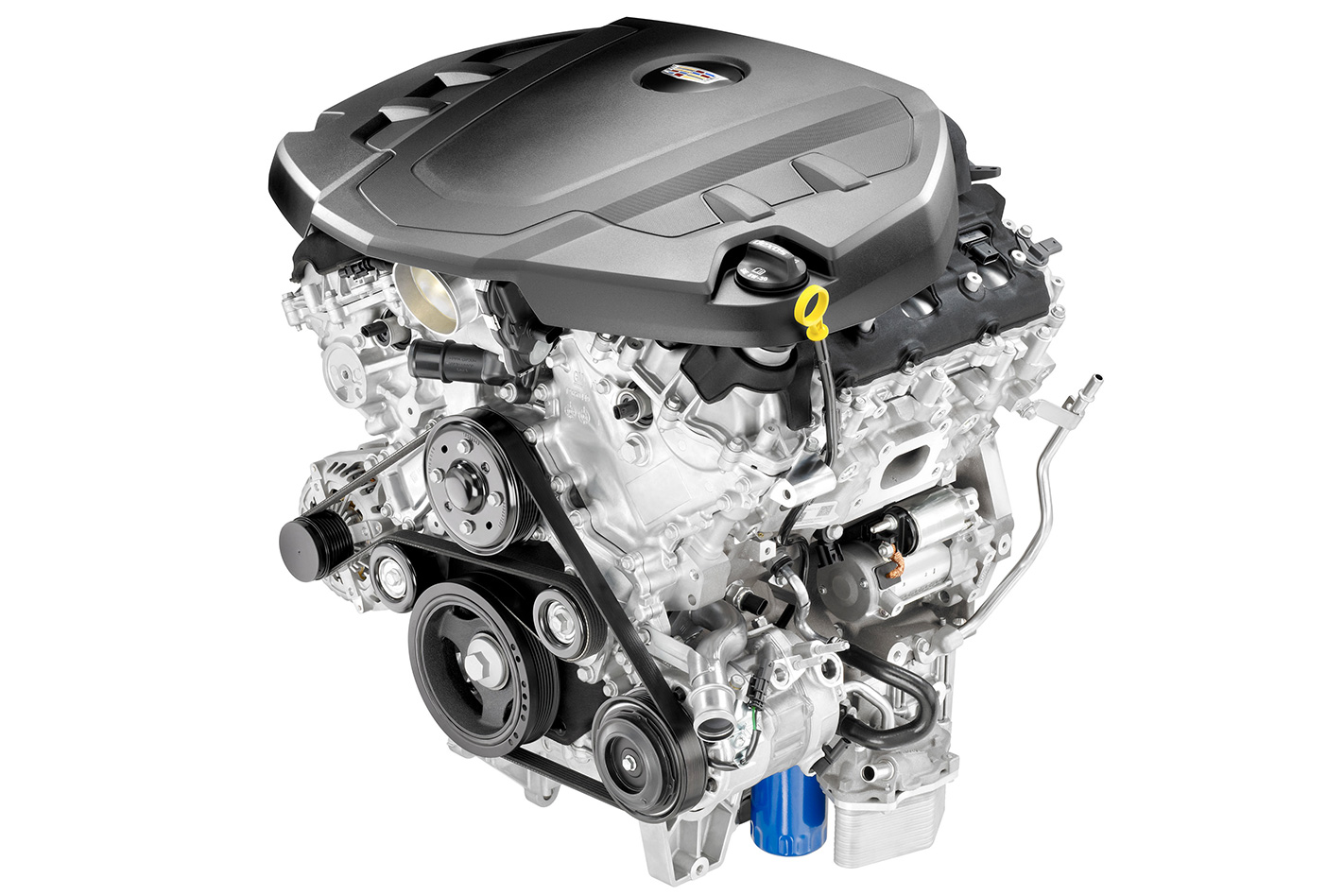
“The next-gen Commodore VXR offers a different execution of performance to the outgoing SS but make no mistake, this is a more than worthy successor,” said Holden’s Lead Dynamics Engineer, Rob Trubiani.
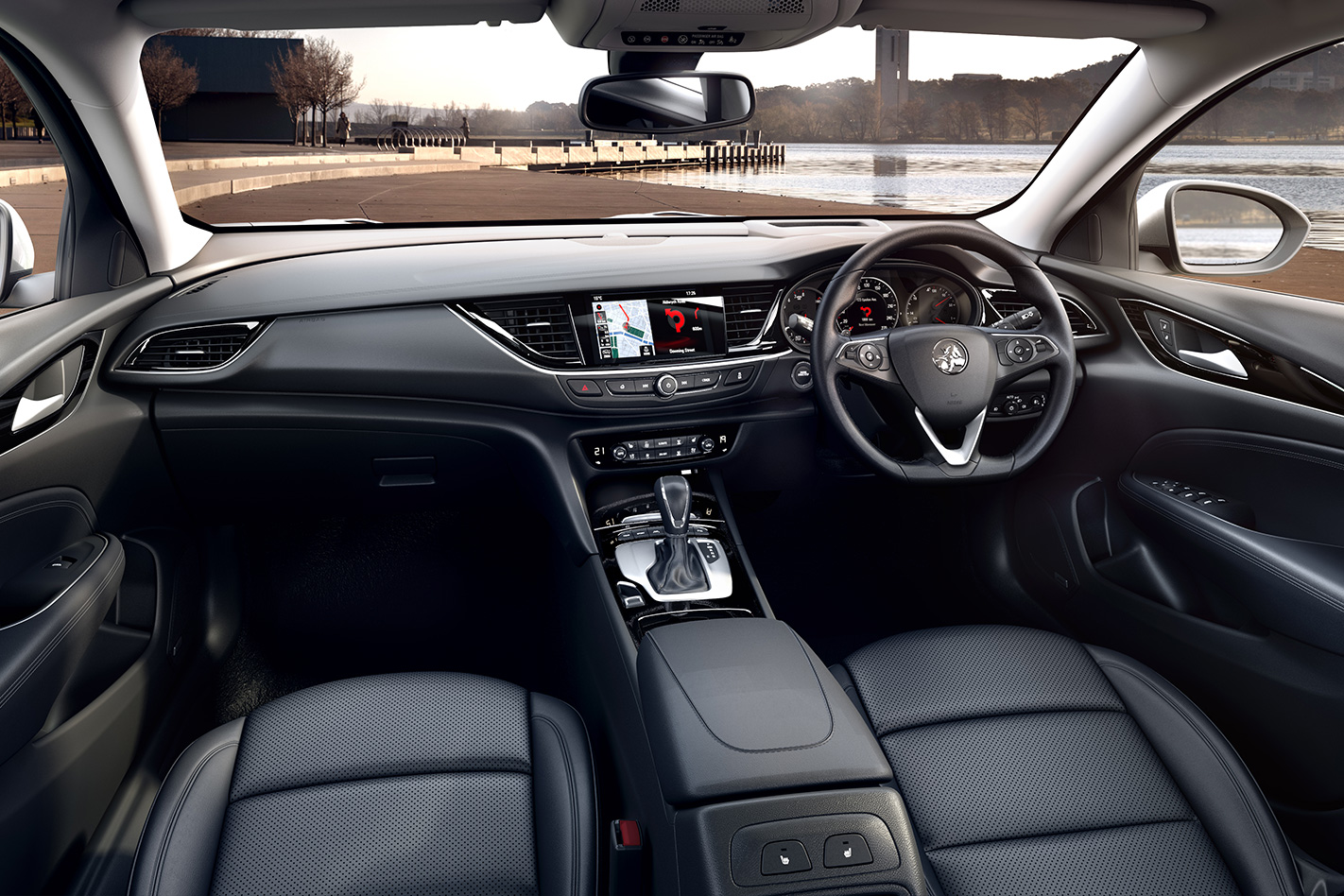
Holden is slating ‘early 2018’ for the VXR’s arrival in dealers, launching alongside the rest of the NG Commodore range that will include sedan, Sportwagon and Sports Tourer body styles.
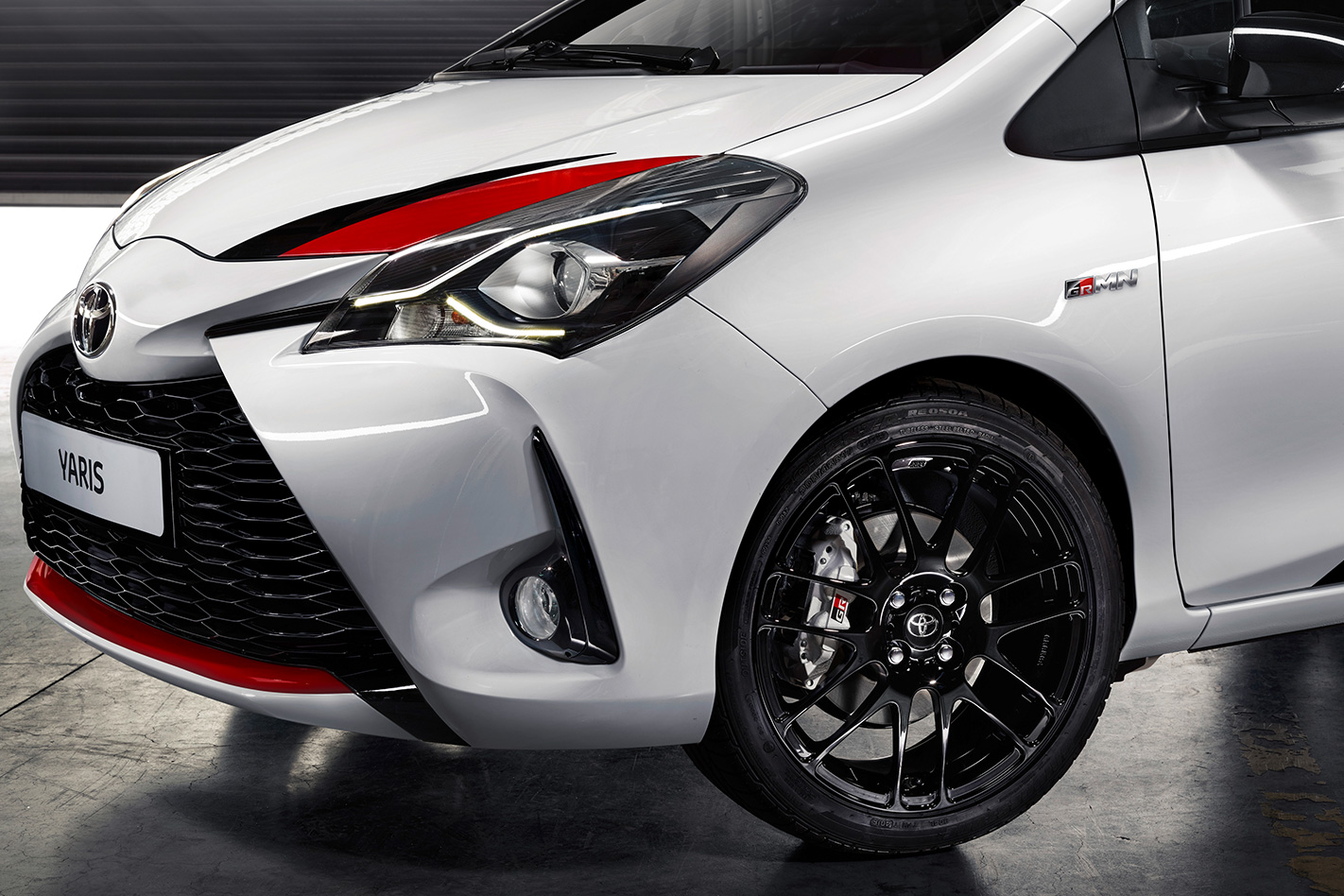
With a supercharged 1.8-litre four-pot capable of 156kW, this hot-hatch is more powerful, lighter, and therefore faster than Toyota’s 86.
The downside? You would have to fly to Europe and fork out the equivalent of around $43,000 to buy one. If you manage to secure one, that is.
Only 400 units of the Yaris GRMN (which stands for Gazoo Racing Masters of Nurburgring) will be built, and the ones that are sold in the UK will cost roughly the same as Brits pay for a Skoda Octavia RS230. That would be $41,490 here.
It will also have a six-speed manual ‘box.
The car will be built in Toyota’s manufacturing plant in Valenciennes, France, but the company says development of the car was an intercontinental effort.

And it will have quite a heavily re-worked chassis compared to any other Yaris.
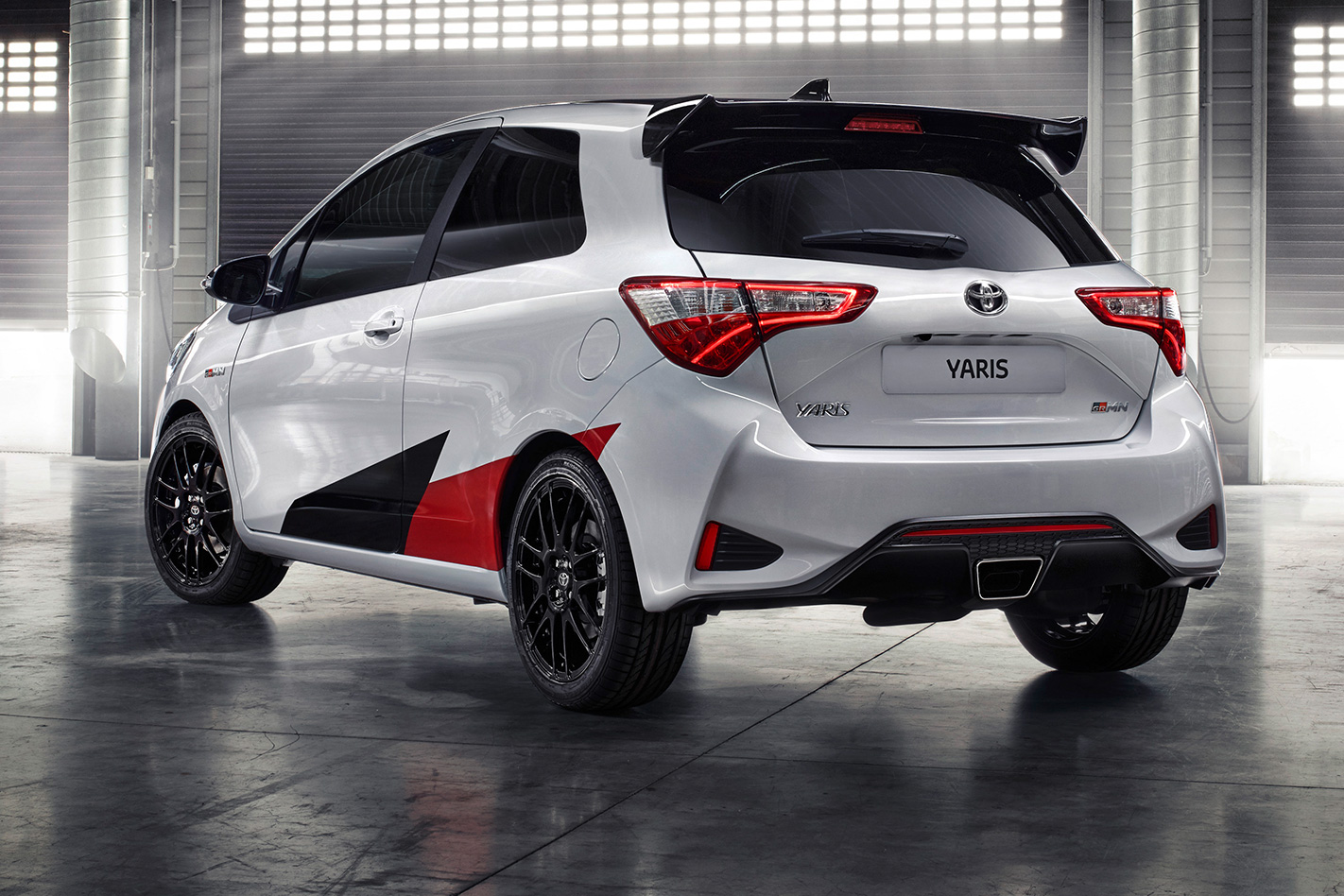
“The car is also equipped with highly efficient performance brakes with large, ventilated discs and four-pot front callipers,” says Toyota.
DUAL CAB utes have become more than just work vehicles for Australia’s motorists, with range-topping variants now packed with features pinched from passenger car models and fast becoming favourites as dual-purpose work/family vehicles.
The popularity of high-end utes (or pickup trucks, depending on your point of view) has seen Mercedes-Benz enter the fray with its X-Class utility – and it has Australia firmly in its sights.
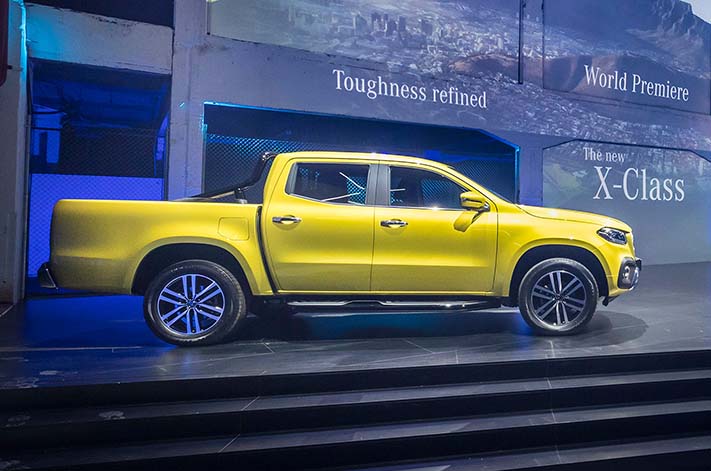
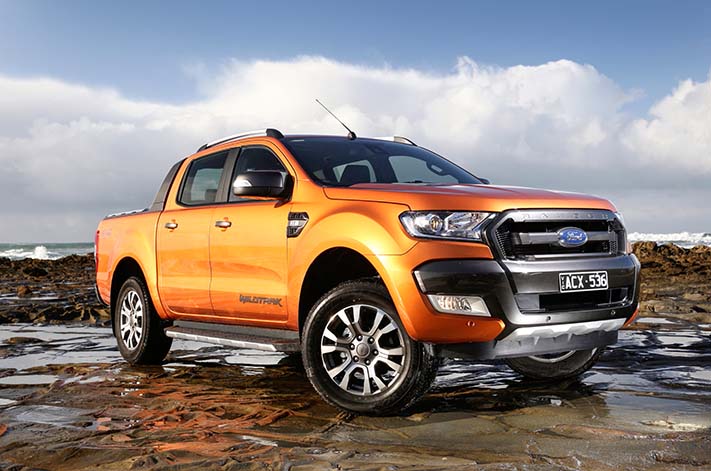
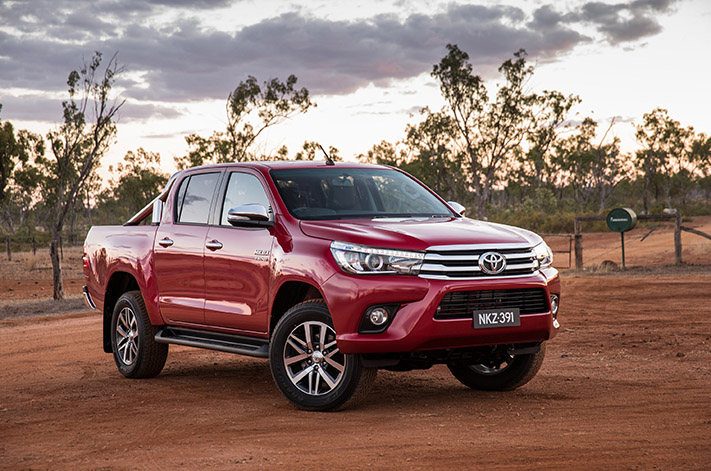
The idea seemed unthinkable a couple of years ago, but with premium utes such as the Toyota SR5, Ford Ranger Wildtrak and Volkswagen Amarok Ultimate V6 selling for, $57,990, $61,790 and $67,990 respectively, it’s no stretch of the imagination to think that people would happily pay more for a ute with the three-pointed star at the front.
That said, the Nissan Navara-based X-Class will be sold under the Mercedes-Benz Vans banner so, while prices are yet to be announced, they might be more competitive than most people expect.
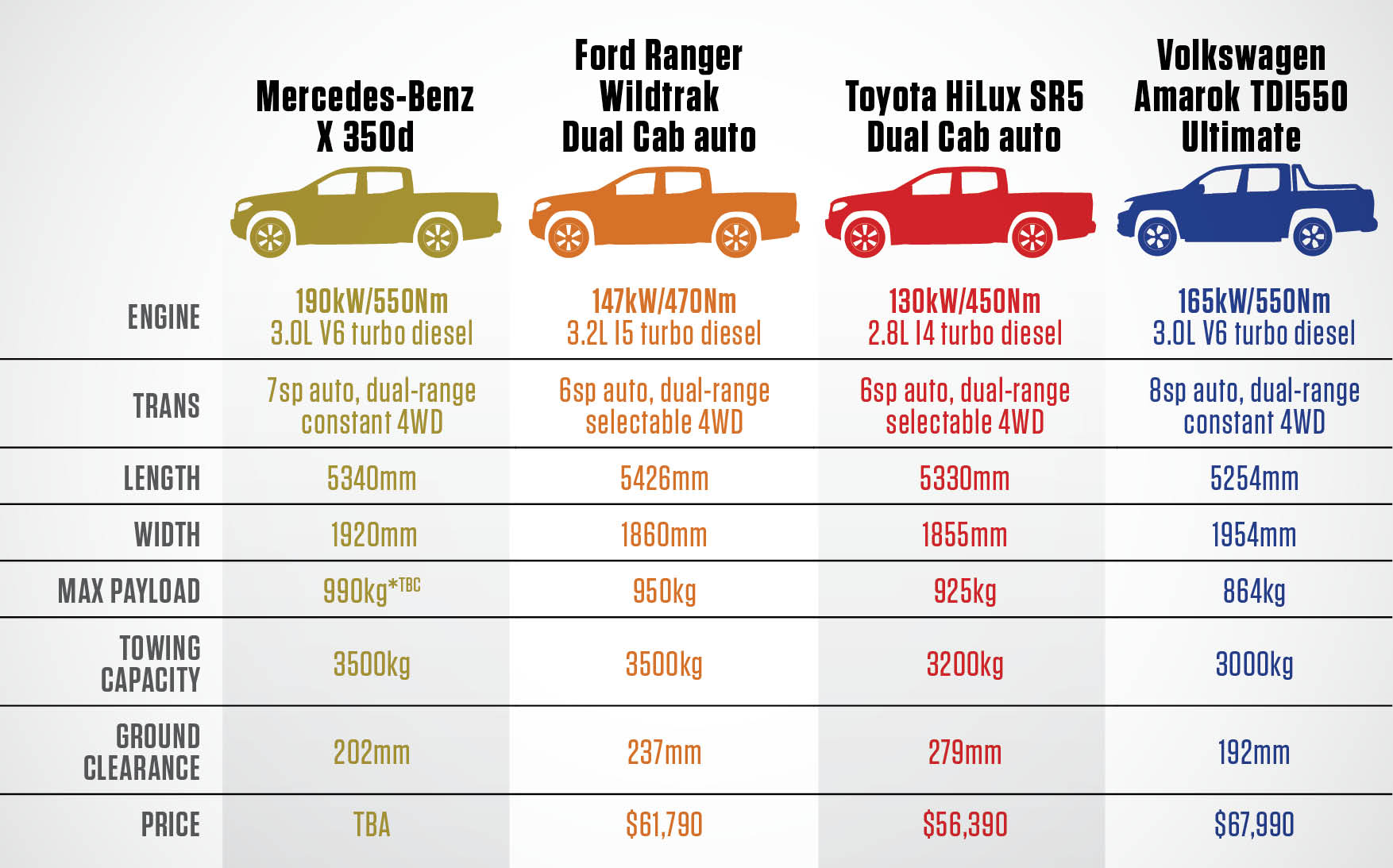
So what does the top-spec X-Class Power offer over the other three premium utes – apart from its high-end badge, of course?
Powertrain
For a start it’s more powerful, with a 190kW/550Nm 3.0-litre V6 turbo-diesel engine mated to a seven-speed automatic transmission and constant 4WD.
Of the other three only the Amarok comes close with its 3.0-litre V6 turbo-diesel donk producing 165kW/550Nm that turns all four wheels constantly via an eight-speed auto gearbox.

Payload
Mercedes boasts an X-Class payload “up to 1100kg”, which refers to the entry-level 220d. However that figure decreases up the range as engine displacement increases, with the 250d carrying up to 999kg. For some reason there are no payload figures yet for the V6 350d, hence the 990kg estimate which is still higher than the Ranger (950kg), Hilux (925kg), and Amarok V6 (864kg).
Load space
The X-Class’s tray is 1587mm long by 1560mm wide at the floor, which is 3mm longer than the Amarok’s but narrower than the Volkswagen’s class-leading 1620mm width. It’s the same width as the Ranger Wildtrak (1549mm x 1560mm) and bigger overall than the Hilux’s 1520mm x 1515mm tray.
Towing capacity
They’re all heavy haulers, but the Benz has the strongest legends. X-Class’s 3500kg braked towing capacity equals that of the Ranger, with the Toyota pulling 3200kg and the Amarok 3000kg.
Ground clearance
We’re yet to see how the X-Class performs off road, but it will do well to beat the Hilux in its element with a 202mm ground clearance that’s 77mm less than the Toyota’s. Only the Amarok’s belly is closer to the dirt, with a 192mm ground clearance figure.
Active Safety
The X-Class is the only one of the four to have autonomous emergency braking as standard. It also has active cruise control and lane-keeping assist which are standard in the Wildtrak, but don’t come with the range topping Amarok or Hilux
Interior Features
This is where the X-Class Power will differ from the others. Its premium fit out includes matt black, aluminium and woodgrain trim effects and Artico man-made leather in either black or nut brown. It is also equipped with the Conect infotainment systems displayed via an 8.4-inch touchscreen while creature comforts will include power adjusted front seats.
The Amarok Ultimate is closest in terms of features including 6.3-inch touchscreen, full leather interior and power adjustable heated front seats.
The Ranger Wildtrak has an 8.0-inch screen with Ford’s excellent Sync3 infotainment package, heated front seats with leather accents with power adjustment for the driver.
Hilux’s interior isn’t as flash and comes with a 7-inch screen, part-leather seat trim and power adjustable driver’s seat.
While some of us lament the good old days, perhaps the good old days are actually right now.
When was it ever possible to buy a 626 kW muscle car that does the quarter in less than 10 seconds?
At least in America, you can walk into a Dodge dealer and roll out with a hellion of a car: the record setting Challenger SRT Demon. It’s been banned by the NHRA for being too fast for a production car and has been certified to pull wheelies. Yes, when it launches hard, its front tyres will momentarily lose contact with the asphalt.
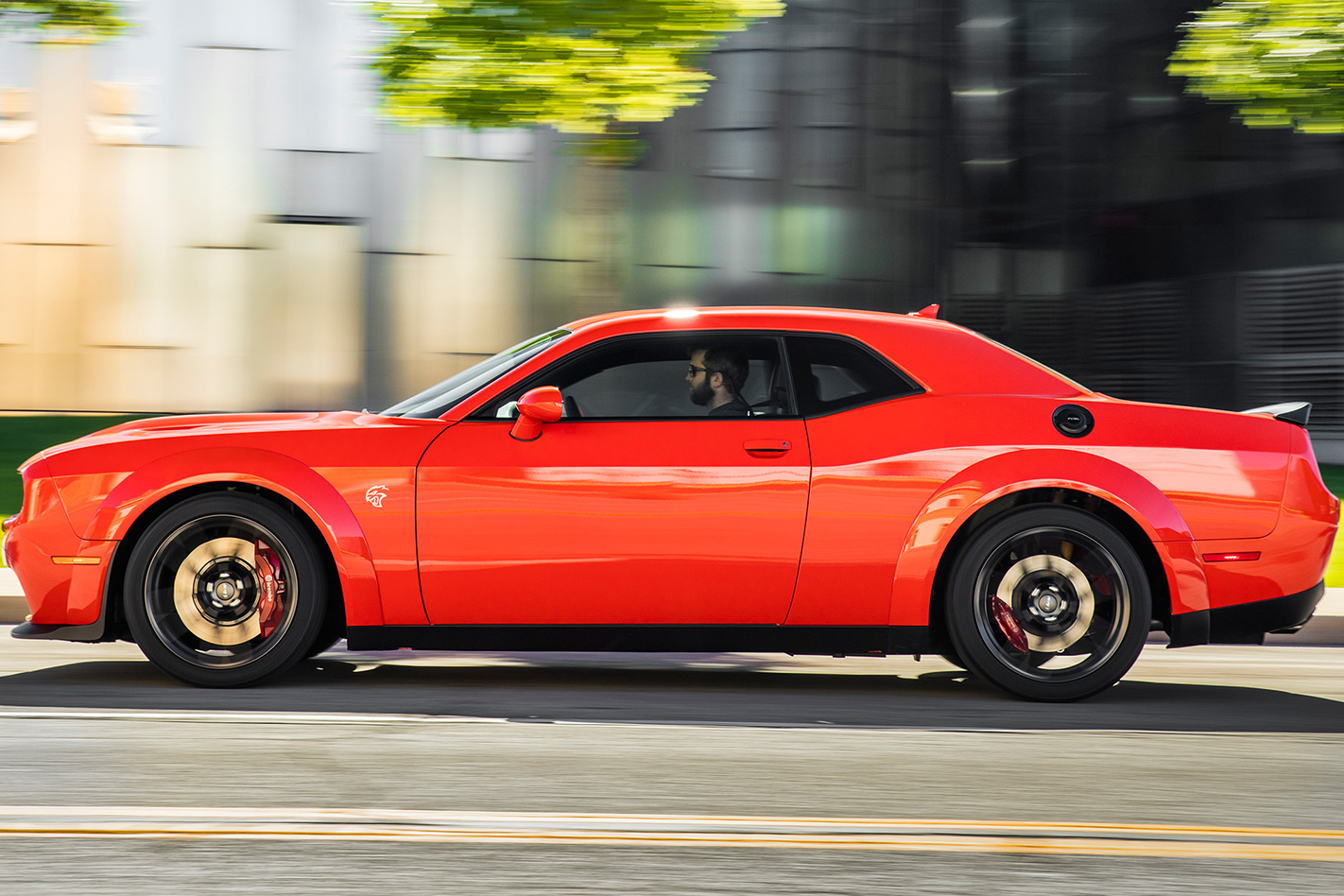
Even the completely mad Challenger SRT Hellcat may have had a little less tyre than necessary to harness its 527 kW, but it was reasonably well balanced for a muscle car.
At the time the Hellcat was launched, something that crazy was unfathomable, and now just two short years later, the Hellcat is the jumping off point for Dodge’s latest deranged two door.
The Challenger will always be a muscle car. It doesn’t pretend to be a sports car like some versions of the Mustang do. In true form, Dodge’s mandate for this Demon was to make it the fastest accelerating production car. That’s the perfect prescription for a muscle car.
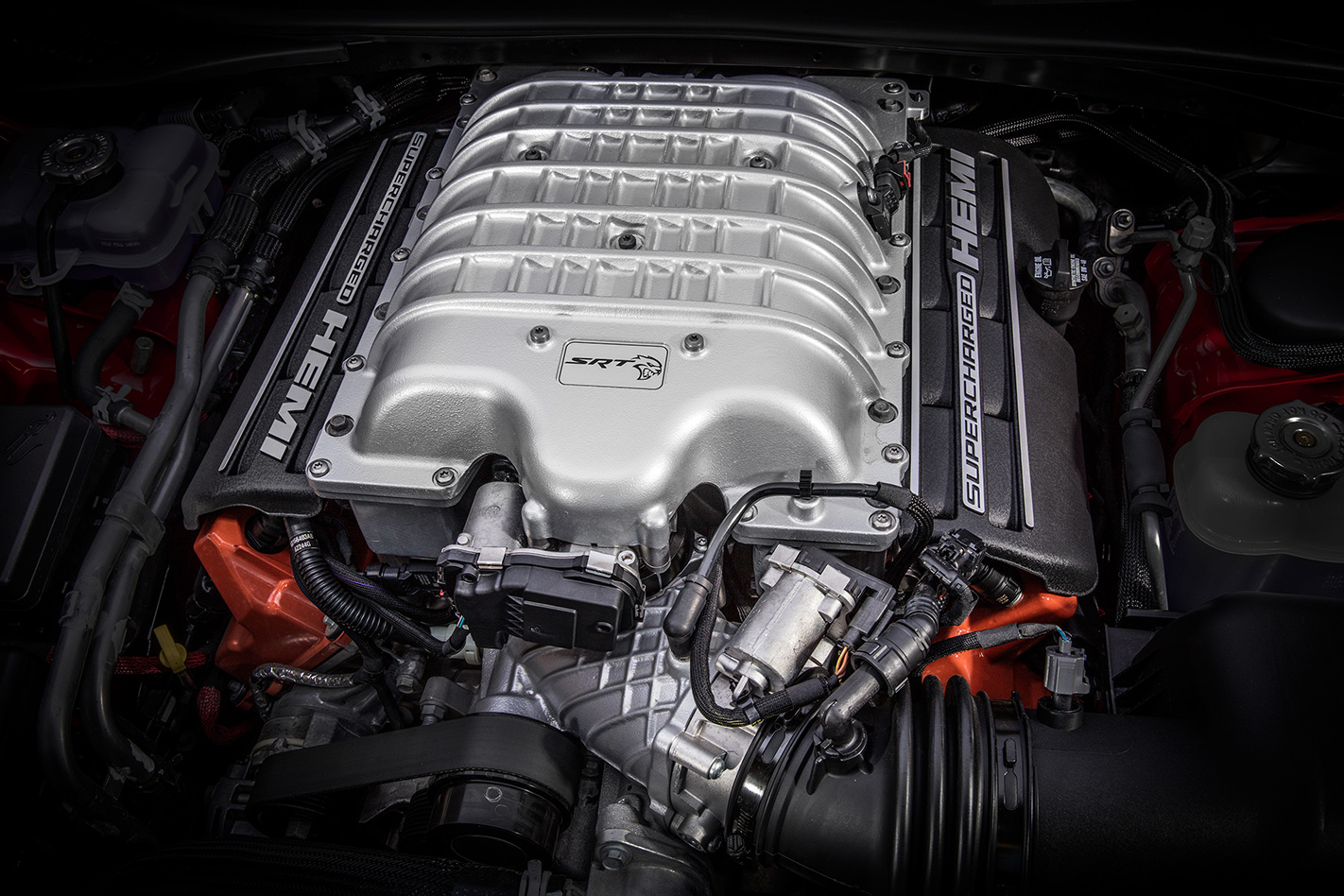
On typical American premium fuel, the Demon makes a phenomenal 603 kW and 972 Nm. As long as you’re carrying the famous red key, all of that power is at your disposal.
Power isn’t the only story, but rather the special drag-specific engineering that’s gone into the Demon that makes it as quick as it is unique. In Drag Mode, air conditioning is disabled and, more importantly, diverted to chill the engine’s incoming air.
Available with an auto box only, the familiar eight-speed has a revised torque converter with a higher stall speed, and the driveshaft and half shafts are strengthened over standard Hellcat kit. The 3.09 final drive and limited slip differential are unique to Demon, as well.
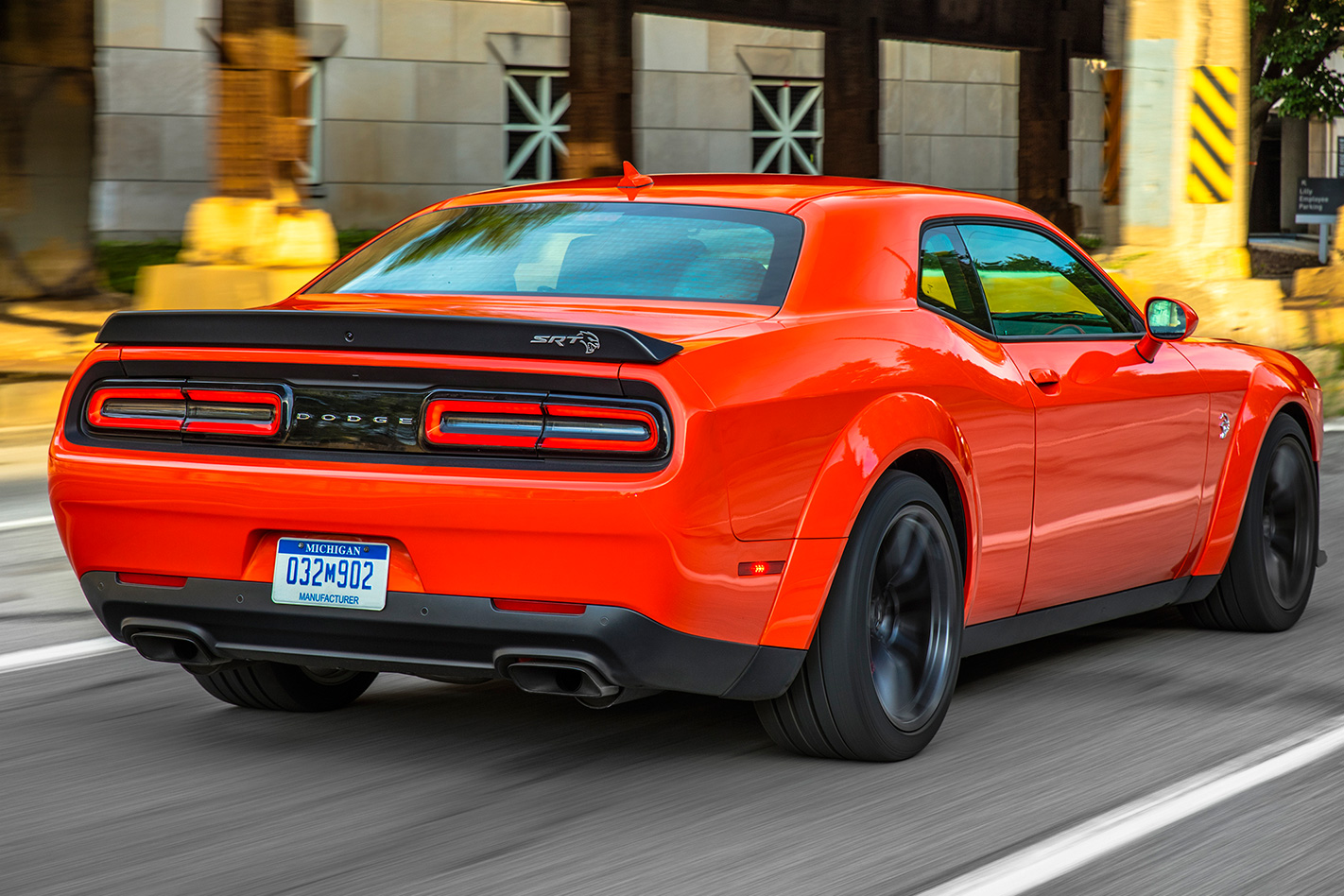
SRT engineers fixed their tyre choice on the Nitto NT05R street legal drag radial in 315/40R18 sizes at all four corners, which means you’re conveniently rolling on a spare pair of rear tires that just happen to be bolted to the front axle.
Wheels are a unique lightweight design and under the widened wings, necessitated by the 315-section tyres, they look intimidating.
The necessary Demon Crate, which includes narrow, drag-specific front wheels and tyres, as well as the necessary tools to swap them trackside, also costs a single dollar and is personalized to the owner and the Demon.
Spring rates are softer front and rear, and the Hellcat’s adaptive dampers were retained, but thoroughly revised for the Demon’s intended purpose with straight line-enhancing settings in Drag Mode.
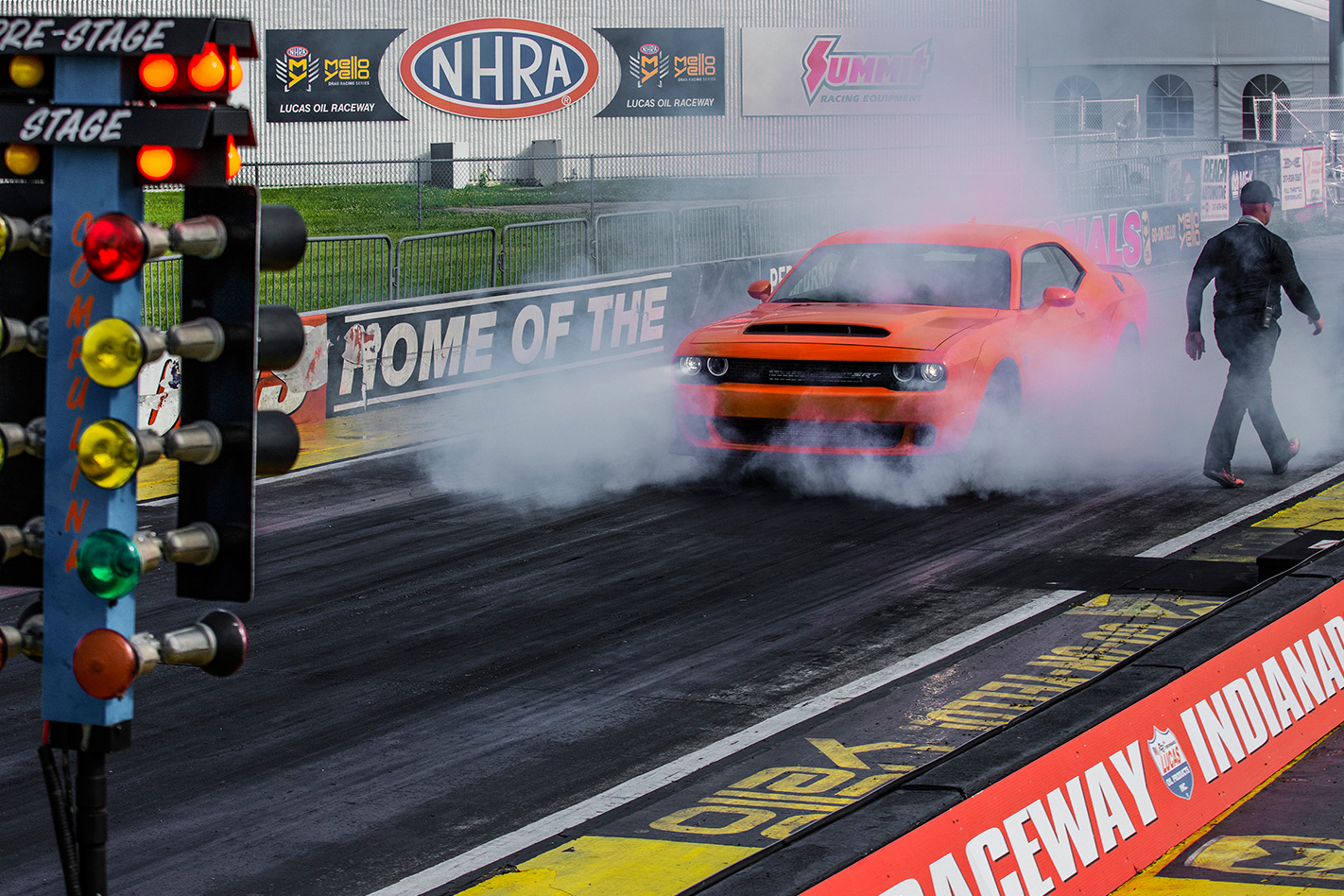
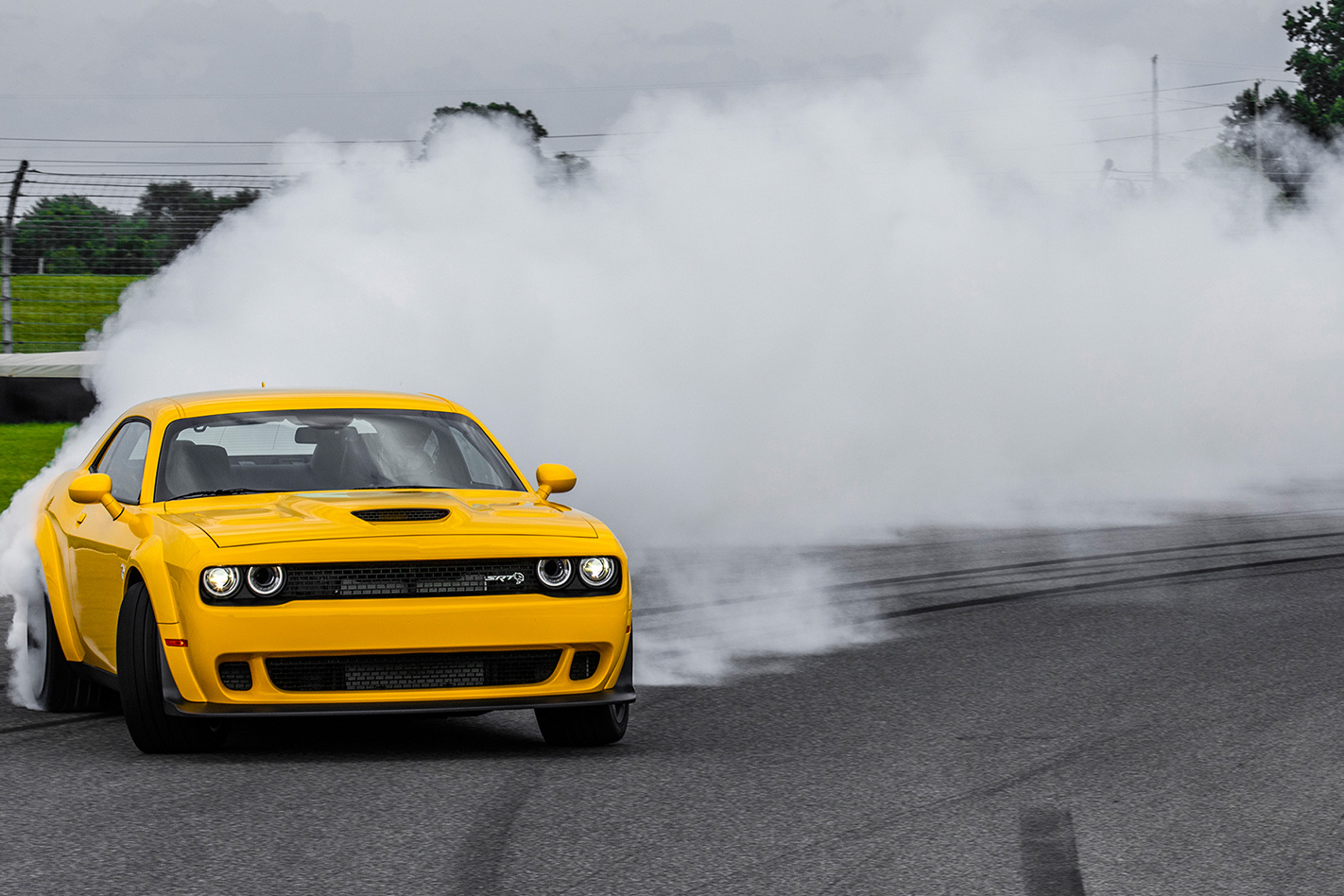
Once at the strip, enabling Drag Mode permits the use of three bespoke features: line lock, Trans Brake, and drag-spec damper settings. Part of drag strip etiquette includes a billowing burnout, turning rubber into a massive cloud of smoke, all in the name of cleaning the rear tires of any debris. We reckon we couldn’t condone using the line lock for burnouts for the sake of burnouts, could we?
The Trans Brake is the trick to getting the Demon down the strip as quickly as it does. A fully integrated system, it locks the front brakes, prebuilds boost, and preloads the drivetrain by locking all first gear clutches and one second gear clutch. Once the Trans Brake is released, the full fury of this Demon is released.
It’s best you hold onto that steering wheel, because the Demon throws you into the back of your seat with the thrust of a Saturn V rocket. At the same time, the Demon’s bonnet rises up to a disturbing height, so high that you lose some view of the road ahead.
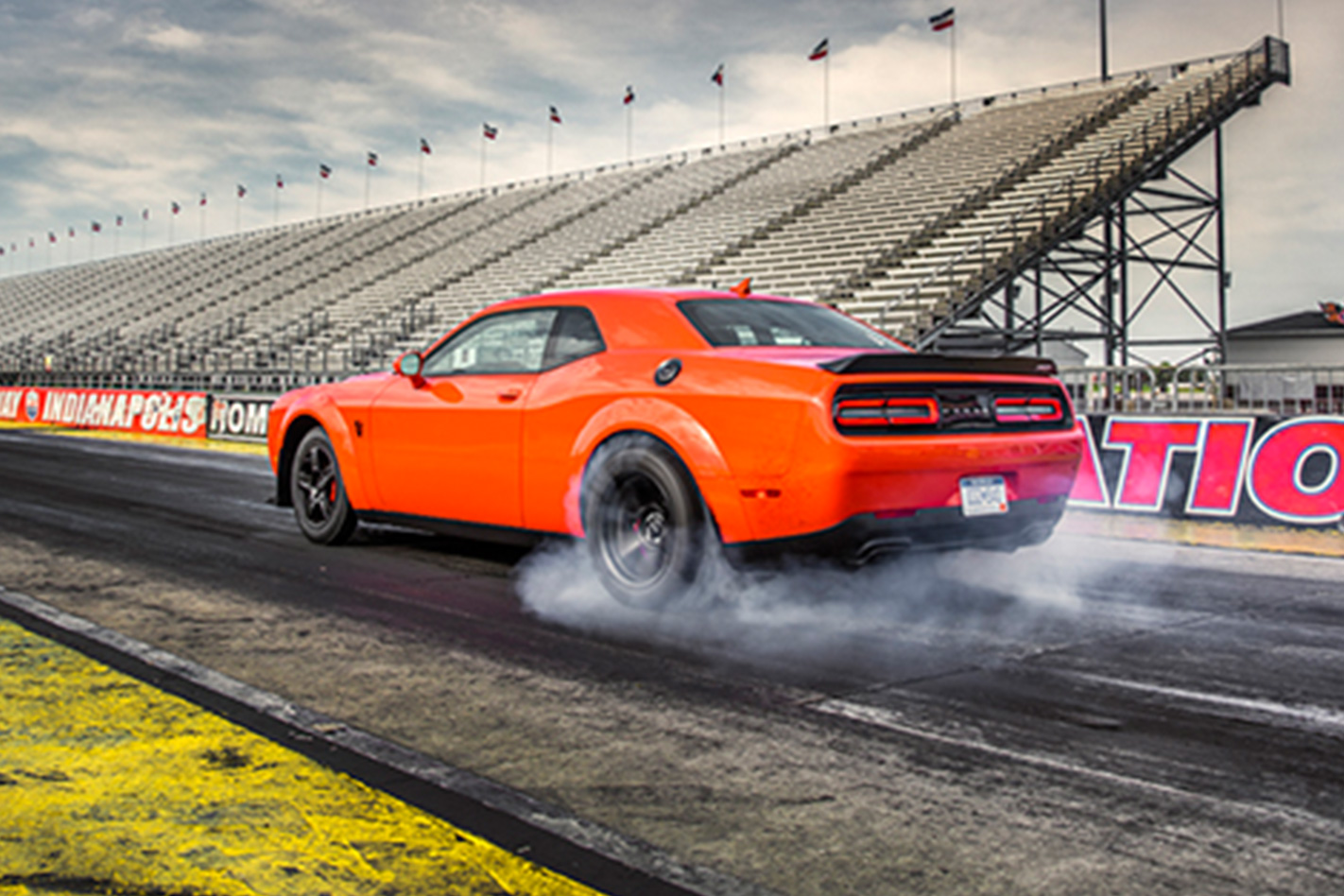
Dodge and the NHRA say it’ll lay down a quarter mile time of 9.65 seconds with a trap speed of 225 km/h. This drag racing novice achieved consistent mind-bending results on a hot American Midwest day: mid 10s at 210 km/h.
Pick your favourite multi-million dollar hypercar, it doesn’t matter. The Demon beats all comers to 100 km/h and through the quarter mile for a fraction of the price, with the muscle car attitude to go along with those shocking numbers. It’s a shame this one isn’t coming to Australia.
4.5 stars out 5 Likes: Hyper-focused engineering that delivers uncompromised results Dislikes: Not coming to Australia, ageing platform
Specs Engine: 6166cc V8, OHV, 16v, supercharger Power: 603kW @ 6300rpm Torque: 972Nm @ 4500rpm Weight: 1939kg 0-100km/h: 2.4sec (est.) Price: US$86,090
The popular hot hatch segment is bracing for a shake-up before 2017 is over. Four powerful range-toppers are due to arrive in Oz around year’s end offering buyers a variety of fresh, fast choices all vying for their hard-earned cash.
Here is a brief introduction to the next wave of cars promising to blend performance credibility and everyday practicality into the perfect all ‘rounder.
Hyundai i30 N
At the head of the pack is the highly anticipated Hyundai i30 N. Its development has been overseen by former BMW M boss, Albert Biermann, and the early signs say that his no-holds-barred approach has delivered a cracker of a performance car.
Two variants of the i30 N will be sold in Australia, powered by similar 2.0-litre turbocharged four-cylinder petrol engines with outputs of 184kW and 353Nm in the regular model, and 202kW and 353Nm with an overboost function (for up to 380Nm) in the i30 N Performance Pack version.
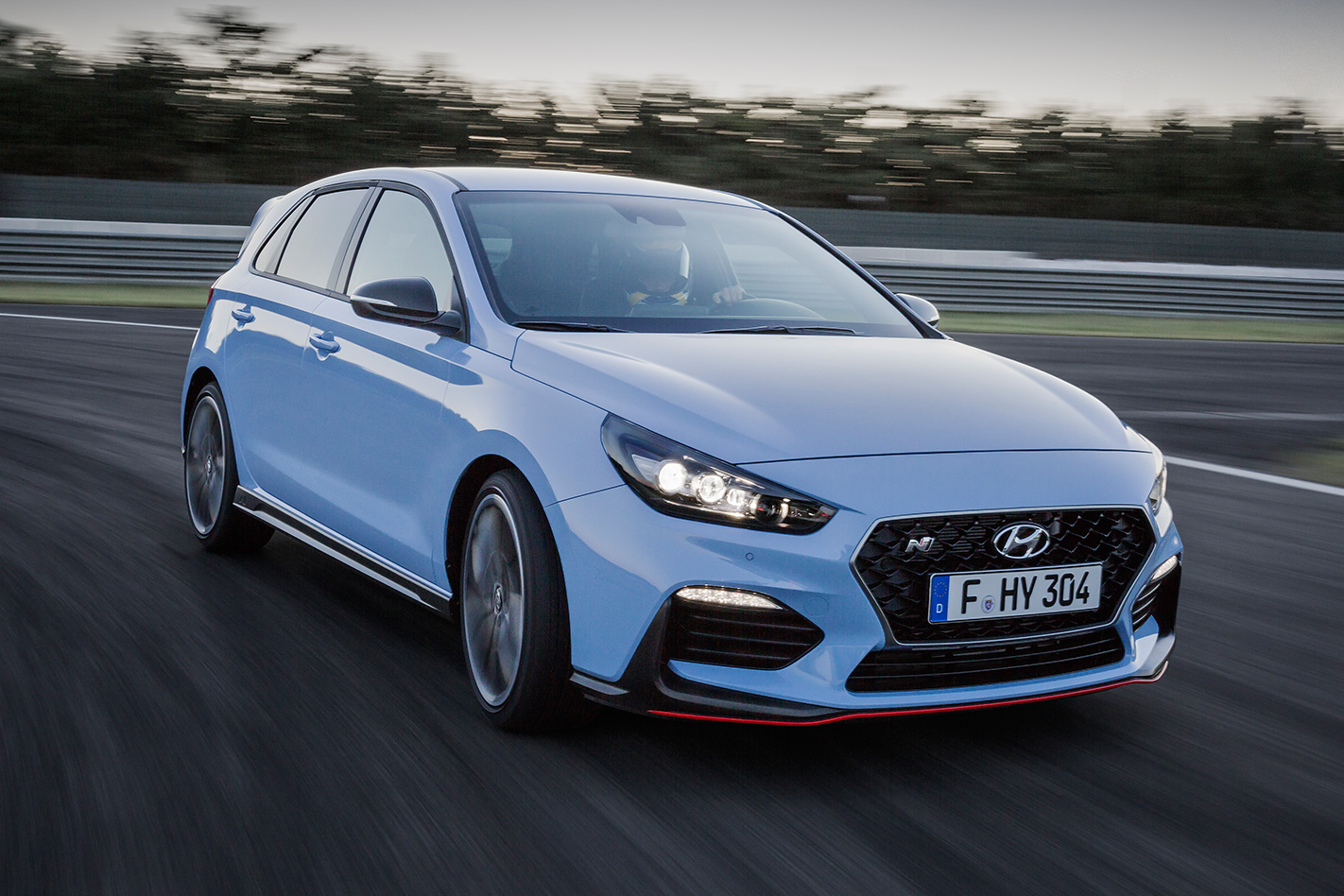
The i30 N will be front-wheel-drive and have a six-speed manual only when it launches in Australia, though an eight-speed dual-clutch automatic will be available by 2019. Pricing is still to be confirmed, but a ballpark within the $40-50K bracket is expected, starting at the lower end for the base i30 N, and edging towards the upper limit for the Performance Pack.
Hyundai’s local engineers have visited the European proving ground and contributed to the i30 N’s adaptive suspension tune to ensure its suitability for Australian roads. It promises to be unlike any Hyundai before it.
Honda Civic Type R
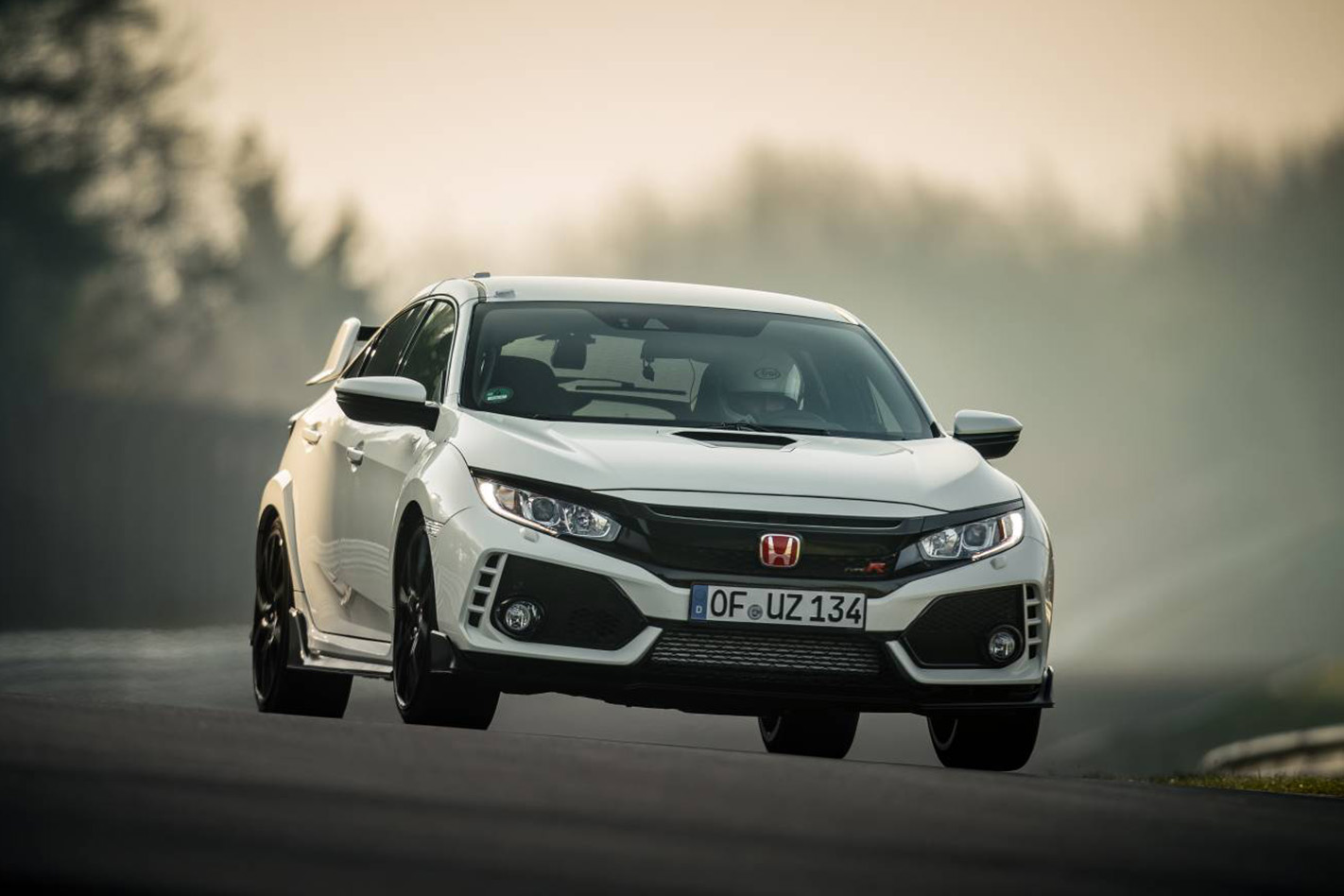
Perhaps the fiercest rival to Hyundai’s hi-po hatchback is the Nurburgring front-wheel-drive record holder, the Honda Civic Type R. This fifth-gen model is expected in Australia this October, also powered by a 2.0-litre turbocharged four-cylinder engine churning out slightly more grunt with peaks of 228kW and 400Nm.
Again, a six-speed manual is the only transmission on offer, with no plans to add an auto to the line-up at this stage. The single Civic Type R variant will cost $50,990 when it goes on sale boasting a high level of equipment including active safety systems, a performance braking package and model-specific front suspension and steering to best handle all its power.
Renault Megane RS
We’re still learning about the yet-to-be-released Renault Megane RS, but it won’t be long before the fourth-generation model is winging its way Down Under, as the French manufacturer has promised to fast track it to us almost immediately following its global debut, which is expected at September’s Frankfurt motor show.
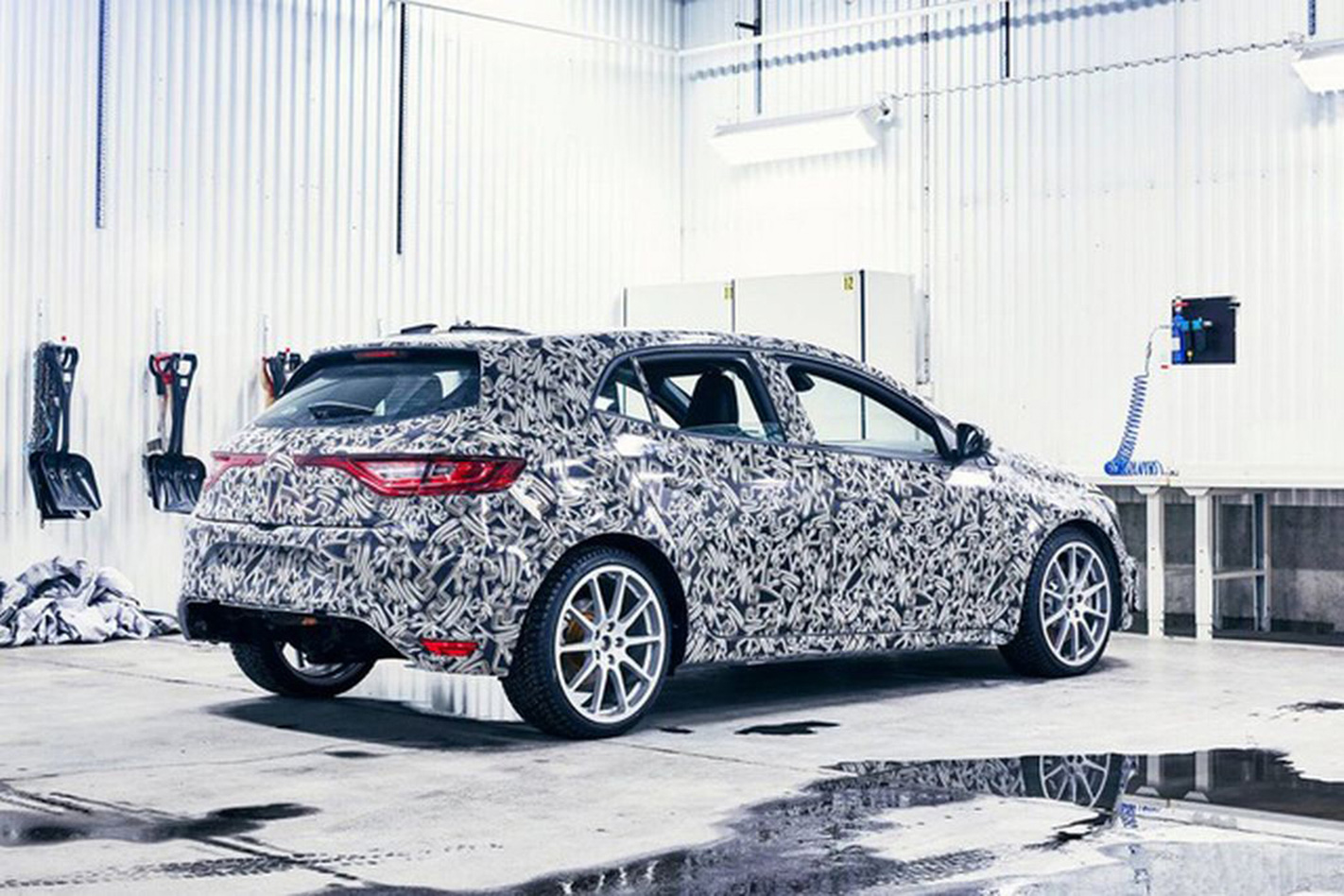
At this stage we know the next Megane RS will feature four-wheel steering and the option of a dual-clutch automatic transmission or six-speed manual with rev-matching functionality. Renault has previously said that it will have as much as 220kW, though whether that power comes from a more highly tuned version of the last car’s 2.0-litre turbocharged four-cylinder or from a new engine is still to be revealed.
At any rate, Renault will be gunning for segment supremacy and keen to snatch back the Nurburgring record it once held from the Civic Type R above. The last Megane RS set the benchmark for steering and handling dynamics, so there are high hopes for the next one. Pricing is yet to be announced, but it’ll want to be competitively priced with others on this list if buyers are to take it seriously.
Volkswagen Golf GTI & R
An updated ‘7.5’ range of VW Golfs has already gone on sale in Australia, but faster GTI- and R-badged variants are scheduled to show up next month. VW has squeezed out slightly more power for both the GTI and the R. The GTI will produce 169kW and 350Nm, and the R cracks 213kW and 380Nm.
The front-wheel-drive Golf GTI at $41,490 with a manual gearbox is a closer match for the base model i30 N, while the all-wheel-drive Golf R at $55,240 with a seven-speed dual-clutch gearbox is what potential i30 N Performance Pack and Civic Type R buyers will be cross-shopping if they can’t hack the lack of an automatic in those two, and can stretch their budget a little further.
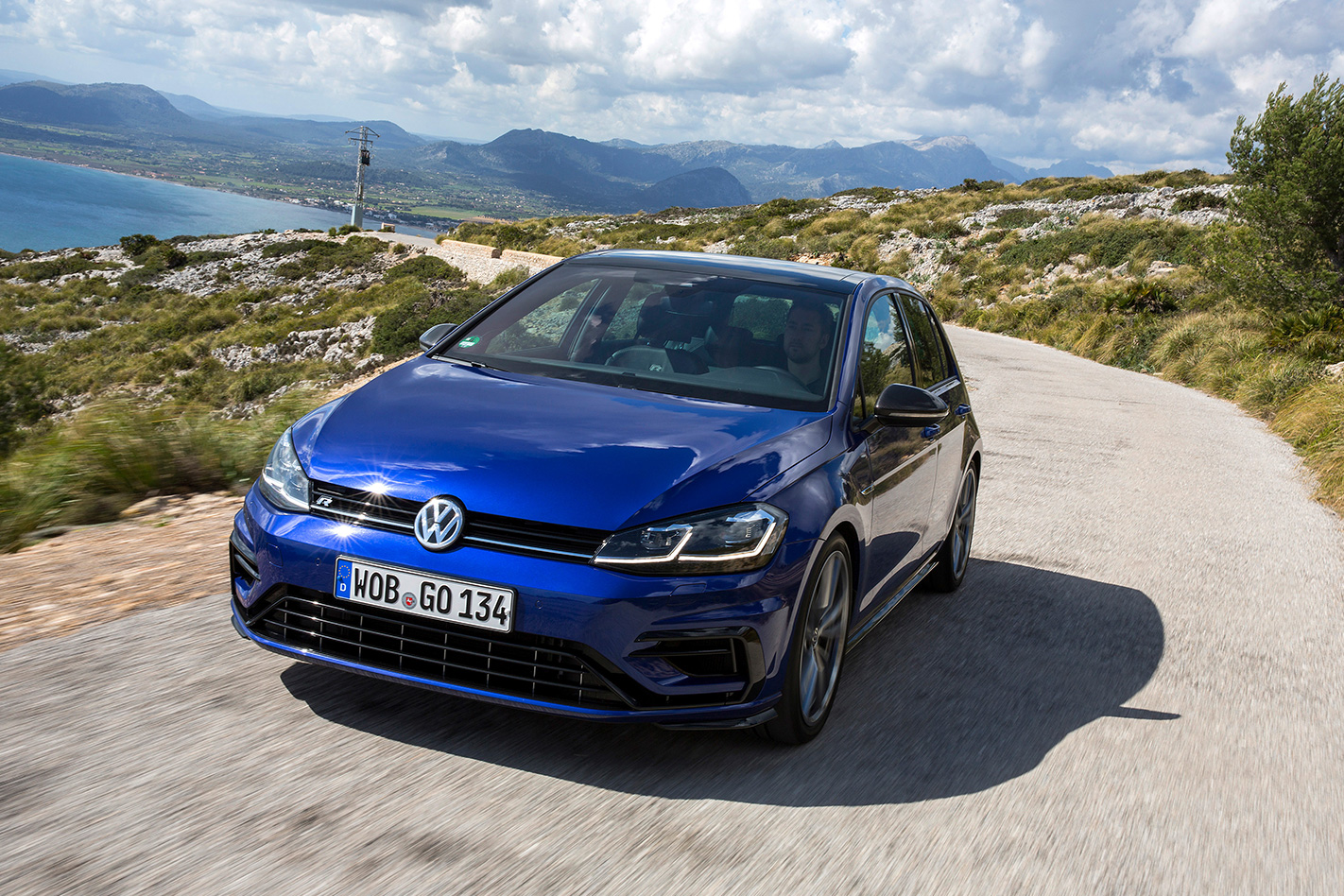
Though the Golf R is the most expensive car here, it should continue to set the standard for interior sophistication and overall refinement without sacrificing performance. A manual Golf R is cheaper, at $52,990, though its acceleration is slightly slower.
Expect one almighty Christmas present of a comparison test when all of these cars are on sale.
While SRT’s designers and engineers were busy developing the earth-scorching Demon, they also discovered that some of the necessary changes could be translated to the Hellcat.
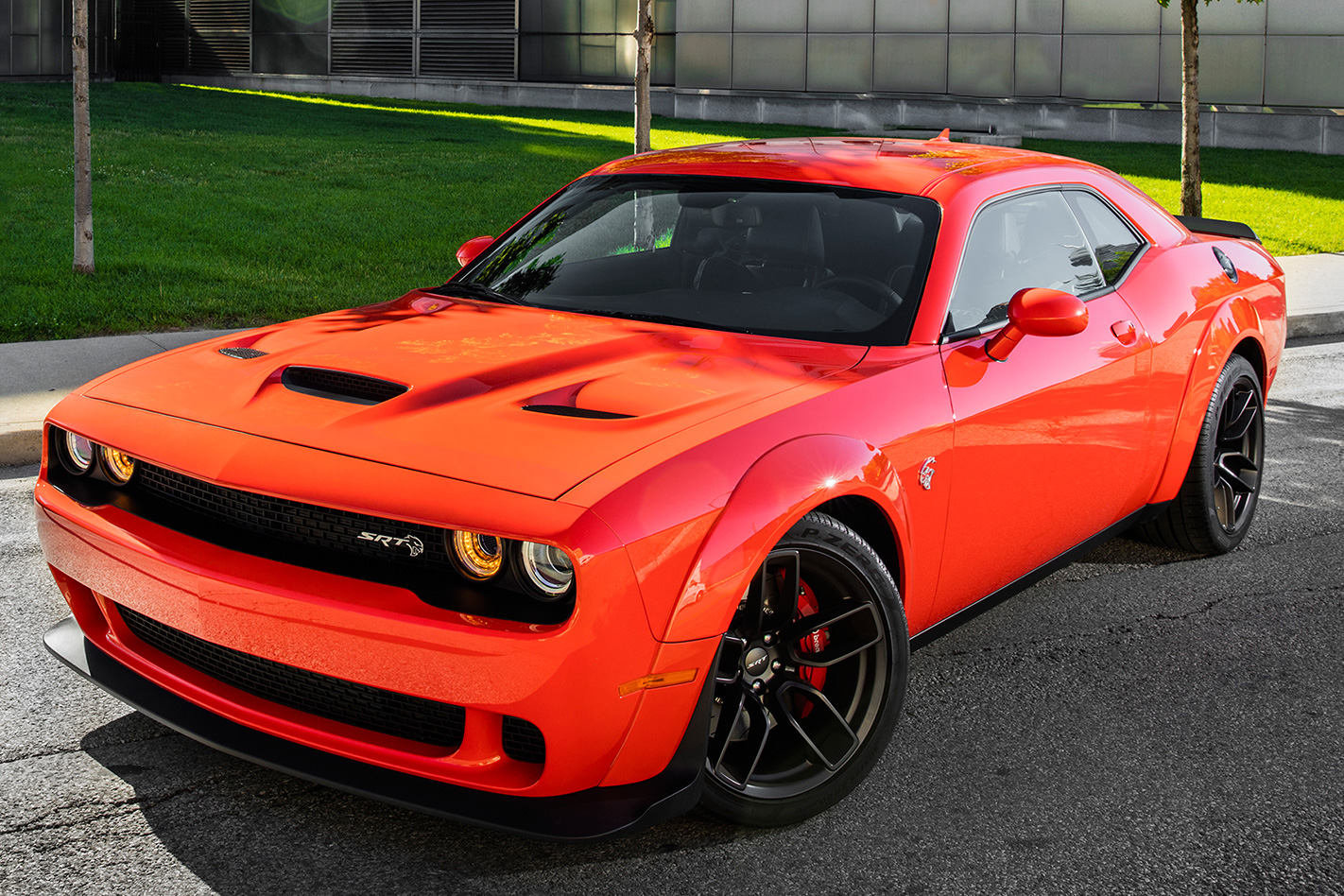
After transferring the Demon’s 9cm wider bodywork to the Hellcat, it’s now available in Widebody flavour, which may be the best way to enjoy a Hellcat.
The increased width of the Challenger SRT Hellcat Widebody gives it a distinctive presence. That width lends the Dodge the proper broad shouldered look of a 527kW muscle car. Subtle in some colours, but it’s downright menacing in black.
The new flares aren’t tacked on, in the traditional JDM style, but carefully shaped and properly manufactured. Even the American-spec side markers are shaped to flow into the new wings. The Demon’s wider splitter is another carry over to the Widebody.
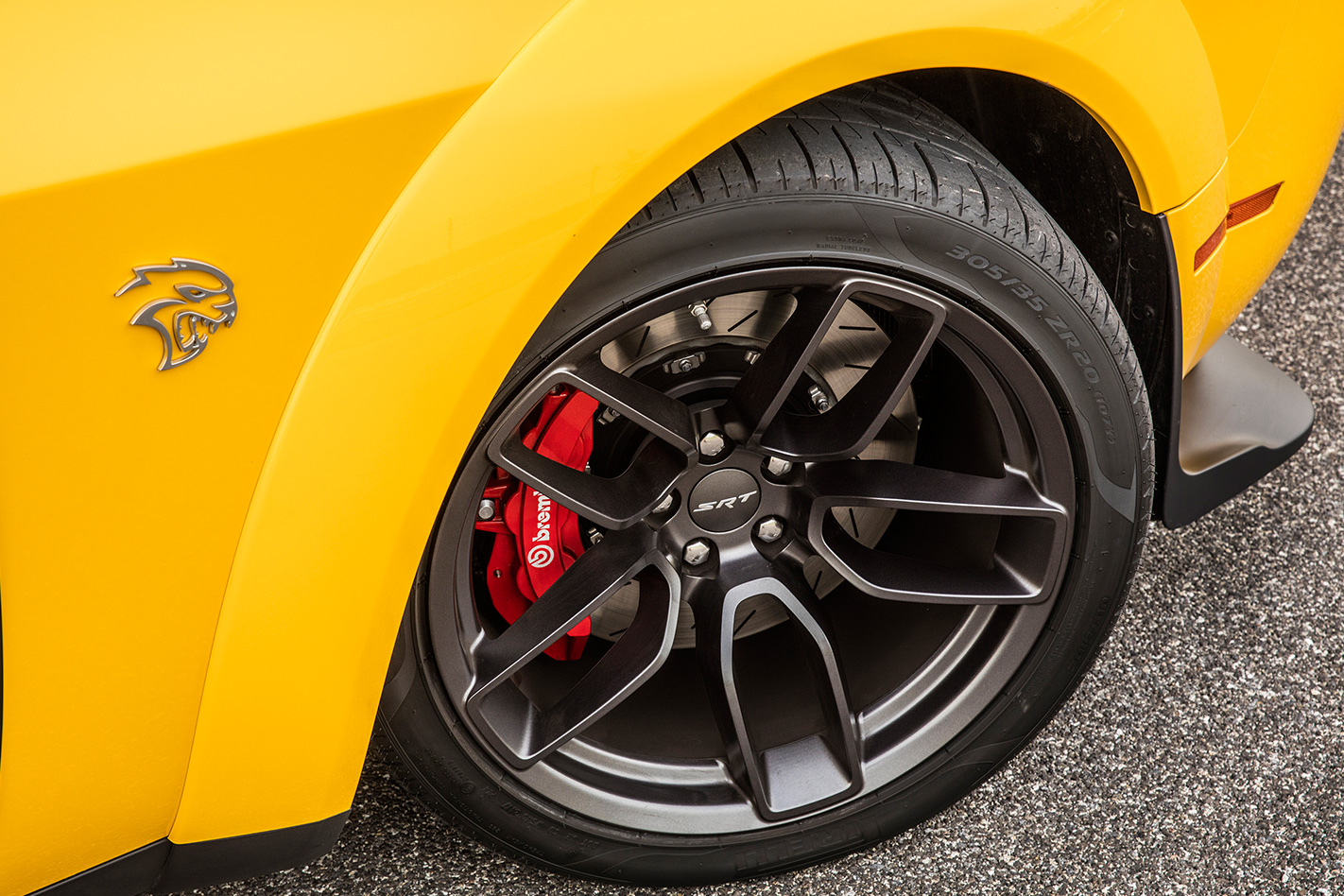
There’s an all-new 20-inch wheel design for 2018 that’s 11 inches wide, and all of that width is pushed outward. Mark Trostle, head of Performance Vehicle Exterior Design, is known to enjoy washing his own cars, and every shape is important, including the wheels. Thus, the design of the new wheel is not just attractive, but open and accessible for those who wash their own.
With eleven inches of wheel width to use, SRT went with the latest generation Pirelli P Zero tyre, sized 305/35ZR20 in all four places, a significant increase in width from the standard Hellcat’s 275mm rubber and considerably more advanced than the old Hellcat tyre.
Electric power steering gives the Widebody some additional flexibility, permitting distinct assist levels of assist in the different SRT drive modes. Track is perfectly suitable to circuit work, Sport has mid-level assist, while the base mode offers the lightest steering effort with the greatest level of assist.
Often times with modern EPS systems, track modes feel artificially heavy, but not with the Widebody. Track mode’s level of assist feels entirely natural around the famed Indianapolis Motor Speedway.
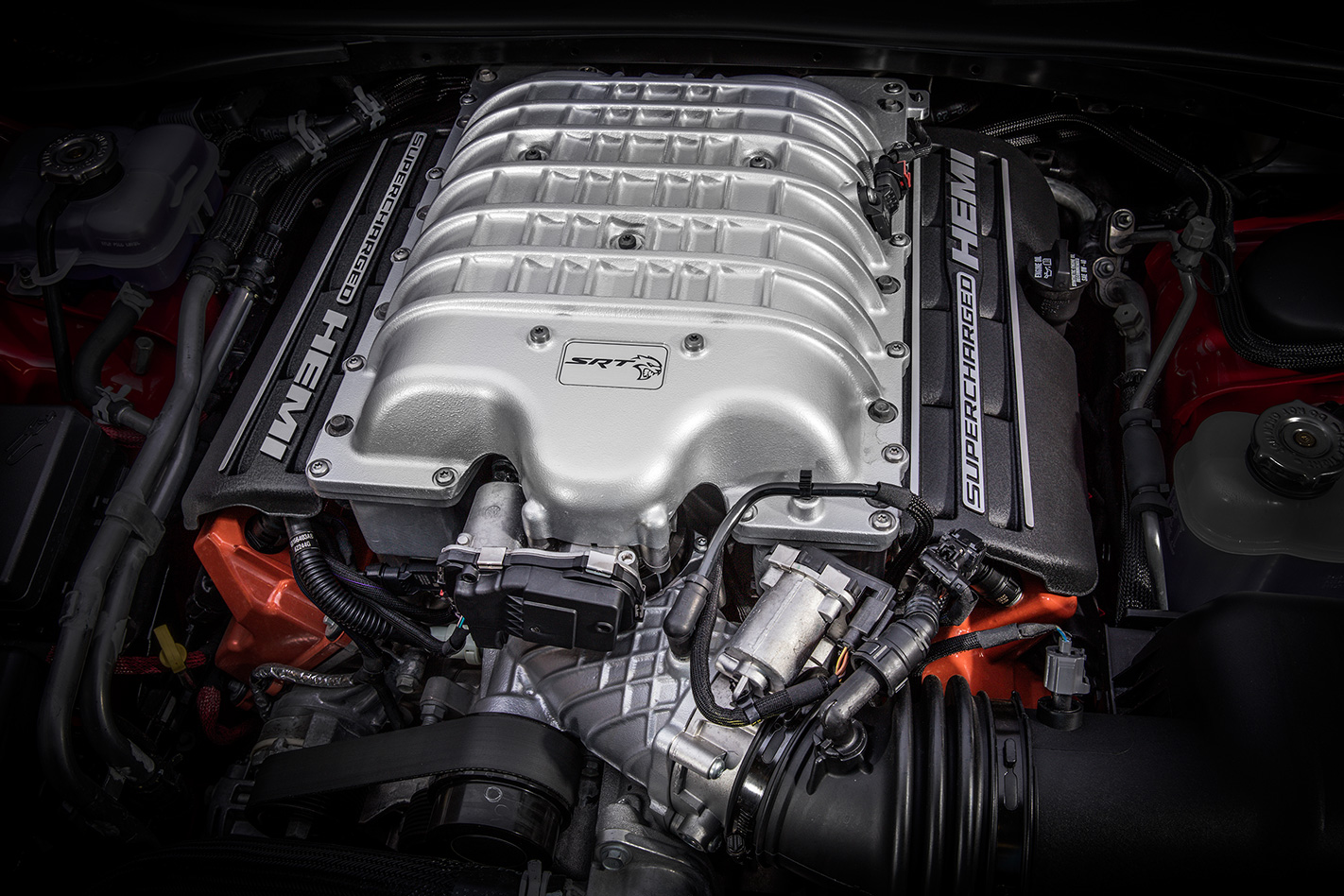
That new tyre and wider track also translates into a 0.3 second better quarter mile time, significantly better lateral grip (0.97G for the Widebody versus 0.93G for the standard Hellcat), and a slight improvement in zero to sixty times, which is down to 3.4 from the Hellcat’s 3.5. Not that we could notice, to be honest, because the thrust of that supercharged HEMI is so enjoyable.
What we did notice, however, was not just the increased levels of grip, but a new level of confidence through high speed corners. Around portions of Indy’s Grand Prix circuit, it only took a handful of laps before we started confidently sliding the Widebody through mid- to high-speed corners.
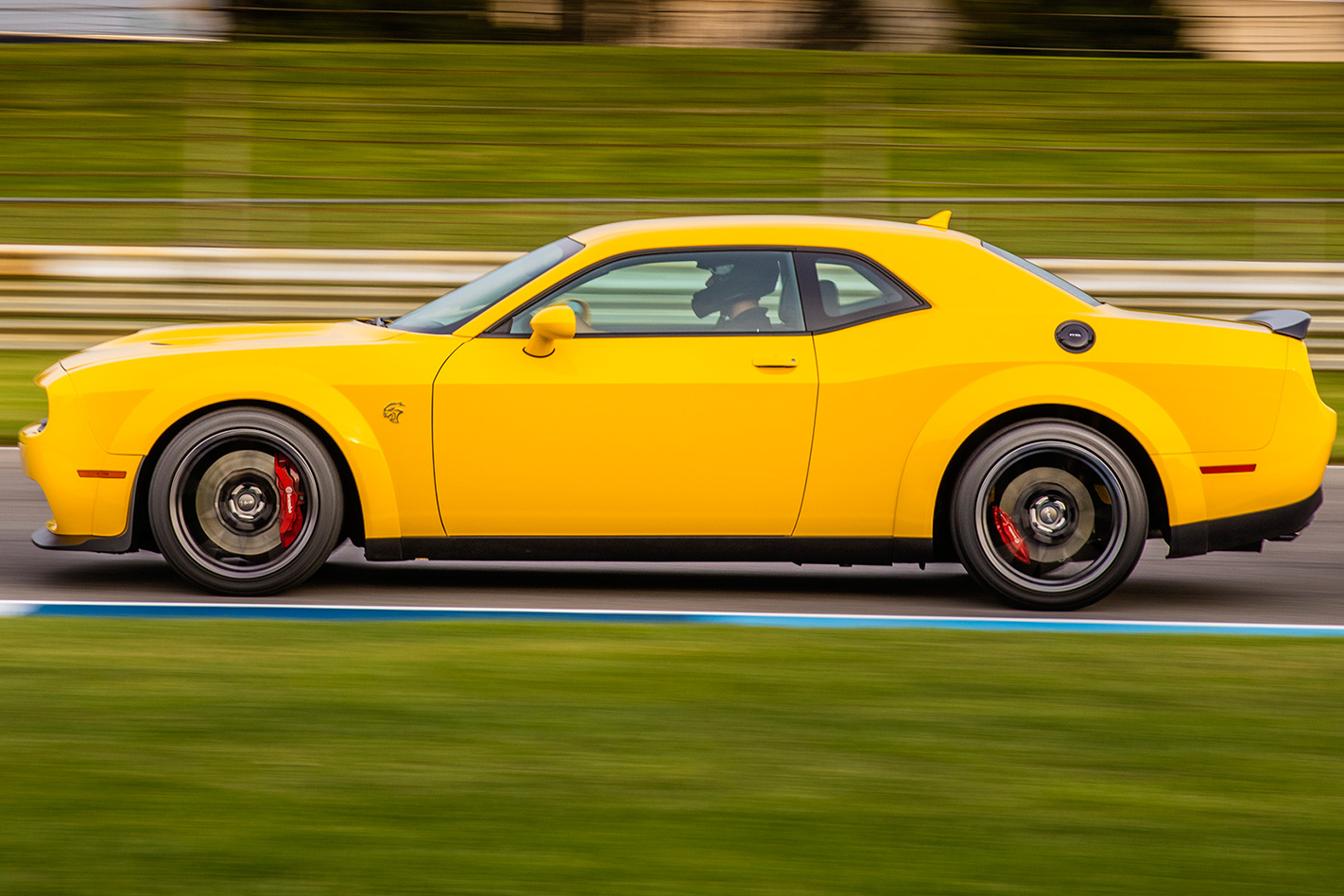
As it turned out, the wider track and additional grip from the new Pirelli P Zero suited the existing Hellcat’s suspension, traction, and stability system calibrations. No changes were made to spring or sway bar rates, nor to any of the settings for the Hellcat’s adaptive dampers.
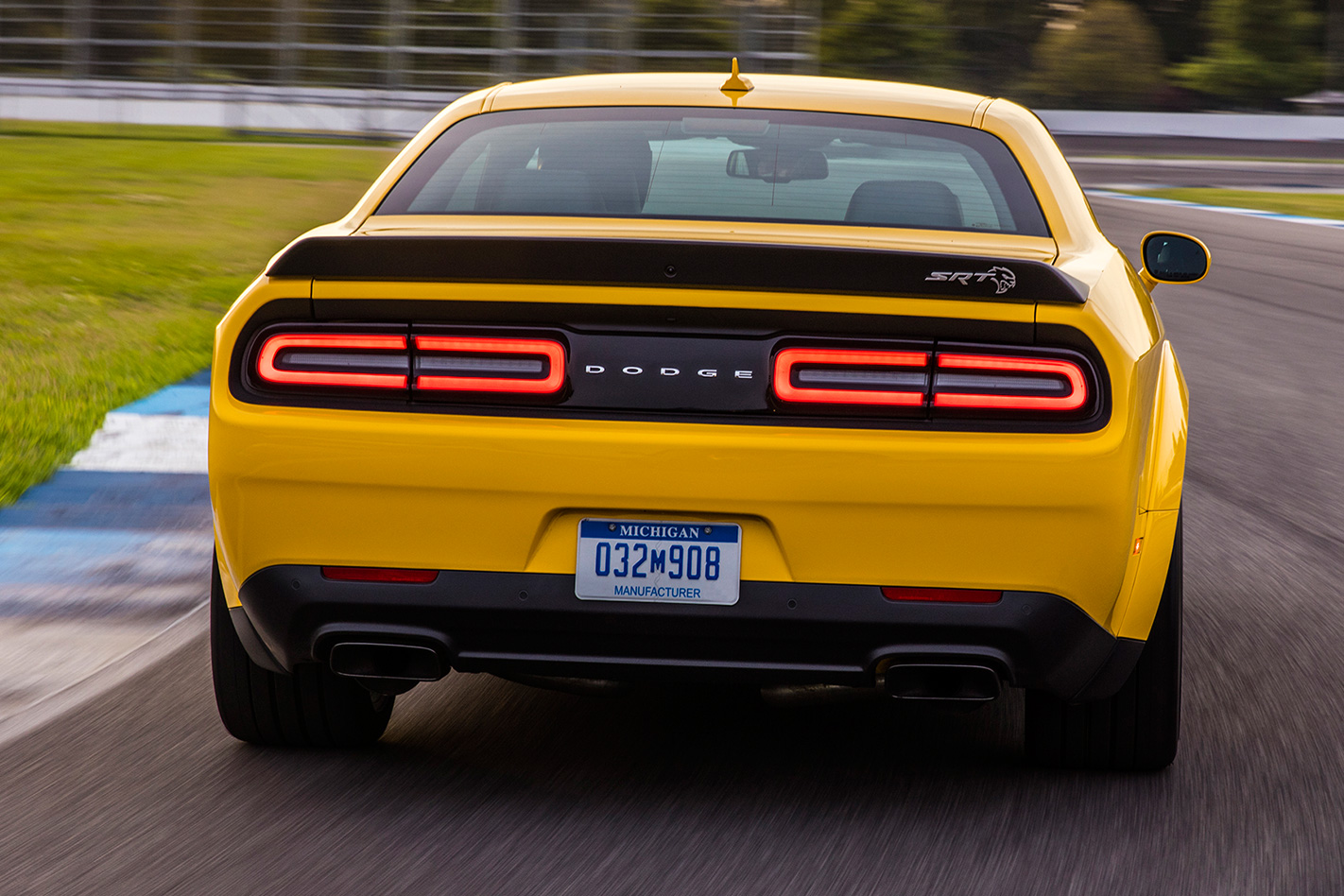
Currently, there are no plans to officially import the Widebody to Australia, but that won’t stop some adventurous blokes from converting some to right hand drive spec. If a refined and massively quick muscle car is your sort of ride,
4 out of 5 stars
Likes: Muscular looks with improved grip and handling Dislikes: Not available in Australia; mass; aging platform
Specs Engine: 6166cc V8, OHV, 16v, supercharger Power: 527kW @ 6000rpm Torque: 881Nm @ 4800rpm Weight: 2037kg 0-100km/h: 3.5sec (est.) Price: US$71,495
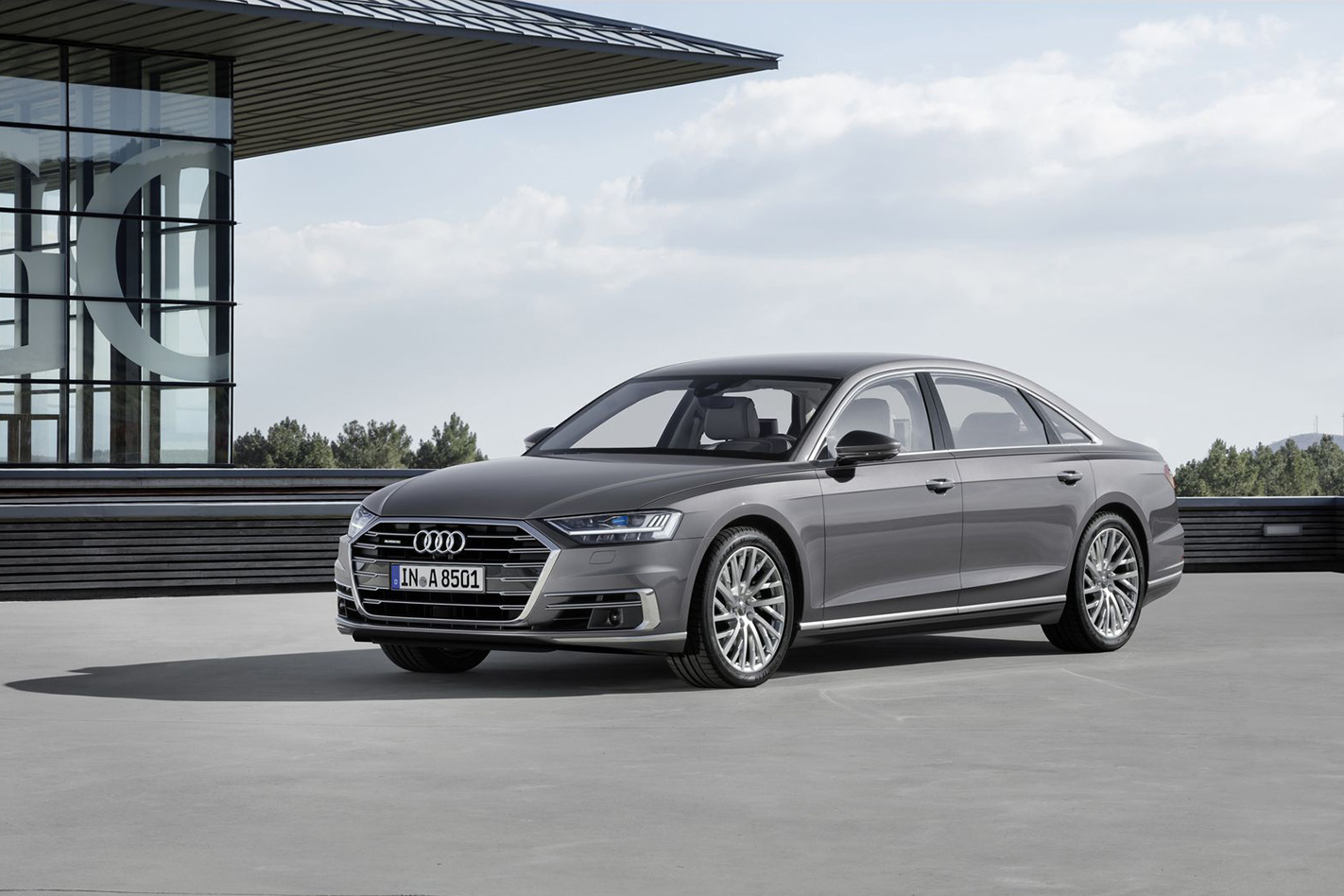
LAST week’s launch of Audi’s fourth-generation A8 sedan revealed its Level 3 autonomous capability which, at lower speeds, allows drivers to focus their attention on non-driving tasks when in traffic such as “watching videos”.
This is a significant self-driving technology milestone, with Level 3 the mid-way point in a five-point scale, devised by the Society of Automotive Engineers, based on the amount of driver attentiveness required to operate an autonomous system from zero to full autonomy.
- Level 0: Automated system has no vehicle control, but may issue warnings.
- Level 1: Automated system may include features such as adaptive cruise control and lane keeping assist, but the driver must be ready to take control at any time.
- Level 2: The driver is obliged to detect objects and events and respond if the automated system fails to respond properly. The automated system executes accelerating, braking, and steering. The automated system can deactivate immediately upon takeover by the driver.
- Level 3: Within known, limited environments the driver can safely turn their attention away from driving tasks.
- Level 4: The automated system can control the vehicle in all but a few environments such as severe weather. The driver must enable the automated system only when it is safe to do so. When enabled, driver attention is not required.
- Level 5: Other than setting the destination and starting the system, no human intervention is required. The automatic system can drive to any location where it is legal to drive.
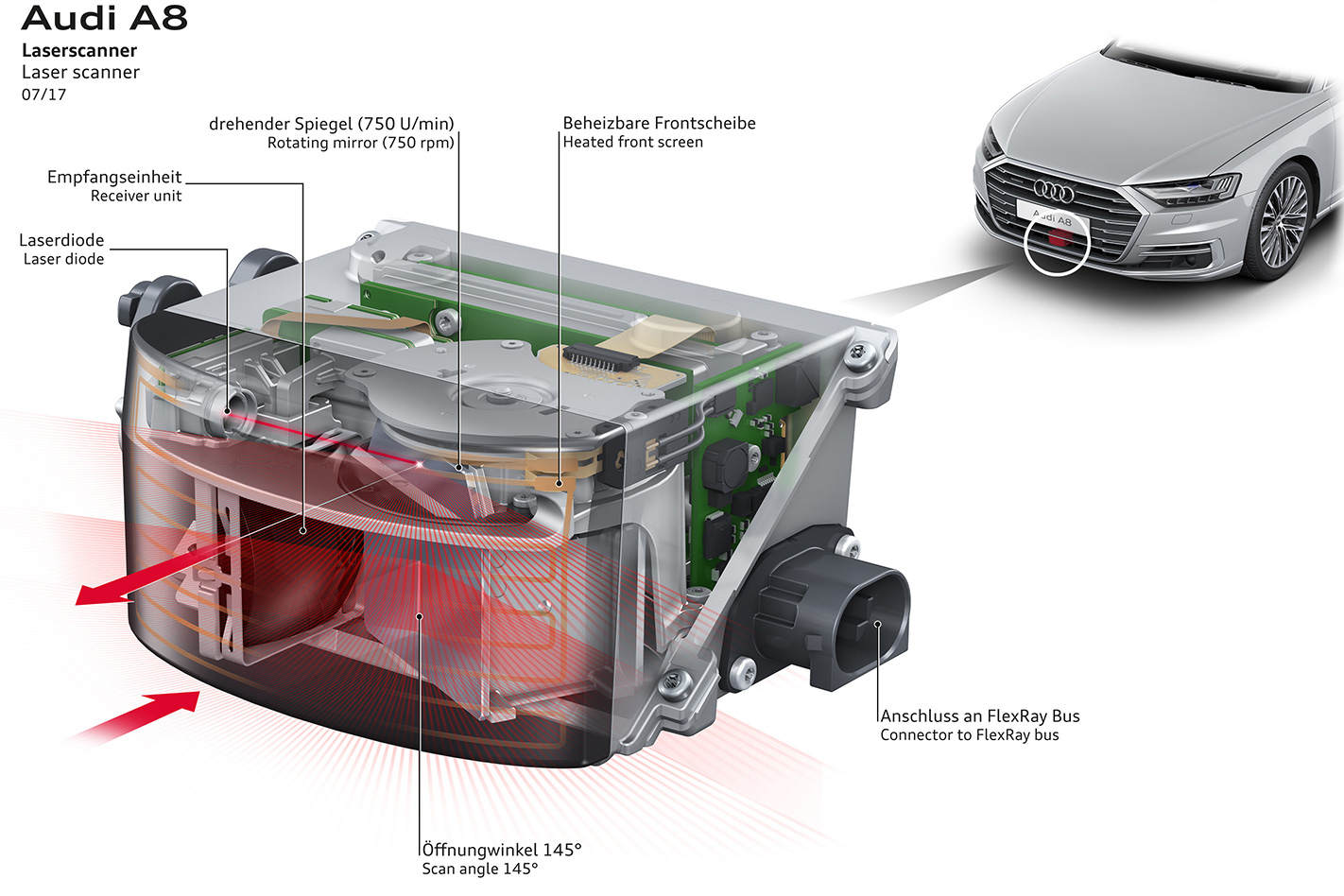
The German carmaker says autonomous driving technology continues to develop at a rapid rate, but laws are failing to keep up preventing full-scale testing as well as implementation.
“We designed the complete A8 for the automated functionality,” Audi AG head of vehicle properties, function and innovation, Mirko Reuter explained. “We introduced all of the technologies that are required for this but three challenges need to be met.
“First of all you need a legal framework and that’s only starting to happen in certain countries right now. Secondly, you need a special homologation process for automated driving and that’s also just starting. Then, in every market you bring this technology to, you need to make a very deep validation and testing.
“When all of these three factors are met, we will bring the Piloted Driving function.”
As well as failing to address a plethora of legal and liability issues, the slow pace of bureaucracy also means delays in developing road infrastructure to be more compatible with autonomous driving, such as lines and signs on all roads can be read by vehicle systems in all weather and light conditions
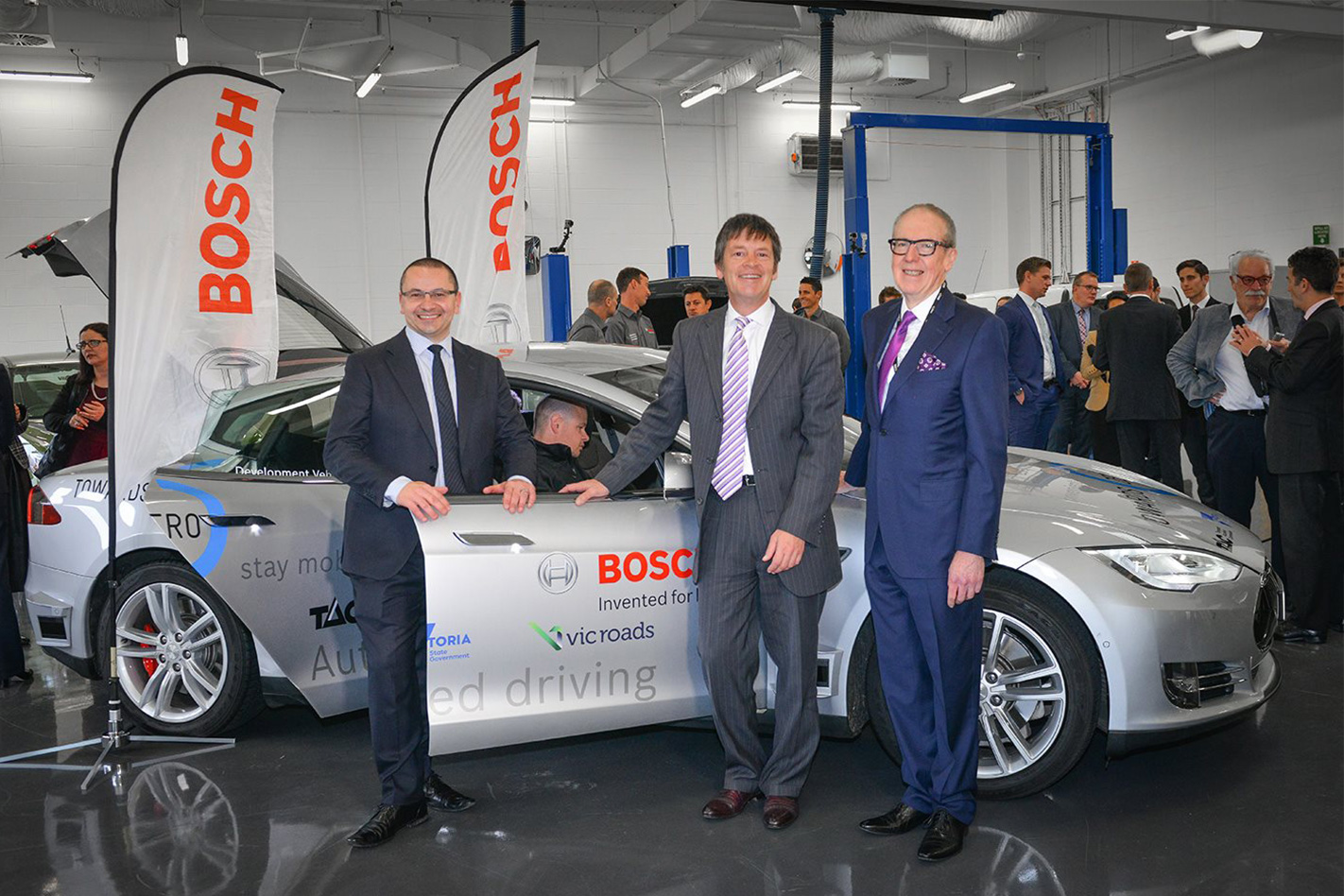
While some trials have been conducted across states like South Australia and Victoria, one of our country’s biggest obstacles is the reliance on foreign development and manufacturing. These cars have been built and trialled in places – like Japan, Europe and the United States – which remarkably different road and traffic conditions.
But as this technology advances overseas, it’s not too implausible to believe that our roads could soon be trialling similar programs.
Even then there’s one other factor that can totally undermine advances in technology and law making and that’s human nature – how many drivers will actually be willing to cede control of their vehicles?
A lot of people won’t know what a Lister Le Mans is, but might soon find themselves curious after reading that it has a 7.0-litre V12.
And there’s good news, for the more financially endowed among us.
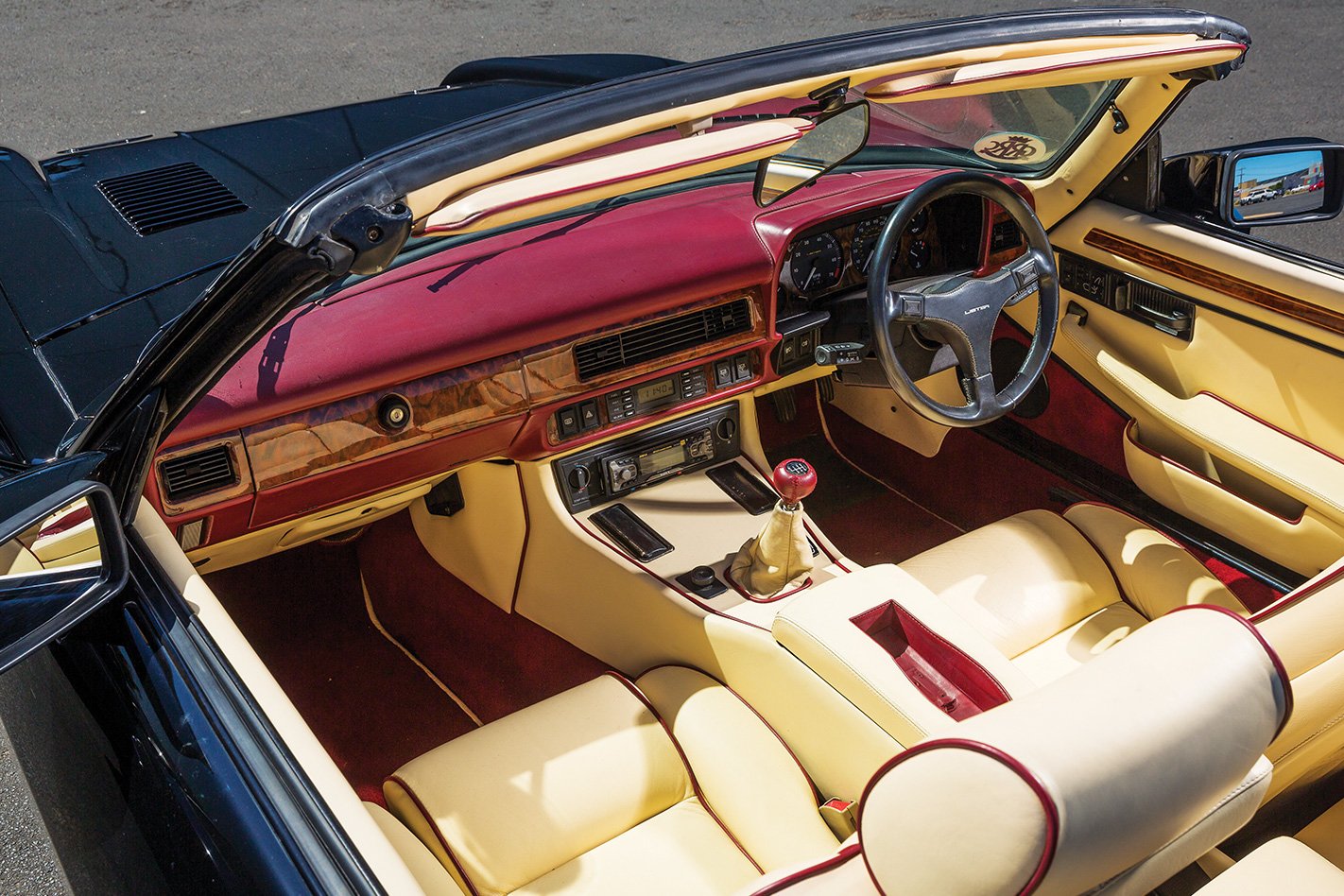
That’s because there’s probably only one, and this is it.
With its tuned Jag V12 producing 522kW, this specific Le Mans has supposedly travelled at 326km/h while acting as cover car for UK Performance Car magazine in 1992.
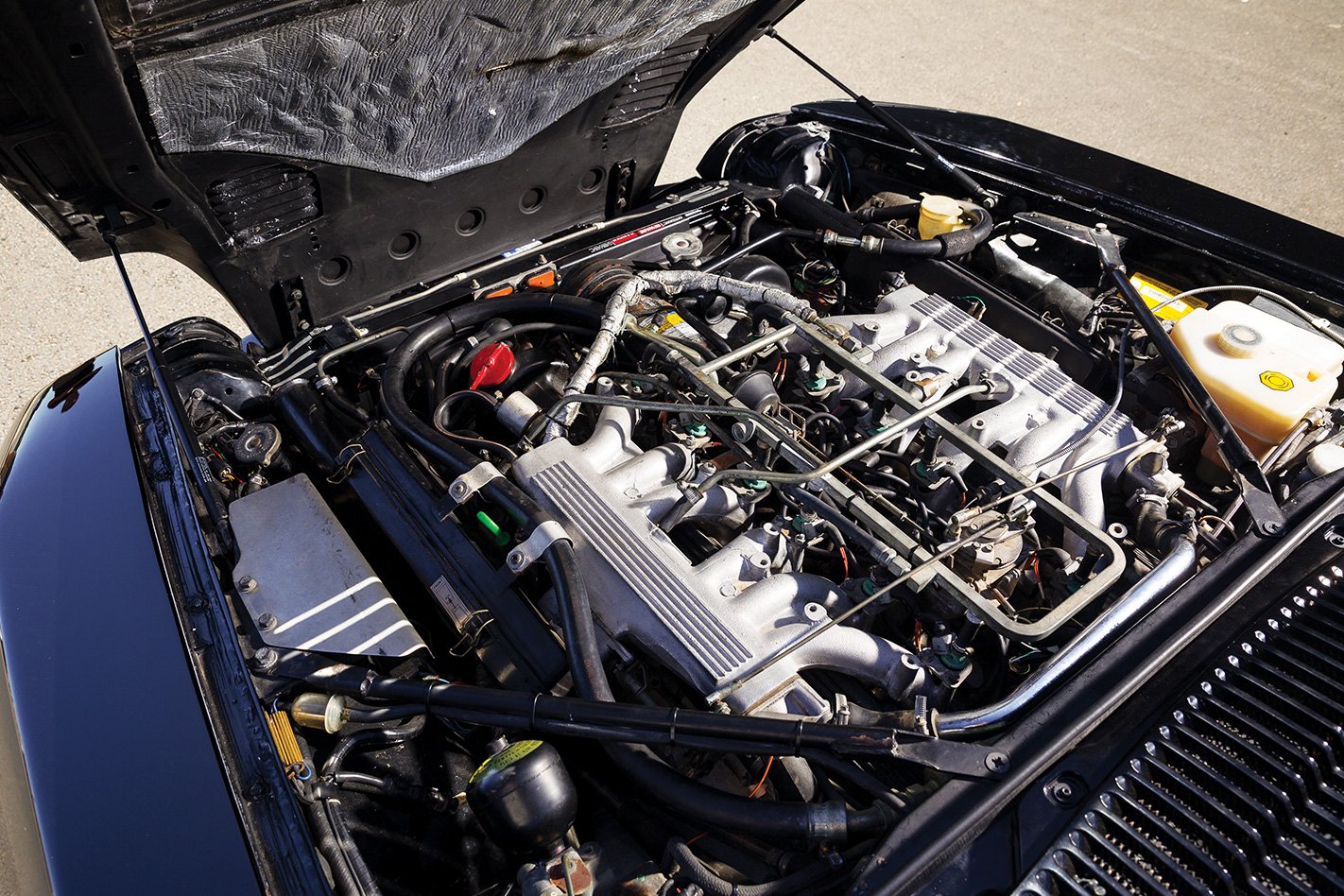
Now, it’s for sale in Sydney with an asking price of double that… $225,000.
The reason for this could the apparently incorrect assumption that this car was designed to be the ‘dream-spec’ car for the company’s boss at the time, Laurence Pearce.
The ad reads: “Just 32 cars were built costing an astonishing £260,000.00 each and all sold but for one. The sinister stealth bomber on offer here was to remain behind as Laurence Pearce’s (Lister’s son) personal fantasy.”
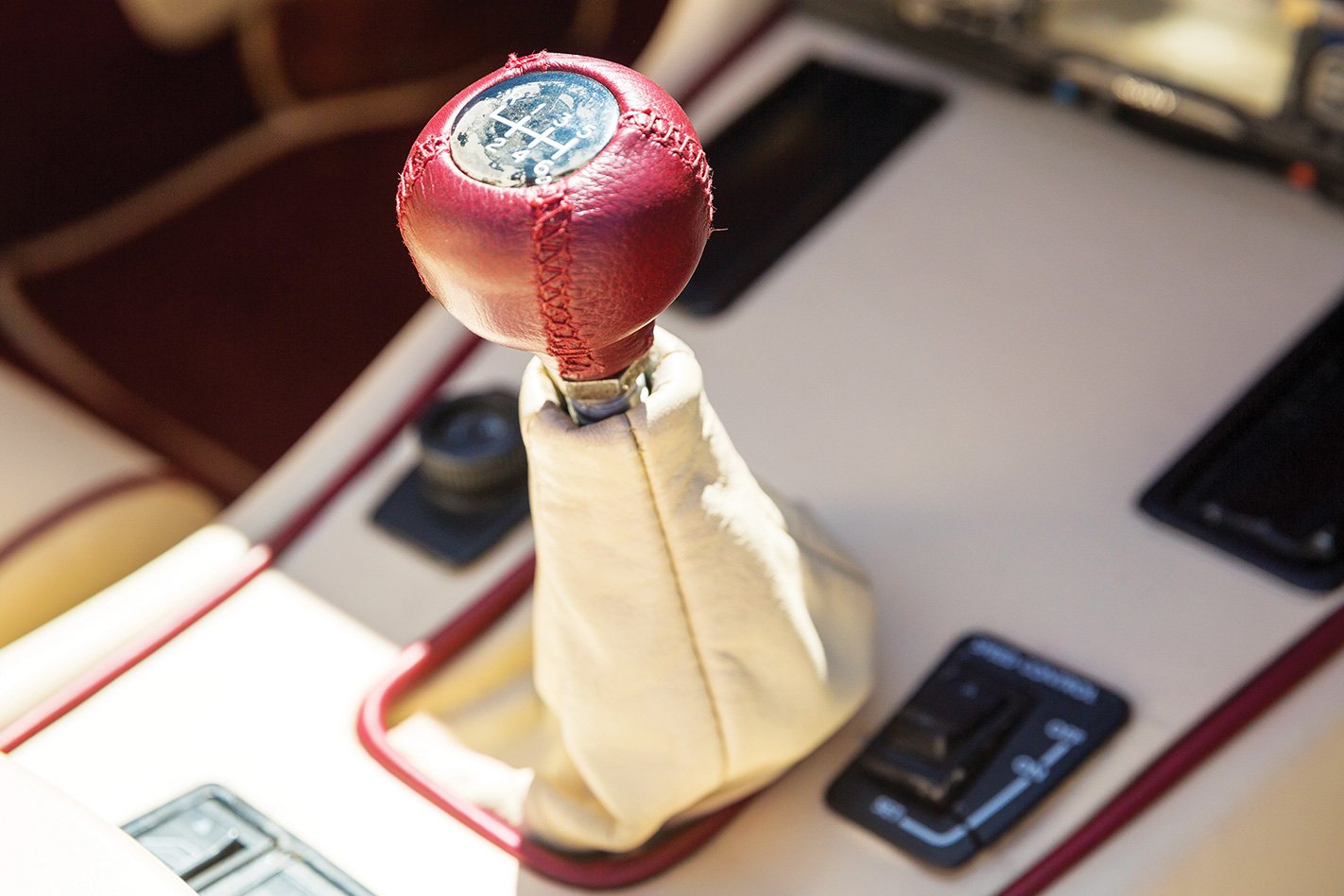
“He thinks somebody ordered it as a new car but it was never delivered.”
Evidence of Lister’s poor record-keeping is now some valuable ammo to take along with you if you decide to buy this car…
