
Though not a GT2 by name, the 964 Turbo S born of the early-‘90s was a GT2 by nature.
With a 280kW/490Nm turbocharged 3.3-litre flat six pulling a 1290kg car, the Turbo S could launch to 100km/h in 4.7 seconds, and then onto a blistering (at the time, but it’s even quick now) 290km/h.
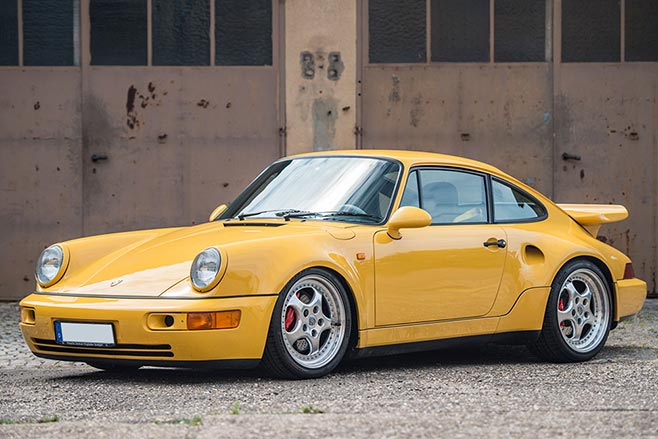
It’s in this list because it was as ground-breaking (some might argue more so) in terms of potential as the GT2s it preceded.
Porsche 993 911 GT2
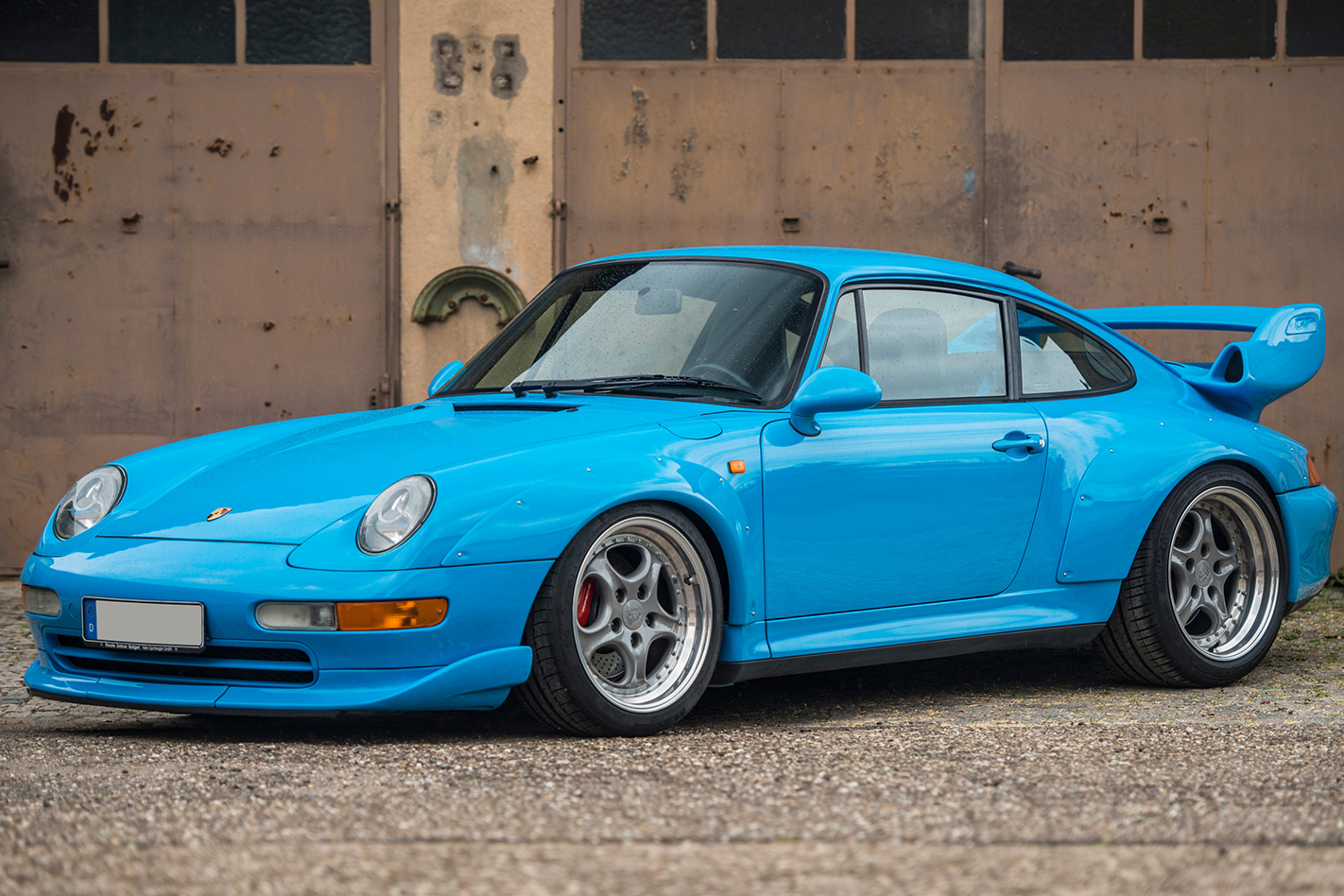
One of these rarities sold for £1,848,000 (or $3,133,000 AUD) at an RM Sotheby’s auction last year, but that one only had 12,730km on the clock after two decades.
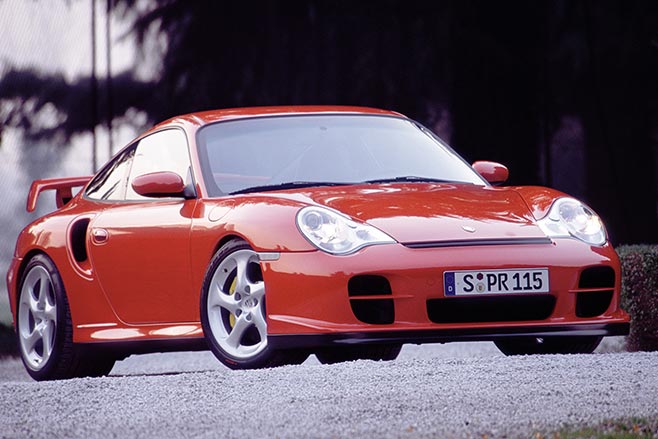
Porsche 996 911 GT2
Developed as a road car, the water-cooled 3.6-litre flat six peaked at 355kW and dipped below 4.0sec to 100km/h.
Porsche 997 911 GT2
Adding variable geometry turbos upped the kilowatt count to 390, it topped 200mp/h and lapped the Nurburgring in 7min 32sec.
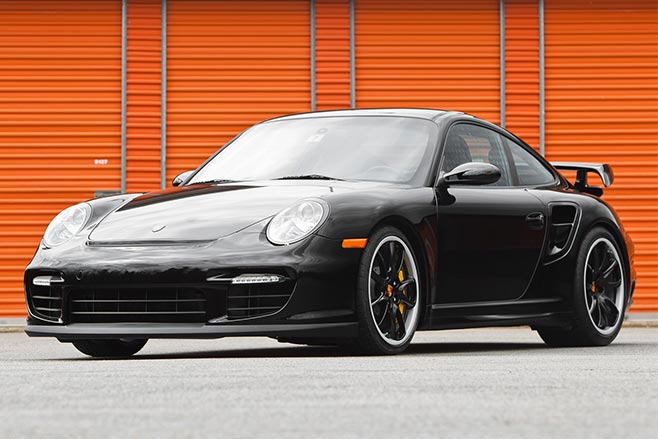
That alone should tell you what you need to know about the GT2.
Porsche 997.2 911 GT2 RS
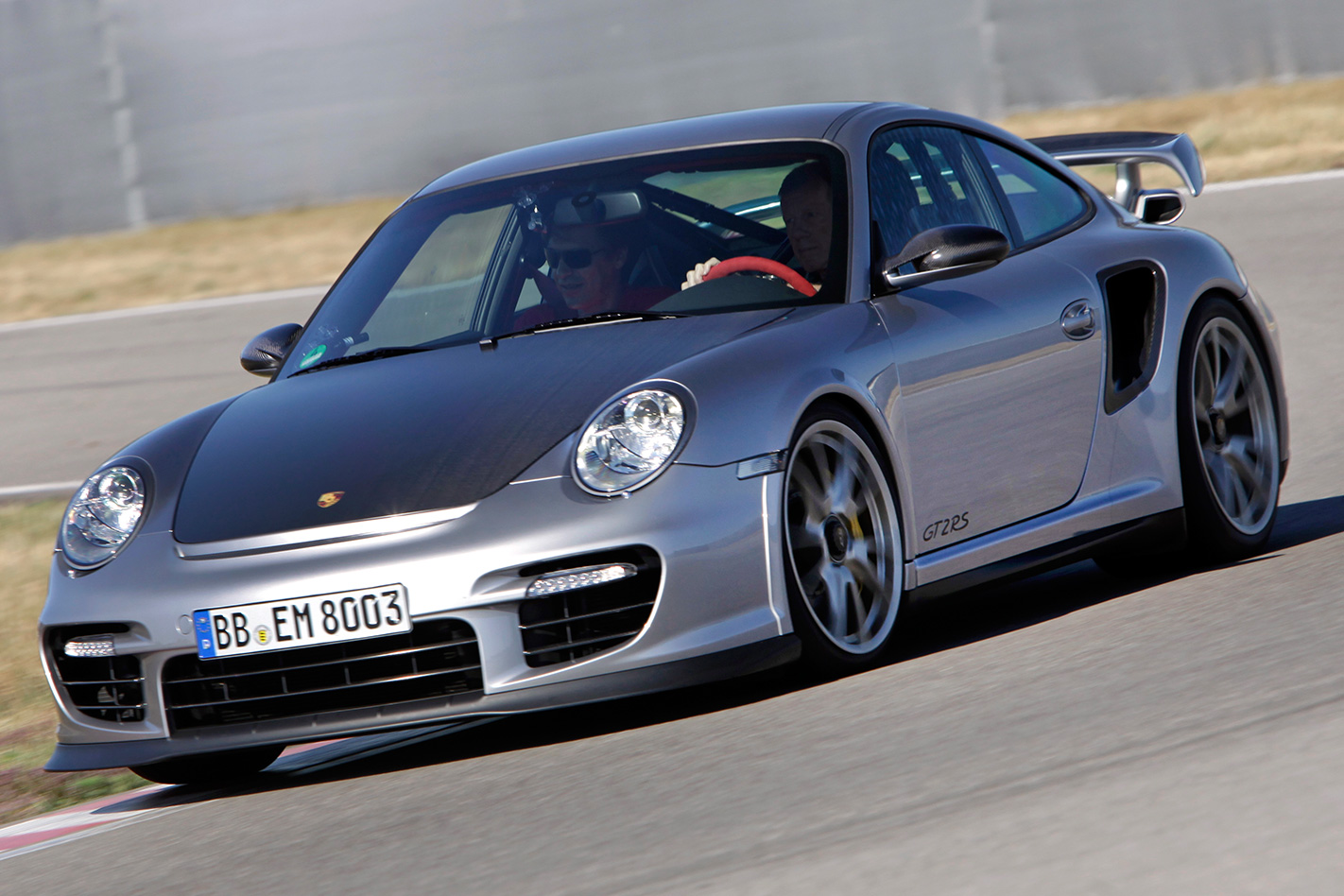
With 456kW/700Nm it was the most powerful 911 ever built and the combination of turbo lag and two-wheel drive meant it could be hard work even for experienced hands.
The extra power and 70kg diet meant it could hit 100km/h in just 3.5sec on its way to a 330km/h top speed.
Best Interior of 2016: Porsche Cayman
During development its code name was 727, a reference to the Nissan GT-R’s then-benchmark 7min27sec Nurburgring lap time, a mark the GT2 RS shaved nine seconds off.
Just 500 were built and price tags now approach A$1million.
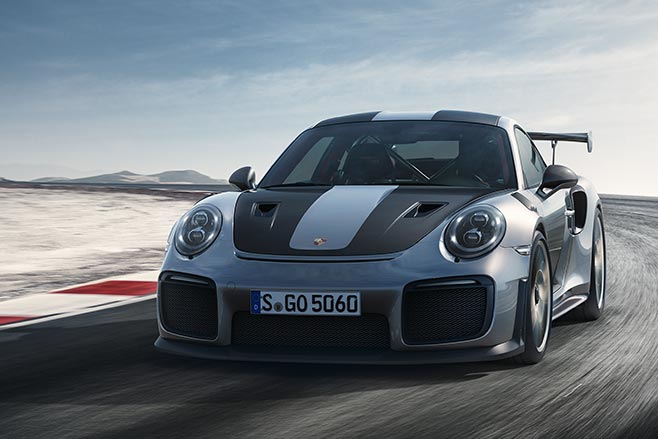
Porsche 991.2 911 GT2 RS
With 515kW/750Nm (a total 59kW/50Nm over its predecessor), the current RS is claimed to be able to pull its 1470kg mass to 100 km/h in 2.8 seconds.
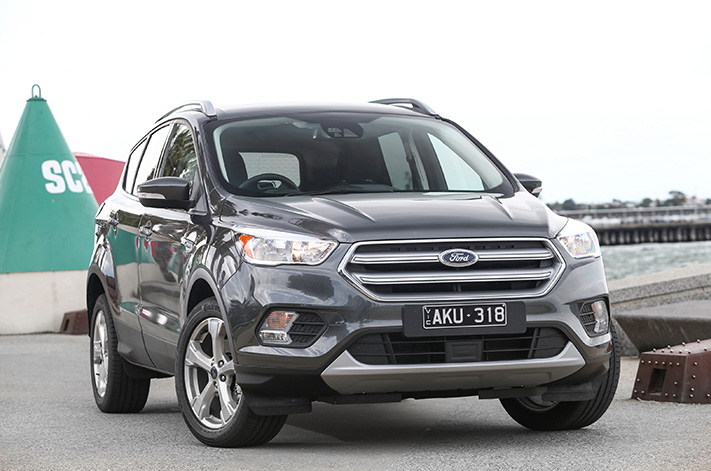
Ford’s mid-size SUV offering has dynamic prowess and a lusty engine on its side
Tell me about this car
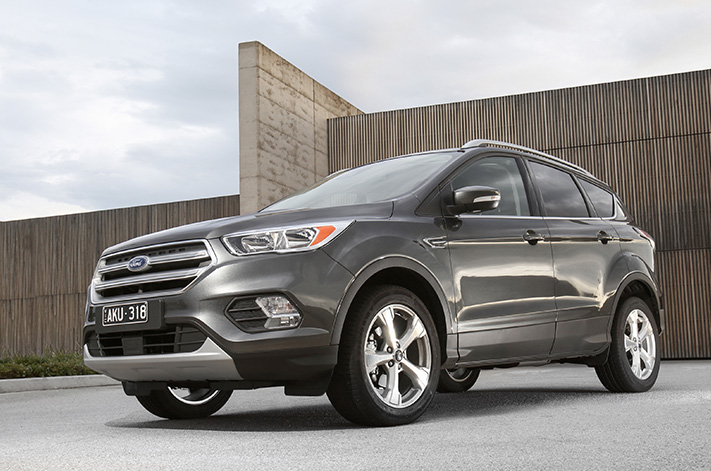
The Ford Escape is a mid-size SUV formerly known as the Kuga, and it’s vying for attention in one of Australia’s most competitive segments. We took the front-drive Trend variant for a weekend jaunt to Phillip Island with five adults on board to see if it was up to the people-hauling task.
Strengths
- Engine: The 1.5-litre turbo four-cylinder engine in the Escape Trend produces 134kW and 240Nm, and gets the Escape Trend up to speed with ease with smooth power delivery.
- Steering: Ford has set the Escape apart by giving it excellent dynamic ability. Its steering is among the best of any mid-size SUV.
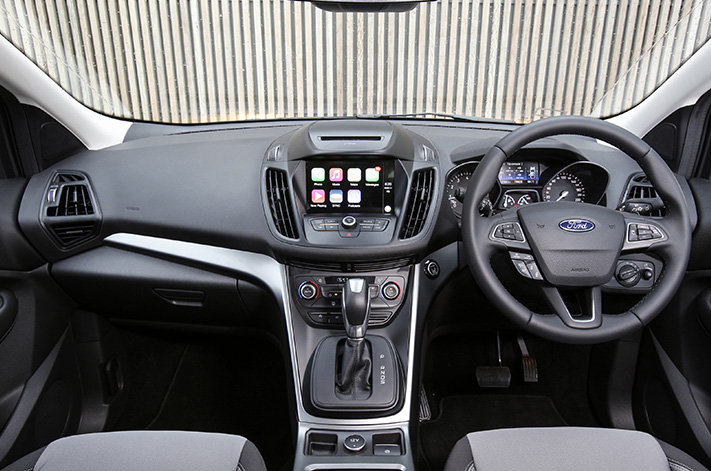
- Infotainment: Ford’s Sync3 system is easy to use, and one of the better infotainment systems available. It has intuitive menus, large icons, and a simple layout that makes the Escape’s in-cabin functions breezy to use on the fly. Only its voice-activated operation leaves something to be desired.
- Value: A $32,990 sticker price for the Trend FWD is attractive considering its generous equipment level, though autonomous emergency braking is optional ($1300).
- Economy: In a recent Wheels megatest, the Escape Trend surprised with impressively low fuel consumption relative to its rivals. Ford claims 7.2L/100km.
Weaknesses
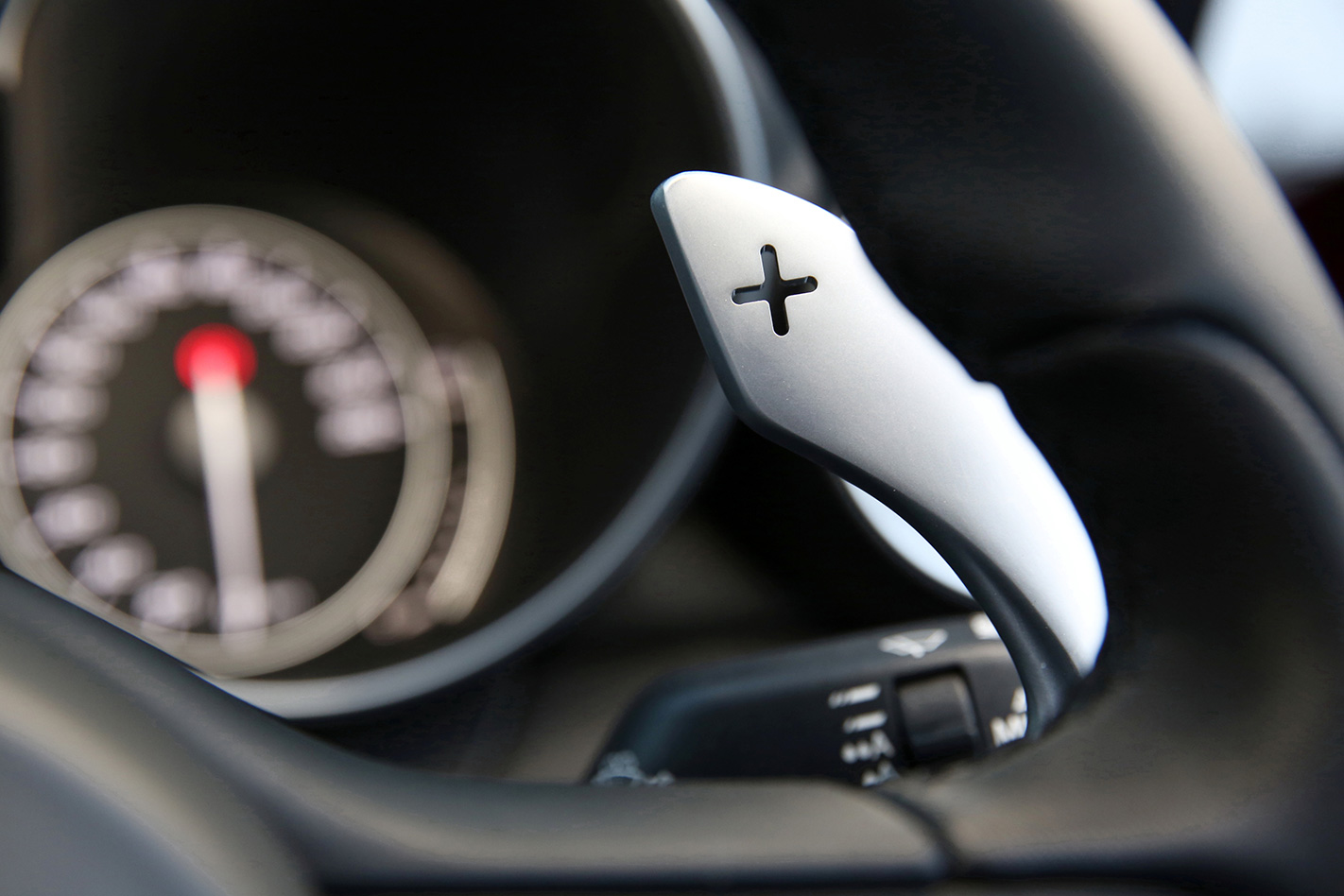
- Ergonomics: The Escape is a bit of a mixed bag in terms of its cabin layout. The dashboard is dorky and not the most comfortable to interact with. The passenger seat is too high, and the gear lever’s side-mounted toggles for manual mode are terrible. Thankfully there are paddles on the steering wheel as well.
- Design: Underneath the Escape’s updated exterior is an ageing SUV, and some of the improvements brought about with the most recent facelift don’t quite gel. Thick A-pillar bases make visibility a bit of a challenge when exiting side streets.
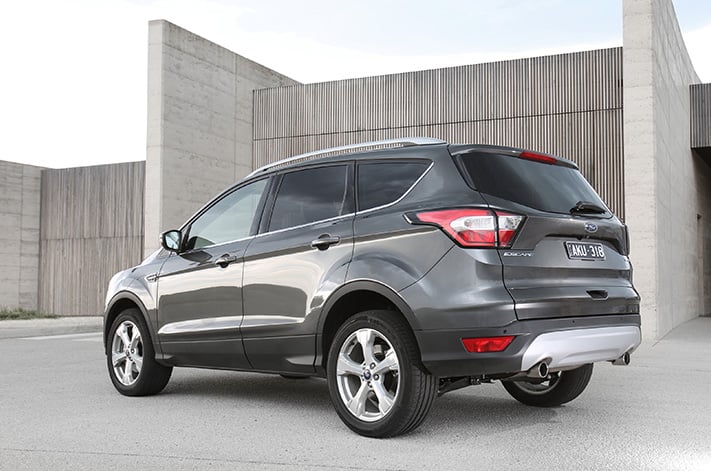
- Comfort: Initial ride comfort on the Trend’s 18-inch wheel and tyre package falls short of the super absorbent ride of the Subaru Forester. Its dampers do smooth things out, albeit in a firmly controlled manner. It’s not fatally flawed, but if cushiness is your thing, check out the Subaru.
- Boot: The Escape’s 406 litre boot isn’t tiny, but is smaller than all of its major competitors. For maximum cargo carrying it’s difficult to go past the Volkswagen Tiguan, which has 615 litres.
Any rivals I should consider?
Mazda CX-5, Volkswagen Tiguan, Hyundai Tucson, Toyota RAV4, Subaru Forester, Kia Sportage
Diesel grunt, more choice and sharp tech keeps Volkswagen’s Golf Alltrack in the running as a strong SUV alternative
WHAT IS IT?
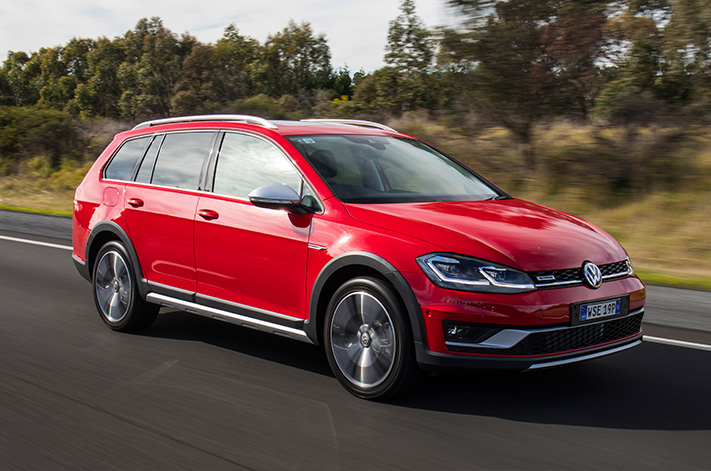
Volkswagen’s go-anywhere golf in entry-level 132TSI trim. Like all options in the new three-variant line-up, the most affordable Alltrack is based on the Golf wagon and shares a number of updates as part of the Golf 7.5 mid-life refresh.
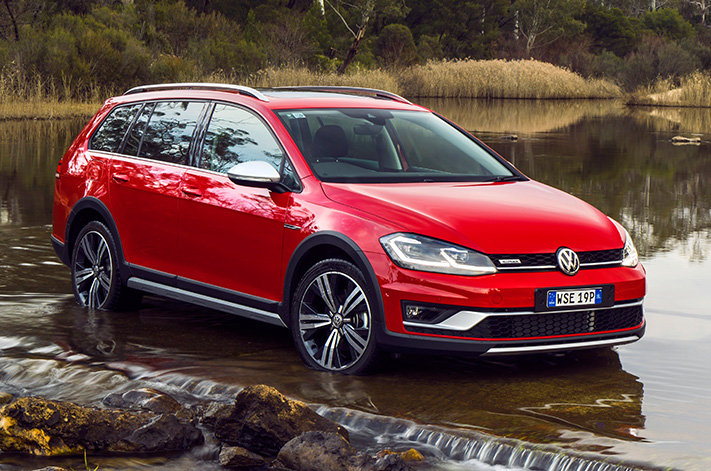
When VW first offered the curious hybrid of wagon and SUV in 2015, it was as a single variant, which may have discouraged some potential customers who saw a single offering as a lack of confidence in the Alltrack principle, but with two years of customer feedback under its belt, the model has expanded into three offerings. A statement of intent, says Volkswagen.
With a blend of Golf quality and driving dynamics, combined with wagon and crossover practicality, the updated Alltrack offers an attractive alternative to conventional SUVs without sacrificing all-terrain ability.
THE WHEELS VERDICT
A surprising ability both on and off the road is unchanged with the Golf 7.5 range-wide update, but the addition of a torque-champion diesel and a second petrol option makes the crossover curio even more compelling.
Add to that a bang-up-to-date information and entertainment system and the Golf Alltrack has never made so much sense.
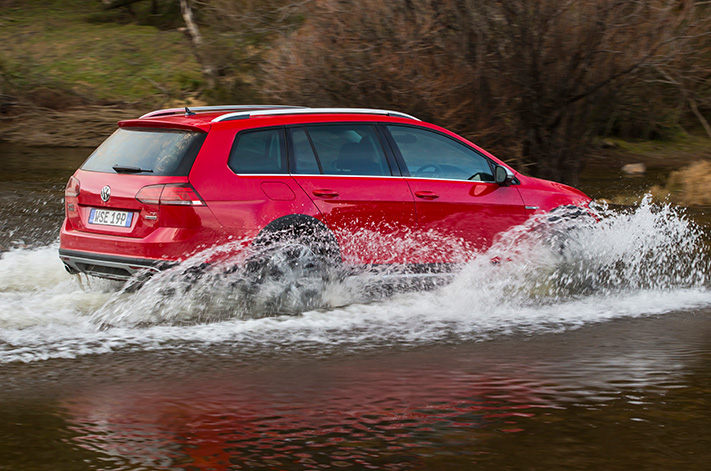
WITH so many Australian’s choosing SUVs as their preferred all-rounder vehicle, it is easy to see the potential in a vehicle like the Volkswagen Golf Alltrack, which has many of the Golf’s likeable features but with the addition of added all-terrain promise.
Along with the benefits of increased load and passenger capacity, many SUV owners enjoy the potential to hit the trail and have their own little adventure – even if it remains only potential and rarely happens. Why would you not recommend a car like the Alltrack then?
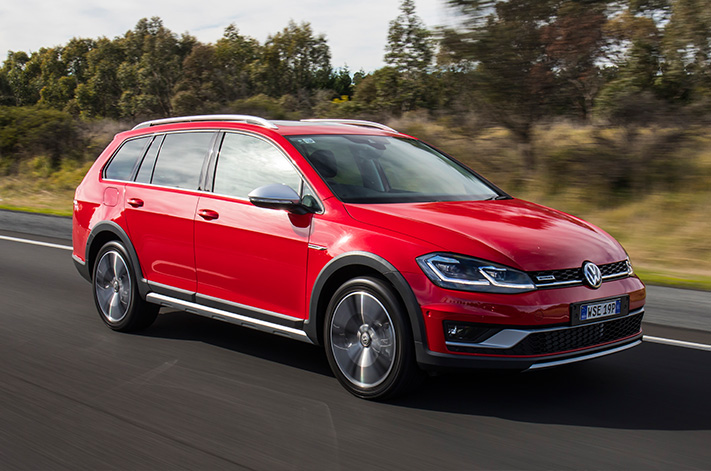
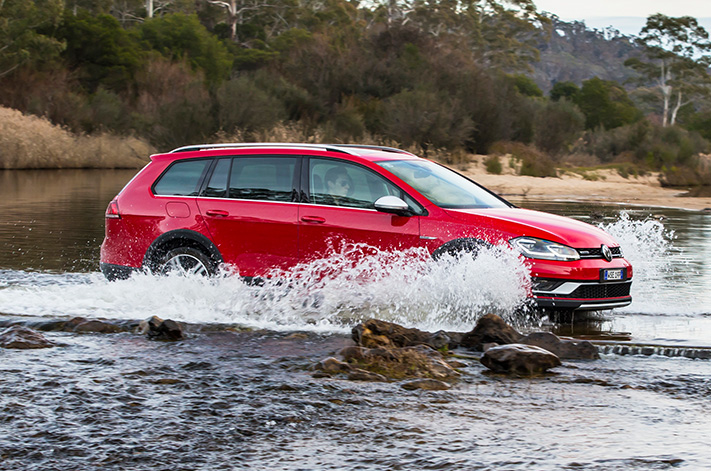
On loose surfaces the 4Motion all-wheel drive system does not lend rally-stage four-wheel drift capability, but a sense of security and sure-footed traction which will serve owners well in boggy fields or the snow fields alike. When we drove the Alltrack in original Golf 7 form the off-road ability was surprisingly good and, as nothing under the bonnet or floor has changed, that ability is also unchanged.
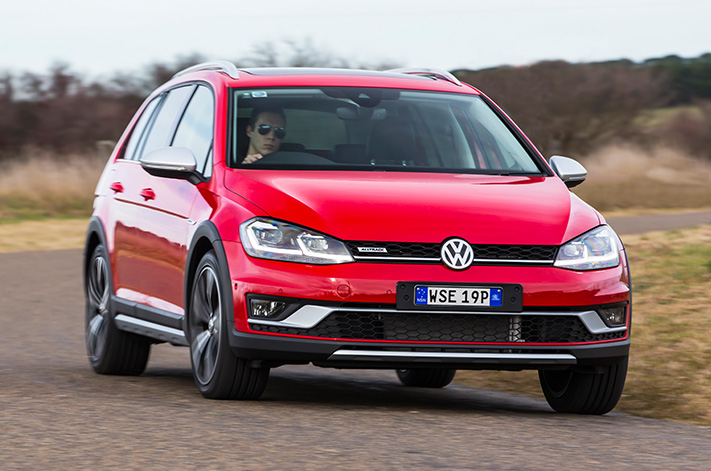
Families with particularly heavy children or drivers that need to tow will be immediately drawn to the combination of diesel torque, efficiency and all-four traction.
It comes at a cost though, and at the top of the Alltrack line-up in Premium trim carries a $40,990 retail pricetag. That said, it’s certainly not excessive for a vehicle with its versatility. That said, a diesel version that aligns with the entry petrol specification would offer customers a balanced Alltrack range and would arguably be the sweet spot variant.

It allows access to a refreshed range of applications including the latest smartphone connectivity via Android Auto, Apple CarPlay and Mirrorlink, but the overall look is also better integrated into the dash and its premium feel helps lift the rest of the cabin to near-premium status.
Spend a little more cash and the $2300 Infotainment pack brings a little Audi-style magic to the Golf in the form of a fully digital instrument cluster, as well as an even larger and smarter 9.2-inch central screen.
Paired with a lightly polished exterior design including new bumpers and LED lighting, the Alltrack has never looked so good. Full-fat SUVs might offer the edge off-road and a higher driving position in traffic but those are fickle reasons to write off the Volkswagen Golf Alltrack. With a solid update and broader range, it is still an extremely well rounded car for every occasion.
SPECS
Model: Volkswagen Golf Alltrack 132TSI Engine: 1798cc in-line 4-cyl petrol turbo Max power: 132kW 4500 – 6200 rpm Max torque: 280Nm 1350 – 4500 rpm Transmission: 6-speed dual-clutch automatic Weight: 1491kg Fuel economy: 6.8L/100km 0-100km/h: 7.8secs Price: $34,490 On sale: now
Volkswagen’s go-anywhere Golf gets a mid-life refresh but the Alltrack update is more than a mild makeover
Tell me about this car:
While Australia’s obsession with SUVs shows no sign of abating, Volkswagen’s Golf Alltrack offers a middle ground between the dynamic advantages of a car or wagon, paired with the raised ride-height and four-wheel drive for the all-terrain ability of some SUVs.
In Mk7 form, the Golf Alltrack was available in just one variant, but Volkswagen has had two years to evaluate the model’s potential in Australia and a warm reception has prompted the car maker to boost the Alltrack range to three variants as part of its 7.5 mid-life update.
If introducing just one Alltrack in 2015 looked like a lack of confidence on Volkswagen’s part, a tripling of the line-up is a statement of intent.
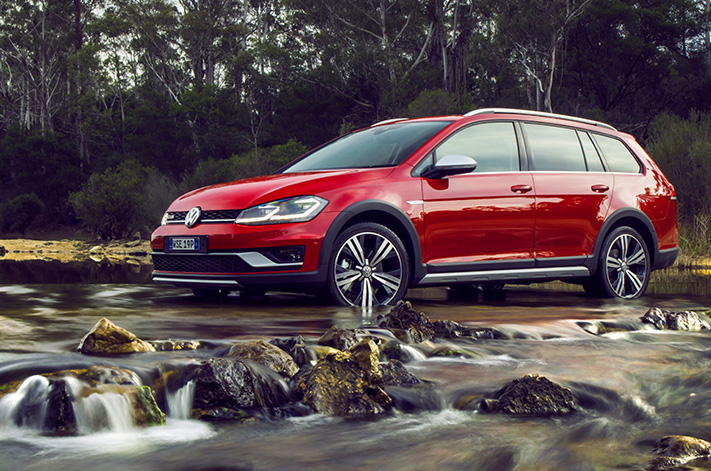
Strengths:
- With a 20mm ride-height increase, all-wheel drive and tougher plastic body protectors you would be forgiven for thinking the Alltrack sacrifices on-road ability for off-road advantages, but you would be wrong. On winding country roads, the all-terrain Golf is a real hoot with excellent dynamics and confidence inspiring grip.
- Just one offering in the previous Golf 7 range had to cater for all Alltrack adopters but the new three-variant line-up has something for everyone. A carry-over 1.8-litre petrol is on offer for the most affordable Alltrack at $34,490, a mid-range 132TSI Premium offers the same engine for customers wanting a little more kit, while a new 135TDI diesel rounds out the range.
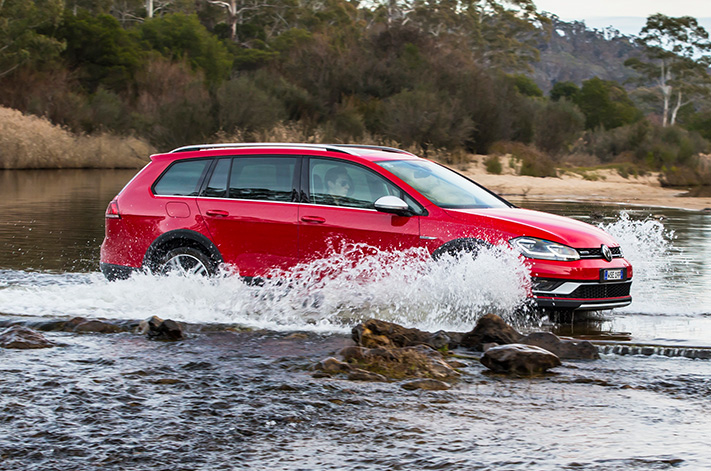
- Top-shelf 135TDI Premium pumps out 135kW and a chunky 380Nm of torque, which will appeal to owners wanting to tow with their Alltrack. Its impressive output is the highest ever offered by a diesel Golf in Australia.
- 4Motion all-paw transmission is not just a repacked version of the Golf R’s road-focused system and has an off-road setting in the Driving Profile Selector as well as hill-descent control. The Alltrack has surprisingly capable off-road manners and ability that far outstrips some high-riding SUVs. It even has a bash plate under the engine and transmission.
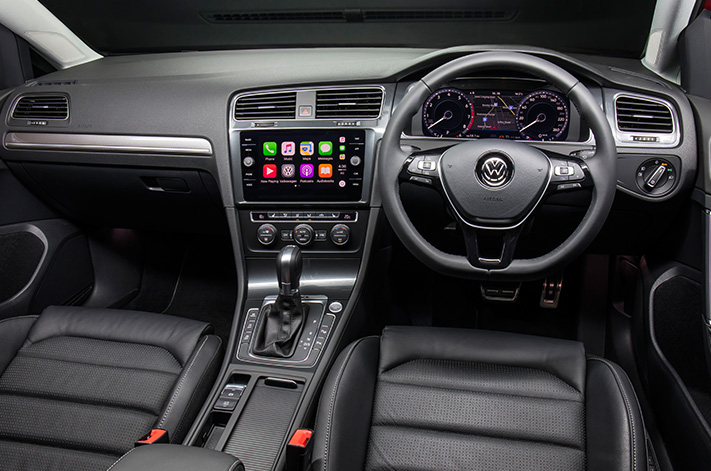
- An interior update has replaced the previous 6.2-inch touchscreen with a more handsome and seamless 8.0-inch version, which is easier to use and has sharper graphics. It also incorporates the latest technology including App-Connect, which supports Apple CarPlay and Android Auto.
- Autonomous emergency braking (AEB) is now standard for all three variants.
- A $2300 Infotainment package adds a larger 9.2-inch touchscreen and Active Info Display fully-digital instrument cluster to Premium versions, while the entry versions can be optioned up to the digital dash with an $1800 Driver Assistance Package.
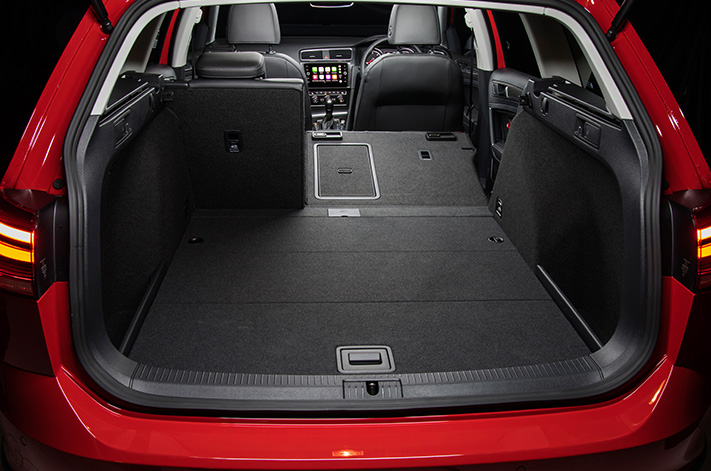
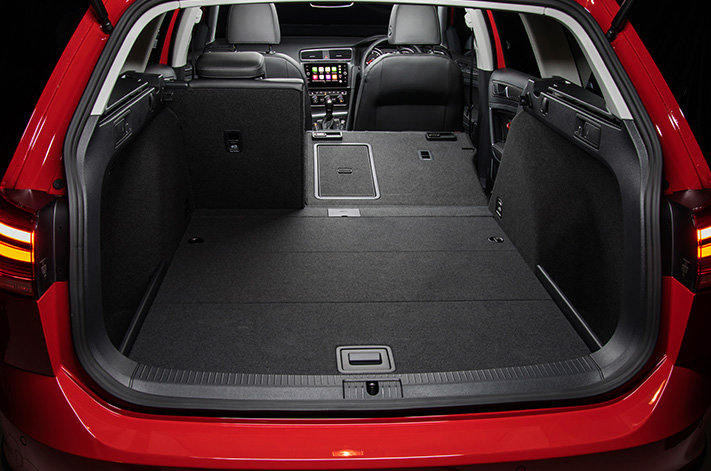
- A 605-litre boot offers a generous luggage capacity but can be expanded to 1620L with the rear seats folded. If that still isn’t enough, standard-fit roof rails allow the secure installation of roof storage options.
Weaknesses:
- Road noise can be intrusive on coarse surface roads – possibly exacerbated by the voluminous cabin. A smaller-diameter wheel and higher-profile tyre might reduce the noise but all three variants are offered with 17-inch rims.
- Excellent diesel is only offered with the pricier Premium version. An entry-level version would combine the gutsy donk with a more attainable price tag.
- The Alltrack’s higher ride-height allows it to go further into the wilderness than any other Golf, but the ground-clearance and low-profile tyres would be the limiting factor off-road and would cause the Volkswagen to come unstuck before a more traditional SUV.
Any rivals I should consider?
The European New Car Assessment Programme has granted the updated Ford Mustang an extra star after extra crash avoidance technology was added to the coupe.
Though the vehicle is structurally identical to the previous cars tested, Euro NCAP examined the other changes with a series of tests, while retaining the scorecard for the crash tests performed on the previous car.
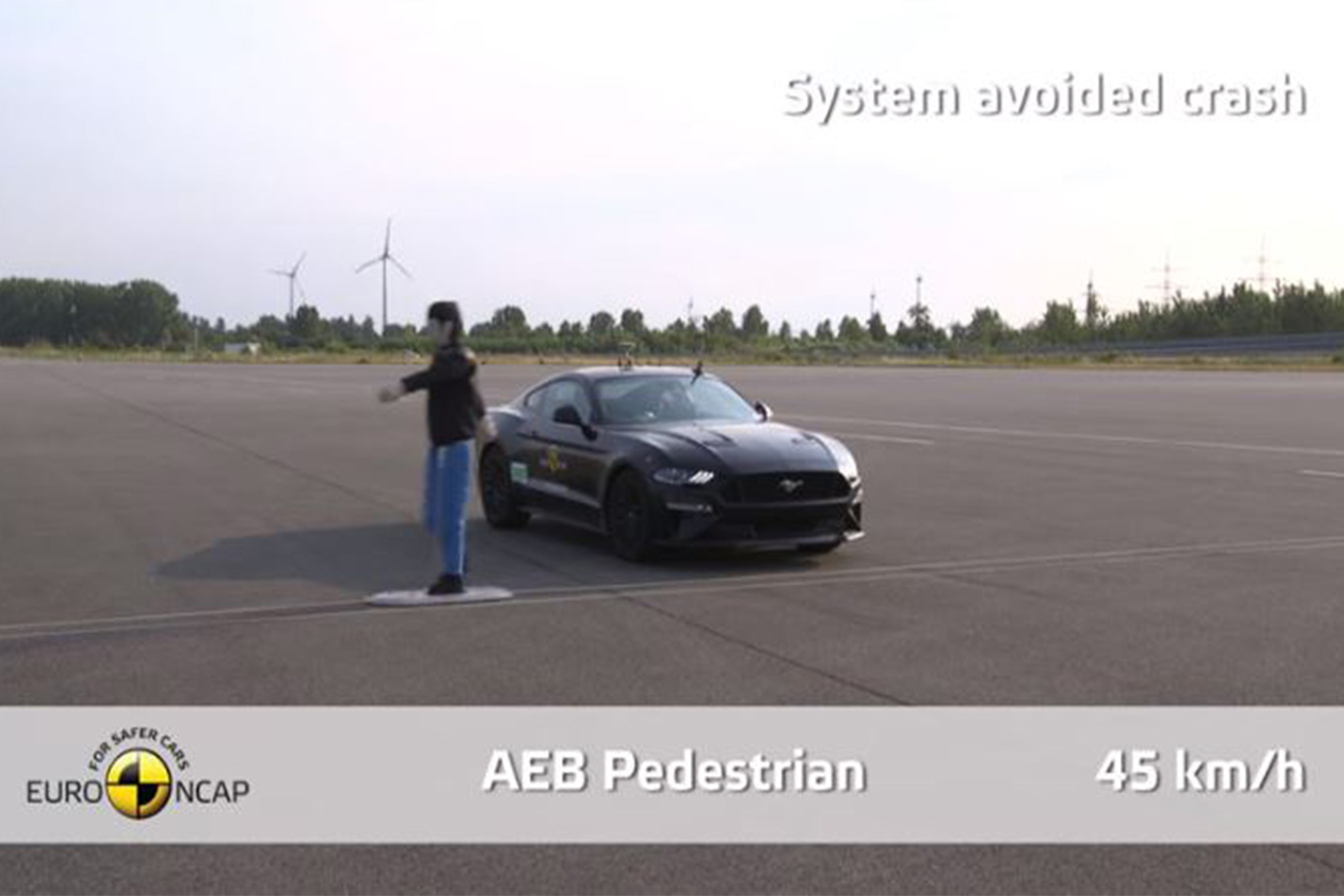
Euro NCAP points out that the revised test applies to cars that are equipped as standard with “Ford’s pre-collision assist (with pedestrian detection, forward collision warning and autonomous emergency braking) and lane keeping aid”.
“The restraint system has been updated to prevent the airbag bottoming out for driver and passenger.
Ford Mustang Goodie Guide: $25K plus
“In addition, the automatic airbag deactivation now meets Euro NCAP’s requirements.”
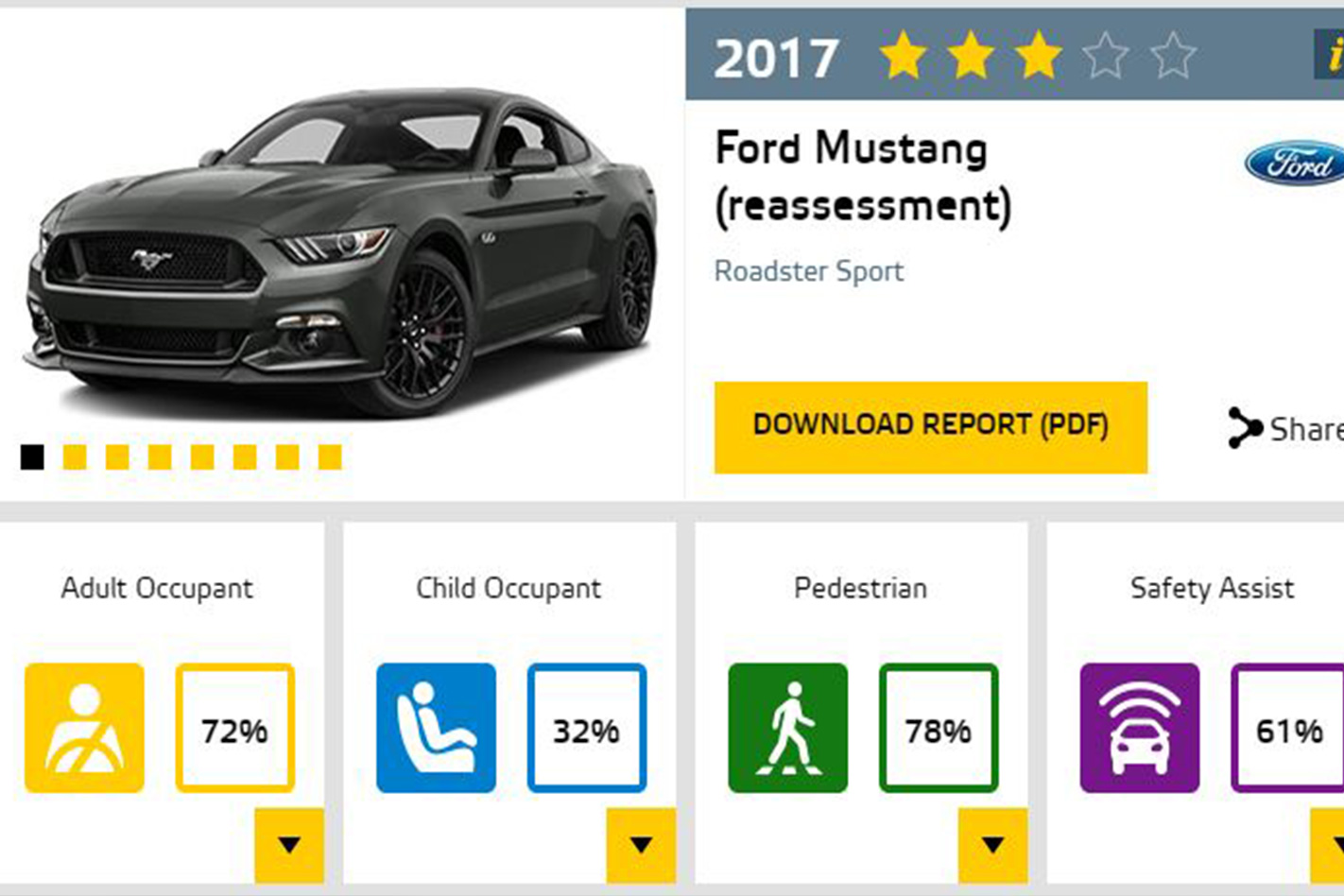
This means we can expect to see ANCAP echo the three-star rating recently bestowed upon the Pony by its European counterpart.
Despite the low rating, the Mustang remains one of the most popular sports cars in the country.
1967 Ford Mustang: Gone in 60 Seconds’ “Eleanor” for sale
“It is good to see that after 20 years Euro NCAP’s call for safety improvement still strikes a chord with responsible companies like Ford.
“While a three-star rating is unexceptional, the updates Ford have introduced have not only made Mustang’s safety better in key areas but also show that the company cares about its customers and safety reputation.”
ALFA ROMEO must believe first impressions count.
Because when it launched its Giulia, the first derivative from its €5bn Giorgio platform, it began at the top.
It tasked the Giulia Quadrofoglio Verde with jump starting the brand’s reputation, aiming the 375kW sedan at the jugular of Germany’s most established benchmarks.
But that’s not the only battle it needs to win in this war. There’s strong competition further down stream, where Alfa Romeo’s inserted its Giulia Veloce.
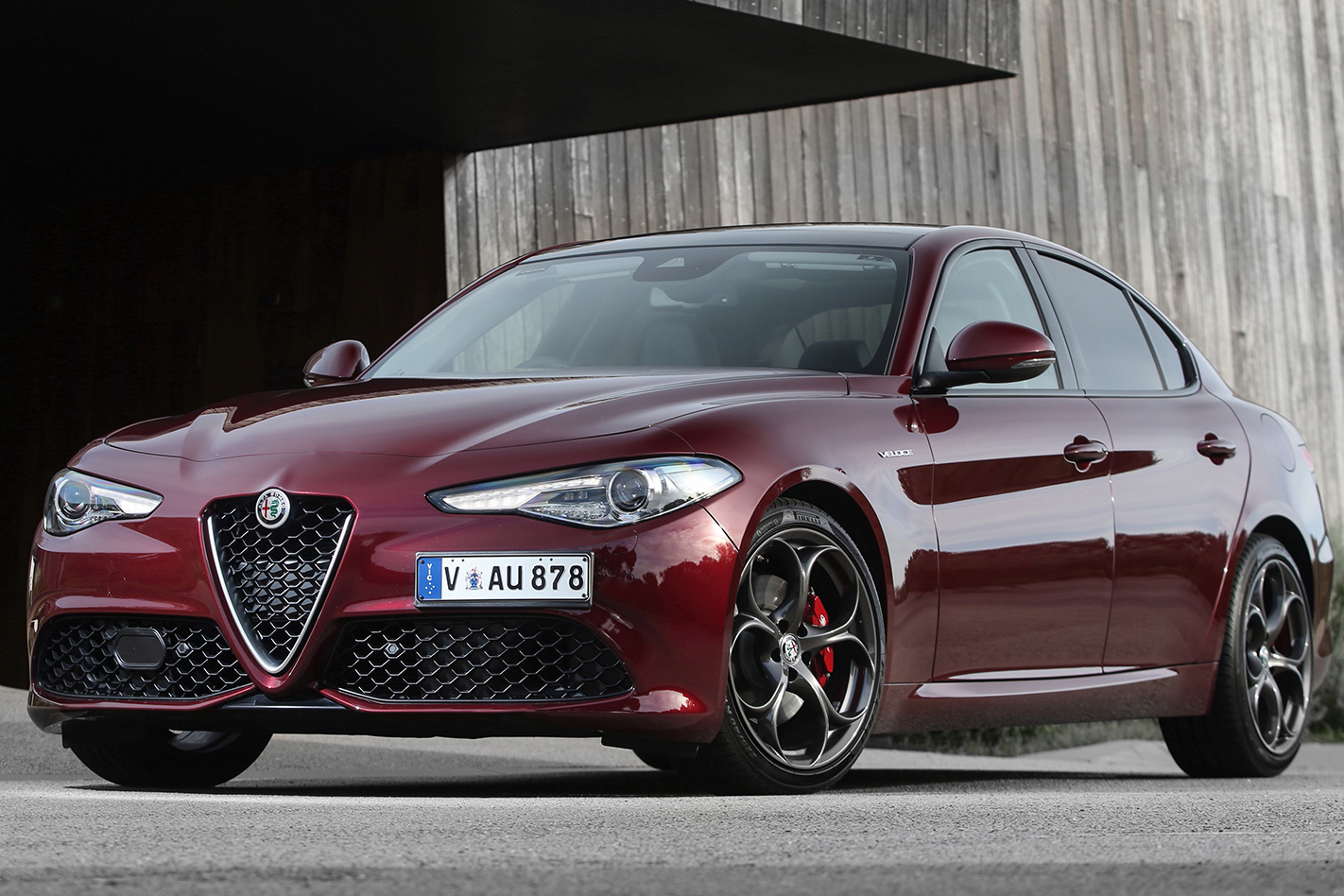
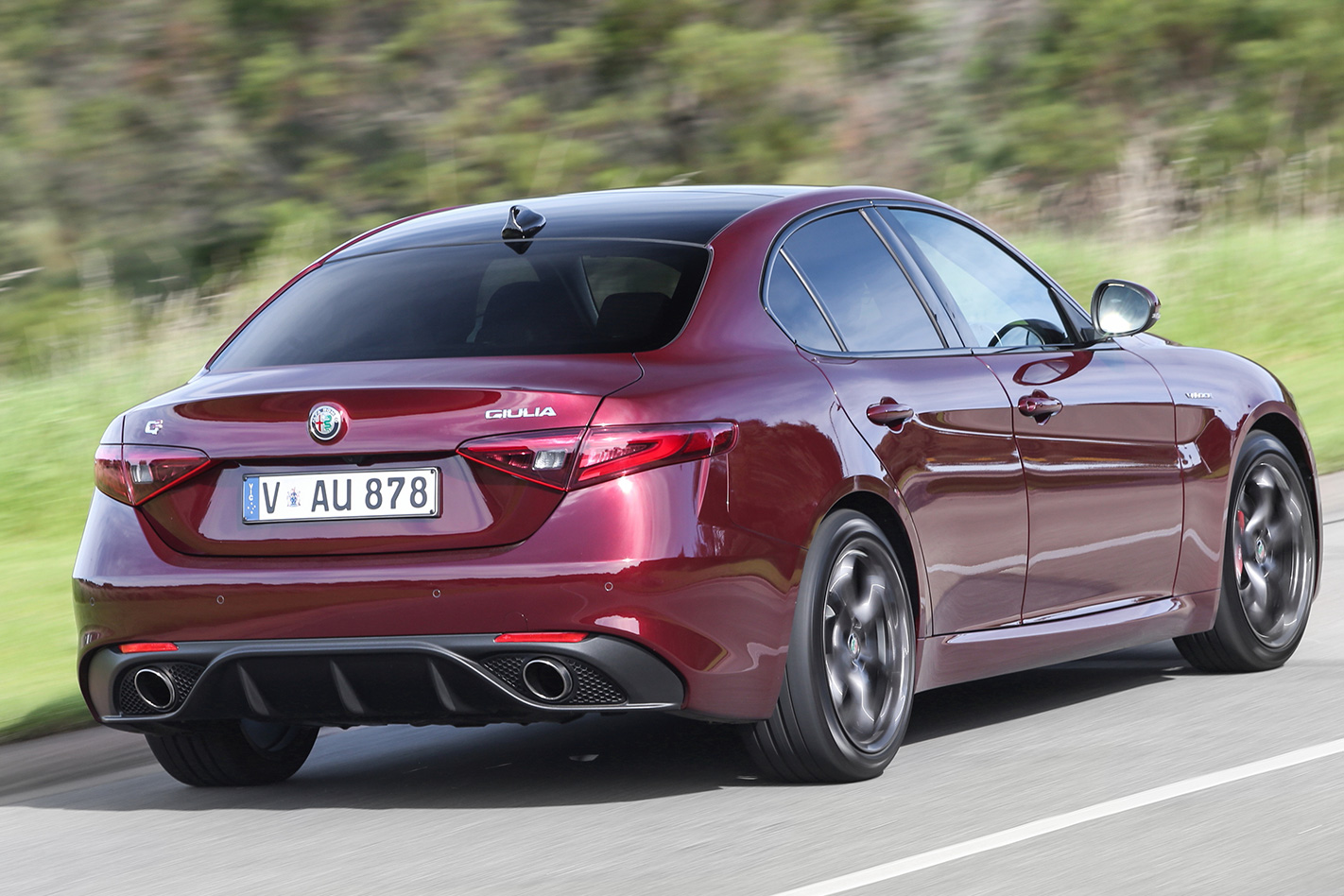
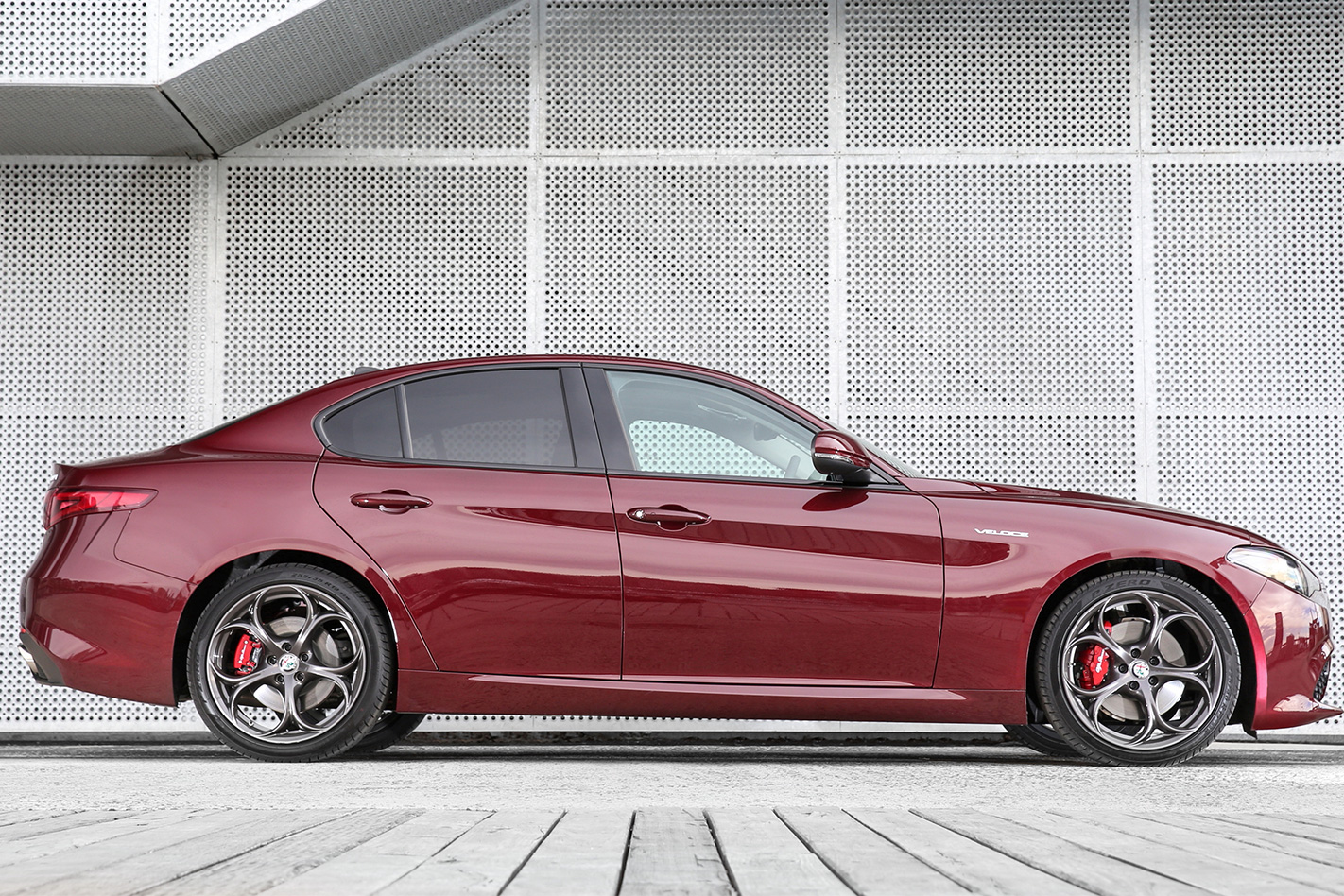
Dusting off the badge from the 1950s Giulietta Sprint, the Veloce is the second performance model in the range, occupying the rung between QV and Super variants.
Those 19-inch ‘telephone dial’ wheels, wrapped in 225mm wide rubber up front and 255mm-wide rubber out back, feature on the QV’s option list. While red brake calipers – two-piston at the front and single-piston at the rear – peer from behind its wheel’s curved spokes.
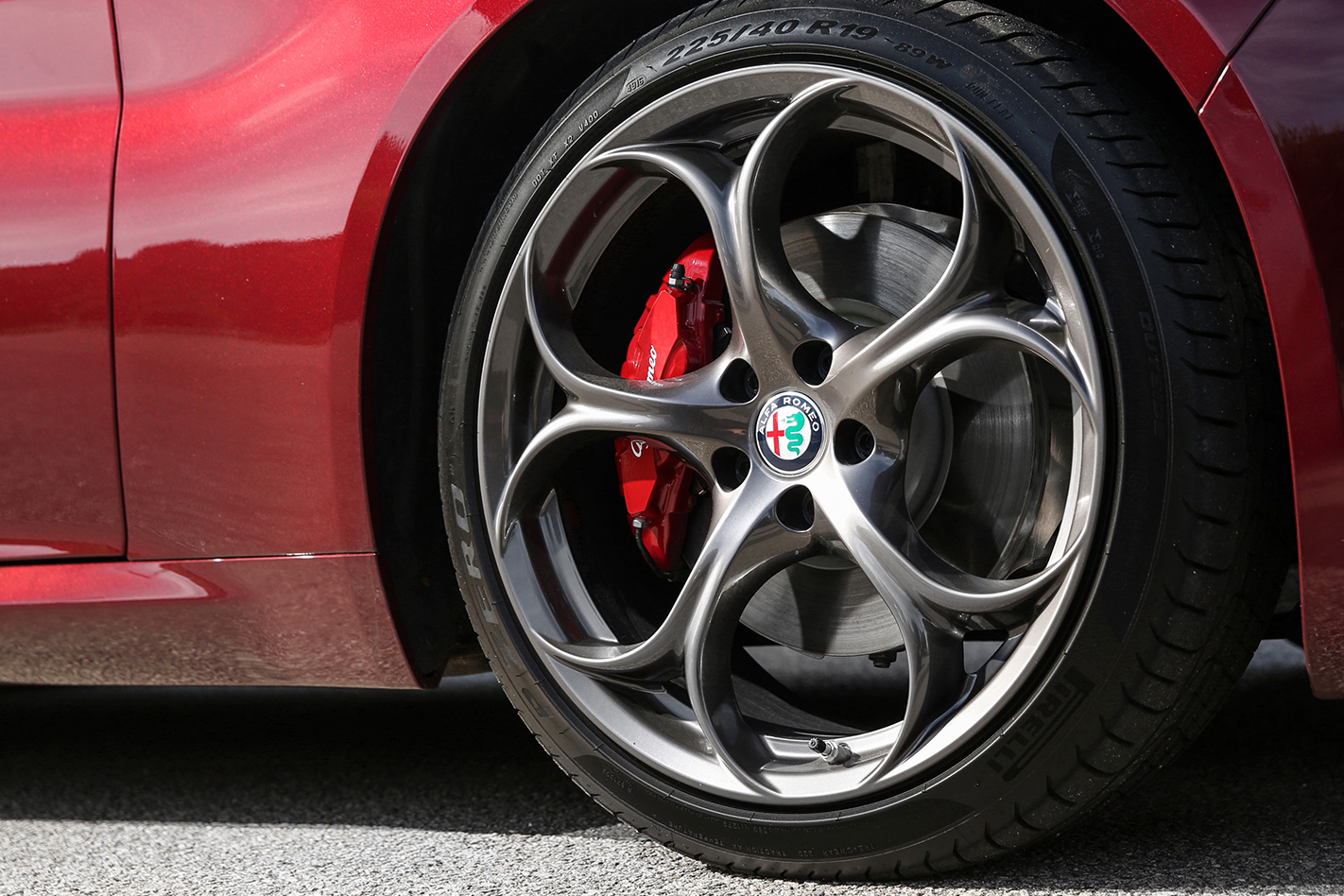
And Giulia Supers can spec a Veloce pack to add the same wheels, brake paint, and design details.
Alfa Romeo Giulia QV 0-295km/h autobahn run
Meanwhile, Alfa Romeo’s slipped an LSD between the Veloce’s rear wheels. Unlike adaptive dampers, the LSD can’t be optioned on lesser spec Giulias and differs to the QV’s more hardcore electro-clutch unit.
The most refined thing about the Veloce is the way it handles Victoria’s winding tarmac. There’s a supple feel to the way its dampers smooth off potholes and absorb bumps.
Their pliancy extends to the Veloce’s secondary ride, allowing it to rise and fall on a road with excellent body control, which it uses to cover ground at a rate.
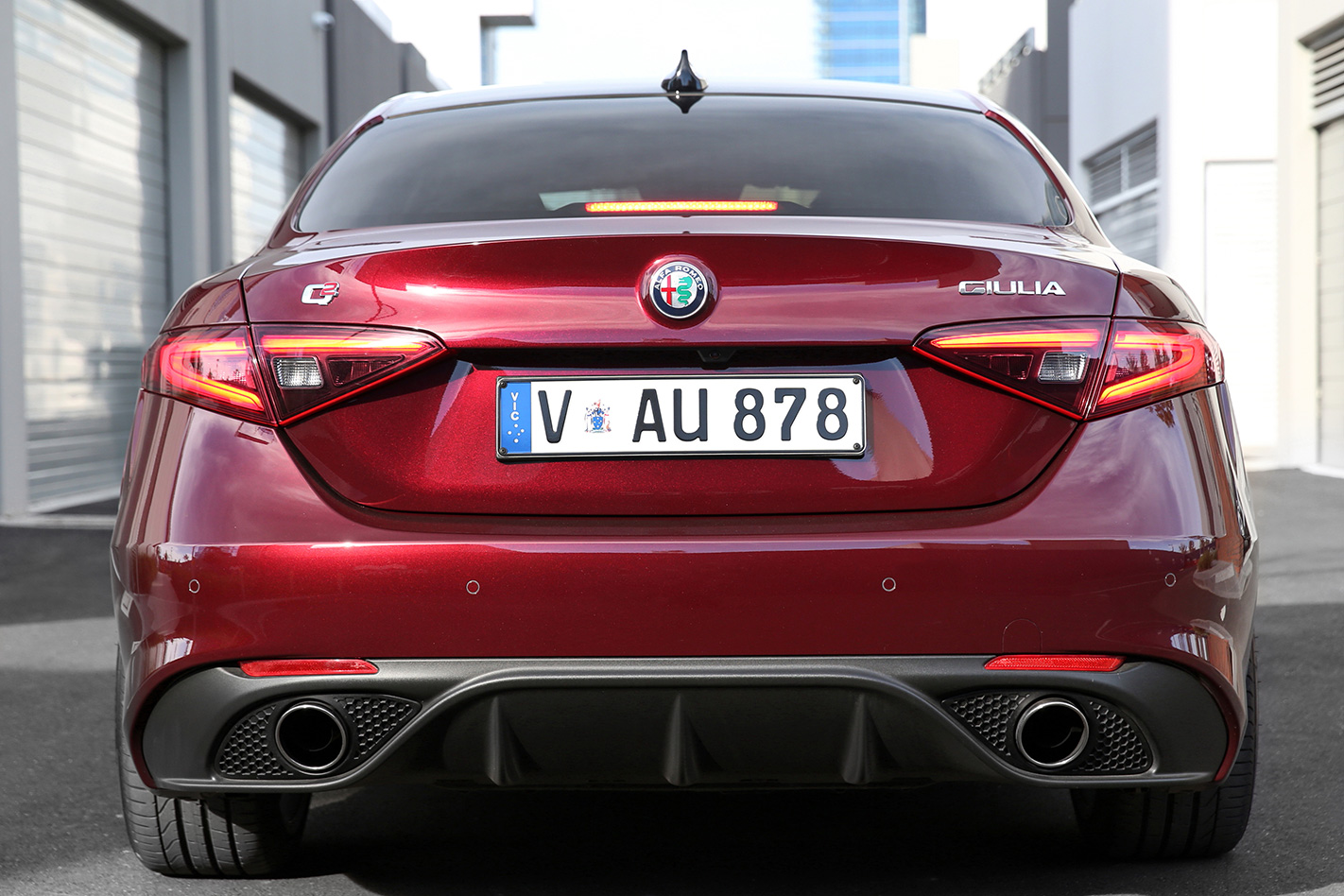
That turbo 2.0-litre four feels as potent as Alfa Romeo claims and delivers power in a linear surge with the eight-speed auto. But it can’t rouse an emotional response.
2017 Infiniti Q60 Red Sport review
The oversquare engine stirs with a noise that’s equally coarse as it is angry, and we wished it could redline somewhere closer to 7000rpm.
Neither does the thin-rimmed steering wheel plumb back enough road texture. It also suffers, like most of the controls, from a lightness which isn’t welcome when dialling up commitment.
Perhaps this speaks loudest about the Giulia Veloce. Even though its LSD-equipped chassis and QV-esque looks suggest it’s up for much more.
First impressions count, but its the lasting one which settles this score. As we suspect it’ll work most effectively as a road car – a comfortable, quick tourer. And not a budget apex-honed QV missile.
3.5 out of 5 stars Like: Talented chassis; power delivery Dislike: Unrefined engine note; light steering
Specs Engine: 1995cc inline-4cyl, DOHC, 16v, turbo Power: 206kW @ 5250rpm Torque: 400Nm @ 2250rpm Weight: 1526kg 0-100km/h: 5.7sec (est.) Price: $71,895
What stands out?
The Mercedes-Benz GLC is a beautifully tailored, five-seat, medium SUV, with all-wheel drive, a long feature list, and a premium feel that few alternatives match. It can be enhanced with a big range of extra-cost options, and several crash-avoidance aids are standard or available.
What might bug me?
Having to baby the car on rough roads. The standard suspension delivers a lovely, quiet ride on smooth roads, but if you drive with enthusiasm over heavily potholed or lumpy roads you will feel jolts as the suspension reaches its limits. If you have a full load on board, the jolts are more than occasional.(The easiest solution is to add the optional Air Body Control suspension. It’s worth every extra cent.)Wishing you had a spare wheel and tyre. If you puncture a tyre on a Mercedes GLC, you just keep driving: its tyres will still work when they’re flat. That’s great, provided you can get a new tyre fitted soon. Once it has lost air, a GLC’s run-flat tyre will last for up to 80km.
What body styles are there?
Five-door wagon only.(A Mercedes GLC Coupe is also available. While it is based on the GLC reviewed here, and very similar, this article does not cover it directly.)The Mercedes-Benz GLC drives all four wheels. It is classed as a medium SUV, higher priced.
What features do all versions have?
Cruise control with speed limiter, and a leather-rimmed steering wheel with gearshift paddles. Satellite navigation, which is displayed on a 7.0-inch colour touchscreen. A 360-degree exterior camera with multi-angle views, and parking sensors front and rear.A single-disc CD player, and a digital radio. Bluetooth connectivity and audio streaming. Integration for iPod and iPhone, and two USB ports.Dual-zone climate control, which allows the driver and front-seat passenger to set temperatures independently. Dedicated vents for rear passengers.Power-adjusted front seats. Ambient interior lighting, which maintains a soft glow in the cabin at night.Windscreen wipers that operate automatically when it rains. Headlamps that switch on automatically when it’s dark. Daytime running lights, which help other drivers see you.Aluminium alloy wheels, with Mercedes’ MOExtended run-flat tyres and a pressure-loss warning system.Mercedes’ 4Matic permanent all-wheel drive with electronic traction control, both of which can be helpful in slippery conditions or off-road.Active safety systems that include Attention Assist, which warns you if you show signs of falling asleep at the wheel, and Blind Spot Assist, which warns when changing lanes that a vehicle is alongside. There is also automatic braking that works at city and highway speeds: it warns of an obstacle in front of the car – typically a slower vehicle – and will apply the brakes if you do not react.A self-parking system, which can steer you into a parking spot, and front and rear cross-traffic warnings.Nine airbags. (For more details, see the Safety section).Electronic stability control, which helps you maintain control on a slippery surface. All new cars must have this feature.The GLC comes with a three-year, unlimited distance warranty. It also has a 30-year anti-corrosion perforation warranty.
Which engine uses least fuel, and why wouldn’t I choose it?
The 2.1-litre turbo-diesel in the GLC 220d uses least fuel, consuming just 5.6 litres/100km in the official test (city and country combined). But the very similar diesel in the GLC 250d uses only marginally more, while feeling noticeably stronger (it is tuned for more power).Nevertheless, about the only reason you wouldn’t choose the 220d over its more urgent 250d sibling is outright performance. Otherwise, the 220d is slightly more refined and relaxed in its nature, with a bit less diesel grumble, and yet still offers strong acceleration. Only people serious about overtaking and towing should head straight for the 250d.The main reason you might not choose either diesel is the refuelling experience. Diesel fuel is sticky, and quite often the pumps are covered in residue.The third engine available in a GLC is the enthusiast’s choice, even though it will drink quite a bit more fuel – 7.2 litres/100km officially. This is the 2.0-litre turbo petrol, which drives the GLC 250. It is quieter than the diesels, and sweeter to listen to when it’s working hard. And it offers stronger acceleration than either.Each engine has an idle-stop system that switches off and restarts the engine automatically when you are stopped in traffic, to save fuel.Both petrol and diesel GLCs offer just one transmission – a nine-speed automatic.
What key features do I get if I spend more?
The GLC 220d has 19-inch wheels, Artico vinyl upholstery, and the features common to all GLCs – which means it comes pretty well stocked.Spend more on a GLC 250 or 250d and you get the more powerful engines outlined above, and some more cosmetic, comfort, and driver-assistance items.The added driver-aids are arguably the chief sweetener. They include Distronic Plus, which combines a sophisticated adaptive cruise control with an enhanced auto-braking system. As well as adapting your cruising speed to other traffic on the highway, it can hold your place in crawling traffic.Active lane-keeping assist and active blind-spot assist add corrective action to the passive blind-spot alert on the GLC 220d.The GLC 250 and 250d also feature leather upholstery, 20-inch wheels, and dark-tinted privacy glass for the rear windows. Keyless-Go allows fingertip locking, unlocking and starting, provided the key is in your pocket or bag.Mercedes-Benz also offers extra-cost options in packages.A Seat Comfort Package adds heated front seats, additional power adjustment for seat cushions, headrests and steering wheel, and a memory for seat and mirror adjustments (so that you can restore your settings quickly after a companion has driven the car).The Vision Package brings you a long glass sunroof with two roller sunblinds, plus a head-up display that projects the speedo and other instruments onto the windscreen, just below your line of sight.The COMAND Package combines an impressive 13-speaker Burmester sound system with a bigger, 8.4-inch, colour TFT screen, high-def navigation, a single-disc CD/DVD player, a 10GB on-board hard drive, and multimedia enhancements.Then there is AMG Line, which completely alters the character of a GLC. It gets you 20-inch multi-spoke alloy wheels, firmer suspension, rear privacy glass, a flat-bottom steering wheel with gearshift paddles, and several external and internal styling tweaks.An important option for anyone who wants to use their GLC outside cities and freeways is Air Body Control suspension, which brings you a much more resilient and disciplined ride (using multi-stage air springs and electronically controlled damping).The Off-Road Engineering Package includes the air suspension but takes it a step further. Among its additional off-road driving modes is Rocking Assist, which raises the body 50mm and adjusts the traction control to help you free a stuck car. There is also under-engine protection. And if you order it for a GLC 250 or 250d, it substitutes 19-inch alloy wheels and tyres (which are better on unsealed surfaces) for the standard 20s.
Does any upgrade have a down side?
Just be aware that the sports suspension you get with the AMG Line package is not the same as the Air Body Control adaptive suspension that you can order as an extra-cost option. The AMG Line suspension is firmer than the standard suspension, but it relies on steel springs and conventional dampers.There are two standard exterior paint colours: non-metallic black and polar white. All others cost extra.
How comfortable is it?
The GLC shares its dashboard architecture with the C-Class sedan and wagon, yet its airier cabin allows the design to breathe. Pleasantly tactile plastics, aero-inspired ventilation outlets and dashboard shape, and luxurious switchgear contribute to the GLC’s upper-crust feel.In Mercedes-Benz tradition, the GLC’s seats initially feel firm but become form fitting over the extensive distances an SUV like this might tackle.The power operated front seats in all GLCs offer a big range of adjustments including lower-back (lumbar) support, and the steering wheel adjusts telescopically.At moderate speeds, or on unchallenging roads, all GLCs ride with quiet serenity. But big bumps and undulations can intrude – especially if you’re carrying a good load, which exposes the softness of the GLC’s standard suspension.With the optional Air Body Control suspension, the GLC is a different beast. It maintains the refined calm of the standard car, but offers far-superior control of body movement.
What about safety?
Even the least costly model, the GLC 220d, has a 360-degree parking camera, front and rear parking sensors, auto-on and auto-dipping headlamps, daytime running lights, and adaptive LED brake lights (which flash if you brake hard). Run-flat tyres help you keep control in the event of a sudden deflation. The GLC’s electronic stability control includes Curve Dynamic Assist, which helps prevent your running wide in a corner.Other systems help you avoid distractedly drifting out of your lane, and changing lanes into the path of a car in your blind spot. A fatigue detection system monitors your movement on the controls and prods you to take a break if it thinks you’re drowsy.Under the title Collision Prevention Assist Plus, you get automatic emergency braking that works at city and low highway speeds, along with a sliding scale of collision alerts.The GLC 250 and 250d add Driver Assistance Package Plus, which brings more intervention, and more effective auto braking that works even at very high speeds.All GLCs have nine airbags: two directly ahead of the front-seat occupants; one to protect the driver’s knees; four to protect the upper bodies of front and rear occupants from side impacts; and a head-protecting curtain airbag down each side.The Australasian New Car Assessment Program (ANCAP) awarded the GLC its maximum five stars for crash safety, in January 2016.
I like driving – will I enjoy this car?
Provided you approach the GLC with the understanding that it’s a taller, heavier, softer C-Class wagon, with a less sporting focus, then yes: you’ll enjoy driving it. Particularly if you like your cars smooth and quiet, with a serene ride.If you’re a demanding driver, you’ll enjoy the GLC a lot more if you place a giant red tick against Air Body Control in the options catalogue. With air suspension, the GLC corrals all its other great qualities and takes a clear step above the obvious SUV alternatives.Without air suspension, the ride and handling is not disciplined enough to attain true excellence. That’s less true of a GLC fitted with an AMG Line package, as its sports suspension resolves much of the standard car’s softness under load. But even the AMG-tweaked version lacks the polish of an air-sprung GLC.Finally, engines. While both diesels are great workers, and fuel-sippers, neither can match the zest of the GLC 250 petrol, especially as velocities and demands rise.While the GLC has all-wheel drive, the standard car is designed only for light-duty off-road driving – think gravel tracks or snow-covered roads. It does not have the underbody protection or wheel articulation of dedicated off-roaders. Additionally, should you puncture a tyre there’s no spare. The optional Off-Road Engineering Package improves performance significantly, however, and lets you tackle surprisingly challenging tracks.
How is life in the rear seats?
One of the chief reasons for choosing a GLC over its C-Class wagon relative is its improved rear-seat space. An additional 20mm of rear-seat width, combined with 30mm more legroom, 30mm extra headroom, and a cushion mounted 20mm higher from the floor, unleashes vital dimensional increases, right where they count. For example, two adults can sit comfortably either side of a correctly fastened baby seat.Then there’s the vision improvements espoused by the GLC’s taller, airier, more expansive cabin, not to mention the refreshing benefits of rear-seat vents for the climate control. The combination of a widescreen forward view and a vast, comfortable rear-seat with climate control vents is the stuff long-distance dreams are made of.
How is it for carrying stuff?
As good as any premium mid-size SUV for volume, enhanced by one-touch, fold-flat backrests on the rear seats (achievable from both the cabin and the boot).The GLC offers 550 litres of boot space below its roller-blind-style luggage cover, and a sizeable 1600 litres with the rear seat folded completely flat. This is supplemented by a lockable storage compartment below the boot floor. And all GLCs have a power-opened and closed tailgate.The rear-seat backrest is split 40/20/40, so it’s quite adaptable for all sorts of longer loads while still carrying three or four people. A luggage net and 12-volt outlet are standard.
Where is it made?
All Australian-delivered GLCs are built in Mercedes-Benz’s recently expanded plant in Bremen, Germany.
What might I miss that similar cars have?
About the only feature noticeably absent from the GLC is a seven-seat option, which is the domain of just one medium-sized premium rival – Land Rover’s Discovery Sport.The Discovery Sport also offers more accessible off-road performance.If you would like significantly more power and sharper handling from a GLC, consider the Mercedes-AMG GLC 43.Alternatively, the Mercedes-Benz GLC Coupe offers a sportier looking, if less practical, take on the basic GLC package.Among other cars you might consider are the Audi Q5 and BMW X3.
I like this car, but I can’t choose which version. Can you help?
Any of the current trio of engines on offer does the job admirably. But while it uses more fuel, the GLC 250 petrol is the best to drive and the easiest to refuel, and its leather seats are preferable to the Artico. Think seriously about optioning the Air Body Control suspension.Asking your dealer to delete the standard side steps would be another clever move. While they help small children climb into the car, they also accumulate grime and protrude from the body – which often means dirty calves or a soiled dress.
Are there plans to update this model soon?
The Mercedes-Benz GLC went on sale in December 2015, and the more powerful Mercedes-AMG GLC 43 arrived early in 2017. Expect a GLC 350d with diesel V6 power in the second half of 2017.A high-performance Mercedes-AMG GLC 63 S is due about the end of 2017 (with 375kW from a turbocharged petrol V8).A mid-life update for the GLC could be expected about 2020.
THE Renault Megane GT hatch has been joined by a wagon version that offers more in terms of space and practicality without compromising performance.
WHAT IS IT? Renault has expanded its popular Megane range, with sedan and wagon variants joining the already-established hatchback. The range-topping GT wagon tested here shares much with its hatch sibling including its 1.6-litre turbo engine, Renault Sport suspension and four-wheel steering, while also bringing extra practicality in the form of a capacious boot.
WHY WE’RE TESTING IT The Megane GT hatch is an enticing rig, so it’s intriguing to see how its warm-hatch performance translates into wagon form.
MAIN RIVALS There are few small performance wagons here for around $40,000, but you could chuck in the Mini Clubman Cooper S and perhaps the medium-sized Skoda Octavia RS 162 TSI.

THE WHEELS VERDICT The Megane GT wagon retains the desirability and driveability of the hatch while introducing new levels of practicality that make it a great little all-rounder.
PLUS: Attractive interior and exterior design, more space and comfort than hatch, road holding MINUS: Unintuitive cabin features, no smartphone mirroring
THE WHEELS REVIEW THE mist-soaked winding roads south of Albury were as good a place as any to try out the Renault Megane GT wagon’s handling and four-wheel steering and to see how they compared to the similarly equipped hatch.
Renault’s 4Connect steering system provides the manoeuvrability of a shorter wheelbase vehicle by slightly pointing the rear wheels in the opposite direction as the front wheels. At speeds above 60km/h, or 80km/h in Sport mode, the rear wheels pivot slightly in the same direction as the front for greater stability.
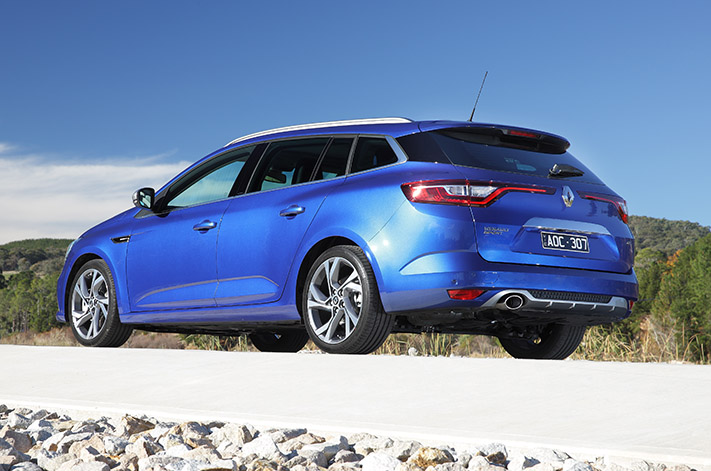
This translates to incredibly direct and precise steering, particularly in Sport mode, which complements the wagon’s impressive body control. It copes well with big hits too, despite its performance slant, recovering from bigger bumps with ease.
Like the Megane GT hatch, the wagon is a deceptively quick and agile car. The 151kW/208Nm 1.6-litre turbo engine has performance that skirts the border of hot hatch territory, and is coupled to a seven-speed dual clutch transmission that responds well to the revvy turbo’s mid-range torque.
The transmission does a reasonably good job of predicting driver needs and selecting the appropriate gear when, say, braking hard, but in the wet and winding conditions of the hilly launch route it occasionally couldn’t keep up rapid changes in pedal inputs. Thankfully, the GT’s column-mounted shift paddles allow a manual override for when the road gets truly twisty.
That said you need pianists’ fingers to use them given they don’t move with the steering wheel. They obscure the light and wiper stalks so you can’t see how they’re set either, and the gear stick is a little too far forward to comfortably use its plus-minus manual shift plane. Ergonomically, the Megane still could use a little more work.

Unlike the GT hatch, road noise on the coarse country B-roads was surprisingly subdued despite running on the same 225/40 R18 tyres. Cabin comfort also benefits from more generous dimensions. Both the wagon and sedan are 269mm longer than the hatch and stand astride an 11mm longer wheelbase, resulting in 37mm more rear legroom and a rear seat backrest that’s reclined further back.
The wagon’s 580 litre boot space expands to 1504 litres with the 64/40-split rear seats folded down, offering substantially more cargo capacity than the hatch’s 434L/1198L. Its sloping roof line means a tighter rear opening, but the tailgate, which opens automatically by swiping your foot underneath on the GT, opens beyond 90 degrees to help facilitate loading and prevent head injuries.

The extra space and dimensional growth sees a 38kg weight gain over the hatch, resulting in a 0.3sec slower 0-100km/h time of 7.5 seconds, but the same claimed combined fuel economy of 6.0L/100km.
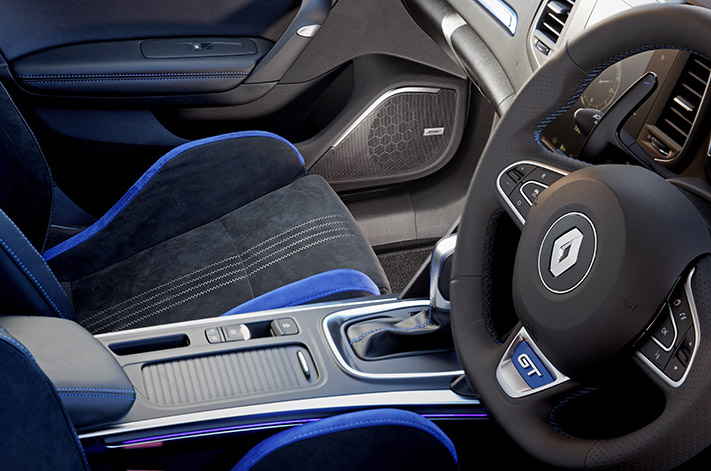
From the B-pillars forward, the Megane GT wagon is virtually identical to the hatch with an 8.7-inch portrait-format screen, ambient lighting, heavily-bolstered sports seats with blue contrast stitching, and blue metallic highlights on the door trims. There are soft-touch surfaces aplenty, though the cup holders on the centre console are still ridiculously small.
Outside you’ll find the same distinctive C-shaped front LED running lights and eye-catching rear-light arrangement that stretches across the tailgate. And while the roofline is longer than the hatch’s, it still has the bulging shoulder line and raked forward tailgate that subtlety harks back to the delightful Gallic quirkiness of Renaults past.
Small wagons make up just five percent of C-segment sales in Australia and of these the Megane GT is the only one that offers the kind of sports performance and handling that fills the void between hot hatch enjoyment and small-SUV practicality.
SPECS Model: Renault Megane GT wagon Engine: 1618cc inline four, dohc, 16v, turbo Max power: 151kW @ 6000rpm Max torque: 280Nm @ 2400rpm Transmission: 7-speed dual-clutch Weight: 1430kg Fuel economy: 6.0L/100km 0-100km/h: 7.4sec (claimed) Price: $39,490 On sale: July
TICKFORD is partnering with motor-racing legend Allan Moffat to produce a special edition Mustang that commemorates the 40th anniversary of one of the most memorable moments in Australian motorsport.
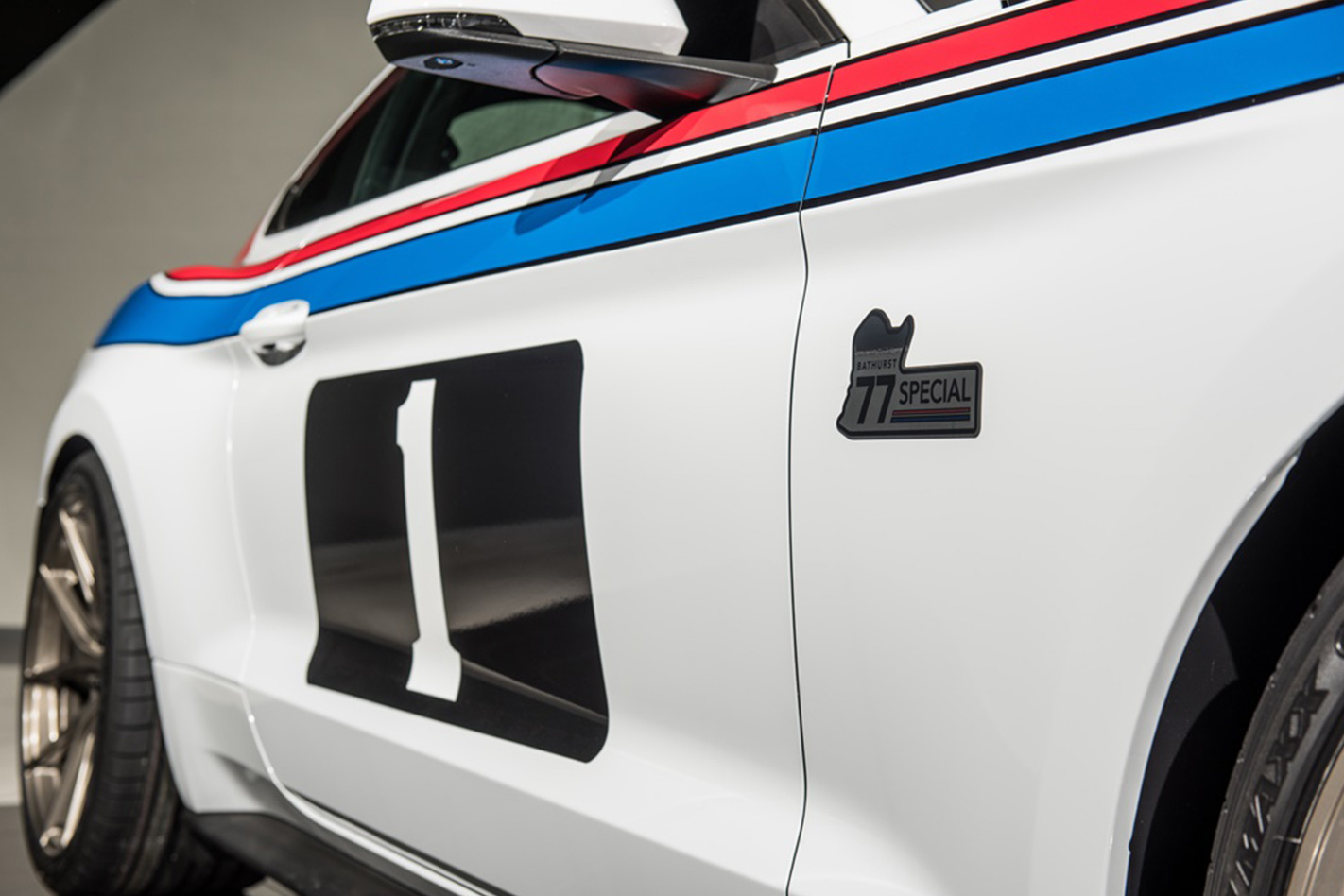
The Tickford Bathurst ’77 Special is a limited edition Mustang GT that pays homage to the Ford Falcon XC Hardtops that Moffat and team-mate Colin Bond drove to a famous 1-2 in the 1977 Hardie-Ferodo 1000.
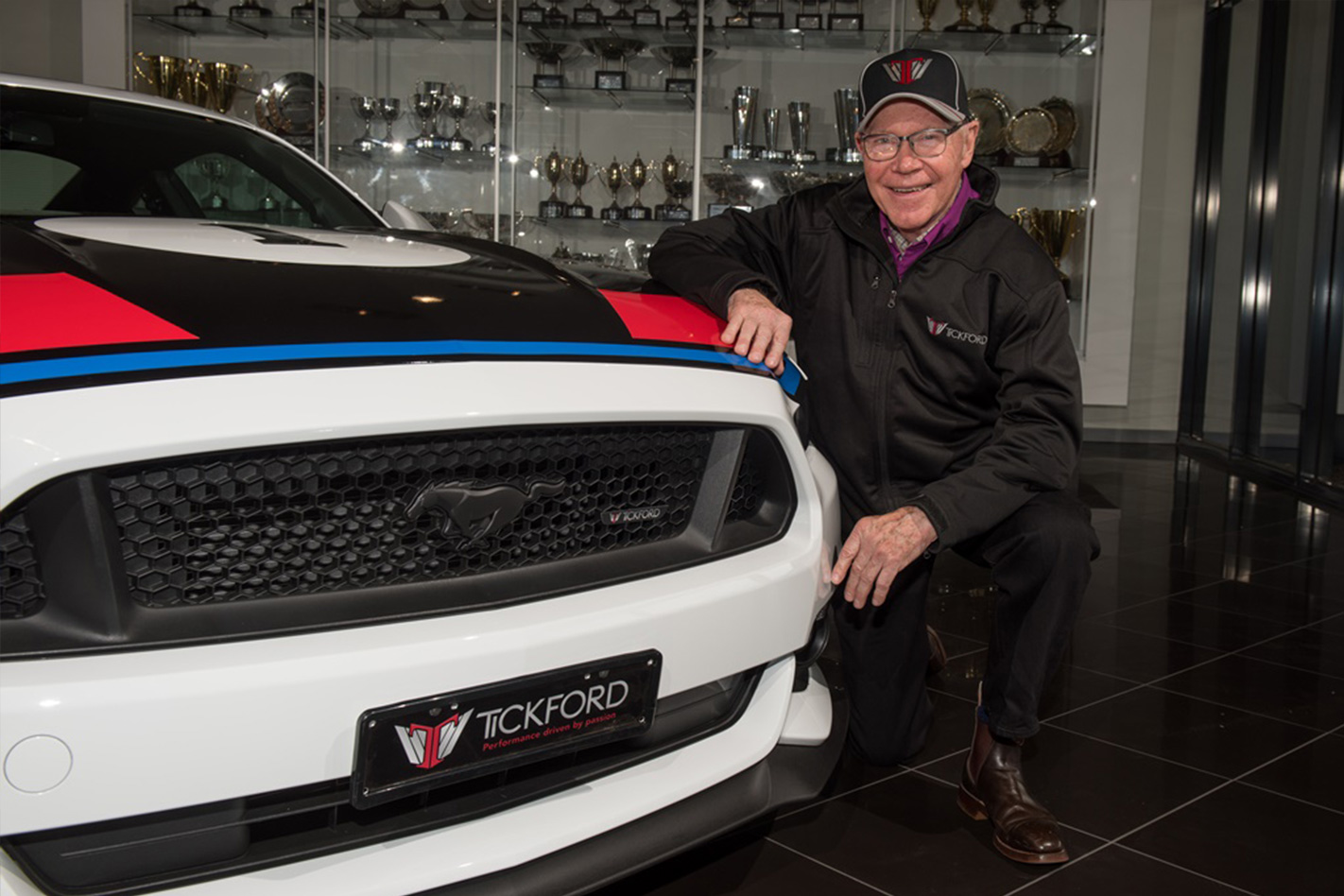
Externally, the Mustang sports a modern interpretation of the Moffat Ford Dealers coupes’ liveries and will be painted white and fitted with a full decal kit and replica rear wing. Gold-painted 20-inch alloys complete the visual overhaul.
“Our mantra is Performance driven by passion and with the very special enhancements we are making to all the main areas of each Tickford Bathurst ’77 Special, this project has given us the chance to turn that into reality.”
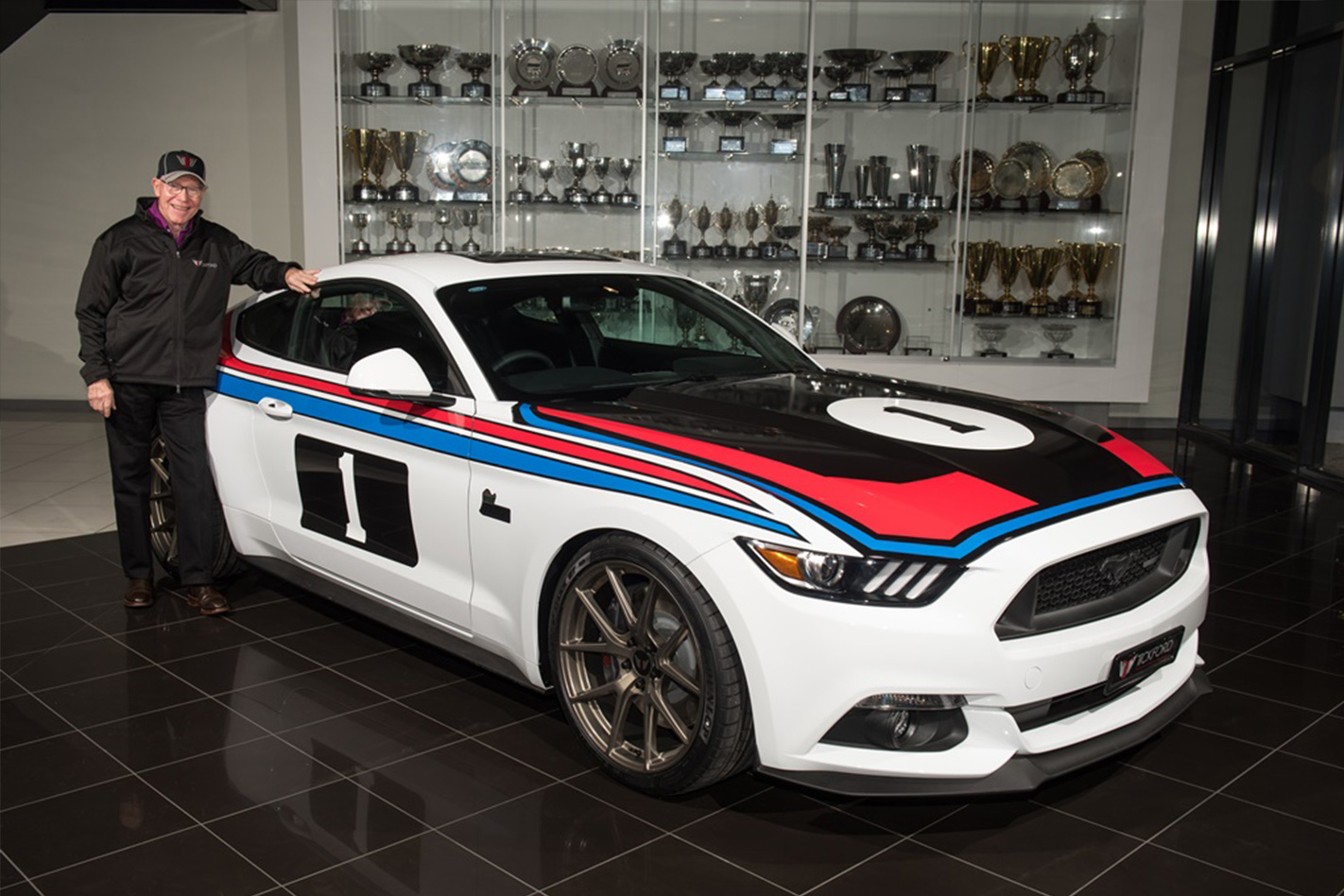
Moffat’s famous ’77 Bathurst victory could have been very different had Bond ignored his teammate’s demands to hold station. While Moffat crossed the line first after 163 laps, his car had been suffering braking issues and Bond was ordered to stay slightly behind to give Moffat the honours.
Cast your mind back to Monster Energy’s Battle Drift 2015.
Vaughn Gittin Jr. went head to head with Daigo Saito in a ‘Stang vs Lambo tyre fry-off. It was filmed in the Niigata Russian Village in rural Japan, and the touge battle looked epic on camera.
Nissan GT-R nails world’s fastest drift
Now, two years later, Monster has published the second instalment, in collaboration with Donut Brand Studio.
It’s hard to live up to that first face-off, but it’s still 100 per cent worth watching.
If you’ve got a short attention span, you’re in luck – you won’t be looking at the same shot for any more than a second or two.
For some reason, the editors decided to include so many jump cuts that it’s a little hard to keep track of what’s happening between Daigo Saito’s Lamborghini Murciélago flashing past, and shots of Baggsy’s hand clutching at the handbrake in his Nissan GT-R.
Admittedly, it makes it more intense, and director Andrew Laputka probably had creative reasoning behind it, but the skills displayed by the drivers should always be the focus of short films like this.
Still, the sequel injected a little more character and narrative into the video through the use of ‘the Cockney Gent’. That’ll do.
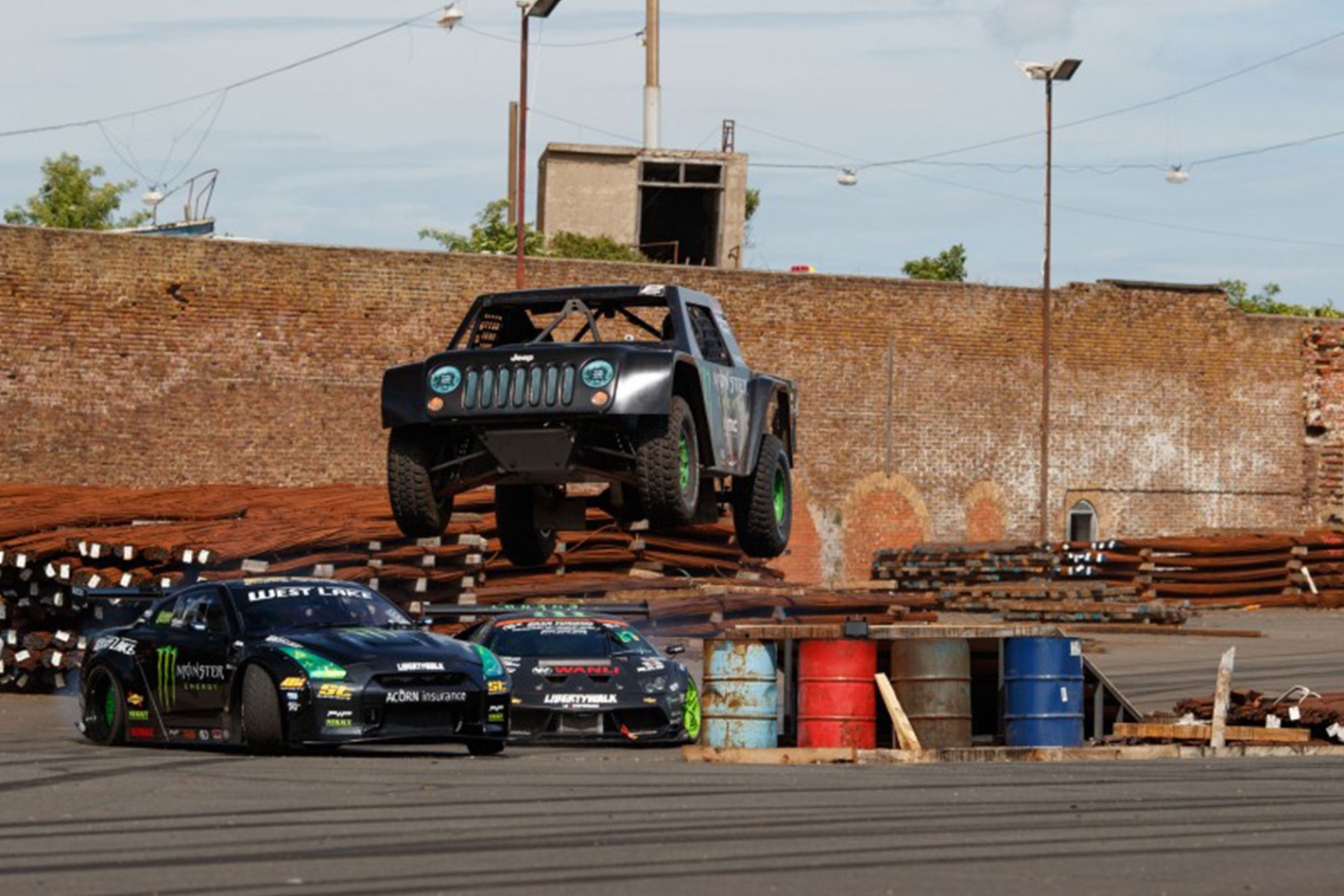
“I pushed the car very hard on the second day of filming, and we have some incredible shots of Baggsy and I going door-to-door around the dockyard, and pulling a doughnut in the abandoned military fort.”
Baggsy adds: “It was insane… probably one of the scariest day’s work I’ve had, jumping straight in the car against Daigo – one of the world’s best drifters – and trying to get to grips with the beast we created.”
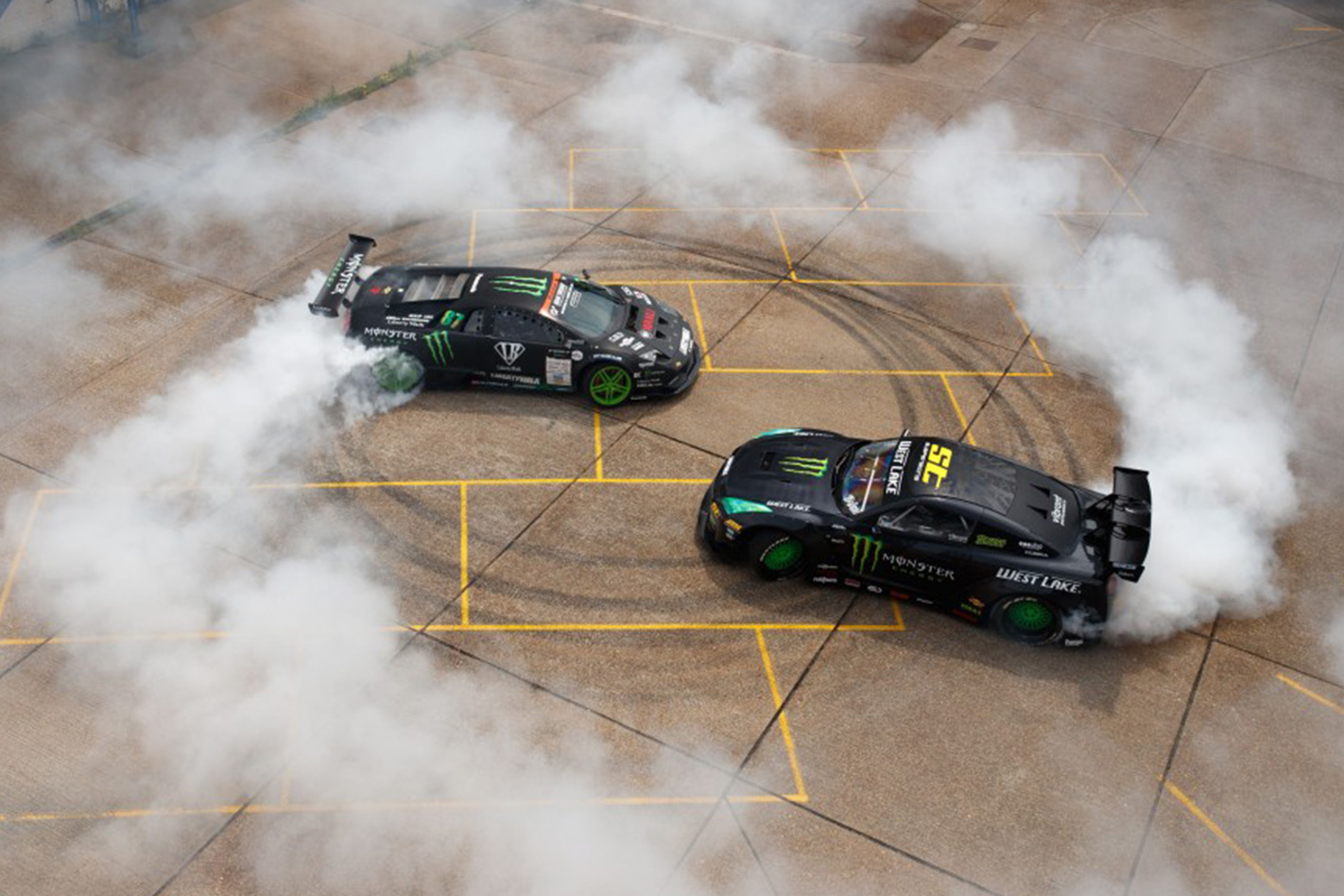
Jumping over Murcielagos and GT-Rs is probably fine if you’ve got Monster’s stunt budget.
Still, if you want to really get a good look at Daigo’s skill with the Lambo, the first video is the way to go.
Re-live it, it’s worth it.
