
If you missed the 24 Hours of Le Mans, why not relive it through sketches?
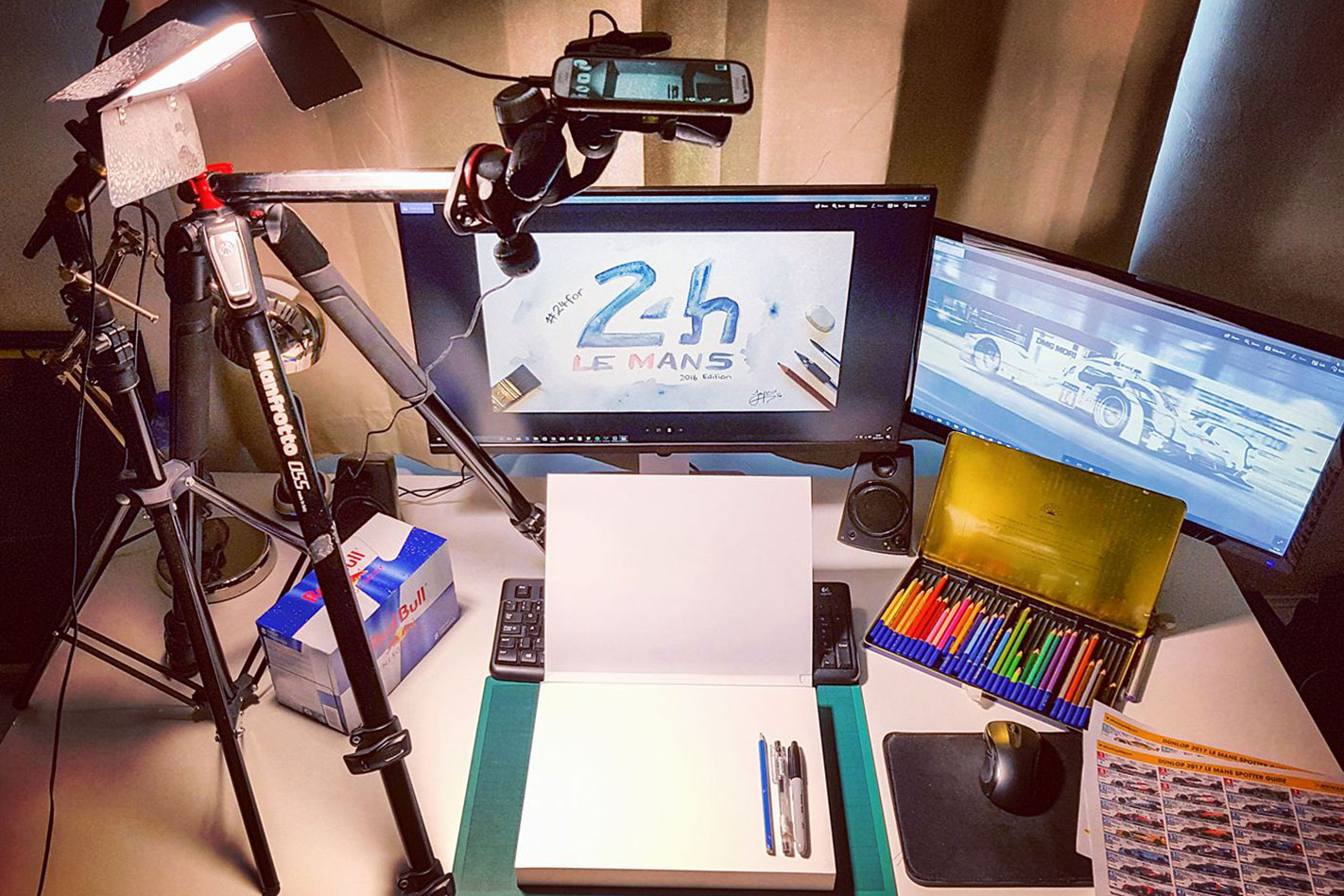
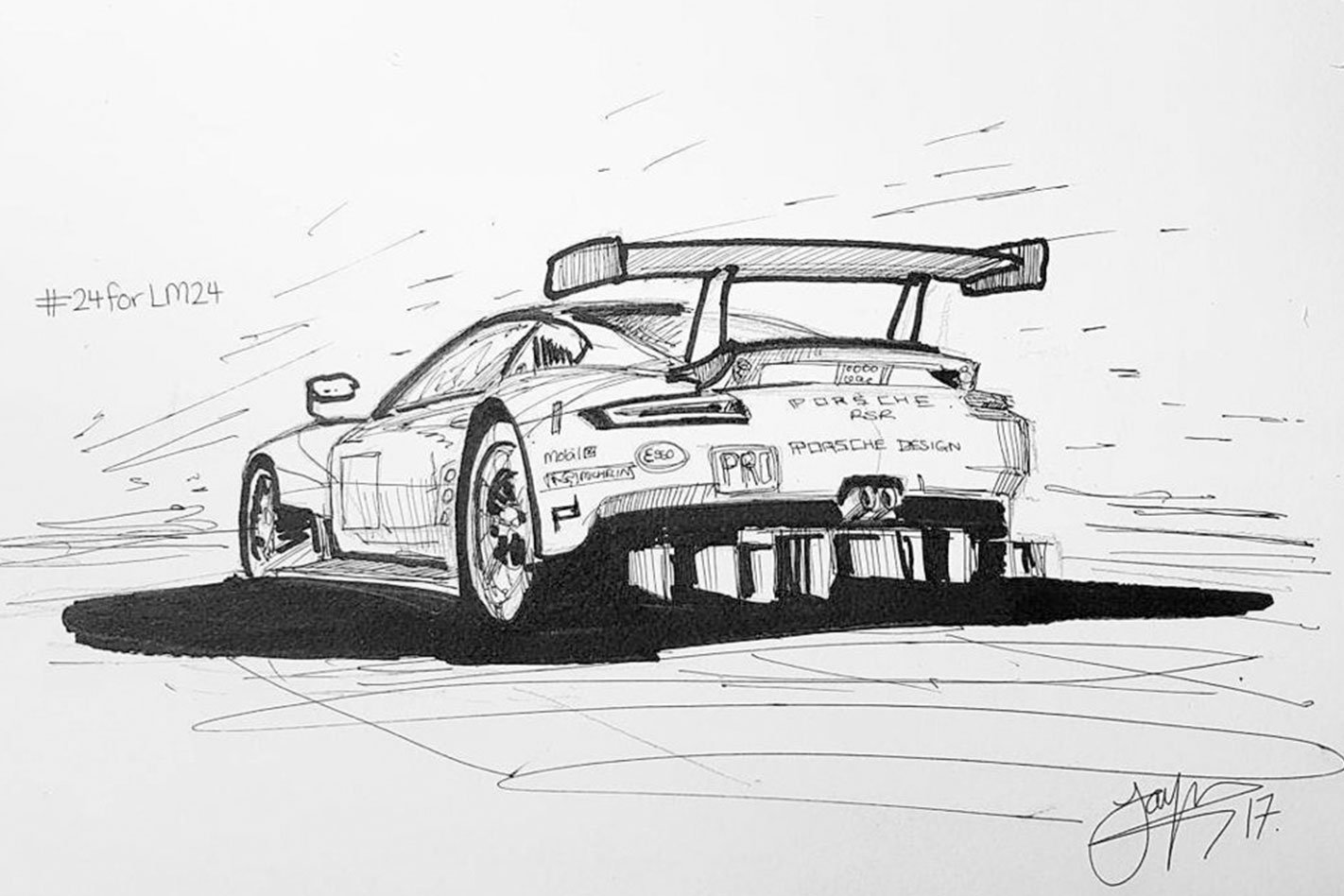
Australian artist and photojournalist Jayson Fong followed the 24 Hours of Le Mans by doing one sketch for every hour which meant that, by the end, he had 24 pretty fantastic drawings.
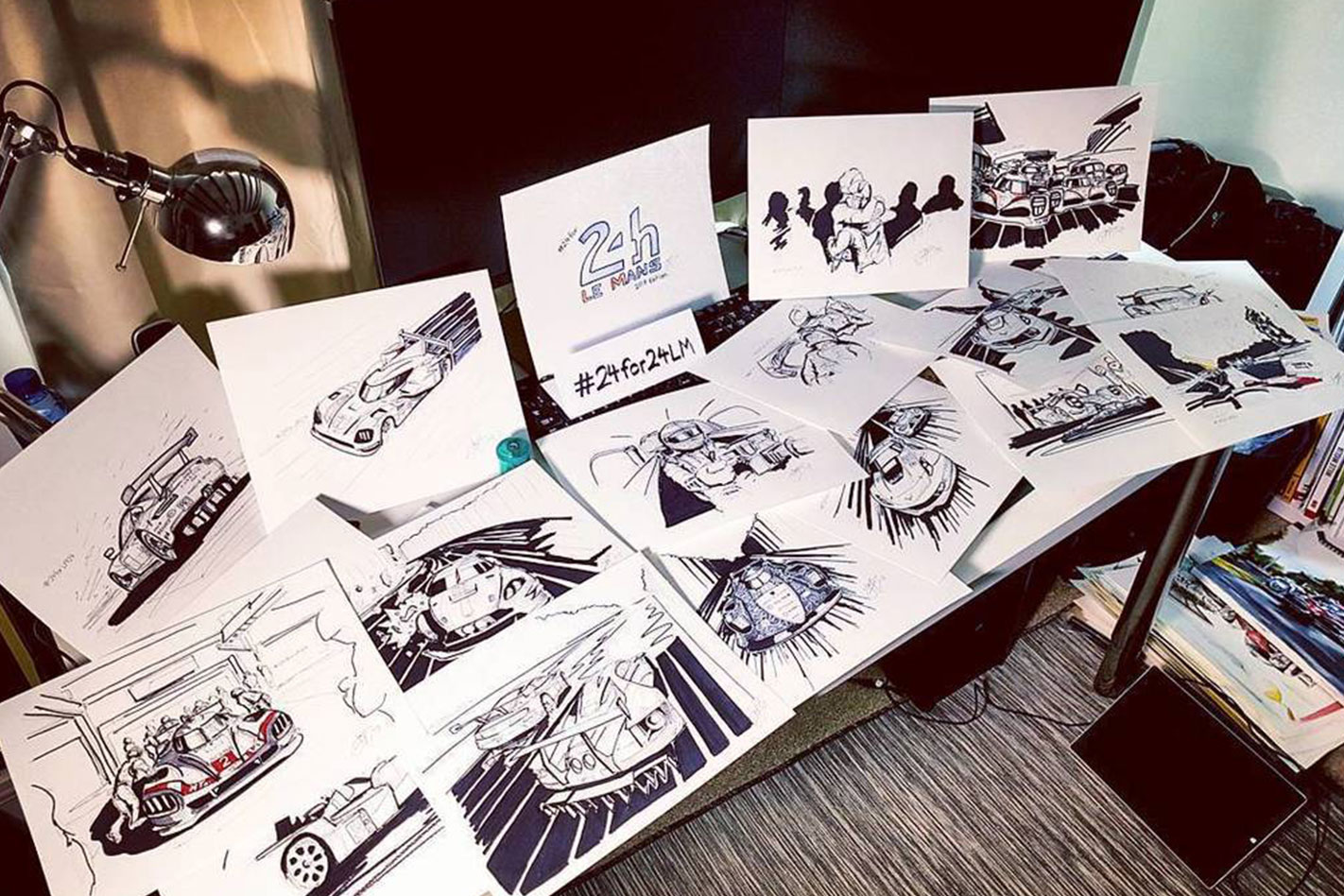
With penultimate sketch was of the Corvette Racing C7 and the Aston Martin Racing Vantage running a close race, which was eventually won by Aston. A Ford GT ended up taking 2nd.
The last sketch depicted the main class and overall winner, the Porsche LMP 919 Hybrid, which beat every other LMP1 car by at least nine laps.
Toyota sets new Le Mans lap record
Our favourite work of his from 2016 has to be the depiction of Toyota Gazoo Racing’s heartbreaking malfunction during the last laps of the race.
https://www.instagram.com/p/BG1eUUwMez3/
If you want to see the rest of Jayson’s #24forLM24 series, his Twitter, Facebook, and Instagram have the whole set.
You can also find his photography, design, and other art work at his Form & Function website.
The Subaru Forester is a practical all-wheel-drive SUV with a good reputation for reliability. Despite the tall ride it has car-like handling but can negotiate tracks and trails better than most of its competitors. It received a facelift last year that includes new-look headlamps, tail-lights and bumpers.
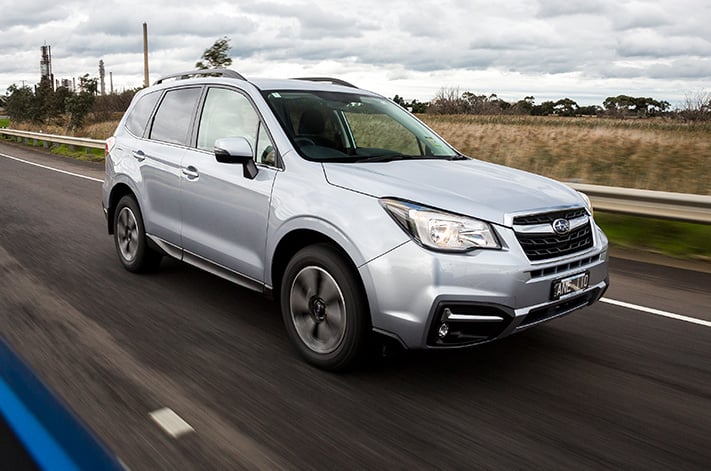
VARIANTS
The entry level Forester 2.0i-L has a 2.0-litre petrol engine and manual gearbox and features a good range of standard features, including a 7-inch touchscreen with reversing camera, dual zone air-conditioning, leather trim steering wheel, cruise control, 17-inch alloy wheels and roof rails.
The 2.5i-L has the same standard features but a more powerful 2.5-litre petrol engine with CVT auto. The provision of Subaru’s “X-mode” traction control helps when venturing off-road or driving in slippery conditions.
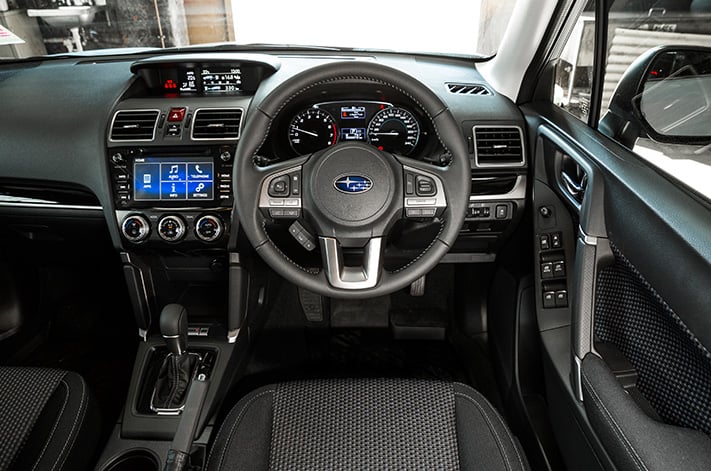
The 2.0D-L carries the same equipment as the 2.0i-L, but with a 2.0-litre diesel engine instead of a petrol. Transmission choice covers a six-speed manual or CVT auto, though manuals miss out on X-mode tech.
The mid-spec 2.5i-S brings satellite navigation, leather trim, heated and power-adjustable front seats, an electric tailgate, rain-sensing windscreen wipers, dusk-sensing LED headlights that swivel into corners and 18-inch alloys. It also comes with Subaru’s EyeSight driver assist system that includes automatic emergency braking, lane departure warning and active cruise control. It’s powered by a 2.5-litre petrol engine with CVT auto.
The 2.0D-S is the diesel version of the 2.5i-S and shares most of its features, however, none of the diesel variants come equipped with EyeSight – an unusual omission.
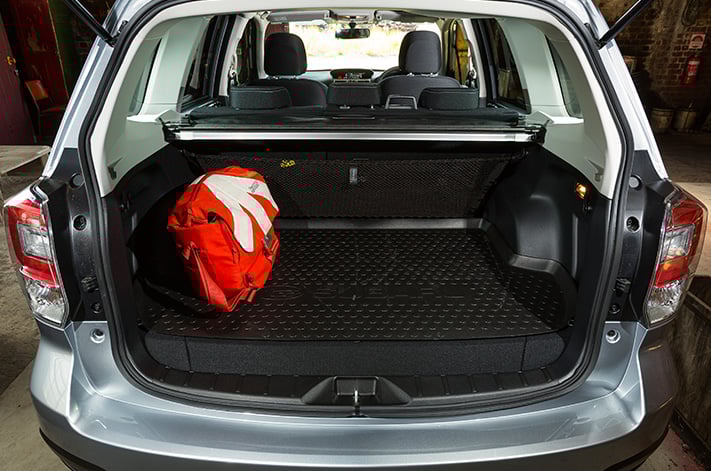
The Forester XT has a more powerful 2.0-litre turbo petrol engine and shares the feature set of the 2.5i-L, including a standard-issue automatic gearbox and X-Mode. Other XT highlights include a power-adjustable driver’s seat and the swivelling LED headlamps from the 2.5i-S.
The Forester XT Premium has all the 2.5i-S’s luxury features plus Active Torque Vectoring, which improves drive in corners by directing more power to the outside tyres to improve grip.
- Forester 2.0i-L petrol, manual – $30,340
- Forester 2.5i-L petrol, CVT – $33,240
- Forester 2.0D-L diesel, manual – $33,740
- Forester 2.0D-L diesel, CVT – $35,740
- Forester 2.0D-S diesel, manual – $39,490
- Forester 2.5i-S petrol, CVT – $39,740
- Forester 2.0D-S diesel, CVT – $41,470
- Forester XT petrol, CVT – $41,240
- Forester XT Premium petrol, CVT – $48,240
OUR PICK
They’re all pretty good, but the 2.0D-L in CVT auto form is the pick of the range. It’s at home in the city and country and offers good performance with excellent average fuel economy of 6.3L/100km, which means greater range than its petrol counterparts. For a country cruiser, it’s the pick.
If you want more luxury inclusions then you can make a solid argument for the 2.0D-S, though the 2.5i-S is a better choice given its stronger suite of active safety features, not to mention its lower pricetag.

AVAILABLE OPTIONS
- Reverse sensors – $863.53
- Rear and front corner multi-function parking sensors – $1491.54
THE Bugatti Chiron is going to have some high-speed competition, with Hennessey announcing it is planning to build a 1043kW supercar capable of 466km/h.
John Hennessey has a habit of producing mega powerful cars with ridiculous top speeds, but the Venom F5 is set to raise the bar even further.
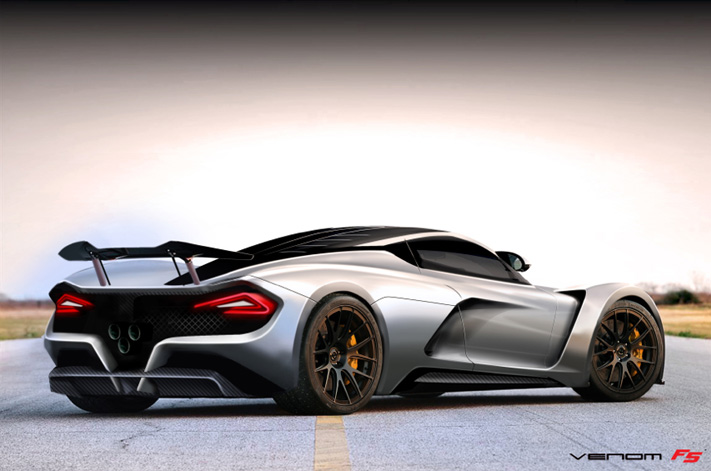
The project shares its name with the most severe category of tornado, F5, which can have wind gusts of 420-511km/h.
The road-faring F5 has some similarly impressive speed figures in its sights.
Dodge Demon to Get Truly Devilish 1119kW output courtesy of Hennessey
“I think something in the 290mph (466km/h) range will be possible,” Hennessey told TopGear.com
That claim shouldn’t be taken lightly either, with the previous generation Venom GT clocking 434km/h, just pipping the Bugatti Veyron Super Sport. That said, the Veyron retains the official fastest car record, thanks to an average 429km/h from a pair of runs up and down wind, while Hennessey’s speed was only recorded in a single direction.
It is reported the F5 will have its own unique chassis, design, aerodynamic package, and a carbon fibre tub.
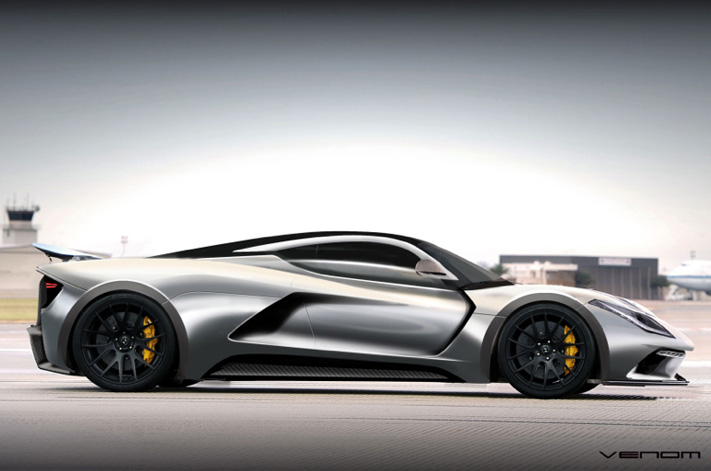
All those ponies will be put to the ground through a single-clutch paddle-shift transmission, or a six-speed manual lifted from the old Venom GT.
The only images of the Venom F5 are a pair of teaser images, revealing a menacing silhouette.
The car will be assembled at a new division at Hennessey’s Texas workshop – dubbed Hennessey Special Vehicles – with its official launched pencilled in for later this year.
The Audi RS3 has received a significant mid-cycle upgrade which includes the addition of an all-new sedan version to accompany the carryover hatchback bodystyle. Here are some interesting facts about Audi’s latest five-pot screamer.
1.
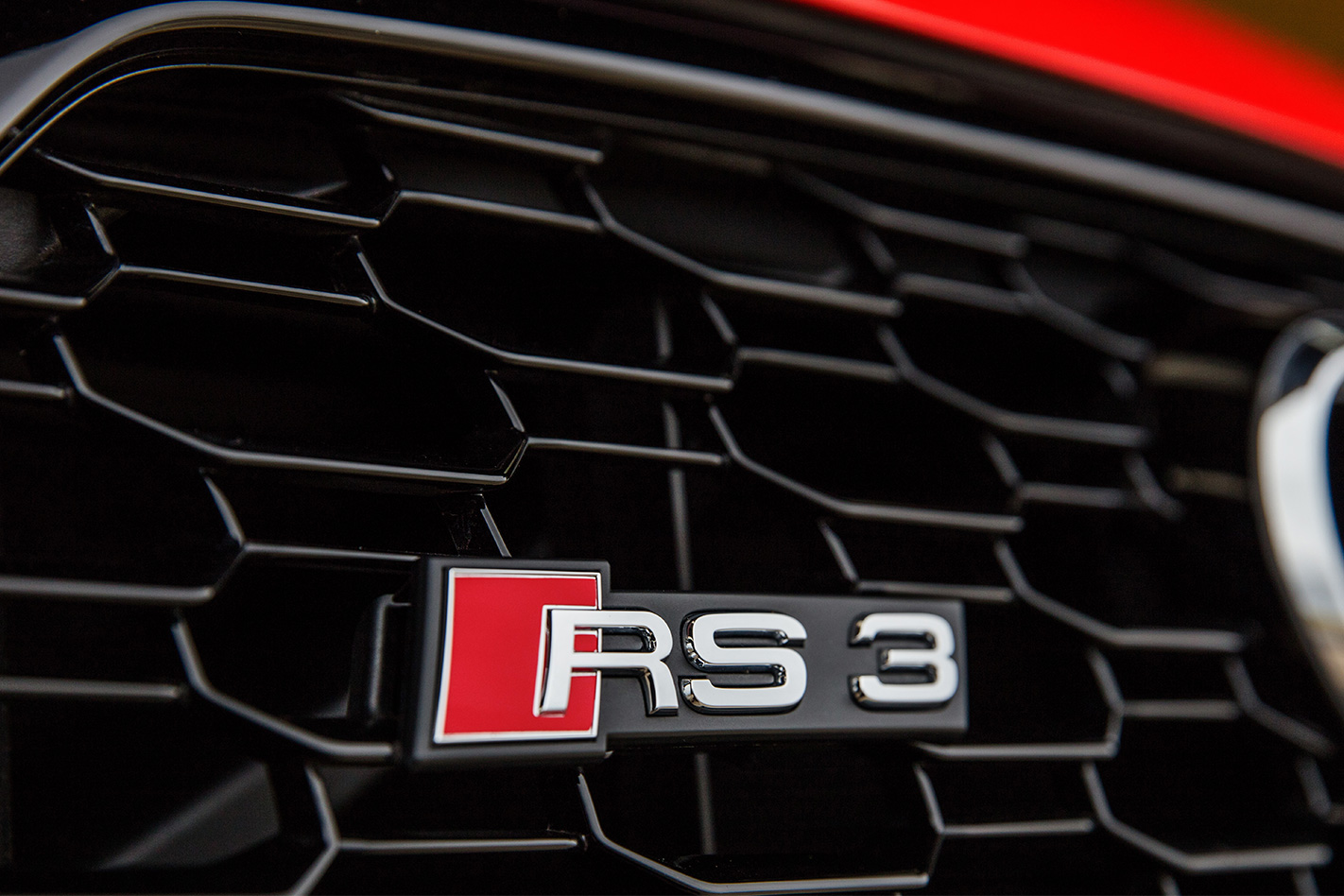
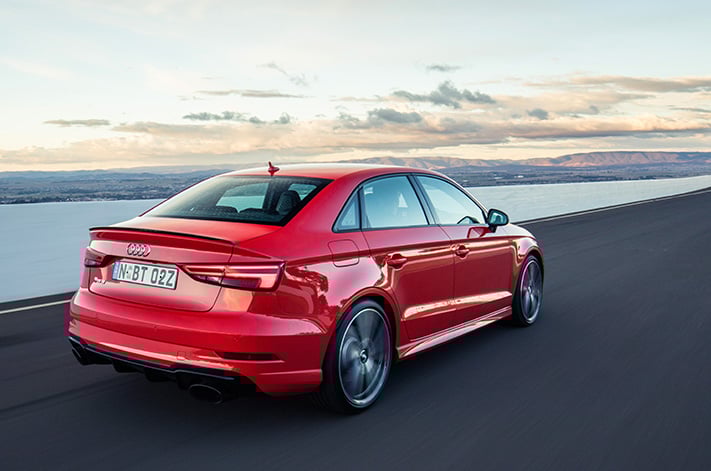
The RS3 sedan is the first compact sedan in Audi’s history to wear an RS (RennSport) badge.
2.
Though it’s been available in Europe since 2011 as part of the previous-generation A3 range, the RS3 badge only made it to Australia in late 2015.
3.
While it’s an all-new car it’s actually part of a mid-cycle upgrade to the RS3, with both sedan and new hatch being almost identical from the B-pillars forward.
4.
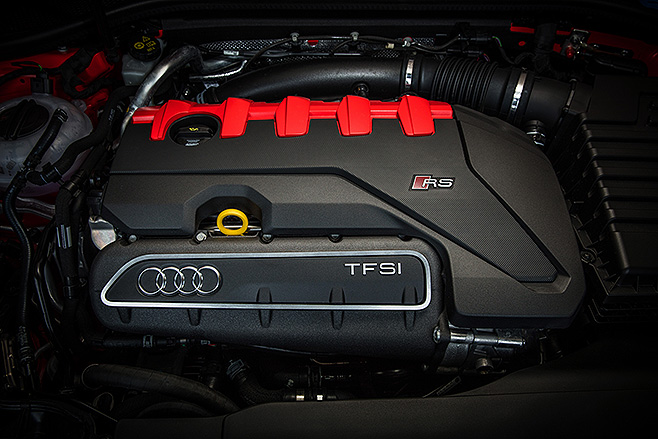
The five-cylinder turbo engine is 26kg lighter than before, thanks to the crankcase switching to an aluminium construction instead of heavy cast iron.
5.
The inline engine is transversely (sideways) mounted and is identical to the one under the bonnet of the Audi TT RS coupe/roadster.
6.
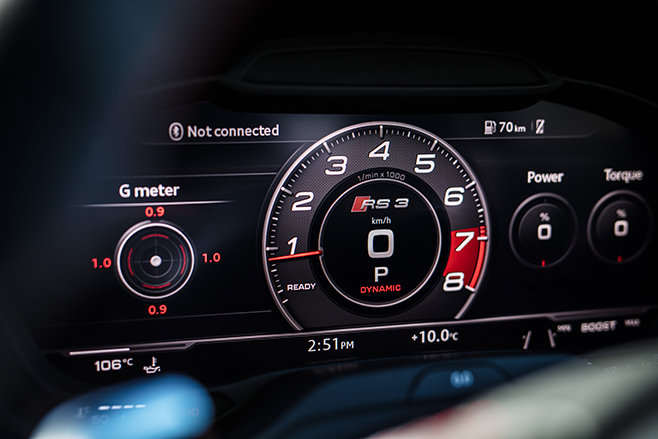
The RS3 sedan has a 0-100 km/h sprint time of 4.1 seconds – 0.2 sec quicker than the old hatch.
7.
A quarter of Audi A3 Sportbacks sold in Australia last year wore an RS badge.
8.
The RS3 sedan became available in Australia before most other markets – the new hatch will arrive towards the end of 2017
Let’s face it. It’s tough to buy a bad hot hatch. Even the most mediocre of their ilk are guaranteed to put a smile on your face from time to time, but there is a genuine gulf between the also-rans in this class and the very best of the bunch.
So to prevent you from landing yourself behind the wheel of something with the lingering aftertaste of buyer’s remorse, and in no particular order, here’s where we’d be directing our dollars right now.
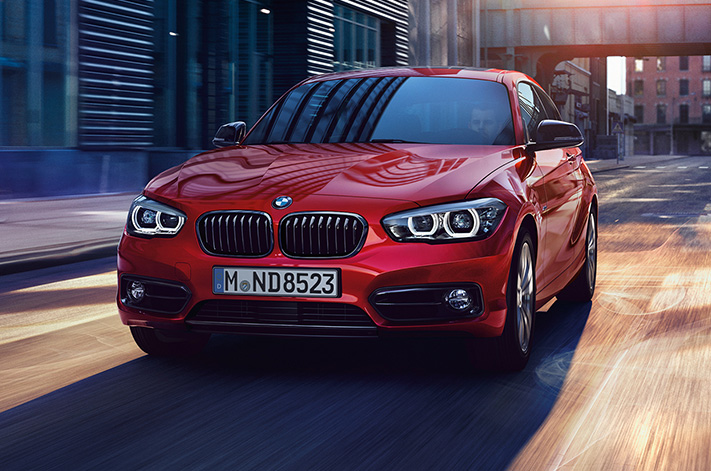
BMW 125i
Munich’s baby punches well above its weight courtesy of a 165kW engine that sends power to the rear wheels. While this might mean that space in the rear seats is a little pinched, it also means great steering, perfect 50:50 front to rear weight distribution and the ability to look down your nose at the rest of the cars here.
It’s quick enough to entertain but thanks to BMW’s EfficientDynamics tech, you won’t cop a bruising at the bowser, returning a fairly saintly 5.9L/100km. Back that up with a 61 percent three-year residual value and this is one you can buy with head as well as heart.
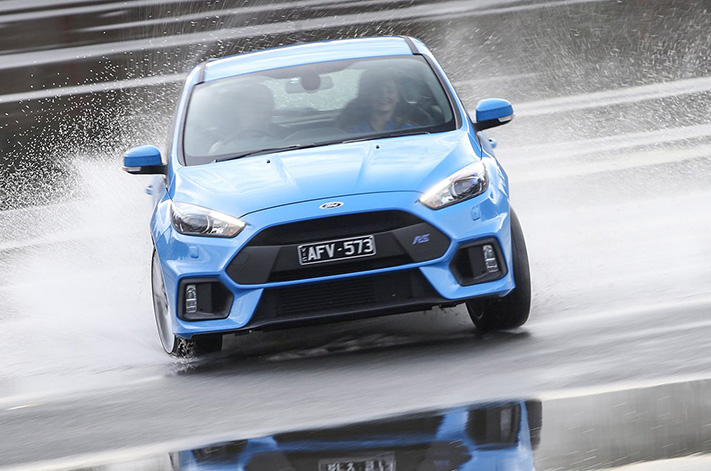
Ford Focus RS
Teasing at the upper limit of our price bracket, the Focus RS is a car you’ll buy for one reason only: because you enjoy driving obnoxiously fast. With all-wheel drive, the blue-collar ballistic missile is never found wanting for grip, but it delivers fun without the fear factor.
It’ll get to 100km/h in 4.9 seconds which not so long ago was the preserve of Italian exotica, and it’ll attract the attention of every Highway Patrol car in your municipality, but if you have the opportunity to take one on track, jump at the chance. Just ensure you have plenty of space before you engage the hilarious drift mode.
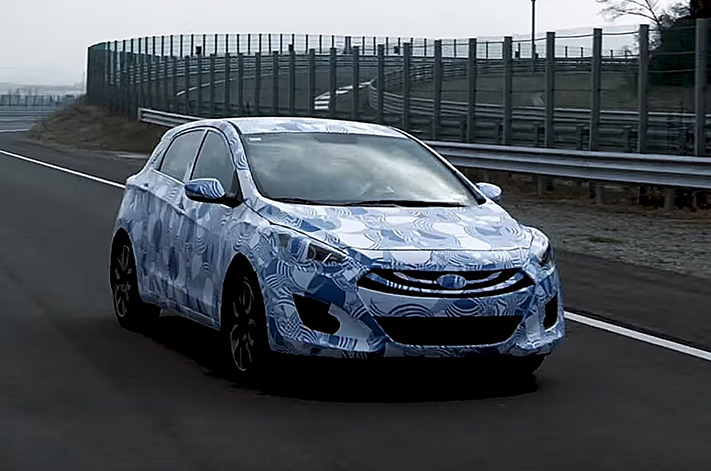
Hyundai i30N
Wait, what? A Hyundai? No, we haven’t lost the plot. Hyundai’s coming fully equipped at the hot hatch market with its i30N. The Korean giant has recruited Albert Biermann, the father of BMW’s greatest M cars, to launch its own go-faster division and the i30N is the first fruit of that investment.
We’ve had an early pedal in the prototypes and they promise great things. Both 184kW base guise and 202kW Performance spec are well worth a look. If Hyundai can get Australian pricing right, this one might well upset the establishment.
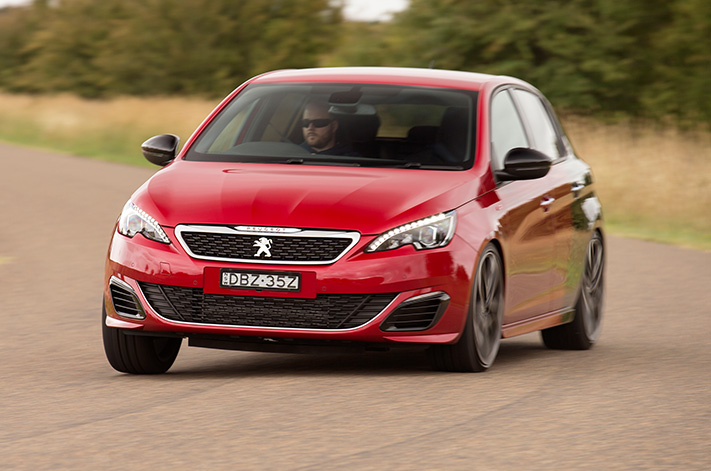
Peugeot 308 GTI
There’s been a long and distinguished line of Peugeot hot hatches, but even the most ardent fans of the marque will admit that the French company went through a major fallow period from the end of 306 GTI-6 production in 2002 until this model, the 308 GTI appeared.
That’s thirteen years of disappointment that the 308 GTI had to atone for. Thankfully it’s excellent and it keeps on getting better. The latest GTI 270 model is a three-pedal 200kW rip-snorter that’ll have you wondering how Peugeot ever managed to take their eye off the ball. If a Golf GTI is a bit too establishment, here’s your ride.
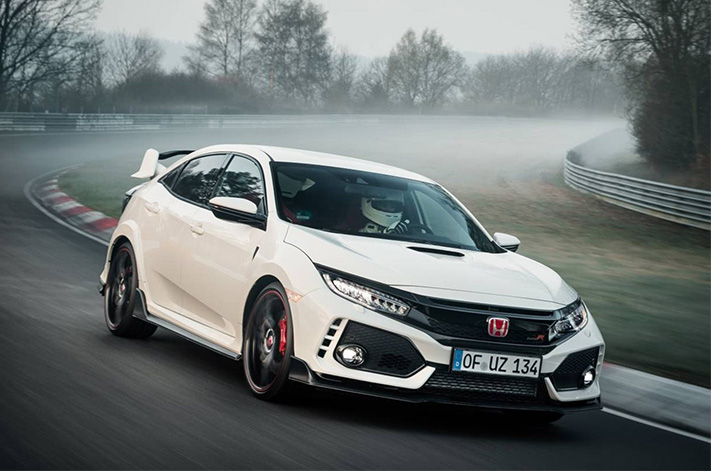
Honda Civic Type R
With Renaultsport’s Megane 275 bowing out of the reckoning and the new hot Megane a way off, a space has opened in our shortlist for something equally wild and in screeches Honda’s hair-trigger Civic Type-R.
It’s officially the fastest FWD production car around the Nurburgring, but if you don’t give a hoot about bridge to gantry times, you’ll probably be happy with the fact that the 235kW Civic is also the fastest-looking hot hatch you can buy; all spoilers, intakes and slashing swage lines. It certainly isn’t subtle but it’ll win you over with its sheer purity of purpose.
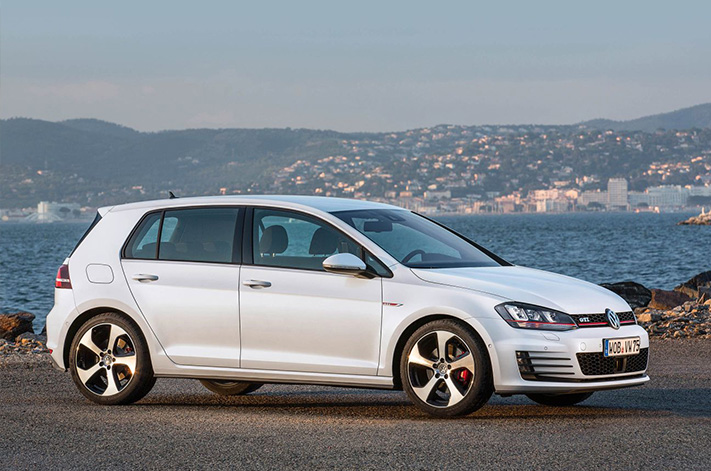
Volkswagen Golf GTI
The Golf might be the most sensible by here, but it’s still a stack of fun. The standard 162kW GTI is available in either manual or DSG automatic guises, or you can step up to the GTI Performance that ekes another 7kW out of the engine albeit without the option of three pedals.
You’ll need to get in fairly quick, as a revised Golf 7.5 is on the way, so there may be the odd run-out special on the outgoing Golf 7 GTI. If you want a hot hatch that does everything, your search should begin and end with this one.
AUSTRALIANS spend roughly $1 billion dollars on speeding fines in a single year, Wheels has calculated.
Derived from state-by-state figures, the headline number indicates the current focus on speeding from road safety experts and police is generating plenty of cash for the state governments, and the tally is set to grow.
Victoria remains the most heavily-fined state, with over $350 million poured into the state’s coffers during the 2015-16 financial year.
The $356,469,497 in revenue was collected by Victoria’s network of fixed speed and red-light cameras alone, meaning fines collected by police with radar guns and mobile units are not included.
Queenslanders are next on the list, with almost a quarter of a billion dollars being collected from the state’s motorists.
Meanwhile Australia’s most populous state, New South Wales, was third on the list, with over $175 million being raised in fines during the 2015-16 financial year.
Police issued $75,201,927 of those fines during traffic stops, while fixed speeding cameras collected an extra $103,394,365 from the state’s drivers.
South Australia wasn’t far behind though, with a report from the Australia Institute stating $174 million in revenue was raised during the 2014-15 financial year, equating to an average of $103 per person that was nabbed.
In Western Australia, revenue from speeding and red-light fines is channelled into the Road Trauma Trust Fund, which uses that money to improve driver safety.
As Australia’s smallest state, Tasmania sits at the bottom of the list. Justice Department figures quoted by The Advocate newspaper show just $950,499 was collected in revenue from all speed camera infringements in 2015.
On a per-capita basis, South Australian drivers were the worst hit.
Using 2016 population stats, SA residents paid on average over $100 each in fines per year. Next was Victoria with an average of $58 in fines per person, ahead of Queensland ($46), Western Australia ($41), New South Wales ($22), and Tasmania ($2).
Australian engineering is a wonderful thing.
While it’s a shame that we’re so close to losing our last few remnants of Aussie automotive manufacturing, there’s some solace in the fact that we still have plenty of other things to tinker with…and that there are people with the bravery and creativity to do it.
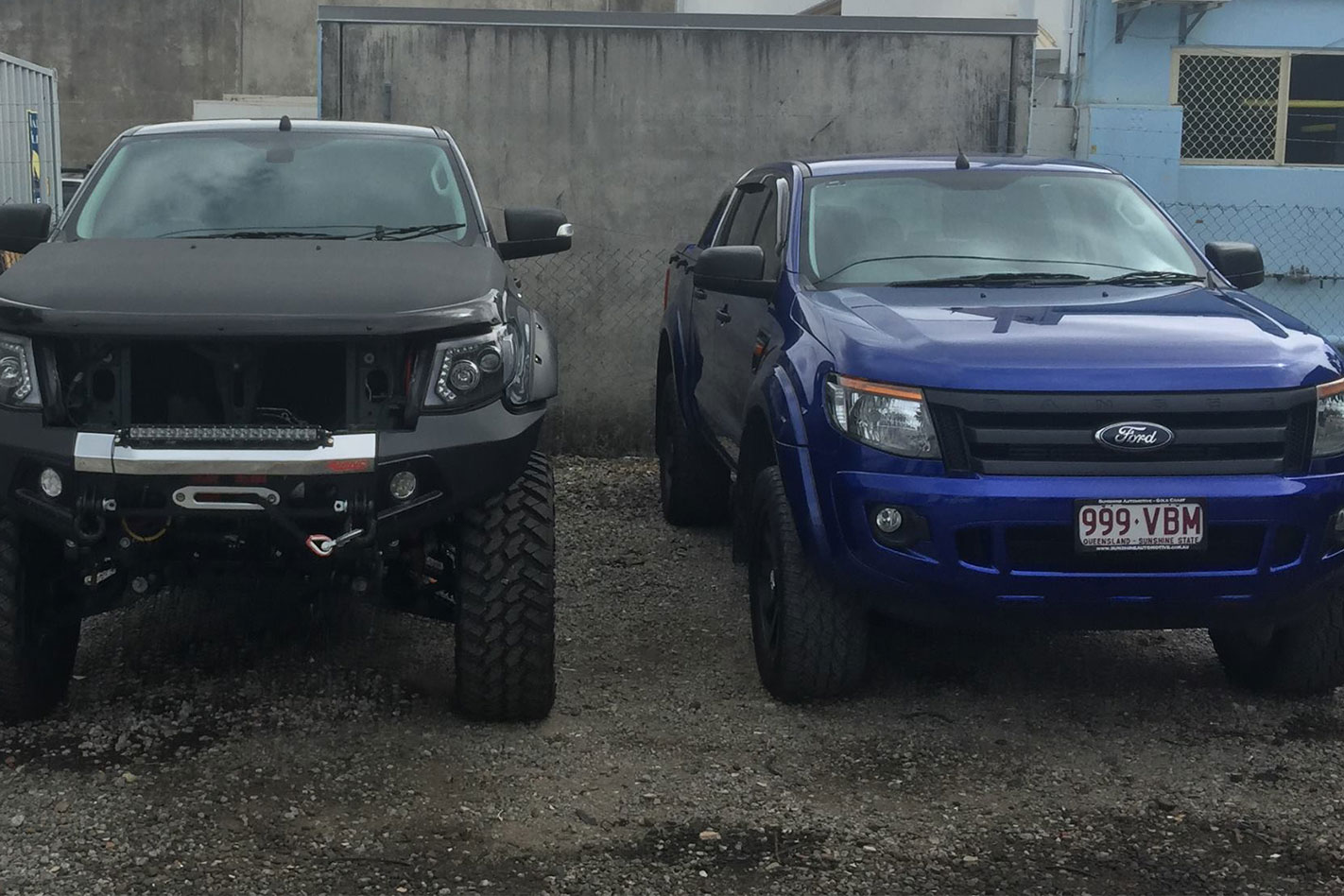
Each year, the team at Diesel Leaders takes on a project outside of their usual truck repairs and tuning.
In 2016, they decided to build an Aussie Raptor.
We tried to contact Diesel Leaders to tell us about it, but they were probably flat out getting Kenworths running tip-top – we’ll bring you the build story when we’ve had a proper chat with them.
Tickford Ford Ranger quick review
However, Real Dyno Performance was handed the keys to the Ranger after it was built to get it running as mean as possible.
What we found out from them is that the thing is a beast.
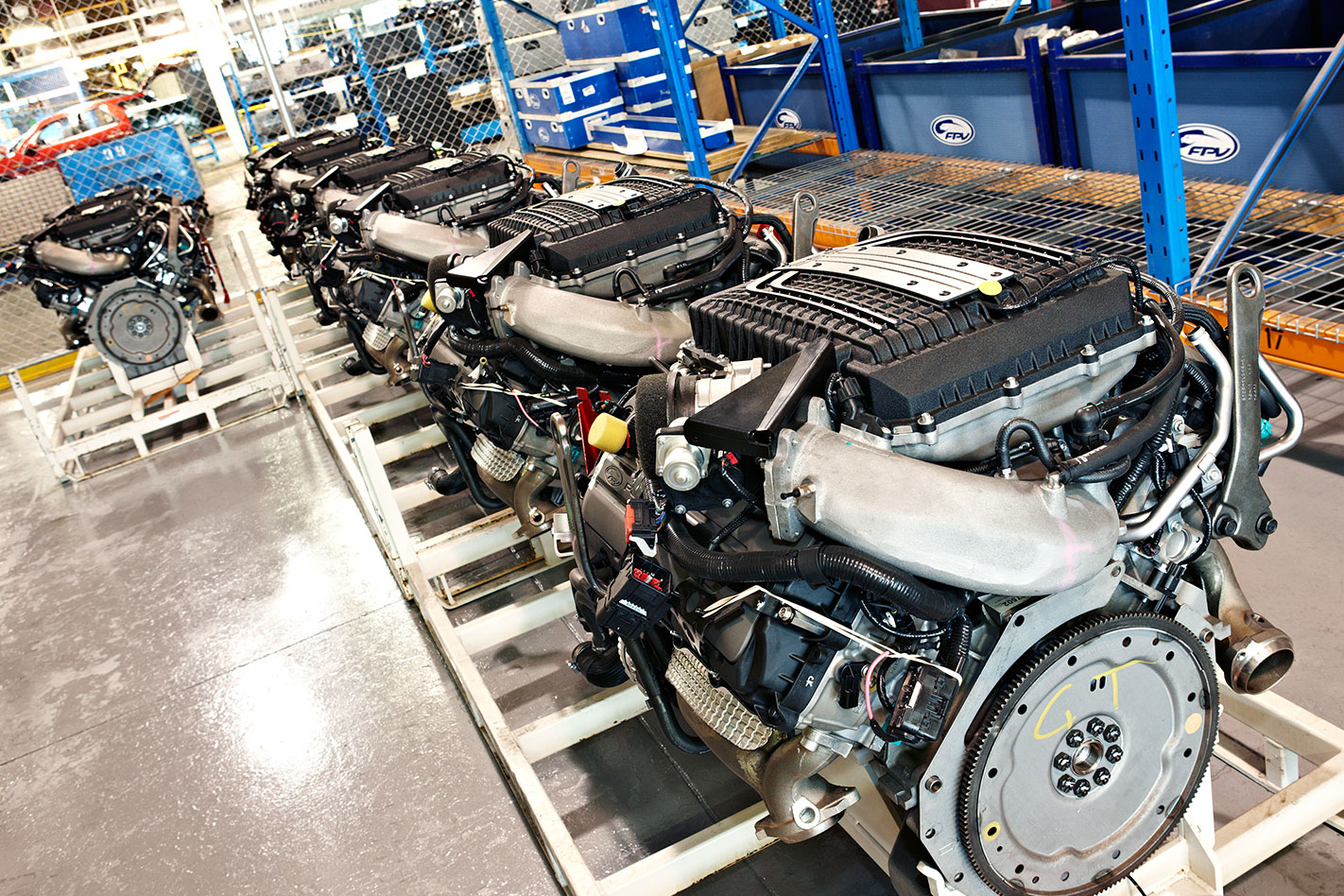
5.0-litres of supercharged Ford V8 was able to put 252kW through the rear wheels while retaining the ability to go 4WD.
620kW daily driven Ford Territory
After Real Dyno was done with it, it was putting out 344kW.
Lee Bloom, the boss-man at Real Dyno told MOTOR it was a good looking build, and that everything looked well engineered.
“It’s such an awesome thing… I even thought about one for myself!
SuperUtes racing announced for 2017
“It felt like driving a GT… just a couple of feet taller.”
He said that Diesel Leaders originally intended for it to be a five week build, but it ended up being more like six months.
That’s probably enough evidence you’ll ever need that you can’t rush art.
IT’S almost irrelevant that today’s rally cars are faster, Group B is still seen by most fans as the scariest, wildest, most extreme period in rallying history.
It spawned the craziest homologation cars and although its tenure was short, running a mere four years from 1982 to 1986, it’s remembered as a period when power probably outstripped the means by which to control it. In those four years, the amount of power required to win rallies doubled from around 225kW to about 450kW.
Roadgoing Group B homologation cars remain rare. With the development of Audi’s quattro in 1979, new rules were required and in October 1980 FISA ratified a trio of updated classes. All-wheel drive was now allowed, and cars would fall into one of three categories: Group N, representing production cars; Group A, representing modified production cars; and Group B, representing purpose-built “sports cars.” Only 200 cars needed to be built to homologate for Group B, and the rules were incredibly lenient.
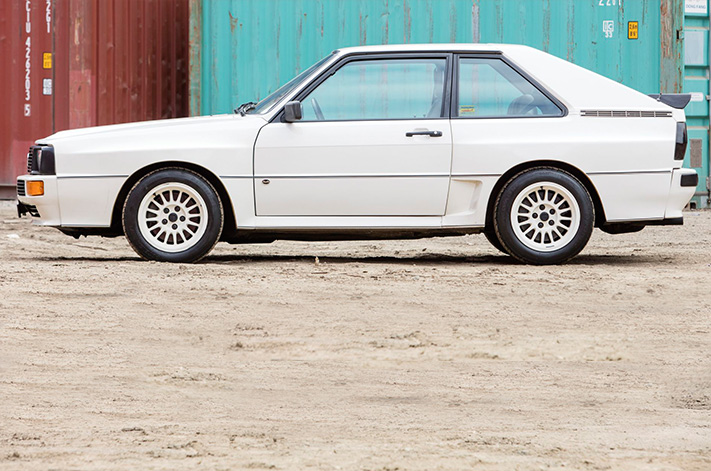
Seeing some of the greats of Group B assembled in one place is something. Knowing they’re all up for sale is even better. What we have here is a collection from a single owner of six Group B cars and one of their forebears, the iconic Group 4 Lancia Stratos.
The Stratos needs little in the way of introduction. Think Sandro Munari and Bjorn Waldegaard sideways on the Col de Turini, eye’s wide, sawing at the wheel in an attempt to keep the spiky, oversquare wedge pointing in vaguely the right direction. This car is the roadgoing HF Stradale, chassis number 0000008, which is a lot of zeroes. With less than 12,700km on the clock, this 1975 car has an authentic patina of age and that space-age shape might just have been Marcello Gandini’s finest work outside of Sant’Agata.
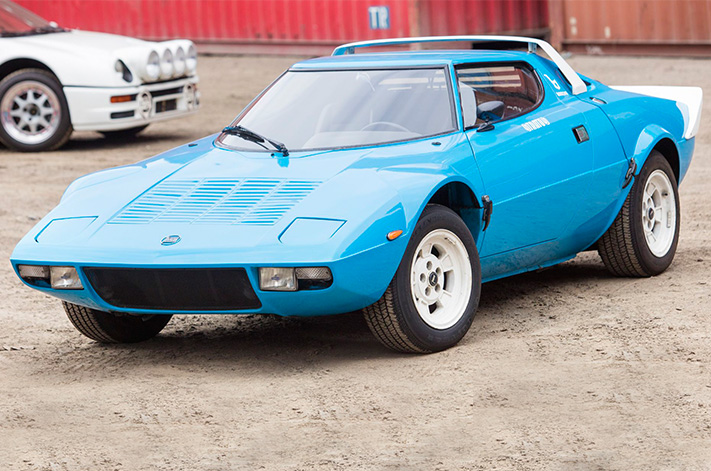
In 1983, at the hands of Walter Rohrl, Markku Alen and Roberto Bettega, Lancia did the unthinkable and beat the Audi Quattros of Hannu Mikkola, Stig Blomqvist and Michele Mouton. Showing less than 9,400km, this Stradale version generates a mere 153kW from its supercharged 2.0-litre mid-mounted four, although the rally versions tended to generate around 210kW.
By 1985, Lancia had become a bit more serious, realising that rear-wheel drive just wouldn’t cut it against a new generation of smaller, angrier Group B cars. The response was the Delta S4. Effectively a re-engineer of the 037 chassis with all-wheel drive and a supercharged and turbocharged 1.8-litre four, the engine could easily best 375kW.
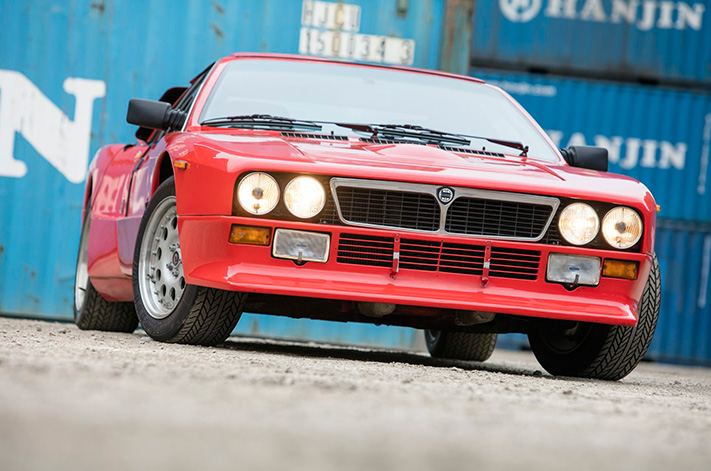
Of course, Lancia wasn’t getting a free run at Group B. The car that kicked everything off, Audi’s Quattro was back, responding to the new crop of challengers that were nimbler and more focused than the big A1 and A2 quattros.
The Sport Quattro shaved weight by the relatively simple expedient of lopping 320mm out of the car’s wheelbase. It was actually a bit more complex than that, the Sport getting the steeper-pitched windscreen from the Audi 80 sedan to help cut reflections, a carbon-Kevlar body and far wider wheels.
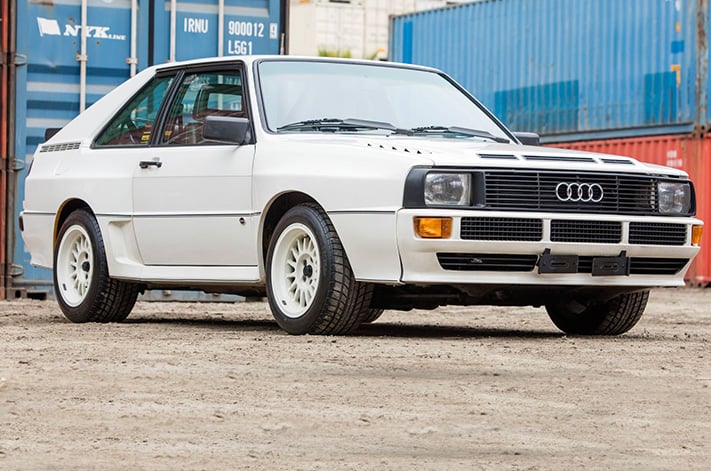
This ‘Squat’ is a one-owner from new vehicle and is perhaps the most civilised of all the roadgoing cars here, with a slick Alcantara and suede interior and fascia that differs little from the standard ur-quattro road car. Bar perhaps the signature of Walter Rohrl on the car’s steering wheel.
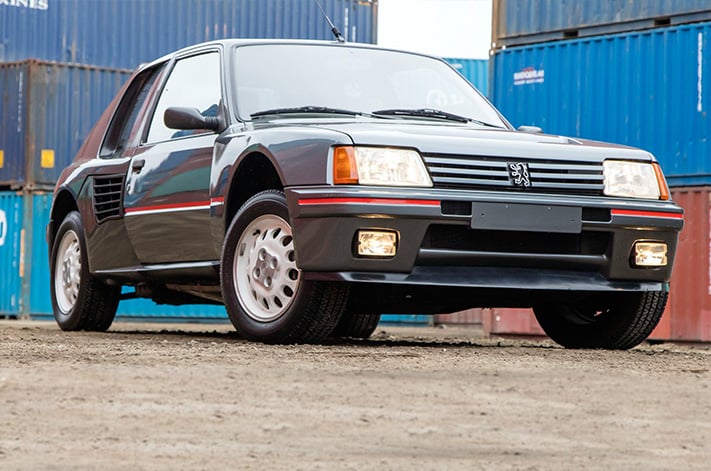
If the quattro was a car that perhaps dined out a little on its reputation in later years, that accusation certainly couldn’t be levelled at the Peugeot 205 T16. In any objective capacity, this is the doyen of Group B rally cars.
With sixteen WRC victories (split between Timo Salonen with seven, Ari Vatanen with five, Juha Kankkunen with three, and Bruno Saby with one win to his name), the 205 T16 won the constructors’ title in both 1985 and 1986 with Timo Salonen and Juha Kankkunen taking the respective drivers’ titles.
Ford almost missed the Group B party. Designed by Ghia and rushed into production by subcontractor Reliant featuring a raid on parts bin pieces, the RS200 included a Sierra windscreen and cut-down doors, and only competed in one season of WRC before the terrible accident at Rally Portugal effectively ended the category.
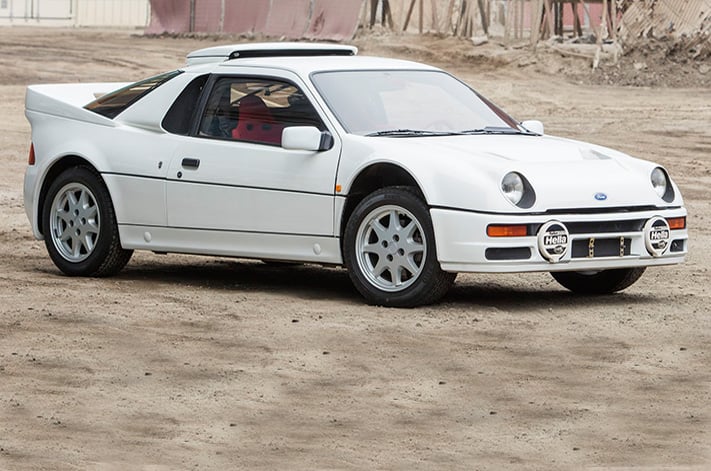
The RS200 ultimately met with quite an ignominious end. Unable to compete in rallying, most of the competition cars were wrecked on the European rallycross circuit. Then, to add insult to injury, the original bodywork tooling was purchased by Banham Conversions, who used it to make a front-engined kit car version based on the Austin Maestro. The horror.
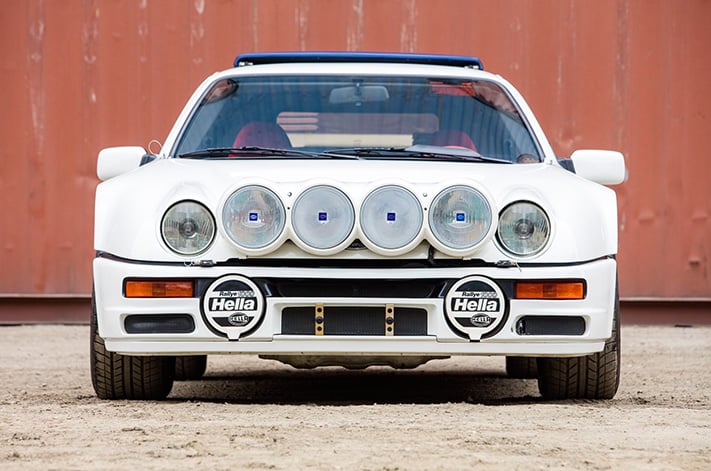
Bonhams Quail Lodge auction is held on 18th August 2017 in Carmel, California during Monterey Car Week. Even if rally refugees aren’t your thing, it’s worth checking out the rest of the consignment list here.
TO finish first, first you have to finish. We salute those who achieve this by any means necessary.
1. Clint Bowyer – 2007 Daytona 500
This could really only have been bettered had Clint been first to the chequered flag. Unfortunately he only registered 13th place, but crossing the line at the Daytona 500 on your roof, on fire, has to earn you an instant entry into the Hall of Fame.
As the field headed up the front stretch towards the line on the last lap, around a dozen drivers thought they were in with a genuine shot. Race leaders Kevin Harvick and Mark Martin were trading paint but in the background, all hell suddenly let loose.
Clint Bowyer’s #07 Jack Daniel’s Chevrolet, ended up skimming across the line on its roof, before sliding to the infield and popping itself right-way up again.
2. Jack Brabham – Sebring 1959
Sir Jack Brabham won his first Formula 1 world championship on foot. In the 1959 season ender at Sebring, Brabham was vying with Stirling Moss and Tony Brooks for the title. Qualifying ended with the trio on the front row of the grid.
Moss retired after five laps and Brooks was rammed by Ferrari team-mate von Trips, leaving Brabham with a clean shot at the title. Two turns from the finish, his Cooper-Climax started to sputter and then rolled to a halt 400m from the finish line.
The rules stated that Brabham needed to finish without external assistance, so he exhorted race marshals to stay away from the vehicle as he pushed it across the line to fourth place, winning Australia’s first ever driver’s world championship in the process.
3. Logan Gomez vs Alex Lloyd – Chicagoland 2007
So here it is. Officially the closest finish ever in a car race. Gomez pipped Lloyd in this Indy Pro Series round by an official 0.0005 of a second, or five ten-thousandths of a second. At 302.5km/h that’s a 42mm margin of victory.
Fortunately, the IRL added a fourth decimal point to its timing and scoring system in 2001, becoming the only motorsports sanctioning body in the world to score to ten-thousandths of a second, otherwise the pair would have been dead-heated.
4. Ricky Craven and Kurt Busch – Nascar Darlington 2003
This was like trying to part a pair of rooting cats. After overcorrecting into one another and locking wheels in the run to the flag, it was only the big nose of Ricky Craven’s Pontiac that broke the beam 0.002 ahead of Kurt Busch’s Ford in NASCAR‘s closest finish since it went to electronic timing in 1993.
5. Tommi Mäkinen – Rally GB 1998
The final round of the 1998 World Rally Championship was one for the ages. On stage 6 at the Millbrook proving ground, defending champ Tommi Mäkinen, a contender for the title with Carlos Sainz, struck a concrete block, collapsing the right rear wheel and suspension unit of his Mitsubishi Evo.
Undeterred, the Finn continued, the wheel eventually flying off. He crossed the line on the event with three wheels but then had to drive the car on public roads to service. The local plod took a rather dim view of this, pulled him over and he was disqualified from the rally.
Carlos Sainz looked a shoo-in for the title, but unfortunately his Corolla blew up on the final special stage, leading to his famously frustrated helmet through rear window moment.
No more HSV GTSs are to roll off the Clayton production line, as the final unit has been built and sold.
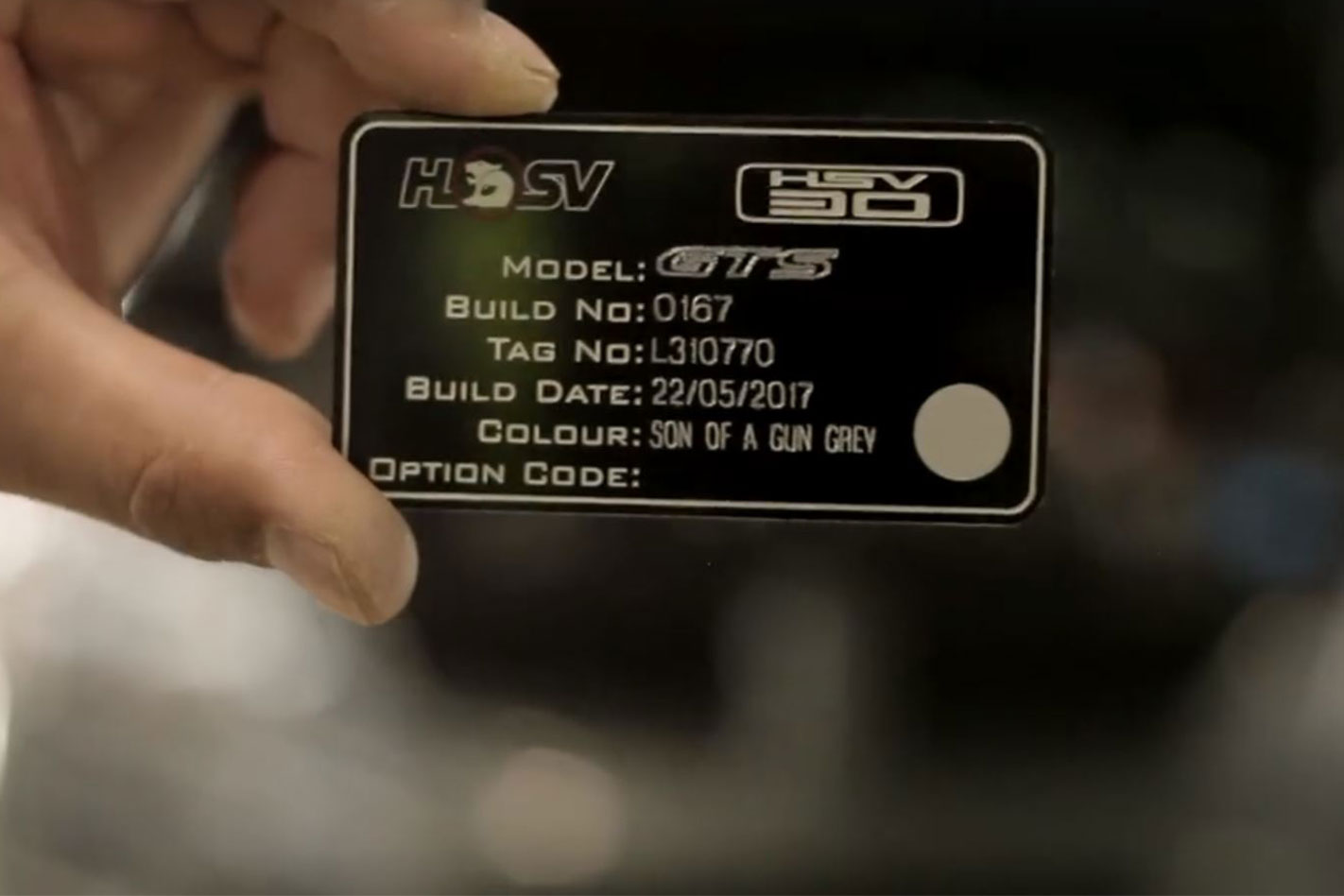
Many enthusiasts will be pleased to find out that the last GTS was manual, and painted in HSV’s Son of a Gun Grey.
Build plate and certificate aside, there’s nothing about the car that sets it apart from other any other VFII GTS.
After 25 years, 12,012 units of various GTSs were built, with the last series of GTS being the most powerful by far.
HSV marketing and product planning manager Damon Paull told MOTOR that the GTS was arguably the cornerstone of HSV’s success.
“The first GTS was a VP, which we built in 1992. I had a look at our documents and found that its RRP was $53,750, probably before on-roads,” Paull says.
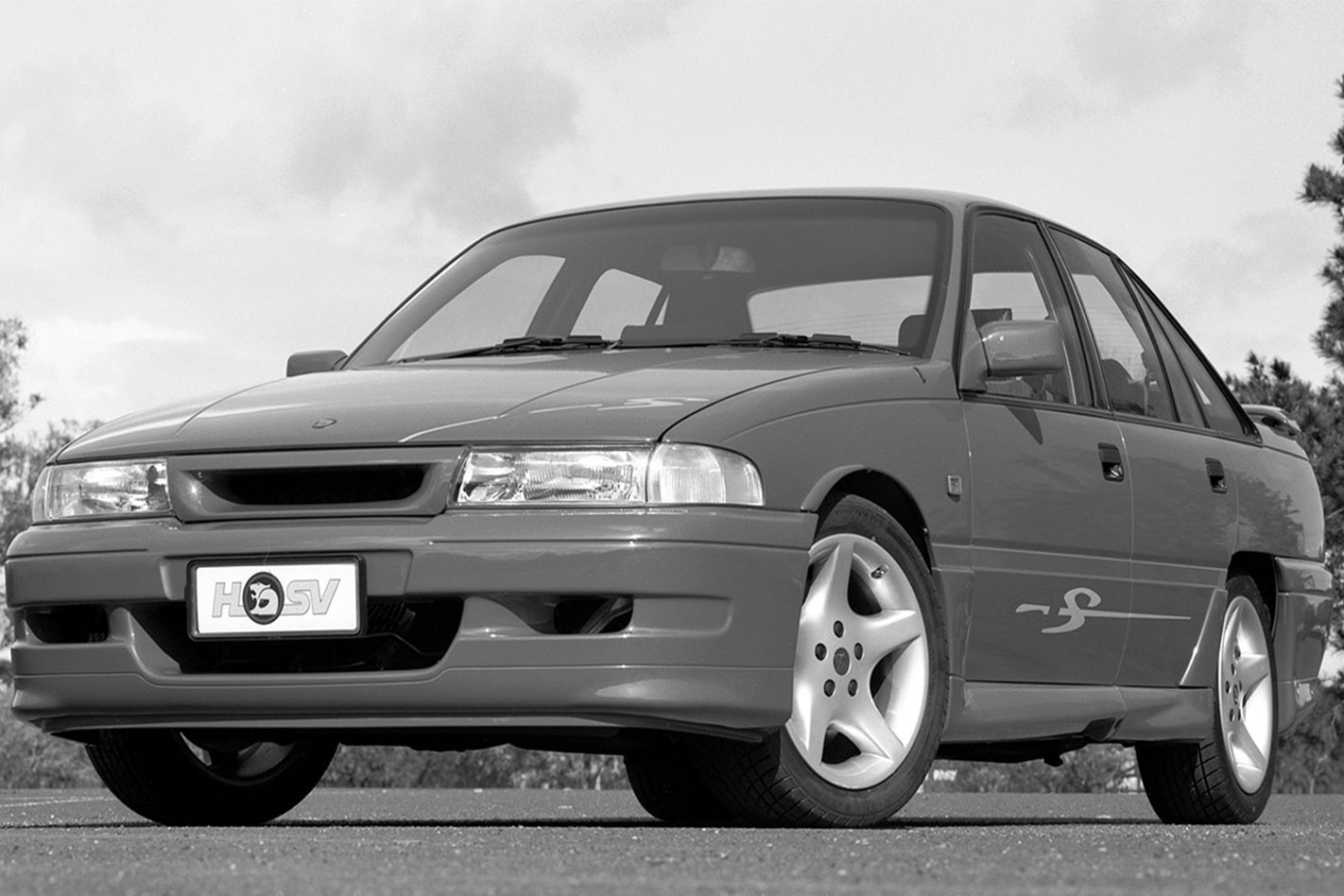
“The final GTS was a manual. Even though automatics are so good these days, getting onto an on-ramp and dropping it into second-gear just puts a smile on your face.
30 Years of HSV: VT Series 2 GTS
“According to our records, this was the 12,012th HSV GTS that we’ve built over the years.”
“The GTS has been such a significant nameplate, and it’s really been the iconic HSV. Over the years it’s contributed so much to the HSV brand.”
Whoever they are, they’ll be driving home in the last piece of a 25-year-long legend.
