In our Fast Facts series, WhichCar delves deep into the history of automotive brands to bring you fascinating facts and intriguing information. Here we focus on Fiat, the mighty Italian industrial group owned by a family that’s been compared with America’s Kennedy dynasty.
BIRTH OF AN ITALIAN INDUSTRIAL GIANT
The Società Anonima Fabbrica Italiana di Automobili Torino – or FIAT – was established in 1899, with a first production facility built the following year. It formed part of a broader industrial empire that covered areas including rail, marine and aircraft.
THE AGNELLI DYNASTY
Fiat was founded by Italian industrialist Giovanni Agnelli (1866-1945) and descendants continue to run the automotive empire. Current chairman John Elkann is the grandson of Gianni Agnelli, who died in 2003. He also heads the billionaire Agnelli family’s investment company, Exor, which holds just over 29 percent of the shares in the Fiat Chrysler alliance (more on which later).

EXTRA-CURRICULAR INTERESTS
The Agnelli family isn’t just involved in cars. Its vast range of interests include Italian football club Juventus, which it was first involved in with in 1923, while it also bought into the Economist magazine in 2015.
FIAT-POWERED RECORDS
In 1934 a Fiat AS6 aircraft engine propelled a Macchi-Castolidi M.C. 72 to 709.2km/h – a world record for a propeller-driven seaplane that still stands today. Six years later, the company’s rail division, Fiat Ferroviaria, broke the world speed record in the diesel-engine category when its Fiat 016 surpassed 160km/h.
BOOM-BINO
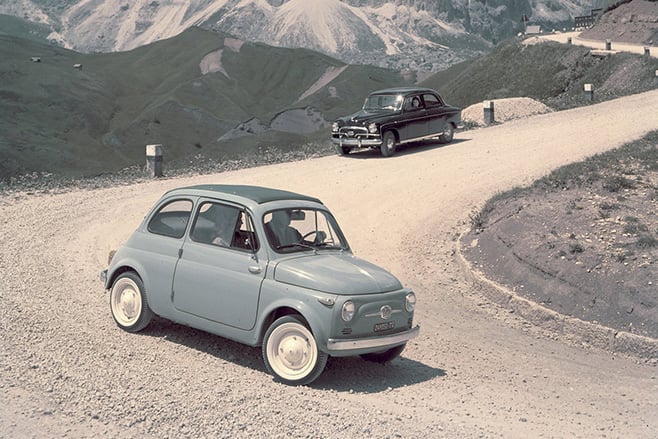
After the travails of the Second World War, Fiat resumed full-time car manufacturing – benefiting from Italy’s 1950s economic boom that saw the cars-to-population ratio grow from 1949’s one car for every 96 inhabitants to one car for every 11 by 1963. Fiat’s first rear-wheel-drive passenger car, the 600, proved to be popular beyond that period, but it’s the original, 1957 ‘Cinquecento’ – the tiny, two-cylinder 500 – that is responsible for putting about four million Italians on the road. It becomes affectionately known as the ‘Bambino’.

FIATS WITH A STING
Carlo Abarth was initially an exhaust-system specialist before his eponymous company was formed in 1949 and produced its first Fiat-based car, the 204 A Roadster. With a scorpion logo that reflected its owner’s astrological sign, the company’s synonymous ties with Fiat started in earnest in the 1950s, with sportier variants such as the giant-killing version of the 500, the 595SS. It was distinctive for its rear-mounted engine that protruded from the boot – not for aerodynamics or weight distribution but cooling purposes. Fiat acquired Abarth in 1971 and turned it into its racing division, though today Abarth is a standalone sub-brand that continues to produce faster Fiats.
HOW MUCH IS THAT PRANCING HORSE IN THE WINDOW?
Abarth wasn’t Fiat’s first automotive purchase. In 1969 it not only brought Lancia into the fold but also purchased half of Ferrari. It raised its ownership of the famous Cavallino brand to 90 per cent in 1988, after the passing of legendary founder Enzo Ferrari. It wasn’t finished there. It bought Alfa Romeo in 1984, followed by Maserati in 1993.
AN UNFORTUNATE ACRONYM
A reputation for below-par quality, particularly in the US, led to the derogatory alternative acronym for FIAT: ‘Fix it again, Tony’. In 2014, Fiat confronted that demon in a humorous 2014 US ad that sees a bunch of Italian mechanics ‘fix’ a Honda Civic by transforming it into a 500X.

US-ITALIAN ALLIANCE
Fiat and Chrysler were both involved in awkward alliances at the start of the 21st century – the former with GM and the latter with Daimler. In 2009, Fiat took control of the US company after the signing of a global strategic alliance that was formalised in 2014.
LITTLE HEROES
Fiat’s reputation for building great little cars stretched well beyond the original 500. In the following decades, the company introduced popular models including the Panda (1980), Uno (1983) and Punto (1994). There were also quirky models such as the Fiat Multipla with its distinctive two-rows-of-three seating layout.
EUROPEAN CAR OF THE YEAR DOMINANCE
Fiat has won more European Car of the Year awards than any other manufacturer, with nine wins – ranging from the 1967 Fiat 124 Spider to the 2008 500.
500 … AND COUNTING
In 2007, Fiat copied BMW’s blueprint with the Mini and released a retro-styled modern-day successor to its famous ‘Bambino’. As with the British icon, the new Fiat 500 was very different in philosophy to the original – including an engine that was up front rather than the rear. Such has been its domination of the Fiat line-up that the company has tried to cash-in on the name with other models, including the 500L MPV and Fiat 500X SUV.
NOT JUST HATCHBACKS
Fiat may be renowned for small, practical family cars but it has also built some cracking sports cars. In 1972, the company’s compact, wedged-shaped X1/9 brought mid-engine handling – which had hitherto been the domain of supercars – into the mainstream. Production lasted 17 years before the 1990s Barchetta roadster – designed by Chris Bangle of BMW fame – charmed buyers. Weighing just over a tonne, it handled better than its name – translated as ‘little boat’ – might have suggested. Then there was the 124 Spider…
RETURN OF THE 124 SPIDER
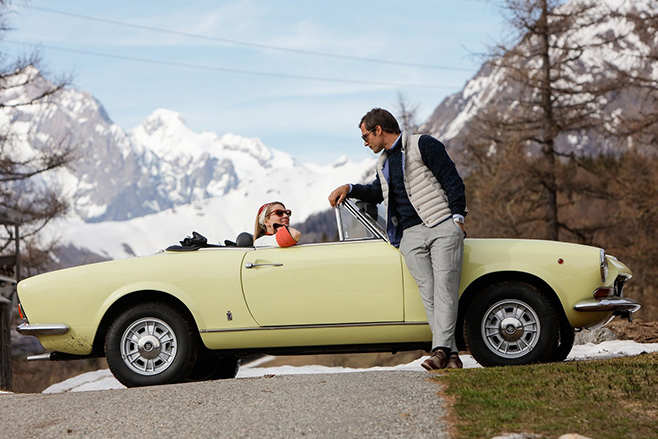
In 2016, Fiat released a successor to its hugely popular and successful 124 Spider, which was produced for nearly 20 years – between 1966 and 1985. There was also rallying success for an Abarth version. Today’s 124 is closely related to the current Mazda MX-5 as part of a joint venture between the two companies.
The long anticipate Mercedes ute has been seen trucking through the Arctic Circle ahead of its debut at the Frankfurt Motor Show in September.
The ute, which is expected to be badged as a Mercedes-Benz X-Class, appears to carry styling cues from Mercedes’ SUVs, the Mercedes-Benz GLE and GLE Coupe, and features a wide grille and swept back headlights and a double-cab body on a ladder chassis.
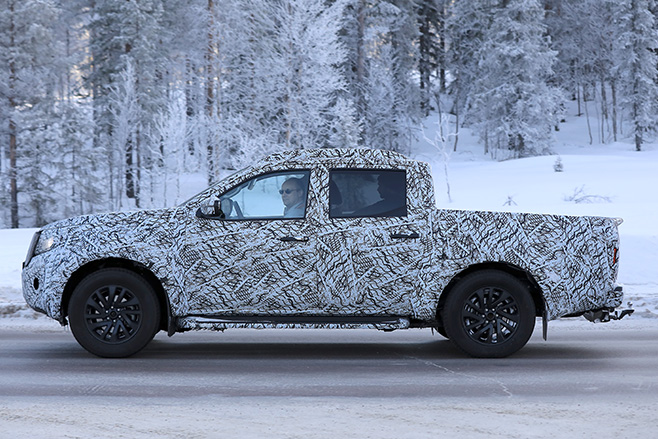
The rear features slim tail-lights and a removable bumper to make loading the tray easier.
True to Mercedes form, we can expect a premium interior with a focus on design and technology. The ute will likely be packed with safety features and driver assistance, as the German-brand moves into the ute segment to offer a more comfortable and luxurious offering while still carrying the same ruggedness and tough off-road ability as its competitors.
Underneath, the X-Class will share a platform with the Nissan Navara, although a four-litre petrol and six-cylinder diesel engine are probably more likely for the workhorse ute, with rumours also suggesting a petrol-hybrid variant.
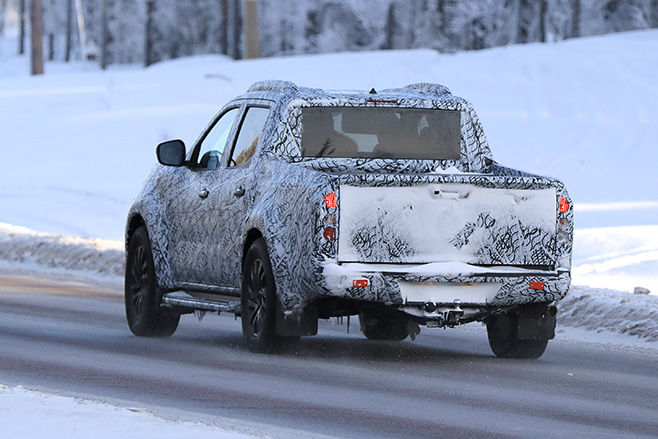
The spy shots confirmed speculation of the Mercedes-Benz ute after the automaker unveiled a concept in Stockholm, Sweden last year. Two models were shown at the time with a Concept X-Class Stylish Explorer and a Concept X-Class Powerful Explorer, one featuring luxe, urban-friendly interiors while the other taking on a more adventurous look.
“With the Mercedes-Benz pick-up, we will close one of the last gaps in our portfolio,” Dieter Zetsche, chairman of the board of Daimler AG and head of Mercedes-Benz Cars said at the time of the concept reveal. “Our target: we want to offer customers vehicles matching their specific needs. The X-Class will set new standards in a growing segment.”
At this stage, Australia is expected to be one of the five key markets to receive the X-Class along with Argentina, Brazil, South Africa and Europe.
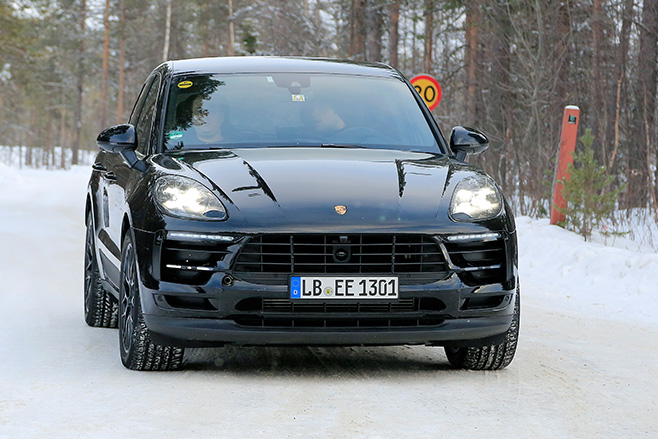
Prototypes of the updated Porsche Macan have been photographed cold-weather testing in Europe.
Europe’s most informed media say the German brand’s smallest SUV will switch its current 3.0-litre and 3.6-litre turbo V6 engines for the 2.9 and 3.0 V6 direct injection units co-developed with Audi.
In the base Panamera, the 3.0-litre V6 produces 243kW and 450Nm – slightly down on the outputs of the 250kW/460Nm 3.0-litre V6 currently in the Porsche Macan S. However, its installation in the Audi S4 proves there’s flexibility, where it delivers 260kW and 500Nm.
The 2.9-litre V6, which employs a larger turbo, would improve on the Macan Turbo’s current 294kW 3.6-litre V6 if it retained the Panamera’s 324kW. Maximum torque of 550Nm is matched.
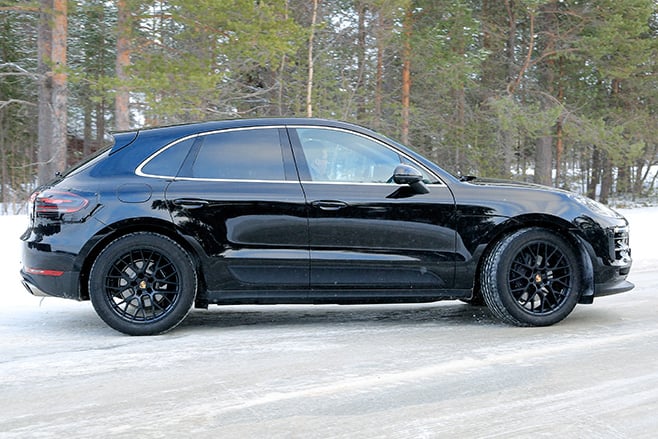
The prototype in our spy images is a Macan S, based on the grille design, wheels and quad exhausts.
Tweaks to the front end reveal round foglights will make way for slimline LEDs that sit parallel to the daytime running lights. The lower bumper also receives a secondary air intake slot.
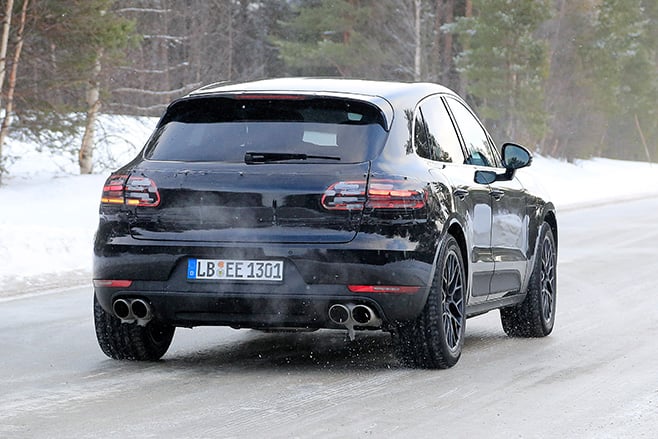
Headlights and tail-lights are both tipped to be updated from the existing units.
An interior update would also be expected, possibly reflecting some of the design seen in the new Porsche Panamera.
Porsche Australia sold 2172 Macans in 2016, making it the company’s best-selling model locally by some margin. The larger Cayenne was second, with 1341 sales.
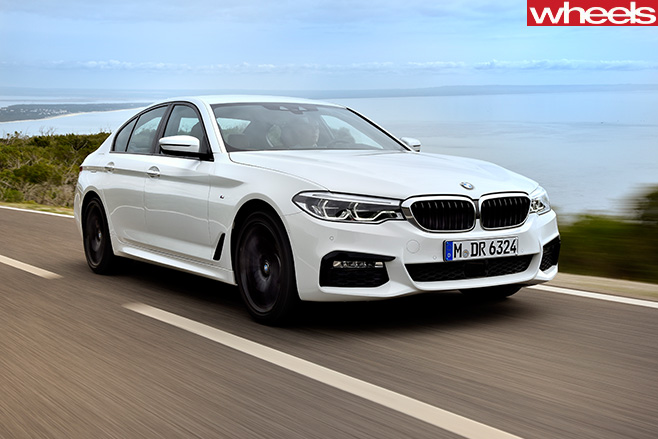
BMW Australia CEO Marc Werner says he’s pleased with his company’s market position in the Australian prestige market, despite coming between German rivals Mercedes-Benz and a re-emerging Audi.
BMW sales rose by 12 percent in 2016, totalling 28,028 compared to 41,226 Mercedes (up 13.3 percent including commercial vehicles) and 24,258 Audis.
Speaking at a BMW media event outside Melbourne last week, Werner said he didn’t make a habit of comparing numbers with the other two German marques, instead preferring to focus on “consistent and sustainable growth”.
“I do not comment about my dear friends from Stuttgart and Ingolstadt. They can do whatever they want to do, but at the end of the day we’re BMW and we have to do what we believe is right for the market and what is right for our customers.”
Werner said BMW would continue to provide a diverse range of vehicles for the Australian market including all-new models such as the X2 crossover and X7 large SUV and a mysterious new “niche” model due in 2019.
He said this year alone will see the introduction of the all-new BMW 5 Series sedan followed by the Touring estate later in the year and the M5 in 2018. Other notable 2017 arrivals include the 740e iPerformance hybrid, its polar opposite V12-powered M760Li xDrive, the limited edition M140i Performance Edition and the BMW 4-Series update.
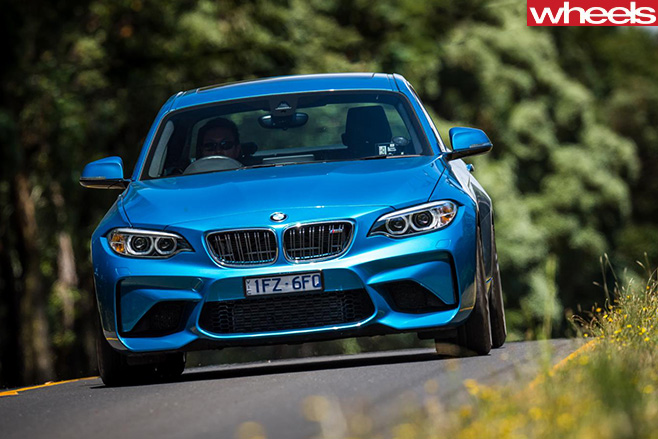
The bookend strategy is the entire range with the i Series electric and hybrid models at one end and the high-performance M cars at the other.
While the i Series cars, such as the 2014 Wheels Car of the Year i3, are still a work in progress here, the M brand performed well in showrooms, with the introduction of the BMW M2 leading to a three-fold increase in sales from 500 in 2014 to 1500 last year.
“(The M2 was) exactly the kind of car we needed in order to grow the M models but surprisingly at the same time the M3 and the M4 vehicles grew as well substantially. There was not necessarily any cannibalization or substitution as you would have expected.”
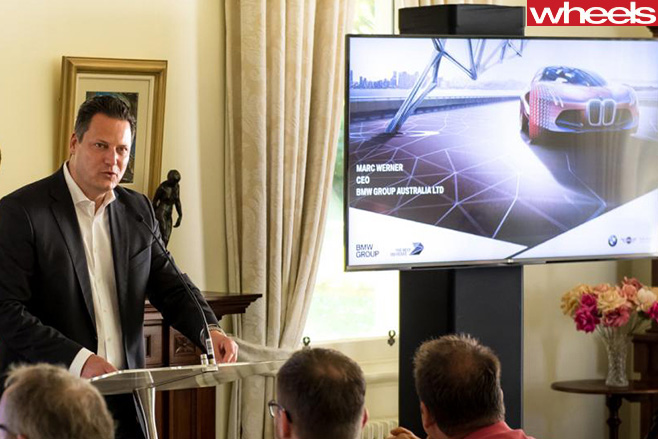
The success of the M2 has meant delays in orders being filled and Werner says BMW Australia is trying to get its hand on as many as Munich can churn out to meet demand.
“I can tell you every single (M2) that we get our hands on we’ll sell. That’s a discussion that we’re having in an ongoing basis, not only on a monthly basis but almost on a daily basis with our production partners in Munich.
“We need to get more M2s.”
Grease
It is impossible to skip this one. It’s one of the greatest chick flicks of all time, and the whole movie revolves around a car ‑ a 1948 Ford De Luxe, to be more accurate. Danny never actually takes Sandy out in the Ford convertible, but there’s another love story at play in this movie ‑ the bromance between Danny and Kenickie. But if we want to talk ‘romantic’ scenes, then the only one we can talk about in this iconic movie is the moment Danny tried to make a move on Sandy in the “sin wagon” parked at the drive-in – although, we’re not really sure we’d consider this too romantic at all.
Titanic
So a big ship hits an iceberg and is about to sink into the depths of the dark, freezing-cold North Atlantic Ocean and you have the chance to share a bit of time in a car with Leo DiCaprio or Kate Winslet. Naturally you’d find the quietest place on the ship and for these two star-crossed lovers, it was in a 1912 Renault. Steam, hand, window, enough said.
50 Shades of Grey
Whether the dark and secret life of Christian Grey gets your heart fluttering in lust or anger, the story still falls in the romance category. The mega-wealthy and nefarious Grey gets around in some pretty luxurious getups, with a garage full of Audis. But perhaps the only time we see an actual romantic side of Christian, when he takes Ana for a drive to the woods (it sounds creepier than it is), he’s in probably one of the coolest cars we see in the movie, and Audi R8 Spyder.
The Graduate
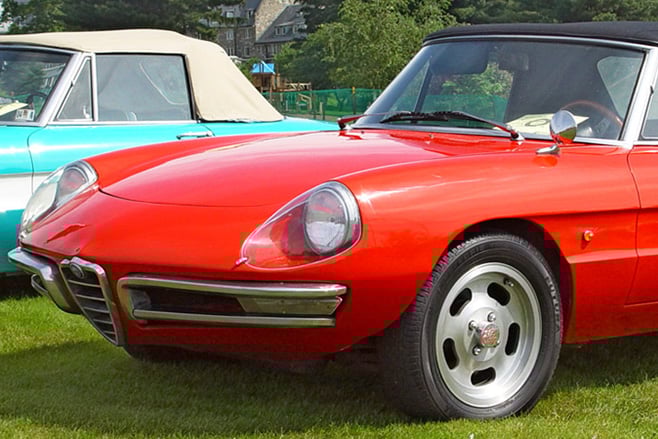
Following the scene above where Christian spills the beans about the older woman who led him down the path of, well, you know, we’re going to throw in the movie about the real Mrs Robinson and her affair with her daughter’s friend, Ben. The best, most romantic and most important scene of the whole movie involves a 1966 Alfa Romeo Spider 1600 which Ben drives across the country to stop the wedding of the woman he loves, Mr Robinson’s daughter Elaine.
The Notebook
Ok, so what’s a Valentine’s Day without the all-time romantic movie, The Notebook. Given it was set in the 1940s, cars don’t really play a massive part, and none of them could better the boat on the lake surrounded by geese, anyway. But we had to include the movie, and there are cars featured, like the 1946 Hudson Commodore Allie pulls up in at the house Noah built (“What do you want?” – ring a bell now?) or the blue 1935 GMC QB Noah driven straight into the fence at the house Allie was staying. But in truth, Noah (or Ryan Gosling) could drive anything and we’d be weak at the knees.
Tell me about this car
The Audi S4 is a faster, sportier version of the excellent B9-generation Audi A4. It is the fifth model to wear the S4 badge, and the first Audi to feature an all-new 3.0-litre turbocharged V6 engine, which produces 260kW and 500Nm. It is available as a sedan or a wagon (called an Avant), with prices starting from $99,900 and $102,900 respectively. It is on sale in Australia now.
Strengths
- Performance. The S4’s turbocharged engine generates effortless power. Its new engine combines seamlessly with an eight-speed automatic gearbox that is smooth and refined. It’s a fast car, but it is happy at a relaxed cruise as well. The standard quattro all-wheel drive system has great traction.
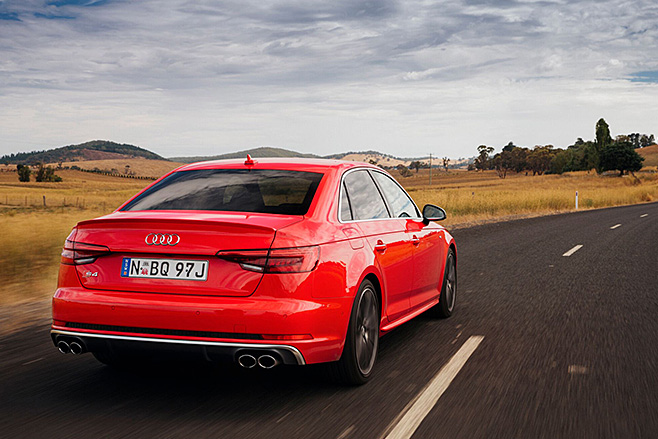
- Value. Both the S4 wagon and sedan are cheaper than ever, and they’re filled to the brim with equipment including every bit of safety and driver assistance technology available in the normal A4. Even without a single option the S4 is a very well equipped car.
- Economy. Fuel efficiency has improved with the new engine, which now sips 7.7L/100km in the sedan and 7.8L/100km in the wagon. The old supercharged engine used 8.1-8.4L/100km.
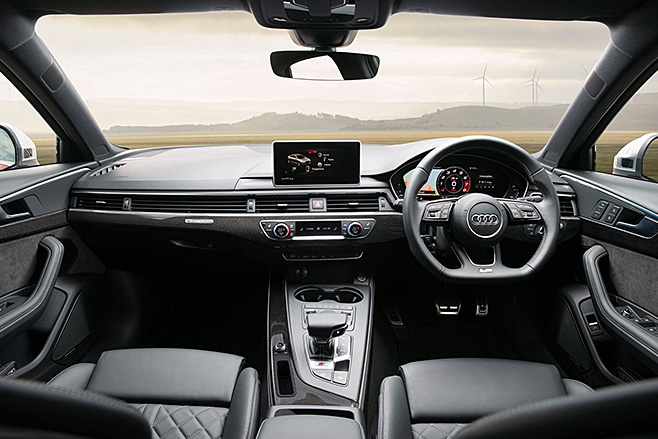
- Interior. The S4’s interior has the same impeccable fit and finish inside as the regular A4. Extreme attention to detail and excellent ergonomics makes it a nice place to be. Aluminium dashboard and console inlays are standard, though an optional ‘Performance’ pack switches them out for carbonfibre trim, which looks fantastic. Also included in the pack are premium leather seats with massage function and red brake caliper paint.
- Technology. The S4 has an extensive range of standard safety tech, but it can also be optioned with Audi’s brilliant Matrix LED headlights, an awesome Bang & Olufsen stereo and a head-up display.
Weaknesses
- Sound. The new turbocharged engine in the Audi S4 sounds good, but compared to the old supercharged engine it has lost some excitement and drama. It’s now a much more cultured and muted engine sound, whereas the last car had an angry bark to it, which we miss.
- Ride. On most roads the S4 rides very well with its standard adaptive dampers working away, but occasionally uneven roads make it feel a little unsettled and bumpy.
- Inconspicuous. Visually, the S4 downplays its sportiness. It is a little bit lower and has uniquely designed bumpers, sill trims, exhaust pipes and lip spoiler, though it’s still quite discreet. Buyers paying this much for a car may prefer more overtly sporty styling to stand out against ordinary A4s.
Any rivals I should consider?
The Audi S4 slots into a hotly contested segment against the BMW 340i, Mercedes-Benz C43, Jaguar XE S and Infiniti Q50 Red Sport.
Details on Hyundai’s Golf GTI fighter have been revealed ahead of its release this year.
Presented to journalists were key specifications on the company’s first full-blown hot-hatch. One it hopes to threaten segment benchmarks like Ford’s Focus ST.
What we can confirm is the car’s 2.0-litre turbo inline-four will pack two different power tunes. The basic i30 N will debut with 184kW, but a performance package will lift power to 205kW.
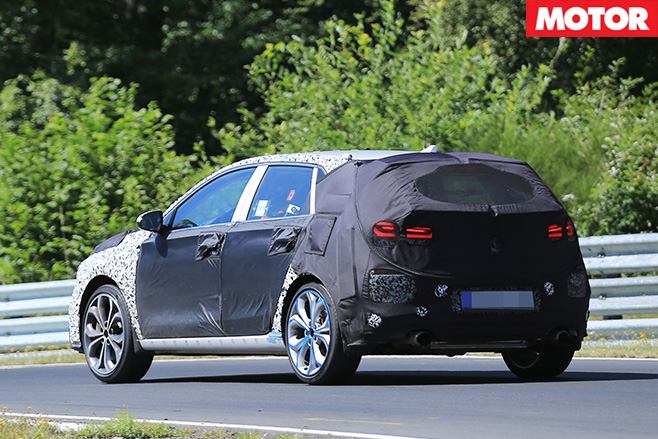
What’s more obvious is the engine will be exclusively mated to a six-speed manual transmission until 2018, when it’ll be joined by a ‘wet’ eight-speed dual clutch automatic.
N cars will wear unique 19-inch wheels that come wrapped in Pirelli P-Zero rubber.
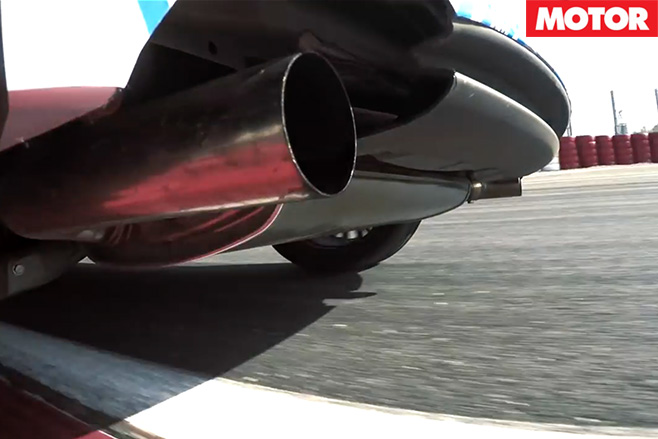
As heard already in a teaser video last year, the i30 N’s 2.0-litre turbo four will bark through a variable exhaust system
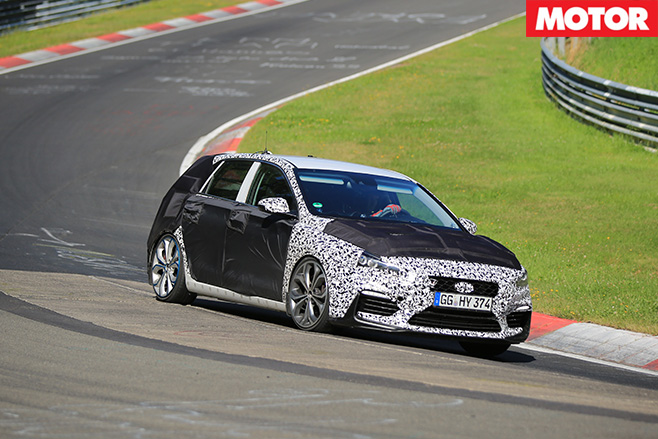
The i30 N is expected to launch halfway through this year, with both road- and track-optimised packages, before an even hotter RN30 hits roads later next year.
PSSST! Wanna buy a cheap Fezzer? Didn’t even have to fall off the back of a truck?
Sorry, but thanks to the fast-moving investigative skills of the Spanish police, you may have missed your chance. They’ve just busted a gang for the second time in five years that specialises in turning boggo passenger cars into Ferrari-badged knock-offs and selling them to unsuspecting punters.
According to the Spanish police, the gang was busted earlier this week, and was in the process of transforming 14 “mid-range cars” into highly desirable super sports cars.
The gang allegedly planned to sell the cars via the internet. Some had already been listed online as second-hand vehicles even though they were still a work in progress.
Police said the investigation into the fake supercars kicked off after it became aware of “a vehicle that simulated the appearance of a sports car of the Ferrari brand infringing the industrial property rights of the aforementioned brand”.
“The agents also located the clandestine workshop … where they found 14 vehicles in different degree of transformation. Four of them were several Ferrari models already ready for sale,” police said.
“The records involved a number of parts, distinctive elements of the marques concerned, fiberglass moulds for body parts of the marques concerned, speedometers and vehicle-related documentation.”
One of the items seized was a complete blank for the body of a V8-engined Ferrari F430, a mid-2000s coupe and convertible worth more than $200,000 second-hand.
The gang appears to have sourced a number of donor cars to run underneath the fake skins. These range from what looks like a V6-engined Ford Mondeo to a Pontiac Fiero and even a mystery Peugeot.
The trickery didn’t just relate to fairly recent prestige models, either; at one point the vision cuts across a complete outer-skin cast of a Dino, a car potentially worth $500,000 – if it’s the real deal.
HERE’S a tip from your friendly consumer advice team at Wheels: if you’re considering a new Volkswagen Golf, don’t buy the current model unless it’s offered at thousands below the current RRP.
Why? Because the updated model, referred to unofficially as Golf 7.5, and arriving at the start of July this year, will usher in new levels of tech, convenience and equipment for what VW Australia says will only be a modest price rise.
The most significant movement comes at the entry point of the range. VW has deleted what was the base model, the 92TSI on its 15-inch steel wheels and fairly basic trim level (which was offered, in manual form, for $22,990 drive-away).
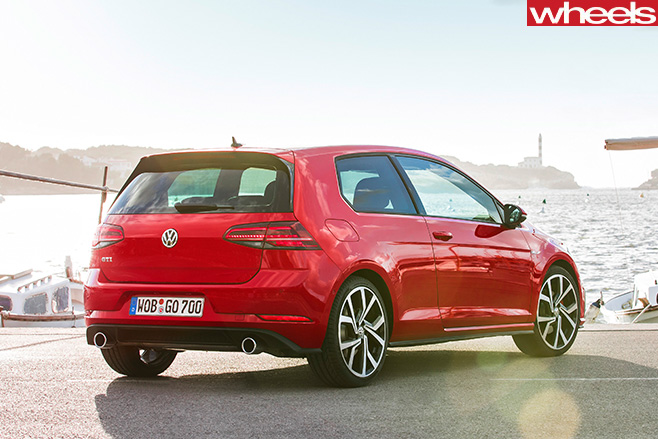
However, this reshuffle exposes a disappointing fact: that Australia will not get the new-generation 1.5-litre turbo-petrol engine being rolled out as part of the Golf 7.5 release. This engine, making 110kW, features cylinder deactivation, and ushers in new levels of efficiency for this class. However, VW Australia claims its complexities make it unviable for the price structure of the new range.
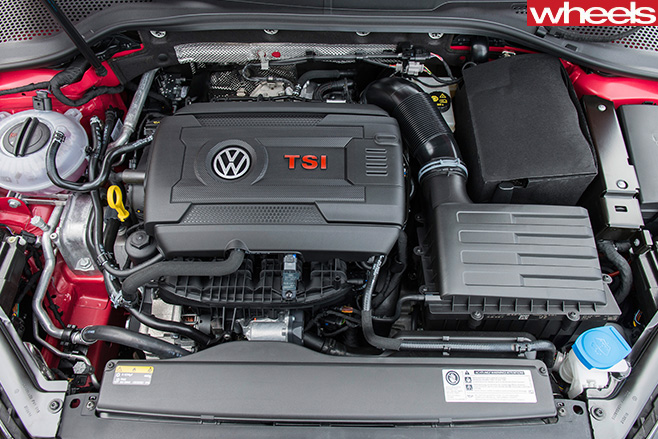
Visual changes to Golf 7.5 are fairly predictable: new front and rear bumpers, new grille, LED taillights, and LED headlights replacing Xenons on up-spec variants.
More significant is the safety, connectivity and convenience tech that will be offered in VW’s small-car icon.
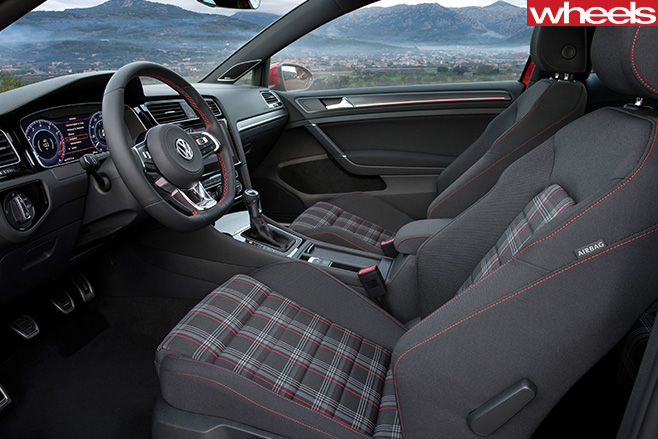
Further evidence of this is the optional Driver Assistance package, available on Comfortline and above, that brings semi-autonomous radar cruise capable of taking over in traffic jams at up to 60km/h, as well as the usual blind-spot warning, and so on.
Golf 7.5 also brings Active Info Display on up-spec models, which is VW’s version of what Audi terms Virtual Cockpit, a 12.3-inch customisable instrument display that can be configured into one of five different profiles, including Classic, Performance, Efficiency and Navigation.
Stay tuned for more details on Golf 7.5, including drive impressions from the international launch, and, as soon as we receive it, local pricing.
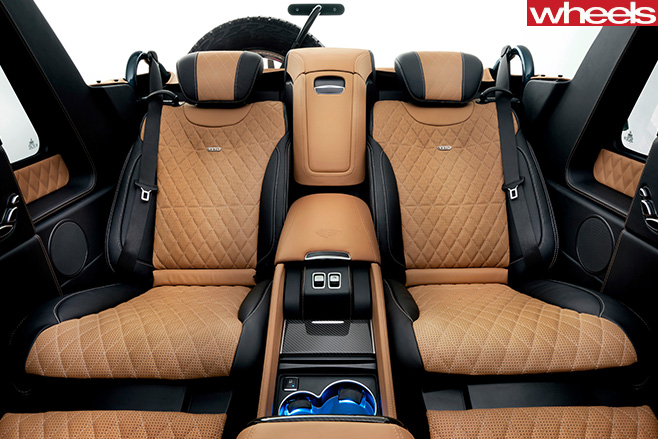
When the very first Landaulet was built back in the 1800s, the coach builders who dreamed it up probably never imagined the concept being used in a twin-turbo V12-powered four-wheel drive.
Enter the G 650 Landaulet courtesy of Mercedes-Maybach. The G 650 takes ostentatious luxury to another level, mixing the towering G-Class body with the opulent Landaulet body style.
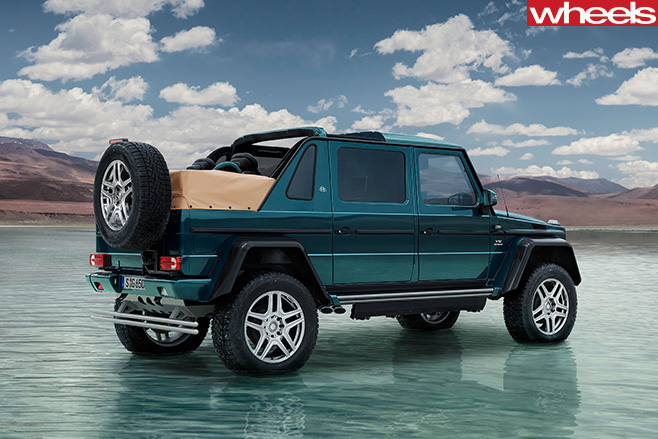
The Landaulet is a staggering 5.3-meteres long, with a 3.4-metre wheelbase, 2.2-metre height, and almost half a metre of ground clearance.
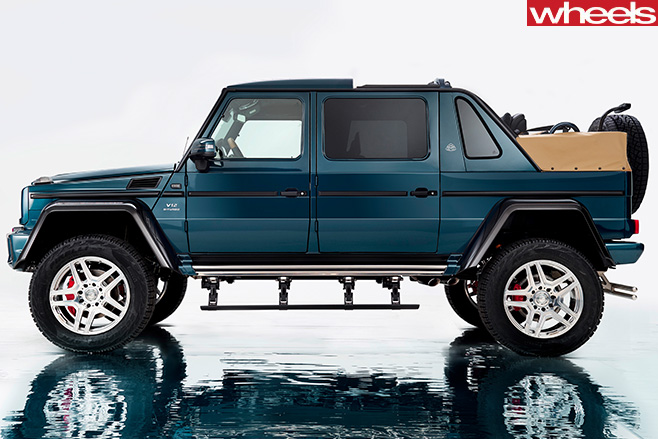
The hulking beast is powered by a Mercedes-AMG twin-turbo V12, producing 463kW and 1000Nm.
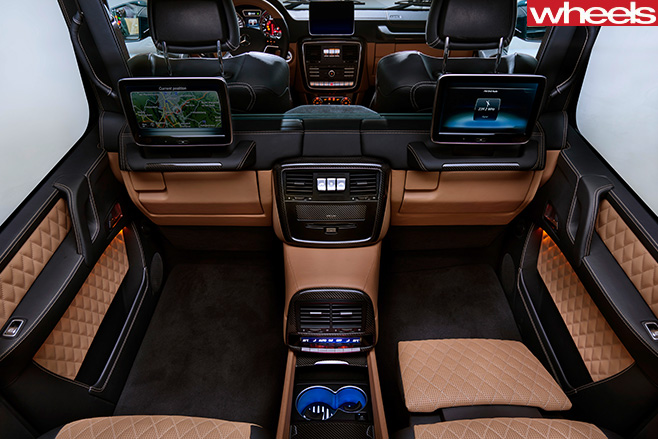
Fuel consumption? Not that the owners of this car will really be bothered, but for the curious it is an oilfield-emptying 17L/100km.