TOYOTA is about to lock in its final day of Australian production.
Wheels has learned that senior management at Toyota’s Australian operations are in talks with senior executives in Japan today and are expected to know tomorrow of the Altona-based assembly line’s final production date. The carmaker’s 2500 engine casting and manufacturing staff are expected to be told the date at a meeting on Wednesday.
Toyota says it does not have the same obligation as Holden to warn parts suppliers at least 40 weeks before switching off production. However, if it did, Toyota’s production lines would have remained open until about November 10.
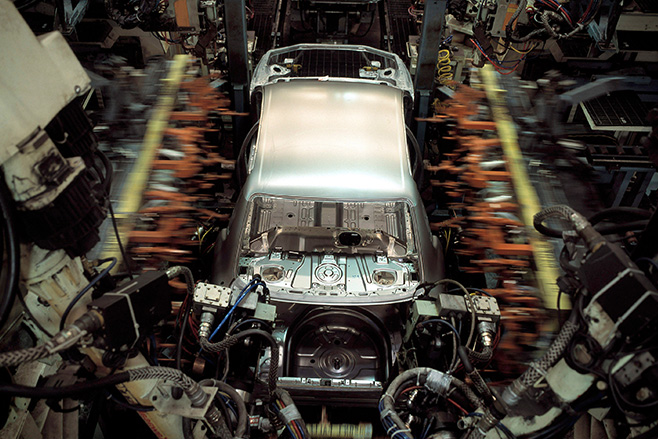
Toyota was the last Australian carmaker to cave after Ford announced in 2013 it would shutter its Australian operations after a $600 million run of losses and sparking the industry’s drawn-out three-year collapse.
It sold 30,318 locally-built Toyota Camry, Camry hybrid and V6-engined Aurion sedans last year. In contrast, Holden built 43,246 Commodore and Cruze passenger cars, while Ford built just 13,532 Falcon and Territory models in its last 10 months of production.
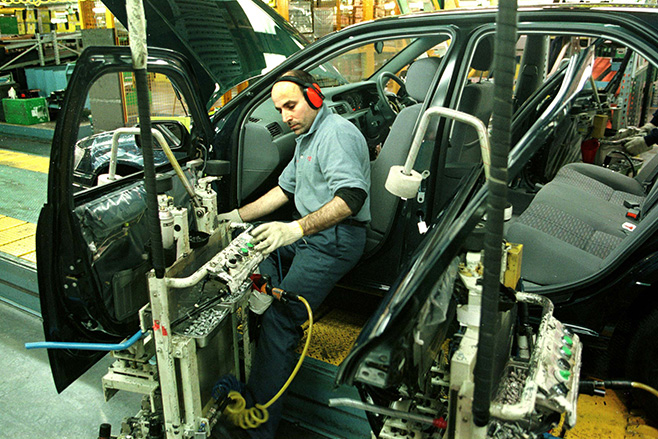
Local assembly of Toyota cars officially started in 1963 with the Tiara – a car that a year later would become the Corona. In 1964, the Crown was added to the line, and in 1968 the Toyota Corolla.
The Altona engine plant, which today makes four-cylinder powerplants for both normal and hybrid versions of the Camry, rolled out its first engine in 1978.
In 1987, Toyota Australia switched from building the Corona at Port Melbourne to another mid-sizer called the Camry.
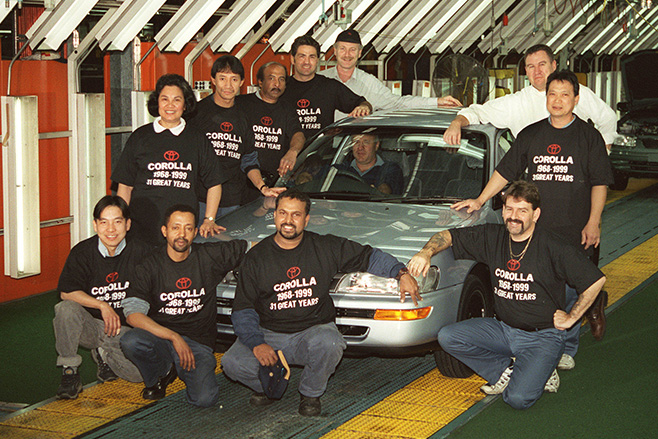
Camry production became a strong export earner for Toyota, which built cars for the Middle East. At one stage, four out of every five Camry models built were shipped out of Australia.
More than three million Toyotas have been built in Australia.
Holden turned down the Opel Crossland X compact SUV, though it’s set to give a thumbs up to its larger sibling, the Grandland X.
Our artist’s impression points to the potential design of the Grandland X, which is due to debut later this year at September’s 2017 Frankfurt motor show and will also wear the UK Vauxhall badge.
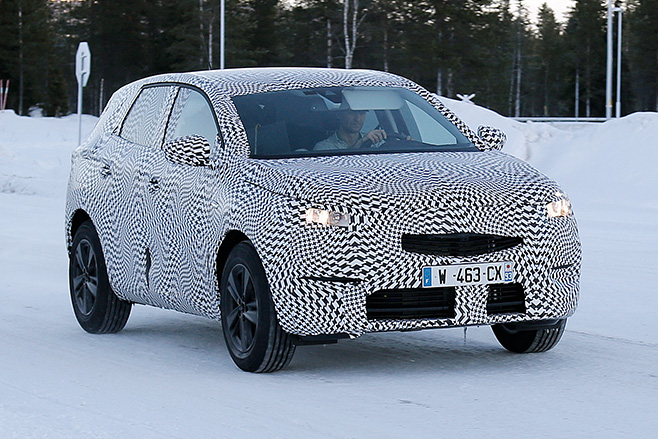
The Grandland X will be twinned with the second-generation Peugeot 3008, which has ditched its former MPV-style look for a more conventional SUV silhouette.
Both the Crossland and Grandland are derived from a 2013 joint venture for B and C segment vehicles signed between GM and PSA.
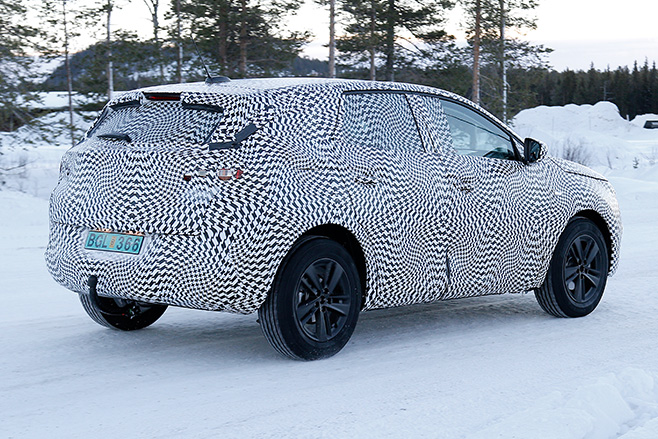
If the model, based on an SUV from the Lion brand, does end up wearing the Lion badge of Holden, we’re hoping it will be more than just a 3008 with revised nose and rear end – like some of Peugeot’s iffy rebadged Mitsubishi efforts of recent times.
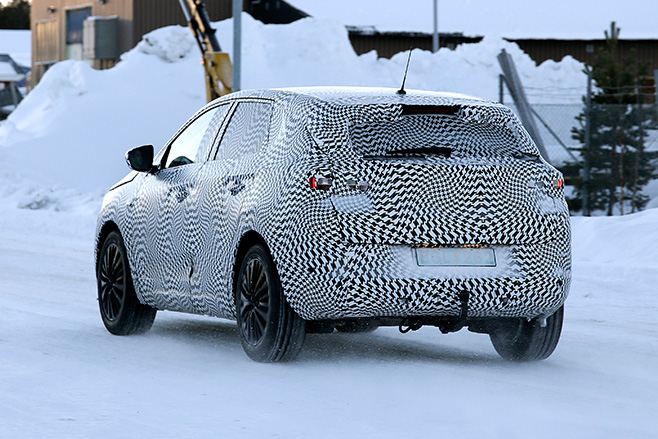
The illustration’s key design cue is the pinched, tapered rear side glass that would visually relate the circa-4.5-metre Grandland X to the Astra small car.
Mechanicals seem more certain to be shared as the Grandland will sit on Peugeot’s EMP2 platform. That would mean front-wheel drive only, as well as a mix of three- and four-cylinder PSA petrol and diesel engines – though the odd Opel/Vauxhall downsized motor could be mixed in.
Holden is currently on an SUV import blitz. With the baby Trax and Colorado ute-based Holden Trailblazer already in showrooms, the Captiva will this year be replaced by a rebadged Chevrolet Equinox, with another US SUV, the bigger Acadia, joining in 2018.
Beyond the Grandland X five-seater, there’s also scope for Holden to tap into a new Opel/Vauxhall flagship SUV confirmed for 2019. The name-less model, which will be based on the Insignia/ Commodore, is expected to offer seven seats across three rows.
The Holden Astra may be a conventional five-door hatch, but its all-new Opel-derived architecture gives Holden’s small hatch a touch of European class.
Taking a step away from its previous Korean-sourced design, Holden has sculpted an agile, sporty looking car that, from a design perspective at least, has what it needs to take on Australia’s popular small car segment.
It may not have a radical look, but its style centres around elegant simplicity and cohesive design, restrained accents, and a well-balanced and spacious interior.
Despite some plastic-heavy details, like the base model’s bare urethane steering wheel, the Astra compared favourably to the Volkswagen Golf by sister publication Wheels, with its “all-round composure and sense of quality” winning it praise.
Paul Beranger, WhichCar Style Awards judge, said “The interior design, particularly, I felt was a good balance for the exterior… it was of a very high standard in that class.”
Here are the five most stylish features of the Holden Astra:
- Despite being slightly smaller than the original Astra, the cabin is spacious enough to comfortably fit four adults.
- The Astra boasts a clean European design thanks to General Motors’ European subsidiary, Opel.
- Its design is simple and sporty, and that won the Astra points with the judges. Features like the semi- floating roof, blacked out C-pillar, LED headlights and shallowly-raked windscreen gave this otherwise conventional hatch an athletic feel.
- The Astra’s cohesive design gives it a sense of flow and unity as the exterior’s sophistication is also carried throughout the interior.
- Features like a pocket for your smartphone and a ledge to rest your hand while using the touchscreen are clever design features of the Astra’s cabin. Judges liked the Astra’s accessibility and ergonomics.
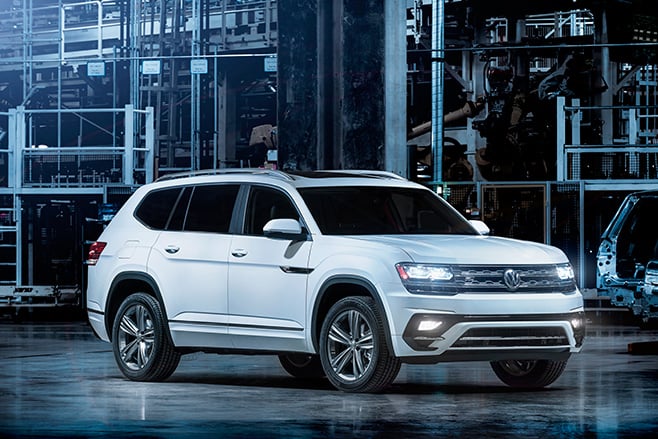
Volkswagen’s super-sized SUV, the Volkswagen Atlas, is being examined with keen interest by the German automaker’s local operation. Thanks to recent comments by Volkswagen’s US chief opening the door to RHD export, we may yet see the previously American-market-only three-row wagon on our shores.
If the local business case stacks up, VW’s Australian customers could soon find themselves able to choose from not just one, but two seven-seat SUVs. The Tiguan Allspace (a stretched seven-seat version of the Tiguan) is already set to arrive here in early 2018, but the significantly larger Atlas would offer a proper full-sized rival to the Mazda CX-9 and Toyota Kluger in the increasingly-important large SUV segment.
“[Atlas] is something that we’re definitely exploring for Australia,” Volkswagen Australia head of product planning Jeff Shafer told WhichCar.
“It hasn’t been an option for us to date. But Atlas is a very large car, and I can understand where it would fit into the Volkswagen range for this market.
“It’s a significantly large car even beyond what we’re expecting for the Tiguan Allspace next year in terms of third-row dimensions and cargo dimensions.”
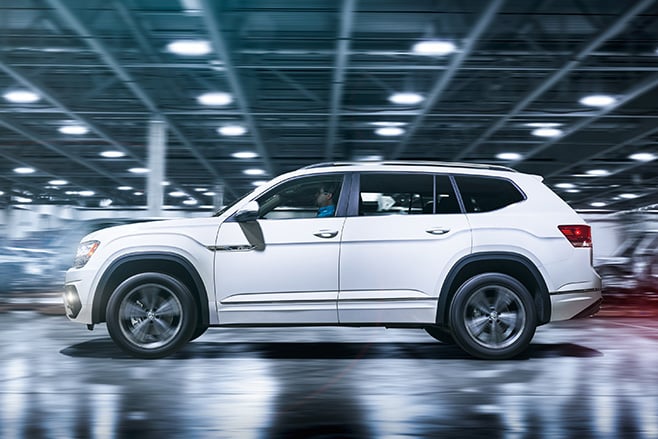
Measuring a huge 5036mm long, 1978mm wide and sitting astride a 2978mm wheelbase, the Atlas occupies a footprint that’s fractionally bigger than the Mazda CX-9 and easily eclipses a Toyota Kluger for size.
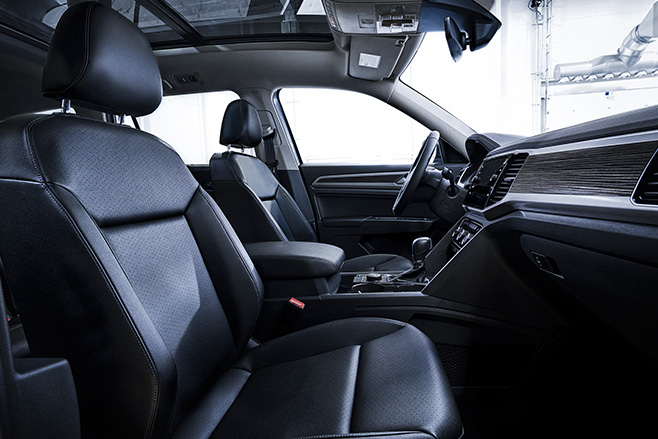
And with a generous interior offering plenty of space for seven people, the Atlas wouldn’t step on the toes of the existing five-seat-only Touareg large SUV. Its more road-biased, Passat-based platform would also set the Atlas apart from the Touareg, which is pitched as a semi-premium off-road machine rather than a school-run wagon.
An all-new Touareg is expected to make its debut later this year.
However, as handy as the Atlas would be for Volkswagen’s local car dealers, the business case has still yet to be made for a local introduction.
“We’d want to make sure the vehicle meets the expectations of our customers in regard to technology, safety, powertrains before we commit to introducing the car,” Shafer said, ”but it’s something I approach with an open mind.”
“We’ll have a seven-seater finally with the [Tiguan] Allspace.
“Two seven-seaters [Atlas and Tiguan] would work if they were appropriately priced and specced. Separating the two would largely be a communication and pricing discussion.”
In our Fast Facts series, WhichCar delves deep into the history of automotive brands to bring you fascinating facts and intriguing information.
Here we focus on Citroën, the French brand that in its near-100-year history has pioneered the likes of magical suspension systems, front-drive cars, and savvy car advertising … and run the world’s most successful rally driver.
INSPIRED BY FORD
André Citroën began his industrial career manufacturing gears, followed by artillery shells for World War I. Then, using techniques borrowed from Henry Ford and his Model T, Citroën released France’s first mass-production vehicle in 1919: the Type A. Smaller than most of today’s hatchbacks, it was regarded as a luxury vehicle at the time and available in several body styles.
SAVVY MARKETING
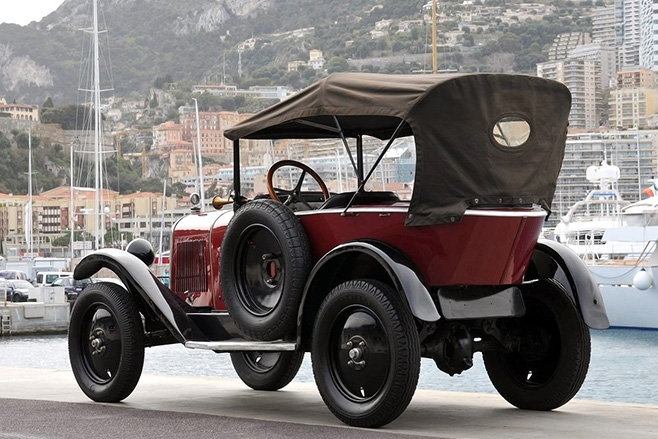
Citroën’s savvy marketing brain was also proven with his second model, the 1922 Type C 5HP, a cute, compact cabriolet model that targeted young buyers and women owners. It became known as the ‘Petit Citron’ (Little Lemon), a nickname blending the company’s name and the yellow paintwork it could be ordered in. The most famous of many variants was the ‘Clover’, which featured a three-seat layout like a three-leaf clover – with a single rear seat behind the front seats.
FROM A TO C
Citroën focused on higher-end vehicles after the 5HP. After the Type A was replaced by a series of B models including the B2, B10 and B12, Citroën unveiled a C range at the 1928 Paris motor show that debuted badges that initially lasted just four years but feature in the company’s current range. They included the C4 and a six-cylinder, 4.6-metre luxury model called the C6.
GAINING TRACTION
The 1934 Citroën 7CV becomes the world’s first mass-produced with wheels driven at the front rather than the rear, an all-steel monocoque body common to today’s cars, hydraulic brakes, and independent suspension. It begins a family that becomes known as Traction Avant – French for front-wheel drive – and includes the 11CV and 15CV variants that span three decades. Production of both ends only in 1957 and 1956, respectively, though early reliability issues did affect the brand’s reputation.
MICHELIN’S STARRING ROLE
André Citroën’s automotive revolution, and determination to beat compatriot rival Renault, comes at a cost. While by 1934 production is prolific, with multiple chassis/body combinations covering 76 models and sold across more than 75 markets, it’s also hugely expensive, and creditors force him into bankruptcy. French tyre maker Michelin become the company’s majority shareholder. André would pass away just a year later, aged 57.
THE VERY SMALL CAR
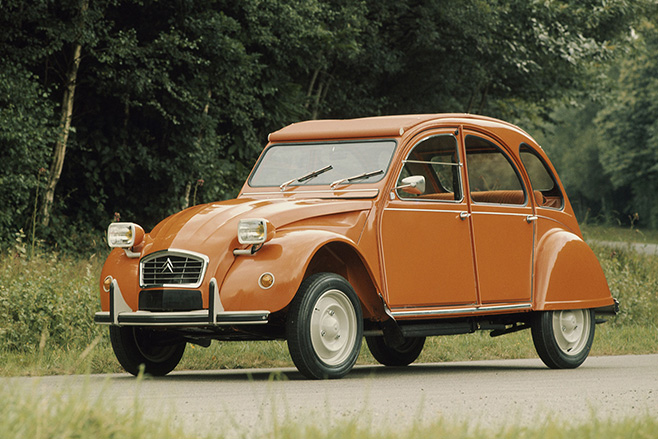
Michelin had been forming an idea for a ‘people’s car’ for some years, and its takeover of Citroën led to the Very Small Car that became known as the 2CV. Development had been stalled by World War II before the 2CV made headlines at the 1948 Paris motor show. Famously designed to cross a field without breaking any eggs on board so it could cope with typically poor French roads – while also being cheap to run and repair – the 2CV would surpass five million units in car and van guises in a production run lasting from 1949 until 1990. It even gained a starring role in the 1981 James Bond movie For Your Eyes Only.
THE GODDESS
Where the 2CV was simplistic, the 1955 DS was complex as it captured Citroën’s pioneering spirit ‑ and sales. Nearly 80,000 customers at that year’s Paris motor show ordered the sedan with its distinctively streamlined exterior and avant-garde interior. With its clever hydro-pneumatic self-levelling suspension and fully hydraulic steering delivering an effortless ride and steer, it was already brimming with innovations before later versions introduced features including swivelling headlights. Production lasted 20 years, with one of the last variants – the DS23 Pallas Electronique – showcasing the sci-fi-style Citroën as the ultimate in luxury and sophistication.
MASERATI AFFAIR
Two years after buying a controlling interest in Italian brand Maserati in 1968, Citroën releases a GT car called the SM. It mixes technology from the DS, including its hydro-pneumatic suspension, with a V6 engine shared with the Maserati Bora. The styling, performance and handling are all a hit with critics and enthusiasts, though the 1973 oil crisis leads to its demise by 1975.
ENTER THE LION
The SM is also a loss-maker, while the overall Maserati purchase puts Citroën into financial trouble and into the hands of fellow French brand Peugeot. Peugeot acquires a 38.2 per cent stake in 1974 and increases its share to 90 per cent by 1976. It eventually leads to the formation of the PSA Group that becomes a dominant player in Europe.
EUROPEAN CHAMPS
Citroën collects two European Car of the Year titles in the 1970s. The GS, a rare all-new Citroën when it’s released, wins in 1971 thanks to features such as the company’s now-legendary hydro-pneumatic suspension and sleek styling claimed to be the most aerodynamic of any production car in the world. A long-awaited successor to the DS follows suit in 1975. The similarly futuristic-looking CX, the last car to be designed entirely in-house before the Peugeot buy-out, wins over the ECOTY judges over with its confident handling, pampering ride, and variably weighted steering.
RALLY LEGENDS
Frenchman Sebastian Loeb became the most successful driver in the history of the World Rallying Championship (WRC) with Citroën. He won a remarkable nine consecutive drivers’ titles between 2004 and 2012, driving three different rally cars – the Xsara WRC, C4 WRC, and DS3 WRC. Citroën racks up a total of 94 wins and eight constructors’ titles between 2003 and 2012, with only Ford interrupting the run in 2006 and 2007.
DS REBORN
Citroën uses the badge of arguably its most famous car as inspiration for a new premium sub-brand launched in 2009. The DS3, a sportier and more upmarket version of the humble Citroen C3 city car, is the first in a line of DS models designed to be more luxurious – and more profitable – than the humbler C-badged models they’re based upon.
There’s something magical about Aston Martins once they’re liberated of a roof, and judging by these official preview pictures, the Vanquish Volante S continues this enchanting tradition.
The drop top version of the recently released Aston Martin Vanquish S shares the coupe’s 5.9-litre naturally aspirated V12 engine, which produces 444kW – 23kW more than the standard Vanquish models – via an eight-speed ZF gearbox.
This is achieved by increased air induction, which in the coupe translates to more mid-range response and a quicker 0-100km/h time of 3.5sec. Aston Martin hasn’t released a 0-100 time for the Volante S, but expect the extra weight to result in a time between that and the standard Vanquish Volante’s 4.3sec.
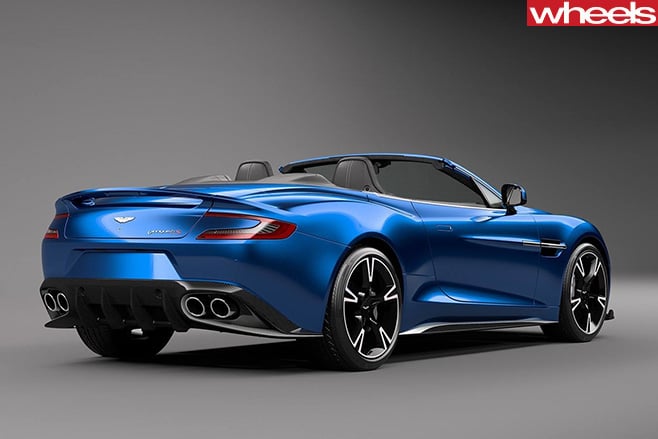
The convertible’s tremendous soundtrack will come at expense of handling; however the suspension has received a substantial tweak from the ageing base car, with new dampers, updated spring rates and revised anti-roll bar settings for an even sharper ride.
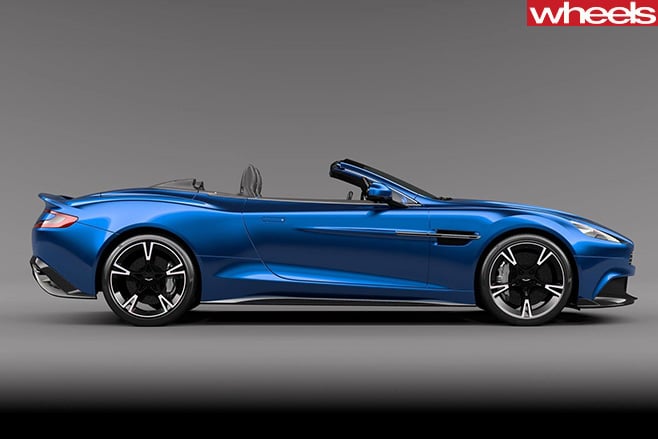
There’s also the choice of new 20-inch gloss-black five-spoke alloy wheels.
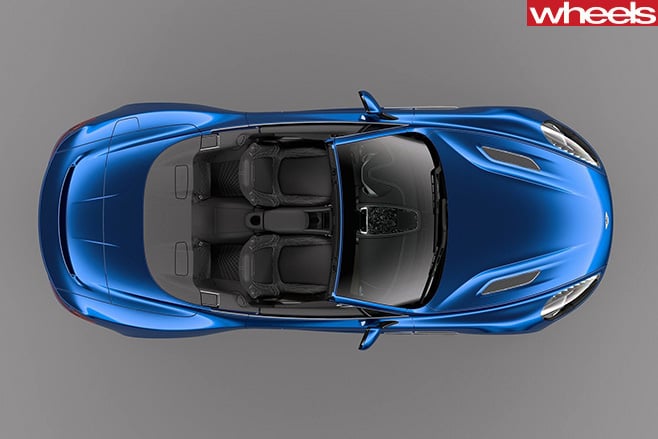
Prices are yet to be confirmed for Australian deliveries – the regular Vanquish Volante is priced here at $521,995 so expect the S to come with a six at the start of its price tag.
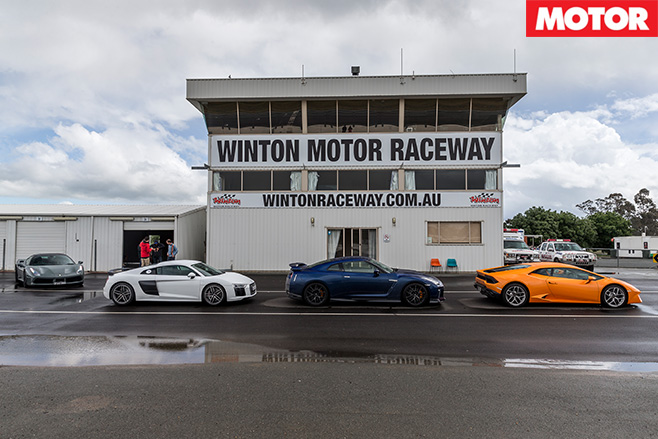
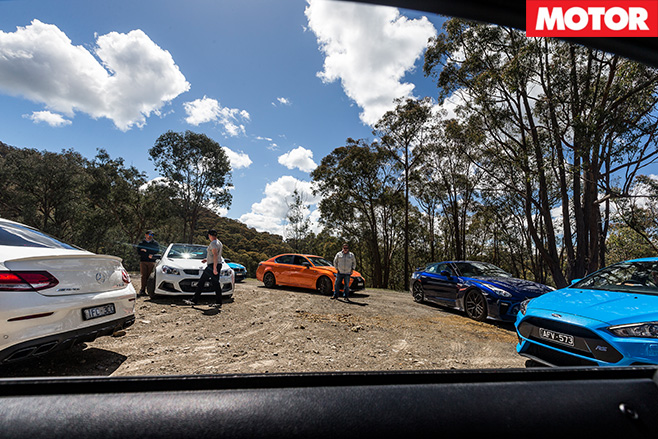
In an effort to inject more tranparency into the PCOTY judging process, we’ve re-introduced a scoring system for 2016.
Each judge scored each car out of 10 on six criteria, outlined below, for a total out of 60. With five judges, each car gets a score out of 300.
For example, the VW Golf GTI doesn’t automatically score a 10 for value simply because it’s the cheapest car in the field. Rather, its value is judged in terms of what it offers as a hot hatch.
THE SIX PCOTY CRITERIA: 1. Performance – Outright speed, engine response, gearbox feel and smoothness. 2. Dynamics – Grip, chassis balance, braking performance, steering. 3. Accessibility – How easy or difficult is the car’s performance to extract? 4. Liveability – Road noise, ride comfort, ergonomics, visibility, interior quality. 5. Value – Purchase price, cost of key options, standard equipment and performance offered. 6. ‘X Factor’ – Styling, exhaust note, how badly we want one.
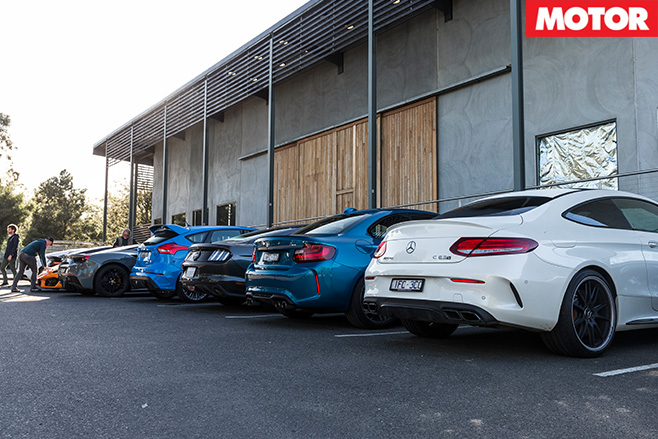
The performance car of the year will be announced at the Australian Motoring Awards on February 1, 2017.
Okay, engines aren’t really what these cars are about.
Mazda’s MX-5, Abarth’s 124 Spider, and Subaru’s BRZ deliver thrills in a different way to burly rear-drivers from Australia or Germany. But we still care what they sound like.
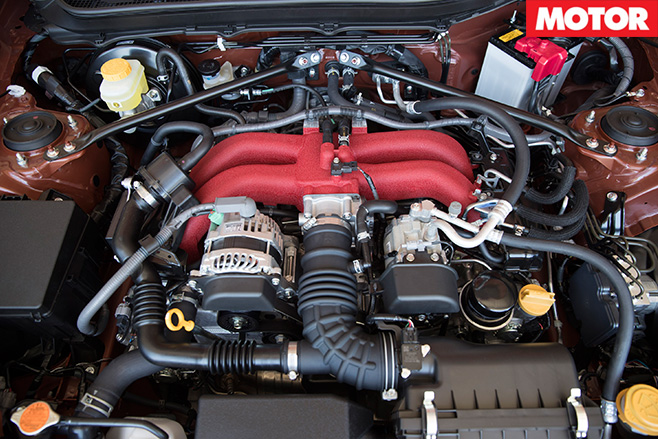
That’s why during a recent comparison we lined up the three cheap rear-drivers for a sound off video. The first to clear its throat was Subaru’s BRZ.
The brand’s boxer-four is popular for the configuration’s signature off-beat rumble. Especially in turbocharged form.
Whether that’s added bite to its bark is up for debate but there’s no doubting the Abarth 124 Spider belts out a mean war cry.
As the Mazda’s Italian cousin the Spider certainly plays to the country’s reputation for shouty, dramatic sportscars.

Blowing spent gases through a Garret turbocharger and then out an Abarth sports exhaust system the engine plays a tune both wicked and guttural.
It’s the main point of difference to its donor, Mazda’s MX-5. We’ve brought along Mazda’s 2.0-litre variant, forgoing the 1.5-litre, to keep up with the Subaru and Abarth on price.
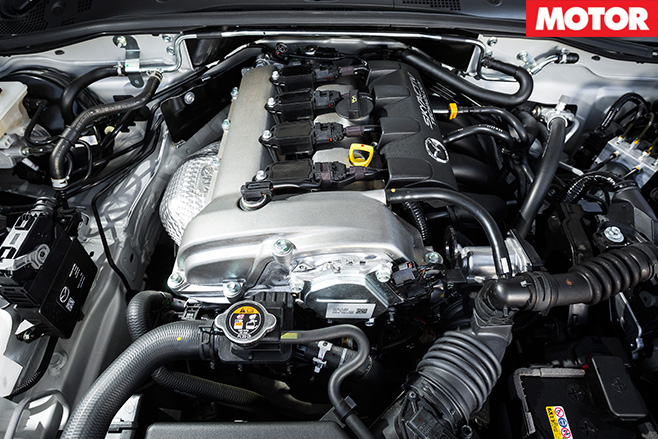
Of course this is all up for debate. This video’s no Hollywood production; we recorded the three with an iPhone at a dragstrip. But it’s good enough for you to make a call on which you think sounds best.
Drop your two cents in the comment box below.
Cadillac trumps 24 Hours of Daytona
The enduro had everything including controversy…and rain. Lots of rain.
Donald Trump would love this result – America is great again, and the Stars and Stripes was flying high as two Cadillac prototypes fought for victory in the Daytona 24 Hours in Florida.
In the end just over half a second separated the winning Wayne Taylor Racing Cadillac DPi-V.R shared by brothers Ricky and Jordan Taylor, Max Angelelli and ex-NASCAR champ Jeff Gordon from the Action Express Racing Caddy.
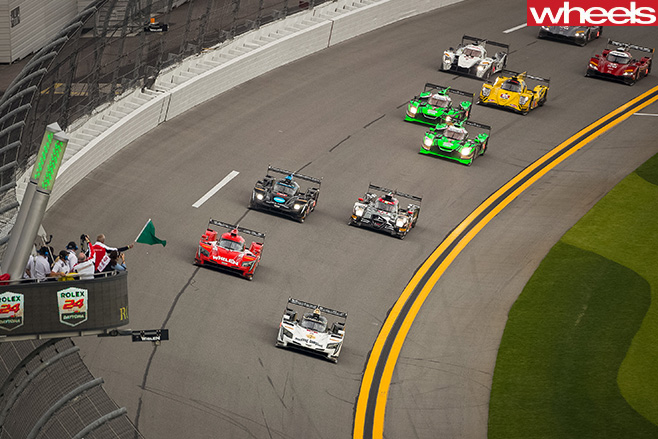
Ultimately it came down to a 20-minute dash to the flag after the final caution.
Action Express driver Filipe Albuquerque led with seven minutes to run, until Ricky Taylor aggressively fired underneath him, the leading car then turned down on the Wayne Taylor Racing driver and was pushed into a spin.
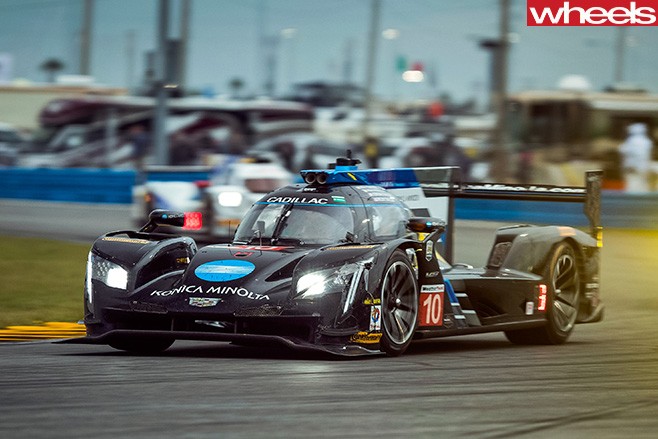
“I don’t think I lost the race; I don’t race like this,” said Albuquerque afterwards.
The Spirit of Daytona Riley-Gibson MK30 LMP2 was as fast as the leaders in the wet of the race, but was no match for the Caddys on a dry track.
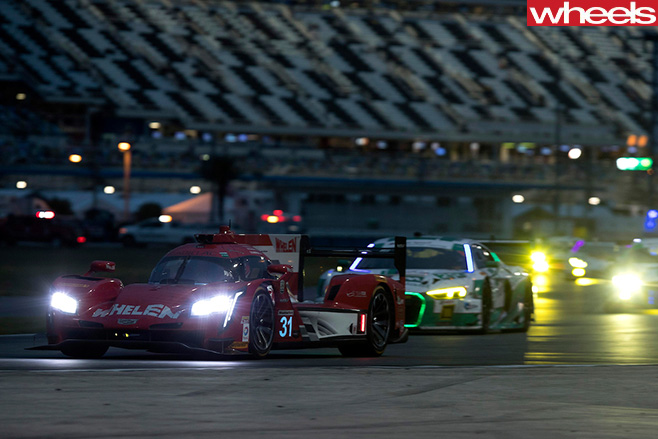
Ford won the GTLM class with Dirk Muller, Joey Hand and Sebastien Bordais piloting a Chip Ganassi Ford GT.
The Alegra Motorsports Porsche team took a surprise GTD class victory with Michael Christensen, Daniel Morad, Jesse Lazare, and father-son duo Carlos and Michael de Quesada.
Mawson jumps to lead in MFR Challenge
Aussie takes victory and two podiums in New Delhi
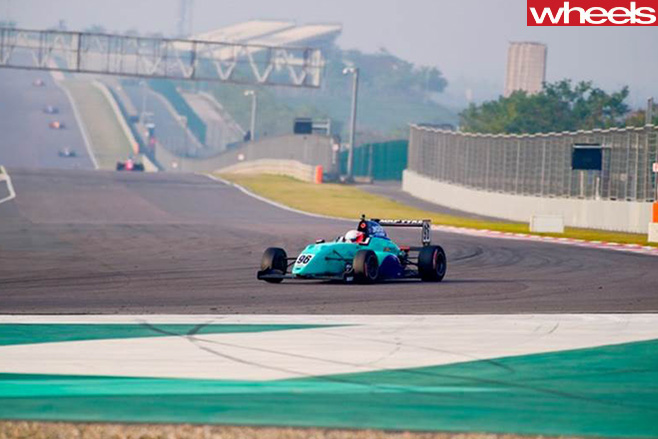
A win, two more podiums and a fourth was his haul over two days.
A faulty clutch hampered his start in the first of four heats held across two days at India’s Buddha circuit, but Mawson recovered take a good fourth in the race won by Mick Schumacher.
Then Mawson banked a fine victory in heat two, winning convincingly from fifth on the grid in an action-packed race. Estonian driver Ralf Aron finished second ahead of Schumacher, who fought back from eighth on the grid.
Mawson started race three well, passing England’s Harrison Newey at the first corner for second. But he couldn’t catch Schumacher who won from pole.
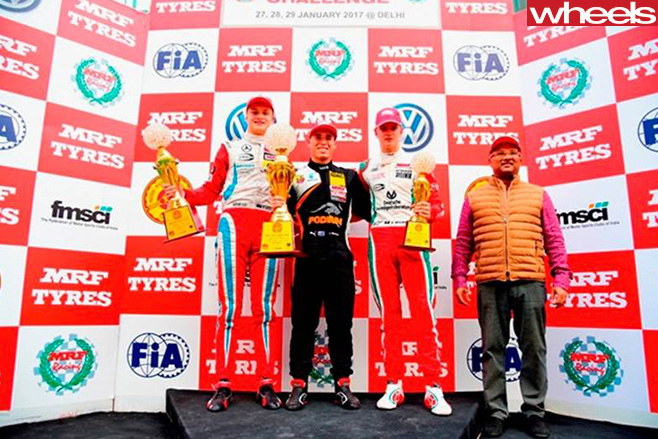
Again the Aussie got away nicely to overtake Schumacher into the first corner. The German came back strongly – too strongly – and took Mawson off the track. Mawson rejoined in eighth.
Schumacher’s aggression (wonder where he gets that from?) resulted in another scrimmage involving Brazil’s Felipe Drugovich, triggering the safety car.
The race ended under safety car with Newey leading, from Aron and Mawson.
Mawson’s successful weekend lifted his tally of podiums in the series to 10 from 12 races.
He now leads the championship from Newey by 27 points, with Mick Schumacher a further 13 back.
The final round of the MRF Challenge will be held on February 17-19 at Chennai in southern India.
Madsen brothers sweep Aussie sprintcar title
Historical one-two for Kerry and Ian…
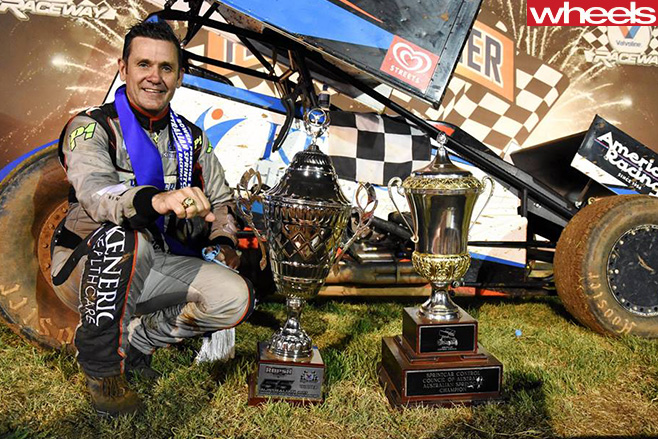
There was respect but no signs of sibling love as the two went at it, with 900 horses under their right boots, over 40 bumpy and dusty laps.
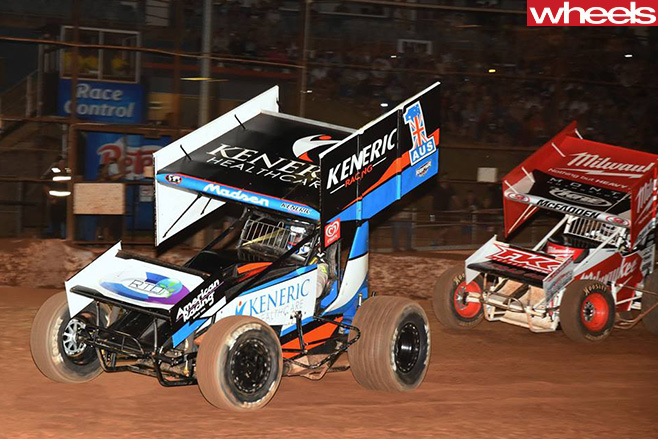
One of the favourites, Jamie Veal, was sensationally forced out of the race with driveline failure as the 24-car field assembled for the rolling start.
The Iowa-based older brother Kerry, 45, is one of the top-dogs in the US Outlaws Series and it shows in his decisive slicing and dicing through the packs.
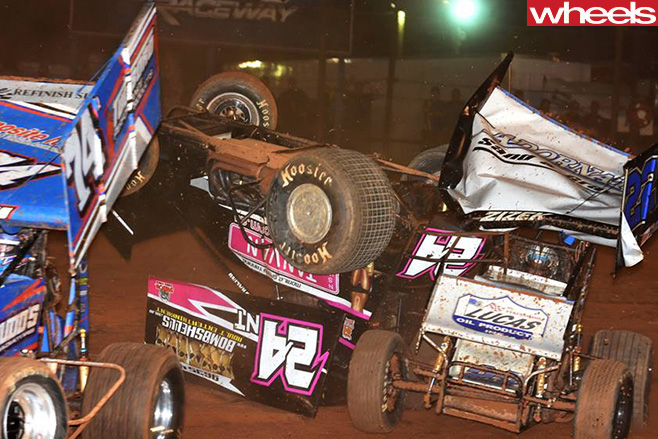
McFadden also had a brief spell up front before Kerry Madsen forged his way back in charge.
A caution with seven laps remaining bunched up the field, but the defending (and now three-times national champion) had too much for Ian.
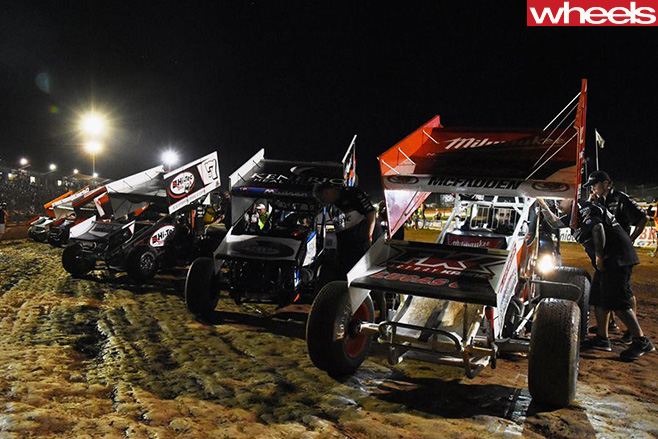
In fifth was impressive young fourth-generation racer Jordyn Brazier, who left nothing out on the clay track as he battled with way more experienced rivals.
F1: Bernie flung and the changes are coming…
New owner Liberty Media wants more excitement and fan accessibility…
Stand by for the tsunami…
The elbowing of Bernie Ecclestone from his position at the helm of Formula One in the wake of the US$8bn (A$10.5bn) takeover of the sport by US giant Liberty Media has already seen the prospect of significant change.
It had been expected that Ecclestone would stay on for three years after the takeover, but Liberty’s move to urgently bring Formula One kicking and screaming towards modernity spelt the end for the reactionary 86-year-old Brit, who had in charge for nearly 40 years.
Liberty has appointed Chase Carey, a former top executive at 21st Century Fox, as chairman and CEO of F1.
This has left Ecclestone as chairman emeritus and acting as an adviser to the board. This is a gig without power and authority. It’s unlikely he’ll hang around to be a decorative antique. But he has already denied he might start another series to rival F1.
Liberty has also brought ex-Mercedes team boss and Ferrari technical director Ross Brawn back to the F1 coalface, placing him in the influential role of heading up the sporting and technical side of the sport.
Talking to BBC Sport, Brawn indicated his target is to develop a purer, simpler sport in which more teams and drivers can win.
Brawn, who has overseen several world championships for the teams with which he has worked, is not a fan of some rule changes of recent years.
He told the BBC wants to narrow the gap between the top and bottom of the F1 grid.
Brawn, who has the task of making the on-track show more appealing after widespread denunciation of that the racing has become predictable and has lost some of its raw excitement, slammed some of Ecclestone’s recent changes as “short-term, knee-jerk reactions” adding this is “exactly what we mustn’t do”.
He highlighted aims to stabilise the small teams and put them on a better financial footing, and also reduce the scope of the technology because “there is too big a gap between the bigger and smaller teams”.
Though it’s early days yet, Brawn indicated the controversial drag reduction system (the overtaking aid available at the press of a button) may have to go.
“We need to make sure there is no artificial solutions,” Brawn declared. “The drag reduction system; everyone knows it’s artificial. We need to find purer solutions.”
Brawn says he has a few idea of what he wants to see in F1 but will share them with teams first.
But he also suggested that part of F1’s appeal to many followers is the challenging high-technology.
“You must balance the technology with the sporting side.”
Brawn says he is willing to consider changing the turbo hybrid engines introduced in 2014, criticised for their high costs and flat sound.
American Sean Bratches, a former executive at ESPN who was last week confirmed to run the sport’s commercial arm including sponsorship and media rights, has also been talking to the media.
Quick to unveil several areas he will tackle to improve the sport, he was strong on rhetoric yet short on detail.
Bratches told CNN he intends focussing on better understanding the brand. This may take some learning given the reality that F1 baffles so many Americans.
After polishing and elevating the brand, Liberty will push F1 into new market places.
Bratches went on to speak of “huge” opportunities in the digital space to “re-imagine the digital products that F1 has today, and to engage fans in very new ways and also to use sponsors to activate it”.
He also suggested F1 would become more democratic for those who have skin in the game – teams, sponsors, promoters and rights holders.
Concluding, Bratches says the new regime is keen to create an improved race experience that engages fans, spectators and viewers.
Bratches praised the sport’s past, but insisted it had under-delivered commercially under Ecclestone’s autocratic control.
“Unquestionably it is a Super Bowl every other week and I think that is going to be an emphasis of ours,” he declared.
Catching up…
What’s gone on while we took our holidays.
Much has happened in the weeks since this weekly motor sporting wrap signed off for the 2016 Christmas break…
The opening round of the new-look World Rally Championship – the Rallye Monte Carlo – lived up to the pre-event hype, with shock and awe at every stage before Sebastien Ogier completed a dream debut for Malcolm Wilson’s M-Sport Ford team.
Left without a drive after VW’s surprise withdrawal from the WRC, Ogier’s fifth Monte success – and fourth in a row – showed that the French ace will be a contender again in 2017 despite the enforced change of teams. He has now won with Citroen, VW and Ford…
It was M-Sport’s first win for five years, a result made sweeter by Ott Tanak overcoming ailing engine electrics to secure an impressive third place.
Splitting the two Ford Fiestas was another VW discard Jari-Matti Latvala, who took second in a Toyota Yaris on the Japanese manufacturer’s return to the WRC after a 17-year absence.
Ogier took the lead late on Saturday’s penultimate leg when event-long leader Thierry Neuville broke his Hyundai i20 Coupe’s suspension after an impact. Until his troubles, Neuville had dominated in the changing conditions.
Dani Sordo’s i20 took fourth, from Craig Breen a Citroën DS 3 in a leader board of some variety.
The event was marred by the death of a spectator, fatally injured when the i20 of New Zealander Hayden Paddon hit black ice and slid off the road on the opening stage.
More snow and ice are in store for competitors at the second round next month. Rally Sweden is based in Torsby on February 9-12.
Tragically, local motor racing lost the 1979 Australian Formula Ford champion Russell Norden to cancer, aged 67. And soon after the sport was slammed again with news that renowned engine builder Steve Knott had been killed in a freak bulldozer incident on his property outside Sydney.
The financial struggles of the Manor F1 team also slid to a sad if somewhat inevitable conclusion, the British outfit closing after failing to find a buyer to keep it alive.
So 20 cars on the F1 grid this season.
The Dakar Rally early in the New Year was another triumph for veteran Stefane Peterhansel whose experience in the rough was just enough to hold off his Peugeot team-mate Sebastien Loeb. Incredibly, it was the Frenchman’s 13 victory, including six in the bike division.
Aussie Toby Price broke a femur in a crash early in the marathon and was unable to defend his bike crown, which went to Brit Sam Sunderland for KTM.
Australian riders Todd Smith and Matt Hart struggled with injuries but both finished the gruelling event.
Motorsport champion Mark Webber has been awarded an Order of Australia (AO) medal in the Australia Day honours list, recognising his international successes behind the wheel.
The annual honours system – signed off by Governor-General Sir Peter Cosgrove representing Her Majesty Queen Elizabeth II – has been in place since 1975 and is designed to both acknowledge outstanding contributions made to the country and identify national role models.
Webber was named, “For distinguished service to motor sport as a competitor and ambassador, and to the community through fundraising and patronage of a range of medical and youth support organisations.”
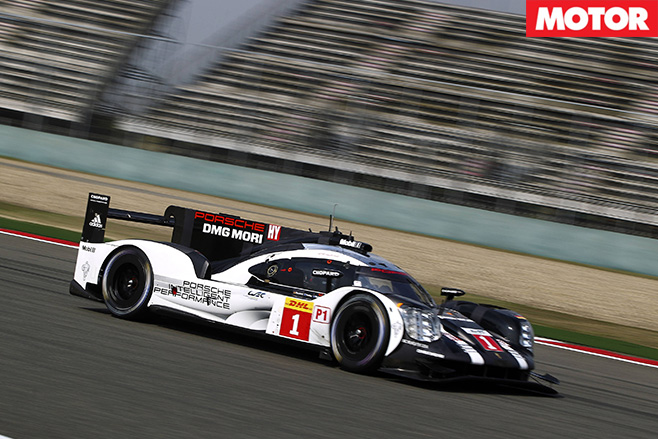
He has raced at the Le Mans 24 Hour five times, finishing second in a Porsche LMP1 vehicle in 2015, the same year he won the FIA World Endurance Championship for the brand. Webber now continues from his Buckinghamshire, UK, base as a Porsche ambassador.
Speaking with News Corp about the award, Webber said: “I didn’t expect it at all. It’s a bit of a surprise, but I think it’s an absolute honour to be recognised at that level.”