
THIS is it. The last special-edition Holden Commodores that will roll off a production line in Australia. A number of visual and mechanical changes make these cars stand above bread and butter Commodores, so as a handy guide we’ve run through all the new features for the Motorsport Edition, Director, and Magnum over the Redline SS-V sedan, Calais V and Redline SS-V ute on which they’re based.
Holden Commodore SS-V Redline Motorsport Edition
Externally, the Motorsport Edition has new 20-inch forged alloy wheels and some extra lipstick in the form of red highlights around the daytime running light surrounds, mirror scalps, and wheel lining. The roof also gets a lick of Phantom Black paint.
There are also new decals to make the car stand out from the crowd, along with new heated sports seats shared with the US-market Chevrolet SS export model up front. There’s embroidering on the instrument panel, along with new “Motorsport Edition” badging.
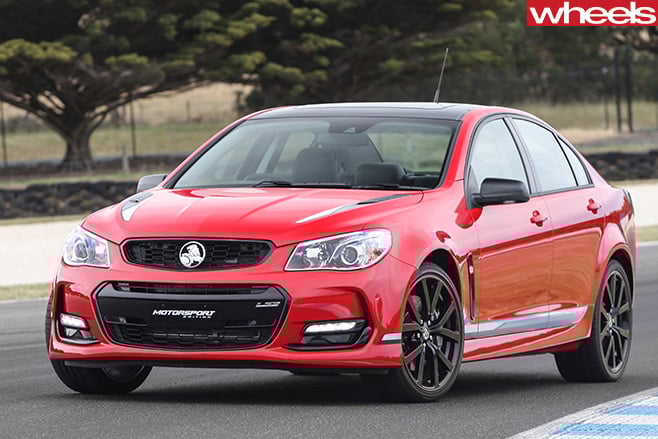
The sedan also gains Magnetic Ride Control suspension for the first time with three different settings; tour, sport, and performance.
Improvements to the rear sub-frame’s bushes improve stiffness, while charcoal-coloured Brembo calipers wrap around new cross-drilled brake rotors front and rear.
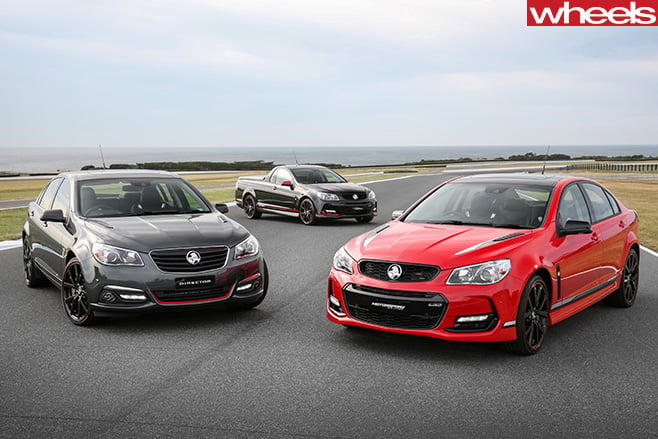
Holden Calais V Director
The Director receives a black roof and SS-V Redline hood vents, and for the first time in a Calais V, adds paddle shifters.
The same front seats that appear in the Motorsport Edition appear inside the cabin of the Director, along with the embroidered instrument panel and alloy pedals.
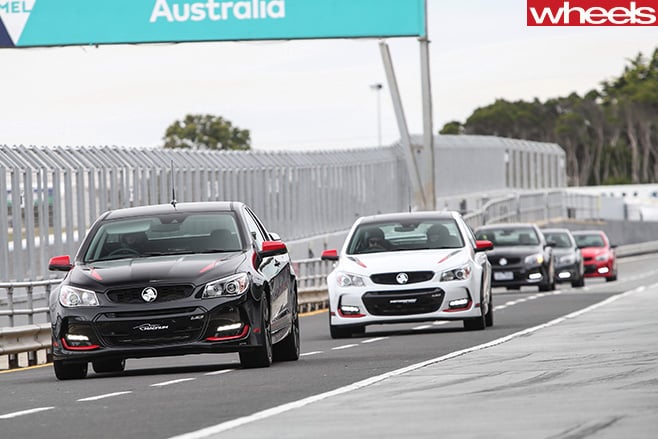
The Magnetic Ride Control featured in the Motorsport Edition also underpins the Director, along with the upgraded brakes, and engine and transmission cooling package.
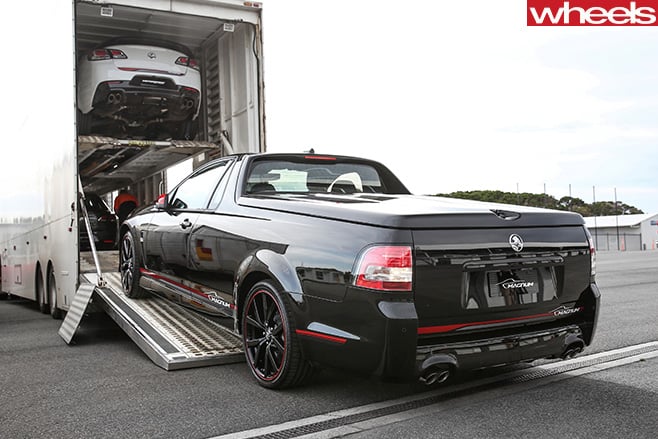
Holden Commodore Ute SS-V Redline Magnum
The sports seats – although minus the heater function – rims, and embroidered instrument panel are all included on the Magnum. It also gains a hard tonneau cover over the standard SS-V Redline ute, along with a rear-window Magnum graphic and unique badging and decals.
This bloke has said too much, but he’s not about to disappear – not when you’re the boss.
Cheerful German Albert Biermann, once head honcho at BMW M Division and responsible for cars like the current M3 and M4, is now spending a little more time down Korea way these days. And he has the swagger of someone firmly in charge and knowing what they want.
Hyundai’s hired Biermann to give its cars some proper balls. None of this half-baked warm hatch malarkey – the mysteriously-dubbed upcoming N Division is writing big cheques and making all the right noises. And it sounds to us like punters playing in the sub-$50K market are about to get even more spoiled.
We’re chatting to Biermann at the Paris Motor Show, MOTOR scoring an audience along with about half a dozen other Aussie motoring journos. And Biermann is giving away dots, in close, easy-to-join proximity. We didn’t know much about the upcoming i30 N hot hatch but now we know so much we’re having to temper expectations.
The i30 N will have a bespoke front axle presumably to handle the extra grunt. It will have more lenient, sport ESP settings. And we are almost imagining the Toyota 86 of hot hatches – not necessarily the fastest gadget around, but it must be fun, must withstand a scalding on a racetrack and it must be cheap.
“I’m not so much excited about zero to 100,” admits Biermann. “I’m looking more how is it driving on the track and how much fun is it to drive on some nice winding road.”
“I gave clear directions,” Biermann adds. “This car has to be track-going, and very enjoyable. Pushing it to the limit, it has to be consistent on the track, and not just die after two laps, the tyres and the brakes and everything, and that’s what it is, we just make the car what we think is our strategy.”
“And of course, it will be fast, yeah – it might not be perfect in some area, but I don’t care. I mean, first of all it’s about the fun, and enjoyable, tossing it around.”
So the i30 N will concede some outright pace for affordability but it must be fun and have on-track stamina. And there will apparently be two versions of the i30 N – one built for weekdays, and one built for weekends. “The customer has a choice,” Biermann explains. “If you want to go a little more wild, more track-focused – or more road-focused.”
All music to MOTOR’s ears but we confess we have a feeling of wanting to see it before we believe it. We’ve been here many times before – car company crows A, we drive it only to find B. But Biermann is keen to stress that the N cars are nothing like the tepid SR-branded Hyundais we’ve seen in Australia – and he comes back to the track thing again.
So we’ve established that much: the i30 N is coming and it sounds like it’ll deliver the goods. But what about after that? Biermann basically confesses Hyundai is working on multiple new N products. And in our group discussion with Australians, the inevitable question comes up: will we see an N version of a V8 rear-driver? (Please say yes, please say yes, please say yes…)
“We have a V8,” confirms Biermann with a not-particularly-promising puzzled expression. But he neither opens nor closes the door to a V8 N car.
“N is for all Hyundai,” says Biermann. “But that’s it, not for Genesis. I’m not saying there can be no high-performance car for Genesis, but if there was one, it was not an N, it would be something different. But at this point, there is no name, nothing for Genesis.”
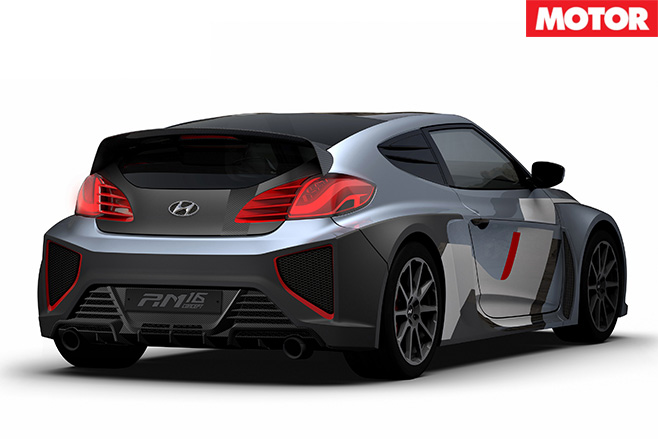
Okay, what about the RN30 concept car – the gullwing-doored track concept as seen at the Paris show? Surely that’s hinting at Hyundai’s own road-going A45 AMG fighter – presumably for much less coin. But Biermann, with a pragmatic air, stresses N Division must walk before it can run.
“We have a test car with exactly that performance (280kW and all-wheel drive), and all the driving eLSD and all this stuff, but this is just advanced prototype,” he says. “So this is not close to any production, mass production or something. But then we [do] have cars testing already at Namyang with that technology in there.”
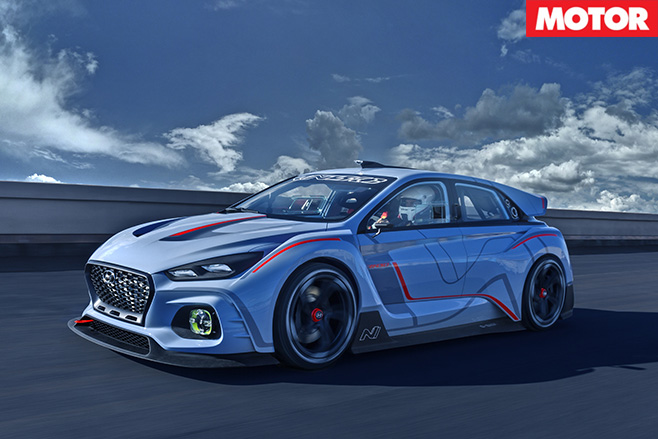
So we decided to go into the C-segment and make a high performance car and that will be the i30-based high performance car that will be launched next year. And that is not on the upmost level of high-performance [in the] segment. So that is some ‘mid-area’ of high performance in that C-segment, so… I think such a high-power car, this is just too much to put this out now.”
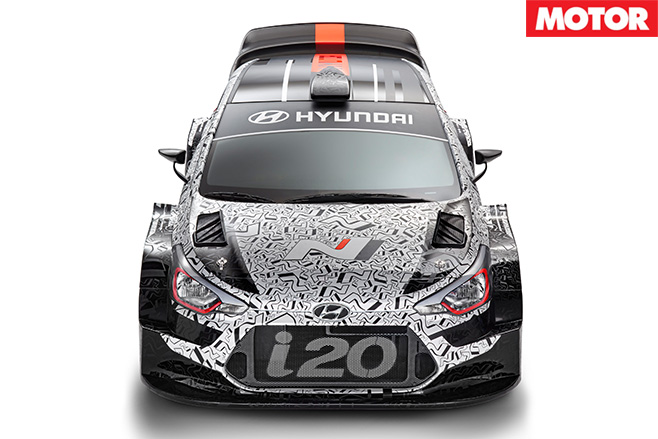
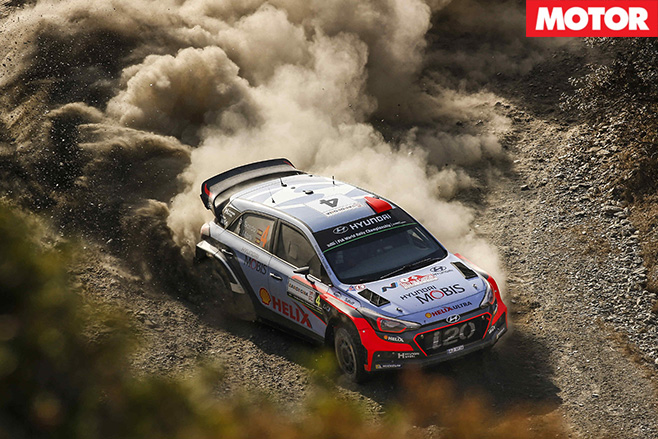
Boo. If anything, Biermann hints, it’s cars like the Ford Fiesta ST and VW Polo GTI that should be looking over their shoulders – and an i20 N makes sense given it’s the car Hyundai has based its 2017 WRC challenger off.
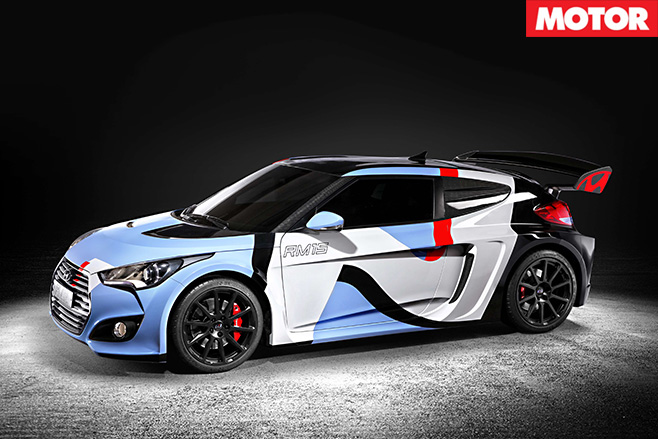
And we can’t help but ask, but what about the poor old Veloster?
“Ah yeah, I love it. It’s one of my favourites. It’s a really characterful car. And yeah, it’s one of my favourites, I like it a lot. Not the way it’s driving now, but it has a lot of potential for the future.”
Either which way you look at it, until now and even for the next little while, Hyundai has not cut it at as a performance car manufacturer. But it sounds like they’ve got the right people in the right places and crucially as an organisation, want to inject some pizazz into the brand by way of some cut-price performance cars. Watch this space – we will be.
BIERMANN ON…
Electrification “Right now in this first step of cars there is no electrification. But we are ready for [it] whenever the customer [asks], or when it’s needed to meet some regulations.”
Local tuning “[There will be] no tuning for Australia. But we will invite Australian engineers to join us. This car will all be tuned in Nurburgring – that’s it, period.”
Real LSDs “[We are not going to use] torque vectoring by brake. This is the real thing. Just electronically controlled.”
Fast SUVs “They are not so much sophisticated as the coupes and the sedans. A little bit later we might make [one], but there’s no plan now. I would love to make a really hot Tucson, but nobody wants this.”
Supercars championship title holders Triple Eight has taken the silky sheets off its 2017 Supercar – and it’s both the start and the end of an era for the team and the car.
After several years of backing both Red Bull Racing Australia and the Holden Racing Team – run by Walkinshaw Racing in Melbourne – Holden dumped Walkinshaw after a 20-year standing arrangement to throw its factory money behind the Red Bull-sponsored outfit from 2017.
Now known as the Red Bull Holden Racing team, the outfit’s new livery is a marked change from the seasons of old. Holden branding features prominently on the rear three-quarters, front bar and rear wing – but the famous lion and helmet logo made famous by HRT is no more.
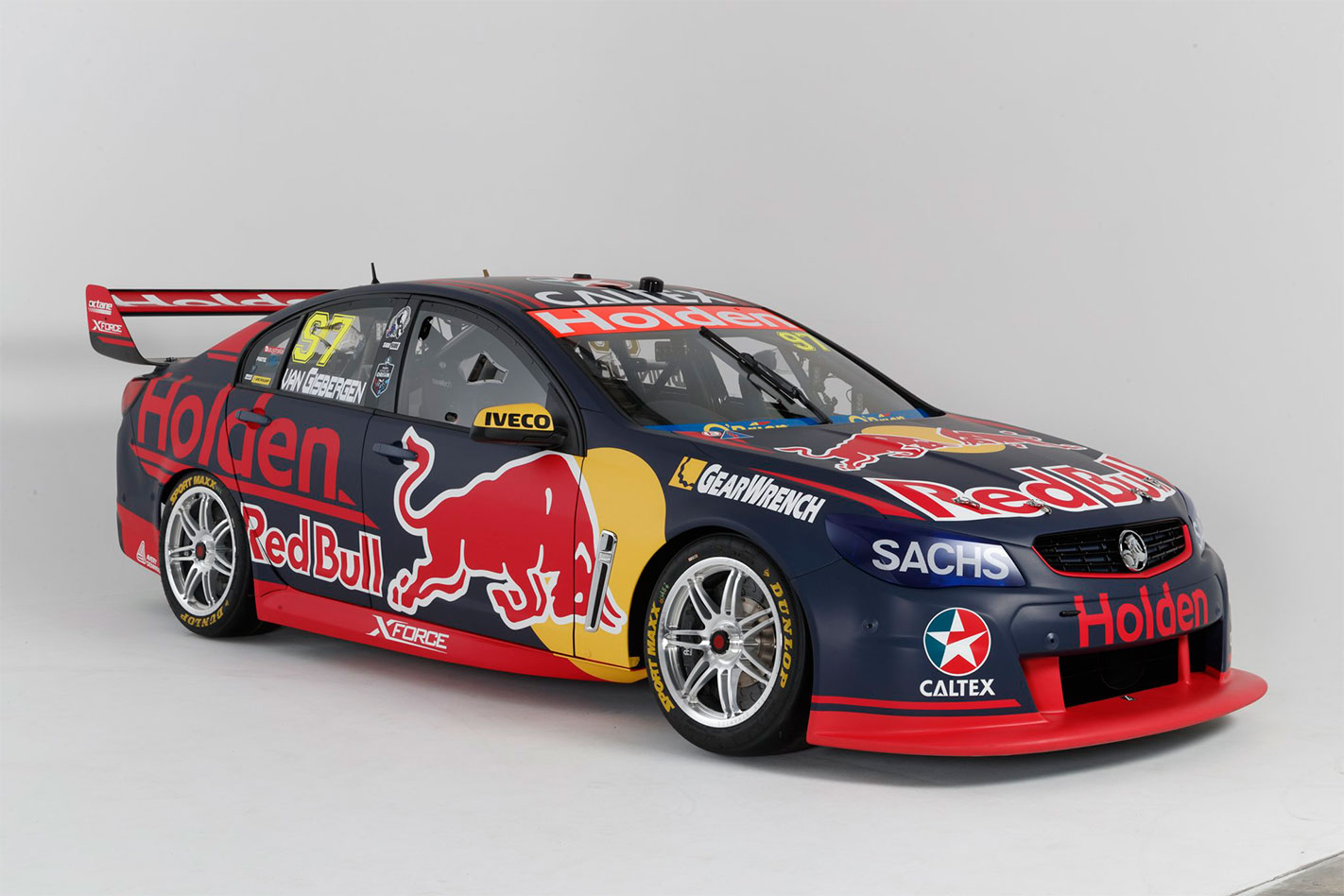
Triple Eight has built two new Commodores for its A-team of championship winner Shane van Gisbergen and multiple champ Jamie Whincup – and while the Supercars championship uses a control chassis with bolt-on body panels, the team is unlikely to build too many more Commodores in the VF bodystyle.
With the new Commodore due to go on sale late this year, Red Bull Holden Racing will already be examining the process to convert the incoming Opel Insignia based car into a race winner.
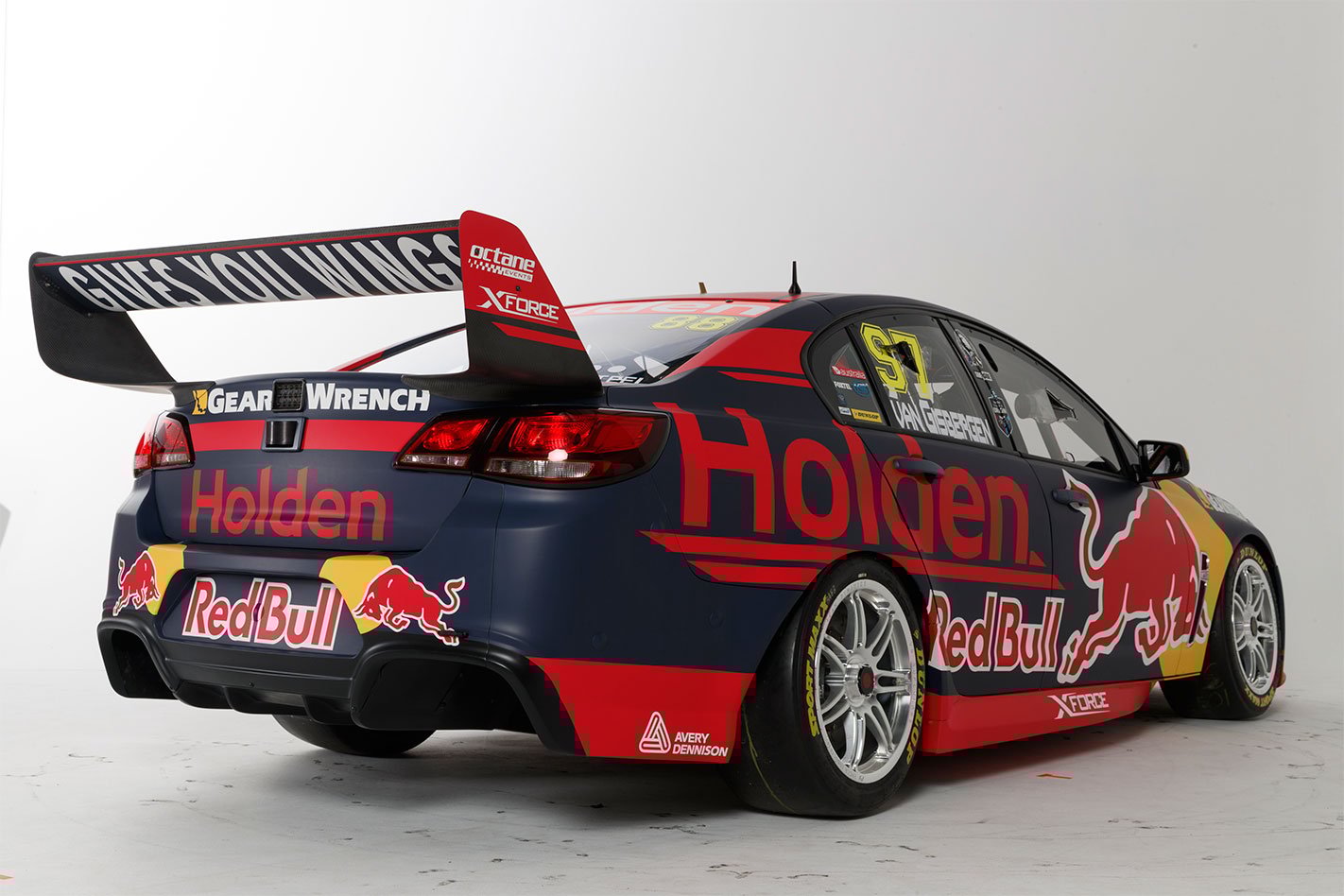
Also of interest is the fact that van Gisbergen will race with his career number of 97 in 2017, rather than the number one he earned by winning the title in 2016.
The New Zealander also got his way in his choice of co-driver for the 2017 endurance season, with the team signing young Queensland Porsche ace Matt Campbell to co-drive with van Gisbergen.
Solar shield
A windscreen sunshade doesn’t just keep your car a little cooler so you don’t burn your legs on the seat or seatbelt buckles when you hop in. It also protects your car’s interior surfaces including the dashboard, steering wheel and seats. A rear sunshield is also a good idea.
Get the tint
If your car doesn’t have tinted windows its worth investing getting them done as it will help protect the interior, and the car’s occupants, from damaging UV rays. The investment should pay off come resale time.
At the carwash
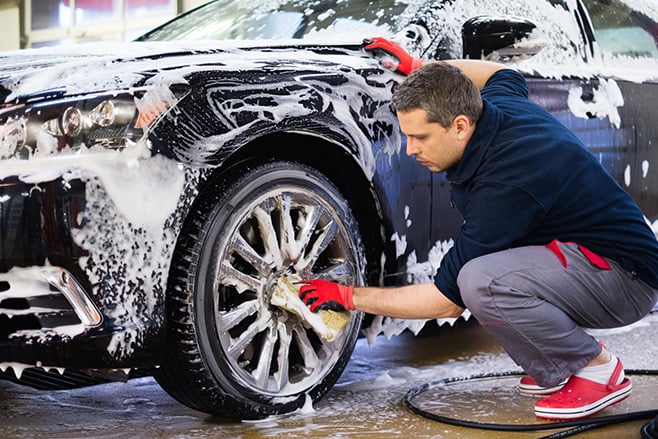
A shiny car is a cooler car as it will better reflect the sun’s rays than a dirty car, which is more likely to absorb heat. A lack of rain means bird dropping, tree sap, bugs and dirt will bake into your paintwork making it more prone to damage from the sun’s UV rays so keep the car clean and wax when necessary. Cleaning is also a good way to ensure summer creepy crawlies like spiders don’t establish a home base in nooks and crannies such as the wing mirrors and in vents.
Clean and protect
Use vinyl and/or leather protectants on interior surfaces to provide an extra protective layer and to stop them becoming brittle.
Under pressure
Check your tyre pressure regularly as it will change with the weather. Don’t top up your tyres in the middle of a hot day as there will be less, and potentially insufficient, pressure once things cool down.

Keep fluids up
Fluids are obviously more likely to evaporate faster in the heat to be sure to regularly check oil, brake and power steering fluid, the battery (where applicable) and radiator coolant levels. Always top up coolant via the plastic reservoir and not the radiator. If it’s an older model do not open the radiator cap until the engine has cooled down and the pressure has eased – about an hour should do it.
Blade run
Test your windscreen wipers as they can become brittle and collect dirt during dry periods which could make them ineffective when that summer downpour does come.
Got your car all ready for the heat? Now read our summer car and driving tips.
Pity the humble spark plug, for its days appear to be numbered.
But it’s not EVs that are wielding the axe for those little lumps of metal and ceramic: Mazda wants to cut spark plugs from its next-generation petrol engines as it embarks on the next step in its strategy of chasing ultimate efficiency from combustion motors.
A report in Japanese newspaper Nikkei claims Mazda will wheel out the production version of its new compression-ignition petrol engine towards the end of next year, initially in the Japanese-market Axela hatchback that’s sold here as the Mazda3.
By employing an ultra-high compression ratio and carefully shaping the combustion chamber, Mazda’s engineers have been able to design a petrol-powered engine that automatically ignites its air-fuel mixture without the helping hand of a spark plug. Called ‘homogenous charge compression ignition’, the principle behind the technology is similar to that employed by modern diesel engines.

Official figures are still to be released, but preliminary estimates say a Mazda3-sized car could consume as little as 3.3L/100km on average using compression ignition.
After its first application in the updated Mazda3, the compression-ignition SkyActiv engine will spread to other models in the Mazda range. However, its compatibility with turbocharging has yet to be ascertained (boosted engines typically don’t tolerate high compression ratios well), which may preclude it from being applied to the Mazda CX-9’s turbo 2.5-litre inline four.
As efficient as the sparkplug-less SkyActiv engine promises to be, Nikkei reports that Mazda will nevertheless make moves to launch electrified powertrains of its own around the end of the decade. Electric vehicles are expected to become part of the Japanese automaker’s range from 2019, and a plug-in hybrid is rumoured for a 2021 debut – with both believed to be a response to ever-tightening emissions legislation in Europe and the USA.
The Holden Trax could be about to get a little brother. Opel, Holden’s European cousin and the source of our next Commodore, has revealed the Crossland X, a compact, high-waisted and design-driven SUV-style hatchback.
According to Opel, the Crossland X is an “all-new crossover model to be launched into booming SUV segment”. It will go up against the likes of the Renault Captur, Skoda Yeti and Peugeot 2008, and will be joined a bit later by the Toyota Rav4-sized Grandland X, which is yet to have its global reveal.
If it comes to Australia as part of Holden’s showroom makeover, in the wake of the loss of Australian production late this year, it will sit above the Korean-sourced Trax as a more premium family car, but with less adventurous spirit.
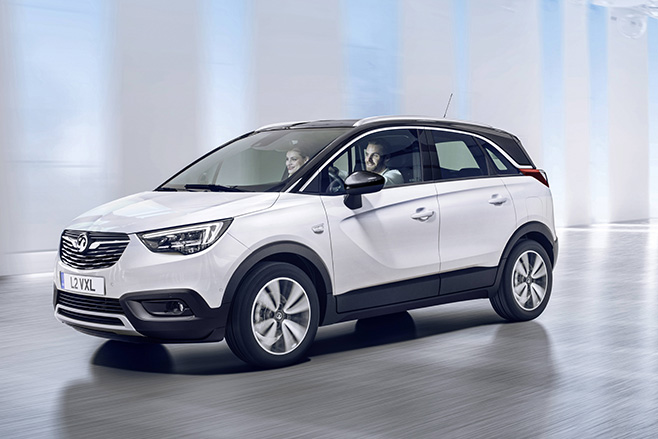
According to Opel, the Crossland X has a “Tardis-like cabin providing high degrees of practicality and flexibility”. It even features a “floating” roof via the clever use of blacked-out pillars that can come in different colours.
“Tardis” is the right word when you consider the small space the Crossland X will take up on the road. The crossover is shorter in length than the already-compact Trax, and 16cm – at least a hand span – shorter than the Holden Astra hatch that recently launched in Australia.
However, it sits 10cm taller than Holden Astra, providing a slightly more elevated ride height in keeping with its SUV styling.
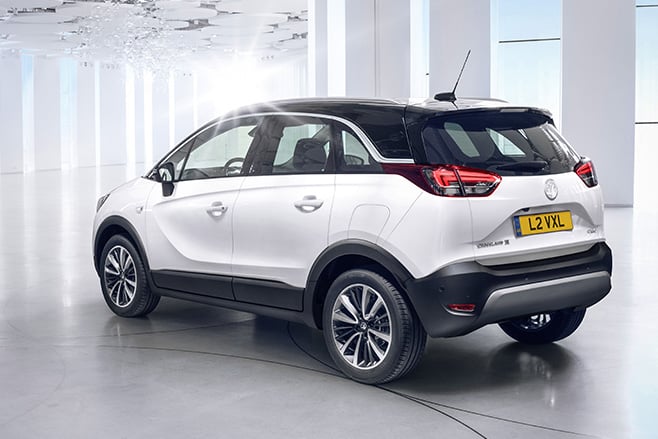
Where it crushes the Astra, though, is boot space. The Crossland X will take 410 litres of schoolbags compared with just 360 litres for the traditional hatchback, and up to 520L via the benefit of rear seats that can slide forward 15cm to open up more space if the Crossland X isn’t carrying more than two passengers.
Technology rolling out for European Crossland X buyers includes a 180-degree panoramic rear-view camera, semi-automated parking, forward collision alert with pedestrian detection and autonomous emergency braking, lane departure warning, speed sign recognition (which some carmakers struggle with in Australia) and side blind-spot alert.
The audio system will feature Android Auto and Apple CarPlay compatibility, accessed via an eight-inch touchscreen. Euro buyers will also have access to a range of petrol and diesel engines, as well as manual and automatic gearboxes.
Right-hand drive markets in Europe take their first deliveries of the Crossland X in about July, hinting at a late 2017 launch for the car in Australia.
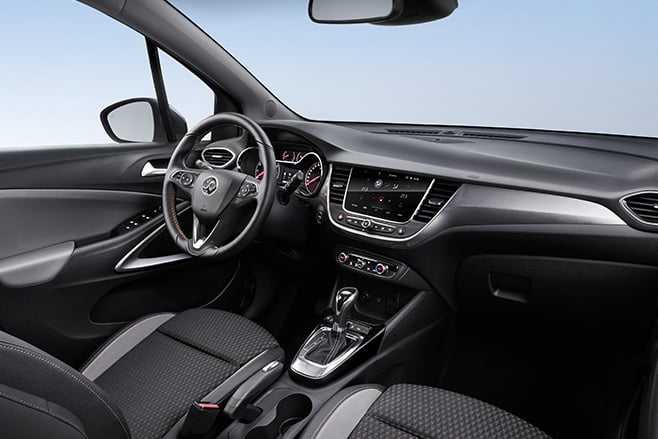
WhichCar has sought comment from Holden on if and when the Crossland X will be added to Australian showrooms wearing the Lion badge.
Holden announced plans to introduce 24 new models to its showrooms by 2020 in the wake of the announcement that it would quit local car production by the end of this year.
Other models yet to arrive include the fully imported Holden Commodore due in 2018, the Toyota Kluger-sized Acadia SUV also due next year – and perhaps even the Chevrolet Corvette performance car.
Watch this space.
The Mercedes-AMG GT R is set to headline a production car showdown at this year’s Bathurst 12 Hour.
Three sessions have been set aside across the race weekend for professional drivers to get behind the wheel of road cars and push them to the limit in the hope of claiming production lap records around the iconic Mountain circuit.
The new initiative was introduced as a way for manufacturers to put the road-going siblings of the GT3 cars which headline the event on track in front of the fans.
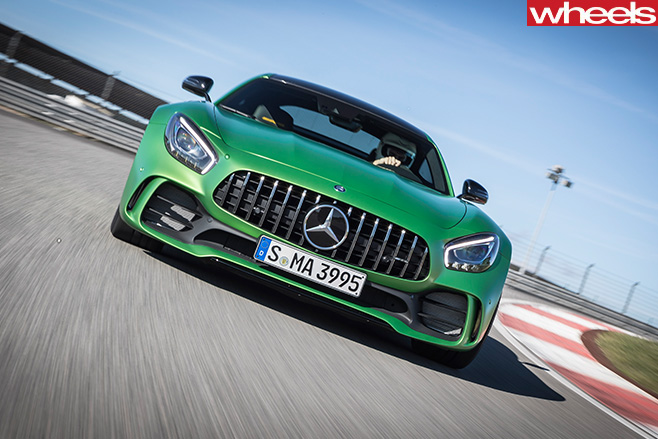
Wheels understands Mercedes-Benz is airfreighting an AMG GT R to Australia for German ace Bernd Schneider to wield around The Mountain.
It’s also believed Ferrari, BMW, and Audi will be involved in the sessions.
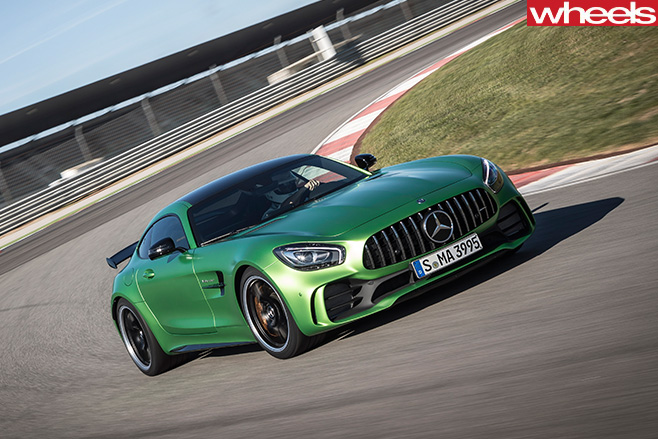
The current lap record at Mount Panorama is held by Shane van Gisbergen, set during qualifying at last year’s 12 Hour in the McLaren 650s GT3.
The 2:01.5670 lap is under threat this year, though it’s unlikely to be matched by the road cars.
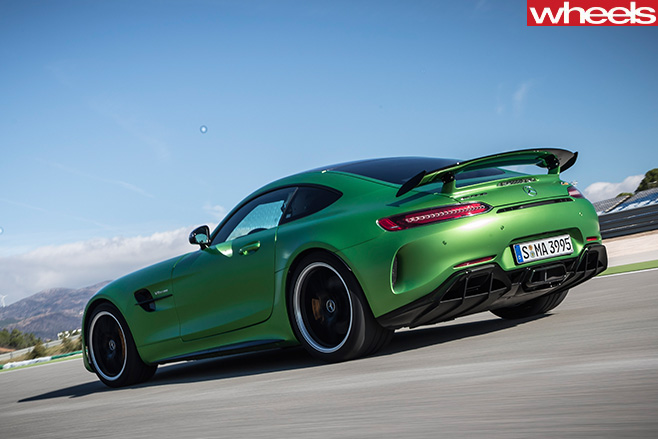
The production car sessions will be held under race conditions, for road registerable cars, and are reserved for FIA gold or platinum ranked drivers.
The closest thing to a current production car record is the 2:28.53 set by Garth Walden in a Group 3E Series Production Mercedes-Benz A45 AMG race car.
It was inevitable that Lamborghini would offer a harder, sharper, more focussed version of its Huracan.
You might think you know what to expect: a little more power, a little less weight and a lot more price tag, a recipe followed by almost every hardcore Lamborghini since the Miura SV.
The Huracan ‘Performante’, however, is different. Yes, it will be lighter, more powerful and more expensive, but Lamborghini has delved deep into its goodie bag to develop a car capable of standing toe-to-toe with the best track-ready supercars around.
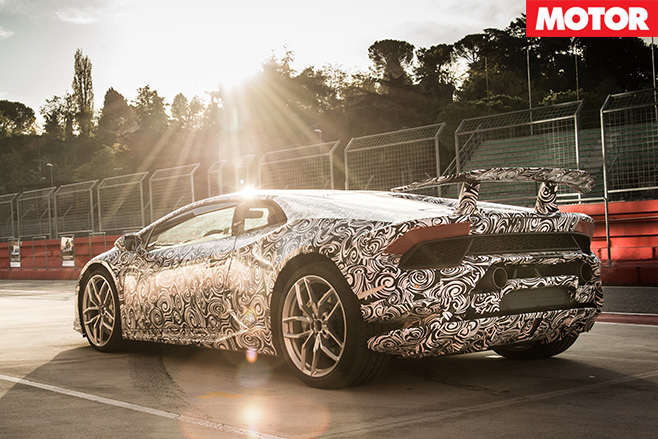
We won’t see the final Performante until March’s Geneva Motor Show, nor will we have confirmed specifications until then, but you can expect 40kg less weight, a boost for the 5.2-litre V10 up to around 480kW/630Nm, a 0-100km/h time of three seconds dead and a 340km/h top speed.
The Performante’s trump card, however, is its wild aero, dubbed Active Lamborghini Aerodynamics. Three electric motors operate two separate flaps in the front bumper and rear wing, which operate differently depending on which of the three drive modes is selected.
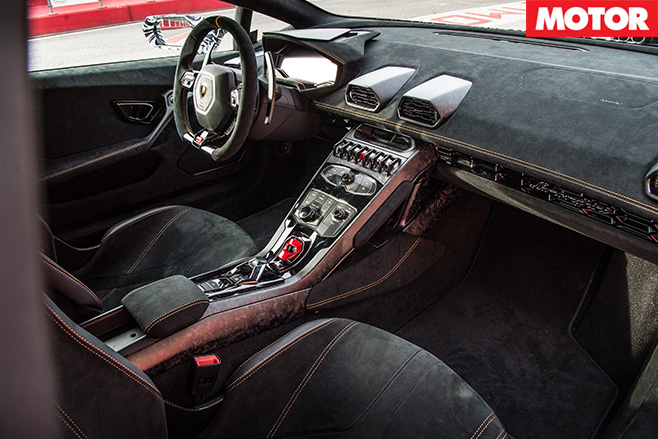
But it’s in Corsa where the system really shows its worth, with all four flaps operating independently depending on the Performante’s lateral and longitudinal requirements.
For example, under braking all four flaps close to increase downforce and stability, however during cornering the rear outer flap opens to reduce the load on the heavily worked outer tyres while the rear inner flap remains closed, increasing the downforce on the inner wheels.
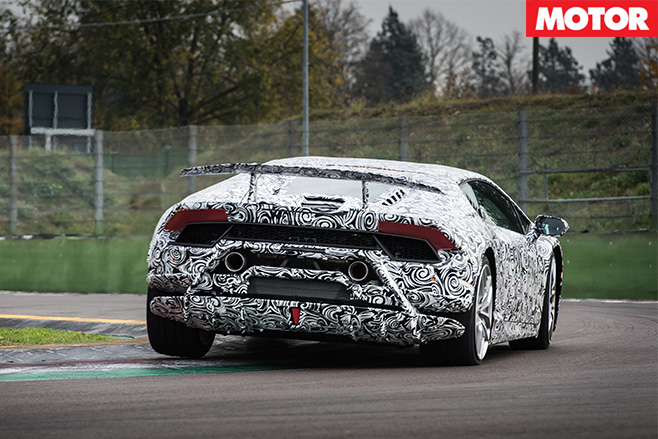
Does it work? Find out in the next issue of MOTOR when we drive the new Huracan Performante.
It was once seen as the future of Porsche, the car that would replace the ageing, unpopular 911 and usher in a new era.
History now shows that Porsche’s iconic sports car wasn’t so easily deposed, but the 928 still played an important role in the company’s history, with more than 60,000 sold during its 17-year lifespan.
Introduced in 1978, the 928 was an immediate critical success, wining the 1978 European Car of the Year award. Unfortunately, critical acclaim does not necessarily guarantee sales success, the 928 handicapped by its high price and limited appeal to 911-loving Porsche purists.
Such sentiment is a thing of the past in a post-Cayenne age and we’re prepared to bet there would be plenty of buyers keen on a modern remake of the iconic 928. Porsche agreed, considering just such a thing built off the new Panamera’s MSB platform, however the project was shelved due to fears it would dent Continental GT sales.
Now, thanks to Dieselgate, there is next to no chance it’ll ever appear. Let’s take a look at what might have been.
Here’s how we’d do it
1. STABLE PLATFORM Under the skin is a shortened version of the new Panamera’s MSB platform. Just such a thing will underpin the next-generation Bentley Continental GT so 928 development costs would be heavily amortised.
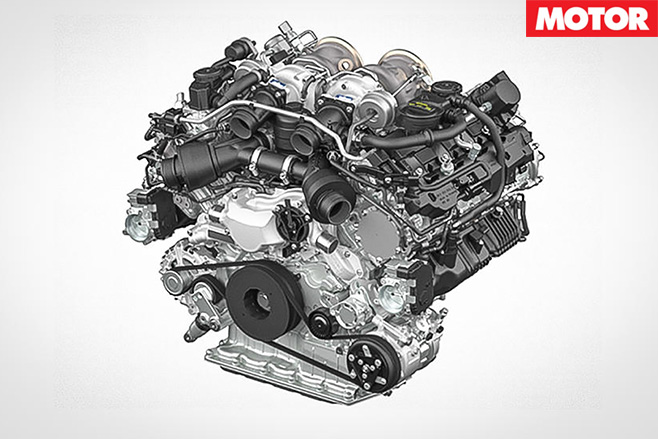
Both feature Porsche’s latest eight-speed PDK gearbox and rear-biased all-wheel drive system. Is there room for a range-topping 928 Hybrid with 918-style electric motors providing propulsion on the front wheels? Sure there is.
3. NEED FOR SPEED Smaller, lighter and slipperier than its four-door big brother, the 928 would jet from 0-100km/h in 3.2sec and on to a top speed of 315km/h. The more powerful S shaves 0.2sec from the sprint and adds 15km/h to the top speed. And the Hybrid? Think 550kW/1100Nm and a 2.7sec 0-100km/h effort.
4. PECKING ORDER The rest of the mechanical package would be nicked from the Panamera and follow Porsche’s usual hierarchy, with the likes of carbon-ceramic brakes and active anti-roll bars optional on the regular car but standard on the S.
5. STICKER SHOCK One thing the new 928 will share with its predecessor is a high price tag. Essentially starting where the 911 finishes, you’re looking at $420K for the 928, $500K for the 928 S and a Ferrari F12-matching $690K for the Hybrid hero car.
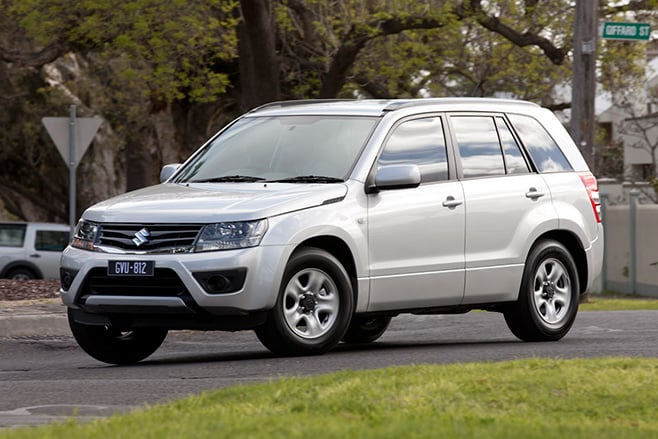
Suzuki is currently working on a new medium SUV to sit above the brand’s current small SUV, the Suzuki Vitara. Riding on the same platform as its smaller sibling, Suzuki’s incoming AWD wagon will also likely signal the return of the ‘Grand Vitara’ badge.
Andrew Moore, general manager for automobiles at Suzuki Australia told WhichCar a medium SUV is high on the company’s wishlist.
“Suzuki Australia are pushing very heavily for Suzuki Motor Corporation to develop a medium SUV based off Vitara,” he said.
“We think the Vitara looks fantastic, has a great drivetrain, and the 1.4-litre turbo is a fantastic engine.
“If we can use those three elements and build a bigger Vitara, I think there would be a huge market opportunity for us.”
Takanori Suzuki, Suzuki’s general manager for Latin America and Oceania confirmed to WhichCar there was an ongoing project, but refrained from adding extra details
“We are working on that. It is still a confidential subject, so I cannot tell you exactly, but we are working on that,” he explained.
“I think the worldwide trend [is moving towards SUVs]. Nowadays in Europe, Latin America, and even India or China, the SUV is being very popular, along with the crossover SUV.
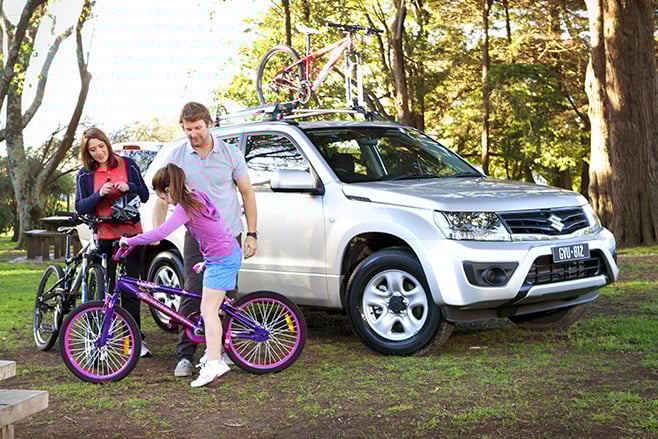
“Suzuki has been manufacturing those SUV vehicles for many, many years, and has been known as an SUV and crossover manufacturing company, so we will keep on doing that in the future.”
Moore was confident a new Suzuki Grand Vitara would be a sales winner for the company.
“Suzuki Australia is pushing very hard for this because medium SUVs are huge in Australia, so we really want to be a player in that segment,” he added.
“And I think Suzuki globally is listening to us, and we are still pushing very hard.
“There is no doubt we could sell 500, 600 a month additionally with a larger Vitara.”
